Tag Archives: Carl Weber

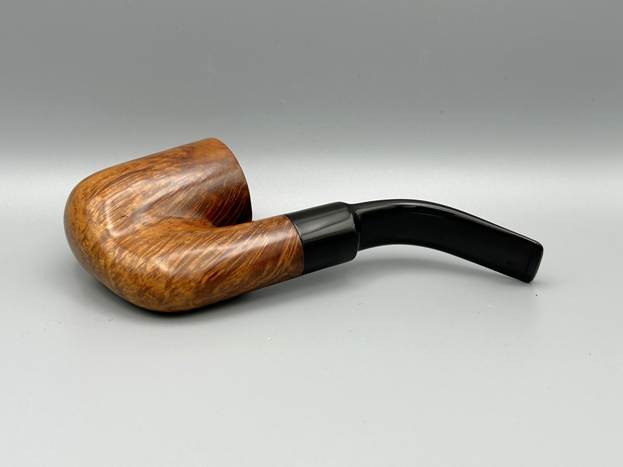
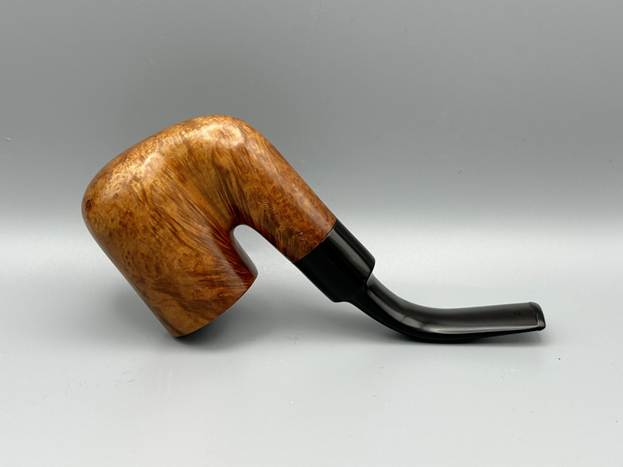
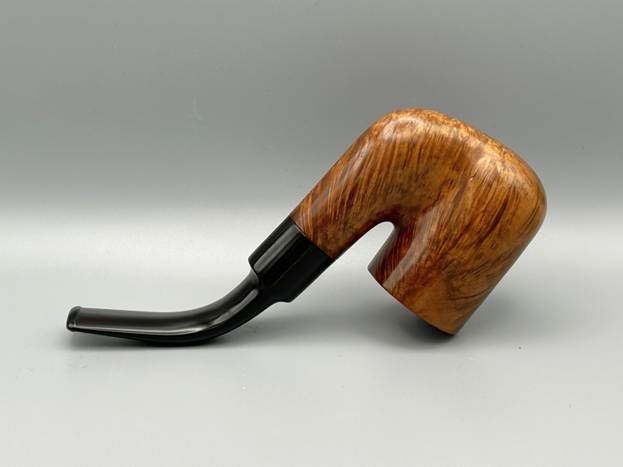
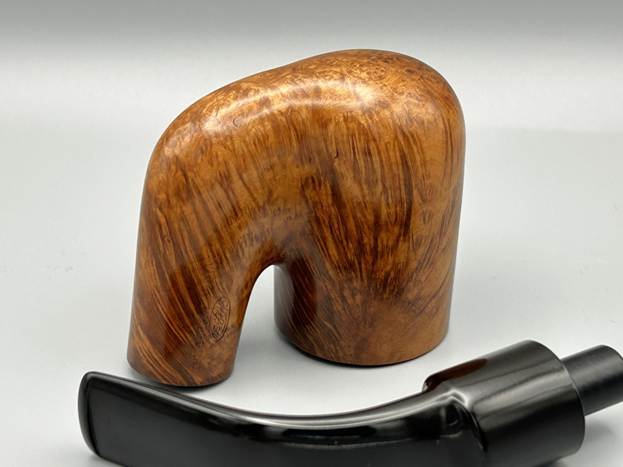
Restoring a Beautiful Weber Virgin Natural Oom Paul


by Kenneth Lieblich

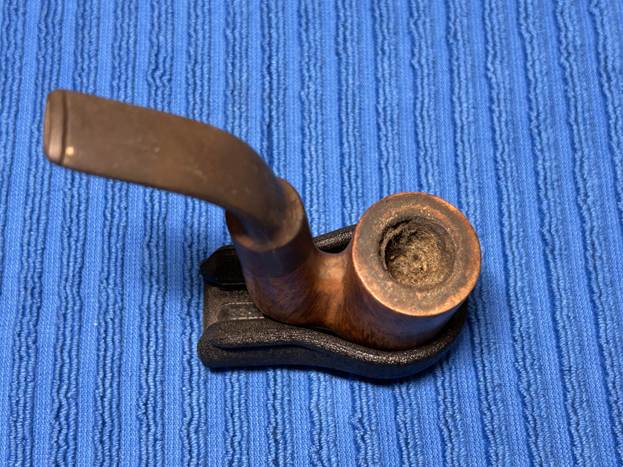
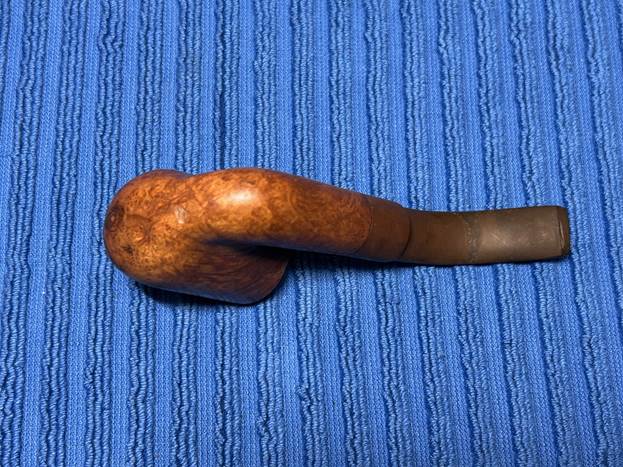
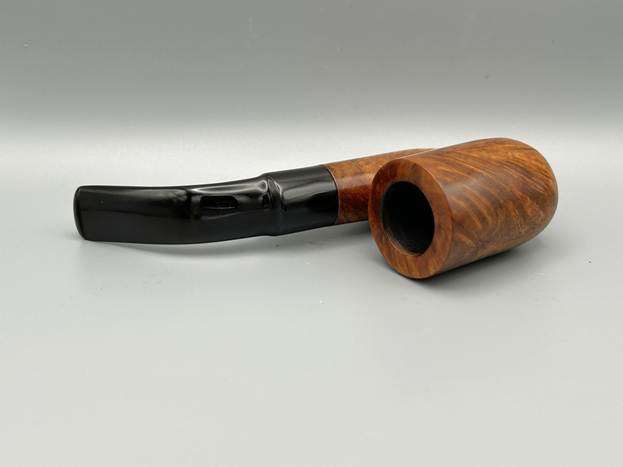
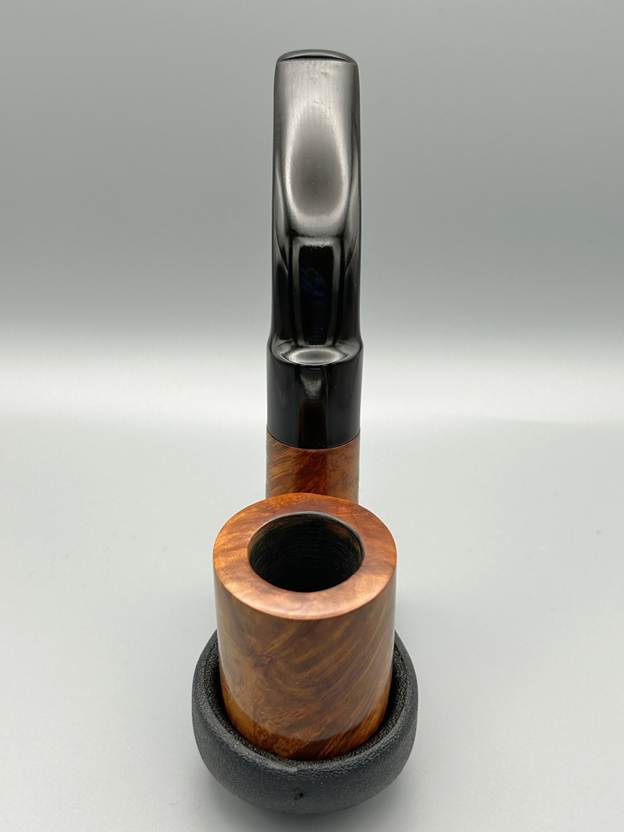
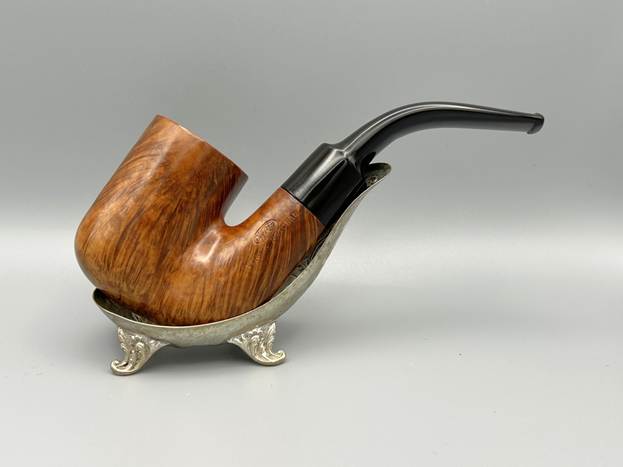
This handsome pipe was found at an antique fair around town and I liked it right at first viewing. This is a very dirty, but very attractive, Weber Virgin Natural Oom Paul. There is some lovely, filthy, smooth briar that makes up the stummel and a great bent vulcanite saddle stem (equally dirty). I hope you will like this pipe too – it needs a new home!
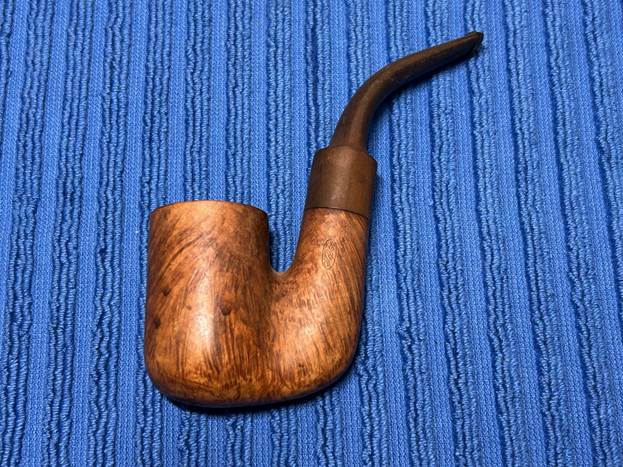
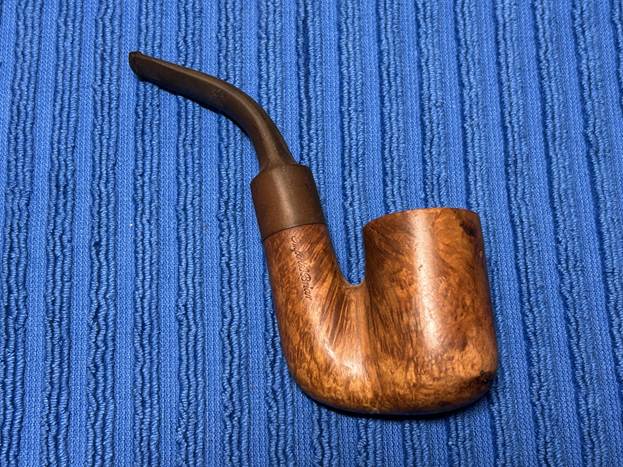
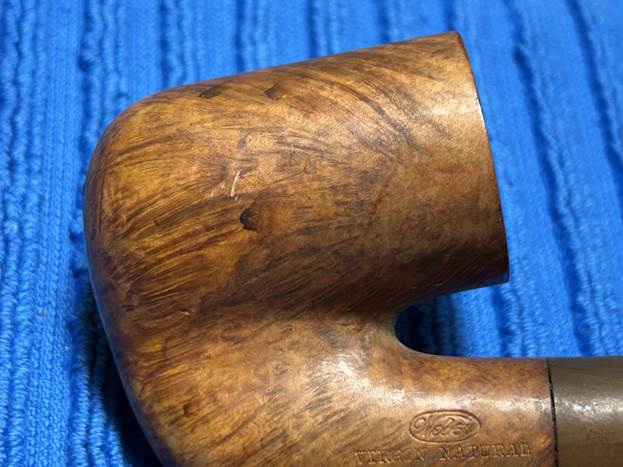
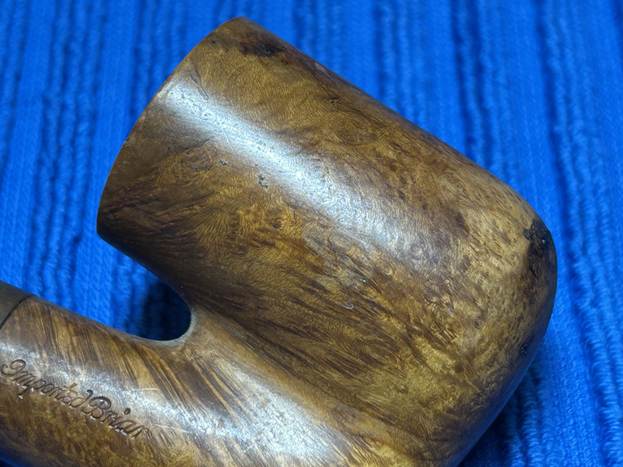
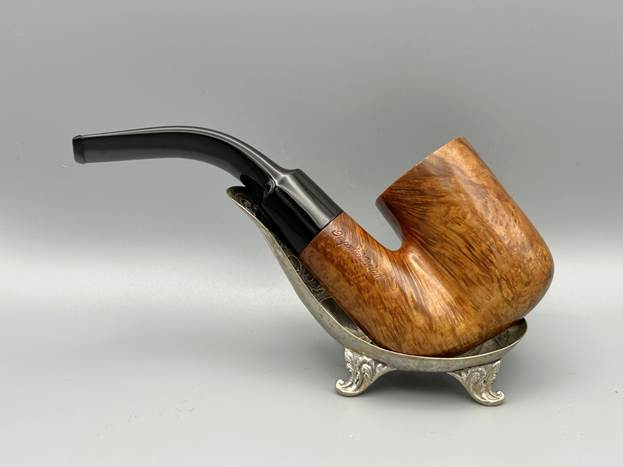
We have some clear markings to read on the briar. On the left side of the shank, we see Weber [over] Virgin Natural. The Weber logo is in an oval. The right side of the shank shows the words Imported Briar. There are no other markings on the pipe.
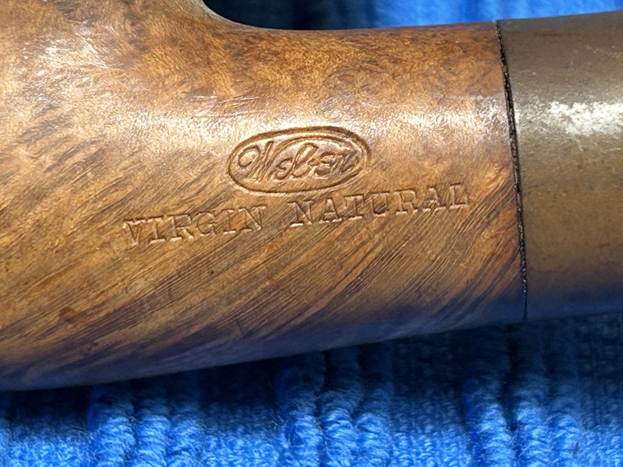
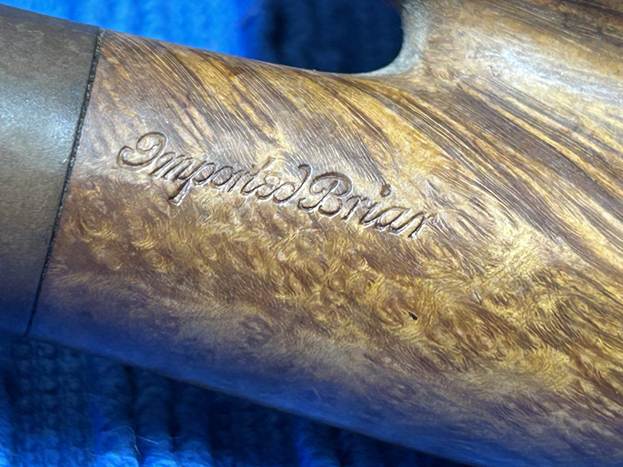
The name Weber may well be familiar to you and that’s because the name refers to Carl Weber, who wrote the well-known pipe book, Weber’s Guide to Pipes and Pipe Smoking. At Pipedia, they include the following information:

Carl B. Weber was a German from Bavaria. Aged 21 he emigrated to the USA in 1911. In 1938 he established Weber Briars Inc. in Jersey City, New Jersey. Later renamed in Weber Pipe Co. The firm grew to be one of the giants of American pipe industry focusing itself in the middle price and quality zone. Trademark: “Weber” in an oval. Beside that Weber – especially in the years after 1950 – was a most important supplier for private label pipes that went to an immense number of pipe shops. Alone in New York, exactly the same pipes were found at Wilke’s, Barclay Rex, Trinity East, Joe Strano’s Northampton Tobacconist in Ridgewood, Queens, Don-Lou in Bensonhurst, Brooklyn… Nearly all pipes for Wilke were unstained and many models, for example the “Wilke Danish Bent”, could hardly deny originating of Weber. Among other well reputated pipe makers Anthony Passante worked for Weber. Weber Pipe Co. owned and manufactured Jobey pipes – when mainly sold in the USA by the Tinder Box from 1970’s – 80’s. In addition Jobey / Weber bought Danish freehands from Karl Erik (Ottendahl). These pipes were offered as Jobey Dansk. Ottendahl discontinued exports to the United States in 1987 and in the very same year – obviously only as a ghost brand – Jobey was transferred to Saint-Claude, France to be manufactured by Butz-Choquin.

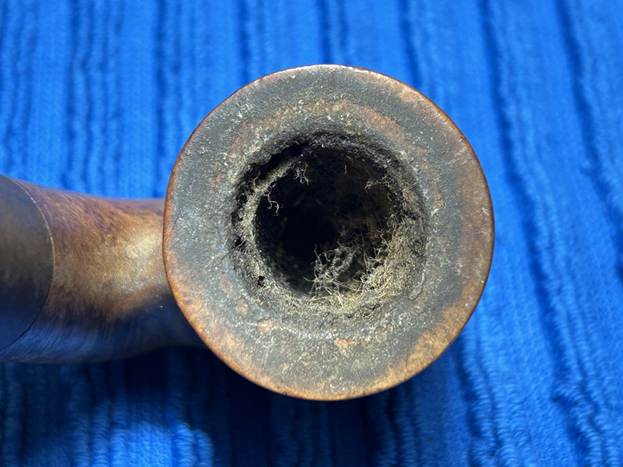
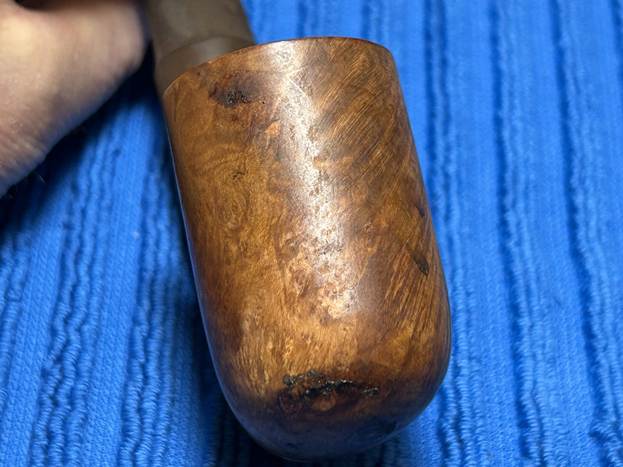
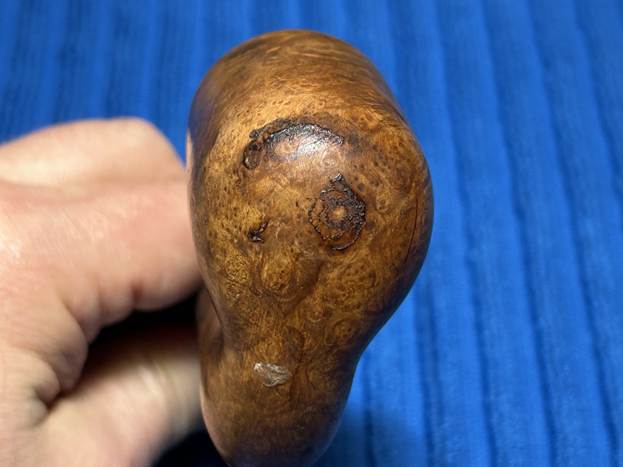
Let’s take a look at the pipe. The stem is actually in very nice condition – it’s just horribly dirty. Only minor tooth marks and the oxidation is hidden under the filth. Similarly, the stummel is also in good shape – just covered in grime. In addition, the bowl is absolutely choked with cake. That’ll take some work! As the photos show, there are some blobs of goo on the underside of the stummel, but I’m sure that will clean up well.
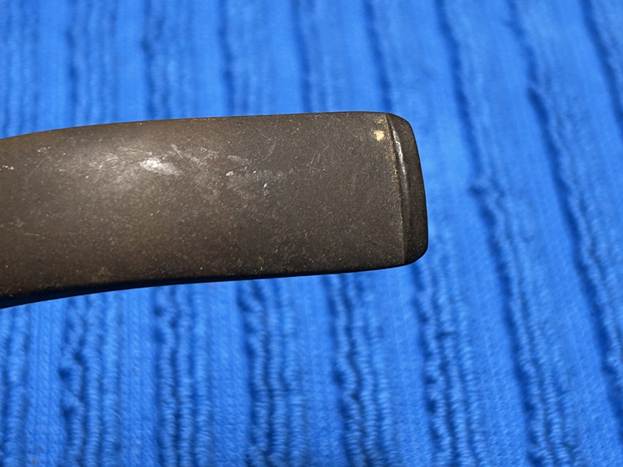
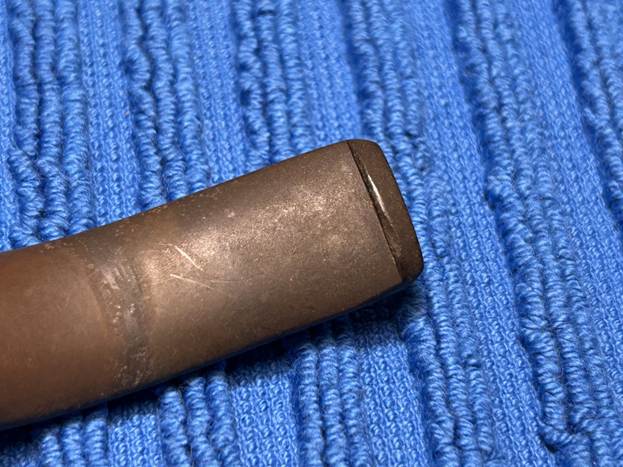
I used isopropyl alcohol on a few cotton rounds and wiped down the stem to provide an initial cleaning of filth before moving on to the next steps. The primary cleaning came next. I disinfected the inside of the stem with both pipe cleaners and cotton swabs dipped in lemon-infused 99% isopropyl alcohol. I scrubbed thoroughly to make sure the interior was very clean.
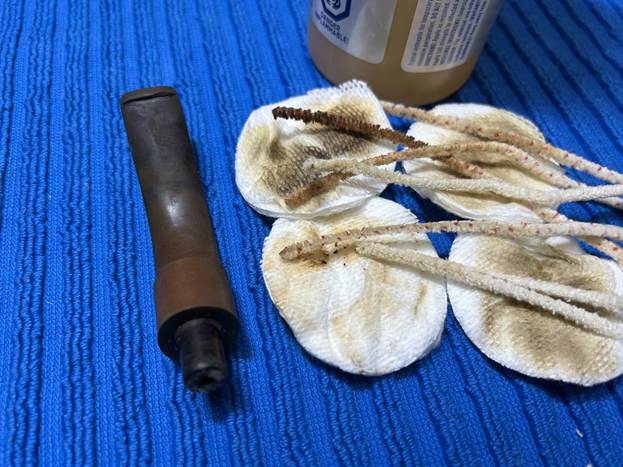
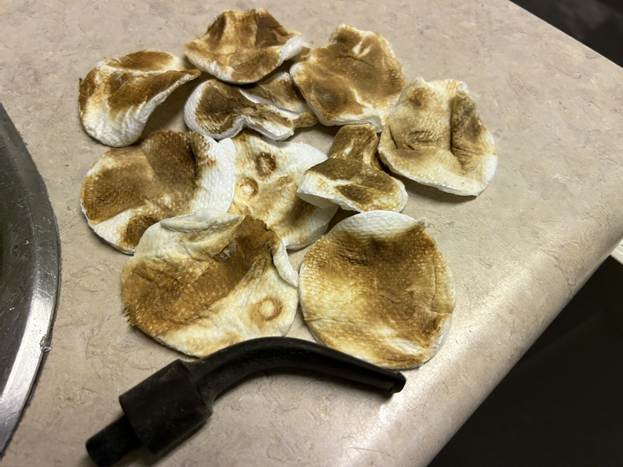
The goal of the next step is the removal (or minimization) of oxidation. Going to my sink, I used cream cleanser, cotton rounds, and a toothbrush, and scoured the stem to remove as much surface oxidation as possible. As the photos show, the result was a hideous, ochre-coloured mess – but better off the stem than on it.
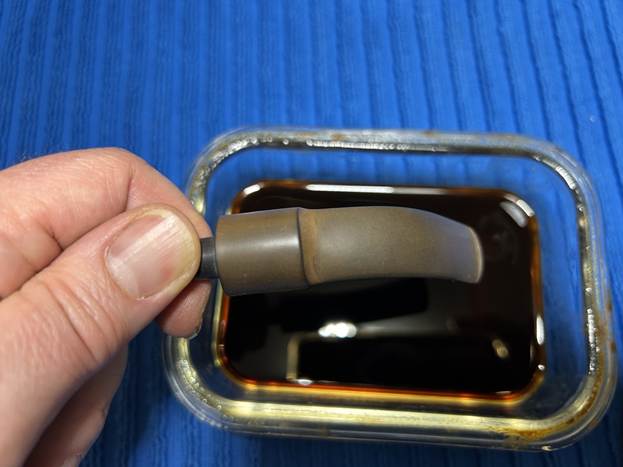
Once the stem was reasonably clean, I soaked it overnight in some Briarville Stem Oxidation Remover. This solution works to draw oxidation in the stem to the surface of the vulcanite. This is a major aid and an important step in ensuring a clean stem. The following day, I drew out the stem from its bath and scrubbed the lingering fluid with a toothbrush.
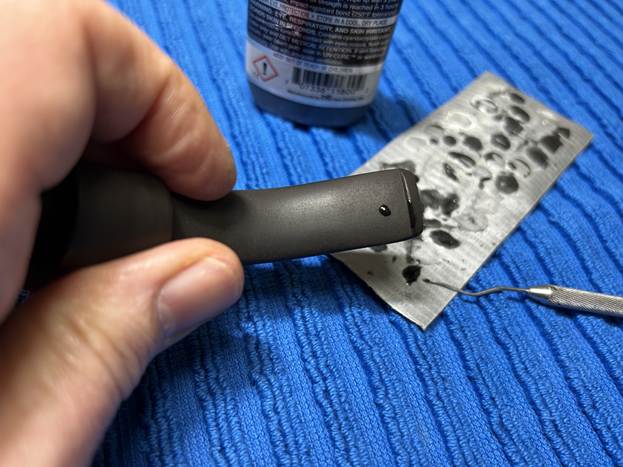
As the stem was now clean and dry, I set about fixing the marks and dents in the vulcanite. This was done by filling those divots with black cyanoacrylate adhesive, impregnated with carbon and rubber. I left this to cure and moved on.
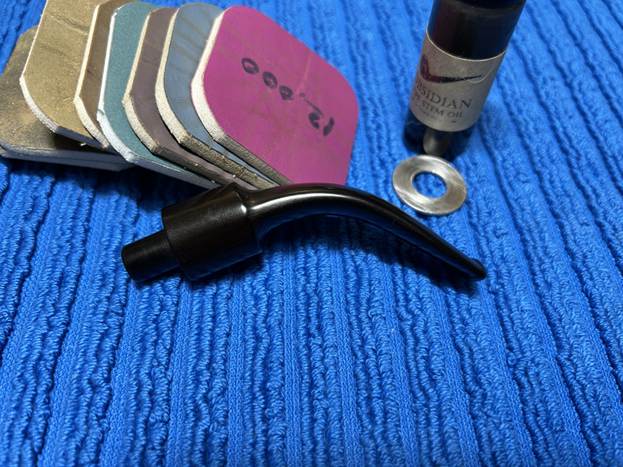
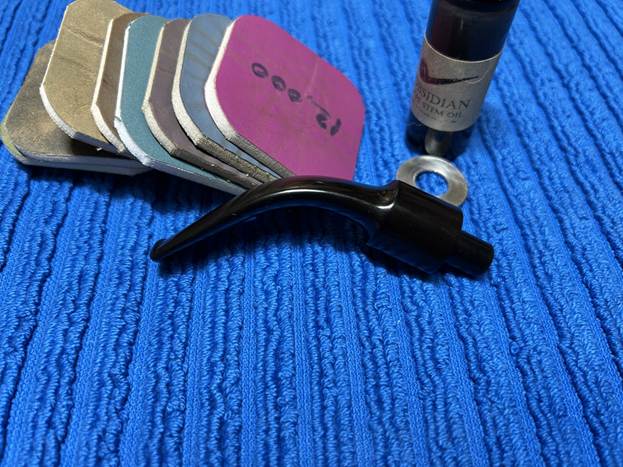
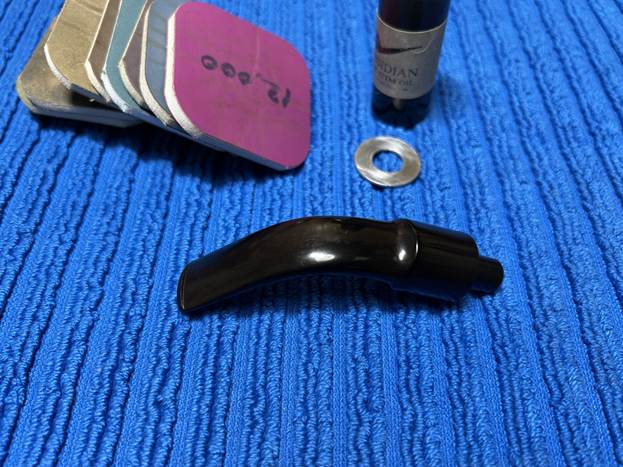
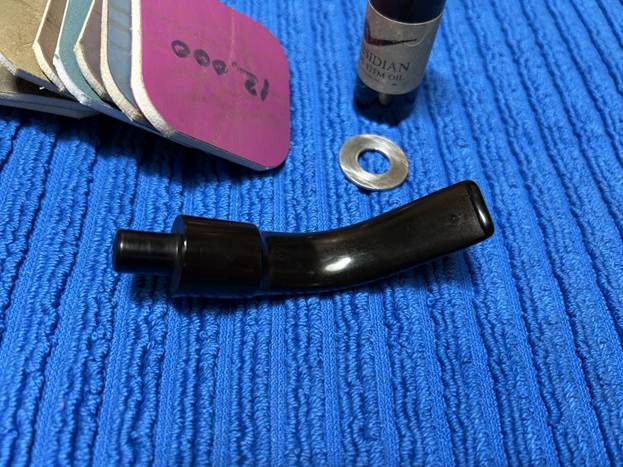
The penultimate step for the stem is sanding. First, with my set of needle files, I reduced the bulk of the cyanoacrylate repairs. I removed the excess adhesive as near to the surface as possible, without cutting into the vulcanite. Following that, I used all nine of the micromesh sanding pads (1,500 through 12,000 grit) to sand out flaws, even out the vulcanite, and provide gentle polishing of the finished surface. I also applied pipe-stem oil while using the last five micromesh pads. There was a wonderful, deep black shine to the stem when I was done.
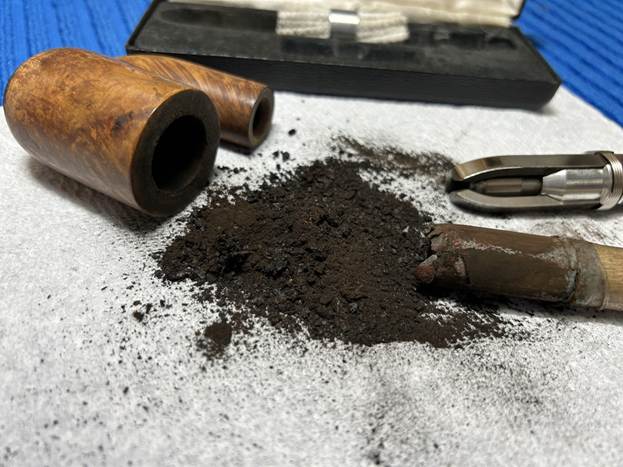
As the stem was (nearly) complete, I moved on to the stummel. The first step was to ream out the bowl – that is to say, remove all the cake inside the bowl. This accomplished a couple of things. First (and most obviously), it cleaned the bowl and provided a refurbished chamber for future smoking. Second, when the old cake was removed, I could inspect the interior walls of the bowl and determine if there was damage or not. I used a reamer, a pipe knife, and a piece of sandpaper taped to a wooden dowel. Collectively, these ensured that all the debris was removed. Boy, there was a lot.
My next step was to remove the lava on the rim. For this, I took a piece of machine steel and gently scraped the lava away. The metal’s edge is sharp enough to remove what I need, but not so sharp that it damages the rim.

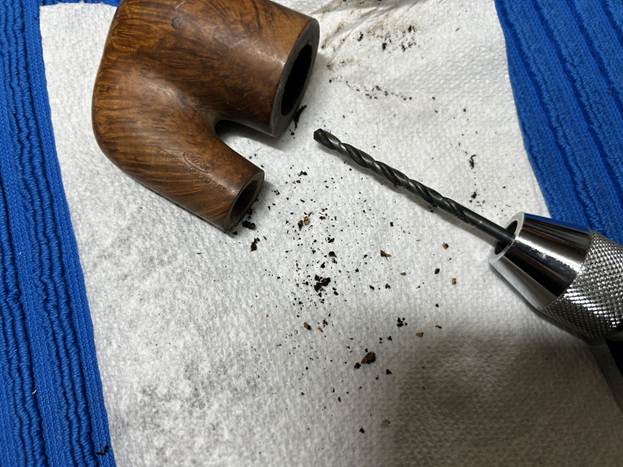
The inside of the stummel needed to be cleaned thoroughly. However, this pipe was so clogged, that I first needed to open the horribly occluded airway. So, I took a long drill bit, held in a drill chuck, and hand-cranked it to dislodge the dreadful detritus inside. Hand cranking is essential because it provides a precision and caution that a power drill cannot provide.
Similar to the stem, I then cleaned the stummel with both pipe cleaners and cotton swabs dipped in lemon-infused 99% isopropyl alcohol. With a pipe this dirty, it took quite a while and much cotton to clean.
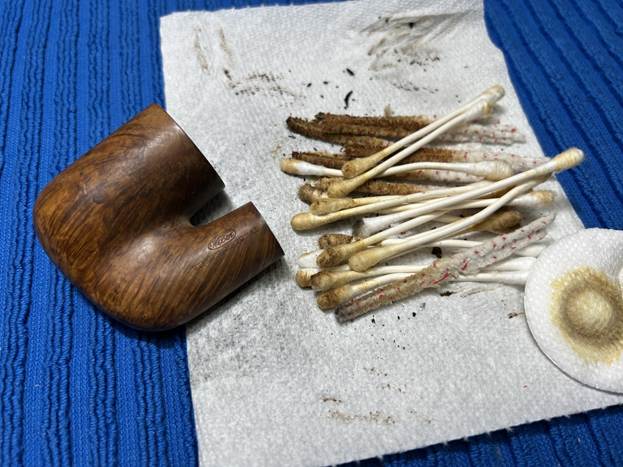
I then decided to ‘de-ghost’ the pipe – that is to say, exorcize the remaining filth from the briar. I filled the bowl and the shank with cotton balls, then saturated them with 99% isopropyl alcohol. I let the stummel sit overnight. This caused the remaining oils, tars and smells to leach out into the cotton.
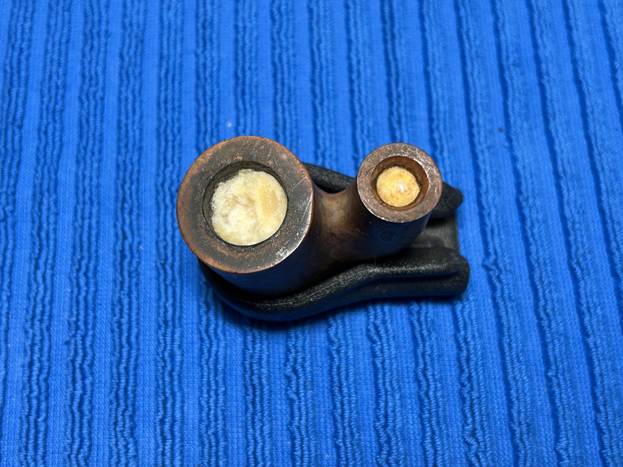
To tidy up the briar, I wiped down the outside, using a solution of a pH-neutral detergent and some distilled water, with cotton rounds. I also used a toothbrush in the crevices. This did a good job of cleaning any latent dirt on the surface of the briar. The last step of the cleaning process was to scour the inside of the stummel with the same mild detergent and tube brushes. This was the culmination of a lot of hard work in getting the pipe clean.
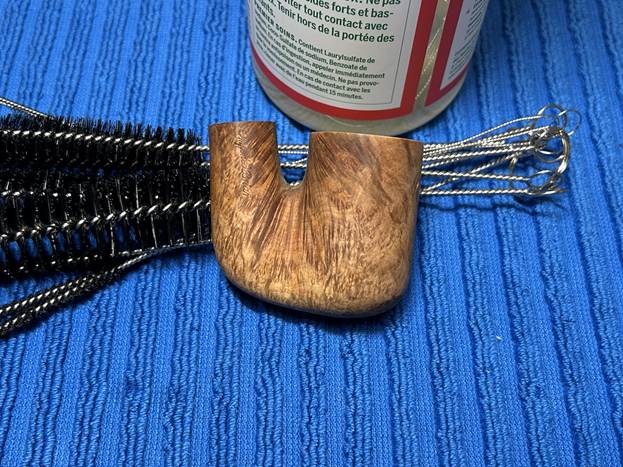
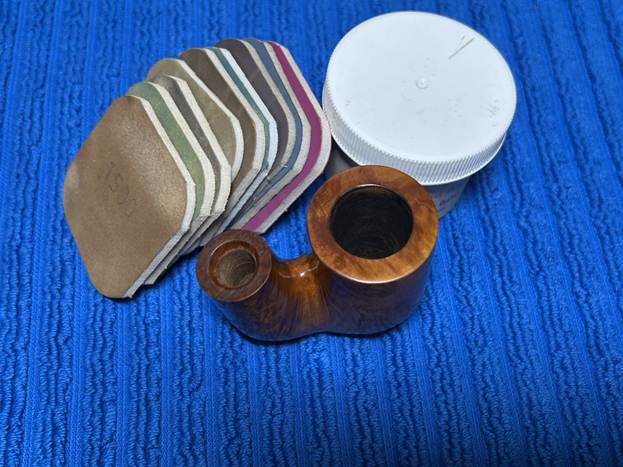
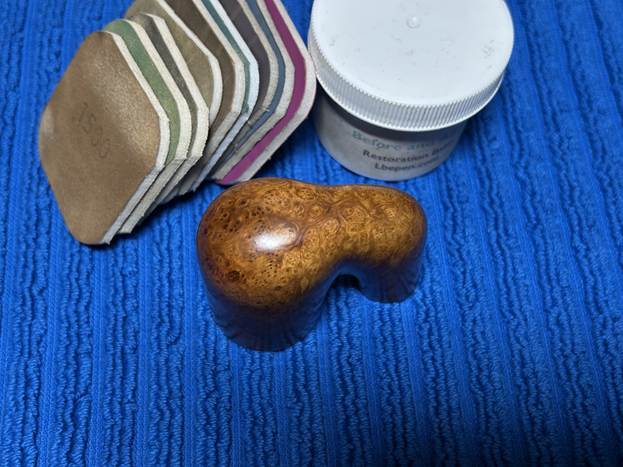
I used all nine micromesh pads (1,500 through 12,000 grit) to sand the outside of the stummel and finish it off. This sanding minimizes flaws in the briar and provides a beautiful smoothness to the wood. I rubbed some LBE Before & After Restoration Balm into the briar and let it sit for an hour or so. The balm moisturizes the wood and gives a beautiful depth to the briar. I then buffed the stummel with a microfibre cloth.
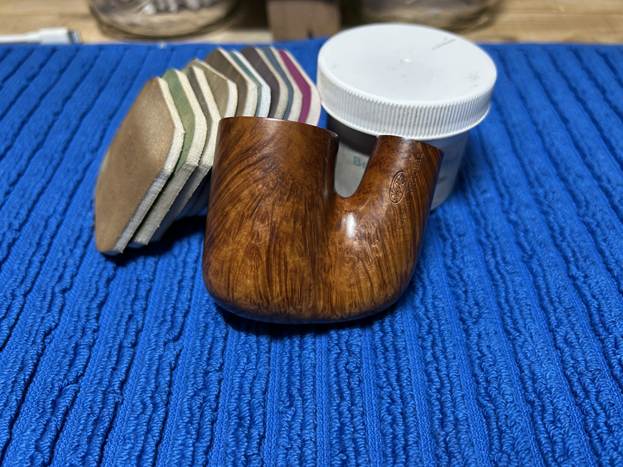
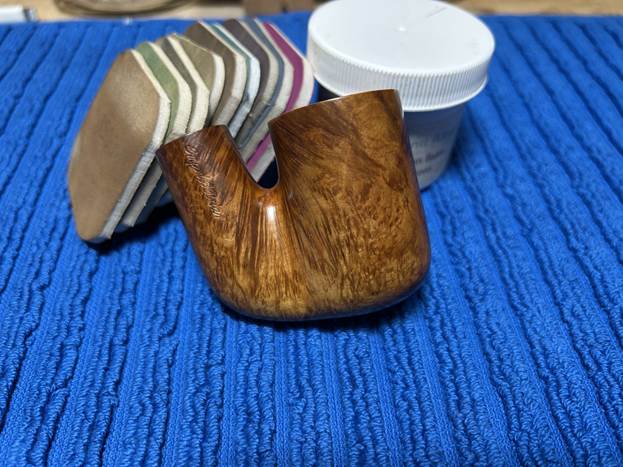
For the final step, I took the pipe to my bench polisher and carefully buffed it – first with a blue diamond compound, then with some carnauba wax. This procedure makes the pipe look its best – the stummel sings and the stem glows.

All done! This Weber Virgin Natural Oom Paul looks fantastic again and is ready to be enjoyed by its next owner. I am pleased to announce that this pipe is for sale! If you are interested in acquiring it for your collection, please have a look in the ‘American’ section of the store here on Steve’s website. You can also email me directly at kenneth@knightsofthepipe.com. The approximate dimensions of the pipe are as follows: length 4 in. (101 mm); height 4⅝ in. (118 mm); bowl diameter 1⅓ in. (45 mm); chamber diameter ¾ in. (20 mm). The weight of the pipe is 2⅛ oz. (63 g). I hope you enjoyed reading the story of this pipe’s restoration as much as I enjoyed restoring it. If you are interested in more of my work, please follow me here on Steve’s website or send me an email. Thank you very much for reading and, as always, I welcome and encourage your comments.
A Book Review – Weber’s Guide to Pipes and Pipe Smoking by Carl Weber


Blog by Steve Laug

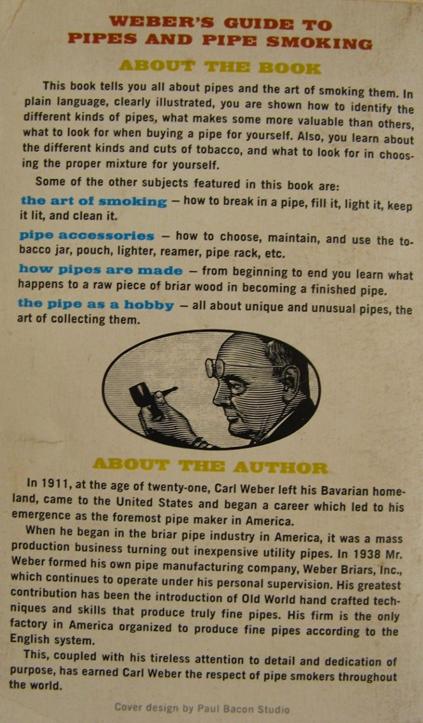
13139507 Probably one of the first books I picked up for my pipe library was Carl Weber’s Guide. It has a price tag on it from a used bookshop that I frequented in those days that dates it to June of 2002 and I paid a princely total of $4 for it. My copy is noted on the cover and the cover pages as An Original Edition though I am not sure what that means. It originally came out in 1963 ad copy is one that was reprinted in 1967 by the Cornerstone Library, New York City. Carl Weber was the Founder of Weber Briars, Inc. a company whose pipes have passed through my collection for the past 20 years. I remember finding this book in the book shop – way back in the far left corner of the shelves in the area of collectibles and hobbies. I had read of it but not seen a copy so I snatched it up and made it mine.

The table of contents is very straightforward as to what is covered by the book and as is true of most well written books it gives an outline of the topics covered between the covers of the book.
Table of Contents:
Forward
1. What is a pipe?
2. The Briar and the Meerschaum: The King and Queen of Pipes
3. Pipe Varieties
4. Selecting Your Pipe
5. Selecting Your Tobacco
6. The Art and Science of Pipe Smoking
7. How Briar Pipes are Made
8. Pipe Accessories
9. The Pipe as a Hobby
10. Questions and Answers About Pipes

To begin this quick review I want to quote three portions from Weber’s Forward to this little handbook. The first one sets the stage for his proposition that pipe smoking is a most pleasurable pastime. He writes:

“No one really knows why men smoke. Yet long before the discovery of tobacco, smoking had become the abiding joy of many peoples. Since tobacco’s discovery, smoking has truly become one of mankind’s most pleasurable pastimes.” – page 7

The next quote I find particularly poignant in a handbook on smoking. It calls the pipeman to treat his pipe well and it will treat him well. Oh how I wish that many of the owners of the old pipes I refurbish had read these words. He writes:

“The real pipe-smoker soon learns that pipe smoking is both an art and a science. The pipe responds to its owner with exactly the same treatment that it receives from him. The man who masters the techniques of pipe smoking is repaid by a satisfying smoke, a joy which he created for himself with his own hands.” – page 8

The last quote gives the stated purpose of the book in Weber’s own words: “The sole purpose of this book is to help the smoker achieve these rare moments of serenity, which are increasingly hard to come by in the accelerating pace of the modern world.” – page 8

Weber’s Guide can be divided into four major sections – each covering several chapters. These section divisions are my own and are not found in the book. I find that they help to organize and locate material for my quick reference.

Section 1: Chapters 1-3
The first three chapters cover the topic of the pipe. Chapter 1 begins by discussing what a pipe is in terms of constituent parts and what it is used for. It gives a brief history of pipes and tobacco that is truly no different from any other pipe book I have read over the years. It is written in Weber’s inimitable style and is a very accessible quick read. In Chapter 2 compares briar and meerschaum pipes which he calls the King and Queen of pipes. He gives a brief history of the development of both. He concludes this section in Chapter 3 by giving a survey of different types not found in the two main categories already covered: calabash, corn cobs, water pipes and clay pipes. The chapter ends with a brief survey of the field of pipes and concludes with these words; “Whatever your style of smoking, chances are that somewhere you’ll find a pipe to match it.” (page 42)
Throughout each section of the text there are line drawings and sketches to illustrate the point the Weber is making in that section. They break up the text and add interest to the reader.

Section 2: Chapters 4-5
The next two chapters are about how to select a pipe (Chapter 4) and a tobacco to smoke (Chapter 5). The selection of a pipe is very individual. As Weber says, “…it must first of all, fit your personality and character.” He adds another line that has fueled much discussion. He says that the pipe should “enhance” the appearance of the pipe smoker and not detract. He gives examples of how this works in his opinion. He goes on to discuss flaws in briar with helpful insights in how to understand these natural parts of the briar. He discusses pipe shapes and gives three pages of drawing of the various shapes of pipes that is very helpful. He includes a page of stem drawings to accompany his paragraphs on the type of stem that is used. Chapter 4 concludes with a discussion of filter, the personality of the piper and the prices that pipes are selling for. The paragraphs on pipe and personality are interesting and entertaining. He suggests standing in front of a mirror and trying to match the shape of the pipe to your own shape – this idea has also engendered much derision and discussion.

Chapter 5 on Tobacco Selection is a succinct and helpful tool to a person trying a pipe for the first time as well as to the seasoned veteran needing a quick refresher. It begins with a quick botany lesson on tobacco plants before going on to discuss the types of tobacco that are smoked and their taste to the smoker. He has descriptions and information on Burley, Virginia, Cavendish, Maryland, Latakia, Perique and Turkish tobacco. He discusses and offers a diagram of the four basic cuts of tobacco – cube cut, cut plug, long cut and granulated. He ends this chapter with two paragraphs on the art of blending tobacco to suit the tastes of the smoker.

Section 3: Chapters 6-7
The third major section of the book is about the use of the pipe and the manufacture of a briar pipe. Chapter 6 covers what Weber calls the Art and Science of Pipe Smoking and is a good general introduction to our hobby. It covers packing, lighting, and smoking a pipe. It talks about breaking in a pipe, enjoying it and maintaining it. Chapter 7 gives an overview verbally on the birth of a briar pipe from burl to finished product. That is followed by a pictorial spread showing the making of a pipe illustrating what has been said in the first portion of the chapter. It concludes with paragraphs on stem making and finishing the pipe before it leaves the factory to be held in the hands of the pipe smoker.

Section 4: Chapters 8-10
The final section picks up all of the extraneous details of pipe smoking that have not been covered in the rest of the book and are necessary to proper enjoyment of the hobby of pipe smoking. Chapter 8 covers accessories – pipe cleaners, sweeteners, humidors, tobacco pouches of various styles and layouts, pipe racks, ash trays, wind caps, pipe tools and other useful gadgets that fall outside of these wider categories. Chapter 9 on the pipe as hobby cover the pipe collecting aspect of the hobby and addresses the types of pipes that are collected from high-end to oddities – the better mouse trap version of pipes. It ends with a short treatise on how to evaluate pipes that are collected.

Chapter 10 is a Question and Answer section. It covers a wide range of topics that somehow capture many of the first questions that new pipe smokers ask. It is set up in a question and answer format and covers such topics as how to tell the difference between block meerschaum and pressed meerschaum, rehydrating tobacco, sweetening a pipe, repairing broken stems, tongue bite, the meaning of stampings such as Real Briar and Imported Briar, mixing tobacco blends, shapes and their effect on coolness of a smoke, proper moisture levels in tobacco, directions for reaming a pipe and the life expectancy of a briar pipe.

I believe that Weber did an admirable job of meeting his purpose as stated in his Foreward. While the book is not an exhaustive treatment of the topic it is comprehensive. His style of writing is inviting and makes this a very accessible and readable book. Copies of it are readily available online through such sources as Amazon.com and Abebooks. A quick search of the title will give you access to a wide range of copies and prices to match your budget. It is well worth the read and is a great book to have on hand for new pipemen you introduce to our hobby.

From the back cover.
back cover