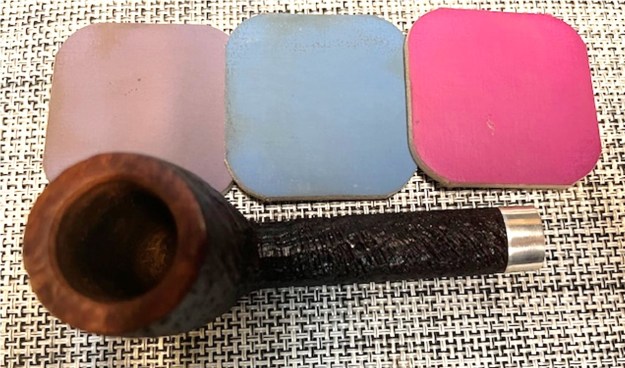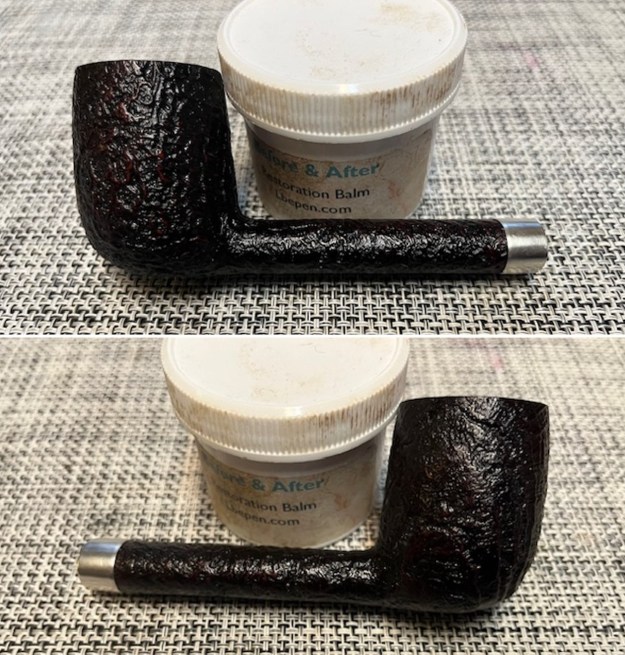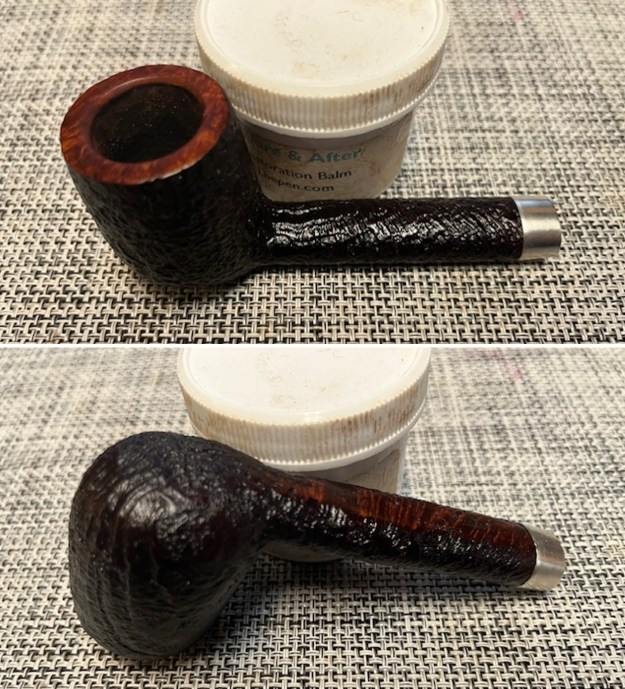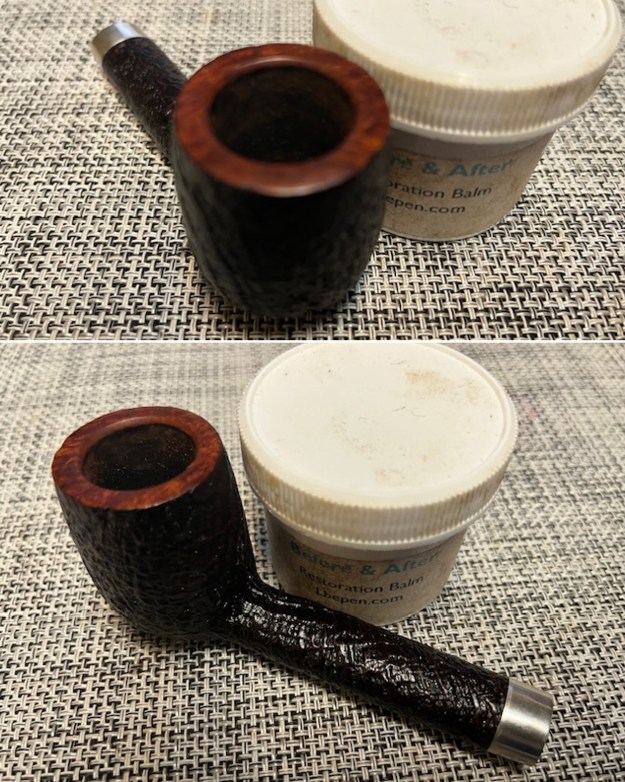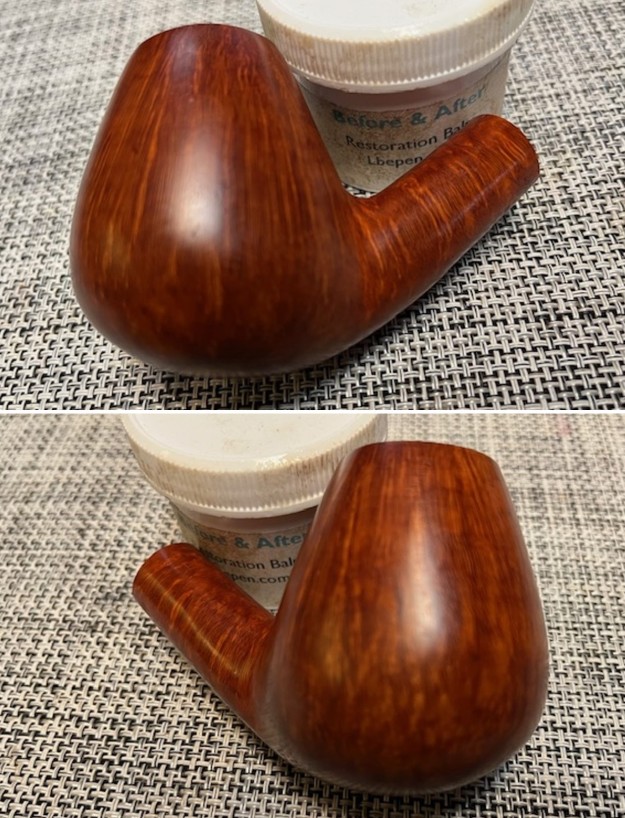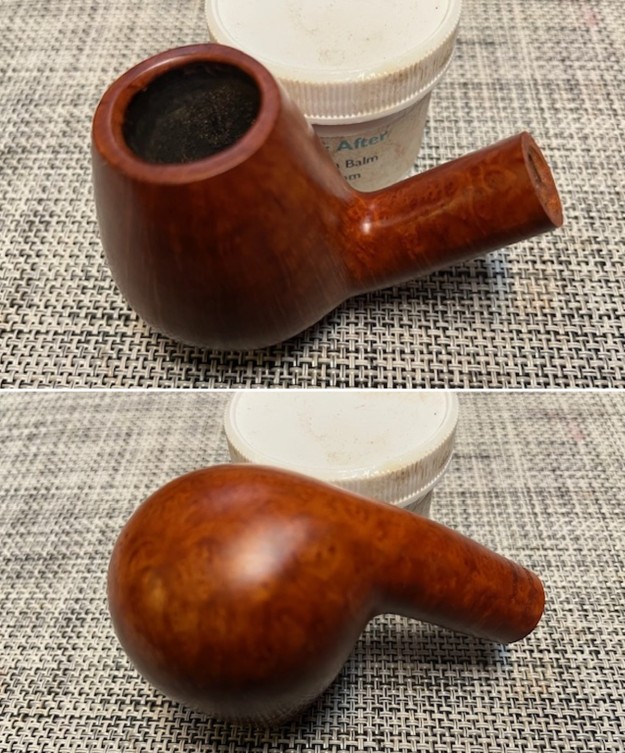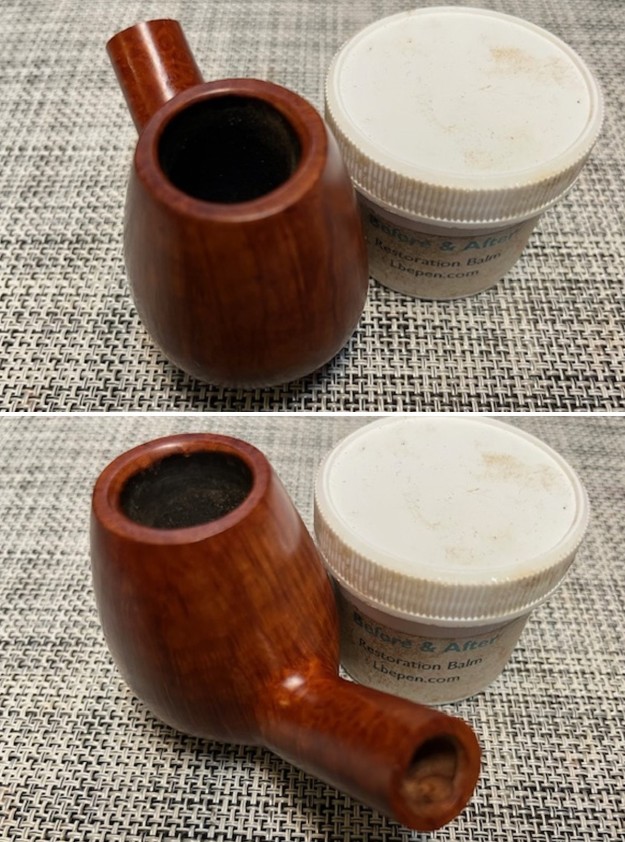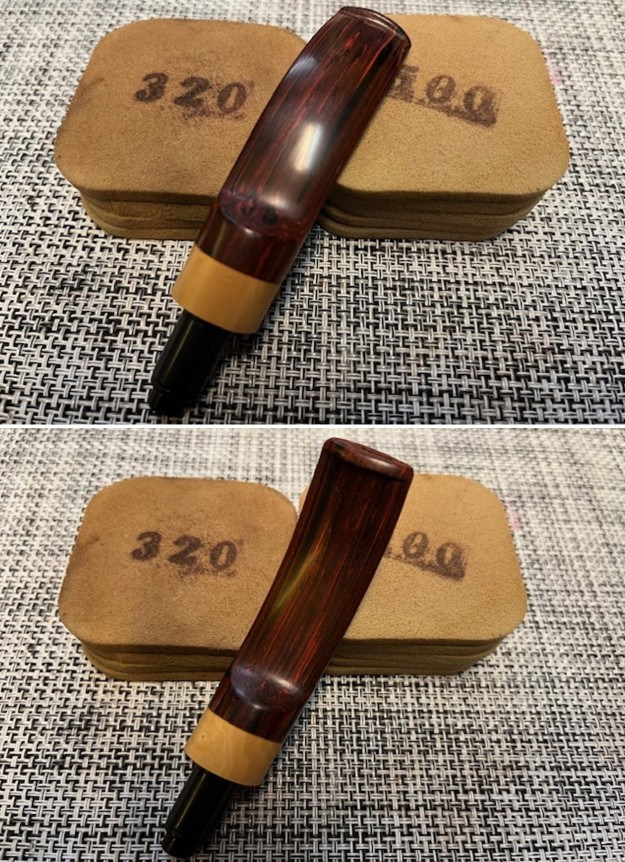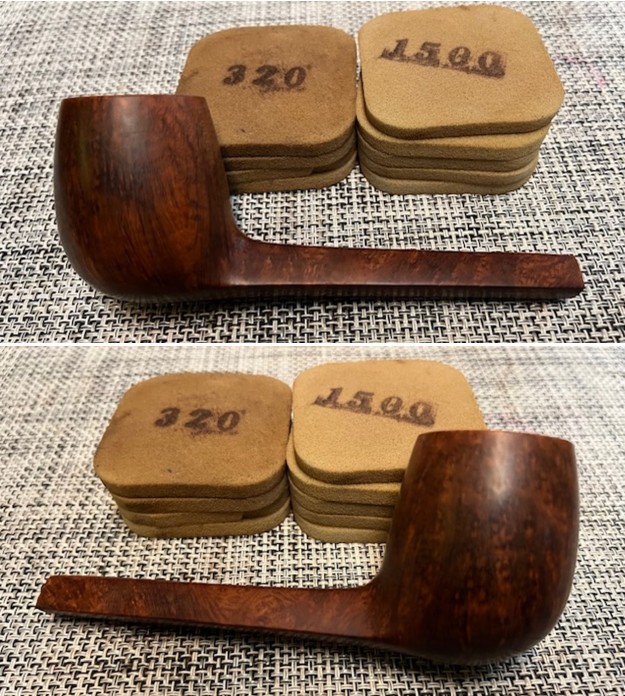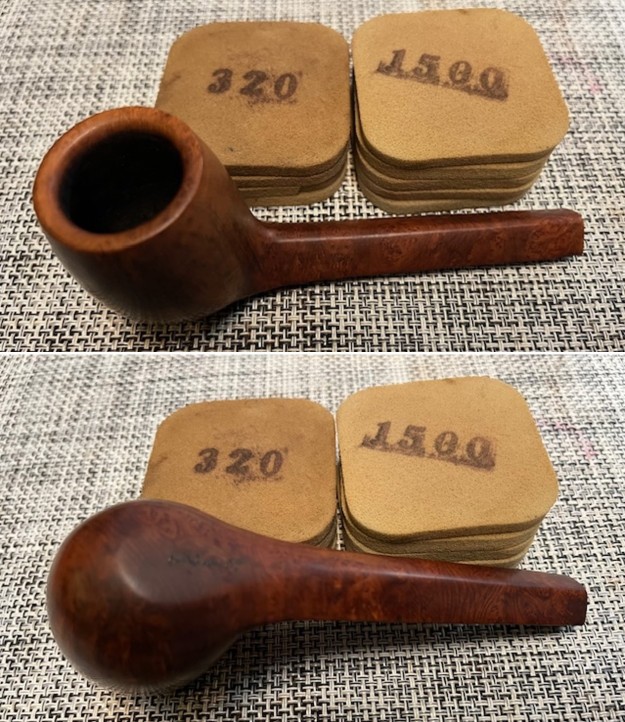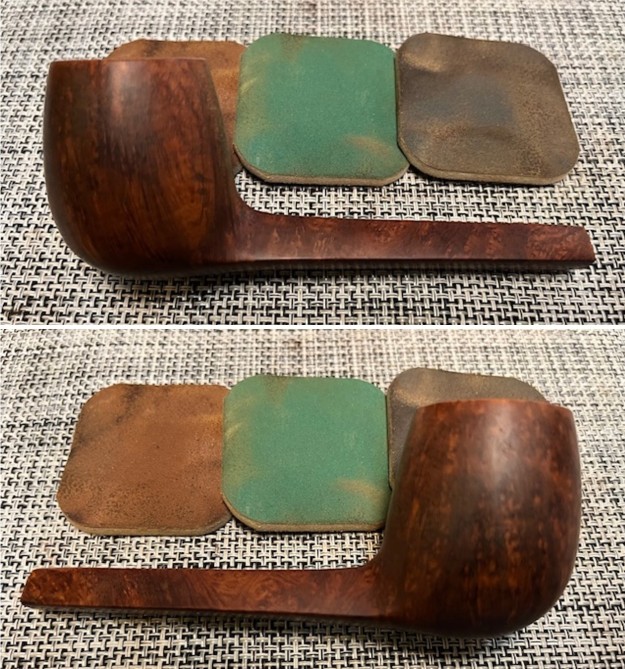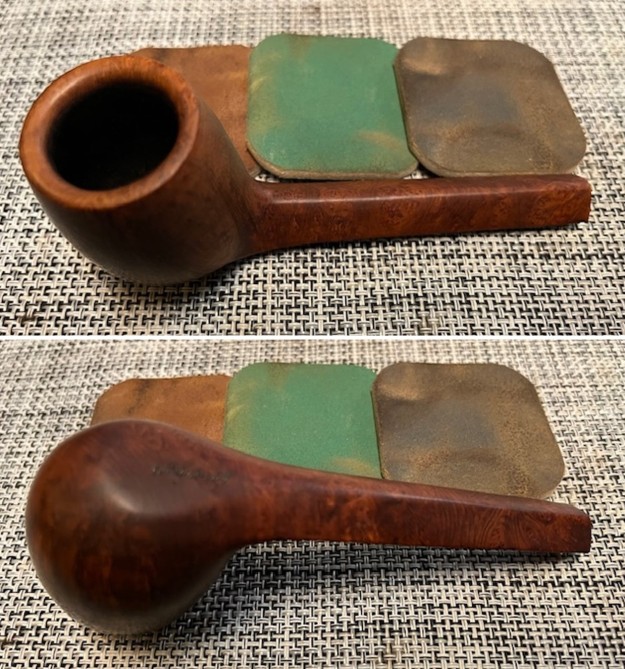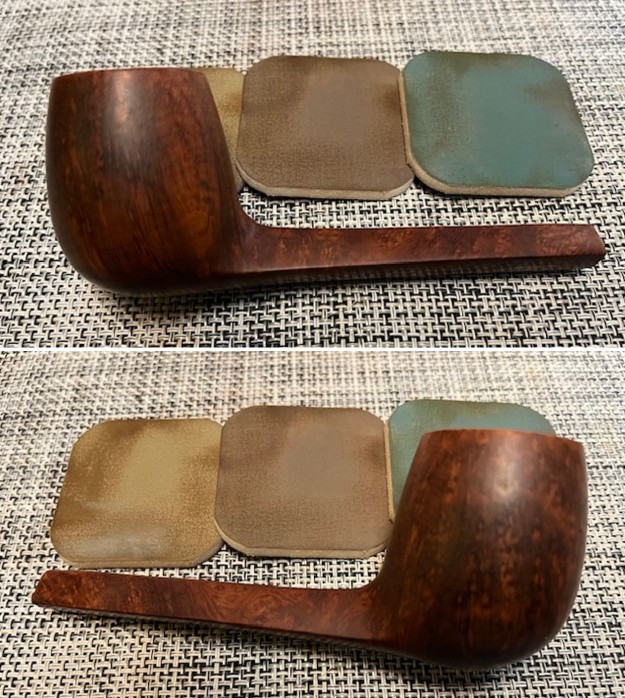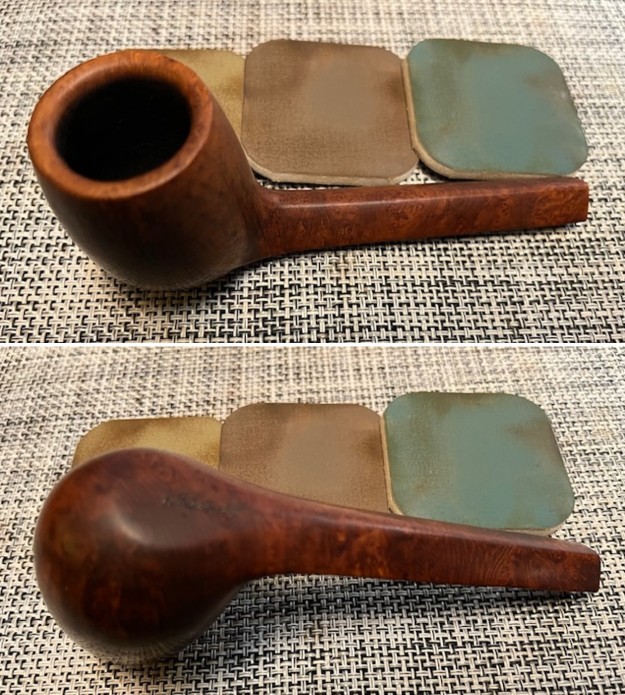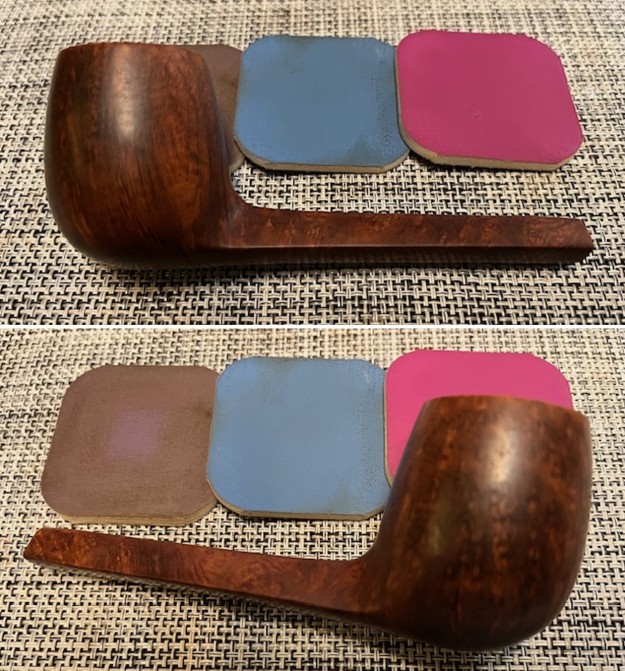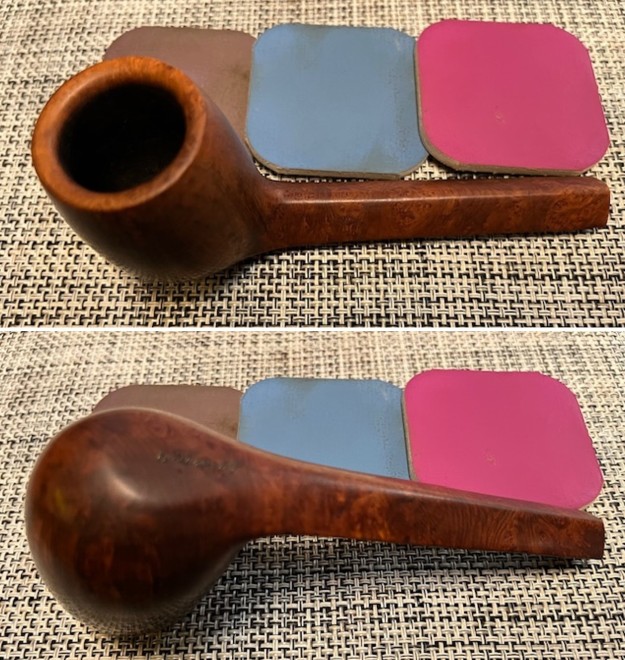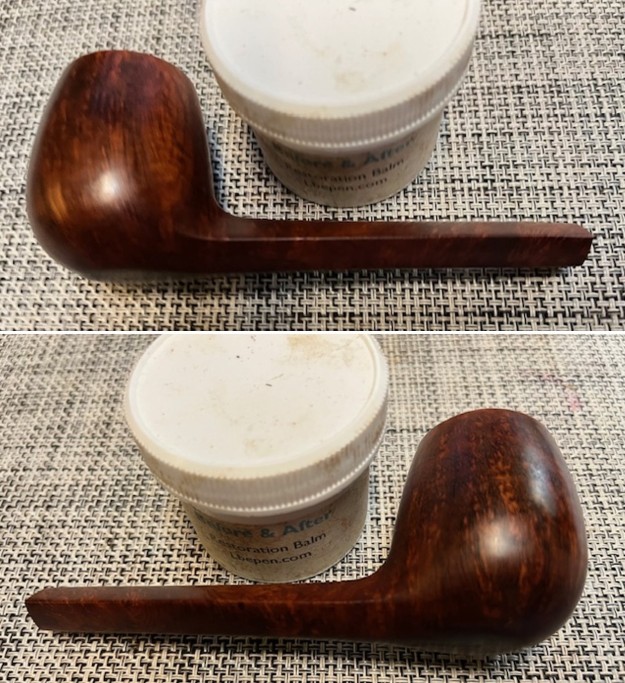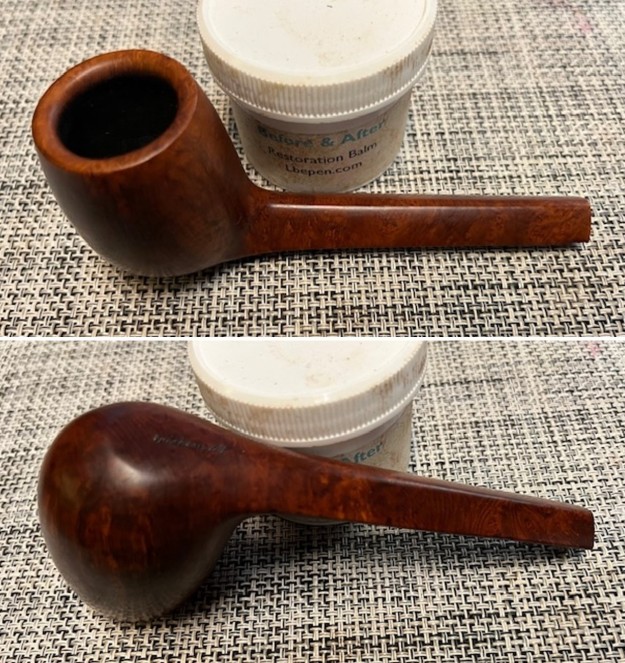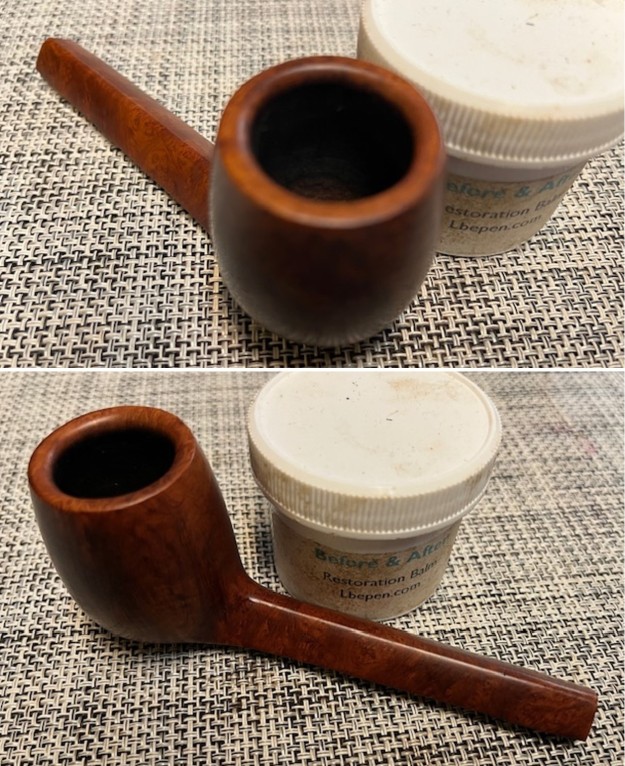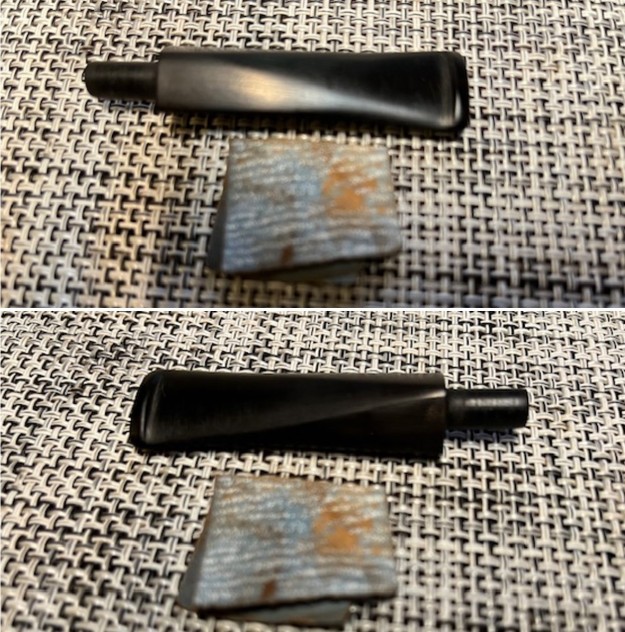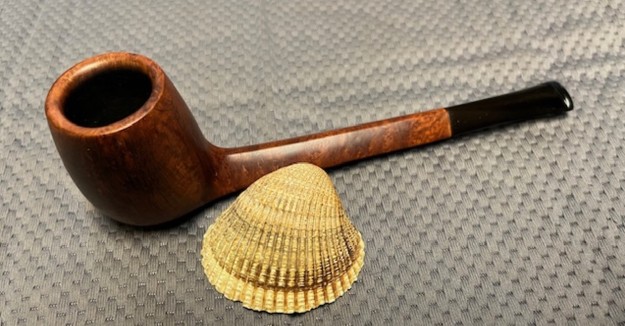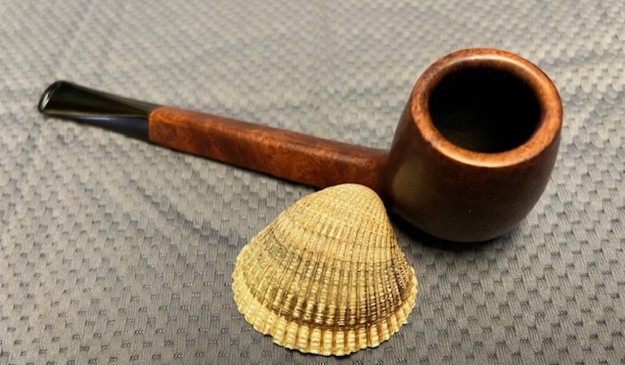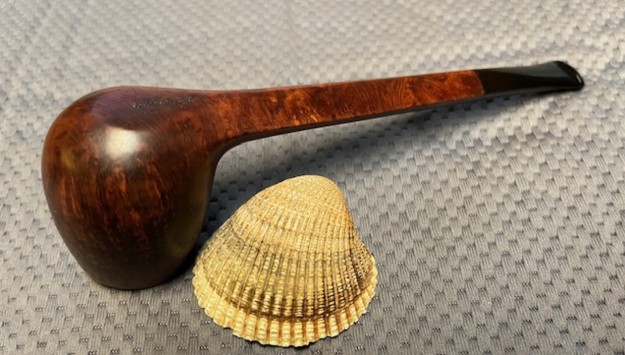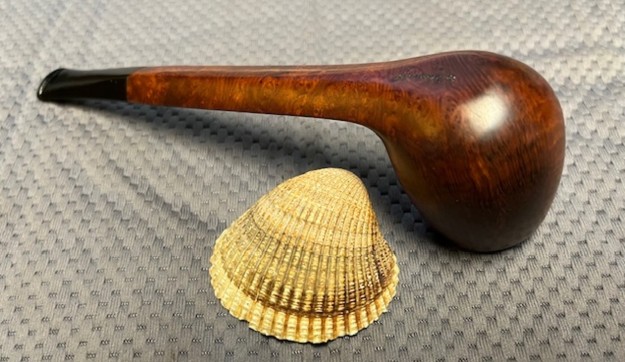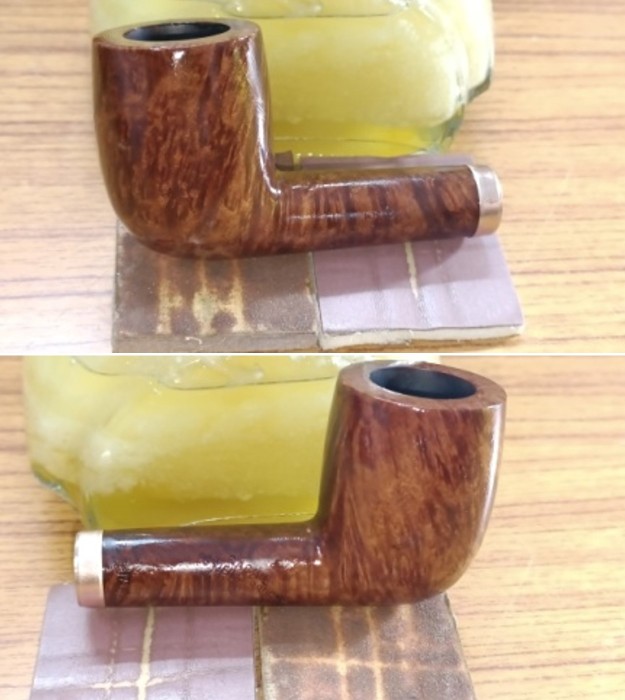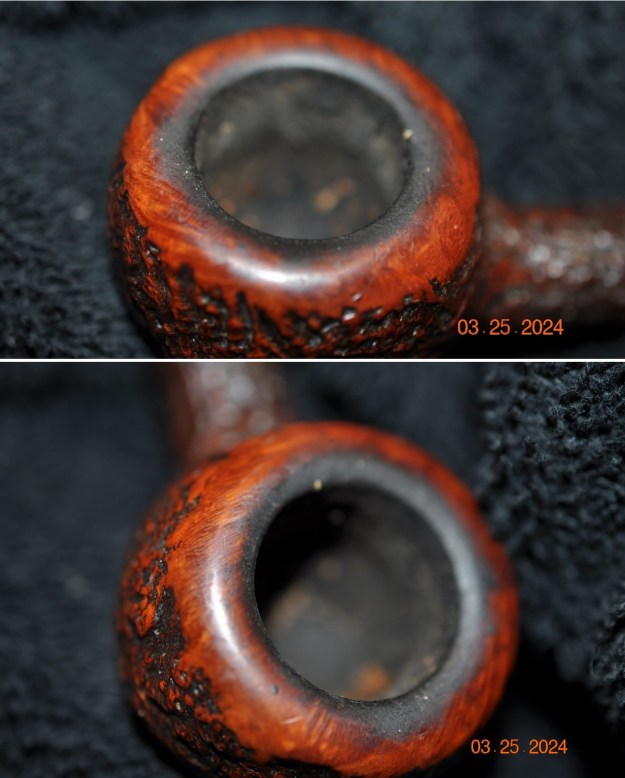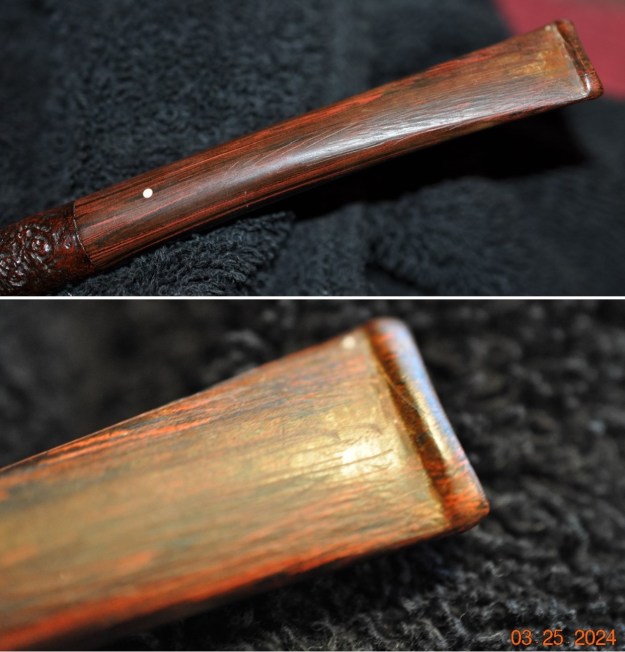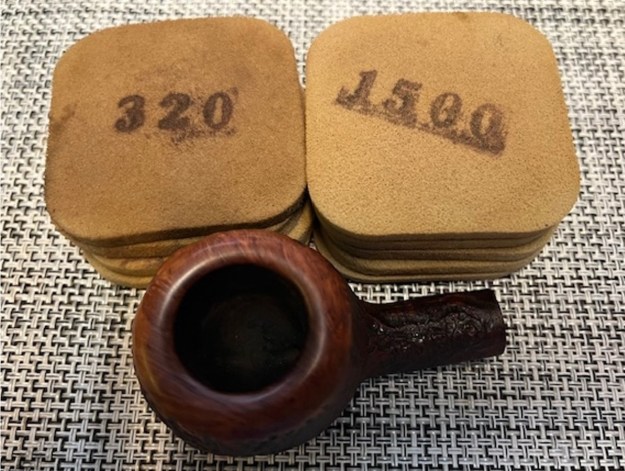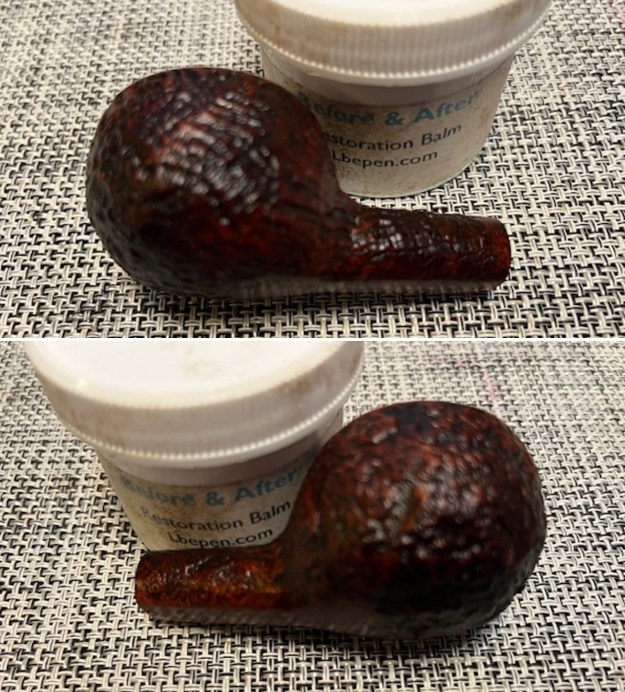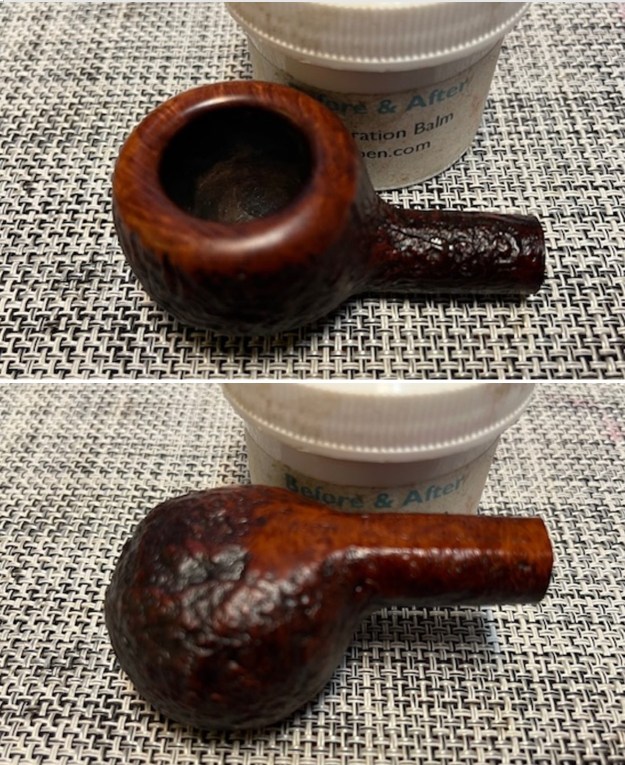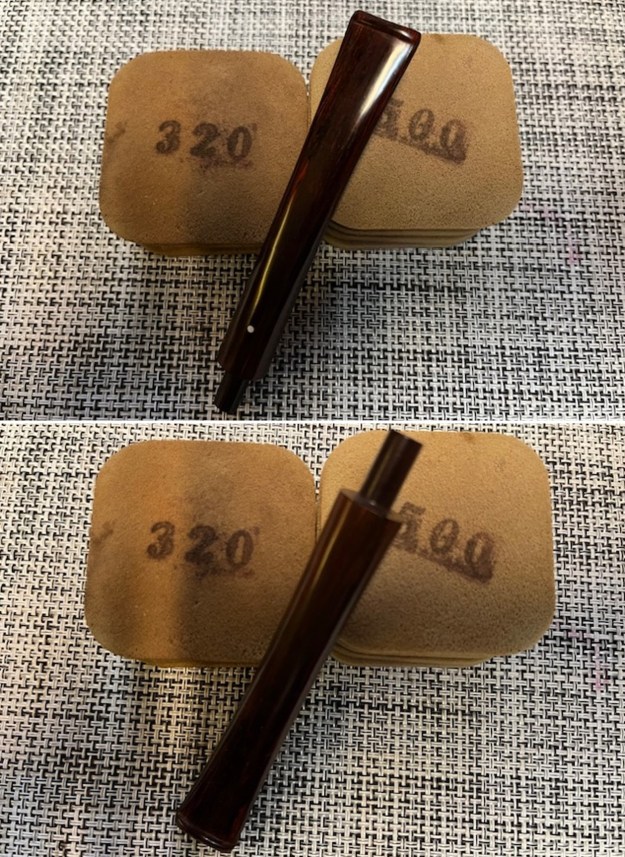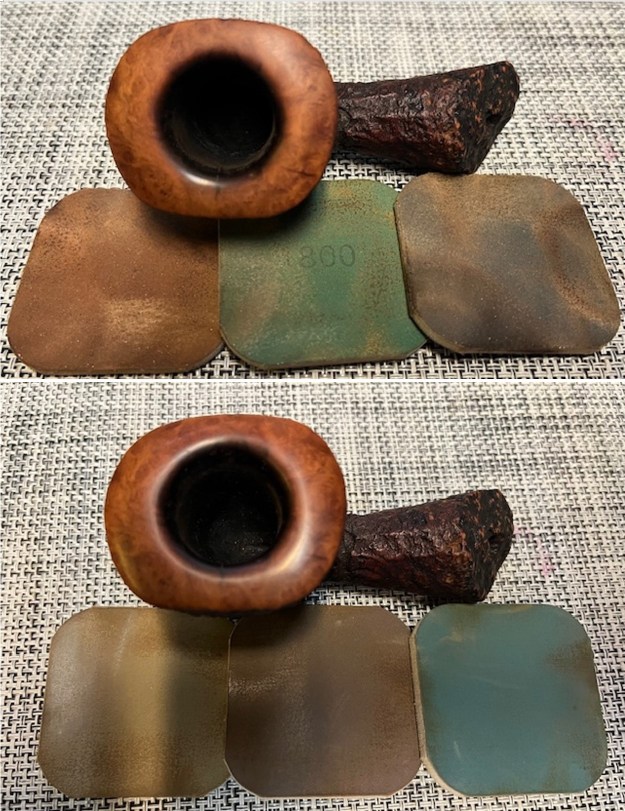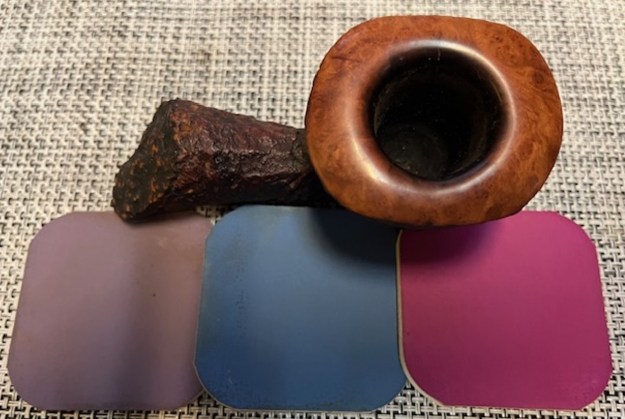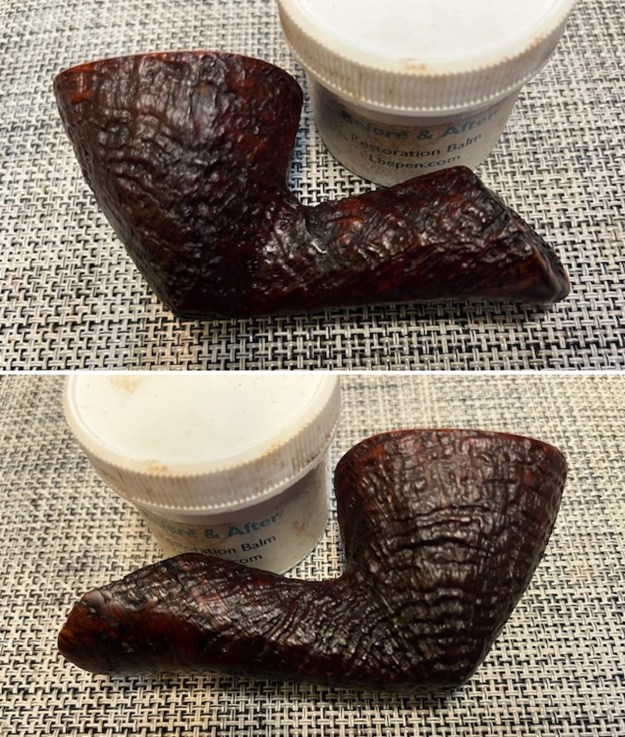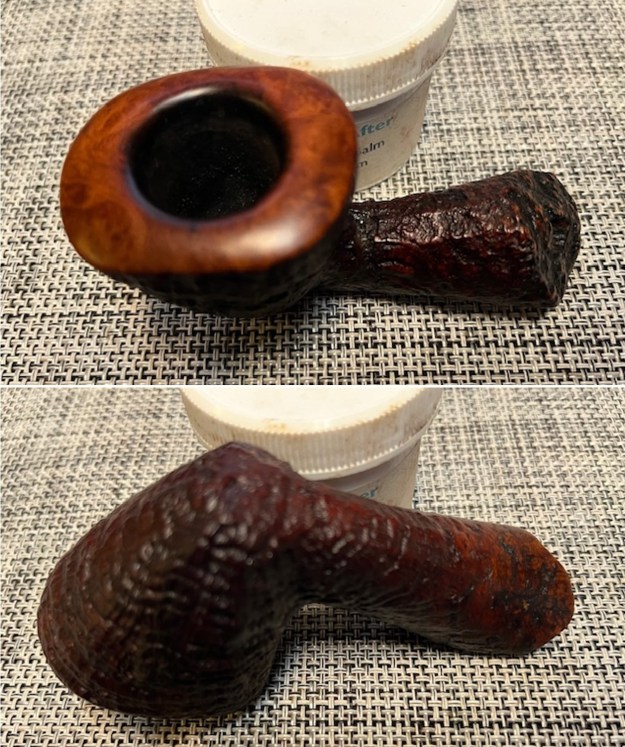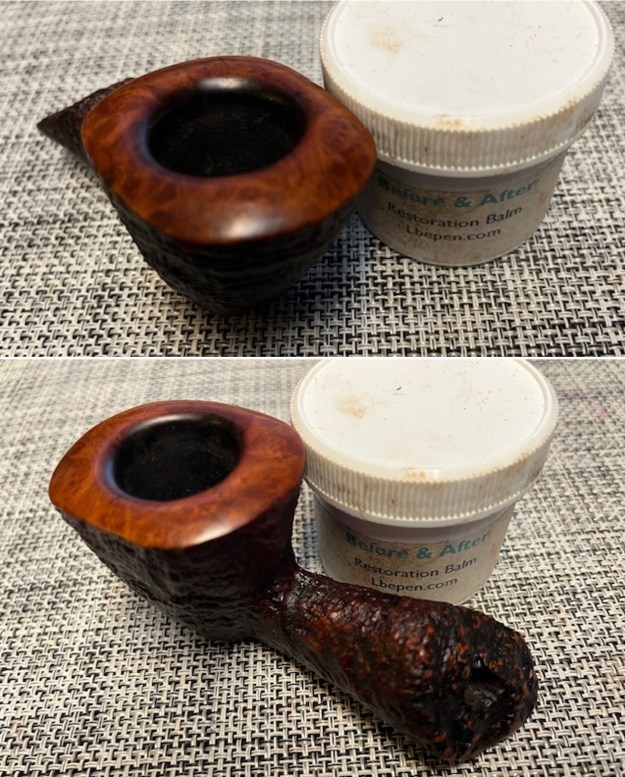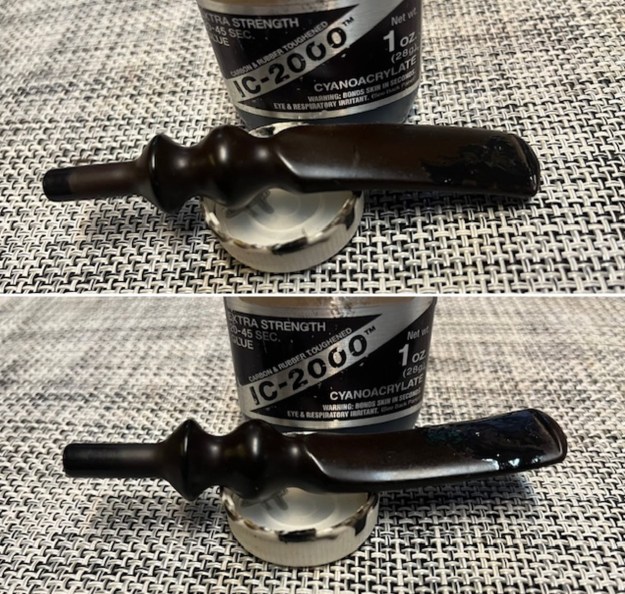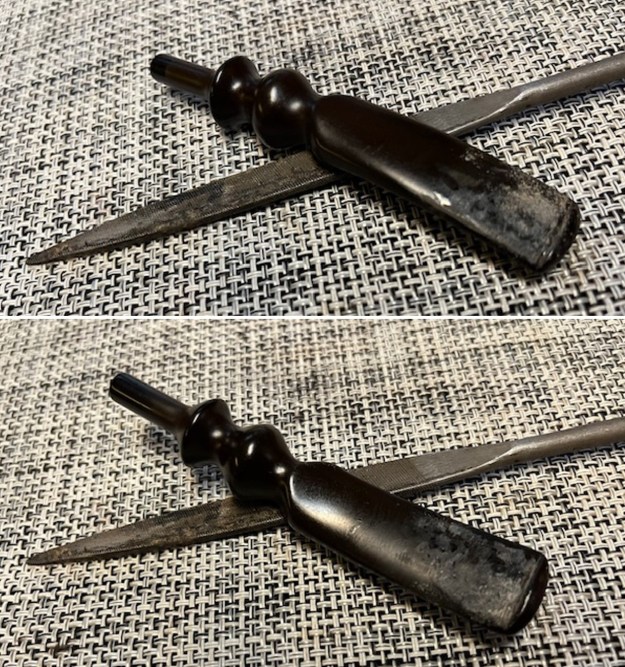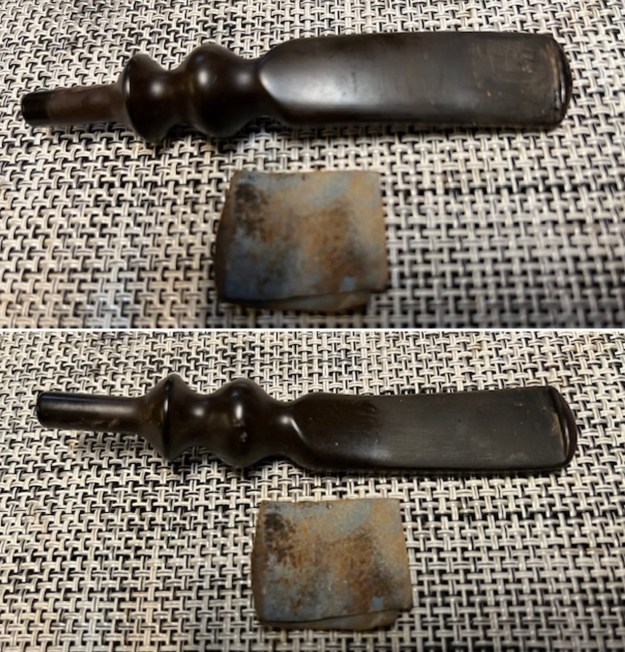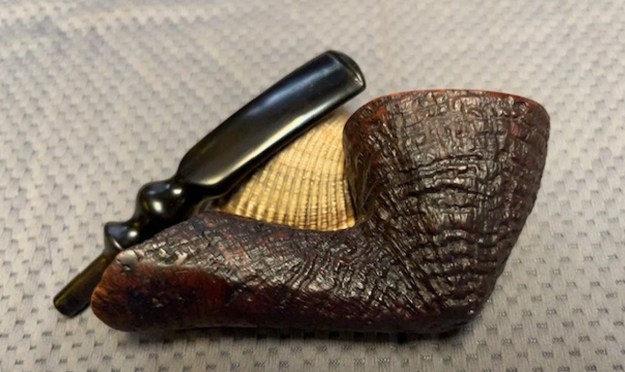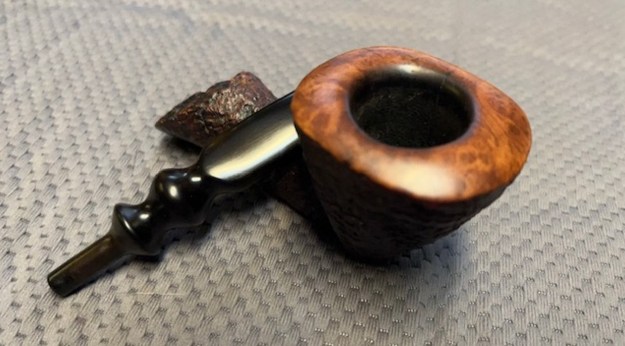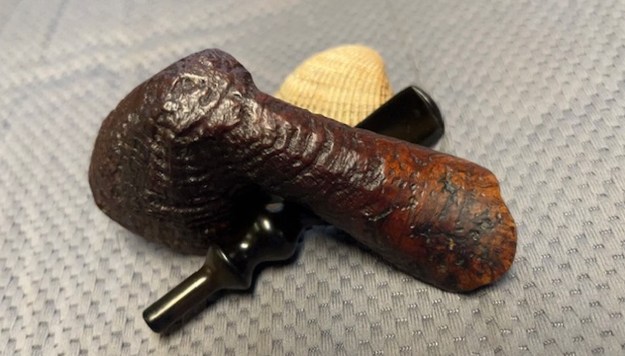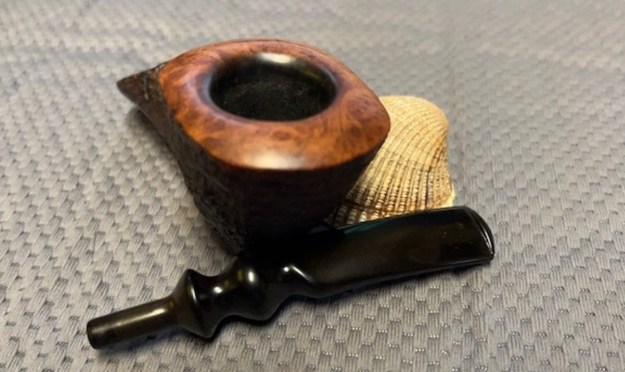
Tag Archives: buffing

Restoring a Handsome Tanganyika Meerschaum


Blog by Kenneth Lieblich

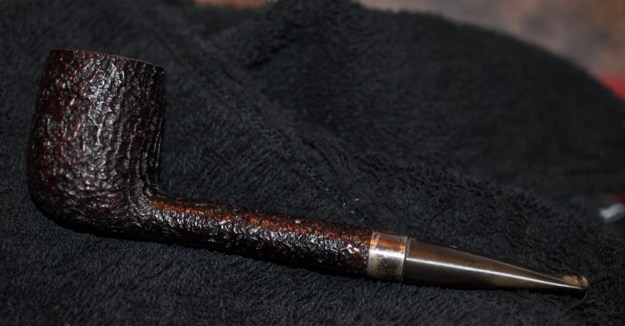
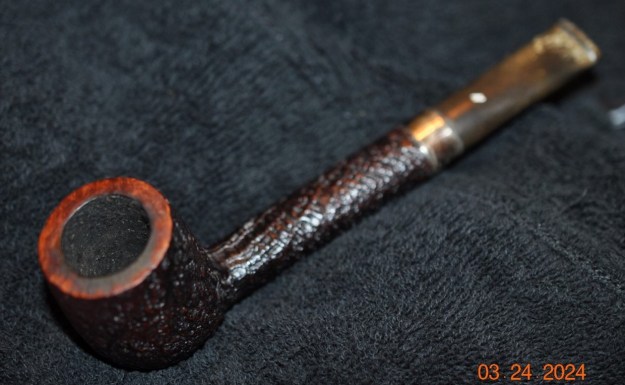
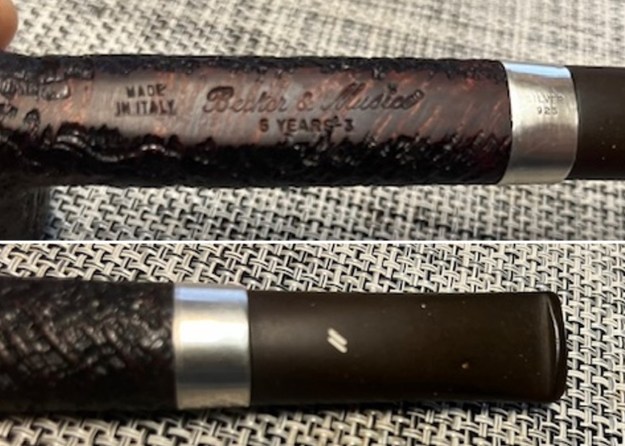
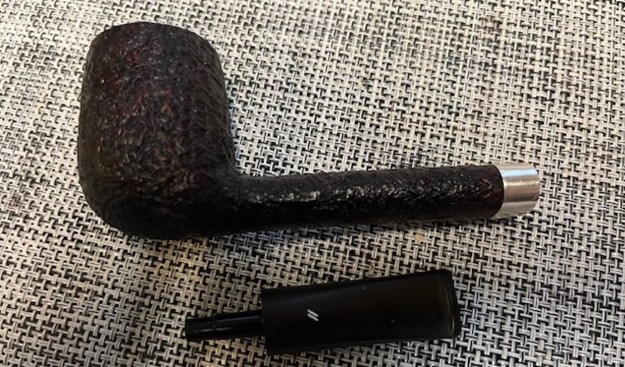
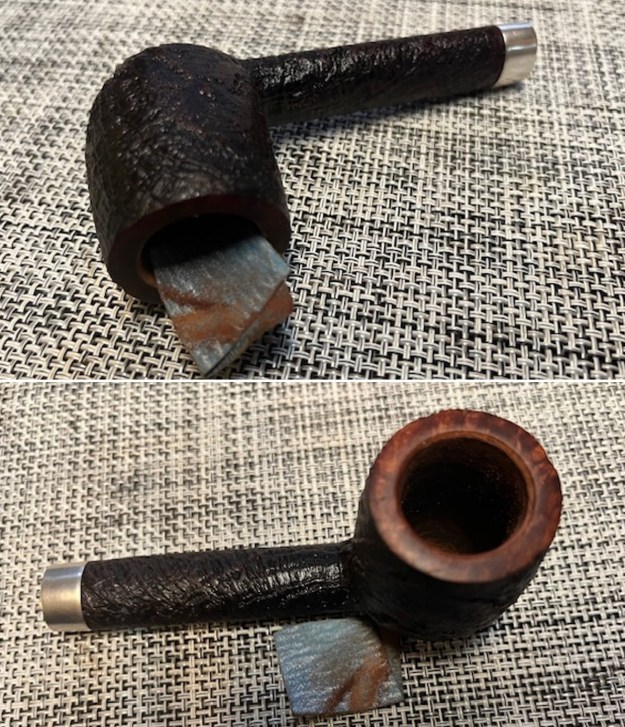
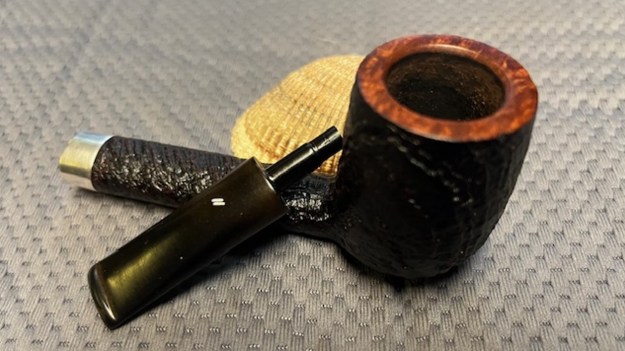
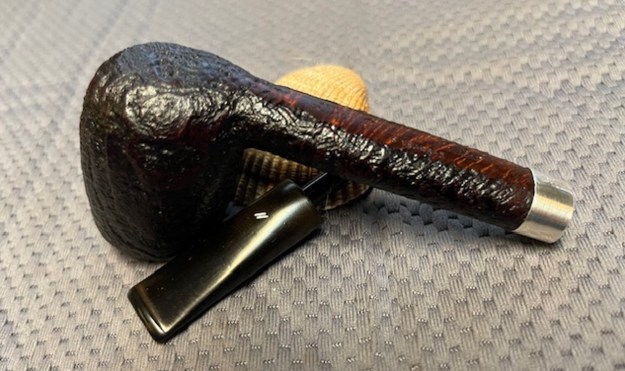
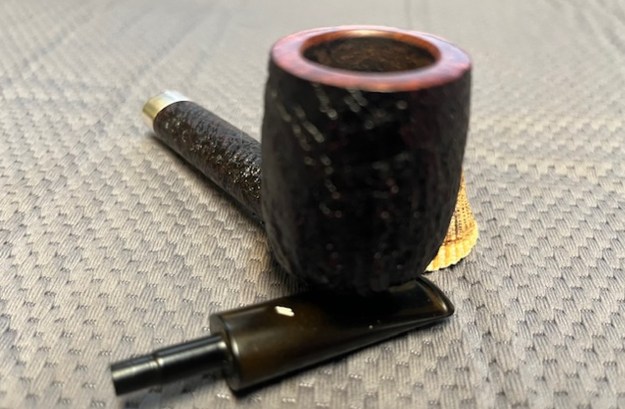
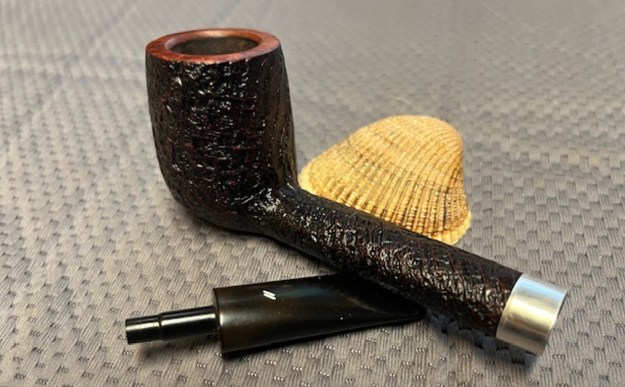
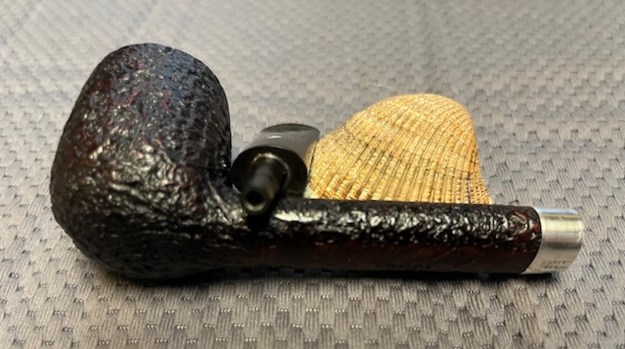
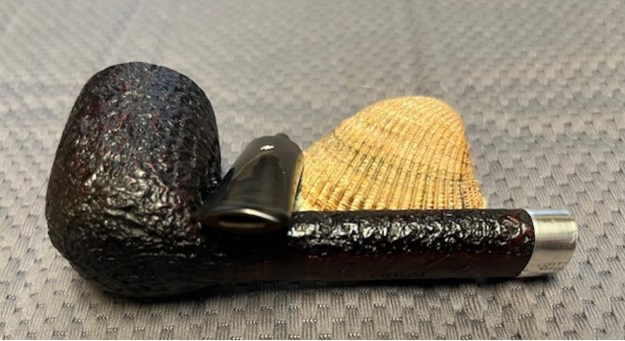
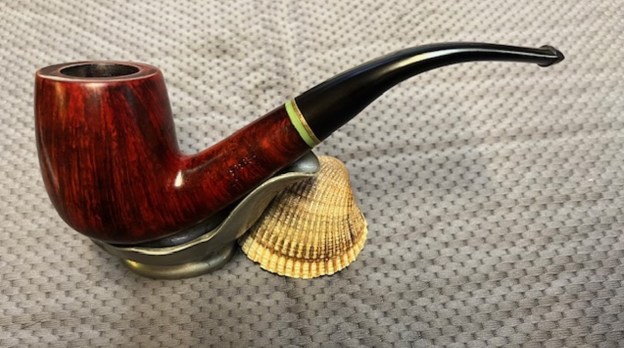
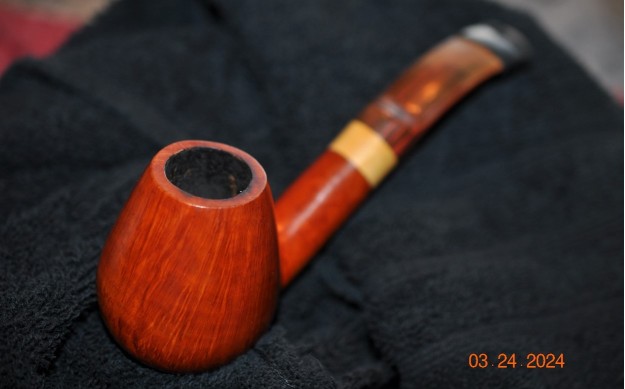
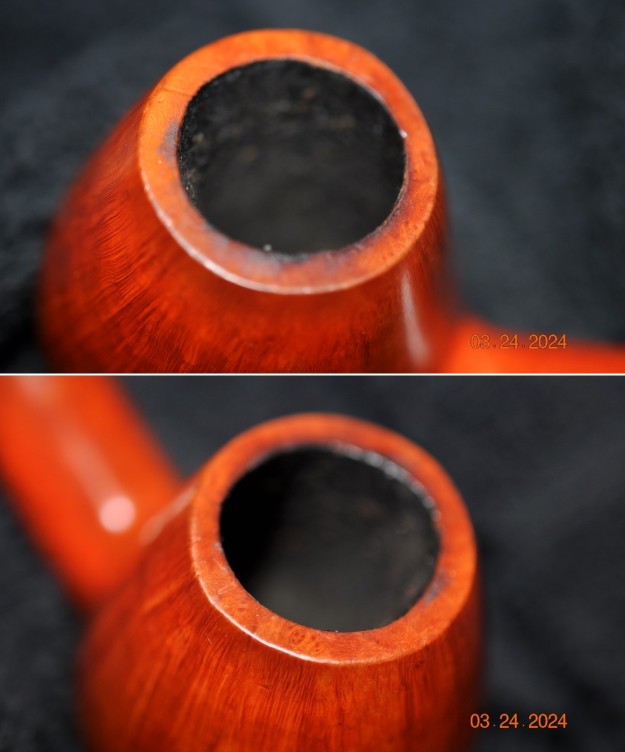
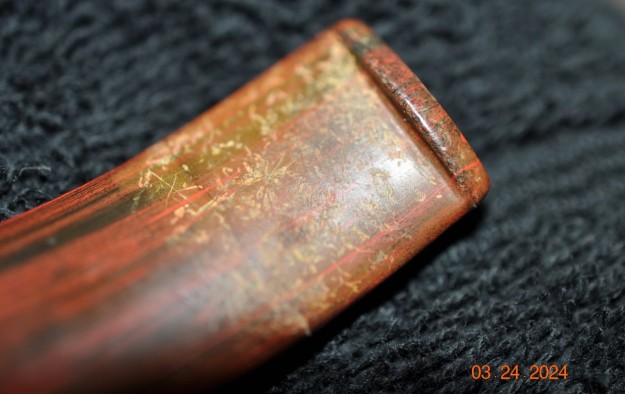
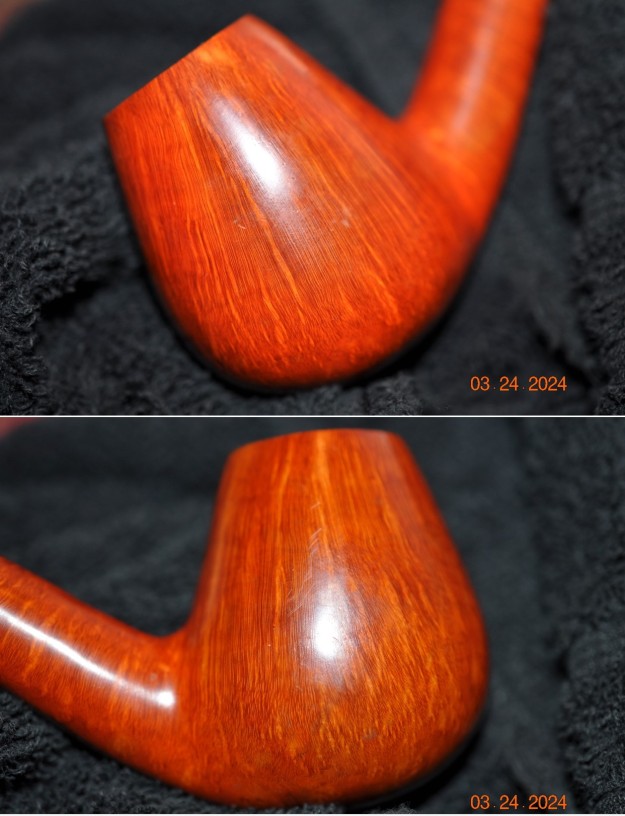
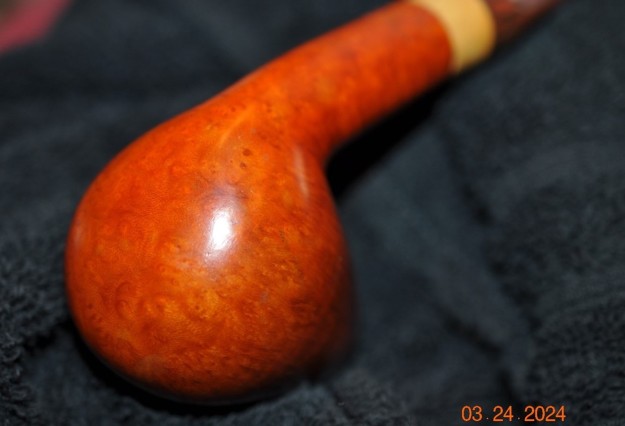
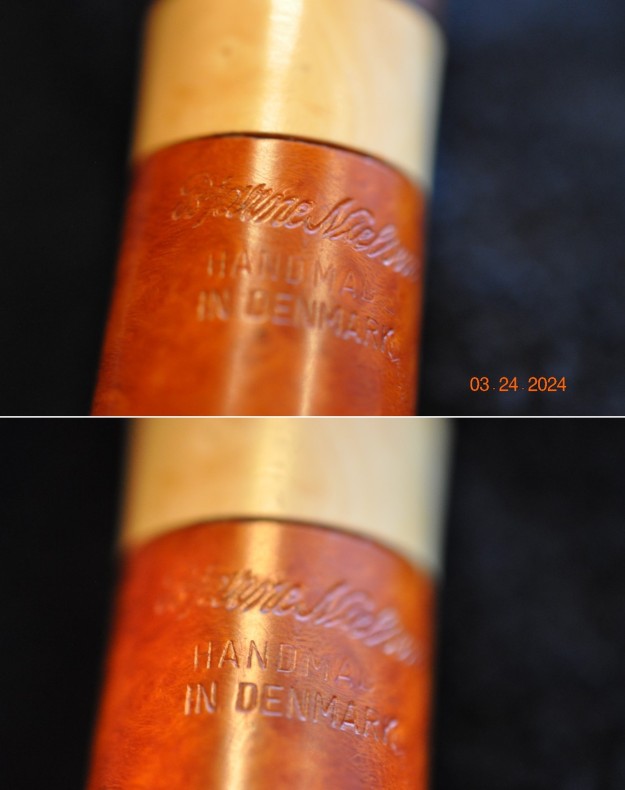
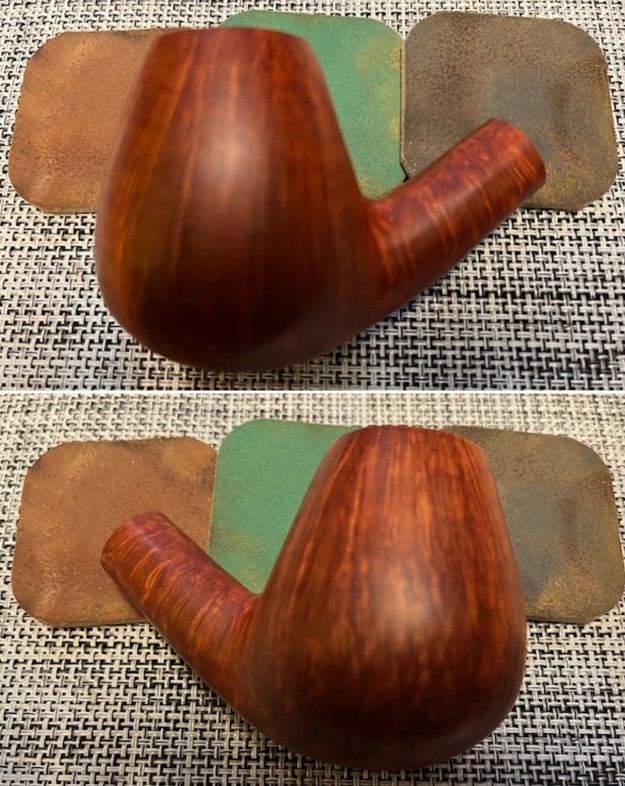
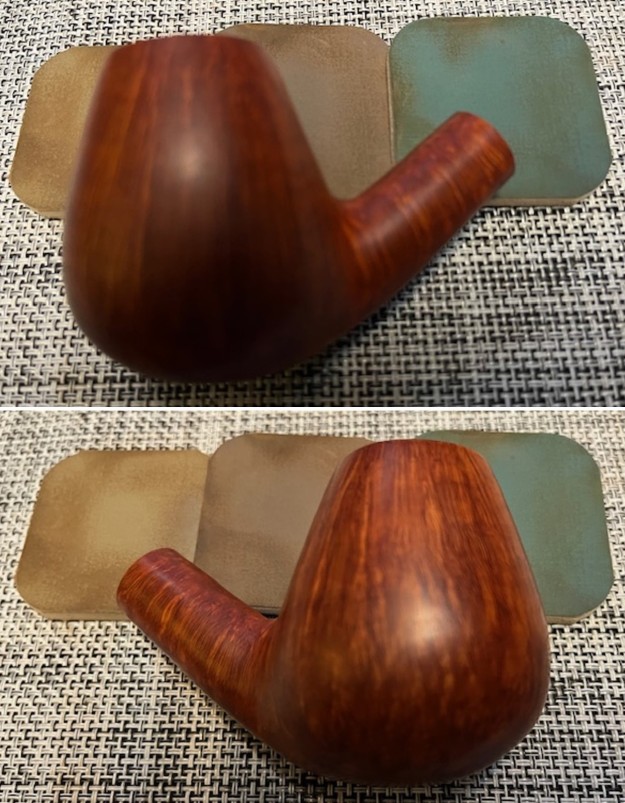
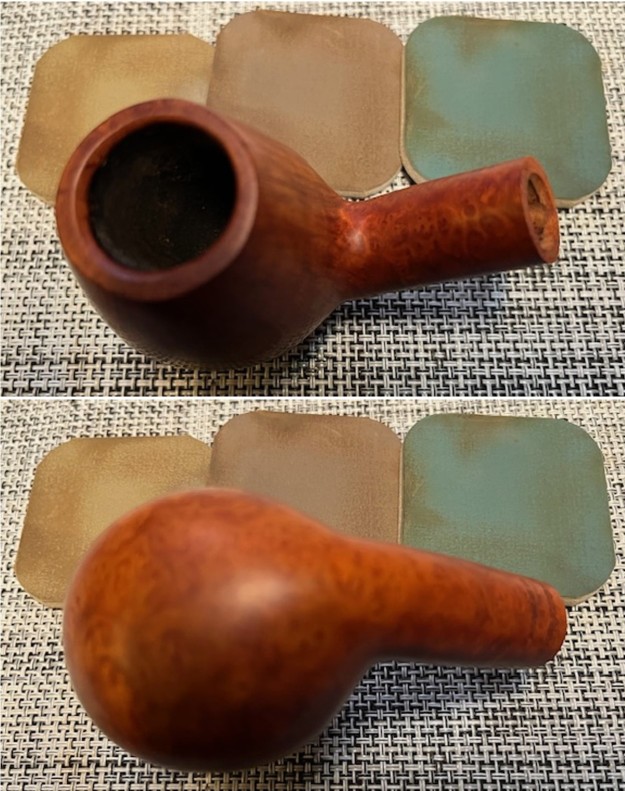
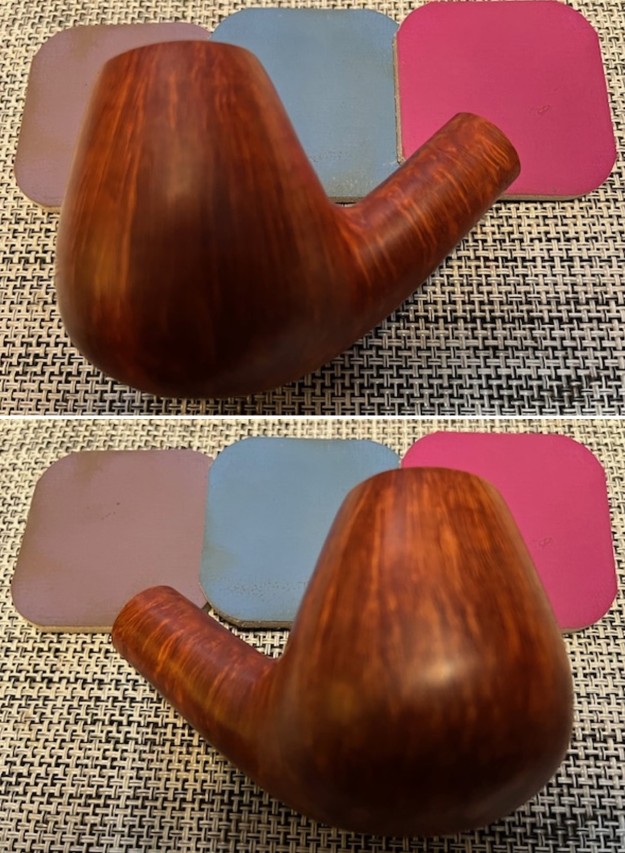
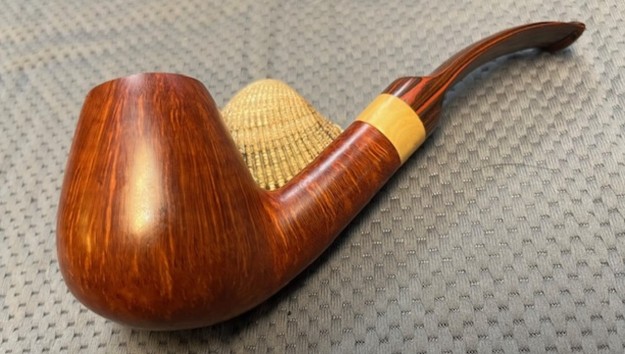
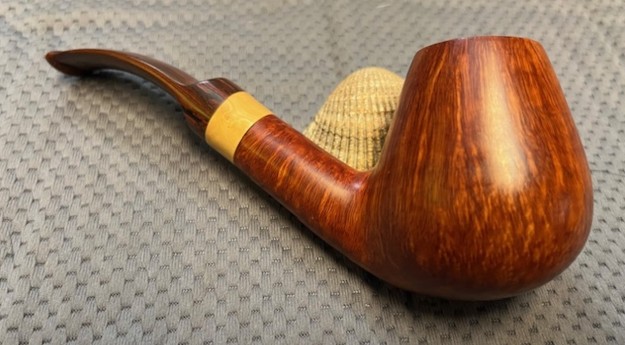
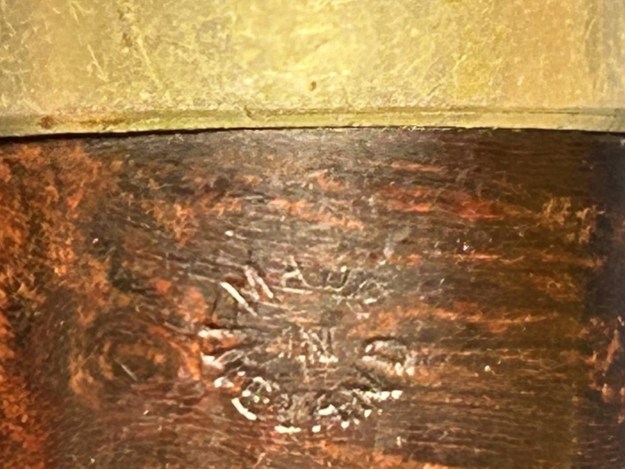
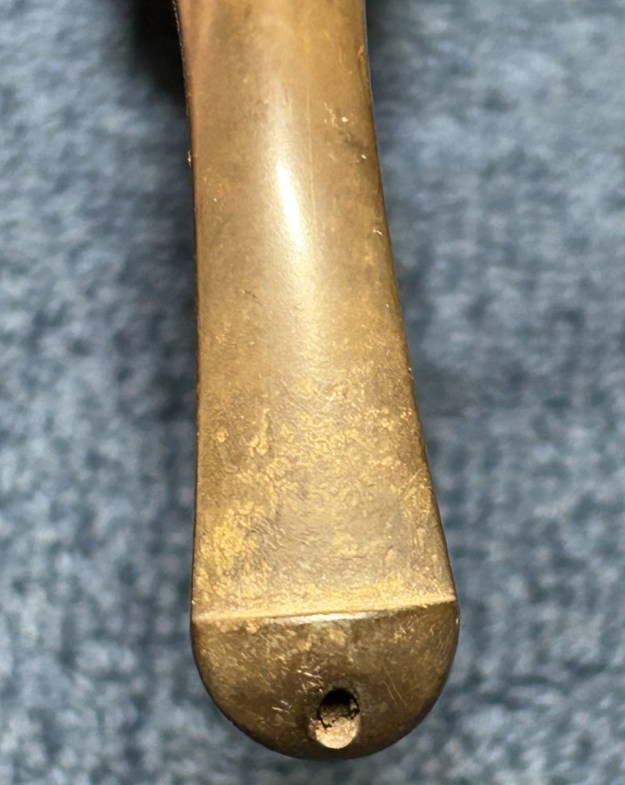
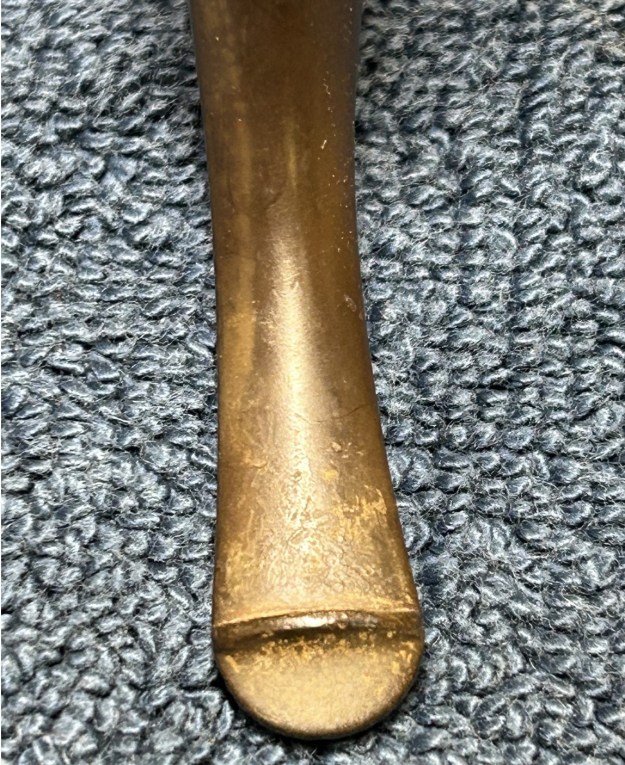
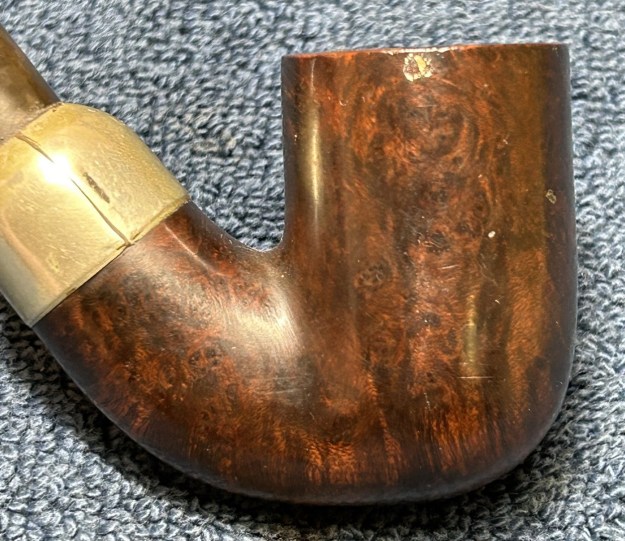
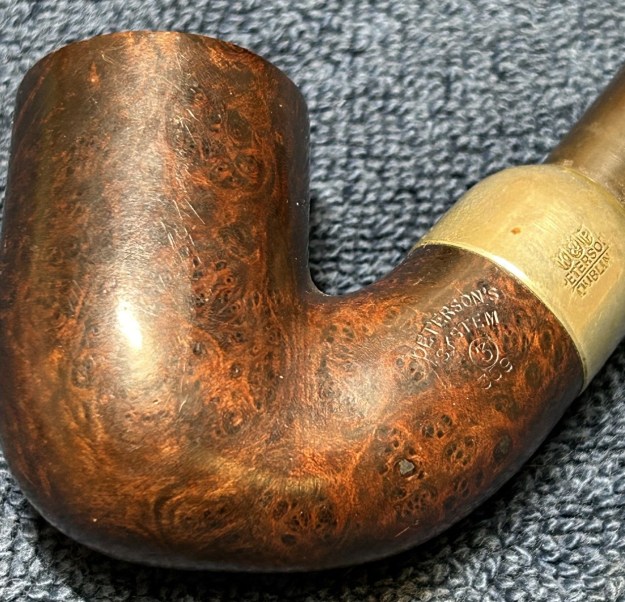
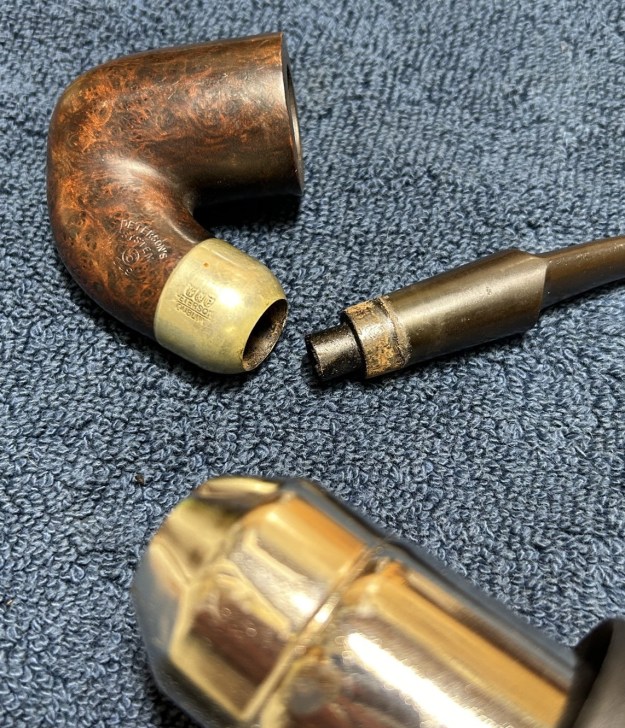
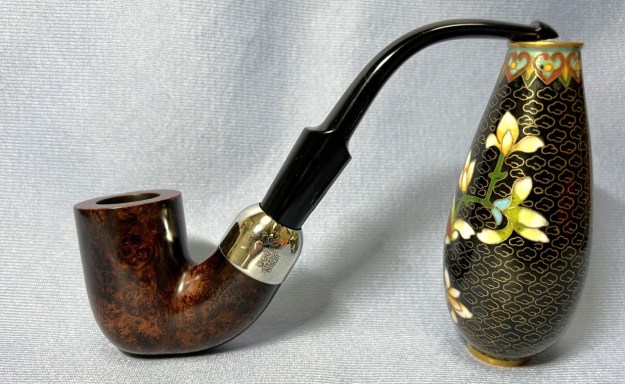
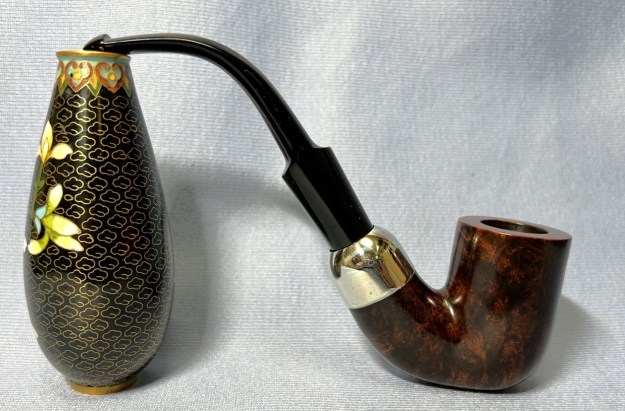
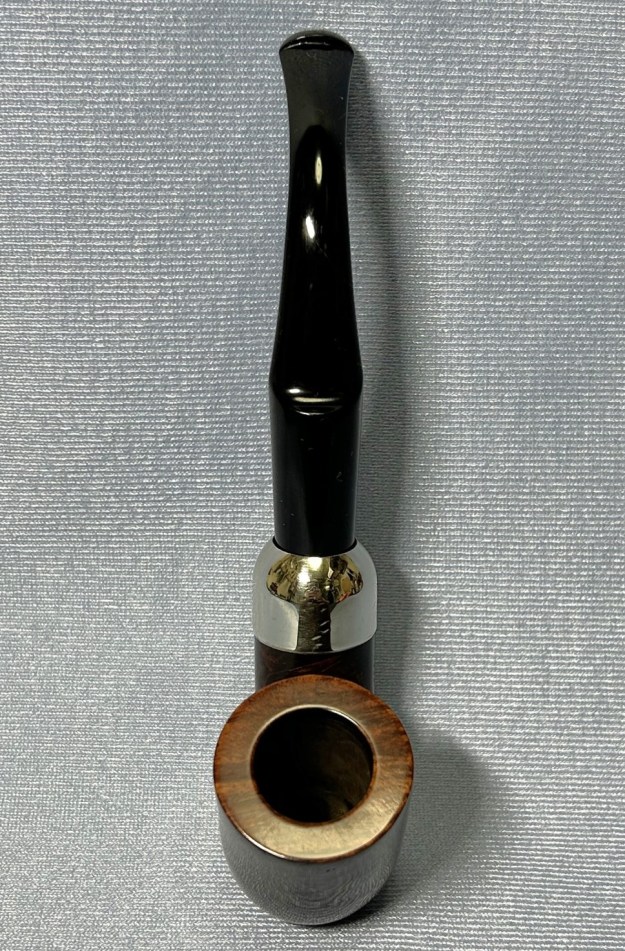
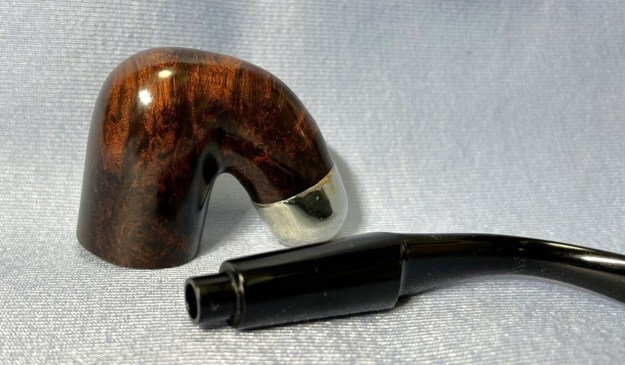
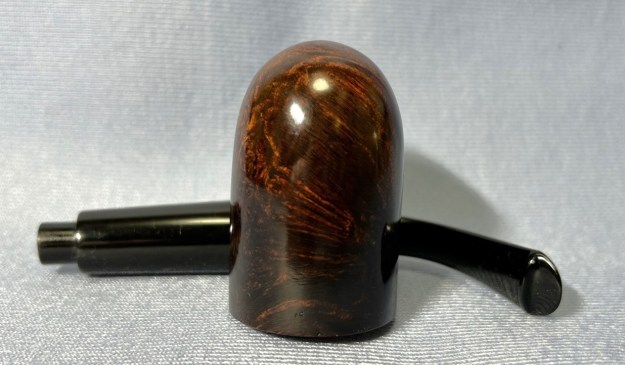
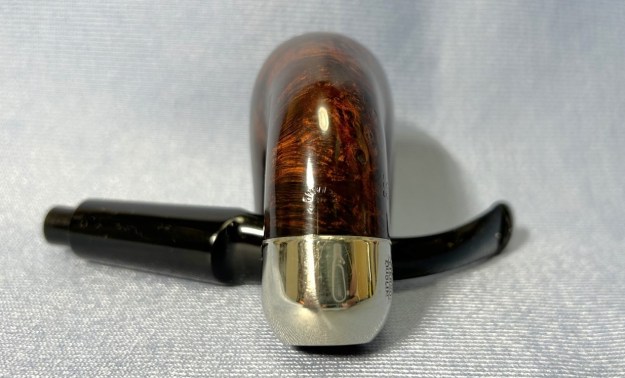
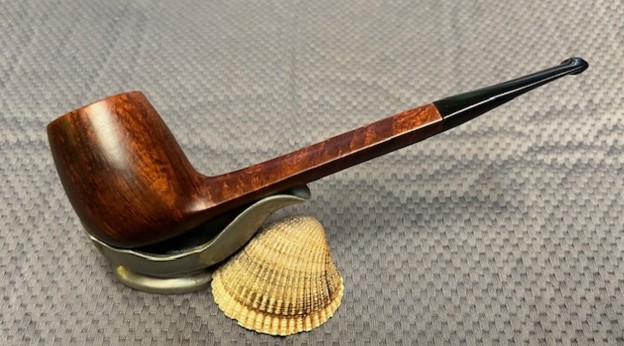
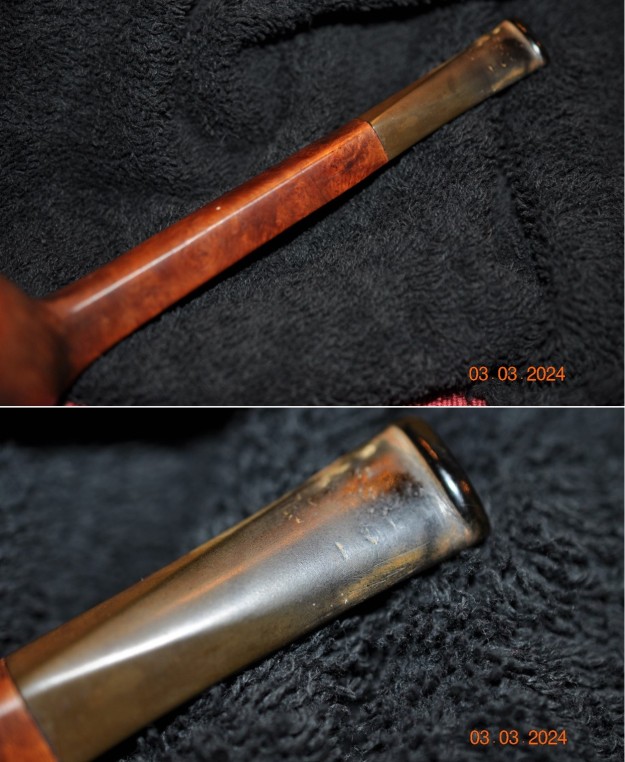
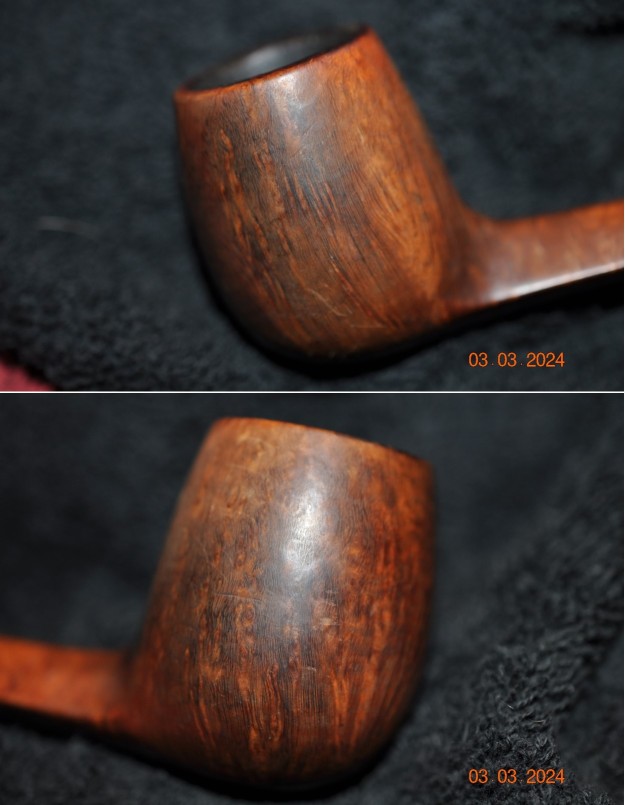
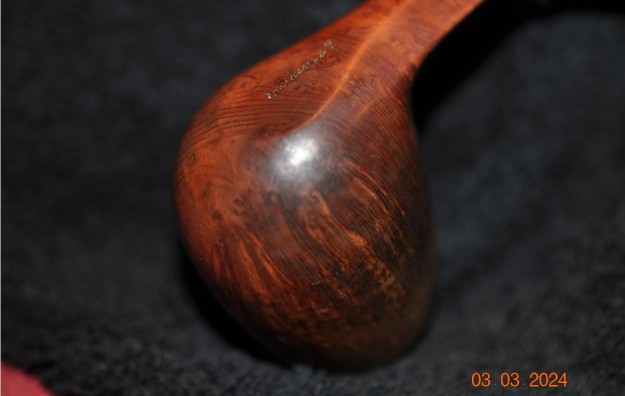
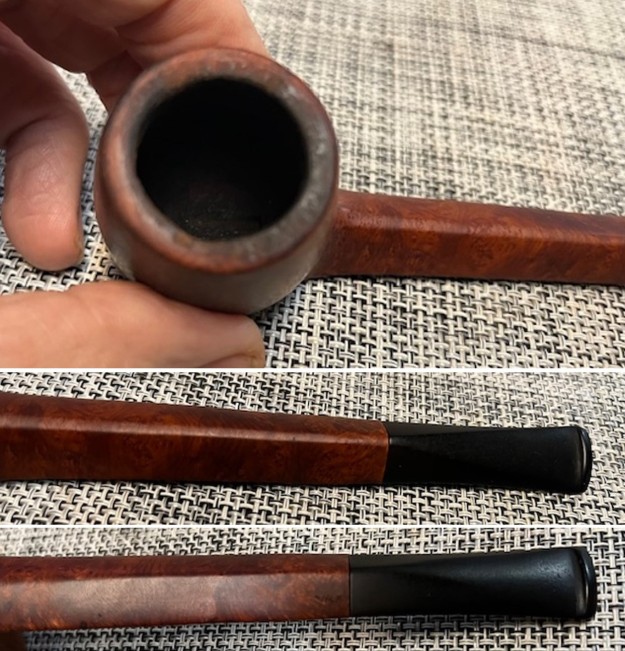
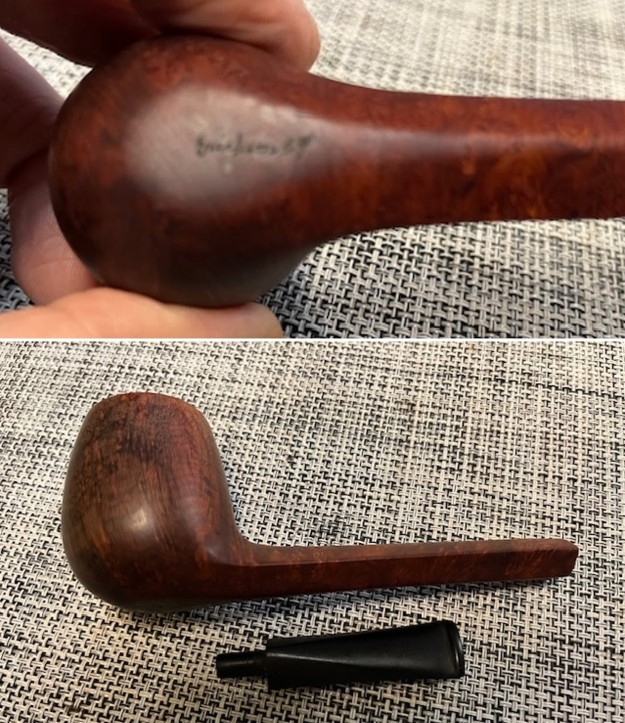
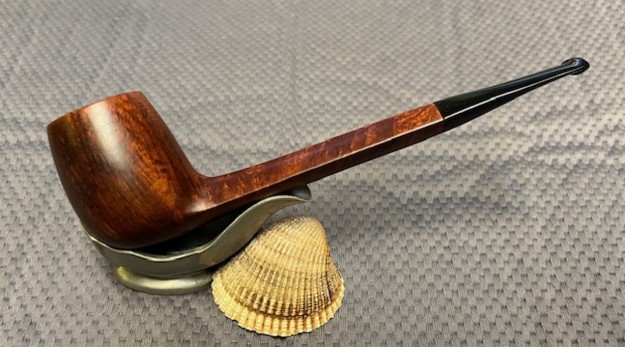
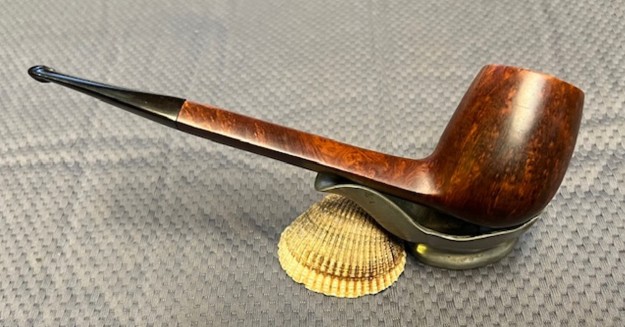
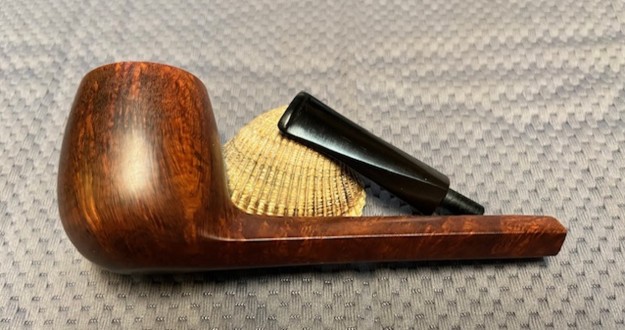
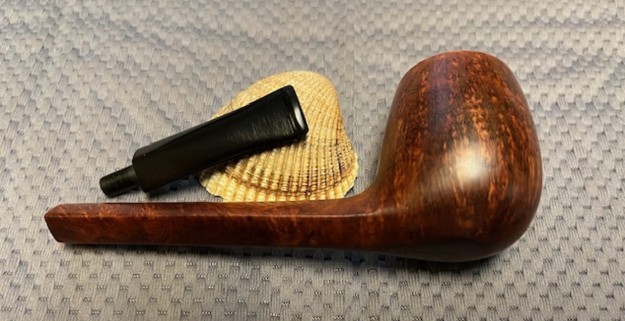
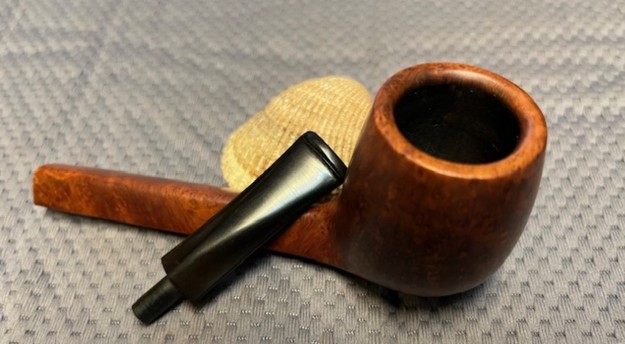
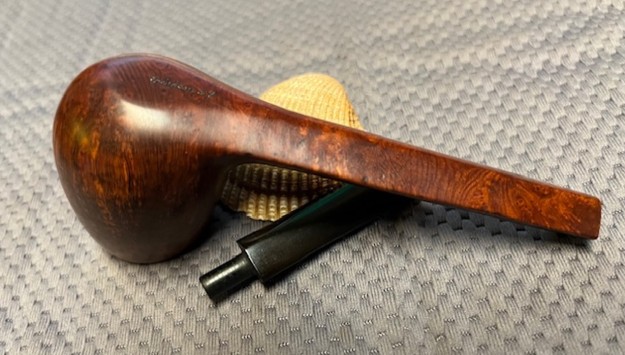
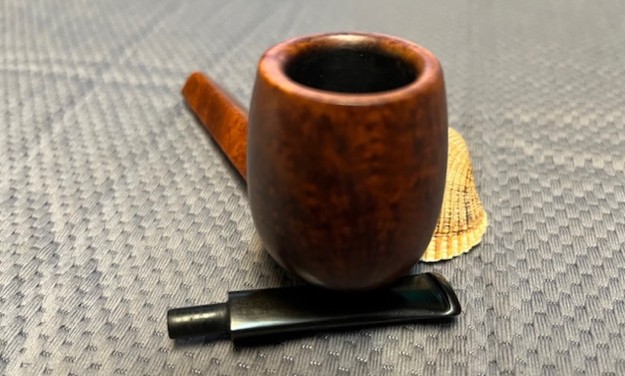
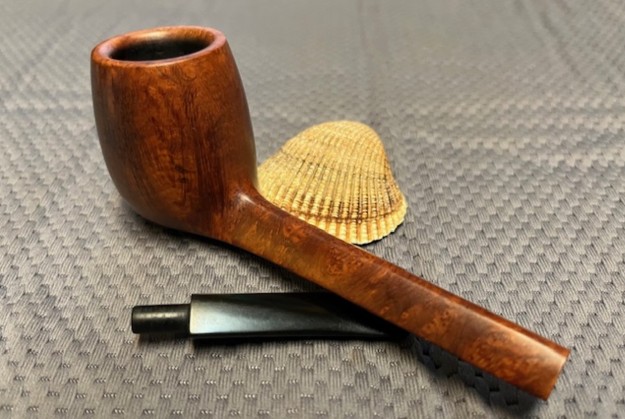
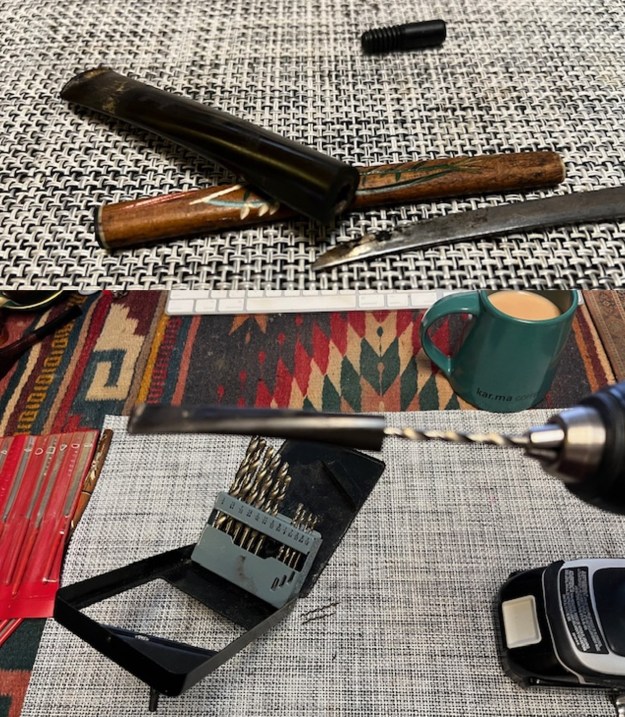
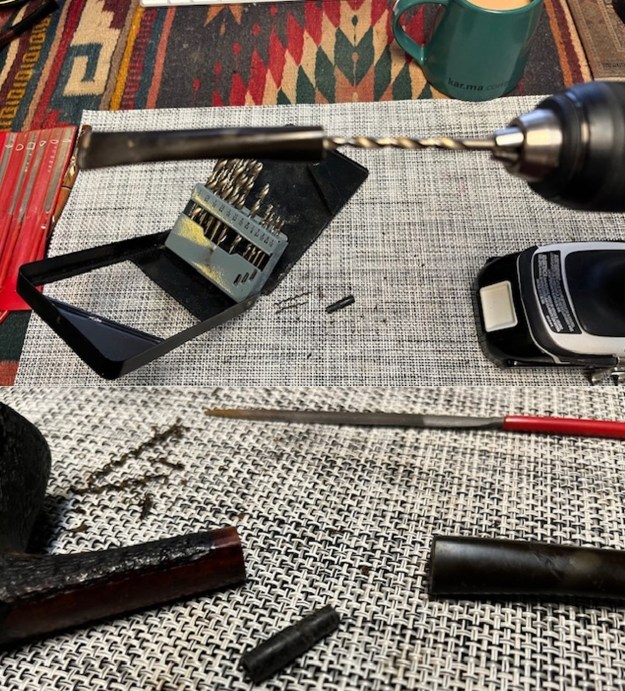
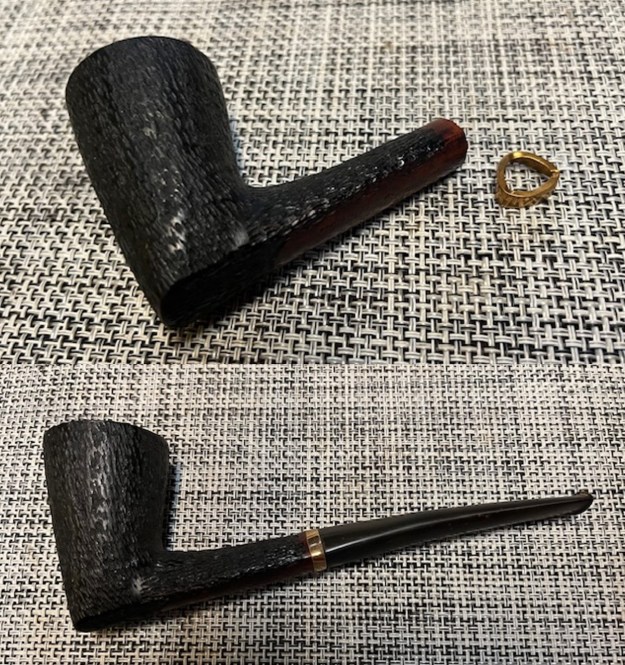
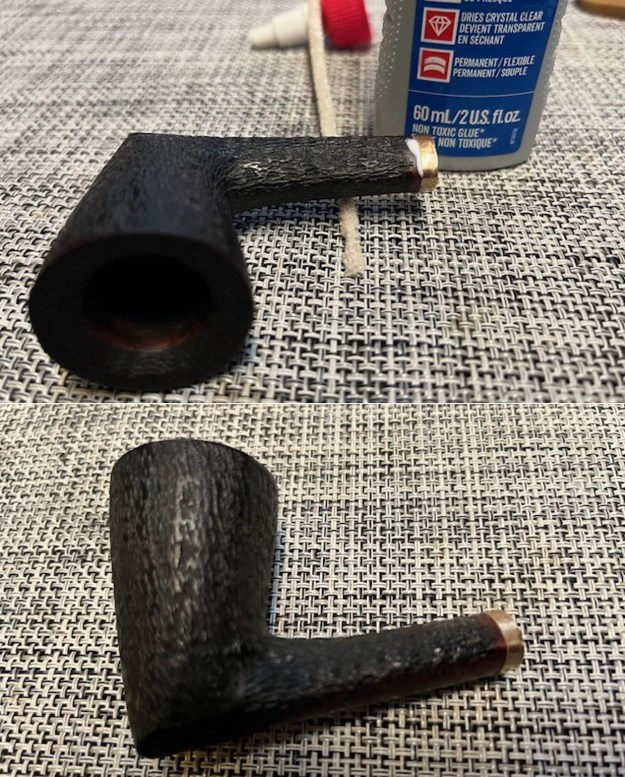
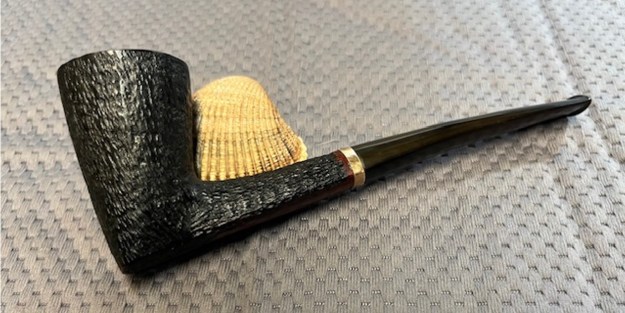
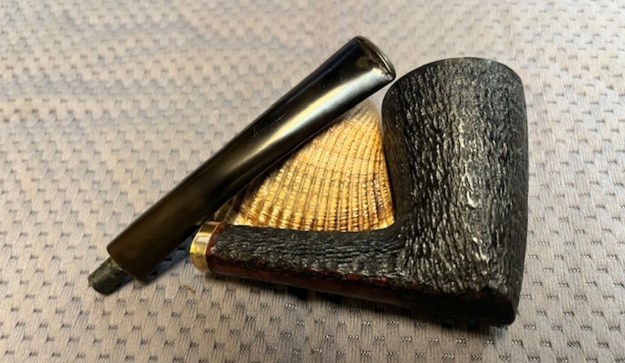
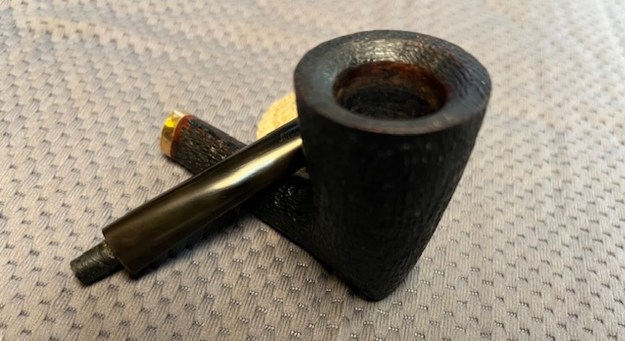
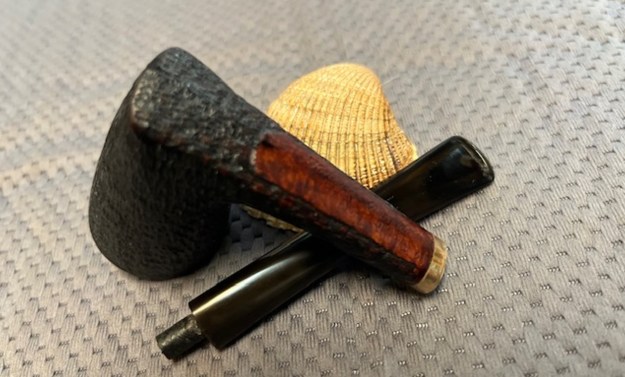
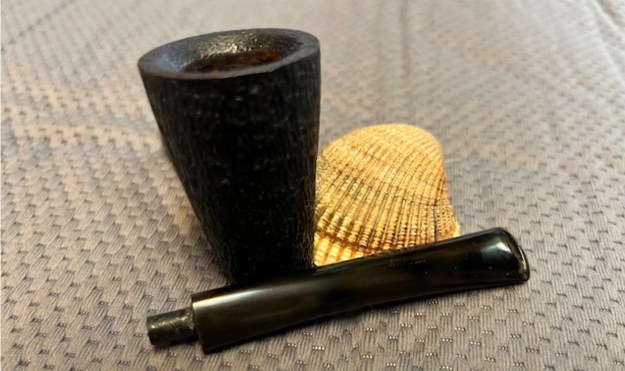
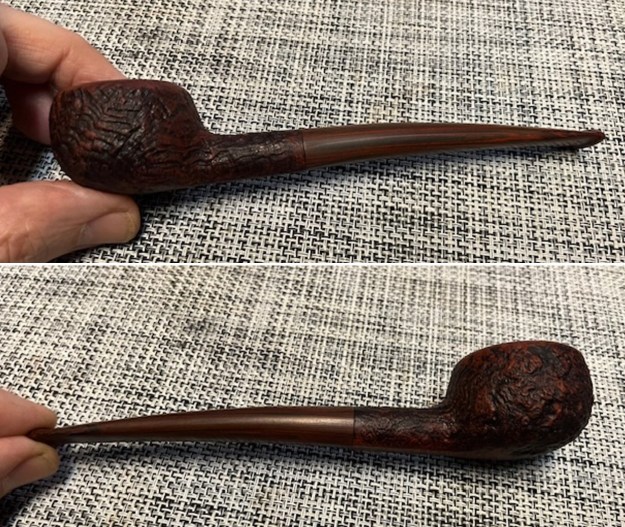
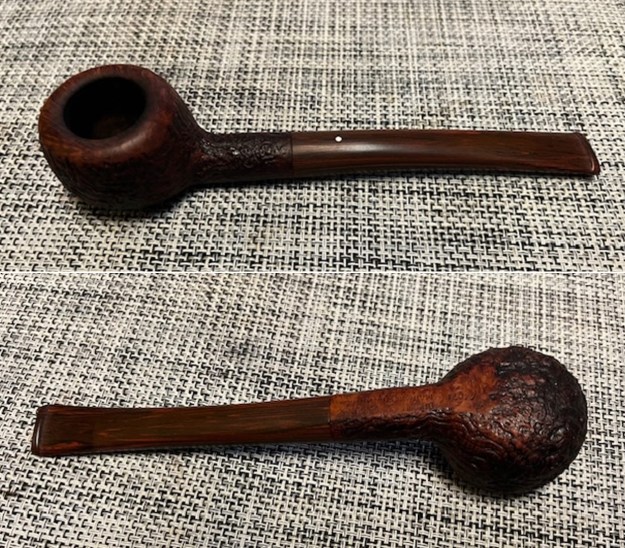
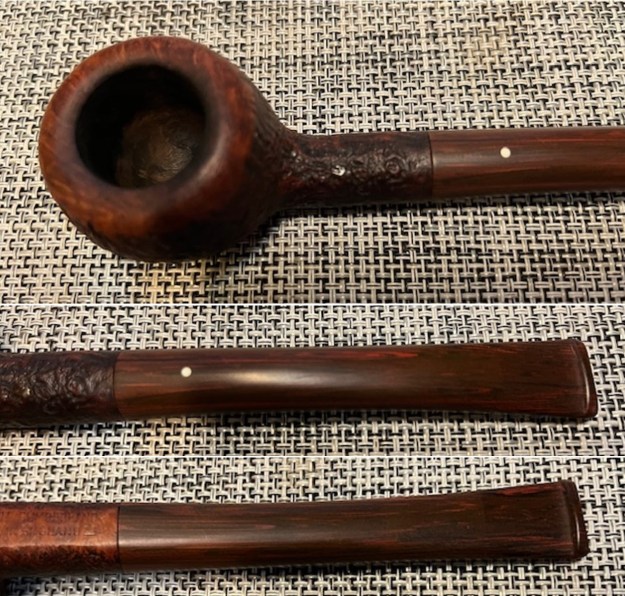
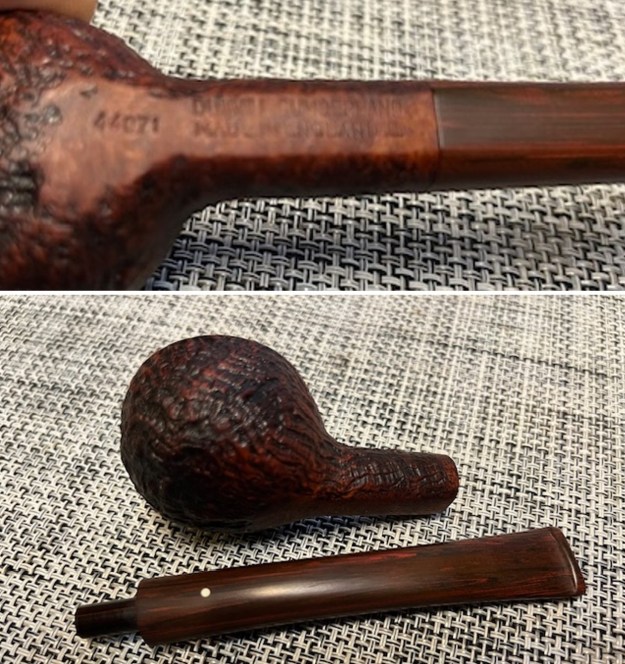
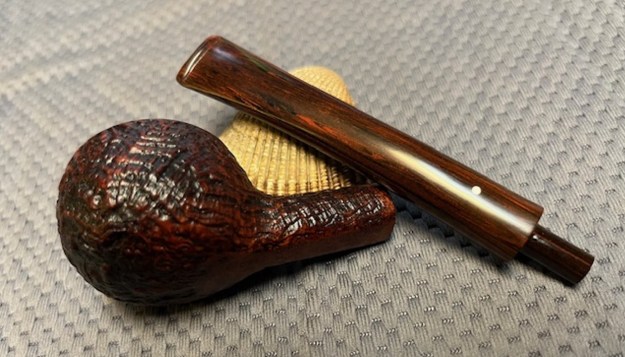
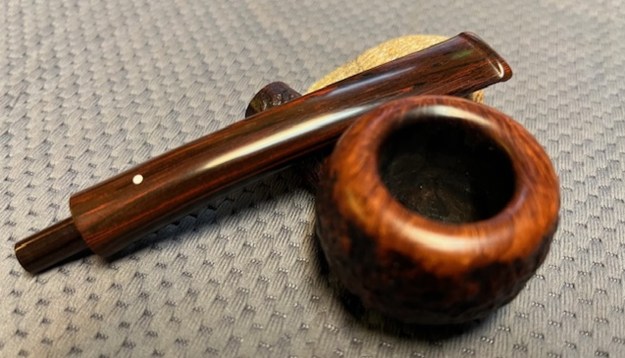
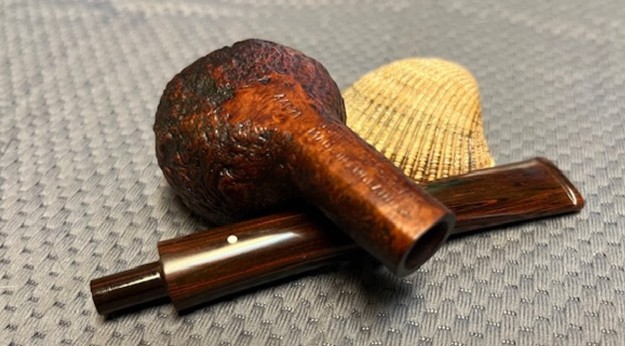
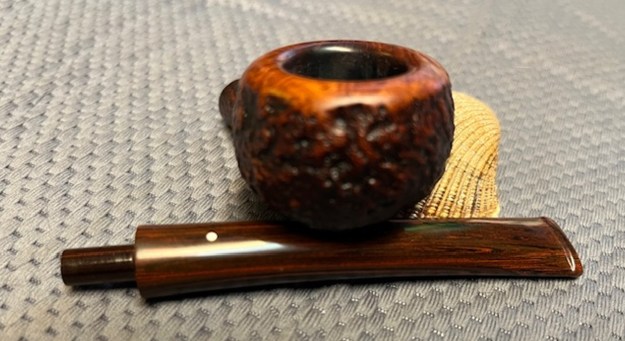
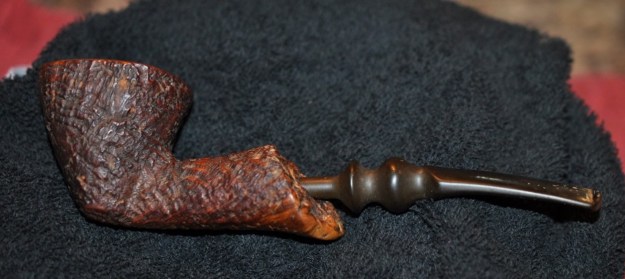
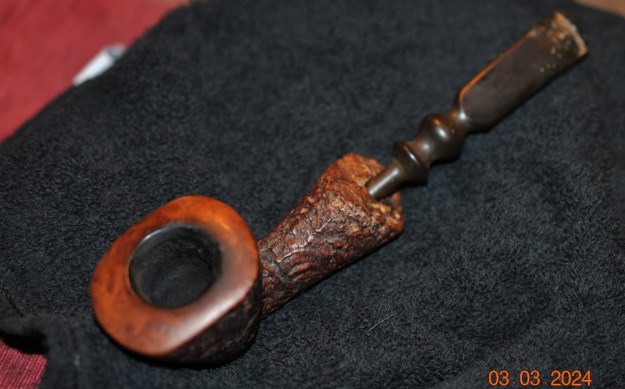
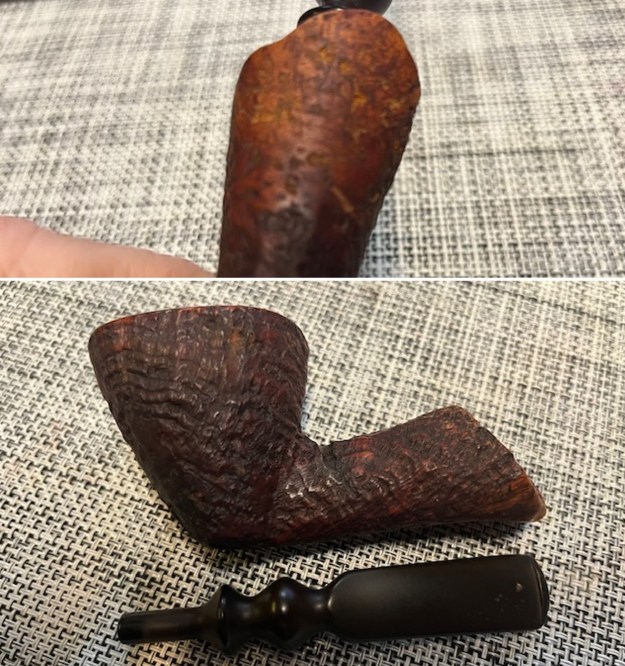
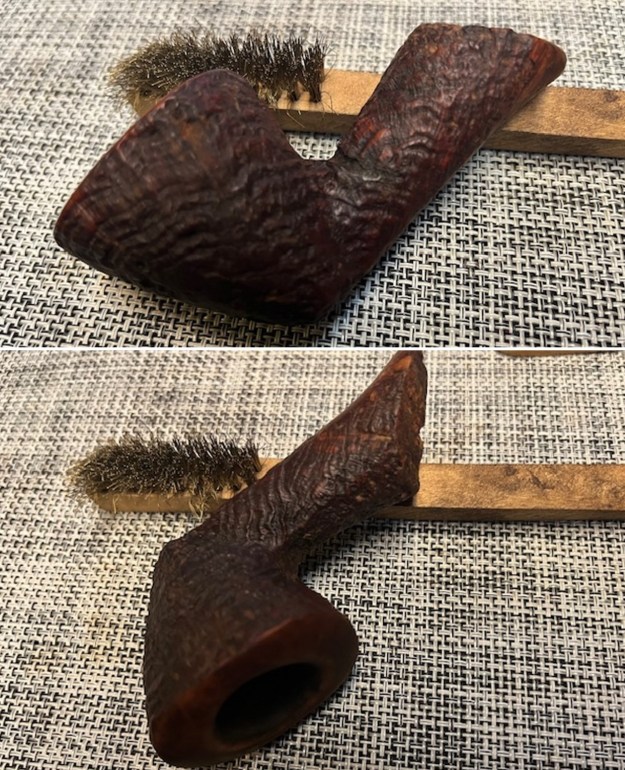
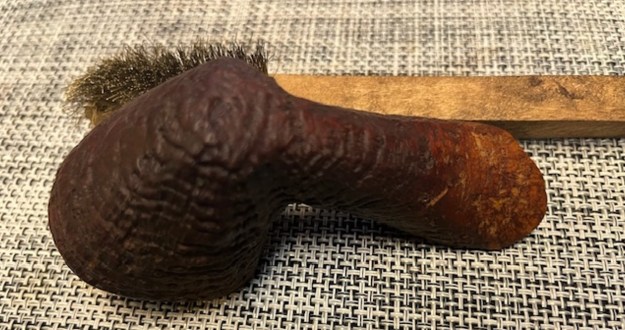
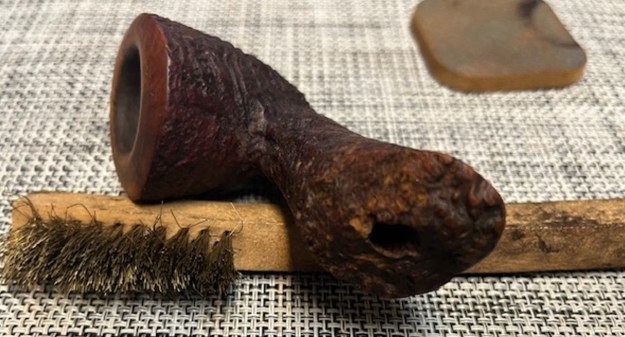
My cousin sent me a very good-looking pipe that he found in his meanderings and send it to me for some repairs. Naturally, I was happy to help, but this one provided some tough work. I like the tough ones though – makes me feel like an old timer has truly been saved. This is a Tanganyika Genuine Block Meerschaum 290 Bent Dublin. As soon as I saw it, I liked it. It looked like a really good smoker. The stummel was very handsomely cut – thick and robust. The stem had a metal tenon that screwed into the mortise. There were a few markings on the pipe. On the underside of the shank was engraved Genuine Block [over] Meerschaum. To the left of this (and perpendicular), was the number 290, the shape number. On the left side of the stem was the logo: a charming little elephant. Underneath the stem was the word Tanganyika – this stamping was very faint and I was worried about it. Finally, I wonder if there was something else. On the very end of the shank, was engraved what looked like a capital T. If that’s what it is, then presumably it stands for Tanganyika. If anyone has further information, please post it in the comments below. I looked in the book, Pipes: Artisans and Trademarks by José Manuel Lopes, to learn more about Tanganyika pipes. It had the following entry for the Tanganyika Meerschaum Corporation:

Company formed in 1955 by Kenyan businessmen from Nairobi after the discovery of a meerschaum mine relatively close to the surface on Kilimanjaro. The meerschaum is tougher, less porous, and cheaper than the Turkish variety. Another mine was soon discovered in Sinya, in the famous Amboseli Game Park. The company, previously based in Arusha (Tanzania), became an associate of a Belgium firm, but closed some years after. It produced the Caveman, Countryman, Kiko, Killimanjaro, Sportsman, Townsman, and Wiga brands. It maintained a link with GBD for the making of the GBD Block Meerschaum series, and after its closure, the English firms, London Meerschaum and Manx Pipes (Manx Meerschaum) continued producing with African meerschaum.Pipedia also included the above information, but also referred me to the page on Amboseli Pipes.

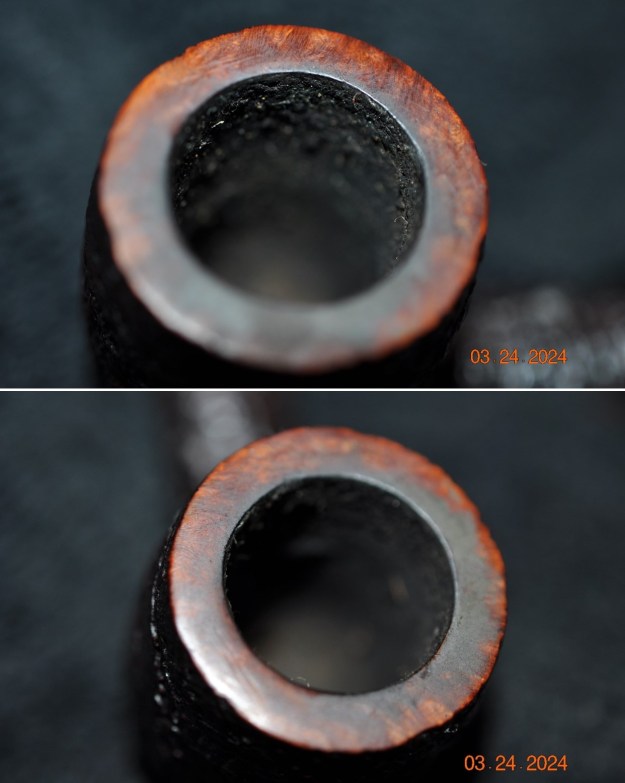
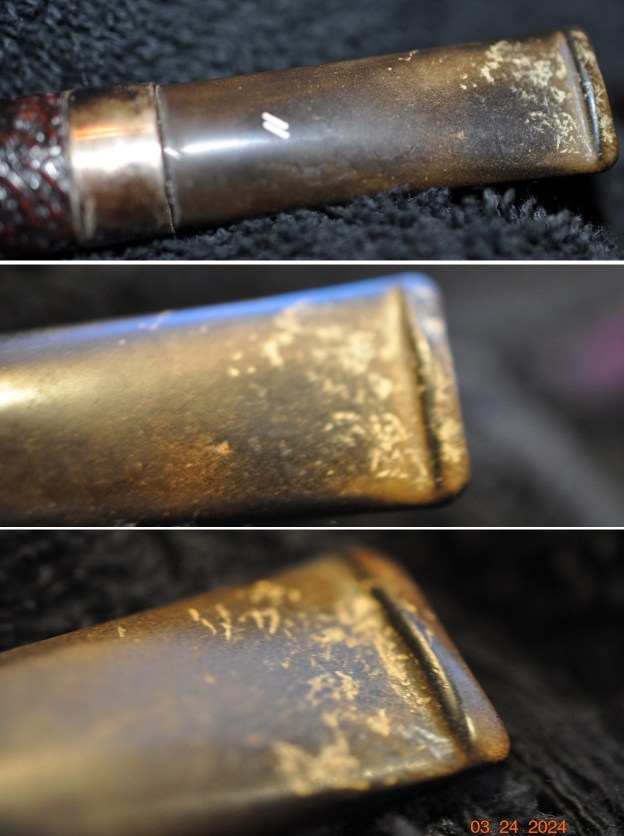
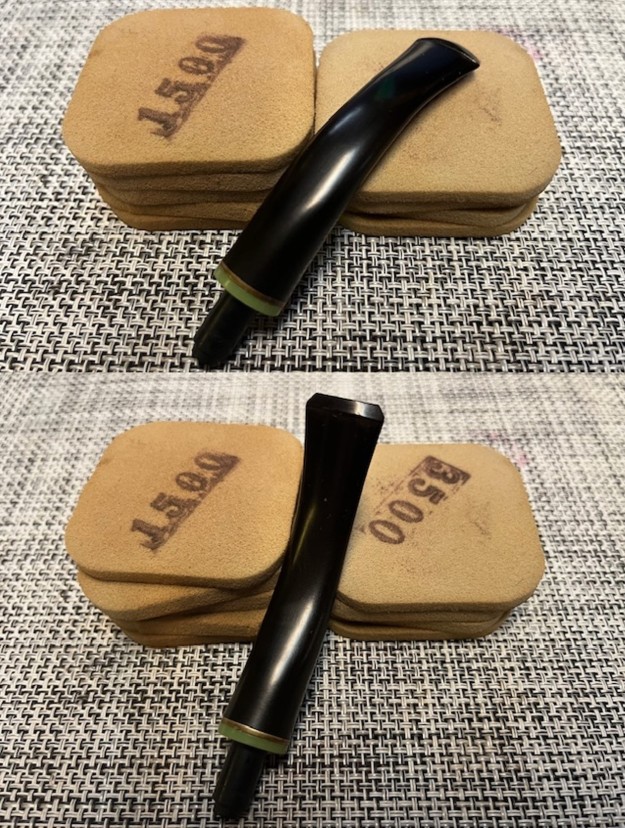
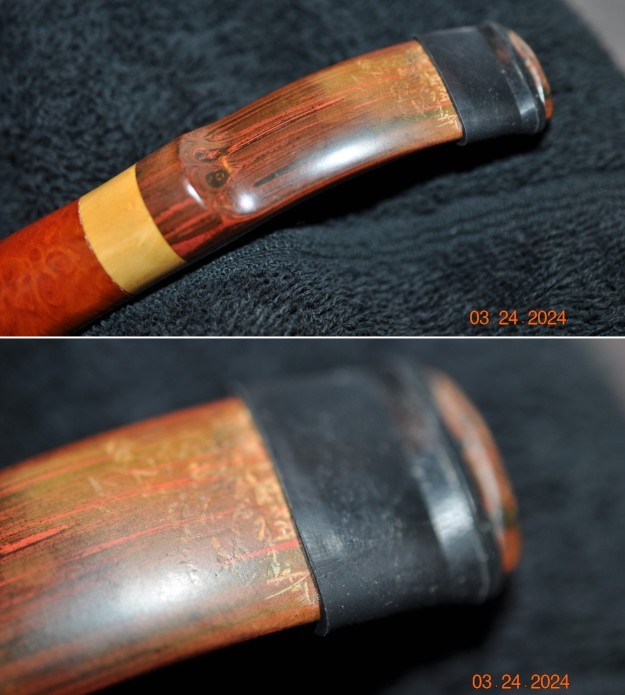
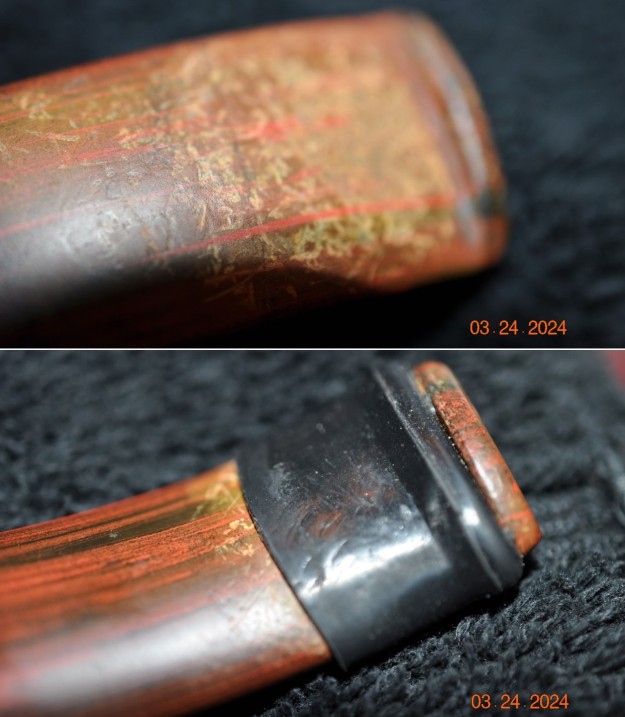
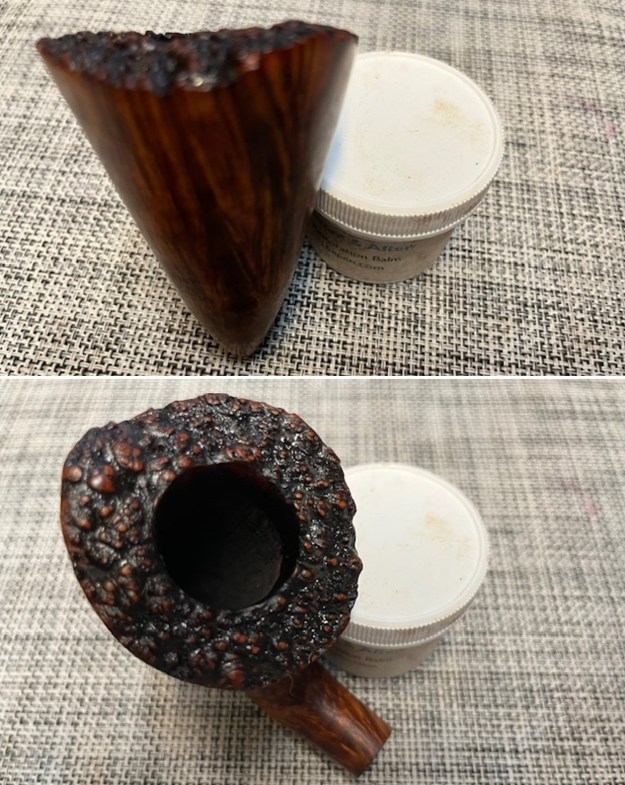
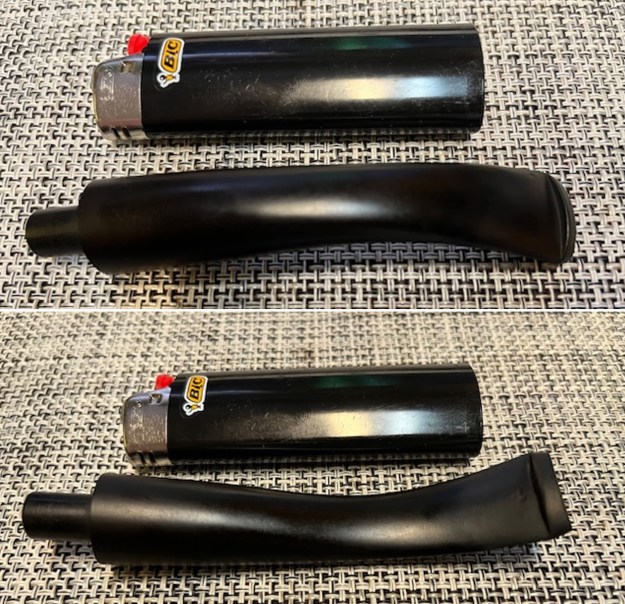
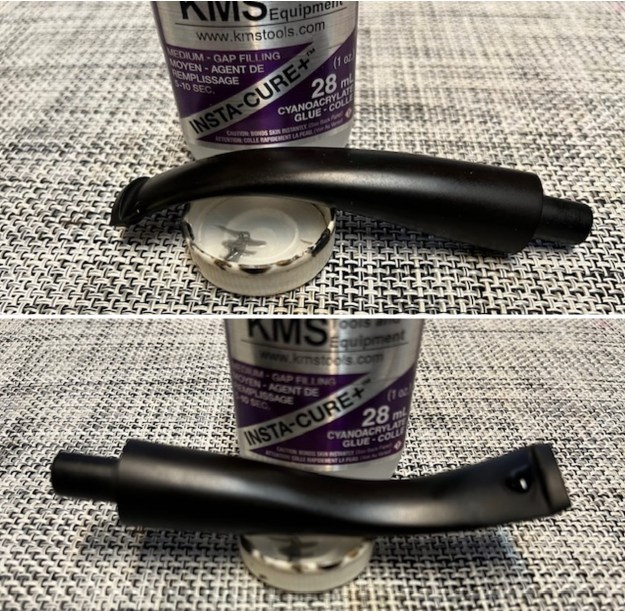
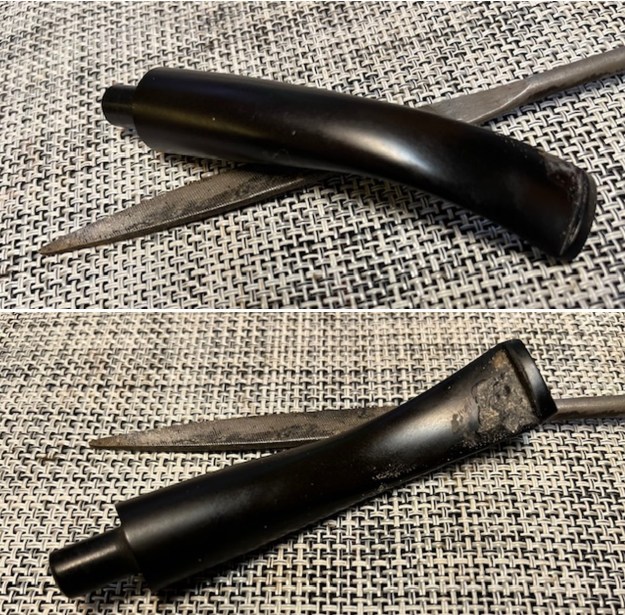
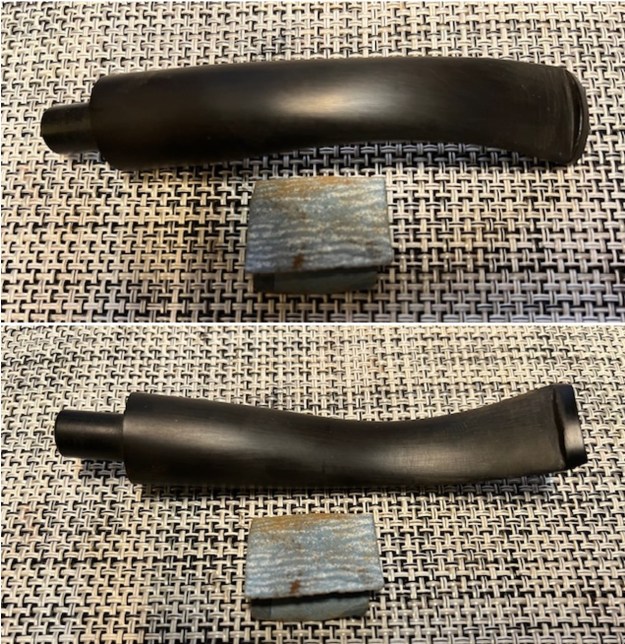
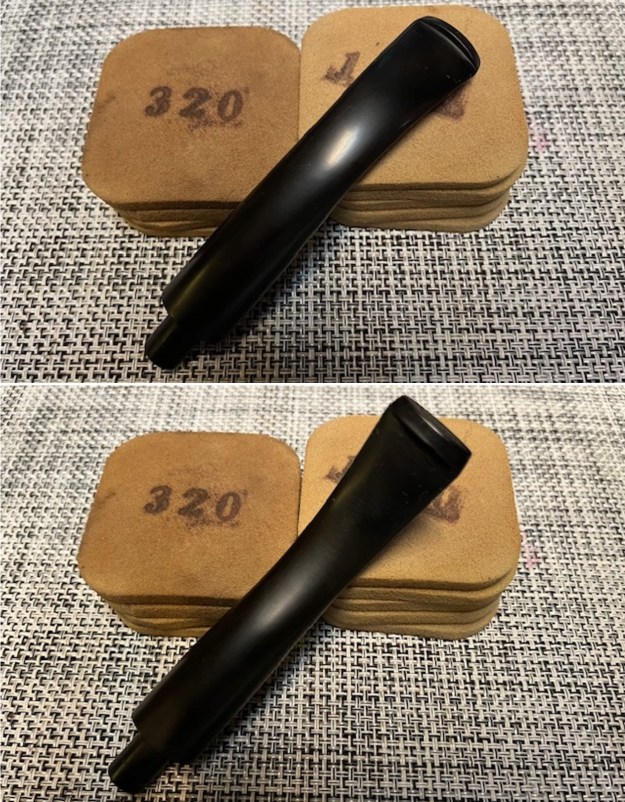
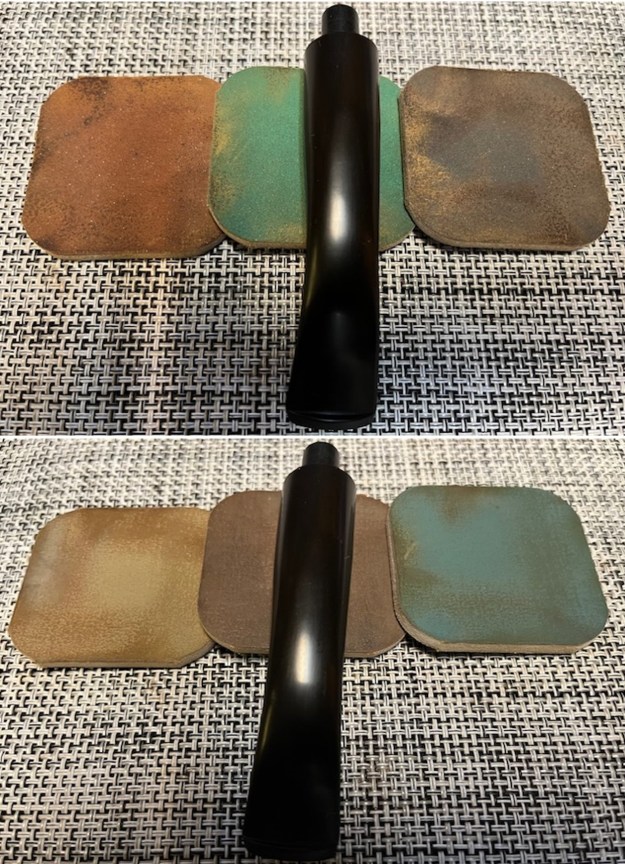
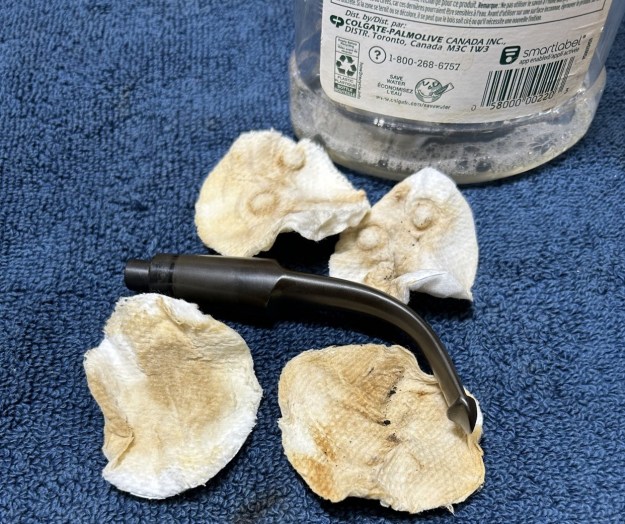
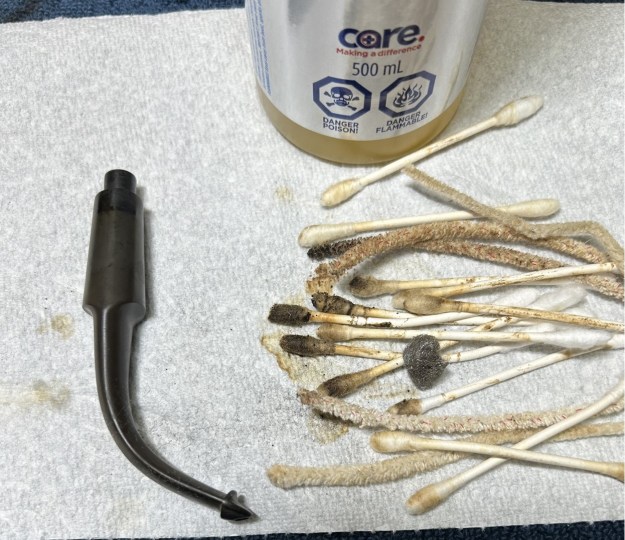
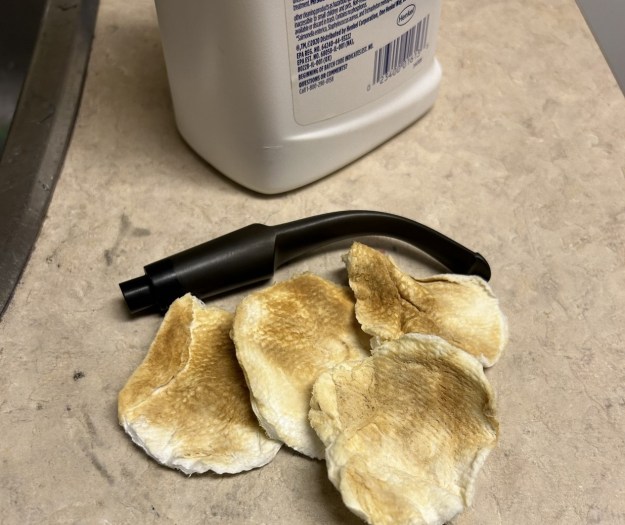
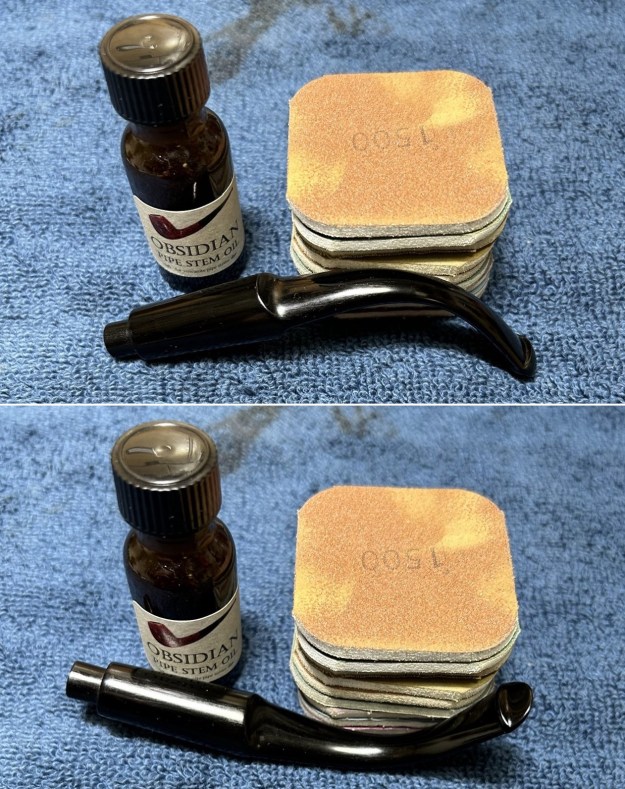
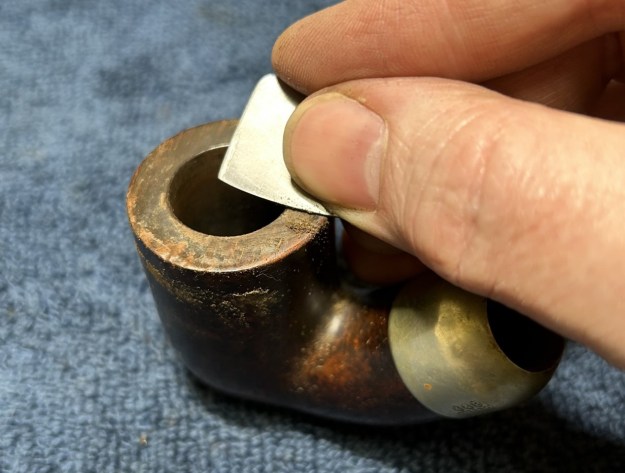
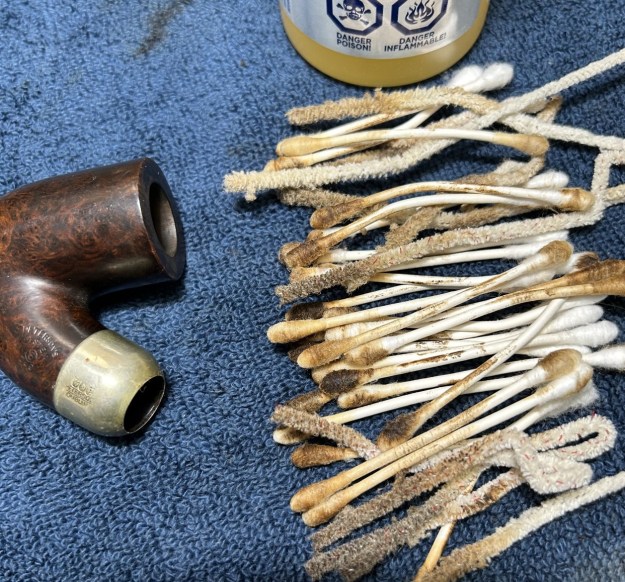
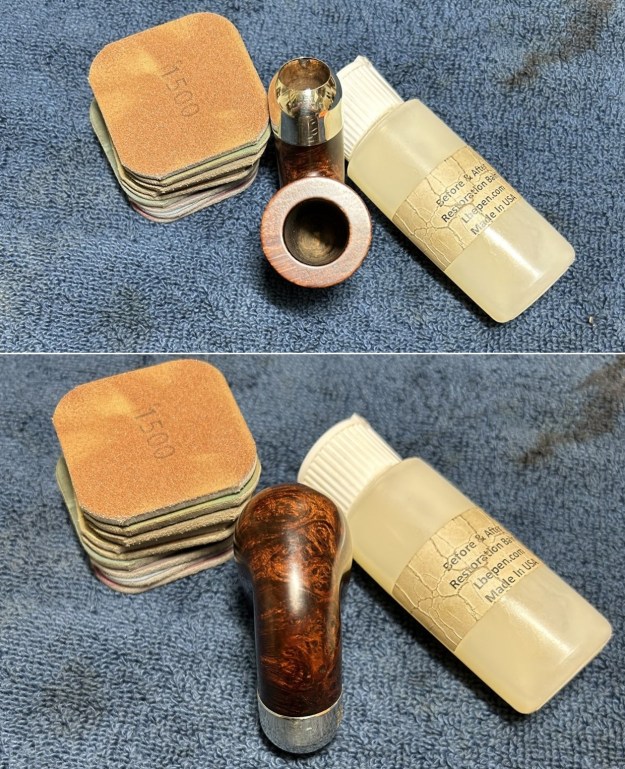
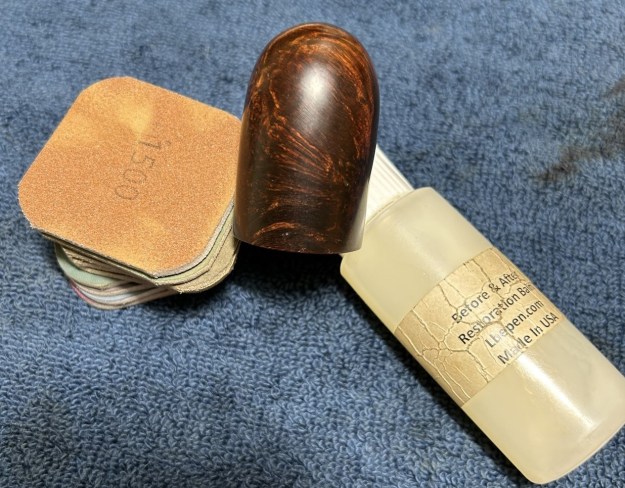
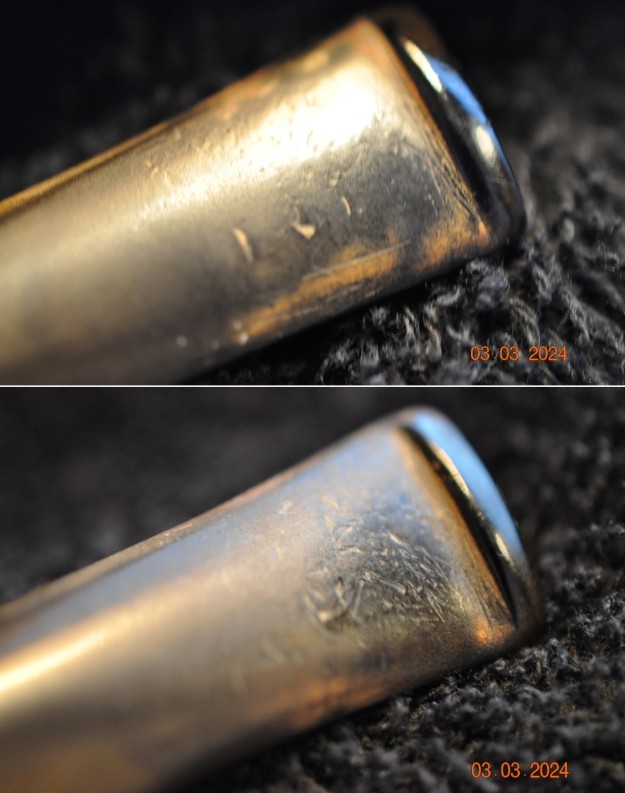
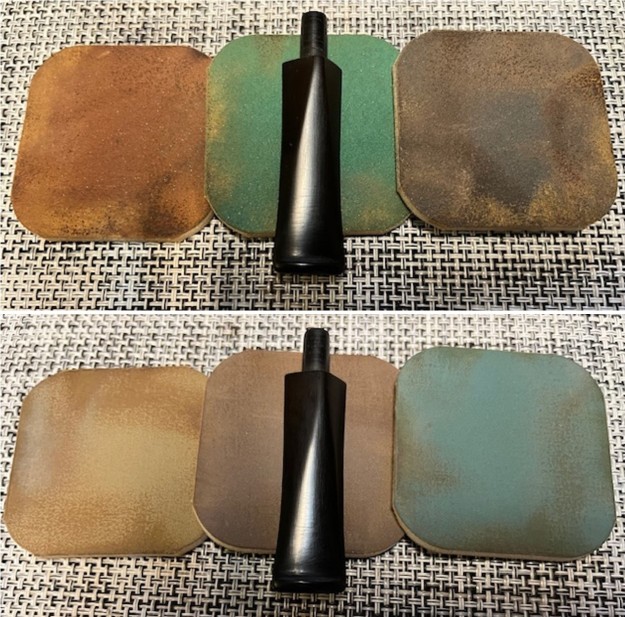
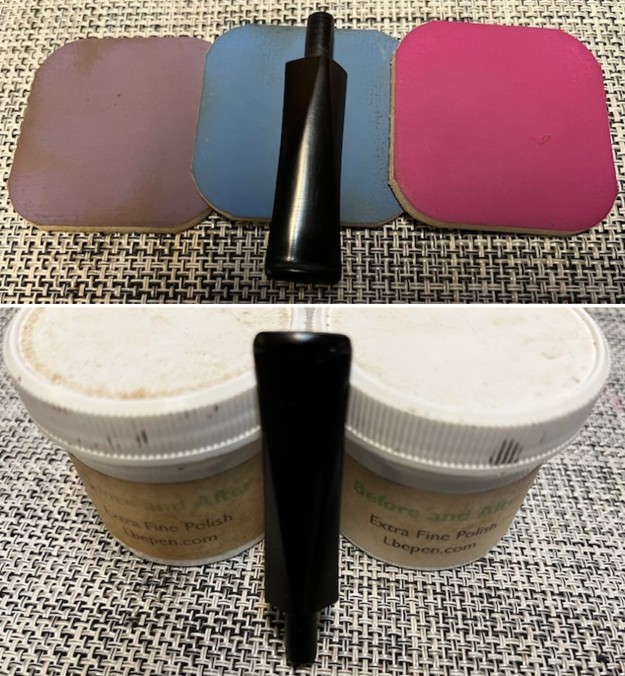
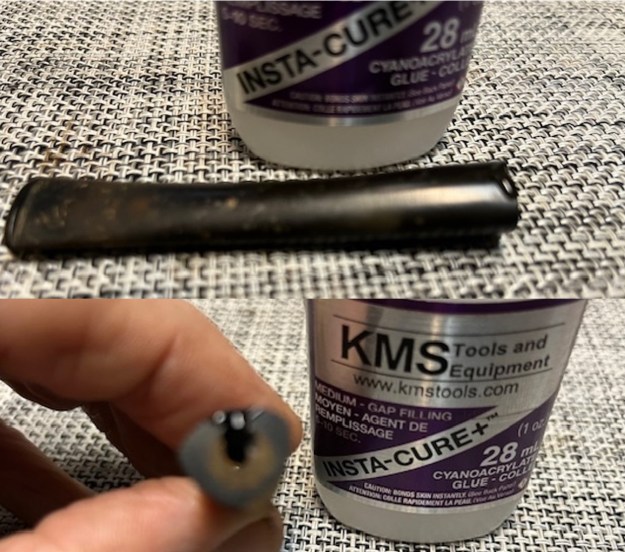
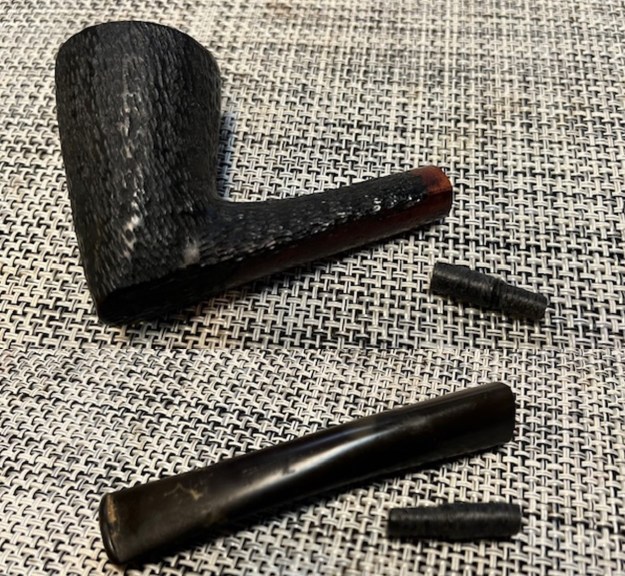
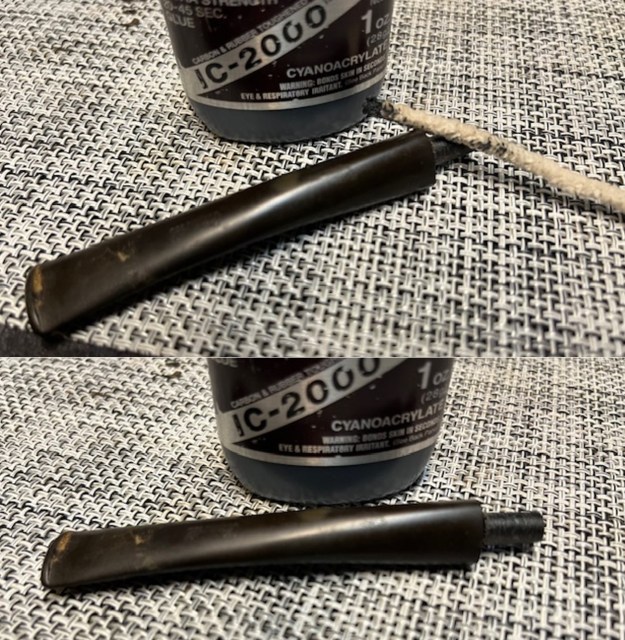
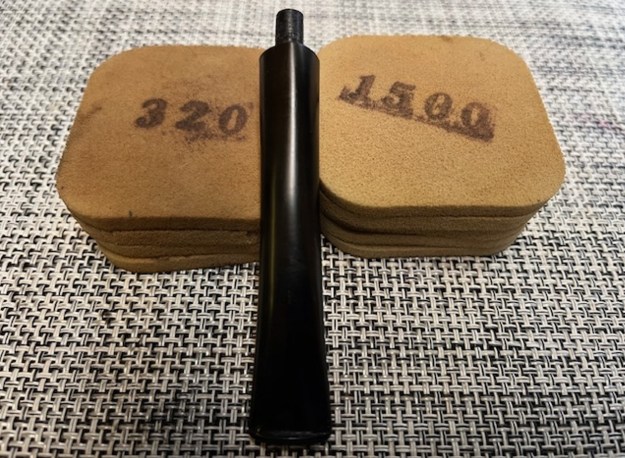
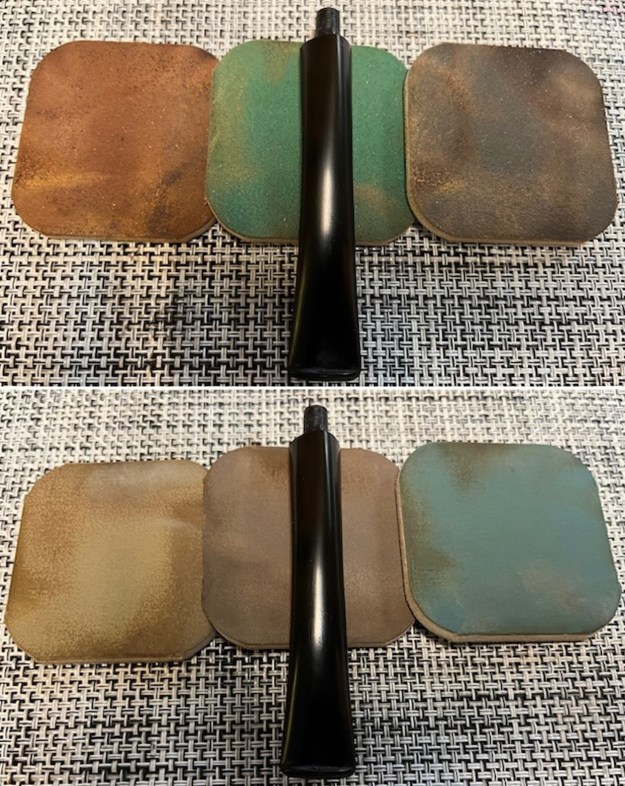
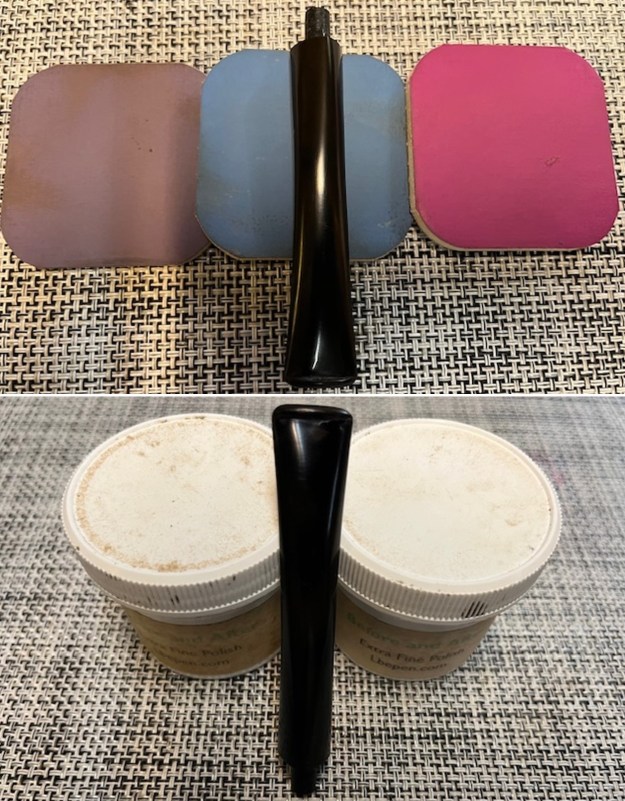
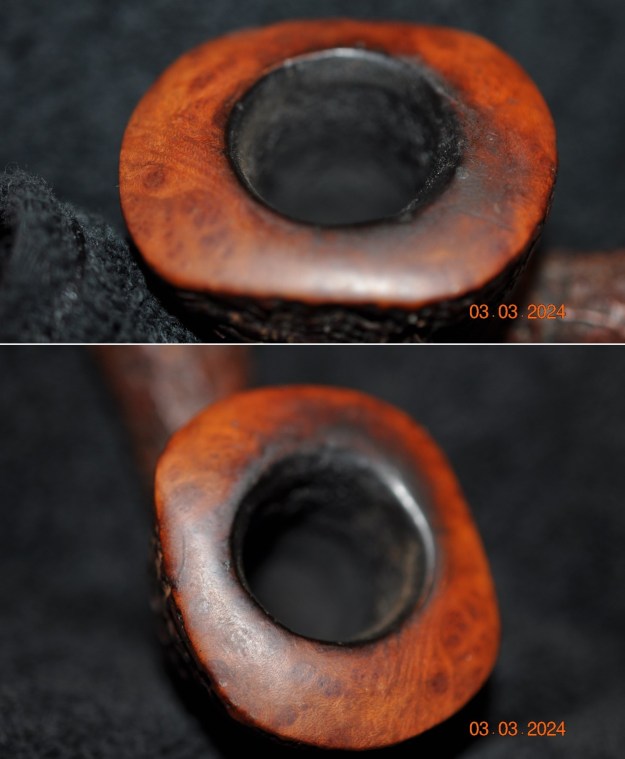
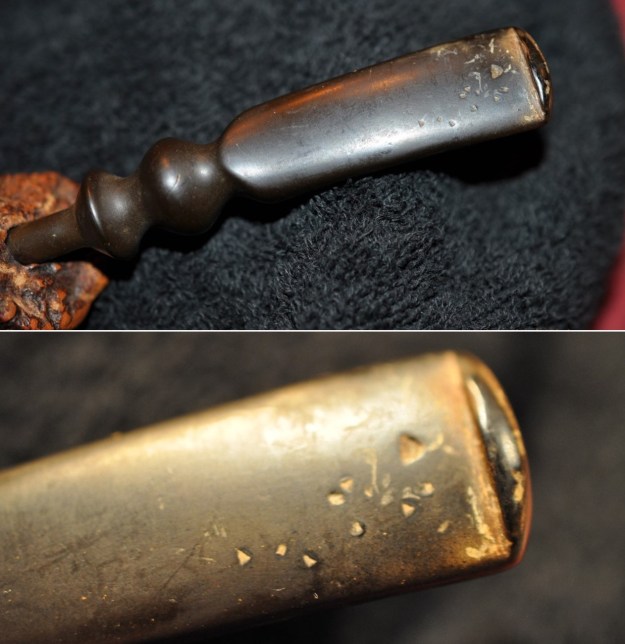
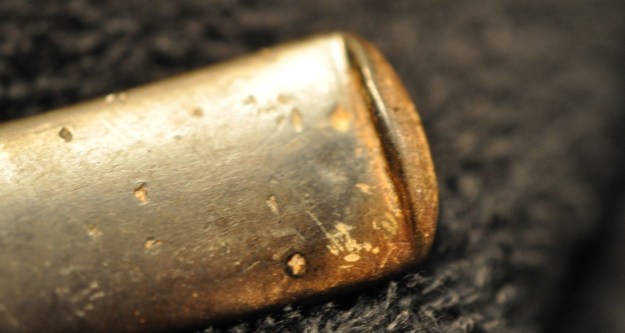
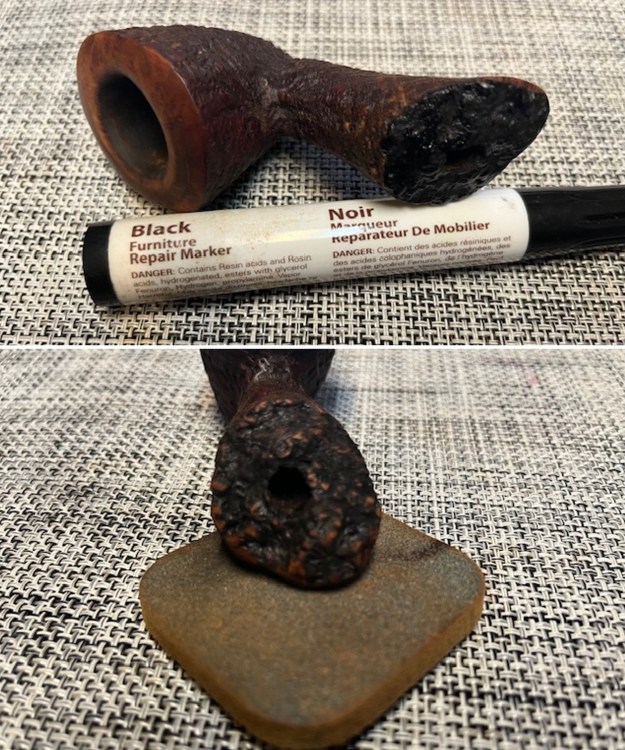
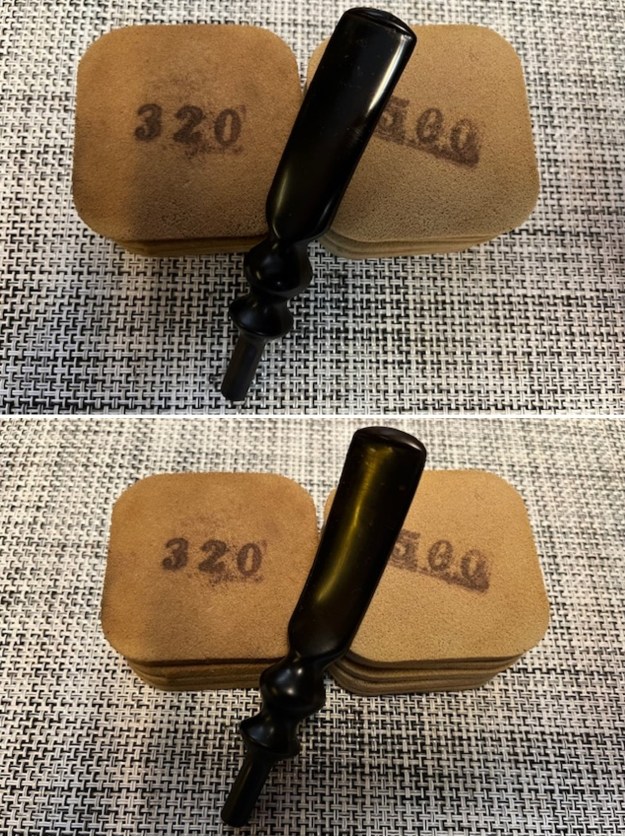
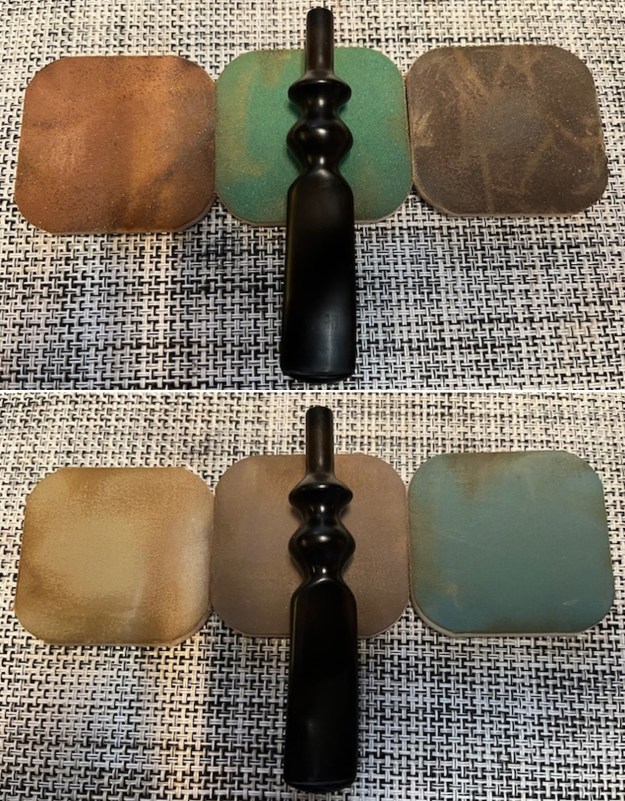
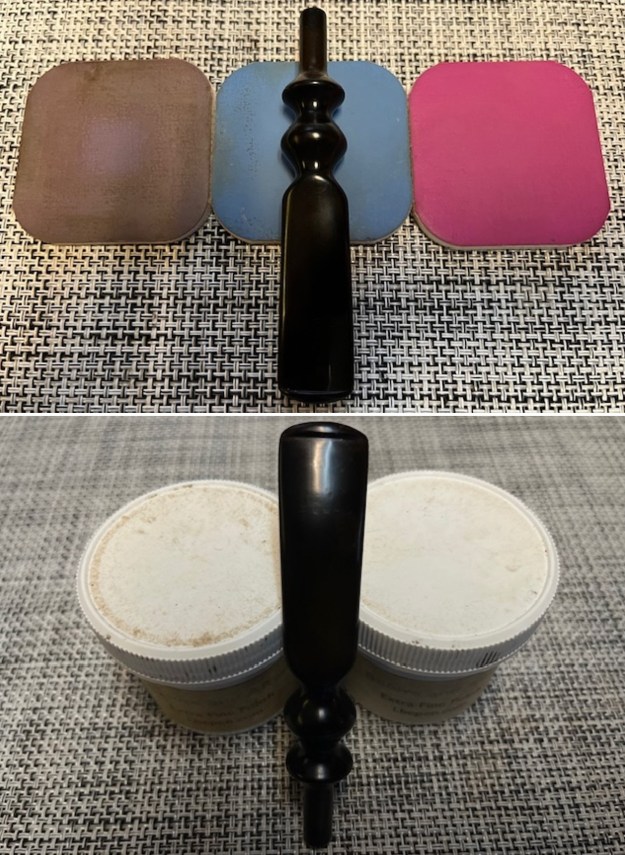
Amboseli Pipes made calabash and meerschaum pipes in Tanganyika. They moved to Arusha, Tanzania, and later closed. Countryman is one of the brands Amboseli produced. Its symbol is an elephant. Other brands include Hillbilly, Kiko, Kilimanjaro, London Meerschaum, Merlin, Sportsman, Tanganyika Meerschaum Corporation, and Tembo.Pipedia also seemed to direct all related pages to Kiko Pipes. This page did have the most information, but I wasn’t much closer to figuring out which brand of pipe this was. By comparing the descriptions from the Amboseli brochure below and various animal logos, I was able to eliminate some of the brands. I also looked at some previous articles here on rebornpipes. Therefore, this pipe is probably either a Caveman, Sportsman, or Townsman – without having that specific nomenclature on the pipe itself. But, truth be told, that is no more than an educated guess.Moving on. The stummel was in nice shape. The outside definitely had seem some wear and tear, but there were no major issues. Sure, it was dirty inside, but nothing more than what would be expected. I was pleased to see that the threaded mortise was in excellent condition. I had been concerned that the threads might have been damaged over the years, but no such damage was there. Meanwhile, the big problems lay with the stem. It was heavily oxidized, and thoroughly chewed. In fact, as the photos attest, the button was completely broken. A major rebuild would be required. Even though I would need to rebuild the stem, I wanted to save as much of the original as possible. So, I “painted” the stem with my BIC lighter in order to try and lift some of the bite marks all over the end of it. This worked reasonably well, but there was still a lot of damage.Next, I took some pipe cleaners and lemon-infused 99% isopropyl alcohol, and cleaned the revolting insides of the stem. The photo only shows a few of the pipe cleaners needed. It was pretty darn dirty. I also wiped down the outside with some Murphy’s on some cotton rounds. This removed some of the surface filth. As usual, I sent the stem for a swim in the deoxidizing fluid over night. I could tell even before this that the oxidation was deeply set into the vulcanite, but I needed to clean what I could. The following day, I wiped down the stem with SoftScrub cleanser and made sure to scrub hard. A lot of oxidation came off, but a lot of oxidation remained. I actually sent it for a second bath, and that helped, but not enough. Once it was a clean as I could get it, it was time to build up the damage. I brought out my black cyanoacrylate adhesive and I applied it to the bitemarks and such. The missing chunks would need far more work. I created a new button out of black cyanoacrylate, impregnated with carbon and rubber. I first plugged up the stem’s draught hole with a folded pipe cleaner, coated in petroleum jelly. This ensured that any of the glue would not accidentally plug up the air passage in the stem. This is always a tricky business and it took some patience to make it work. After I applied the cyanoacrylate, it looked pretty darn ugly, but I was expecting that. After the curing, I ended up sanding down the end of the stem to reduce some of the excess material. To carry this process on, I used some miniature files to further shape the button and make it suitable for sanding. I used another file on the inside to ensure there were no rough edges in the bore. I then sanded the stem down with sandpaper to keep the shape. I then used all nine Micromesh pads (1,500 through 12,000 grit) to smooth everything out. I also used Obsidian Pipe Stem Oil in between each pad scrubbing. It is worth noting that a repair this big on a stem will never be completely invisible – especially on this pipe. Finally, I used some 0000-grit steel wool on the aluminum tenon to make it shiny.

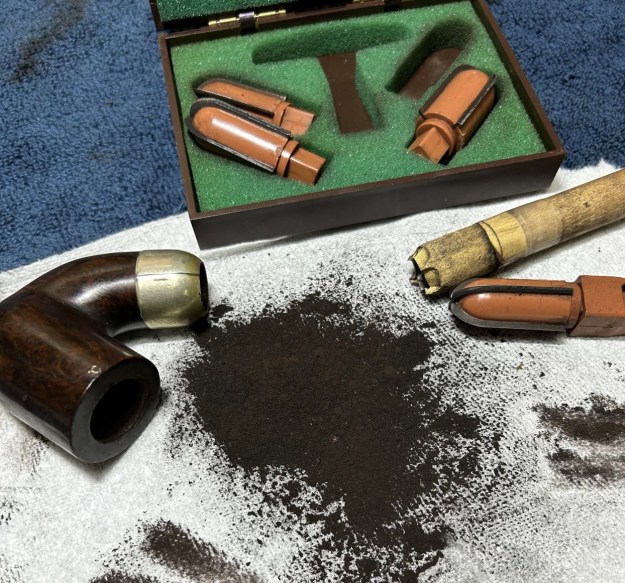
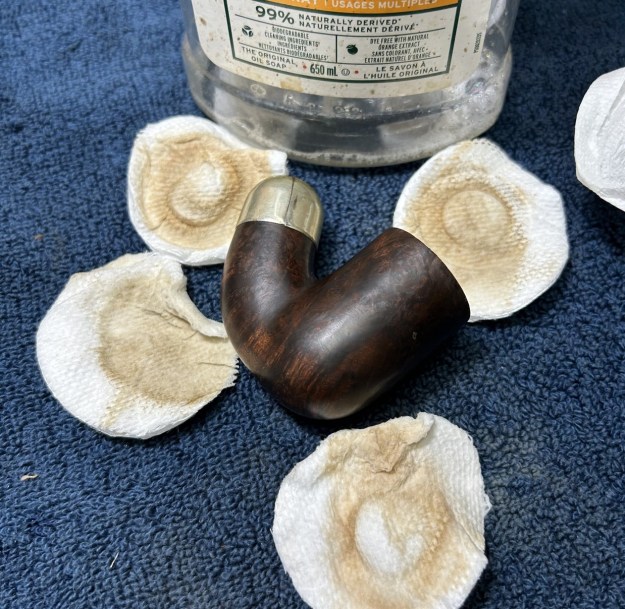
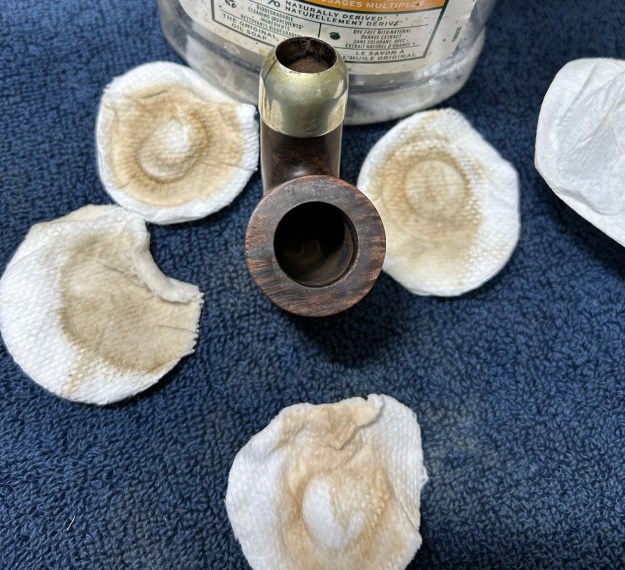
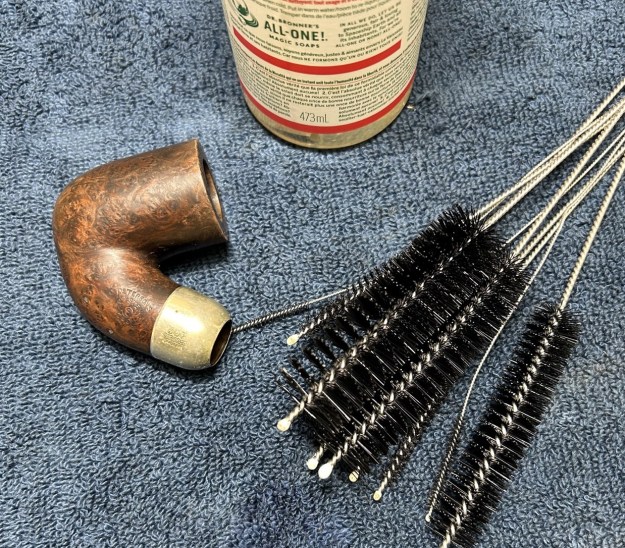
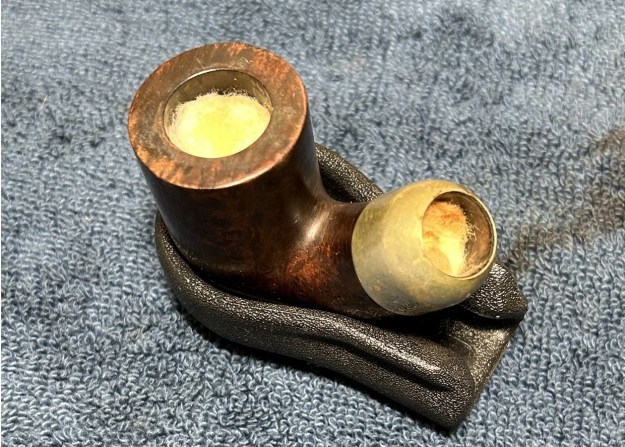
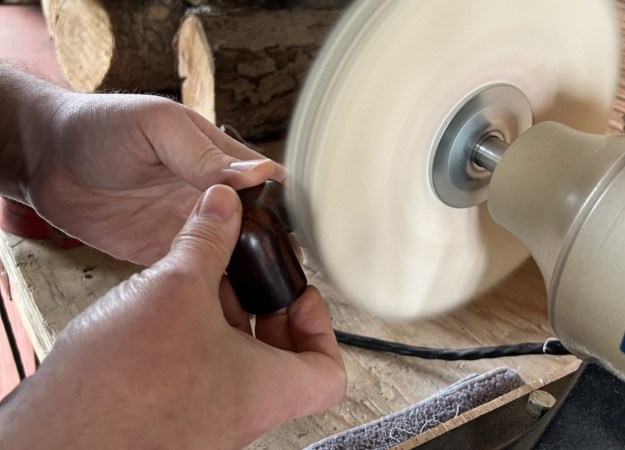
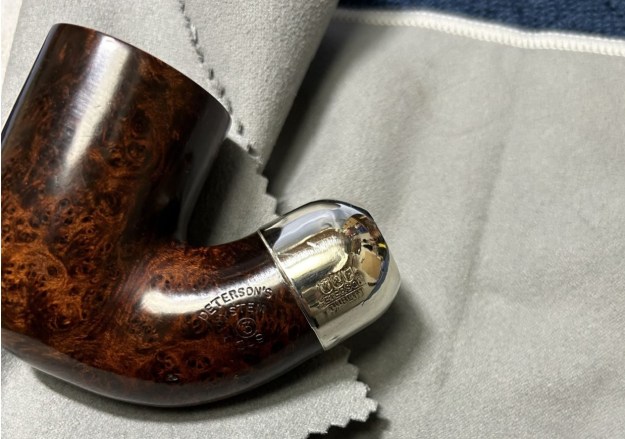
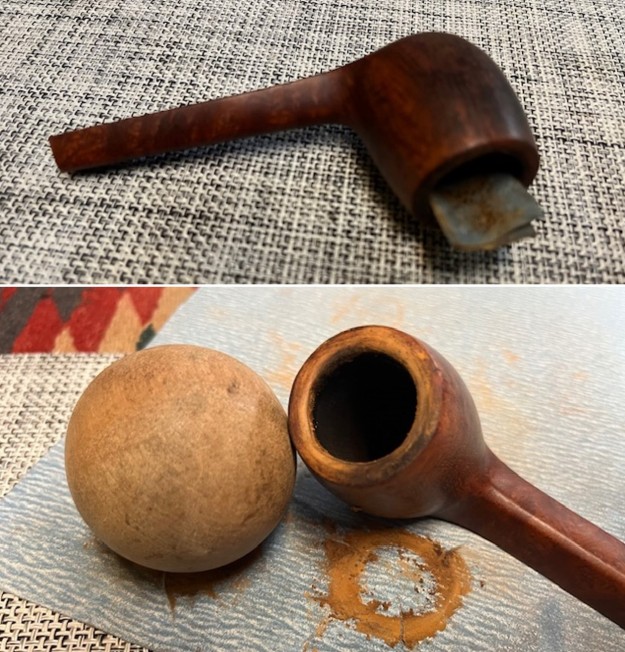
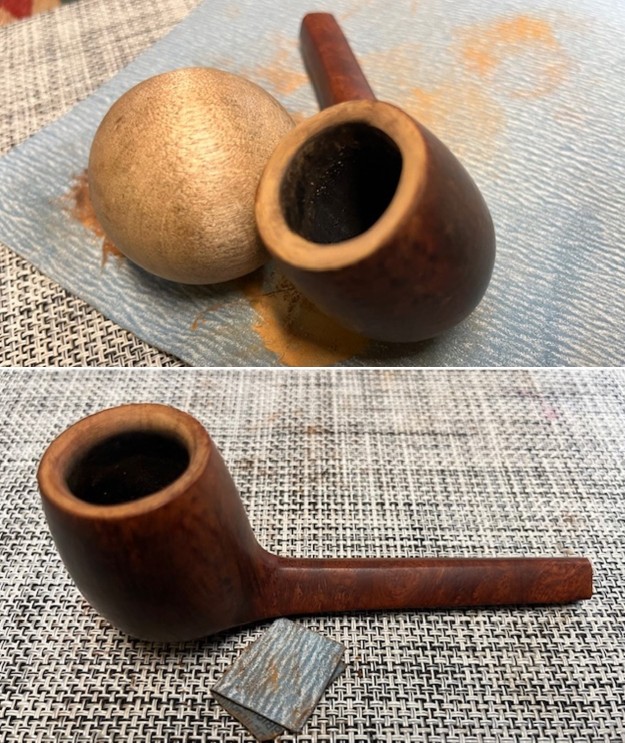
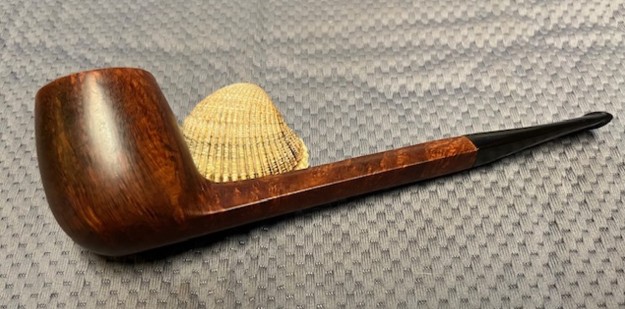
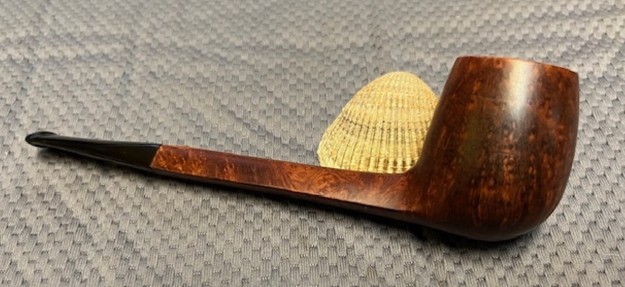
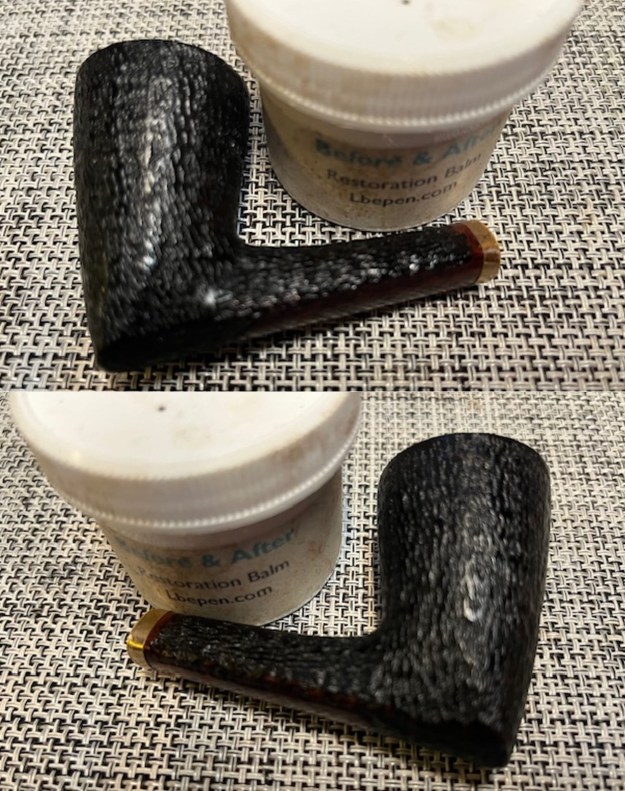
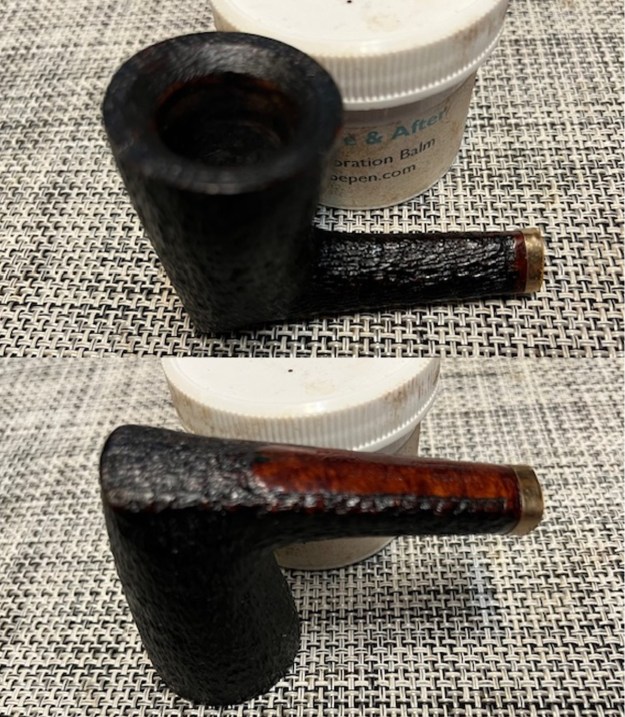
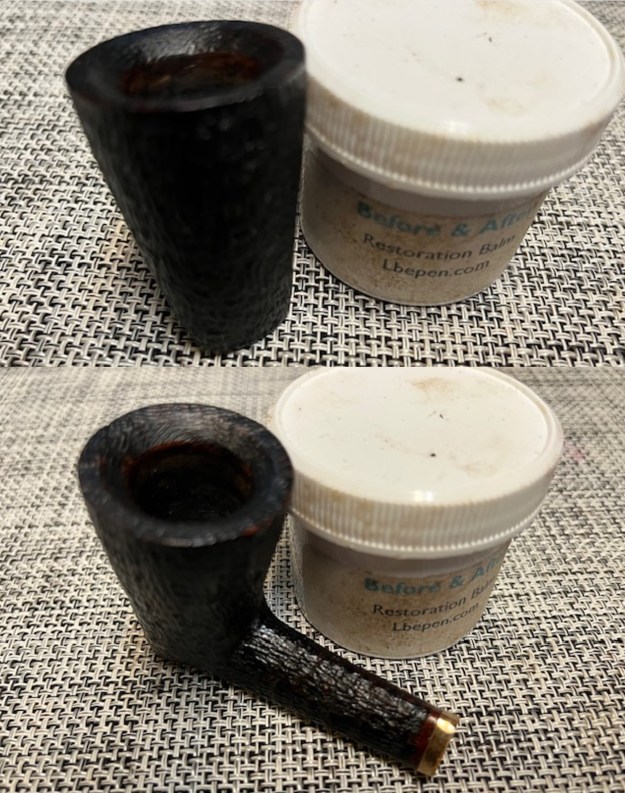
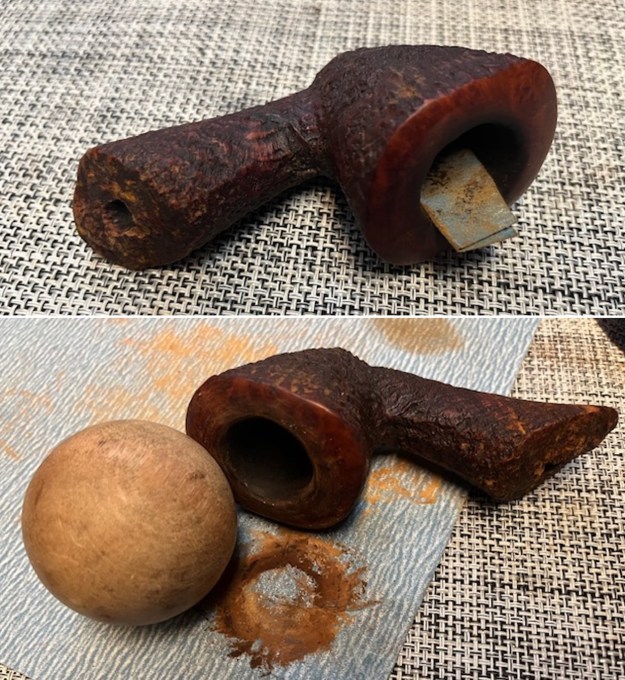
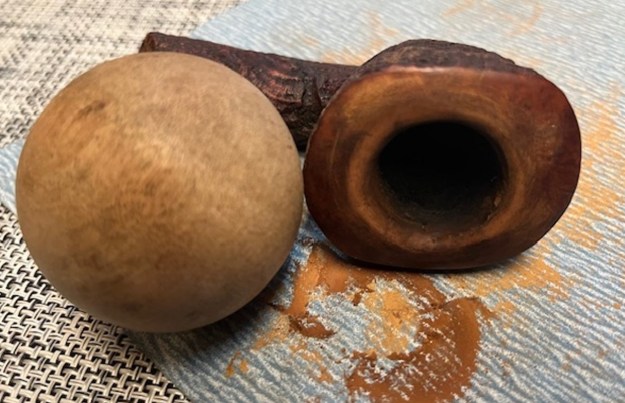
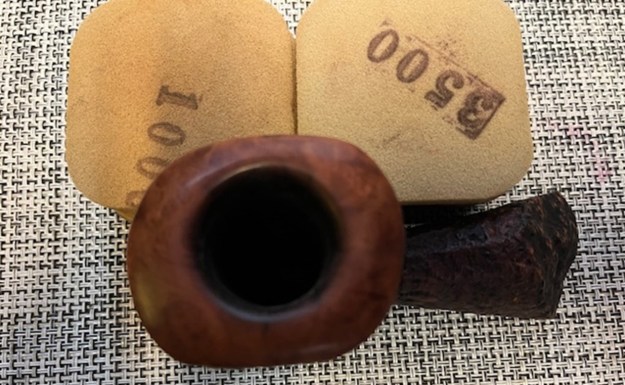
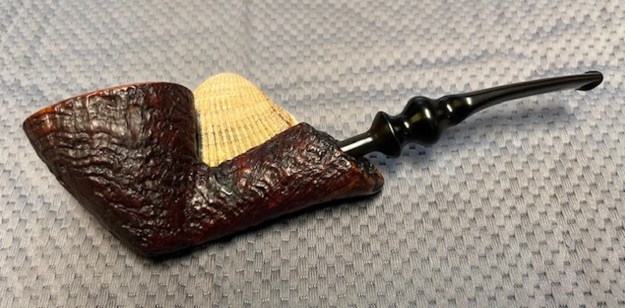
On to the stummel. Normally, at this point, I would use a reamer to remove the built-up cake inside the bowl, but meerschaum has the potential to crack in those circumstances. Instead, I simply used some sandpaper taped to a wooden dowel to scrape the bowl down. Fortunately, everything looked sound on the inside of the bowl. I then proceeded to clean out the shank with Q-tips, pipe cleaners, and isopropyl alcohol. There was a lot of nastiness inside this stummel and – boy-oh-boy – it took a lot of cotton to get this thing clean! I then moved on to cleaning the outside of the stummel with Murphy’s Oil Soap and some cotton pads. I also cleaned the insides with some Castile soap and tube brushes. Now in this case, I did it especially carefully because too much soaking can cause meerschaum to soften. In this case, I moved quickly, nothing softened, and everything turned out well. After this, I used my Micromesh pads to sand down and minimize the scratches in the meerschaum and make everything smooth. I then applied some Clapham’s Beeswax Finish to the meerschaum and let it sit for about 30 minutes. I then buffed it with a microfibre cloth. I repeated this process and left it – it sure was pretty! I took the stem (but not the stummel) to my buffing wheel and finished it with some White Diamond polish. Worked like a charm. This Tanganyika Genuine Block Meerschaum 290 Bent Dublin looks beautiful once again. I’m sure my cousin will love it. I hope you enjoyed reading the story of this pipe as much I as I did restoring it. The approximate dimensions of the pipe are as follows: length 5⅛ in. (131 mm); height 2¼ in. (58 mm); bowl diameter 1½ in. (39 mm); chamber diameter ⅞ in. (22 mm). The weight of the pipe is 1⅝ oz. (49 g). If you are interested in more of my work, please follow me here on Steve’s website or email me directly at kenneth@knightsofthepipe.com. Thank you very much for reading and, as always, I welcome and encourage your comments.

I was not hoping for much with this poor Malaga Second Oval Shank Brandy


Blog by Steve Laug

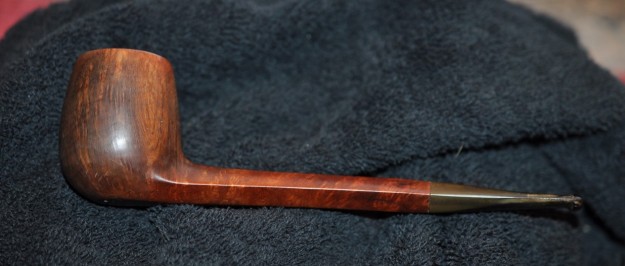
For the next little while I am working on some Malaga Pipes. I have several in queue to work on so I tend to pick them by what catches my eye. The next pipe is the last of the latest batch of Malaga Pipes. This one is a Oval Shank Brandy with a ¼ bent vulcanite stem. Jeff saw it on eBay and purchased it on 09/30/2023 from a seller in Cape Fair, Missouri, USA. The grain on this pipe is quite nice. Once again it was obviously someone’s favourite smoker. The pipe is stamped on the underside of the shank and reads MALAGA [over] Second. The smooth briar bowl and shank were dirty and worn. There were tars and oils ground into the surface of the briar. The bowl had a very thick cake that flowed over the top of the inwardly bevelled rim in a thick lava coat. The cake in the bowl was thick right up to the top of the rim. It was hard to fully assess the condition of the inner edge. It looked like the rim top had some burn marks and chips on the back and the front side. The inner edge was also damaged. The condition of the rim edge and top would become clear in the cleaning process. The outer edge also had some damage. The saddle stem was vulcanite and had light tooth marks on the top and the underside of the stem ahead of the button. Jeff took photos of the pipes before he started his clean up work. Jeff took photos of the rim and bowl to show the heavy cake and lava on the rim top and edges. You can also see the damage on the rim top. The back top and outer edges appear to have been knocked against some hard surface given the amount of damage. The inner edge of the rim showed thick cake coming up to the top and flowing over the edge. It was a dirty pipe but still a beauty. The vulcanite saddle stem had tooth marks and chatter on the top and underside of the stem ahead of the button. The photos of the sides and heel of the bowl show some stunning and unique grain all around the pipe. The oil curing/finish makes the grain really stand out on the bowl and shank. Jeff took a photo of the stamping on the underside of the shank. It read “Malaga” [over] Second. The stamping was clear and readable as noted above.Jeff took photos of the flaws in the briar on the underside of the shank. There are fills in place in the shank but they are shrunken and are quite tactile. I am sure that this is what made the pipe a Malaga Second.For those of you who are unfamiliar with the brand, I am also including the link to a blog that I wrote that gives some of the history of the Malaga brand and the Malaga Pipe Shop in Royal Oak, Michigan in the USA. Here is the link – https://rebornpipes.com/2013/02/09/george-khoubesser-and-malaga-pipes/. That blog also includes links to a catalogue and the history of the pipemaker George Khoubesser. If you are interested to learn more then I invite you to follow the link to get a feel for the brand and the pipemaker.

I am also am including a link to some printed material on the Malaga brand that came to me from the daughter of George Koch (we purchased George’s pipes from his daughter) to help identify the particular stamping on the pipe. The link takes you to the entire collection of materials that were sent to me (https://rebornpipes.com/2019/02/27/malaga-pipes-catalogue-of-pipes-and-tobaccos/).

This particular pipe was a second and it is not listed in the catalogue.

Jeff had cleaned up the pipe using his usual procedure. He reamed the pipe with a PipNet pipe reamer and removed the rest of it with a Savinelli Fitsall Pipe Knife. He scrubbed the bowl with undiluted Murphy’s Oil Soap with a tooth brush. He rinsed it under running warm water to remove the soap and grime from around the bowl sides. It looked much better. He cleaned out the inside of the shank and the airway with alcohol, cotton swabs and pipe cleaners. The stem looked much better and the light tooth marks on both sides were still visible and would need a little work. I took photos of the pipe once I received it.  I took a photo of the rim top and the stem to show their condition. Jeff was able to clean up the cake and the lava overflow that was shown in the rim and bowl photos above. The rim top was clean but there were chips, nicks burned areas around the rim top and the edges of the bowl. There was also some darkening on the flat surface of the rim and the edges. It is visible in the first photo below. The stem looked better, though there were tooth marks and chatter on both sides ahead of the button. I took a photo of the stamping on the underside of the shank. It is quite readable as noted above. I removed the stem from the shank and took a photo of the parts to give a sense of what the pipe looks like.I started my work on the pipe by addressing the damage to the rim top and outer edge of the bowl. I topped it with a topping board and 220 grit sandpaper. I cleaned up the inward bevel on the bowl edge with a folded piece of 220 grit sandpaper. I brought it back to the same inward bevel that it had before I topped it. I turned my attention to the flaws and fills in the heel and the underside of the shank. I filled these in with clear CA glue. I smooth out the repairs with a folded pipe cleaner to smooth them out.I sanded the bowl top and the repaired fills on the shank and heel with a 320 grit sanding pad to blend them into the surrounding briar. They looked significantly better. From there I chose to sand the entire bowl and shank with 320-3500 grit sanding pads. This removed the darker areas and blended the repairs into the bowl and shank. It also took care of the roughness to the finish and some of the marks on the outside of the bowl and shank. The grain really began to stand out on the pipe. From there I went on to polish the briar with micromesh sanding pads – dry sanding with 1500-12000 grit pads. I wiped the bowl down after each pad. The pipe really began to have a rich shine and some beautiful grain that minimized the repaired fills. I rubbed the bowl and shank down with Before & After Restoration Balm to deep clean the finish on the bowl and shank. The product works to clean, enliven and protect the briar. I worked it in with my fingers to get it into the briar. I let it sit for 10 minutes then I wiped it off and buffed it with a soft cloth. The briar really began to have a rich shine. I took some photos of the bowl at this point to mark the progress in the restoration, it is a beautiful bowl. I set the bowl aside and turned my attention to the stem. I “painted” the tooth marks with the flame of a lighter and was able to lift them significantly. I filled in what remained with a black CA glue. Once it cured I used a small file to flatten the repairs and start the process of blending them into the surrounding vulcanite. Once the repairs cured I straightened out the stem a bit to give it a more gentle bend. To me the previous bend was to abrupt and made the stem hang from the mouth poorly. I adjusted it so that in the mouth it sits comfortably.Once the bend was corrected I sanded the repairs smooth with a folded piece of 220 grit sandpaper. I was able to further blend it into the surrounding vulcanite.I started the polishing of the stem with 2 x 2 inch sanding pads – dry sanding with 320-3500 grit pads and wiping it down after each pad. I was able to remove the light tooth marks and chatter on the stem surface on both sides. I polished the stem with micromesh sanding pads – dry sanding with 1500-12000 grit pads. I wiped the stem down after each sanding pad with Obsidian Oil.  I did a final hand polish of the stem with Before & After Pipe Stem Polish – both Fine and Extra Fine. I gave it a coat of Obsidian Pipe Stem Oil. It works to protect the stem from oxidizing. I set it aside to dry. I put the pipe back together – the bowl with its new stem. This restored Malaga Second Long Shank Brandy turned out surprisingly to be a real beauty. I did not hold out much hope for it when I started on it but boy was I surprised. The grain on the bowl is quite beautiful came alive with the buffing. I used Blue Diamond on the buffing wheel on both the bowl and stem. I gave both multiple coats of carnauba wax on the wheel then buffed it with a clean buffing pad to raise the shine. I hand buffed it with a microfibre cloth to deepen the shine. The Malaga Second Brandy feels great in the hand. It is lightweight and the contrast in the browns of the briar and the polished vulcanite stem is quite amazing. The dimensions of the pipe are Length: 6 inches, Height: 2 inches, Outer diameter of the bowl: 1 ¼ inches, Chamber diameter: ¾ of an inch. The weight of the pipe is 1.90 ounces/54 grams. It really is a beauty. I will be putting it on the rebornpipes store in the American (US) Pipe Makers section shortly if you are interested in adding it to your collection. Thanks for walking through the restemming and the restoration with me. Cheers.

Breathing Life into a Classic “Malaga” Imported Briar Straight Bulldog


Blog by Steve Laug

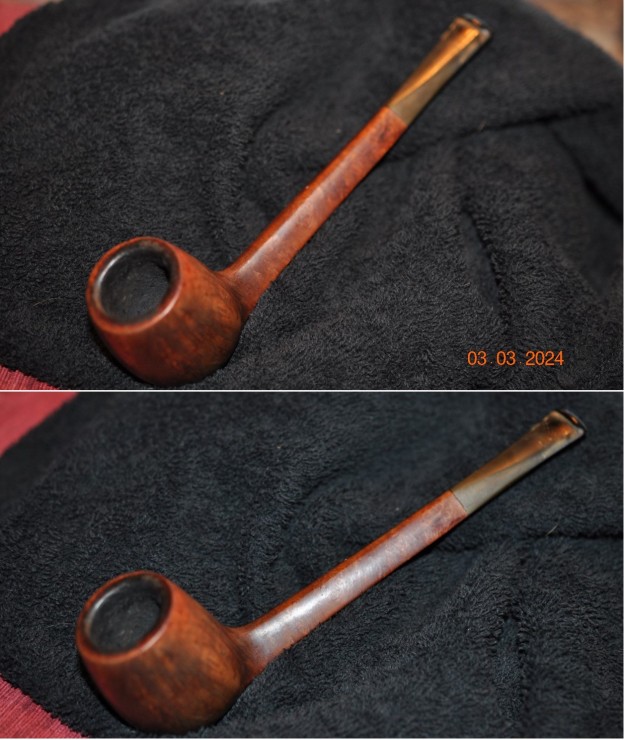
For the next little while I am working on some Malaga Pipes. I have several in queue to work on so I tend to pick them by what catches my eye. The next pipe on the table is an interesting Malaga Bulldog. Jeff saw it on eBay and purchased it on 12/22/2023 from a seller in Greensboro, North Carolina, USA. The grain on this pipe is quite nice. Once again it was obviously someone’s favourite smoker. The pipe is stamped on the left side of the shank and reads “MALAGA”. On the right side of the shank it reads Imported Briar. The smooth bowl and shank were dirty and worn. The twin rings around the rim cap look very good. There were tars and oils ground into the surface of the briar. The bowl had a very thick cake that flowed over the top of the smooth rim in a lava coat. The cake in the bowl was thick right up to the top of the rim. It was hard to fully assess the condition of the inner edge. The condition of the rim edge and top would become clear in the cleaning process. The outer edge looked very good. The saddle stem was vulcanite. There were light tooth marks on the top and the underside of the stem ahead of the button. Jeff took photos of the pipes before he started his clean up work. Jeff took photos of the rim and bowl to show the heavy cake and lava on the rim top and edges. The inner edge of the rim showed thick cake coming up to the top and flowing over the edge. It was a dirty pipe but still a beauty. The vulcanite saddle stem had tooth marks and chatter on the top and underside of the stem ahead of the button. The photos of the sides and heel of the bowl show some stunning and unique grain all around the pipe. The oil curing/finish makes the grain really stand out on the bowl and shank. Jeff took photos of the stamping on the sides of the shank. It read “Malaga” on the left side as noted above. On the right side it read Imported Briar. The stamping was clear and readable.For those of you who are unfamiliar with the brand, I am also including the link to a blog that I wrote that gives some of the history of the Malaga brand and the Malaga Pipe Shop in Royal Oak, Michigan in the USA. Here is the link – https://rebornpipes.com/2013/02/09/george-khoubesser-and-malaga-pipes/. That blog also includes links to a catalogue and the history of the pipemaker George Khoubesser. If you are interested to learn more then I invite you to follow the link to get a feel for the brand and the pipemaker.

I am also am including a link to some printed material on the Malaga brand that came to me from the daughter of George Koch (we purchased George’s pipes from his daughter) to help identify the particular stamping on the pipe. The link takes you to the entire collection of materials that were sent to me (https://rebornpipes.com/2019/02/27/malaga-pipes-catalogue-of-pipes-and-tobaccos/).

Jeff had cleaned up the pipe using his usual procedure. He reamed the pipe with a PipNet pipe reamer and removed the rest of it with a Savinelli Fitsall Pipe Knife. He scrubbed the bowl with undiluted Murphy’s Oil Soap with a tooth brush. He rinsed it under running warm water to remove the soap and grime from around the bowl sides. It looked much better. He cleaned out the inside of the shank and the airway with alcohol, cotton swabs and pipe cleaners. The stem looked much better and the light tooth marks on both sides were still visible and would need a little work. I took photos of the pipe once I received it.  I took a photo of the rim top and the stem to show their condition. Jeff was able to clean up the cake and the lava overflow that was shown in the rim and bowl photos above. The rim top was clean but there were chips and nicks around the rim top and the edges of the bowl. There was also some darkening on the flat surface of the rim. It is visible in the first photo below. The stem looked better, though there were tooth marks and chatter on both sides ahead of the button. I took photos of the stamping on the shank sides to show that it was readable and undamaged by the cleanup work. I removed the stem from the shank and took a photo of the parts to give a sense of what the pipe looks like.I worked on the rim top and edges of the bowl to remove the damage and darkening on the surface or edges of the bowl. I lightly topped the bowl to smooth out the nicks and cuts in the top. I worked over it with 320-1000 grit sanding pads and worked on the inner edge with a folded piece of 220 grit sandpaper. I wiped it down with a damp cloth and it looked better. I polished the smooth panels on the bowl sides and the smooth rim top with micromesh sanding pads. I dry sanded it with 1500-2400 grit sanding pads and wiped the bowl down with a damp cloth after each sanding pad. I touched up the clean rim top with a Maple Stain Pen. After the staining I continued sanding the rim top and bowl with 3200-12000 grit micromesh pads. I wiped it down after each pad. It really began to be beautiful. I rubbed the bowl and shank down with Before & After Restoration Balm to deep clean the finish on the bowl and shank. I worked it into the twin rings around the bowl cap with a horsehair shoe brush. The product works to clean, enliven and protect the briar. I worked it in with my fingers to get it into the briar. I let it sit for 10 minutes then I wiped it off and buffed it with a soft cloth. The briar really began to have a rich shine. I took some photos of the bowl at this point to mark the progress in the restoration. It is a beautiful bowl. I set the bowl aside and turned my attention to the stem. I started the polishing of the stem with 2 x 2 inch sanding pads – dry sanding with 320-3500 grit pads and wiping it down after each pad. I was able to remove the light tooth marks and chatter on the stem surface on both sides. I polished the stem with micromesh sanding pads – dry sanding with 1500-12000 grit pads. I wiped the stem down after each sanding pad with Obsidian Oil. I did a final hand polish of the stem with Before & After Pipe Stem Polish – both Fine and Extra Fine. I gave it a coat of Obsidian Pipe Stem Oil. It works to protect the stem from oxidizing. I set it aside to dry.I put the stem back on the “Malaga” Imported Briar Classic Bulldog and took it to the buffer. I buffed the bowl and stem with Blue Diamond to polish the briar and the vulcanite. Blue Diamond does a great job on the smaller scratches that remain in both. I gave the bowl and the stem several coats of carnauba wax and buffed the pipe with a clean buffing pad to raise the shine. I hand buffed it with a microfiber cloth to deepen the shine. I am amazed at how well it turned out. The finished pipe is shown in the photos below. This is a beautiful “Malaga” Classic Bulldog and the hard rubber taper stem and smooth finish combine to give the pipe a great look. I honestly have no idea why it is labeled a second as there are no fills or flaws in the briar. The dimensions of the pipe are Length: 5 ½ inches, Height: 1 ½ inches, Outside diameter of the bowl: 1 ¼ inches, Chamber diameter: ¾ of an inch. The weight of the pipe is 1.02 ounces/28 grams. This is another pipe that I will be putting on the rebornpipes online store in the American Pipe Makers and Pipemaking Companies Section shortly, if you are interested in adding it to your collection. Thanks for walking through the restoration with me on this beauty!

As always, I encourage your questions and comments as you read the blog. Thanks to each of you who are reading this blog. Remember we are not pipe owners; we are pipe men and women who hold our pipes in trust until they pass on into the trust of those who follow us.

This Rare and Beautiful “Malaga” Raskassa Cutty cleaned up extremely well


Blog by Steve Laug

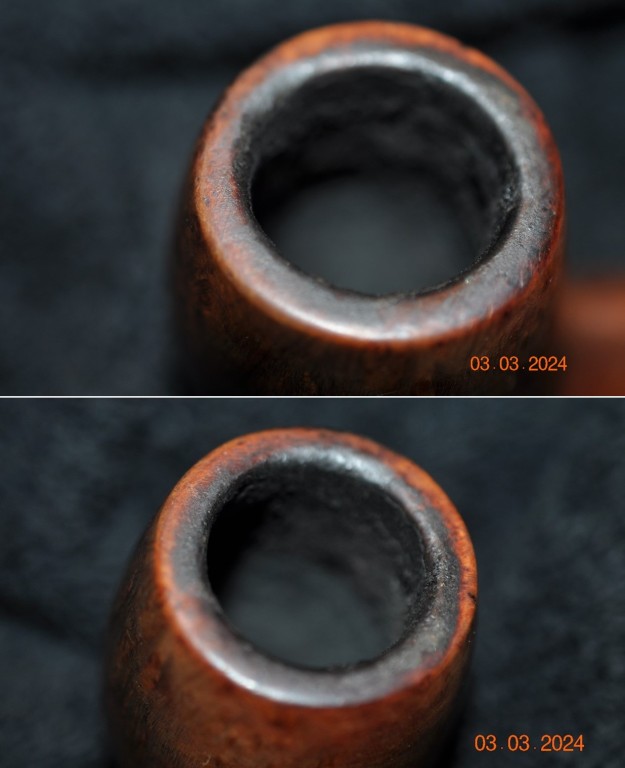
For the next little while I am working on some Malaga Pipes. I have several in queue to work on so I tend to pick them by what catches my eye. The next pipe on the table is an interesting Malaga Raskassa Large Cutty. Jeff saw it on eBay and purchased it on 10/05/2023 from a seller in Pomona, Missouri, USA. The grain on this pipe is very stunning. It was obviously someone’s favourite smoker. The pipe is stamped on the left side of the shank and reads RASKASSA. The smooth bowl and shank were dirty and worn. There were tars and oils ground into the surface of the briar. The bowl had a very thick cake that flowed over the top of the smooth rim in a spotty lava coat. The cake in the bowl was thick right up to the top of the rim. It was hard to fully assess the condition of the inner edge. The rim top and inner edge of the bowl appeared to have some damage but more would become clear in the cleaning process. The outer edge had chips and dents from knocking the pipe against a hard surface. The taper stem appeared to be either vulcanite or hard rubber. There were tooth marks on the top and the underside ahead of the button. Jeff took photos of the pipes before he started his clean up work.Jeff took photos of the rim and bowl to show the heavy cake and lava spots on the rim top and edges. The bevelled inner edge of the rim showed some darkening and had some cake on it. The grain on the rim top is quite stunning. It was a dirty pipe but still a beauty. The hard rubber stem had tooth marks and chatter on the top and underside of the stem ahead of the button. The photos of the sides and heel of the bowl show some stunning and unique grain all around the pipe. The oil curing/finish makes the grain really stand out on the bowl and shank. Jeff took a photo of the stamping on the left side it read Raskassa as noted above. It was clear and readable.For those of you who are unfamiliar with the brand, I am also including the link to a blog that I wrote that gives some of the history of the Malaga brand and the Malaga Pipe Shop in Royal Oak, Michigan in the USA. Here is the link – https://rebornpipes.com/2013/02/09/george-khoubesser-and-malaga-pipes/. That blog also includes links to a catalogue and the history of the pipemaker George Khoubesser. If you are interested to learn more then I invite you to follow the link to get a feel for the brand and the pipemaker.

I am also am including a link to some printed material on the Malaga brand that came to me from the daughter of George Koch (we purchased George’s pipes from his daughter) to help identify the particular stamping on the pipe. The link takes you to the entire collection of materials that were sent to me. I have included a screen capture of one particular page that helps identify the RAS KASSA stamping on the pipe (https://rebornpipes.com/2019/02/27/malaga-pipes-catalogue-of-pipes-and-tobaccos/). I have enclosed the section on the brand in a red box in the picture above. To summarize, it basically says that the stamping is applied to pipes with special rare grain patterns in the briar. These appear to be straight grain, birdseye, swirled grains etc. that are tight patterns. They are rare – 1 or 2 in every hundred pipes. This pipe is one of those. You can read the description in the detailed explanation below.

Jeff had cleaned up the pipe using his usual procedure. He reamed the pipe with a PipNet pipe reamer and removed the rest of it with a Savinelli Fitsall Pipe Knife. He scrubbed the bowl with undiluted Murphy’s Oil Soap with a tooth brush. He rinsed it under running warm water to remove the soap and grime. He cleaned out the inside of the shank and the airway with alcohol, cotton swabs and pipe cleaners. The shank had an inset to take in the tenon and the end of the stem so I would need to fit a stem to sit in the shank. I took photos of the pipe once I received it. I took a photo of the rim top and the stem to show their condition. Jeff was able to clean up the cake and the lava overflow that was shown in the rim and bowl photos above. The rim top was clean but there were chips and nicks around the inner edge of the bowl and nicks on the outer edge. There was also some darkening on the flat surface of the rim. It is visible in the first photo below. The stem looked better, though there were tooth marks and chatter on both sides near the button and on the button surface itself.I took a photo of the stamping on the left side of the shank to show that it was readable and undamaged by the cleanup work. I removed the stem from the shank and took a photo of the parts to give a sense of what the pipe looks like.It was time to start my work on the pipe. I started with the rim top and edges of the bowl. I sanded the inner and the outer edge of the bowl. I used a topping board and 220 grit sandpaper to clean up the rim top and darkening. Once I was finished with the light topping the grain on the rim top looked very good. I polished the smooth panels on the bowl sides and the smooth rim top with micromesh sanding pads. I dry sanded it with 1500-2400 grit sanding pads and wiped the bowl down with a damp cloth after each sanding pad. I touched up the clean rim top with a Maple Stain Pen. After the staining I continued sanding the rim top and bowl with 3200-12000 grit micromesh pads. I wiped it down after each pad. It really began to be beautiful. I rubbed the bowl and shank down with Before & After Restoration Balm to deep clean the finish on the bowl and shank. The product works to clean, enliven and protect the briar. I worked it in with my fingers to get it into the briar. I let it sit for 10 minutes then I wiped it off and buffed it with a soft cloth. The briar really began to have a rich shine. I took some photos of the bowl at this point to mark the progress in the restoration. It is a beautiful bowl. I set the bowl aside and turned my attention to the stem. I filled in the tooth marks on both sides with black CA glue. I set it aside to cure. Once the repairs hardened I used a small needle file to flatten out the repairs. I smoothed them out with 220 grit sandpaper to blend them into the rest of the surrounding vulcanite. I set the finished bowl aside and we back to the stem. I started the polishing of the stem with 2 x 2 inch sanding pads – dry sanding with 320-3500 grit pads and wiping it down after each pad.I polished the stem with micromesh sanding pads – dry sanding with 1500-12000 grit pads. I wiped the stem down after each sanding pad with Obsidian Oil. I did a final hand polish of the stem with Before & After Pipe Stem Polish – both Fine and Extra Fine. I gave it a coat of Obsidian Pipe Stem Oil. It works to protect the stem from oxidizing. I set it aside to dry.I put the stem back on the “Malaga” Beautifully Grained Raskassa Large Cutty and took it to the buffer. I buffed the bowl and stem with Blue Diamond to polish the briar and the vulcanite. Blue Diamond does a great job on the smaller scratches that remain in both. I gave the bowl and the stem several coats of carnauba wax and buffed the pipe with a clean buffing pad to raise the shine. I hand buffed it with a microfiber cloth to deepen the shine. I am amazed at how well it turned out. The finished pipe is shown in the photos below. This is a beautiful “Malaga” Large Raskassa Cutty and the hard rubber taper stem and smooth finish combine to give the pipe a great look. I honestly have no idea why it is labeled a second as there are no fills or flaws in the briar. The dimensions of the pipe are Length: 7 inches, Height: 2 ¼ inches, Outside diameter of the bowl: 1 ½ inches, Chamber diameter: 7/8 of an inch. The weight of the pipe is 1.98 ounces/56 grams. This is another pipe that I will be putting on the rebornpipes online store in the American Pipe Makers and Pipemaking Companies Section shortly, if you are interested in adding it to your collection. Thanks for walking through the restoration with me on this beauty!

As always, I encourage your questions and comments as you read the blog. Thanks to each of you who are reading this blog. Remember we are not pipe owners; we are pipe men and women who hold our pipes in trust until they pass on into the trust of those who follow us.

This Amazing Magnum “Malaga” Rusticated Billiard cleaned up extremely well


Blog by Steve Laug

The next pipe on the table is an interesting Rusticated Malaga Magnum Billiard. Jeff saw it on eBay and purchased it on 12/22/2023 from a seller in Greensboro, North Carolina, USA. It was a large and dirty pipe with grit and grime in the grooves of the rustication. It was obviously someone’s favourite smoker. The pipe is stamped on a smooth panel on the left side of the shank and reads “Malaga”. The rusticated bowl surface had a smooth rim edge and rim top and down about 1/8 inch down the outside of the bowl. There were smooth panels on all sides of the bowl and on the left and right side of the shank. There were tars and oils ground into the surface of the briar. The bowl had a very thick cake that flowed over the top of the smooth rim in a spotty lava coat. The cake in the bowl was thick right up to the top of the rim. It was hard to fully assess the condition of the inner edge. There was a fill on the front of the rim top from the inner edge half way into the rim top. There were also burn marks on the left side of the top edge band on the rim and onto the edge of the smooth panel on the left side. There was a crack in the shank on the right side toward the bottom of the shank. The taper stem appeared to be either vulcanite or hard rubber. There were tooth marks on the top and the underside ahead of the button. Jeff took photos of the pipes before he started his clean up work. Jeff took photos of the rim and bowl to show the heavy cake and lava spots on the rim top. The inner edge of the rim had some cake on it. There was also a flaw in the briar on the rim top at the front of the bowl extending from the inner edge to the middle of the rim top. It was a dirty pipe but still a beauty. The hard rubber stem had tooth marks and chatter on the top and underside of the stem ahead of the button. The photos of the sides and heel of the bowl show a unique rusticated finish with smooth panels on the pipe and makes the grain really stand out on the bowl and shank. This bowl shows real promise. Jeff took a photo of the stamping on the left side of the shank centred on the smooth panel. It read “Malaga” as noted above. It was clear and readable.He took a photo of the crack on right side lower on the shank. It is about an inch long and extended from the shank end inward to the rustication.I am including the link to a blog that I wrote that gives some of the history of the Malaga brand and the Malaga Pipe Shop in Royal Oak, Michigan in the USA. I have written an earlier blog to give a little history of the Malaga Brand and the pipemaker, George Khoubesser. Here is the link (https://rebornpipes.com/2013/02/09/george-khoubesser-and-malaga-pipes/). That blog also includes links to a catalogue and the history of the pipemaker George Khoubesser. Follow the link to get a feel for the brand and the pipemaker.

Jeff had cleaned up the pipe using his usual procedure. He reamed the pipe with a PipNet pipe reamer and removed the rest of it with a Savinelli Fitsall Pipe Knife. He scrubbed the bowl with undiluted Murphy’s Oil Soap with a tooth brush. He rinsed it under running warm water to remove the soap and grime. He cleaned out the inside of the shank and the airway with alcohol, cotton swabs and pipe cleaners. The shank had an inset to take in the tenon and the end of the stem so I would need to fit a stem to sit in the shank. I took photos of the pipe once I received it. I took a photo of the rim top and the stem to show their condition. Jeff was able to clean up the cake and the lava overflow that was shown in the rim and bowl photos above. The rim top looked very good but there was fill visible on the front of the bowl from the inner edge toward the middle of the rim top. It is visible in the first photo below. The stem looked better, though there were tooth marks and chatter on both sides near the button. I took a photo of the stamping on the left side of the shank to show that it was readable and undamaged by the cleanup work. I removed the stem from the shank and took a photo of the parts to give a sense of what the pipe looks like.I decided to start working on the pipe by dealing with the crack in the shank. I ran a thin bead of CA glue on the crack and pressed it together. I went through my bands and found a silver band that fit well on the shank. I heated the band with the flame of a lighter and pressed it onto the shank against the padded surface of my desk top. I took photos of the newly banded shank from a variety of angles to give a sense of what the pipe looked like with the bling. The crack in the shank was no longer visible. The band brought the crack back together and it was tight. The only issue once I repair a crack with a band is that the original tenon no longer fits in the shank. I sanded the tenon with a folded piece of 220 grit sandpaper until it fit snug in the shank. I put the stem in place and took photos of the stem in place. The pipe is looking good.I set the stem aside and worked on the bowl top. I repaired the fill and flaw with clear CA glue and briar dust. I worked it into flaw with a dental spatula. Once it had cured I sanded the inner edge to clean up the repair with 220 grit sandpaper. I used a topping board and 220 grit sandpaper to flatten the repair and blend it into the surrounding briar. Once it was flat I used a 600 grit sanding pad to smooth out the surface. I stained the rim top with a Maple stain pen to match the surrounding bowl and shank. I polished the smooth panels on the bowl sides and the smooth rim top with micromesh sanding pads. I dry sanded it with 1500-12000 grit sanding pads and wiped the bowl down with a damp cloth after each sanding pad. I rubbed the bowl and shank down with Before & After Restoration Balm to deep clean the finish on the bowl and shank. The product works to clean, enliven and protect the briar. I worked it in with my fingers to get it into the briar. I used a horsehair shoe brush to work it into the rustication. I let it sit for 10 minutes then I wiped it off and buffed it with a soft cloth. The briar really began to have a rich shine. I took some photos of the bowl at this point to mark the progress in the restoration. It is a beautiful bowl. I set the bowl aside and turned my attention to the stem. I filled in the tooth marks on both sides with black CA glue. I set it aside to cure. Once the repairs hardened I smoothed out the repairs with 220 grit sandpaper to blend them into the rest of the surrounding vulcanite. I set the finished bowl aside and we back to the stem. I started the polishing of the stem with 2 x 2 inch sanding pads – dry sanding with 320-3500 grit pads and wiping it down after each pad.I polished the stem with micromesh sanding pads – dry sanding with 1500-12000 grit pads. I wiped the stem down after each sanding pad with Obsidian Oil. I did a final hand polish of the stem with Before & After Pipe Stem Polish – both Fine and Extra Fine. I gave it a coat of Obsidian Pipe Stem Oil. It works to protect the stem from oxidizing. I set it aside to dry. I put the stem back on the “Malaga” Magnum Rusticated Billiard and took it to the buffer. I buffed the bowl and stem with Blue Diamond to polish the briar and the vulcanite. Blue Diamond does a great job on the smaller scratches that remain in both. I gave the bowl multiple coats of Conservator’s Wax and the stem several coats of carnauba wax and buffed the pipe with a clean buffing pad to raise the shine. I hand buffed it with a microfiber cloth to deepen the shine. I am amazed at how well it turned out. The finished pipe is shown in the photos below. This is a beautiful “Malaga” Magnum Billiard and the hard rubber taper stem and smooth finish combine to give the pipe a great look. I honestly have no idea why it is labeled a second as there are no fills or flaws in the briar. The dimensions of the pipe are Length: 8 inches, Height: 2 ¼ inches, Outside diameter of the bowl: 1 ½ inches, Chamber diameter: 1 inch. The weight of the pipe is 2.93 ounces/83 grams. This is another pipe that I will be putting on the rebornpipes online store in the American Pipe Makers and Pipemaking Companies Section shortly, if you are interested in adding it to your collection. Thanks for walking through the restoration with me on this beauty!

As always, I encourage your questions and comments as you read the blog. Thanks to each of you who are reading this blog. Remember we are not pipe owners; we are pipe men and women who hold our pipes in trust until they pass on into the trust of those who follow us.

Jeff saw this Malaga Second Bowl sans stem, liked it and went for it


Blog by Steve Laug

The next pipe on the table is an interesting Malaga Freehand/Skater bowl. Jeff saw it on eBay and purchased it on 12/01/2023 from a seller in Swartz Creek, Michigan, USA. It was dirty pipe with a lot of wear and tear and obviously it had been someone’s favourite smoker. The pipe is stamped on the underside of the shank and reads Malaga [over] Second. The dirty smooth finish was not able to hide the beauty of the grain around the bowl and shank. There were tars and oils ground into the surface of the briar. The bowl had a very thick cake that flowed over the top of the smooth rim in a heavy lava coat. The cake in the bowl was thick right up to the top of the rim. It was hard to fully assess the condition of the inner edge. The outer edge of the bowl showed some nicks and dents. There was also a tar/lava build up on the shank end as well. The pipe was a mess. The stem was missing so it would need to be fitted with a new stem. Jeff took photos of the pipes before he started his clean up work. Jeff took photos of the rim and bowl to show the heavy cake and heavy lava coat covering the rim top. The inner edge of the rim was so thickly caked that it was not possible to know with certainty the condition. It really was a dirty pipe but still a beauty. The photos of the sides and heel of the bowls show some beautiful grain around the bowl and shank sides. Malaga pipes are oil cured and you can see that it adds depth to finish on the pipe and makes the grain really stand out on the bowl and shank. This bowl shows real promise. Jeff captured the inset on the shank end and the grime and tars built up on the surface of the briar.Jeff captured the stamping on the underside of the shank with the next photo. It was clear and readable and read as noted above. The grain below the stamp is also quite nice. I am including the link to a blog that I wrote that gives some of the history of the Malaga brand and the Malaga Pipe Shop in Royal Oak, Michigan in the USA. I have written an earlier blog to give a little history of the Malaga Brand and the pipemaker, George Khoubesser. Here is the link (https://rebornpipes.com/2013/02/09/george-khoubesser-and-malaga-pipes/). That blog also includes links to a catalogue and the history of the pipemaker George Khoubesser. Follow the link to get a feel for the brand and the pipemaker.

Jeff had cleaned up the pipe using his usual procedure. He reamed the pipe with a PipNet pipe reamer and removed the rest of it with a Savinelli Fitsall Pipe Knife. He scrubbed the bowl with undiluted Murphy’s Oil Soap with a tooth brush. He rinsed it under running warm water to remove the soap and grime. He cleaned out the inside of the shank and the airway with alcohol, cotton swabs and pipe cleaners. The shank had an inset to take in the tenon and the end of the stem so I would need to fit a stem to sit in the shank. I took photos of the pipe once I received it. I took a photo of the stamping on the underside of the shank. It is quite clear and easy to read.I went through my can of stems and found this acrylic taper stem. The diameter of the stem portion was a little too large in diameter to fit in the inset of the shank. I would need to sand the stem diameter to get a good fit to the inset.  I started my cleanup of the bowl and rim top by using a folded piece of 220 grit sandpaper to smooth out the inner rim edge and remove the darkening on the rim top around the edge. It worked very well and the cleaned-up rim and top looked much better.With all my sanding and trying various stems I was concerned about the dust and debris in the shank. I wanted to clean it up and also the inside of the airway in the stem. I used isopropyl alcohol, pipe cleaners and cotton swabs.I polished the bowl and the rim top with micromesh sanding pads. I dry sanded it with 1500-12000 grit pads. I wiped the bowl down after each pad with a damp cloth. The pipe began to take on a rich shine and grain was beginning to stand out. I worked on the diameter of the stem with 220 grit sandpaper so that it would fit in the inset on the shank end. It would take a regular tenon in the mortise and the portion of the stem above the tenon would fit in the inset. I sanded the diameter of the stem to match the diameter of the inset. Once it fit snug in the shank it was ready to be polished. Once I had adjusted the diameter of the stem I fit it in the inset shank end and took photos of the look of the pipe with the new stem in place. I like the grey brown acrylic stem and its flow with the shape of the pipe. I still need to polish the stem but it is looking good. I put the stem aside to finish later and returned to the bowl. To finish it at this point I rubbed the bowl and shank down with Before & After Restoration Balm to deep clean the finish on the bowl and shank. The product works to clean, enliven and protect the briar. I worked it in with my fingers to get it into the briar. I let it sit for 10 minutes then I wiped it off and buffed it with a soft cloth. The briar really began to have a rich shine. I took some photos of the bowl at this point to mark the progress in the restoration. It is a beautiful bowl.I set the finished bowl aside and we back to the stem. I started the polishing of the stem with 2 inch sanding pads – dry sanding with 320-3500 grit pads and wiping it down after each pad.I set the bowl aside and worked on the stem at this point in the process. I polished the stem with micromesh sanding pads – dry sanding with 1500-12000 grit pads. I wiped the stem down after each sanding pad with Obsidian Oil. I polished the stem with Before & After Pipe Stem Polish – both Fine and Extra Fine. I gave it a coat of Obsidian Pipe Stem Oil. It works to protect the stem from oxidizing. I set it aside to dry. I put the new stem back on the Malaga Second Freehand and took it to the buffer. I buffed the bowl and stem with Blue Diamond to polish the briar and the acrylic. Blue Diamond does a great job on the smaller scratches that remain in both. I gave the bowl and the stem several coats of carnauba wax and buffed the pipe with a clean buffing pad to raise the shine. I hand buffed it with a microfiber cloth to deepen the shine. I am amazed at how well it turned out. The finished pipe is shown in the photos below. This is a beautiful Malaga Second Freehand – the acrylic taper stem and smooth finish combine to give the pipe a great look. I honestly have no idea why it is labeled a second as there are no fills or flaws in the briar. The dimensions of the pipe are Length: 6 ½ inches, Height: 2 inches, Outside diameter of the bowl: 1 ½ inches wide x 2 inches long, Chamber diameter: 7/8 of an inch. The weight of the pipe is 1.48 ounces/43 grams. This is another pipe that I will be putting on the rebornpipes online store in the American Pipe Makers and Pipemaking Companies Section shortly, if you are interested in adding it to your collection. Thanks for walking through the restoration with me on this beauty!

As always, I encourage your questions and comments as you read the blog. Thanks to each of you who are reading this blog. Remember we are not pipe owners; we are pipe men and women who hold our pipes in trust until they pass on into the trust of those who follow us.

What a Beautiful Pair of Danish Made Stanwell RM96 Oval Shank Saddle Billiards


Blog by Steve Laug

The next pipes I am working on were purchased on 01/26/2023 as part of a group of pipes from a fellow in Copenhagen, Denmark. There both expectedly dirty and obviously they had been someone’s favourite smokers. The pipes are both stamped on the topside of the shank and read Stanwell [over] Made in Denmark [over] RM96. The RM96 stamp had me a bit mystified though I figured it was probably made for a smoking competition thanks to Jesper’s previous help. I would need to check that out. On the straight grain pipe (#1), the dirty smooth finish was not able to hide the beauty of the grain around the bowl and shank. There were tars and oils ground into the surface of the briar. The bowl had a very thick cake that flowed over the top of the smooth rim in a heavy lava coat in spots around the bowl. The inner edge was so heavily coated in those spots that it was hard to assess its condition. The stem was a black vulcanite saddle stem with a brass Crown S logo stamp. It had some light tooth marks and chatter on both sides ahead of the button. On the mixed grain one (#2) the finish was about the same – dirty and covered with grime and oils ground into the bowl surface. There was a thick cake in the bowl and the lava coat on the rim top was heavier than on #1. The stem had matching tooth marks to #1 making me think it was probably from the same owner. Jeff took photos of the pipes before he started his clean up work.

PIPE #1 PIPE #2 Jeff took photos of the rim and bowl of both pipes to show the heavy cake and heavy lava coat covering the rim top. The inner edge of the rim on both was so thickly caked that it was not possible to know with certainty the condition. They really were dirty pipes but still were beauties. He also took photos of the stem surfaces to show its overall condition when they arrived.

PIPE #1 PIPE #2 The photos of the sides and heel of the bowls show some beautiful grain around the bowl and shank sides. Pipe #1 has some great straight grain around the bowl and shank. Pipe #2 has a mix of birds eye, flame and swirled grain. The brown stain on both pipes adds depth to the finish on the pipes and makes the grain really stand out on the bowl and shank.

PIPE #1PIPE #2 He also took photos of the stamping on the topside of the shanks. It is clear on both pipes and reads as noted above. You can also see the inlaid brass Crown S on the top of the saddle stems in the photos.

PIPE #1 PIPE #2 I decided before I started my work on the pipe to try and unravel the stamping on the topside of the shanks on each pipe. I did a Google search of Stanwell RM 96 and got no hits. I changed the search to hunt for a Stanwell Made in Denmark RM 96 still found no information.

I wrote to Jesper Klith on Facebook and asked he could help me out with information. He has been a very willing and knowledgeable help for these special pipes and city pipes. He replied quickly with an answer and an interesting personal note that I have included below.

It’s from my club Randers Pibeklub. The year I became a member and from my 2nd contest haha. I wonder how it ended up in Canada?

So now I knew! The RM 96 stamp was on a Pipe Club pipe (both of them in this case) and meant Randers Pibeklub. The pipes were made to be used in the competition and was also a commemorative piece. Now it was time to start my work on the pipes.

Jeff did his usual clean up on the two pipes. He reamed the bowls with a PipNet pipe reamer and cleaned them up with a Savinelli Fitsall Pipe Knife. He scrubbed the exterior with Murphy’s Oil Soap and a tooth brush to clean off the grime off the finish and the overflow of lava on the rim tops. The cleaning had removed the grime on the rim tops. He cleaned up the internals of the shank, mortise and stem of both pipes with pipe cleaners, cotton swabs and alcohol to remove all of the oils and tars in the pipe. He soaked the vulcanite stems in Briarvilles Pipe Stem Deoxidizer and was able to remove any remaining grime on the surface and inside. The fit of the stems to the shanks looked great and the brass Crown S logo shone on each. When they arrived here in Vancouver they were clean pipes and I knew what I had to work with. I took photos of them before I started my part of the restoration. Please note that though they seem to show a size variation they are identical. The variation is caused by the angle of the camera. I took photos of the rim tops and the stems to show their condition. Jeff was able to clean up the cake and the lava overflow that was shown in the rim and bowl photos above. The rim top on both looked very good but there seemed to be light damage and darkening to the top and inner edge of the bowl. The stem looked better, though there were light tooth marks and chatter on both sides near the button. I took a photo of the stamping on the top of the shank on each pipe to show that it was readable and undamaged by the cleanup work. I removed the stem from the shank and took a photo of the parts to give a sense of what the pipe looks like.   The pipes looked so good that I started my work by polishing the smooth rim top and bowl on both of them with micromesh sanding pads. I dry sanded it with 1500-12000 grit pads. I wiped the bowl down after each pad with a damp cloth. The pipe began to take on a rich shine and grain was beginning to stand out. I sanded with all of the pads and wiped the bowl down after each pad with a soft cloth. I rubbed the bowl and shank down with Before & After Restoration Balm to deep clean the finish on the bowl and shank. The product works to clean, enliven and protect the briar. I worked it in with my fingers to get it into the briar. I used a horsehair shoe brush to work it into the sand blast. I let it sit for 10 minutes then I wiped it off and buffed it with a soft cloth. The briar really began to have a rich shine. I took some photos of the bowl at this point to mark the progress in the restoration. It is a beautiful bowl. I set the bowl aside and worked on the stem at this point in the process. I polished the light tooth marks on the surface of both stems with the new regular grit sanding pads I purchased. I used 320-3500 grit sanding pads. They looked significantly better at this point.I polished light tooth marks and chatter out of the stem with micromesh sanding pads – dry sanding with 1500-12000 grit pads. I wiped the stem down after each sanding pad with Obsidian Oil. I polished the stem with Before & After Pipe Stem Polish – both Fine and Extra Fine. I gave it a coat of Obsidian Pipe Stem Oil. It works to protect the stem from oxidizing. I set it aside to dry.I put the stems back on the beautiful pair of Stanwell RM 96 Oval Shank Saddle Billiard and took it to the buffer. I buffed the bowl and stem with Blue Diamond to polish the briar and the vulcanite. Blue Diamond does a great job on the smaller scratches that remain in both. I gave the bowl and the stem several coats of carnauba wax and buffed the pipe with a clean buffing pad to raise the shine. I hand buffed it with a microfiber cloth to deepen the shine. I am amazed at how well it turned out. The finished pipe is shown in the photos below. These are beautiful Stanwell Randers Pibeklub 96 Club Pipes – the vulcanite saddle stems and smooth finish combine to give the pipes a great look. The dimensions of Pipe #1 are Length: 5 inches, Height: 1 ¾ inch, Outside diameter of the bowl: 1 1/8 inches, Chamber diameter: ¾ of an inch. The weight of the pipe is 1.16 ounces/34 grams. The dimensions of Pipe #2 are Length: 5 inches, Height: 1 ¾ inch, Outside diameter of the bowl: 1 1/8 inches, Chamber diameter: ¾ of an inch. The weight of the pipe is 1.16 ounces/34 grams. I will be putting these pipes on the rebornpipes online store in the Danish Pipe Pipemaking Companies Section shortly, if you are interested in adding one or both of them to your collection. Thanks for walking through the restoration with me on this beauty!

As always, I encourage your questions and comments as you read the blog. Thanks to each of you who are reading this blog. Remember we are not pipe owners; we are pipe men and women who hold our pipes in trust until they pass on into the trust of those who follow us.

Pipe #1 Pipe #2

From Chicago in 1920’s a Reiss-Premier System Pipe with a Clay Bowl Insert


Blog by Steve Laug

In the fall I received an email from a reader of the blog about a pipe she had questions about. She sent me photos of the pipe and the Diamond P logo on the metal rim cap and shank band. The band and the cap were polished brass. I did some looking and could not find anything that narrowed down the maker of the pipe. I wrote her back and offered to purchase the pipe from her. She sold it to me and shipped it to my brother Jeff. The base of the bowl is made out of Redmanol or Bakelite. The liner of the bowl held in by the brass rim cap is clay. The airway is in the bottom of the bowl and there is a chamber below that that feeds the smoke into the airway in the stem. The stem is also Bakelite and has tooth chatter on both sides ahead of the stem. Here are the photos she sent me of the pipe. The next two photos show the Diamond P stamp on the band and the rim cap. Jeff took photos of the pipe when he received it in the mail. This was another dirty pipe with a lot of wear and tear. I love seeing those old uniques smoked so much. It is a good sign that it was a good smoker. The pipe has no stamping on the Bakelite shank or the bowl. The Brass rim top had a Diamond P on the front of the cap and on the right side of the brass band on the shank. I would need to check that out. The brass was oxidized is spot on both the rim and the band. The band had been bent somewhere along the way and would need to be flattened. The golden yellow Bakelite base was dirty and the you could see the grime in nicks on the surface. The bowl had a thick cake that flowed over the top of the smooth rim in a lava coat in spots around the bowl. The inner edge was also heavily coated in those spots that it was hard to assess its condition. The rim top seemed to be dented on the top surface and edges. The stem was a golden yellow Bakelite saddle stem that had oils that darkened and obscured the airway from the place where the stem hits the band through the airway in the button. It had some light tooth marks and chatter on both sides ahead of the button. Jeff took photos of the pipes before he started his clean up work. He took photos of the bowl and rim top to show the condition of both. The tars/lava coat on the rim top is thick and needs to be removed. The cake in the bowl is quite thick and the airway in the bottom of the bowl seems to be plugged. He also captured the tooth marks in the surface of the stem on both sides ahead of the button. He took photos of the bowl sides and heel of the bowl to capture the colour and the shape. You can also see the oxidation and wear on the brass rim cap and band. Jeff sent photos of the logo on the right side of the band as well as a Patent stamp on the shank side that I had not seen in my earlier correspondence on this pipe. I did a Google search and came upon this summary of the patent along with Patent application including descriptions in detail and drawings of the bowl and the insert inside as well as how it is held in place (https://patents.google.com/patent/US1542838A/en?oq=US+Patent+1542838). It is an interesting piece that seems to come from the period of 1921-1942. It appears that the application was granted in 1925. Here is the summary in full.

Inventor

Robert M Prophet

Current Assignee

REISS PREMIER PIPE Co

REISS-PREMIER PIPE Co

Worldwide applications

1921 US

Application US434480A events

1921-01-03

Application filed by REISS PREMIER PIPE Co

1921-01-03

Priority to US434480A

1925-06-23

Application granted

1925-06-23

Publication of US1542838A

1942-06-23

Anticipated expiration

Status

Expired – Lifetime

There was also a note on the summary that I have included below.

A24F1/22 – Tobacco pipes with arrangements for cleaning or cooling the smoke with arrangements for cooling by air, e.g. pipes with double walls. With that new information, thanks to the patent number, I know what I am dealing with. It is an old timer – potential from the 1920s. The outer bowl is Redmanol or Bakelite and the inner bowl is clay. The rim cap has a cork gasket and is slid or pressed on to the top of the bowl. It was definitely a part of the ongoing search for a cooler and drier smoke.  Now it was time to work on it.

From that information I had a couple of other things to check out. I wanted to see if there was a link for the Diamond P logo on the metal on the pipe and I wanted to learn more about Reiss-Premier Corp. I turned to Pipephil (http://www.pipephil.eu/logos/en/logo-r3.html) and looked for the logo. Interestingly it took me to a listing under the Redmanol name and a link to Reiss-Premier Corp as well. I have done a screen capture of the  section on the site and have included it and the side bar information below.Redmanol is not exactly a pipe brand but the name of a synthetic material, a phenol-formaldehyde resin very close to Bakelite, first developed in 1907 by Leo Hendrik Baekeland. Redmanol and also Condensite were competitors to Bakelite. The courts found that Redmanol and Condensite both infringed on Baekeland’s patents, and in 1922 the three companies merged as the “Bakelite Company”.

I next turned to Pipedia to look up information on the Reiss-Premier Corp and see what I could learn there (https://pipedia.org/wiki/Reiss-Premier_Co.). I have included a photo of their building in New York and the brief article from Pipedia below. The interesting point for me is that the original company was in Chicago and founded in 1922 by the merger of two companies. It is in that time frame that this Redmanol pipe was made.The Reiss-Premier Corporation was founded on June 22, 1940 in New York as the successor to the Reiss-Premier Pipe Company of Chicago. That company was in turn founded in Chicago, Illinois in 1922 by Jacob D. Burger, again as a successor company to two former pipemaking concerns, Reiss Brothers of Chicago and Premier Briar Pipe Company. The company was located in the south half of the fifth floor at 32 to 40 South Clinton Street in Chicago. Four years later, in 1926 Reiss-Premier Pipe Co. was issued a trademark for the term “Drinkless”, made famous on so many Kaywoodie pipes, and for which they used the slogan “You can’t get a drink from a drinkless pipe”.

In August of 1926, Reiss-Premier Pipe Co. purchased Kaufmann Bros. & Bondy and a year later the Kaywoodie pipes began to sport the Drinkless stinger. By 1928 Reiss-Premier had moved their production to Union City, New Jersey, and in December of that year were granted a patent for a cigarette and cigar holder. The following month the company moved again, purchasing the factory building of Paul G. Mehlin & Sons, piano manufacturers and taking over a part of that four story building.

After Reiss-Premier Pipe Co. became Reiss-Premier Corporation they continued to innovate, and in 1947 trademarked the “Synchro Stem” system used on decades of Kaywoodie pipes.

The Reiss-Premier Corporation was purchased in March of 1955 by S.M. Frank but remains an active corporation in the state of New York.

Now it was time to work on the pipe. Jeff carefully reamed the bowl with a Savinelli Fitsall Pipe Knife. He scrubbed the exterior with Murphy’s Oil Soap and a tooth brush to clean off the grime off the finish and the overflow of lava on the brass rim cap. The cleaning had removed the grime on the rim top. He mentioned he could not remove the stem but he cleaned up the internals of the pipe as best he could with pipe cleaners, cotton swabs and alcohol to remove all of the oils and tars in the pipe. The inside of the stem was very clean. He scrubbed the stem surface with Soft Scrub to remove the grime and oils that were on it. The fit of the stem to the shank was very good, snug enough that Jeff was uncomfortable trying to remove it. It was hard to know if the tenon was friction fit or threaded with a pipe this old. When it arrived here in Vancouver it was a clean pipe and I knew what I had to work with. I took photos of it before I started my part of the restoration. I took a photo of the rim top and the stem to show their condition. Jeff was able to clean up the cake and the lava overflow that was shown in the rim and bowl photos above. The rim top very clean with the oxidation and lava gone. There were a lot of dents and nicks in the surface and the outer edge of the bowl that told a story of its journey. The stem looked much better with a clean airway in the stem. The tars and oils that had been there are gone. There were tooth marks and chatter on both sides near the button. I took photos of the patent number stamp and the Diamond P logos on the metal of the band and the rim cap. They are all in good condition and readable as noted above.I carefully wiggled the stem and figured out it was not threaded. I slowly turned it free of the shank to find that the tenon was metal. The shank and the tenon were very clean so Jeff had been successful in his clean up even without removing the stem. I ran several pipe cleaners through the mortise and the tenon and they came out spotless other than removing dust from those areas. I took a photo of the pipe with the stem removed to show the tenon and the look of the parts. It is a great looking little pipe.I started my work on the pipe by addressing the nicks and scratches in the brass rim cap and shank band. I polished them with micromesh sanding pads – dry sanding with 1500-12000 grit pads and wiping them down after each sanding pad. While I could not remove them all I was able to smooth them out significantly. Jeff’s clean up on the bowl and base had been excellent and I gave it a quick buff with a soft cloth and it was finished. I set the bowl aside and worked on the stem at this point in the process. I filled in the tooth marks on the surface with clear CA glue. Once the repairs cured I smoothed them out with 2 inch sanding pads – dry sanding with 320-3500 grit pads and wiping it down after each pad. I polished light tooth marks and chatter out of the stem with micromesh sanding pads – dry sanding with 1500-12000 grit pads. I wiped the stem down after each sanding pad with Obsidian Oil. I polished the stem with Before & After Pipe Stem Polish – both Fine and Extra Fine. I gave it a coat of Obsidian Pipe Stem Oil. It works to protect the stem from oxidizing. I set it aside to dry. I put the stem back on the Redmanol System Pipe with a Clay insert bowl and a Redmanol stem Made for Reiss-Premier and took it to the buffer. I buffed the bowl and stem with Blue Diamond to polish the briar and the acrylic. Blue Diamond does a great job on the smaller scratches that remain in both. I gave the bowl and the stem several coats of carnauba wax and buffed the pipe with a clean buffing pad to raise the shine. I hand buffed it with a microfiber cloth to deepen the shine. I am amazed at how well it turned out. The finished pipe is shown in the photos below. This is a beautiful Redmanol System Pipe – the Redmanol saddle stem and smooth finish combine to give the pipe a great look. The dimensions of the pipe are Length: 5 inches, Height: 1 ¾ inches, Outside diameter of the bowl: 1 ¼ inches, Chamber diameter: ¾ of an inch. The weight of the pipe is 2.08 ounces/59 grams. This is a pipe that I will be hanging onto for my own collection of odd old timers. Thanks for walking through the restoration with me on this beauty!

As always, I encourage your questions and comments as you read the blog. Thanks to each of you who are reading this blog. Remember we are not pipe owners; we are pipe men and women who hold our pipes in trust until they pass on into the trust of those who follow us.

Breathing new life into a Danish Made Stanwell Flame Grain 97 Liverpool


Blog by Steve Laug

The next pipe I am working on was purchased on 01/26/2023 as part of a group of pipes from a fellow in Copenhagen, Denmark. This was a beautiful and a dirty pipe with a lot of wear and tear and obviously it had been someone’s favourite smoker. The Liverpool shaped pipe is stamped on the left side of the shank and reads Stanwell [over] Flame Grain. On the right side of the shank it is stamped with a 97 shape number. On the underside of the shank it is stamped Made in Denmark. The dirty smooth finish was not able to hide the beauty of the grain around the bowl and shank. There were tars and oils ground into the surface of the briar. The bowl had a very thick cake that flowed over the top of the smooth rim in a spotty lava coat. The inner edge was heavily coated with lava at the back of the bowl so it is hard to assess its condition. The stem was a black vulcanite taper stem with an inlaid Gold Crown S. It had some light tooth marks and chatter on both sides ahead of the button. Jeff took photos of the pipe before he started his clean up work. Jeff took photos of the rim and bowl to show the heavy cake and the lava on the rim top. The inner edge looked good but was caked at the back of the rim so it was not possible to know with certainty the condition. It really was a dirty pipe but still a beauty. He also took photos of the stem surfaces to show its overall condition when it arrived. The photos of the sides and heel of the bowls show some beautiful grain around the bowl and shank sides. The brown stain on the briar adds depth finish on the pipe and makes the grain really stand out on the bowl and shank. He also took photos of the stamping on the sides of the shank. It is clear and reads as noted above. I knew that the Flame Grain line was toward the top of the Stanwell hierarchy but was not sure where. I turned to PipePhil’s site (http://www.pipephil.eu/logos/en/logo-stanwell.html) to see what I could learn. The site had a Flame Grain but it was much older than the one that I am working on. The stamping is different and mine is not stamped Hand-Made so it really did not help clarify things much.I cannot find anything definitive on any of the sites on the internet however most agree that the Flame Grain series pipes display beautiful flame grain around the bowl underneath a gorgeous, light contrast stain. I guess it does not hurt to state the obvious, eh? So now it is time to work on the pipe itself.

Jeff cleaned up the pipe for me. He reamed the bowl with a PipNet pipe reamer and cleaned it up with a Savinelli Fitsall Pipe Knife. He scrubbed the exterior with Murphy’s Oil Soap and a tooth brush to clean off the grime off the finish and the overflow of lava on the rim top. The cleaning had removed the grime on the rim top. He cleaned up the internals of the shank, mortise and stem with pipe cleaners, cotton swabs and alcohol to remove all of the oils and tars in the pipe. He soaked the stem in Briarvilles Pipe Stem Deoxidizer and was able to remove any remaining grime on the surface and inside. The vulcanite taper stem had a Brass Crown S Stanwell logo on the left side. When it arrived here in Vancouver it was a clean pipe and I knew what I had to work with. I took photos of it before I started my part of the restoration. I took a photo of the rim top and the stem to show their condition. Jeff was able to clean up the cake and the lava overflow that was shown in the rim and bowl photos above. The rim top and the inner edge both looked very good. The stem had light tooth marks and chatter on both sides near the button. I took a photo of the stamping on the sides of the shank to show that it was readable and undamaged by the cleanup work. I removed the stem from the shank and took a photo of the parts to give a sense of what the pipe looks like. The pipe looked so good that I started my work by polishing the smooth rim top and bowl with micromesh sanding pads. I dry sanded it with 1500-12000 grit pads. I wiped the bowl down after each pad with a damp cloth. The pipe began to take on a rich shine and grain was beginning to stand out. I sanded with all of the pads and wiped the bowl down after each pad with a soft cloth. I rubbed the bowl and shank down with Before & After Restoration Balm to deep clean the finish on the bowl and shank. The product works to clean, enliven and protect the briar. I worked it in with my fingers to get it into the briar. I let it sit for 10 minutes then I wiped it off and buffed it with a soft cloth. The briar really began to have a rich shine. I took some photos of the bowl at this point to mark the progress in the restoration. It is a beautiful bowl. I used the sanding pads I purchased recently – 320-3500 grit regular pads to smooth out the finish and remove the light tooth and chatter marks in the stem. I wiped the stem down with Obsidian Oil to finish the preliminary work after the 3500 grit pad.I polished the stem with micromesh sanding pads – dry sanding with 1500-12000 grit pads. I wiped the stem down after each sanding pad with Obsidian Oil. I polished the stem with Before & After Pipe Stem Polish – both Fine and Extra Fine. I gave it a coat of Obsidian Pipe Stem Oil. It works to protect the stem from oxidizing. I set it aside to dry.I put the stem back on the Stanwell Flame Grain Made in Denmark 97 Liverpool and took it to the buffer. I buffed the bowl and stem with Blue Diamond to polish the briar and the vulcanite. Blue Diamond does a great job on the smaller scratches that remain in both. I gave the bowl and the stem several coats of carnauba wax and buffed the pipe with a clean buffing pad to raise the shine. I hand buffed it with a microfiber cloth to deepen the shine. I am amazed at how well it turned out. The finished pipe is shown in the photos below. This is a beautiful Stanwell Flame Grain Liverpool 97 – the vulcanite taper stem and smooth finish combine to give the pipe a great look. The dimensions of the pipe are Length: 5 ½ inches, Height: 1 ¾ inch, Outside diameter of the bowl: 1 ¼ inches, Chamber diameter: ¾ of an inch. The weight of the pipe is 1.34 ounces/38 grams. This is another pipe that I will be putting on the rebornpipes online store in the Danish Pipe Pipemaking Companies Section shortly, if you are interested in adding it to your collection. Thanks for walking through the restoration with me on this beauty!

As always, I encourage your questions and comments as you read the blog. Thanks to each of you who are reading this blog. Remember we are not pipe owners; we are pipe men and women who hold our pipes in trust until they pass on into the trust of those who follow us.

Still Some Wow Factor Left in this Royal Danish 992 Ukulele Sitter


Blog by Steve Laug

The next pipe is one that Jeff and I picked up at an antique shop in Bozeman, Montana, USD on 10/28/2017. It is another pipe that has been in my box of pipes to work on for a very long time. The pipe was similar to the Stanwell Vario Finish with sandblast finish around the bowl and shank and a smooth panel on the left and right sides of the bowl and a smooth inner edge on the mixed finish rim top. The stamping on the bowl is readable. On the underside of the shank it reads 992, the shape number [followed by] Royal Danish in script [over] Made in Denmark. The shape is quite unique and beautiful with great grain on the smooth panels and deep sandblast grooves around the bowl sides. The briar is very dirty with grime and oils in the grooves of the sandblast and on the smooth panels. The rim top and inner and outer edges showed darkening and wear.  The vulcanite saddle stem was stamped with a Royal Danish Crown logo on the topside. The stem was oxidized and had some deep tooth marks on the top and underside and on the button surface itself. Jeff took photos of the pipe to show you what it looked like before he started his cleanup. Jeff took photos of the bowl and stem. The bowl had a thick cake on the walls and overflowing onto the rim top and edges. It was thickly caked as well and hard to assess its condition. The airway in the shank and stem were dirty with tars and oils. The vulcanite stem was oxidized and calcified on both sides of the stem. There were deep tooth marks and chatter on both sides ahead of the button and on the button surface itself.He took photos of the grain on the smooth panels and the depth of the blast around the bowl and the shank. The grain was quite beautiful and the ruggedness of the blast is quite stunning. He took photos of the stamping on the underside of the shank and it was clear and readable as noted above. He also took a photo of the logo stamp on the top of the stem. Regardless of when this specific briar was made, the shape is very much a 1960s Danish one. I turned to Pipephil’s site and quickly scanned the article on Stanwell getting a great overview of the history. I went through the photos and did not find the shape of the pipe that I was working on (http://pipephil.eu/logos/en/logo-r6.html). There was one that showed the mixed finish of the Royal Danish line – sandblast with smooth patches on each side of the bowl. I have included a screen capture of that section below.I then turned to Pipedia and found that the Royal Danish was also listed as a second or a sub-brand made by Stanwell (https://pipedia.org/wiki/Stanwell#Sub-brands_.2F_Seconds). I have included the list of seconds from the site below. I have highlighted the Royal Danish in blue in the text.

Sub-brands / Seconds – Bijou (discontinued), Danish Quaint, Danish Sovereign, Danske Club,    Henley (discontinued), Kong Christian (discontinued), Majestic, Reddish (discontinued),  Royal Danish, Royal Guard, Royal Sovereign, Sailor (discontinued), Scandia, Sorn (discontinued), Svendson.

There was also an interesting advertising page on the Danish Briars by Stanwell. The first one on the list was the Royal Danish. The description of the line is clear and concise, be sure to read it below.

I followed one of the links at the end of the site to an article on rebornpipes written by Bas Stevens on the shape numbers and the designers who originally carved those shapes for Stanwell (https://pipedia.org/wiki/Stanwell_Shape_Numbers_and_Designers). The Royal Danish line adds a 9 before the 92 making the number 992. I quote from it as it specifically refers to the shape 92 as being a design by Sixten Ivarsson.

  • 92. Same as shape 91 but smaller by Sixten Ivarsson.

I have also included the information on the shape 91 and 91 R as referred to in the quote above.

  • 91. Slightly bent wide, flattened volcano with an oval shank and a short, standard saddle, trapezoidal saddle, or tapered stem, by Sixten Ivarsson. Nicknamed the ‘Ukulele’ (pictured, left, in its reissued design).
  • Sixten Ivarsson’s shape 91 ‘Ukulele’ for Stanwell, seen here in its reissued form as the 91R. Another signature design in the Danish style from Ivarsson, and a pioneering exploration of the limits of horizontality. Image courtesy Mike at Pipes Pens and More.
  • 91R. A reissue of the shape 91 ‘Ukulele,’ marketed as part of Stanwell’s ‘Giants’ line (see 1960s catalog below; pictured, right).

I now knew that the shape 992 was another Sixteen Ivarsson design. It was a flattened volcano that was nicknamed the Ukulele. It is an interesting shape. Now it was time to work on the pipe.

Jeff had cleaned up the pipe following his normal cleaning process. In short, he reamed the bowl with a PipNet pipe reamer and cleaned up the reaming with a Savinelli Fitsall Pipe Knife.  He scrubbed the smooth bowl with undiluted Murphy’s Oil Soap with a tooth brush. He worked over the lava and debris on the rim top and was able to remove it. He rinsed it under running warm water to remove the soap and grime. He cleaned out the inside of the shank and the airway in the stem with alcohol, cotton swabs and pipe cleaners. He scrubbed the stem with Soft Scrub and cotton pads to remove the debris and oils on the stem. He soaked it in a bath of Before & After Pipe Stem Deoxidizer to remove the oxidation. He rinsed it with warm water and dried it off. I took photos of the pipe once I received it. It really looked good. I took a close up photo of the rim top and stem surface to show the condition after the clean up. The bowl was in good condition though the rim top showed some damage toward the front of the bowl. It was worn and had some darkening at the front. The stem surface showed the tooth marks on both sides. They were quite deep on the surface and on the button edge itself.The stamping on the shank was readable as noted above. The stem had a Danish Royal Crown logo on the top of the saddle. I took the stem off the pipe and took a photo of the pipe in proportion. It is a beautiful pipe. Now it was time to work on the pipe. I started by using a folded piece of 220 grit sandpaper to smooth out the inwardly bevelled edge and clean up the darkening and damage to both. It was significantly better when I started. I used a Walnut stain pen to touch up the sanded rim top and inner edge of the bowl. I polished the smooth portion of the bowl sides and the inner edge of the rim with micromesh sanding pads – dry sanding with 1500-12000 grit sanding pads. I wiped it down after each sanding pad to remove the sanding debris. The smooth portions and bevelled inner edge looked much better at this point. I rubbed the bowl down with Before & After Restoration Balm working it into the briar with my fingertips and a horsehair shoe brush to clean, enliven and protect it. I let the balm sit for 15 minutes and then buffed with a cotton cloth to raise the shine. Mark Hoover’s Balm is a product that I have come to appreciate and one I use on every pipe I have been working on. I set the bowl aside and turned my attention to the stem. I scrubbed the surface down with Soft Scrub to remove the oxidation from the surface and particularly from the deep tooth marks on the stem.I “painted” the tooth marks on both sides ahead of the button with the flame of the lighter. I was able to lift them significantly but there were still tooth marks left in the edge of the button and on the surface. I filled in the remaining marks with black CA glue. I set it aside to cure overnight.In the morning I used a small file to recut the edge of the button and to flatten the repairs on the surface of the stem. I smoothed out the repairs further with a folded piece of 220 grit sandpaper. It was starting to look better. I touched up the stamping in the vulcanite on the top of the saddle portion of the stem. I used white acrylic fingernail polish to rewhiten the Crown on the top of the saddle. Once it hardened I sanded it with 320 grit sanding pads. I wiped it down with Obisidian Oil and set it aside.I used the sanding pads I purchased recently – 320-3500 grit regular pads to smooth out the finish and remove the light tooth and chatter marks in the stem. I wiped the stem down with Obsidian Oil to finish the preliminary work after the 3500 grit pad.I polished the stem with micromesh sanding pads – dry sanding with 1500-12000 grit pads. I wiped the stem down after each sanding pad with Obsidian Oil. I finished polishing it with Before & After Pipe Stem Polish – both Fine and Extra Fine. Once I had finished the polishing I gave it final coat of oil and set it aside to dry. As usual at this point in the restoration process I am excited to be on the homestretch. I look forward to the final look when it is put back together, polished and waxed. I put the Sixten Ivarsson design Stanwell Royal Danish Made in Denmark 992 Ukulele back together and it is a beauty. I polished the bowl and stem with Blue Diamond to polish the briar and the vulcanite. I gave the bowl and the stem multiple coats of carnauba wax. I buffed the pipe with a clean buffing pad to raise the shine. I hand buffed it with a microfiber cloth to deepen the shine. The pipe polished up pretty nicely. The grain really pops with the wax and polish. The shiny black vulcanite stem is a beautiful contrast to the browns of the bowl. This Royal Danish 992 Ukulele/ Volcano was a great pipe to spruce up. It is a very comfortable pipe to hold in the hand. The finished pipe is shown in the photos below. The dimensions of the pipe are Length: 5 ½ inches, Height: 1 ¼ inches, Outside diameter of the bowl: 1 ¼ inches, Chamber diameter: 7/8 of an inch. The weight of the pipe is 38 grams/1.34 ounces. I will be putting this pipe on the Danish Pipe Making Companies Section of the rebornpipes store. If you are interested in adding it to your collection let me know by email or message. Thanks for reading this blog and my reflections on the pipe while I worked on it. This is an interesting estate to bring back to life.