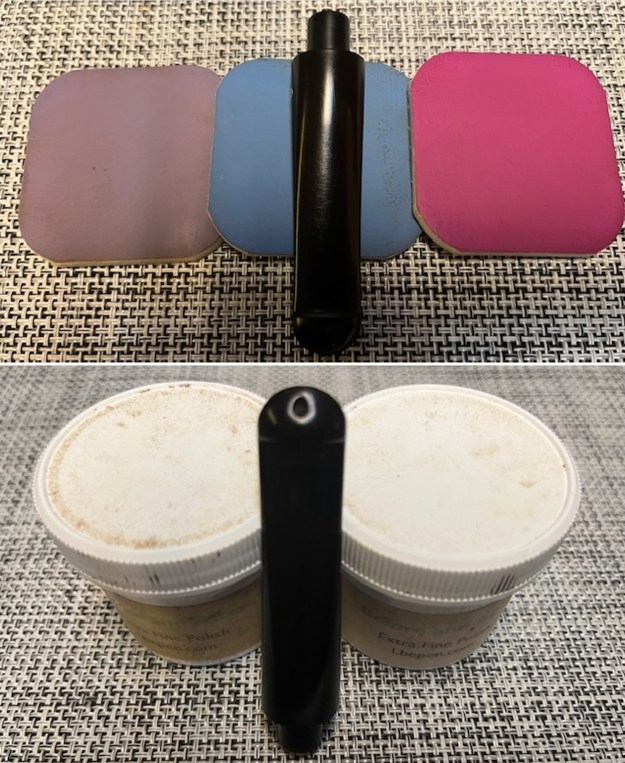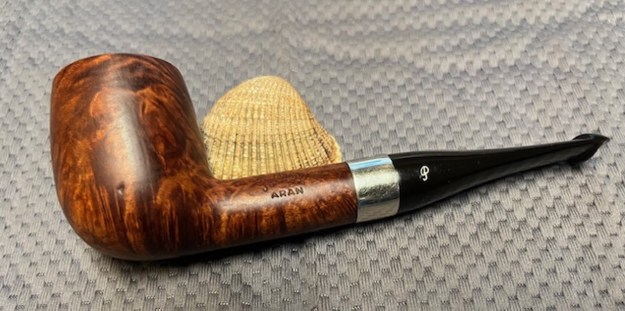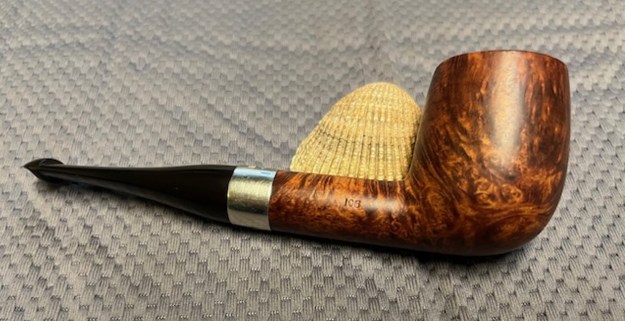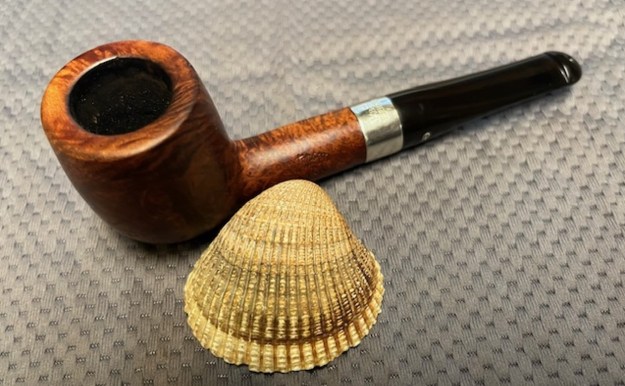
Tag Archives: buffing

Beautifying a Bountiful Bullmoose


Blog by Kenneth Lieblich

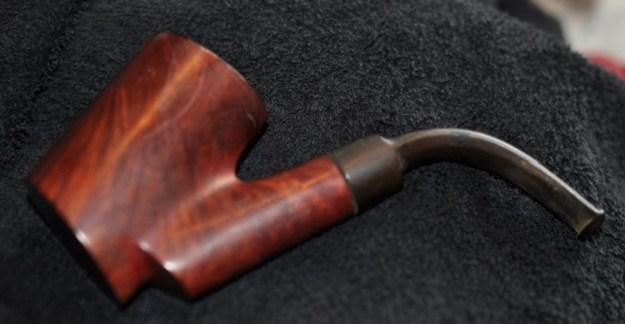
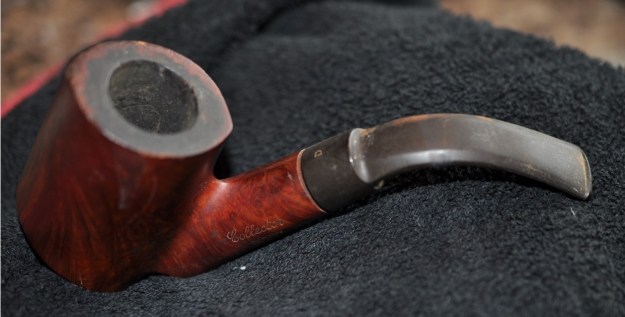
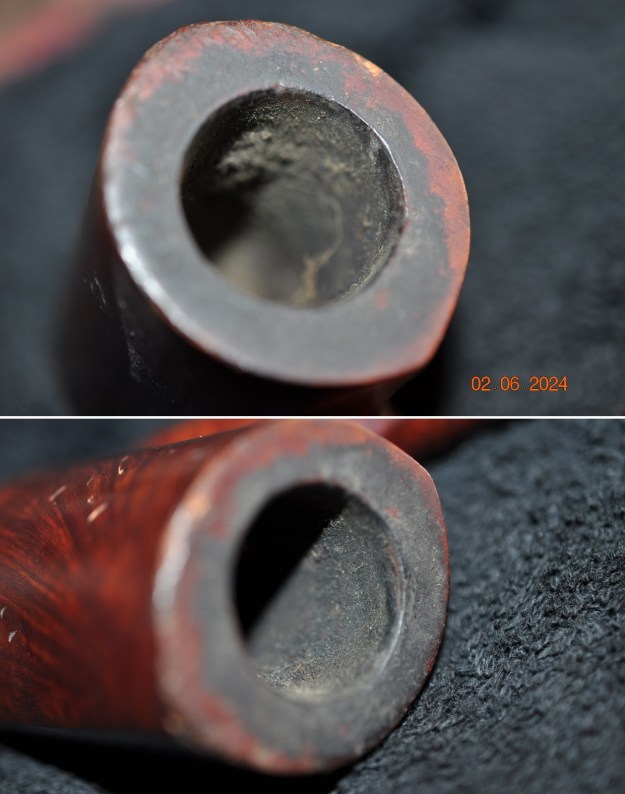
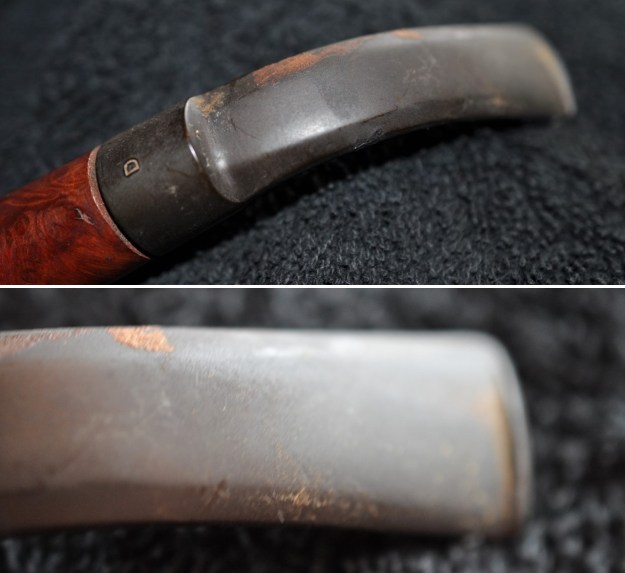
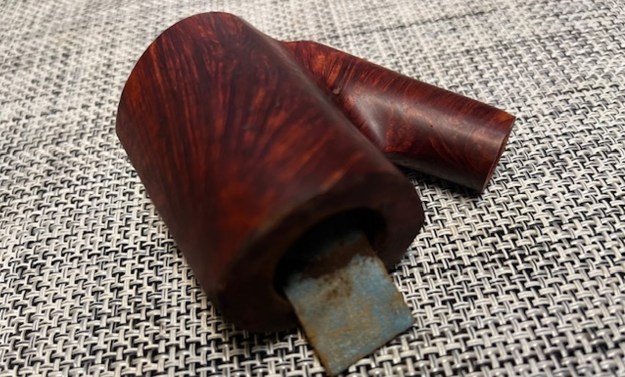
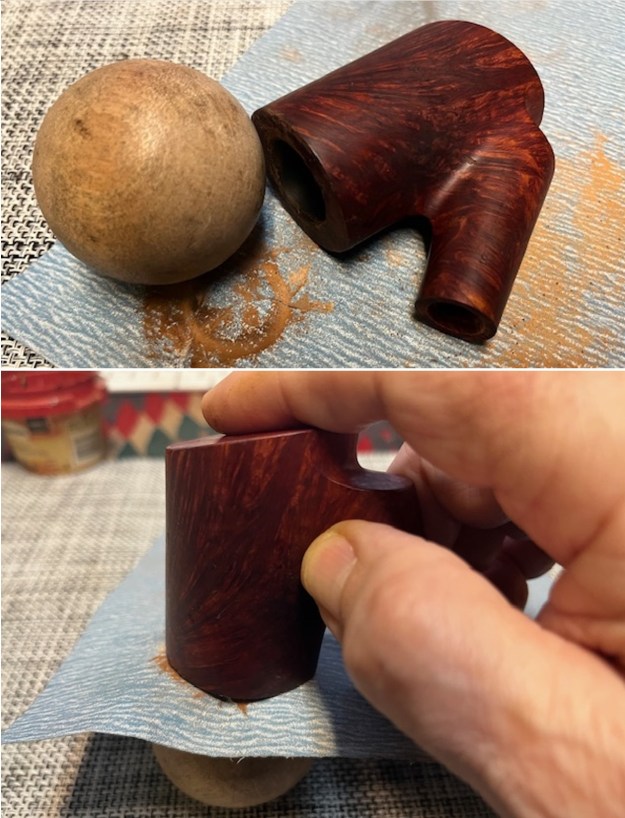
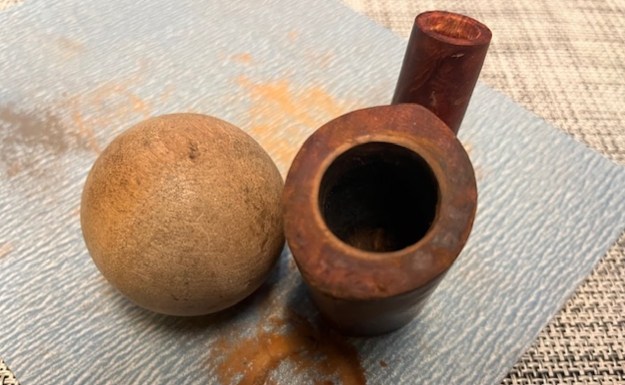
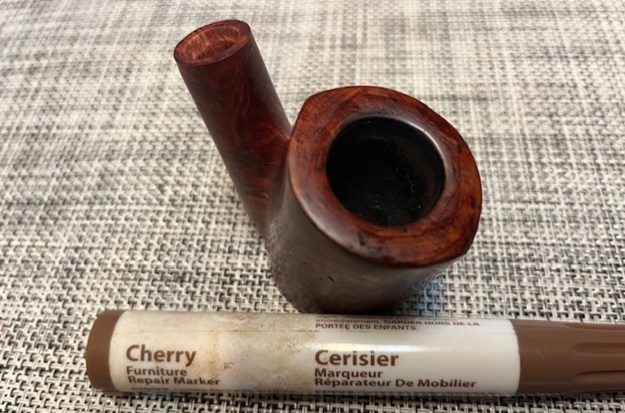
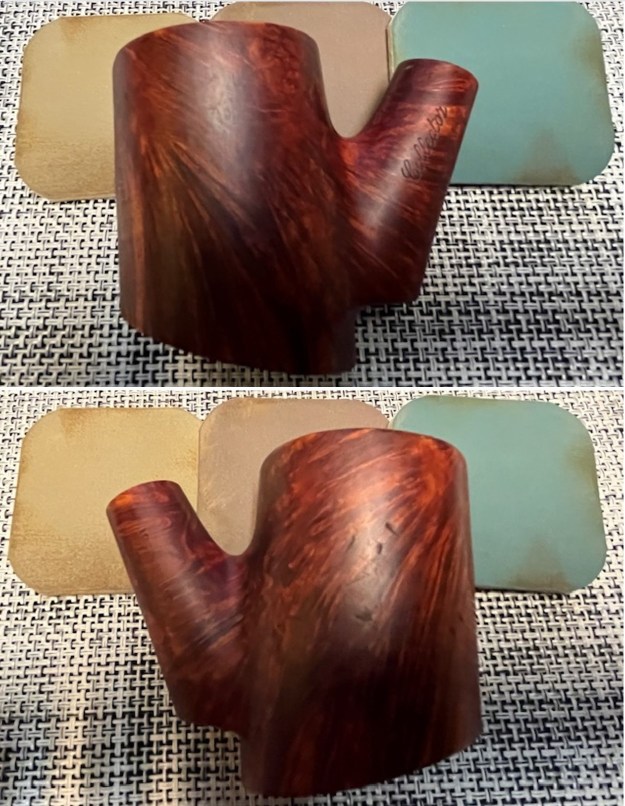
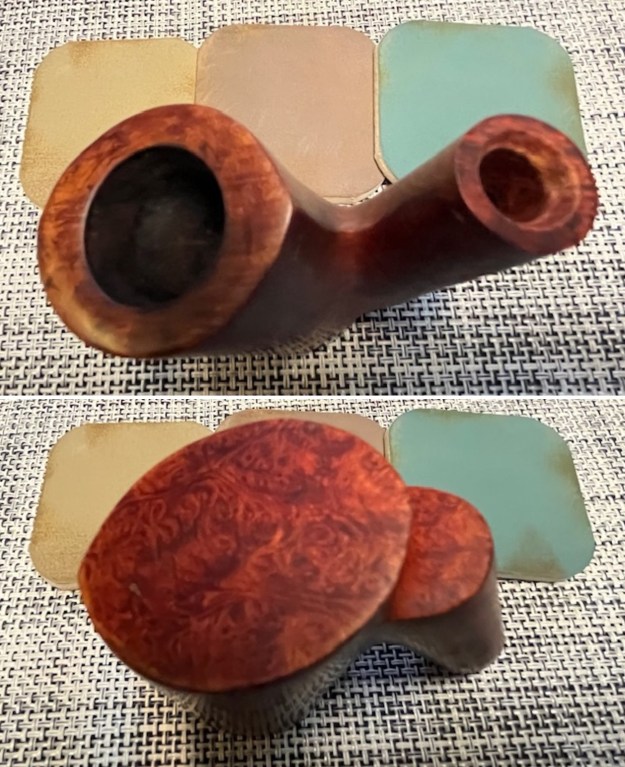
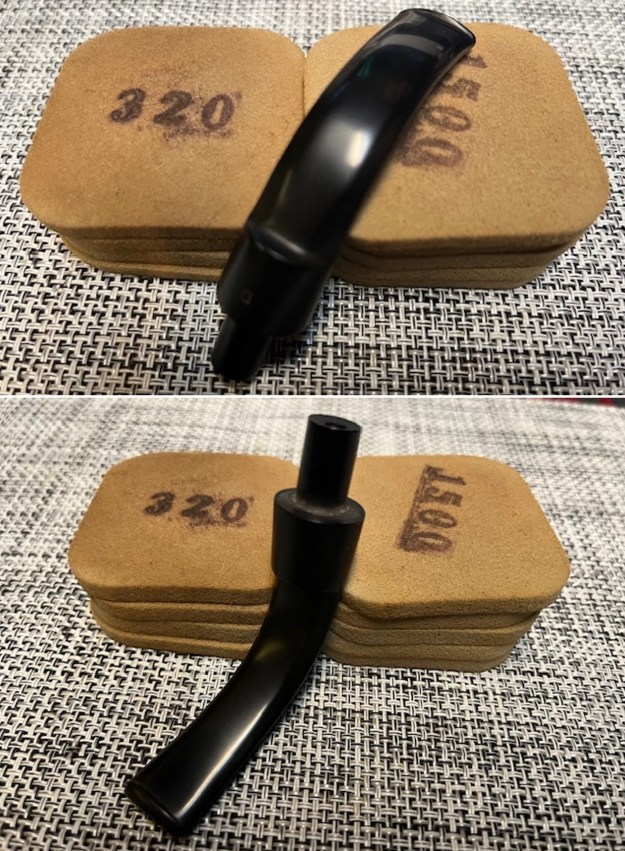
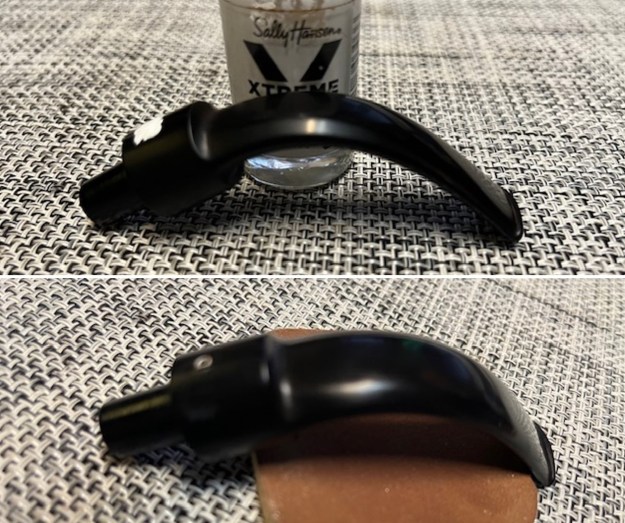
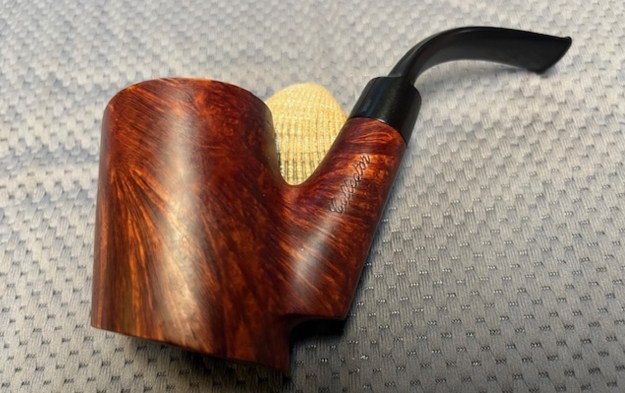
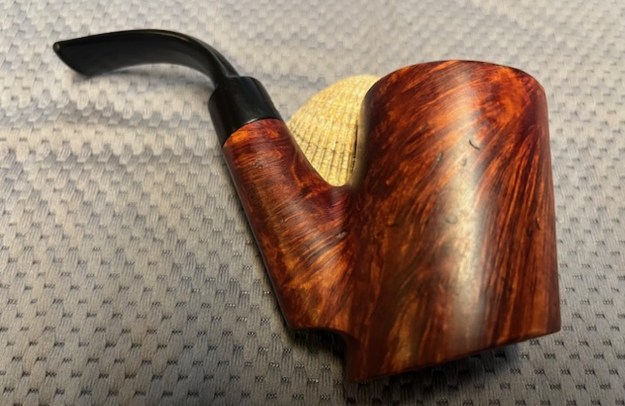
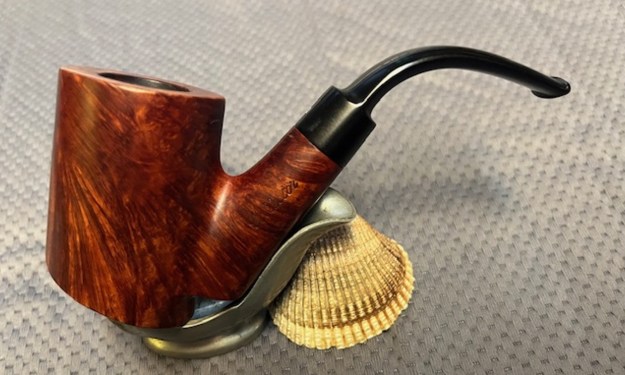
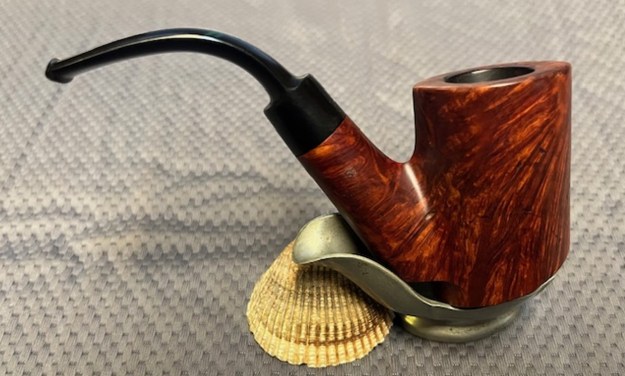
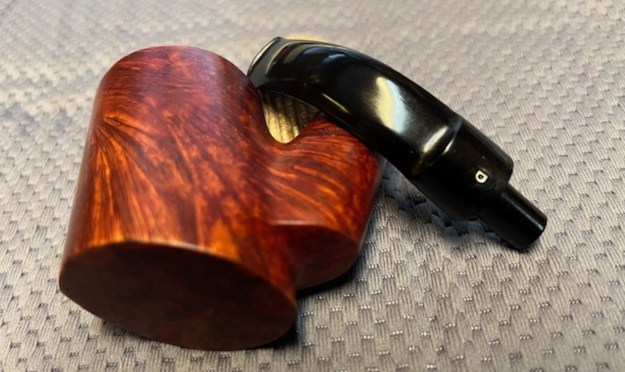
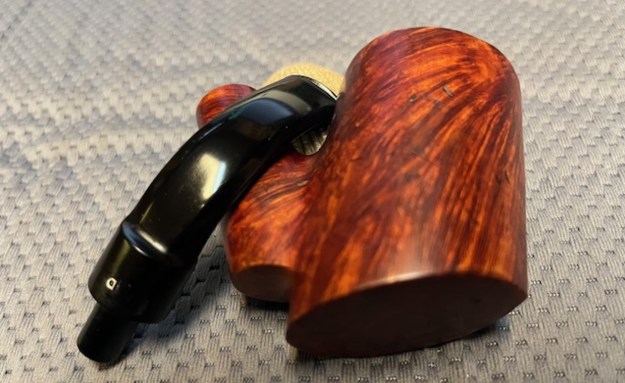
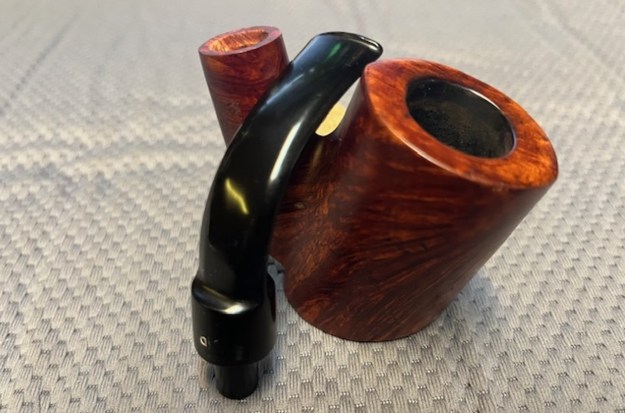
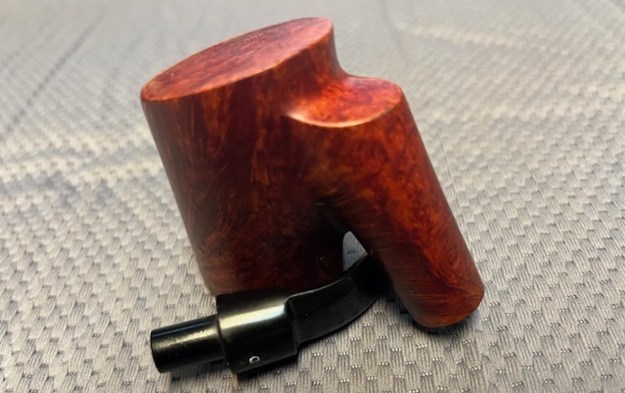
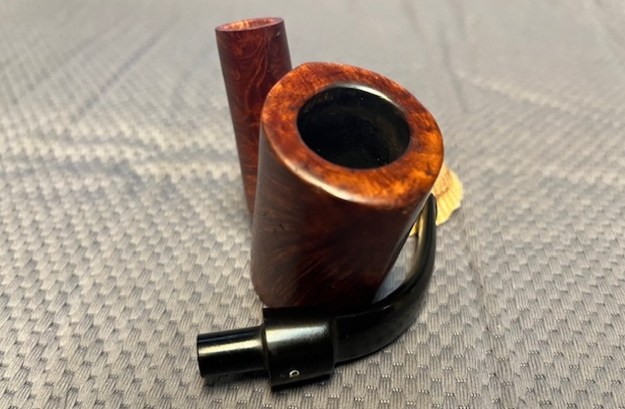
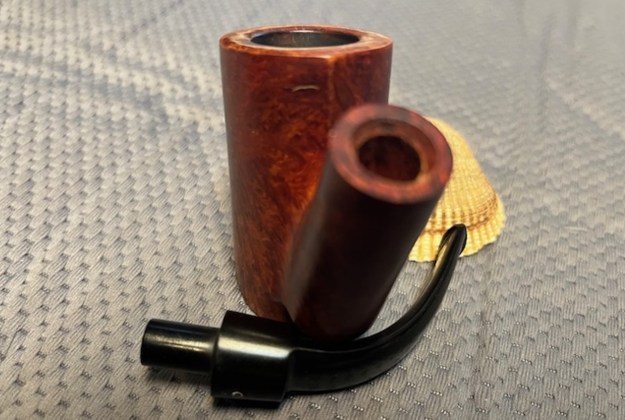
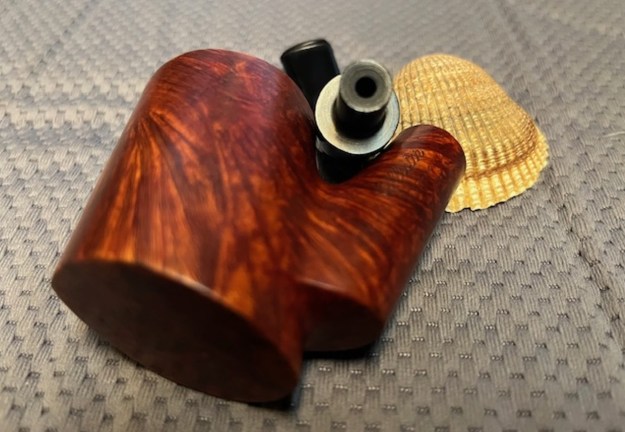
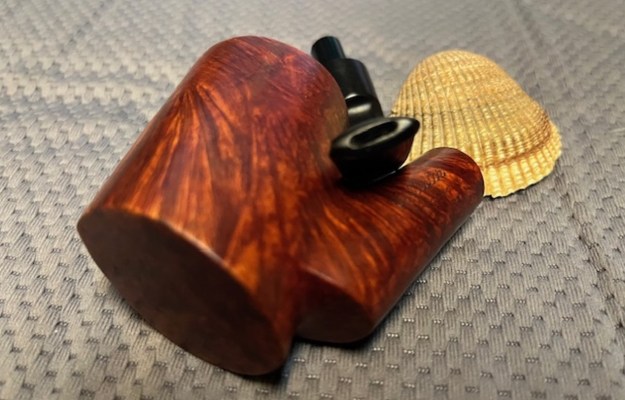
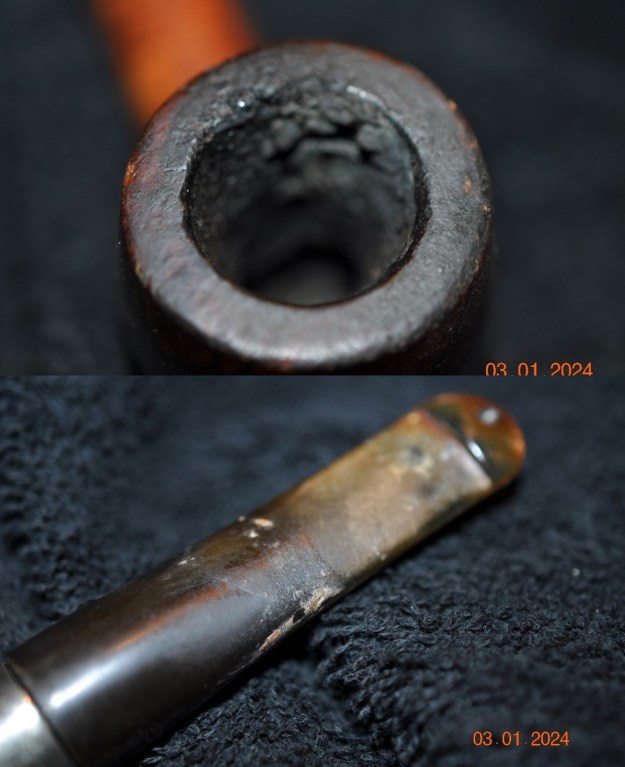
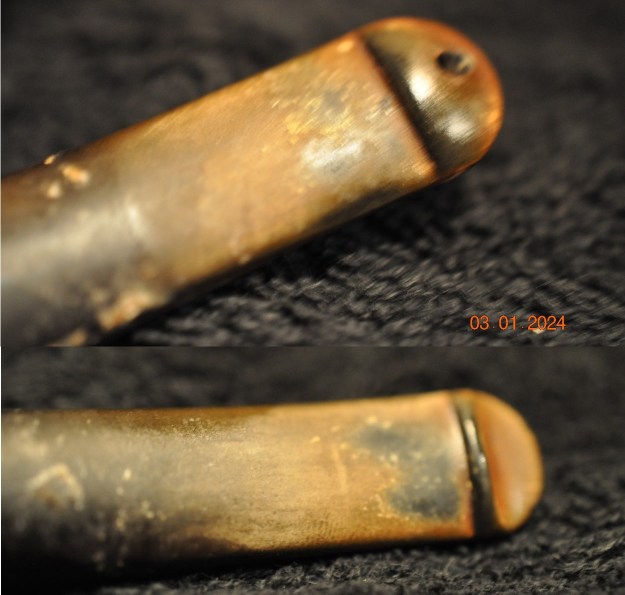
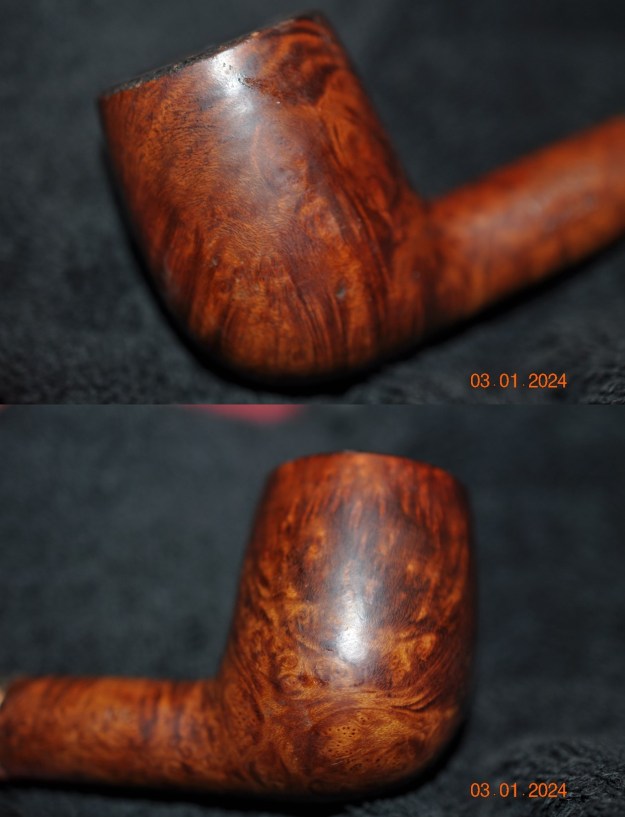
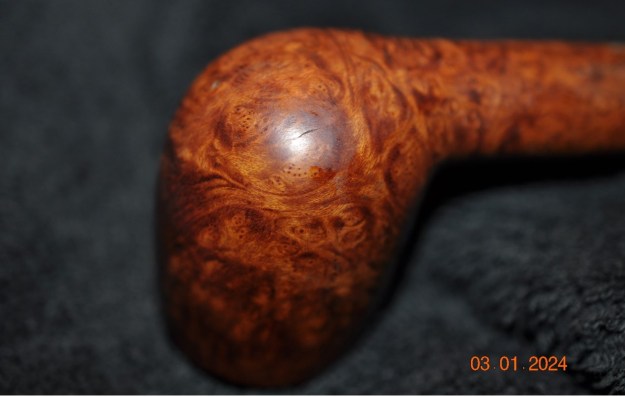
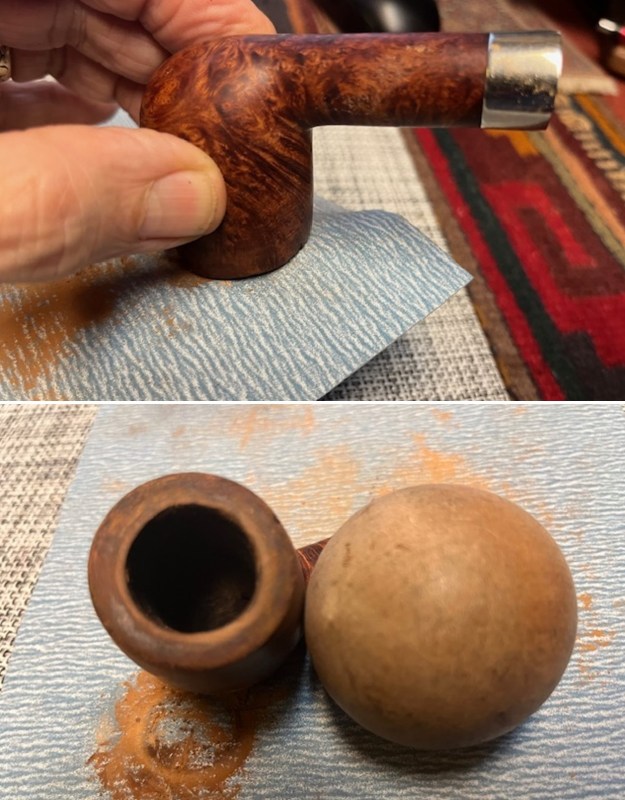
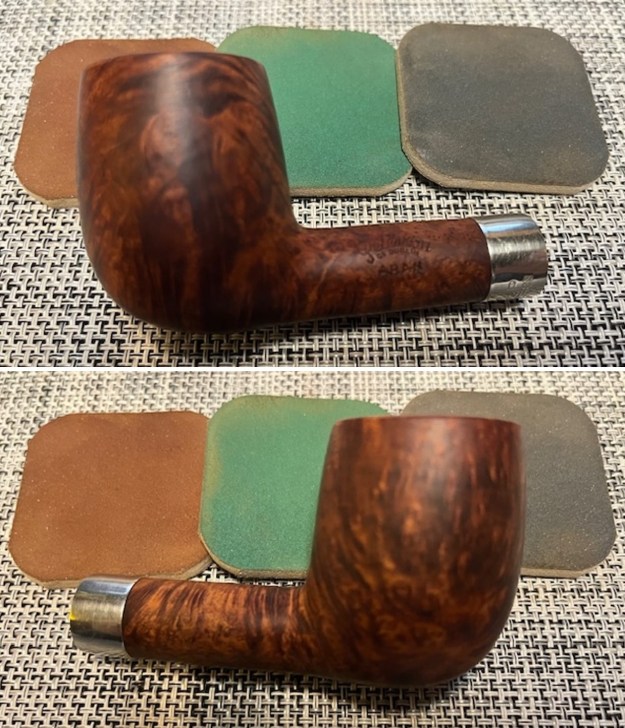
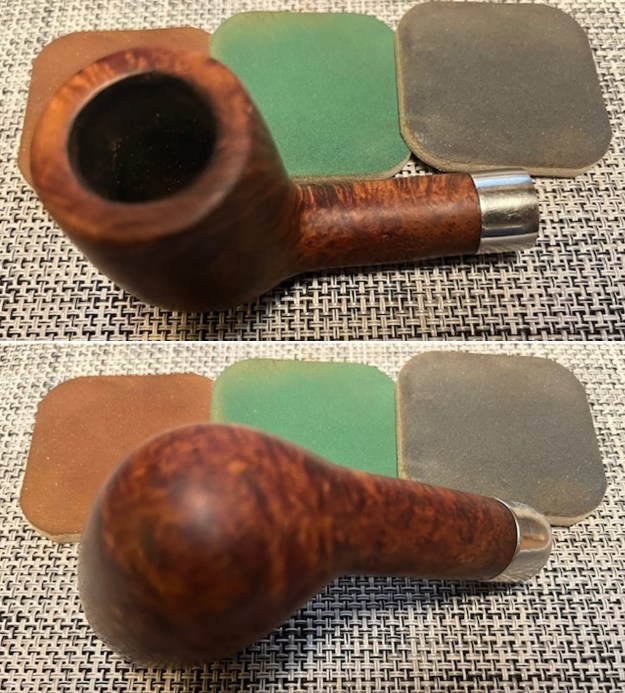
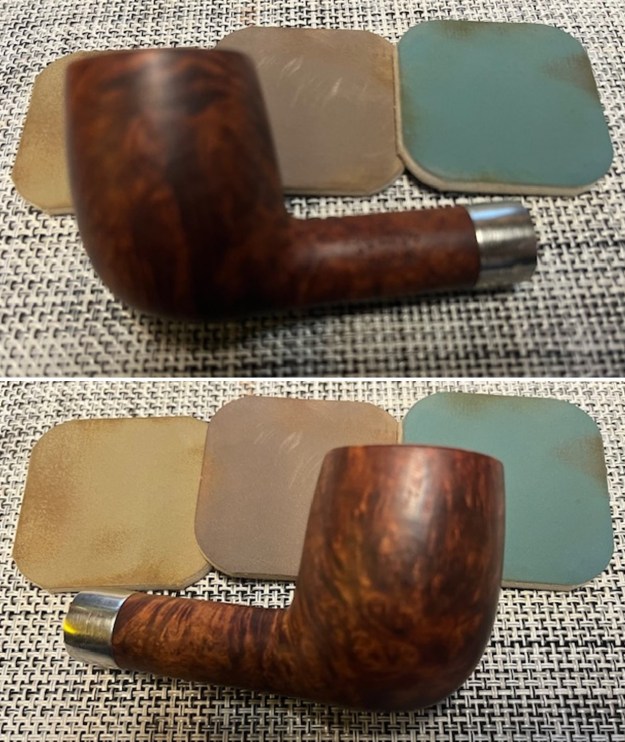
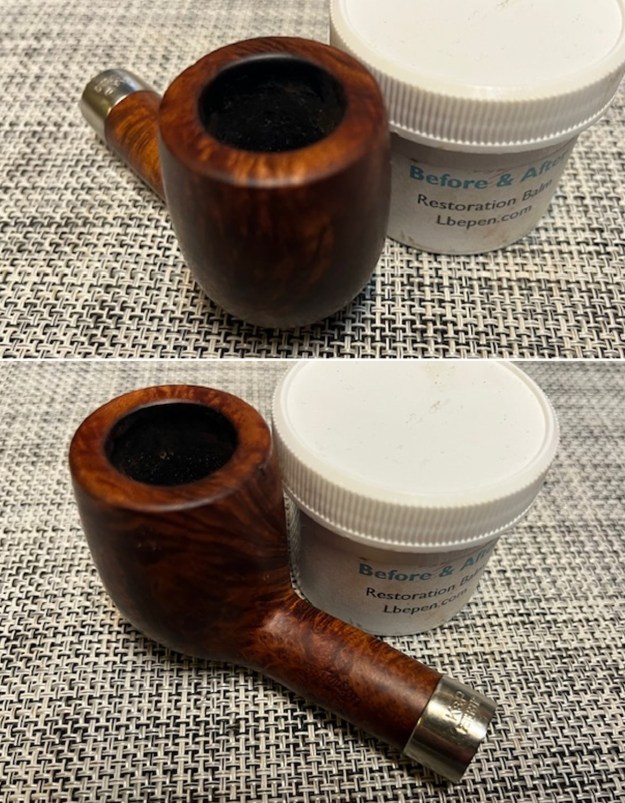
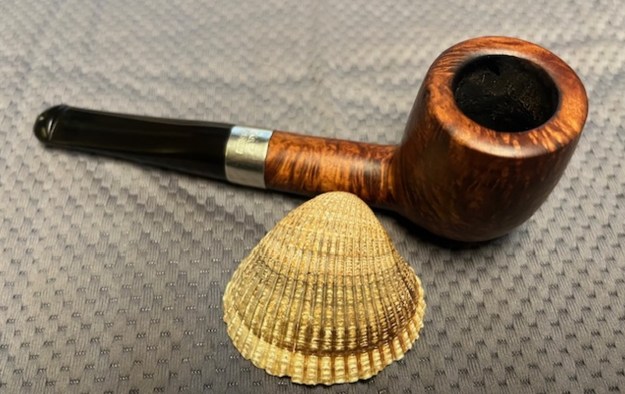
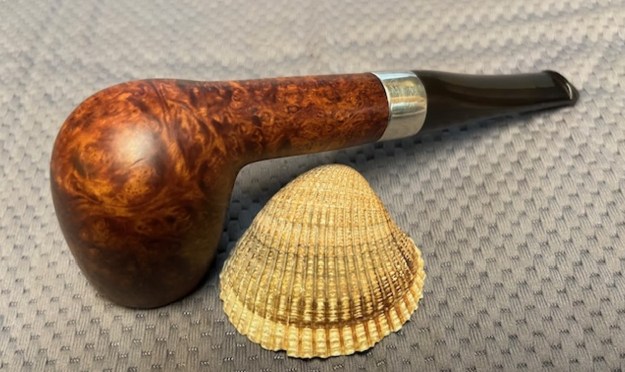
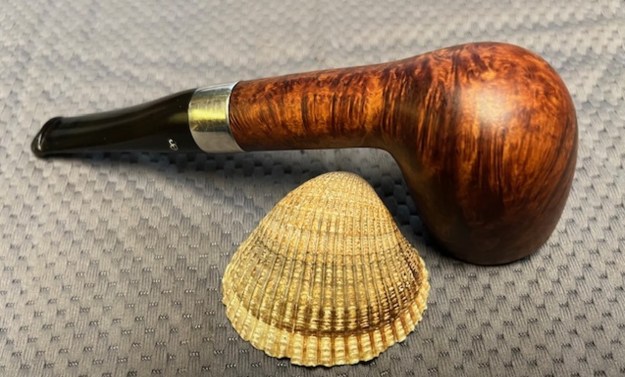
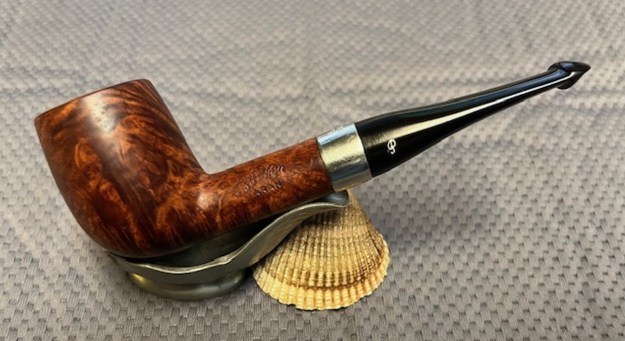
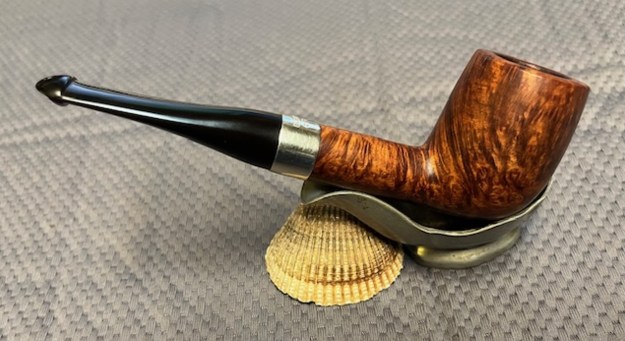
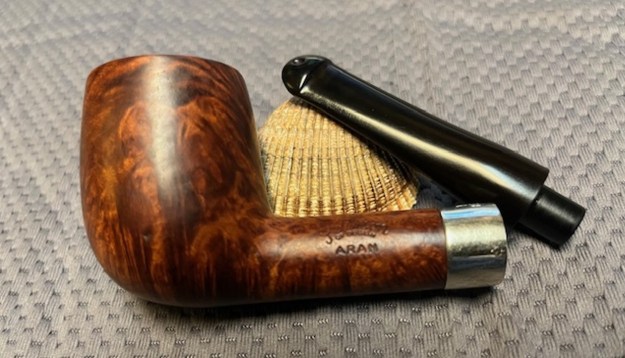
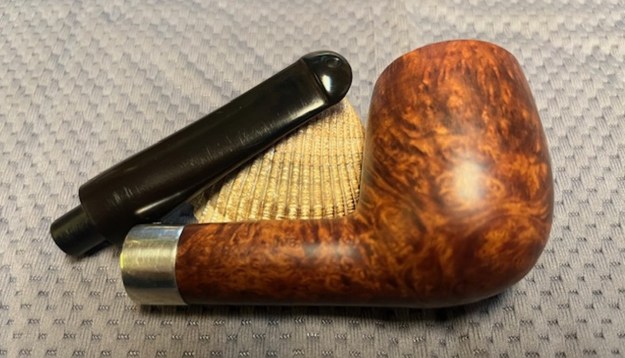
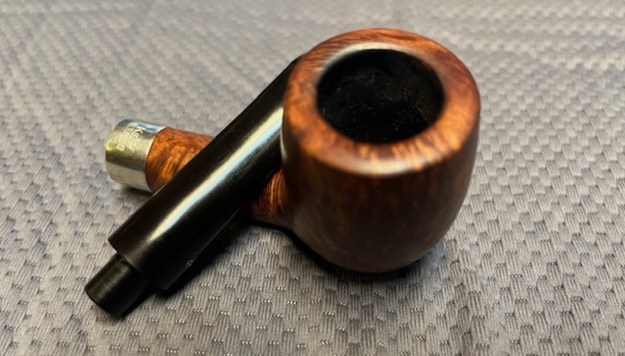
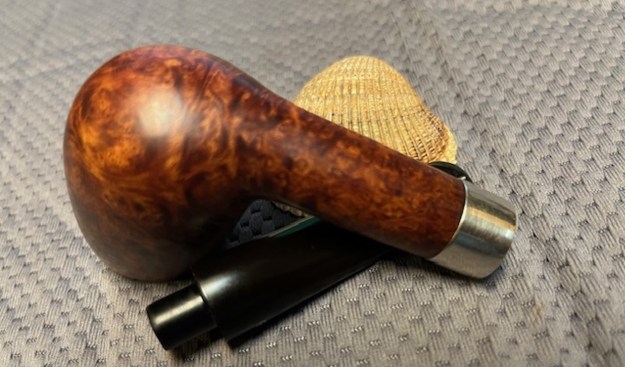
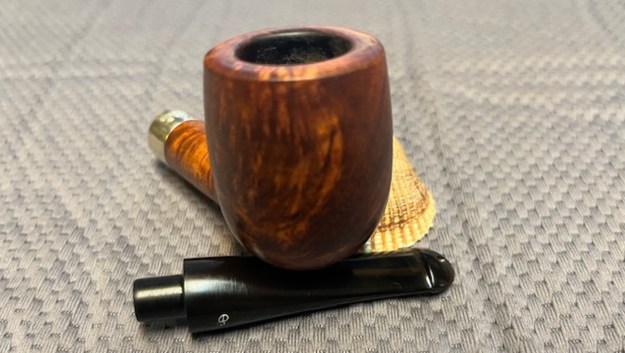
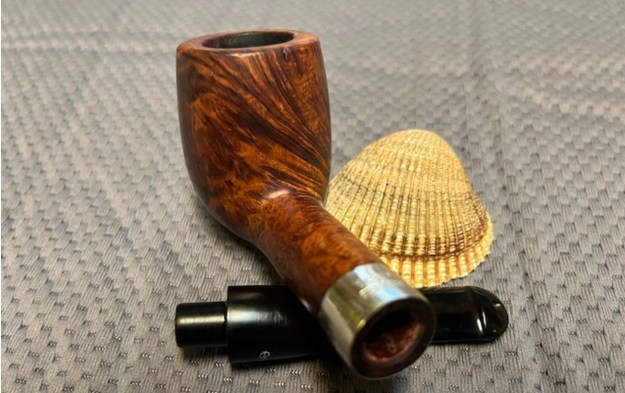
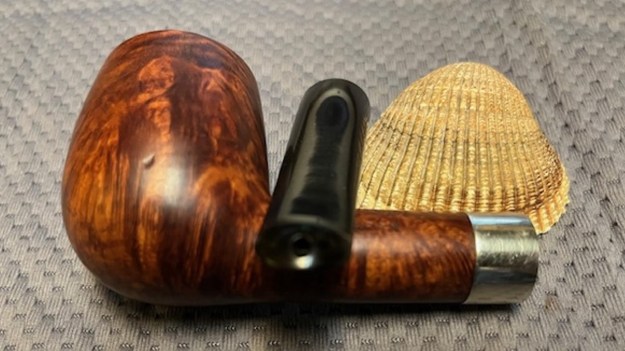
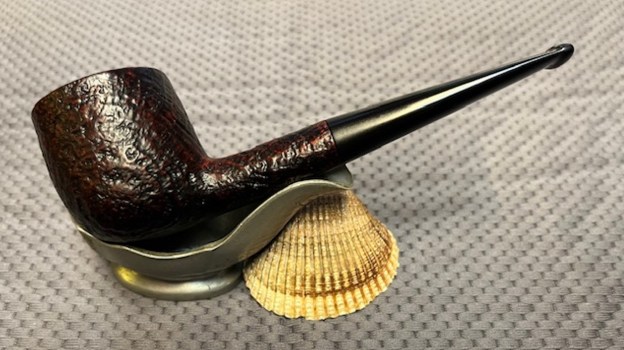
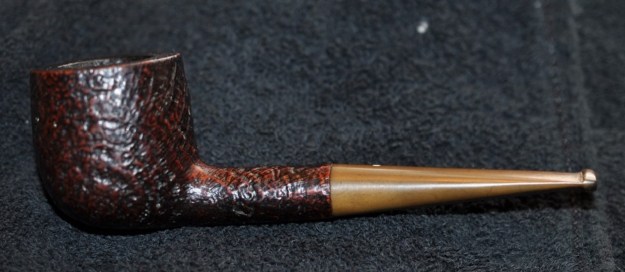
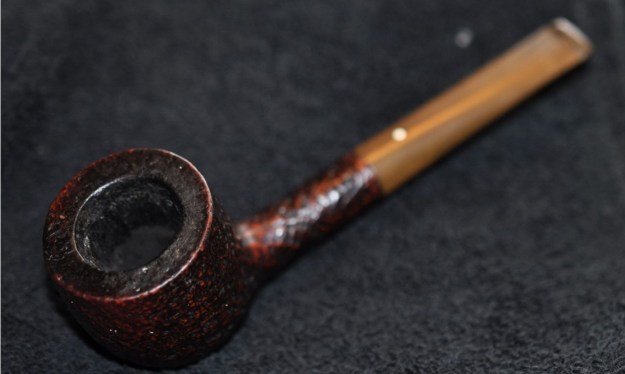
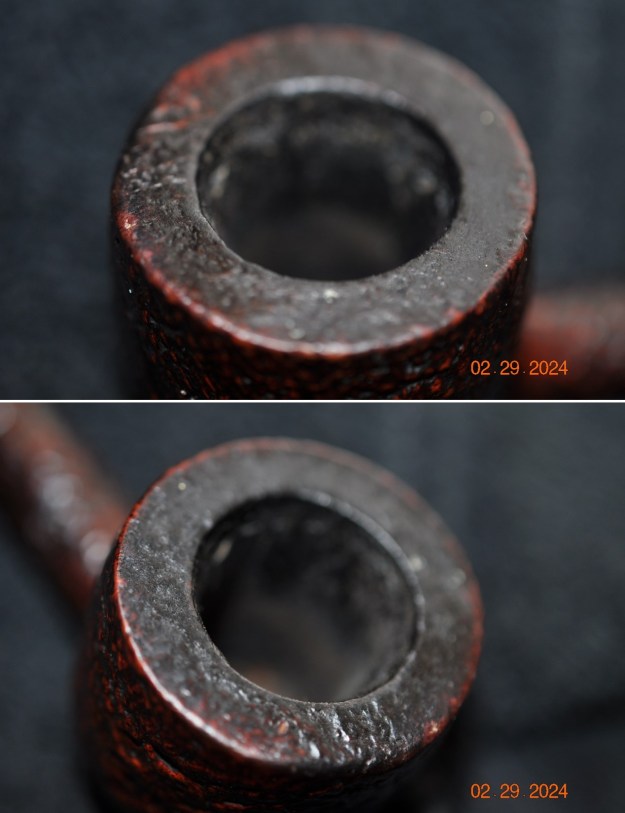
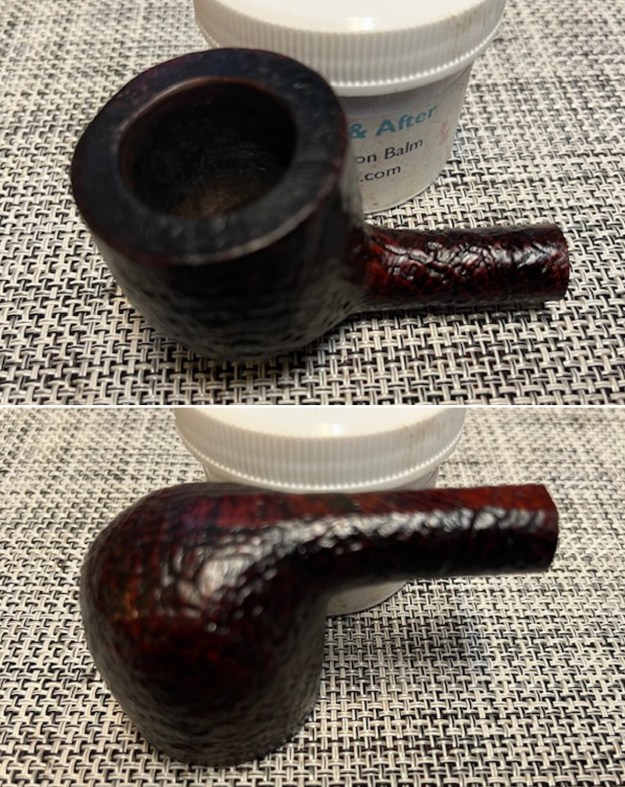
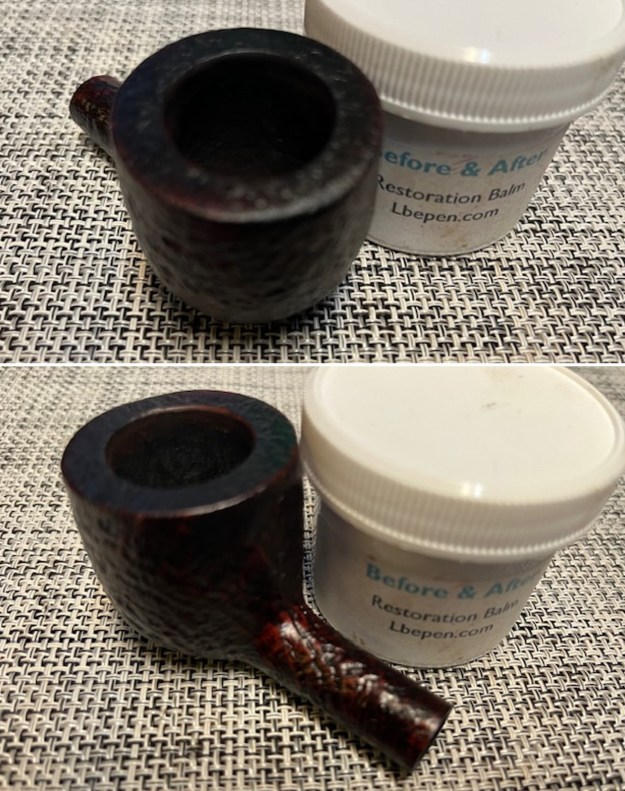
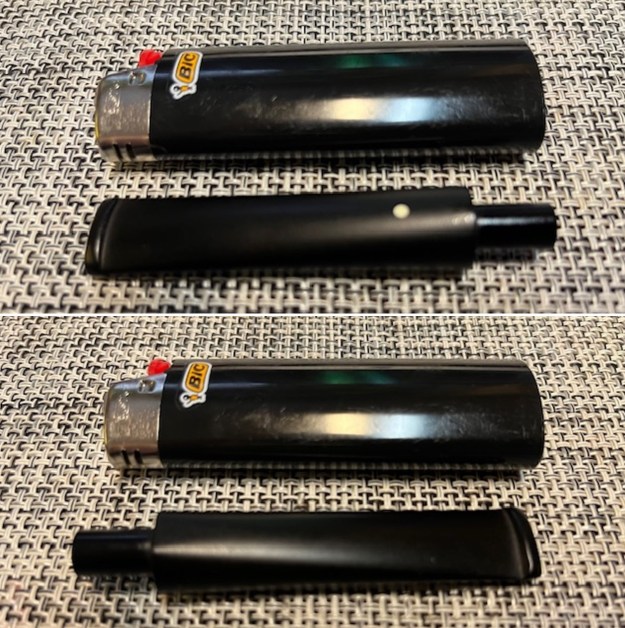
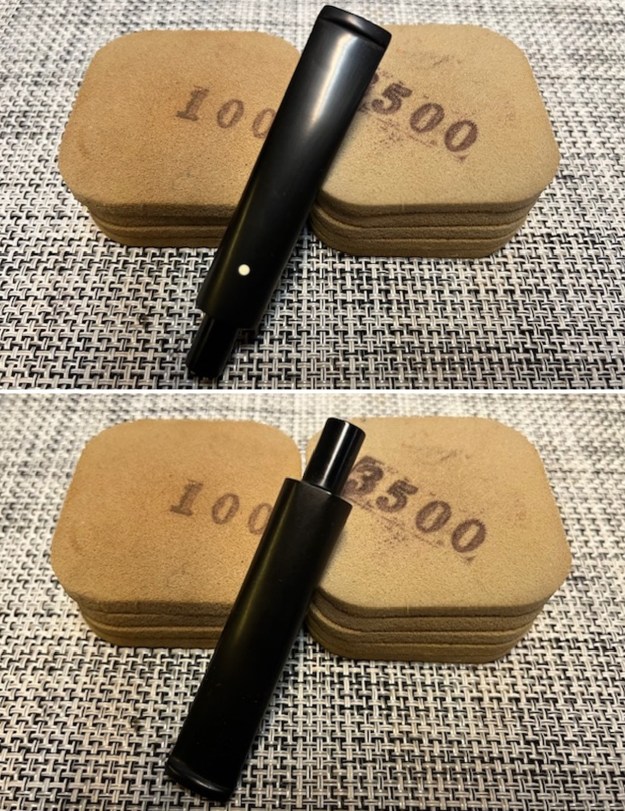
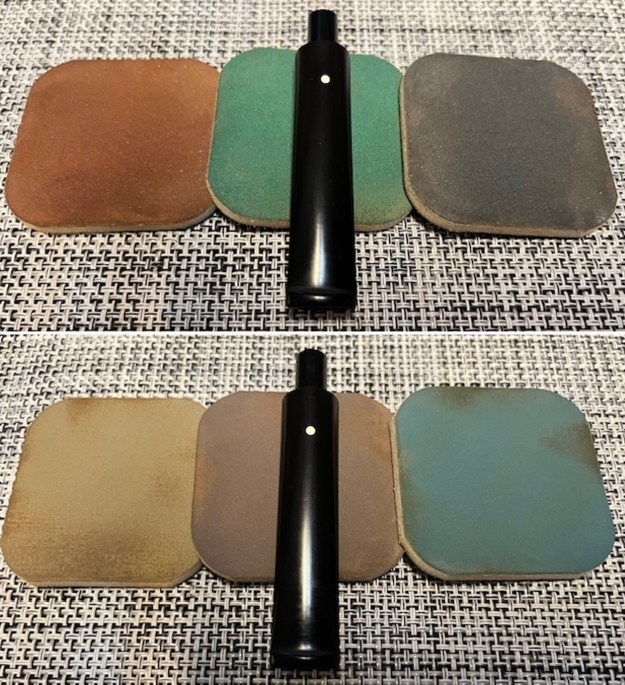
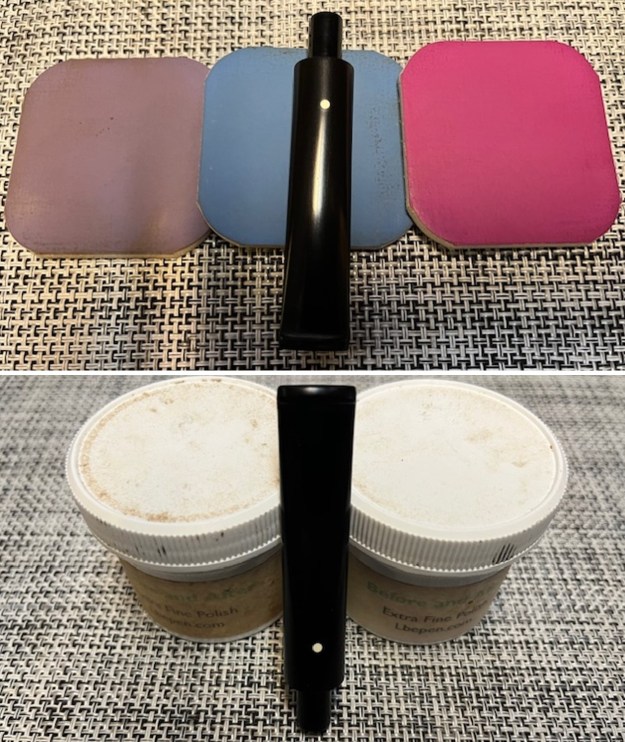
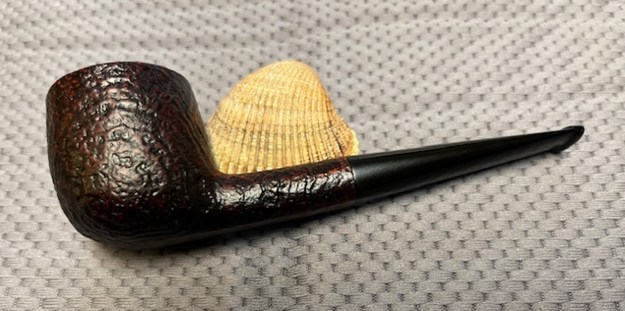
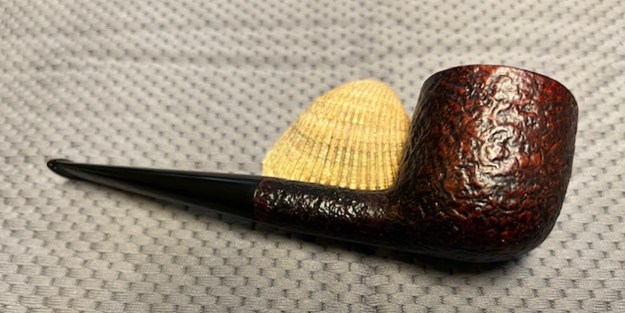
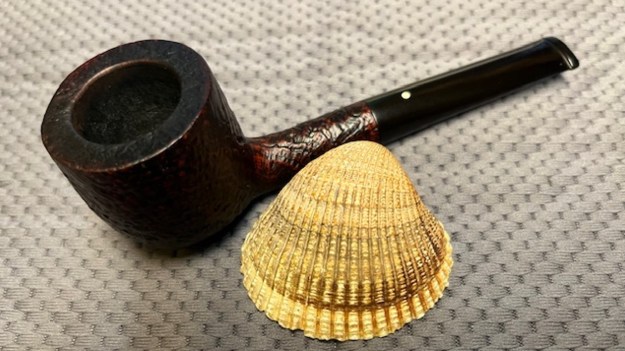
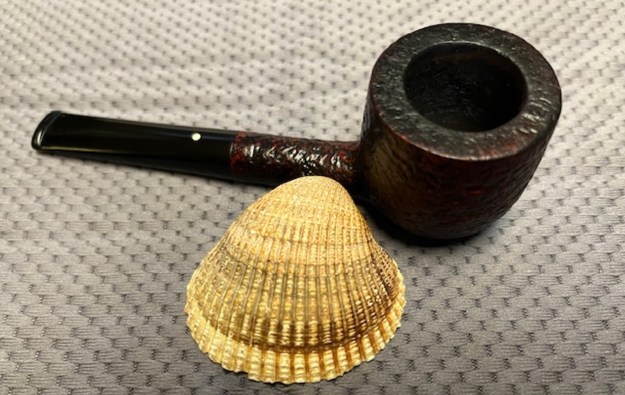
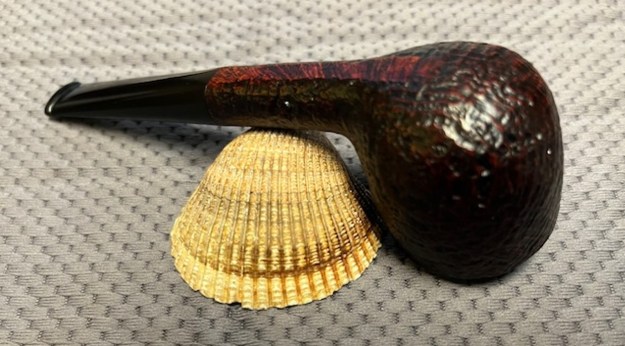
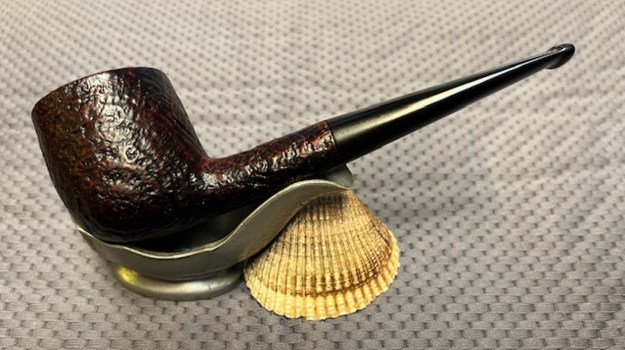
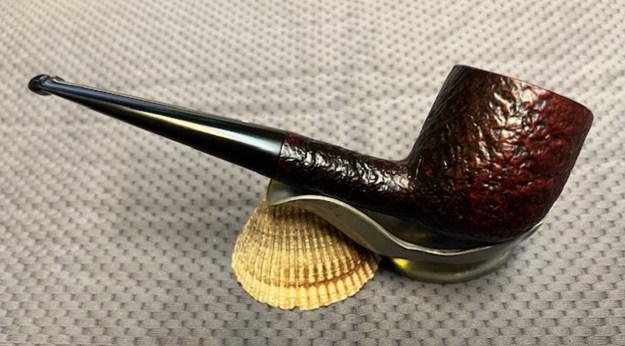
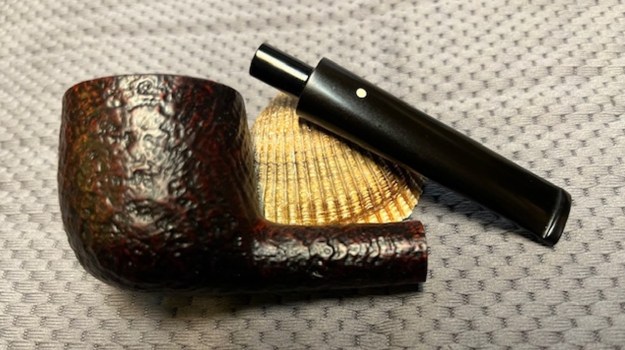
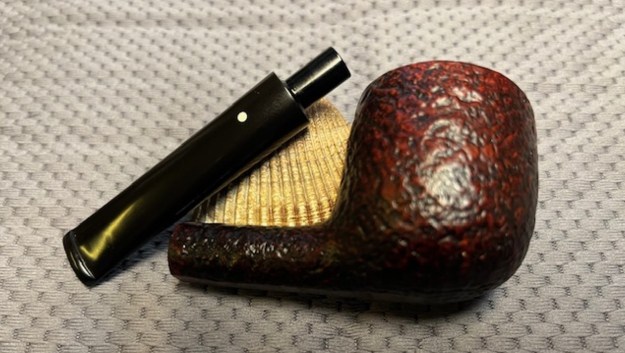
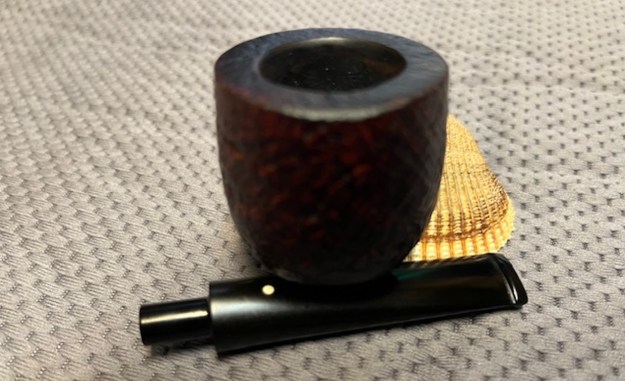
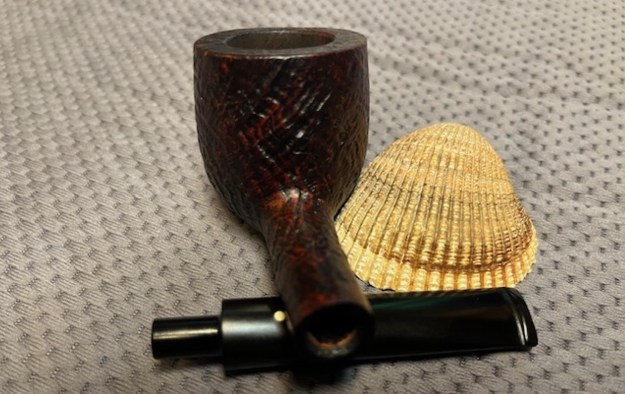
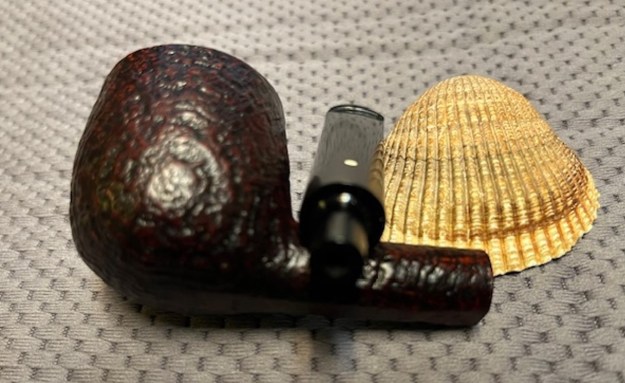
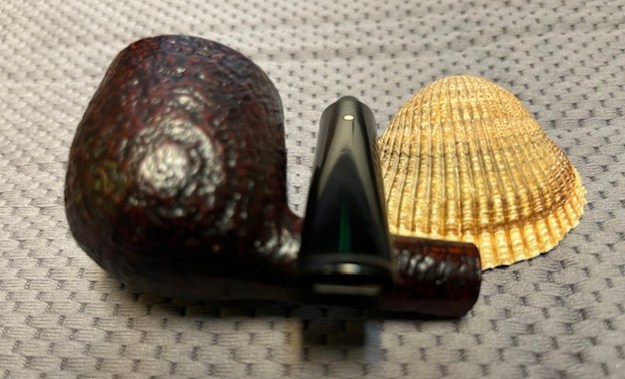
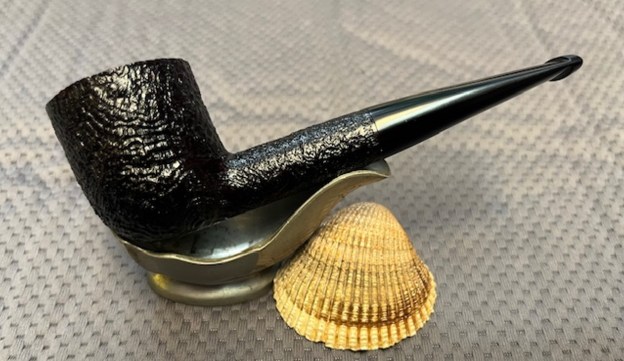
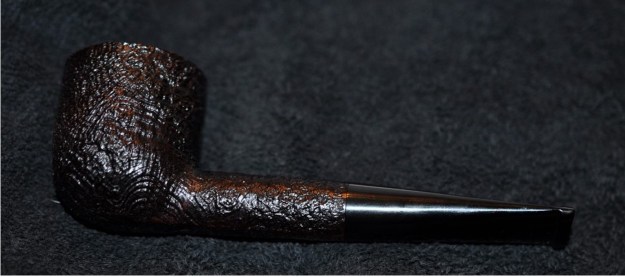
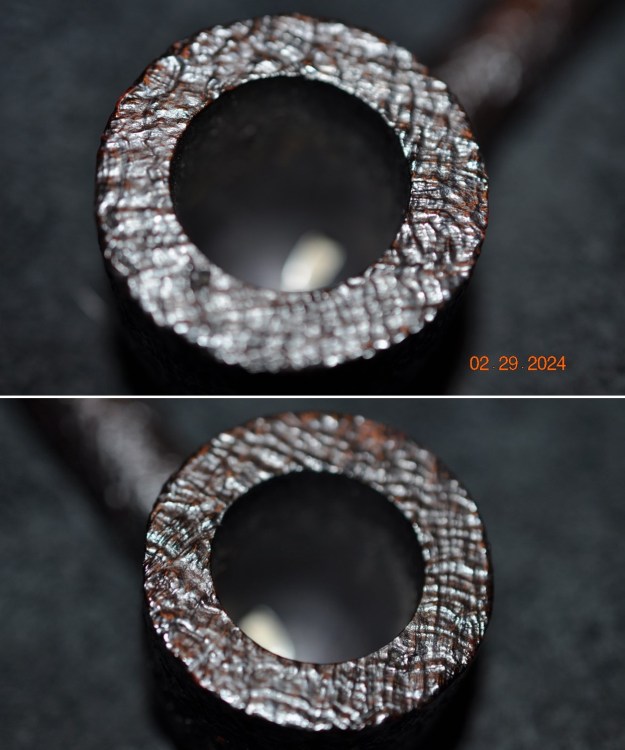
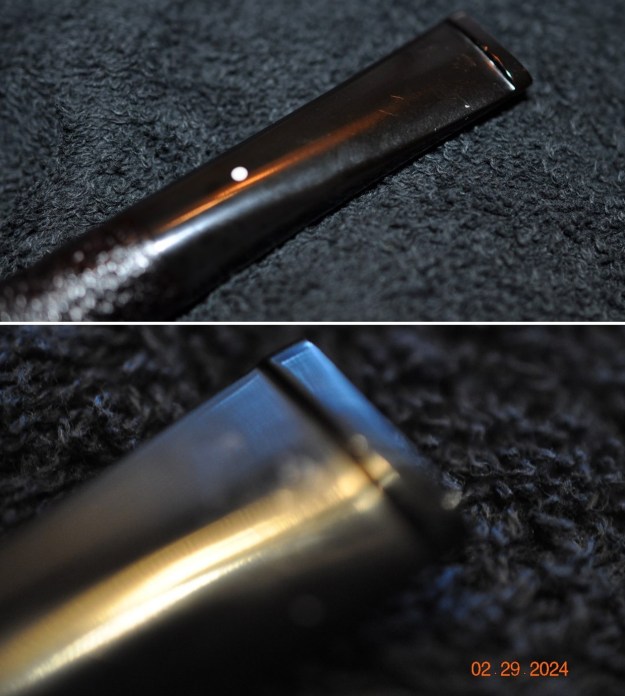
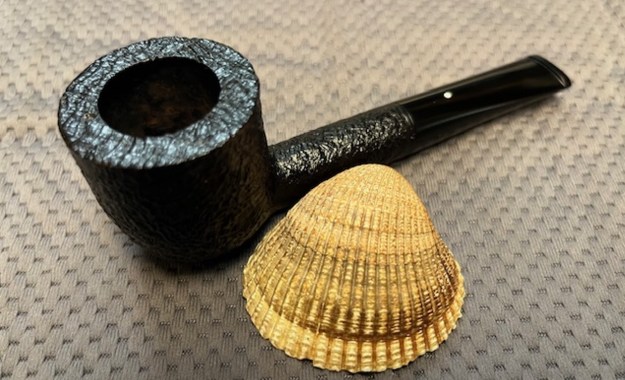
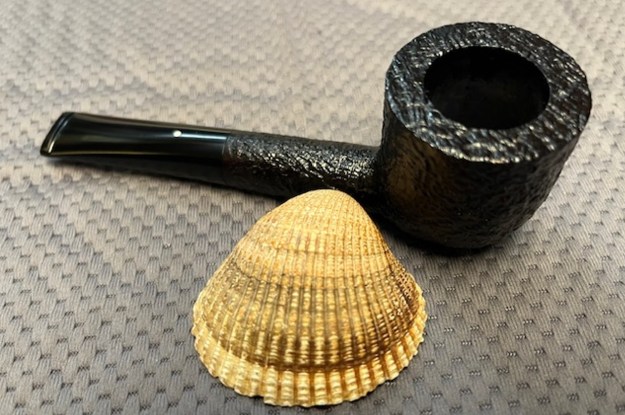
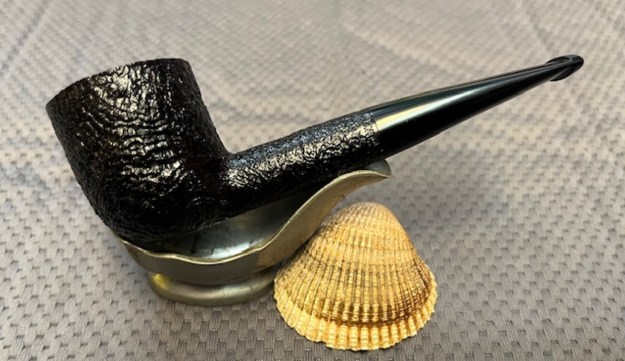
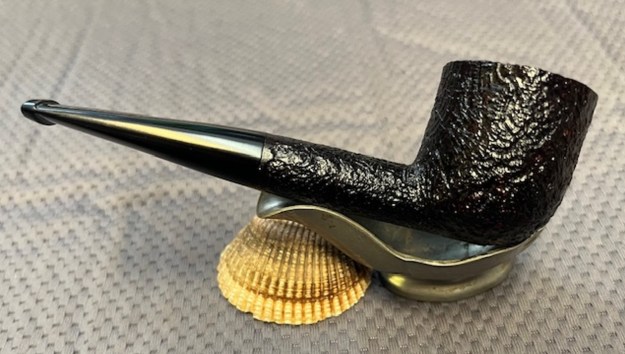
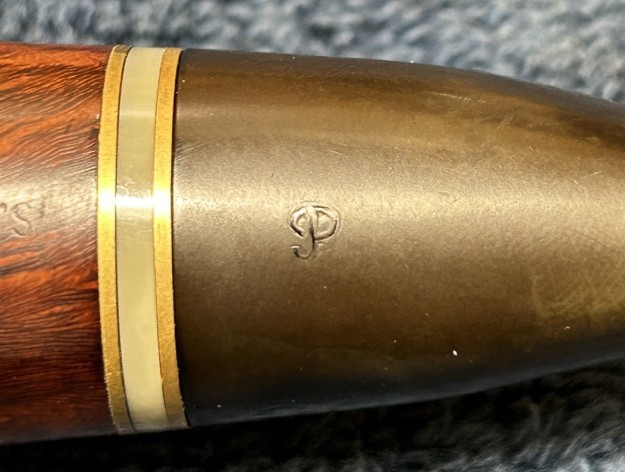
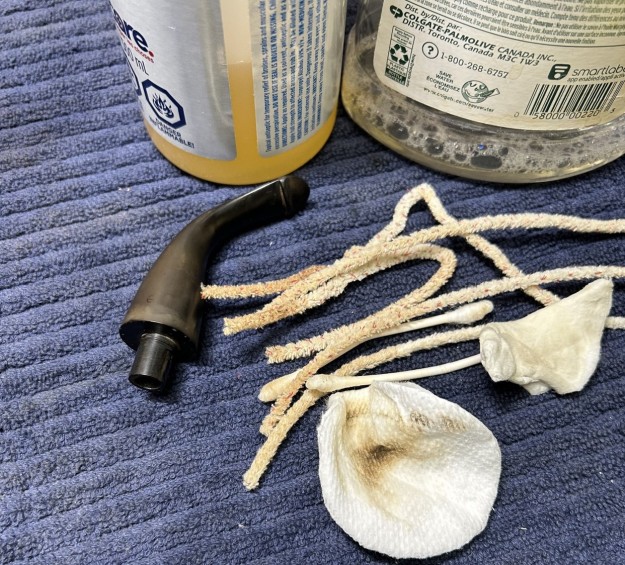
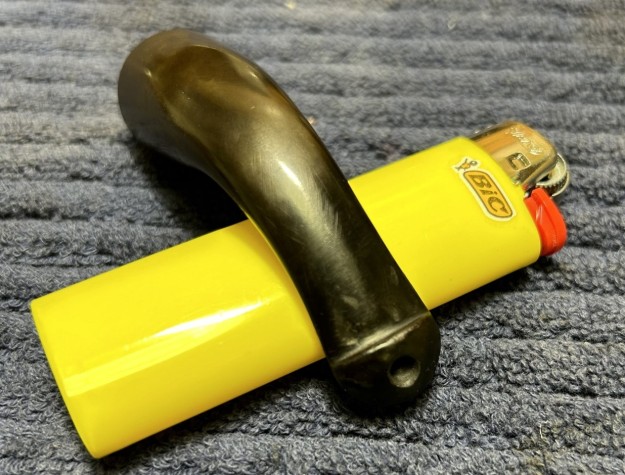
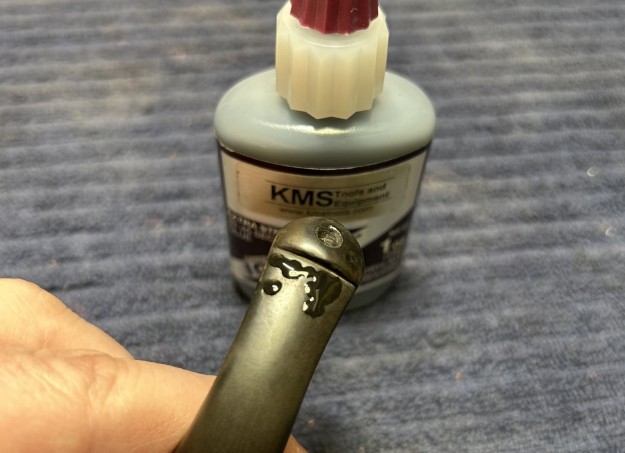
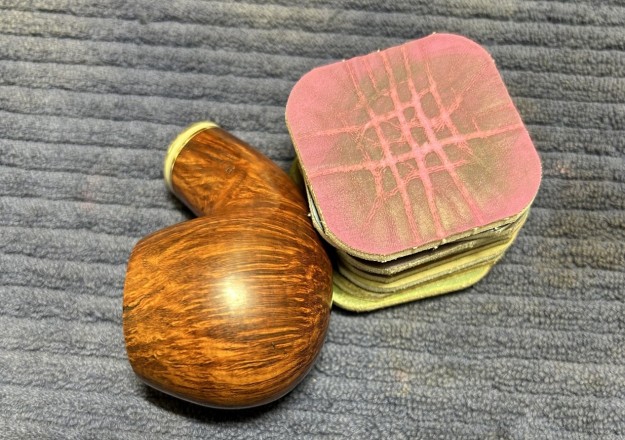
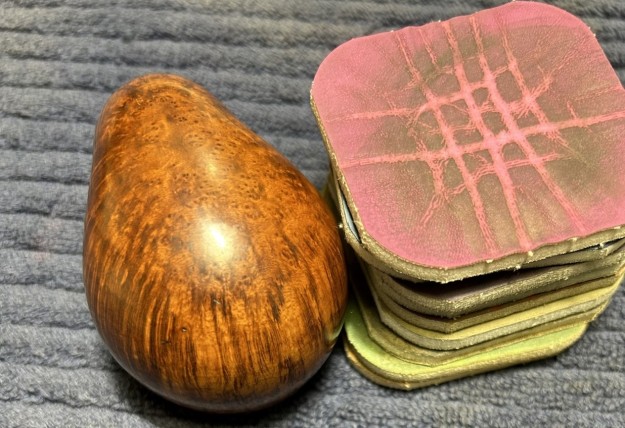
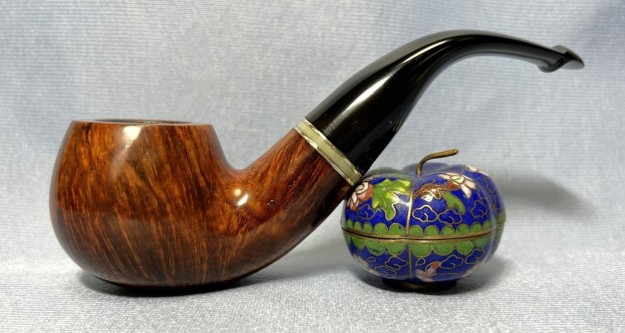
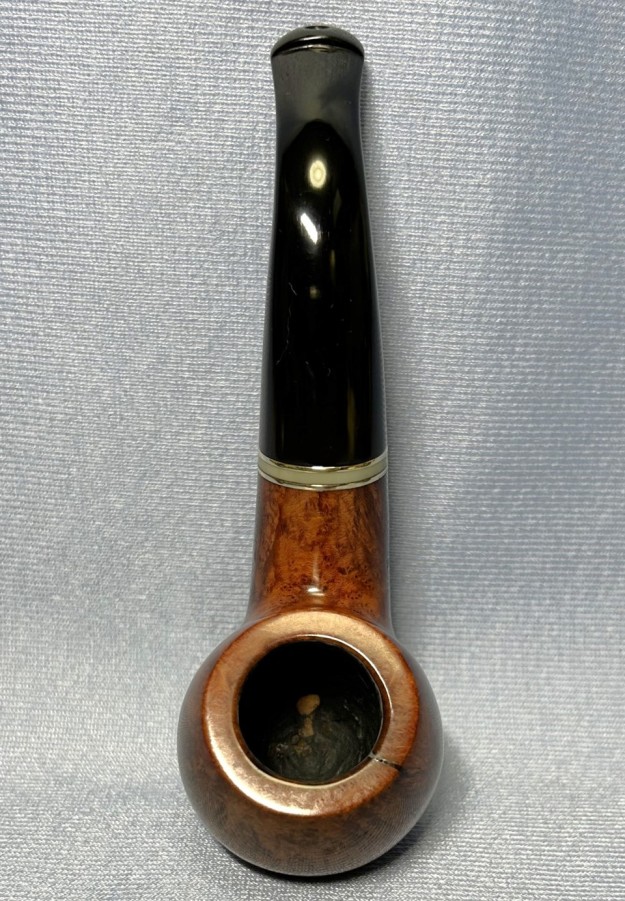
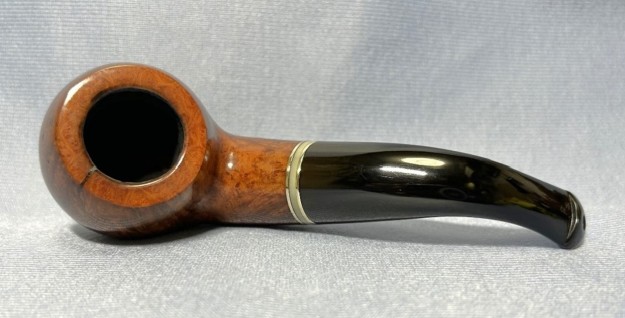
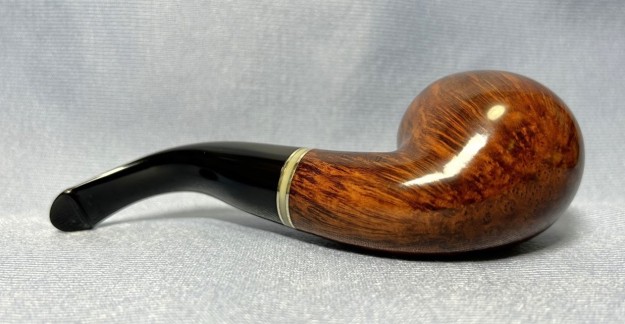
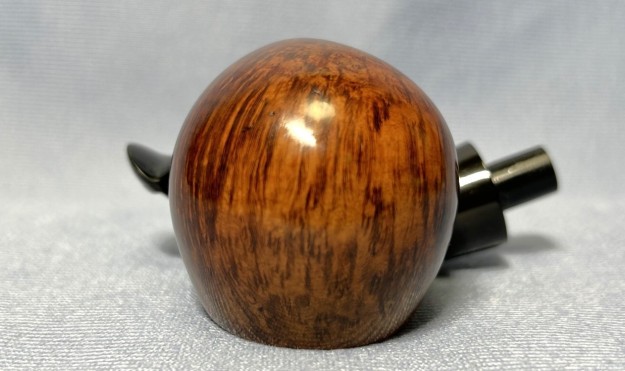
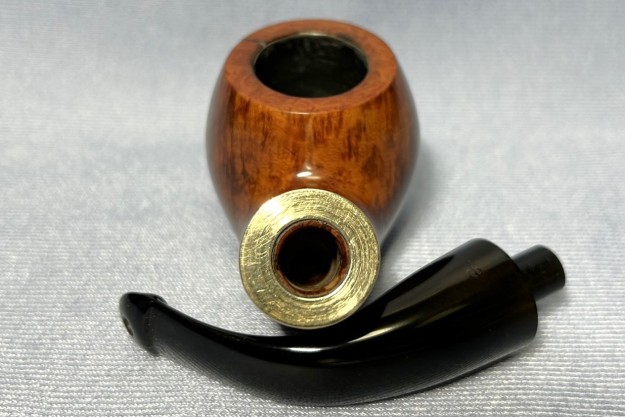
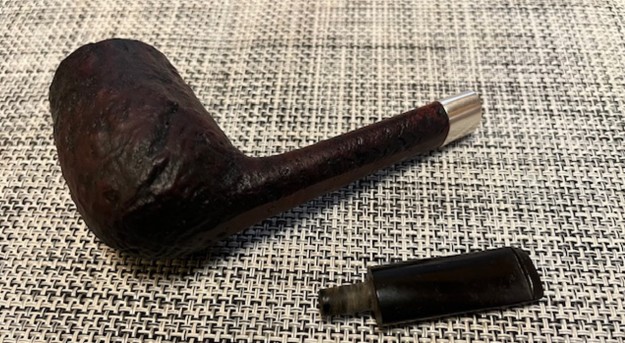
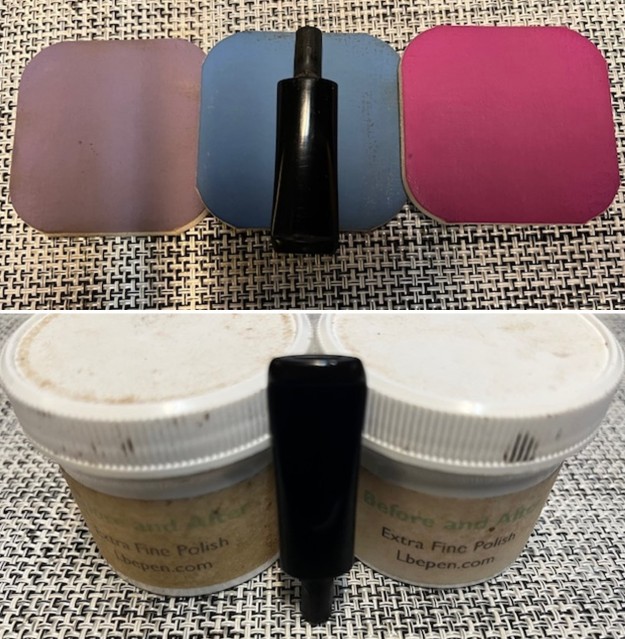
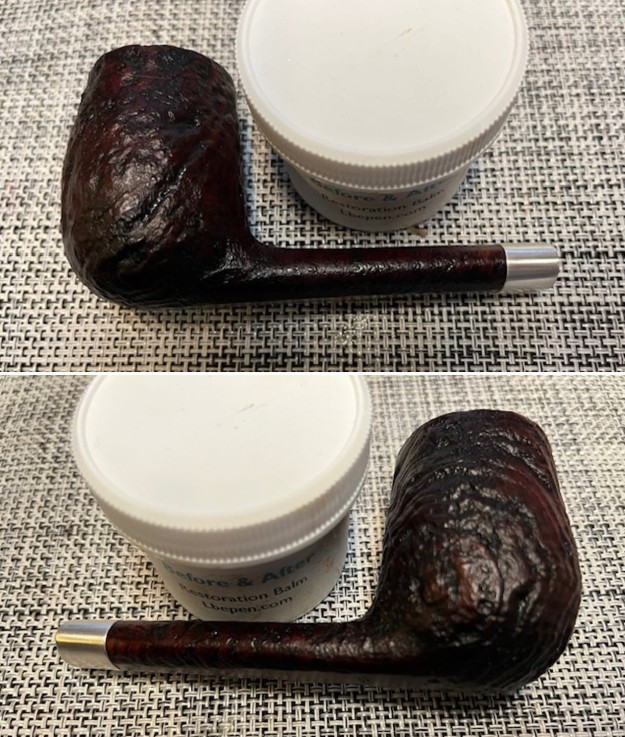
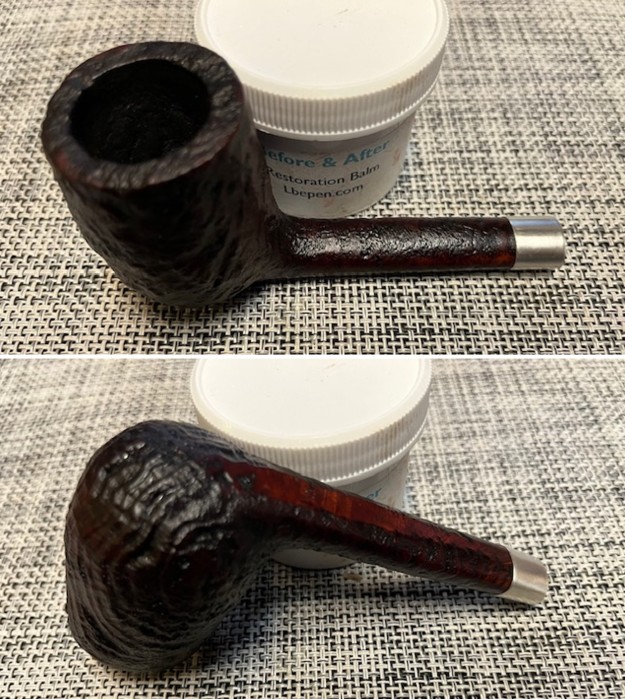
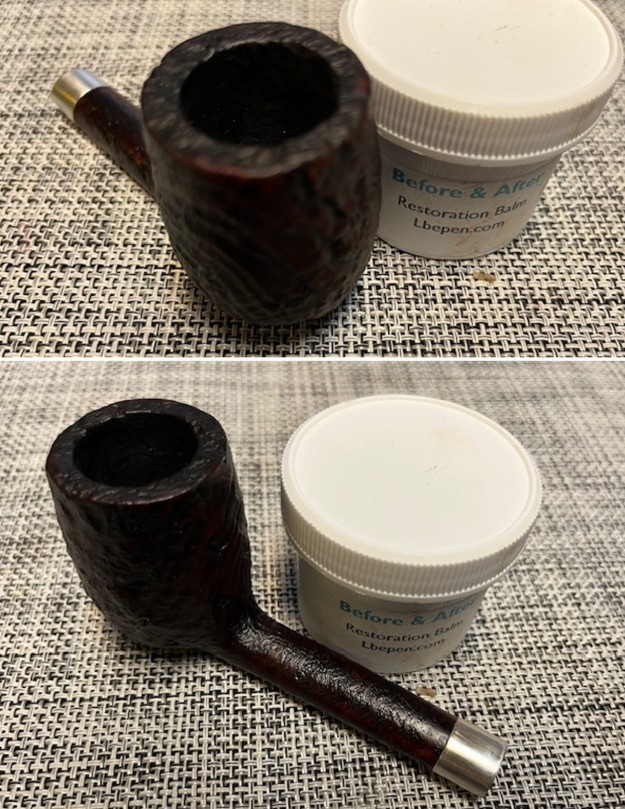
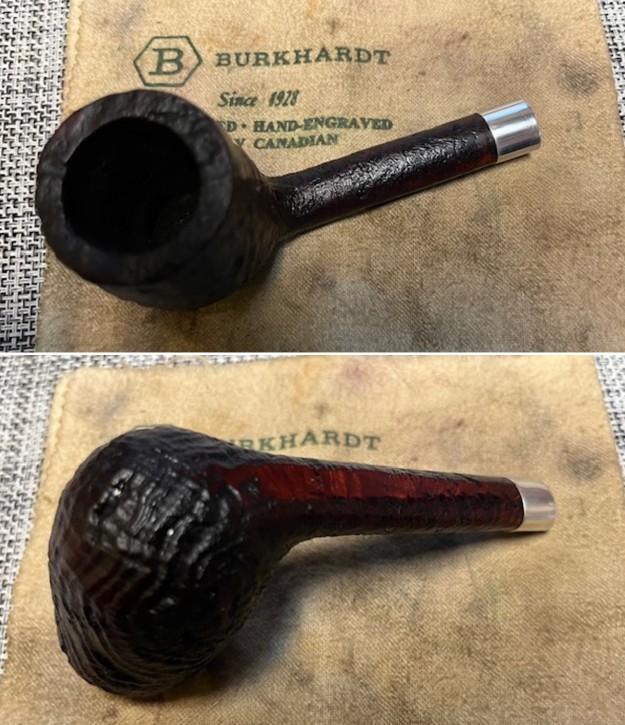
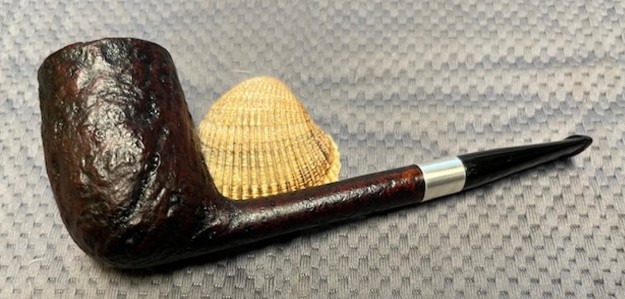
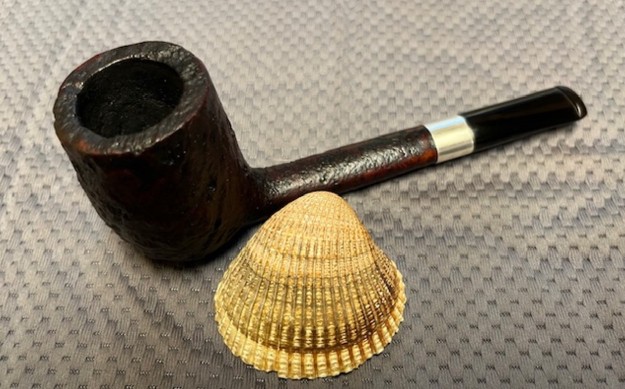
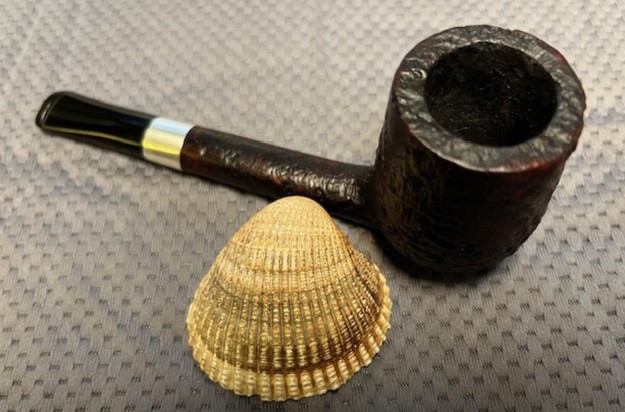
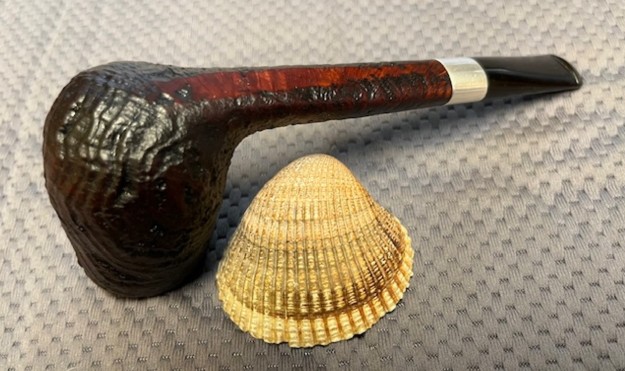
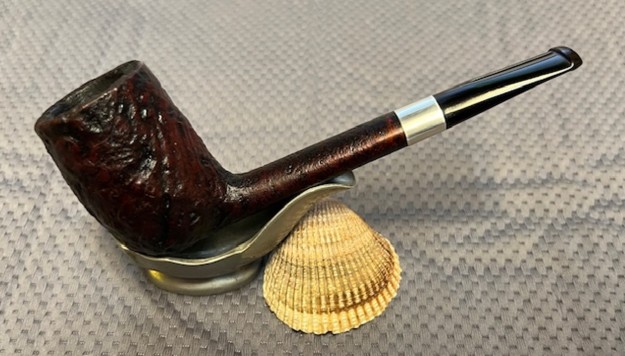
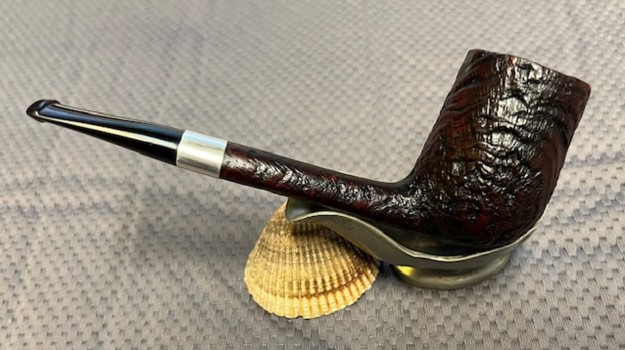
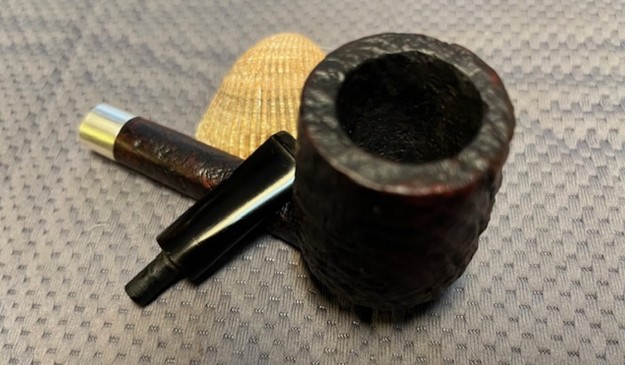
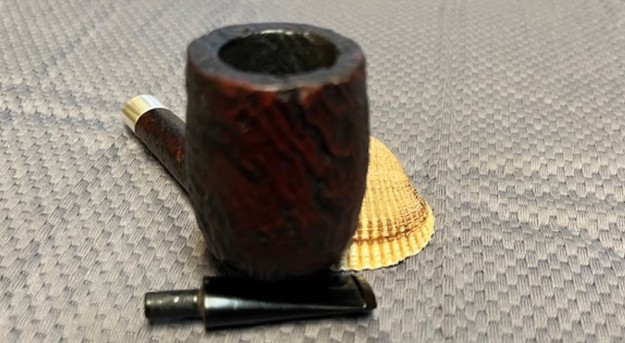
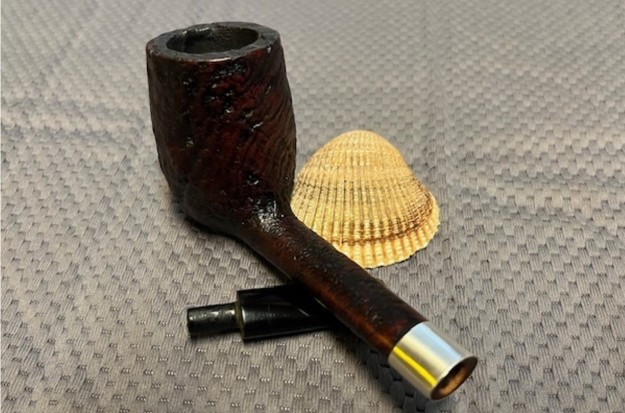
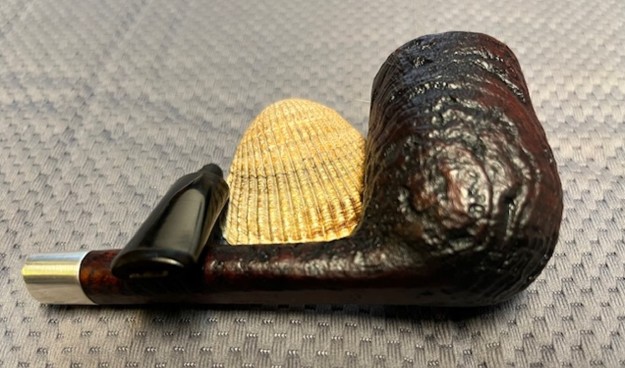
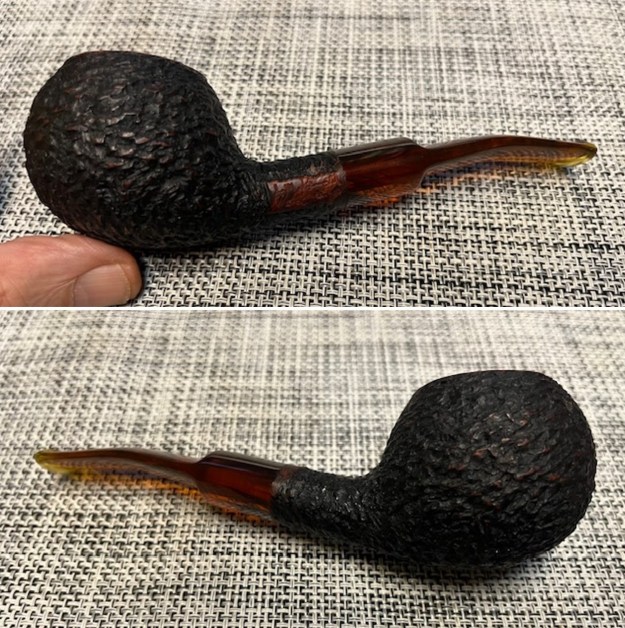
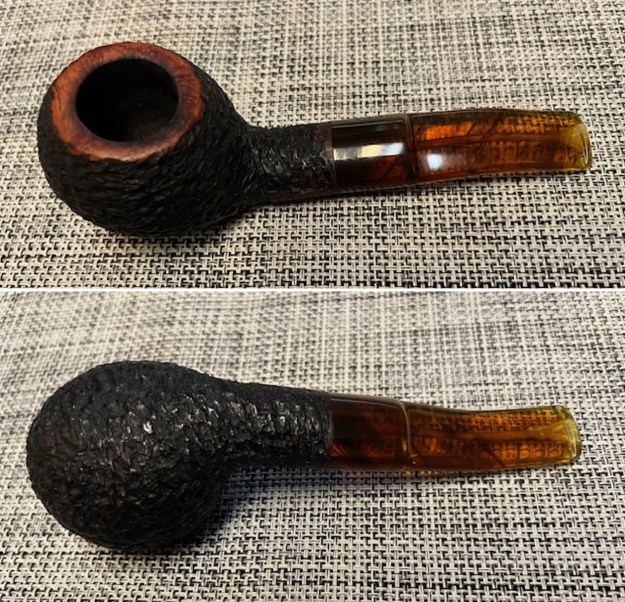
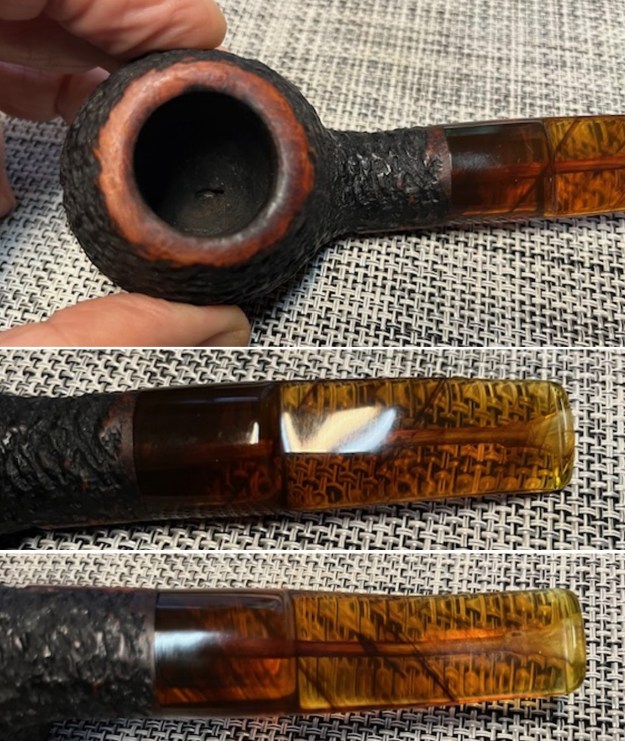
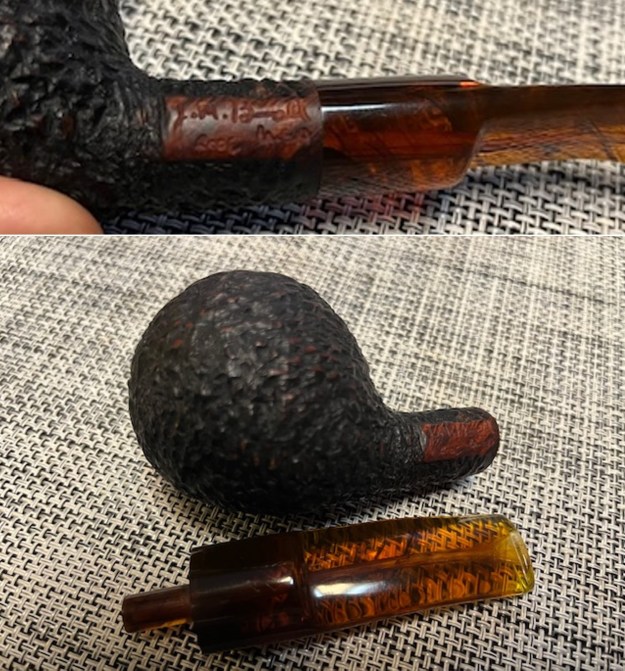
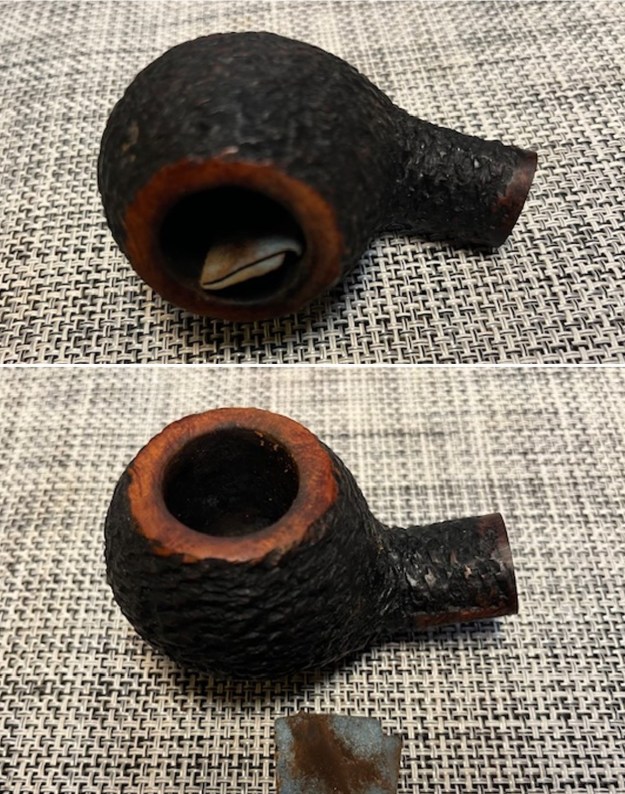
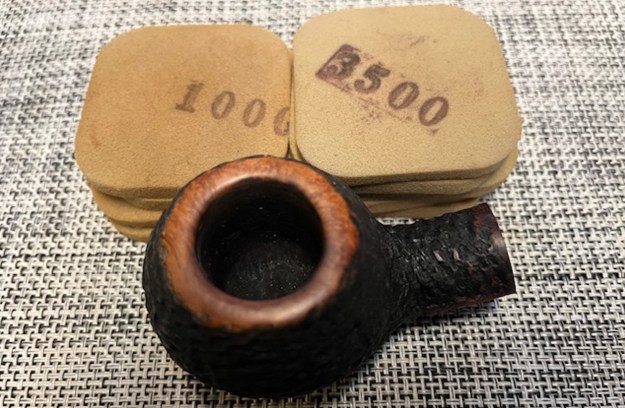
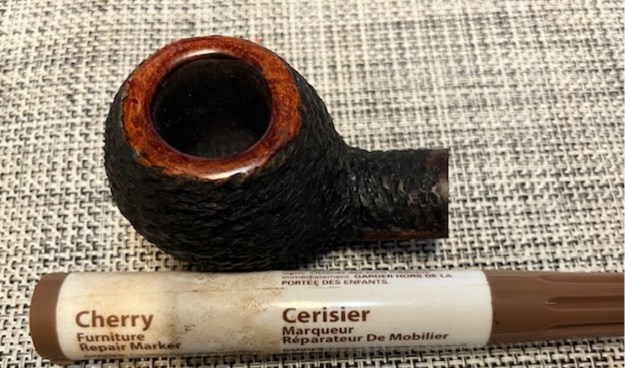
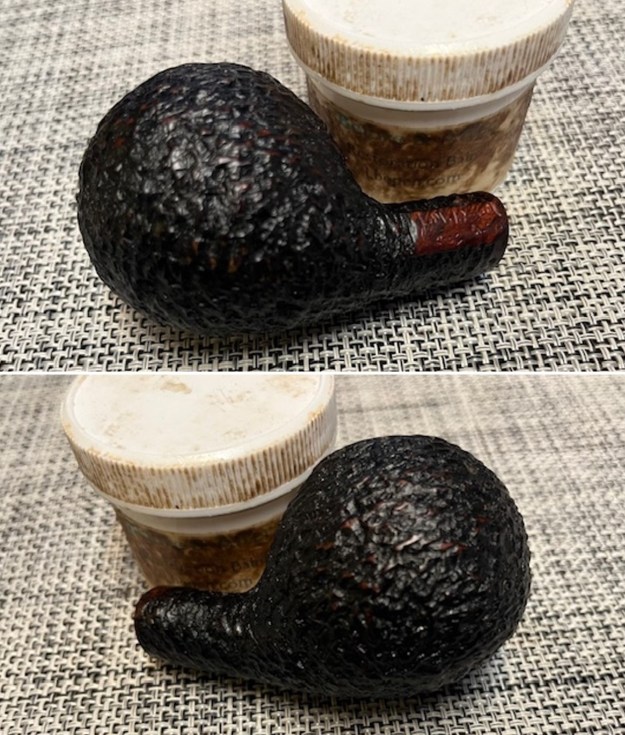
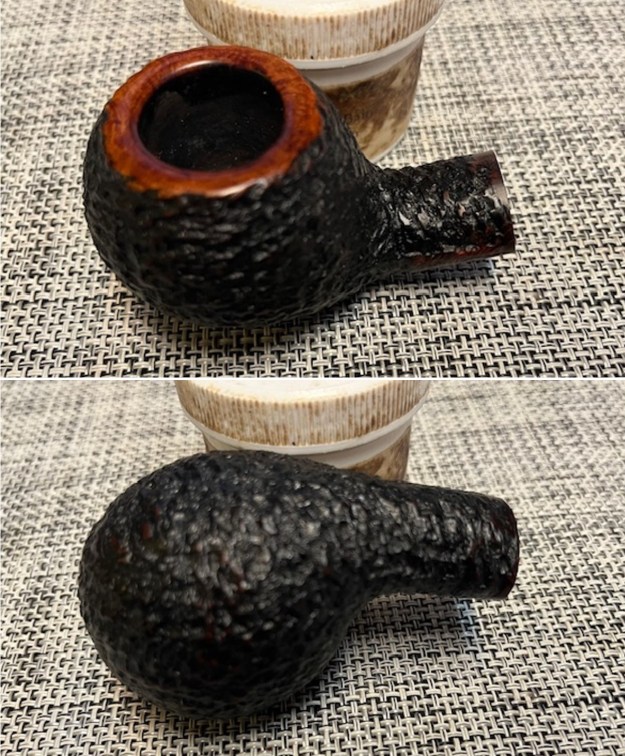
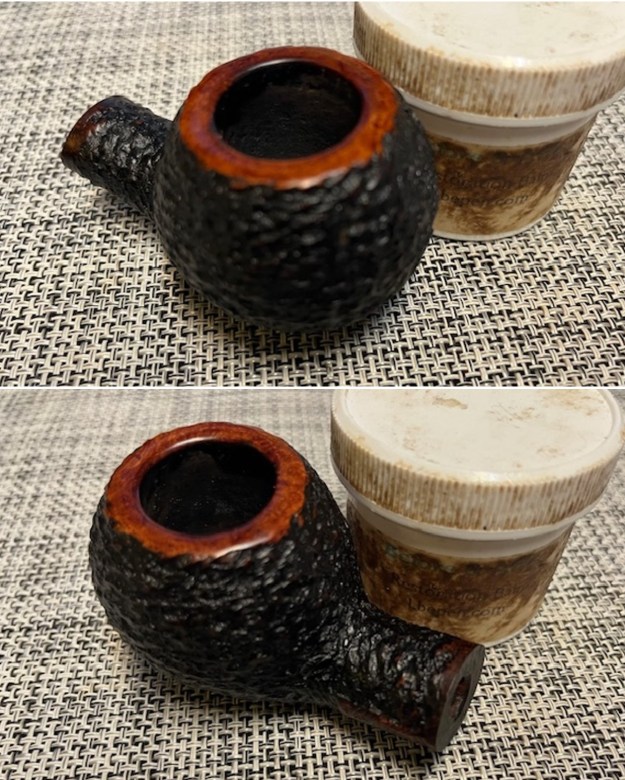
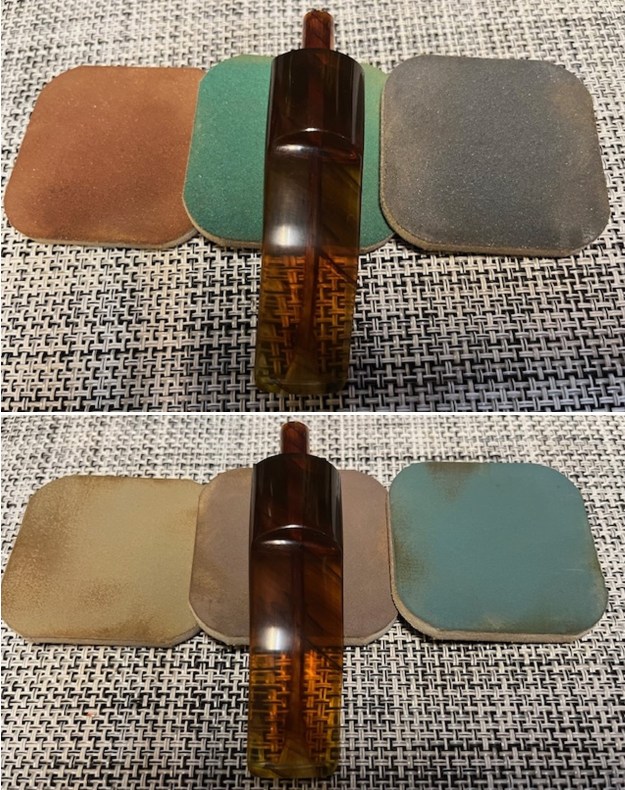
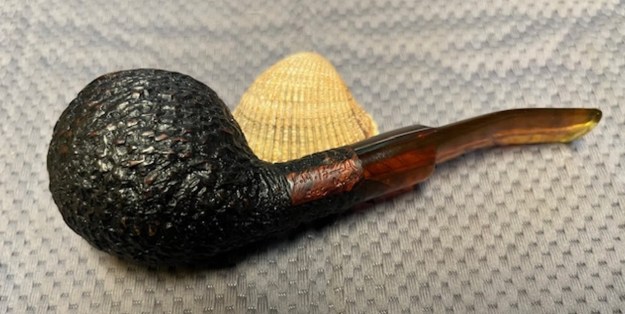
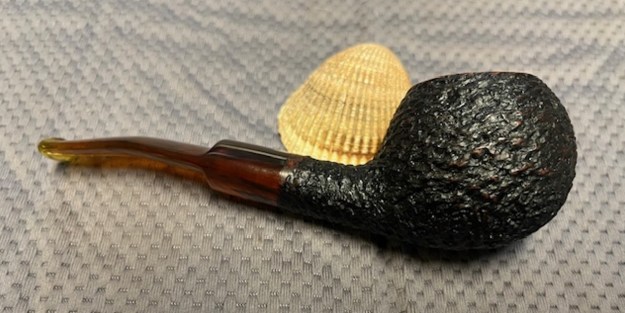
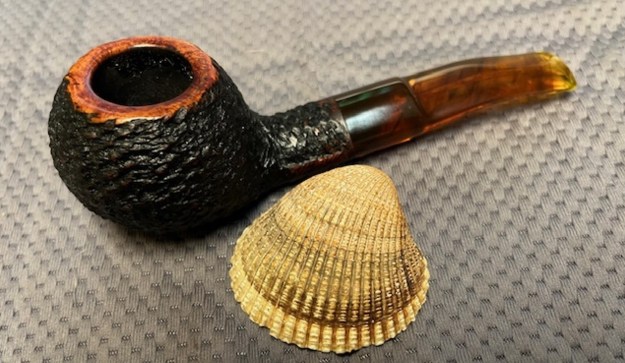
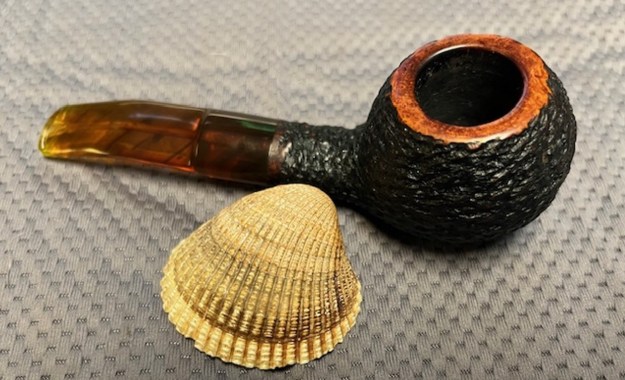
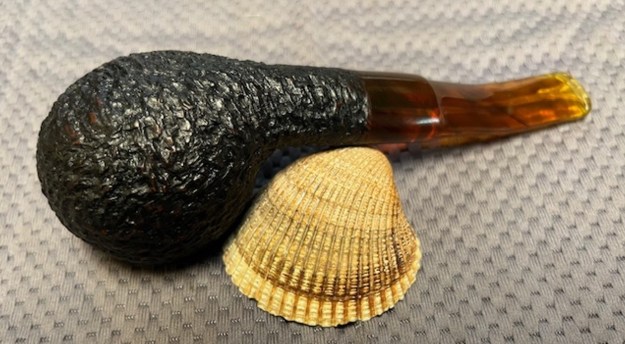
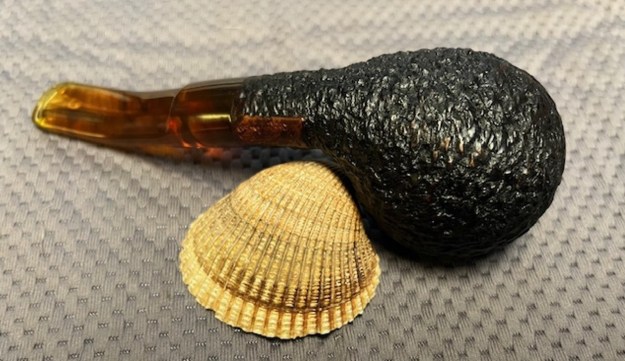
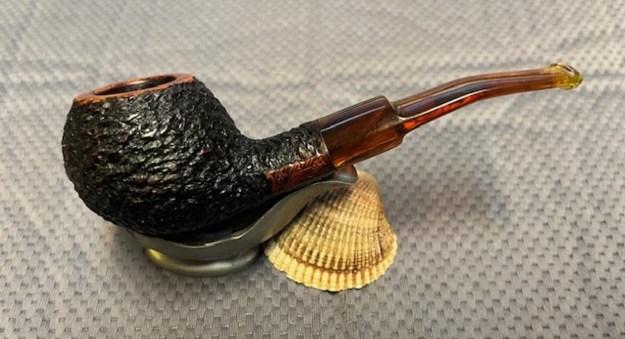
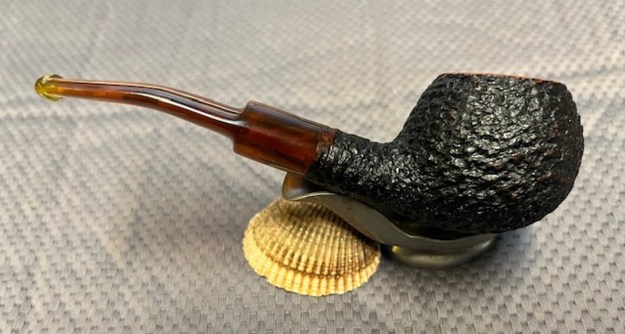
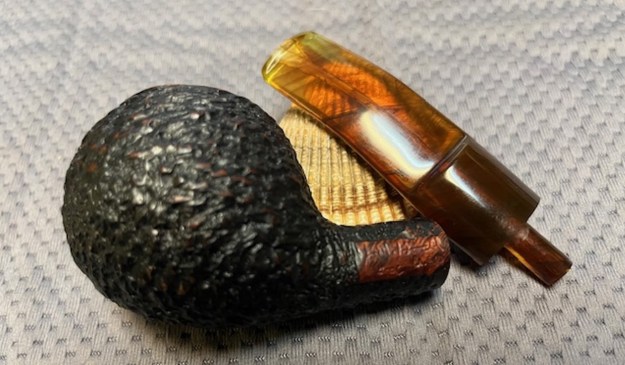
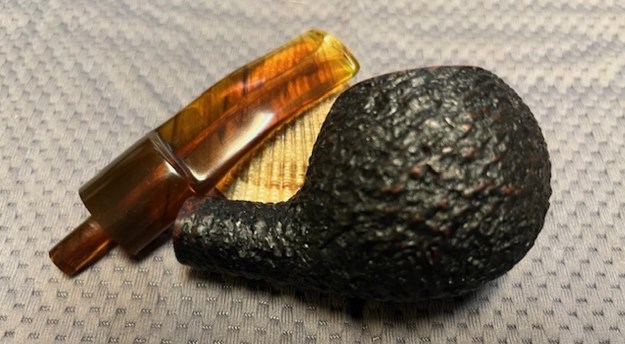
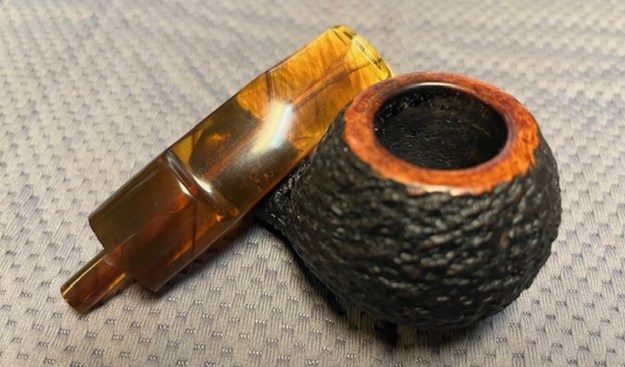
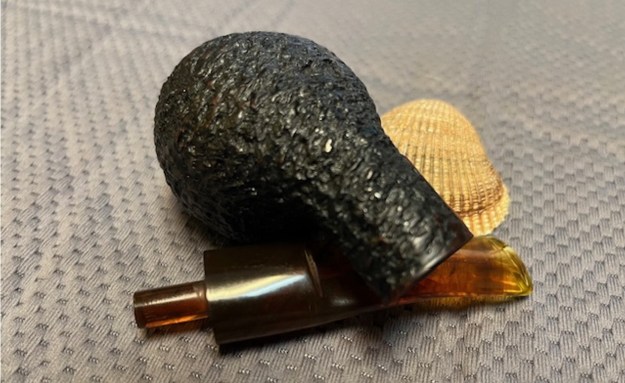
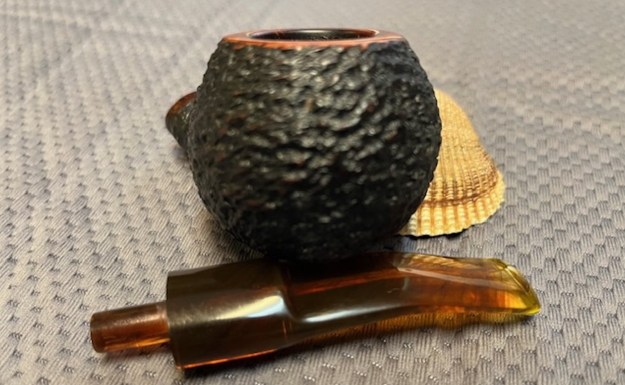
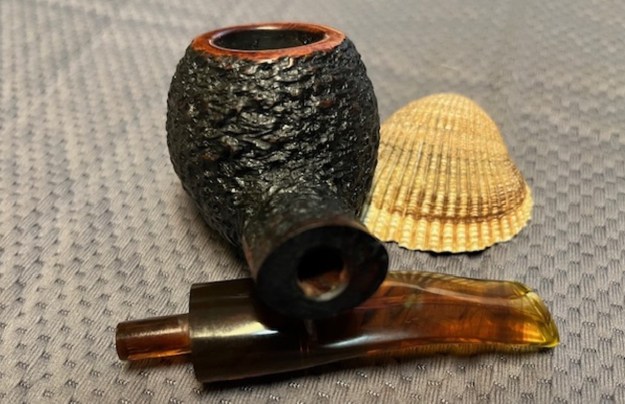
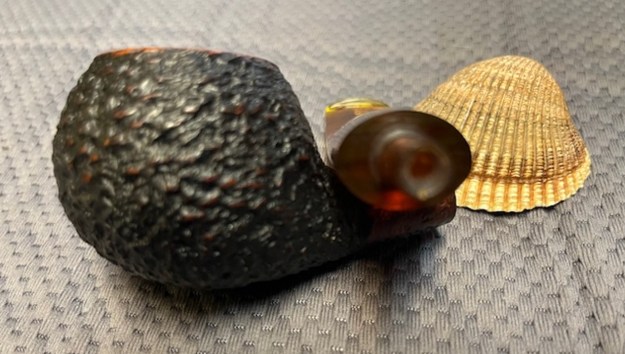
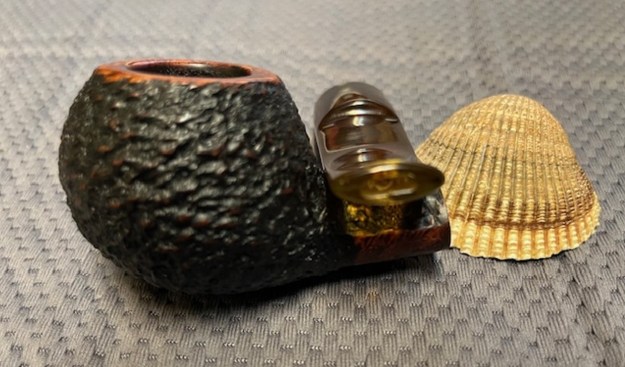
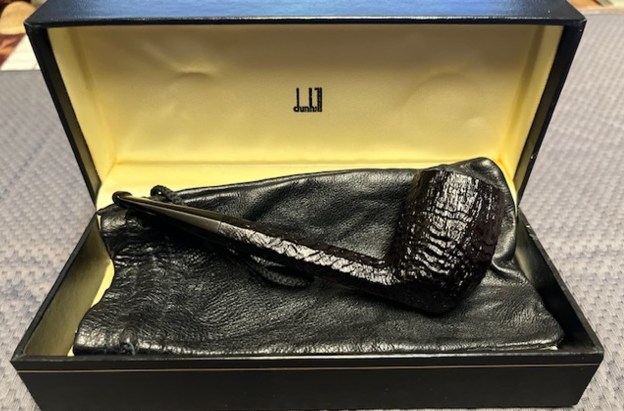
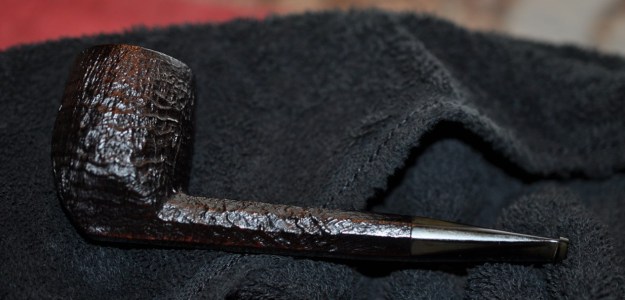
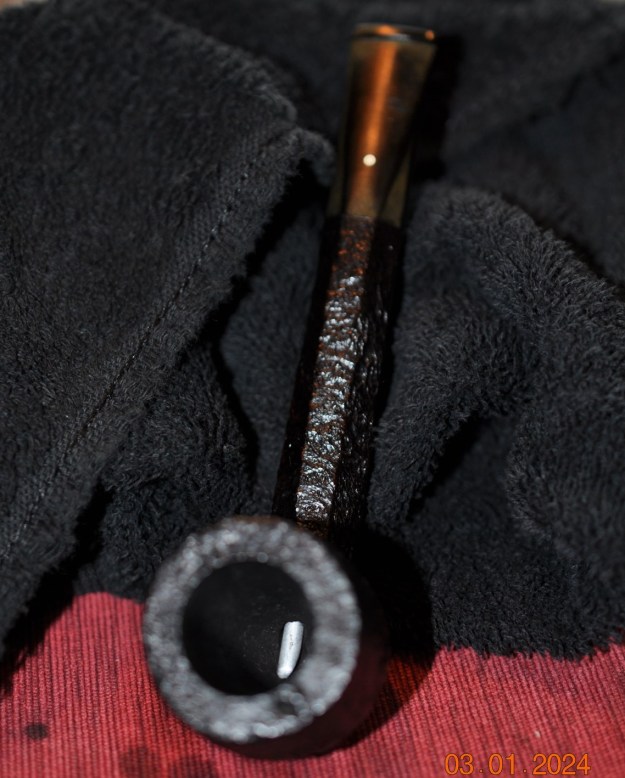
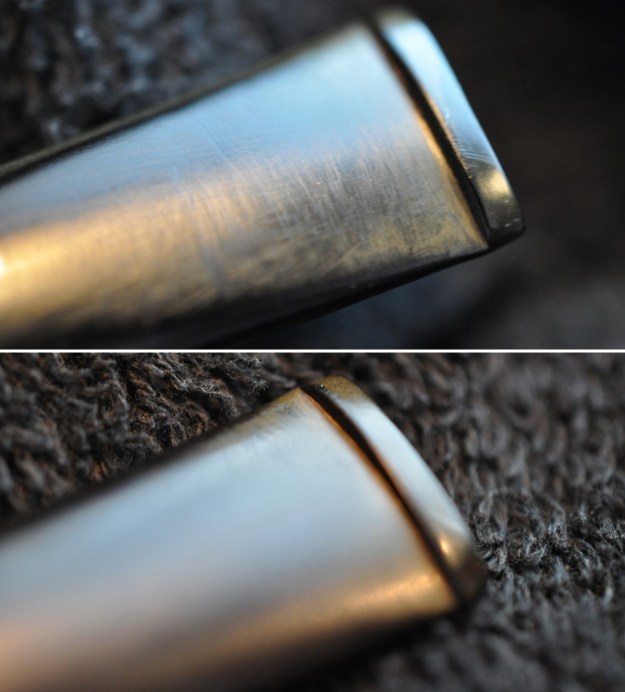
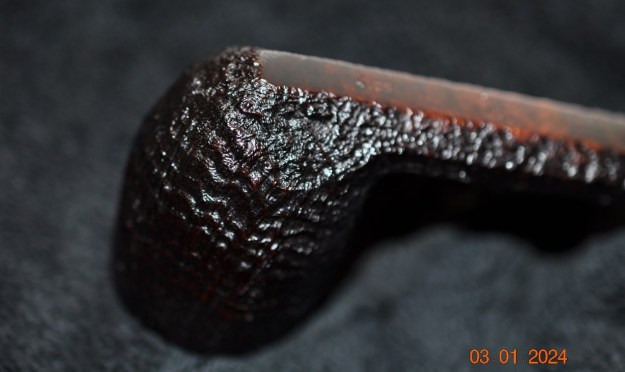
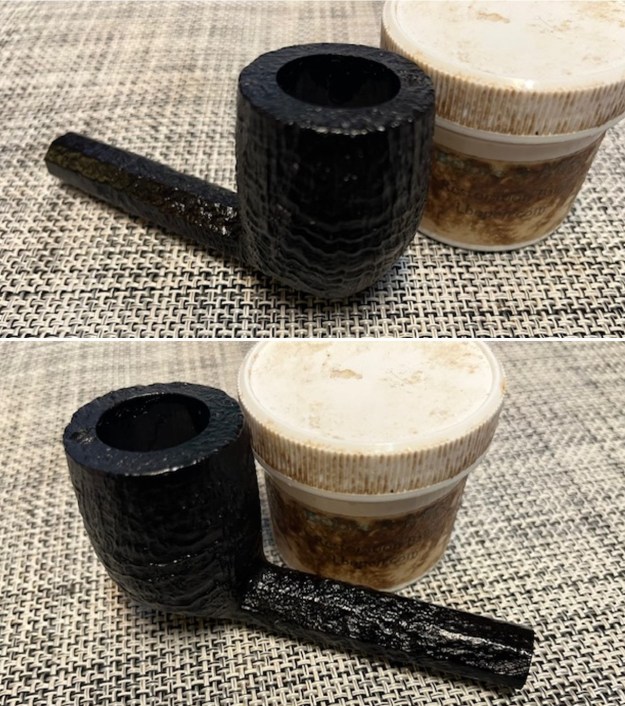
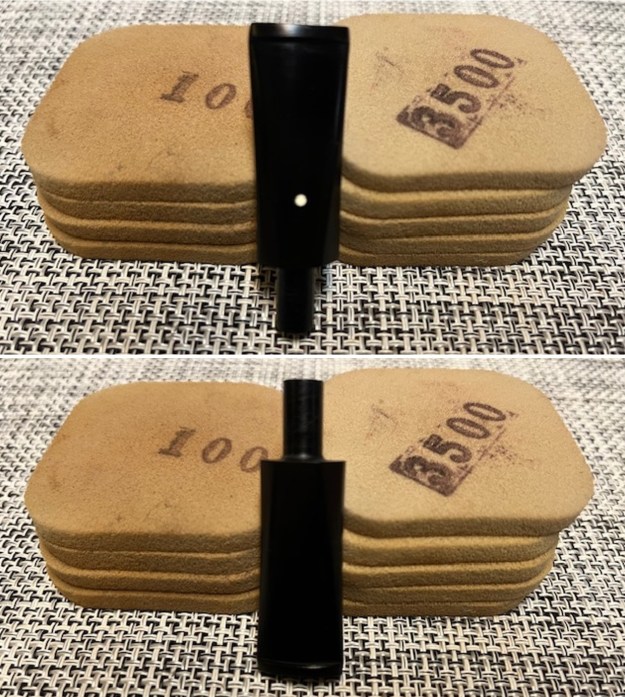
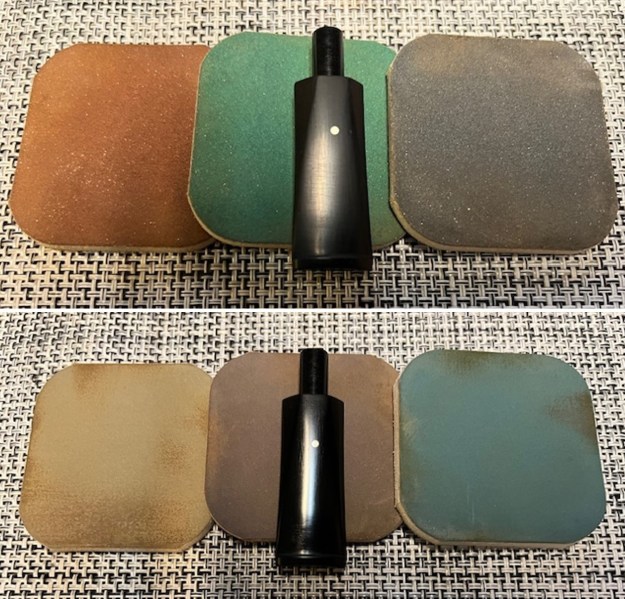
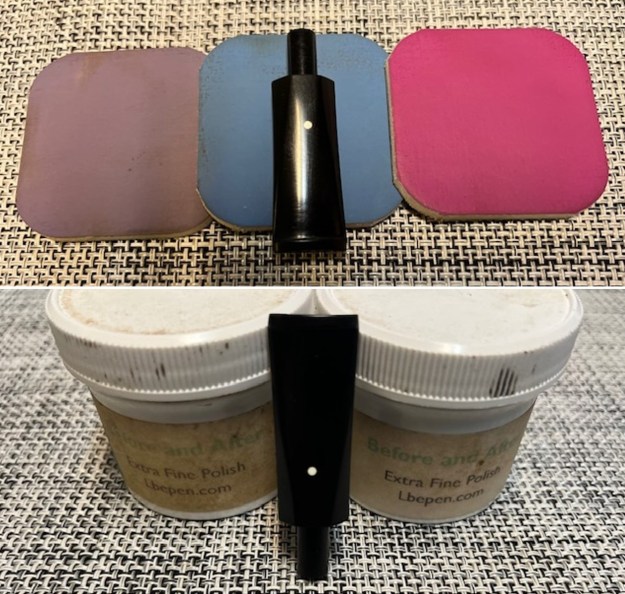
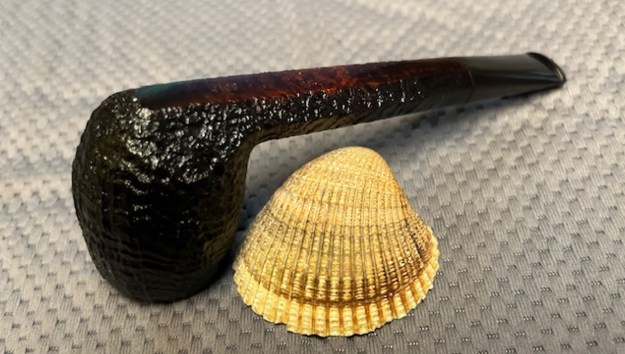
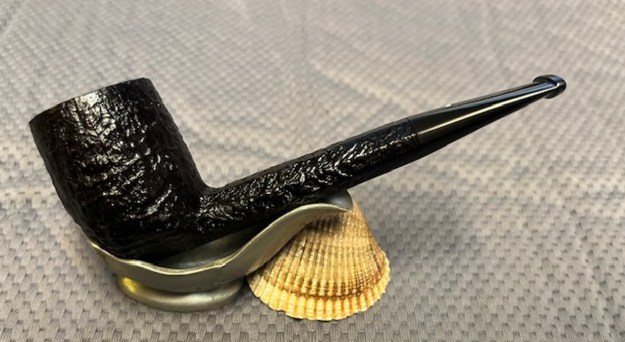
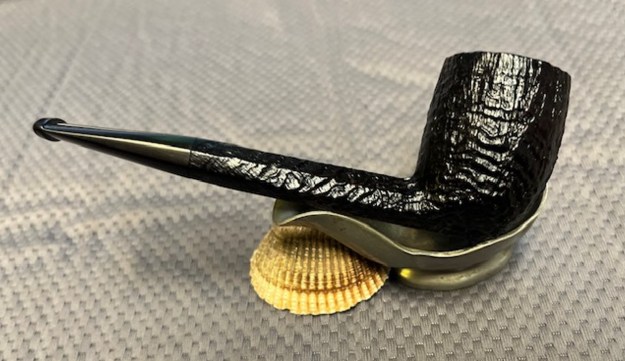
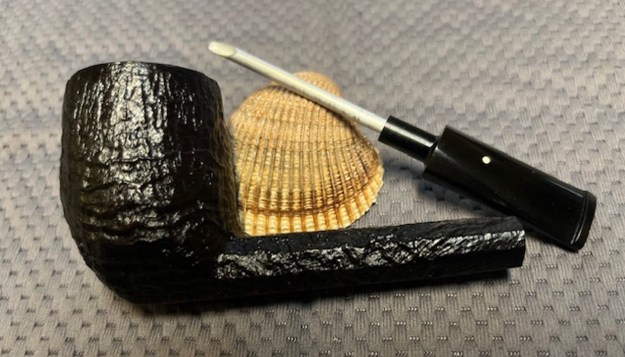
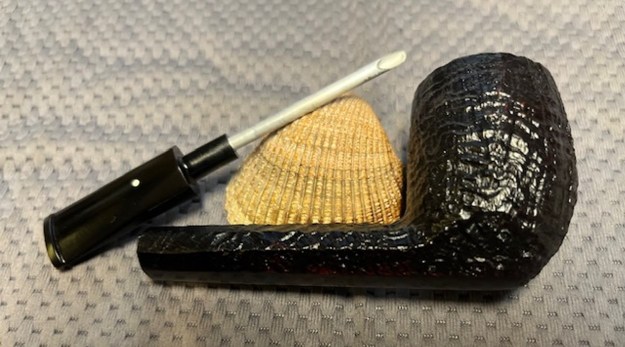
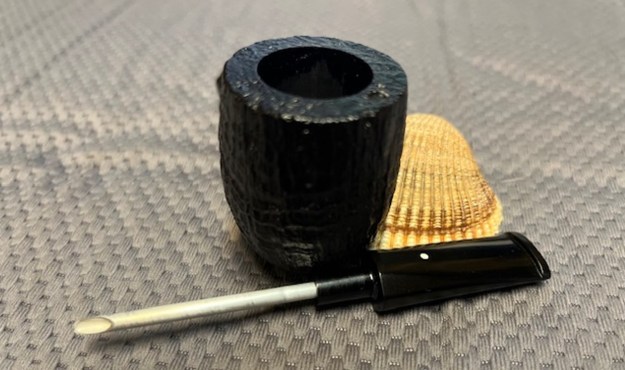
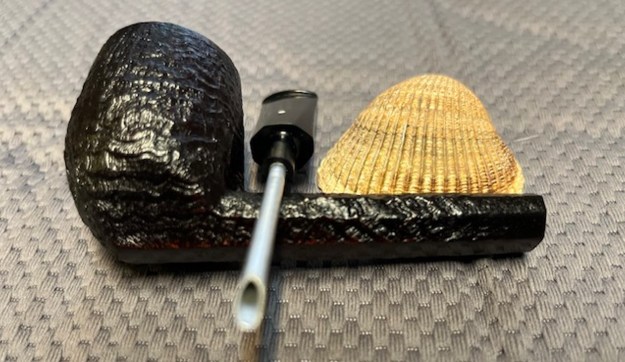
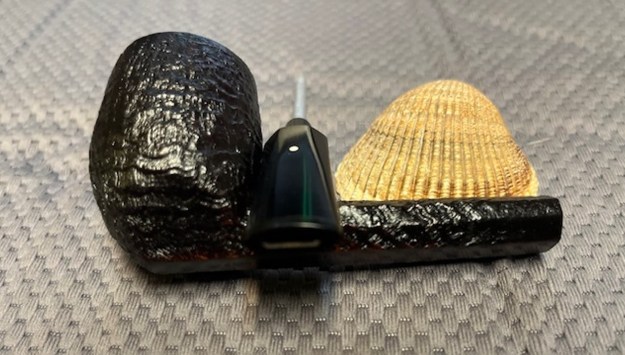
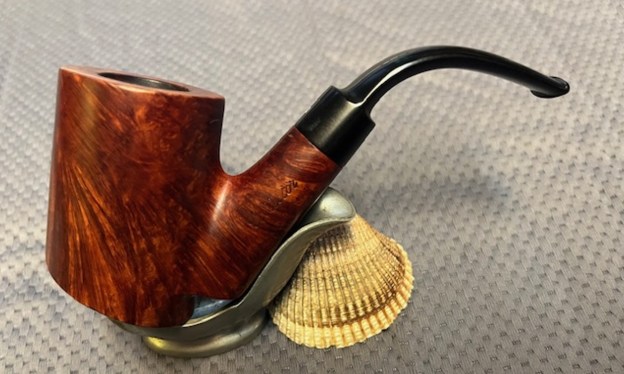
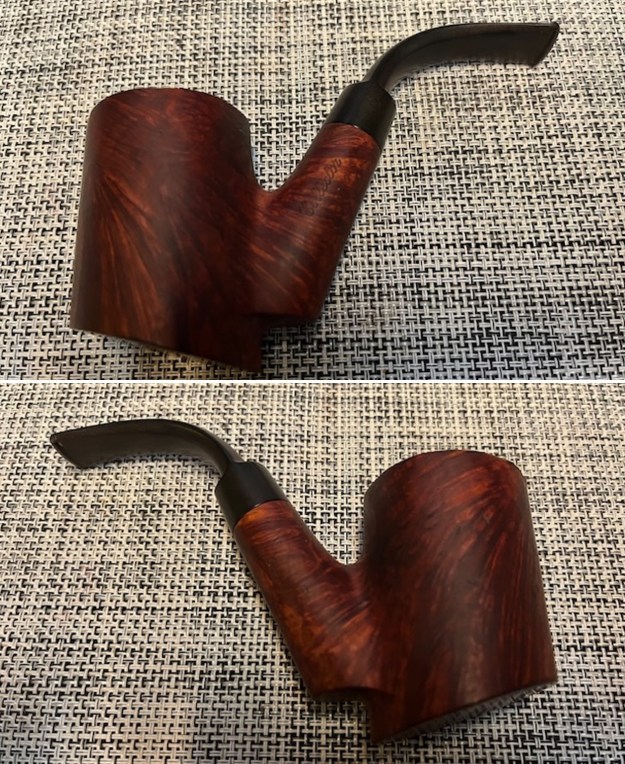
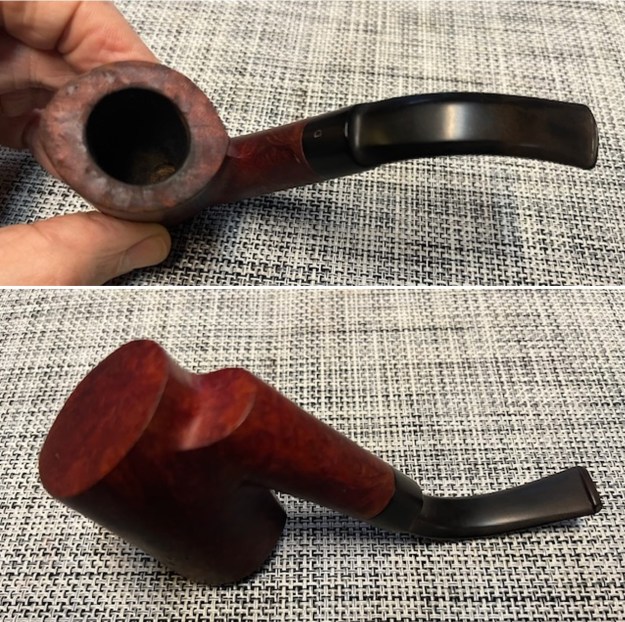
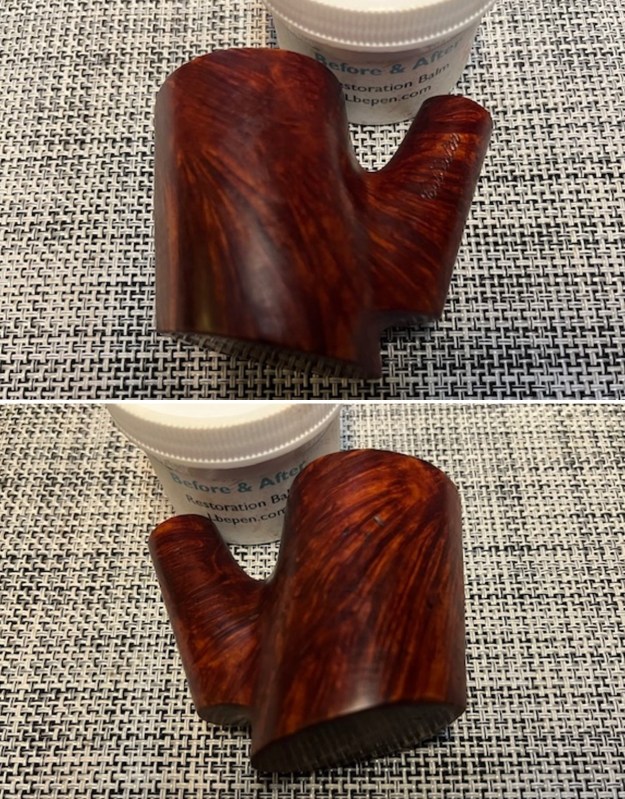
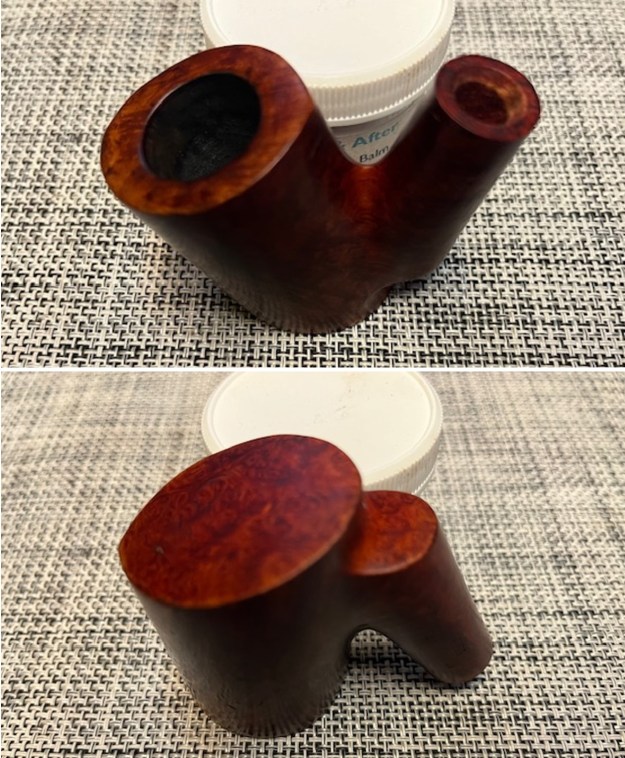
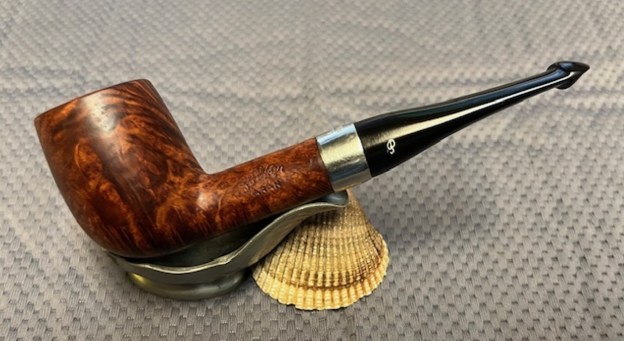
This is the third pipe I’m restoring for my cousin – and in many ways, this is the most interesting. Allow me to introduce the Federal Bullmoose. It is a big, chunky pipe with a thousand fills in it, but looks like I could be a great smoker. It has a charming acrylic stem and feels terrific. The markings on the pipe come from the underside of the shank. There, it reads Federal [over] Ogunquit, ME. Further to the right is the word Italy, indicating where the briar is from. These markings lead me to believe that the pipe comes from the Federal Cigar company, formerly of Ogunquit, Maine. The company has been around for more than 100 years, and their three current locations are in New Hampshire: Epping, Dover, and Portsmouth – which is just a stone’s throw from Ogunquit. It seems reasonable to assume that this pipe is from that establishment.The stem was first on my list. Acrylic stems are always a bugbear of mine. No matter how much one scrubs, they never lose the tobacco colour inside. Ah well, it is what it is. I cleaned out the inside with pipe cleaners and isopropyl alcohol. It was pretty dirty, and I went through a good number of pipe cleaners. I also tried using some cleanser on the inside and that did help. I gave it a thorough rinse and moved on. There were a few tooth marks in the stem, so I filled them in with some clear cyanoacrylate adhesive. After allowing that to cure, I sanded the glue down with some sandpaper, then the whole stem with my Micromesh pads. For the last few pads, I also added some pipe stem oil. On to the stummel, and there was some work to be done here! Look at all those fills! But before that, I needed to get the darn thing clean. I used a dental tool to mine some chunks of gunk out of the mortise – yuck! Just like the stem, I also used pipe cleaners, cotton swabs and alcohol to scrub the insides. It was quite dirty – much cotton was expended.

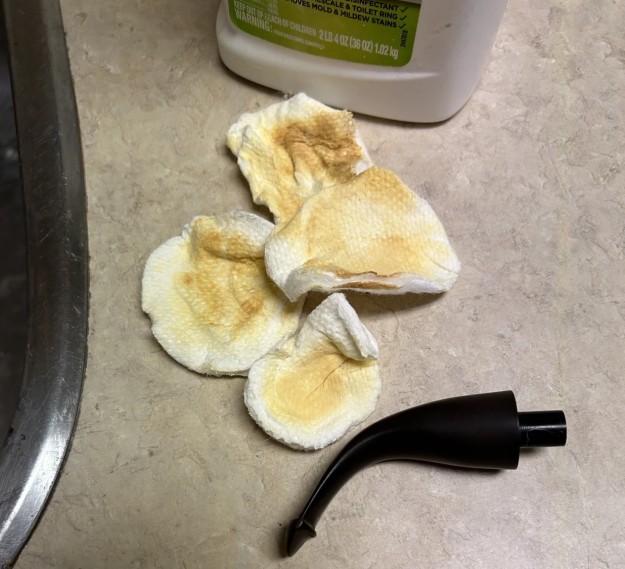
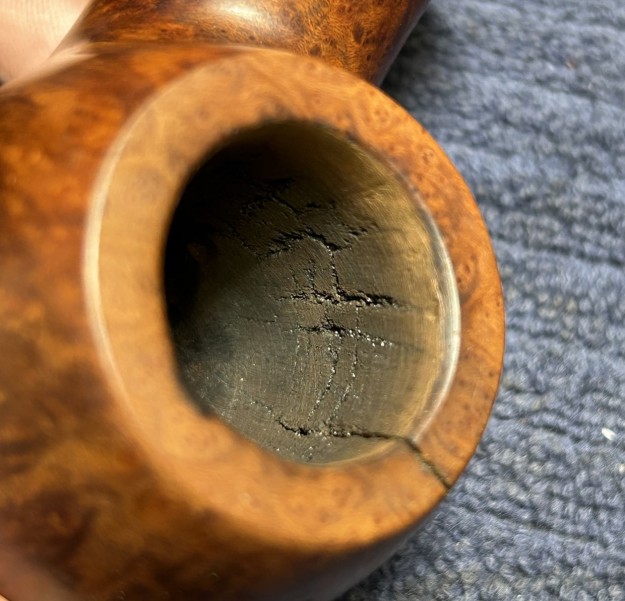
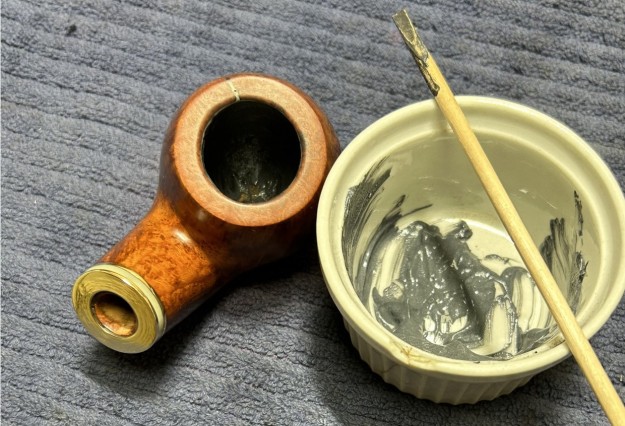
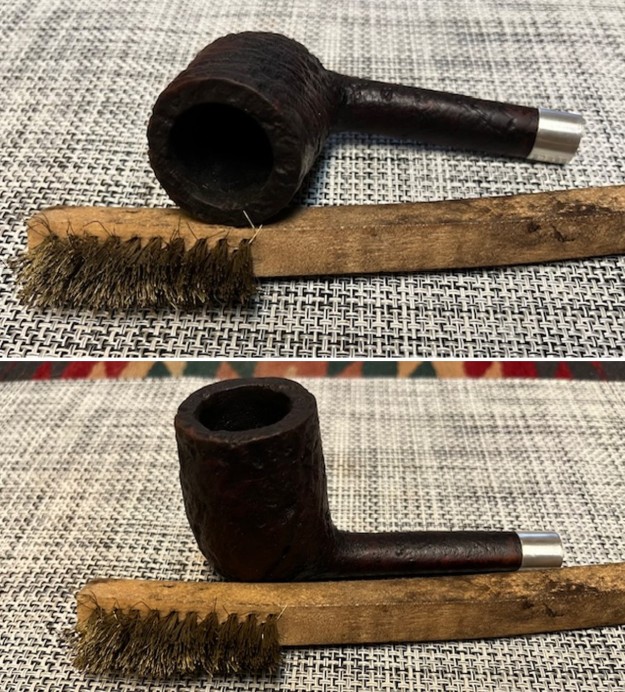
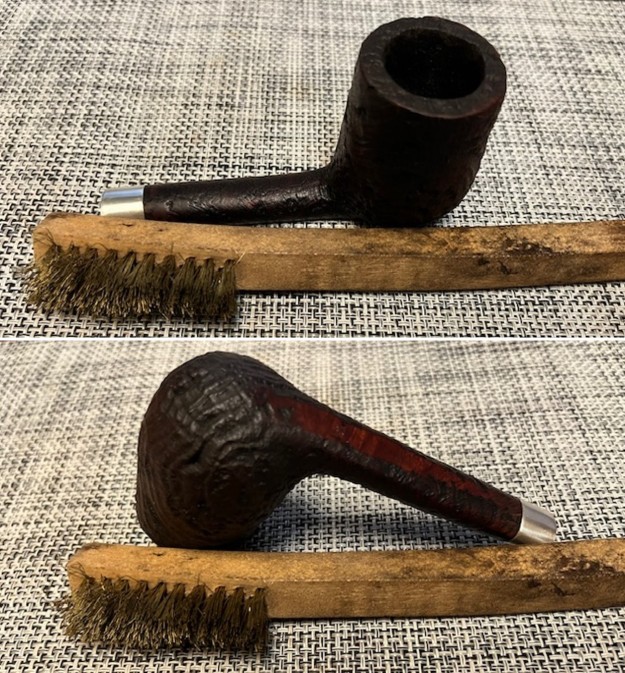
I decided to de-ghost the pipe in order to remove any lingering smells of the past. I thrust cotton balls into the bowl and the shank and saturated them with 99% isopropyl alcohol. I let the stummel sit for a while. This caused any remaining oils, tars and smells to leach out into the cotton. The bowl was nice and clean after this.I used cotton rounds and some Murphy’s Oil Soap to scrub the outside of the stummel. You’ll notice in the photos that my cousin added some superglue to many of the fills before I got my hands on it. I actually removed some of the glue and redid some of the repairs. As usual, I used a mix of super glue and briar dust. I filled in everything that needed it and then it looked like a pipe with measles. The bowl had already been reamed, but I gave it a quick sanding anyway, as I needed to inspect the integrity of the briar walls. There were quite a few heat fissures and I would need to address them. At this point, I decided to mix up some pipe mortar, as I did with the last pipe. I wanted a good, solid coating on the inside of the bowl to prevent any further damage. I sanded down the fill repairs with some sandpaper and then the whole stummel with all nine Micromesh pads. It really looks improved. We’re on the home stretch! It’s time for the most obvious step to make this pipe look good: staining. My cousin and I agreed from the start that this pipe was going to need some make-up to make it pretty. I opted for Fiebing’s Cordovan. I thoroughly coated the stummel with a dauber, then flamed it with a candle to set the color. I repeated this process to ensure a good colour. This was never going to be a cure-all, but I am very pleased with the results. The contrast between the dark stummel and the light stem is terrific. I then coated the pipe with restoration balm and let it sit for 20 minutes or so, before polishing with a microfibre cloth. The balm does wonderful things to the wood and makes the whole thing sing. Then it was off for a trip to the buffer. A dose of White Diamond and a few coats of carnauba wax were just what this pipe needed. The lovely shine made the wood very attractive. This is a very handsome pipe and will provide many years of smoking pleasure.This Federal Bullmoose looks beautiful once again. I’m sure my cousin will love it. I hope you enjoyed reading the story of this pipe as much I as I did restoring it. If you are interested in more of my work, please follow me here on Steve’s website or email me directly at kenneth@knightsofthepipe.com. Thank you very much for reading and, as always, I welcome and encourage your comments.

Cleaning up a Trade – an Armellini Elite Cagli 2009 Bulldog with a Filter Stem


Blog by Steve Laug

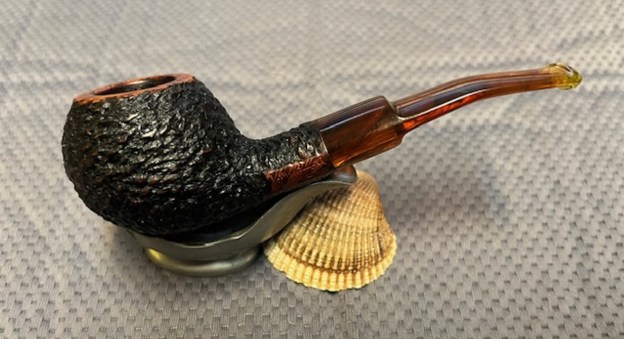
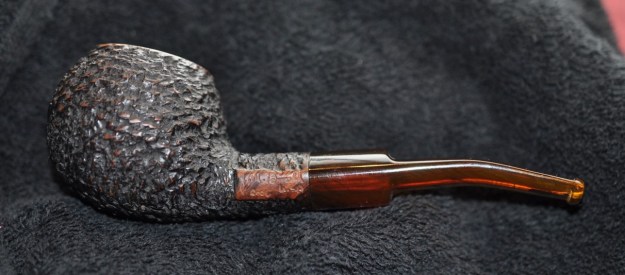
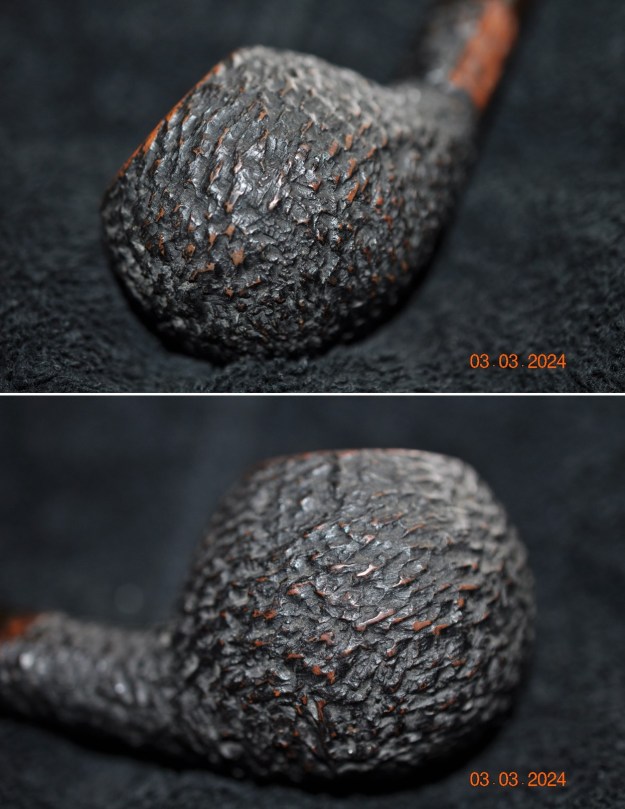
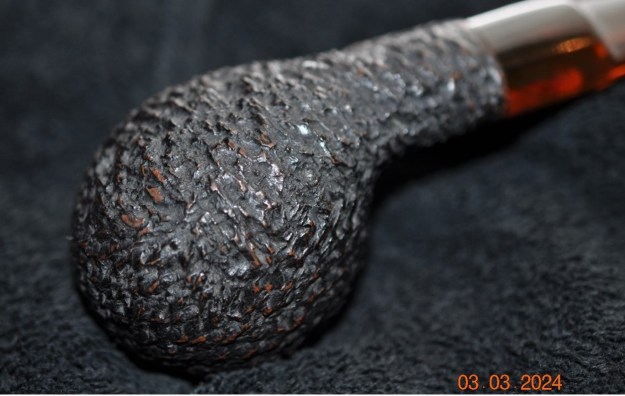
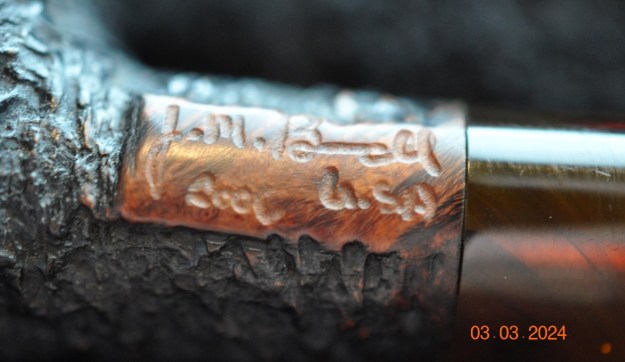
The next pipe on the work table is one that I took in on a trade from a fellow in the Netherlands. It is a great looking rusticated straight Bulldog. It is stamped on smooth panels on both the left and right underside of the diamond shank. On the left side it is stamped Armellini in script [over] Elite. On the right side it is stamped Cagli [over] 2009. The pipe is nicely rusticated with a deep and rugged rustication. The rim top is smooth and there are twin rings around the bull cap that are sandwiched between smooth bands. There is a smooth band around the shank end followed by a shank extension composed of twin brass rings sandwiching a piece of orange/red acrylic. The finish is quite clean with just a bit of dust in the valleys. The smooth rim top is in excellent condition with some light lava near the inner edge. The inner edge is clean and sharp. The bowl has a light cake that I will ream out but otherwise looks very good. The vulcanite saddle stem was made for a 6mm filter. There is the classic Armellini large white dot logo on the top left side of diamond stem. There are tooth marks and chatter on both sides ahead of the button. I took photos of the rim top and the stem surfaces to give a sense of the condition of the pipe. You can see the light lava on the rim top and other than that top is in good condition. There is a light cake in the bowl that I will ream to make sure the walls are in good condition. The stem photos show the tooth marks and the chatter on both sides ahead of the button.I took photos of the stamping on the underside of the diamond shank on both the left and the right sides. It is clear and readable. The stamping on the left side identifies the maker and the line of the pipe. The stamping on the right side reads Cagli and the year 2009. Cagli is a town and community in the province of Pesaro e Urbino, Marche, central Italy. 2009 is the year the pipe was made.I took the stem off the shank and took a photo of the parts to show its proportions. I also took a photo of the tenon end to show the opening for a 6mm filter.I decided to hunt down a bit of background on the brand before I started my clean up on the pipe. I turned to Pipephil’s site (http://www.pipephil.eu/logos/en/logo-a7.html). It had a great summary listing and photos. I did a screen capture of the section and the side notes and have included them below.After Mauro Armellini passed (1936 – † 2004), his daughter Vilma Armellini answered for the brand’s destiny. Seconds: Mauro, Converti

For more detail on the brand than the notes above gave me about Armellini, I turned to Pipedia (https://pipedia.org/wiki/Armellini). I quote:

Mauro & Wilma Armellini, ARMELLINI PIPES. Courtesty of theitalianpipe.com

Mauro Armellini stands for the true meaning of self-made and self-taught pipe makers. He started his pipe making career back in the early 1960s, working at the famous Italian pipe factory “Rossi”. Years later, and when the Rossi factory shut its door, Armellini moved to Savinelli where he stood out immediately. He perfected the rustication technique and till today some of the most famous rusticated finishes, such as the “Roccia” and the “Corallo” exist only thanks to him. He worked for Savinelli for several years and till the day he realized that he decided to create his own workshop and make pipes under his own name. At those times, and in spite of the fact that the pipe market was huge, it was a big risk to start his own pipe brand, due to the costs involved and the difficulty of obtaining the right equipment and tools.

Once the name Armellini found its rightful place on a piece of briar, Armellini never looked back. Thanks to his friend and neighbor, Alberto Paronelli, he was able to attract foreign markets, such as the US one and that of other European countries. Armellini’s four daughters slowly and gradually became involved in the business by lending their dad a helping hand whenever possible. However, it was Wilma that became truly interested in the business and gradually became her father’s right hand, not only in the administrative aspect of the business, but also, and above all, the actual pipe making in all its various stages. Indeed, and many years later, Armellini retired from full-time pipe making, and it was Wilma who took over.

When Armellini passed away recently, it was natural, and yet very difficult, for Wilma to decide and continue the Armellini production, according to her father’s own standards and vision. What encouraged her is the fact that for over 20 years she had been making pipes, from A to Z, and so, she knew that the quality Armellini has always been known for could and would continue.

Today, in the small town Barasso, in northern Italy, Wilma and her 20-year-old son are running the workshop and producing all of the Armellini pipes. Matteo, Wilma’s son, is an enthusiastic young man with a love for pipes and pipe making that he could have only inherited from his grandfather. He’s determined to carry on and keep alive his grandfather’s pipe making tradition while creating new shapes and finishes that he is confident his grandfather would be proud of.

Today the name Armellini bears the dreams, the dedication, the passion, and the pipe making talent and expertise of three different generations, united by one objective: Offering the best pipes possible, out of the best material possible, at the lowest price possible.

The legacy lives on …

Since Mario passed away in 2004 and this pipe was dated 2009 I knew that the pipe was made by his daughter Vilma or Wilma.

Now, on to the restoration of this beautifully rusticated Armellini Elite Bulldog. I began the work by reaming the pipe with a PipNet reamer and cut back the cake back to the bare briar. I scraped out what remained with a Savinelli Fitsall Pipe Knife. I sanded the walls of the bowl with a piece of dowel wrapped with 220 grit sandpaper to smooth the out. The walls looked to be in excellent condition with no checking or heat damage. I scrubbed the inside of the mortise and shank along with the stem with alcohol, cotton swabs and pipe cleaners. The pipe was looking better than when it arrived. I scrubbed the exterior of the pipe with Murphy’s Oil Soap and a tooth brush to remove the grime from the finish. I worked on the rim top and edge to try to remove the grime and was able to remove it. I polished the smooth briar rim top with micromesh sanding pads – dry sanding it with 1500-12000 grit sanding pads. I wiped the bowl surface down with a damp cloth to remove the sanding dust. Once I finished the exterior of the briar looked much better and had taken on a shine. I rubbed the bowl down with Before & After Restoration Balm. I worked it into the surface of the briar with my fingertips to clean, enliven and protect it. I let the balm sit for 15 minutes and then buffed with a cotton cloth to raise the shine. Mark Hoover’s Balm is a product that I have come to appreciate and one I use on every pipe I have been working on. I set the bowl aside and turned my attention to the stem. I “painted” the stem surface with the flame of a Bic lighter to lift the tooth marks. Many of them smoothed out completely but several of the deeper ones remained. I filled in the remaining marks with clear CA glue and set it aside to allow the repairs to cure. Once they are hardened I sanded them smooth with a folded piece of 220 grit sandpaper. I used the sanding pads I purchased recently – 320-3500 grit regular pads to smooth out the finish and remove the light tooth and chatter marks in the stem. I wiped the stem down with Obsidian Oil to finish the preliminary work after the 3500 grit pad.I polished the stem with micromesh sanding pads – wet sanding with 1500-12000 grit pads. I wiped the stem down after each sanding pad with Obsidian Oil. I finished polishing it with Before & After Pipe Stem Polish – both Fine and Extra Fine. Once I had finished the polishing I gave it final coat of oil and set it aside to dry. As usual at this point in the restoration process I am excited to be on the homestretch. I look forward to the final look when it is put back together, polished and waxed. I put the Armellini Elite Cagli 2009 back together. I polished the bowl rim top and stem with Blue Diamond to polish out the scratches in the briar and the vulcanite. I gave the bowl multiple coats of Conservator’s Wax and the stem multiple coats of carnauba wax. I buffed the pipe with a clean buffing pad to raise the shine. I hand buffed it with a microfiber cloth to deepen the shine. The pipe polished up pretty nicely. The grain really pops with the wax and polish. The shiny black vulcanite stem is a beautiful contrast to the reddish, browns of the bowl. This Armellini Elite 2009 Straight Bulldog was a great pipe to spruce up. It is a very comfortable pipe to hold in the hand. The finished pipe is shown in the photos below. The dimensions of the pipe are Length: 6 inches, Height: 2 inches, Outside diameter of the bowl: 1 ¼ inches, Chamber diameter: ¾ of an inch. The weight of the pipe is 46 grams/1.62 ounces. This pipe will be going on the Italian Pipe Maker section of the rebornpipes store if you are interested in adding it to your collection. Thanks for reading this blog and my reflections on the pipe while I worked on it. This is an interesting estate to bring back to life.

Restoring a Modified K&P Irish Made


Blog by Kenneth Lieblich

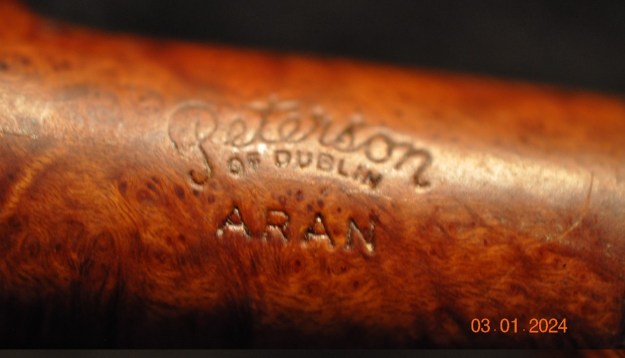
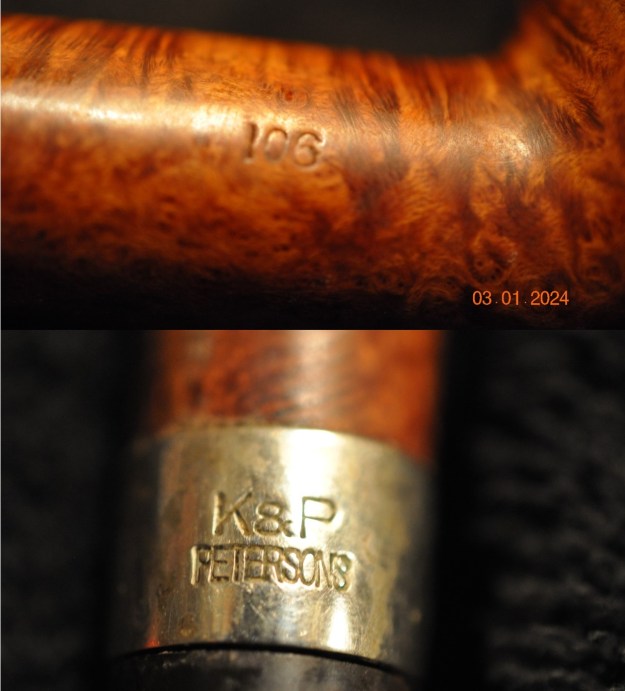
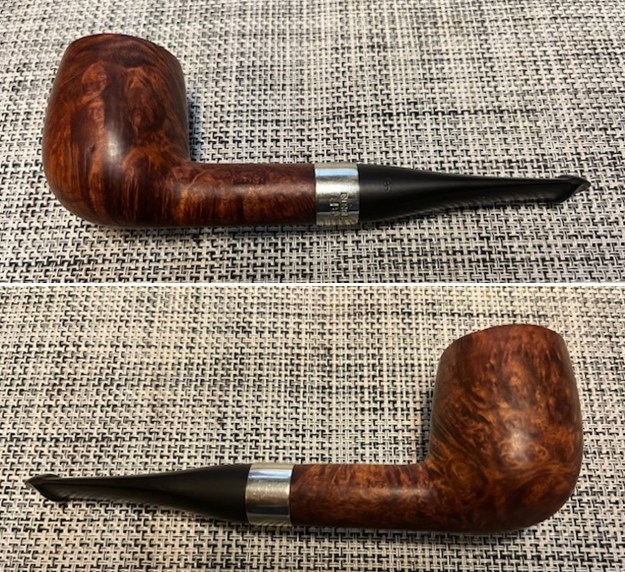
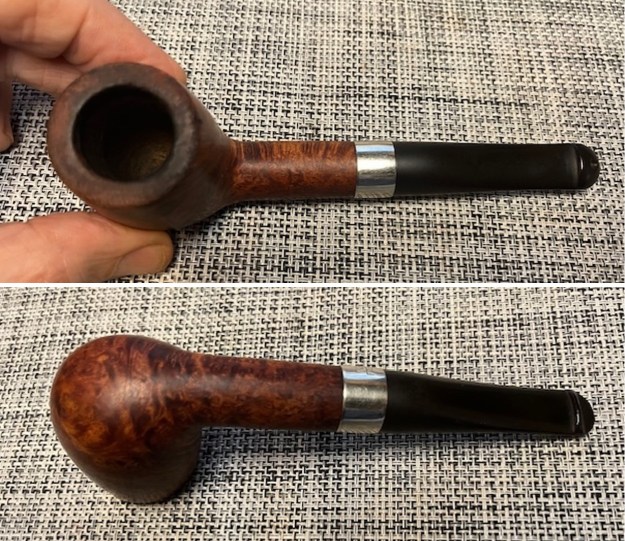
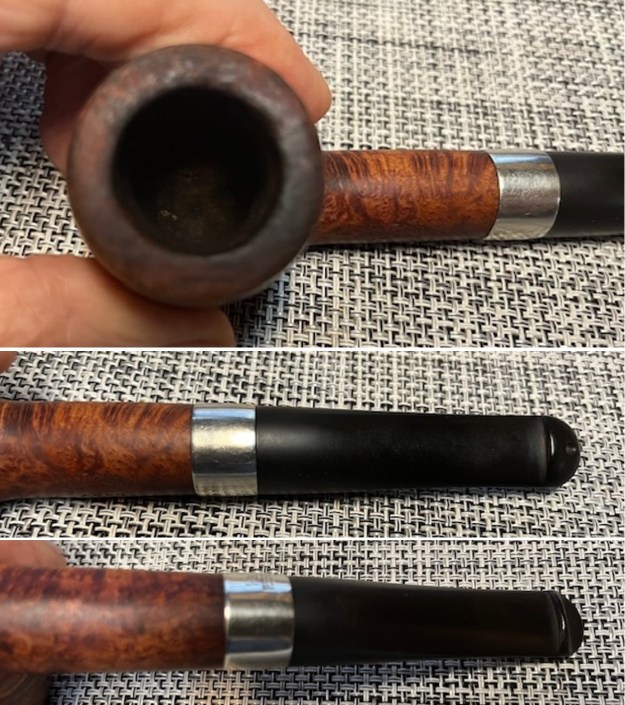
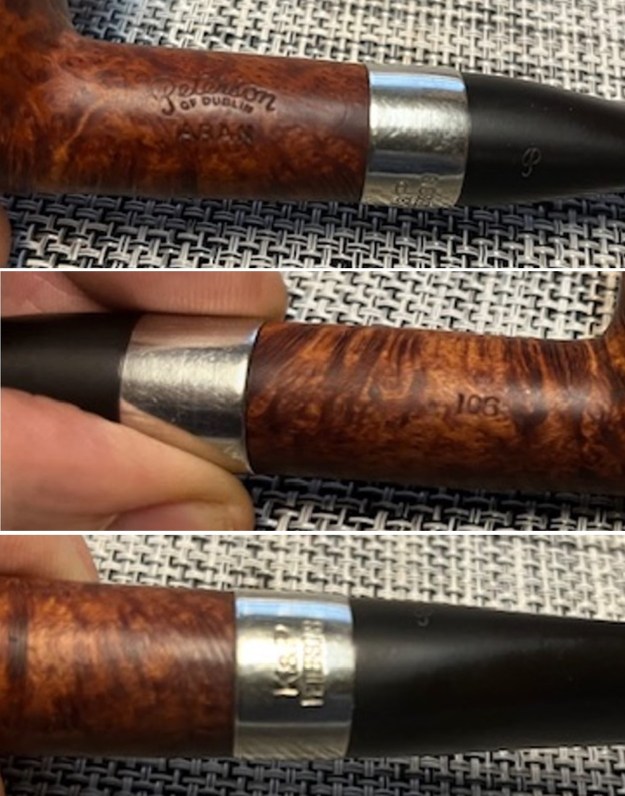
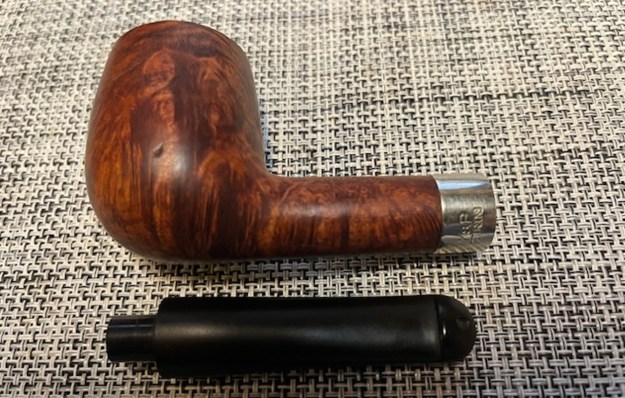
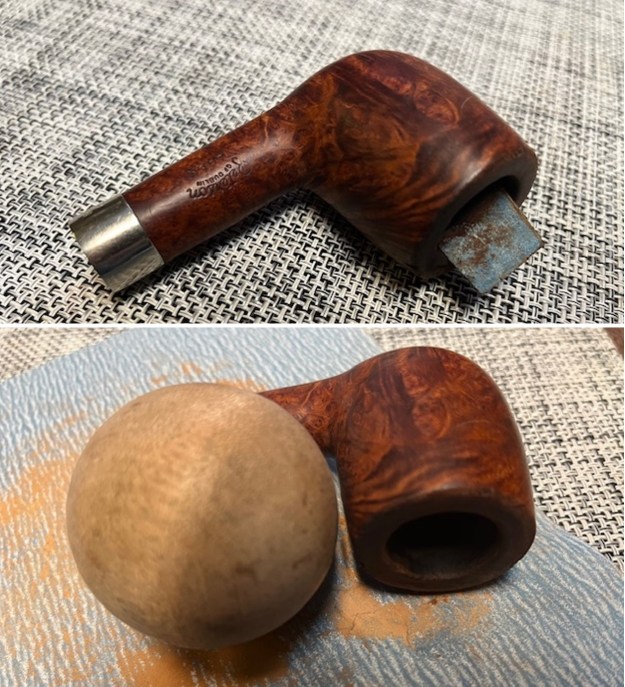
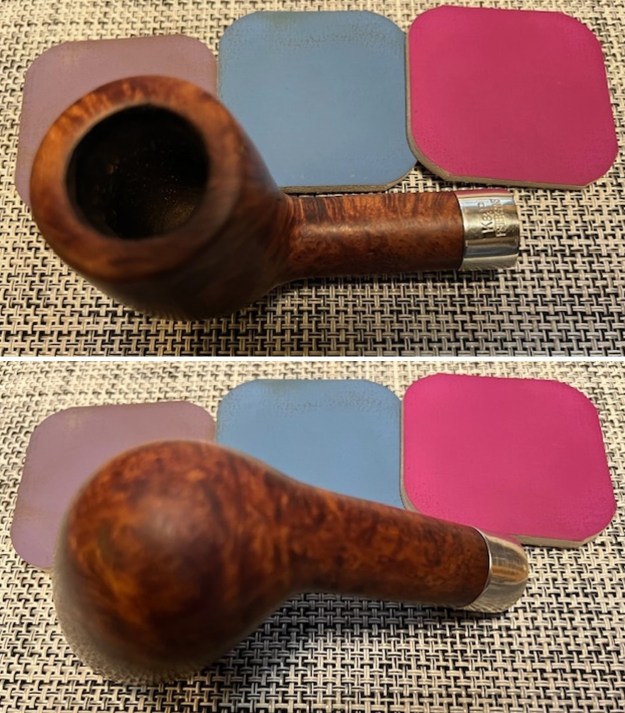
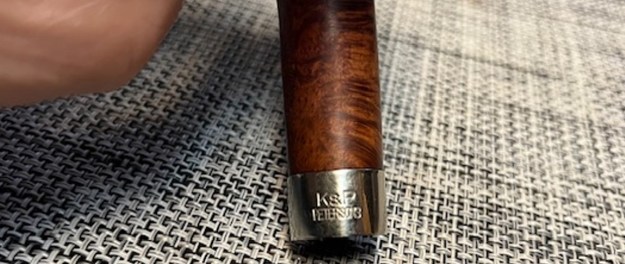
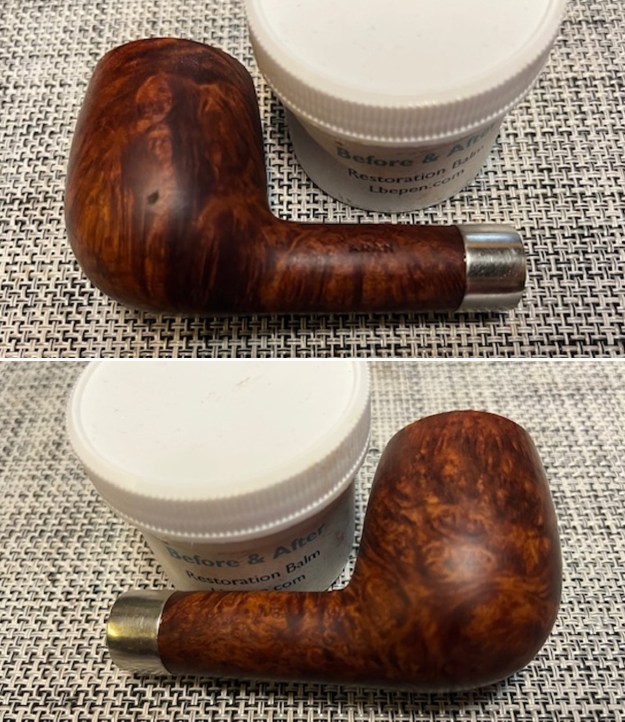
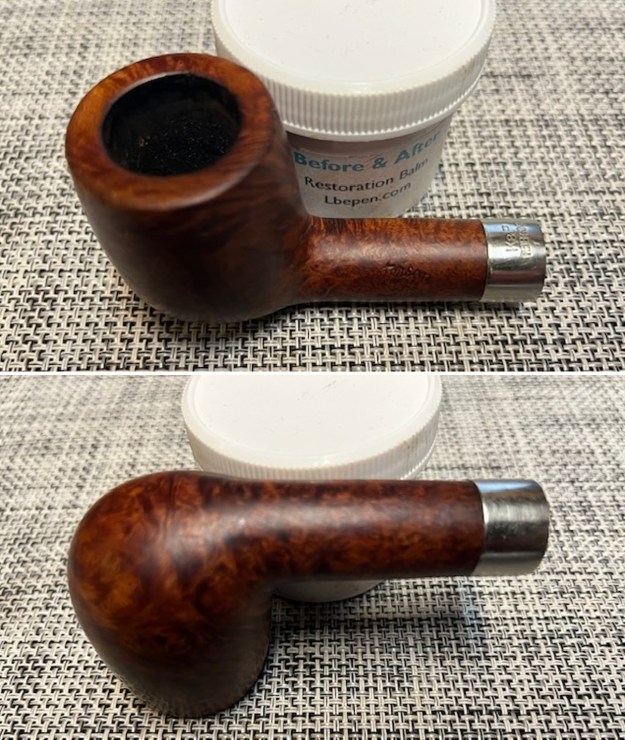
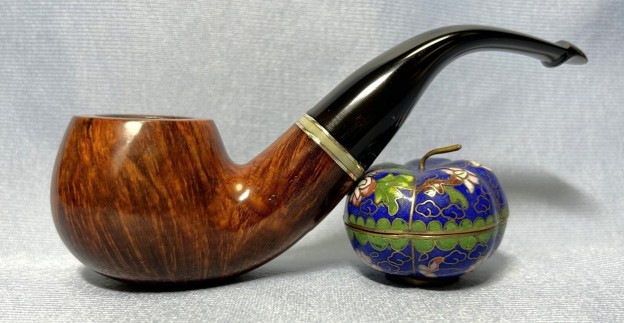
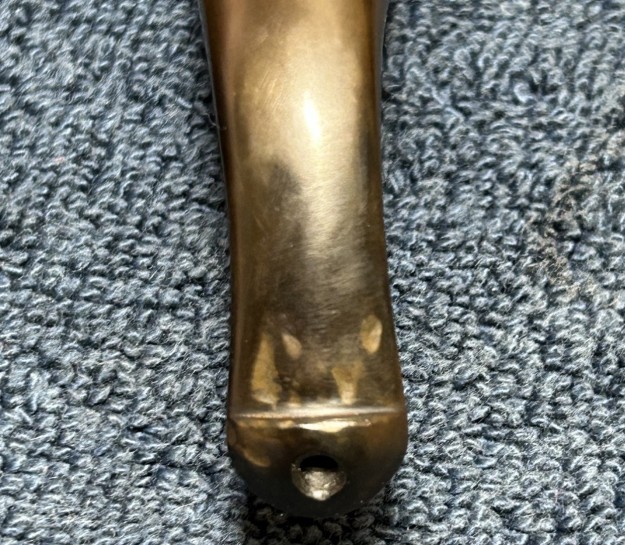
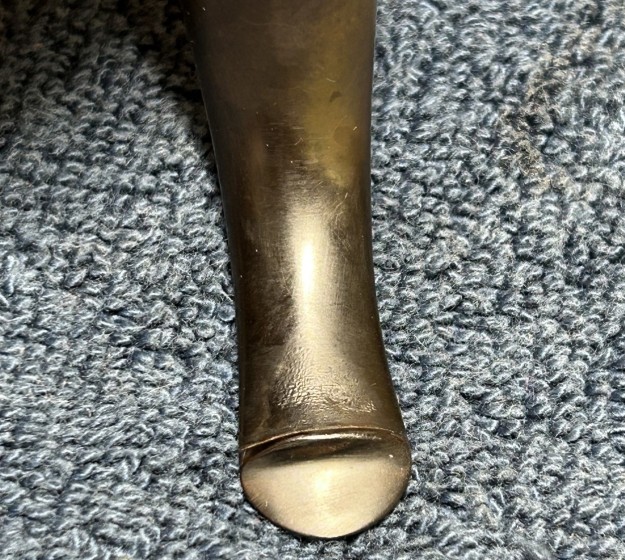
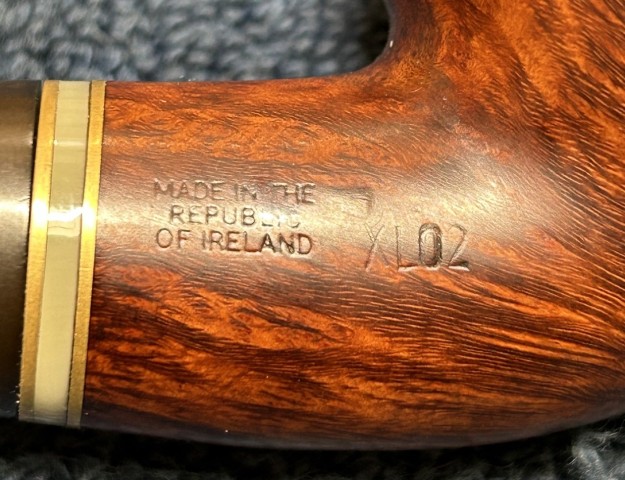
This is the second pipe in a series of three that I was given by my cousin to clean up and bring back to life. This is a republic era K&P Irish Made X105 straight billiard from Peterson. It’s a handsome pipe, for sure, but there are lots of fills all over the bowl and it was in rough shape. It is important to note that this stem is not the original, but, after some back-and-forth with my cousin, we decided to leave the stem as it is. The markings are clear enough. On the left side of the shank, it reads K & P [over] Irish Made. On the right side of the shank, it reads Made in the [over] Republic [over] of Ireland. Near to that is the shape number, X105. There are also some maker’s marks on the ferrule. Quoting from a previous blog of Steve’s, regarding an Irish Made, “There is a nickel ferrule on the shank that is stamped with three symbols – a shamrock. a wolf hound and a tower. These makers marks put the pipe as pre-circa 1963.” That helps! On to the pipe work… It turns out that this stem is the dirtiest stem I’ve dealt with for quite a while. I don’t think it’s ever seen a pipe cleaner in its life until I got a hold of it. The thing was absolutely filthy inside, and it took ages and ages to clean out with pipe cleaners and lemon infused 99% isopropyl alcohol. In fact, it was dirty enough that I actually used some tube brushes as well (along with some detergent) to scrub out the insides and finally got it vaguely clean. Another thing you’ll notice is how badly chomped the button and bit are. It looked pretty bad, but I took my BIC lighter and tried to raise those dents with its flame. This didn’t work very well, if at all.The oxidization on the stem was pretty brutal, so I used some SoftScrub on some cotton rounds and scrubbed the dickens out of it for quite a while. The photo shows how much came off the initial scrubbing. I then threw it into the deoxidizing solution to sit overnight. The next day, with the stem nice and clean, I needed to address those dents on the stem. I applied a type of black cyanoacrylate adhesive (impregnated with carbon and rubber) to the damaged area. I sprayed these areas with an accelerant to cure the adhesive immediately.I then had to shape these repairs so that they would look great! I began by taking a needle file and shaping the hardened adhesive. Continuing, I used 200- and 400-grit sandpapers on the repairs to smooth them out. I finished up by using all nine of my MicroMesh pads to sand the entire stem. I also used some pipe stem oil to assist with the sanding and protect the vulcanite. The stummel was also pretty nasty. I begin by reaming it out. First, I took a drill bit and hand cranked (never with a drill) it into the shank to break up the incredibly hardened debris in there. Of course, I followed that up with cotton swabs and pipe cleaners and isopropyl alcohol. It took a lot of scrubbing to get it clean. I also used some soap and tube brushes to make it extra clean. I cleaned the outside wood with some Murphy’s and then I set the stummel up for a de-ghosting session. I took a couple of cotton balls, gently stuffed them into the bowl and into the shank, and saturated them with 99% isopropyl alcohol. I let that sit overnight, and the alcohol did its thing, leaching out more of the filth from the stummel. As the photos have shown, this pipe had a lot of fills, so I dealt with them, with a mixture of cyanoacrylate adhesive and briar dust. There was also a chunk missing from the rim, and I filled that up with the same. There was a lot of burning and damage to the rim which I addressed with my topping board and some sandpaper. This is always a balancing act: you want to make it look better, but you don’t want to take off too much. There was a crack in the shank, and a crack at the rim. Both of those required drilling before I could repair them. I took my micro drill bit and delicately drilled a hole through the briar right at the very end of the crack. This tiny hole – almost too difficult to see – serves as an endpoint for the crack, ensuring that it will not grow any further. I then carefully laid a thin bead of CA, glue along both cracks and let it cure. This pipe had obviously had a hard life, and one thing I noticed was that the bowl had quite a few craze lines on the inside. I wanted to fix them to make sure they weren’t a problem in future. Recently, I learned about a new mixture for a pipe mortar that I wanted to try inside this bowl. I found the mix on an old YouTube video, but I honestly can’t remember who the fellow was, otherwise I would credit him here. If anybody remembers who that was, please let me know. Anyway, I mixed up a combination of plaster of Paris, table salt, and activated charcoal. Once blended, I added a few drops of water to make a very thick paste. I then put a thin layer on the inside of the bowl and let it set overnight. It worked like a charm.The next step was to sand everything down. I started with some 220-grit sandpaper and sanded the repairs down so that they were level with the briar. I then took my nine micromesh pads and sanded the whole thing. Despite its fills, the pipe will be much improved once I’m done with it. Of course, I used my restoration balm and rubbed that into the wood to have its nourishing properties work on the wood. I left it set for 20 minutes or so and, while I was waiting, I decided to fix up the nickel ferrule that goes at the end of the shank. I used most of my micromesh pads to polish it up and it came out beautifully. I glued it back on and set the stummel aside. Off to my bench polisher! As usual, I used white diamond as my first compound and followed that with a few coats of carnauba wax. It provides just the sort of glam this pipe needs to pop!This K&P Irish Made X105 straight billiard so much improved that I’m delighted and I’m sure my cousin will be too. I hope you enjoyed reading the story of this pipe as much I as I did restoring it. If you are interested in more of my work, please follow me here on Steve’s website or email me directly at kenneth@knightsofthepipe.com. Thank you very much for reading and, as always, I welcome and encourage your comments.

Restoring a Great Looking 1967 Dunhill Tanshell P F/T 4T Half Bent Bulldog


Blog by Steve Laug

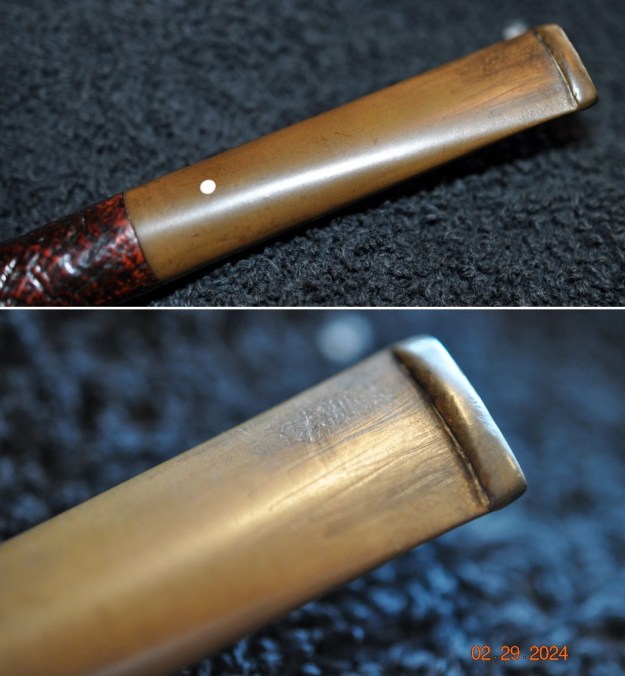
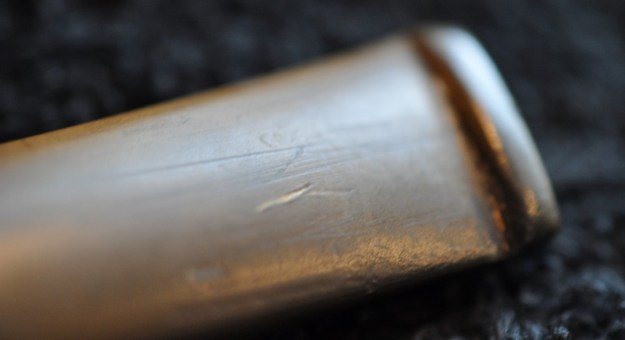
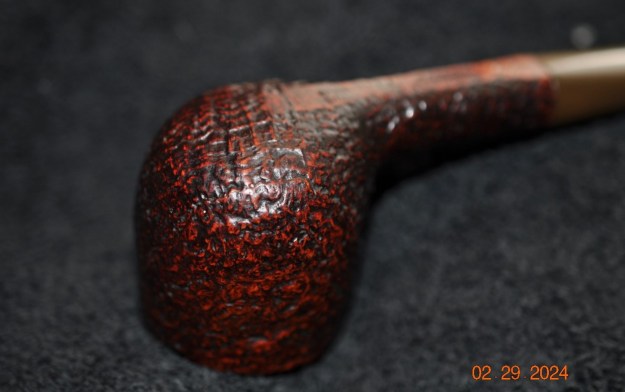
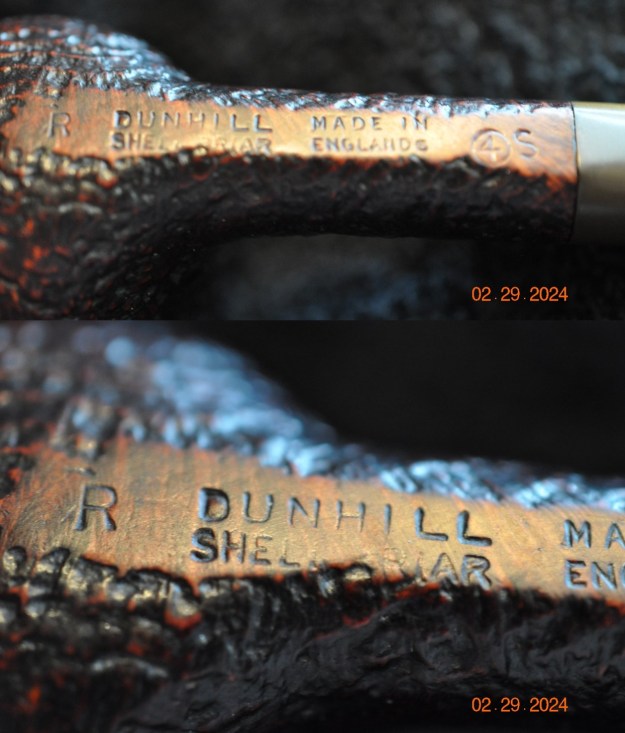
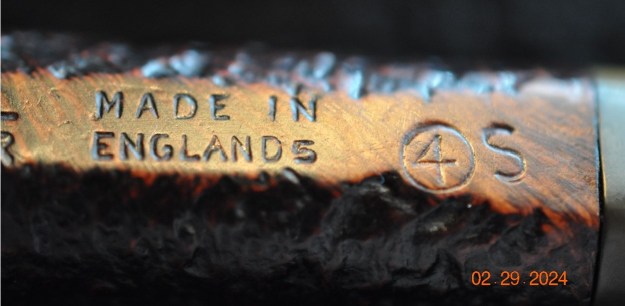
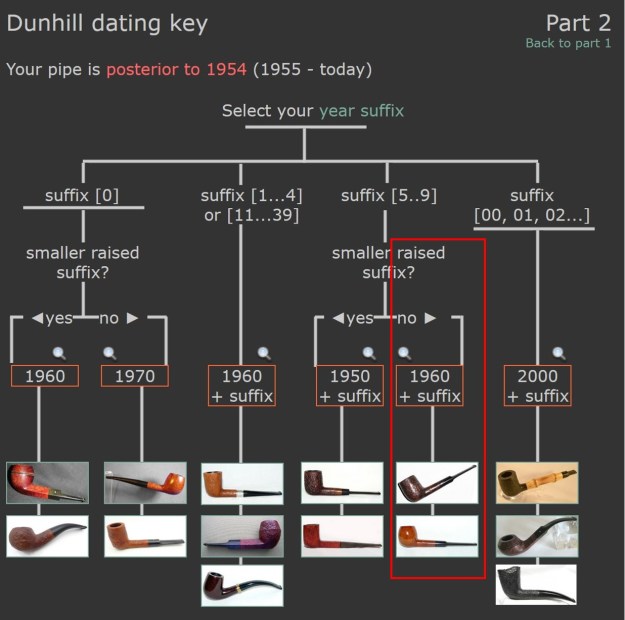
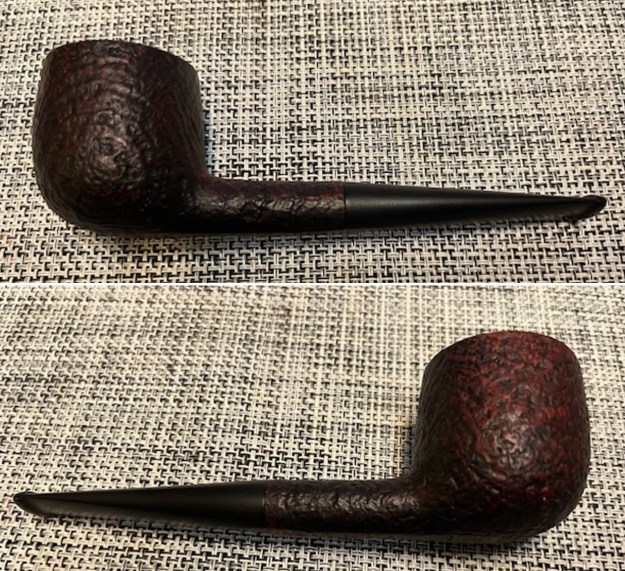
The next pipe on the table came to us from a group of pipes that Jeff and I purchased from a fellow in Copenhagen, Denmark on January 8, 2024. It is a Dunhill Tanshell Bent Bulldog that is in good condition. It is stamped on a smooth panel on the underside of the shank with the shape number P F/T followed by Dunhill [over] Tanshell. That is followed by Made in [over] England. Next to the D in England it is stamped the date number 7. Stamped after that is a 4 in a circle followed by a T. The stamping is clear and readable as noted above. The pipe has a tan or light brown stain on a sandblast finish and some amazing grain that the shape follows well. The finish was dusty around the nooks and crannies of the sandblast but otherwise fairly clean. It also had some darkening on the bowl sides where hand oils had darkened it and on the rim top. The bowl had a thick cake and there was some light lava on the sandblasted rim top or edges. The taper stem was oxidized, calcified, dirty and had tooth marks and chatter ahead of the button. Jeff took photos of the pipe to show what it looked like before he started working on it. He took photos of the bowl and rim top to show their condition and of the stem to show the condition of both sides of the stem. The photos of the sides and heel of the bowl show the deep sandblast grain on the pipe. It is a beauty.The stamping on the underside of the shank is shown in the photo below. It looks very good and faint but readable. It reads as noted and explained above. Jeff captured the detail in the photos below. One of the first things I like to do is to unpack the stamping and understand each element in it. I turned to Pipephil helpful site (http://pipephil.eu/logos/en/dunhill/tanshell1.html). The stamping is interpreted as follows: The number P is the shape number for a Half Bent Bulldog and the F/T is for a fishtail stem. The Dunhill Tanshell is the finish. The number 7 following the D of England gives the date the pipe as 1967.Pipephil also has some helpful dating keys on the site that are basically flow charts that you can walk through to date your pipe (http://pipephil.eu/logos/en/dunhill/cledat-en1.html). I turned to Part 1 of the Dating Key and followed the chart. This pipe has a suffix of underlined, superscript 22 following the D in England. That number took me to the section on the chart below (column one) which instructed me that the pipe could be dated as being made posterior to 1954.I followed the link following the “Your pipe is posterior to 1954. Narrow down your dating”. That took me to Page 2 of the dating key (http://pipephil.eu/logos/en/dunhill/cledat-en1a.html).   The third column (suffix 5…9) led me to the section that sections suffix. There was a directive for dating the pipe spelled out as follows: 1960 + suffix which gives the pipe a date of 1967.I then turned to Pipedia’s section on Dunhill Root Briar to get a bit of background on the Dunhill finishes (https://pipedia.org/wiki/Dunhill#Root_Briar). I quote:

The Tanshell

The first lot was distributed in 1952 (usually made using Sardinian briar). The prototype was called “Root Shell “, produced in 1951. The Tanshell is a light tan sandblast. Sardinian briar was used for this sandblast. There is a distinct contrast in the sandblasts using Sardinian as opposed to Algerian briar. The Sardinian is much denser and much harder. The resulting pattern, when blasted, is far more even and regular both in terms of the surface texture and the finish.

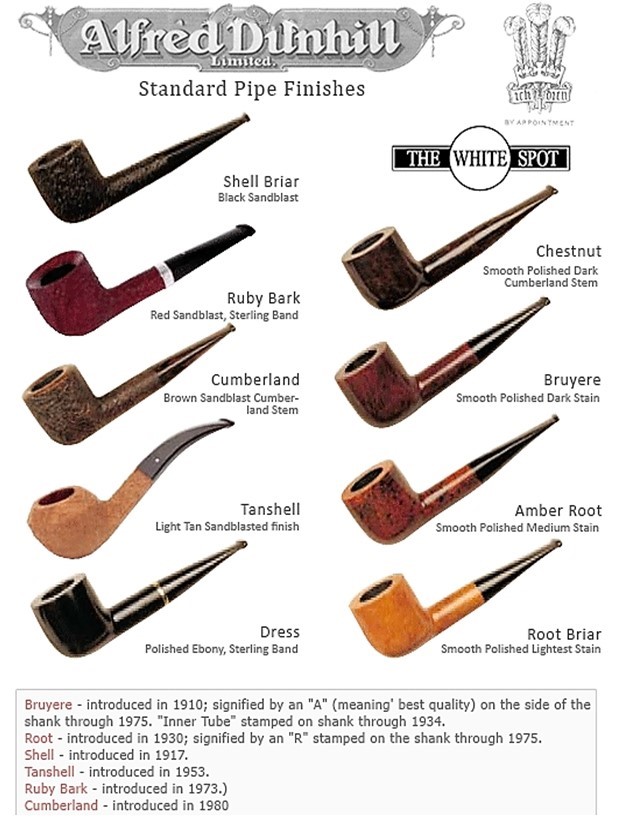
“The TanShell was Dunhill’s fourth finish and its first major post-war line addition. Introduced in 1951/1952 the TanShell was a naturally stained sandblasted pipe made exclusively from Sardinian briar through the 1960s. The TanShell apparently was not simply a light stained Shell but rather was also the product of “certain processes [unrevealed] not previously employed.” Initially, it appears that the pipe was to be named the Root Shell and a stamp to that effect was ordered and received by Dunhill in May 1951. Ultimately, however, the name TanShell was settled upon but the stamp for the TanShell name was not received by Dunhill until the beginning of December. Thus while the Tanshell was in production in 1951 it appears that most if not all TanShells made in that year did not enter into retail distribution until 1952 and were given a 1952 date code.” Loring, J. C., The Dunhill Briar Pipe, The Patent Years and After (self-published, Chicago, 1998). I have also included a chart from the site from Dunhill spelling out the Standard Pipe Finishes and giving short information and a timeline. I turned to work on the pipe itself. Jeff had done an amazing cleanup of the pipe. He reamed the light cake with a PipNet reamer and cleaned up that with a Savinelli Fitsall Pipe Knife. He scrubbed the internals of the bowl and stem with alcohol, cotton swabs and pipe cleaners. He scrubbed the externals with undiluted Murphy’s Oil Soap and rinsed the bowl off with running water. He soaked the stem in Briarville’s Pipe stem Deoxidizer and once it had soaked rinsed it off with warm water to remove the residual solution. He dried it off and rubbed it down to remove any oxidation that was still on the stem. The pipe looked very good when I received it. I took a photo of the rim top to show the condition. You can see the clean bowl. The bowl is in excellent condition and looks very good. There is some darkening on the rim top and some light damage to the front inner edge of the bowl. The stem came out looking quite good. There are some tooth marks and chatter on both sides ahead of the button.I took a photo of the underside of the shank to show the stamping. The photo clearly shows the stamping and is actually more readable in person. I removed the stem from the shank and took a photo of the pipe parts to show what I was working with. It is a nice looking pipe.I worked over the sandblast finish with a brass bristle brush to clean up the darkening on the rim top and in blast on the sides of the bowl. I scrubbed the rim top and the darkening on the cap and the sides of the bowl with some Before & After Briar Cleaner that Mark Hoover recently sent me. It worked well to remove the darkening on the briar. It looked much cleaner with the darkening lightened. I worked on the inner edge of the bowl to bring it back to round using a folded piece of 220 grit sandpaper. I gave it a slight bevel to accommodate the damage. I stained the top, edge and cap of the bowl with a Maple stain pen to match the rest of the bowl.The bowl was in such good condition that I had to do some minimal work with it. I rubbed the briar down with Before & After Restoration Balm. I worked it into the briar with my fingertips and a horsehair shoe brush to work it into the nooks and crannies of the sandblast finish. The product works to clean, enliven and preserve the briar. I let it sit for 10 minutes then I buffed it with a cotton cloth to deepen the shine. The briar really comes alive with the balm. I set the bowl aside and turned my attention to the stem. The tenon was in great condition and it appeared to have been made for a Dunhill filter. I tried a 6mm filter and it was too large. I painted the surface of the stem with the flame of Bic lighter to lift the tooth marks. I was able to lift them significantly. I filled in what remained with clear CA glue. Once the repair had cured I sanded it smooth to blend it into the surface of the vulcanite with 320-3500 grit sanding pads. It worked well to smooth things out and once finished the stem looked much better.I polished the vulcanite with micromesh sanding pads – 1500-12000 grit pads. I wiped it down with Obsidian Oil after each sanding pad. I used Before & After Pipe Polish – both Fine and Extra Fine to further polish the stem. This 1967 Dunhill Tanshell P Half Bent Bulldog with a Taper Stem has a beautiful, unique Dunhill Sandblast finish that is very deep and craggy. The rich brown/red finish highlights some great grain around the bowl and shank. It has some great rugged sandblast that Dunhill specialized in making. The polished black vulcanite taper stem adds to the mix. I put the stem back on the bowl and buffed the pipe with Blue Diamond on the buffing wheel being careful to not buff the stamping. I gave the bowl multiple coats of Conservator’s Wax and the stem multiple coats of carnauba wax on the buffing wheel and followed that by buffing it with a clean buffing pad. I hand buffed the pipe with a microfiber cloth to deepen the shine. The finished Dunhill Tanshell P Half Bent Bulldog is quite nice and feels great in the hand. Give the finished pipe a look in the photos below. The dimensions of the pipe are Length: 5 ½ inches, Height: 1 ¾ inches, Outside diameter of the bowl: 1 ½ inches, Chamber diameter: 7/8 of an inch. The weight of the pipe is 1.45 ounces/41 grams. Thanks for walking through the restoration with me as I worked over another beautiful pipe. If you are interested in adding it to your collection I will be adding it to the British Pipe Makers Section of the rebornpipes store. Thanks for your time.
Clearing Up Some Birks Confusion


Blog by Kenneth Lieblich

This happy little fellow is a sandblasted, stylized bent Zulu by Birks. My cousin gave me three pipes to repair – this is the first one I grabbed. I was interested in it for two reasons. First there was a cracked shank, and I always like giving life back to a pipe with a cracked shank. Second, the pipe comes with the name of the famous Canadian jewellery house, Birks. I’m interested in this because I have several Birks pipes in my workshop and they’re all a little different. More on that in a moment. The markings on the pipe don’t tell us much – but they tell us enough. The only markings are on the underside of the stummel and they read Birks [over] Regency. To the left of that are the words Made in England. Allow me to explain some of this.Birks refers to Henry Birks & Sons, a venerable and well-known luxury store based in Canada (now known as Maison Birks). It has focused primarily on jewellery throughout its history, but also other luxury items like watches, silverware, etc. There has been some discussion in pipe circles about whether Birks sold pipes or not – and whether Birks actually refers to an English company (as Wilczak and Colwell suggested in Who Made That Pipe?). I can say definitively that Henry Birks & Sons sold pipes. They did not manufacture their own, but had others make them for sale at Birks’ stores. Steve has already restored some Birks-branded pipes made by Savinelli. I have Birks-branded pipes made in England and in Denmark.Two further points about this. First, I wonder if Wilczak and Colwell were thinking of an English razor company (also called Birks) that frequently used a maker’s mark that was in the shape of a pipe (rather unhelpfully). For more on that, click here. Second (as I mentioned earlier), this particular pipe has the word Regency on it. Regency specifically refers to a Henry Birks line of silverware, china, etc. – so that makes sense.

The stummel was surprisingly clean when I took hold of it. I did use a few cotton swabs and pipe, cleaners, along with isopropyl alcohol, but it didn’t take much to finish it. I followed that up with some Castile soap, and tube brushes to really scrub the insides. Came out beautifully. I’ve then took some Murphy’s, and a toothbrush and gently scrubbed the years of filth and oil, etc. off of the sandblast. It certainly looked much cleaner after that, albeit much more faded. A new coat of stain will be required, I think. As a result, I took the opportunity to wipe down the stummel, with alcohol to remove some excess old stain, and make sure everything was clean for the repair to the crack in the shank. Let’s move onto the primary repair to this pipe: that crack in the shank. First of all, I took the most micro of micro drill bits and drilled a hole with my Dremel right through the shank wall into the airway. This is an important step as it stops the crack from extending later on in life. The drill bit is so thin that it’s always a bit nerve-racking, because I fear snapping the bit through such hardwood. Fortunately, it worked like a charm this time. I also stuffed the mortice with pipe cleaners coated in Vaseline, so that if – God forbid – any cyanoacrylate adhesive drip into the mortise, it can be easily removed by the petroleum jelly. I ran a thin bead of cyanoacrylate adhesive along the length of the crack, and then held the two sides of the crack together with some vice grips. I let it sit for a few hours to cure. Moving along to the stem. Like the stummel, it was also quite clean, but needed a few more pipe cleaners to finish the job. Of course, I used isopropyl alcohol with them. I then wiped down the stem with Murphy’s on a cotton round. Once done, I put the stem in the deoxidizing fluid, even though there wasn’t much oxidation to speak of. It can’t hurt, and it’ll remove what little there is. After the adhesive cured on the shank, I set about sanding the underside of the stummel because there were a lot of scratches there. I also needed to sand down the bead of adhesive that I put there. It was tricky, because there wasn’t much room to move, with the markings so nearby. I started out by masking those markings with hockey tape, which is a perfect masking material as it is extremely scratch resistant. However, it ended up being more trouble than it was worth given the tight spaces to work in. Instead, I just sanded the area down, freehand, so to speak. It was time to stain the pipe, so I took out my Fiebling’s black leather dye. I thoroughly coated the stummel with a dauber, then flamed it with my BIC lighter to set the color. I repeated this process three more times to ensure a really deep, rich, black colour. it worked a treat.In order to ensure the crack in the shank doesn’t open up again, I decided to add a band to the shank to secure everything in place. The bands always look a little dull when they come out of my drawer, so I polished it up with my micromesh sanding pads. Naturally, I did the same to the stem. Came out beautifully. The next step, of course, was adding the restoration balm to the wood. This not only enriches and enlivens the briar, but helps add a protective layer to the dye in the wood. Off to my bench polisher! As usual, I used white diamond as my first compound, but instead of the regular conservator’s wax that I would use on sandblasted or rusticated pipes, I opted to use Halcyon II this time. It also gives a nice polish to the pipe, but slightly less shiny than normal – which is what I was aiming for.This Birks Bent Zulu looks beautiful once again. I’m sure my cousin will love it. I hope you enjoyed reading the story of this pipe as much I as I did restoring it. If you are interested in more of my work, please follow me here on Steve’s website or email me directly at kenneth@knightsofthepipe.com. Thank you very much for reading and, as always, I welcome and encourage your comments.

Restoring a Lovely 1982 Dunhill Shell 31101 Liverpool


Blog by Steve Laug

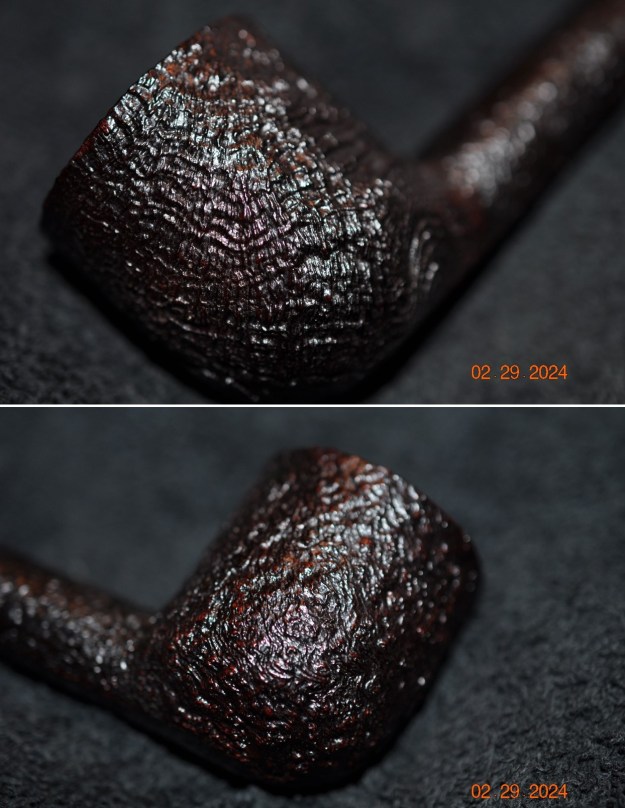
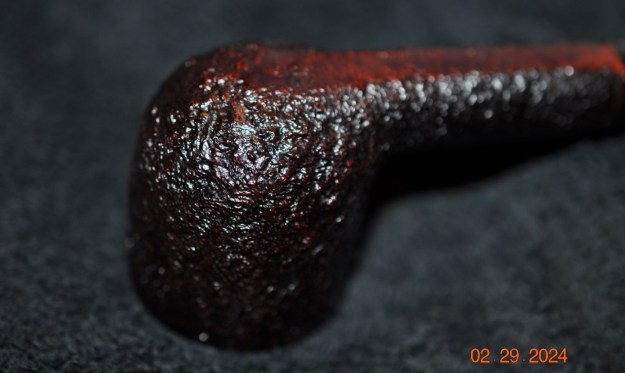
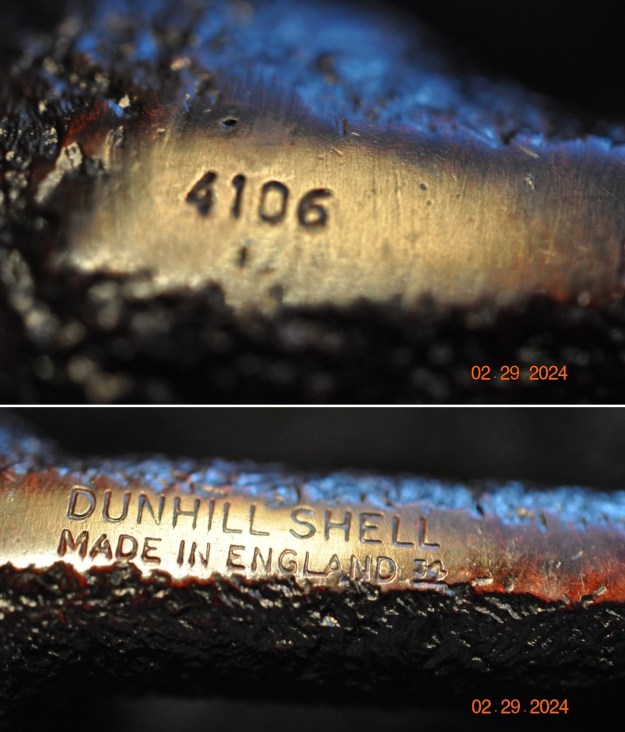
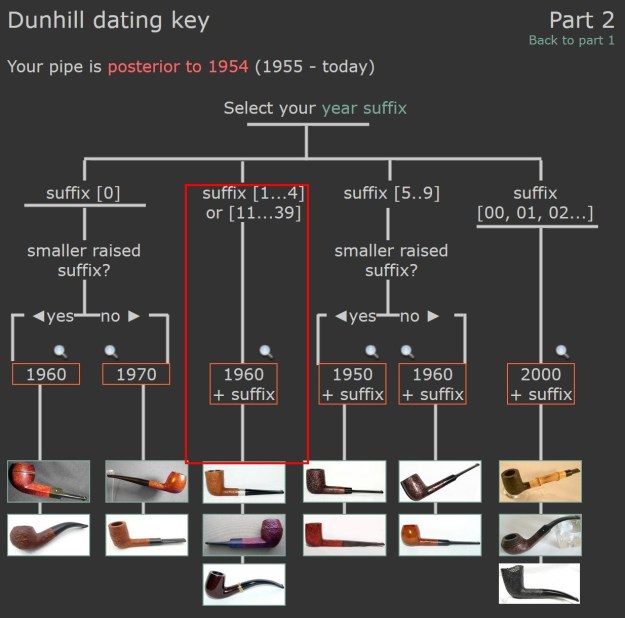
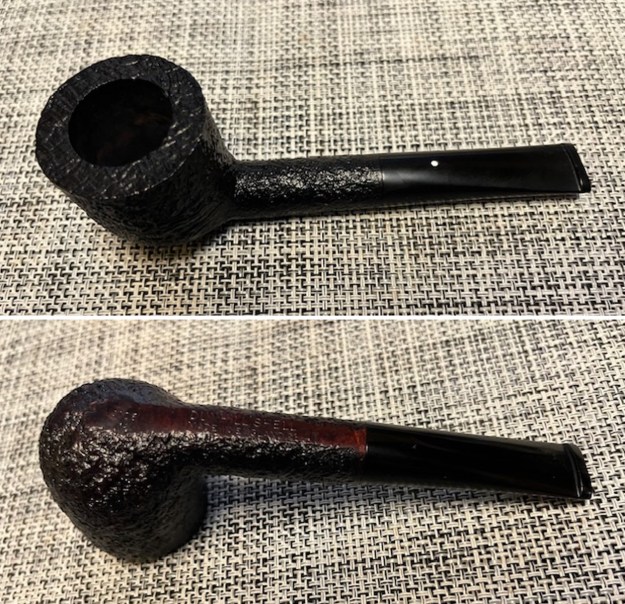
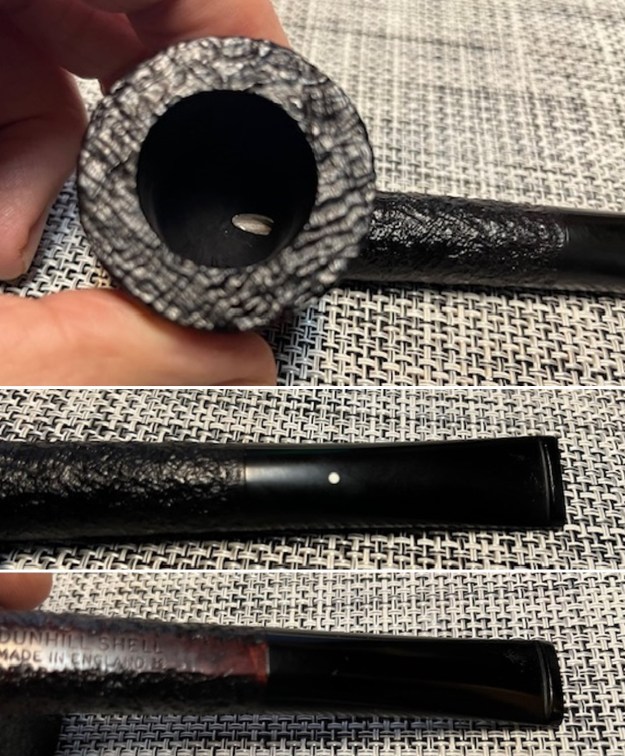
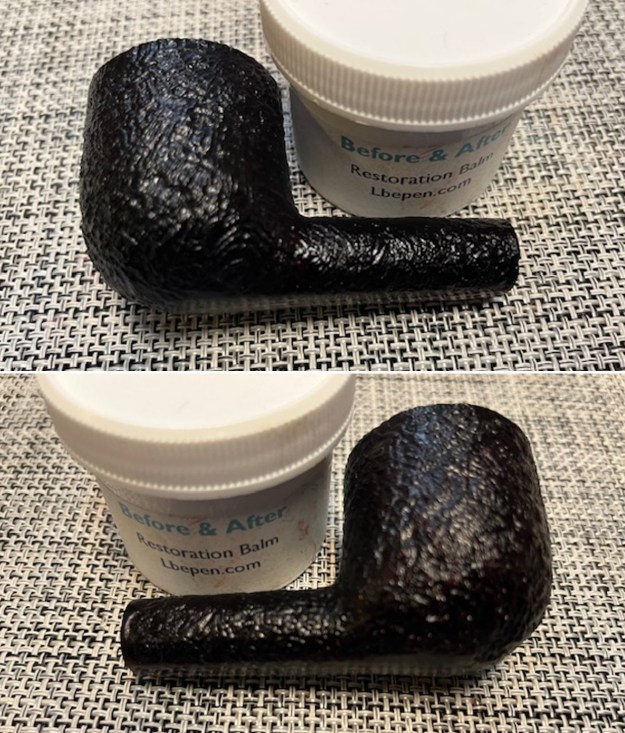
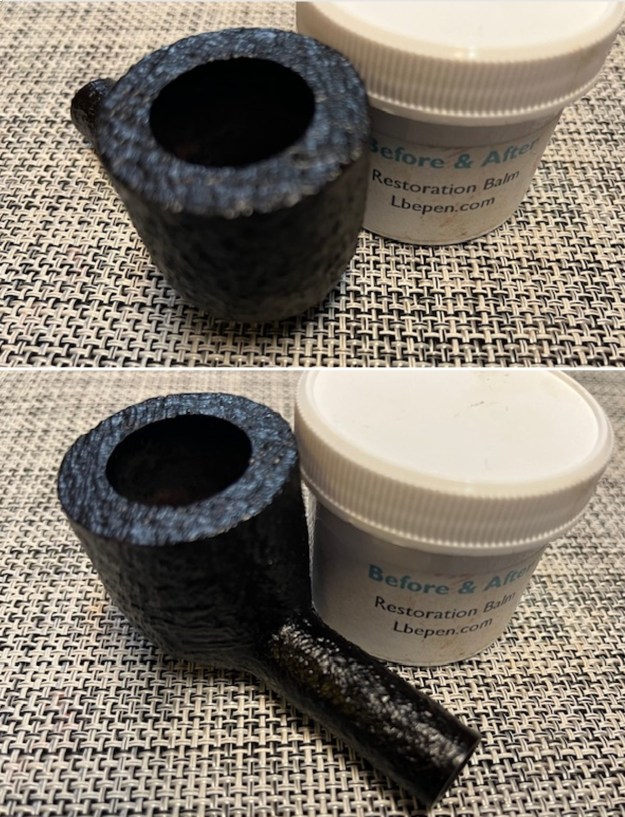
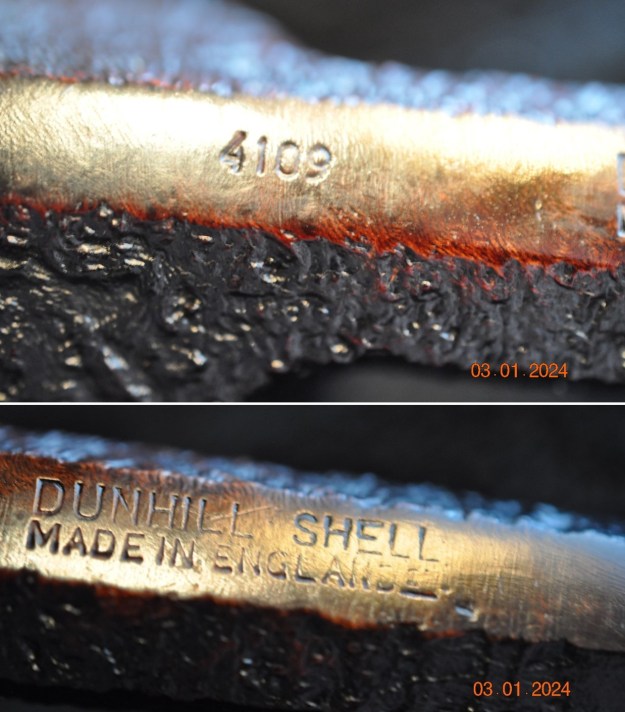
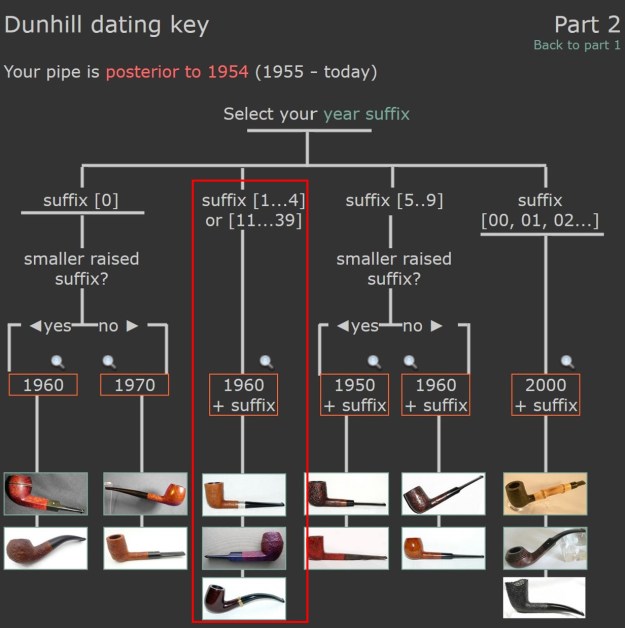
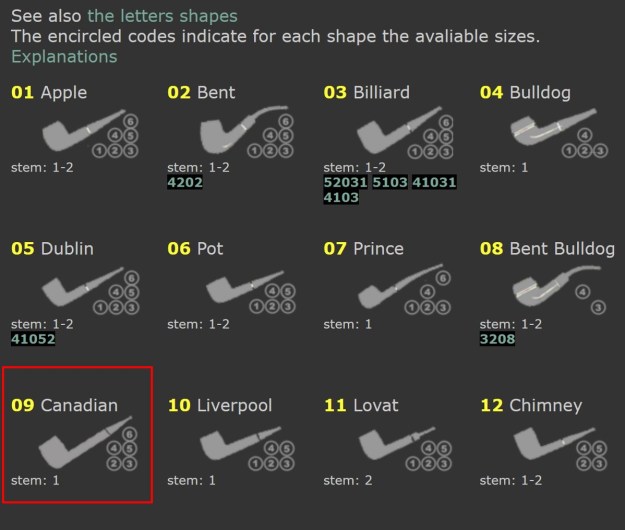
The next pipe on the table came to us from a group of pipes that Jeff and I purchased from a fellow in Copenhagen, Denmark on December 9, 2023. It is a Dunhill Shell Liverpool that is in good condition. It is stamped on a smooth panel on the underside of the shank with the shape number 31101 followed by Dunhill Shell [over] Made in England. Next to the D in England it is stamped the date number 22. The second number is faint but I believe it is a 2. There is nothing stamped after that – no circle number or letter. The stamping is clear and readable as noted above. The pipe has a mix of black, cordovan and brown stains on a sandblast finish and some amazing grain that the shape follows well. The finish was dusty around the nooks and crannies of the sandblast but otherwise fairly clean. The bowl had a thick cake and there was some light lava on the sandblasted rim top or edges. The taper stem was oxidized, calcified, dirty and had light tooth marks and chatter ahead of the button. Jeff took photos of the pipe to show what it looked like before he started working on it. He took photos of the bowl and rim top to show their condition and of the stem to show the condition of both sides of the stem. The photos of the sides and heel of the bowl show the deep sandblast grain on the pipe. It is a beauty. The stamping on the underside of the shank is shown in the photo below. It looks very good and faint but readable. It reads as noted and explained above. Jeff captured the detail in the photos below. One of the first things I like to do is to unpack the stamping and understand each element in it. I turned to Pipephil helpful site (http://pipephil.eu/logos/en/dunhill/shell-briar1.html). The stamping is interpreted as follows: The number 31101 is the shape number for a Liverpool. The Dunhill Shell is the finish. The shape number tells me that the bowl size is 3, the 11 tells me it is a Liverpool shape and the 01taper stem. The superscript, underlined 22 following the D of England gives the date the pipe as 1982. Pipephil also has some helpful dating keys on the site that are basically flow charts that you can walk through to date your pipe (http://pipephil.eu/logos/en/dunhill/cledat-en1.html). I turned to Part 1 of the Dating Key and followed the chart. This pipe has a suffix of underlined, superscript 22 following the D in England. That number took me to the section on the chart below (column one) which instructed me that the pipe could be dated as being made posterior to 1954.I followed the link following the “Your pipe is posterior to 1954. Narrow down your dating”. That took me to Page 2 of the dating key (http://pipephil.eu/logos/en/dunhill/cledat-en1a.html).   The second column (suffix 1…4 or 11…39) led me to the section the 22 suffix. There was a directive for dating the pipe spelled out as follows: 1960 + suffix which gives the pipe a date of 1982.I then turned to Pipedia’s section on Dunhill Root Briar to get a bit of background on the Dunhill finishes (https://pipedia.org/wiki/Dunhill#Root_Briar). I quote:

Shell
A deep craggy sandblast with a black stain finish (usually made using Algerian briar) – the color of the stain used has varied over the years. Although there is some doubt as to them being the first to sandblast pipes, Dunhill’s Shell pipes, and the sandblasting techniques developed to create them are considered one of Dunhill’s greatest and most lasting contributions to the art of pipe making.

The documented history of Dunhill’s inception of the Shell is largely limited to patent applications — there are no catalog pages or advertisements promoting blasted pipes at the time. The preliminary work on the English patent (No. 1484/17) was submitted on October 13, 1917. The patent submission was completed half a year later, on April 12, 1918, followed by the granting of the English patent on October 14, 1918. This was less than a month before the end of The Great War on November 11th.

In 1986 Dunhill released a line of premium Shell finish pipes – “RING GRAIN”. These are high-quality straight grain pipes which are sandblasted. Initially only Ring Grain, but now in two different finishes. In 1995 the “Shilling” was introduced with Cumberland finish – it is an extremely rare series. These pipes exhibit a deeper blast characteristic of that of the 1930’s – mid-1960’s (and the limited ‘deep blast’ pipes of the early 1980s) and show a fine graining pattern. These are considered the best new Dunhills by many enthusiasts today and are very rare. The finish is sometimes described as tasting like vanilla at first, with the taste becoming more normal or good as the pipe breaks in.

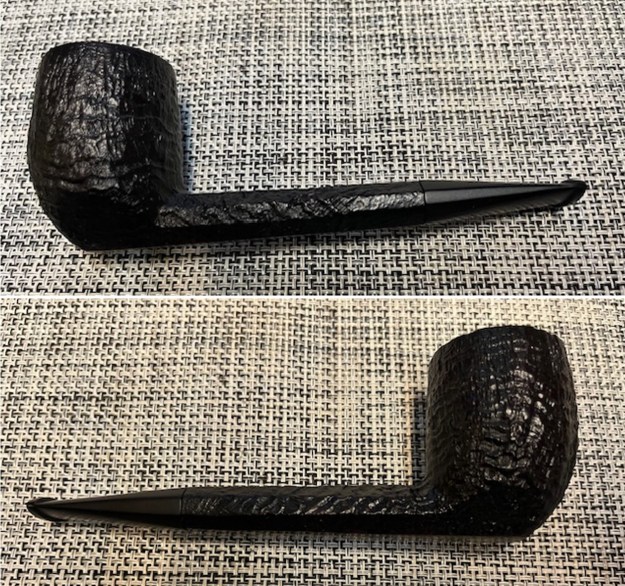
I have also included a chart from the site from Dunhill spelling out the Standard Pipe Finishes and giving short information and a timeline. I turned to work on the pipe itself. Jeff had done an amazing cleanup of the pipe. He reamed the light cake with a PipNet reamer and cleaned up that with a Savinelli Fitsall Pipe Knife. He scrubbed the internals of the bowl and stem with alcohol, cotton swabs and pipe cleaners. He scrubbed the externals with undiluted Murphy’s Oil Soap and rinsed the bowl off with running water. He soaked the stem in Briarville’s Pipe stem Deoxidizer and once it had soaked rinsed it off with warm water to remove the residual solution. He dried it off and rubbed it down to remove any oxidation that was still on the stem. The pipe looked very good when I received it. I took a photo of the rim top to show the condition. You can see the clean bowl. The bowl is in excellent condition and looks very good. The stem came out looking quite good. There are some light tooth marks and chatter on both sides ahead of the button. I took a photo of the underside of the shank to show the stamping. The photo clearly shows the stamping and is actually more readable in person. I removed the stem from the shank and took a photo of the pipe parts to show what I was working with. It is a nice looking pipe.I worked on the inner edge of the bowl to bring it back to round using a folded piece of 220 grit sandpaper. I gave it a slight bevel to accommodate the damage. I stained the edge of the bowl with a Walnut stain pen to match the rest of the bowl.The bowl was in such good condition that I had to do some minimal work with it. I rubbed the briar down with Before & After Restoration Balm. I worked it into the briar with my fingertips and a horsehair shoe brush to work it into the nooks and crannies of the sandblast finish. The product works to clean, enliven and preserve the briar. I let it sit for 10 minutes then I buffed it with a cotton cloth to deepen the shine. The briar really comes alive with the balm. The stem marks were light enough that I polished the vulcanite with micromesh sanding pads – 1500-12000 grit pads. I wiped it down with Obsidian Oil after each sanding pad. I used Before & After Pipe Polish – both Fine and Extra Fine to further polish the stem. This 1982 Dunhill Shell Briar 31101 Taper Stem Liverpool has a beautiful, unique Dunhill Sandblast finish that is very deep and craggy. The dark mixed black/brown/red finish highlights some great grain around the bowl and shank. It has some great rugged sandblast that Dunhill specialized in making. The polished black vulcanite taper stem adds to the mix. I put the stem back on the bowl and buffed the pipe with Blue Diamond on the buffing wheel being careful to not buff the stamping. I gave the bowl multiple coats of Conservator’s Wax and the stem multiple coats of carnauba wax on the buffing wheel and followed that by buffing it with a clean buffing pad. I hand buffed the pipe with a microfiber cloth to deepen the shine. The finished Dunhill Shell Briar 31101 Liverpool is quite nice and feels great in the hand. Give the finished pipe a look in the photos below. The dimensions of the pipe are Length: 5 inches, Height: 1 ¾ inches, Outside diameter of the bowl: 1 1/8 inches, Chamber diameter: ¾ of an inch. The weight of the pipe is .81 ounces/23 grams. Thanks for walking through the restoration with me as I worked over another beautiful pipe. If you are interested in adding it to your collection I will be adding it to the British Pipe Makers Section of the rebornpipes store. Thanks for your time.
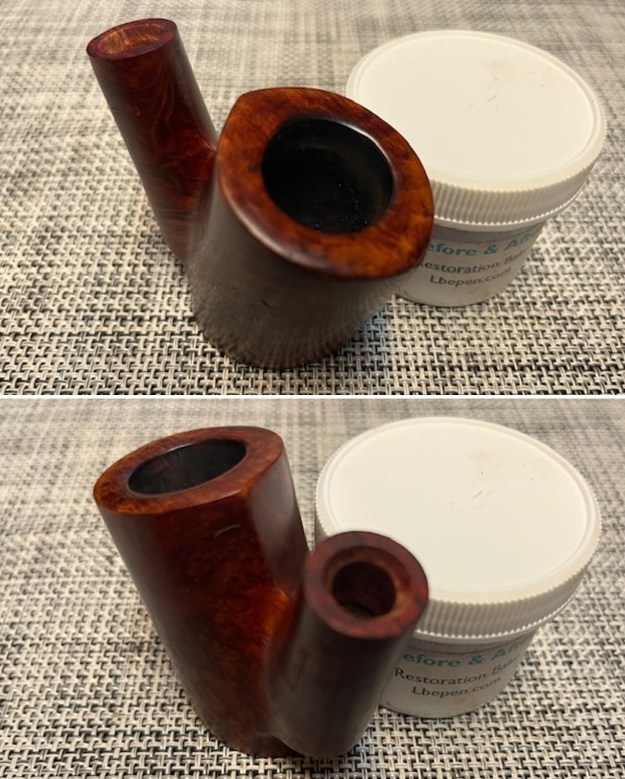
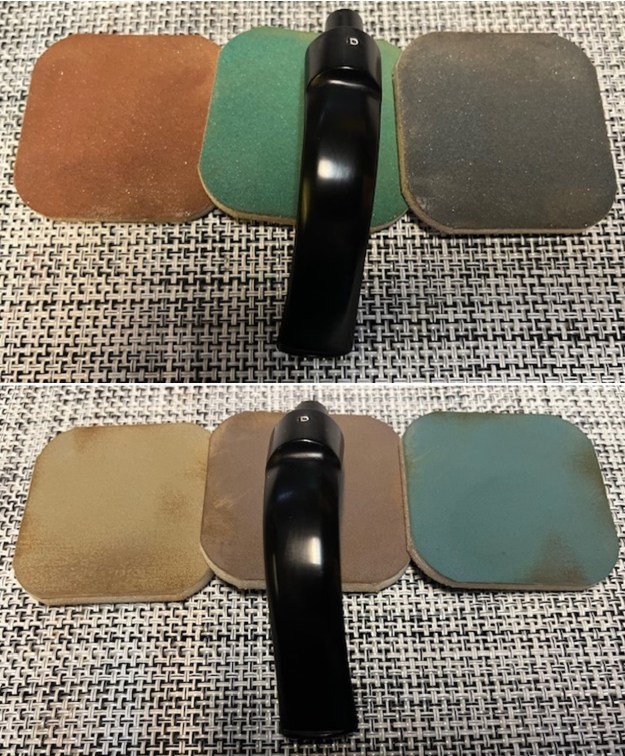
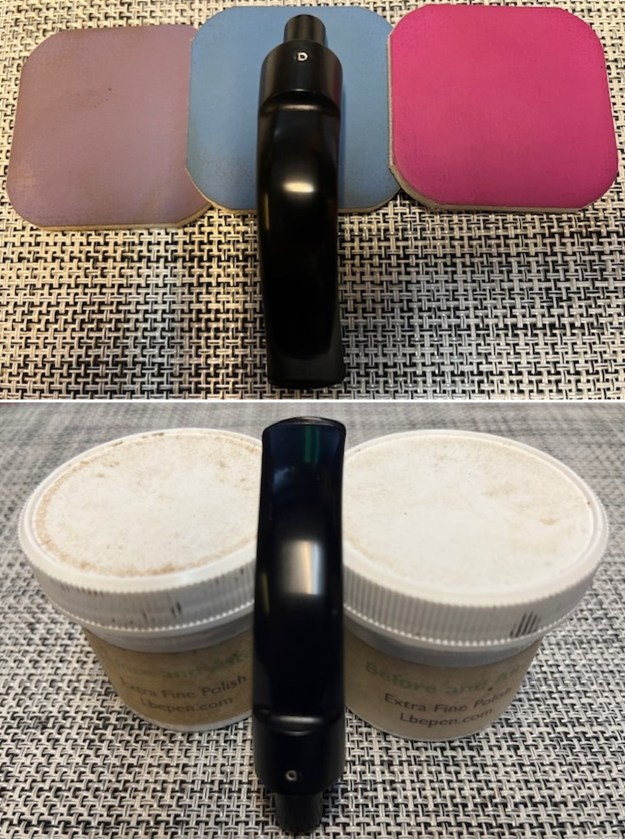
New Life for a “Malaga” Apple with a Taper Vulcanite Stem


Blog by Steve Laug

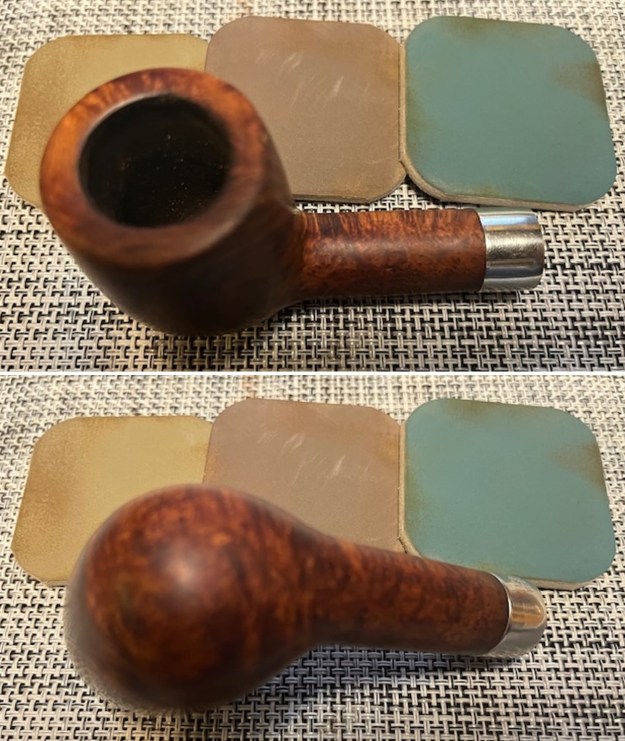
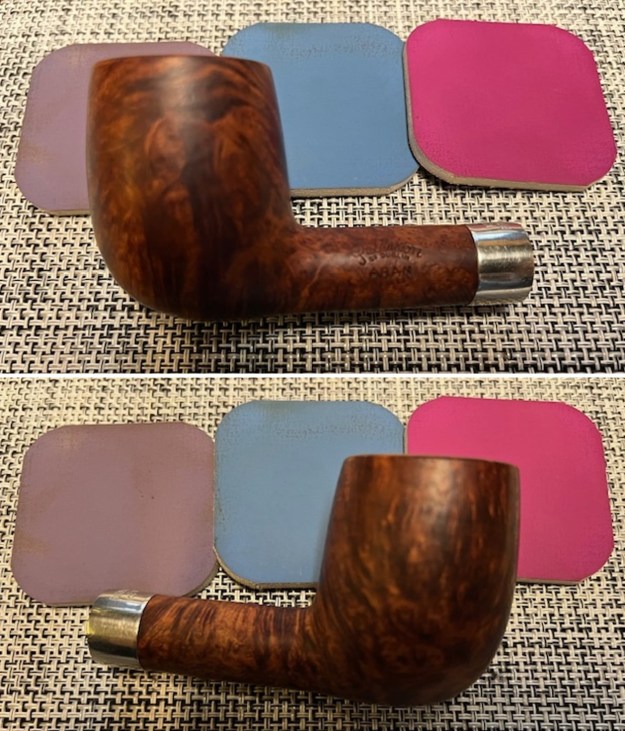
I have three more Malaga Pipes that Jeff sent me to work on. The third of those on the table this afternoon is an interesting Malaga shape I would call an Apple. Jeff saw it on eBay and purchased it on 12/15/2023 from a seller in Tecumseh, Michigan, USA. The grain on this pipe is quite nice. Once again it was obviously someone’s favourite smoker. It is stamped on the left side of the shank and read “MALAGA” and on the right side it is stamped Imported Briar. The smooth bowl and shank were dirty and worn. There were tars and oils ground into the surface of the briar. The bowl had a thick cake that flowed over the top of the smooth rim in a spotty lava coat. There were also nicks and dents in the rim top surface. It was hard to clearly assess the condition of the inner edge. The condition of the rim edge and top would become clear in the cleaning process. The outer edge looked very good. The taper stem was vulcanite. There were light tooth marks on the top and the underside of the stem ahead of the button. Jeff took photos of the pipes before he started his clean up work. Jeff took photos of the rim and bowl to show the cake and the spotty lava on the rim top and edges. The inner edge of the rim showed thick cake coming up to the top and flowing over the edge. The outer edge showed some deep damage on the back side of the bowl. It was a dirty pipe but still a beauty. The vulcanite taper stem had deep tooth marks and chatter on the top and underside of the stem ahead of the button. The photos of the sides and heel of the bowl show some stunning and unique grain all around the pipe. The oil curing/finish makes the grain really stand out on the bowl and shank. Jeff took a photo of the stamping on the left side of the shank. On the left it read MALAGA as noted above. He did not take a photo of the right side but it read Imported Briar. The stamping was clear and readable.For those of you who are unfamiliar with the brand, I am also including the link to a blog that I wrote that gives some of the history of the Malaga brand and the Malaga Pipe Shop in Royal Oak, Michigan in the USA. Here is the link – https://rebornpipes.com/2013/02/09/george-khoubesser-and-malaga-pipes/. That blog also includes links to a catalogue and the history of the pipemaker George Khoubesser. If you are interested to learn more then I invite you to follow the link to get a feel for the brand and the pipemaker.
I am also am including a link to some printed material on the Malaga brand that came to me from the daughter of George Koch (we purchased George’s pipes from his daughter) to help identify the particular stamping on the pipe. The link takes you to the entire collection of materials that were sent to me (https://rebornpipes.com/2019/02/27/malaga-pipes-catalogue-of-pipes-and-tobaccos/).

Jeff had cleaned up the pipe using his usual procedure. He reamed the pipe with a PipNet pipe reamer and removed the rest of it with a Savinelli Fitsall Pipe Knife. He scrubbed the bowl with undiluted Murphy’s Oil Soap with a tooth brush. He rinsed it under running warm water to remove the soap and grime from around the bowl sides. It looked much better. He cleaned out the inside of the shank and the airway with alcohol, cotton swabs and pipe cleaners. The stem looked much better and the light tooth marks on both sides were still visible and would need a little work. I took photos of the pipe once I received it.  I took a photo of the rim top and the stem to show their condition. Jeff was able to clean up the cake and the lava overflow that was shown in the rim and bowl photos above. The rim top was clean and looked good. There was some darkening and damage on the rim top and inner and outer edges of the bowl (particularly on the back side of the bowl). The grain on it was quite nice. The stem looked better, though there were deep tooth marks and chatter on both sides ahead of the button. I took photos of the stamping on the shank to show that the clean up had not damaged them at all. It looked good. I removed the stem from the shank and took a photo of the parts to give a sense of what the pipe looks like. I started my work on the pipe by addressing the damage on the back outer edge and the rim top. I sanded the inner edge of the bowl and the top surface with a folded piece of 220 grit sandpaper. I was able to remove some of the darkening. I repaired the damage on the back of the bowl with briar dust and clear CA glue. I lightly topped the bowl on a topping board with 220 grit sand paper and blended the repairs on the top. I also sanded the repair on the back of the bowl. I sanded the bowl and the repairs with the 2 inch square 320-3500 grit sanding pads. I wiped down the briar after each sanding pad. I was able to smooth out the repair and blend them into the rest of the bowl and it looked very good. I restained the rim top with a Maple Stain Pen. The colour of the stain matched the rest of the bowl exterior. Once the stain cured I continued polishing the bowl and the stem with micromesh sanding pads. I polished the bowl sides and the smooth rim top with micromesh sanding pads. I dry sanded it with 1500-12000 grit micromesh pads. I wiped it down after each pad. It really began to be beautiful. I rubbed the bowl and shank down with Before & After Restoration Balm to deep clean the finish on the bowl and shank. The product works to clean, enliven and protect the briar. I worked it in with my fingers to get it into the briar. I worked it into the twin rings in the bowl cap with a shoe brush to get deep in the grooves. I let it sit for 10 minutes then I wiped it off and buffed it with a soft cloth. The briar really began to have a rich shine. I took some photos of the bowl at this point to mark the progress in the restoration. It is a beautiful bowl. I set the bowl aside and turned my attention to the stem. There were several deep tooth marks that I filled with black CA glue. I also built up the sharp edge of the button as well. Once the glue hardened I recut the button edge and flattened the repairs with a small file. I sanded them with 220 grit sandpaper to blend them further into the surface of the stem. I sanded the stem with the 2 inch square 320-3500 grit sanding pads. I wiped down the stem after each sanding pad. I was able blend in the repairs on both sides with the pads. The stem looked very good.I polished the stem with micromesh sanding pads – dry sanding with 1500-12000 grit pads. I wiped the stem down after each sanding pad with Obsidian Oil. I did a final hand polish of the stem with Before & After Pipe Stem Polish – both Fine and Extra Fine. I gave it a coat of Obsidian Pipe Stem Oil. It works to protect the stem from oxidizing. I set it aside to dry. I put the stem back on the “MALAGA” Imported Briar Apple and took it to the buffer. I buffed the bowl and stem with Blue Diamond to polish the briar and the vulcanite. Blue Diamond does a great job on the smaller scratches that remain in both. I gave the bowl and the stem several coats of carnauba wax and buffed the pipe with a clean buffing pad to raise the shine. I hand buffed it with a microfiber cloth to deepen the shine. I am amazed at how well it turned out. The finished pipe is shown in the photos below. This is beautiful smooth finished “MALAGA” Imported Briar Apple and the vulcanite taper stem combine to give the pipe a great look. The dimensions of the pipe are Length: 6 inches, Height: 1 ½ inches, Outside diameter of the bowl: 1 ¼ inches, Chamber diameter: ¾ of an inch. The weight of the pipe is 1.27 ounces/36 grams. This is another pipe that I will be putting on the rebornpipes online store in the American Pipe Makers and Pipemaking Companies Section shortly, if you are interested in adding it to your collection. Thanks for walking through the restoration with me on this beauty!

As always, I encourage your questions and comments as you read the blog. Thanks to each of you who are reading this blog. Remember we are not pipe owners; we are pipe men and women who hold our pipes in trust until they pass on into the trust of those who follow us.

What an Interesting Malaga Imported Briar Rhodesian


Blog by Steve Laug

I have three more Malaga Pipes that Jeff sent me to work on. The second of those on the table this afternoon is an interesting Malaga I would call a Rhodesian. Jeff saw it on eBay and purchased the threesome on 12/22/2023 from a seller in Greensboro, North Carolina, USA. The grain on this pipe is quite nice. Once again it was obviously someone’s favourite smoker. It is stamped on the left side of the shank and read “MALAGA” and on the right side it is stamped Imported Briar. The smooth bowl and shank were dirty and worn. There were tars and oils ground into the surface of the briar. The bowl had a thick cake that flowed over the top of the smooth rim in a spotty lava coat. It was hard to clearly assess the condition of the inner edge. The condition of the rim edge and top would become clear in the cleaning process. The outer edge looked very good. The taper stem was vulcanite. There were light tooth marks on the top and the underside of the stem ahead of the button. Jeff took photos of the pipes before he started his clean up work. Jeff took photos of the rim and bowl to show the cake and the spotty lava on the rim top and edges. The inner edge of the rim showed thick cake coming up to the top and flowing over the edge. It was a dirty pipe but still a beauty. The vulcanite taper stem had light tooth marks and chatter on the top and underside of the stem ahead of the button. The photos of the sides and heel of the bowl show some stunning and unique grain all around the pipe. The oil curing/finish makes the grain really stand out on the bowl and shank. Jeff took photos of the stamping on the sides of the shank. On the left it read MALAGA as noted above. On the right it read Imported Briar. The stamping was clear and readable.For those of you who are unfamiliar with the brand, I am also including the link to a blog that I wrote that gives some of the history of the Malaga brand and the Malaga Pipe Shop in Royal Oak, Michigan in the USA. Here is the link – https://rebornpipes.com/2013/02/09/george-khoubesser-and-malaga-pipes/. That blog also includes links to a catalogue and the history of the pipemaker George Khoubesser. If you are interested to learn more then I invite you to follow the link to get a feel for the brand and the pipemaker.

I am also am including a link to some printed material on the Malaga brand that came to me from the daughter of George Koch (we purchased George’s pipes from his daughter) to help identify the particular stamping on the pipe. The link takes you to the entire collection of materials that were sent to me (https://rebornpipes.com/2019/02/27/malaga-pipes-catalogue-of-pipes-and-tobaccos/).

Jeff had cleaned up the pipe using his usual procedure. He reamed the pipe with a PipNet pipe reamer and removed the rest of it with a Savinelli Fitsall Pipe Knife. He scrubbed the bowl with undiluted Murphy’s Oil Soap with a tooth brush. He rinsed it under running warm water to remove the soap and grime from around the bowl sides. It looked much better. He cleaned out the inside of the shank and the airway with alcohol, cotton swabs and pipe cleaners. The stem looked much better and the light tooth marks on both sides were still visible and would need a little work. I took photos of the pipe once I received it.  I took a photo of the rim top and the stem to show their condition. Jeff was able to clean up the cake and the lava overflow that was shown in the rim and bowl photos above. The rim top was clean and looked very good. There was some darkening on the front outer edge. The grain on it was quite nice. The stem looked better, though there were tooth marks and chatter on both sides ahead of the button. I took photos of the stamping on the shank to show that the clean up had not damaged them at all. It looked good. I removed the stem from the shank and took a photo of the parts to give a sense of what the pipe looks like. I started my work on the pipe by addressing the damage on the front inner edge and the rim top. I sanded the inner edge of the bowl and the top surface with a folded piece of 220 grit sandpaper. I was able to remove some of the darkening. I lightly topped the bowl on a topping board with 220 grit sand paper and removed the rest of the damage. I polished the bowl sides and the smooth rim top with micromesh sanding pads. I dry sanded it with 1500-12000 grit micromesh pads. I wiped it down after each pad. It really began to be beautiful.I paused the polishing after the 2400 grit sanding pad and restained the rim top with a Maple Stain Pen. The colour of the stain matched the rest of the bowl exterior. Once the stain cured I continued polishing the bowl and the stem with micromesh sanding pads. I rubbed the bowl and shank down with Before & After Restoration Balm to deep clean the finish on the bowl and shank. The product works to clean, enliven and protect the briar. I worked it in with my fingers to get it into the briar. I worked it into the twin rings in the bowl cap with a shoe brush to get deep in the grooves. I let it sit for 10 minutes then I wiped it off and buffed it with a soft cloth. The briar really began to have a rich shine. I took some photos of the bowl at this point to mark the progress in the restoration. It is a beautiful bowl. I set the bowl aside and turned my attention to the stem. I “painted” the tooth marks with the flame of a lighter to lift them. I was able to lift them significantly. There were several deeper ones that I filled with clear CA glue. Once the glue hardened I flattened them with a small file. I sanded them with 220 grit sandpaper to blend them further into the surface of the stem. I sanded the stem with the 2 inch square 320-3500 grit sanding pads. I wiped down the stem after each sanding pad. I was able to remove the tooth marks and chatter on both sides with the pads. The stem looked very good.I polished the stem with micromesh sanding pads – dry sanding with 1500-12000 grit pads. I wiped the stem down after each sanding pad with Obsidian Oil. I did a final hand polish of the stem with Before & After Pipe Stem Polish – both Fine and Extra Fine. I gave it a coat of Obsidian Pipe Stem Oil. It works to protect the stem from oxidizing. I set it aside to dry. I put the stem back on the “MALAGA” Imported Briar Rhodesian and took it to the buffer. I buffed the bowl and stem with Blue Diamond to polish the briar and the vulcanite. Blue Diamond does a great job on the smaller scratches that remain in both. I gave the bowl and the stem several coats of carnauba wax and buffed the pipe with a clean buffing pad to raise the shine. I hand buffed it with a microfiber cloth to deepen the shine. I am amazed at how well it turned out. The finished pipe is shown in the photos below. This is beautiful smooth finished “MALAGA” Imported Briar Rhodesian and the vulcanite taper stem combine to give the pipe a great look. The dimensions of the pipe are Length: 6 inches, Height: 1 ¾ inches, Outside diameter of the bowl: 1 ¼ inches, Chamber diameter: ¾ of an inch. The weight of the pipe is 1.13 ounces/32 grams. This is another pipe that I will be putting on the rebornpipes online store in the American Pipe Makers and Pipemaking Companies Section shortly, if you are interested in adding it to your collection. Thanks for walking through the restoration with me on this beauty!

As always, I encourage your questions and comments as you read the blog. Thanks to each of you who are reading this blog. Remember we are not pipe owners; we are pipe men and women who hold our pipes in trust until they pass on into the trust of those who follow us.

Would you call it a Bent Volcano?


Blog by Steve Laug

I have three more Malaga Pipes that Jeff sent me to work on. The first of those on the table this afternoon is an interesting Malaga in a shape I would call a Volcano. Jeff saw it on eBay and purchased the threesome on 12/22/2023 from a seller in Greensboro, North Carolina, USA. The grain on this pipe is quite nice. Once again it was obviously someone’s favourite smoker. The pipe is stamped on the underside of the shank and reads MALAGA. The smooth bowl and shank were dirty and worn. There were tars and oils ground into the surface of the briar. The bowl had a moderate cake that flowed over the top of the smooth rim in a spotty lava coat. The cake in the bowl extended up to the top of the rim. It was hard to clearly assess the condition of the inner edge. The condition of the rim edge and top would become clear in the cleaning process. The outer edge looked very good. The taper stem was vulcanite. It had originally been bent and when it sat as a sitter the stem would have angled to match the rim top. However, over time the stem had straightened a lot and would need to be bent again. There were light tooth marks on the top and the underside of the stem ahead of the button. Jeff took photos of the pipes before he started his clean up work. Jeff took photos of the rim and bowl to show the cake and the spotty lava on the rim top and edges. The inner edge of the rim showed thick cake coming up to the top and flowing over the edge. It was a dirty pipe but still a beauty. The vulcanite taper stem had light tooth marks and chatter on the top and underside of the stem ahead of the button. The photos of the sides and heel of the bowl show some stunning and unique grain all around the pipe. There are also two carved “leaves” or loose lines on the right side and the front of the bowl at the bottom edge. The oil curing/finish makes the grain really stand out on the bowl and shank. Jeff took a photo of the stamping on the underside of the shank. It read MALAGA as noted above. The stamping was clear and readable.For those of you who are unfamiliar with the brand, I am also including the link to a blog that I wrote that gives some of the history of the Malaga brand and the Malaga Pipe Shop in Royal Oak, Michigan in the USA. Here is the link – https://rebornpipes.com/2013/02/09/george-khoubesser-and-malaga-pipes/. That blog also includes links to a catalogue and the history of the pipemaker George Khoubesser. If you are interested to learn more then I invite you to follow the link to get a feel for the brand and the pipemaker.

I am also am including a link to some printed material on the Malaga brand that came to me from the daughter of George Koch (we purchased George’s pipes from his daughter) to help identify the particular stamping on the pipe. The link takes you to the entire collection of materials that were sent to me (https://rebornpipes.com/2019/02/27/malaga-pipes-catalogue-of-pipes-and-tobaccos/).

Jeff had cleaned up the pipe using his usual procedure. He reamed the pipe with a PipNet pipe reamer and removed the rest of it with a Savinelli Fitsall Pipe Knife. He scrubbed the bowl with undiluted Murphy’s Oil Soap with a tooth brush. He rinsed it under running warm water to remove the soap and grime from around the bowl sides. It looked much better. He cleaned out the inside of the shank and the airway with alcohol, cotton swabs and pipe cleaners. The stem looked much better and the light tooth marks on both sides were still visible and would need a little work. I took photos of the pipe once I received it. I took a photo of the rim top and the stem to show their condition. Jeff was able to clean up the cake and the lava overflow that was shown in the rim and bowl photos above. The rim top was clean and looked very good. There was some darkening on the front outer edge. The grain on it was quite nice. The stem looked better, though there were tooth marks and chatter on both sides ahead of the button. I removed the stem from the shank and took a photo of the parts to give a sense of what the pipe looks like.I polished the bowl sides and the smooth rim top with micromesh sanding pads. I dry sanded it with 1500-12000 grit micromesh pads. I wiped it down after each pad. It really began to be beautiful. I rubbed the bowl and shank down with Before & After Restoration Balm to deep clean the finish on the bowl and shank. The product works to clean, enliven and protect the briar. I worked it in with my fingers to get it into the briar. I let it sit for 10 minutes then I wiped it off and buffed it with a soft cloth. The briar really began to have a rich shine. I took some photos of the bowl at this point to mark the progress in the restoration. It is a beautiful bowl.  I set the bowl aside and turned my attention to the stem. I polished the stem with micromesh sanding pads – dry sanding with 1500-12000 grit pads. I wiped the stem down after each sanding pad with Obsidian Oil. Before polishing the stem with the final polished I decided to bend it. I heated the stem with the flame of a lighter to soften the vulcanite and once soft I bent the stem to match the flow of the top of the bowl.I did a final hand polish of the stem with Before & After Pipe Stem Polish – both Fine and Extra Fine. I gave it a coat of Obsidian Pipe Stem Oil. It works to protect the stem from oxidizing. I set it aside to dry.I put the stem back on the MALAGA Bent Volcano and took it to the buffer. I buffed the bowl and stem with Blue Diamond to polish the briar and the vulcanite. Blue Diamond does a great job on the smaller scratches that remain in both. I gave the bowl and the stem several coats of carnauba wax and buffed the pipe with a clean buffing pad to raise the shine. I hand buffed it with a microfiber cloth to deepen the shine. I am amazed at how well it turned out. The finished pipe is shown in the photos below. This is beautiful smooth finished MALAGA Bent Volcano and the vulcanite taper stem combines to give the pipe a great look. The dimensions of the pipe are Length: 5 inches, Height: 1 ¼ inches, Outside diameter of the bowl: 1 1/8 inches, Chamber diameter: ¾ of an inch. The weight of the pipe is 1.23 ounces/35 grams. This is another pipe that I will be putting on the rebornpipes online store in the American Pipe Makers and Pipemaking Companies Section shortly, if you are interested in adding it to your collection. Thanks for walking through the restoration with me on this beauty!

As always, I encourage your questions and comments as you read the blog. Thanks to each of you who are reading this blog. Remember we are not pipe owners; we are pipe men and women who hold our pipes in trust until they pass on into the trust of those who follow us.

What Great Bones on this nice Sandblast Straight Bulldog


Blog by Steve Laug

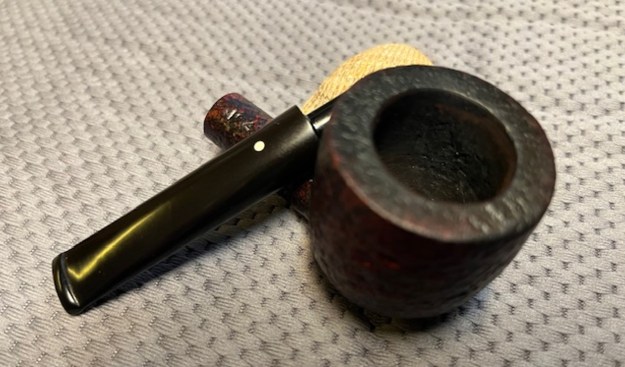
This interesting sandblast Bulldog pipe was purchased from an estate in Nampa, Idaho, USA on 11/09/2023. It is a natural sandblast briar with great grain around the bowl and shank. The stem is an acrylic taper stem. The sandblast finish had some oils and grime on the surface and in the grooves. It had begun to darken in spots around the bowl sides. The bowl was lightly smoked with raw briar on the lower half of the bowl. The rim top was quite clean and the inner and outer edge looked very good. The pipe is stamped on the left side of the shank and has crossed bone and rabbit ears [over] BONES. The acrylic stem had no stamping on the sides. It had scratches, light tooth marks and chatter on both sides ahead of the button. It was really an interesting sandblast with twists and turns in the briar. Jeff took photos of it before he worked his magic in the cleanup process. The exterior of the pipe was soiled with oils and dust but still looked very good. The rim top was in very good condition. The bowl itself had a was quite clean but there was a light cake on the sides of the top half. The lower half of the bowl was raw briar. The acrylic taper stem surface had some light scratches and marks on both sides. Jeff took photos of the sides of the bowl and shank to give a better feel for the condition of the bowl. You can see the interesting grain on the bowl side and front. He took a photo of the stamping on the left side of the shank. It is clear and reads as noted above.I took a few moments before working on the pipe to do a bit of research on the Bones pipes line. I knew they were made by Morgan Pipes so I started there. I looked up the Morgan Pipes site  (https://morganpipes.com/collections/bones) and quote from there:

Bones Pipes are pipes – Thats it – No fancy stuff… If you want a pipe to start with or just build your collection, Bones are the pipes for you. Toss it in a tackle box or a backpack and go. These pipes are, simply put, the absolute least expensive honest briar pipe on the market. A simple smoking machine.

I Googled and found a great link to Cupojoes tobacco shop (https://www.cupojoes.com/tobacco-pipes/morgan-bones/). They had a great description of the line from the perspective of the seller. I have included that below.

Chris Morgan began making pipes in 2006, and has since become renowned name within the pipe smoking community. The reason being: the world famous Bones Pipe. The Bones pipe is exactly what it sounds like, the bare naked skeleton of a pipe, that we often never get a chance to see. While other companies rely heavily on staining and sandblasting techniques, the Bones comes in a truly unfinished, natural beauty, making each one (even if the same shape) unique. Praised for their affordability, Bones pipes are the perfect pipe for travel & on the go, often small enough to fit into pockets. Chris offers other lines such as the impeccably built Black Jack series, and the famous patented cigar style pipe called the “Briar Cigar”.

Now it was time to do my work on the pipe. Jeff reamed it with a PipNet pipe reamer and cleaned up the remaining cake in the bowl with a Savinelli Fitsall Pipe Knife. He scrubbed out the internals with alcohol, pipe cleaners and cotton swabs until the pipe was clean. He scrubbed the exterior of the bowl with Murphy’s Oil Soap and a tooth brush to remove the grime and grit on the bowl and on the rim top. The finish looks very good with good looking grain around the bowl and shank. The finish is also a bit darker than when started. The rim top looked very good. He scrubbed the stem surface with Soft Scrub to remove the grime on the acrylic. When the pipe arrived here in Vancouver for the second stop of its restoration tour it looked a lot better. I took photos before I started my part of the work. I took a photo of the bowl and rim top to show how well it had cleaned up. The top and the edges of the bowl are in very good condition. The stem had some light marks and chatter on both sides ahead of the button.I took a photo of the stamping on the shank and took the stem off the pipe to give a sense of the proportions of the pipe. It is a nice one.I started the simple cleanup work by rubbing Before & After Restoration Balm deep into the smooth finish to clean, enliven and protect the briar. The briar was in excellent condition so I hand rubbed it with my fingers and worked it into the finish with a shoe brush. I set it aside to dry for 10-15 minutes. I wiped it off with a soft cloth. I buffed the bowl with a cotton cloth to polish it. It really began to have a deep shine in the briar. I took some photos of the bowl at this point to mark the progress in the restoration. The grain on the bowl stands out with interesting lines moving across the sides of the bowl. I set the bowl aside and turned my attention to the stem. I polished the acrylic stem with micromesh sanding pads – dry sanding it with 1500-12000 grit pads. I wiped the stem down after each sanding pad with Obsidian Oil and set it aside to dry. I polished it further with Before & After Pipe Polish – using both the Fine and Extra Fine Polishes. I gave it a rubdown with Obsidian Oil one last time and set it aside. I put the Chris Morgan made Bones ¼ Bent Bulldog back together and worked the pipe over on the buffing wheel using Blue Diamond to lightly polish the bowl and the acrylic stem. I buffed the bowl and stem to raise the gloss on the briar and the acrylic. I gave the pipe multiple coats of carnauba wax. I buffed the entire pipe with a clean buffing pad to raise the shine. I hand buffed it with a microfiber cloth to deepen the shine. The finished the Bones Bulldog is shown in the photos below. The natural sandblast finish had taken on a patina and the Bulldog shaped bowl works well with the rich black acrylic stem. It looked quite amazing! The dimensions of the pipe are: Length: 5 ½ inches, Height: 2 inches, Outside Diameter: 1 ¾ inches, Diameter of the chamber: ¾ of an inch. The weight of the pipe is 43 grams/1.48 ounces. This is an sandblast on the bowl and shank that reveals the grain underneath. I really like how the briar and the acrylic work well together. This one will soon be on the rebornpipes store in the American (US) Makers Section. If you are interested in adding this Bones pipe to your collection this may well be the one for you. Thanks for walking with me through the restoration process.