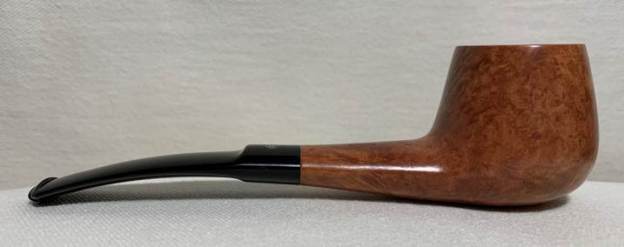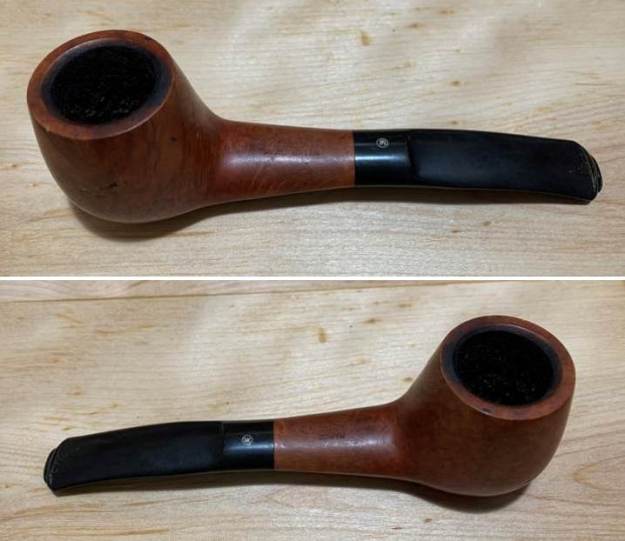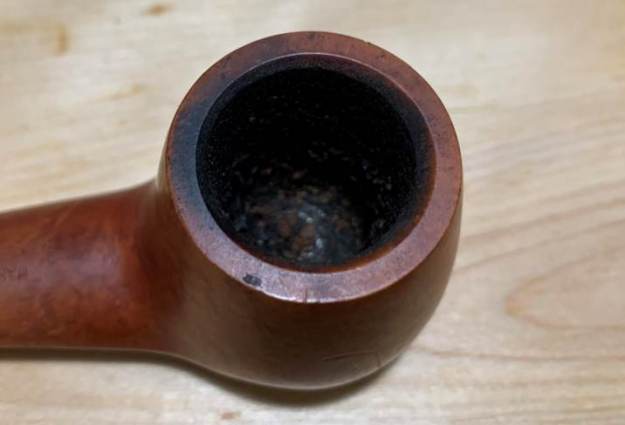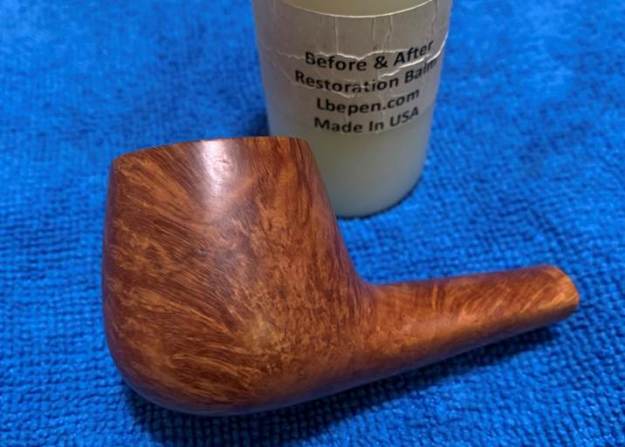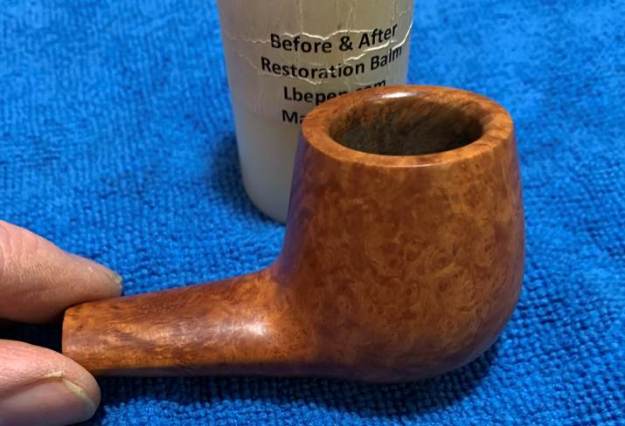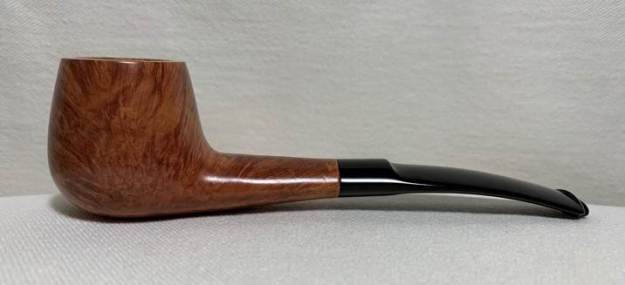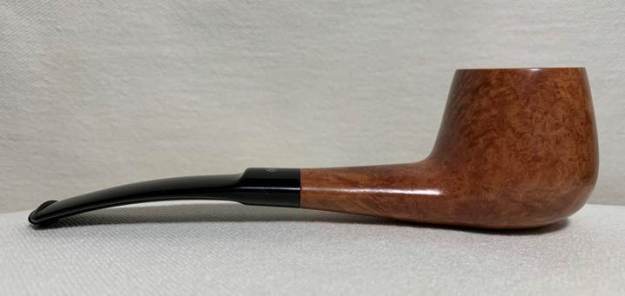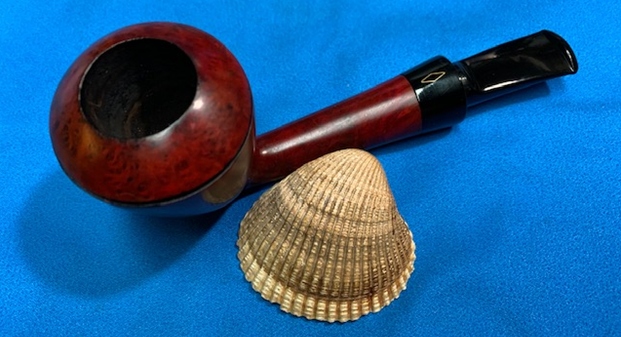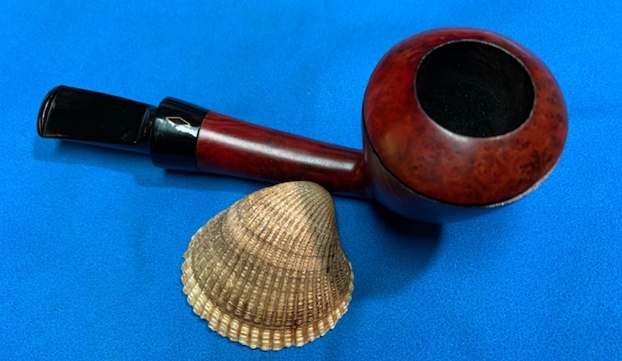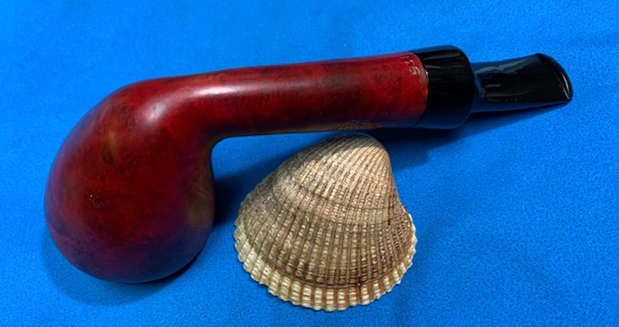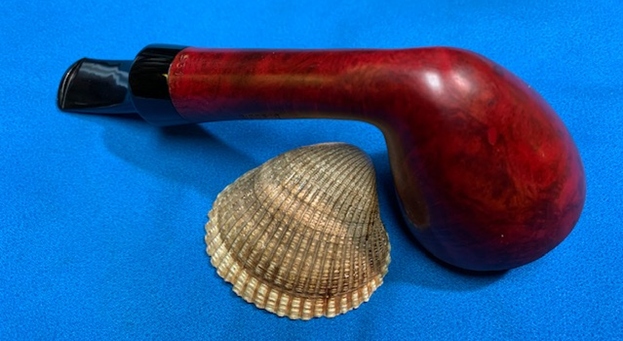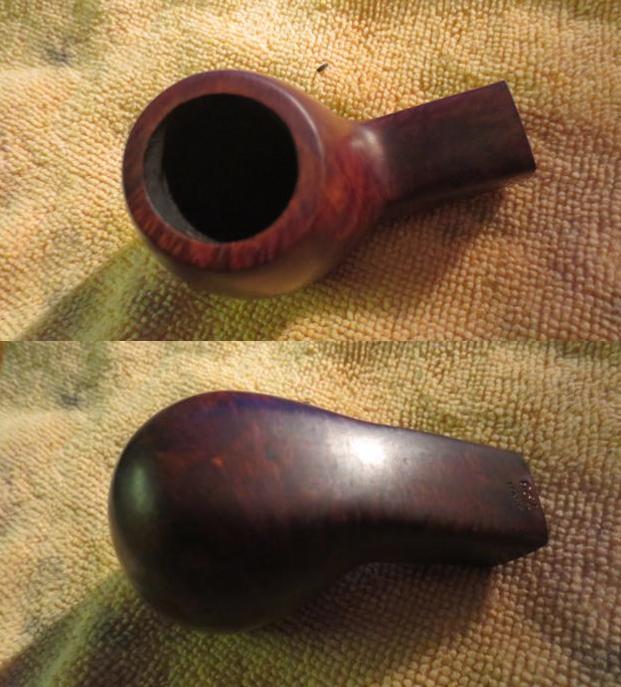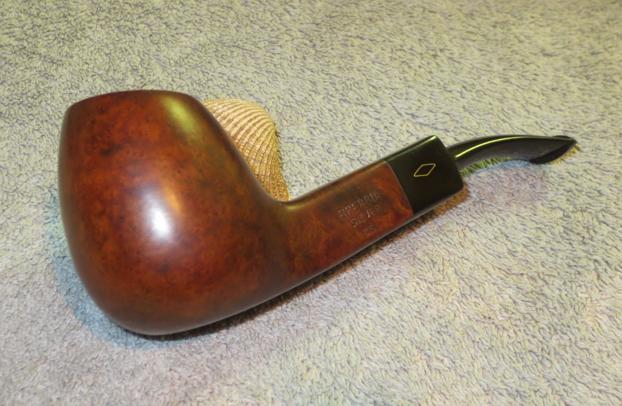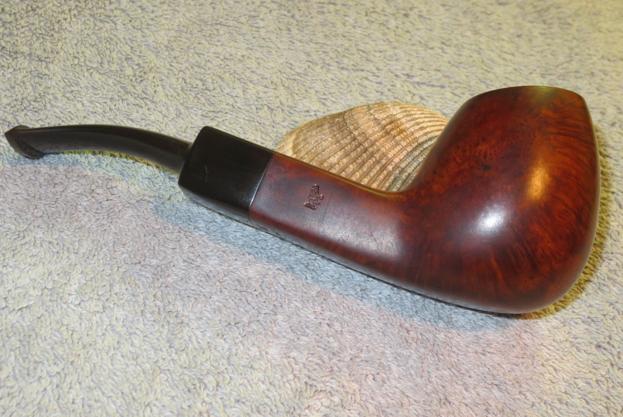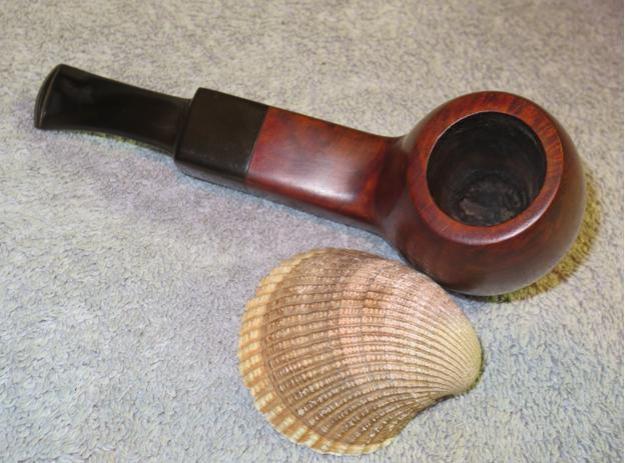
Tag Archives: Brebbia Pipes

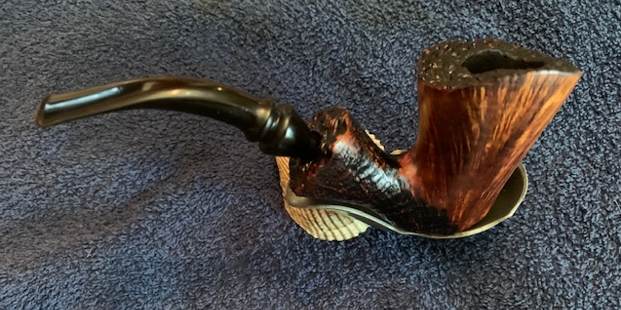
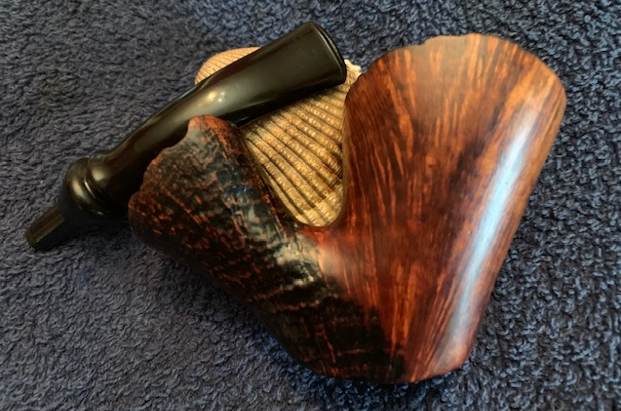
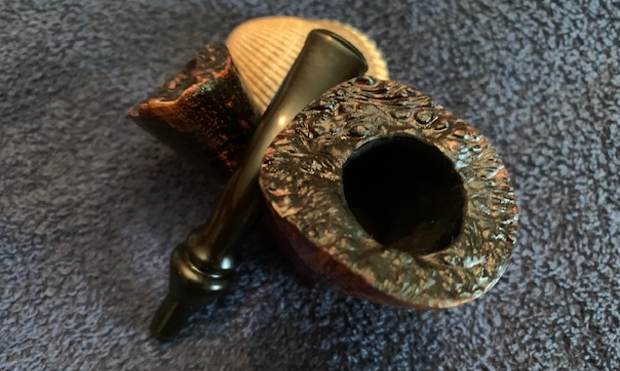
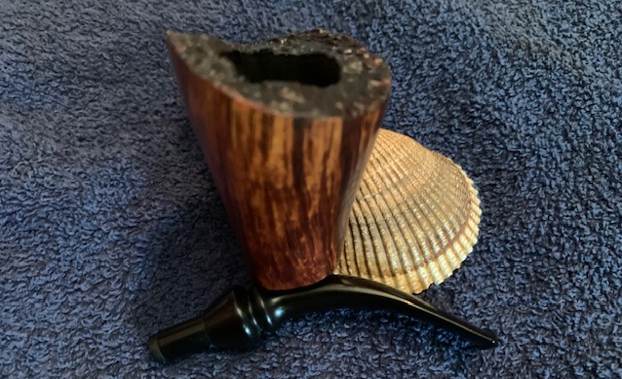
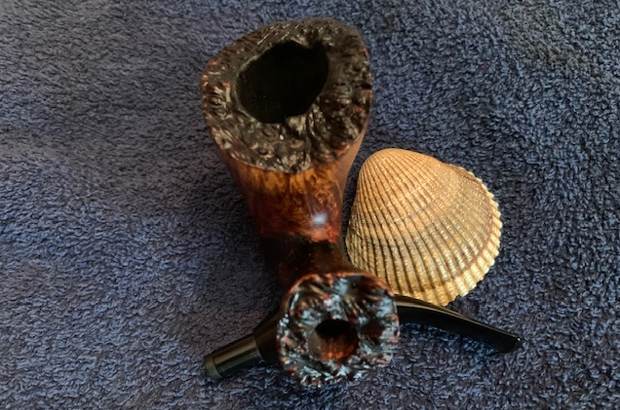
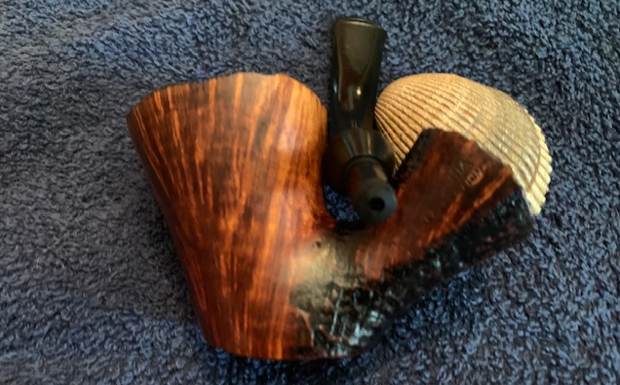
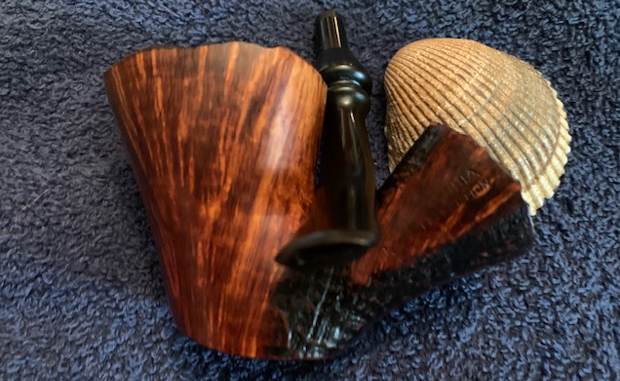
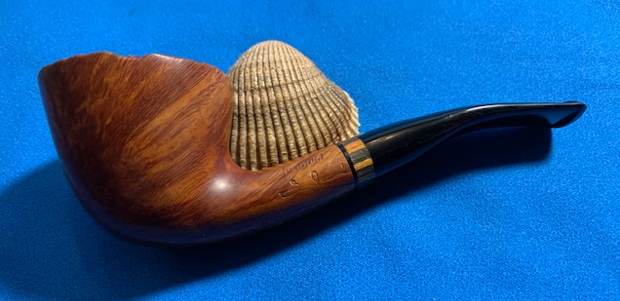
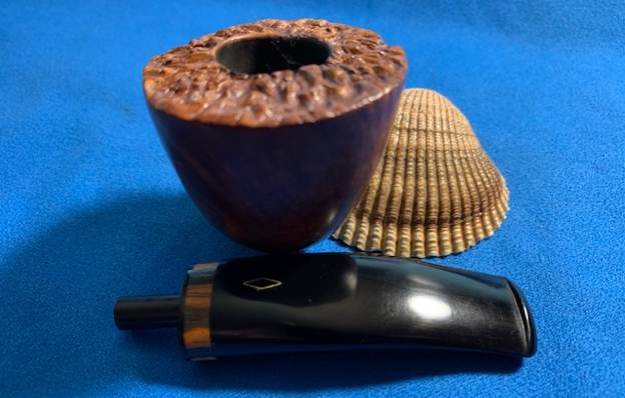
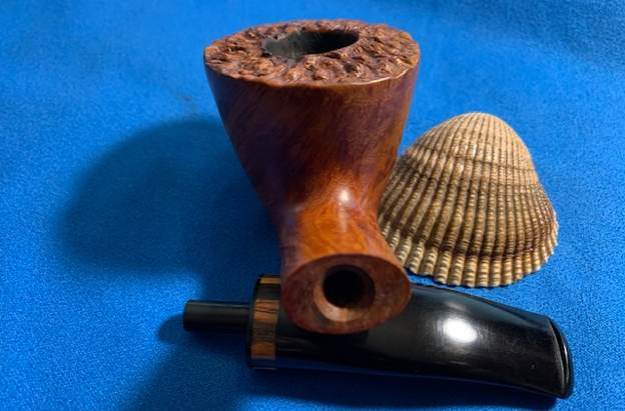
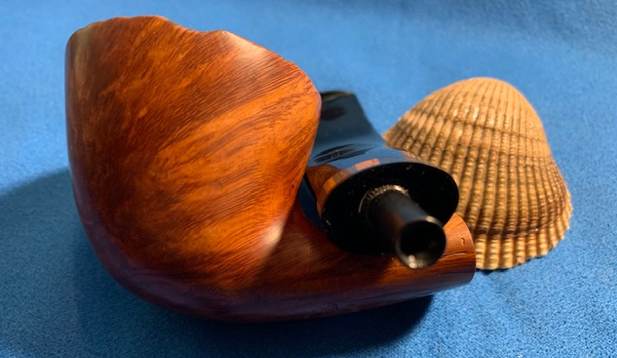
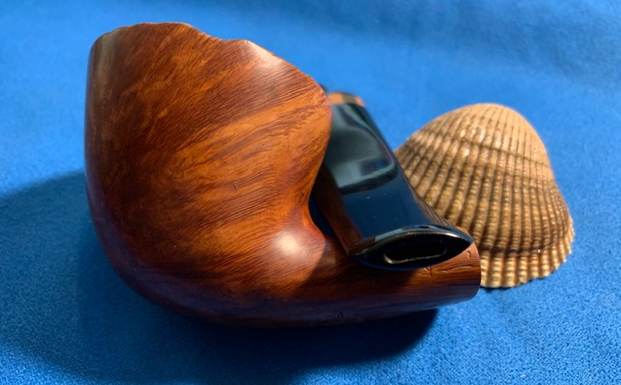
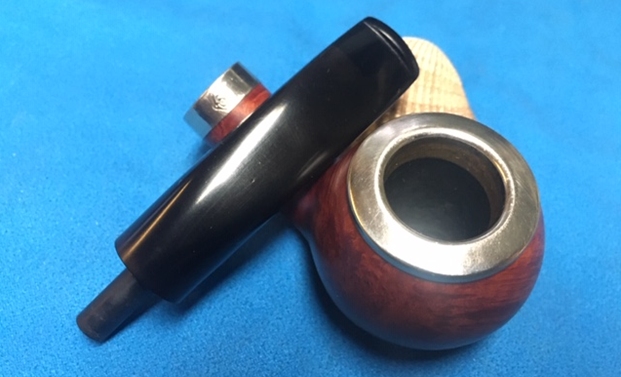
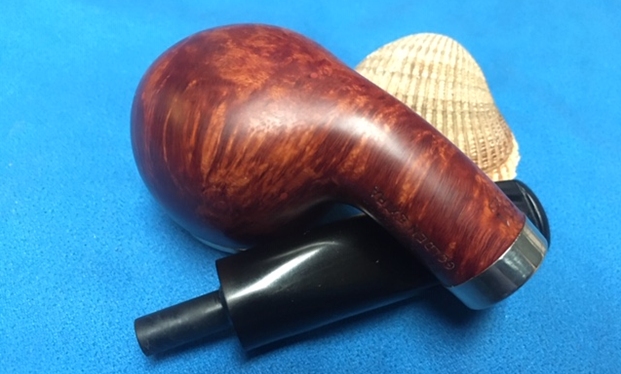
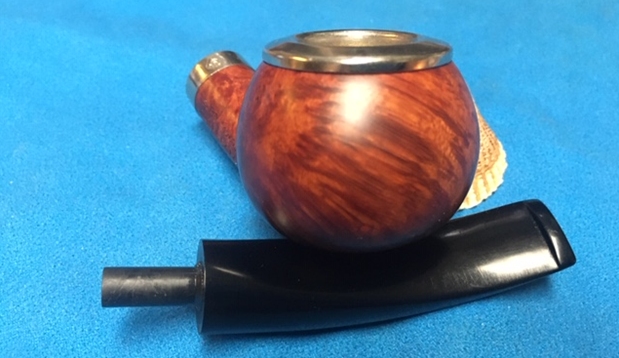
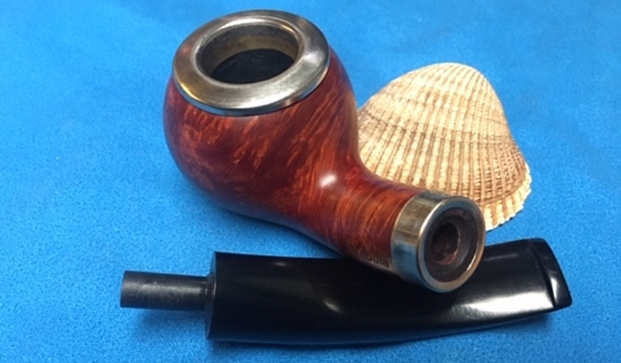
I had no idea that the Brebbia Collection Line had these Danish Looking Freehands


Blog by Steve Laug

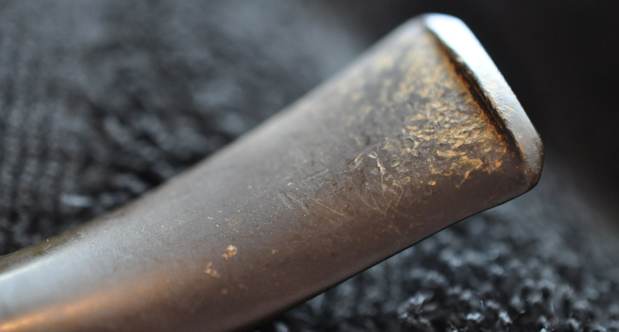
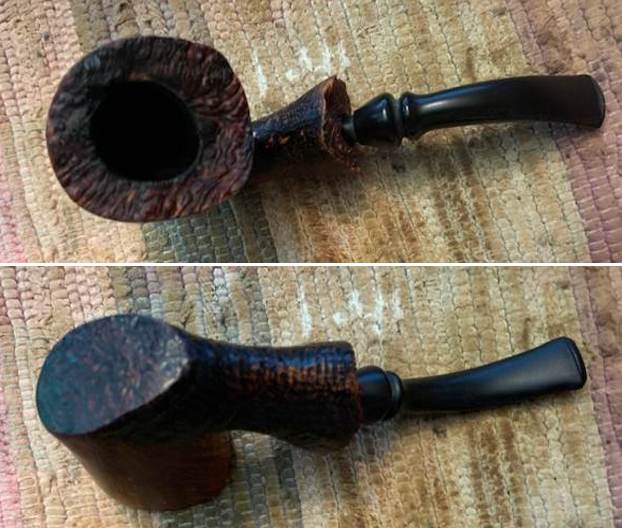
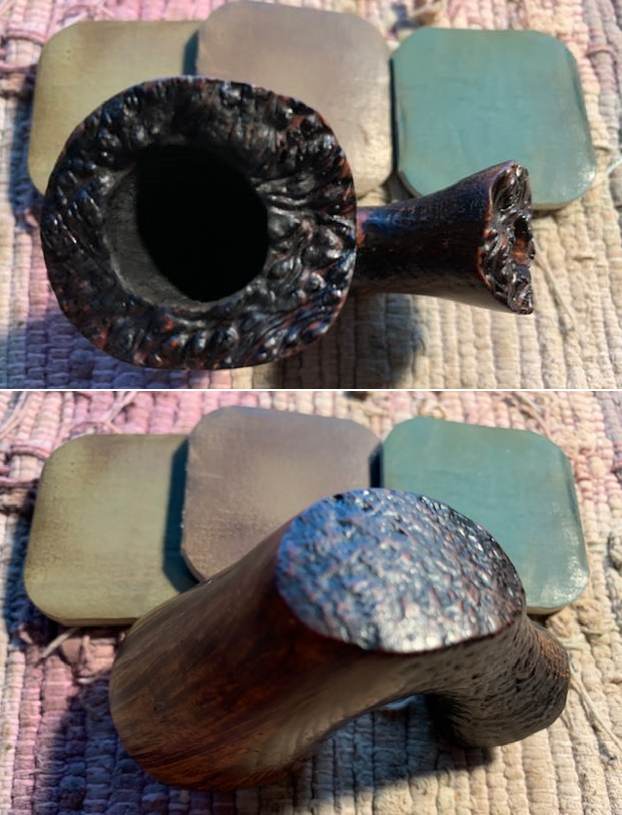
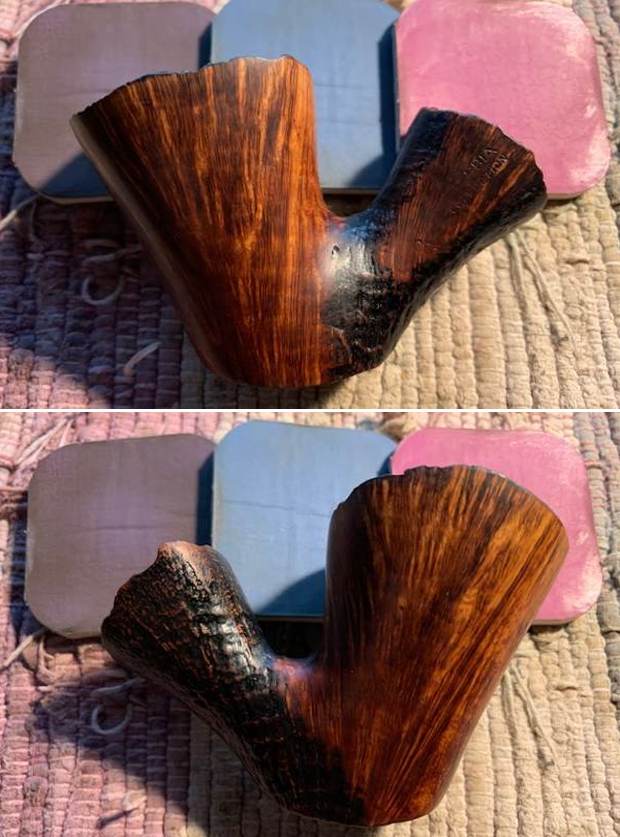
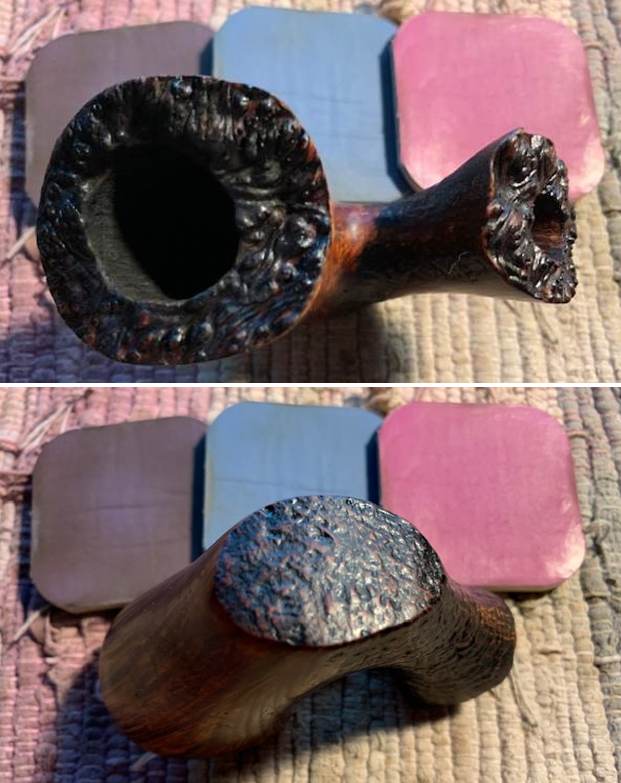
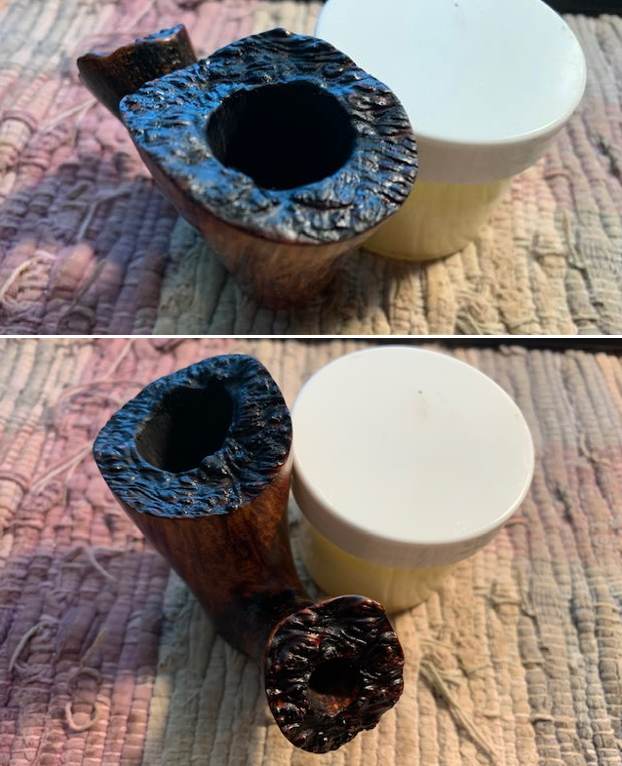
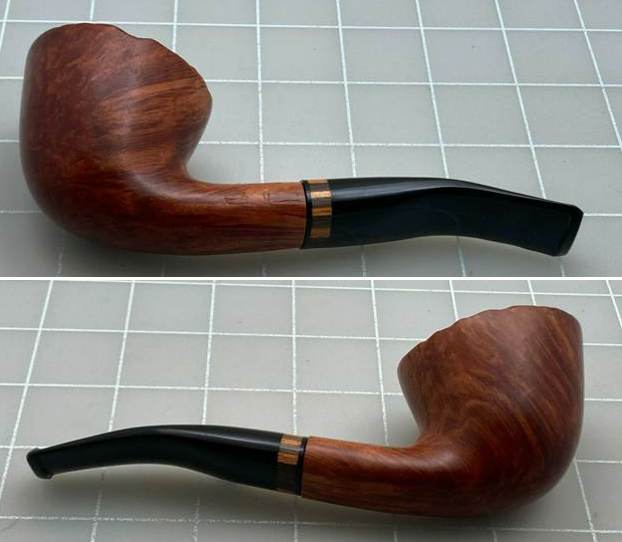
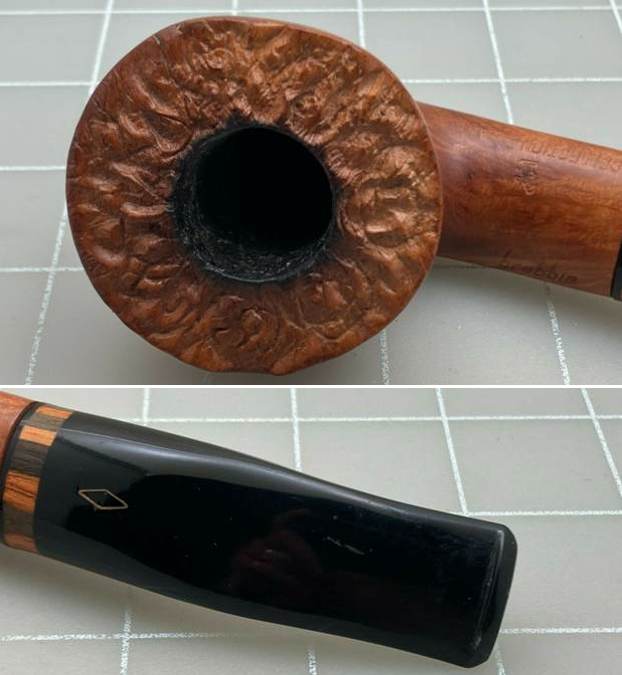
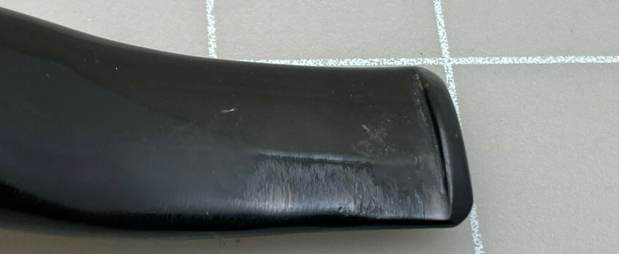
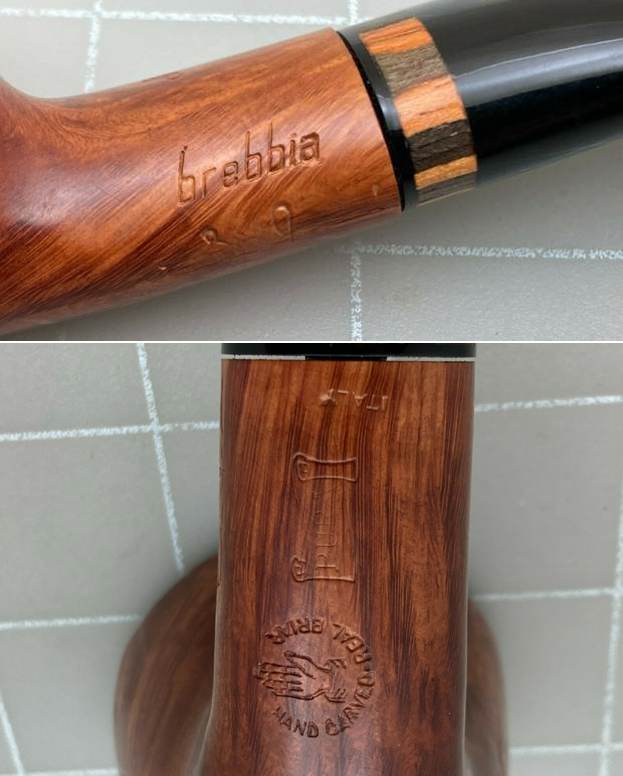
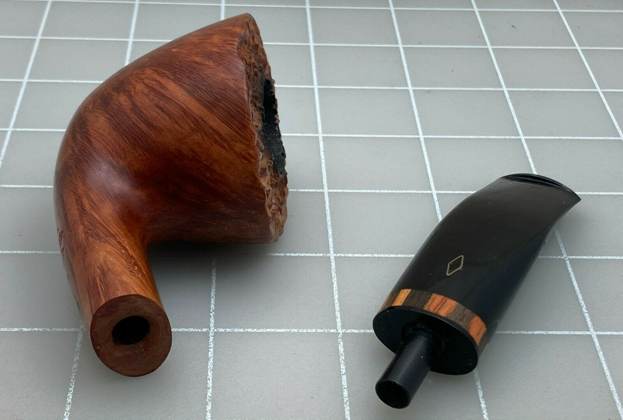
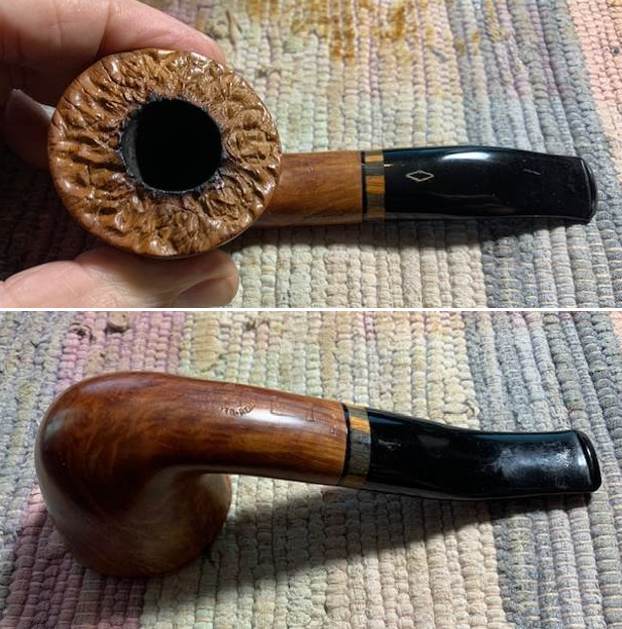
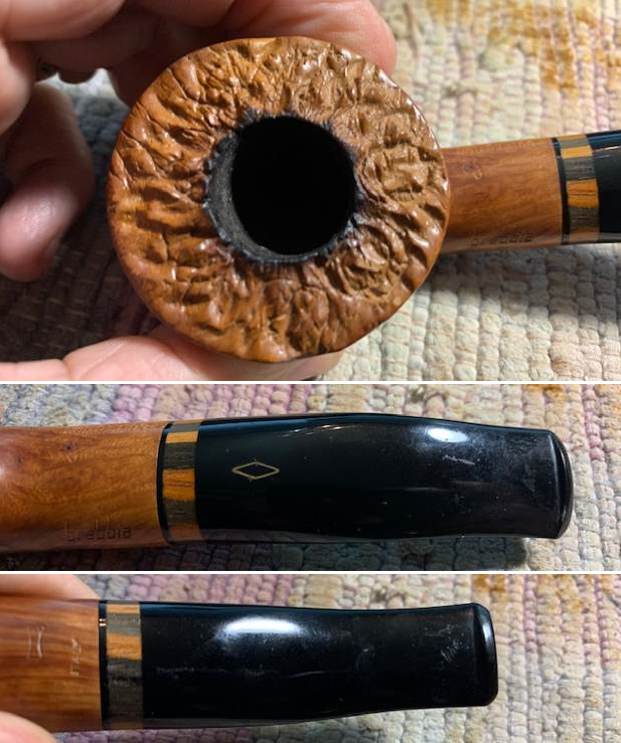
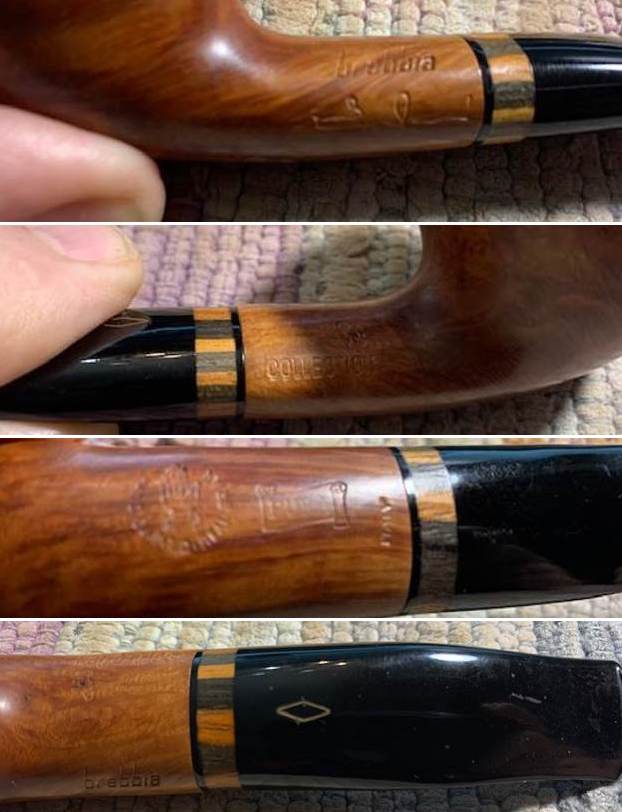
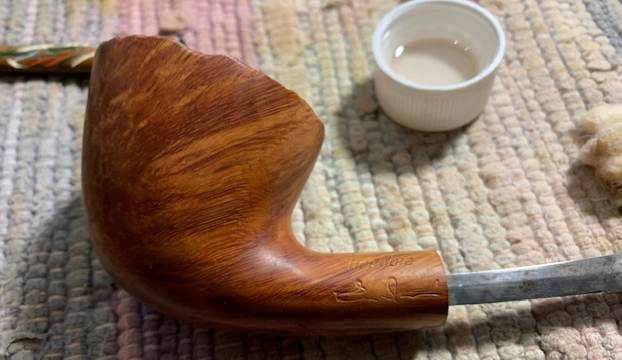
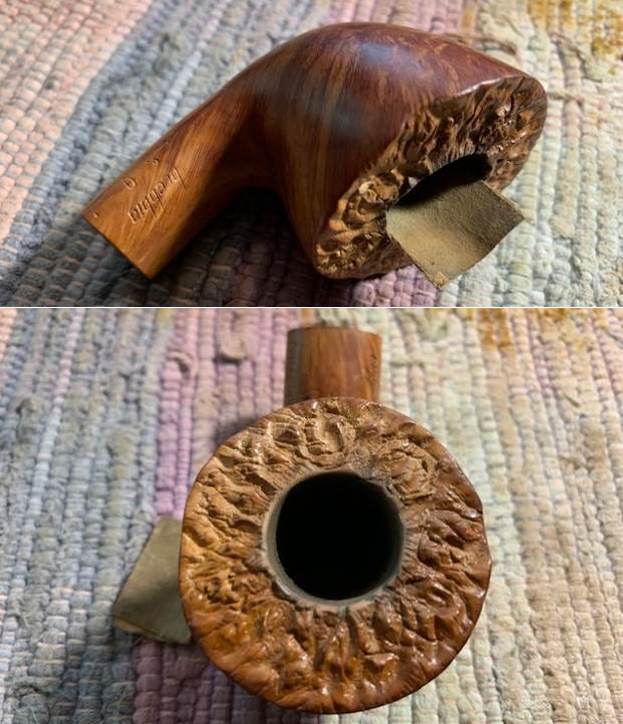
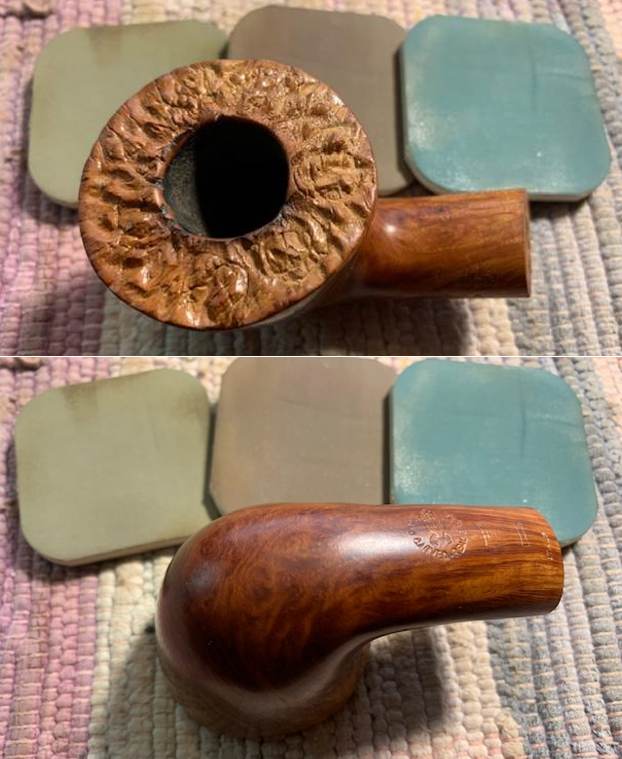
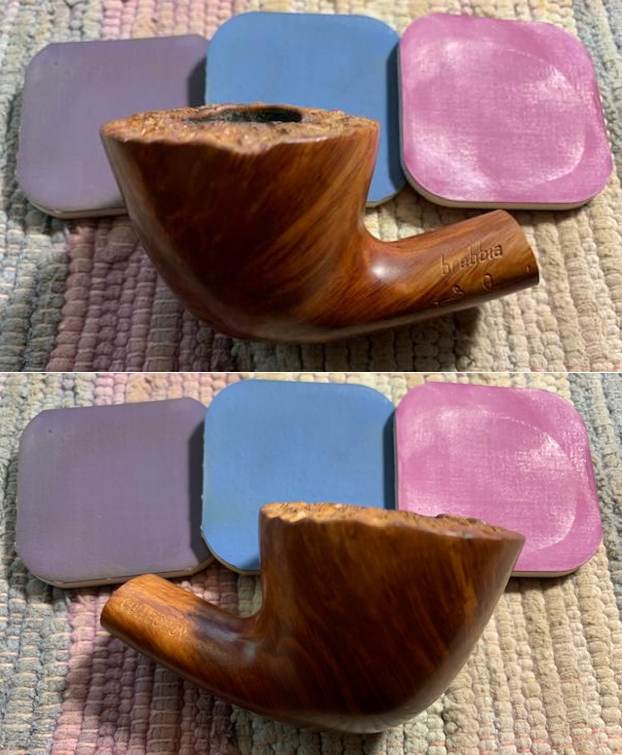
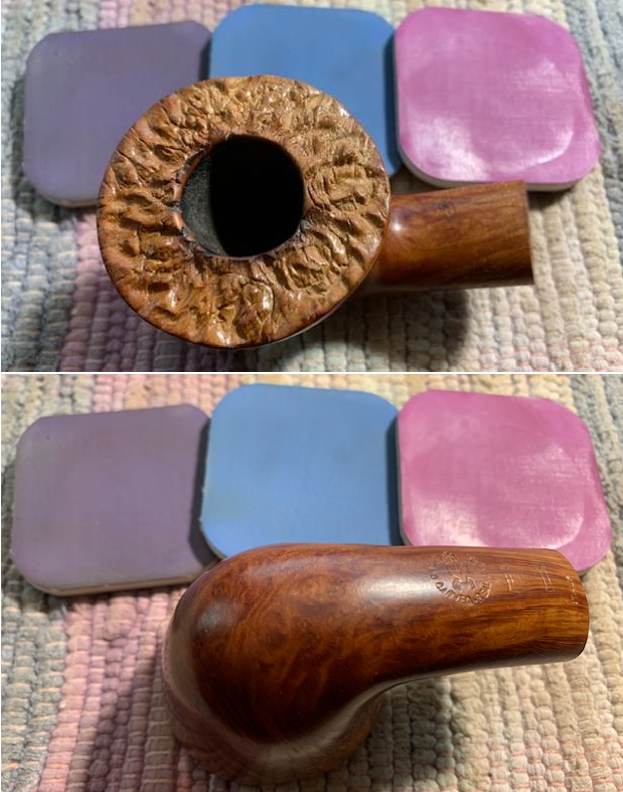
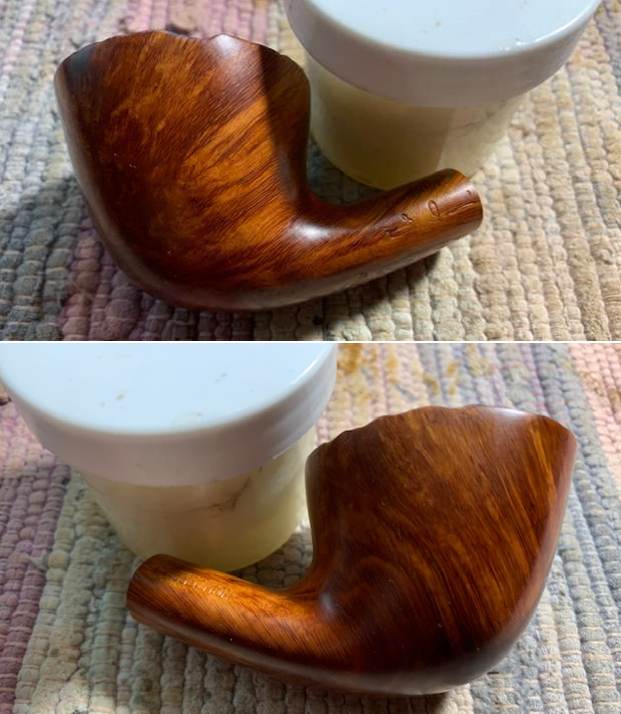
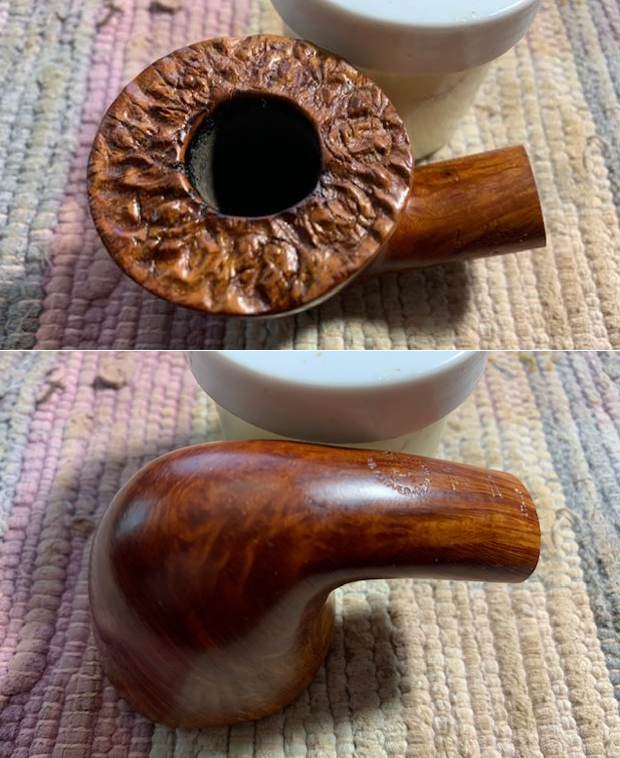
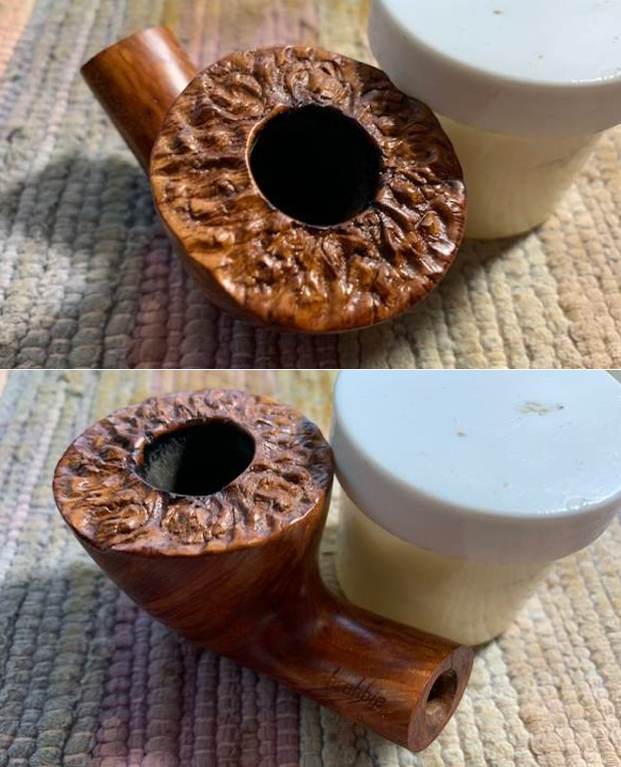
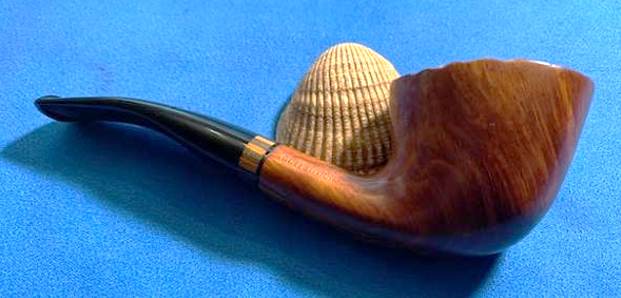
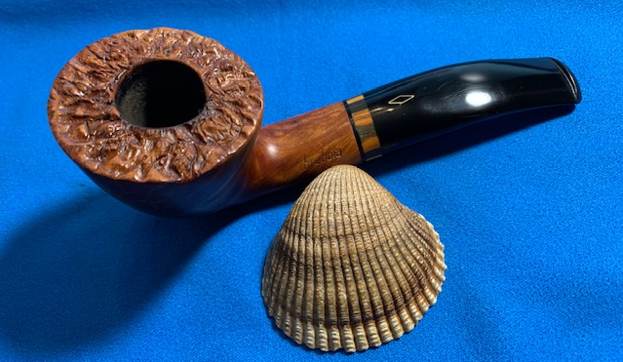
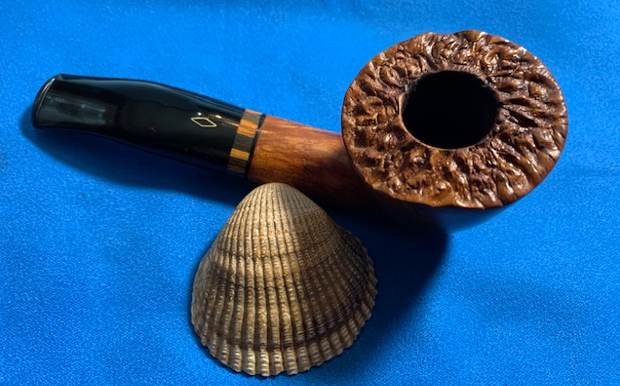
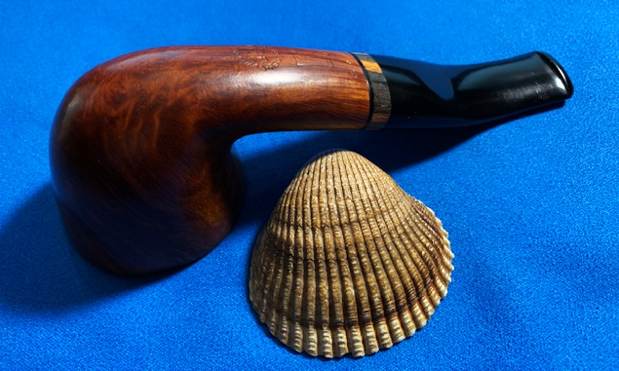
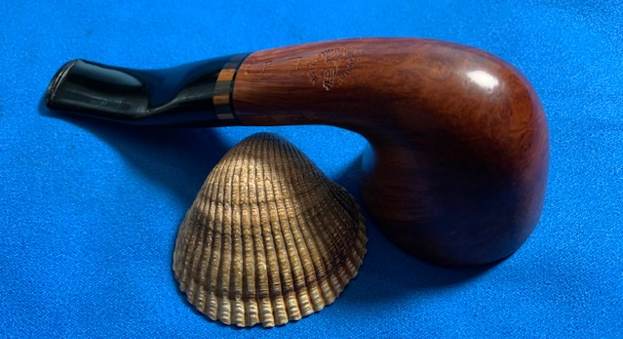
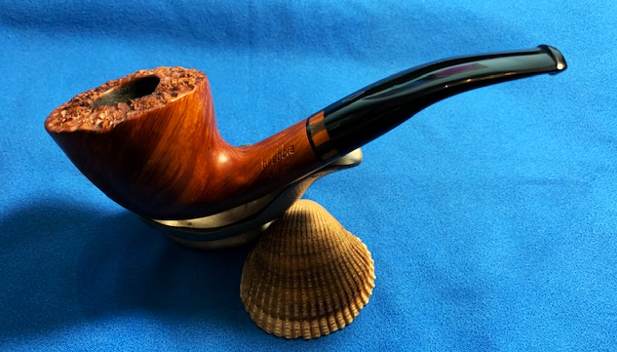
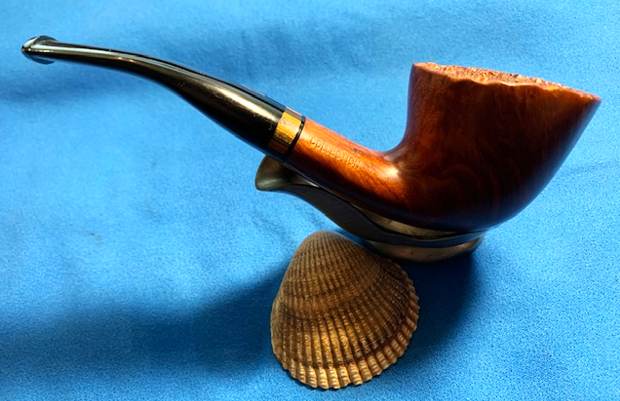
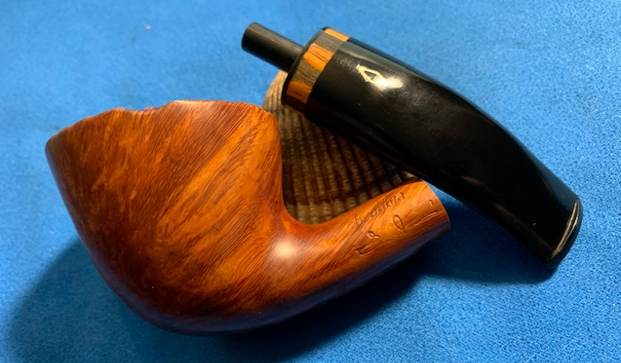
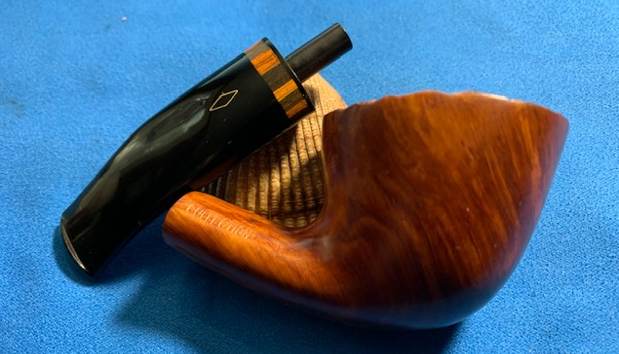
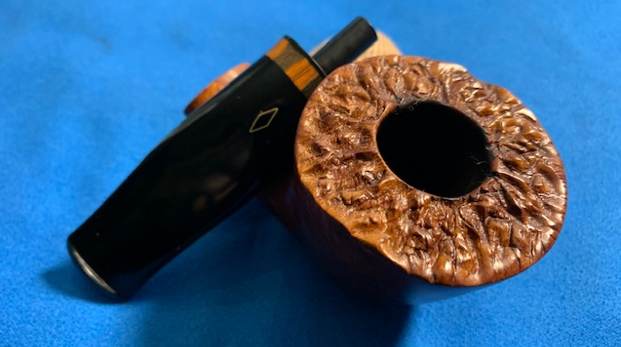
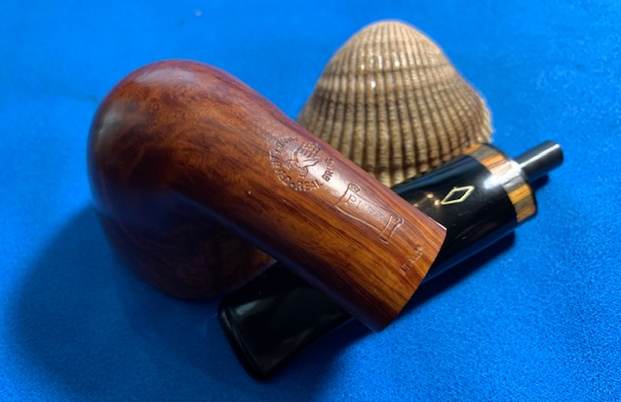
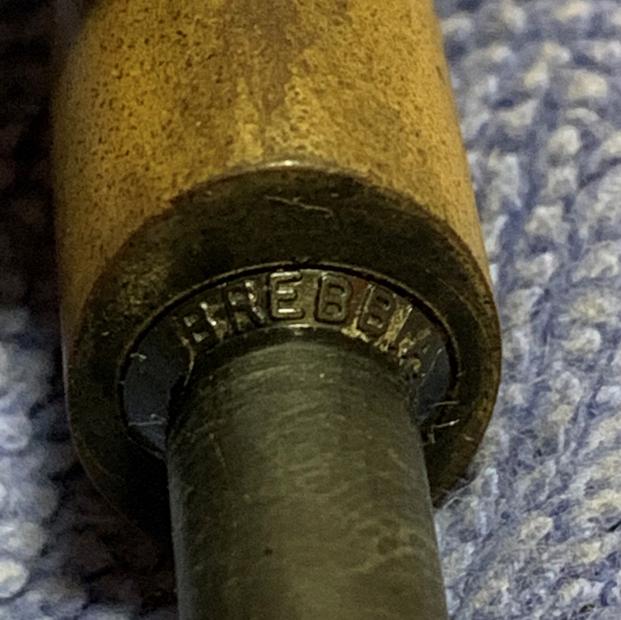
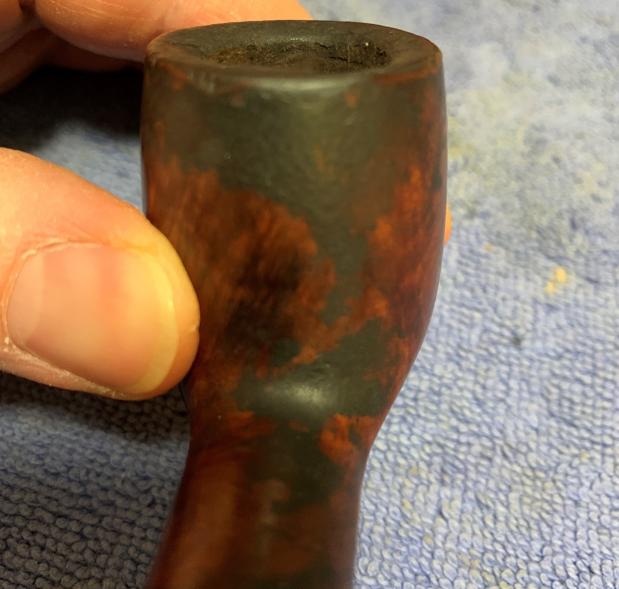
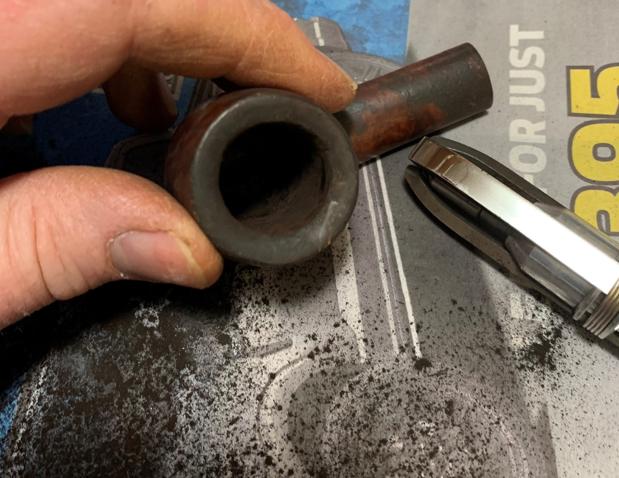
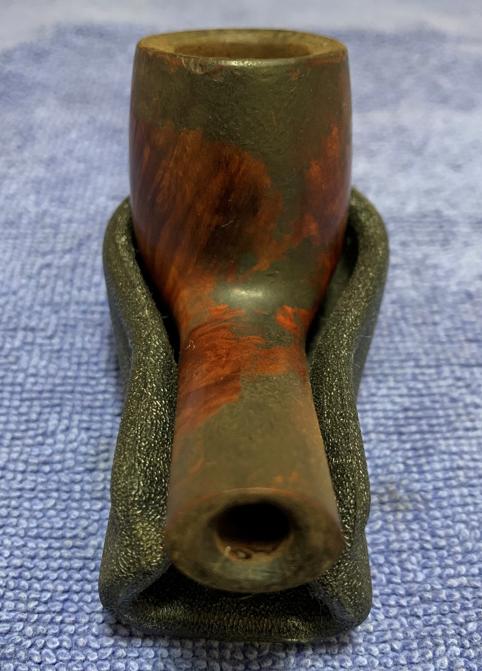
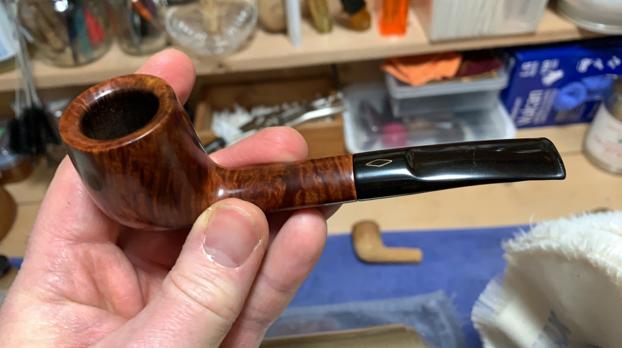
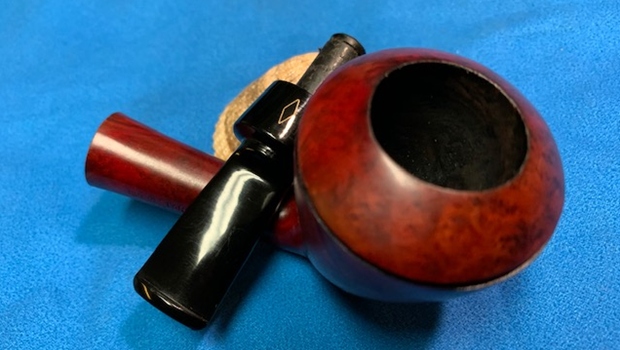
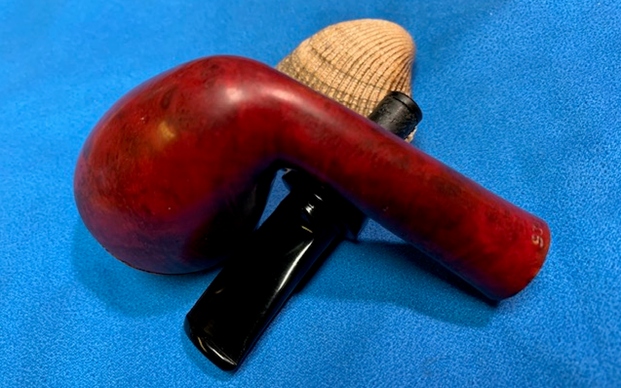
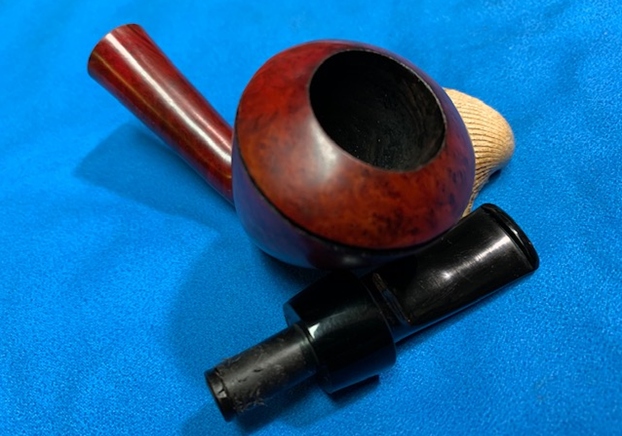
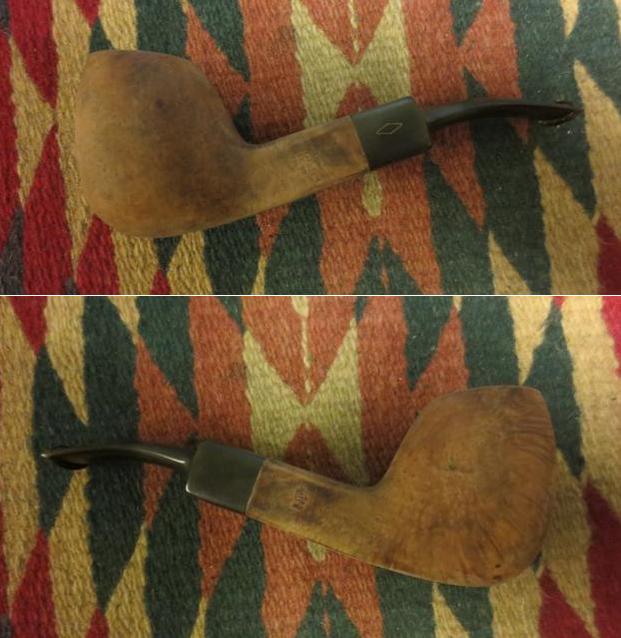
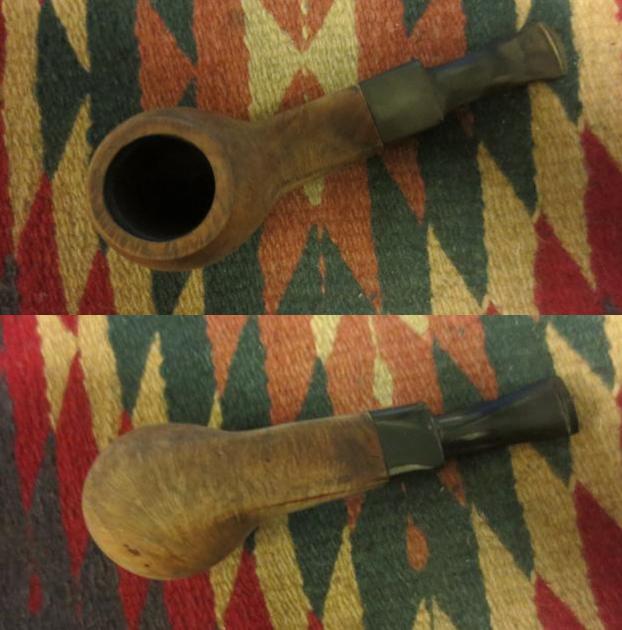
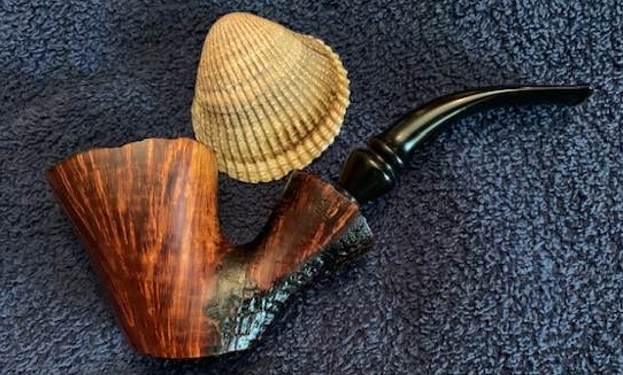
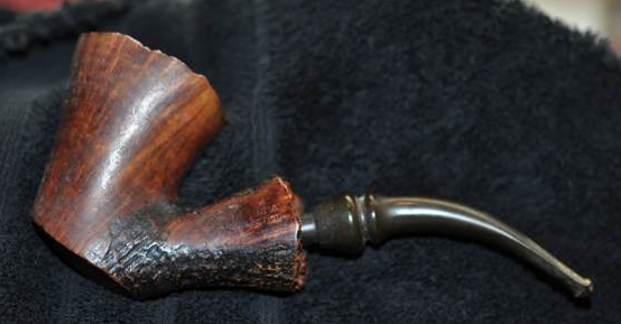
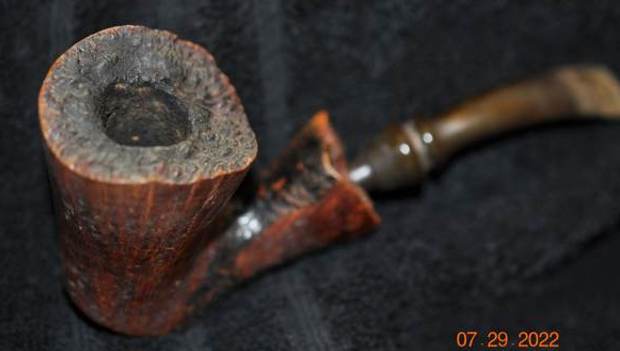
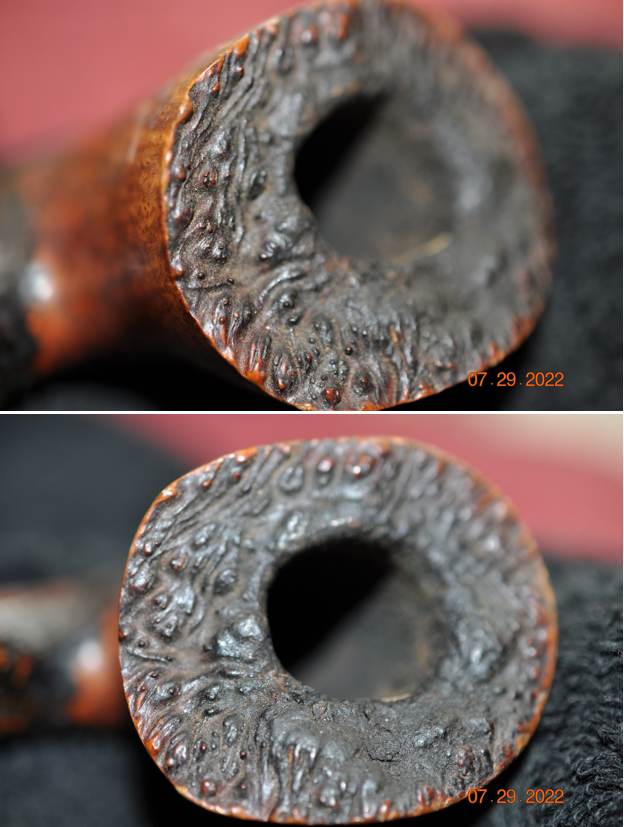
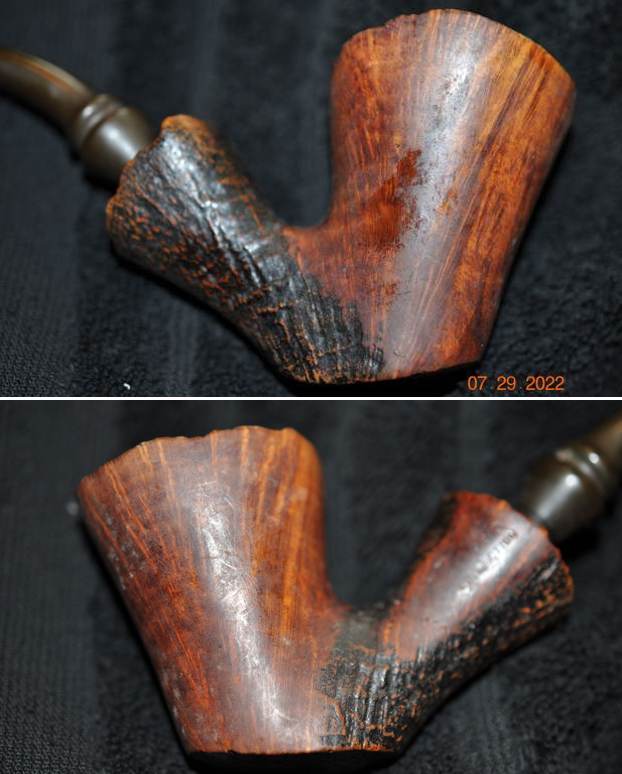
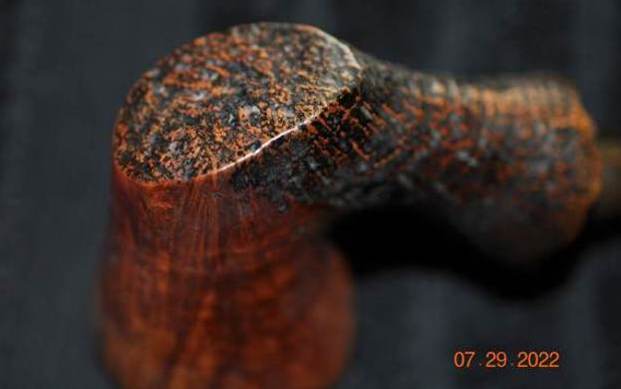
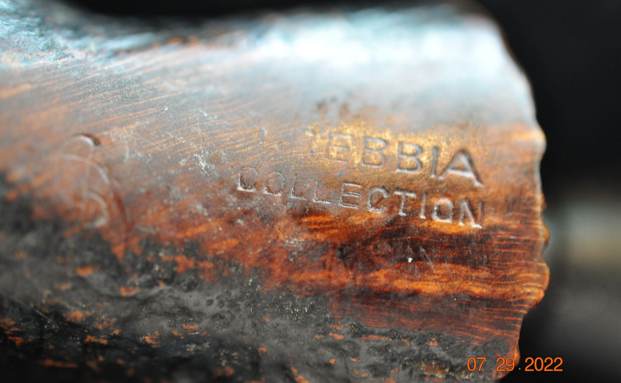
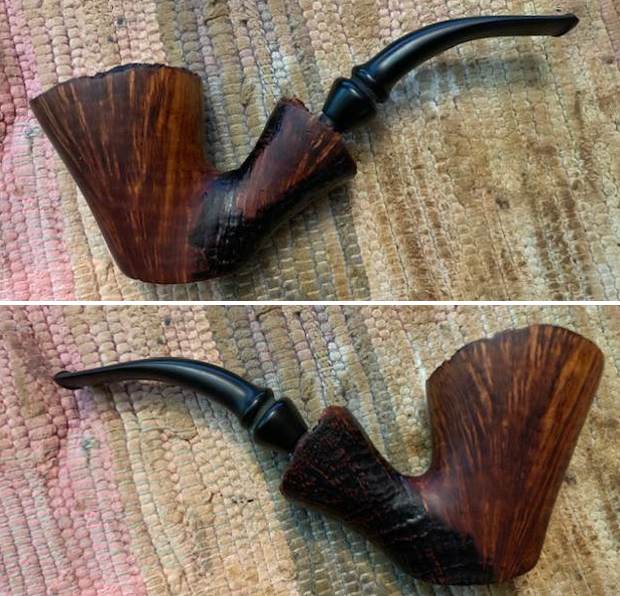
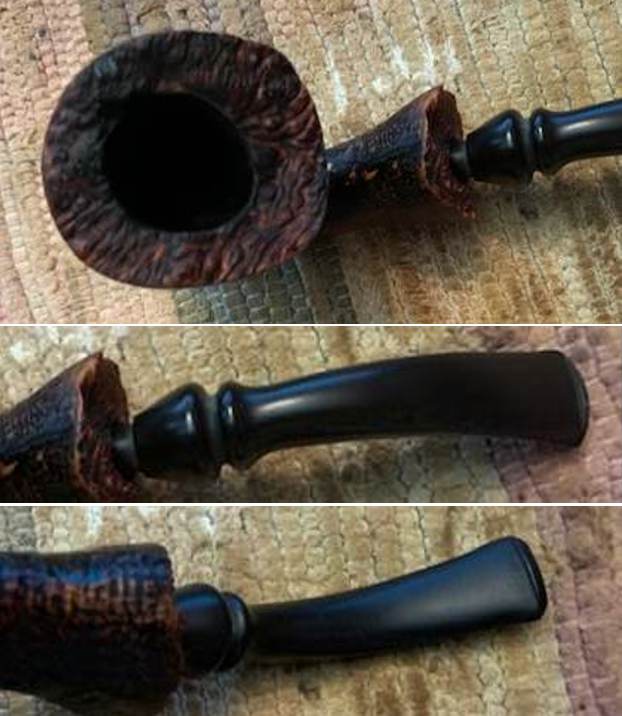
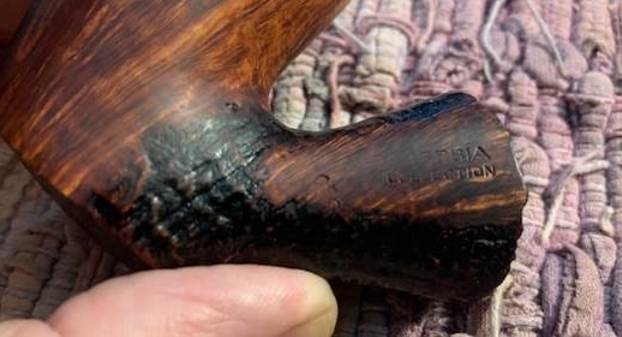
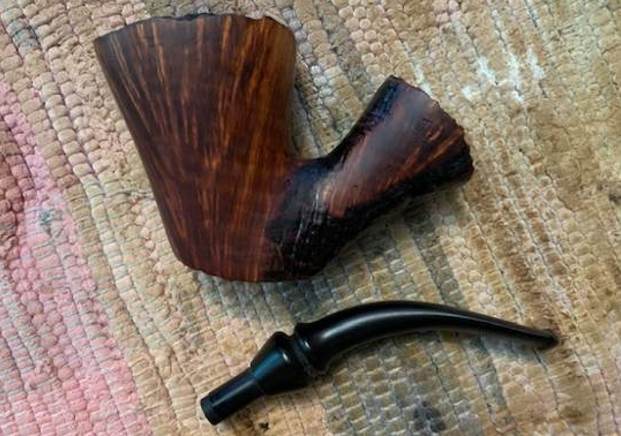
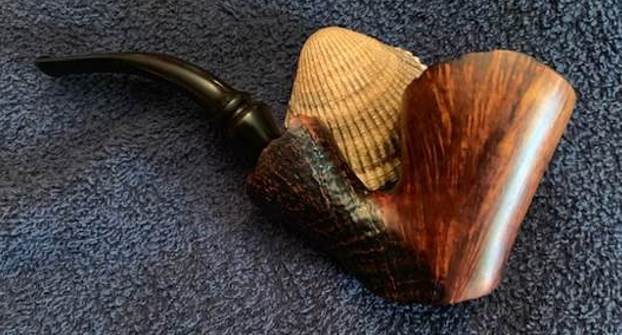
The next pipe on the table is one that Jeff purchased on 5/25/22 from an antique store in Portland, Oregon, USA. While I have worked on a Brebbia Pura before this one was far more like a Danish style Freehand. It is stamped on the a smooth panel on the left side of the shank and has the signature (initials) of Enea Buzzi followed by Brebbia [over] Collection. It is a beautiful mixed finish freehand pipe that includes a sandblast finish around the shank sides and the heel of the bowl and a smooth finish on the bowl sides. Brebbia calls it a Demisandblasted Pipe. There was plateau on the rim top and shank end. The finish was very dirty with grime ground into the smooth briar and also the sandblast. It was dusty and tired looking but it had great grain shining through. The bowl was heavily caked with a thick overflow of lava on the plateau rim top filling in the nooks and crannies of the finish. It was very hard to tell the condition of the inner edge of the bowl. The fancy turned, saddle  stem was oxidized, calcified and had tooth marks and chatter on both sides ahead of the button. It was a great looking pipe that showed a lot of promise. Jeff took photos of it before he started his clean up work. If you ignore the stamping you would almost surely say it was a Karl Erik or Preben Holm pipe. But it is not! It’s just a very Danish looking Italian made Freehand. He took close-up photos of the bowl and rim top from various angles to capture the condition of the bowl, rim top and edges of the bowl. The cake was very thick and the bowl overflowed in thick lava on to the rim top filling in much of the valleys in the plateau. He also captured the condition of the top and underside of the stem. You can see the tooth marks and chatter on both sides ahead of the button. It was a well used, dirty pipe. He took photos of the sides and heel of the bowl to show the condition of the beautiful sandblast around the shank and the heel of the bowl. You can also see the smooth bowl sides with great grain shining through the grime and debris of time ground into the finish. Jeff took a photo of the stamping on the smooth panel on the left side of the shank. It is clear and readable as noted above. Now I wanted to find out about the brand and particularly the specific Collection line. I wanted get the details on this pipe before I carried on with my work. I had worked previously on a Brebbia Collection Pura so I have included the link on that pipe for you to read. It is quite different from this Danish looking Freehand with true plateau on the rim top and shank end. It is quite fascinating to read about (https://rebornpipes.com/2022/05/06/breathing-new-life-into-a-brebbia-collection-hand-carved-pura/).

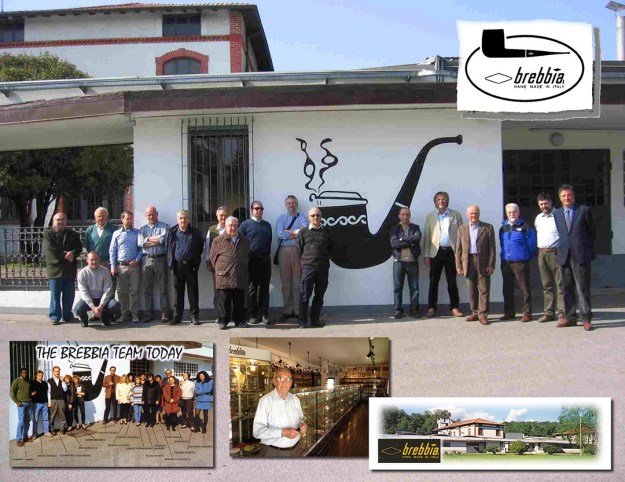
I then turned to Pipephil’s site to get a quick summary on the brand and to see if there was any information on the Collection line (http://pipephil.eu/logos/en/logo-brebbia.html) I have included photos of the Buzzi’s – Enea and his son Luciano to the left. I quote the sidebar below.

The Brebbia brand Brebbia Pipe is named after the locality of Bosco Grosso di Brebbia (Prov. Varese, Reg. Lombardia). A first corporate was founded by Enea Buzzi and Achille Savinelli in 1947. They split in 1953. Buzzi ketp the factory and created the MPB brand (Maniffatura Pipe Brebbia). After 1968 the brand was shortly called “Brebbia”. Luciano Buzzi son of Enea manages the company since the 1990s. Italy

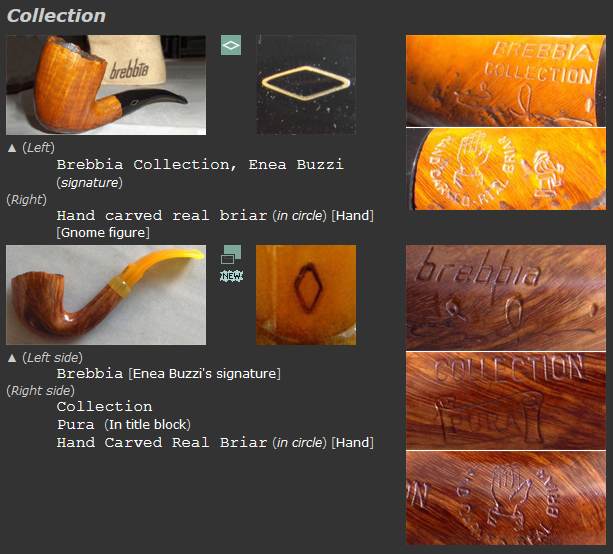
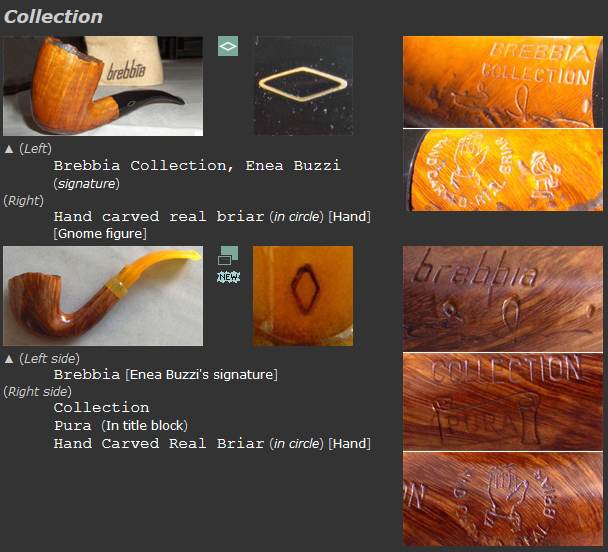
I have also done a screen capture of the pertinent section on the Collection line below. It is a fascinating piece of information. The pipe I am working on has the stamp on the left side that is parallel to the first one below. It has the signature or initials carved near the shank bowl joint. It does not have he stamp that is shown on the right side below. It does not have the carved hand made in a circle nor the gnome figure. It makes me wonder when this one was made.I then turned to Pipedia to read some more detail on the brand (https://pipedia.org/wiki/Brebbia). There was nothing specific there about the Collection Line/Series but some great history. The connection with Savinelli is fascinating. I quote below.
Pipe Brebbia Srl, or better the M.P.B. (Manifattura Pipe Brebbia) was born in 1953 from the denouement of the association between Achille Savinelli and Enea Buzzi in 1947, where the first was employed in the marketing and the second in manufacturing of pipes under the name of Savinelli. It was made in exclusive up to 1953 and extended without further rights up to 1956.

The production, which is always careful and perfect, has continued in a traditional way for 60 years, using old lathes for the first steps, but finishing every piece by hand.

The secret of their manufacture, if we may put it this way, is the respect for the traditions with the experience acquired in several years of successful work, which could be summed up in two words: high quality.

The factory is currently managed by Enea’s son, Luciano…

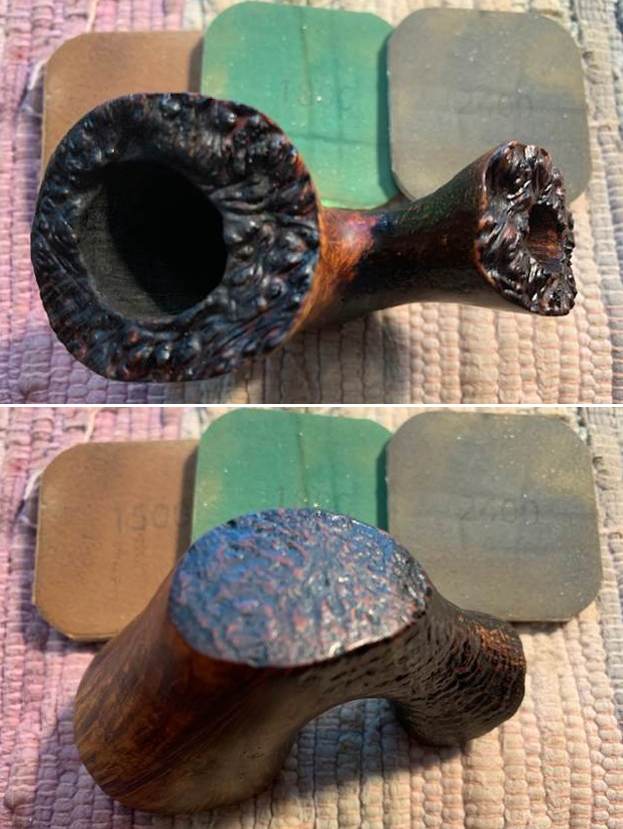
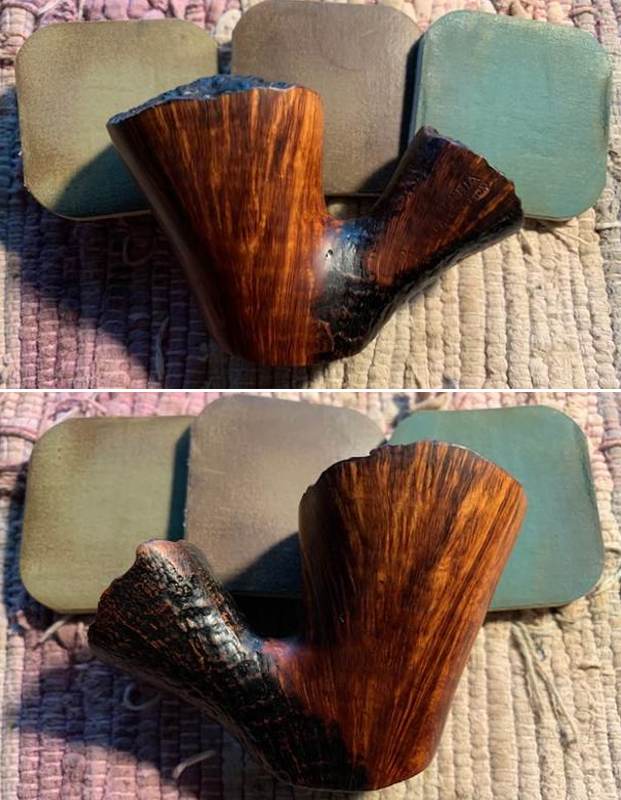
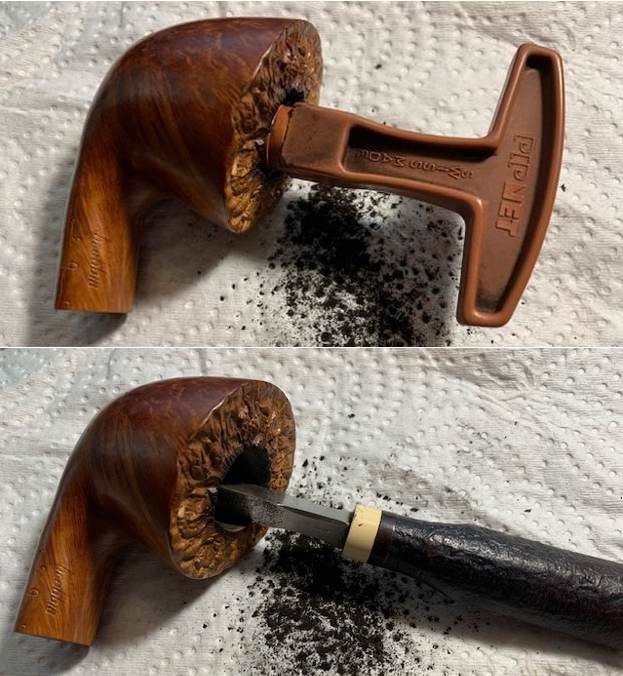
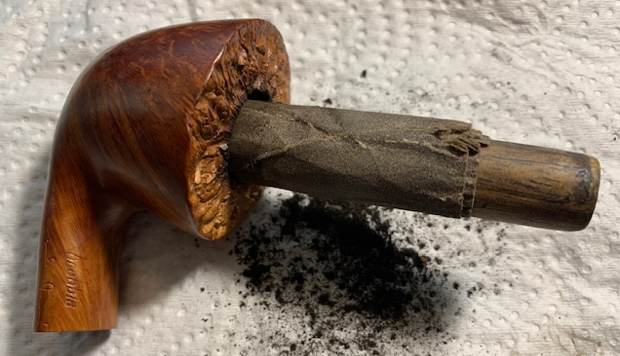
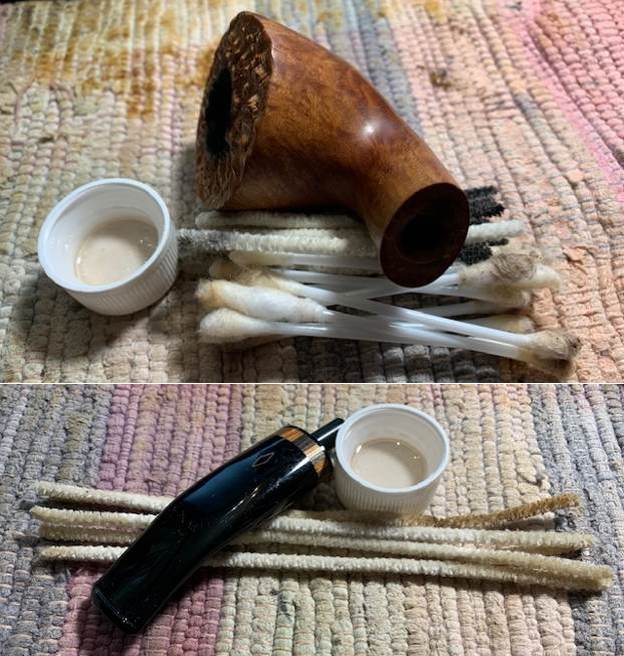
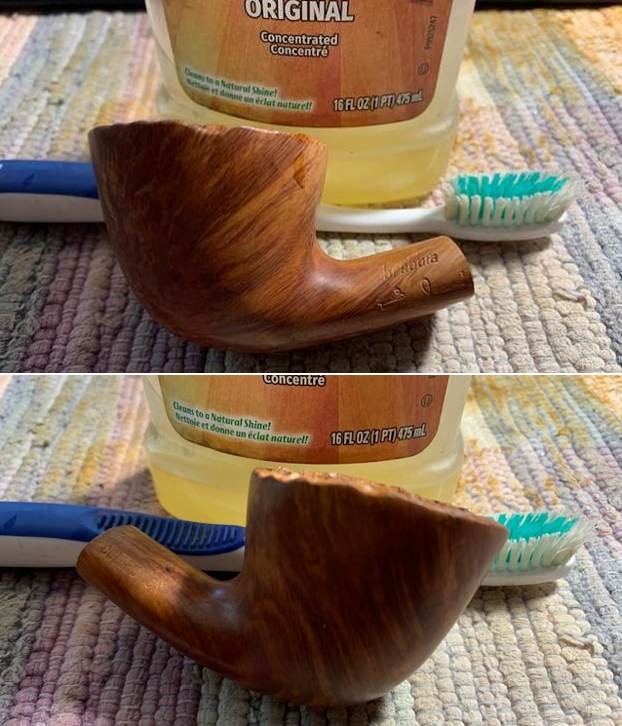
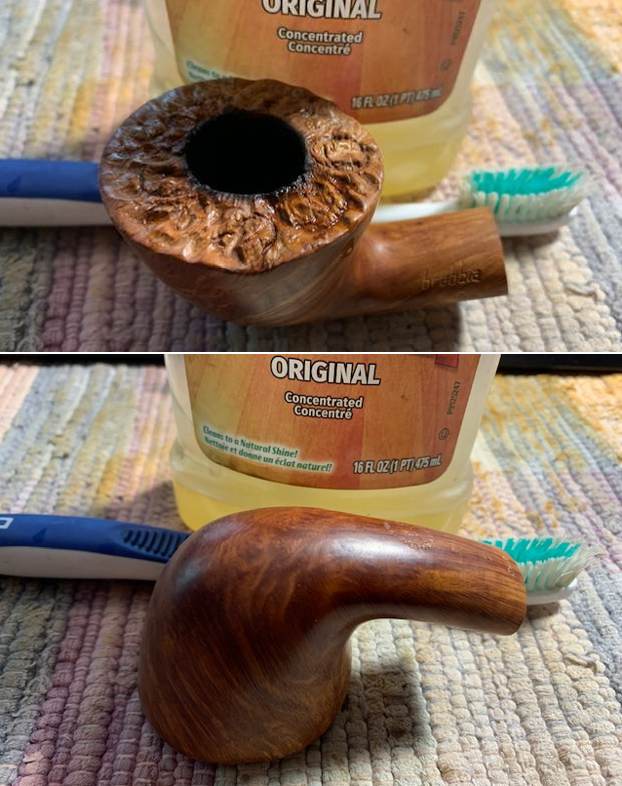
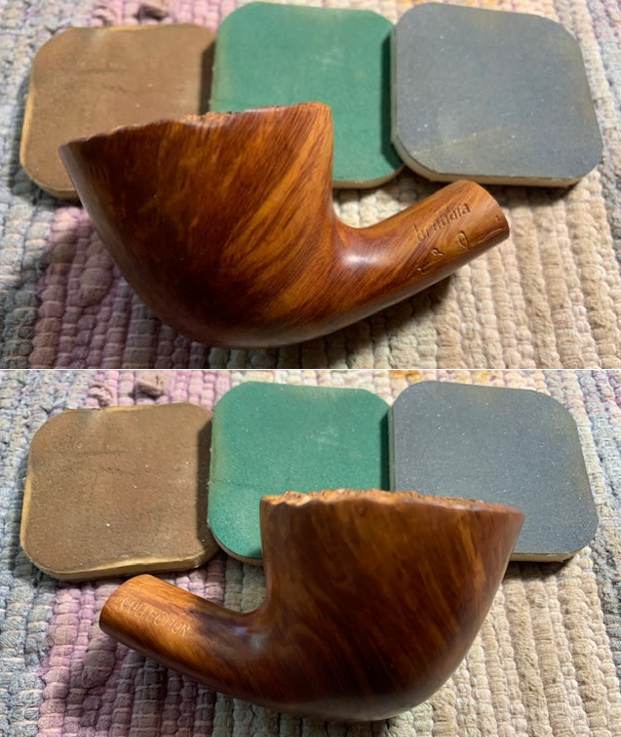
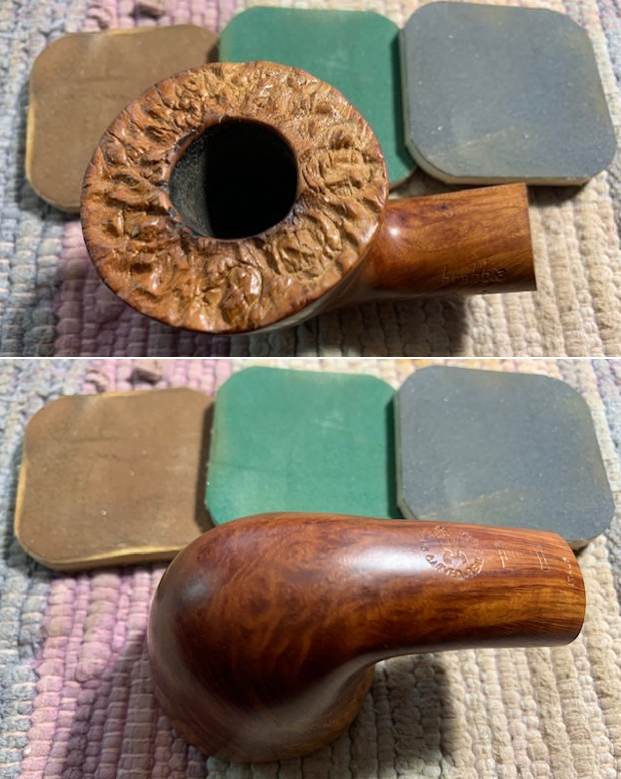
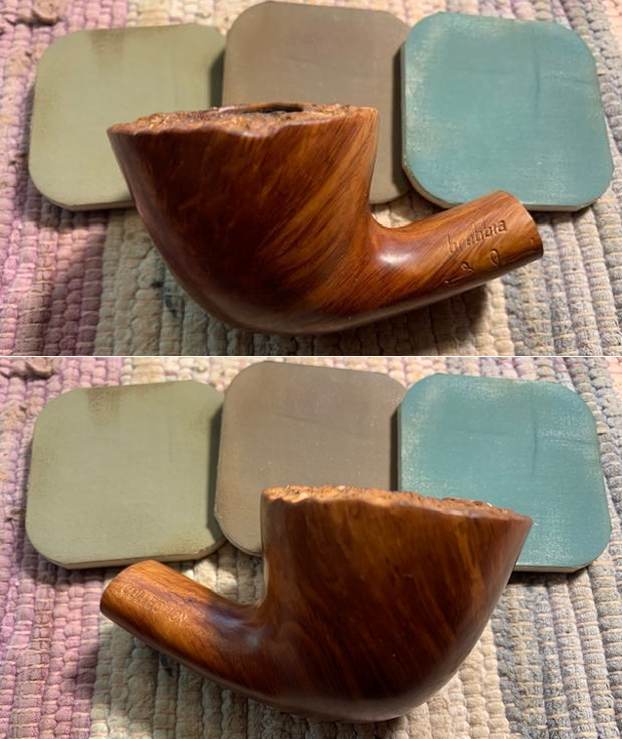
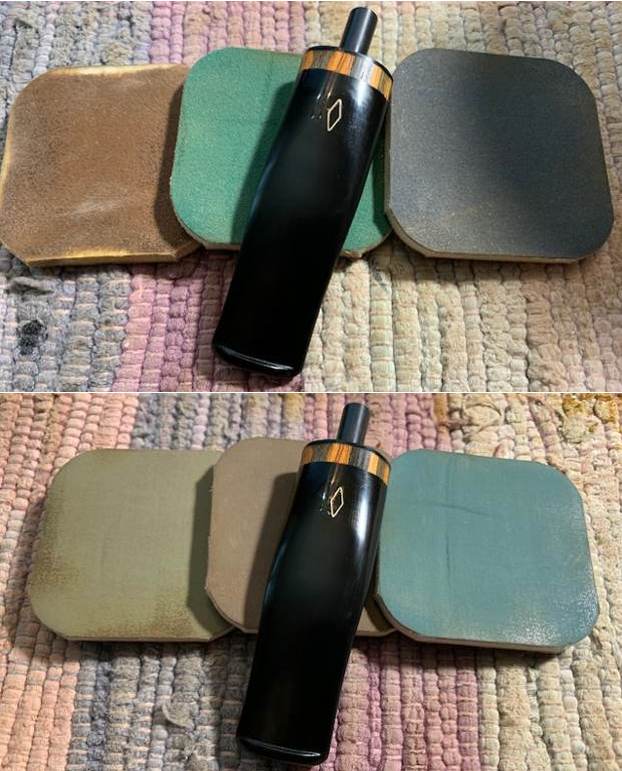
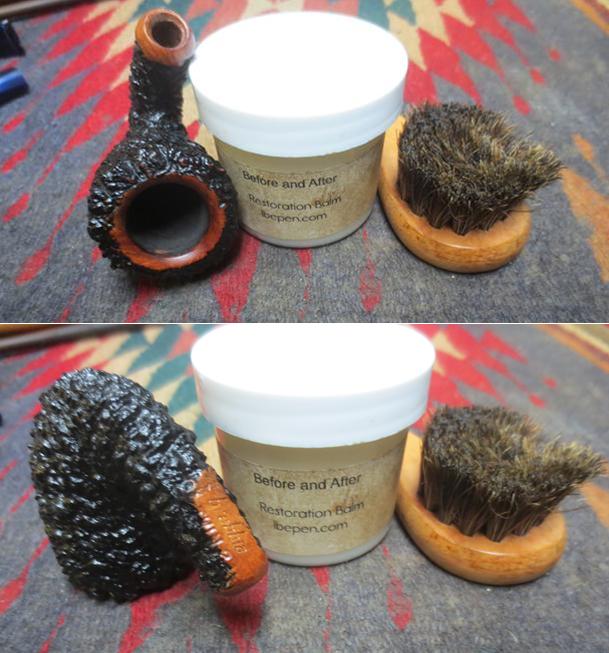
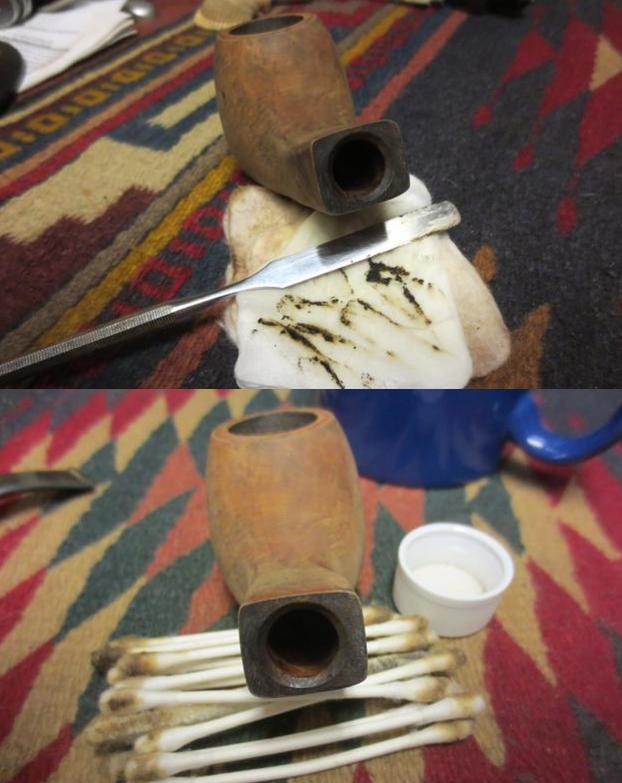
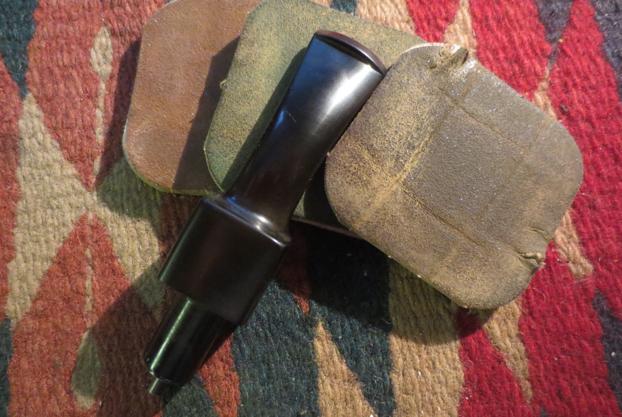
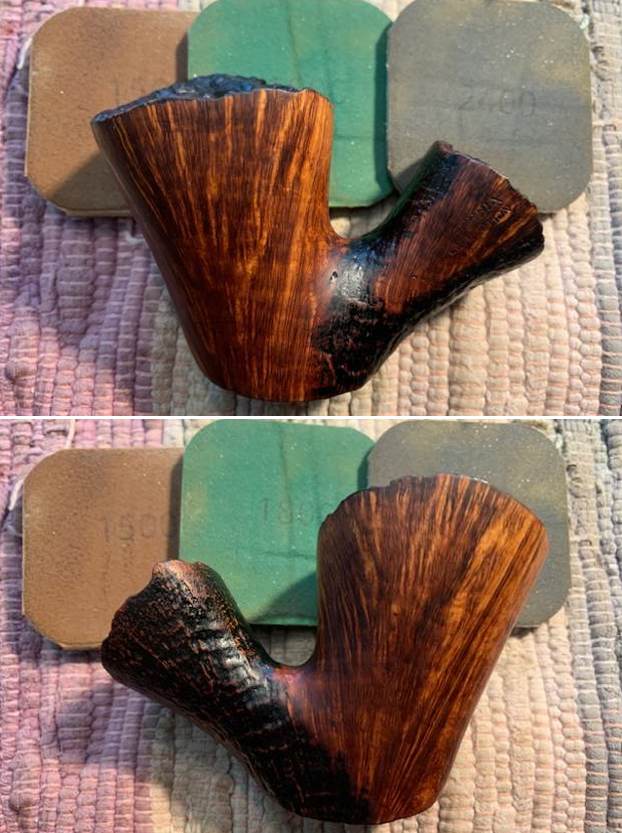
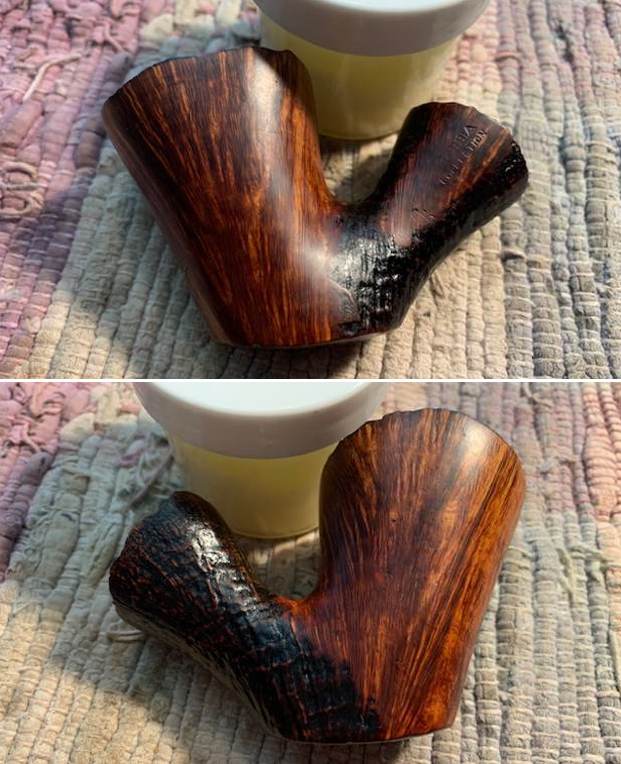
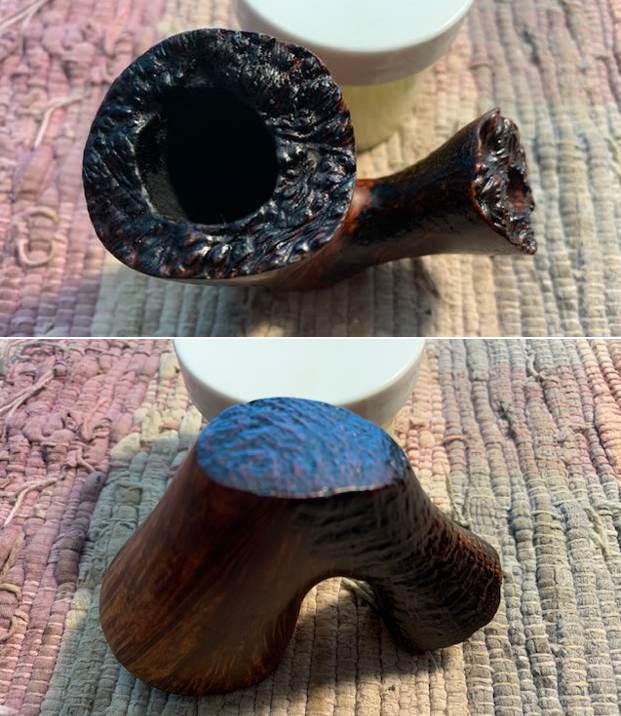
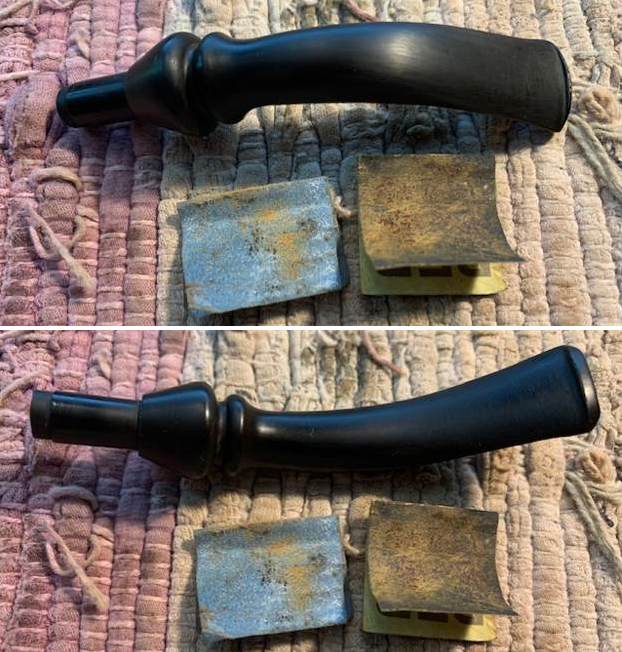
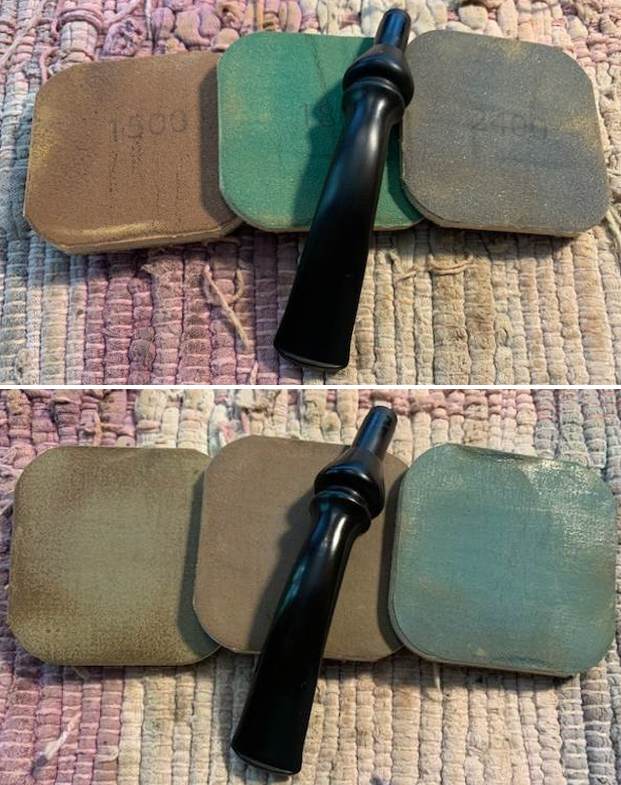
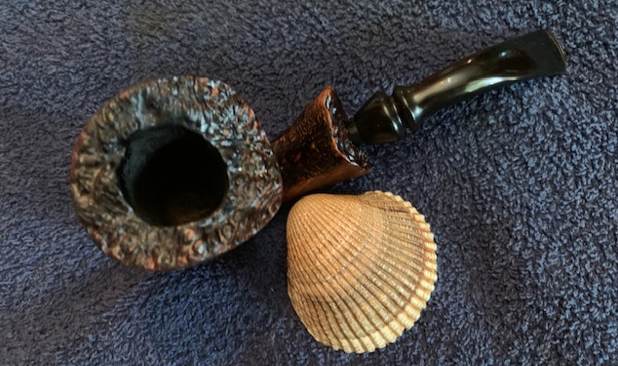
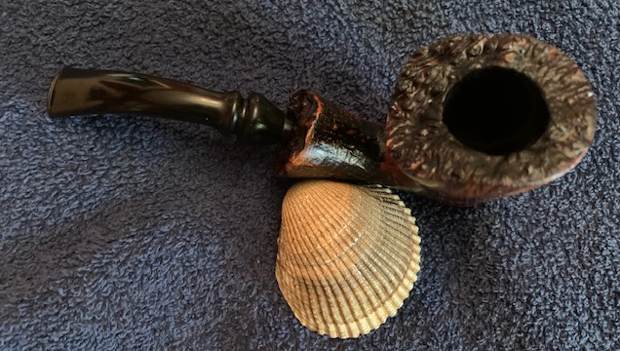
Jeff had reamed the pipe with a PipNet pipe reamer and cleaned up the reaming with a Savinelli Fitsall Pipe Knife. He scrubbed out the internals of the shank and stem with alcohol, pipe cleaners and cotton swabs until the pipe was clean. He scrubbed the exterior of the bowl with Murphy’s Oil Soap and a tooth brush to remove the grime and grit on the briar and the lava on the plateau rim top. The finish looks much better but there is still some darkening on the rim top and inner edge of the bowl. Jeff scrubbed the stem with Soft Scrub to remove the grime on the acrylic stem surface. When the pipe arrived here in Vancouver for the second stop of its restoration tour it looked a lot better. I took photos this morning before I started my part of the work. That is one of the benefits of being an early riser.  I took some close up photos of the rim top and the stem surface. I wanted to show the cleaned bowl and rim top. The rim top and the inner and outer edges of the bowl were in excellent condition. There was some stain remaining in the deep grooves of the plateau rim and shank end. I also took close up photos of the stem to show the tooth marks on the stem surface. I took a photo of the stamping on the left side of the shank and it is readable as noted above.   I removed the stem for the shank and took a photo of the bowl and stem to give a picture of what it looked like. The pipe is really quite beautiful.Jeff had done a good job on the rim top so I used a black stain pen to fill ins the grooves in the plateau on the rim top and shank end. Though the photo is a little dark you will see the results in the following photos below. It is looking quite stunning.I polished the smooth briar around the bowl with 1500-12000 grit micromesh sanding pads to raise the shine and make the grain pop. I wipe the briar down after each pad with a damp cloth to remove the sanding debris. Using the higher grits of micromesh from 3200-12000 I also polished the sandblast areas and the plateau on the rim and the shank end. It is really starting to have a rich glow in the briar and the stunning grain looks amazing.  I rubbed the bowl and shank down with Before & After Restoration Balm to deep clean the finish on the bowl and shank. The product works to clean, enliven and protect the briar. I worked it in with my fingertips on the smooth portions and a horse hair shoe brush to get it into the nooks and crannies of the sand blast finish and the plateau on the rim and shank end. I let it sit for 10 minutes to let it do its magic. I buffed it with a soft cloth. The briar really began to have a rich shine. I took some photos of the bowl at this point to mark the progress in the restoration. The finish – both straight and flame grain along with the sandblast is rich and shows depth. I set the bowl aside and turned my attention to the tooth marks and chatter in the stem. I sanded the stem surface with 220 grit sandpaper and removed the chatter and marks against the button edge. I started polishing the stem with 400 grit wet dry sandpaper.  I polished the stem with micromesh sanding pads – dry sanding with 1500-12000 grit pads. The stem took on a rich glow and the marks are gone. I polished it with Before & After Stem Polish – both Fine and Extra Fine and wiped it down with some Obsidian Oil. I put the Brebbia Collection Danish Style Freehand back together and buffed it on the wheel with Blue Diamond. It polished out the tiny scratches remaining in the acrylic and the smooth briar. I gave it multiple coats of carnauba with the wheel. I buffed it with a clean wheel on the buffer and hand buffed it with a soft cloth to deepen the shine. The finished pipe looks very good. The Demisandblast/smooth finish highlights the grain both on the smooth portions and the sandblast ones and it is a stunning pipe. The pipe feels great in the hand and is comfortable and light weight for its size. The finished Brebbia Freehand is shown in the photos below. The dimensions of the pipe are Length: 6 inches, Height: 2 inches, Outside diameter of the bowl: 1 ½ x 2 inches, Chamber diameter: ¾ of an inch. The weight of the pipe is 1.83 ounces/ 52 grams. I will soon be adding this pipe to the rebornpipes store in the Italian Pipemakers Section so if you are interested in adding it to your collection please let me know. Thanks for reading this blog and my reflections on the pipe while I worked on it.
Breathing New Life into a Brebbia Collection Hand Carved Pura


Blog by Steve Laug

I have sold a few pipes to a fellow in Israel over the past year and he is great to work with. He has great taste in pipes and the ones he has purchased from me have been beautiful. Not long ago I received and email from him about another pipe he was interested in purchasing EBay. He sent me the link and wanted my opinion on it. It was a nice Brebbia Collection “Freehand” with a rim top carved to emulate plateau. I really liked the look and the flowing shape of the pipe and stem. The pipe appeared to be in decent condition. Not too many days after that he wrote me to say he had won it and he had it shipped to me rather than to him in Israel. We chatted back and forth about it via email and I would let him know when I received it. Here are the pictures that the seller included with the advertising.  The seller took a large photo of the rim top to show the condition. You can see the cake in the bowl and darkening on the inner edge. You can also see the faux plateau (carved briar to look like it is plateau when it is not). He also included a photo of the top and underside of the stem the light tooth marks, chatter and scratches. It also has a nice inlay of various woods as a band on the shank end of the stem. He also took photos of the stamping on the sides of the shank. It was readable and will be described once I have the pipe in hand and can examine it.He took the stem off the shank and took a picture of the mortise and the tenon to show the condition of those parts of the pipe. It looked solid.The pipe arrived this week in a well packed box from the seller. When I opened the box I examined the pipe carefully to assess both the condition of the pipe and what I needed to do with it. There was a moderate cake in the bowl with darkening on the inner edge of the rim. The rim top looked quite good. The pipe was stamped on the on the sides the shank and on the left side read Brebbia [over] the signature of Enea Buzzi. On the right side it was stamped Collection. On the underside it has the most stamping and read Hand Carved Real Briar in a circle around a Hand. To the right of that it is stamped PURA in a scroll and then ITALY at the stem shank junction. The finish was dirty but you could see some interesting grain underneath. The stem had the brass Brebbia diamond logo inlay on the top of the taper. The acrylic was dirty and there were tooth marks and chatter on the top and underside. It was going to take some work to clean up but I thought it would work out fairly well. I think the pipe would clean up amazingly well. I took some photos of the pipe before I started my work on it. I have included them below. I took a photo of the bowl and rim top to show the thickness of the cake in the bowl and the darkening on the inner edges of the bowl. The faux plateau looks quite good. I took photos of the stem surface to show the condition and tooth marks and chatter on both sides ahead of the button. I took photos of the stamping on the shank sides. It is readable as noted above and is very clear. I took a photo of the Brebbia brass diamond logo on the stem as well. It is in excellent condition.I removed the stem from the shank and took a photo of the pipe parts. It is really going to be quite a stunning piece.I wanted to know more about this particular model of the company – The Brebba Collection so I turned to Pipephil first for a summary of  information available (http://pipephil.eu/logos/en/logo-brebbia.html). I quote below and also have included a screen capture of the model that was pictured.

The Brebbia brand is named after the locality of Bosco Grosso di Brebbia (Prov. Varese, Reg. Lombardia). A first corporate was founded by Enea Buzzi and Achille Savinelli in 1947. They split in 1953. Buzzi ketp the factory and created the MPB brand (Maniffatura Pipe Brebbia). After 1968 the brand was shortly called “Brebbia”.

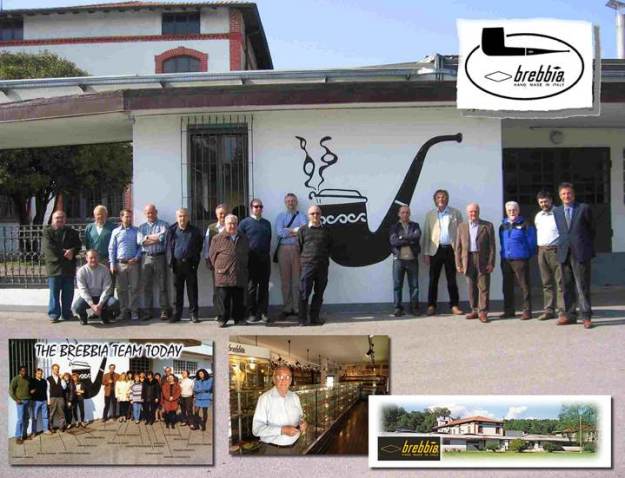
Luciano Buzzi son of Enea manages the company since the 1990s.I turned then to Pipedia for more detail (https://pipedia.org/wiki/Brebbia). I quote from the article on the site. There is some interesting history there. I also have included a photo of the company provided by Doug Valitchka

Pipe Brebbia Srl, or better the M.P.B. (Manifattura Pipe Brebbia) was born in 1953 from the denouement of the association between Achille Savinelli and Enea Buzzi in 1947, where the first was employed in the marketing and the second in manufacturing of pipes under the name of Savinelli. It was made in exclusive up to 1953 and extended without further rights up to 1956.

The production, which is always careful and perfect, has continued in a traditional way for 60 years, using old lathes for the first steps, but finishing every piece by hand.

The secret of their manufacture, if we may put it this way, is the respect for the traditions with the experience acquired in several years of successful work, which could be summed up in two words: high quality.

The factory is currently managed by Enea’s son, Luciano.

For the last few decades, many of Brebbia’s pipes have been made by a number of small, otherwise independent pipe manufacturers, being marketed under the trade name Brebbia. For the northern European market, 9mm filter pipes are being produced, some of which employ VAUEN‘s Konex system (which ensures a good seat of the filter).

Courtesy of Doug Valitchka

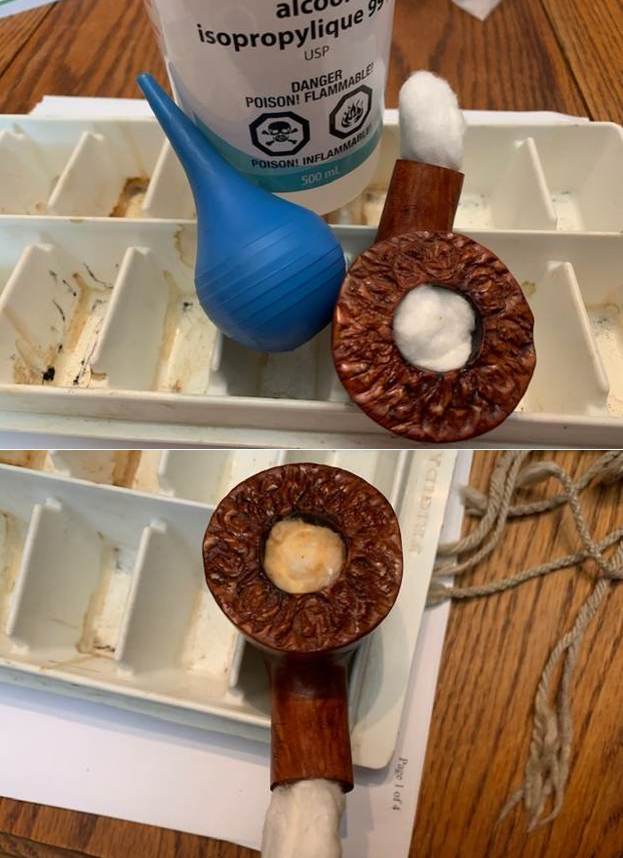
I reamed the bowl with a PipNet pipe reamer and took the cake back to bare walls. I cleaned up the reaming with a Savinelli Fitsall Pipe Knife. I sanded the bowl walls with 220 grit sandpaper wrapped around a piece of dowel. I examined the walls with a lens and they were solid and undamaged. I scraped out the tars and oils in the shank/mortise with a thin pen knife to get rid of the build up on the walls. I cleaned out the airway in the shank and the stem as well as the mortise with isopropyl alcohol, cotton swabs and pipe cleaners. It was quite dirty and now smells much better. I scrubbed the exterior of the bowl with Murphy’s Oil Soap and a tooth brush to remove the grime from the finish of the bowl and rim top. I rinsed off the bowl with warm water and then dried the bowl with a cotton cloth. The grain that came to the surface once it was clean is quite stunning. I worked over the darkening on the inside edge of the bowl and the rim top with a folded piece of 220 grit sandpaper. It began to look a lot better.I polished the briar with micromesh sanding pads – dry sanding with 1500-12000 grit pads. After each pad I wiped the bowl down with a damp cloth to remove the sanding debris. It really took on a shine by the last three sanding pads. To remove the heavy Latakia smell I stuffed the bowl with cotton bolls and filled it with 99% isopropyl alcohol. I put a cotton boll plug in the shank and set it aside to do its work. In the morning you can see that it had pull a lot of the oils out of the briar. I removed the plug and cleaned the shank one more time. The pipe smells fresh.I rubbed the bowl down with Before & After Restoration Balm. I worked it into the surface of the briar where it works to clean, restore and preserve the briar. I let it do its magic for 15 minutes then buffed it off with a cotton cloth. The pipe looks incredibly good at this point in the process. With that the bowl had come a long way from when I started working on it. I set it aside and turned my attention to the stem. I continued to polish the stem with micromesh sanding pads – wet sanding with 1500-12000 grit sanding pads. I wiped it down after each sanding pad with Obsidian Oil. I polished it with Before & After Pipe Stem Polish – both Fine and Extra Fine and wiped it down with Obsidian Oil one more time. I am excited to finish this Brebbia Enea Buzzi Collection Pura Freehand. I put the pipe back together and buffed it with Blue Diamond on the buffing wheel. I gave the bowl and the stem multiple coats of carnauba wax. I hand buffed the pipe with a clean buffing pad to raise the shine. It is fun to see what the polished bowl looks like with beautiful mixed grain all around it. The polished grain on the pipe looks great with the black vulcanite stem. This smooth Hand Carved Enea Buzzi Brebbia Collection is great looking and the pipe feels great in my hand. It is light and well balanced. Have a look at it with the photos below. The dimensions are Length: 5 ¾ inches, Height: 1 ¾ inches, Outside diameter of the bowl: 2 inches, Chamber diameter: ¾ of an inch. The weight of the pipe is 58 grams/2.05 ounces. It turned out to be a beautiful pipe. I will be packing it up and sending it to my friend in Israel. I think he will enjoy this beauty once it is in his hands. Thanks for your time reading this blog and as Paresh says each time – Stay Safe.

Brebbia Brandy


Blog by Kenneth Lieblich

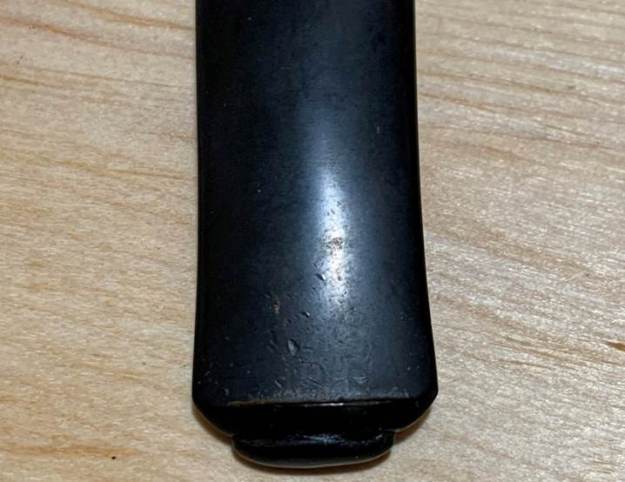
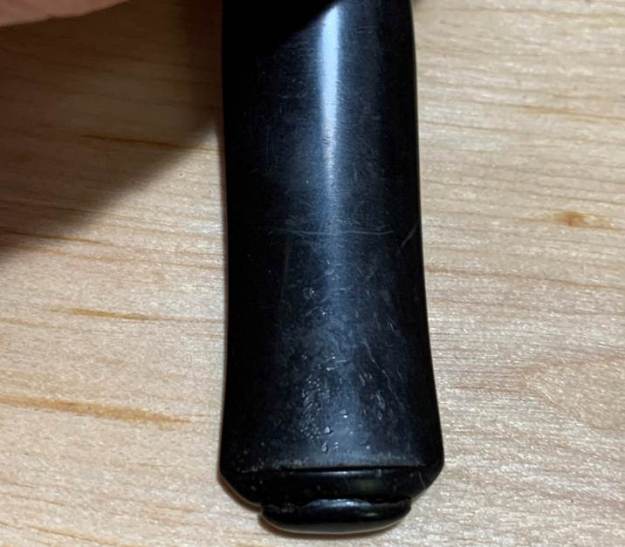
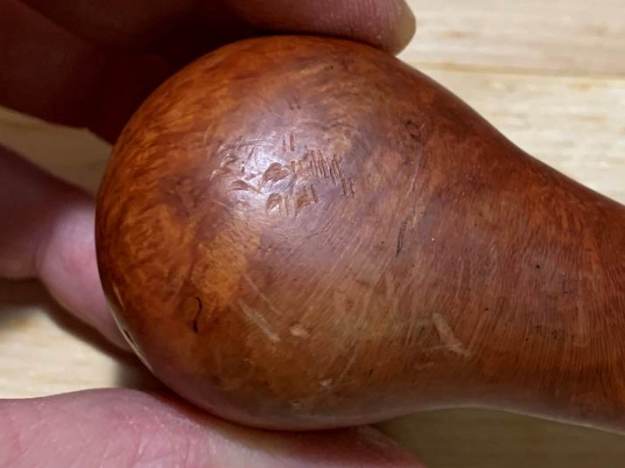
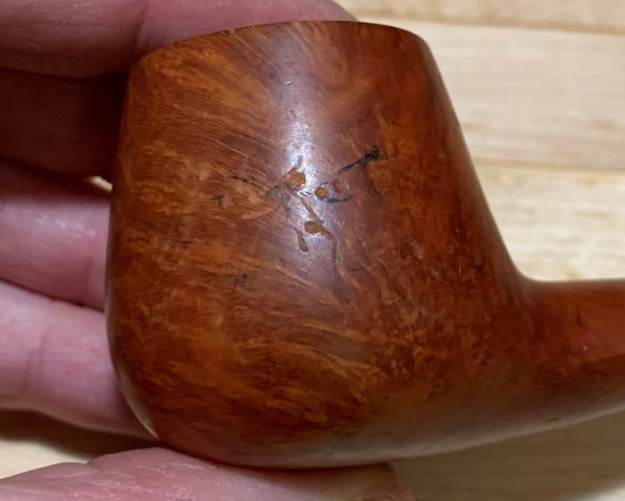
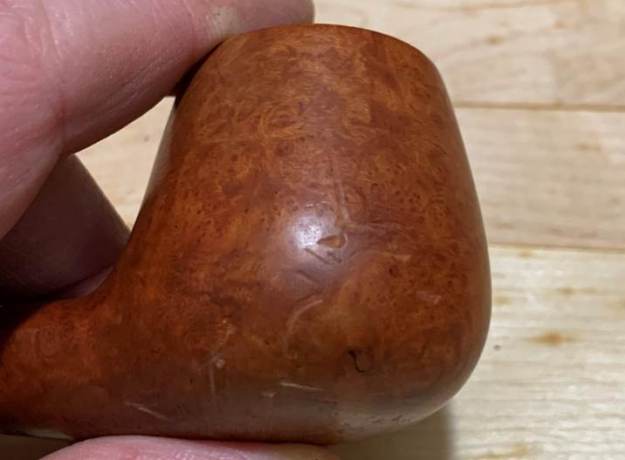
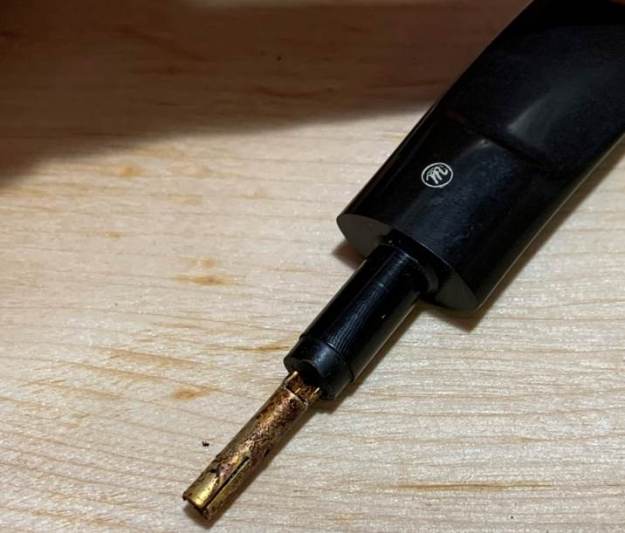
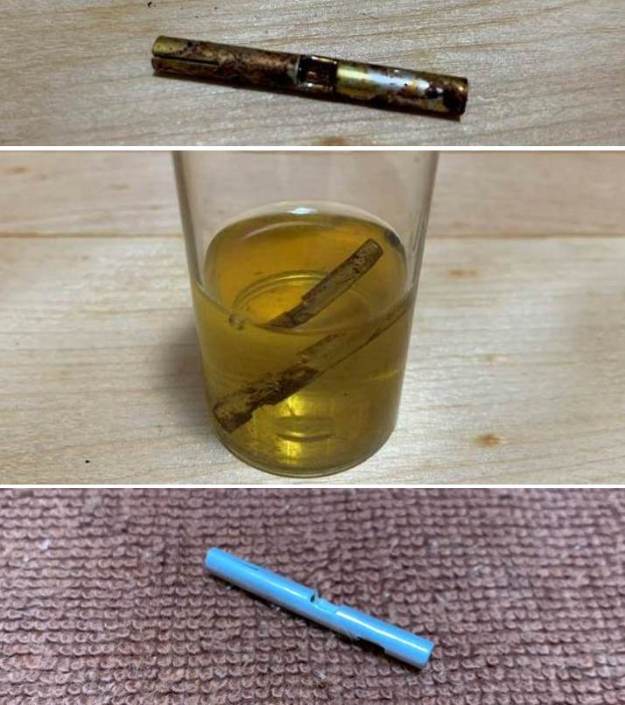
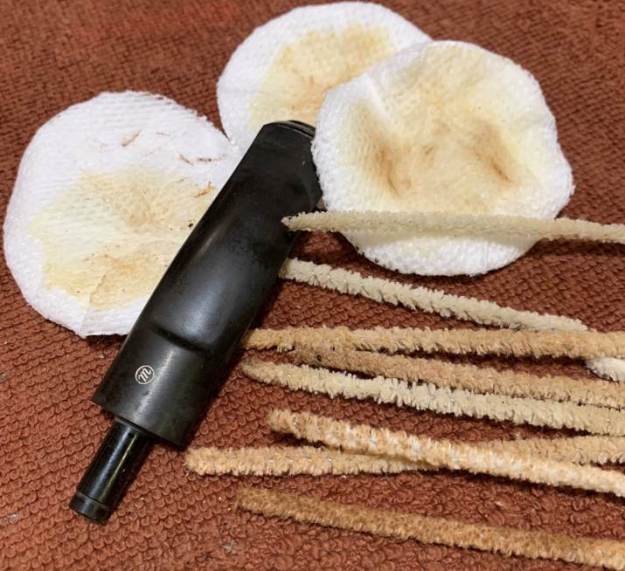
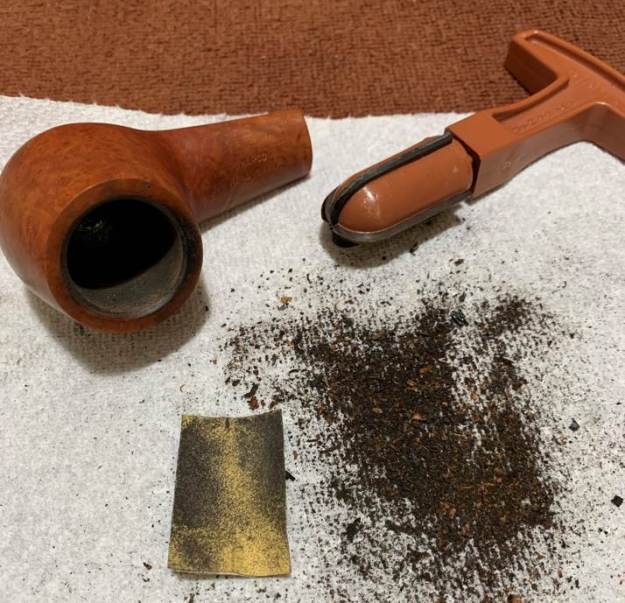
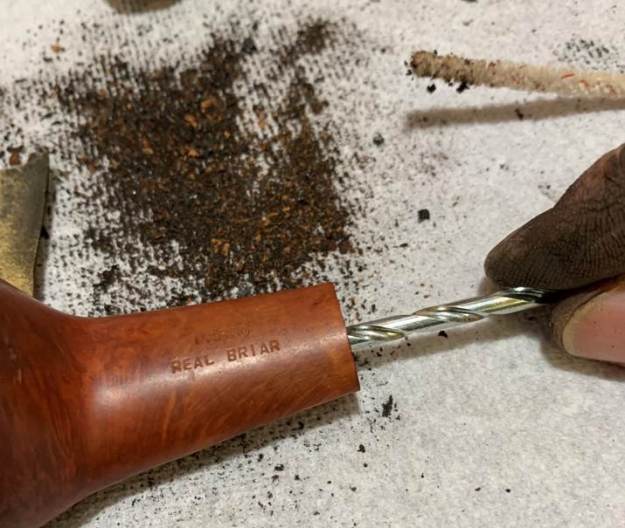
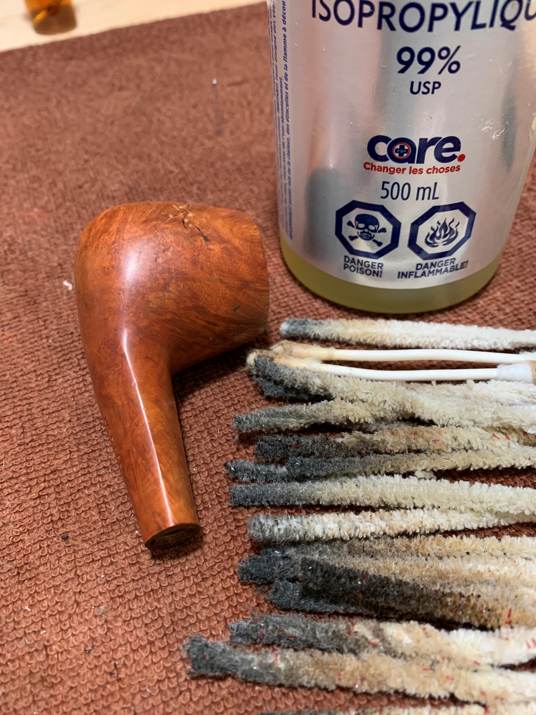
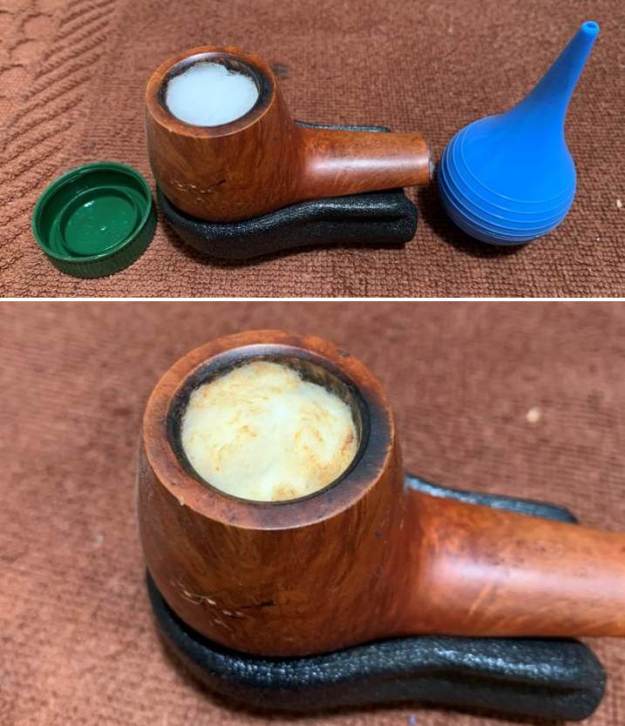
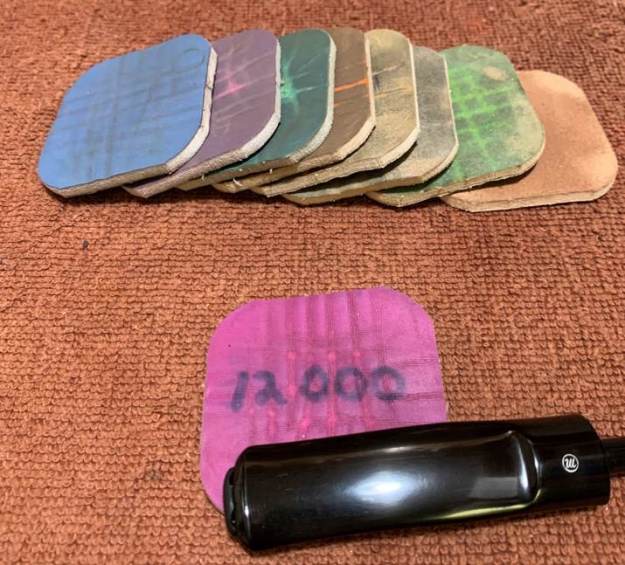
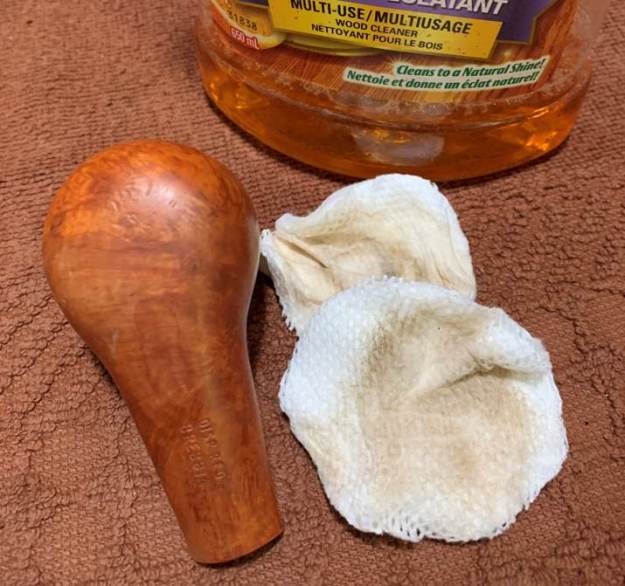
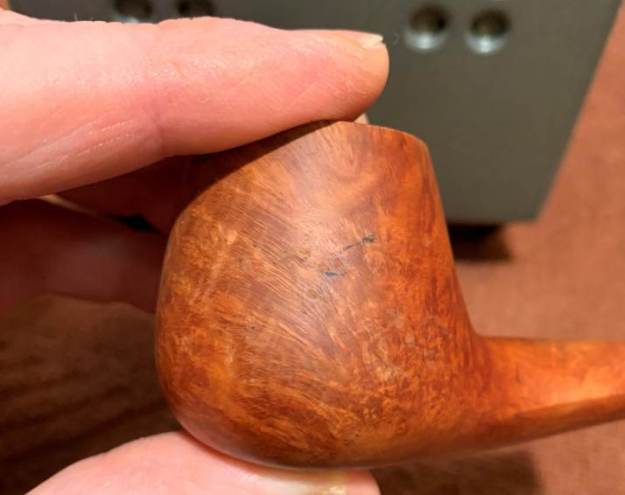
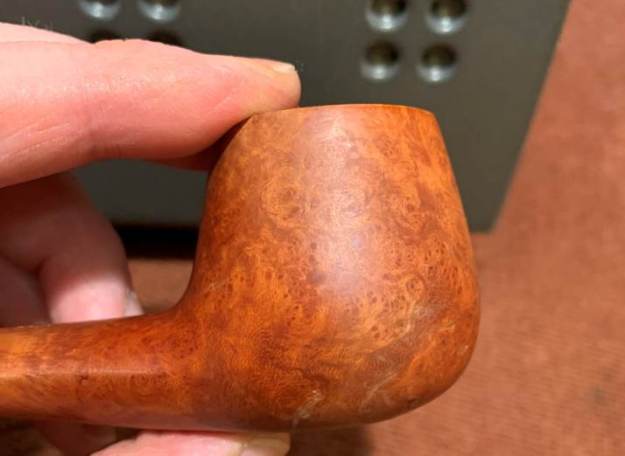
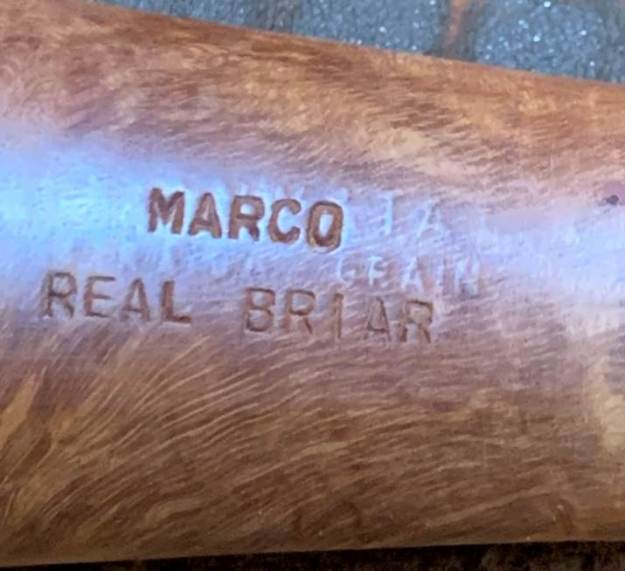
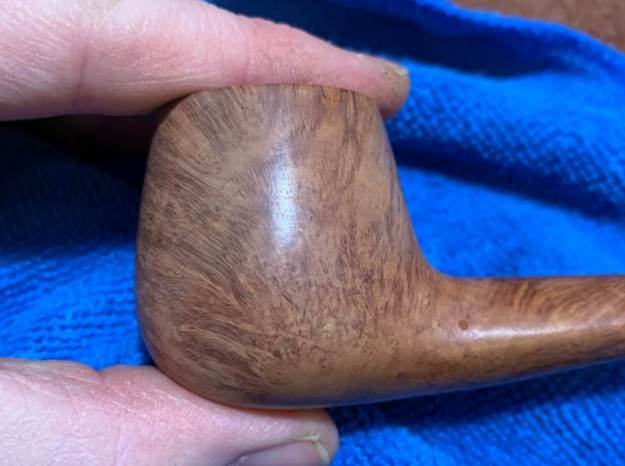
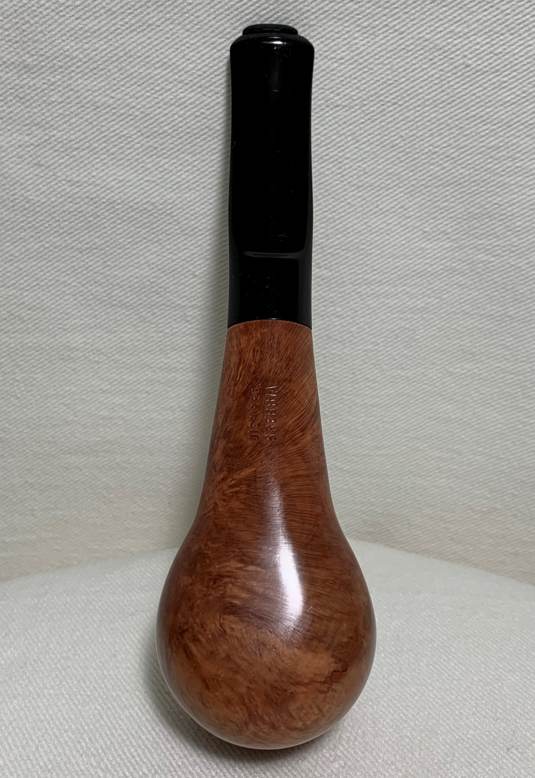
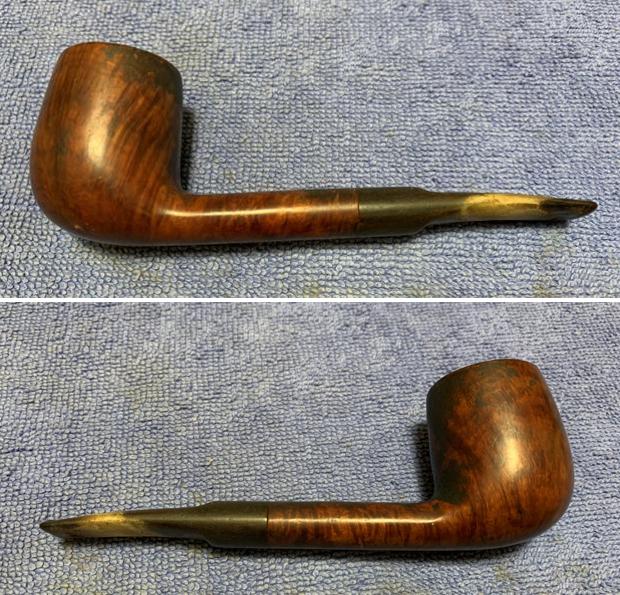
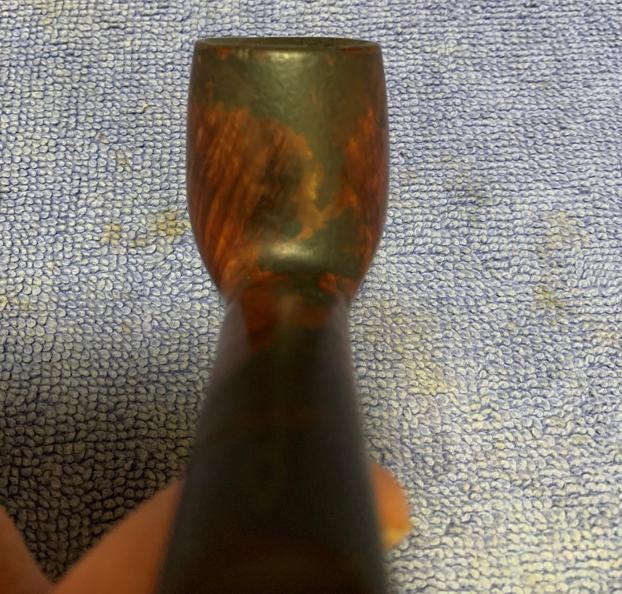
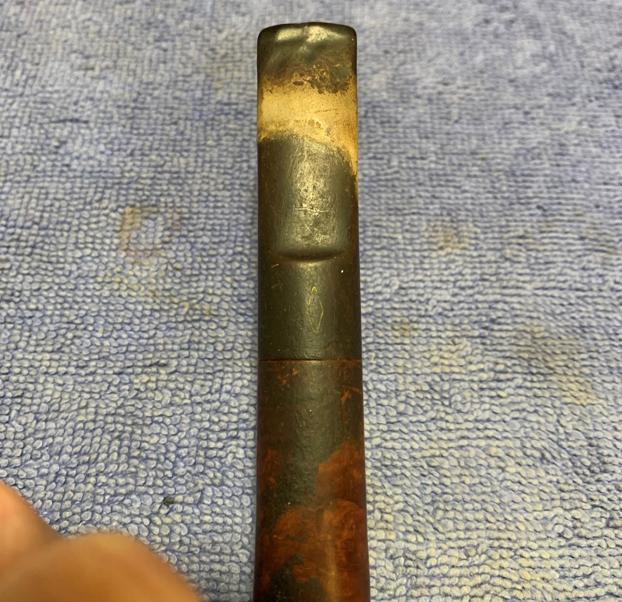
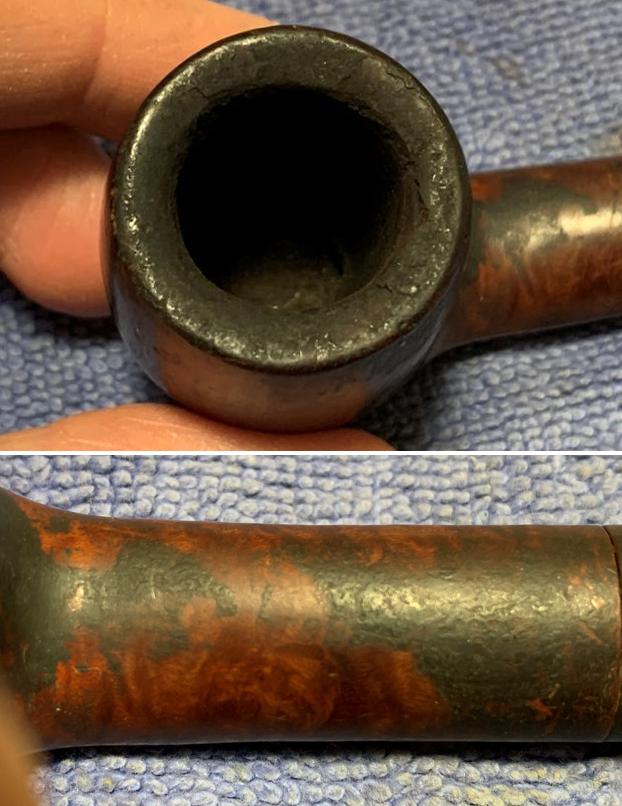
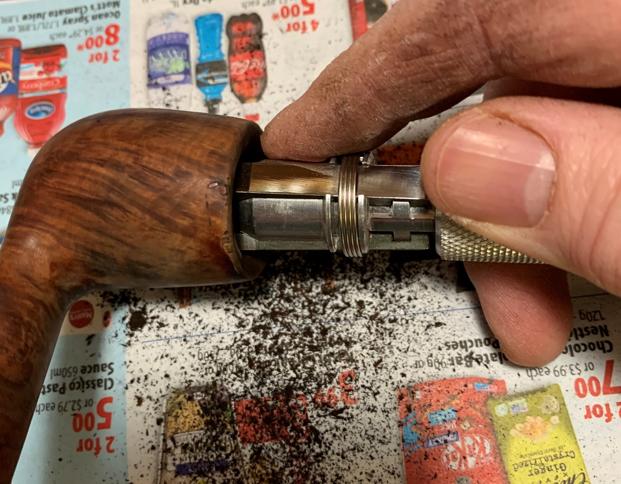
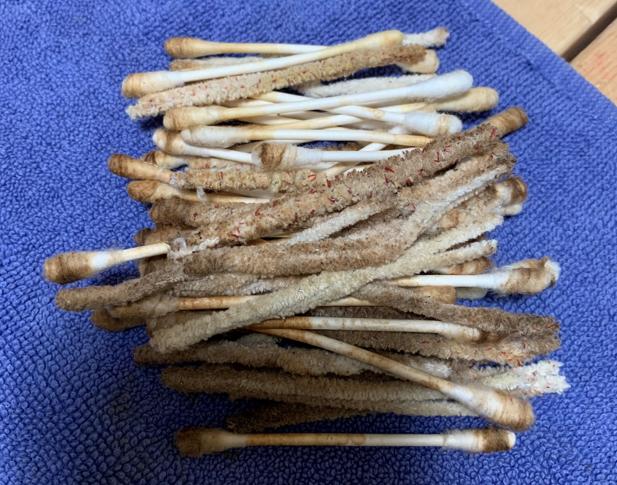
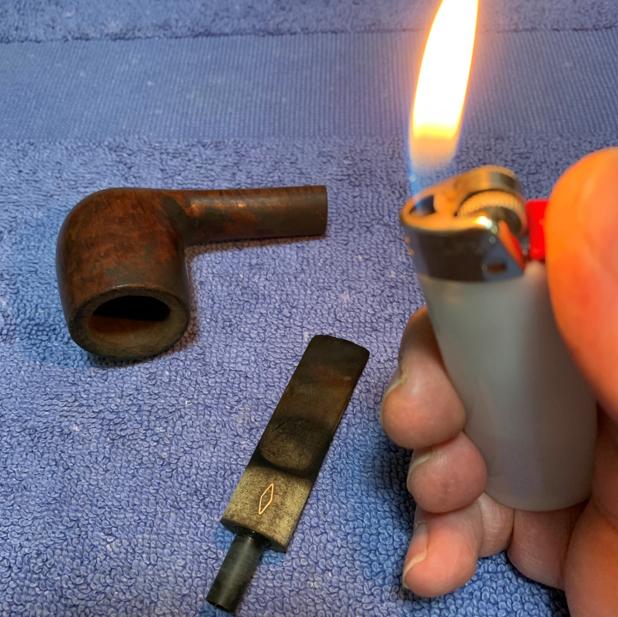
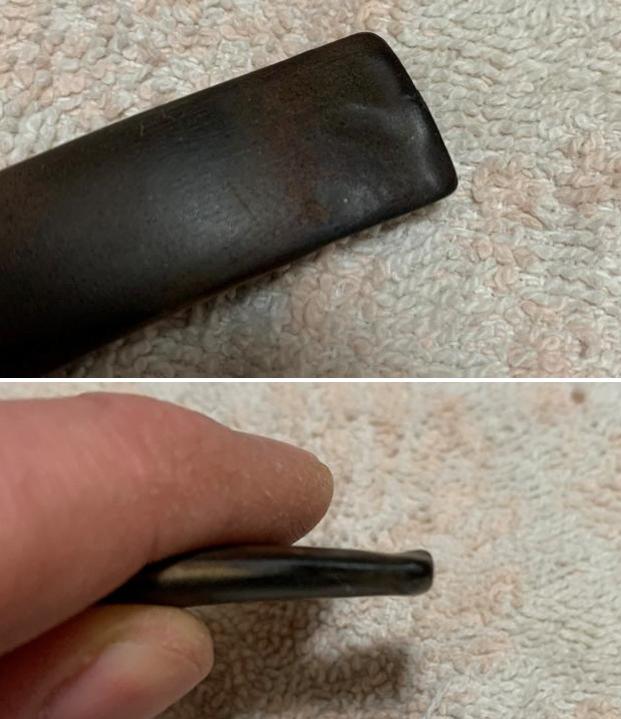
Next on the chopping block is this lovely Brebbia Marco. It came to me in a large lot from France. It was a decent lot of pipes, but the person who sold it to me decided that the best way of shipping to Canada would be to simply throw them all in a box and tape it up. Ugh. The pipes in this lot were figuratively all over the map: some beautiful, some hideous; some very old, some newish; some pristine, some mostly destroyed. This pipe called out to me as being very attractive and one that could easily be brought back to life. It was also the only Italian pipe in the lot. This pipe is a Brebbia. Or maybe it is a Marco. Or maybe Marco is a line of Brebbia pipes. Or maybe Marco is a sub-brand/second of Brebbia. Or maybe Marco is the name of a pipe shop that sold Brebbia. There is not much information to be found specifically for the name Marco in connection with Brebbia. The markings on the top of the shank read Marco [over] Real Briar. On the underside of the shank, the markings read Disp. Reg. [over] Brebbia. Also, on the stem, there is an encircled, cursive M. If you have any information on the connection between Marco and Brebbia, please let me know in the comments below. Thank you.This is a brandy-shaped pipe – and a really pretty one too. It felt very comfortable in the hand. It was obvious from the start that this was a great pipe that just needed some attention and TLC. I learned from Pipedia and Pipephil that the Brebbia pipe company was named after the locality of Bosco Grosso di Brebbia in Lombardy, Italy. The company was founded by Enea Buzzi and Achille Savinelli in 1947, but they parted ways in 1953. Mr Savinelli went on to form his eponymous company, while Mr Buzzi kept the factory and created Maniffatura Pipe Brebbia – they produce MPB and Brebbia pipes. Mr Buzzi’s family still run the company today.On to the pipe – and it had a few issues. The stem was mostly fine. No significant oxidation or calcification to speak of, plenty of tooth chatter and scratches, and a filthy inner-tube. The stem also had a strange piece sticking out of the end of the bit – more about that later. Meanwhile, the stummel was where the real problems lay. The outside of the bowl had many scratches and deep gouges. I was not at all sure that they were going to come out. There were also several burn marks on the rim and what looked like ink on the bowl. The inside was pretty dirty too. The stem was first on my list. The inner-tube was extracted fairly easily. It then went for a soak in some lemon-infused isopropyl alcohol. I let it sit for several hours and then cleaned it off and it looked much improved. I then finished it with some metal polish and moved on.I wiped down the outside of the stem with Murphy’s Oil Soap on some cotton pads. I also took a BIC lighter and ‘painted’ the stem with its flame in order to lift the bite marks and dents. This was not particularly successful in raising the damage. Then, I cleaned out the insides with pipe cleaners and isopropyl alcohol. The problem I had was the odd-shaped piece coming out the end of the bit. Steve explained that it was an implement to prevent bite-through on the stem. Aha! I learn something from Steve every day. This certainly made sense, but it made cleaning the stem a real problem, since I could not be sure that the bit was fully clean with that piece in place. In order to solve the problem, however, I needed to clean out the stummel first.This stummel was a bit of a mess inside. I first decided to ream out the bowl. I used both the PipNet Reamer and the KleenReem to remove the built-up cake and followed that with 220-grit sandpaper to eliminate as much as I could. In fact, I also used the drill bit that came with the KleenReem in order to loosen the debris that blocked the draught hole. I took the bowl down to bare briar, as I wanted to ensure there were no hidden flaws in the walls of the bowl. Fortunately, there were none. I then proceeded to clean out the insides of the shank with Q-tips, pipe cleaners, and isopropyl alcohol. There was some filth inside this stummel and it took some cotton to get it clean. A de-ghosting session also seemed in order, so I thrust cotton balls in the bowl and the shank, and saturated them with 99% isopropyl alcohol. I let the stummel sit for 24 hours. This caused the oils, tars and smells to leech out into the cotton. Finally, a relatively clean and fresh-smelling bowl emerged.Then, to finish off cleaning the inside of the stem, I put it back together with the stummel and used my pipe retort system. This system uses boiling isopropyl alcohol and a vacuum (a void space, not the household item) to clean the interior of a pipe. As you can see by the brownish colour of the alcohol, the retort worked well. I managed to extract lots of otherwise inaccessible filth from inside the pipe. After the retort, I then used all nine Micromesh pads (1,500 through 12,000 grit) to bring out the lovely black lustre on the stem. I also used Obsidian Pipe Stem Oil in between each pad scrubbing. Back to the stummel: I finished cleaning up the insides with some dish soap and tube brushes. I then moved on to cleaning the outside of the stummel with Murphy’s Oil Soap and some cotton pads. Some stains were pretty stubborn and I had to scrub hard, but this did eventually remove the remaining dirt. After that, a light application of Before & After Restoration Balm brought out the best in the stummel’s grain.Now that it was clean, I could address the gouges and burn on the stummel. I took some oxalic acid, used several Q-tips, and rubbed. The burn did improve but never fully disappeared. I gently poked at it with a dental tool in order to assess the wood. I took solace from the fact that the burn was very superficial and did not affect the integrity of the wood at all. In order to fully remove the burns on the rim, I “topped” the pipe – that is to say, I gently and evenly sanded down the rim on a piece of 220-grit sandpaper. This effectively removed the damage, without altering the look of the pipe.

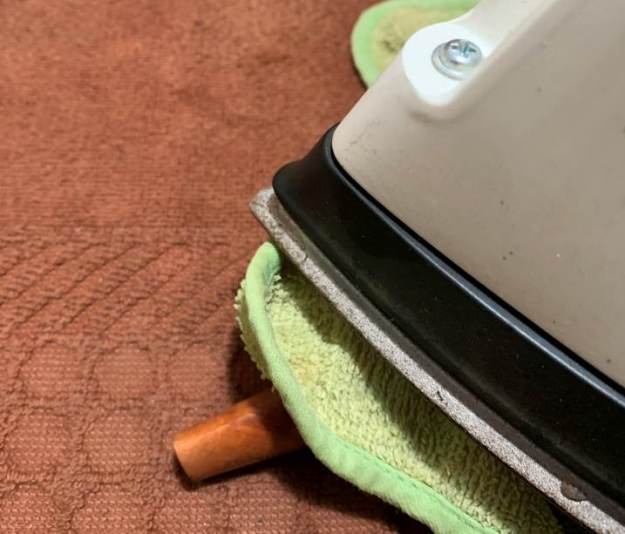
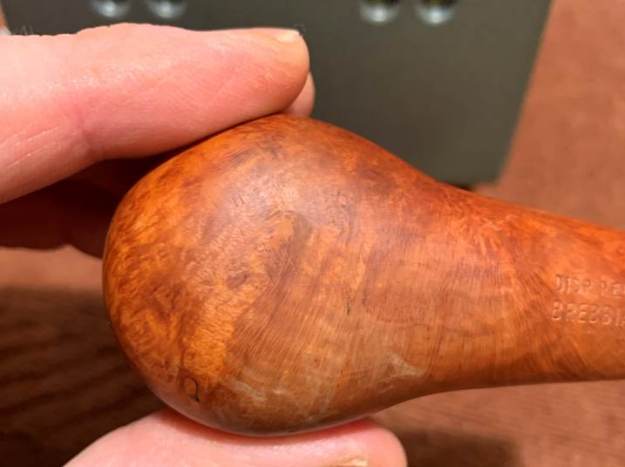
Having completed that, I was able to address the scratches and gouges. I took out my steam iron and a damp cloth to try and raise the nicks. The hot and moist steam created can often cause the wood to swell slightly and return to shape. I was concerned about this because there were so many marks all over the wood. Fortunately, there was considerable movement – I was really pleased with the results. The repair was not perfect, but the remaining scratches would be improved by sanding. With the damage mostly repaired, it was time to sand down the stummel. I used all nine Micromesh pads (1,500 through 12,000 grit) to wet/dry sand everything smooth. Then I added a bit more Before & After Restoration Balm and something unusual appeared. Beneath the markings on the top of the shank, I could see the remnants of an old set of markings. Amazing! It was difficult to figure out exactly what it read, but Steve and I think it might be Fiammata [over] Straight Grain. If you have any information/thoughts, please let me know in the comments below! Upon completion of the stummel, there was a brief moment when I considered whether I should stain the pipe. On reflection, however, I just loved the light colour of the wood so much that I wanted to leave it as is. I applied more Before & After Restoration Balm, then took it to the buffer.A dose of White Diamond and a few coats of carnauba wax were just what this pipe needed. The lovely shine made the wood look absolutely beautiful. In fact, it turned out so well that this pipe has already sold! I know that the new owner will enjoy smoking it for many years to come. I hope you enjoyed reading the story of this pipe as much I as I did restoring it. If you are interested in more of my work, please follow me here on Steve’s website or email me directly at kenneth@knightsofthepipe.com. Thank you very much for reading and, as always, I welcome and encourage your comments.

The Italian Swan


Blog by Kenneth Lieblich

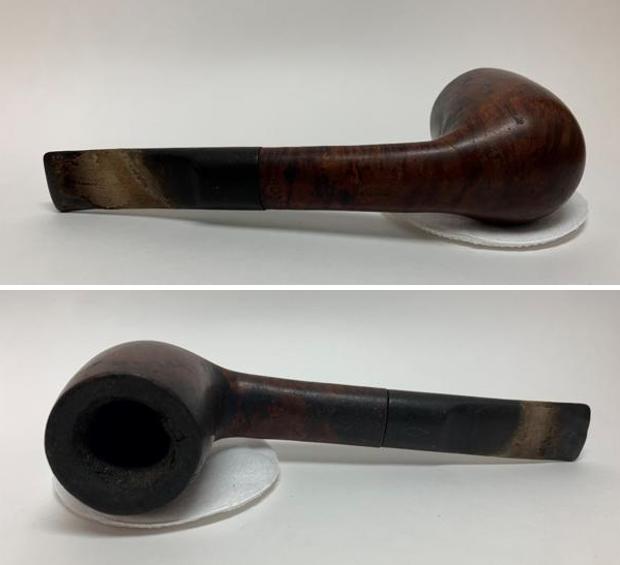
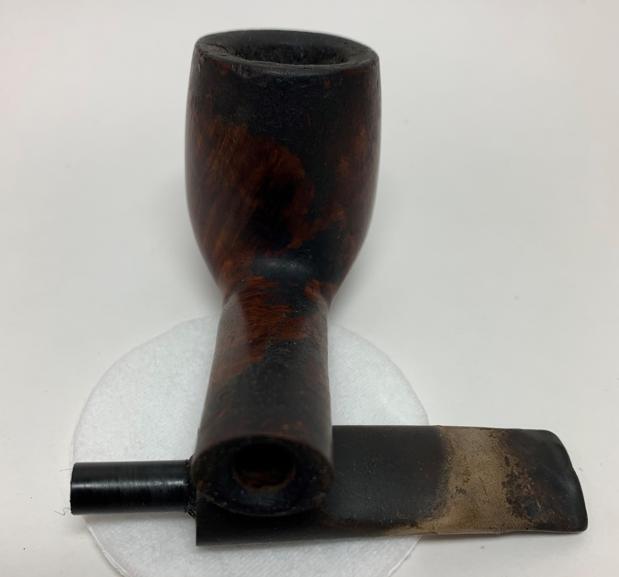
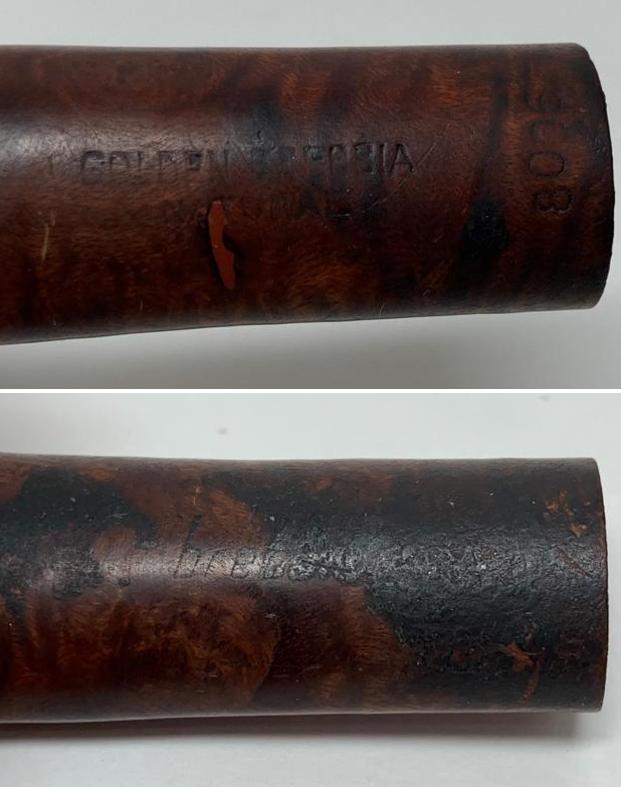
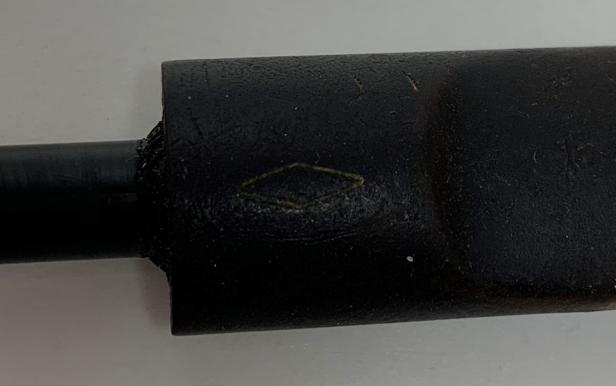
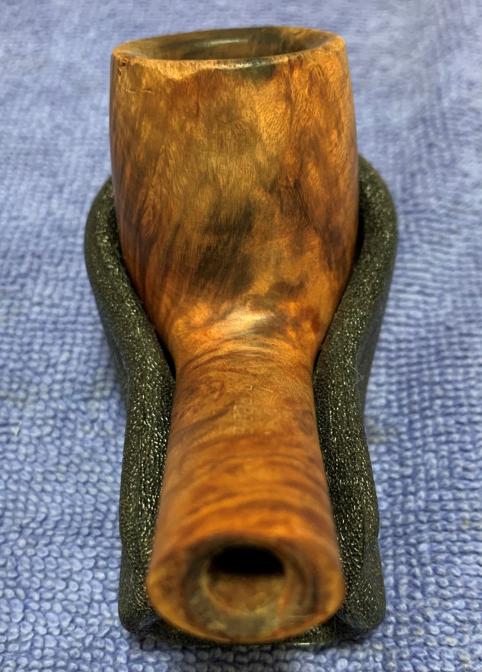
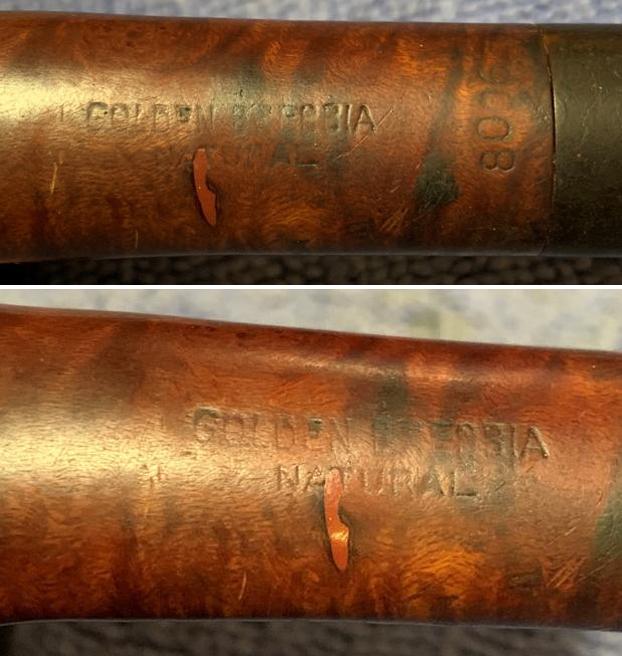
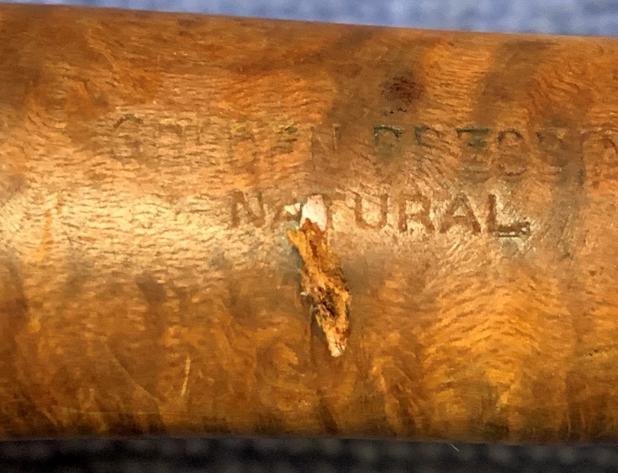
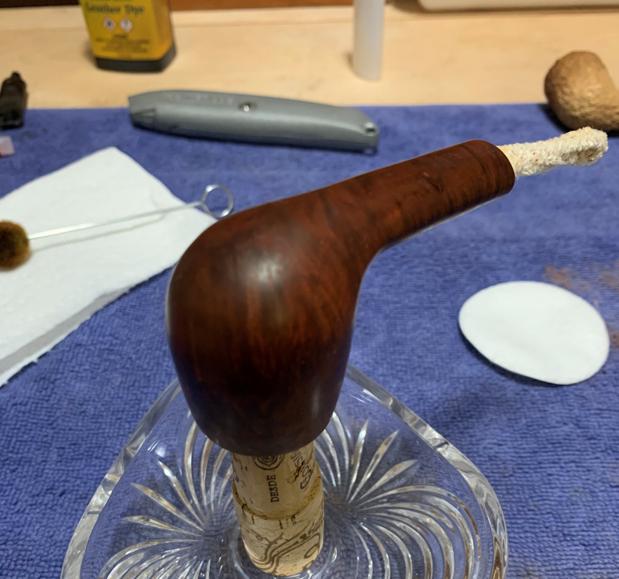
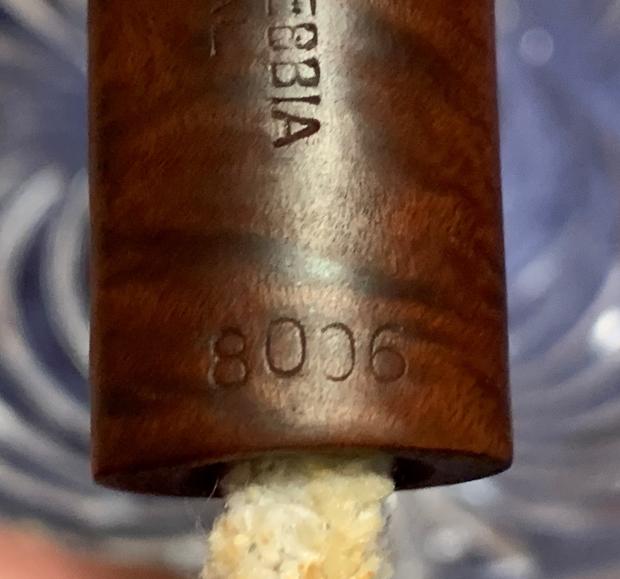
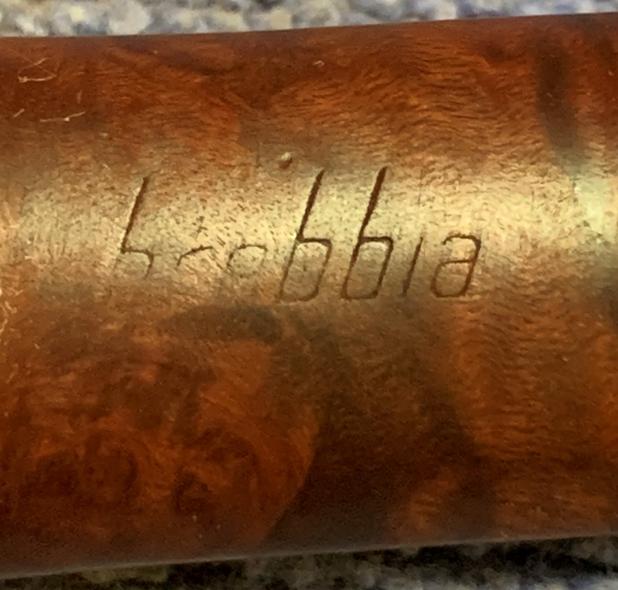
I have seen a great many pipes now, but this Brebbia is among the most filthy that I have ever worked on. This pipe came from Sudbury, Ontario – in the same lot of dirty pipes as the one that Steve and I dubbed ‘The Sudbury’. You may recall that I wrote about that pipe last time and you can read about it here. It was obvious from the start that this was a great pipe that just needed some attention and TLC – an ugly duckling, if you will. And just like the Hans Christian Andersen story, this pipe clearly spent a long time in misery and disdain before its true beauty was revealed. This pipe is a Golden Brebbia Natural 8006. It is a slightly bent billiard with an oval shank and stem. The Brebbia pipe company is named after the locality of Bosco Grosso di Brebbia in Lombardy, Italy. The company was founded by Enea Buzzi and Achille Savinelli in 1947, but they parted ways in 1953. Mr Savinelli went on to form his eponymous company, while Mr Buzzi kept the factory and created Maniffatura Pipe Brebbia. His family still run it today.

The stem of this pipe was badly oxidized and thoroughly chewed. In fact, the button had been chewed to the point that there was hardly any left – it would have to be rebuilt. The stummel was covered in grime. Perhaps hand oils or other stuff mixed with dirt over the years to leave the muck you can see in the photos. Furthermore, there were scratches in the wood, gouges in the rim, and an ugly putty fill that needed to be addressed. Well, the usual cleaning procedures were in order for this pipe. I used both the PipNet Reamer and the KleenReem to take it down to bare briar, as I wanted to ensure there were no hidden flaws in the walls of the bowl. Fortunately, there were none. I then proceeded to clean out the insides of the shank with Q-tips, pipe cleaners, and isopropyl alcohol. There was a lot of nastiness inside this stummel and – boy-oh-boy – it took a lot of cotton to get this thing clean! I then moved on to cleaning the outside of the stummel with Murphy’s Oil Soap and some cotton pads. What a difference that made! A light application of Before & After Restoration Balm brought out the best in the stummel’s grain. There is some beautiful wood under the grime! A de-ghosting session seemed in order to rid this pipe of the foul smells of the past. This de-ghosting consisted of thrusting cotton balls in the bowl and the shank, and saturating them with 99% isopropyl alcohol. I let the stummel sit for 24 hours. This caused the oils, tars and smells to leech out into the cotton. Finally, a relatively clean and fresh-smelling bowl emerged.

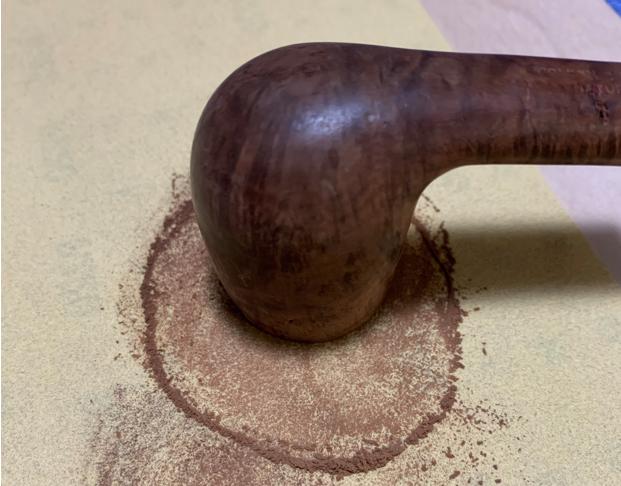
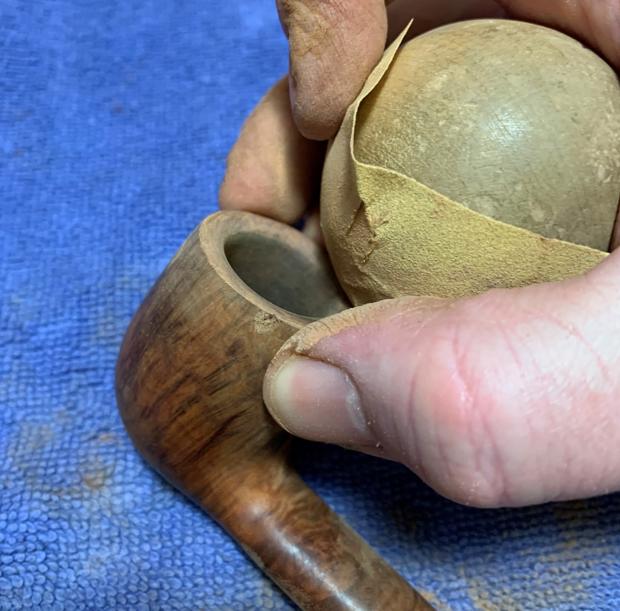
While the de-ghosting was going on, I moved on to the stem. I took a BIC lighter and ‘painted’ the stem with its flame in order to remove the tooth marks. This was moderately successful in raising the dents. Then, I cleaned out the insides of the stem with pipe cleaners and isopropyl alcohol. Once this process was done, the stem went for an overnight soak in the Before & After Hard Rubber Deoxidizer. The following day, I cleaned all of the de-oxidizing sludge off with alcohol, pipe cleaners, et cetera. The oxidation had migrated to the surface and would be fairly straightforward to remove. Before I moved on to the Micromesh pads, I built up the squashed button on the stem with cyanoacrylate adhesive and let it fully cure. I used my miniature files to do a proper cutting of the new button –this ensures that it keeps its shape and looks like it should. I then sanded it down with 220-, 400-, and 600-grit sandpapers to meld seamlessly into the stem. I did the same to the remaining tooth marks. I then used all nine Micromesh pads (1,500 through 12,000 grit) to bring out the lovely black lustre on the stem. I also used Obsidian Pipe Stem Oil in between each pad scrubbing. Back to the stummel – the banged up rim needed some serious attention. In order to minimize the impact of the damaged, I “topped” the pipe – that is to say, I gently and evenly sanded down the rim on a piece of 220-grit sandpaper. This successfully eliminated the damage, without altering the look of the pipe. Then I took a solid wooden sphere, wrapped sandpaper around it, and sanded thoroughly. This was to achieve on the inner part of the rim the same thing that I achieved by “topping” on sandpaper. Furthermore, there was an ugly blotch of pink putty in a fill on the shank. What made this more complicated was that part of the fill went into the markings. Naturally, I intended to remove the pink putty, but if I removed it all, I would also remove part of the word “natural” on the shank. I had to decide which was worse (or better): a bit of putty with the marking intact or no putty with a wrecked marking. I opted for the former. I left a bit of putty, added some colour from my furniture markers, and filled in the remaining hole with cyanoacrylate adhesive. Neither option was perfect, but I think I made the right choice. After this, I used all nine Micromesh pads (1,500 through 12,000 grit) to remove the frustrating scratches in the wood and make everything smooth. All of the work I had done to this point had taken its toll on the colour of the wood. In order to bring back some life to this pipe, I opted for aniline dye. I applied some of Fiebing’s Medium Brown Leather Dye and then applied flame in order to set the colour. Worked like a charm! Since it is an alcohol-based dye, I was able to adjust the colour to my liking by applying my own isopropyl alcohol to the colour. I applied more Before & After Restoration Balm, then took it to the buffer. A dose of White Diamond and a few coats of carnauba wax were just what this pipe needed. This Brebbia was in need of a reminder of its Italian beauty. The pipe began its journey looking though it had been dropped down the mines. Now, it can show its true self – a real beauty from Italy. Not an Ugly Duckling, but an Italian Swan. In fact, it turned out so well that this pipe has already sold! I know that the new owner will enjoy smoking it for many years to come. Thank you very much for reading and, as always, I welcome and encourage your comments.

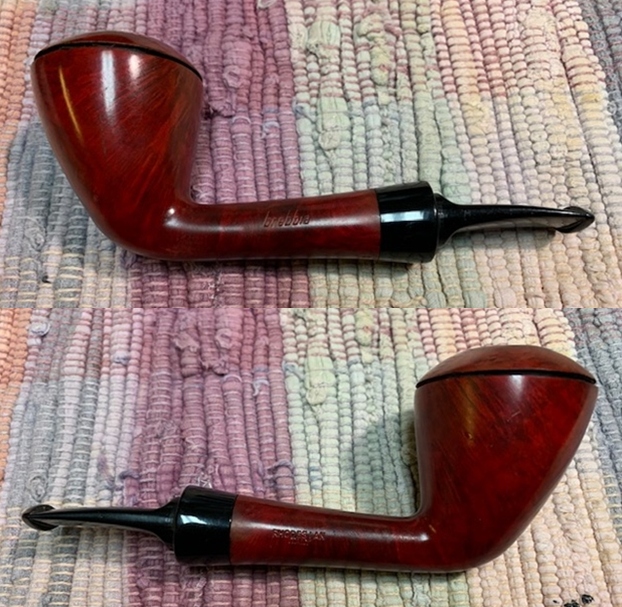
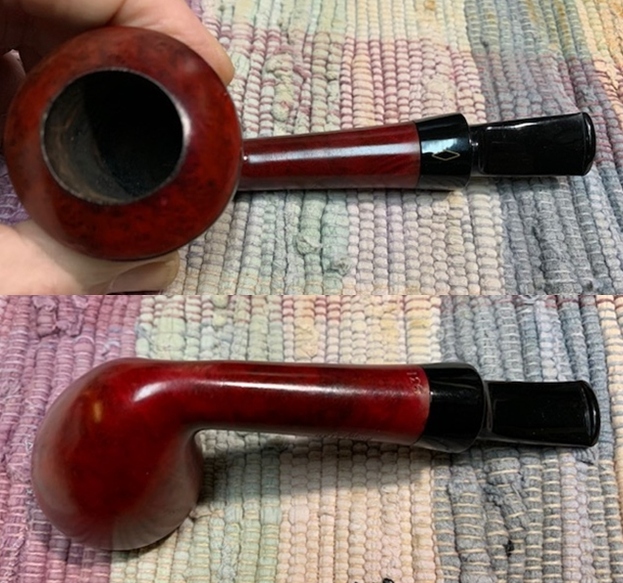
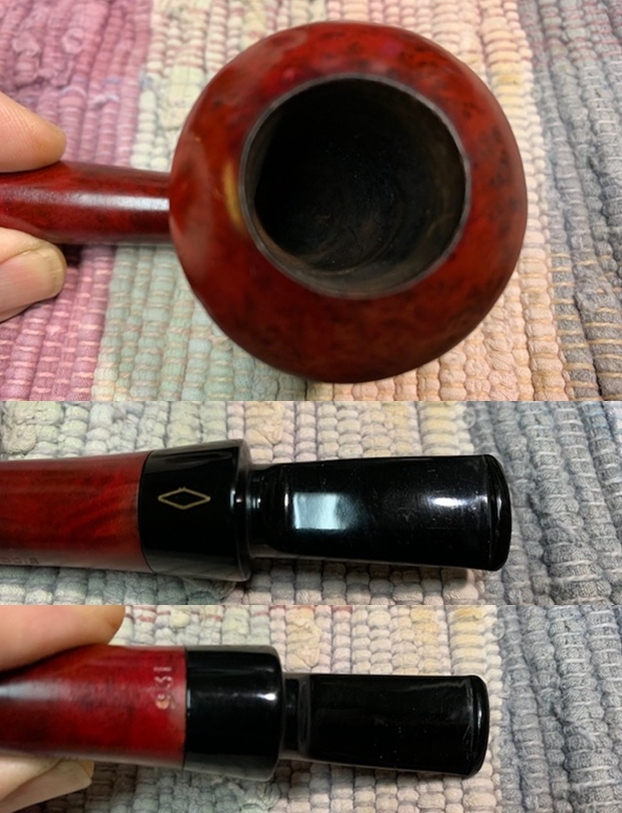
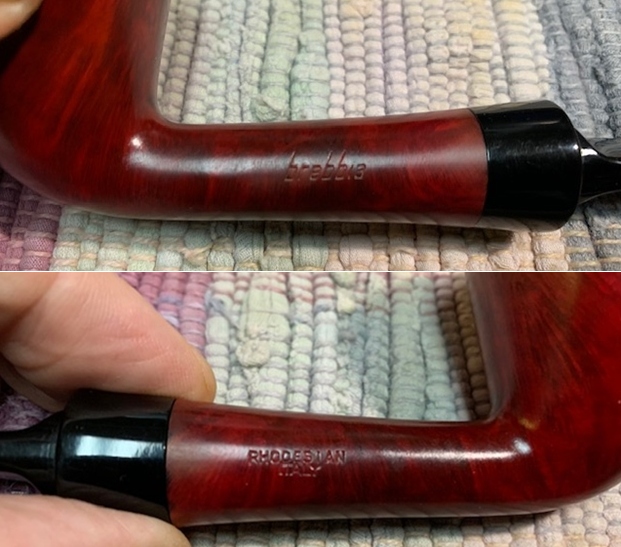
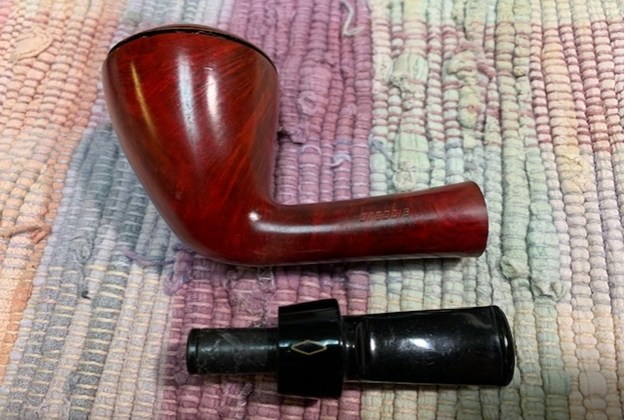
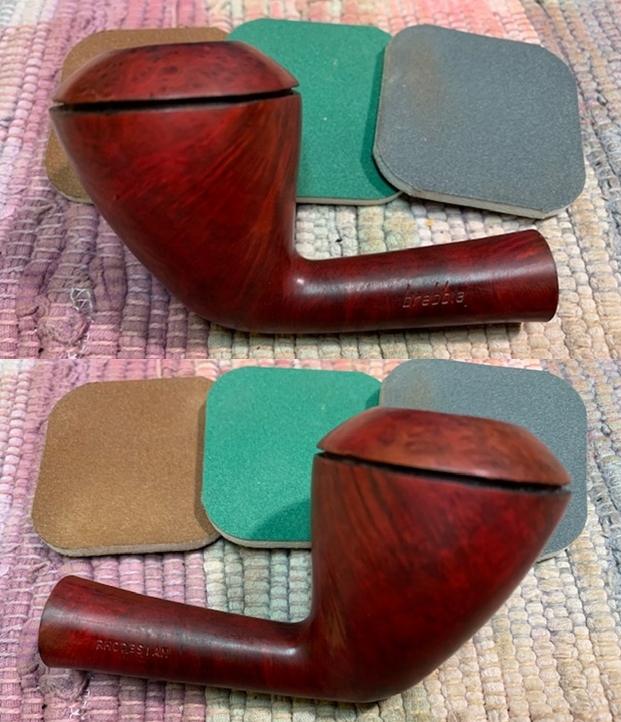
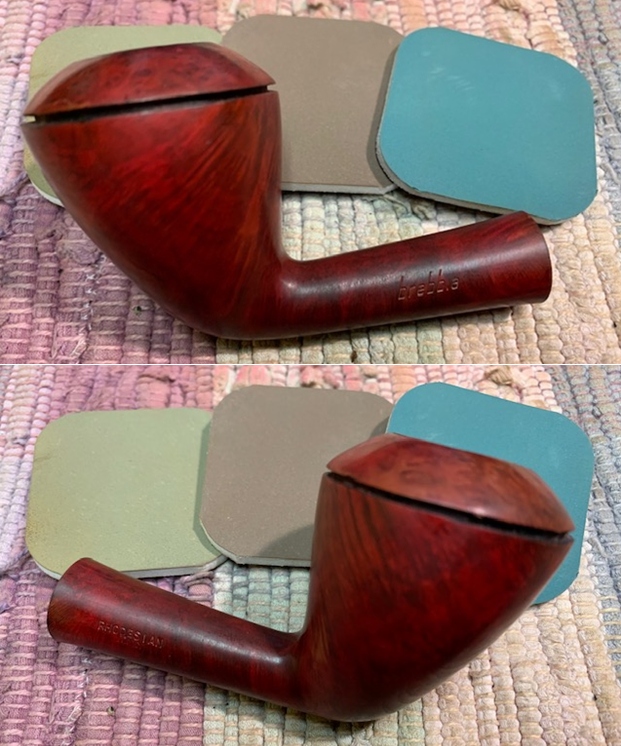
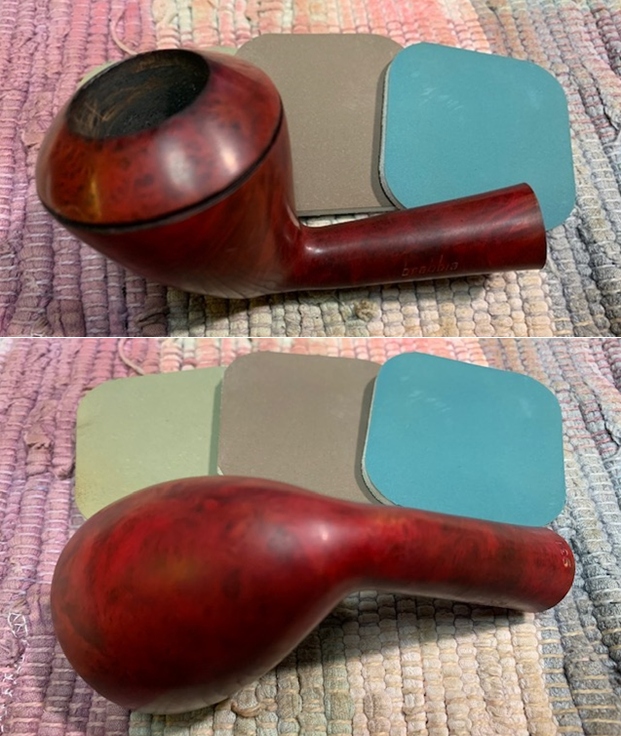
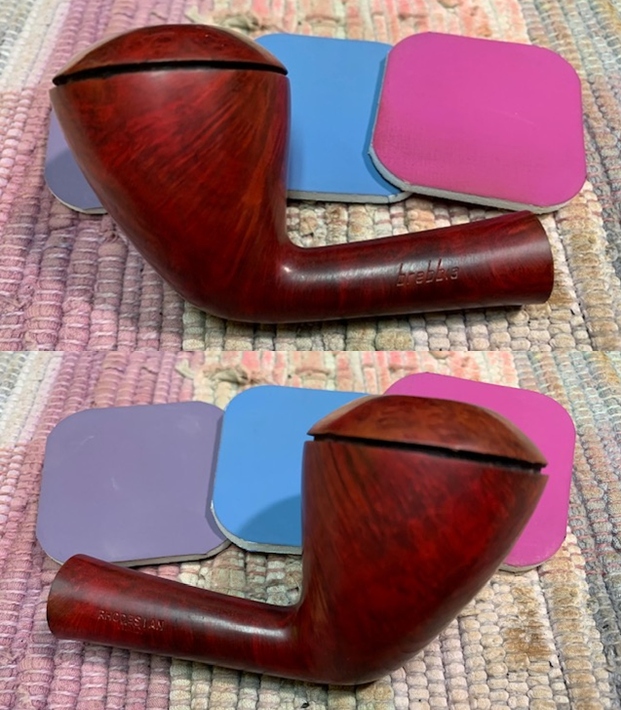
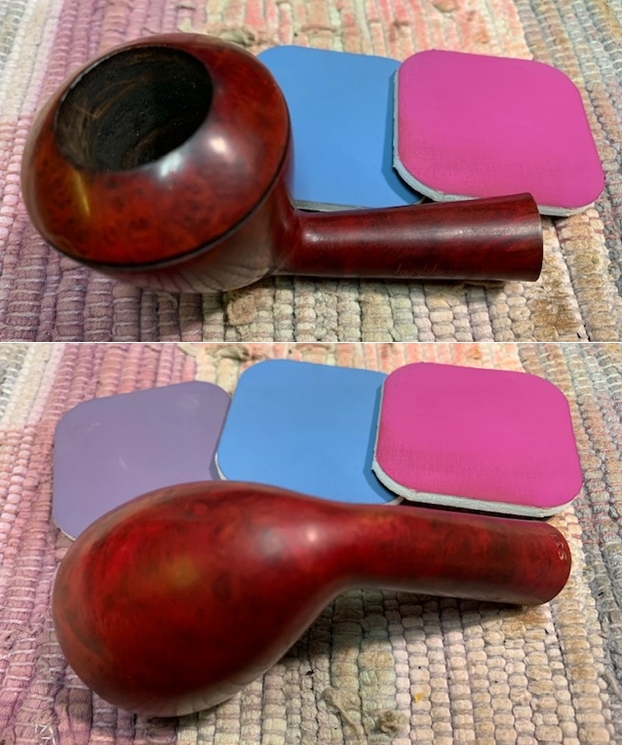
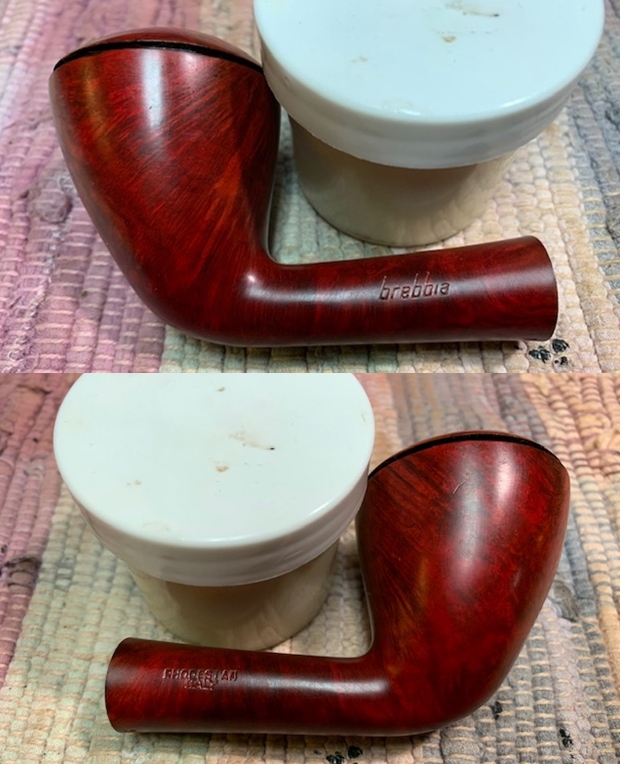
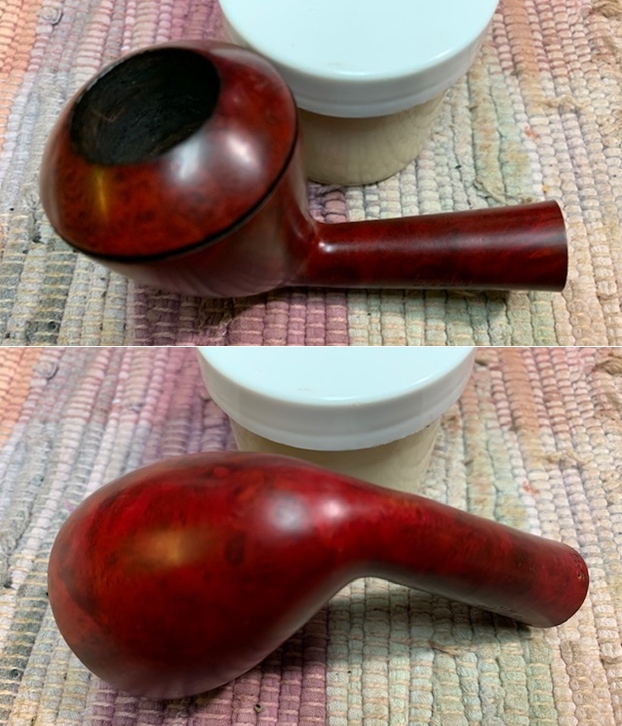
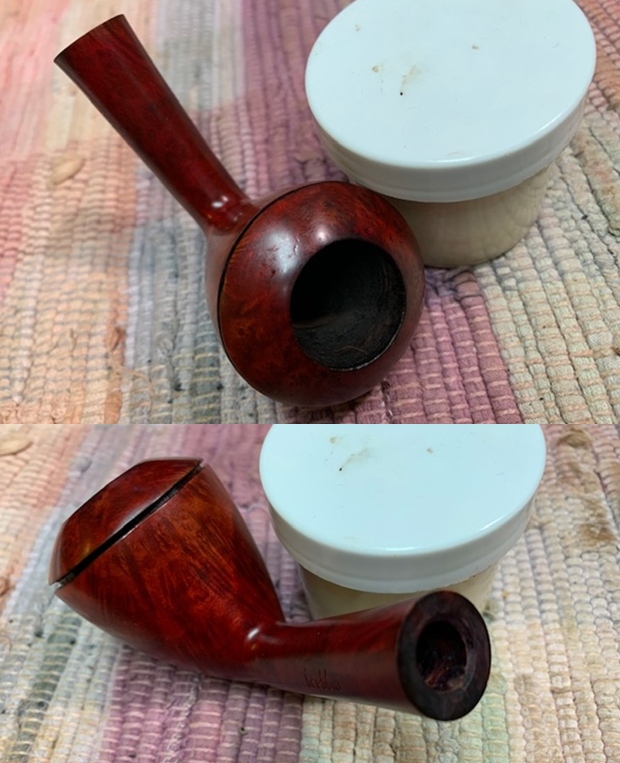
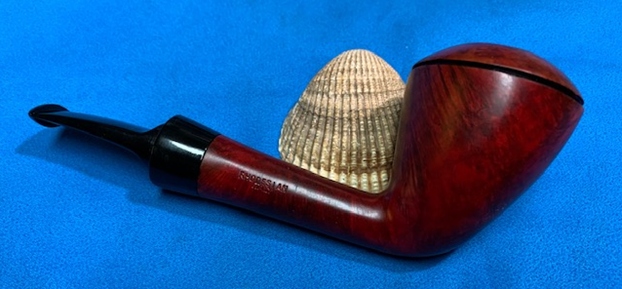
Wow what a mess this Brebbia 931 Rhodesian was – but what a beauty was born out of it


Blog by Steve Laug

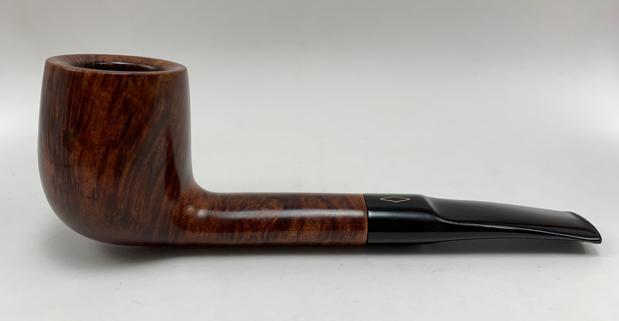
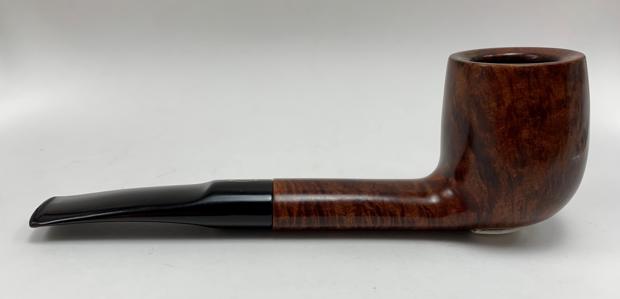
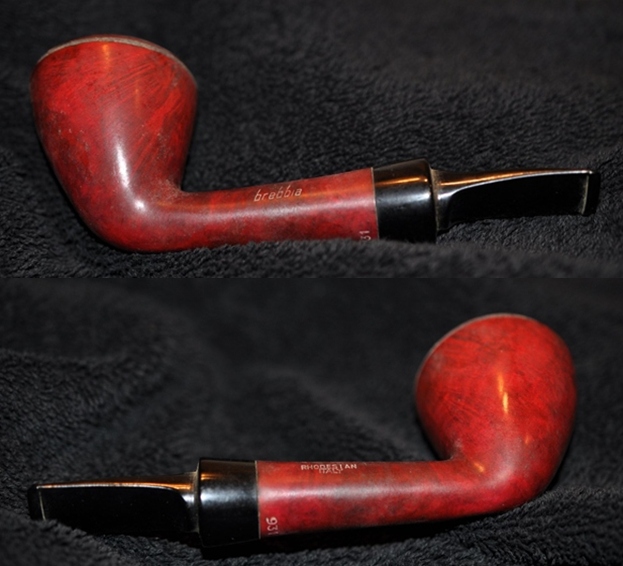
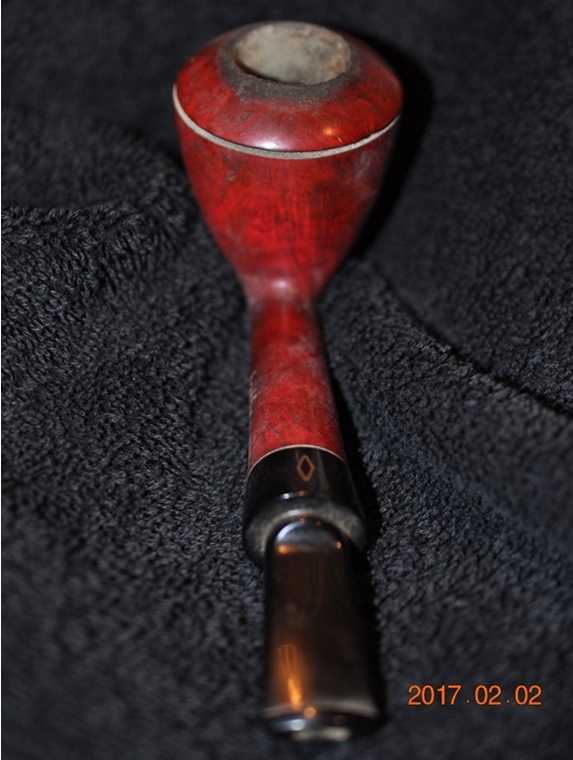
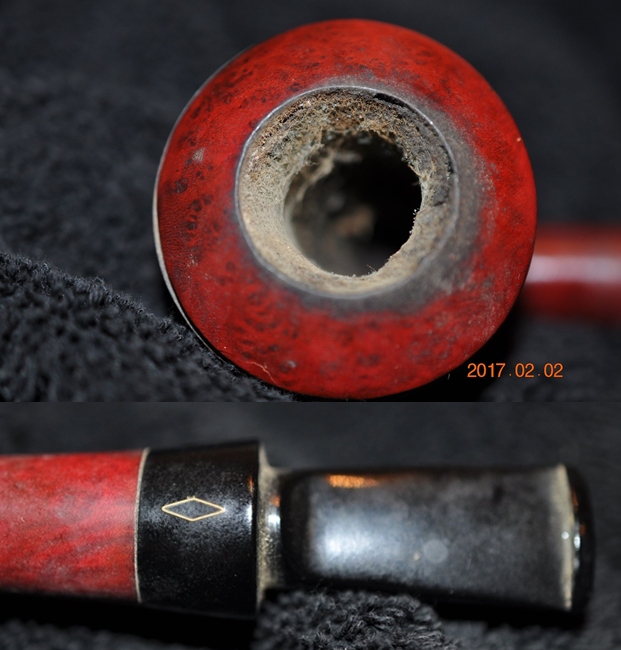
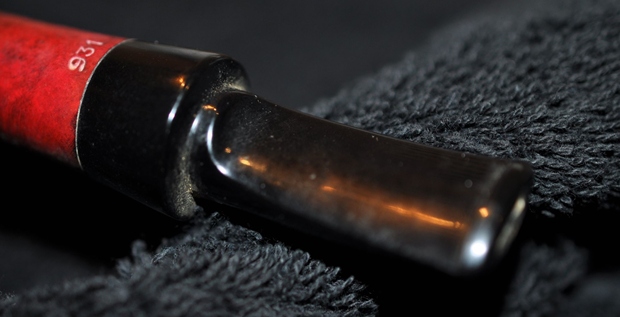
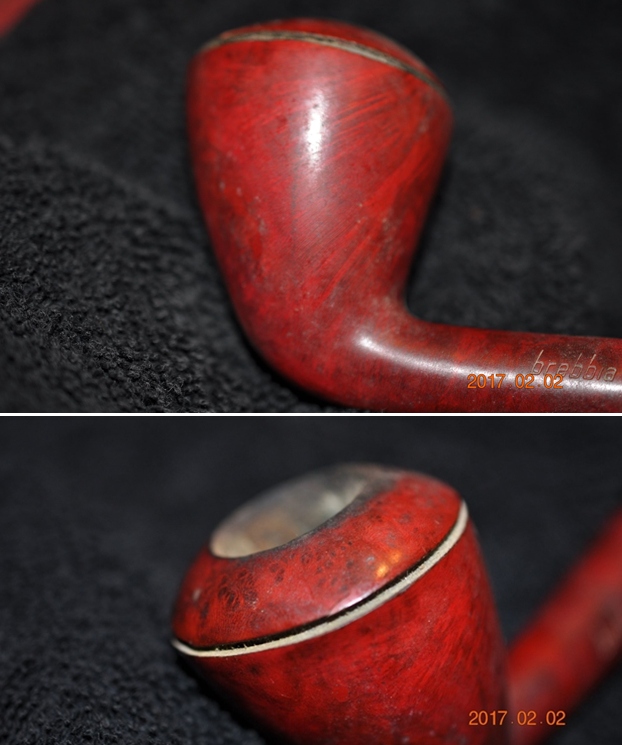
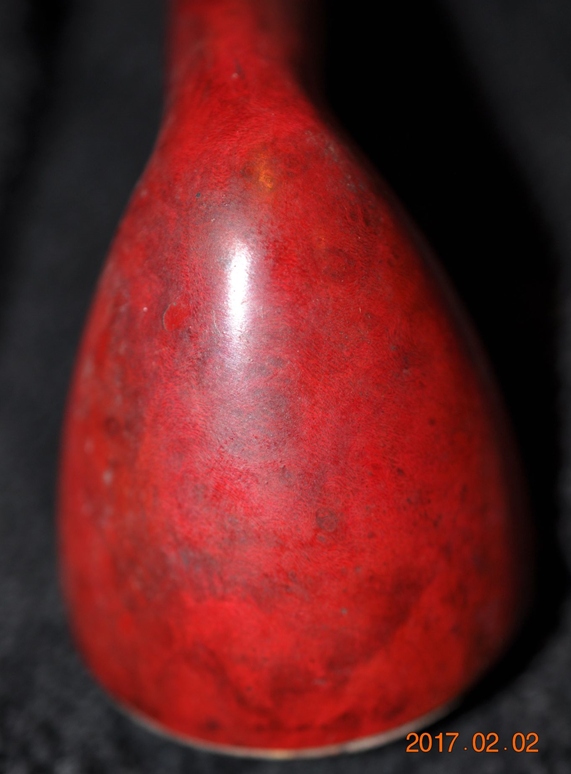
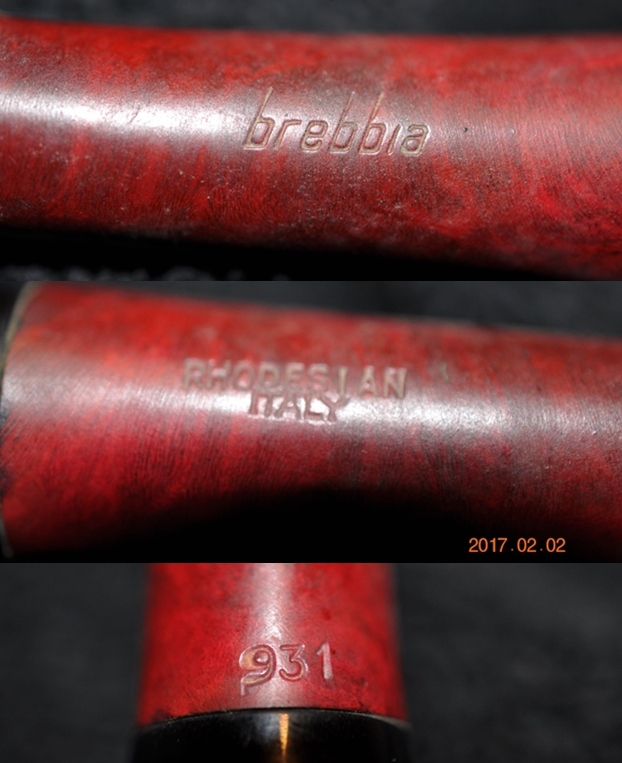
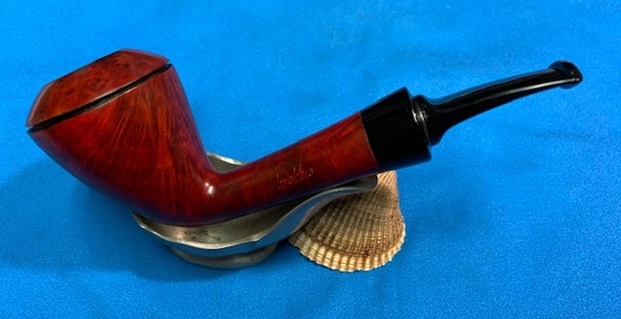
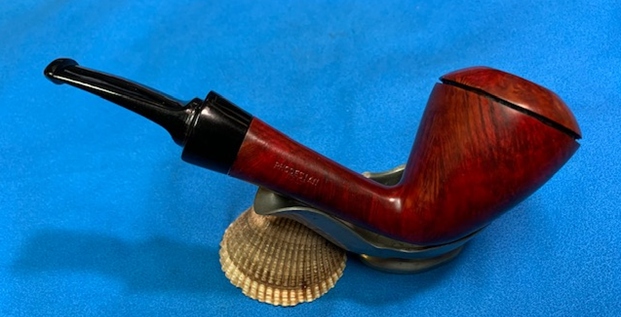
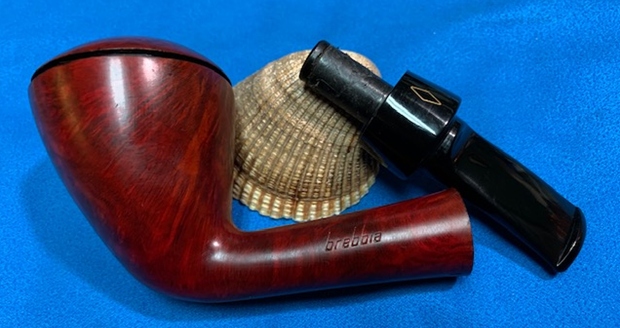
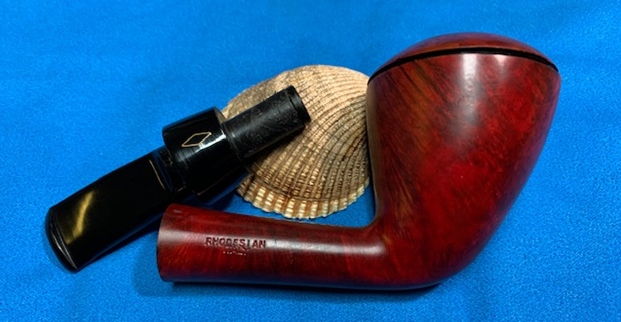
The next pipe came to us off EBay in 2017 from Poughkeepsie, New York, USA so it has been sitting here for a while. Even though the finish was dirty and worn it had some charm showing through the grit and grime of the years. On the left side of the shank it was stamped brebbia and on the right side it was stamped Rhodesian [over] Italy. On the underside of the shank was the shape number 931. The saddle stem also had the Brebbia gold diamond logo on the top of the saddle. The pipe is a long shank, tall Rhodesian. The fancy saddle stem would fit the shape well and matched the broadening of the flair on the shank end! The finish is filthy with grime and oil ground into the briar of the bowl and shank sides. The bowl had an incredibly thick cake. It was hard to know what the inner edge looked like under all of the thick buildup. The cap on the rim with the single line going around the circumference of the bowl was an interesting touch. It was a very thin Rhodesian cap on a broadly flared bowl. The stem was an acrylic saddle stem that was filthy and calcified with tooth marks and chatter on both sides ahead of the button. Jeff took some photos of the pipe to show its overall condition before he started his cleanup work. He took a photo of the rim top and bowl to give a clear picture of the thickness of the cake and the lava and dust ground into the rim top. It is one thick cake that has a lot of tobacco debris missed in with it. He also took photos of the top and underside of the stem to show the chatter and tooth marks. The stem really was a mess.   Jeff took photos of the sides and heel of the bowl to give a picture of what the briar around the pipe looked like. He took a photo of the stamping on the shank. It reads as noted above and is clear and readable. I turned to Pipephil’s site (http://www.pipephil.eu/logos/en/logo-brebbia.html) to the section on Brebbia. The first screen capture below gives a brief history of the brand and some photos of the principals of the company. It is fascinating to me that it was founded by Enea Buzzi and Achille Savinelli in 1947. They split and Buzzi kept the factory and created the MPB Brand – Maniffatura Pipe Brebbia. In 1968 it was shortened to Brebbia. There was nothing on the specific pipe but it is a fascinating read.I turned to Pipedia (https://pipedia.org/wiki/Brebbia) and found a bit more information on the brand. There was still no details on the  Rhodesian line. It is well worth a read. Now it was time to work on the pipe.

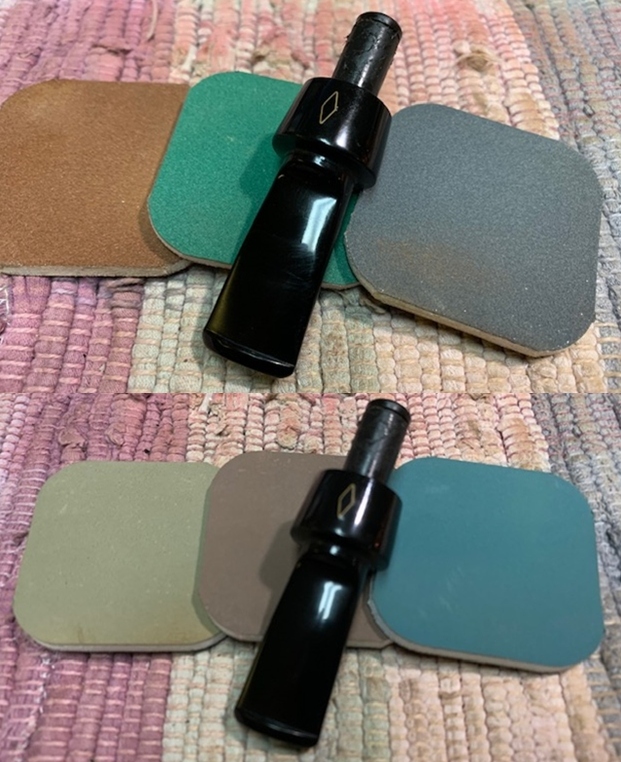
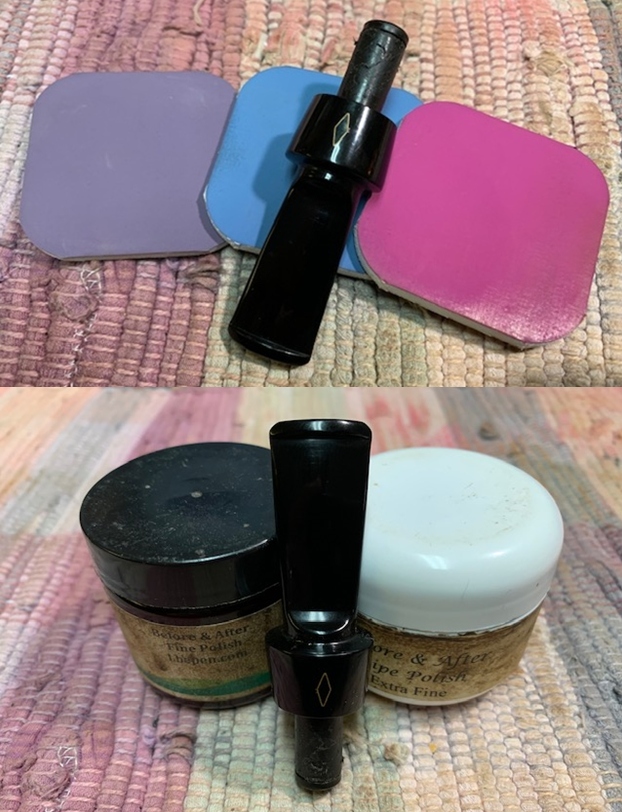
Jeff had cleaned up the pipe with his usual penchant for thoroughness. He reamed the pipe with a PipNet Pipe Reamer and cleaned up the remnants with a Savinelli Fitsall Pipe Knife.  He scrubbed the bowl with undiluted Murphy’s Oil Soap with a tooth brush. He worked over the debris on the rim top and was able to remove it. He rinsed it under running warm water to remove the soap and grime. He cleaned out the inside of the shank and the airway in the stem with alcohol, cotton swabs and pipe cleaners. He soaked the stem in Before & After Pipe Stem Deoxidizer and rinsed it off with warm water. He scrubbed the stem with Soft Scrub and cotton pads to remove remaining oxidation on the ferrule and the stem. He rinsed it with warm water and dried it off. I took photos of the pipe once I received it. It really looked good. The rim top and the inner edge of the rim looked very good. I was surprise that there was no damage to the briar. The stem had some small scratches but otherwise looked very good.  I took a photo of the stamping on the sides of the shank. It was clear and read as noted above. I removed the stem and took a photo of the pipe to give a sense of the whole. The pipe has an acrylic saddle stem. At this point I also noted that the stem had an adapter in the tenon that was removable. The pipe could thus be smoked either as a filter pipe or as a regular pipe.I polished the briar with the full array of micromesh sanding pads – 1500-12000 grit pads. I wiped the bowl down after each pad with a damp cloth to remove the sanding dust. I rubbed the bowl and shank down with Before & After Restoration Balm. I worked it into the surface of the bowl sides and shank with my fingertips. I used a horsehair shoe brush to work it into ring around the rim cap. The product works to clean, enliven and protect the briar. I let the balm sit for 15 minutes and then buffed with a cotton cloth to raise the shine.   I polished the scratches out of the acrylic stem with micromesh sanding pads – 1500-12000 grit pads. I wiped it down with a damp cloth after each sanding pad. I used Before & After Pipe Polish – both Fine and Extra Fine to further polish the stem.  The Delrin tenon was a bit odd in that it seemed to be peeling a bit. To remove all of the peeling parts would loosen the tenon. This Italian take on a Rhodesian by Brebbia is a real beauty. It is combined with a flared acrylic saddle stem that makes it a great looking pipe. It is a far cry from the pipe that we started with now that it has been restored. I put the stem back on the bowl and buffed the pipe with Blue Diamond on the buffing wheel using a light touch on the briar. I gave the bowl and the stem multiple coats of carnauba wax on the buffing wheel and followed that by buffing the entire pipe with a clean buffing pad. I hand buffed the pipe with a microfiber cloth to deepen the shine. The finished Brebbia Rhodesian 931 fits nicely in the hand and feels great. Give the finished pipe a look in the photos below. The dimensions of the pipe are Length: 5 ½ inches, Height: 2 ¼ inches, Outside diameter of the bowl: 2 inches, Chamber diameter: ¾ of an inch. The weight of the pipe is 53grams/1.87oz. I will be adding it to the rebornpipes store shortly in the Italian Pipe Makers Section. Thanks for reading this blog and my reflections on the pipe while I worked on it. There are many more to come!
 

It has been a long time since I restored a Brebbia and this is a nice one


Blog by Steve Laug

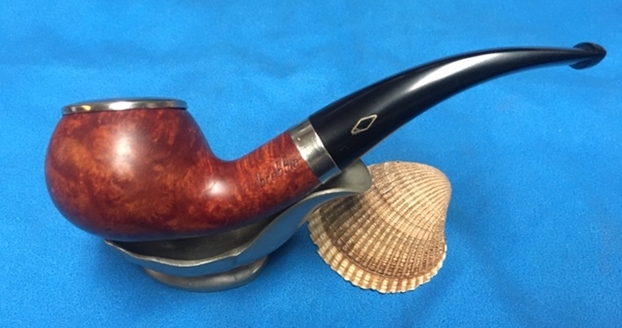
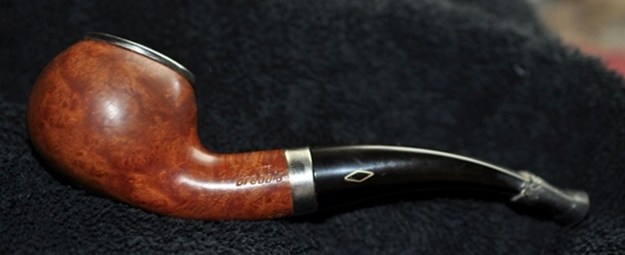
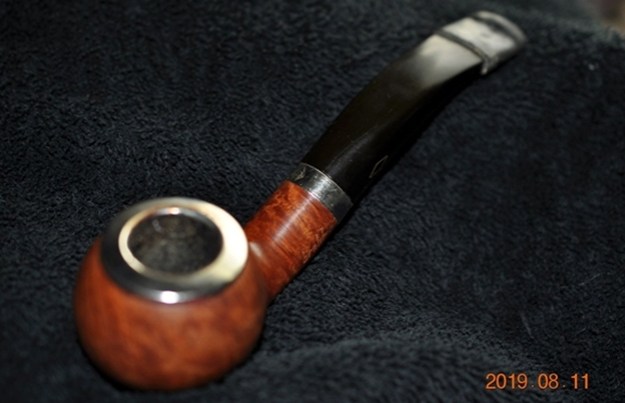
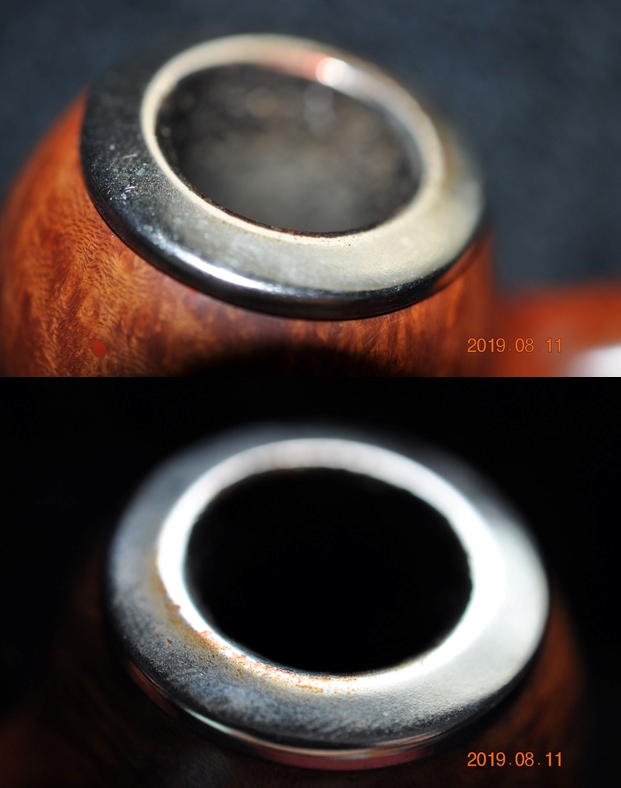
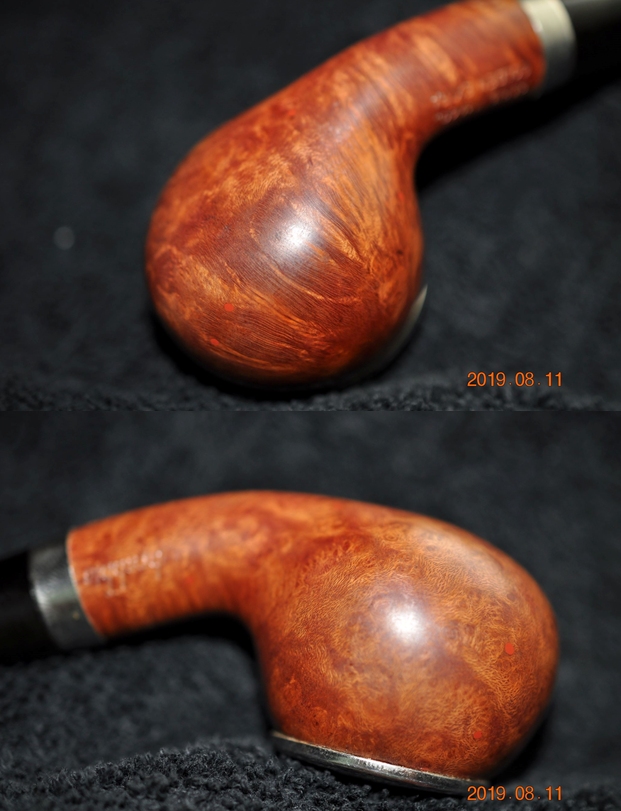
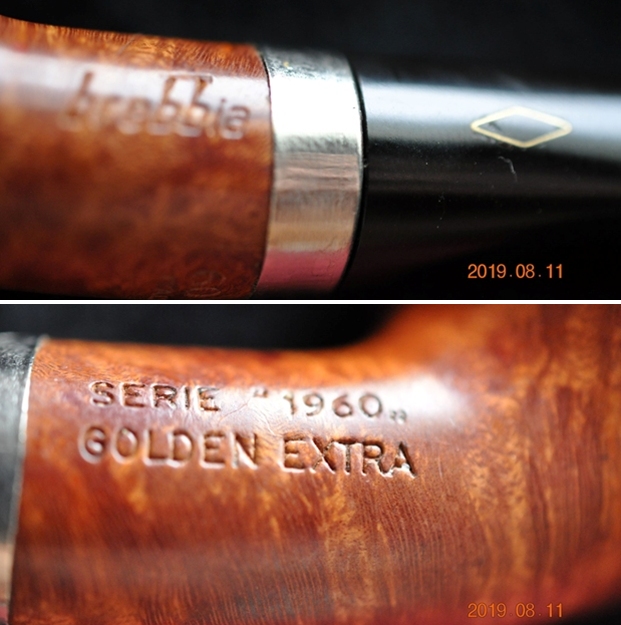
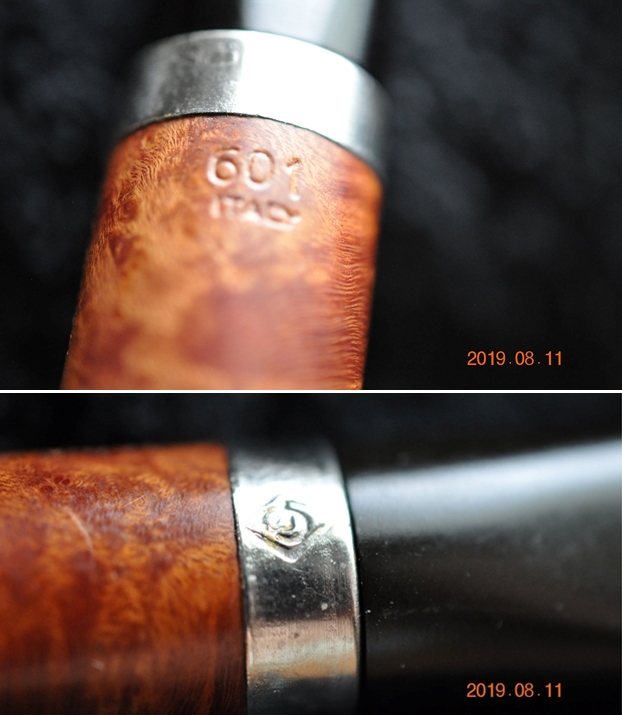
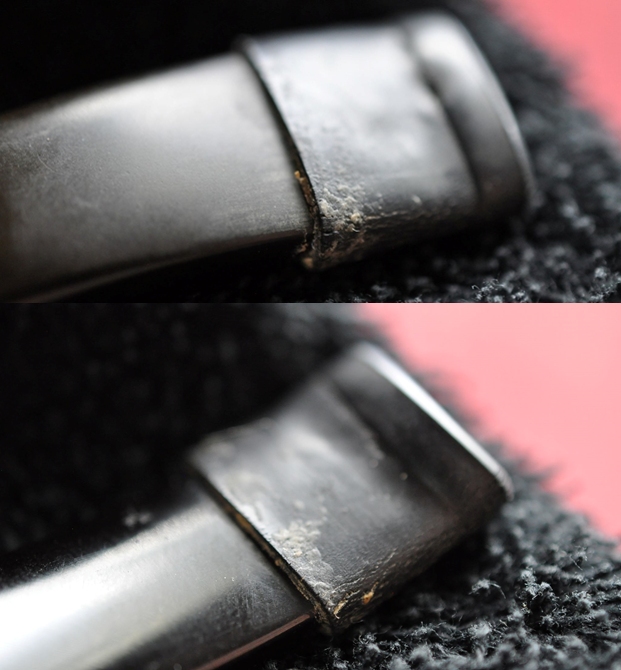
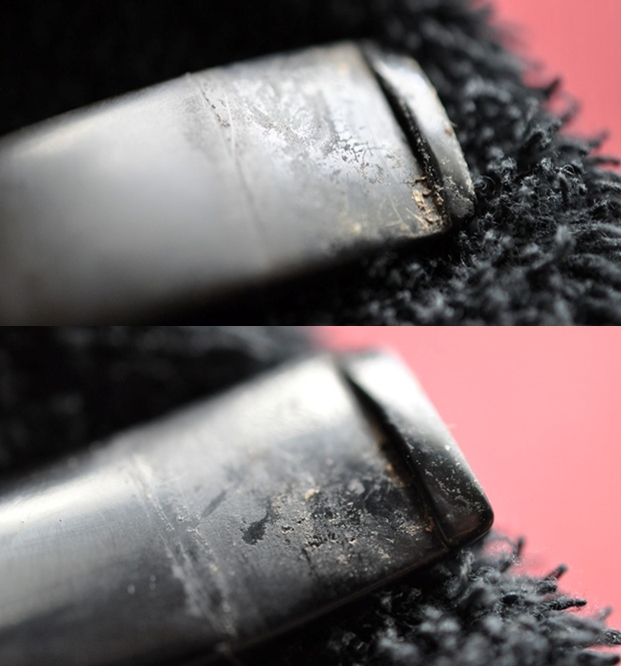
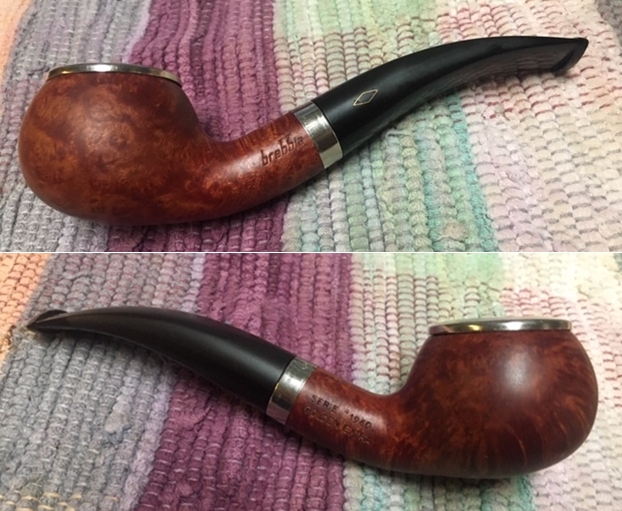
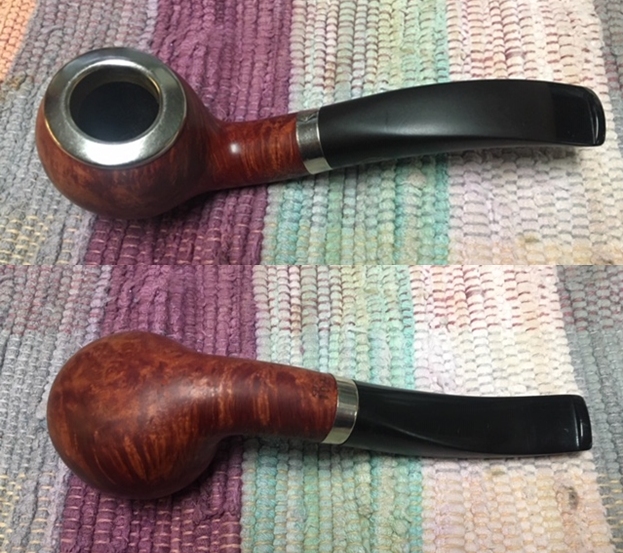
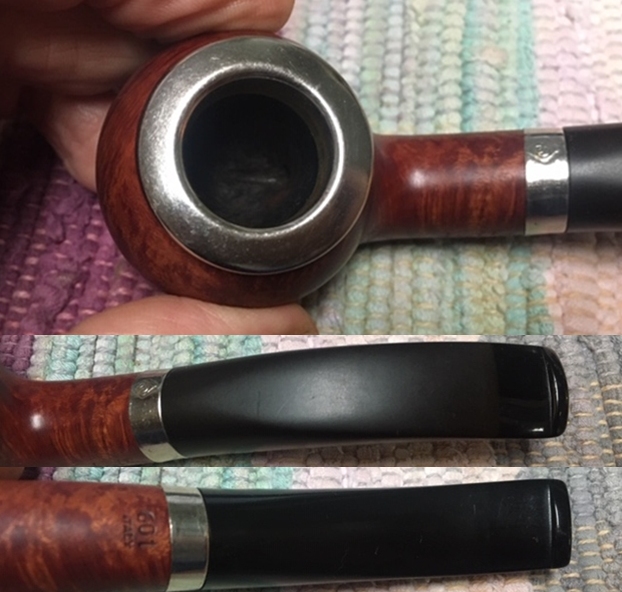
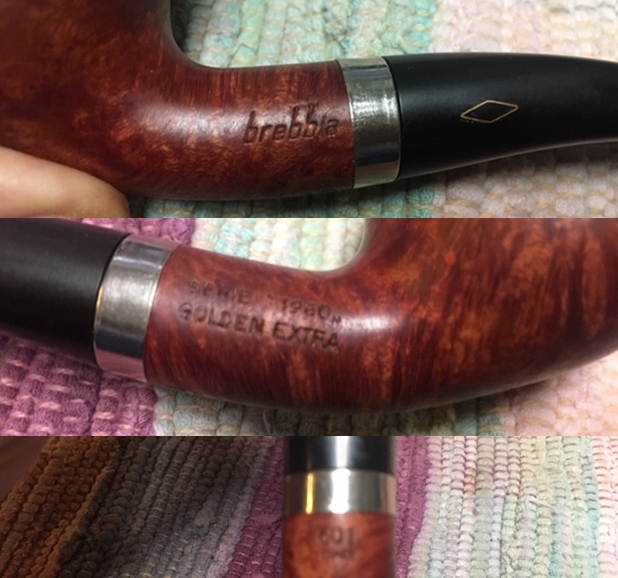
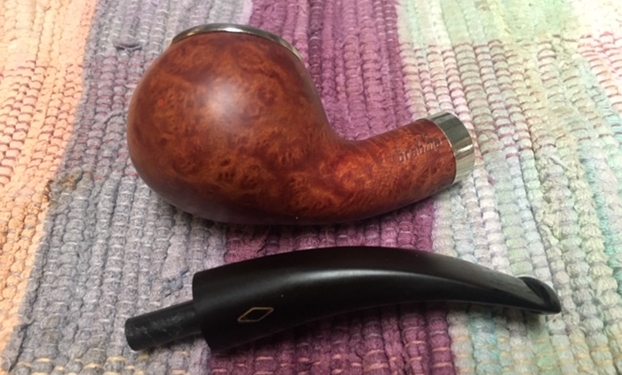
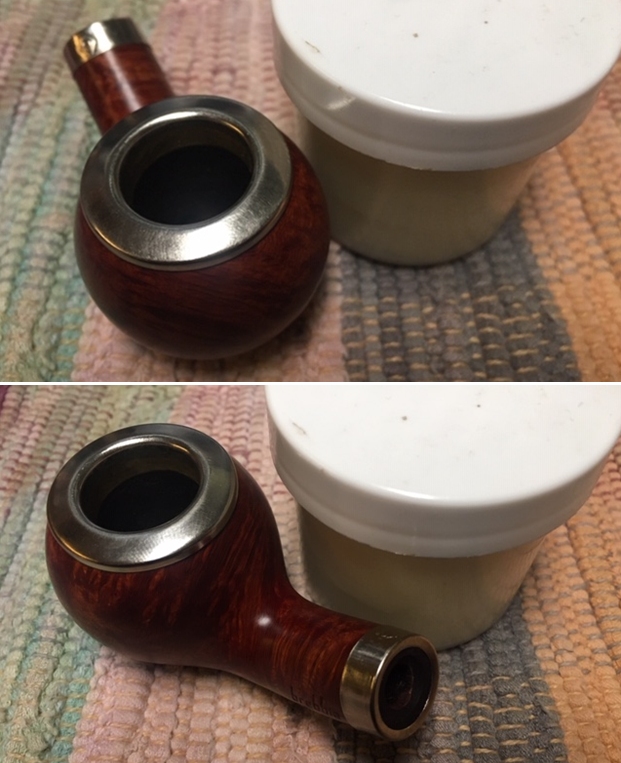
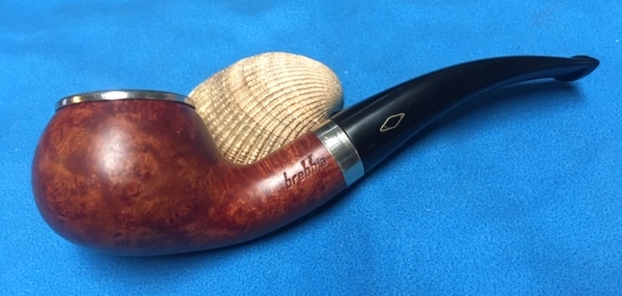
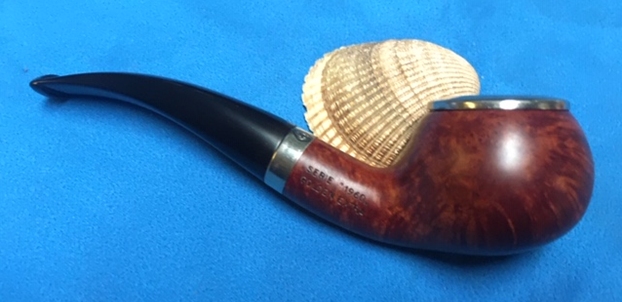
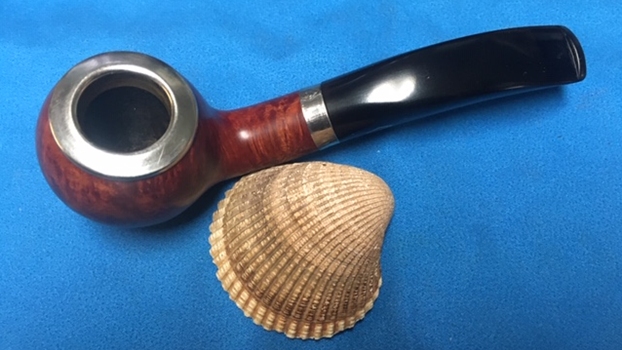
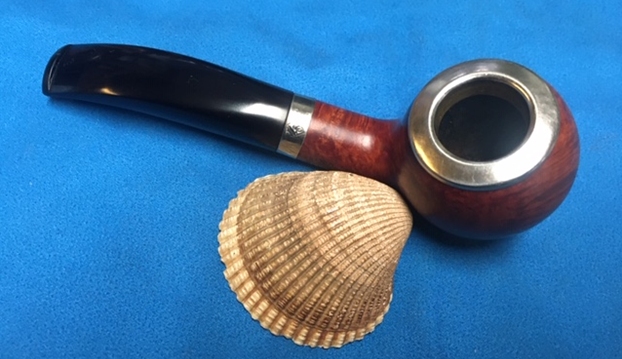
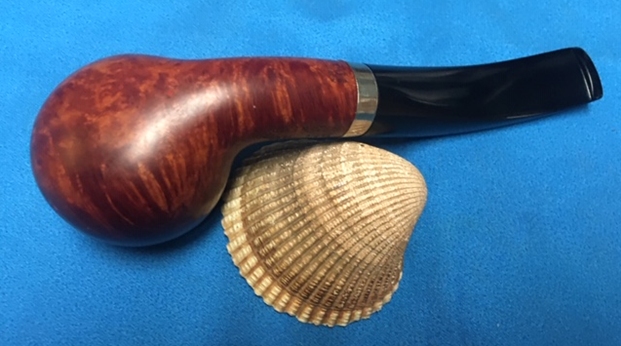
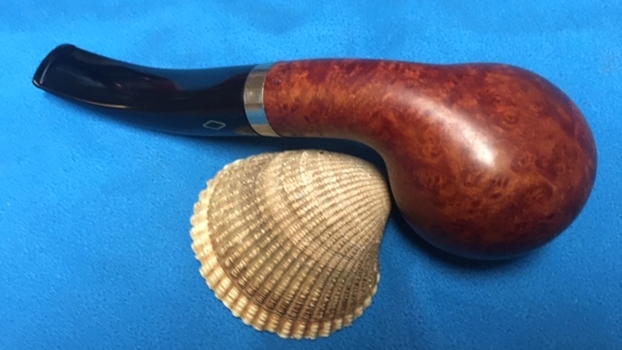
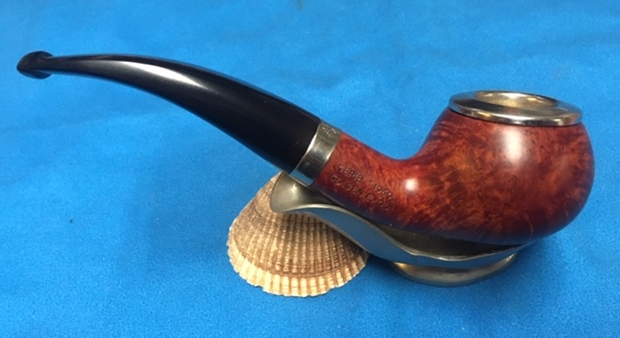
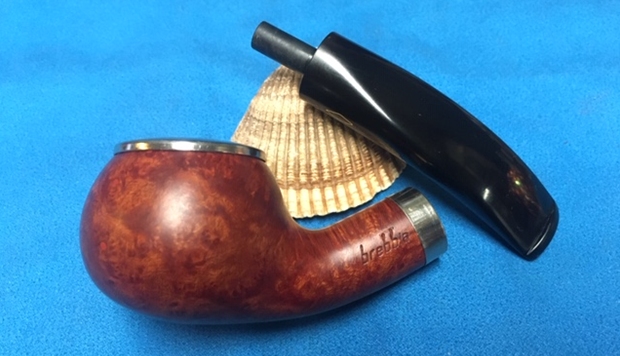
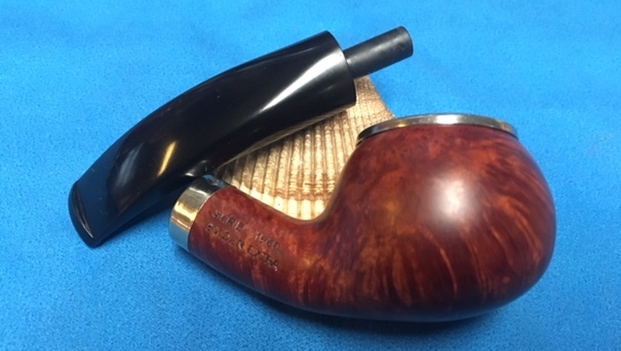
The next pipe on the work table is another unique one that I chose out of my boxes of pipes to restore. It is squat apple of squashed tomato made by Brebbia. It is a great looking pipe with a silver coloured band and rim cap. There are no hallmarks on the metal so I am assuming it is polished nickel. It was in decent condition. The bowl had a thick cake and the lava overflow on the silver rim. The rim cap extended into the bowl and protected the edges. That portion had cake and tars on it as well. The bowl was smooth and the stain worked well with the silver bling on the shank and the rim. The finish had a lot of dust and was tired and dull looking. The bowl had some nice grain under the grime and the finish appeared to be in good condition. A lot would be revealed once Jeff had worked his magic on it. The vulcanite stem was dirty but came with a Softee Bit on the end which I am sure kept the chatter and tooth marks to a minimum. Jeff took photos of the pipe before he started his cleanup work. Jeff tried to capture the condition of the bowl and rim top with the next series of photos. You can see the work that is ahead of us in the photos. The cap really had protected the rim from burn and nicks. It looked pretty good.Jeff took some great photos of the sides of the bowl and heel showing what is underneath the grime and debris of time and use.He captured the stamping on the sides of the shank and the left side of the tapered stem. They are clear and readable. The left side reads Brebbia with a golden diamond on the side of the stem. On the right side it reads SERIE “1960” and underneath that it read GOLDEN EXTRA. On the underside of the shank it is stamped 601 over ITALY next to the shank/stem junction. The last photo below shows the stamping on the silver band. It is off center and more to the right side. It is a series of interlocked swirls in a diamond. The first two photos of the stem show the rubber Softee Bit in place on the stem. It covers the button and the first ½ inch of the stem. The next two photos show the stem after Jeff cut off the Softee Bit. The stem looks quite good. One of the last Brebbia pipes that I had worked on was called a Twin – it came with an extension that could be place in the shank for a long pipe and removed for a short one. I turned to that blog as it gives a great history of the brand (https://rebornpipes.com/2018/01/21/taking-a-breather-and-refreshing-a-beautiful-brebbia-twin-2/). I quote from that blog below:

Before I did my part of the work on the pipe I decided to do a bit of background reading on the brand just to refresh my knowledge about Brebbia. I figured a quick read on Pipedia and on the Pipephil Logos and Stampings site would give me sufficient information. I turned to Pipedia first and there found some company history summarised. I quote in full from that article (https://pipedia.org/wiki/Brebbia).

Pipe Brebbia Srl, or better the M.P.B. (Manifattura Pipe Brebbia) was born in 1953 from the denouement of the association between Achille Savinelli and Enea Buzzi in 1947, where the first was employed in the marketing and the second in manufacturing of pipes under the name of Savinelli. It was made in exclusive up to 1953 and extended without further rights up to 1956.

The production, which is always careful and perfect, has continued in a traditional way for 60 years, using old lathes for the first steps, but finishing every piece by hand.

Before I did my part of the work on the pipe I decided to do a bit of background reading on the brand just to refresh my knowledge about Brebbia. I figured a quick read on Pipedia and on the Pipephil Logos and Stampings site would give me sufficient information. I turned to Pipedia first and there found some company history summarized. I quote in full from that article (https://pipedia.org/wiki/Brebbia).

Pipe Brebbia Srl, or better the M.P.B. (Manifattura Pipe Brebbia) was born in 1953 from the denouement of the association between Achille Savinelli and Enea Buzzi in 1947, where the first was employed in the marketing and the second in manufacturing of pipes under the name of Savinelli. It was made in exclusive up to 1953 and extended without further rights up to 1956.

The production, which is always careful and perfect, has continued in a traditional way for 60 years, using old lathes for the first steps, but finishing every piece by hand.

The secret of their manufacture, if we may put it this way, is the respect for the traditions with the experience acquired in several years of successful work, which could be summed up in two words: high quality.

The factory is currently managed by Enea’s son, Luciano.

For the last few decades, many of Brebbia’s pipes have been made by a number of small, otherwise independent pipe manufacturers, being marketed under the trade name Brebbia.

I then turned to the Pipephil site (http://www.pipephil.eu/logos/en/logo-brebbia.html) and found confirmation of the above information.

The Brebbia brand Brebbia Pipe is named after the locality of Bosco Grosso di Brebbia (Prov. Varese, Reg. Lombardia). A first corporate was founded by Enea Buzzi and Achille Savinelli in 1947. They split in 1953. Buzzi ketp the factory and created the MPB brand (Maniffatura Pipe Brebbia). After 1968 the brand was shortly called “Brebbia”. Luciano Buzzi son of Enea manages the company since the 1990

The secret of their manufacture, if we may put it this way, is the respect for the traditions with the experience acquired in several years of successful work, which could be summed up in two words: high quality.

The factory is currently managed by Enea’s son, Luciano.

For the last few decades, many of Brebbia’s pipes have been made by a number of small, otherwise independent pipe manufacturers, being marketed under the trade name Brebbia.

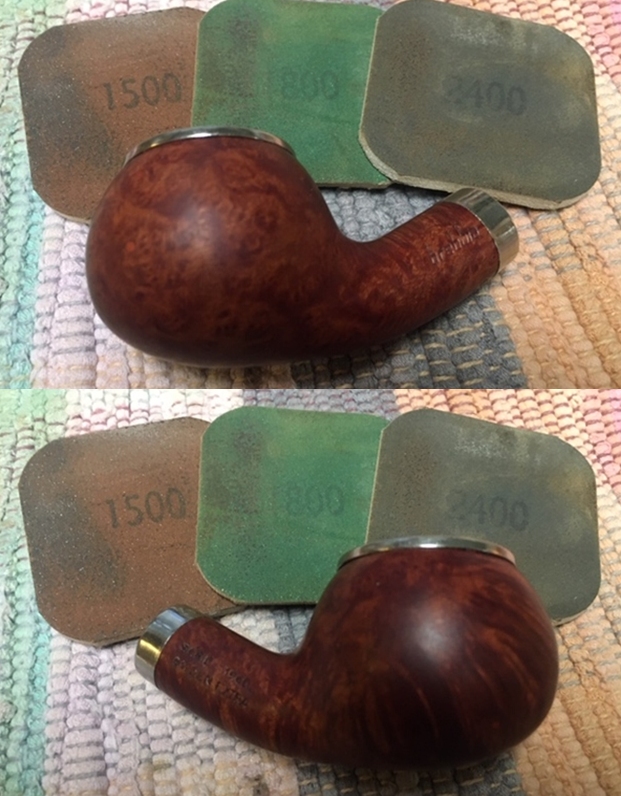
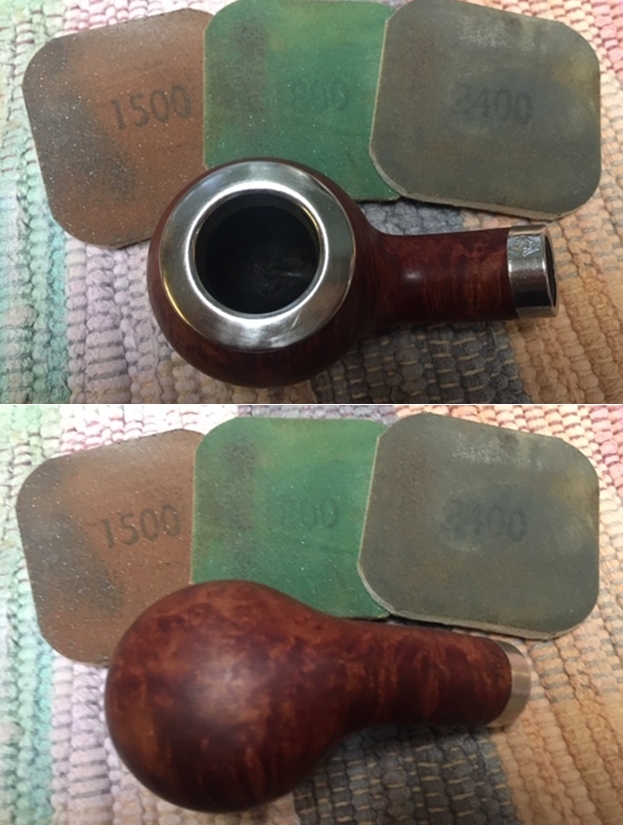
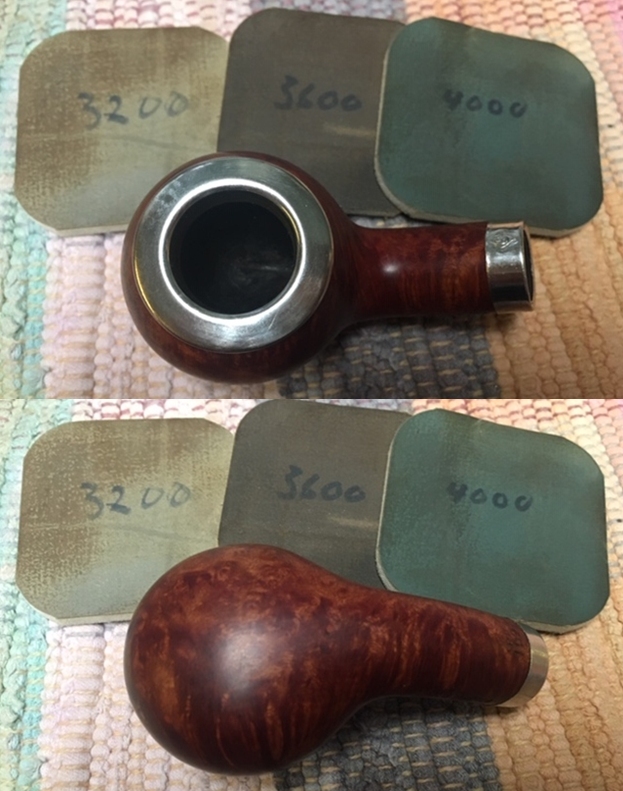
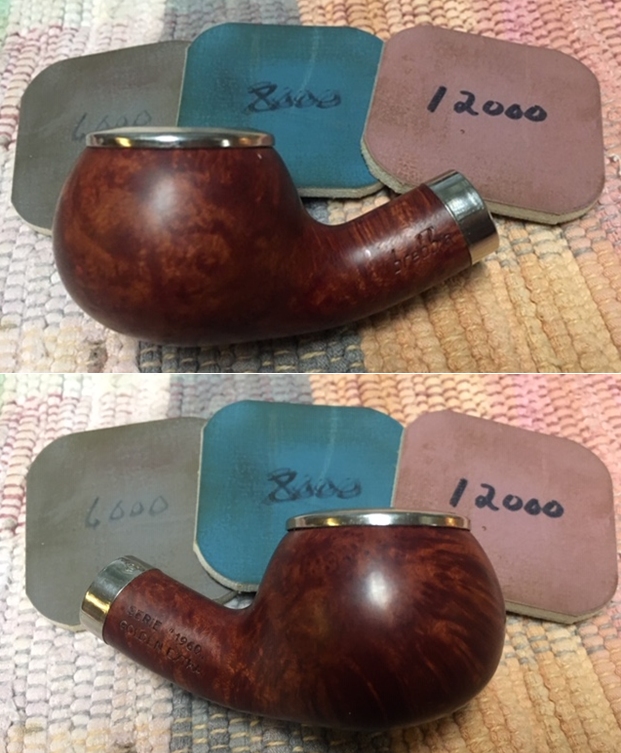
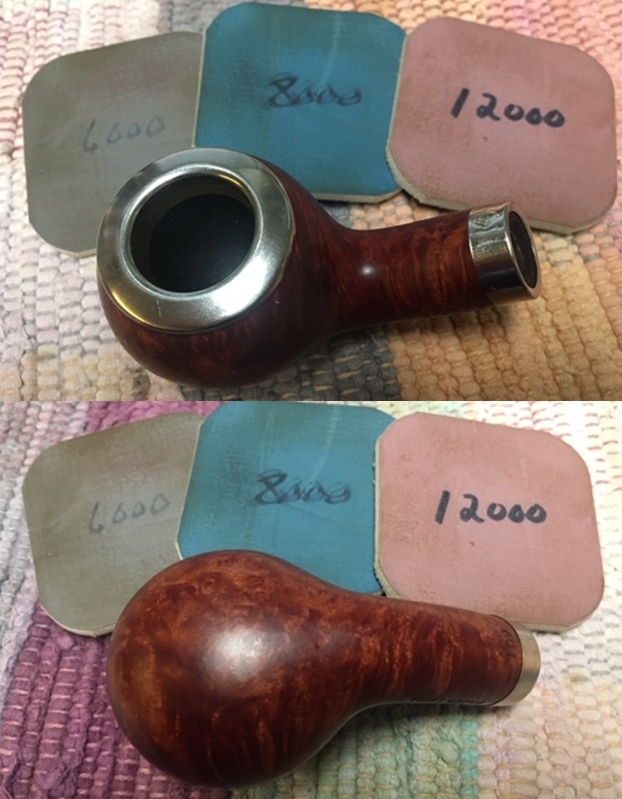
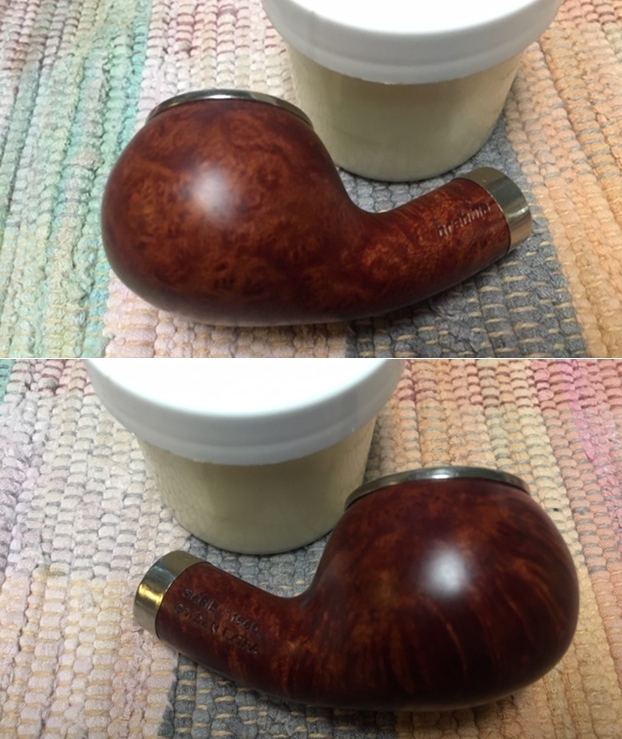
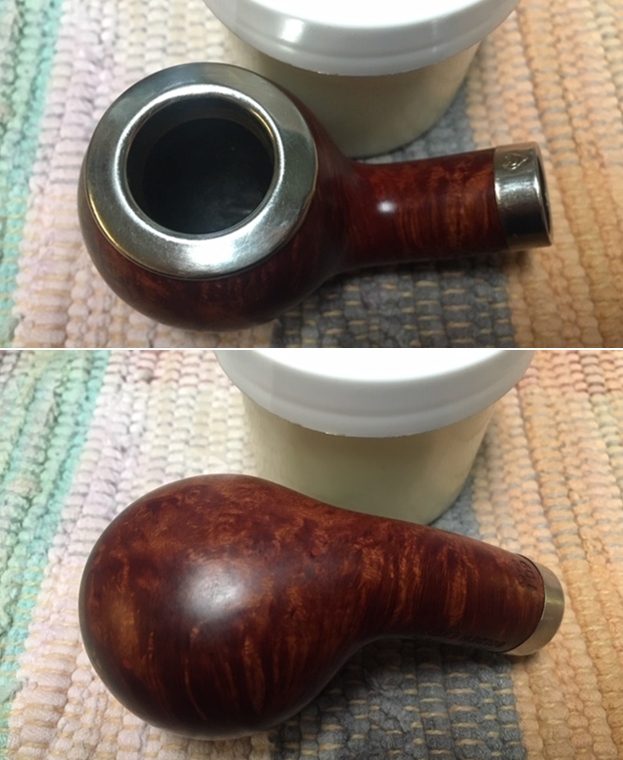
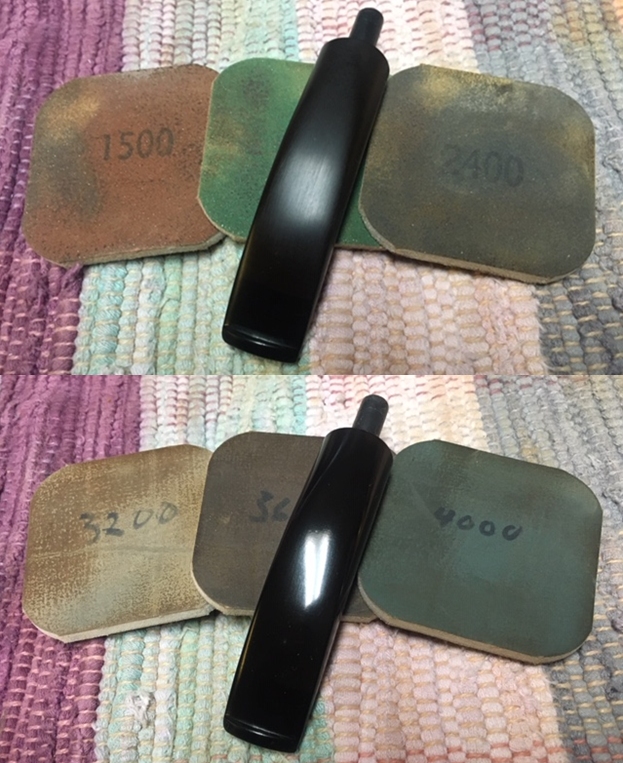
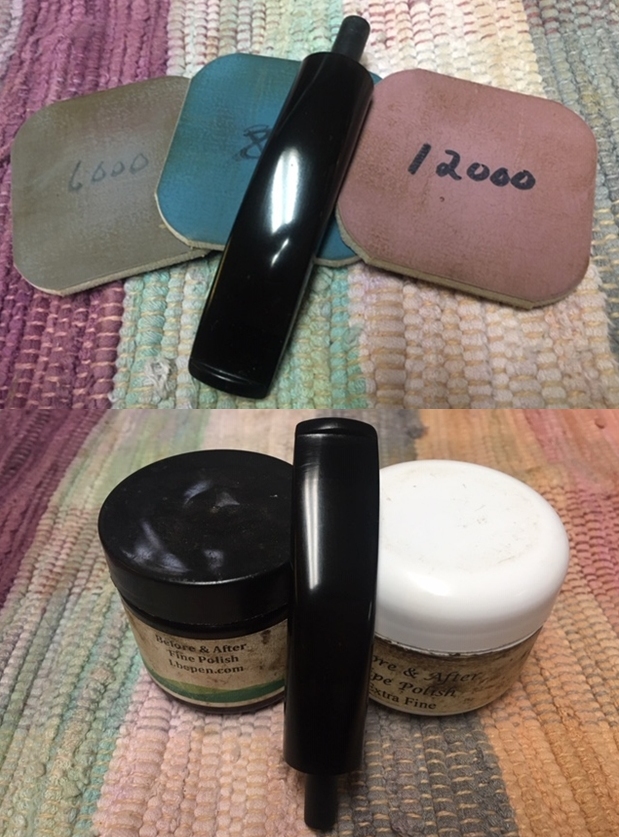
With that background information in hand I knew what I was dealing with in terms of the brand. The pipe was stamped with a date “Serie 1960” which was a clear indication of when the pipe was made. Now it was time to work on the pipe. I took it out of the box from Jeff and looked it over. He cleaned the pipe with his usual penchant for thoroughness. When I took it out of the box I was amazed at how good it looked it really looked like a different pipe. He reamed it with a PipNet pipe reamer and cleaned up the reaming with a Savinelli Fitsall Pipe Knife. He scrubbed out the internals with alcohol, pipe cleaners and cotton swabs until the pipe was clean. He scrubbed the exterior of the bowl with Murphy’s Oil Soap and a tooth brush to remove the grime and grit on the briar and the lava on the rim top. The bowl and silver cap and band looked very good. Jeff scrubbed the stem with Soft Scrub to remove the grime and soaked it in Before & After Deoxidizer and it came out looking far better. I took photos before I started my part of the work. I took some photos of the rim top and stem. The rim cap looks very good and the bowl is clean. The silver will need to be polished but it is undamaged. The close up photos of the stem shows that is it very clean and other than being dull it looks very good.I took photos of the stamping because they had cleaned up very well.I took the stem off the shank and took a picture of the pipe. It really is a nice looking pipe with great lines.I polished the briar of the silver rim cap and the shank with micromesh sanding pads – dry sanding with 1500-12000 grit pads. I wiped the bowl down after each pad with a damp cloth. The grain really began to stand out and the finish took on a shine by the last sanding pad. The photos tell the story! I worked some Before & After Restoration Balm into the surface of the smooth briar with my fingertips. The product works to clean, enliven and protect the briar. I let the balm sit for about twenty minutes and then buffed with a cotton cloth to raise the shine. The photos show the bowl at this point in the restoration process. I polished the vulcanite stem with micromesh sanding pads – dry sanding with 1500-12000 grit sanding pads. I wiped it down after each sanding pad with a cloth containing some Obsidian Oil. I finished polishing it with Before & After Pipe Stem Polish – both Fine and Extra Fine and buffed it off with a cotton cloth. This Brebbia Squat Apple or Squashed Tomato was a fun pipe to work on and with the stem and the bling polished it looked very good. With the grime and debris gone from the finish and the bowl it was a beauty and the grain just pops at this point. I put the stem back on the bowl and buffed the pipe with Blue Diamond on the buffing wheel. I carefully avoided the stamping on the shank and worked around the inlaid brass triangle logo on the stem during the process. I gave the bowl and the stem multiple coats of carnauba wax on the buffing wheel and followed that by buffing it with a clean buffing pad on the buffer. I hand buffed the pipe with a microfiber cloth to deepen the shine. I polished the silver with a jeweler’s cloth. The rich brown finish on the bowl combines various stains to give it depth and the silver provides the contrast. It is very well done. Give the finished pipe a look in the photos below. I can only tell you that it is much prettier in person than the photos capture. The dimensions of the pipe are Length: 5 ½ inches, Height: 1 ½ inches, Outside diameter of the bowl: 1 ¼ inches, Chamber diameter: ¾ of an inch. I really like the way that Brebbia combines the smooth finish with the silver band on the shank and rim cap. This is a great looking pipe in great condition. Thanks for walking through the restoration with me as I worked over another beautiful pipe. I will be adding it to the rebornpipes store soon. If you want to add it to your collection send me an email or a message! Thanks for your time.

Taking a Breather and Refreshing a Beautiful Brebbia Twin 2


Blog by Steve Laug

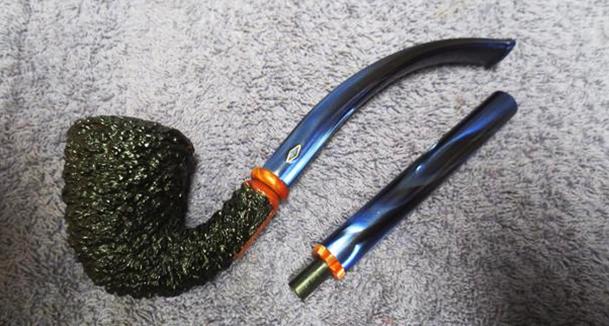
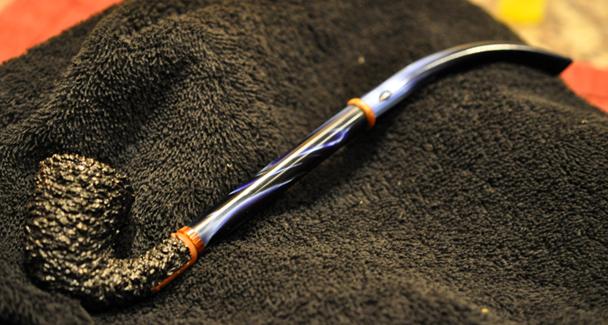
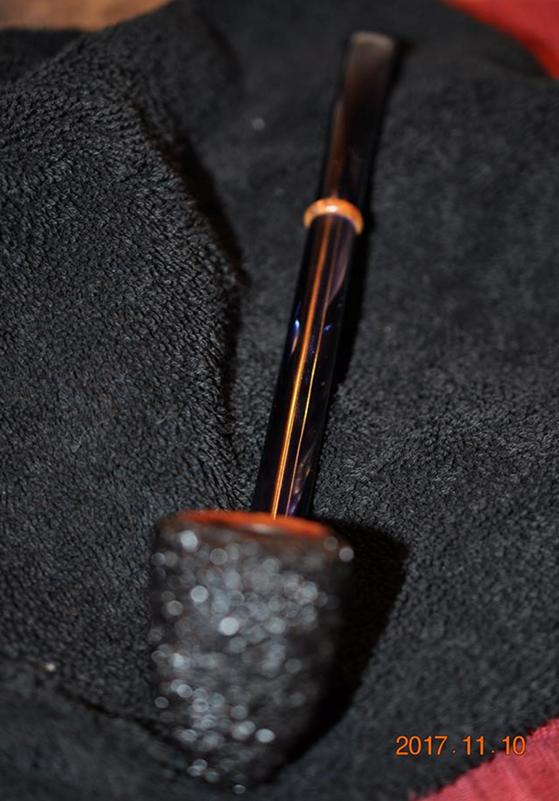
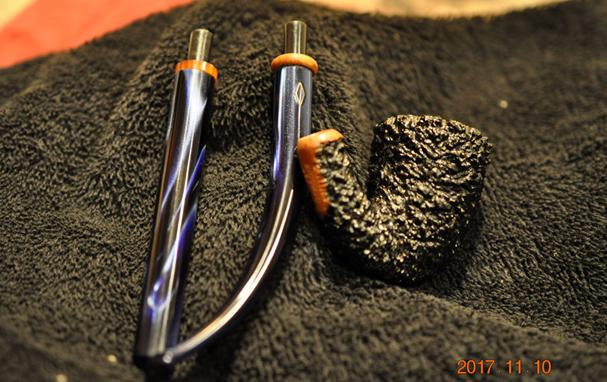
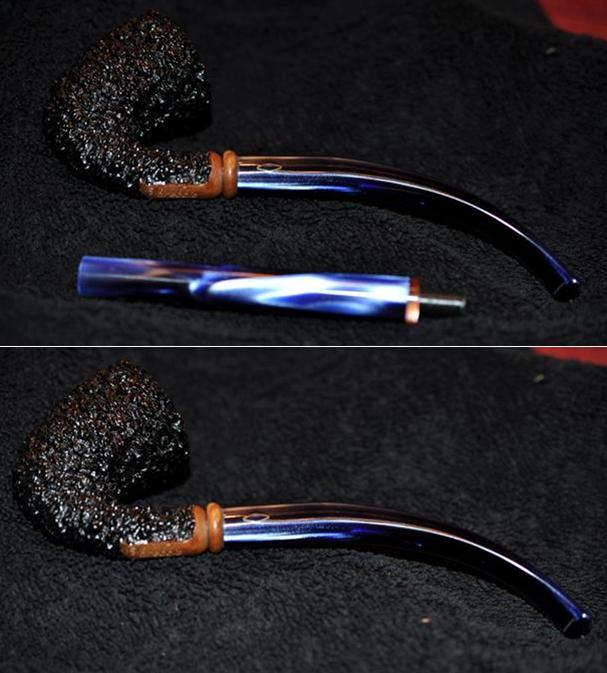
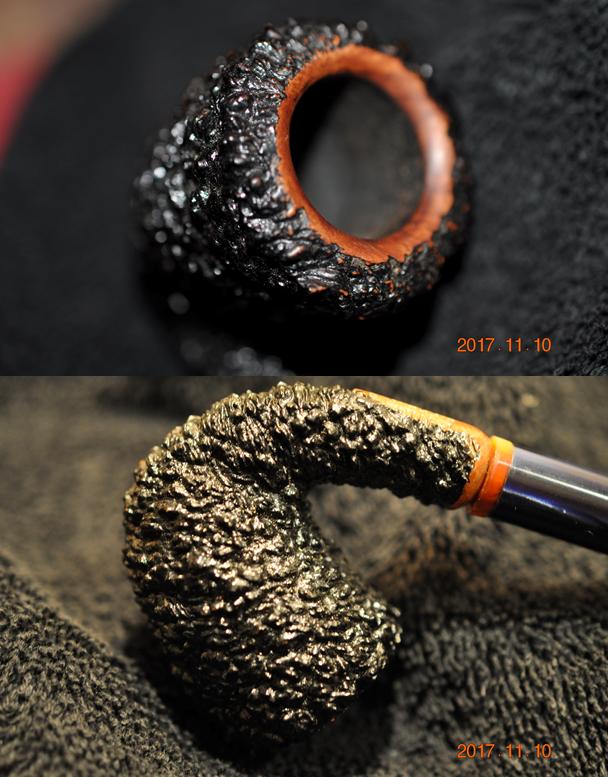
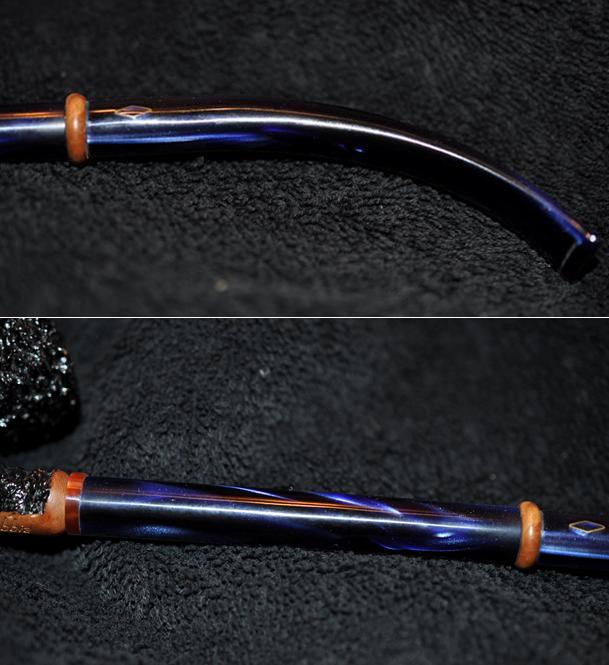
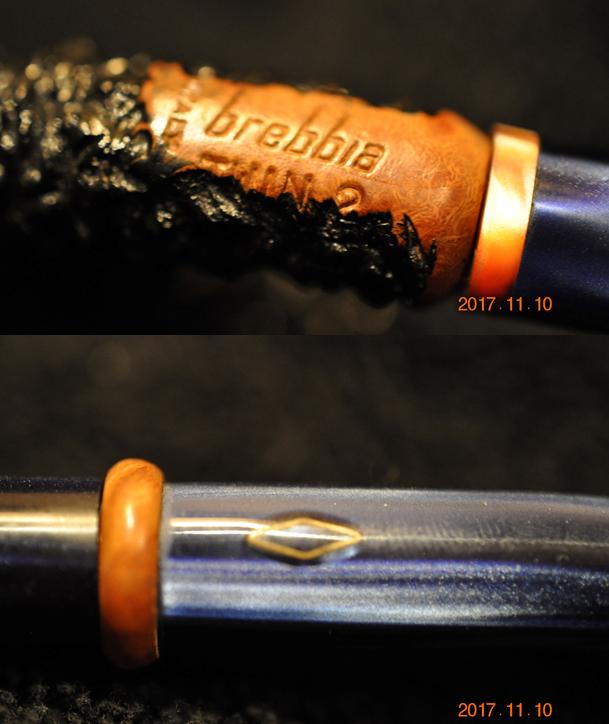
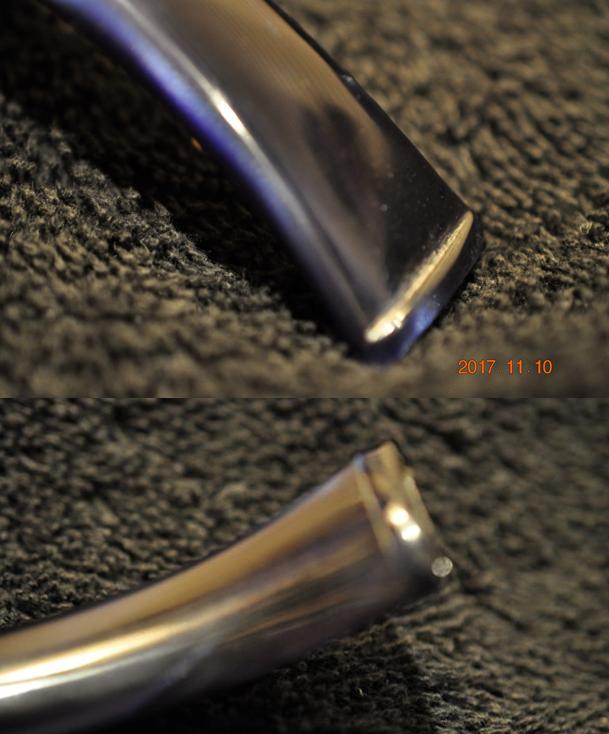
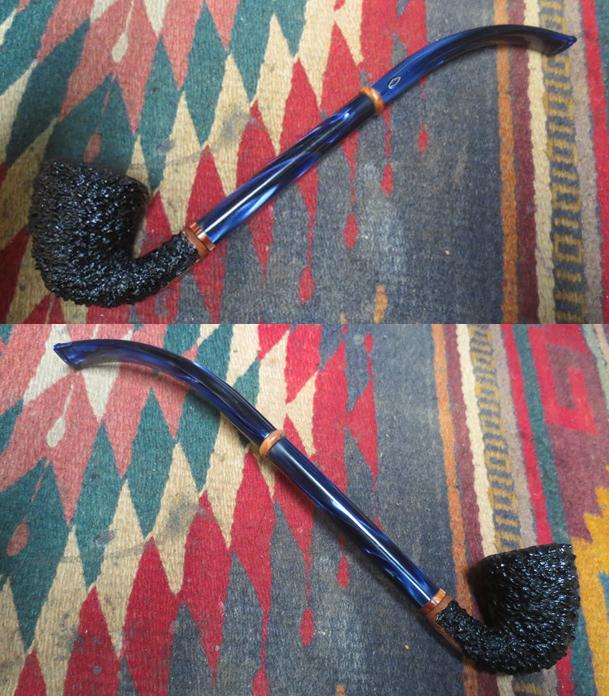
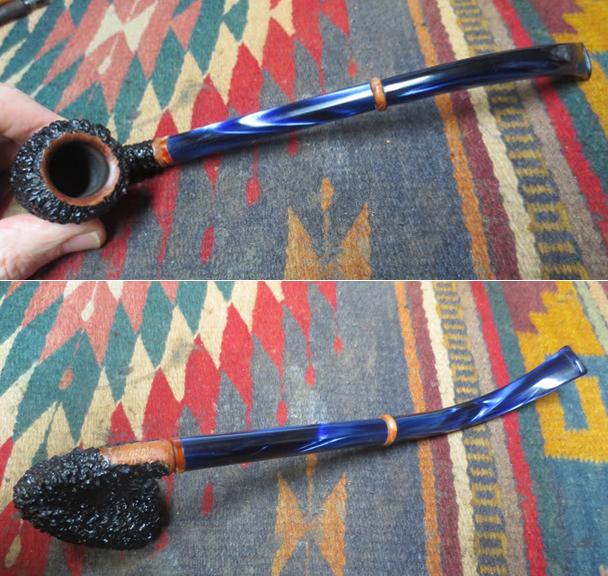
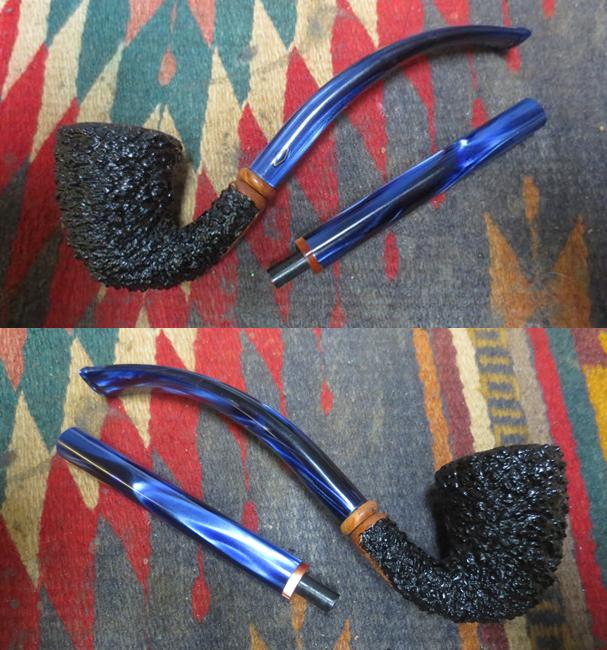
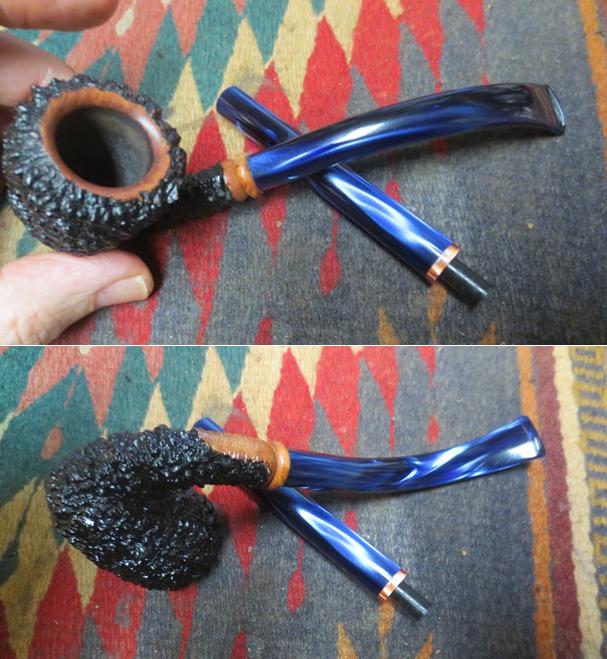
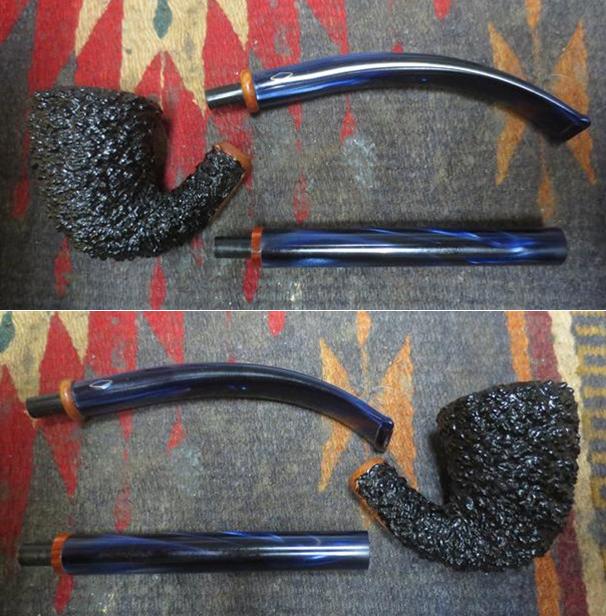
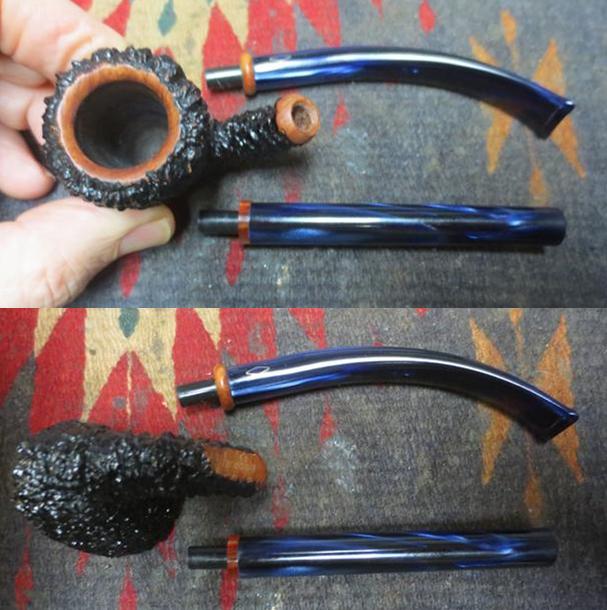
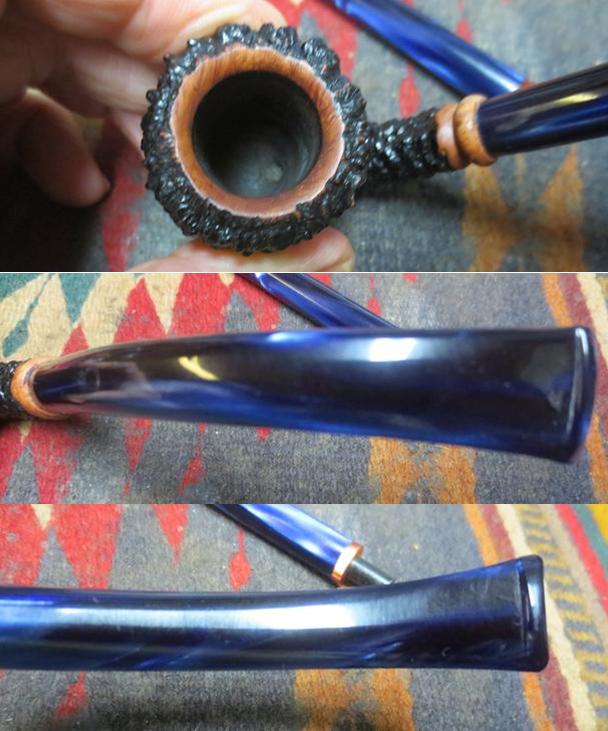
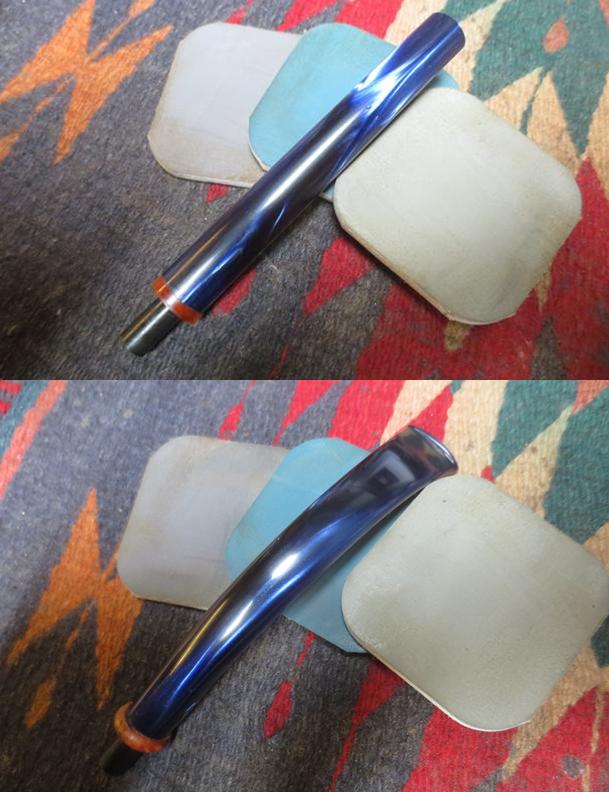
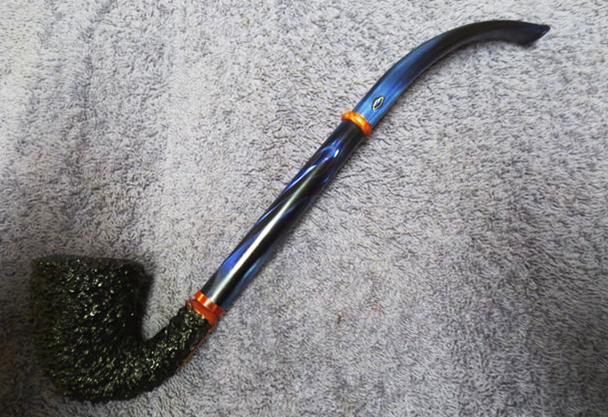
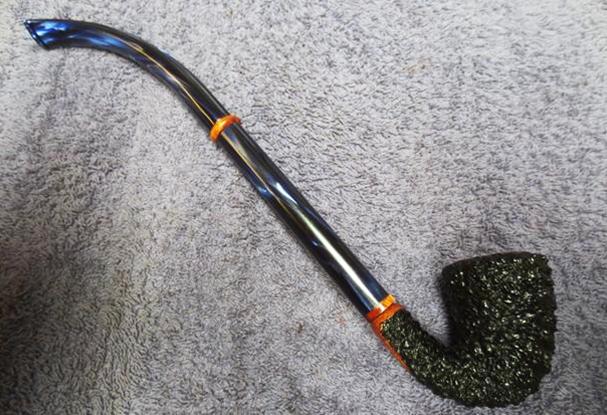
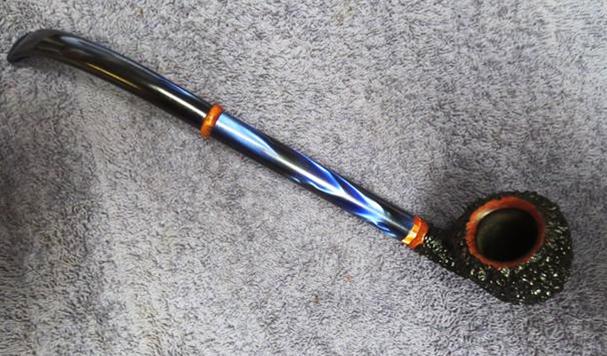
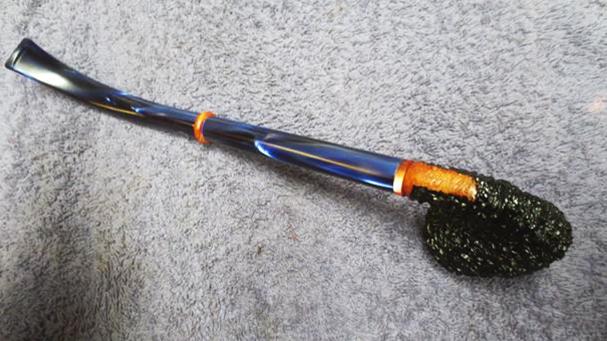
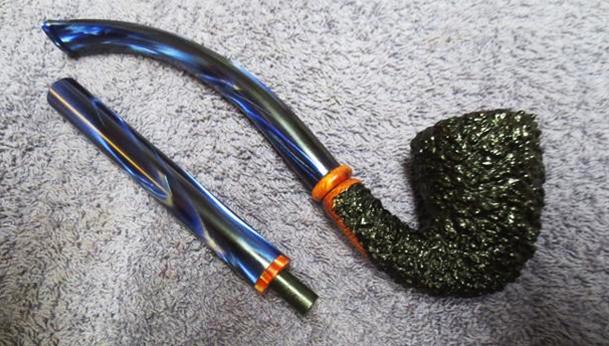
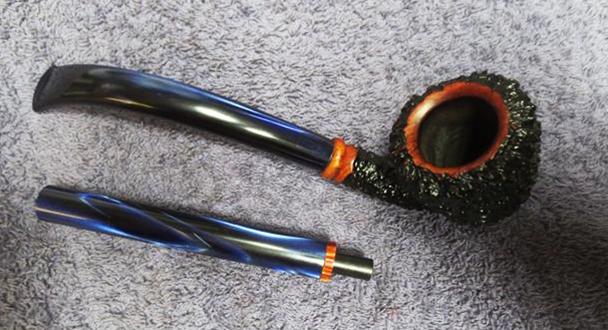
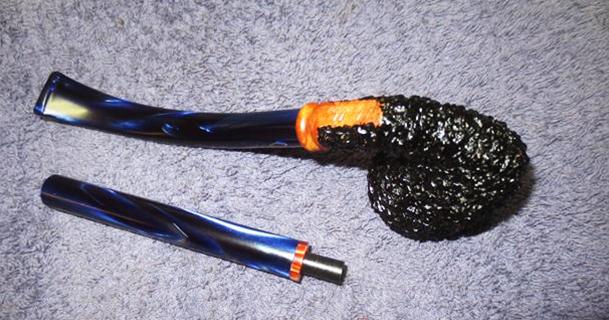
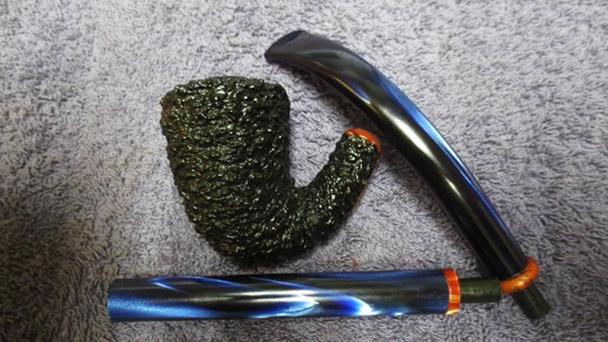
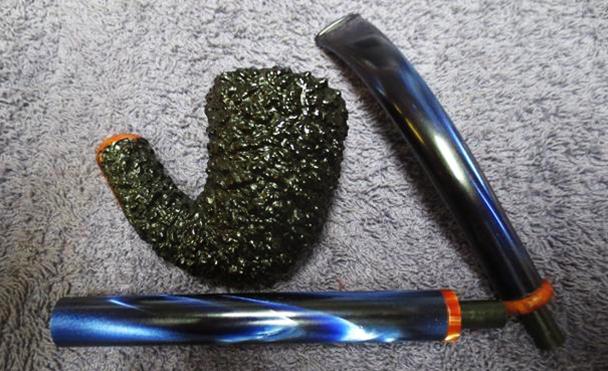
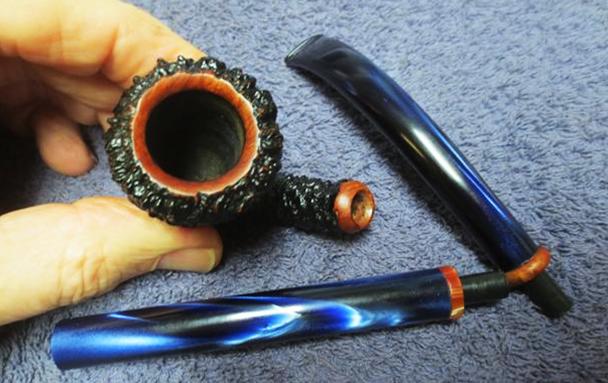
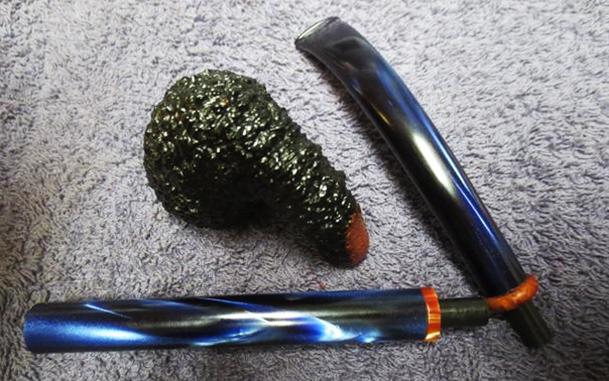
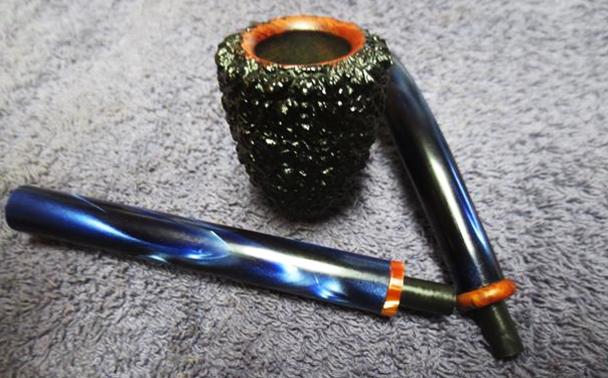
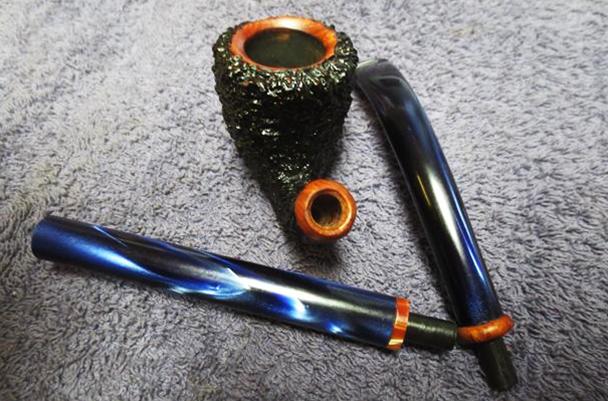
My brother picked up this nice rusticated Brebbia Twin 2 because of the beautiful cobalt blue stem. It is a twin in that it can be smoked as a Churchwarden with the long stem or by simply removing the lower part of the stem it can be smoked as a regular length bent pipe. The rustication is very tactile and rugged looking – similar to the Brebbia Lido finish. The mixture of dark black and brown stains gives the bowl an interesting contrast finish. The top of the rim is beveled inward and is smooth. It also has the same brown stain as the shank end and underside. It is a great contrast to the surround black rustication of the bowl and shank. The end of the shank is smooth and rounded while the smooth panel on the underside of the stem is stamped with the pipes identification. In this case it reads Italy, Brebbia Twin 2. The long insert portion of the stem is made out of cobalt blue acrylic and has a small multi-coloured brown acrylic ring attached to the end. The extension has a Delrin tenon that holds it in the shank. The second part of the stem has a briar ring attached to the end of the stem and also a Delrin tenon. The left side of the stem has the Brebbia gold diamond shaped logo stamped in it. All of the parts work well together and give the pipe an elegant look. Jeff took some photos of the pipe before he cleaned it up and sent it to me. The next photos show the pipe taken apart and also in its shortened version. You can see the Delrin tenons on both the extension and the stem itself. The gentle curves of the stem and the shank is really nice even in the shorter version of the pipe. Jeff took close up photos of the rim top and bowl to show how clean the pipe was when he received it. The second photo below shows a side view of the rustication of the bowl. It is a really beautiful pipe.The rich cobalt blue stem and extension are one of my favourite parts of this pipe. The colours of the bowl, rim, shank end, acrylic spacer and briar spacer work really well together with the blue of the stem material.The next two photos show the Brebbia Twin 2 stamping and the Brebbia logo on the left side of the stem portion. Both are very clean and readable.The stem was very clean in terms of tooth marks or chatter. There was some debris in the crease of the button that would need to be cleaned out but otherwise it was in very good condition.Before I did my part of the work on the pipe I decided to do a bit of background reading on the brand just to refresh my knowledge about Brebbia. I figured a quick read on Pipedia and on the Pipephil Logos and Stampings site would give me sufficient information. I turned to Pipedia first and there found some company history summarised. I quote in full from that article (https://pipedia.org/wiki/Brebbia).

Pipe Brebbia Srl, or better the M.P.B. (Manifattura Pipe Brebbia) was born in 1953 from the denouement of the association between Achille Savinelli and Enea Buzzi in 1947, where the first was employed in the marketing and the second in manufacturing of pipes under the name of Savinelli. It was made in exclusive up to 1953 and extended without further rights up to 1956.

The production, which is always careful and perfect, has continued in a traditional way for 60 years, using old lathes for the first steps, but finishing every piece by hand.

The secret of their manufacture, if we may put it this way, is the respect for the traditions with the experience acquired in several years of successful work, which could be summed up in two words: high quality.

The factory is currently managed by Enea’s son, Luciano.

For the last few decades, many of Brebbia’s pipes have been made by a number of small, otherwise independent pipe manufacturers, being marketed under the trade name Brebbia.

I then turned to the Pipephil site (http://www.pipephil.eu/logos/en/logo-brebbia.html) and found confirmation of the above information.

The Brebbia brand Brebbia Pipe is named after the locality of Bosco Grosso di Brebbia (Prov. Varese, Reg. Lombardia). A first corporate was founded by Enea Buzzi and Achille Savinelli in 1947. They split in 1953. Buzzi ketp the factory and created the MPB brand (Maniffatura Pipe Brebbia). After 1968 the brand was shortly called “Brebbia”. Luciano Buzzi son of Enea manages the company since the 1990s.

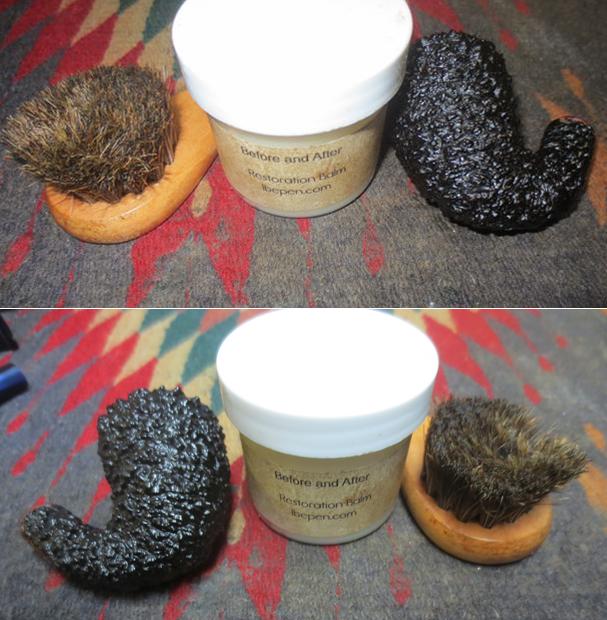
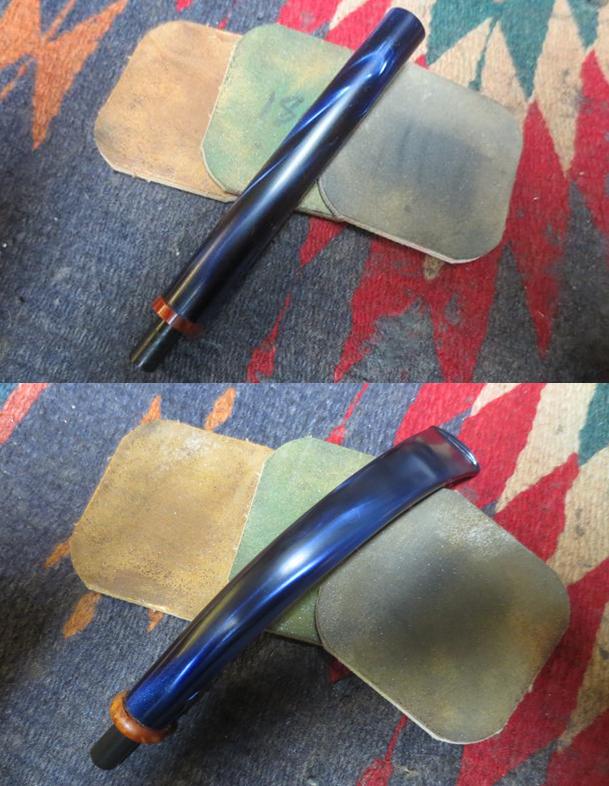
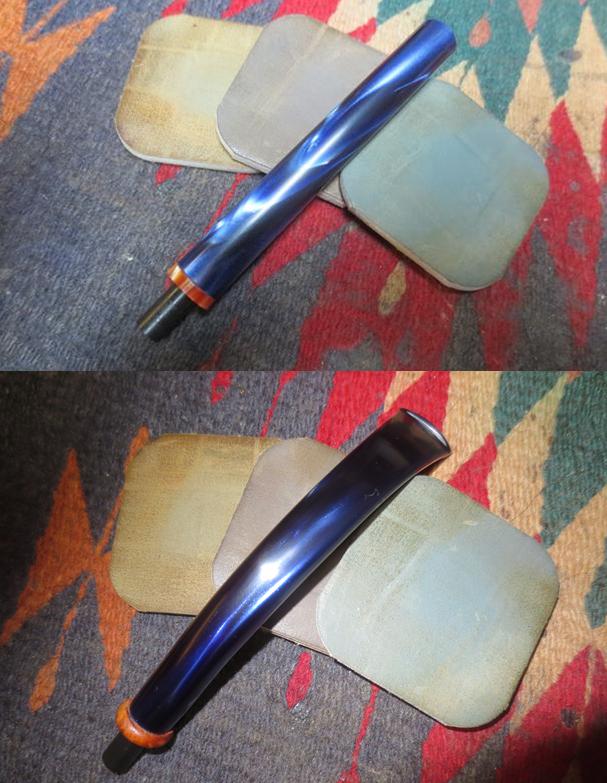
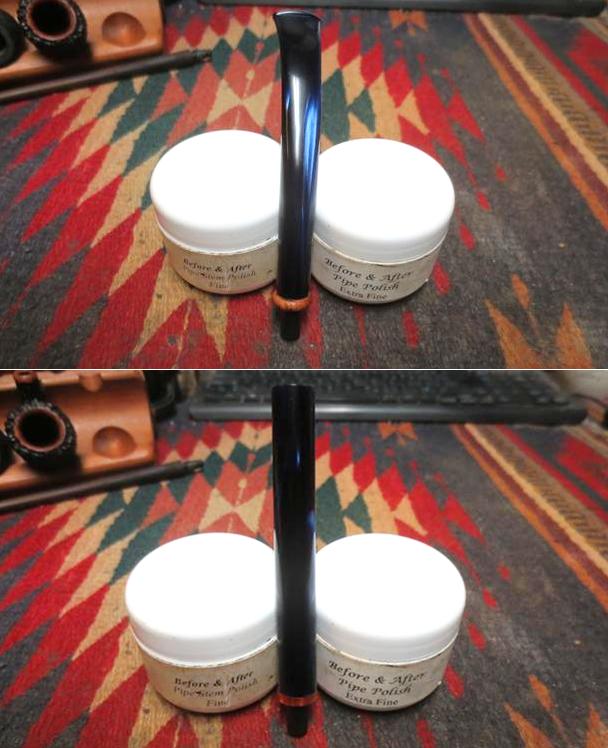
Jeff did not have to do a whole lot of cleaning on this pipe as it was pretty spotless. He ran pipe cleaners, cotton swabs and alcohol through the mortise and the airways in the shank, extension and stem. He cleaned around the button edge to remove the debris. He wiped down the rim top and the inside of the bowl to remove dust and gave the pipe a general once over to remove any dust or debris from shipping. When I received the pipe I took photos of it to show its general condition. It is in great shape which is why I took a breather and worked on refreshing it before doing some of the more grimy pipes that are on my work table. I took some close up photos of the bowl, rim top and stem to show its general condition. It was in pretty good shape. A little polishing and buffing would bring it to its full potential.I worked some Before & After Restoration Balm into the deep rusticated surface of the briar with my finger tips to deep clean the finish, enliven and protect the wood. I used a horse hair shoe brush to make sure that the balm went deep into the grooves and valleys of the rustication. I let it sit for a few minutes and then buffed it with a cotton cloth. The wood came alive and there was a rich shine to the briar. The smooth rim top, shank end and underside looked rich as well. I took some photos of the bowl at this point to mark the progress in the restoration. The stem and extension were in such good condition that I only worked them over with micromesh sanding pads. I polished the cobalt blue acrylic – wet sanding it with 1500-2400 grit pads and dry sanding it with 3200-12000 grit pads and wiped it down with a damp cotton pad after each one. When I finished with the 12000 grit pad I wiped it down a final time and hand buffed it with a cloth. I finished by polishing it with Before & After Pipe Stem Polish Fine and Extra Fine. I buffed stem and extension with Blue Diamond to polish them. I gave the bowl multiple coats of Conservator’s Wax and the stem and extension multiple coats of carnauba wax. I buffed the entire pipe with a clean buffing pad to raise the shine. I hand buffed it with a microfiber cloth to deepen the shine. The finished pipe is shown in the photos below. The briar has a shine and a rich glow to it and the cobalt blue acrylic stem came out quite nice with a deep shine. The pipe really looks quite amazing. The dimensions on the pipe are; Length with extension: 10 inches, Length with just stem: 6 ½ inches, Bowl Height: 2 inches, Bowl Outer Diameter: 1 ½ inches, Chamber Diameter: ¾ inches. This will be a hard one to let go of but watch the rebornpipes store if you are interested in adding it to your collection. Send me an email to slaug@uniserve.com or a message on Facebook. Thanks for looking.

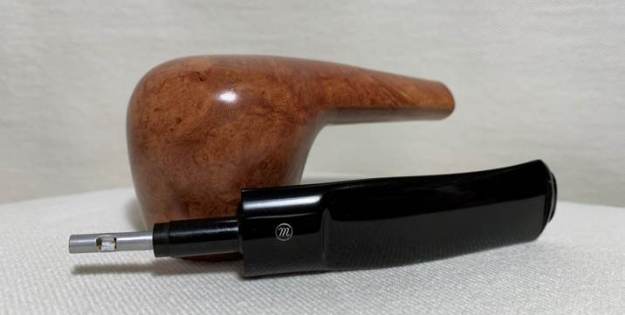
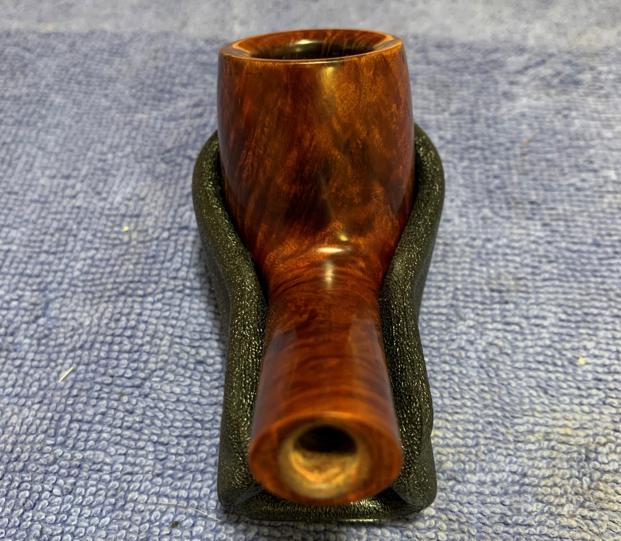
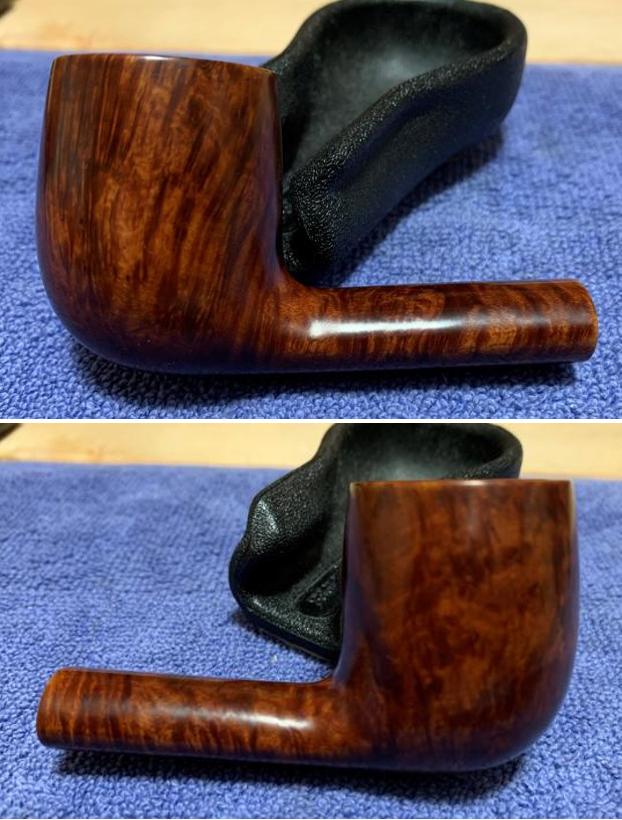
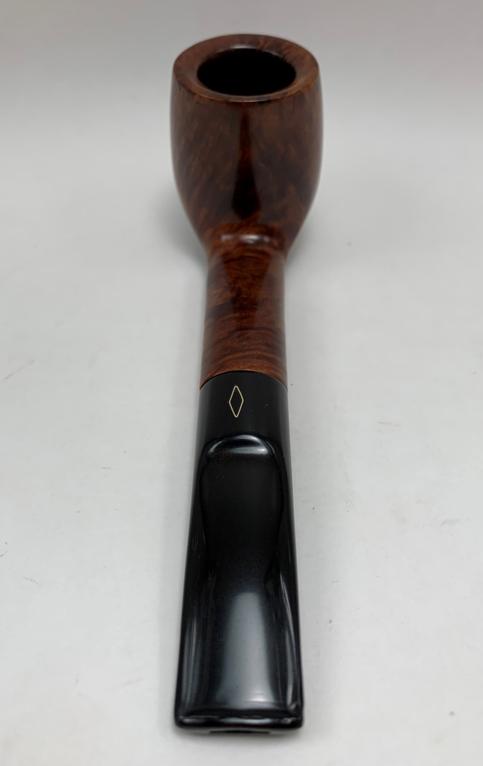
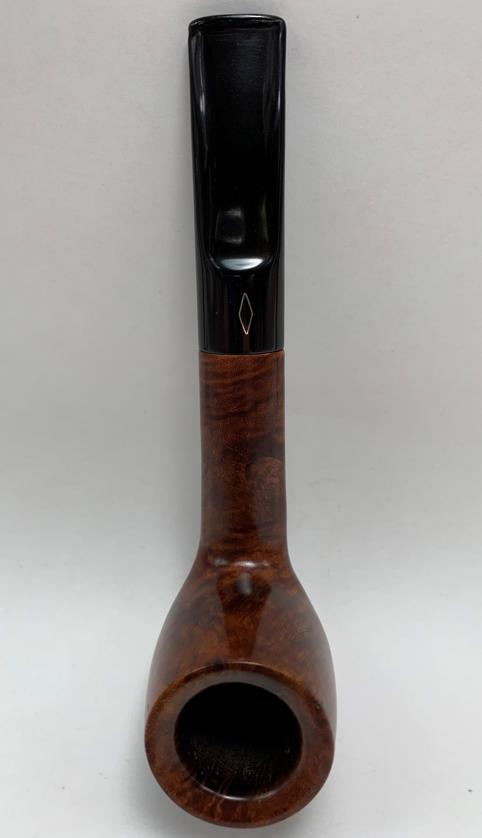
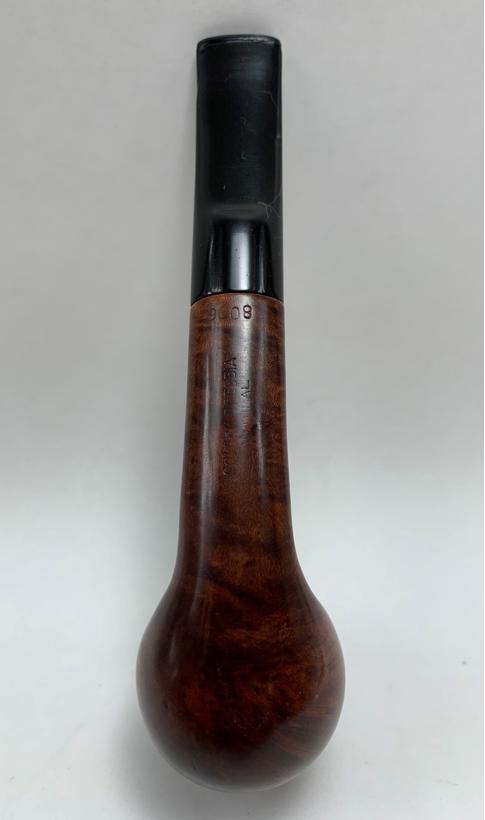
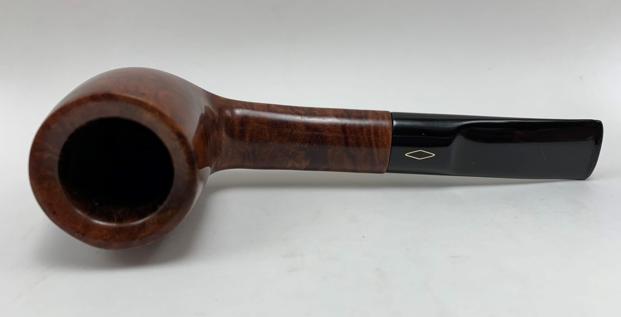
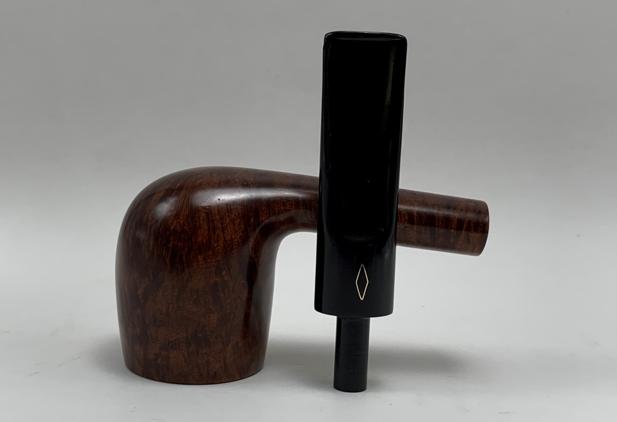
An Interesting Brebbia Silver AS1 Square Shank Brandy


Blog by Steve Laug

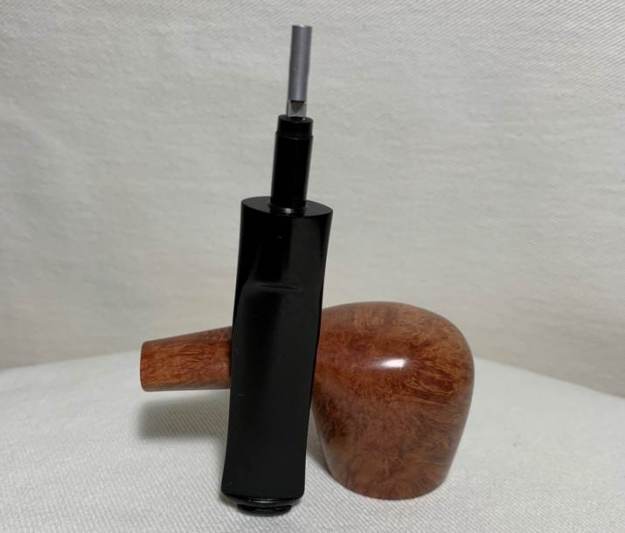
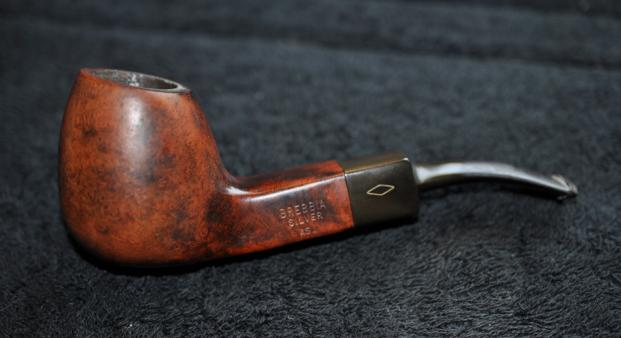
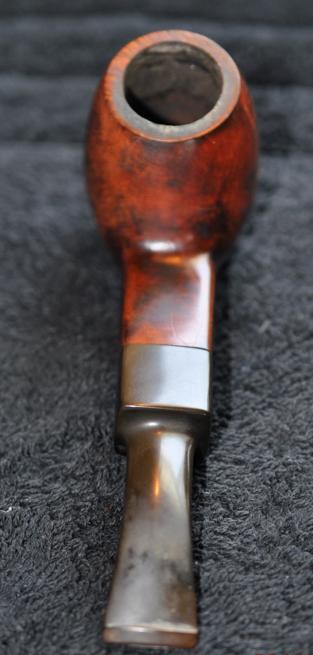
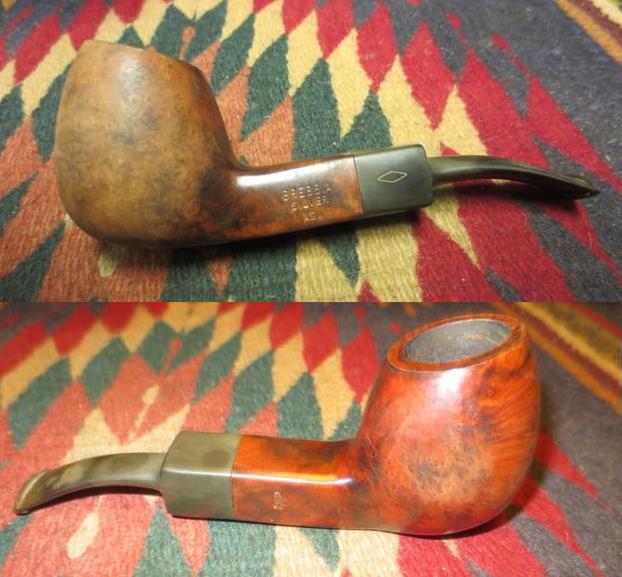
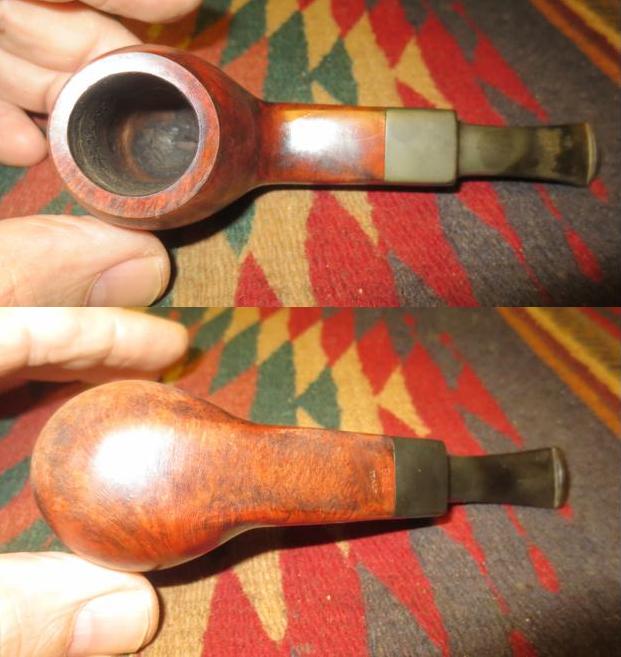
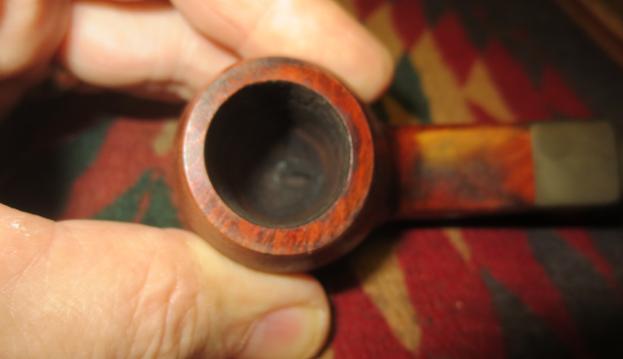
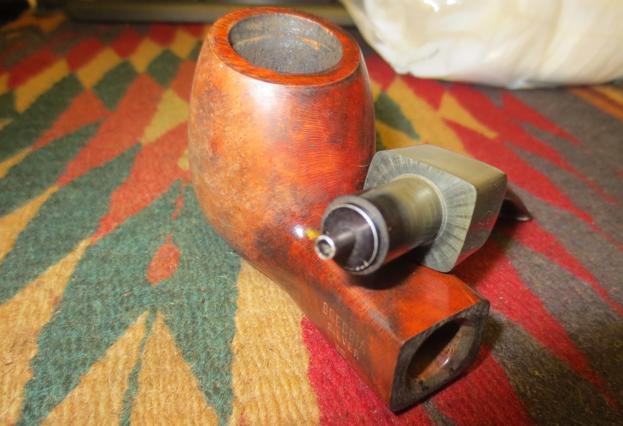
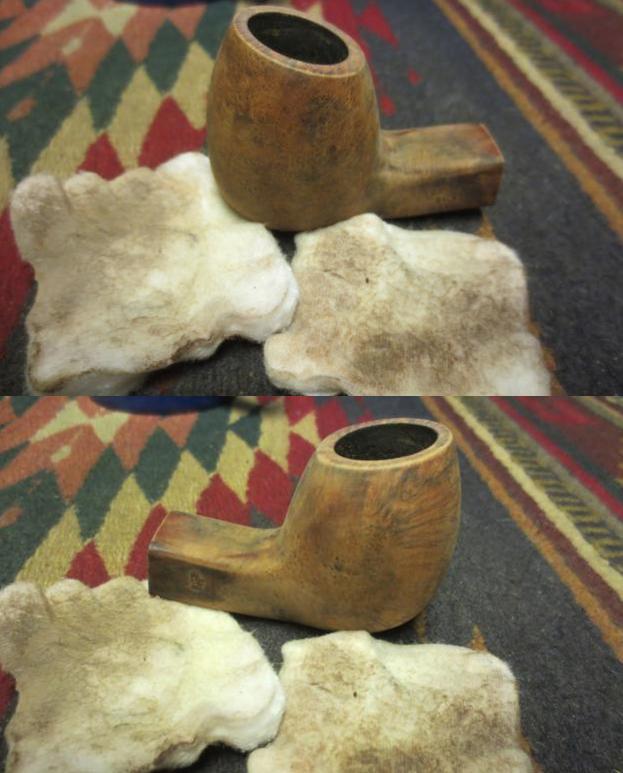
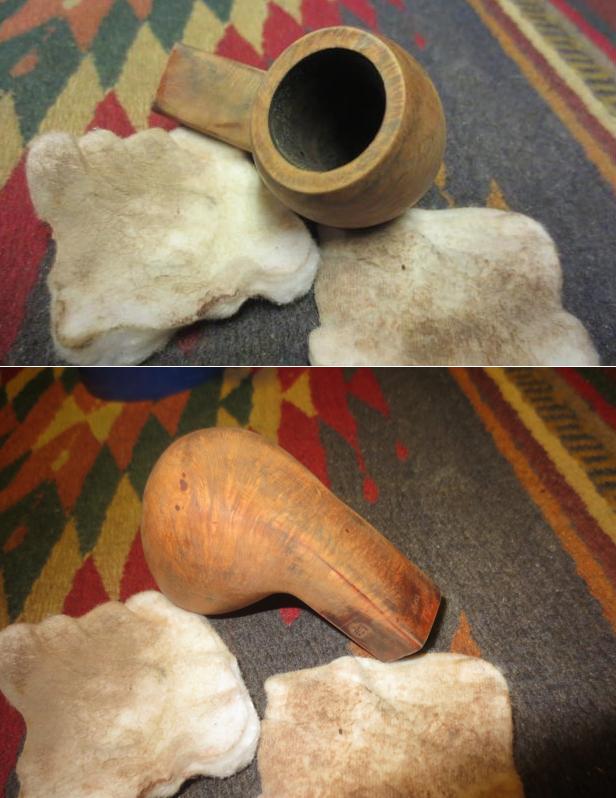
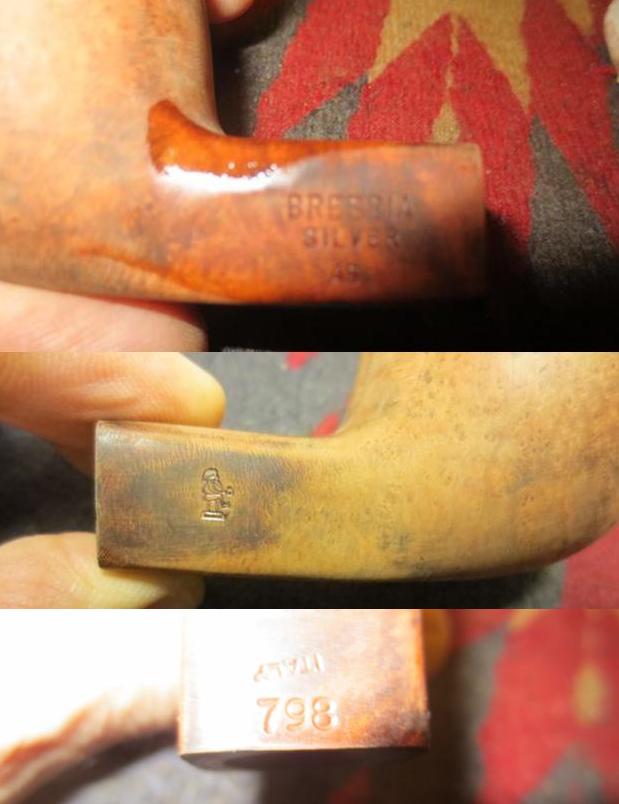
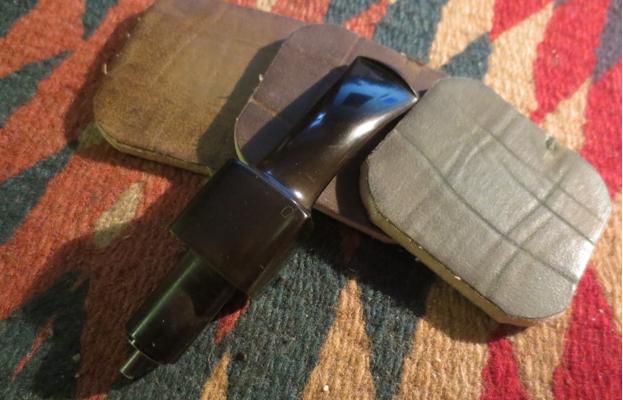
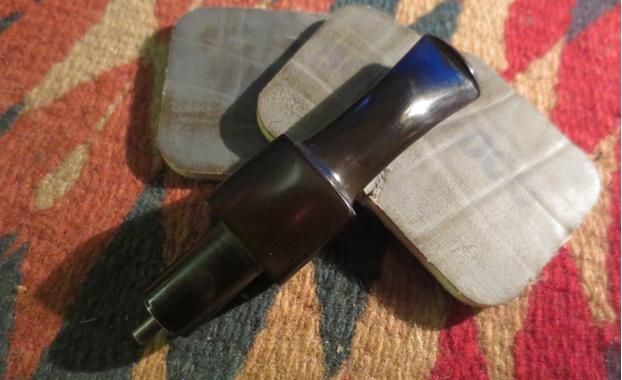
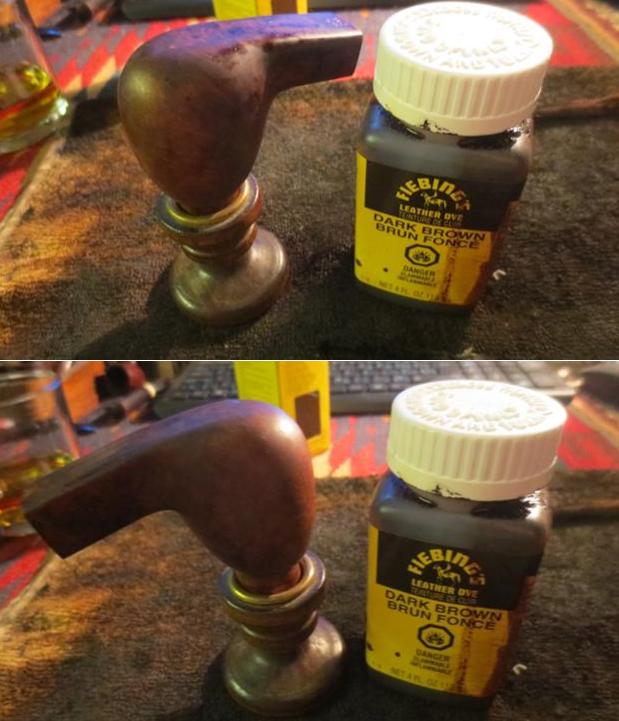
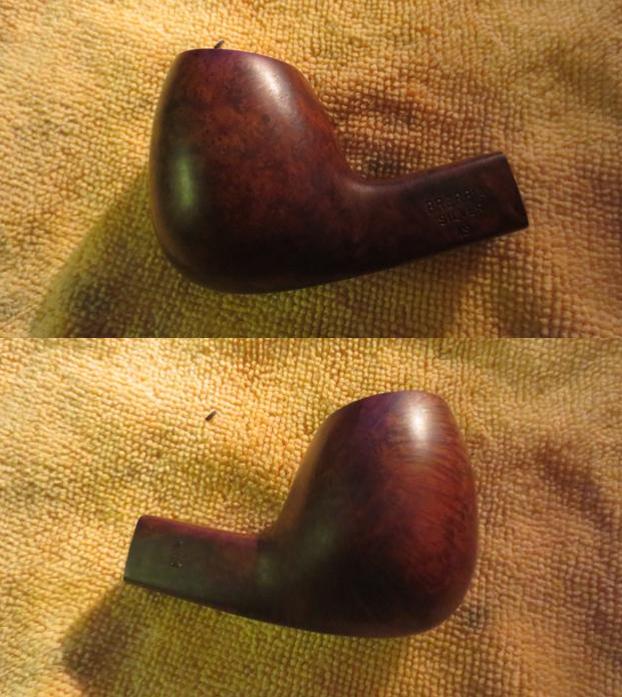
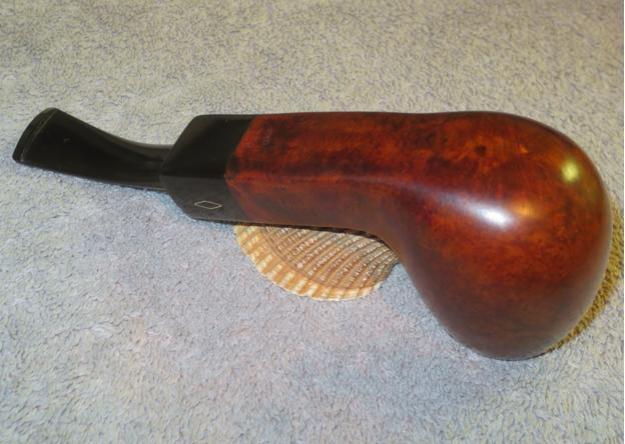
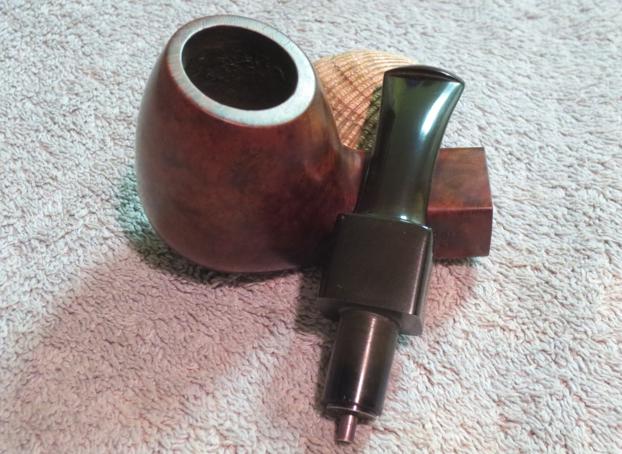
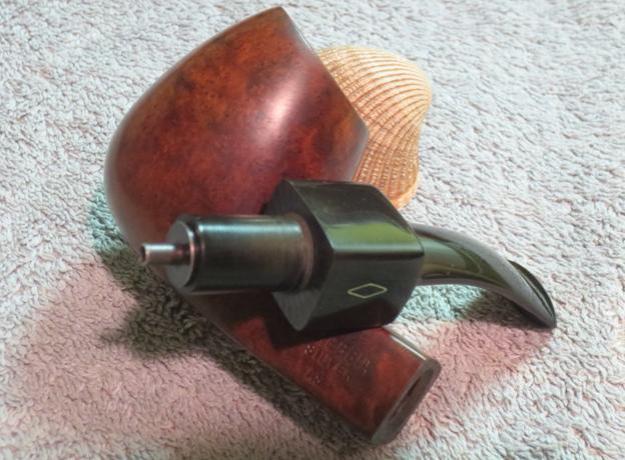
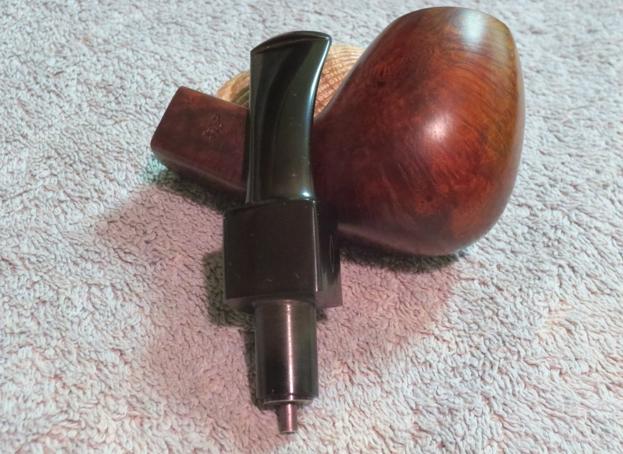
Over the years the only Brebbia pipes I have worked on have been the Iceberg Pipes. They have a beautiful rustication that just speaks to me. The rugged roughness looks like the briar came that way and I have always like the feel in the hand. However, every one of the pipes, Iceberg or otherwise have either belonged to someone else or were too big for my liking. I have never seen a pipe like the one that my brother Jeff found and sent my way. First it is a smooth briar not rusticated and second it is a brandy shape with a square shank and square saddle stem. I have not seen one like it before and I have looked around a fair bit and have not found another. In the photos of the pipe that my brother took before he began the cleanup it looked to be in good condition. The finish was a little mottled but it still looked to be decent. The bowl appeared to have a light cake so it potentially would be an easy clean up.Brebbia1 Brebbia2My brother scrubbed the bowl with Murphy’s Oil Soap and removed most of the finish but the stubborn spots on the shank. The stem was lightly oxidized and had some light tooth chatter on the top and bottom near the button. The next set of four photos show the pipe when it arrived here in Canada. Once again my brother did a great job cleaning this one up. I can’t believe how much time it saves to be able to begin with finishing rather than cleaning. Thanks Jeff.Brebbia3 Brebbia4I took a close up photo of the rim to show how clean it was and how the bowl was in round and the edges were not damaged.Brebbia5The stem was a bit of an oddity to me. I have not seen a stem with the kind of built in tube that this Brebbia sported. There is an end cap on the tenon with the tube protruding out. When the stem is in the shank the tube sits in the airway between the mortise and the bowl.Brebbia6To remove the stubborn finish on the shank I scrubbed the bowl and shank with acetone on cotton pads. It took a bit of elbow grease but the shank finally let loose of the finish.Brebbia7 Brebbia8I took some close up photos of the stamping on the shank as they were very clear. The left side of the shank reads Brebbia over Silver over AS_. I am assuming that the AS_ was probably AS1. The right side of the shank has a gnome stamped on it. The gnome was the logo Brebbia used to put on its stems from 1953 to 1956. On the underside it is stamped Italy 798.Brebbia9The stem was very tight in the shank so I examined it with a light and saw that there was a thick hard coat of tars on the walls of the mortise. I scraped the mortise with a dental spatula and removed the heavy coat of tars and then scrubbed it with pipe cleaners, cotton swabs and alcohol.Brebbia10I put the stem back in place and it fit snugly but the tightness was gone. I took some photos of the pipe at this point in the restoration.Brebbia11 Brebbia12I removed the stem again and worked on it with micrmesh sanding pads – wet sanding it with 1500-2400 grit pads and dry sanding with 3200-12000 grit pads. Between each set of three pads I rubbed the stem down with Obsidian Oil and also gave it a final rubdown after the 12000 grit pad. I set the stem aside to dry while I worked on the bowl.Brebbia13 Brebbia14 Brebbia15I stained the bowl with a dark brown aniline stain thinned by 50% with isopropyl alcohol. I applied it to the bowl with a folded pipe cleaner and flamed it with a lighter. I repeated the process until the coverage was even.Brebbia16I hand buffed the bowl with a microfibre cloth to polish the stain and even out the look of the finish.Brebbia17 Brebbia18I put the stem back on the bowl and buffed the bowl and stem with Blue Diamond on the buffing wheel. I gave the entire pipe several coats of carnauba wax and buffed it with a clean buffing pad to raise the shine. I finished by hand buffing the pipe with a microfibre cloth to deepen the shine. The finished pipe is shown in the photos below. Thanks for looking.Brebbia19 Brebbia20 Brebbia21 Brebbia22 Brebbia23 Brebbia24 Brebbia25