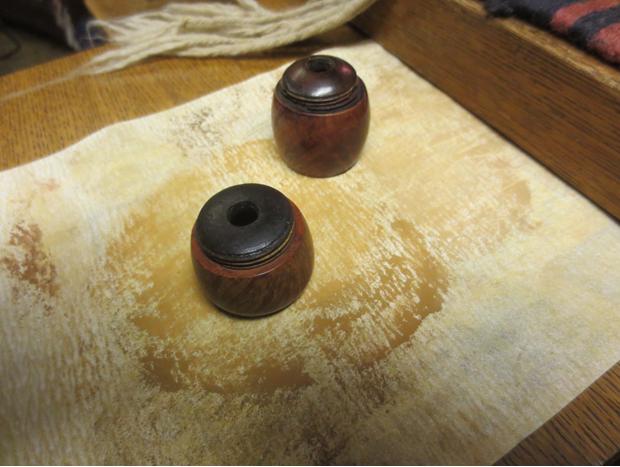
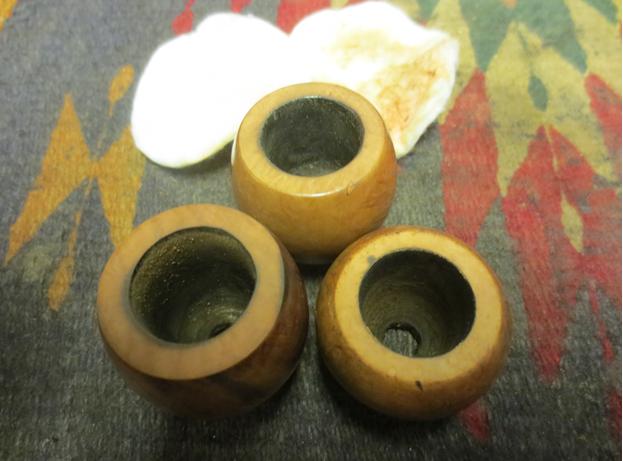
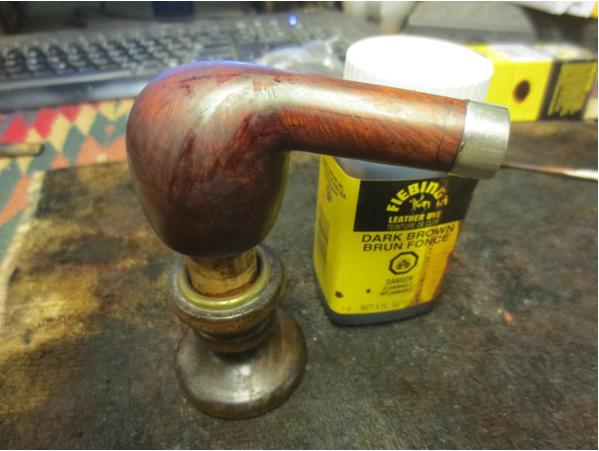
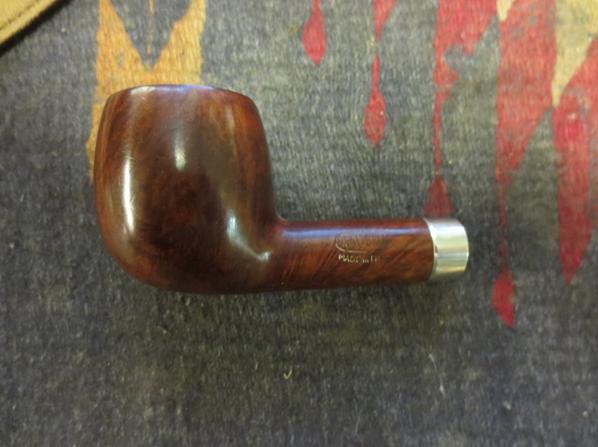
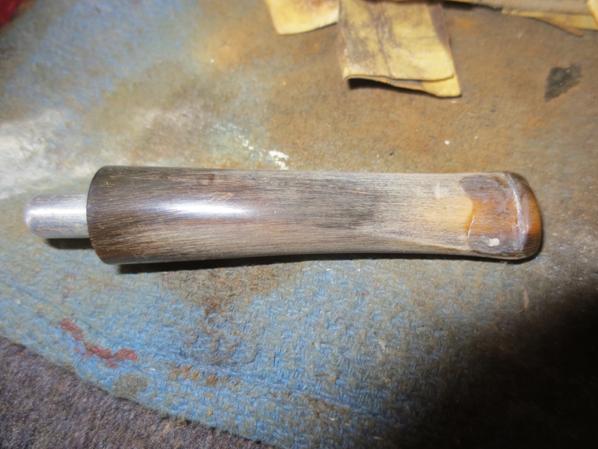
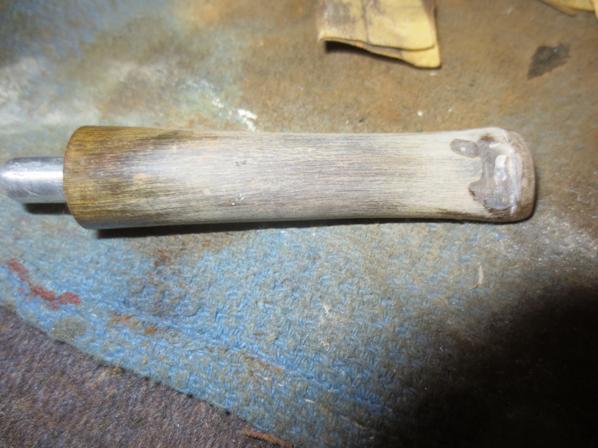
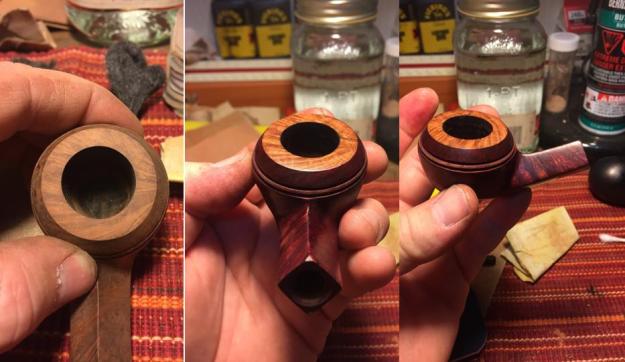
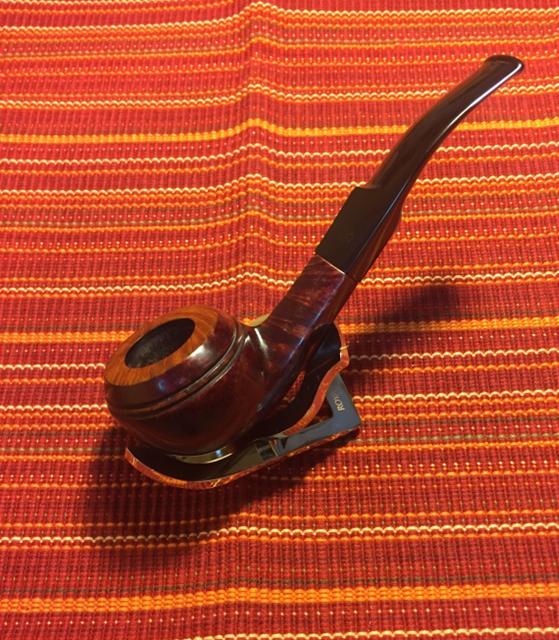
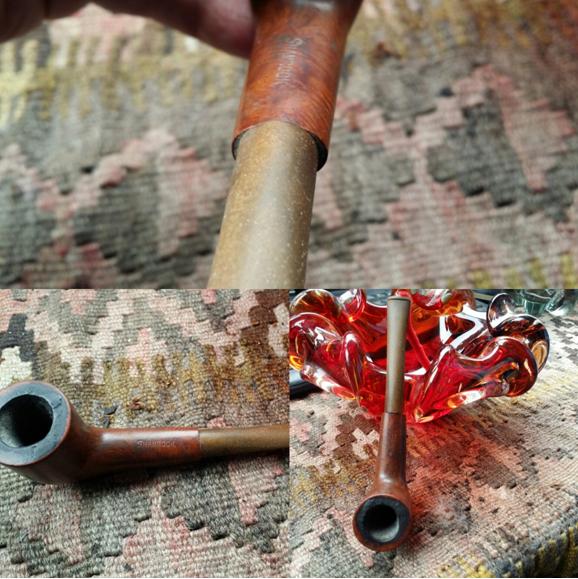
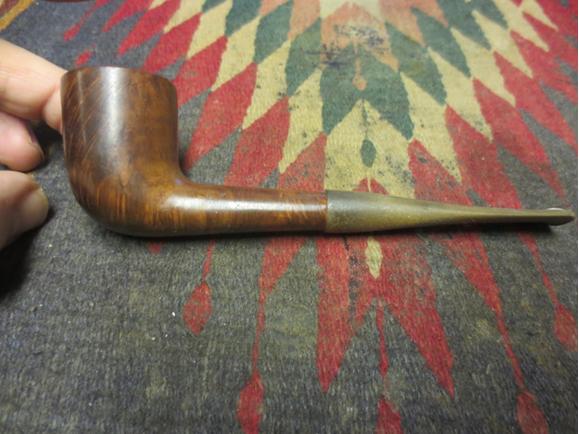
Tag Archives: bowl topping

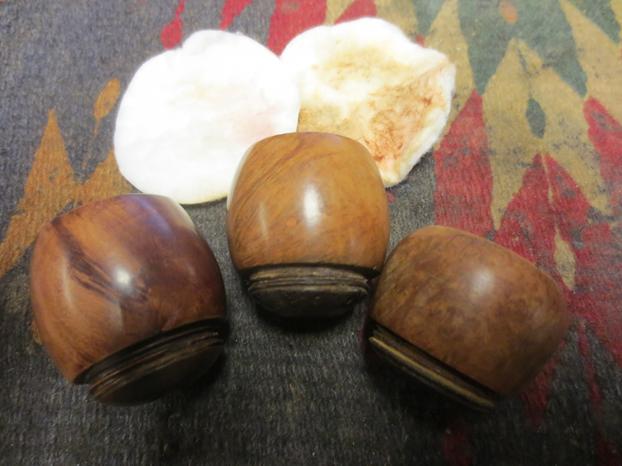
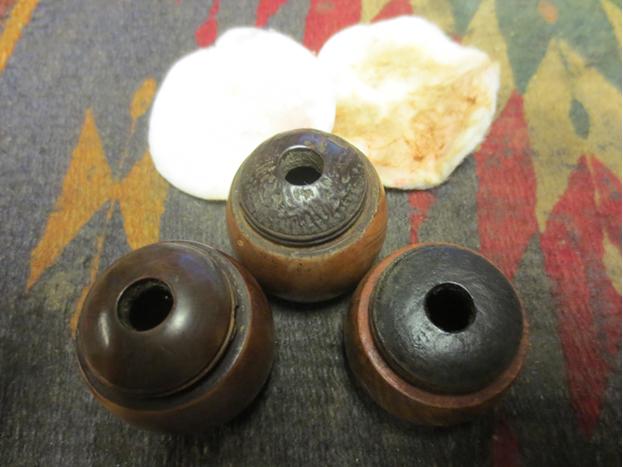
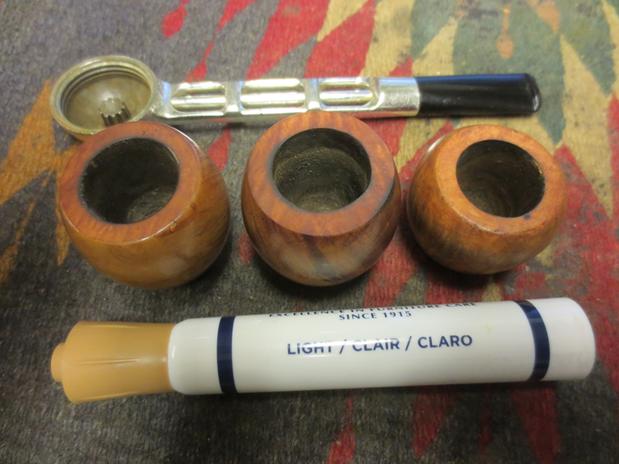
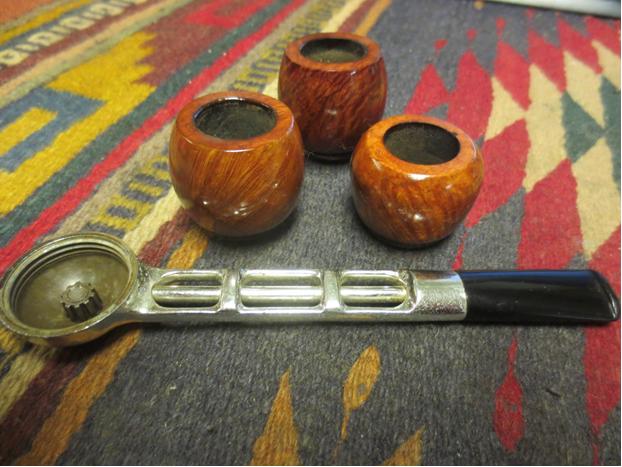
Didn’t Break a Sweat Cleaning this London Briar Brandy


Blog by Steve Laug

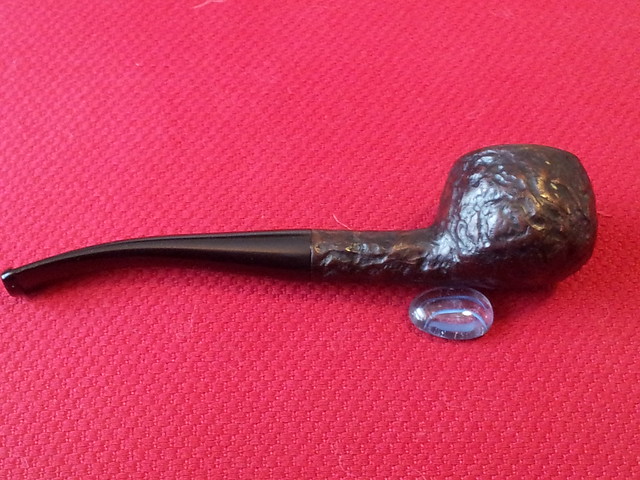
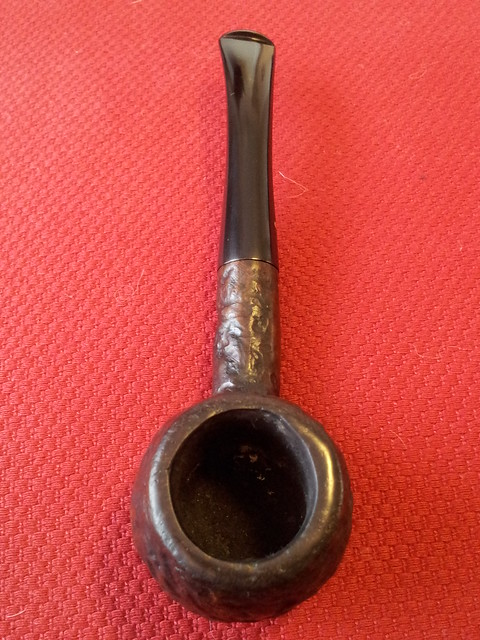
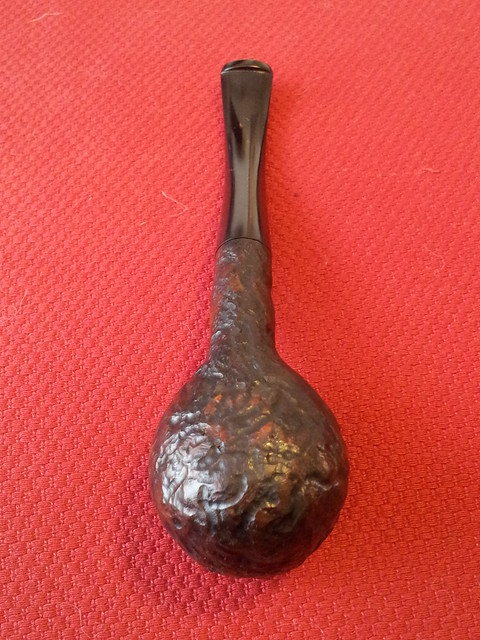
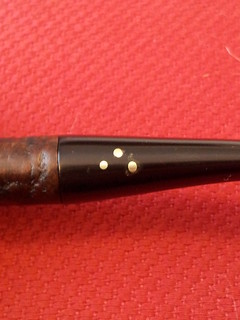
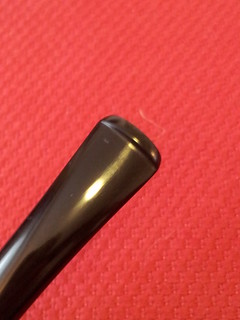
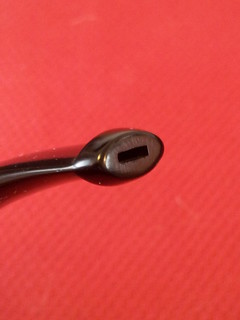
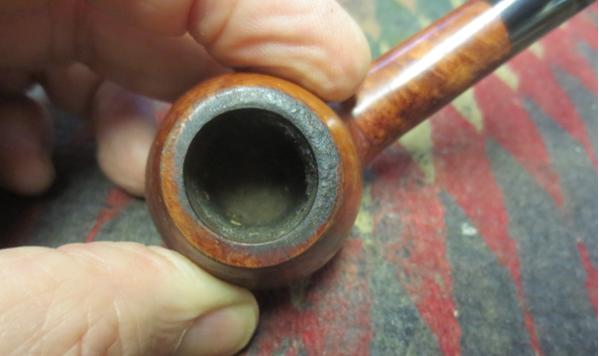
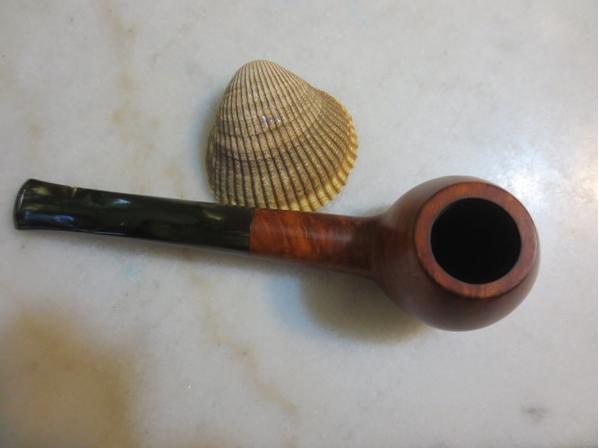
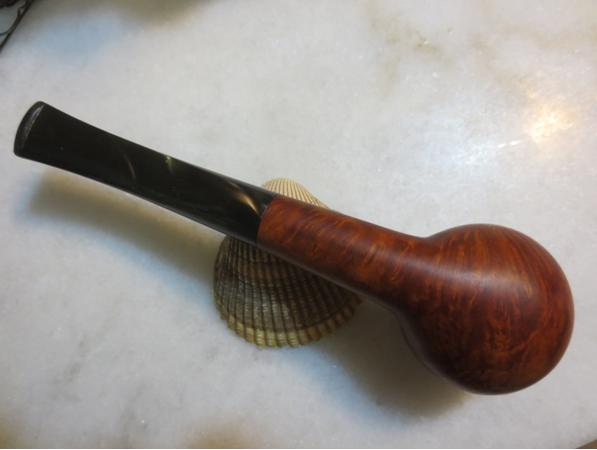
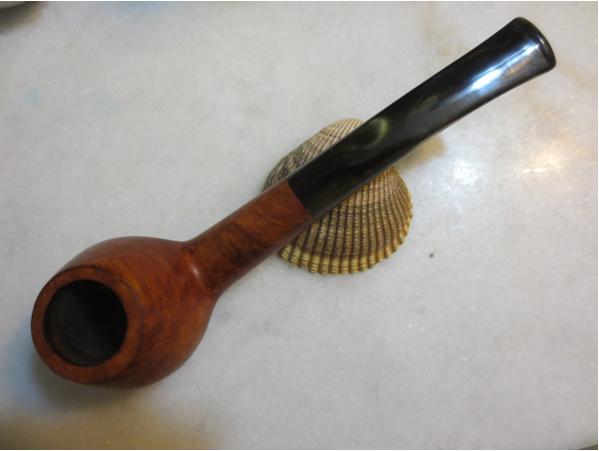
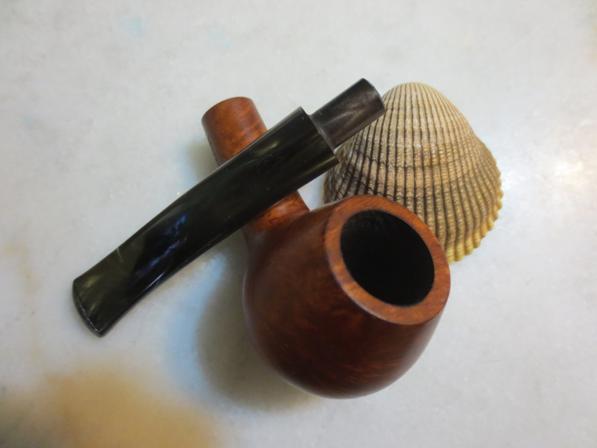
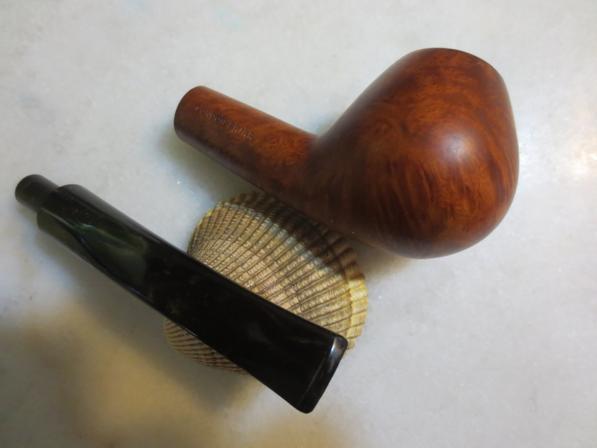
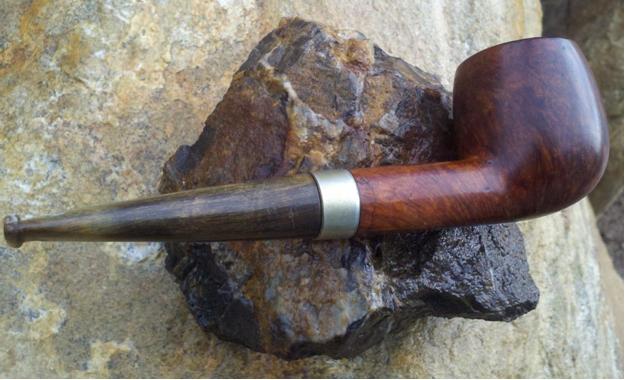
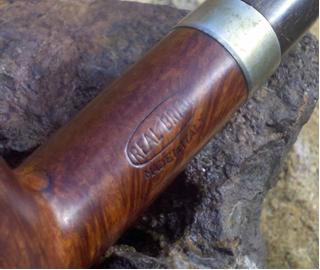
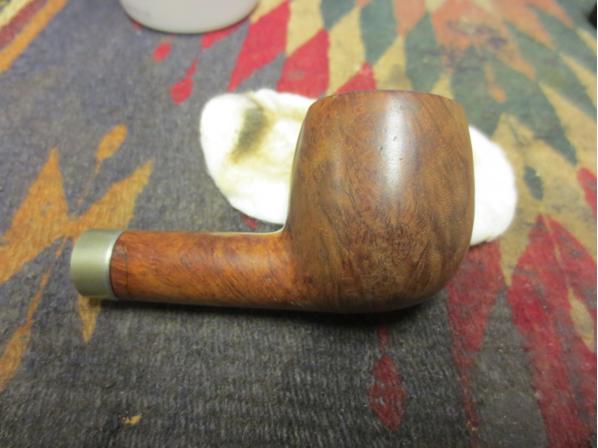
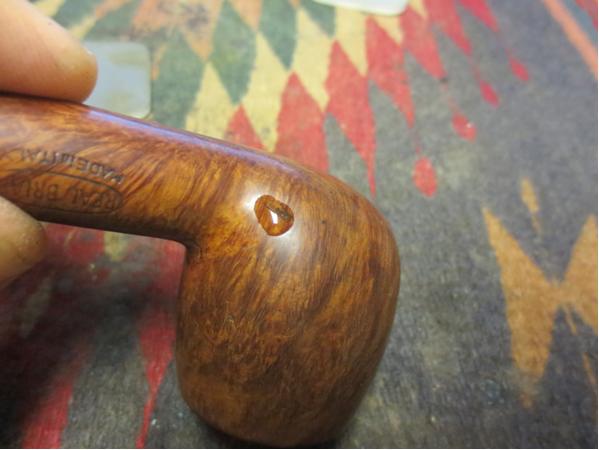
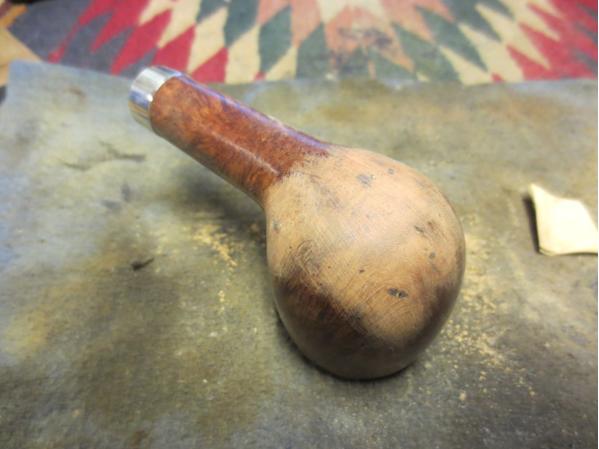
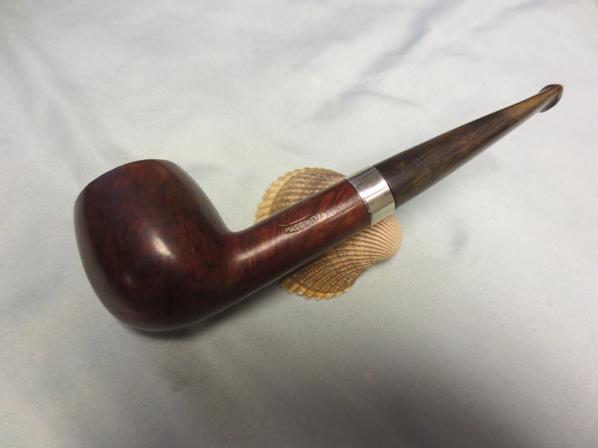
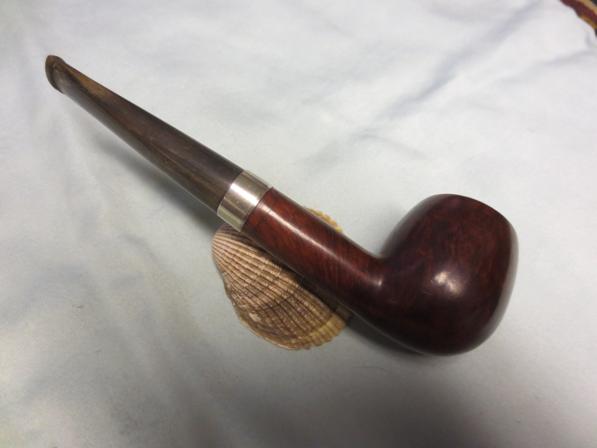
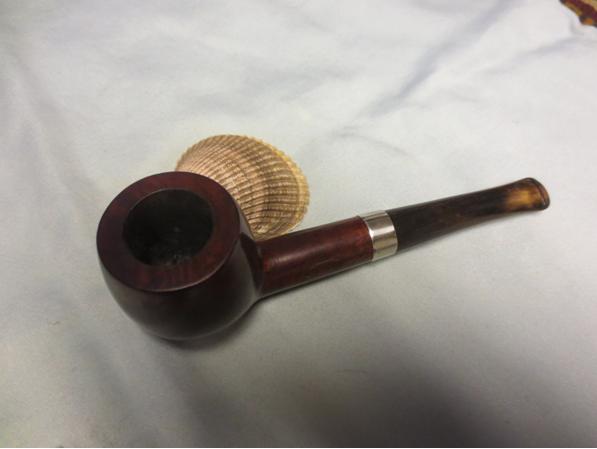
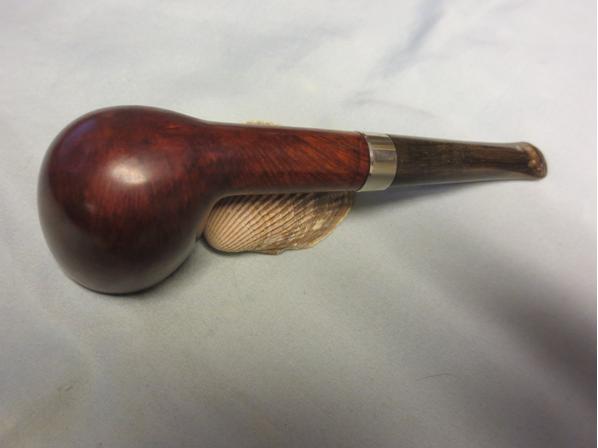
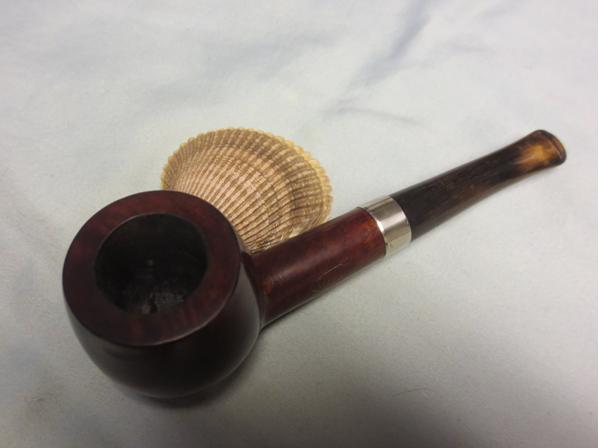
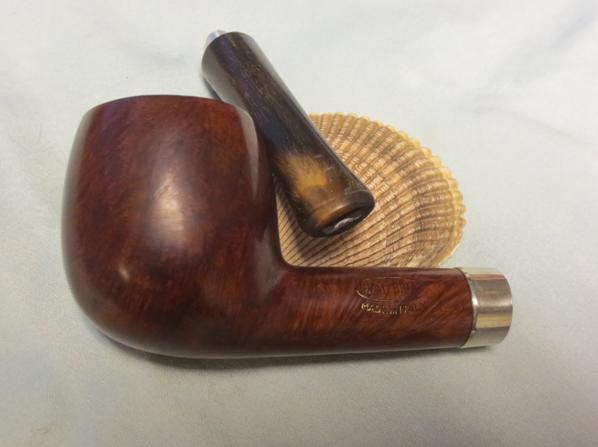
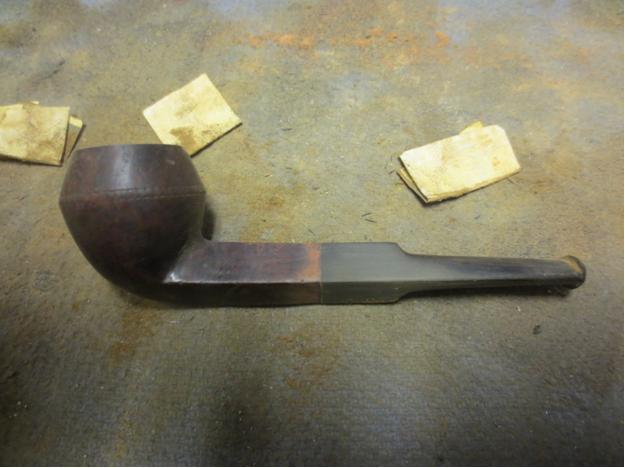
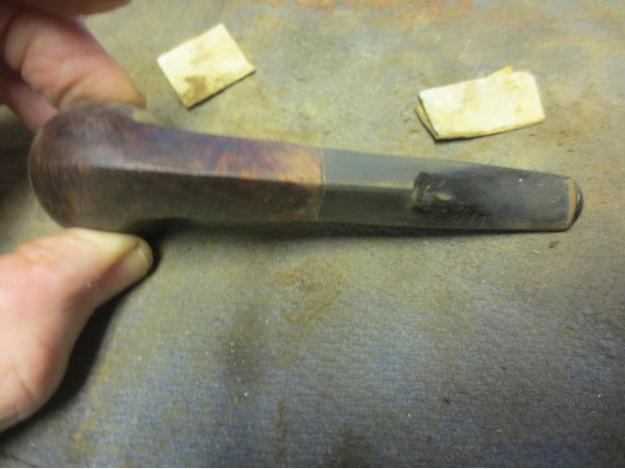
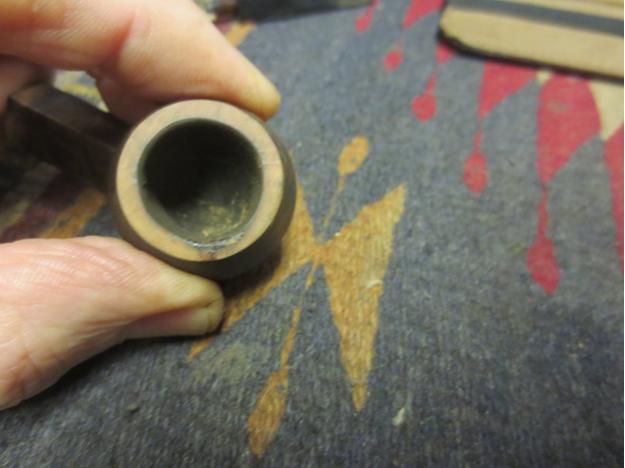
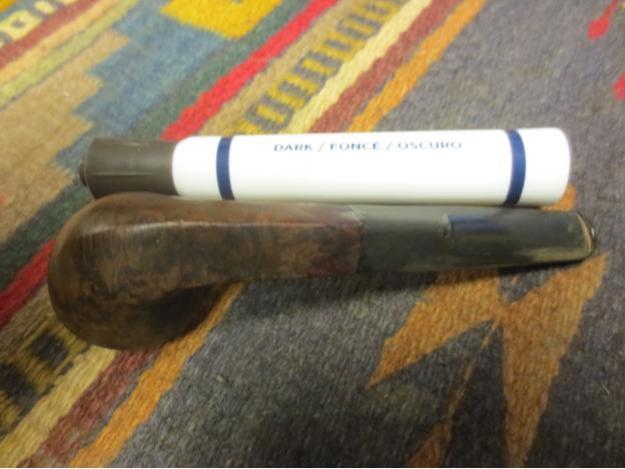
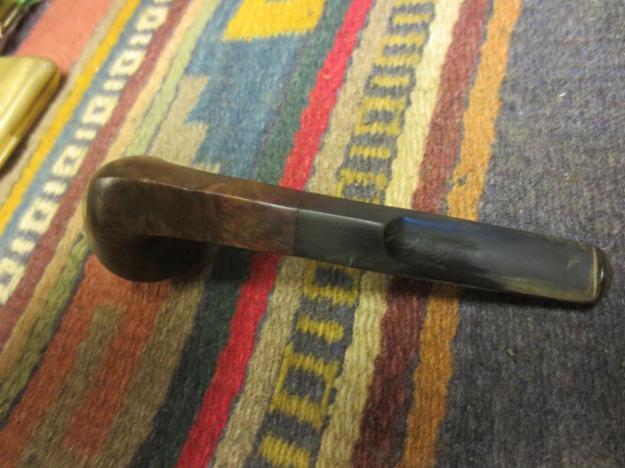
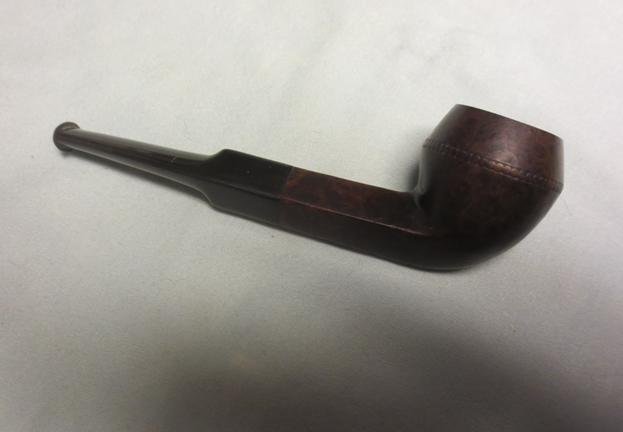
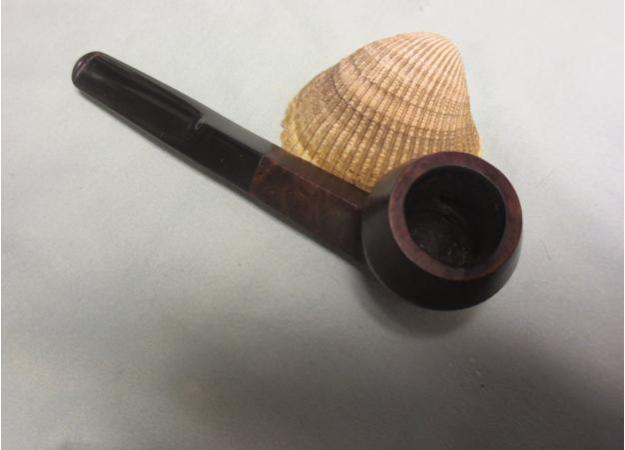
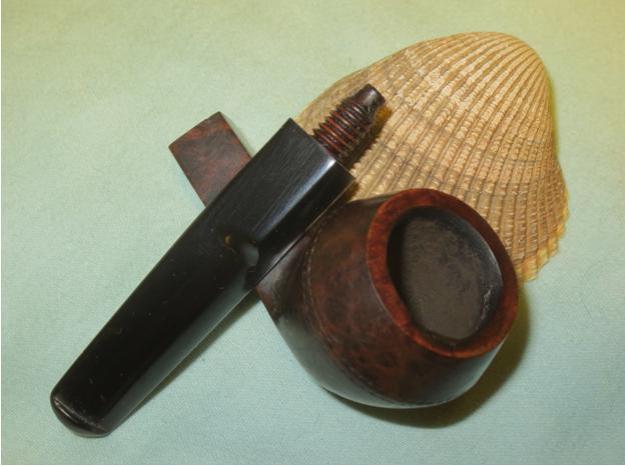
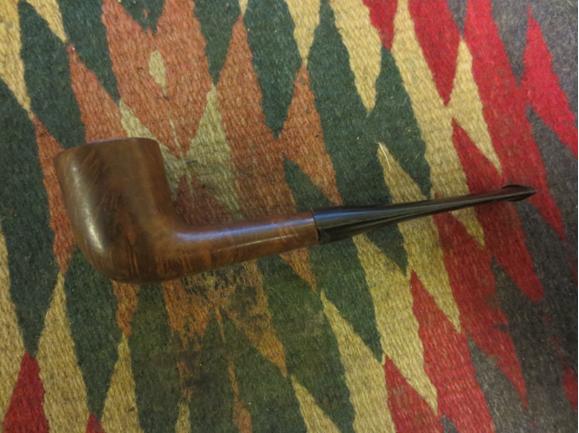
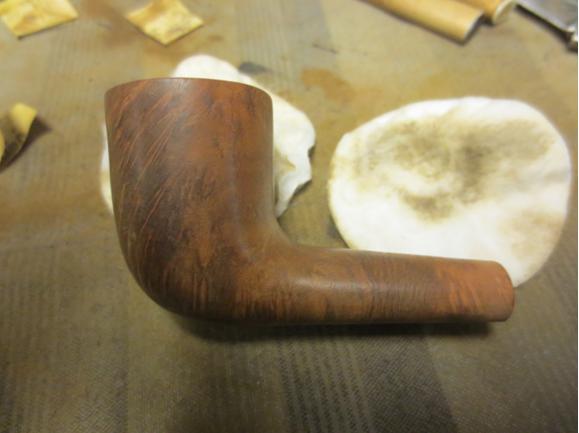
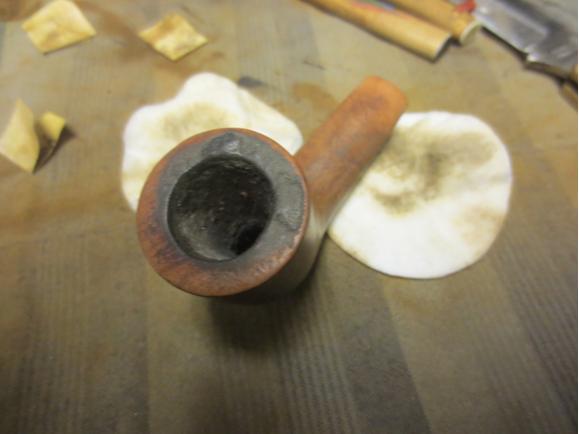
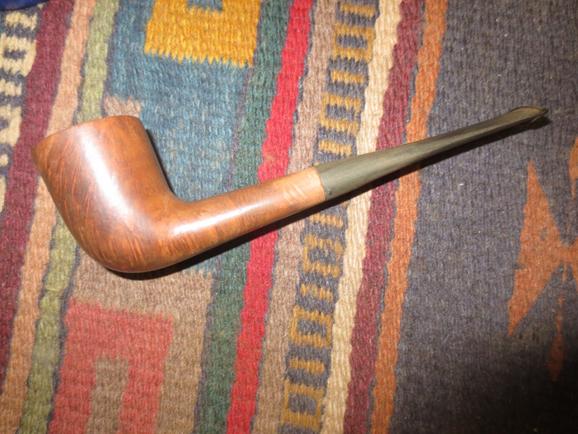
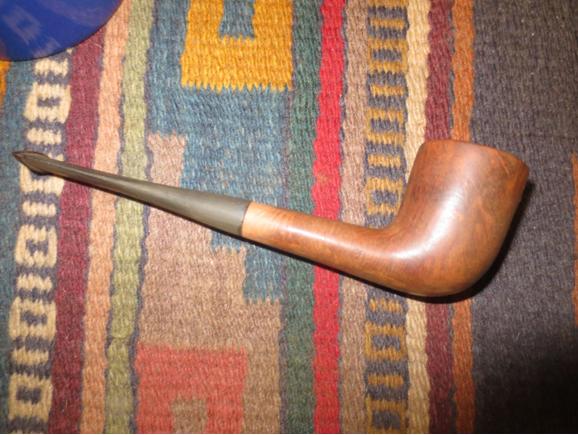
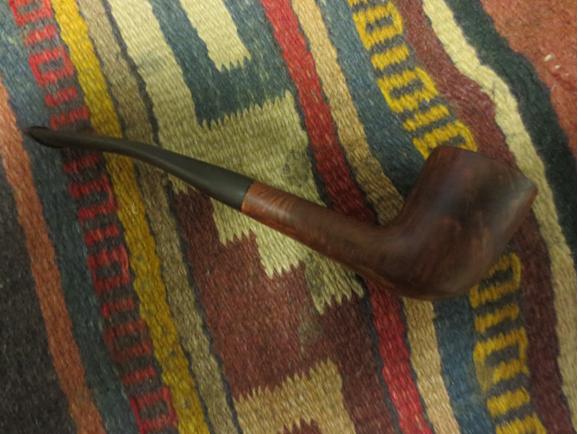
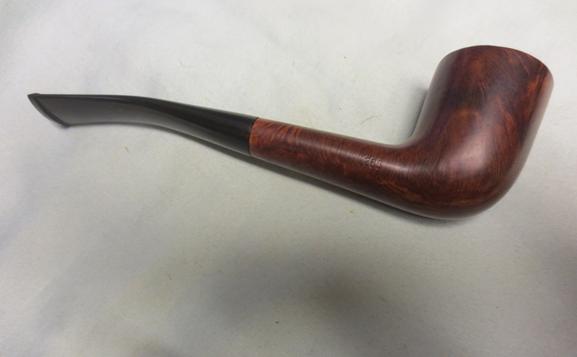
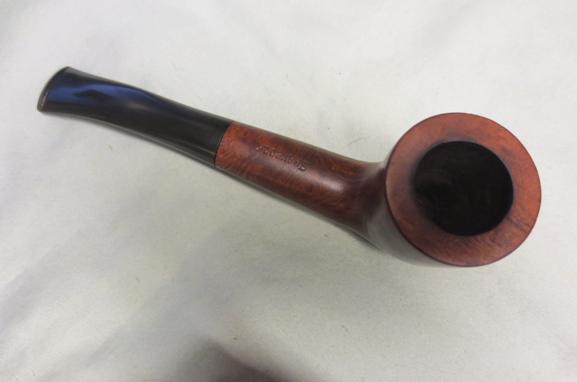
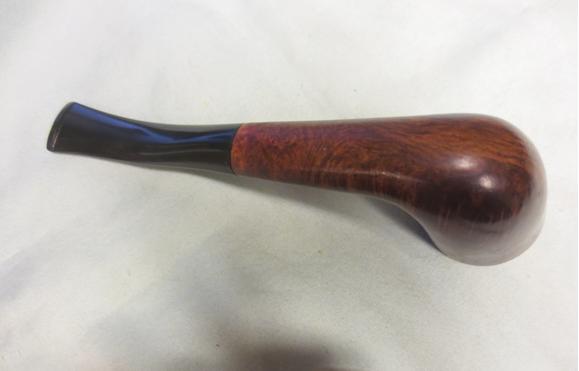
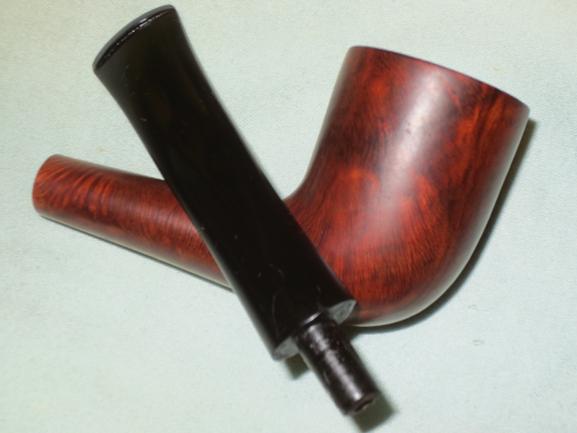
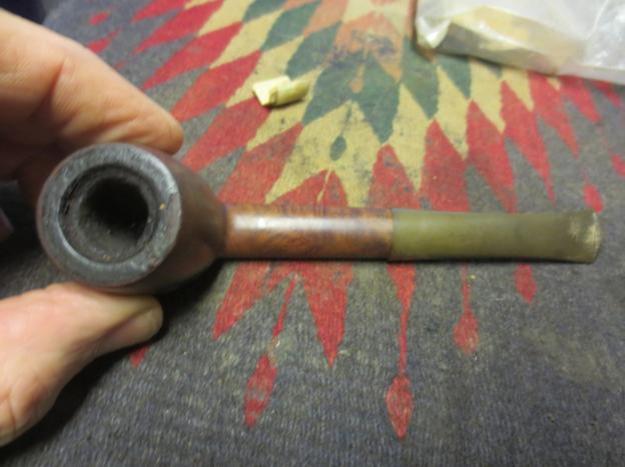
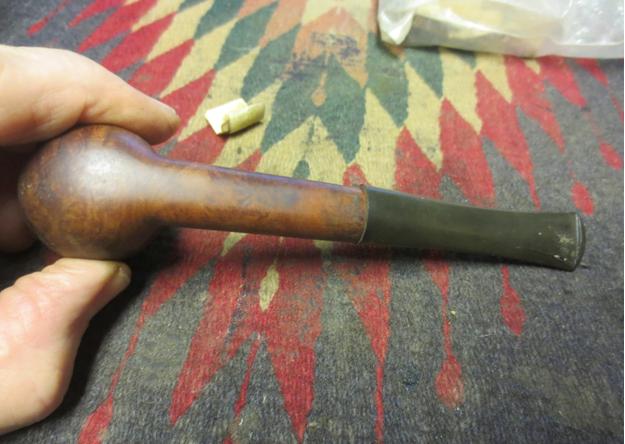
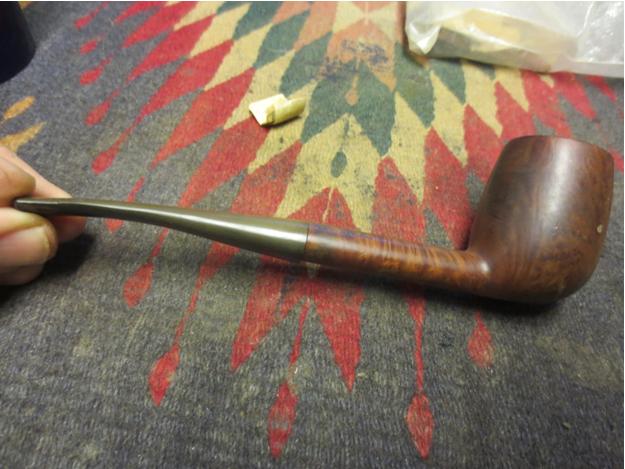
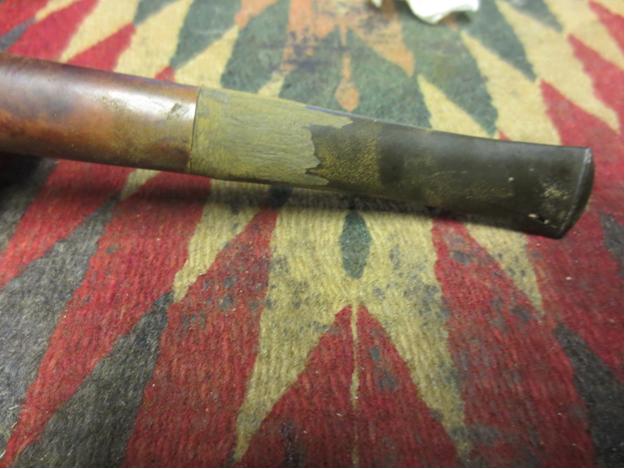
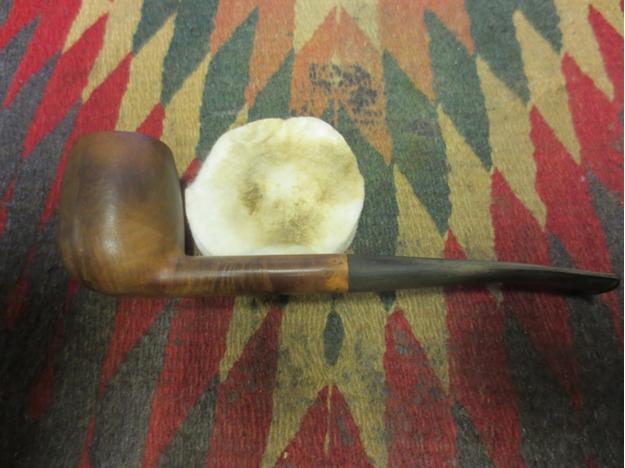
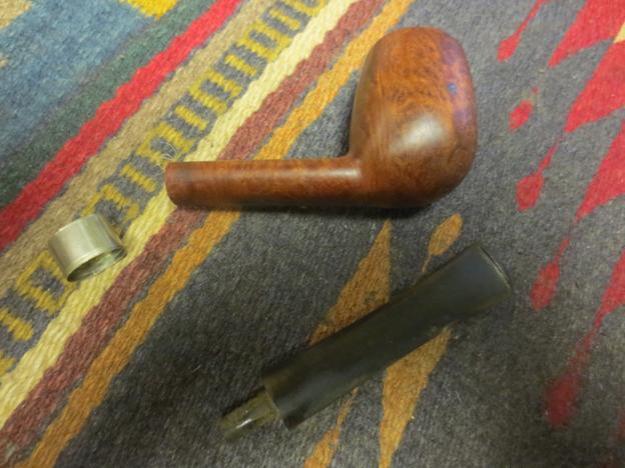
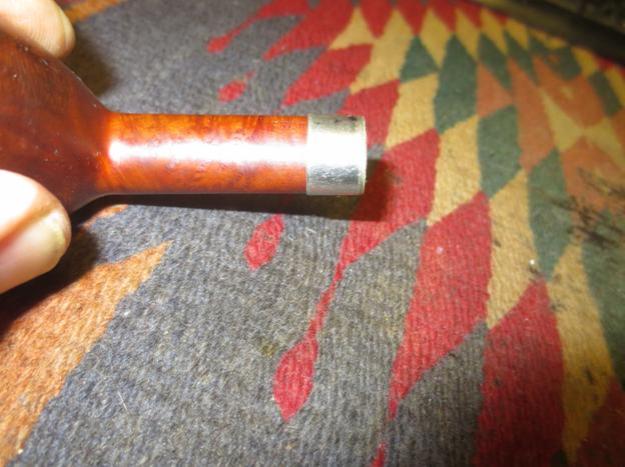
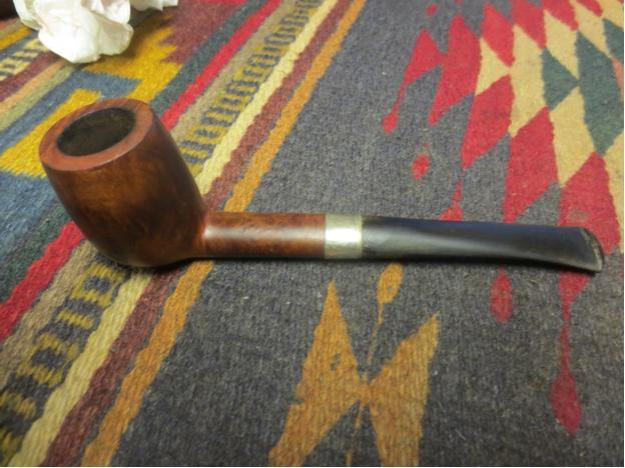
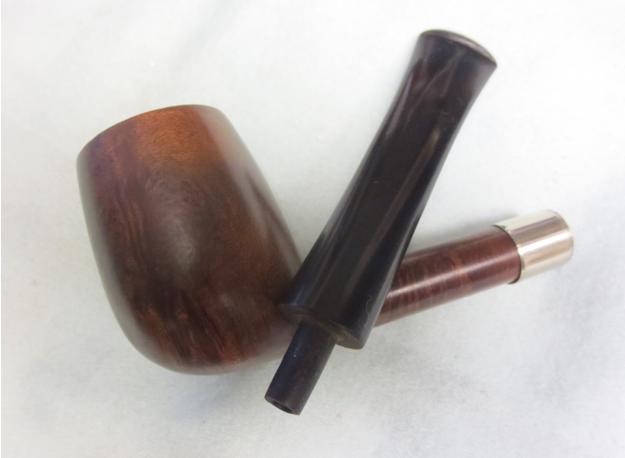
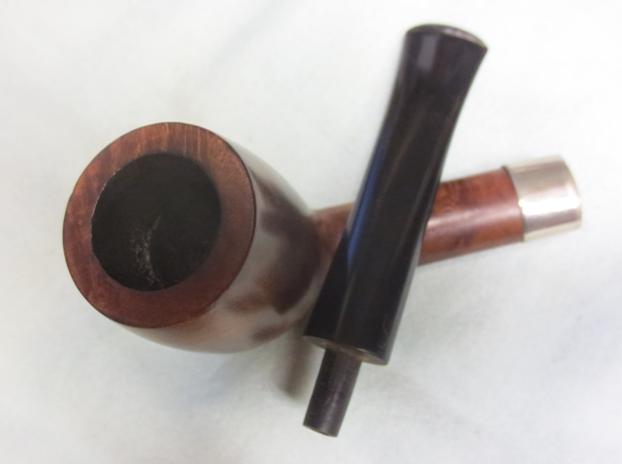
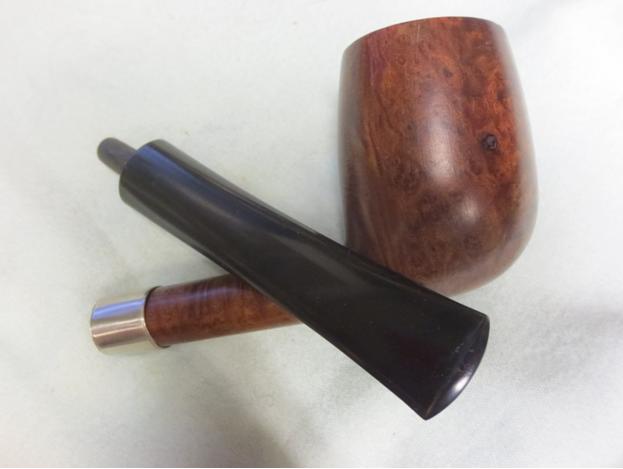
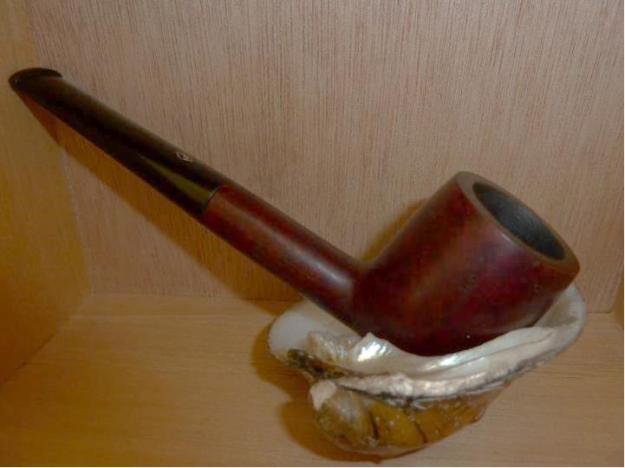
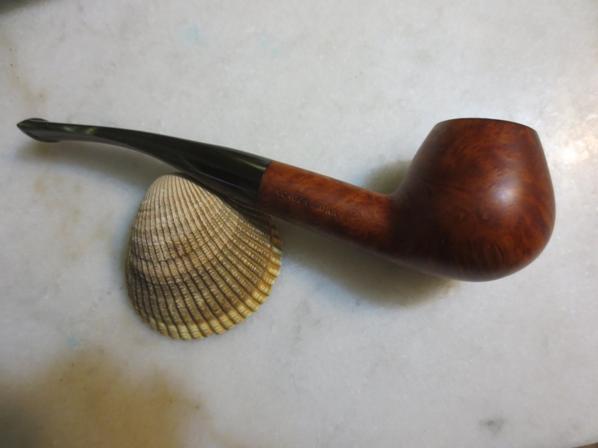
My brother sent me this nice brandy shaped pipe. It has a Lucite stem that is a swirled black and olive or brown depending on the light. The bowl was in good shape with a light cake and some rim lava. There was a scratch on the left top of the rim top. The finish had a coat of varnish over the briar and it was cloudy and dirty. The stem had some tooth chatter and was dull. Otherwise the pipe was in very good shape. The only stamping on it is LONDON BRIAR on the right side of the shank.

I had not seen the stamping London Briars before so I did some hunting on the web for the brand and found that the brand was made by/for Gauntleys of Nottingham. They sold new for £31.95 Here is the link to their site: https://cigars.gauntleys.com/uk/offer/gauntleys-london-briar-pipes

I quote directly from the site:
Gauntleys London Briar Pipes – Our London Briar pipes have become very popular since we introduced them just a few months ago. Each is made from selected second briar blocks from one of the country’s largest and most respected pipe makers.

If the briar was flawless these pipes would sell for over £250. These are from briar with small flaws in the grain or needing small amounts of filler so are great value. The briar is some of the finest in the world and can be up to 80 years old.

Each pipe is hand made in a range of classic English shapes and comes in a number of finishes from Smooth Brown to Black (Shell Briar) Sandblasted.

If you are looking for a first pipe or something to use around the house or garden the Gauntleys London Briars are very affordable and smoke like an entry level premium briar. Each pipe comes boxed with a silk bag.

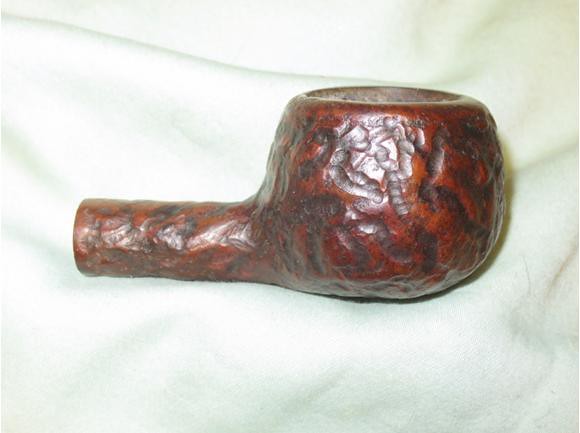
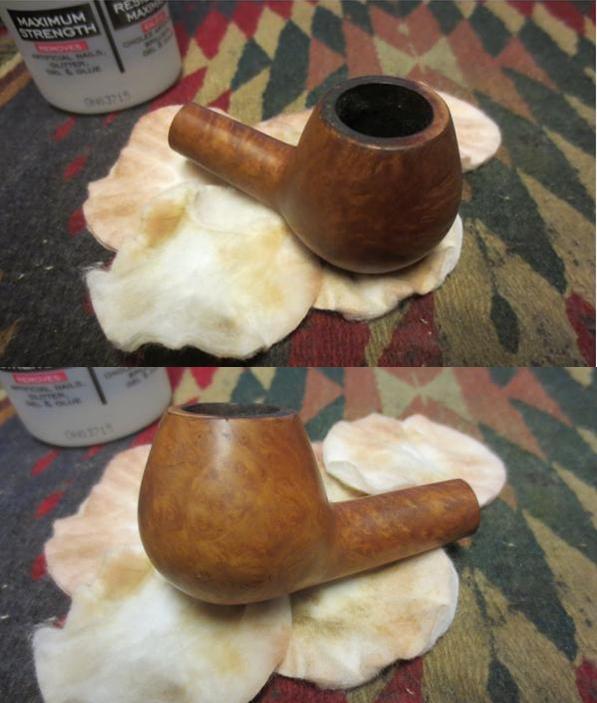
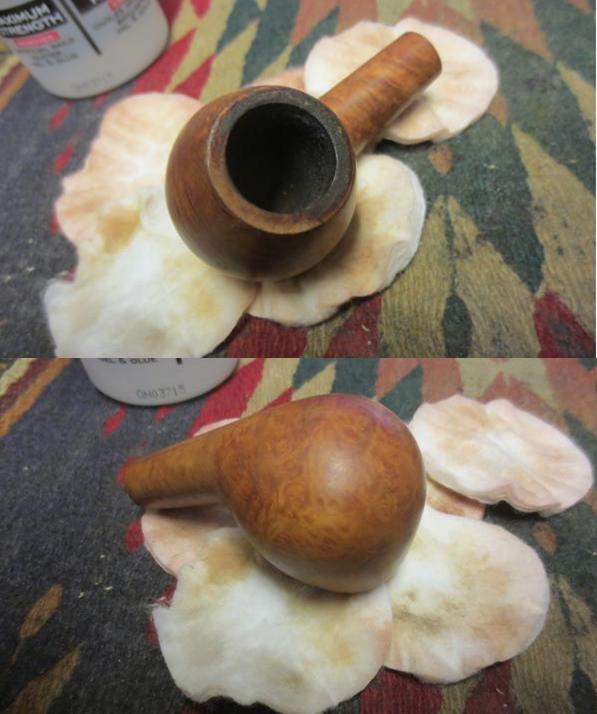
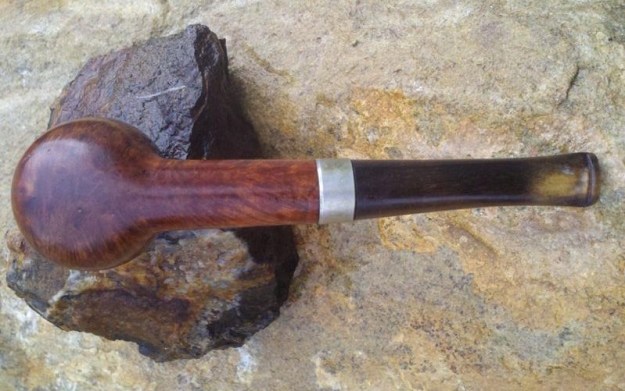
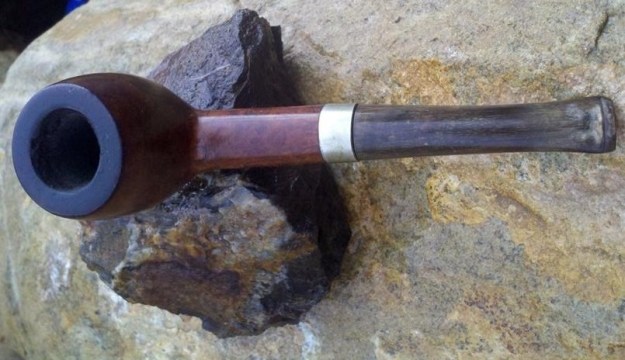
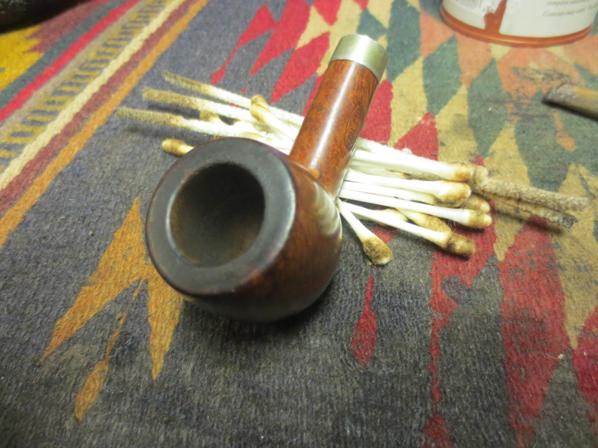
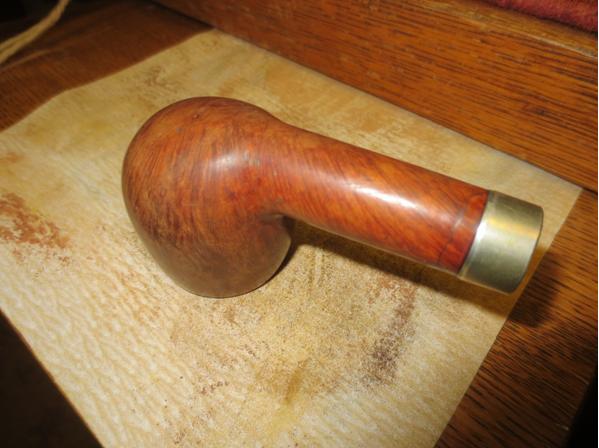
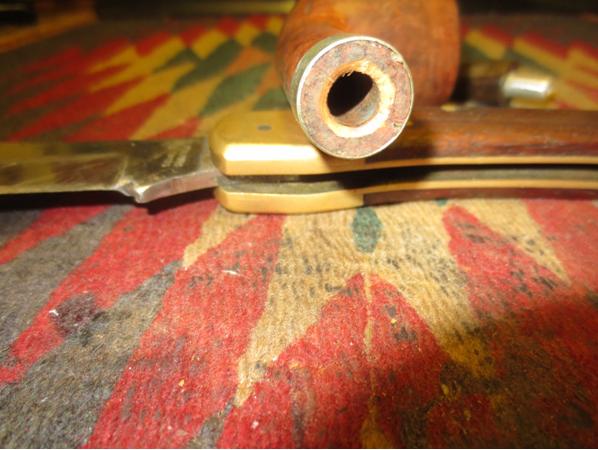
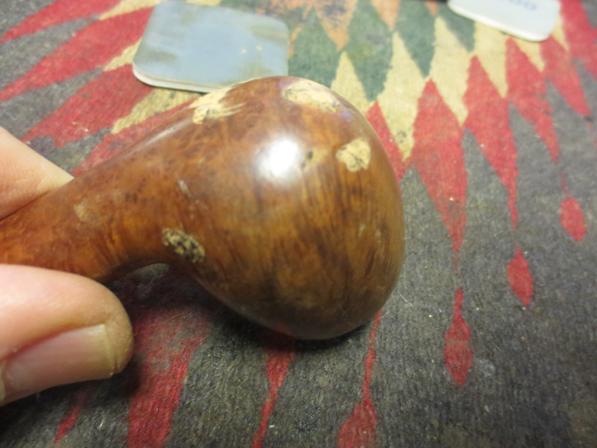
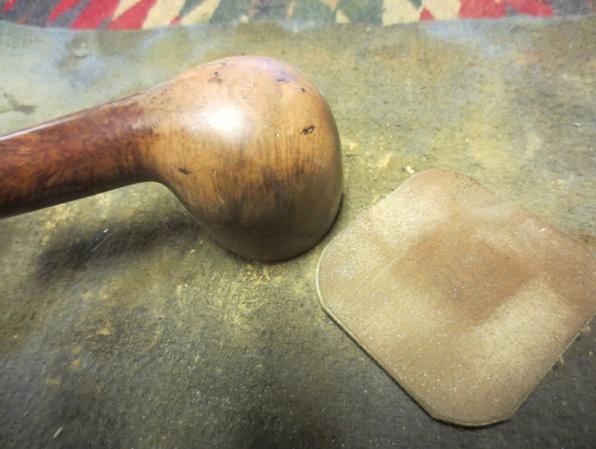
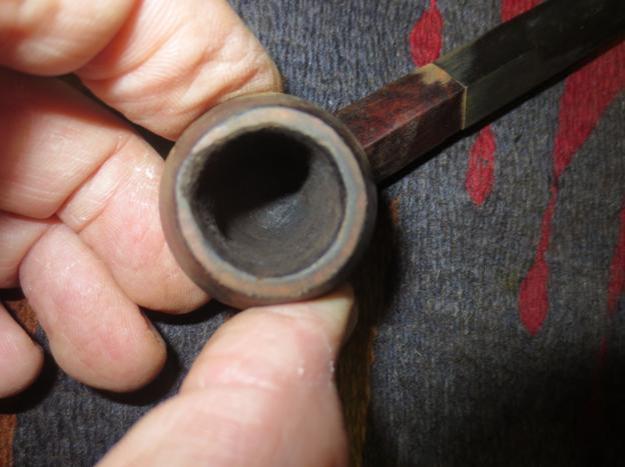
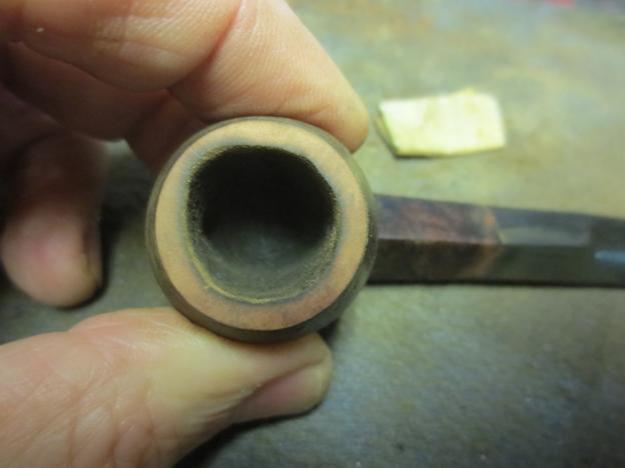
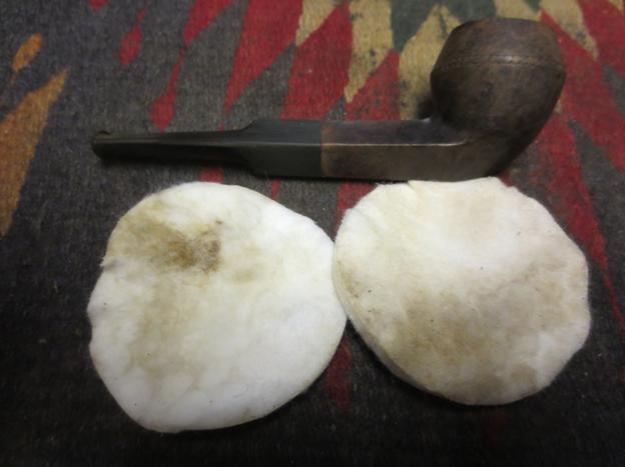
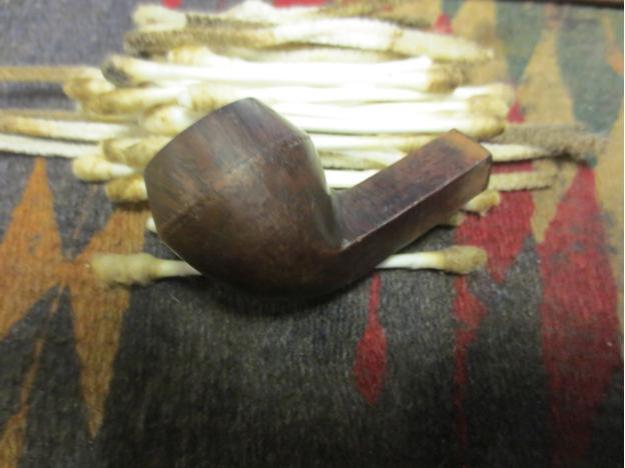
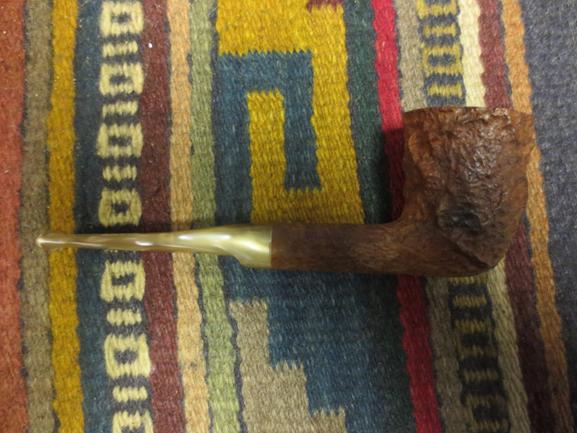
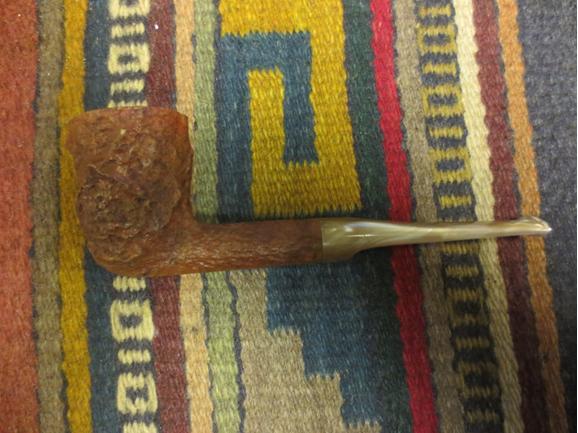
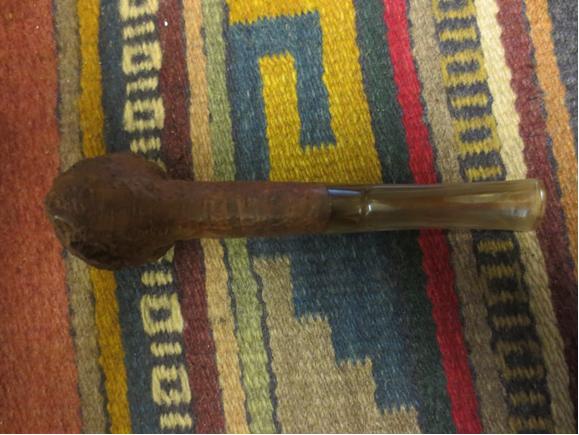
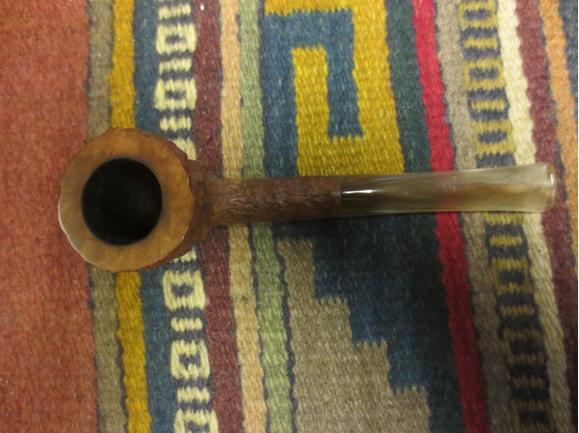
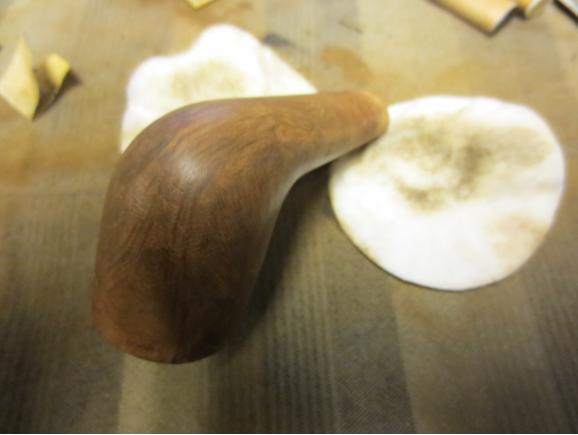
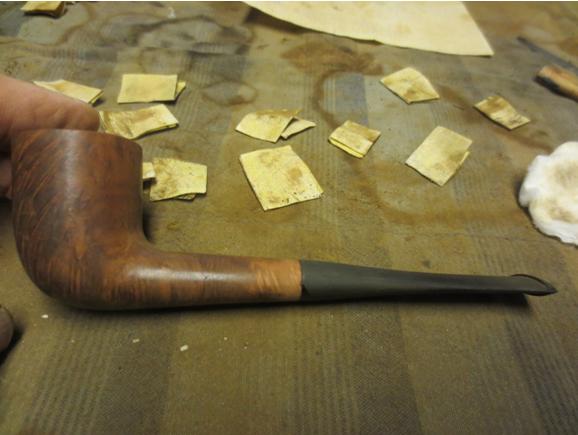
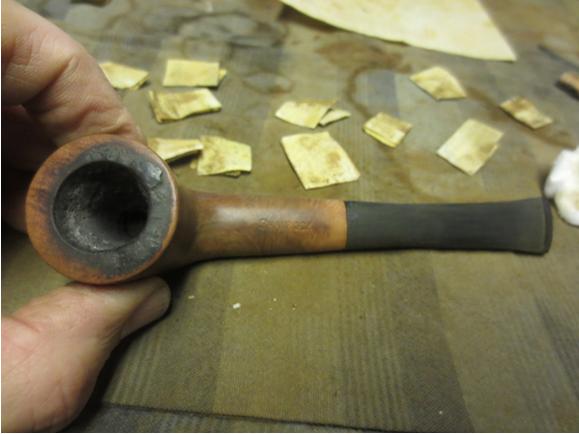
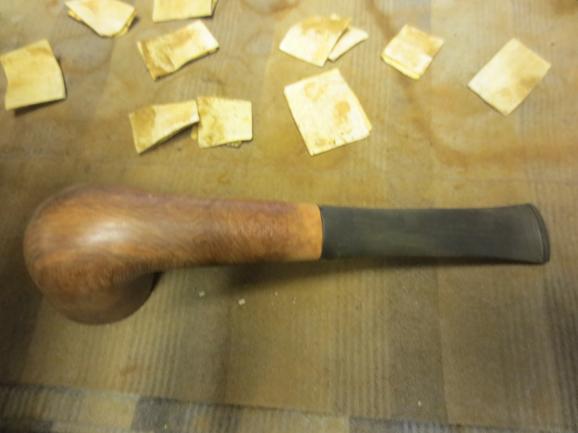
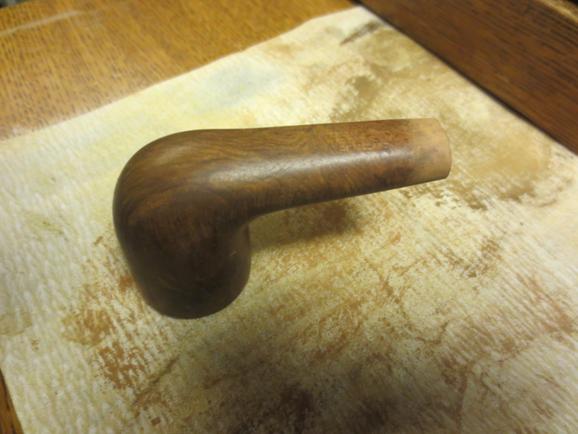
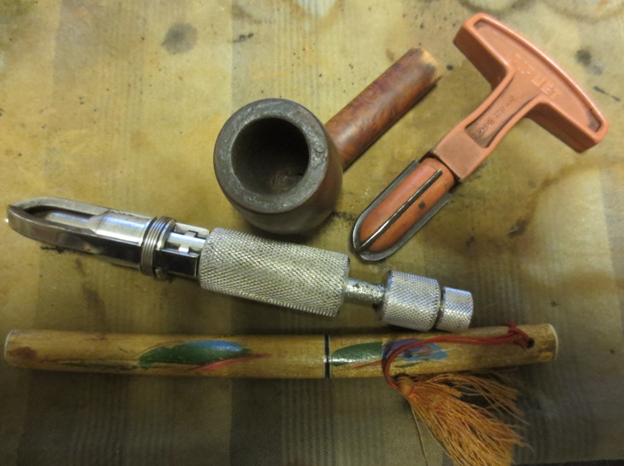
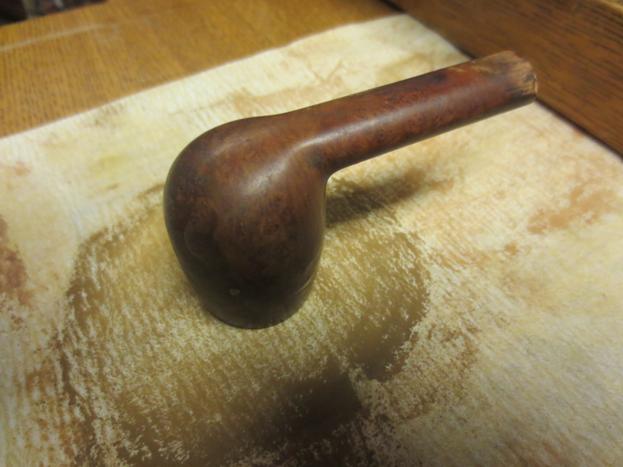
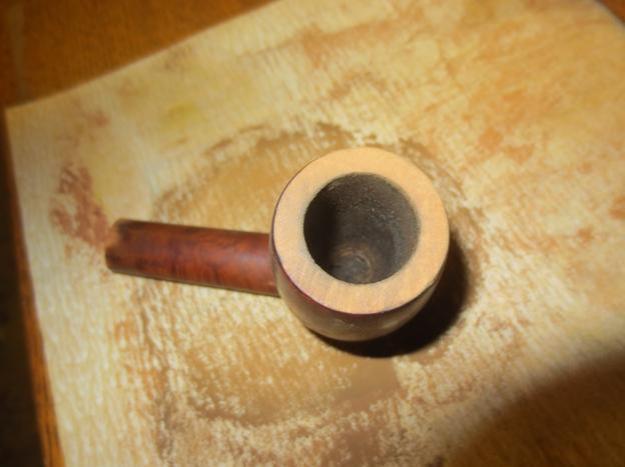
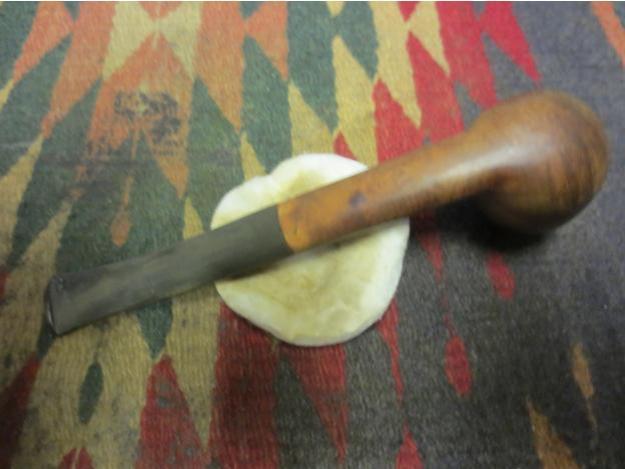
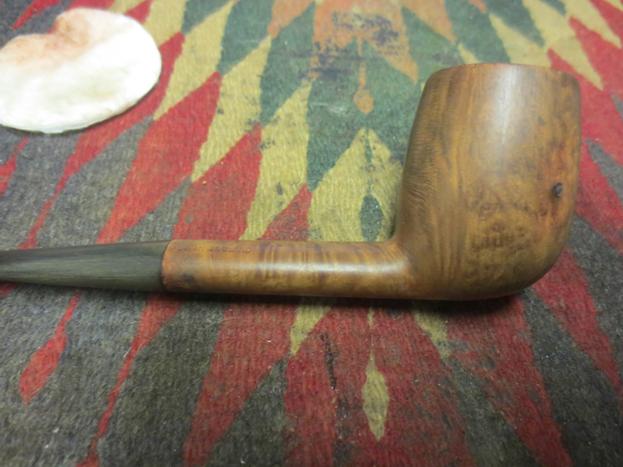
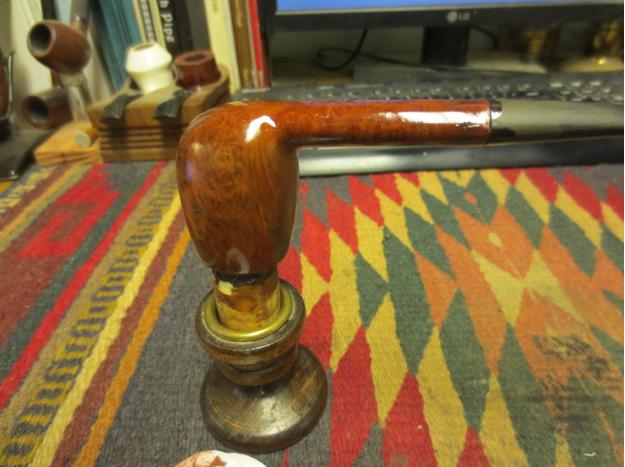
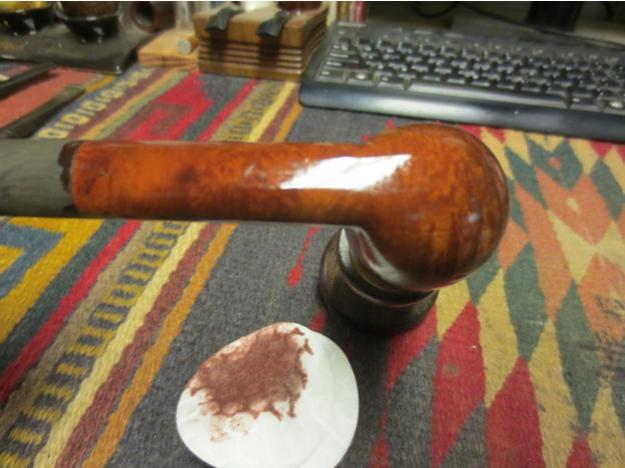
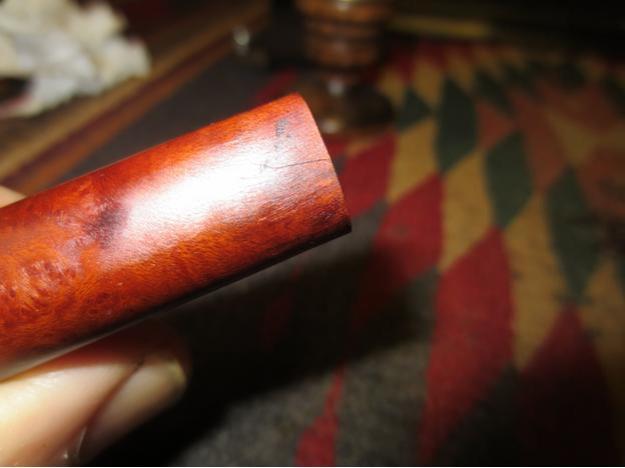
Here is the state of the pipe when I brought it to the worktable today. There is not a fill or a flaw that I can find in the briar. It is a light weight and clean pipe.Gaunt1 I took a close up photo of the rim top to show the build up and scratches.Gaunt2 I scrubbed the bowl with acetone on cotton pads to remove the varnish coat. There was some nice grain under the varnish coat.Gaunt3

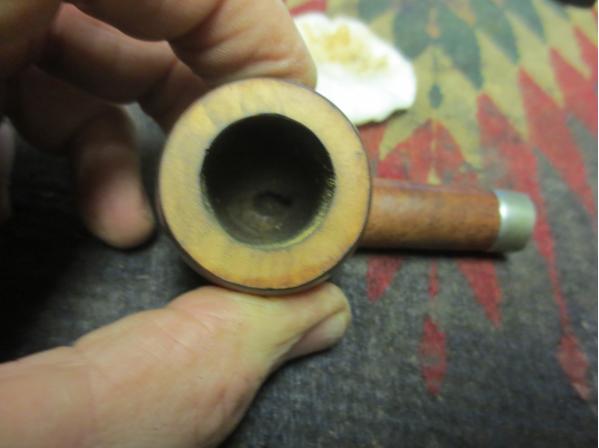
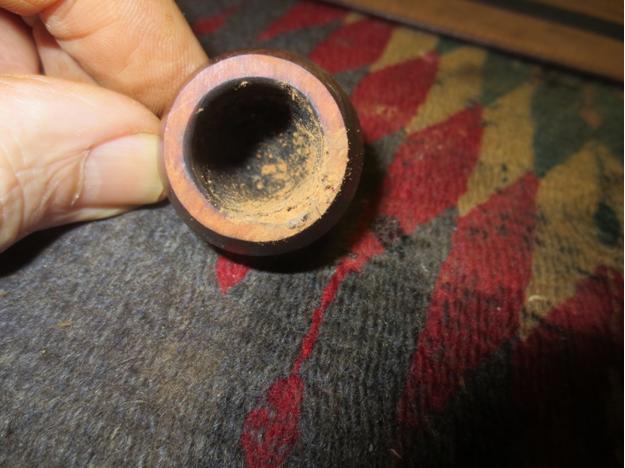
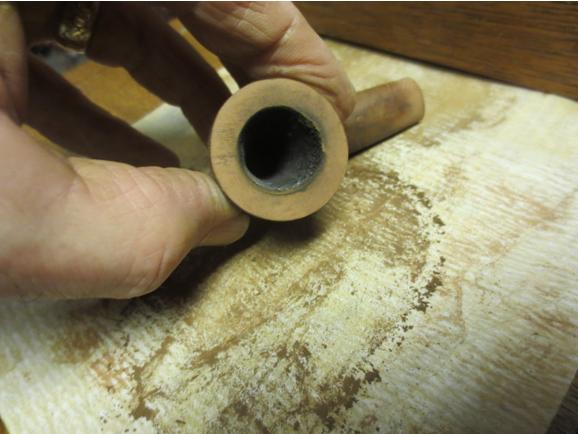
Gaunt4 I lightly topped the bowl to remove the scratches and the lava.Gaunt5 The cake was uneven so I reamed it back to the briar to facilitate the building of an even cake.Gaunt6

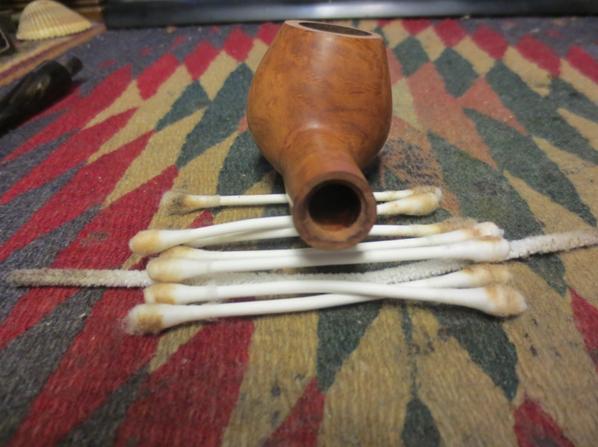
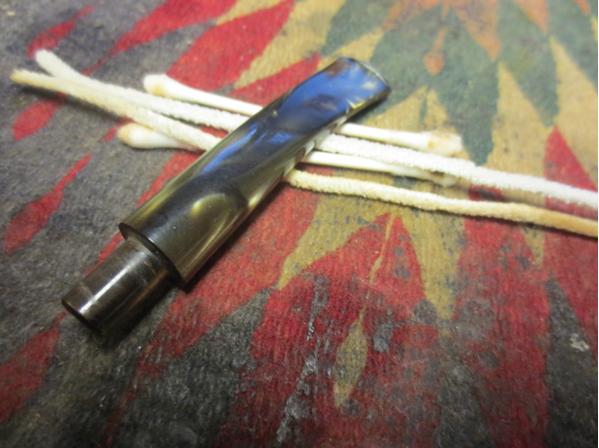
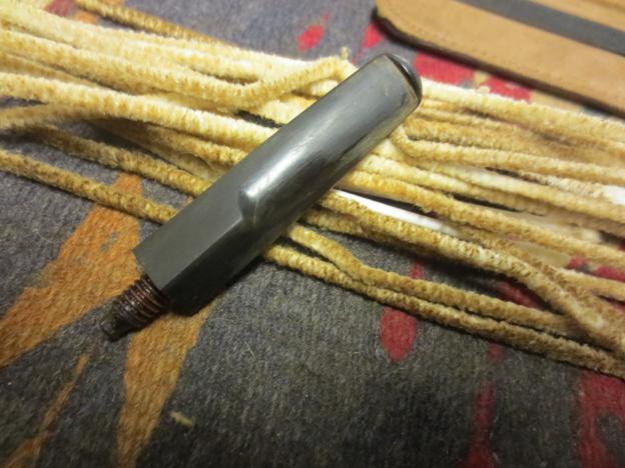
Gaunt7 I cleaned out the shank, mortise and airway with alcohol, pipe cleaners and cotton swabs until the pipe cleaners and cotton swabs came out clean. I scrubbed out the airway and the slot in the stem at the same time.Gaunt8

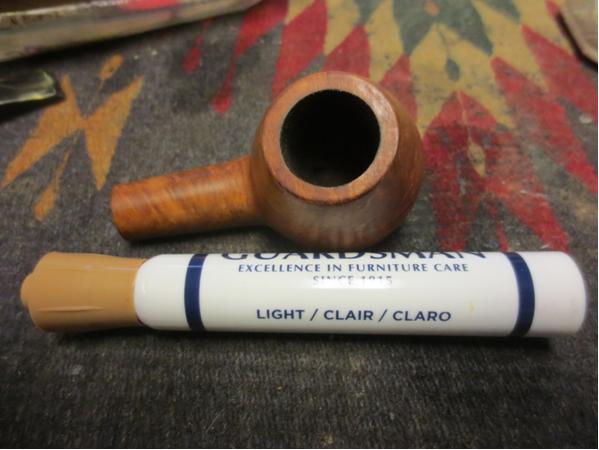
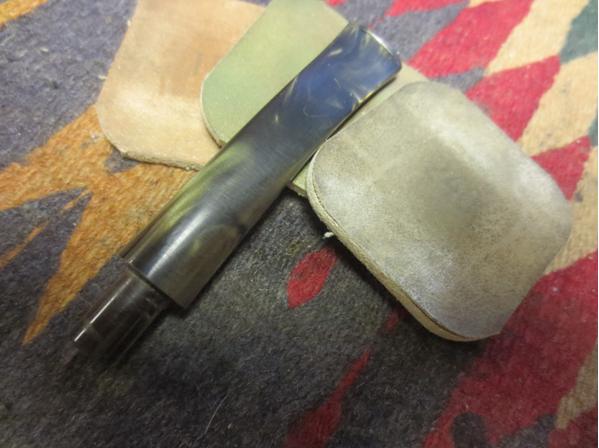
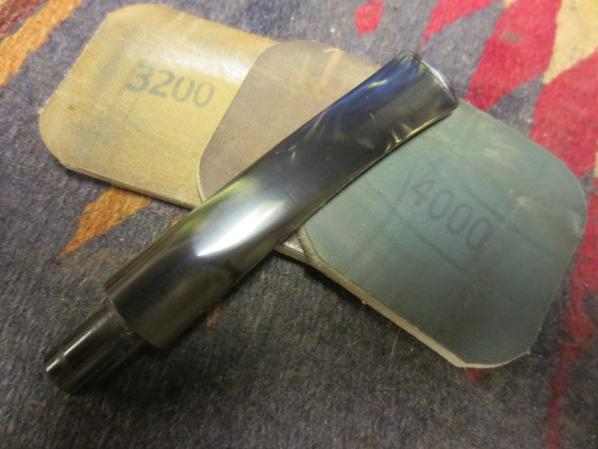
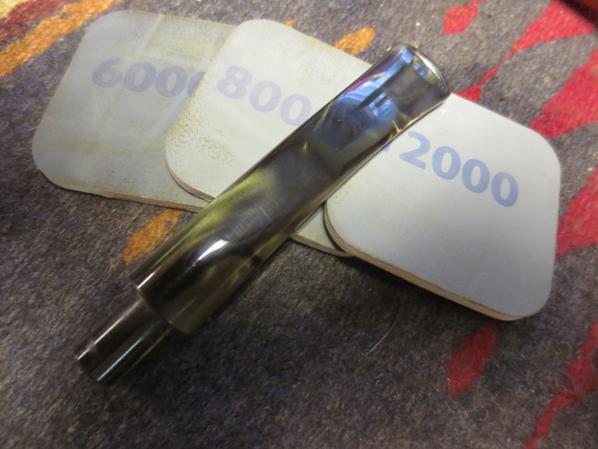
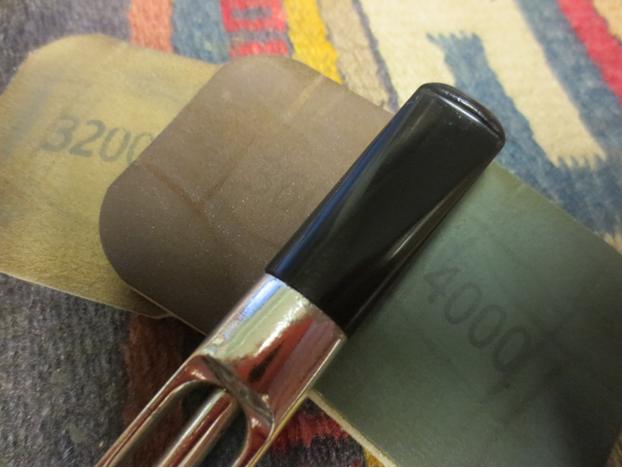
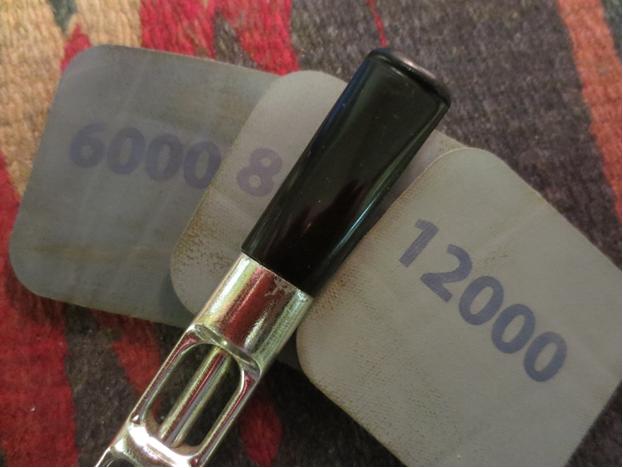
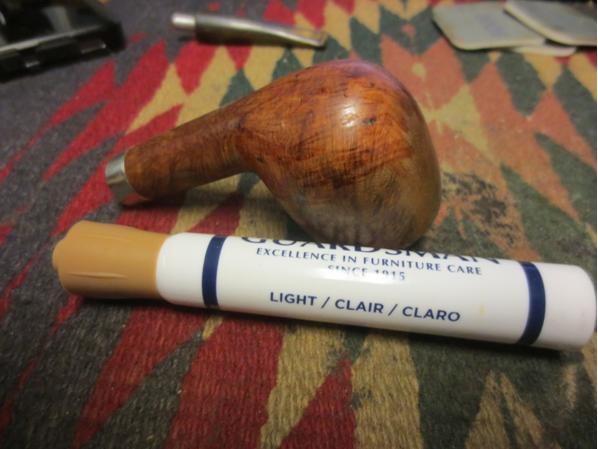
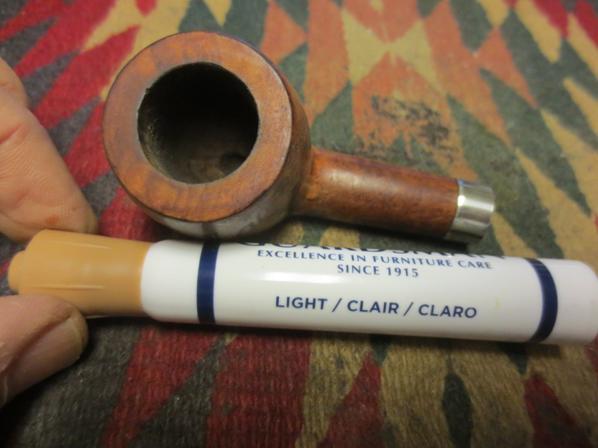
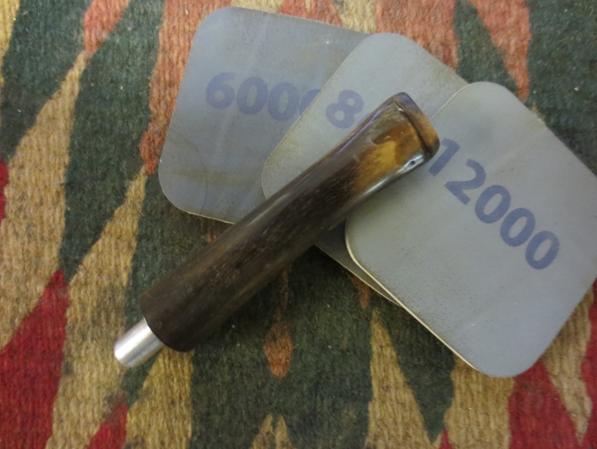
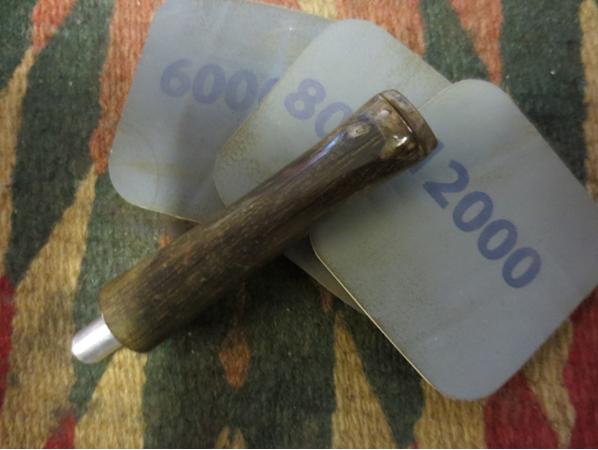
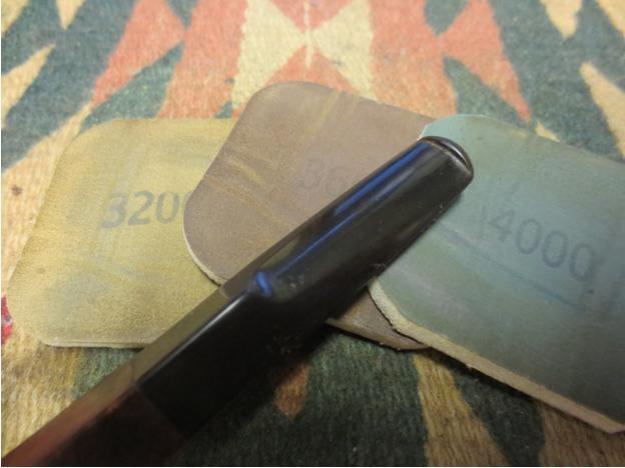
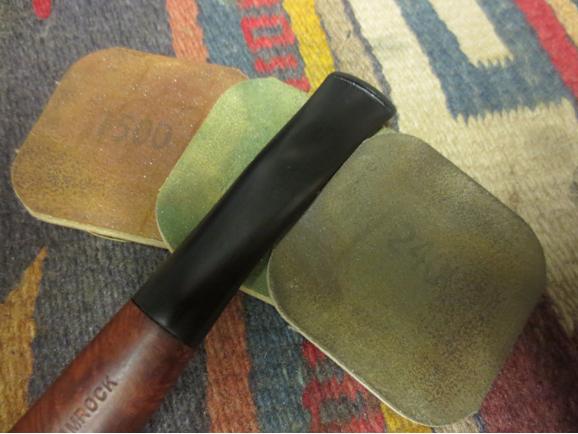
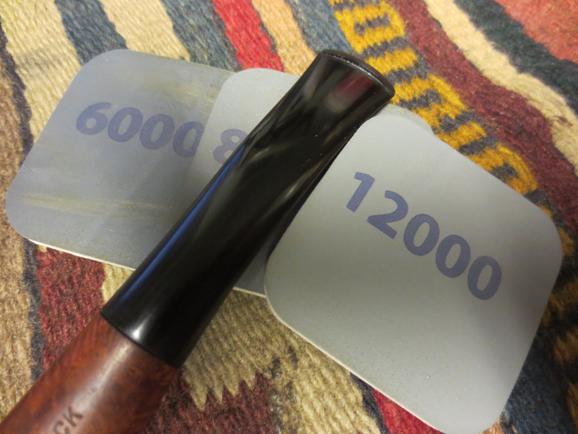
Gaunt9 I used a light brown stain pen to stain the rim to match the bowl.Gaunt10 I sanded the stem with 1500-2400 grit micromesh sanding pads and then wiped it down. I continued to sand it with 3200-12000 grit micromesh to polish it.Gaunt11

Gaunt12

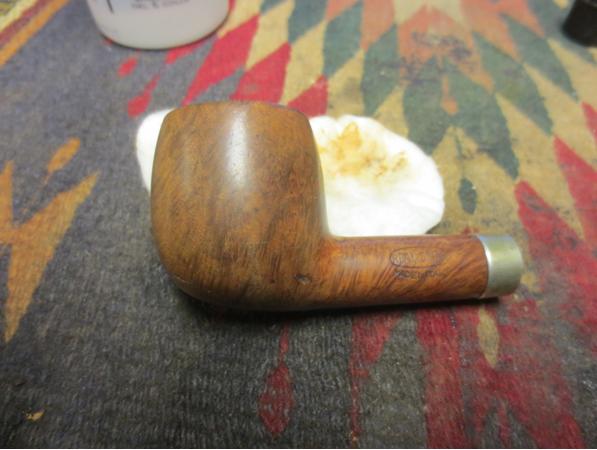
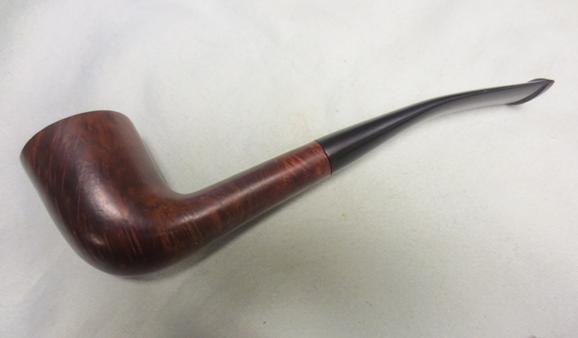
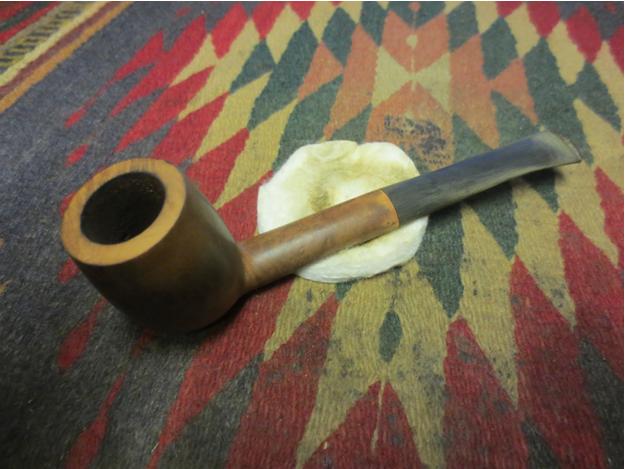
Gaunt13 I buffed the pipe and stem with Blue Diamond on the wheel and then gave them multiple coats of carnauba wax. I buffed it with a clean flannel buff and then hand buffed it with a microfiber cloth. The finished pipe is shown in the photos below.Gaunt14

Gaunt15

Gaunt16

Gaunt17

Gaunt18

Gaunt19

Gaunt20

Gaunt21

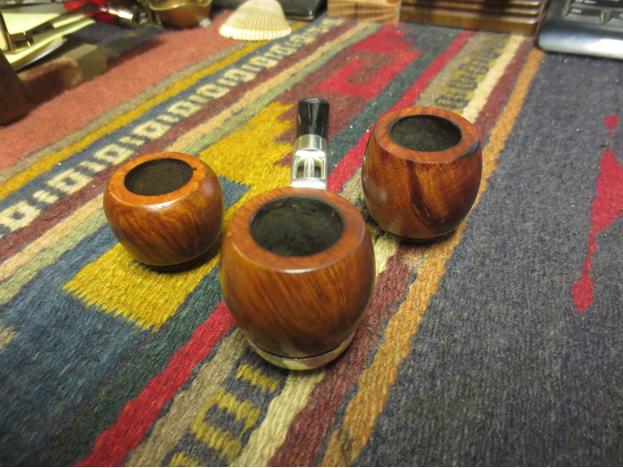
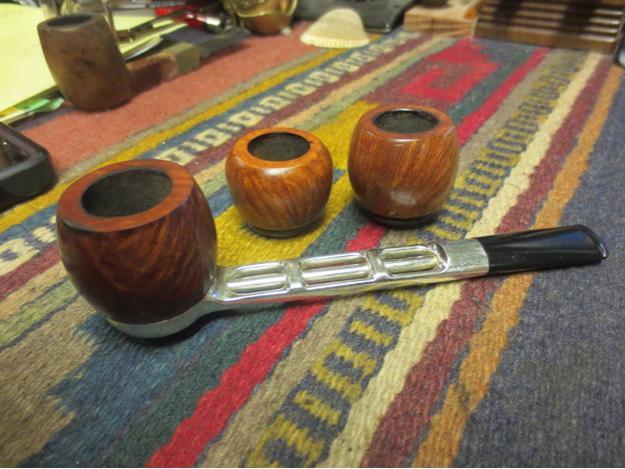
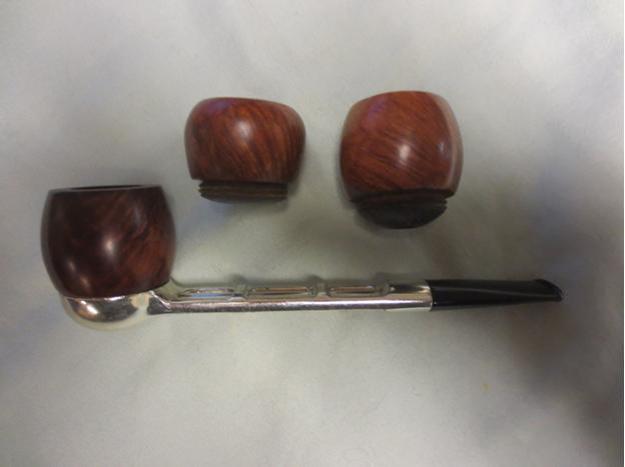
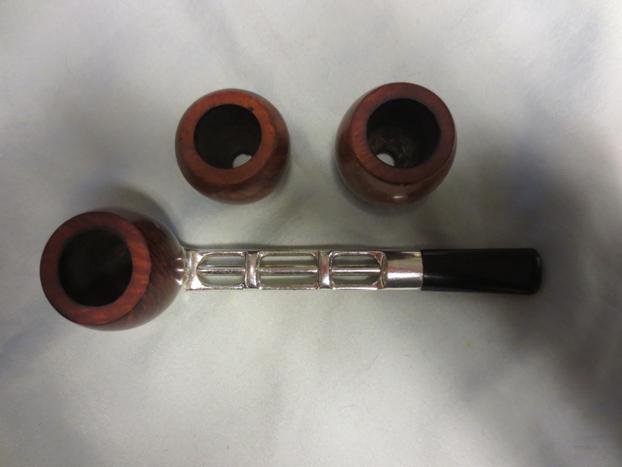
A Sparkling Metallic Dr. Grabow Viking with Three Bowls


Blog by Steve Laug

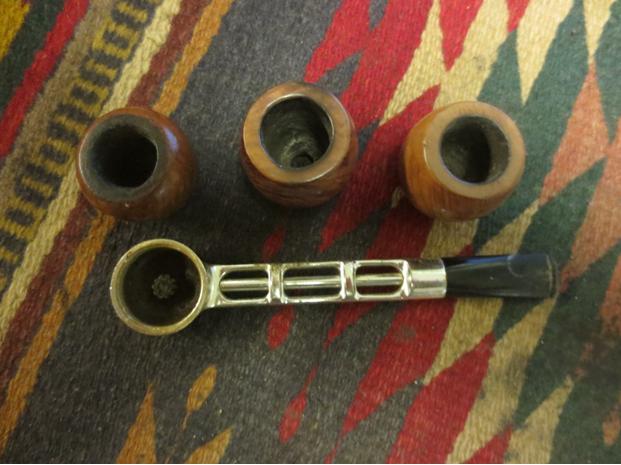
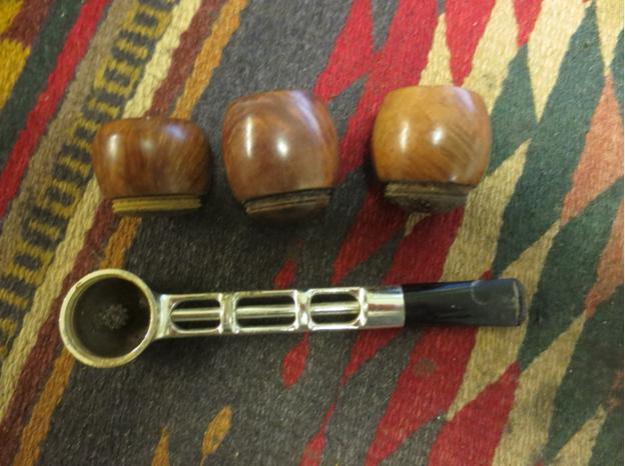
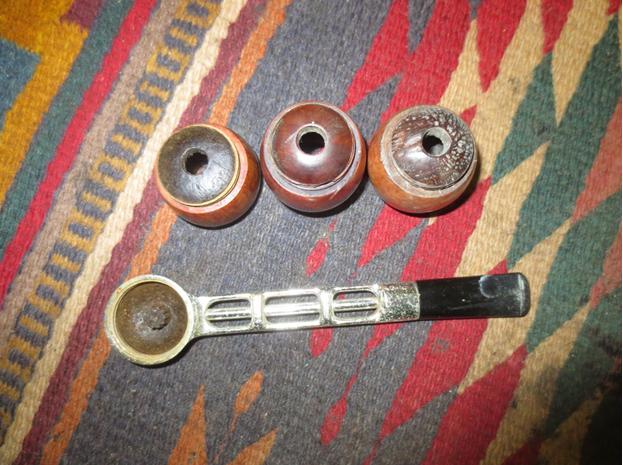
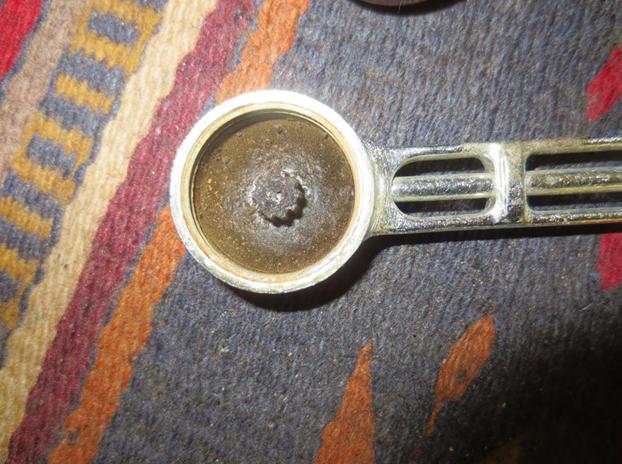
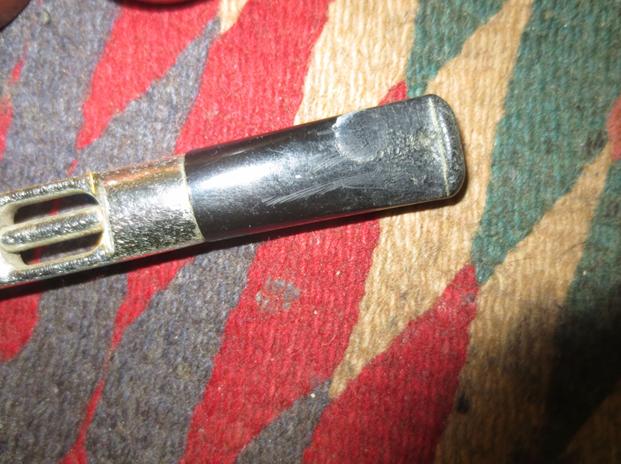
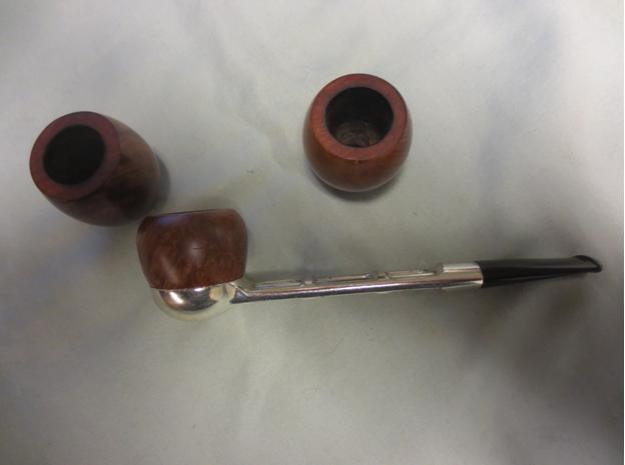
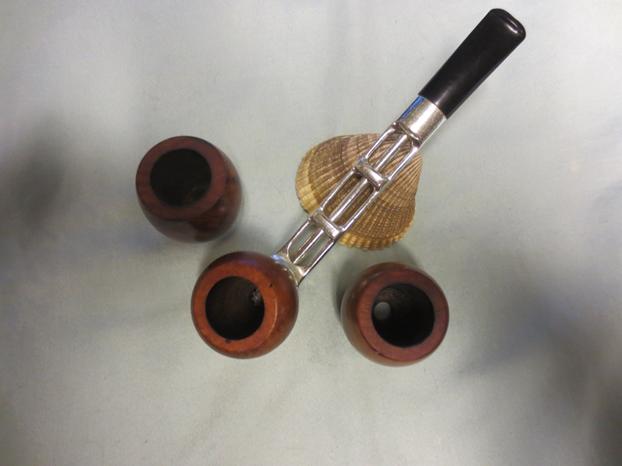
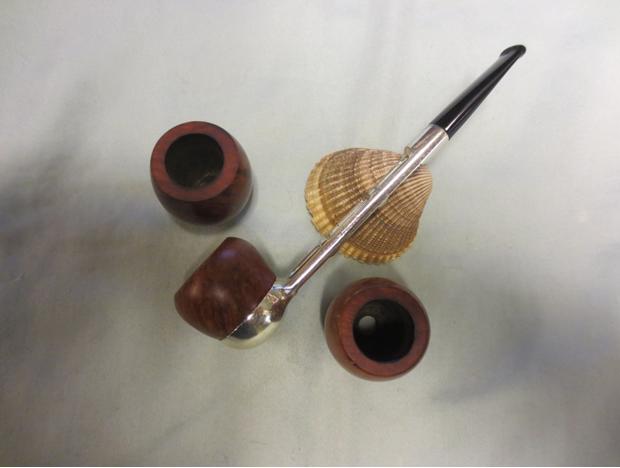
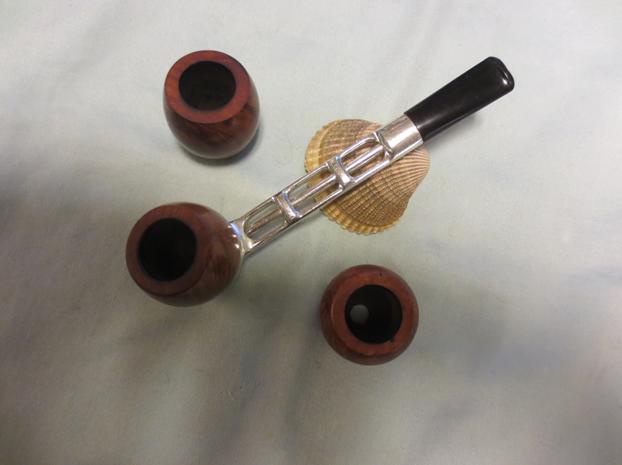
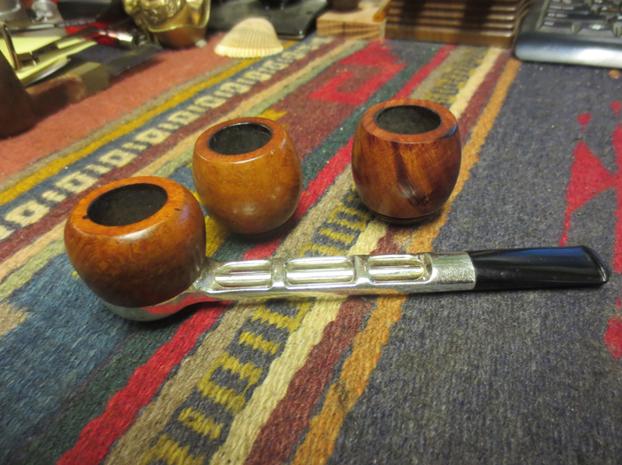
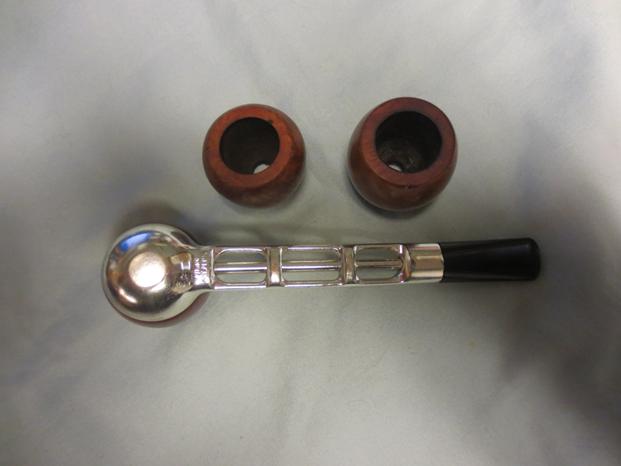
This older Dr. Grabow Viking came to me as a gift from a Facebook friend. He gave it to me along with some other pipes for me to enjoy restoring. This one is stamped next to the heel of the metal base – Viking Pat. Pend. The metal is sparkling metallic silver. It has flecks throughout the paint that make it sparkle and shine. When it came it was together in a plastic sandwich bag. The base unit was tired and dirty. The bowl on the base was caked with an over flow of lava onto the rim. The other two bowls had been reamed and cleaned. The finishes on all three were dirty and dull. The rims on all three bowls show damage from burns or being knocked out on a hard surface. When I removed the bowl the interior of the base was caked with the thick lacquer of the juices of tobacco as it burns. It looked to me like it had not been cleaned in a long time and the black thick oils had hardened like rock in the base. The airway was clogged with debris. The stem had collapsed from being bitten on. The tooth marks were deep but did not go through into the airway. The sharp edge of the button was worn almost smooth. I was not able to push a pipe cleaner through the airway from the button or from the airway in the bottom of the base.

G1G2G3

I took a few close-up photos. The first shows the inside of the base and the build up there. The second and third show the bite marks on the stem. The second photo shows the top of the stem and the bite mark on that surface, though not looking bad in the photo, collapsed the airway and made it impossible for a pipe cleaner to pass through. The fourth photo below shows the stamping on the bottom of the base.G4G5G6G7

I scrubbed out the inside of the base with pipe cleaners, cotton swabs and alcohol. I also used a brass bristle brush. I opened the slot and airway in the stem with a flat needle file. I inserted the needle file and pushed the indentation on the top of the stem upward to clear the airway. It took a lot of fiddling with the file to open the slot completely. I cleaned the airway and stem with pipe cleaners and alcohol.

G8

I repaired the tooth marks with black super glue and set the pipe aside for the evening to allow the glue to cure. I have not had good luck with this kind of fill using the accelerator as it tends to cause air bubbles in the dried glue.

G9G10

I reamed the cake in the one bowl with a Pipnet reamer and took the cake back to bare briar.

G11G12

In the morning I sanded the repairs on the stem with 220 grit sandpaper to smooth the surface of the repair and blend it with the stem. I used a needle file to sharpen the edges on the button.

G13G14G15G17

Once I had the surface smooth I sanded the stem with micromesh sanding pads. I wet sanded the stem with 1500-2400 grit pads and then rubbed it down with Obsidian Oil. I dry sanded the stem with 3200-4000 grit pads and gave it another coat of oil. I finished dry sanding it with 6000-12000 grit pads and gave it a final coat of Obsidian Oil. I set it aside to dry.

G18G19G20

With the base finished I set it aside and turned my attention to the bowls. I topped all three bowls on the topping board. The short bowl that I reamed had some dents and rim damage. The other two had burn marks and rounded edges that needed to be cleaned up.

G21G22

I wiped the bowls down with acetone on cotton pads to remove the finish and the grime.

G23G24

I stained all three rims with the light brown stain pen for the first coat. I then gave all three bowls several coats of Cherry stain Danish Oil and buffed them to a shine.

G25G26G27G28G29

I finished the restoration by buffing the bowls with Blue Diamond and then giving the bowls and the stem several coats of carnauba wax. I buffed the whole pipe with a clean buff and then with a microfibre cloth to raise the shine. The finished pipe is shown in the photos below. Each photo shows a different angle and includes the base with all of the bowls in place.

G30G31G32G33G34G35G36G37G38G39

More Work than I thought – A Real Briar Billiard with a horn stem


Blog by Steve Laug

When I saw this pipe on eBay when my brother and I were searching for pipes in the estate pipe area I thought it would be a simple restoration. The briar appeared to be in decent shape and the finish looked very good. The rim was dirty but looked undamaged under the grime and tars. The horn stem did not look too damaged and should also be an easy repair. When the pipe arrived at my brother’s home he took the following photos and sent them to me to have a look at the pipe. It still looked pretty straight forward to me.RB1

RB2

RB3

RB4

RB5 When the pipe arrived here in Canada I was in for a surprise. It definitely looked good but the more I dug deeper the more issues that I found. The rim was tarred and covered with lava and underneath the outer edges were rounded over. The bowl had a light cake at the top and half way down and a deep groove had been cut in the bottom of the bowl by aggressive insertion of the pipe cleaner. The groove or pit was below the airhole entry to the bowl. The shank had been repaired and the crack that I noted in the pictures had been well repaired and the band put in place to strengthen the shank. It would not take much to clean it up. The finish which at first glance looked good had deep gouges in the bottom of the bowl and on the left side of the bowl near the shank union. These were sharp cuts and could not be steamed out. There was a large fill on top of the shank where it met the bowl. It appeared to be pink putty but it was solid and tight. The stem was also nicked quite a bit on the top mid stem and on the left side near the band. The top and bottom sides had some deep tooth marks on them that I could not see from the photos. The stem was very tight in the shank and took some persuasion to remove.RB6

RB7 The next two photos show the repair work on the underside of the shank. It was very well done and would not need to be further dealt with. The third photo shows the rim with the rounded outer edge.RB8

RB9

RB10 I removed the stem from the shank with a bit of pulling and found that the metal tenon was covered with tar and had been stuck in the shank by the tars.RB11 I reamed the bowl back to bare wood to bring the rest of the bowl in line with the bottom half. I used a PipNet reamer with the second cutting head. In the second photo you can see the deep pit in the bottom of the bowl.RB12

RB13 I cleaned out the stem and the tenon with alcohol, cotton swabs and pipe cleaners.RB14 The next two photos show the tooth marks on both sides of the stem. They are quite deep and they will need to be repaired.RB15

RB16 I wiped down the stem with a cotton pad and alcohol and then put drops of super glue in the tooth marks. I sprayed them with accelerator.RB17

RB18 I scrubbed out the mortise, shank and bowl with alcohol, pipe cleaners and cotton swabs. I scrubbed until the pipe cleaners and cotton swabs came out clean.RB19 I topped the bowl to remove the damage to the bowl top and to clean up the round outer edge of the rim. Once again, note the deep pit in the bottom of the bowl that is visible in the second photo.RB20

RB21 I scrubbed the exterior of the bowl with cotton pads and acetone to remove the finish and the grime that was ground into the briar. I was going to need to do some work on the gouges on the bowl sides and bottom so I wanted it clean.RB22

RB23 The stem never sat completely tight against the shank so I beveled the inner edge of the mortise to accommodate the tenon/stem junction.RB24 With the externals cleaned I decided to do the repairs on the gouges on the bowl side and bottom. I put a drop of clear super glue in the divot and then pressed briar dust into the hole with a dental spatula. I pressed the dust deep into the glue to get a good fill. The second photo below shows the bowl side and bottom with what looks like a pox. The briar dust and glue fills are dry at this point and ready to sand. I sanded them with 220 grit sandpaper and then with 1500-2400 grit micromesh sanding pads.RB25

RB26

RB27

RB28 I used a light brown stain pen to give the fresh sanded briar on the bowl bottom and the rim an initial coat. I then stained the entire bowl with a dark brown aniline stain, flamed it and repeated the process. I set it aside to dry for about 30 minutes before buffing with Blue Diamond on the wheel.RB29

RB30

RB31

RB32 I mixed a batch of pipe mud (cigar ash and water) to fill the pit in the bottom of the bowl. I put a pipe cleaner in the airway with just the tip extending into the bowl. I used the spatula to put the mud in the bottom of the bowl and pressed it into the pit with the hand of the spatula. I added the pipe mud until the bowl bottom was level.RB33 I set the bowl aside to so that the pipe mud would cure and worked on the stem. I sanded the stem with 220 grit sandpaper to smooth out all of the nicks and scratches as well as blend in the super glue fills. It took a lot of sanding to smooth out the stem surface and remove as many of the scratches and dents as I could and still keep the profile. The super glue dried hard and the clear glue looks shiny and raises colour in the horn so it is very visible at this point.RB34

RB35 When I had smoothed out the surface of as many flaws as possible I worked on it with micromesh sanding pads. I wet sanded it with 1500-2400 grit pads. The repairs are starting to blend in. They will never be invisible but they are smooth. I rubbed the stem down with Obsidian Oil before continuing.RB36

RB37 I wet sanded the stem with 3200-4000 grit micromesh and then dry sanded with the same grit pads. I gave it another coat of the oil.RB38

RB39 I finished by dry sanding the stem with 6000-12000 grit micromesh sanding pads and then buffing the stem with Blue Diamond on the wheel. I gave it a final coat of Obsidian Oil and set it aside to dry.RB40

RB41 I polished the silver band with silver polish and brought the parts together. I gave the pipe a final buff on the wheel and gave it multiple coats of carnauba wax. I buffed it with a clean buff and the with a microfibre cloth to raise the final shine. The finished pipe is shown in the photos below. While the patches in the stem still show they are shiny and smooth to the touch and will give protection to the stem. The repairs to the cuts and gouges in the bowl look really good and virtually disappear under the stain and the polish. The pipe should live through at least another life time before it needs this kind of attention again.RB42

RB43

RB44

RB45

RB46

RB47

RB48

RB49

RB50

I love these old timers – this one is a GC Bulldog


Blog by Steve Laug

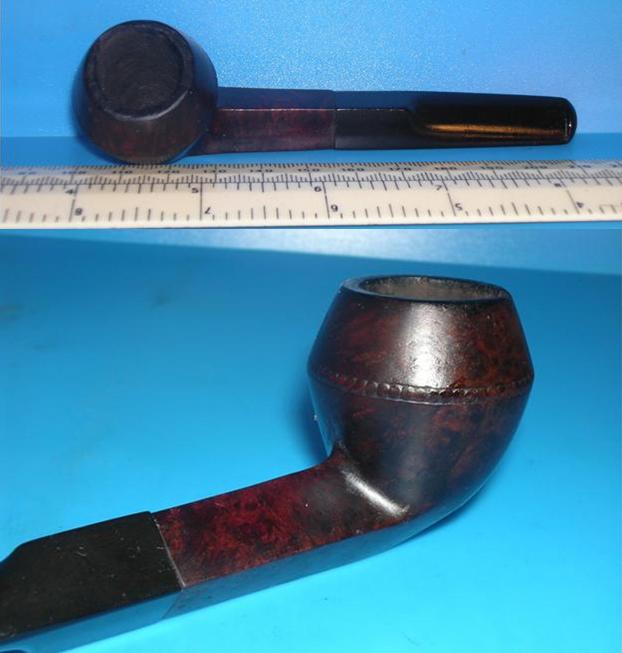
When I found this old bulldog on EBay I was drawn to it and immediately put in a bid. I won it as no one else saw the charm in this one. It was a hard to see the stamping in the photos and many of the photos the seller included were out of focus which even made it harder to figure out the state of the pipe. The seller identified the pipe as a GC Bulldog. The seller’s photos that I have chosen below show the condition of the pipe. The finish is dirty and there are definitely dings and nicks in the briar. The bead around the cap of the bowl is a nice touch and it too is worn. The stem is oversized and is larger in diameter than the bowl so it makes one wonder if it is original. The threaded bone tenon in the stem fits perfectly in the shank with the alignment matching. The angles of the shank and the stem match. The vulcanite stem is just slightly larger than the shank on the left side of the pipe but works on the right side. The button is rounded and has an orific opening that shows that it is the proper age for this pipe. All that I saw was enough for me.G1

G2

G3 When the pipe arrived my assessment from the photos was correct. The stem was a good fit but it was larger than the shank on the left side. The bone tenon was in excellent shape with no wear and tear on it. It was stained with the tobacco juices of the long smoking. The shank was dirty and the airway in the stem was dirty. The airway in the bowl was clogged so no air would go through it no matter how hard I blew on the shank. The rim had serious damage on the right side front. There was a chunk of briar missing from the inner edge of the bowl and there was a scar running part way down below that. The rim had a divot at that point and also on the front itself that looked to have been caused by overzealous lighting from the exact same point every time the pipe was smoked. The bowl had been reamed and looked clean and smooth other than the damage on the right top side. The finish was dark and dirty. The stem had tooth marks on the underside near the button and tooth chatter on the top side. The next four photos show the pipe when I brought it to the work table.G4

G5

G6 The next photo is a close-up of the rim to show the damage. I decided to top the bowl so I used the topping board and 220 grit sandpaper to remove the top surface damage to the rim edge. When I had topped as much as I could without changing the profile of the bowl it was time to decide how to address the damage. I set that aside for a bit and worked on the fit of the stem.G7

G8

G9 I sanded the stem sides with 220 grit sandpaper to bring it to the same height and dimensions as the shank. It took work on the left sides and some adjustments to the right side. I also needed to work over the points of the diamond to make the alignment straight and flowing. I sanded the tooth marks and tooth chatter at the same time and was able to remove it.G10

G11

G12

G13 I wiped the bowl down with acetone on cotton pads to remove the damaged and dirty finish that remained on the bowl. With these old finishes the grime and some of the clouded top coat disappears and the grain begins to poke through as the bowl is scrubbed.G14

G15 I worked on the internals of the mortise, airway and the airway in the stem. Since the airway in the mortise was plugged I used a round dental pick to push through the grime that plugged the airway. I reamed out the airway with the pick and then scrubbed it with pipe cleaners and a shank brush until it was clean. I scrubbed out the mortise with pipe cleaners, cotton swabs and alcohol until it was clean and smelled fresh. I swabbed out the inside of the bowl with cotton swabs and alcohol. I used pipe cleaners and alcohol in the stem airway and cleaned the threads on the bone tenon with cotton swabs.G16

G17

G18 With the interior of the bowl clean I lightly sanded the inner edge of the bowl in the damaged area. I put some small drops of super glue on the rim and inner edge and used a dental spatula to press briar dust into the glue.G19

G20 I retopped the bowl to smooth out the repair and sanded the inside with a folded piece of 220 grit sandpaper to smooth out the curve of the inner edge.G21

G22 I sanded the top and rim edge with 400 grit wet dry sandpaper and then with 1500 grit micromesh in preparation for staining. I stained the areas where I had sanded the shank to match the stem and the rim with a dark brown stain pen.G23

G24

G25 I hand buffed the stained areas and the rim and took the following photos.G26

G27

G28

G29 I wet sanded the stem with 1500-2400 grit micromesh sanding pads and then rubbed the stem down with Obsidian Oil. I dry sanded the stem with 3200-4000 grit pads and gave it another coat of oil. I finished sanding with 6000-12000 grit pads and gave it a final coat of oil. I set the stem aside until the oil dried.G30

G31

G32 I gave the bowl and stem several coats of Conservator’s Wax and hand buffed the pipe and stem with a shoe brush and a microfibre cloth to raise the shine. The finished pipe is shown in the photos below. There are still some dents and dings on the sides of the shank and bowl that I chose to leave there. Some of them are the very faint stampings that remain on the right and left topside of the diamond shank. Some of them are beauty marks that came with the long life and hard travel of this little pipe. I chose to leave them as they were and imagine the stories that go along with them. Thanks for looking.G33

G34

G35

G36

G37

G38

Mission Impossible: Operation Long Shot


Blog by Charles Lemon and Steve Laug

Charles posted this on his Dadspipes blog this morning and I reblogged it here on rebornpipes. I was thinking about it this evening and thought it was worth saving in total on both blogs so not only have I reblogged it but I also have put it here in the archives of this blog. That way it is easily accessible on both blogs. This was a fun project for both of us to do. We spoke this afternoon and already are working on another collaboration… Keep an eye out for it on both blogs.

The door opened and a man walked into the bar, pausing briefly in the doorway to allow his eyes to adapt to the dim light inside. The place was what optimists would euphemistically call a dive. The establishment was empty except for a few drunks and a large, bored-looking man behind the counter wiping glasses with a rag that was presumably once white but was now an indeterminate shade of grey.

The man walked through the room, turned in at a doorway marked “Gents” and scanned the room – two stalls, a urinal and a grimy sink – before spotting what he sought. Moving across the room, he fed a handful of coins into a coin-operated machine advertising cheap cologne. There was a rattle and then a small rectangular device dropped into a waiting hand. The man pushed his thumb against a small pad on the otherwise blank rectangle. A laser washed briefly up and down the pad and then a voice was heard.

“Good morning, Agent. You have been selected to join a small, two-man strike force for a delicate and potentially disastrous assignment. Your mission, should you choose to accept it…..”


A while back, Steve Laug of Reborn Pipes and I had a conversation about the limits of pipe restorations. Was a pipe ever truly beyond repair? We responded in the negative, and decided to put our theory to the test with this mission, code-named Operation Long Shot. We wanted a pipe that was so far gone that most people would immediately write it off as firewood or worse, the sort of thing barely recognizable as a pipe.

We selected as our test subject this Brigham 3-Dot Prince. As you can see in the photos below, it was in terrible condition when I came across it in a jumble of estate pipes I picked up about six months ago. I had been holding onto it with some vague notion of using it for spare parts.

The pipe was filthy, crusted with dirt and debris. The old finish was long gone, and the nomenclature was almost entirely worn away. Wiping the shank with a bit of water, however, revealed the thin, flowing script of the early Brigham logo stamped over “Can Pat 372982”. That stamp places the production date of this old warrior in the 1938-1955 range.

The pipe stem carried the three brass dots of Brigham’s mid-grade 300 series, but was deeply oxidized a gruesome yellow/green colour. It had been brutally chopped off at the bit and a crude button cut into the raw end. To add insult to injury, the bowl had suffered a burnout through the bottom, which had been “repaired” as delicately as the stem with a large clod of epoxy which spread over most of the bottom bowl surface. The interior of the bowl was in no better shape – the epoxy fill had been roughly wiped around the chamber floor, and the draft hole had been worn or burnt open to about double its original diameter. All in, this pipe was a train wreck, though evidently much prized by its previous owner who had refused to give up on it.
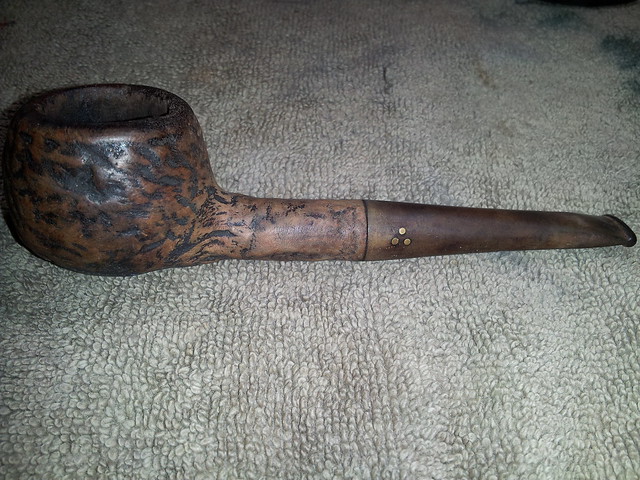
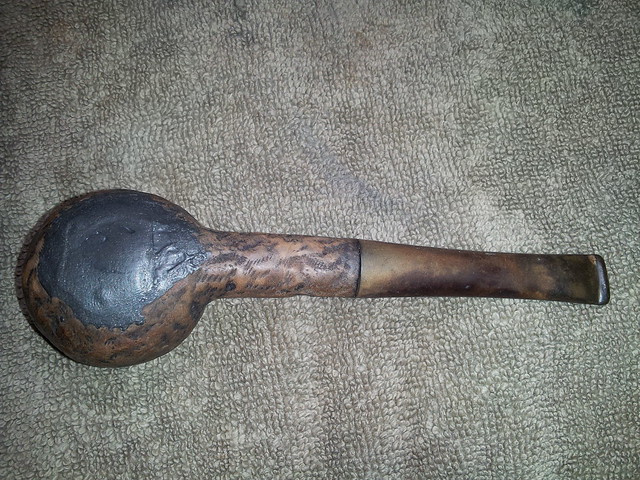
20160106_141017 20160106_141026
20160106_141059 20160106_141052
20160106_163456 20160106_163435

Mission Log: Agent Lemon. Phase I – Cleanup and Salvage

This restoration would be a great challenge, but Steve and I were up for it. We agreed to tag-team the job: I would clean up the stummel and salvage what I could from the hacked up stem, and then mail the briar across the country to Steve in Vancouver, BC. He would plug the burnout and tidy up the stummel and then send the pipe home to me in Kitchener, ON for re-stemming and the final fit and finish.

Wanting to get the pipe off to Steve as quickly as possible, I got going on the reaming and cleaning work. I used my Castleford reamer to remove as much carbon from the bowl as I could. I reamed very carefully, expecting the bowl to crumble in my hands, but the old girl held together. I think most of what came out was actually more dirt than cake, but at least the chamber walls looked ok except for the enlarged draft hole. I scrubbed the exterior of the stummel with Murphy’s Oil Soap and a soft toothbrush, and then dropped the briar into an isopropyl alcohol bath to soak overnight.
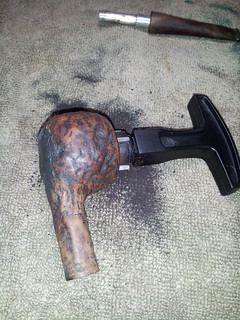
20160106_16380120160106_163811

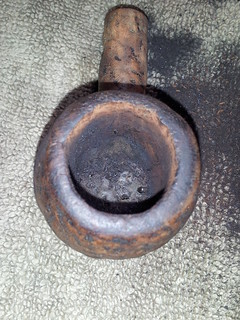
While the stummel soaked, I had a good look at the stem. I have another Prince shape in my Brigham collection, and a quick comparison showed that the stem for this old pipe was missing about an inch of length. I decided that I would need to work up a new stem to replace the old one. A vulcanite stem would be relatively easy to get hold of, but an aluminum Brigham tenon was quite another matter. As the tenon on the junk stem was still in good shape (or would be after a good cleaning), I decided to salvage it to implant in the replacement stem. I heated the tenon and the end of the stem over a lighter flame until the vulcanite softened, then gently twisted the aluminum tenon out of the stem. One of the brass dots decided to come with it, demonstrating how Brigham used the first brass pin to help hold the tenon/filter holder in the stem.
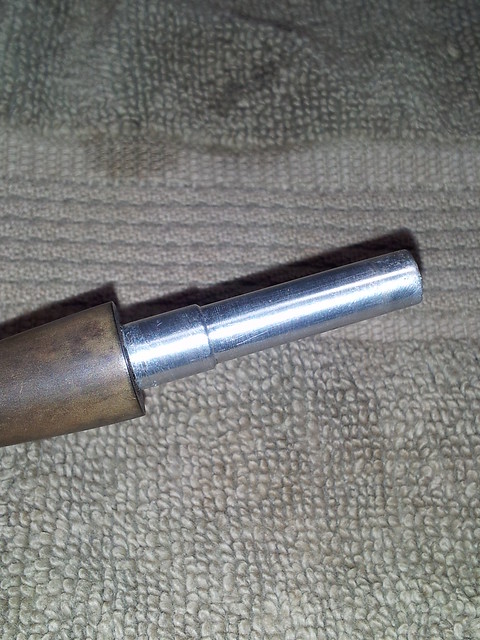
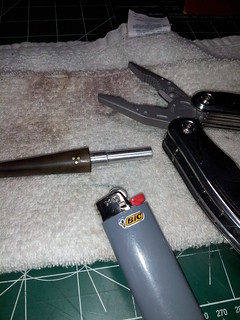
20160106_164539
20160113_19515920160113_195700

The next morning, I pulled the stummel out of the alcohol bath and scrubbed it down with an old towel. This is when I ran into the first bit of luck on this project – the alcohol soak had softened the wide but thin patch of epoxy spread across the bottom of the bowl. I quickly grabbed a dental pick and scraped as much of the old adhesive from the briar as I could. I managed to remove most of the softened epoxy, revealing a central core of harder fill about 5/8″ in diameter. This then, was the original burnout.
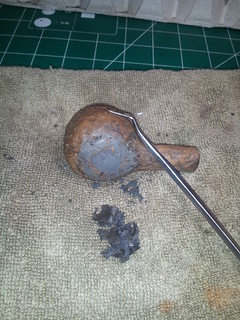
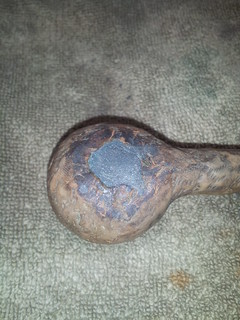
20160108_09121920160108_091823
20160108_092022

I drilled out the core epoxy and used a tapered reamer to trip the opening to an even circle with fresh briar all around. This would be the hole Steve would need to plug.
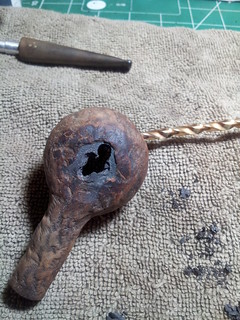
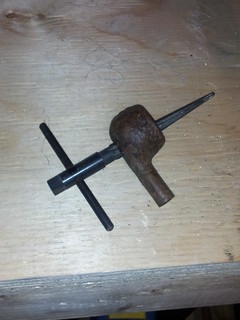
20160110_10033420160110_101105
20160110_10120020160110_101206

My first stage of the mission was complete, so I packed the stummel securely and entrusted it to Canada Post for shipment to Steve in Vancouver.

Mission Log: Agent Laug. Phase II – Bowl Repair & Refinish

Charles Lemon of DadsPipes and I decided to collaborate on a refurbish that captured some of the essence of our conversation that we shared on our blogs regarding restoration. This old Brigham had major issues with the stem and the bowl. Charles tackled the stem and did the cleanup work on the bowl and then sent the stummel to me to work on. When it arrived I took it out of the small box and had a look at what he had sent to me. He had cleaned out the bowl which had been plugged with JB Weld and opened up the burn out in the bottom of the bowl. He drilled out the plug and when I got it the bowl had pretty much most of the bottom missing. I cut the side out of an old briar bowl I cannibalized for parts and shaped it for the plug. It was thick enough and big enough for me to cut the plug. I cut it and shaped it with a Dremel and sanding drum. The next two photos below shows the plug after the initial shaping. It is still too large in diameter and also needs to be flattened on the inside.
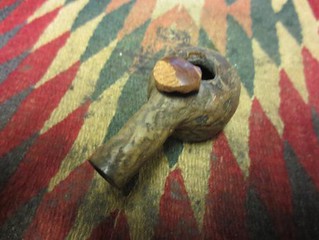
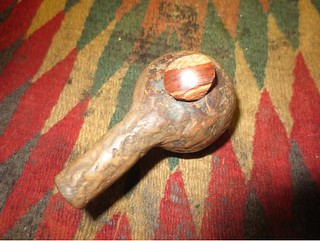
Steve 1Steve 2

I continued to shape and fine tune the plug until it fit into the hole in the bottom of the bowl. I flattened the inside surface to match the angles of the bowl bottom. The next two photos show that the plug is just about ready to press into place. Just a little more material needs to be sanded off the edges before it is a fit.
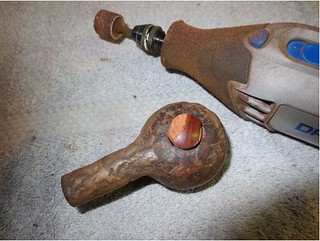
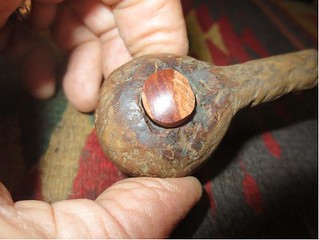
Steve 3Steve 4

I sanded the edges with the Dremel and sanding drum until I had a good fit and then pressed it into the bottom of the bowl. I sanded the outer surface of the plug with the Dremel and sanding drum until it was flush with the surface of the bowl. I used a black sharpie to draw a cross on the bottom of the bowl so that I could align the plug once I put the glue on and pressed it into place. I then coated the edges of the plug with slow drying super glue and pressed it into the hole in the bowl. The next two photos show how the plug looked in place from the outside and the inside of the bowl.
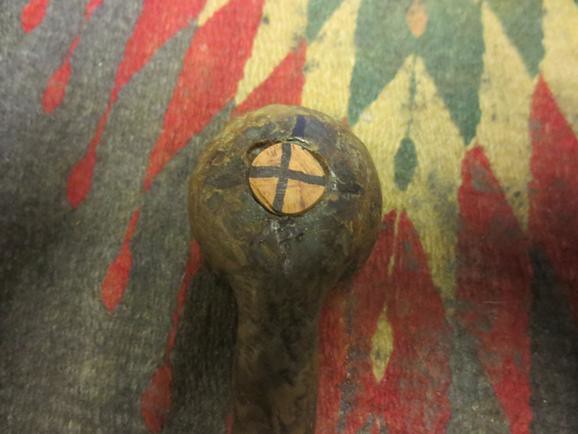
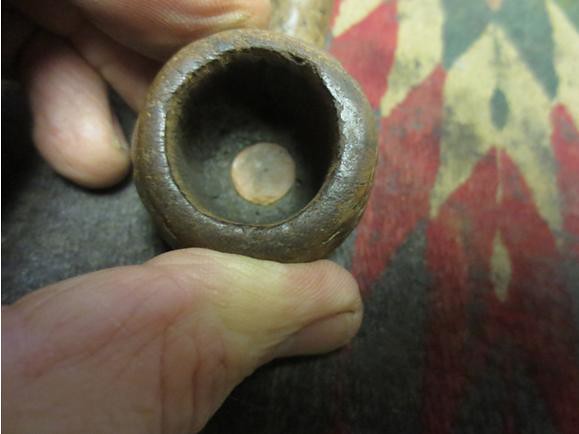
Steve 5
Steve 6

I used a dental pick to clean out the edges of the plug and bowl on the outside and then filled them with super glue and briar dust to take care of the chips and damage to the bowl bottom. Once it dried I sanded the bottom of the bowl with 220 grit sandpaper to blend in the plug.
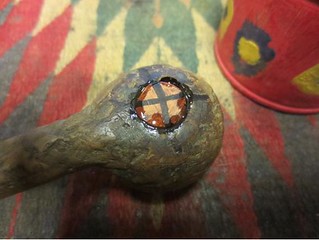
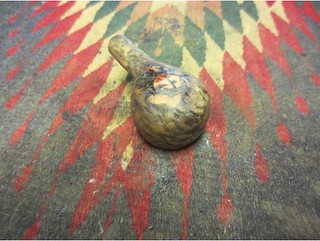
Steve 7Steve 8

The next two photos show the state of the bowl repair at this point in the process. The plug has been set in the bowl and the crevices around the plug have been filled and repaired. The inside of the bowl is smooth and the plug sits nicely in place.
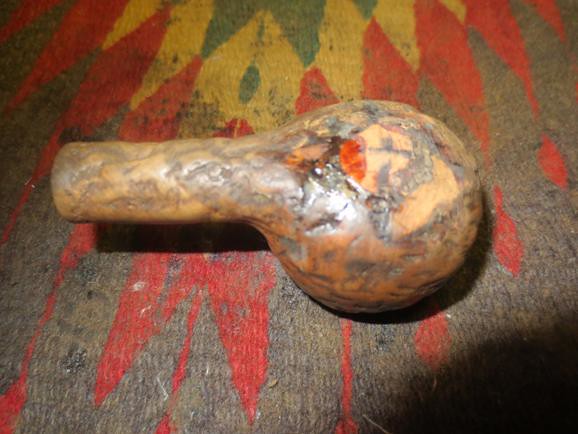
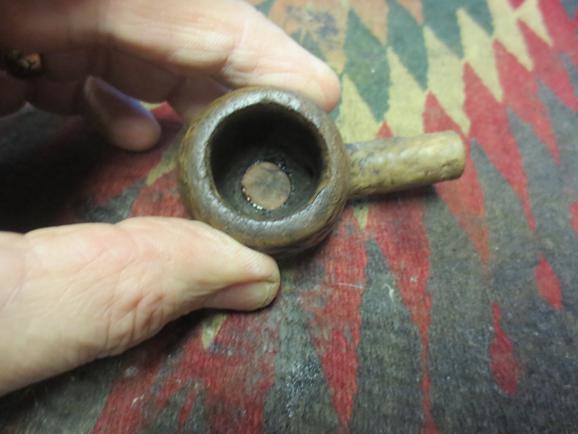
Steve 9
Steve 10

At this point in the process others may use JB Weld or Pipe Mud to finish up the bottom but I have found that a thin coat of Plaster of Paris gives a little bit of added protection to the bowl and also levels out the bowl bottom. In this case the bowl had a low spot in front of the entrance to the airway. I mixed a batch of Plaster, put a pipe cleaner in the airway and put it in the bottom of the bowl to level it out.

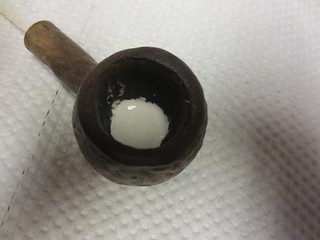
Steve 11 Steve 12

When the Plaster dried I applied a coat of pipe mud to the bowl bottom and sides, filling in some of the crevices in the bowl sides and smoothing out the surface. I used a dental spatula to press the pipe mud in place on the bowl sides and a pipe nail to press it into the bottom of the bowl.
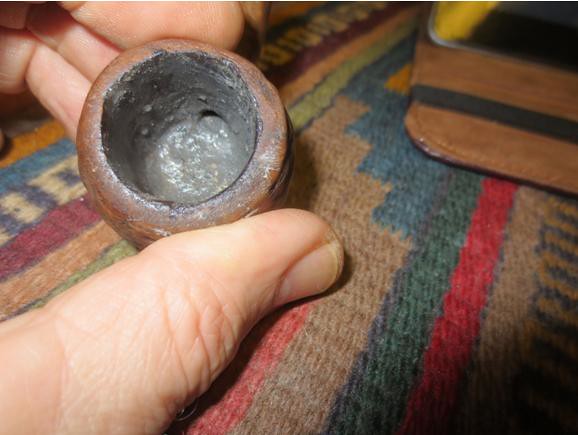
Steve 13

I set the bowl aside at this point to cure for two days and then worked on the rustication of the bowl. I used a dental burr to follow the pattern on the bowl sides and deepen them. I cut a similar pattern on the bottom of the bowl with the burr. I used the burr to clean up the rustication on the shank as well – carefully avoiding the area where the faint Brigham stamping remained.
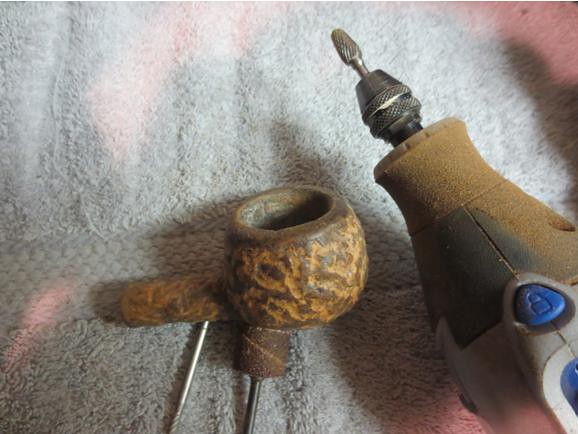
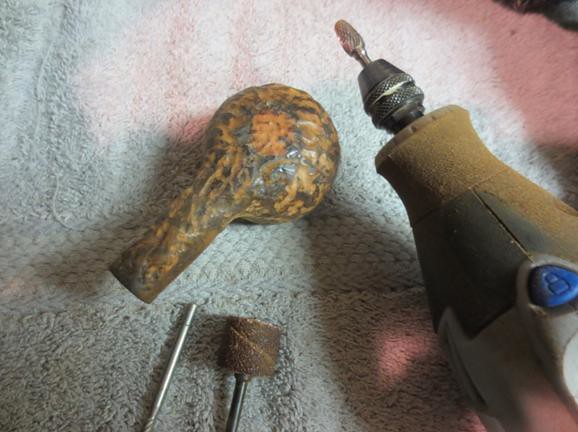
Steve 14
Steve 15

I used a black Sharpie permanent marker to stain the grooves in the bowl. I wanted a dark under tone to the bowl after I stained it. I like the way the stain looks with this underneath in the grooves.
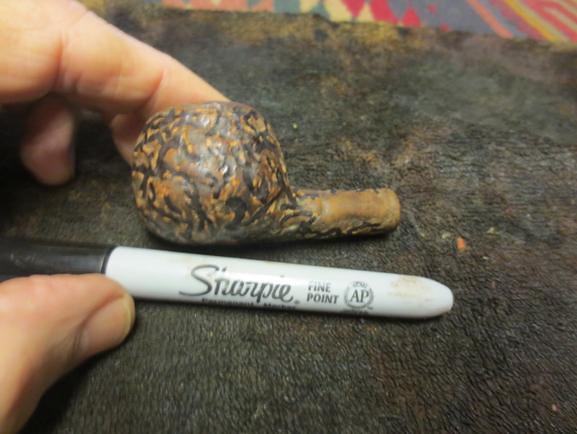
Steve 18

I stained the bowl with a dark brown aniline stain and flamed it.
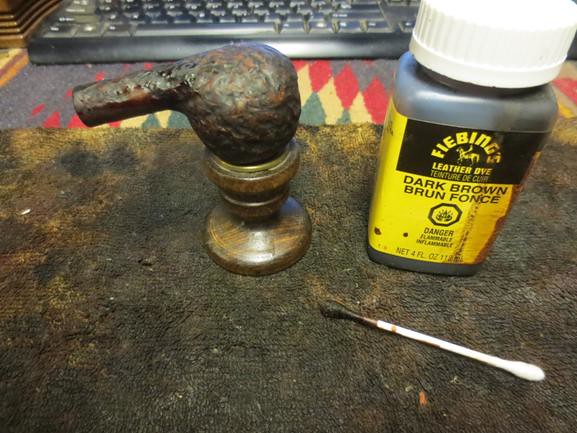
Steve 23
Steve 24

I wiped it down with alcohol on cotton pads to give it some more transparency and create the contrast with the black in the grooves of the rustication. I sanded the rim with a 1500-2400 grit micromesh sanding pad to smooth it out and to add to the contrast of the smooth rim.
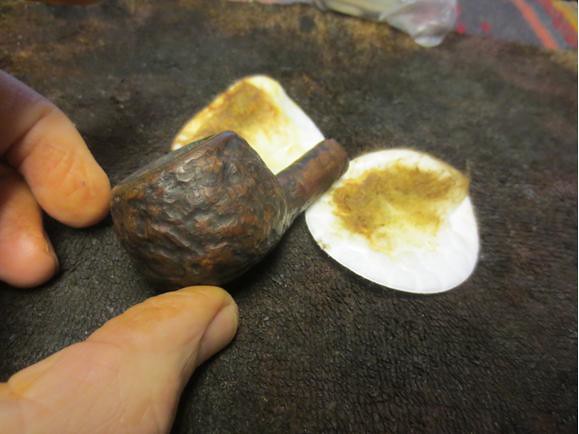
Steve 27

I hand rubbed in several coats of Conservators Wax and then buffed the bowl with a shoe brush.
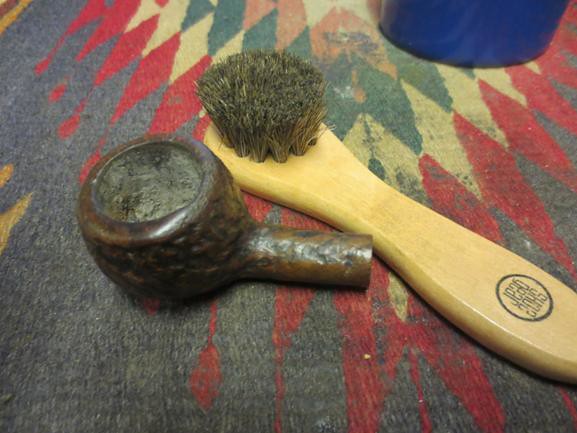
Steve 31
Steve 33

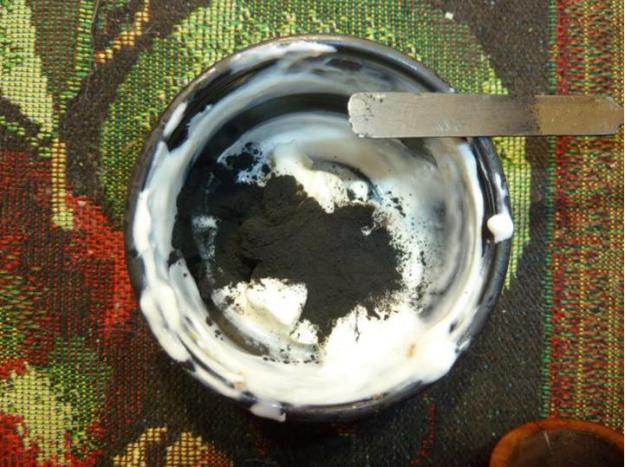
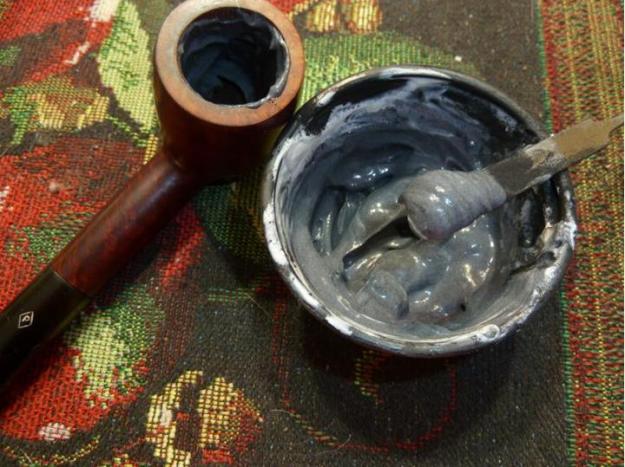
I mixed up a bowl coating of charcoal powder and sour cream and painted it on the inside walls of the bowl to give it further protection. When the bowl coating dried, it was time to pack the stummel back up for its return trip to Ontario.
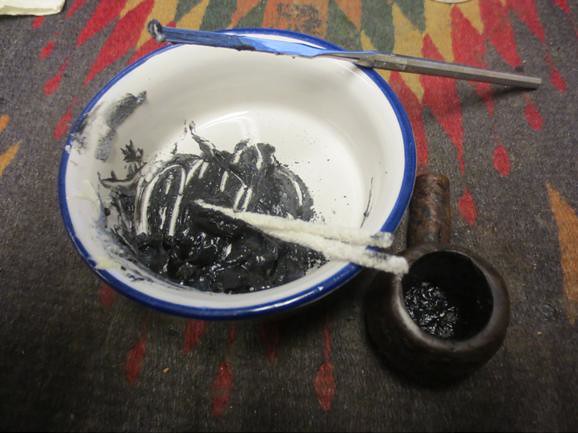
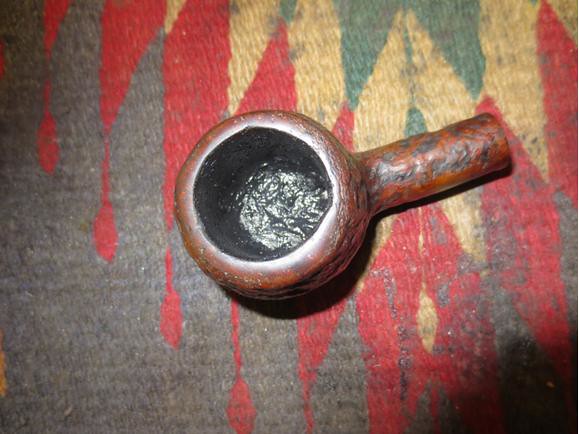
Steve 38
Steve 40s

Mission Log: Agent Lemon. Phase III – Stem Work

Recreating a Patent Era Brigham stem requires only a few items – a vulcanite stem of appropriate length and sufficient diameter to hold a Brigham rock maple filter, an aluminum Brigham tenon/filter holder, a few drill bits and some epoxy.

I found a suitable stem in my box of stems, using a Brigham Prince pipe from my collection as a reference. I used a hacksaw to remove the vulcanite tenon, and then clamped the stem into a simple drilling jig in my drill press. The stem must be perfectly aligned in the press or you risk drilling through the side of the stem instead of down the airway. The goal is to enlarge the airway to make room for the filter, and then drill out a mortise in the face of the stem to accept the aluminum tenon/filter holder. A quick test fit verified my drilling, so I glued the original tenon into the new stem with a bit of JB Weld and let the assembly cure.
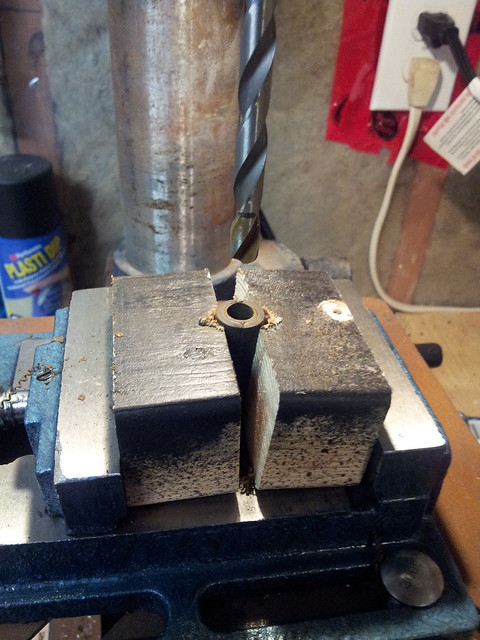
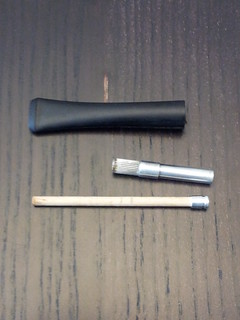
20160130_130036
20160130_13071720160130_130755
20160130_133236

When the repaired stummel arrived from Vancouver, I could fit the replacement stem. As I was working with the original tenon, it wasn’t a great surprise when the stem fit nicely into the shank. A little bit of filing and sanding to remove the stem’s molding marks and reduce the diameter to match the shank, and I was ready to install the Brigham dots.
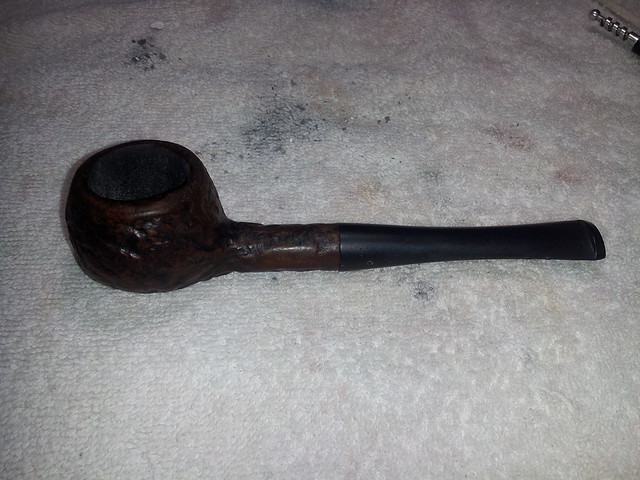
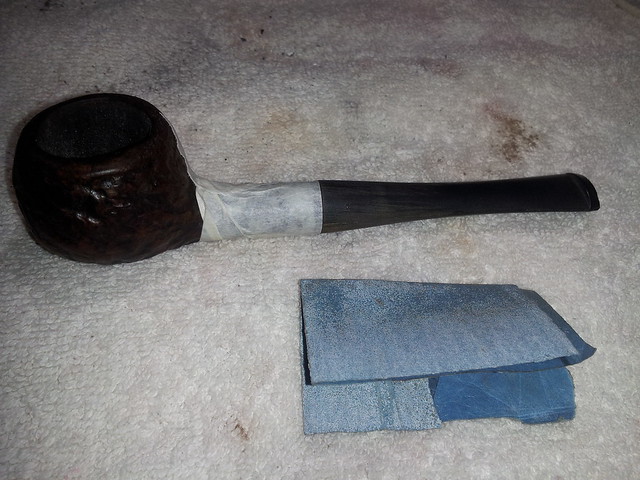
20160201_094109
20160201_094840

The dots are made by inserting 1/16″ brass rod into holes drilled in the side of the stem. The first pin is located approximately 5/16″ from the end of the stem at the centre line, and the other pins in the 2, 3, and 4-dot patterns are built off the first dot. As this was a 300-level pipe, I’d be installing three pins in a triangle pattern. The first pin is the bottom left dot of the triangle.

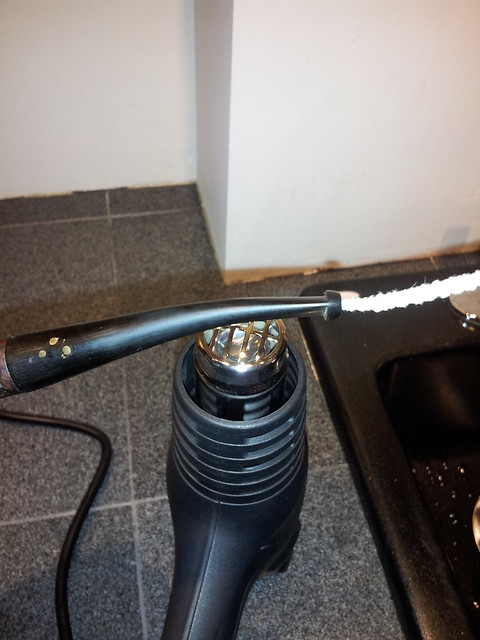
I marked out the pinning pattern with a Sharpie and then drilled the holes, being careful not to drill through into the stem’s airway. Short segments of brass rod were then glued into the holes with clear CA glue. When the glue had cured, I used a combination of files and sandpapers to bring the dots flush with the surface of the stem. A final polishing with micromesh pads to remove any remaining scratches prepped the stem for buffing. Just before doing so, I gave the stem a 1/8th bend by holding it over the heat gun until pliable and shaping it over a round form. A dip in cool water set the bend in place.
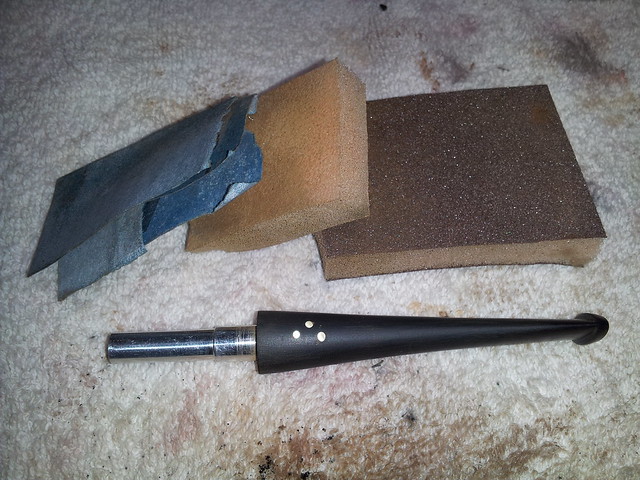
20160201_204450
20160201_205613

Mission Log: Impossible Accomplished

The restored pipe sits on the desk in front of me. I hardly recognize it as being even remotely related to the broken-down shell of a pipe Steve and I started with only a few short weeks ago. Shipping the patient back and forth took a lot of time, but the results of this cross-country collaboration speak for themselves. This Patent Era Brigham 313 looks ready for another 60 years of smoking pleasure. Steve did a truly magnificent job on the stummel, and the new stem looks like it’s been there all along. I think we both learned something new during this restoration, and we proved our theory (in grand fashion) as we did it – every pipe, no matter the condition, can be restored to useful service with the right combination of skill and will.

I hope this project inspires other pipe refurbishers to take a second look at that written-off pipe you’ve held onto for some reason. I’m willing to bet there’s still a great smoke hiding in that old briar somewhere. It’s up to you to find it.

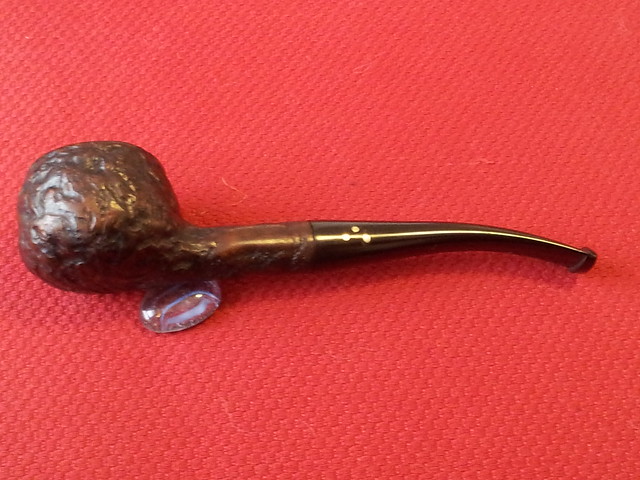
Here’s the finished pipe.
20160202_102012
20160202_102027
20160202_101927
20160202_101920
20160202_10193320160202_102106 20160202_10203920160202_102055

Rough Finish – Reworking Damaged Rim on a Savinelli Estella 412KS Dublin


Blog by Steve Laug

Warren, a Facebook friend, gifted me this Estella Dublin made by Savinelli not too long ago. It came to me in decent shape. Someone had topped the bowl and removed the original rustication and the topping had given the bowl a decided cant to the front and to the left side. The finish was in good shape. There was a dark spot on the lower portion of the bowl on the right side that made me wonder what was going on. The stamping was sharp and read Estella 412KS. The inside of the bowl had been reamed but it showed that it was lightly smoked. The stem was dirty but in decent shape as well. There was minimal tooth chatter on both sides and a faint E stamp on the left near the half saddle. There were also some ripples in the Lucite stem from buffing.Estella1

Estella2

Estella3

Estella4 I scrubbed the bowl with Murphy’s Oil Soap and a tooth brush to remove the grime and to see what was going on with the dark spot on the right. I could see from the inside of the bowl that there was no internal damage or burn through happening there. It appeared to be darkened only in colour rather than in burning.Estella5 I rinsed the bowl with warm water and dried it off. The photos below show the bowl after it had been scrubbed.Estella6

Estella7

Estella8

Estella9 The next three photos show the angle on the top of the bowl. From all my research on the brand and shape on the internet I had seen that the top was supposed to be flat and rusticated. I would need to flatten the rim and take care of the cant.Estella10

Estella11

Estella12 When a bowl is this far out of square with a difference of almost ¼ inch in the slope it is a bit tricky to get a flat top. I used 220 grit sandpaper to begin the process and then used the Dremel and sanding drum to bring all sides even to my eye. Once I had the surface close to flattened I used a topping board and sandpaper to finish the job.Estella13

Estella14

Estella15 I cleaned out the airway in the mortise and the stem with pipe cleaners, cotton swabs and alcohol.Estella16 With the internals clean and the top flattened it was time to work on rusticating it. I wiped down the top with a cloth to have a clean surface to work with. The photo below is the final photo of the flattened smooth top.Estella17 Originally the Estella had a rim top that went with the rustication on the bowl. In all of my research I could not find one that was smooth topped. I wanted to approximate the original finish of the rim so I looked on the internet to find a close-up photo of what the rim on this particular shaped Dublin would have looked like when it left the factory. The photo below, while not of a new pipe, shows the rustication of the original rim.Estella18 I used a Dremel and an assortment of dental burrs to rusticate the rim surface. I started with a Dremel burr to begin with so I could roughen the surface before using the other burrs. Each burr gave a slightly different pattern to the rustication and gave it a more random appearance.Estella19

Estella20

Estella21

Estella22

Estella23 The finished rustication is shown in the photo below.Estella24 I used a light brown stain pen to stain the rim to match the rest of the pipe.Estella25 I scrubbed the rusticated top with a brass tire brush to clean up the look and give it the same kind aged rustication that the bowl had. The brass brush knocked off the high spots and evened out the surface for a more random look.Estella26 I sanded the stem with 220 grit sandpaper to remove the rippled effect on both the top and the bottom of the stem and then used a fine grit sanding sponge to smooth out the scratches. I wet sanded the stem with 1500-2400 grit micromesh sanding pads and then dry sanded with 3200-12000 grit micromesh pads. Estella27

Estella28

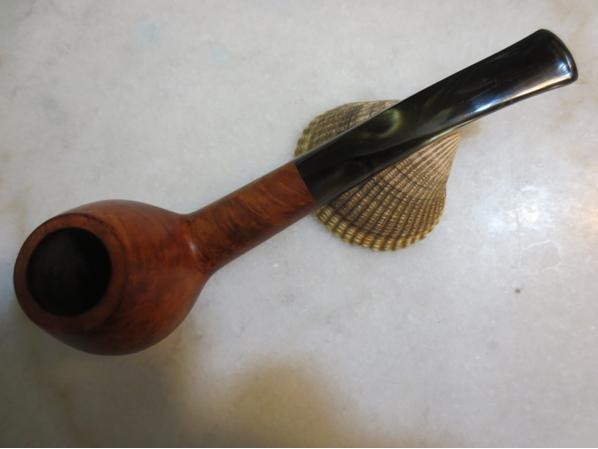
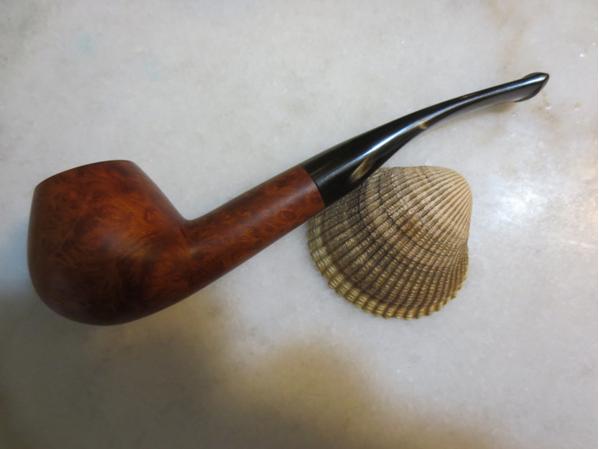
Estella29 I buffed the bowl and stem with Blue Diamond on the buffer and then gave them both several coats of Halcyon II wax and hand buffed it with a shoe brush to raise the shine. The finished pipe is shown in the photos below. I thoroughly enjoy the challenges present by the pipes I work on. This one was no exception. I think the finished look was worth the added effort to rusticate the rim. Once again thank you for taking the time to read and look at the blog.Estella30
Estella31

Estella32

Estella33

Estella34

Estella35

Breathing new life into this Dusky Dulcet Bulldog


Blog by Geoff Carmell

It is a pleasure for me to post this first blog by Geoff Carmell. I have followed his work on Facebook and we have communicated via Messenger and email now for a while. We have common friends in the small pipe community of Calgary. I saw his work on this bulldog and knew it was going to a common friend so I asked him to do a blog on the restoration. Geoff, it is great to have this piece here. You have done some great work on that old pipe. Thanks for sharing it with us all. Welcome to rebornpipes.
Geoff1Hello everyone, this is my first attempt at blogging about one of my pipe refinishing projects.

Before I begin, our host Steve Laug wanted me to give a brief introduction about myself. I am still quite a novice when it comes to the world of pipes but that hasn’t quelled my desire to keep collecting, refinishing and smoking pipes. For me it truly started while going to local antique shops last fall while my parents were visiting. I was hooked when I refinished one of those antique store finds and haven’t looked back since.

I wanted to take a moment and say that refinishing pipes as a hobby has really helped me in more ways than one. I live in Southern Alberta and I am a crane truck operator in the oil and gas industry. Last year was an extremely slow year for me and 2016 isn’t looking any better. As such, I needed an outlet to keep myself from going crazy worrying about all the “what if’s” in life.

This began my journey into the world of pipe refinishing. This nice little bulldog was one of my first eBay purchases and was really in decent shape needing very little work, or so I thought…

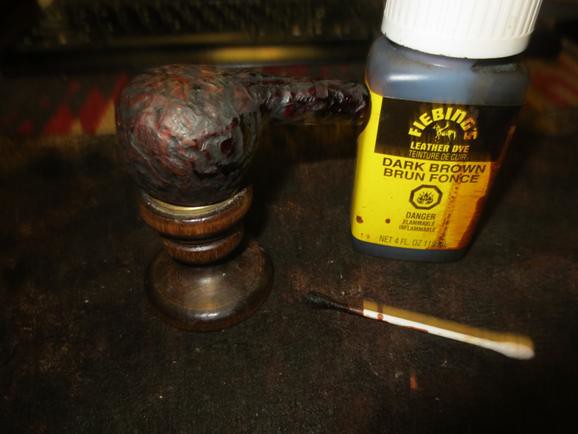
My first step was to thoroughly clean the bowl inside and out. I did my usual salt/alcohol soak to get rid of any “ghosts” in the bowl. Before I did that though, I used Q-tips and pipe cleaners dipped in alcohol to clean the shank. Once the bowl was sanitized I turned my attention to the outside of the bowl by using a lightly dampened patch of “0000” steel wool to clean off the grime. To my dismay, this “cleaning” uncovered a crack in the rim.Geoff2 Not sure of what to do I just began sanding the rim down to the point that the crack was no longer visible. After I finished sanding the rim, I turned my attention to the grooves on the front of the bowl which had all but disappeared due to the wood swelling. After lots of filing with my newly acquired needle files the grooves started to take shape again. With the rim and grooves in good shape again I sanded the bowl with 400 and 600 grit sandpaper. I then proceeded to dye the bowl with Fiebings mahogany leather dye. I set the dye by flaming it and then left that to sit overnight. I turned once again to my steel wool to help strip off the dye to reveal the beautiful grain underneath. The bowl seemed lacking, I decided to sand the rim of the bowl once more if only to reveal the original briar again, although it’s not noticeable in the pictures, I sanded the ridge between the two grooves as well to show some contrast.Geoff3 Once the sanding was complete I used my buffing wheel with brown Tripoli to further bring out the shine and then applied a couple of coats of carnauba wax to protect the finish.

After the bowl was done I used the buffing wheels to put a shine on the stem as well. After all the buffing and waxing is done I like to use a clean microfiber clothe to hand rub the bowl and stem. This really helps to get rid of any wax buildup.Geoff4 After all is said and done I really enjoyed this refinishing project and I was pleased that it turned out to be my first pipe that would go to a great guy in our church.
Thanks for looking.
Best regards,
Geoff

A Peterson’s Product 268 Zulu Restemmed and Restored


Blog by Steve Laug

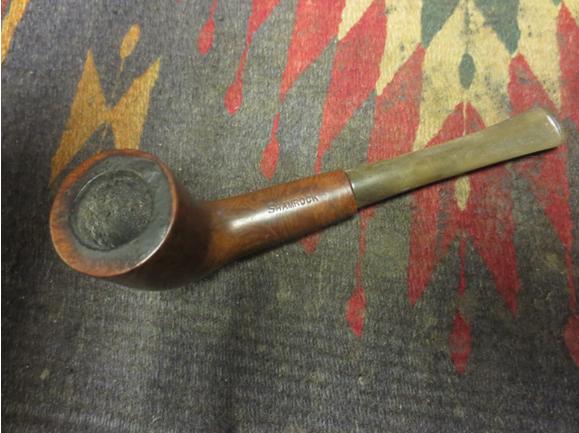
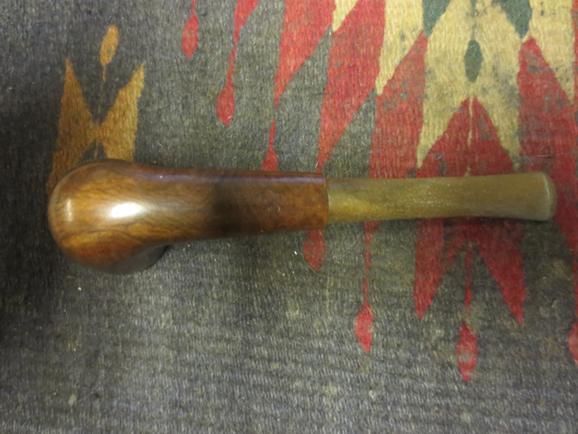
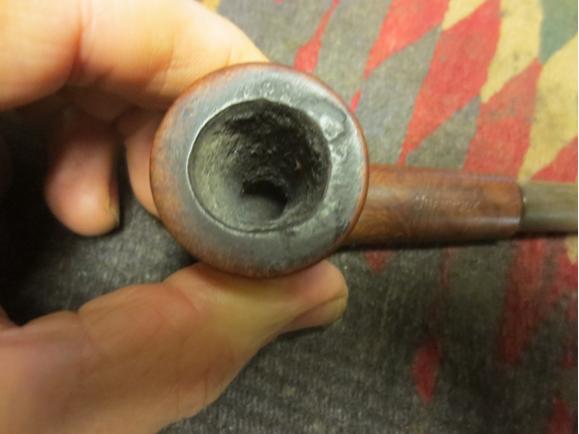
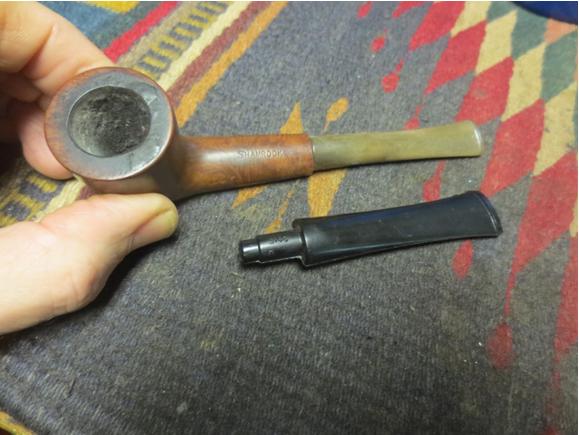
This pipe came to me with the Meerschaum Sultan that I restemmed. It is stamped Shamrock on the top of the shank and “A Peterson’s Product” Made in the Republic of Ireland on the underside. On the right side near the bowl shank union it was stamped 268. I looked the number up and it is the shape number for a Zulu shape. The gentleman in Chile wrote: “I only have the bowl (I’m not acquainted with the minor brand) with an inappropriate mouthpiece which makes it impossible to smoke. I don’t remember how it got into my collection and certainly it’s not a pipe I purchased myself. It has a heavy cake and is a second-hand. If a proper mouthpiece could be made and a proper tune-up, it could make a fine pipe.” He included the following pictures.Shamrock1 When it arrived I took it out of the box to deal with when I had finished repairing the Sultan Meerschaum pipe. It was a nice piece of briar with mixed grain and a worn finish. The stamping on the top of the shank was clear and sharp. The stamping on the underside showed clearly on the left side as you read it but as you got to the right side it was fainter. The rim was dirty and had a flaky coat of lava overflowing from the inside of the bowl and the thick cake there. The inner and outer rim looked good with no dents or chips. The bowl sides, front and back had some light dents in the finish. The stem was a billiard stem that had been stuck in the shank. It fit snugly but absolutely did not match the oval shank.Shamrock2

Shamrock3

Shamrock4

Shamrock5 I took a close up photo of the rim and the bowl to show the thickness of the cake. Toward the bottom of the bowl it got thicker and reduced the size of the bowl at the airway.Shamrock6 I looked at several Peterson shape # 268 Zulus to get an idea of what the stem looked like originally on this pipe. I went through my can of stems and found several that would work on this pipe. The one that was the closest to matching the diameter of the shank of the pipe was a brand new stem blank that still had the castings on the sides and end of the button. The slot was constricted but the length and shape would be easy to match to the shank.Shamrock7 I drilled open the airway to accept the rod of the PIMO tenon tool. And then set up the tenon tool on a cordless drill. The current tenon was too long for the tool to cut all the way to the end of the tenon so I used the Dremel and sanding drum to shorten the tenon. I put it on the tool and adjusted the set screws and took off the first round of material. I did three adjustments to turn the tenon down to a fit in the mortise. I fine tuned the fit with 220 grit sandpaper.Shamrock8

Shamrock9

Shamrock10 The fit in the mortise was snug. The diameter of the new stem was large on the sides and the bottom. The top would take the least adjustment to get the fit correct.Shamrock11

Shamrock12

Shamrock13 I took off the majority of the excess vulcanite with the Dremel and sanding drum. I put it back in the shank and the fit was better. The rest of the work would have to be done by hand sanding.Shamrock14 I hand sanded the stem until it was smooth and the transition between the shank and stem needed some fine tuning then set the stem aside and worked on the bowl. Contrary to my normal pattern I wiped off the outside of the bowl and shank with acetone on cotton pads to remove the finish and the grime that had been ground into the briar. Once it was gone there was some nice grain showing through.Shamrock15

Shamrock16

Shamrock17

Shamrock18 I put the stem in place and took a few photos so that I could see where I stood at this point in the process. The pipe was looking good and with a few tweaks would look even better.Shamrock19

Shamrock20

Shamrock21

Shamrock22 The top of the bowl was caked and the lava was very hard. I tried to scrape it carefully with a pen knife and gave up. I resorted to lightly topping the bowl on the topping board to remove the thick lava build up.Shamrock23

Shamrock24 I reamed the bowl with a PipNet reamer starting with the first cutting head. I finished with the second cutting head which was the same diameter as the inside of the bowl. I cut the cake back to bare briar so I could assess the inner bowl walls. They looked very good with little burn or damage. The cake had protected them.Shamrock25

Shamrock26 I fine tuned the sanding on the stem and shank fit with 220 grit sandpaper and shaped the stem to match the oval of the shank. The flow of the bowl and stem were looking really good at this point in the process.Shamrock27

Shamrock28

Shamrock29

Shamrock30 I cleaned out the inside of the mortise and the airway in the stem and shank with alcohol, cotton swabs and pipe cleaners.Shamrock31 I used the dark brown stain pen to touch up the rim and the end of the shank to match the stain colour on the rest of the pipe. I rubbed it down with a light coat of olive oil to give some life to the dry wood. I gave the bowl a quick buff with Blue Diamond and then gave it one coat of carnauba wax and hand buffed it with a microfibre cloth. The “new” look of the bowl is shown in the photos below.Shamrock32

Shamrock33

Shamrock34

Shamrock35 With the bowl stained and oiled I used a heat gun to bend the stem and get the proper angles that I had found online on the 268 shaped pipes. I heated the stem until it was pliable and then bent it over a round can to get a smooth angle. I took photos of the pipe with a bent stem to give a feel for the finished look.Shamrock36

Shamrock37

Shamrock38 I fine tuned the fit of the stem to the shank by beveling the inner edge of the mortise in the shank and then cleaning the area around the tenon stem joint. I wet sanded the stem with 1500-2400 grit micromesh and then rubbed the stem down with Obsidian Oil. I dry sanded it with 3200-4000 grit micromesh pads and gave it another coat of oil. I finished sanding with 6000-12000 grit micromesh pads and gave it a final coat of Obsidian Oil. I laid the stem aside to dry.Shamrock39

Shamrock40

Shamrock41 I put the stem on the pipe and buffed the entirety with Blue Diamond and then gave it multiple coats of carnauba wax. I buffed it with a clean buffing pad and then by hand with a microfibre cloth. The finished pipe is shown in the photos below. It is ready to go back to Chile. Sometime early this week I will pack the two repaired pipes up and make the trip to FEDEX to send them back. I look forward to hearing what the two of them smoke like for the Chilean pipeman. I like the new looks of both of these pipes and I think he will as well. But I have to tell you I am a sucker for the Zulu shaped Petersons. This one is a beauty!Shamrock42
Shamrock43

Shamrock44

Shamrock45

Shamrock46

Shamrock47

Shamrock48

Restemming and restoring an oval shank billiard with issues


Blog by Steve Laug

I was gifted an oval shank billiard with a broken tenon and no stem by a fellow pipe refurbisher. He knows I like a challenge so he thought that maybe this would be a fun one for me to fiddle with. I looked at it when I unpacked it and spent more time looking at it over the weekend. When I first picked it up I put it in the bin of pipe to be refurbished and pretty much figured it would be one of those that I picked up when I had nothing else to work on. I have a few of those sitting in the bottom of the box. On Sunday I was going through the box trying to decide which pipe I would work on next and picked it up. There was something about it that drew me to work on it next. I can’t tell you what that was; I have no words to describe it. I know though that those of you who refurbish pipes know the feeling and the call of certain pipes. This was one of those. So it came to my work table.

Now that I had made a decision to work on it I took time to look it over and assess it. That is what I always do when I work on a pipe. I look it over and list out what needs to be addressed if I am to bring this pipe back to life. I like to enter into the work with a clear idea of what needs to be done. Doing this keeps me from finding those issues that surprise you in the process – at least most of the time it does. There will always be exceptions to the rule. For this pipe it was pretty straight forward.
Here is a list of the issues:

1. The finish was very rough and the darkening of the briar around the middle of the bowl was worrisome. It was hard to tell if it was potential burnout starting to happen – thus darkening the briar or if it was dirt and grime. I was pretty sure it was just soiled and stained but could not tell for sure until I had reamed the bowl.

2. There were scratches and dents all over the surface of the bowl.

3. There was one large fill on the right side of the bowl, mid-bowl that would need some work. I would either need to pick it out and refill it or repair it.

4. There was a burn mark on the underside of the shank mid-shank.

5. There appeared to be a small crack on the bottom of the shank at the place the stem and shank meet. It extends inward about a quarter inch. It was hard to see as it was hidden in the dings on the bottom of the shank from when the pipe had been dropped and the stem broken.

6. The bowl had a thick cake in it to the point that the tip of my little finger was about all that would fit in the bowl.

7. The rim had nicks and damage to the surface as well as a lava overflow from the cake in the bowl.

8. The stamping was virtually nonexistent. All that remained was a faint stamp on the left top side of the shank near the end – it read Made in London. It would definitely disappear if I banded the pipe to deal with the crack.

9. The airway in the shank and mortise was dirty and clogged. I could push air through it but barely when I blew through the end of the shank.

10. There was a broken tenon stuck in the shank. Generally these are pretty straight forward so I was not too worried about removing it.

11. There was no stem to work from as a model and the oval shank would make matching it a challenge.

Here is what the pipe looked like when I brought it to the work table.Bill1

Bill2

Bill3

Bill4

Bill5 I started the cleanup by pulling the broken tenon. I used the normal drywall screw and had the tools handy. In this case I threaded the screw in gently and was able to pull the tenon out by hand very easily.Bill6

Bill7 I turned to my can of stems for a potential stem. I actually had one that was a decent fit. The tenon was perfect and the fit against the shank end was ideal. The diameter of the stem on the bottom of the oval was too big and would need to be sanded to a correct fit. It happened to be the only oval stem I had at the moment and it was a twin bore bite proof stem. I was careful in fitting the stem because of the small crack in the shank.Bill8

Bill9

Bill10

Bill11 I used the Dremel and sanding drum to take off the excess rubber on the bottom of the stem.Bill12 This may be a funny thing to say but as I examined the stem after I fit it to the shank I noticed it had a small hole near the button. When I turned it over to check it out then I noticed that I was dealing with a bite proof stem – a stem with two airholes coming out of the button from the single airway in the stem. Picture the letter Y and you have a good picture of the stem.Bill13 I inserted a greased pipe cleaner in the airway on left airhole and then repaired the hole in the underside of the stem. I used black super glue to fill it and built it up to give a good base. When it dried I sanded it smooth with 220 grit sandpaper to blend it into the surface of the stem.Bill14

Bill15 Reaming the bowl took some effort and several different reamers. I used the PipNet reamer to start and then worked on the bowl with a KLEENREEM reamer. I finished by using a pen knife to clean out the last remnant of carbon in the bowl. I cleaned out the airway in the shank and the stem with pipe cleaners, cotton swabs and alcohol.Bill16

Bill17 I topped the bowl on my sanding board and lightly sanded the cracked area and damage on the bottom of the shank end.Bill18

Bill19 I sanded the stem with 220 grit sandpaper and then with a medium sanding sponge to smooth out the scratches. I wiped the bowl down with acetone on cotton pads to remove the grime and the remaining finish. The new stem fit really well and I only wished that the shank did not have the small crack that mad banding a necessity.Bill20

Bill21

Bill22

Bill23 I cleaned the area around the fill on the right side and repaired it with super glue. I sanded it smooth and then sanded the bowl with a medium grit sanding sponge.Bill24 I heated the briar with a heat gun and then applied a coat of cherry stain to it. The stain took well and sat deeply in the grain of the bowl.Bill25

Bill26

Bill27 With the stain in place the crack on the underside of the shank was very visible. It was mid shank and extended about ¼ inch. At this point I had to decide how to address this crack. I could do a shank insert and do an internal repair or I could band it. In looking over the shank I realized that the tenon was already quite thin and I would be hard pressed to make it smaller to fit inside of a shank insert. I would need to band the pipe.Bill28 I had a round band that would fit once I flattened it. I opened the crack with a dental pick and filled it with glue to repair the crack and then pressed the band into place on the shank.Bill30

Bill31

Bill32 I lightly sanded the tenon as the band made the fit in the shank too tight. I put the stem in place and took the next photo to get an idea of the new look.Bill33 I set the bowl aside and worked on the stem. I sanded it with micromesh sanding pads. I did my usual routine with the micromesh pads – wet sanding with the 1500-2400 grit and dry sanding with the rest of the pads up to 12000 grit. I used Obsidian Oil as usual.Bill34

Bill35

Bill36 I buffed the nickel band with a jeweller’s cloth and buffed the pipe on the wheel with Blue Diamond polish. I gave the bowl and stem multiple coats of carnauba wax. I buffed it on a clean flannel buffing wheel and then by hand with a microfibre cloth to raise the shine. The finished pipe is shown below. I think that taking the time to recondition and restore this pipe paid off with a beautiful oval shank billiard. Thanks for looking.Bill37
Bill38

Bill39

Bill40

Bill41

Bill42

Bill43

Putting the pieces together and arriving at a Parker Super Bruyere Billiard


Blog by Pam Otto

It is with pleasure that I introduce to you all the work of one of our readers, Pam Otto. I think as you read this first blog of hers posted here that you will join me in hoping we have not heard the last of her. She has done work on this Parker that rivals what an early writer, Gan Barber did with a Peterson. (If you did not read it or don’t remember here is the link: https://rebornpipes.com/2012/10/03/all-the-kings-horses-and-all-the-kings-men-a-petersen-adventure-gan-barber/). Pam has done the work a masterful job of rebuilding this old pipe. Its finished beauty is amazing. Thank you Pam for being willing to post here. It is a privilege to have you here. Without further ado, here is her post. — rebornpipes

I discovered the hobby of pipe restoration about a year and a half ago and jumped in with both feet. I soon discovered Reborn Pipes and Steve, let me tell you, my life hasn’t been the same since. Thanks so much for the information, techniques and methods you share, and for this opportunity to contribute to your blog.

Most of the pipes I’ve worked on, and learned on, have arrived through the “usual channels”–flea markets, estate sales and of course eBay. But this particular pipe, a Parker Super Bruyere, came via a more unusual route.

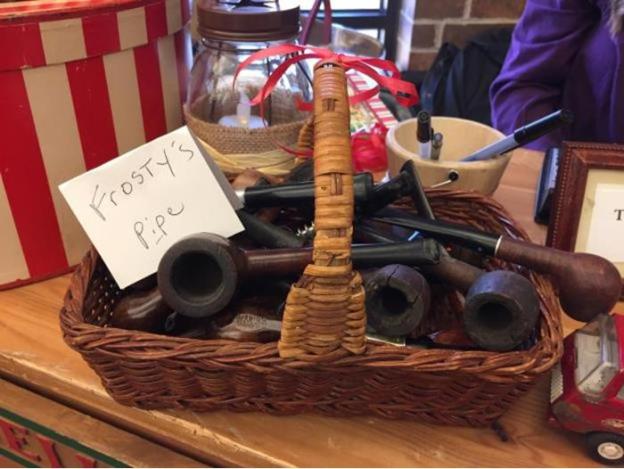
I was at work one recent Saturday (I manage a nature center when I’m not fiddling with pipes) when I received a text message from my friend Suzi. It contained this photo, along with the words, “Thought of you at Geneva Mothers Club bazaar!”Pam1 One look at that pic and I knew work could wait. I jumped in the car and within minutes arrived at the craft show location.

I half walked, half jogged up to the building, paid my entrance fee and made my way through the throng—a well-dressed, Ladies Who Lunch crowd—in search of a sign that read Exit 22E. A subsequent text from Suzi had given this added detail, which turned out to be absolutely essential in navigating the cavalcade of vendors.

After a couple of wrong turns I at last found the booth, staffed by a pleasant woman peddling hand-crafted snowman décor. With sawdust and a little mud crumbling off my jacket, I reached for her basket of “Frosty’s Pipes” and began laying them out on the counter. We exchanged pleasantries—the woman and I—and she told me that the pipes were US$4.95 each. She also encouraged me to consider a snowman for my front door. But by then I wasn’t really listening.

I emptied the basket and studied what Frosty had to offer, eventually deciding on five Yello Boles of various vintages going back to Honey Cured Briar; a Medico Ventilator I want to try unventilating; and the Parker.

Clutching my prizes, swathed in tissue paper within a plastic Wal-Mart bag, I then faced the daunting task of navigating back through the crowded aisles. (Exit 22E, it turns out, was for emergencies only.) Along the way I bumped into Suzi and excitedly showed her the pipes—especially the Parker—while she in turn showed me the handmade greeting cards she’d found. Both happy with our purchases, we went our separate ways—she to peruse more holiday wares, I to head home and triage my treasures.Pam2 Spread out on the dining room table, the pipes ran the gamut from barely touched to smoked nearly beyond recognition. Oddly enough, rather than dismiss pipes in poor condition, I find myself drawn to them. Clearly their previous owners found them quite delectable; there’s a good chance some of that former glory remains. And so it was that the Parker went to the front of the line.

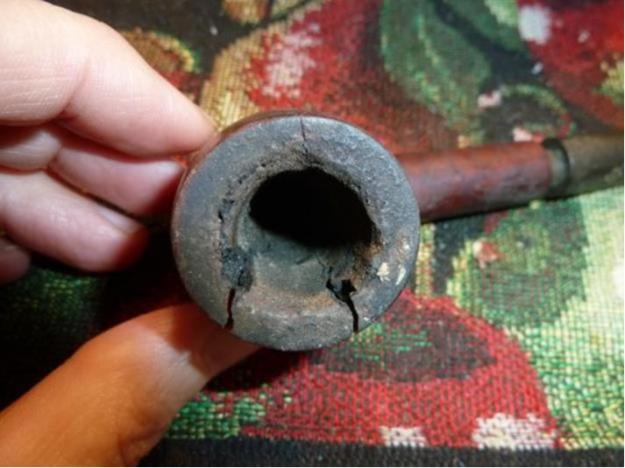
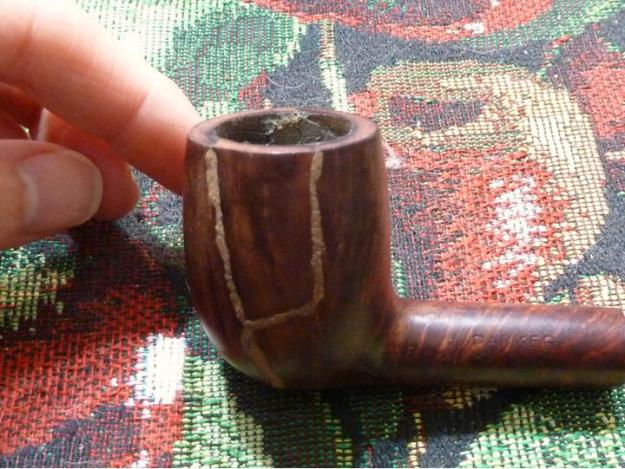
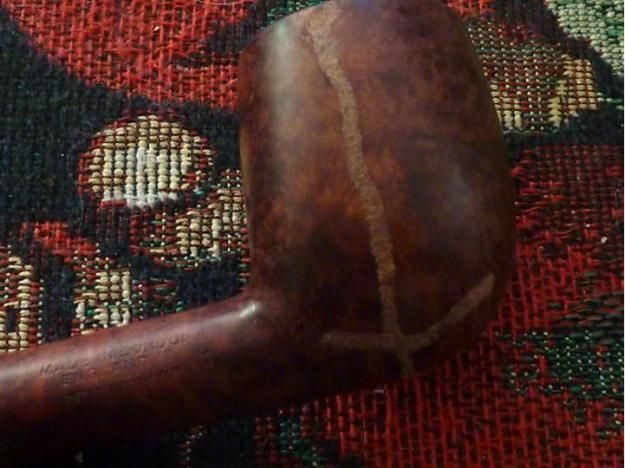
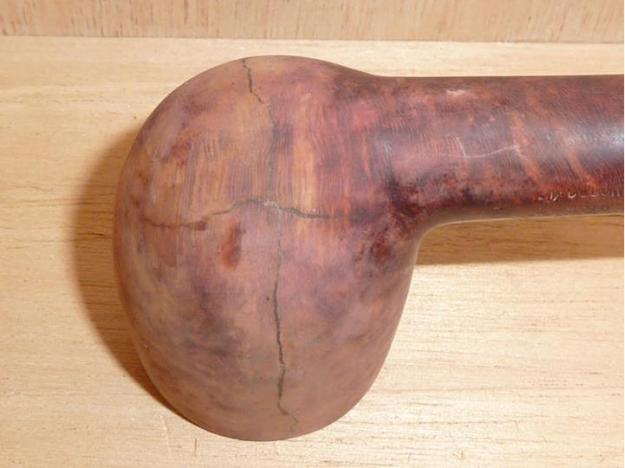
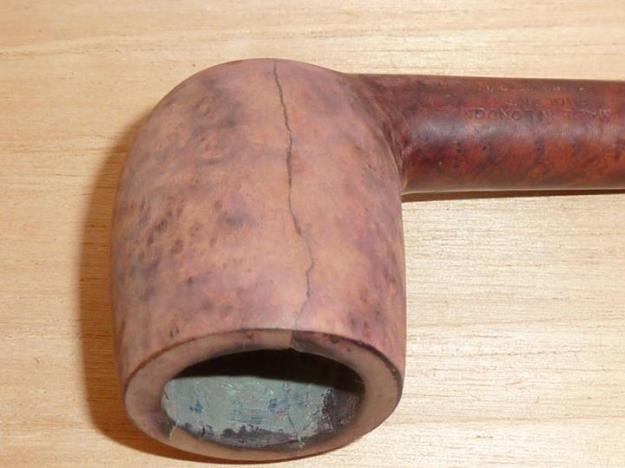
Carbon clogged the bowl and had fractured the briar in three separate places, the cracks pervading the crusted rim and converging at the bottom of the bowl. The shank too was obstructed with decades of hardened goo, to the point where the mortise could accommodate only about half of the stem’s tenon.Pam3Pam4Pam5Pam6 I turned up the lights and rubbed the shank a bit in an effort to remove some surface grime and get a better look at the shank’s stampings. The left side bore a faint PARKER SUPER BRUYERE, the SUPER inside a diamond; closer to the bowl was stamped the number 5. The right side read MADE IN LONDON over ENGLAND and the number 18. Below this was PAT. NO. 116989/17 and, about 5mm toward the bowl, a capital letter T.

I did a quick check of Pipedia and PipePhil for Parker date codes and discovered that this old boy* dates to 1941. (*As a female, I find it funny that men tend to refer to pipes in the feminine, i.e. she/her. To me they’re clearly male. But to each his or her own, right?)

At any rate, I couldn’t wait to get started on the pipe’s revival. I started by gently pulling the stem from the shank and laying it aside. For all its years of service, its oxidation was minimal. There were some troubling dings, one nearly marring the P logo, but the delicate work they would require could wait.

Instead I turned my attention to the amazing carbon cake. I tried to picture the very last time the previous owner loaded up the bowl. Roughly half its original capacity remained and the draw, if there was one at all, probably caused some pulled lip and/or cheek muscles.Pam7 I put the smallest head on my Pipnet and gently twisted it inside the cake. I expected the bowl to disintegrate immediately but, no, that took a good two or three turns more.

Moments later, with three distinct pieces in my hand and a lot more carbon to remove, I headed down to the garage and the Dremel. Even though this tool and its potential for destruction scares the bejeebers out of me, when equipped with a sanding barrel it does make quick work of hardened cake. A few minutes later I returned to my dining/work table blackened with carbon (thank goodness for dust masks and goggles) but with three much-cleaner pieces of briar to assess.

Parts of the bowl were not only caked but also charred, so I’d had to remove a considerable amount of material. Worse, due to the uneven nature of the char, the bowl innards were something less than round.

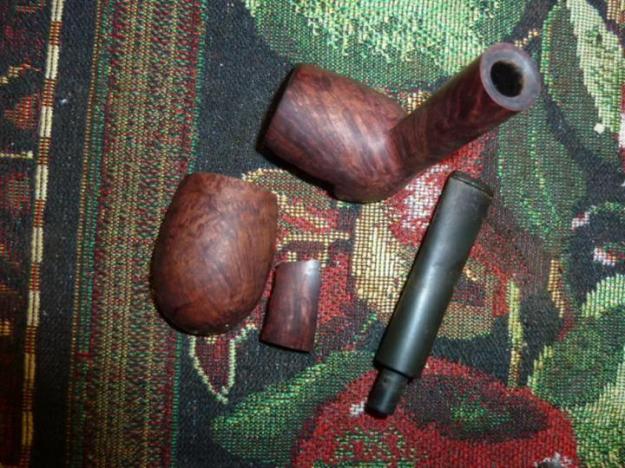
The good news tho was that all the breaks were clean, and the three pieces fit neatly back together. Before reassembly I scrubbed the outer surfaces with straight-up Murphy’s Oil Soap, then wiped them down with a damp towel. The grain that was hiding beneath the grunge made me smile.Pam8 I mixed up some JB Weld and applied it to the breaks, placing more on the inner edges than the outer. I reunited the individual parts, pressed and held them together for a couple of minutes, smoothed the interior with a toothpick and then set the bowl aside to cure.

A combination of demands at work as well as home meant that it was another week before I returned to the Parker. I tried twisting and turning the bowl and thankfully the “welds” held. JB Weld is tough stuff. 🙂 I ran a needle along the external surfaces of the cracks to clean out any loose debris, then applied briar dust and super glue.Pam9Pam10 While waiting for the glue mixture to cure, I began work on the stem. Starting with a small, folded bit of 220 grit paper, then 400 and 600, I gingerly worked on the small gouges near the base. If it weren’t for their location near the logo, I would have tried using a flame and then sanding. But I opted instead to make the raised edges flush with the stem, then mixed powdered charcoal with super glue and filled in the small cavities that remained. After curing, I sanded the patches smooth.

I also decided to experiment with the inside of a cigar box as background for picture taking.Pam11 The next day I sanded the briar-dust crack repairs with a succession of 220, 400 and 600 grit sandpapers. I also topped the bowl with that same sequence to see how the cracks appeared from the top down.Pam12Pam13 I put the stem back in the shank to size up how things were coming along and, when it only went in halfway, remembered that I still had a lot of internal cleaning to do.

I dipped a bristle pipe cleaner in 91% isopropyl alcohol and threaded it through the stem, then set it aside to soak. I attempted to do the same with the shank, but it was so clogged I had to first abrade away whatever gunk I could reach with a round needle file.

I dripped some alcohol down the shank and eventually was able to poke through to the bowl with a bristle cleaner—the first of many. I worked for about an hour, switching between bristle cleaners and cotton swabs, before finally finishing up with a few regular pipe cleaners.

The stem took a little less time, maybe 30 minutes, and a dozen bristle and regular pipe cleaners combined.

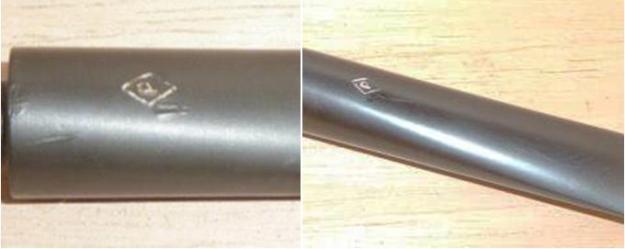
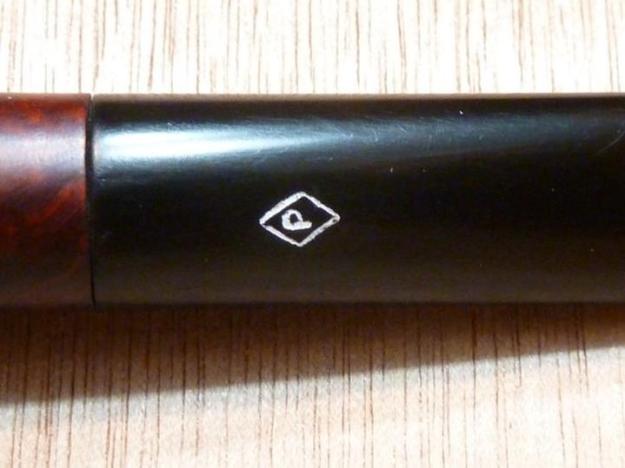
The P logo on the stem was a little worse for wear. The lower right side of the diamond, as viewed from the button end, was virtually nonexistent. Using an Exacto blade, I pushed on the faint outline that remained until there was a slight indent. It wasn’t quite as deep as the other three sides of the diamond, but I thought it prudent to stop before I went too far.

I tried using white nail polish to brighten up the logo but, perhaps because the bottle was 20 years old, the results weren’t quite what I was looking for. I wiped away the nail polish residue and applied Liquid Paper white correction fluid, which I’ve had success with in the past.Pam14 I would say the results were “Meh,” except that, in looking up other Parkers online, it would appear that their stem stampings are not always super-crisp. Rather than waste more time on a detail that probably can’t improve a whole lot more, I decided to celebrate its unevenness and move along to the next step: resolving the bowl’s myriad issues.

Using 220 grit sandpaper, I moved along the inside of the bowl, sanding away excess JB Weld along with microns of briar. I eyeballed the progress as I went, hoping for a shape that approximated round. When I was satisfied it was as close as it could get, I mixed up a small batch of Steve’s sour cream-n-powdered-charcoal bowl coating and applied it, first with a dental spatula, then a folded pipe cleaner. I used my index finger for a final smoothing.
Pam15Pam16Pam17 It was during this process that I noticed the left exterior of the bowl was itself somewhat flattened. Maybe a few too many whacks on a tabletop or boot heel?

Whatever the reason, I moistened a towel, heated a table knife and proceeded to steam the area. Maybe it worked, maybe it’s just wishful thinking, but the flatness did seem to raise up a bit. With that issue addressed, it was time to start staining.

When I’d cleaned up the briar with the Murphy’s Oil Soap, the grunge on the towel included a considerable amount of red pigment. Hoping to recreate the same hue, I swabbed the bowl with oxblood aniline stain, wiped it immediately with an absorbent cloth, then swabbed it with dark brown stain and wiped again. After a few touch-ups I was satisfied that the coverage was even, and flamed the stain with a lighter.

The seams where the bowl had been mended were still a little too visible for my taste, so I went at them with a black Sharpie marker. A quick dab with the marker followed by a quick wipe with my finger helped the cracks blend in a little more.

At this point I decided this Parker was about as reborn as he was going to get. Down to the garage workshop we went, one last time, to apply some carnauba. Only then did I realize just how cold our recent cold snap has been. I brought the wax bar inside to warm up a bit, then went back to the garage for a couple quick coats. More will come, after the next thaw.
If you look at the pipe up close, the cracks are still apparent. But like a bad memory, they fade with some distance. This is one pipe Frosty is going to have to do without.Pam18Pam19Pam20