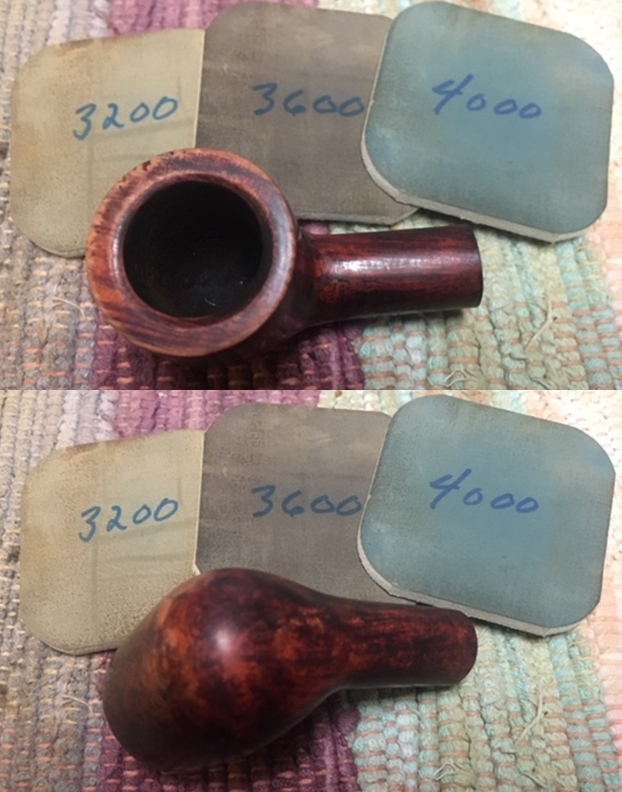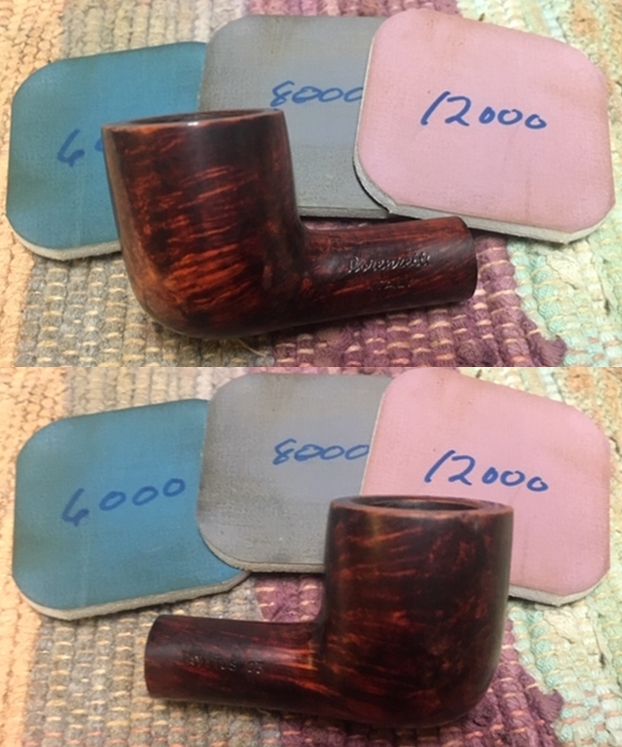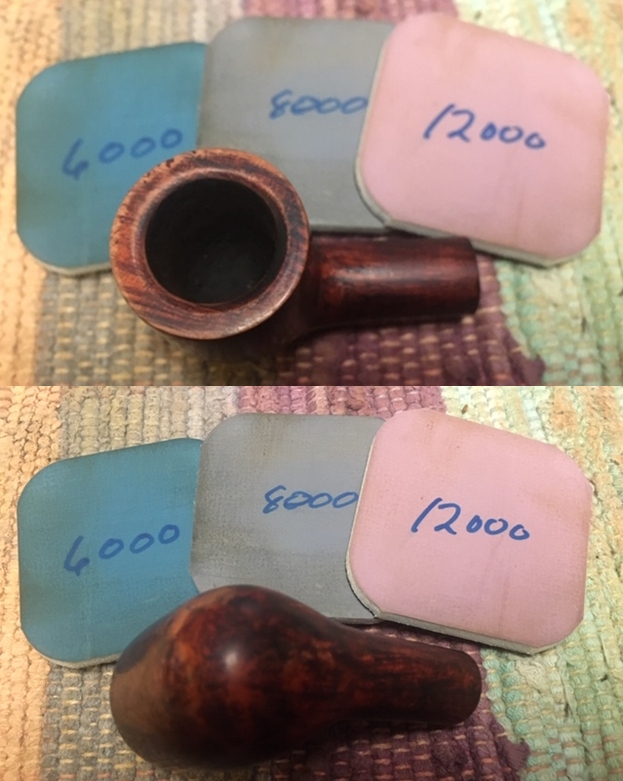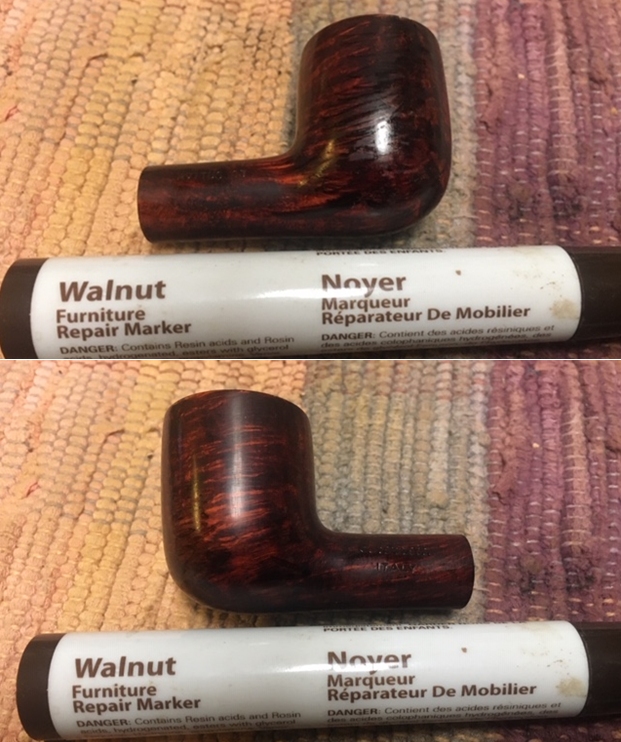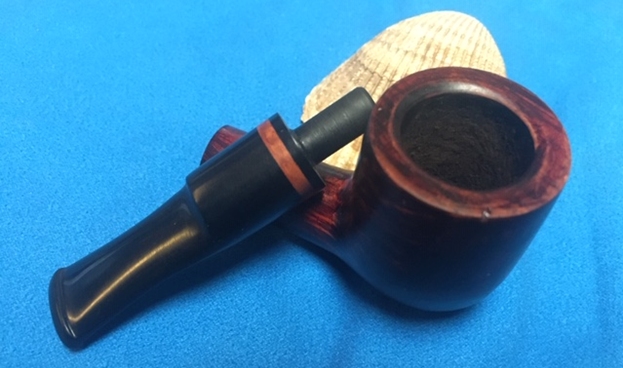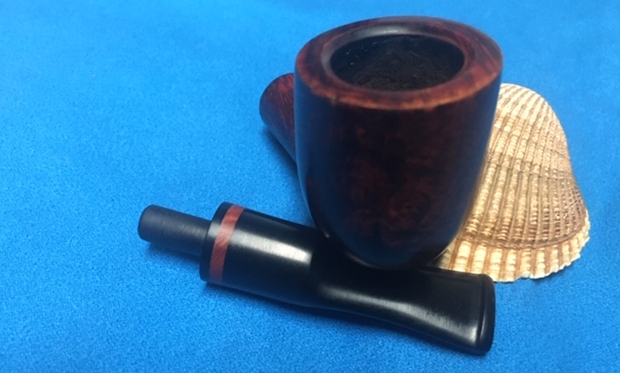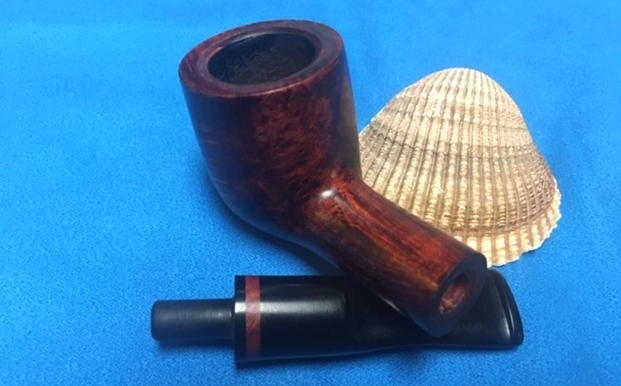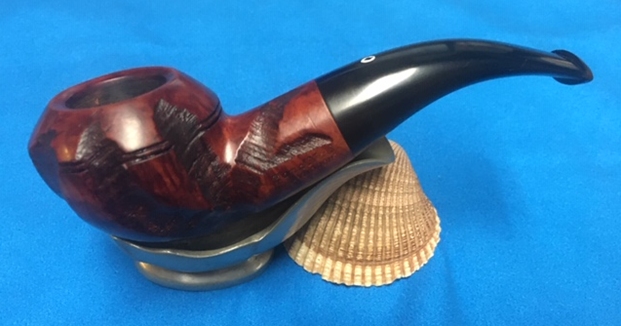
Tag Archives: Bowl – refinishing

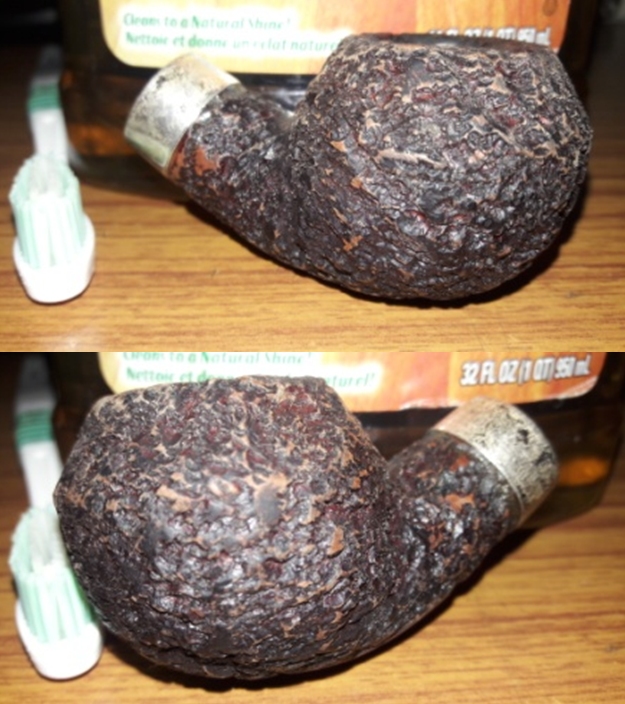
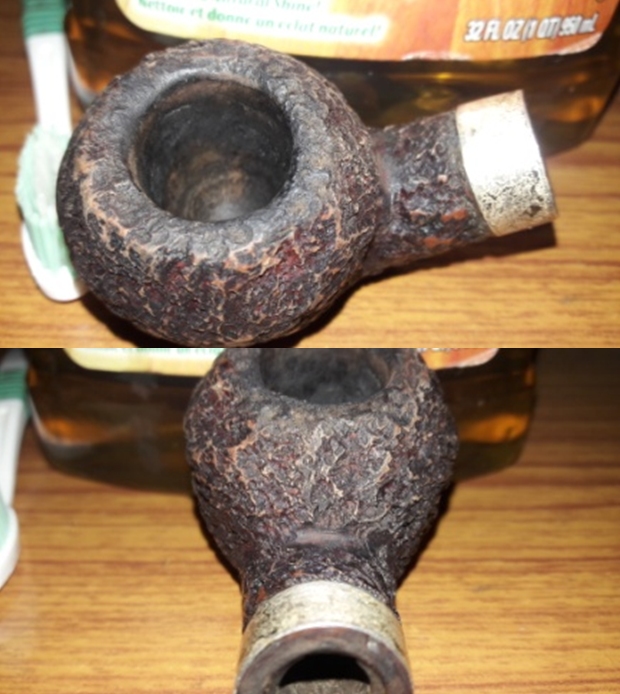
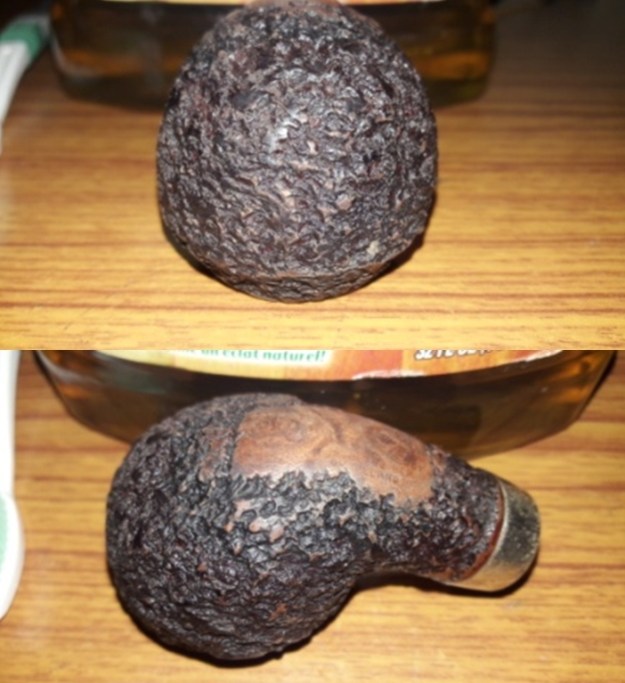
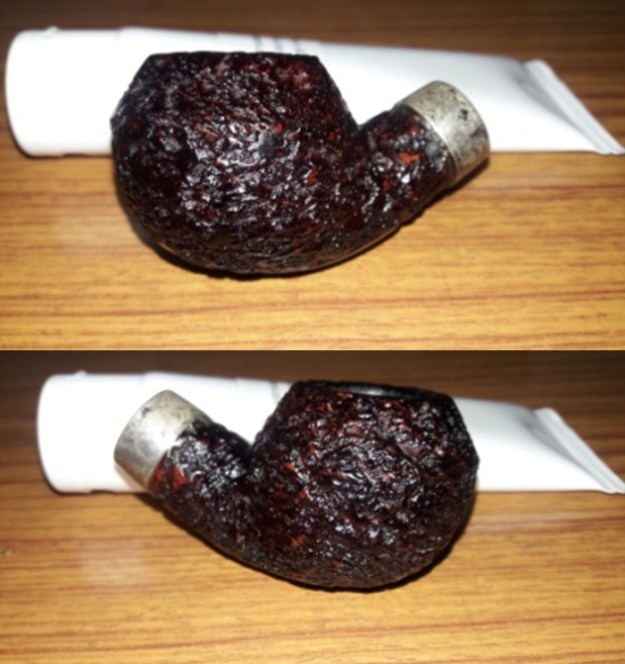
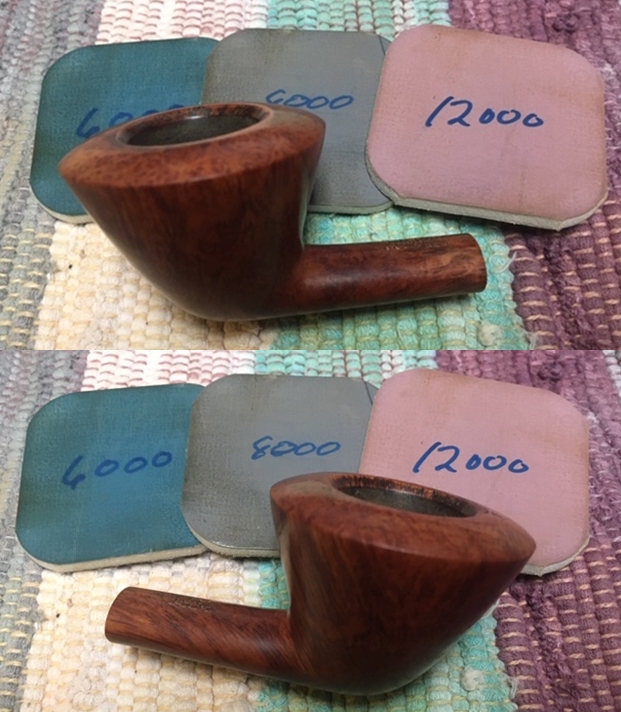
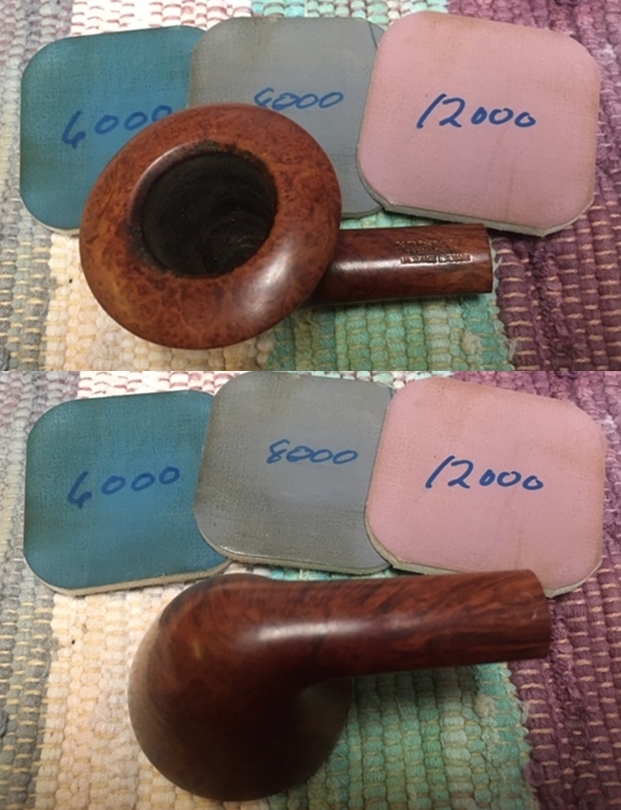
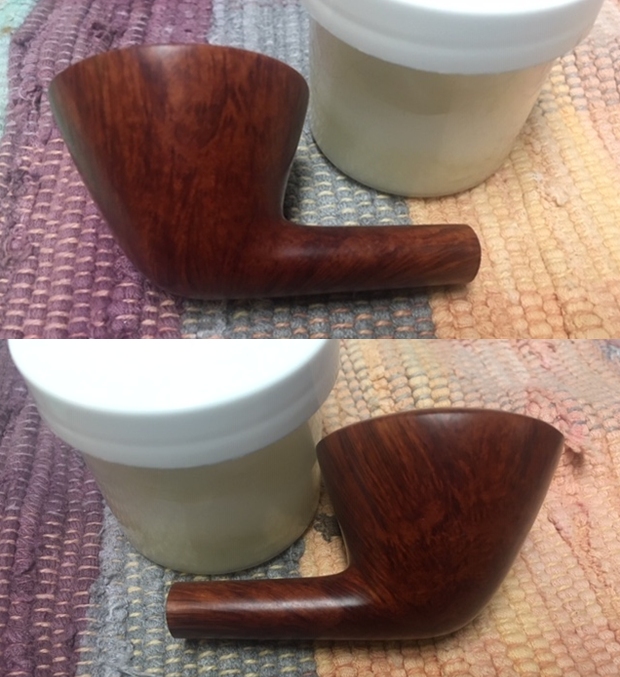
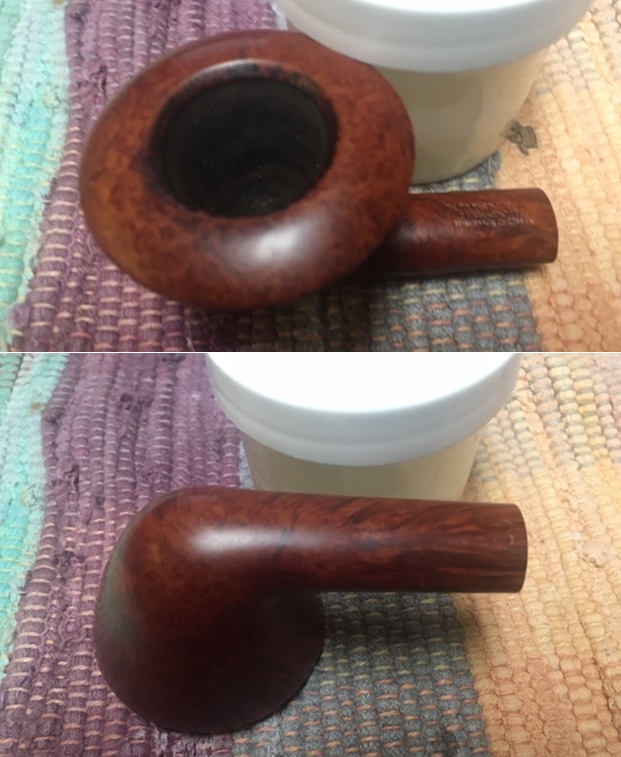
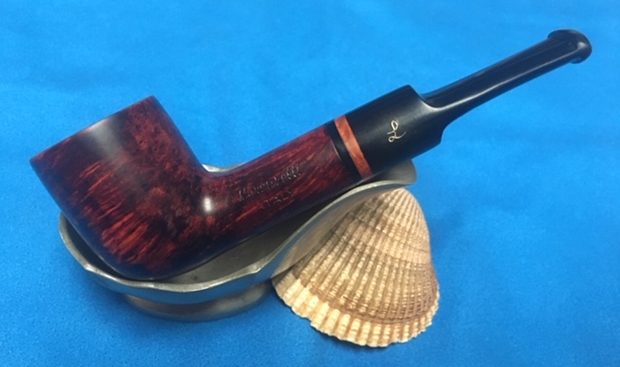
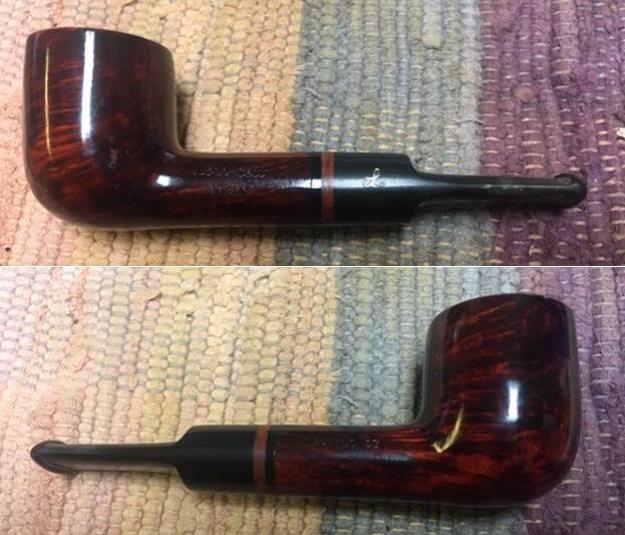
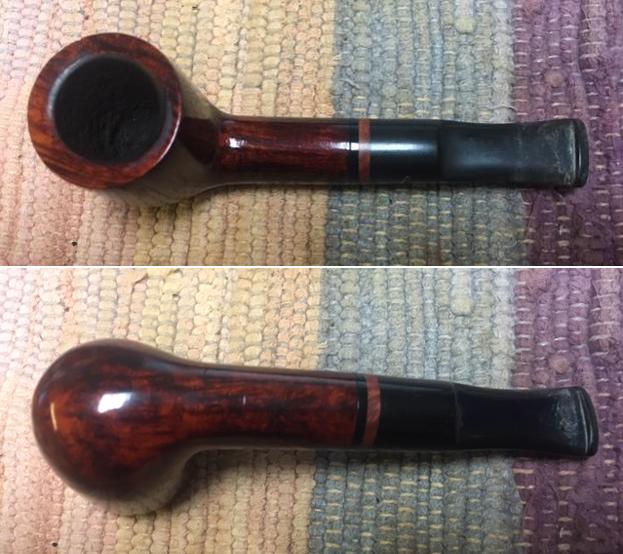
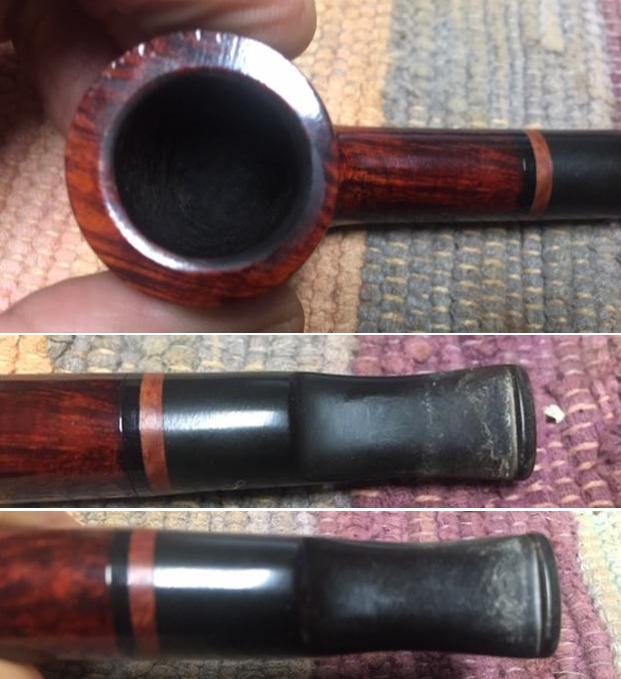
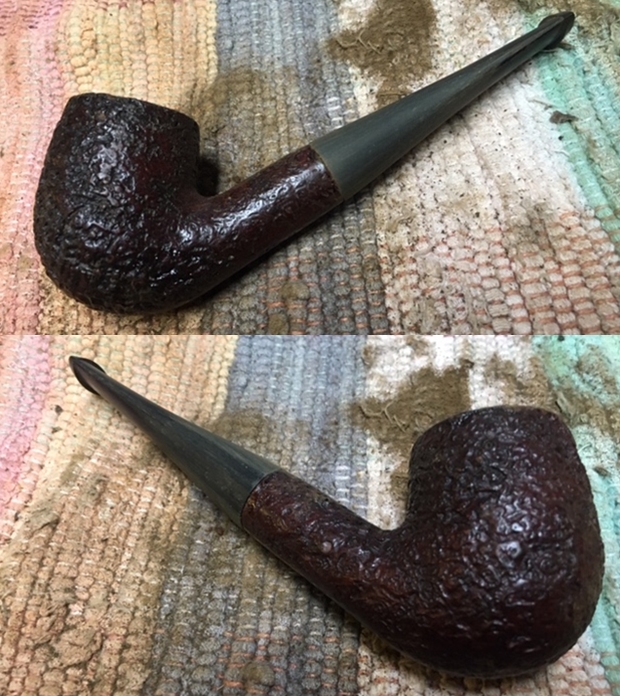
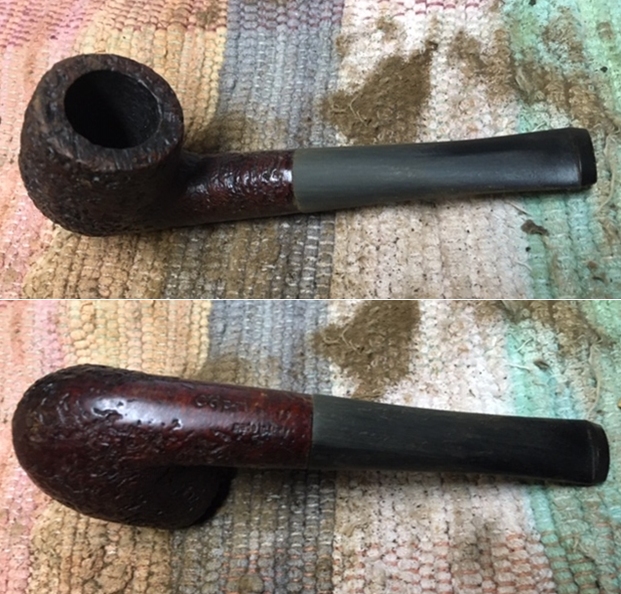
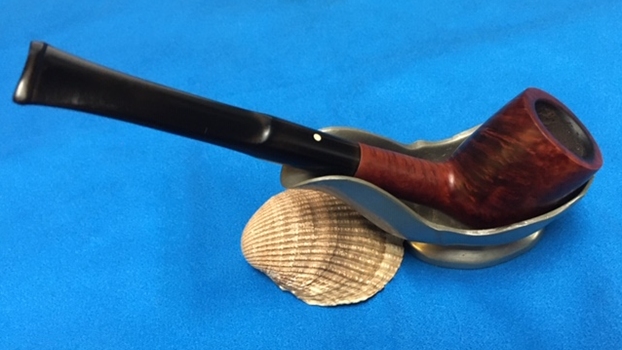
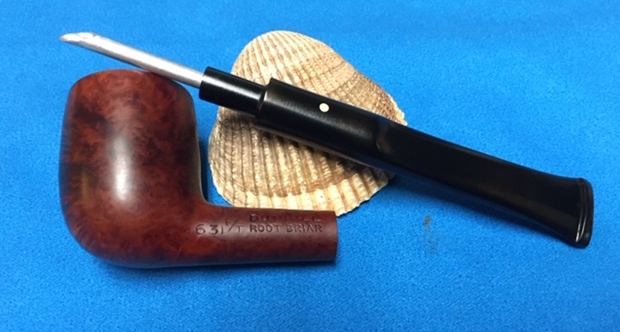
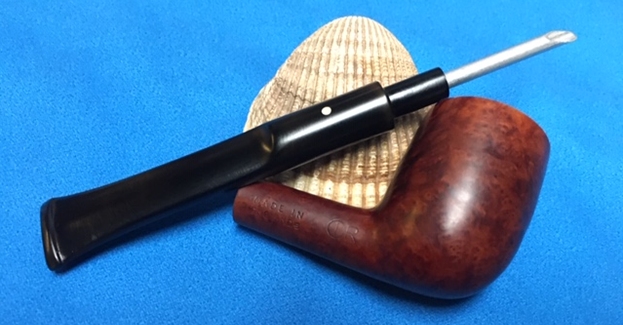
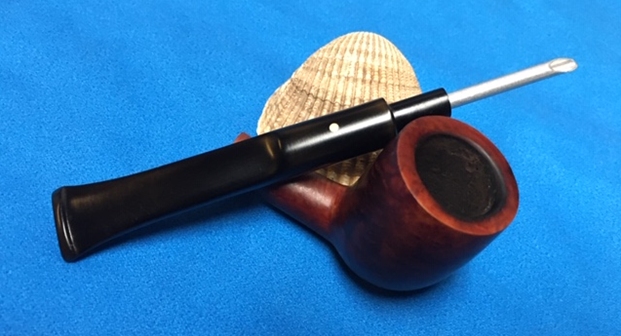
New Life for a Patent Era Brigham Select Billiard Sitter


Blog by Steve Laug

Not too long ago I received an email from a fellow in Kitchener, Ontario regarding some pipes he needed cleaned up. He had been referred to me by my local pipe and cigar shop. While I am not currently adding more pipes to my queue of repairs I have made a commitment to the shop to work on pipes for their customers. Generally they have one or two pipes that need a bit of work. This fellow sent me the following email:

I just came across my smoking pipes that I’ve had in storage for about 40 years. I’m wondering what you’d charge to have them refurbished. There are 17 in total (11 are Brighams and 6 are various).

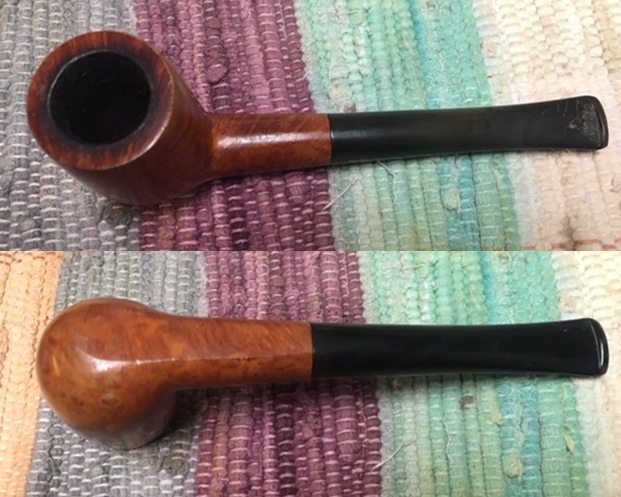
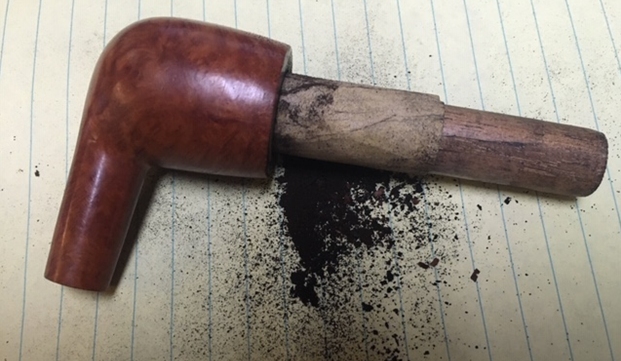
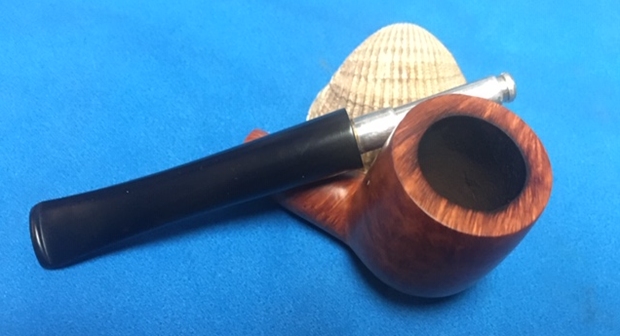
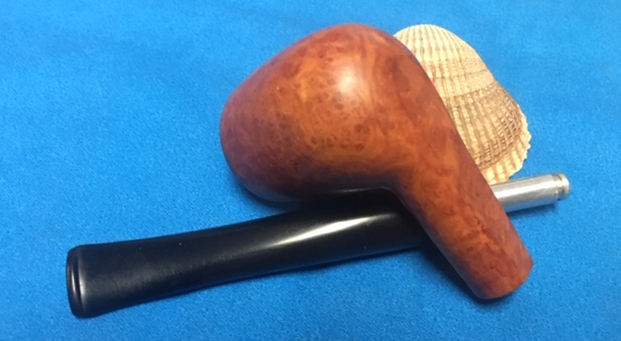
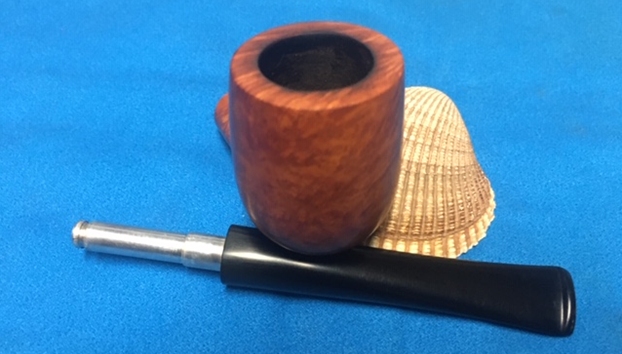
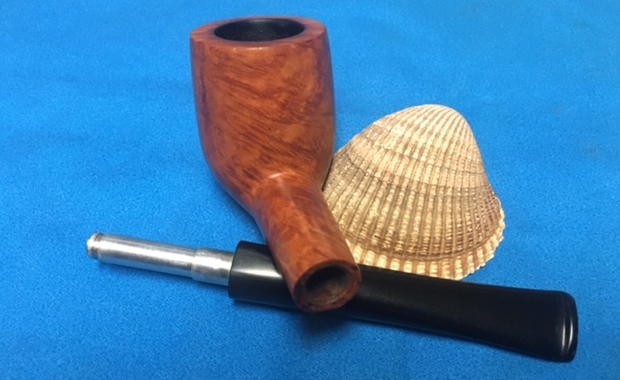
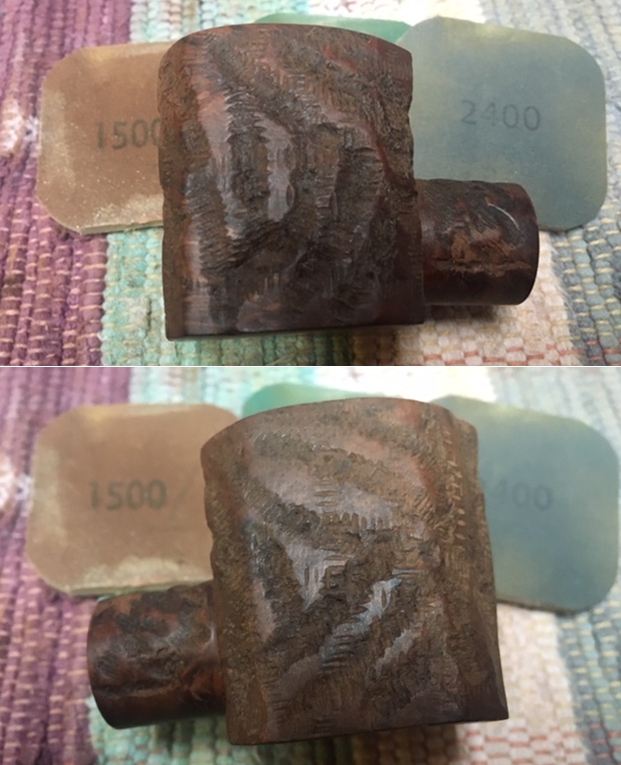
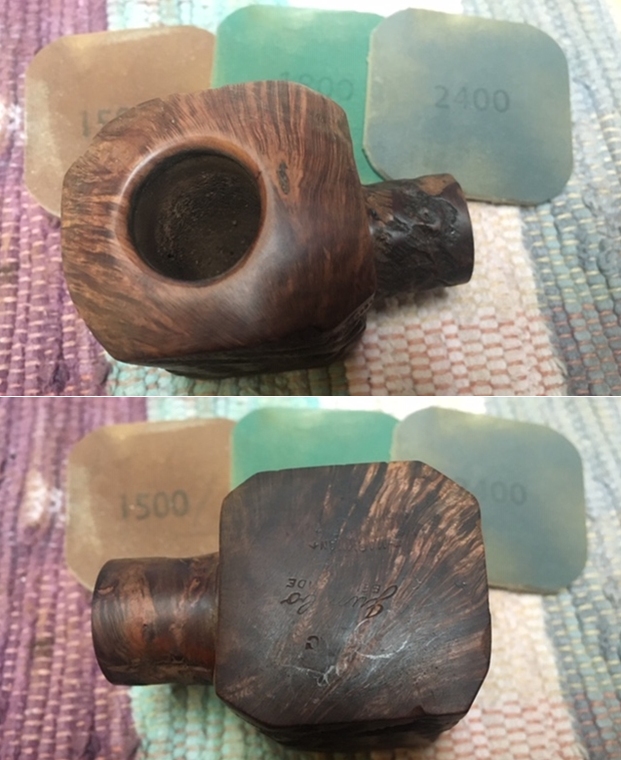
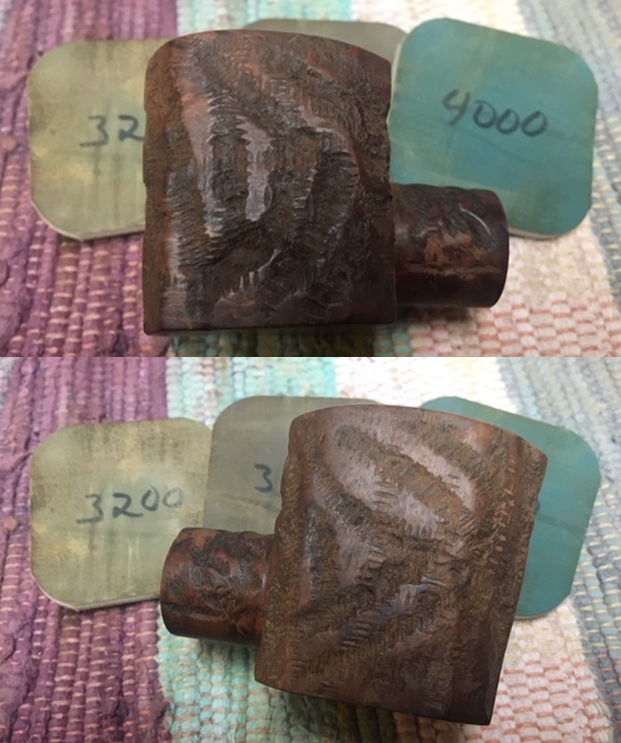
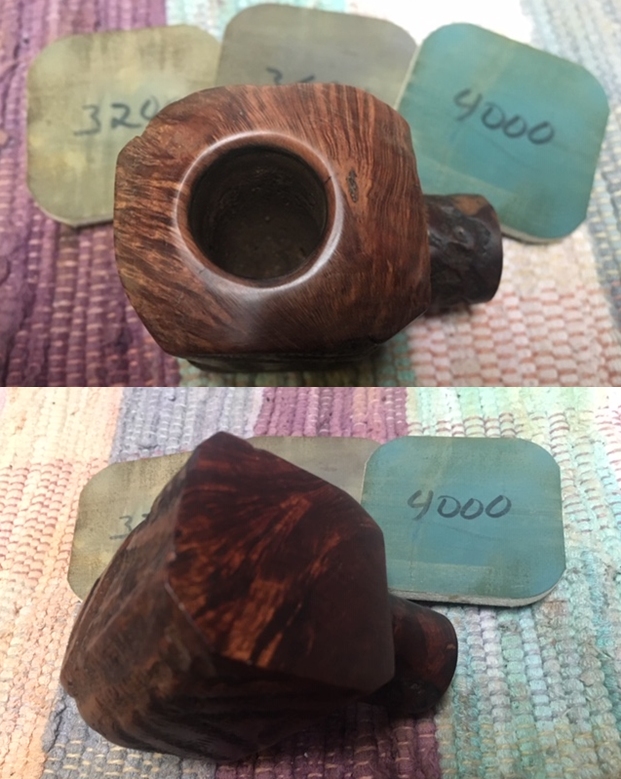
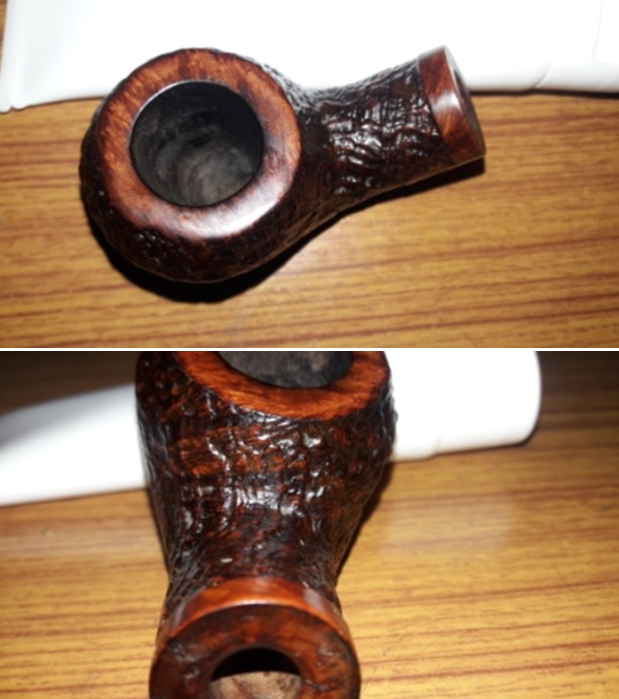
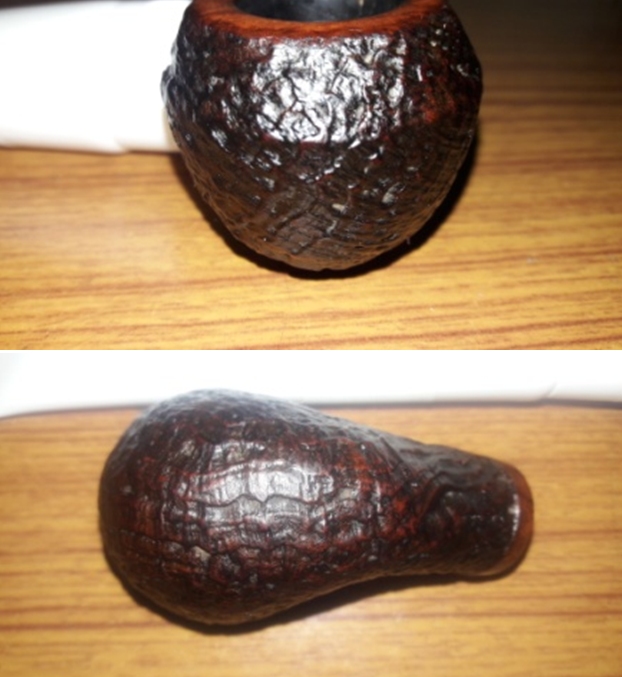
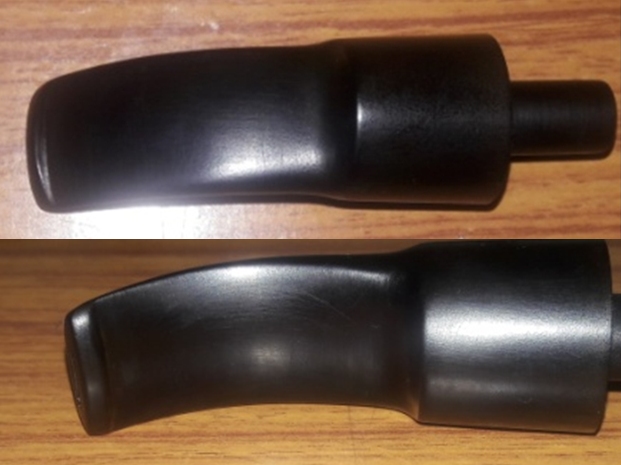
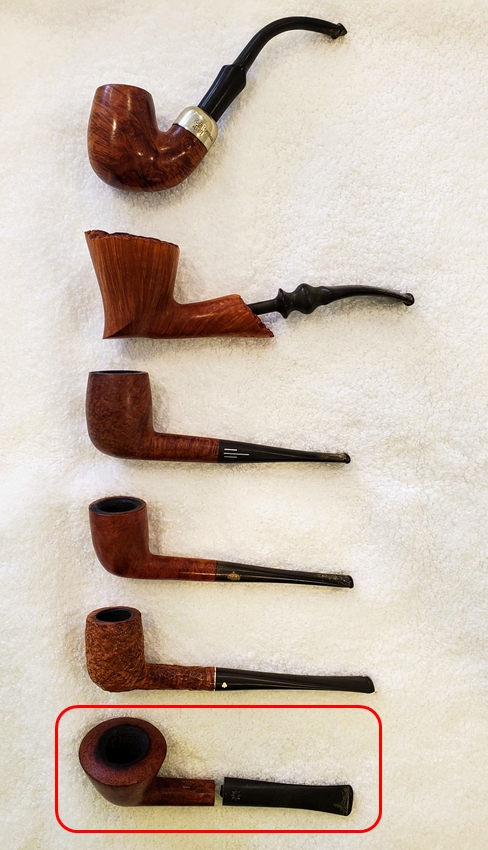
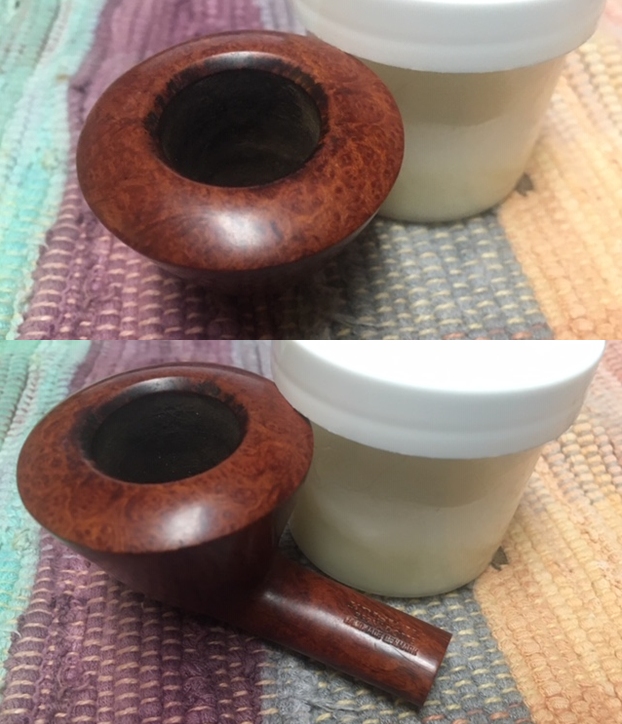
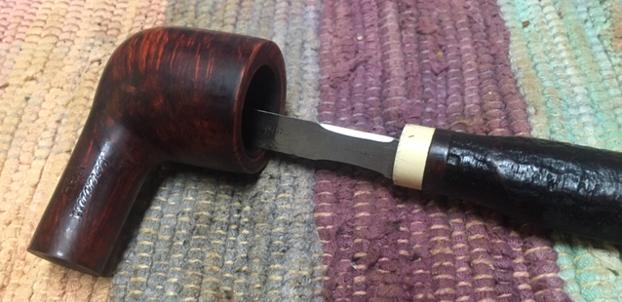
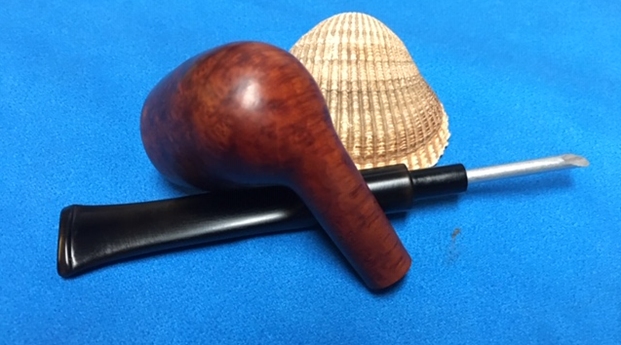
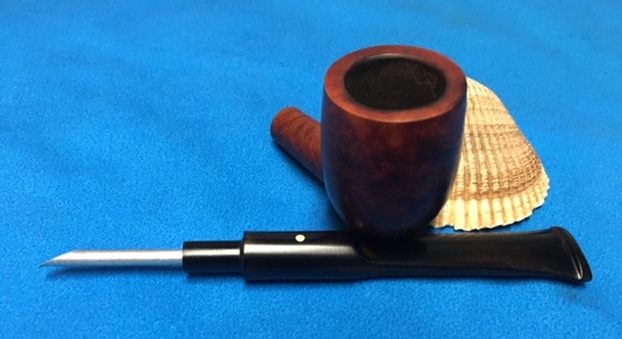
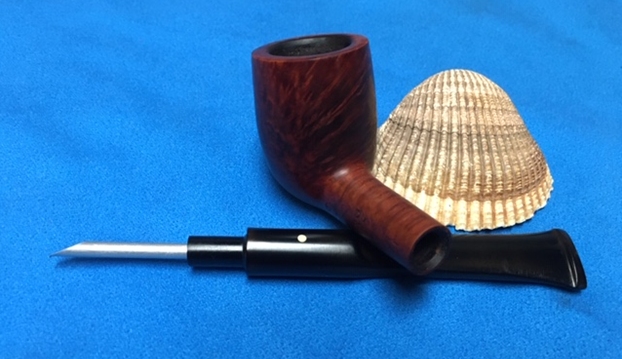
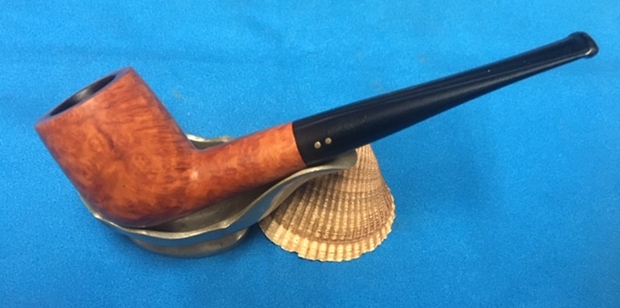
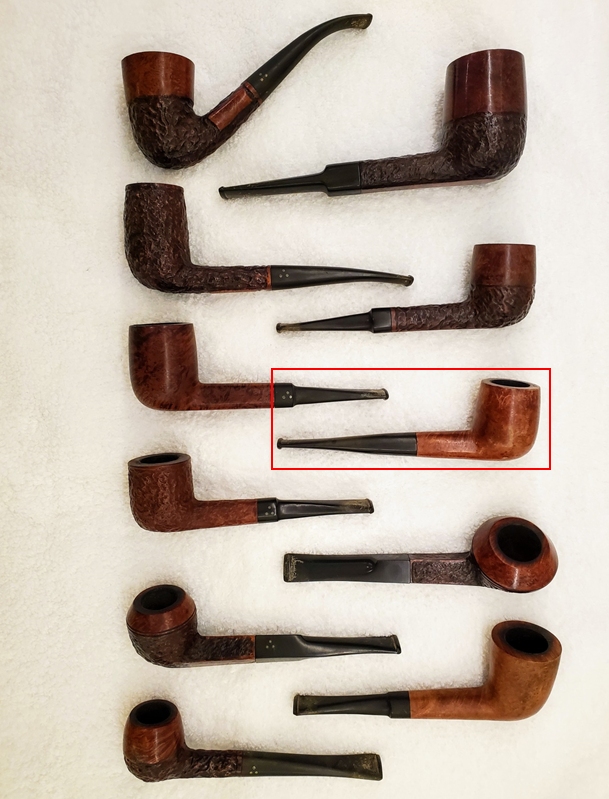
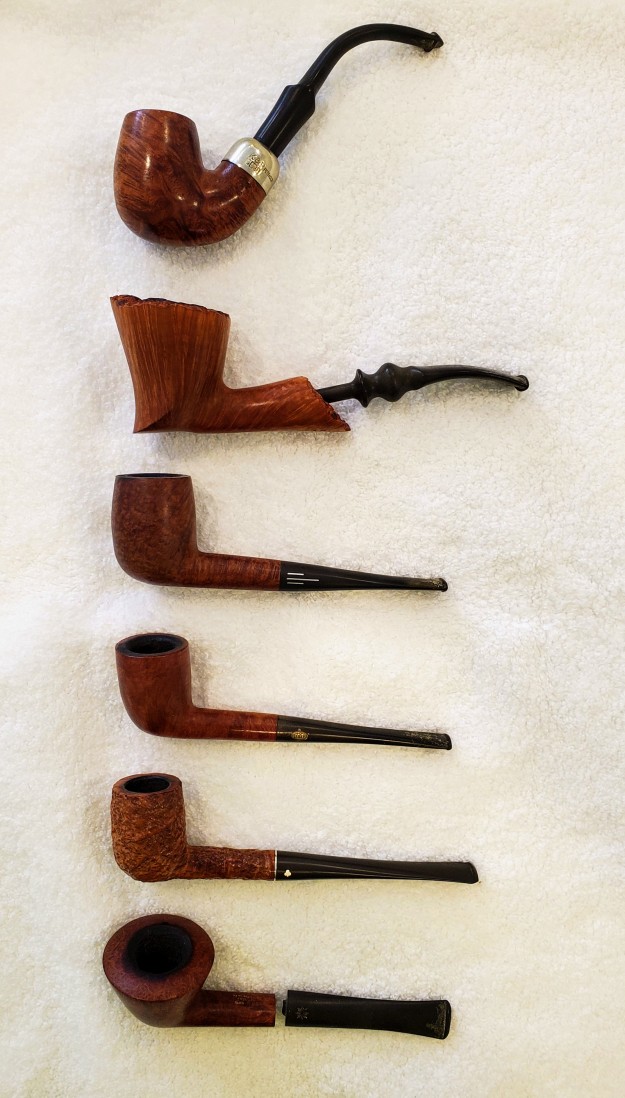
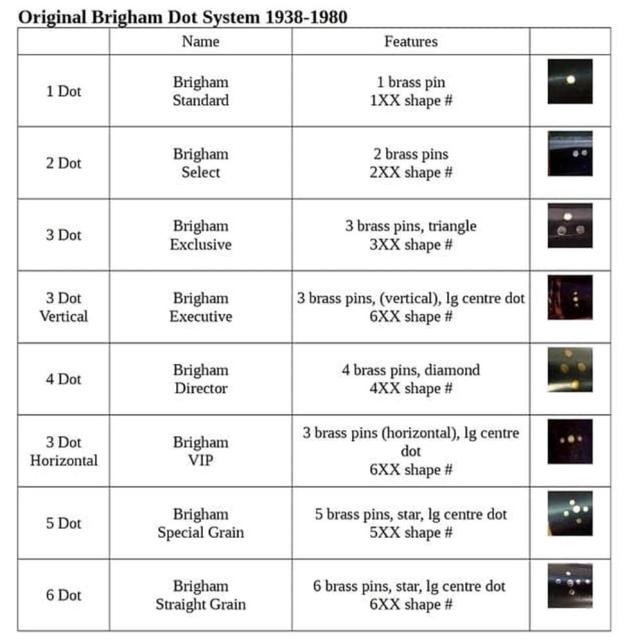
It turns out he said he had 17 pipes. That was certainly more than I expected but I communicated that there was a large queue ahead of him and I would have to fit them in as I could. He was fine with whatever time it took. He sent me the following photos of his collection that he wanted restored. The first photo shows his eleven Brigham pipes – all very interesting shapes. The second photo shows the six various pipes in the collection – A Republic Era Peterson’s System 1312 (Canadian Import), A Bjarne Hand Carved Freehand, a Comoy’s Everyman London smooth billiard, a GBD Popular Dublin 12, an English made Kaywoodie Rustica 72B, a Kriswill Bernadotte 60 with a broken tenon. When the box arrived there were two additional pipes included for a total of 19 – a Ropp 803 Deluxe Cherrywood Poker and a Comoy’s Sandblast Everyman Canadian 296. It was a lot of pipes! I have been randomly choosing the next pipe to work on and chose the Brigham that I have drawn a red box around in the first photo below. When I unwrapped the next pipe it was a flat bottomed Brigham Billiard sitter without clear number stamp. The smooth finish looked like it had a varnish coat and that was spotty around the sides of the bowl. There is a faint Made in Canada with Brigham in a script on the flat bottom of the shank. It looked like it could also have had the Can. Pat. stamp but I could not read it for sure. The rim top has some darkening, nicks and the inner edge is out of round. There is a light cake in the bowl. The 2 Dot tapered stem is oxidized and has tooth marks and chatter near the button and some calcification. I took close up photos of the bowl and rim top to show the condition of the bowl and rim. I also took close up photos of the stem to show its condition as mentioned above.   I took a photo of the stamping on the underside of the shank to try and capture what I was speaking about above.I removed the stem from the shank to reveal the aluminum tube/tenon that held the Rock Maple Distillator. The distillator was was missing in this pipe so I would need to replace it with a new one once I had cleaned it. Before starting my clean up work on the pipe I turned to a chart that Charles Lemon of Dad’s Pipes sent to me on the patent era Brighams. There were made from 1938-1980. As the pipe I am working on is a Patent pipe, it’s more accurate to refer to its grade by name (the post 1980 grading scheme refers to Dots). Here is the  chart that Charles sent me. The pipe I am working on is thus a Brigham Select with two brass pins.It is helpful having this chart and getting a quick picture of where the pipe fits in the Brigham line. Now it was time to work on the pipe.
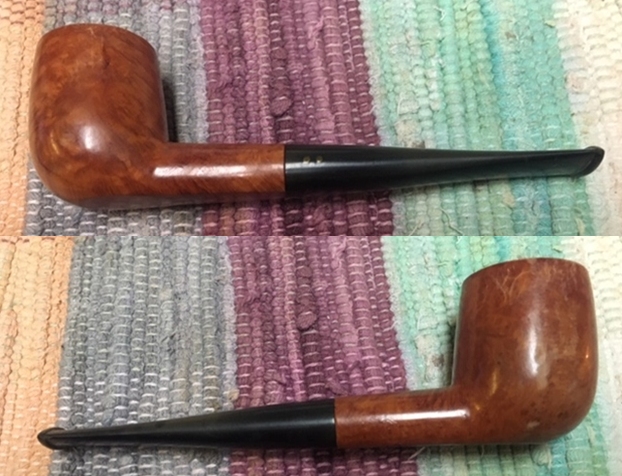
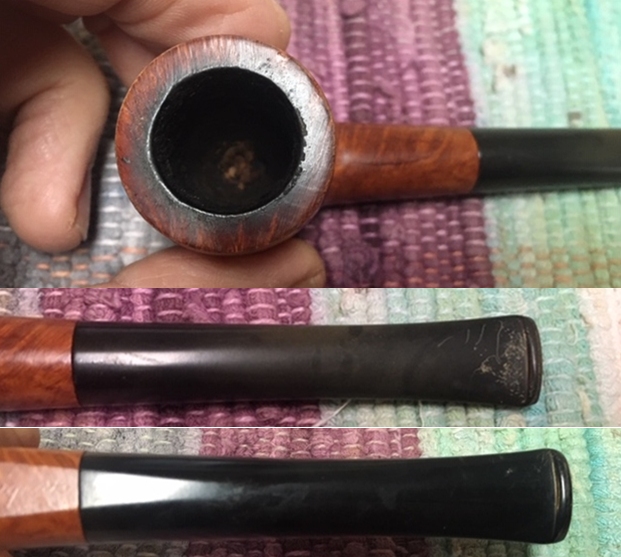
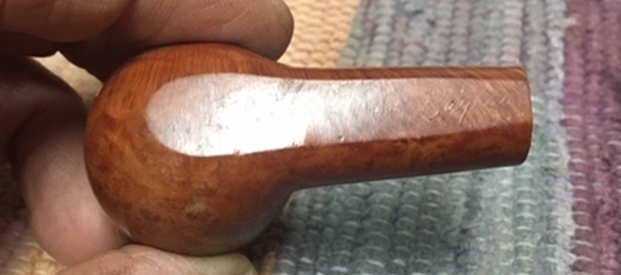
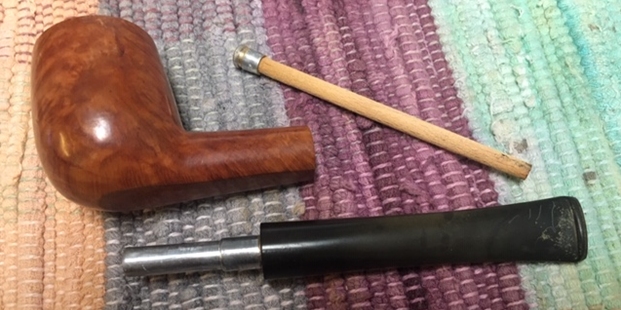
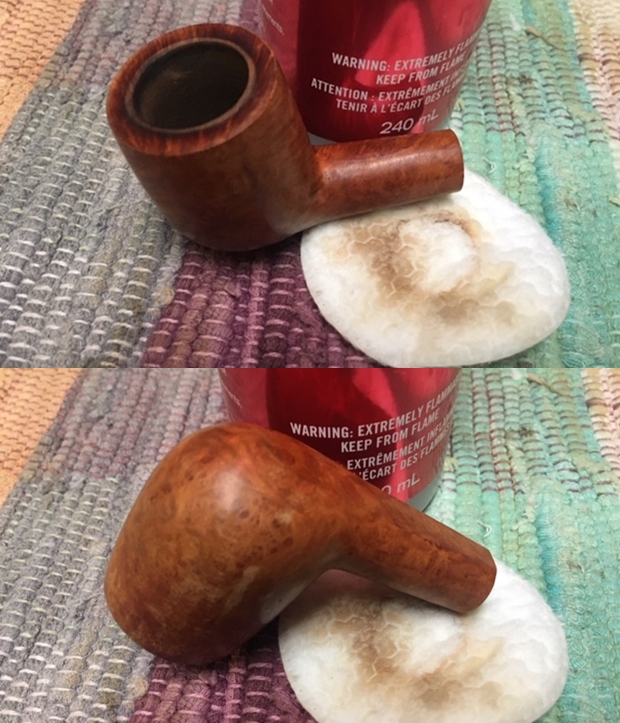
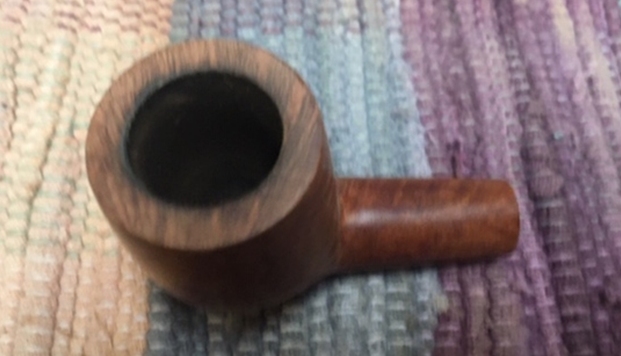
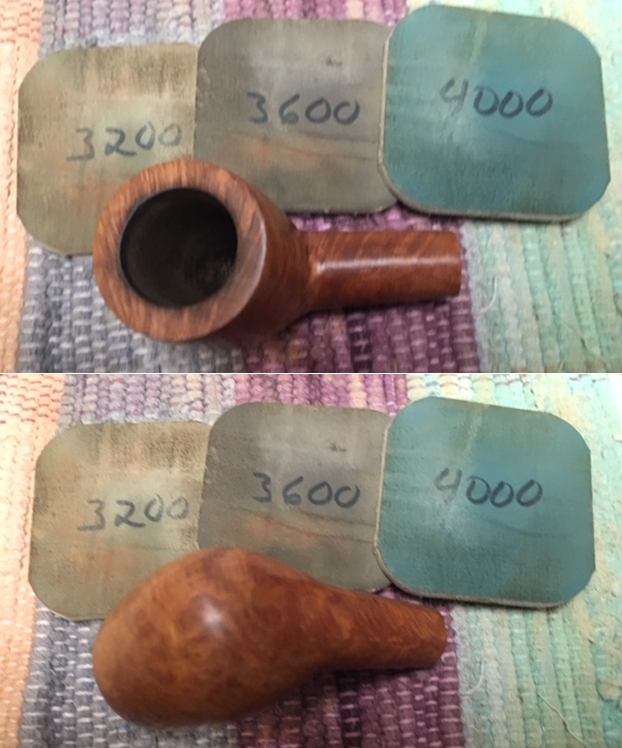
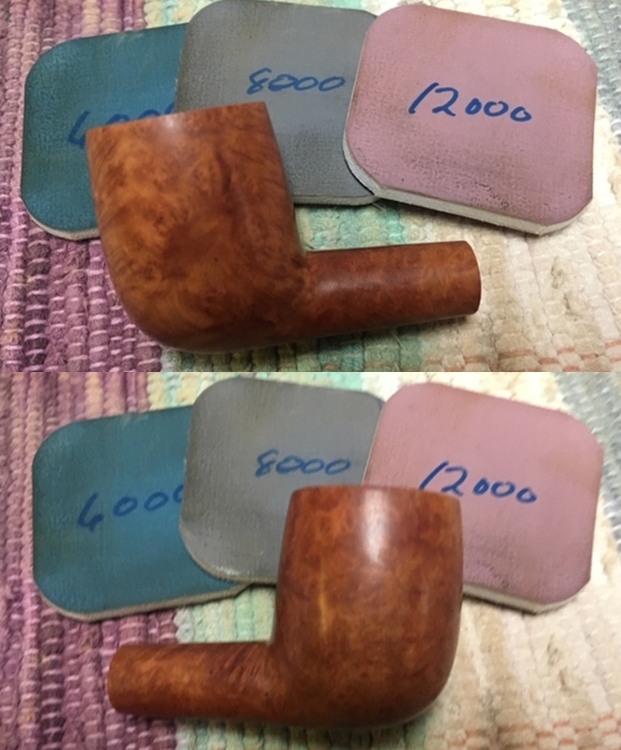
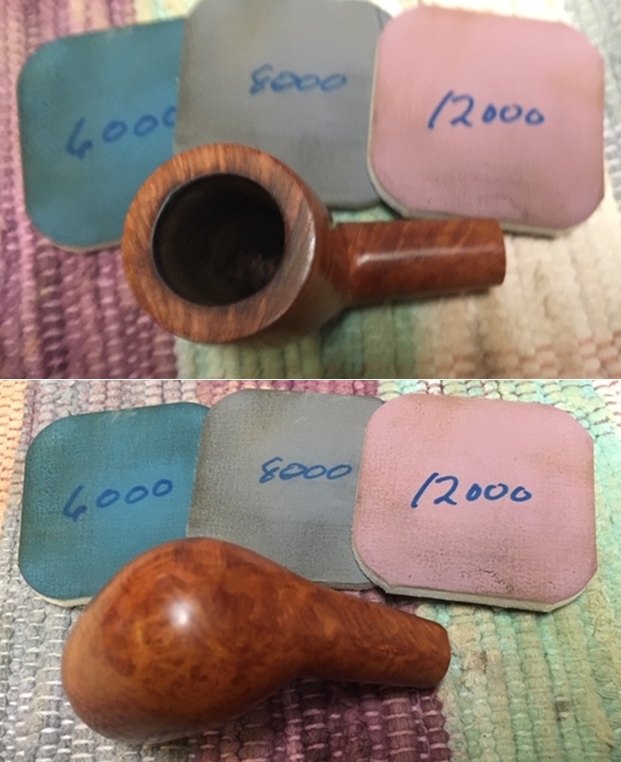
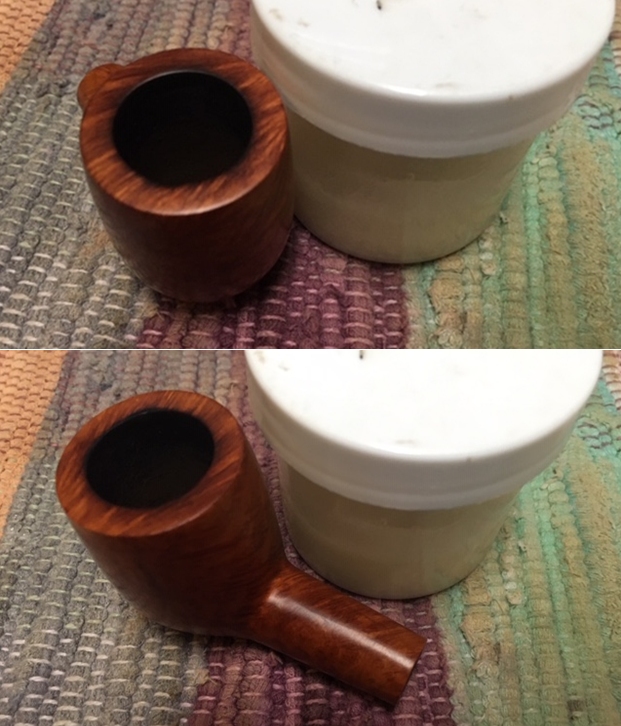
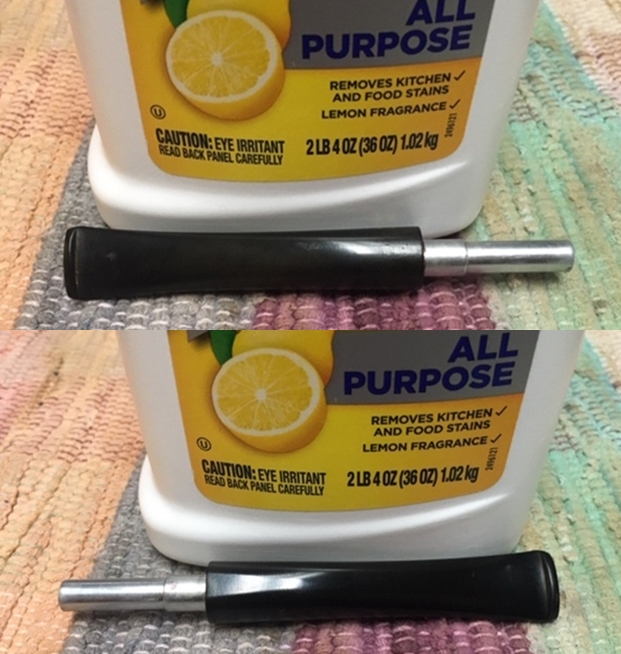
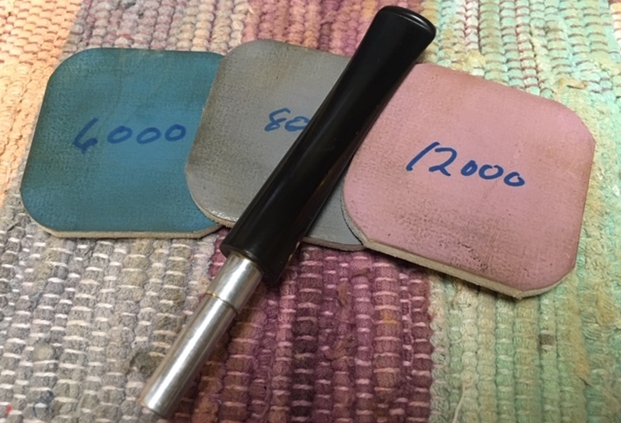
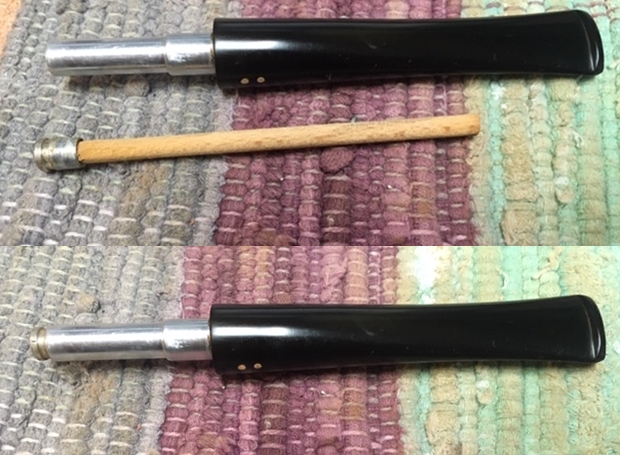
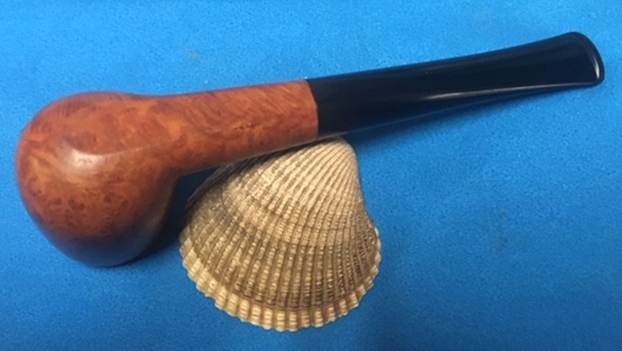
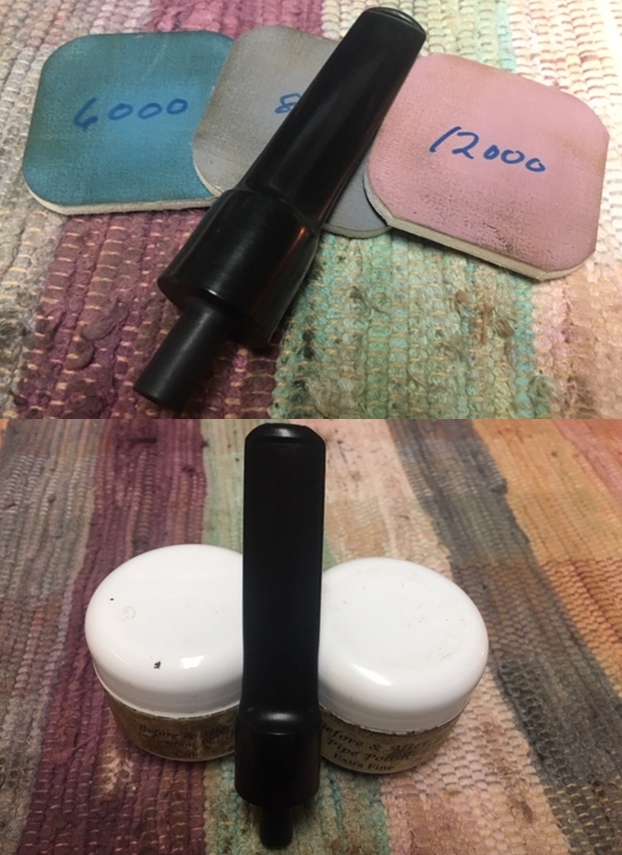
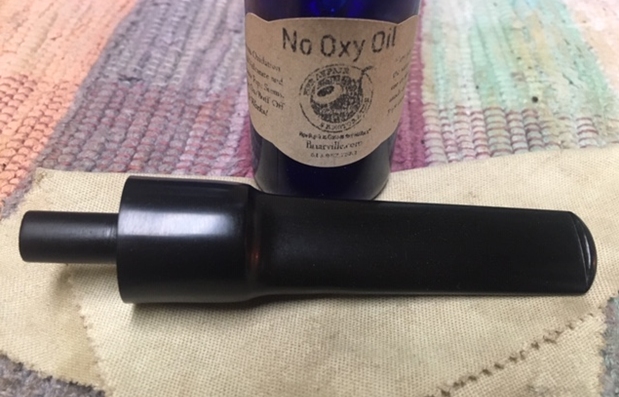
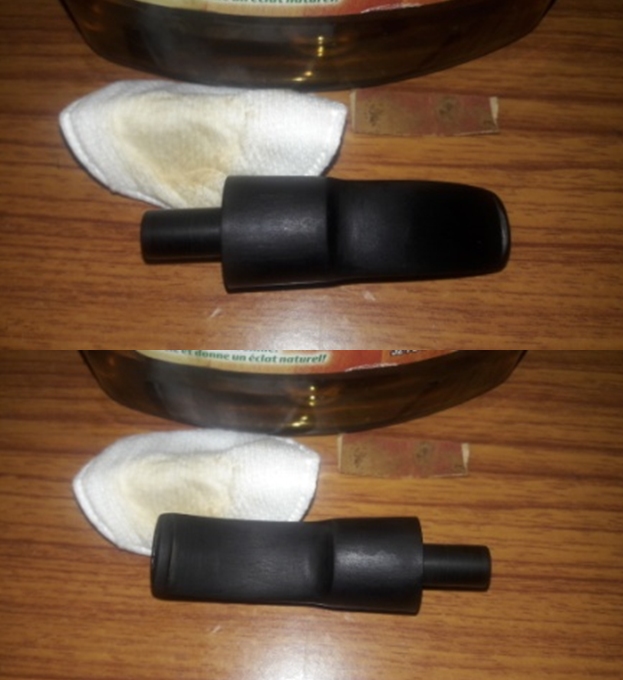
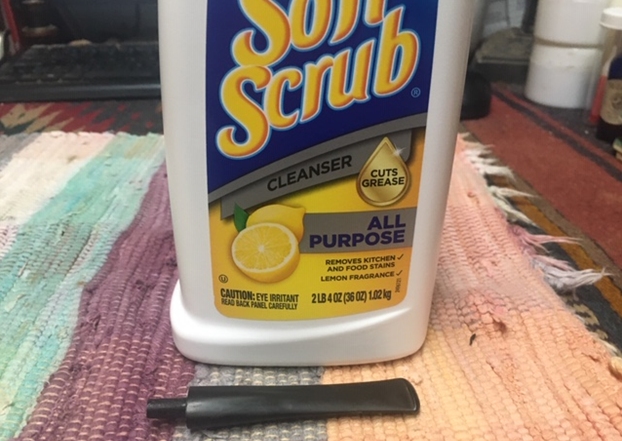
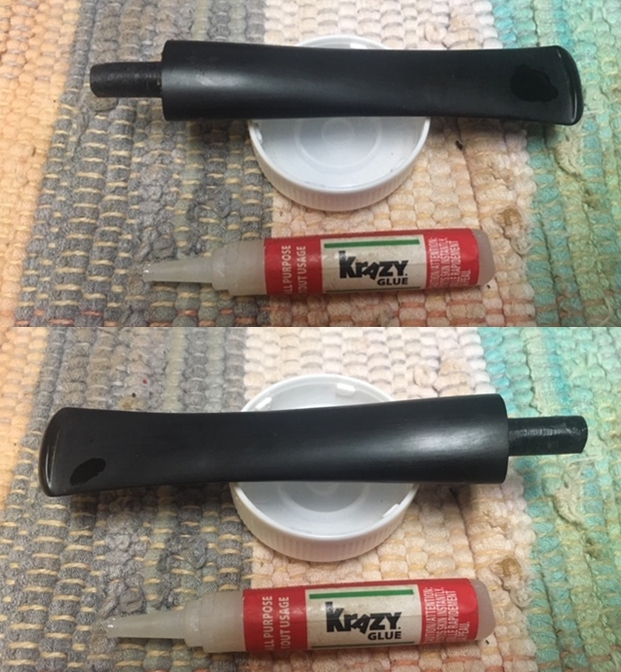
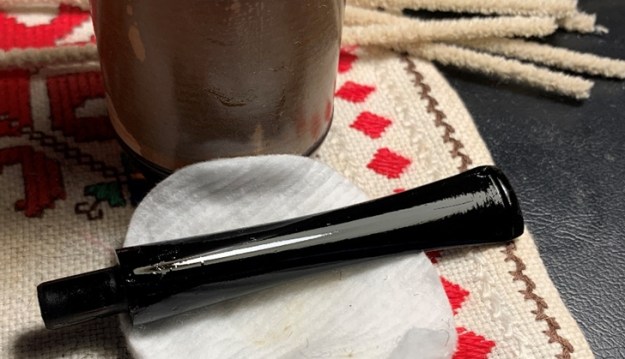
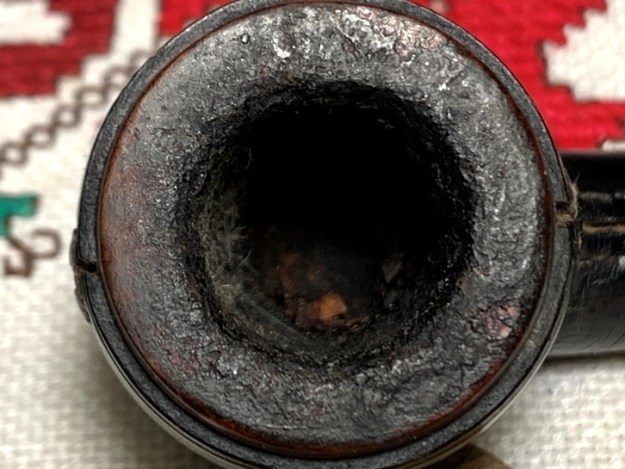
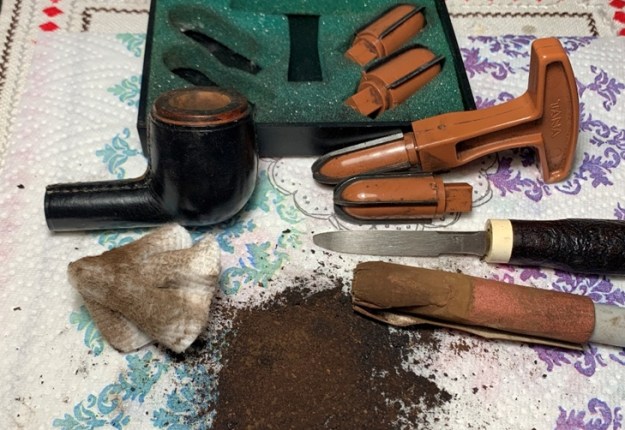
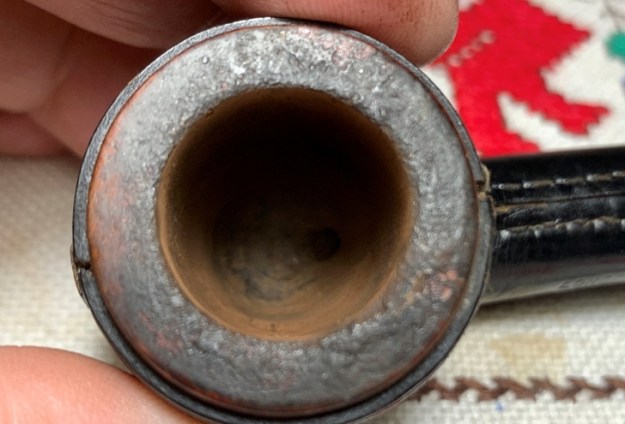
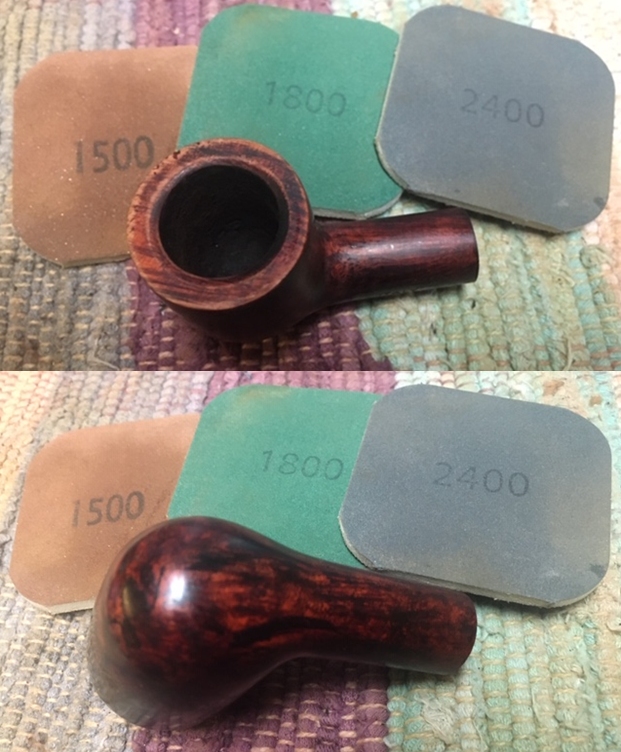
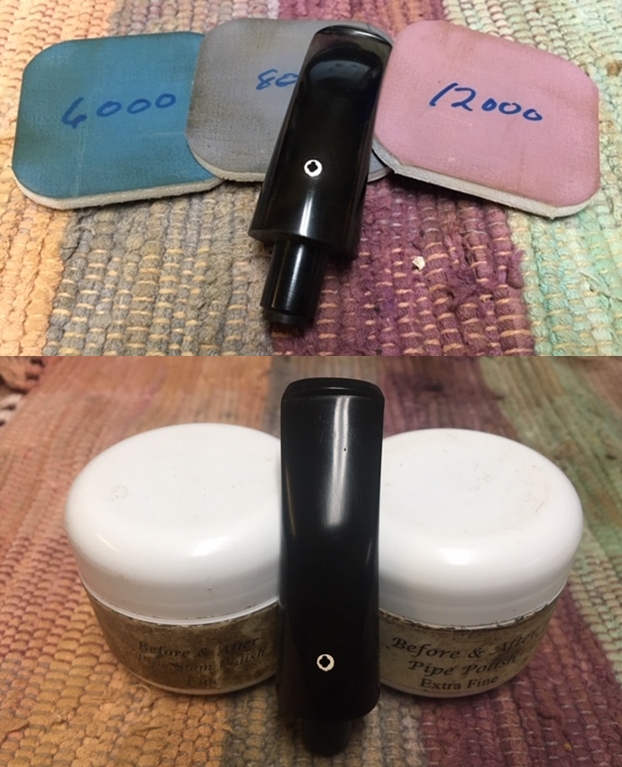
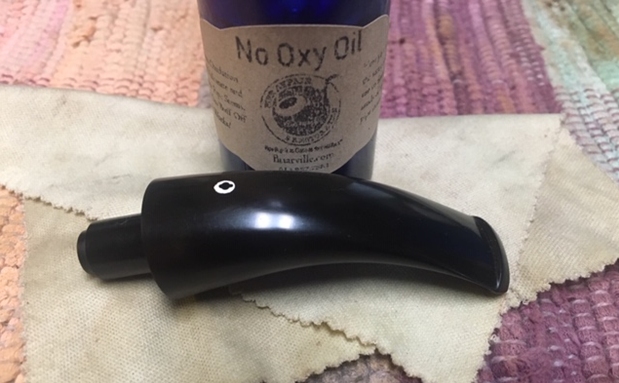
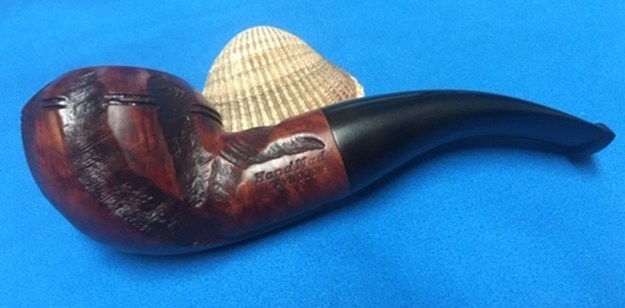
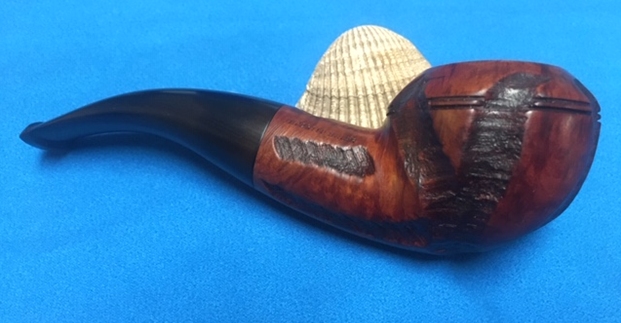
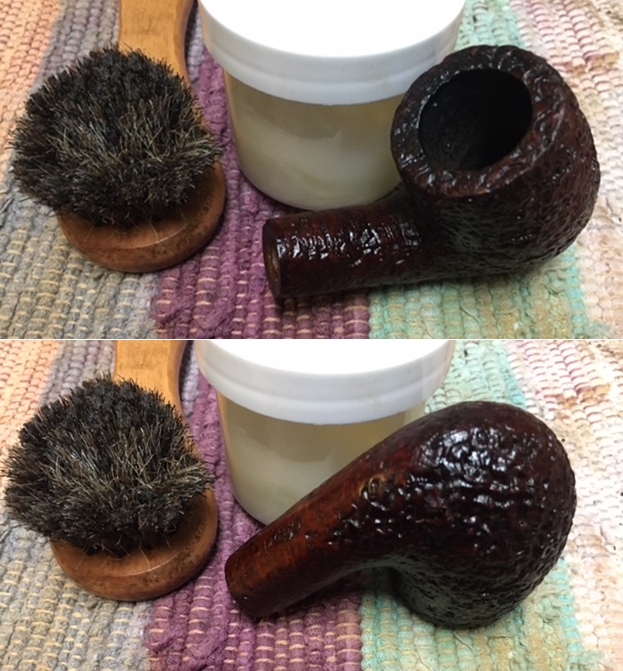
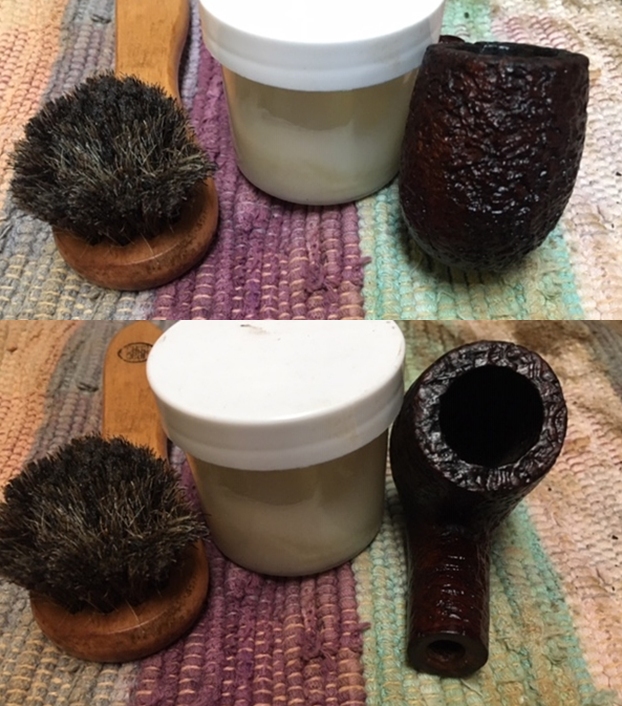
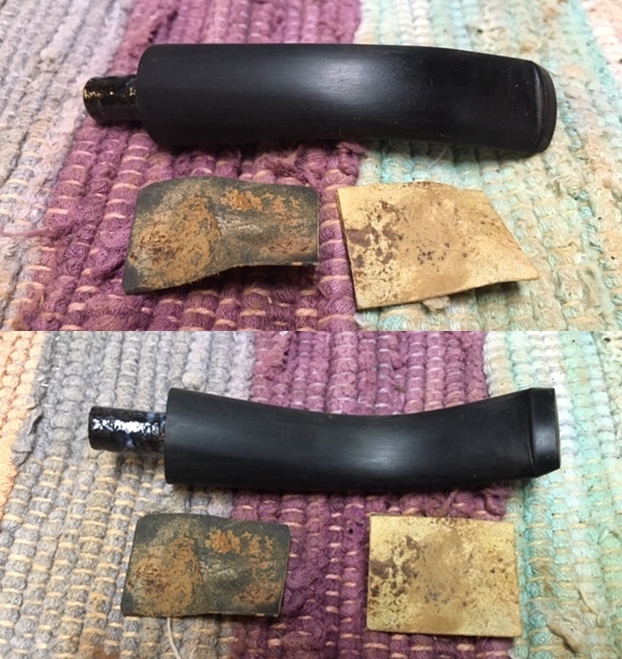
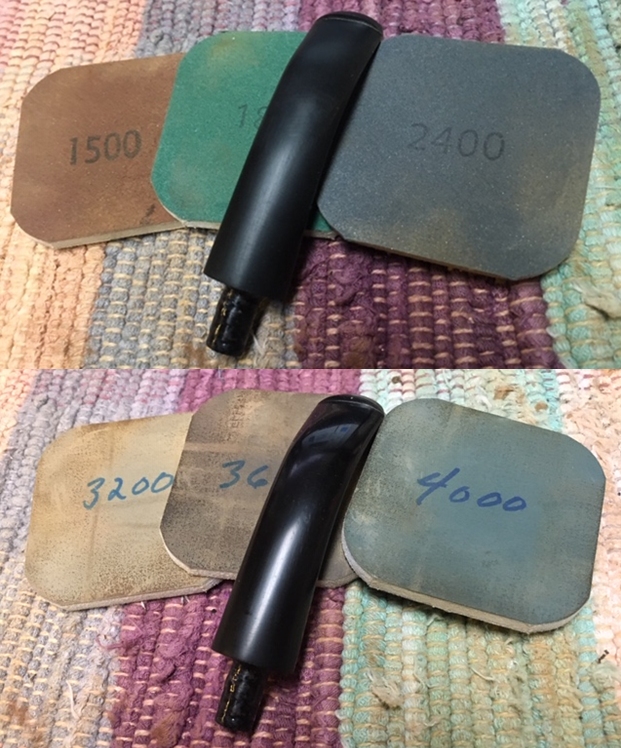
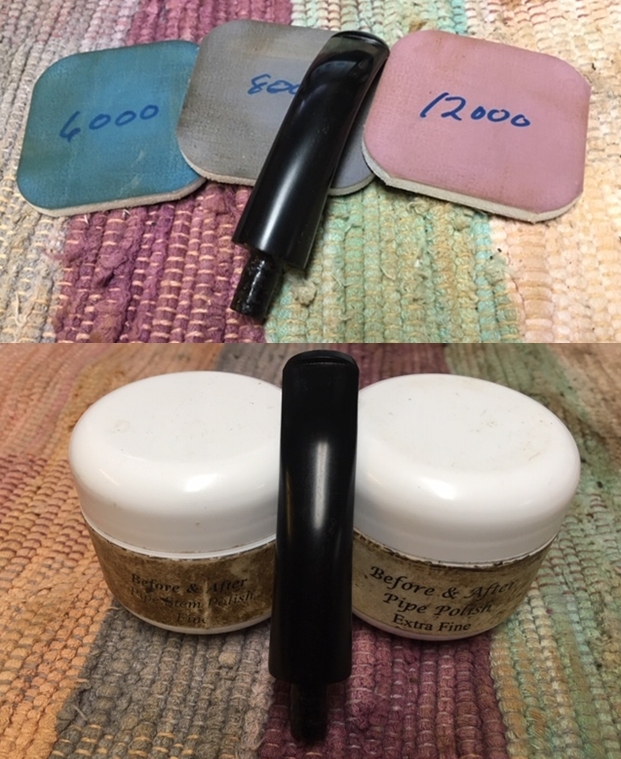
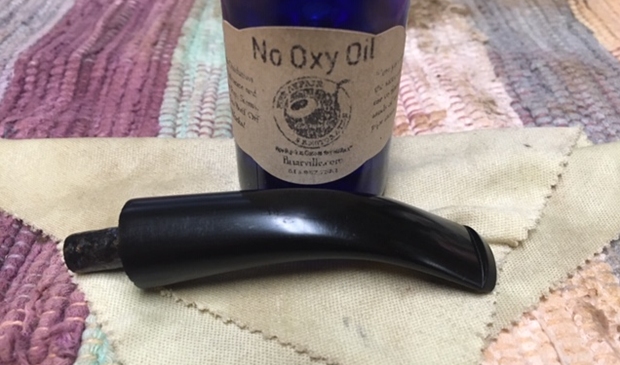
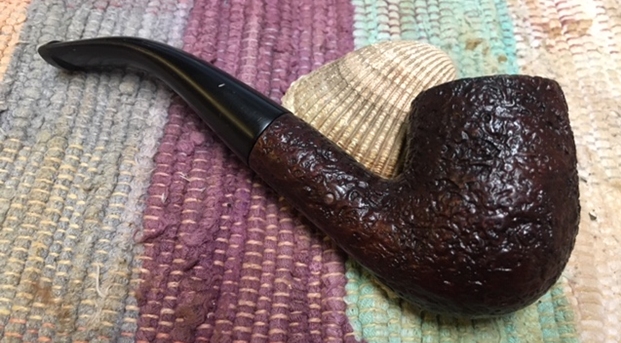
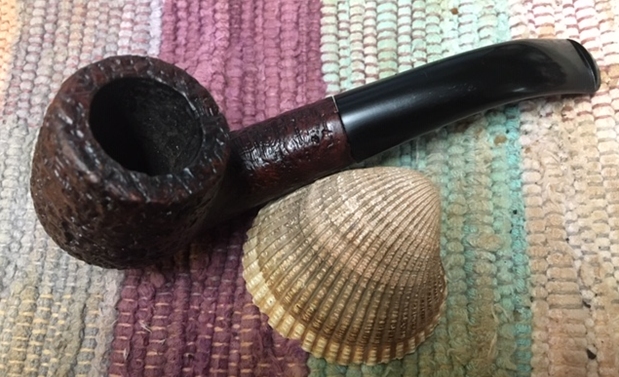
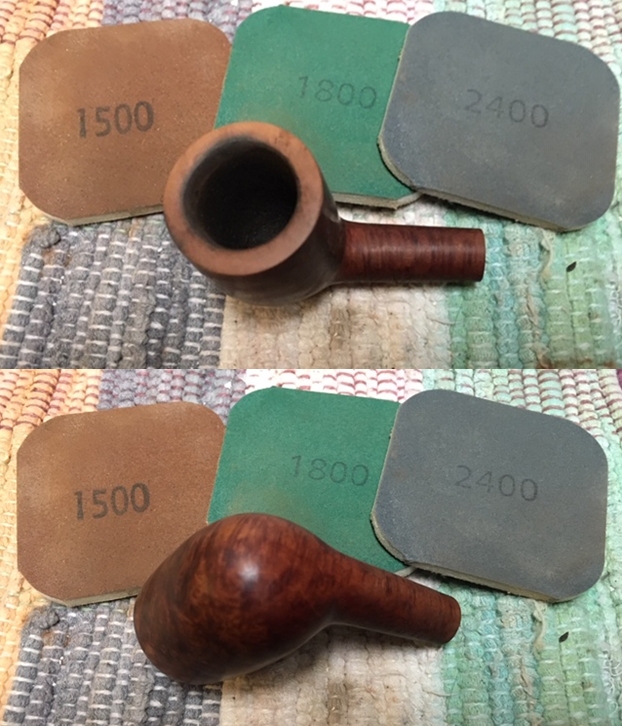
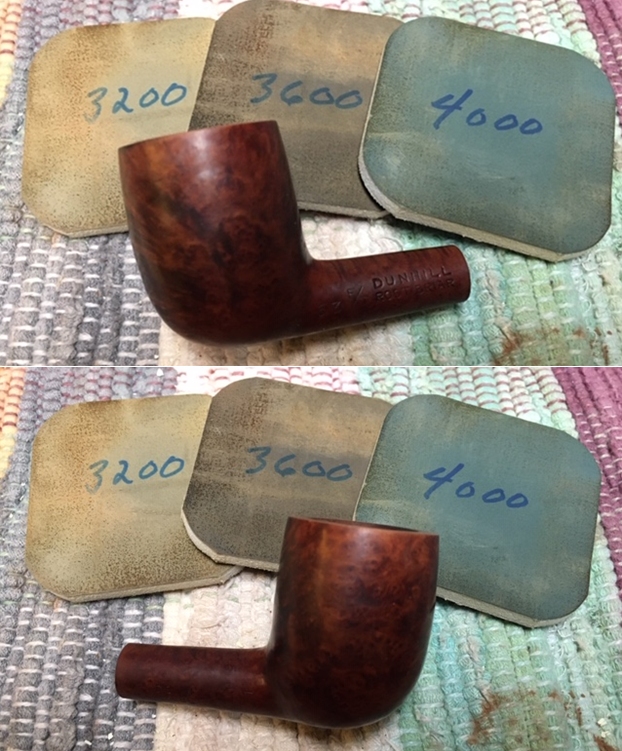
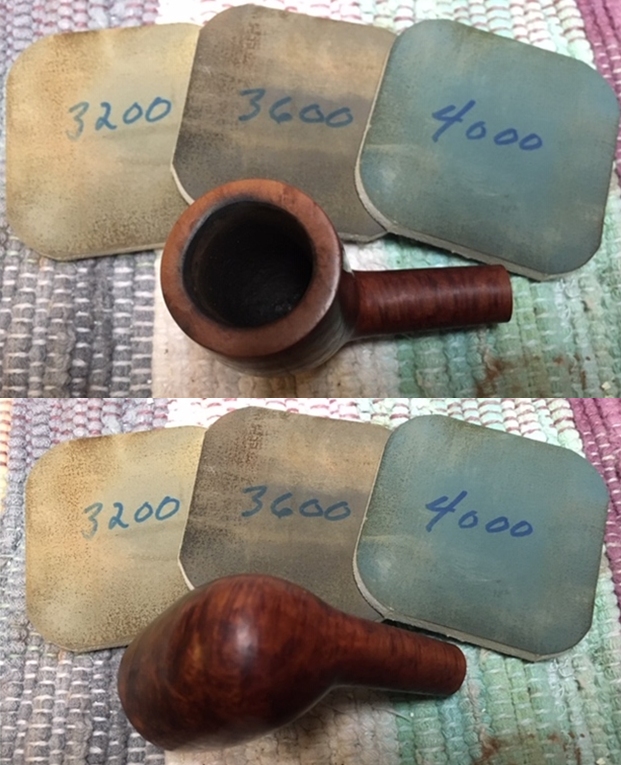
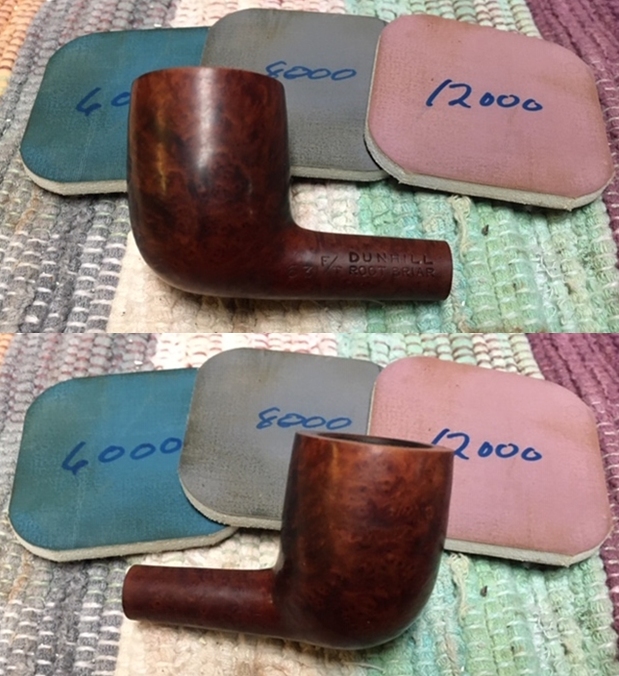
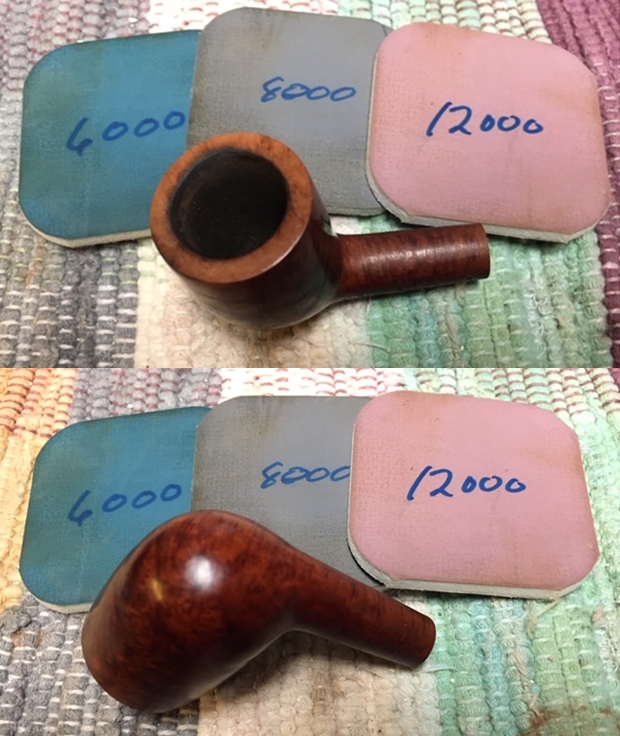
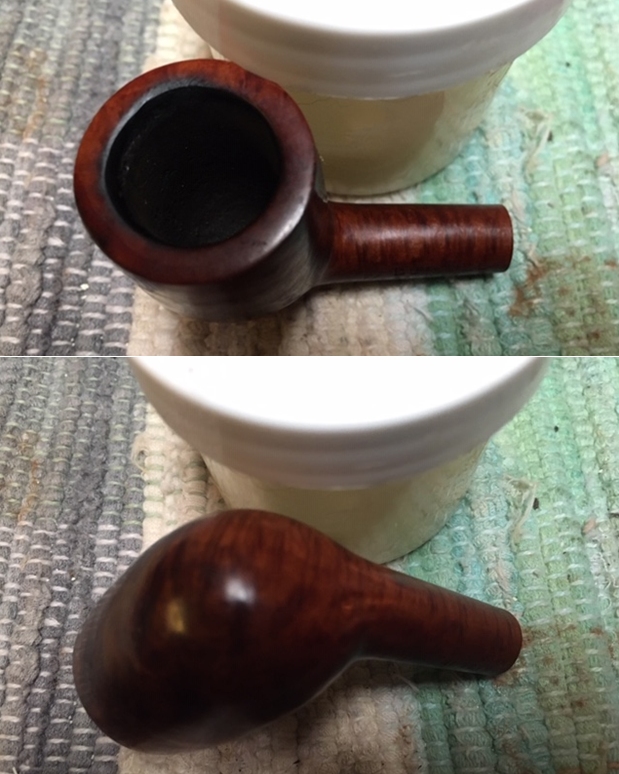
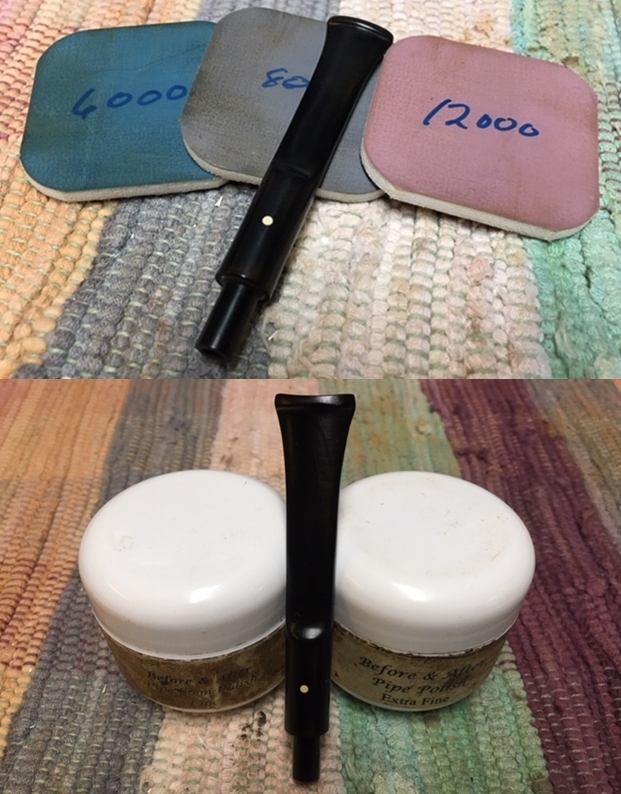
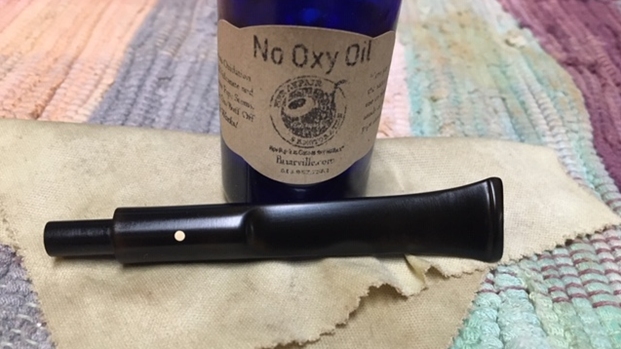
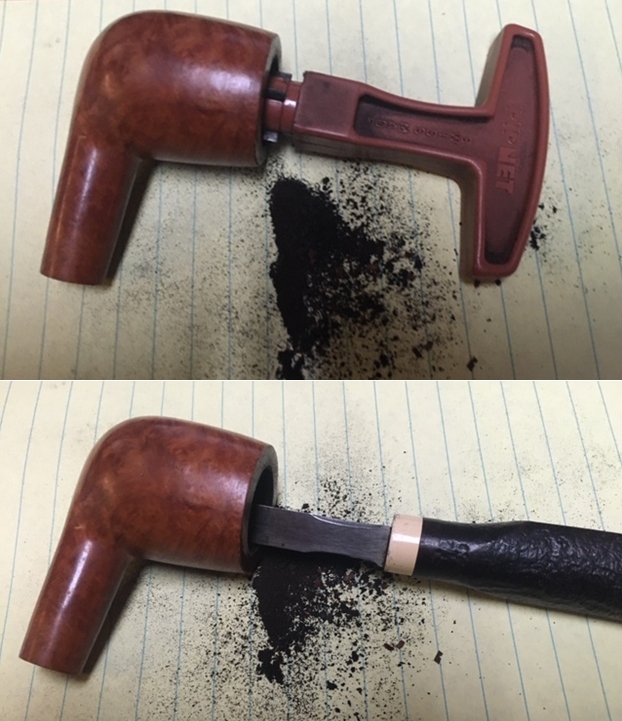
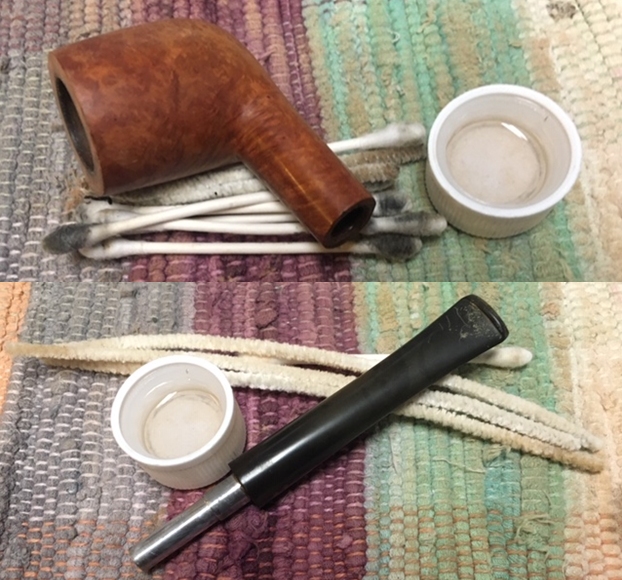
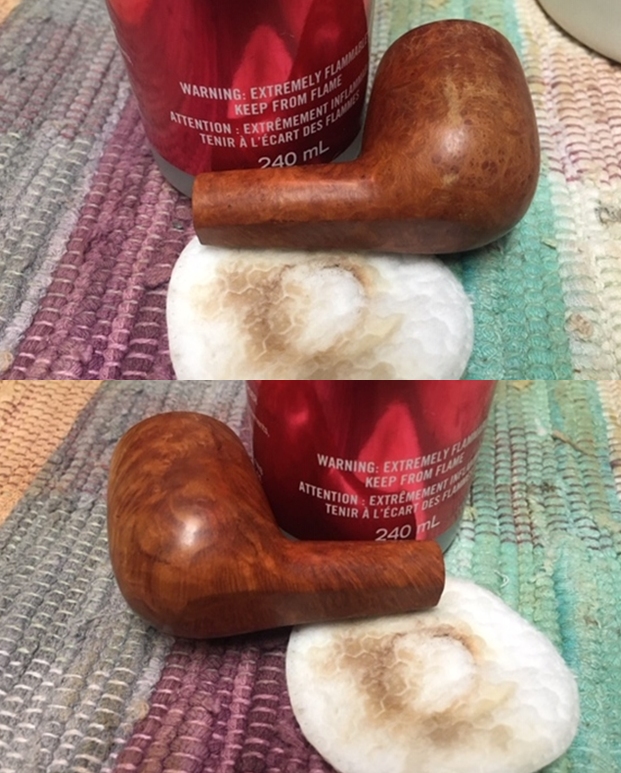
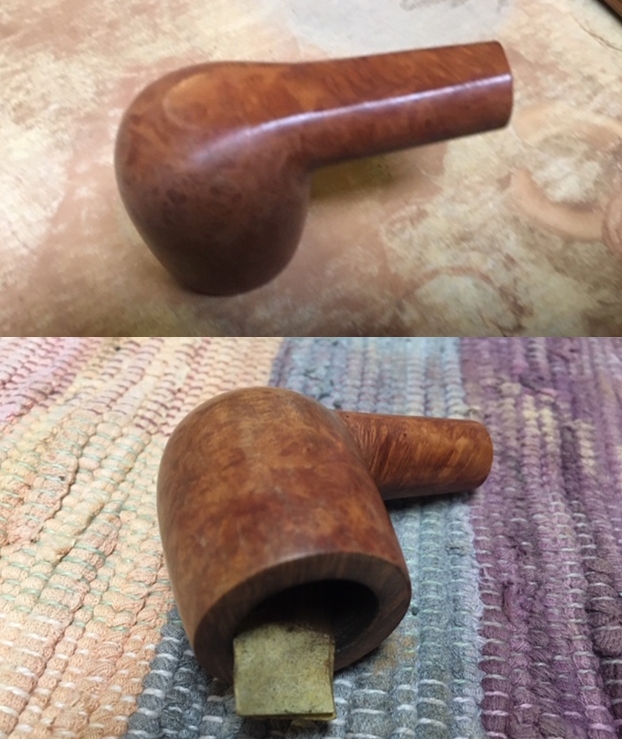
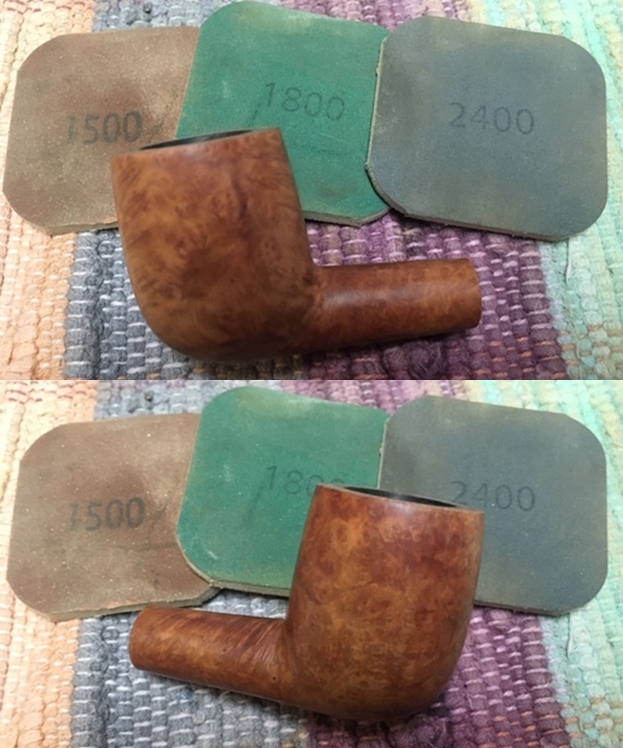
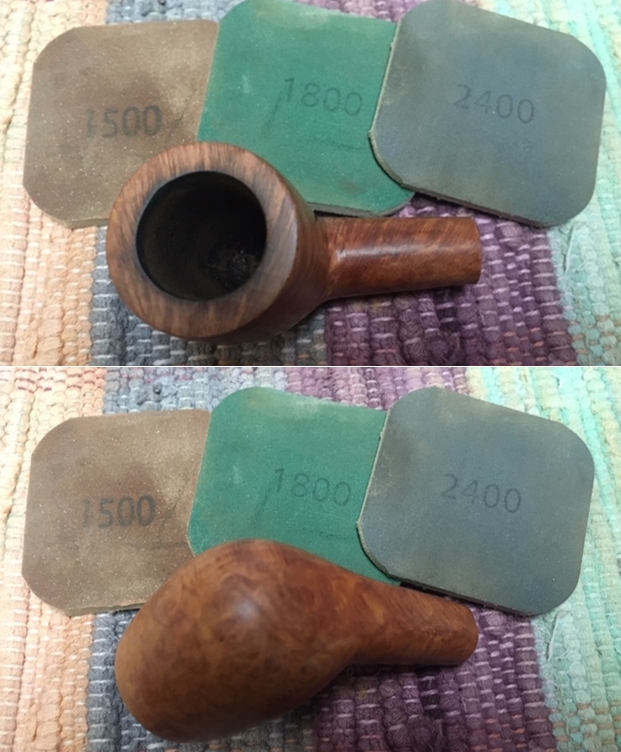
I reamed the bowl with a PipNet pipe reamer using the first and second cutting head to take the cake back to bare briar so I could inspect the walls. I cleaned up the remnants with a Savinelli Fitsall Pipe Knife. I sanded the bowl walls with 220 grit sandpaper on a piece of dowel to smooth them out and further examine them. I was happy that the walls looked very good. I cleaned out the mortise area and airway to the bowl and the interior of the metal tube and airway in the stem with pipe cleaners, cotton swabs and alcohol. I scrubbed the surface of the bowl with acetone to remove the varnish coat from the bowl. When I had finished it looked far better.   I worked on the darkening on the rim top and the rough inner edge of the bowl by first lightly topping the bowl with 220 grit sandpaper. I used a folded piece of 220 grit sandpaper to remove the darkening and smooth out the inner edge of the bowl. I wet sanded the rim top and the smooth portions on the bowl sides with micromesh sanding pads – 1500-12000 grit sanding pads. I wiped the bowl surface down with a damp cloth after each sanding pad to remove the sanding dust. Once I finished the bowl looked good. I rubbed the bowl and shank down with Before & After Restoration Balm. I worked it into the surface of the briar with my fingertips and a horsehair shoe brush to clean, enliven and protect it. I let the balm sit for a little while and then buffed with a cotton cloth to raise the shine. Mark Hoover’s Balm is a product that I have come to appreciate and one I use on every pipe I have been working on. It really makes the grain stand out on this pipe. I set the bowl aside and turned my attention to the stem. When I was in the US visiting Jeff and his wife I picked up some Soft Scrub. Jeff swears by this stuff as the first tool to use to remove a lot of the oxidation on the stem. I rubbed it on with a cotton pad and sure enough it removed the oxidation and the calcification build up. It looked a lot better.    I cleaned out the marks with alcohol and a cotton swab. I filled them in with clear super glue and set the stem aside to cure.    I smoothed out the repairs and sanded out the remaining oxidation with 220 grit sandpaper and started the polishing with 400 grit wet dry sandpaper. I polished the stem with micromesh sanding pads – wet sanding it with 1500-12000 grit pads. I wiped the stem down after each sanding pad with a cotton pad to remove the sanding debris.   Before I finished the last polishing touches on the stem I decided to fit it with a new Rock Maple Distillator.  I finished polishing the stem with Before & After Pipe Stem Polish – both fine and extra fine. I finished by wiping it down with Briarville’s No Oxy Oil and buffing it to a shine.  I always look forward to this part of the restoration when all the pieces are put back together. I put the pipe back together and buffed it with Blue Diamond on the buffing wheel. I gave the bowl and the stem multiple coats of carnauba wax. I hand buffed the pipe with a clean buffing pad to raise the shine. It is fun to see what the polished bowl looks like with the polished black vulcanite stem and the shining brass pins. This Brigham Select Billiard sitter is nice looking and feels great in my hand. The pipe is one that is light enough that it could be clenched and smoked while doing other things as it is very light weight and well balanced. Have a look at it with the photos below. The dimensions are Length: 5 ½ inches, Height: 1 5/8 inches, Outside diameter of the bowl: 1 ¼ inches, Chamber diameter: ¾ of an inch. This is the sixth of the pipes sent to me from Eastern Canada for restoration. Once again I am looking forward to what the pipeman who sent it thinks of this restoration. Lots more to do in this lot! Thanks to each of you who are reading this blog. Remember we are not pipe owners; we are pipemen and women who hold our pipes in trust until they pass on into the trust of the next pipeman or woman.
Restoring an Obstinate Marxman Jumbo War Club


Blog by Steve Laug

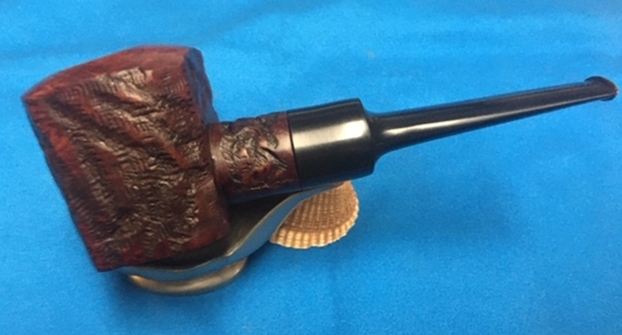
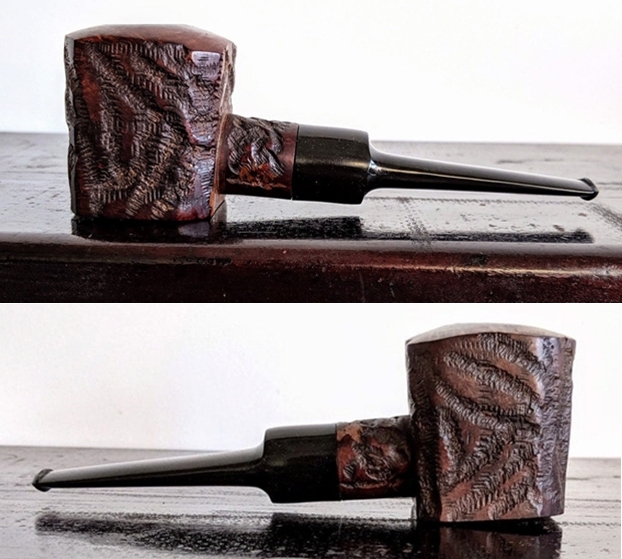
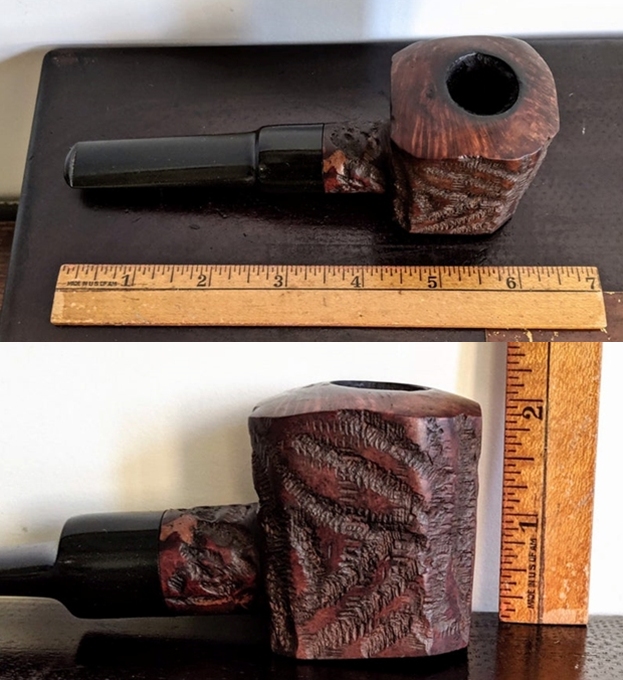
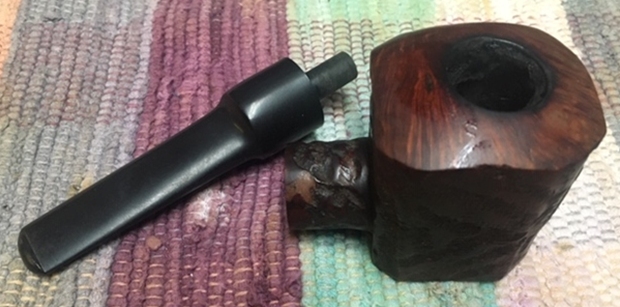
Not long ago I was emailing back and forth with a reader of the blog in Quebec about a pipe that he had purchased online. He said that it was a Marxman Jumbo Bench Made and it was huge. He said the photos of the pipe online were far better than what the pipe looked like when he received it. The pipe was marked on Etsy as follows: 1940s Rustic Tobacco Pipe Jumbo Marxman Carved Briar Root Wood Smoking Pipe OAK Handcarved Vintage Pipe Large Oversize Pipe. You and I know that the pipe was not OAK but Briar. Here are the photos that he sent me the link for. In the photos you can see the unique shape of this War Club/Hammer. It is quite big and I was expecting it to be much bigger than it actually is. The finish looks pretty good in the photos as well. The cake and lava on the rim looks negligible but present. It looks like a great deal but even in these photos you can see the large fills around the shank and bowl. We talked back and forth a bit and finally decided that the pipe should be sent to me in Vancouver. He wrote in the email that he sent before the pipe was mailed: “The stem seems stuck while the cake is relatively thick in the chamber. Also, the finish of the pipe seems stained and uneven. It’s a massive pipe but I’m confident it will look good”. With that I awaited the arrival of the pipe. Canada Post was efficient and it arrived three days after it was shipped. I opened the box and took photos of the pipe as it was when it arrived. He was right in saying it looked very different from the pipe in the Etsy seller’s photos.

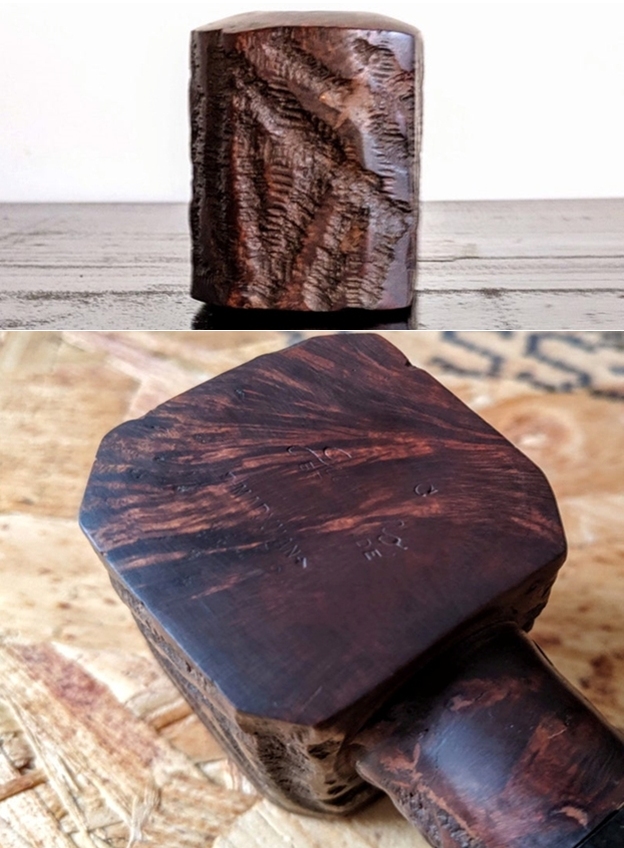
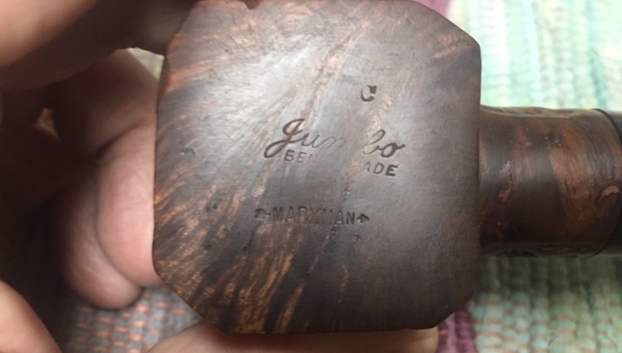
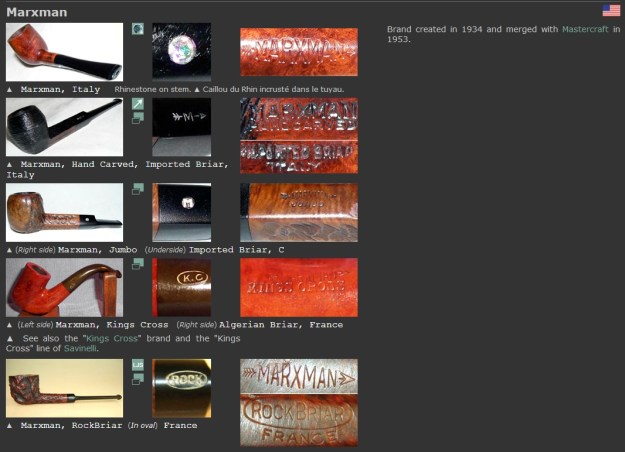
The stem was solidly stuck in the shank and was upside down. The finish was flat and dirty with no life to it. There were large fills on the front and back sides of the bowl and all the way around the shank. The fills were what gave an uneven appearance to the finish on the pipe as they were a light tan/pink. The bowl had a thick, uneven cake and the pipe smelled musty and dank. The rim top had a coat of lava on the top around the bowl and the inner edge of the chamber was out of round and damaged. The stem was high quality vulcanite and had tooth chatter on both sides near the button but there were not any deep tooth marks in the vulcanite. The photos show you what I saw as I examined the pipe. I took close up photos of the rim top and the stem. The photos confirm the condition of the pipe that I described in the paragraphs above. You can see the damage to the inner edge of the rim top. It had been hacked and damaged with what looked like a knife.I took a photo of the stamping on the flat heel of the bowl. It is stamped with a letter C at the top of the heel. Under that is reads Jumbo in script over Bench Made. Underneath at the bottom it is stamped with the Marxman logo inside an arrow.I wanted to refresh my memory of the brand so I turned to Pipephil first to get a short summary of the history (http://www.pipephil.eu/logos/en/logo-m2.html). The site had a side note that the brand was created in 1934 and merged with Mastercraft Pipes in 1953.I then turned to Pipedia to find out a bit more information on the brand and the maker of the pipe (https://pipedia.org/wiki/Marxman). The site quote from Pipes, Artisans and Trademarks, by José Manuel Lopes. I include a portion of that information below.

Marxman (Marxman Pipe Company) was created by Robert (Bob) L. Marx in 1934, when he was 29, and after he had worked for the William Demuth Company. His pipes were not outstanding because of the quality of their wood (probably Algerian), but Bob started making unique sculpted pieces, which brought the brand fame in the World of Hollywood cinema. Actors like Zachery Scott, Dennis Morgan, Jack Carson, Alan Hale, Joel McRae, and Ronald Reagan were some of the faces that appeared on the bowls.

Bob new how to innovate and took full advantage of marketing and press advertising in order to sell the brand–one of his slogans being “Relax with a Marxman”.

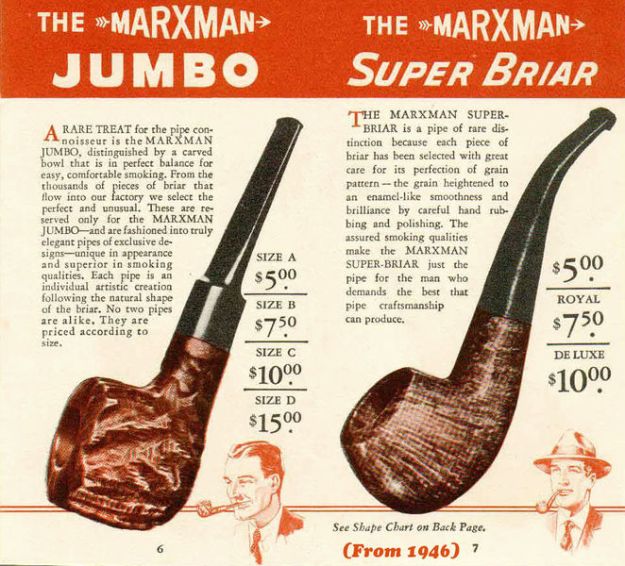
From the information on the two sites I learned that the pipe was made between 1934 when the company started and 1953 when the company was taken over by Mastercraft. I have included an advertisement for the Marxman Jumbo that was included on the article (1946 Ad, Courtesy Doug Valitchka).

It includes the following information. “A rare treat for the pipe connoisseur is the Marxman Jumbo, distinguished by a carved bowl that is in perfect balance for easy, comfortable smoking. From the thousands of pieces of briar that flow into our factory we select the perfect and unusual. These are reserved only for the Marxman Jumbo – and are fashioned into truly elegant pipes of exclusive designs – unique in appearance and superior in smoking qualities. Each pipe is an individual artistic creation following the natural shape of the briar. No two pipes are alike. They are priced according to size.” The prices are noted in the ad that I included below.I went on to read the remainder of the article on Pipedia and include the pertinent portion below.

Bob also produced other brands, such as the “Bench Made”. The company lasted until 1953, the year in which it merged with Mastercraft, then the USA’s biggest pipe importer. Marxman Pipes Inc., was located at 27 West 24th St. New York 10, NY.

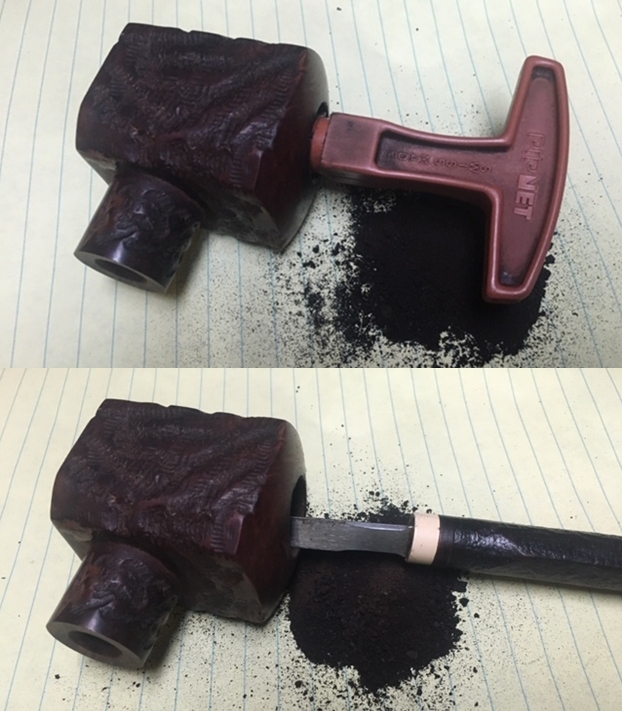
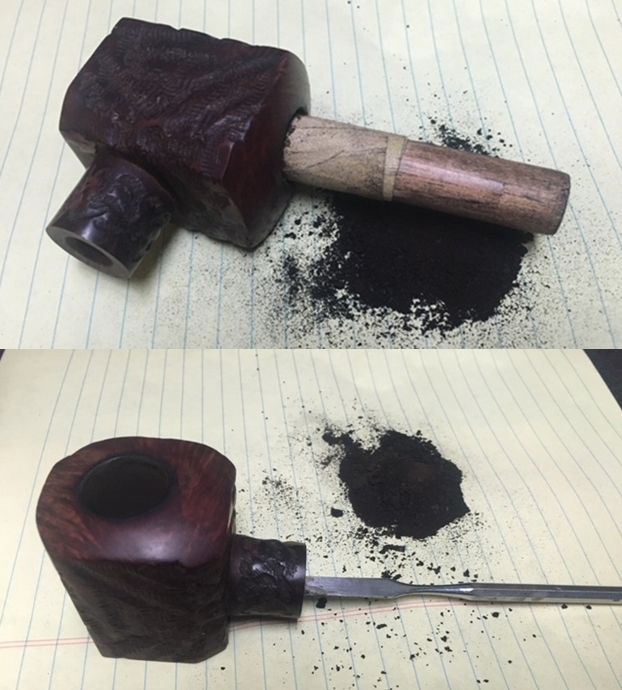
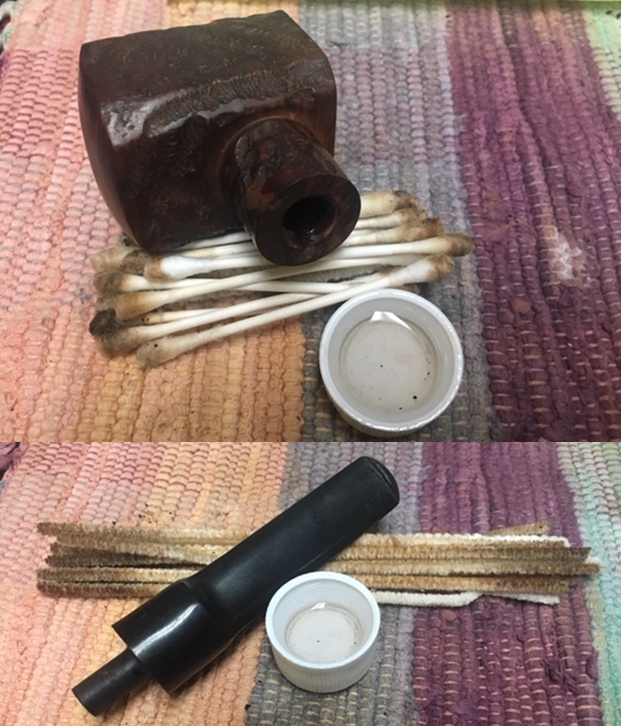
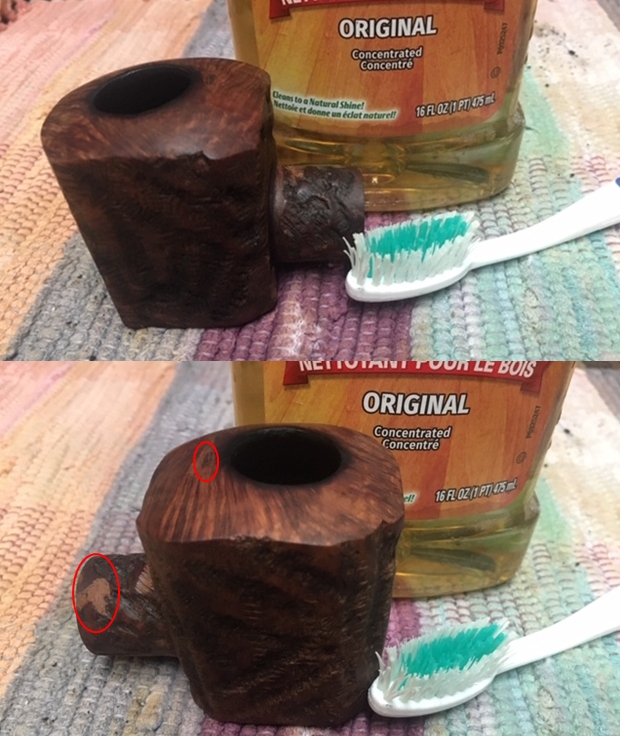
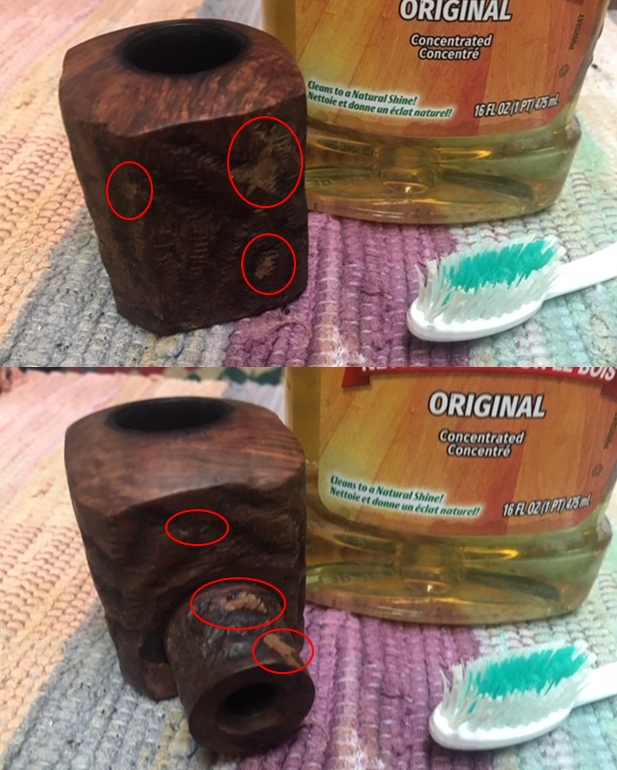
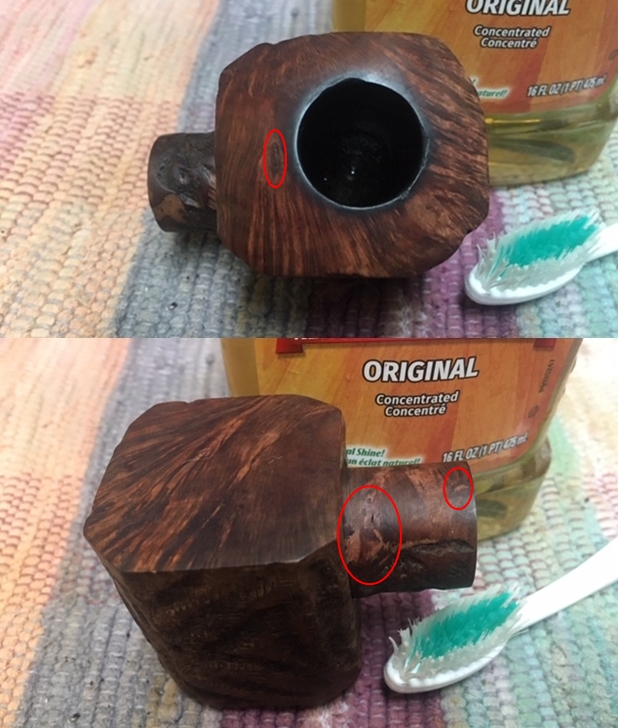
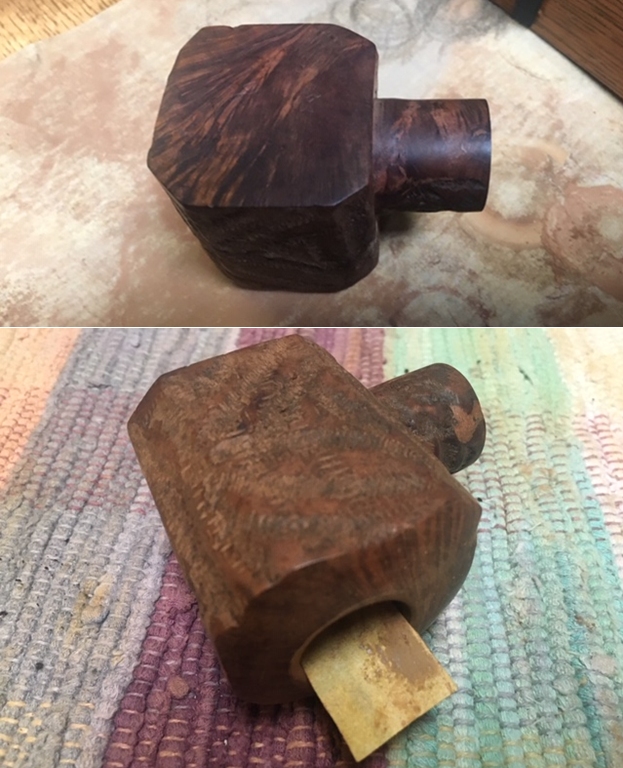
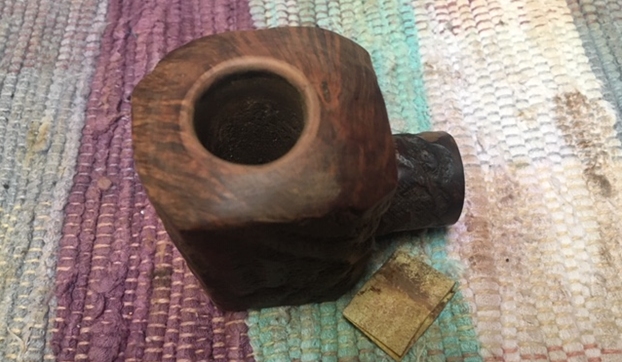
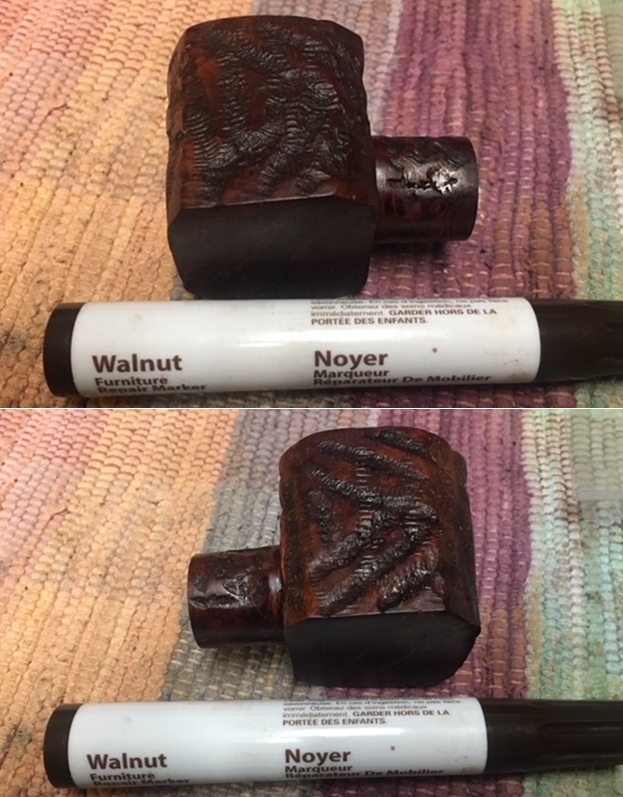
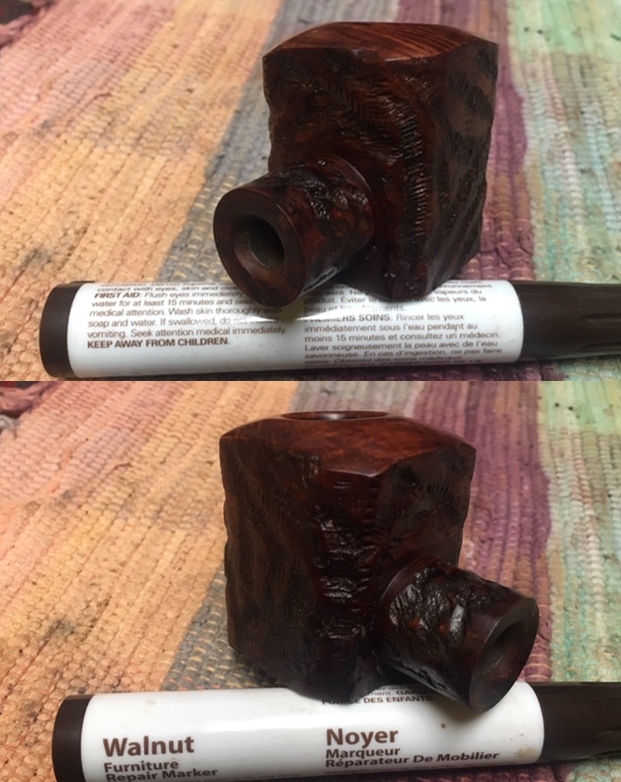
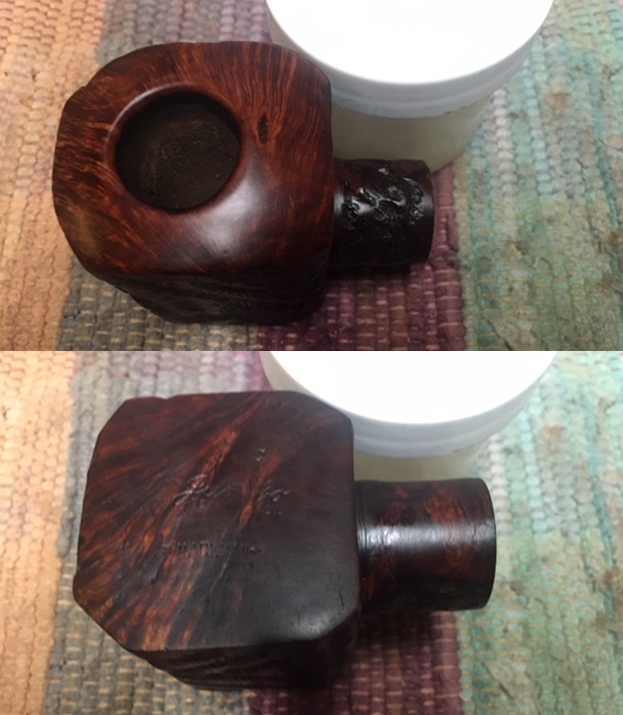
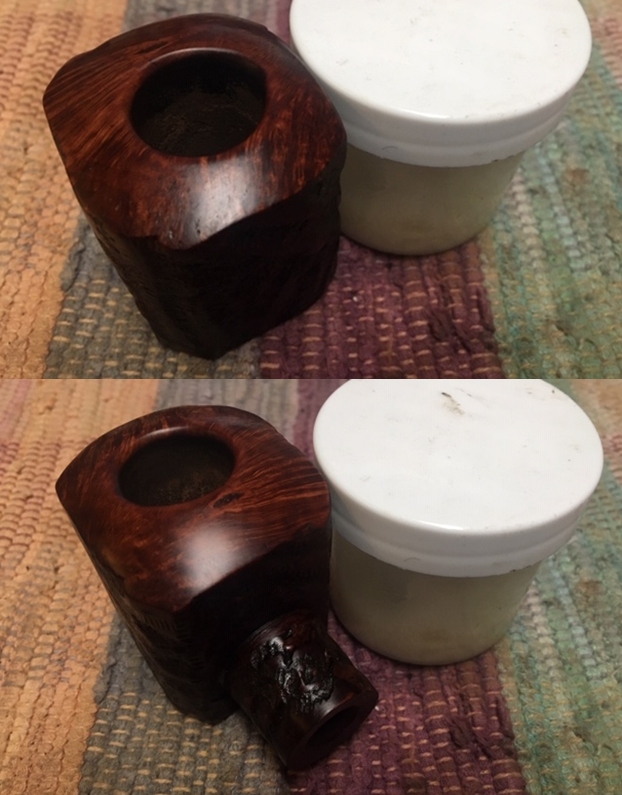
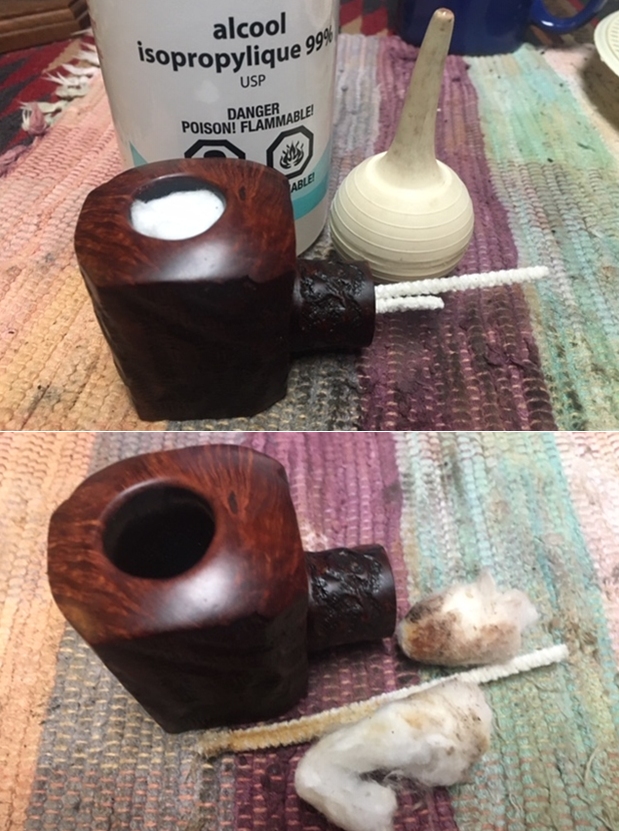
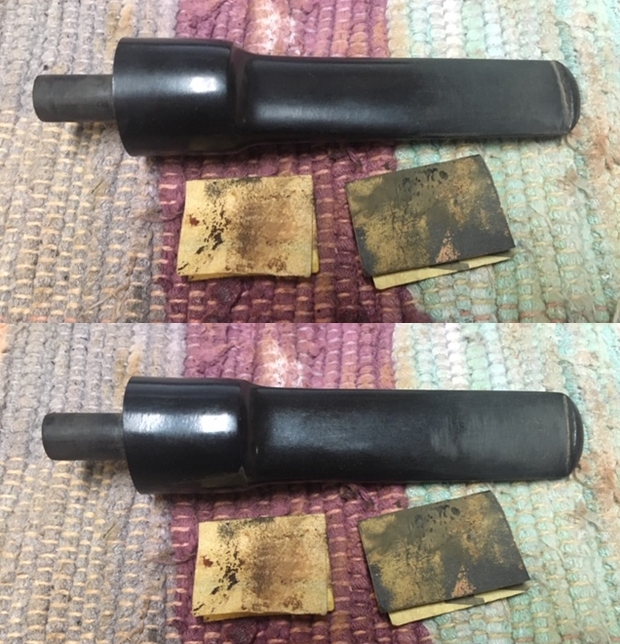
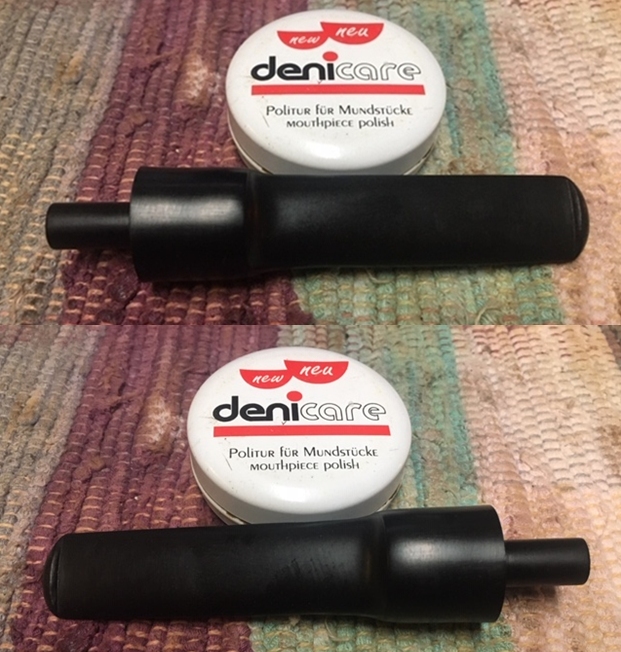
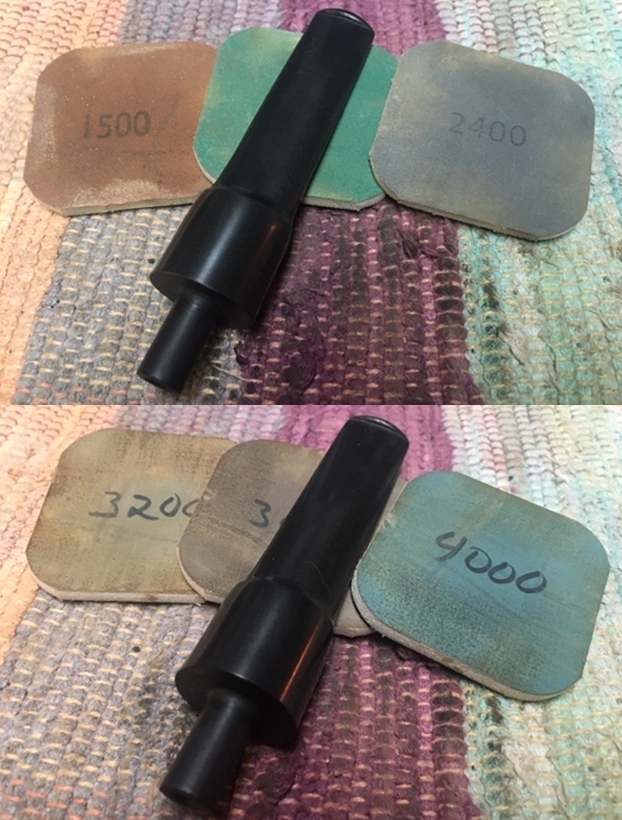
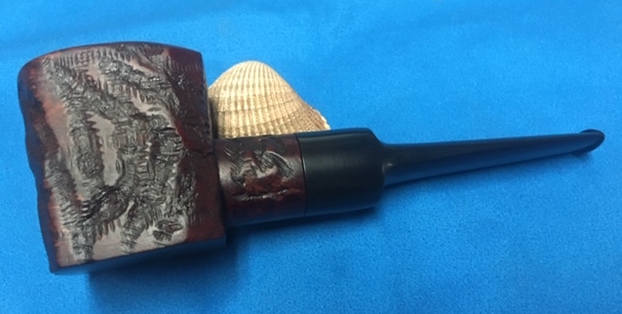
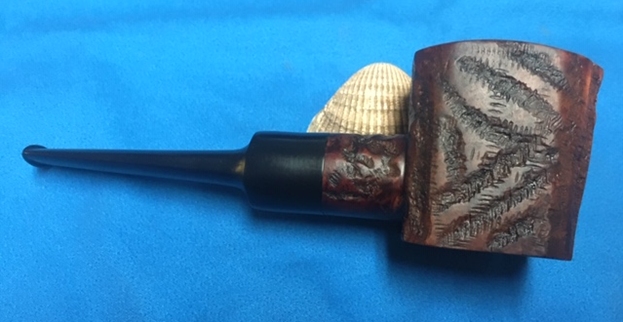
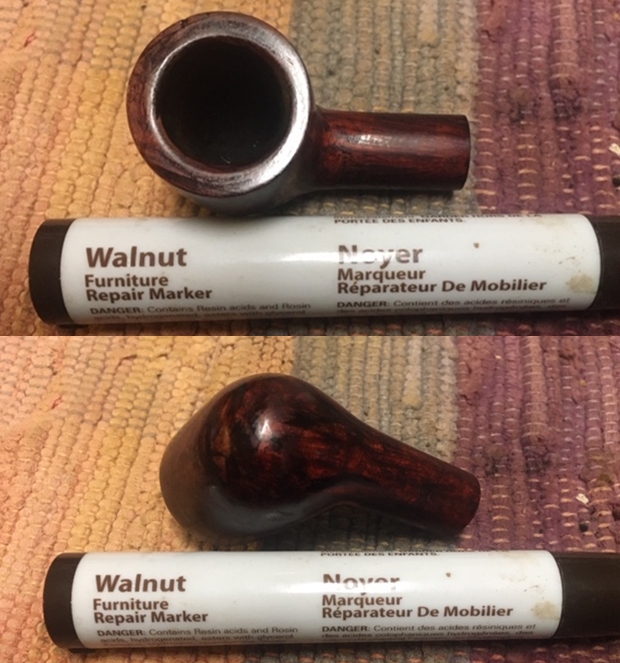
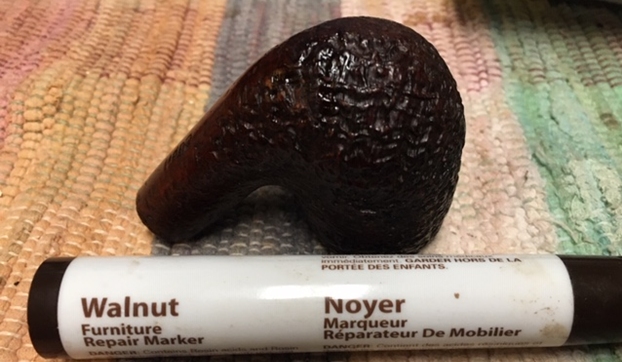
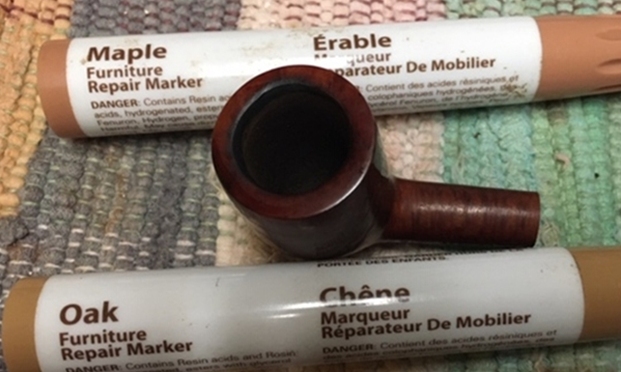
I had put the pipe in the freezer before I went to bed and in the morning I took it out and with a little effort I was able to remove the stem from the shank. It was very tight but it came out with patience.I took the bowl to the work table and reamed it. I used a PipNet pipe reamer with the second cutting head to remove the thick cake in the bowl.  I removed the remnants of the cake with a Savinelli Fitsall Pipe Knife and finished the bowl with a piece of 220 grit sandpaper wrapped around a piece of dowel. I used a dental spatula to scrape out the inside of the mortise and remove the thick lacquer that had built up there from much smoking. I cleaned the interior of the shank/mortise and the airway in the shank and the stem with pipe cleaners, cotton swabs and alcohol. They were very dirty and after I had scoured them the pipe was clean and smelled better. I would still need to do a cotton ball alcohol soak to draw out the rest of the mustiness.I scrubbed the exterior of the bowl and shank with a tooth brush and undiluted Murphy’s Oil Soap. I scrubbed the grooves of the rustication to remove the grime with the tooth brush. I rinsed the pipe off with warm running water and dried it off with a cotton cloth. The finish looked clean but you could see the fills very clearly now. I have circled them in red in the photos below. Now it was time to deal with the out of round bowl edges. I gently topped the bowl. I did not want to flatten the crowned rim just smooth out the top edge of the bowl. I used a folded piece of sandpaper to work a slight bevel to the inner edge to clean up the damaged edge and bring back to round. I also sanded the darkening on the rim edge to remove it as well. With that finished I moved on the polishing the smooth portions of the bowl and the rim top with micromesh sanding pads. I polished it with 1500-12000 grit sanding pads and wiped the bowl down with damp cloth to remove the sanding dust. I used a Walnut stain pen to touch up the fill areas and the lighter areas on the briar bowl. I covered all of them and set the bowl aside to dry. The stain actually hid the fills very well. Once the stain had dried I rubbed the bowl down with Before & After Restoration Balm. I worked it into the grooves of the finish with my fingertips and a horsehair shoe brush. I set it aside to absorb into the briar for ten minutes. Once it had been sitting I polished the bowl surface with a soft cotton cloth. At this point in the process the briar is looking very good. I filled the bowl with cotton balls and used and ear syringe to fill it with alcohol. I fit a folded pipe cleaner in the shank to keep the alcohol in the bowl. I left the alcohol and cotton ball in the bowl while I worked on the stem. It sat for over an hour and then I removed it from the bowl and took the photo of the cleaned pipe. I turned my attention to the stem. I   sanded out the tooth chatter and marks with 220 grit sandpaper and 400 grit wet dry sandpaper.I polished the stem with Denicare Mouthpiece Polish to remove the light scratching and the light oxidation on the stem surface. The product is a red paste that is gritty and when rubbed with a cotton pad it removes many of the scratches and remaining oxidation.I polished the stem with micromesh sanding pads – polishing it with 1500-12000 grit micromesh sanding pads. I wiped it down with cloth between each sanding pad. I polished it with Before & After Pipe Stem Polish – both Fine and Extra Fine. I gave it a rub down with Briarville’s No Oxy Oil to protect the stem from oxidizing. It was looking very good at this point. I was looking forward to this part of the restoration when all the pieces are put back together so I can send a photo back to the fellow in Quebec. I put the pipe back together and buffed it with Blue Diamond on the buffing wheel. I gave the bowl multiple coats of Conservator’s Wax and the stem multiple coats of carnauba wax. I hand buffed the pipe with a clean buffing pad to raise the shine. It is fun to see what the polished bowl looks like with the smooth portion and the rusticated portion contrasting well and added to that the polished black vulcanite stem. This Marxman Bench Made Jumbo looks far better than it did when I started. The fills are present but have blended in very well. The stem fits well in the shank. The pipe is nice looking and feels great in my hand. The pipe is a sitter so that it can be laid down on a desk top while the pipeman is working on something else. Have a look at it with the photos below. The dimensions are Length: 6 inches, Height: 2 1/8 inches, Outside diameter of the bowl: 1 ¾ inches, Chamber diameter: ¾ of an inch. This old Marxman Jumbo is a beauty and I look forward to what the pipeman who sent it thinks of this restoration. Thanks to each of you who are reading this blog. Remember we are not pipe owners; we are pipemen and women who hold our pipes in trust until they pass on into the trust of the next pipeman or woman.

Refurbishing An Inherited Pete Donegal Rocky # 999 Rhodesian Pipe.


Blog by Paresh Deshpande

Having just completed the refurbishing of S & R Rhodesian pipe with a chubby shank, I decided to work on another classic iconic shaped pipe from Peterson’s; a Donegal Rocky # 999. This pipe came to me from a huge lot of inherited pipes that were once loved by my beloved Grandfather. I selected to line up this pipe for restoration as this time around I wanted to add Rhodesian shaped pipes to my rotation and preferably with a small chamber as I am slightly low on my stock of tobacco what with the government banning import of all forms of tobacco!!

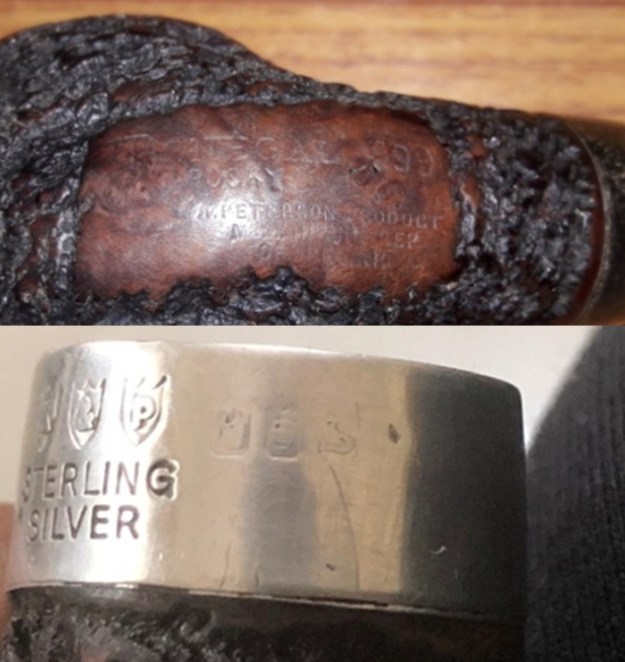
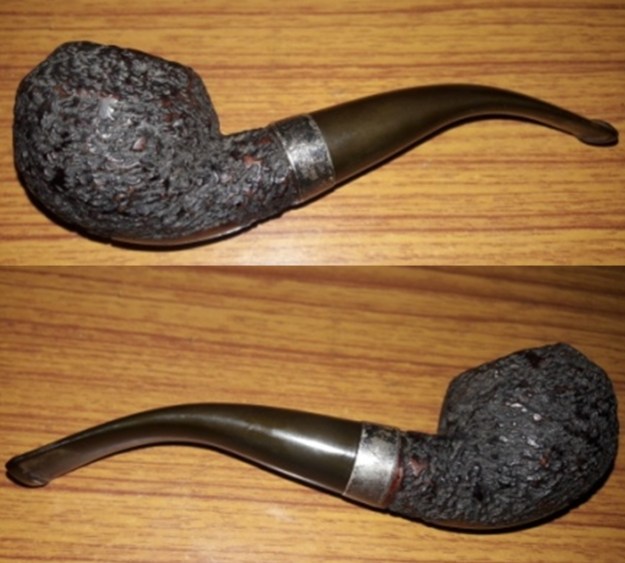
The stummel of this pipe has beautiful scraggy rustications and it sure does feel good to run your fingers over the surface of the stummel. There is a patch of smooth briar surface starting at the foot of the bowl and ending half way off the shank end and bears the stampings on this pipe. It is stamped towards the foot end as “DONEGAL” over “ROCKY” over “A PETERSON’S PRODUCT” over “MADE IN THE REPUBLIC” over “OF IRELAND” and finally in the right hand top corner towards the shank end is the shape code “999”. The shank end is adorned with a sterling silver band. The silver band bears a group of three hallmarks marks, each in an escutcheon; the first is a seated Hibernia denoting Dublin Ireland, the second is a harp denoting the silver fineness, and the third is a fancy letter “S” denoting the year. The hallmarks are slightly worn out but discernible under high magnification under bright white light. Further to the left of these hallmarks are three cartouche each bearing, from left to right, letters “K” “&” and “P” over “STERLING” over “SILVER”Having had the good fortune of researching and working on a few early Peterson’s pipes, I had read that the Donegal Rocky is Peterson’s classic range, primarily the basic entry level pipes from the brand. However, what interested me was the letter denoting the year of production. I forwarded a picture of the hallmarks to my friend and mentor, Steve Laug who promptly confirmed that the letter denotes the year 1960!!

Knowing the fact that the K & P factory sends hundreds of such sterling silver bands to the Dublin essay office for hallmarking that are to be used over a period, still dates this pipe to early 1960s.

INITIAL VISUAL INSPECTION
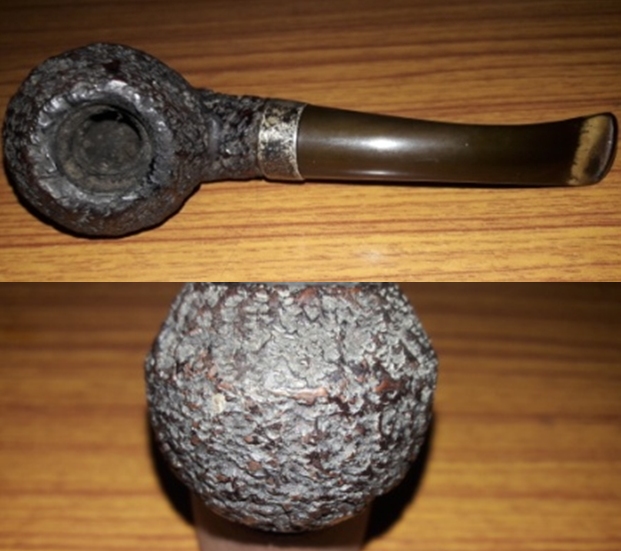
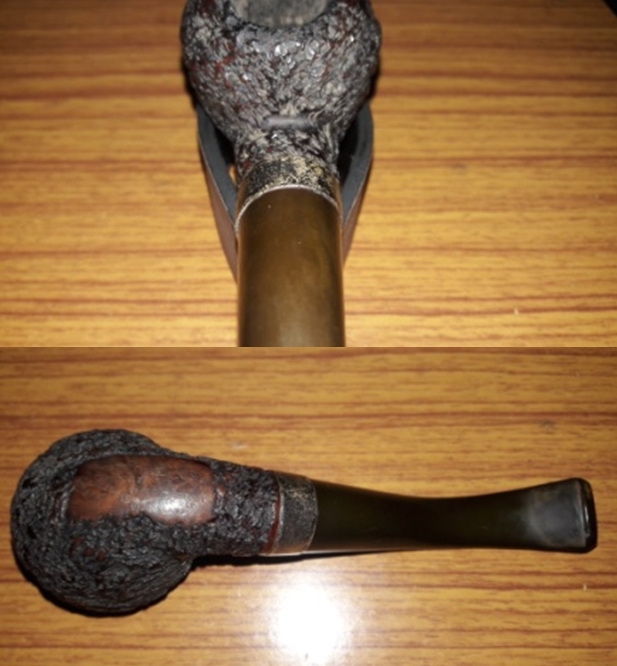
The pipe, as it sits on my work table, is dirty with a thick layer of cake in the chamber while the stummel is covered in dust and grime with a heavily oxidized stem. Here are a few pictures of the pipe before I proceed with a detailed visual inspection of each part of the pipe. The rusticated stummel on this pipe is covered in a thick layer of dust and grime of nearly 58 years of use and uncared storage. The stummel appears dull and lackluster. The rusticated rim top surface is also covered in dust, lava overflow and will need to be cleaned and polished. The rich brown hues of the raised portions of the rustications contrast beautifully with the darker hues of the stummel. The stummel has a very subtle, yet discernible outward flaring rim cap which lends it its classical shape. There is a very strong smell to the cake which, perhaps, may reduce appreciably after the chamber has been cleaned. The chamber has a thick cake, which I have come to expect from all my inherited pipes, with lava overflow on the rusticated rim top surface. The cake is thick enough to prevent my little finger from going in to the chamber. The condition of the inner walls of the chamber will be ascertained once the existing cake has been taken down to the bare briar. The rusticated rim top surface has thick, dried and crumbling overflow of lava. The inner and outer rim edges appear to be in good condition, however, the same will be ascertained once the cake and lava overflow from the chamber and rim top is removed. The mortise is filled with oils and tars and specks of dried ash and tobacco is seen on the walls of the mortise. The sump is filled with dried oils, tars and gunk. Though the draught hole is open, the draw is restricted and should improve further once the shank internals and the mortise is thoroughly cleaned out. The shank face shows some nicks and chips. I shall subsequently take a call on its repairs since this damage does not, in anyway, affect the aesthetics and functionality of the pipe.The sterling silver band at the shank end is, characteristically blackened due to heavy oxidation. The saving grace is that it is intact and undamaged.The fishtailed smooth vulcanite stem is heavily oxidized with hardened calcification in the bite zone. Surprisingly, there are only a few tooth indentations on the button edge and chatter on either surfaces of the stem. The horizontal slot end of the stem is heavily oxidized to a dark brown coloration while the tenon end is covered in dried oils and tars. The tenon end also shows a number of mysterious nicks which do not affect the seating of the tenon in to the mortise and as such will be left as it is. This should be a relatively simple cleaning up job of the stem. THE PROCESS
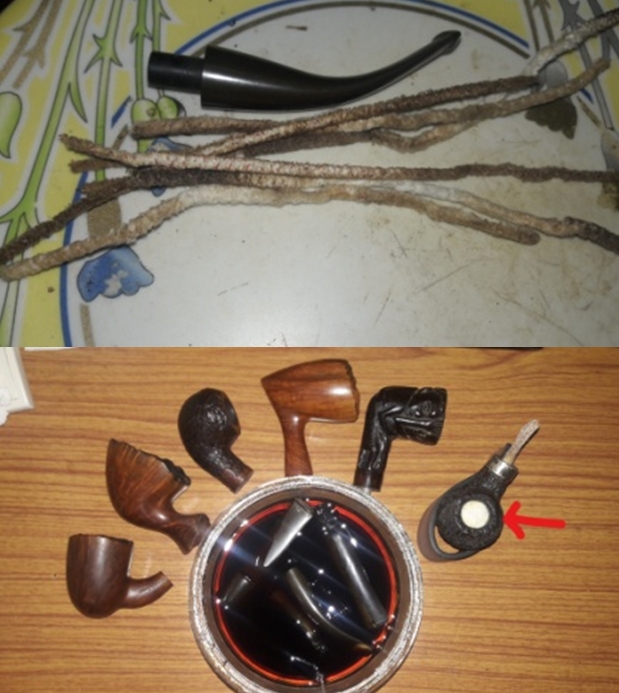
I began the process of refurbishing this pipe by reaming the chamber with a Castleford reamer tool, using the first, second and third head. Using my fabricated knife; I further took the cake down to the bare briar. With a 150 grit sand paper, the walls of the chamber were rid of all the remnants of the cake, revealing smooth chamber walls. I further wiped the chamber with a cotton swab wetted with isopropyl alcohol to completely remove the residual carbon dust. The inner rim edge is in good condition. I scraped the shank internals with a fabricated tool to remove all the crud that had accumulated along the shank walls and further cleaned it with bristled and regular pipe cleaners dipped in isopropyl alcohol. The sump was cleaned using q-tips wetted with isopropyl alcohol. I also cleaned the sump with rolled paper napkins. A few hours later and after a lot of patience, elbow grease and q-tips, the sump is finally cleaned to a great extent. I shall further draw out all the residual oils, tars and gunk by subjecting the chamber and the shank to a salt and alcohol bath.I continued the cleaning of the chamber and shank internals with a salt and alcohol bath. I use cotton balls which is an at par substitute as I have realized over the years. I draw out a wick from the cotton and along with a folded regular pipe cleaner; insert it in to the mortise and through the draught hole in to the chamber. Thereafter, I packed the chamber with cotton balls to about quarter of an inch below the rim inner edge and soaked the cotton balls with isopropyl alcohol up to the brim. About half an hour later, the level of alcohol had gone down, having being absorbed by the cotton. I topped it up once again and set it aside overnight. By next afternoon, the cotton and alcohol had drawn out all the remaining oils and tars from the chamber and mortise, fulfilling its intended task. I removed the cotton balls and ran pipe cleaners through the mortise to clean out all the loosened tars and gunk. Using my fabricated tool, I scraped out the entire loosed gunk from the sump and further cleaned it with alcohol and q-tips. The chamber now smells clean and fresh. I set the stummel to dry out naturally. While the chamber was soaking in the salt and alcohol bath, I worked the stem, starting with cleaning the internals of the stem using pipe cleaners with isopropyl alcohol (99.9% pure) and dunking the stem in to “Before and After Deoxidizer” solution developed by my friend Mark Hoover. The solution helps to draw out heavy oxidation to the surface making its subsequent removal a breeze, while minor oxidation is eliminated to a very great extent. I usually dunk stems of 5-7 pipes that are in-line for restoration and this Donegal Rocky #999 is marked in red arrow. I generally allow the stems to soak in this solution overnight for the solution to do its work.Now that the internals of the stummel were cleaned, I scrubbed the external surface of the bowl with undiluted Murphy’s oil soap and hard bristled tooth brush. I deliberately cleaned the rim top surface with a soft bristled brass wire brush to remove the entire lava overflow and dried it using paper towels and soft cotton cloth. The light brown hues of the raised rustications contrast beautifully with the rest of the dark stummel. I set the stummel aside to dry out naturally. I rubbed a small quantity of “Before and After Restoration Balm” in to briar. I rubbed this balm deep in to the sandblasts with my fingers and let it rest for a few minutes. The balm almost immediately works its magic and the briar now has a nice vibrant appearance with the light brown hues of the raised rustications contrasting with the dark stummel surface. I further buff it with a horse hair shoe brush. As mentioned in the write up on refurbishing S & R, I had worked on the stems that had been soaking in the deoxidizer solution overnight. I fished out all the stems and cleaned them under running warm water and scrubbed the raised oxidation from the stem surface using Scotch Brite pad. I further removed the oxidation by scrubbing the stems with 0000 grade steel wool and applied a little olive oil to rehydrate the stems and set them aside for the oil to be absorbed. Unfortunately, I did not click any pictures of these stems at this stage.

This is how the stem of this pipe came out after the stem cleaning described above. Some traces of oxidation are still visible at the base of the button edges on both surfaces which needs to be removed using more invasive methods. A few minor tooth indentations are visible on the top button edge and at the base of the button edge on the lower surface. I painted both surfaces of the stem with the flame of a lighter to raise the tooth chatter and bite marks to the surface. This also helps in loosening minor oxidation from the stem surface. I sand the entire stem surface with a folded piece of a 220 grit sand paper to remove the loosened oxidation. I wiped the stem with a cotton swab and Murphy’s oil soap to further remove the oxidation. Even though the most of the tooth indentations have been eliminated by heating the damaged stem portion with the flame of a lighter, one deep indention is seen on upper and lower surface in the bite zone. However, I am happy with the way this stem appears at this stage and also with the deoxidizer solution. I filled the tooth indentation in the button edge on lower and upper stem surface with a mix of activated charcoal and CA superglue and set it aside for the fill to cure. Once the fill had cured sufficiently, with a tightly folded piece of 220 grit sand paper, I sanded down the fill to match with rest of the stem surface. With the same piece of sand paper, I sharpened the button edge on the upper surface.I further sand the stem with 600 and 800 grit sand paper. I wiped the stem with cotton pad dipped in alcohol to remove the resultant dust. I rubbed some extra virgin olive oil in to the stem and set it aside to be absorbed in to stem. I polished the stem with micromesh pads, wet sanding with 1500 to 12000 grit pads. I rubbed a little extra virgin olive oil in to the stem at the end of all the micromesh pads. I finish the polishing of the stem by rubbing a small quantity of Paragon wax and giving it a final polish with a soft cotton cloth. The stem is now nice, smooth and shiny. I cleaned the Sterling Silver shank band with a local compound that Abha, my wife, uses to polish her silver and gold jewelry and cutlery. This compound is a very fine powder and is least abrasive with fantastic results. The results were appreciated by Steve during his visit to India. The band is now a nice shining piece of silver and provides a nice contrast to the shining black stem and the dark brown stummel. Unfortunately, I missed out on taking pictures as I was keen to finish this pipe and enjoy a bowl!

To apply the finishing touches, I mount a cotton cloth buffing wheel on to my hand held rotary tool and apply a coat of Blue Diamond to the stem to polish out the minor scratches. With a cotton buffing wheel that I use for carnauba wax, I apply a coat of carnauba wax to the stummel and stem and continued to work on it till the complete coat of wax had been polished out. I mount a clean cotton cloth buffing wheel and gave the entire pipe a once over buff. I finished the restoration by giving the entire pipe a rigorous hand buffing using a microfiber cloth to raise the shine further. The finished pipe is shown below. P.S. – Since the completion of this restoration, I have smoked this pipe and included it in my rotation. Believe you me; this pipe smokes perfect with a nice, smooth draw right to the end. No wonder then that this pipe would have been one of my grandfather’s favorite given the thick cake and calcified stem!! I am really privileged to have had an opportunity to carry forward the trust that my grandfather had posed in his pipes. Thanks for your patience and looking forward to inputs about the write up. Cheers…

Refurbishing a “S & R” Chunky Rhodesian Pipe


Blog by Paresh Deshpande

One of my favorite shapes is the Rhodesian and a Rhodesian with a thick chubby shank, if at all I come across one, has to find its way in to my personal collection!!!! A while ago when surfing eBay, I came across one such pipe which the seller had simply advertised as “USED BRIAR PIPE IN EXCELLENT CONDITION”. There were a few pictures with no particular emphasis on the stampings and no description whatsoever. The only stamping that I could make out was some complicated design with the highlight being a pipe shape distinctly seen within the design. There were only a few minutes for the auction to end with just three bidders and the pipe seemed to be in great condition. Another aspect that I confirm when buying on eBay is the cost of shipping. In this case it was very reasonable. With all these positives, I could not refrain from placing my bid. A month later and the pipe had reached Abha.

She clicked a couple of pictures and sent them to me as requested, one with clear image of the stamping. She, to my complete relief, confirmed the pipe to be in excellent condition. Here are the pictures that she had sent me. There was no COM stamp to help me identify this beautiful pipe.I could not contain my curiosity to find out more about this pipe and turned to pipephil.eu to identify this pipe. I searched the site for this pipe in their index for stampings with a pipe, but came out cropper. Next I tried to search by country with no success. Thereafter, I turned to pipedia.com. Hours later, I could find a perfect match for the stamping under the COM “USA”. Here is the link. https://pipedia.org/wiki/S%26R_Pipes

I reproduce the information gleaned from the site.

Stephen and Roswitha Anderson of S&R Pipes, also known as S&R Woodcrafters, have become pipe makers renowned throughout the world as talented carvers of high-grade briar pipes. They have been featured in several trade publications and magazines such as Pipes and Tobaccos and PipeSmoker, and have several pieces on  display in museums in Europe and the United States.

They are the first American pipe carvers honored with induction into the Conferee of Pipe Makers of St. Claude, France; the very place where the carving of briar pipes became a world-wide industry. Sadly, Steve passed away in March of 2009. Roswitha is still carving S&R pipes and carrying on with the shop with help from her “guys” David, Marty, and Tony.

Steve and Roswitha began carving pipes in the 1960’s. They travelled to pipe shows and arts and crafts shows throughout the country and Europe selling their pipes and built up quite an extensive loyal customer base. Eventually, it became time to offer their pipes to the retail fraternity of pipe smokers.

Pipes & Pleasures had its grand opening in a distinct red brick house on Main Street in Columbus, Ohio in 1977. The front section of the house was converted into a traditional tobacco shop selling pipe tobacco, cigars, and pipes manufactured by well known companies such as Dunhill, Charatan, and Savinelli as well as the high-grade S&R pipes that Steve and Roswitha carved. A workshop was set up in the back section of the house.

When the cigar boom hit in the ’90’s, the shop was expanded by building a large computer controlled walk-in humidor. It’s no secret throughout the country that Pipes & Pleasures has the best maintained cigars in the Columbus area as well as the best selection of premium cigars available in the area including the much sought-after Davidoff line.

Soon after the boom began, Steve and Roswitha moved their pipe making workshop to their farm and converted that space into a large smoking lounge for their many customers. The lounge features comfortable easy chairs, a television set, a stereo, a library of books and magazines about every aspect of tobacciana, a chess table, and a couple of card tables. The lounge is populated daily with long-time loyal customers and newcomers to the enjoyment and relaxation of cigar and pipe smoking. It’s also the room where several cigar tastings and samplings are held every year by representatives from cigar companies such as Davidoff and La Flor Dominicana.

I was fortunate to own this Stephen and Roswitha Anderson carved pipe. That this pipe moved up the pile of pipes to be restored is not surprising, it is such a beautiful pipe.

INITIAL VISUAL INSPECTION
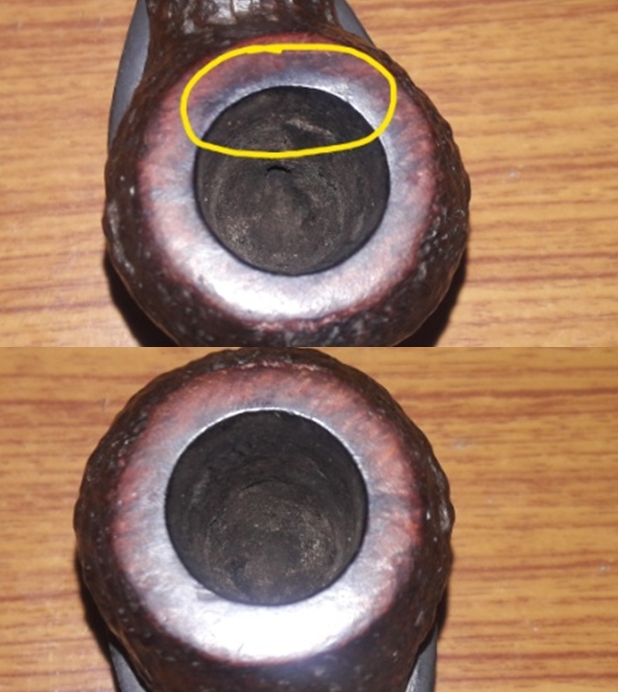
The sandblasted stummel on this pipe is covered in dust and grime and appears dull and lackluster. The smooth rim top surface and the band at the shank end are also covered in dust and grime and will need to be cleaned and polished. The rich brown hues of the raised portions of the rustications contrast beautifully with the darker hues of the stummel and the sandblast patterns on the stummel are eye catching, to say the least. The stummel has a very subtle, yet discernible outward flaring cap ring which lends it its classical shape. There is a very strong sweet smell to the cake, which perhaps may vanish after the chamber has been cleaned. The chamber has a nice even cake with specks of lava overflow on the smooth rim top surface. The condition of the inner walls of the chamber will be ascertained once the existing cake has been taken down to the bare briar. The smooth rim top surface has numerous minor dents and dings that are an eye sore. I suspect that the inner rim edge is charred at the back side of the rim top (marked in yellow circle). The extent of the char will be ascertained once the rim top surface has been cleaned off the lava overflow. The transition of the outer edge of the rim in to the stummel is sans any damage. Accumulation of oils and tars and specks of dried ash and tobacco is seen on the walls of the mortise. Though the draught hole is open, the draw should improve further once the shank internals and the mortise is thoroughly cleaned out.The stem surface, though not heavily oxidized, is rough and uneven and the edge of the lip on the lower surface has minor tooth indentations. The button edge on the upper stem surface is intact and just needs to be sharpened a bit. The tenon end is covered in dried oils and tars which will need to be cleaned. The slot and stem air way is clean. THE PROCESS
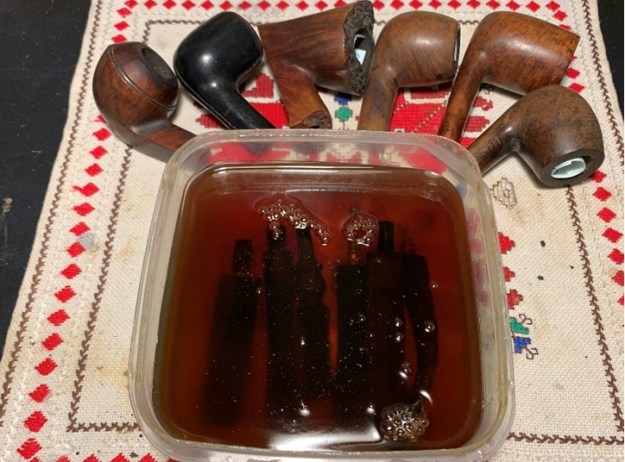
I began the process of refurbishing this pipe by cleaning the internals of the stem using pipe cleaners with isopropyl alcohol (99.9% pure) and dunking the stem in to “Before and After Deoxidizer” solution developed by my friend Mark Hoover. The solution helps to draw out heavy oxidation to the surface making its further removal a breeze, while the minor oxidation is eliminated to a very great extent. I usually dunk stems of 5-7 pipes that are in-line for restoration and this S & R pipe is marked in yellow arrow. I generally allow the stems to soak in this solution overnight for the solution to do its work.While the stem was in the soak, I reamed the chamber with a Castleford reamer tool, using the second and third head. Using my fabricated knife; I further took the cake down to the bare briar. I have realized that the knife is best suited to remove the cake from the bottom of the chamber.  With a 150 grit sand paper, the walls of the chamber were rid of all the remnants of the cake, revealing smooth chamber walls sans any damage. I further wiped the chamber with a cotton swab wetted with isopropyl alcohol to completely remove the sanding dust. The inner rim edges are, save for the minor charring, in good condition. I scraped the shank internals with a fabricated tool to remove all the crud that had accumulated along the shank walls and further cleaned it with bristled and regular pipe cleaners dipped in isopropyl alcohol. I continued the cleaning of the chamber and shank internals with a salt and alcohol bath. I use cotton balls which is an at par substitute as I have realized over the last year or so. I draw out a wick from the cotton and along with a folded regular pipe cleaner; insert it in to the mortise and through the draught hole in to the chamber. Thereafter, I pack the chamber with cotton balls to about quarter of an inch below the rim inner edge. I soak the cotton balls with isopropyl alcohol up to the brim. About half an hour later, the level of alcohol had gone down, having being absorbed by the cotton. I top it up once again and set it aside overnight. By next afternoon, the cotton and alcohol has drawn out all the remaining oils and tars from the chamber and mortise, fulfilling its intended task. I removed the cotton balls and ran pipe cleaners through the mortise to clean out all the loosened tars and gunk. The chamber now smells clean and fresh. I set the stummel to dry out naturally. While the stummel was set aside for the salt and alcohol to draw out all the deep residual oils and tars, I worked on the stems that had been soaking in the deoxidizer solution overnight. I fished out all the stems and cleaned them under running warm water and scrubbed the raised oxidation from the stem surface using Scotch Brite pad. I further removed the oxidation by scrubbing the stems with 0000 grade steel wool and applied a little olive oil to rehydrate the stems and set them aside for the oil to be absorbed. Unfortunately, I did not click any pictures of these stems at this stage.

Once the stummel internals were cleaned, I scrubbed the external surface of the bowl with undiluted Murphy’s oil soap and hard bristled tooth brush. I deliberately cleaned the rim top surface to remove the entire lava overflow and dried it using paper towels and soft cotton cloth.  The cleaned up rim top surface revealed very slight charring to the inner rim edges and minor dents and dings to the surface. I set the stummel aside to dry out naturally. Next, I decided to address the issue of damage to the rim top. I topped the rim surface on a 220 grit sand paper, frequently checking the progress being made. One of the things that I prefer to avoid is topping, as it compromises the shape to an extent while losing briar estate. But this process is a necessary evil while addressing the damage to the rim top surface and I prefer to remain minimalist with it. The rim top is now smooth and the charring on the inner edges is addressed to a great extent. I am at peace with the appearance of the rim top surface at this stage.I polished the rim top and the smooth band at the shank end with micromesh pads, wet sanding with 1,500 to 12,000 grit pads. I wiped the surface with a moist cotton cloth to remove the resulting sanding dust. The rim top and the shank end band looks gorgeous and should provide a nice contrast to the dark brown hues of the stummel sandblasted surface once it is polished further. I rubbed a small quantity of “Before and After Restoration Balm” in to briar. I rubbed this balm deep in to the sandblasts with my fingers and let it rest for a few minutes. The balm almost immediately works its magic and the briar now has a nice vibrant appearance. I further buff it with a horse hair shoe brush. Now that the stummel refurbishing is nearly complete, save for the final wax polish, I turned my attention to the stem repairs. Though most of the oxidation was removed after I had scrubbed the stem with Scotch Brite and 0000 grade steel wool, slight traces of oxidation are still visible on the edges of the saddle at the tenon end. I sand the entire stem surface with a folded piece of a 220 grit sand paper, being especially careful around the saddle edge at the tenon end to avoid causing of the dreaded shouldering effect! I wiped the stem with a cotton swab and Murphy’s oil soap to further remove the visible oxidation. I am happy with the way this stem appears at this stage and also with the deoxidizer solution. I filled the tooth indentation in the button edge on lower stem surface with a mix of activated charcoal and CA superglue and set it aside for the fill to cure. Once the fill had cured sufficiently, with a tightly folded piece of 220 grit sand paper, I sanded down the fill to match with rest of the stem surface. With the same piece of sand paper, I sharpened the button edge on the upper surface. I further sand the stem with 400, 600 and 800 grit sand paper and wiped the stem with cotton pad dipped in alcohol to remove the resultant dust. I rubbed some extra virgin olive oil in to the stem and set it aside to be absorbed in to stem. To impart a nice deep glossy shine to the stem, I polished it with micromesh pads, wet sanding with 1500 to 12000 grit pads. I rubbed a little extra virgin olive oil in to the stem after every three pads. I finished the polishing of the stem by rubbing a small quantity of Paragon wax and giving it a final polish with a soft cotton cloth. The stem is now nice, smooth and shiny.To apply the finishing touches, I mount a cotton cloth buffing wheel on to my hand held rotary tool and apply a coat of Blue Diamond to the stem to polish out the minor scratches. With a cotton buffing wheel that I use for carnauba wax, I apply a coat of carnauba wax to the stummel and stem and continued to work on it till the complete coat of wax had been polished out. I mount a clean cotton cloth buffing wheel and gave the entire pipe a once over buff. I finished the restoration by giving the entire pipe a rigorous hand buffing using a microfiber cloth to raise the shine further. The finished pipe is shown below. P.S. – Since the completion of this restoration, I have smoked this pipe and included it in my rotation. Believe you me; this pipe smokes perfect with a nice, smooth draw right to the end. This leads me to think, is it only necessary to have Dunhill, Barling’s, Comoy’s etc, as fantastic smokers? Thanks for your patience and looking forward to inputs about this brand and the write up. Cheers…

Replacing a Broken Tenon and Restoring a Kriswill Bernadotte Dublin


Blog by Steve Laug

This is another one of the pipes that came to me from a fellow in Kitchener, Ontario that needed some cleaning and in this case a tenon replacement. He had been referred to me by my local pipe and cigar shop. While I am not currently adding more pipes to my queue of repairs I have made a commitment to the shop to work on pipes for their customers. Generally they have one or two pipes that need a bit of work. This fellow sent me the following email:

I just came across my smoking pipes that I’ve had in storage for about 40 years. I’m wondering what you’d charge to have them refurbished. There are 17 in total (11 are Brighams and 6 are various).

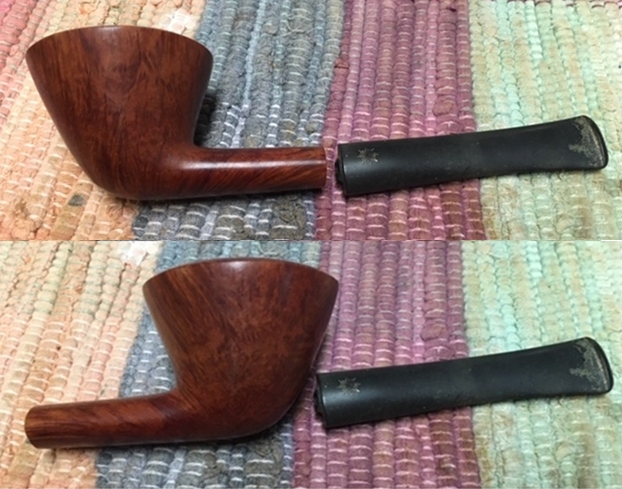
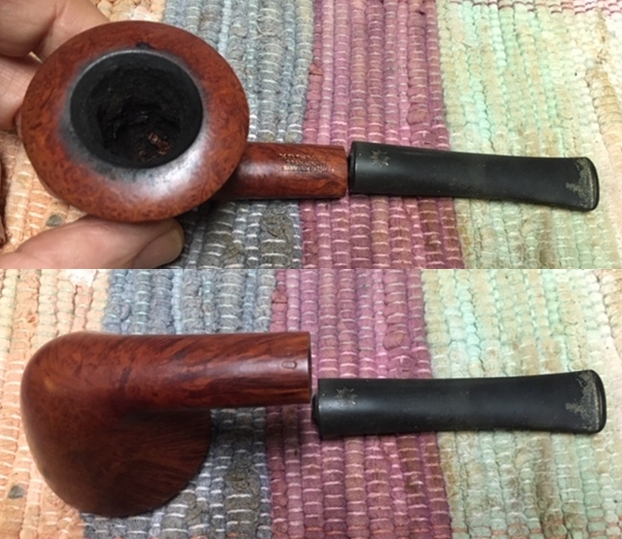
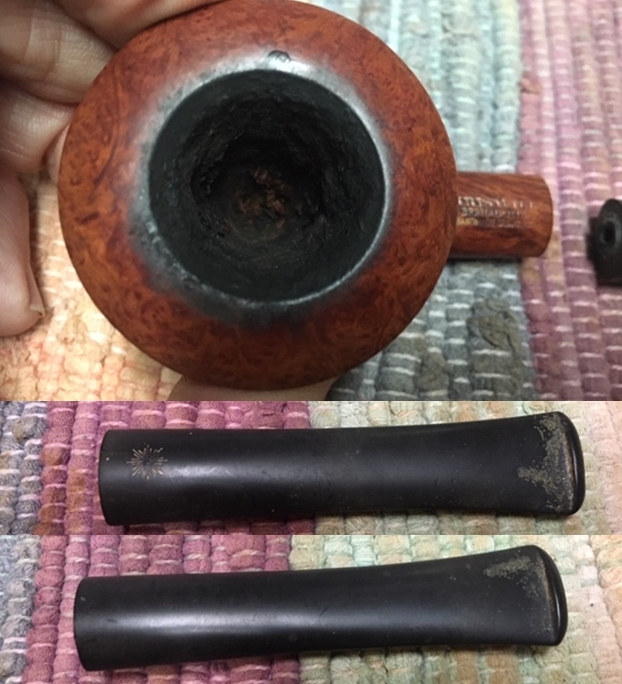
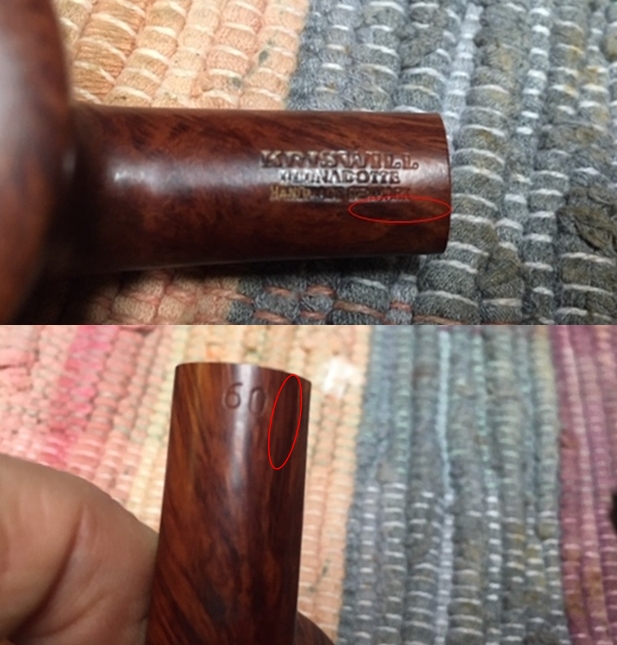
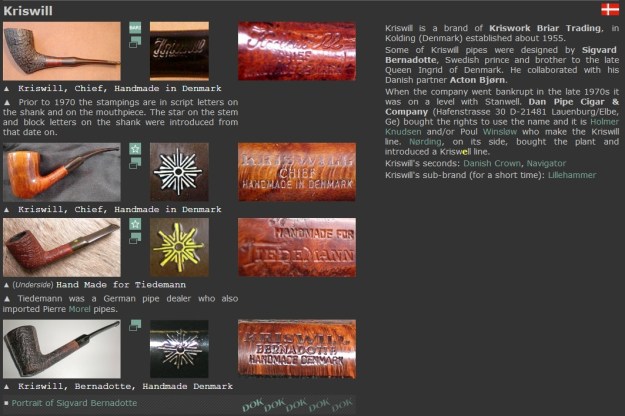
It turns out he said he had 17 pipes. That was certainly more than I expected but I communicated that there was a large queue ahead of him and I would have to fit them in as I could. He was fine with whatever time it took. He sent me the following photos of his collection that he wanted restored. The first photo shows his eleven Brigham pipes – all very interesting shapes. The second photo shows the six various pipes in the collection – A Republic Era Peterson’s System 1312 (Canadian Import), A Bjarne Hand Carved Freehand, a Comoy’s Everyman London smooth billiard, a GBD Popular Dublin 12, an English made Kaywoodie Rustica 72B, a Kriswill Bernadotte 60 with a broken tenon. When the box arrived there were two additional pipes included for a total of 19 – a Ropp 803 Deluxe Cherrywood Poker and a Comoy’s Sandblast Everyman Canadian 296. It was a lot of pipes! I have been randomly choosing the next pipe to work on and chose the Kriswill that needed a tenon replacement and general over haul. I have drawn a red box around it in the photo below.Unlike the other pipes that I unwrapped this one needed much more work than the Brighams that I had worked on so far. It was a Kriswill Bernadotte Oval Shank Dublin. It was stamped on the top of the shank Kriswill over Bernadotte over Hand Made Denmark. On the underside of the shank next the shank/stem junction it bears the shape number 60. It had great grain that the shape not only followed but captured. The rim top had a lava overflow from the thick cake in the bowl and some darkening and lava on the beveled inner edge of the rim. It was a dirty pipe but appeared to be in okay condition under the grime. There was some shiny substance in the stamping of the portion that read Hand Made Denmark. As I examined it I saw a small hairline crack in the shank area just below the stamping and into that portion noted above. It appeared to have been glued. I would need to clean that up and re-glue it. The tapered stem was oxidized and had tooth marks and chatter near the button on both sides. There was a classic Kriswill snowflake logo on the top of the stem. The tenon was snapped off cleanly in the shank and was stuck there. I took close up photos of the bowl and rim top to show the condition of the bowl and rim as well as the thick cake and lava overflowing onto the rim top. I also took close up photos of the stem to show its condition as mentioned above.   I took a photo of the stamping on the top and underside of the shank to show what I was speaking about above. It is very clear and readable. You can see the shiny substance in the Hand Made Denmark portion of the stamp. I have also drawn an oval around the hairline crack in the shank in the photos below. The repair seems to have left glue in the stamping as the crack is not that long. I also have included a photo of the shape number stamp on the underside of the shank. There was also a hairline crack in the underside of the shank to the right of the shape number.I remembered that Pipephil had a great summary of the brand so I turned to that site and reviewed the history (http://www.pipephil.eu/logos/en/logo-k3.html). It was much as I expected but there was a part of the history there that I had not noted before. I have included a screen capture of the section on the site regarding Kriswill pipes.I quote the new information (at least for me) regarding the Bernadotte line. Kriswill is a brand of Kriswork Briar Trading, in Kolding (Denmark) established about 1955. Some of Kriswill pipes were designed by Sigvard Bernadotte, Swedish prince and brother to the late Queen Ingrid of Denmark. He collaborated with his Danish partner Acton Bjørn.

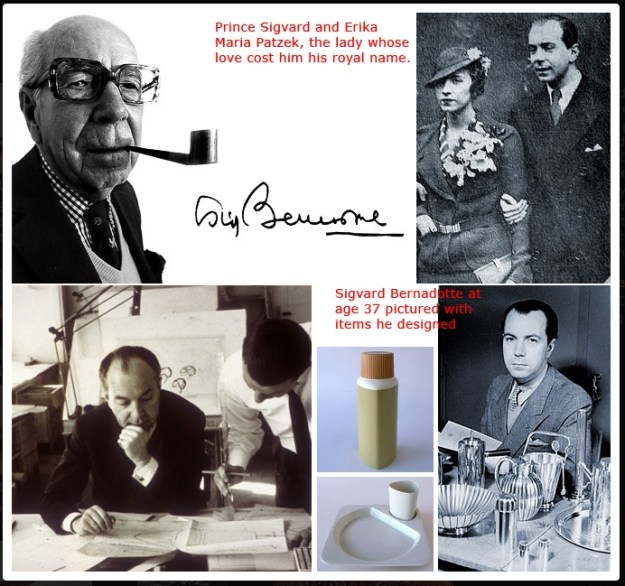
There was a small line at the bottom of the section that said Portrait of Sigvard Bernadotte. I clicked on it and was taken to the second screen capture I have included.From the site and the information on Sigvard Bernadotte I learned that the pipe I had in hand was designed for Kriswill by Sigvard Bernadotte, Swedish prince and brother to the late Queen Ingrid of Denmark. That was new information to me. I have worked on a lot of Kriswill pipes before but never made that connection. But now I knew… a pipe designed by royalty! I would never have guessed that prior to reading this.

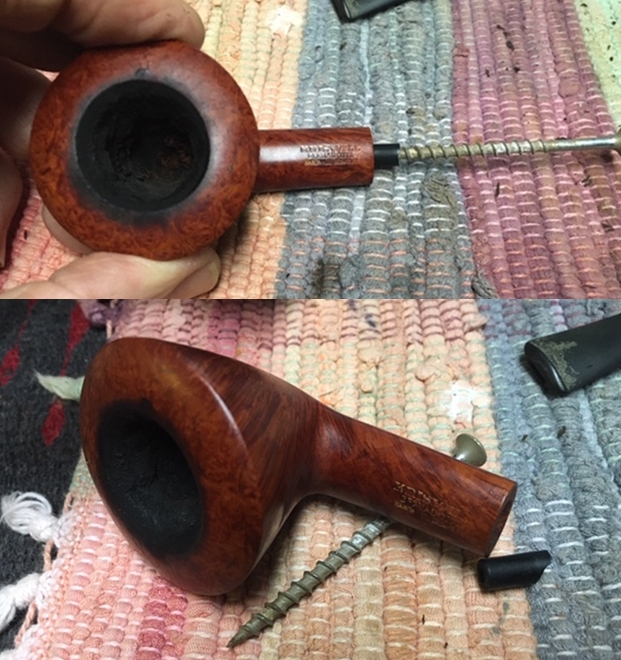
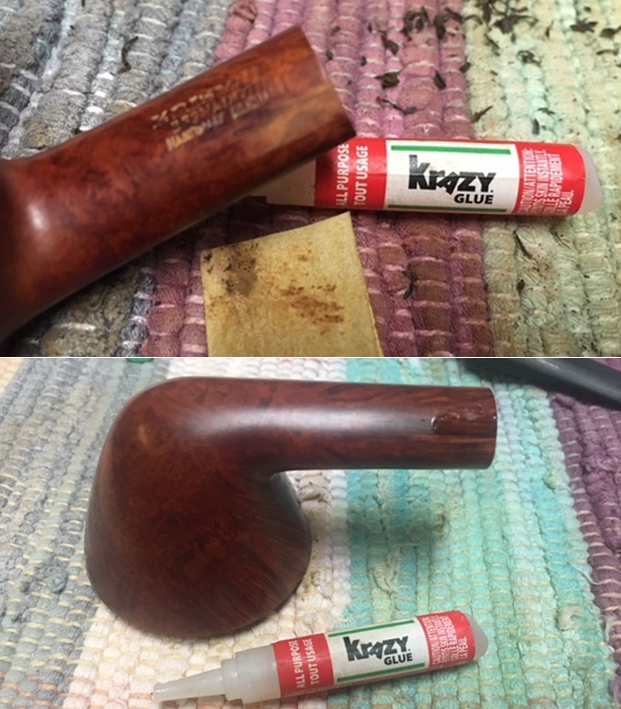
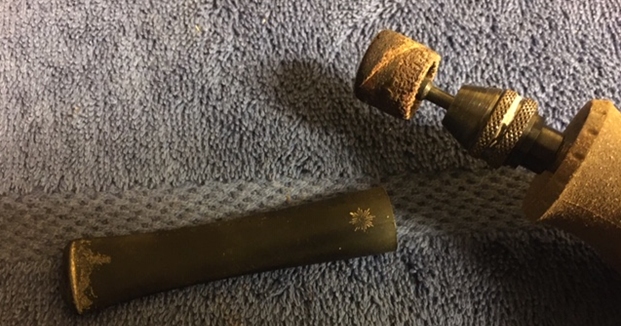
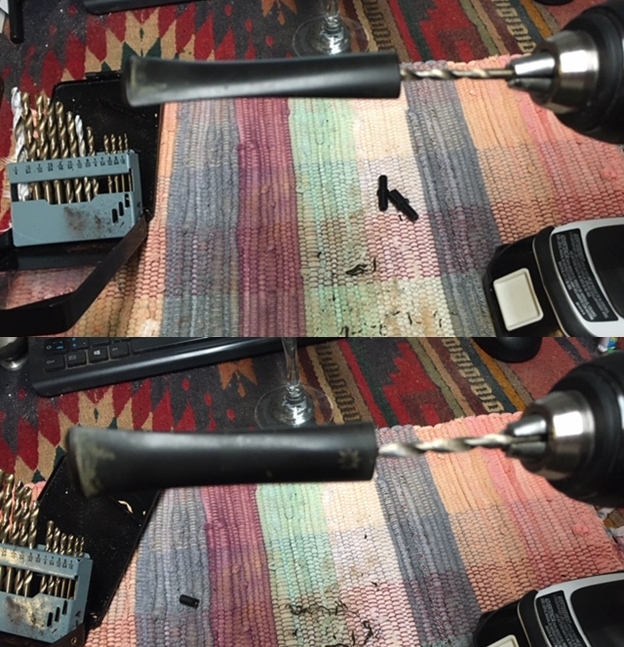
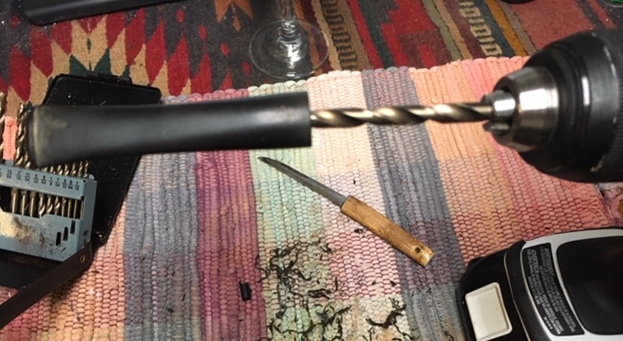
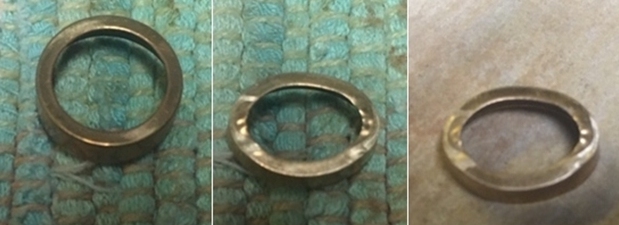
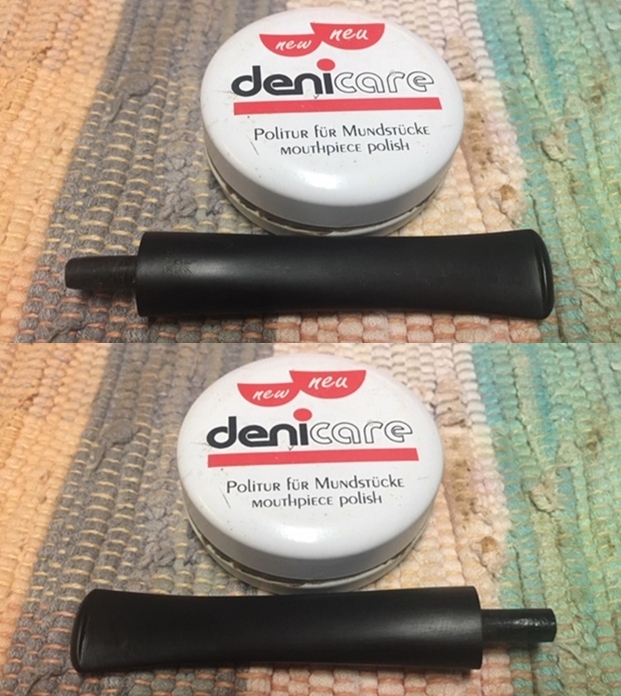
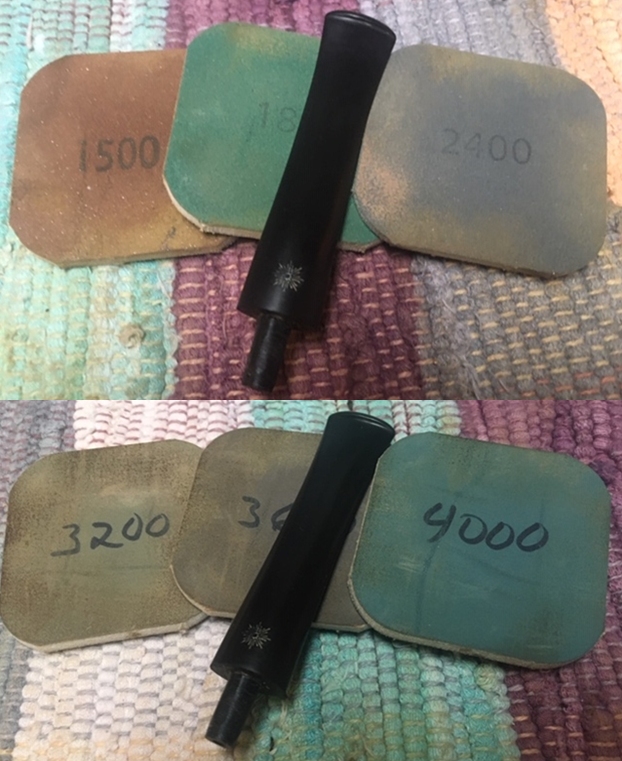
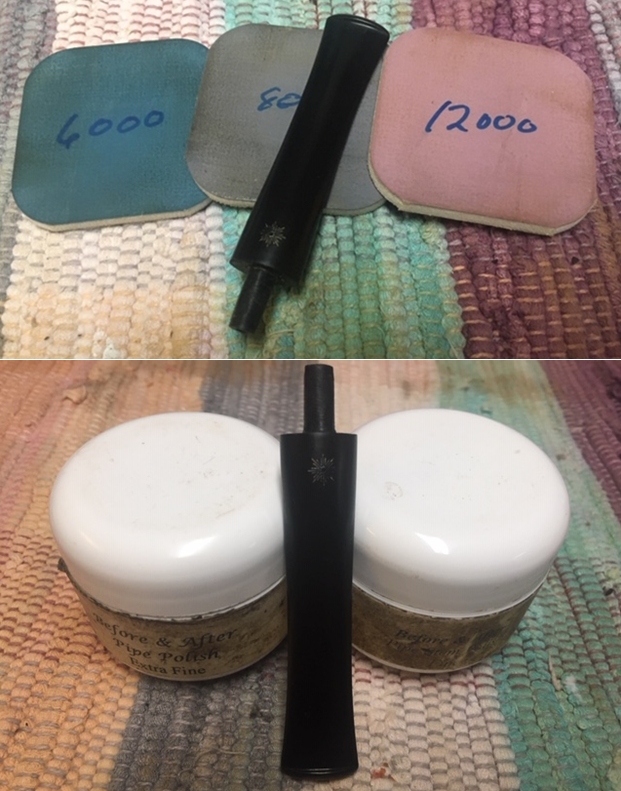
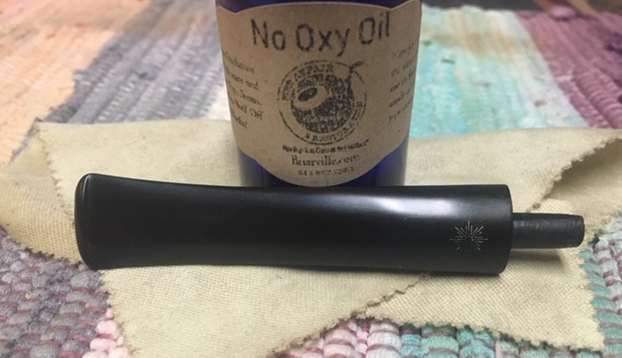
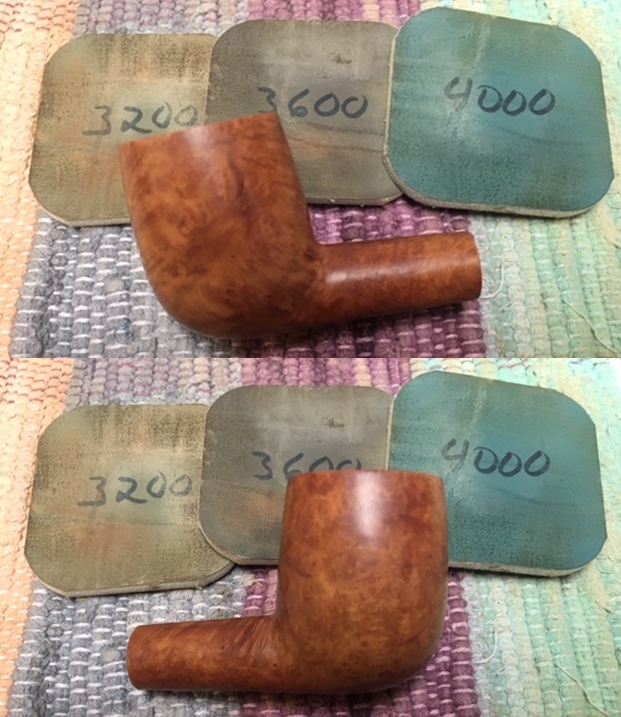
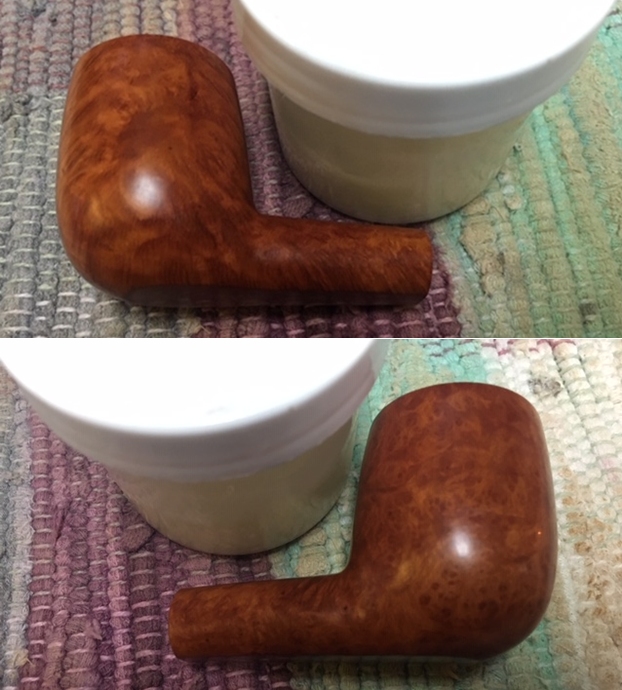
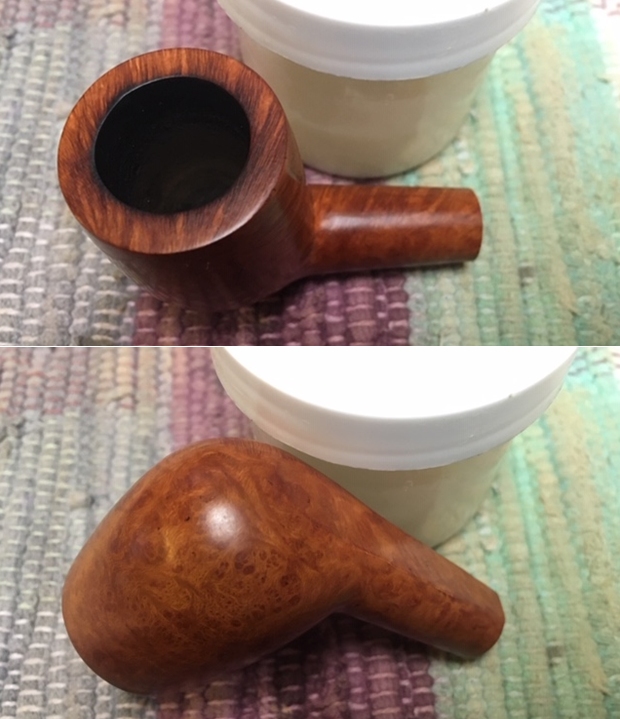
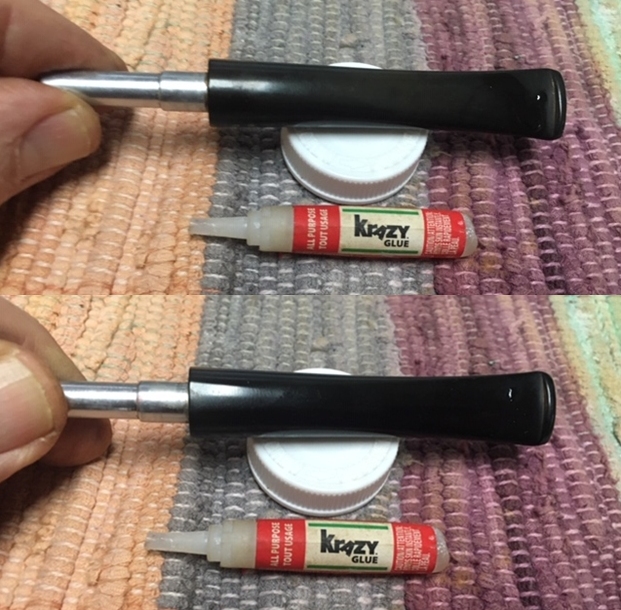
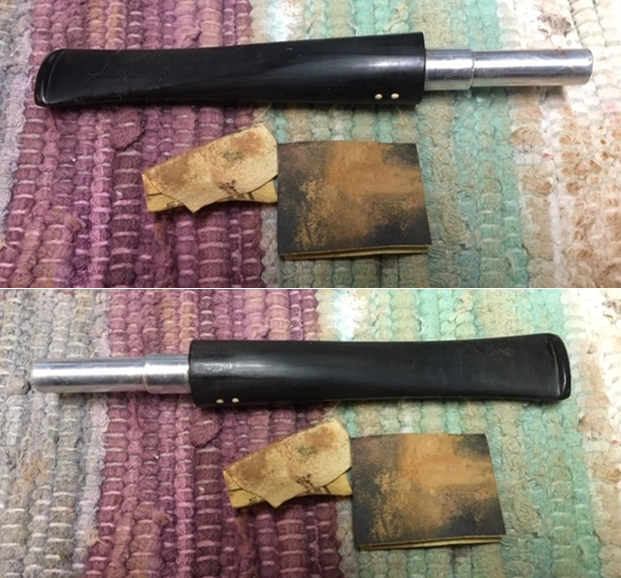
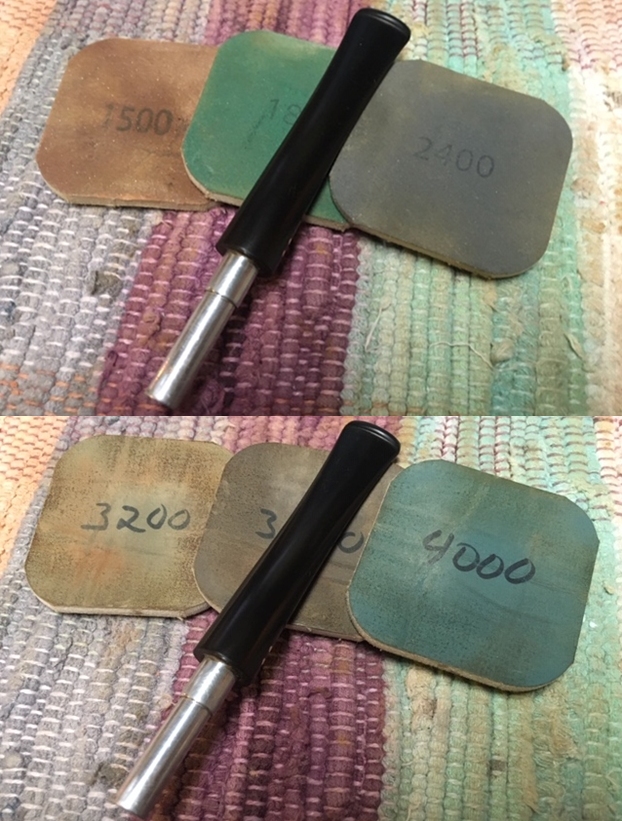
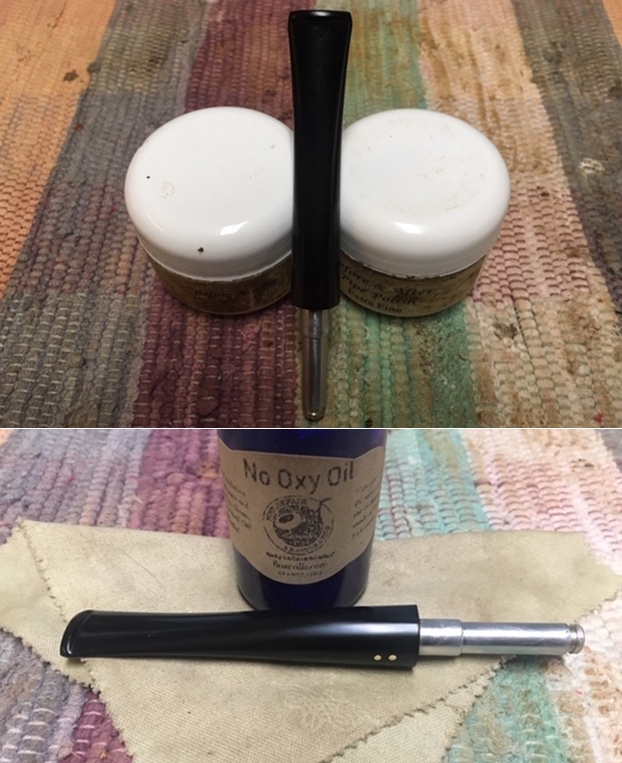
Armed with that information I was ready to start on the Bernadotte pipe. I decided to start my work by addressing the broken tenon. I put the bowl in the freezer for about 10 minutes and then pulled the broken tenon from the shank with drywall screw. It was an easy pull. I then cleaned up the glue on the stamping with acetone on a cotton pad. I opened the hairline crack on both sides of the shank and put clear superglue in the crack. I pressed it together and clamped it until it cured. With the crack on both sides I am going to recommend to the pipeman that we put an elegant thin band on the shank. I set the bowl aside to let the repairs cure while I waited to hear from the pipeman regarding possible banding of the pipe. I turned my attention to replacing the tenon. I used the Dremel and sanding drum to flatten the face of the stem and remove the broken bits of vulcanite from the broken tenon.I started drilling out the airway with a bit slightly larger than the existing airway in the stem. I complication was that the airway was not centered in either the broken tenon or the stem at this point. I used a sharp pen knife to funnel the airway and straighten it out before I drilled. I was able to center the airway. I worked my way through three different drill bits to get the airway open enough to receive the new tenon. The next photo shows the threaded tenon before I went to work on it with the Dremel. My issue with this replacement was that the stem tapered quickly and did not allow much room. I used the Dremel and sanding drum to remove the hip on the new tenon and reduce the diameter of the portion going into the stem. I glued it into the stem with thick super glue. In the photo it looks like it is tapered a bit. I cleaned that up with a file so that the flow was smooth and the fit was snug in the airway.Once I made the flow of the tenon straight and smooth I slid it into the repaired shank to have a look. Some fine tuning to do for sure but I like the look of the new fit.I set the stem aside to let the tenon cure. I turned back to the bowl. I reamed it with a PipNet pipe reamer. The bowl was conical so I started with the small reaming head to take care of the bowl and worked my way up to the third head. I cleaned up the transitions with a Savinelli Fitsall Pipe Knife and trimmed the cake back so I could examine the walls. I sanded the walls of the bowl with 220 grit sandpaper on a piece of dowel. I scraped off the lava on the inner beveled rim with the Savinelli Fitsall knife. I worked on the inner beveled edge with a folded piece of 220 grit sandpaper to smooth it out and clean off the darkening.I scrubbed the bowl with a tooth brush and some of Mark Hoover’s new Briar Cleaning product. He sent me some to experiment with so this was the first test. I tried the Extra Strength version. It worked fairly well. The verdict is still out for me whether it is better than Murphy’s Oil Soap. I rinsed it off with warm water and dried the bowl off with a cotton cloth. I cleaned out the mortise area and airway to the bowl and the stem with pipe cleaners, cotton swabs and alcohol.I wet sanded the rim top and the bowl sides with micromesh sanding pads – 1500-12000 grit sanding pads. I wiped the bowl surface down with a damp cloth after each sanding pad to remove the sanding dust. Once I finished the bowl looked good.   I rubbed the bowl and shank down with Before & After Restoration Balm. I worked it into the surface of the briar with my fingertips to clean, enliven and protect it. I let the balm sit for a little while and then buffed it with a cotton cloth to raise the shine. It really makes the grain stand out on this pipe. I set the bowl aside and turned my attention to the stem. When I was in the US visiting Jeff and his wife I picked up some Soft Scrub. Jeff swears by this stuff as the first tool to use to remove a lot of the oxidation on the stem. I rubbed it on with a cotton pad and sure enough it removed the oxidation and the calcification build up. It looked a lot better.I cleaned out the marks with alcohol and a cotton swab. I filled them in with clear super glue and set the stem aside to cure.   While the repairs to the stem surface were curing I made a call to Neil in Eastern Canada to talk with him about banding the shank on this beautiful little pipe. I have some small brass bands that I can reduce to 1/8 of an inch in height that will allow me to band the pipe and still keep the stamping free and readable. He gave the go ahead so I worked on the band. I found a band that was the right diameter in my collection of bands. I tapped it with a small hammer to make it oval and put it on the shank. I tapped around the shank to smooth out the fit. I tapped the end of the shank to smooth out the small dents. I took it off and used the topping board to reduce the depth of the band to just under 1/8 of an inch. I topped the dented top of the band as well.Once I had it smoothed out and the shape correct for the shank I spread some all-purpose glue on the shank and pressed the band in place on the shank. The band looks great to me and should do the job in binding the cracked shank together.I took photos of the newly banded shank to give and idea of the new look to the pipe. What do you think? I set the bowl aside and returned to the stem. I smoothed out the repairs and sanded out the remaining oxidation with 220 grit sandpaper and started the polishing with 400 grit wet dry sandpaper.  I rubbed down the stem with Denicare Mouthpiece Polish and a cotton pad to remove the remnants of oxidation and to blend in the sanding. The stem is starting to show promise at this point in the process.  I polished the stem with micromesh sanding pads – wet sanding it with 1500-12000 grit pads. I wiped the stem down after each sanding pad with a cotton pad to remove the sanding debris. I finished polishing the stem with Before & After Pipe Stem Polish – both fine and extra fine. I finished by wiping it down with Briarville’s No Oxy Oil and buffing it to a shine. I always look forward to this part of the restoration when all the pieces are put back together. I put the pipe back together and buffed it with Blue Diamond on the buffing wheel. I gave the bowl and the stem multiple coats of carnauba wax. I hand buffed the pipe with a clean buffing pad to raise the shine. It is fun to see what the polished bowl looks like with the new brass band on the shank end. The combination of grain and the thin band add some elegance to the pipe when combined with the polished black vulcanite stem. This royalty designed Kriswill Bernadotte 60 Dublin is nice looking and feels great in my hand. The pipe is another light weight that could be clenched and smoked while doing other things as it is very well balanced. Have a look at it with the photos below. The dimensions are Length: 5 ¾ inches, Height: 1 ½ inches, Outside diameter of the bowl: 2 inches, Chamber diameter: 7/8 of an inch. This is the fifth of the pipes sent to me from Eastern Canada for restoration. Once again I am looking forward to what the pipeman who sent it thinks of this restoration. Lots more to do in this lot! Thanks to each of you who are reading this blog. Remember we are not pipe owners; we are pipemen and women who hold our pipes in trust until they pass on into the trust of the next pipeman or woman.
Breathing Fresh Life into a French Longchamp Leather Clad Billiard


Blog by Dal Stanton

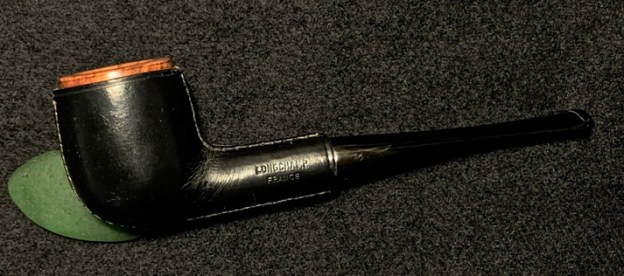
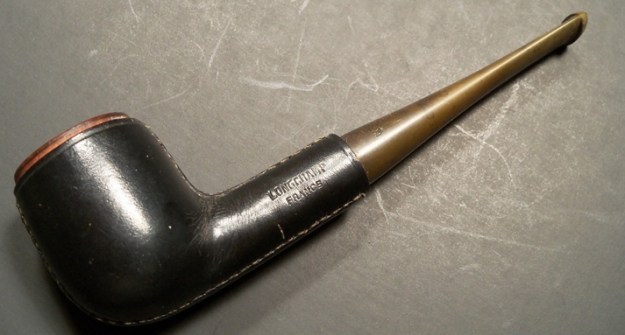
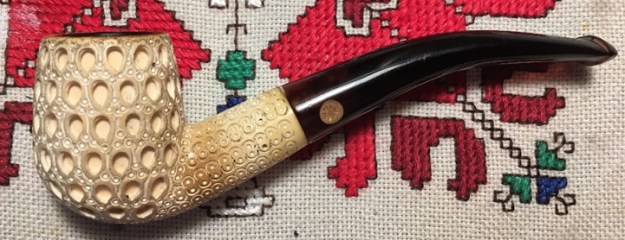
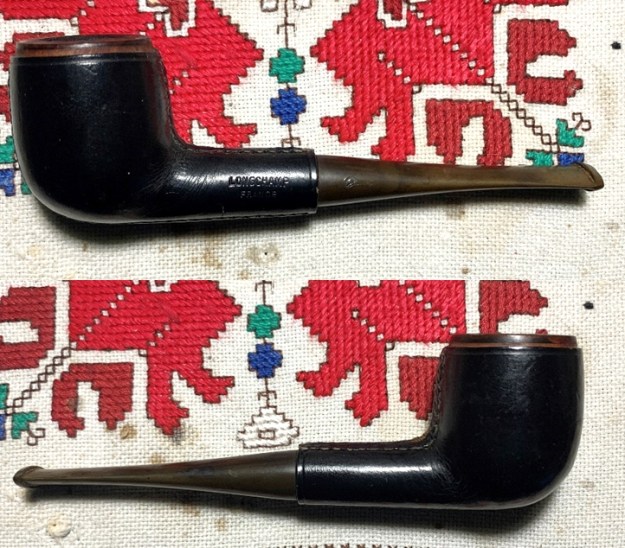
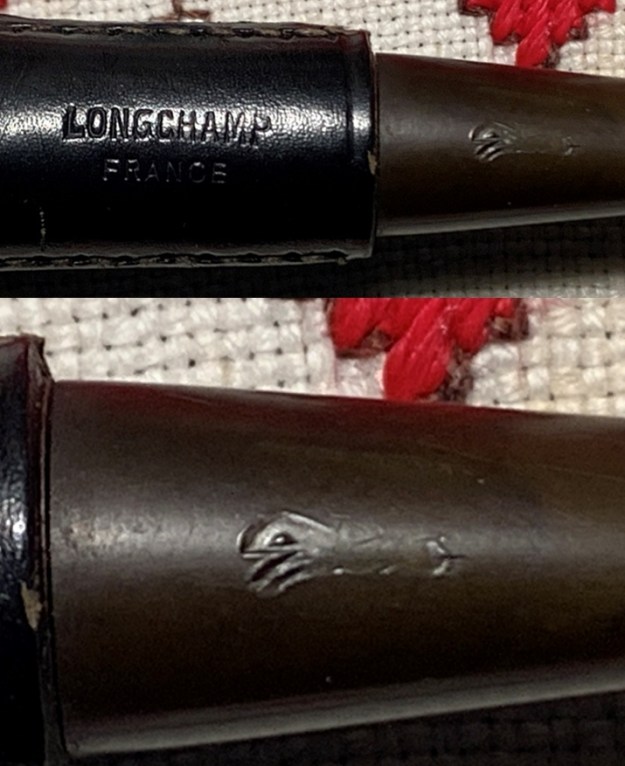
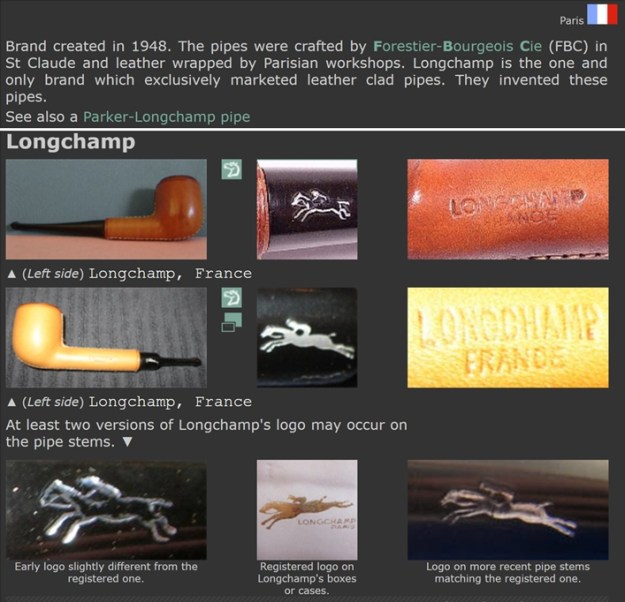
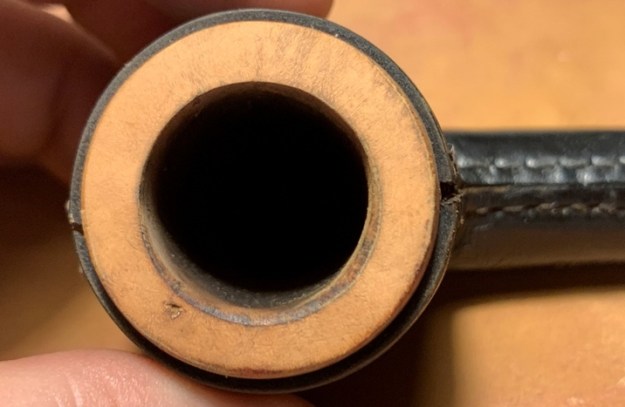
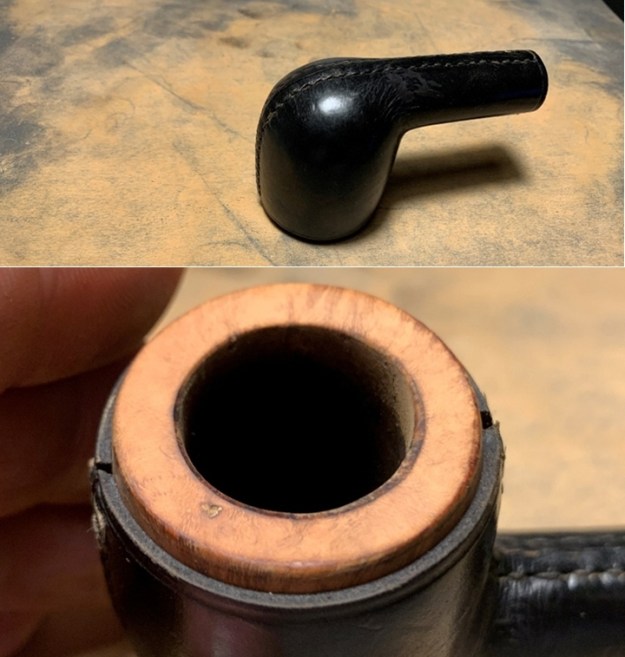
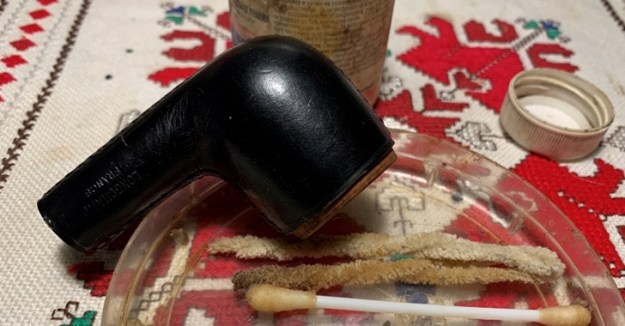
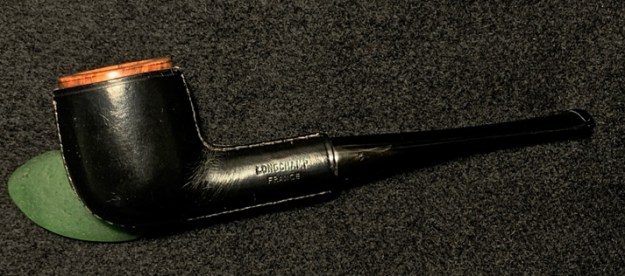
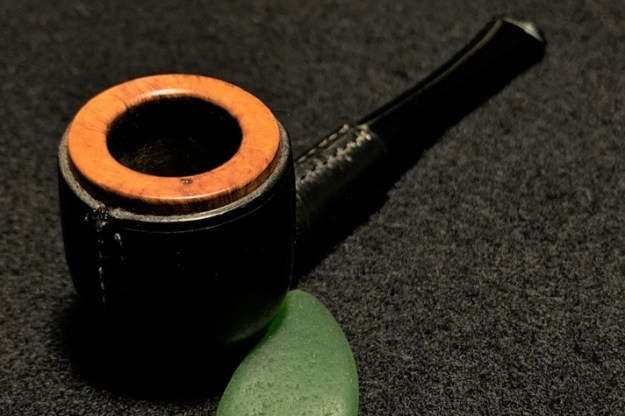
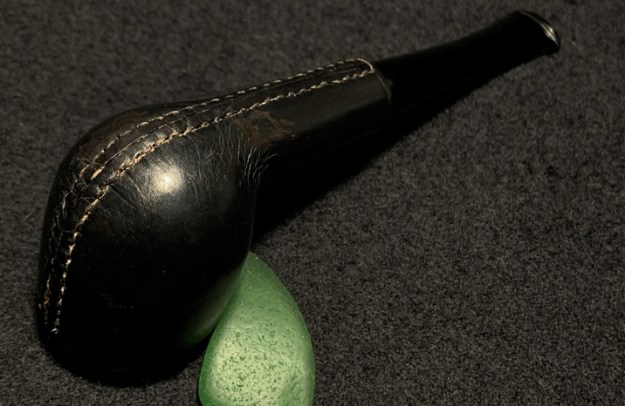
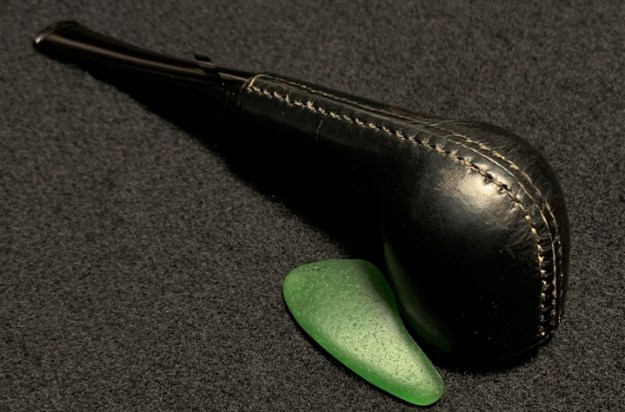
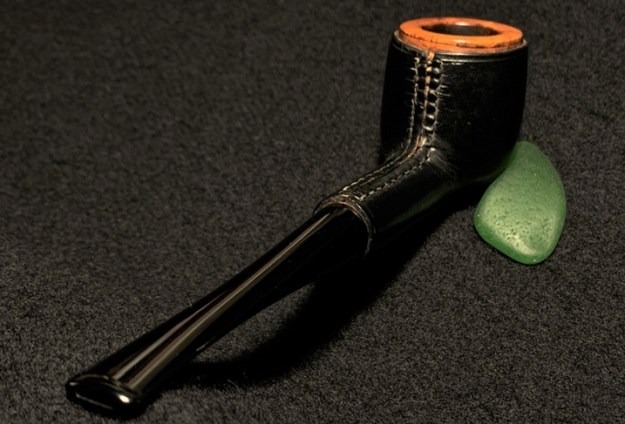
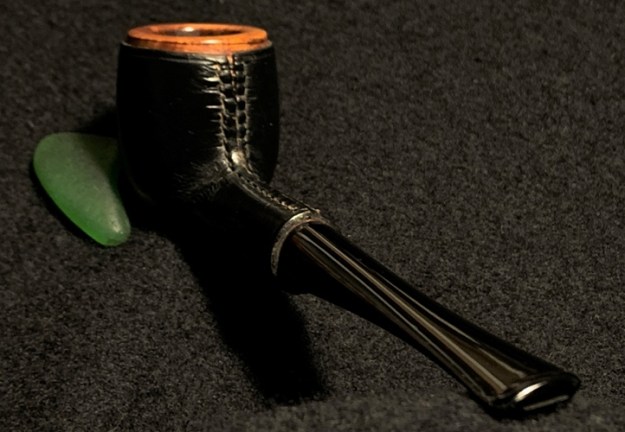
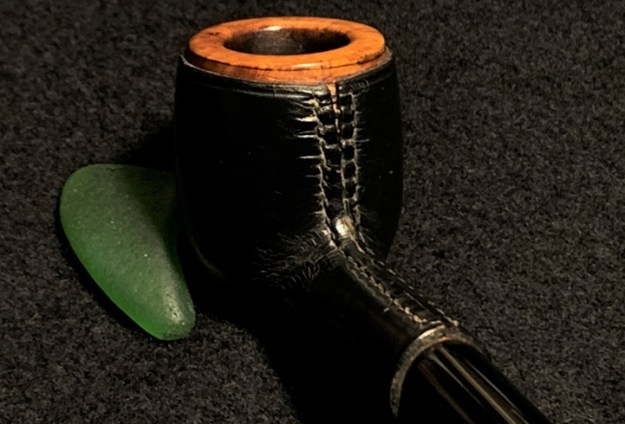
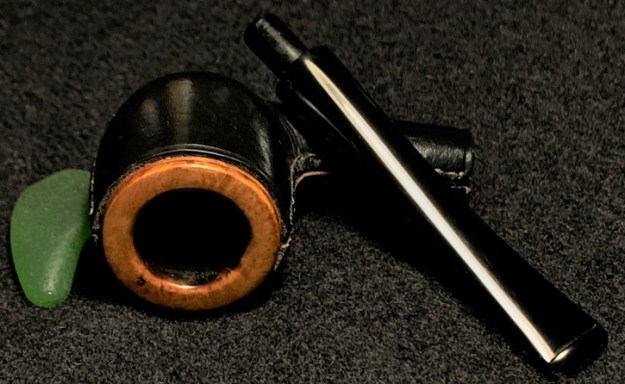
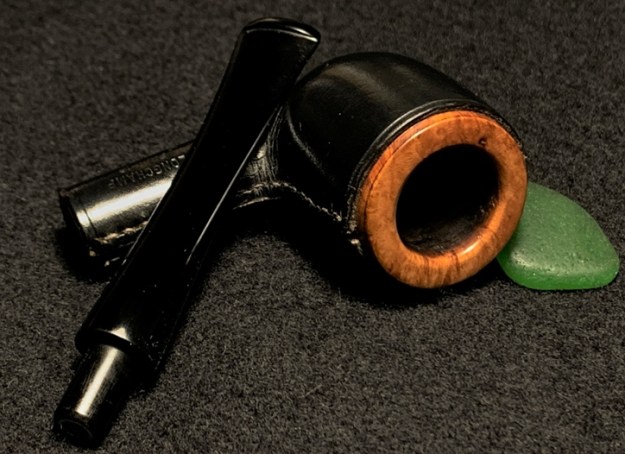
I saw this leather wrapped Longchamp on the eBay auction block from a seller in the USA state of Indiana.  Up to that point in time, a leather clad pipe was not part of my collection and the price was right when the final minutes ticked off the clock my bid weathered any challengers. The black leather drew my attention with the potential of cleaning the rim for a nice contrast with briar.  Here’s the Longchamp that got my attention. I brought the pipe back to Bulgaria and put it in the For “Pipe Dreamers” Only! online collection and this is where Jason saw the Longchamp.  Jason sent me an email and commissioned the Longchamp and expressed satisfaction in being able to help support the work we do here in Bulgaria with the Daughters of Bulgaria.  He also said that he heard about The Pipe Steward for the first time when I was interviewed by Brian Levine.  Last year, I had a great time being interviewed by Brian Levine of the Pipes Magazine Radio Show! I told the story of how I began restoring pipes as The Pipe Steward and how this intersects with the efforts here in Bulgaria working with the Daughters of Bulgaria.  Jason also commissioned a very nice Altinay Tear Drop Lattice Meerschaum which is next on the worktable.After getting the Longchamp to Bulgaria, I took more pictures to get a closer look. The nomenclature is stamped into the leather on the left flank of the shank. It reads, LONGCHAMP [over] FRANCE.  There is also a stamp of what looks like a horse in motion on the stem.The practice of wrapping briar bowls with leather started in France as a creative and economically savvy way to sell sub-par bowls that were part and parcel of France’s austerity measures during WWII.  Pipedia’s article uncovers this bit of pipe history in the article devoted to Longchamp:

In 1948 Jean Cassegrain inherited a small shop near the French Theater on the Boulevard Poissonnière in Paris, called “Au Sultan”. Articles for smokers and fountain pens were offered there. Now, the absolute bulk of the pipes Cassegrain found in the inventory was from war-time production and due to the sharp restrictions on pipe production the French government had enforced in 1940, these pipes were of very poor quality and showed large fills. Strictly speaking, they were not marketable now that the French pipe industry produced pipes of pre-war standards again. In this situation Cassegrain had the probably most enlightened moment in his life: he took some of these pipes to a leather worker who clad bowls and shanks in leather. Only the rims of the bowls and the shanks’ faces remained blank.

E voila – the pipes looked pretty good now and were eye-catching enough to become an instant success in sale. Above all among the thousands of Allied soldiers who populated Paris in those days. The thing worked well, and even unexperienced pipesters liked the covered pipes very much for they did not transmit the heat to the hand. Very soon Cassegrain had sold the old stock of pipes, and the leather-clad pipes became his only product. He began to place orders with renowned firms like Ropp or Butz-Choquin.

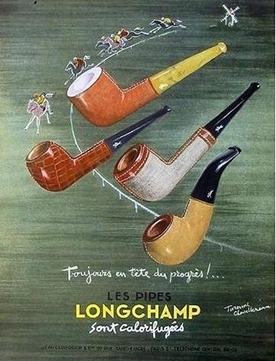
I love stories of innovation like the story of Jean Cassegrain and the creation of the Longchamp name which came from the name of a horse racing park near Paris.  Pipedia concludes the article with this comment:

After 1970 the interest in leather-clad pipes slowly diminished. The Longchamp pipes were offered for the last time in the 1978 catalog though previously placed orders were delivered until 1980.

The splendid success inspired many other renowned producers to offer their own lines RoppButz-ChoquinGubbelsGBD… Maybe Savinelli was the very last producing them for the label of the famous designer Etienne Aigner.

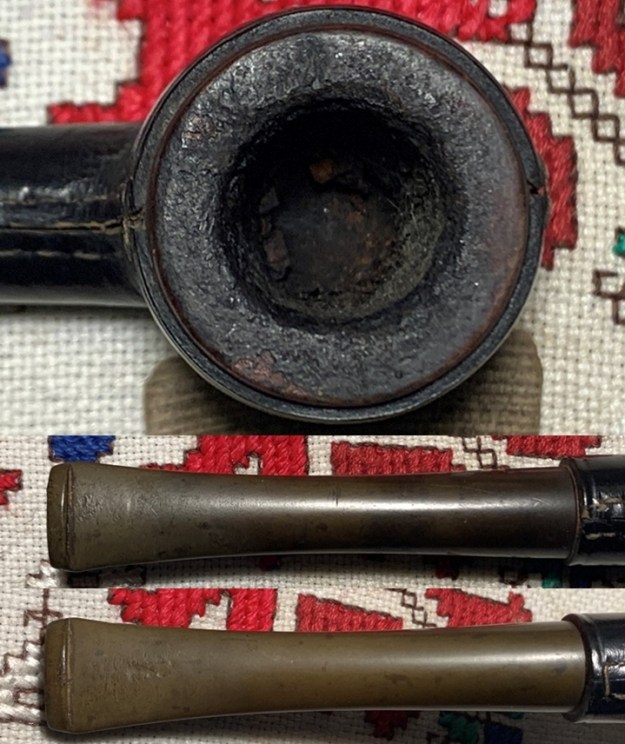
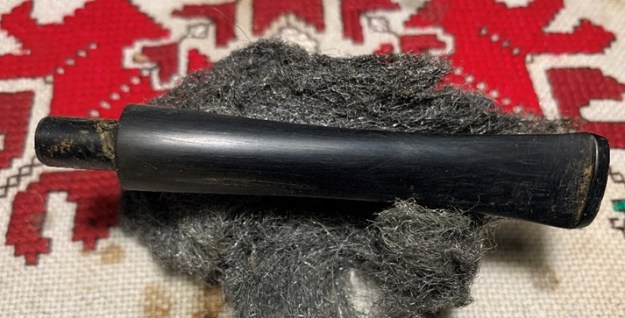
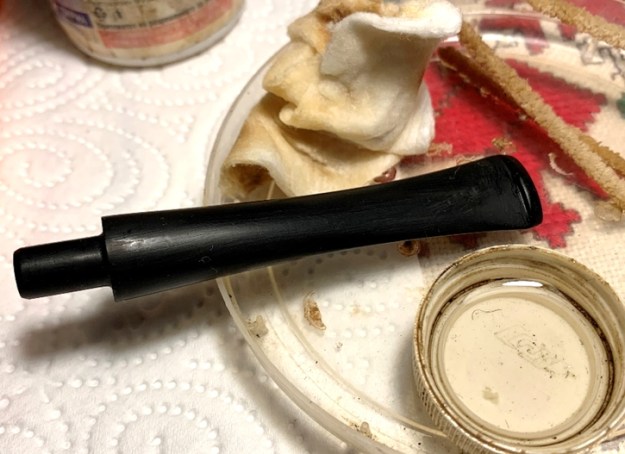
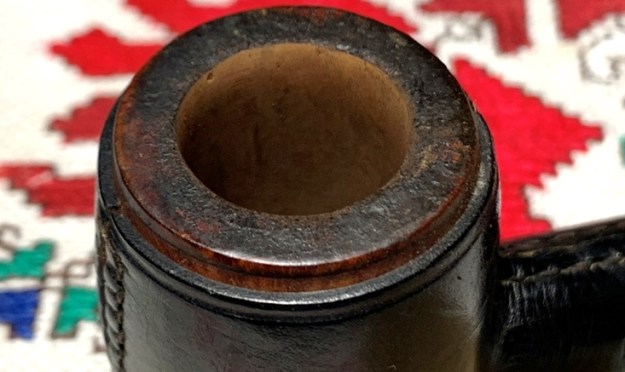
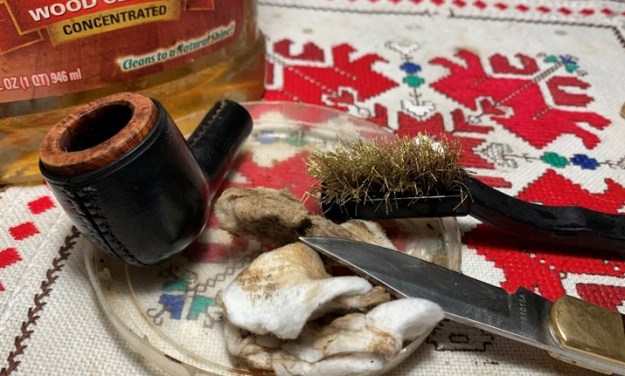
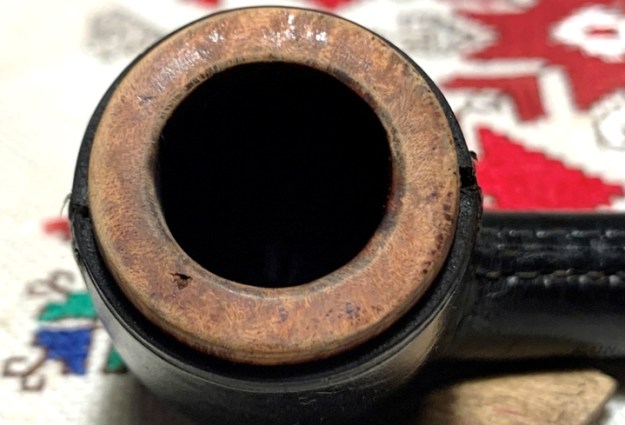
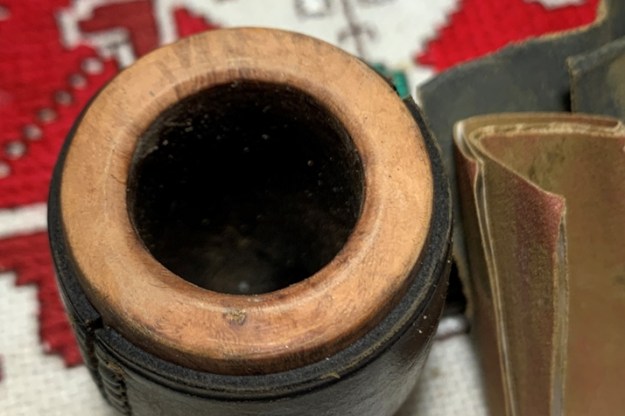
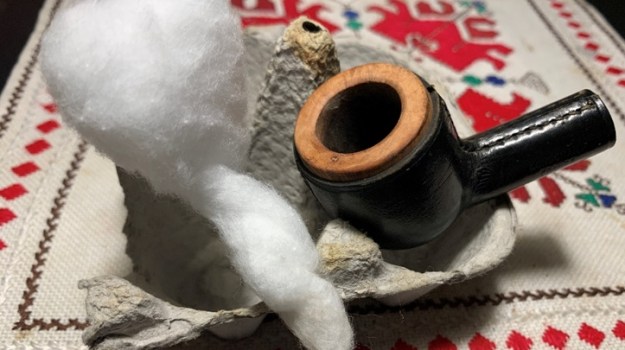
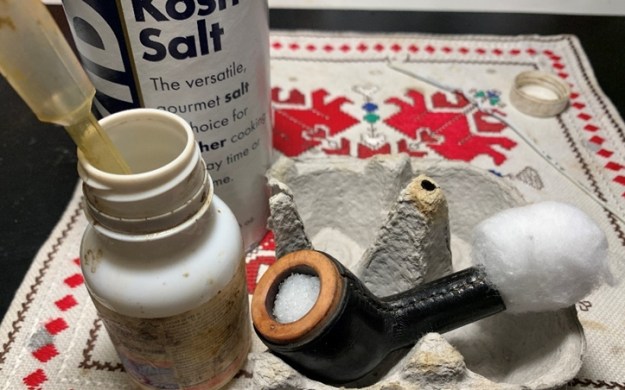
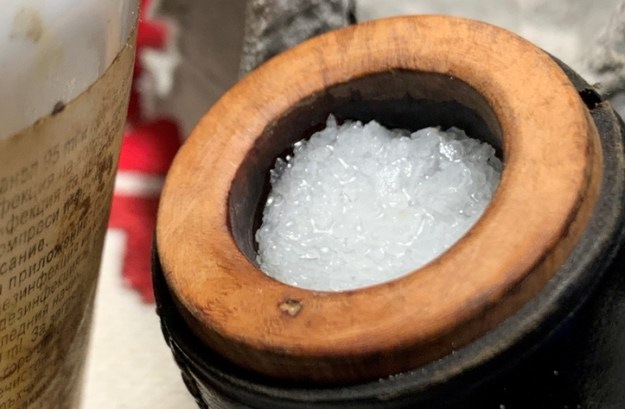
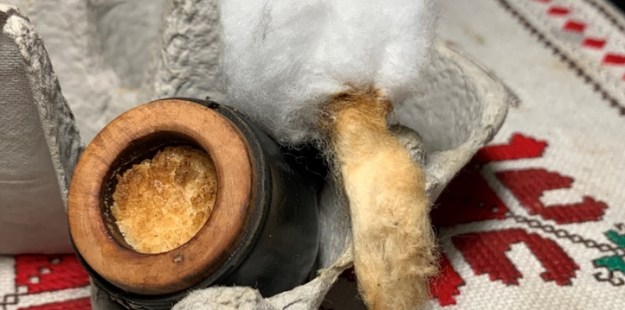
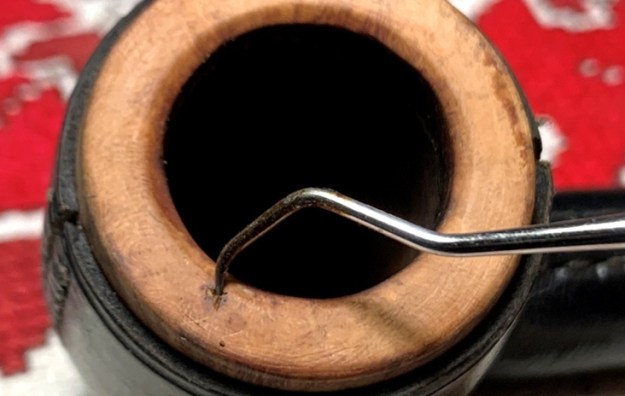
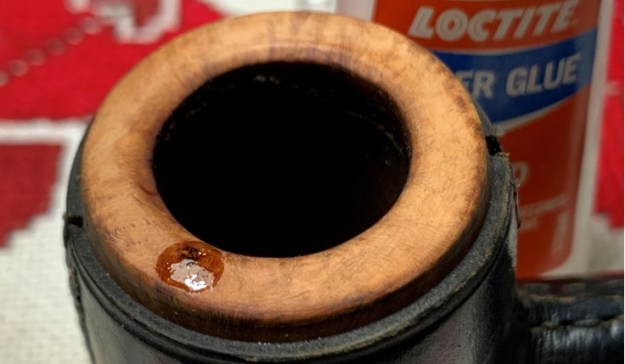
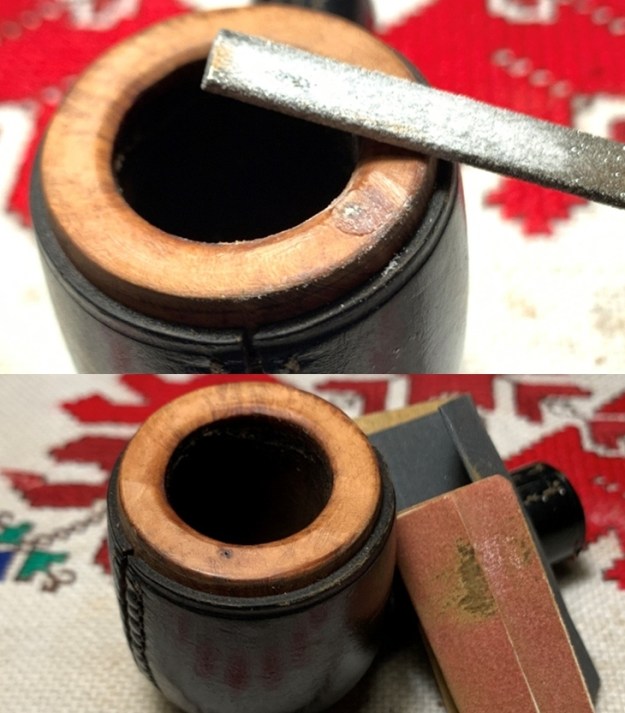
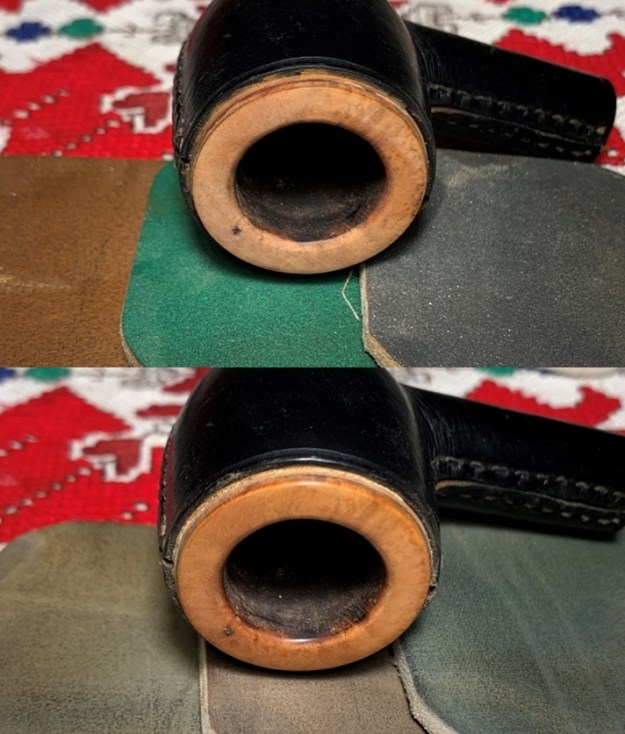
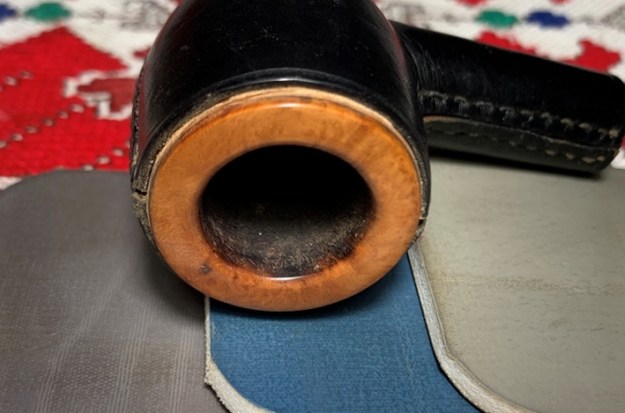
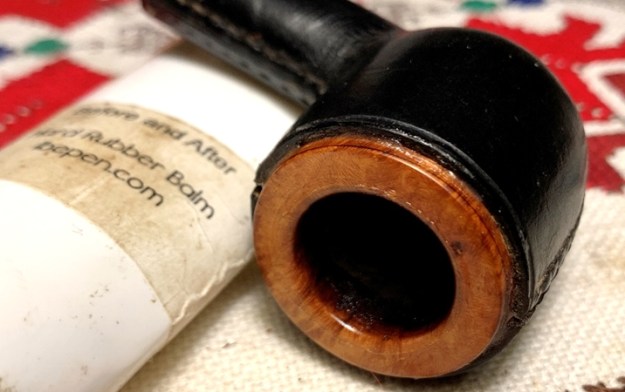
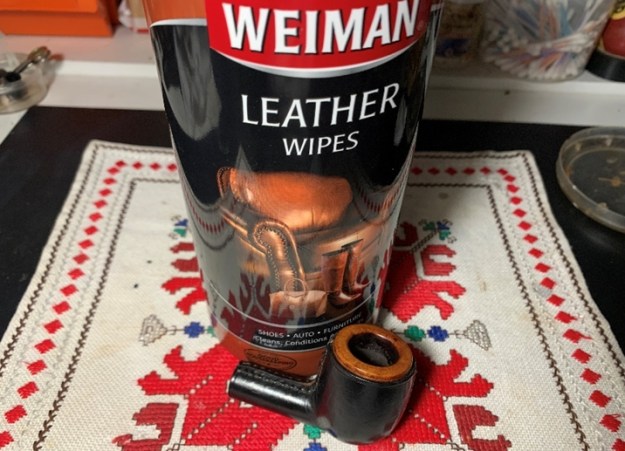
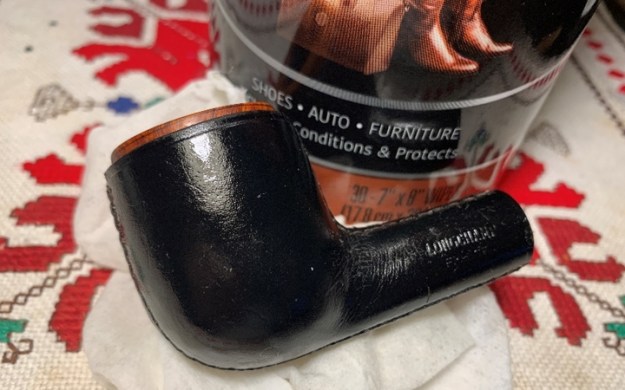
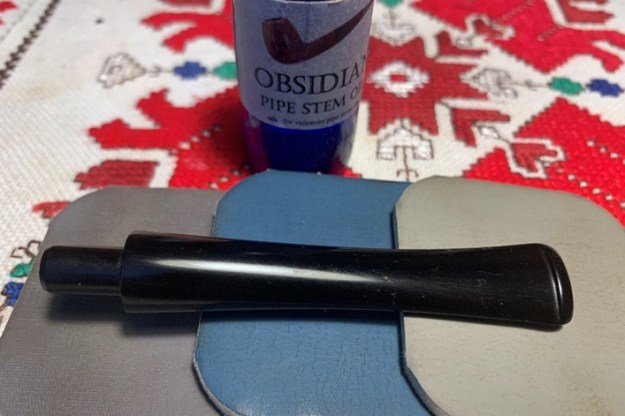
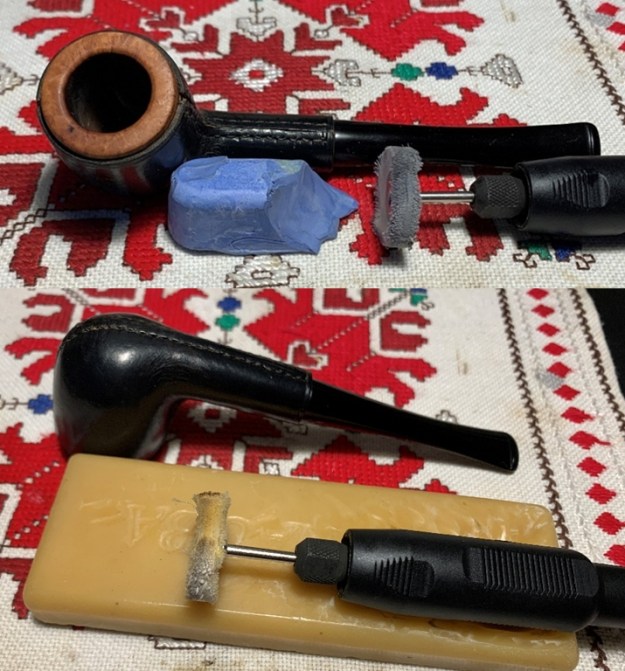
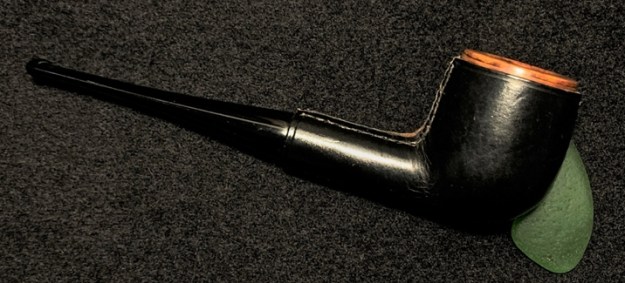
The dating of the pipe on my table would be no older than 1978.  The article also gave sense to the horse stamped on the stem.  I found more about this in the Longchamp panel provided on Pipephil.eu.  The panel shows the different versions of the very thin, ghosted horse stamping on the Longchamp matches the example on the lower right with the caption stating that this logo was on the more recent stems – so dating is for this pipe is most likely in the 70s.With this knowledge increasing my appreciation of the Longchamp story, I take a closer look at the Longchamp on my worktable.  The general condition of the leather appears to be very good.  I see no tears.  The chamber of the Billiard shape has some cake build up but not bad.  The rim is caked with lava flow, but it should clean up nicely revealing the briar beneath. The stem has oxidation and light tooth chatter, but nothing serious.  I begin the refreshing of this French Leather Clad Longchamp by addressing the oxidation in the stem.  I first clean the airway with pipe cleaners wetted with isopropyl 95%.To break up the thick oxidation, 000 steel wool is applied to the stem. I’m careful to avoid the thin Longchamp stamping.  I have found that this helps give the oxidation removal a head start before putting the stem into the soak with Before & After Deoxidizer.Next into the Before & After Deoxidizer with other stems of pipes in the queue.  I leave it in the soak for about 4 hours.When I fish the stem out of the Deoxidizer, I drain and squeegee the liquid off with my fingers.  I then put another pipe cleaner wetted with alcohol through the airway to clean it of the Deoxidizer.  Then using cotton pads wetted with alcohol, the raised oxidation is wiped off.I like to use paraffin oil to help begin the process of rejuvenating the vulcanite stem.  I wipe the oil on with a cotton pad and put the stem aside to absorb the oil.With the stem now on the sideline, I turn to the stummel to begin cleaning out the carbon cake.  After putting paper towel down for easier cleanup, I use the Pipnet Reaming Kit to do the job.  I take another picture of the chamber to mark the start and I use 2 of the 4 blade heads available.  After this, the Savinelli Fitsall tool further scrapes the chamber walls and I finish with sanding the chamber with 240 grade paper wrapped around a Sharpie Pen.  I then wipe the chamber with a cotton pad and after inspection, determine that there are no heating problems with the chamber briar. Next, cleaning the rim to remove the thick oil and tar crud that has collected will be a job.  I do not wish to immerse the leather with Murphy’s, though I don’t think it would be a problem.  So, focusing to keep the cleaning only on the rim, I use Murphy’s Oil Soap undiluted and a cotton pad to begin softening the crusted rim. Using a Winchester pocketknife to scrape the rim, I carefully remove more of the crusting.  Finally, I use a bristled brass wire brush to work on the rim and then take the stummel to the sink and rinse the soap from the rim.There’s a huge difference on the rim after the cleaning.  It appears that there originally was a bevel on the inside lip of the rim.Next, to freshen the lines of the rim and to continue to clean the dark stains off the briar, I use the topping board with 240 grade paper.  I only rotate the stummel a few times. A small pit is revealed on the front-left rim after the first round of topping.  This will need to be filled.I rotate the inverted stummel several more time after transitioning from 240 grade paper to 600.To clean the internal rim lip as well as to refresh the internal bevel, I tightly wrap a piece 240 paper and shape the bevel.  Following this, I use 600 grade to smooth out the bevel.Next, using cotton buds and pipe cleaners dipped in isopropyl 95% the internal cleaning commences.  A small dental spoon is also used to scrape the internal mortise wall removing tars and oil build up.  After the cotton buds begin to emerge lighter, I call it clean at this stage.With the hour being late, I transition to utilizing a kosher salt and alcohol soak through the night to continue the internal cleaning.  It is my usual practice to do this to refresh the pipe for the new steward.  After creating a ‘wick’ by pulling and twisting a cotton ball, the wick is inserted into the mortise using a stiff wire to help guide it down through the mortise into the airway.  The wick helps to draw out the residual tar and oil from the briar.  I then fill the bowl with kosher salt which, unlike iodized salt, leaves no aftertaste.  After placing the stummel in the egg carton for stability, using a large eye dropper, the bowl is filled with isopropyl 95% until it surfaces over the salt.  After a time, the alcohol is drawn into the pipe and after topping off the alcohol, I turn off the lights! The next morning the salt and wick are soiled the brown showing the additional cleaning this process provided.  After cleaning the stummel of the expended kosher salt using a paper towel and blowing forcefully through the mortise, I follow with a few additional pipe cleaners and cotton buds to clean the remaining remnants of tar and oils.  All is good and I move on.Next, addressing the hole on the rim, I first dig out and clean the pitted area using a sharp dental probe. After wiping the area with alcohol to assure that it is clean, I then spot-drop the hole with regular clear CA glue.After the CA glue cures, a flat needle file is used to file the patch down. Following the filing, 240 and 600 sanding papers smooth the area further.Transitioning then to applying the full regiment of micromesh pads, I wet sand with pads 1500 to 2400 and follow with dry sanding with pads 3200 to 4000 and 6000 to 12000.  The micromesh process brings out the grain nicely.  I love the briar/leather contrast created by the rim. Applying Before & After Restoration continues to bring out the more subtle hues of the rim’s briar grain.  Applying first the Balm with my fingers and working it into the briar, I then set it aside for a few minutes for the Balm to be absorbed.  After about 20 minutes I wipe off the excess Balm and buff the rim with a microfiber cloth.To treat the black leather, I use ‘Weiman Leather Wipes’ to clean and condition the leather.  This product works very well.  The leather is very attractive with a clean, healthy sheen. I put the stummel aside and transition to the stem, which is not in too bad of shape.  There are some tooth chatter and compressions on the upper bit which I first address with the heating method.  Using a Bic lighter, the bit is painted with the flame heating and expanding the vulcanite.  As the vulcanite is heated it expands to reclaim its original shaping – or closer.  The pictures show a before and after comparison.  The compressions are still visible but much reduced.I follow by sanding the upper and lower bit using 240 grade paper to erase the residual chatter and what remains of the compressions.I then take the stem to the kitchen sink and wet sand the entire stem using 600 grade paper – careful not to sand the very thin running horse stamping on the stem.  Following the 600 grade paper, 000 grade steel wool is applied to smooth further.Next, I transition directly to applying micromesh pads to the stem by wet sanding with pads 1500 to 2400 then dry sanding with pads 3200 to 4000 and 6000 to 12000.  Between each set of 3 pads, Obsidian Oil is applied to rejuvenate the vulcanite as well as helping to prevent oxidation. On the home stretch – after mounting a cotton cloth buffing wheel to the Dremel, with the speed set at about 40% full power, Blue Diamond compound, a fine abrasive, is applied to the stem and briar rim.  Following this, after another buffing wheel has been mounted at the same speed, carnauba wax is applied to the stem and briar rim.  The restoration is completed with a rigorous hand-buffing to raise the shine of both the stem and briar rim, but also the black leather wrap.This Leather Clad French Longchamp is a nice pipe.  The leather gives that comfortable laid-back feel and the contrasting briar rim and white seams of stitching provide a great aesthetic presentation.  The classic Billiard workhorse shape has a great feel and balance in the hand – ready for a new steward!  Jason has the first opportunity to claim this French Longchamp from The Pipe Steward Store benefiting the Daughters of Bulgaria – women and girls who have been trafficked and sexually exploited.  Thanks for joining me!


Renewing one of Alex’s first pipes – a Lorenzetti Lovat


Blog by Steve Laug

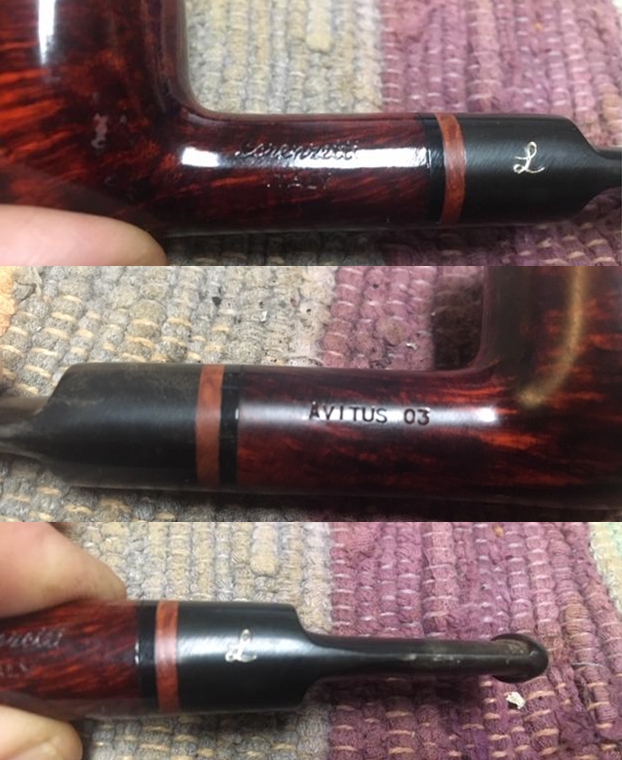
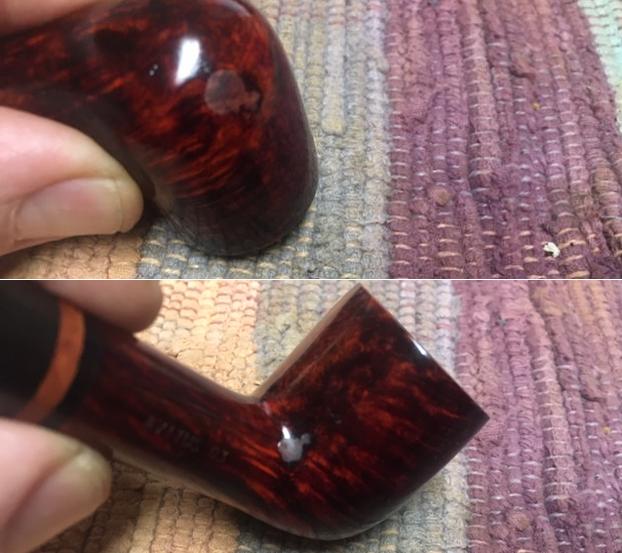
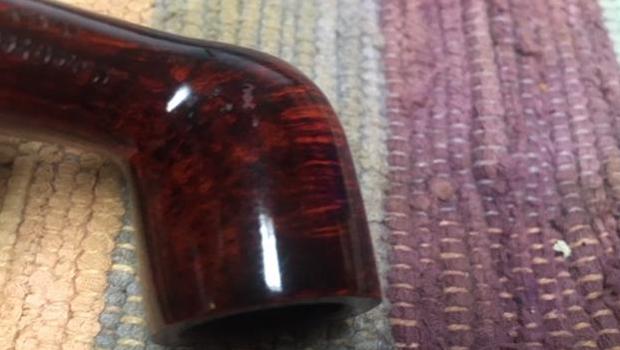
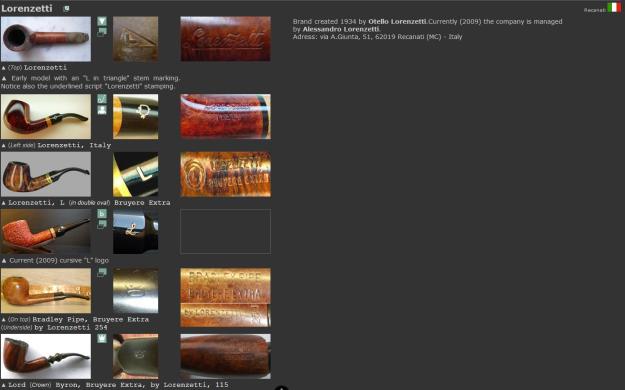
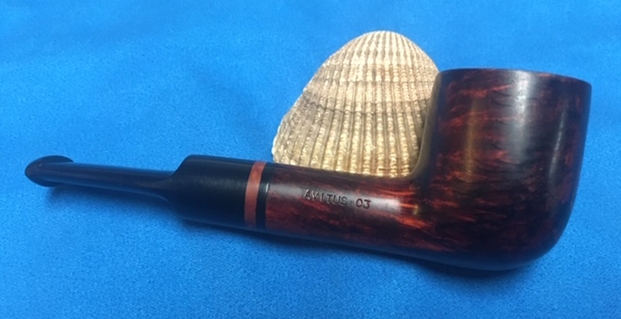
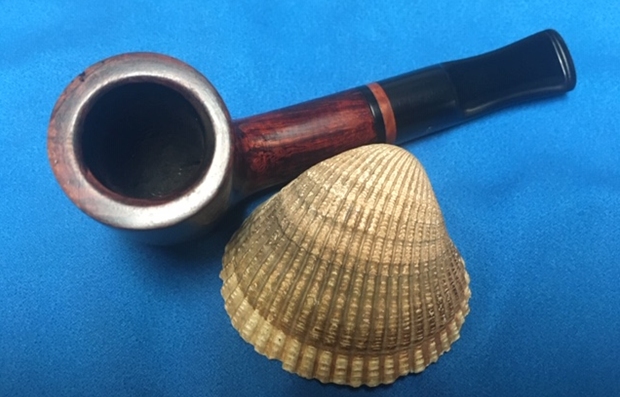
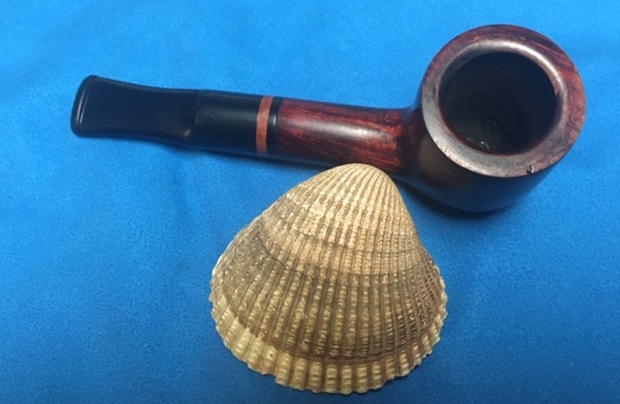
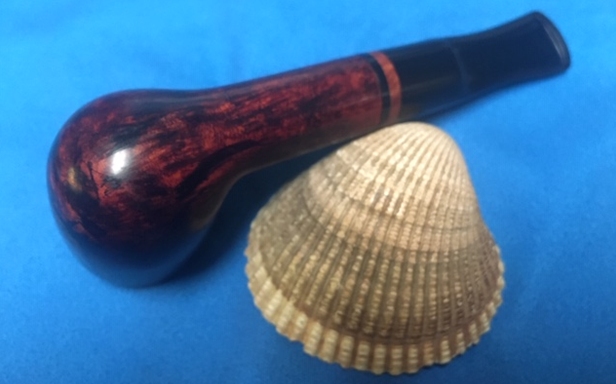
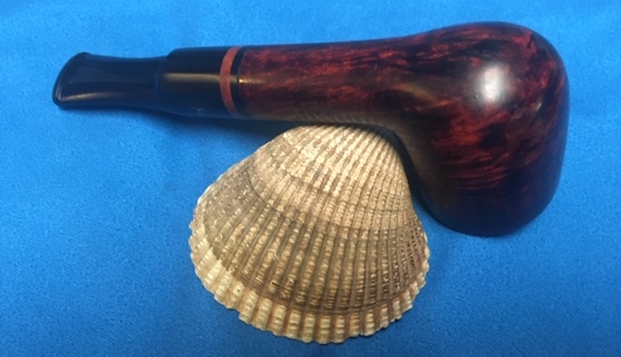
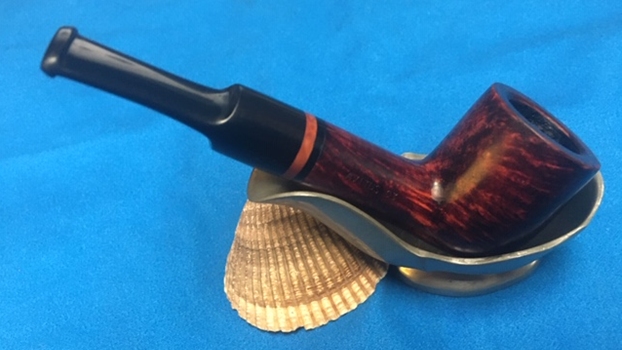
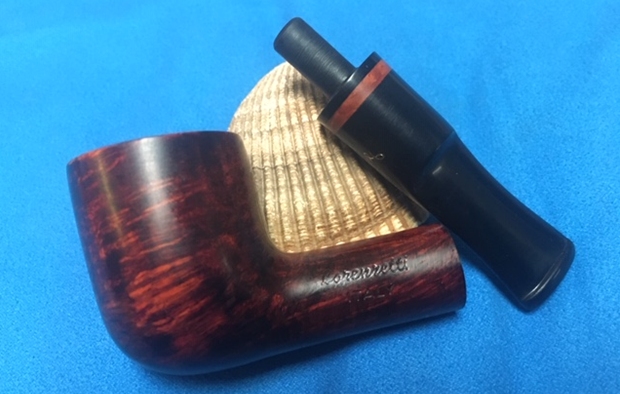
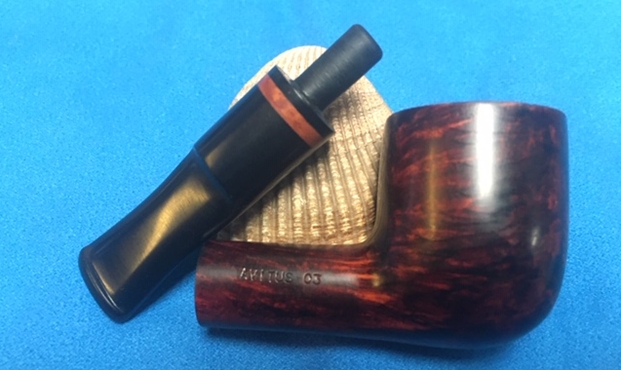
Alex has been an ongoing source of restoration projects for me for a few years now. I actually have a box of Alex’s pipes that he drops by periodically and adds new ones to. It has been fun to see him pick up the restoration hobby himself lately. He leaves the harder ones to me to work on – whether harder in terms of issues or harder in terms of cleaning. I have quite a few of his to work on so I spread them among the others that I am working on. This next pipe is an interesting Lorenzetti Lovat that was one of his first pipes. It has some issues with the finish that will need to be addressed. The pipe is stamped Lorenzetti over Italy on the left side of the shank and Avitus 03 on the right side. It has been in the box for quite a while now so I took it to the work table. The finish is a combination of reddish browns and dark brown in streaks on the bowl sides. It almost appears that it was to make it look like grain. There were some spots around the heel and sides of the bowl where it looked like the shellac coat was peeling off the bowl. The rim top had an inward bevel that had some darkening to the inner edge on the back of the bowl. There were some nicks around the outer edge toward the front. The stem was lightly oxidized with calcification around the button. It has the cursive Lorenzetti “L” on the left of the saddle stem. There were tooth marks and chatter on both sides of the stem ahead of the button. I took some photos of the pipe as I received it.  I took a close up photo of the rim top. It shows some darkening on the back of the inward beveled top. The outer edges were nicked and damaged on the right side. The photos of the stem show tooth marks and chatter on both sides ahead of the button. The stem is also quite oxidized.I took photos of the stamping on both sides of the shank. You can see that it reads as noted above. I also took a photo of the stamping on the side of the saddle stem.I took photos of the bubbled finish around the sides of the bowl. It looked to me that the bubbled portions were over putty fills in the briar. Time would tell! I don’t believe I have worked on this brand before so I turned to Pipephil to get a quick overview of the brand (http://pipephil.eu/logos/en/logo-l6.html). I have included a screen capture of the information on that site for quick reference. I learned that the brand was created in 1934 by Otello Lorenzetti. As of (2009) the company was managed by Alessandro Lorenzetti.I then turned to Pipedia and found a great historical survey of the founder Otello Lorenzetti. It is a great read regarding the history of the brand and its development from small beginnings with Otello selling pipes from his bicycle around his community to a brand that is available around the world today. (https://pipedia.org/wiki/Lorenzetti).

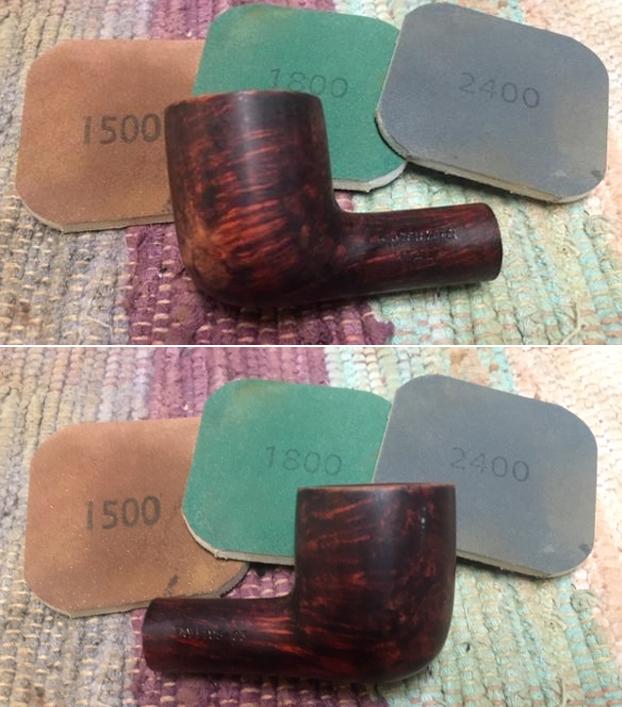
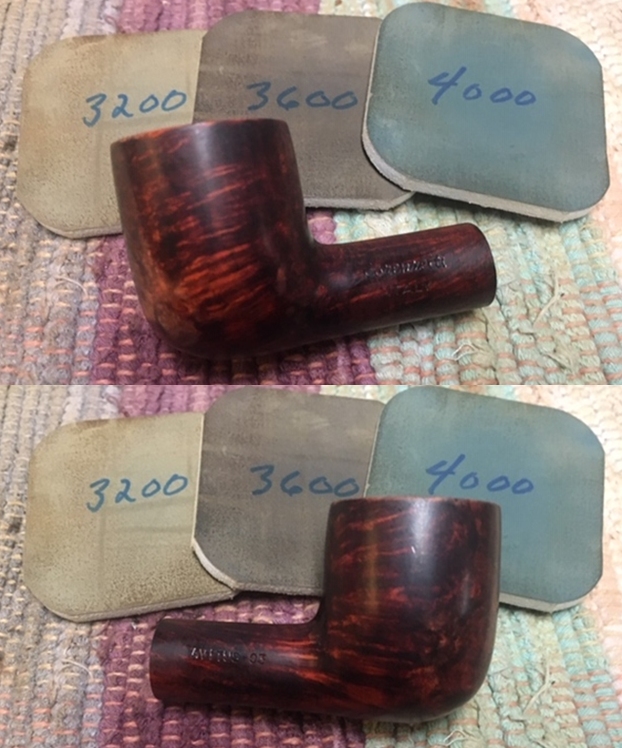
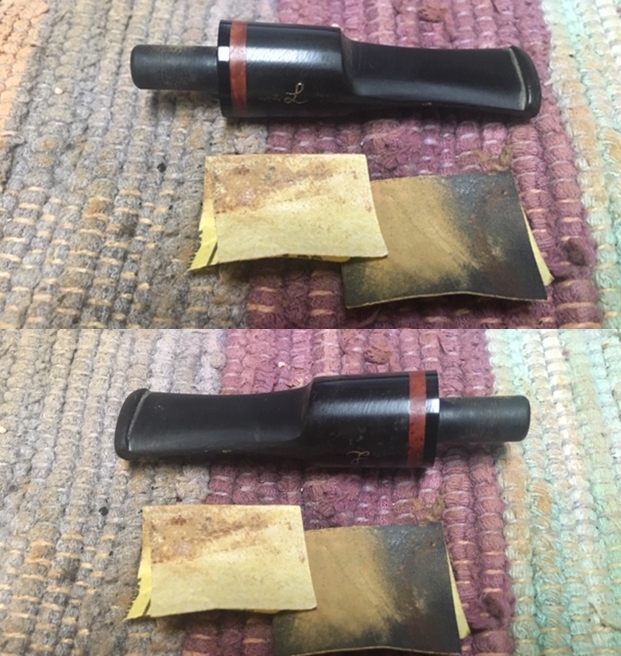
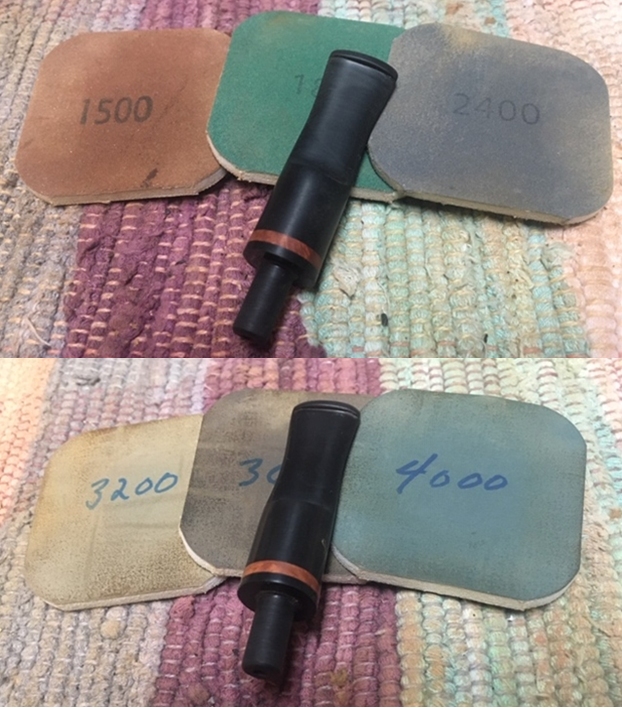
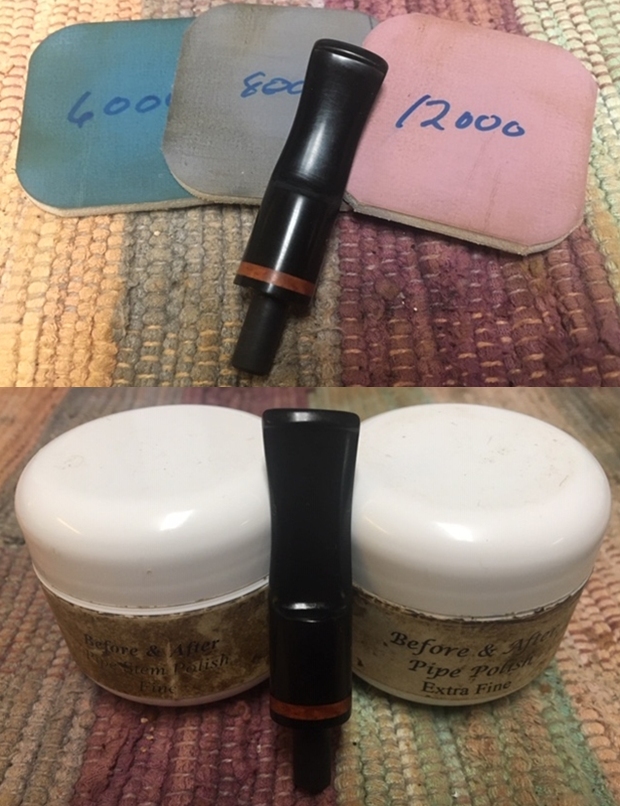
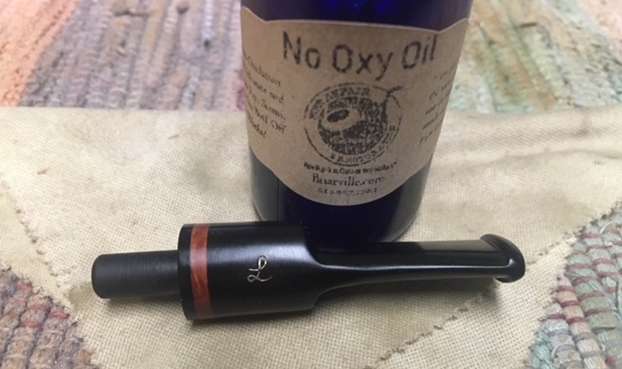
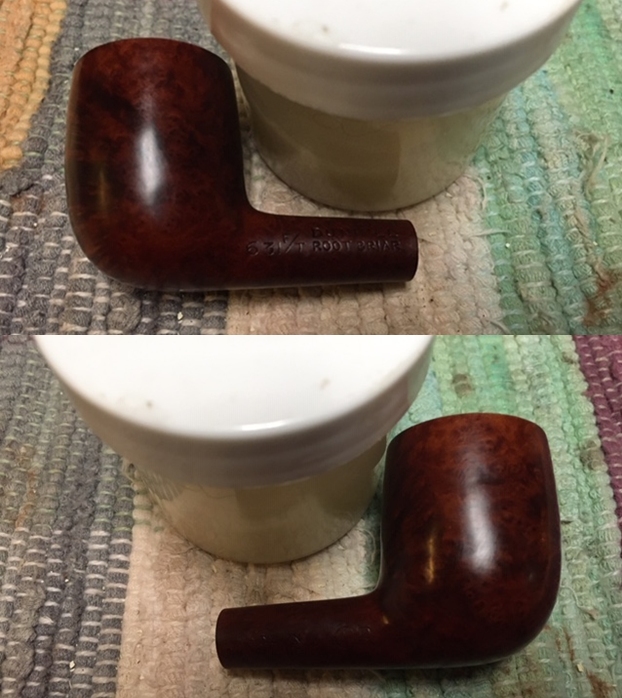
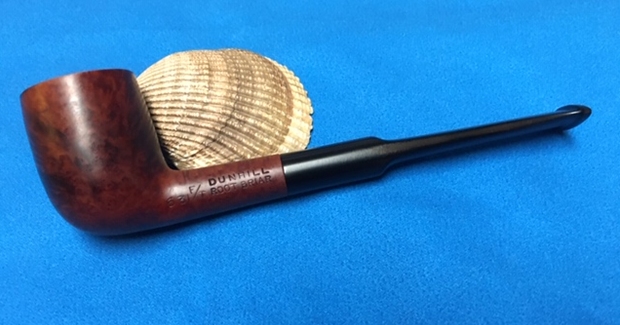
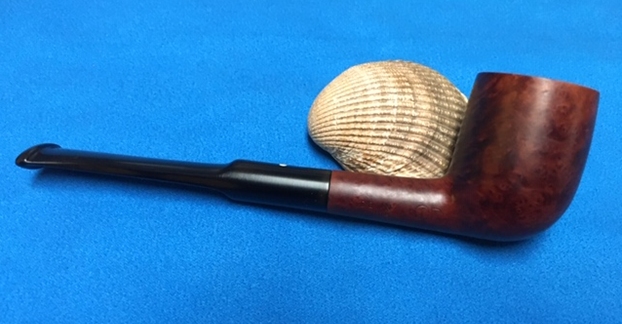
This is a thick shank classic looking Lovat with a briar insert in the vulcanite stem. The staining     would have originally hidden the fills very well.  The stain gives the appearance of cross grain around the bowl when in reality the pipe is a mix of grains. I wiped the bowl down with a cotton pad and alcohol to remove the shiny, spotty top coat of the finish. The combination of brown stains on the finish makes it interesting. Now it was time to work on Alex’s pipe. I started the work by reaming the bowl and cleaning out the shank. The pipe was amazingly clean so it did not take too much to clean it.I polished the bowl and rim top with micromesh sanding pads – wet sanding with 1500-12000 grit pads and wiped the bowl down after each pad with a damp cloth. The polishing gave the bowl a rich shine. After polishing the rim it was slightly lighter than the other smooth portions of the bowl. I used a Maple Stain Pen to match the colour of the rest of the bowl and blend the new finished rim into the surrounding pipe. I rubbed it down with Before and After Restoration Balm. It is a product developed by Mark Hoover to clean, enliven and protect briar. I worked it into the briar with my fingertips. I let it sit for about 10 minutes and buffed it off with a cotton cloth. You can see the results in the photos below. I set the bowl aside and turned to address the light tooth marks, chatter and gouges on the stem surface. I sanded both the top and underside of the stem with 220 grit sandpaper to remove the damages to the vulcanite. Fortunately they were not too deep so they came out fairly quickly. I also did a quick sanding to remove the oxidation on the stem.I polished the stem with micromesh sanding pads – wet sanding it with 1500-12000 grit pads and wiping it down after each pad with a damp cotton pad to remove the dust. I polished it with Before and After Pipe Polish – both fine and extra fine. I finished by wiping the stem down with some No Oxy Oil that  received from Briarville Pipe Repair to try out and get a sense of its value to me and others. Once I finished I put the stem back on the shank and buffed the pipe with Blue Diamond polish briar and vulcanite. I gave the stem a vigorous polish being careful around the white spot. I gave the bowl and the stem several coats of carnauba. I buffed the pipe with a clean buffing pad and hand buffed it with a microfiber cloth. The finished pipe is shown in the photos below. This Lorenzetti Lovat is a great piece of Alex’s personal pipe history and looks better than when I began the process. The dimensions of the pipe are Length: 4 ½ inches, Height: 1 ½ inches, Outer Bowl Diameter: 1 ¼ inches, Chamber Diameter: ¾ of an inch. The pipe will soon be heading back to Alex so he can continue to enjoy it. I have told him that if he ever wants to part with it I get the right of first refusal. Thanks for walking with me through the restoration.

A New Lease on Life for Alex’s Kaywoodie Hand Made Rhodesian


Blog by Steve Laug

Alex has been an ongoing source of restoration projects for me for a few years now. I actually have a box of pipes that Alex drops by periodically and adds new pipes for work. It has been fun to see him pick up the restoration hobby himself lately. He leaves the harder ones to me to work on – whether harder in terms of issues or harder in terms of cleaning. I have quite a few of his to work on so I spread them among the others that I am working on. This next pipe is an interesting older Kaywoodie Hand Made Rhodesian with an almost Custom Bilt rustication pattern around the bowl. The difference to me is that this beauty has some stunning grain in the smooth portions and the rustication is less random and more methodically chosen to highlight some of the grain features. The pipe is stamped Hand Made over Kaywoodie on a smooth panel on the left side of the shank. On the right side there is a stamp that reads Imported Briar. It has been in the box for quite a while now so this afternoon I took it to the work table. The finish is a combination of reddish browns and dark brown in the rusticated portions. The contrast is quite beautiful though a little dull as it has not been used or cared for in a long time. The rim top had an inward bevel that had some darkening and burn damage to the inner edge on the front right and back of the bowl. The pipe had been reamed before Alex received it and really was quite clean. The push stem was lightly oxidized and had Kaywoodie white logo with a black cloverleaf making it an older pipe. There were hash marks and tooth marks on both sides of the stem ahead of the button. Overall the pipe was in good condition. I took some photos of the pipe as I received it. I took a close up photo of the rim top. It shows some darkening on the right side of the inward beveled top. The outer edges look good. The photos of the stem show hash marks and tooth marks on both sides ahead of the button. They are deep scratches/gouges in the vulcanite that have filled in with calcification. The stem is also quite oxidized.I took photos of the stamping on both sides of the shank. You can see that it reads as noted above.I have worked on a few of the Kaywoodie Hand Made over the years and have found in the past that they were listed as Oversize Kaywoodie pipes. I turned to Pipephil’s site to see what information I could gather there on the oversize pipes (http://www.pipephil.eu/logos/en/logo-kaywoodie-2.html#oversizekaywoodie). I have included a screen capture of the information on that site for quick reference. The basic information I gather there was that the pipe had in all probability been noted in the 1947 Kaywoodie Catalogue. It also made it clear that all the Oversize models are stamped Hand Made.I then turned to Pipedia and under the general information did not find much helpful that I did not already know. It is a great read regarding the history of the brand and its development from the older KBB and KB&B brand pipes. However it did have follow up information in the end notes on the page and that took me to a series of Catalogues (1937, 1947 and 1955). The Hand Made line shows up first in the 1947 Catalogue that was included. I read through it and that is where I found some additional information to help me in my quest. Here is a link to the 1947 Catalogue for your reading pleasure (https://pipedia.org/images/6/61/Kaywoodie_1947.pdf). I have included a screen capture of the section in the catalogue about the Oversize Kaywoodies. I have included that below. I have also included two of the Catalogue pages that show the oversize Hand Made pipes. The one I am working on while similar to the Hand Carved Colossus and the Hand Carved John Henry is significantly different. This one is carved with the patterns but has a tapered push stem rather than the typical screw mounted Kaywoodie. This is a beautifully styled and positioned Rhodesian shape has a tapered vulcanite push stem that fits proportionally well. The carved areas or “worm trails” around the bowl are separated by smooth well grained portions of briar that highlight the grain. The combination of brown stains on the finish makes it quite stunning. Now it was time to work on Alex’s pipe. I started the work by addressing the issues with the rim top first. I ran some pipe cleaners through the bowl and stem and it was spotless so I decided to deal with rim top damage. I used a folded piece of 220 grit sandpaper to clean up the beveled rim top to remove the darkening. I sanded the rim top and edges of the bowl with the sandpaper to get rid of the damage. Once I was finished the rim and edges were smooth.I polished the bowl and rim top with micromesh sanding pads – wet sanding with 1500-12000 grit pads and wiped the bowl down after each pad with a damp cloth. The polishing gave the bowl a rich shine. After polishing the rim it was slightly lighter than the other smooth portions of the bowl. I used a Maple Stain Pen to match the colour of the rest of the bowl and blend the new finished rim into the surrounding pipe.I rubbed it down with Before and After Restoration Balm. It is a product developed by Mark Hoover to clean, enliven and protect briar. I worked it into the briar with my fingertips and a horsehair shoe brush. I let it sit for about 10 minutes and buffed it off with a cotton cloth. You can see the results in the photos below. I set the bowl aside and turned to address the light tooth marks, chatter and gouges on the stem surface. I sanded both the top and underside of the stem with 220 grit sandpaper to remove the damages to the vulcanite. Fortunately they were not too deep so they came out fairly quickly. I also did a quick sanding to remove the oxidation on the stem.I polished the stem with micromesh sanding pads – wet sanding it with 1500-12000 grit pads and wiping it down after each pad with a damp cotton pad to remove the dust. I polished it with Before and After Pipe Polish – both fine and extra fine. I finished by wiping the stem down with some No Oxy Oil that  received from Briarville Pipe Repair to try out and get a sense of its value to me and others. Once I finished I put the stem back on the shank and buffed the pipe with Blue Diamond polish briar and vulcanite. I gave the stem a vigorous polish being careful around the white spot. I gave the bowl multiple coats of Conservator’s Wax and the stem several coats of carnauba. I buffed the pipe with a clean buffing pad and hand buffed it with a microfiber cloth. The finished pipe is shown in the photos below. This Kaywoodie Hand Made is a great piece of pipe history and looks better than when I began the process. The dimensions of the pipe are Length: 5 ¼ inches, Height: 1 ¾ inches, Outer Bowl Diameter: 1 ¾ inches, Chamber Diameter: ¾ of an inch. The pipe will soon be heading back to Alex so he can continue to enjoy it. I have told him that if he ever wants to part with it I get the right of first refusal. Thanks for walking with me through the restoration.

A Blasticated Capri Bent Billiard that came with a story


Blog by Steve Laug

A few days ago I received a call at work from a fellow who was just leaving the local pipe shop in Vancouver that refers people to me for repairs. I have to tell you this guy had a story that I had not heard before. He was driving and chatting at the same time. He said that he had picked up a pipe that fast becoming a favourite of his. He was driving and smoking it when he accidentally dropped it out of the window. It seems like the car was moving – at least slowly in his story. The bowl went one way and the stem took off. He stopped and picked up the bowl and could not find the stem. What was not clear to me was what happened to the stem. He said that there was no broken tenon in the shank. He only had the bowl. He stopped by my house and left the bowl in his Autoplan Car Insurance plastic bag in my mail box. He had his phone number and name on the bag. This morning I called to see what kind of stem he wanted on the pipe and it turns out he is a tugboat captain. He said the stem was tapered and rubber. He would be back to Vancouver in two weeks and would get a hold of me then. So that is the story of this pipe.

I actually had no idea what to expect when I returned to my house. My wife had brought the bag inside when she came home. I asked about the pipe and she handed me the Autoplan bag. I took the pipe out of the bag and took photos. The pipe appeared to have what I call a blasticated finish. It is typically done when someone rusticates a bowl and then sandblasts it afterwards. It gives it a very interesting look. The finish was almost new other than several rough spots of road rash around the rim top, heel and sides. The beauty of this type of finish is that it is very forgiving when it has this kind of damage. I took some photos of the pipe before I did any work on it. You can see it is a bent billiard, it is made by Capri and it is sans stem. I went through my cans of stem options and found only one thick tapered stem that would actually work on this pipe. The tenon was not turned and it was an unused blank that still had some casting marks on the sides and button. I quickly sanded the tenon to see what I was working with. I could see that with a bit of work it would be a good fit for this pipe.I used a wire brush to knock off the loose bits from the road rash and then used a walnut stain pen to touch up the damaged areas on the finish.Now it was time to work on the stem. I set up my cordless drill and put the PIMO tenon turning tool in the chuck. I set the cutting head for the first pass on the tenon and spun the stem on the drill to remove excess rubber.I measured the diameter of the mortise again and reset the cutting head on the PIMO. I spun the stem once more and took it down to a close fit. I filed and sanded it the rest of the way.The shoulders on the cast stem were slightly rounded and the diameter of the stem was a little bigger than the diameter of the shank. I used a rasp to remove the excess material and reduced the stem to a very close fit on the shank.I sanded the file marks out of the stem sides with 220 grit sandpaper. There still needs to be some fine tuning but the stem is beginning to look like a fit. I took photos of the pipe with the new stem at this point to have a look. I worked on the sides of the stem diameter to fine tune it. It was definitely looking better. It was time to bend the stem to fit the flow of the bowl. I set up my heat gun. I put a pipe cleaner in the airway of the stem to keep the airway from crimping. I moved the stem over the heat until the vulcanite softened. I used round handle of a chisel for the shape of the bend and bent the stem until it looked right on the bowl. I always try to bend the stem to get the same angle on the bend as the flat top of the bowl.I put the stem back on the bowl and took photos of the look of the pipe now. I like the look of the stem and the flow of the pipe. I still want to shape the shank stem fit some more so the flow is uninterrupted. I removed the stem and turned my attention to finishing the restoration of the bowl. I worked some Before & After Restoration Balm into the briar with my fingertips and a horse hair shoe brush to clean, enliven and protect it. I find that the balm really makes the briar come alive again. The contrasts in the layers of stain really made the rustication shimmer and show depth. I let the balm sit for a little while and then buffed with a cotton cloth to raise the shine. The pipe really looks good at this point. I am very happy with the way the pipe is looking at this point in the process. I set the bowl aside and turned my attention to the stem. I sanded it with 220 grit and 400 grit wet dry sandpaper to smooth out the remaining marks on the stem. I had coated the tenon with a light coat of clear fingernail polish to protect the fit during all of the fiddling and sanding I was doing.  I have experienced damaging a tenon because I was careless so I will often do this when restemming a pipe now. I still needed to smooth out the tenon a bit but it was starting to look really good.I polished the stem surface with micromesh sanding pads – wet sanding it with 1500-12000 grit pads. I wiped it down with a damp cloth after each pad to remove the sanding debris. I polished it further with Before & After Pipe Stem Polish – both fine and extra fine. I hand buffed it with a cloth. I gave it a coat of Briarville’s No Oxy Oil even though it does not work as well on acrylic as it does on the vulcanite it was designed for. It works to give a top coat to protect and preserve the newly cleaned and polished stem.  This was a change of pace to the normal day to day restoration I have been doing. Fitting a stem to a bowl is interesting and it is time consuming. Once I was finished I put the new vulcanite stem back on the bowl and polished the bowl and stem with Blue Diamond polish on the buffing wheel. I gave the bowl multiple coats of Conservators Wax and the stem multiple coats of carnauba wax. I buffed the pipe with a clean buffing pad to raise the shine. I hand buffed it with a microfiber cloth to deepen the shine. The Capri Bent Billiard with the new stem polished up really well. The polished stem looked very good after the buffing. Have a look at it with the photos below. The dimensions of this pipe are Length: 5 ½ inches, Height: 2 inches, Outside diameter of the bowl: 1 ¼ inches, Chamber diameter: ¾ of an inch. For a low cost pipe this little billiard is eye catching. I will be calling the fellow who dropped it off and let him know the pipe is finished. Thanks to each of you who are reading this blog. Remember we are not pipe owners; we are pipemen and women who hold our pipes in trust until they pass on into the trust of the next pipeman or woman.
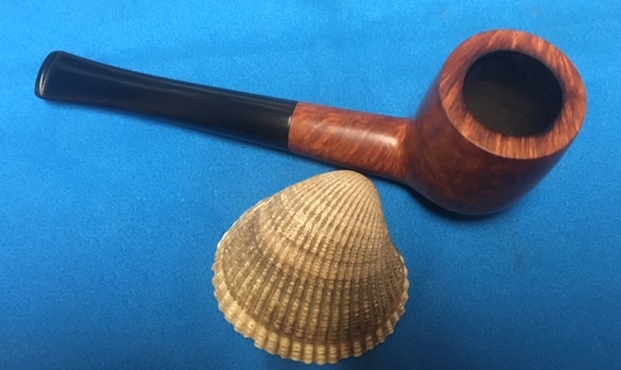
Cleaning up a 1965 Dunhill 631 F/T Root Briar Group 1 Billiard for Henry


Blog by Steve Laug

If you have followed rebornpipes for long you will know that I am a sucker for older pipes and that if I have restored pipes for you in the past I will definitely be available to you for future restorations. The post just previous to this one on an old 1902 LKL Cutty was an example of both of those these maladies of mine. This post speaks to the second one – if I have worked on a pipe for you in the past I will be available as best I can for future restorations. Some of you will recognize Henry Ramirez name as he was a long time contributor to rebornpipes with his innovative restorations. Henry is a dentist who retired not long ago and got rid of his restoration tools. He wrote to see if I could help him out with the restoration of a small Dunhill he had. He wrote the following email:

Hi Steve, long time no talk. I recently moved again to San Francisco and upon opening an empty tin of vintage Dunhill tobacco found the small Dunhill that I’d thought was lost. I’ve gotten rid of my pipe cleaning supplies since moving to an apartment and was hoping you could clean this pipe up for me. You seem to be very busy and in the middle of large restorations. Let me know if you can help. Best, Henry

What could I say to such a request from a fellow pipe restorer? I sent him an email and said I would take on his pipe. He packed it up and sent it to me in Vancouver. It arrived here a couple of weeks ago. Today, I took a break from the large estates and the other repairs I have going to work on Henry’s pipe. It is a small Dunhill saddle stem billiard. It is stamped on the left side of the shank 631F/T next to the bowl shank junction. The 631 is the shape number and the F/T is the designation for a Fish Tail stem. That is followed by Dunhill over Root Briar. On the right side of the shank it is stamped with a circle 1 R next to the bowl shank junction designating the group size of the pipe – a 1 and R which says it is a Root Briar. To the left of that it is stamped Made in England5 which tells me that the pipe was made in 1965. The finish on the bowl was dirty and spotty. The bowl had a thick cake in it and the lava overflowed onto the rim top. The inner edge of the bowl was damaged on the right side with both carving from a knife and a burned area. There was some darkening on the outer rim edge at the front of the bowl. It was in rough condition. The stem was not too bad. It was heavily oxidized but other than tooth chatter was in good condition. I took photos of the pipe before I started the restoration work to document the progress that way Henry can vicariously work on this pipe. I took some close up photos of the bowl and rim top and the stem surfaces. The first photo shows the condition of the bowl and rim top. I described the damage above but I have to say I probably minimized it in my description. It is in rough shape. The inner edge is hacked and uneven showing that it had probably been reamed with a knife. There was burn damage on the right inner edge and on the front edge. The stem on the other hand looked good other than the heavy oxidation on the surface. There was light tooth chatter but it still was in great shape.I took photos of the stamping on the shank. The left side was definitely in better condition than the left. You can see the stamping on the left side in the first photo. The second photo shows the right side of the shank. It reads as noted above.I turned to Pipedia to read about the Root Briar. I have worked on enough Dunhill pipes to have a good idea of the history and I already knew I was working on a 1965 pipe but I wanted to refresh my memory on the Root Briar finish (https://pipedia.org/wiki/Dunhill#Root_Briar).
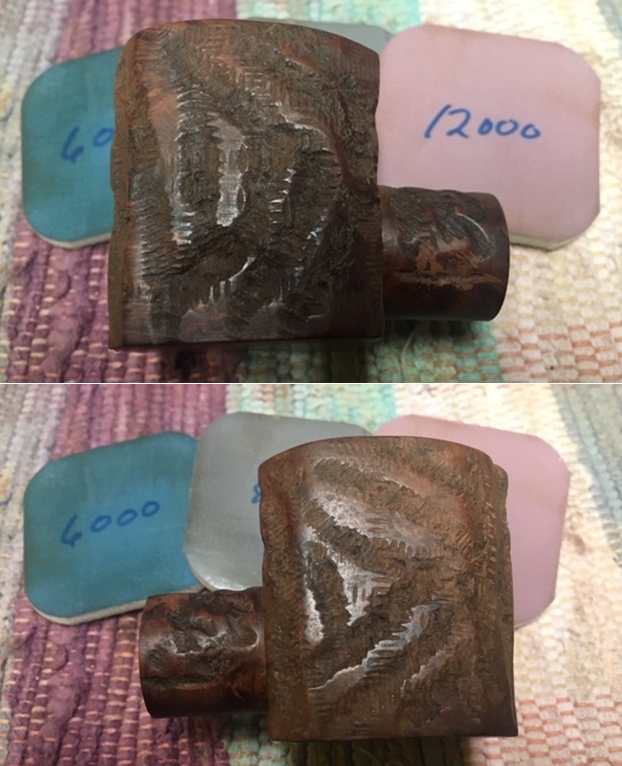
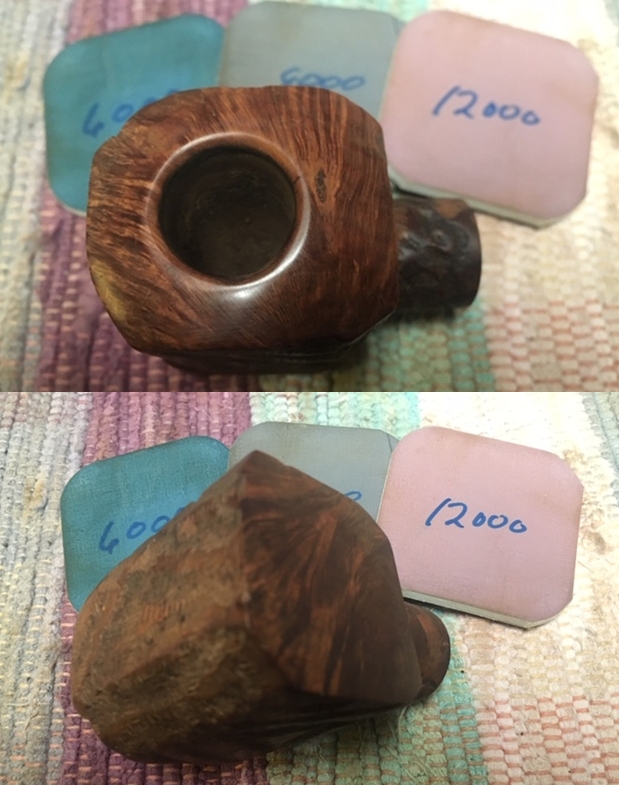
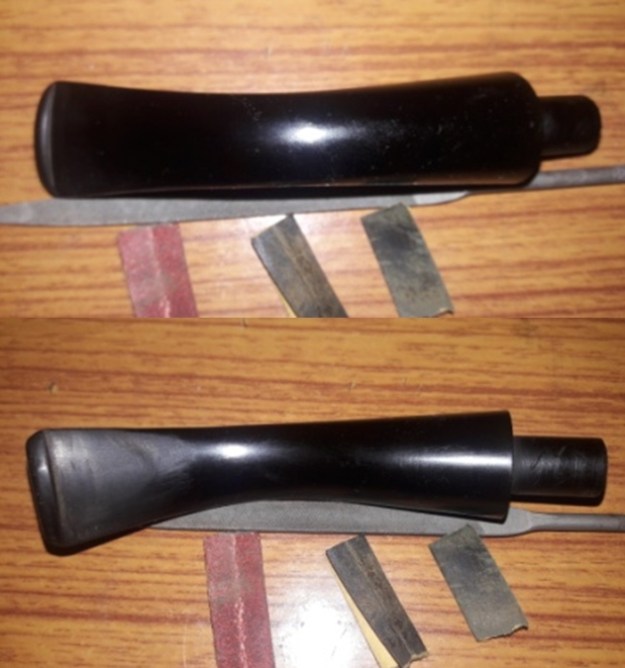
(The Root Briar finish) was introduced in 1931 and highly prized because the grain is more pronounced in this finish (usually made using Corsican briar). The Root Briar finish requires a perfectly clean bowl with excellent graining. Therefore, it is the most expensive of the Dunhill pipes. Corsican briar was most often used for the Root finish since it was generally more finely grained. This is a rare finish, due to the scarcity of briar suitable to achieve it. These pipes are normally only available at Company stores, or at Principle Pipe Dealers. Straight grained pipes were formerly graded A through H, but are now only “Dr’s” and graded with one to six stars, with the letters G and H still used for the very finest pieces.

“Dunhill introduced its third major finish, the Root finish, in 1931. Corsican mountain briar is characteristically beautifully grained and the Root was made exclusively from that briar into the 1960s. The pipe was finished with a light natural stain to allow the beauty of the graining to show through. Although always available with a traditional black vulcanite bit, the Root was introduced in either 1930 or more likely 1931 and fitted with a marble brown dark and light grained vulcanite bit that has since become known as the ‘bowling ball’ bit because of the similarity in appearance between the bit’s finish and that of some bowling balls of the time. With the war, however, the bowling ball bit was dropped from production. Through 1954 (and after) the Root pipe nomenclature (including shape numbers) was identical to that of the Bruyere except that instead of the “A” of the Bruyere, the Root was stamped with an “R”. In 1952 when the finish rather than LONDON was placed under DUNHILL, ROOT BRIAR rather than BRUYERE was used for the Root.” Loring, J. C., The Dunhill Briar Pipe, The Patent Years and After (self-published, Chicago, 1998).

That was a good reminder for me of the character and the rarity of the finish. Henry was going to enjoy this pipe. Now it was time to work on it. I carefully removed the stem and found that there was an inner tube stuck in the shank. I examined it and found that I could see glimmers off it under the cake in the bowl. I would need to work on the cake and try to ream the bowl a bit around the entrance of the airway to loosen it. I reamed the bowl back around the airway with the tip of a Savinelli Fitsall Pipe knife. I ran alcohol down the tube using a pipe cleaner. I folded the pipe cleaner and dribbled alcohol around the end of the tube sticking into the bottom of the chamber. I worked alcohol in next to the tube using pipe cleaners. I paused and wiggled the tube regularly. I heated it a bit with a lighter and wiggled some more. Finally it came free. You can see all the debris on the outside of the tube.I cleaned up the outside of the tube with sandpaper to remove the grime. Once it was gone I could see significant damage to the tube. Where it was stuck in the shank there some deep pinch marks. Where it sat in the shank also had some grooves. It was actually damaged enough that I did not want to use it again. I have a box of inner tubes that I picked up in an estate I purchased. I have probably 8-9 different tubes of different sizes. I went through the tubes and found the identical tube but undamaged. The photos below show the original tube and the new replacement tube. I checked the fit in the bowl, shank and stem and it was perfect.I reamed the bowl with a PipNet pipe reamer using the smallest cutting head. I was able to remove the heavy cake. I cleaned up the remaining cake with a Savinelli Fitsall Pipe knife and then sanded the walls of the bowl with 220 grit sandpaper on a piece of dowel. I was pleased to see that the walls of the bowl were undamaged. I moved on to clean the interior. I scraped the walls of the shank with a pen knife to remove the oils and tars that had locked the inner tube in the shank. I was able to remove the majority of the debris with the knife. I followed up by scrubbing the airway in the shank and mortise as well as the stem with alcohol, cotton swabs and pipe cleaners. I scrubbed the exterior of the stem with some Soft Scrub to soften and remove some of the oxidation (of course I forgot to take photos of that part of the process). I used 3-4 cotton pads to scrub the stem and I was happy with the amount of oxidation that it removed. When I was finished I rinsed it off and dropped the stem into a bath of Before & After Deoxidizer. I left it in the mix for a while and turned my attention to the bowl.I topped the bowl with 220 grit sandpaper on a hard board to minimize the damage. I worked it over the sandpaper in a circular motion to reduce the scratches left behind by the sandpaper. When I finished topping it to my liking I used a folded piece of 220 sandpaper to give the inner edge of the bowl a bevel to reduce the burn damage. The third photo below shows the rim top after this treatment. It has come a long ways from the original rim top. I polished the briar with micromesh sanding pads – wet sanding with 1500-12000 grit pads. I wiped the bowl down with a damp cloth after each sanding pad to remove the debris from sanding. The photos show the developing shine on the bowl and rim top. I  used an Oak and a Maple stain pen to blend the colour of the rest of the bowl. I am happy with the blend as well as the new look of the rim top… What an improvement.I worked some Before & After Restoration Balm into the briar with my fingertips to clean, enliven and protect it. I find that the balm really makes the briar come alive again. It also works well to blend the restained areas of the bowl with the rest of the pipe. The contrasts in the layers of stain really made the grain stand out. I let the balm sit for a little while and then buffed with a cotton cloth to raise the shine. This is the point that tells the truth about the blend on the rim top. It really does look good! I am very happy with the way the pipe is looking at this point in the process. I set the bowl aside and turned my attention to the stem. I took it out of the Before & After Bath and scrubbed it with warm water to remove the bath product and blew out the airway. I buffed it with a rough cotton cloth but sadly the oxidation though better was still present. I scrubbed it again with Soft Scrub and was able to remove a lot more of the oxidation.I sanded the stem with 220 grit and 400 grit wet dry sandpaper to remove the oxidation that remained. Even after the sanding it was still present.I polished the stem with micromesh sanding pads – wet sanding with 1500-12000 grit pads. I wiped the stem down after each pad with a damp cloth. I polished it with Before & After Pipe Polish – Fine and Extra Fine. I finished by buffing the stem with Briarville’s No Oxy Oil. Now that the stem is finished the pipe is one step away from packing and sending back to Henry. It is a pretty little Group 1 Dunhill saddle billiard. The pipe cleaned up really well and the stem looks quite stunning in place. I put the new inner tube in place and put the pipe back together again. I buffed it on the wheel with Blue Diamond polish and then gave the entirety several coats of carnauba wax. I buffed it with a clean buffing pad to raise the shine. I hand buffed it with a microfiber cloth to deep the shine. It really is a beauty and should serve Henry well while he holds it in trust. The dimensions of the pipe are Length: 5 inches, Height: 1 ½ inches, Diameter of the bowl: 1 1/8 inches, Chamber diameter: 5/8 of an inch. I will be putting it in the mail to Henry on Monday after work. I am looking forward to what he thinks of the pipe when he receives it. I am happy with the finished look of the pipe. Thanks for walking with me through the restoration. It was a fun one with its own set of challenges.