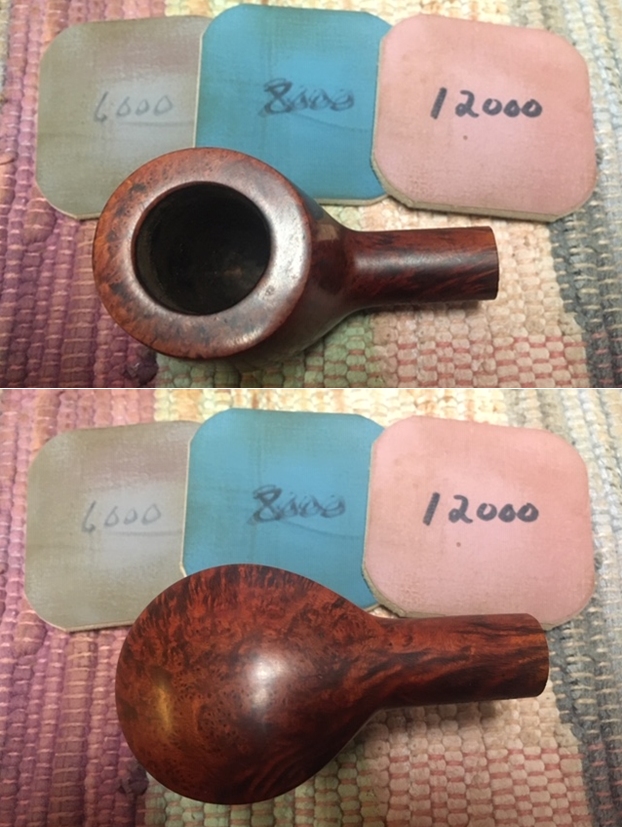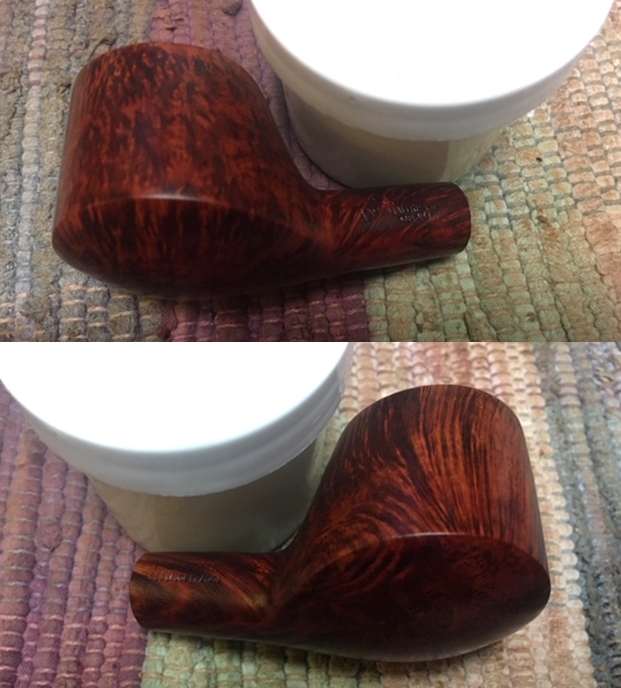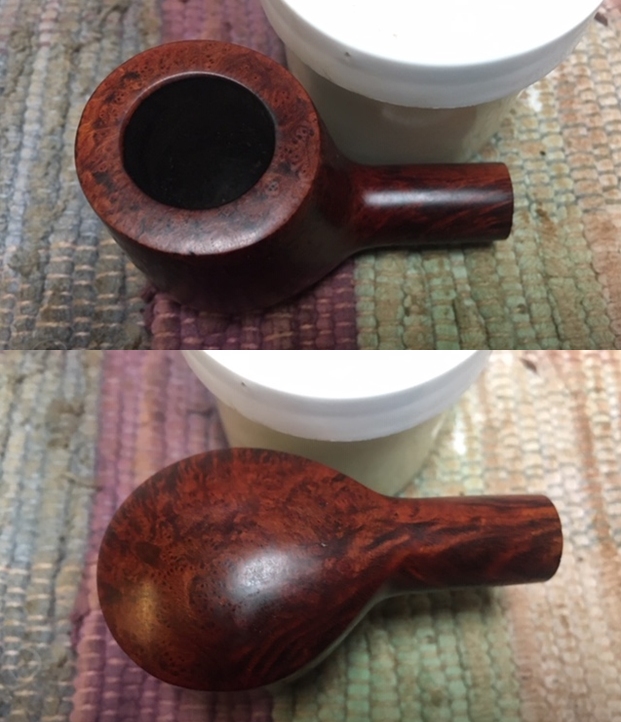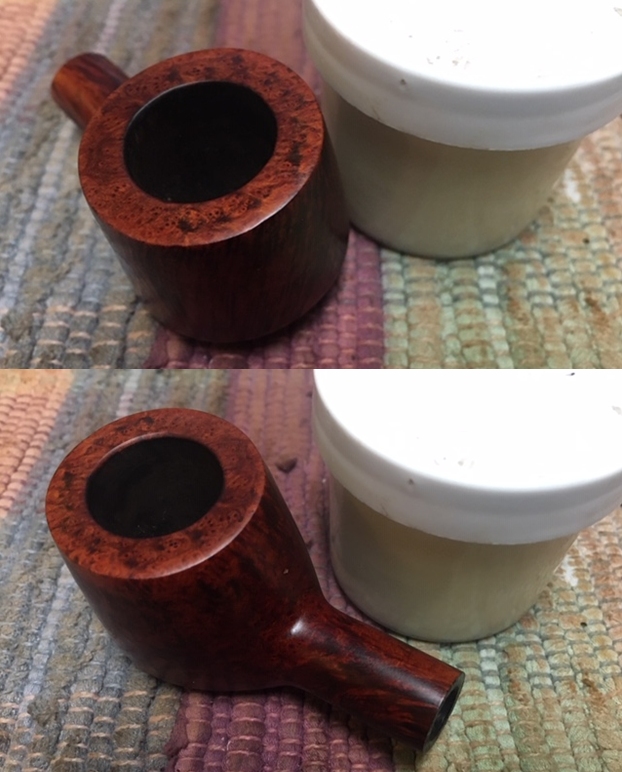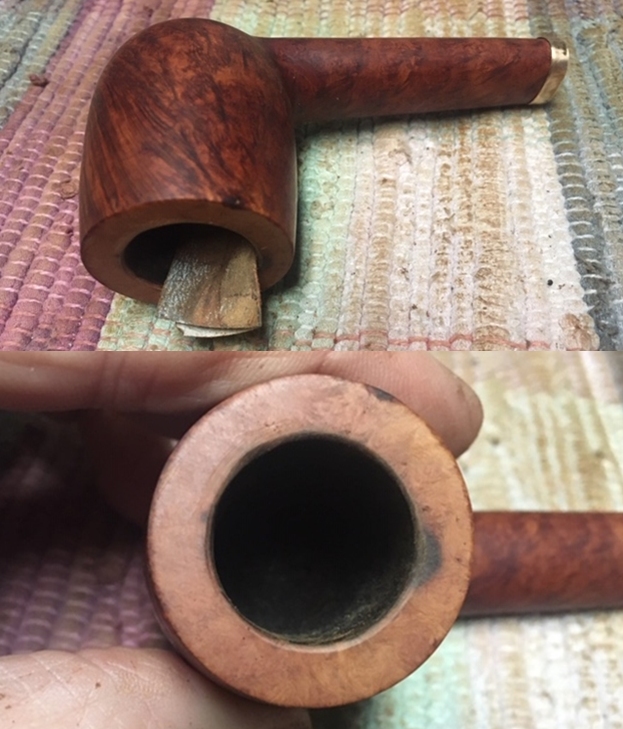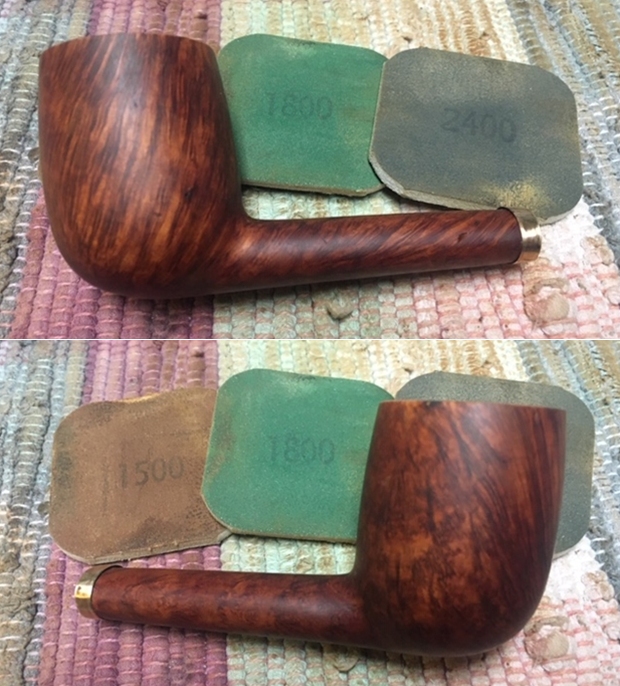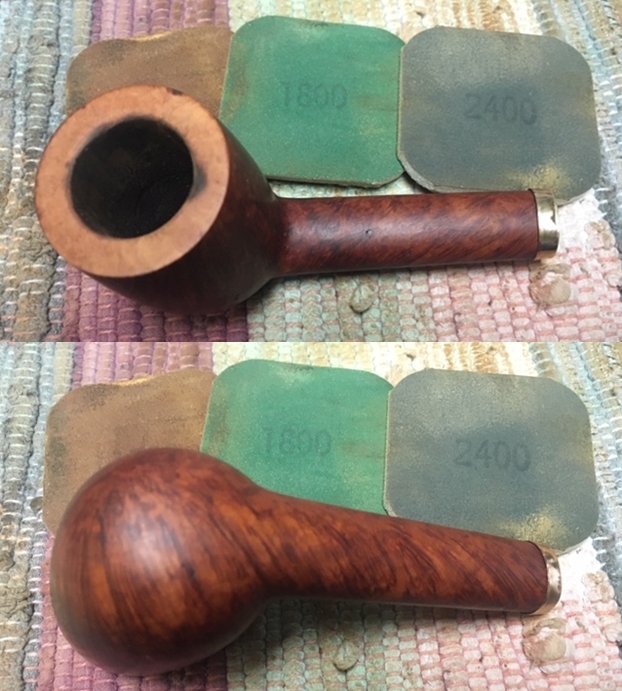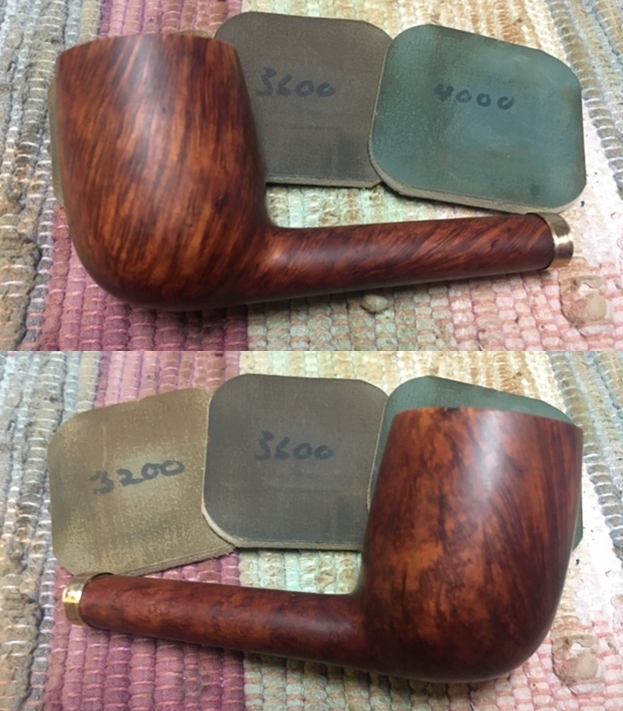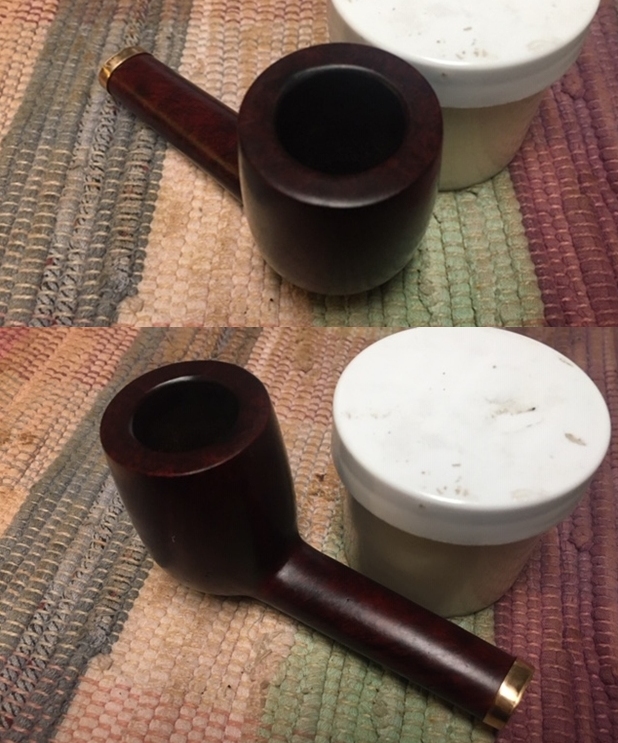
Tag Archives: Bowl – refinishing

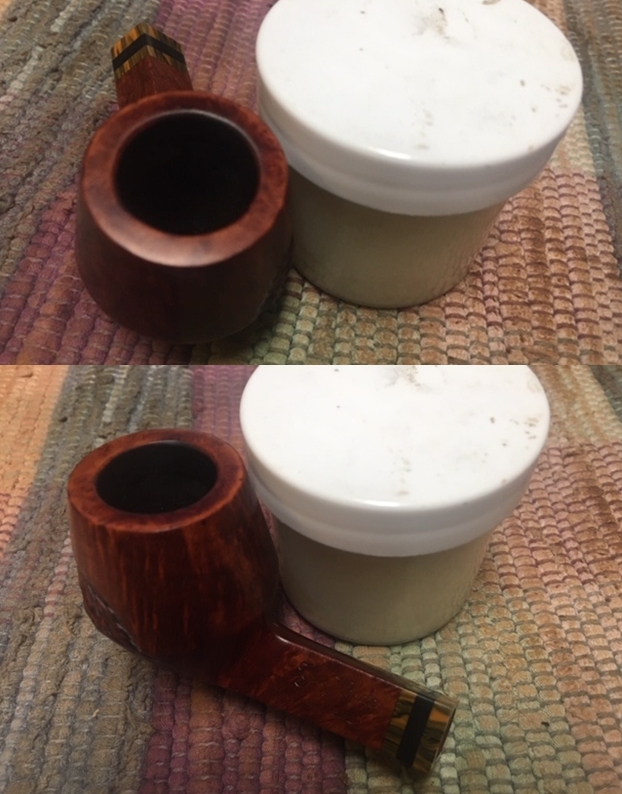
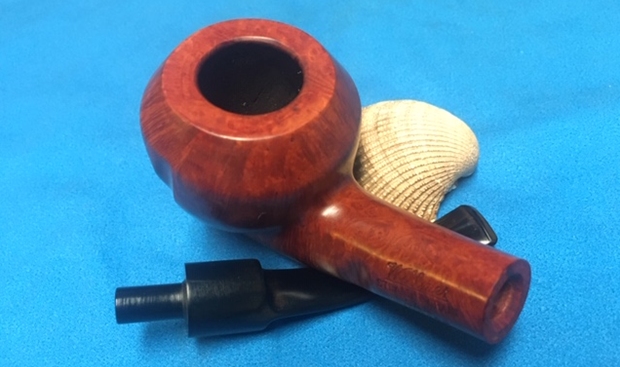
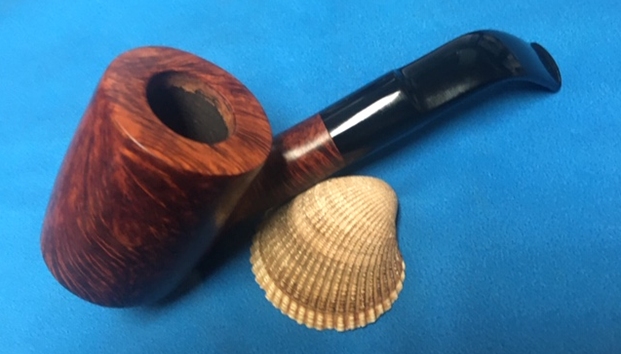
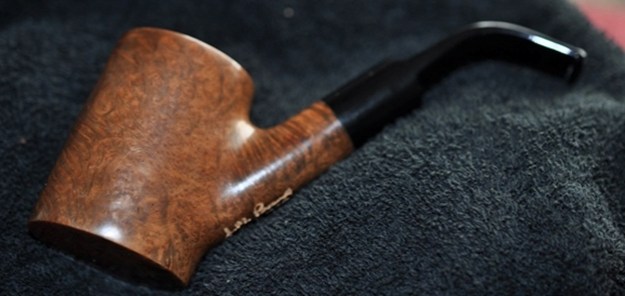
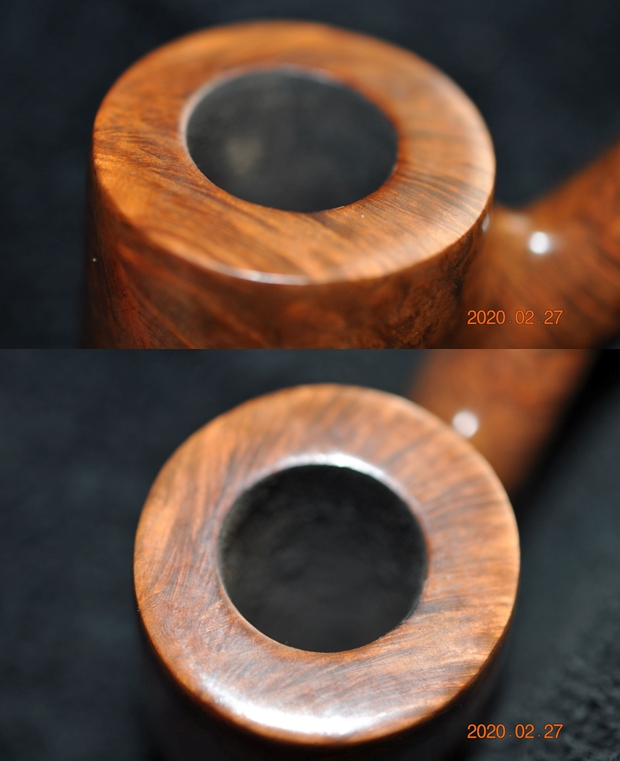
Breathing Life into a Weary, Stubby Butz-Choquin Maitre Pipier De Luxe


Blog by Steve Laug

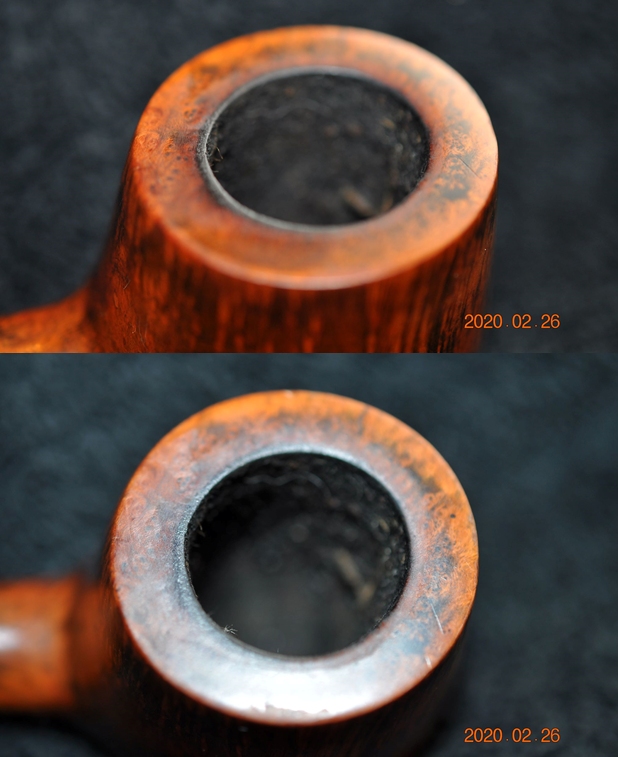
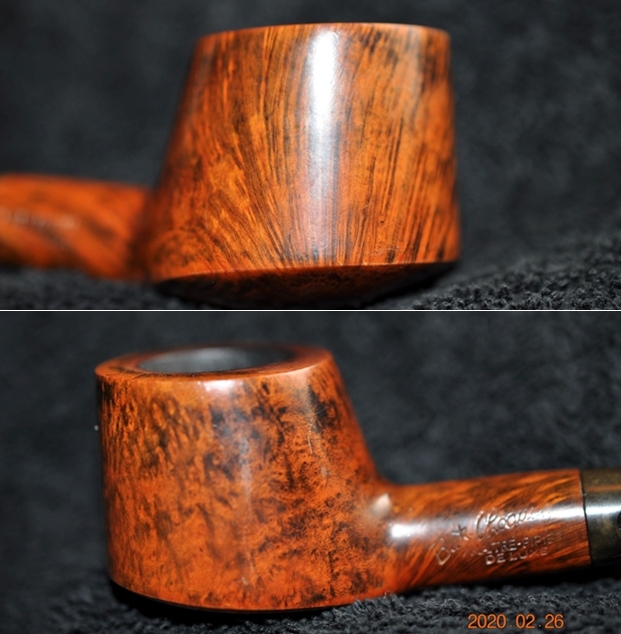
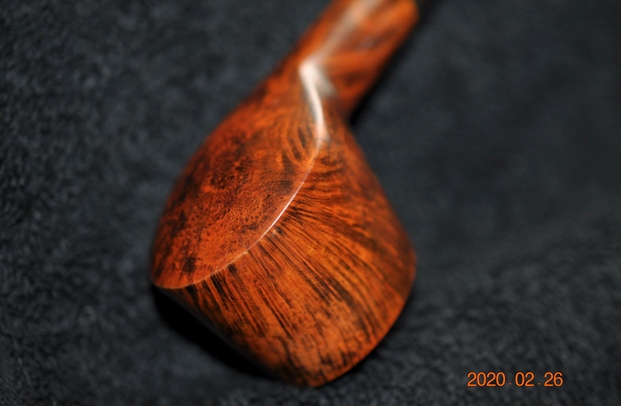
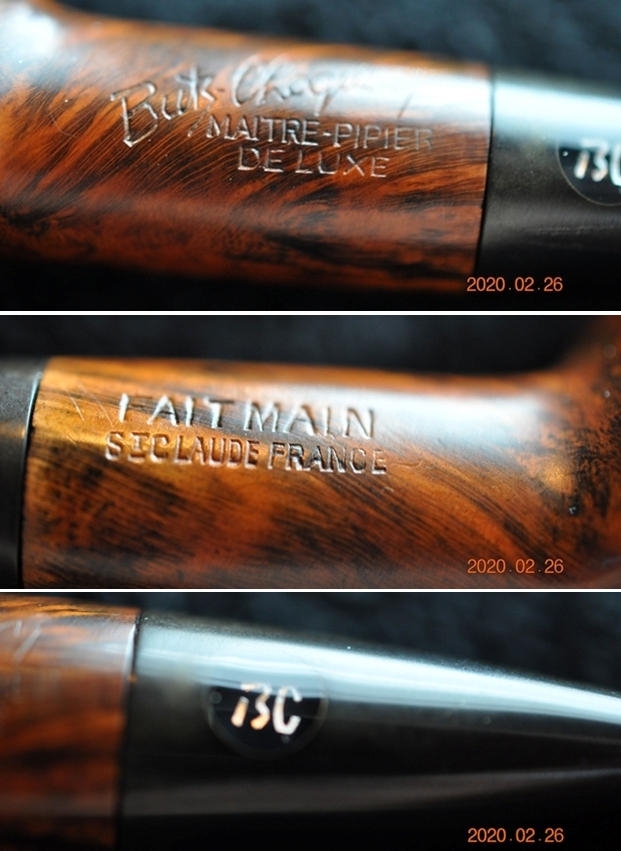
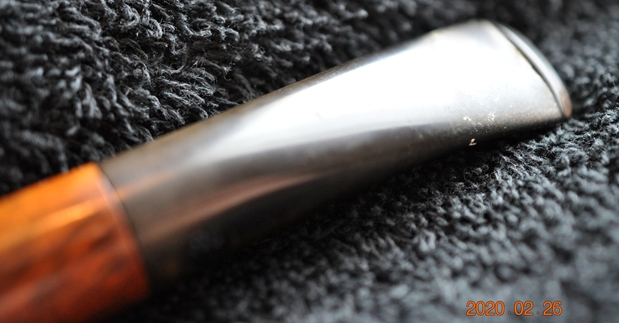
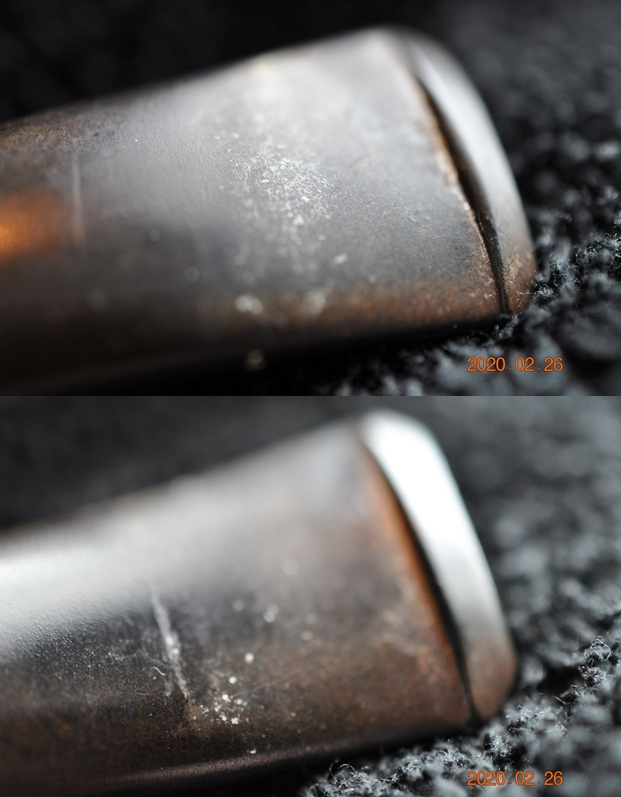
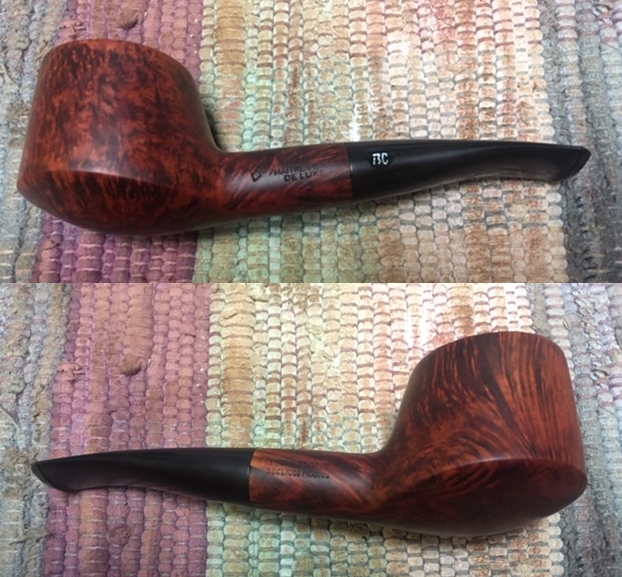
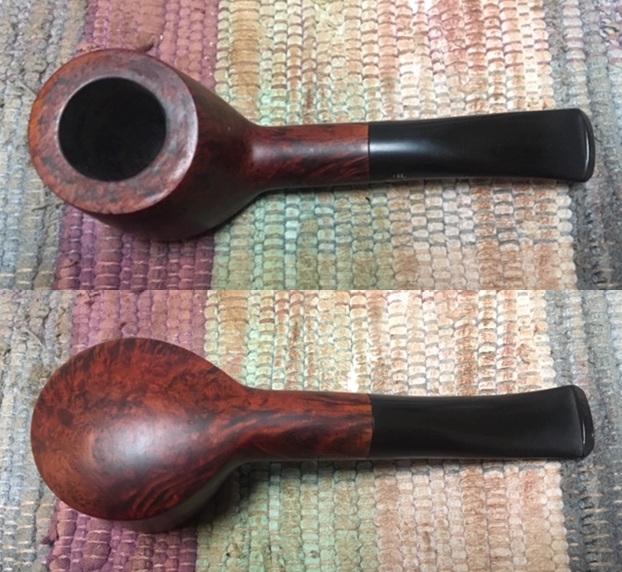
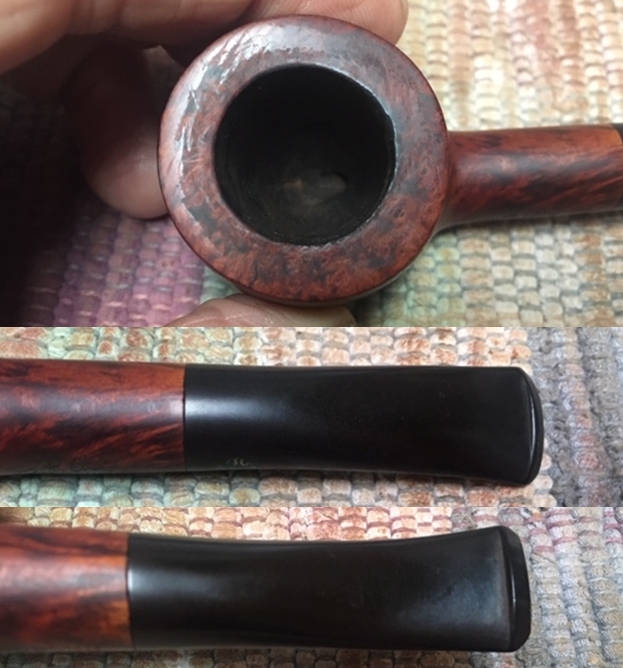
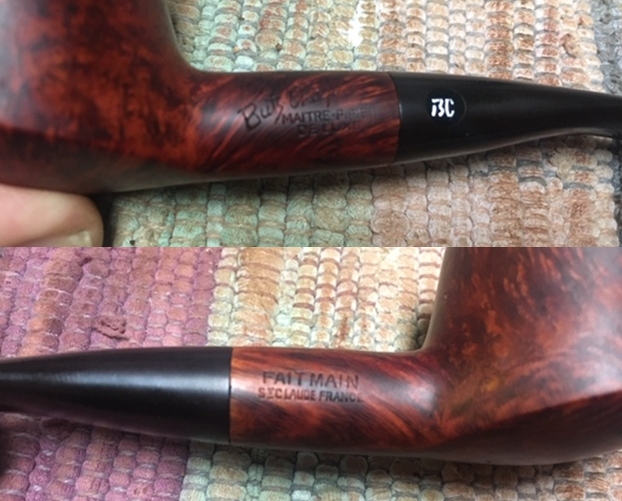
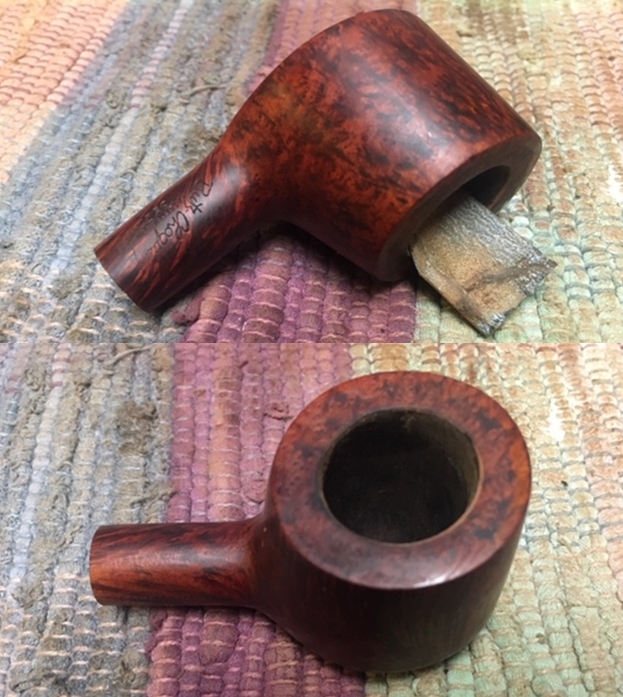
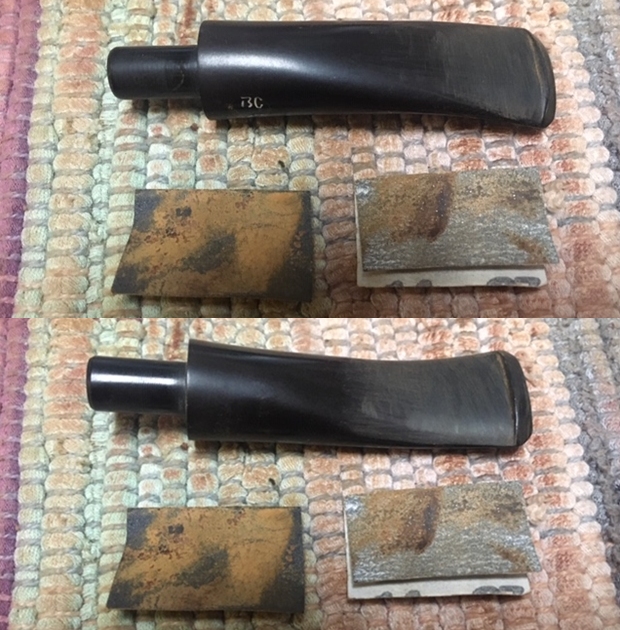
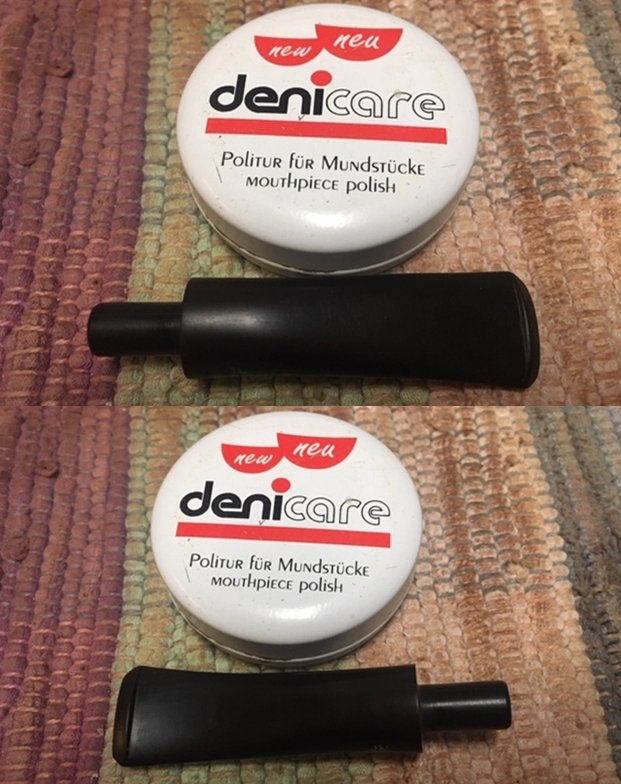
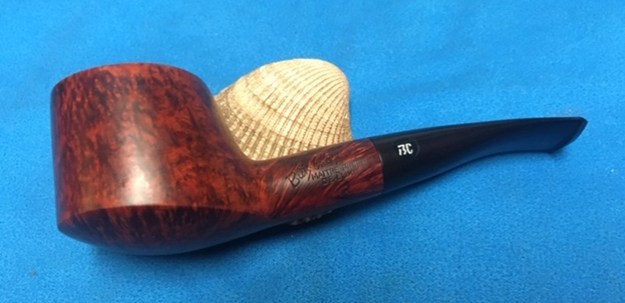
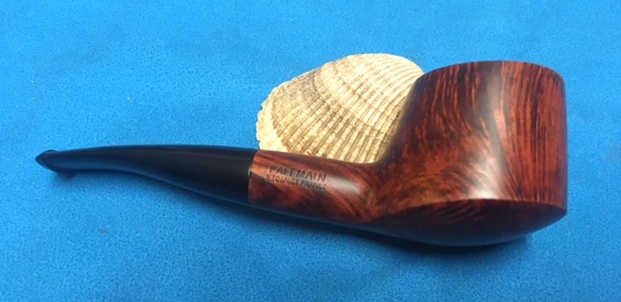
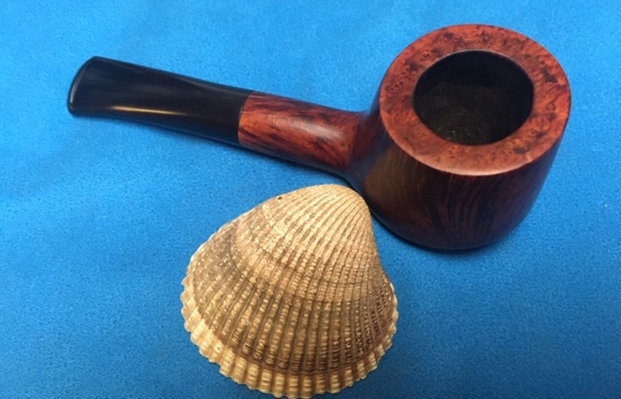
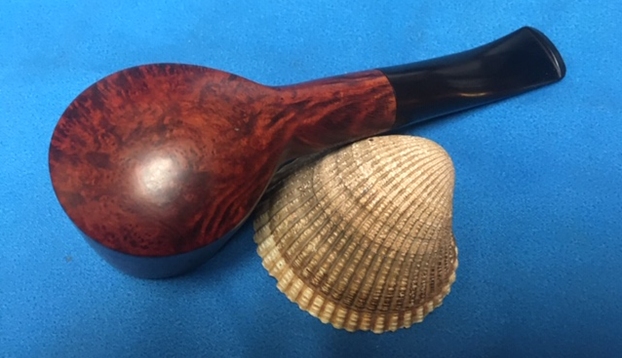
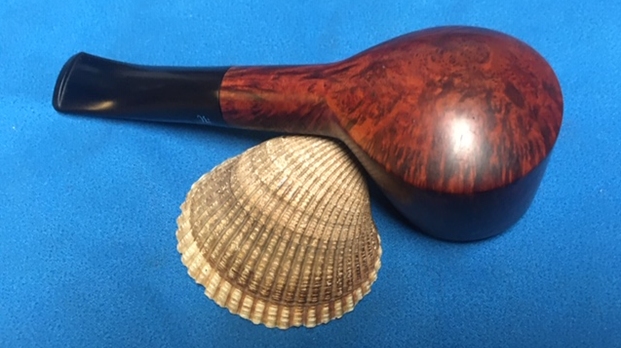
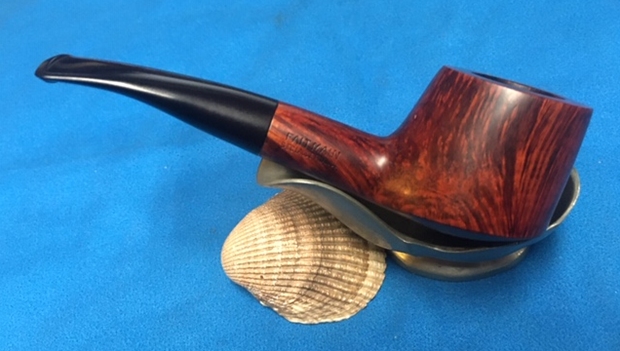
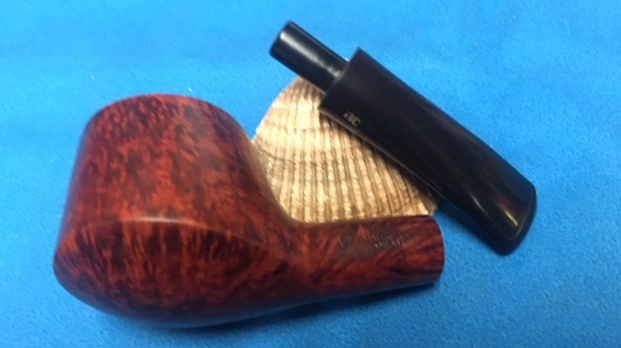
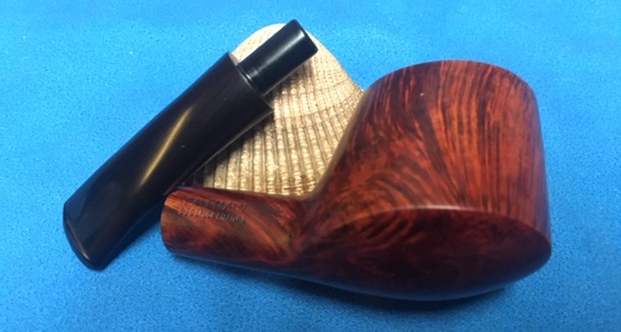
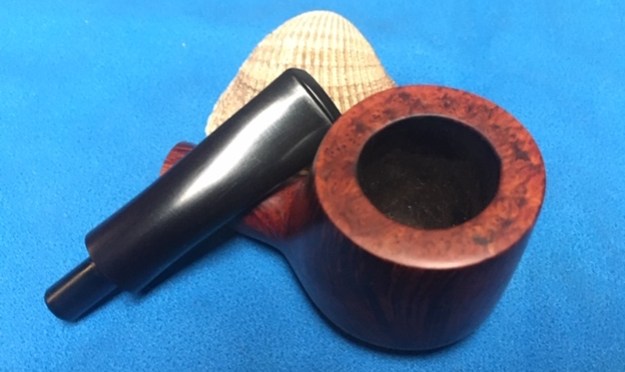
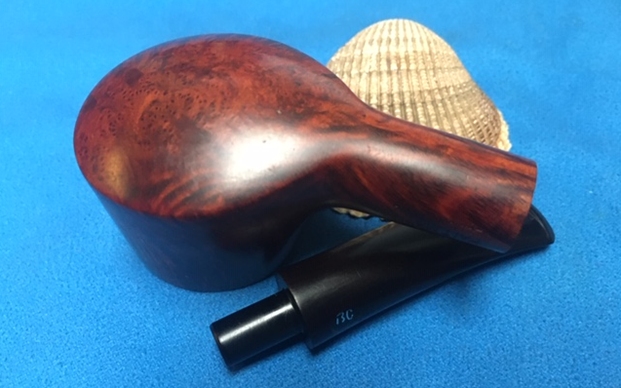
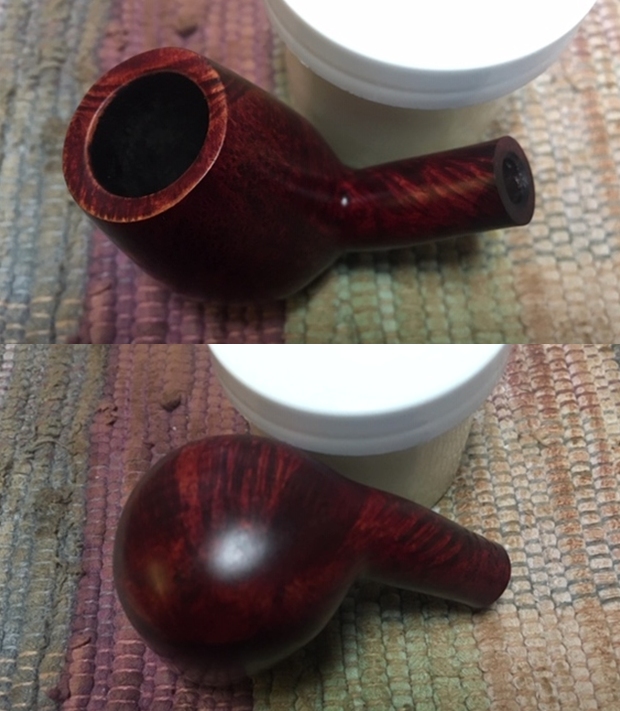
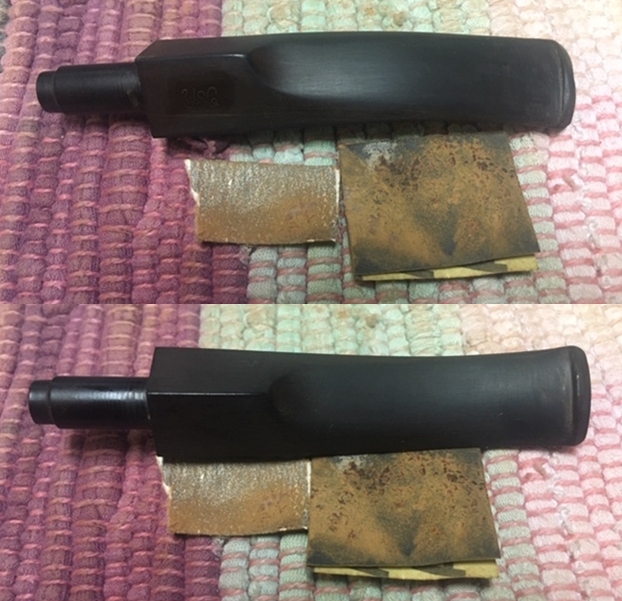
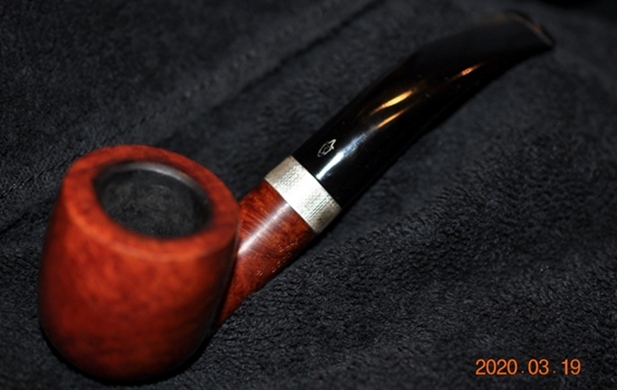
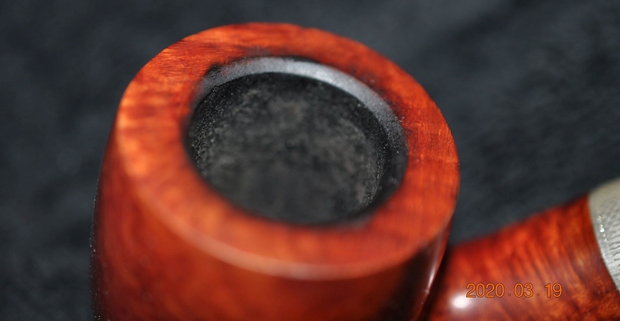
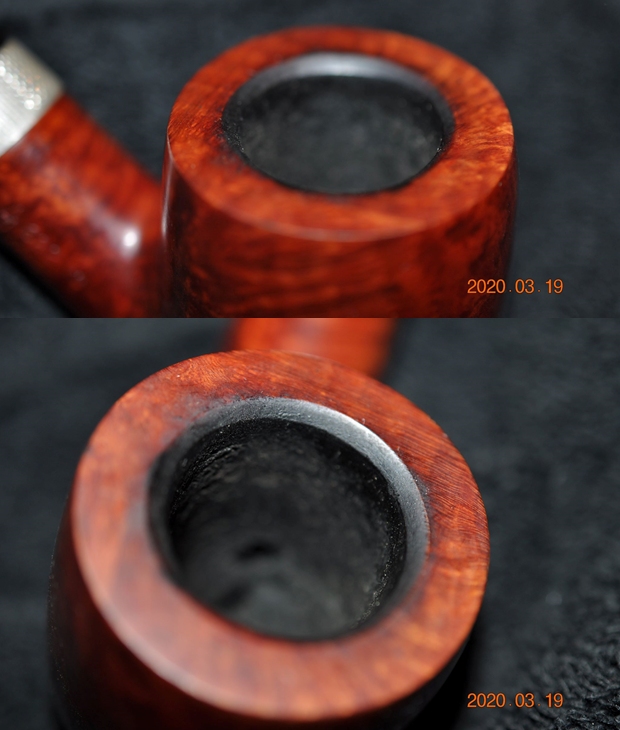
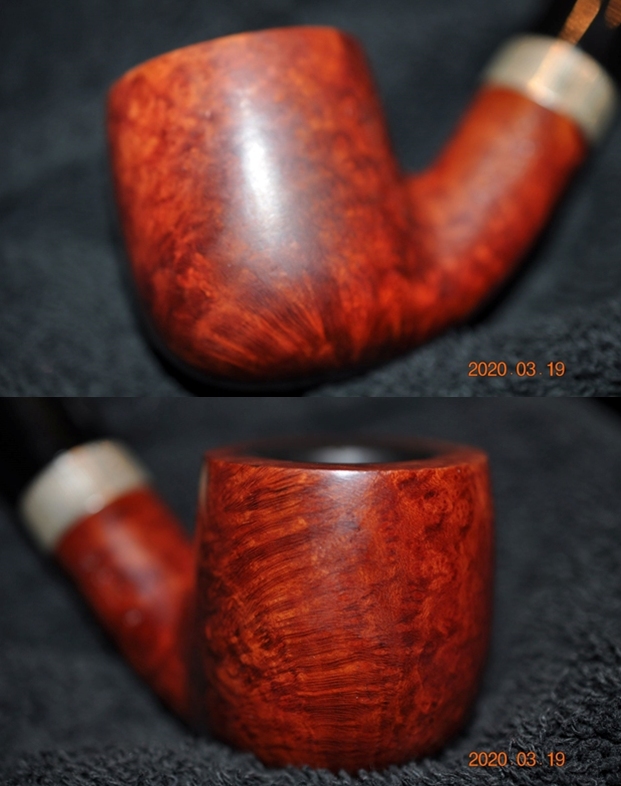
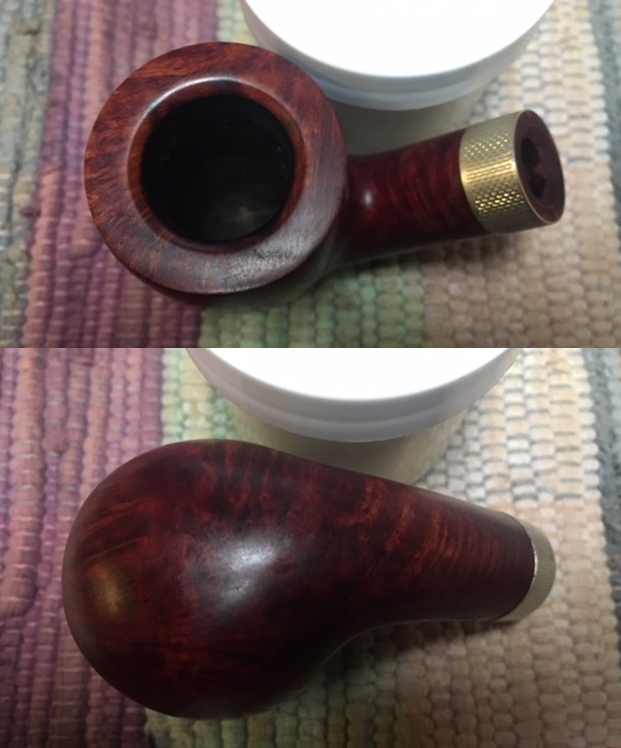
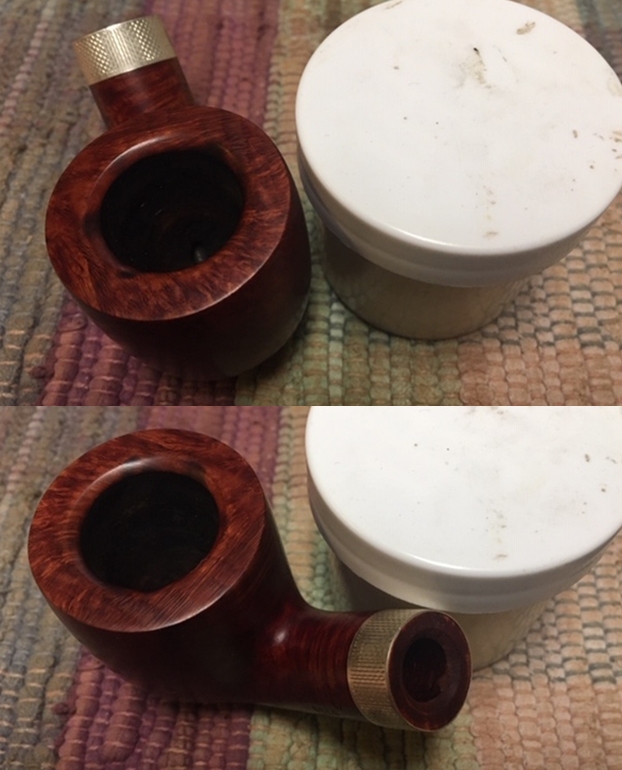
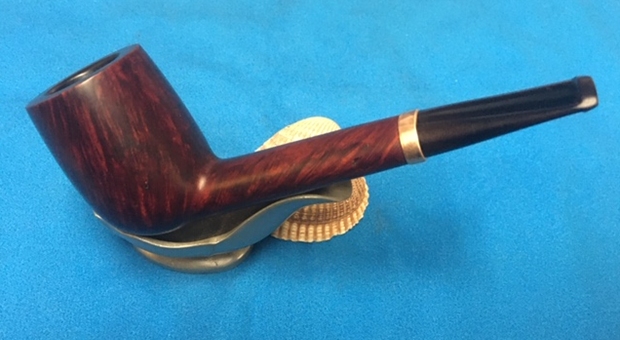
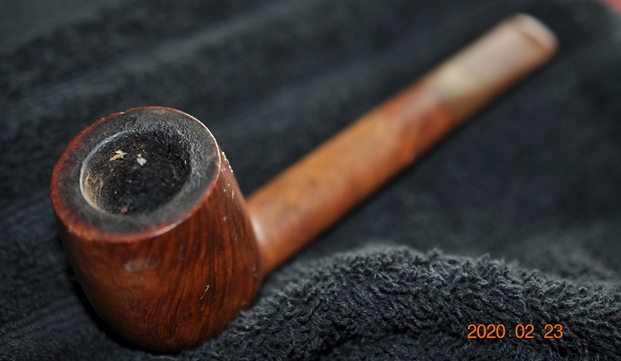
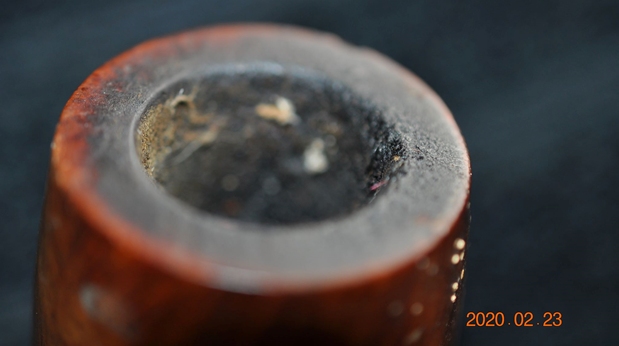
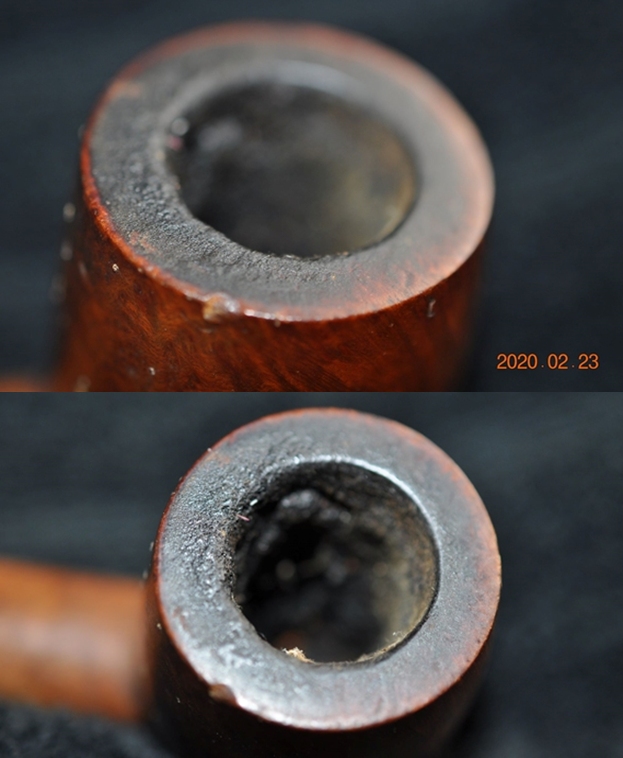
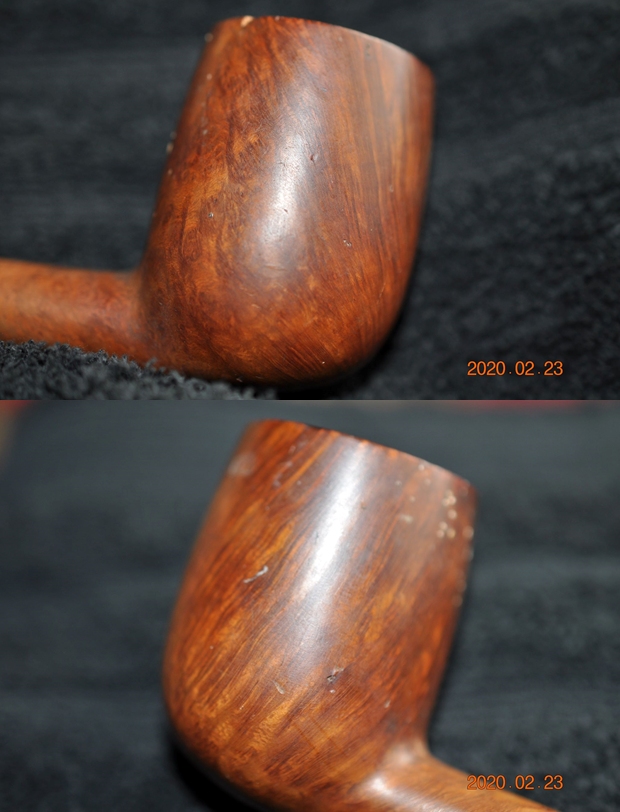
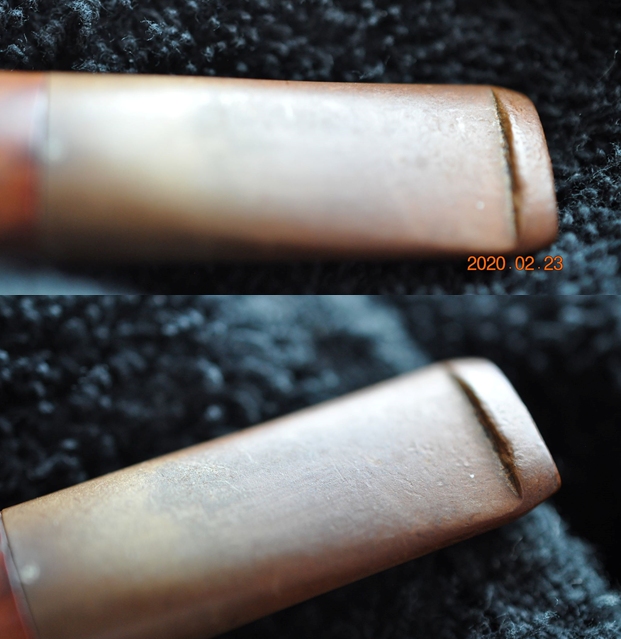
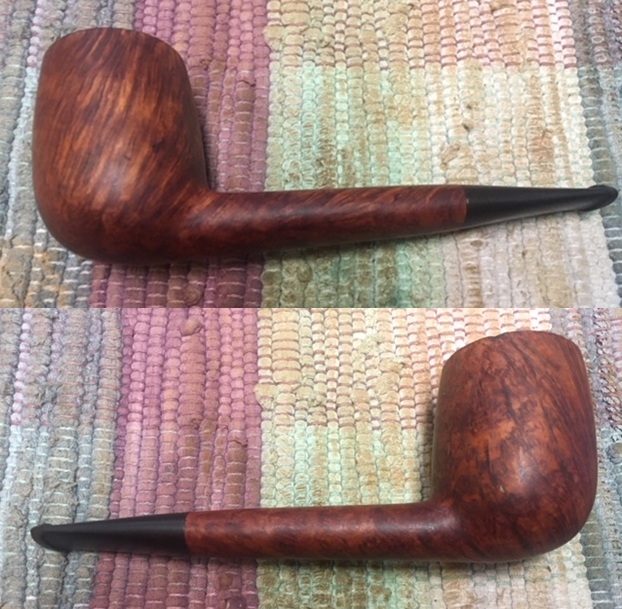
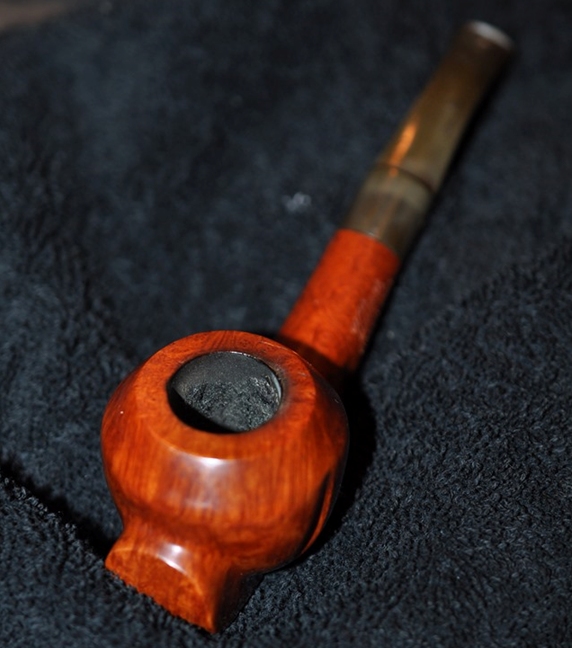
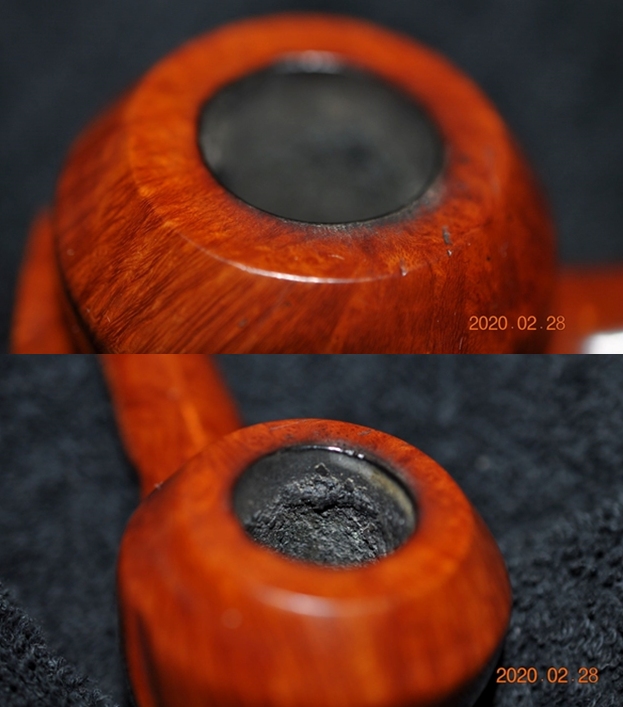
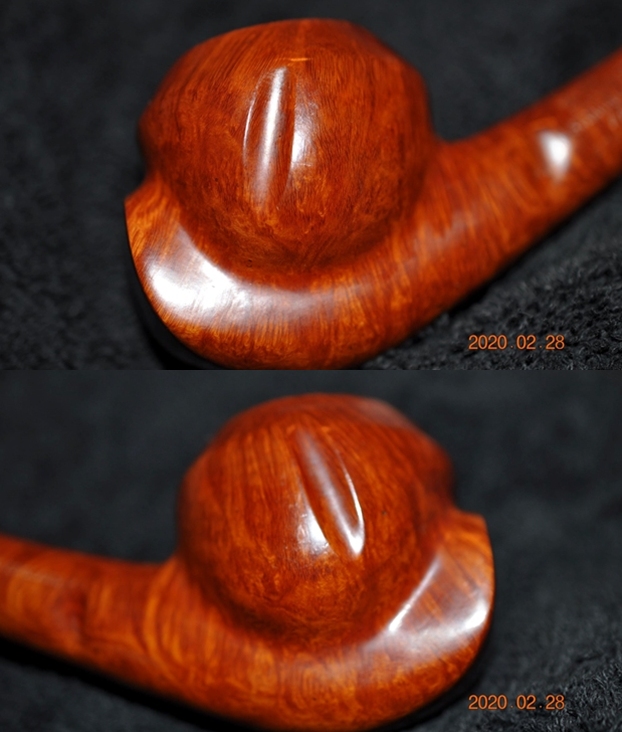
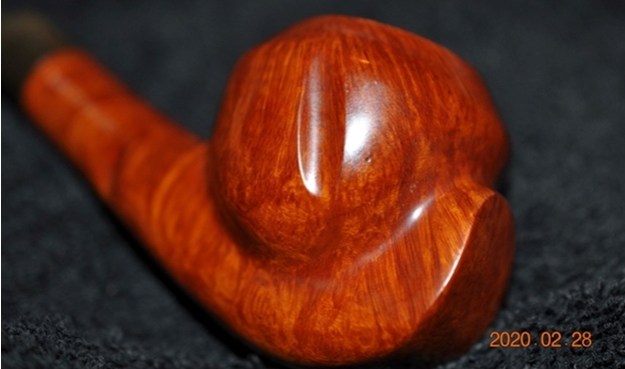
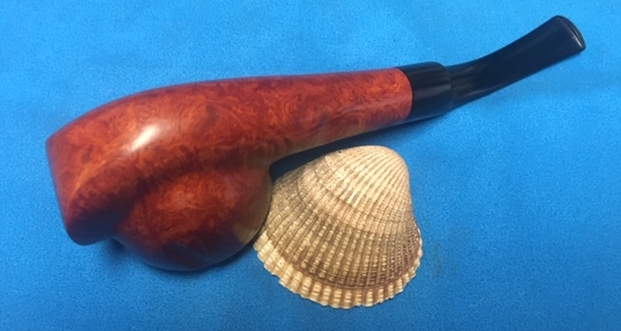
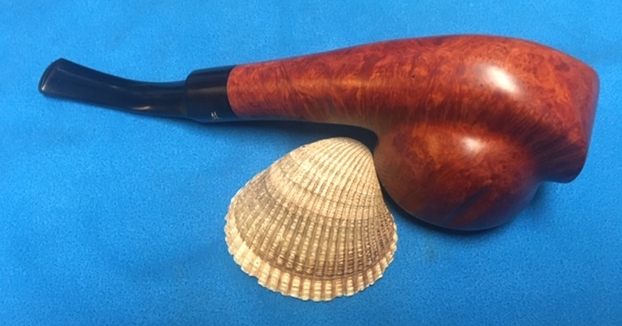
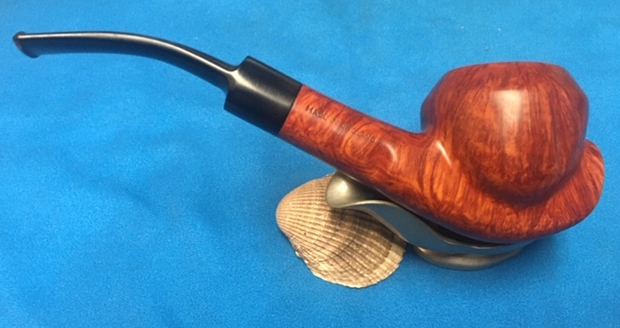
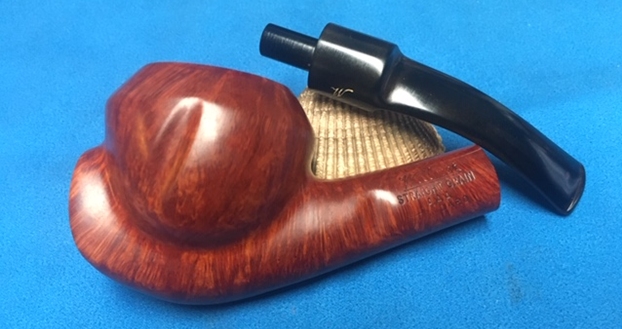
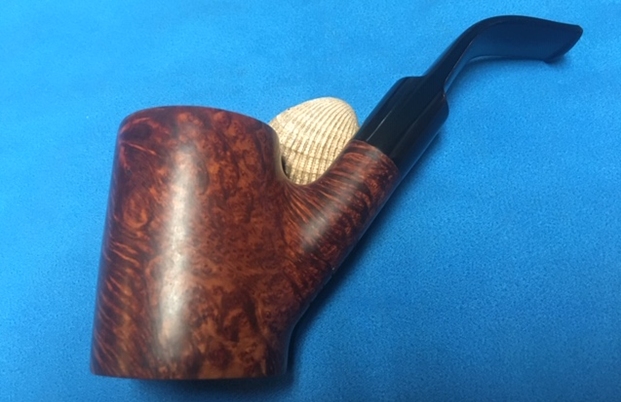
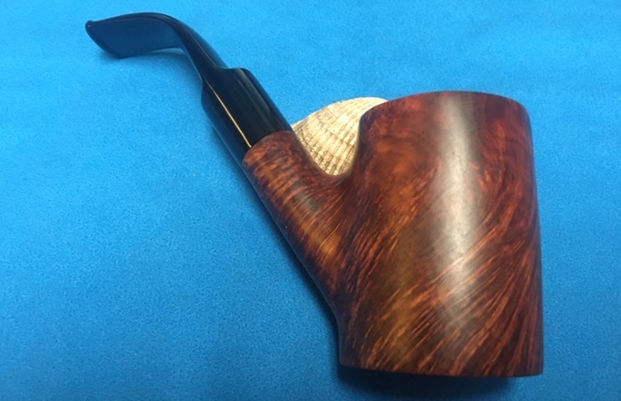
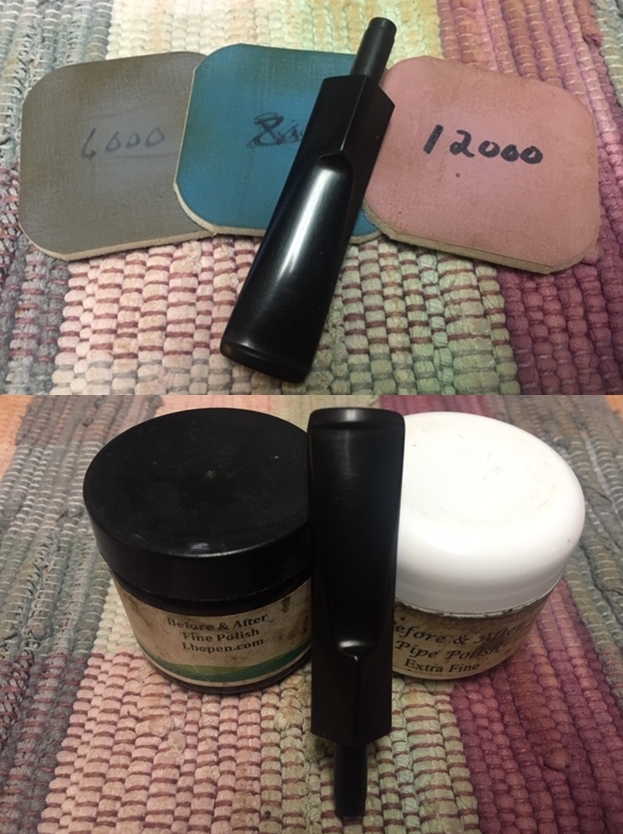
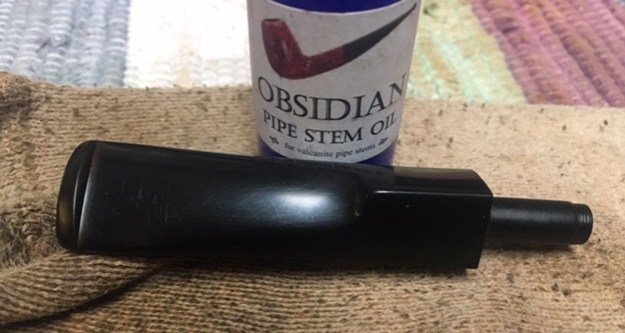
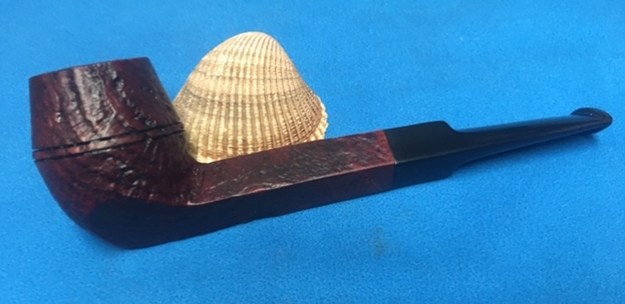
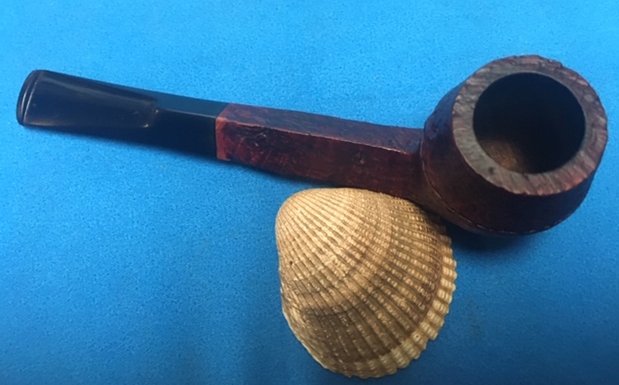
The next pipe on the worktable is a stubby, canted Butz-Choquin Volcano. It has a vulcanite tapered stem with a BC logo on the left side of the taper. The finish is smooth with some nice grain around the bowl. The bowl has a mix of various grains on the sides and on the rim top and heel of the bowl. This pipe not only looks comfortable but it amazingly comfortable in hand. The pipe is stained with black and various hues of brown. It truly is a beautiful finish. The pipe is stamped Butz-Choquin over Maitre Pipier over De Luxe on the left side of the shank. On the right side it is stamped Fait Main (Hand Made) over St. Claude France. The finish was very dirty and tired looking with a lot of grime and oils ground into the sides of the bowl. It appears that the pipe had a varnish or shellac coat that is damaged. There was a thick cake in the bowl and some lava overflowing onto the rim top. There is also some darkening on the inner edge of the rim. The tapered vulcanite stem is heavily oxidized and it appears that the last pipe man used a Softee Bit. The stem looked good. It is dirty with light tooth marks and chatter on both sides near the button. Jeff took some photos of the pipe before he started his cleanup work. He took photos of the bowl and rim top to show their general condition. It is hard to see the condition of the bubbling and peeling finish on the rim top because of the lava and grime but it is present. There is cake in the bowl and some darkening around the rim edges and some lava on the top of the rim. Jeff took some photos of the sides and heel of the bowl to give an idea of the smooth finish and the grain shining through the grime. I cannot wait to see what it looks like once it is cleaned and polished. He took several photos of the stamping on the sides of the shank to capture it for me. It is clear and readable. It reads as noted above. He also included a photo of the acrylic encased BC inlay on the left side of the stem.The vulcanite stem is a bit of a mess! It is oxidized and there is calcification build up all over the stem from the button forward. There are also light tooth marks and chatter on both sides of the stem. The button appears to be in good condition. The photos below show the condition of the stem. Before I started working on my part of the restoration I quickly turned to the previous blog I had done on the Butz Choquin Maitre Pipier (https://rebornpipes.com/2020/04/09/breathing-life-into-a-weary-but-graceful-butz-choquin-maitre-pipier-de-luxe/). I had done some research on the Maitre Pipier line to see what I could learn. I quote from that blog below:
I turned first to PipePhil’s site to get a quick overview of the brand (http://www.pipephil.eu/logos/en/logo-butzchoquin.html). There found the following information. I am also including a screen capture of the pertinent section from the site.

Pipes of the “Maitre Pipier” series were crafted by Paul Lanier until he retired and after him by Alain Albuisson. The model illustrated is remarkable for its “swan neck” shank.

The one pictured in the screen capture is an Extra but the shape is very similar to the one I have that is stamped De Luxe. The same swan neck shank is a part of its beauty.I turned then to Pipedia and did not find anything pertinent to this series of pipes. If you would like to learn more about the brand here is the link (https://pipedia.org/wiki/Butz-Choquin).

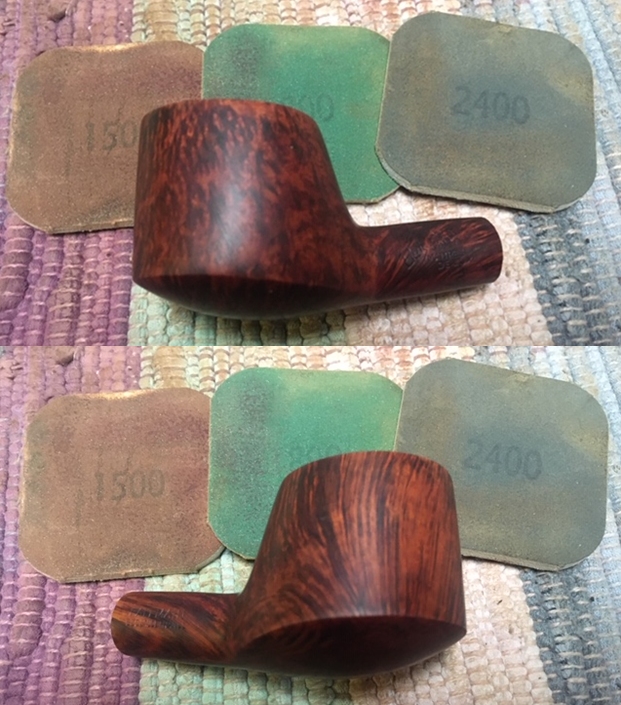
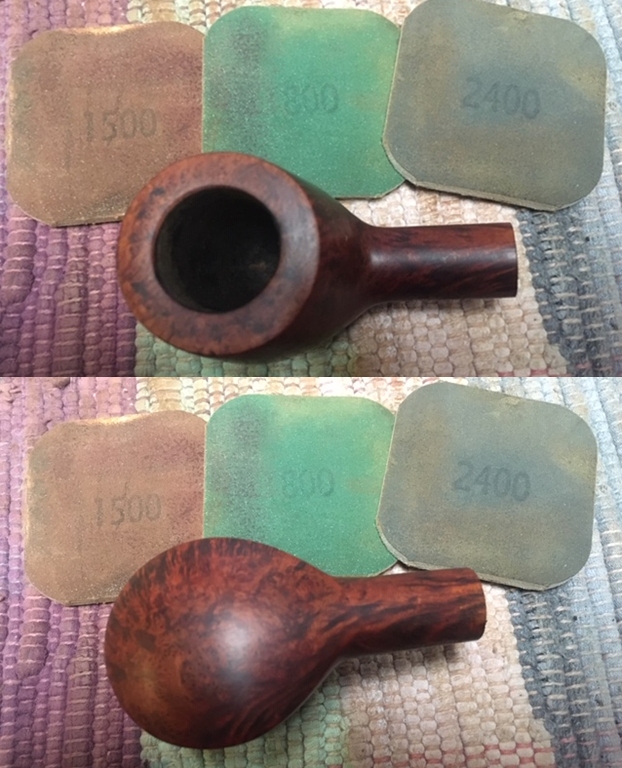
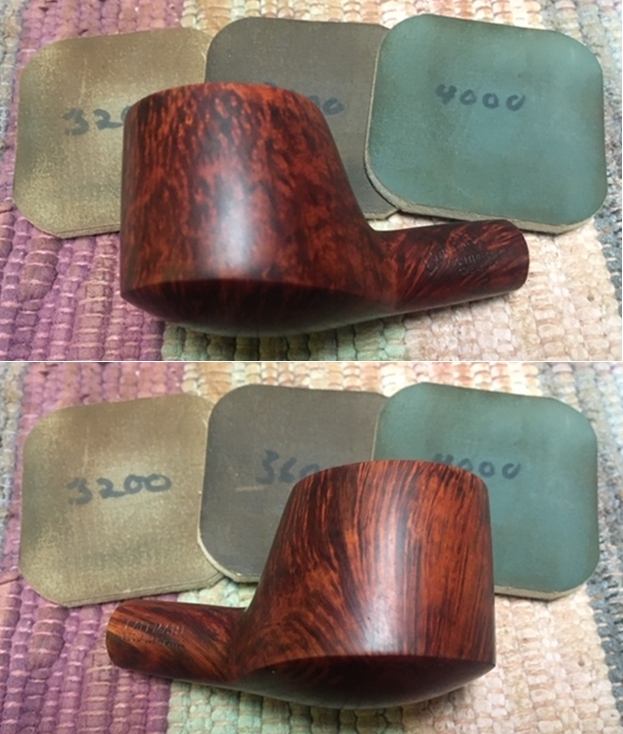
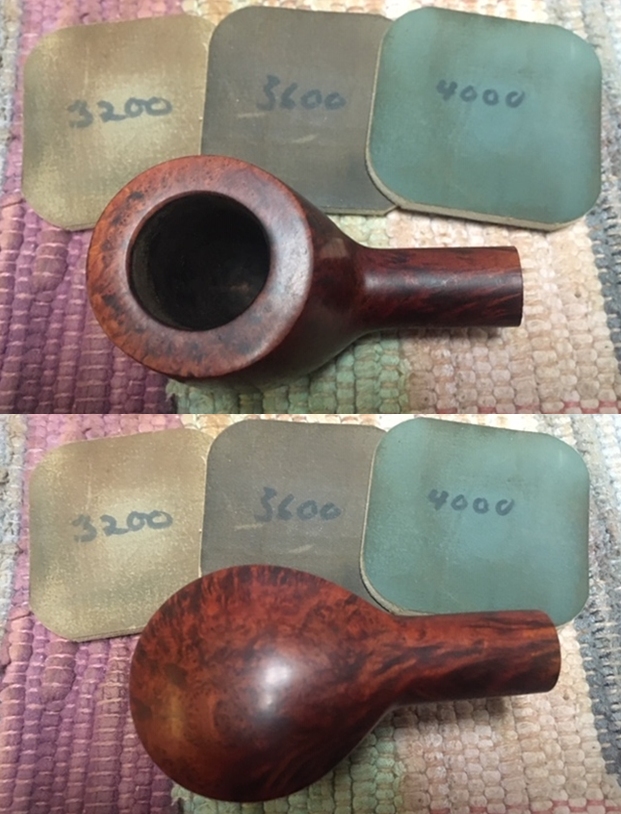
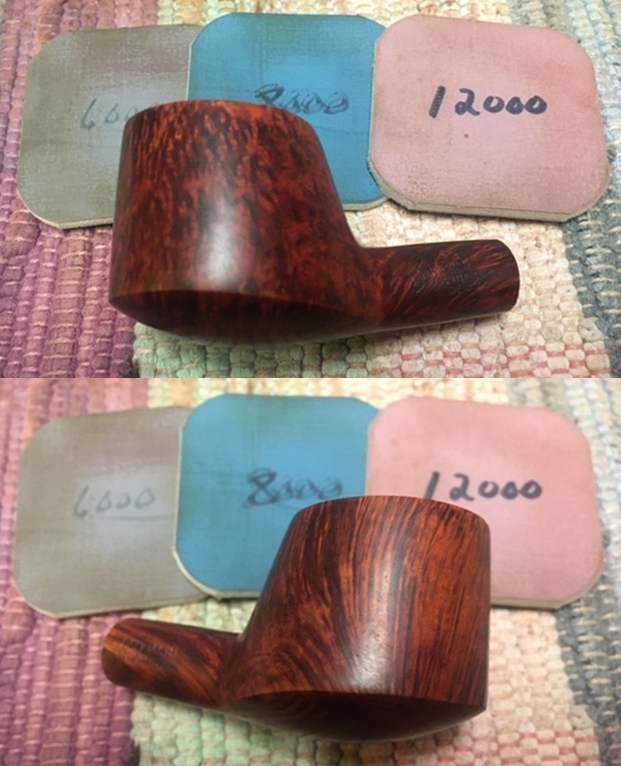
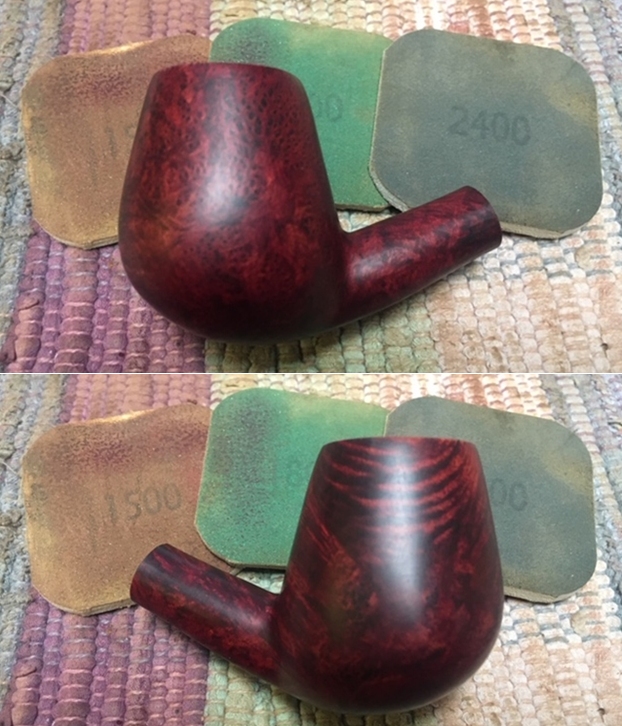
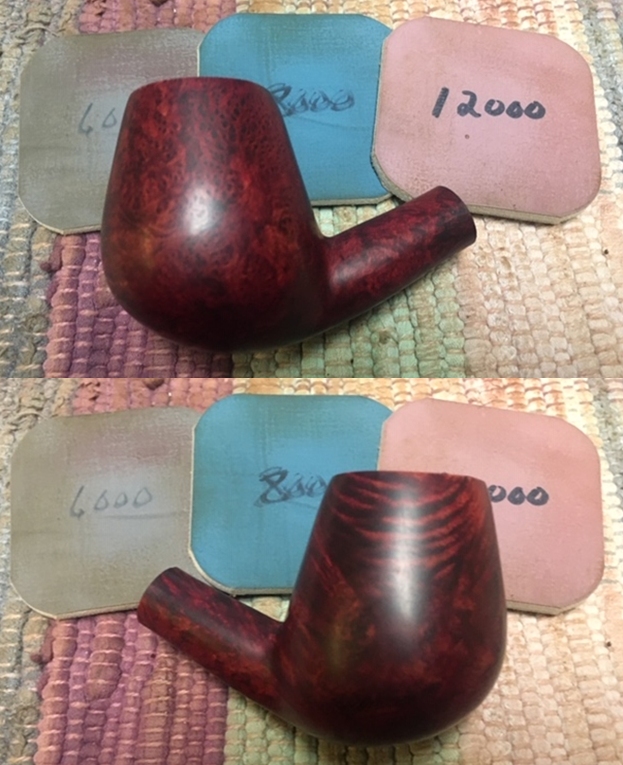
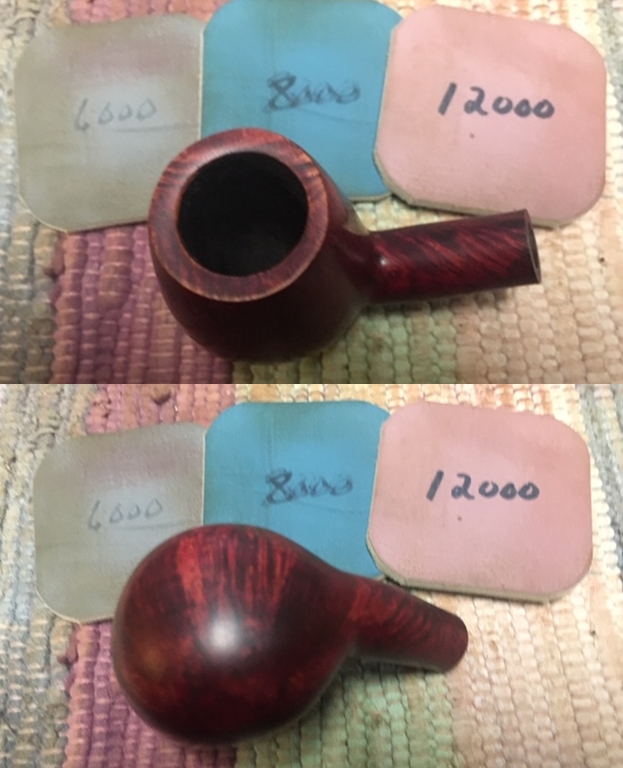
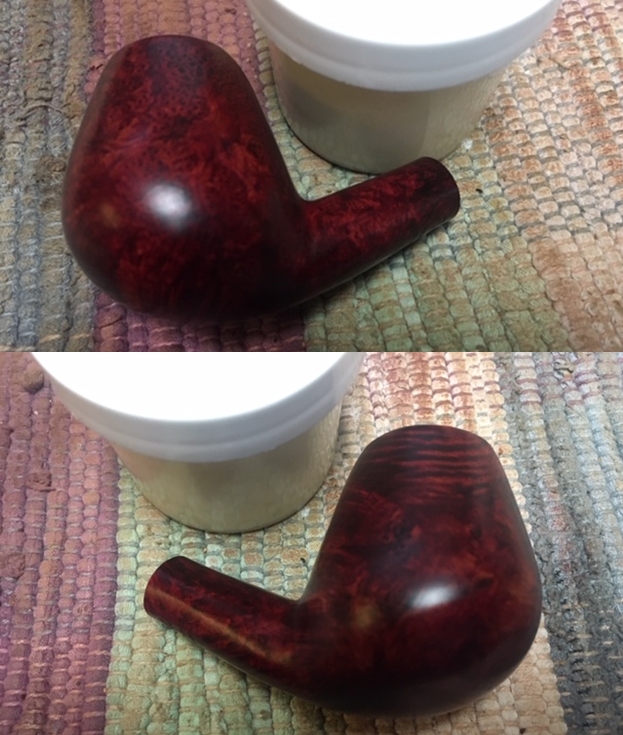
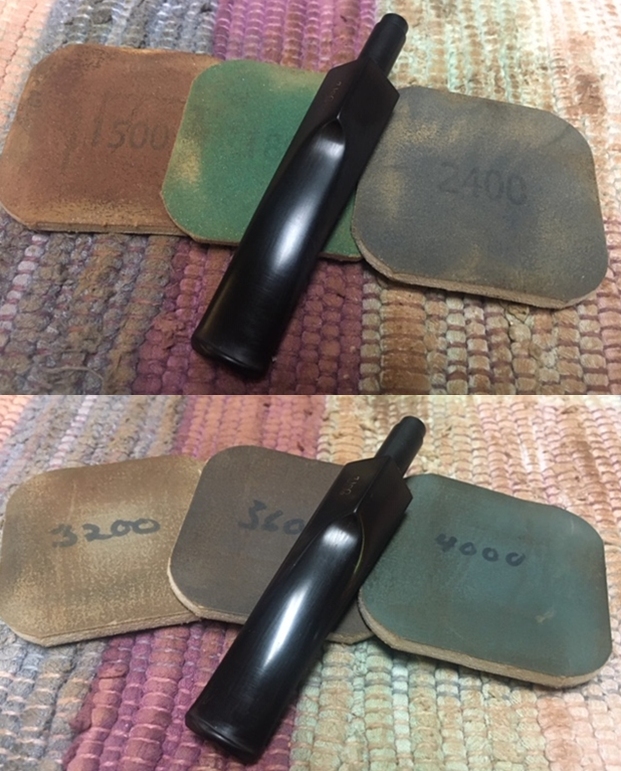
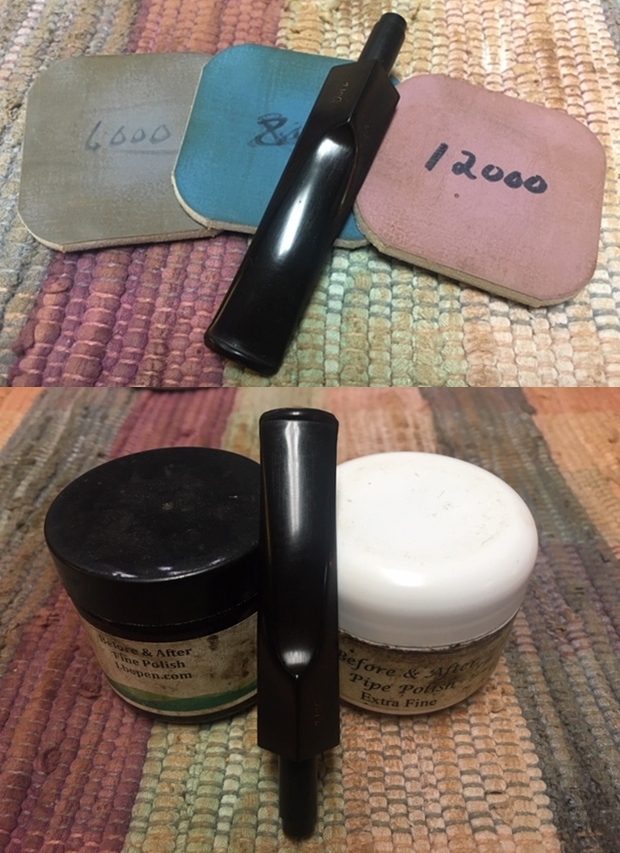
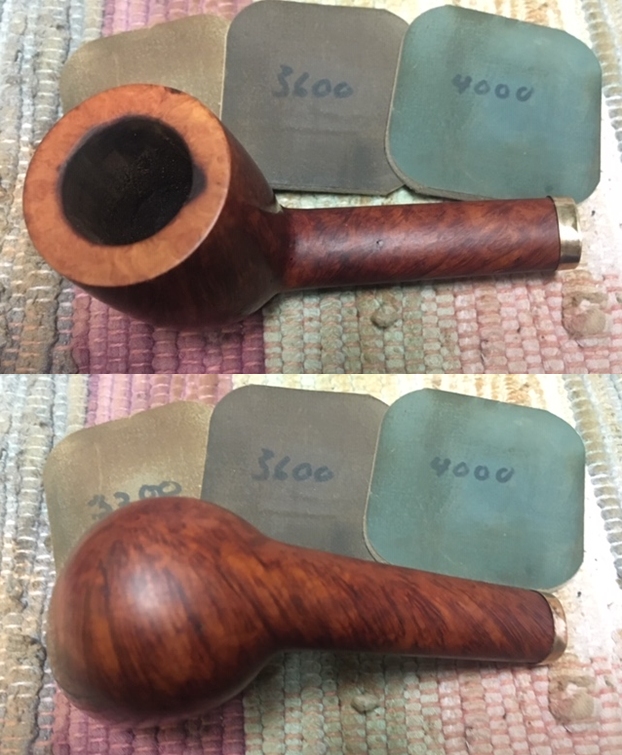
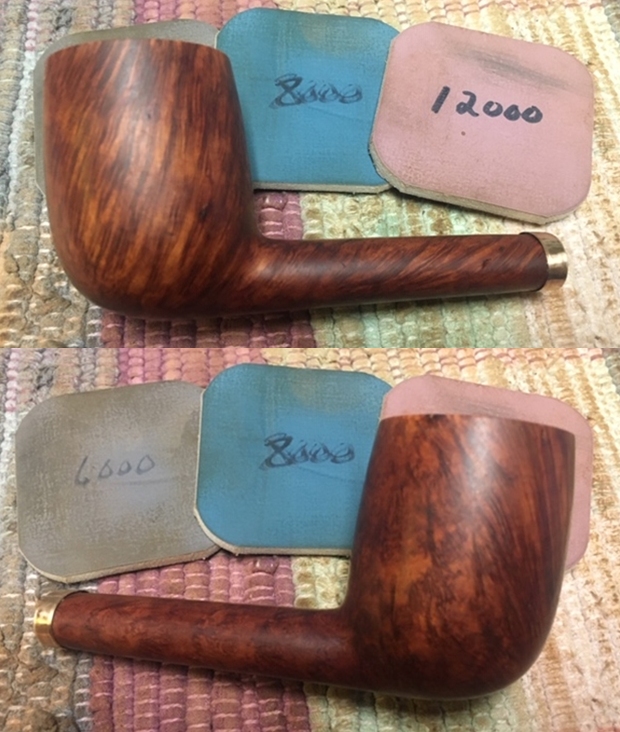
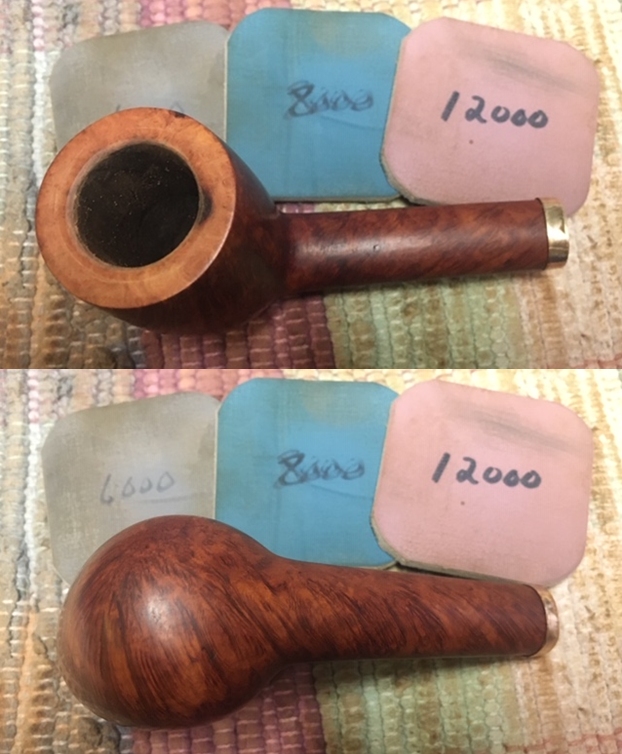
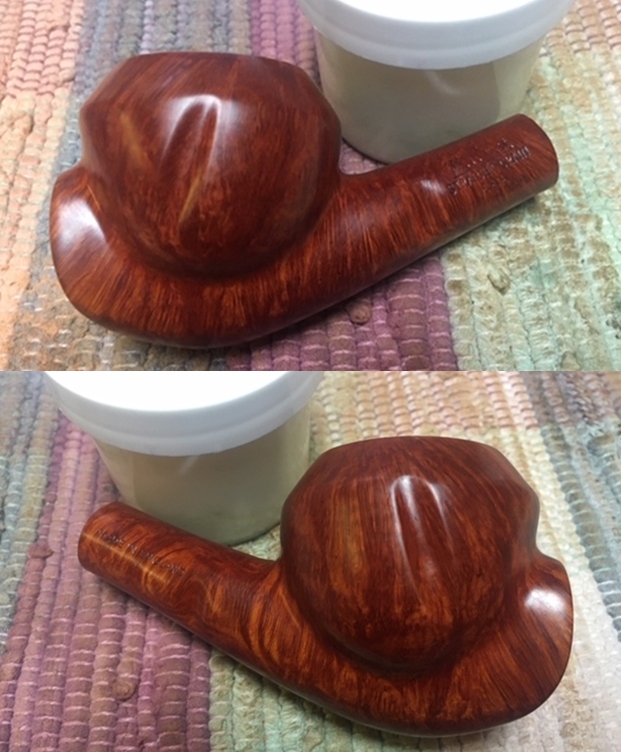
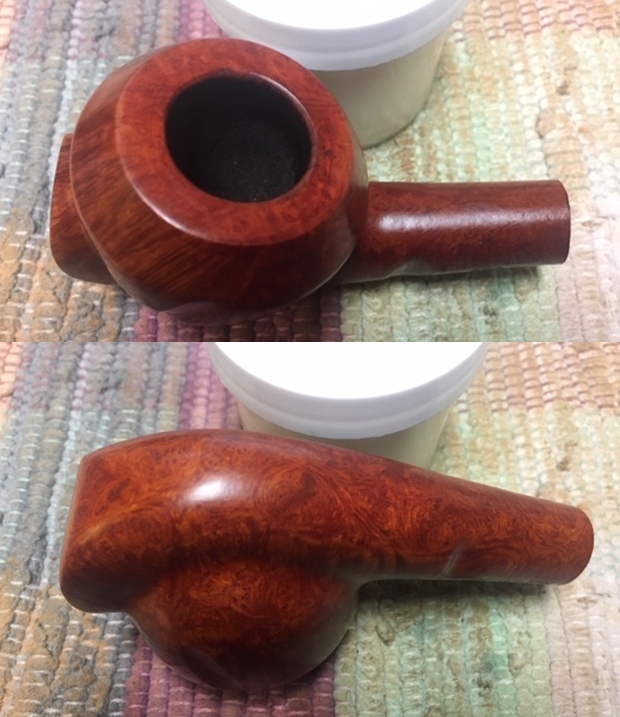
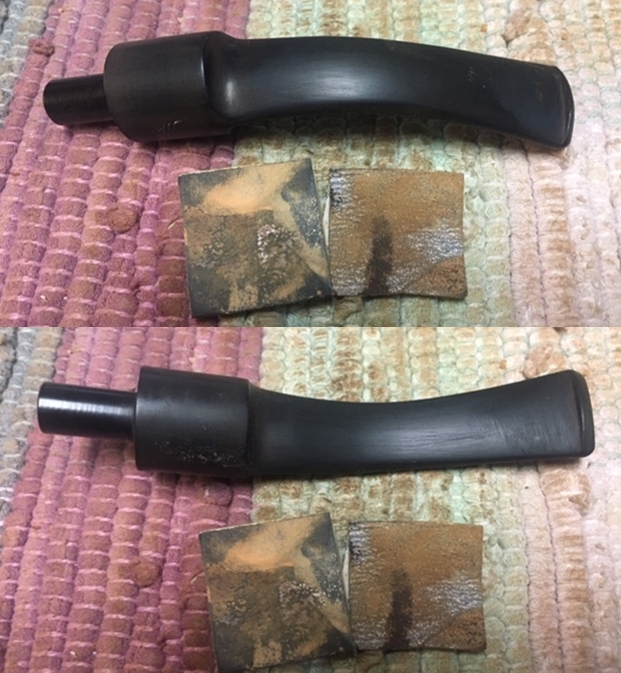
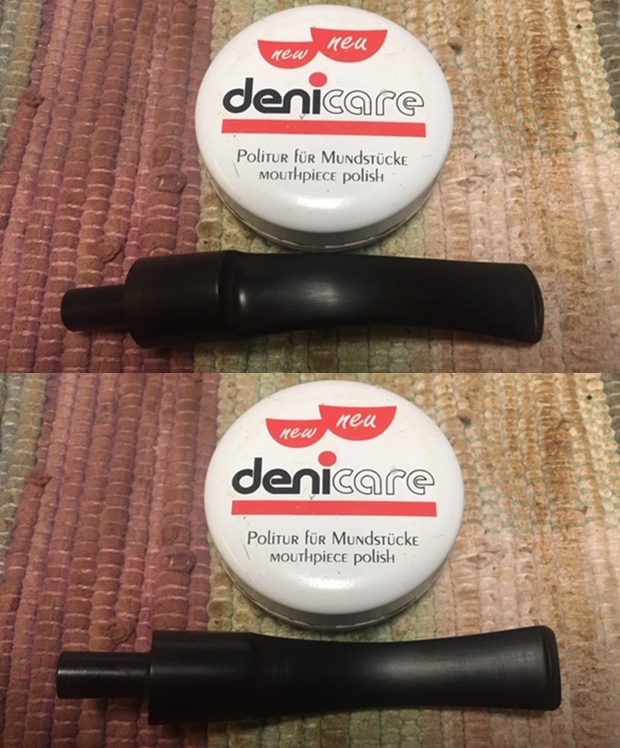
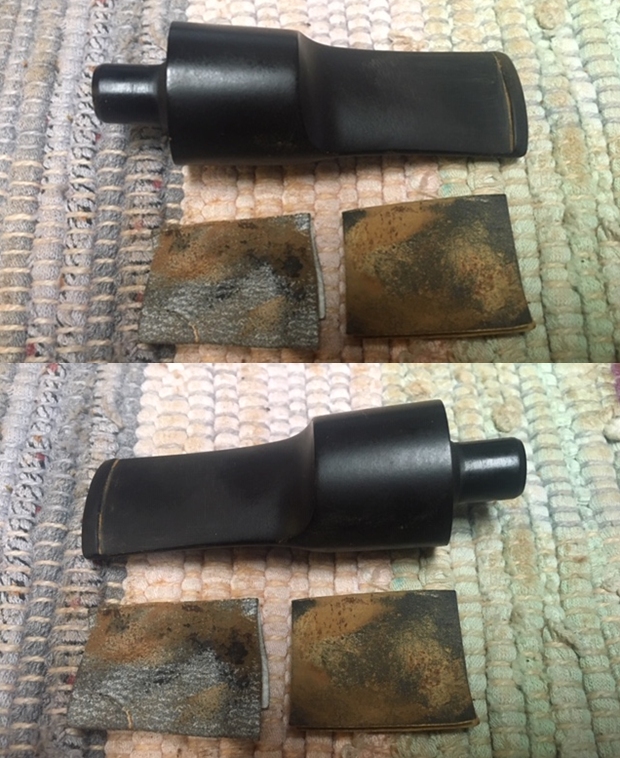
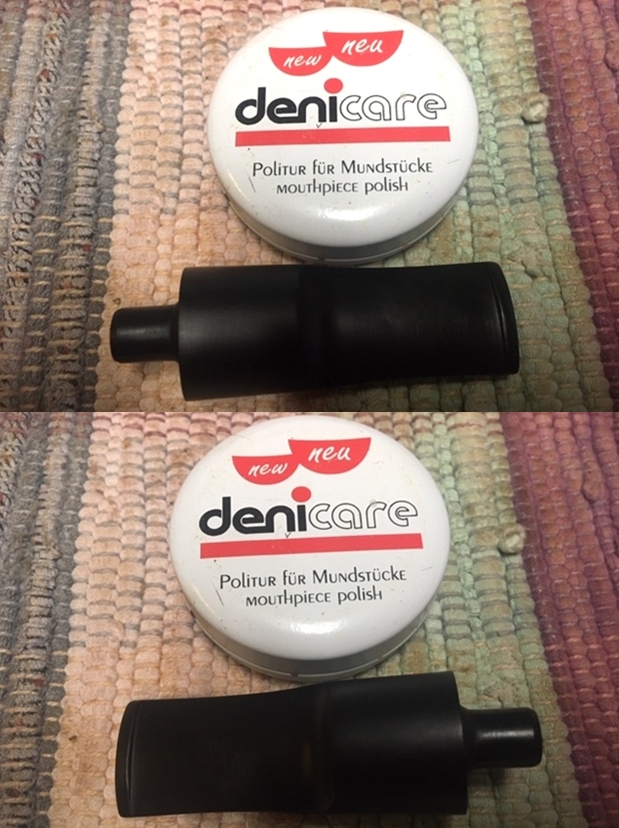
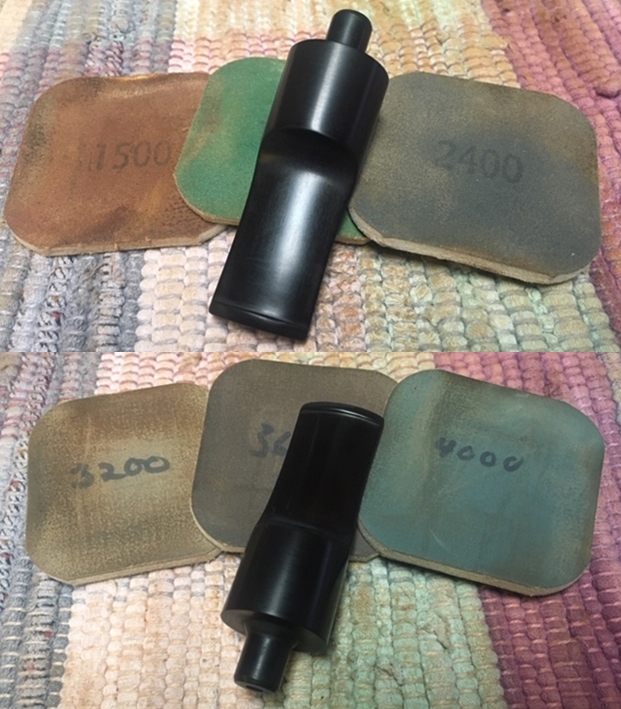
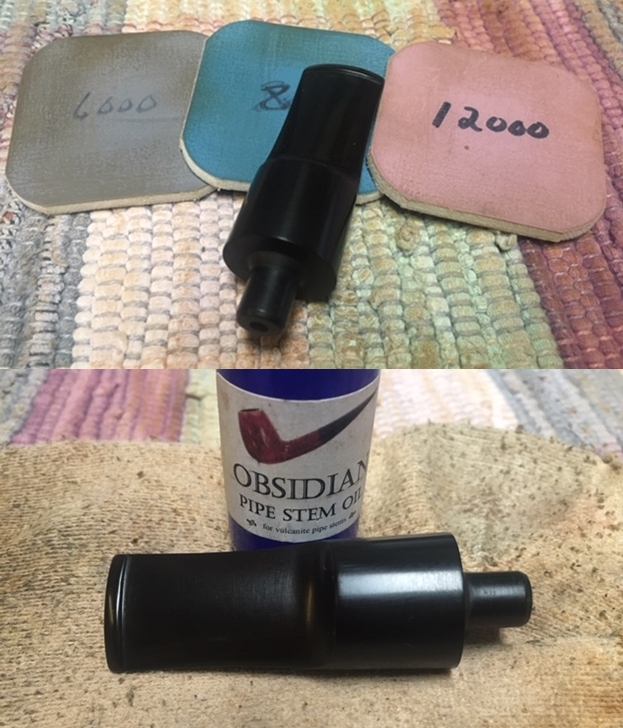
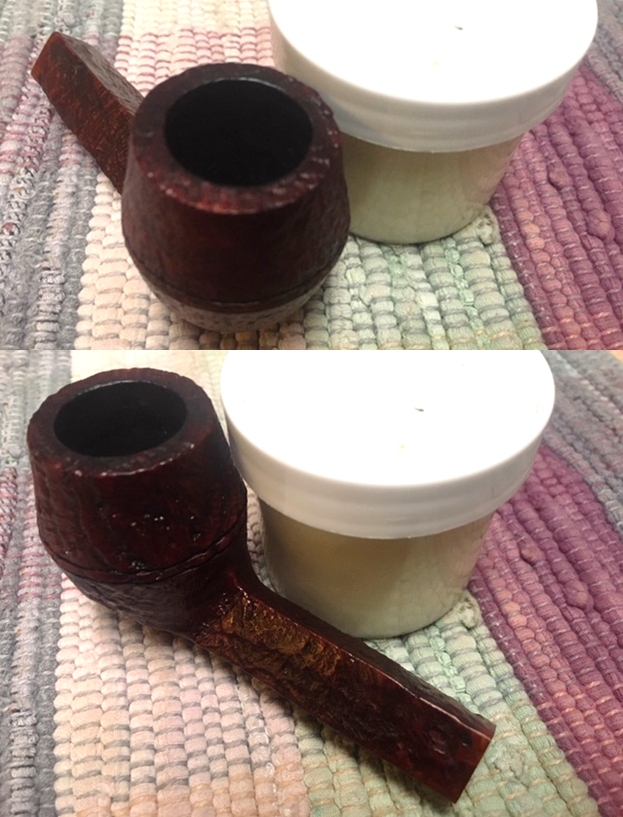
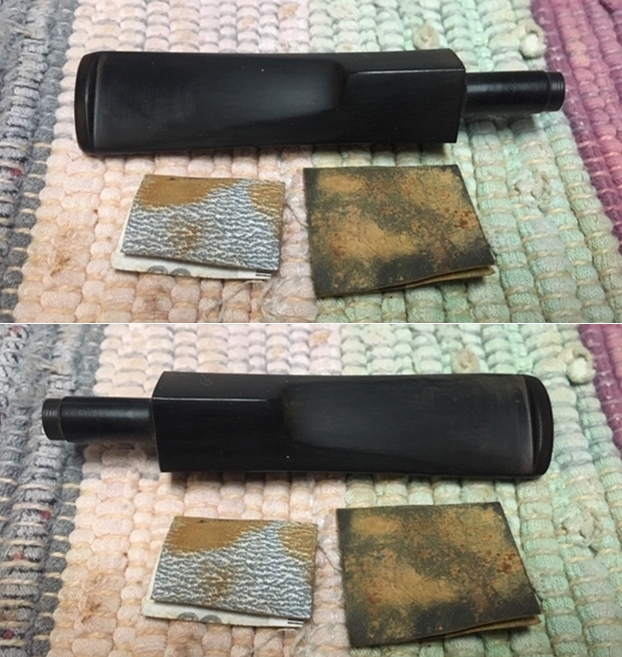
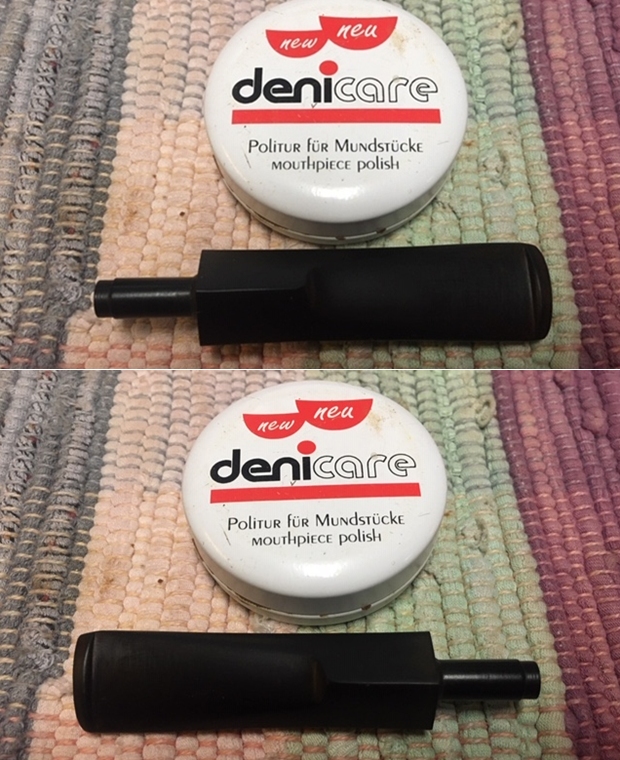
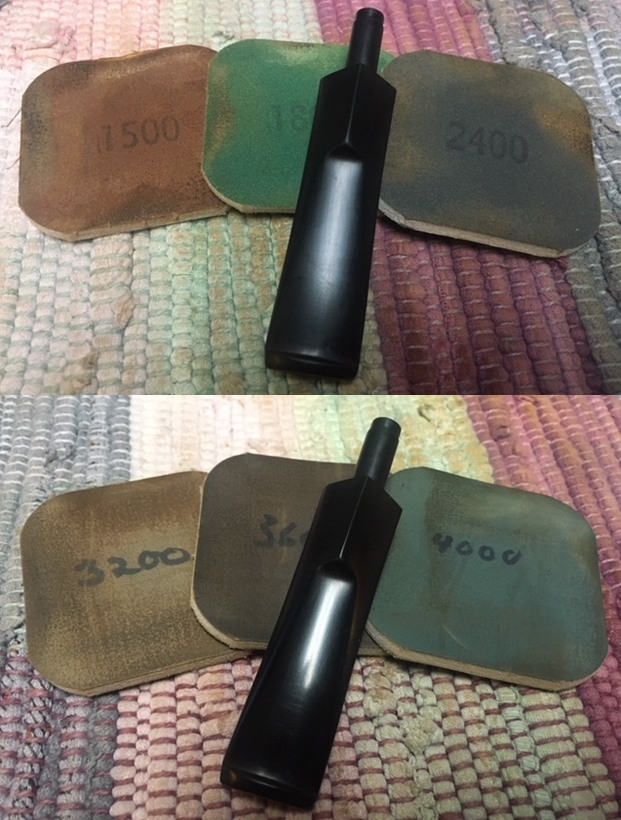
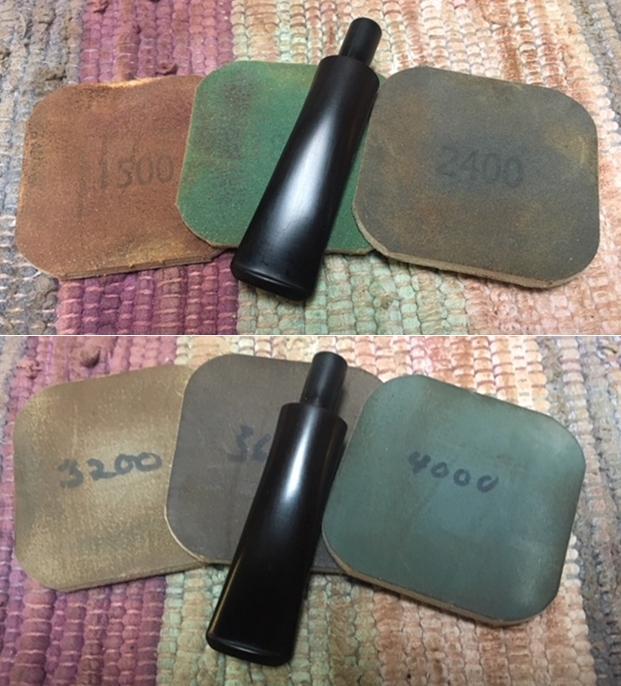
Now I had a pretty good idea the carvers of the Maitre Pipier Series. I am not sure of the date this pipe was made but I did know who made it – either Paul Lanier or Alain Albuisson. With that information I moved forward to do my part of the restoration work on the pipe itself and see what I had to do with it. The bowl looked unbelievably good in light of where it started. The rim top was the roughest looking portion but it was just odd and flaky not damaged. What remained was some very nicely grained briar. The stem looked much better with just a few tooth marks on each side of the stem just ahead of the button. Jeff had done his normal thorough clean up – reaming, scrubbing, soaking and the result was evident in the pipe when I unpacked it. I took photos of the pipe before I started my work on it. The squat shape and finish on this pipe looks great. I took some photos of the rim top and stem. The rim top shows the damage I spoke of above. The bubbling and peeling was gone but there was a very mottled looking surface on the rim top. The bowl looked very good. The inner edge shows some damage on the back right side and a bit on the left side. The close up photos of the stem shows that is it very clean.I took pictures of the stamping on the shank. It is very clear and readable. Jeff’s clean up work left it unfazed and if anything more readable now that the peeling varnish coat was gone.I started my restoration work on the pipe by addressing the damage to the inner edges of the rim. I used a folded piece of 220 grit sandpaper to smooth out the inner edge and bring the bowl back to round. It did not take too much work. The issues with the rim top itself would be taken care of when I polished the bowl with micromesh pads.I polished the briar with micromesh sanding pads – dry sanding with 1500-12000 grit pads. I wiped the bowl down after each pad with a damp cloth. The grain really began to stand out and the finish took on a shine by the last sanding pad. The photos tell the story! I worked some Before & After Restoration Balm into the surface of the briar with my fingertips. The product works to clean, enliven and protect the briar. I let the balm sit for about ten minutes and then buffed with a cotton cloth to raise the shine. The photos show the bowl at this point in the restoration process. I laid the bowl aside and turned to deal with the stem. I sanded the tooth marks and chatter on the stem with a folded piece of 220 grit sandpaper to blend them into the surface of the stem and started polishing with 400 grit wet dry sandpaper.   I polished the stem with some Denicare Mouthpiece polish – a red gritty paste that feels a lot like the texture of red Tripoli. It works well to polish out some of the scratches. I find that it does a great job preparing the stem for polishing with micromesh sanding pads.I polished the stem with micromesh sanding pads – dry sanding with 1500-12000 grit sanding pads. I wiped it down after each sanding pad with a cloth containing some Obsidian Oil. I finished polishing it with Before & After Pipe Stem Polish – both Fine and Extra Fine and buffed it off with a cotton cloth. Putting this pipe back together was very rewarding. The change in condition and appearance of the rim top alone was remarkable. The removal of the damaged peeling coat brought the briar back to life. I love seeing the grain just pop at this point. I put the stem back on the bowl and buffed the pipe with Blue Diamond on the buffing wheel. I carefully avoided the stamping on the shank during the process. I gave the bowl and the stem multiple coats of carnauba wax on the buffing wheel and followed that by buffing it with a clean buffing pad on the buffer. I hand buffed the pipe with a microfiber cloth to deepen the shine. The finished pipe is quite beautiful and is a stubby volcano/sitter pipe. The finish on the bowl combines various stains to give it depth. It is very well done. Give the finished pipe a look in the photos below. I can only tell you that it is much prettier in person than the photos capture. The dimensions of the pipe are Length: 5 inches, Height: 1 ½ inches, Outside diameter of the bowl: 1 ½ inches, Chamber diameter: ¾ of an inch. Butz-Choquin seems to have a lot of creatively shaped designs that leave me respecting the creativity. This interesting pipe is no exception and it is a great looking pipe in great condition. Thanks for walking through the restoration with me as I worked over another beautiful pipe. I will be adding it to the rebornpipes store soon. If you want to add it to your collection send me an email or a message! Thanks for your time.

Next on the Table – a Johs Hand Made in Denmark Brandy


Blog by Steve Laug

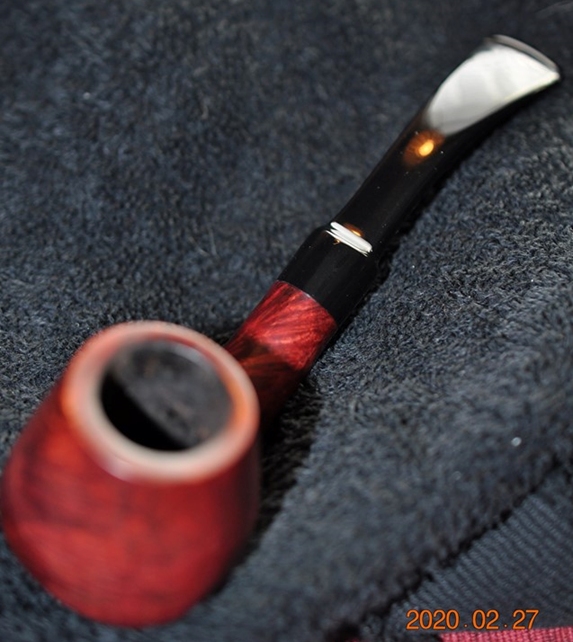
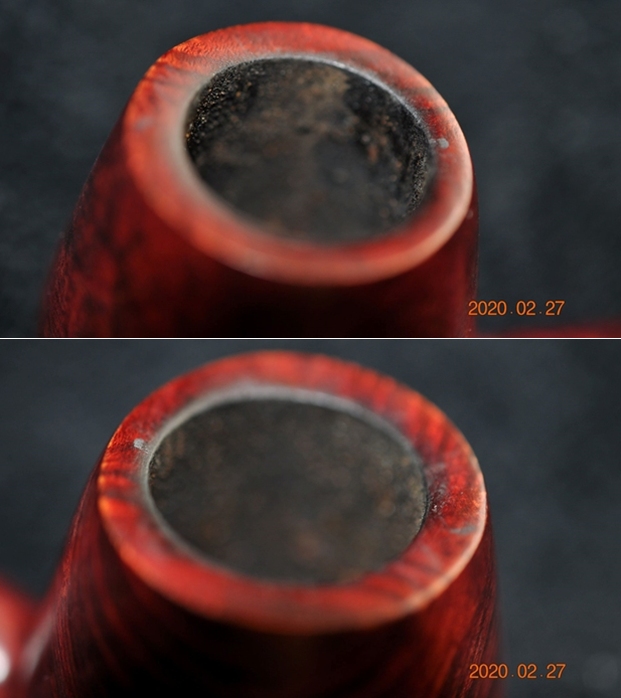
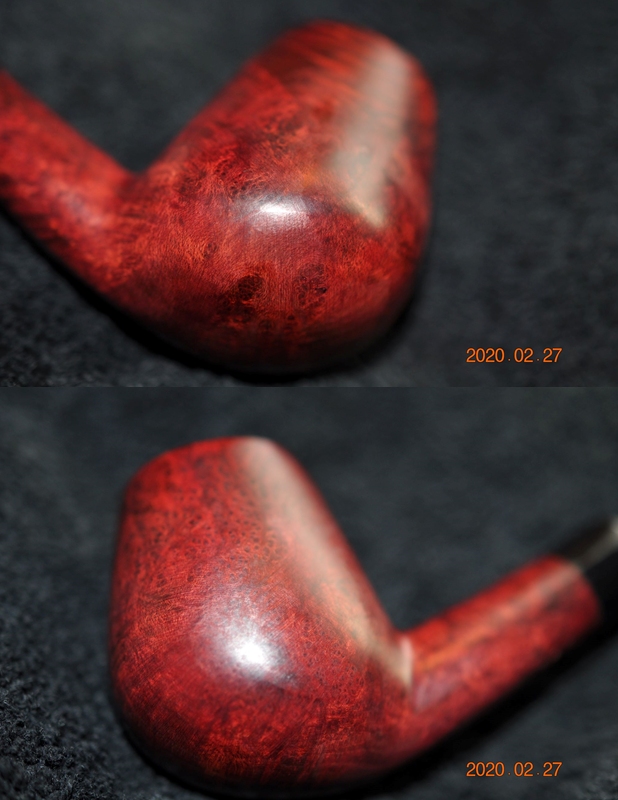
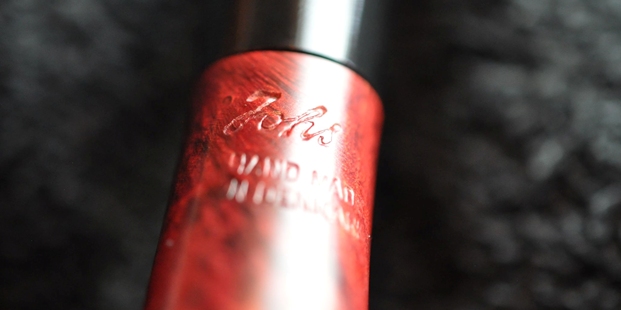
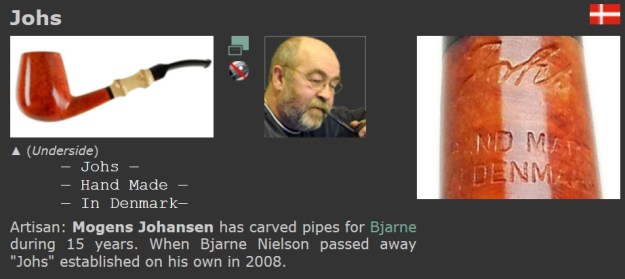
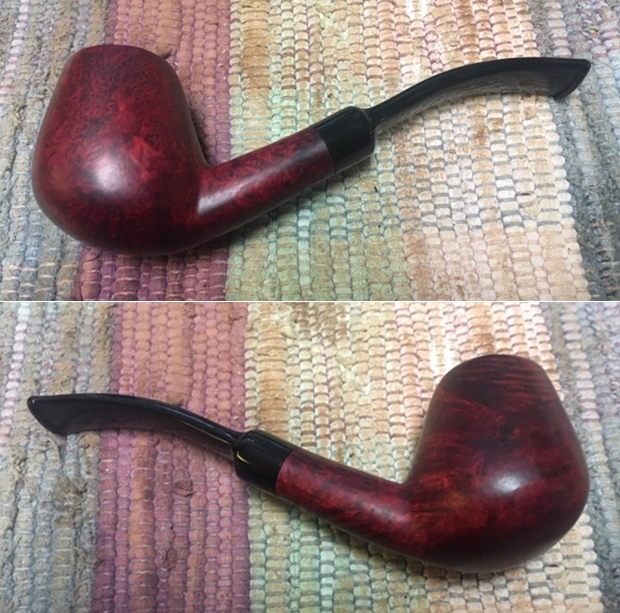
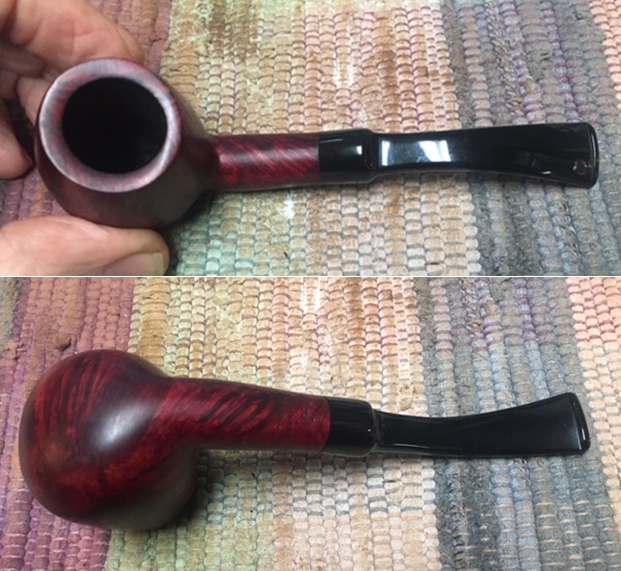
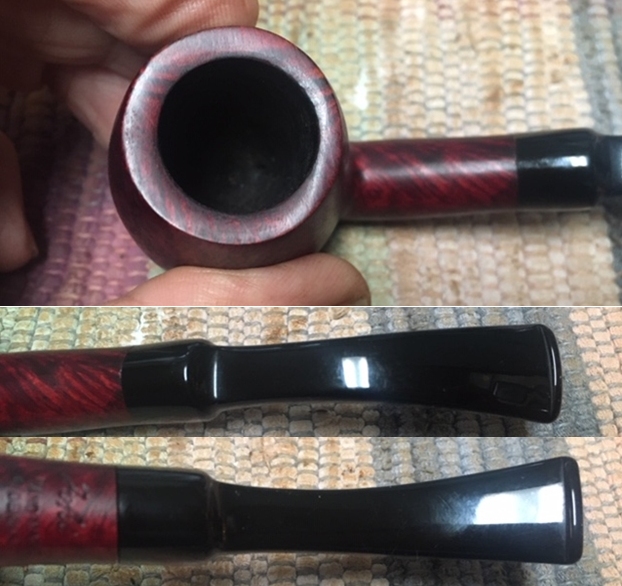
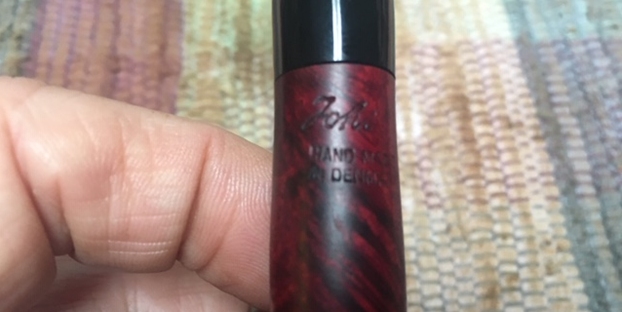
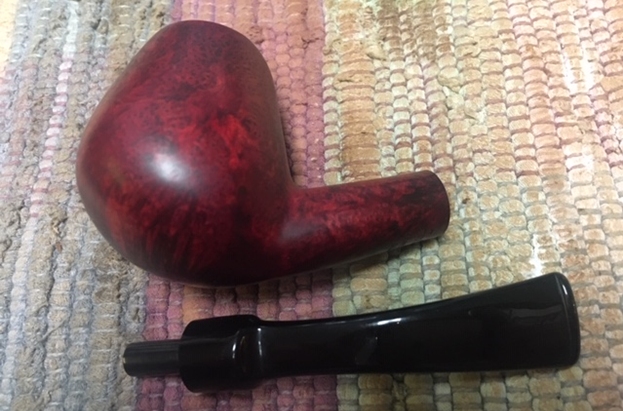
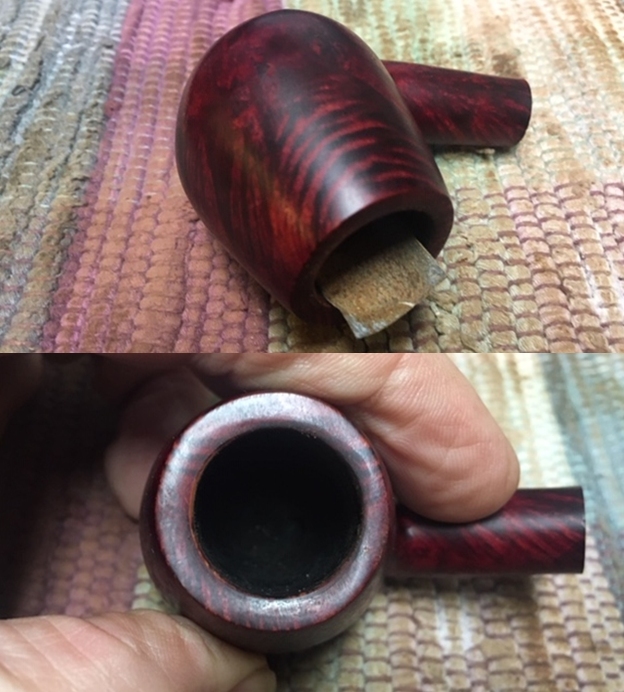
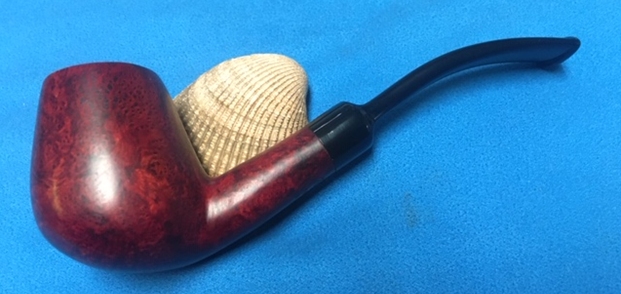
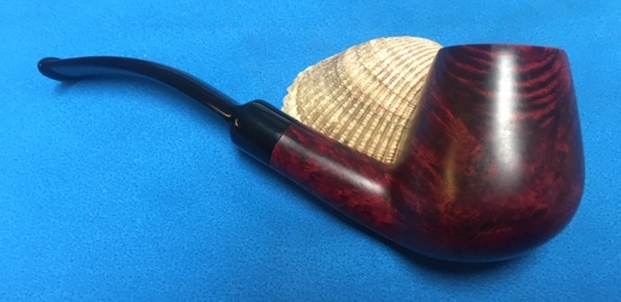
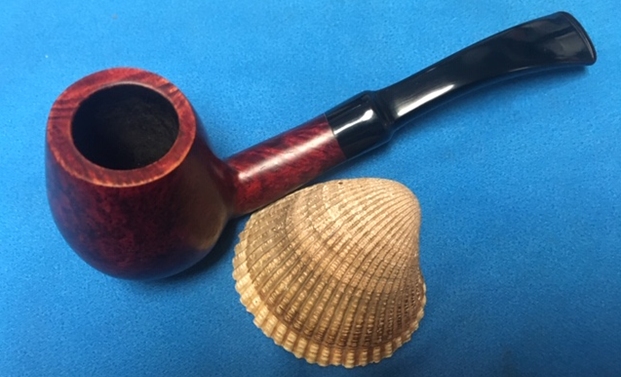
The next pipe on the table is a nice looking Brandy shaped pipe. It has an oxblood coloured smooth finis around the bowl and rim. The stem is black acrylic. It is stamped on the underside of the shank in classic Danish style. It reads Johs in script over Hand Made in Denmark. The finish was tired and dirty but looked pretty good under the grime. It really was in good condition under the dust of time. The bowl had a thick cake and there was some rim darkening on the inner edge. There was some light lava overflow on the rim top but nothing serious. Both the inner and outer edges of the bowl looked very good. The acrylic stem had light tooth chatter and marks on both sides near the button. Jeff took the following photos of the pipe before he started his cleanup work. The photos of the rim top and bowl show the thick cake, tobacco debris and slight lava overflow on the rim top. The pipe was messy but the finish looked good.Jeff captured the grain around sides of the bowl and heel in the next photos. You can see that the finish is quite pretty beneath the wear and tear and grime! He took a photo of the stamping on the underside of the shank. It is clear and readable and read as noted above.The acrylic stem was in good condition other than the tooth marks on the surface of both sides ahead of the button and some wear on the button as well.I have worked on a few Johs pipes in the past but never really spent time digging into the brand to get a sense of where it came from. I decided to do that on this nice little pipe and turned first to Pipephil’s site to get a quick overview (http://www.pipephil.eu/logos/en/logo-j3.html). I am quoting part of that entry here as well as including a screen capture of the section.
Mogens Johansen has carved pipes for Bjarne during 15 years. When Bjarne Nielson passed away “Johs” established on his own in 2008.I turned then to Pipedia to gather a few more details on the brand (https://pipedia.org/wiki/Johs). I quote just the introduction to the article and a paragraph linking Johs to Bjarne Nielsen from Pipedia below. It is well worth the time to read it in its entirety.

Mogens Johansen and his wife Doris operate a pipe and tobacco shop named Gaden Pibemagerie in the small hamlet Ravenhøj, not far from Frederikshavn. Mogens, he calls himself Johs as a pipemaker, makes his classical Danish freehands in the adjacent workshop.

Information for this article is from the excellent book, Scandanavian Pipemakers, by Jan Andersson… Likely many pipe smokers have smoked a pipe made by Mogens Johansen without realizing it. For many years he made pipes for Bjarne Nielsen, and those pipes were not stamped with his name. So apart from tourists visiting his workshop in Frederikshavn, few knew who Johs was. But in 2008, when Bjarne died so suddenly and unexpectedly, Johs had to make his name known and start selling his pipes on his own. A natural first step toward becoming known was to visit the pipe show in Chicago, and he did so that same year. When sellers learned that Johs had made pipes for Bjarne, who had a very good reputation, it was not hard for him to find interested dealers.

It was now time to turn to the pipe itself and do my part of the work. Jeff had done his usual thorough cleanup and the pipe looked very good. The grain was quite nice and the colour was very good. Jeff had reamed the bowl with a PipNet pipe reamer and cleaned up the debris left behind with a Savinelli Fitsall Pipe Knife. He scrubbed the internals in the shank and the stem with alcohol, cotton swabs and pipe cleaners. He scrubbed the externals of the bowl with undiluted Murphy’s Oil Soap and a tooth brush and rinsed it off with running water. He scrubbed the stem with Soft Scrub and soaked it in Before & After Deoxidizer. I took photos of the pipe before I started my part of the restoration. I took a close up photo of the rim top to show the damaged areas and how clean it was. You can see damage on the back and right inner edge of the rim. The stem looked good other than some light tooth marks and light chatter on the surface ahead of the button.I took a photo of the stamping as well at this time to show how well it had cleaned up and how readable it is.I took the stem off the shank and took a photo of the parts. It is another great looking pipe.I decided to start on the beveled inner rim edges of the rim top. I sanded the beveled edge with a piece of folded 220 grit sandpaper to smooth out the damaged edges and removing the darkening. The rim top also looks much better and will improve with polishing.I polished the bowl and rim with micromesh sanding pads – dry sanding it with 1500-12000 grit sanding pads. I wiped it down with a damp cloth to remove the dust left behind from sanding. I rubbed the bowl down with Before & After Refurbishing Balm. I worked it into the briar with my fingertips and let it sit for 20 minutes. The Balm works to preserve, protect and enliven the briar. The pipe is starting to look very good at this point. I polished the stem with micromesh sanding pads – dry sanding with 1500-12000 grit sanding pads. I wiped the stem down after each sanding pad with a cloth containing some Obsidian Oil. I finished polishing it with Before & After Pipe Stem Polish – both Fine and Extra Fine and buffed it off with a cotton cloth. This Johs Hand Made Danish Brandy is a great looking pipe. The rich Oxblood/Cordovan stain on the smooth finish of the bowl works well with the shape of the pipe. This Danish Brandy is a beauty with a great look and feel. I put the bowl and stem back together again and buffed the bowl and the stem with Blue Diamond on the buffing wheel. I gave the bowl and the stem several coats of carnauba wax. I carefully buffed the entire pipe with a clean buffing pad to raise the shine. I finished buffing with a microfiber cloth to deepen the shine. The finished pipe looks very good. The grain is a beautiful a mix around the bowl sides and the rim top and heel. The pipe feels great in the hand. It has an interesting shape that fits well in either the right or left hand. The finished Johs Brandy is shown in the photos below. The dimensions of the pipe are Length: 5 ½ inches, Height: 2 inches, Outside diameter of the bowl: 1 ¼ inches, Chamber diameter: ¾ of an inch. This great looking pipe turned out very well. It should be a great pipe. It will be going on the rebornpipes store shortly if you are interested in adding it to your collection. Thanks for reading this blog and my reflections on the pipe while I worked on it.
Next on the Table – an Yves St Claude Marbre 75 Bulldog


Blog by Steve Laug

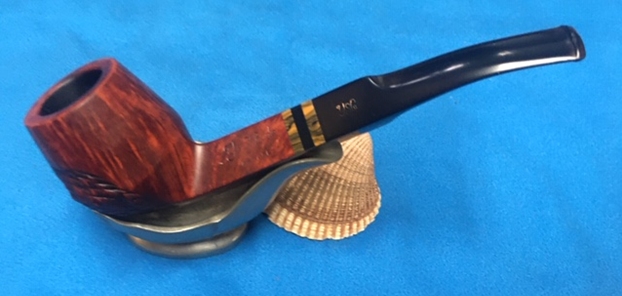
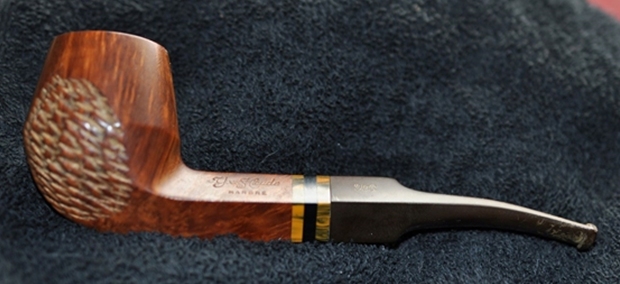
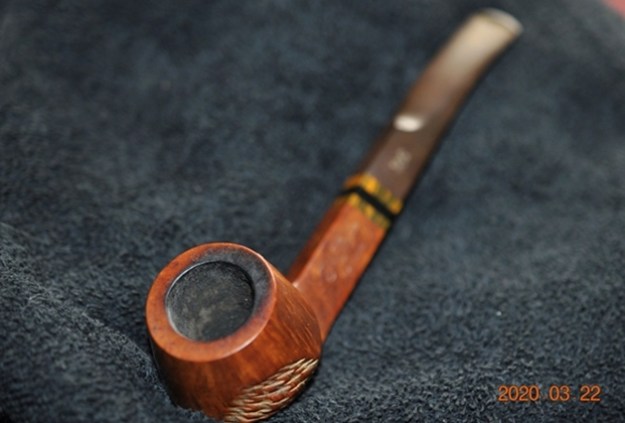
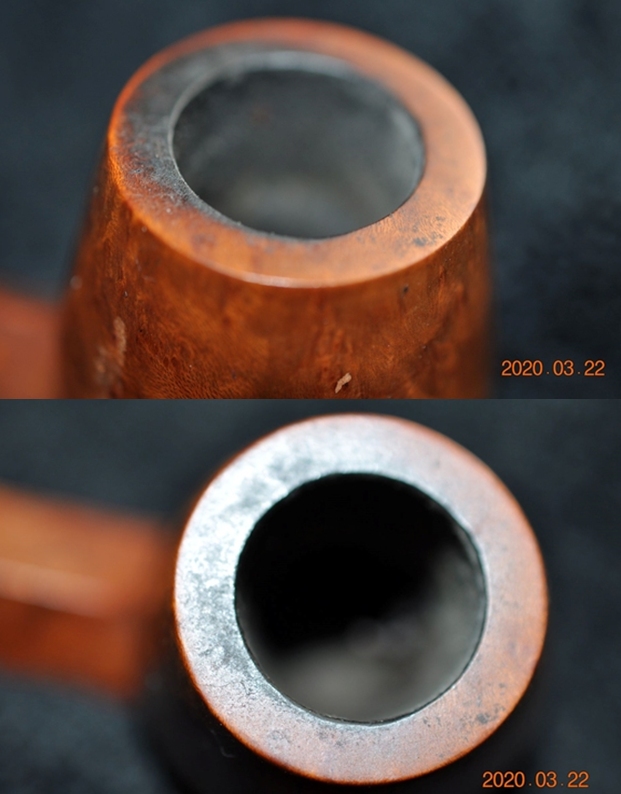
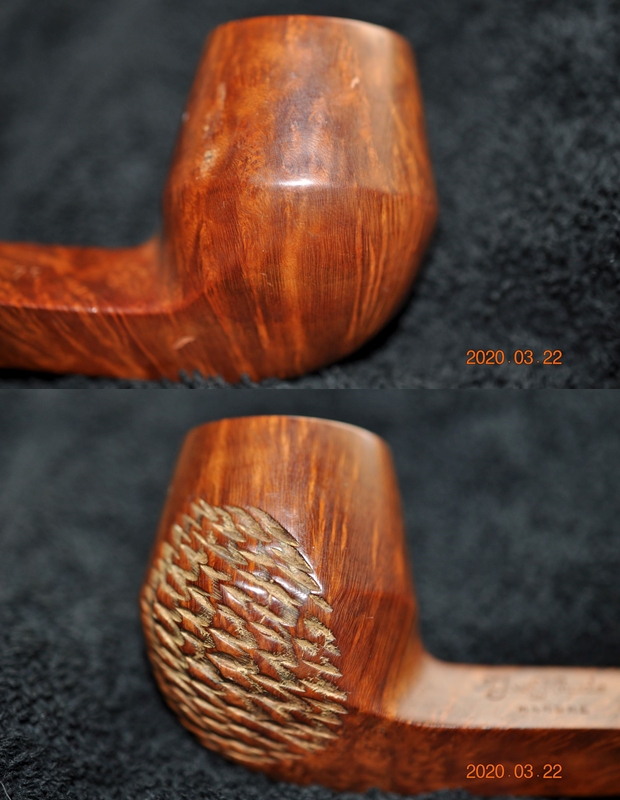
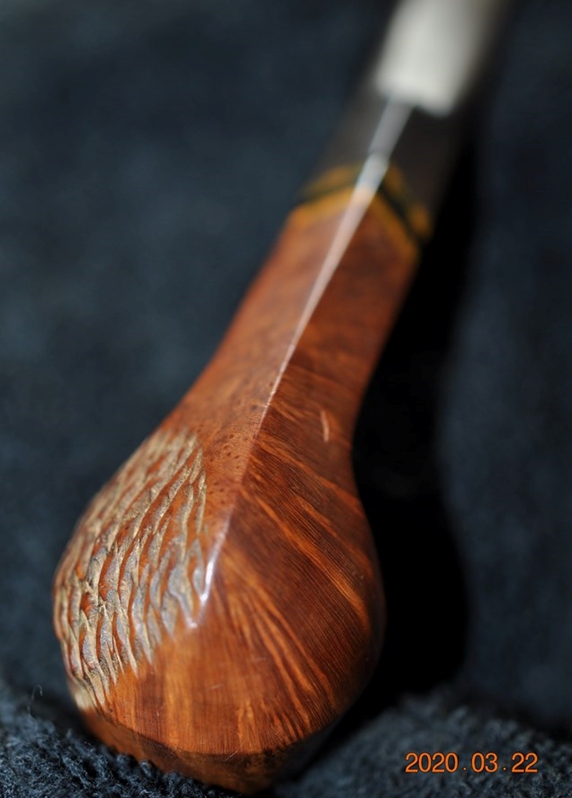
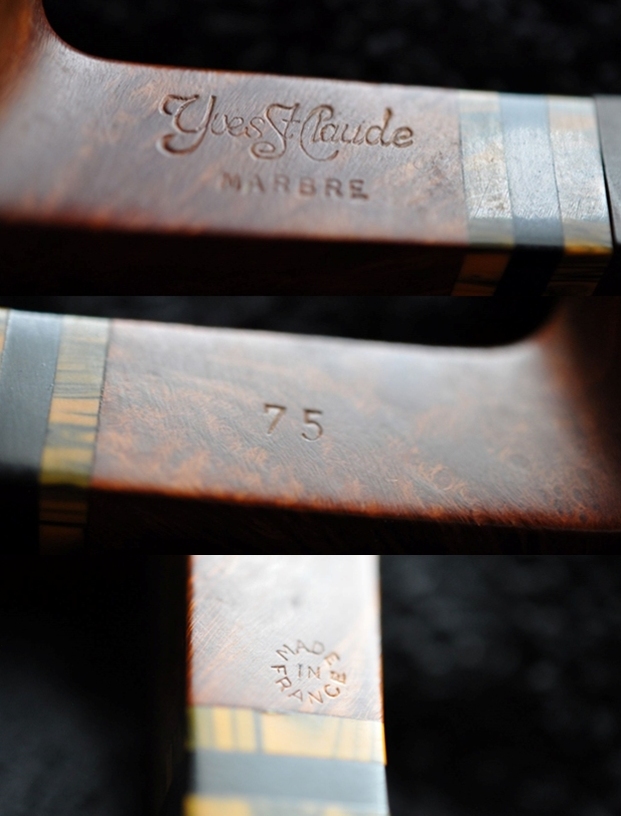
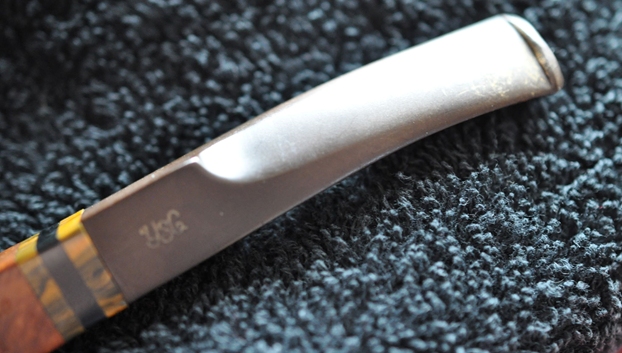
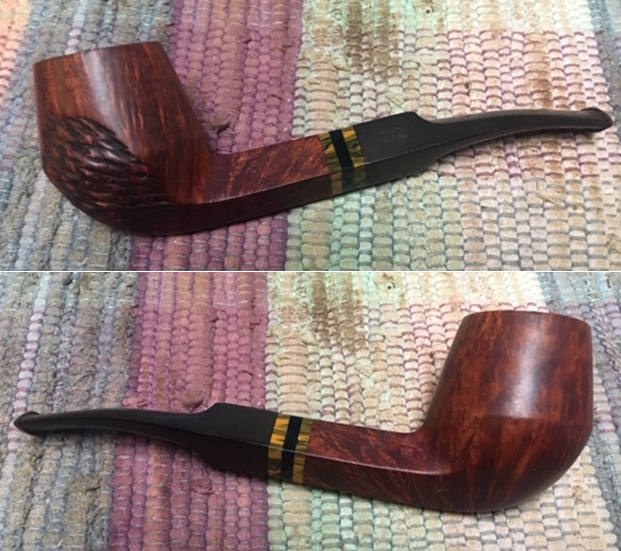
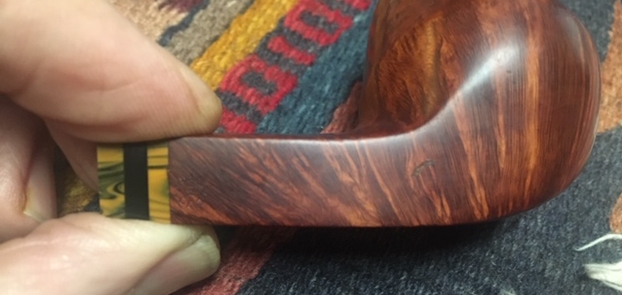
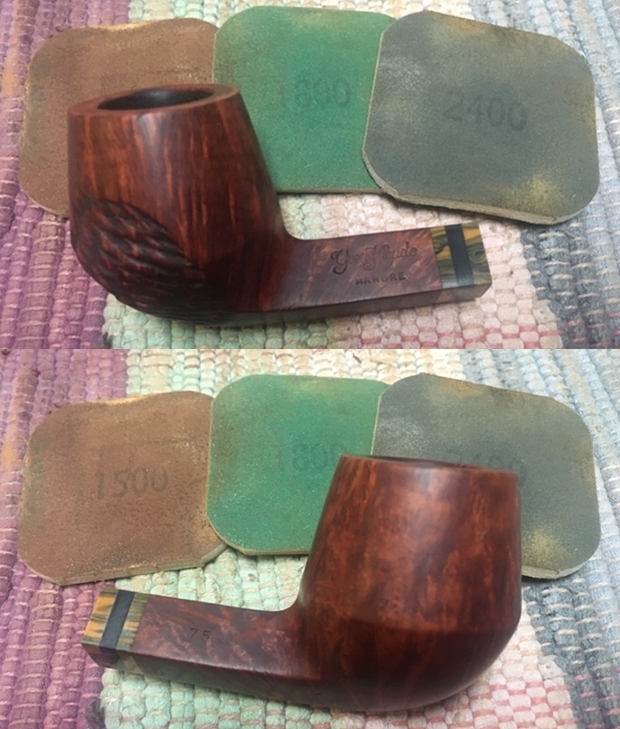
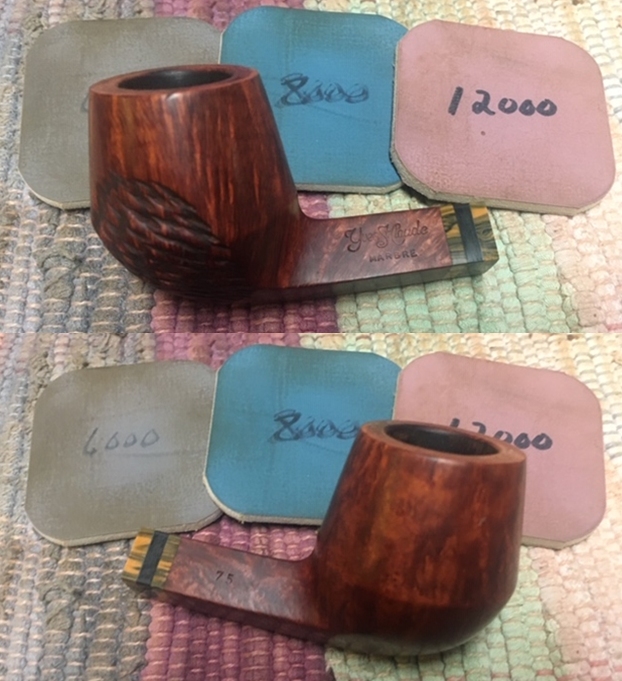
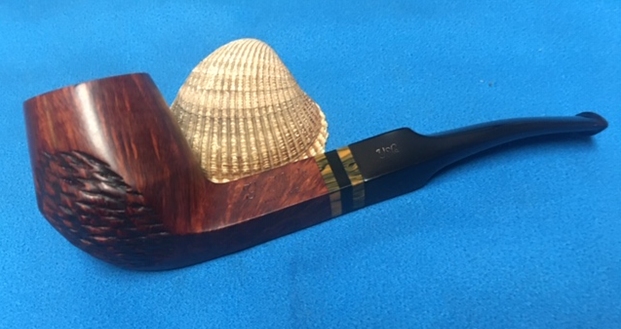
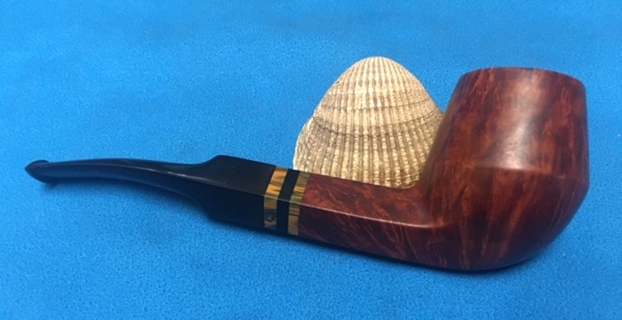
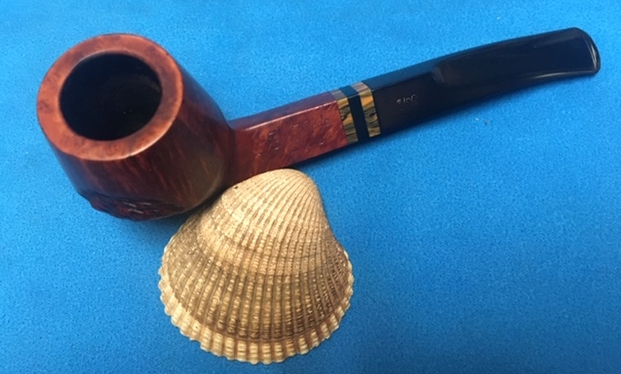
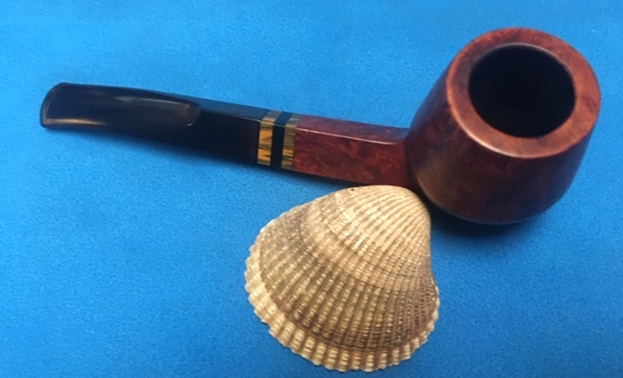
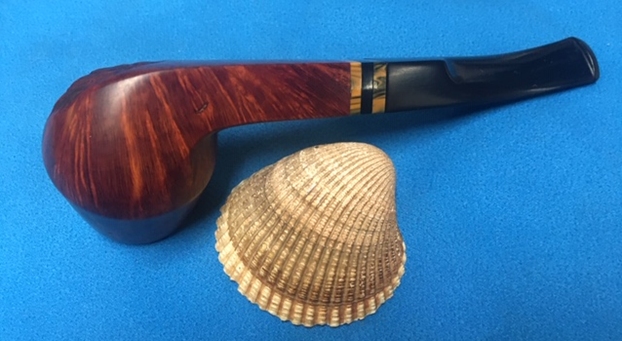
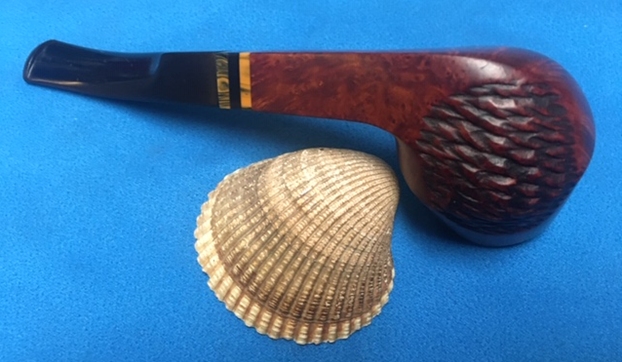
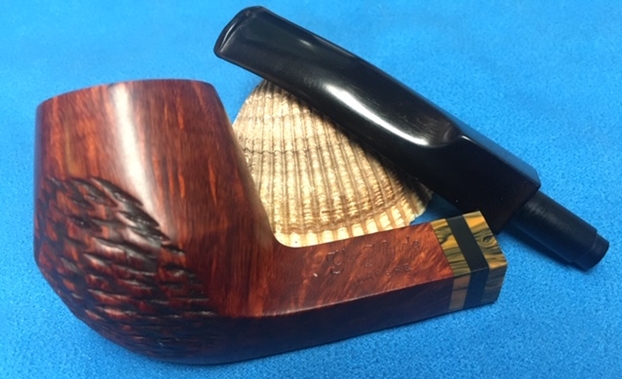
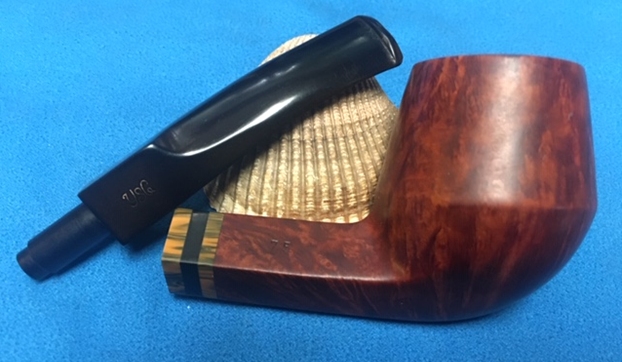
The next pipe on the table is an interesting Bulldog without the twin rings. It has the shape and no rings. It also has a combination finish of rustication on the left side of the owl and a smooth finish on the rest of the pipe. The shank has a three layered extension with some missed Tiger’s eye looking material separated by a centre band of black acrylic. The pipe is stamped Yves St.Claude MARBRE on the left side of the shank and on the right side it has the shape number stamp 75. On the right underside it is stamped Made in France in a circle similar to the Comoy’s Made in England Stamp. “Made” and “France” make up the outside of the circle and “in” is in the centre. On the left side of the saddle stem it bore a script stamp that read YSC. I have worked on two Yves St. Claude pipes in the past and have included the links to those two blogs if you want to check them out (https://rebornpipes.com/2017/06/17/refurbishing-an-yves-st-claude-glacier-80-bent-billiard/) and (https://rebornpipes.com/2015/02/04/cutting-off-a-broken-stem-and-reshaping-the-stem-on-an-yves-saint-claude-bulldog/).

The finish was tired and dirty but looked pretty good under the grime. There were dings and scratches that cut deeply into the sides of bowl on both sides. On the lower right side of the bowl and shank there was small sandpit. The outer edge of the rim looked very good. The rim top and inner edge had a buildup of tars and oils. The inner edge appeared to be damaged and slightly out of round. The bowl had a thick cake. The stem was oxidized and there was tooth chatter and marks on both sides near the button. The button edge also has some damage. Jeff took the following photos of the pipe before he started his cleanup work. The photos of the rim top and bowl show the thick cake, tobacco debris and thick lava overflow on the rim top. The pipe was a mess. You can also see some chipped areas on the outer edge of the bowl and nicks in the sides of the bowl. He captured the grain and the rustication around sides of the bowl in the next photos. You can also see the nicks in the briar but it is still quite pretty beneath the wear and tear and grime! He took photos of the stamping on the shank sides. They are clear and readable and read as noted above. The vulcanite stem was in good condition other than the tooth marks on the surface of both sides ahead of the button and some wear on the button as well. In the previous blogs that I cited above I had found several references to Yves Grenard, trained in Comoy’s England factory, purchasing the Chacom plant in St. Claude. He managed the factory and it passed on to his son afterward. I am pretty certain that this Yves St. Claude pipes was made by Chacom in France with the stamping bearing Yves name.

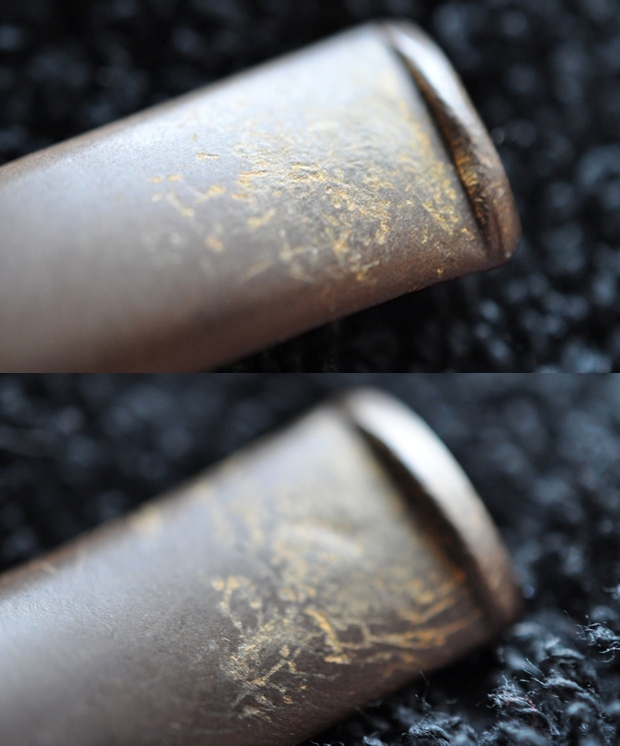
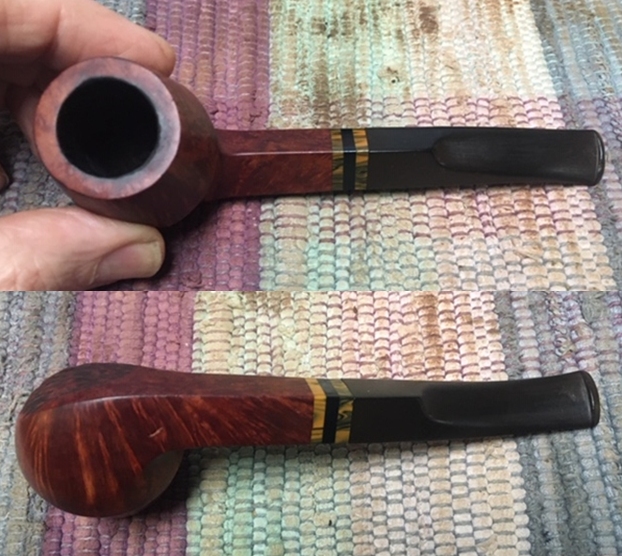
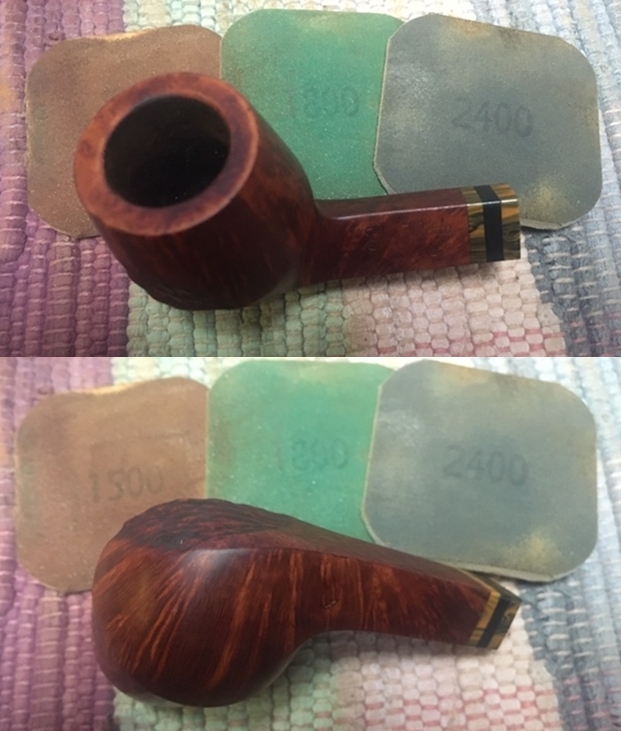
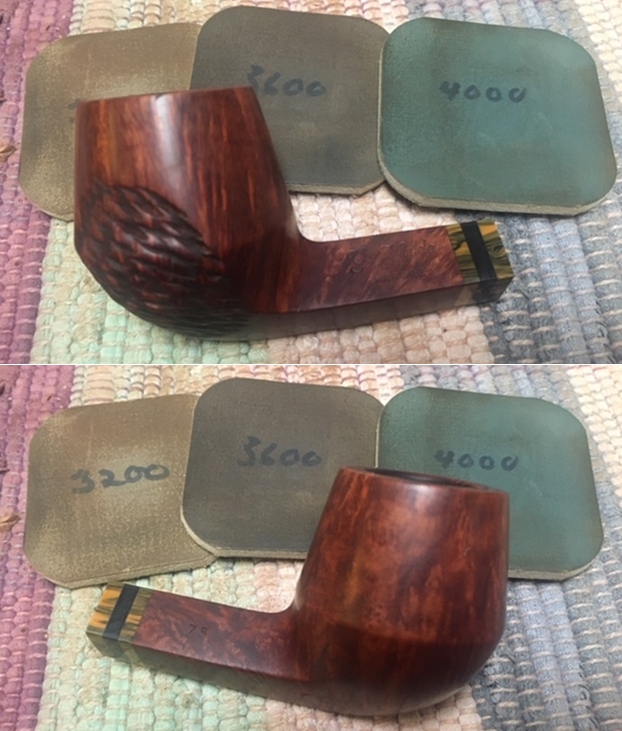
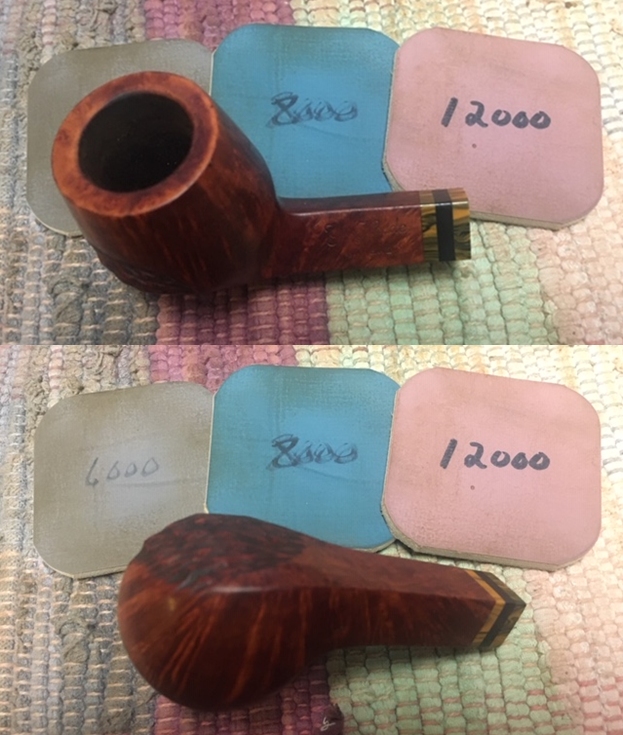
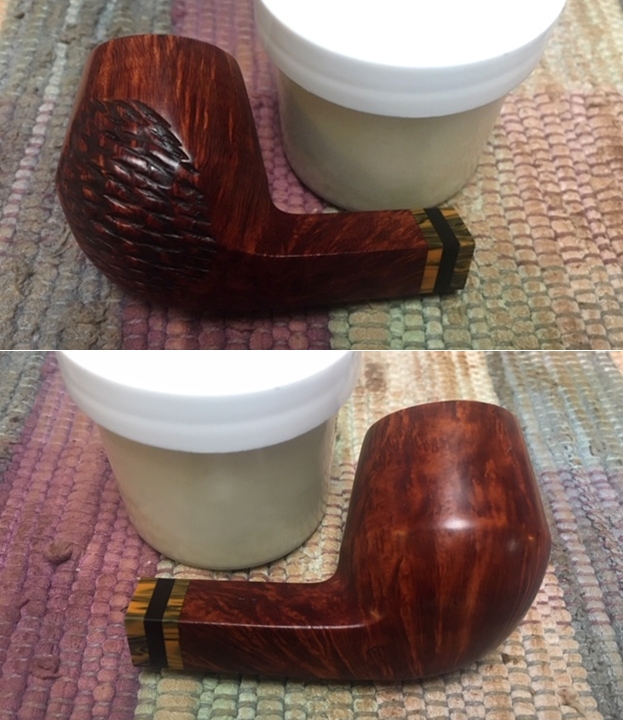
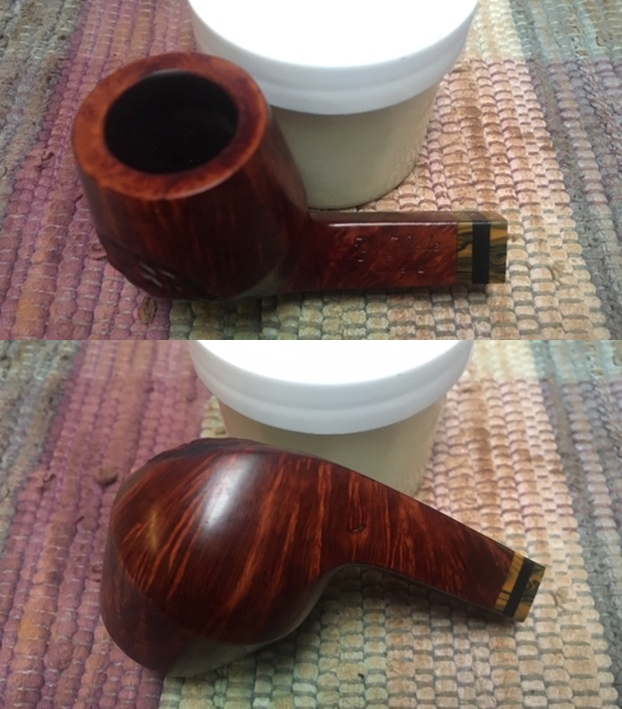
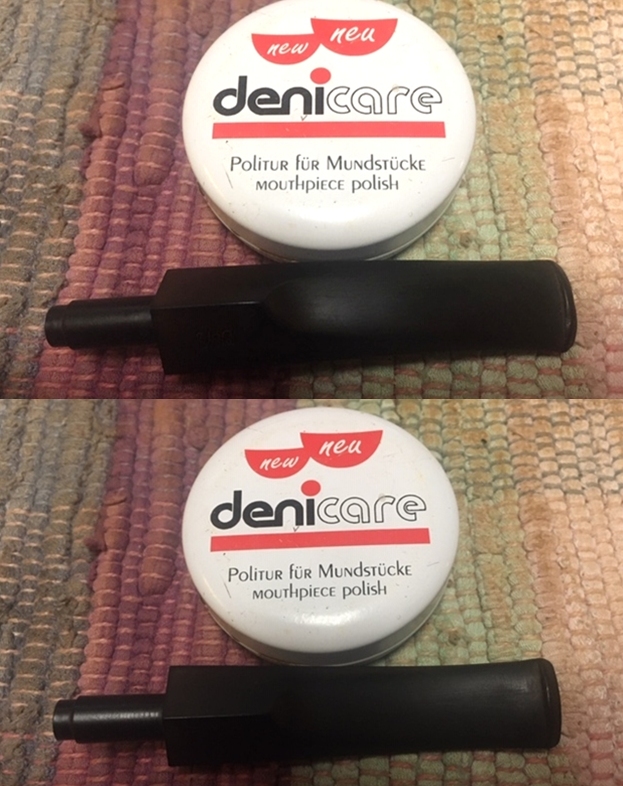
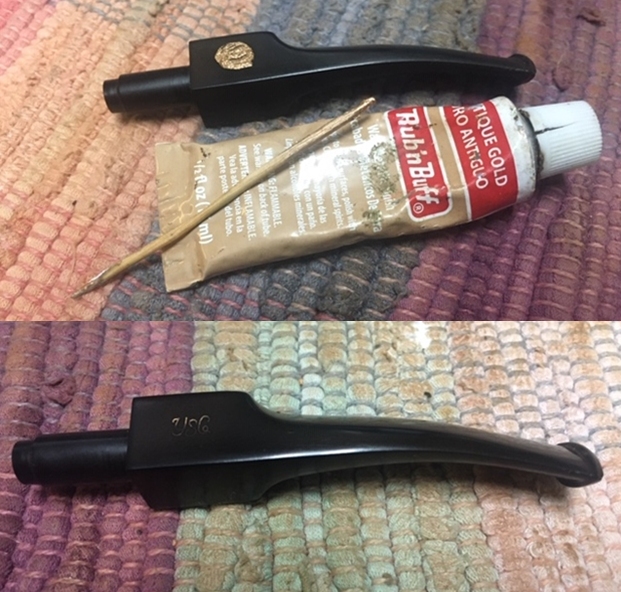
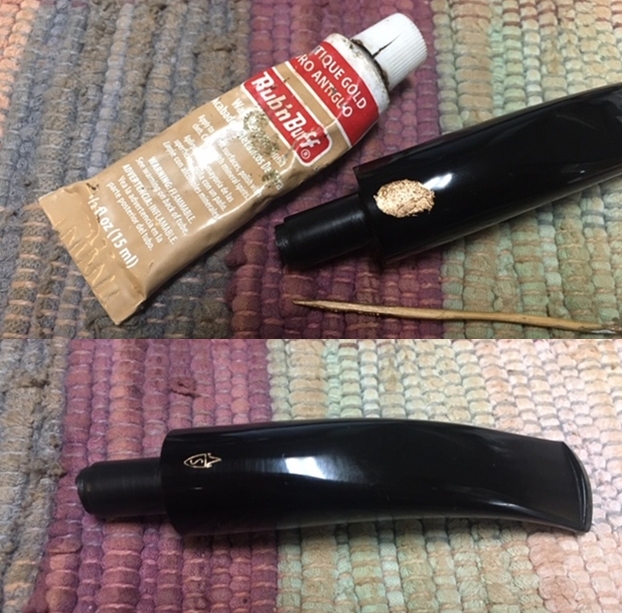
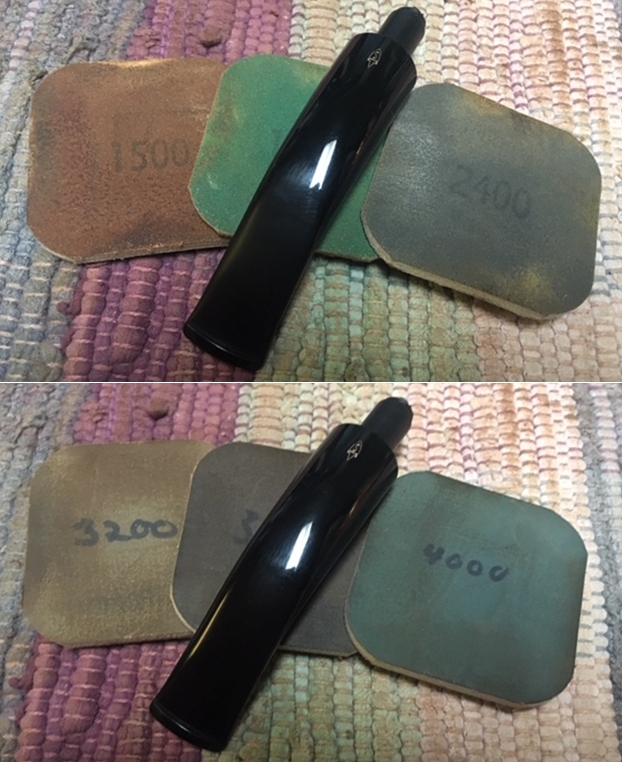
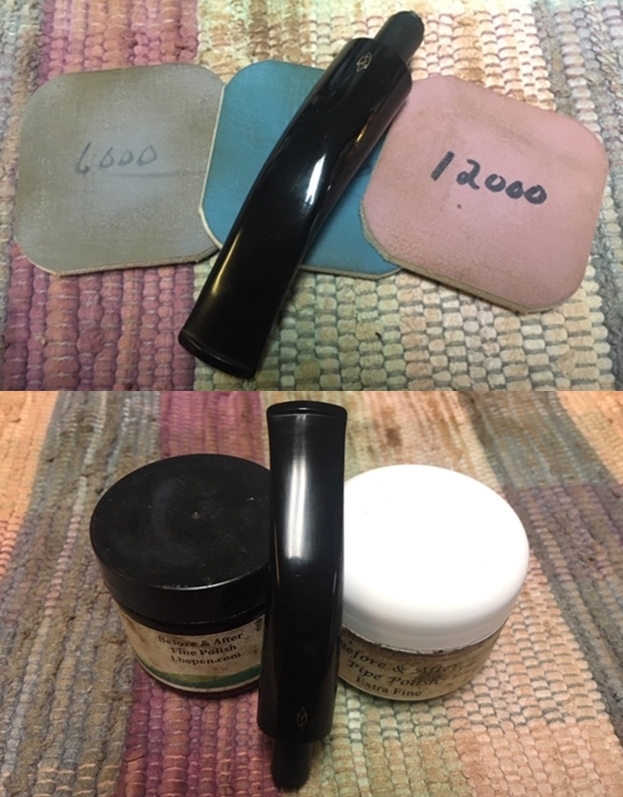
Reminded about the Chacom connection for the brand it was now time to turn to the pipe itself and do my part of the work. Jeff had done his usual thorough cleanup and the pipe looked very good. The grain was quite nice and the colour was very good. The grain even stood out in the unique rustication pattern on the left of the bowl. Jeff had reamed the bowl with a PipNet pipe reamer and cleaned up the debris left behind with a Savinelli Fitsall Pipe Knife. He scrubbed the internals in the shank and the stem with alcohol, cotton swabs and pipe cleaners. He scrubbed the externals of the bowl with undiluted Murphy’s Oil Soap and a tooth brush and rinsed it off with running water. He scrubbed the stem with Soft Scrub and soaked it in Before & After Deoxidizer. I took photos of the pipe before I started my part of the restoration. I took a close up photo of the rim top to show the damaged areas and how clean it was. You can see damage on the back and right inner edge of the rim. There appeared to be some burn damage and darkening. The stem looked good other than some remaining oxidation and some tooth marks and light chatter on the surface ahead of the button.I took photos of the stamping as well at this time to show how well they cleaned up and how readable they are.I took the stem off the shank and took a photo of the parts. It is another great looking pipe.I decided to start on the beveled inner rim edges of the rim top. I sanded the beveled edge with a piece of folded 220 grit sandpaper to smooth out the damaged edges and removing the darkening. The rim top also looks much better and will improve with polishing.I decided to address the large flaw on the underside of the shank next. I filled it in with briar dust and clear super glue. When the repair cured I sanded it smooth with 1500 grit micromesh and blended it into the surrounding briar. It looks a lot better to me at this point. I polished the bowl and rim with micromesh sanding pads – dry sanding it with 1500-12000 grit sanding pads. I wiped it down with a damp cloth to remove the dust left behind from sanding. I buffed bowl on the wheel with Blue Diamond to polish the briar and bring the grain out. I rubbed it down with Before & After Refurbishing Balm. I worked it into the briar with my fingertips and let it sit for 20 minutes. The Balm works to preserve, protect and enliven the briar. The pipe is starting to look very good at this point. I set the bowl aside and turned my attention to the stem. I sanded out the tooth marks and chatter remaining on the stem with 220 grit sandpaper and followed that by starting the polishing with 400 grit wet dry sandpaper.I continued polishing the stem with Denicare Mouthpiece Polish – a red gritty paste that feels a lot like Tripoli. I find that it works well to polish out some of the more surface scratches in the vulcanite left behind by the 400 grit wet dry sandpaper. I rub it into the stem surface with my fingertips and buff it off with a cotton pad.I used Antique Gold Rub’n Buff to touch up the stamping on the stem. I applied a spot of the product on the surface and worked it into the stamping with a tooth pick. I rubbed it off and buffed it with a soft cloth. The finished look was very good.I polished the stem with micromesh sanding pads – dry sanding with 1500-12000 grit sanding pads. I wiped the stem down after each sanding pad with a cloth containing some Obsidian Oil. I finished polishing it with Before & After Pipe Stem Polish – both Fine and Extra Fine and buffed it off with a cotton cloth. This Yves St. Claude pipe, made by Chacom in France is a great looking pipe. The combination of finishes on the bowl works well with the shape of the pipe. This Chacom like take on a Bulldog is quite interesting and unique. I put the bowl and stem back together again and buffed the bowl and the stem with Blue Diamond on the buffing wheel. I lightly buffed around the rustication so as not to fill in the grooves. I gave the bowl and the stem several coats of carnauba wax. I carefully buffed the entire pipe with a clean buffing pad to raise the shine. I finished buffing with a microfiber cloth to deepen the shine. The finished pipe looks very good. The grain is quite beautiful a mix of cross flame, straight and birdseye grain around the bowl sides and the rim top and heel. The pipe feels great in the hand. It has an interesting shape that fits well in either the right or left hand. The finished Yves St.Claude Bulldog is shown in the photos below. The dimensions of the pipe are Length: 5 ¾ inches, Height: 2 inches, Outside diameter of the bowl: 1 ¼ inches, Chamber diameter: ¾ of an inch. This great looking pipe turned out very well. It should be a great pipe. It will be going on the rebornpipes store shortly if you are interested in adding it to your collection. Thanks for reading this blog and my reflections on the pipe while I worked on it.
Next on the Table – a Savinelli Deco 622KS Bent Pot


Blog by Steve Laug

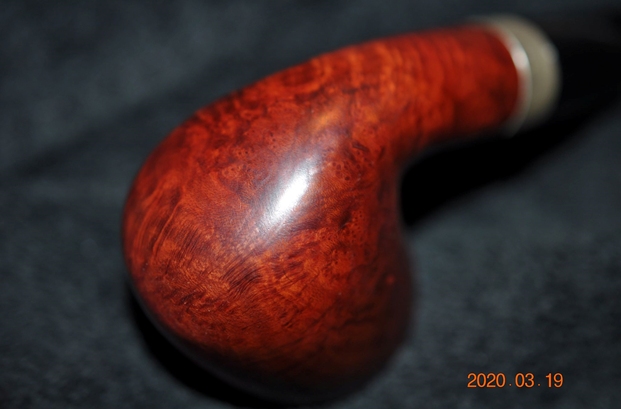
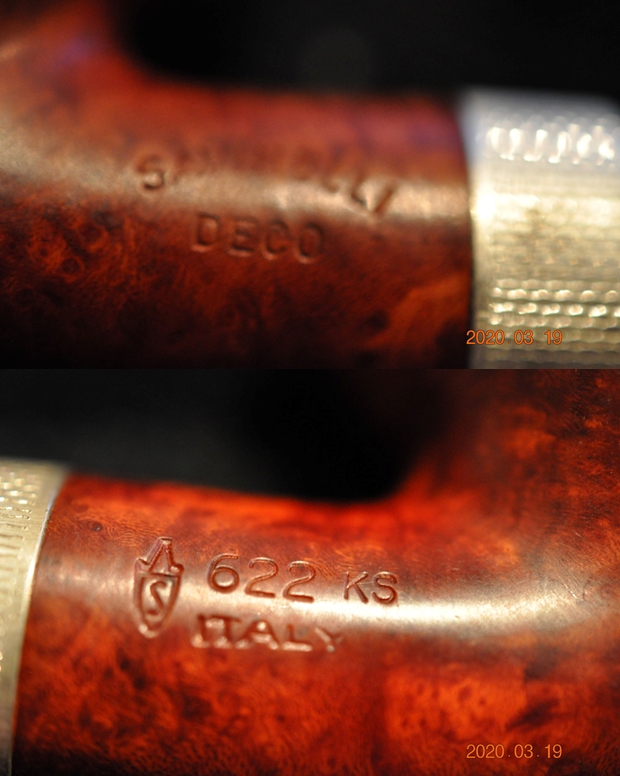
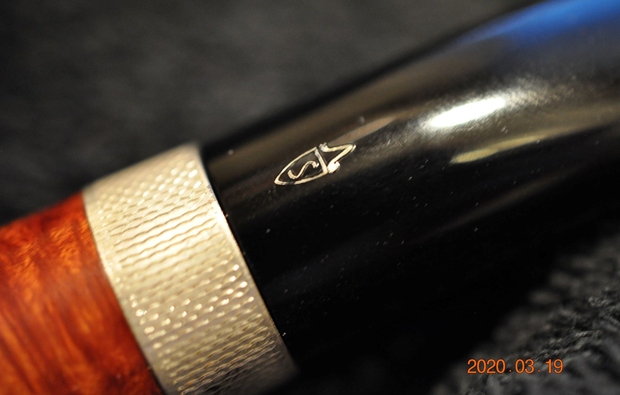
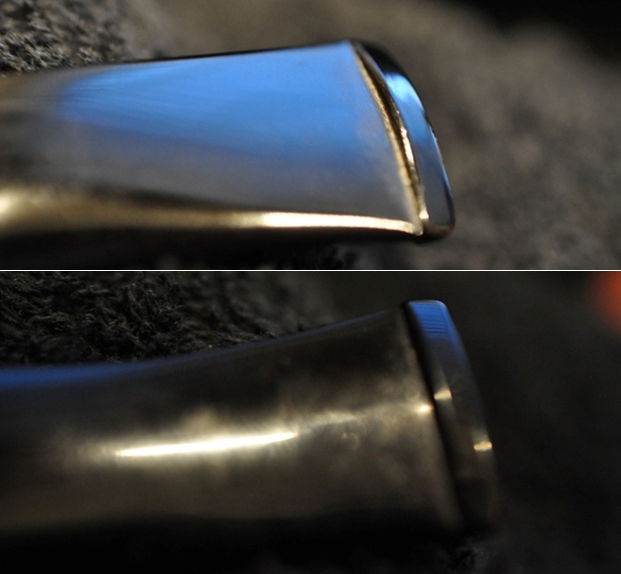
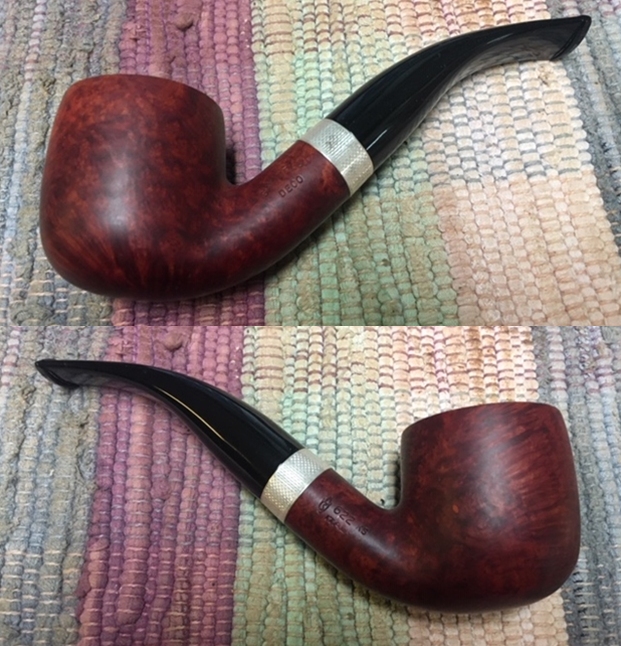
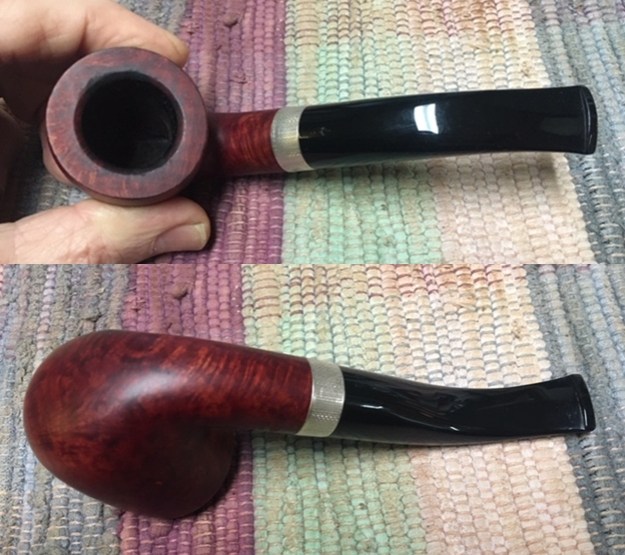
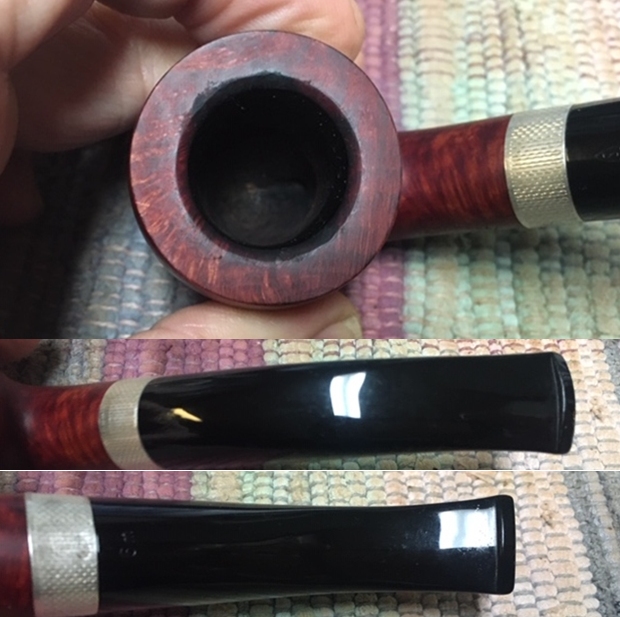
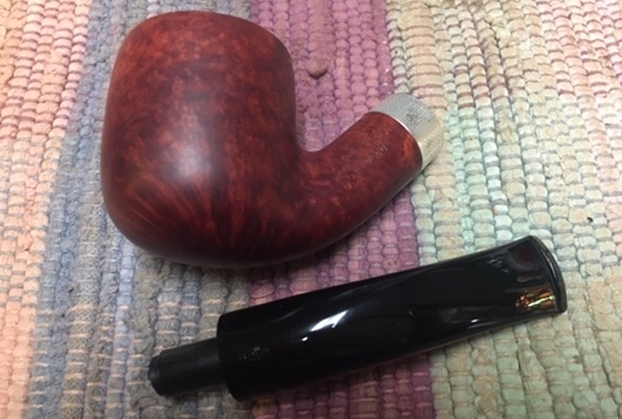
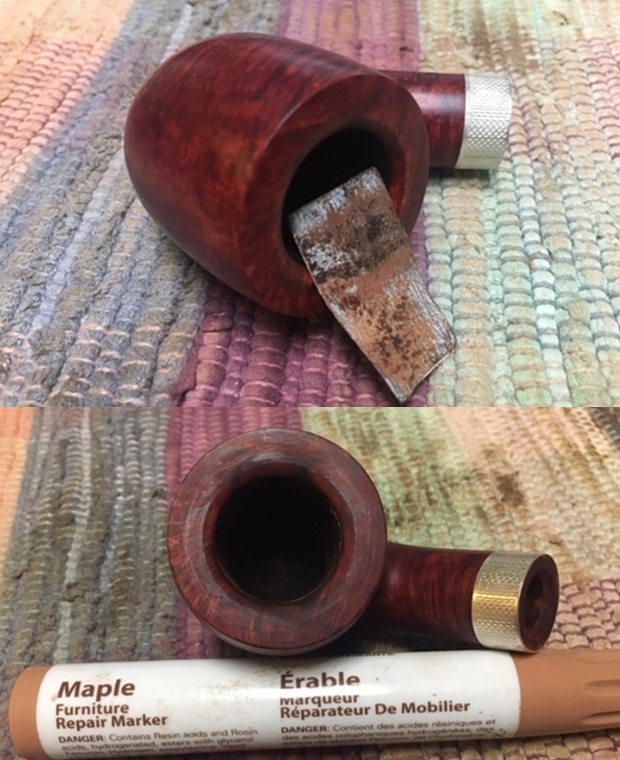
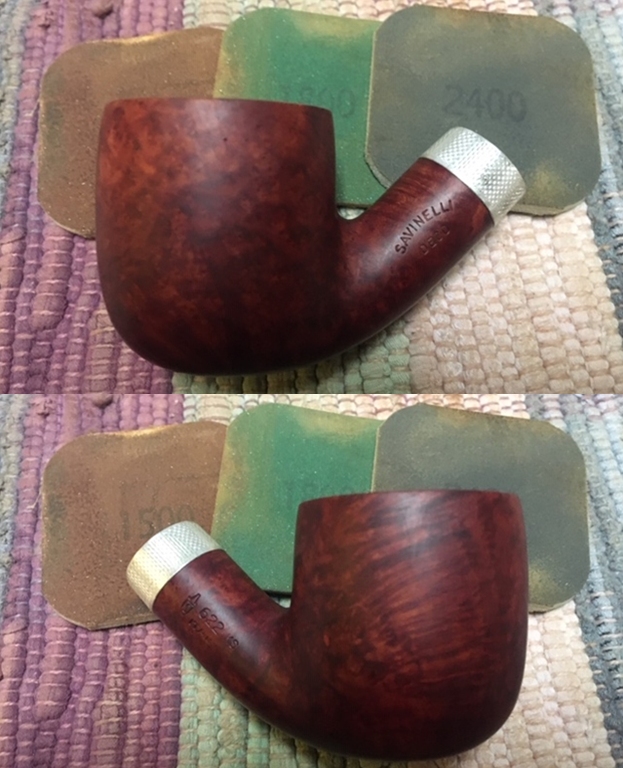
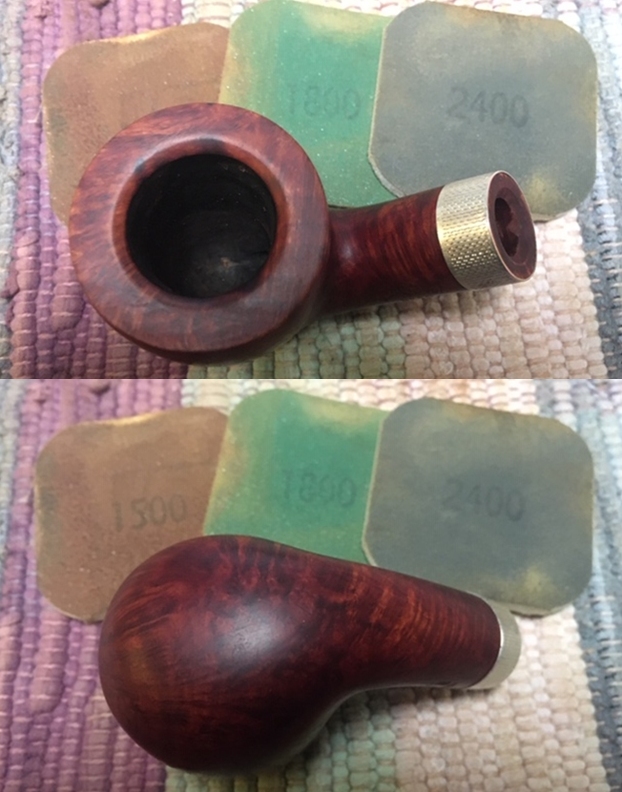
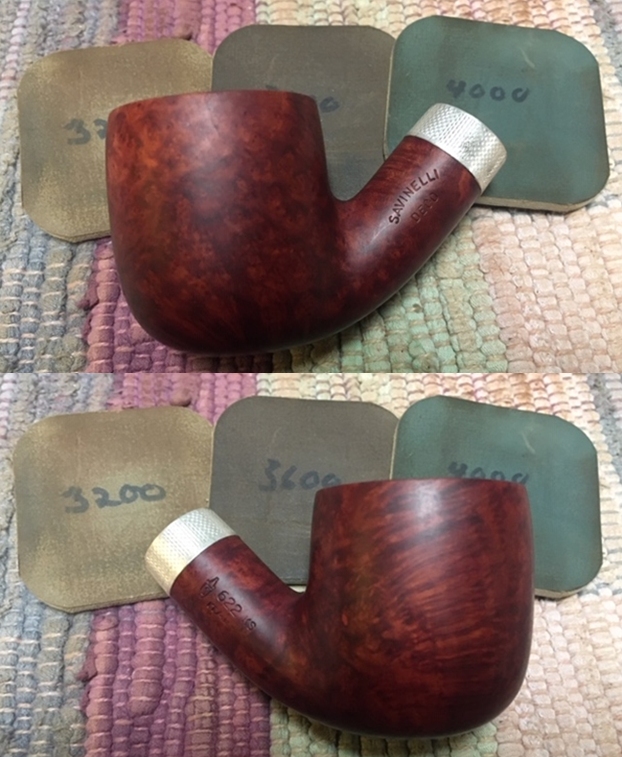
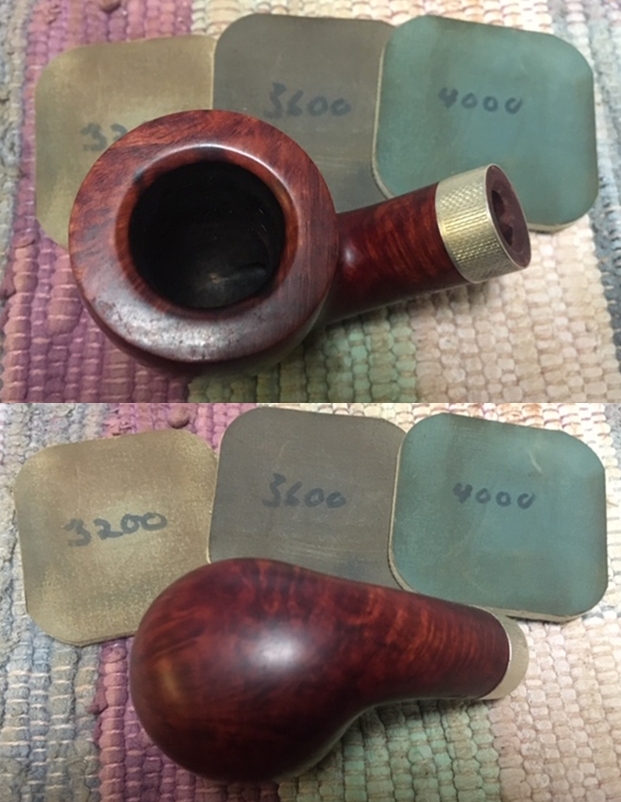
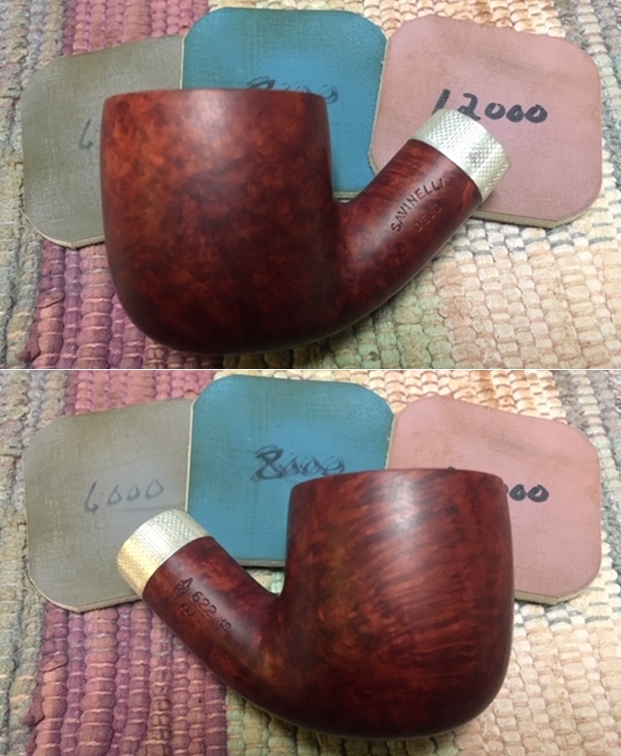
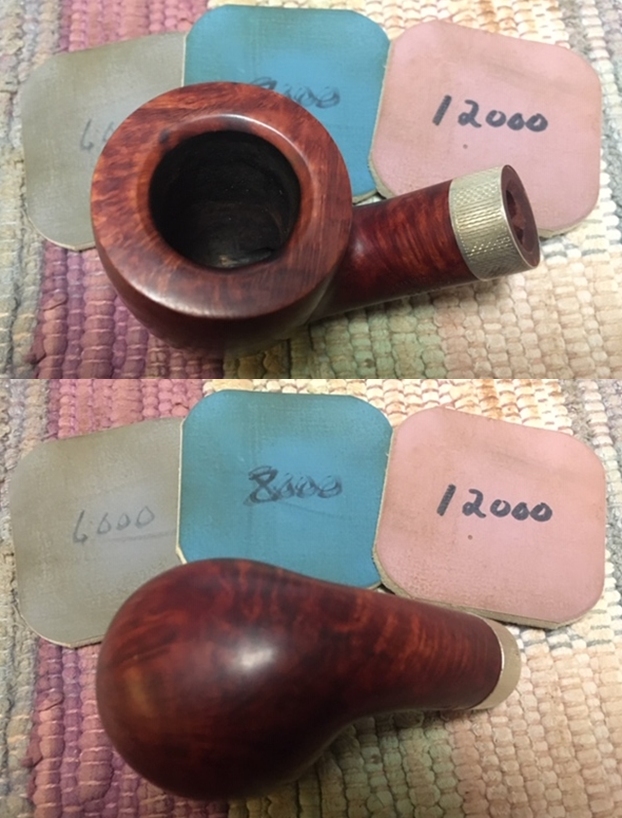
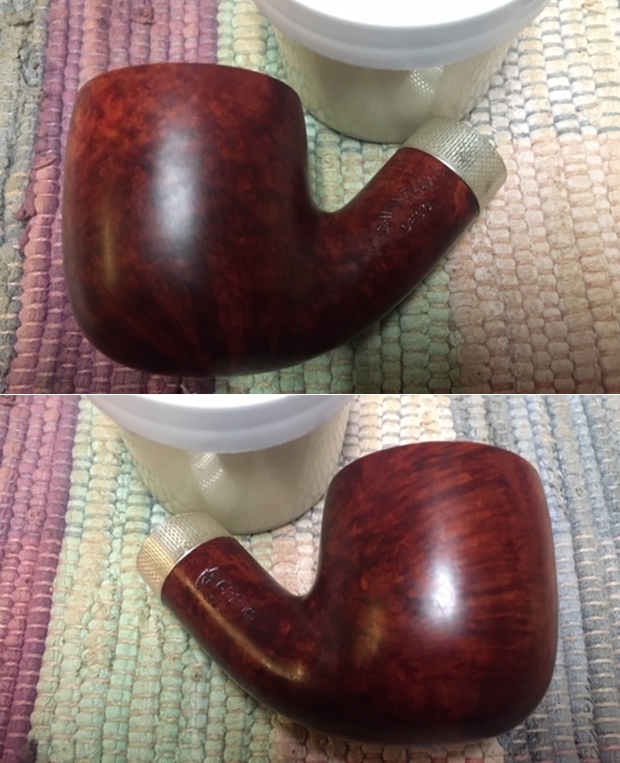
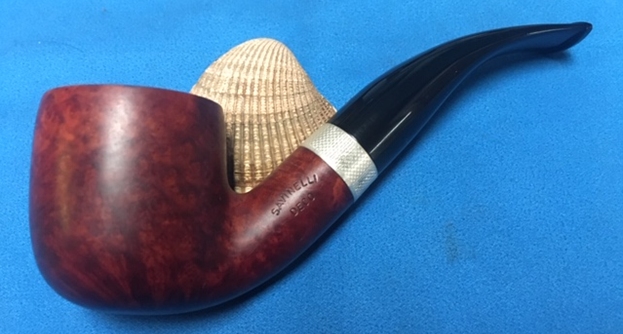
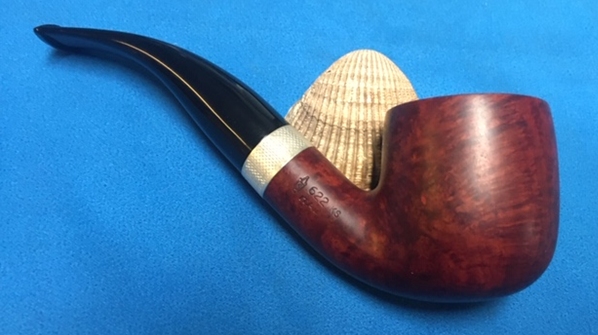
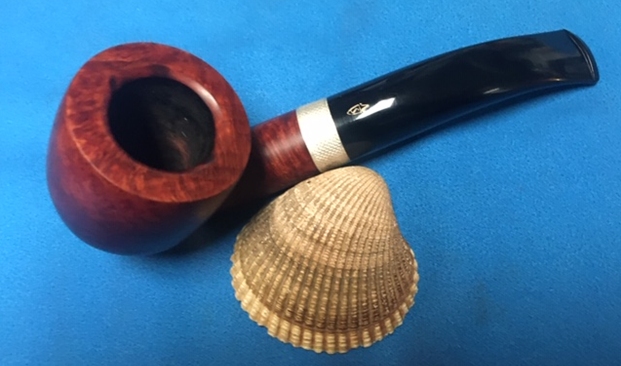
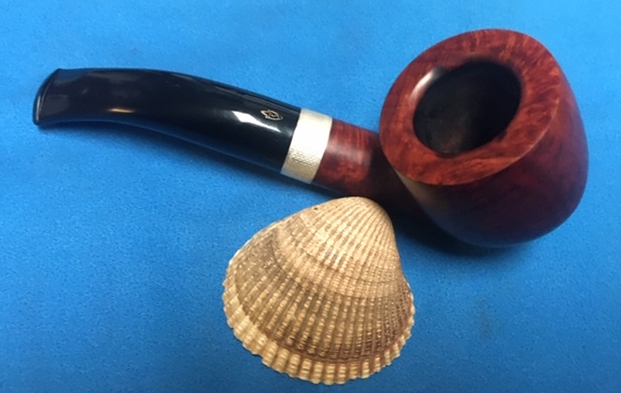
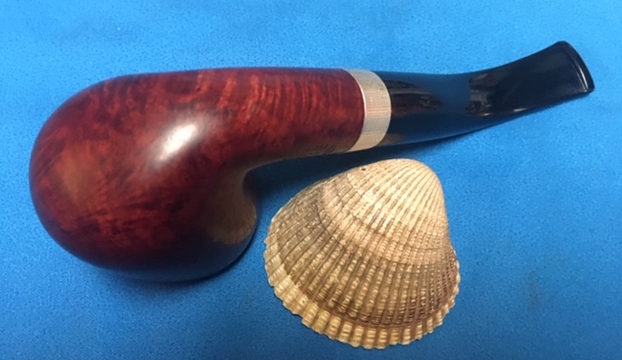
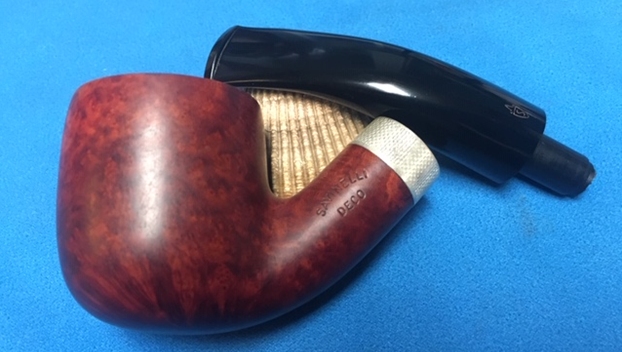
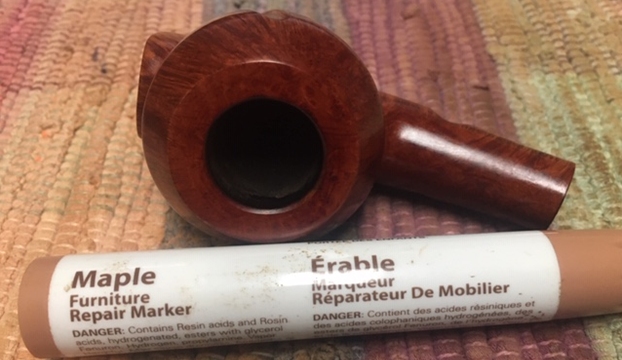
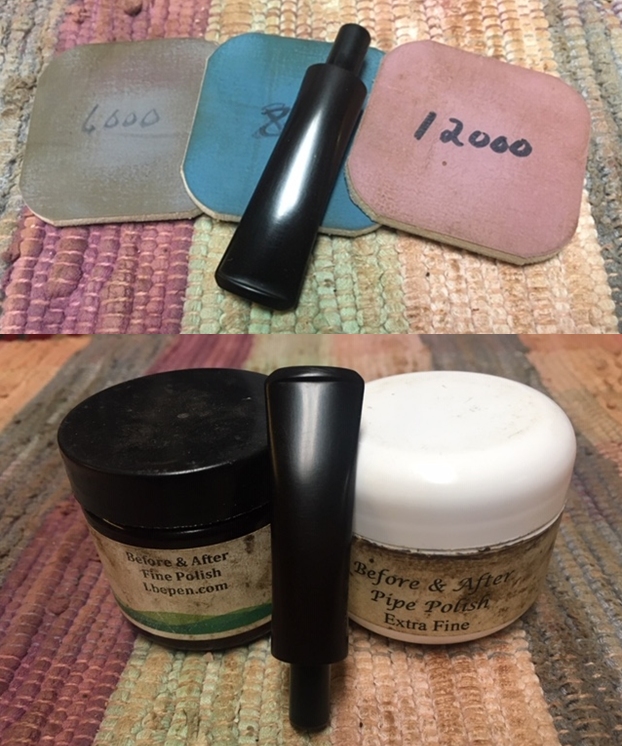
The next pipe on the work table is a Savinelli line pipe that was a new one to me. It is stamped on the left side of the shank Savinelli in an arch over DECO. On the right side it is stamped with the Savinelli “S” Shield and the shape number 622KS over Italy. The stem has the Savinelli Shield on stamped on the topside and 6mm stamped on the underside. The pipe was dirty and there was a thick cake in the bowl. There is some lava on the inward bevel and some darkening as well. There is also some lava on the rim top. The finish is in excellent condition other than being dirty. The stem is acrylic and there are tooth marks and chatter on both sides near the button with light damage on the button surface itself. The stem is free of the 6mm filter and looks like one has not been used in the stem. The internals of the pipe are very dirty. Jeff took photos of the pipe before he started his cleanup work on it.  The photos of the rim top and bowl show the thick cake, tobacco debris and thick lava overflow on the rim top. The pipe was a mess. You can also see some chipped areas on the outer edge of the bowl and nicks in the sides of the bowl. He captured the grain around sides of the bowl in the next photos. You can also see the nicks and chips out of the briar but it is still quite pretty beneath the wear and tear and grime! He took photos of the stamping on the shank sides. They are clear and readable and read as noted above. The acrylic stem was in good condition other than the tooth marks on the surface of both sides ahead of the button and some wear on the button as well.Jeff out did himself on the cleanup of this pipe and when I received it I was not disappointed as it showed what I saw on the briar in the photos above. The grain was quite nice and the colour was very good. Jeff had reamed the bowl with a PipNet pipe reamer and cleaned up the debris left behind with a Savinelli Fitsall Pipe Knife. He scrubbed the internals in the shank and the stem with alcohol, cotton swabs and pipe cleaners. He scrubbed the externals of the bowl with undiluted Murphy’s Oil Soap and a tooth brush and rinsed it off with running water. He scrubbed the stem with Soft Scrub to remove the debris on the stem. The pipe looked quite amazing. I took photos of it before I started my part of the restoration. I took a close up photo of the rim top to show the damaged areas and how clean it was. You can see damage on the right front inner edge and back left edge of the rim. There appeared to be some burn damage and darkening. The stem looked good other than the tooth marks and the light chatter on the surface ahead of the button.I took the stem off the shank and took a photo of the parts. It is a great looking pipe.I decided to start on the inner rim edges and the rim top. I sanded the beveled edge with a piece of folded 220 grit sandpaper to smooth out the damaged edges and removing the darkening. I stained the edge with a Maple Stain Pen. The rim top also looks much better and will improve with polishing.I polished the bowl and rim with micromesh sanding pads – dry sanding it with 1500-12000 grit sanding pads. I wiped it down with a damp cloth to remove the dust left behind from sanding. I buffed bowl on the wheel with Blue Diamond to polish the briar and bring the grain out. I rubbed it down with Before & After Refurbishing Balm. I worked it into the briar with my fingertips and let it sit for 20 minutes. The Balm works to preserve, protect and enliven the briar. The pipe is starting to look very good at this point. I set the bowl aside and turned my attention to the stem. I sanded out the tooth marks and chatter remaining on the stem with 220 grit sandpaper and followed that by starting the polishing with 400 grit wet dry sandpaper.I continued polishing the stem with Denicare Mouthpiece Polish – a red gritty paste that feels a lot like Tripoli. I find that it works well to polish out some of the more surface scratches in the vulcanite left behind by the 400 grit wet dry sandpaper. I rub it into the stem surface with my fingertips and buff it off with a cotton pad.I used Antique Gold Rub’n Buff to touch up the stamping on the stem. I applied a spot of the product on the surface and worked it into the stamping with a tooth pick. I rubbed it off and buffed it with a soft cloth. The finished look was very good.I polished the stem with micromesh sanding pads – dry sanding with 1500-12000 grit sanding pads. I wiped the stem down after each sanding pad with a cloth containing some Obsidian Oil. I finished polishing it with Before & After Pipe Stem Polish – both Fine and Extra Fine and buffed it off with a cotton cloth. This Savinelli Deco 622KS Bent Pot is a nice looking pipe. I put the bowl and stem back together again and buffed the bowl and the stem with Blue Diamond on the buffing wheel. I polished the metal band with a jeweler’s cloth. I gave the bowl and the stem several coats of carnauba wax. I carefully buffed the entire pipe with a clean buffing pad to raise the shine. I finished buffing with a microfiber cloth to deepen the shine. The finished pipe looks very good. The grain is quite beautiful a mix of cross grain and birdseye grain around the bowl sides and the rim top and heel. The pipe feels great in the hand. It has an interesting shape that fits well in either the right or left hand. The finished Bent Pot is shown in the photos below.  The 6mm filter stem is in great condition. What i like about the 6mm filter pipe is that it can be smoked without a filter and still has a great draw. The dimensions of the pipe are Length: 6 inches, Height: 2 inches, Outside diameter of the bowl: 1 5/8 inches, Chamber diameter: 7/8 of an inch. This great looking Savinelli pipe turned out very well. It should be a great pipe. It will be going on the rebornpipes store shortly if you are interested in adding it to your collection. Thanks for reading this blog and my reflections on the pipe while I worked on it.
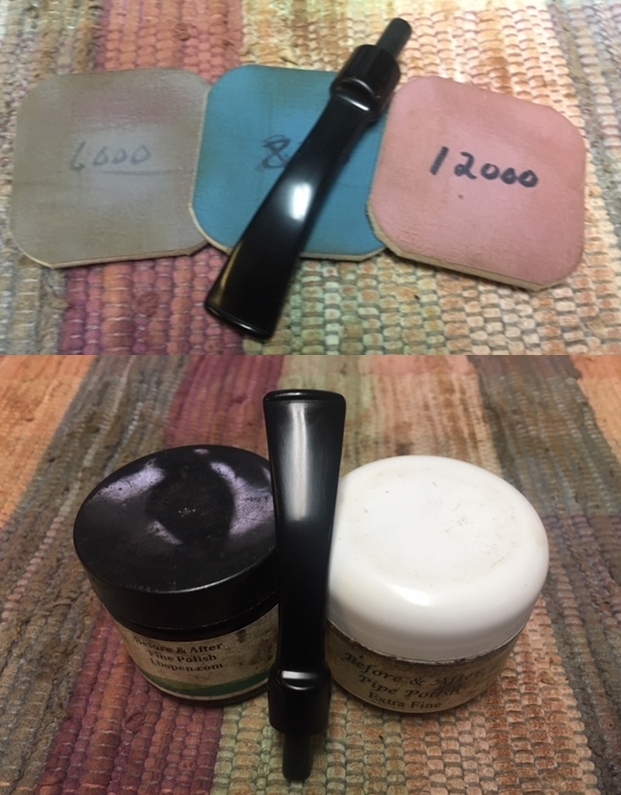
Something about the grain on this one called my name – a No Name Canadian


Blog by Steve Laug

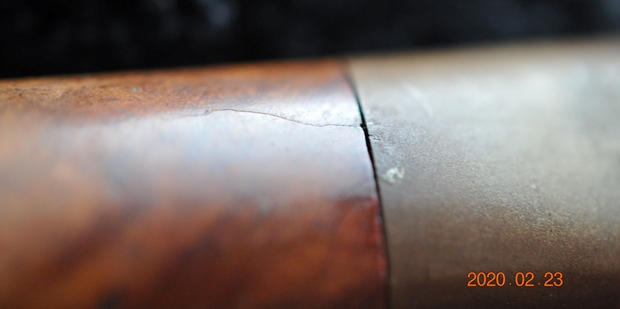
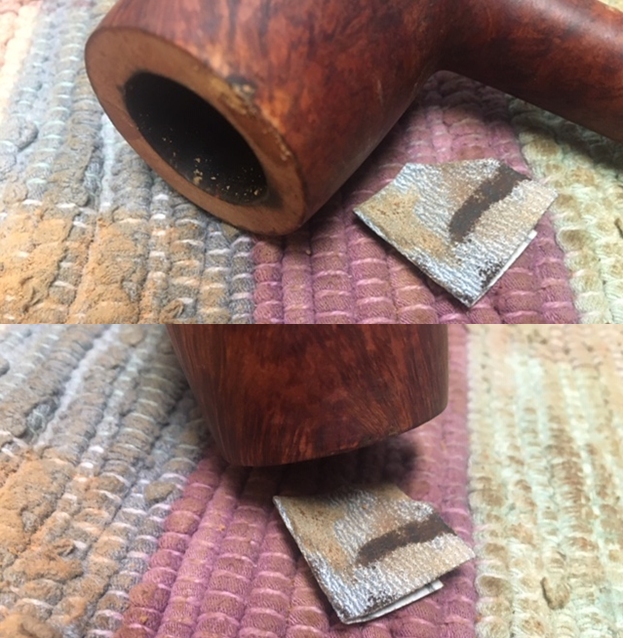
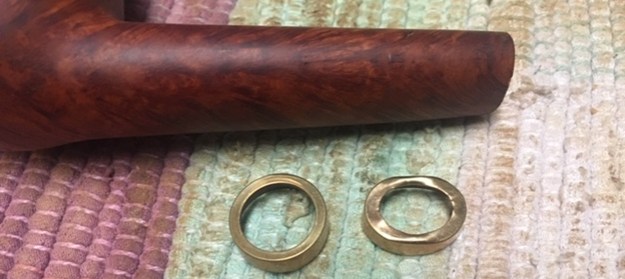
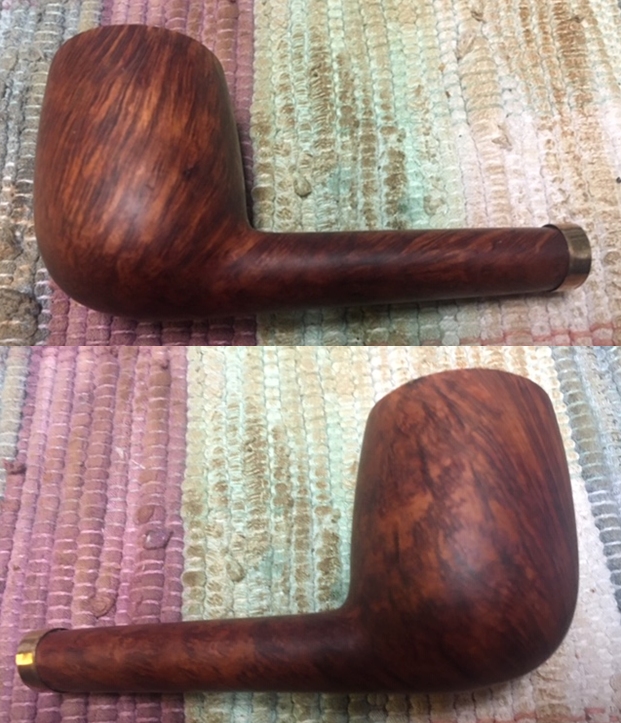
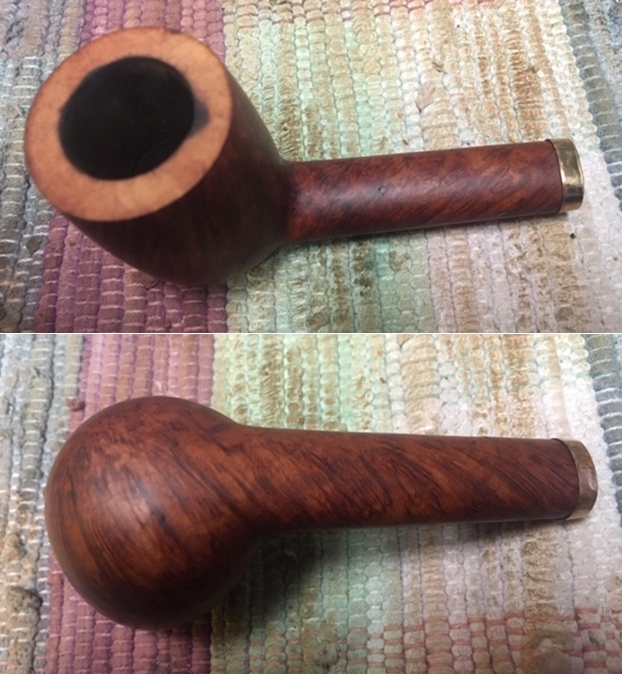
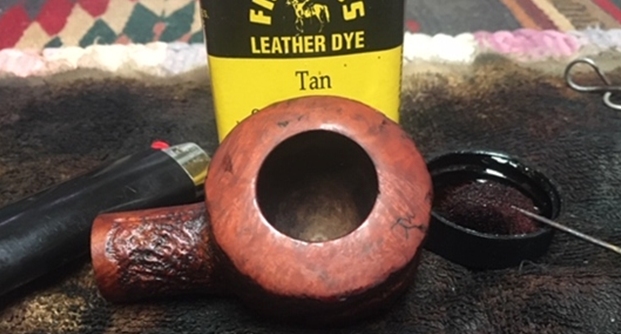
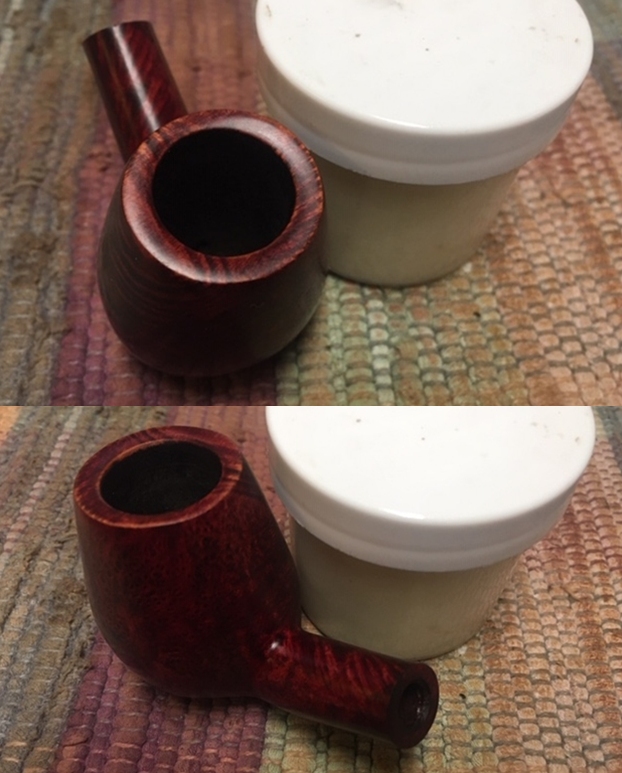
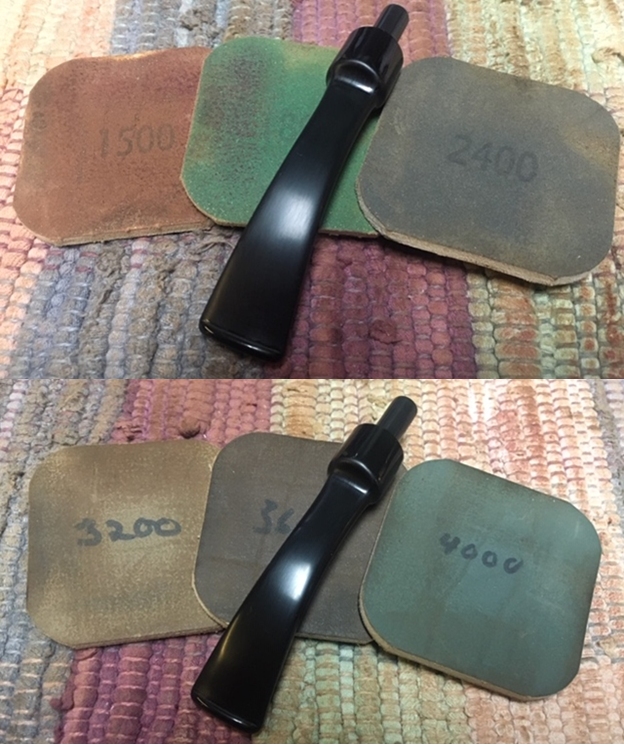
I don’t know how to explain this any other way than the title says. I looked at this pipe at least two times when Irene and I were on the Oregon coast with Jeff and Sherry. We went to this shop at least twice and each time I looked at the pipe and thought about it. I turned it over in my hands and examined it. There was no stamping on the shank or stem and it was a filthy pipe. However the grain just spoke to me and I think something about the compact shape did as well. I finally put it in the purchase pile and moved on. Jeff took the lot we found home with him to clean up and this one went along. He took some photos of the pipe before he cleaned it up and the photos revealed a crack in the shank that I had not noticed. It just goes to show you I was so caught up in the shape and grain that I missed the crack. Ah well just another pipe to fix. The photos of the rim top and bowl show the thick cake, tobacco debris and thick lava overflow on the rim top. The pipe was a mess. You can also see some chipped areas on the outer edge of the bowl and nicks in the sides of the bowl. He captured the grain around sides of the bowl in the next photos. You can also see the nicks and chips out of the briar but it is still quite pretty beneath the wear and tear and grime!The vulcanite stem was heavily oxidized and was pitted. There were tooth marks on both sides ahead of the button and some wear on the button as well.I saved the next photo for last as it shows the surprise that I don’t believe I saw when I examined the pipe in the basement of the antique mall.Jeff out did himself on the cleanup of this pipe and when I received it I was not disappointed as it showed what I had seen through the grime on the bowl. The grain was quite nice and the colour was very good. Jeff had reamed the bowl with a PipNet pipe reamer and cleaned up the debris left behind with a Savinelli Fitsall Pipe Knife. He scrubbed the internals in the shank and the stem with alcohol, cotton swabs and pipe cleaners. He scrubbed the externals of the bowl with undiluted Murphy’s Oil Soap and a tooth brush and rinsed it off with running water. He scrubbed the stem with Soft Scrub and soaked it in Before & After Deoxidizer. The pipe looked quite amazing. I took photos of it before I started my part of the restoration. I took a close up photo of the rim top to show the damaged areas and how clean it was. You can see damage all the way around the inner edge of the rim. The larger one was at the back of the bowl. There was burn damage and darkening. You can also see the damage to the outer edge of the bowl. The stem looked good other than the slight nicks on the button surface and the light chatter on the surface ahead of the button.I took the stem off the shank and took a photo of the parts. It is a great looking pipe.I decided to start on the rim edges – both inner and outer and the rim top. I built up the chipped edge on the right side and front of the bowl with super glue and briar dust. I filled them in to even out the edges. Once the repair had cured I sanded the repaired areas with 220 grit sandpaper to smooth out the repaired areas. I went through my bag of bands and found one that was oval and would work to bind together crack. It was already oval and slightly dented but it would work and I could tap it out and make it smooth again. The crack was hairline and closed so I ran a thin bead of clear super glue on it and let it soak in before banding.  I fit it onto the shank end and tapped it to fit well and be smooth against the shank and the shank end. I took photos of the pipe to show the look of the banded shank. I topped the bowl on a topping board with 220 grit sandpaper to reduce the damage on the rim top and the edges of the bowl. I also used a folded piece of 220 grit sandpaper to smooth out the rim edge and to bring the bowl back into round. The second photo below shows the rounded rim edges on the inside and outside. The rim top also looks much better though the burn spot remains.I polished the bowl and rim with micromesh sanding pads – dry sanding it with 1500-12000 grit sanding pads. I wiped it down with a damp cloth to remove the dust left behind from sanding. In order to mask the burn mark on the rim and to make the grain really stand out I stained the pipe with a Tan aniline stain. I flamed it to set it in the grain. I repeated the process until I was happy with the coverage and set it aside overnight to cure.In the morning I hand buffed the bowl with a cotton cloth to see what I was working with. I still needed to buff it on the wheel but I liked what I saw. I buffed bowl on the wheel with Blue Diamond to polish the briar and bring the grain out. I rubbed it down with Before & After Refurbishing Balm. I worked it into the briar with my fingertips and let it sit for 20 minutes. The Balm works to preserve, protect and enliven the briar. The pipe is starting to look very good at this point. I set the stained, polished and banded bowl aside and turned my attention to the stem. I sanded out the tooth marks and the oxidation remaining on the stem with 220 grit sandpaper and followed that by starting the polishing with 400 grit wet dry sandpaper.I continued polishing the stem with Denicare Mouthpiece Polish – a red gritty paste that feels a lot like Tripoli. I find that it works well to polish out some of the more surface scratches in the vulcanite left behind by the 400 grit wet dry sandpaper. I rub it into the stem surface with my fingertips and buff it off with a cotton pad.I polished the stem with micromesh sanding pads – dry sanding with 1500-12000 grit sanding pads. I wiped the stem down after each sanding pad with a cloth containing some Obsidian Oil. I finished polishing it with Before & After Pipe Stem Polish – both Fine and Extra Fine and buffed it off with a cotton cloth. This little Canadian really is a nice looking pipe. I put the bowl and stem back together again and buffed the bowl and the stem with Blue Diamond on the buffing wheel. I gave the bowl and the stem several coats of carnauba wax. I carefully buffed the entire pipe with a clean buffing pad to raise the shine. I finished buffing with a microfiber cloth to deepen the shine. The finished pipe looks very good. The grain is quite beautiful a mix of straight and flame around the bowl sides and birdseye on the rim top and heel. The pipe feels great in the hand. It has an interesting shape that fits well in either the right or left hand. The finished no name Canadian is shown in the photos below. The dimensions of the pipe are Length: 5 ¼ inches, Height: 2 inches, Outside diameter of the bowl: 1 3/8 inches, Chamber diameter: 7/8 of an inch. This great looking Canadian pipe turned out very well. It should be a great pipe. It will be going on the rebornpipes store shortly if you are interested in adding it to your collection. Thanks for reading this blog and my reflections on the pipe while I worked on it.

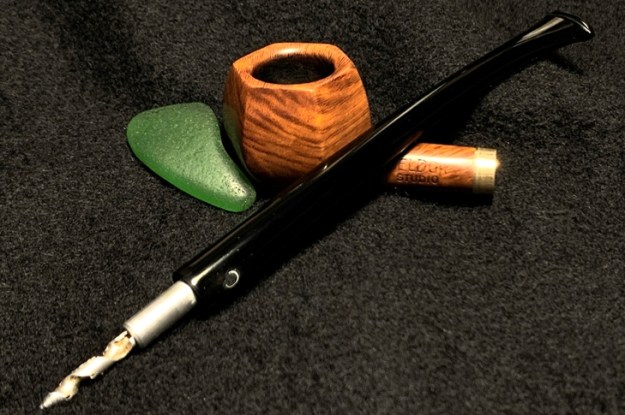
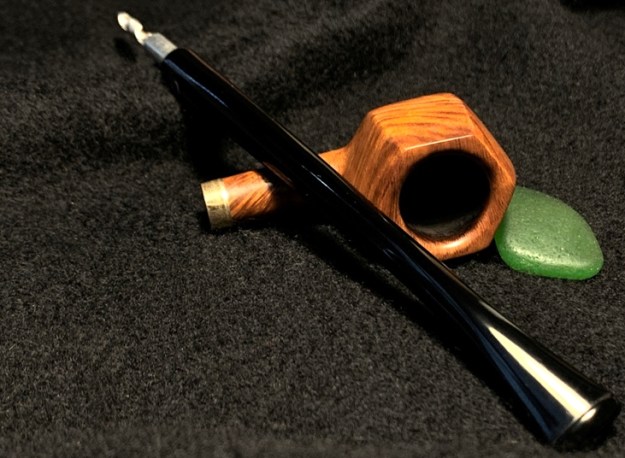
Refreshing a Beldor Studio Mini Churchwarden Paneled Apple of Saint Claude


Blog by Dal Stanton

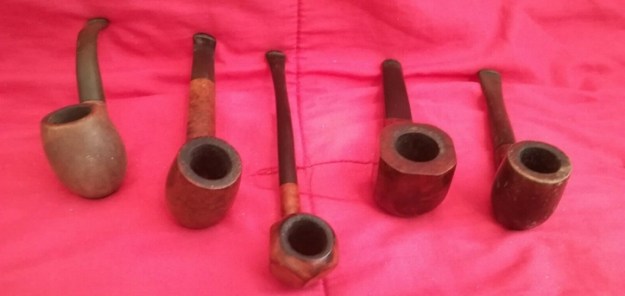
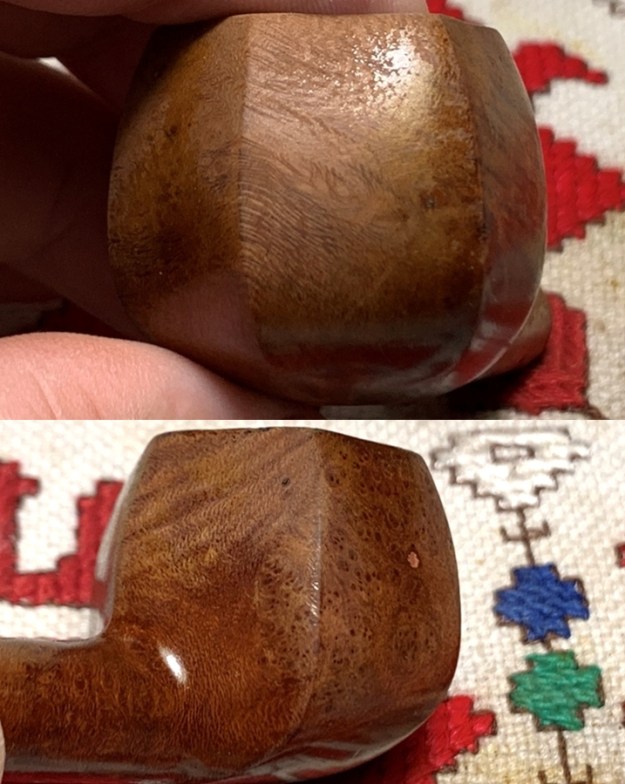
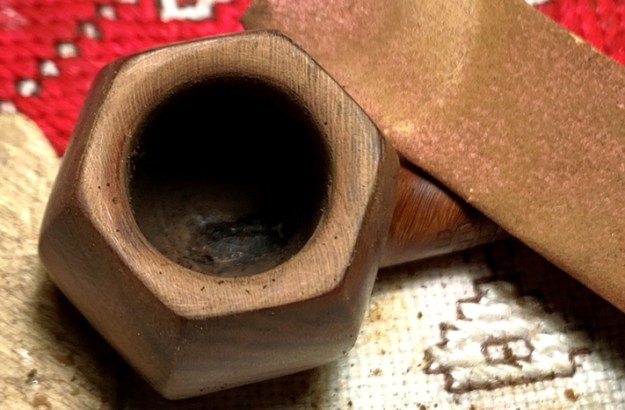
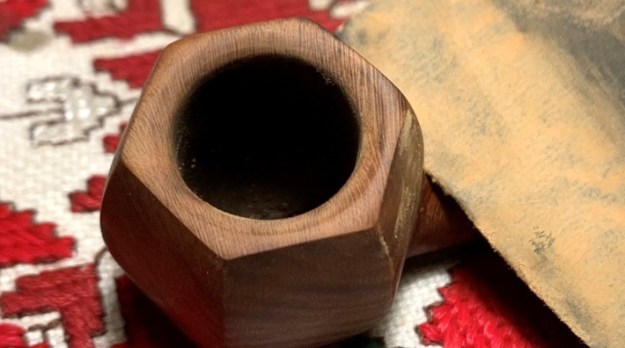
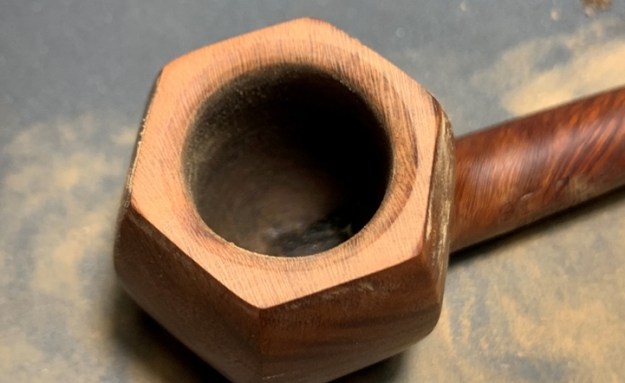
The Beldor Studio on my worktable now came to me from what I call the French Lot of 50.  I was tipped off by a fellow pipe man friend in Romania who acquired a L. J. Peretti Oom Paul from me.  He saw 5 different lots of pipes on the French eBay auction block and sent me a note. My thinking is that one of the Lots might be a good addition to my online collection, For “Pipe Dreamers” Only!, where pipes may be commissioned by those who can see the potential of unrestored pipes.  The different lots were from the same seller in Paris and his approach to selling these lots was like throwing bloody chum in shark infested waters!  Each lot was in a pile of pipes with different angles of the pile pictured in the lot’s listing.  Studying each of the piles was exhilarating trying to see markings on the pipes and characteristics that might reveal treasures in the mix.  I finally chose to bid on one of the French Lots because it had a very interesting Cutty shape (Restoration here: A Cutty Tavern Pipe – Recommissioning a Historical Classic as a Gift for a Steward of History) sprawled across the top of the pile and several other very, very interesting candidates.  The other characteristic of the French Lot of 50 that drew my attention were several pipes brandishing horn stems – very much pointing toward WW2 and post era pipes when rubber was scarce, and horn became a predominant replacement for stems.  With some effort, I found the Beldor Studio buried in the middle of the pile – one arrow on the inverted stummel and the other on the end of the stem barely visible.  I bid on the French Lot of 50 and the bid prevailed.  It did not take long for the package to come from Paris reaching me in Sofia, Bulgaria.When the pipes arrived, I did my normal cataloging of each pipe and promoting their arrival on various Facebook Pipe groups and many of these pipes have already been restored and with new stewards.  The Beldor Studio was waiting for Daniel to find in the online collection, For “Pipe Dreamers” Only!  I received Daniel’s inquiry about commissioning the Beldor and he identified himself as the son of a colleague and acquaintance of mine in Pennsylvania!  Daniel expressed his enjoyment of reading the write ups on the restoration of pipes and that he was interested in the Beldor Studio.  I sent this description of the Beldor to help Daniel with his decision:
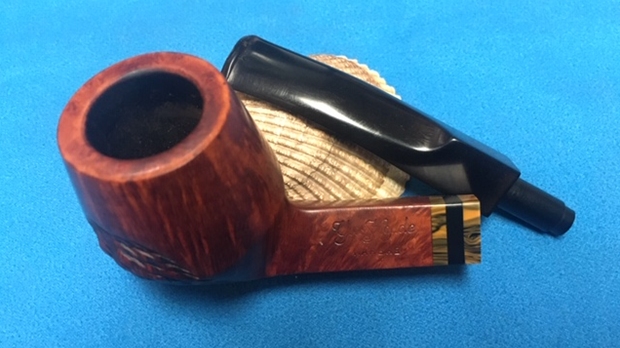
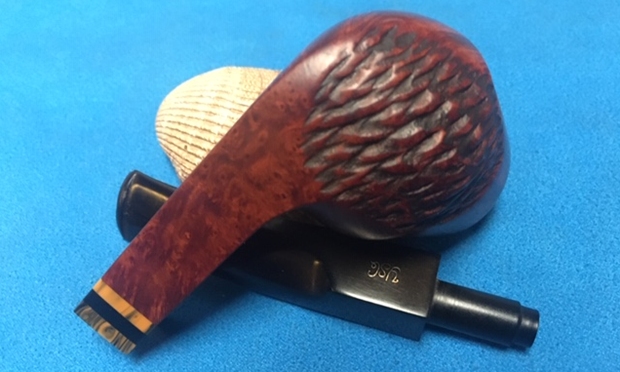
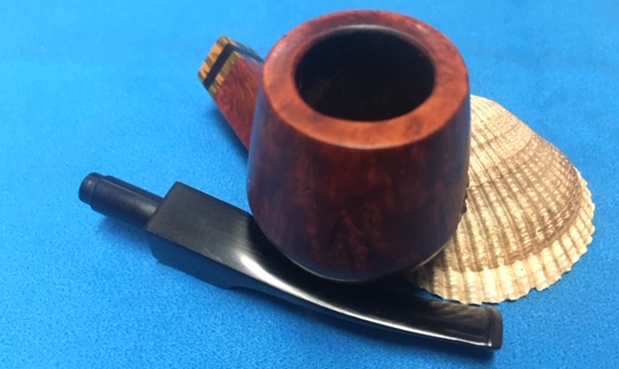
I appreciate your interest!  The pipe you are interested in is a sweet pipe.  I called it a small Churchwarden, or it could possibly be categorized as a ‘Pencil Stem Panel’.  It’s a petite size and the paneled bowl is very nice.  I haven’t worked on a pipe with this marking before so I can’t say at this point anything about the collectability of a ‘Beldor Studio’ so we’re looking primarily at the pipe itself.

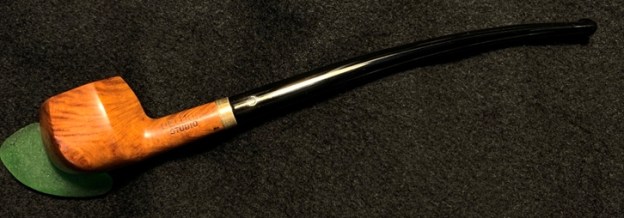
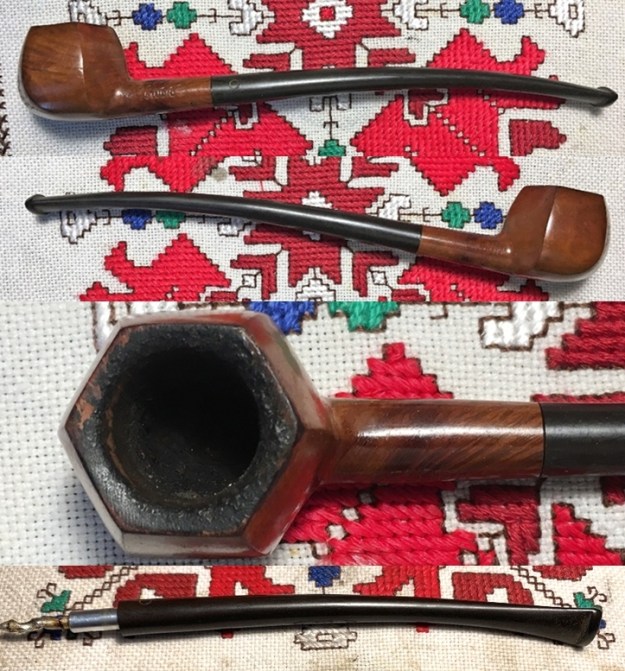
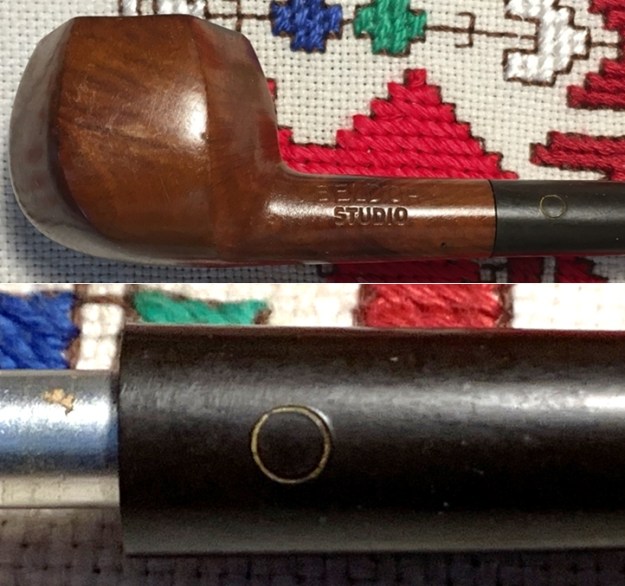
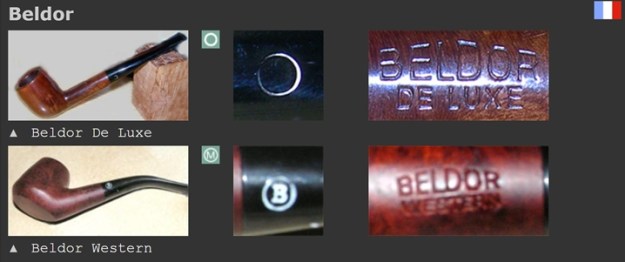
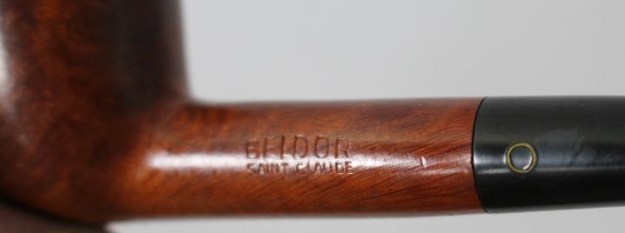
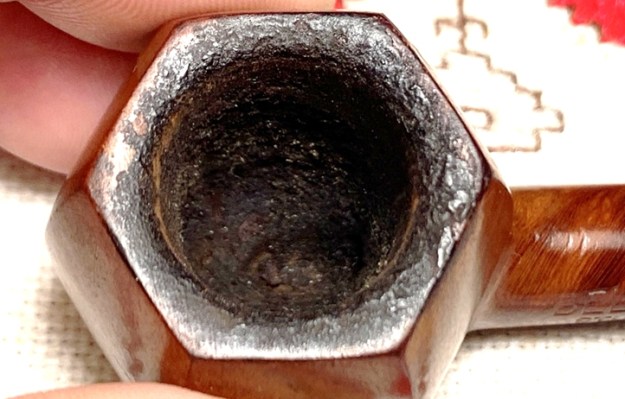
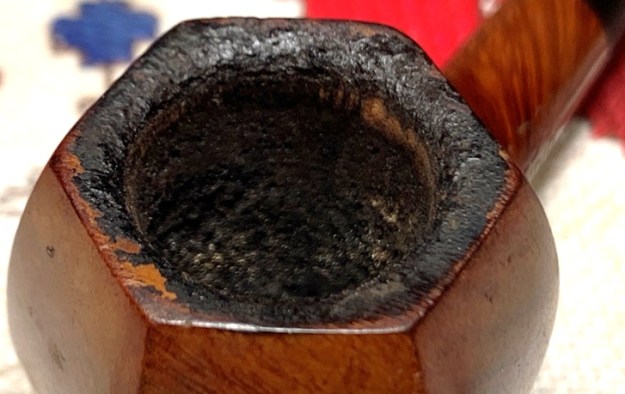
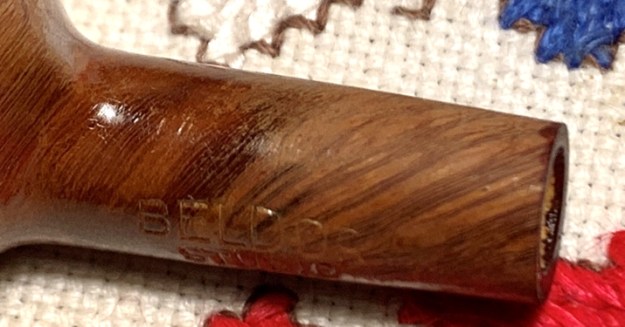
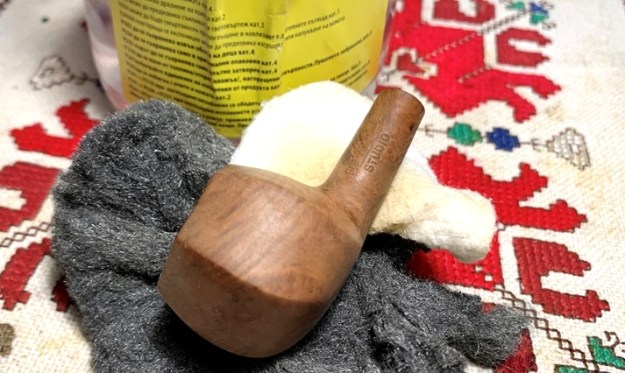
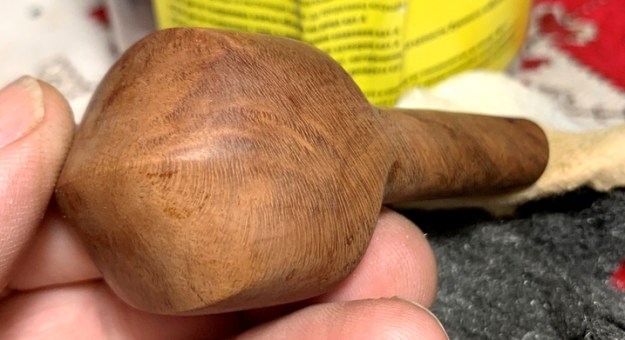
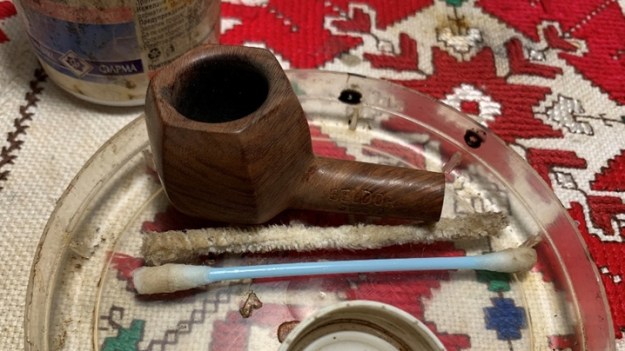
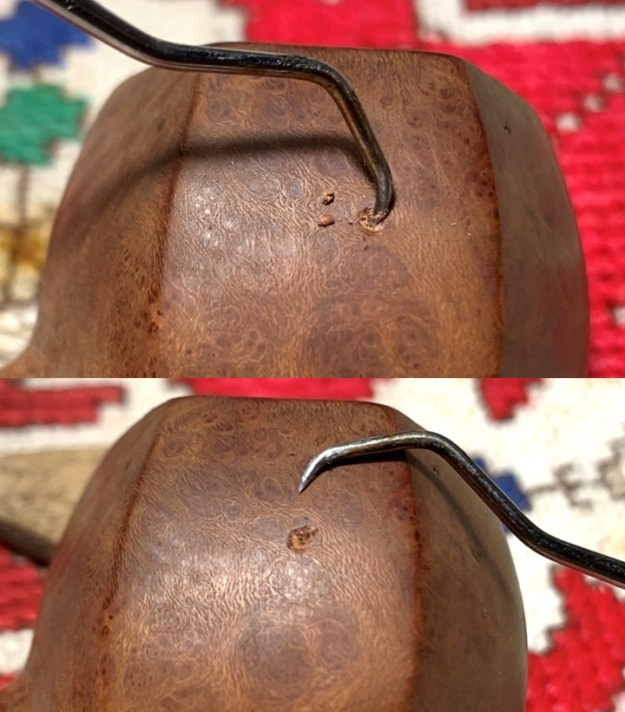
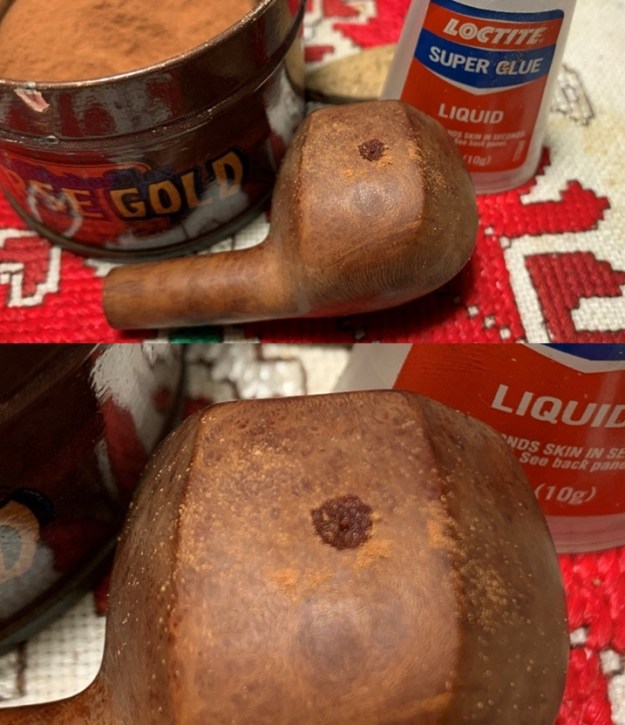
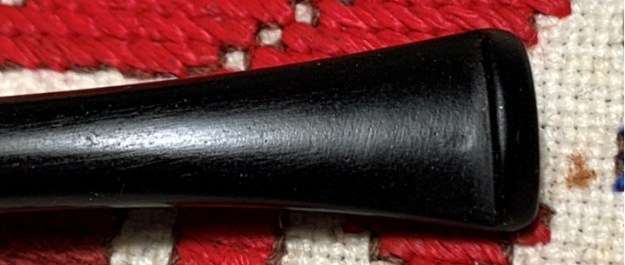
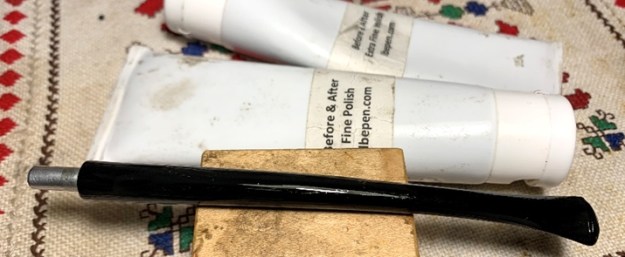
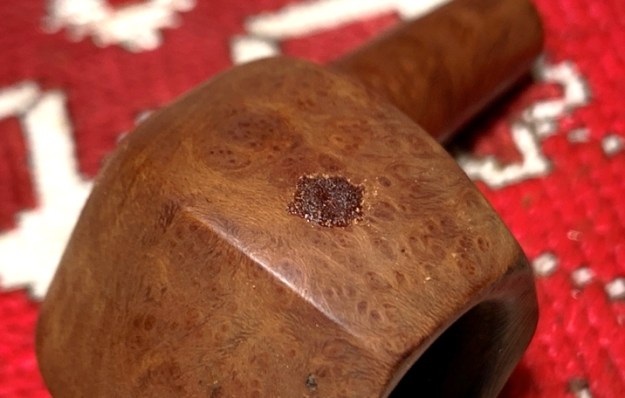
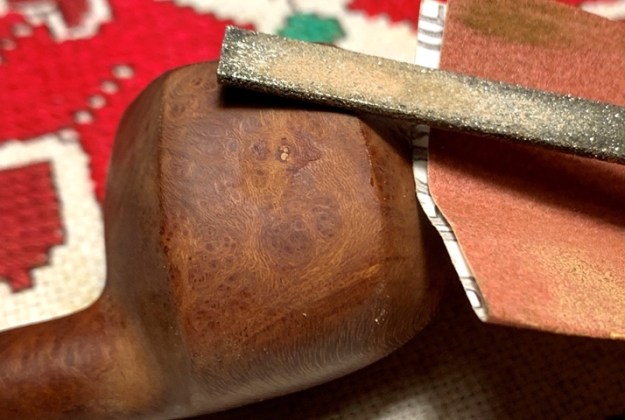
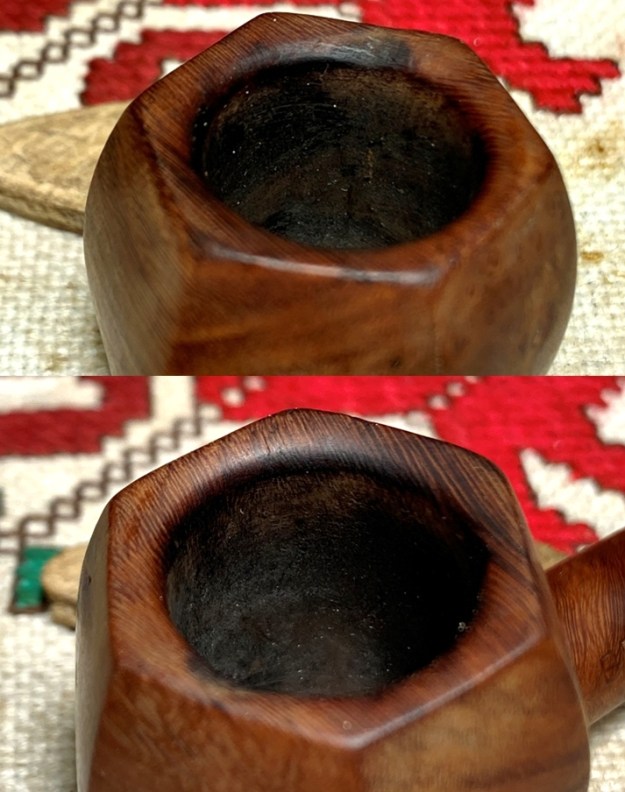
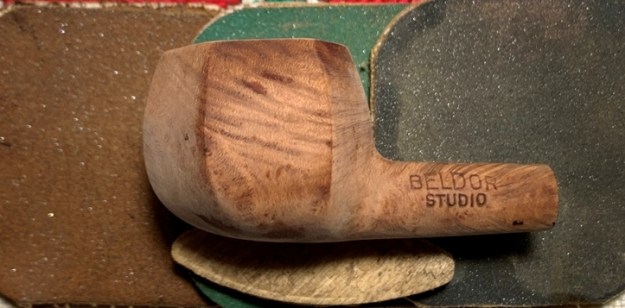
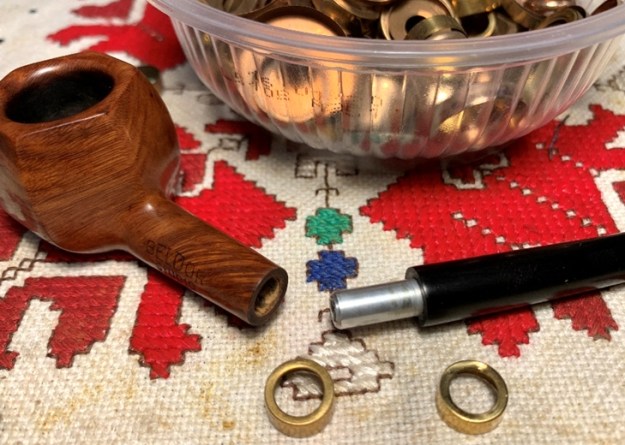
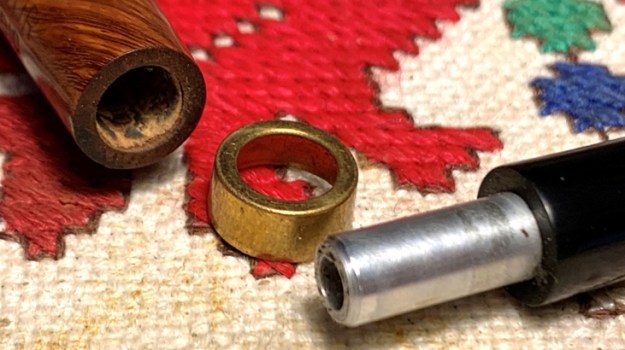
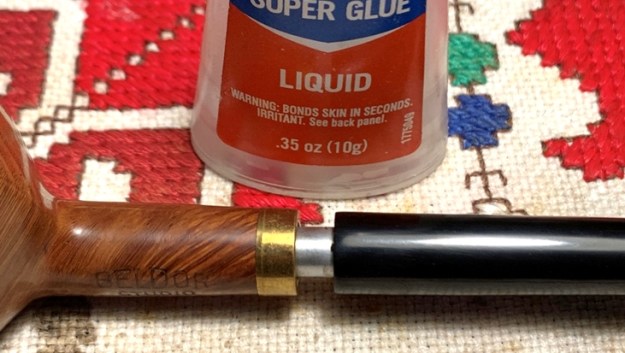
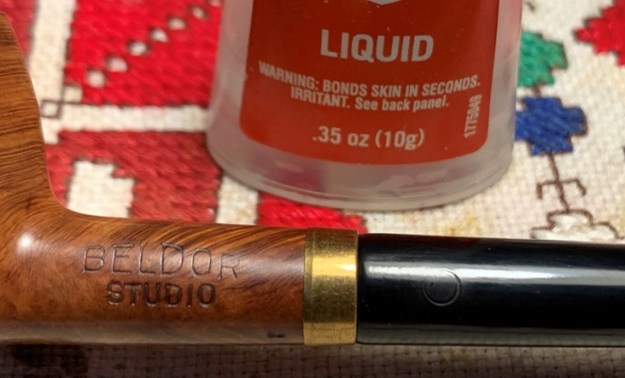
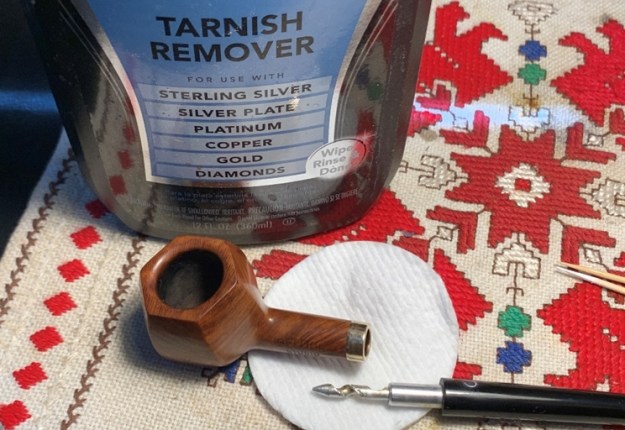
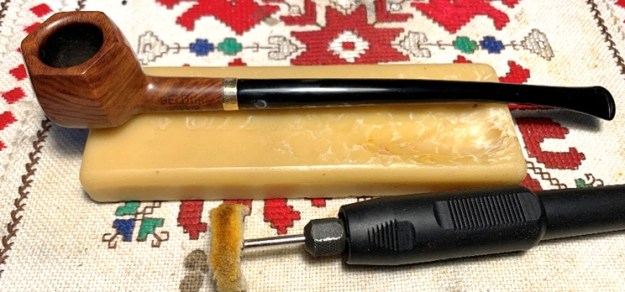
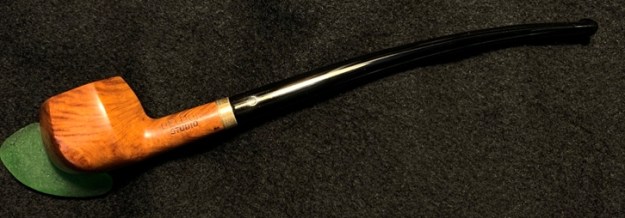
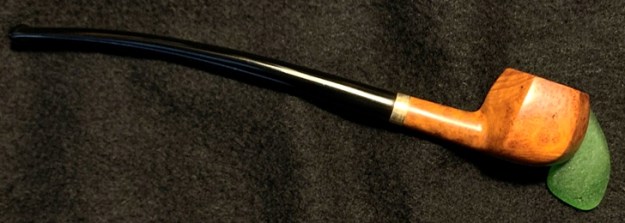
I’m glad that in the end, after giving Daniel an estimate of the final valuing of the pipe, he agreed and the Beldor Studio went into The Pipe Steward queue of pipes that benefit the Daughters of Bulgaria – women and girls who have been trafficked and sexually exploited.   Here are pictures of the Mini Churchwarden or Pencil Stem that got Daniel’s attention with a measurement of 7 1/2 inches in length and the bowl height of 1 1/8 inches.The only markings on the pipe are on the left shank flank with these stampings: ‘BELDOR’ [over] ‘STUDIO’.  The stem is stamped with a circle.This is one of those frustrating pipes that are seen in many places on the internet for sale, but not much is known.  The nomenclature on the Beldor Studio gives no indication of country of manufacturer (COM) but it becomes evident that the origins are French and from the pipe making center, Saint Claude.   Pipephil.eu confirms the French origins.  The lettering of ‘Beldor’ is the same with the circle stem stamp being the same.Pipedia only confirms a French origin and adds different lines with the Beldor name: Maker unknown; series: De Luxe, Golf, Western.  The Saint Claude origin in France simply comes from a Beldor pipes that are listed for sale on various sites with the nomenclature on these pipes include Saint Claude.  Here is one such example (LINK):I searched for some connection to an actual manufacturer in Saint Claude and could find none.  As a ‘hail Mary’ I sent some emails to pipe shops located in Saint Claude to see if any might have more information.  We’ll see what if I receive any helpful responses!  I did confirm the Beldor ‘Studio’ as the specific line for the Mini Churchwarden with this offering on a French eBay listing that described the center pipe as “BELDOR STUDIO BRUYERE SAINT CLAUDE”.I now take a closer look at the pipe on my worktable.  I like the petite panel bowl mounted on the pencil stem.  It has Churchwarden proportions but on the miniature.  The diminutive bowl would work well when one doesn’t have a lot of time to enjoy a bowl.  For me, I’m not a strong, nicotine ‘kick in your pants’, tobacco person, but I do like trying stronger tobaccos but in smaller portions.  This bowl would be perfect for this.  The former steward used this pipe as the chamber indicates some cake build up.  The beveled paneled rim has a heavy lava flow caked on it and this needs to be cleaned and refreshed.The hexagonal paneled apple bowl is very attractive.  It is dirty with grime and reveals normal scratches and scuffs from wear but reveals some genuinely nice grain. The pencil stem has some oxidation and tooth chatter on the bit.To begin the recommissioning of this Beldor Studio Mini Churchwarden, I remove the stinger and put aside for safe keeping.  I’m not a stinger fan but I’ll clean it and replace it to send to the new steward to decide what to do with itNext, using one pipe cleaner wetted with isopropyl 95%, the stem’s airway is clean.I then add the Beldor Studio stem to a soak of Mark Hoovers ‘Before & After Deoxidizer’ (www.ibepen.com) along with several other pipes in the queue.After a few hours soaking in the Deoxidizer, the Beldor stem is removed from the Deoxidizer and after squeegeeing the liquid off the pipe with my fingers, I use cotton pads wetted with isopropyl 95% to wipe away the raised oxidation.  A few pipe cleaners wetted with isopropyl 95% are also used to clear away Deoxidizer from the airway.To help condition the vulcanite stem, paraffin oil is applied and rubbed into the surface.  The stem is put aside to allow the oil to be absorbed. Turning now to the paneled bowl, I start by reaming the small chamber.  I use only the smallest blade head in the Pipnet Reaming Kit to clear the cake.  Following this, the Savinelli Fitsall Tool scrapes further on the chamber walls.  Finally, I sand the chamber with 240 grade paper wrapped around a Sharpie Pen. After wiping the chamber with a cotton pad, the chamber appears to be healthy – no heating problems detected.Transitioning now to the externals of the stummel, the picture above shows the thick lava flow caked on the rim that needs to be cleaned as well as the entire bowl.  Using undiluted Murphy’s Oil Soap, I begin using a cotton pad to scrub the stummel’s surface as well as the rim.  The rim also requires the brass bristled brush and the sharp edge of my Winchester pocketknife.  I use the knife’s edge carefully to scrape the black on the rim.  The brass brush also helps as the lava starts to break apart.  In time, I move to the kitchen sink to continue the cleaning using shank brushes and anti-oil liquid dish soap to work on the mortise internals.  After a thorough rinsing with warm water, I go back to the worktable and take a picture showing the results of the cleaning.The rim cleaned well but the front left rim panel section has a burn scar that will require additional attention.Another result of the cleaning was to reveal a thin finish on the Beldor stummel.  The next three pictures show blotches of shiny and dull areas.  The shiny indicates old finish hanging on, whereas the dull is raw briar.  The second picture shows a small fill that may need to be addressed. While I am focused on the residue of the old finish, I decide to address it now.  I first used alcohol and a cotton pad to see if it would break down the residue of finish. It did not.  I then use acetone first with a cotton pad, which worked but slowly.  Next, I used acetone with the gentle abrasion of 000 steel wool. This did the trick.  I was able to remove all the old finish which is a good starting point.  I take a couple of pictures to show the clean stummel. Backtracking now in my normal cleaning cycle, I now focus on the internal cleaning of the mortise and airway.  I use only one pipe cleaner and cotton bud wetted with isopropyl 95% to discover that the internals are clean.  I move on!Earlier I identified a fill on the right side of the stummel.  Using a sharp dental probe, I test the fill and find that it has shrunk and unstable.  I dig out the old fill to apply a new patch to the pit.After wiping the area with alcohol to clean it, using regular CA glue, I spot drop some glue on the pit.  I then cover it with briar dust that helps blend after the sanding of the patch area.  I put the stummel aside to allow the patch to cure.With the stummel on the sideline, I turn to the Mini Warden stem which is in particularly good shape.  There is almost no tooth chatter on the bit.  There is one small compression on the upper bit that needs addressing.I also detect some oxidation remaining on the end of the stem on the shank side. Using 240 paper, the upper and lower bit is sanded to remove any lasting tooth chatter and the one compression.The 240 paper is also deployed on the end of the stem where oxidation was detected.  I’m careful to avoid the Beldor ‘O’ stamping on the stem.To be on the safe side, I cover the stem stamping with masking tape to protect it.  Next, 600 grade paper is used to wet sand the entire stem.  Following this, 000 steel wool finishes further.Next, the full regimen of micromesh pads is used on the stem.  To begin, I wet sand with pad 1500 to 2400 and follow with dry sanding with pads 3200 to 4000 and 6000 to 12000.  Between each set of three pads, Obsidian Oil is applied to the stem to condition it and to protect it from oxidation in the future.To further condition the stem and to work on the area of the Beldor ‘O’ stem stamping to clean it up after it having been covered to protect from sanding, I use Before & After Fine and Extra Fine Polishes. Starting with the Fine polish, I apply it on the stem after putting a small amount on my fingers. I work it into the vulcanite and allow it to absorb for 15 to 20 minutes. After this time, I wipe off the excess polish with a paper towel, continuing to work the polish in as I do this. Next, in the same way, the Extra Fine Polish is applied.  After 20 minutes, the excess is removed, and the stem is buffed with a microfiber cloth.Turning again to the stummel, the small patch on the right panel has cured.I first use a flat needle file to file down the patch mound then it is further smoothed and blended with 240 grade sanding paper.Next, I address the dark scorched areas of the rim.  The internal edge of the rim is a ring of black from the burning.  The next two pictures show the condition of the rim. I use the 240 paper to clean the rim and to blend the different contours.  The rim is beveled and tapers downward toward the chamber.  I go with this bevel to help mask and blend the burn mark that is on the front left panel. I follow with 600 grade paper further smoothing and blending.With the sanding and blending utilizing the tapering of the rim, the rim definition has been blurred.  To redefine the hexagonal rim, I do a light topping using only 600 grade paper.  The picture below shows how the rim was reestablished and a defined bevel line.  I like it!Next the stummel is sanded with the full regimen of micromesh pads from 1200 to 2400, which is wet sanded, then dry sanded from 3200 to 4000 and then 6000 to 12000. Next, to tease out the rich briar hues, Before & After Restoration Balm is used.  After applying some on my fingers, the Balm is worked into the surface starting with a cream-like texture then gradually thickening after it is worked into the briar. After applied, I put the stummel aside for a few hours for the Balm to do its thing.  The picture below is of this period.  Afterwards, the stummel is buffed with a microfiber cloth to remove the excess Balm and to raise the shine.With the stem and stummel reunited, Blue Diamond compound is applied to the entire pipe with a cotton cloth buffing wheel set at about 40% full power on the Dremel.After the application of the compound is finished, the pipe is buffed with a felt cloth to remove the compound dust that is left behind.Before applying wax, I have a couple additional projects to do.  The shank on this Mini Churchwarden is very thin and makes me nervous about it being cracked.  To guard the shank as well as add a bit more class to this sharp looking pipe, I fit the shank with a brass shank cap. The cap acts as a band as well as curling over the shank facing to serve as a spacer. I find a fitting that will work.  I apply a small amount of CA glue to the inside of the fitment and use a toothpick to paint the inside circumference of the ring. After placing the cap partially over the shank to start it, I use the stem itself, to press the cap into place.  This serves to create the perfect symmetry with the shank cap butting against the stem facing.  This helps close any gaps that may exist between the two.  The shank cap looks great – I like it! The next project is to try to fill the ‘O’ stem stamp with white acrylic paint to freshen it.  My concern is that the stamping is no longer defined enough to hold a full circle.I place white acrylic paint over the stamping and spread the paint with a toothpick.I then tamp the wet paint with a cotton pad to remove the excess and quickening the drying process.I then use a toothpick’s flat edge to gently scrape the dried paint to achieve an almost whole ‘O’.  It looks good.I use 000 steel wool to clean up the stinger and reinsert it into the nickel tenon.  Tarn-X Tarnish Remover gives a new shine to the brass shank cap.  I use the cotton pad to apply the polish.Finally, with the full ensemble united, I apply carnauba wax with the Dremel.  Using another cotton cloth buffing wheel with the Dremel set at 40% of full power, wax is applied to the stem and stummel.  Afterwards, I use a microfiber cloth to give the pipe a rigorous hand buffing to raise the shine.I am pleased with the results of this Beldor Studio Mini Churchwarden.  The hexagonal paneled bowl gives an elegant presentation as it is mounted on the subtly curved pencil stem.  I like the brass shank cap – it adds a bit of class to a very nicely flowing pipe.  Daniel commissioned this pipe and he will have the first opportunity to acquire it from The Pipe Steward Store.  This pipe benefits the Daughters of Bulgaria – women and girls who have been trafficked and sexually exploited.  Thanks for joining me!

Cleaning up a Willmer Straight Grain AAA Standard Cup and Saucer


Blog by Steve Laug

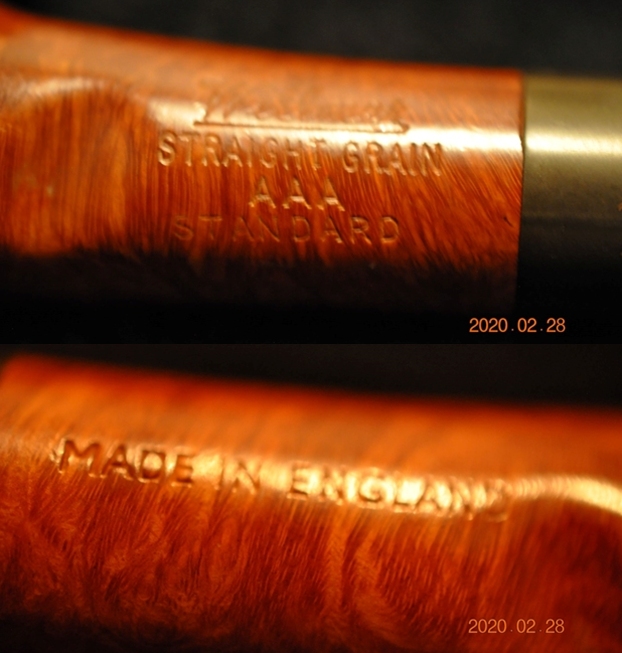
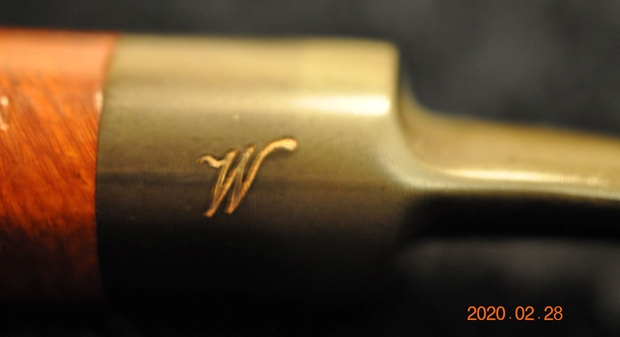
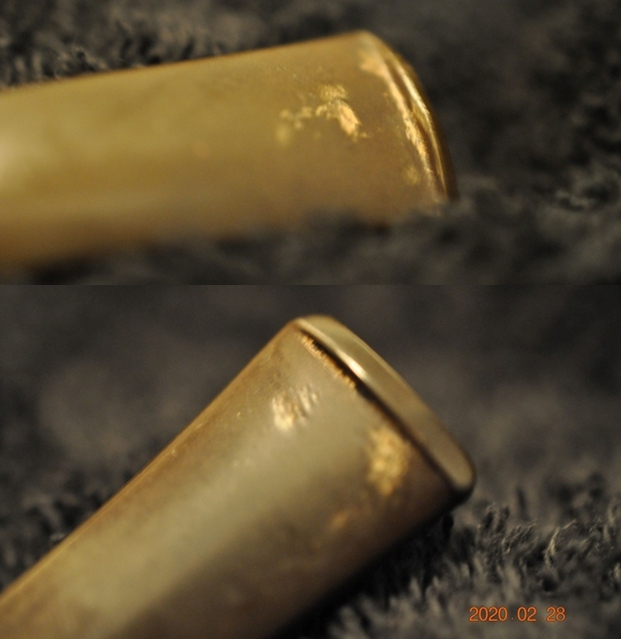
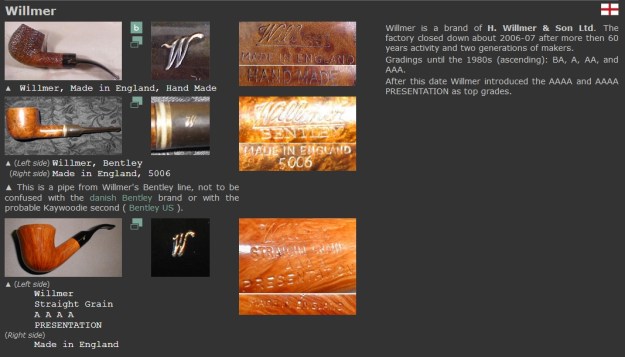
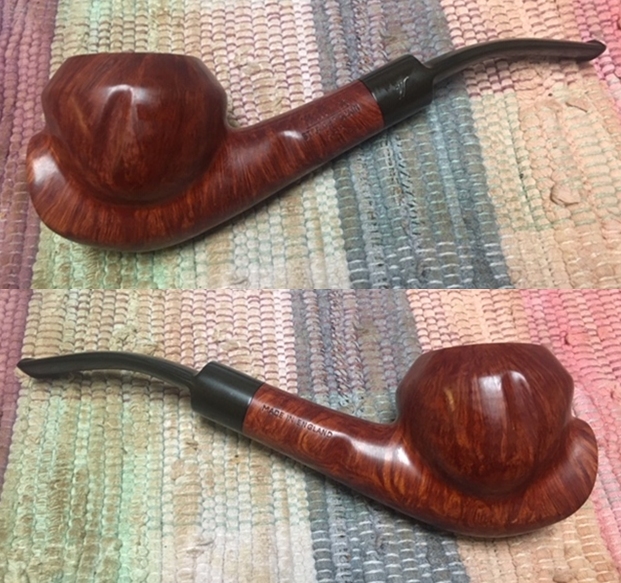
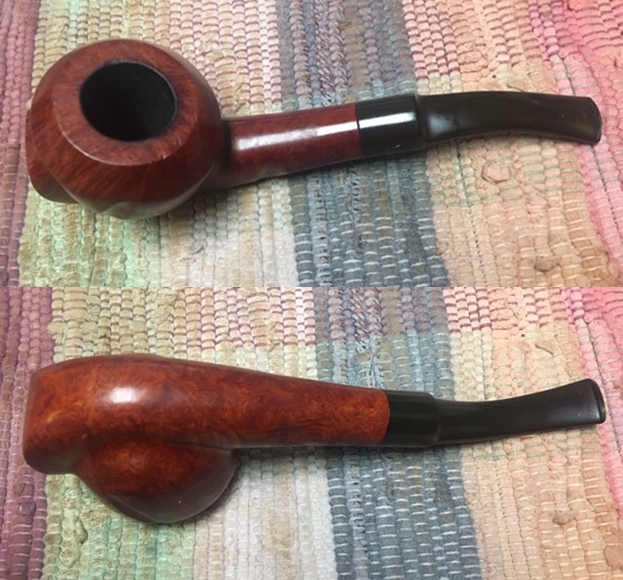
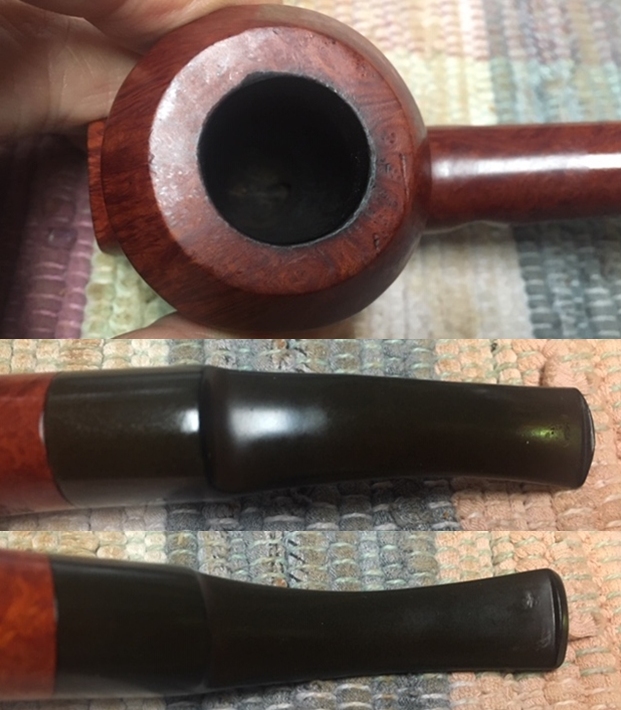
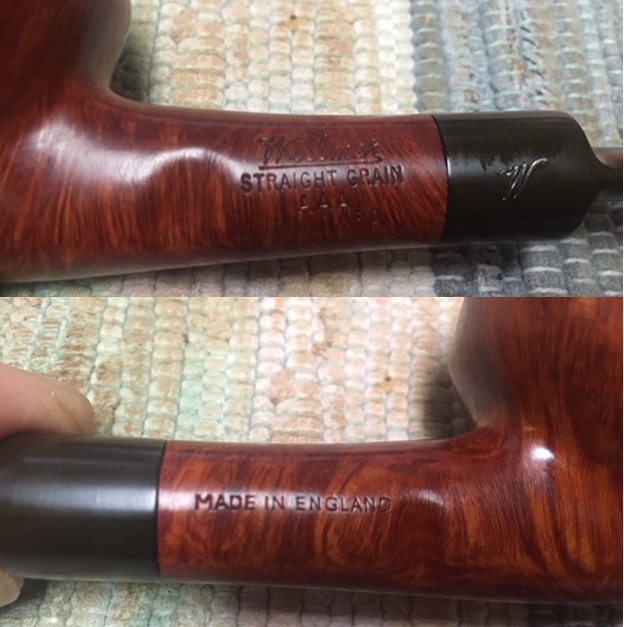
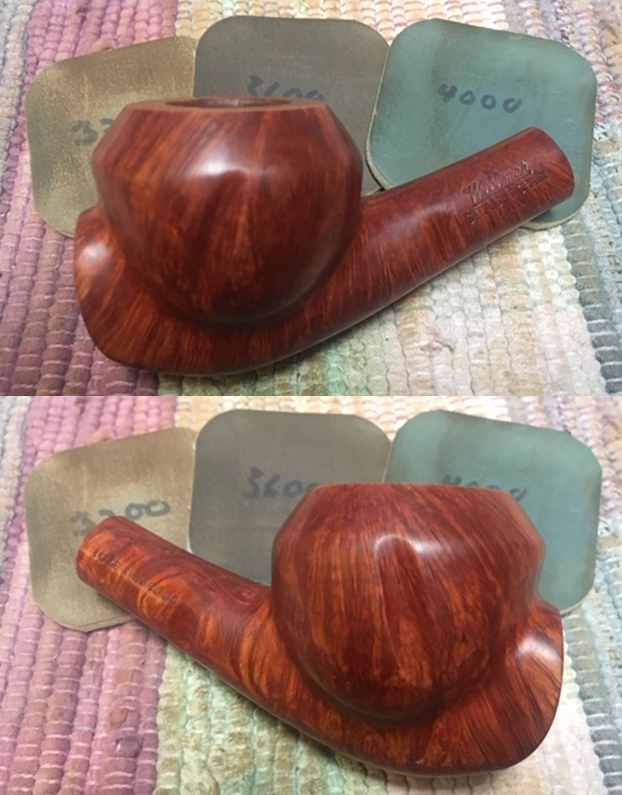
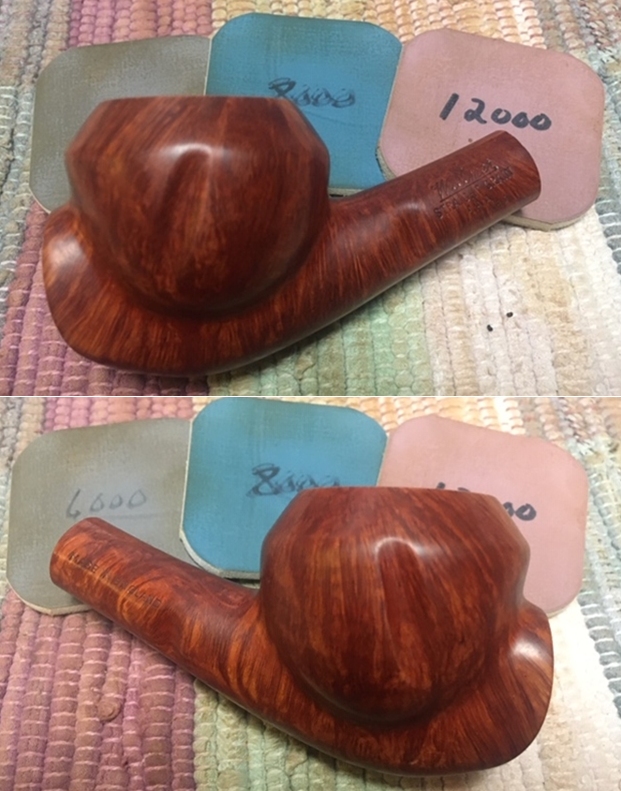
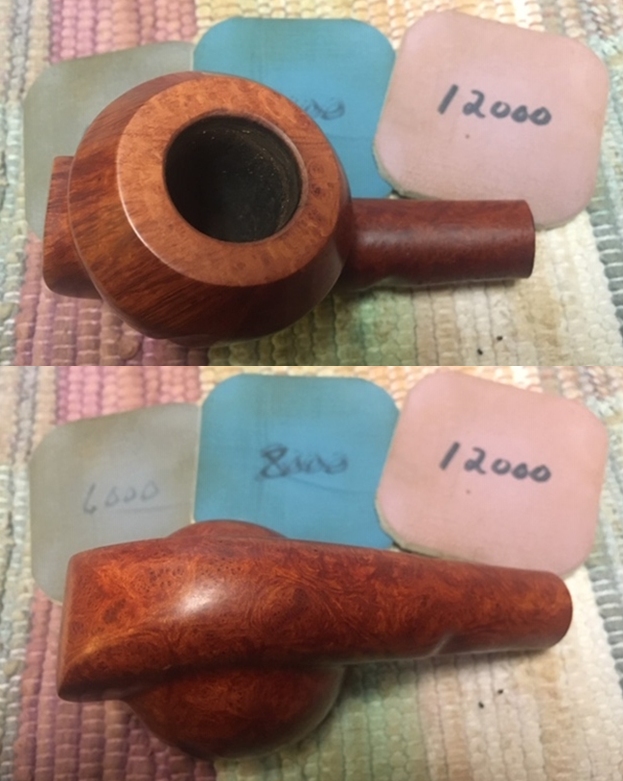
The next pipe on the table is a shape I would call a cup and saucer or at least Willmer’s take on this shape. The pipe is stamped on the left side of the shank Willmer in script over Straight Grain over AAA over Standard. On the right side of the shank it is stamped Made in England. It is a bent cup and saucer shaped smooth briar with vulcanite saddle stem. The pipe was dusty and dull looking but had great grain around the bowl and rim. The rim top is smooth and there was some darkening and damage to the inner edge of the bowl. There was a thick cake in the bowl. The finish was in great condition under grime ground into the sides and shank. The saddle vulcanite stem was oxidized and had light tooth marks and chatter on both sides near the button. Jeff took the following photos before he started his cleanup work on the pipe. He took close-up photos of the bowl and rim top from various angles to capture the condition of the rim top and edges of the bowl. There was a little darkening around the inner edge and heavier along the back edge of the bowl. There are some scratches on the top and outer edge of the bowl as well. You can also see the cake in the bowl.He took photos of the sides and heel of the bowl to show the condition of the finish and the grain around the bowl. The pipe has some stellar grain around the bowl and shank and the carver maximized the lay of the grain with the shape of the pipe. Jeff took photos of the stamping on the sides of the shank. It reads as noted above and is clear and readable.  He also took a photo of the Willmer “W” on the left side of the stem. The next photos show the top and underside of the stem. You can see the light tooth marks right next to the button edge.I turned to Pipephil to get a quick review of the Willmer Company as it had been a long time since I had worked on one (http://www.pipephil.eu/logos/en/logo-w3.html). I quote the side bar from the site bellow.

Willmer is a brand of H. Willmer & Son Ltd. The factory closed down about 2006-07 after more then 60 years activity and two generations of makers. Gradings until the 1980s (ascending): BA, A, AA, and AAA. After this date Willmer introduced the AAAA and AAAA PRESENTATION as top grades.

The pipe I was working on has a AAA stamping on it which if the pipe came from pre-1980s was the top of the line. If it was later pipe it close to the top of the line.I turned to Pipedia to get more information on the brand (https://pipedia.org/wiki/Willmer). The first paragraph dispelled of the belief that Willmer had been a carver for Charatan in his own words. I quote a portion of the article to give a sense of the history of the brand.

Willmer was founded in London. According to the website, which doesn’t exist anymore because the Willmer factory has been closed in 2006/07, the firm was in business “for more than 60 years” by 2003. Willmer was homed then in Southend-on-Sea, Essex, so not far from the Cadogan plant.

When Willmer first started, they definitely strived to compete with brands in the high-end market. Due to the excellent quality of the pipes Willmer was frequently asked to produce private label pipes for England’s best renowned pipe retailers. So many pipes are not easily recognized as Willmers for stamped under the name of the respective shop. Willmer’s own pipes were stamped “Willmer – Made in England” and showed a sweeping “W” in white or gold on top or left side of the stem. The earlier grading had AAA as top grade followed by AA, A, AB etc.

Sometime in the 1980’s, Willmer went through some major changes. The move to Essex was already mentioned above. They continued making highly respectable freehands – often copying some of the stunning Charatan shapes of days gone by. The grading was altered. What used to be an AAA now became the additional name “Presentation” and was stamped with AAAA. Funny enough, the forth A was often larger than the three before. The other grades were changed accordingly.

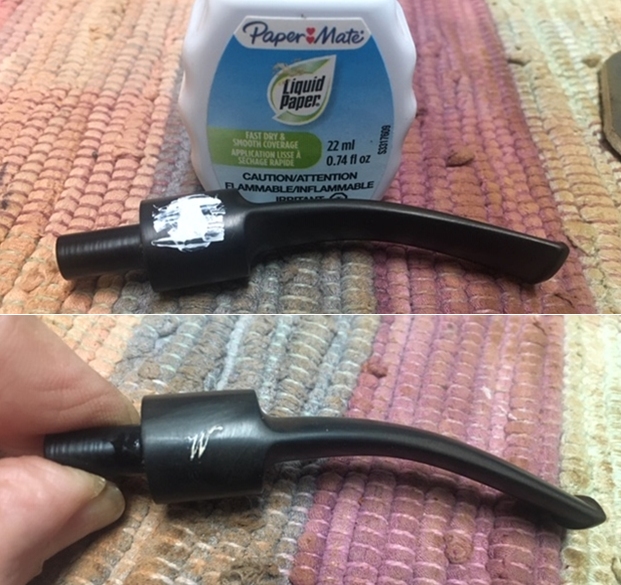
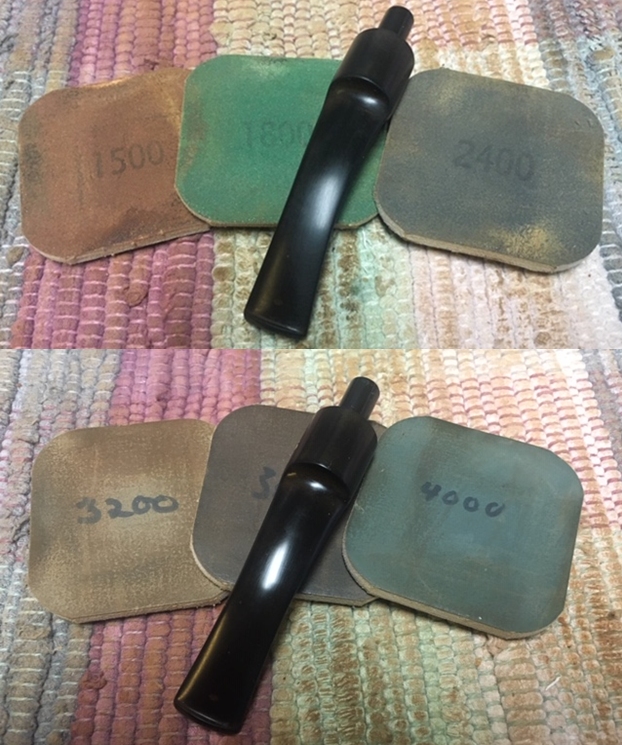
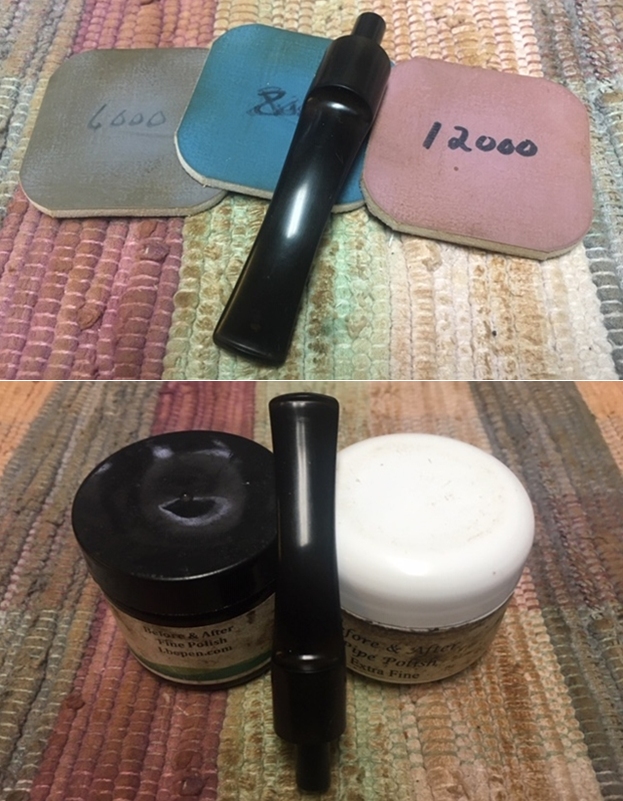
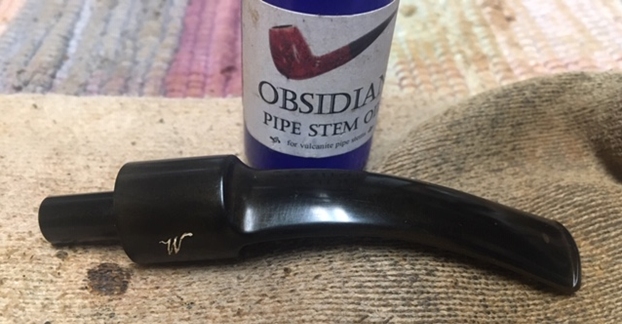
Now it was time to look at it up close and personal. Jeff had done his usual thorought job in removing all of the cake in the bowl and the lava on the rim top. He had reamed the bowl with a PipNet Pipe Reamer and cleaned up the remnants with a Savinelli Fitsall Pipe Knife. He took the cake back to bare briar so we could check the walls for damage. He scrubbed the exterior of the bowl with Murphy’s Oil Soap and a tooth brush to remove the grime on the bowl and rim and was able to remove the lava and dirt. He cleaned out the interior of the bowl and shank with pipe cleaners, cotton swabs and alcohol until they came out clean. He cleaned the stem with Soft Scrub to remove the grime on the exterior and cleaned out the airway with alcohol, cotton swabs and pipe cleaners. I took photos of the pipe before I started my part of the work. To show the damage to the inner edge of the rim and the rim top I took a close-up photo. You can see it on the right inner edge and the back edge of the bowl. The vulcanite stem had some tooth marks on both sides and there was some oxidation remaining.I took a photo of the stamping on both sides of the shank. It clearly read what was noted above. The “W” stem on the left side of the saddle stem is also readable.I removed the stem from the bowl and took photos of the parts. It really is a great looking pipe.I started my part of the restoration by addressing the damage to the rim top and inner edge of the bowl. I topped the bowl on a topping board with 220 grit sandpaper. I worked over the inside edge of the bowl with a folded piece of 220 grit sandpaper.I polished the newly topped rim and the rest of the bowl with 1500-12000 grit micromesh sanding pads. I wiped the bowl down with a damp cloth after each sanding pad to remove the dust and debris. I stained the rim with a Maple Stain Pen to blend the repaired and polished rim into the rest of the bowl.I rubbed the bowl and shank down with Before & After Restoration Balm to deep clean the finish on the bowl and shank. The product works to clean, enliven and protect the briar. I worked it in with my fingertips into finish on the bowl and shank. I let it sit for 10 minutes to let it do its magic. I buffed it with a soft cloth. The briar really began to have a rich shine. I took some photos of the bowl at this point to mark the progress in the restoration. The bowl was finished so I set it aside and turned my attention to the stem. To address the oxidation and the tooth marks on the stem surface I sanded it with 220 grit sandpaper to blend in the tooth marks and to break up the oxidation. I started the polishing with 400 grit wet dry sandpaper.I started polishing the stem with Denicare Mouthpiece Polish – a red gritty paste that feels a lot like Tripoli. I find that it works well to polish out some of the more surface scratches in the vulcanite left behind by the 400 grit wet dry sandpaper. I rub it into the stem surface with my fingertips and buff it off with a cotton pad.I touched up the “W” stamp on the stem with PaperMate Liquid Paper. I pressed it into the stamp in the vulcanite with a tooth pick. Once it dried I scraped off the excess fill with the tooth pick and with micromesh sanding pads.I polished the stem with micromesh sanding pads – dry sanding with 1500-12000 grit sanding pads. I wiped the stem down after each sanding pad with a cloth containing some Obsidian Oil. I finished polishing it with Before & After Pipe Stem Polish – both Fine and Extra Fine and buffed it off with a cotton cloth. I wiped it down with a final coat of Obsidian Oil and set it aside to dry. This is a unique pipe and it is the first one I have worked on like this. It is a beauty. I put the bowl and stem back together again and buffed the bowl and the stem with Blue Diamond on the buffing wheel. I gave the bowl and the stem several coats of carnauba wax. I carefully buffed the entire pipe with a clean buffing pad to raise the shine. I finished buffing with a microfiber cloth to deepen the shine. The finished pipe looks very good. The grain is quite beautiful a mix of straight and flame around the bowl sides and birdseye on the rim top and heel. The pipe feels great in the hand. It has an interesting shape that fits well in either the right or left hand. The finished Willmer Straight Grain AAA Standard is shown in the photos below. The dimensions of the pipe are Length: 6 ½ inches, Height: 2 inches, Outside diameter of the bowl: 2 inches, Chamber diameter: ¾ of an inch. This great looking Willmer Cup and Saucer pipe turned out very well. It should be a great pipe. It will be going on the rebornpipes store shortly if you are interested in adding it to your collection. Thanks for reading this blog and my reflections on the pipe while I worked on it.

An Easy Restoration of a JM Boswell 2013 Bent Poker Sitter


Blog by Steve Laug

I have been doing a fair bit of work on the last few restorations so I thought it was about time to work on an easy one next. I took another of the Boswell pipes out of box of pipes to be restored to be my next project. I cleaned up an unsmoked JM Boswell volcano recently and posted the blog on it here (https://rebornpipes.com/2020/04/08/life-for-a-j-m-boswell-2013-bent-volcano-with-a-twist/). I also restored a second estate Boswell – a bent billiard with a twist. Here is the link to that blog (https://rebornpipes.com/2020/04/08/life-for-another-j-m-boswell-2013-bent-billiard-with-a-twist/). In both of those blogs I gave quite a bit of background information on the brand and its maker. If you would like to know more about the brand you can click on either link and have a read.

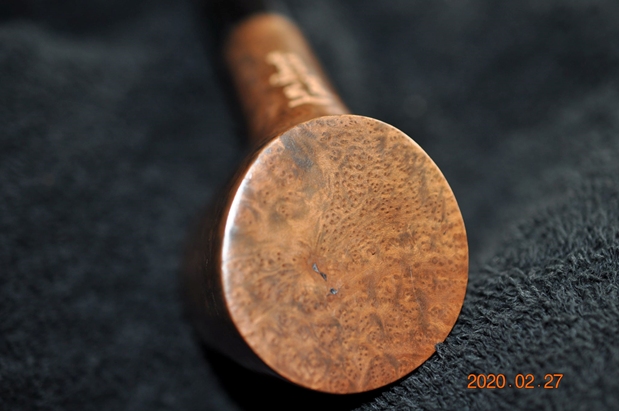
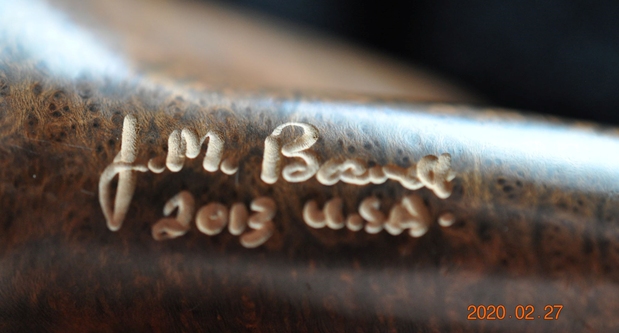
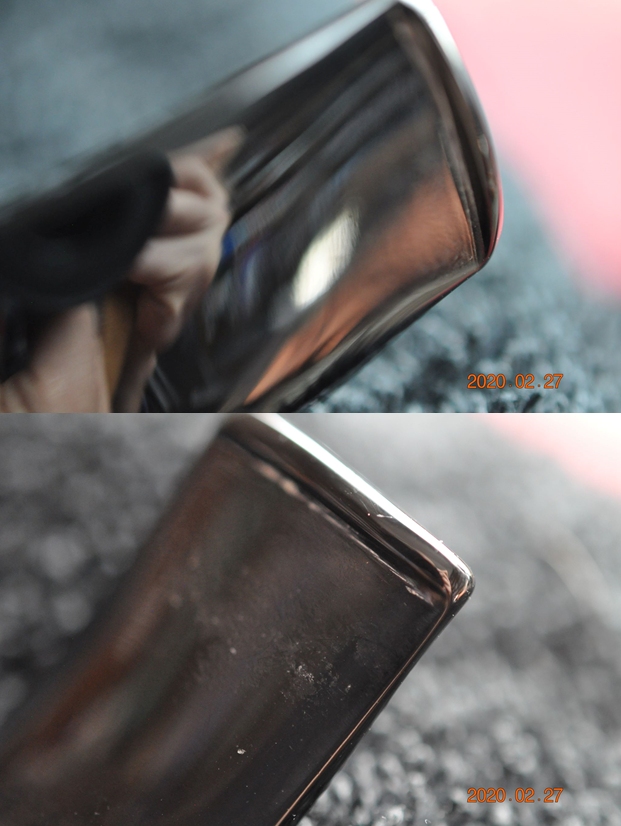
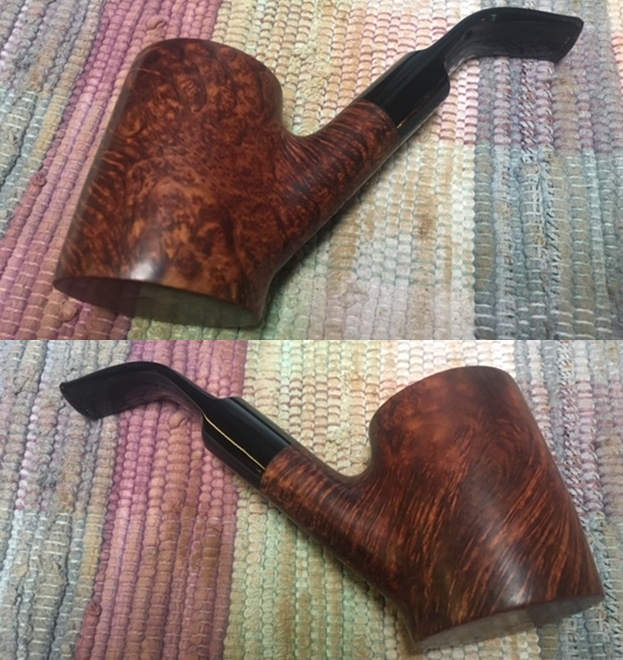
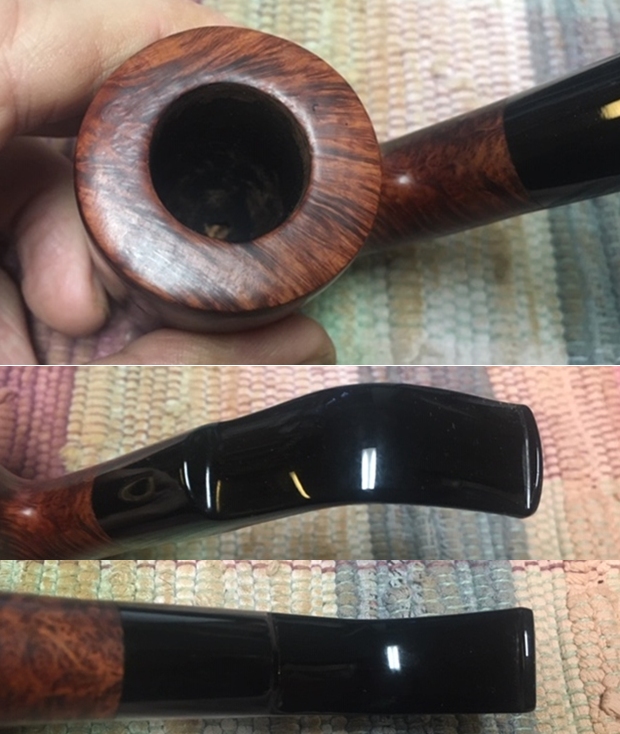
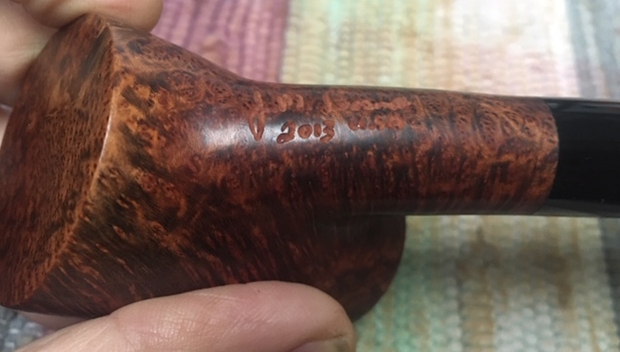
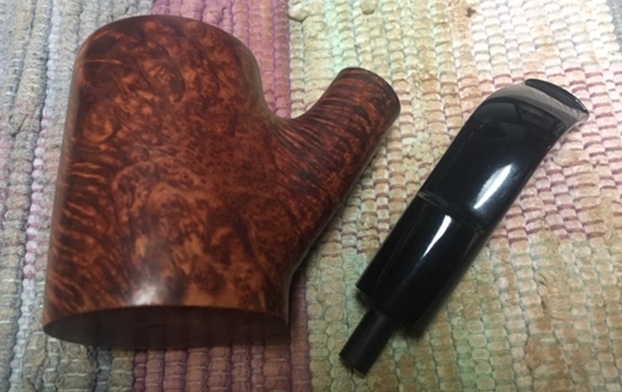
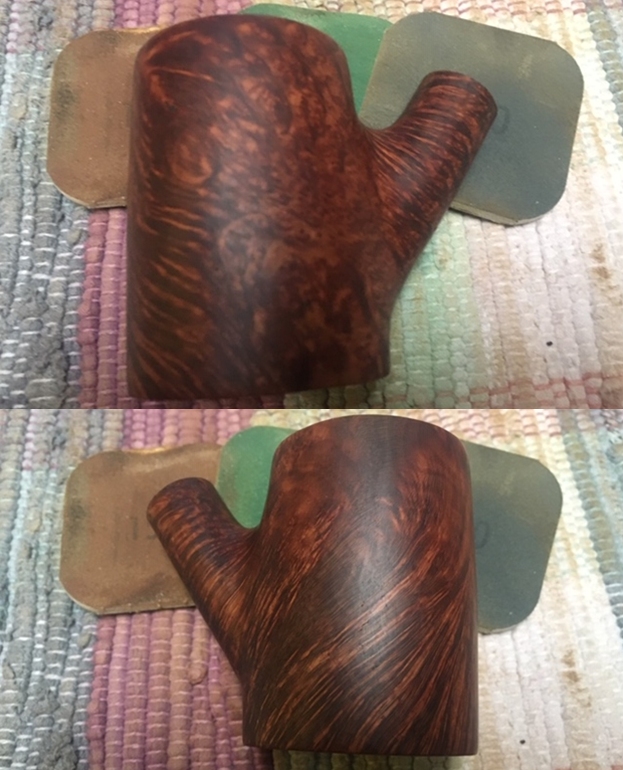
The next Boswell is also a 2013 pipe and this one has more of a standard shape to it. It is a bent Poker or Cherrywood Sitter shaped smooth briar with an acrylic saddle stem. The pipe was dusty and dull looking but had great grain around the bowl and rim. The rim top is smooth and clean with no darkening or lava overflow. The finish was very dirty from sitting around. There was a moderate cake in the bowl. The inner edge of the rim appeared to be in excellent condition. The pipe was signed on the underside of the shank with JM Boswell’s signature and 2013 U.S.A. There are no other stampings on the pipe and no shape numbers. The saddle acrylic stem was in good condition with just a few light tooth marks and chatter on both sides near the button. Jeff took the following photos before he started his cleanup work on the pipe. He took close-up photos of the bowl and rim top from various angles to capture the condition of the rim top and edges of the bowl. There was a little darkening along the back edge of the bowl but otherwise it was clean.He took photos of the sides and heel of the bowl to show the condition of the finish and the grain around the bowl. You can see the small minor sandpits on the left side and on the heel of the bowl but otherwise it a clean piece of briar. Jeff took a photo of the signature and date on the underside of the shank. It reads as noted above and is clear and readable. The next photos show the top and underside of the stem. You can see the light tooth marks right next to the button edge.Now it was time to look at it up close and personal. Jeff had done his usual thorough job in removing all of the cake in the bowl and the lava on the rim top. He had reamed the bowl with a PipNet Pipe Reamer and cleaned up the remnants with a Savinelli Fitsall Pipe Knife. He took the cake back to bare briar so we could check the walls for damage. He scrubbed the exterior of the bowl with Murphy’s Oil Soap and a tooth brush to remove the grime on the bowl and rim and was able to remove the lava and dirt. He cleaned out the interior of the bowl and shank with pipe cleaners, cotton swabs and alcohol until they came out clean. He cleaned the stem with Soft Scrub to remove the grime on the exterior and cleaned out the airway with alcohol, cotton swabs and pipe cleaners. I took photos of the pipe before I started my part of the work. To show how clean the rim top and stem really were I took a close-up photo of the rim and stem. The bowl was clean and cake free. The inner edges of the bowl look good. The acrylic stem cleaned up nicely. The surface had some tooth marks but the button edge looked really good.I took a photo of the signature on the under side of the shank.I removed the stem from the bowl and took photos of the parts. It really is a great looking pipe.I polished the briar with 1500-12000 grit micromesh sanding pads. I wiped the bowl down with a damp cloth after each sanding pad to remove the dust and debris. I rubbed the bowl and shank down with Before & After Restoration Balm to deep clean the finish on the bowl and shank. The product works to clean, enliven and protect the briar. I worked it in with my fingertips into finish on the bowl and shank. I let it sit for 10 minutes to let it do its magic. I buffed it with a soft cloth. The briar really began to have a rich shine. I took some photos of the bowl at this point to mark the progress in the restoration. The bowl was finished so I set it aside and turned my attention to the stem. To address the tooth marks on the stem surface I sanded it with 220 grit sandpaper to blend in the tooth marks. I started the polishing with 400 grit wet dry sandpaper.I polished the stem with micromesh sanding pads – dry sanding with 1500-12000 grit sanding pads. I wiped the stem down after each sanding pad with a cloth containing some Obsidian Oil. I finished polishing it with Before & After Pipe Stem Polish – both Fine and Extra Fine and buffed it off with a cotton cloth. I put the bowl and stem back together again and buffed the bowl and the stem with Blue Diamond on the buffing wheel. I gave the bowl and the stem several coats of carnauba wax. I carefully buffed the entire pipe with a clean buffing pad to raise the shine. I finished buffing with a microfiber cloth to deepen the shine. The finished pipe looks very good. The grain is a mix of patterns around the sides, top and bottom of the bowl and is quite beautiful. The pipe feels great in the hand. It is comfortable and light weight. The finished JM Boswell 2013 Bent Poker/Sitter is shown in the photos below. The dimensions of the pipe are Length: 5 ¼ inches, Height: 2 ½ inches, Outside diameter of the bowl: 1 ¾ inches, Chamber diameter: 7/8 of an inch. This great looking Boswell Poker turned out very well. It should be a great pipe. It will be going on the rebornpipes store shortly if you are interested in adding it to your collection. Thanks for reading this blog and my reflections on the pipe while I worked on it.

Breathing Life into an Aged Imported Briar Bullmoose


Blog by Steve Laug

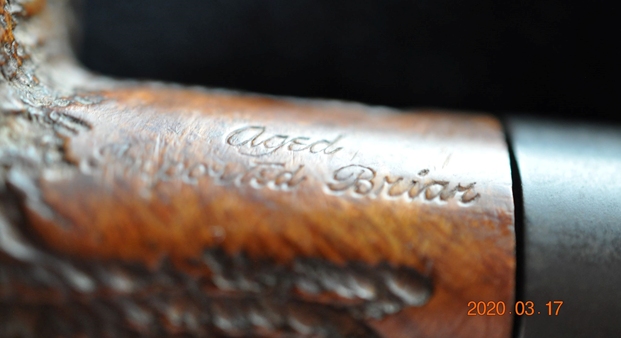
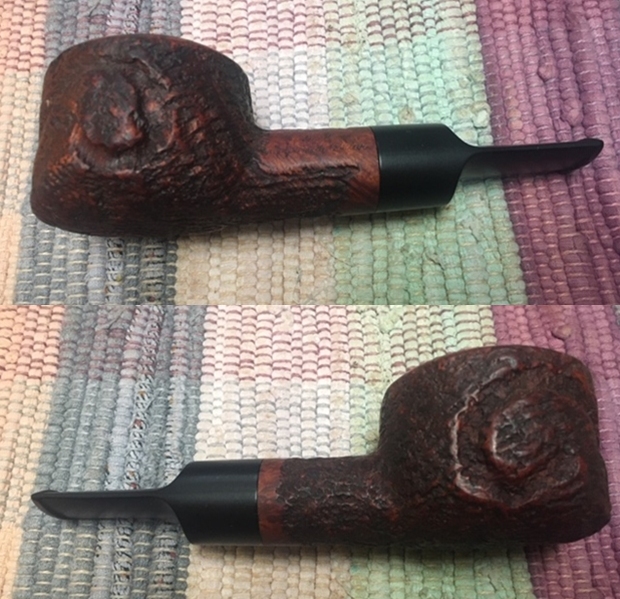
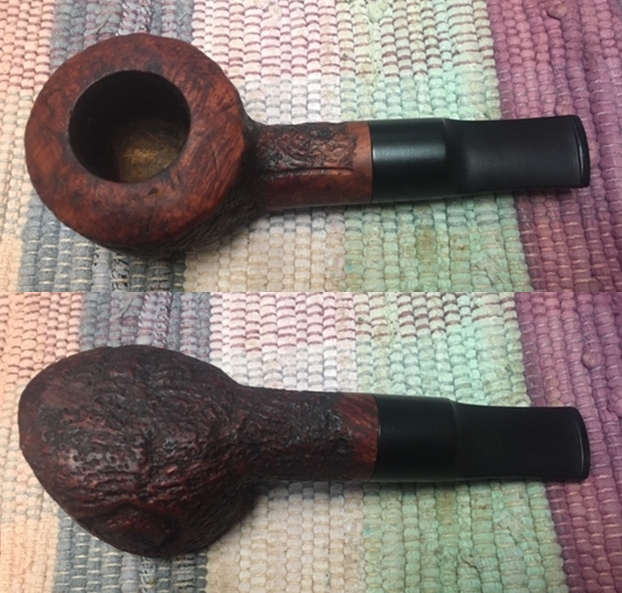
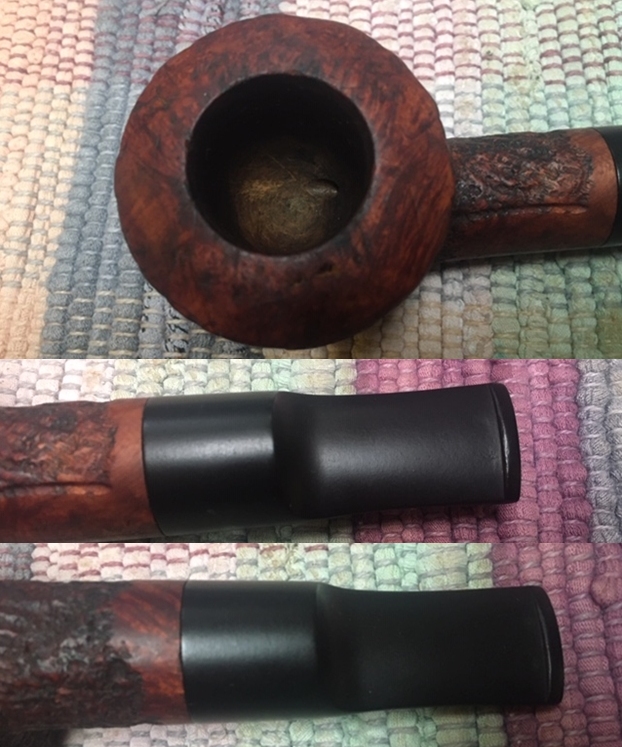
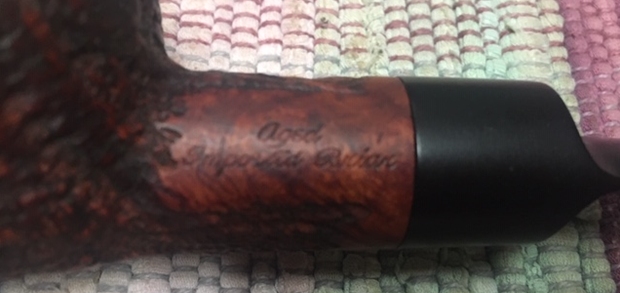
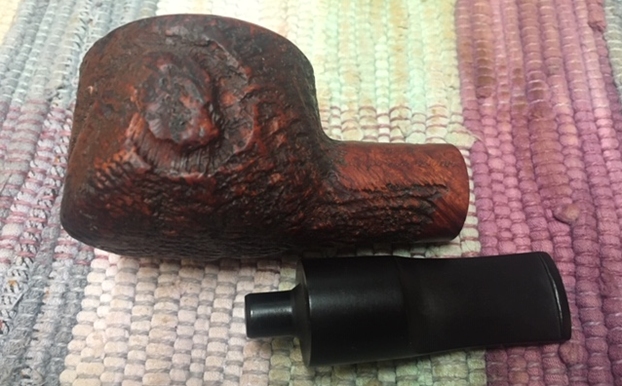
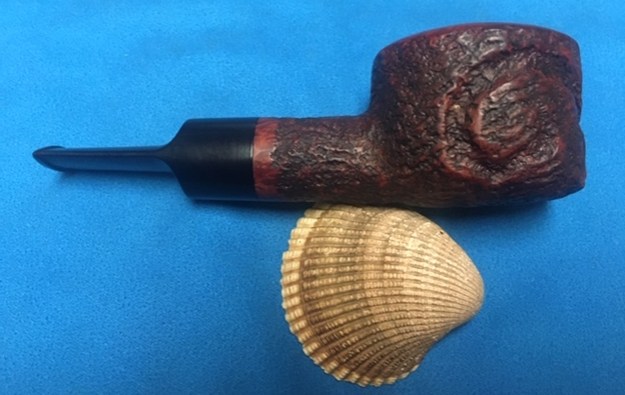
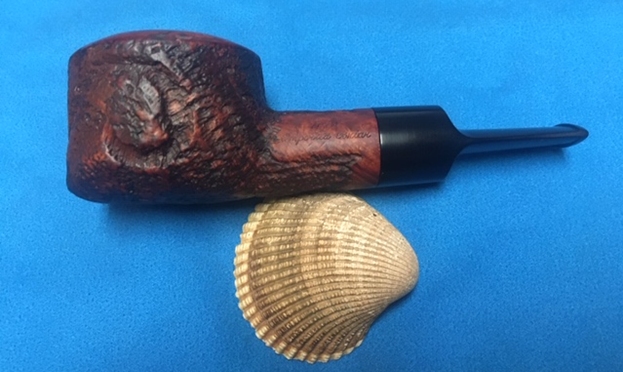
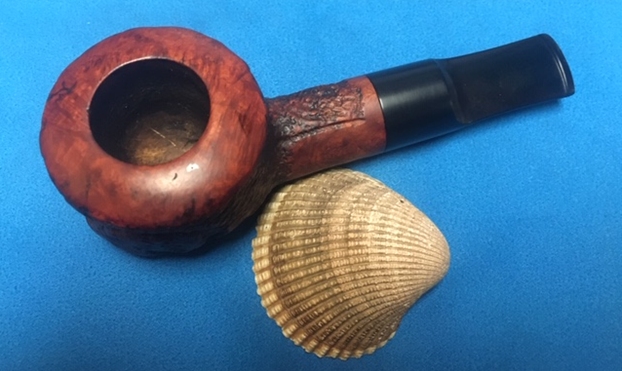
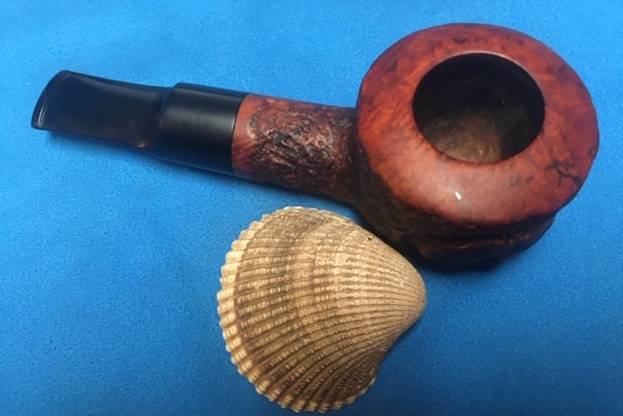
There is something about Custombilt style older American Made pipes that always gets my attention. This one is a uniquely rusticated Bullmoose shaped pipe with a short stubby vulcanite saddle stem. The pipe had some unique beauty shining through the dust and debris in the valleys of the rustication. The rustication is on the sides and bottom of the bowl and shank. The rim top is smooth as is the smooth panel on the left side of the shank and the band around the shank end. The finish was very dirty from sitting around. There was a thick cake in the bowl with lava flowing out of the bowl and over the rim top. The rim top looked like it had been used as a hammer repeatedly. There were nicks, gouges and deep chunks missing on the smooth rim top. It was in very rough condition. The inner edge of the rim appeared to be in surprisingly good condition. The stamping on the left side of the shank read Aged Imported Briar. There are no other stampings on the pipe and no shape numbers. The saddle stem was oxidized and there were tooth marks and chatter on both sides near the button. Jeff took the following photos before he started his cleanup work on the pipe. He took close-up photos of the bowl and rim top from various angles to capture the damage to the rim top. It really is a mess. You can see the lava overflow and debris in the gouges and scratches on the rim top. You can see the cake in the bowl. This was a dirty pipe but the rusticated around the bowl finish appeared to be in good condition. He took photos of the sides and heel of the bowl to show the unique rustication around the bowl. You can see the dust and debris in the finish. It is a good looking rustication and unlike any others that I have seen. Jeff took a photo of the stamping on the shank. It reads as noted above and is clear and readable.The next photos show the overview of the stem top and the tooth chatter and oxidation on the top and underside of the stem. The stamping on the shank does not help me identify the maker of the pipe. There are things about the pipe that remind me of either Kaywoodie rustics or Custombilt pipes. But there was nothing other than conjecture on my part.

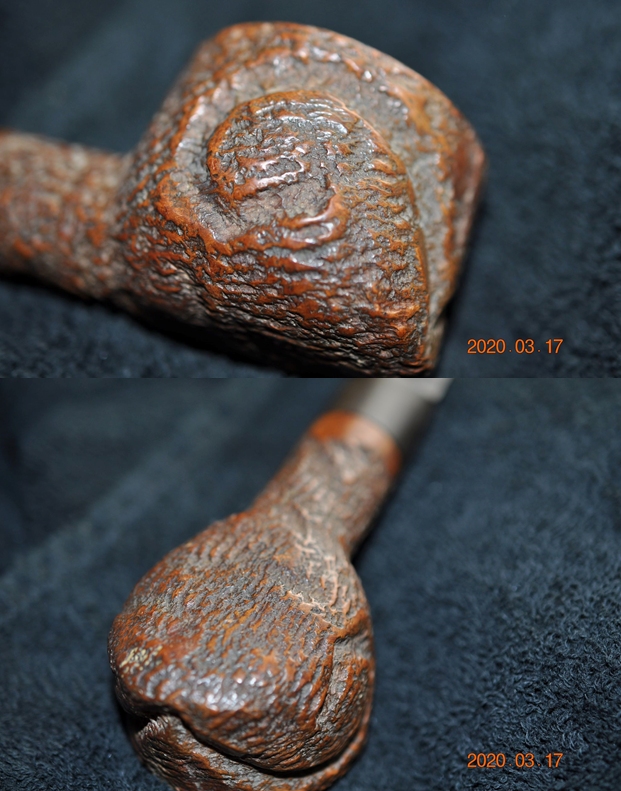
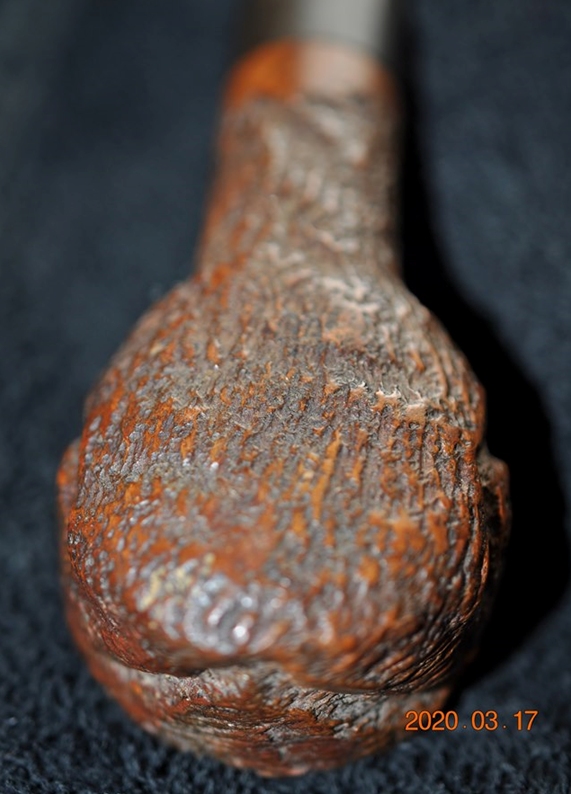
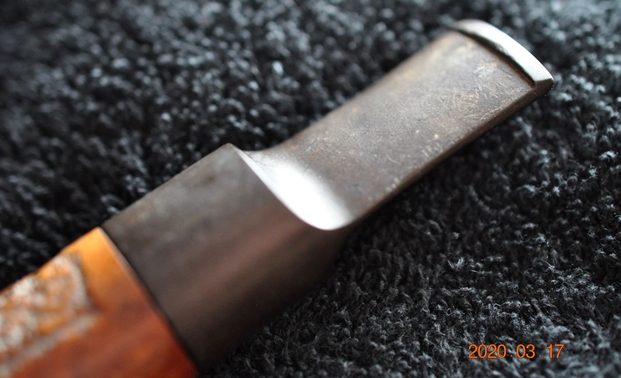
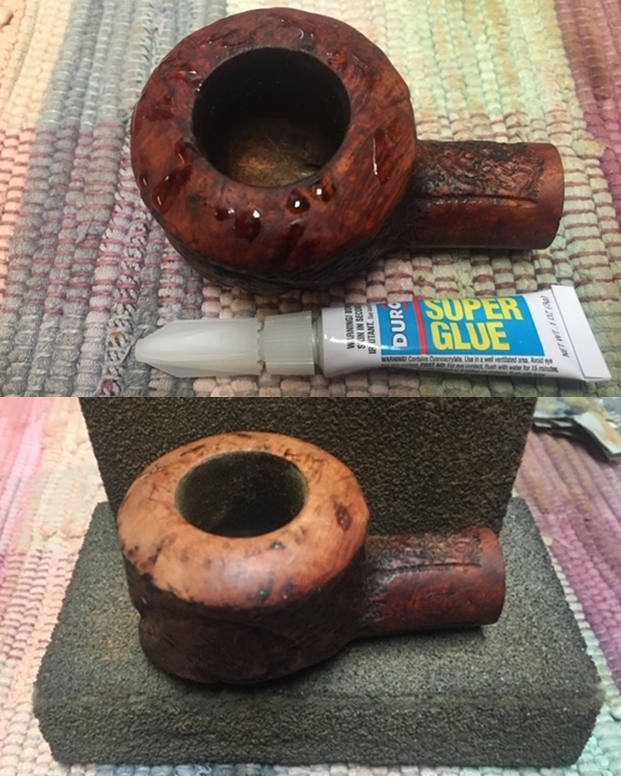
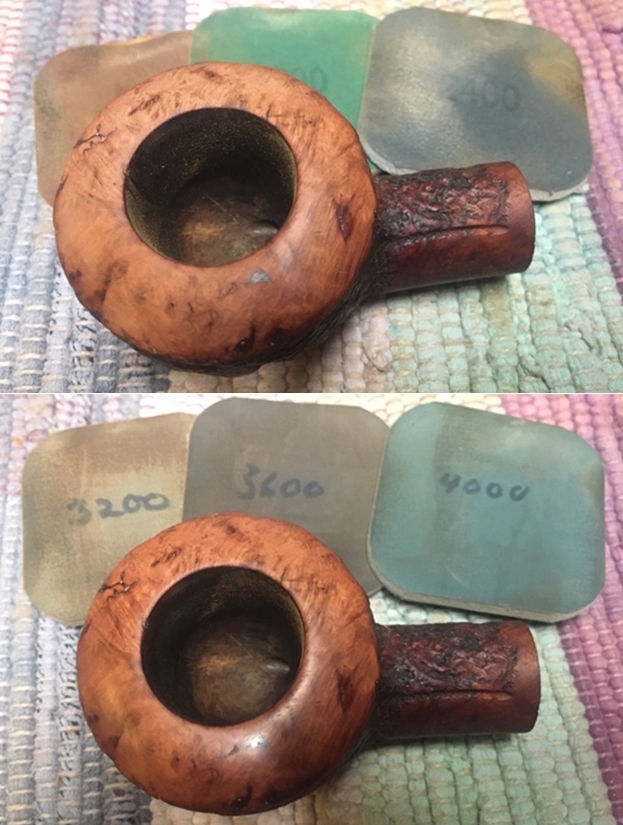
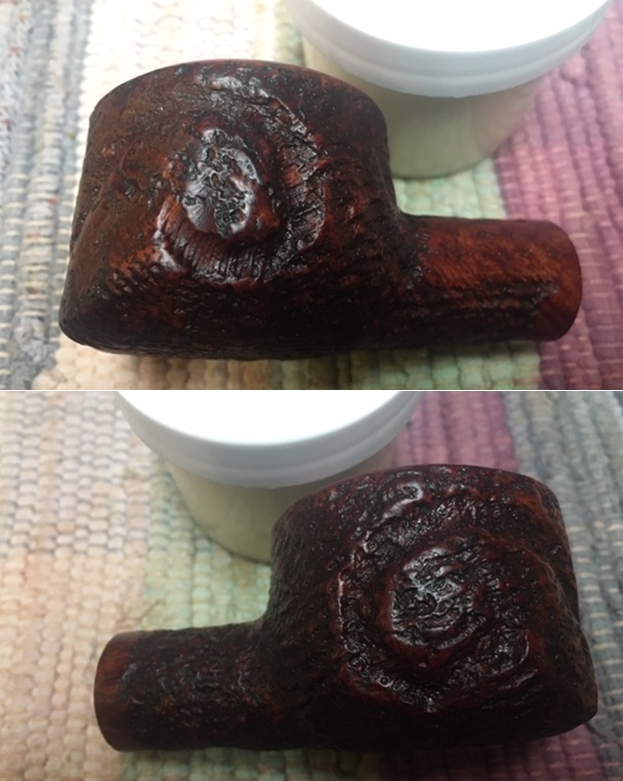
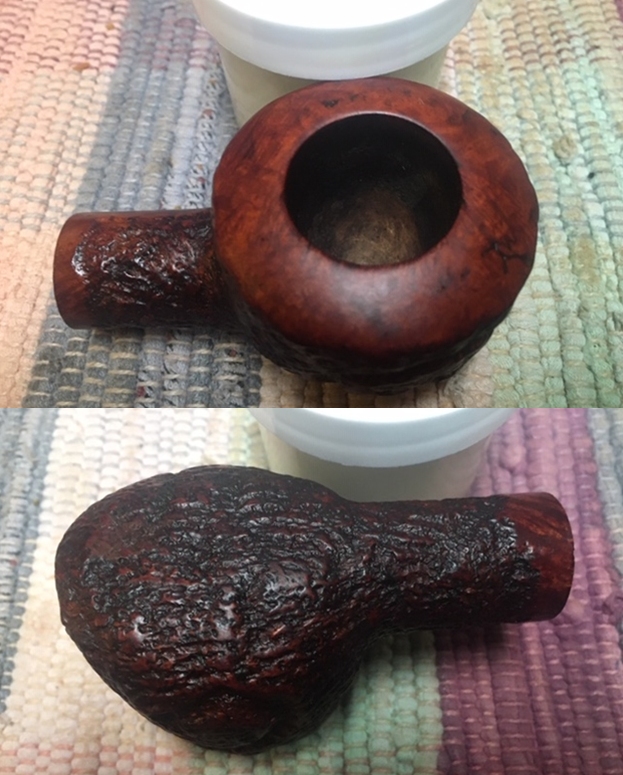
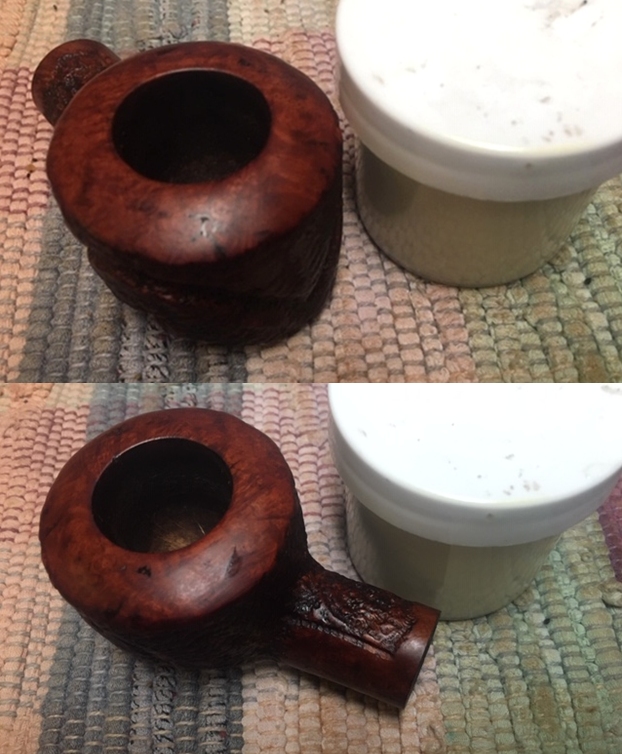
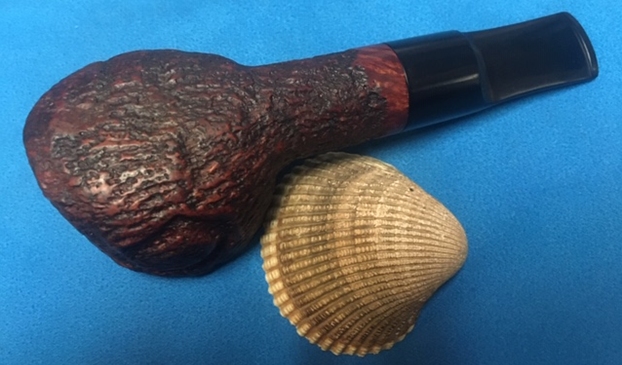
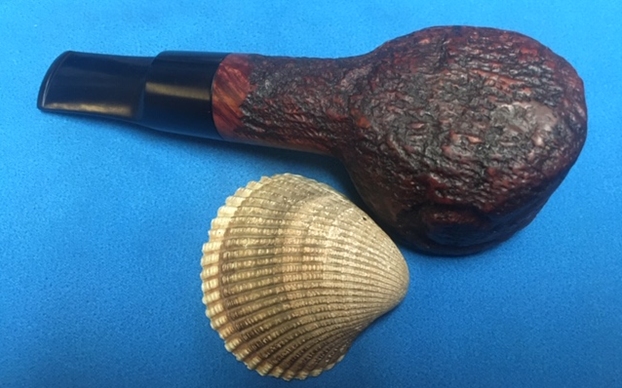
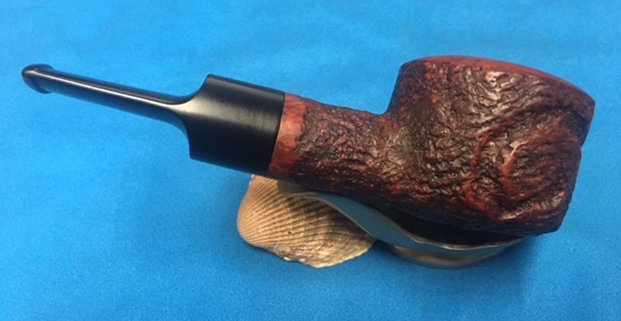
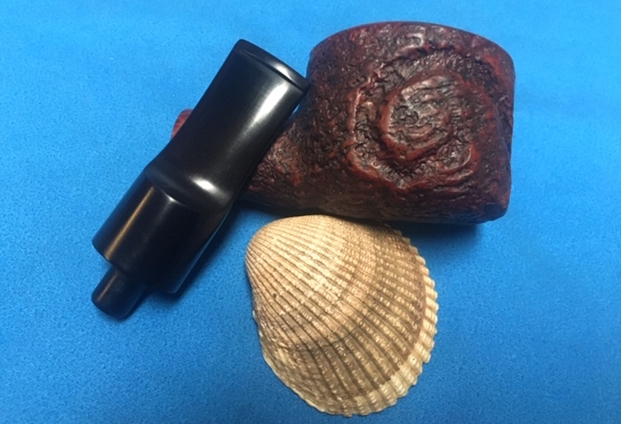
Now it was time to look at it up close and personal. Jeff had done his usual thorough job in removing all of the cake in the bowl and the lava on the rim top. He had reamed the bowl with a PipNet Pipe Reamer and cleaned up the remnants with a Savinelli Fitsall Pipe Knife. He took the cake back to bare briar so we could check the walls for damage. He scrubbed the exterior of the bowl with Murphy’s Oil Soap and a tooth brush to remove the grime on the bowl and rim and was able to remove the lava and dirt. He cleaned out the interior of the bowl and shank with pipe cleaners, cotton swabs and alcohol until they came out clean. He cleaned the stem with Soft Scrub to remove the grime on the exterior and cleaned out the airway with alcohol, cotton swabs and pipe cleaners. I took photos of the pipe before I started my part of the work. To show how clean the rim top and stem really were I took a close-up photo of the rim and stem. The bowl was clean and cake free. The rim top is very clean with no residual lava in the sandblast finish. The inner edges of the bowl look good. The vulcanite stem cleaned up nicely. The surface had some light oxidation and tooth marks but the button edge looked really good.I took a photo of the stamping on the under side of the shank. You can see the clear stamping.I removed the stem from the bowl and took photos of the parts. The saddle vulcanite stem look very good. I decided to address the damage to the rim top first. I filled in the deep gouges and nicks in the rim top with superglue. Once the repairs had cured I sanded the rim top with a medium and a fine grit sanding sponge. I worked on especially hard areas on the rim top and edges with a folded piece of 220 grit sandpaper.I polished the rim top with 1500-12000 grit micromesh sanding pads. I wiped the bowl down with a damp cloth after each sanding pad to remove the dust and debris. I stained the rim top with a Tan aniline stain to match the colour of the smooth portions around the bowl and shank.I rubbed the bowl and shank down with Before & After Restoration Balm to deep clean the finish on the bowl and shank. The product works to clean, enliven and protect the briar. I worked it in with my fingers and with a horse hair shoe brush to get it into the nooks and crannies of the sandblast finish on the bowl and shank. I let it sit for 10 minutes to let it do its magic. I buffed it with a soft cloth. The briar really began to have a rich shine. I took some photos of the bowl at this point to mark the progress in the restoration. The bowl was finished so I set it aside and turned my attention to the stem. To address the oxidation and the tooth marks on the stem surface I sanded it with 220 grit sandpaper to blend in the tooth marks and to break up the oxidation. I started the polishing with 400 grit wet dry sandpaper.I started polishing the stem with Denicare Mouthpiece Polish – a red gritty paste that feels a lot like Tripoli. I find that it works well to polish out some of the more surface scratches in the vulcanite left behind by the 400 grit wet dry sandpaper. I rub it into the stem surface with my fingertips and buff it off with a cotton pad.I polished the stem with micromesh sanding pads – dry sanding with 1500-12000 grit sanding pads. I wiped the stem down after each sanding pad with a cloth containing some Obsidian Oil. I finished polishing it with Before & After Pipe Stem Polish – both Fine and Extra Fine and buffed it off with a cotton cloth. I gave it a final rub down with Obsidian Oil to preserve and protect the vulcanite stem. I have used No Oxy Oil in the past at this point as it does the same thing as Obsidian Oil but have gone back to using Obsidian Oil. I put the bowl and stem back together again and buffed the bowl and the stem with Blue Diamond on the buffing wheel. I used a soft touch on the rusticated bowl so as not to fill in the crevices with the product. I gave the bowl several coats of Conservator’s Wax and the stem several coats of carnauba wax. I carefully buffed the entire pipe with a clean buffing pad to raise the shine. I finished buffing with a microfiber cloth to deepen the shine. The finished pipe looks very good. The rustication is unique with almost a nautilus swirl on both sides. The pipe feels great in the hand. It is comfortable and light weight. The finished Aged Imported Briar Bullmoose is shown in the photos below. The dimensions of the pipe are Length: 5 ¼ inches, Height: 1 ½ inches, Outside diameter of the bowl: 2 inches, Chamber diameter: 1 inch. This great looking rusticated Bullmoose turned out very well. It should be a great pipe. It will be going on the rebornpipes store shortly if you are interested in adding it to your collection. Thanks for reading this blog and my reflections on the pipe while I worked on it.

Restoring a bit of a mystery ROTA’s Made in London England Long Shank Bulldog


Blog by Steve Laug

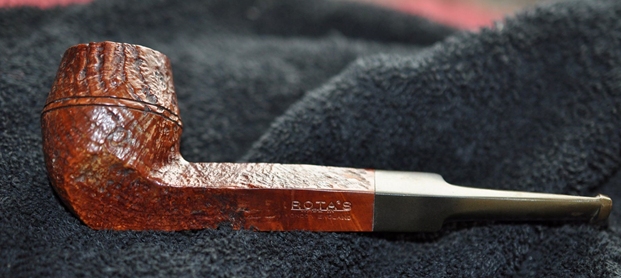
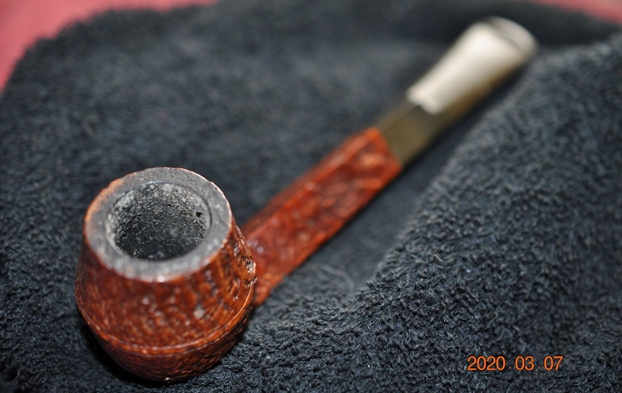
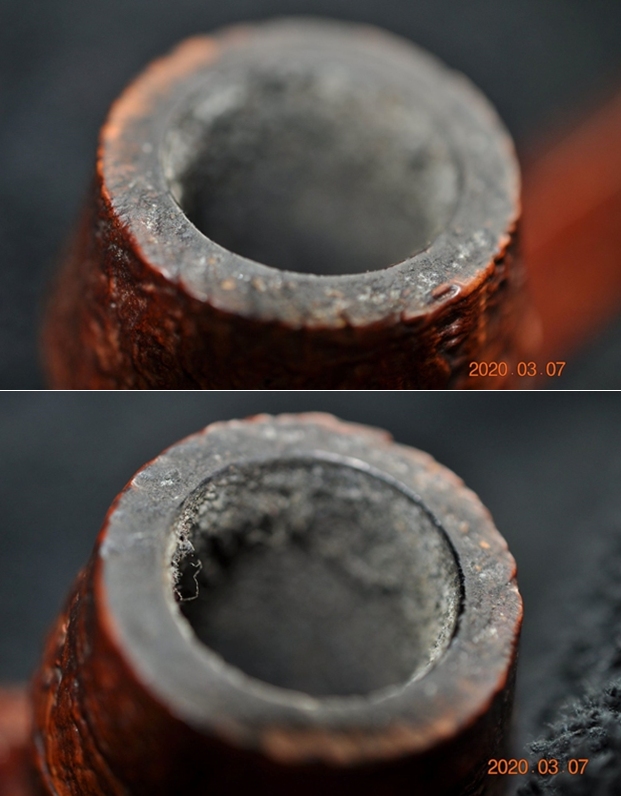
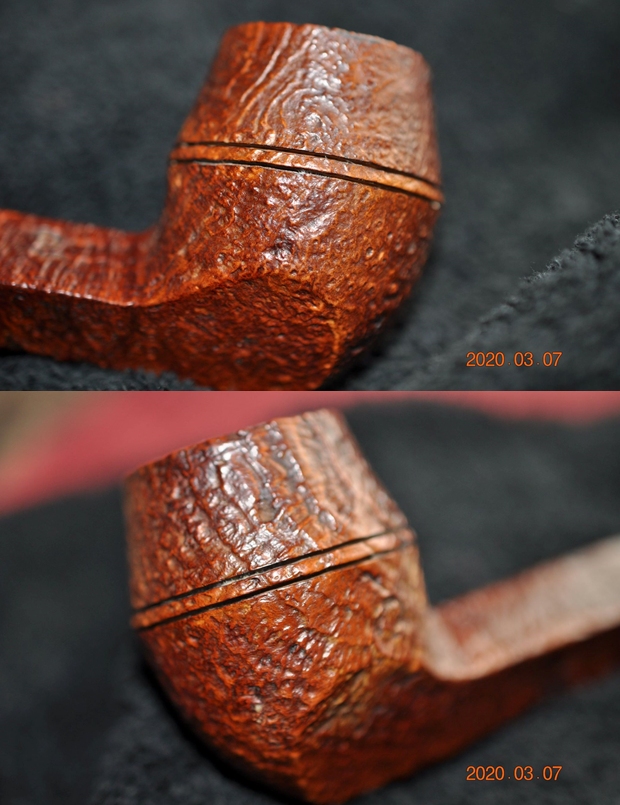
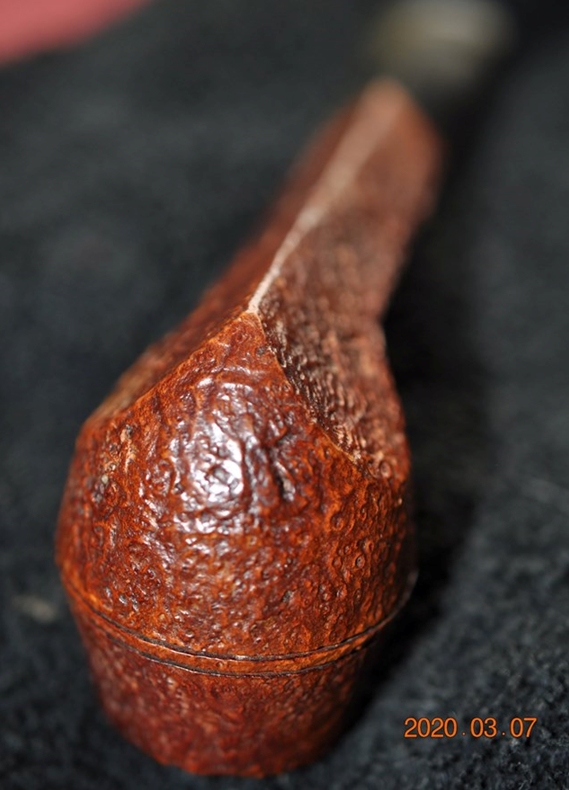
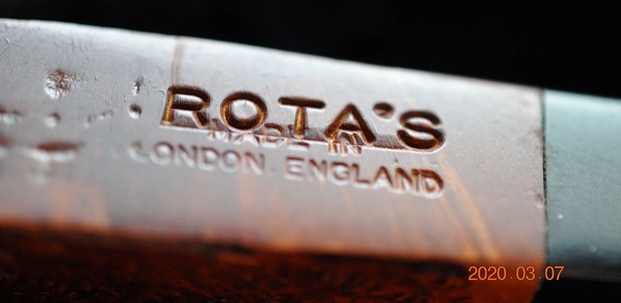
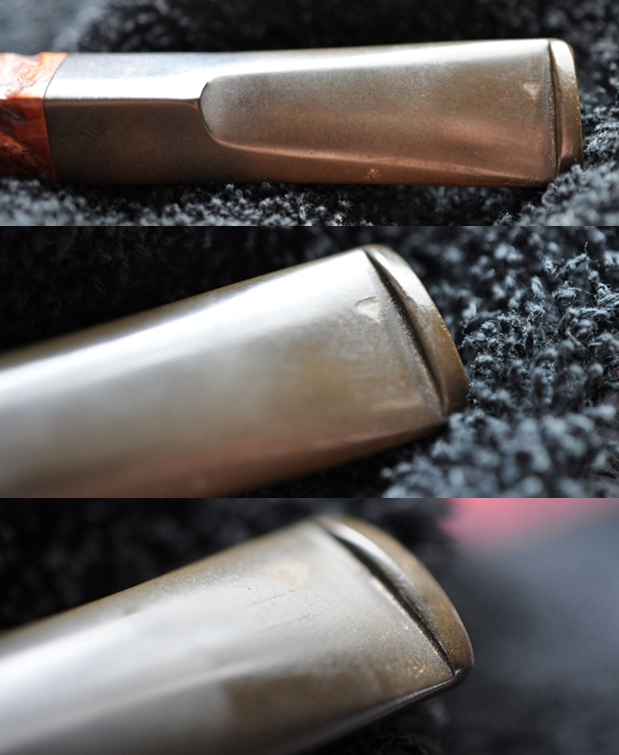
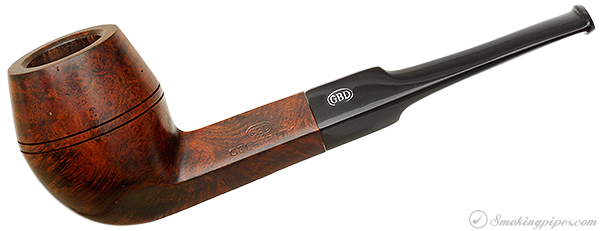
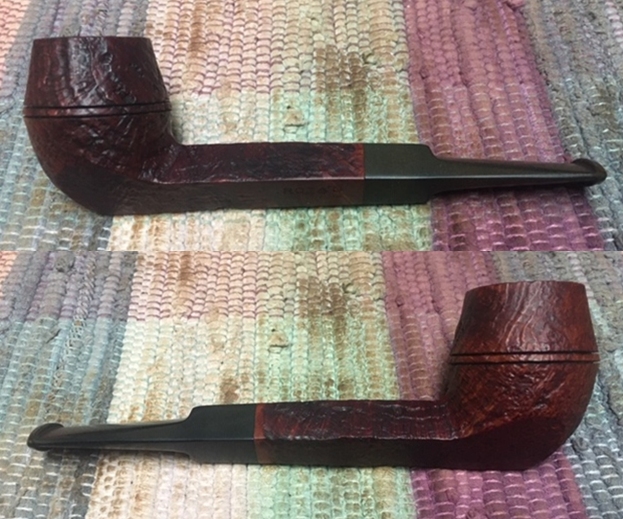
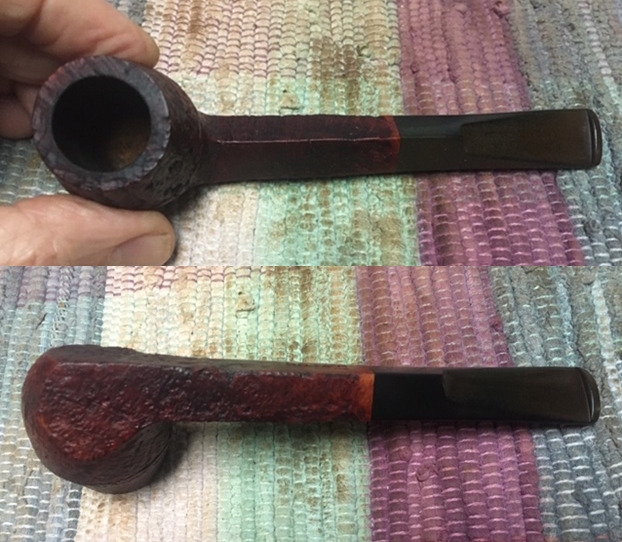
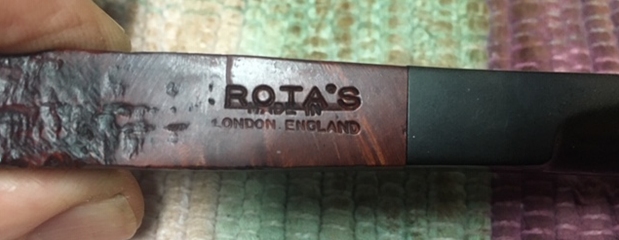
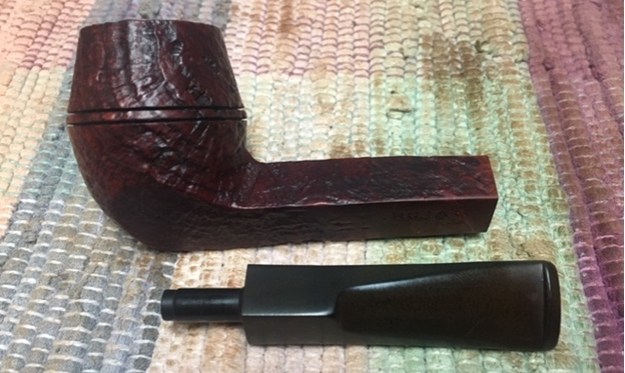
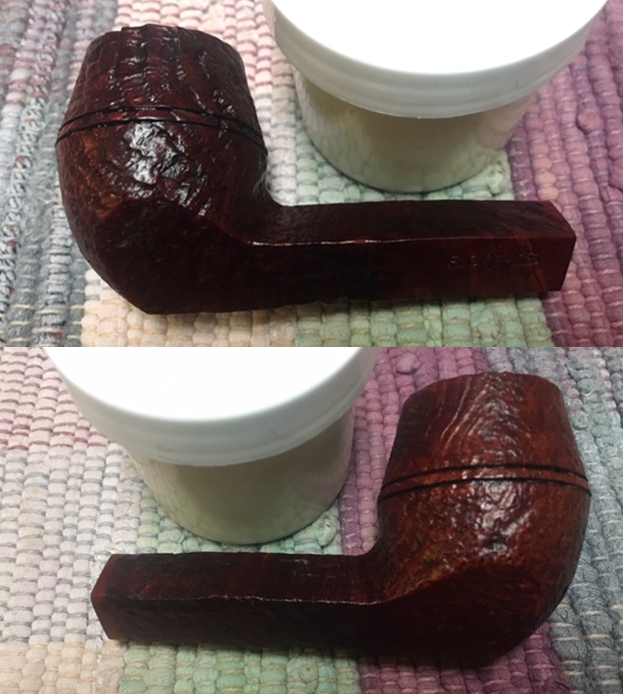
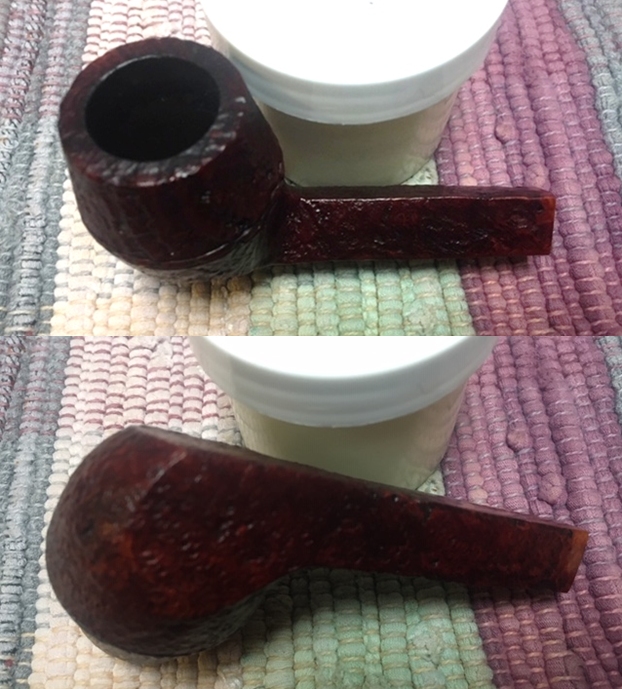
The next pipe on my worktable is a bit of a mystery. It is a well-made long shank Bulldog that has a great sandblast. The pipe had some beauty shining through the dust and debris in the valleys of the sandblast finish. The blast covered the rim top, bowl and shank with a smooth panel on the underside of the shank. The finish was dull and lifeless and dirty from sitting around. There was a thick cake in the bowl with lava flowing out of the bowl and over the rim top. The lava had filled in the deeper grooves of the sandblasted finish on the rim top. The inner edge of the rim appeared to be in good condition. The stamping on the shank read Made in London England with ROTA’S stamped afterward and slightly on top of the Made in stamp. There are no other stampings on the pipe and no shape numbers. The saddle stem was oxidized and there were tooth marks and chatter on both sides near the button. Jeff took the following photos before he started his cleanup work on the pipe. He took close-up photos of the bowl and rim top from various angles to capture the condition of the bowl and rim top edges. You can see the lava overflow and debris in the sandblasted rim top. You can see the cake in the bowl. This was a dirty pipe but it was the overall finish appeared to be in good condition.He took photos of the sides and heel of the bowl to show the beautiful sandblast around the bowl. It is quite uniform and you can see the dust and debris in the finish. It is a good looking sandblast. Jeff took a photo of the stamping on the shank. It reads as noted above and is clear and readable.The next photos show the overview of the stem top and the tooth chatter and oxidation on the top and underside of the stem.When the pipe arrived I turned to Pipephil and Pipedia for information on the ROTA’S name and the Made in London England stamping. There was nothing the ROTA name. I looked at Comoy’s shapes and Charatan shapes as suggested by others and did not find a match in either one of those. While I was working on the pipe there was something about the shape, particularly the cap above the twin rings and the way the bottom of the bowl flowed into the diamond shank that reminded me of some GBD Bulldogs that I had worked on. I searched online for long shank GBD Bulldogs and found the one that I was thinking about. The link led me to a pipe on the site smokingpipes.com – a GBD Celebrity 268 Bulldog. I am including both the link and a picture below (https://www.smokingpipes.com/pipes/estate/england/moreinfo.cfm?product_id=141918).I think I had found a good possibility for the maker of the pipe for whoever ROTA’S is. Though the ROTA version is  a little longer the shape of the bowl and the shank is identical and the lay out of the stem matches as well. Someone suggested that ROTA’S was a company or shop but I exhausted that online as well. So the ROTA’S stamp remains a mystery but I think the pipe itself was made by GBD. Perhaps someone reading this will make the link for us and let us all know.

Now it was time to look at it up close and personal. Jeff had done his usual thorough job in removing all of the cake in the bowl and the lava on the rim top. He had reamed the bowl with a PipNet Pipe Reamer and cleaned up the remnants with a Savinelli Fitsall Pipe Knife. He took the cake back to bare briar so we could check the walls for damage. He scrubbed the exterior of the bowl with Murphy’s Oil Soap and a tooth brush to remove the grime on the bowl and rim and was able to remove the lava and dirt. He cleaned out the interior of the bowl and shank with pipe cleaners, cotton swabs and alcohol until they came out clean. He cleaned the stem with Soft Scrub to remove the grime on the exterior and cleaned out the airway with alcohol, cotton swabs and pipe cleaners. I took photos of the pipe before I started my part of the work. To show how clean the rim top and stem really were I took a close-up photo of the rim and stem. The bowl was clean and cake free. The rim top is very clean with no residual lava in the sandblast finish. The inner edges of the bowl look good. The vulcanite stem cleaned up nicely. The surface had some light oxidation and tooth marks but the button edge looked really good.I took a photo of the stamping on the under side of the shank. You can see the clear stamping.I removed the stem from the bowl and took photos of the parts. The 4 Blue Dots on the tapered vulcanite stem look very good. Once again the bowl looked very good so I did not need to do any further work on it. I rubbed the bowl and shank down with Before & After Restoration Balm to deep clean the finish on the bowl and shank. The product works to clean, enliven and protect the briar. I worked it in with my fingers and with a horse hair shoe brush to get it into the nooks and crannies of the sandblast finish on the bowl and shank. I let it sit for 10 minutes to let it do its magic. I buffed it with a soft cloth. The briar really began to have a rich shine. I took some photos of the bowl at this point to mark the progress in the restoration. The bowl was finished so I set it aside and turned my attention to the stem. To address the oxidation and the tooth marks on the stem surface I sanded it with 220 grit sandpaper to blend in the tooth marks and to break up the oxidation. I started the polishing with 400 grit wet dry sandpaper.I started polishing the stem with Denicare Mouthpiece Polish – a red gritty paste that feels a lot like tripoli. I find that it works well to polish out some of the more surface scratches in the vulcanite left behind by the 400 grit wet dry sandpaper. I rub it into the stem surface with my fingertips and buff it off with a cotton pad.I polished the stem with micromesh sanding pads – dry sanding with 1500-12000 grit sanding pads. I wiped the stem down after each sanding pad with a cloth containing some Obsidian Oil. I finished polishing it with Before & After Pipe Stem Polish – both Fine and Extra Fine and buffed it off with a cotton cloth. I gave it a final rub down with Obsidian Oil to preserve and protect the vulcanite stem. I have used No Oxy Oil in the past at this point as it does the same thing as Obsidian Oil but have gone back to using solely Obsidian Oil. I put the bowl and stem back together again and buffed the bowl and the stem with Blue Diamond on the buffing wheel. I used a soft touch on the sandblast bowl so as not to fill in the blast with the product. I gave the bowl several coats of Conservator’s Wax and the stem several coats of carnauba wax. I carefully buffed the entire pipe with a clean buffing pad to raise the shine. I finished buffing with a microfiber cloth to deepen the shine. The finished pipe looks very good. The sandblast is light but interesting and feels great in the hand. It is comfortable and light weight. The finished ROTA’S Made in London England Long Shank Bulldog is shown in the photos below. It sure looks like some of the GBD Bulldogs I have worked on. The dimensions of the pipe are Length: 6 inches, Height: 2 inches, Outside diameter of the bowl: 1 ¼ inches, Chamber diameter: ¾ of an inch. This great looking sandblast long shank Bulldog turned out very well. It should be a great pipe. It will be going on the rebornpipes store shortly if you are interested in adding it to your collection. Thanks for reading this blog and my reflections on the pipe while I worked on it.