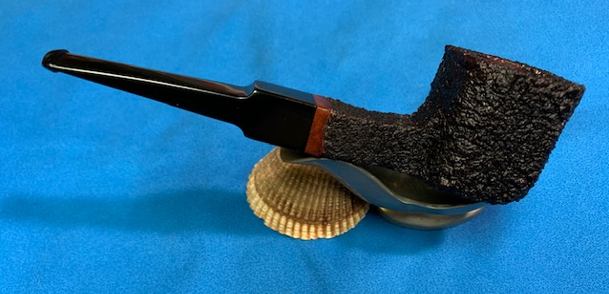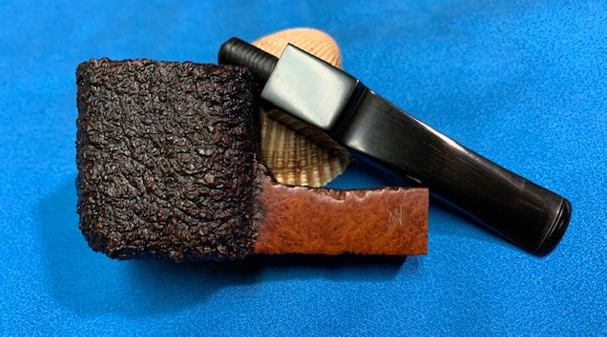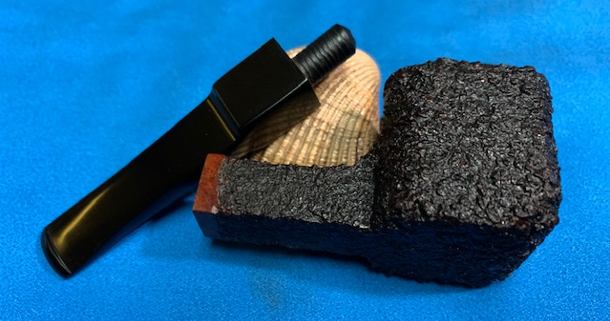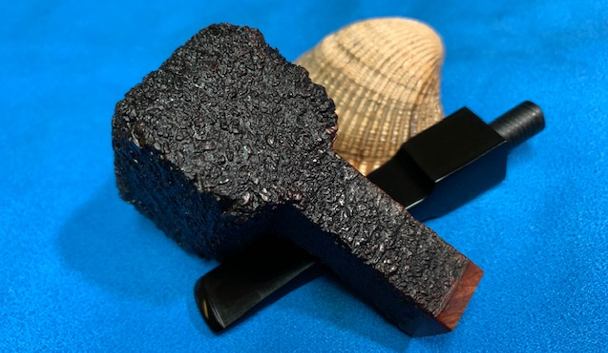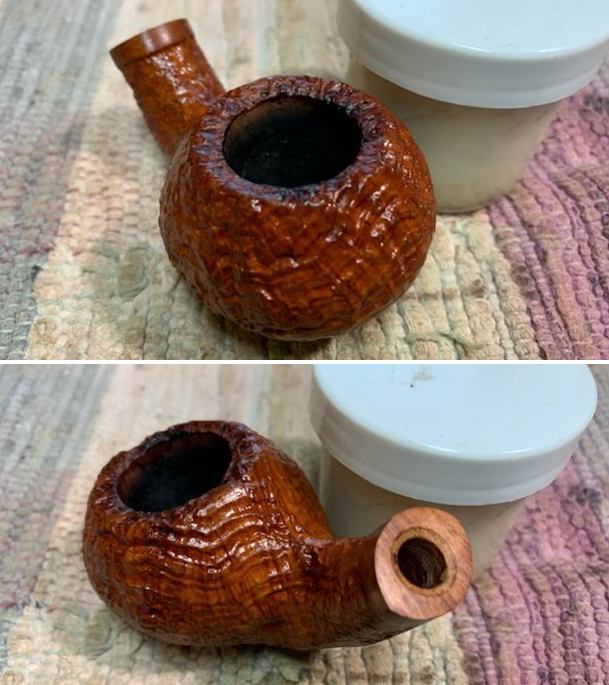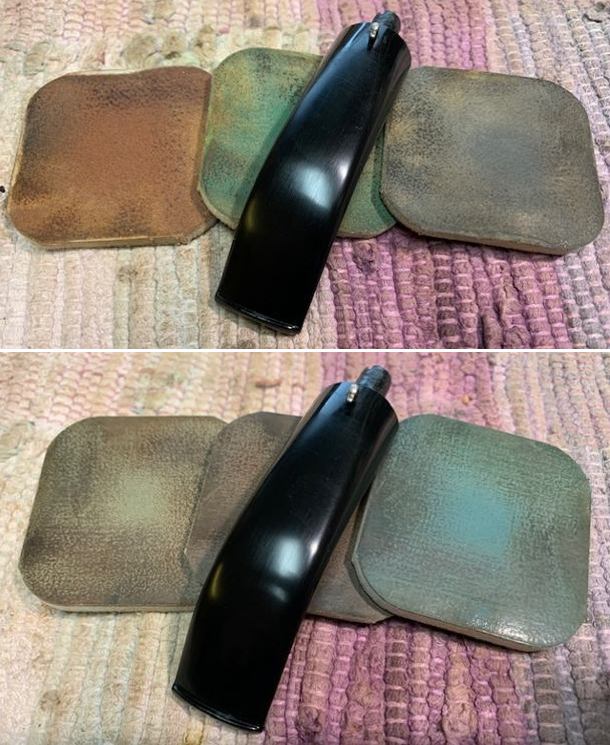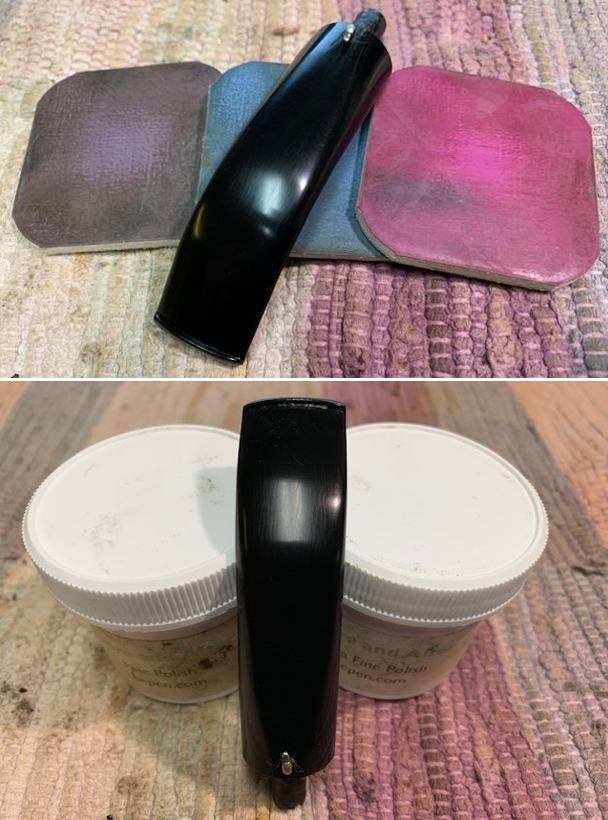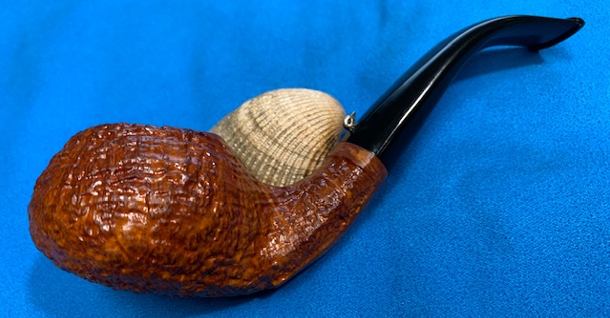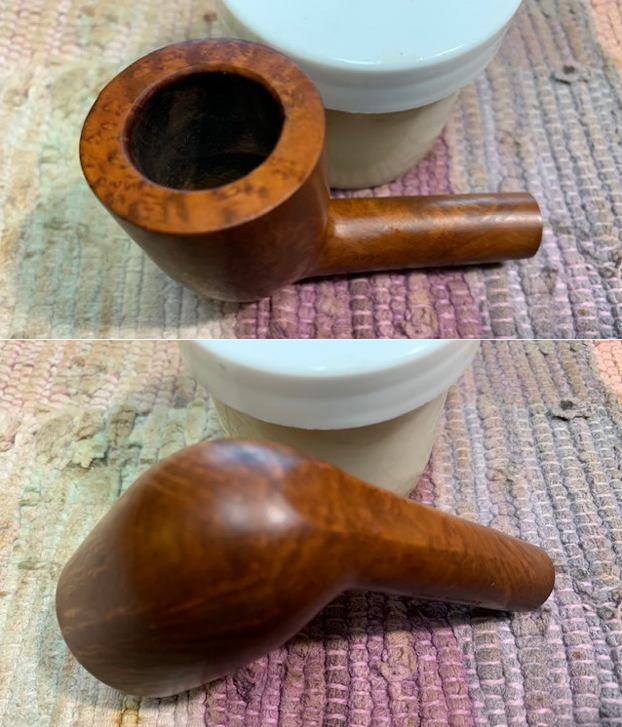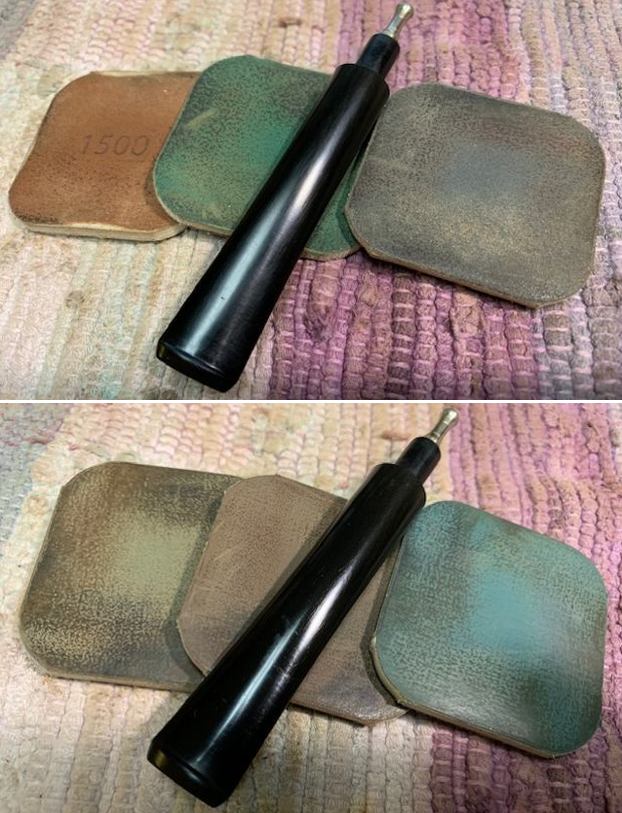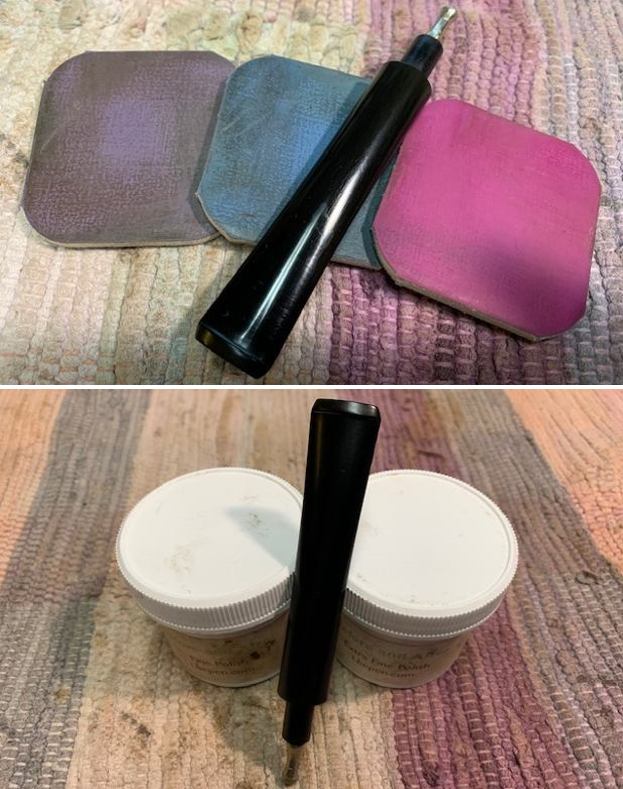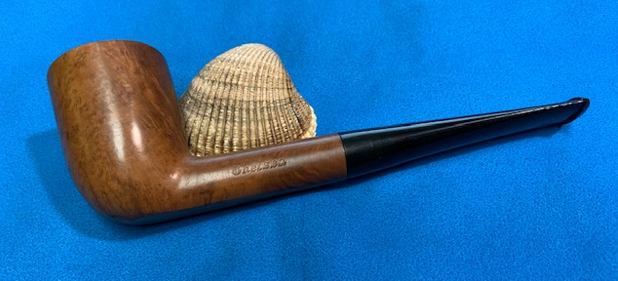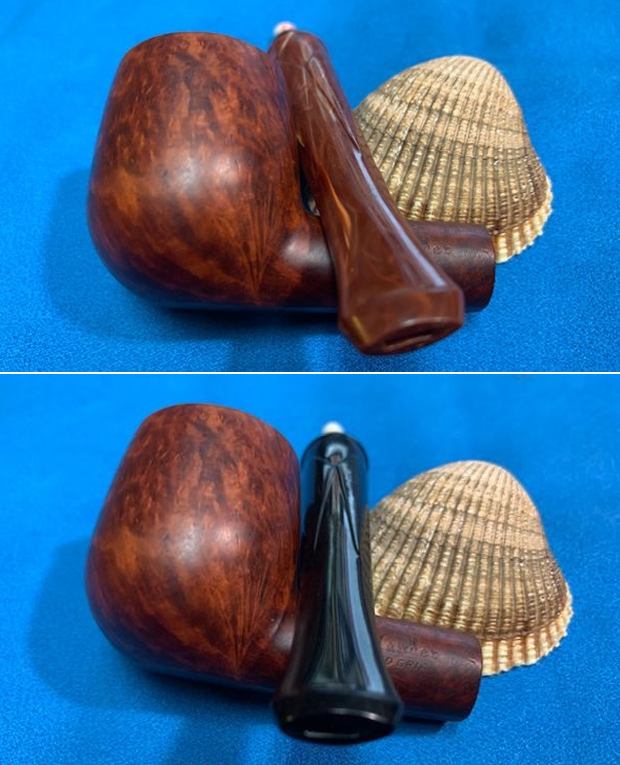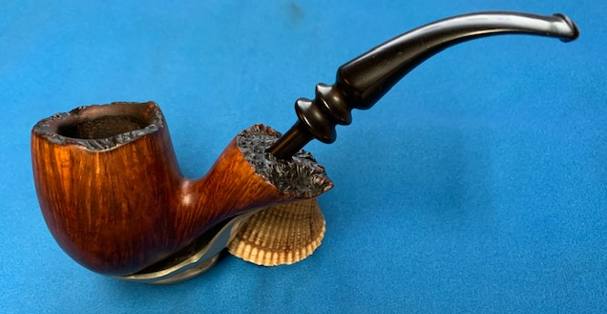
Tag Archives: Bowl – finishing

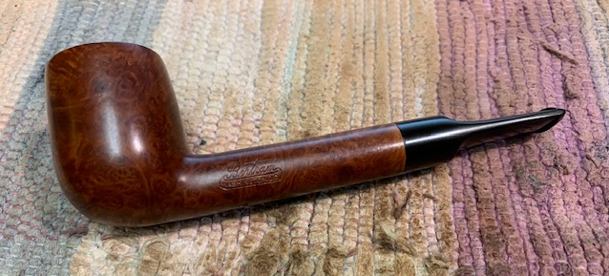
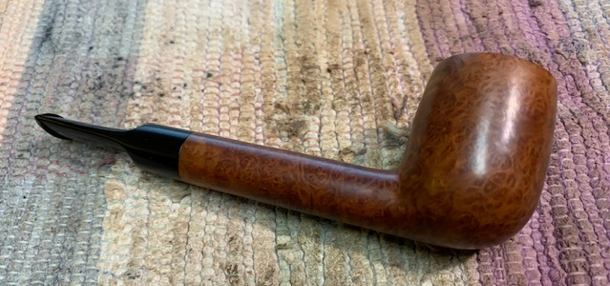
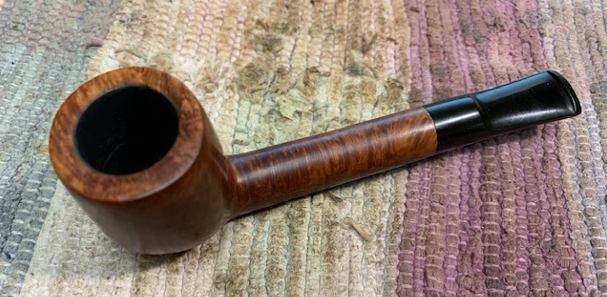
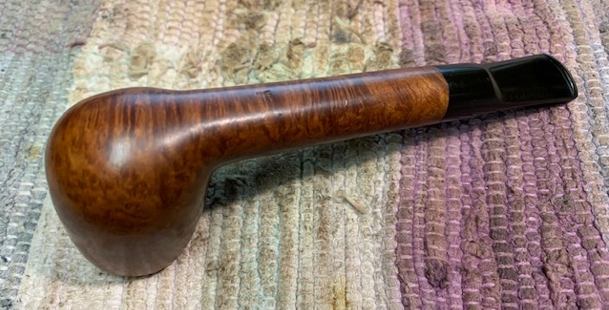
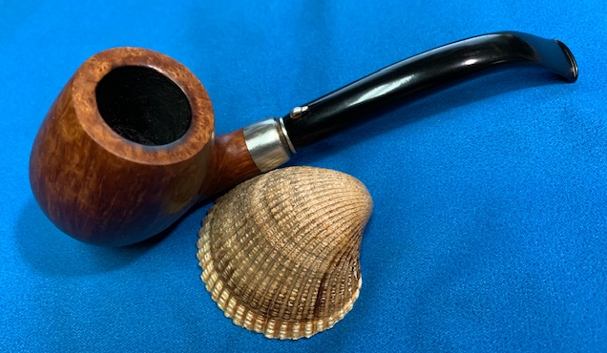
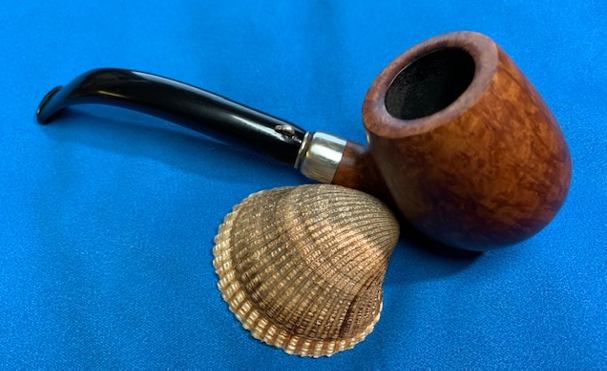
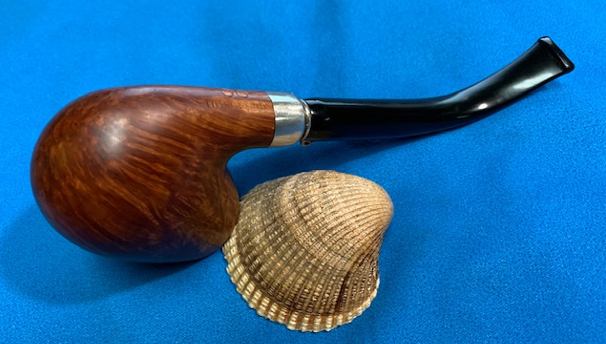
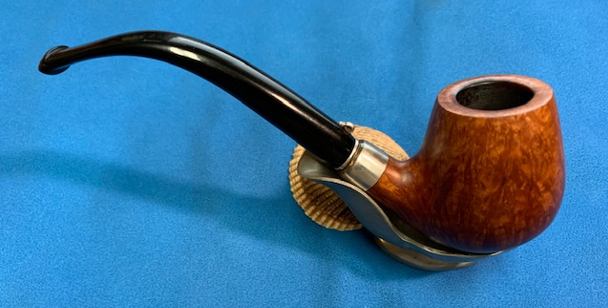
A Stunning Comoy’s Made The Guildhall London Pipe 9 Straight Bulldog


Blog by Steve Laug

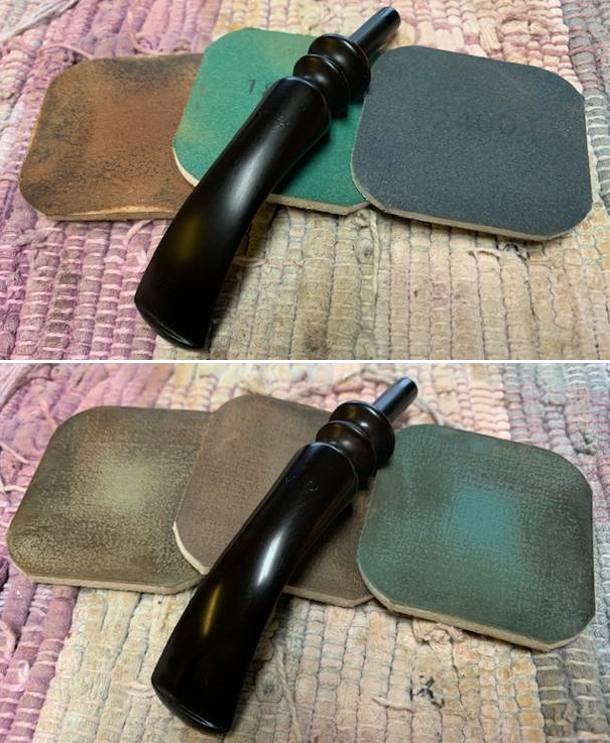
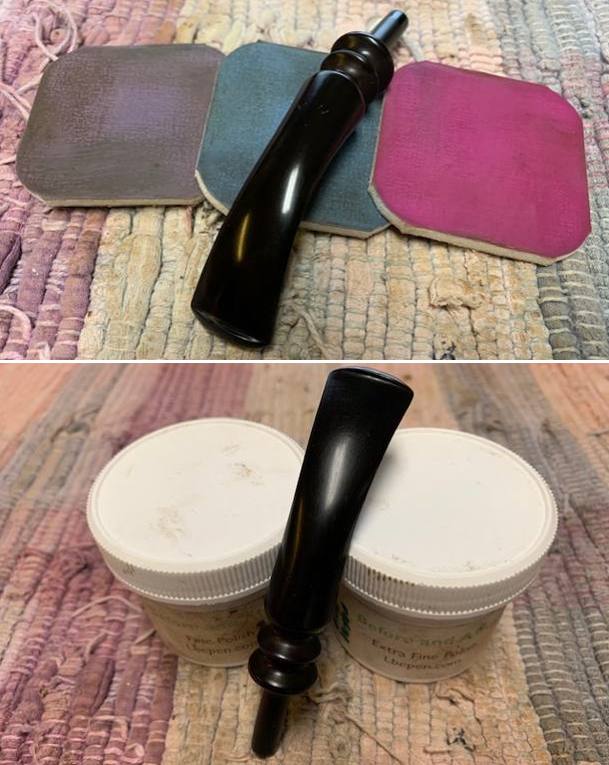
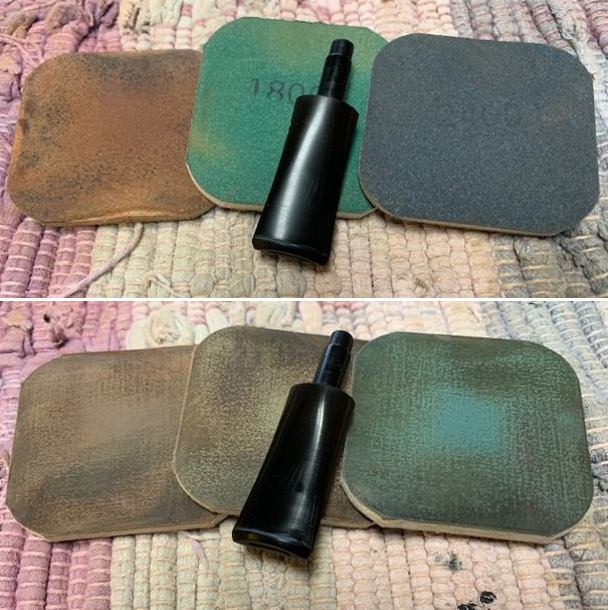
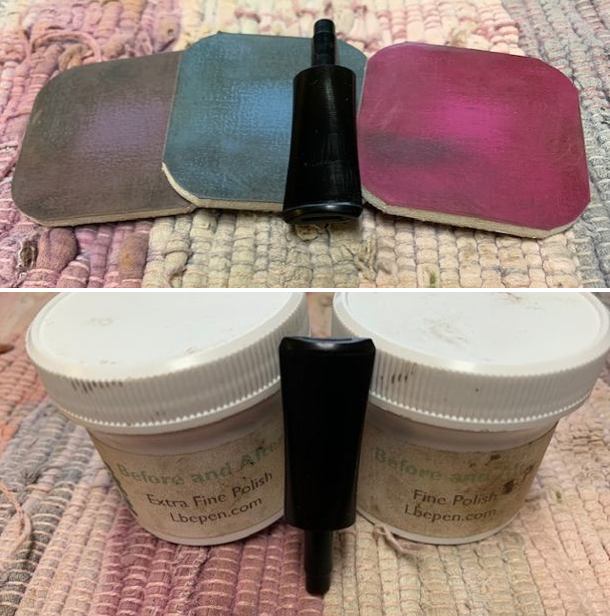
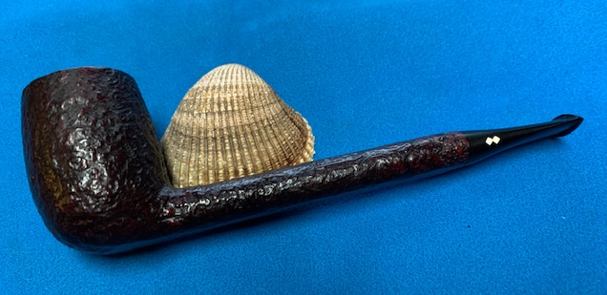
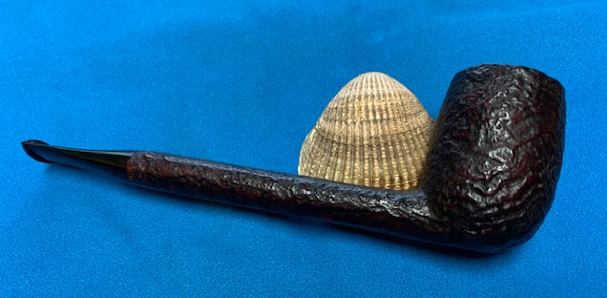
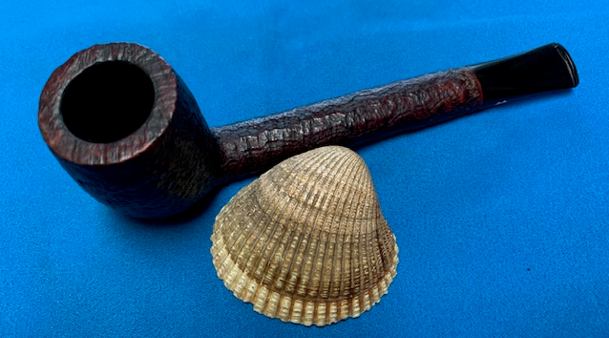
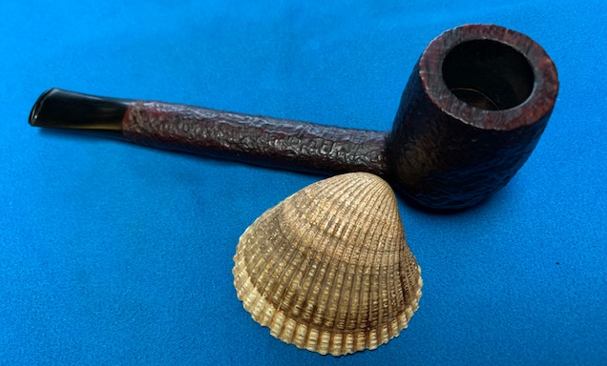
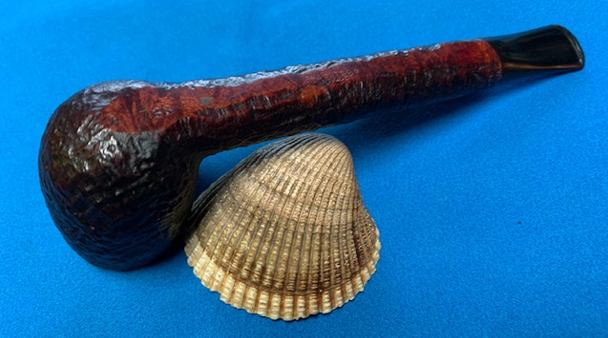
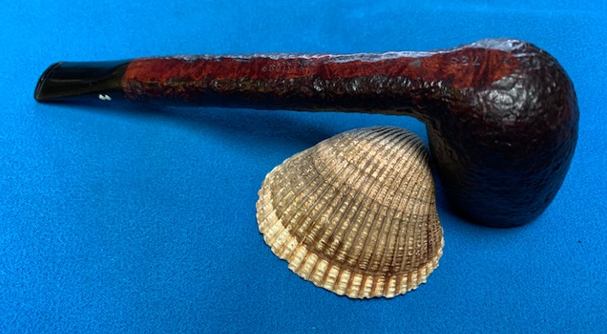
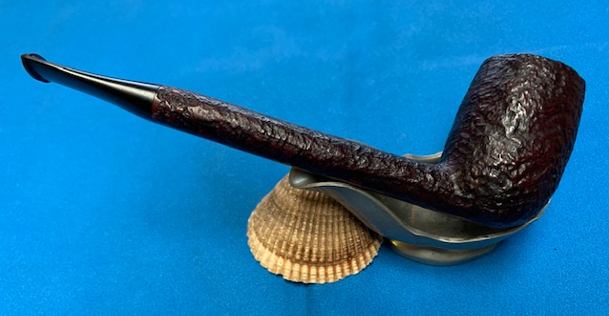
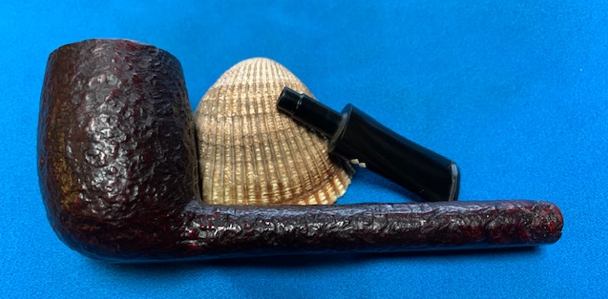
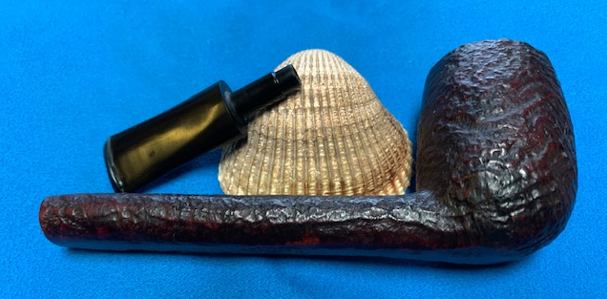
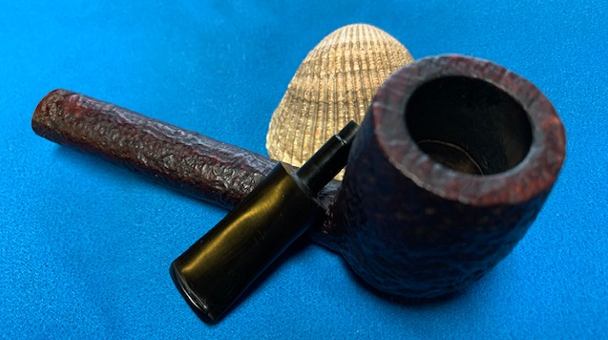
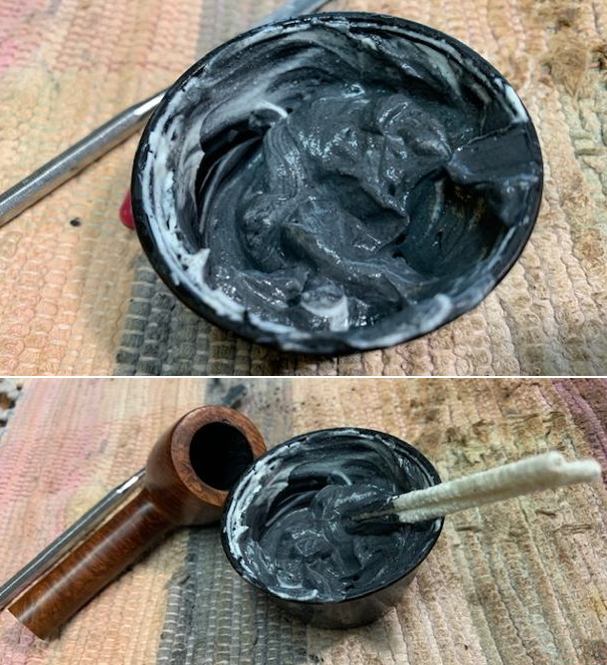
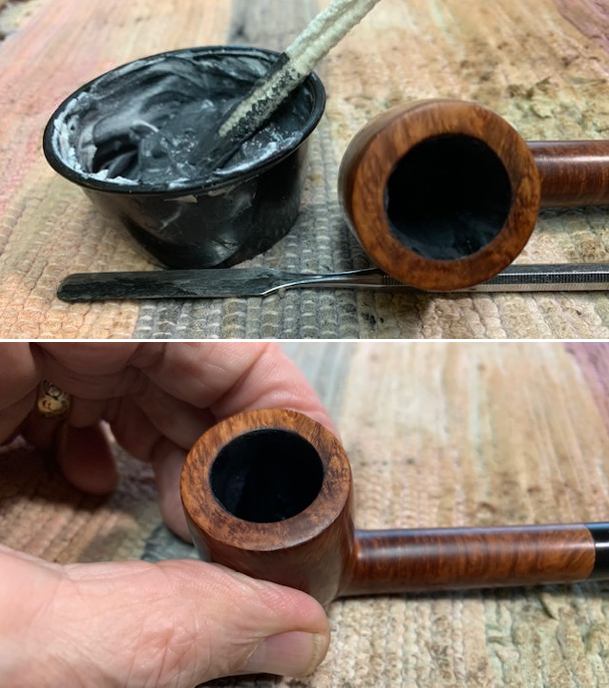
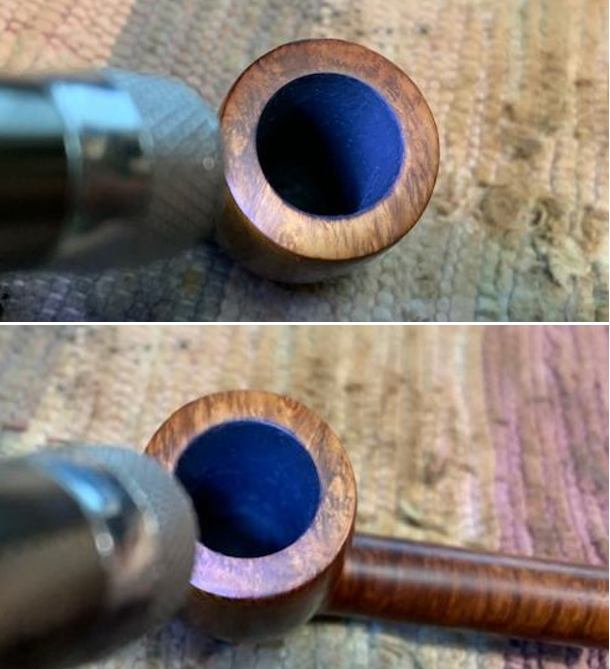
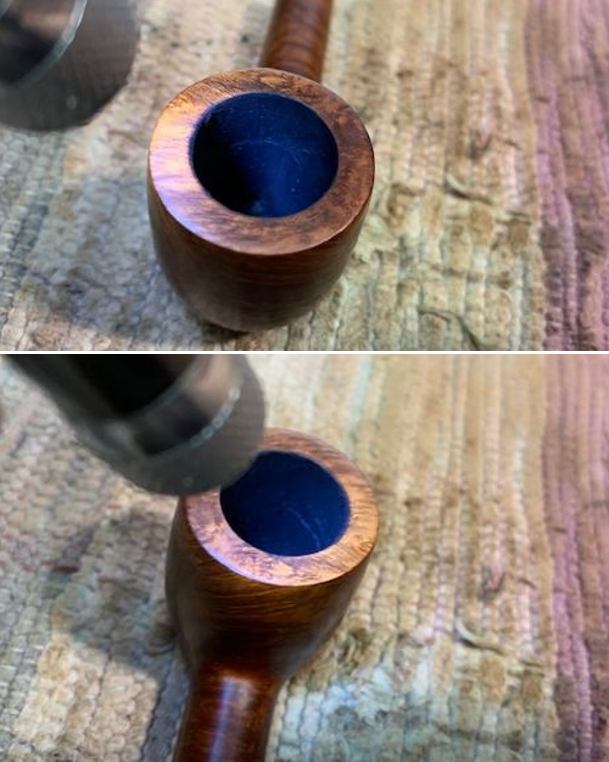
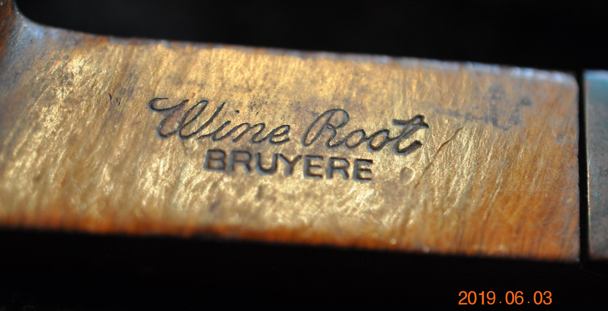
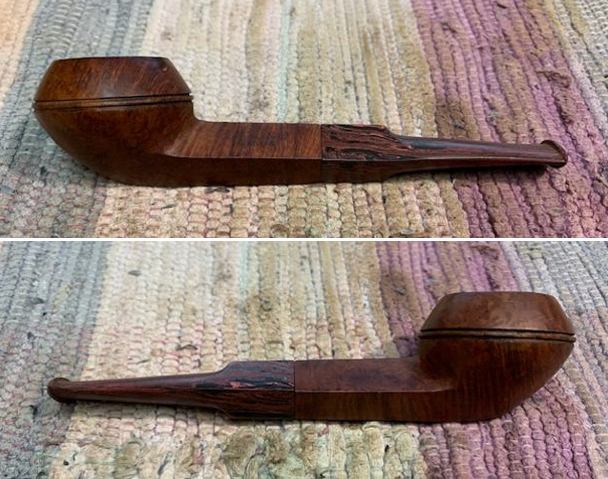
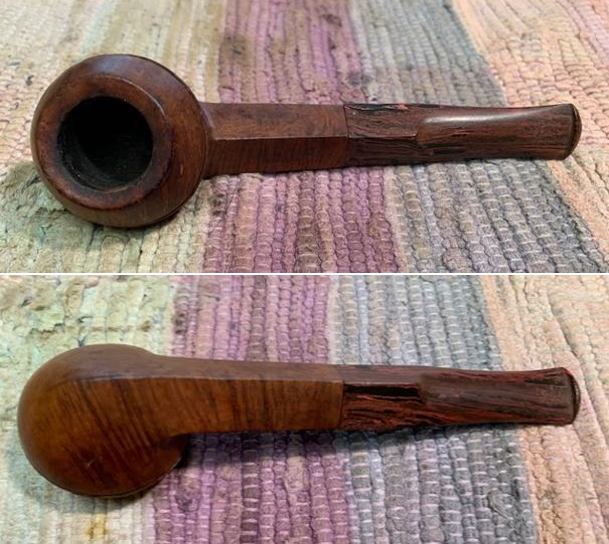
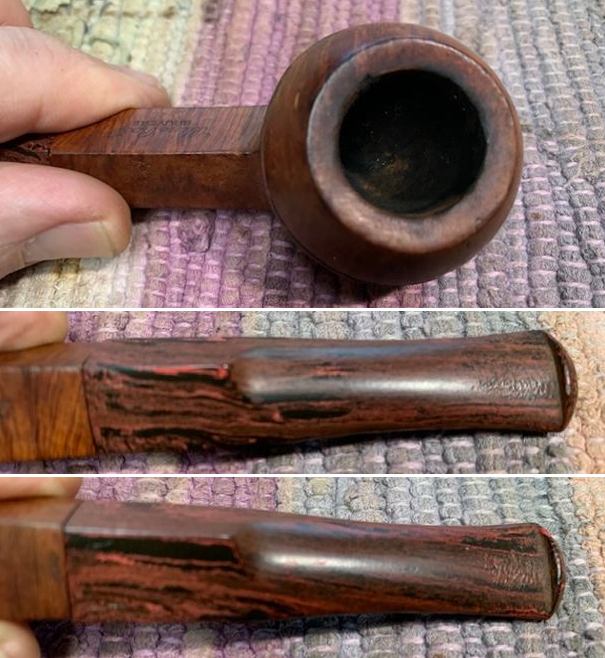
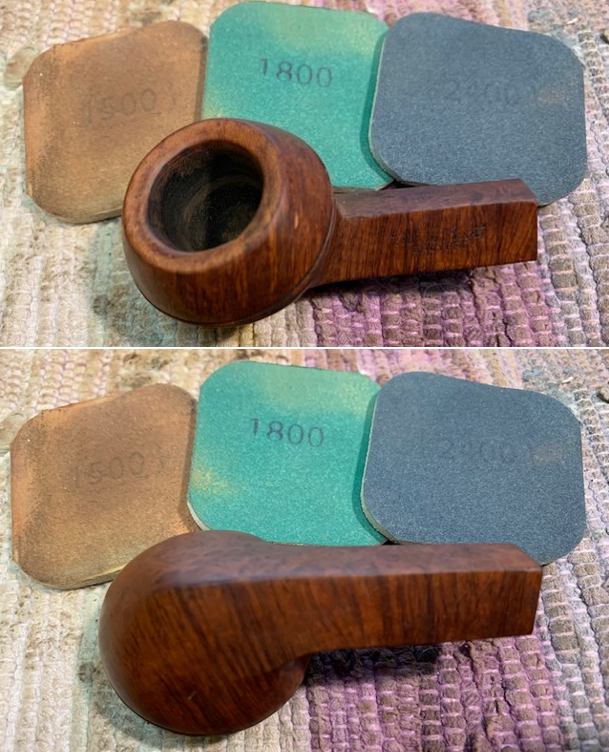
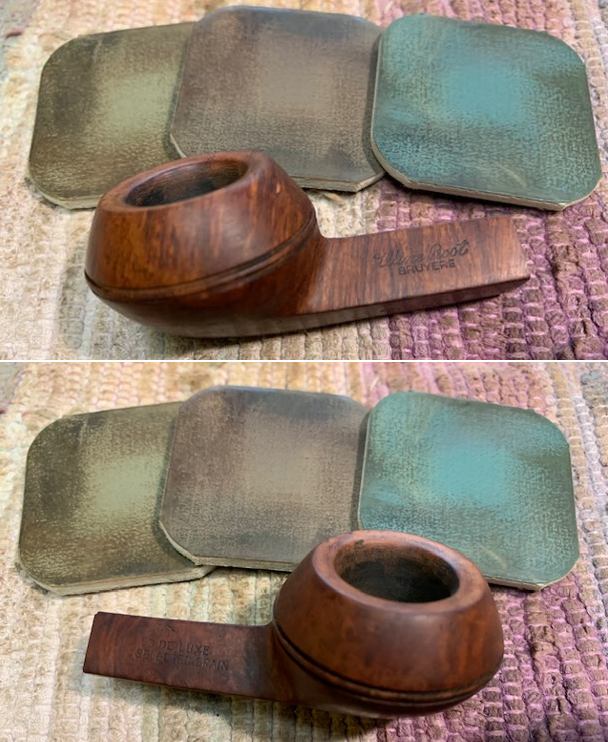
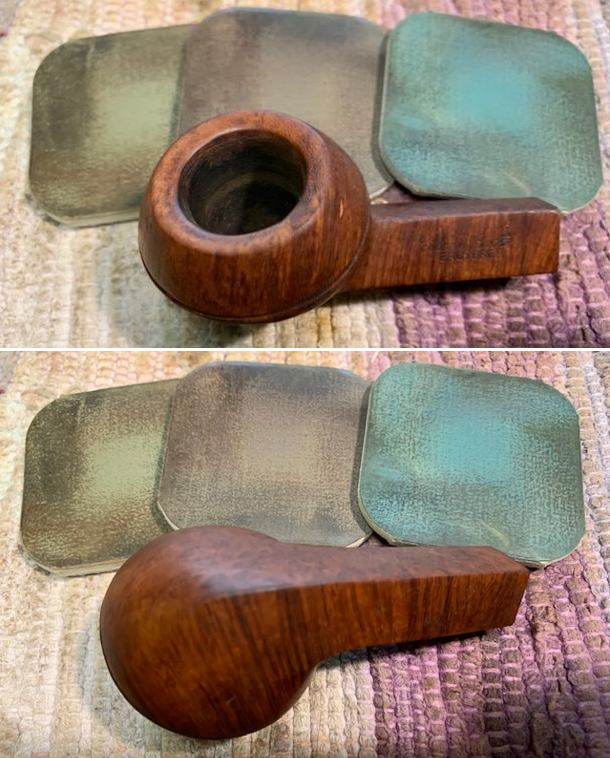
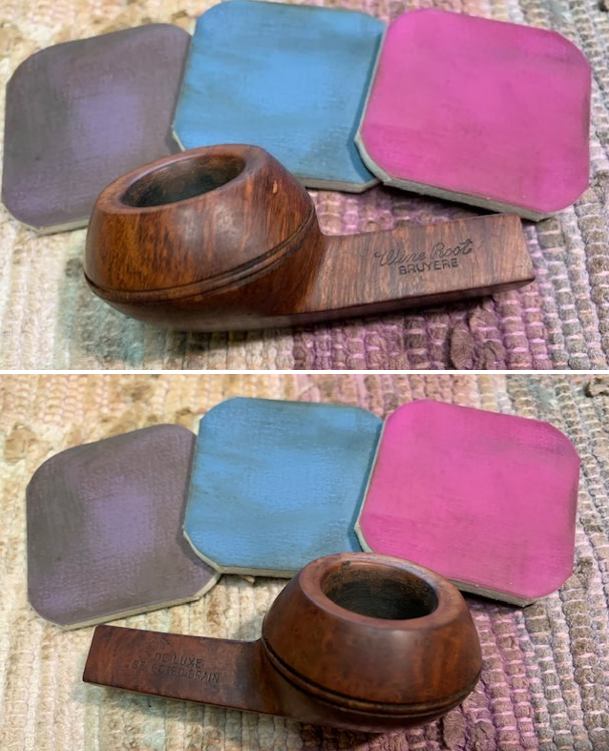
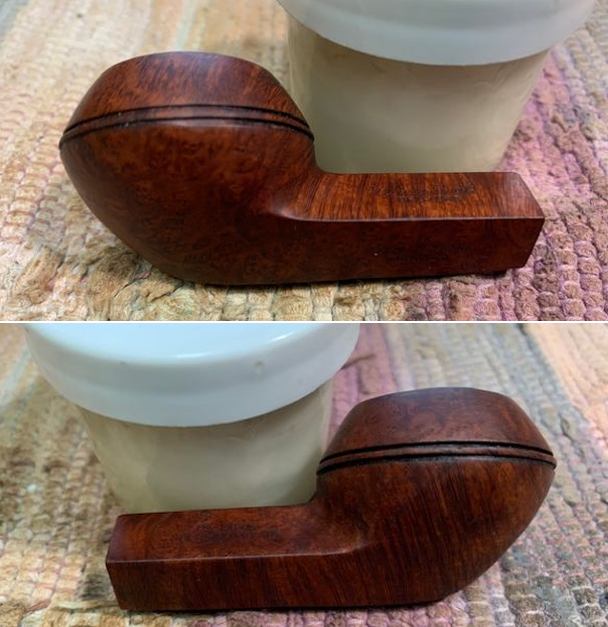
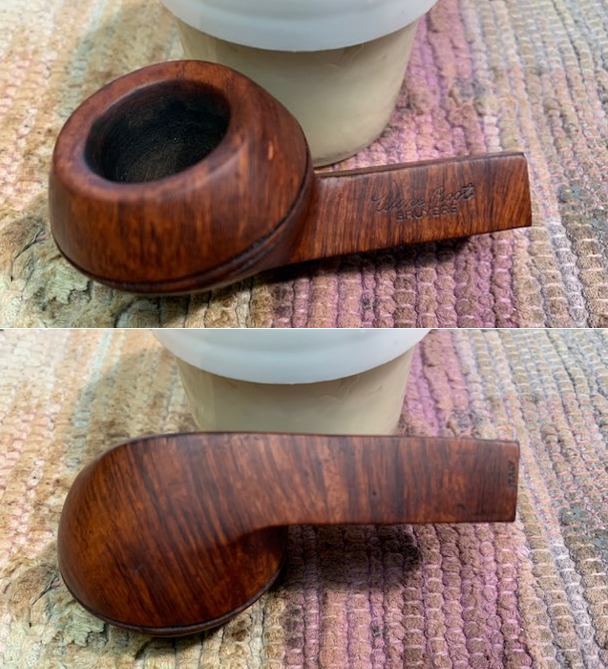
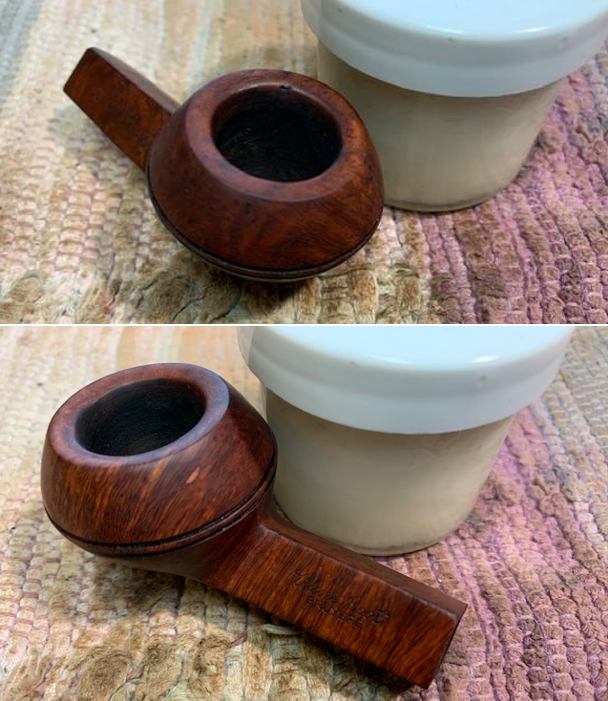
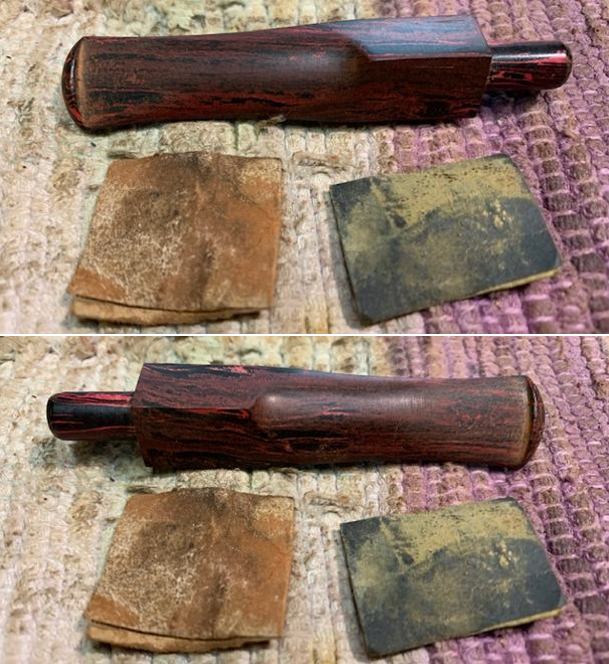
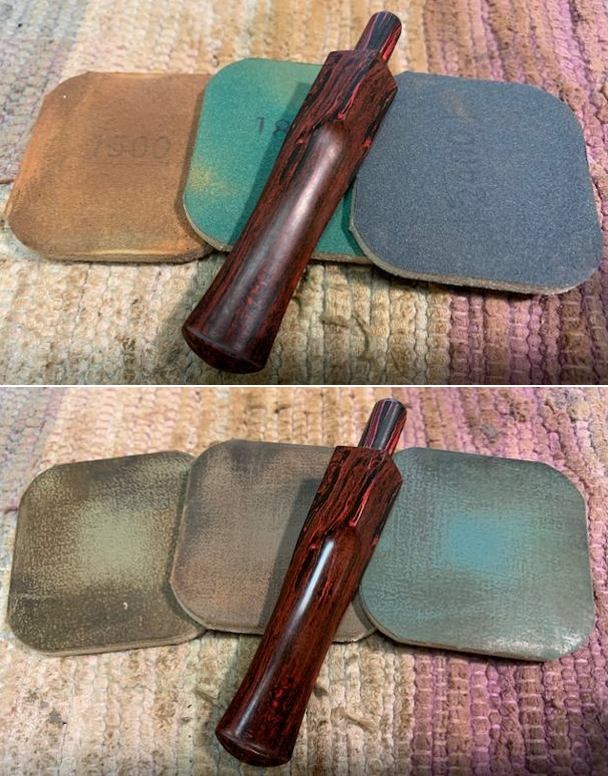
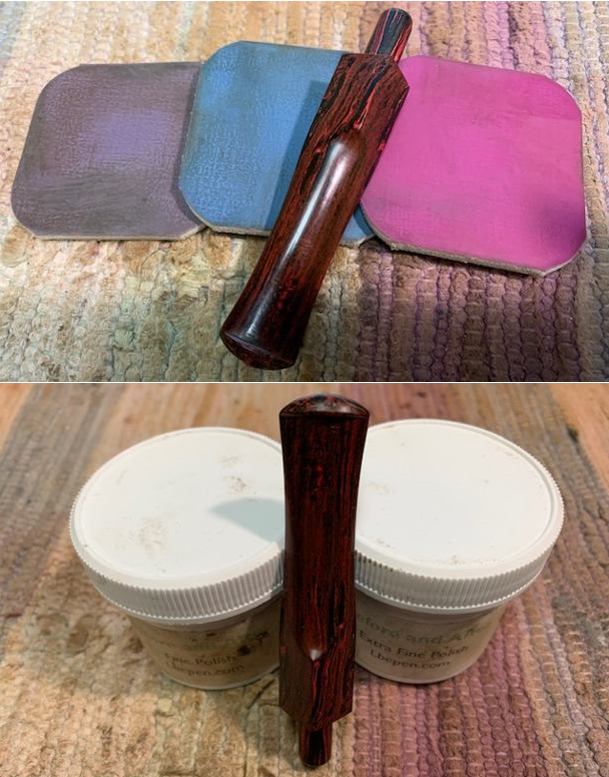
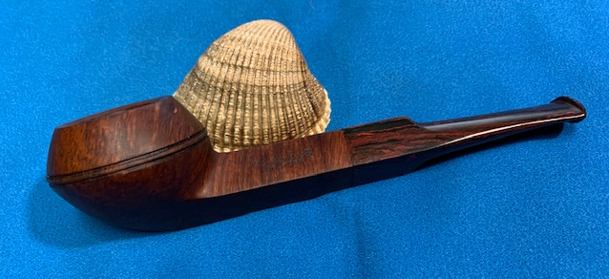
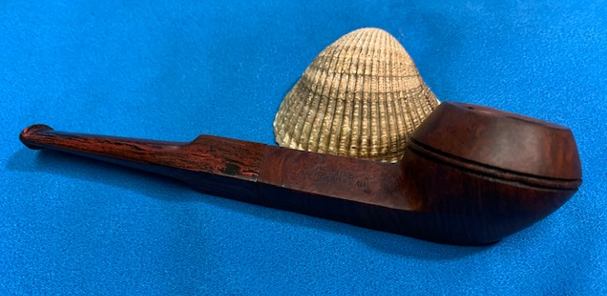
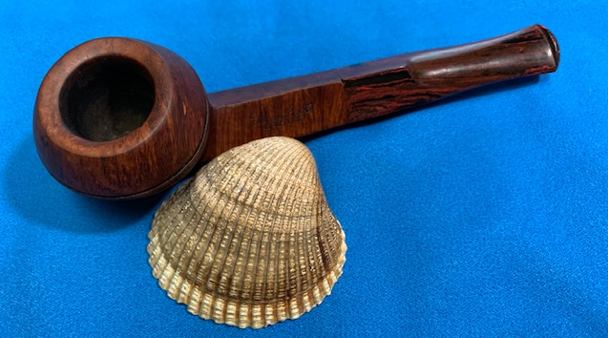
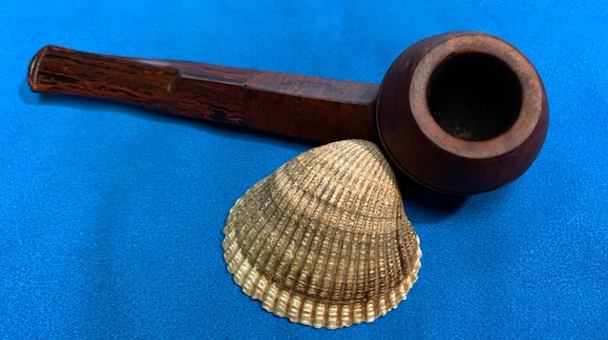
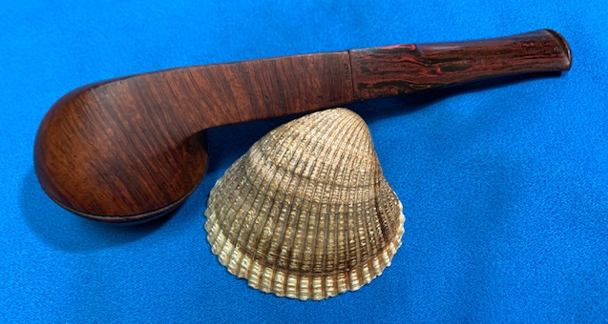
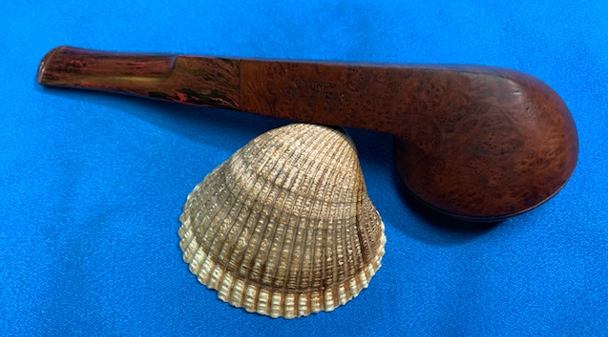
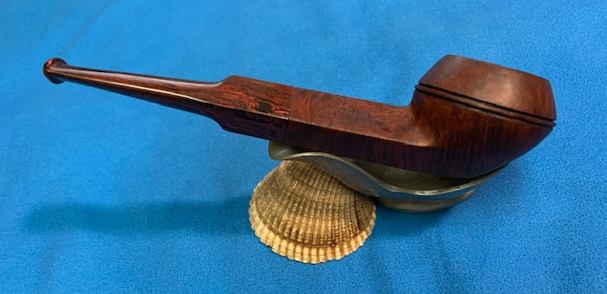
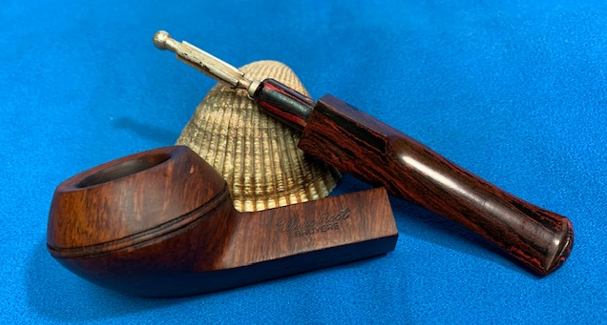
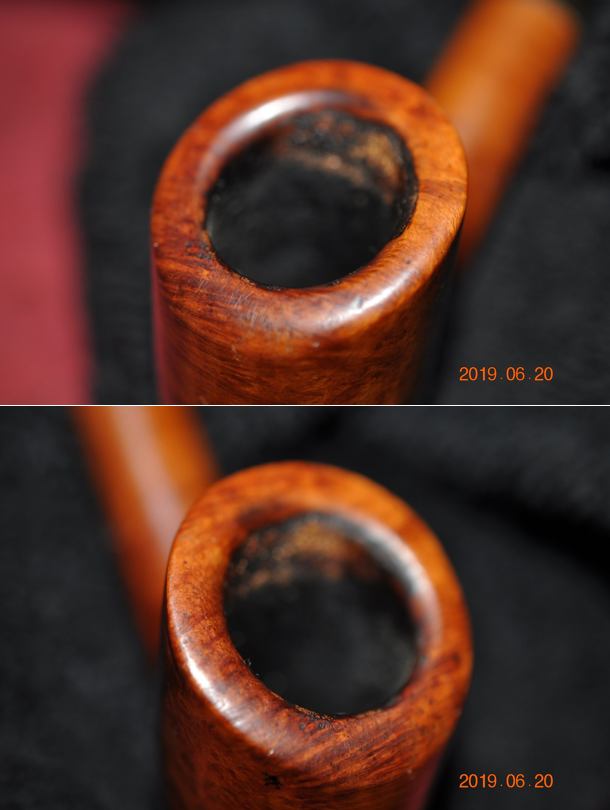
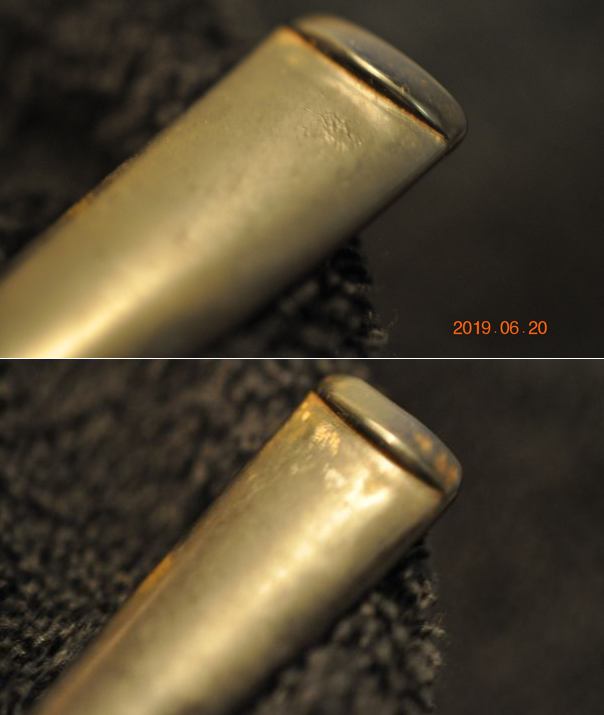
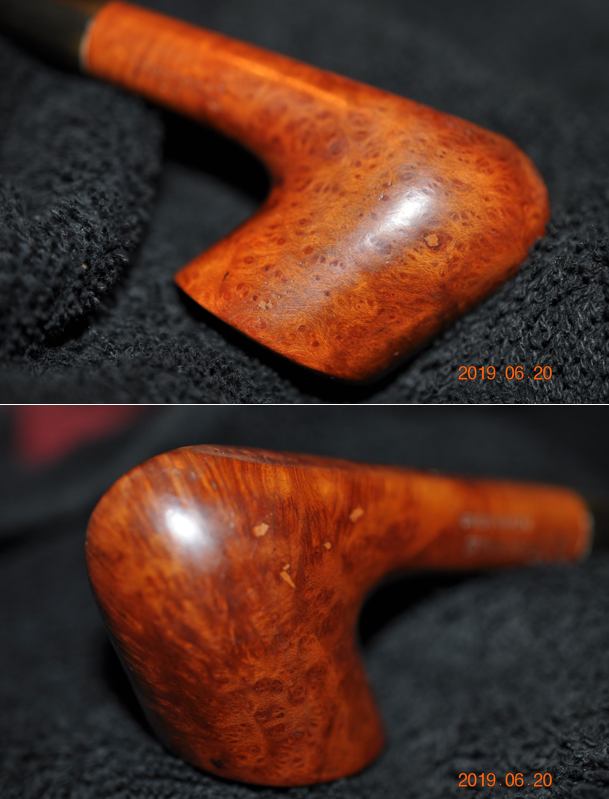
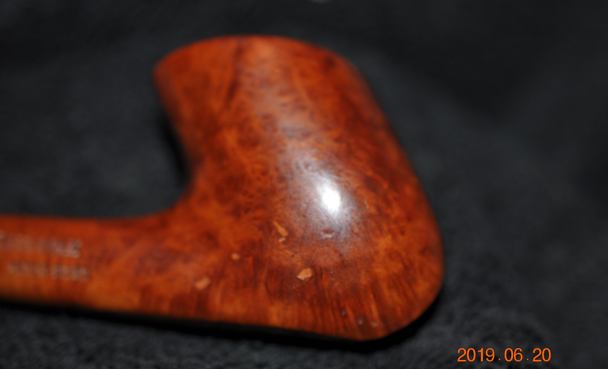
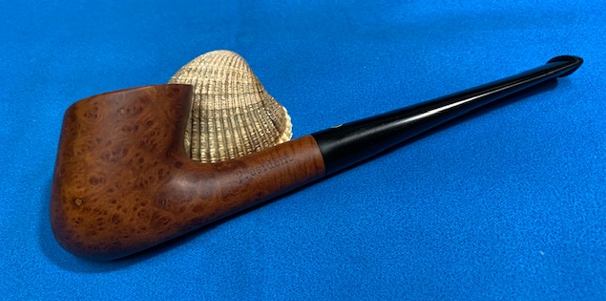
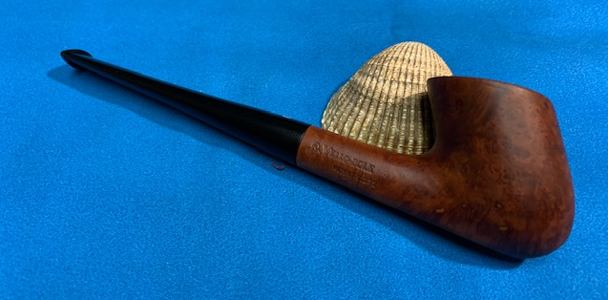
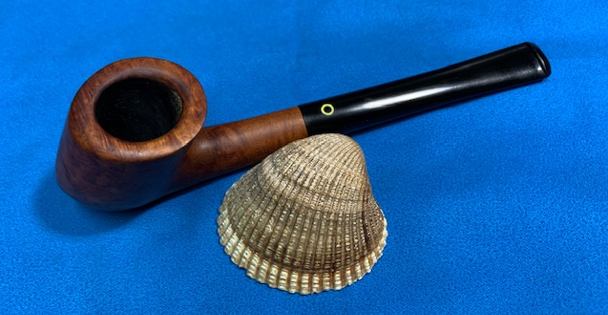
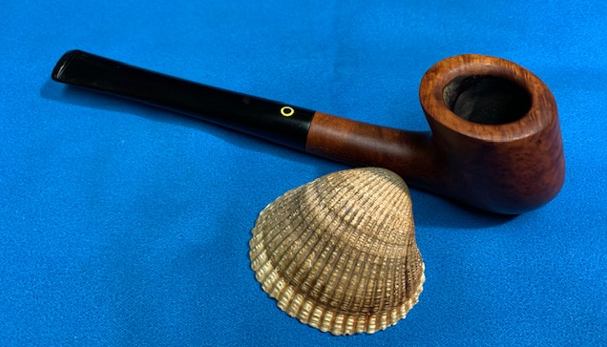
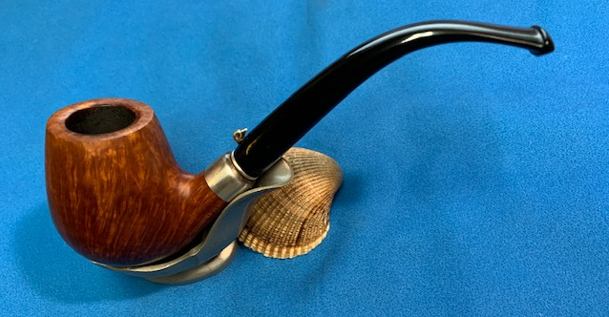
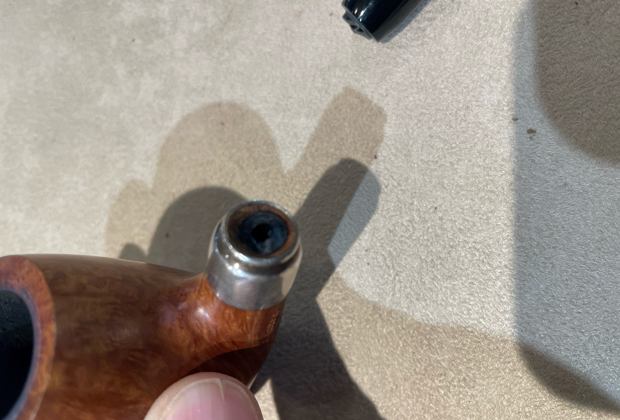
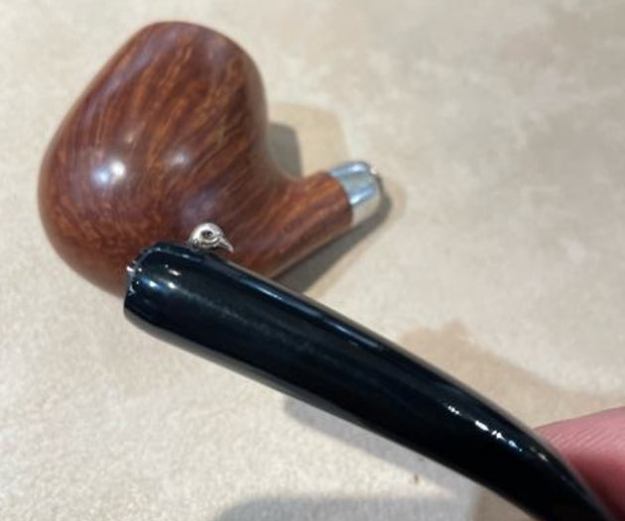
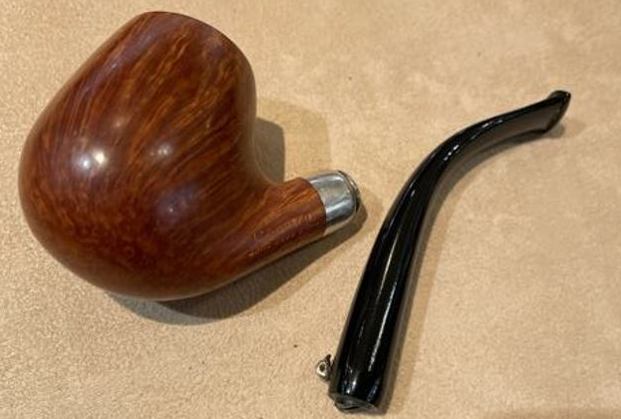
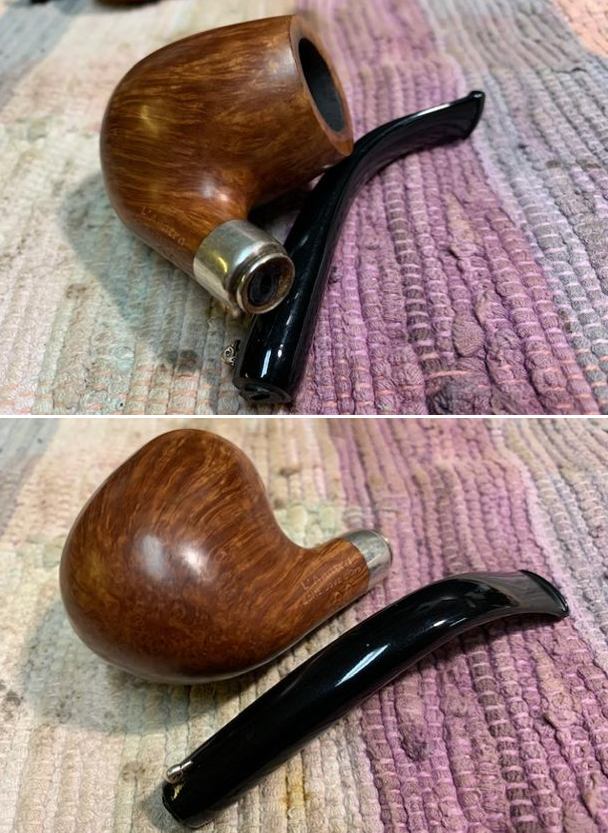
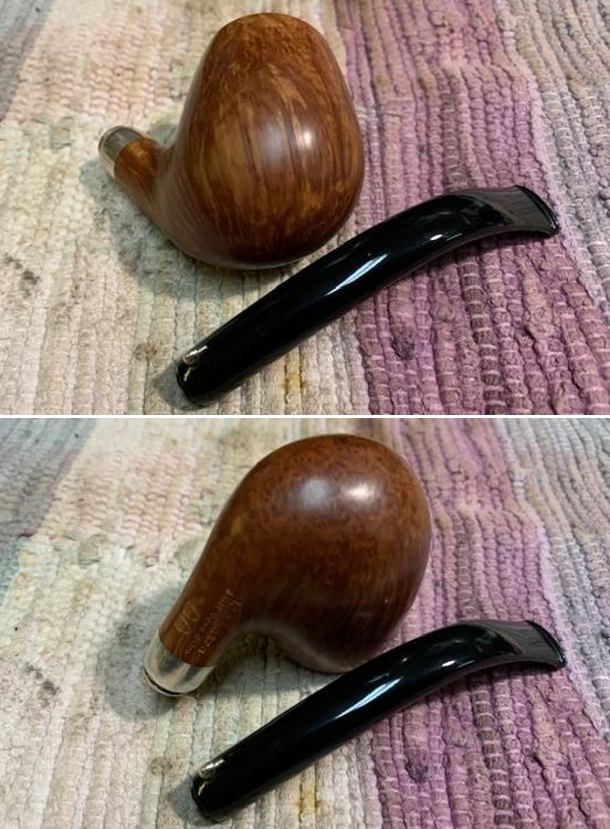
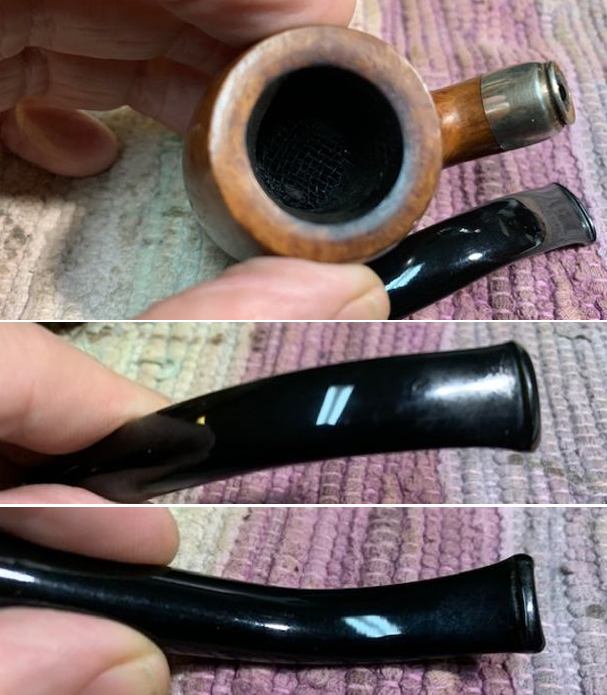
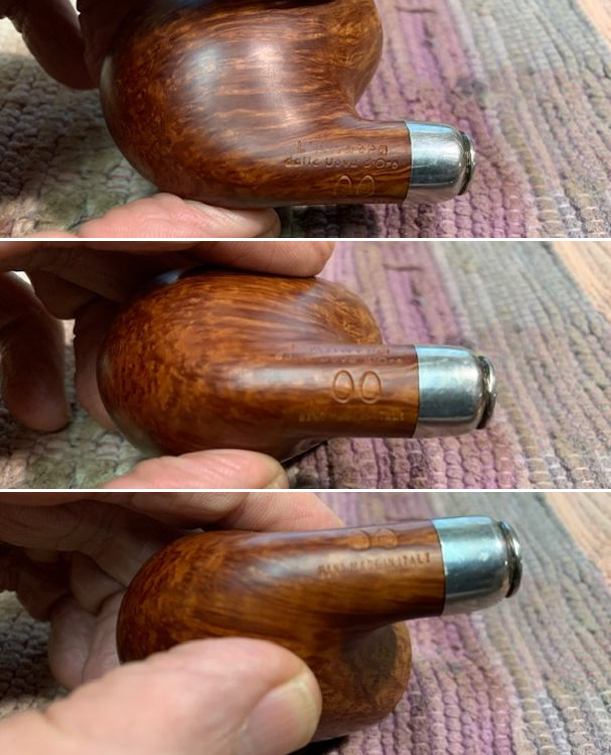
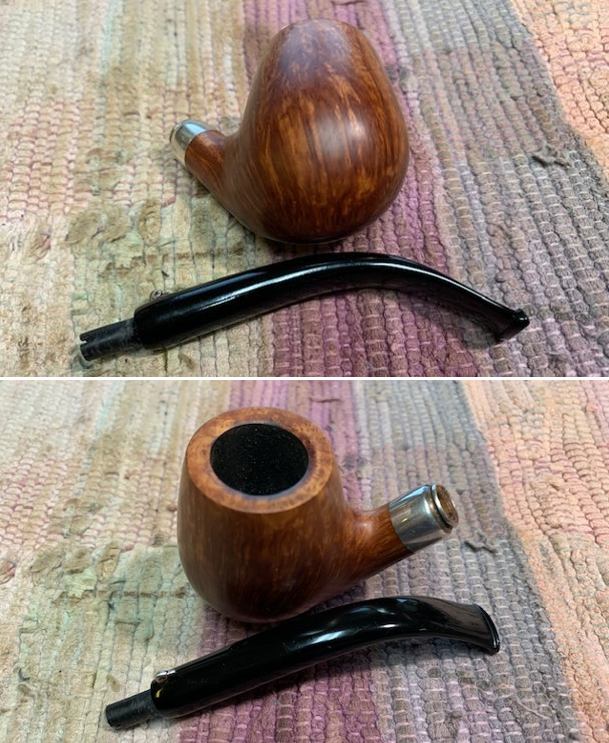
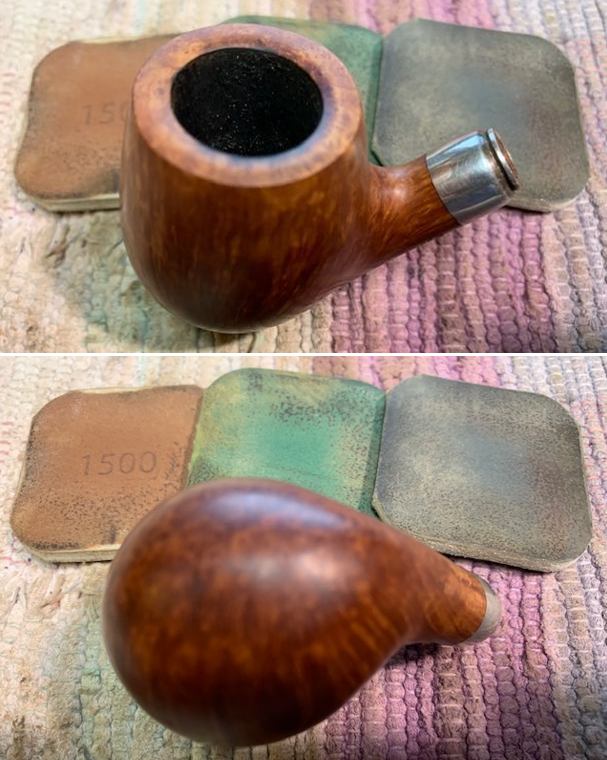
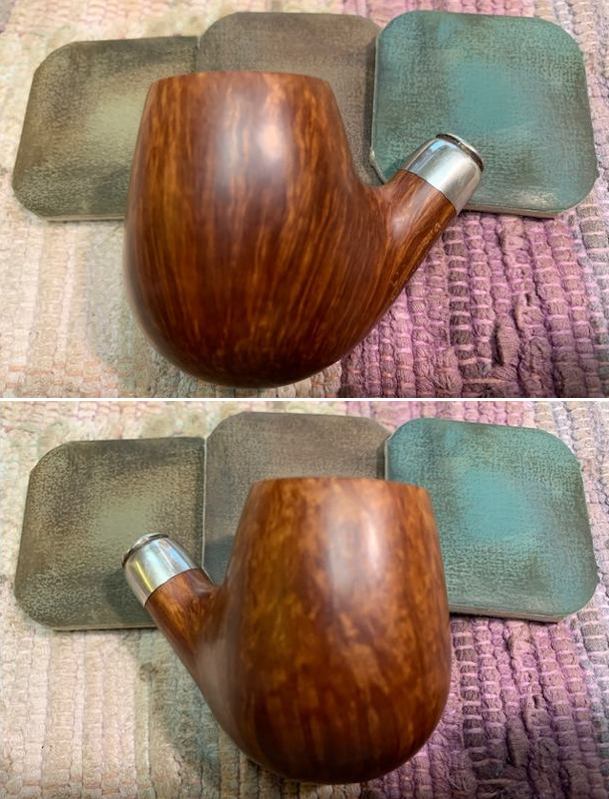
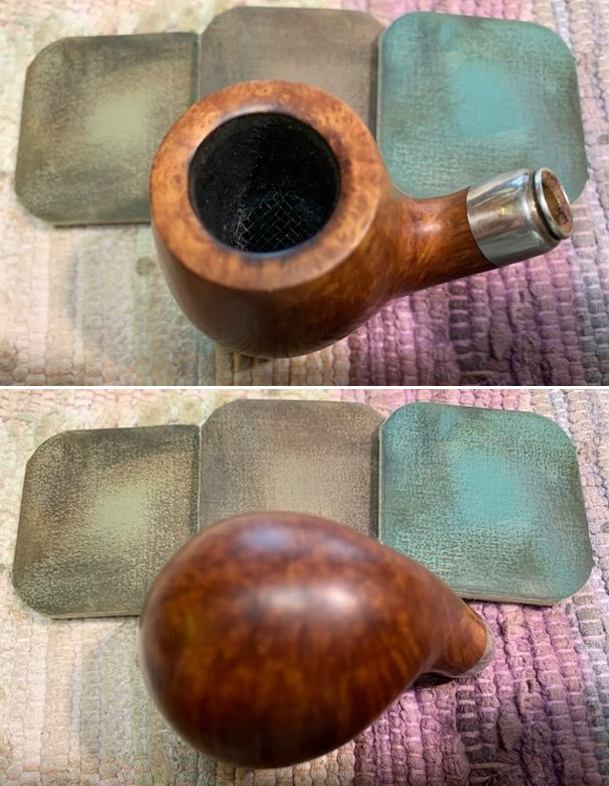
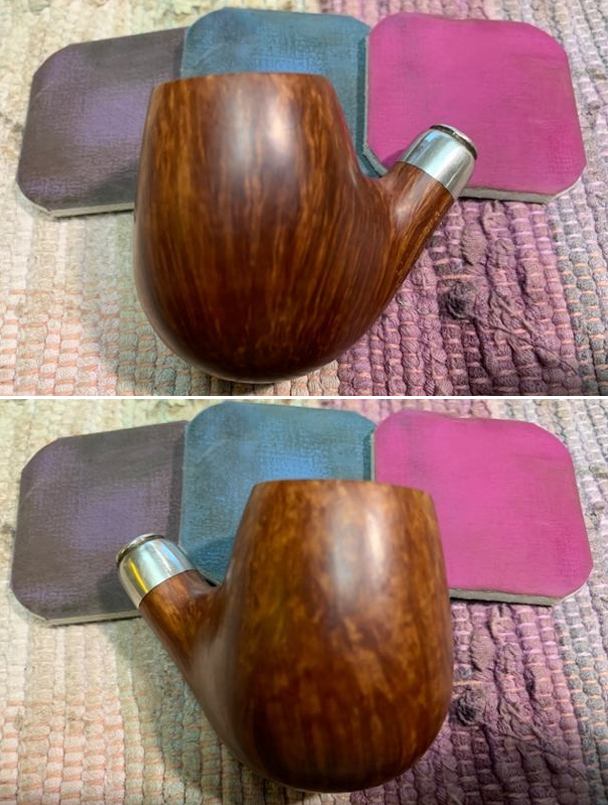
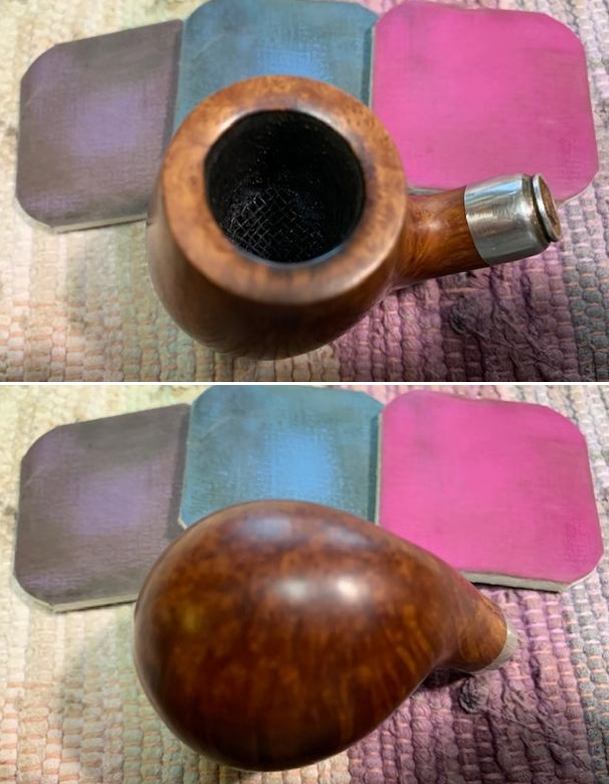
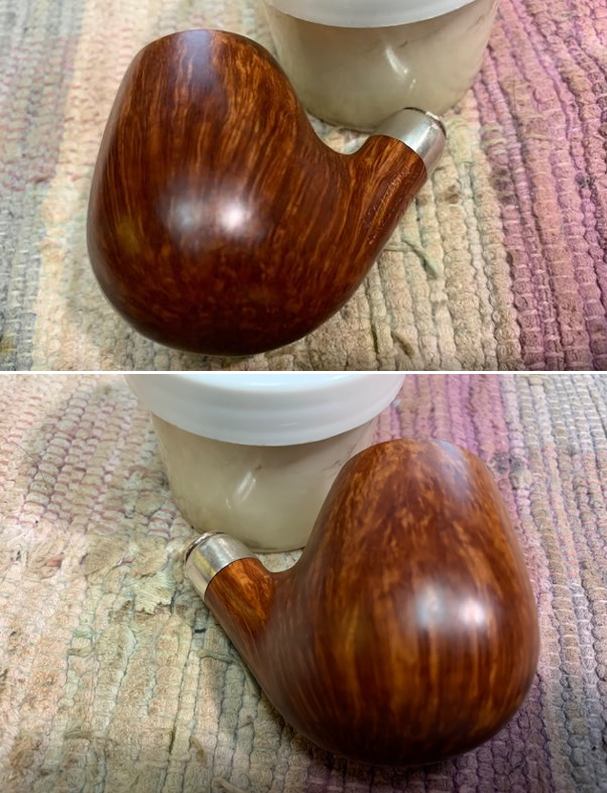
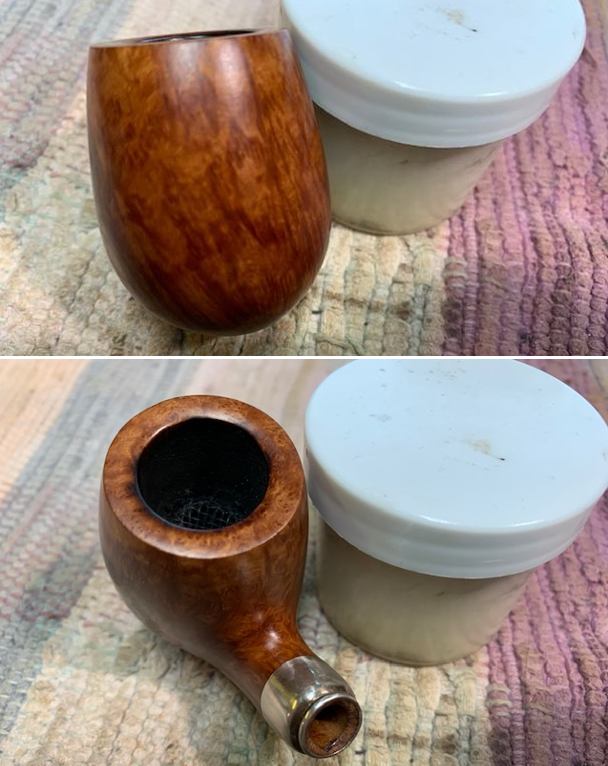
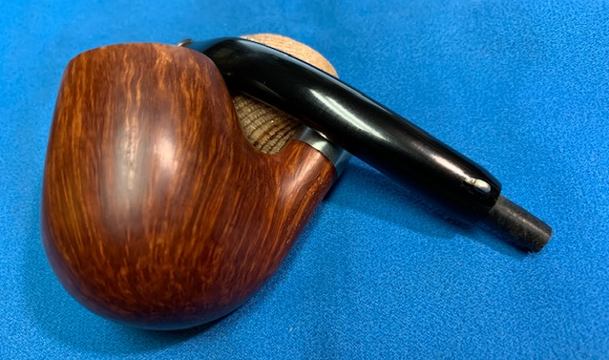
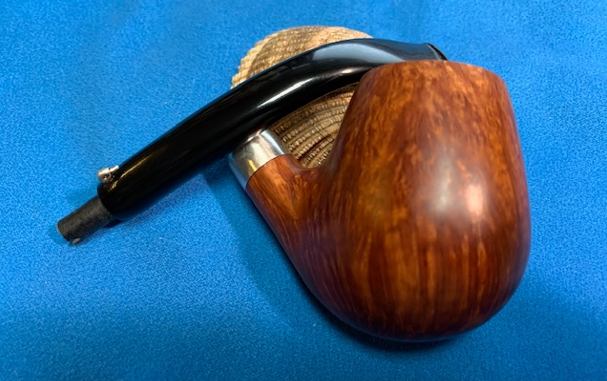
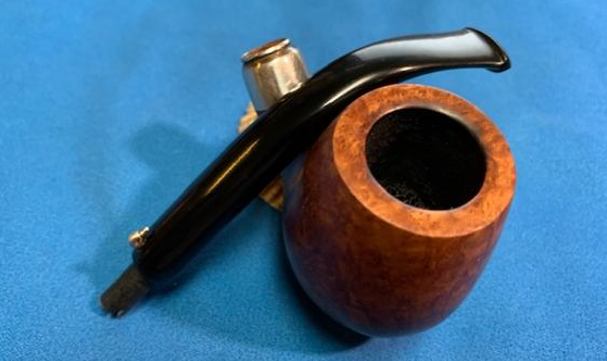
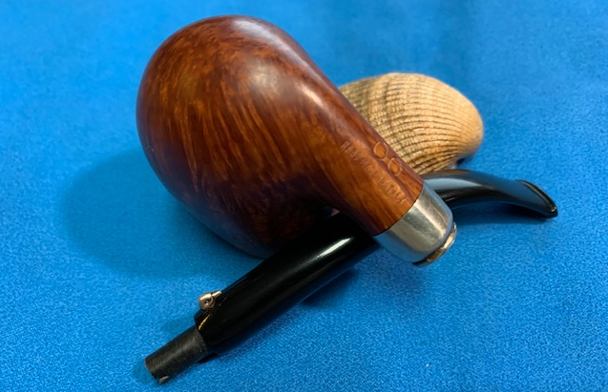
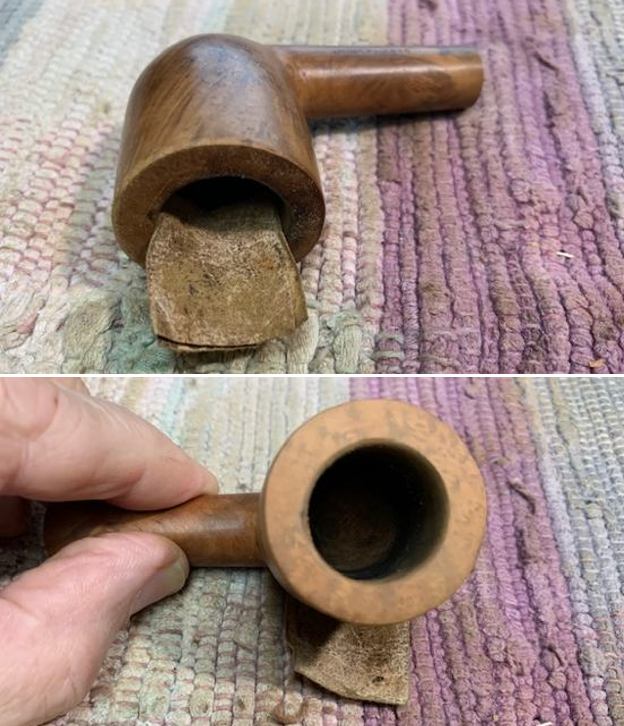
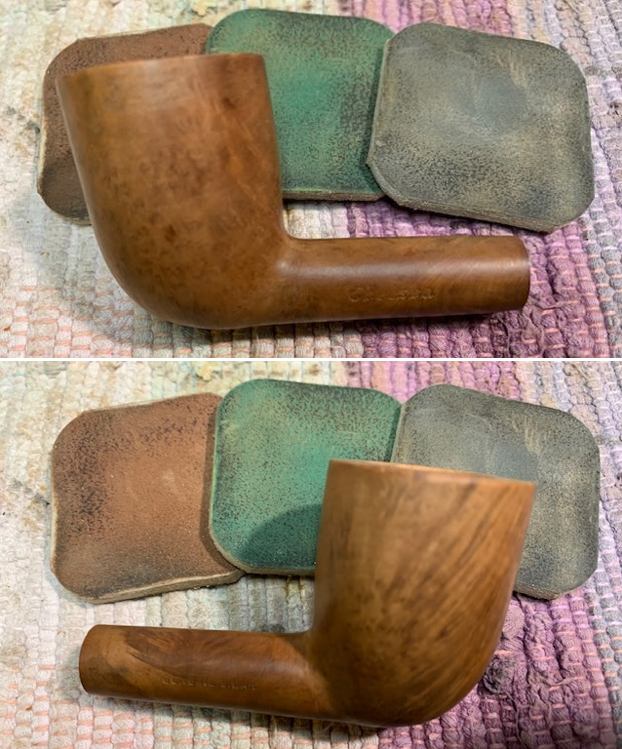
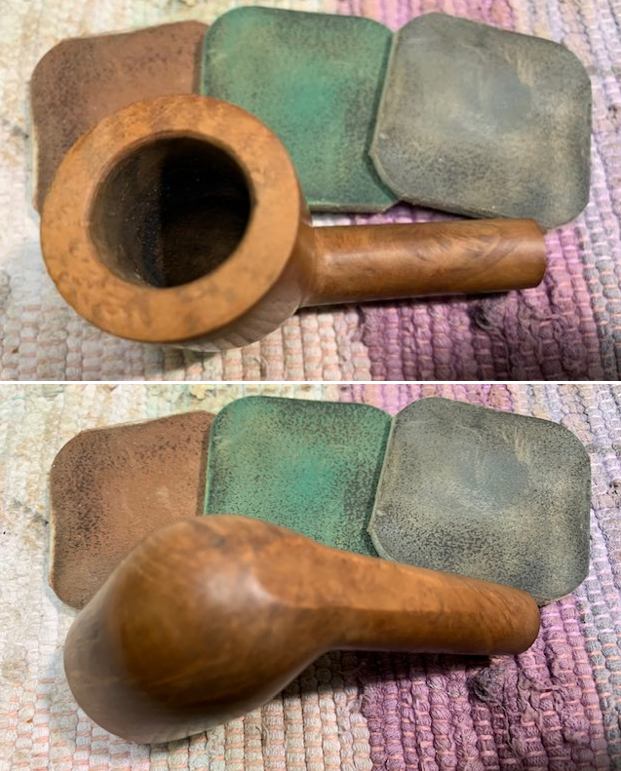
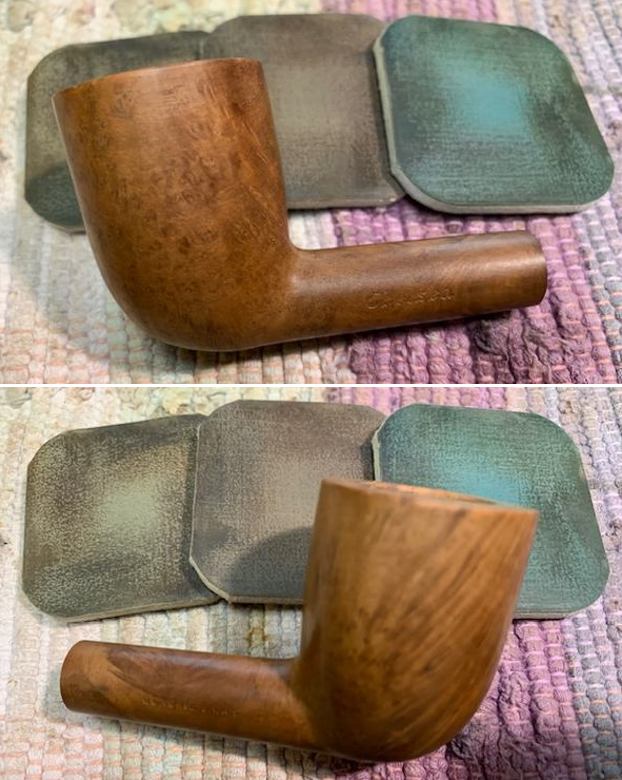
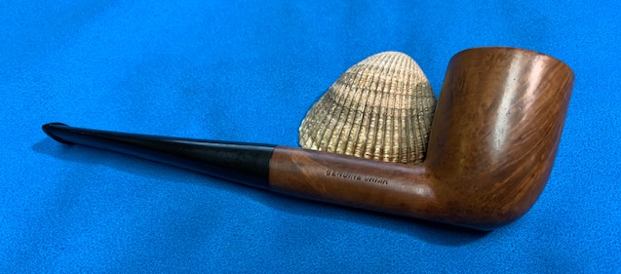
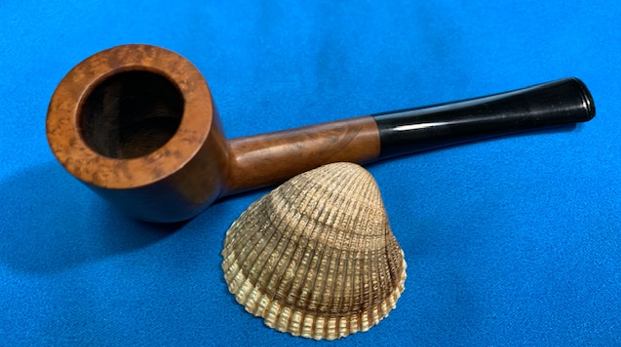
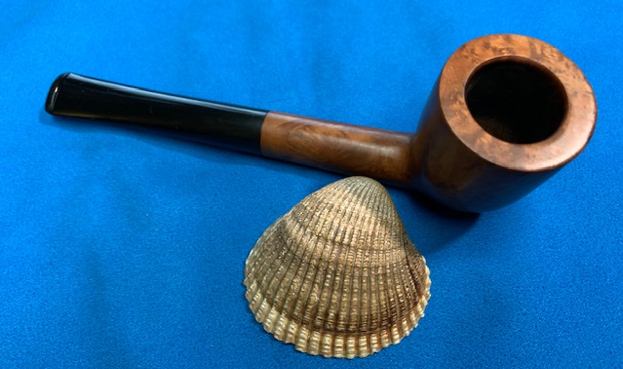
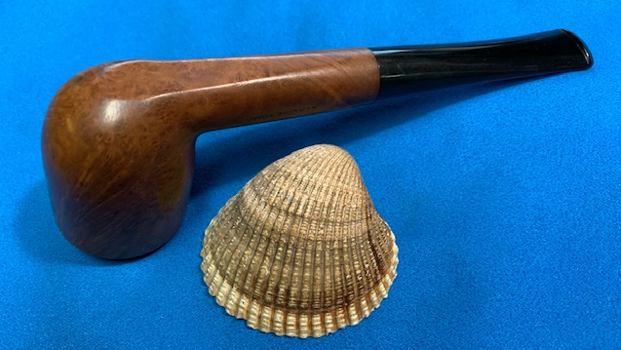
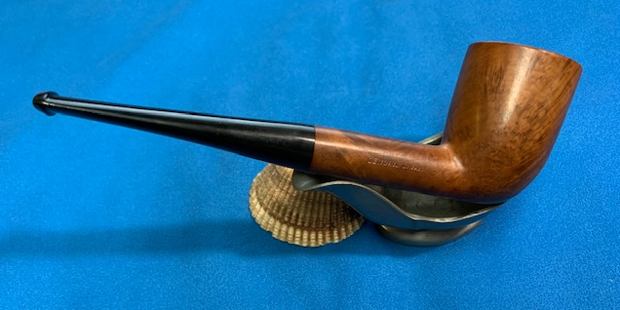
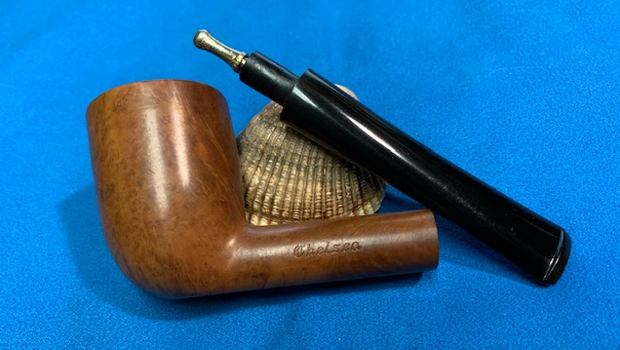
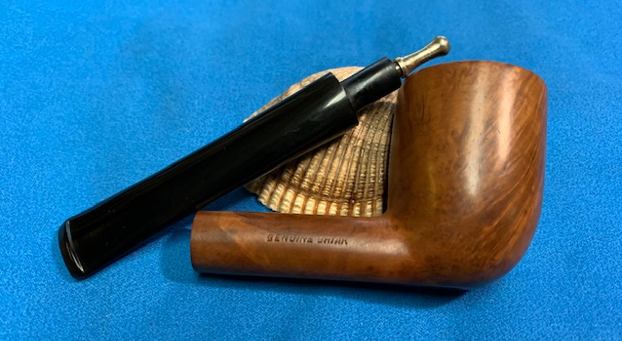
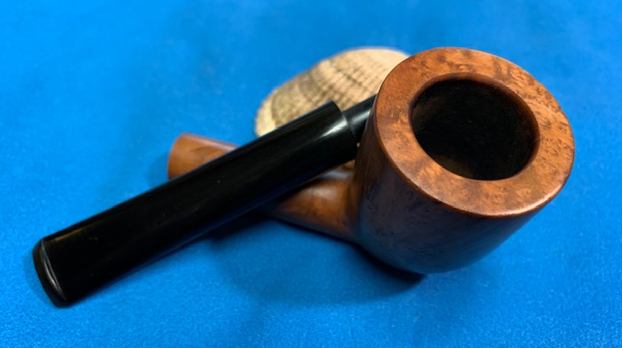
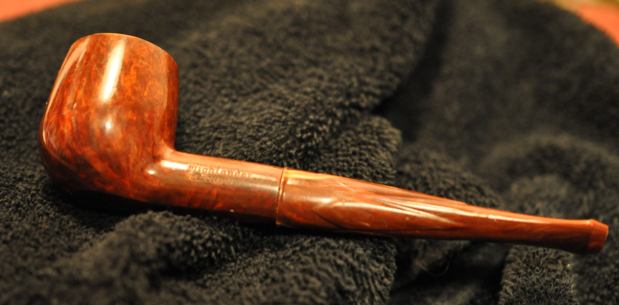
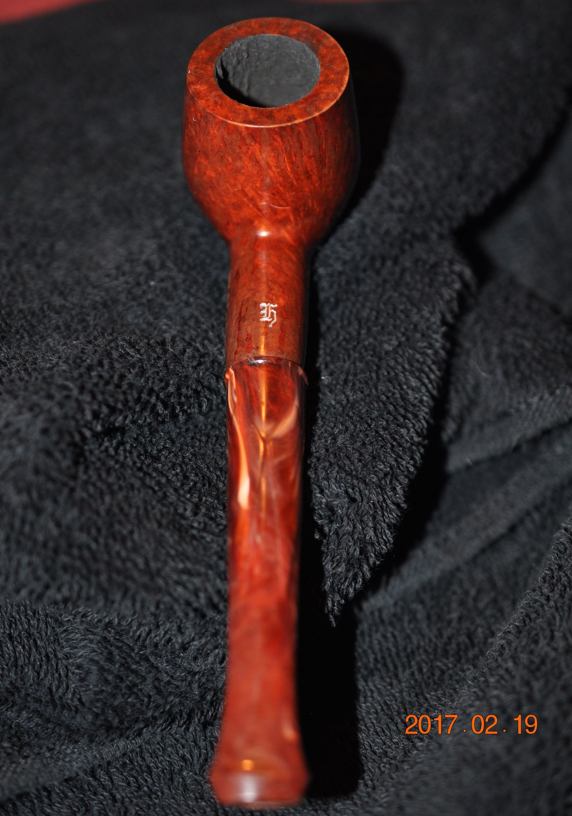
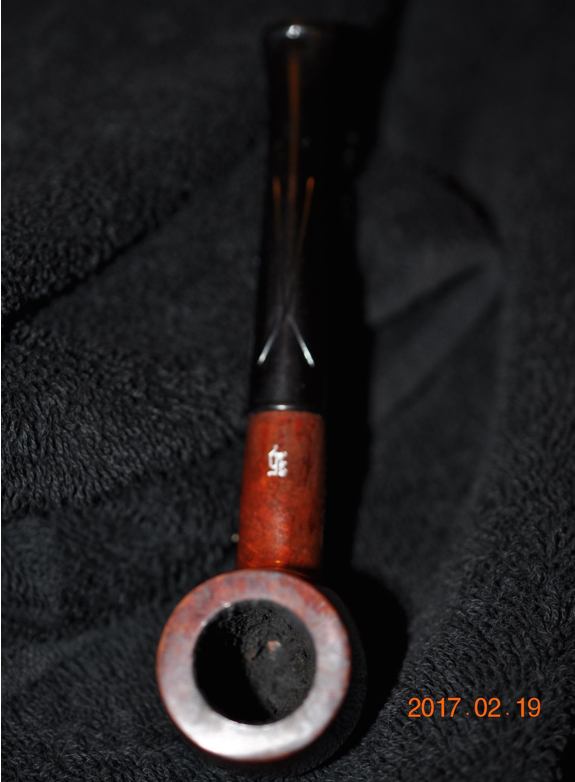
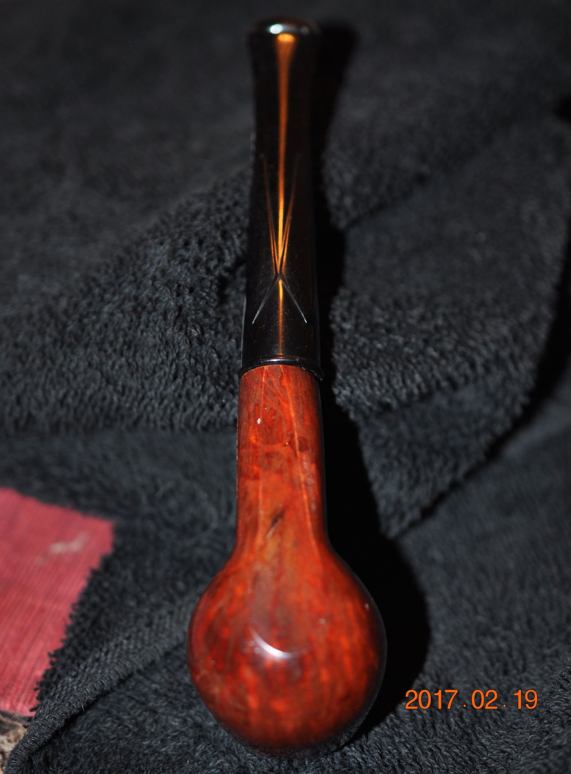
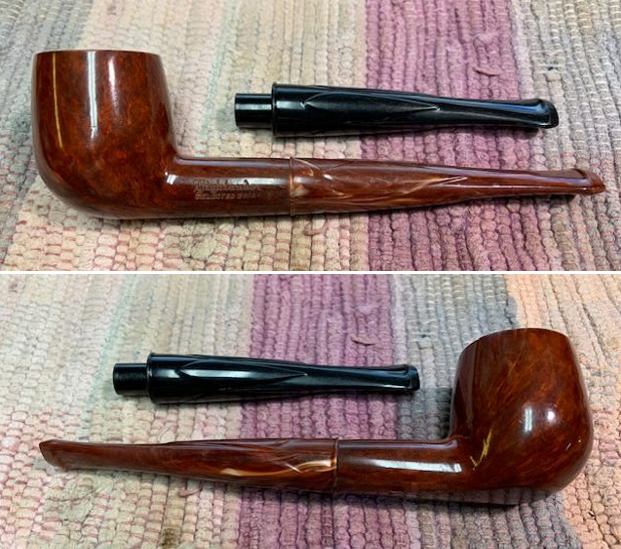
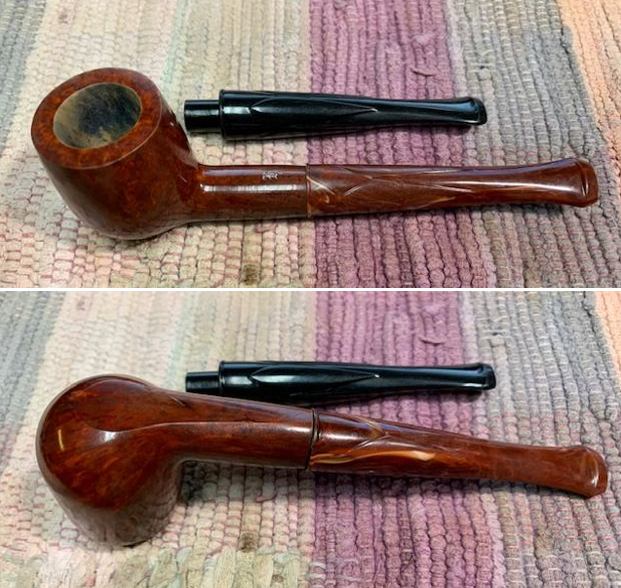
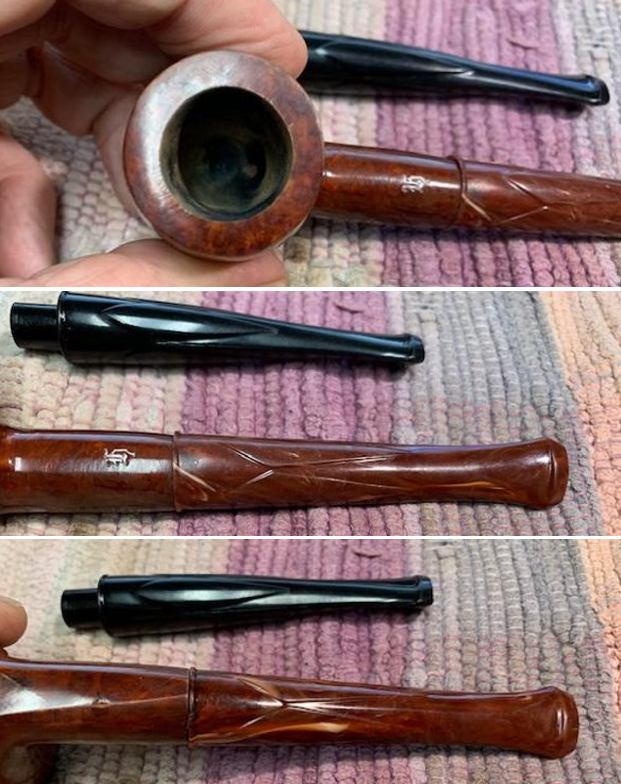
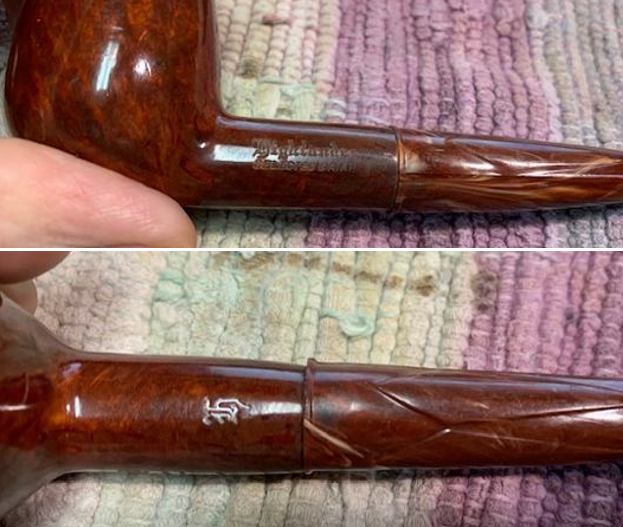
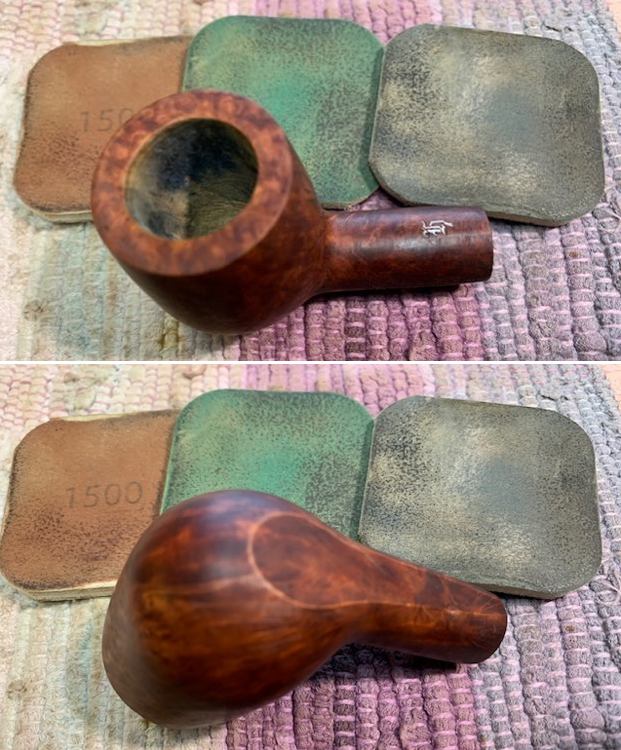
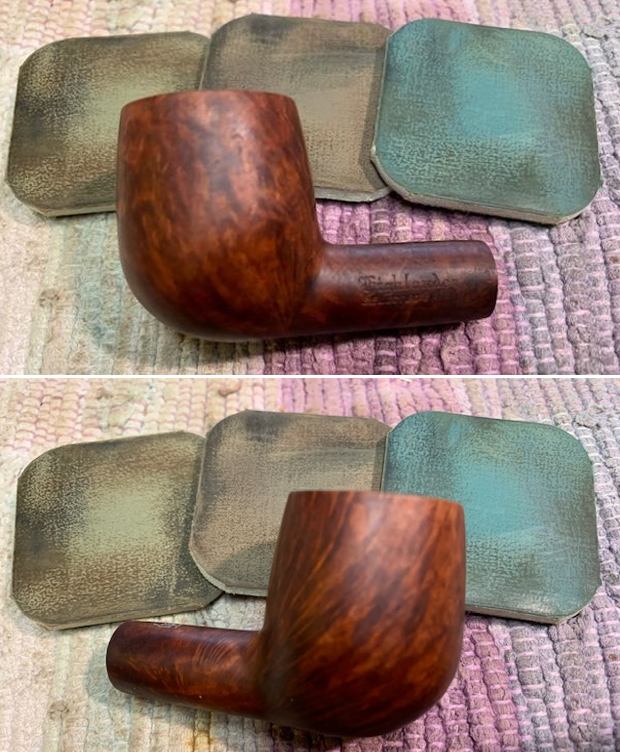
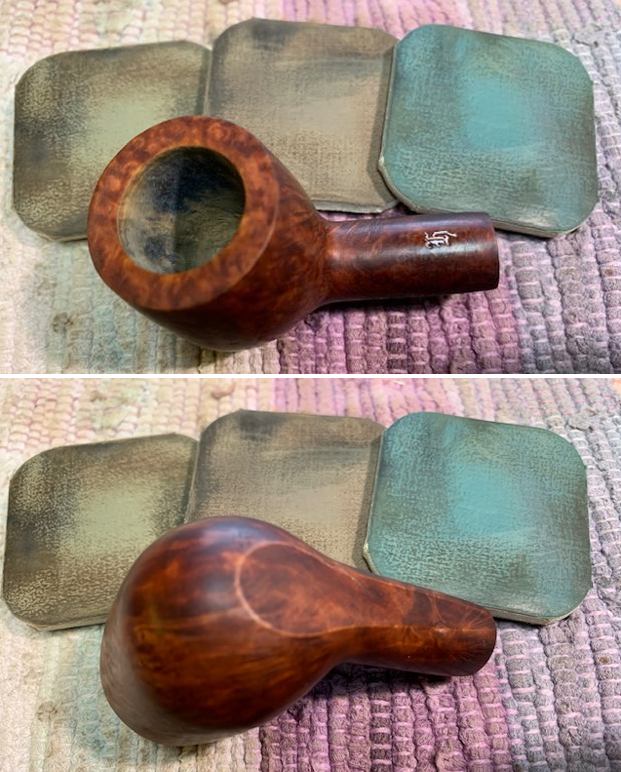
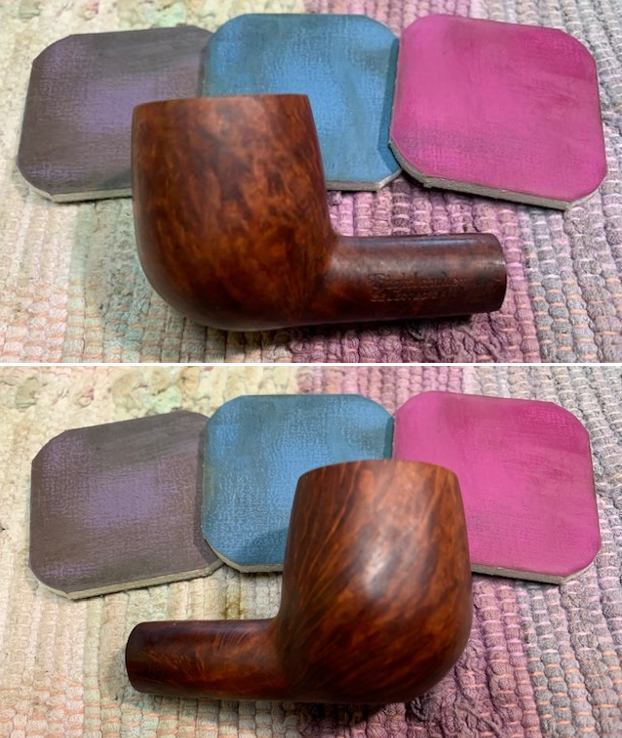
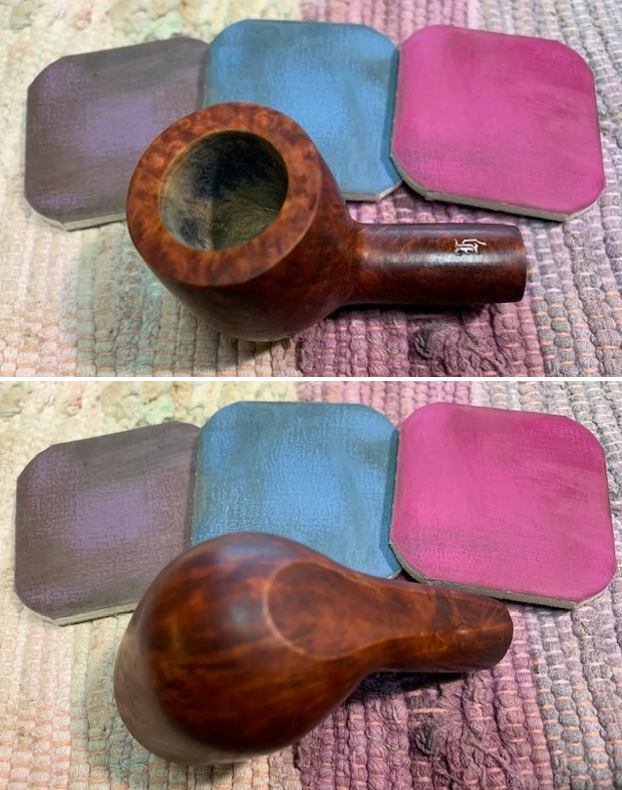
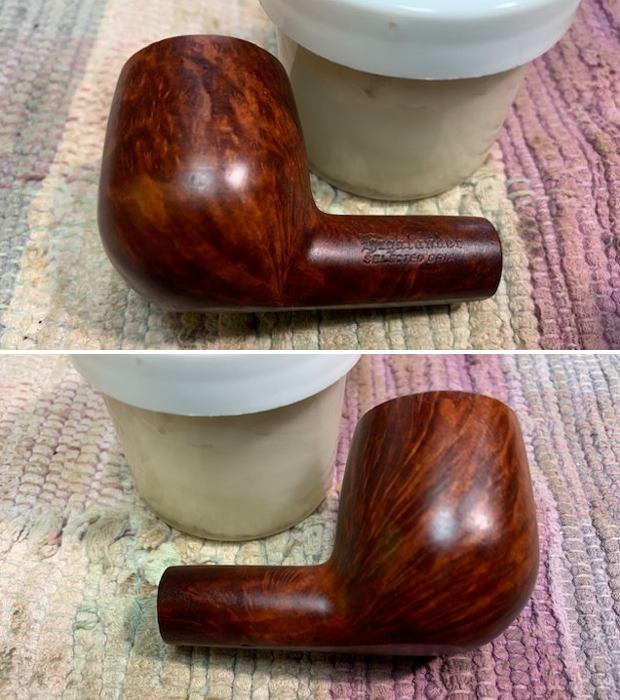
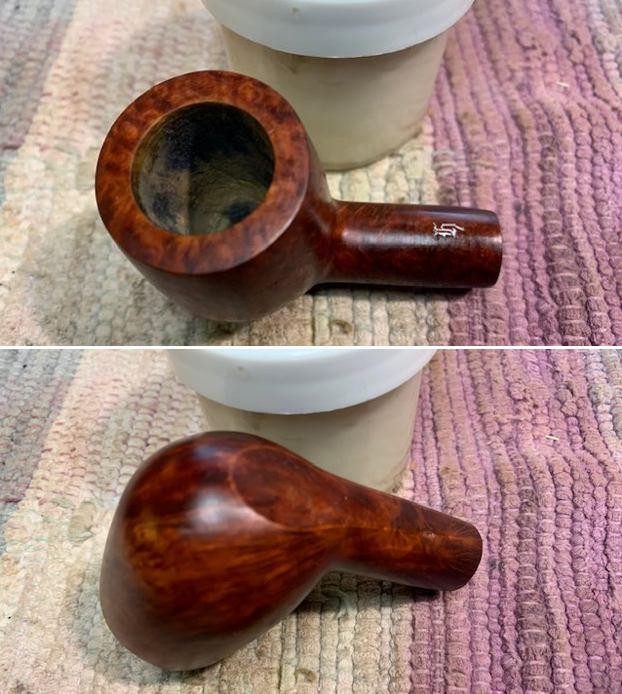
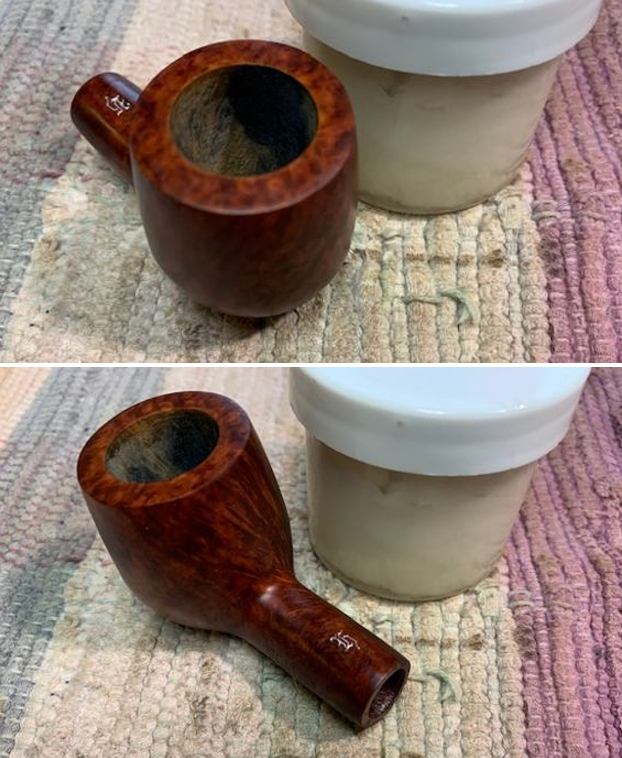
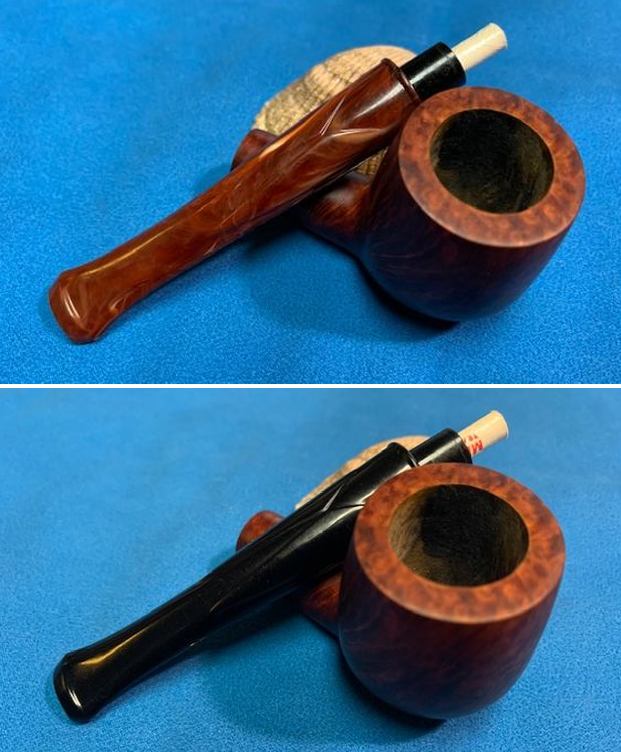
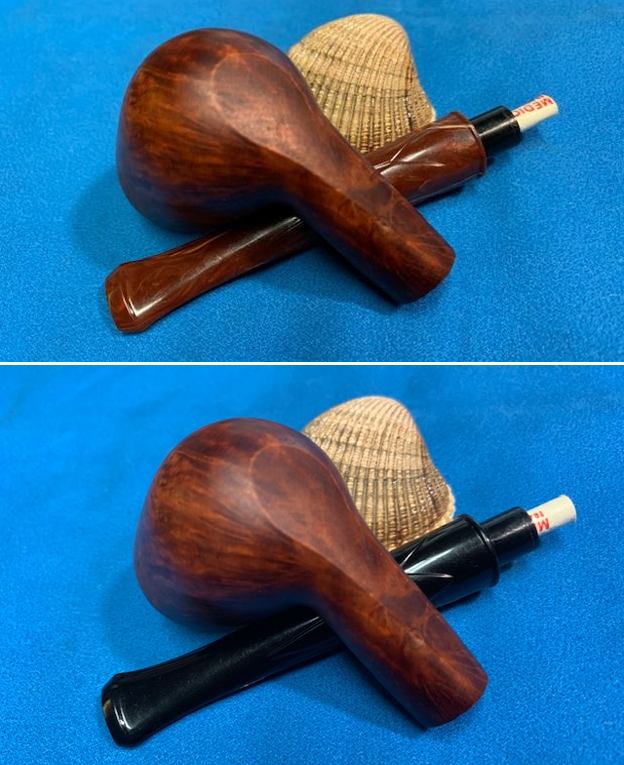
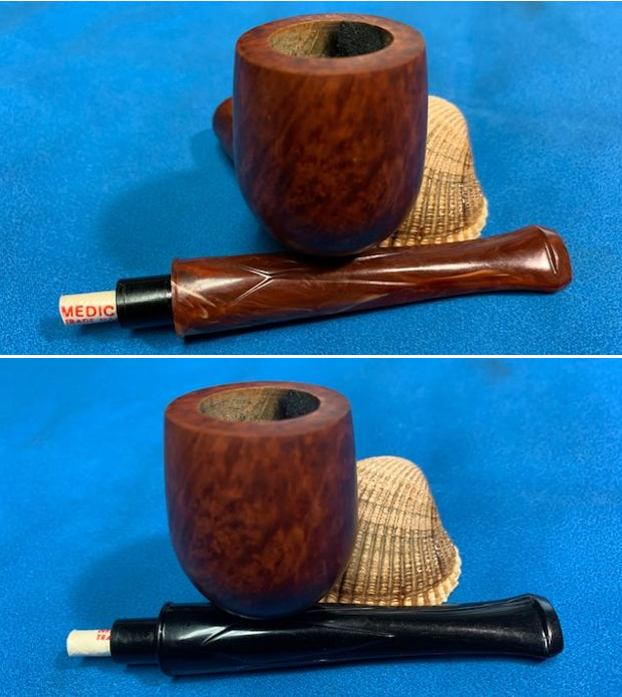
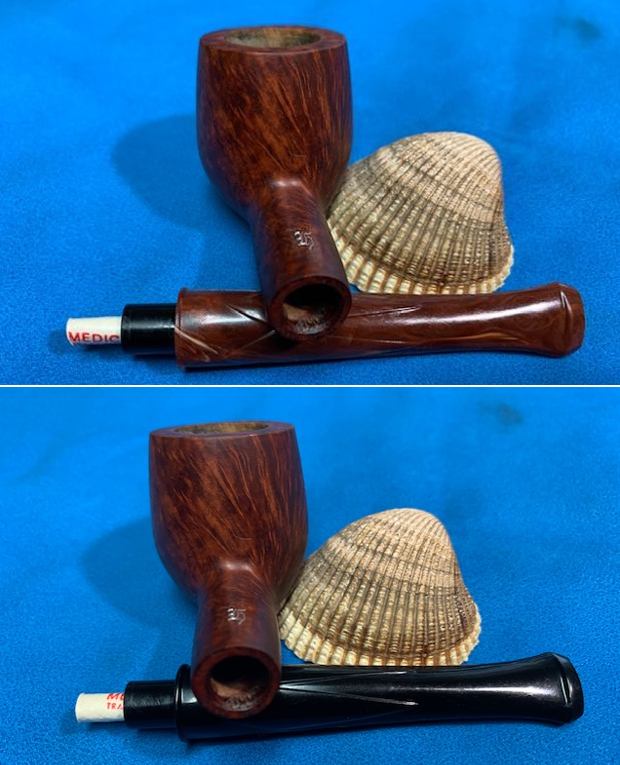
The next pipe is a really neat looking tall Comoy’s Made Stack with a vulcanite taper stem. The classic Bulldog bowl with twin rings and the diamond shank was made to hold in your hand. The flat bottom on the bowl and shank make it a sitter as well. It is quite light weight for its size and the saddle stem is thin and looks comfortable. We picked up this The Guildhall London Pipe from the same antique dealer in 2018 from Naples, Florida, USA as The Everyman London Pipe that I restored earlier (https://rebornpipes.com/2021/07/10/a-truly-stunning-comoys-made-the-everyman-london-pipe-188-stack/). Like that one we have also had this one a long time. Jeff cleaned the pipe in 2019 and now I am working on it in 2021. It is stamped on the left side of the shank and reads The [over] Guildhall [over] London Pipe. On the right side it is stamped with the Comoy’s circular COM Stamp – Made in London[over] England, followed by the shape number 9. The exterior of the bowl looked surprisingly clean and shiny. There was a heavy cake in the bowl and an eruption of thick lava on the rim top and beveled inner edge of the bowl. It was hard to know the condition of the rim top and rim edges because of the grime and thickness of the cake and lava. The cleaning would make it very clear! The stem was oxidized, calcified and had tooth marks and chatter on both sides but nothing like what I was expecting from the condition of the bowl. Jeff took photos of the pipe to give a clear picture of what we were up against with this pipe. He captured the cake in the bowl and the thick eruption of lava on the rim top and edges exceptionally well in the next photos. It was very clear that it was an exceptional smoker! The stem is oxidized, calcified and shows the tooth marks and chatter on both sides ahead of the button. Jeff captured some of the beauty of the shape and the grain in the next photos. The mix of grains and the way in which the stain highlights them is quite stunning. He took a photo of the stamping on the top left side of the diamond shank. It is clear and readable as noted above. You can also see the three silver bars on the top left side of the stem. There is not a photo of the right side of the shank but it reads Made In London in a circle over England (Comoy’s COM stamp) followed by the shape number 9. I turned to Pipephil’s site (http://pipephil.eu/logos/en/logo-g6.html) to confirm what I knew about the brand being made by Comoy’s. It did but did not give a whole lot of other information.I turned then to Pipedia (https://pipedia.org/images/d/d7/Shape_Chart_1975_1.jpg). I found a shape chart that had the shape 9 listed. I have drawn a box around it on the picture below. It is identified as a Flat Bottom Bulldog with a saddle stem.There was also a catalogue that had a page including The Guildhall London Pipe and describing it (https://pipedia.org/wiki/File:Comoy%27s_Sunrise.jpg). I quote from the page: “Many smokers say the Guildhall is amongst the most beautiful pipes in the world. Guildhall pipes are especially selected for distinctive grains.”Now it was time to work on the pipe. It is really a beautiful piece. Jeff had done a great cleanup on the pipe. He reamed the bowl with a PipNet pipe reamer and followed up with a Savinelli Fitsall pipe knife to remove the cake. He scrubbed out the mortise and the airway in the shank and the stem with alcohol, cotton swabs and pipe cleaners. He scrubbed the bowl exterior with a tooth brush and Murphy’s Oil Soap to remove the grime on the finish of the bowl and the lava from the rim top. He rinsed it under running water. One of the benefits of this scrub is that it also tends to lift some of the scratches and nicks in the surface of the briar. He dried it off with a soft cloth. He cleaned the internals and externals of the stem with alcohol, pipe cleaners and cotton swabs. He soaked the stem in Briarville’s Pipe Stem Deoxidizer and rinsed it off with warm water and cleaned out the airway in the stem with alcohol, pipe cleaners and cotton swabs. I took photos of the pipe as I saw it when I put it on the table. I took photos of the rim top and stem to show the condition. The rim top and beveled edge looked amazing. The stem was vulcanite and there were tooth marks and chatter on both sides ahead of the button. The stamping on the left and right sides of the shank are clear and readable. It reads as noted above. The three silver coloured inset bars on the left side of the taper stem are also visible.I removed the stem from the shank and took a photo of the pipe to give a sense of the proportions of the bowl and stem.I started my work on pipe by polishing the briar with micromesh sanding pads – 1500-12000 grit pads. I wiped the bowl down between pads with a damp cloth to remove the debris. I rubbed the bowl and shank down with Before & After Restoration Balm. I worked it into the surface of the bowl sides and shank with my fingertips to clean, enliven and protect the briar. I let the balm sit for 10 minutes, then buffed with a cotton cloth to raise the shine. The Balm did its magic and the grain stood out on the briar. I set the bowl aside and turned my attention to the stem. I “painted” the tooth marks with the flame of a lighter and was able to lift them significantly. I filled in the remaining marks with clear CA glue. Once it cured I sanded out the repairs with a folded piece of 220 grit sandpaper and then started polishing it with 400 grit wet dry sandpaper. I polished the stem with micromesh sanding pads – 1500-12000 grit pads. I wiped it down with Obsidian Oil after each sanding pad. I finished the polishing with Before & After Polishes – both Fine and Extra Fine. I gave it a final rub down with Obsidian Oil and set it aside to dry. This Comoy’s Made The Guildhall London Pipe 9 Straight Bulldog with a vulcanite saddle stem is a beautifully grained pipe with a flowing shape that looks great . The rich browns and blacks of the contrasting stain makes the grain come alive with the polishing and waxing. I put the stem back on the bowl and carefully buffed the pipe with Blue Diamond on the buffing wheel using a light touch on the briar. I gave the bowl and the stem multiple coats of carnauba wax on the buffing wheel and followed that by buffing the entire pipe with a clean buffing pad. I hand buffed the pipe with a microfiber cloth to deepen the shine. The finished The Guildhall London Pipe Bulldog really is a beauty and fits nicely in the hand and looks very good. Give the finished pipe a look in the photos below. The dimensions of the pipe are Length: 5 ¼ inches, Height: 1 ¾ inches, Outside diameter of the bowl: 1 ¼ inches, Chamber diameter: ¾ of an inch. The weight of the pipe is 1.27oz./36 grams. This pipe will soon be on the British Pipe Makers section of the rebornpipes store if you would like to add it to your collection. Thanks for reading this blog and my reflections on the pipe while I worked on it. There are many more to come!

The 2nd of a Pair of Interesting Flea Market Finds – a Polo Sport Bruyere Bent Billiard


Blog by Steve Laug

The next pipe on the work table is the second of a pair of pipes that I picked up when my daughters and I went to the Vancouver Flea Market not too long ago when the COVID-19 restrictions were lifted some here. We walked through all the stalls in the market and talked to vendors. We were chatting with an English chap about pipes and he took a bag out from under the table and in it were two pipes. The first pipe was petite Bent Bob’s sandblast pipe that I restored and wrote a blog about earlier. The second pipe was worn and had varnish peeling off. It was stamped Polo [over] Sport on the left side of the shank and Bruyere on the right side. On the underside near the stem/shank junction it is stamped with the shape number 21. The rim top had some darkening and some lava build up and there was a light cake in the bowl. The stem was oxidized, calcified and had some deep tooth marks and chatter on both sides ahead of the button. button. It was another good find and I was able to negotiate a good price for the pair of pipes that I picked up. I took photos of the rim top and bowl to give a sense of what I saw. There was a thin cake in the bowl and there was lava on the rim top and the inner edge of the bowl. I also took photos of the top and underside of the stem to show the oxidation, calcification and the deep tooth marks and chatter next to the button on both sides. I took a photo of the stamping on the left, right and underside of the shank. It captured the stamping well in the photos and you can see that they are clear and readable as noted above.I turned to Pipephil’s and to Pipedia to see what I could find out about the brand. I also googled the brand name of the pipe. It appears that quite a few companies in several countries made pipes that were stamped Polo. Savinelli in Italy, Vauen in Germany, Imperial Tobacco Company and Cadogan in England. I have eliminated the Savinelli connection as well as the Vauen connection by the stamping on those pipe versus this one. It may well be an Imperial or a Cadogan after the merger. I am not sure I will ever know for certain.

It was now time to work on the pipe. I had a decision to make. Should I scrub it with Murphy’s or skip that step and scrub it with acetone to remove the peeling varnish coat? I opted to go with the acetone scrub. I scrubbed the rim top and sides of the bowl with acetone on cotton pads to remove the grime and the peeling varnish. I was very happy with the outcome. The bowl had some interesting grain around the top and sides. I cleaned up the inside of the bowl and removed the cake with a Savinelli Fitsall Pipe Knife. I took the cake back to bare briar and cleaned it up so that I could examine the bowl walls carefully. They were clean and undamaged.I heated the stinger with a lighter to loosen the tars that held it firmly in the tenon. I find that these really restrict the airflow and it did in this case significantly.I scrubbed out the internals of the shank and stem with alcohol, cotton swabs and pipe cleaners. I worked until both the shank and stem were clean.I filled in the damaged areas on the rim top and the lower left side of the bowl/shank with clear CA glue. Once the repairs cured I wetsanded those areas of the bowl and rim with a 1500 grit micromesh sanding pad. I sanded the entirety of the bowl with micromesh pads – dry sanding with 1500-12000 grit pads. I wiped the bowl down after each pad to remove the sanding debris. The bowl began to take on a deep sheen. I rubbed the bowl down with Before & After Restoration Balm. The product works to revitalize, protect and polish the briar. I let it sit on the bowl for 10 minutes and then buffed it off with a cotton cloth. I set the bowl aside and turned my attention to the stem. I “painted” the tooth marks with the flame of a lighter and was able to lift them significantly. I filled in the remaining marks with clear CA glue. Once it cured I used a small file to recut the edge of the button and to flatten out the repairs. I sanded out the repairs with a folded piece of 220 grit sandpaper and then started polishing it with 400 grit wet dry sandpaper.  I polished the stem with micromesh sanding pads – dry sanding with 1500-12000 grit pads. I rubbed the stem down between pads with Obsidian Oil. I finished polishing using Before & After Stem polish – both Fine and Extra Fine. I rubbed the stem down a final time with Obsidian Oil. This is the first of this brand that I have worked on and one that I can find no detailed information. I believe it is an English Made pipe perhaps Imperial or Cadogan. The Polo Sport Bruyere 21 Bent Billiard is a beautiful pipe underneath that thick and peeling varnish coat. The grain is very nice and the colour of the briar goes amazingly well with the polished black vulcanite taper stem. The delicate curves of the bowl and stem work together to create a pipe that is a pleasure to look at and is comfortable in  the hand. With the stinger apparatus removed the pipe has a great draught (I put it back to let the new owner keep or remove it). The dimensions of the petite pipe are Length: 5 inches, Height: 1 ¾ inches, Bowl diameter: 1 ¼ inch, Chamber diameter: ¾ of an inch. The weight of the pipe is 1.13 ounces/35 grams. It is a great looking pipe that feels great in the hand and is light weight in the mouth. The light weight of the pipe, the bend in the stem and shank should make it another  perfect clencher. I will be adding it to the British Pipe Makers section of the rebornpipes store shortly. If you are interested in adding it to your collection send me a message on Facebook or an email. Thanks for walking through the process with me. Cheers.

A Pair of Interesting Flea Market Finds – First a Savinelli Made Sandblast Bent Bob’s Acorn


Blog by Steve Laug

The next pipe on the work table was one of a pair of pipes that I picked up when my daughters and I went to the Vancouver Flea Market not too long ago when the COVID-19 restrictions were lifted some here. We walked through all the stalls in the market and talked to vendors. We were chatting with an English chap about pipes and he took a bag out from under the table and in it were two pipes. The first was worn and had varnish peeling off. It was stamped Polo Sport Bruyere 21. The second one was this dusty and lightly smoked (perhaps one time!!) petite sandblast pipe. It was stamped on the underside of the shank and read BENT BOB’S followed by the Savinelli shield and the shape number 630 [over] Italy. It was stamped Savinelli on the left side of the saddle stem. The pipe had some darkening and when I ran a pipe cleaner through there was some tars but otherwise the bowl and rim top were immaculate. There was dust in the grooves of the sandblast. The stem was not oxidized but had light tooth chatter on the top and underside near the button. It was a good find and I was able to negotiate a good price for the pair of pipes that I picked up. I took photos of the rim top and bowl to give a sense of what I saw. I also took photos of the top and underside of the stem to show the light tooth chatter next to the button on both sides. It really was minor but it was present.I took a photo of the stamping on the underside of the bowl and shank. It captured the Bent Bob’s stamp well but the Savinelli shield and the shape number [over] Italy are obscured in the sandblast. I removed the stem from the shank and took a photo to show the look of the pipe proportionally. It is a pretty little blast.I turned to Pipephil’s site (http://pipephil.eu/logos/en/logo-b4.html) and looked up  Bent Bob’s and found a listing for the brand with a note linking it to Savinelli. I have included a screen capture of the listing below.I turned to Pipedia (https://pipedia.org/wiki/Italian_Pipe_Brands_%26_Makers_A_-_C) and looked up the Bent Bob’s pipes. I found the listing with the following information. When I turned to the Savinelli site it repeated that information but added nothing else. I quote:

Bent Bob Pipes – Savinelli made budget pipe for USA

I scrubbed the exterior of the bowl with undiluted Murphy’s Oil Soap. I used a tooth brush to work the soap into the grooves and valleys of the sandblast. I rinsed it off with warm running water and dried the bowl off with a cotton towel. It definitely took away all of the dust and debris in the finish and left the bowl looking much better. I scrubbed out the internals of the shank and stem with alcohol, cotton swabs and pipe cleaners. After removing a little bit of oil and tar I started to see a red stain come out on the pipe cleaners. I worked until both the shank and stem were clean.I rubbed the bowl down with Before & After Restoration Balm. I worked it into the sandblast with a horsehair shoe brush. The product works to revitalize, protect and polish the briar. I let it sit on the bowl for 10 minutes and then buffed it off with a cotton cloth. I set the bowl aside and turned my attention to the stem. I sanded out the tooth marks and chatter on the stem with a worn piece of 220 grit sandpaper and then started polishing it with 400 grit wet dry sandpaper.I polished the stem with micromesh sanding pads – dry sanding with 1500-12000 grit pads. I rubbed the stem down between pads with Obsidian Oil. I finished polishing using Before & After Stem polish – both Fine and Extra Fine. I rubbed the stem down a final time with Obsidian Oil. I have worked on a few Savinelli Made Bent Bob’s Pipes over the years and found them to be well made and extremely light weight. This Sandblast Bent Bob’s Bent Acorn 630 is no exception. The sandblast is very nicely done and the finish is a combination of black and red stain that really makes the blast pop. The condition is exceptional and for all intents and purposes this pipe is new. If you pick it up for your rack you get the privilege of breaking it in for yourself with your favourite tobacco. The dimensions of the petite pipe are Length: 4 ¾ inches, Height: 1 ¾ inches, Bowl diameter: 1 inch, Chamber diameter: 5/8 of an inch. The weight of the pipe is .67 ounces/18 grams. It is a great looking pipe that feels great in the hand and is light weight in the mouth. The bend in the stem and shank make it a perfect clencher. I will be adding it to the Italian Pipe Makers section of the rebornpipes store shortly. If you are interested in adding it to your collection send me a message on Facebook or an email. Thanks for walking through the process with me. Cheers.

A New Solution to an Old Problem


Blog by Kenneth Lieblich

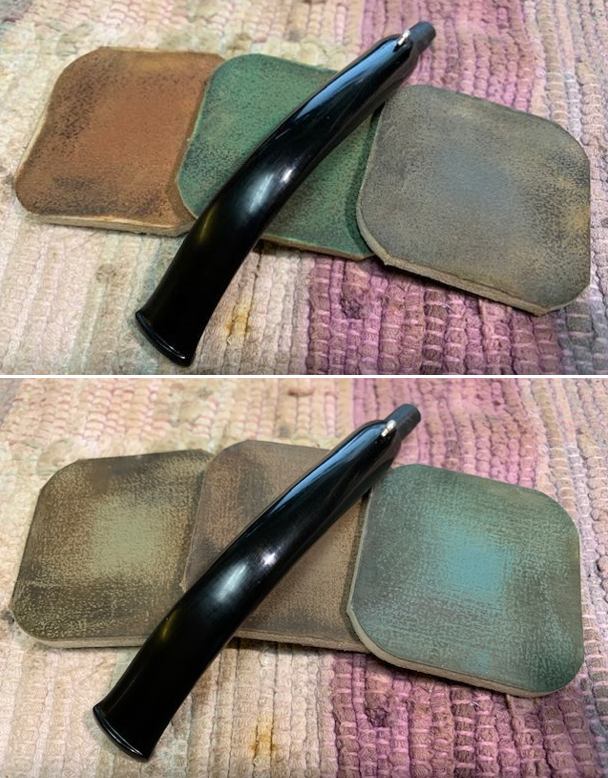
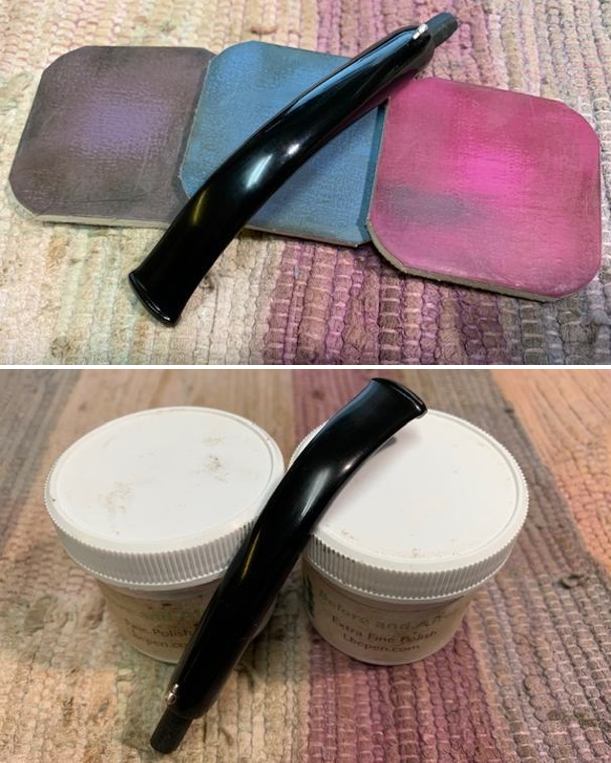
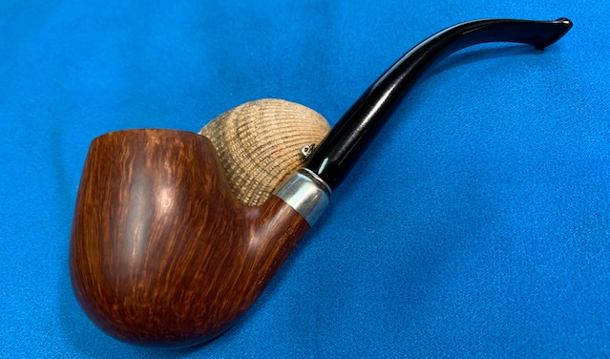
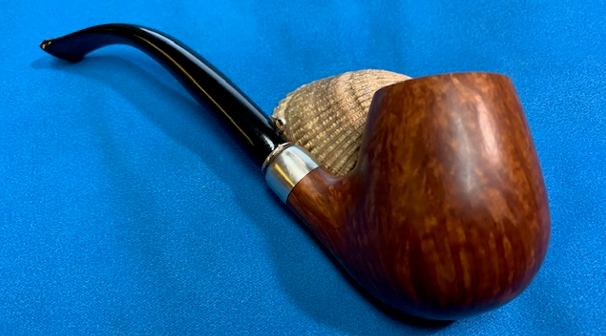
Welcome to my first meerschaum restoration! In fact, it is not just a meerschaum pipe, but it is also a Peterson pipe. This came out of lot of pipes from eBay some months ago, but it took me a while to get to it – I was a bit daunted. Even though it looked rough to start, it ended up as a very handsome pipe. Please read on… This is a rusticated, African block meerschaum, made on the Isle of Man. The stem has a push-style tenon. Like many of the meerschaum pipes of this era, this one has a factory-stained rim – to give it that sort of ‘broken in’ look. How do I know it is a Peterson? Because it has the distinctive, stylized ‘P’ on the left side of the stem, near the shank. Similar to other pipes that Steve has restored, this one seems likely to have been produced by Laxey Pipes Ltd. on the Isle of Man for Peterson Pipes. Here is the Pipedia article about them (I hasten to add that the various errors below are in the original text and are not mine):

Laxey Pipes Ltd. resided in a historical 19th century four-storey Man stone building at The Quay, Old Laxey, Isle of Man, which thankfully has been preserved.

The company specialised in the production of meerschaum pipes using the Meerschaum mined by the Tanganyika Meerschaum Corporation in the Amboseli basin in Tanganyika (since 1964 part of the United Republic of Tanzania). 

Please note: you may often find names like “Manx Pipes Ltd.”, “Man Pipe Co.” and others more, but there is no indication of another Isle of Man pipe producer other than Laxey Pipe Ltd. at any time! 

Laxey Pipes Ltd. marketed own brands like “Manxpipe”, “Manxman”, “Manxland” e.c. Names like “John Bull”, “White Knight” (unwaxed), “Domino” (black, or lined) indicated some shapes / colours of Laxey’s own series. The stems either showed the astronomical sign for “male” or “man” (circle + arrow), or the crest of the Isle of Man, the 3-legged X in a circle. Manxpipes and Laxey’s other brands were available through pipe retailers in general, but also were sold (mainly) to tourists through their own shop in Laxey. 

Furthermore Laxey Pipes Ltd. manufactured the meer bowls for Peterson, Barling, Nørding and others from the later 1960’s until 2001. Man Pipe e.g. was a brand distibuted by Comoy’s. The bowls usually showed no nomenclature indicating the orderer. “Genuine Block Meerschaum” was engraved frequently. Often, just the stems were different, while bowls were the same.

Supply of meerschaum from East Africa run out (Kenya / Tanzania exhausted, Somalia inaccessible), and thus the last Laxey meers were supplied to trade in May, 2001. Laxey Pipes Ltd. tried to survive continuing with briar pipes – mainly in the Danish style -, but to no success. It closed down business in July, 2002.

Anyway, on to the pipe – and what a mess it was. The stummel had the following problems: a nasty ghost, filth embedded in the rustication, a creepy and unnatural yellow tinge to the meerschaum, lots of lava on the rim, lots of cake in the bowl, and – worst of all – chunks missing from the rim. Meanwhile, the stem had its own set of problems: the ‘P’ logo was nearly obliterated, heavy oxidation and calcification, and tooth marks and dents. In fact, even my wife commented that this pipe might be the proverbial ‘bridge too far’ – but, like the stereotypical, stubborn husband, I was not to be deterred! I decided to start on them stem, as I still was not sure how to resolve the chunks missing from the rim. I broke out the isopropyl alcohol and pipe cleaners, and got to work on the inside of the stem. Predictably, it was pretty dirty and I went through a good number of pipe cleaners in order to clean it up. Then I had to tackle the overwhelming oxidation and calcification – yuck. I took a blade (an old butter knife, actually) and began gently scraping at all that build-up. Obviously, I took it easy, as I did not want to damage the stem’s vulcanite any further. The butter knife worked quite well and I got a good amount loose. I followed that up with some lemon-infused isopropyl alcohol on some cotton rounds to try and scrub the rest away. This worked quite well and I noted some improvement. There were quite a few dents in the stem. Some were obviously tooth marks, but other dents looked like blunt force trauma! Time to break out the BIC lighter to see if it could raise some of these dents. Quite frankly, it did not do much – this repair was going to require some considerable sanding etc. Before that, however, the stem went for an overnight soak in the Before & After Hard Rubber Deoxidizer. The following day, I cleaned all of the de-oxidizing sludge off with alcohol, pipe cleaners, et cetera. The oxidation had migrated to the surface and would be fairly straightforward to remove. I scrubbed vigorously with SoftScrub to remove the leftover oxidation.Before I moved on to the Micromesh pads, I built up the dent damage on the stem with cyanoacrylate adhesive and let it fully cure. It turned out that this was not as straightforward as I had hoped. It took more than one application of adhesive to sort this problem out. I then sanded it down with 220-, 400-, and 600-grit sandpapers to make the stem look normal. I then used all nine Micromesh pads (1,500 through 12,000 grit) to bring out the lovely black lustre on the stem. I also used Obsidian Pipe Stem Oil in between each pad scrubbing.

The stummel was next, and the usual cleaning procedures were in order for this pipe. I used both the PipNet Reamer and the KleenReem to remove the built-up cake and followed that with 220-grit sandpaper to remove as much as I could. The meerschaum cannot take the usual de-ghosting process of soaking cotton balls in isopropyl alcohol, so sanding was a way to reduce the old ghost in the pipe. I also wanted to ensure there were no hidden flaws in the interior walls of the meerschaum. Fortunately, there were none. Truth be told, I actually also tried to use a bit of ground coffee in the bowl to remove the ghost, but that was not very successful.I then proceeded to clean out the insides of the shank with Q-tips, pipe cleaners, and isopropyl alcohol. There was quite a bit of nastiness inside this stummel – it took a lot of pipe cleaners etc. to sort that out. I then moved on to cleaning the outside of the stummel with Murphy’s Oil Soap and some cotton pads. That worked very well at removing any latent dirt and that weird yellow tinge that I mentioned earlier. I followed that up by quickly cleaning the insides with some dish soap and tube brushes. The meerschaum cannot be left wet for long – it will turn to mush otherwise. Before & After Restoration Balm does not make the same kind of difference on meerschaum as it does on briar, but it still works – so light coating was applied, followed by my horsehair shoe-brush. On to the inevitable repairs: this is where the nightmares begin. Honestly, it was not immediately clear to me how I was going to make the stummel look decent. Sure, I had cleaned it, etc., but what about the obvious chunks missing from the side? I considered sanding it all down, but I feared this would alter the shape of the pipe beyond reason and repair. I figured that, at very least, this pipe needed to be topped. That is to say, the rim had to be inverted and sanded down on a piece of 220-grit sandpaper. By doing this, it would remove some of the lighter damage altogether and would improve the state of the heavier damage. But the old problem remained: how was I going to repair the chunks of missing meerschaum on this pipe?I then realized that the solution was as obvious as the nose on my face: I would take a piece of meerschaum from another pipe and fashion a repair. I grabbed one of my sacrificial meerschaum pipes (a dreadfully ugly horse’s head) and used a pair of end-cutting nippers to break off a couple of pieces. Having done that, I used cyanoacrylate adhesive to fix them in place on the stummel. I was feeling pretty good about this solution, but knew that there was still a long row to hoe. Obviously, I needed to sand down and shape the new pieces of meerschaum, but I also needed to make the rim as rusticated as the rest of the stummel. Enter the Dremel (with accompanying angelic voices). Yes, I first used a sanding drum on the Dremel to remove excess material from the repair (but not too much), then I used a high-speed engraving cutter to rough up the surface of both the rim and the repair. So far, so good. The engraving cutter had worked – to a point – but it had not really resulted in the sort of rustication I was looking for. My solution came from the Dremel again, but only indirectly. Steve reminded me of his trick of using an old Philips-head screwdriver as a rustication device (you can read about that here). Whereas Steve used Dremel grinding stones to make his rustication device, I used a metal cutting disc on the Dremel. As you can see, my screwdriver came out looking quite good and the stummel came out looking even better. I was definitely pleased with the roughened surface of the stummel, but I next needed to address the lack of colour. This, of course, was a direct result of my topping of the rim – it removed the patina. The solution must have come to me in the mid-afternoon: tea. Yes, I used black tea to provide a beautiful stain to the meerschaum that gave it a really good look. I went and added some more Before & After Restoration Balm and, once again, used my horsehair shoe-brush to work it in.Meerschaum does not really do well on a high-speed buffer, so I used a microfibre cloth to achieve the same effect. I did, however, take the stem to the buffer, where I applied White Diamond and some wax to give it that lovely shine.

In the end, what a beauty this pipe is! It is back to its old glory and ready to be enjoyed again by the next owner. I am pleased to announce that this pipe is for sale! If you are interested in acquiring it for your collection, please have a look in the ‘Irish’ pipe section of the store here on Steve’s website. You can also email me directly at kenneth@knightsofthepipe.com. The approximate dimensions of the pipe are as follows: length 154 mm; height 47 mm; bowl diameter 34 mm; chamber diameter 20 mm. The mass of the pipe is 40 grams. Thank you very much for reading and, as always, I welcome and encourage your comments.

Reworking a Damaged French Made GBD Speciale Standard 9465 Liverpool


Blog by Steve Laug

Jeff and I purchased the lovely long shank GBD Liverpool from a fellow in Brazil, Indiana, USA. The grain on the pipe is a nice mix of flame, swirled and birdseye that works well with the brown stains of the briar and the black of the saddle stem. The rim top is crowned with a bevel inward and has some significant damage on the front right outer edge and top. The repeated burning of that area with a lighter flame has left behind a deep dip and burn that will need to be dealt with. It was hard to see with the thick cake in the bowl and the veritable eruption of lava over the top of the rim but it was very present. The finish was quite dirty with grit, grime and oils ground into the surface of the bowl and shank. The shank is stamped on both sides and on the left it reads GBD in an oval [over] Speciale [over] Standard. On the right side it reads France [over] the shape number 9465. The vulcanite stem was lightly oxidized and well dented with tooth marks and chatter on both sides near the button. The button area was worn as well. There is a GBD brass oval roundel on the left side of the saddle stem. Jeff took photos of the pipe to capture its condition when it arrived at his place. It was going to take some work to bring this one back to life. But both of us thought that it would be worth it. Jeff took photos of the rim top and bowl that show the cake and overflowing lava on the top and edges of the bowl. It is really hard to know what it looks like under all of that. We have learned that it with either be badly damaged or it will have been well protected. Only cleaning it off would reveal which result was on this pipe. You can also see the burn damage on the right front outer edge. The stem had a lot of tooth chatter and marks that are clear in the photos that follow. There is some oxidation and the calcification on the stem surface. He took photos of the sides and heel of the bowl to show condition of the briar. You can see the dust and debris ground into the bowl. The burn damage on the outer rim edge of the right front is more apparent from the side view in the first photo. The grain is still quite nice. He took photos of the stamping on the sides of the shank. It was faint but was still was clear and readable as noted above. The brass GBD roundel looked good as well. I always like to be able to set the pipe I am working on in its historical setting so I turn to Pipedia (https://pipedia.org/wiki/GBD) and read through the brand history. Toward the middle of the article I found what I was looking for. I quote below:

The Paris factory moved to Saint-Claude in 1952. Since 1981 the majority of GBD pipes come from the English factory.

The premium lines of GBD offered very good values, and are considered amongst the most affordable high end pipe of the 1960’s and earlier and a rival in quality, design, and price to Dunhill. Smokers’ Haven was the main retail supplier for GBD’s in the US until the early 1980’s.

GBD produced consistently well made pipes, almost entirely of Algerian or Grecian briar. In the late 1960’s to late 1970’s, they introduced the “Collector” and “Unique” lines, made primarily by Horry Jamieson, who had carved for Barling for many years, and was skilled in freehand design. Older GBD pieces are excellent smokers and unique in design. They did an excellent executions of classic pipe shapes, as well as some beautiful freehands in the “Unique” line. [2]

The following list comprises the better grades in descending order:

Pedigree, Pedigree I, Pedigree II, Straight Grain, Prodigy, Bronze Velvet, Virgin, Varichrome, Prestige, Jubilee, New Era, Prehistoric, International, Universe, Speciale Standard, Ebony, Tapestry, New Standard, Granitan, Sauvage, Sierra, Penthouse, Legacy, Concorde.

Since the pipe I was working on was made in France I knew that it was made either in Paris before 1952 or in St. Claude after that date and before 1981 when production moved to England. I also new that I was dealing with one of the better grade pipes with the Speciale Standard stamp.

I then followed the links included to a listing of the shapes and numbers on the GBD pipes (https://pipedia.org/wiki/GBD_Shapes/Numbers). The pipe I was working on was labeled by GBD as a 9465 which is a Liverpool with a round shank. Now it was time to work on the pipe itself. Jeff had cleaned up the pipe with his usual focus on detail. He reamed the pipe with a PipNet pipe reamer and removed the rest of the cake with a Savinelli Fitsall Pipe Knife. He scrubbed the exterior of the bowl with undiluted Murphy’s Oil Soap with a tooth brush and was able to remove the thick lava build up on the rim top. He rinsed it under running warm water to remove the soap and grime. He cleaned out the inside of the shank and the airway in the stem with alcohol, cotton swabs and pipe cleaners. He soaked the stem in Briarville’s Stem Deoxidizer and rinsed it off with warm water. I took photos of the pipe once I received it. The rim top cleaned up really well. The rim top, inner and outer edges of the bowl other than the burn damage on the front right were in good condition. The crowned inner edge also has some rim darkening and burn damage on the front right as well. The stem surface looked good with some large and deep tooth marks and chatter on both sides near the button.  He took photos of the stamping on the sides of the shank. It was faint but readable as noted above.I removed the stem and took a photo of the pipe to give a sense of the whole.  Now it was time to do my work on the pipe. I decided to begin by dealing with the damage on the front of the rim top and bowl. I sanded it slightly to give a clear picture of the damage in the photo below. I have marked it in red to help identify the damaged area.Now I had a decision to make on this repair. I could top the bowl and shorten the height of the entire bowl to accommodate the damage on the front of the rim. To me this would look awkward as the dip is quite deep. The other option to me was to build up the dip in the rim top and edge with briar dust and clear CA glue (super glue) to the same height as the rest of the bowl. I decided to build up the bowl top. To begin the process I topped the bowl to give me a flat surface and to remove the other damage to the rim top.I wiped off the burned area with alcohol on a cotton pad to clean off any debris. I layered on the first batch of CA glue and then used a dental spatula to put briar dust on top of the glue. I repeated the process until I had the rim top level. Once the repair cured I topped it once again to make sure that the repaired area matched the rest of the rim top. I used a topping board and 220 grit sandpaper.I took photos of the rim top and bowl front to show the repair. It is dark and still needs a lot of work but it is at least the right height and is smooth. You can also see the slight bevel that was on the inner edge of the rim on the rest of the bowl. I would need to continue that on the repaired area to match.I worked on the inner beveled edge with a folded piece of 220 grit sandpaper to give it a deep bevel. I also sanded the rim top repair to further smooth it out. The repair is starting to look good at this point.  I polished the briar with micromesh sanding pads – dry sanding with 1500-12000 grit sanding pads. I wiped it down after each pad with a damp cloth to remove the sanding debris and dust.   I restained the rim edge and top with a combination of Maple and Walnut stain pens to blend the colour to the rest of the bowl. The rim top looked darker but it looked much better than when I started the repair.I rubbed the bowl and shank down with Before & After Restoration Balm. I worked it into the surface of the bowl sides and shank with my fingertips to clean, enliven and protect the briar. I let the balm sit for a little while and then buffed with a cotton cloth to raise the shine.    I set the bowl aside and turned my attention to the stem. I “painted” the surface of the stem with the flame of a lighter to lift the tooth marks. It worked very well and many of the marks lifted. I filled in the remaining marks with clear CA glue and let the repairs cure. I used a small file to flatten out the repairs. I sanded the stem with 220 grit sandpaper to blend the repairs into the stem surface. I started the polishing with 400 grit sandpaper.     I polished the vulcanite stem with micromesh sanding pads – 1500-12000 grit pads. I wiped it down with Obsidian Oil after each sanding pad. I used Before & After Pipe Polish – both Fine and Extra Fine to further polish the stem.  This French Made GBD Speciale Standard 9465 Liverpool is a great looking pipe now that it has been restored. The rich contrasting brown stained finish around the bowl is quite beautiful and highlights the a finish that works well with the polished vulcanite stem. I put the stem back on the bowl and carefully buffed the pipe with Blue Diamond on the buffing wheel using a light touch on the briar. I gave the bowl and the stem multiple coats of Conservator’s Wax and buffed the entire pipe with a clean buffing pad. I hand buffed the pipe with a microfiber cloth to deepen the shine. The finished GBD Speciale Standard Liverpool sits nicely on the desk top and in the hand. Give the finished pipe a look in the photos below. The dimensions of the pipe are Length: 6 inches, Height: 1 ¾ of an inch, Outside diameter of the bowl: 1 ¼ inch, Chamber diameter: ¾ of an inch. The weight of the pipe is 35 grams/1.23 ounces. I will be putting it on the French Pipe Maker section of the rebornpipes store shortly. If you are interested in adding this pipe to your collection send me a message or an email. Thanks for reading this blog and my reflections on the pipe while I worked on it. There are many more to come!
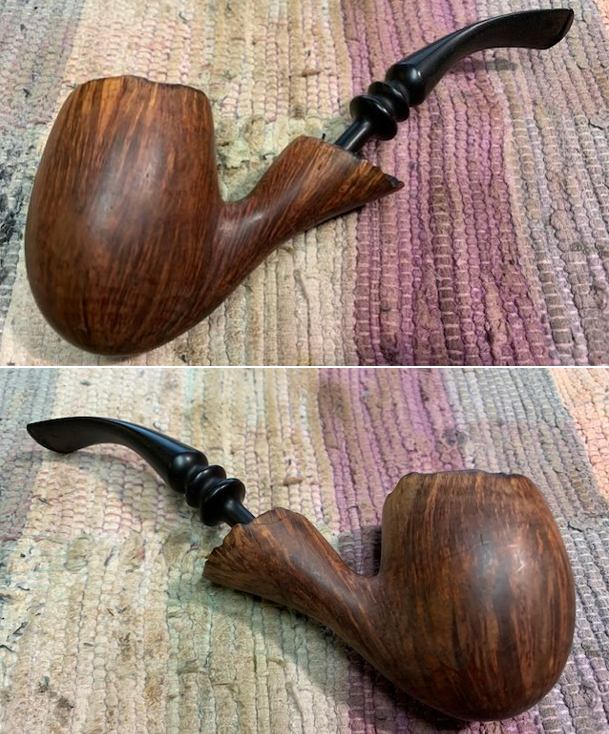
Reworking a French Made Bruyere Garantie Mini-Churchwarden


Blog by Steve Laug

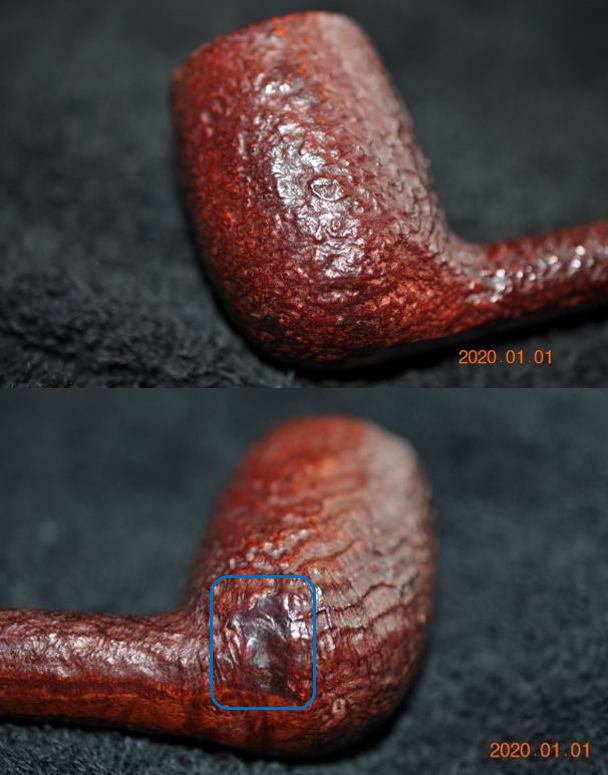
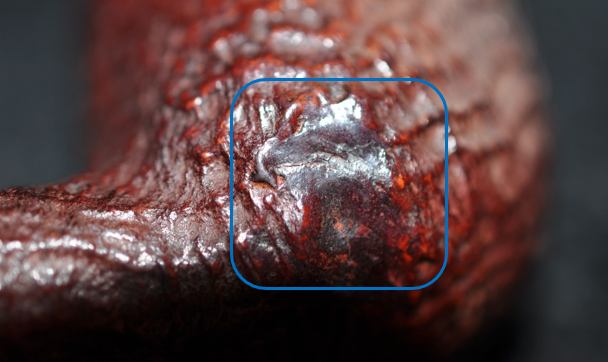
The next pipe on the worktable has been here awhile. Jeff picked up the pipe from an online auction in 2019 in Harrisburg, Pennsylvania, USA. Jeff cleaned it in 2020 and I am starting work on it now in 2021. It is a mini-churchwarden that had a low profile and a fairly long stem. The finish was rusticated with deep rustication around the bowl and shank. There was a flaw in the briar on the right side toward the top of the bowl. The bowl is stamped on the left side and reads Bruyere [over] Garantie [over] Made in France. The bowl had a thick cake with an overflow of lava on the inwardly beveled thin rim top. The finish was worn and dirty with grime in the grooves of the rustication. It appeared that the shank had originally had a band that had long since disappeared before it came to us. The stem has a lot of damage toward the shank end. There were grooves and scratches all the way around the stem. The button end had some deep tooth marks and grooves from the edge of the button forward about 1 inch. The stem was calcified and oxidized along the length. Jeff took photos of the pipe before he did his work on it. Jeff took photos of the rim top to show the cake in the bowl and the lava overflow on the rim top. You can also see the nicks in the outer edge of the bowl toward the front side. The stem had a lot of tooth chatter and marks that are clear in the photos that follow. There is some oxidation and the calcification on the stem surface. He took photos of the sides of the bowl to show condition of the briar. You can see the dust and debris ground into the bowl. The flaw on the right of the bowl is also visible in the second photo. He also took a photo of the shank end and tenon on the stem to show the condition. In the photo of the shank end you can see where the missing band was. I appeared to be a narrow band that was missing. By the time we had it the band was missing. I would need to replace the band on the shank.He took a photo of the stamping on the left side of the shank. It was clogged with debris that filled in some of the letters. Underneath it was clear and readable as noted above.Jeff had cleaned up the pipe with his usual focus on detail. He reamed the pipe with a PipNet pipe reamer and removed the rest of it with a Savinelli Fitsall Pipe Knife. He scrubbed the exterior of the bowl with undiluted Murphy’s Oil Soap with a tooth brush. He rinsed it under running warm water to remove the soap and grime. He cleaned out the inside of the shank and the airway in the stem with alcohol, cotton swabs and pipe cleaners. He soaked the stem in Briarville’s Stem Deoxidizer and rinsed it off with warm water. I took photos of the pipe once I received it. The rim top cleaned up really well. The rim top, inner and outer edges of the bowl were in good condition. The beveled inner edge also has some rim darkening and burn damage. The stem surface looked good with some large and deep tooth marks and chatter on both sides near the button.  The stamping on the left side of the shank is clear and readable and reads as noted above. I removed the stem and took a photo of the pipe to give a sense of the whole.Now it was time to do my work on the pipe. I decided to replace the band on the shank end first. I chose a band from my collection of bands to fit the shank. I reduced the depth of the band on a topping board and glued it in place on the shank end with all purpose glue. I repaired the deep flaw on the right side of the bowl with clear CA glue and briar dust. I rusticated the repair with a wire brush. I restained the spot on the bowl with a Walnut stain pen and set it aside to dry.I used a folded piece of 220 grit sandpaper to clean up the darkened inner edge bevel on the bowl. I polished the briar with micromesh sanding pads – dry sanding with 1500-12000 grit sanding pads. I wiped it down after each pad with a damp cloth to remove the sanding debris and dust.   I rubbed the bowl and shank down with Before & After Restoration Balm. I worked it into the surface of the bowl sides and shank with my fingertips to clean, enliven and protect the briar. I let the balm sit for a little while and then buffed with a cotton cloth to raise the shine. I set the bowl aside and turned my attention to the stem. I “painted” the surface of the stem with the flame of a lighter to lift the tooth marks. It worked very well and many of the marks lifted. I filled in the remaining marks with clear CA glue and let the repairs cure. I used a small file to flatten out the repairs. I sanded the stem with 220 grit sandpaper to blend the repairs into the stem surface. I started the polishing with 400 grit sandpaper.    I polished the vulcanite stem with micromesh sanding pads – 1500-12000 grit pads. I wiped it down with Obsidian Oil after each sanding pad. I used Before & After Pipe Polish – both Fine and Extra Fine to further polish the stem. This French Made Bruyere Garantie Churchwarden is a great looking pipe now that it has been restored. The sandblasted brown stained finish around the bowl is quite beautiful and highlights the a finish that works well with the brass band and the polished vulcanite stem. I put the stem back on the bowl and carefully buffed the pipe with Blue Diamond on the buffing wheel using a light touch on the briar. I gave the bowl and the stem multiple coats of Conservator’s Wax and buffed the entire pipe with a clean buffing pad. I hand buffed the pipe with a microfiber cloth to deepen the shine. The finished Bruyere Garantie Churchwarden sits nicely on the desk top and in the hand. Give the finished pipe a look in the photos below. The dimensions of the pipe are Length: 7 inches, Height: 7/8 of an inch, Outside diameter of the bowl: 1 inch, Chamber diameter: ¾ of an inch. The weight of the pipe is 15 grams/.53 ounces. I will be putting it on the French Pipe Maker section of the rebornpipes store shortly. If you are interested in adding this pipe to your collection send me a message or an email. Thanks for reading this blog and my reflections on the pipe while I worked on it. There are many more to come!
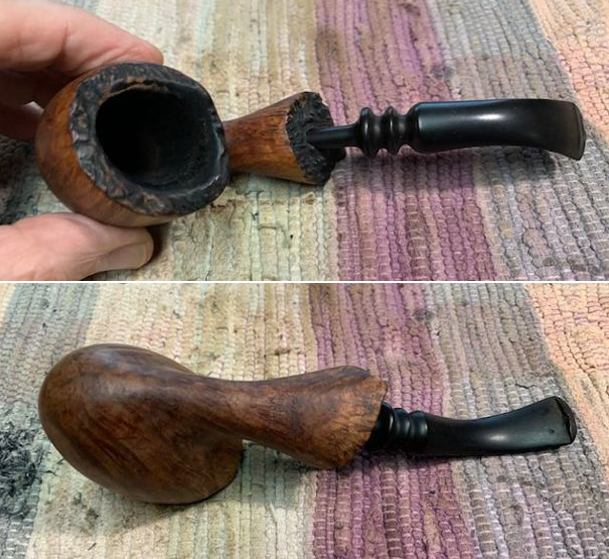
New Life for another Bari – A Mahogni Bent Sitter 8233


Blog by Steve Laug

The next pipe on the work table is a bit of another mystery to both Jeff and me. We really have no memory about where we picked this pipe up or where we bought it. It is not in the spread sheet and there seemingly is no way to check where we got it. It is another Bent Sitter like the Bari Senior 489 I just completed. It has a deep and rich smooth finish with a mix of brown stains that highlight the grain. The pipe is stamped on the left side of the shank and reads BARI [over] Mahogni. On the right side it is stamped Made in Denmark [over] the shape number 8233. The left side of the saddle stem it is stamped and reads BARI. The briar is exceptionally filthy with grime ground into the surface of the bowl and shank. There is a thick cake in the bowl and an overflow of lava on the rim top. There are some nicks in the outer edges of the bowl. The stem is lightly oxidized and the there were a lot of tooth marks and chatter on both sides ahead of the button. While we had no details about the pipe Jeff did find these photos of the pipe before he did his clean up work on it.Jeff took photos of the rim top to show the cake in the bowl and the lava overflow on the rim top. You can also see the nicks in the outer edge of the bowl toward the front side. The stem had a lot of tooth chatter and marks that are clear in the photos that follow. There is some oxidation and the calcification on the stem surface. He took photos of the sides of the bowl to show condition of the briar. You can see the grain through the grime ground into the bowl.He captured the stamping on the shank sides. It reads as noted above. The stamping is clear and readable. The stamping on the right side of the shank is double stamped and a bit blurry from the stamping.Jeff had cleaned up the pipe with his usual focus on detail. He reamed the pipe with a PipNet pipe reamer and removed the rest of it with a Savinelli Fitsall Pipe Knife.  He scrubbed the exterior of the bowl with undiluted Murphy’s Oil Soap with a tooth brush. He rinsed it under running warm water to remove the soap and grime. He cleaned out the inside of the shank and the airway in the stem with alcohol, cotton swabs and pipe cleaners. He soaked the stem in Briarville’s Stem Deoxidizer and rinsed it off with warm water. I took photos of the pipe once I received it.  The rim top cleaned up really well. The rim top, inner and outer edges of the bowl were in excellent condition. The stem surface looked good with a few small tooth marks and chatter on both sides near the button. The stamping on the sides of the shank is clear and readable and reads as noted above. I removed the stem and took a photo of the pipe to give a sense of the whole. I turned to Pipephil’s site (http://www.pipephil.eu/logos/en/logo-b1.html) to see if I could find a listing for the Bari Mahogni. There was nothing specifically listed for this line of Bari pipes. There was also good info on the brand as a whole and that it was founded by Viggo Nielsen in 1950 and he ran it until 1978 when Age Bogelund managed the production for them. In 1993 it was sold to Helmer Thomsen.Pipedia gives a great history of the brand (https://pipedia.org/wiki/Bari) that is well worth reading. There were also examples of the Bari Selected Nature Old Briar pipes showing their stamping.

Now it was time to do my work on the pipe. I polished the briar with micromesh sanding pads – dry sanding with 1500-12000 grit sanding pads. I wiped it down after each pad with a damp cloth to remove the sanding debris and dust.     I rubbed the bowl and shank down with Before & After Restoration Balm. I worked it into the surface of the bowl sides and shank with my fingertips to clean, enliven and protect the briar. I let the balm sit for a little while and then buffed with a cotton cloth to raise the shine. I set the bowl aside and turned my attention to the stem. I “painted” the surface of the stem with the flame of a lighter to lift the tooth marks. It worked very well and many of the marks lifted. I filled in the remaining marks with clear CA glue and let the repairs cure. I sanded out the remnants of tooth marks with 220 grit sandpaper. I started the polishing with 400 grit sandpaper. I touched up the BARI stamp on the left side of the saddle with white acrylic nail polish. Once it dried I scraped off the excess and left the white in the stamping. While not perfect it looked better.    I set the bowl aside and turned to work on the stem. It was in good condition and the tooth marks were light so I figured they would polish out fairly easily. I polished the vulcanite stem with micromesh sanding pads – 1500-12000 grit pads. I wiped it down with Obsidian Oil after each sanding pad. I used Before & After Pipe Polish – both Fine and Extra Fine to further polish the stem.   This Bari Mahogni 8233 Bent Sitter is a great looking pipe now that it has been restored. The sandblasted oxblood and brown stained finish around the bowl is quite beautiful and highlights the a finish that works well with the polished vulcanite saddle stem. I put the stem back on the bowl and carefully buffed the pipe with Blue Diamond on the buffing wheel using a light touch on the briar. I gave the bowl and the stem multiple coats of Conservator’s Wax and buffed the entire pipe with a clean buffing pad. I hand buffed the pipe with a microfiber cloth to deepen the shine. The finished Bari Mahogni Sitter sits nicely on the desk top and in the hand. Give the finished pipe a look in the photos below. The dimensions of the pipe are Length: 5 inches, Height: 2 inches, Outside diameter of the bowl: 1 ¼ inches, Chamber diameter: ¾ of an inch. The weight of the pipe is 58 grams/2.01 ounces. I will be putting it on the Danish Pipe Maker section of the rebornpipes store shortly. If you are interested in adding this pipe to your collection send me a message or an email. Thanks for reading this blog and my reflections on the pipe while I worked on it. There are many more to come!
New Life for a Bari Senior Bent Sitter 489


Blog by Steve Laug

The next pipe on the work table is a bit of a mystery to both Jeff and me. We really have no memory about where we picked this pipe up or where we bought it. It is not in the spread sheet and there seemingly is no way to check where we got it. It has a deep and rich sandblast finish with a mix of black and brown stains. The pipe is stamped on the underside of the shank and reads BARI [over] Senior[over] Made in Denmark. Next to the shank/stem junction it is stamped with the shape number 489. The left side of the saddle stem it is stamped and reads BARI. Jeff had cleaned up the pipe with his usual focus on detail. He reamed the pipe with a PipNet pipe reamer and removed the rest of it with a Savinelli Fitsall Pipe Knife.  He scrubbed the exterior of the bowl with undiluted Murphy’s Oil Soap with a tooth brush. He rinsed it under running warm water to remove the soap and grime. He cleaned out the inside of the shank and the airway in the stem with alcohol, cotton swabs and pipe cleaners. He soaked the stem in Briarville’s Stem Deoxidizer and rinsed it off with warm water. I took photos of the pipe once I received it.   The rim top cleaned up really well. The rim top, inner and outer edges of the bowl were in excellent condition. The stem surface looked good with a few small tooth marks and chatter on both sides near the button.The stamping on the underside of the shank is clear and readable and reads as noted above. I removed the stem and took a photo of the pipe to give a sense of the whole. I turned to Pipephil’s site (http://www.pipephil.eu/logos/en/logo-b1.html) to see if I could find a listing for the Bari Senior. There was one picture specifically listed for this line of Bari pipes. There was also good info on the brand as a whole and that it was founded by Viggo Nielsen in 1950 and he ran it until 1978 when Age Bogelund managed the production for them. In 1993 it was sold to Helmer Thomsen.Pipedia gives a great history of the brand (https://pipedia.org/wiki/Bari) that is well worth reading. There were also examples of the Bari Selected Nature Old Briar pipes showing their stamping.

Now it was time to do my work on the pipe. The bowl was in such good condition that I rubbed the bowl and shank down with Before & After Restoration Balm. I worked it into the surface of the bowl sides and shank with my fingertips to clean, enliven and protect the briar. I let the balm sit for a little while and then buffed with a cotton cloth to raise the shine.     I set the bowl aside and turned my attention to the stem. I “painted” the surface of the stem with the flame of a lighter to lift the tooth marks. It worked very well and many of the marks lifted. I filled in the remaining marks with clear CA glue and let the repairs cure. I sanded out the remnants of tooth marks with 220 grit sandpaper. I started the polishing with 400 grit sandpaper.   I touched up the BARI stamp on the left side of the saddle with white acrylic nail polish. Once it dried I scraped off the excess and left the white in the stamping. While not perfect it looked better.I set the bowl aside and turned to work on the stem. It was in good condition and the tooth marks were light so I figured they would polish out fairly easily. I polished the vulcanite stem with micromesh sanding pads – 1500-12000 grit pads. I wiped it down with Obsidian Oil after each sanding pad. I used Before & After Pipe Polish – both Fine and Extra Fine to further polish the stem. This Bari Senior 489 Bent Sitter is a great looking pipe now that it has been restored. The sandblasted oxblood and brown stained finish around the bowl is quite beautiful and highlights the a finish that works well with the polished vulcanite saddle stem. I put the stem back on the bowl and carefully buffed the pipe with Blue Diamond on the buffing wheel using a light touch on the briar. I gave the bowl and the stem multiple coats of Conservator’s Wax and buffed the entire pipe with a clean buffing pad. I hand buffed the pipe with a microfiber cloth to deepen the shine. The finished Bari Senior Sitter sits nicely on the desk top and in the hand. Give the finished pipe a look in the photos below. The dimensions of the pipe are Length: 5 ¼ inches, Height: 2 ½ inches, Outside diameter of the bowl: 1 ¼ inches, Chamber diameter: ¾ of an inch. The weight of the pipe is 62 grams/2.19 ounces. I will be putting it on the Danish Pipe Maker section of the rebornpipes store shortly. If you are interested in adding this pipe to your collection send me a message or an email. Thanks for reading this blog and my reflections on the pipe while I worked on it. There are many more to come!
One Among A Batch of 4 Knute of Denmark Freehand Pipes


Blog by Steve Laug

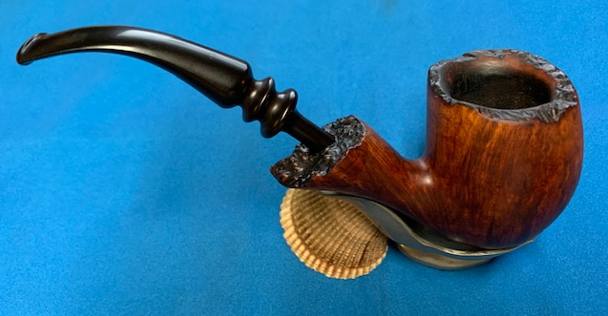
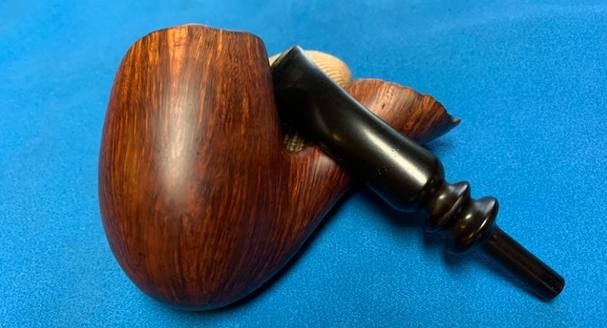
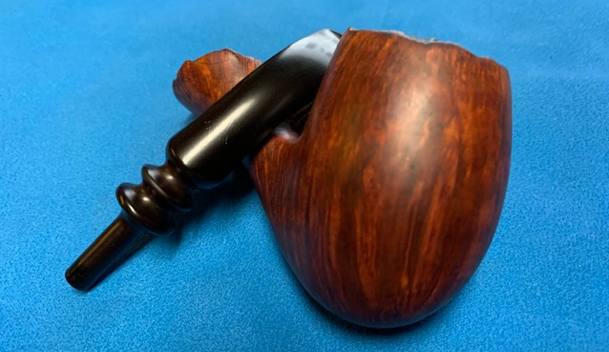
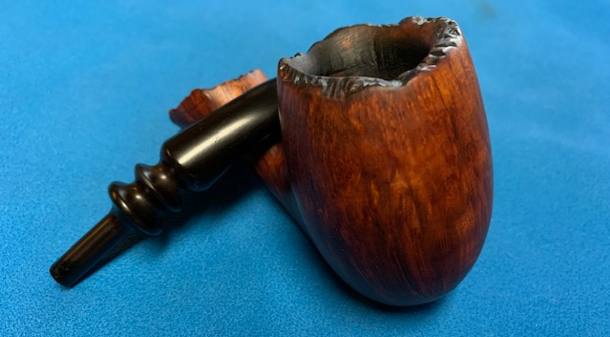
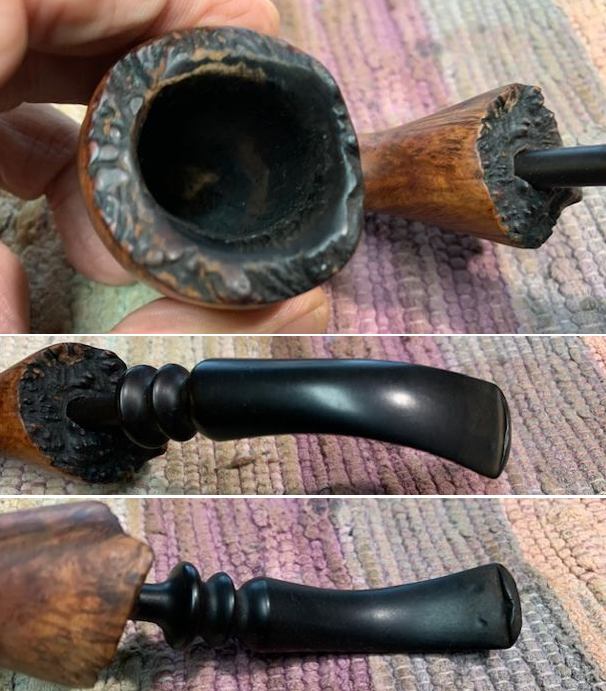
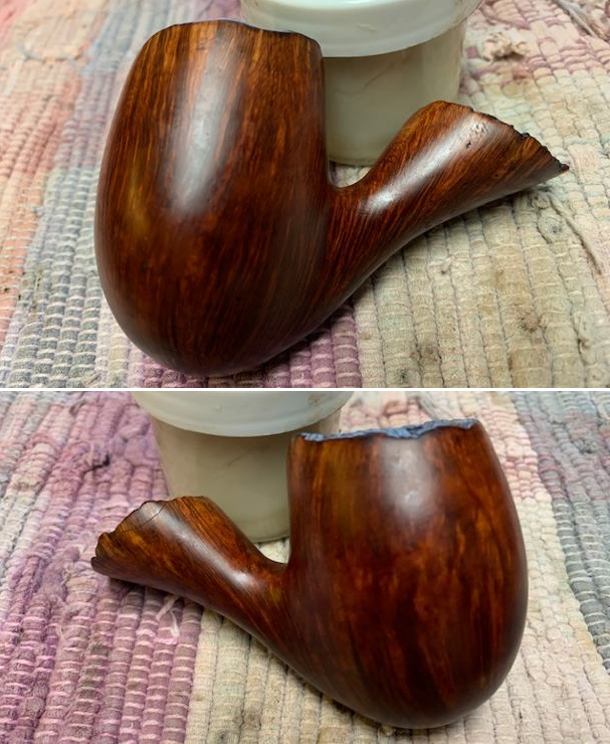
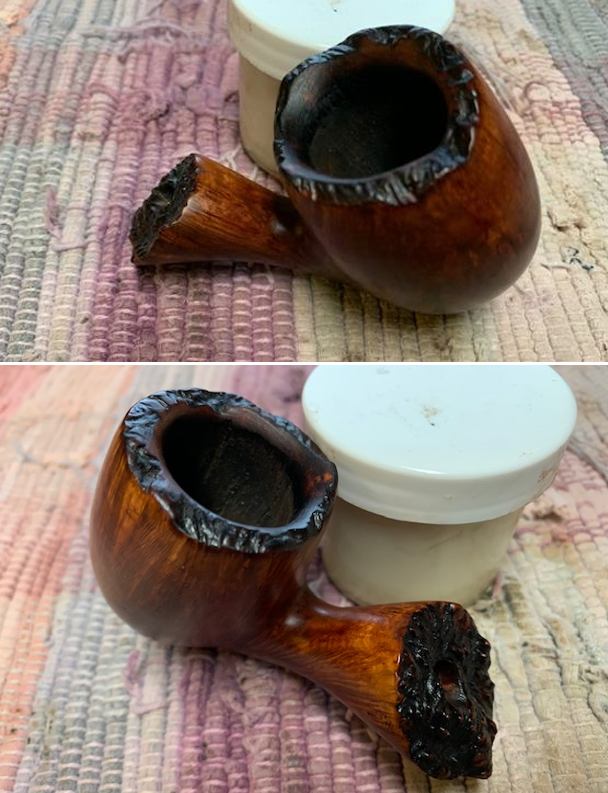
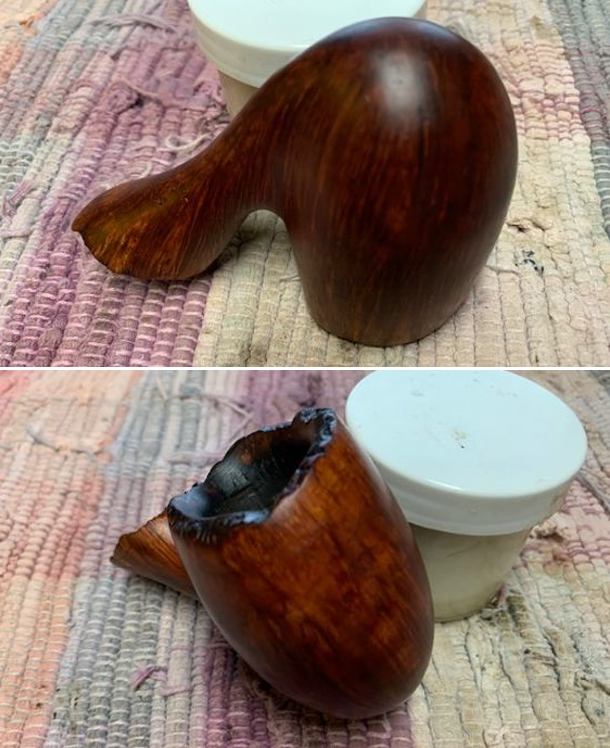
The next pipe is a really is one of four Knute Freehand pipes that we picked up in 2019. Because of that we are not sure where exactly this one came from – whether an auction, a sale or an antique store. Jeff cleaned the pipe in 2019 and now I am working on it in 2021. It is stamped on the underside of the shank and reads Knute [over] of Denmark. The exterior of the bowl was filthy with grime on the surface of the briar and there were paint flicks on the briar all the way around. There was a heavy cake in the bowl and an eruption of thick lava on the rim top that filled in most of the plateau on the rim top. Along with that there was dust and debris on both the rim top plateau and the shank end plateau. It was hard to know the condition of the rim top and rim edges because of the grime and thickness of the cake and lava. The cleaning would make it very clear! The fancy turned stem was dirty, oxidized, calcified with light tooth marks and chatter on both sides but nothing like what I was expecting from the condition of the bowl. Jeff took photos of the pipe to give a clear picture of what we were up against with this pipe. He captured the cake in the bowl and the thick eruption of lava on the rim top plateau in all of the grooves and valleys exceptionally well in the next photos. It was very clear that it was someone’s favourite pipe! The stem is oxidized, calcified and shows the tooth marks and chatter on both sides ahead of the button. Jeff captured some of the beauty of the shape and the grain in the next photo. It is quite stunning. He took photos of the plateau shank end to show how filthy it was too. The grime, dust and grit filled in most of the valleys and grooves of the finish.He took photos of the stamping on the underside of the shank. It is clear and readable as noted above. He also took a photo of the Crown K stamp on the top of the stem.I turned to Pipephil’s site (http://pipephil.eu/logos/en/logo-k3.html) to confirm what I knew about the brand being made by Karl Erik. It did but did not give a whole lot of other information. I turned then to Pipedia (https://pipedia.org/wiki/Knute). I quote the article in full below.

Knute of Denmark pipes are said to be made by Karl Erik, see his listing herein.

Karl Erik Ottendahl was born in Aalborg in 1942, just a few miles from the very northernmost tip of Denmark. He began his career as a Lithographer as an apprentice in the craft at the age of 16. While working as an apprentice he began hand carving pipes as a hobby and to give as gifts to his more senior colleagues. He began his career making pipes for various labels in Denmark and the United States. Often he would make the higher grade pipes for a well known brand that was known for their midrange or low end pieces such as Wally Frank. While doing this he administered a factory of fifteen craftsmen. During this period he did make of some of his own handmade pipes, but he felt that the responsibility of managing the factory did not give him the freedom he wished he had.

Other brands confirmed to be from Karl Erik are: Champ of Denmark, HTL, Jobey Dansk, Knute, Golden Danish, Lars of Denmark, Larsen & Stigart (Copenhagen pipe shop), Shelburne, Sven Eghold and Wenhall (for Wenhall Pipes, New York), some Ben Wade and pipes marked IS and IIS.

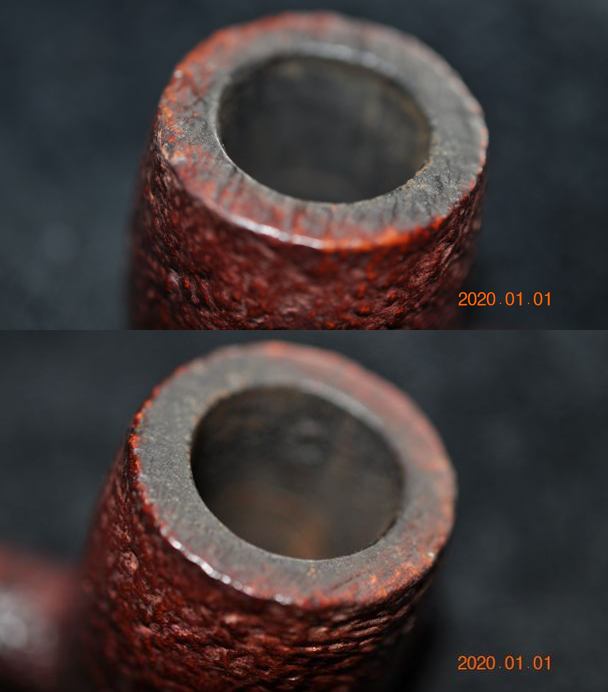
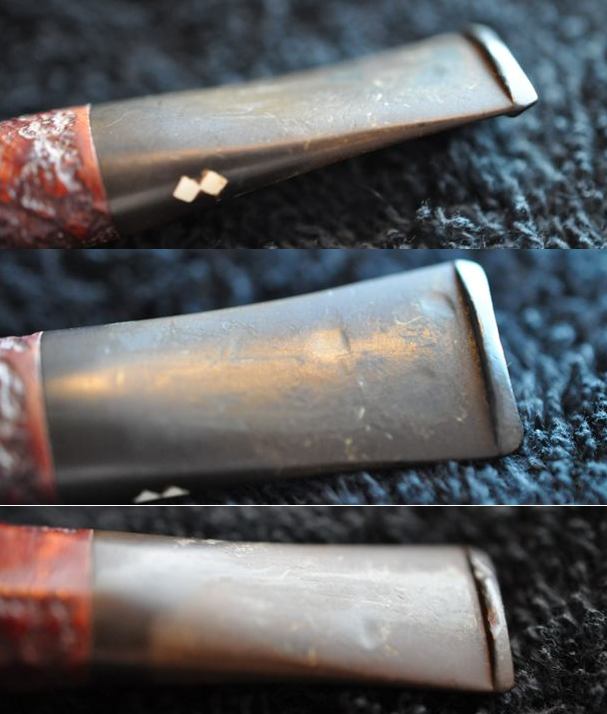
Now it was time to work on the pipe. It is really a beautiful piece. Jeff had done a great cleanup on the pipe. He reamed the bowl with a PipNet pipe reamer and followed up with a Savinelli Fitsall pipe knife to remove the cake. He scrubbed out the mortise and the airway in the shank and the stem with alcohol, cotton swabs and pipe cleaners. He scrubbed the bowl exterior with a tooth brush and Murphy’s Oil Soap to remove the grime on the finish of the bowl and the lava from the rim top. He rinsed it under running water. One of the benefits of this scrub is that it also tends to lift some of the scratches and nicks in the surface of the briar. He dried it off with a soft cloth. He cleaned the internals and externals of the stem with alcohol, pipe cleaners and cotton swabs. He soaked the stem in Briarville’s Pipe Stem Deoxidizer and rinsed it off with warm water and cleaned out the airway in the stem with alcohol, pipe cleaners and cotton swabs. I took photos of the pipe as I saw it when I put it on the table.  I took photos of the plateau rim top and stem to show the condition. The rim top and inner bevel looked very good. The smooth bevel has some darkening but is clean. The stem was vulcanite and there were light tooth marks and chatter on both sides ahead of the button. The stamping on the underside of the shank is clear and readable. It reads as noted above. I removed the stem from the shank and took a photo of the pipe to give a sense of the proportions of the bowl and stem.I started my work on it by sanding the smooth inner beveled rim top to remove the darkening on the edge. I used a folded piece of 220 grit sandpaper to clean it up. I stained it with a Walnut Stain pen and wiped it down. I filled in the valleys in the plateau with a Black Sharpie Pen. The contrast of the the bevel and the plateau is very nice. I polished the briar with micromesh sanding pads – dry sanding with 1500-12000 grit sanding pads. I wiped the briar down with a damp cloth to remove the sanding dust and debris on the briar. The pipe began to take on a shine. I rubbed the bowl and shank down with Before & After Restoration Balm. I worked it into the surface of the bowl sides and shank with my fingertips to clean, enliven and protect the briar. I let the balm sit for 10 minutes, then buffed with a cotton cloth to raise the shine. The Balm did its magic and the grain stood out on the briar. I set the bowl aside and turned to the stem. I “painted” the stem surface with the flame of a Bic lighter to lift the tooth marks. I was able to lift them all enough that sanding them would remove what remained. I sanded out the remaining tooth marks and chatter with  200 grit sandpaper and started the polishing with 400 grit wet dry sandpaper.   I touched up the Crown K stamp on the stem top with white acrylic nail polish. Once it cured I scraped it off with my fingernail and then sanded the stem surface with a 1500 grit micromesh sanding pad.I polished the stem with micromesh sanding pads – 1500-12000 grit pads. I wiped it down with Obsidian Oil after each sanding pad. I finished the polishing with Before & After Polishes – both Fine and Extra Fine. I gave it a final rub down with Obsidian Oil and set it aside to dry. This Knute of Denmark Freehand with a fancy turned vulcanite saddle stem is a beautifully grained pipe with a flowing shape that looks great . The rich browns and black on the plateau areas of the bowl makes the grain come alive with the polishing and waxing. I put the stem back on the bowl and carefully buffed the pipe with Blue Diamond on the buffing wheel using a light touch on the briar. I gave the bowl and the stem multiple coats of carnauba wax on the buffing wheel and followed that by buffing the entire pipe with a clean buffing pad. I hand buffed the pipe with a microfiber cloth to deepen the shine. The finished Knute of Denmark really is a beauty and fits nicely in the hand and looks very good. Give the finished pipe a look in the photos below. The dimensions of the pipe are Length: 6 inches, Height: 2 ½ inches, Outside diameter of the bowl: 1 ¾ inches wide X 2 ¼ inches long, Chamber diameter: 7/8 of an inch. The weight of the pipe is 2.68oz./76grams. This pipe will soon be on the Danish Pipe Makers section of the rebornpipes store if you would like to add it to your collection. Thanks for reading this blog and my reflections on the pipe while I worked on it. There are many more to come!
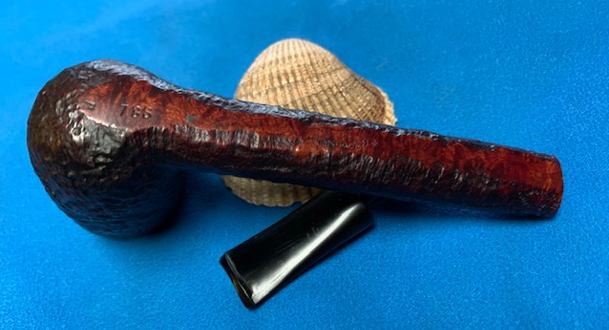
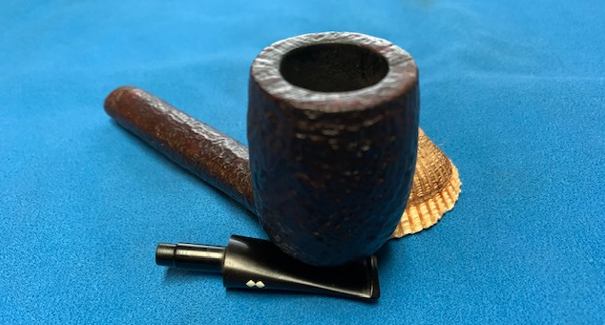
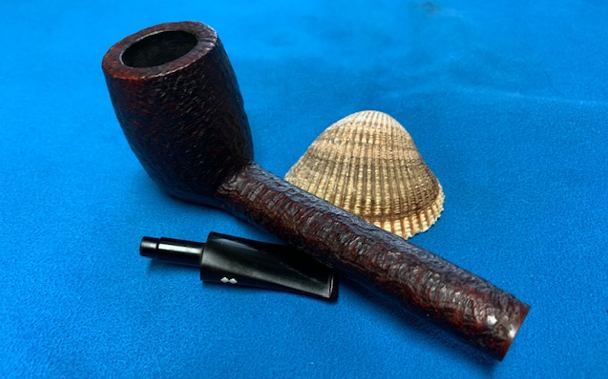
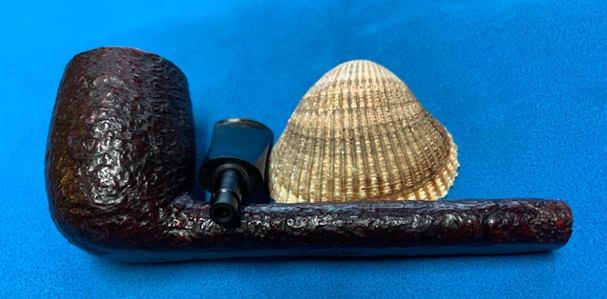
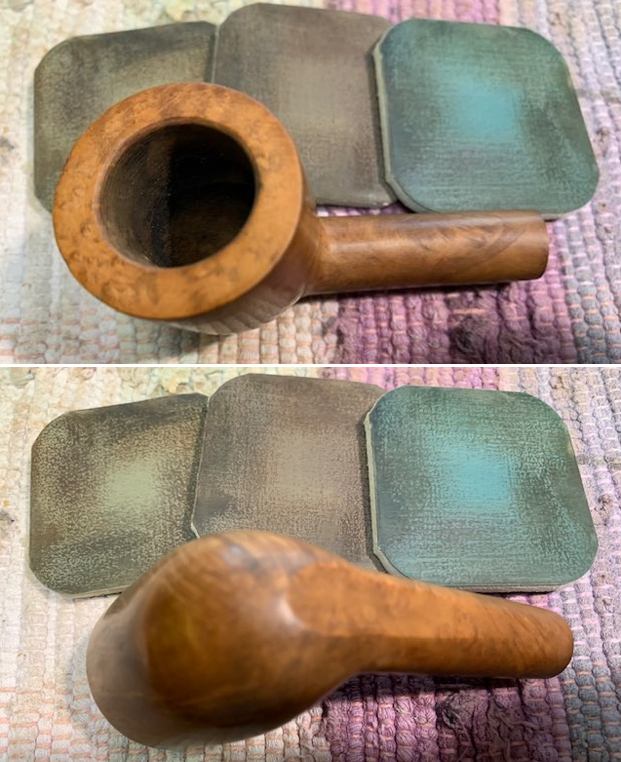
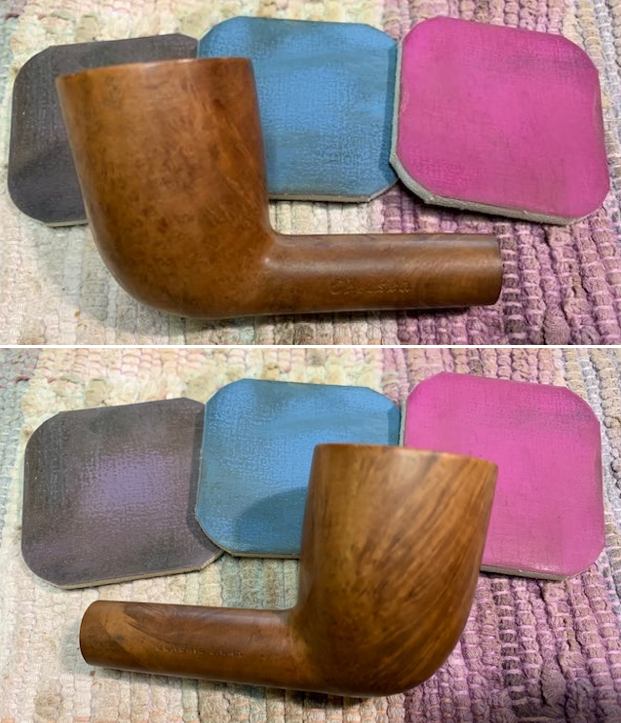
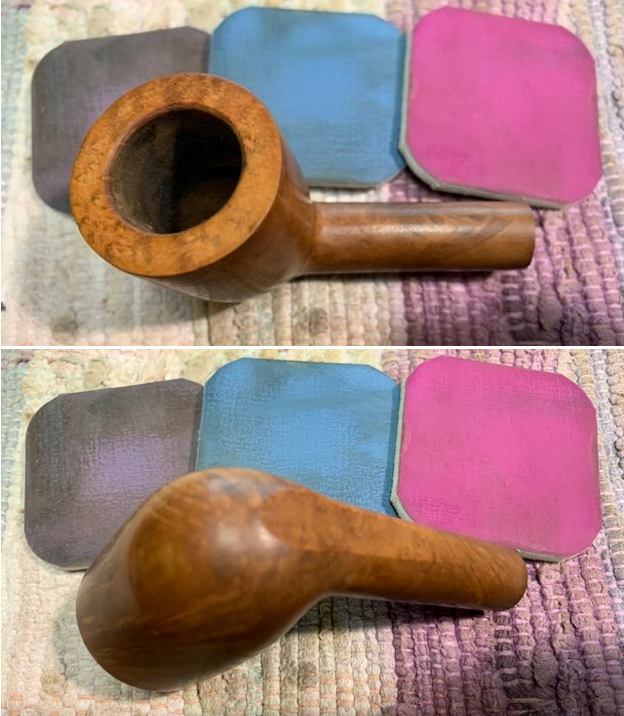
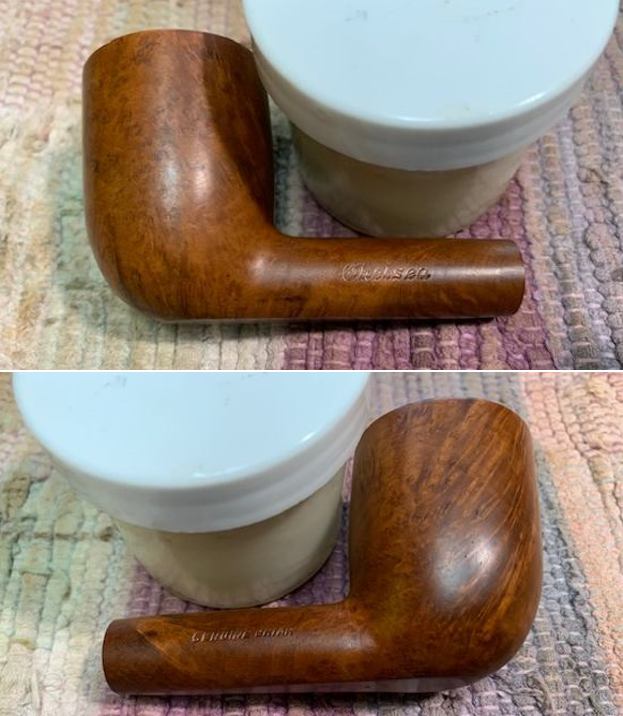
A Truly Stunning Comoy’s Made The Everyman London Pipe 188 Stack


Blog by Steve Laug

The next pipe is a really neat looking tall Comoy’s Made Stack with a vulcanite taper stem. The tall bowl and chunky looking shank was made to hold in your hand. It is quite light weight for its size and the blade on the stem is thin and looks comfortable. We picked up this pipe from an antique dealer in 2018 from Naples, Florida, USA. Jeff cleaned the pipe in 2019 and now I am working on it in 2021. It is stamped on the left side of the shank and reads The [over] Everyman [over] London Pipe. On the right side it is stamped with the Comoys circular COM Stamp – Made in London[over] England, followed by the shape number 188. The exterior of the bowl looked amazingly clean and shiny. There was a heavy cake in the bowl and an eruption of thick lava on the rim top and beveled inner edge of the bowl. It was hard to know the condition of the rim top and rim edges because of the grime and thickness of the cake and lava. The cleaning would make it very clear! The stem was dirty and lightly oxidized with light tooth marks and chatter on both sides but nothing like what I was expecting from the condition of the bowl. Jeff took photos of the pipe to give a clear picture of what we were up against with this pipe. He captured the cake in the bowl and the thick eruption of lava on the rim top and edges exceptionally well in the next photos. It was very clear that it was an exceptional smoker! The stem is lightly oxidized and shows the tooth marks and chatter on both sides ahead of the button. Jeff captured some of the beauty of the shape and the grain in the next photo. It is quite stunning.He took photos of the stamping on the left and right sides of the shank. It is clear and readable as noted above.I turned to Pipephil’s site (http://pipephil.eu/logos/en/logo-e4.html) to confirm what I knew about the brand being made by Comoy’s. It did but did not give a whole lot of other information.I turned then to Pipedia (https://pipedia.org/wiki/Comoy%27s). I found a catalogue page there that listed the Everyman. It reads: “This wonderful moderate priced pipe is the largest selling branded English pipe in the world.”I turned to the shape chart that was also linked on the Comoy’s article to see how they describe a 188 (https://pipedia.org/index.php?title=Comoy%27s_Shape_Number_Chart). I have included the line from the chart below. It reads 188 – Stack – Straight – XL.Now it was time to work on the pipe. It is really a beautiful piece. Jeff had done a great cleanup on the pipe. He reamed the bowl with a PipNet pipe reamer and followed up with a Savinelli Fitsall pipe knife to remove the cake. He scrubbed out the mortise and the airway in the shank and the stem with alcohol, cotton swabs and pipe cleaners. He scrubbed the bowl exterior with a tooth brush and Murphy’s Oil Soap to remove the grime on the finish of the bowl and the lava from the rim top. He rinsed it under running water. One of the benefits of this scrub is that it also tends to lift some of the scratches and nicks in the surface of the briar. He dried it off with a soft cloth. He cleaned the internals and externals of the stem with alcohol, pipe cleaners and cotton swabs. He soaked the stem in Briarville’s Pipe Stem Deoxidizer and rinsed it off with warm water and cleaned out the airway in the stem with alcohol, pipe cleaners and cotton swabs. I took photos of the pipe as I saw it when I put it on the table. I took photos of the rim top and stem to show the condition. The rim top and beveled edge looked amazing. The stem was vulcanite and there were light tooth marks and chatter on both sides ahead of the button.The stamping on the left and right sides of the shank are clear and readable. It reads as noted above. The three silver coloured inset bars on the left side of the taper stem are also visible.I removed the stem from the shank and took a photo of the pipe to give a sense of the proportions of the bowl and stem.Because the pipe was in such amazing condition after the clean up I started my work on it by rubbing the bowl and shank down with Before & After Restoration Balm. I worked it into the surface of the bowl sides and shank with my fingertips to clean, enliven and protect the briar. I let the balm sit for 10 minutes, then buffed with a cotton cloth to raise the shine. The Balm did its magic and the grain stood out on the briar. I set the bowl aside and turned to the stem. I sanded out the tooth marks and chatter with  200 grit sandpaper and started the polishing with 400 grit wet dry sandpaper.I polished the stem with micromesh sanding pads – 1500-12000 grit pads. I wiped it down with Obsidian Oil after each sanding pad. I finished the polishing with Before & After Polishes – both Fine and Extra Fine. I gave it a final rub down with Obsidian Oil and set it aside to dry. This Comoy’s Made The Everyman London Pipe 188 Stack with a vulcanite taper stem is a beautifully grained pipe with a flowing shape that looks great . The rich browns of the contrasting stain makes the grain come alive with the polishing and waxing. I put the stem back on the bowl and carefully buffed the pipe with Blue Diamond on the buffing wheel using a light touch on the briar. I gave the bowl and the stem multiple coats of carnauba wax on the buffing wheel and followed that by buffing the entire pipe with a clean buffing pad. I hand buffed the pipe with a microfiber cloth to deepen the shine. The finished The Everyman London Pipe Stack really is a beauty and fits nicely in the hand and looks very good. Give the finished pipe a look in the photos below. The dimensions of the pipe are Length: 5 ¾ inches, Height: 2 ¼ inches, Outside diameter of the bowl: 1 ¼ inches, Chamber diameter: ¾ of an inch. The weight of the pipe is 1.66oz./46grams. This pipe will soon be on the British Pipe Makers section of the rebornpipes store if you would like to add it to your collection. Thanks for reading this blog and my reflections on the pipe while I worked on it. There are many more to come!