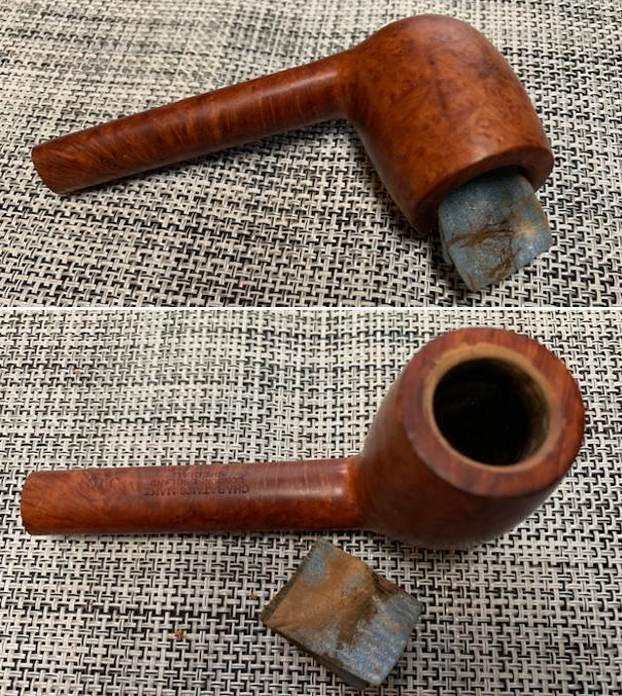
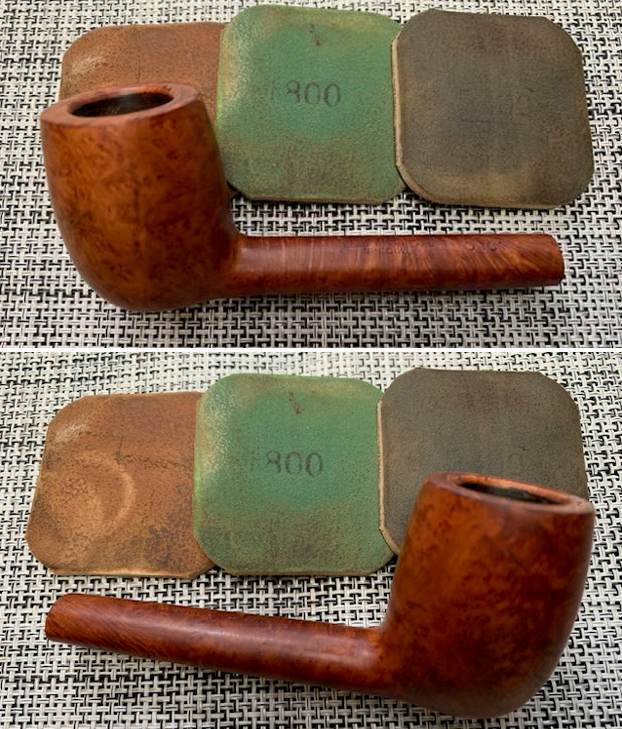
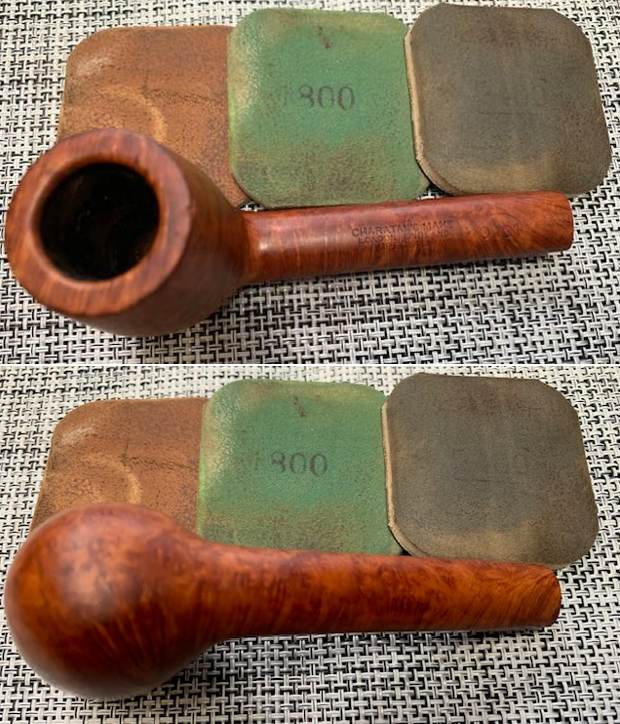
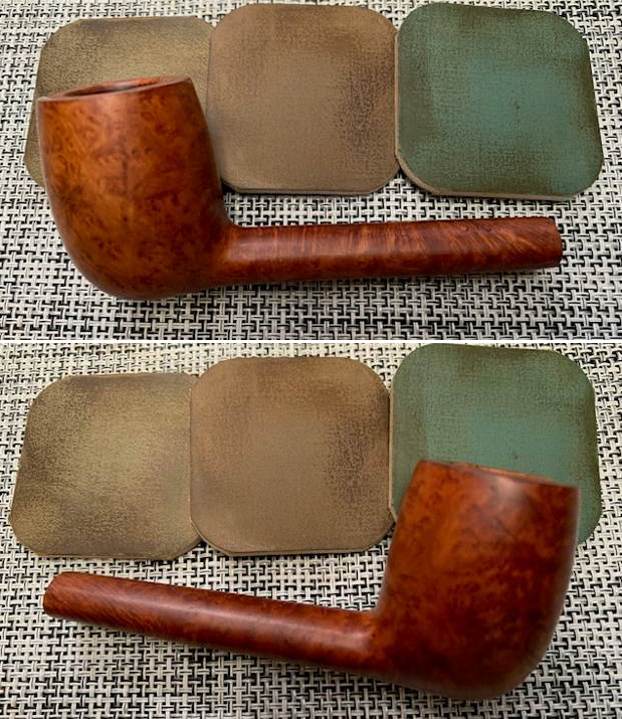
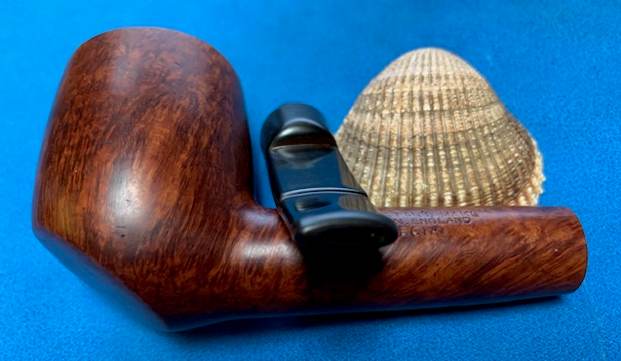
Tag Archives: bite marks

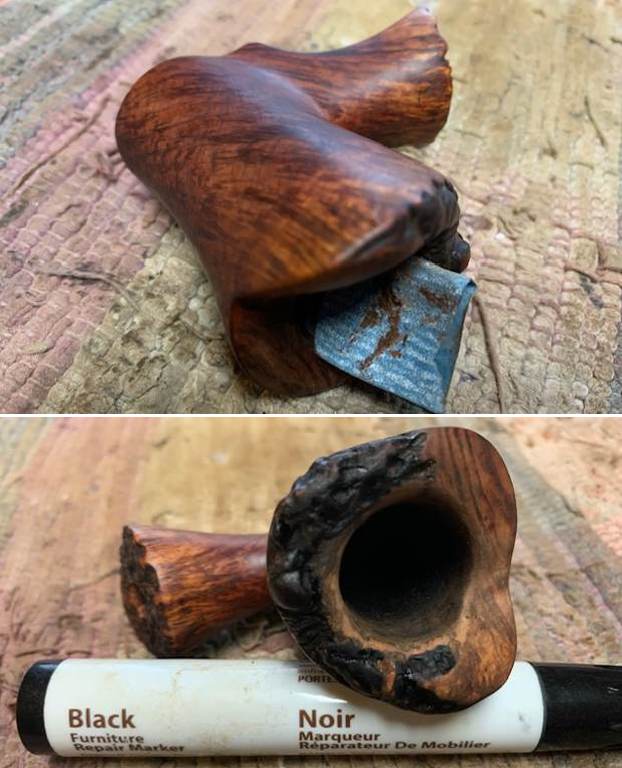
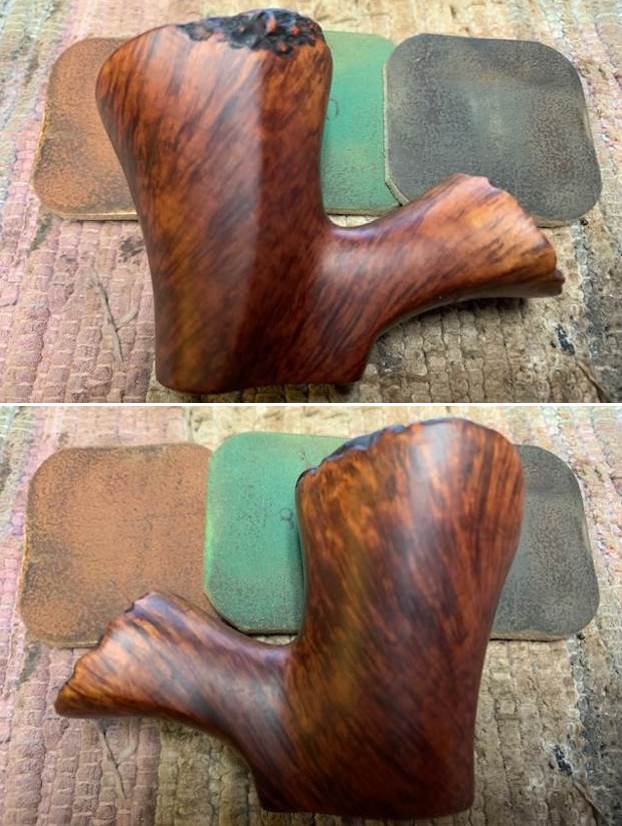
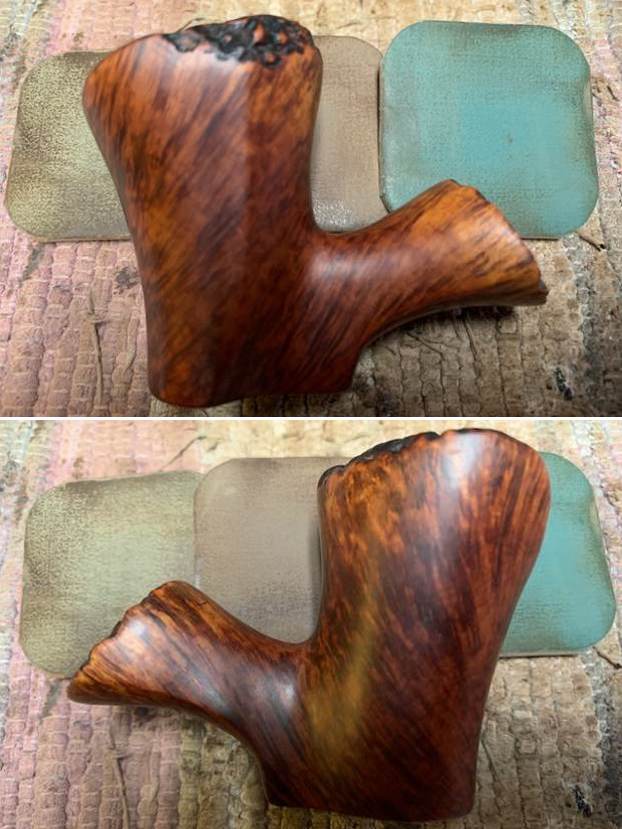
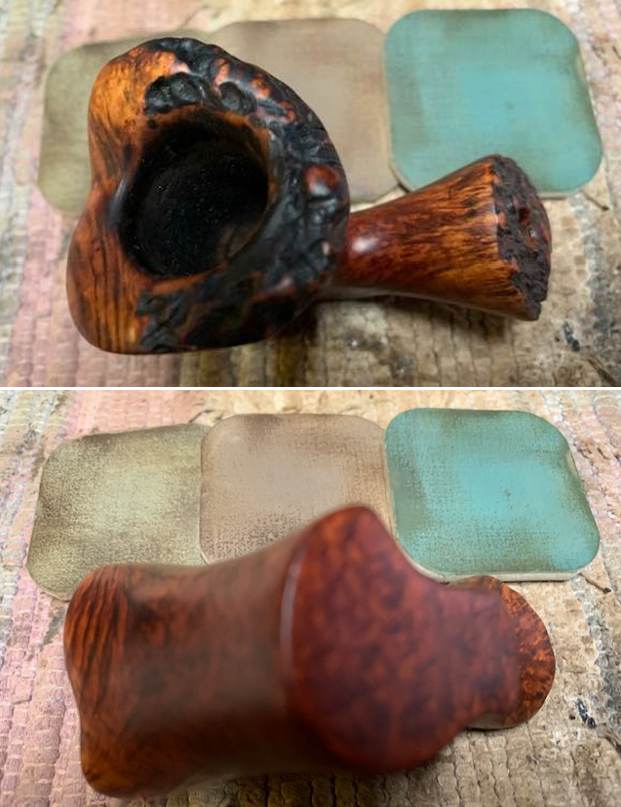
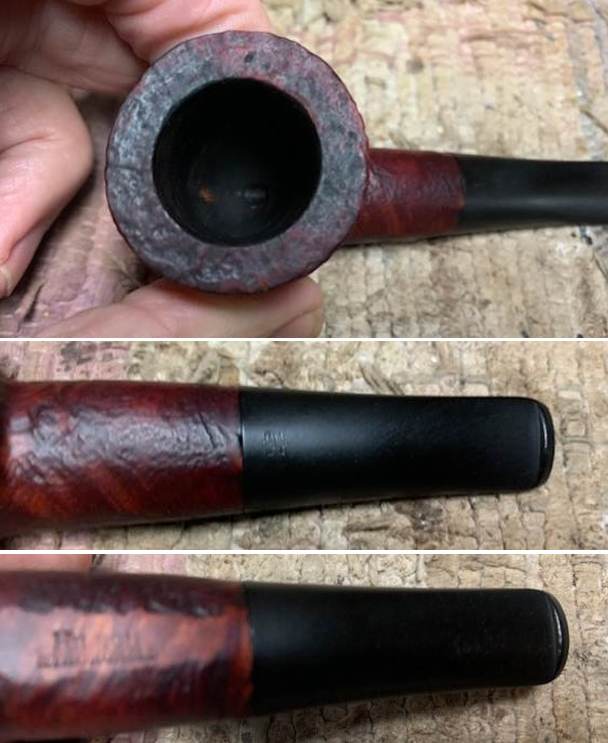
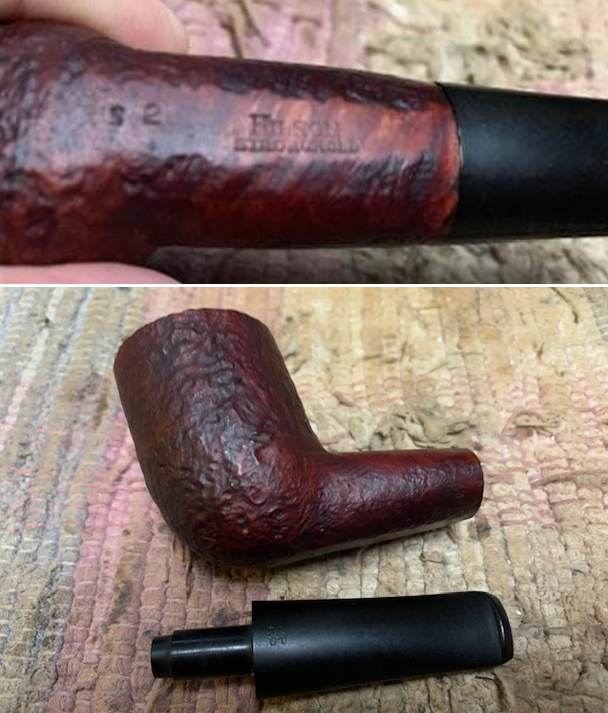
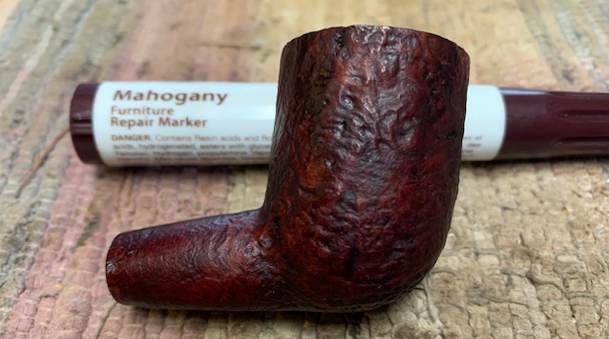
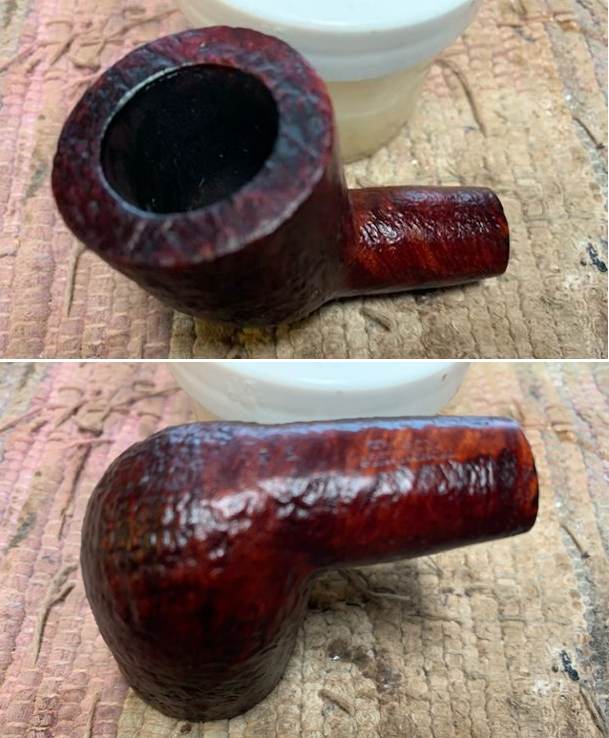
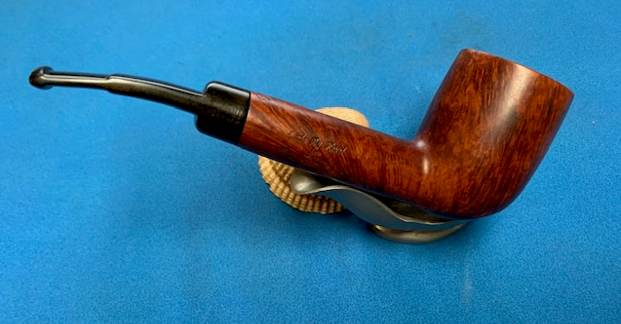
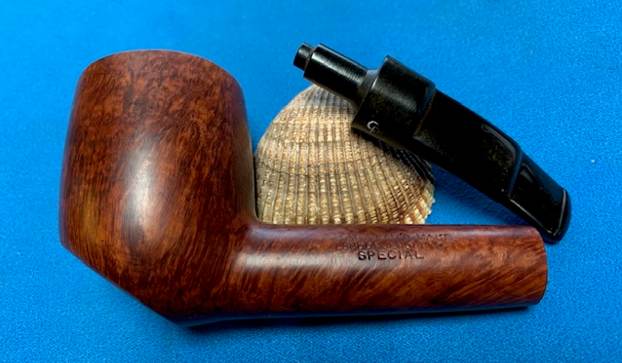
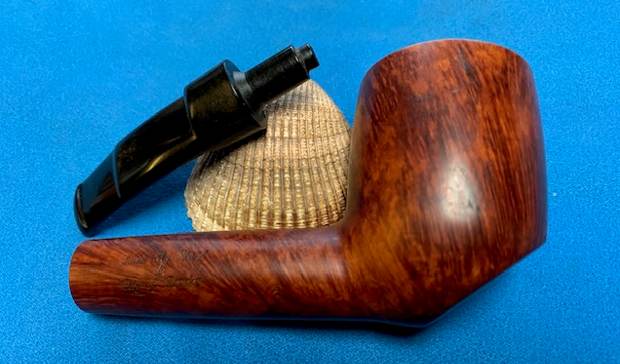
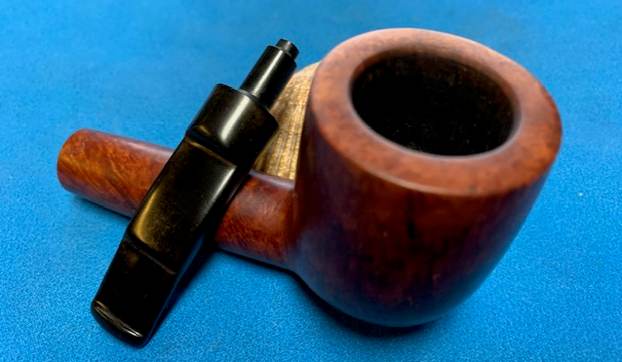
Restoring a Faaborg Special Old Briar Hand Shaped 36 Volcano


Blog by Steve Laug

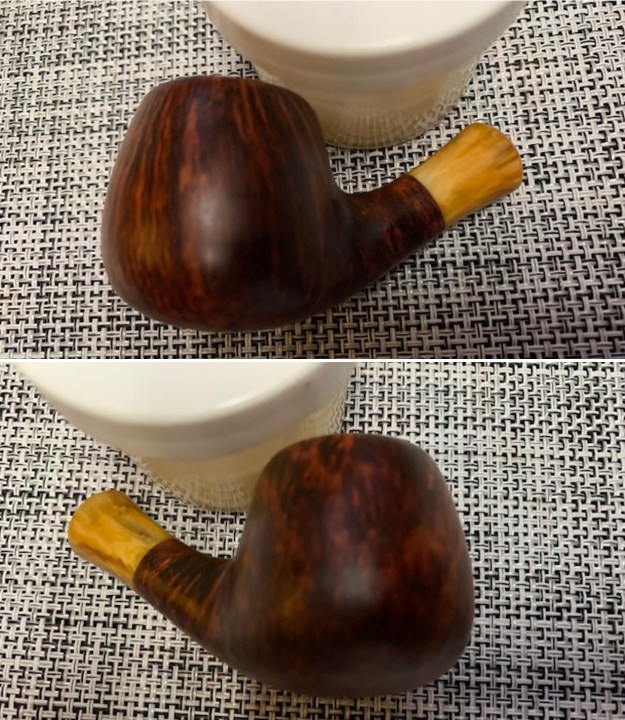
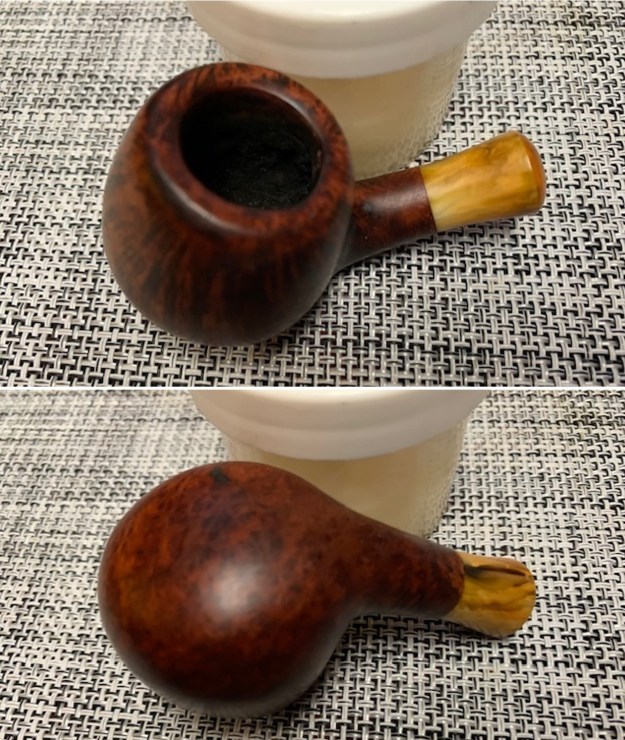
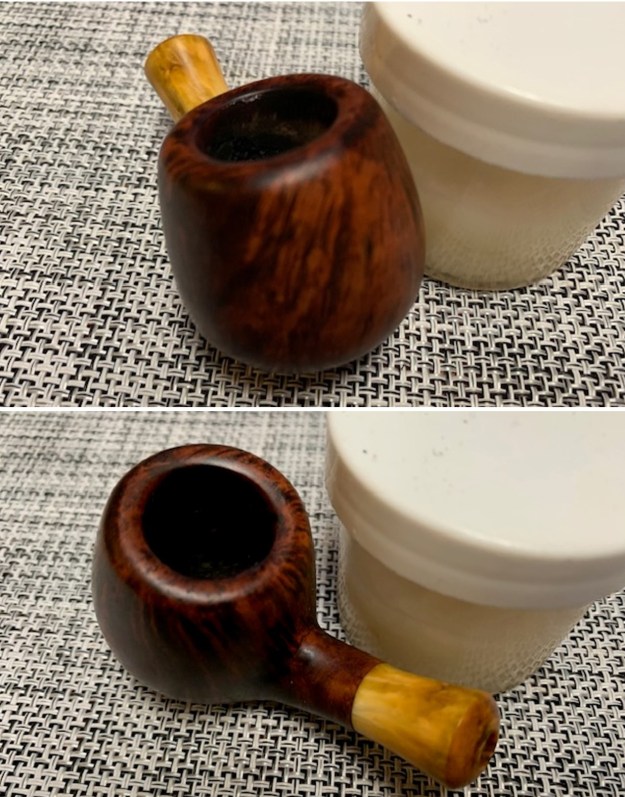
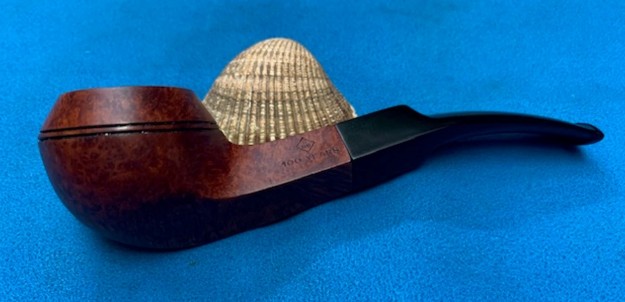
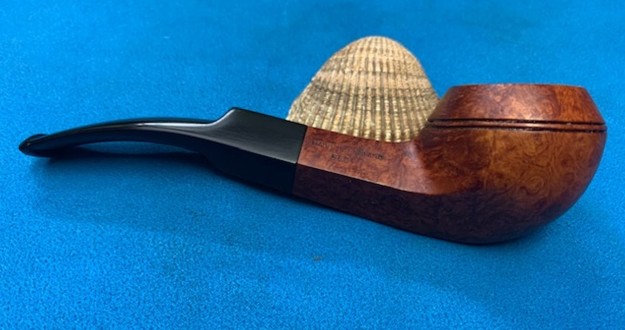
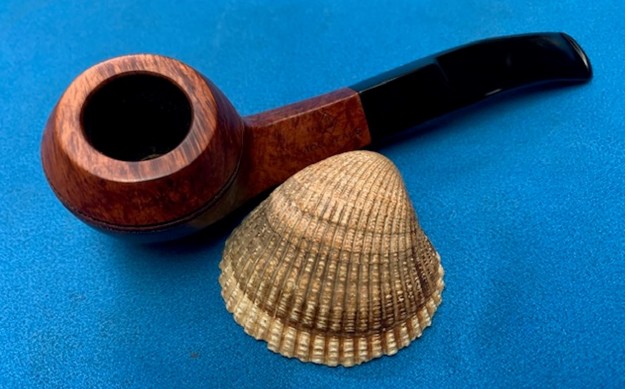
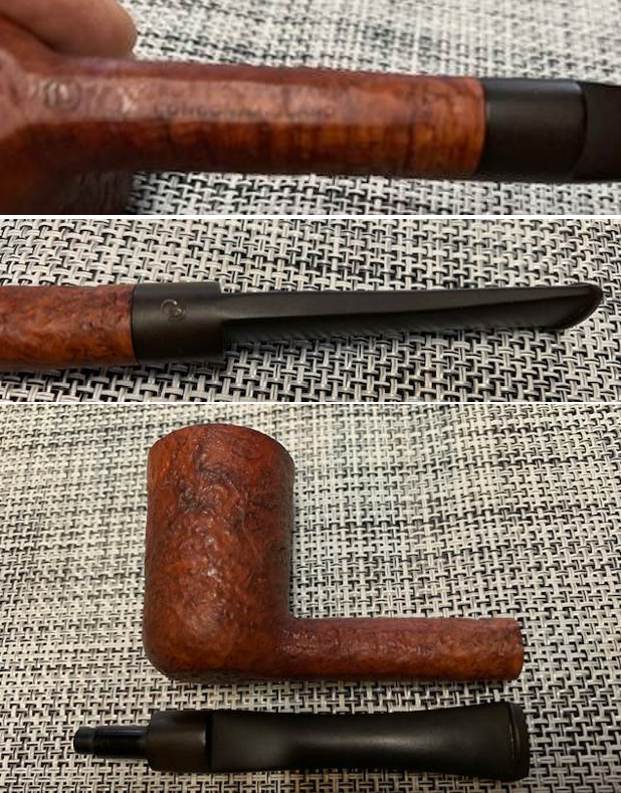
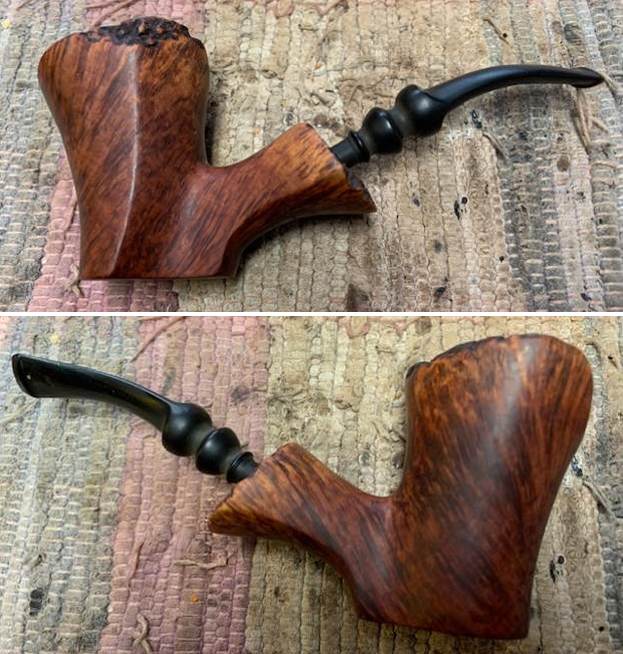
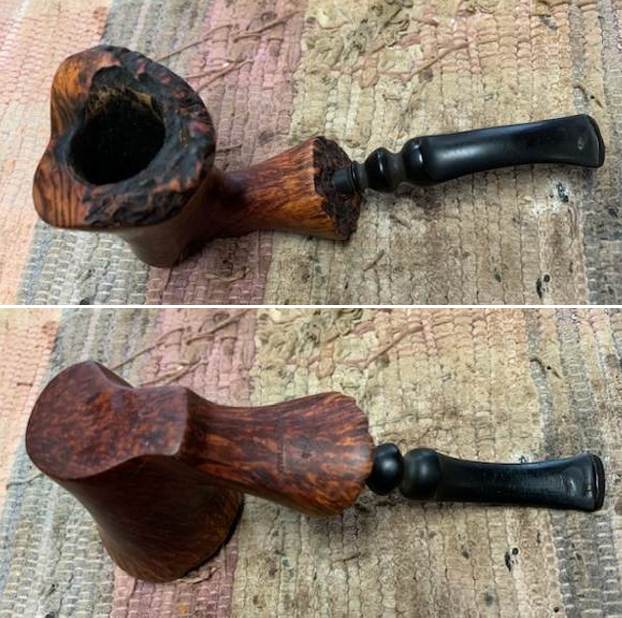
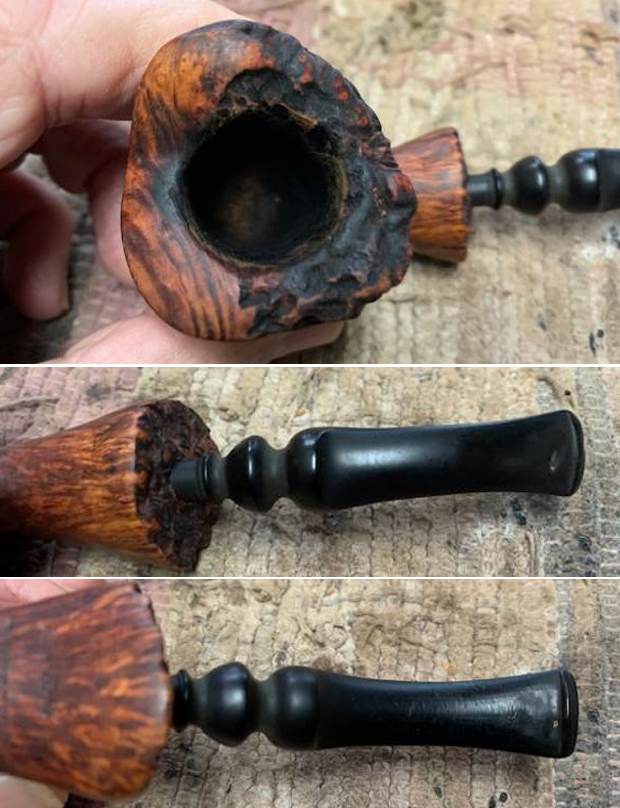
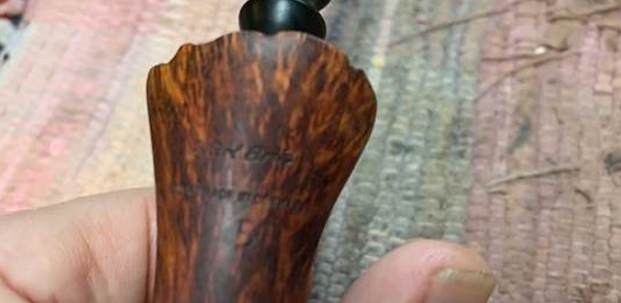
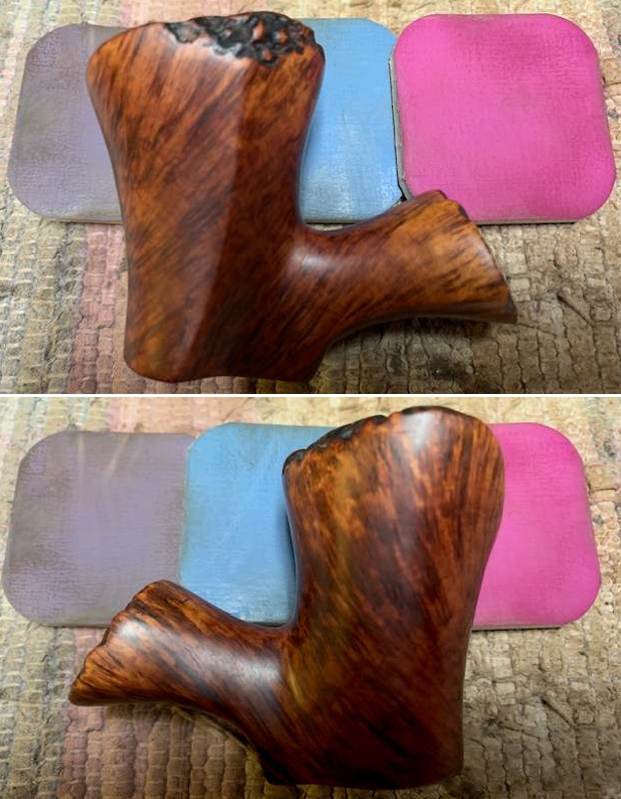
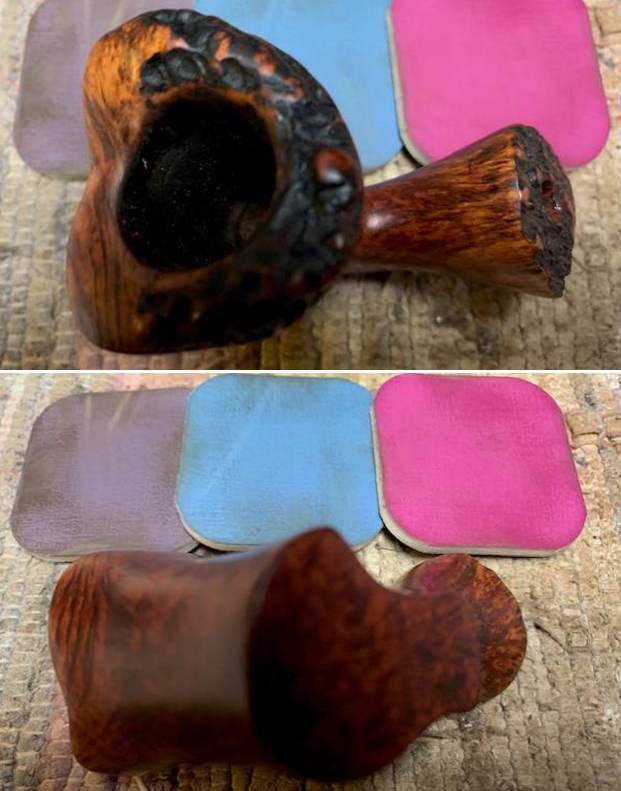
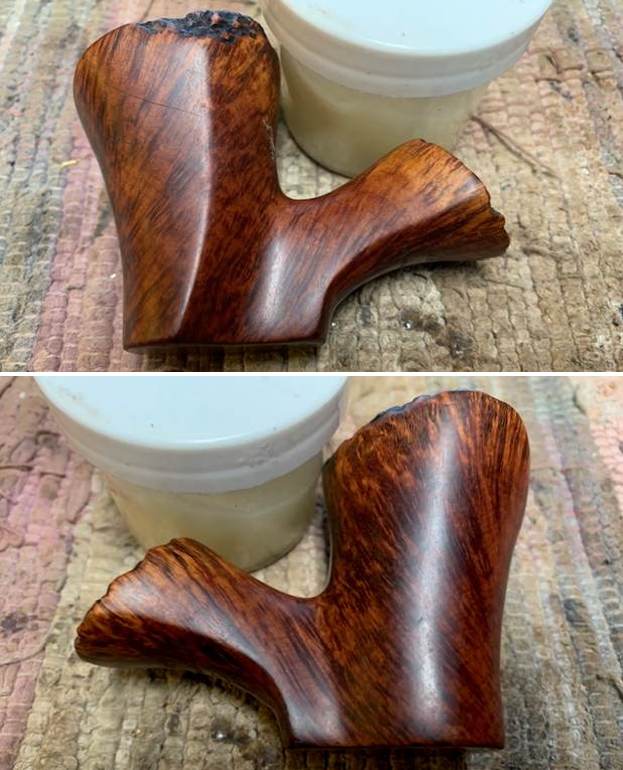
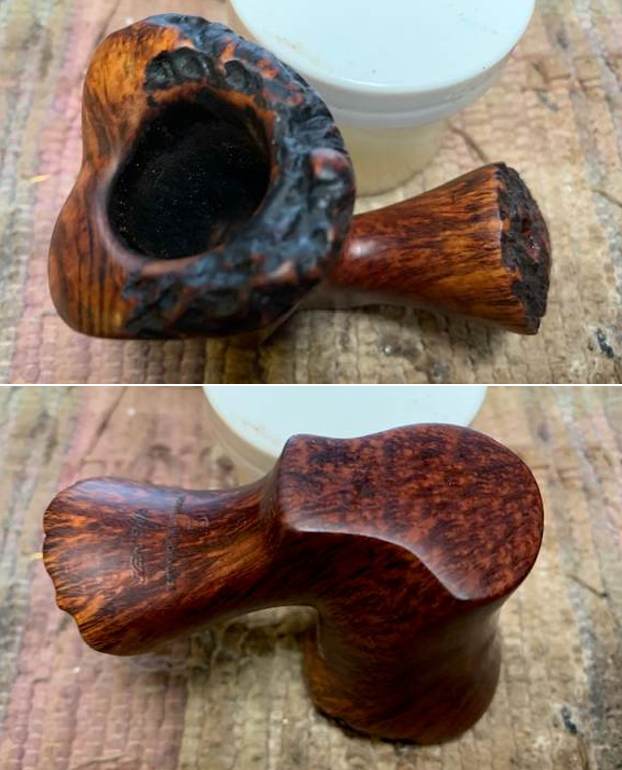
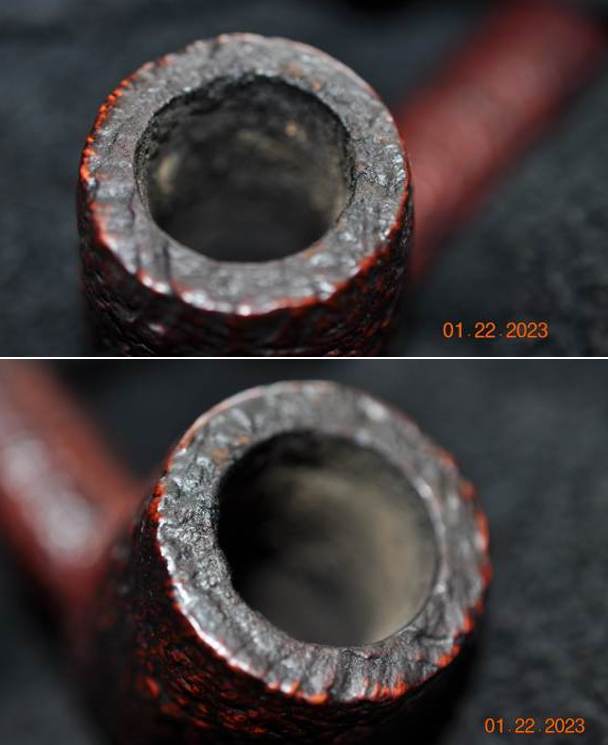
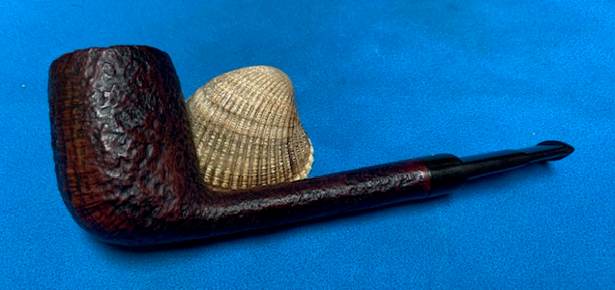
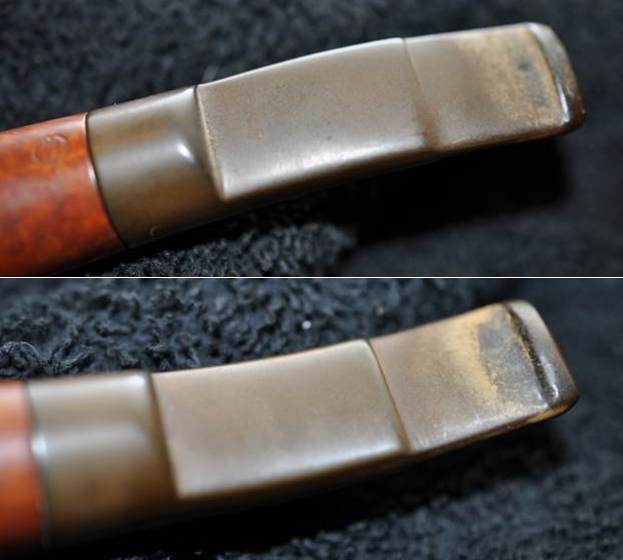
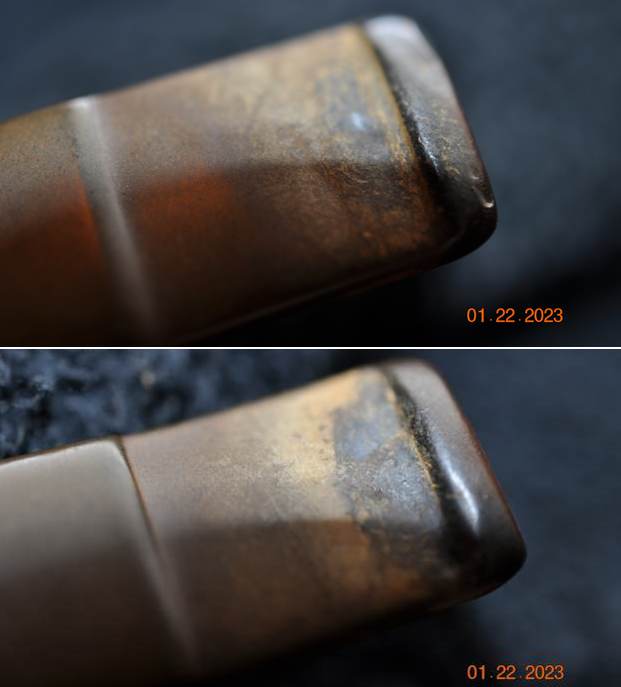
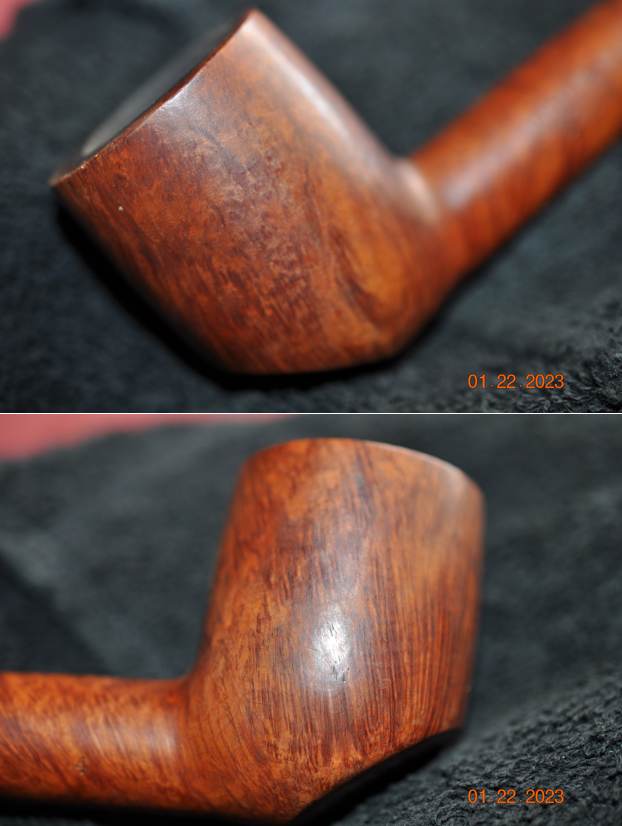
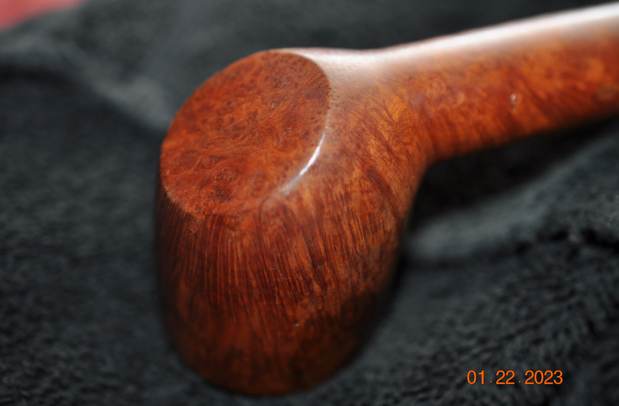
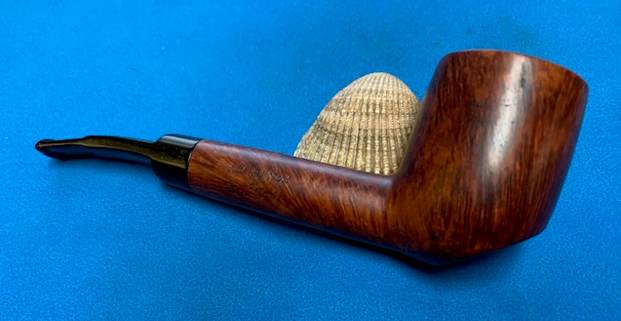
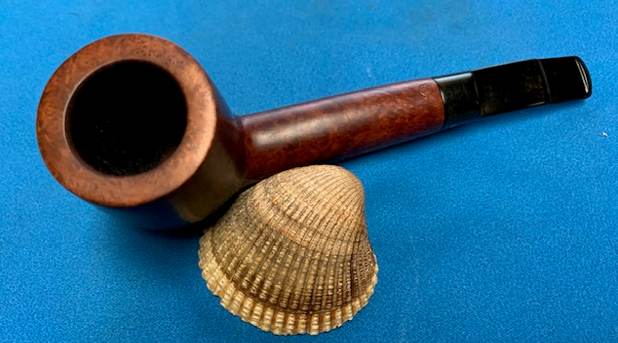
The next pipe was another interesting pipe that surprised both Jeff and me when  it came in a lot of pipes that we bought it from the fellow in Copenhagen, Denmark on January 26, 2023. This one is the first of the Faaborg pipes we have picked up from him. It is a great looking Volcano with a rusticated heel. The rustication goes up the edges on the underside of the shank in a thin line framing the area where it is stamped. The pipe is stamped on the underside of the shank and reads Faaborg [over] Special [over] Old Briar [over] Hand Shaped [over] In Denmark. To the right of that stamping at the stem/shank joint is stamped the shape number 36. The bowl had a thick cake and some lava overflow on the smooth rim top. The inner and outer edges of the thin rim top appeared undamaged. The finish was dirty and on the rusticated base was dusty and grimy in the grooves of the rustication. The vulcanite saddle stem was lightly oxidized and dirty and had some tooth chatter and marks on both sides ahead of the button. Jeff took these photos of the pipe before he started his cleanup work.He took photos of the rim and bowl to show the condition of the bowl and rim top. You can see the thick cake in the bowl and the lava on the rim top. He also took photos of the stem surfaces to show its overall condition when it arrived. It was lightly oxidized and dirty and had light tooth marks and chatter on both sides. The photos of the sides and heel of the bowl show the beautiful grain around the bowl and shank sides. The rich brown stain adds depth to the finish. He also took photos of the stamping on the underside of the oval shank. The stamping was clear and read as noted above. I turned to Pipephil’s site to see what I could learn about the Faaborg brand and the carver who had made the pipe (http://www.pipephil.eu/logos/en/logo-v2.html). I have included a screen capture of the pertinent section from the site and have added the sidebar information below the photo. Artisan: Viggo Nielsen (1927 – †2009) starts making pipes during WWII. He establishes his own Bari factory in 1948. The business is sold to a German tobacco manufacturer in 1978 and from this period on he starts the “Faaborg Pipe” (Fåborg Pibe) with his two sons Jørgen Nielsen and Kai Nielsen. The “Jewel of Denmark” stamping is reserved for perfect pipes (flawless straight grain).

As I had vaguely remembered the pipe was identified with Viggo Nielsen (Bari) and his two sons Jorgen and Kai (both famous carvers in their own right). I knew that the pipe was made after 1978 when he sold Bari and started the Faaborg Pipe.

I turned to Pipedia to see if I could gain a bit more information on the brand as it generally has a great digest of the history of the brand and maker (https://pipedia.org/wiki/Faaborg_Pipe). I quote the article in full below:

In 1978 Viggo Nielsen sold his previous business to a German tobacco manufacturer and he began making the Faaborg Pipe together with his two sons Jørgen Nielsen and Kai Nielsen. Even when Viggo had reached the age of retirement, he could not quite leave his workshop and he still made about 100 pipes a year, some of them based on the famous “Fåborg Pibe” but also a few “Jewels of Denmark”, until he passed away.

The name “Jewel of Denmark” was reserved for the very few 100% perfect blocks with no stains and with straight grain and birds eye, and is still used by his son Kai, who continues making pipes in the workshop they shared together in the latter years of Viggo’s life.

The Faaborg Pibe is sculptured by hand, from the best materials. Each piece of briar was carefully selected and seasoned before shaping began. By following the structure and the fine grains of the briar root the pipes were formed to become the pride of any particular pipe owner. They offered both sandblasted and smooth finishes.

There was also a catalogue included on the site and I have included the description of the brand from that catalogue below in the screen capture.What I learned is that the pipe was made post 1978 (as noted above) and was hand shaped from quality materials by Viggo Nielsen and his sons. He only made about 100 pipes per year so there are not too many. Now it was time to work on the pipe.
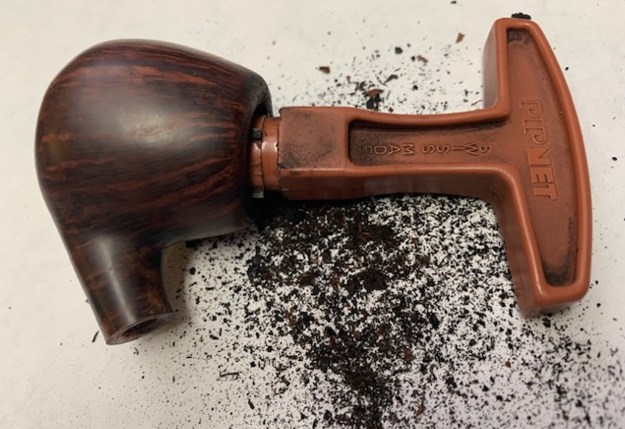
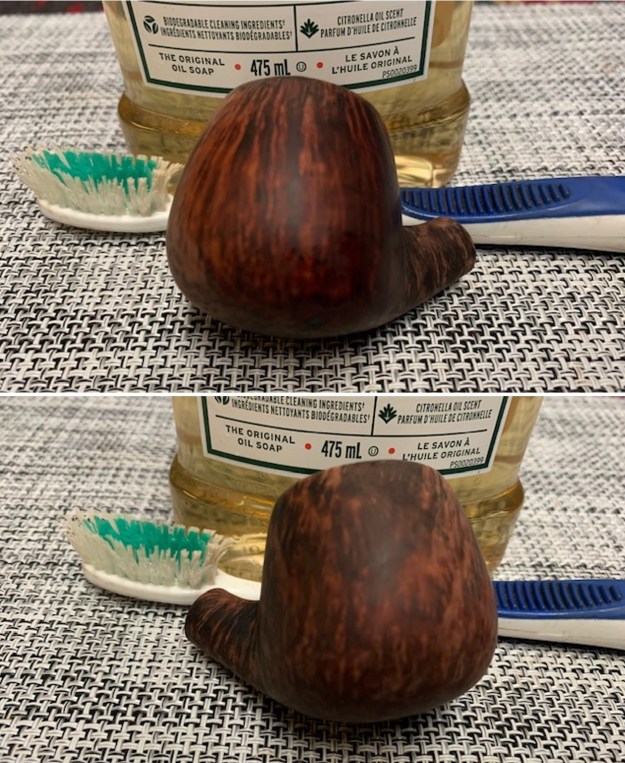
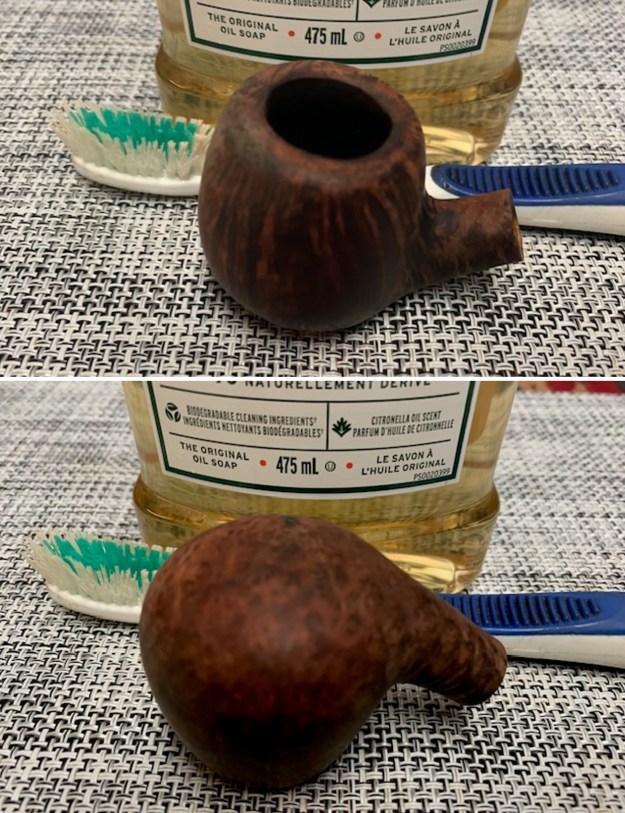
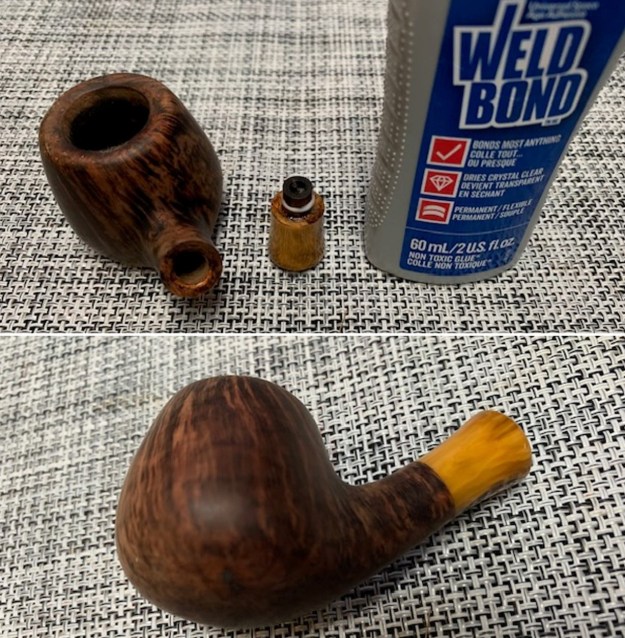
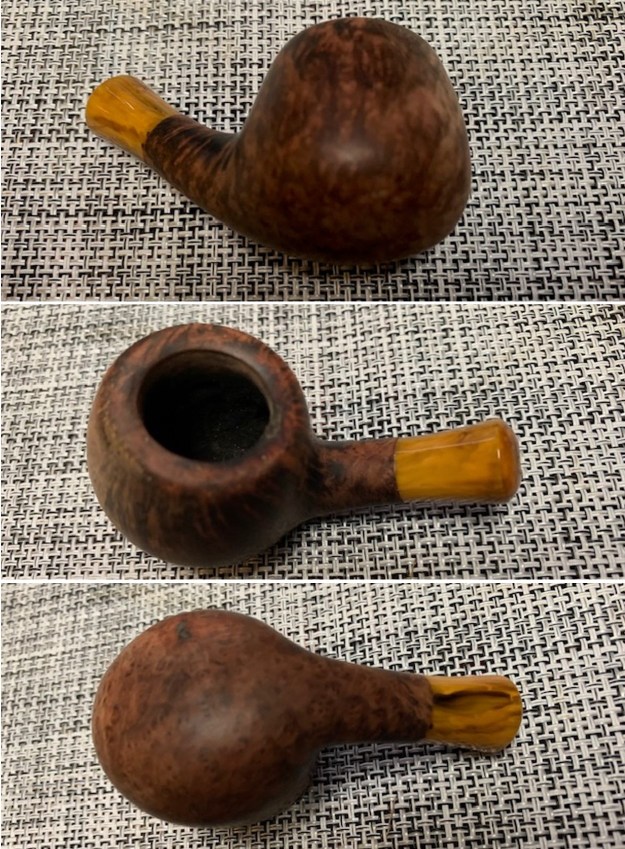
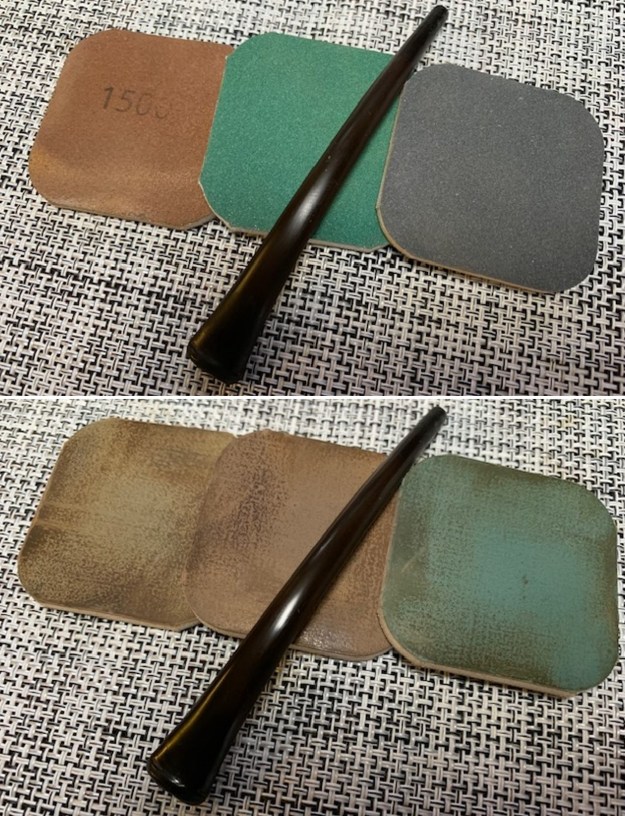
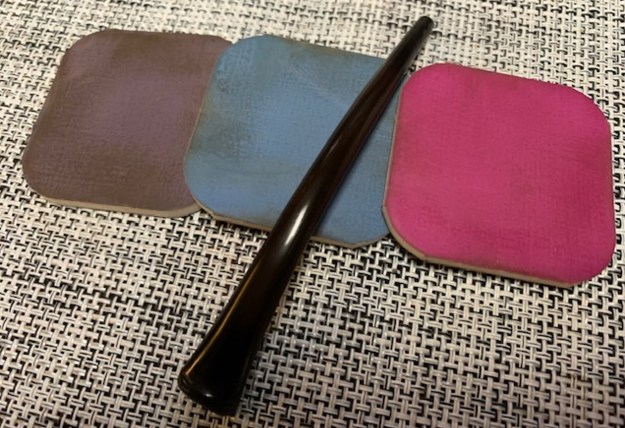
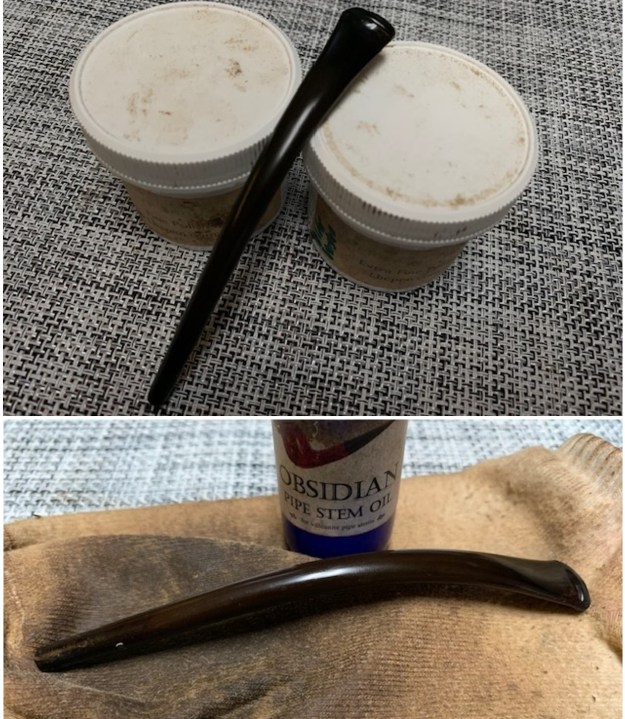
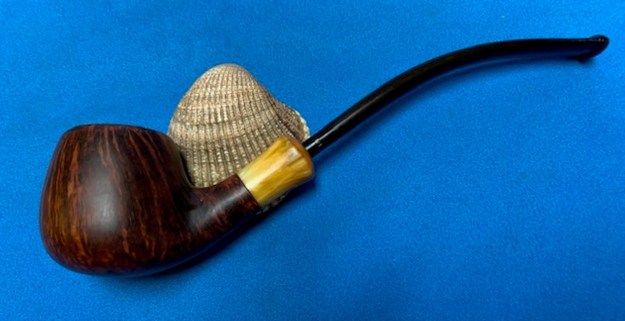
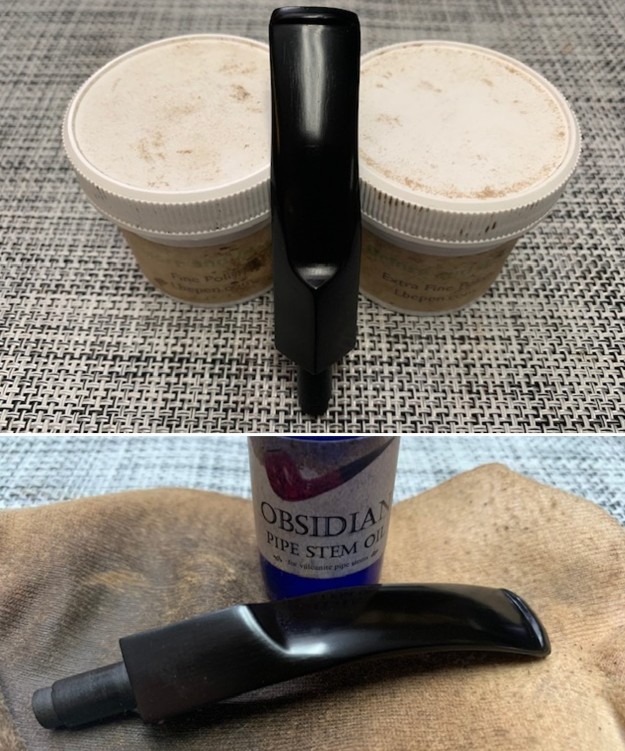
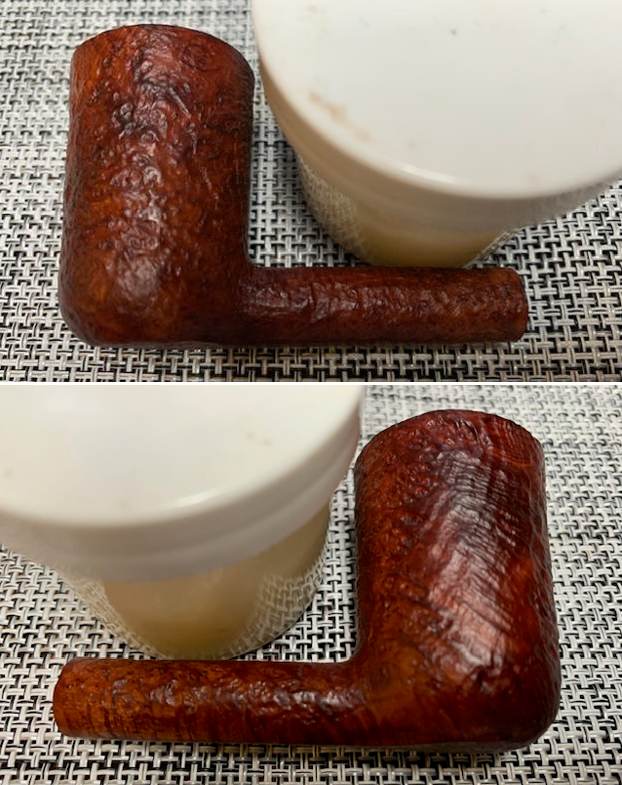
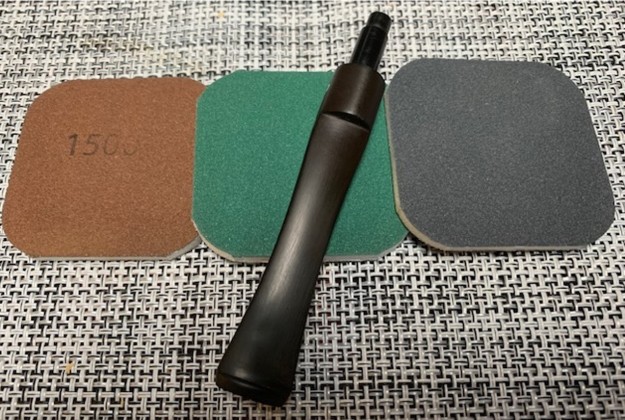
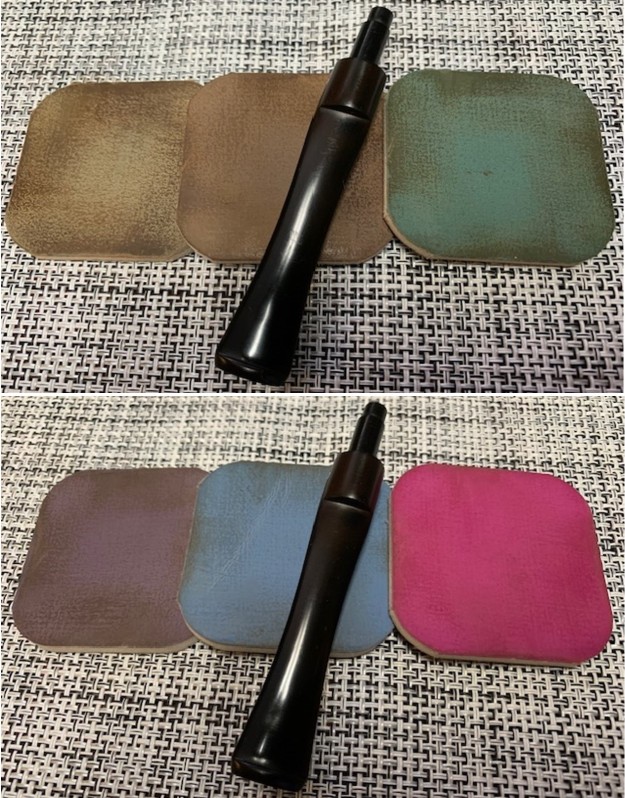
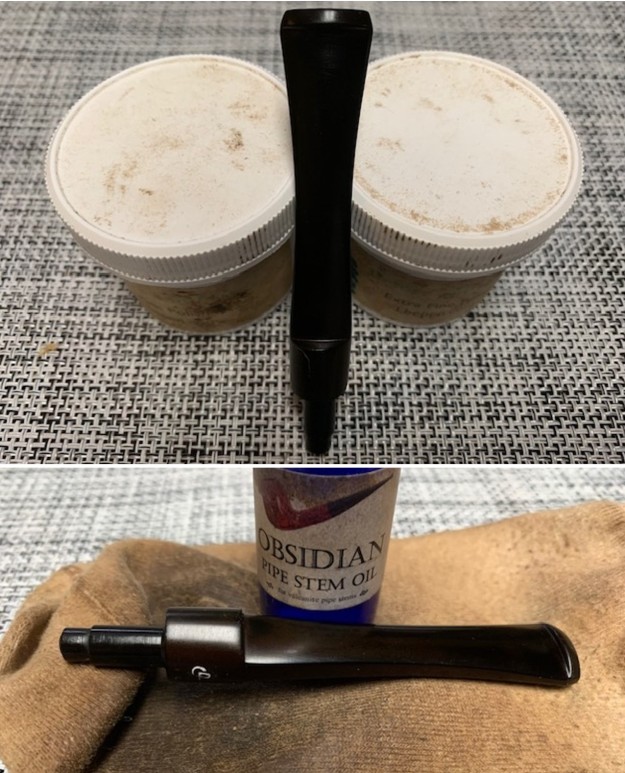
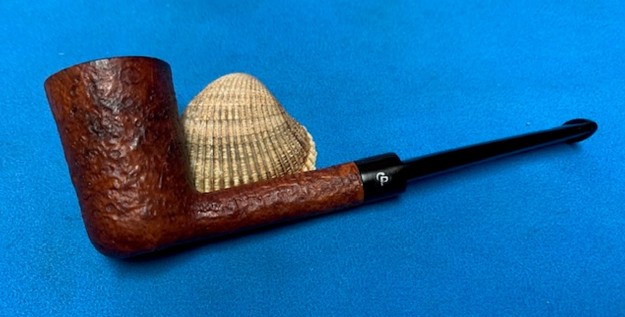
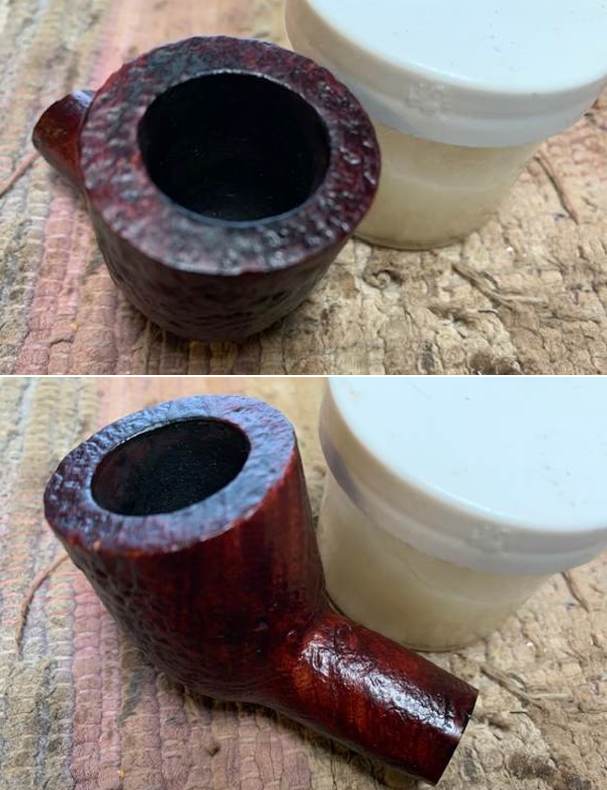
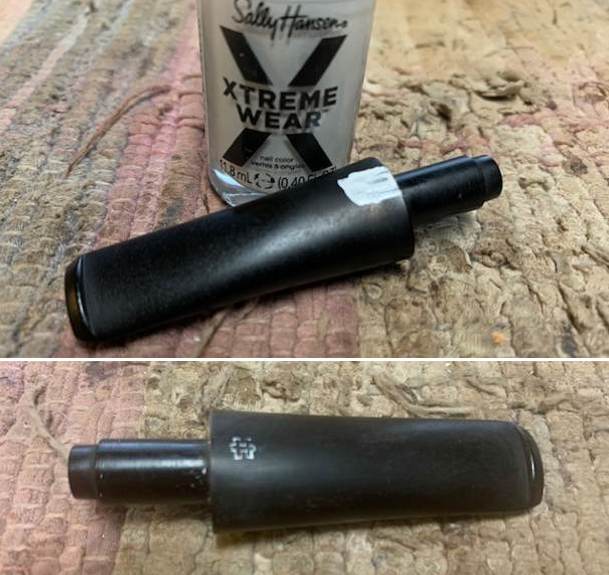
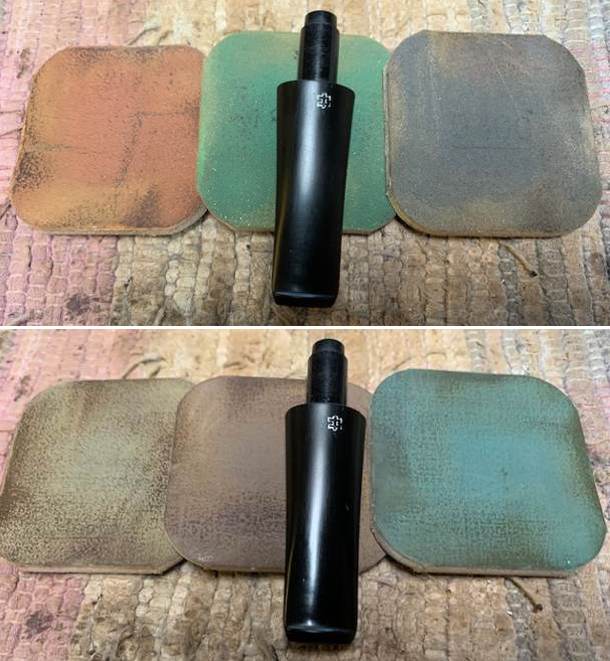
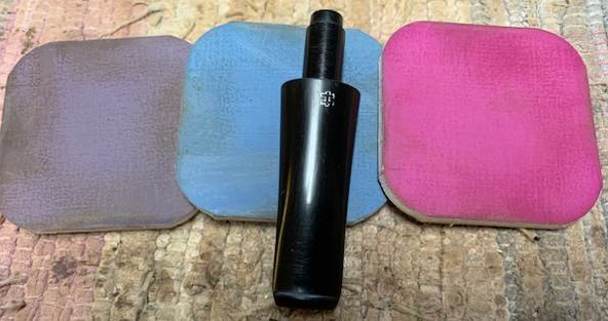
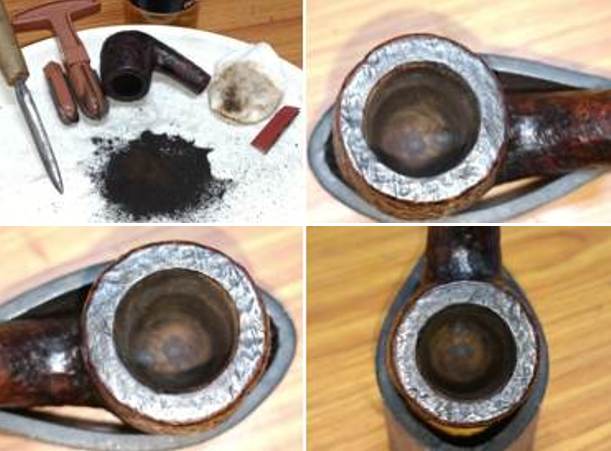
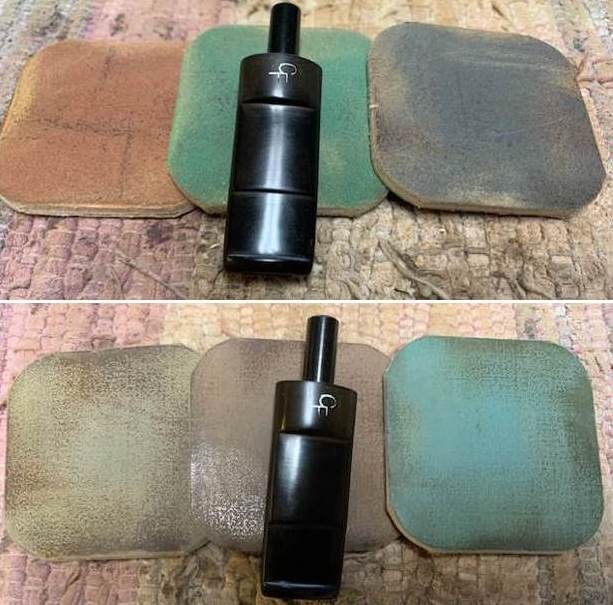
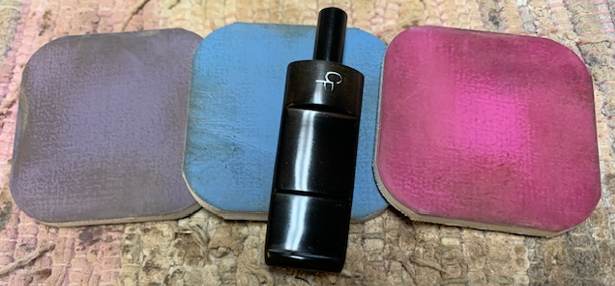
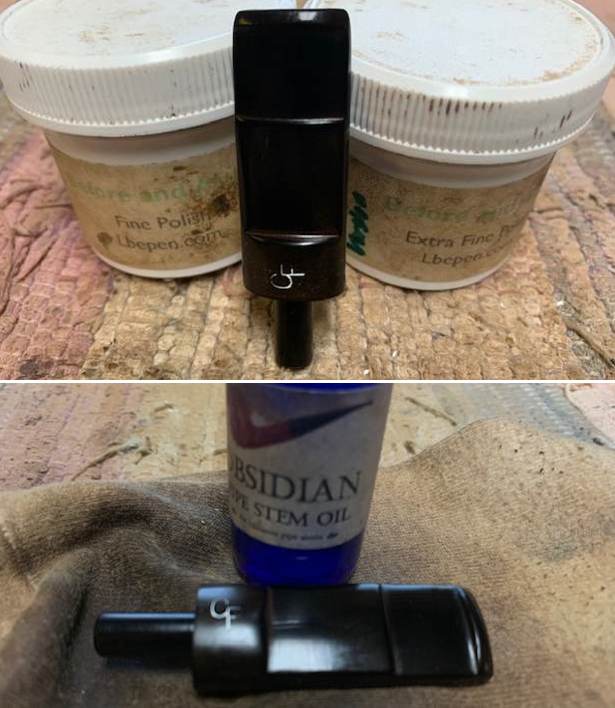
Jeff cleaned up the pipe for me. He reamed the bowl with a PipNet pipe reamer and cleaned it up with a Savinelli Fitsall Pipe Knife. He scrubbed the exterior with Murphy’s Oil Soap and a tooth brush to clean off the grime and dust off the finish. The cleaning had removed the debris and left the pipe looking very good. He cleaned up the internals of the shank, mortise and stem with pipe cleaners, cotton swabs and alcohol to remove any remnant of oils and tars in the lightly used pipe. He soaked the stem in Before & After Deoxidizer and was able to remove much of the oxidation, calcification. When it arrived here in Vancouver it was a clean pipe and I knew what I had to work with. I took photos of it before I started my part of the restoration. I took a photo of the rim top and the stem to show their condition once it arrived in Canada. Jeff was able to clean up the rim and bowl sides as shown in the photos below. He was also able to get rid of the grime and grit in the surface of the briar. I took a photo of the stamping on the underside of the shank. It reads as noted above.I removed the stem from the shank and took a photo of the parts to give a sense of what the pipe looks like. It is a proportionally pleasing pipe with classic dimensions and an oval shank with a vulcanite stem.I started my work on the pipe by polishing the briar with micromesh sanding pads – dry sanding with 1500-12000 grit pads. I wiped it down after each sanding pad with a damp cloth to remove the sanding debris. I rubbed the bowl and shank down with Before & After Restoration Balm to deep clean them. The product works to clean, enliven and protect the briar. I worked it in with my fingers to get it deep in the briar. I let it sit for 10 minutes then I wiped it off and buffed it with a soft cloth. The briar really began to have a rich shine. I set aside the bowl and turned my attention to the stem. I smoothed out the tooth marks and chatter on both sides of the stem with 220 grit sandpaper and started polishing it with 400 grit wet dry sandpaper.I polished the stem with micromesh sanding pads – dry sanding with 1500-12000 grit pads. I wiped the stem down after each pad with a damp cloth to remove the sanding dust. I gave it a further polish with Before & After Stem Polish – both Fine and Extra Fine. I finished by wiping the stem down with a final coat of Obsidian Oil and set it aside to dry. I put the vulcanite stem back on the Faaborg Special Old Briar Hand Shaped 36 Volcano and took the pipe to the buffer. I buffed the bowl and stem with Blue Diamond to lightly buff the briar and the vulcanite. Blue Diamond does a great job on the smaller scratches that remain in both. I gave the bowl and the stem several coats of carnauba wax and buffed the pipe with a clean buffing pad to raise the shine. I hand buffed it with a microfiber cloth to deepen the shine. I am amazed at how well it turned out. The finished pipe is shown in the photos below. This is a beautiful Viggo Nielsen Hand Shaped Faaborg Special Old Briar Volcano – the vulcante saddle stem and the grain combine to give this Brandy pipe a great look. The polished vulcanite stem looks really good with the deeply grain shining through on the bowl and shank. The dimensions of the pipe are Length: 5 ¾ inches, Height: 1 ¾ inches, Outside diameter of the bowl: 1 inch, Chamber diameter: ¾ of an inch. The weight of the pipe is 1.87 ounces/53 grams. This beautiful pipe will soon be added to the rebornpipes store in the Pipes By Danish Pipemakers section of the store. Thanks for walking through the restoration with me on this beauty!

Restoring the first Tsuge Kaga I have worked on – a smooth 950A Bulldog


Blog by Steve Laug

The next pipe was another surprise to Jeff and me when  it came in a lot of pipes that we bought it from the fellow in Copenhagen, Denmark on January 26, 2023. It is a smooth wide shank Bulldog with an unusual flair to the classic shape. The pipe is stamped on the underside of the shank. On the left underside of the diamond shank it is stamped TSUGE [over] KAGA. On right underside of the diamond shank it reads Handmade [over] In Japan [over] 950A – the shape number. The bowl had a thick cake with some lava overflow on the rim top and inwardly beveled inner edge of the bowl. There was some damage on the inner edge and bevel. The silver was oxidized and darkened. The finish on the bowl was dirty but also seemed to have a very shiny coat on it. The vulcanite taper stem is oxidized, dirty and had tooth chatter and marks on the top and underside of the stem ahead of the button. It came with a flannel bag stamped The Danish Pipe Shop in a circular logo. Jeff took these photos of the pipe before he started his cleanup work. He took photos of the rim and bowl to show the thick cake and lava coat covering the rim top. It really was filthy and a mess. The photos show the rim top and beveled inner edge and they appear to be in good condition under the lava. He also took photos of the stem surfaces to show its overall condition when it arrived. It was lightly oxidized and had tooth marks and chatter on both sides of the stem ahead of the button. The photos of the sides and heel of the bowls show beautiful grain around the uniquely carved bowl and shank sides. The rich brown stains highlights the grain and adds depth to the finish. It shows some promise. He also took photos of the stamping on the underside of the diamond shank. The stamping on both the left and right side were clear and read as noted above.  The stem had a classic Tsuge Red Dot on the left side of the diamond saddle. To help me understand the stamping a bit more and the history of the brand I turned to Pipephil’s site to see what it said about Tsuge Japanese Handmade pipes (http://pipephil.eu/logos/en/logo-t9.html). I have included a screen capture of the section below as well as the side bar information below the capture. The first pipe shown in the photo below shows the same Red Dot on the top of stem as the one on the pipe I am working on.Tsuge Pipe Company Ltd. The company was founded by Kyoichiro Tsuge (1911 – † Nov 2010). The traditional classic shape pipes are machine-made. After Kyoichiro Tsuge passed away, his three sons continue to run the two factories and the Ikebana workshop. Kyozaburo “Sab” Tsuge, the youngest son , manages the company.

Smokingpipes.com (https://www.smokingpipes.com/pipes/new/tsuge/) sells the brand and has this introduction on their site.

The Tsuge (pronounced roughly “Su-gay”) pipe company is led by pipe maker Kazuhiro Fukuda, who has been carving for the company for nearly 60 years. Initially, they produced pipes out of ivory and briar which were all classic shapes that were small and stained dark. Kazuhiro went to Denmark in 1969 to work with Sixten Ivarsson for a month and Sixten was able to teach him how to hone his innate skill, which he took back to Japan to help the company become famous the world over.

While the factory produces many machine-made pipes, Tsuge also has available a handcrafted line called Ikebana, available here. Most of these pipes are carved in the shape/drill Danish fashion with very strong Japanese aesthetics. Frequent use of plateau and Japanese bamboo adorn many of the high-grade pieces. Each stem is hand cut from solid vulcanite rod, with a beautifully polished vulcanite tenon from the same piece. Slight asymmetry allows many of the shapes to utilize the wonderful grain and Japanese aesthetic. A few of their pipes even are dressed in ultra high grade Japanese lacquer for the Namiki line.

I then turned to Pipedia (https://pipedia.org/wiki/Tsuge) for more information. It has a great summary of the history of the brand. I quote from a portion of the article below:

1950–Tsuge Started Making Products Eyeing Overseas Markets

When imported briar became available in the 1950’s, TSUGE started making briar pipes. Kyoichiro requested an ivory carver to engrave traditional Japanese motifs such as Mt. Fuji, three monkeys, Toshogu, and Geisha on pipe bowls. The pipes were sold to the U.S. soldiers as souvenirs at the Imperial Hotel, Yokohama officers club, and at the shops of the PX and USO. In the 1960’s the demand of pipes for soldiers increased due to the aggravation of the Vietnam War and a large amount of cherry wood pipes made in Japan were exported to Saigon.

1970 –Excellent Craftsmanship Acclaimed by the World

In the 1970’s the company lost its share to the emerging Asian countries in the severe price competition resulting from the sharp hike in the yen. In order to make competitive high value-added pipes, the company sent six craftsmen to pipe workshops in Italy and Denmark to acquire advanced skills of pipe-making from Europe. Two craftsmen, Fukado and Sato, studied under the great masters Sixten Ivarsson and Jørgen Larsen to touch the essence of freehand pipe making.
Upon returning to Japan, they immediately started working on freehand pipes. At first, the pipes were exported to the U.S. and earned a good reputation. Then, Tsuge received an offer from Germany that led to success in Europe. When freehand pipes and series pipes started to be sold at famous smoking goods shops in Germany and Switzerland, people said, “Japan has sent us cars and motorcycles, and now pipes,
too!”

I then turned to the following link on Worthpoint, an online auction site that had a Kaga 950S on it (https://www.worthpoint.com/worthopedia/tsuge-kaga-950-handmade-japan-dark-400653938). It referred to a bent “Rhodesian” 950S shaped pipe, made by Tsuge Briar Pipe Company, Japan. It shows a “Kaga” pipe-line or grading stamp, with a beautiful “Dark” sandblasted finish, with an awesome grained, deep blast “Relief Grain”. This pipe is in excellent condition, it’s almost like a new pipe by Tsuge Briar Pipe Co.

The description gave another concise history of the brand that I quote below.

The company was founded by Kyoichiro Tsuge (1911 – �� Nov 2010). Tsuge business is owned by a family whose craftsmen tradition stretches back to Japan’s warring period, which ended in the 19th Century. During that time, they were sword makers; it was only in the 1930s that the family began hand carving pipes. After Kyoichiro Tsuge passed away, his three sons continue to run the two factories and the Ikebana workshop, now handled by Kyozaburo “Sab” Tsuge, the youngest son. The Tsuge pipe company is led by pipe maker Kazuhiro Fukuda, who has been carving for the company for nearly 60 years. Initially, they produced pipes out of ivory and briar which were all classic shapes that were small and stained dark. Kazuhiro went to Denmark in 1969 to work with Sixten Ivarsson for a month and Sixten was able to teach him how to hone his innate skill, which he took back to Japan to help the company become famous the world over. “Tsuge Briar Pipe Company” is the best known Japanese pipe maker in the world and are highly regarded across the globe for their superior workmanship and creative styles. Tsuge pipes are distinctively Asian in style, with heavy Danish influence, balanced by Japanese aesthetics. They make traditional English style straight pipes, but their fanciful and delicate bents and half-bents are especially eye-catching. Some combine smooth, flame-grain bowls with startling lengths of honey-colored bamboo shanks, and flowing, with vulcanite or lucite stems. While the factory produced many machine-made pipes, the real gems are the Ikebana line. Most of these pipes are carved in the shape/drill Danish fashion with very strong Japanese aesthetics. Frequent use of plateau and Japanese bamboo adorn many of the high-grade pieces. Each stem is hand cut from solid vulcanite rod, with a beautifully polished vulcanite tenon from the same piece. Slight asymmetry allows many of the shapes to utilize the wonderful grain and Japanese aesthetic. A few of their pipes even are dressed in ultra high grade Japanese lacquer for the Namiki line. Their Corsican briar is exceptionally light in the hand and mouth, as well as dry-smoking.

Jeff cleaned up the pipe for me. He reamed the bowl with a PipNet pipe reamer and cleaned it up with a Savinelli Fitsall Pipe Knife. He scrubbed the exterior with Murphy’s Oil Soap and a tooth brush to clean off the grime off the finish and the overflow of lava on the rim top. The cleaning had removed the debris on the rim top. He cleaned up the internals of the shank, mortise and stem with pipe cleaners, cotton swabs and alcohol to remove all of the oils and tars in the pipe. He soaked the stem in Before & After Deoxidizer and was able to remove much of the oxidation, calcification. When it arrived here in Vancouver it was a clean pipe and I knew what I had to work with. I took photos of it before I started my part of the restoration. I took a photo of the rim top and the stem to show their condition once it arrived in Canada. Jeff was able to clean up the cake and the lava overflow that was shown in the rim and bowl photos above. The rim top and the inner edge of the bowl showed some damage to the inner edge and top toward the front of the bowl. He was also able to get rid of the grime and grit in the surface of the briar. The stem looked better, though there were tooth marks and chatter on both sides near the button.I took photos of the stamping on the underside of the shank. It reads as noted above.I removed the stem from the shank and took a photo of the parts to give a sense of what the pipe looks like. It is a proportionally pleasing pipe with classic dimensions and a twist with flattened and widened diamond shank. Maybe it is my imagination but it seems like the pipe combines the Eskimo pipe shape with the Classic Bent Bulldog for an unusual shape that works well.I started my work on the pipe by polishing the briar with micromesh sanding pads – dry sanding with 1500-12000 grit pads. I wiped it down after each sanding pad with a damp cloth to remove the sanding debris. I rubbed the bowl and shank down with Before & After Restoration Balm to deep clean them. The product works to clean, enliven and protect the briar. I worked it in with my fingers to get it into the briar. I let it sit for 10 minutes then I wiped it off and buffed it with a soft cloth. The briar really began to have a rich shine. I set aside the bowl and turned my attention to the stem. I sanded the chatter and marks on the stem with 220 grit sandpaper to blend them into the stem surface. I started polishing it with 400 grit wet dry sandpaper.  I polished the stem with micromesh sanding pads – dry sanding with 1500-12000 grit pads. I wiped the stem down after each pad with a damp cloth to remove the sanding dust. I gave it a further polish with Before & After Stem Polish – both Fine and Extra Fine. I finished by wiping the stem down with a final coat of Obsidian Oil and set it aside to dry. I put the stem back on the Tsuge 950A Smooth Stylized Bulldog and took the pipe to the buffer. I buffed the bowl and stem with Blue Diamond to polish the briar and the vulcanite. Blue Diamond does a great job on the smaller scratches that remain in both. I gave the bowl and the stem several coats of carnauba wax and buffed the pipe with a clean buffing pad to raise the shine. I hand buffed it with a microfiber cloth to deepen the shine. Considering the mess the pipe was when we received it and the surprise of a cracked shank that appeared in the cleanup, I am amazed at how well it turned out. The finished pipe is shown in the photos below. This is a beautiful Tsuge Bulldog – the vulcanite taper stem and the smooth finish combine to give the pipe a great look. The polished black, vulcanite stem looks really good with the rich grain standing out on the bowl and shank. The dimensions of the pipe are Length: 5 ½ inches, Height: 1 ¾ inches, Outside diameter of the bowl: 2 inches, Chamber diameter: 7/8 of an inch. The weight of the pipe is 2.12 ounces/60 grams. This beautiful Tsuge will soon be added to the rebornpipes store in the Pipes From Various Makers section of the store. Thanks for walking through the restoration with me on this beauty!

Breathing New Life into a Lovely S. Bang Calabash


Blog by Steve Laug

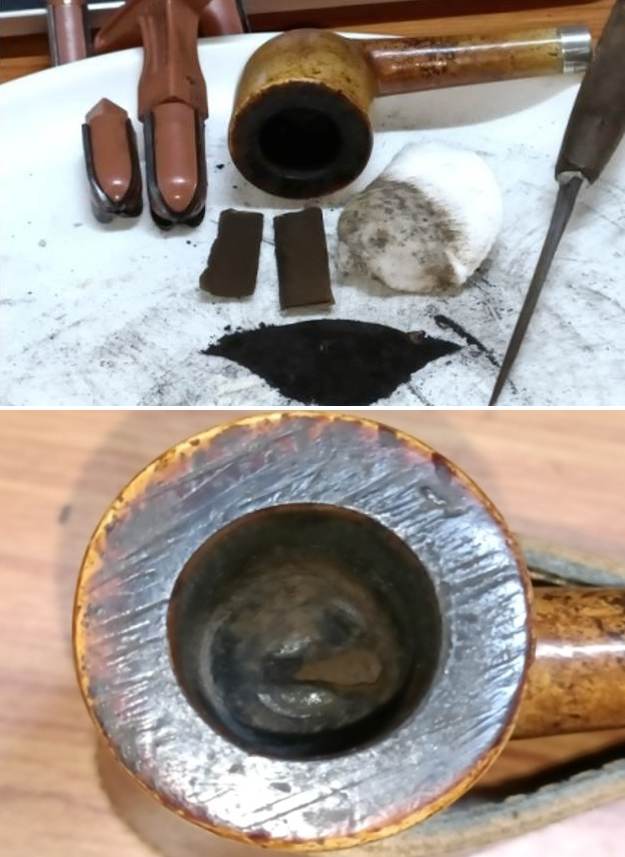
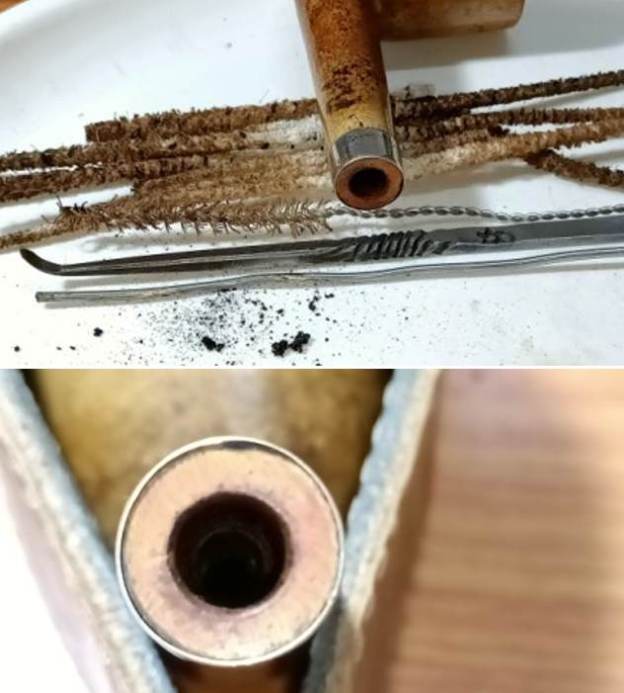
The next pipe was another surprise to Jeff and me when we bought it from the fellow in Copenhagen, Denmark on November 10, 2022. It is a sandblast Calabash with a smooth rim top and a silver ring around the outer edge of the bowl. The stem is vulcanite and the ring is Sterling Silver. The pipe is stamped S. Bang [over] Copenhagen on a smooth oval on the underside of the shank. Under that is over another smooth patch, a rectangle stamped with Handmade [over] In Denmark. The Sterling Silver around the outer edge of the bowl is not stamped. The bowl had a thick cake with some lava overflow on the rim top and inwardly beveled inner edge of the bowl. There was some damage on the inner edge and bevel. The silver was oxidized and darkened. The finish on the bowl was dirty but also seemed to have a very shiny coat on it. The vulcanite taper stem is oxidized, dirty and had tooth chatter and marks on the top and underside of the stem ahead of the button. It came with a leather bag stamped S. Band over Kobenhavn in gold on the front of it. Jeff took these  photos of the pipe before he started his cleanup work. He took photos of the rim and bowl to show the thick cake and lava coat covering the rim top. It really was filthy and a mess. The photos show the damage to the rim top and beveled inner edge. There are also scratches on the rim top at the front and back of the bowl. He also took photos of the stem surfaces to show its overall condition when it arrived. The photos of the sides and heel of the bowls show beautiful blast around the bowl and shank sides. The rich brown stains highlights the grain and adds depth to the finish. It shows some promise. He also took photos of the stamping on the smooth panels on the underside of the shank. It took several photos to capture the stamp on the curve but they were clear and read as noted above. The leather pipe sock is stamped in gold and reads as follows:To help me understand the stamping a bit more I turned to Pipephil’s site and read what it said about S. Bang pipes (http://pipephil.eu/logos/en/logo-s1.html). I have included a screen capture of the section below as well as the side bar information below the capture. Sven Bang opened his tobacco and pipe shop in 1968 in Copenhagen. He was more a business man than a pipe carver and began to hire pipemakers. About half a dozen succeeded each other in his workshop during the 1970’s (Ivan Holst Nielsen, Jan Wideløv, Phil Vigen…). At least Per Hansen and Ulf Noltensmeier stayed and when Sven retired in 1983 they took over the company (in 1984) keeping its name.

I knew from that the pipe I have was made for the European market and was known as a Black Blast. I also knew that it was made before 1984 when the stamp Copenhagen was replaced with Kobenhavn. It is also the time when Ulf and Per took over the company so it was made by one of them.

To close my understanding of the pipe I turned to Pipedia (https://pipedia.org/wiki/S._Bang). I quote the section from the article where the company changed hands from S. Bang to Hansen and Noltensmeier in 1984. It is a great read so I have included it below.

Svend Bang retired in 1984. Evidently he felt a great deal of pride in the product that he initiated throughout his career and retirement and until his death in 1993.

Once Hansen and Noltensmeier took over the company (in 1984) they knew it was best to retain the S. Bang name – the two carvers always shared the same philosophy about that. Noltensmeier and Hansen were determined to maintain top quality at the expense of increased numbers. The only change they made concerns the stamping on the pipes changing from the English version “COPENHAGEN” to the Danish “KOBENHAVN”.

Still, they are two separate carvers, with their own styles and preferences. Each makes his own pipes – there is no “assembly line” construction at S. Bang. They bounce ideas off of each other, of course, and admit that when problems arise in a pipe, it is nice to have a partner to discuss them with.

Though they carve pipes as individuals, there are similarities in their work. All Bang pipes are made with black, hand-cut vulcanite stems.

The same engineering is used by both carvers as well. The shape and size of the tobacco chambers vary according to size and design of the pipe, but each carver follows the same design guidelines for choosing the proper chamber dimensions. The smoke channel is always engineered for optimum performance.

Bang pipes are noted for the high definition and fine contrast in the grain. They undergo a double staining process to achieve that effect. The technique makes the grain leap from the bowl of the pipe, making well-grained wood become extra ordinary. The same coloring, however, will produce different results in different pieces of briar, making each pipe truly individual.

Per Hansen is the designated sandblasting artist for the team. He personally takes those pieces that are to be sandblasted to Stanwell, and is permitted to use the sandblasting equipment himself. That is the only S. Bang process, though, that is not executed by the individual carver of each pipe. Everything else, including the famous S. Bang silverwork, is done in the shop by each of the carvers on his own pipes.

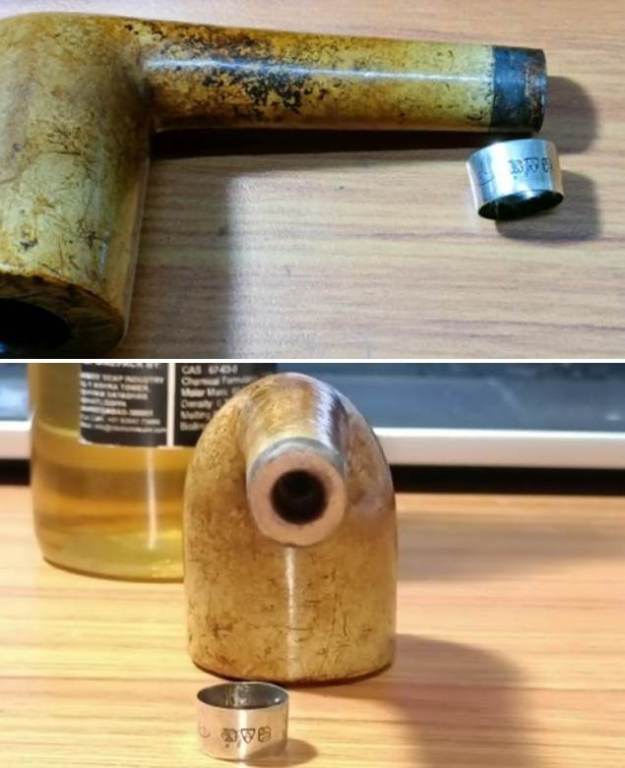
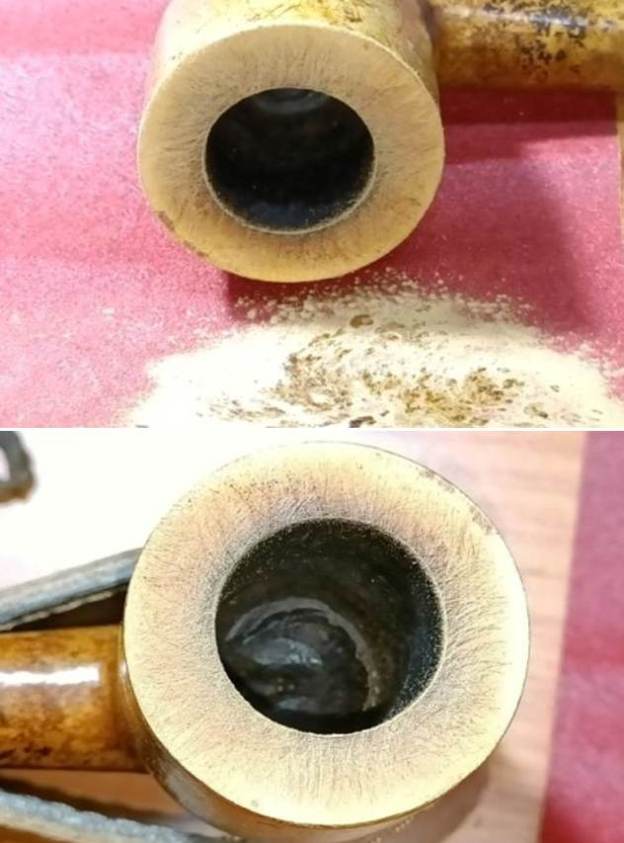
Jeff cleaned up the pipe for me. He reamed the bowl with a PipNet pipe reamer and cleaned it up with a Savinelli Fitsall Pipe Knife. He scrubbed the exterior with Murphy’s Oil Soap and a tooth brush to clean off the grime off the finish and the overflow of lava on the rim top. The cleaning had removed the debris on the rim top. He cleaned up the internals of the shank, mortise and stem with pipe cleaners, cotton swabs and alcohol to remove all of the oils and tars in the pipe. He soaked the stem in Before & After Deoxidizer and was able to remove much of the oxidation, calcification. When it arrived here in Vancouver it was a clean pipe and I knew what I had to work with. I took photos of it before I started my part of the restoration. I took a photo of the rim top and the stem to show their condition once it arrived in Canada. Jeff was able to clean up the cake and the lava overflow that was shown in the rim and bowl photos above. The rim top and the inner edge of the bowl showed some damage to the inner edge and top toward the front of the bowl. He was also able to get rid of the grime and grit in the surface of the briar. The stem looked better, though there were tooth marks and chatter on both sides near the button.I took a photo of the stamping on the underside of the shank. It reads as noted above.I removed the stem from the shank and took a photo of the parts to give a sense of what the pipe looks like.I started my work on the bowl by dealing with the burn damage on the inner edge and rim top. I followed the bevel on the inner edge and removed the burn damage while cleaning the bevel using 220 grit sandpaper. Once I got the bevel cleaned up and the rim damage removed I burn and the scratches on the rim top with 220 grit sandpaper. I smoothed out the repairs with a 1500 grit micromesh sanding pad. I polished the rim top and silver rim edge with micromesh sanding pads – dry sanding with 1500-12000 grit pads. I wiped it down after each sanding pad with a damp cloth to remove the sanding debris. I rubbed the bowl and shank down with Before & After Restoration Balm to deep clean them. The product works to clean, enliven and protect the briar. I worked it in with my fingers to get it into the briar. I let it sit for 10 minutes then I wiped it off and buffed it with a soft cloth. The briar really began to have a rich shine. While I was rubbing it down with the Balm a chunk of the shank fell out in my hand. There must have been cracks in the shank as the stem was loose before. It is frustrating when that happens. I repaired the cracks with clear CA glue and pressed the piece back into the shank.Once the repair cured I sanded the shank end smooth to hold a silver band. I sanded the depth of the band and removed half of the depth of the band. It would look good once it was pressed in place on the shank end. I coated the shank end with all purpose glue and heated and pressed the band on to  the shank end. I stained the sanded areas on the shank just ahead of the band with a Walnut stain pen to blend them into the surrounding briar. It looks very good. I rubbed the bowl and shank down once again with Before & After Restoration Balm to deep clean them. The product works to clean, enliven and protect the briar. I worked it in with my fingers to get it into the briar. I let it sit for 10 minutes then I wiped it off and buffed it with a soft cloth. The briar really began to have a rich shine. I set aside the bowl and turned my attention to the damage on the stem. I painted the stem surface with the flame of a lighter to lift the tooth marks. I lifted them some. I filled in what remained of the marks on both sides with black CA glue. I set it aside to cure. Once the repairs cured I flattened them out with a small file. I sanded the repairs with 220 grit sandpaper to blend them into the stem surface. I started polishing it with 400 grit wet dry sandpaper.  I polished the stem with micromesh sanding pads – dry sanding with 1500-12000 grit pads. I wiped the stem down after each pad with a damp cloth to remove the sanding dust. I gave it a further polish with Before & After Stem Polish – both Fine and Extra Fine. I finished by wiping the stem down with a final coat of Obsidian Oil and set it aside to dry. I put the stem back on the S. Bang Black Sandblast Calabash and took the pipe to the buffer. I buffed the bowl and stem with Blue Diamond to polish the briar and the vulcanite. Blue Diamond does a great job on the smaller scratches that remain in both. I gave the bowl and the stem several coats of carnauba wax and buffed the pipe with a clean buffing pad to raise the shine. I hand buffed it with a microfiber cloth to deepen the shine. Considering the mess the pipe was when we received it and the surprise of a cracked shank that appeared in the cleanup, I am amazed at how well it turned out. The finished pipe is shown in the photos below. This is a beautiful S. Bang Sandblast Calabash – the vulcanite taper stem and rim top and sandblast finish combine to give the pipe a great look. The newly fitted silver band and the polished black, vulcanite stem looks really good with the rich grain standing out on the bowl and shank. The dimensions of the pipe are Length: 5 ½ inches, Height: 1 ¾ inches, Outside diameter of the bowl: 1 ¾ inches, Chamber diameter: ¾ of an inch. The weight of the pipe is 1.48 ounces/43 grams. This beautiful S. Bang will be staying with me for awhile. Thanks for walking through the restoration with me on this beauty!

Giving Life to an Old Smokewel of Mysterious Origin


Blog by Kenneth Lieblich

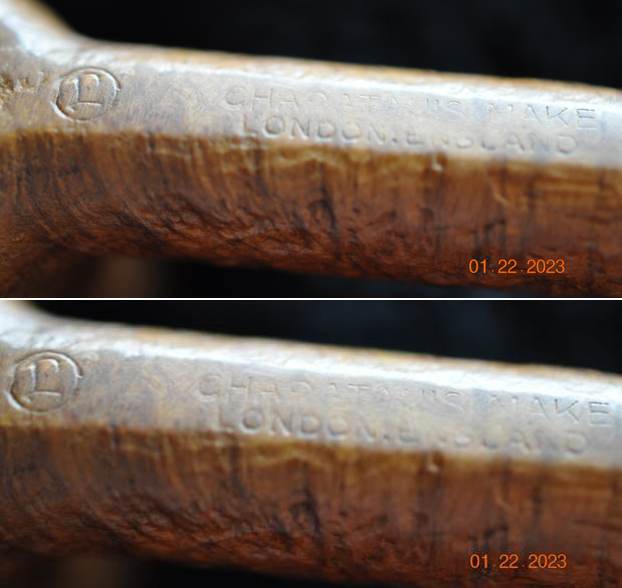
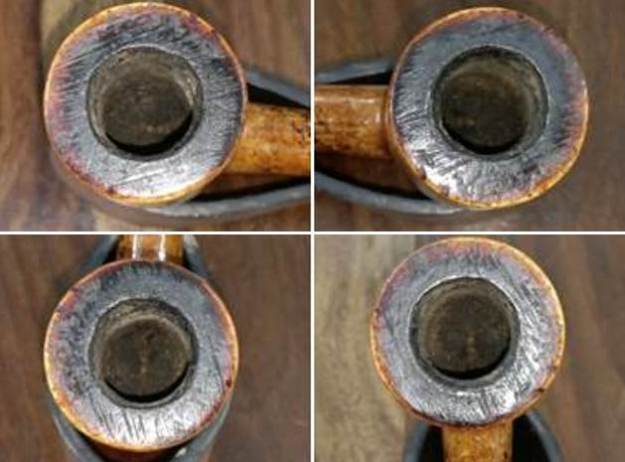
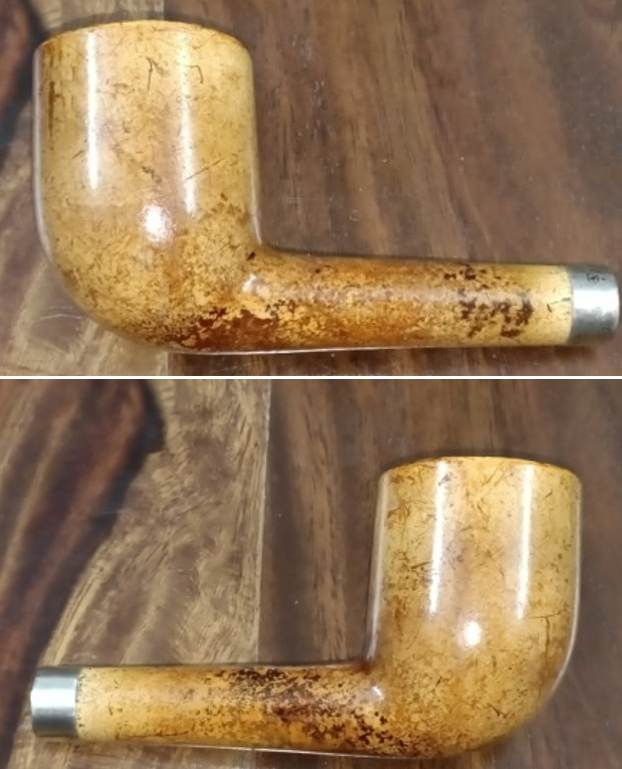
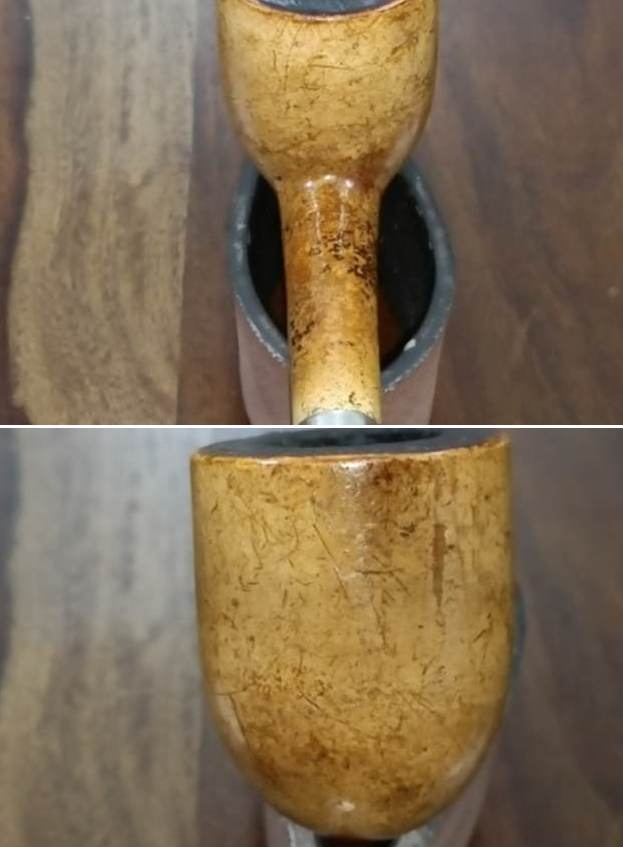
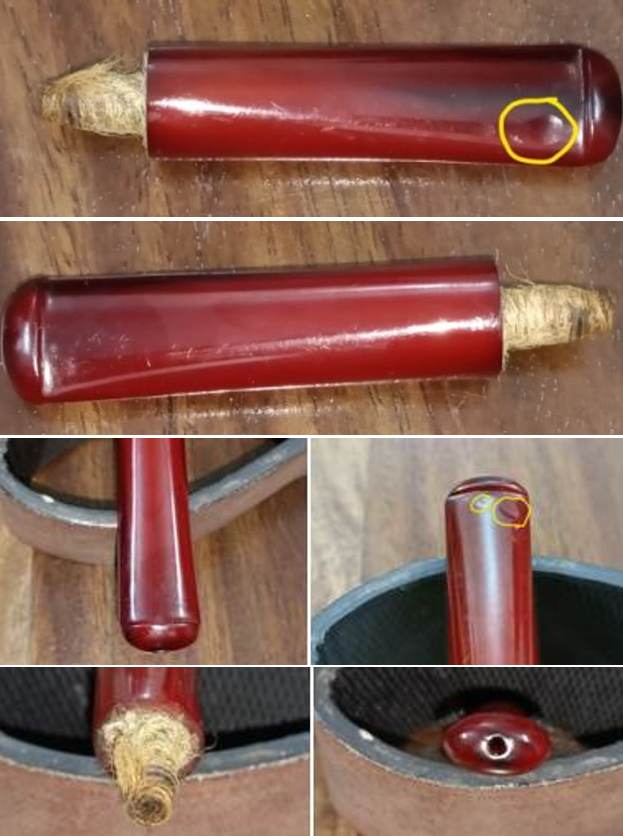
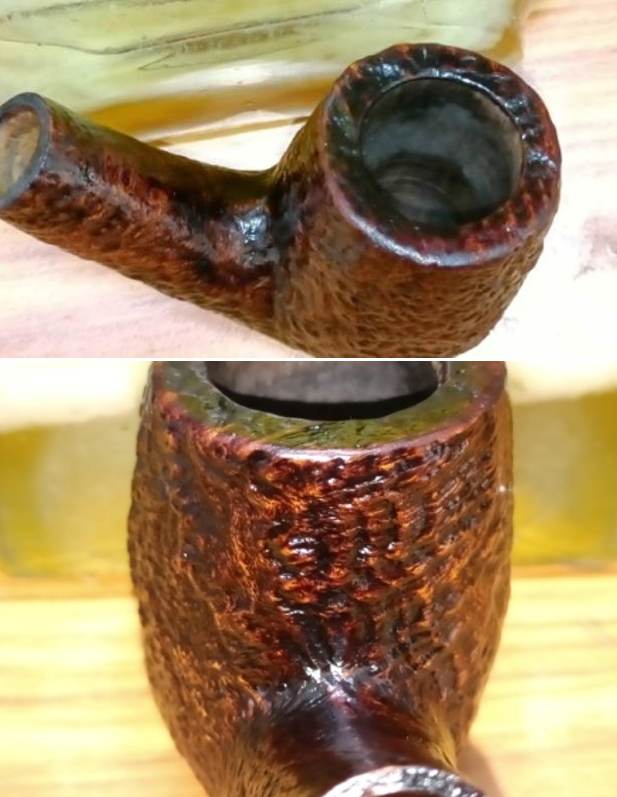
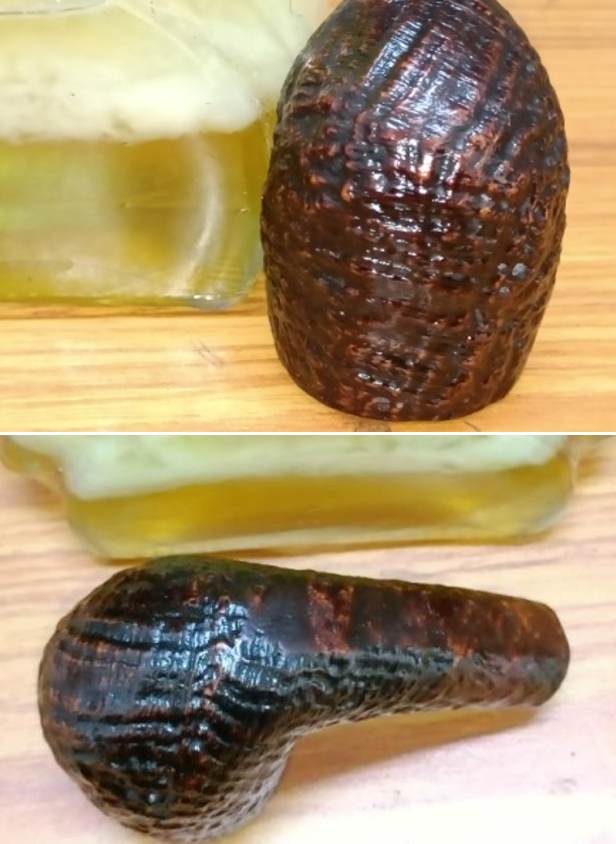
Next on the chopping block is a bent billiard sandblast Smokewel (one “L”), which I acquired in a lot of pipes from a gentleman living on Vancouver Island. He had quite an assortment of pipes and they ranged from utterly horrible to surprisingly beautiful – fortunately, this was of the beautiful variety. The pipe is very well made: the proportions are right, the drilling is accurate, and it just oozes competence. This is a sandblasted bent billiard, with a tapered, vulcanite stem. And what a wonderful, rugged blast on this one! On the underside of the shank, the markings read ‘Smokewel [over] London Made’, and, off to the right, the shape number ’26’. This pipe had been well-loved and well-smoked, as it arrived with some marks and general wear, and the stem was pretty nasty. There were also beautiful indications of “hand erosion” on the right-hand side, where the previous owner’s hand had lovingly rubbed the pipe over the years. There were also a couple of tiny nicks, but, fortunately, nothing overly complicated.

Identifying exactly what a “Smokewel” pipe is turned out to be a typical pipe-history morass. There are a few twists and turns in this story, so join me in wading through this mess. As you’ve seen in the photos, the pipe clearly says “Smokewel” – not “Smokewell”. I initially thought that perhaps the terminal “L” had been rubbed off, but, looking closely, one can see that “Smokewel” is perfectly centred over “London Made”, which suggests this odd spelling was not the victim of rubbing. In other words, there is no missing “L”.

There is scant information to be had on both “Smokewel” and “Smokewell” – and none of it could be linked definitively to this pipe. There is this entry on Pipephil for “Smokewell”:As you can see, it is a line of pipes from the John Redman firm of London. There are some examples of these pipes that can be found online, and I have included a photo of the markings of Redman’s “Smokewell” line: This might be significant because I have studied the letters of the markings from my pipe and Redman’s pipe, and they are the same. In addition, a John Redman catalog (supposedly) from the 1960s, lists “Smokewell” as one of their “London Made Briars” (note the wording). I have clipped the specific passage here:All of this is persuasive evidence, but not definitive. The missing “L” on my pipe causes me to pause, if only briefly, before declaring it to be a John Redman pipe. Also, the various iterations of Redman pipe usually had markings on the stem – this one has none and I don’t think it’s a replacement stem. I am aware that Wilczak and Colwell’s Who Made That Pipe? lists “Smokewell” under John Redman – but there is more.

Wilczak and Colwell also list “Smokewell” under a company called Maurice Pipes. The second “L” here could be an error from Wilczak and Colwell – the book is full of them. I also found an old advertisement for Maurice Pipes. Based in London, this firm supposedly produced very fine pipes. Superficially, this ad seems to have nothing to do with our pipe, except that it instructs the reader to use the word “Smokewel” (one “L”) in telegram and cable correspondence with the firm. The word obviously had significance to Maurice Pipes.On the PipesMagazine forums online, I read a thread about early sandblasts and one comment stuck out to me: “The mysterious Maurice was listing blast pipes in the 20’s and as a pipe company they are totally in the dusty shadows, but I’d reckon they were a fine maker, mostly because of their prices – they sold their Sandblast alongside their topline Extra for the very same price, at 16/6 and that’s a fairly high price comparatively.”

The connection between Maurice Pipes and “Smokewel” is tenuous at best, but it was my only connection to the single-L “Smokewell”. If you have information about any of the research above, I would love to hear from you. The stinger is a bit odd – does it ring any bells for you?

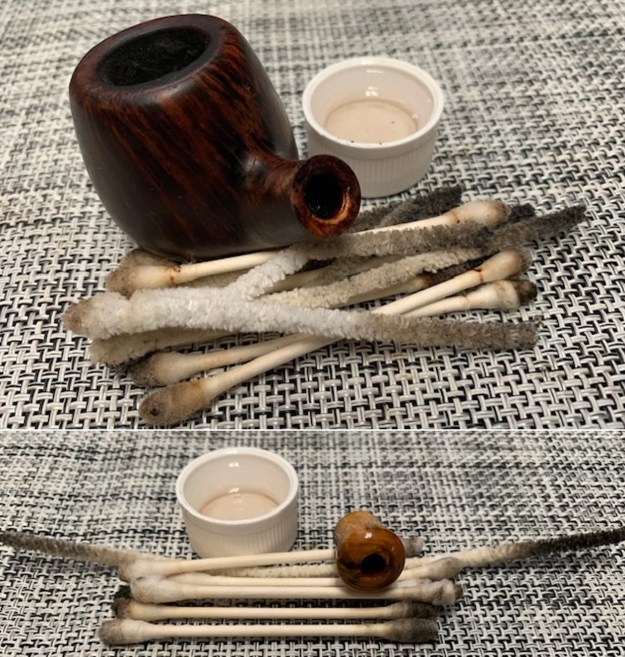
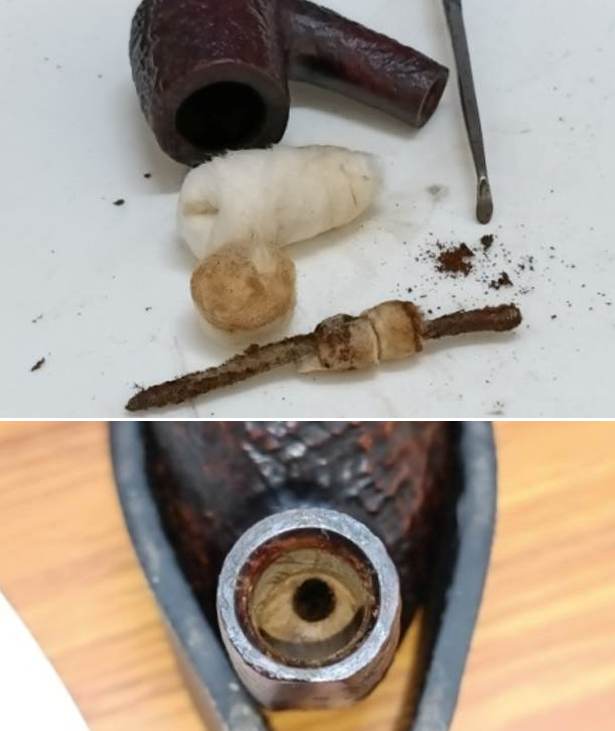
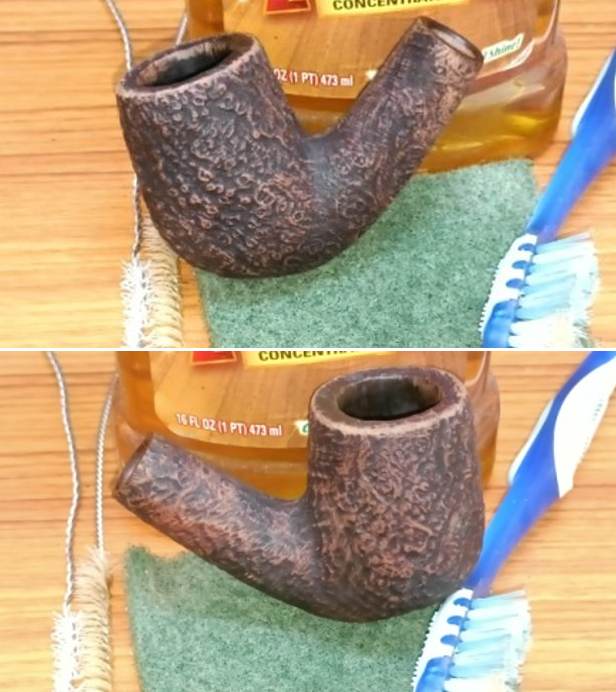
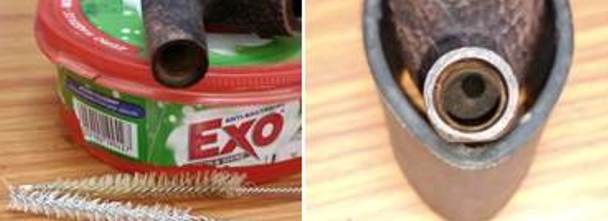
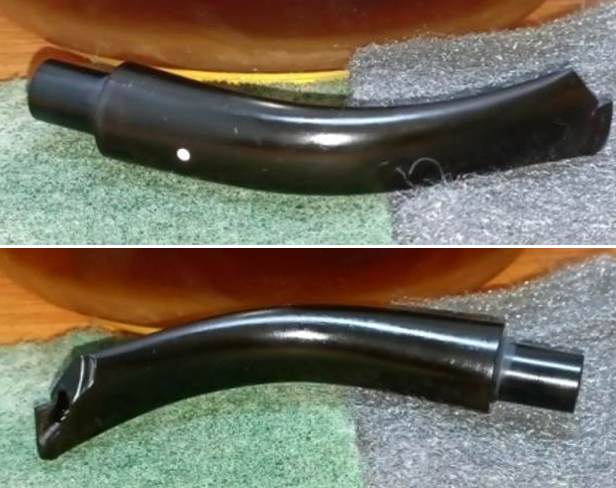
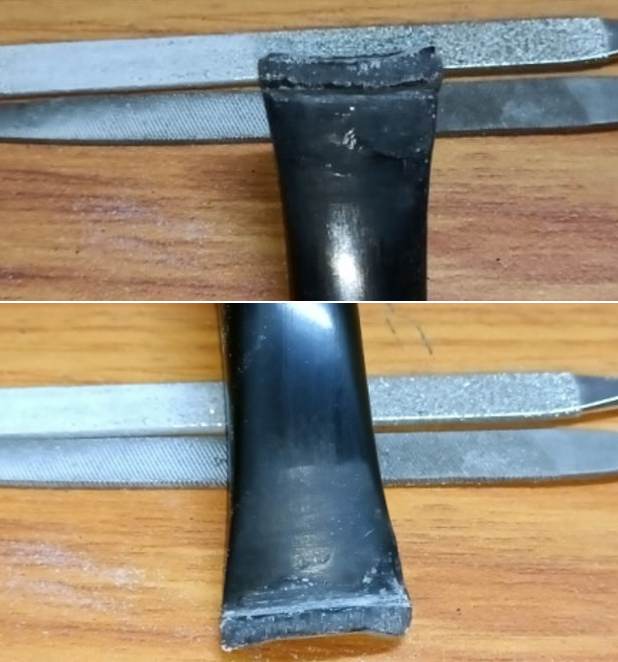
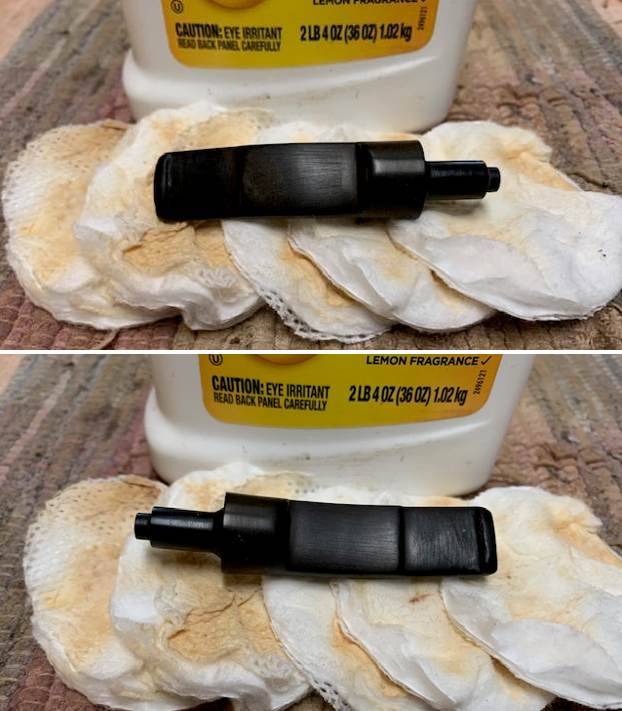
And speaking of the stinger, let’s clean it. I heated the stem and stinger with my heat gun and this provided just enough softening of the internal goo to allow me to pull it out. It then went for a soak in some lemon-infused isopropyl alcohol. I let it sit for several hours and then cleaned it off and it looked much improved.I wiped the outside of the stem down with Murphy’s Oil Soap on some cotton pads. Though dirty, the outside of the stem was in decent condition and the oxidation wasn’t too bad. On the other hand, the inside was another kettle of fish! I used up a good chunk of the world’s supply of pipe cleaners to clean it out – the pictures only show a fraction of what I used. Next, the stem went for an overnight soak in the Pipe Stem Oxidation Remover. The following day, I cleaned all of the de-oxidizing mess off. The oxidation had migrated to the surface and would be fairly straightforward to remove. I scrubbed with SoftScrub on some cotton pads to remove the leftover oxidation and leave the stem in a dull black colour. Finally, I used all nine Micromesh pads (1,500 through 12,000 grit) to bring out the lovely black lustre on the stem. I also used Obsidian Pipe Stem Oil in between each pad scrubbing. Now for the stummel. It was nicked on the front edge of the rim, and the rim itself had lava and general filth, so, time to work on it! I started with the KleenReem to remove the built-up cake and followed that with 220-grit sandpaper taped to a dowel to eliminate as much as I could. I took the chamber down to bare briar, as I wanted to ensure there were no hidden flaws in the wall. Fortunately, there were none. I then proceeded to clean out the insides of the shank with Q-tips, pipe cleaners, and lemon-infused isopropyl alcohol. There was an extraordinary amount of filth inside this stummel and it took an enormous amount of cotton to get it clean. I only have a photo of a small number of pipe cleaners. I can’t imagine that this pipe had ever been cleaned – or, at least, not in many decades. Because the filth in the shank was well-encrusted, I used a couple of drill bits held in a chuck, by hand (not in a drill), to try and loosen up the debris. This worked quite well. I decided to de-ghost the pipe to remove any lingering smells of the past. I thrust cotton balls into the bowl and the shank and saturated them with 99% isopropyl alcohol. I let the stummel sit overnight. This caused oils, tars and smells to leach out into the cotton.In fact, the pipe was dirty enough that I then used my pipe retort system on it. I neglected to take photos of that, but it certainly helped clean the pipe. I followed that up by cleaning the insides with some dish soap and tube brushes. I used some Murphy’s Oil Soap and a toothbrush to scrub the outside of the stummel and the lava on the rim of the pipe. I didn’t scrub too hard – I wanted to keep the nice colour on the wood. Having completed that, I was able to address the small nicks on the rim and the bowl. I used some tiny drops of cyanoacrylate adhesive to fill the nicks, and a metal brush to camouflage the repairs in the wood. Finally, I used only the last three MicroMesh pads to polish the stummel, but I was careful not to damage the sandblast. After that, a light application of Before & After Restoration Balm brought out the best in the stummel’s grain. Then off to the buffer! A tiny dose of White Diamond and a few coats of conservator’s wax were just what this pipe needed. This Smokewel looks fantastic again. It is elegant and handsome, and is ready to be enjoyed by the next owner. I am pleased to announce that this pipe is for sale! If you are interested in acquiring it for your collection, please have a look in the British pipe section of the store here on Steve’s website. You can also email me directly at kenneth@knightsofthepipe.com. The approximate dimensions of the pipe are as follows: length 5¼ in. (133 mm); height 2¾ in. (70 mm); bowl diameter 1¼ in. (32 mm); chamber diameter ¾ in. (19 mm). The weight of the pipe is 1⅛ oz. (35 g). I hope you enjoyed reading the story of this pipe’s restoration as much as I did restoring it. If you are interested in more of my work, please follow me here on Steve’s website or send me an email. Thank you very much for reading and, as always, I welcome and encourage your comments.

Cleaning up another Dark Sandblast Stanwell Sterling Silver Billiard


Blog by Steve Laug

The next pipe I am working on was purchased on 01/10/2023 as part of another group of pipes from a fellow in Copenhagen, Denmark. This was another tired and dirty pipe but it had a great sandblast on the bowl and shank and a smooth rim top. The only mark on the pipe is on the silver band on the shank that reads Stanwell [over] Silver. The pipe is classic Danish Billiard. There were tars and oils ground into the valleys and crevices of the sandblast. The bowl had a thick cake that flowed over the top of the rim in a thin coat of a lava and some damage to the top and inner edge of the bowl. The stem was a black vulcanite taper stem with a silver Crown S logo on the left side. It was oxidized, calcified and had tooth marks and chatter on both sides ahead of the button. I think it would clean up to be a beautiful pipe. Jeff took photos of the pipes before he started his clean up work.  He took photos of the rim and bowl to show the thick cake and lava coat covering the rim top. It really was filthy and a mess. You can also see the rim top and inner edge damage in the photos. He also took photos of the stem surfaces to show its overall condition when it arrived. The photos of the sides and heel of the bowls show beautiful blast around the bowl and shank sides. The rich brown stains highlights the grain and adds depth to the finish. It shows some promise. He also took photos of the stamping on the silver band. It took several photos to capture the stamp on the curve but they were clear and read as noted above. Jeff cleaned up the pipe for me. He reamed the bowl with a PipNet pipe reamer and cleaned it up with a Savinelli Fitsall Pipe Knife. He scrubbed the exterior with Murphy’s Oil Soap and a tooth brush to clean off the grime off the finish and the overflow of lava on the rim top. The cleaning had removed the debris on the rim top. He cleaned up the internals of the shank, mortise and stem with pipe cleaners, cotton swabs and alcohol to remove all of the oils and tars in the pipe. He soaked the stem in Before & After Deoxidizer and was able to remove much of the oxidation, calcification. When it arrived here in Vancouver it was a clean pipe and I knew what I had to work with. I took photos of it before I started my part of the restoration. I took a photo of the rim top and the stem to show their condition once it arrived in Canada. Jeff was able to clean up the cake and the lava overflow that was shown in the rim and bowl photos above. The rim top and the inner edge of the bowl showed some damage to the inner edge and some darkening on the rim top. He was also able to get rid of the grime and grit in the surface of the briar. The stem looked better, though there were tooth marks and chatter on both sides near the button. I tried to capture the Stanwell Sterling on the silver band. It is clearer in person than is shown in the photo. I removed the stem from the shank and took a photo of the parts to give a sense of what the pipe looks like. I started my work on the bowl by working on the damage to the inner edge of the bowl and the darkening on the rim top and outer edge with 220 grit sandpaper. I was able to clean it up nicely.I polished the smooth rim top with micromesh sanding pads – dry sanding with 1500-12000 grit pads. I wiped the briar down after each pad. I rubbed the bowl and shank down with Before & After Restoration Balm to deep clean them. The product works to clean, enliven and protect the briar. I worked it in with my fingers to get it into the briar. I let it sit for 10 minutes then I wiped it off and buffed it with a soft cloth. The briar really began to have a rich shine. I took some photos of the bowl at this point to mark the progress in the restoration. It is a beautiful bowl. I set aside the bowl and turned my attention to the damage on the stem. I “painted” the surface of the stem with the flame of a lighter to lift them as much as possible. I filled in the ones that remained with clear CA glue and set it aside to cure. I used a small file to flatten the repairs and recut the button edge. I sanded the stem smooth with 220 grit sandpaper and started polishing it with 400 grit wet dry sandpaper. I polished the stem with micromesh sanding pads – dry sanding with 1500-12000 grit pads. I wiped the stem down after each pad with a damp cloth to remove the sanding dust. I gave it a further polish with Before & After Stem Polish – both Fine and Extra Fine. I finished by wiping the stem down with a final coat of Obsidian Oil and set it aside to dry. I put the stem back on the Stanwell Sterling Sandblast Billiard and took the pipe to the buffer. I buffed the bowl and stem with Blue Diamond to polish the briar and the vulcanite. Blue Diamond does a great job on the smaller scratches that remain in both. I gave the bowl and the stem several coats of carnauba wax and buffed the pipe with a clean buffing pad to raise the shine. I hand buffed it with a microfiber cloth to deepen the shine. Considering the mess the pipe was when we received it I am amazed at how well it turned out. The finished pipe is shown in the photos below. This is a beautiful Stanwell Sterling Sandblast Billiard – the vulcanite taper stem and rim top and sandblast finish combine to give the pipe a great look. The polished black, vulcanite stem looks really good with the rich grain standing out on the bowl and shank. The dimensions of the pipe are Length: 5 ½ inches, Height: 1 ¾ inches, Outside diameter of the bowl: 1 1/8 inches, Chamber diameter: ¾ of an inch. The weight of the pipe is 1.27 ounces/36 grams. This is another pipe that I will be putting on the rebornpipes online store in the Danish Pipe Pipemaking Companies Section shortly, if you are interested in adding it to your collection. Thanks for walking through the restoration with me on this beauty!
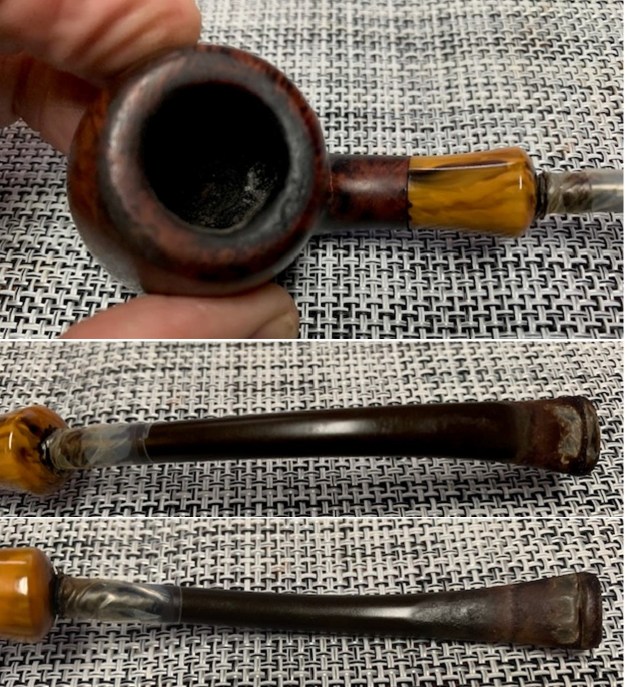
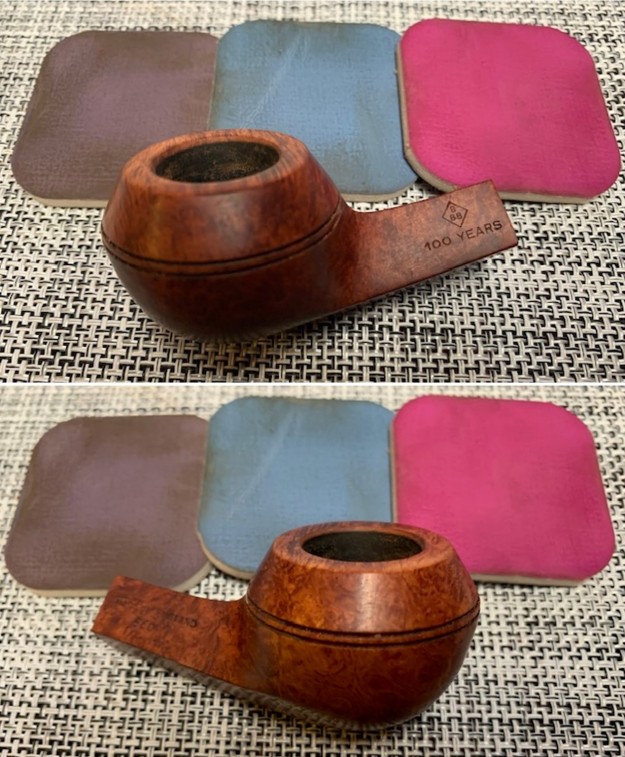
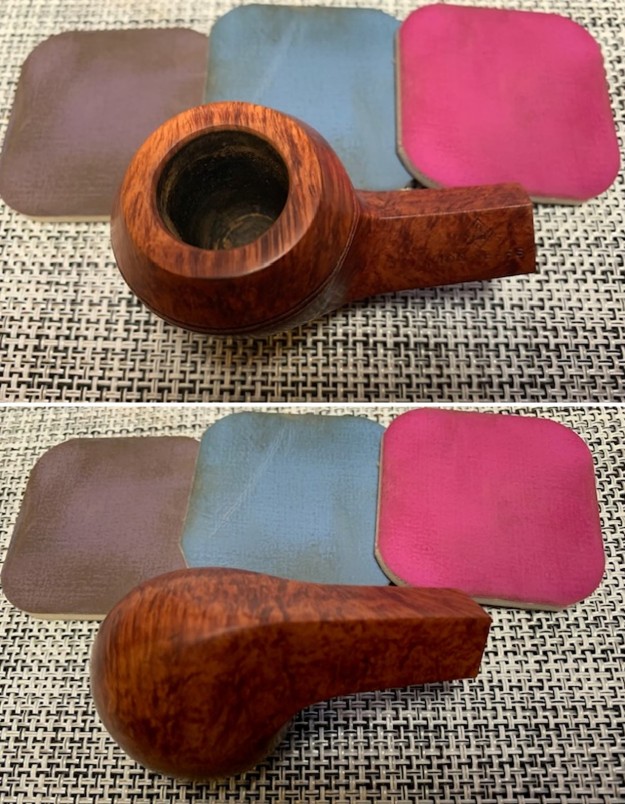
Discovering Beautiful Grain on this dirty Stanwell Sterling Silver 97 Reg. No. 969-48 Liverpool


Blog by Steve Laug

The next pipe I am working on was purchased on 01/10/2023 as part of another group of pipes from a fellow in Copenhagen, Denmark. This was another tired and dirty pipe that was a unique shape. The pipe is stamped on the left side and reads Stanwell [over] Regd. No. 969-48. On the right side it is stamped with the shape number 97. On the underside of the shank it is stamped Made in Denmark. The pipe is an interesting look shape I would call a Liverpool. It is long shank and round with a taper vulcanite stem. There were tars and oils ground into the surface of the briar. The silver band on the shank was original and was stamped Sterling [over] Silver. The bowl had a thick cake that flowed over the top of the rim in a thin coat of a lava and some damage to the inner edge of the bowl. The stem was a black vulcanite taper stem without a logo on the side or top. It was oxidized, calcified and had tooth marks and chatter on both sides ahead of the button. I think it would clean up to be a beautiful pipe. Jeff took photos of the pipes before he started his clean up work.  He took photos of the rim and bowl to show the moderate cake and lava coat covering the rim top. It really was filthy and a mess. You can also see the rim top and inner edge damage in the photos. He also took photos of the stem surfaces to show its overall condition when it arrived. The photos of the sides and heel of the bowls show beautiful grain  around the bowl and shank sides. The rich brown stains highlights the grain and adds depth to the finish. It shows some promise. He also took photos of the stamping on the sides of the shank and the band. They were clear and read as noted above. Jeff cleaned up the pipe for me. He reamed the bowl with a PipNet pipe reamer and cleaned it up with a Savinelli Fitsall Pipe Knife. He scrubbed the exterior with Murphy’s Oil Soap and a tooth brush to clean off the grime off the finish and the heavy overflow of lava on the rim top. The cleaning had removed the thick coat on the rim top. He cleaned up the internals of the shank, mortise and stem with pipe cleaners, cotton swabs and alcohol to remove all of the oils and tars in the pipe. He soaked the stem in Before & After Deoxidizer and was able to remove much of the oxidation, calcification. When it arrived here in Vancouver it was a clean pipe and I knew what I had to work with. I took photos of it before I started my part of the restoration. I took a photo of the rim top and the stem to show their condition once it arrived in Canada. Jeff was able to clean up the cake and the lava overflow that was shown in the rim and bowl photos above. The rim top and the inner edge of the bowl showed some damage to the inner edge and some darkening on the rim top. He was also able to get rid of the grime and grit in the surface of the briar. The stem looked better, though there were tooth marks and chatter on both sides near the button. I took photos of the stamping on the sides of the shank and the underside show that it is clear and readable. I tried to capture the Stanwell Sterling on the silver band (first photo below). It is clearer in person than is shown in the photo.I removed the stem from the shank and took a photo of the parts to give a sense of what the pipe looks like.I started my work on the bowl by working on the damage to the inner edge of the bowl and the darkening on the rim top and outer edge with 220 grit sandpaper. I was able to clean it up nicely.I polished the briar with micromesh sanding pads – dry sanding with 1500-12000 grit pads. I wiped the briar down after each pad. I rubbed the bowl and shank down with Before & After Restoration Balm to deep clean them. The product works to clean, enliven and protect the briar. I worked it in with my fingers to get it into the briar. I let it sit for 10 minutes then I wiped it off and buffed it with a soft cloth. The briar really began to have a rich shine. I took some photos of the bowl at this point to mark the progress in the restoration. It is a beautiful bowl. I set aside the bowl and turned my attention to the damage on the stem. I “painted” the surface of the stem with the flame of a lighter to lift them as much as possible. I filled in the ones that remained with clear CA glue and set it aside to cure. I used a small file to flatten the repairs and recut the button edge. I sanded the stem smooth with 220 grit sandpaper and started polishing it with 400 grit wet dry sandpaper. I polished the stem with micromesh sanding pads – dry sanding with 1500-12000 grit pads. I wiped the stem down after each pad with a damp cloth to remove the sanding dust. I gave it a further polish with Before & After Stem Polish – both Fine and Extra Fine. I finished by wiping the stem down with a final coat of Obsidian Oil and set it aside to dry. I put the stem back on the Stanwell Sterling 97 Lovat Reg. No. 969048 Liverpool pipe and took the pipe to the buffer. I buffed the bowl and stem with Blue Diamond to polish the briar and the vulcanite. Blue Diamond does a great job on the smaller scratches that remain in both. I gave the bowl and the stem several coats of carnauba wax and buffed the pipe with a clean buffing pad to raise the shine. I hand buffed it with a microfiber cloth to deepen the shine. Considering the mess the pipe was when we received it I am amazed at how well it turned out. The finished pipe is shown in the photos below. This is a beautiful Stanwell Sterling 97 Reg. No. 969-48 Lovat – the vulcanite taper stem and rim top and smooth finish combine to give the pipe a great look. The polished black, vulcanite stem looks really good with the rich grain standing out on the bowl and shank. The dimensions of the pipe are Length: 5 inches, Height: 1 ½ inches, Outside diameter of the bowl: 1 1/8 inches, Chamber diameter: ¾ of an inch. The weight of the pipe is .99 ounces/28 grams. This is another pipe that I will be putting on the rebornpipes online store in the Danish Pipe Pipemaking Companies Section shortly, if you are interested in adding it to your collection. Thanks for walking through the restoration with me on this beauty!

Discovering Beauty under the grime on a Stanwell Sterling Silver Billiard


Blog by Steve Laug

The next pipe I am working on was purchased on 01/10/2023 as part of another group of pipes from a fellow in Copenhagen, Denmark. This was another tired and dirty pipe that obviously had been someone’s favourite smoker. The pipe has no stampings on the shank sides. The silver band is stamped Stanwell Sterling. The dark brown sandblast finish was dirty and tired looking but showed some great grain in the blast. There were tars and oils ground into the surface of the briar. The silver band on the shank was original and was stamped Sterling [over] Silver. The bowl had a thick cake that flowed over the top of the rim in a thick coat of a lava in the sandblast top. The stem was a black vulcanite taper stem with a silver Crown S on the left side. It was oxidized, calcified and had tooth marks and chatter on both sides ahead of the button. There was also a small bite through on the top and underside ahead of the button. I think it would clean up to be a beautiful pipe. Jeff took photos of the pipes before he started his clean up work.  He took photos of the rim and bowl to show the moderate cake and lava coat covering the rim top. It really was filthy and a mess. He also took photos of the stem surfaces to show its overall condition when it arrived. You can see the two bite throughs on both sides of the stem. The photos of the sides and heel of the bowls show beautiful grain in the sandblast around the bowl and shank sides. The rich brown stains highlights the grain and adds depth to the finish. It shows some promise. He also took a photo of the stamping on the left side of the Sterling Silver Band and a photo of the inlaid Crown Silver S on the left side of the stem. It read as noted above. Jeff cleaned up the pipe for me. He reamed the bowl with a PipNet pipe reamer and cleaned it up with a Savinelli Fitsall Pipe Knife. He scrubbed the exterior with Murphy’s Oil Soap and a tooth brush to clean off the grime off the finish and the heavy overflow of lava on the rim top. The cleaning had removed the thick coat on the rim top. He cleaned up the internals of the shank, mortise and stem with pipe cleaners, cotton swabs and alcohol to remove all of the oils and tars in the pipe. He soaked the stem in Before & After Deoxidizer and was able to remove much of the oxidation, calcification. When it arrived here in Vancouver it was a clean pipe and I knew what I had to work with. I took photos of it before I started my part of the restoration. I took a photo of the rim top and the stem to show their condition once it arrived in Canada. Jeff was able to clean up the cake and the lava overflow that was shown in the rim and bowl photos above. The rim top and the inner edge of the bowl was in surprisingly good condition. He was also able to get rid of the grime and grit in the surface of the briar around the sandblast. The stem looked better, though there were deep tooth marks and chatter on both sides near the button as well as a small bite through on each side ahead of the button. I took a photo of the stamping on the left side of the Sterling Band. It was clear and readable as noted above.I removed the stem from the shank and took a photo of the parts to give a sense of what the pipe looks like.I started my work on the bowl by going over the sandblasted rim top with a brass bristle wire brush. It removed the remaining dust and debris from the sandblast. It gave the finish a better and cleaner look. I rubbed the bowl and shank down with Before & After Restoration Balm to deep clean them. The product works to clean, enliven and protect the briar. I worked it in with my fingers to get it into the briar. I let it sit for 10 minutes then I wiped it off and buffed it with a soft cloth. The briar really began to have a rich shine. I took some photos of the bowl at this point to mark the progress in the restoration. It is a beautiful bowl. I set aside the bowl and turned my attention to the damage on the stem. I took a photo of the bite through on the top and underside of the stem just ahead of the button. You can see the small bite through on the top of the stem and the larger hole in the underside of the stem. They will need to be filled in and smoothed out and reshaped.I greased a folded pipe cleaner with Vaseline Petroleum Jelly and inserted it into the airway in the button. I filled in the holes on both sides with black CA glue and set it aside for the repairs to cure.I removed the pipe cleaner from the airway and set aside the stem to let the repairs cure. Once they cured, I flattened them out with a flat file and then sanded them with 220 grit sandpaper to blend them into the surface of the stem. I started the polishing with 600 grit wet dry sandpaper. I polished the stem with micromesh sanding pads – dry sanding with 1500-12000 grit pads. I wiped the stem down after each pad with a damp cloth to remove the sanding dust. I gave it a further polish with Before & After Stem Polish – both Fine and Extra Fine. I finished by wiping the stem down with a final coat of Obsidian Oil and set it aside to dry. I put the stem back on the Stanwell Sterling Sandblast Billiard pipe and took the pipe to the buffer. I buffed the bowl and stem with Blue Diamond to polish the briar and the acrylic. Blue Diamond does a great job on the smaller scratches that remain in both. I gave the bowl and the stem several coats of carnauba wax and buffed the pipe with a clean buffing pad to raise the shine. I hand buffed it with a microfiber cloth to deepen the shine. Considering the mess the pipe was when we received it I am amazed at how well it turned out. The finished pipe is shown in the photos below. This is a beautiful Stanwell Sterling Sandblast Billiard – the vulcanite taper stem and rim top and sandblast finish combine to give the pipe a great look. The polished black, vulcanite stem looks really good with the rich browns standing out in the sandblast. The dimensions of the pipe are Length: 5 ¾ inches, Height: 1 ½ inches, Outside diameter of the bowl: 1 ¼ inches, Chamber diameter: ¾ of an inch. The weight of the pipe is 1.23 ounces/36 grams. This is another pipe that I will be putting on the rebornpipes online store in the Danish Pipe Pipemaking Companies Section shortly, if you are interested in adding it to your collection. Thanks for walking through the restoration with me on this beauty!

Restoring a 2007 Limited Edition Set of Stanwell 65th Anniversary No. 01 Straight Bulldogs


Blog by Steve Laug

The next pair of pipes were purchased on 11/10/22 as part of a group of pipes from a fellow in Copenhagen, Denmark. They were both smoked, though the briar one was more heavily used. The lighter Beechwood pipe had been smoked and had a light cake and some darkening around the inner edge of the rim top. The Beechwood pipe is stamped on the left underside of the shank and reads Kyrringe [over] Made in Denmark [over] No. 1. The darker briar pipe had a thick cake and a lava overflow on the rim top. It was stamped on the left underside of the shank and read Stanwell [over] Made in Denmark [over] No. 1. The finish on the Beechwood one showed some nice grain around the bowl and shank and though it was a little dirty it was a nice looking pipe. The Briar one had some rich grain around the bowl and shank and was dirty. Both stems were black acrylic saddle stems. Both have light tooth marks and chatter on both sides of the stem ahead of the button. The Briar one had the Stanwell Crown S on the left side of the saddle stem while the Beechwood had nothing on the stem side. Jeff took photos of the pipes before he started his clean up work.  He took photos of the rim and bowl of both pipes to give a sense of what he was dealing with. He also took photos of the stem surfaces on both to show the condition of the stem when it arrived. The photos of the sides and heel of the bowls show beautiful grain around the bowl and shank sides. The twin rings on both are very nicely done and show no damage. The light natural colour of the Beechwood and the reddish stain on the briar adds depth finish on the pipes and makes the grain really stand out. They are a beautiful pair of pipes. He also took photos of the stamped name on the left underside of each of the shanks. It reads as noted above. Before I started my work on the pipe I turned to Pipephil to see what I could learn about the pair. I knew that Kyrringe was the name of the brand started by Poul Nielsen (later Stanwell)  during WWII (http://pipephil.eu/logos/en/logo-k3.html). I did a screen capture of the information there and also included the sidebar information below that.During WWII Poul Nielsen managed the Kyringe company. They made briar and beech wood pipes (see enlarged views). Some few years after the war Poul Nielsen will create the Stanwell brand.

I turned to Pipedia for some more information and was delighted to read the history of the brand that fleshed out the information I had found on Pipephil (https://pipedia.org/wiki/Stanwell). I quote a section of the article below. If you want more information the article is worth reading.

When pipe smokers talk about pipes that are consistently great smokers, exhibit the creative and beautiful designs that exemplify Danish pipemaking and offer the best value in factory produced pipes, they are talking about Stanwell. We hear time and time again, from customers and top pipe makers from around the world, that Stanwell is the best factory produced pipe in the world. Stanwell maintains the most modern pipe making facility in the world and for many years has enjoyed some unique relationships with many legendary Danish pipe makers. In fact, Stanwell occupies a pivotal place in the history of the world-wide popularity of Danish-made pipes. During WWII, Danish pipe smokers could no longer buy the English made briar pipes they preferred to smoke. In 1942, because of the unavailability of English pipes and raw briar, Poul Nielsen began making pipes from beech wood for Danish customers. At the time, Poul was managing a company called Kyringe, which made various wood products.

At the end of the war, briar became available again, so Nielsen began importing his own briar and started making briar pipes to compete with the English manufacturers. It must be remembered that in 1948, England was the single great center for pipe making. Therefore, Nielsen changed the name of his pipes to “Stanwell”, which sounded much more like a proper English name than “Nielsen”. He also created the horse drawn carriage logo for its English connotations. He later changed his own last name from Nielsen to Stanwell, a testament to his devotion to the pipes he made. Stanwell’s relationships with Danish pipe makers goes back to Sixten Ivarsson, who is considered the originator of modern Danish pipe making. Ivarsson was commissioned to design Stanwell shapes. In 1969, the factory was moved a town called Borup, just outside of Copenhagen to be closer to Ivarsson.

I am also including several photos of the original pair of pipes that were released under the Kyrringe name. They are very similar to the pair that I am working on which were released to honour those early days on the 65th Anniversary of Stanwell.I followed the Google trail further and found a great description of the set that I had in hand on Smokingpipes.com. It described and the pipes and the foundation information on these pipes and their history in the early life of Stanwell and Poul Nielsen during WWII. Here is the link (https://www.smokingpipes.com/pipes/estate/denmark/moreinfo.cfm?product_id=255998). I quote:

These two-pipe sets were made in 2007 to celebrate the 65th anniversary of Stanwell. Stanwell began as Kyringe, a manufacturer of various goods from beech. Given the unavailability of briar during the Second World War, Poul Nielsen, founder of Stanwell, made pipes from beech wood. This, the ’01’, was the very first Stanwell (then Kyringe) shape. It was later redesigned and became the ’32’, but the original version of the shape is presented in this two pipe set, with one from briar and one from beech.

It’s nice to see one of these sets again. We had just two of them when they came out in 2007 and they left our shelves immediately; they were pretty limited as I recall. – Sykes Wilford Jeff cleaned up the pipe for me. He reamed the bowl with a PipNet pipe reamer and cleaned it up with a Savinelli Fitsall Pipe Knife. He scrubbed the exterior with Murphy’s Oil Soap and a tooth brush to clean off the grime off the finish and the heavy overflow of lava on the rim top. The cleaning had removed some of the black stain on the rim top. He cleaned up the internals of the shank, mortise and stem with pipe cleaners, cotton swabs and alcohol to remove all of the oils and tars in the pipe. He soaked the stem in Before & After Deoxidizer and was able to remove much of the oxidation. When it arrived here in Vancouver it was a clean pipe and I knew what I had to work with. I took photos of it before I started my part of the restoration. I took photos of the rim top and the stem to show their condition once it arrived in Canada. Jeff was able to clean up the Beechwood pipe and it looked very good. He also was able to remove the thick cake and lava overflow that was shown in the rim and bowl photos of the Briar bowl above. Both pipes cleaned up very well but had some damage on the inner edge of the rim. The stem looked better on both pipes as can be seen in the photos below. There were tooth marks and chatter on both sides near the button on both pipes. I took a photo of the stamping on the left underside of the diamond shank of both pipes to show that it was readable and undamaged by the cleanup work. I removed the stem from the shank and took a photo of the parts of each pipe to give a sense of what they looked like.I started my work on the inside beveled edge and rim top with a folded piece of 220 grit sandpaper. I was able to remove that darkening on the right front and the back inner edge. It looked much better. I started polishing the bowls of both pipes with micromesh sanding pads. I wet sanded it with 1500-12000 grit pads. I wiped the bowl down after each pad with a damp cloth. The bowl began to take on a rich shine and grain was beginning to stand out. I wet sanded with all of the pads and wiped the bowl down after each pad with a soft cloth. I rubbed the bowls of both down with Before & After Restoration Balm to deep clean the finish on the bowl and shank. The product works to clean, enliven and protect the briar. I worked it in with my fingers to get it into the wood. I let it sit for 10 minutes then I wiped it off and buffed it with a soft cloth. The bowls really began to have a rich shine. I took some photos of them at this point to mark the progress in the restoration. They are beautiful bowls. I set the bowls aside and worked on the stems at this point in the process. I sanded the tooth marks and chatter out of the acrylic stems with a folded piece of 220 sandpaper. I sanded them with 600 grit sandpaper until the marks were gone.I polished the stem with micromesh sanding pads – dry sanding with 1500-12000 grit pads. I wiped the stem down after each pad with a damp cloth to remove the sanding dust. I finished by wiping the stem down with a final coat of Obsidian Oil and set it aside to dry.I put the stems back on each of the Stanwell 65th Anniversary 01 Bulldogs (a Beechwood one and a Briar one and took them to the buffer. I buffed the bowls and acrylic stems with Blue Diamond to polish both. Blue Diamond does a great job on the smaller scratches that remain in both. I gave the bowls and the stems several coats of carnauba wax and buffed the pipes with a clean buffing pad to raise the shine. I hand buffed them with a microfiber cloth to deepen the shine. The pipes polished up really nicely with a great contrast between the Beechwood and the Briar. The finished pipes are shown in the photos below. These are beautiful small Stanwell Bulldogs – the Beechwood is stamped with the original Kyrringe stamp and the Briar with the Stanwell stamp. Both are stamped Made in Denmark and No. 1. Both have acrylic stems though the Stanwell one has the gold Crown S logo on the left side. The polished acrylic stems look really good with the two pipes. The dimensions of the Kyrringe Beechwood pipe are Length: 5 inches, Height: 1 ½ inches, Outside diameter of the bowl: 1 inch, Chamber diameter: ¾ of an inch. The weight of the pipe is .95 ounces/27 grams. The dimensions of the Stanwell Briar pipe are Length: 5 inches, Height: 1 ½ inches, Outside diameter of the bowl: 1 inch, Chamber diameter: ¾ of an inch. The weight of the pipe is .99 ounces/28 grams. This pair of 65th Anniversary pipes (as a pair) will be put on the rebornpipes online store in the Danish Pipemaking Companies Section shortly, if you are interested in adding them to your collection. Thanks for walking through the restoration with me on this set!


Is it possible to give this Horribly Abused Stanwell 1986 POY Dublin New Life?


Blog by Steve Laug

The next pipe I am working on was purchased on 11/14/2022 as part of a group of pipes from a fellow in Copenhagen, Denmark. This was a horribly tired and dirty pipe with a lot of wear and tear and obviously it had been someone’s favourite smoker. The pipe has an identifying plate on the left side of the shank that reads Stanwell [over] 1986. There was no other stamping on the shank and the silver plate confirmed for me that it was a Stanwell Pipe of the Year. The dirty sandblast finish on this was worn and tired looking. There were tars and oils ground into the surface of the briar. The silver band on the shank was an later addition to address a crack in the shank on the underside. one showed some nice grain around the bowl and shank and though it was a little dirty it was a nice looking pipe. The bowl had a thick cake that flowed over the top of the lightly crowned rim in a thick coat of a lava and showed potential damage on the top and the inner edge. The stem was a black vulcanite saddle stem with a silver Crown S on the left side of the saddle. It had some deep and wide tooth marks and chatter on both sides ahead of the button. There was also some oxidation and calcification on both sides of the stem. For me the question was would it clean up well enough to make it worth doing a thorough restoration. Time would tell once it was cleaned up and I had a chance to look it over. Jeff took photos of the pipes before he started his clean up work.  He took photos of the rim and bowl to show the heavy cake and thick lava coat covering the rim top. It really was filthy and a mess. He also took photos of the stem surfaces to show its overall condition when it arrived. The photos of the sides and heel of the bowls show beautiful grain around the bowl and shank sides. The sandblast is nicely done and highlights the grain. The brown stain on the briar adds depth finish on the pipe and makes the grain really stand out. It shows some promise. He took a photo of the crack in the underside of the shank. It had been repaired before but the band had slipped off a bit and the crack had opened up. He also took a photo of the stamped silver plate on the left underside of the shanks. It reads as noted above. Jeff cleaned up the pipe for me. He reamed the bowl with a PipNet pipe reamer and cleaned it up with a Savinelli Fitsall Pipe Knife. He scrubbed the exterior with Murphy’s Oil Soap and a tooth brush to clean off the grime off the finish and the heavy overflow of lava on the rim top. The cleaning had removed the thick coat on the rim top. He cleaned up the internals of the shank, mortise and stem with pipe cleaners, cotton swabs and alcohol to remove all of the oils and tars in the pipe. He soaked the stem in Before & After Deoxidizer and was able to remove much of the oxidation, calcification. When it arrived here in Vancouver it was a clean pipe and I knew what I had to work with. I took photos of it before I started my part of the restoration. I took a photo of the rim top and the stem to show their condition once it arrived in Canada. Jeff was able to clean up the incredibly thick cake and the lava overflow that was shown in the rim and bowl photos above. The rim top showed damage on the surface and the inner edge of the bowl was in rough condition. It was chipped and out of round. He was also able to get rid of the grime and grit in the surface of the briar around the sandblast. The last photo of the three below shows the crack in the shank. The stem looked better, though there were deep tooth marks and chatter on both sides near the button. I took a photo of the stamping on the silver plate on the left side of the shank to show that it was readable and undamaged by the cleanup work.I removed the stem from the shank and took a photo of the parts to give a sense of what the pipe looks like.I started my work on the inner edge and rim top with a folded piece of 220 grit sandpaper. I was able to remove that damage on the rim top and bring the inner edge back into round. It looked much better. (I also filled in the remnants of the crack on the underside of the shank with clear CA glue to further strengthen the  previous repair. I forgot to take pictures of this step.)I started polishing the smooth rim top with micromesh sanding pads. I wet sanded it with 1500-12000 grit pads. I wiped the bowl down after each pad with a damp cloth. The crowned rim top began to take on a rich shine and grain was beginning to stand out. I wet sanded with all of the pads and wiped the bowl down after each pad with a soft cloth. I used an oak stain pen to touch up the stain on the rim top to match the other smooth portions of the bowl and shank.I rubbed the bowl and shank down with Before & After Restoration Balm to deep clean the finish on the bowl and shank. The product works to clean, enliven and protect the briar. I worked it in with my fingers to get it into the briar. I used a horsehair shoe brush to work it into the sand blast. I let it sit for 10 minutes then I wiped it off and buffed it with a soft cloth. The briar really began to have a rich shine. I took some photos of the bowl at this point to mark the progress in the restoration. It is a beautiful bowl. I polished the silver band and plaque on the side of the shank with a jewelers cloth to remove the slight remaining oxidation and to protect and preserve it. I set the bowl aside and worked on the stem at this point in the process. The stem sat straight in the shank but the fit was thicker on the right side of the shank rather than the left side. I would need to reduce the diameter of the stem on the right side to get a more centered fit. I sanded the side with a piece of 220 grit sandpaper to reduce the diameter on that side. At the same time I filled in the deep tooth marks with clear CA glue. I flattened the repairs with a small file. And sanded the smooth with 220 grit. I started polishing the whole stem with 600 grit sandpaper until the sanding marks were gone. I polished the stem with micromesh sanding pads – dry sanding with 1500-12000 grit pads. I wiped the stem down after each pad with a damp cloth to remove the sanding dust. I gave it a further polish with Before & After Stem Polish – both Fine and Extra Fine. I finished by wiping the stem down with a final coat of Obsidian Oil and set it aside to dry. I put the stem back on the Stanwell Pipe of the Year 1986 Dublin Calabash pipe and took the pipe to the buffer. I buffed the bowl and stem with Blue Diamond to polish the briar and the acrylic. Blue Diamond does a great job on the smaller scratches that remain in both. I gave the bowl and the stem several coats of carnauba wax and buffed the pipe with a clean buffing pad to raise the shine. I hand buffed it with a microfiber cloth to deepen the shine. Considering the mess the pipe was when we received it I am amazed at how well it turned out. The finished pipe is shown in the photos below. This is a beautiful Stanwell POY 1986 – the vulcanite saddle stem and crowned rim top and sandblast finish combine to give the pipe a great look. The polished black, vulcanite stem looks really good with the rich browns standing out in the sandblast. The dimensions of the pipe are Length: 5 inches, Height: 2 inches, Outside diameter of the bowl: 1 ½ inches, Chamber diameter: ¾ of an inch. The weight of the pipe is 1.34 ounces/38 grams. This is another pipe that I will be putting on the rebornpipes online store in the Danish Pipe Pipemaking Companies Section shortly, if you are interested in adding it to your collection. Thanks for walking through the restoration with me on this beauty!

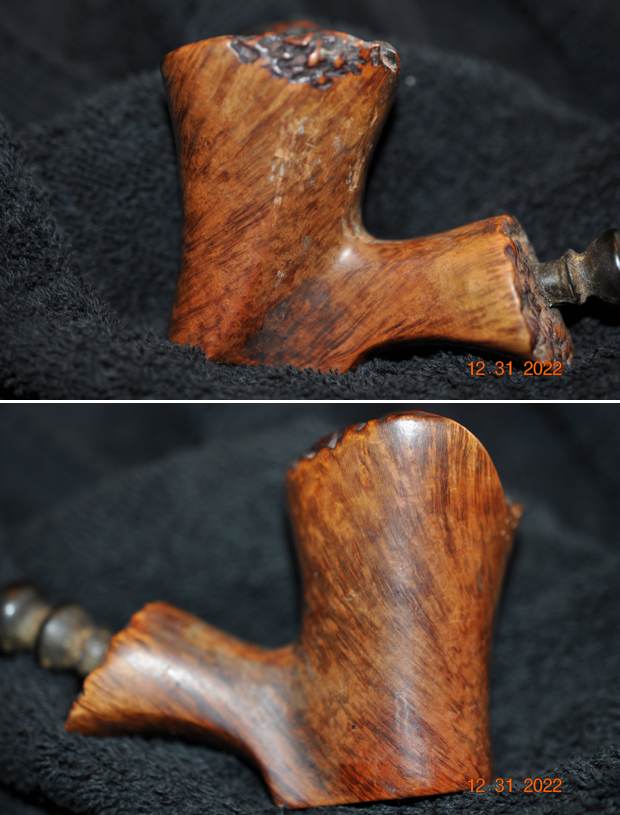
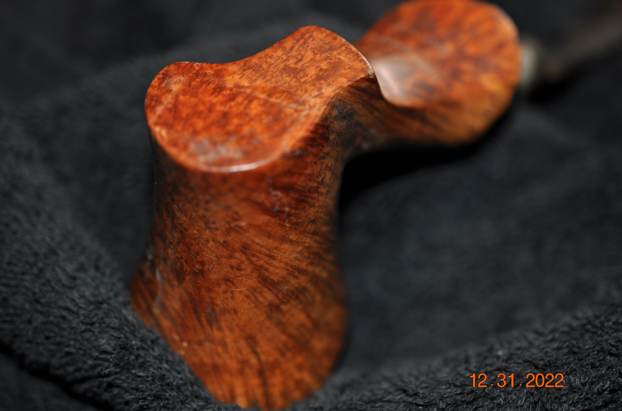
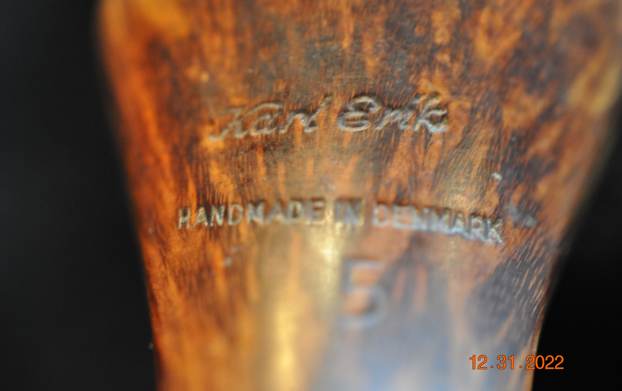
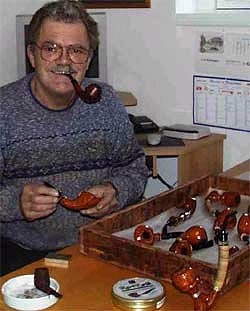
Restoring a Filthy Knute of Denmark Freehand A


Blog by Steve Laug

Jeff and I purchased this pipe on 8/3/2022 from a fellow in Carlsbad, California, USA. It is hard smoked freehand with a plateau rim top and shank end. The pipe is stamped on the underside of the shank and reads Knute [over] of Denmark. The stem has no stamp on it and is a fancy turned vulcanite one that fits the shank well. There was a heavy cake in the bowl and lava overflowing onto the plateau rim top. The finish showed some nice grain around the bowl and shank even through the grime that was ground into it. The stem was oxidized, calcified and there were tooth marks and chatter on both sides of the stem ahead of the button. Jeff took photos of the pipe before he started his clean up work. He took photos of the rim and bowl to give a sense of what he was dealing with. He also took photos of the stem surfaces to show the condition of the stem when it arrived. The photos of the sides and heel of the bowl show beautiful carving around the bowl and shank sides. The brown stain adds depth finish on the pipe. Even under the grime it is a unique piece. He also took photos of the stamped name on the underside of shank. It reads as noted above. Before I started my work on the pipe I wanted to remind myself of the provenance of the pipe. I remembered that it was linked to Karl Erik as the earlier pipe I worked on was. I wanted to know where this pipe fit into the Karl Erik lines so I turned to the first of two sites that I always check to gather information on a brand.  I turned to the first source of information site – Pipephil’s (http://www.pipephil.eu/logos/en/logo-k3.html) got a quick overview on the brand once again connecting it to Karl Erik.I turned then to Pipedia (https://pipedia.org/wiki/Karl_Erik). Pipedia had this great picture of Karl Erik Ottendahl and I decided to include it here as a reminder of the artisan who first carved and released this pipe. Reminded of the tie to Karl Erik I knew a bit about the pipe at hand. I turned to address the pipe itself. There it is clearly identified and linked to Karl Erik Ottendahl. It is designated as a second and frequently having rustication.

Jeff cleaned up the pipe for me. He reamed the bowl with a PipNet pipe reamer and cleaned it up with a Savinelli Fitsall Pipe Knife. He scrubbed the exterior with Murphy’s Oil Soap and a tooth brush to clean off the grime off the finish and the heavy overflow of lava on the rim top. The cleaning had removed some of the black stain on the rim top. He cleaned up the internals of the shank, mortise and stem with pipe cleaners, cotton swabs and alcohol to remove all of the oils and tars in the pipe. He soaked the stem in Before & After Deoxidizer and was able to remove much of the oxidation. When it arrived here in Vancouver it was a clean pipe and I knew what I had to work with. I took photos of it before I started my part of the restoration. I took photos of the rim top and the stem to show their condition once it arrived in Canada. Jeff was able to clean up the incredibly thick cake and lava overflow that was shown in the rim and bowl photos above. The plateau and the inner edge of the rim look quite good. He was also able to get rid of the grime and grit in the surface of the briar. The stem looked better, though there was some residual oxidation in the grooves of the turned portion. There were tooth marks and chatter on both sides near the button. I have noticed on some repairs that folks don’t pay much attention to the stamping when they are restoring a pipe. To me this is a critical part of the restoration to leave undamaged as it is the only link we have to who made the pipe. I took a photo of the stamping on the underside of the shank to show that it was readable and undamaged by the cleanup work. Someone had put white paint in the stamp but that was not original.I removed the stem from the shank and took a photo of the parts to give a sense of what the pipe looks like.I started my work on the bowl by removing the white paint that was in the stamping on the underside. I used a cotton pad and acetone to loosen the paint and a brass bristle wire brush to remove it from the stamping.I started polishing the briar with micromesh sanding pads. I wet sanded it with 1500-12000 grit pads. I wiped the bowl down after each pad with a damp cloth. The bowl began to take on a rich shine and grain was beginning to stand out. I wet sanded with all of the pads and wiped the bowl down after each pad with a soft cloth. I rubbed the bowl and shank down with Before & After Restoration Balm to deep clean the finish on the bowl and shank. The product works to clean, enliven and protect the briar. I worked it in with my fingers to get it into the briar. I used a horsehair shoe brush to work it into the plateau top and shank end.  I let it sit for 10 minutes then I wiped it off and buffed it with a soft cloth. The briar really began to have a rich shine. I took some photos of the bowl at this point to mark the progress in the restoration. It is a beautiful bowl. I set the bowl aside and worked on the stem at this point in the process. I filled in the tooth marks in the top and underside of the stem ahead of the button with clear CA glue. Once it cured I used a small file to flatten the repairs and reshape the button edge. I sanded the repairs with a folded pieces of 220 to remove the marks and the light brown colouration on the stem surface. I sanded them with 600 grit sandpaper until the marks were gone and the oxidation was gone. I wiped it down with Obsidian Oil. I polished the stem with micromesh sanding pads – dry sanding with 1500-12000 grit pads. I wiped the stem down after each pad with a damp cloth to remove the sanding dust. I finished by wiping the stem down with a final coat of Obsidian Oil and set it aside to dry. I put the stem back on the Knute of Denmark Freehand pipe and took the pipe to the buffer. I buffed the bowl and stem with Blue Diamond to polish the briar and the vulcanite. Blue Diamond does a great job on the smaller scratches that remain in both. I gave the bowl and the stem several coats of carnauba wax and buffed the pipe with a clean buffing pad to raise the shine. I hand buffed it with a microfiber cloth to deepen the shine. The pipe polished up really nicely with a great contrasting stain look to the briar. The finished pipe is shown in the photos below. This is a beautiful Karl Eric Made Knute of Denmark Freehand – the fancy turned stem and plateau shank end give the pipe a great look. The polished black vulcanite stem looks really good with the rich browns standing out in the grain. The dimensions of the pipe are Length: 5 ½ inches, Height: 2 ¼ inches, Outside diameter of the bowl: 1 ¼ inches, Chamber diameter: 3/4 of an inch. The weight of the pipe is 1.73 ounces/49 grams. This is another pipe that I will be putting on the rebornpipes online store in the Danish Pipemaking Companies Section shortly, if you are interested in adding it to your collection. Thanks for walking through the restoration with me on this beauty!