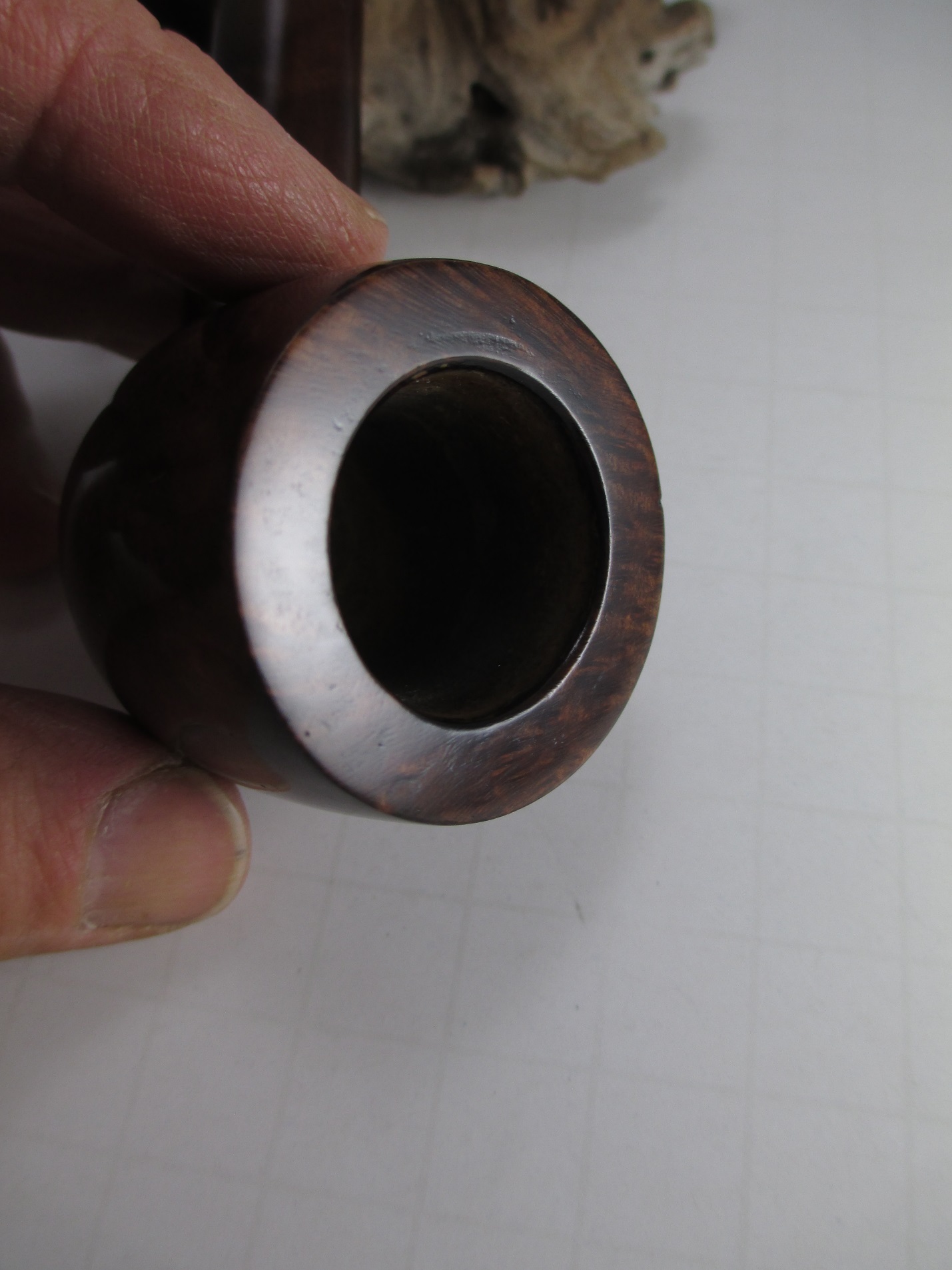
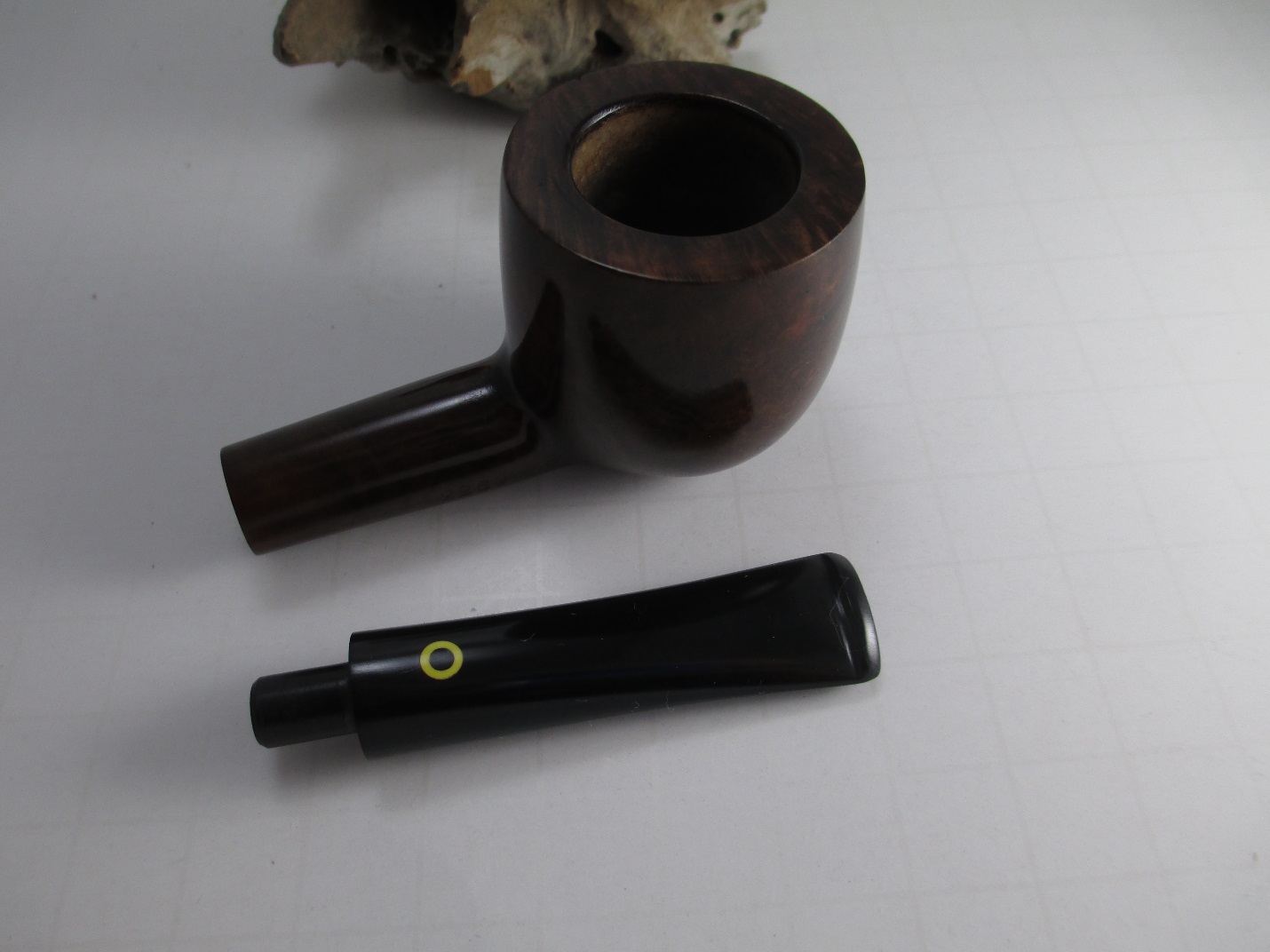
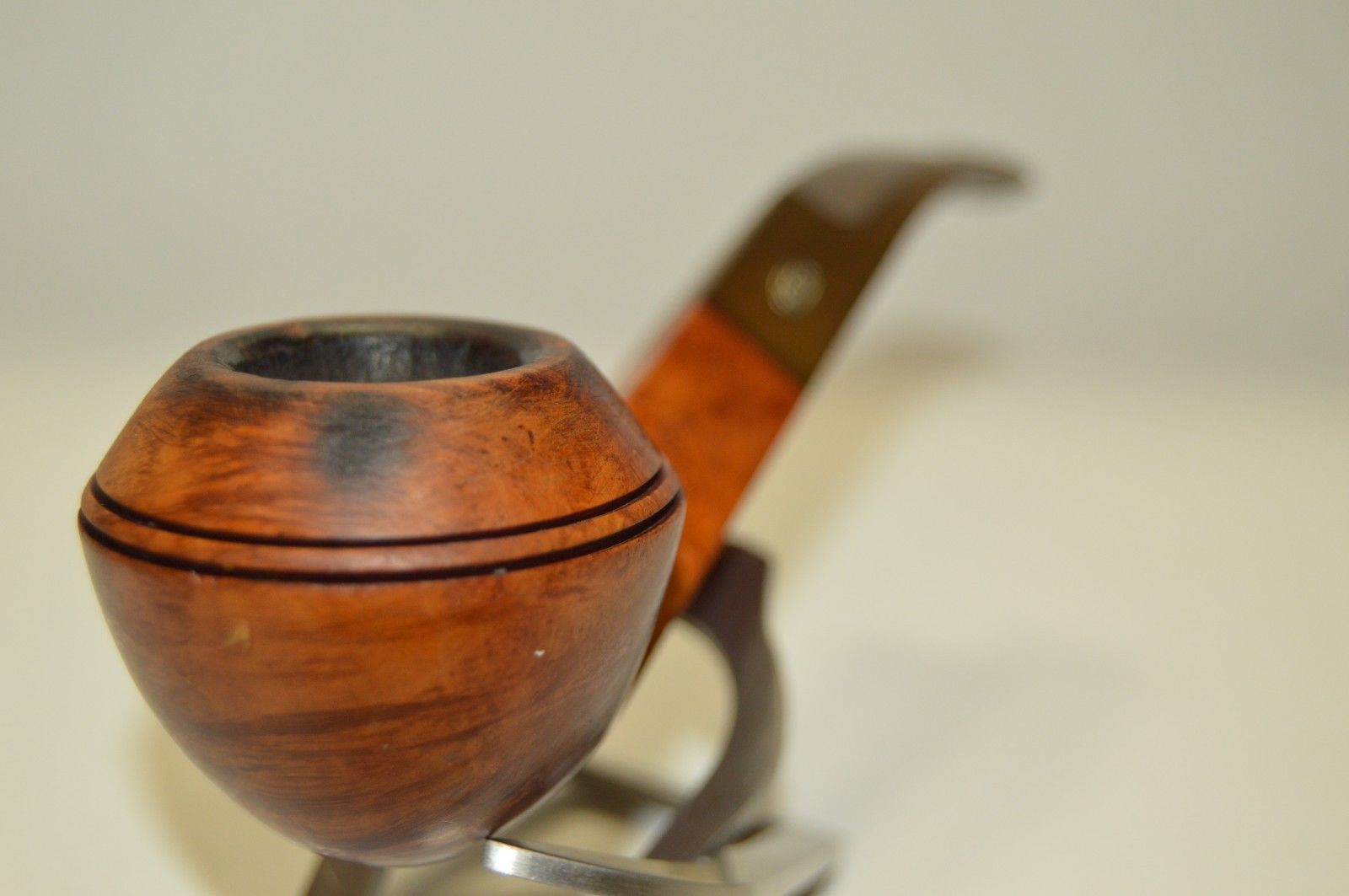
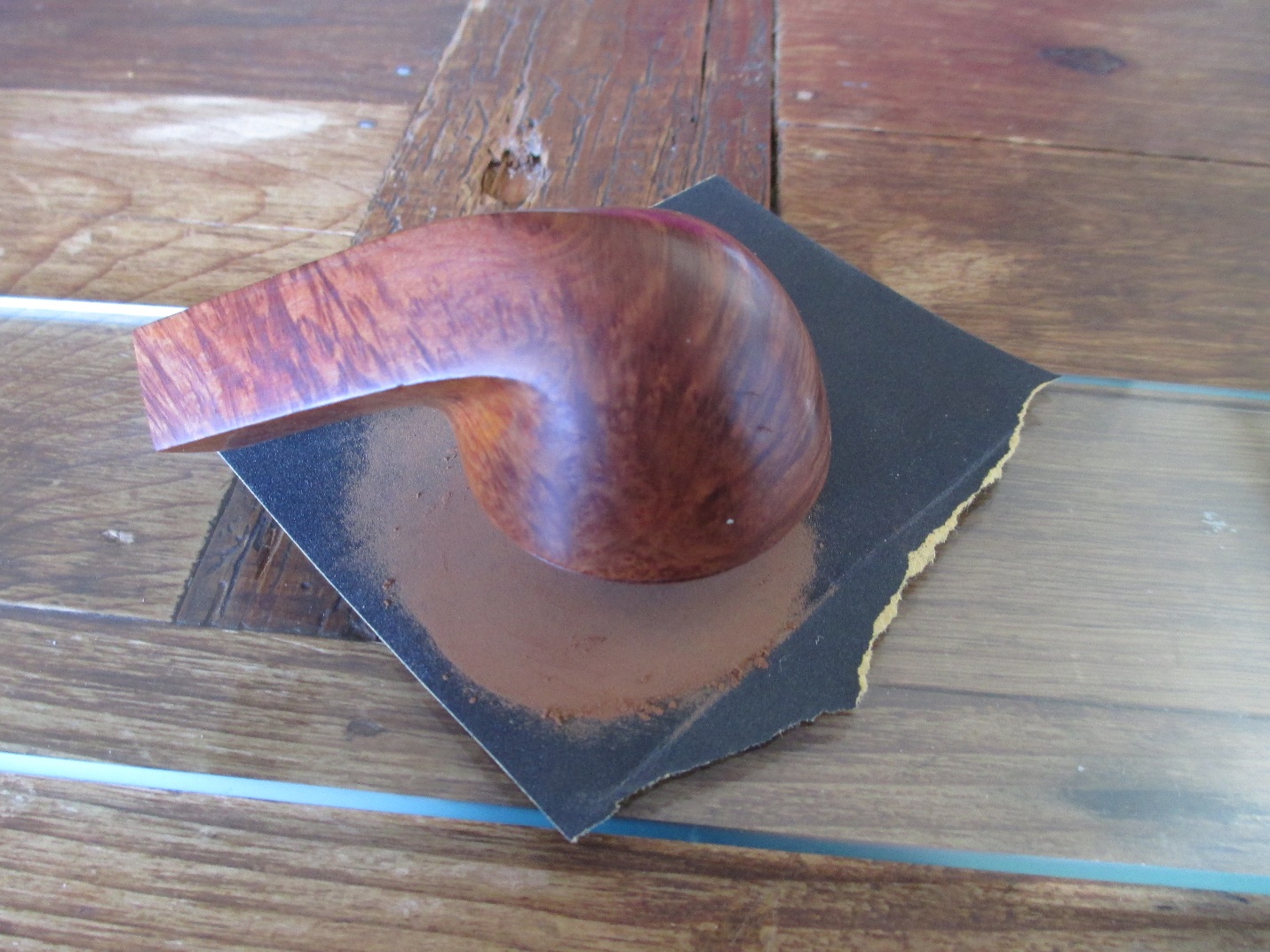
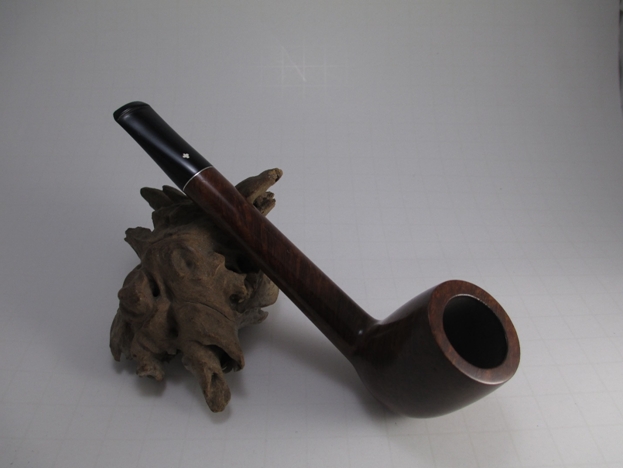
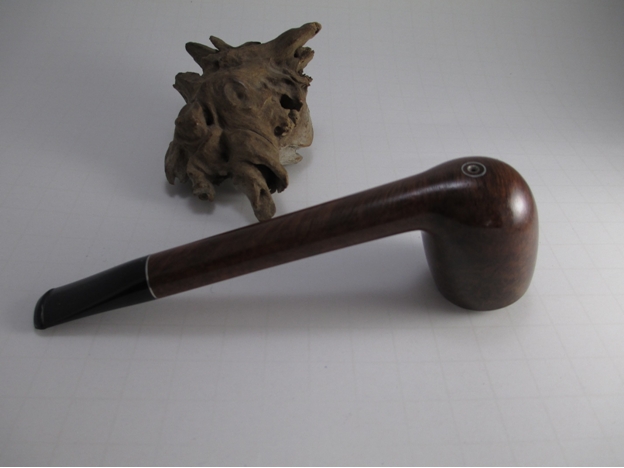
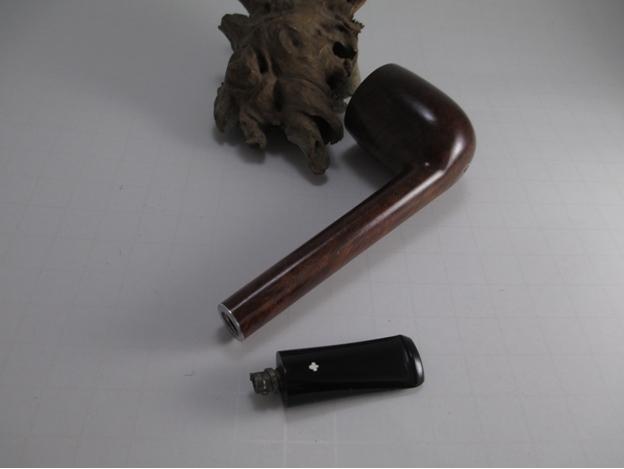
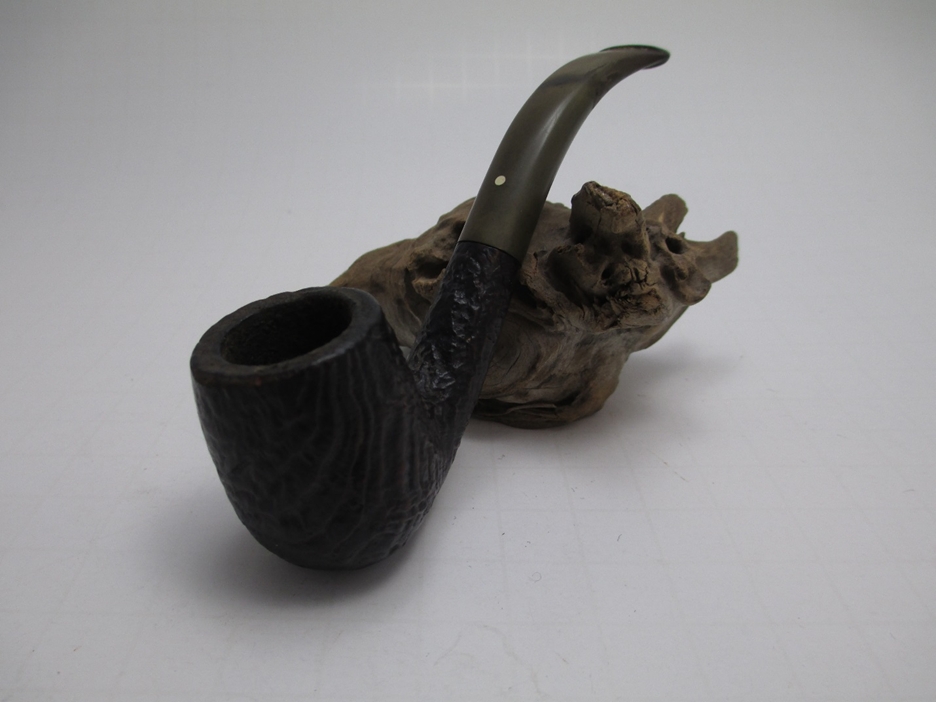
Tag Archives: Andrew Selking articles

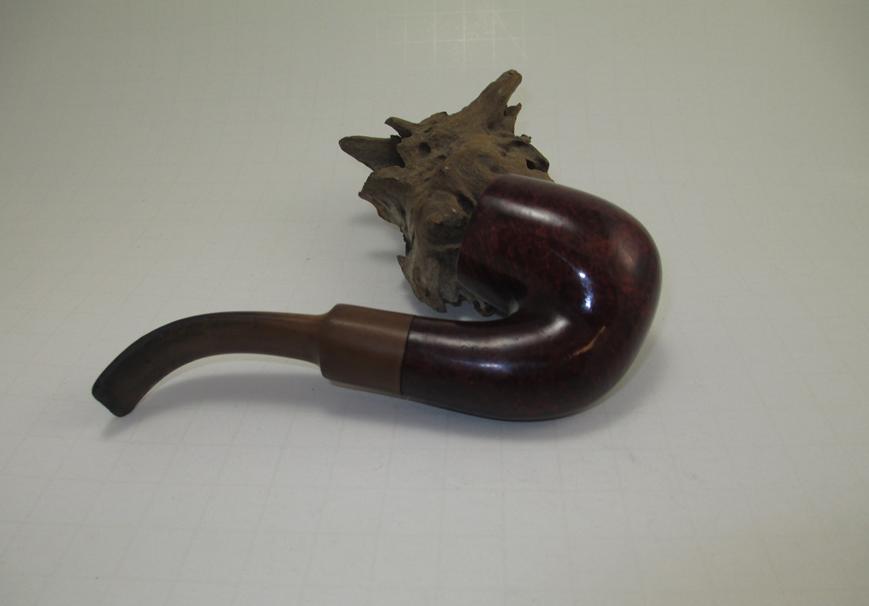
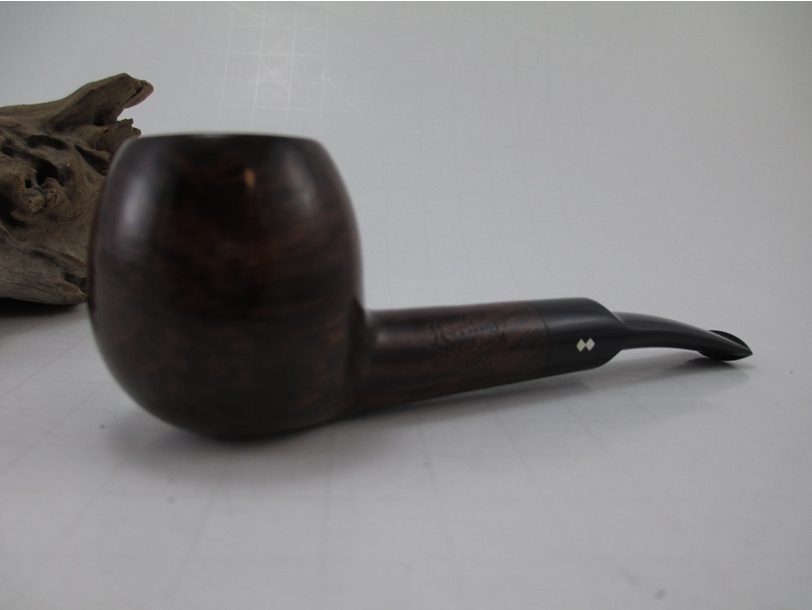
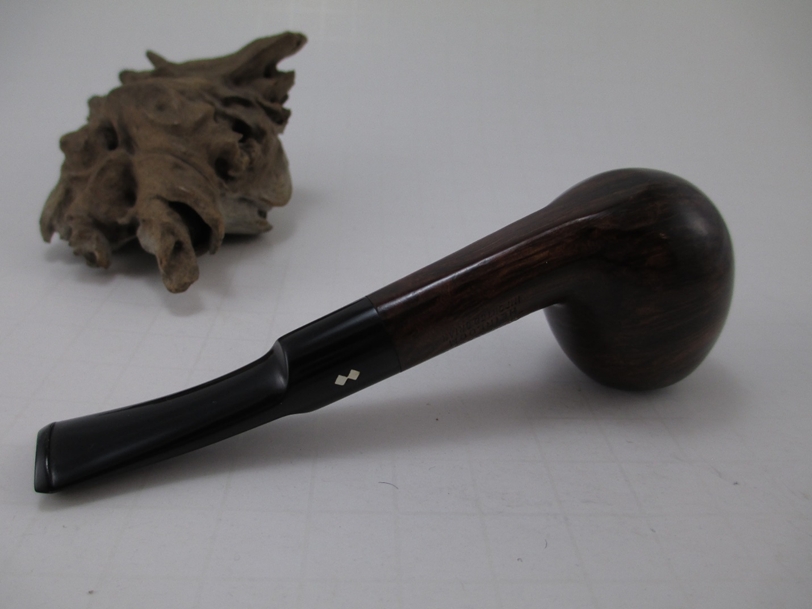
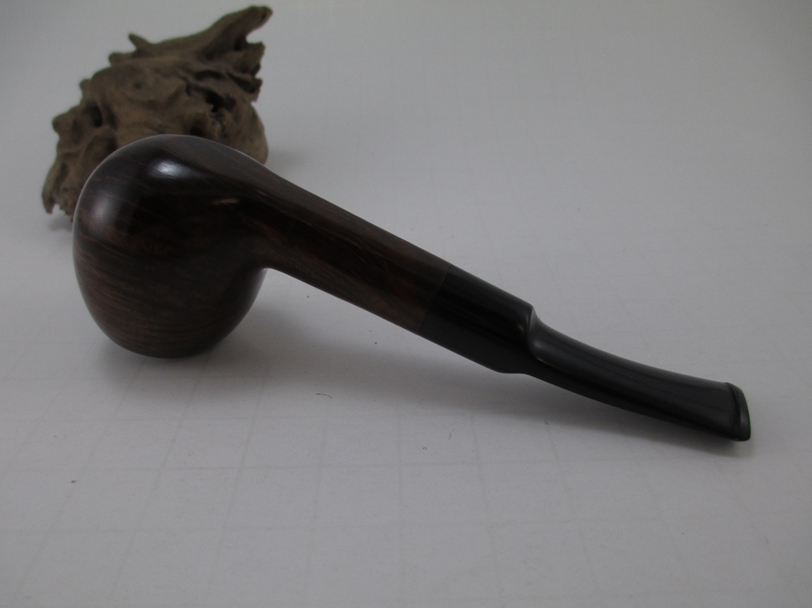
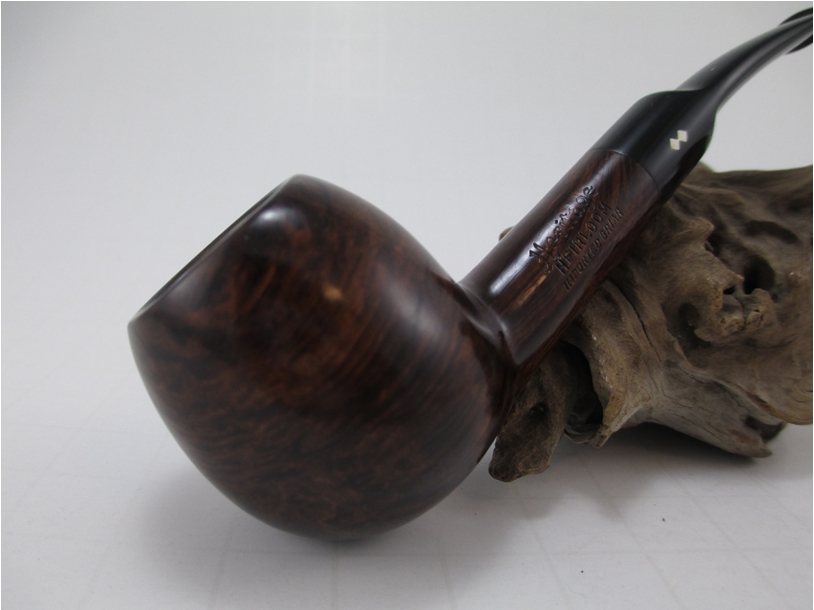
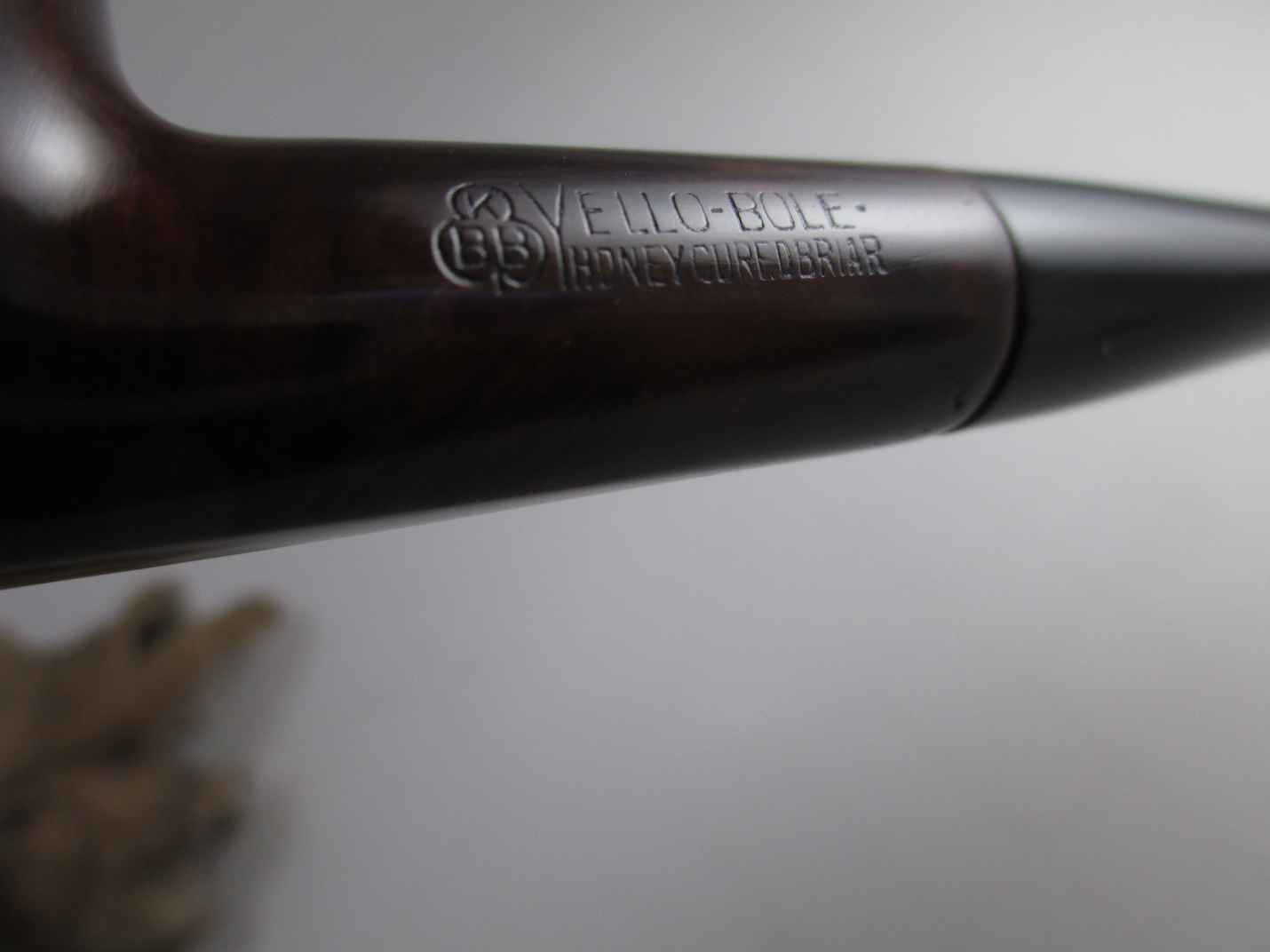
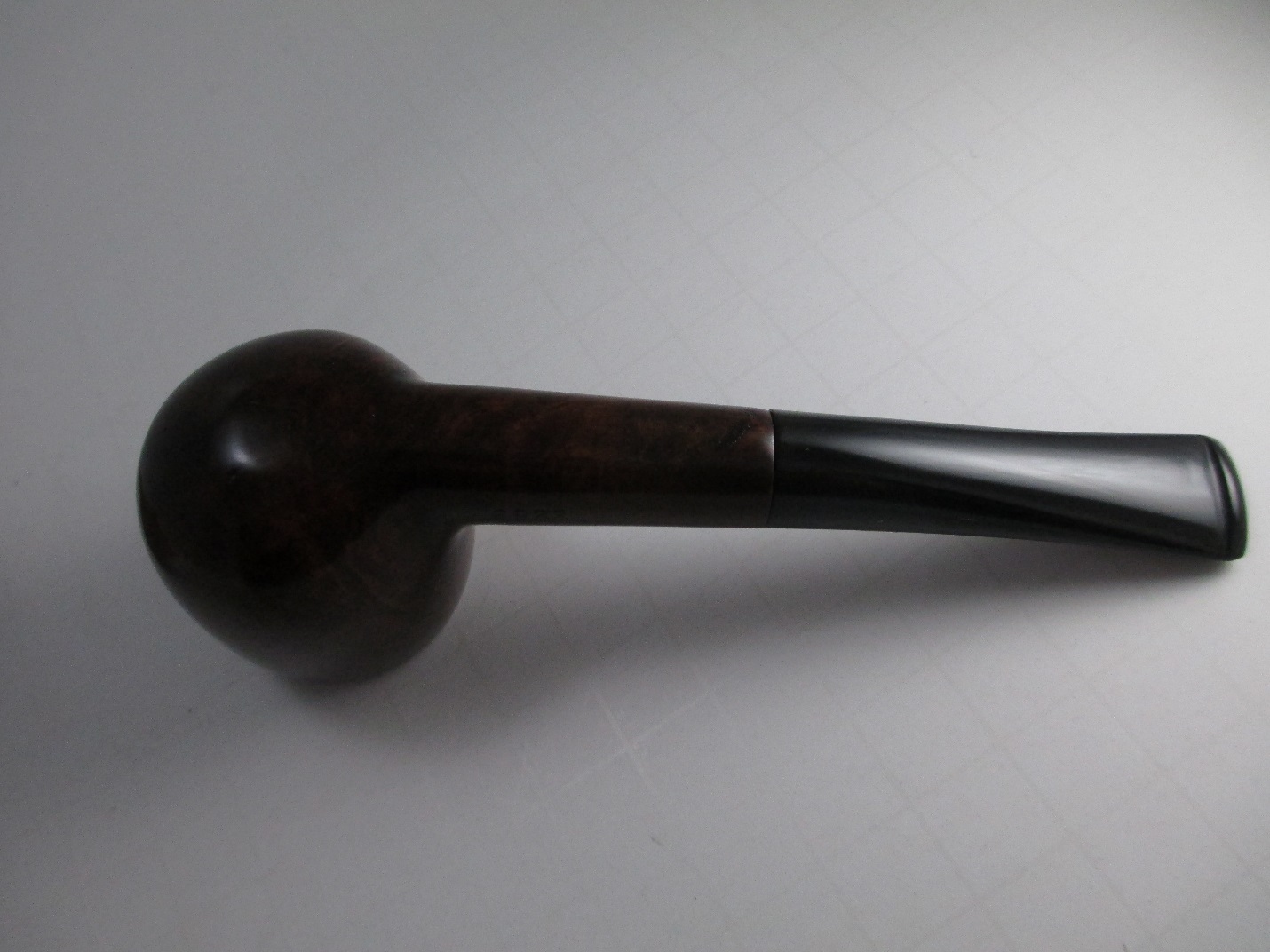
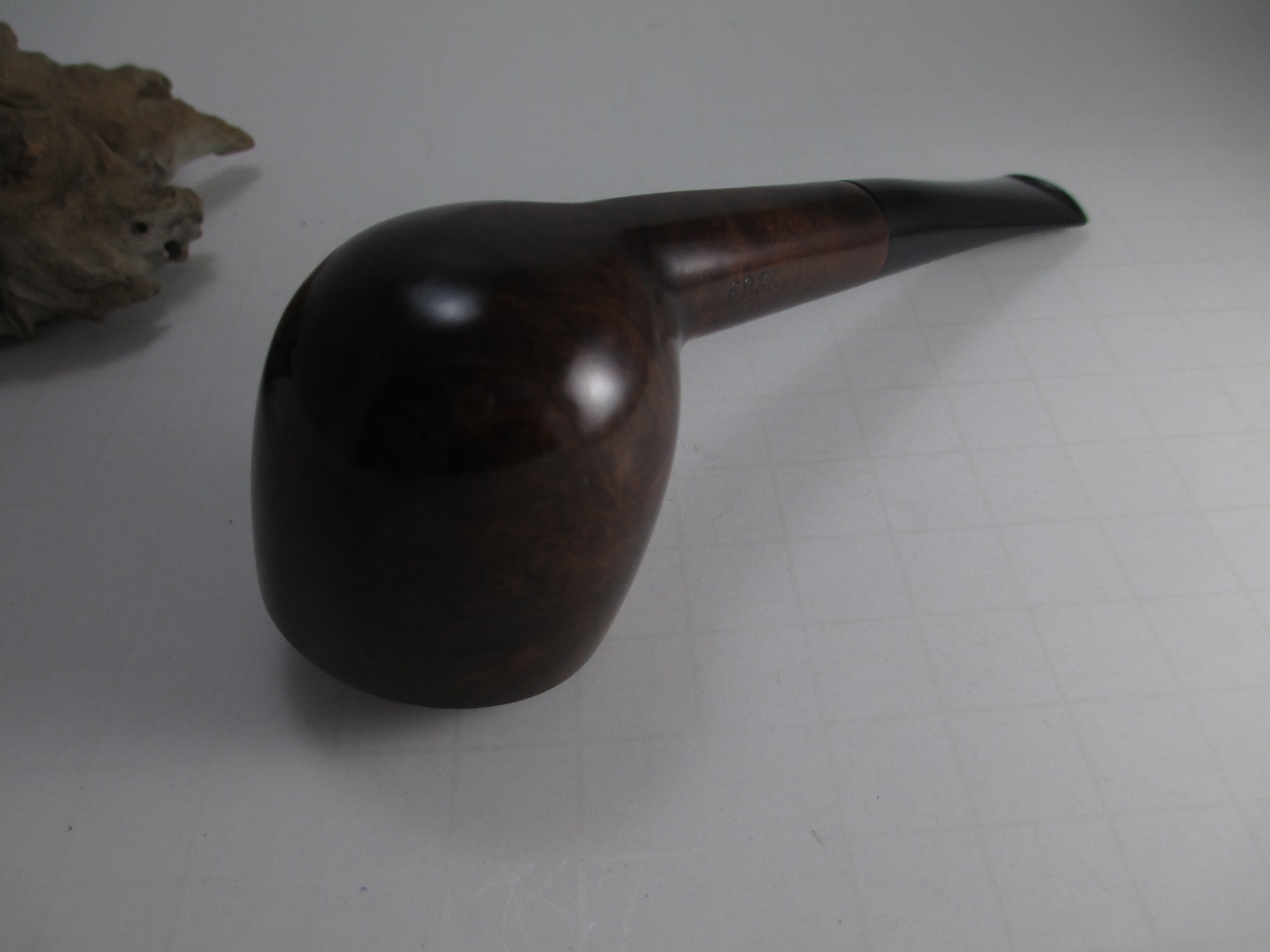
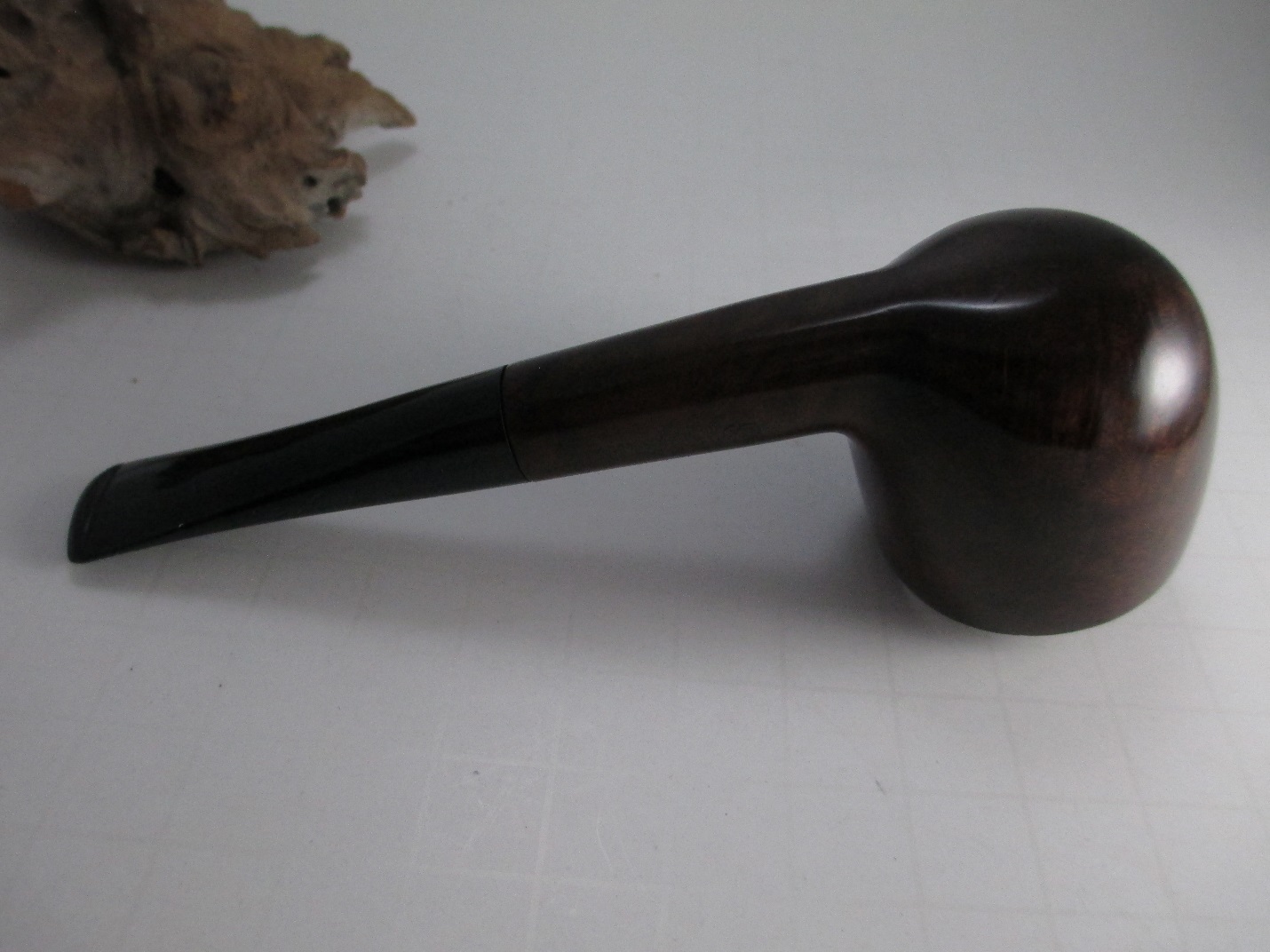
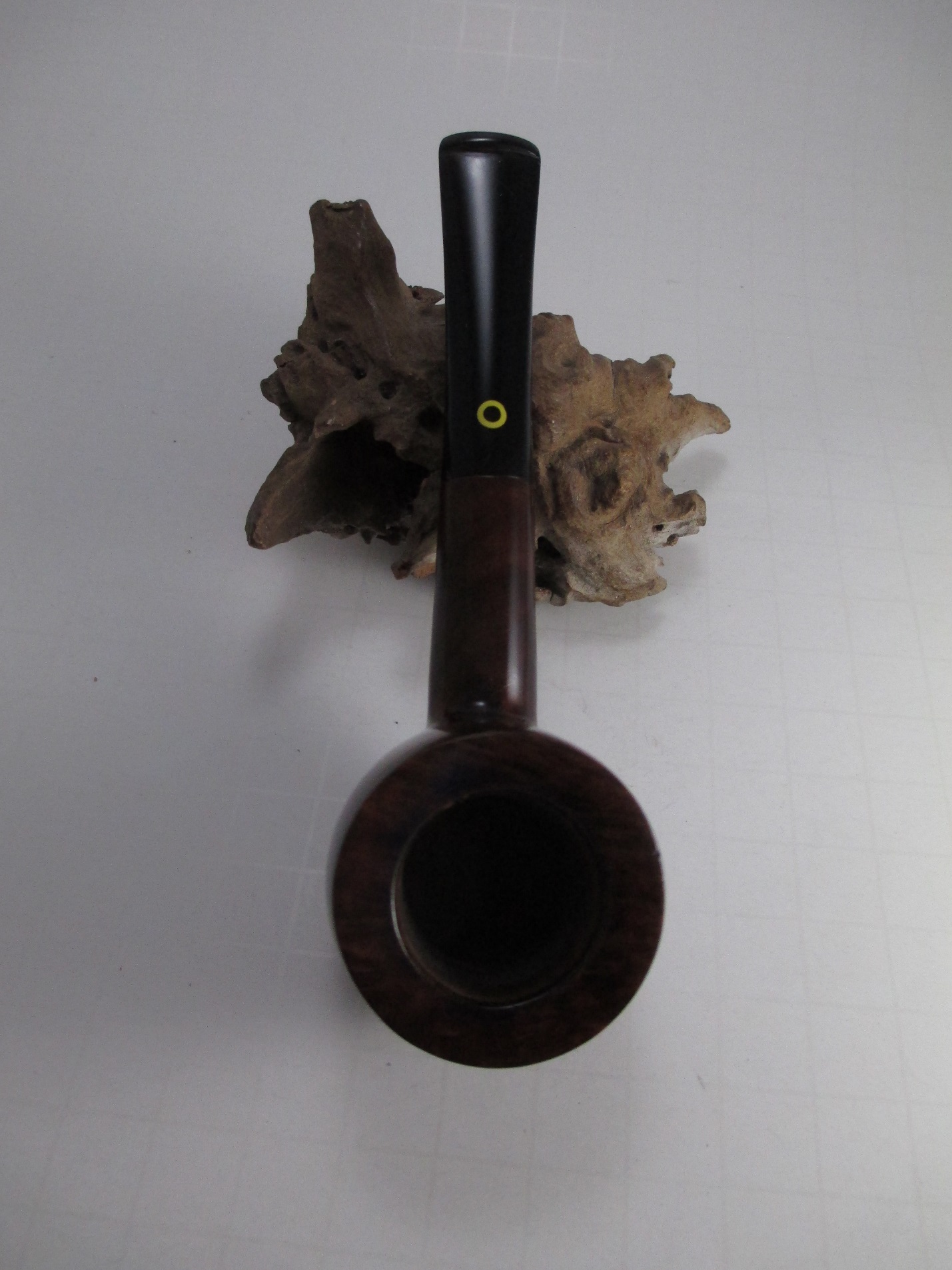
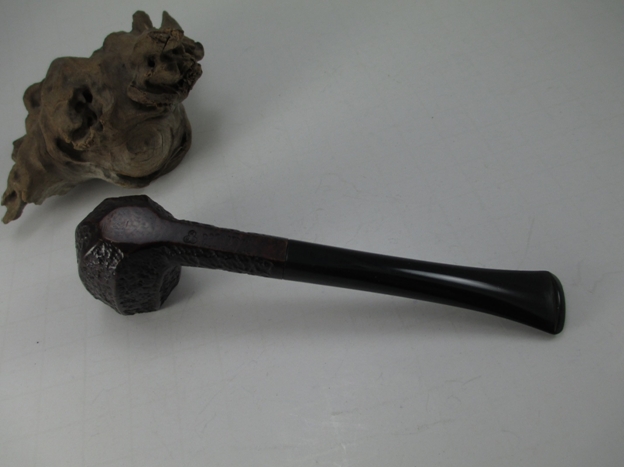
Building a Better Button on a 1930’s Yello Bole Oom Paul


Blog by Andrew Selking

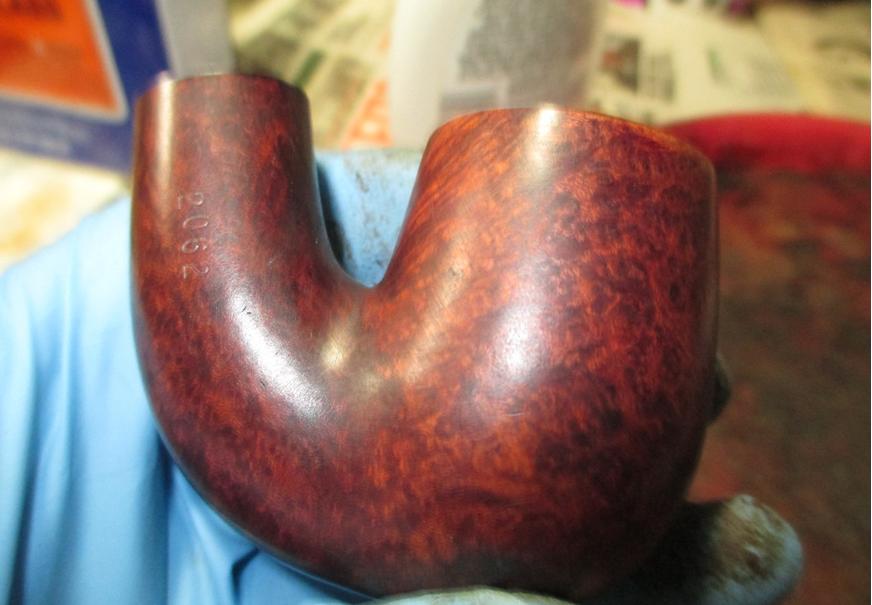
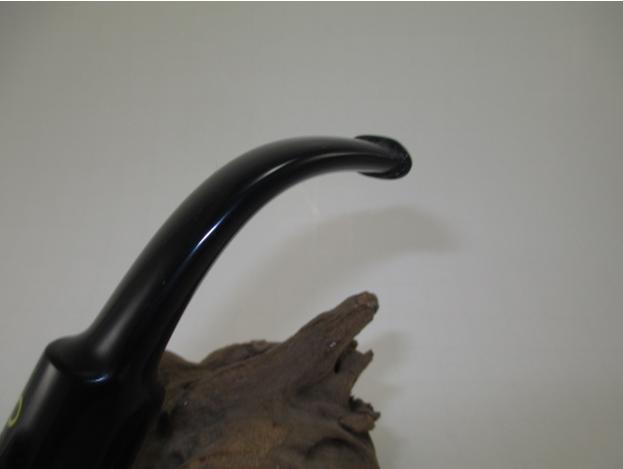
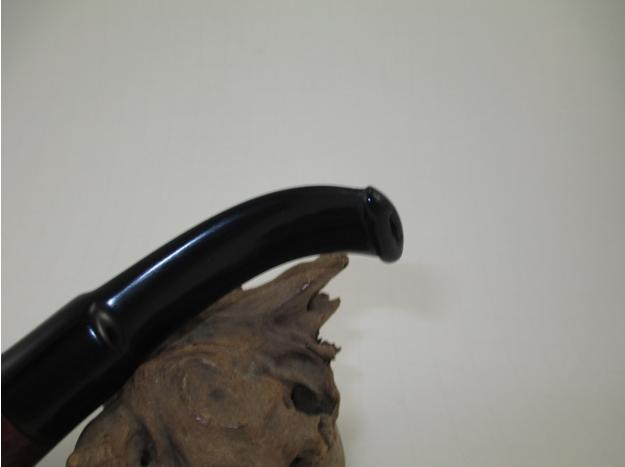
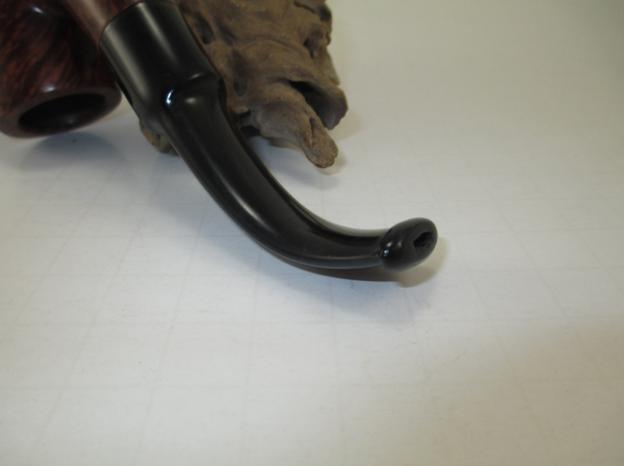
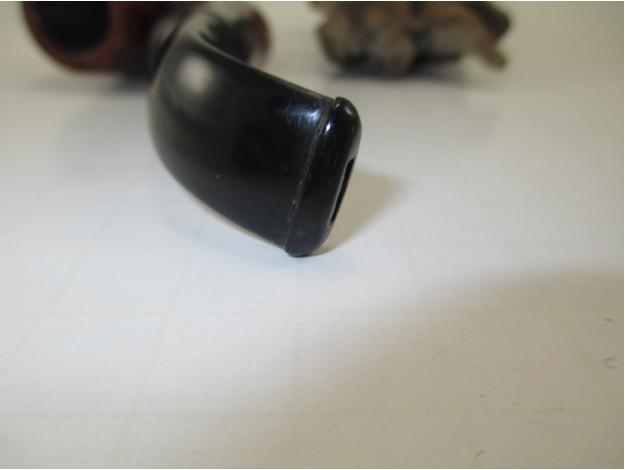
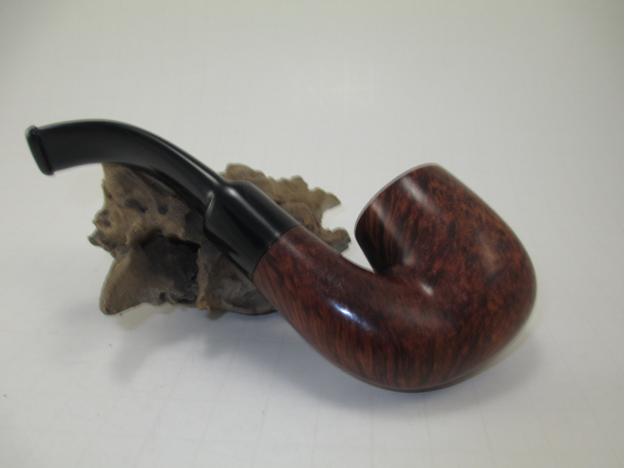
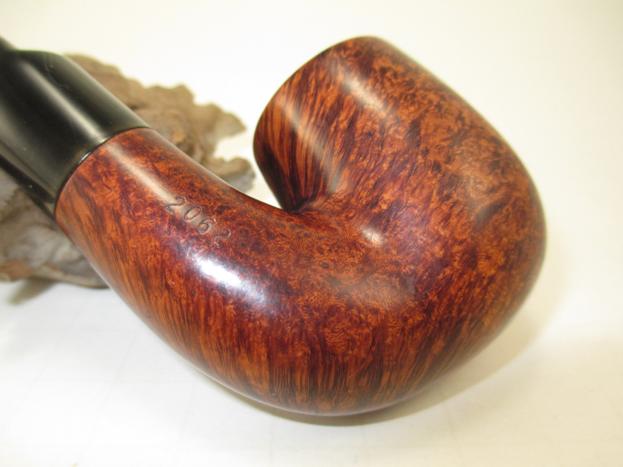
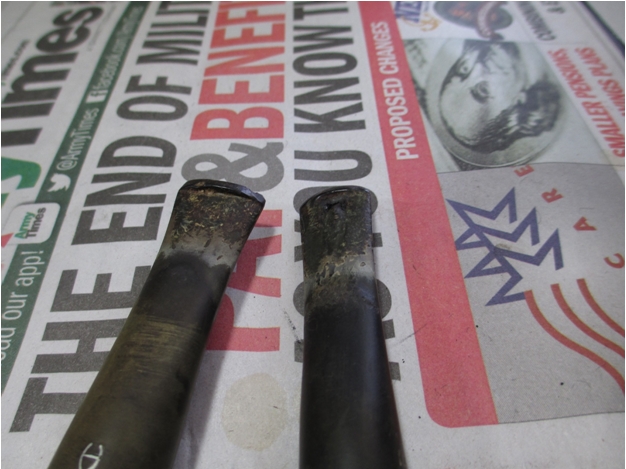
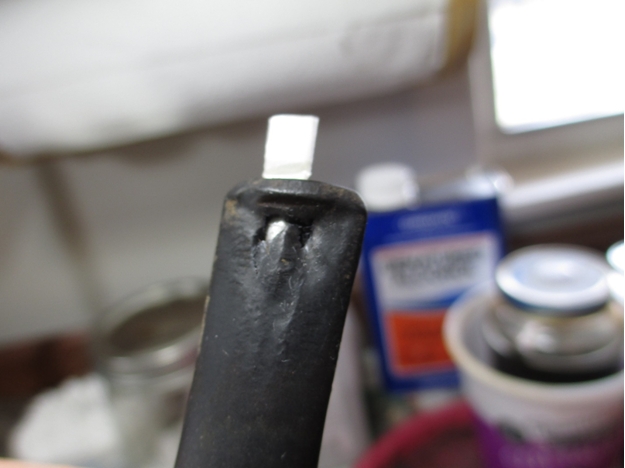
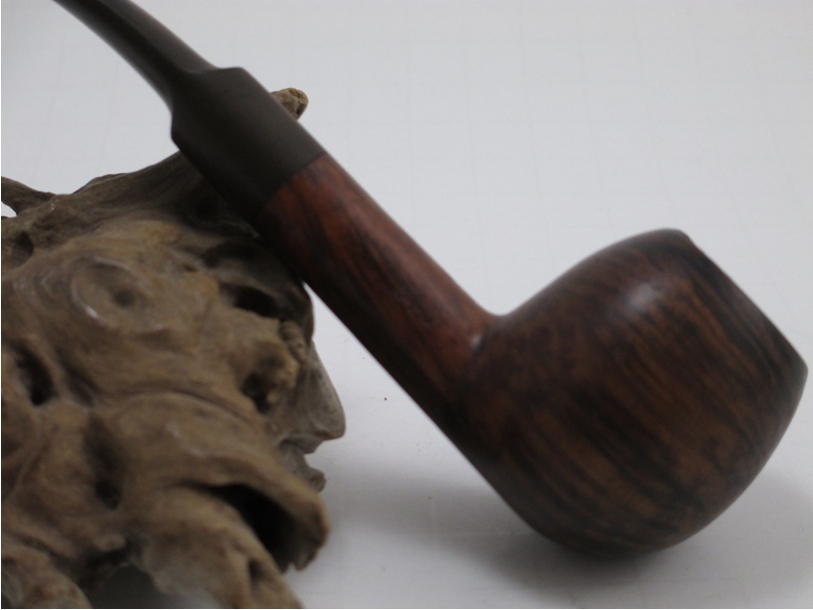
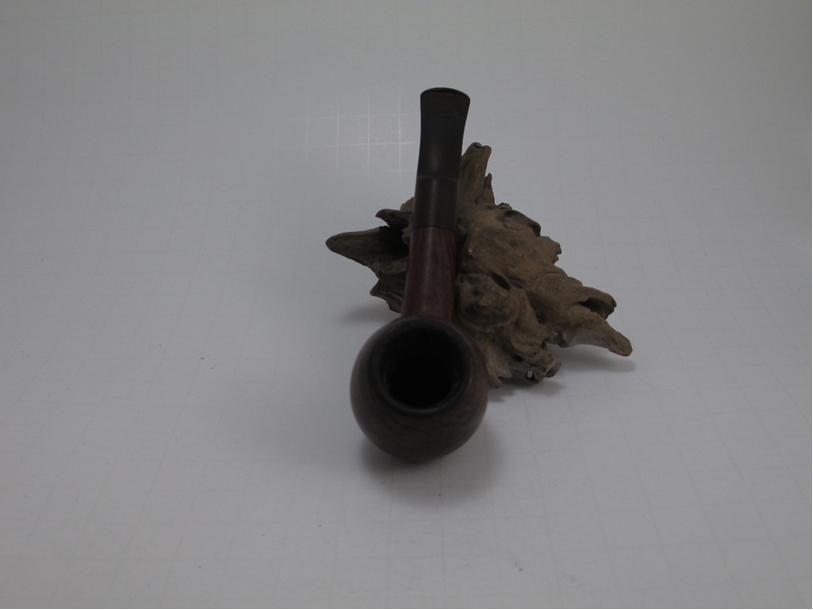
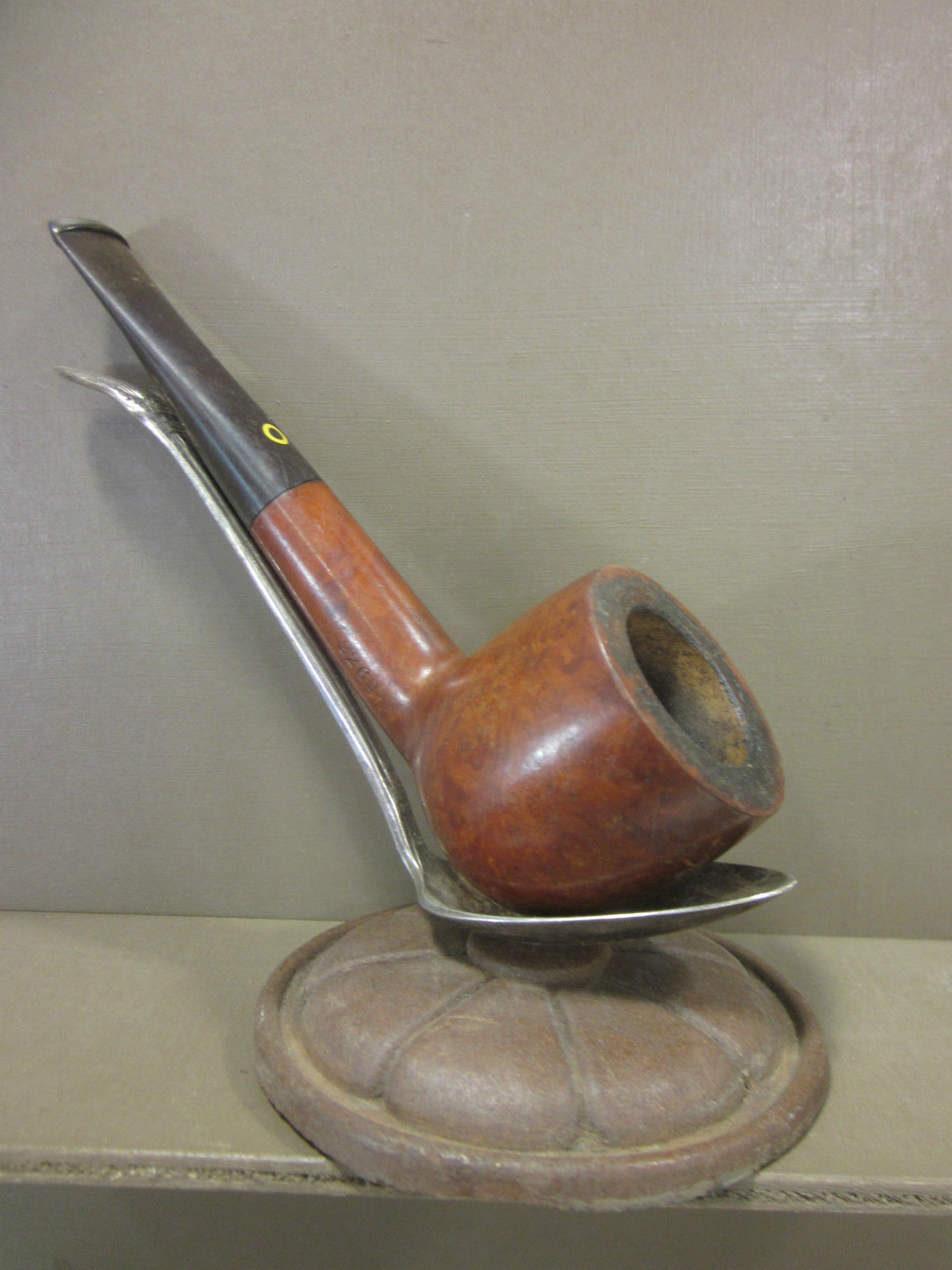
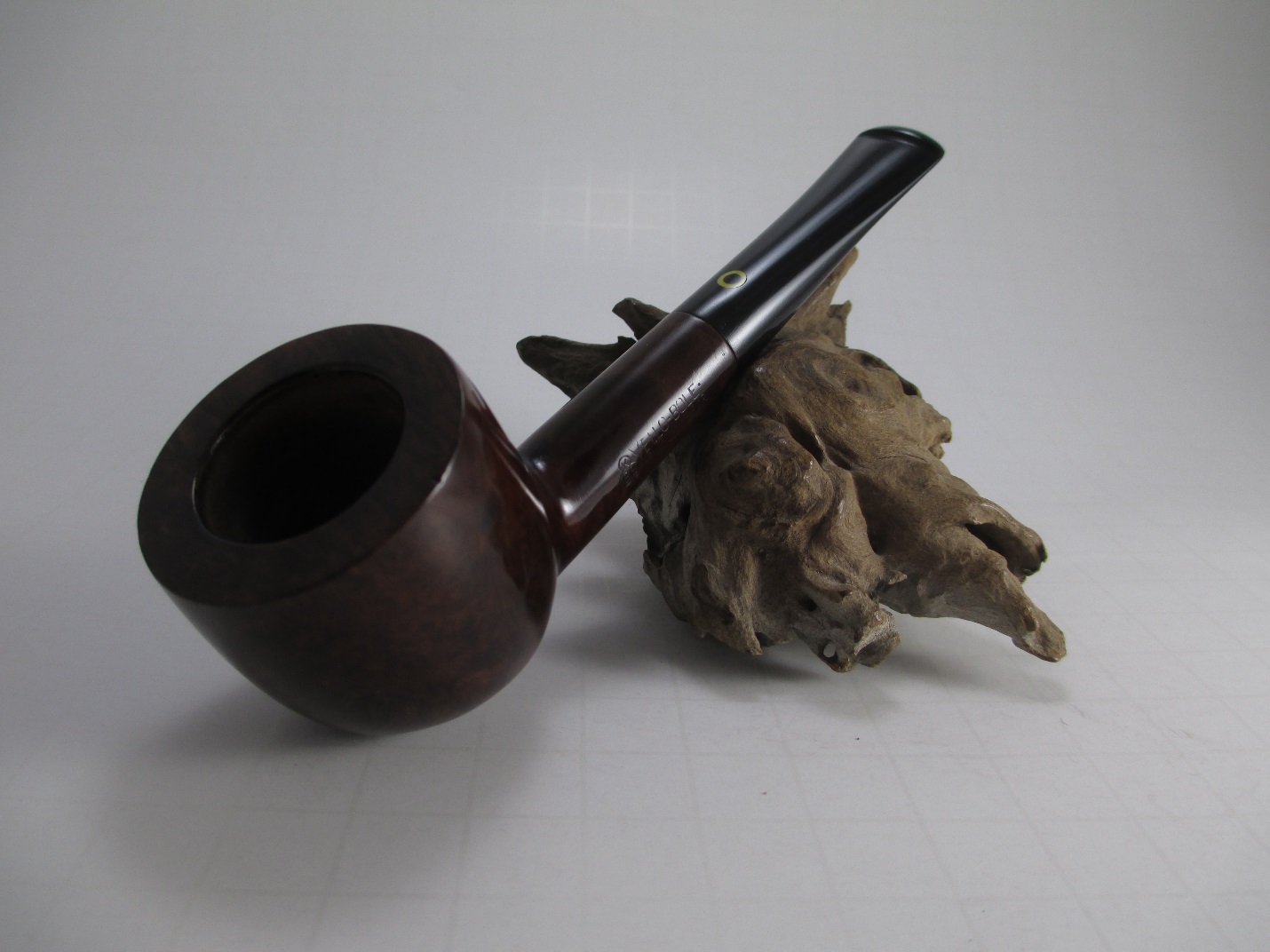
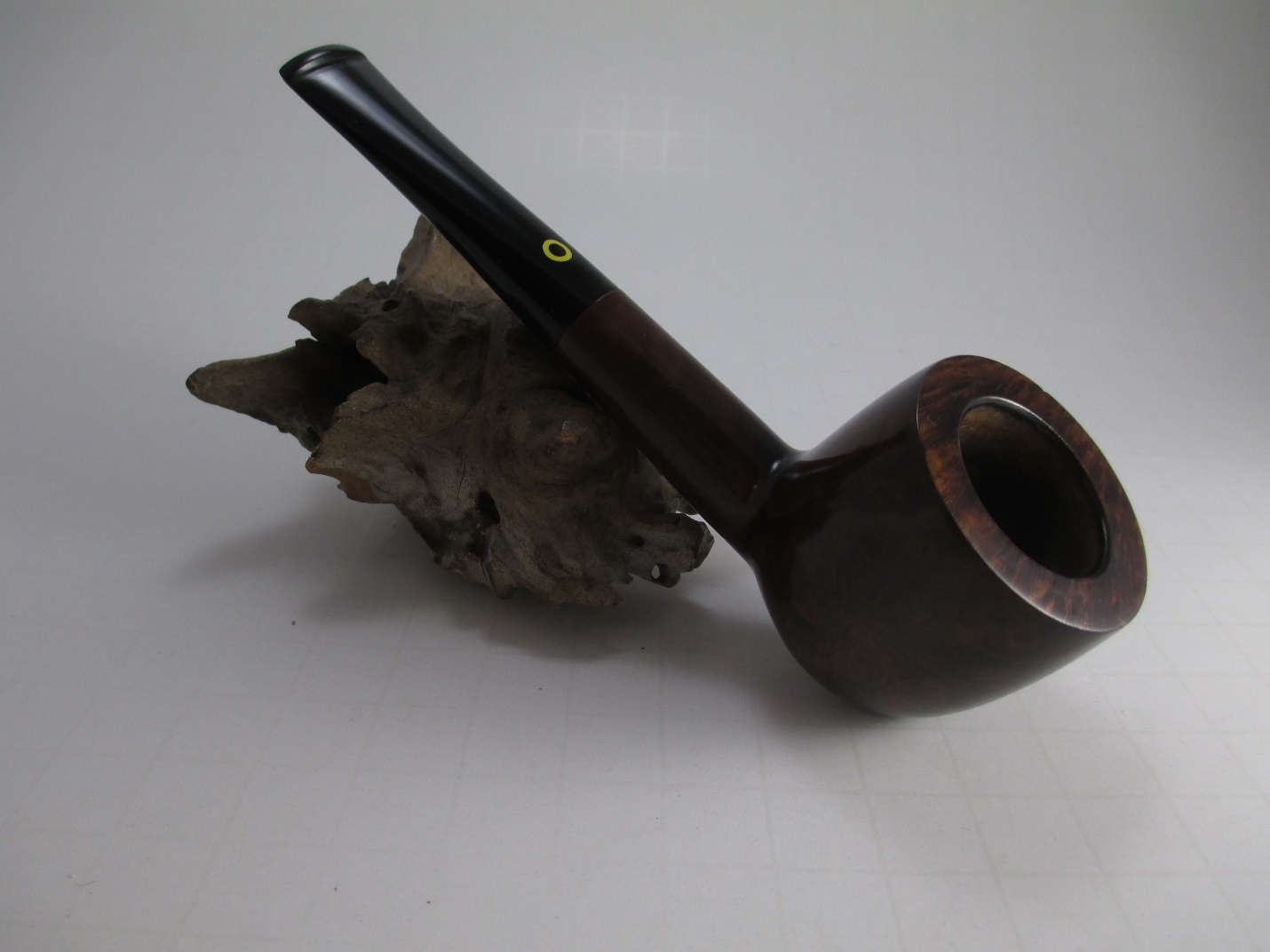
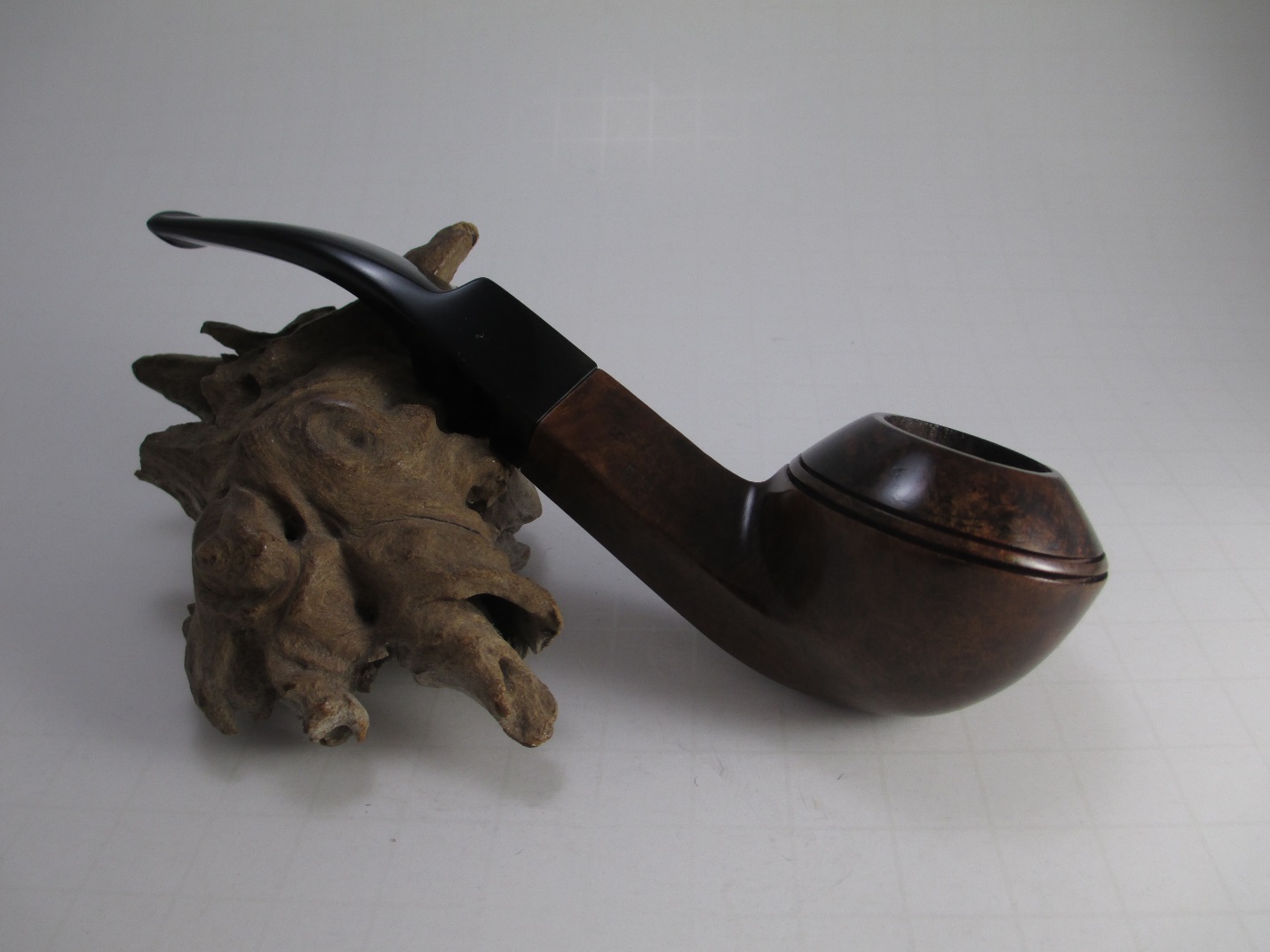
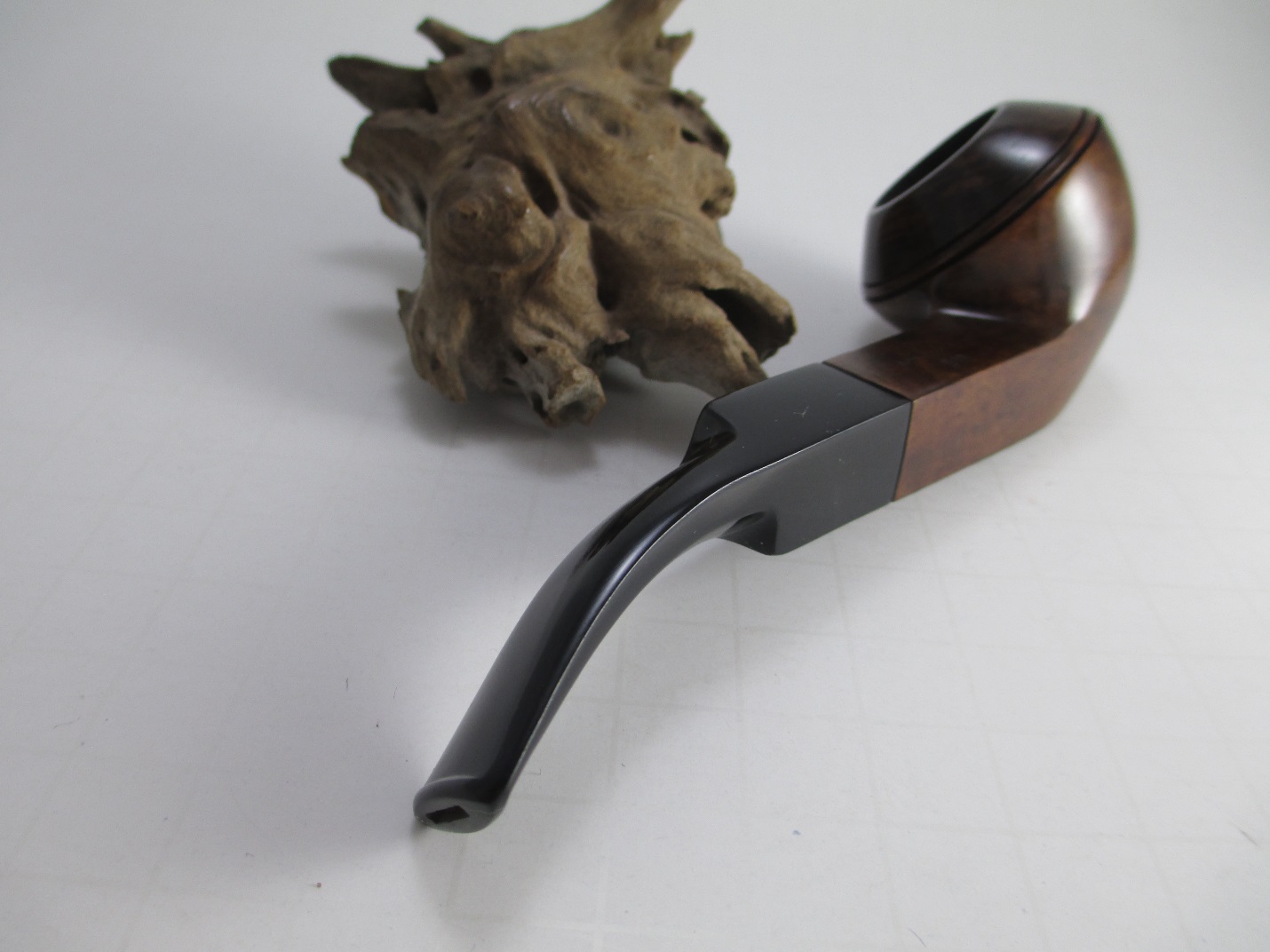
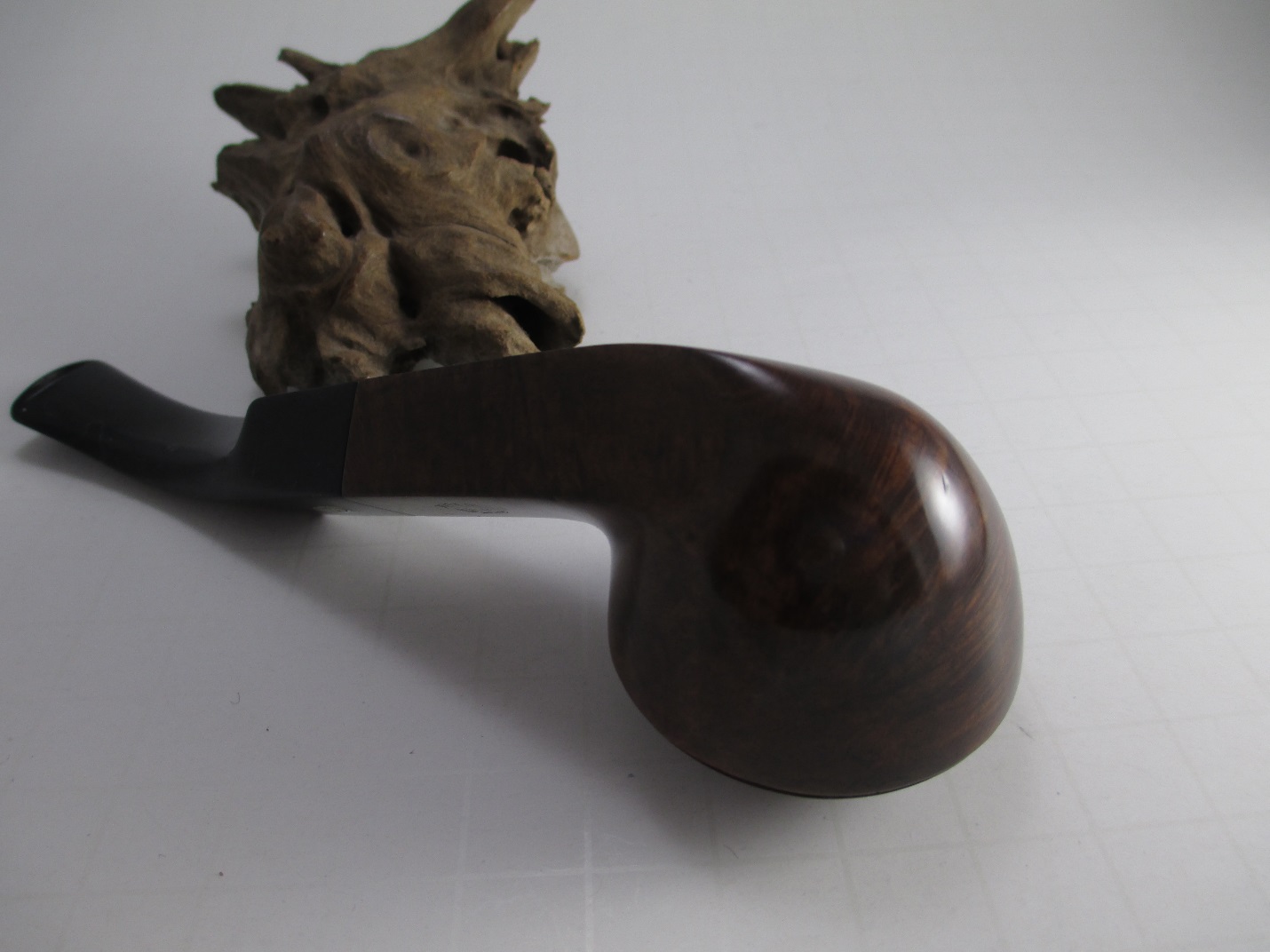
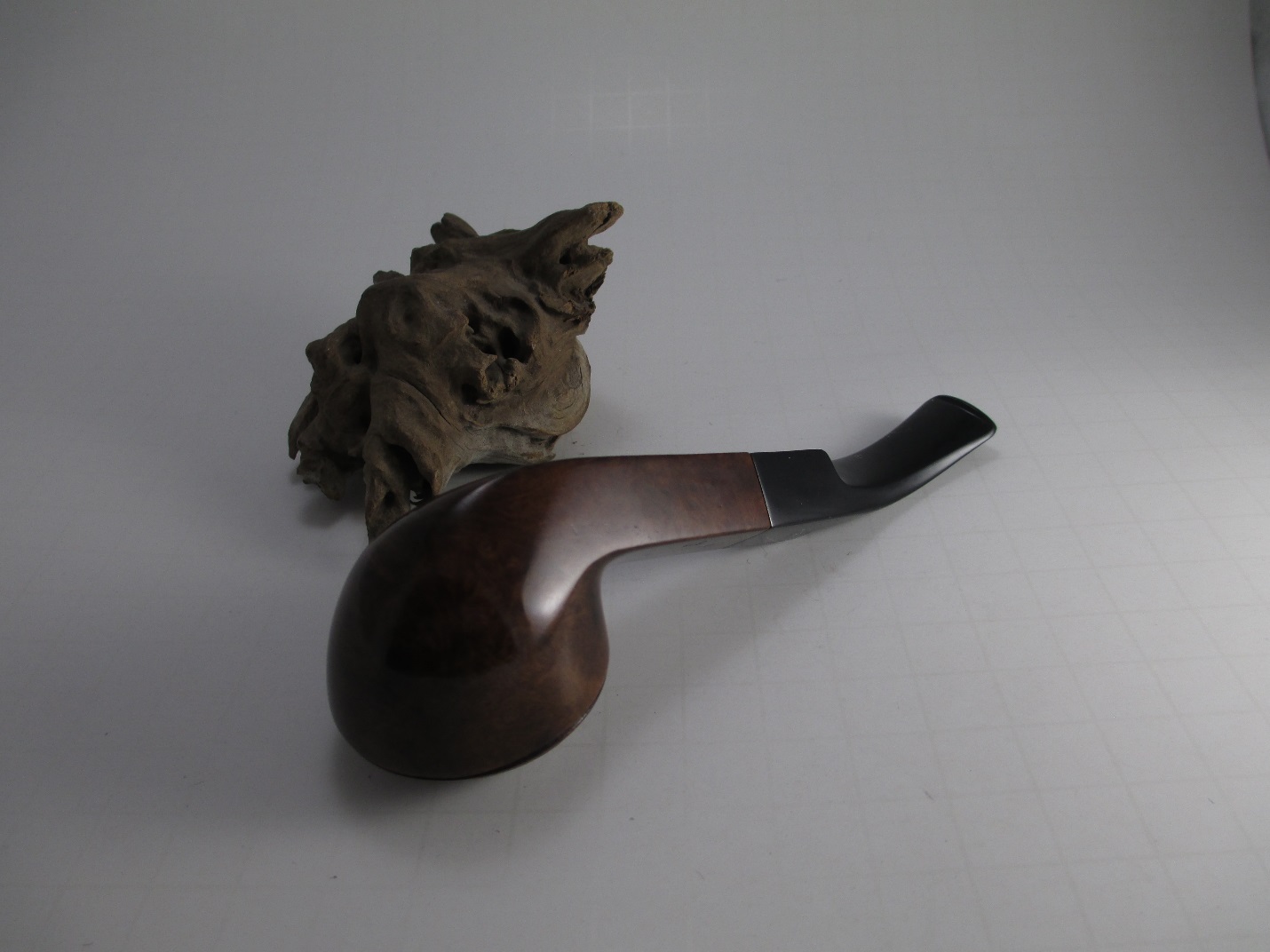
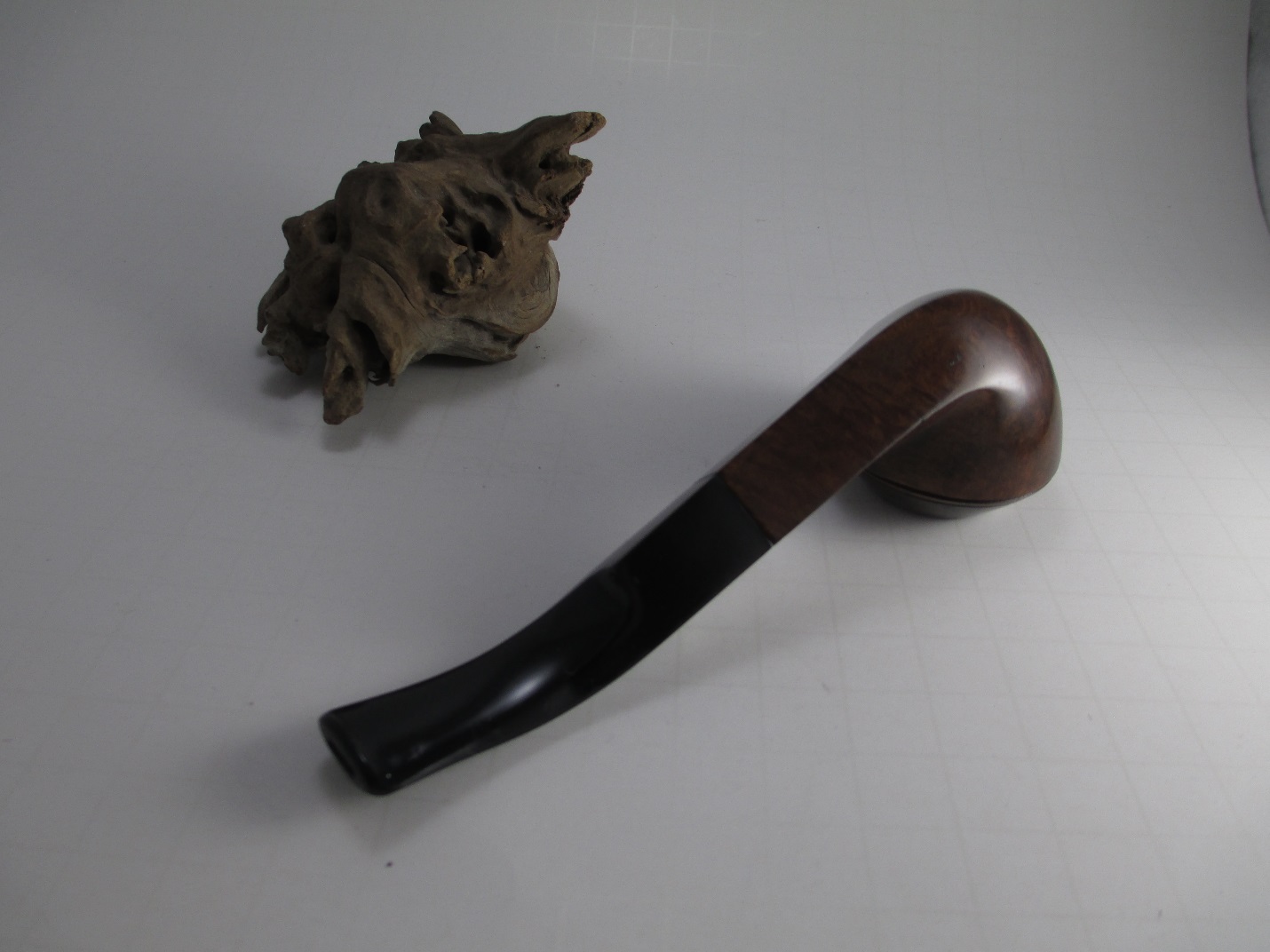
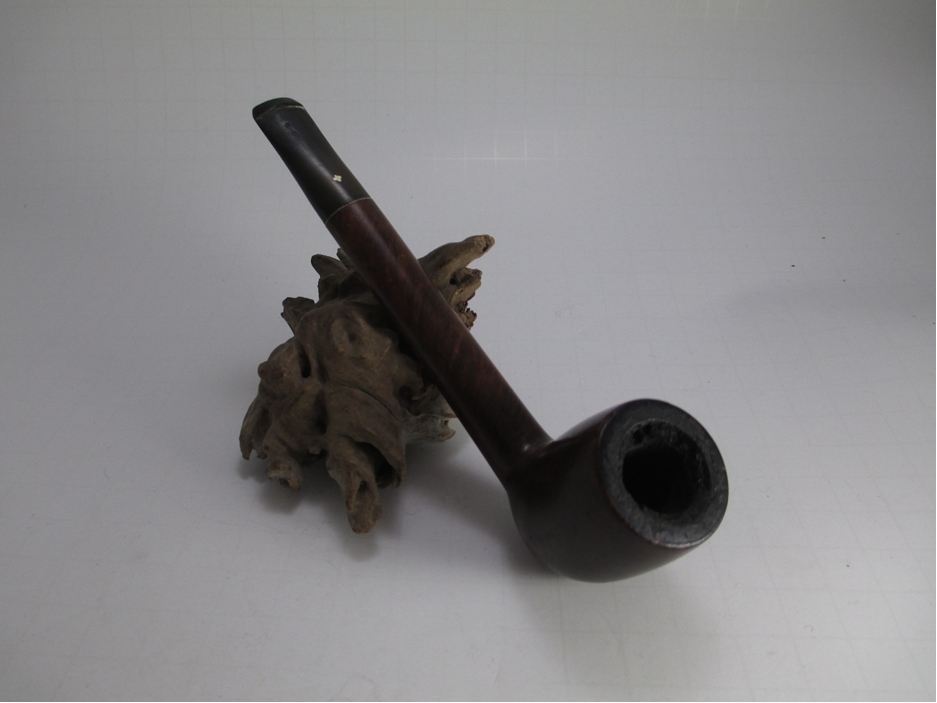
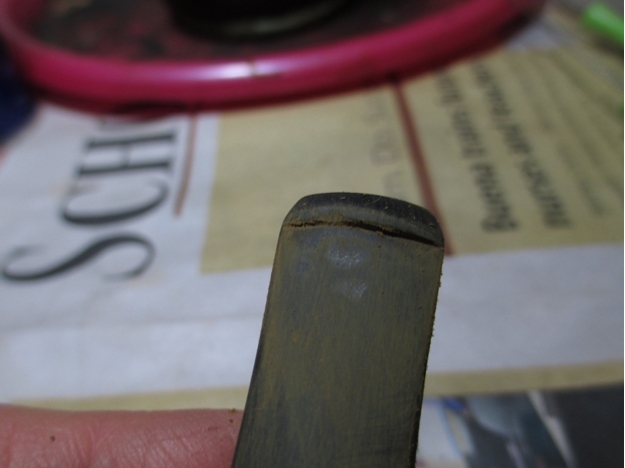
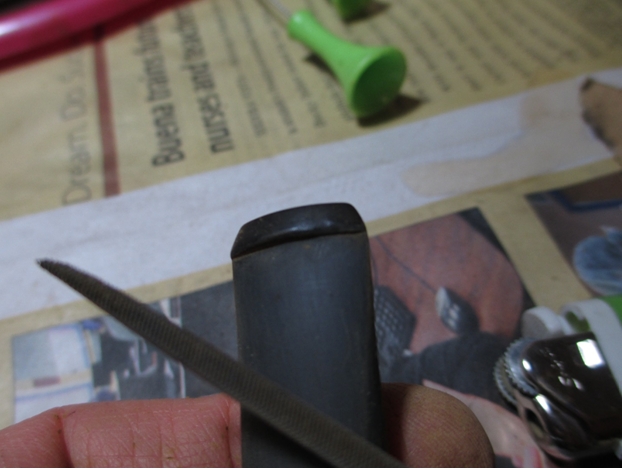
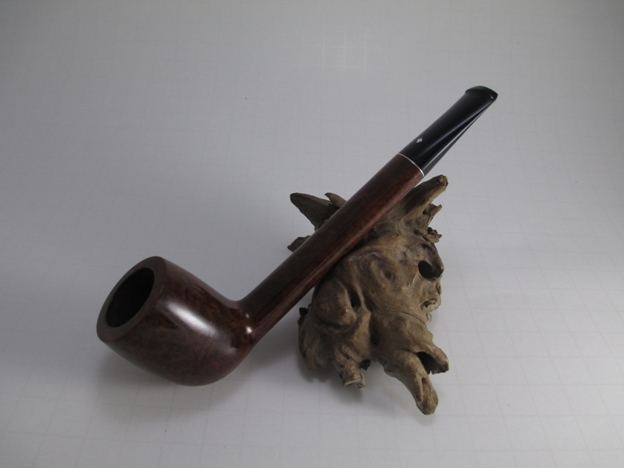
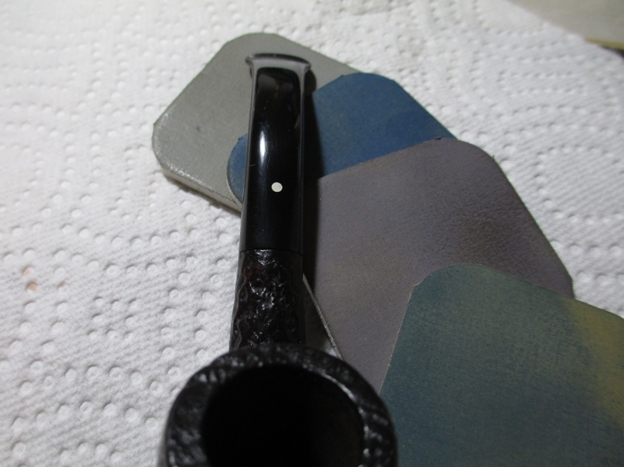
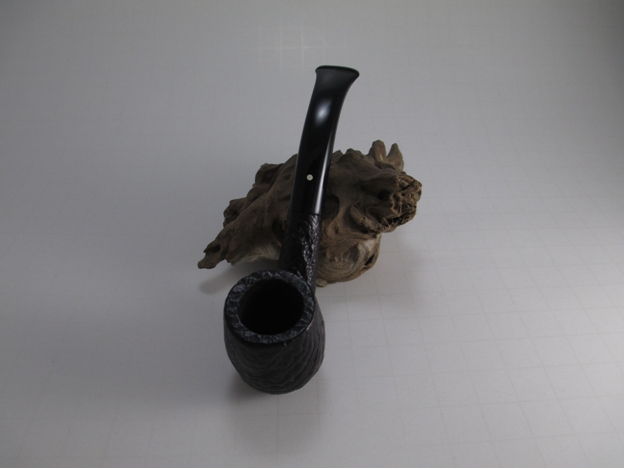
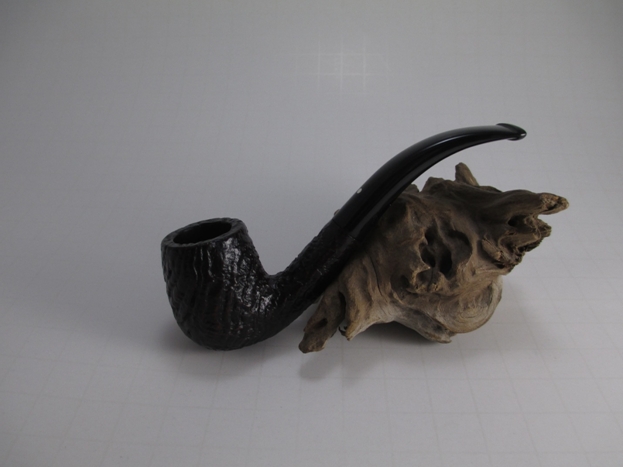
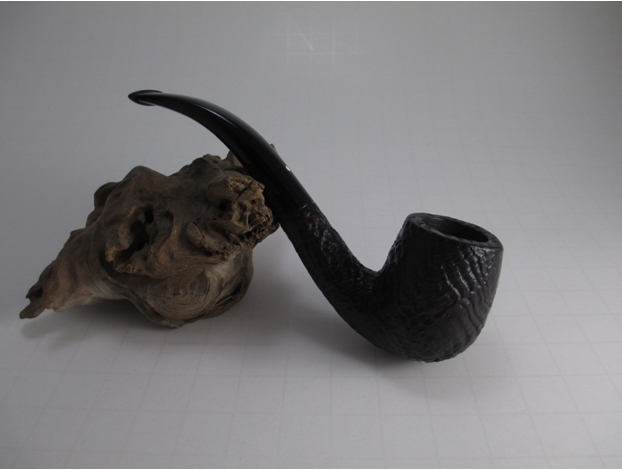
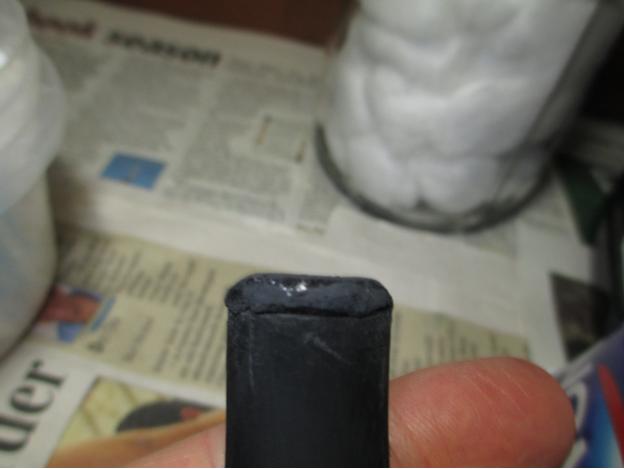
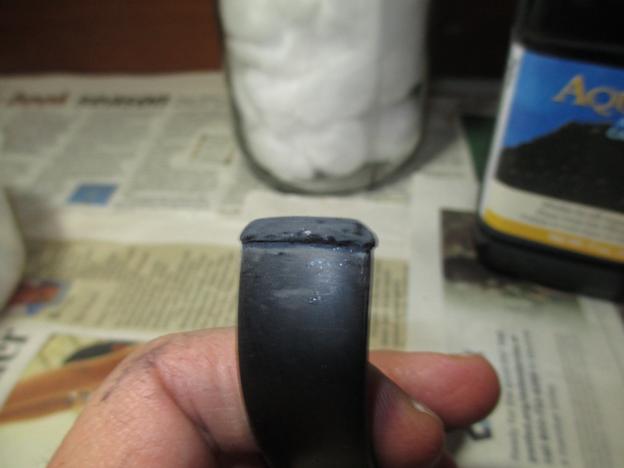
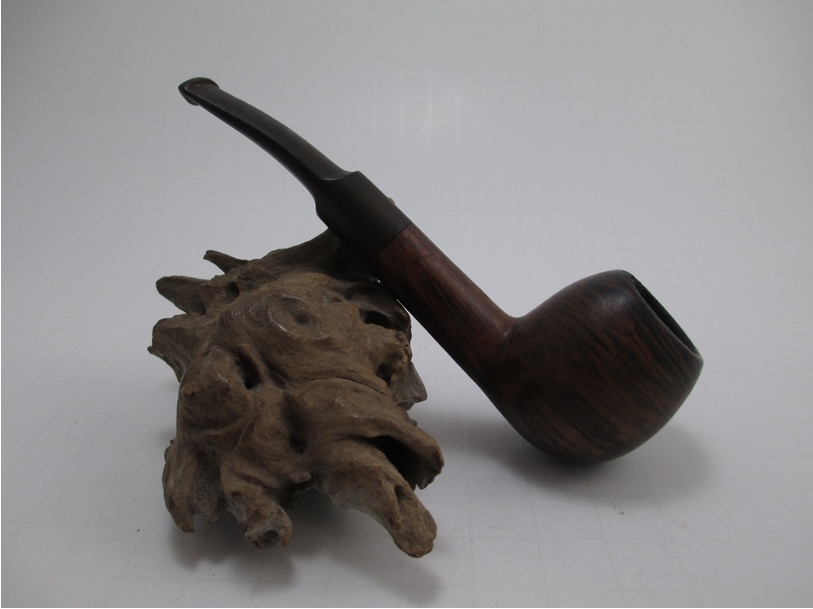
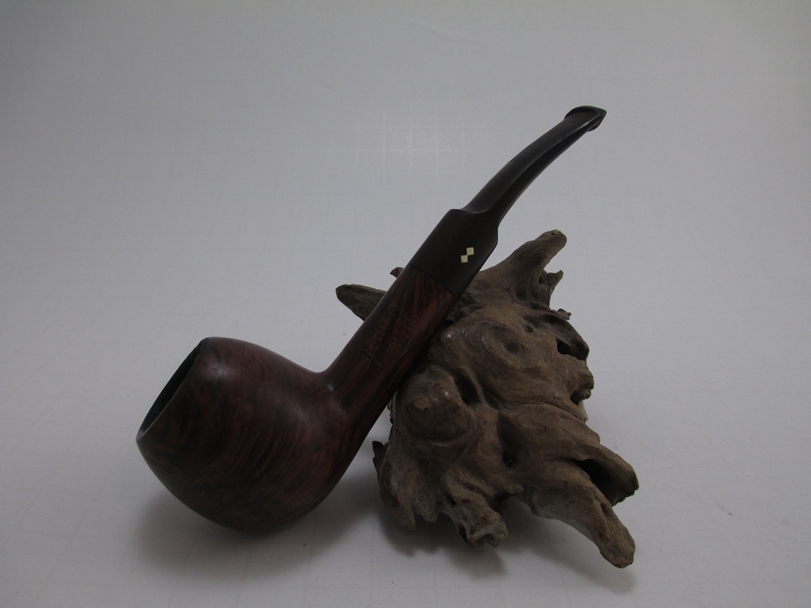
Have you ever found that Holy Grail pipe only to realize that it has a major flaw? For me, this pipe ticked all the boxes, a KB&B pipe made between 1933 and 1936, it was a less common shape and looked to be in decent condition. The only problem I could see was that a previous owner had filed off the button.Andrew1

Andrew2

Andrew3

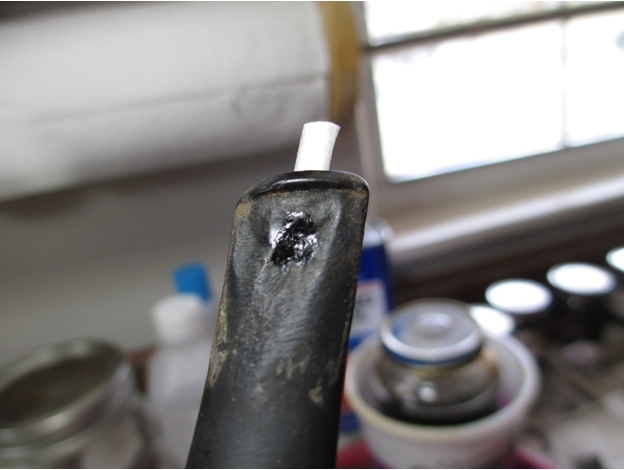
Andrew4 I’ve been experimenting with super glue and ground charcoal for stem repair and I had an idea how I might use that to re-create the button. Now just a quick disclaimer. I am not a medical professional and I do not pretend to know any potential health hazards to the use of super glue on something you put in your mouth. On the other hand, I am aware that the state of California has found that pipe smoking is not healthy for pregnant women or their unborn children. As an adult, I accept these risks as the relaxation benefit outweighs the health risks.

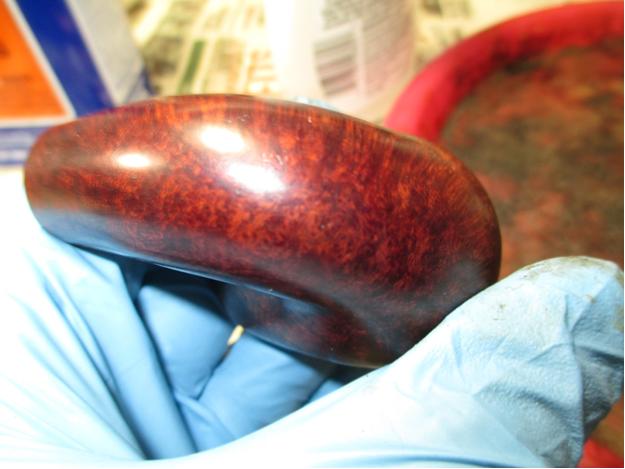
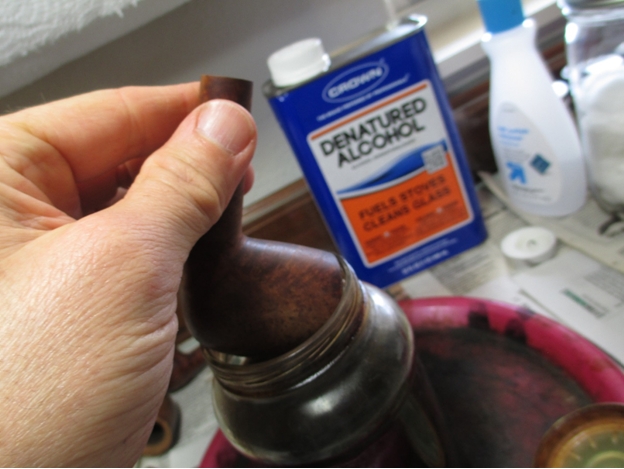
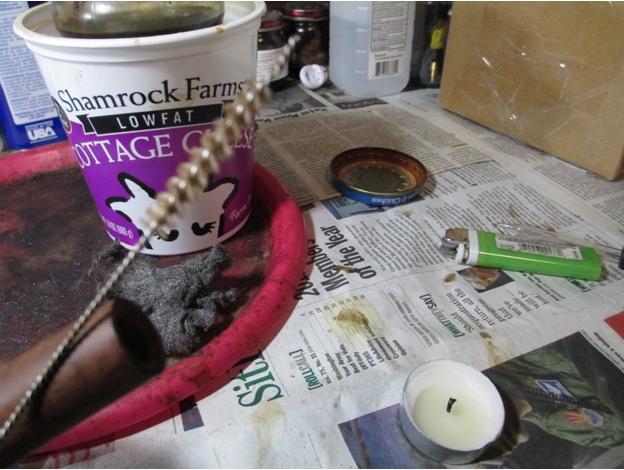
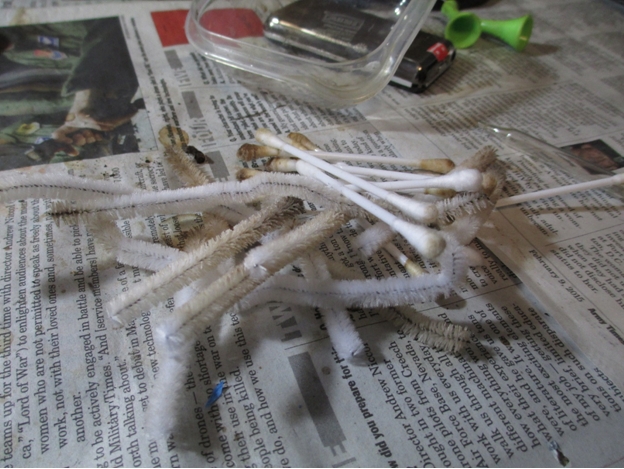
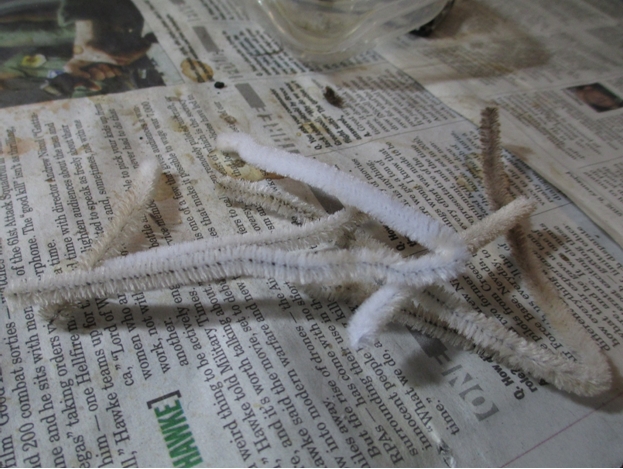
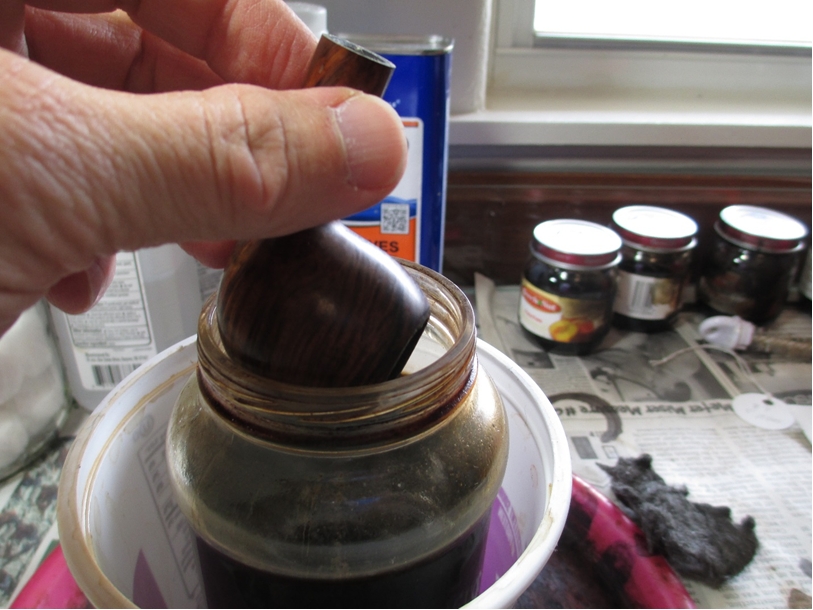
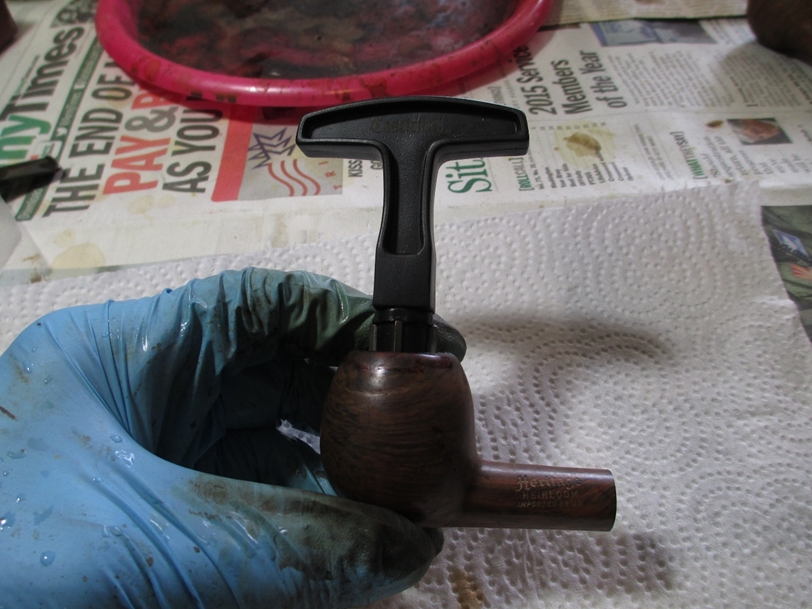
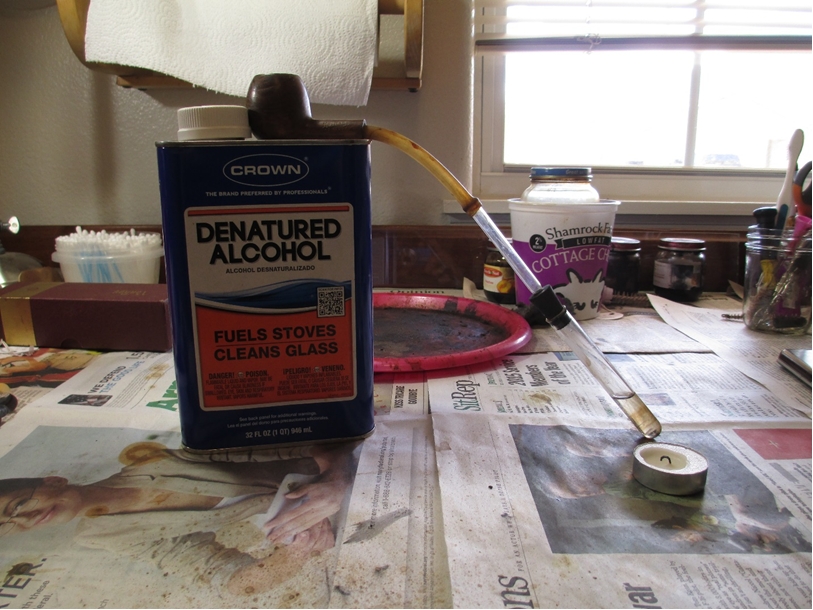
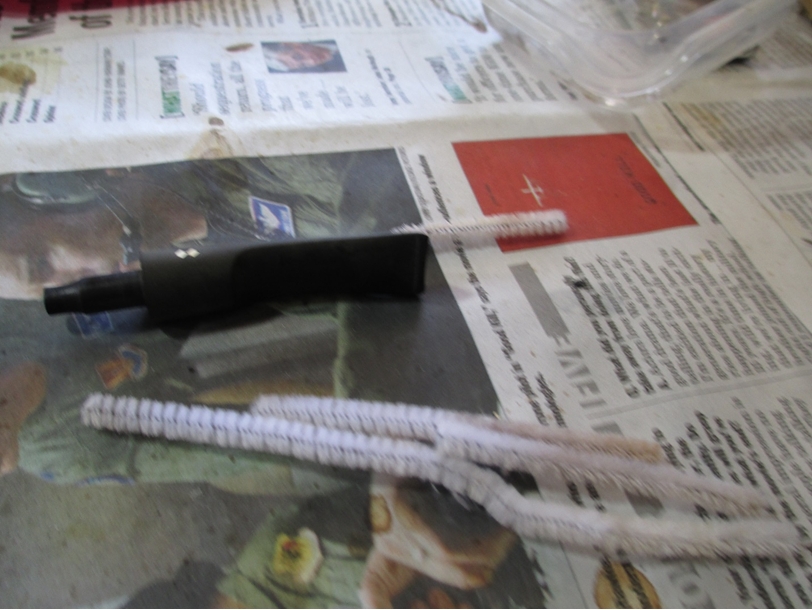
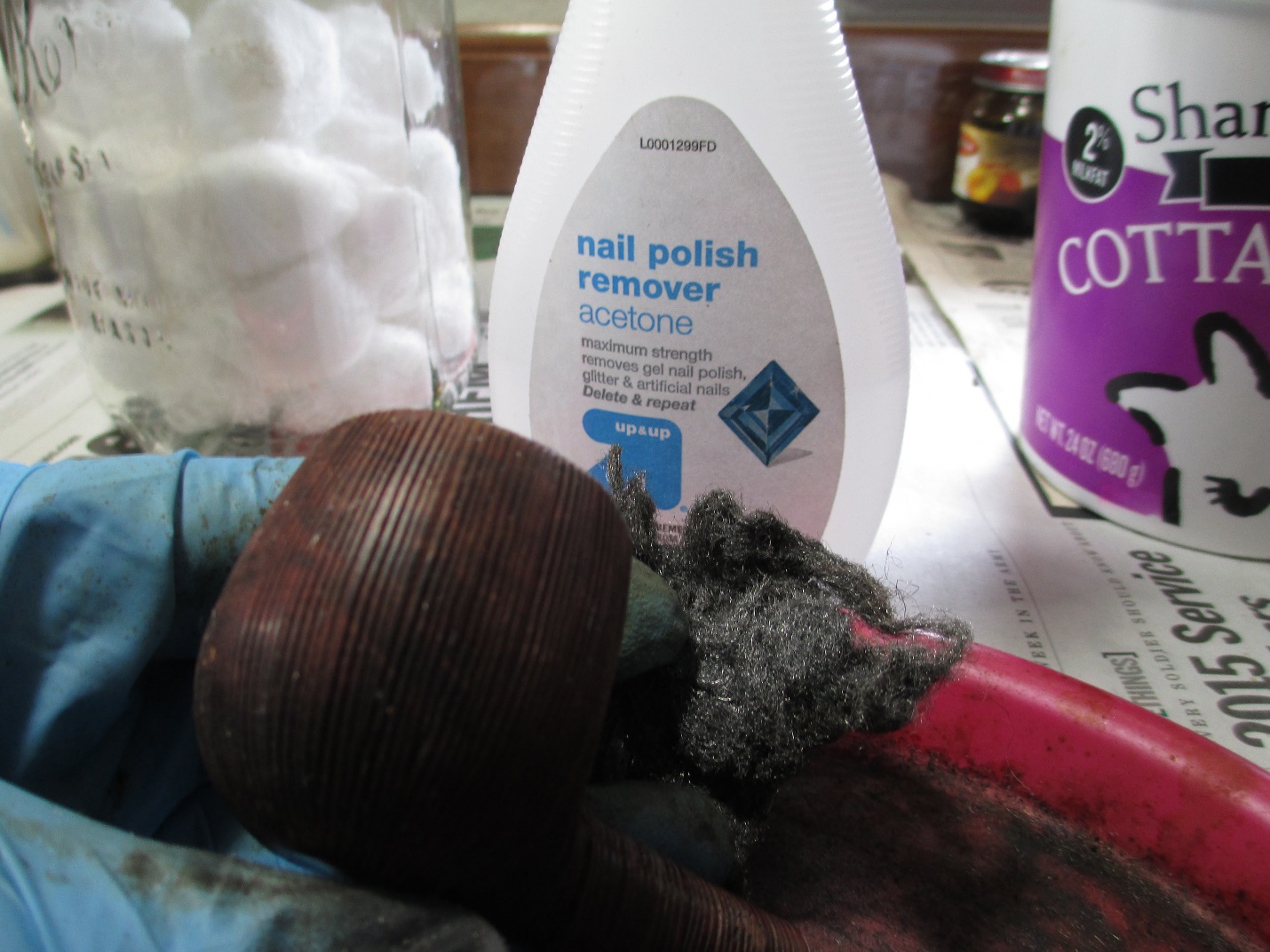
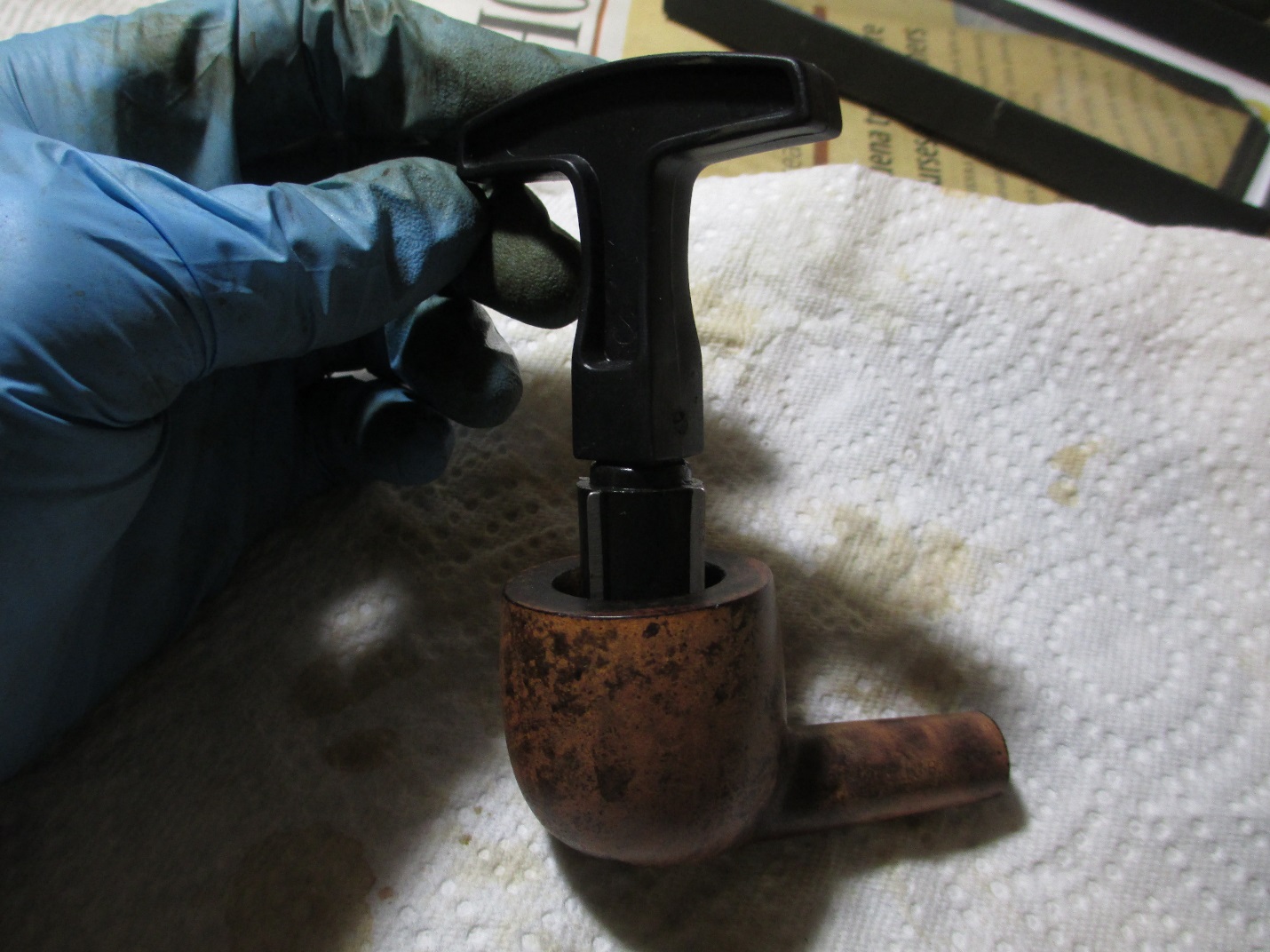
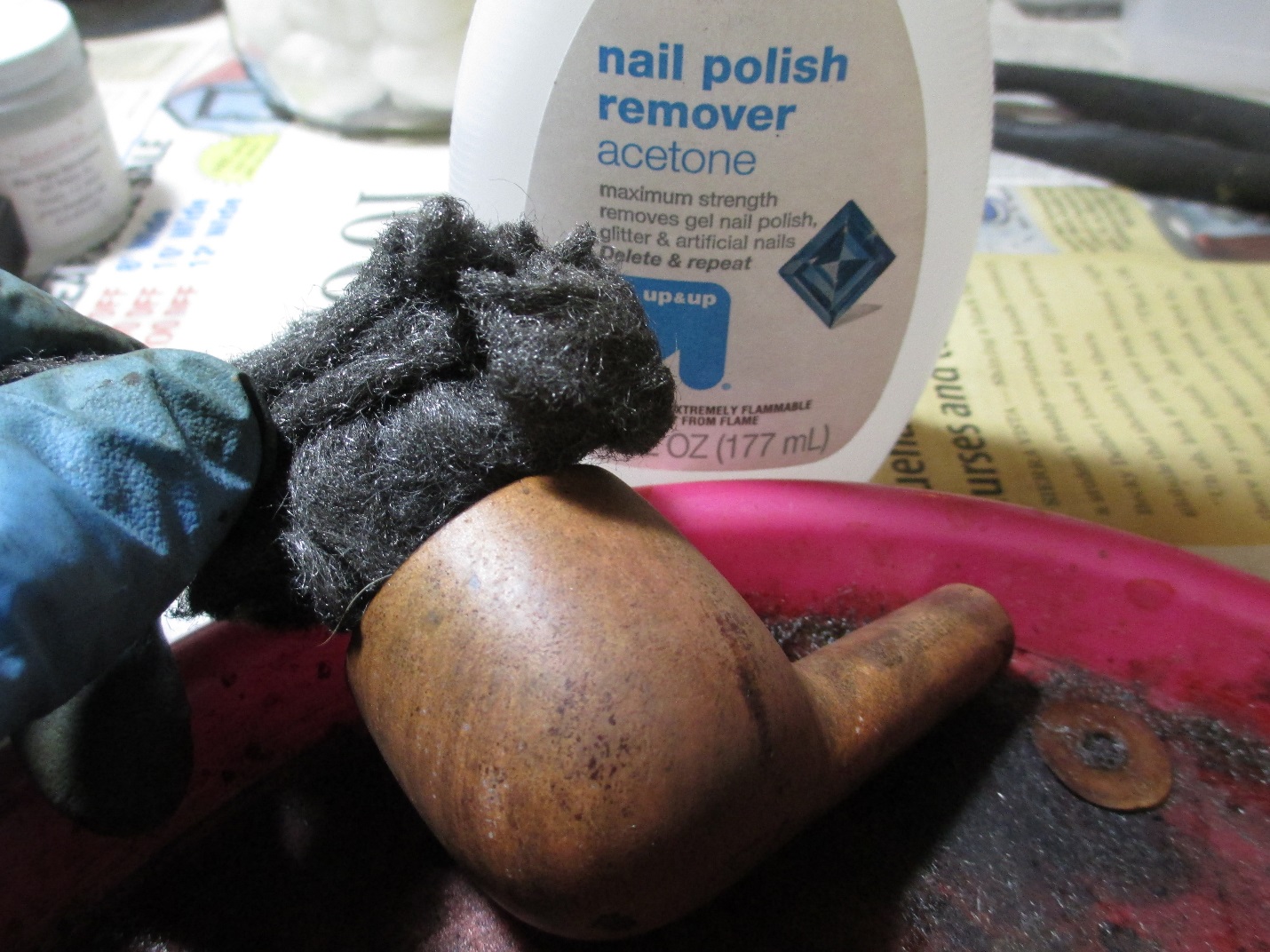
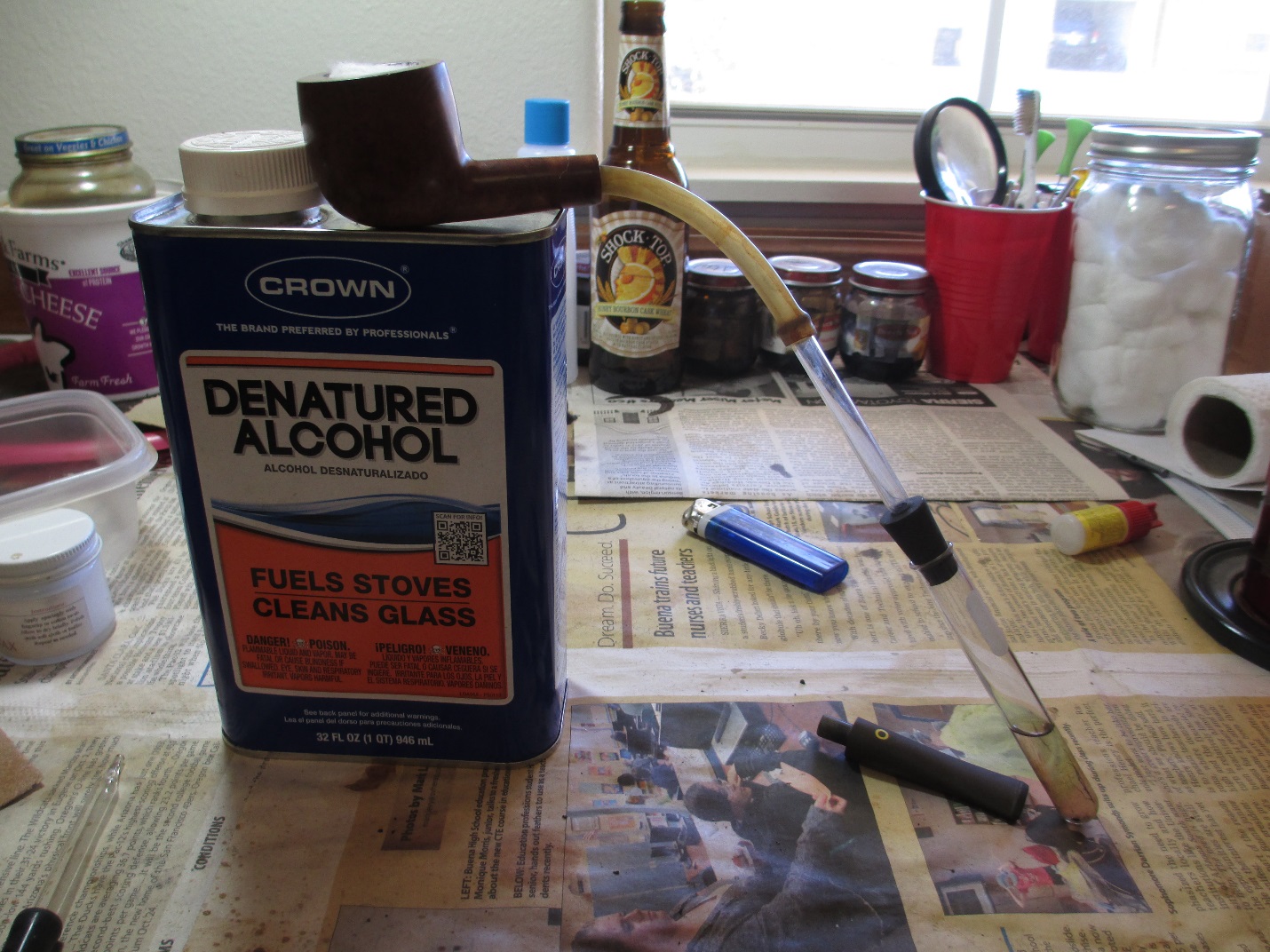
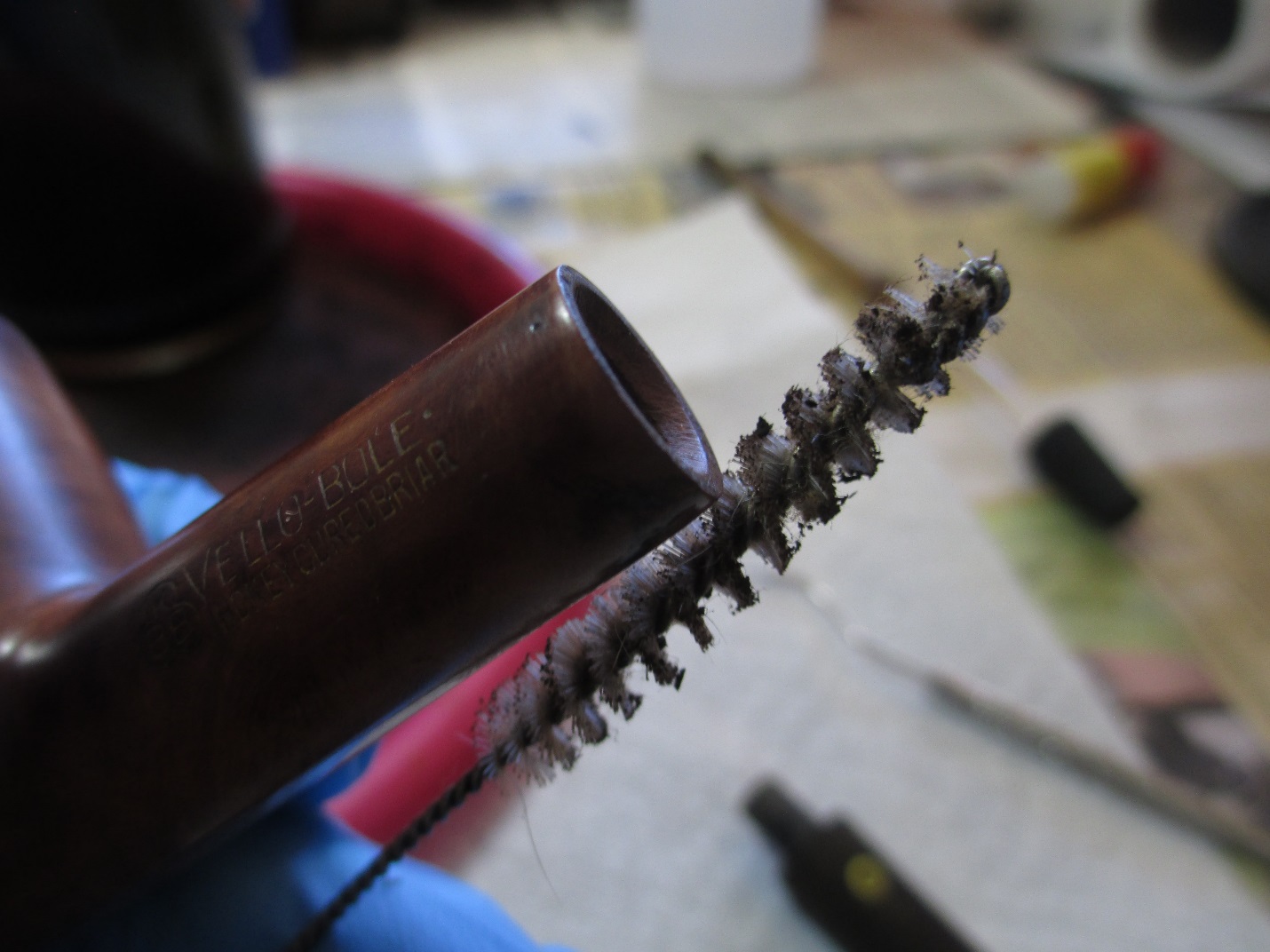
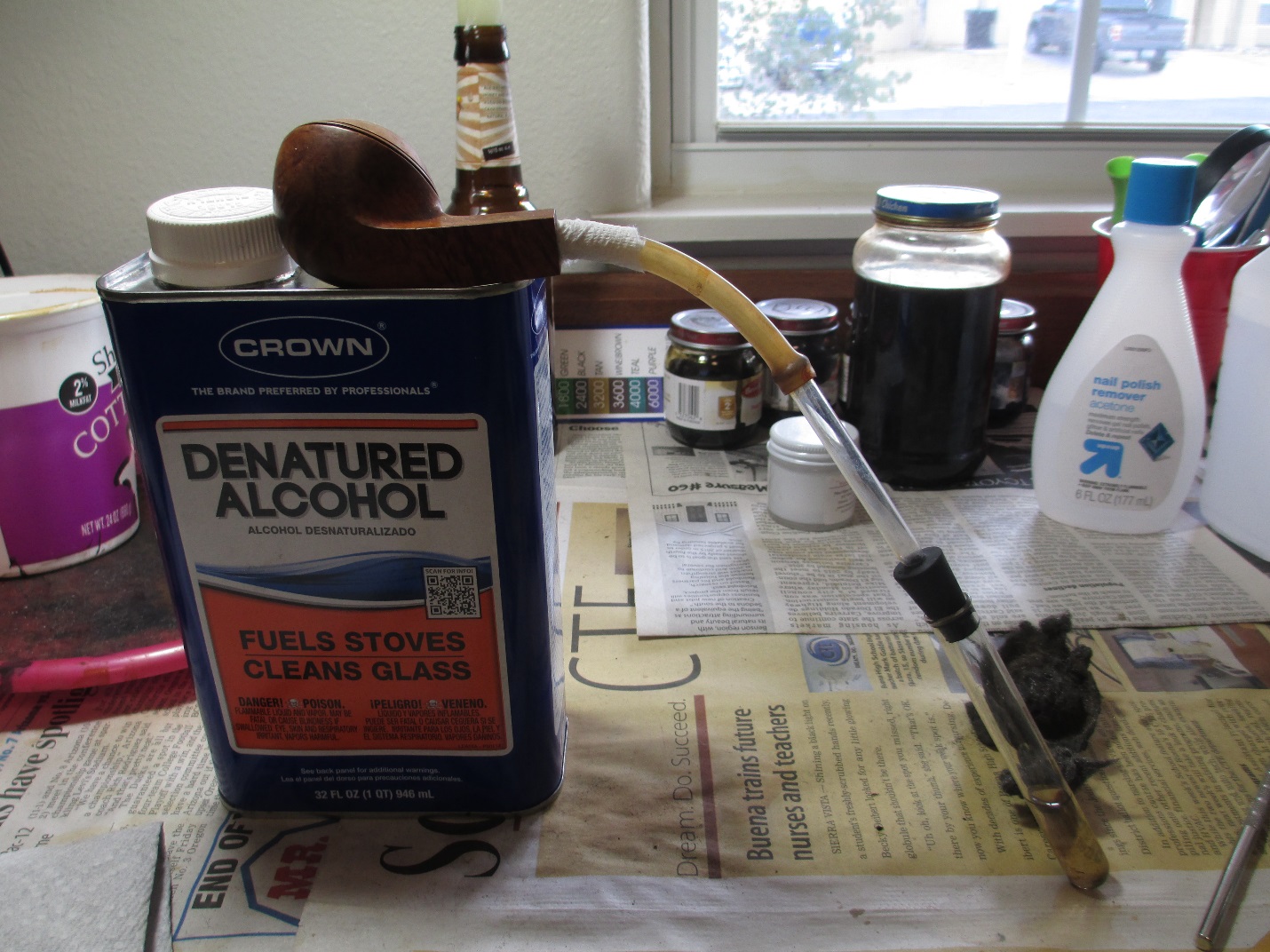
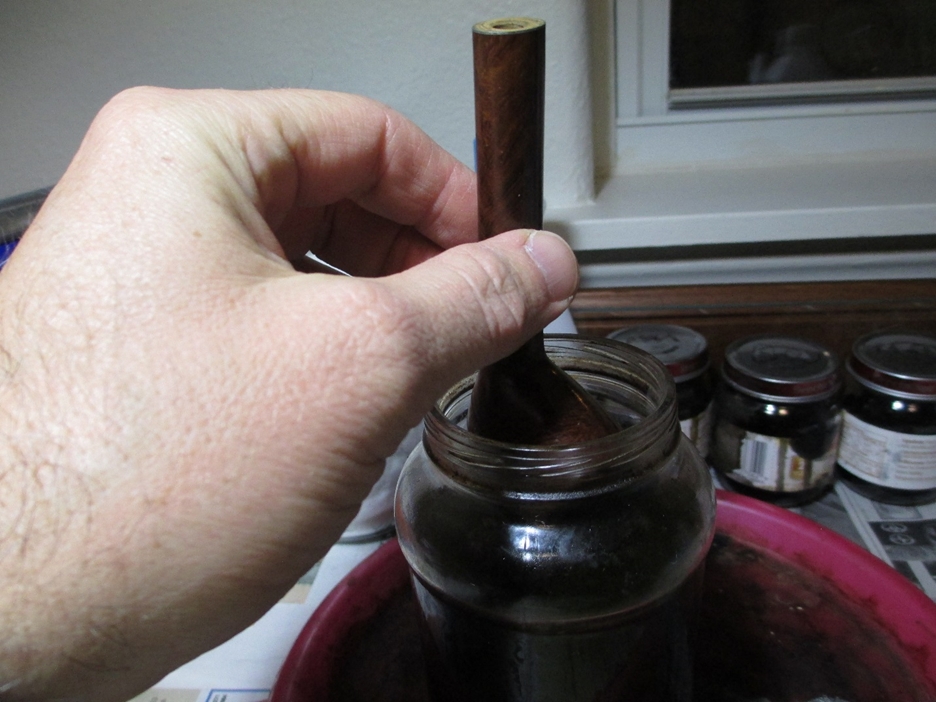
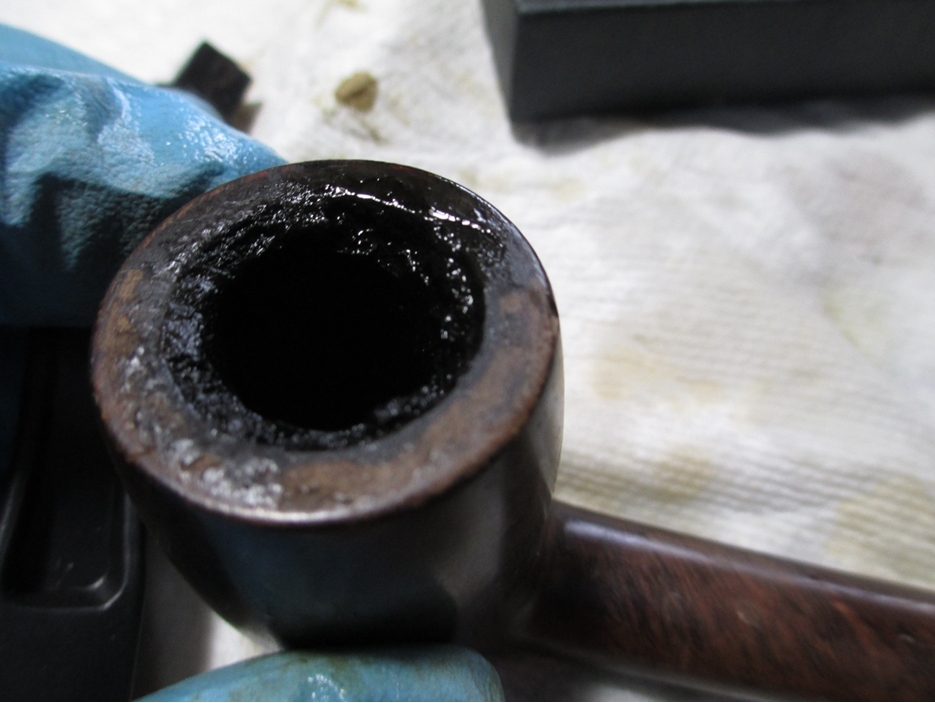
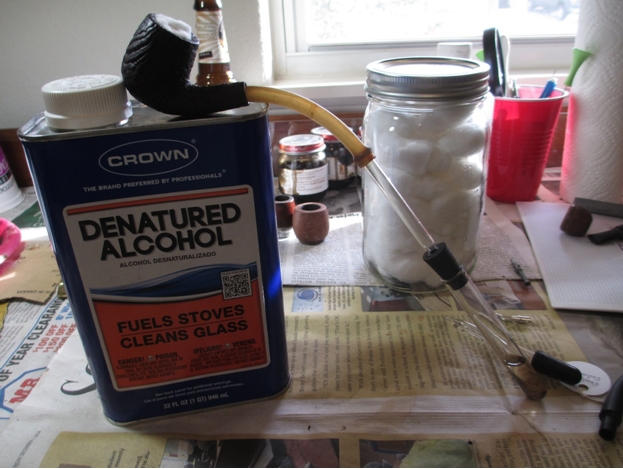
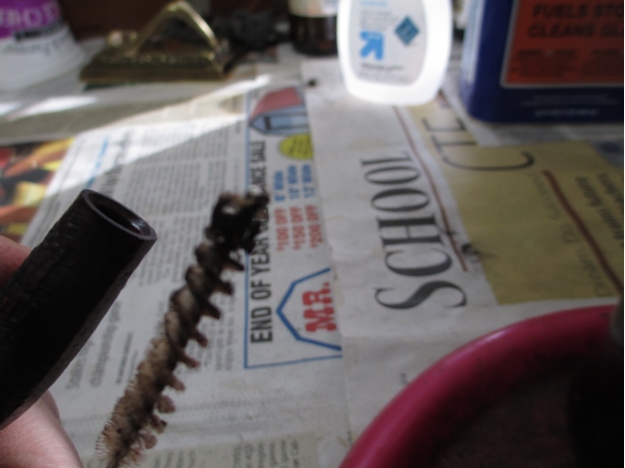
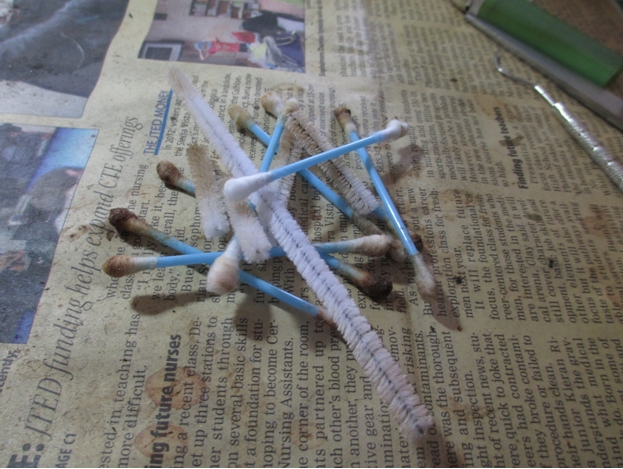
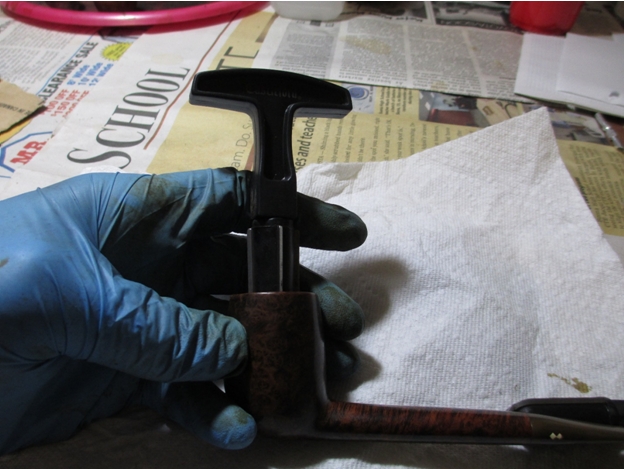
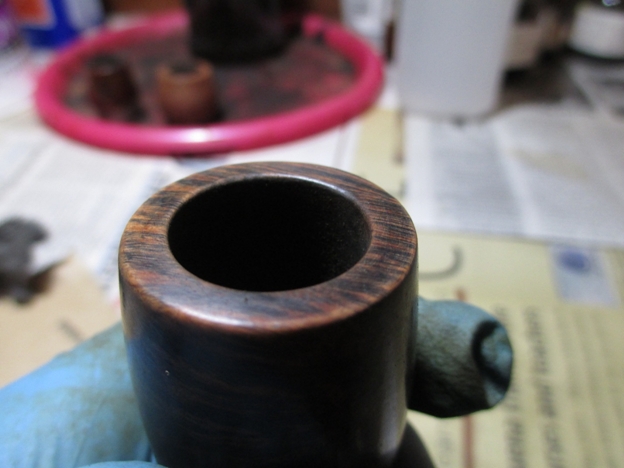
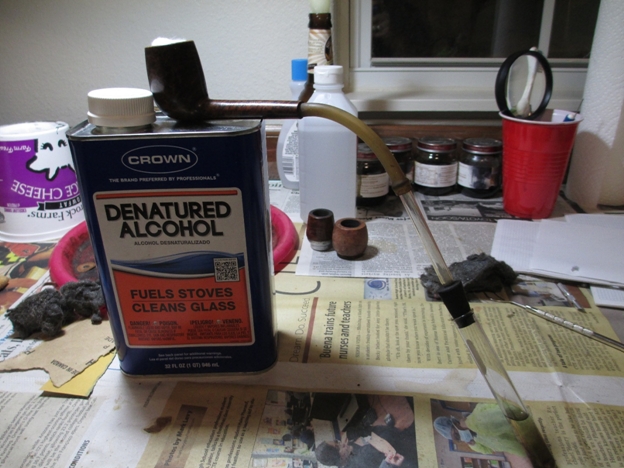
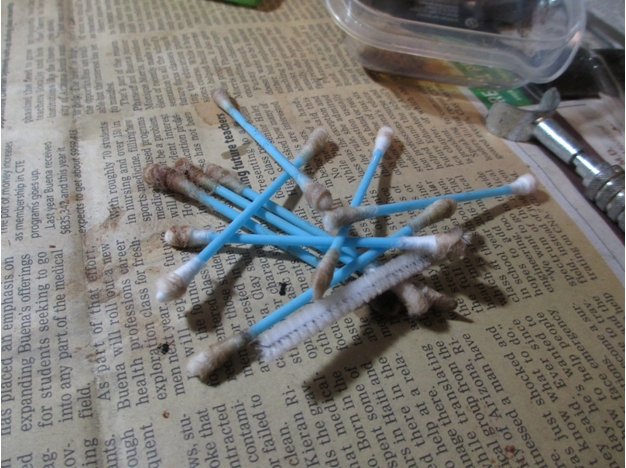
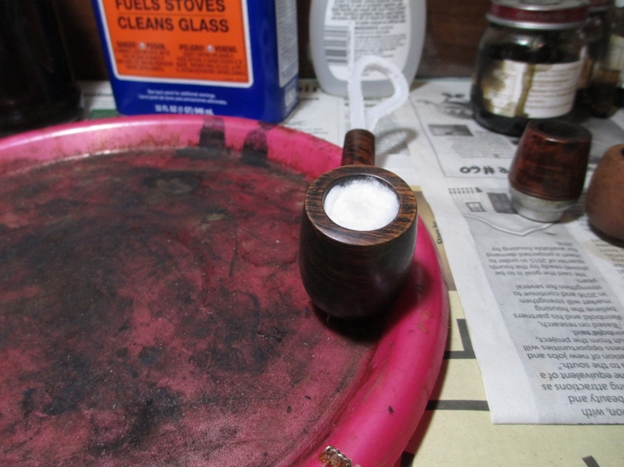
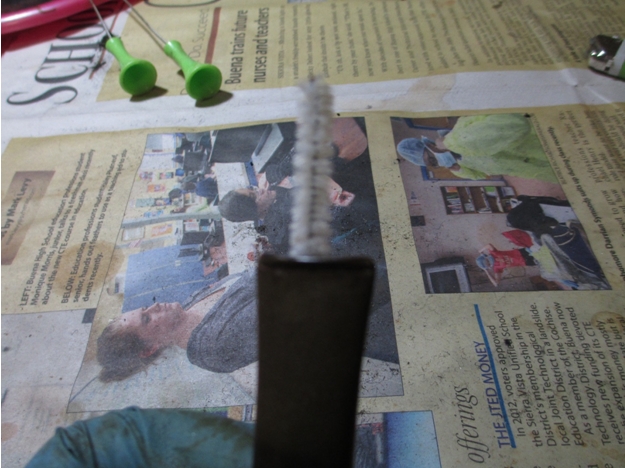
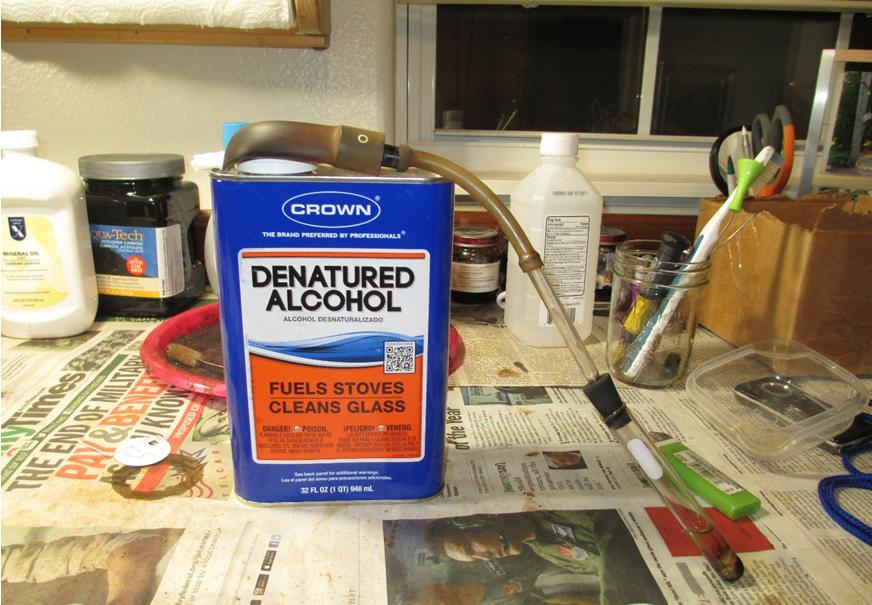
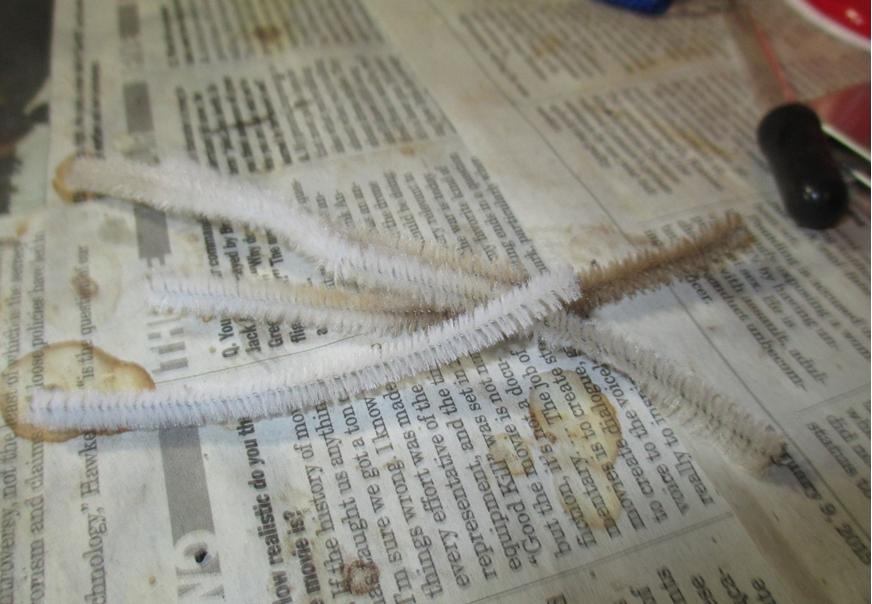
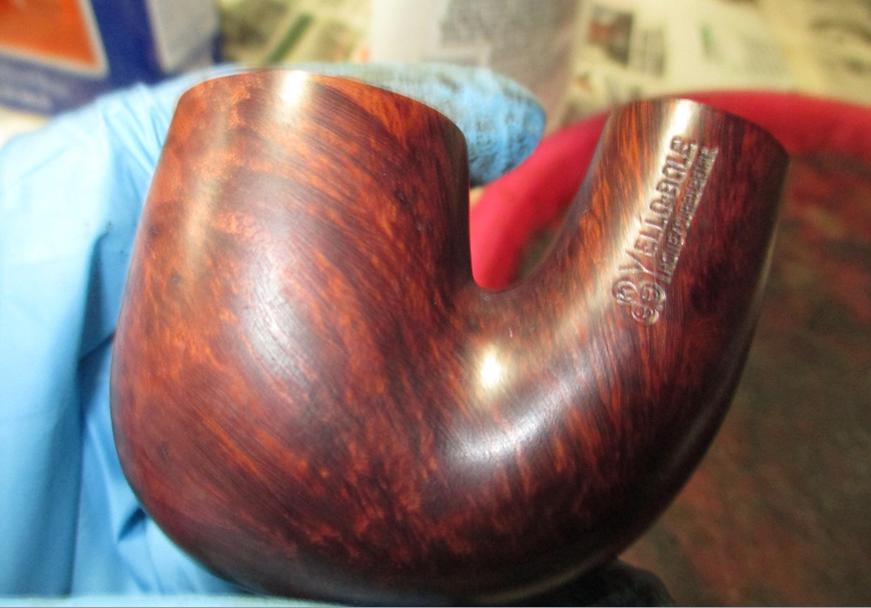
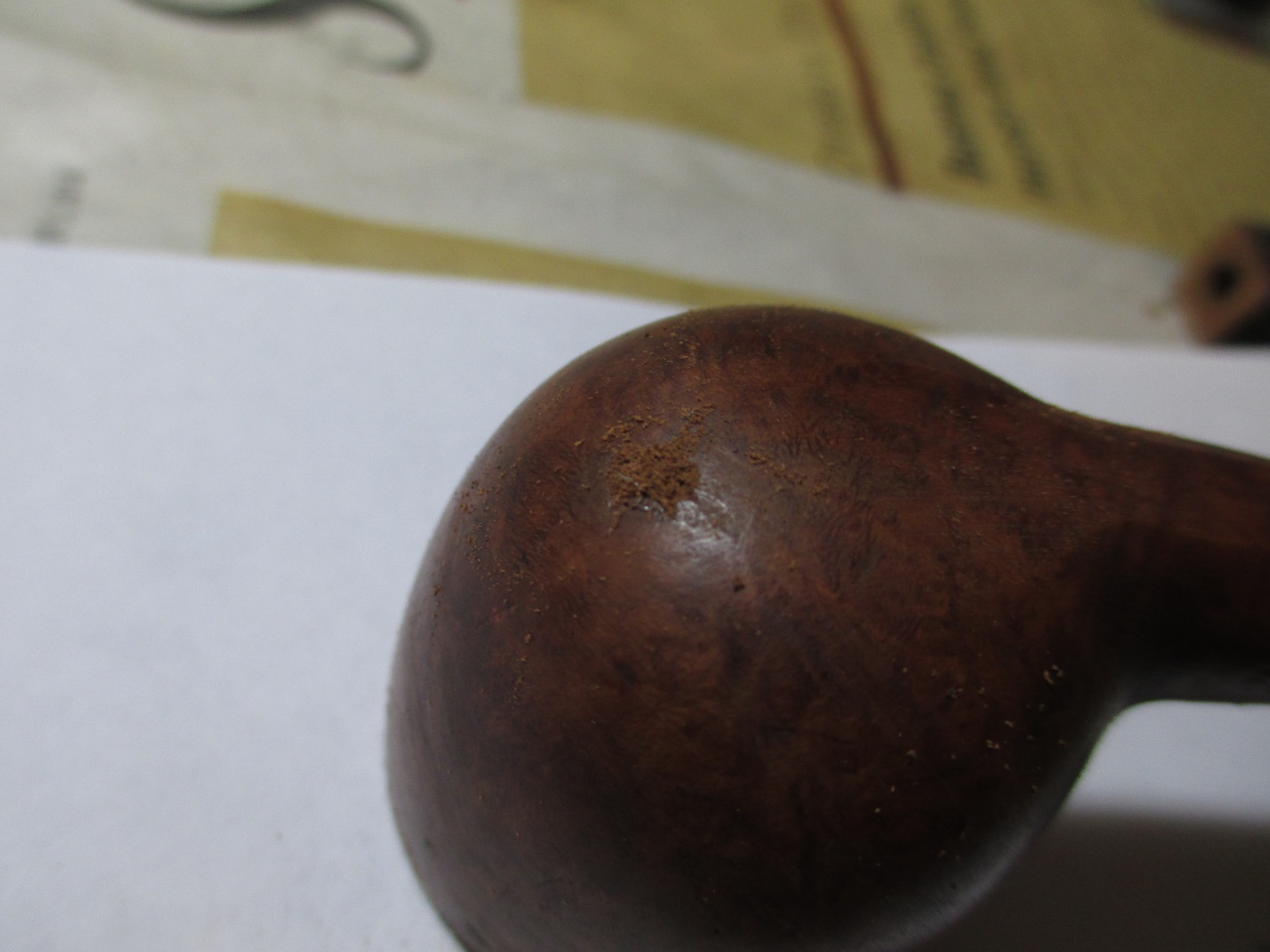
Before tackling the button I needed to clean up the pipe. I started the process by giving the bowl an alcohol bath.Andrew5 While the bowl marinated, I dropped the stem into a solution of Oxyclean. After a good long soak, I reamed the bowl.Andrew6 After reaming the bowl, I retorted the stem and bowl. I forgot to take pictures of the bowl during this process.Andrew7 The stem was pretty clean, which I expected based on the minimal amount of chatter and the lack of cake build up in the bowl. A couple of fuzzy sticks dipped in alcohol did the trick.Andrew8 The alcohol bath serves two purposes, it loosens up the internal gunk and it helps remove the old finish. On this particular pipe, I noticed that the bowl was stained a purplish read and had a heavy varnish on it. That’s usually a sign of inferior briar and lots of fills. With great trepidation, I used acetone and 0000 steel wool to see what was under the old finish.Andrew9 I was pleasantly surprised to find beautiful grain and not a single fill.Andrew10
Andrew12

Andrew11

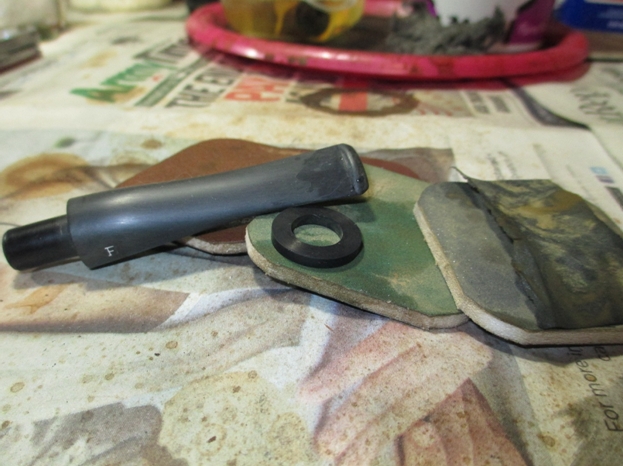
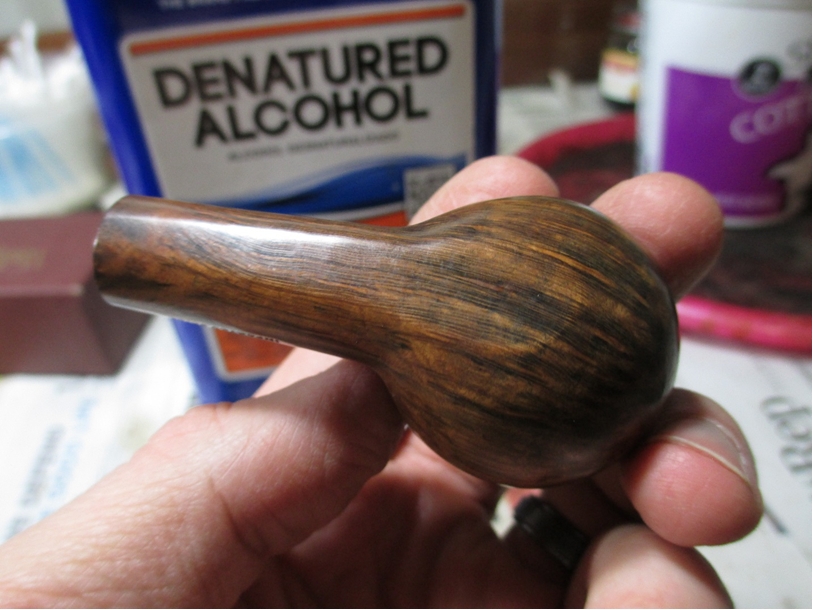
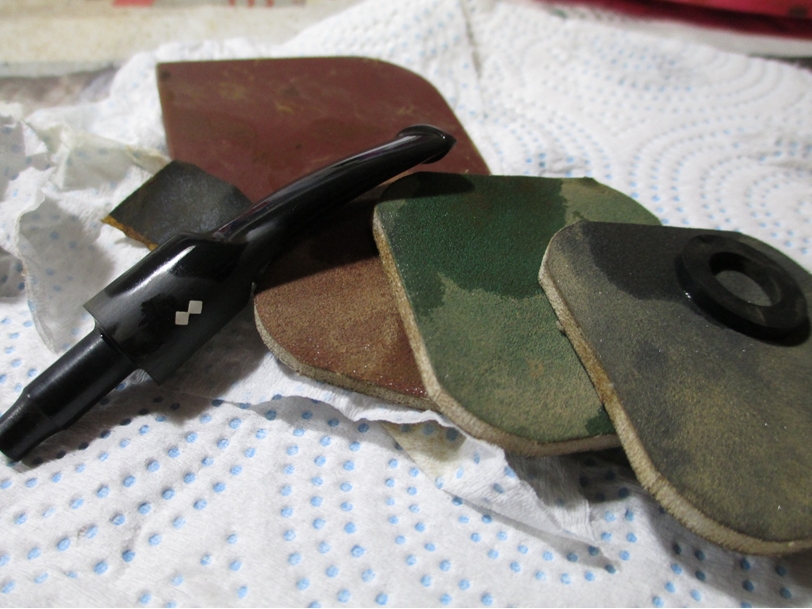
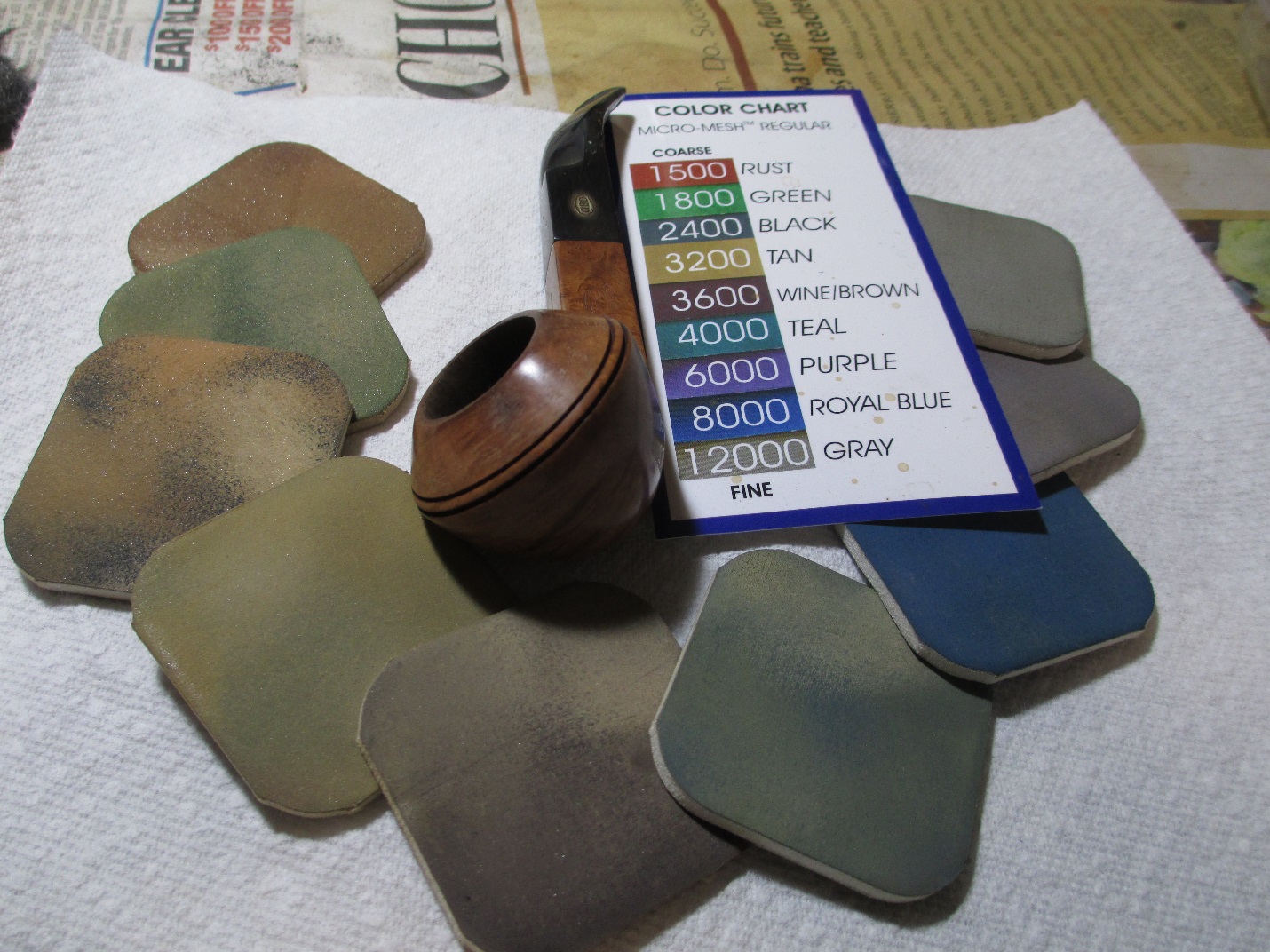
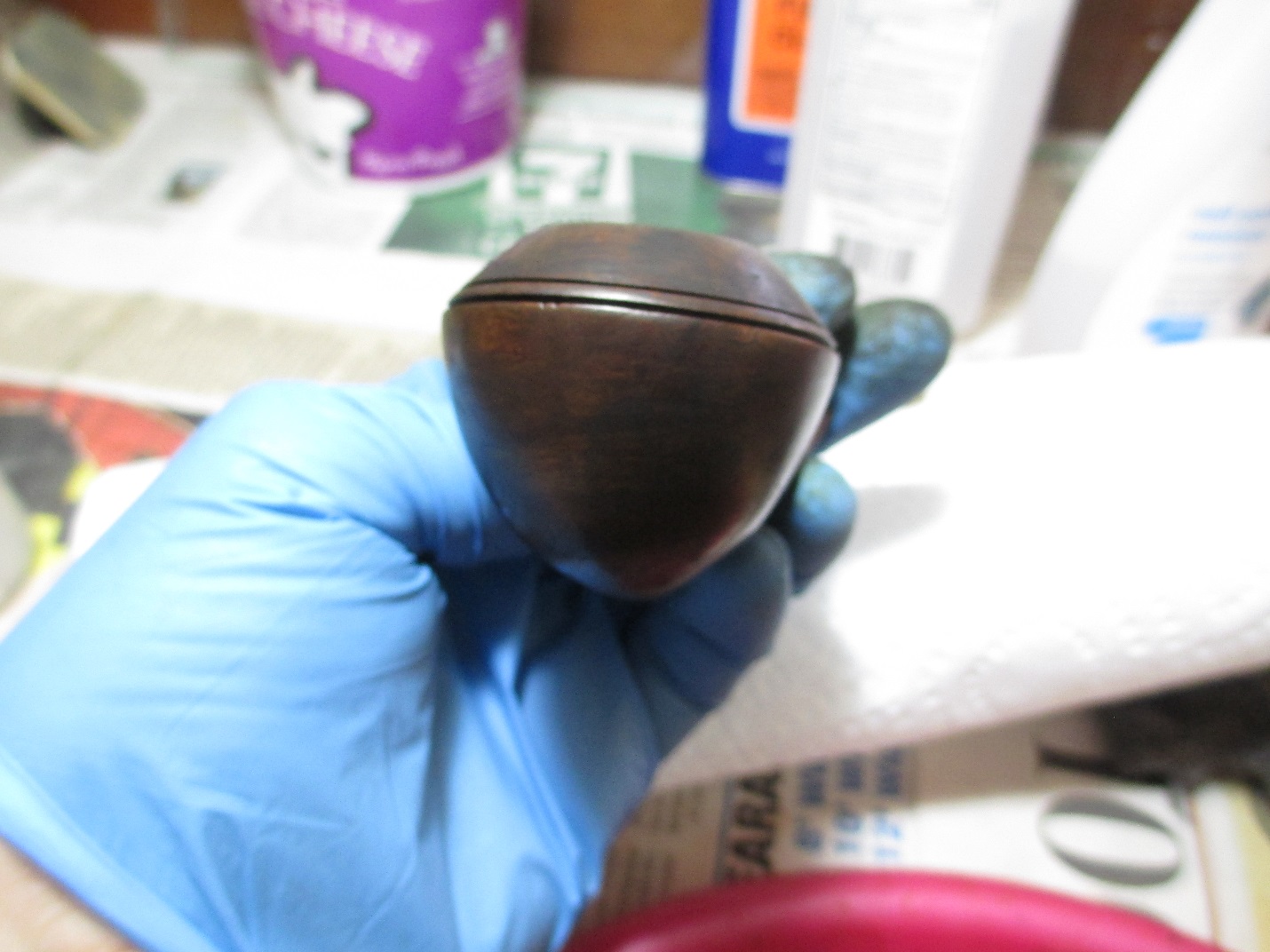
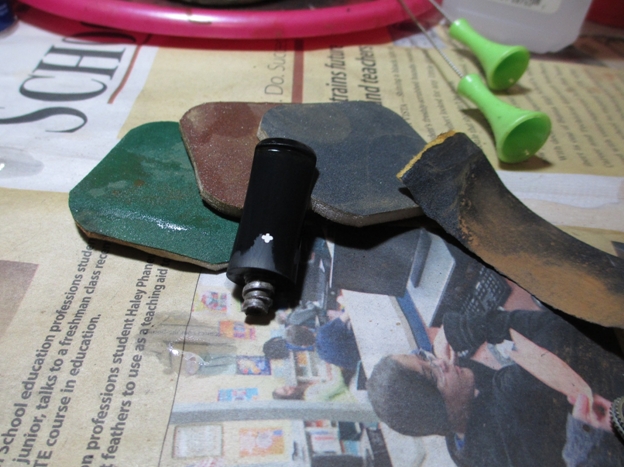
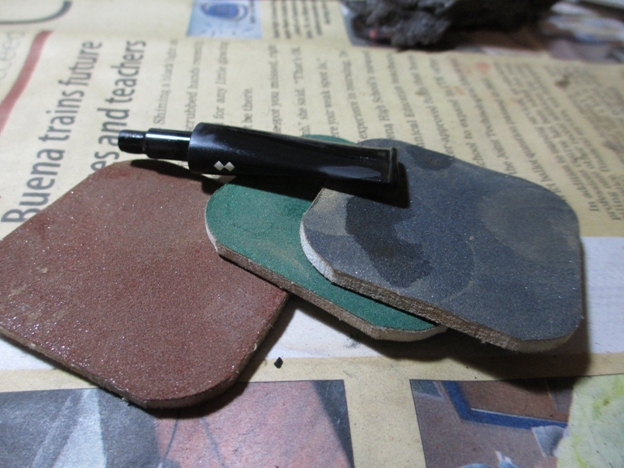
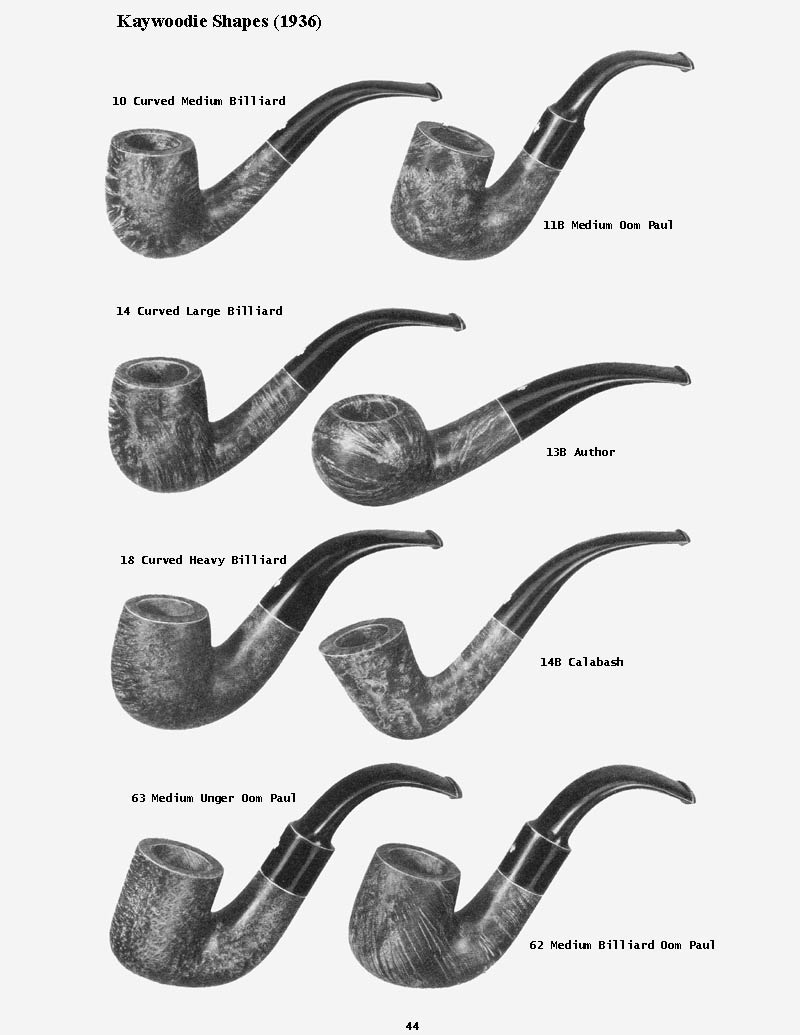
Andrew13 I was not happy with the purple tint of the wood though, I mean who does that? My guess is, this pipe could have made the cut as a Kaywoodie, maybe they were short on the Yello Bole line so they put a Yello Bole stem on it and that hideous varnish. Interestingly enough, this pipe has the identical shape number as the Kaywoodie medium billiard Oom Paul. Just to give you an idea how many pipes Kaywoodie used to make, they had three models of the Oom Paul shape.Andrew14 I decided the best way to take care of the purple stain was with some judicious sanding. Since the bowl didn’t have any scratches or dents, I didn’t have to go too heavy. I started out with 1500 grit micro mesh and worked my way up to 12,000 grit. You will notice the washer between the stem and shank. I’ve learned that the best way to get a sharp shoulder on the shank and the stem is by using the washer to prevent the sanding medium from rounding it off.Andrew15 This is what the bowl looked like after the micro mesh pads.Andrew16
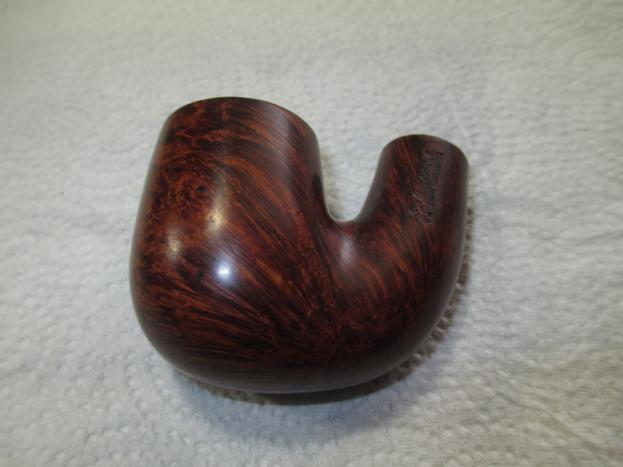
Andrew17 I decided to keep the stain light, so I diluted some Pimo Pipe Supply mahogany and used a single coat. Unfortunately I didn’t take a picture of that process, I was kind of excited about fixing the stem.

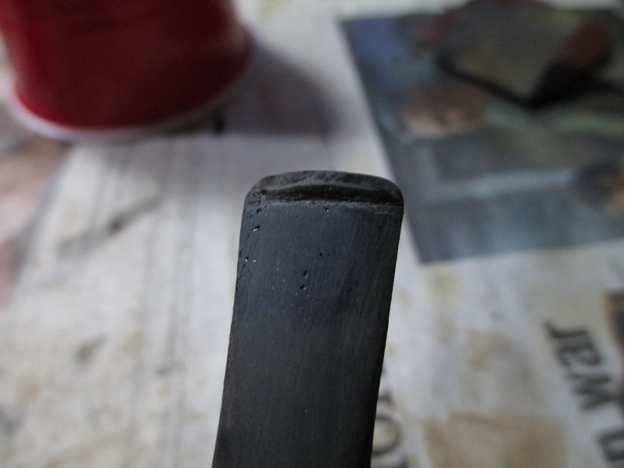
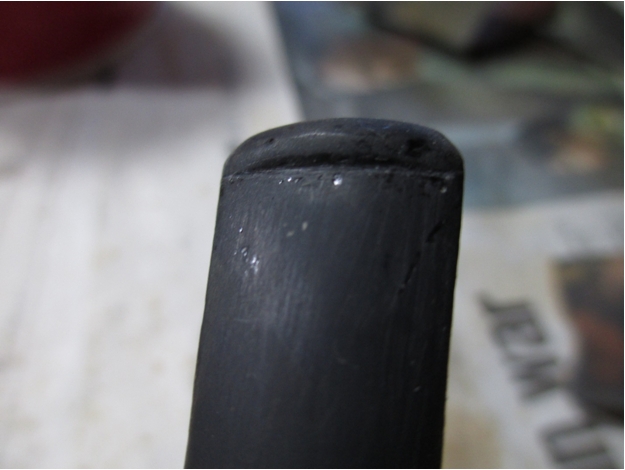
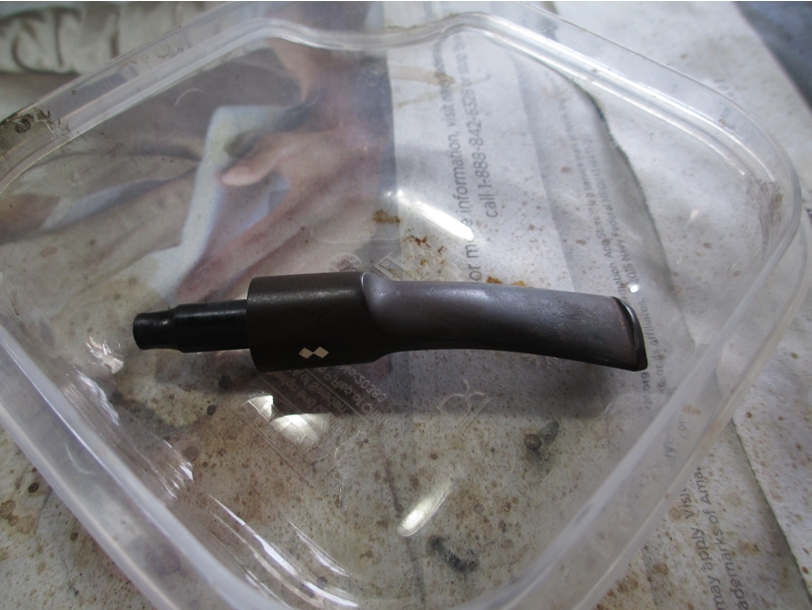
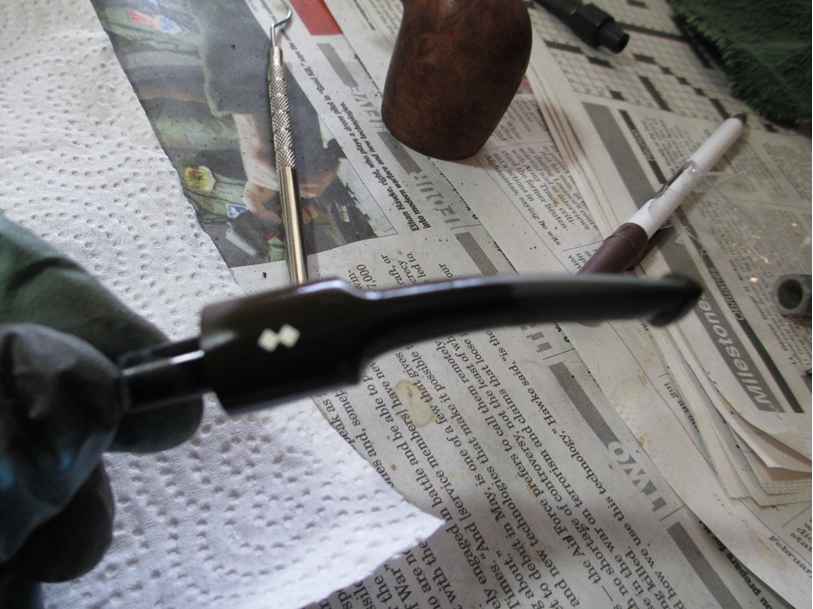
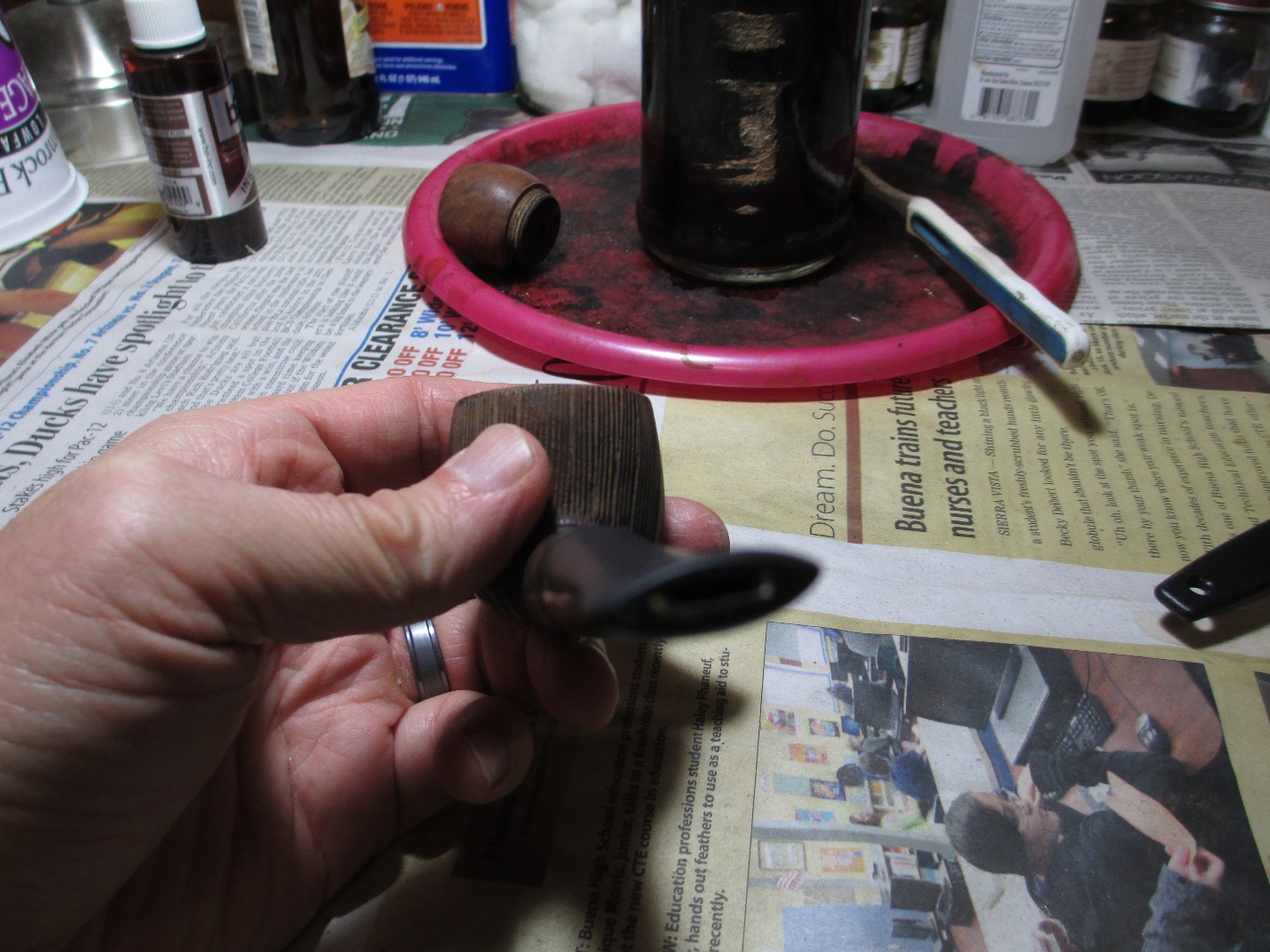
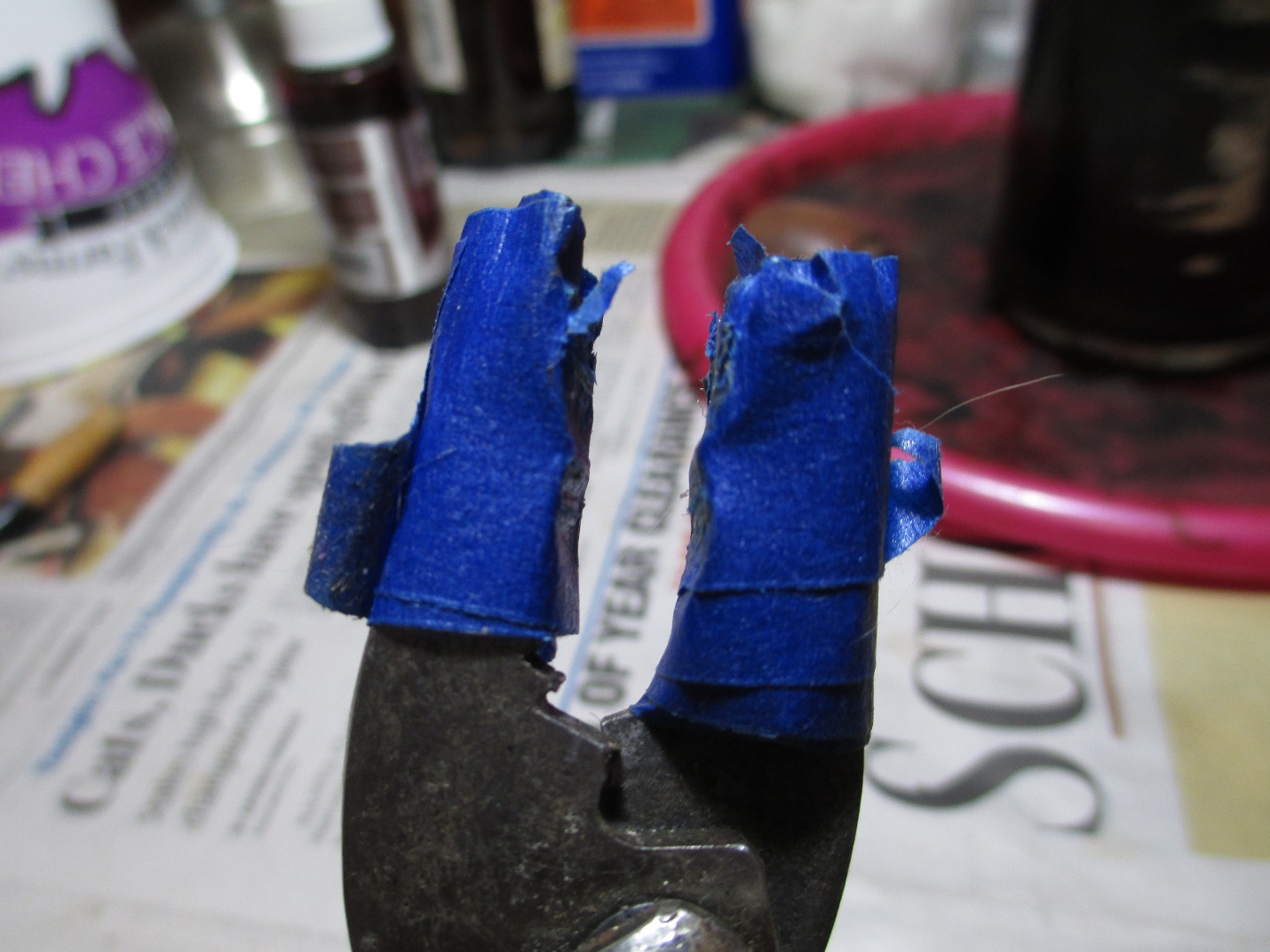
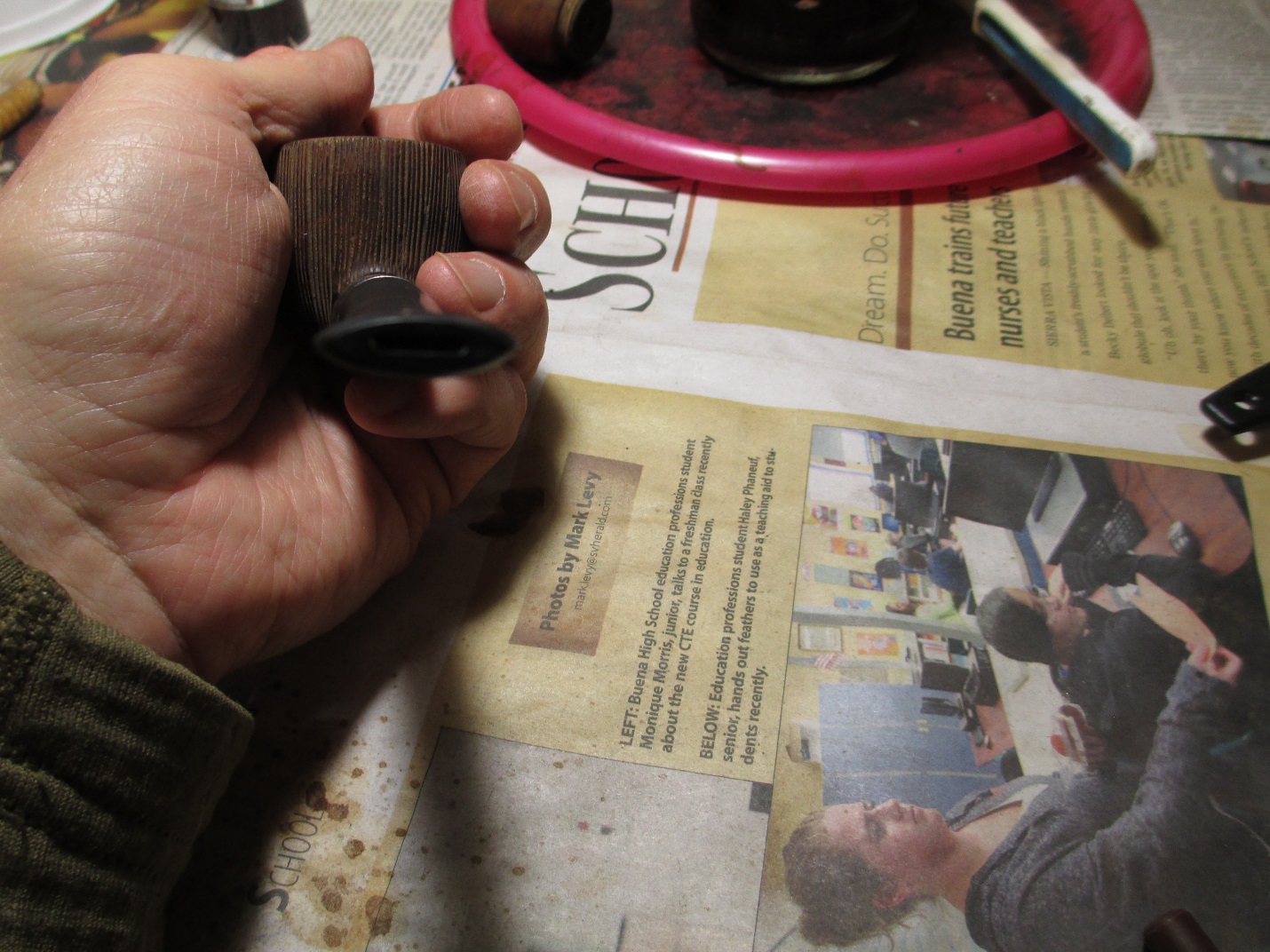
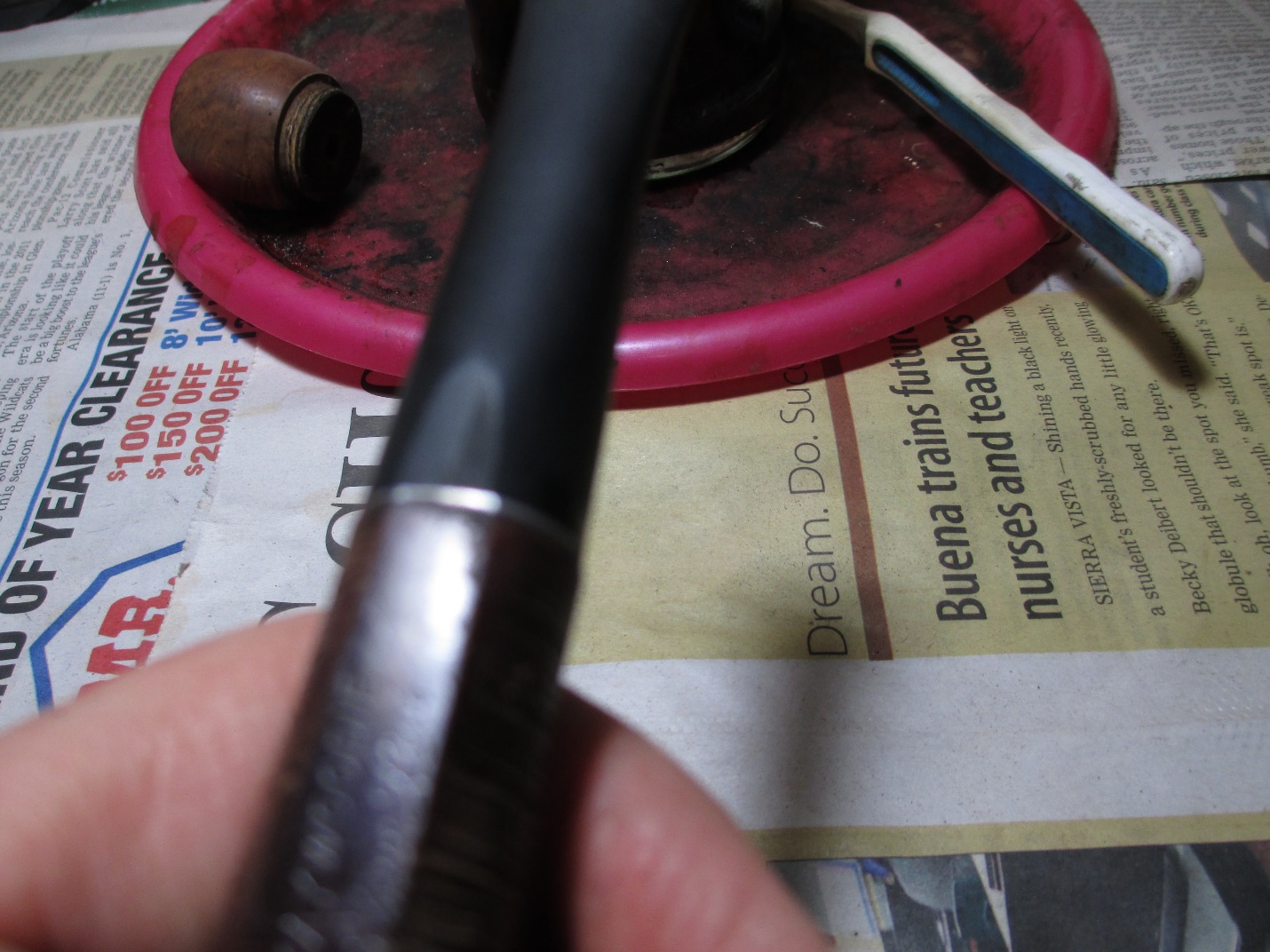
I removed the oxidation on the stem with a progression of 1500-2400 grit micro mesh pads with water. I didn’t have the bowl attached, so I just held the washer over the tenon to prevent rounding.Andrew18 With the oxidation addressed, it was time to start building the new button. I’m not the best when it comes to carving the bottom side of the button so I decided to use clear tape to create definition.Andrew19
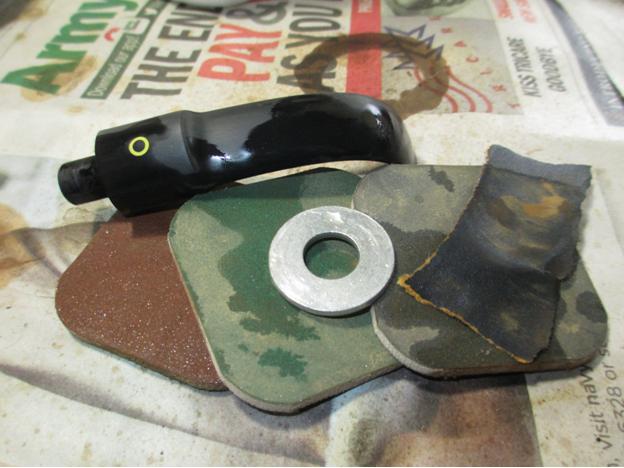
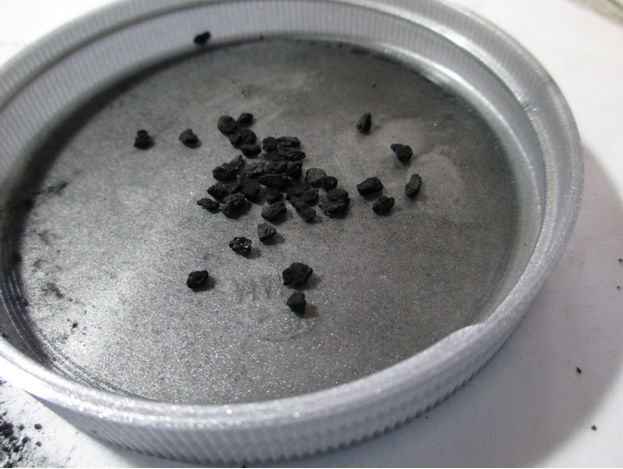
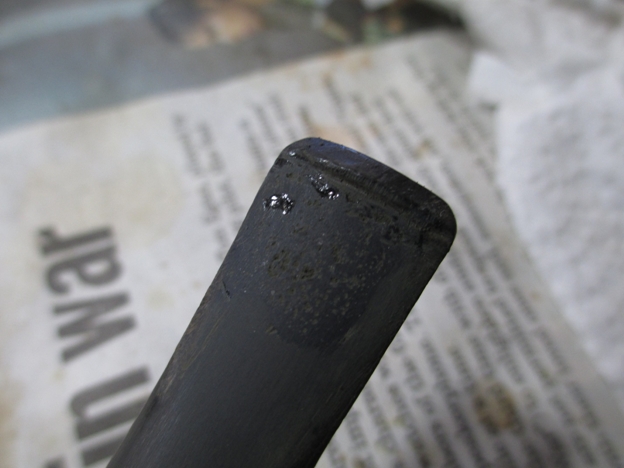
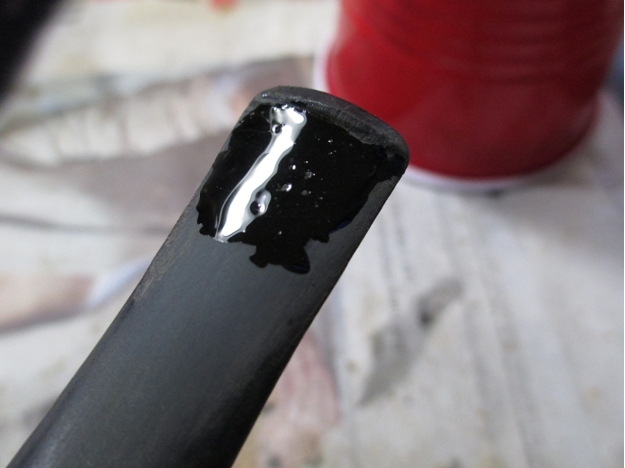
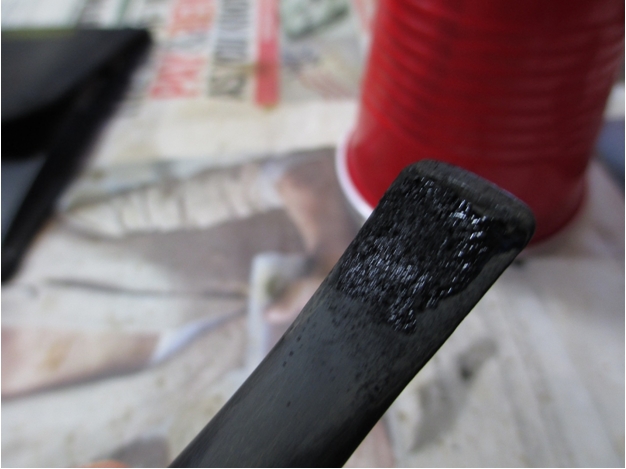
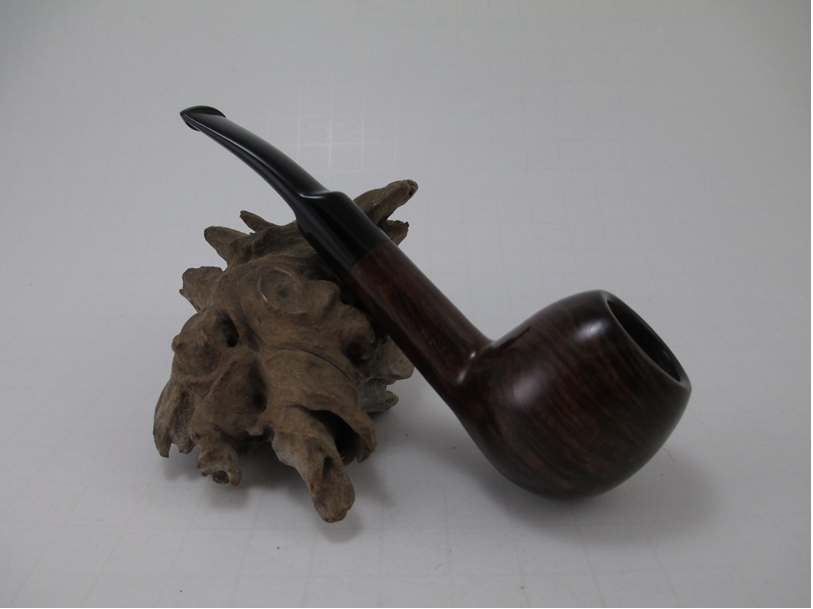
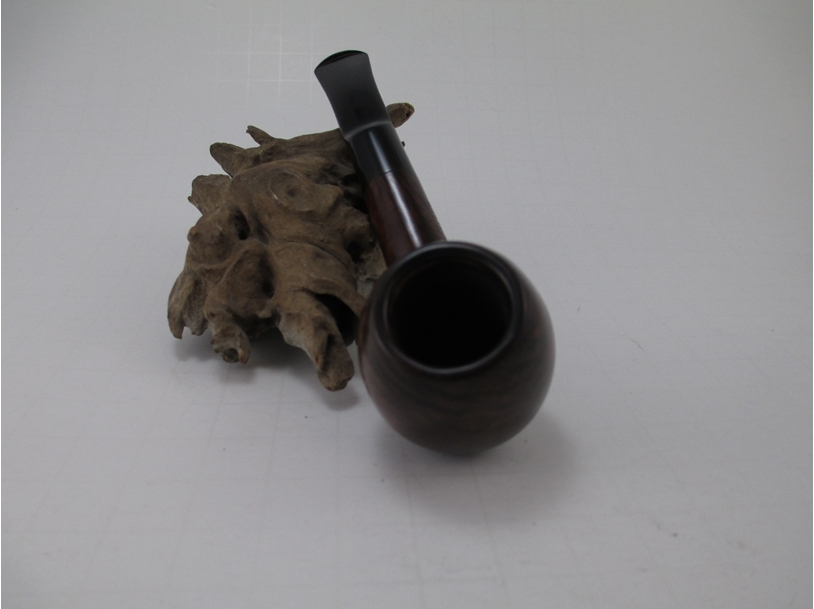
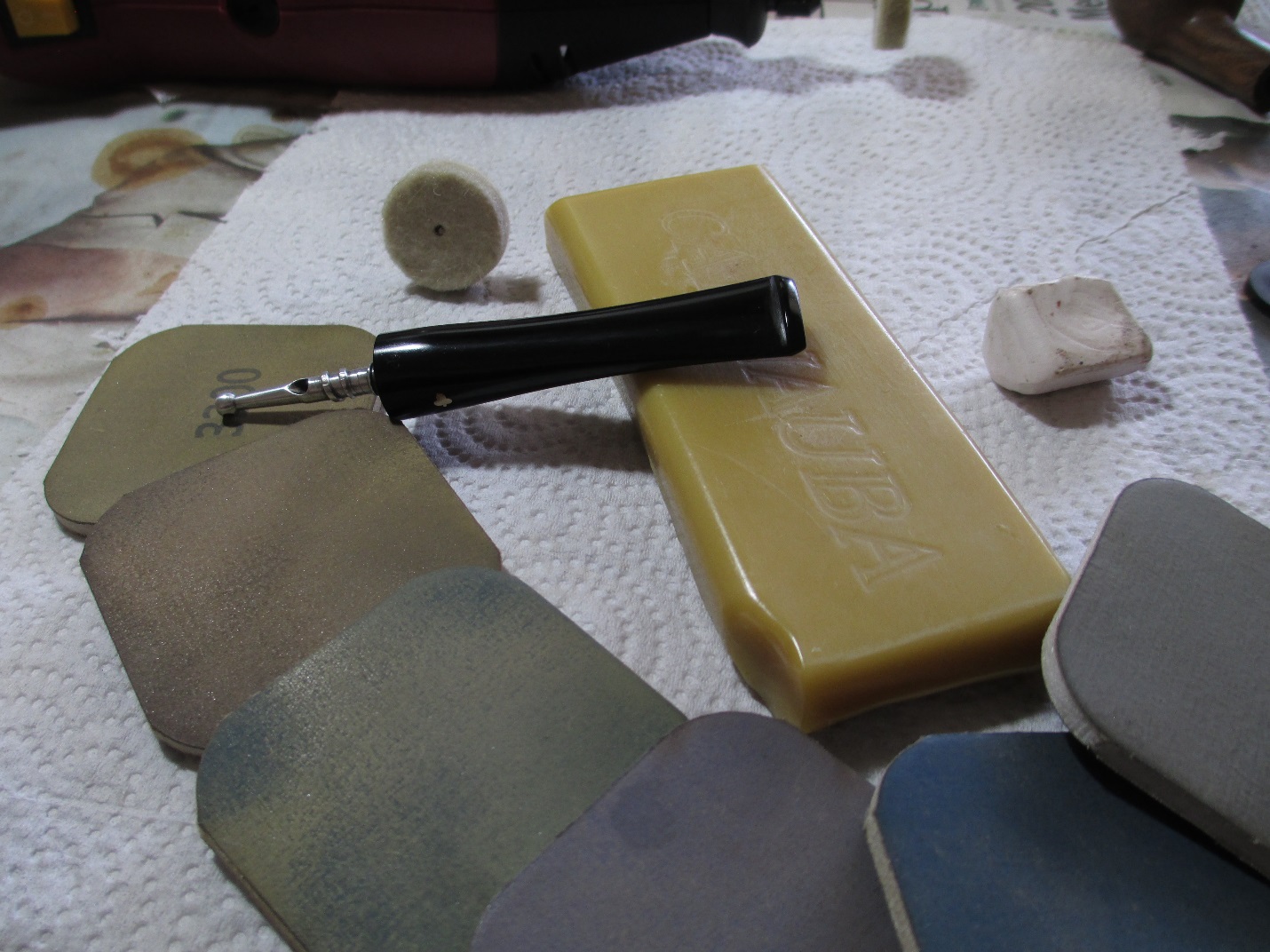
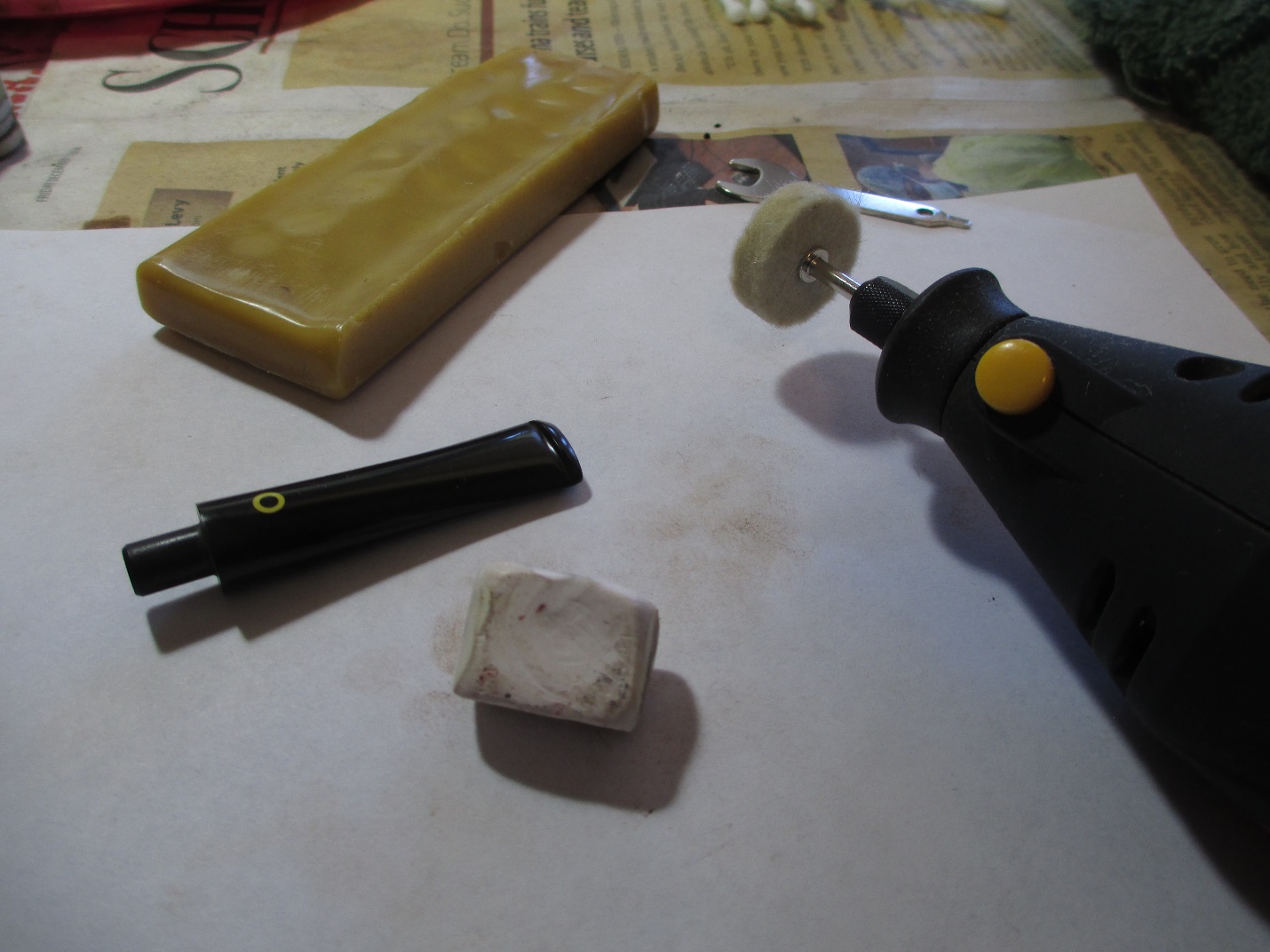
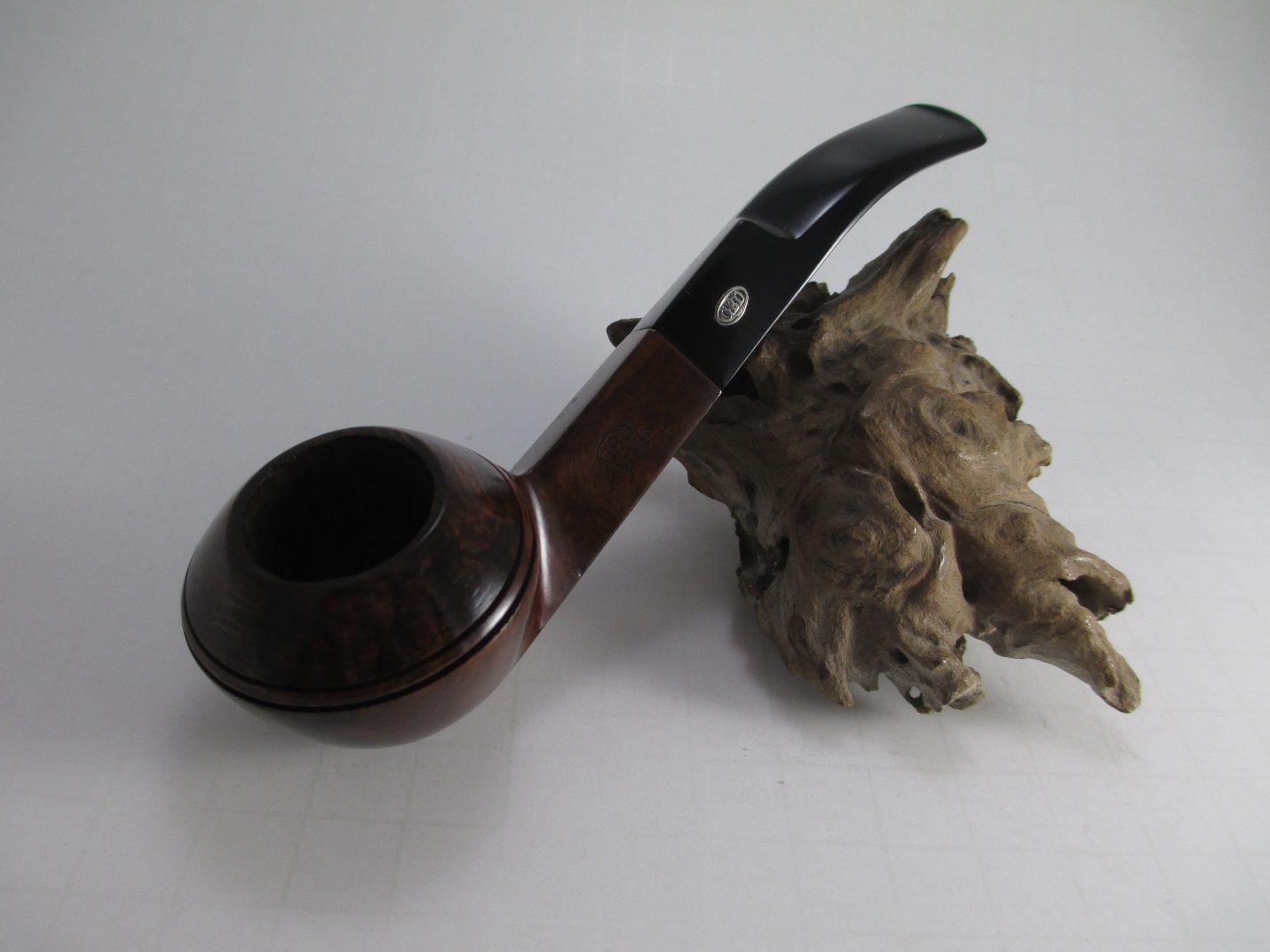
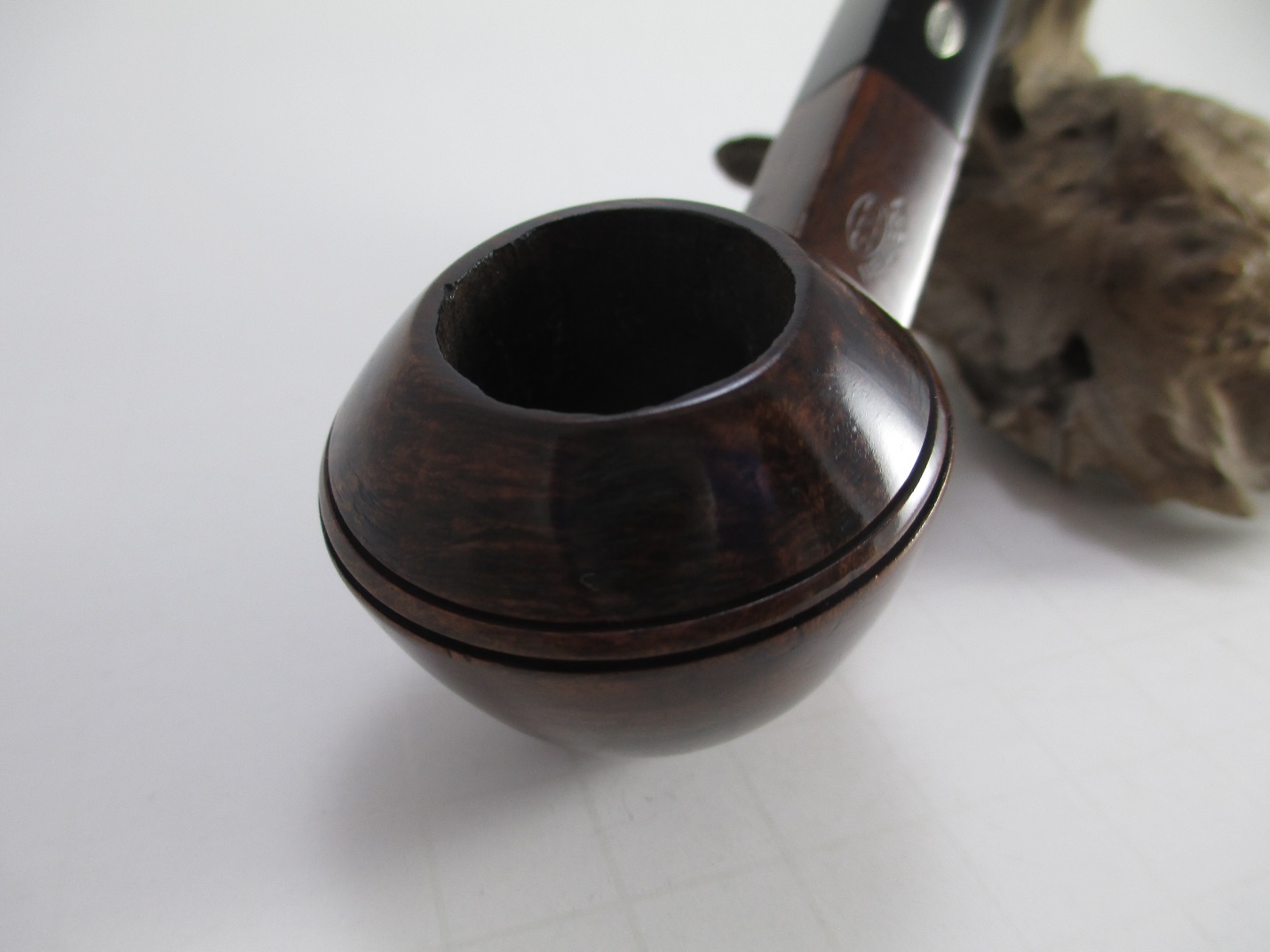
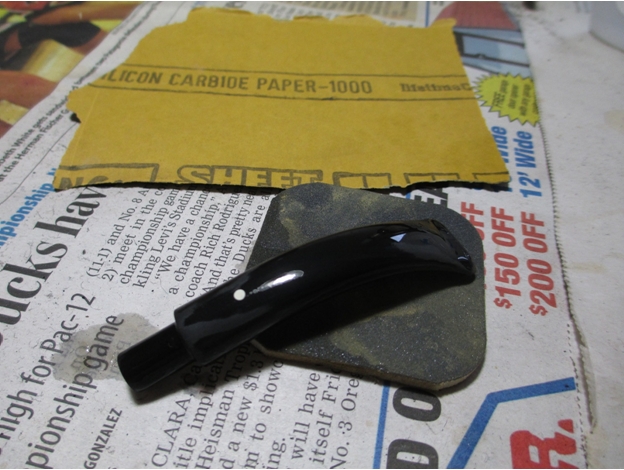
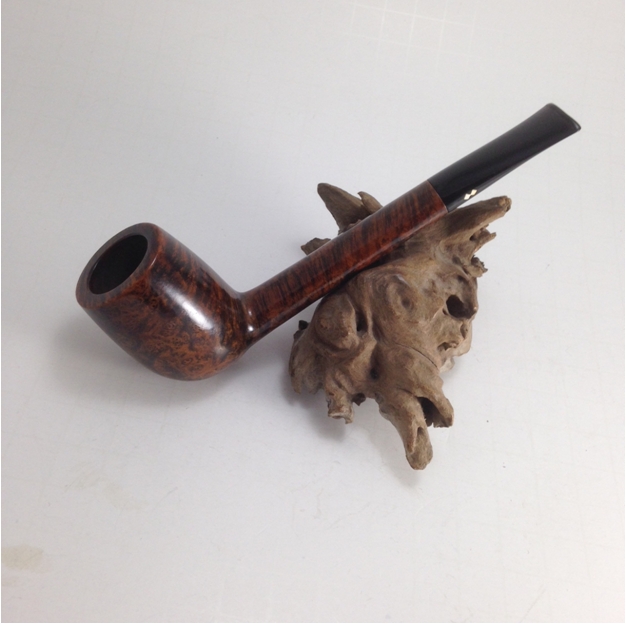
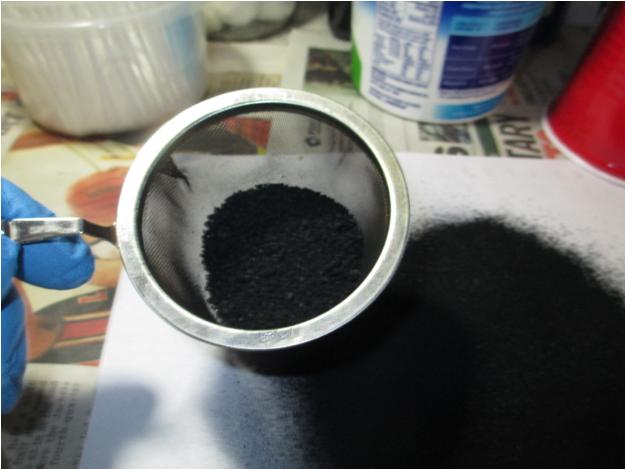
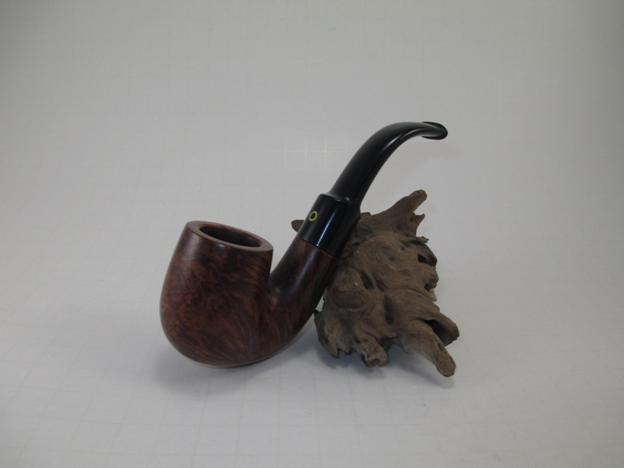
Andrew20 I built up layers of tape until it was the thickness that I wanted for the underside of the button. Next, I mixed some ground charcoal and super glue and started applying it. After each application I put a drop of accelerator on the end and applied another layer. It was not looking the way I wanted it to look.Andrew21 I remember Steve said that when he used activated charcoal it was very fine. So I sanded off the mess and started over. To get a finer charcoal I used our coffee grinder, which did a pretty good job, but still left some larger chunks.Andrew22 To solve that problem, I used a tea strainer. The result was very finely ground charcoal.Andrew23 I mixed the super glue and charcoal and applied it as before.Andrew24 I sanded between applications and filled in any remaining divots.Andrew25 Once I had the button shaped to my liking, I used a progression of micro mesh pads from 3200-12,000. Then I used my rotary tool with white diamond and carnauba wax to bring out the shine.Andrew26 I gave the bowl a quick spin on the buffing wheel with white diamond and carnauba wax. Here is the result.Andrew27
Andrew28

Andrew29

Andrew30

Andrew31

Andrew32

Andrew33

Andrew34

Andrew35

Andrew36

Andrew37 I am happy to say that this pipe smokes as well as it looks. It is a system pipe. I couldn’t be happier with the button. The thing I like about using the charcoal and super glue is, it polishes and shines just like the vulcanite. This pipe is a keeper. Thanks for looking.
Stem Reconstruction on an Ehrlich Billiard


Blog by Andrew Selking

“He’s not dead, just mostly dead.” Miracle Max The Princes Bride

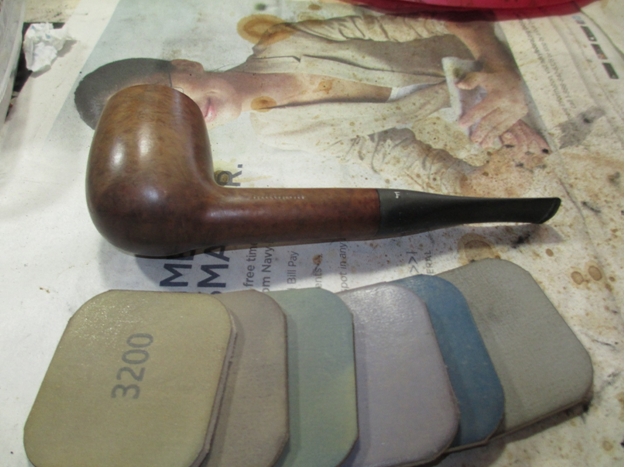
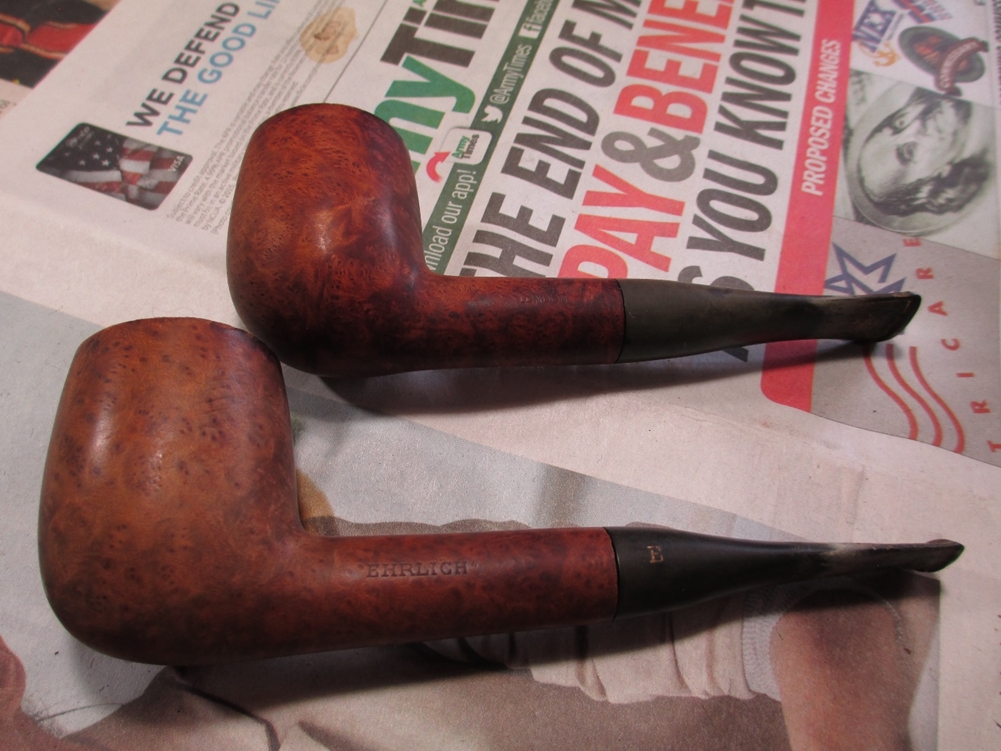
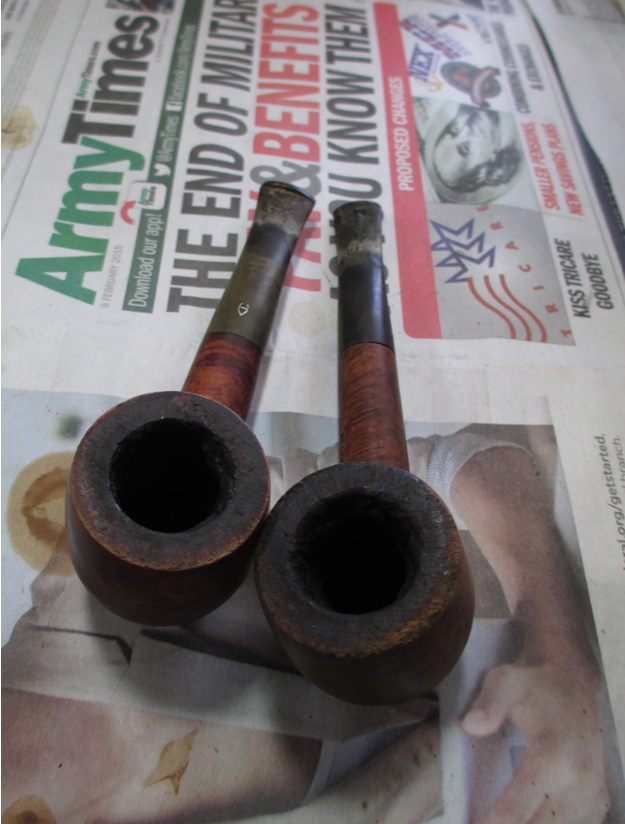
I like the way the pipe looked in the auction pictures, but when I first examined it I thought the stem was beyond help. This is not a little pipe, but the previous owner was obviously a clencher. The top and bottom of the stem had a hole, as you can see by these pictures.Andrew1

Andrew2

Andrew3

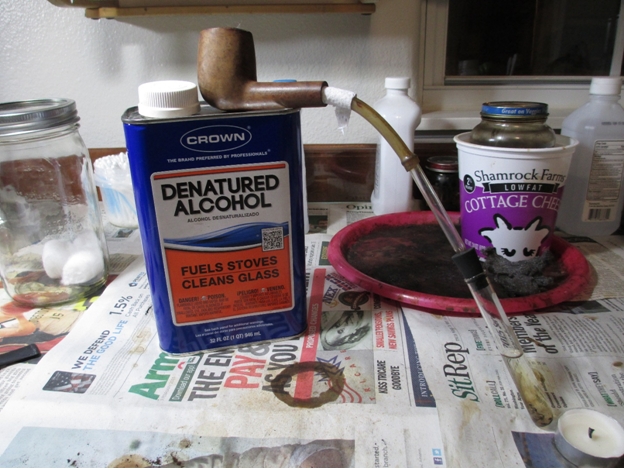
Andrew4 Before getting into the stem repair, I soaked the bowl in alcohol.Andrew5 Although I have done simple repairs on tooth marks, I had never tackled anything this complicated. The holes were far enough down that it wouldn’t be practical to cut a new button. The stem is fat enough that finding a replacement was also out of the question. The one thing the stem had going for it was the edges were still in good shape. I decided to do a complete reconstruction of the stem.

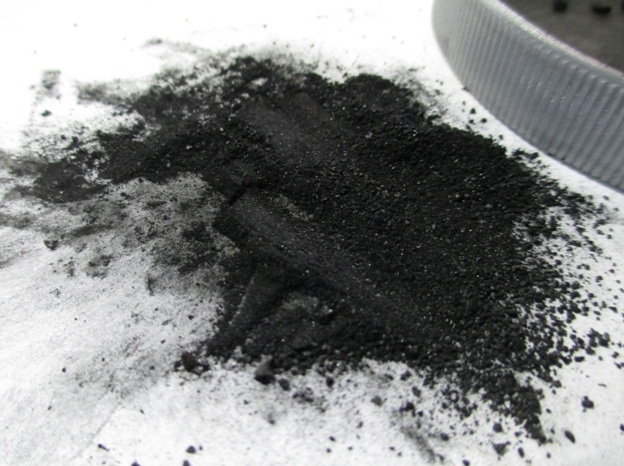
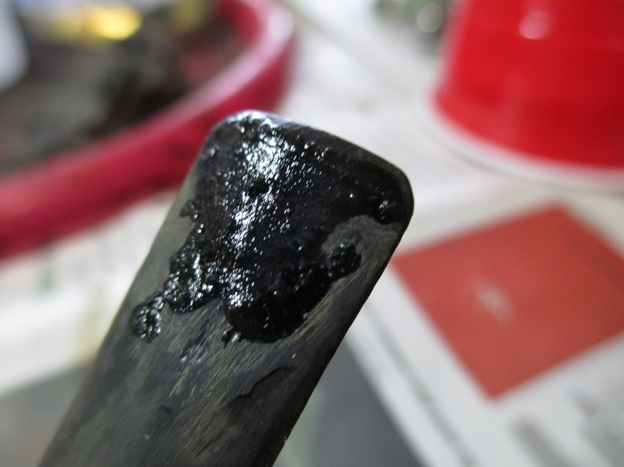
I don’t claim to be an expert on these things, so I turned to one of the how-to articles on Pipe Smoker’s Unlimited. The one gentleman used activated charcoal with super glue, so I decided to try it. I found a large container of activated carbon, which is the same thing, in the pet department of my local Walmart. It came in small pellets, which needed to be ground into a fine powder.Andrew6 This is what it looked like after grinding.Andrew7 I took some wax paper and folded it to fit inside the stem. Once I got the fit I wanted, I sprayed the wax paper with cooking spray and put it back inside the stem.Andrew8 I used a couple drops of clear super glue on the bottom of a plastic cup, mixed in some charcoal dust, and applied it to the hole. I added a couple of drops of glue accelerator and set it aside to cure.Andrew9 I did the same thing with the other side. I’ve found that even with accelerator, it’s a good idea to let the glue cure for at least 24 hours. You can work it sooner than that, but it has a tendency to come out when you’re sanding it.Andrew10 I used several applications of the glue and charcoal paste.Andrew11

Andrew12 Once the hole was filled in I sanded it down.Andrew13

Andrew14 As you can see the charcoal left a few pits. To fill them in I applied a thin layer of super glue over the pits and sprinkled charcoal dust directly on top of it.Andrew15

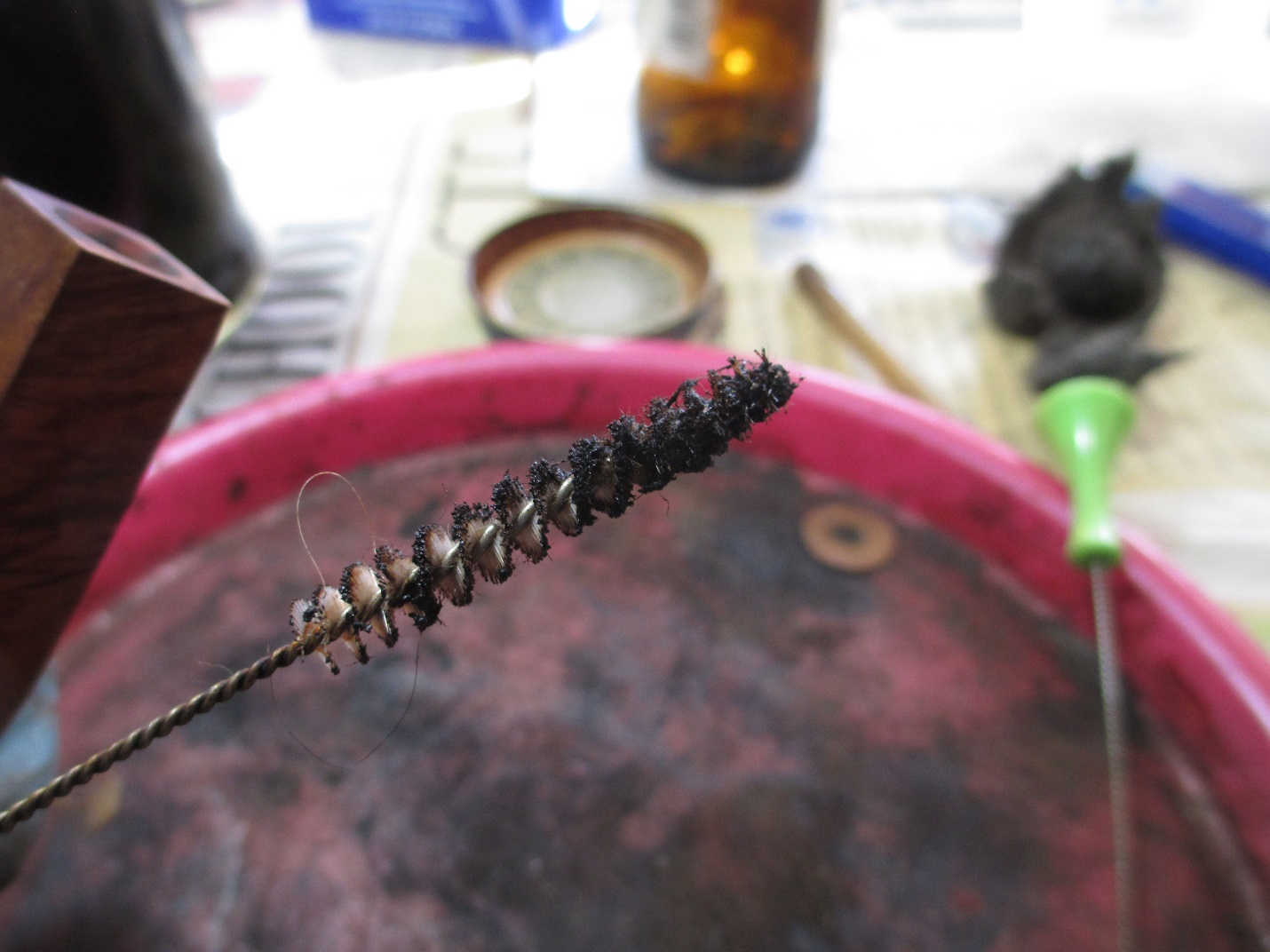
Andrew16 This is what it looked like after sanding.Andrew17 The stem was still far from finished, but it was good enough to start cleaning the insides.Andrew18 I went ahead and retorted the bowl first.Andrew19 The brush came out fairly clean.Andrew20 I learned a hard lesson while cleaning this shank. In spite of the large diameter, the inner hole was smaller than the q-tip I tried to stick inside it. The end came off and it took a lot of effort to get it out. The moral of the story is, if it doesn’t fit don’t try to make it fit.

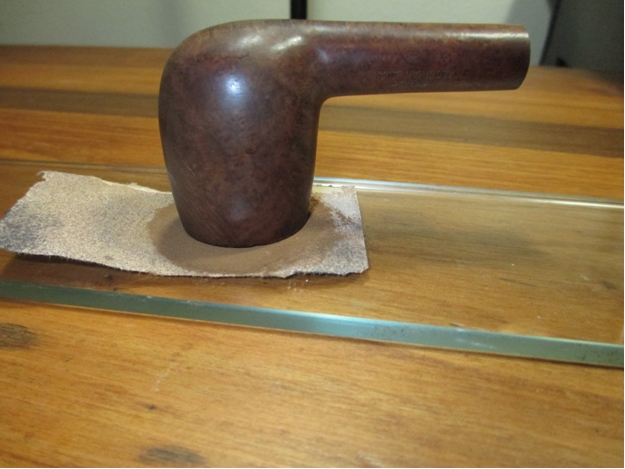
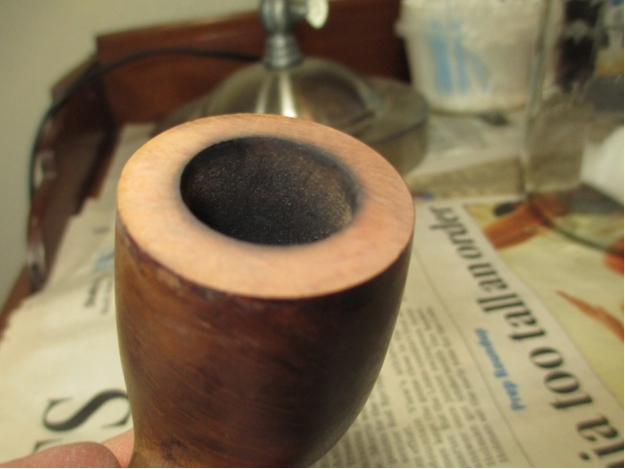
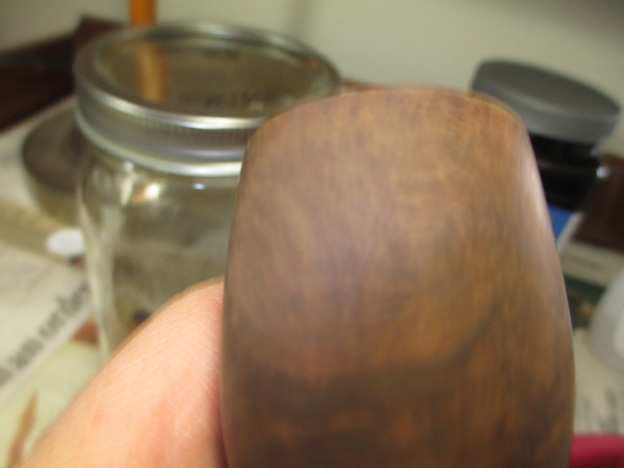
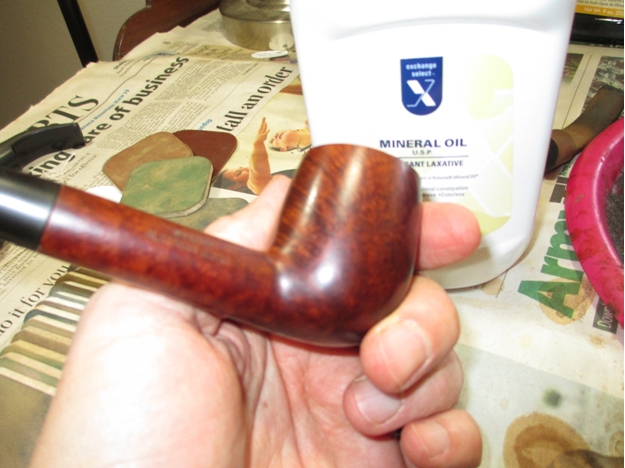
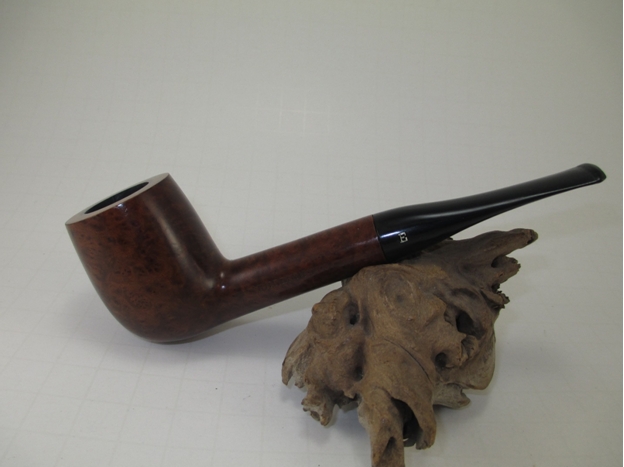
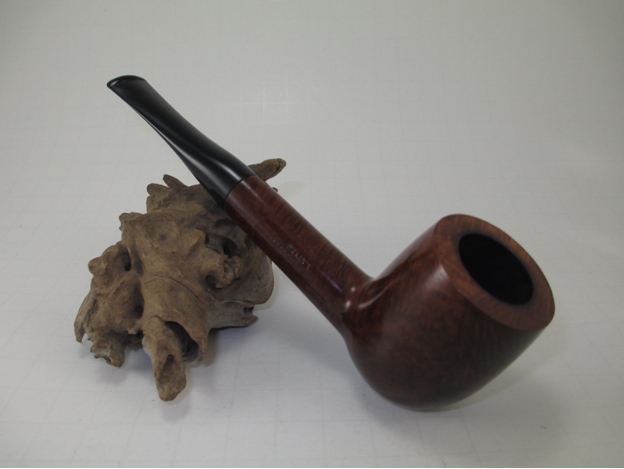
In spite of the minor set-back, the shank was pretty clean.Andrew21 Next I retorted the stem.Andrew22 It had a lot of tar inside it, so repeated the process an additional two times. It was easy to clean after that.Andrew23 With the inside cleaned, it was time to finish smoothing out the stem. I used 400 grit wet/dry with water, followed by 1500-2400 grit micro mesh pads with water. To prevent rounding the edges of the stem I held a rubber washer over the end of the tenon.Andrew24 While the stem dried I turned to repairing the rim damage.Andrew25 I used 150 grit sand paper on a piece of glass to remove the worst of the damage.Andrew26 Once I had the edge almost where I wanted it, I switched to 400 grit sand paper. This is what it looked like after sanding.Andrew27 I have become a big fan of natural finished pipes, especially when they have nice grain like this one does, so I used acetone and 0000 grit steel wool to clean the bowl.Andrew28 After cleaning the finish, I noticed a couple of dents on the front of the bowl.Andrew29 I used my wife’s iron and a wet cloth to steam out the dents.Andrew30 After allowing the wood to dry out overnight, I polished the bowl and stem with a progression of 3200-12,000 grit micro mesh pads.Andrew31 I know Steve uses Obsidian oil on his stems during this step and also uses olive oil to bring out the grain of the bowl. I’ve been experimenting with mineral oil for the same purpose. It doesn’t take much, just a little bit on the tip of your finger. I used one coat after the first three pads on both the bowl and the stem. After the final pad, I repeated the process. I really worked the bowl in my hand to bring out a beautiful reddish brown color.Andrew32 I used a soft cloth to buff the pipe and remove any excess oil before the final buffing stage. I buffed the bowl on my buffing wheel with white diamond and carnauba wax. I used my rotatory tool with white diamond and carnauba wax on the stem. I gave the whole pipe a final coat of Halcyon II wax and filled the E on the stem with a white out pen. This is the result.Andrew33

Andrew34

Andrew35

Andrew36

Andrew37

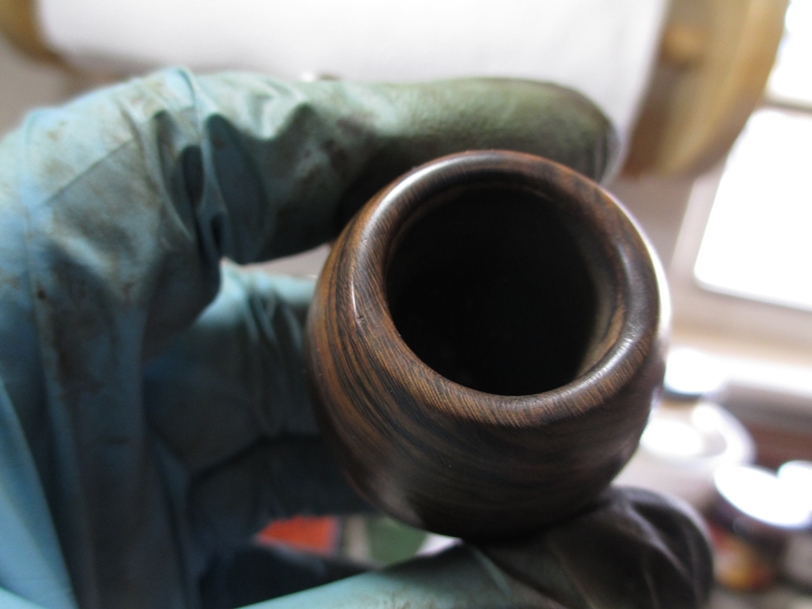
Restoring a Heritage Heirloom 94C Outdoorsman


Blog by Andrew Selking

Ever since I stumbled across my first Heritage pipe, I have been on a quest to find more. Heritage pipes represent the pinnacle of American craftsmanship from the Kaufman Brothers and Bondy (KB&B) family of pipes. I will not go into great detail about the Heritage line, but here is a link for further information. https://rebornpipes.com/2014/12/23/the-wonderful-world-of-heritage-briars/

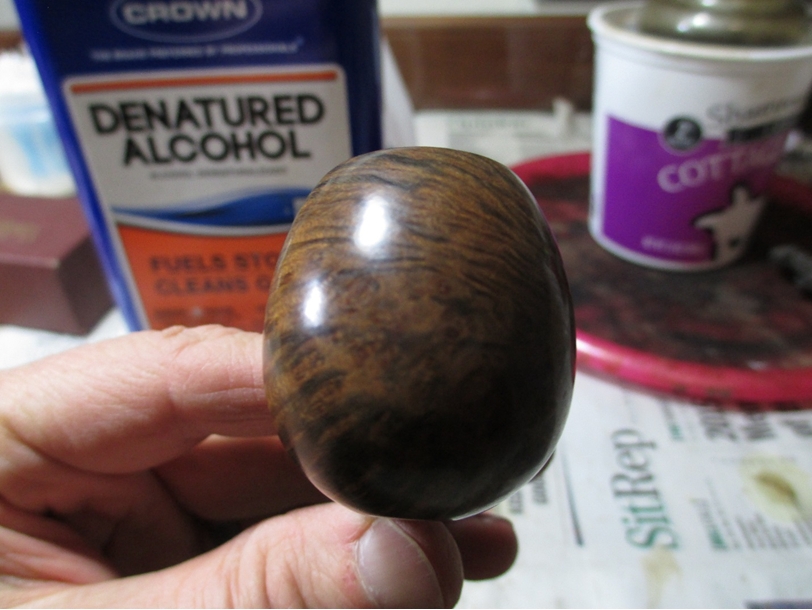
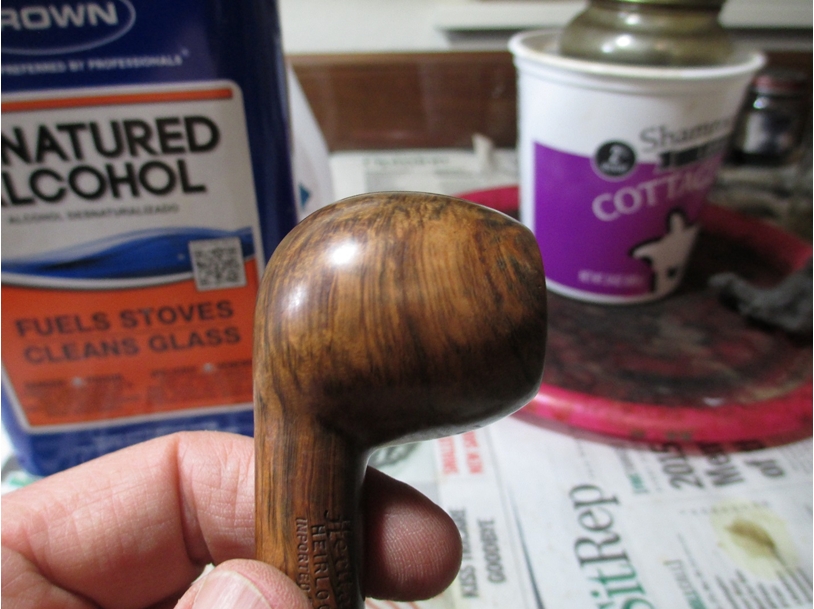
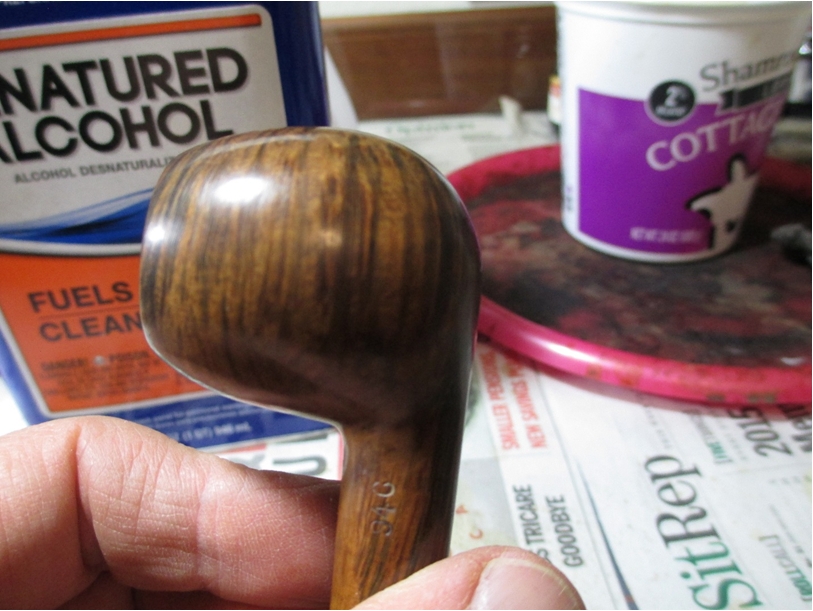
Although Heritage pipes used Kaywoodie shape numbers, this particular pipe’s shape is not in any of the Kaywoodie catalogues that I have (1936, 1947, 1955, and 1972). It has an apple shape bowl, a long shank, and a ¼ bent saddle bit. It’s a small pipe, weighing in at exactly one ounce and measuring 4.9 inches long, and as befitting its namesake I can envision the owner fly fishing while smoking it. What really amazed me about this pipe though is the cross grain. It starts at the front of the bowl and runs vertically throughout the entire pipe into the shank. I have never seen anything quite like it.

The pipe arrived in good shape, a slight tar build up on the rim, some minor oxidation on the stem, and a single tooth mark under the button. Here is what it looked like.Her1

Her2

Her3

Her4 I started by giving the bowl an alcohol bath. The purpose of the bath is not to sanitize the pipe, the alcohol just loosens up all of the crud (tar, cake, un-burned tobacco etc.).Her5 While the bowl marinated, I soaked the stem in Oxyclean.Her6 The Oxyclean brings out the oxidation and helps loosen the gunk inside the stem. I usually run a fuzzy stick through the stem while I still have the cleaning solution. That’s always a good indicator how much work I will have during the next step. Fortunately, this stem didn’t look too bad. Notice the brown oxidation. Once I finished the inside of the stem, I took an old tooth brush and some tooth paste and removed the worst of the oxidation. This also had the benefit of making the white inlay nice and bright.Her7

Her8 Next up was removing the cake from the bowl. After a 24 hour soak, it is very easy to remove even the most stubborn cake.Her9 After removing the cake it was time to tackle the shank using the retort.Her10 She was a dirty girl.Her11

Her12 I ended up retorting the shank five times! Not sure what kind of tobacco the previous owner smoked or if he ever used pipe cleaners.

Next up, the shank. As I’ve mentioned before, if you retort the shank separately make sure you plug the end to prevent boiling alcohol and tobacco juice from spewing everywhere.Her13 Fortunately most of the nastiness was in the shank and the stem only required one fuzzy stick.Her14 The final cleaning step was removing the tar and cake from the rim. I used 0000 steel wool and acetone. The steel wool does a nice job removing the tar without damaging the finish.Her15

Her16 There were a couple of dents in the side of the bowl, so I used steam to raise the dents. I then used a progression of micro mesh pads, 1500-12,000 grit in preparation for staining. Here is the bowl ready for stain.Her17

Her18

Her19 You can see the grain is everywhere.Her20 I used Pimo Pipe Supply medium walnut stain, diluted by 50%, to even out the color. Followed by a furniture pen to add a little bit of red tint. Here is the final result.Her21 I used 400 grit wet/dry sandpaper with water to remove the tooth mark and oxidation. I’ve started using a rubber washer, placed over the tenon, to make sure that I don’t round the edges of the stem while sanding. After the 400 grit, I used 1500, 1800, and 2400 grit micro mesh with water.Her22 Once the stem dried I finished polishing it with a progression of micro mesh pads, 3200-12,000 grit, followed by white diamond and carnauba wax with my rotary tool. I buffed the bowl on the buffing wheel with White Diamond and carnauba wax. Here is the finished pipe.Her23

Her24

Her25

Her26

Her27

Her28

Her29

Her30

Her31

Resuscitating a Kaywoodie Fine Line


Blog by Andrew Selking

I remember back in basic training my Drill Sergeant always used to say, “Men, ugly women need love too”. That was my initial thought when I first saw this Kaywoodie Fine Line pot. The stem was under-clocked, the varnished finish was uneven, the rim had some damage, and it just looked kind of dull. On the plus side, the stem was in decent shape and my fondness for Kaywoodies provided the motivation to help it live up to its potential.KWA1 As you can see, the stem was noticeably under-clocked.KWA2 Fortunately I have a tool for that.KWA3 After directly heating the stinger with my heat gun, I gently turned it back to its original position and set it by running the end of the stem under cold water. This was the result.KWA4

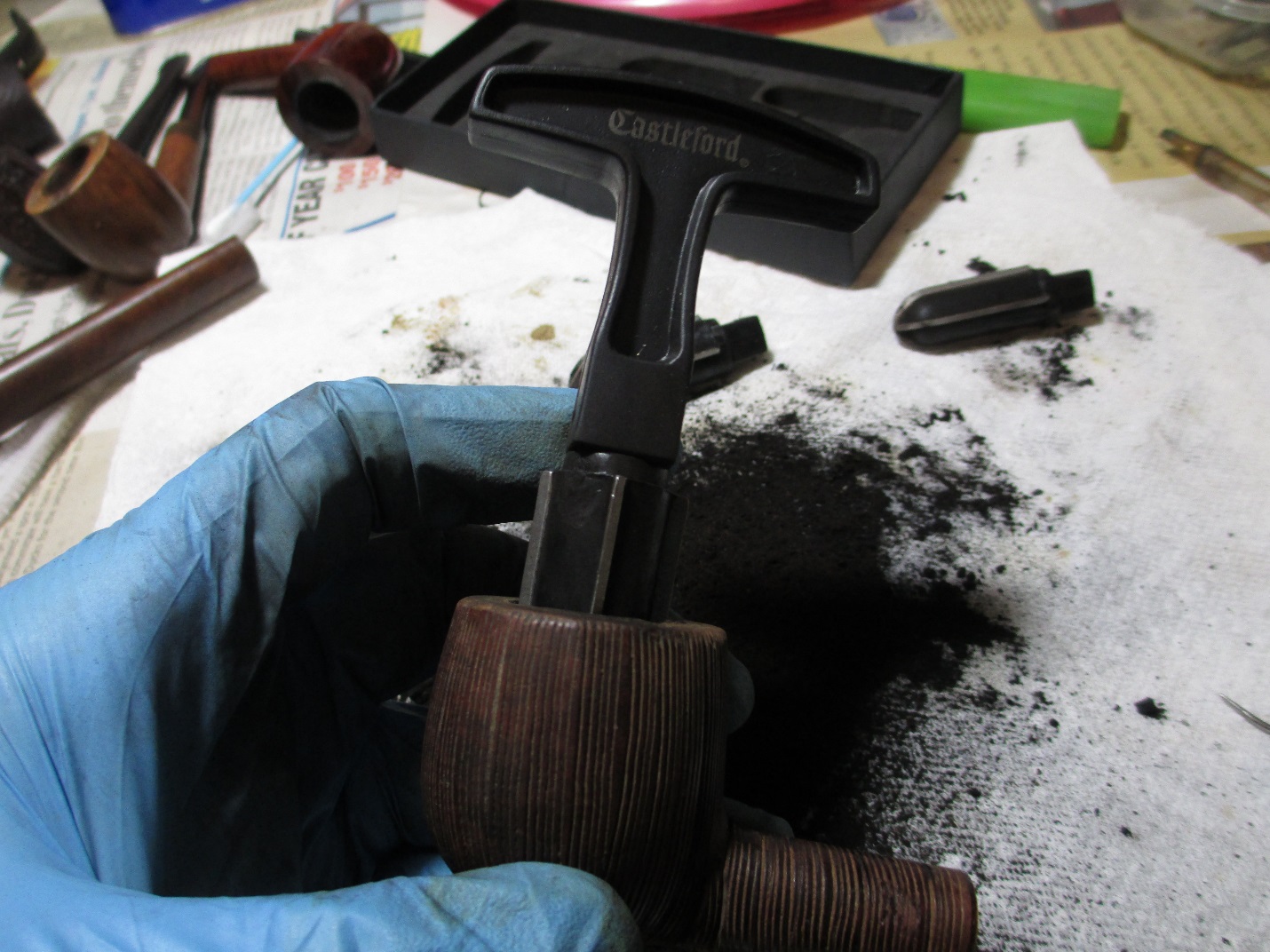
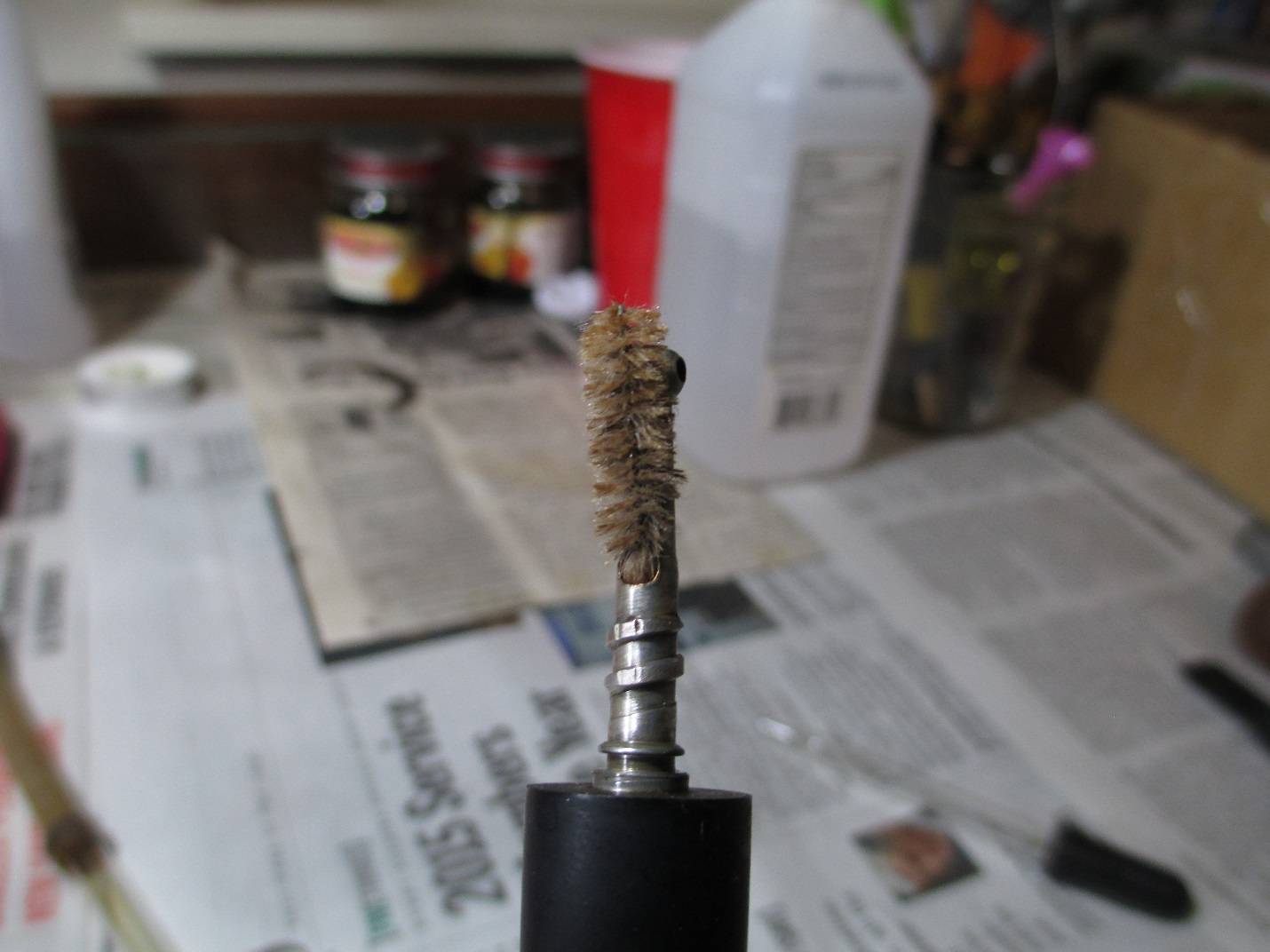
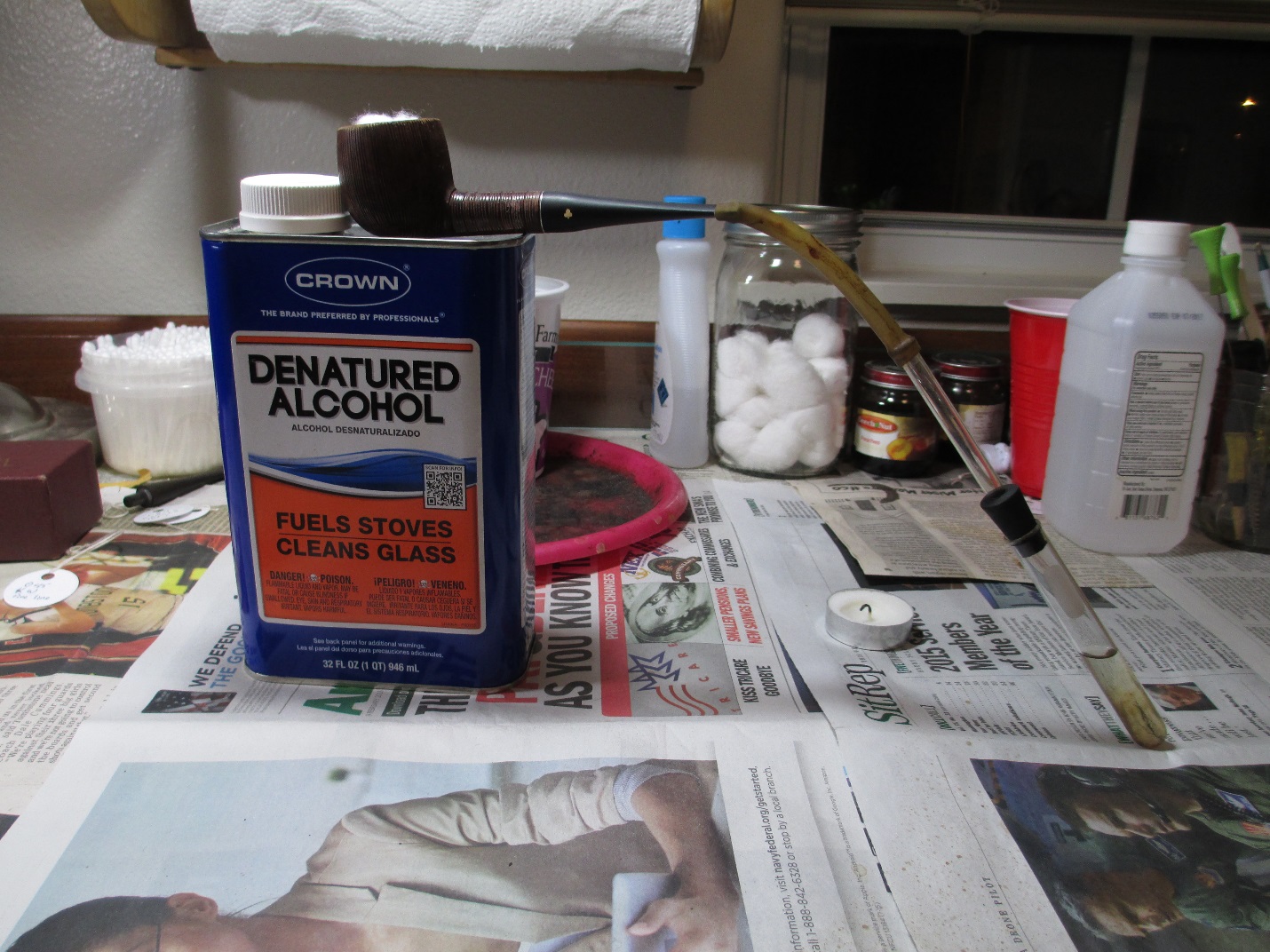
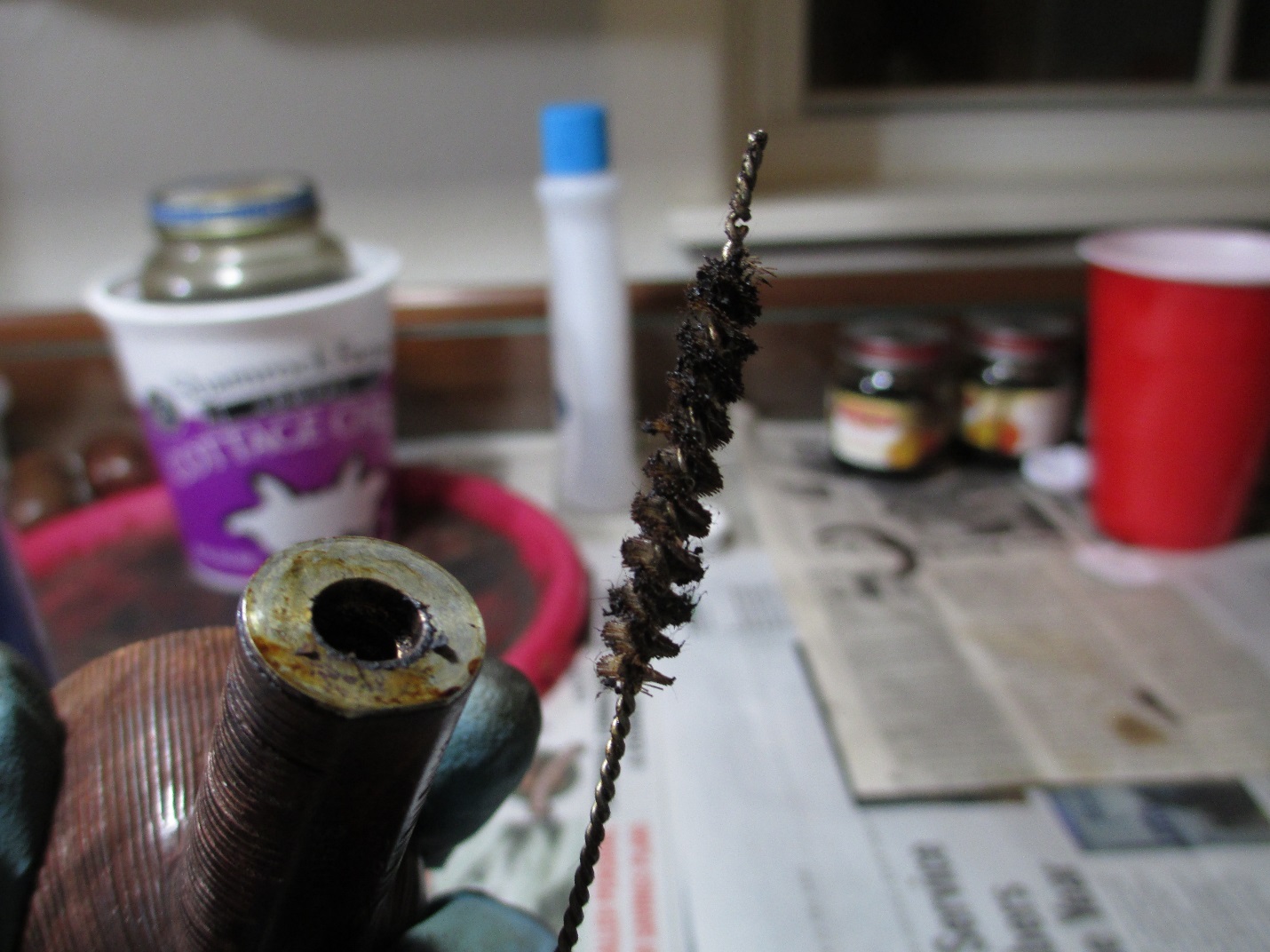
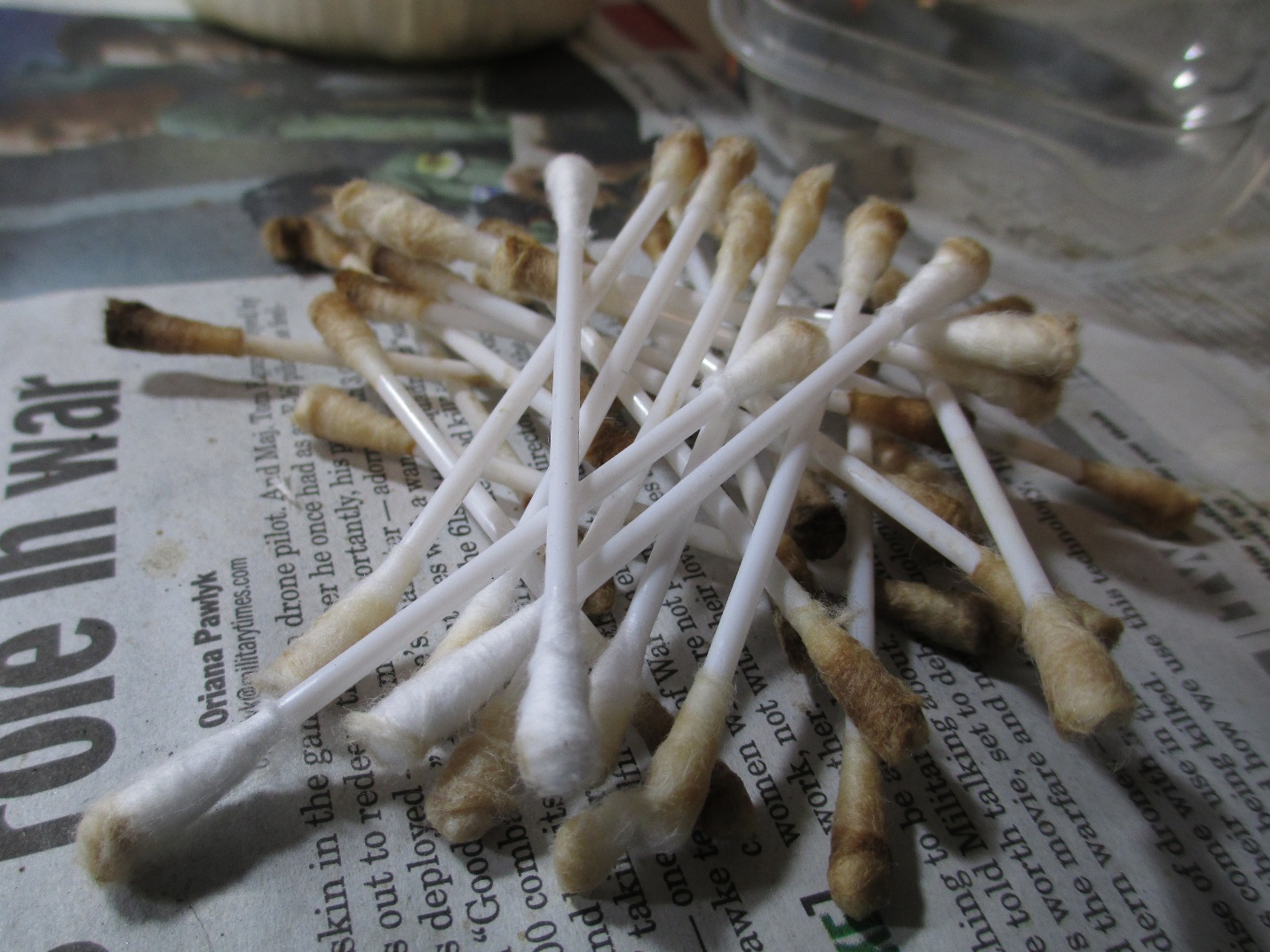
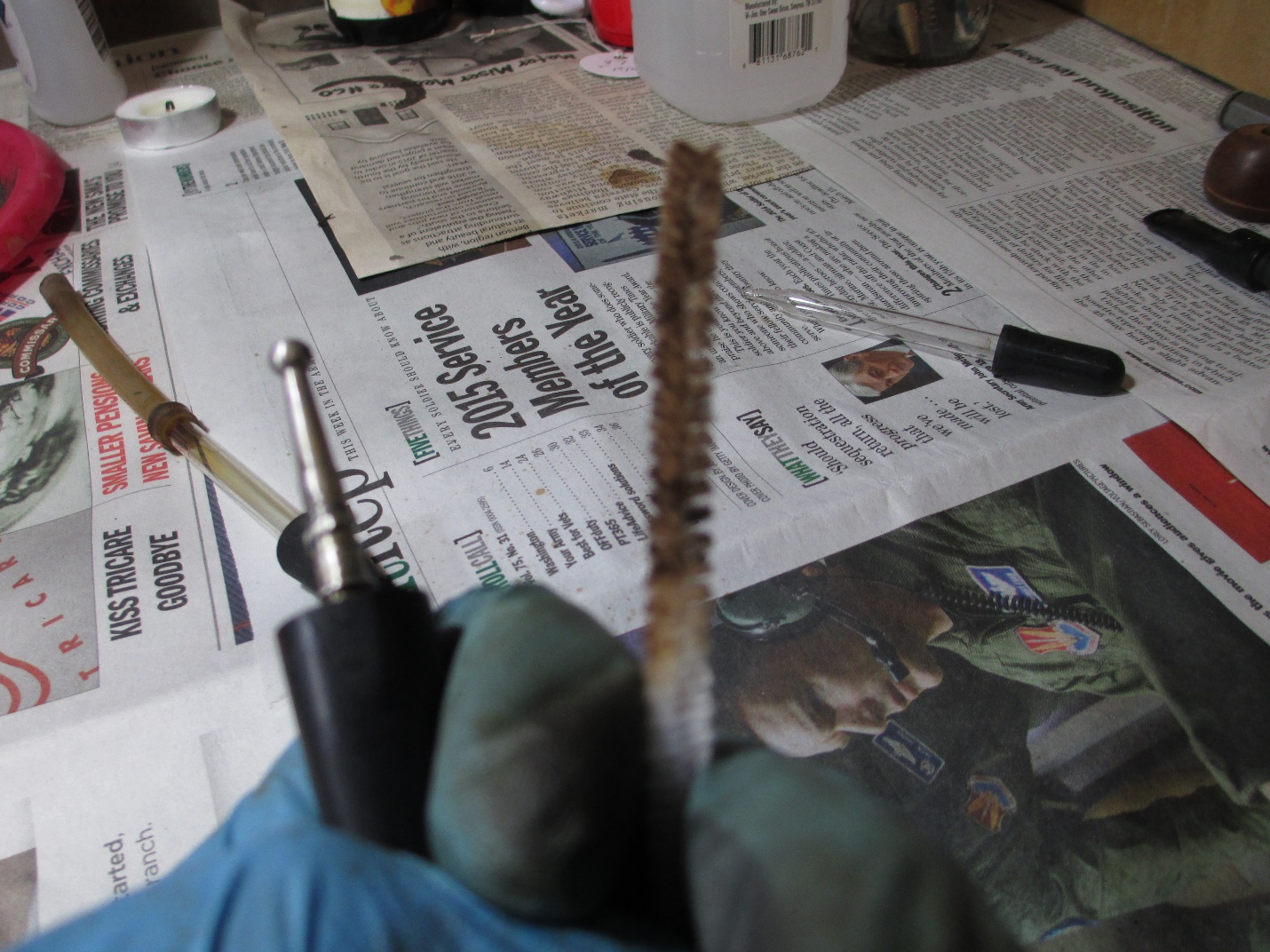
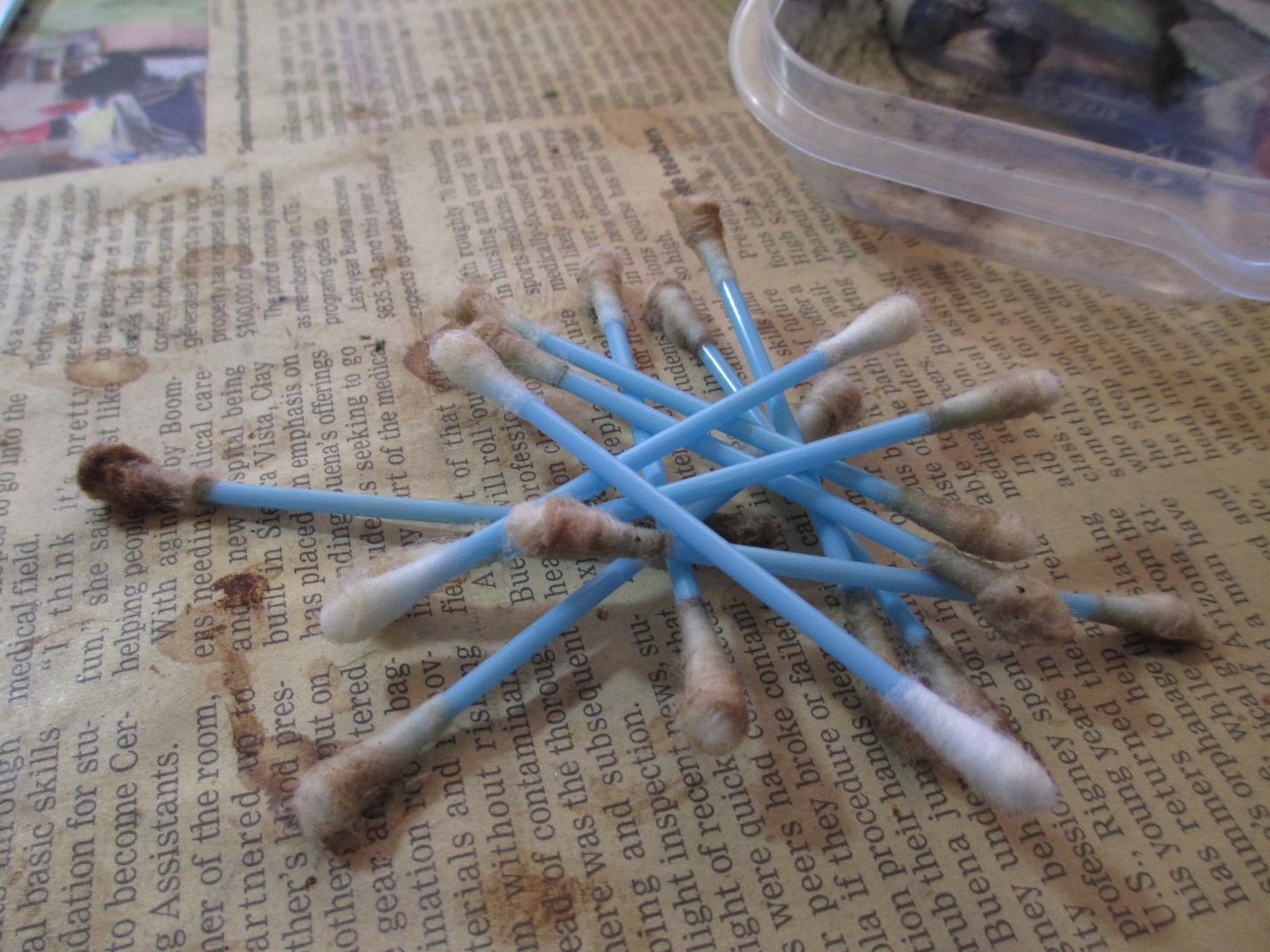
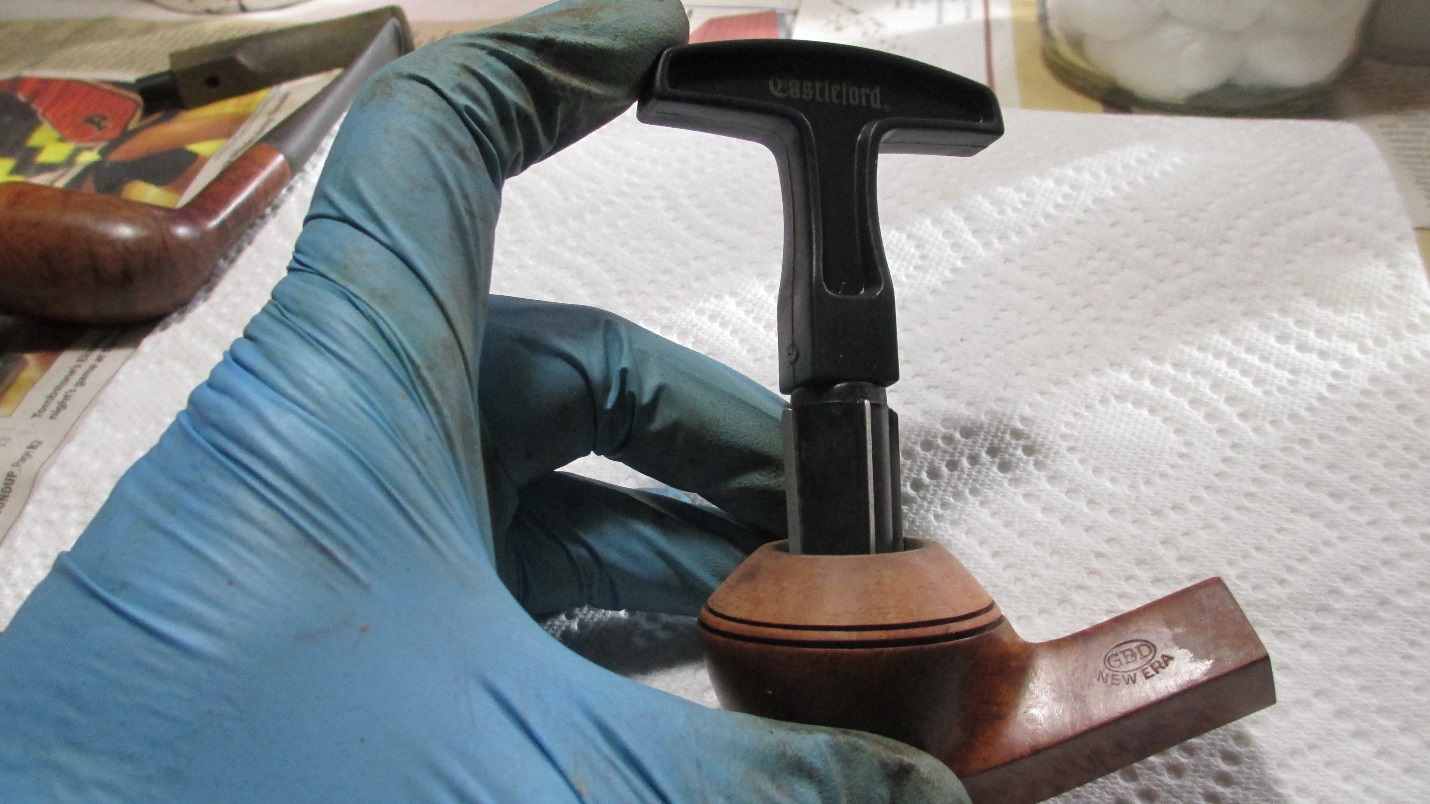
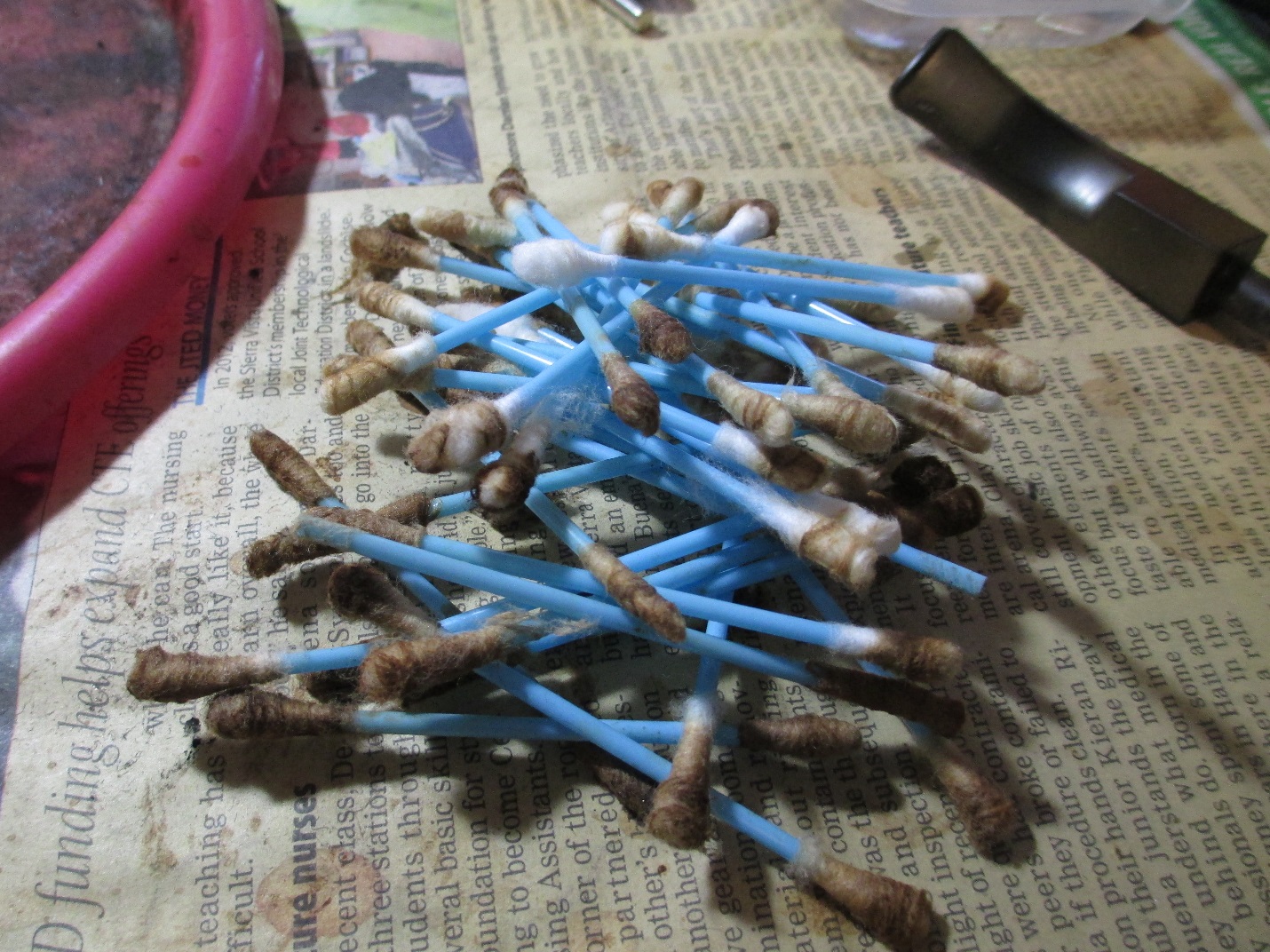
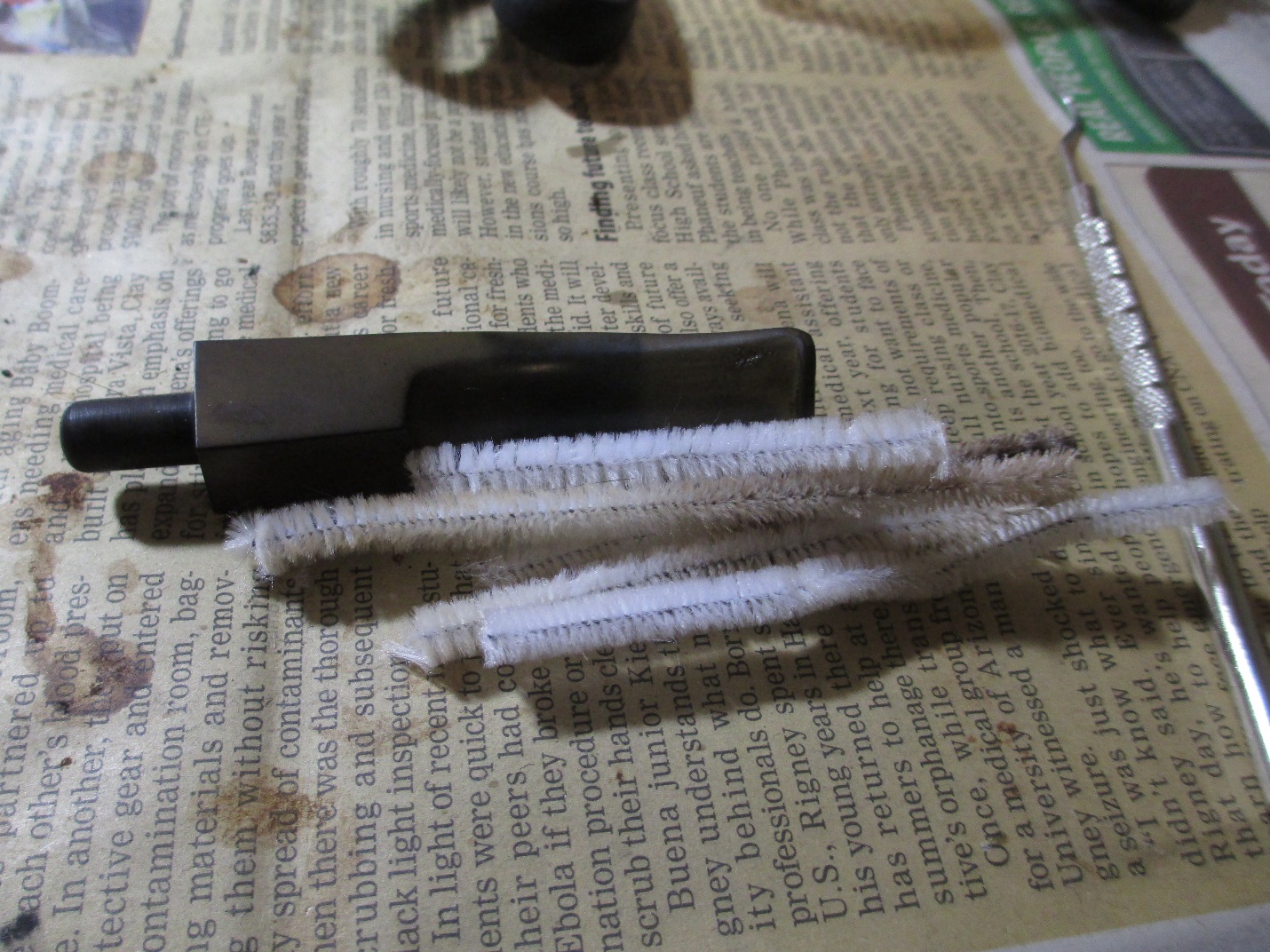
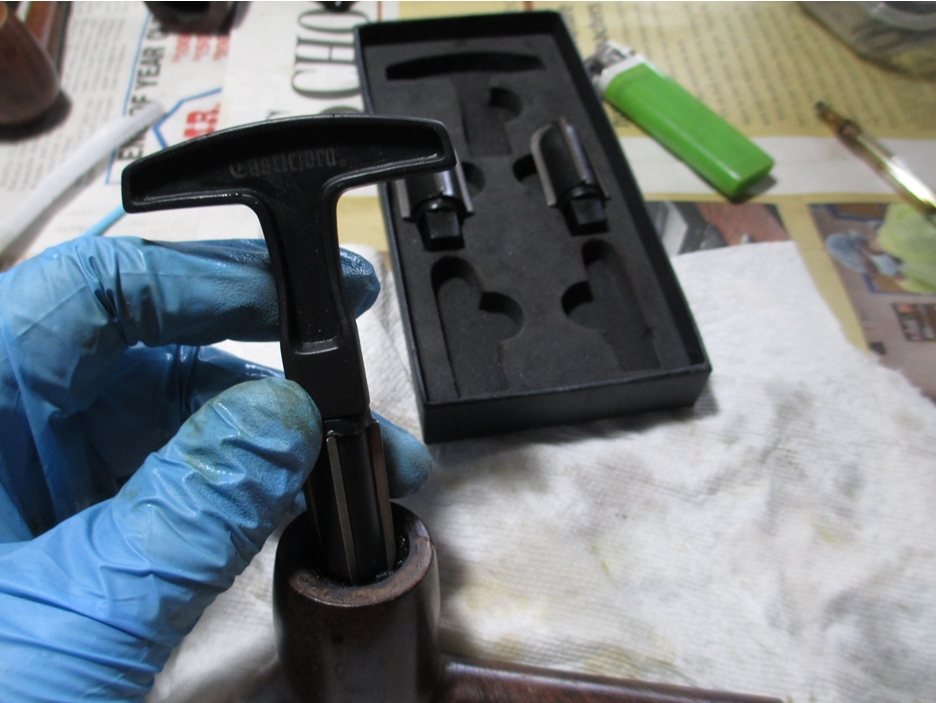
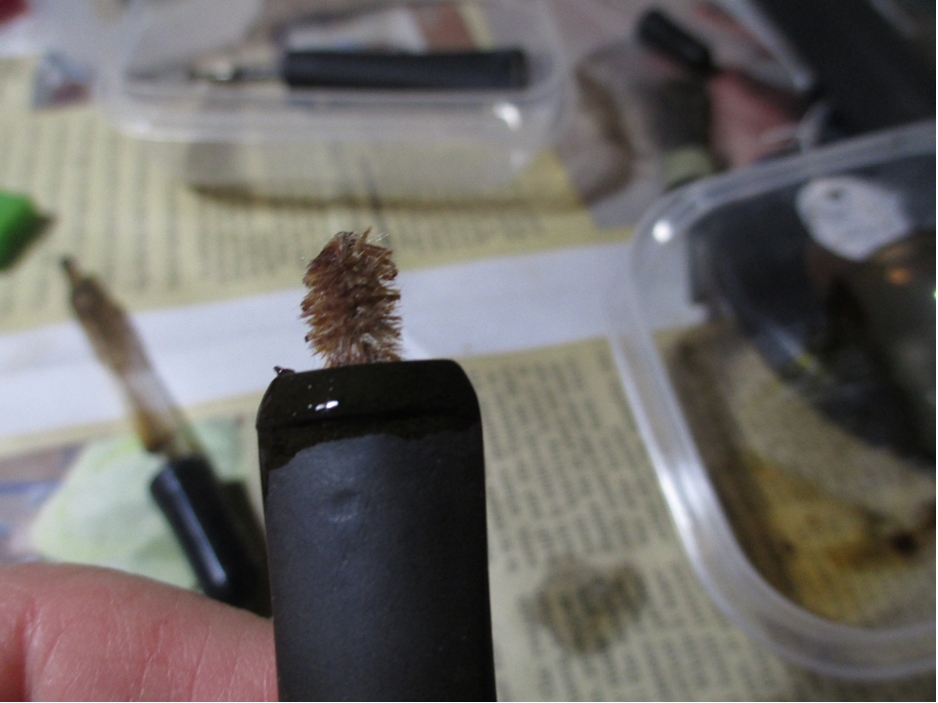
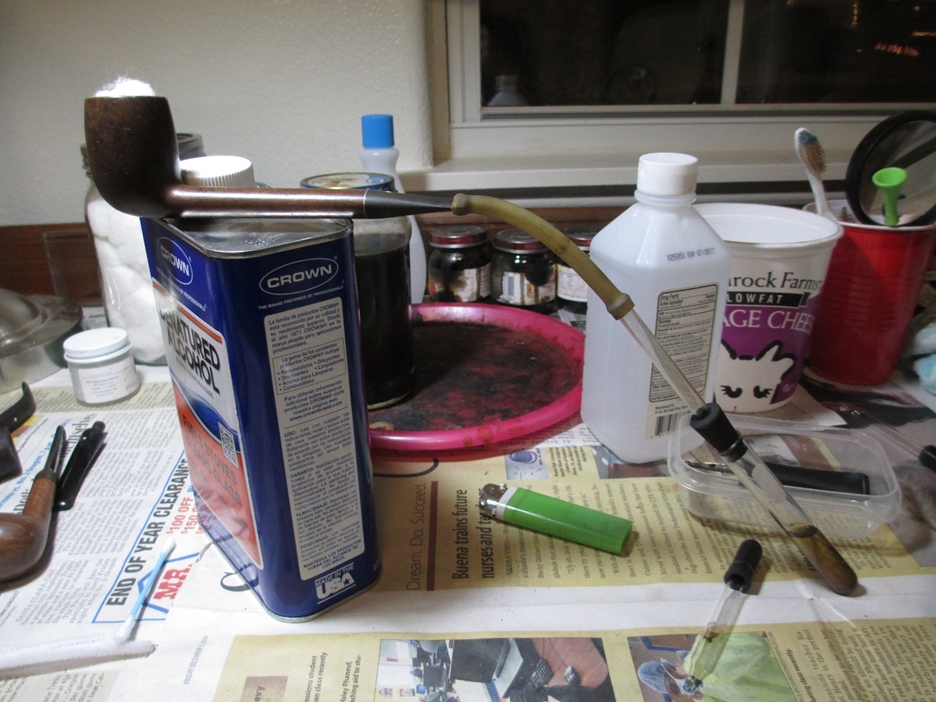
KWA5 I soaked the bowl overnight in the alcohol bath then reamed it with my Castleford reamer.KWA6 While the bowl soaked, I gave the stem a bath in Oxyclean. I make it a practice to use the Oxyclean and a fuzzy stick (that’s the politically correct term for a pipe cleaner intended for crafts rather than cleaning pipes) to get as much gunk out while it’s still soft. This is what the fuzzy stick looked like after the first pass.KWA7 Normally a fuzzy stick without a lot of tar and tobacco is cause for celebration, but I suspected the stinger merely kept the gunk in the shank. When cleaning Kaywoodies I have to deviate from my normal process of retorting the stem and bowl separately, since the rubber tube doesn’t fit inside the shank very well. Here is the pipe ready for retort.KWA8 After the first retort.KWA9I did the retort two more times. This is what was hiding inside the shank.KWA10 After scrubbing the solids out with a brush dipped in alcohol, I switched to q-tips dipped in alcohol. As you can see, it took a good amount to get it clean.KWA11 The boiling alcohol loosened up the tar in the stem. It turned out my original guess was correct, the stinger kept the stem relatively clean.KWA12

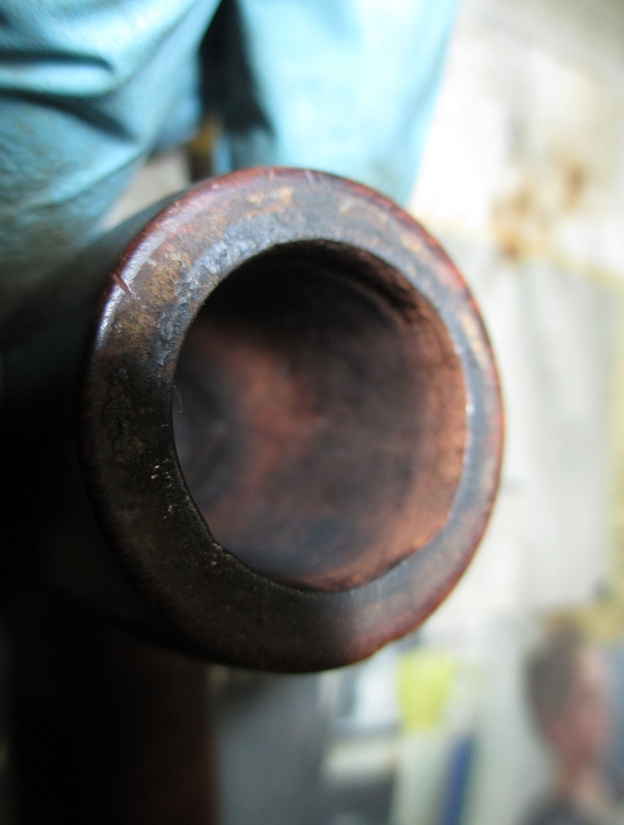
KWA13 With the inside of the pipe clean, I turned my attention to the outside of the pipe. The first thing I wanted to do was get rid of the remaining varnish. I used acetone and 0000 steel wool.KWA14 Next I topped the bowl to eliminate the rim damage. I used a piece of glass with 400 grit sand paper.KWA15 After topping the bowl I used Pimo Pipe Supply medium walnut stain to cover up the couple of fills.KWA16 While I was at it, I polished the aluminum insert in the shank with 0000 steel wool.KWA17

KWA18 With the bowl in good shape, I started work on the stem. I used 400 grit wet/dry sand paper with water to remove the minor tooth marks and oxidation. I then used 1500-2400 grit micro mesh pads with water. Next I re-assembled the pipe with a rubber washer between the stem and shank to prevent rounding the end of the stem. I finished the stem with micro mesh pads, 3200-12,000 grit, followed by white diamond and carnauba wax using the rotary tool on low speed. KWA19 A light coat of Halcyon II on the bowl and here’s the result.KWA20

KWA21

KWA22

KWA23

KWA24 I think the old girl cleaned up nicely. She may not be a shiny pipe, but she is a sturdy pipe. Thanks for looking.
Bringing a Yello Bole Pot back to Life


Blog by Andrew Selking

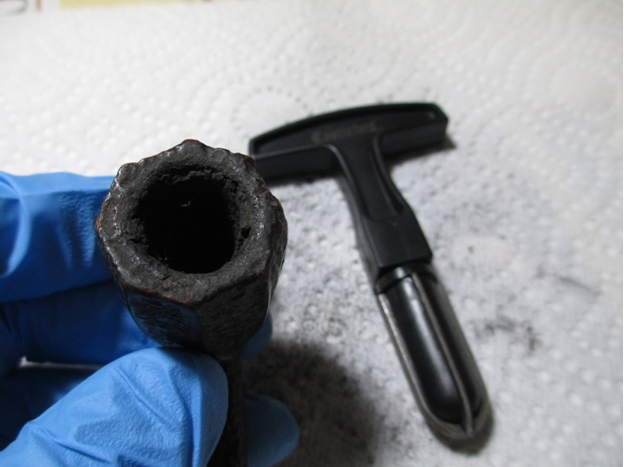
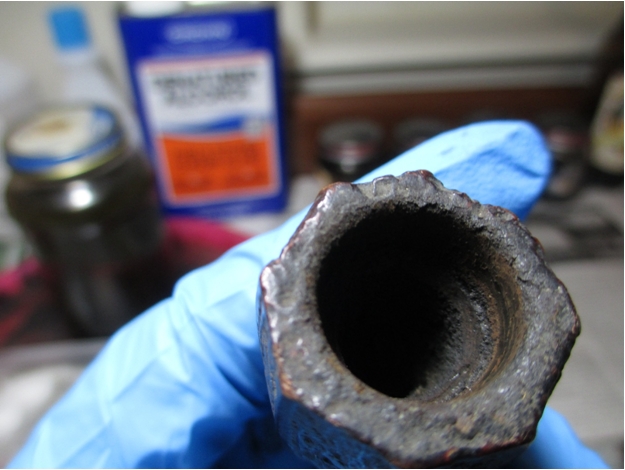
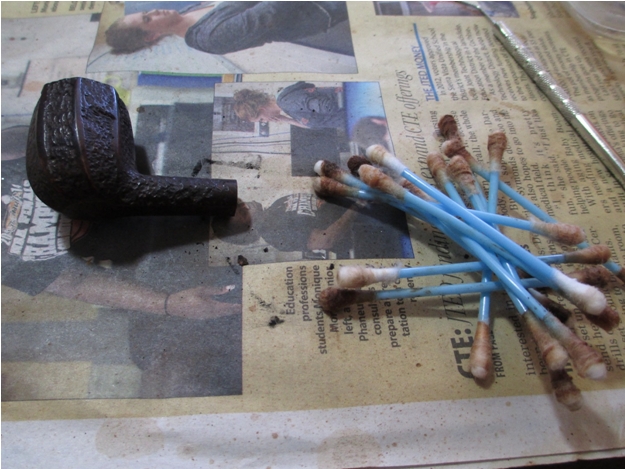
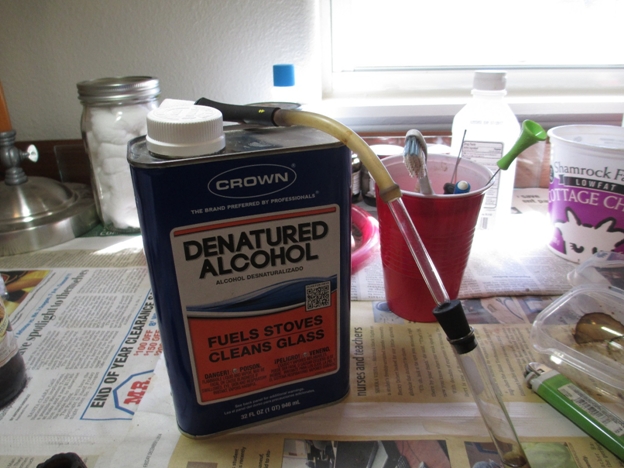
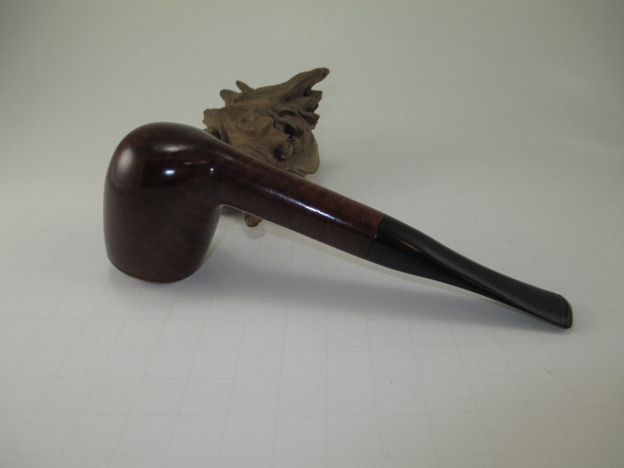
Anyone who reads my previous postings know that I have a fondness for early KB&B pipes. Since the briar used in Yello Bole pipes was generally inferior to those used in Kaywoodies, most Yello Bole pipes are smaller. This was a work around for defects found in the briar. I saw this Yello Bole pot and was intrigued. It’s a full size pipe. Here is the seller’s picture.YB1 When the pipe arrived, the stem was nearly perfect with the original stinger intact (not that I planned to leave it there). The bowl looked decent with a minimal amount of tar on the rim and very light cake. I dropped the bowl into the alcohol bath and soaked the stem in Oxyclean.

I noticed the first indication of trouble when I pulled the bowl out for reaming: it had a heavy varnish coating. That’s usually a sign that the pipe maker wanted to hide imperfections in the wood.
YB2

I quickly reamed the bowl then broke out the 0000 steel wool and acetone to remove the varnish.

YB3

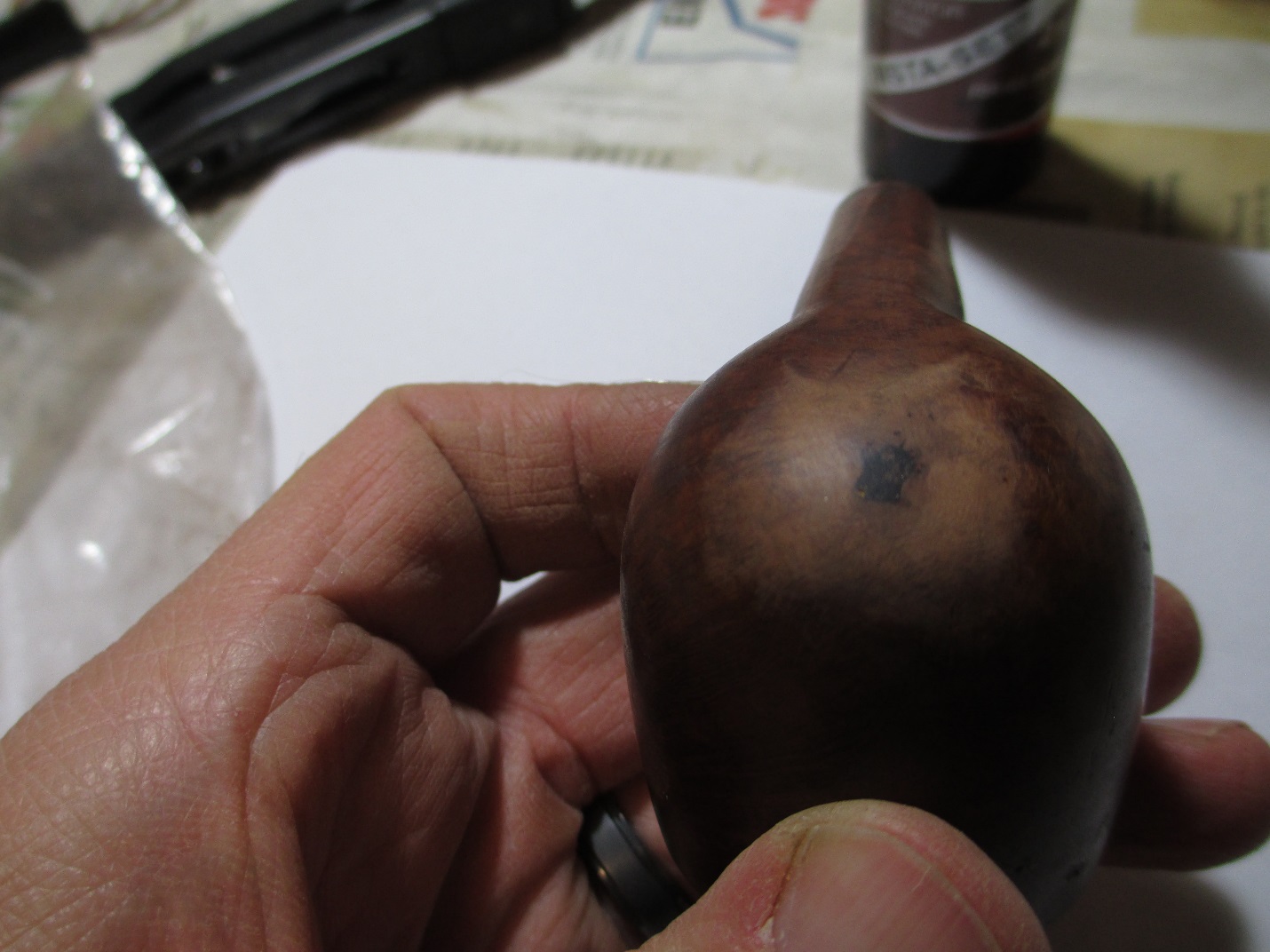
I’ve seen some pits in briar before, but this is the first time I’ve encountered a pit so deep that I gave it a name. I named it the pit of despair. Here’s the picture before I removed the pink putty.

YB4

Here’s the pit of despair fully revealed. My dental pick had a good ¼ of an inch of room to explore.

YB5

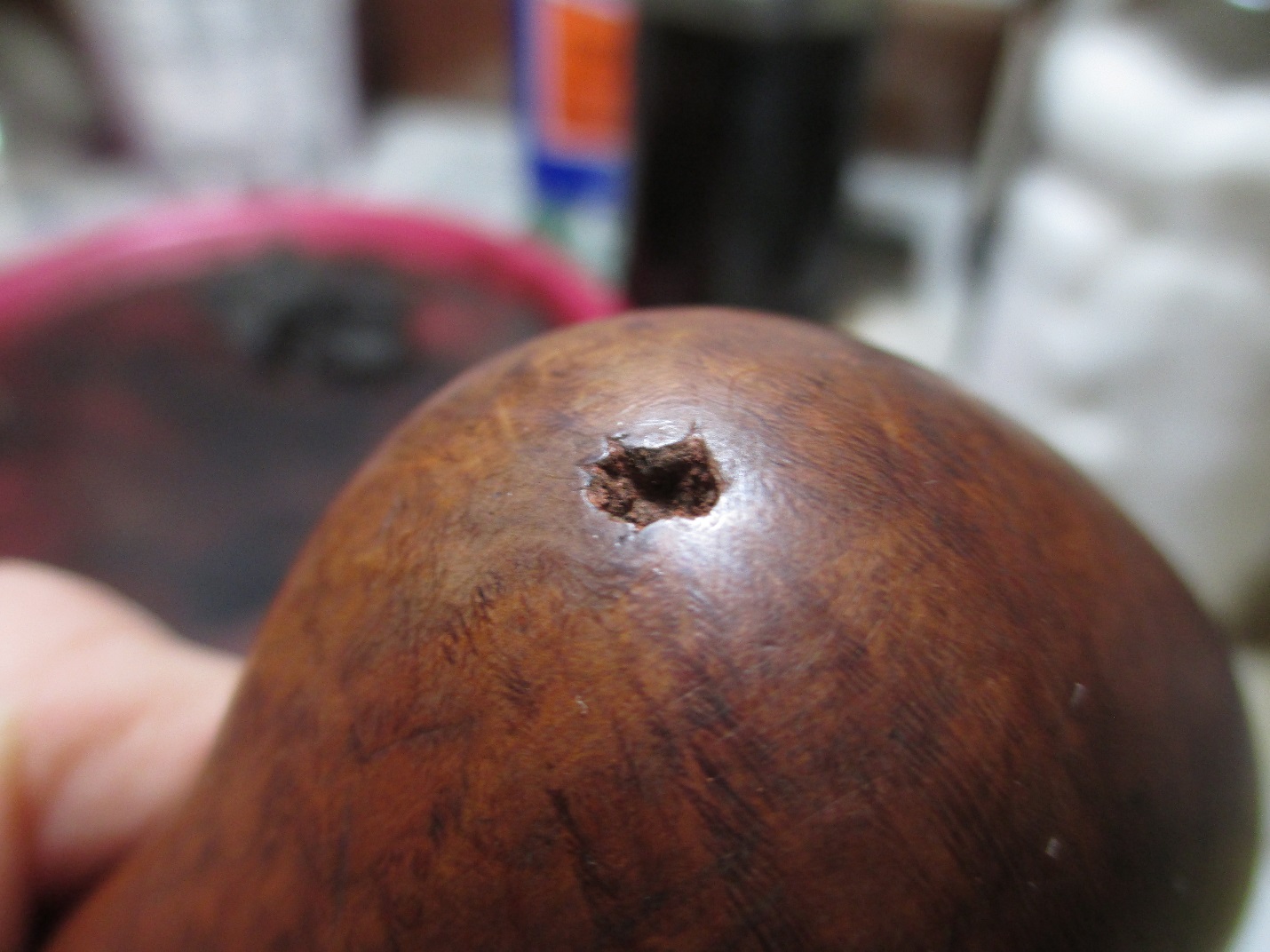
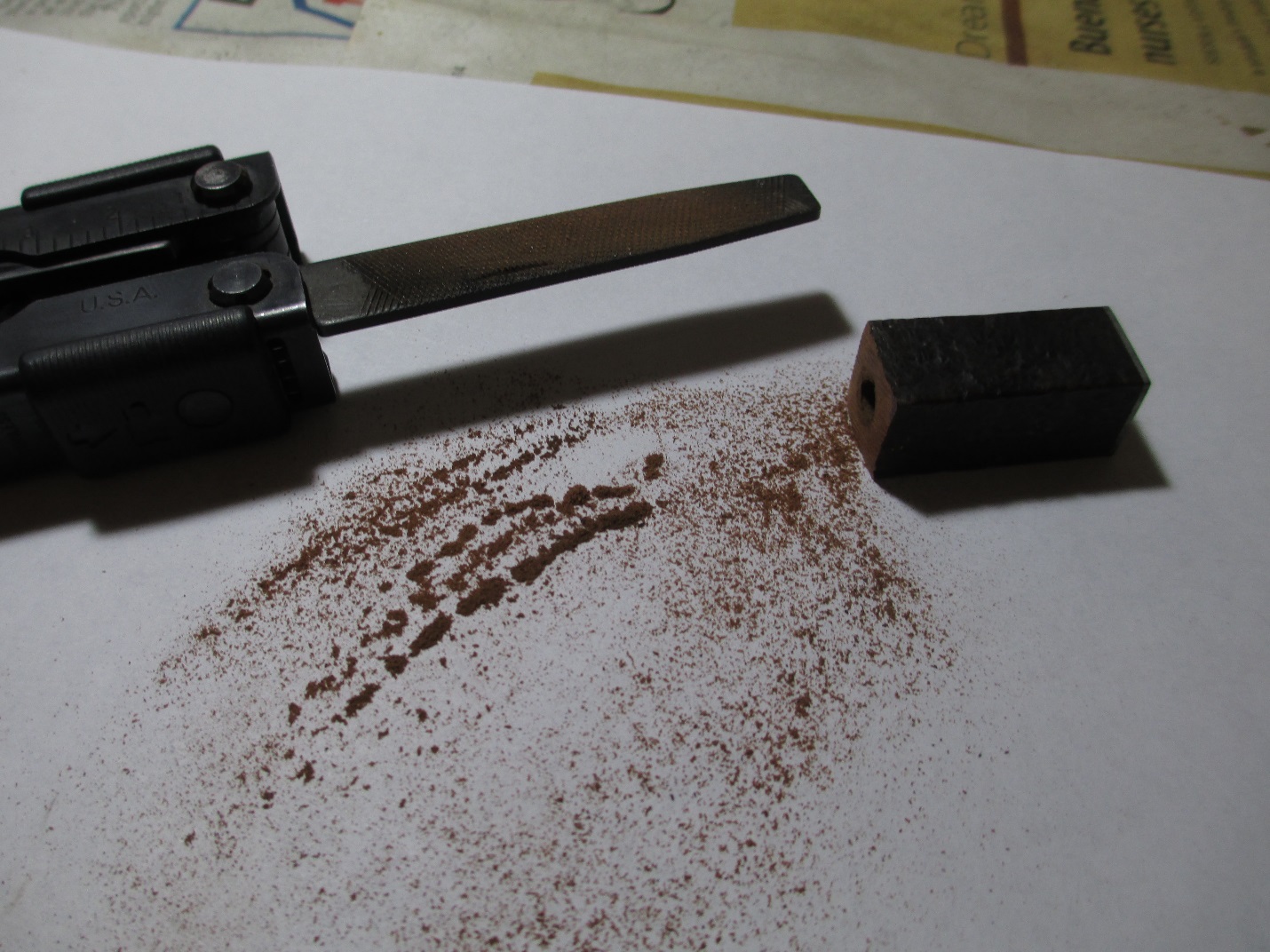
Even with the pit I still liked the pipe and decided to fix it anyway. I filed a good amount of briar dust from a broken shank onto a piece of paper. The paper makes it easier to collect the briar dust. Or you could do like Steve and just have a big jar of briar dust.YB6 I packed the pit and added super glue followed by accelerator.YB7 After applying the super glue and accelerator, I had to add briar dust two more times. This was the final result.YB8 In addition to the pit of despair, there were three minor pits on the front of the bowl and two deep pits on the bottom of the shank near the juncture of the stem. I finally got the exterior of the pipe sorted out and turned my attention to the insides.
I did my retort on the bowl.YB9 There was some gunk on the brush, but the stinger did a decent job keeping the shank clean.YB10 After a few passes with the brush dipped in alcohol, I moved on to q-tips. Not a terribly dirty pipe.YB11 Next I retorted the stem. I anticipated it would be dirty, since stingers tend to make pipes smoke wet. I retorted it three times to be safe and had an easy time cleaning the remaining tar.YB12

YB13

YB14I next turned my attention to removing the oxidization from the stem. I used 400 wet/dry with water and my sanding wedge, followed by 1500-2400 grit micro mesh pads with water.YB15 I polished both the bowl and stem with a progression of micro mesh pads, 1500-12,000 in preparation for final finish. I used my rotary tool with white diamond, followed by carnauba wax on the stem. I have to say this will be the new standard from now on.YB16 I decided to use Pimo Pipe Supply’s dark walnut stain on the bowl. This would give me a fighting chance to cover the pit repairs while still allowing the grain to show. It turned out better than I expected. I now have a very classy looking short pot. I also had the chance to try extreme pit repair. Even though this pipe had several pits, the briar still had nice grain. This one is a keeper.YB17

YB18

YB19

YB20

YB21

YB22

YB23

YB24

YB25

YB26

Rescuing a Scorched GBD New Era 549


Blog by Andrew Selking

After reading Al’s posts about his GBD pipes, I had to have one. I saw this pipe listed on eBay with a low buy it now price, obviously based on the scorch mark on the front of the bowl.GBD1 I’m not sure whether it was a sense of overconfidence in my ability or naivety about the extent of the damage, but I bought the pipe. I realized when it arrived that if I couldn’t fix the scorch mark the pipe probably wouldn’t be worth my time. I nearly despaired when normal procedures failed to even lighten the mark. I put the pipe aside several times before finally deciding to take drastic measures and use a hand sander with 150 grit sand paper. I figured at this point there was nothing to lose and I knew I could still maintain the original shape if I was careful. After spending about a half an hour with the sander, I found myself at about an 80% solution. The mark was still too dark, so I took it to the next level of desperation: the rotary tool (that’s the generic name for a dremel that you buy at Harbor Freight Tools) with a sanding attachment.

I do not recommend the use of either a hand sander or the rotary tool except as a last resort. By this point I had accepted the fact that this pipe was beyond hope for a perfect restoration, so I lowered my expectations to a good restoration.

The sanding on the top portion of the bowl changed the contour of the rim, so I used 400 grit sand paper and a piece of glass to top it.GBD2 Normally I have a set order for restoring a pipe, but dealing with the scorch mark threw it all off. I don’t like to work on a pipe that has a dirty bowl, so I went ahead and reamed it. As you can see from this picture the scorch mark is fairly light.GBD3 Next I retorted the shank.GBD4 She was a dirty girl.GBD5

GBD6 I retorted the stem after that, but did it four times. On a dirty pipe you can either spend time with lots of q-tips and fuzzy sticks, or do the retort multiple times.GBD7 Now that I had the internals of the pipe cleaned, I turned my attention to the removing the oxidation from the stem. This stem was all angles and had some serious oxidation. I’ve felt for a long time that my stem work needed improvement. It’s especially difficult to clean the crease under the button and in the case of this stem the curved area where it meets the diamond portion. I know that when I work with wood I use a sanding block or wrap the sand paper around an object that would fit into the area to be sanded. With that in mind, I “borrowed” a small plastic scraper from the kitchen. You will notice that it has a beveled edge and fits the underside of the button perfectly.GBD8

GBD9 Using the scraper wrapped with 400 grit wet/dry and water, the oxidation was soon gone. I followed with 1500-2400 grit micro mesh pads and water.GBD10 The bowl had a couple of dents so I decided to steam them out.GBD11 One of my essential tools for this type of work is an old butter knife.GBD12 I used my heat gun to get the tip of the knife very hot, then applied it to a wet cloth directly over the dents. Here is what it looked like after several applications of steam.GBD13 The dents still needed some work, so I sanded them smooth with 400 grit sand paper.GBD14 By this point the finish was completely uneven, with bare wood on the rim and side of the bowl, so I used acetone and 0000 steel wool to remove the remaining finish. I find that if I’m careful with the stampings, that grade of steel wool cleans the wood without damaging the stampings.GBD15 This is what the pipe looked like after I took the bowl and stem through a progression of micro mesh pads, 1500-12,000.GBD16 I decided to use a dark walnut stain from Pimo Pipe Supply to help cover the remaining scorch mark. Here is the bowl after the application of stain.GBD17 I used white diamond buffing compound on the buffing wheel to bring out a shine. Let me digress a bit about buffers. There are three things that a buffer loves, angles, stem inserts, and nice pipes. When spinning at 3450 rpm’s the buffer will catch anything with an angle and fling it at a high rate of speed onto the nearest hard surface. Alternately it will catch any type of stem insert and rip it out of the stem. Finally if you have a nice pipe that you’ve invested time in, the buffer has a tendency to shatter it just as you finish. This pipe had all of those elements, so I decided to try something different; my rotary tool.

I took a felt buffing pad and loaded it with white diamond buffing compound. The results were spectacular. The rotary tool gave me more control, I didn’t have to worry about the stem flying out of my hand, and I was able to achieve a more consistent shine in the areas that are hard to get with a buffer. Not bad when you consider that I paid $19.99 for this thing at Harbor Freight Tools.GBD18 I finished the bowl on the buffing wheel and here is the final result.GBD19

GBD20

GBD21

GBD22

GBD23

GBD24

GBD25

GBD26

GBD27

Restoring a Four-Digit Kaywoodie Canadian


Blog by Andew Selking

I have a weakness for Kaywoodies, especially those from the 1940’s or earlier; the briar is just amazing. I read somewhere that Kaywoodie was the largest pipe maker prior to WWII and used 100-year-old briar. I don’t know if that’s true or not, but this pipe was one of their mid-range pipes, yet it doesn’t have a single fill. Additionally, it weighs exactly the same as my Heritage Heirloom with the same shape number. (As an aside, the Heritage pipes were made in the 1960’s to compete with Dunhill. According to their brochures, only one pipe out of 300 made the cut.)
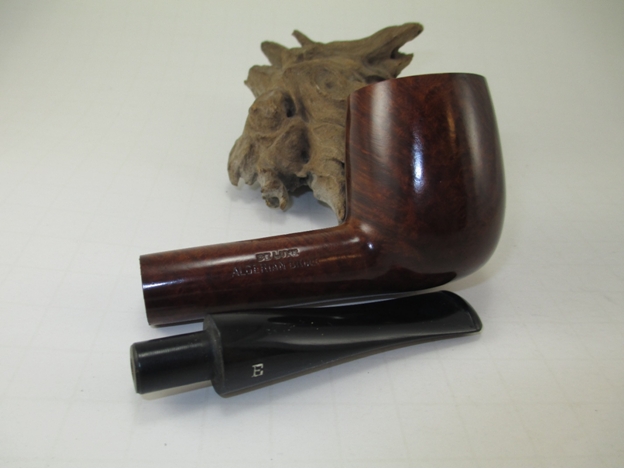
Here is a picture of the pipe when I received it. It had some heavy cake, tar build up on the rim, and a few dents in the stem. Cake doesn’t scare me, my reamer makes quick work of it, and tar build up often protects the rim from damage. The only problem from a collector’s standpoint was the stinger had been cut. I think pipes smoke better without the stinger, so that wasn’t a huge issue for me.KW1 One of the things that I do to make reaming heavy cake easier is soak the bowl in alcohol. Here’s the bowl getting dropped into the bath.KW2 After a good long soak, it was time to remove the cake.KW3 My Castleford reamer effortlessly removed the cake.KW4 I like to multi-task, so while the bowl was working, I soaked the stem in Oxyclean. I used a fuzzy stick and Oxyclean solution to get the worst of the gunk out of the stem. Here is the first pass.KW5 Although I usually retort the shank and stem separately, the screw in stem prevented that. I ended up retorting the whole pipe.KW6 The inside of the shank and stem were nasty.KW7 Next I turned my attention to the rim. It had some scars that necessitated topping.KW8

KW9 I used 150 grit sandpaper on a piece of glass to remove the damaged section.KW10 To fix the dents in the stem, I used a three-pronged approach. First I used steam to raise the dents as much as possible. I have an old kitchen knife that I heated with my heat gun. I placed a wet cloth over the area and pressed the hot knife blade onto the stem. It raised it a little bit.KW11 This is after the application of steam.KW12 Next I used 400 grit sand paper.KW13 The underside of the button was kind of messed up, so I dressed it with a file.KW14 I still had a small dent, so I filled it with clear super glue and applied a drop of accelerator. The accelerator comes in a spray bottle, which I find makes a mess. My solution is to take the sprayer out and use the end as an applicator. I also use a thumb tack to apply a small amount of glue. I’m not very neat when using glue straight from the bottle and using a thumb tack gives me more control (it also means less material to sand after the glue dries).KW15 Once I had the stem sorted out, I used 400 grit wet/dry with water followed by 1500-2400 grit micro mesh with water.KW16 I used a progression of 1500-12000 micro mesh on the bowl. Next I used Pimo Pipe Supply medium walnut stain, cut with 50% de-natured alcohol, to make the rim match the bowl.

After an uneventful spin on the buffer (anyone who ever used a buffer to shine pipes understands the drama that can occur when the pipe gets away from you) this is the result.KW17

KW18

KW19

KW20

KW21

Restoring a 1967 Dunhill 54 F/T Group 2


Blog by Andrew Selking

I’ve had some good luck bidding on Dunhill pipes recently. This little Group 2 came in a lot of five pipes that included four Kaywoodies. With the exception of minor wear on the front of the rim and some oxidation, it looked very nice. Here’s what it looked like prior to restoration.Andrew1

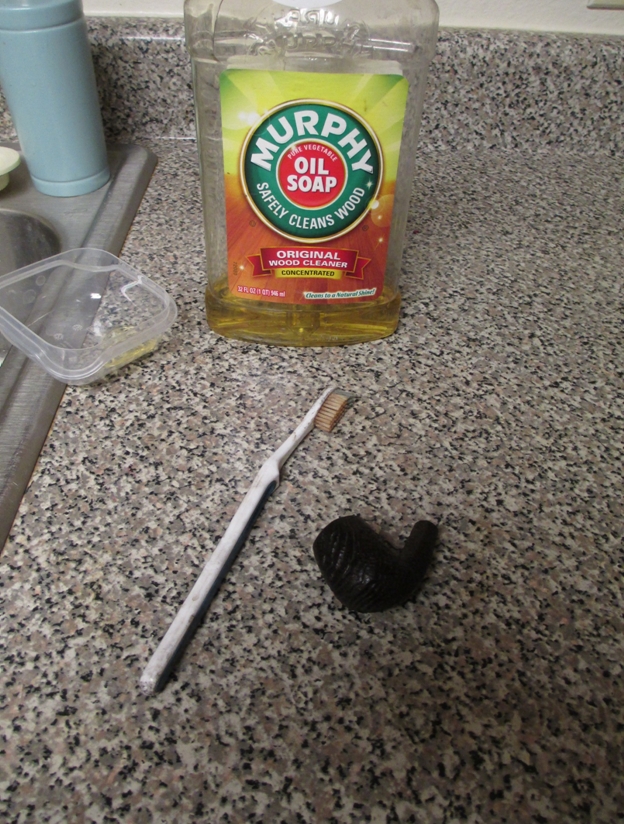
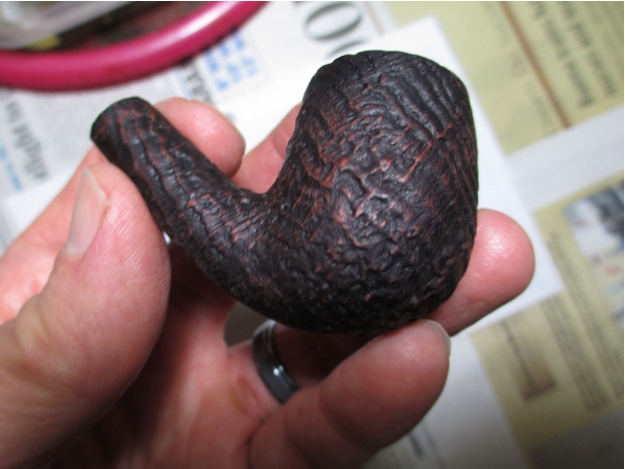
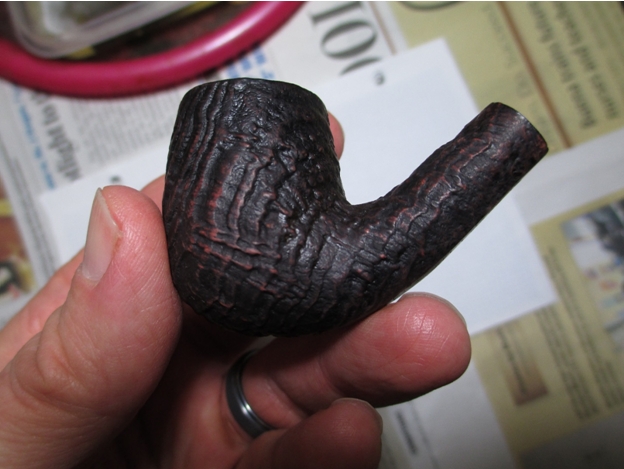
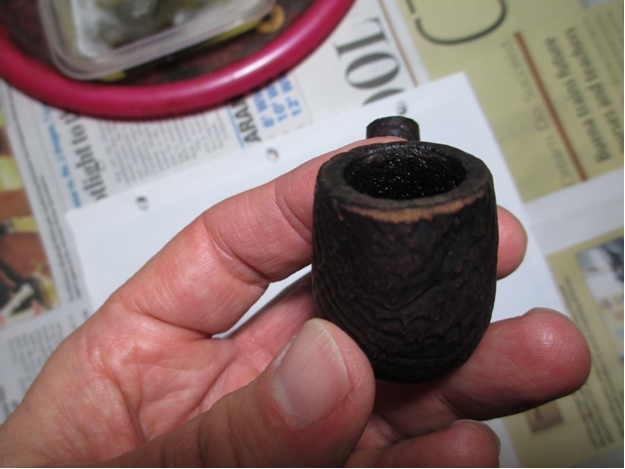
Andrew2 The pipe is so small they stamped the group size on the stem.Andrew3 I began the restoration process by soaking the stem in Oxyclean.Andrew4 While the stem soaked I reamed the bowl with the smallest head of my Castleford reamer. It had a loose cake that came out easily.Andrew5 Next I used undiluted Murphy’s Oil Soap (an all-natural vegetable oil based soap specifically formulated for cleaning wood) with a tooth brush to get the grime out of the blast.Andrew6 This is what the bowl looked like after cleaning.Andrew7

Andrew8 My biggest concern with this pipe was the damage to the front of the rim. I decided to use a furniture touch-up marker (thanks for the tip Steve) to see if I could make it look better.Andrew9 It worked like a champ, the marker was a color match to the rest of the pipe.

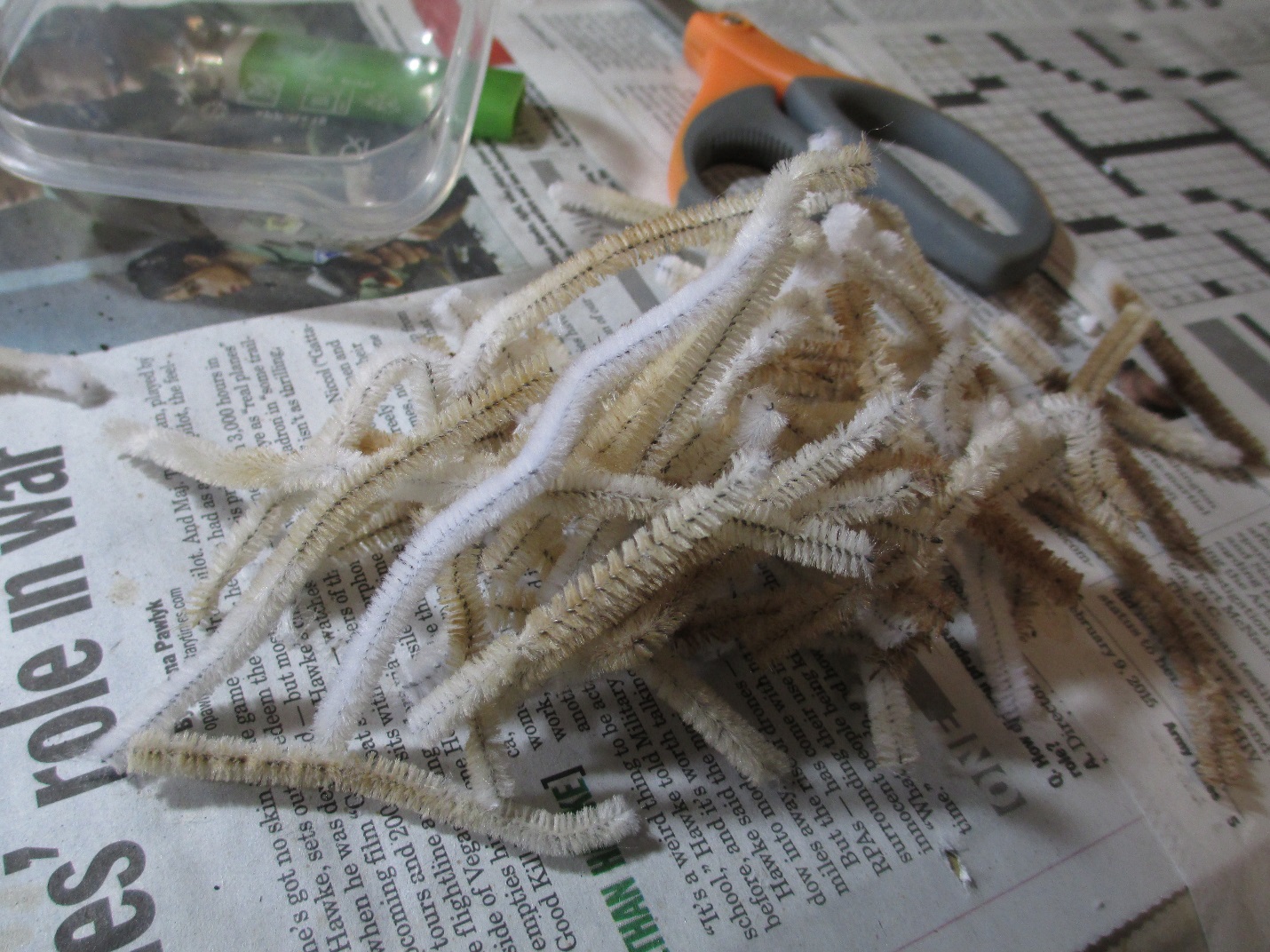
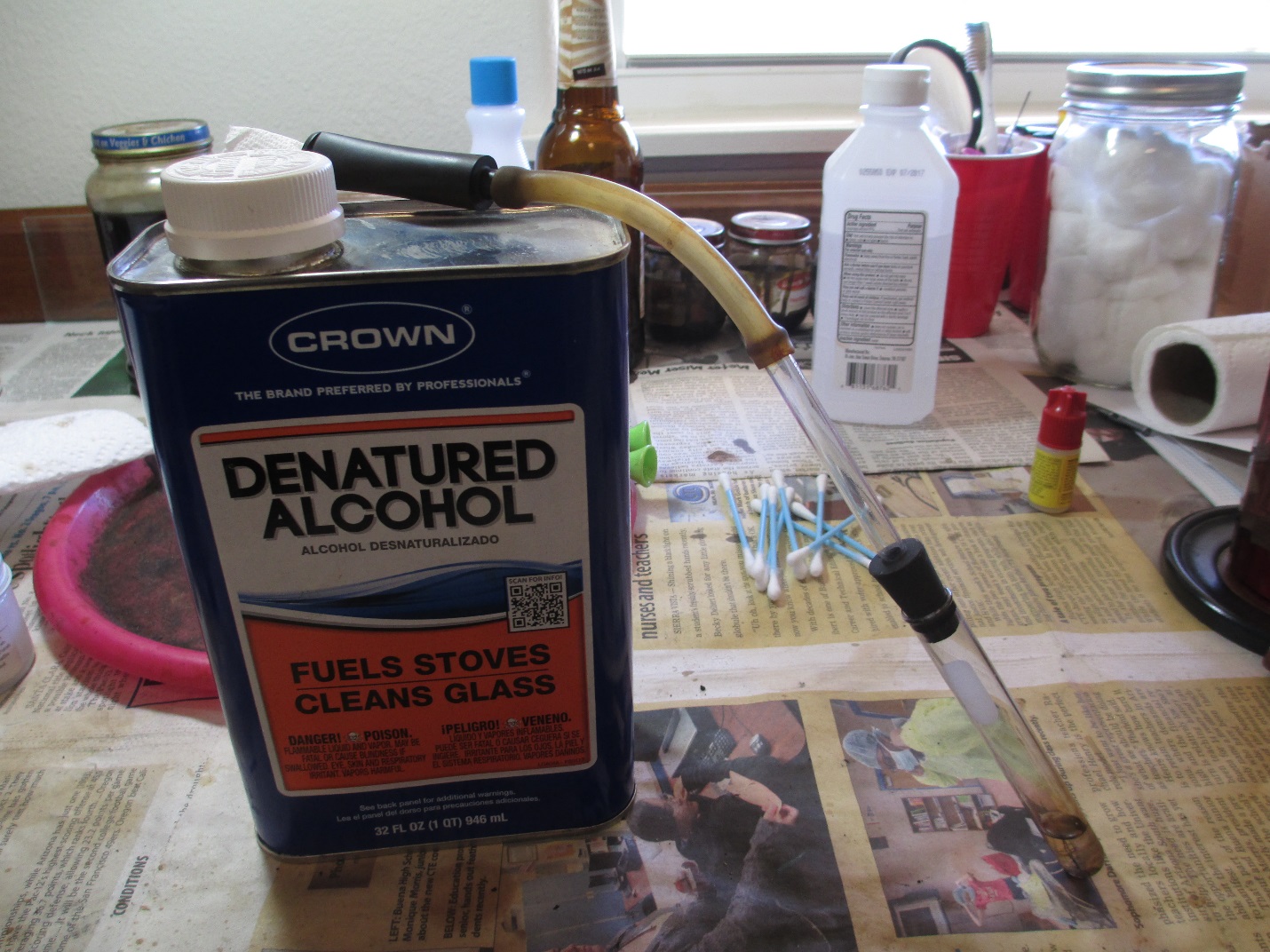
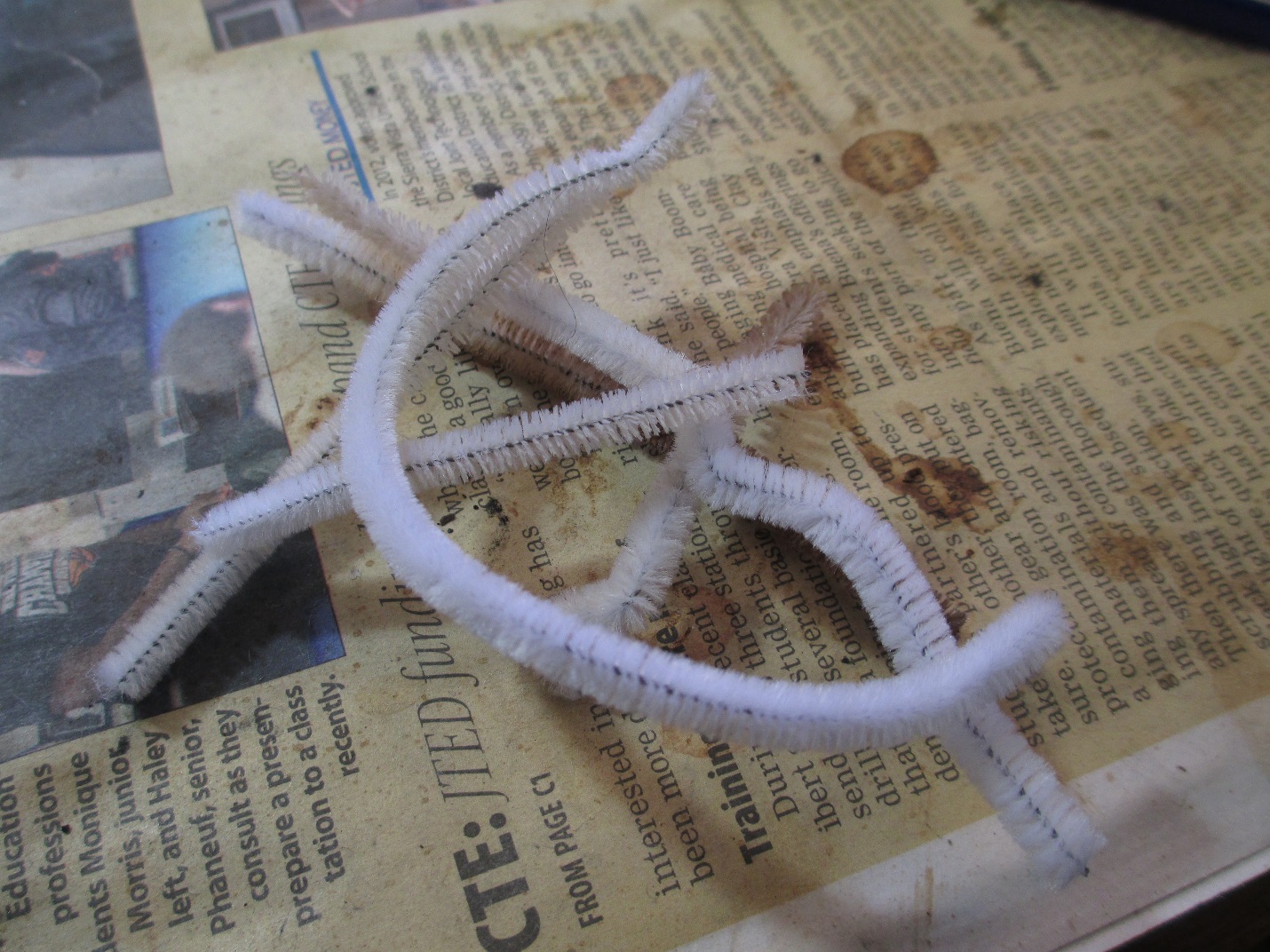
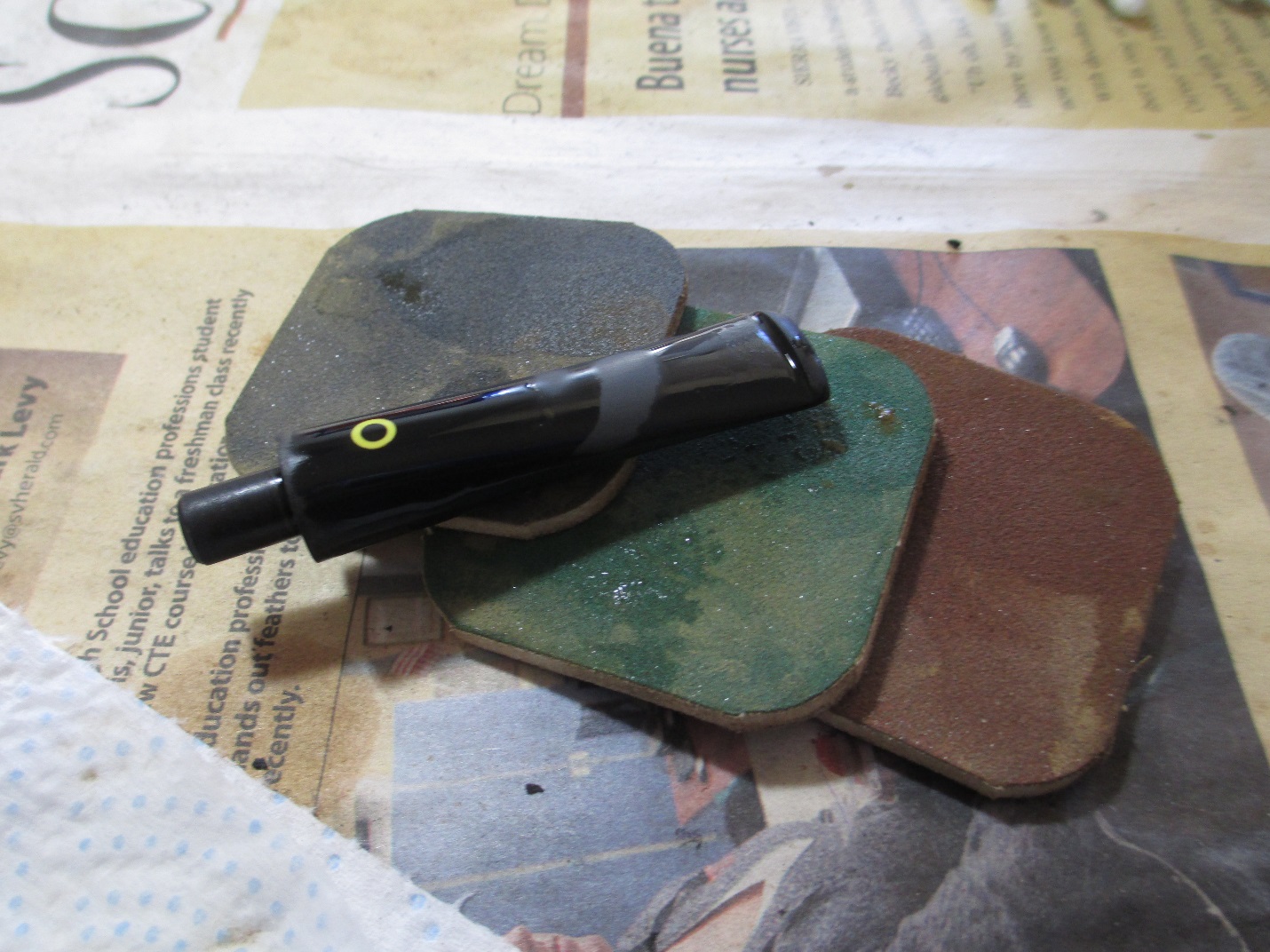
Now that the bowl was taken care of, I turned my attention to the stem. As usual, I used a fuzzy stick (that’s the politically correct term for pipe cleaners sold in the craft section of Walmart) to remove as much of the gunk while I still had the Oxyclean solution. If you’ve ever cleaned a black powder rifle it’s the same concept; stick one end in the liquid and draw the fuzzy stick back and forth. When it gets loaded with tar, I swish it in the liquid and wring it out. Here’s what the fuzzy stick looked like after the first pass. The inner tube did a good job of preventing excess tobacco build up.Andrew10 Next I tackled the shank. I use a retort filled with de-natured alcohol to loosen the gunk in the shank and the stem. I usually do the stem and shank separately for two reason, first it works very well and second when you have a wide button (like the one on this pipe) it’s difficult to fit the rubber tube over the end of it. I do the retort until the alcohol that goes back into the eye dropper looks relatively clean. In the case of this pipe, I did it three times.Andrew11 After the retort, I used a brush to scrub out the shank. This is why I like to retort the shank separately.Andrew12 I then used q-tips and fuzzy sticks dipped in isopropyl alcohol to remove the remaining gunk.Andrew13 Next I used the retort on the stem. If you do this make sure to plug the end of the stem, otherwise you will get boiling brown alcohol everywhere.Andrew14 After a couple of fuzzy sticks, the inside of the stem was clean.Andrew15 With the bowl and shank cleaned, my next step was to remove the oxidation from the stem. Any time I do a pipe that has inlays or stamping on the stem, I use 1000 grit wet/dry and water to remove the oxidation. Especially this pipe, with the group size stamped on the bottom of the stem. It takes a while, but the results are worth the effort. When removing oxidation with wet/dry sand paper and water, periodically dry the stem to make sure you’re getting everything. When it’s wet the stem tends to look really good, but when it dries out that’s when you notice everything you missed. After the 1000 grit, I used 2400 grit micro mesh with water.Andrew16 I used a progression of micro mesh pads, from 3200-12000 to prepare the stem for final polishing.Andrew17 I also polished the flat spot with the nomenclature with a progression of 5000-12000 grit micro mesh. I used Halcyon II wax on the bowl, which I buffed out with a shoe brush, and carnauba wax on the buffing wheel for the stem. Here is the final result.Andrew18
Andrew19

Andrew20

Andrew21

Andrew22

Refurbishing a Heritage Heirloom


Blog by Andrew Selking

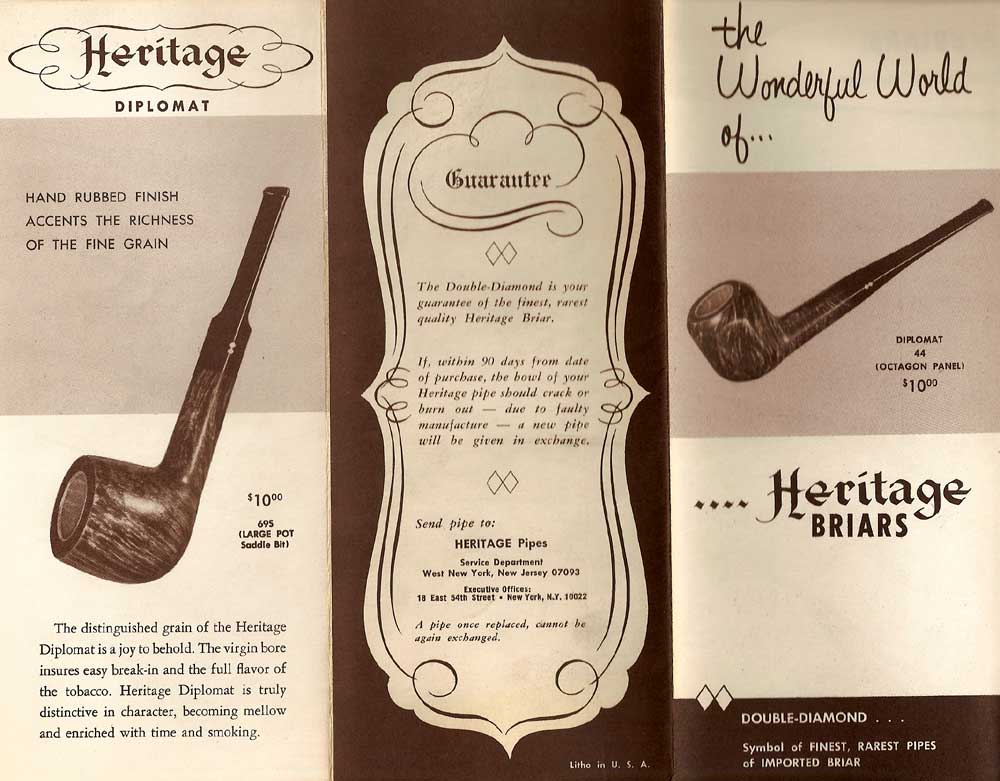
I recently stumbled across the Heritage line of pipes. These pipes were made in the Kaywoodie factory, but on a completely separate line. Heritage pipes were Kaywoodie’s answer to Dunhill. According to one of their brochures, Heritage pipes were made from “briar burls seasoned and cured for up to 8 months,” with only “one briar bowl in over 300 selected to bear the Heritage name.” “Heritage stems are custom fitted with the finest hand finished Para Rubber stems. Mouthpieces are wafer thin and concave.”

The Heritage line began in the early 1960’s, with the trademark issued in 1964. The line was started at the request of Stephen Ogdon, (who worked for Kaywoodie in 1962). Mr. Ogdon had previous experience working for Dunhill, either running the New York store or working for Dunhill North America. Mr. Ogden was made President of Heritage Pi pes, Inc., Kaywoodie Tobacco Co.,Inc. and Kaywoodie Products Inc. as well as a Vice President of S.M. Frank & Co. Heritage Pipes were produced from 1964 until 1970 (Source Kaywoodie.myfreeforum.org).

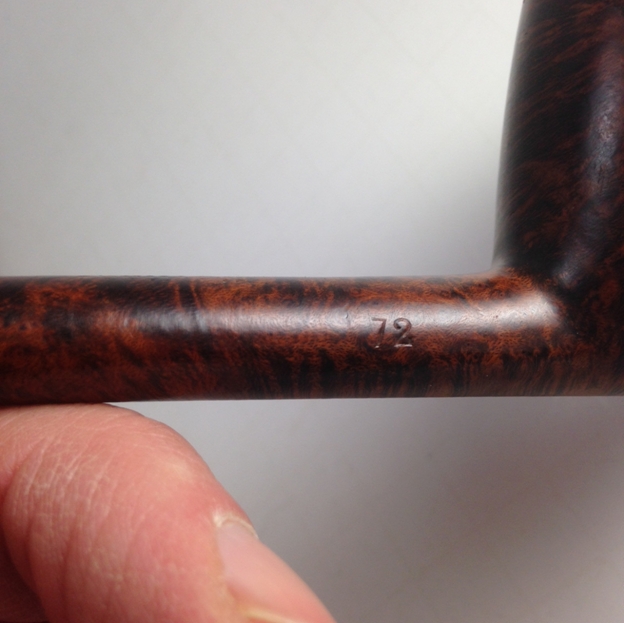
Here is a copy of the Heritage brochure. (Courtesy Kaywoodiemyfreeforum) heritage1_zps888f5f2b heritage2_zps0d4dc760 heritage3_zpsef2358c6 The pipe I found was the number 72 Medium Canadian, oval shank. Interestingly, the one thing the Heritage line shared with Kaywoodie was the size and shape numbers. Unlike Kaywoodies, the Heritage pipes are normal push tenons.

When the pipe arrived, it had some tar build up on the rim and a thick layer of cake.Andrew1

Andrew2 The stem had some oxidation, but minimal chatter.Andrew3

Andrew4

Andrew5 The finish was in nice condition, so I decided to forgo the alcohol bath and attempt to keep the original finish.Andrew6

Andrew7 The first thing I did was ream the bowl. I used my Castleford reamer and was delighted to find that the cake was very loose, mostly old tobacco, and it easily cleaned back to the wood.Andrew8 Next I decided to find out how the bad the rim was under the tar build up.Andrew9 After a light buffing with 0000 steel wool, the tar was gone and I could see a pristine rim.Andrew10 Since I was on a roll, I decided to re-tort the shank.Andrew11 I normally show pictures of a brush loaded with gunk, but in this case the brush came clean on the first pass. I proceeded to use some q-tips and fuzzy sticks on the shank. Most of the tar came off with the first couple of q-tips, after that it was just a matter of a few more and the shank was clean.Andrew12 Since I didn’t soak the bowl in alcohol, I decided to soak it with some alcohol soaked cotton balls.Andrew13 While the bowl soaked, I retorted the stem.Andrew14 It was just as clean as the shank (this was the first fuzzy stick I passed through after the retort).Andrew15This was the cleanest “dirty” pipe I’ve ever had. Since the stem was so clean inside, I skipped the Oxyclean bath and tackled the oxidation. I used my normal progression of 400 grit wet/dry sandpaper with water, followed by 1500-2400 grit micro mesh pads with water.Andrew16 The finish seemed really dark, probably the result of oil from the previous owner’s hands, so I used some 0000 steel wool and acetone to clean the outside of the bowl and shank.Andrew17 The steel wool worked well on the bowl, so I skipped the 1500-2400 grit micro mesh and started at 3200. I used a progression of 3200-12,000 grit micro mesh for the bowl and stem in preparation for the buffing wheel.Andrew18 After an uneventful spin on the buffer, here is the finished pipe.Andrew19

Andrew20

Andrew21

Andrew22

Andrew23 This line of pipes might be one of the best kept secrets out there. I find that the quality of the stem compares to Dunhills and the wood is spectacular. I highly recommend these pipes.heritage4_zpsdc6295ef

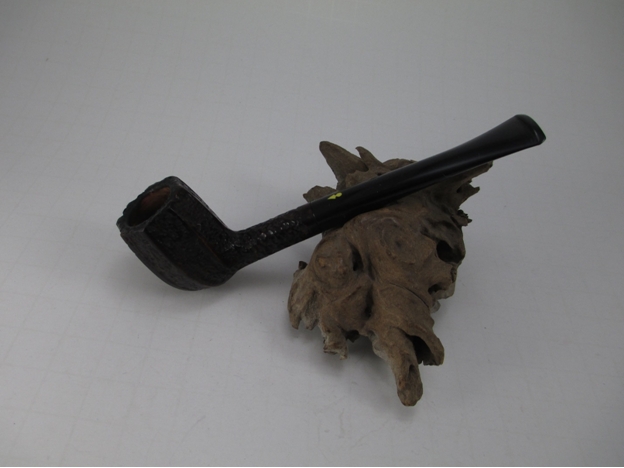
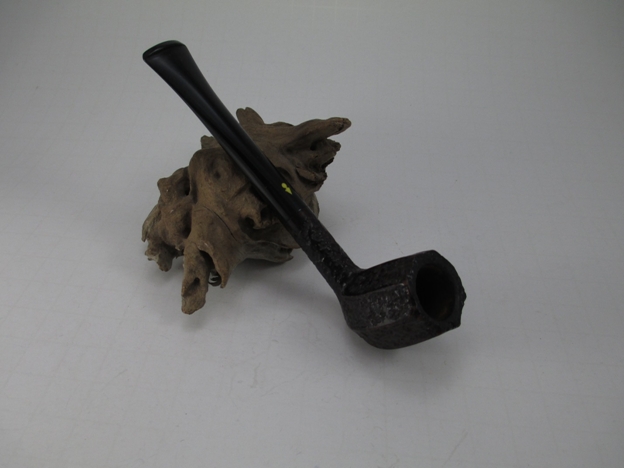
Restoring a KB&B Doc Watson – Andrew Selking


Blog by Andrew Selking

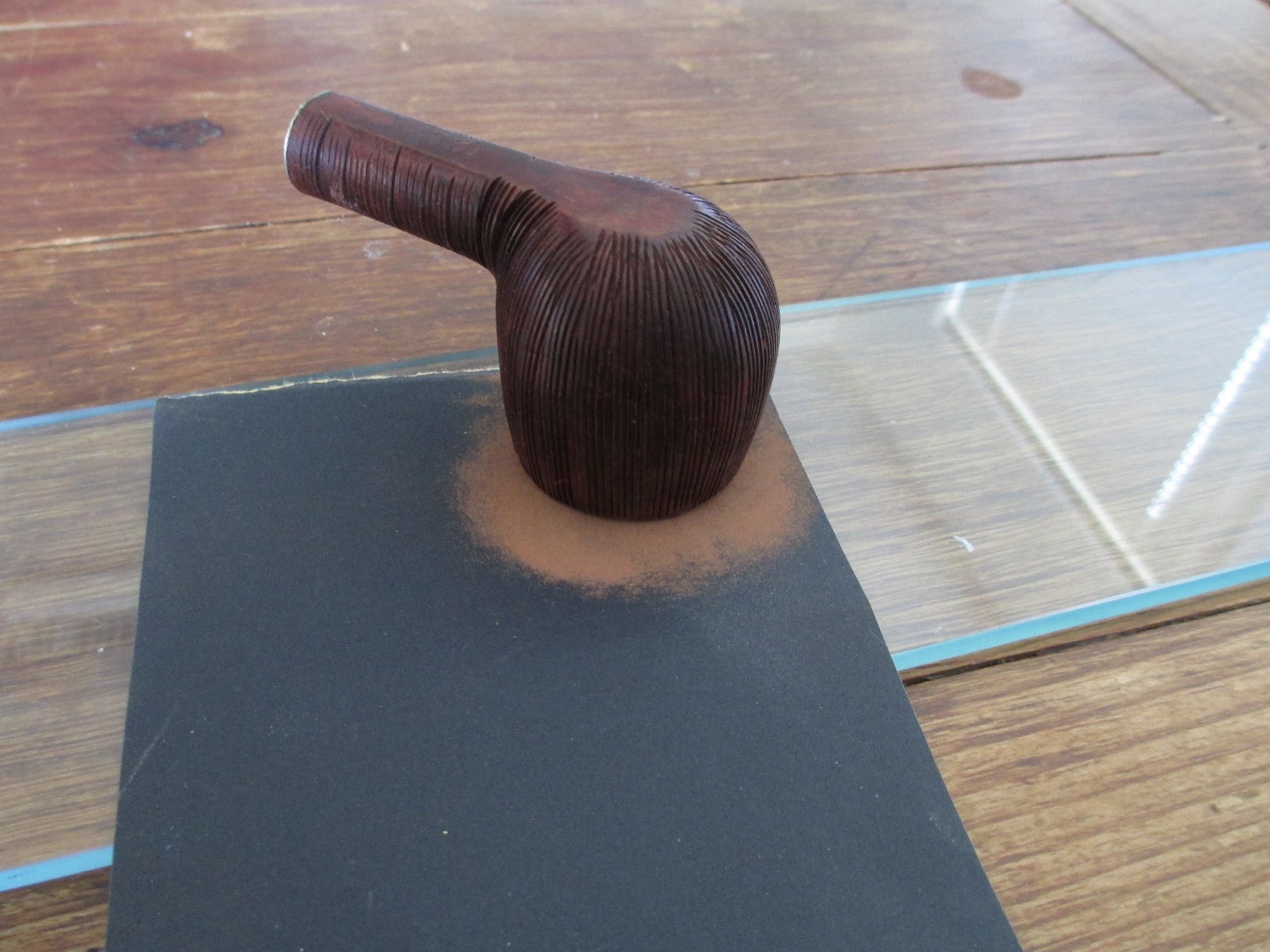
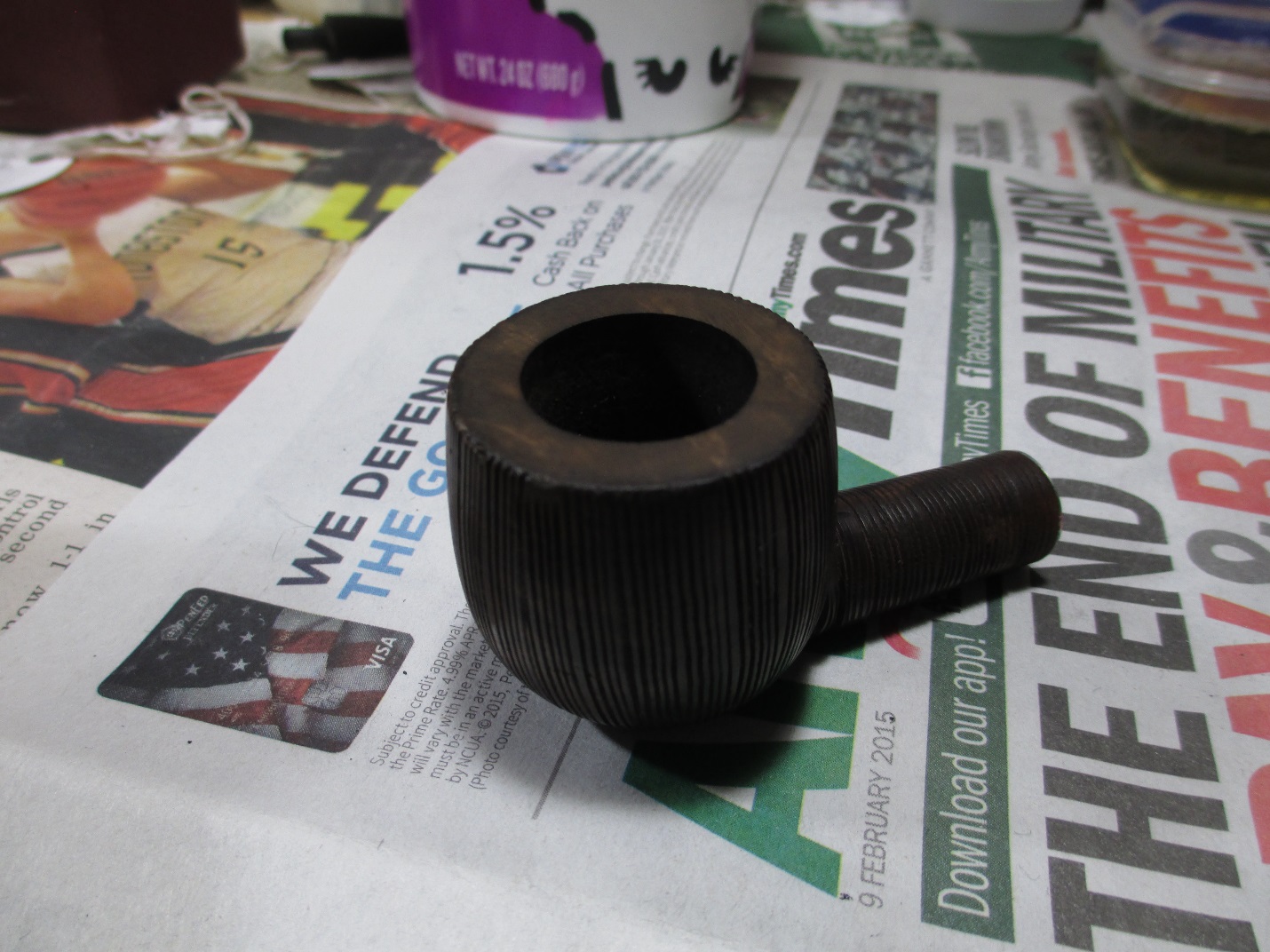
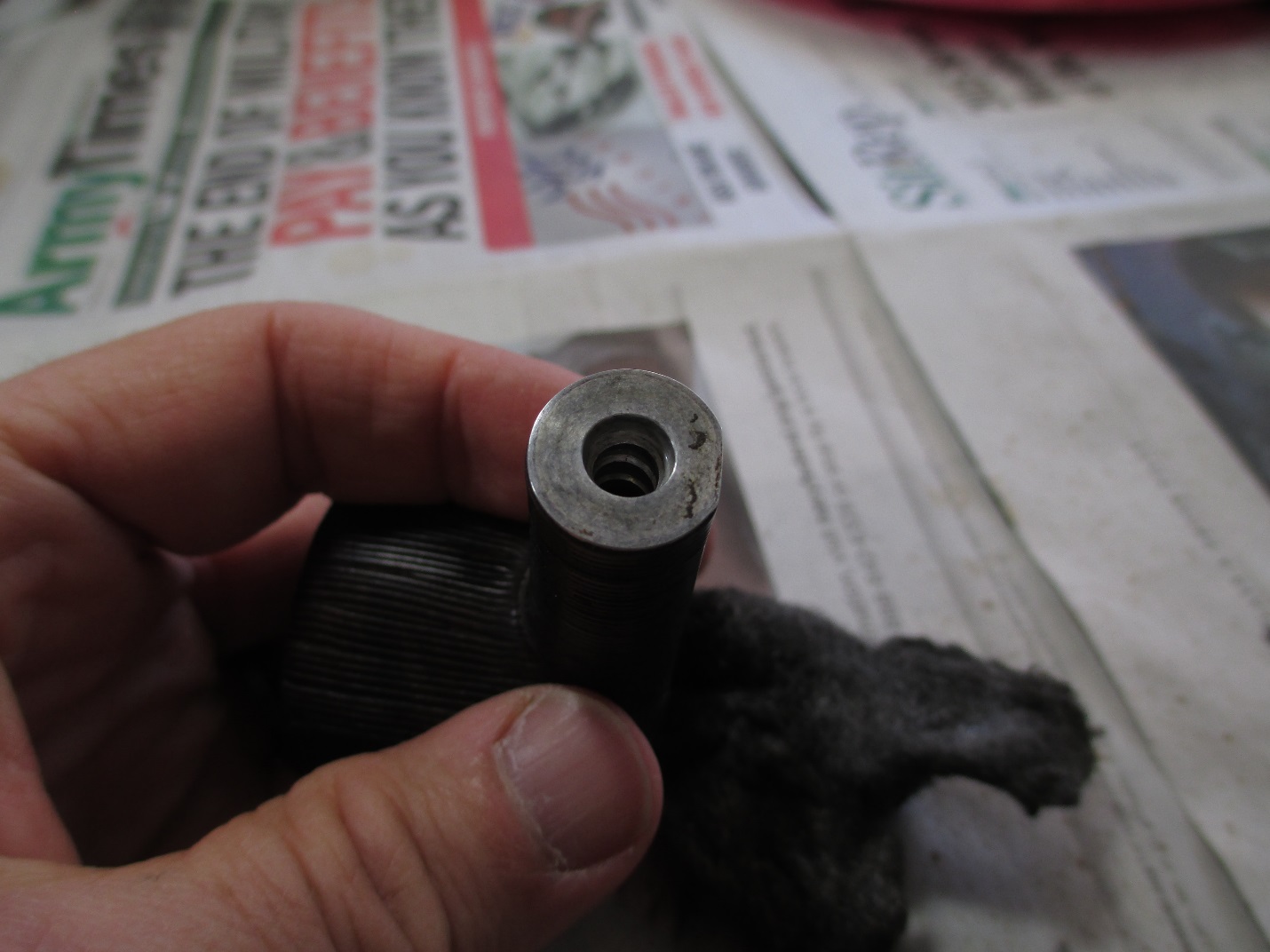
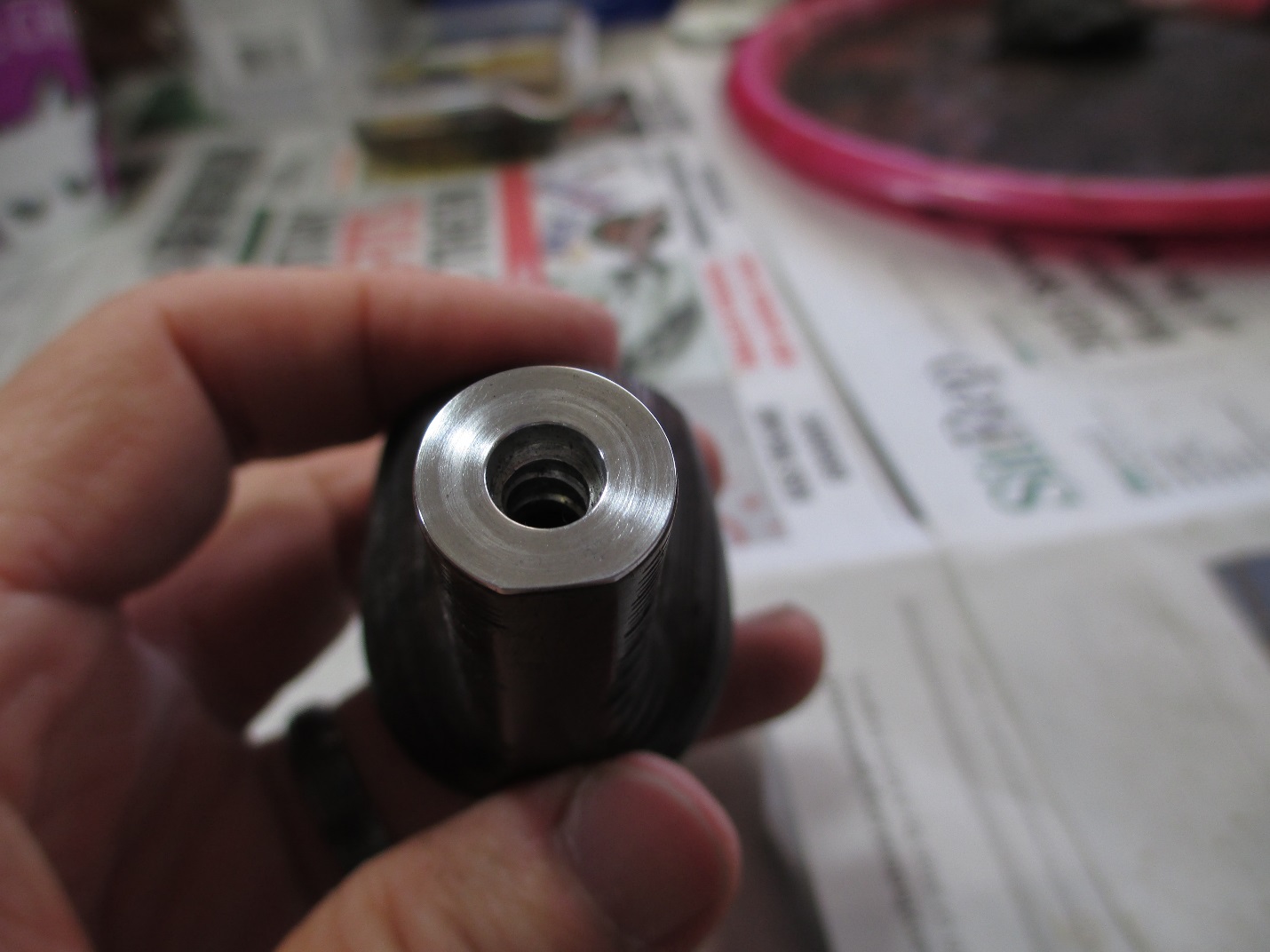
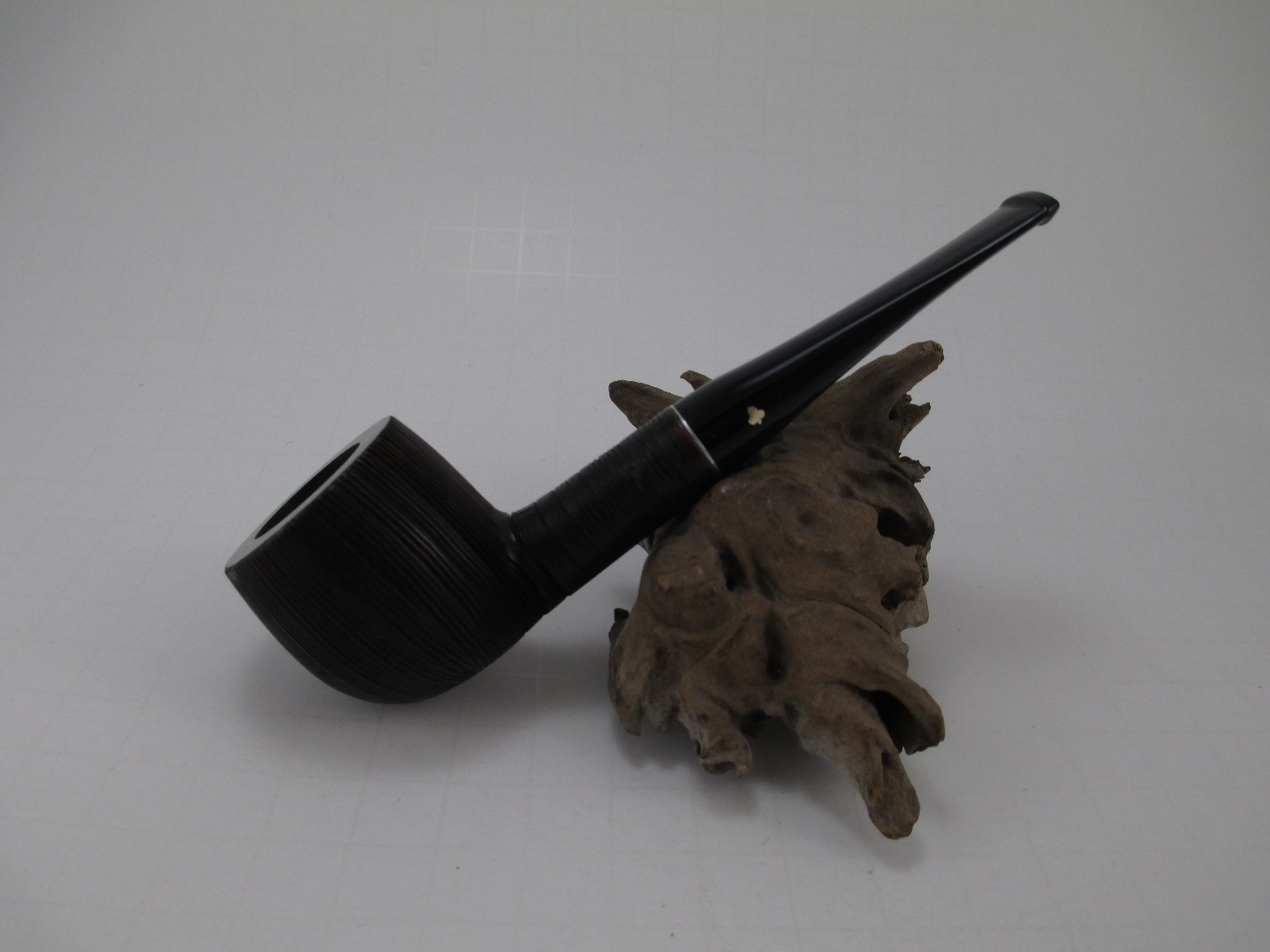
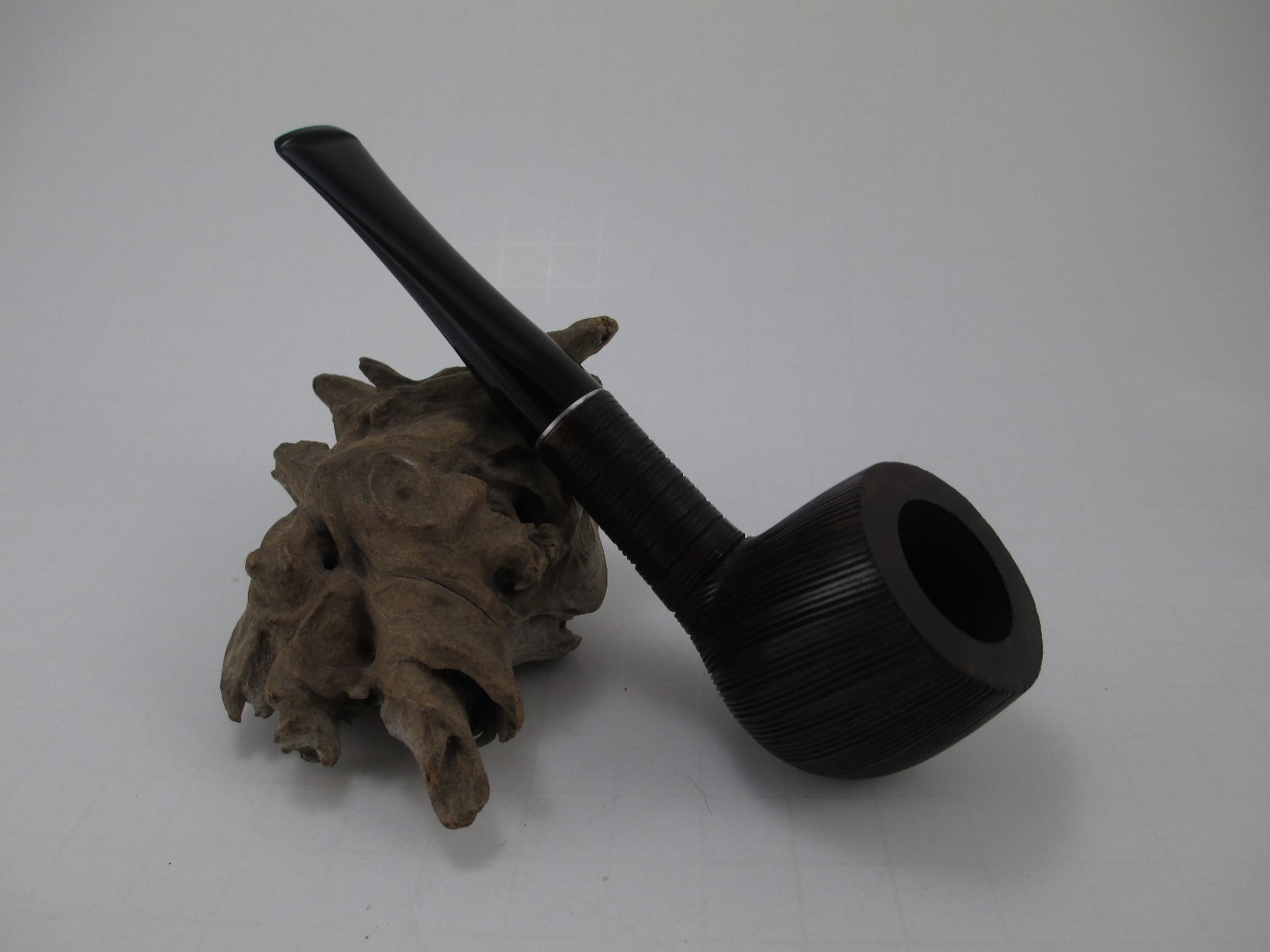
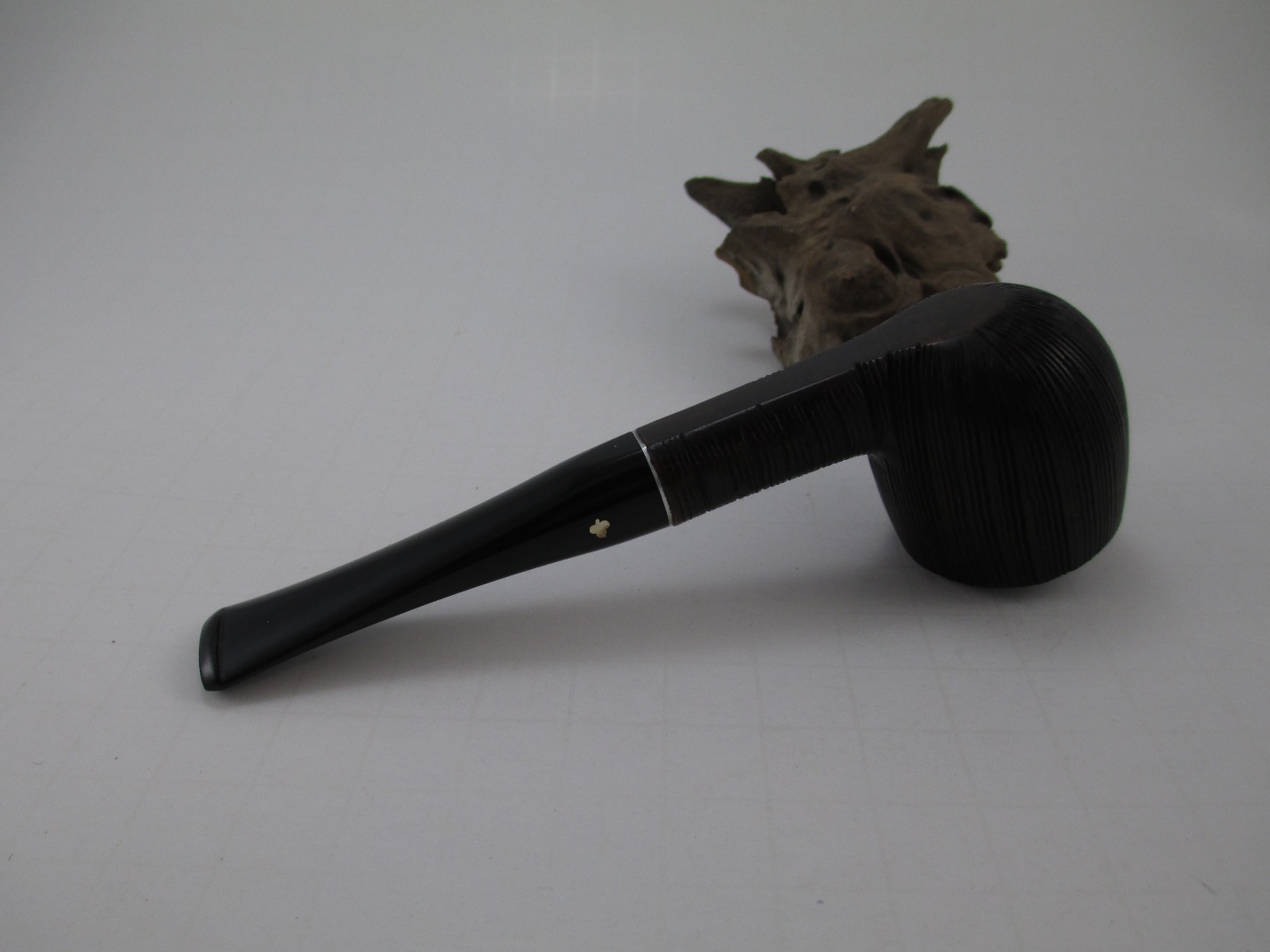
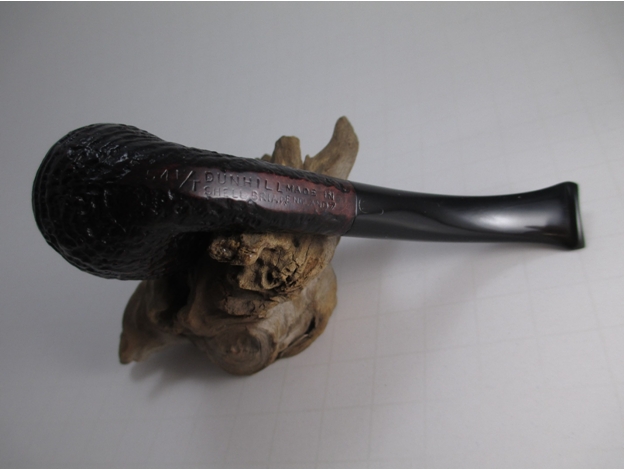
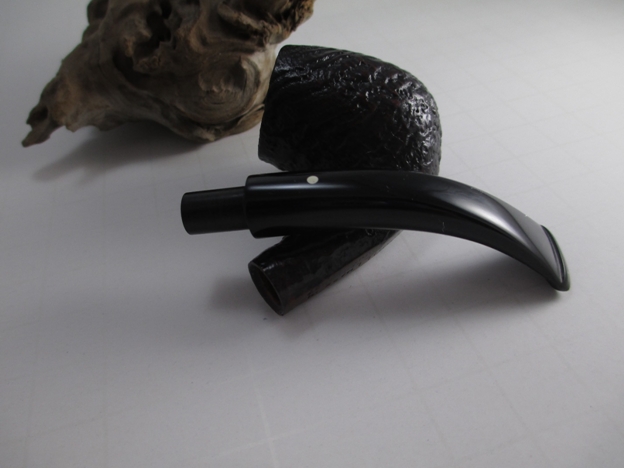
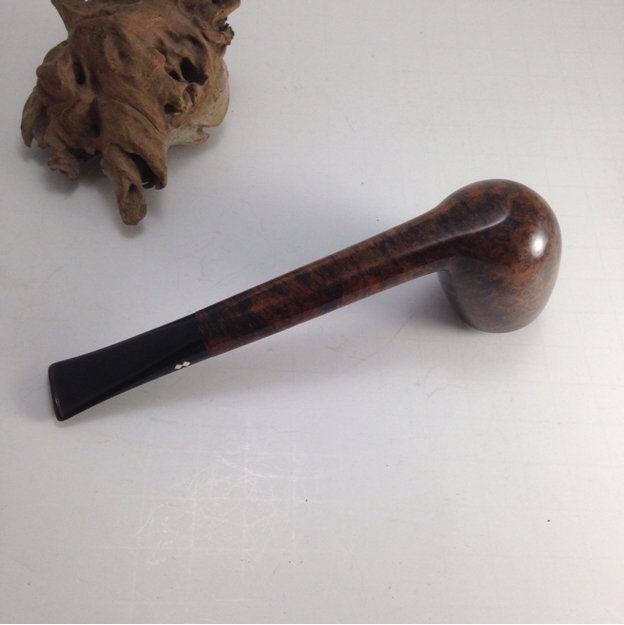
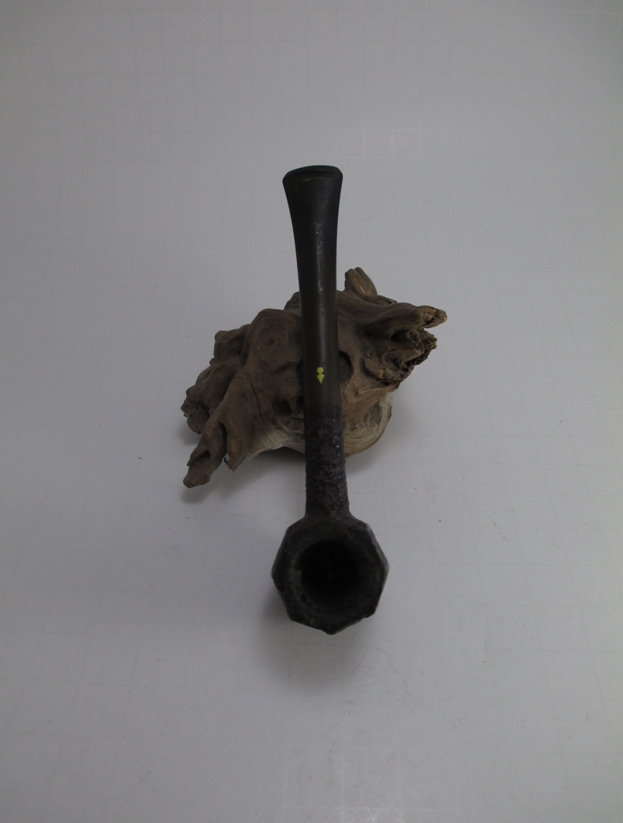
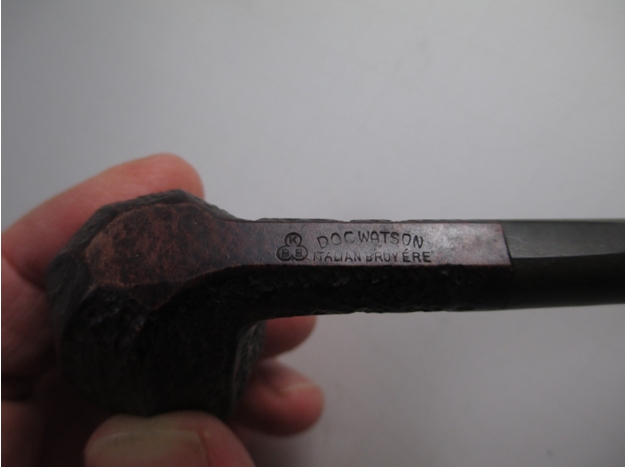
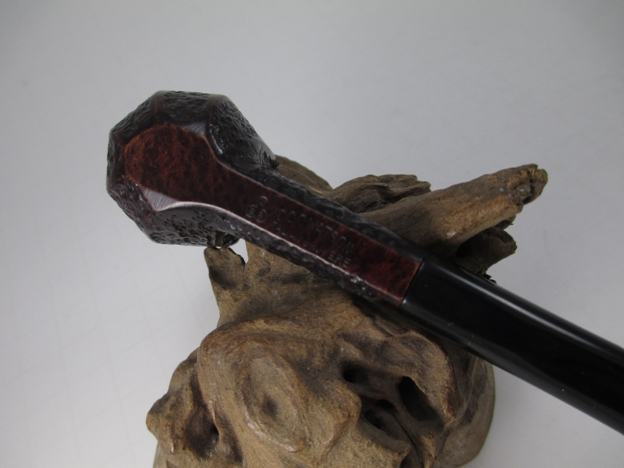
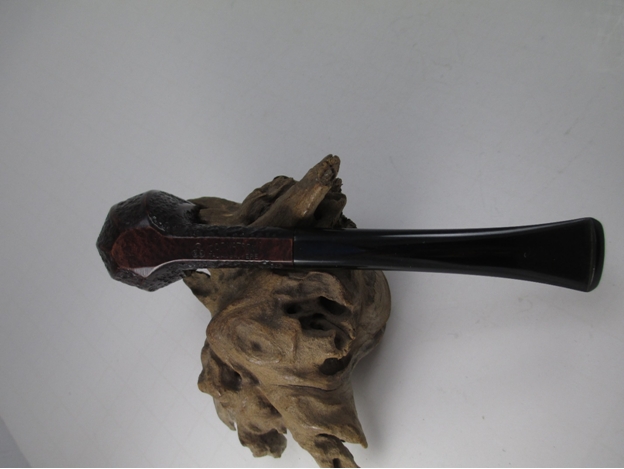
My wife and I enjoy browsing antique shops and last weekend checked out a new shop. They didn’t have many pipes, most were worn out drug store pipes, but this one little pipe stood out. The first thing I notices was the fantail stem and interesting inlay on the stem. I picked it up and discovered that it was a rusticated panel billiard shape, unlike anything I’ve ever seen. I pulled the stem from the shank and saw a very unusual stinger/tube apparatus. The stem looked like it was hand cut, very thin and the button had nice clean angles. From what I found out about KB&B pipes, the clover leaf without the ampersand was from the 1930s. The best part was the price, $4.95! Here is what the pipe looked like, thick cake, but otherwise not too bad.KBB1

KBB2

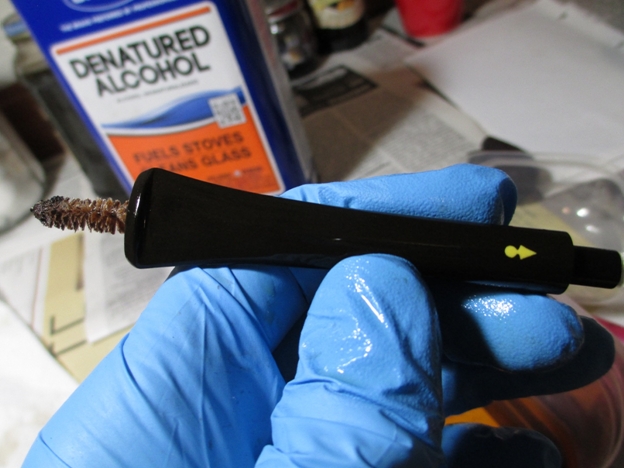
KBB3 I missed some of the documentation process, but I cleaned the bowl with undiluted Murphy’s Oil Soap and a toothbrush. I decided to remove the stinger, which I accomplished with a heat gun, but still save it for the historical value. I then soaked the stem in Oxyclean. It had a lot of tar build up as you can see from this picture.KBB4 Next I turned my attention to the bowl. This is a very small bowl, my smallest reamer didn’t fit, so I ended up using a pen knife to carefully remove the cake.KBB5

KBB6

KBB7 With the bowl clean and the stem started, it was time for the retort. Normally when I put cotton balls in the bowl I can fit three or four, this bowl only fits one.KBB8 Although the stinger allowed for a lot of tar build up, it kept the shank much cleaner than most. After a few q-tips it was clean.KBB9 The stem was just as dirty as the shank, but the retort made the job of removing tar a breeze.KBB10 You can see from what boiled out just how much tar the stem had.KBB11 The first couple of fuzzy sticks dipped in rubbing alcohol came out very dirty, but it was mostly tar and it didn’t take long before they came out clean.KBB12

KBB13 Since the outside of the bowl was already clean, I used a progression of micro mesh pads, starting at 6000 and worked up to 12,000 to polish the bottom of the shank and the high spots on the bowl. I used 400 grit wet/dry with water to remove the oxidation from the stem then switched to micro mesh pads (1500-2200) with water.KBB14 I finished the stem with the full progression of micro mesh pads through 12,000 grit to get a nice polished finish to the stem. I tried something different this time. Rather than use the buffing wheel I just used the Halcyon II wax and a soft cloth. We’ll see how that holds up. Here’s what the finished pipe looks like.KBB15

KBB16

KBB17

KBB18

KBB19

KBB20