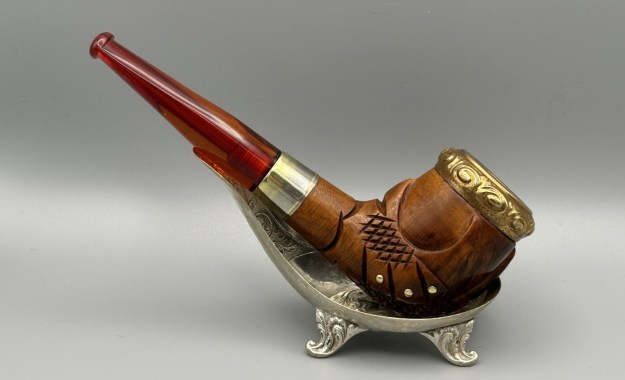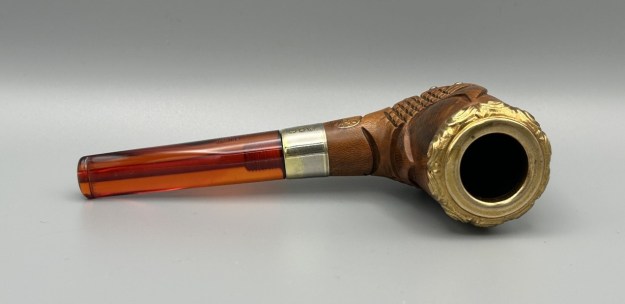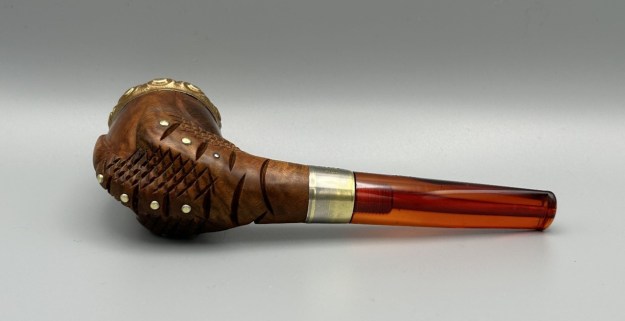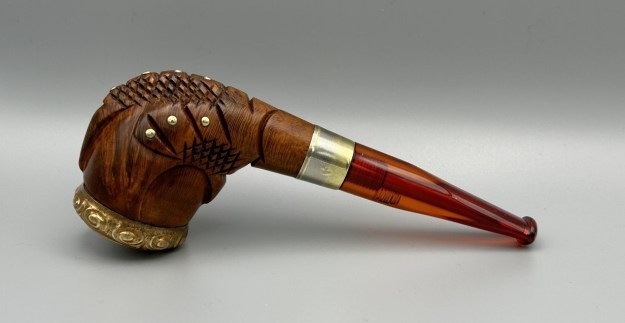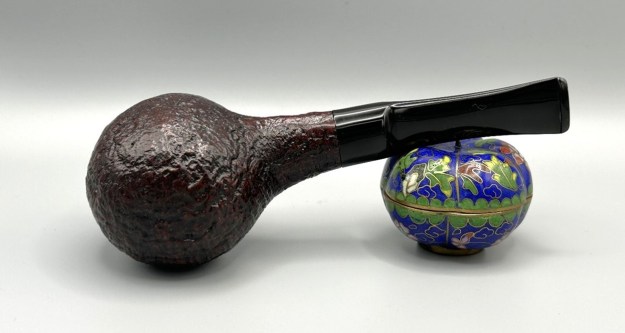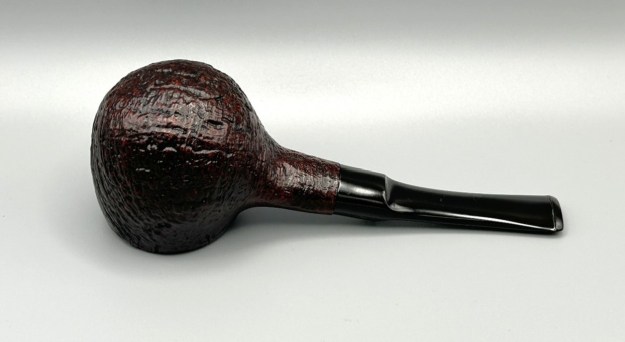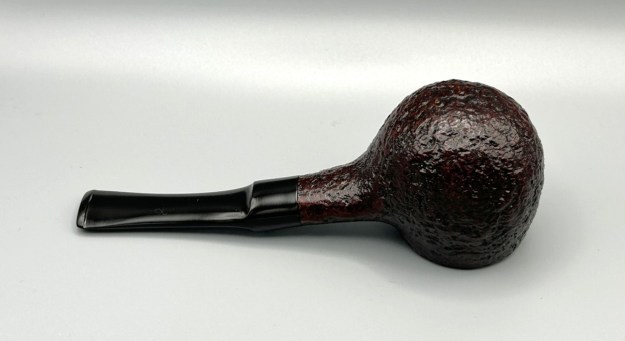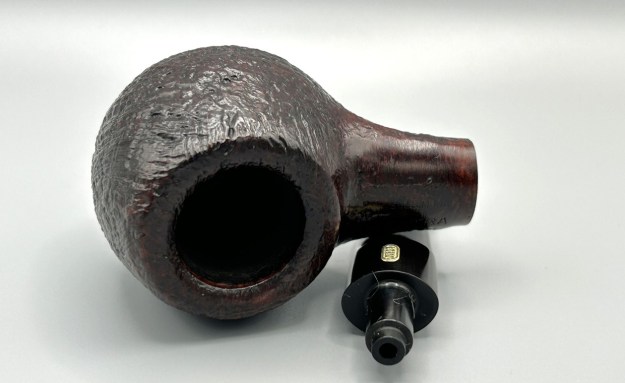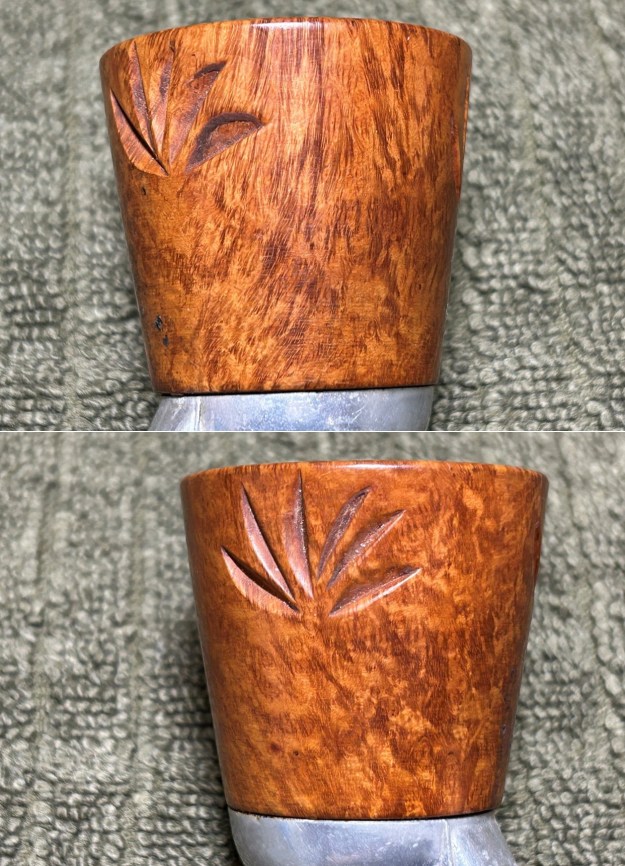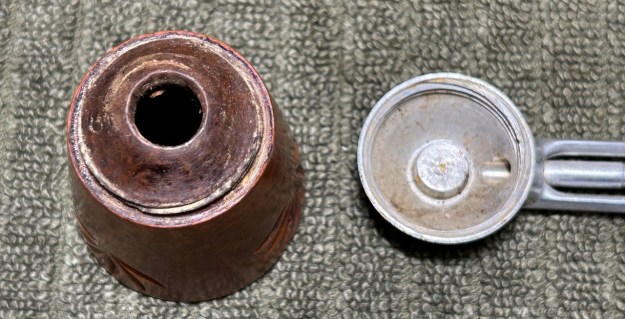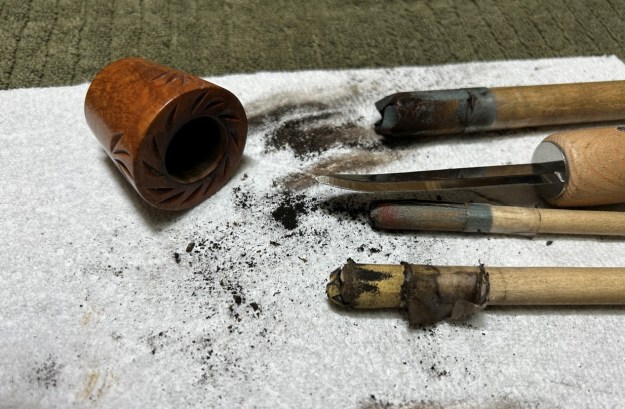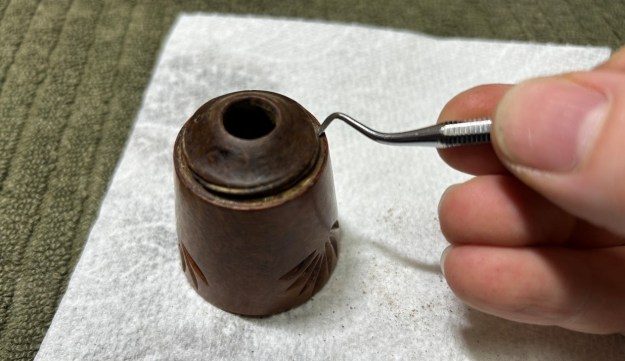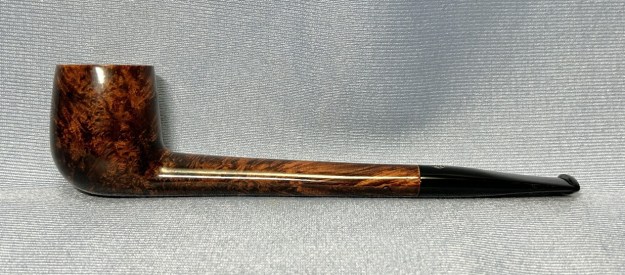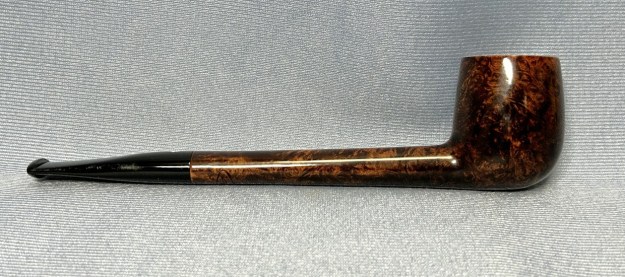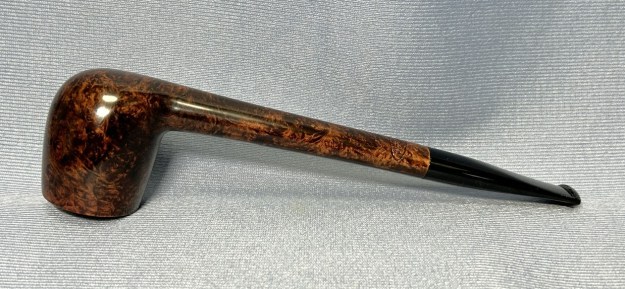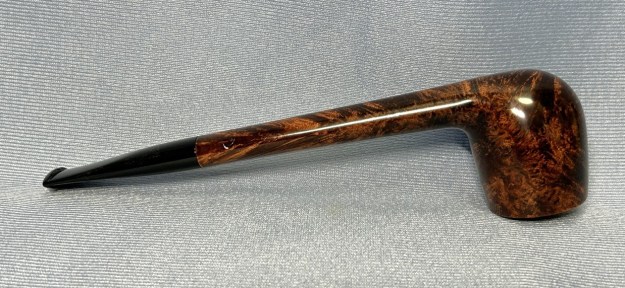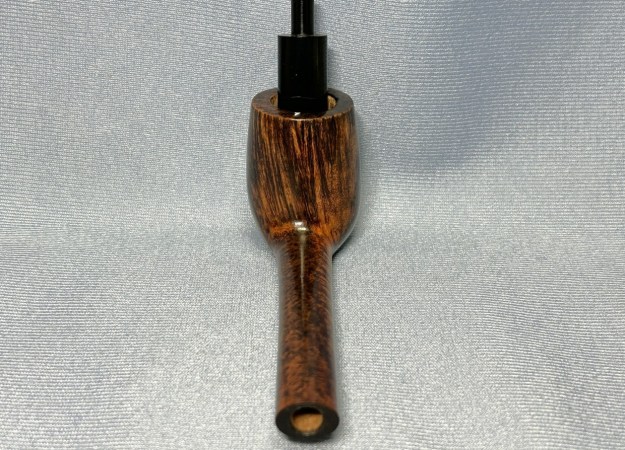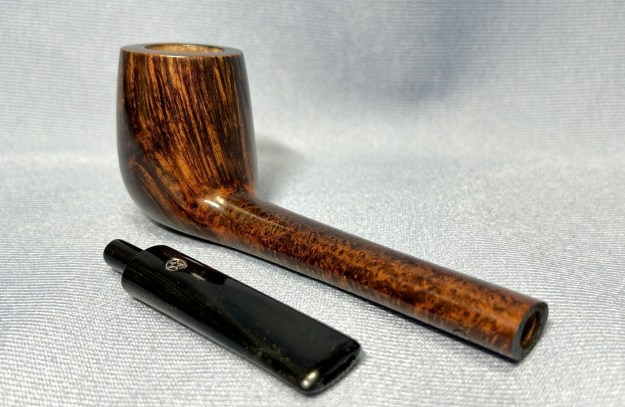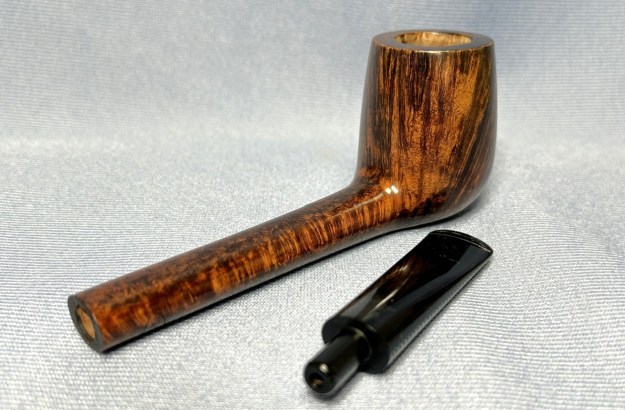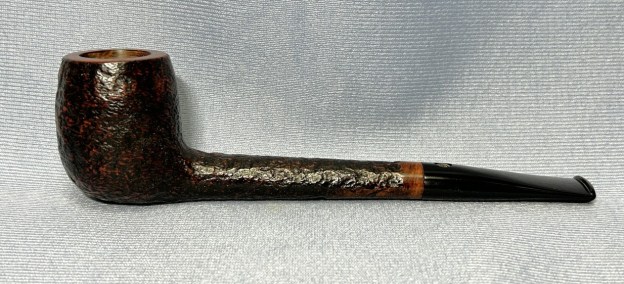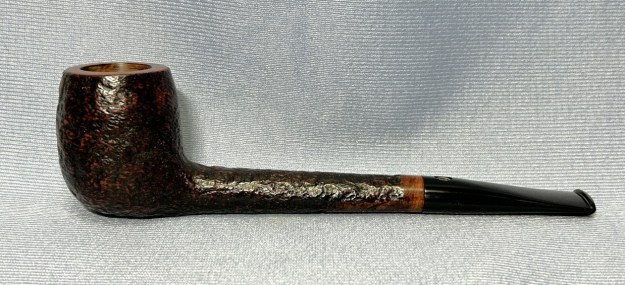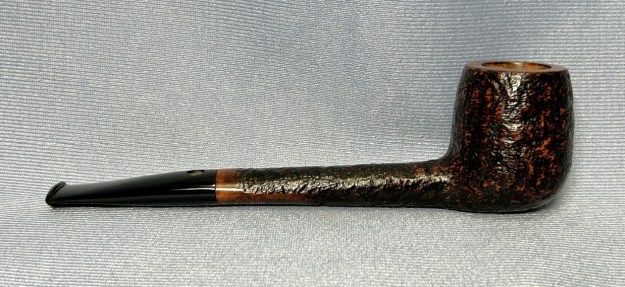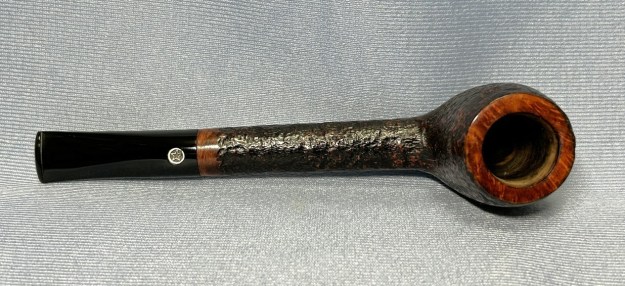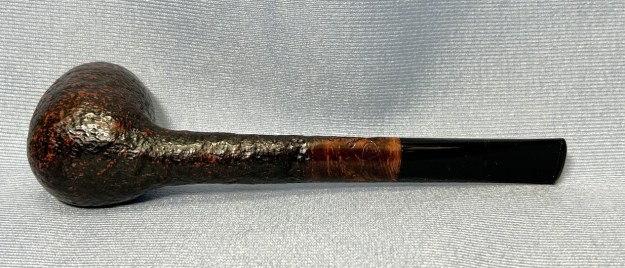
Tag Archives: American pipes

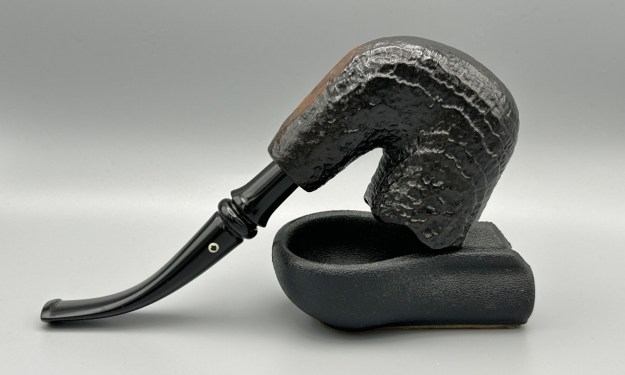
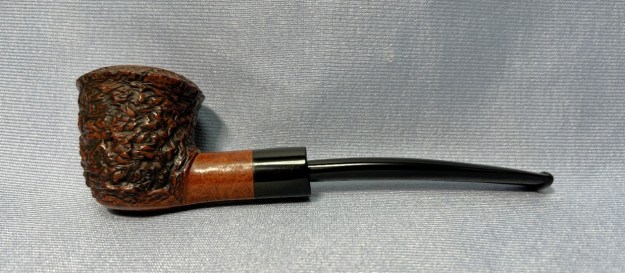
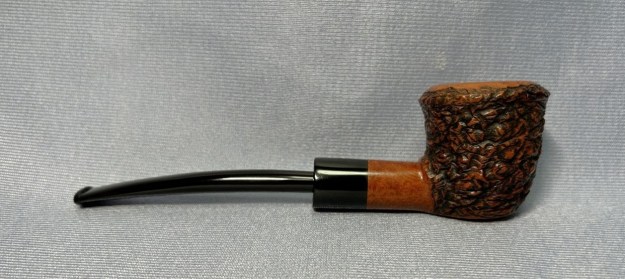
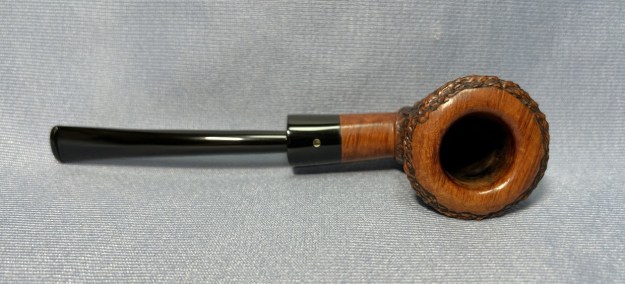
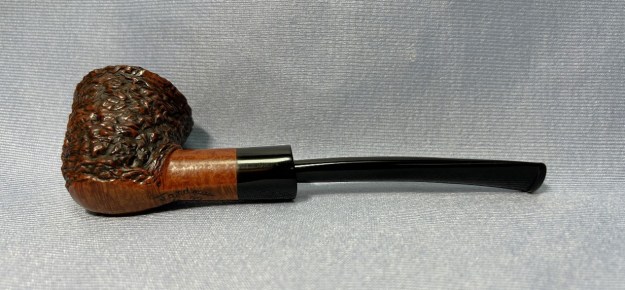
Cleaning Up a Stylish Jobey Shellmoor Extra Hawkbill


by Kenneth Lieblich

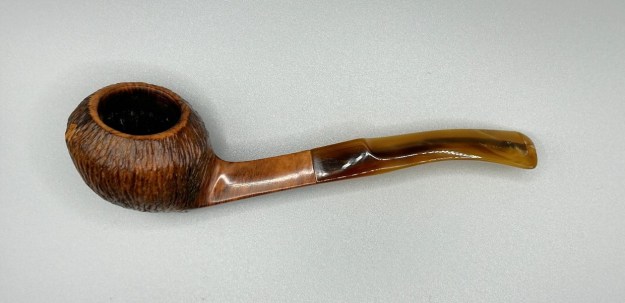
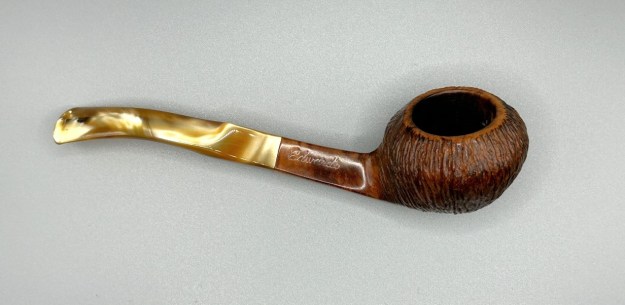
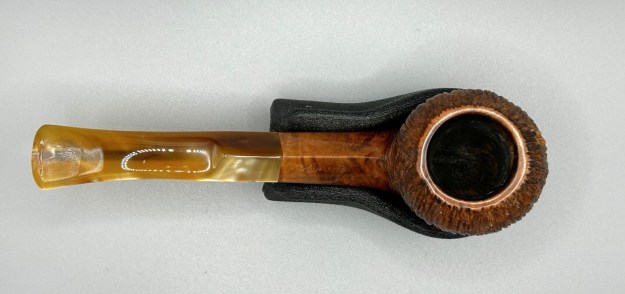
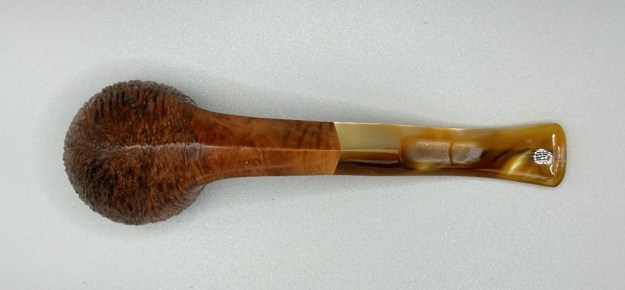
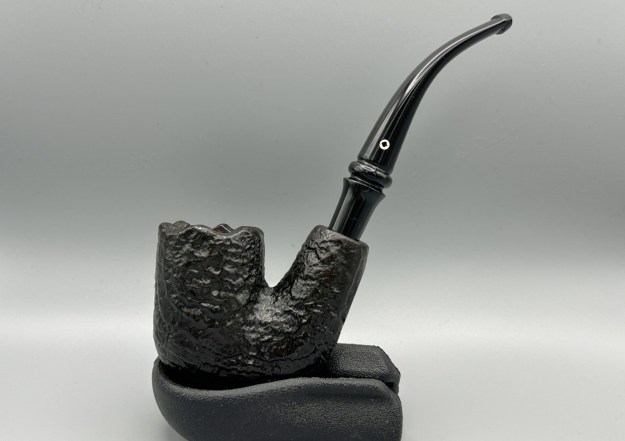
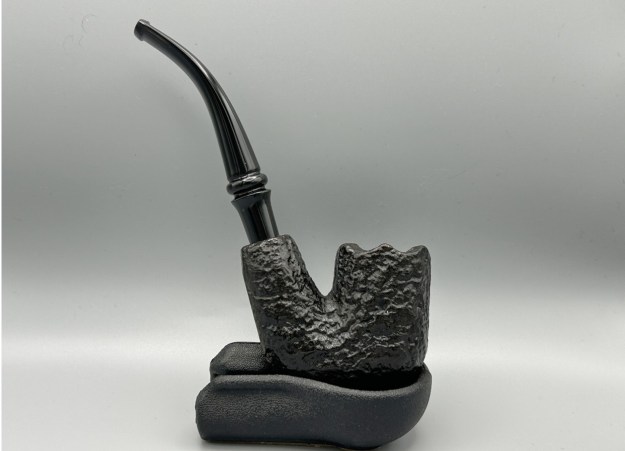
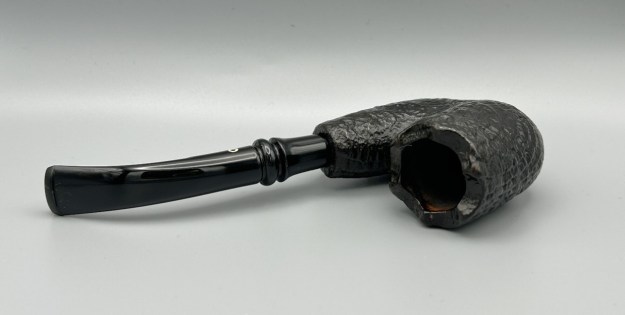
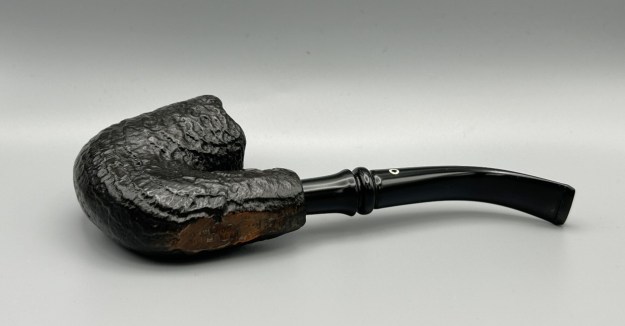
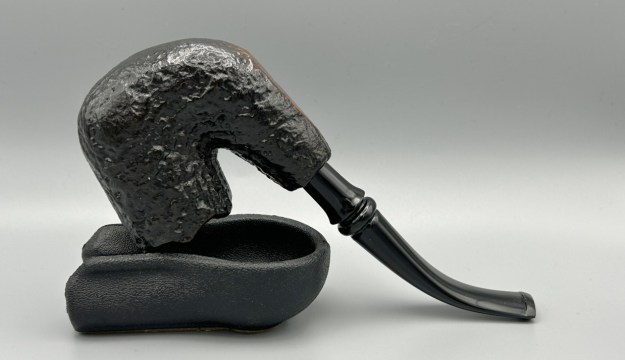
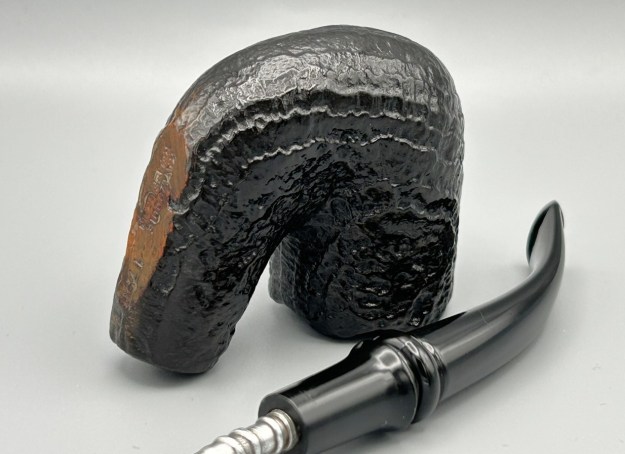
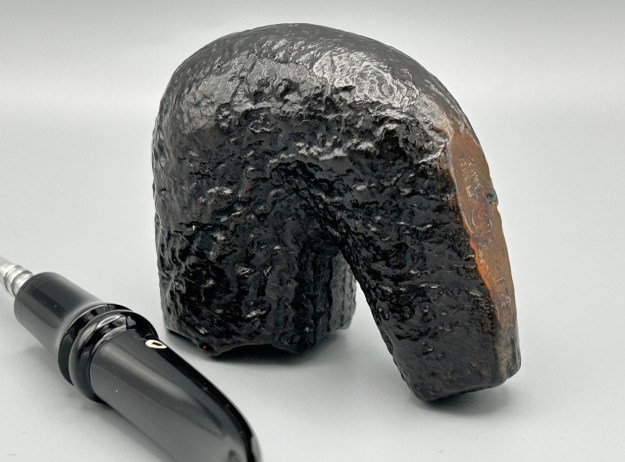
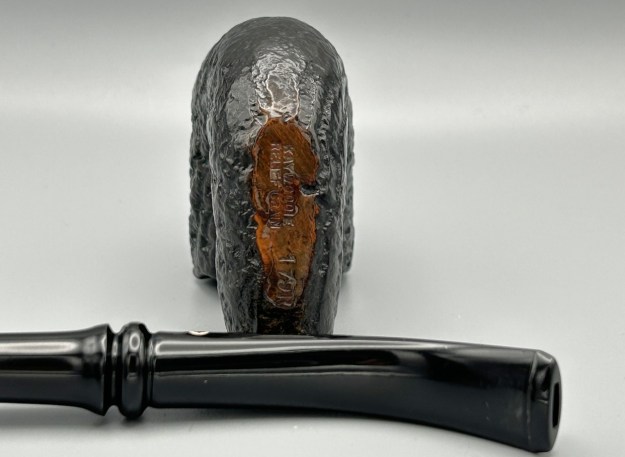
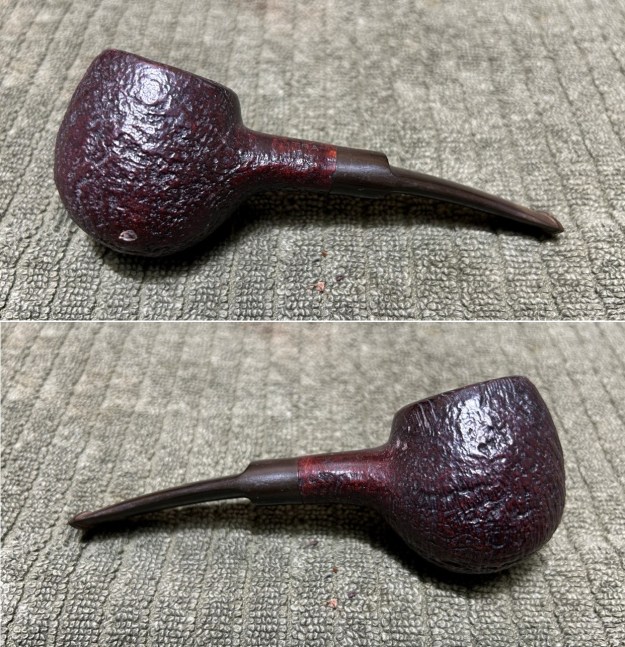
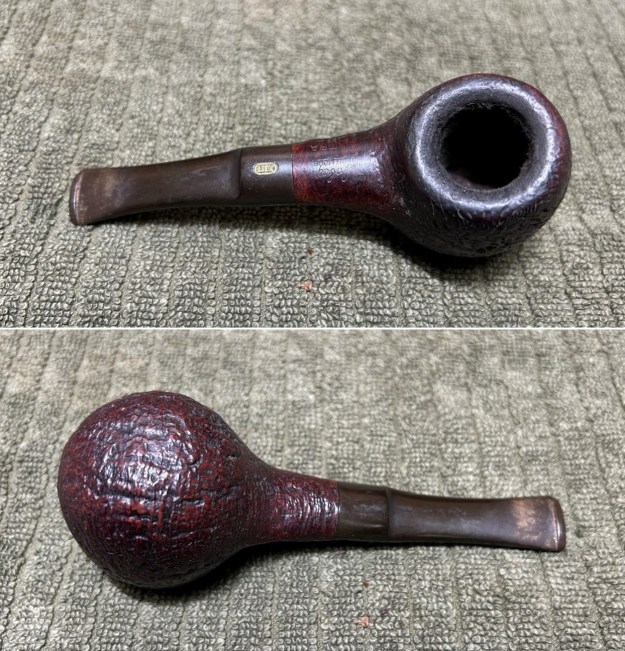
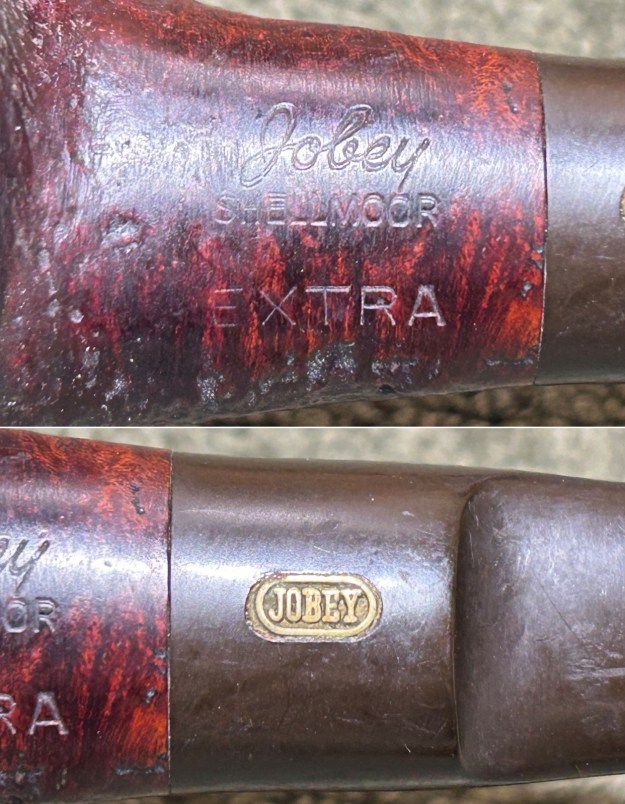
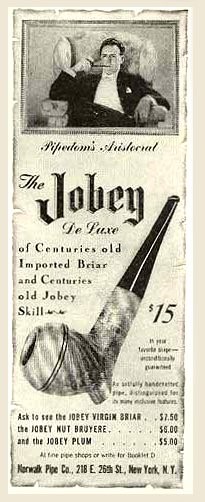
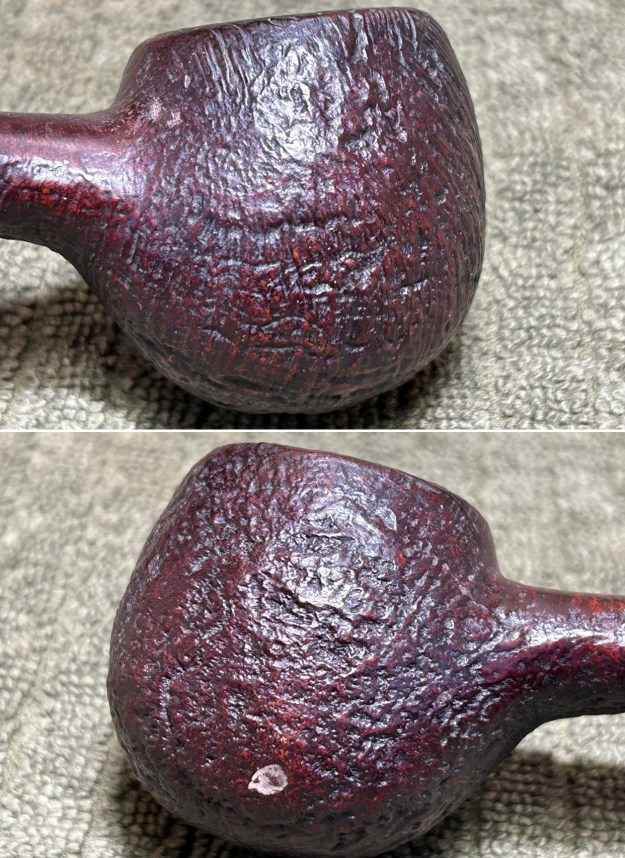
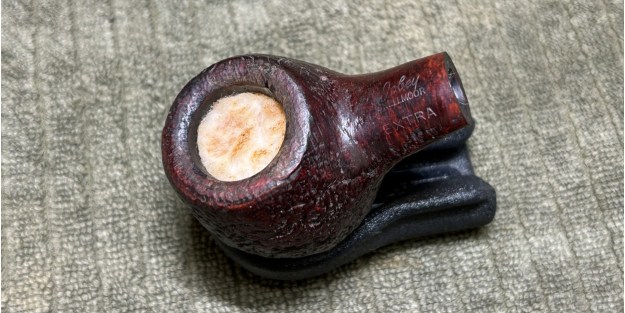
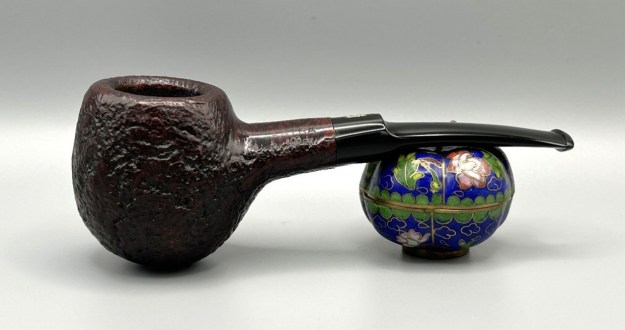
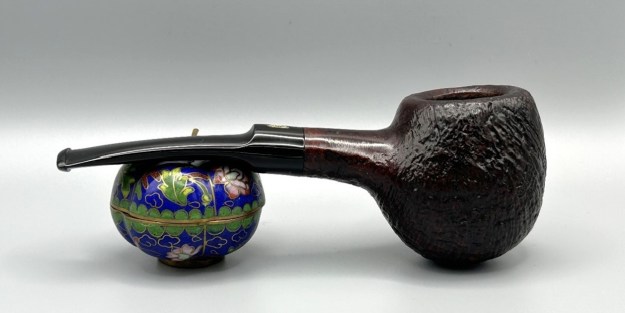
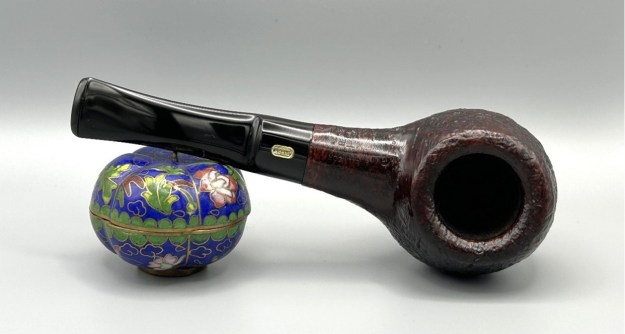
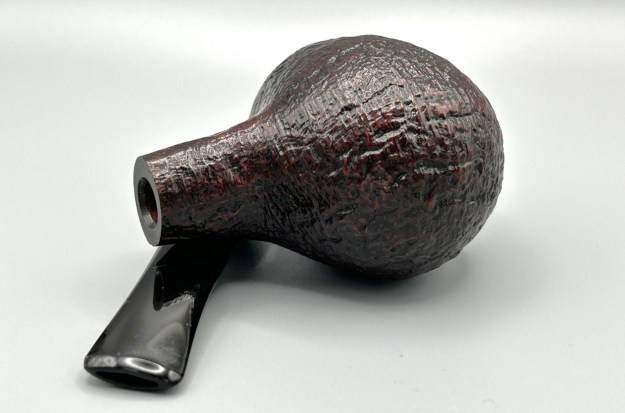
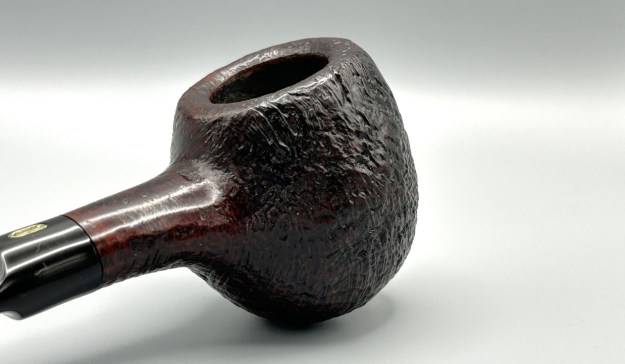
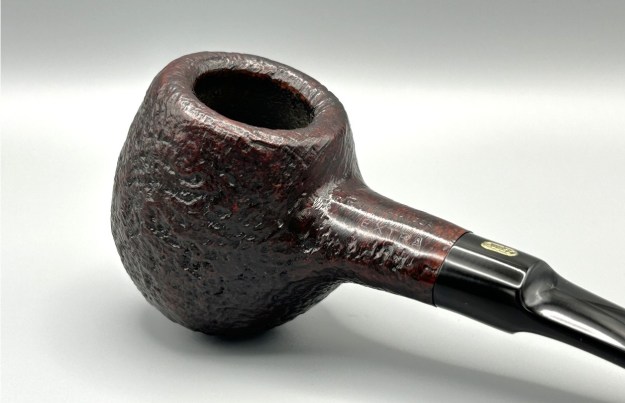
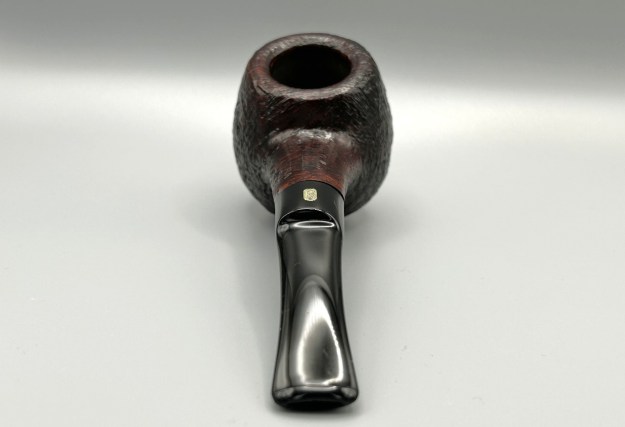
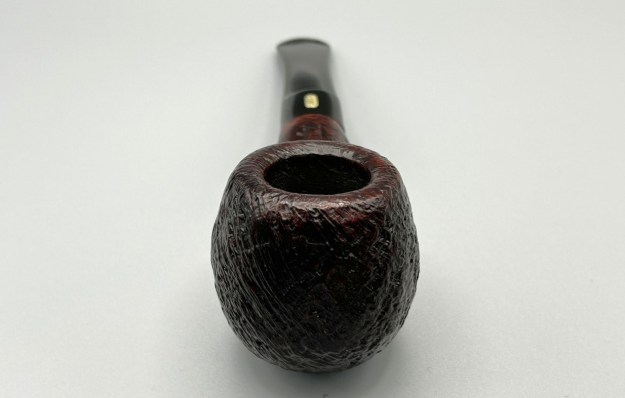
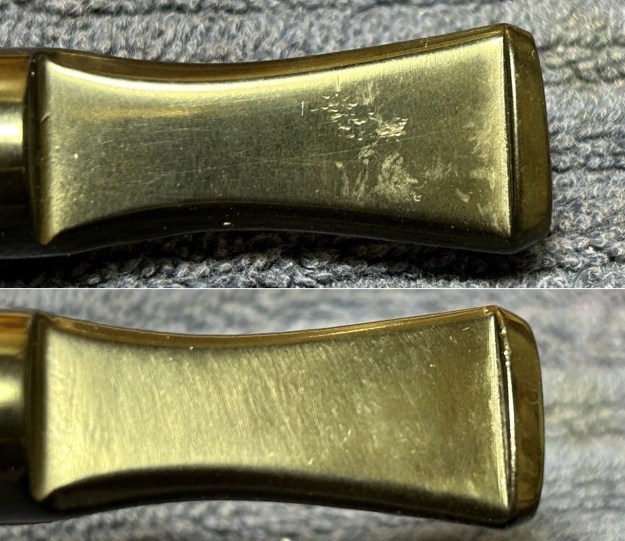
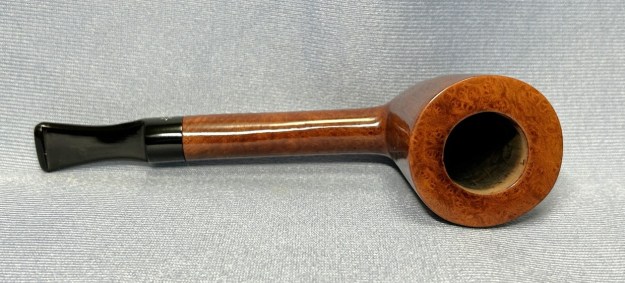
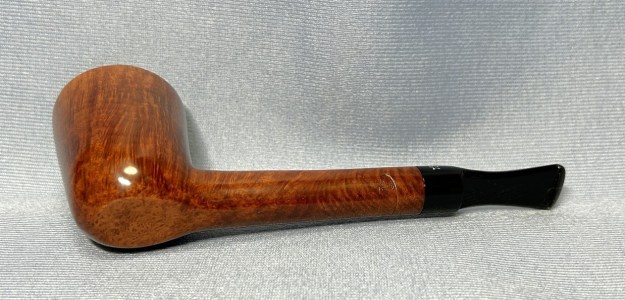
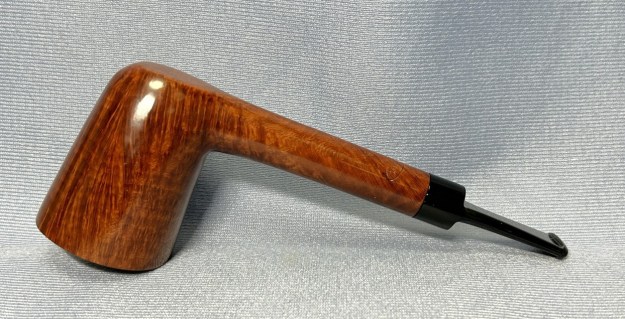
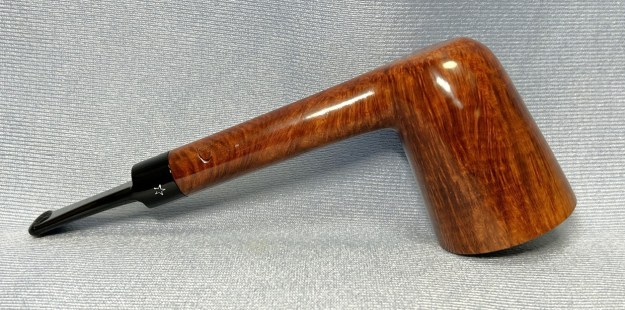
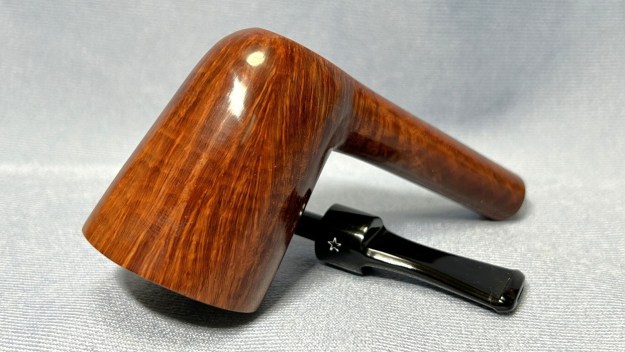
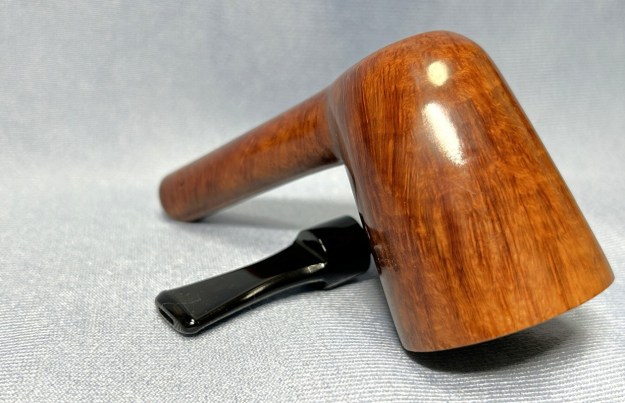
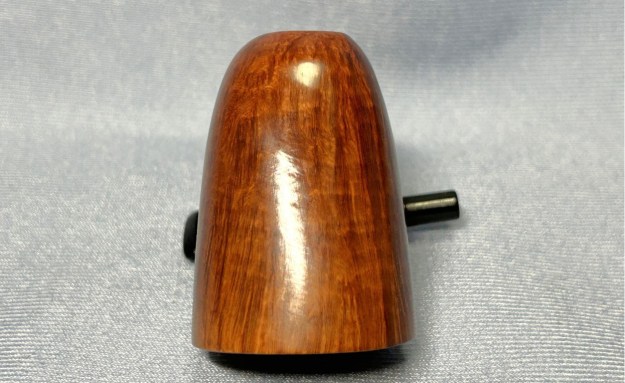
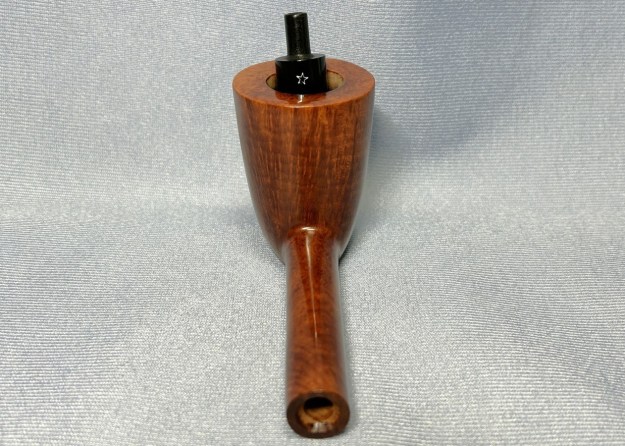
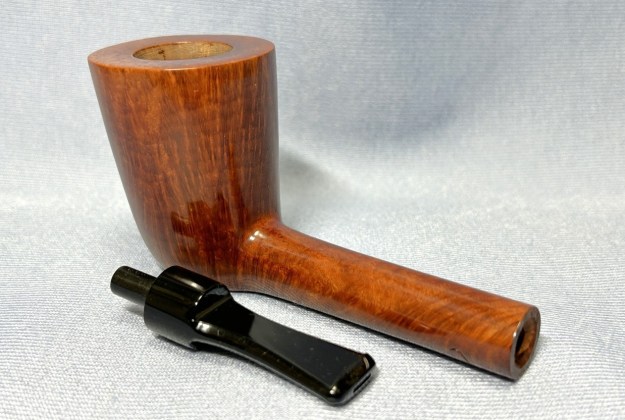
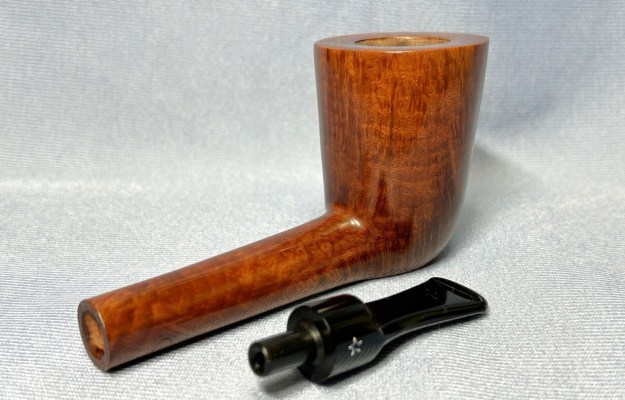
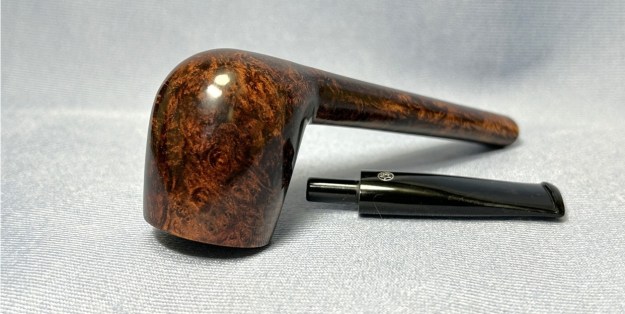
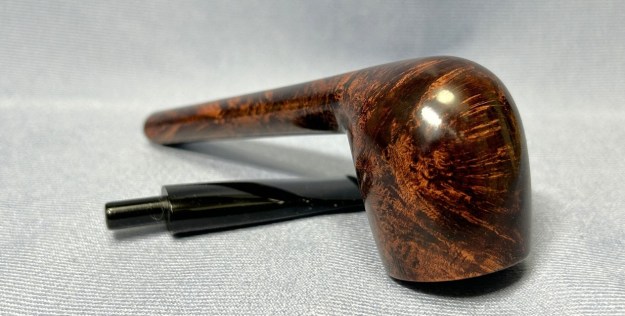
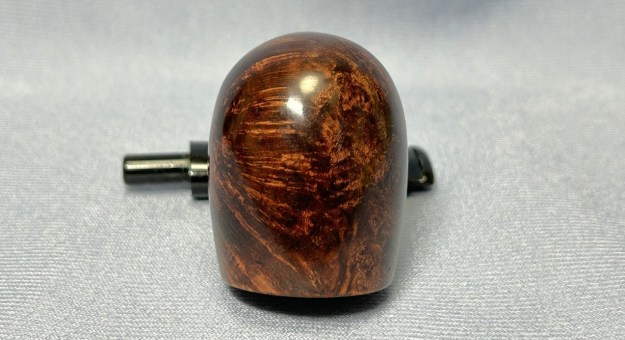
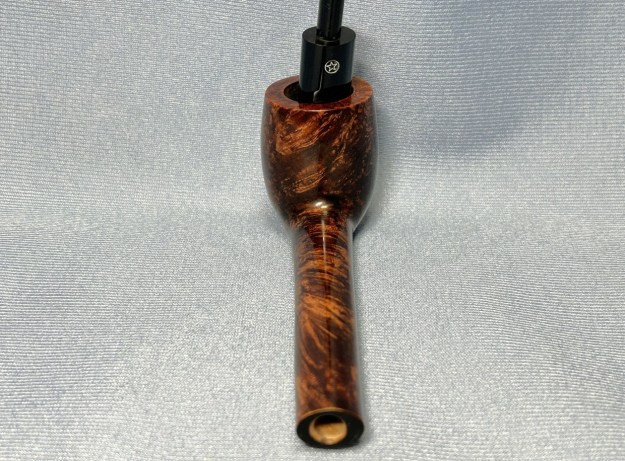
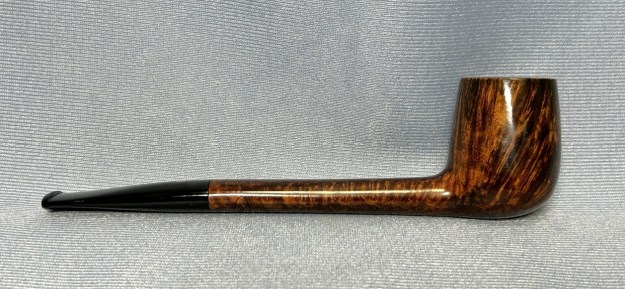
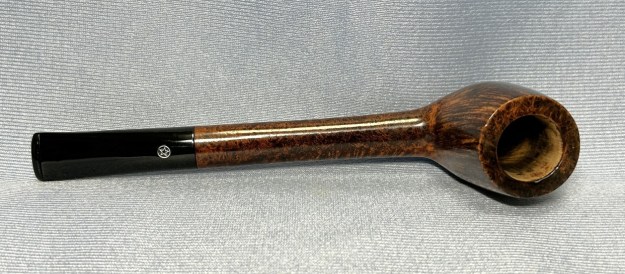
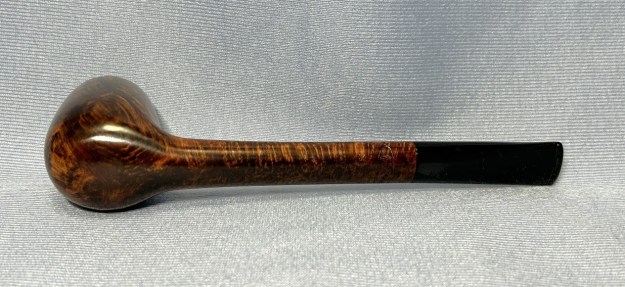
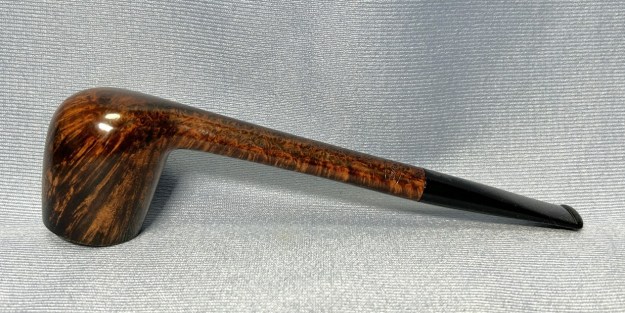
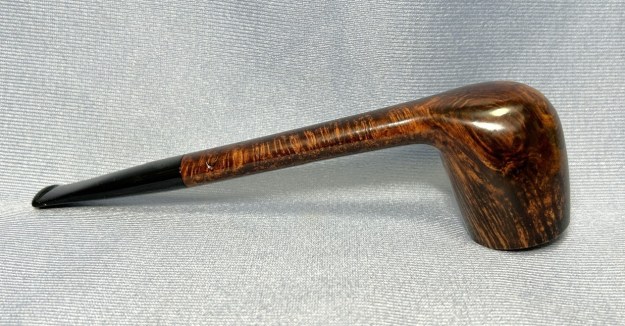
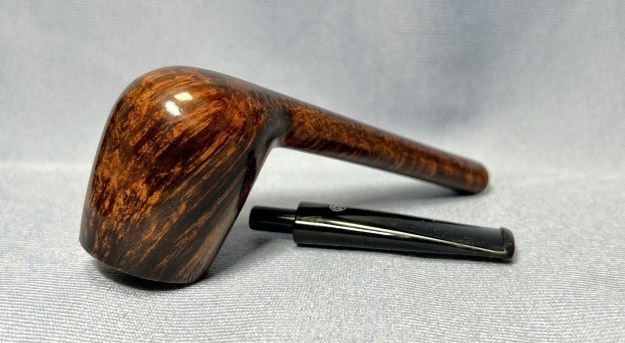
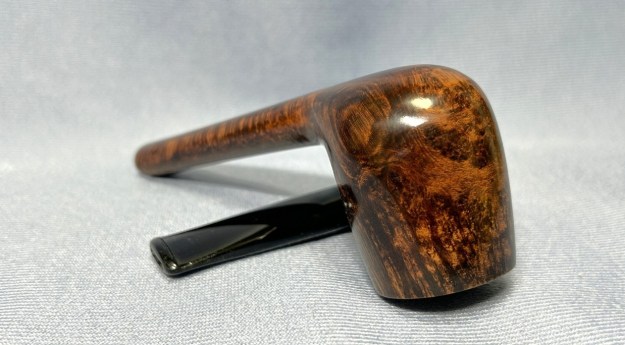
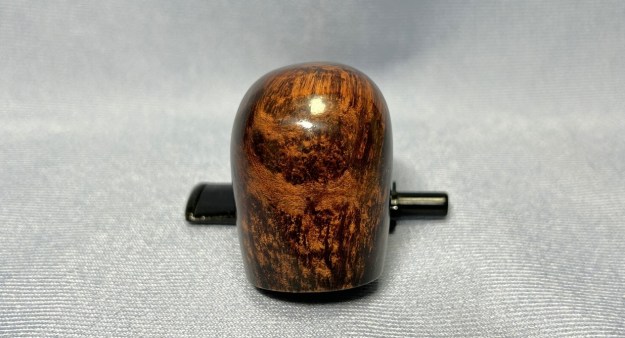
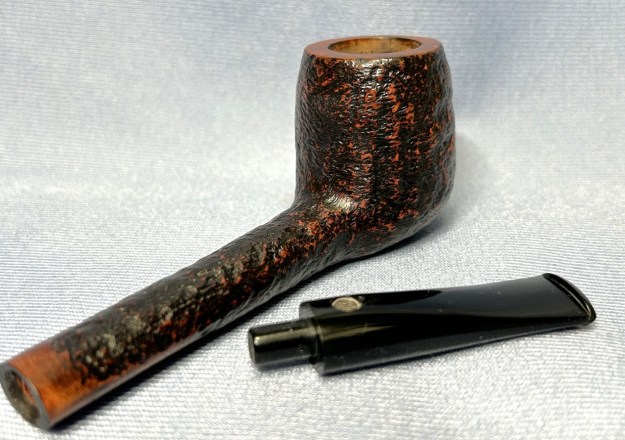
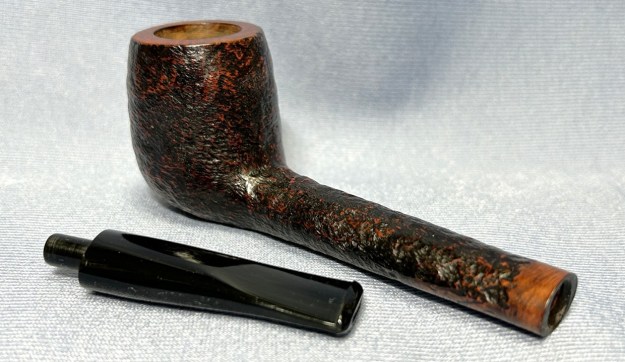
This good-looking pipe came from the great state of Washington and I’ve been meaning to clean it up for some time. This is a Jobey Shellmoor Extra pipe, in the hawkbill shape, and, although this particular pipe doesn’t show any shape number, it is identical to a Jobey Shellmoor Extra E527 that Steve restored last year. You can read that restoration here. It’s not immediately clear to me why this one doesn’t have a number, but no matter! Let’s look at the markings that do appear on this pipe. On top of the shank, we see Jobey [over] Shellmoor [over] Extra. On the stem, we see the Jobey logo inlaid in brass.Regarding the Jobey company itself, there is precious little background information. The Pipedia article on Jobey (which I encourage you to read here) begins with this tidbit:

English – American – Danish – French… Sadly, solid information about Jobey is scant. Probably established in England around 1920(?) the brand hiked into the USA later.

And Pipephil adds this note:

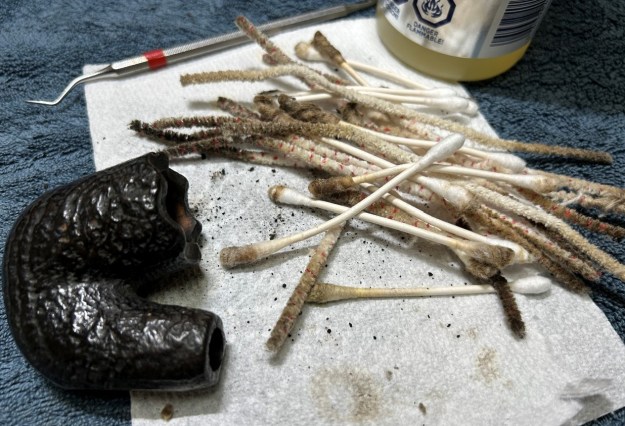
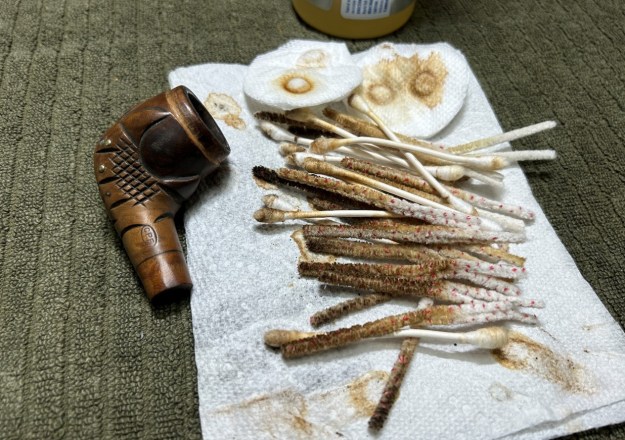
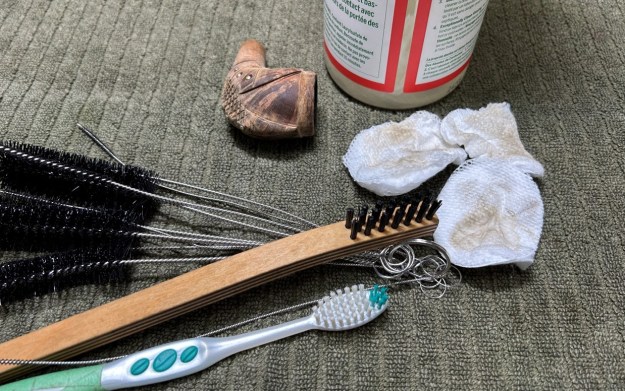
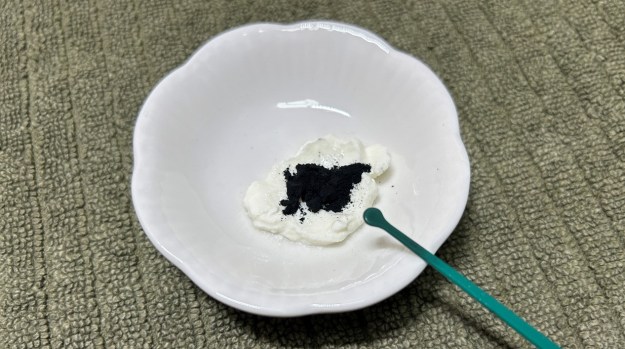
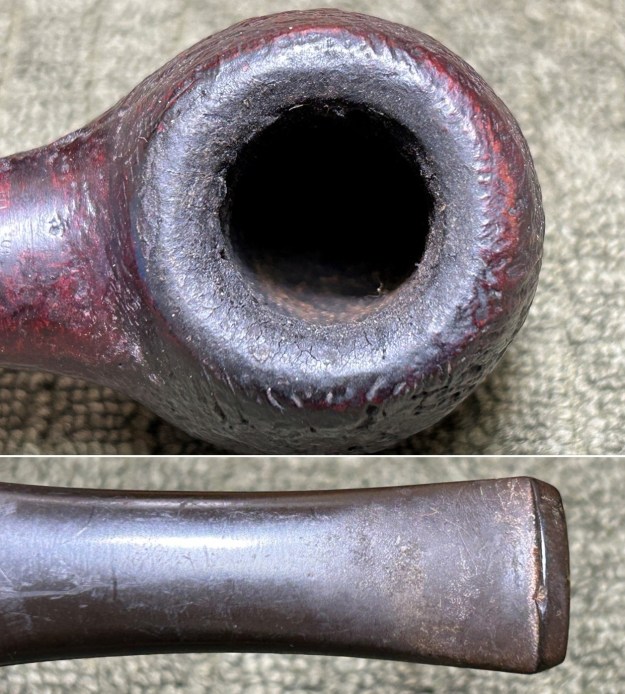
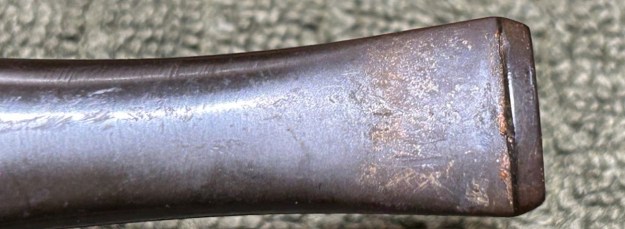
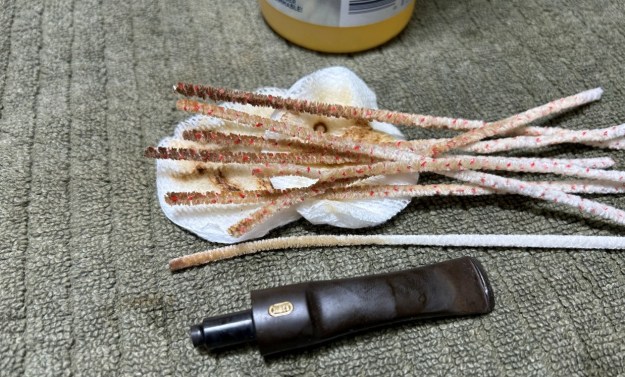
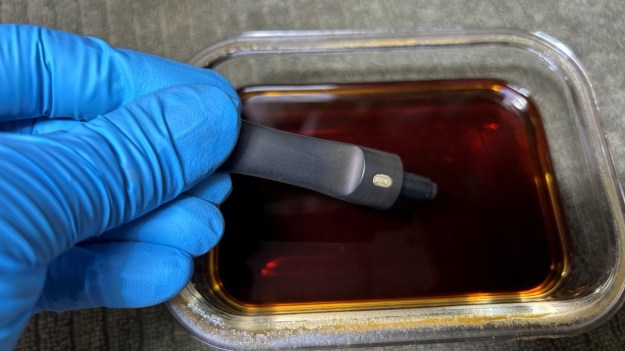
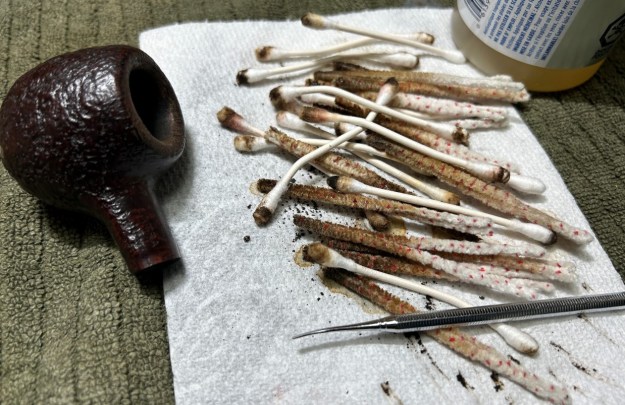
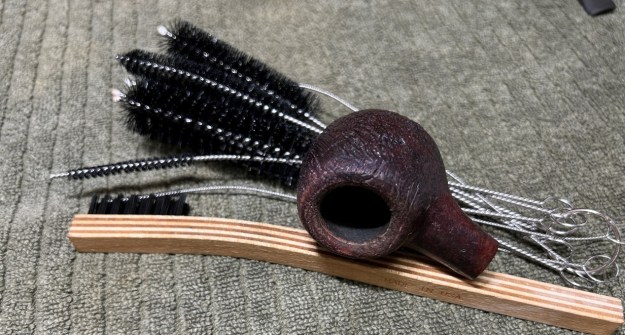
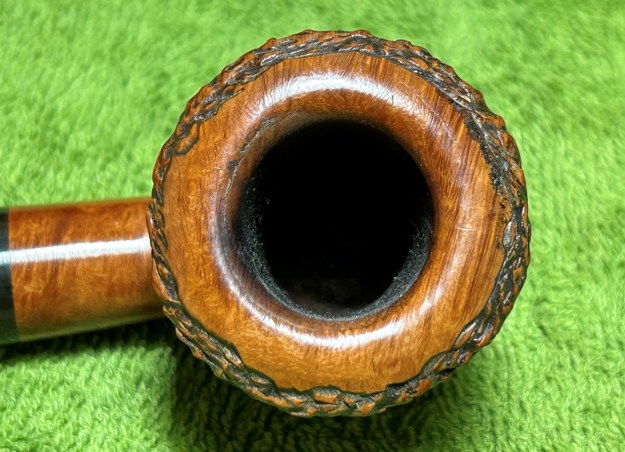
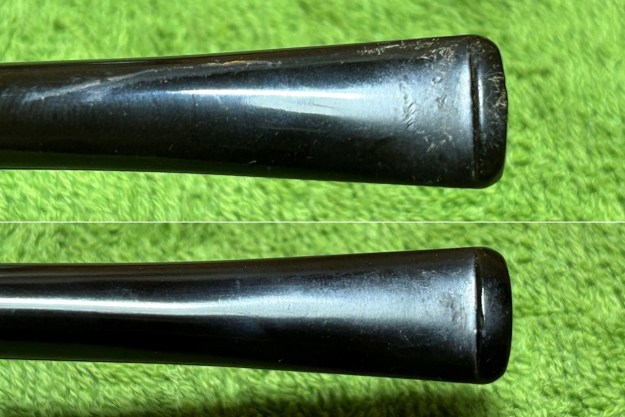
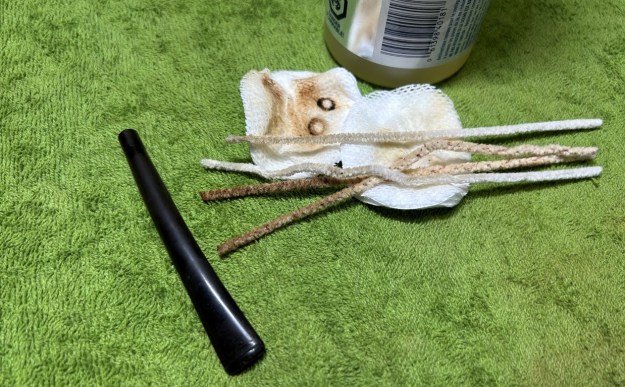
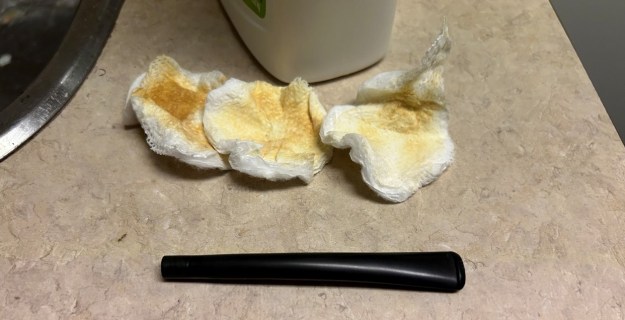
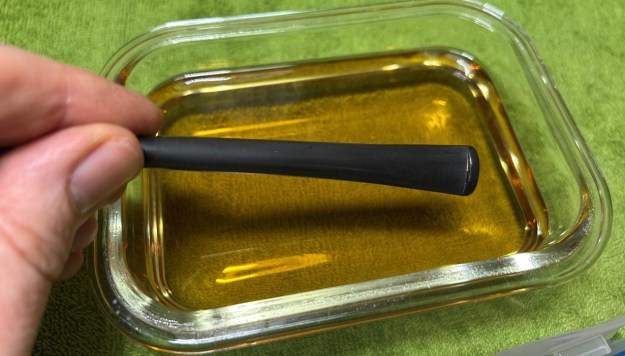
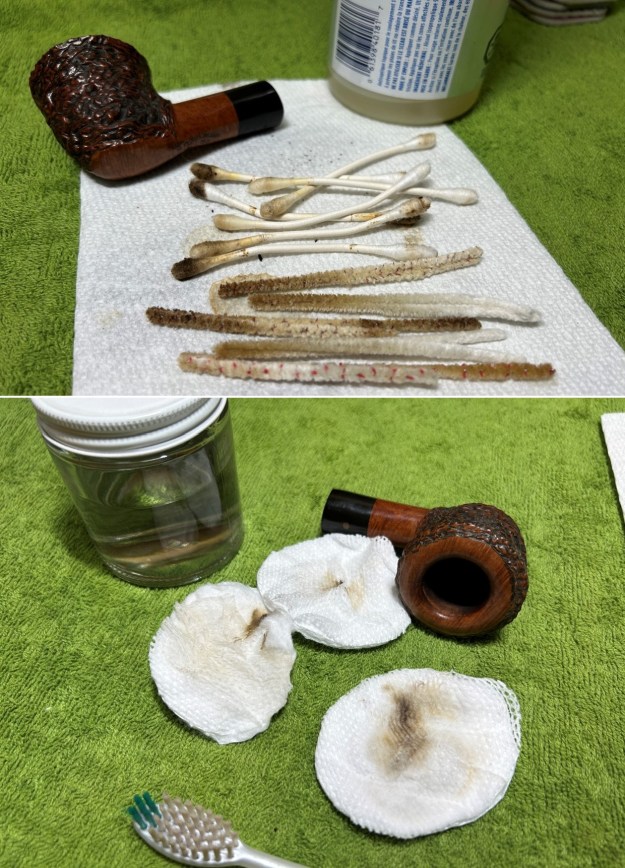
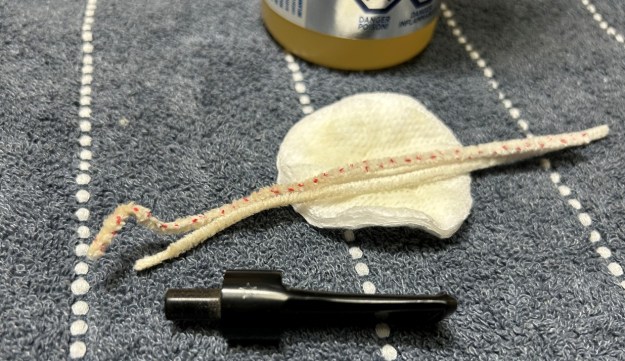
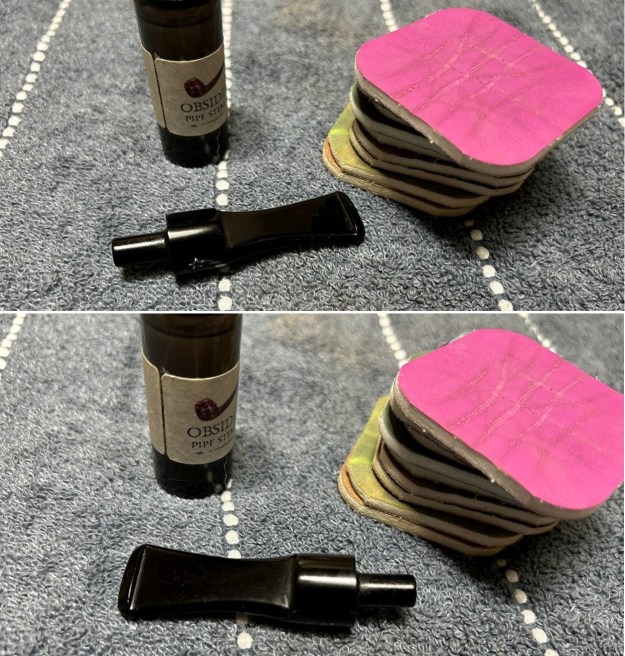
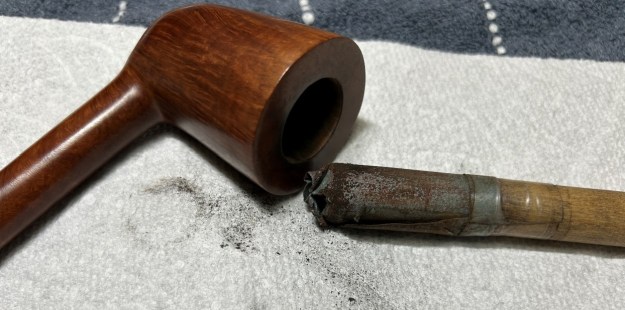
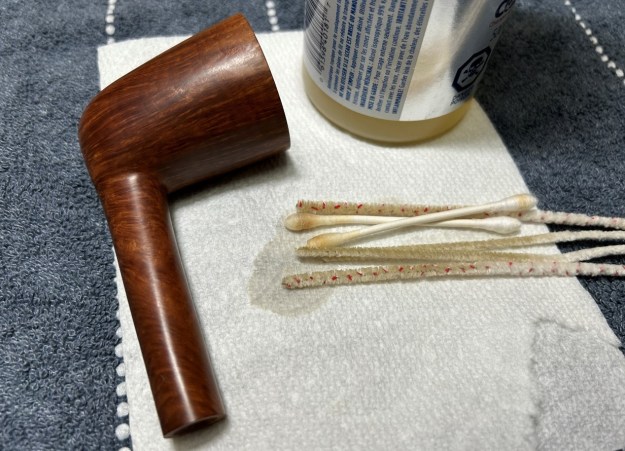
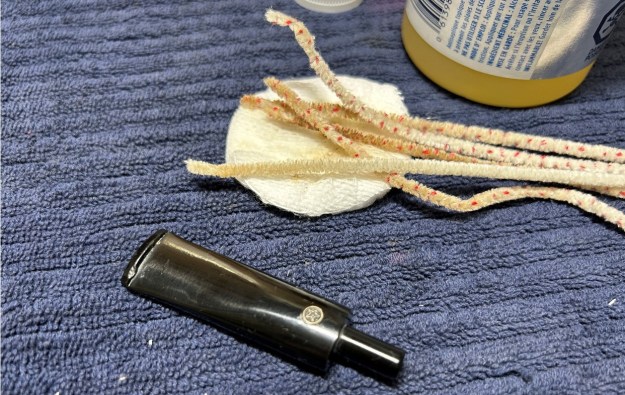
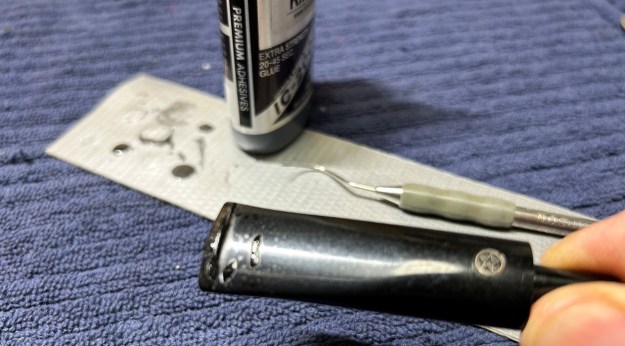
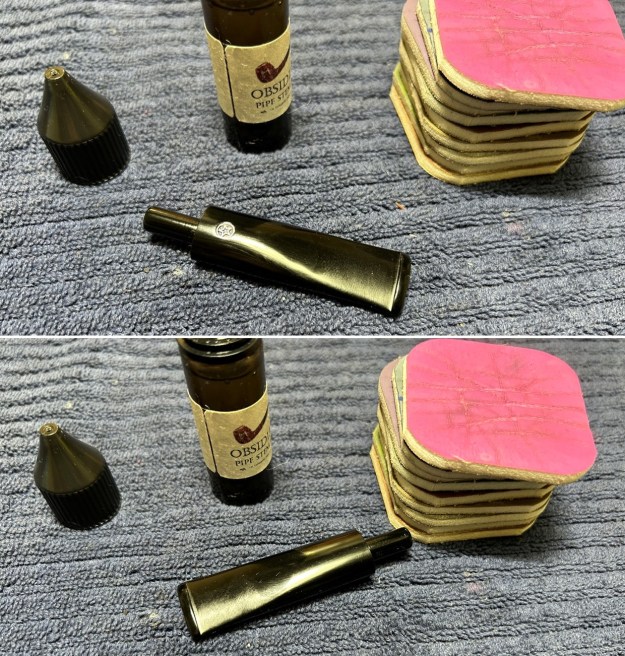
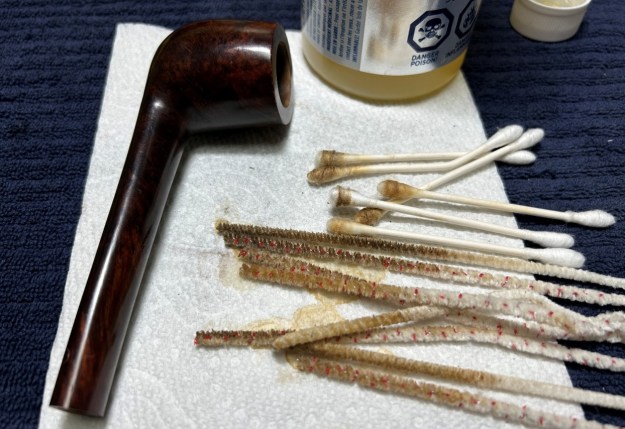
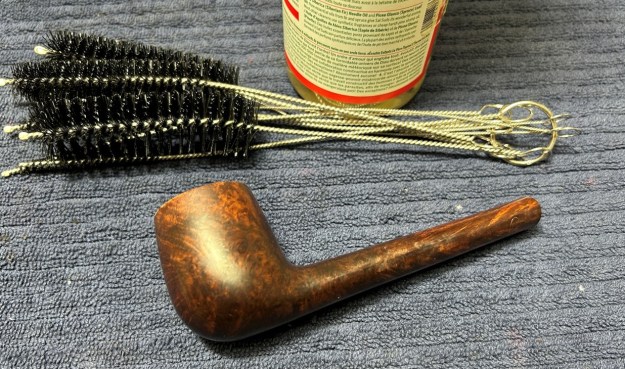
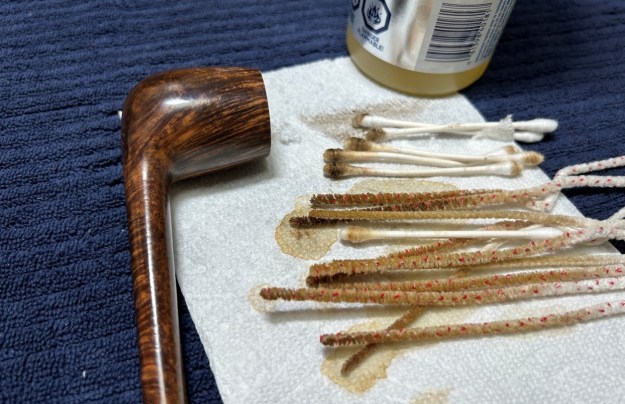
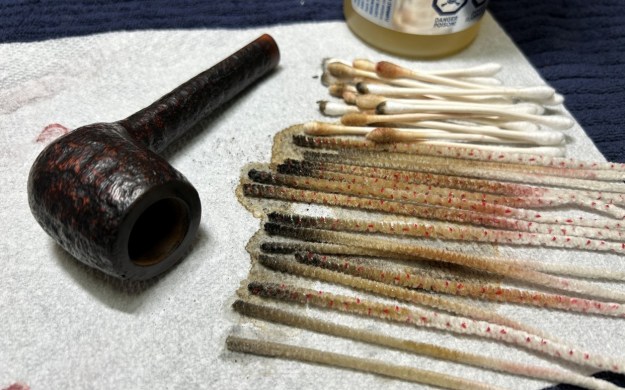
These pipes are made in St Claude (France) by Butz-Choquin (Berrod-Regad group) since 1987. Before this date some were manufactured in England and Denmark (Jobey Dansk).So? Not much history to learn, sadly. Let’s clean this pipe up. Fortunately, this pipe was in good condition and didn’t require too much labour. The stummel is dirty but sound. The rim is coated in lava. The bowl has a decent amount of cake in it. The stem is also dirty, oxidized, and shows signs of calcification. There are lots of tooth scratches and some minor dents. I used isopropyl alcohol on a few cotton rounds and wiped down the stem to provide an initial cleaning of filth before moving on to the next steps. The primary cleaning came next. I disinfected the inside of the stem with both pipe cleaners and cotton swabs dipped in lemon-infused 99% isopropyl alcohol. I scrubbed thoroughly to make sure the interior was very clean. Actually, it wasn’t too bad inside.The goal of the next step is the removal (or minimization) of oxidation. Going to my sink, I used cream cleanser, cotton rounds, and a toothbrush, and scoured the stem to remove as much surface oxidation as possible. As the photos show, the result was a hideous, ochre-coloured mess – but better off the stem than on it.Once the stem was reasonably clean, I soaked it overnight in some Briarville Stem Oxidation Remover. This solution works to draw oxidation in the stem to the surface of the vulcanite. This is a major aid and an important step in ensuring a clean stem. The following day, I drew out the stem from its bath and scrubbed the lingering fluid with a toothbrush.As the stem was now clean and dry, I set about fixing the marks and dents in the vulcanite. This was done by filling those divots with black cyanoacrylate adhesive, impregnated with carbon and rubber. I left this to cure and moved on.

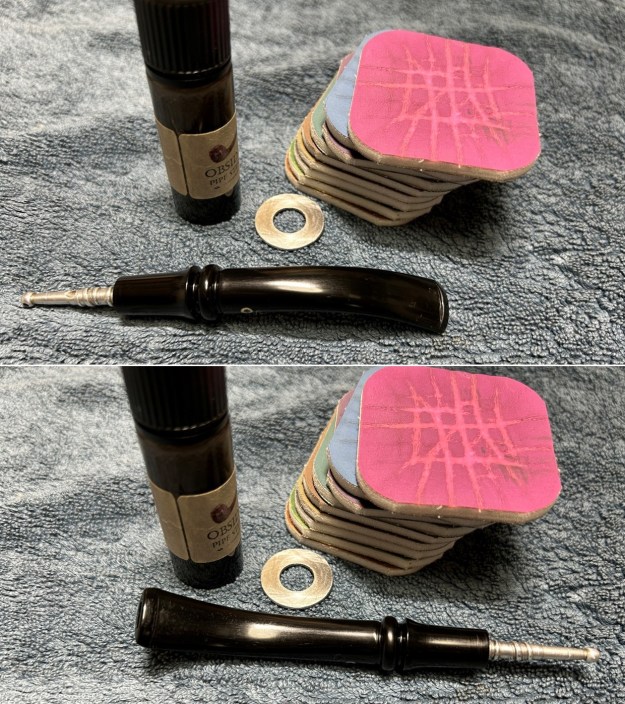
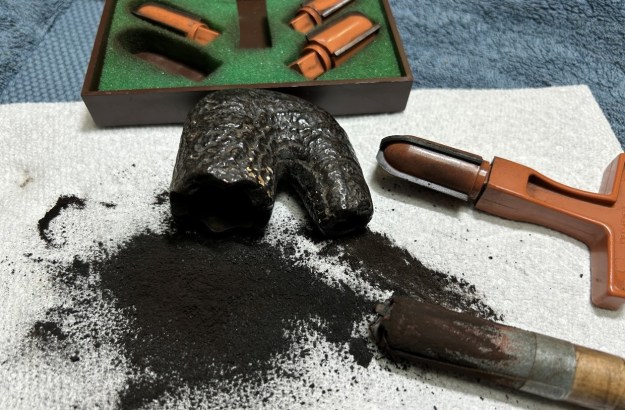
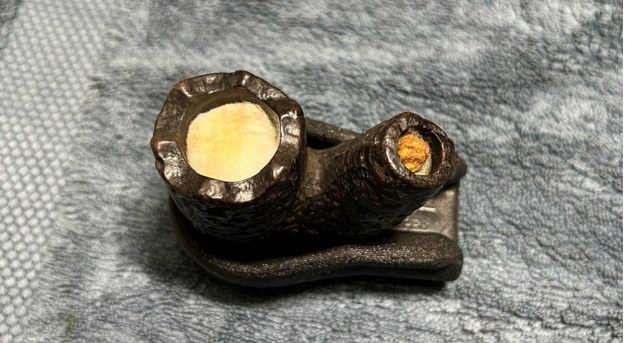
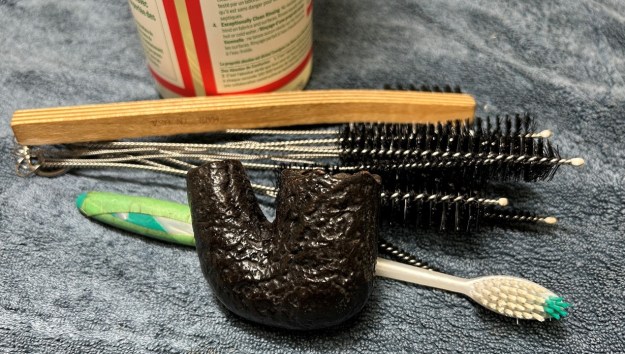
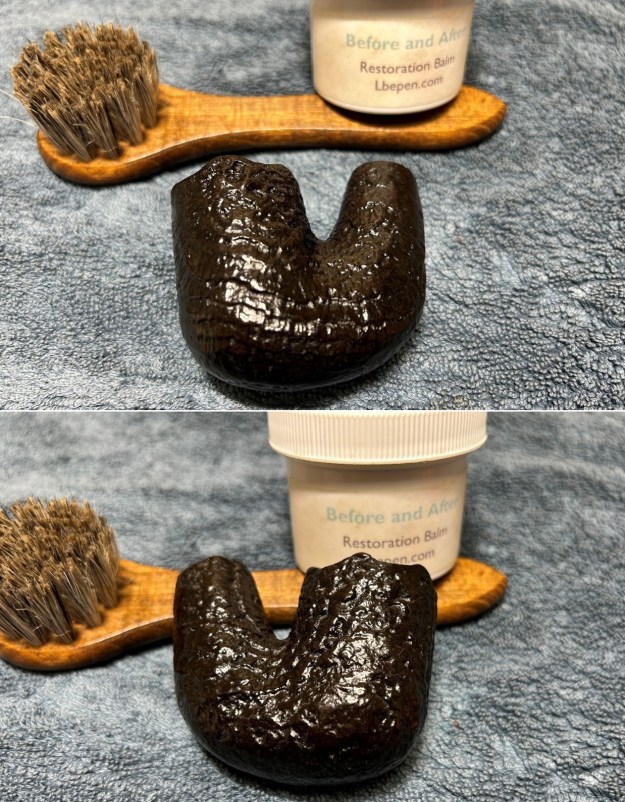
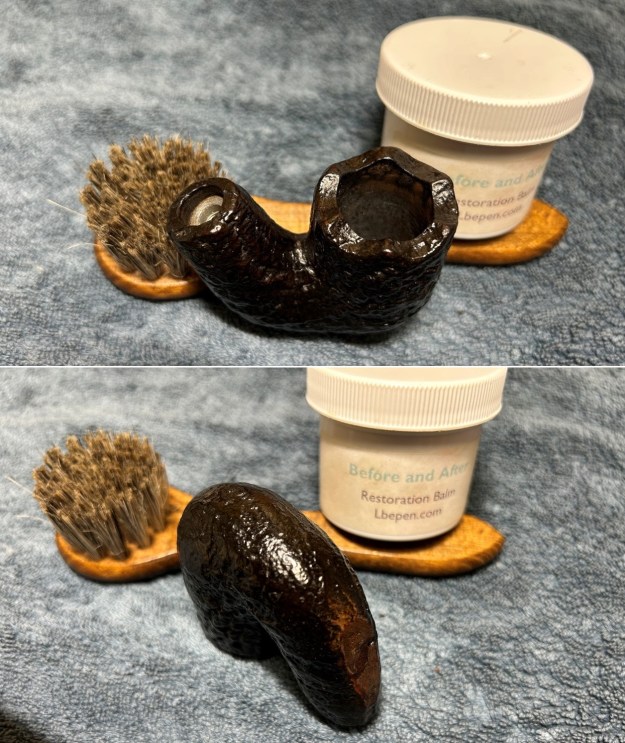
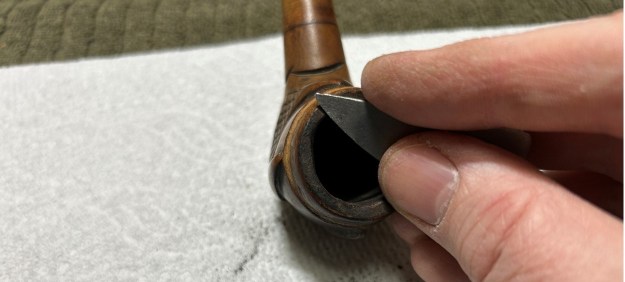
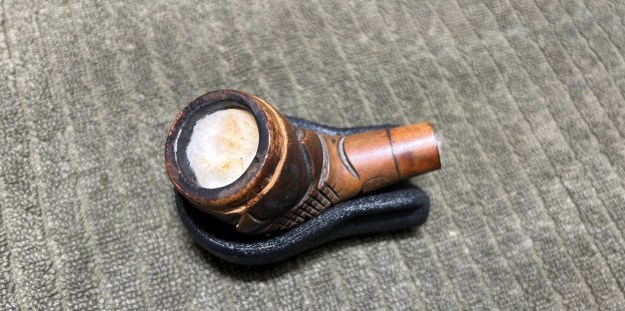
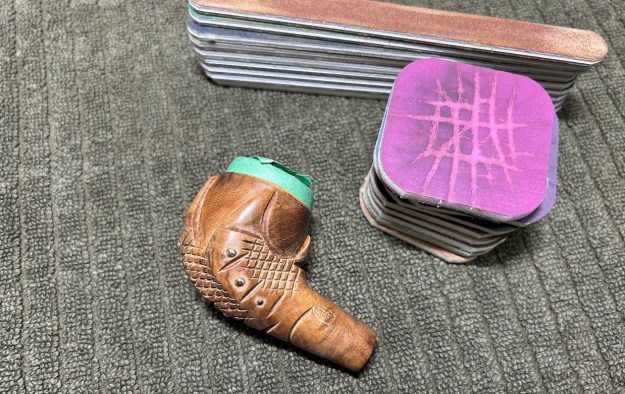
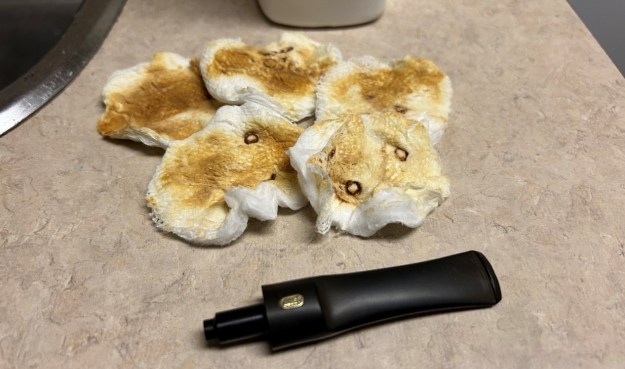
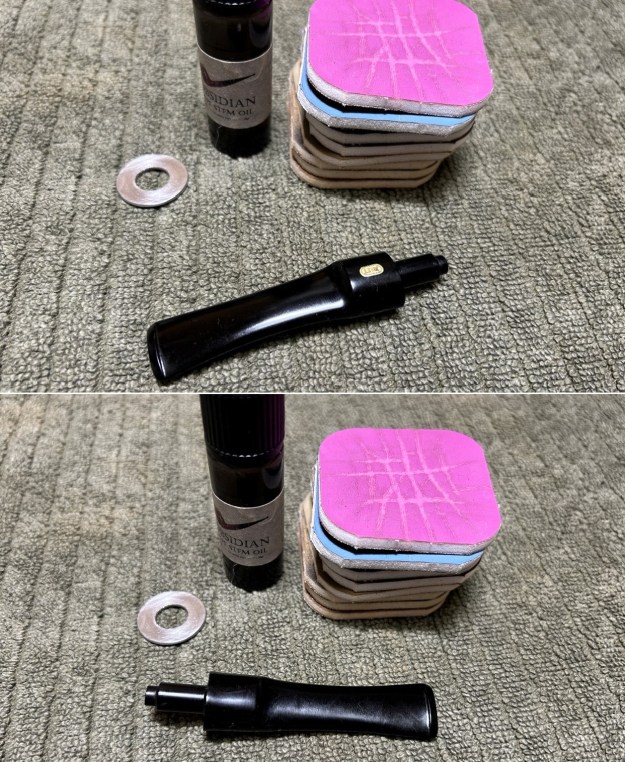
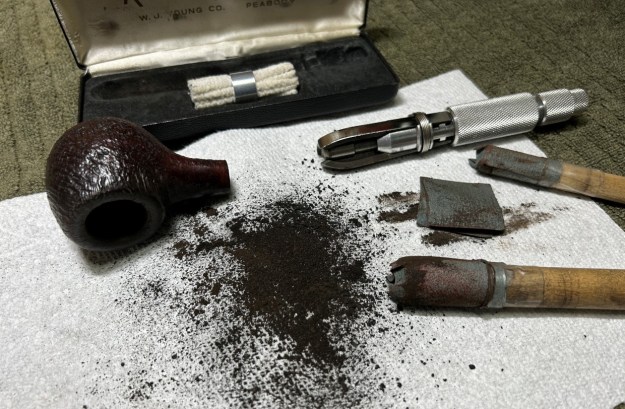
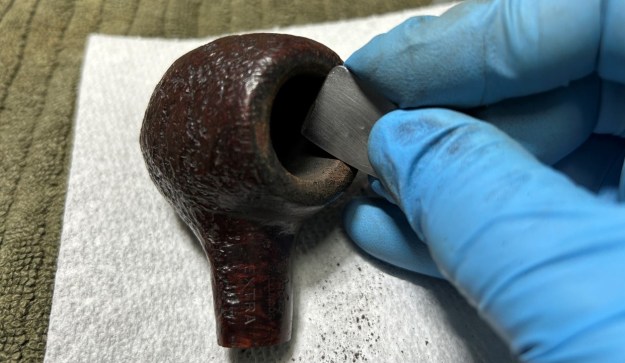
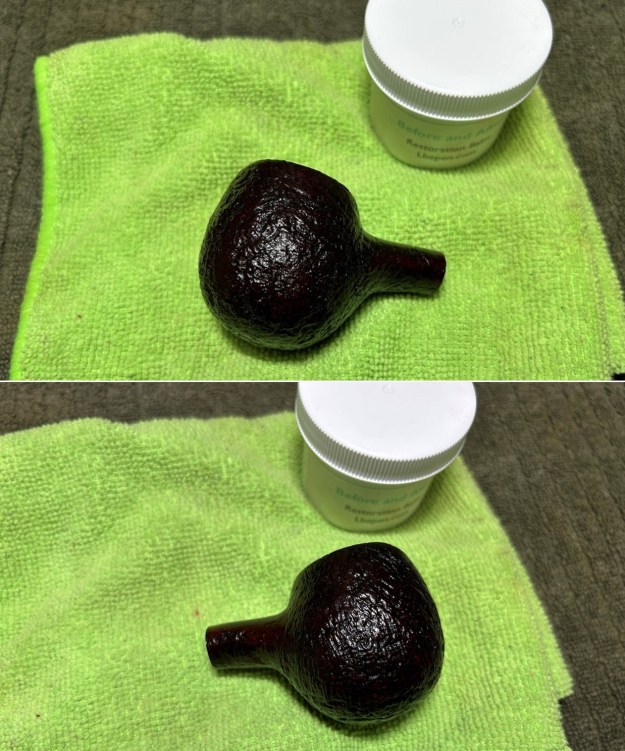
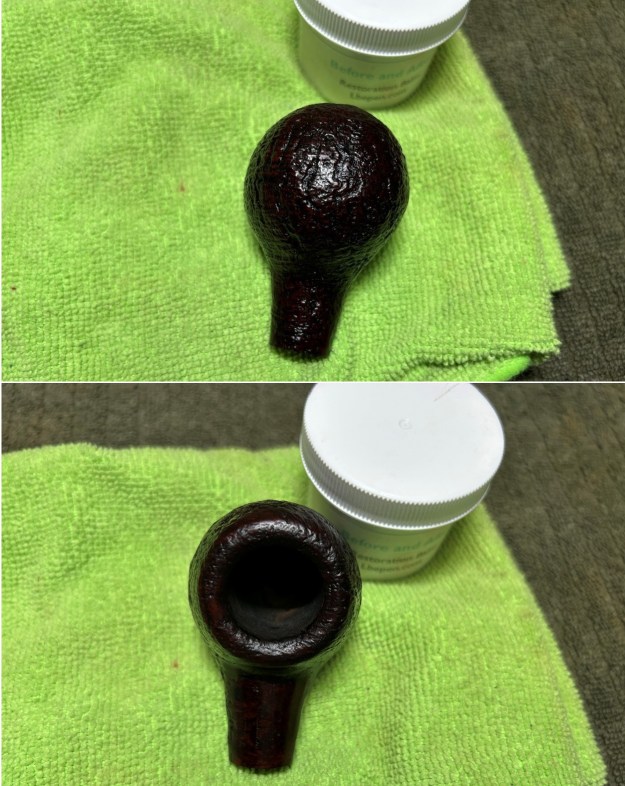
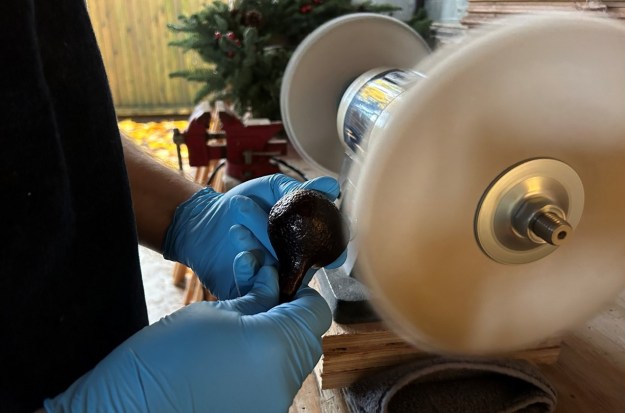
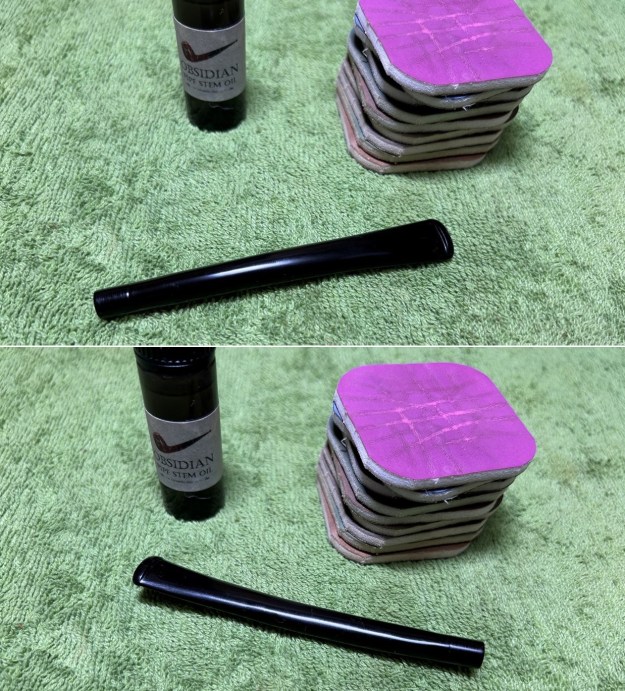
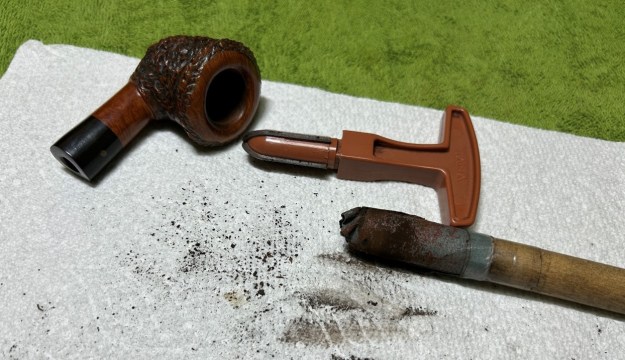
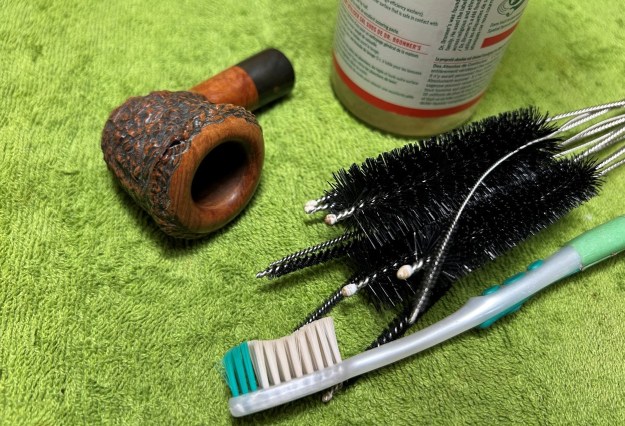
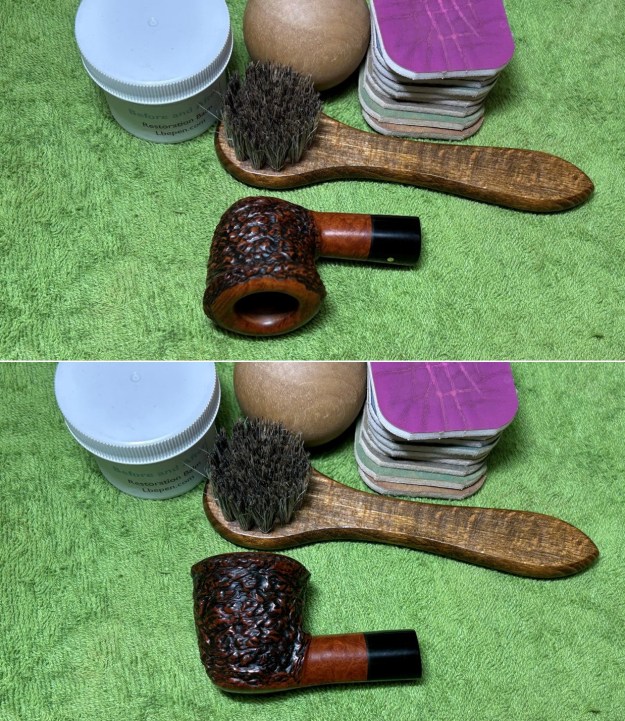
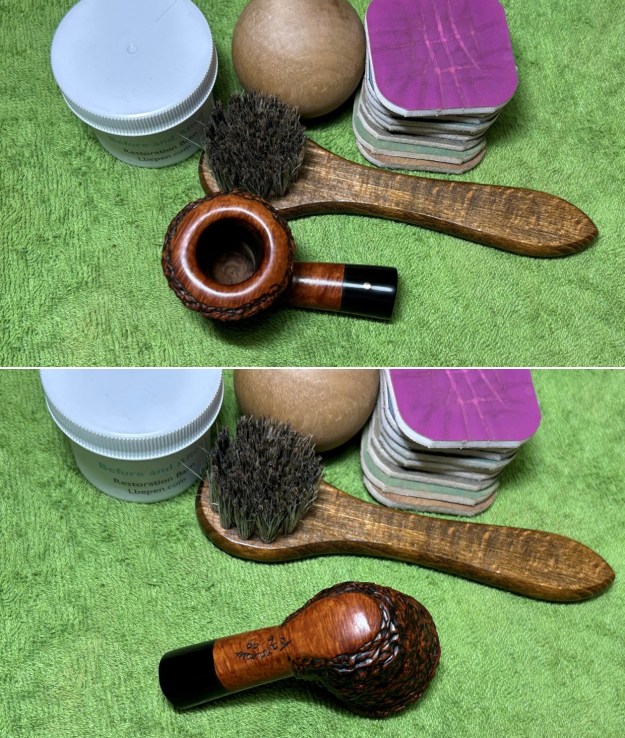
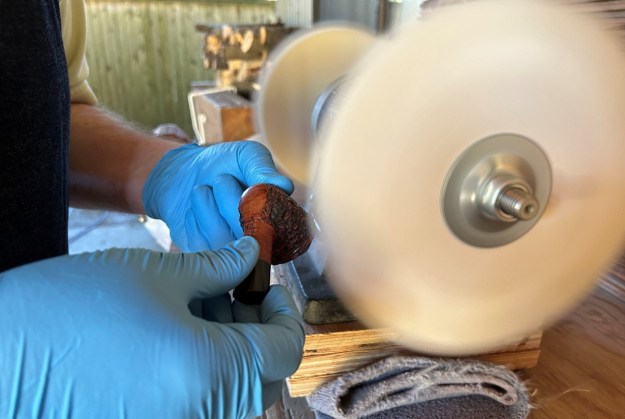
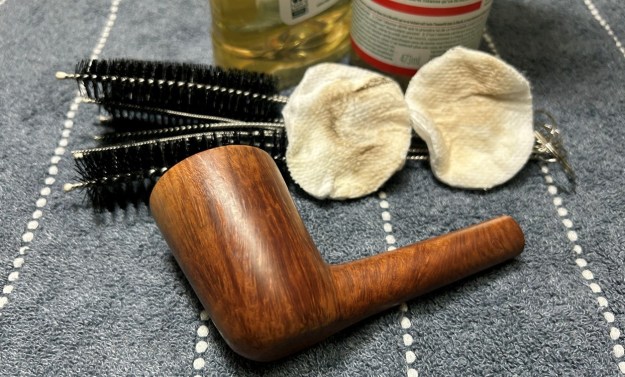
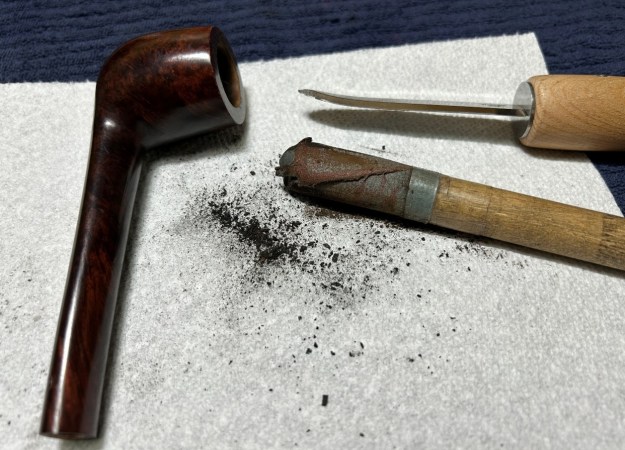
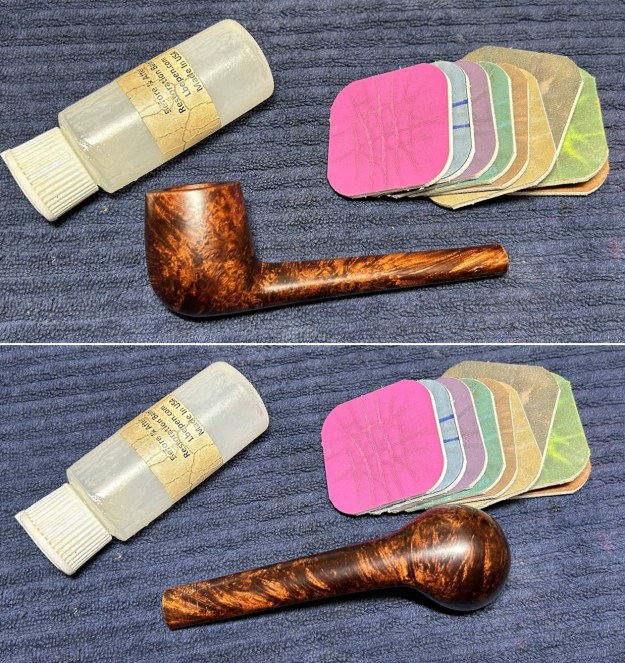
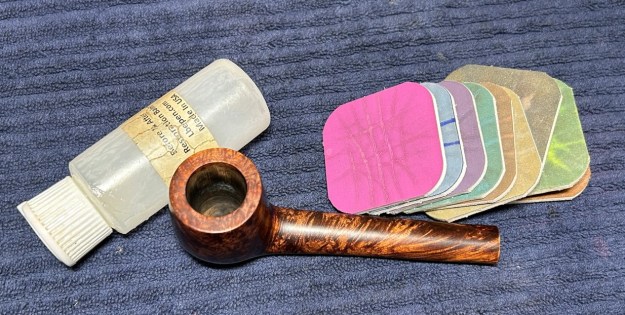
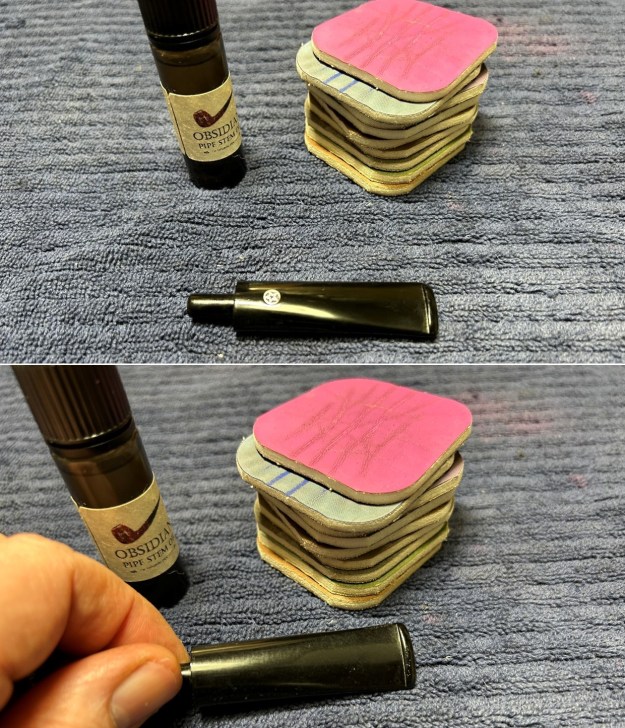
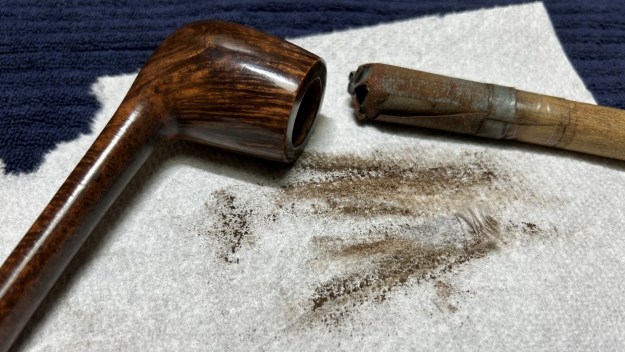
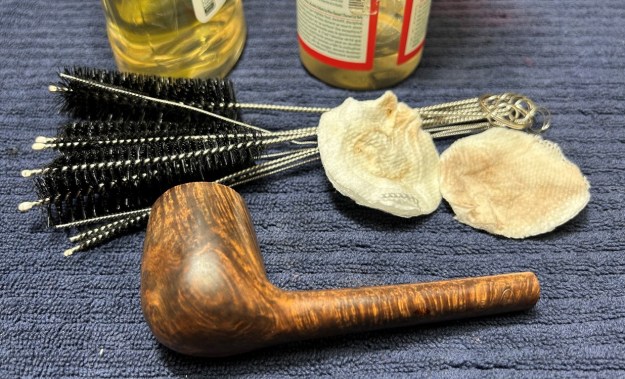
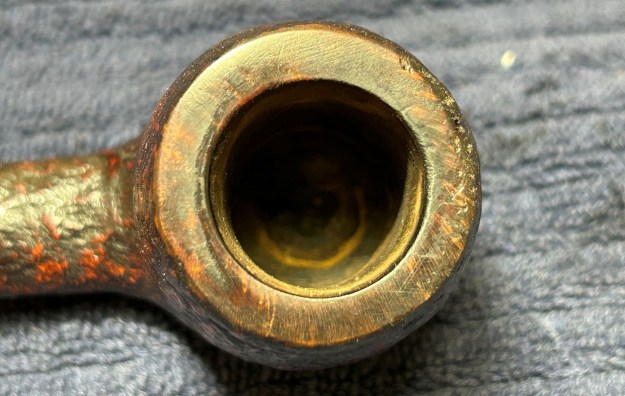
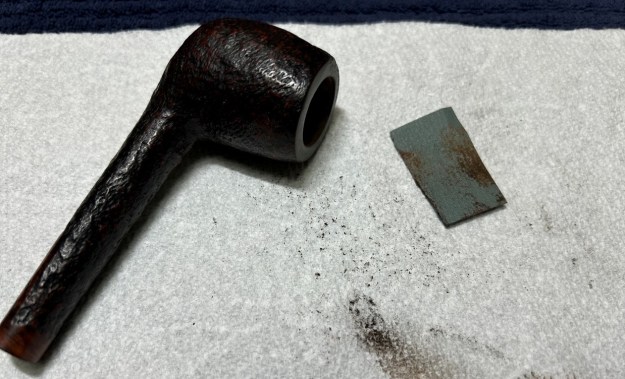
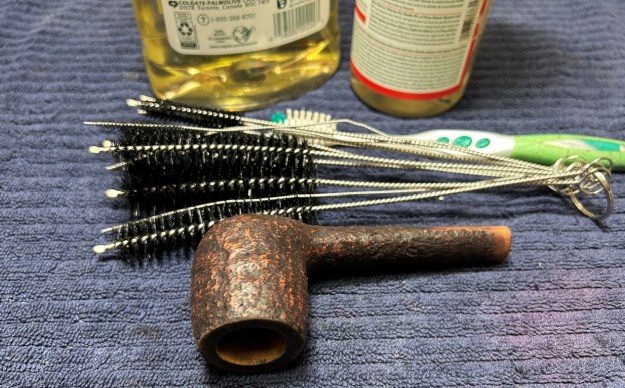
The penultimate step for the stem is sanding. First, with my set of needle files, I reduced the bulk of the cyanoacrylate repairs. I removed the excess adhesive as near to the surface as possible, without cutting into the vulcanite. Following that, I used all nine of the micromesh sanding pads (1,500 through 12,000 grit) to sand out flaws, even out the vulcanite, and provide gentle polishing of the finished surface. I also applied pipe-stem oil while using the last five micromesh pads. There was a wonderful, deep black shine to the stem when I was done.As the stem was (nearly) complete, I moved on to the stummel. The first step was to ream out the bowl – that is to say, remove all the cake inside the bowl. This accomplished a couple of things. First (and most obviously), it cleaned the bowl and provided a refurbished chamber for future smoking. Second, when the old cake was removed, I could inspect the interior walls of the bowl and determine if there was damage or not. I used a reamer, a pipe knife, and a piece of sandpaper taped to a wooden dowel. Collectively, these ensured that all the debris was removed.My next step was to remove the lava on the rim. For this, I took a piece of machine steel and gently scraped the lava away. The metal’s edge is sharp enough to remove what I need, but not so sharp that it damages the rim. Similar to the stem, I then cleaned the stummel with both pipe cleaners and cotton swabs dipped in lemon-infused 99% isopropyl alcohol. With a pipe this dirty, it took quite a while and much cotton to clean.I then decided to ‘de-ghost’ the pipe – that is to say, exorcize the remaining filth from the briar. I filled the bowl and the shank with cotton balls, then saturated them with 99% isopropyl alcohol. I let the stummel sit overnight. This caused the remaining oils, tars and smells to leach out into the cotton.To tidy up the briar, I wiped down the outside, using a solution of a pH-neutral detergent and some distilled water, with cotton rounds. I also used a toothbrush in the crevices. This did a good job of cleaning any latent dirt on the surface of the briar. The last step of the cleaning process was to scour the inside of the stummel with the same mild detergent and tube brushes. This was the culmination of a lot of hard work in getting the pipe clean.I rubbed some LBE Before & After Restoration Balm into the briar and let it sit for 30 minutes or so. The balm moisturizes the wood and gives a beautiful depth to the briar. I then buffed the stummel with a microfibre cloth. For the final step, I took the pipe to my bench polisher and carefully buffed it – first with a blue diamond compound, then with three coats of carnauba wax. This procedure makes the pipe look its best – the stummel sings and the stem glows.This Jobey Shellmoor Extra hawkbill pipe looks fantastic again and is ready to be enjoyed by its next owner. I am pleased to announce that this pipe is for sale! If you are interested in acquiring it for your collection, please have a look in the ‘American’ pipe section of the store here on Steve’s website. You can also email me directly at kenneth@knightsofthepipe.com. The approximate dimensions of the pipe are as follows: length 5⅓ in. (135 mm); height 1⅞ in. (48 mm); bowl diameter 1⅞ in. (47 mm); chamber diameter ⅞ in. (22 mm). The weight of the pipe is 2⅛ oz. (62 g). I hope you enjoyed reading the story of this pipe’s restoration as much as I did restoring it. If you are interested in more of my work, please follow me here on Steve’s website or send me an email. Thank you very much for reading and, as always, I welcome and encourage your comments.

Restoring a Handsome, Classic Falcon 7D


by Kenneth Lieblich

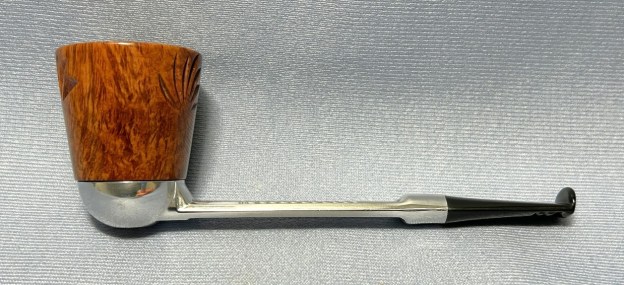
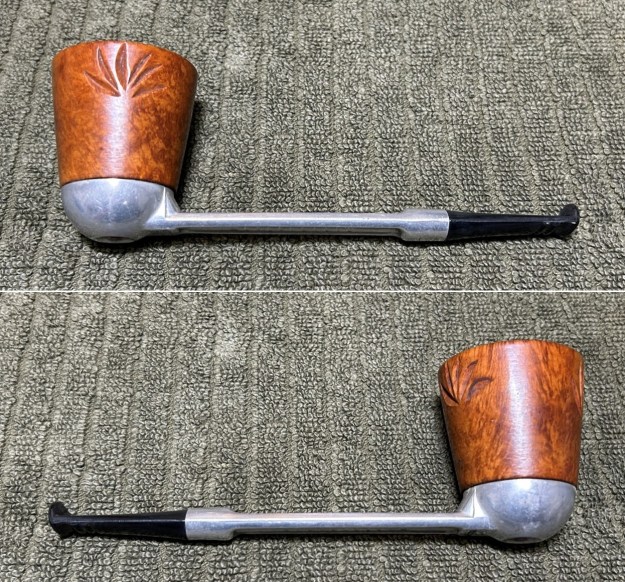
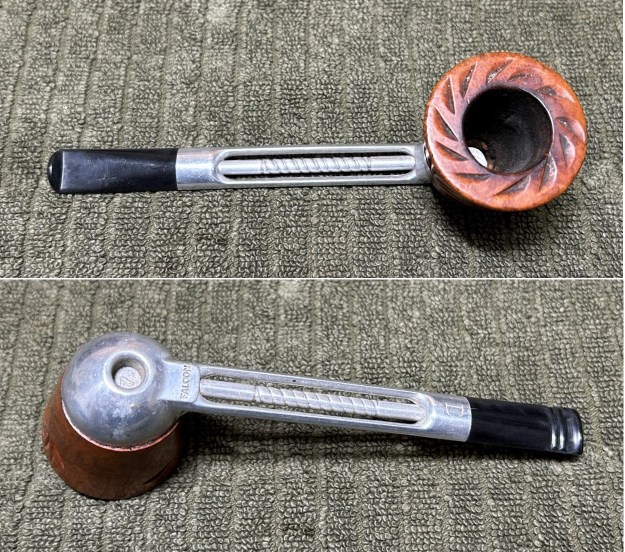
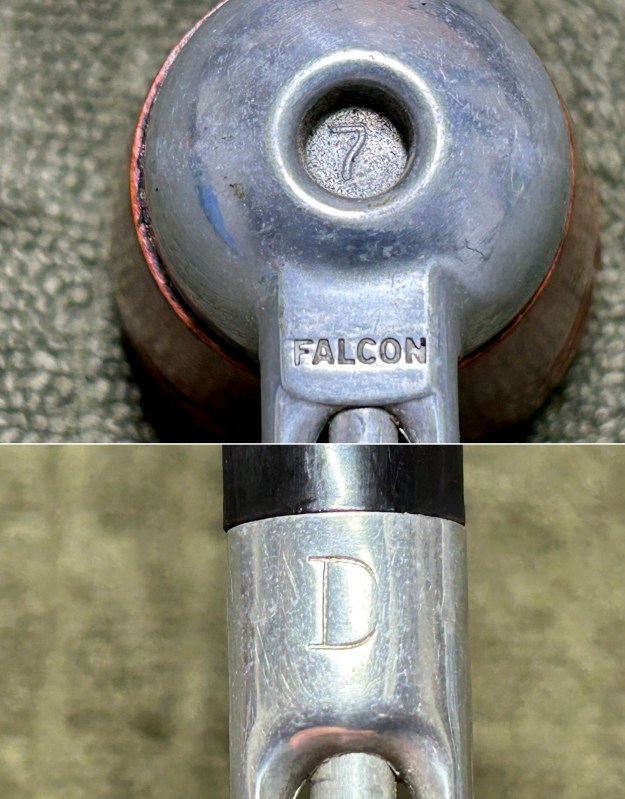
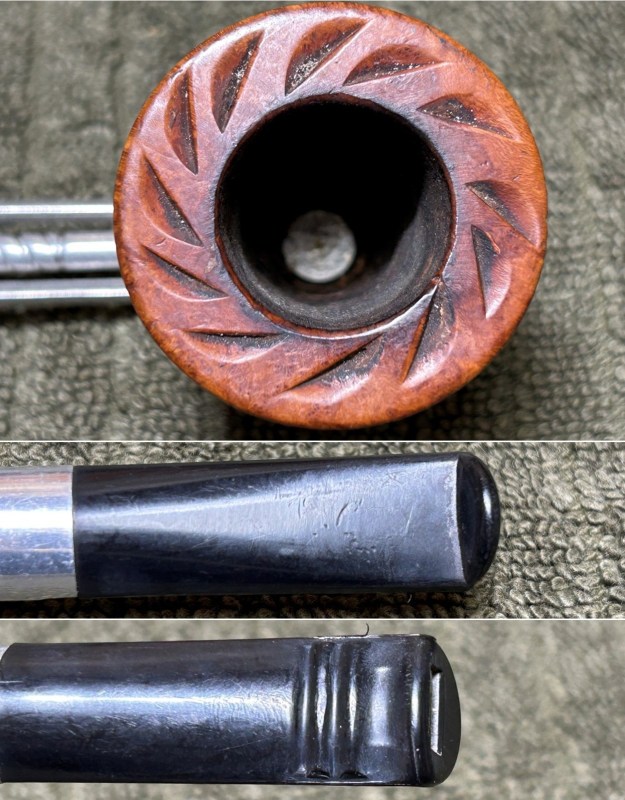
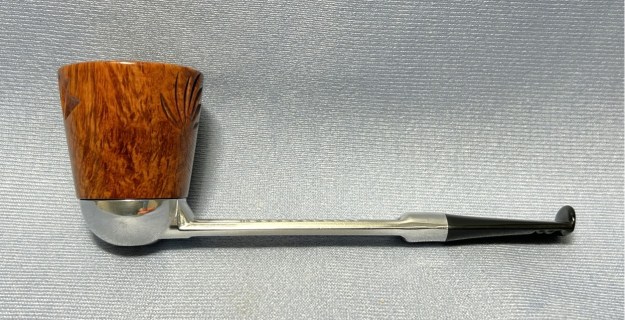
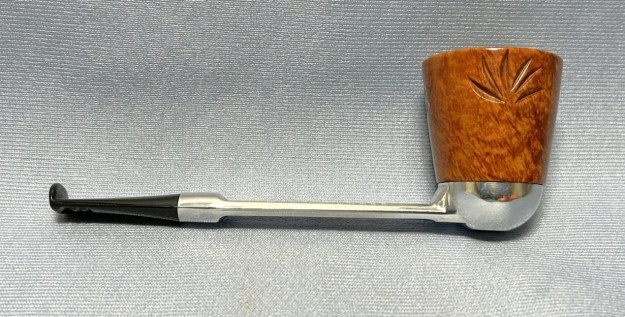
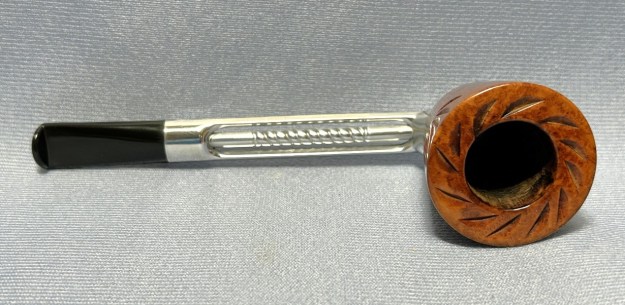
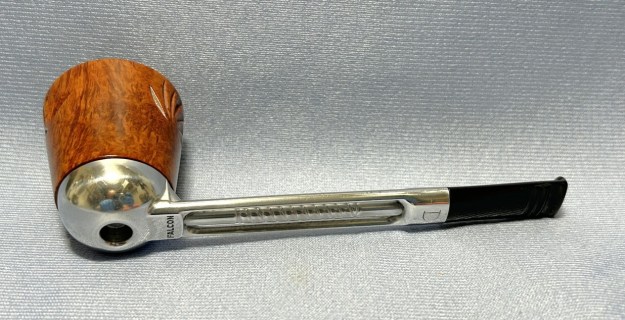
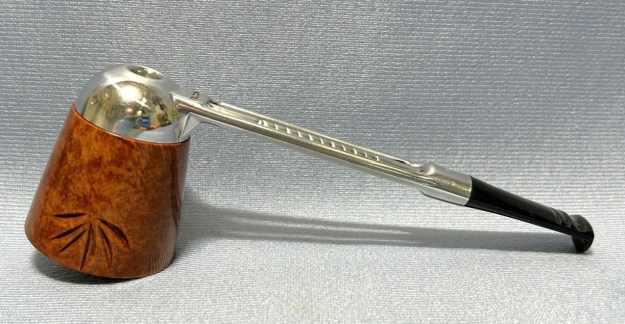
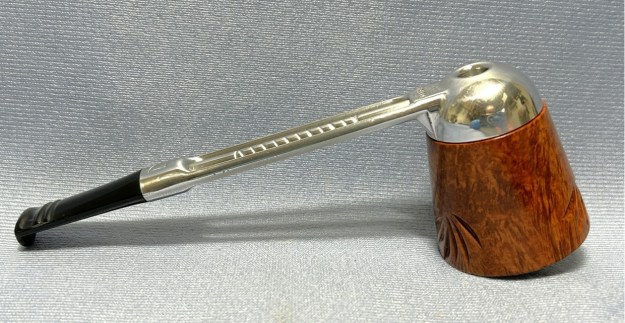
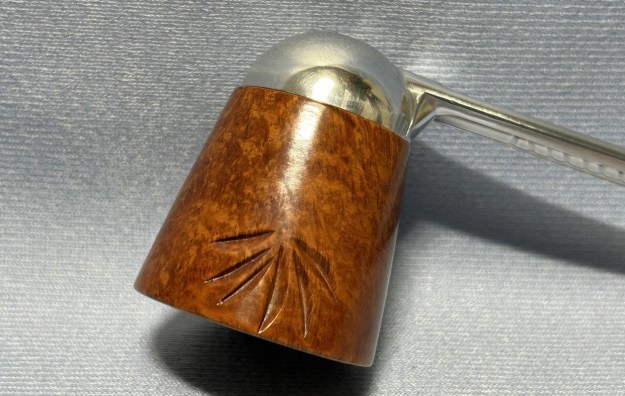
If I remember correctly, this pipe came in a lot from the US of A last year. I don’t really remember the details of its acquisition, but no matter. Falcons are always fun, good-looking pipes. This one was already in good shape, it just looked tired and worn. This particular Falcon has a straight shank and a carved, Dublin-style bowl. The stem has a nice dental bit. Let’s have a look at the marks. On the underside of the bowl, engraved in the metal, is the word Falcon. Also engraved, inside the centre circle, is the shape number 7. At the opposite end of the shank, near the stem, is engraved the letter D. The number 7 is the mould number from the factory and the D indicates that this pipe has a dental bit (as previously mentioned). The lack of a country-of-origin mark indicates that this one was made in the USA.Looking into the background of Falcon Pipes, my first stop was SmokingMetal.co.uk – a very fine resource for all things related to metal pipes. Here are a few snippets:

There are an incredible number of combinations of Falcon pipes. many variants of the stems and of the bowls. All I can hope to do here is to show some of them. Some of course are no longer avaliable but very many are. Contrary to most descriptions you will see, the smoke tube is not a twisted alloy tube, but a tube that has been scrolled to increase the surface area for cooling.

There are at least three distinct eras of Falcon production, those stamped under the stem with just the single word ‘Falcon’ indicating a USA made pipe, those with ‘Falcon Ireland'( indicating, or it ought to, that the casting originated in Ireland but actually only some bowls originated in Ireland) and those with ‘Falcon Made in England’ which does tell us where that model actually originated from. The bowls come in an incredible range of shapes and finishes, but can always be pinned down as Falcon as they have a 4 start thread, enabling a quarter turn to lock them on the stem. Very, very few other makes have this feature. The numbers and letters under the humidome are mould numbers.

Pipedia has some good information too (which you can find here). Here is a brief summary of Falcon history:

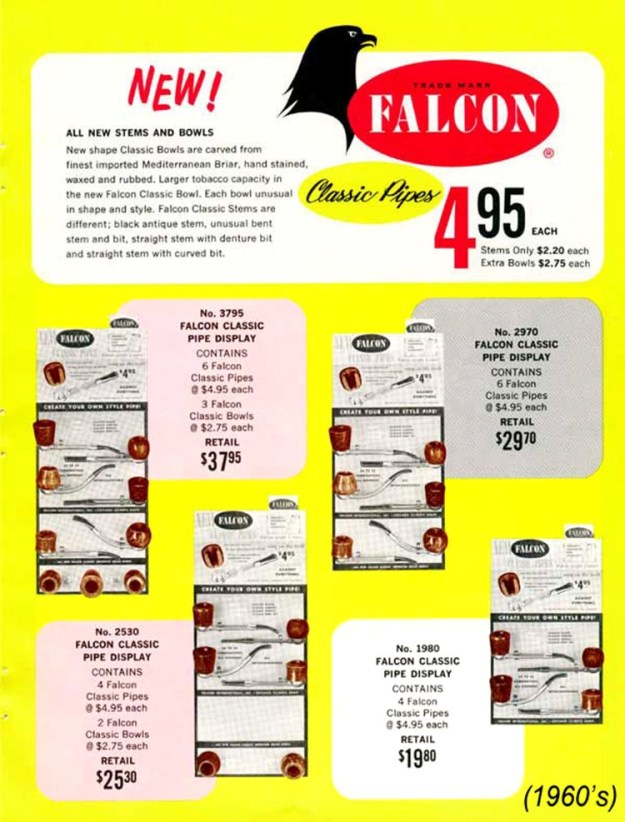
The Falcon pipe was created in 1936 by the American engineer Kenly Bugg. However during WWII the production of the Falcon was limited. In 1949 George Hunt took over production and marketing and by 1954 6 million Falcon pipes had been sold in the U.S.A. By 1961 production started in England. In 1964 the Alco was launched. In 1967 the Brentford was launched but in 1979 it was withdrawn from the market. In 1968 production of the Falcon in Chicago, U.S.A. stopped. The Falcon International was introduced in 1977, which featured a removable mouth piece and filter.

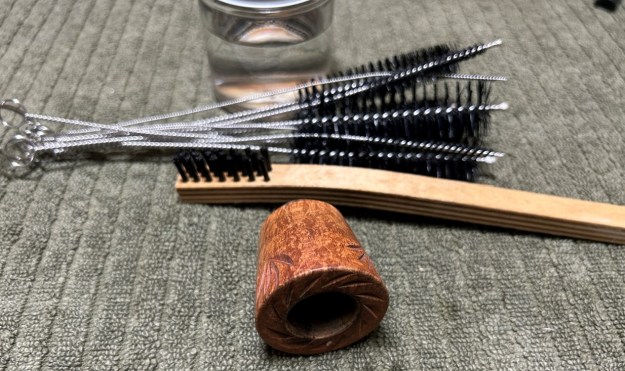
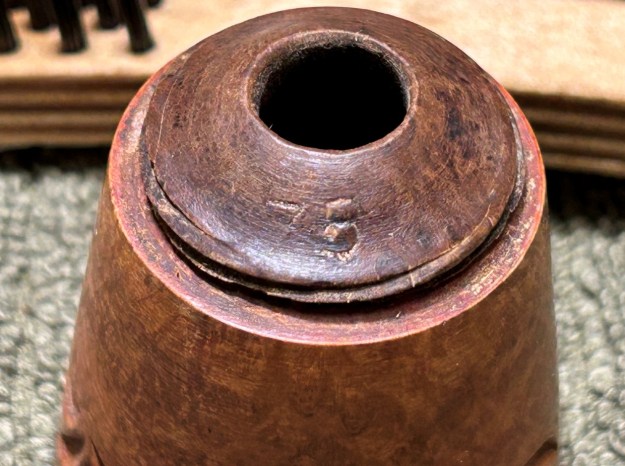
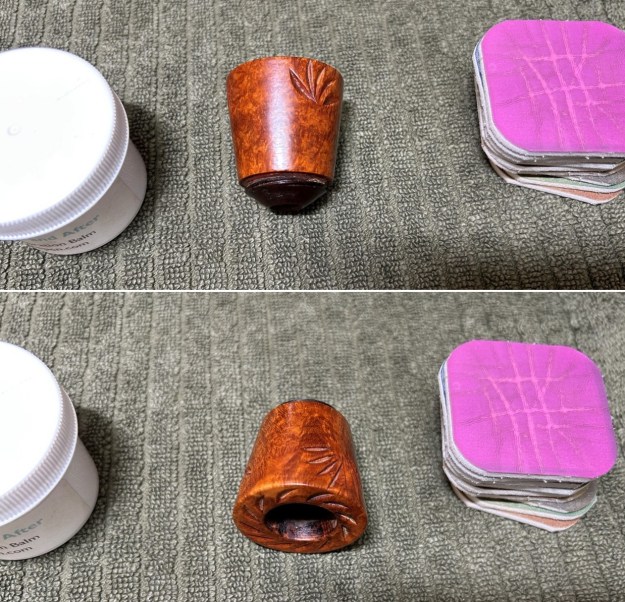
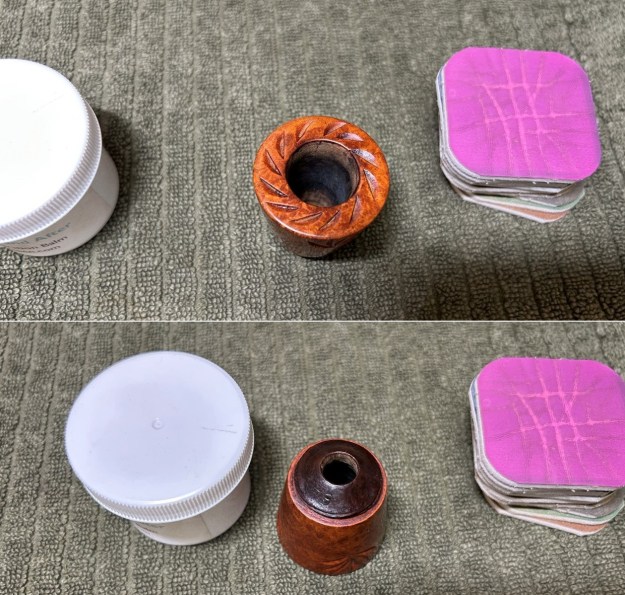
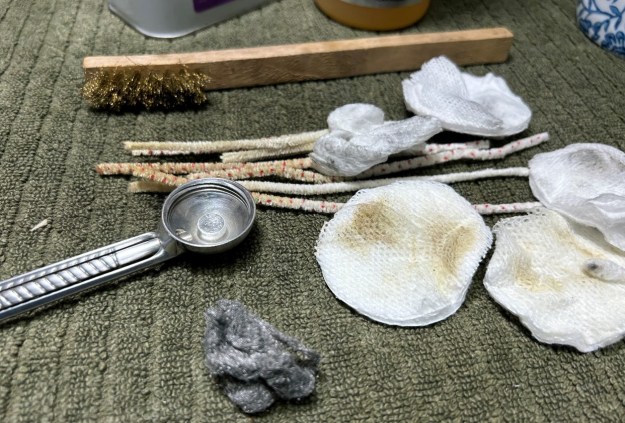
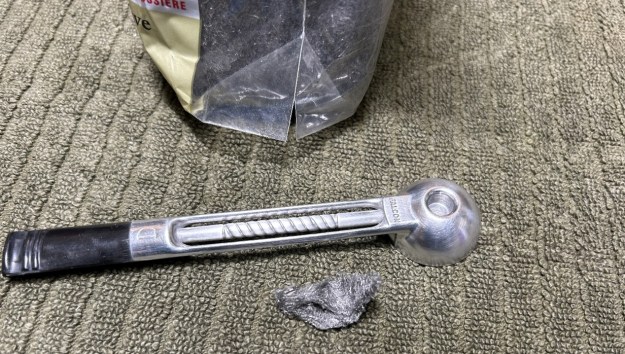
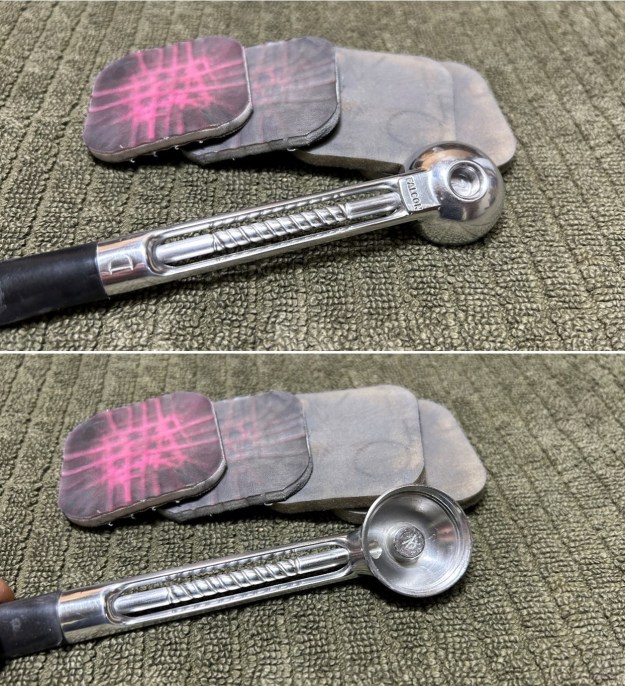
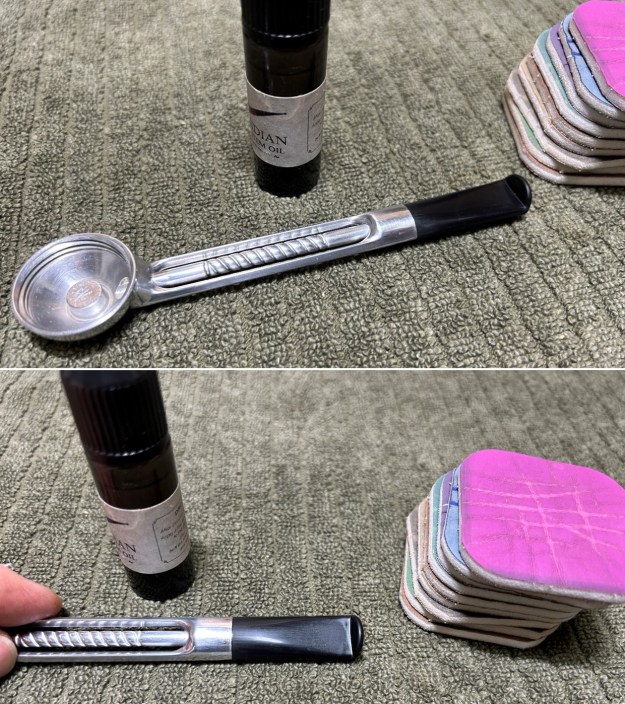
Based on all that I read, I can conclude that this pipe was made sometime after 1948 and prior to 1968, when production was moved to the UK.Let’s take a closer look at the condition of the pipe. As I indicated before, nothing too serious – just some minor wear-and-tear to address. The bowl is lightly smoked and just needs a good cleaning. The metal body has no notable damage and I will simply clean and polish it. Finally, the acrylic dental bit also has only minor wear – should be quite straightforward. I started on the bowl. The first step was to ream it out – that is to say, remove all the cake inside the bowl. This accomplished a couple of things. First (and most obviously), it cleaned the bowl and provided a refurbished chamber for future smoking. Second, when the old cake was removed, I could inspect the interior walls of the bowl and determine if there was damage or not. Fortunately, there was none. As the cake was light, I used a pipe knife, and a piece of sandpaper taped to several sizes of wooden dowel. Collectively, these ensured that all the debris was removed.I then took a dental tool and cleaned any gunk from the grooves in the threads of the bowl. To tidy up the briar, I wiped down the outside, using a solution of a pH-neutral detergent and some distilled water, with cotton rounds. I also used a toothbrush in the crevices. This did a good job of cleaning any latent dirt on the surface of the briar. The last step of the cleaning process was to scour the inside of the stummel with the same mild detergent and tube brushes. While cleaning, I noticed the number 75 on the bottom of the bowl. I assume this is some sort of shape number. If you have more information, please let me know in the comments below! I used all nine micromesh pads (1,500 through 12,000 grit) to sand the outside of the stummel and finish it off. This sanding minimizes flaws in the briar and provides a beautiful smoothness to the wood. I rubbed some LBE Before & After Restoration Balm into the briar and let it sit for 30 minutes or so. The balm moisturizes the wood and gives a beautiful depth to the briar. I then buffed the stummel with a microfibre cloth. I then moved on to the metal body of the pipe (including the acrylic stem, which is attached). It didn’t initially look dirty, but took a surprising amount of elbow grease to clean! I disinfected the inside and outside of the pipe with both pipe cleaners and cotton swabs dipped in lemon-infused 99% isopropyl alcohol. I scrubbed thoroughly. I also used a wire brush to scrub some of the more stubborn areas.In addition, I began my polishing procedure with some 0000-grit steel wool. This worked incredibly well – I was so pleased with the results. I then used some micromesh pads that I have saved solely for metal work and buffed it up to an incredible shine. Looks fantastic! Following that, I used all nine of the micromesh sanding pads (1,500 through 12,000 grit) to sand out flaws in the stem, even out the acrylic, and provide gentle polishing of the finished surface. I also applied pipe-stem oil while using the last five micromesh pads. There was a wonderful, deep black shine to the stem when I was done. For the final step, I took the pipe to my bench polisher and carefully buffed it – first with a blue diamond compound, then with three coats of carnauba wax. This procedure makes the pipe look its best.

This Falcon 7D Dublin looks fantastic again and is ready to be enjoyed by its next owner. I am pleased to announce that this pipe is for sale! If you are interested in acquiring it for your collection, please have a look in the ‘American’ pipe section of the store here on Steve’s website. You can also email me directly at kenneth@knightsofthepipe.com. The approximate dimensions of the pipe are as follows: length 5⅞ in. (150 mm); height 2 in. (51 mm); bowl diameter 1⅝ in. (41 mm); chamber diameter ⅞ in. (22 mm). The weight of the pipe is 1½ oz. (44 g). I hope you enjoyed reading the story of this pipe’s restoration as much as I did restoring it. If you are interested in more of my work, please follow me here on Steve’s website or send me an email. Thank you very much for reading and, as always, I welcome and encourage your comments.

This Suave Jandrew Calabash Grew on Me


by Kenneth Lieblich

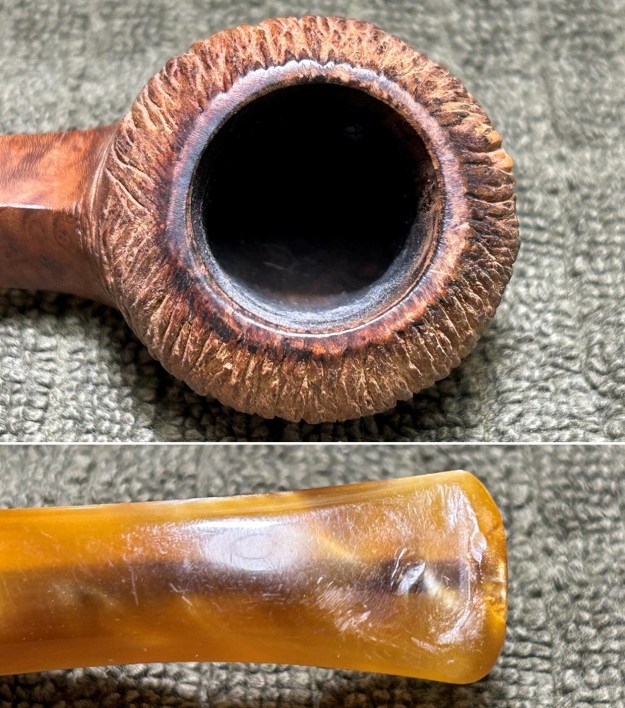
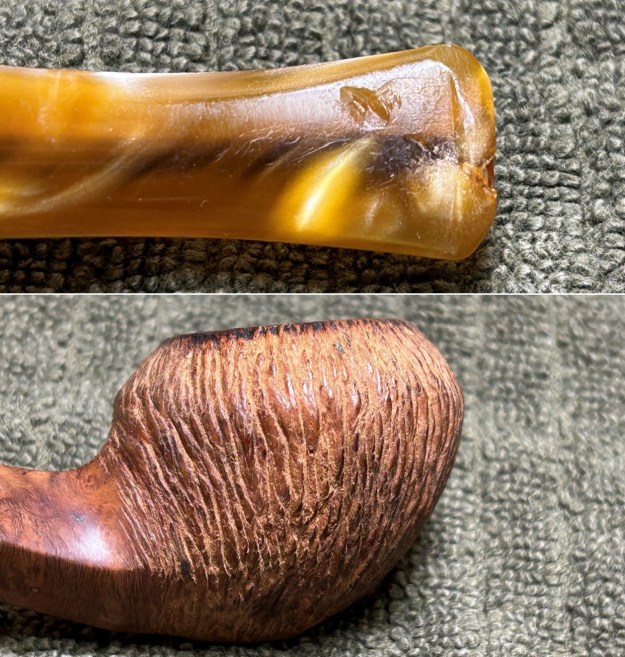
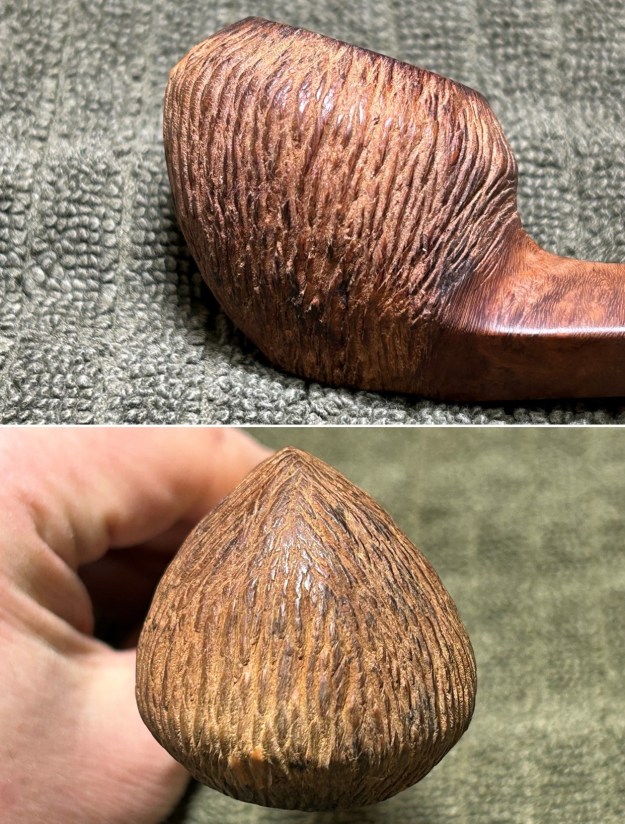
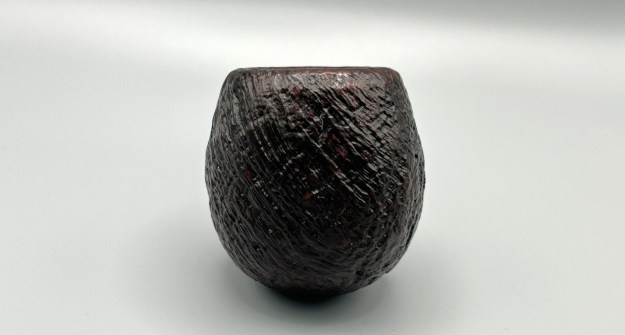
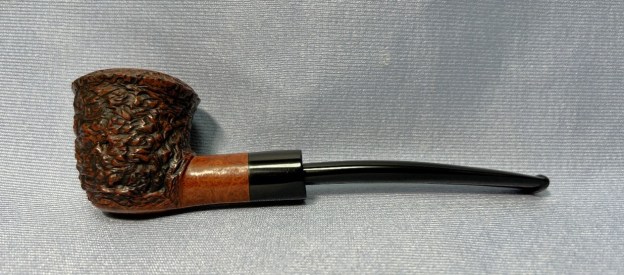
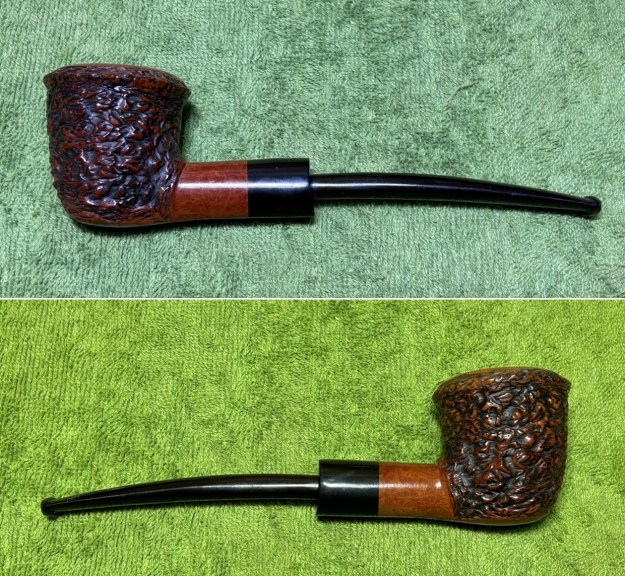
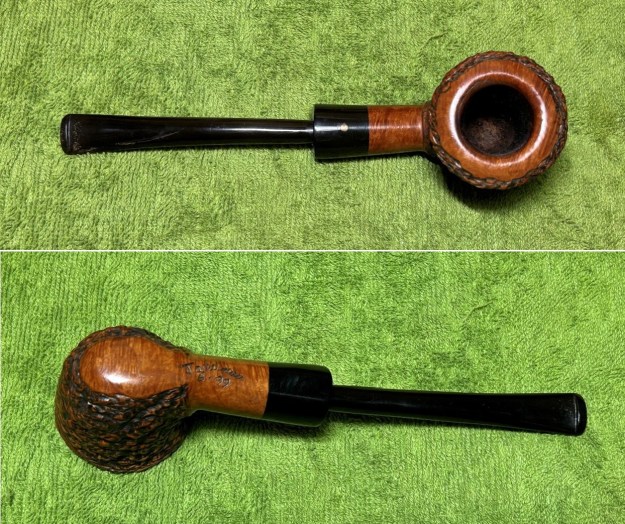
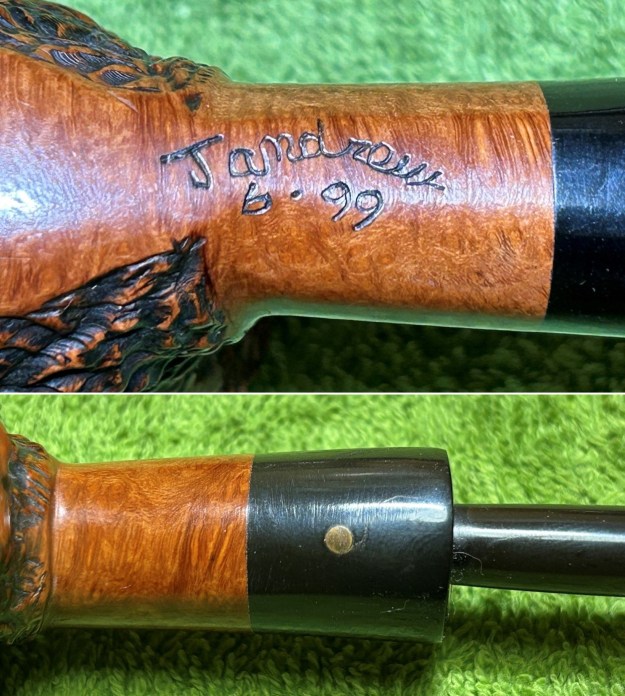
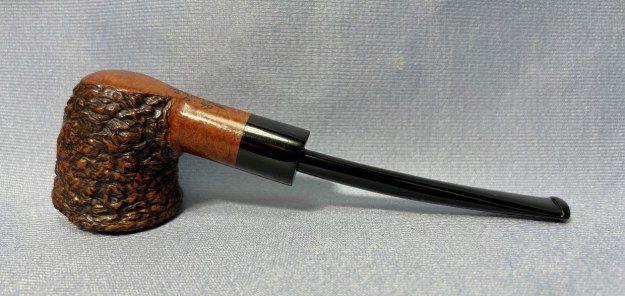
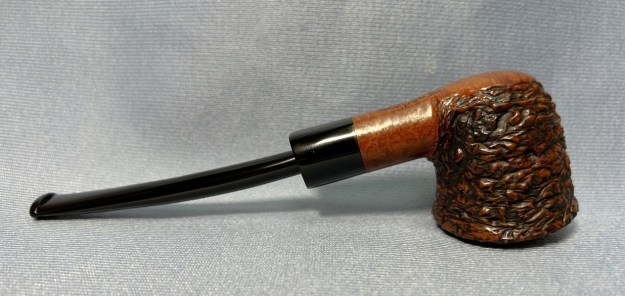
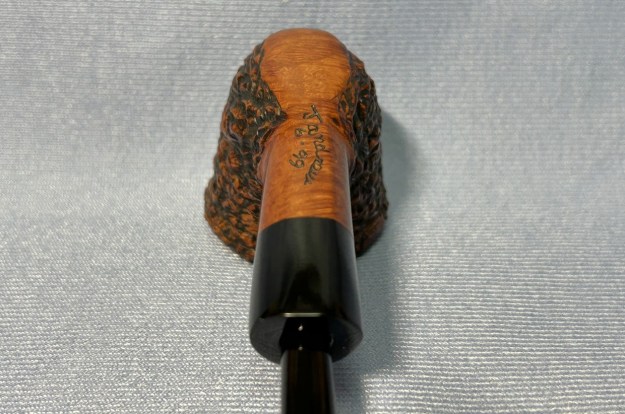
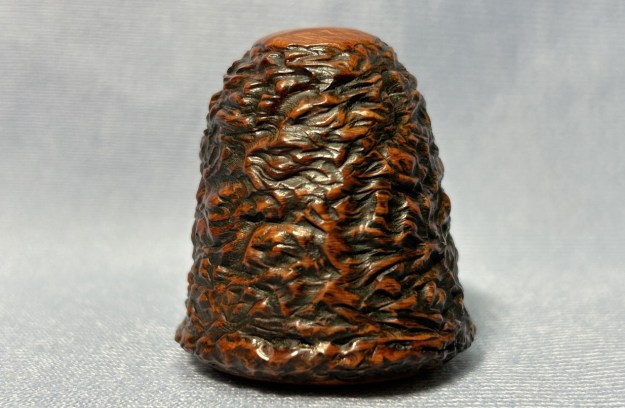
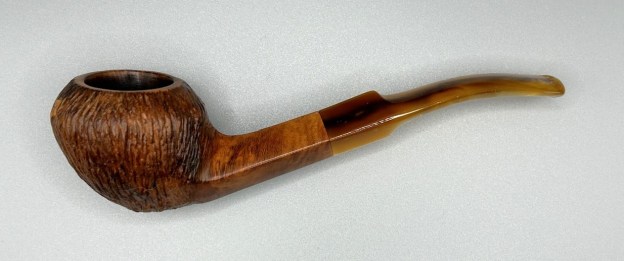
Hiding amongst the bric-à-brac, in the bottom of a box of pipes I recently acquired, was this relatively inconspicuous pipe. This pipe is a Jandrew partially-rusticated calabash with a vulcanite shank extension. It also has a thin, military-mount, vulcanite stem. I asked Steve about the brand and he mentioned its provenance. I must say, this pipe didn’t immediately catch my attention. It seemed fine, but nothing of note. But as I worked on it, it grew on me. I thought about it more and more, and I liked it more and more. The markings were brief – but very clear and readable. On the underside of the shank, were the words, Jandrew [over] 6 ∙ 99. This indicates that the pipe was made by J. Andrew Kovacs in (what I assume to be) June 1999. It also displays a handsome brass dot in the shank extension.Little information is to be had about Jandrew pipes. Using the scant information I could trawl together from Pipedia, MBSD Pipes, BlueRoomBriars, and Smoking Pipes, I have collated the following:

Jandrew pipes were made by J. Andrew Kovacs, an American artisan. He lived in both Jerome and Cottonwood, Arizona and is said to have later moved to Milwaukee, Wisconsin. He was part of a group of Arizona-based hobbyists that started carving pipes in the 1960s and 70s. Working through the late 20th century, Kovacs was part of the great American freehand scene and preferred acrylic stems. He favored the wild Danish Fancy style of shaping, and his work was once commonly found in pipe shops of the southwestern United States (especially in the Phoenix area). Horace DeJarnett (of DeJarnett Pipes) studied pipemaking for about year (on and off) in 2000 at Kovacs’ workshop in northern Arizona.

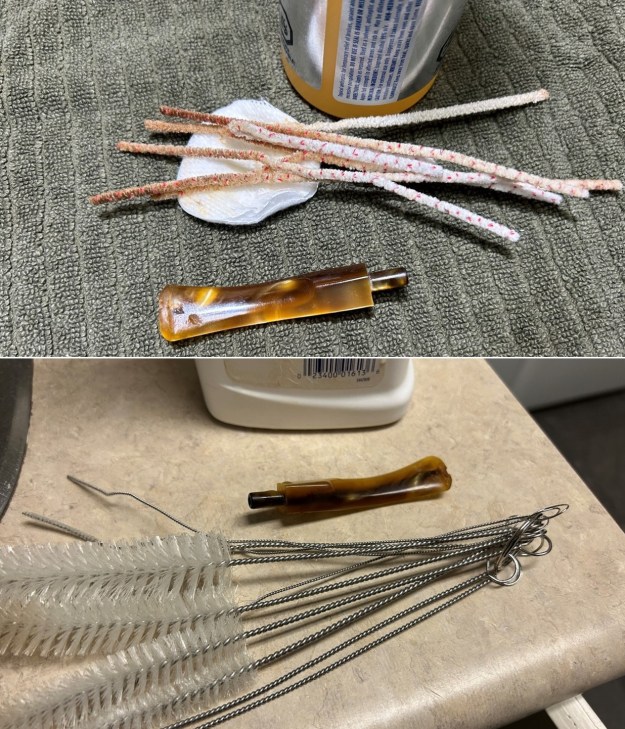
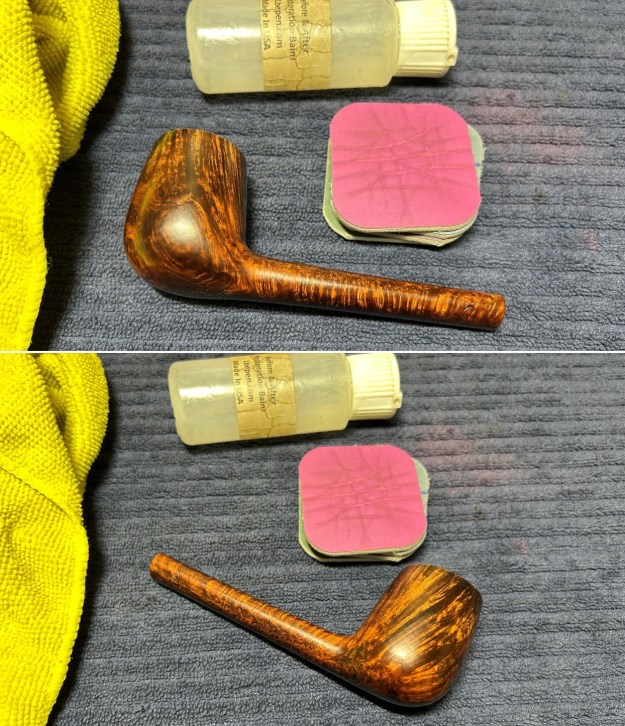
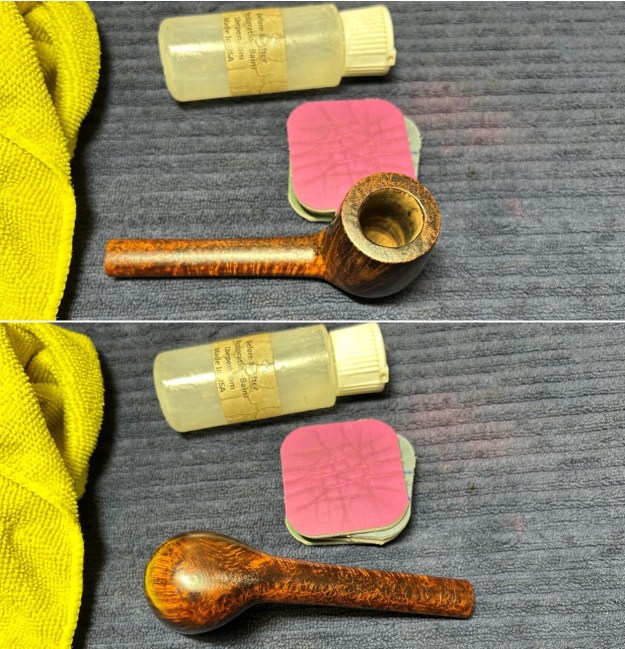
Let’s get working. As you can see, this pipe was in great shape already – not too much work needed. The stummel was a bit dirty inside, but not too bad.  The stem was also in good condition – just a few, minor tooth marks. This must be an unusual Jandrew pipe insofar as the stem (and shank extension) is vulcanite – not the usual acrylic. On the whole, the pipe looked tired, worn, but in decent shape – kind of like me. I used isopropyl alcohol on a few cotton rounds and wiped down the stem to provide an initial cleaning before moving on to the next steps. The primary cleaning came next. I disinfected the inside of the stem with both pipe cleaners and cotton swabs dipped in lemon-infused 99% isopropyl alcohol. I scrubbed thoroughly to make sure the interior was very clean.The goal of the next step is the removal (or minimization) of oxidation. Going to my sink, I used cream cleanser, cotton rounds, and a toothbrush, and scoured the stem to remove as much surface oxidation as possible. As the photos show, the result was a hideous, brownish mess – but better off the stem than on it.Once the stem was reasonably clean, I soaked it overnight in some Briarville Stem Oxidation Remover. This solution works to draw oxidation in the stem to the surface of the vulcanite. This is a major aid and an important step in ensuring a clean stem. The following day, I drew out the stem from its bath and scrubbed the lingering fluid with a toothbrush.As the stem was now clean and dry, I set about fixing the marks and dents in the vulcanite. This was done by filling those divots with black cyanoacrylate adhesive, impregnated with carbon and rubber. I left this to cure and moved on to sanding. First, with my set of needle files, I reduced the bulk of the cyanoacrylate repairs. I removed the excess adhesive as near to the surface as possible, without cutting into the vulcanite. Following that, I used all nine of the micromesh sanding pads (1,500 through 12,000 grit) to sand out flaws, even out the vulcanite, and provide gentle polishing of the finished surface. I also applied pipe-stem oil while using the last five micromesh pads. There was a wonderful, deep black shine to the stem when I was done.As the stem was (nearly) complete, I moved on to the stummel. The first step was to ream out the bowl – that is to say, remove all the cake inside the bowl. This accomplished a couple of things. First (and most obviously), it cleaned the bowl and provided a refurbished chamber for future smoking. Second, when the old cake was removed, I could inspect the interior walls of the bowl and determine if there was damage or not. I used a reamer, a pipe knife, and a piece of sandpaper taped to a wooden dowel. Collectively, these ensured that all the debris was removed. Overall, it wasn’t too bad.Similar to the stem, I then cleaned the stummel with both pipe cleaners and cotton swabs dipped in lemon-infused 99% isopropyl alcohol. To tidy up the briar, I wiped down the outside, using a solution of a pH-neutral detergent and distilled water, with cotton rounds. I also used a toothbrush in the crevices. This did a good job of cleaning any latent dirt on the surface of the briar.The last step of the cleaning process was to scour the inside of the stummel with the same mild detergent and tube brushes. This was the culmination of a lot of hard work in getting the pipe clean.I used some of my micromesh pads to sand the outside of the stummel and finish it off. This sanding minimizes flaws in the briar and provides a beautiful smoothness to the wood. I rubbed some LBE Before & After Restoration Balm into the briar and let it sit for 30 minutes or so. The balm moisturizes the wood and gives a beautiful depth to the briar. I then buffed the stummel with a microfibre cloth. For the final step, I took the pipe to my bench polisher and carefully buffed it – first with a blue diamond compound, then with three coats of conservator’s wax. This procedure makes the pipe look its best – the stummel sings and the stem glows.This Jandrew 06-99 calabash pipe is a beauty and will go into my collection (at least for now). It was a pleasure to work on. The approximate dimensions of the pipe are as follows: length 6⅜ in. (162 mm); height 1⅞ in. (48 mm); bowl diameter 1⅔ in. (42 mm); chamber diameter ¾ in. (20 mm). The weight of the pipe is 1½ oz. (44 g). I hope you enjoyed reading the story of this pipe’s restoration as much as I enjoyed restoring it. If you are interested in more of my work, please follow me here on Steve’s website or send me an email at kenneth@knightsofthepipe.com. Thank you very much for reading and, as always, I welcome and encourage your comments.

Restoring an Impressive Grecian Plateau Lovat by Mark Tinsky


by Kenneth Lieblich

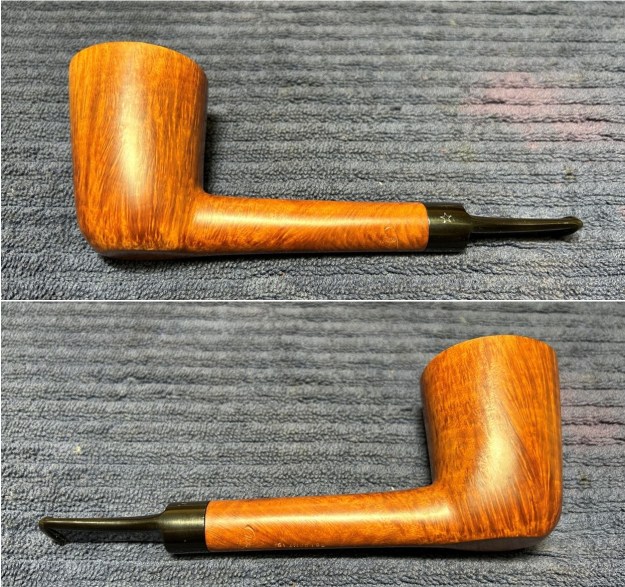
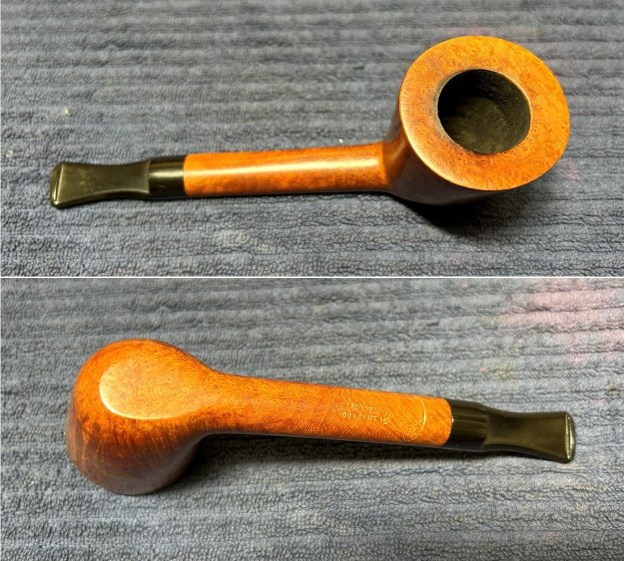
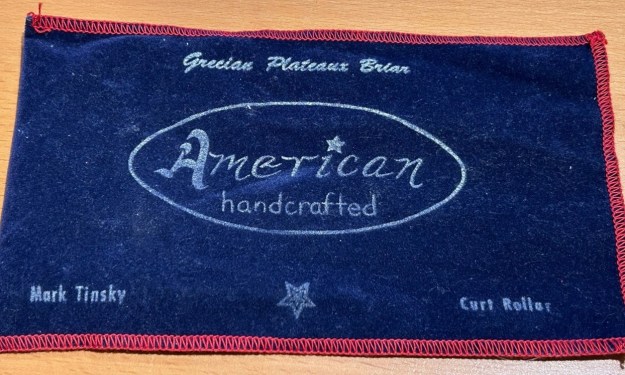
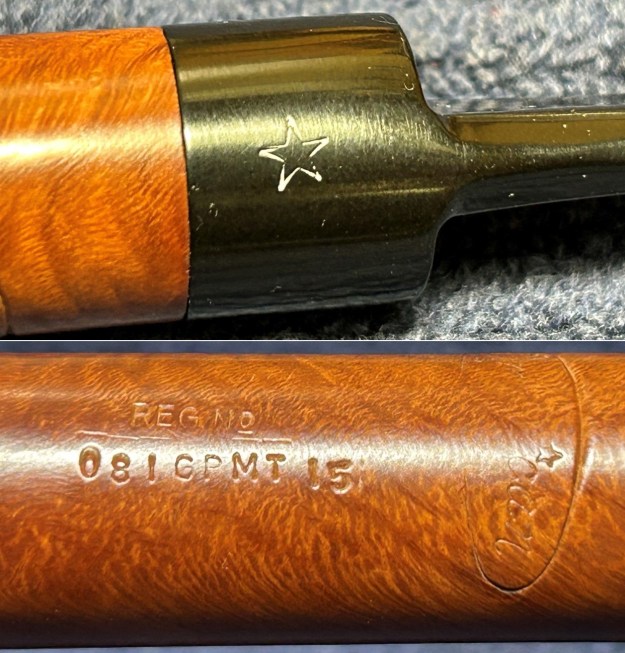
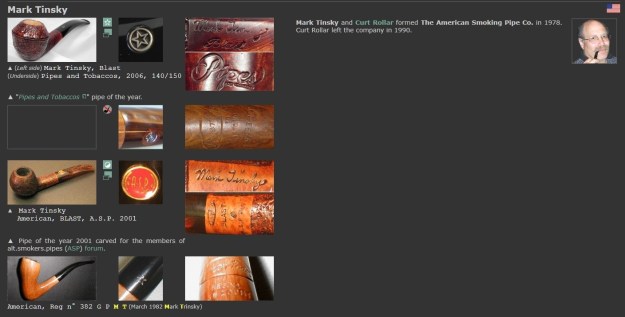
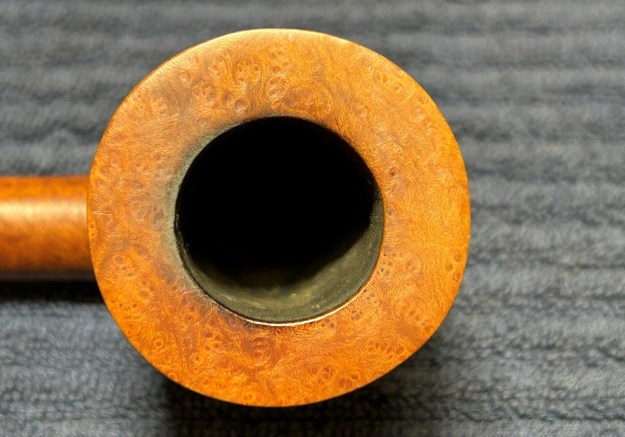
Here’s a real beauty. Recently, I was given the opportunity to purchase a small group of pipes by master pipemaker, Mark Tinsky. How could I say no? The answer, of course, is that I could not and I happily acquired them. This pipe is actually not one from the aforementioned lot, but was a Tinsky I already had. It seemed sensible to add it on to this series of pipe restorations. Whereas the others I restored recently were from the Canadian family of pipe shapes, this one, as you can see is a lovat. Or, perhaps, a lovat with a Dublin-like bowl. Another nice detail about this pipe is that it comes with its original pipe sock! This is a beautiful pipe with fantastic, straight grain. The rim is just wonderful. It has a lovely, rich brown colour to it and a silky-smooth surface. This is an older Tinsky than the ones you’ve seen from me recently. The star logo on the side of the stem is different from previous ones, insofar as it is engraved into the acrylic. Under the shank are the markings and they read: American [over] Reg No [over] 081 GP MT 15. I’m not sure but I assume that the 081 tells us that the pipe was made in 1981; the GP indicates that Grecian plateau briar was used, MT indicates that Mark Tinsky made it himself; and I sadly have no idea what the 15 refers to.As I’m sure you know, Mark Tinsky is one of the great names in American pipe making. He is best summed up in this quotation from Erwin Van Hove:

His more than reasonable prices, and his good-natured personality, have made Mark [Tinsky] the favorite of many Americans. It is difficult to find an amateur who does not possess at least one pipe made by the American Smoking Pipe Company, that Tinsky founded in 1978 with his friend Curt Rollar. In 1990, after the departure of his associate, Tinsky continued on by himself building a solid reputation using quality briar from Greece and stem blanks imported from Italy, offering collectors a vast assortment of models and finishes. In short, his pipes are beautiful and well-made pieces that produce a taste beyond reproach. Neither off-the-shelf nor haute couture, they are solid hand mades for an affordable price.There is a wonderful and extensive article on Tinsky, Rollar, and the American Smoking Pipe Company at Pipedia. I highly recommend reading it here. You can also visit his website: http://www.amsmoke.com/. There’s also a small blurb about him at Pipephil:This pipe was in generally very nice shape – there were a few light marks on the rim – but nothing serious at all. The stem was also in good shape – a few bite marks, but the acrylic was sound and is easy to repair. This was clearly a well-maintained pipe. I used oil soap on a few cotton rounds and wiped down the stem to provide an initial cleaning before moving on to the next steps. The primary cleaning came next. I disinfected the inside of the stem with both pipe cleaners and cotton swabs dipped in lemon-infused 99% isopropyl alcohol. I scrubbed thoroughly to make sure the interior was very clean – but not much work was required as it was already pretty clean.I then set about fixing the marks in the acrylic. This was done by filling those divots with black cyanoacrylate adhesive, impregnated with carbon and rubber. I left this to cure. Following that, I used all nine of the micromesh sanding pads (1,500 through 12,000 grit) to sand out flaws, even out the acrylic, and provide gentle polishing of the finished surface. I also applied pipe-stem oil while using the last five micromesh pads. There was a wonderful, deep black shine to the stem when I was done.As the stem was (nearly) complete, I moved on to the stummel. The first step was to ream out the bowl – that is to say, remove all the cake inside the bowl. This accomplished a couple of things. First (and most obviously), it cleaned the bowl and provided a refurbished chamber for future smoking. Second, when the old cake was removed, I could inspect the interior walls of the bowl and determine if there was damage or not. I used a piece of sandpaper taped to a wooden dowel. This ensured that all the debris was removed. Again, like the stem, this didn’t take much work as the pipe was quite clean.I then cleaned the stummel with both pipe cleaners and cotton swabs dipped in lemon-infused 99% isopropyl alcohol.To tidy up the briar, I also wiped down the outside with some oil soap on cotton rounds. This did a good job of cleaning any latent dirt on the surface of the briar. The last step of the cleaning process was to scour the inside of the stummel with some soap and tube brushes.I used all nine micromesh pads (1,500 through 12,000 grit) to sand the whole stummel. This sanding minimizes flaws in the briar and provides a beautiful smoothness to the wood. I rubbed some LBE Before & After Restoration Balm into the briar and let it sit for 30 minutes or so. The balm moisturizes the wood and gives a beautiful depth to the briar. I then buffed the stummel with a microfibre cloth. For the final step, I took the pipe to my bench polisher and carefully buffed it – first with a blue diamond compound, then with three coats of carnauba wax. This procedure makes the pipe look its best – the stummel sings and the stem glows.

All done! This Mark Tinsky Grecian Plateau Lovat looks fantastic again and is ready to be enjoyed by its next owner. I am pleased to announce that this pipe is for sale! If you are interested in acquiring it for your collection, please have a look in the ‘American’ section of the store here on Steve’s website. You can also email me directly at kenneth@knightsofthepipe.com. The approximate dimensions of the pipe are as follows: length 6½ in. (165 mm); height 2⅜ in. (60 mm); bowl diameter 1¾ in. (45 mm); chamber diameter 1 in. (25 mm). The weight of the pipe is 2¼ oz. (67 g). I hope you enjoyed reading the story of this pipe’s restoration as much as I enjoyed restoring it. If you are interested in more of my work, please follow me here on Steve’s website or send me an email. Thank you very much for reading and, as always, I welcome and encourage your comments.

A Wonderfully Long, Long, Long Pipe by Mark Tinsky


by Kenneth Lieblich

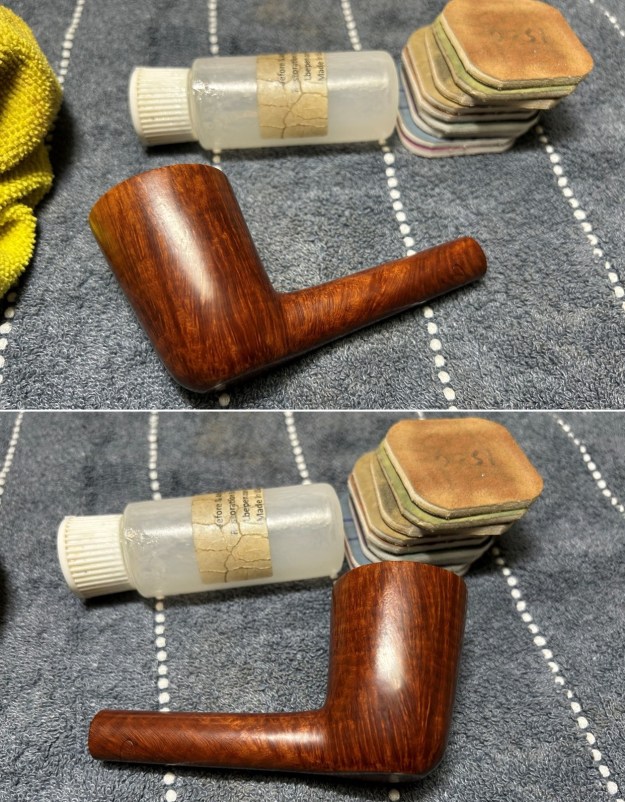
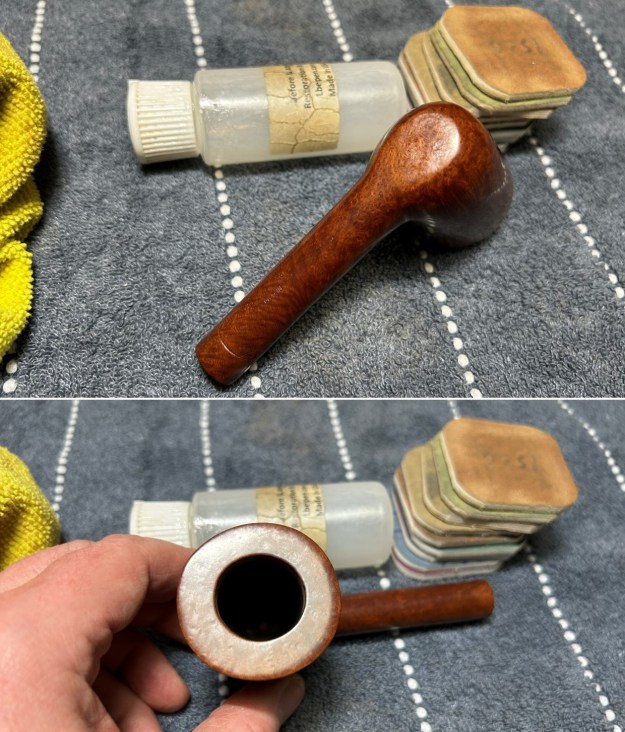
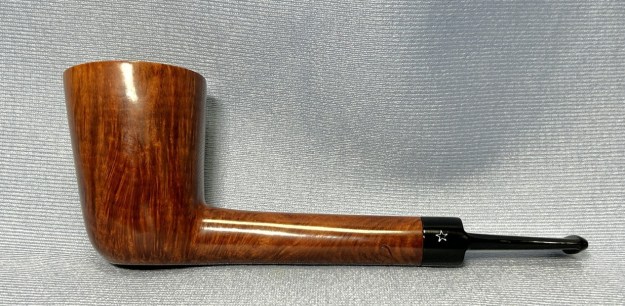
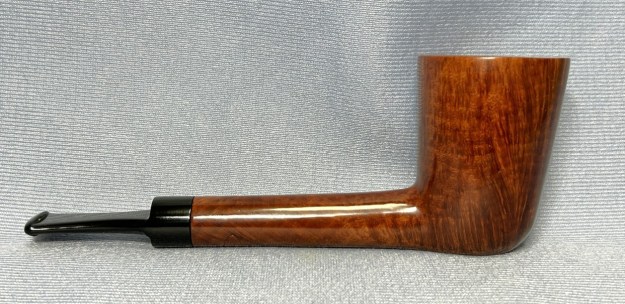
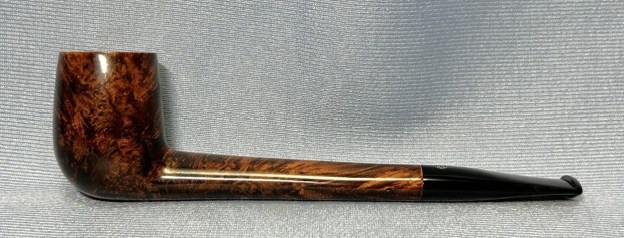
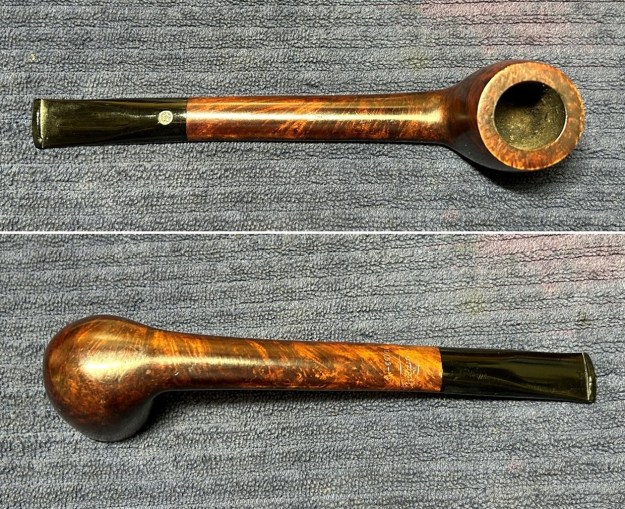
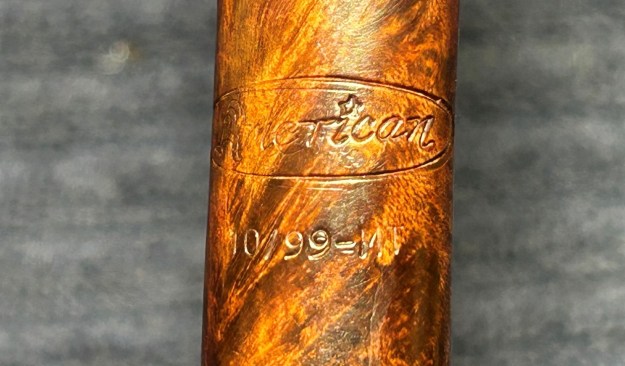
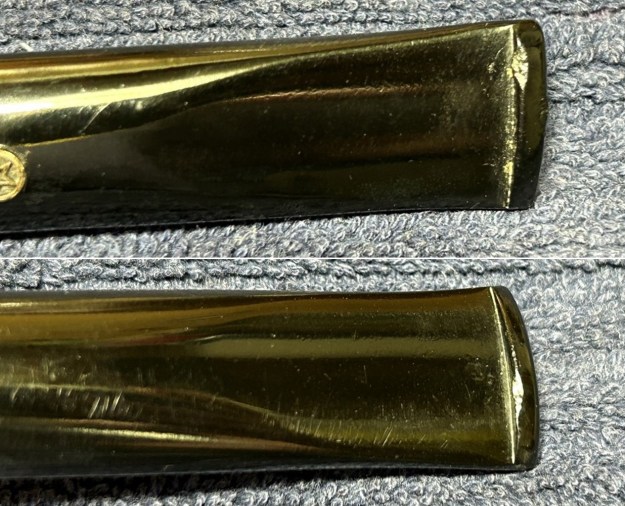
Recently, I was given the opportunity to purchase a small group of pipes by master pipemaker, Mark Tinsky. How could I say no? The answer, of course, is that I could not and I happily acquired them. There are some real beauties here and I am going to restore them all and then turn them over to you. Interestingly, all of the pipes are in the Canadian family of pipe shapes. I’m sure you’ll enjoy seeing them, and here is a link to the first one and the second one and the third one, in case you missed them. Let’s move on to the fourth pipe. This is a beautiful Canadian – well-proportioned bowl with a looooong, oval shank and a handsome taper stem made from acrylic. It’s incredibly long – even longer than the first three Tinsky pipes I worked on. It has a deep, rich brown colour to it and a lovely, smooth surface. There is a charming star logo on the top of the stem. Under the shank are the markings and they read: American [over] 10/99-MT. This tells us that the pipe was made in October 1999 by Mark Tinsky himself.As I’m sure you know, Mark Tinsky is one of the great names in American pipe making. He is best summed up in this quotation from Erwin Van Hove:

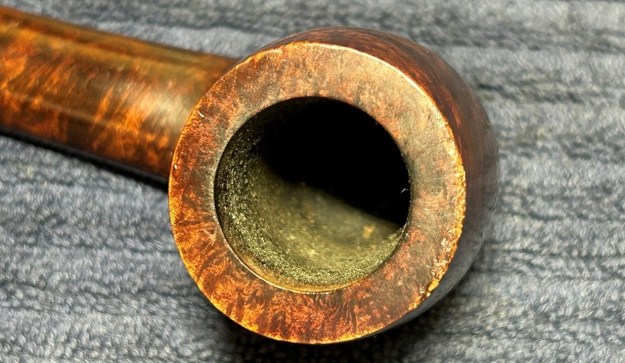
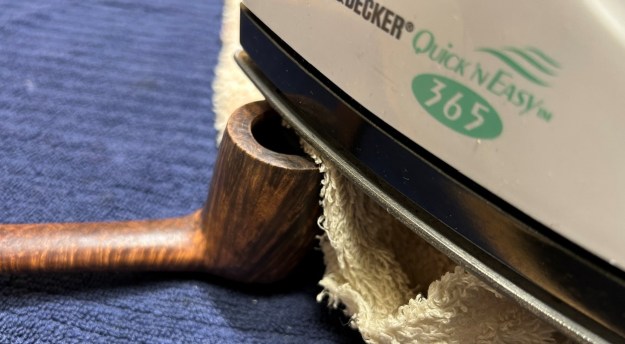
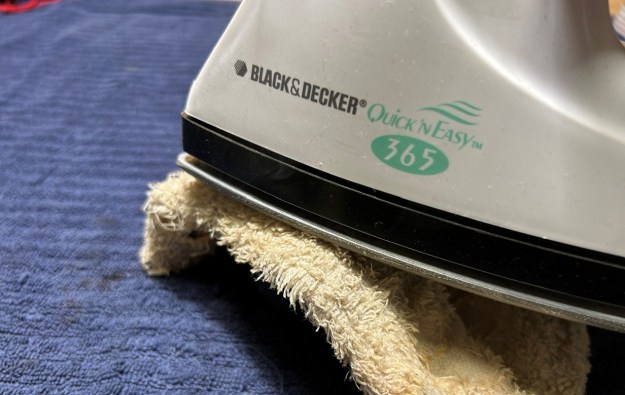
His more than reasonable prices, and his good-natured personality, have made Mark [Tinsky] the favorite of many Americans. It is difficult to find an amateur who does not possess at least one pipe made by the American Smoking Pipe Company, that Tinsky founded in 1978 with his friend Curt Rollar. In 1990, after the departure of his associate, Tinsky continued on by himself building a solid reputation using quality briar from Greece and stem blanks imported from Italy, offering collectors a vast assortment of models and finishes. In short, his pipes are beautiful and well-made pieces that produce a taste beyond reproach. Neither off-the-shelf nor haute couture, they are solid hand mades for an affordable price.There is a wonderful and extensive article on Tinsky, Rollar, and the American Smoking Pipe Company at Pipedia. I highly recommend reading it here. You can also visit his website: http://www.amsmoke.com/. There’s also a small blurb about him at Pipephil:This pipe was in generally very nice shape – there were a few nicks on the rim – and I could deal with that in short order. The stem was also in good shape – a few bit marks, but the acrylic was sound and is easy to repair. I used oil soap on a few cotton rounds and wiped down the stem to provide an initial cleaning before moving on to the next steps. The primary cleaning came next. I disinfected the inside of the stem with both pipe cleaners and cotton swabs dipped in lemon-infused 99% isopropyl alcohol. I scrubbed thoroughly to make sure the interior was very clean.I then set about fixing the marks and dents in the acrylic. This was done by filling those divots with black cyanoacrylate adhesive, impregnated with carbon and rubber. I left this to cure.Following that, I used all nine of the micromesh sanding pads (1,500 through 12,000 grit) to sand out flaws, even out the acrylic, and provide gentle polishing of the finished surface. I also applied pipe-stem oil while using the last five micromesh pads. There was a wonderful, deep black shine to the stem when I was done.As the stem was (nearly) complete, I moved on to the stummel. The first step was to ream out the bowl – that is to say, remove all the cake inside the bowl. This accomplished a couple of things. First (and most obviously), it cleaned the bowl and provided a refurbished chamber for future smoking. Second, when the old cake was removed, I could inspect the interior walls of the bowl and determine if there was damage or not. I used a pipe knife and a piece of sandpaper taped to a wooden dowel. Collectively, these ensured that all the debris was removed.Similar to the stem, I then cleaned the stummel with both pipe cleaners and cotton swabs dipped in lemon-infused 99% isopropyl alcohol. It took quite a bit of cotton to get clean. To tidy up the briar, I also wiped down the outside with some oil soap on cotton rounds. This did a good job of cleaning any latent dirt on the surface of the briar. The last step of the cleaning process was to scour the inside of the stummel with some soap and tube brushes. This was the culmination of a lot of hard work in getting the pipe clean.Having completed that, I was able to address the nicks on the rim. I dug out my iron and a damp cotton flannel cloth. By laying the cloth over the affected areas and applying the iron to it, the hot and moist steam can cause the wood to swell slightly and return to shape. There was some significant improvement! Not everything was removed, but most of it was. I also gave it a light topping on my topping board to finish off the rim. Unfortunately, I neglected to take a photo of this step.

I used all nine micromesh pads (1,500 through 12,000 grit) to sand the whole stummel. This sanding minimizes flaws in the briar and provides a beautiful smoothness to the wood. I rubbed some LBE Before & After Restoration Balm into the briar and let it sit for 30 minutes or so. The balm moisturizes the wood and gives a beautiful depth to the briar. I then buffed the stummel with a microfibre cloth. For the final step, I took the pipe to my bench polisher and carefully buffed it – first with a blue diamond compound, then with three coats of carnauba wax. This procedure makes the pipe look its best – the stummel sings and the stem glows.

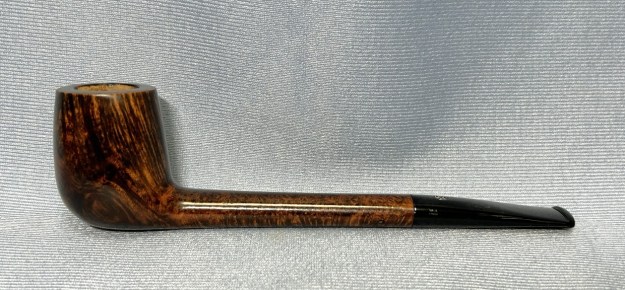
All done! This Mark Tinsky 10-99 smooth Canadian looks fantastic again and is ready to be enjoyed by its next owner. I am pleased to announce that this pipe is for sale! If you are interested in acquiring it for your collection, please have a look in the ‘American’ section of the store here on Steve’s website. You can also email me directly at kenneth@knightsofthepipe.com. The approximate dimensions of the pipe are as follows: length 7¼ in. (185 mm); height 1⅞ in. (47 mm); bowl diameter 1½ in. (38 mm); chamber diameter ⅞ in. (21 mm). The weight of the pipe is 1½ oz. (45 g). I hope you enjoyed reading the story of this pipe’s restoration as much as I enjoyed restoring it. If you are interested in more of my work, please follow me here on Steve’s website or send me an email. Thank you very much for reading and, as always, I welcome and encourage your comments.

A Long and Smooth Canadian by Mark Tinsky


by Kenneth Lieblich

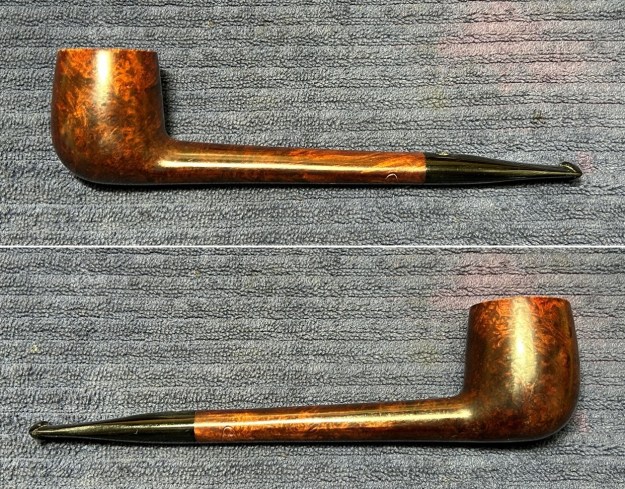
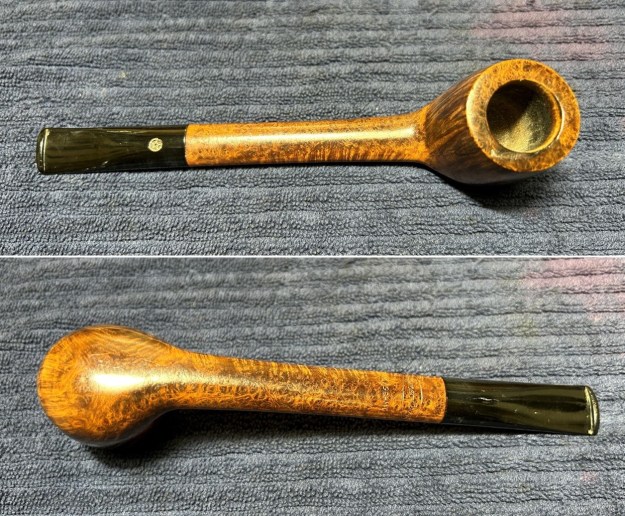
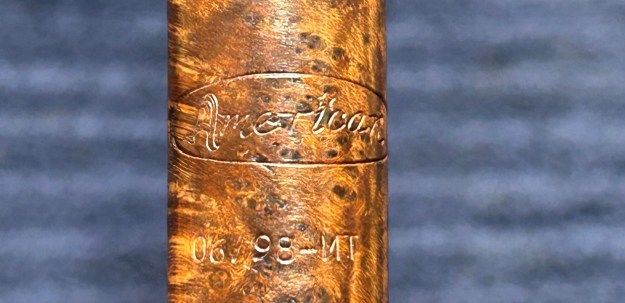
Recently, I was given the opportunity to purchase a small group of pipes by master pipemaker, Mark Tinsky. How could I say no? The answer, of course, is that I could not and I happily acquired them. There are some real beauties here and I am going to restore them all and then turn them over to you. Interestingly, all of the pipes are in the Canadian family of pipe shapes. I’m sure you’ll enjoy seeing them, and here is a link to the first one and the second one, in case you missed them. Let’s move on to the third pipe. This is a beautiful Canadian – well-proportioned bowl with a looooong, oval shank and a handsome taper stem made from acrylic. It’s even longer than the first two Tinsky pipes I worked on. It has a deep, rich brown colour to it and a lovely, smooth surface. There is a charming star logo on the top of the stem. Under the shank are the markings and they read: American [over] 06/98-MT. This tells us that the pipe was made in June 1998 by Mark Tinsky himself.As I’m sure you know, Mark Tinsky is one of the great names in American pipe making. He is best summed up in this quotation from Erwin Van Hove:

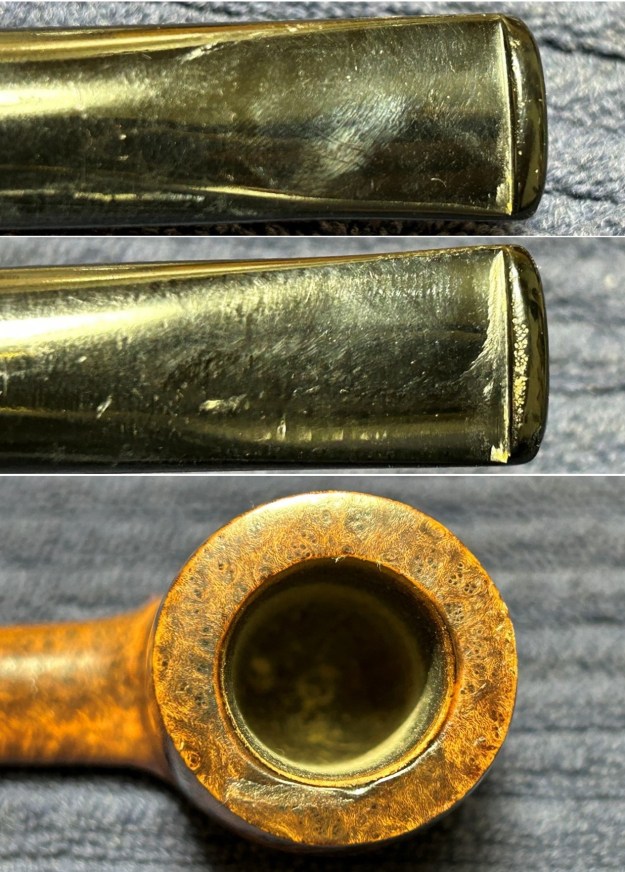
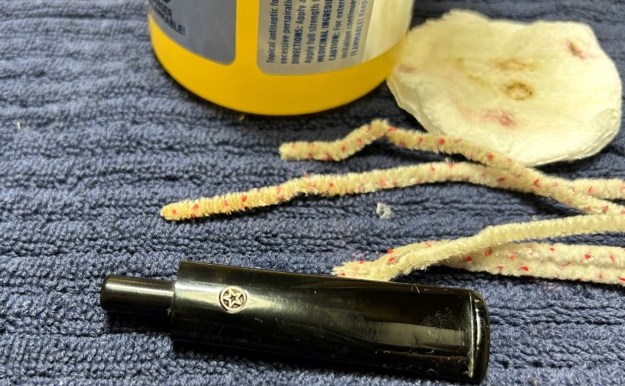
His more than reasonable prices, and his good-natured personality, have made Mark [Tinsky] the favorite of many Americans. It is difficult to find an amateur who does not possess at least one pipe made by the American Smoking Pipe Company, that Tinsky founded in 1978 with his friend Curt Rollar. In 1990, after the departure of his associate, Tinsky continued on by himself building a solid reputation using quality briar from Greece and stem blanks imported from Italy, offering collectors a vast assortment of models and finishes. In short, his pipes are beautiful and well-made pieces that produce a taste beyond reproach. Neither off-the-shelf nor haute couture, they are solid hand mades for an affordable price.There is a wonderful and extensive article on Tinsky, Rollar, and the American Smoking Pipe Company at Pipedia. I highly recommend reading it here. You can also visit his website: http://www.amsmoke.com/. There’s also a small blurb about him at Pipephil:This pipe was in generally very nice shape – there were a few nicks on the rim – but that didn’t require too much work. The stem was also in good shape – only very light wear.I used oil soap on a few cotton rounds and wiped down the stem to provide an initial cleaning before moving on to the next steps. The primary cleaning came next. I disinfected the inside of the stem with both pipe cleaners and cotton swabs dipped in lemon-infused 99% isopropyl alcohol. I scrubbed thoroughly to make sure the interior was very clean.Following that, I used all nine of the micromesh sanding pads (1,500 through 12,000 grit) to sand out flaws, even out the acrylic, and provide gentle polishing of the finished surface. I also applied pipe-stem oil while using the last five micromesh pads. There was a wonderful, deep black shine to the stem when I was done.I moved straight on to the stummel. The first step was to ream out the bowl – that is to say, remove all the cake inside the bowl. This accomplished a couple of things. First (and most obviously), it cleaned the bowl and provided a refurbished chamber for future smoking. Second, when the old cake was removed, I could inspect the interior walls of the bowl and determine if there was damage or not. I used a piece of sandpaper taped to a wooden dowel. This ensured that the debris was removed – and it was very clean inside.I then cleaned the stummel with both pipe cleaners and cotton swabs dipped in lemon-infused 99% isopropyl alcohol. It took quite a bit of cotton to get clean.To tidy up the briar, I also wiped down the outside with some oil soap on cotton rounds and used a toothbrush in the crevices. This did a good job of cleaning any latent dirt on the surface of the briar. The last step of the cleaning process was to scour the inside of the stummel with some soap and tube brushes. This was the culmination of a lot of hard work in getting the pipe clean.Having completed that, I was able to address the nicks on the rim. I dug out my iron and a damp cotton flannel cloth. By laying the cloth over the affected areas and applying the iron to it, the hot and moist steam can cause the wood to swell slightly and return to shape. This worked superbly well.I used all nine micromesh pads (1,500 through 12,000 grit) to sand the whole stummel. This sanding minimizes flaws in the briar and provides a beautiful smoothness to the wood. I rubbed some LBE Before & After Restoration Balm into the briar and let it sit for 30 minutes or so. The balm moisturizes the wood and gives a beautiful depth to the briar. I then buffed the stummel with a microfibre cloth. For the final step, I took the pipe to my bench polisher and carefully buffed it – first with a blue diamond compound, then with three coats of carnauba wax. This procedure makes the pipe look its best – the stummel sings and the stem glows.

All done! This Mark Tinsky 06-98 smooth Canadian looks fantastic again and is ready to be enjoyed by its next owner. I am pleased to announce that this pipe is for sale! If you are interested in acquiring it for your collection, please have a look in the ‘American’ section of the store here on Steve’s website. You can also email me directly at kenneth@knightsofthepipe.com. The approximate dimensions of the pipe are as follows: length 7 in. (178 mm); height 1⅞ in. (49 mm); bowl diameter 1½ in. (38 mm); chamber diameter ¾ in. (20 mm). The weight of the pipe is 1¾ oz. (51 g). I hope you enjoyed reading the story of this pipe’s restoration as much as I enjoyed restoring it. If you are interested in more of my work, please follow me here on Steve’s website or send me an email. Thank you very much for reading and, as always, I welcome and encourage your comments.

A Blast-from-the-Past Pipe by Mark Tinsky


by Kenneth Lieblich

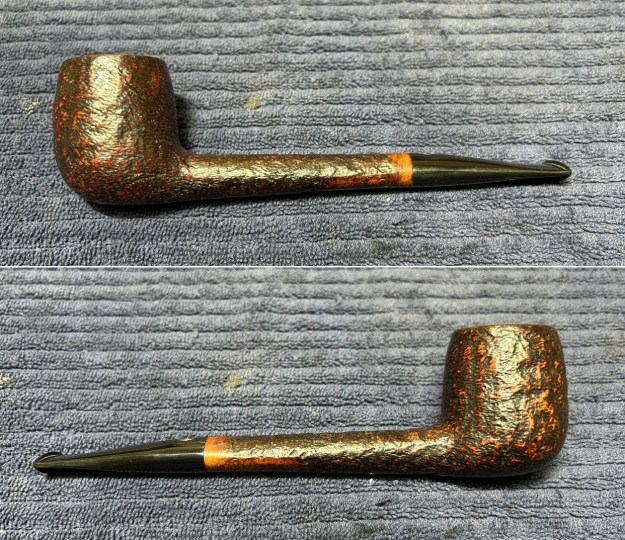
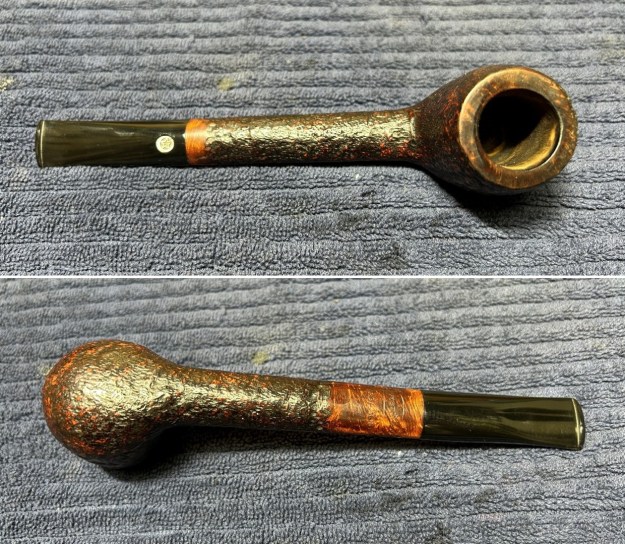
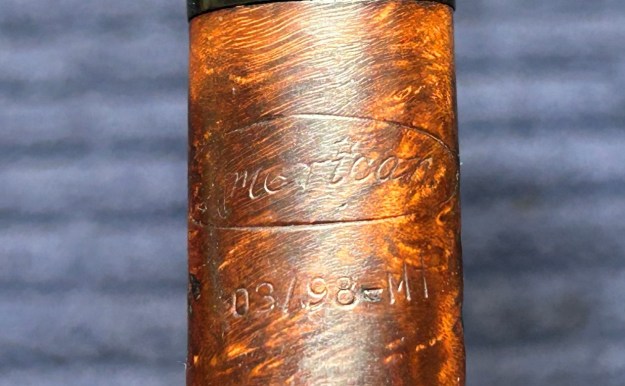
Recently, I was given the opportunity to purchase a small group of pipes by master pipemaker, Mark Tinsky. How could I say no? The answer, of course, is that I could not and I happily acquired them. There are some real beauties here and I am going to restore them all and then turn them over to you. Interestingly, all of the pipes are in the Canadian family of pipe shapes. I’m sure you’ll enjoy seeing them, and here is a link to the first one in case you missed it. Let’s move on to the second pipe. This is a beautiful Canadian – well-proportioned bowl with a long, oval shank and a handsome taper stem made from acrylic. It’s a bit longer than the first one I worked on. It has a nice sandblast that as a wonderful, leathery feel to it. It’s obviously not made of leather, but the texture is really satisfying. There is a lovely star logo on the top of the stem. Under the shank are the markings and they read: American [over] 03/98-MT. This tells us that the pipe was made in March 1998 by Mark Tinsky himself.As I’m sure you know, Mark Tinsky is one of the great names in American pipe making. He is best summed up in this quotation from Erwin Van Hove:

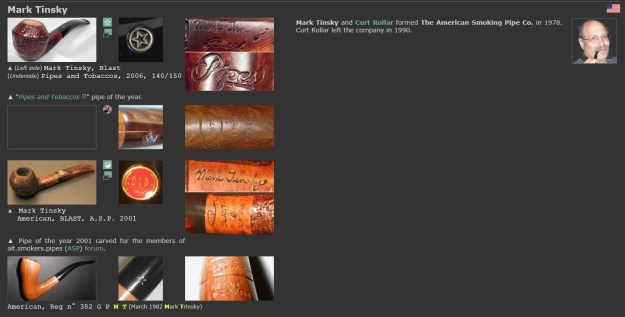
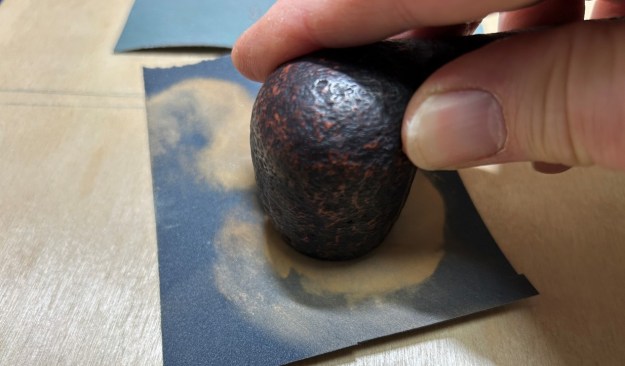
His more than reasonable prices, and his good-natured personality, have made Mark [Tinsky] the favorite of many Americans. It is difficult to find an amateur who does not possess at least one pipe made by the American Smoking Pipe Company, that Tinsky founded in 1978 with his friend Curt Rollar. In 1990, after the departure of his associate, Tinsky continued on by himself building a solid reputation using quality briar from Greece and stem blanks imported from Italy, offering collectors a vast assortment of models and finishes. In short, his pipes are beautiful and well-made pieces that produce a taste beyond reproach. Neither off-the-shelf nor haute couture, they are solid hand mades for an affordable price.There is a wonderful and extensive article on Tinsky, Rollar, and the American Smoking Pipe Company at Pipedia. I highly recommend reading it here. You can also visit his website: http://www.amsmoke.com/. There’s also a small blurb about him at Pipephil:This pipe was in generally very nice shape – there were a few nicks on the rim – but that didn’t require too much work. In fact, the stem didn’t require any work from me at all! When I got this pipe, the stem was nowhere to be seen – there was only a stummel. So, I sent the pipe to Mark Tinsky and had him fashion a new stem for this pipe. The new stem is a perfect match from the man himself.I moved straight on to the stummel. The first step was to ream out the bowl – that is to say, remove all the cake inside the bowl. This accomplished a couple of things. First (and most obviously), it cleaned the bowl and provided a refurbished chamber for future smoking. Second, when the old cake was removed, I could inspect the interior walls of the bowl and determine if there was damage or not. I used a pipe knife and a piece of sandpaper taped to a wooden dowel. Collectively, these ensured that all the debris was removed – but it was very clean inside.I then cleaned the stummel with both pipe cleaners and cotton swabs dipped in lemon-infused 99% isopropyl alcohol. It took quite a while and much cotton to get clean.To tidy up the briar, I also wiped down the outside with some oil soap on cotton rounds and used a toothbrush in the crevices. This did a good job of cleaning any latent dirt on the surface of the briar. The last step of the cleaning process was to scour the inside of the stummel with some soap and tube brushes. This was the culmination of a lot of hard work in getting the pipe clean.Having completed that, I was able to address the nicks on the rim. I dug out my iron and a damp cotton flannel cloth. By laying the cloth over the affected areas and applying the iron to it, the hot and moist steam can cause the wood to swell slightly and return to shape. There was some significant improvement! Not everything was removed, but most of it was. I also gave it a light topping on my topping board to finish off the rim. I used all nine micromesh pads (1,500 through 12,000 grit) to sand the smooth rim and the smooth part of the shank. This sanding minimizes flaws in the briar and provides a beautiful smoothness to the wood. I rubbed some LBE Before & After Restoration Balm into the briar and let it sit for 30 minutes or so. The balm moisturizes the wood and gives a beautiful depth to the briar. I then buffed the stummel with a microfibre cloth. For the final step, I took the pipe to my bench polisher and carefully buffed it with three coats of conservator’s wax. This procedure makes the pipe look its best – the stummel sings and the stem glows.

All done! This Mark Tinsky 03-98 sandblasted Canadian looks fantastic again and is ready to be enjoyed by its next owner. I am pleased to announce that this pipe is for sale! If you are interested in acquiring it for your collection, please have a look in the ‘American’ section of the store here on Steve’s website. You can also email me directly at kenneth@knightsofthepipe.com. The approximate dimensions of the pipe are as follows: length 6¼ in. (170 mm); height 1⅞ in. (48 mm); bowl diameter 1½ in. (38 mm); chamber diameter ¾ in. (20 mm). The weight of the pipe is 1¾ oz. (52 g). I hope you enjoyed reading the story of this pipe’s restoration as much as I enjoyed restoring it. If you are interested in more of my work, please follow me here on Steve’s website or send me an email. Thank you very much for reading and, as always, I welcome and encourage your comments.

A Terrific American-Canadian Pipe from Mark Tinsky


by Kenneth Lieblich

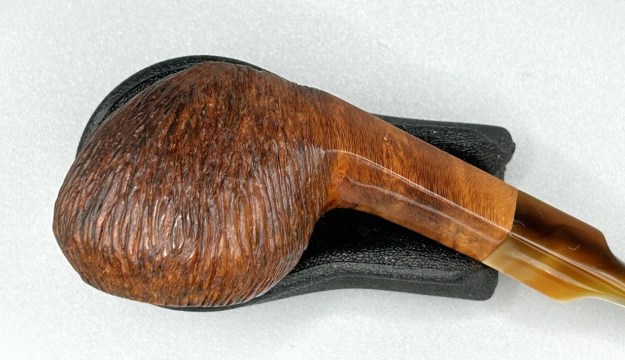
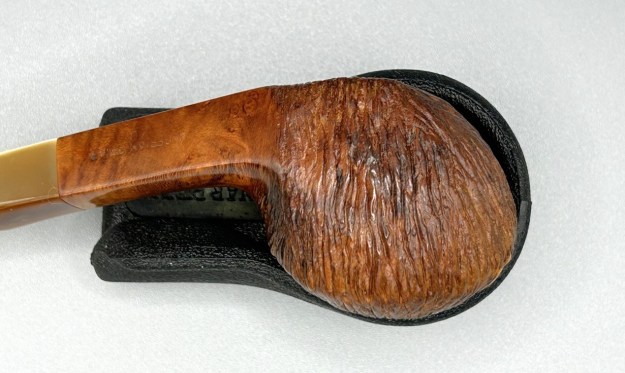
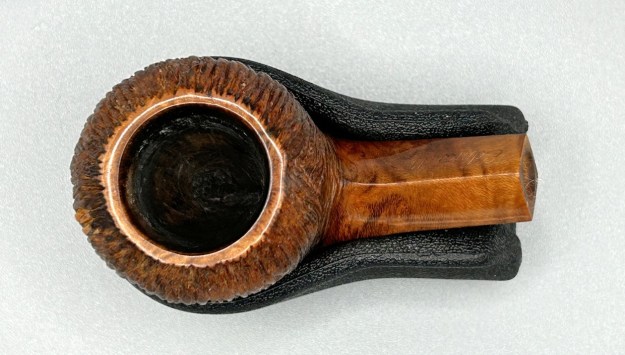
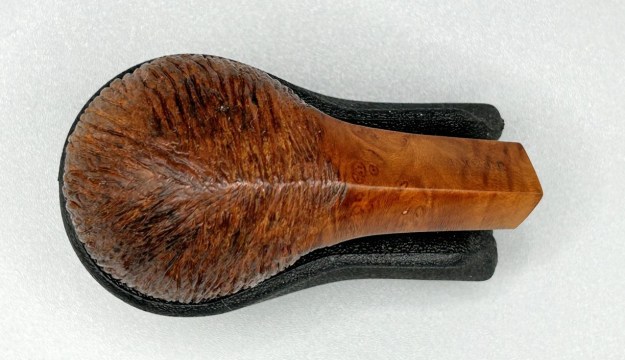
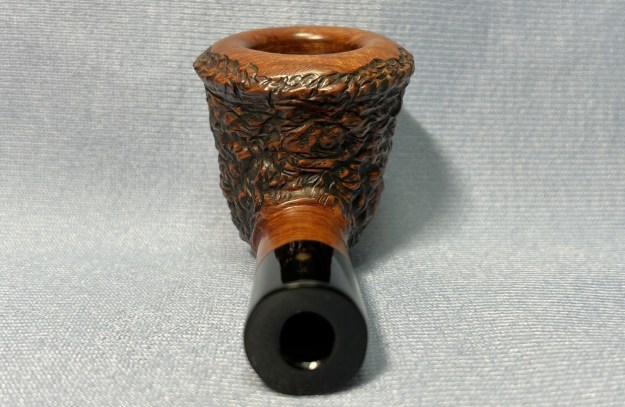
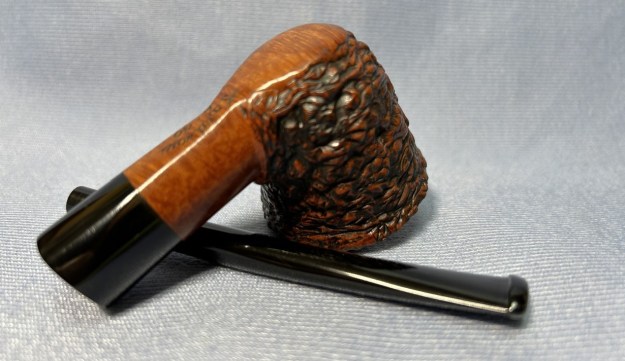
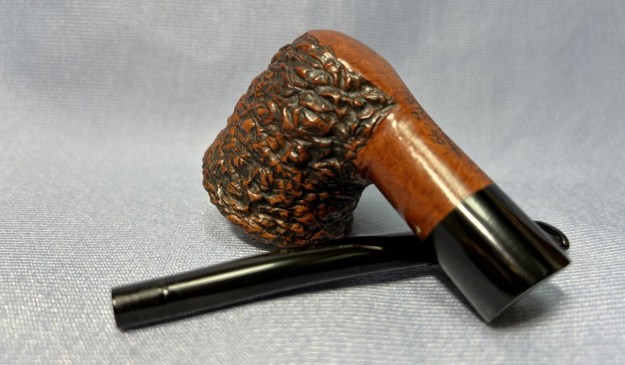
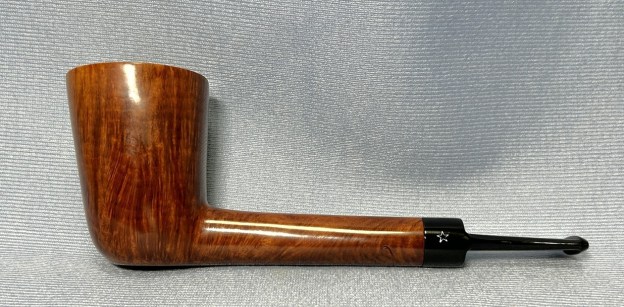
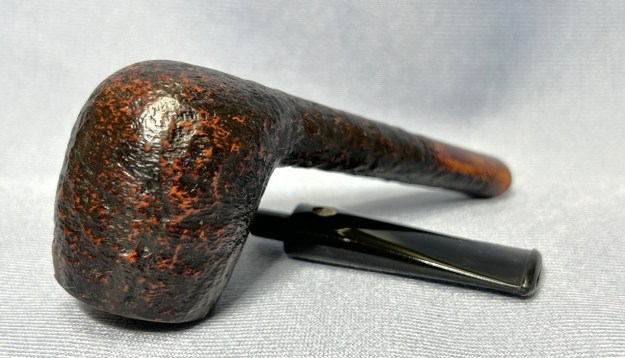
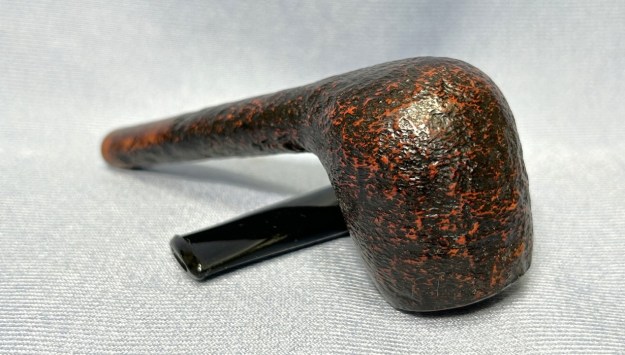
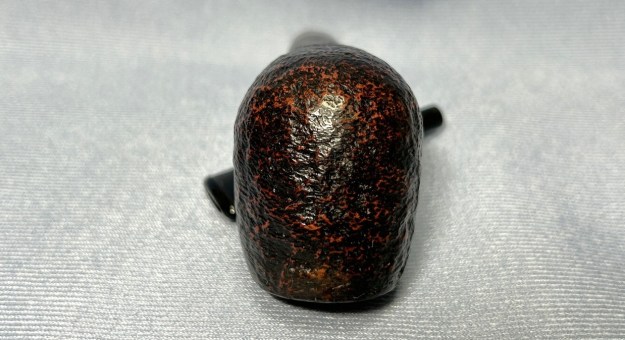
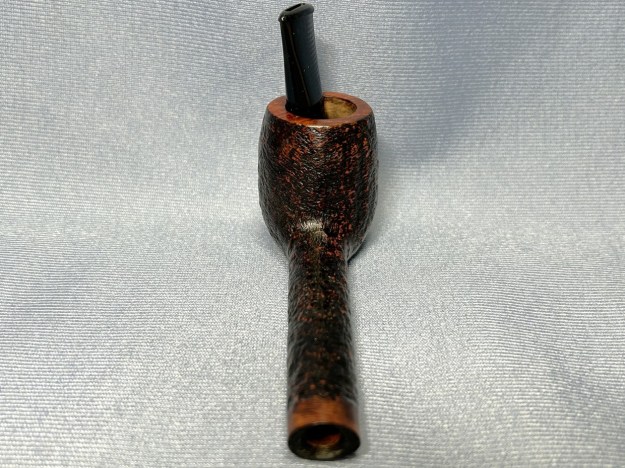
Recently, I was given the opportunity to purchase a small group of pipes by master pipemaker, Mark Tinsky. How could I say no? The answer, of course, is that I could not and I happily acquired them. There are some real beauties here and I am going to restore them all and then turn them over to you. Interestingly, all of the pipes are of the Canadian family of pipe shapes. I’m sure you’ll enjoy seeing them, so – in no particular order – let’s get started with the first one. This is a beautiful Canadian – well-proportioned bowl with a long, oval shank and a handsome taper stem made from acrylic. It has a finish that Steve calls ‘blasticated’ – sort of a hybrid of sandblasted and rusticated. There is a lovely star logo on the side of the stem, encircled with inlaid briar. Under the shank are the markings and they read: Reg. No. [over] 2/97-MT. This tells us that the pipe was made in February 1997 by Mark Tinsky himself.As I’m sure you know, Mark Tinsky is one of the great names in American pipe making. He is best summed up in this quotation from Erwin Van Hove:

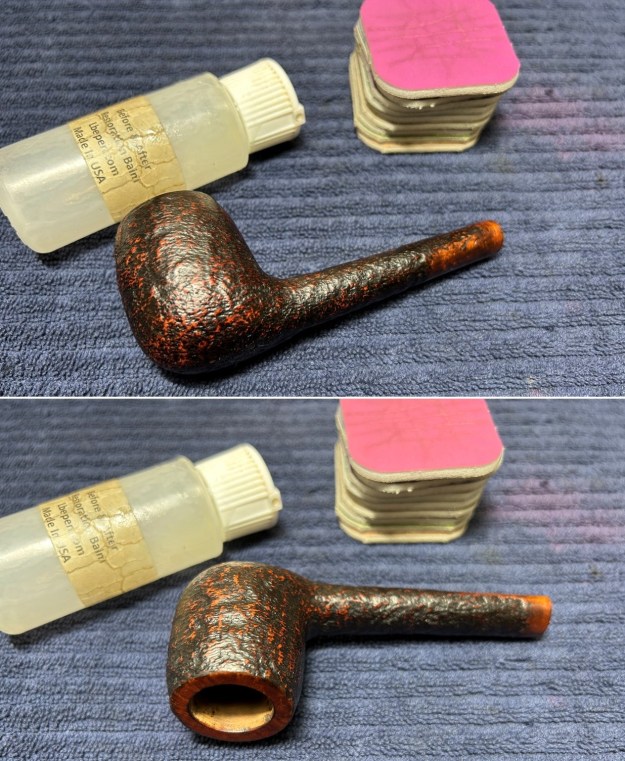
His more than reasonable prices, and his good-natured personality, have made Mark [Tinsky] the favorite of many Americans. It is difficult to find an amateur who does not possess at least one pipe made by the American Smoking Pipe Company, that Tinsky founded in 1978 with his friend Curt Rollar. In 1990, after the departure of his associate, Tinsky continued on by himself building a solid reputation using quality briar from Greece and stem blanks imported from Italy, offering collectors a vast assortment of models and finishes. In short, his pipes are beautiful and well-made pieces that produce a taste beyond reproach. Neither off-the-shelf nor haute couture, they are solid hand mades for an affordable price.There is a wonderful and extensive article on Tinsky, Rollar, and the American Smoking Pipe Company at Pipedia. I highly recommend reading it here. You can also visit his website: http://www.amsmoke.com/. There’s also a small blurb about him at Pipephil:This pipe was in generally very nice shape and didn’t require too much work. I used oil soap on a few cotton rounds and wiped down the stem to provide an initial cleaning before moving on to the next steps. The primary cleaning came next. I disinfected the inside of the stem with both pipe cleaners and cotton swabs dipped in lemon-infused 99% isopropyl alcohol. I scrubbed thoroughly to make sure the interior was very clean.As the stem was now clean and dry, I set about fixing the marks and dents in the acrylic. This was done by filling those divots with black cyanoacrylate adhesive, impregnated with carbon and rubber. I left this to cure and moved on.The penultimate step for the stem is sanding. First, with my set of needle files, I reduced the bulk of the cyanoacrylate repairs. I removed the excess adhesive as near to the surface as possible, without cutting into the acrylic. Following that, I used all nine of the micromesh sanding pads (1,500 through 12,000 grit) to sand out flaws, even out the acrylic, and provide gentle polishing of the finished surface. I also applied pipe-stem oil while using the last five micromesh pads. There was a wonderful, deep black shine to the stem when I was done.As the stem was (nearly) complete, I moved on to the stummel. The first step was to ream out the bowl – that is to say, remove all the cake inside the bowl. This accomplished a couple of things. First (and most obviously), it cleaned the bowl and provided a refurbished chamber for future smoking. Second, when the old cake was removed, I could inspect the interior walls of the bowl and determine if there was damage or not. I used a pipe knife and a piece of sandpaper taped to a wooden dowel. Collectively, these ensured that all the debris was removed.Similar to the stem, I then cleaned the stummel with both pipe cleaners and cotton swabs dipped in lemon-infused 99% isopropyl alcohol. It took quite a while and much cotton to get clean.To tidy up the briar, I also wiped down the outside with some oil soap on cotton rounds and used a toothbrush in the crevices. This did a good job of cleaning any latent dirt on the surface of the briar. The last step of the cleaning process was to scour the inside of the stummel with some soap and tube brushes. This was the culmination of a lot of hard work in getting the pipe clean.I used all nine micromesh pads (1,500 through 12,000 grit) to sand the smooth rim and the smooth part of the shank. This sanding minimizes flaws in the briar and provides a beautiful smoothness to the wood. I rubbed some LBE Before & After Restoration Balm into the briar and let it sit for 30 minutes or so. The balm moisturizes the wood and gives a beautiful depth to the briar. I then buffed the stummel with a microfibre cloth. For the final step, I took the pipe to my bench polisher and carefully buffed it with three coats of conservator’s wax. This procedure makes the pipe look its best – the stummel sings and the stem glows.

All done! This Mark Tinsky 02-97 Canadian looks fantastic again and is ready to be enjoyed by its next owner. I am pleased to announce that this pipe is for sale! If you are interested in acquiring it for your collection, please have a look in the ‘American’ section of the store here on Steve’s website. You can also email me directly at kenneth@knightsofthepipe.com. The approximate dimensions of the pipe are as follows: length 6⅛ in. (156 mm); height 2 in. (52 mm); bowl diameter 1⅝ in. (41 mm); chamber diameter ⅞ in. (23 mm). The weight of the pipe is 1¾ oz. (54 g). I hope you enjoyed reading the story of this pipe’s restoration as much as I enjoyed restoring it. If you are interested in more of my work, please follow me here on Steve’s website or send me an email. Thank you very much for reading and, as always, I welcome and encourage your comments.

A New Lease on Life for an Old S.M. Frank Bakelite


by Kenneth Lieblich

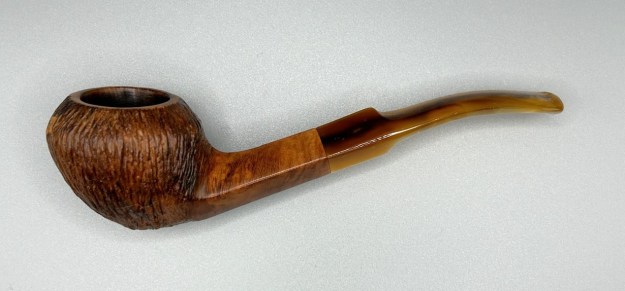
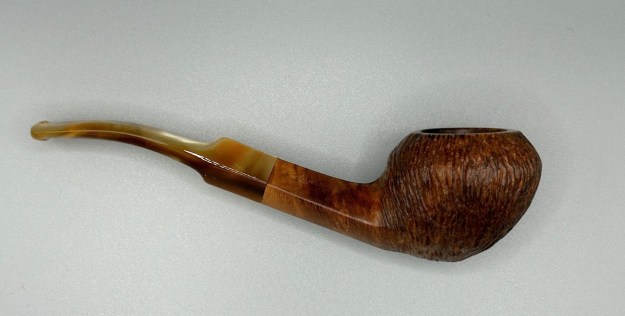
A couple of weeks ago, I restored a Redmanol pipe for a customer and, as good fortune would have it, its Bakelite cousin appeared on my workbench. However, this time the Bakelite pipe is for sale! It’s a real beauty – and quite old. It’s an S.M. Frank Bakelite bent bulldog. It has a lovely old-world feel about it, with a handsome band – and it even has its matching leather case! This pipe has an orific stem and that marks it as being around a century old. To learn more about that particular bit of pipe history, please have a look at Steve’s article on the subject here. Given my recent experience with Redmanol and given its similarity to Bakelite, I thought I’d give it a go. It’s an old timer and it will always carry a few signs of its use and age, but that is definitely part of this pipe’s charm. The marks on the pipe are simple and straightforward. On the left side of the shank, it reads Frank [over] Bakelite. Inside the pipe case, there is a logo which reads Frank [over] Trade Mark.I suspected that the name Frank was referring to the S.M. Frank company, but I went to Pipedia to check. It turns out that the S.M. Frank history is a tangled mess of brambles and twigs. It involves Kaywoodie, KB&B, Reiss, Demuth, and many others. It’s messier than a dog’s breakfast, as one of my schoolteachers liked to say. I don’t have the patience to do it justice here, but I will provide a few tidbits. Here’s a quotation from Pipedia:

In the year 1900 Sam Frank Sr. started his own business, selling pipes and other tobacco items. His original office was located at 20 W. 17th Street, NYC. He was also closely associated with the sales staff of Wm. DeMuth & Co., selling their line of pipes. It was at this time that Mr. Frank first met Ferdinand Feuerbach and formed what would be a lifelong friendship. Mr. Feuerbach started working for the DeMuth company in 1897 and by 1903 had become the production manager. In 1919, when Mr. Frank needed an experienced pipe man to run his pipe factory, located at 168 Southern Blvd., in the Bronx, he persuaded his old friend Ferdinand to join him. Mr. Feuerbach is credited with developing DeMuth’s popular Royal DeMuth and Hesson Guard Milano pipelines. In 1922, when S. M. Frank purchased the Manhattan Briar Pipe Co. the company incorporated. In 1933, the paper Medico filter was introduced along with the Medico brand line of pipes. The Medico filter is the “original” and most absorbent paper filter on the market that is recognized by pipe smokers world-wide. Filtered pipe smoking, a debatable issue among pipe smokers, reduces tars and nicotine in the smoke stream to make a “safer” smoke.

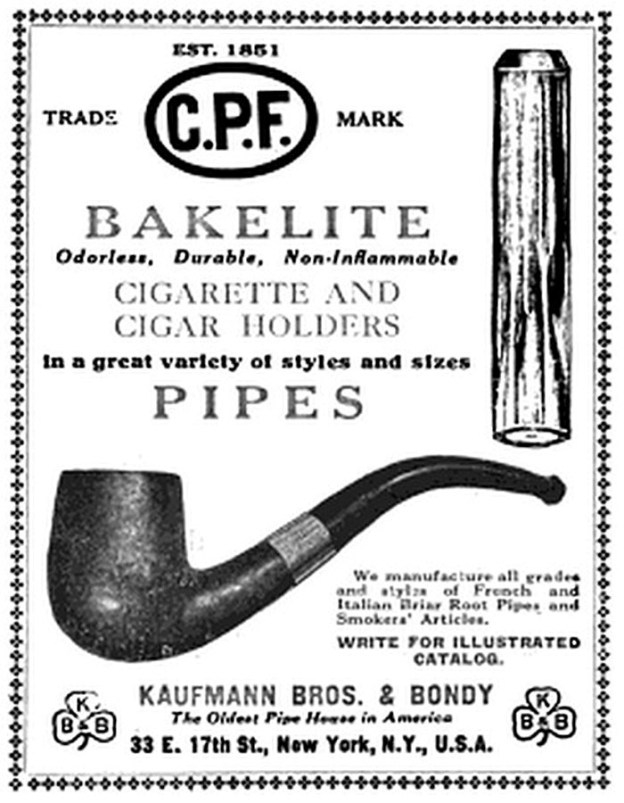
Meanwhile, over in the PipesMagazine forums, there’s a lengthy discussion on the subject from user, jguss. I won’t try to do the article justice in this blog post, but I recommend you read it here. One of the useful things that came out of it, however, is the following org chart.I cannot date this pipe beyond saying that it is about 100 years old. It’s not possible for me to be more precise than that – other than to say that the pipe cannot precede 1907, as that was the year that Bakelite was invented by Leo Hendrik Baekeland. Anecdotally, this pipe looks like similar KB&B (Kaufmann Bros. & Bondy) pipes of the era, so it may come from that genealogical line (so to speak). Let’s move on.

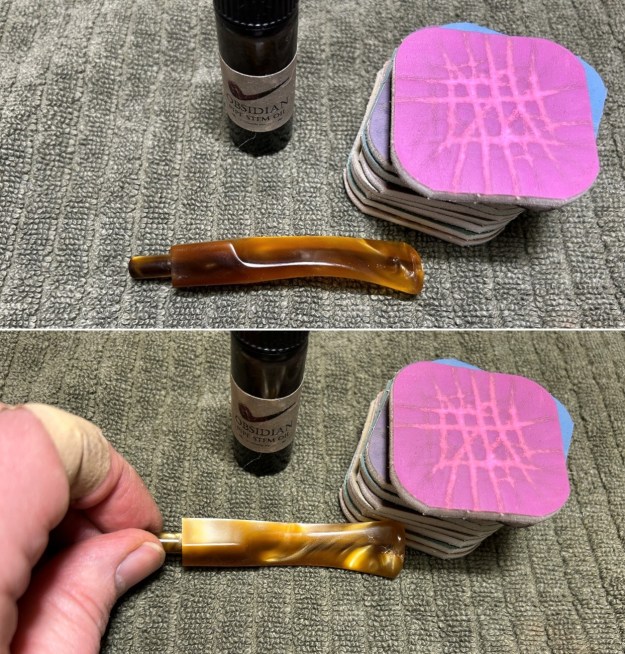
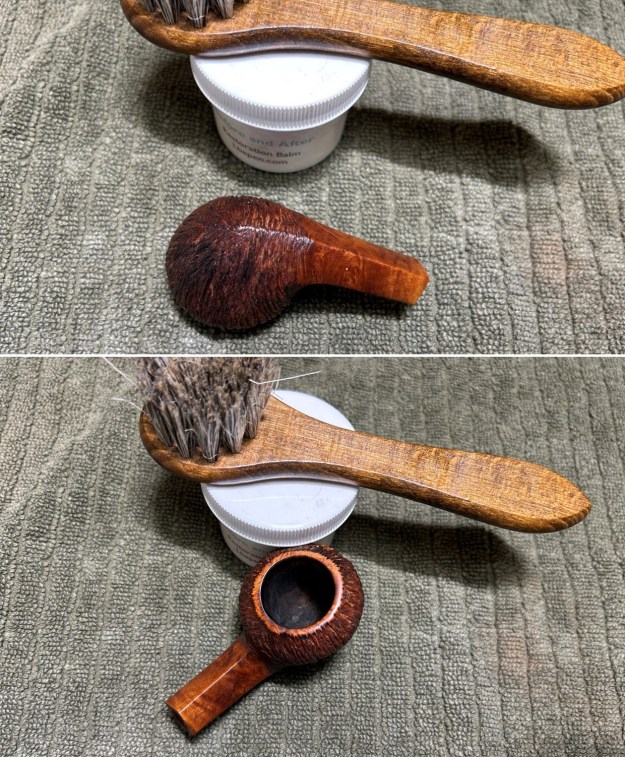
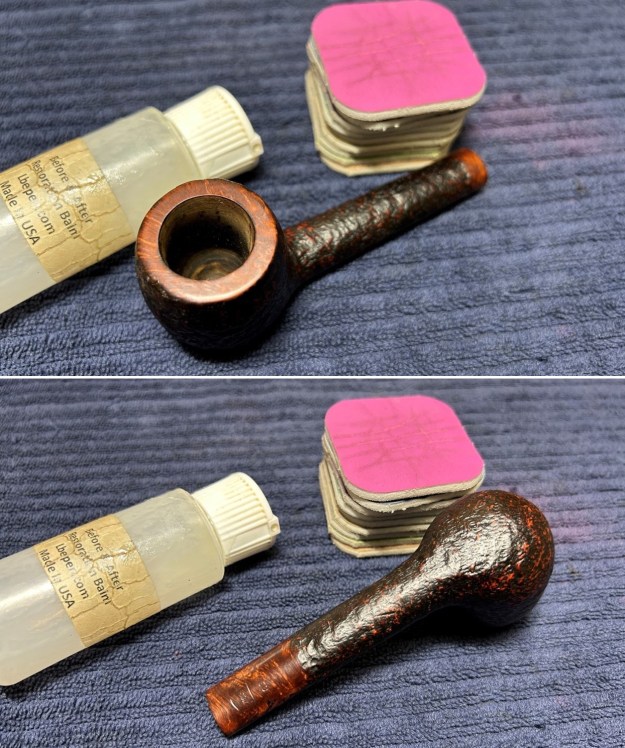
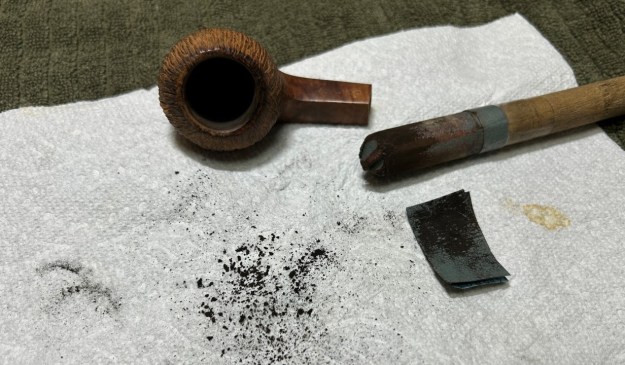
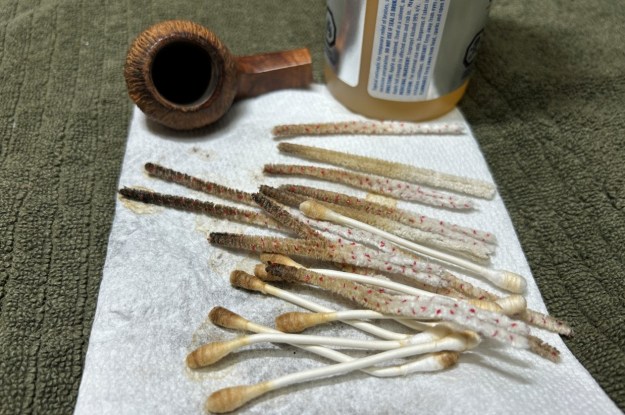
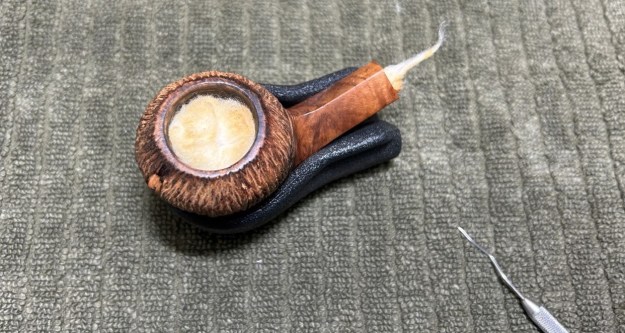
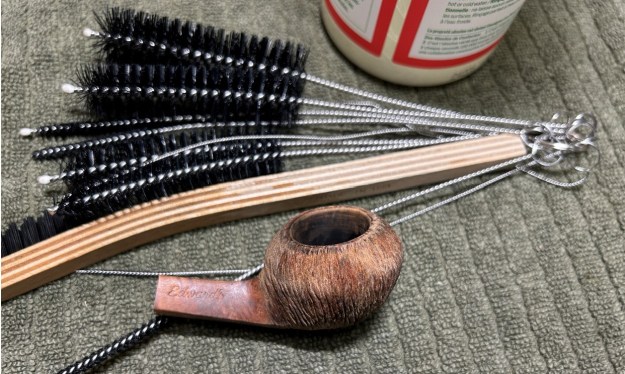
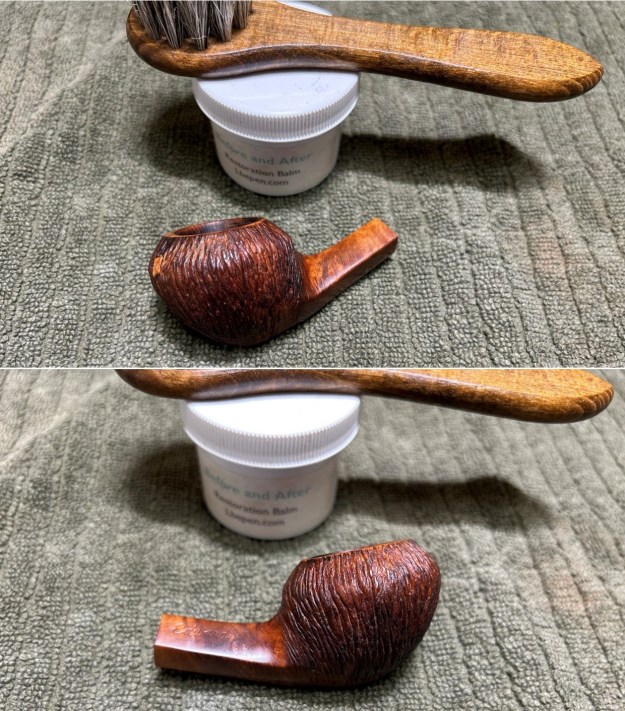
A closer look at the pipe shows a few problems. The stem has some scratches and wear – I will have to handle the Bakelite carefully. The stummel is pretty worn and dirty. It has a few scratches and nicks. Around the top of the bowl, there is some odd ‘stuff’ stuck to the wood. More on that later. Both of the mortises in the shank and stem had matching broken-off halves of a bone tenon. They’re stuck in there. There’s a lot of work ahead! I decided that my first job would be to extract the tenon halves. This was nerve-wracking stuff because I was not at all sure that I could get them out without cracking either the shank or stem (or both). The photos here don’t really tell the whole story. I tried extracting with pliers; I tried extracting with a screw – both unsuccessful. I fiddled for while and decided that I needed to drill the tenon out. It was clearly risky, but the pipe wasn’t useable in its current state anyway. So, I took the stem and stummel and threw them in the freezer for 30 minutes or so. I wanted to (hopefully) make the bone tenon more brittle by freezing it. I also wrapped the end of the stem very tightly with hockey tape in a quixotic hope that that might prevent the Bakelite from cracking. I then took the thinnest drill bit that fit inside the draught hole of the tenon and drilled carefully and slowly. I then increased the size of the drill bit one by one – oh so carefully – until the tenon began to crack. As more and more of it cracked, I was able to pull the debris out. This took a while, as I worked on both halves, but it was a complete success. Deo gratias! I then went searching in my boxes for a replacement bone tenon – I have hundreds! Eventually, I found just the right one. I was finally able to get on with cleaning. I used oil soap on a few cotton rounds and wiped down the stem to provide an initial cleaning before moving on to the next steps. The primary cleaning came next. I disinfected the inside of the stem with pipe cleaners and cotton swabs dipped in 99% lemon-infused isopropyl alcohol. I scrubbed thoroughly to make sure the interior was very clean.Next, I set about fixing the marks in the Bakelite. This was done by filling those marks with clear cyanoacrylate adhesive. I left this to cure and moved on.The next step was sanding. First, I reduced the bulk of the cyanoacrylate repairs. I removed the excess adhesive as near to the surface as possible, without cutting into the Bakelite. Following that, I used all nine of the micromesh sanding pads (1,500 through 12,000 grit) to sand out flaws, even out the Bakelite, and provide gentle polishing of the finished surface. I also applied pipe-stem oil while using the last five micromesh pads. There was a wonderful, clear, ruby-like glow to the stem when I was done.As the stem was (nearly) complete, I moved on to the stummel. The first step was to ream out the bowl – that is to say, remove all the cake inside the bowl. This accomplished a couple of things. First (and most obviously), it cleaned the bowl and provided a refurbished chamber for future smoking. Second, when the old cake was removed, I could inspect the interior walls of the bowl and determine if there was damage or not. I used a reamer, a pipe knife, and a piece of sandpaper taped to a wooden dowel. Collectively, these ensured that all the debris was removed.My next step was to remove the lava on the rim. For this, I took a piece of machine steel and gently scraped the lava away. The metal’s edge is sharp enough to remove what I need, but not so sharp that it damages the rim.Similar to the stem, I then cleaned the stummel with both pipe cleaners and cotton swabs dipped in lemon-infused 99% isopropyl alcohol. With a pipe this dirty, it took quite a while and much cotton to get clean.I then decided to ‘de-ghost’ the pipe – that is to say, exorcize the remaining filth from the briar. I filled the bowl and the shank with cotton balls, then saturated them with 99% isopropyl alcohol. I let the stummel sit overnight. This caused the remaining oils, tars and smells to leach out into the cotton.To tidy up the briar, I also wiped down the outside with some oil soap on cotton rounds and used a toothbrush in the crevices. This did a good job of cleaning any latent dirt on the surface of the briar. The last step of the cleaning process was to scour the inside of the stummel with some soap and tube brushes. This was the culmination of a lot of hard work in getting the pipe clean.However, what it did not do was remove the weird stuff stuck around the rim. Then I realized that this pipe must have had cap once upon a time. That cap is long lost to the mists of history. I looked in my stores and found several caps, but not that fit this pipe. No problem – this pipe doesn’t need it and would look great (I daresay better) without one. It took some mighty strong sanding with 220-, 400-, and 600-grit sandpapers to remove all the gunk. I then used all nine micromesh pads (1,500 through 12,000 grit) to sand the outside of the stummel and finish it off. This sanding minimizes flaws in the briar and provides a beautiful smoothness to the wood. I did add some stain to the briar in order to replace what had been lost in the sanding – but forgot the photos. Anyway, I rubbed some LBE Before & After Restoration Balm into the briar and let it sit for 30 minutes or so. The balm moisturizes the wood and gives a beautiful depth to the briar. I then buffed the stummel with a microfibre cloth. For the final step, I took the pipe to my bench polisher and carefully buffed it – first with a blue diamond compound, then with three coats of carnauba wax. This procedure makes the pipe look its best – the stummel sings and the stem glows.
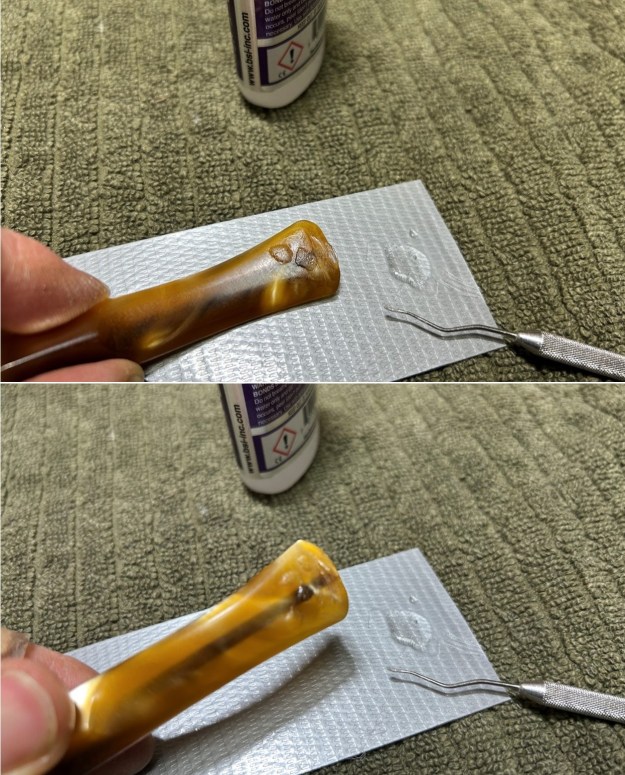
All done! This S.M. Frank Bakelite bent bulldog looks fantastic again and is ready to be enjoyed by its next owner. I am pleased to announce that this pipe is for sale! If you are interested in acquiring it for your collection, please have a look in the ‘American’ section of the store here on Steve’s website. You can also email me directly at kenneth@knightsofthepipe.com. The approximate dimensions of the pipe are as follows: length 5 in. (128 mm); height 1⅞ in. (46 mm); bowl diameter 1⅜ in. (36 mm); chamber diameter ⅞ in. (20 mm). The weight of the pipe is 1¼ oz. (39 g). I hope you enjoyed reading the story of this pipe’s restoration as much as I enjoyed restoring it. If you are interested in more of my work, please follow me here on Steve’s website or send me an email. Thank you very much for reading and, as always, I welcome and encourage your comments.