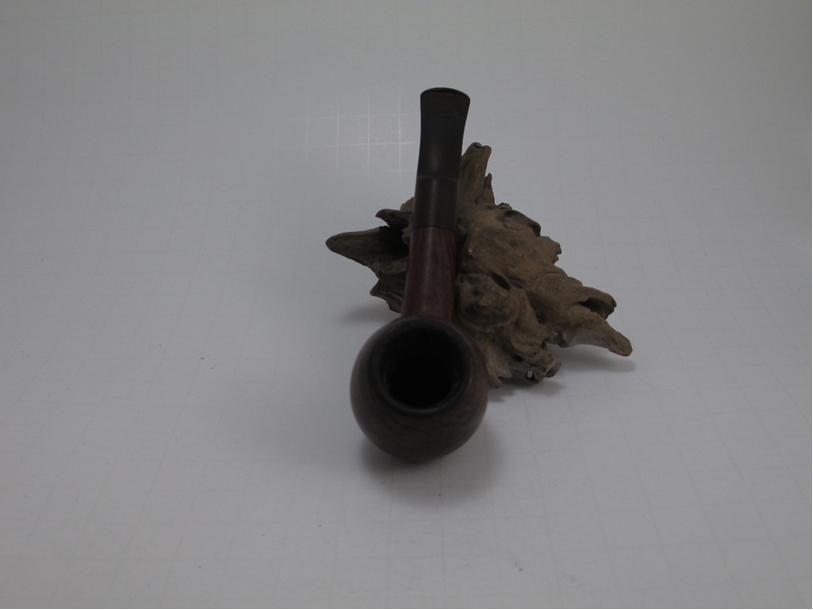
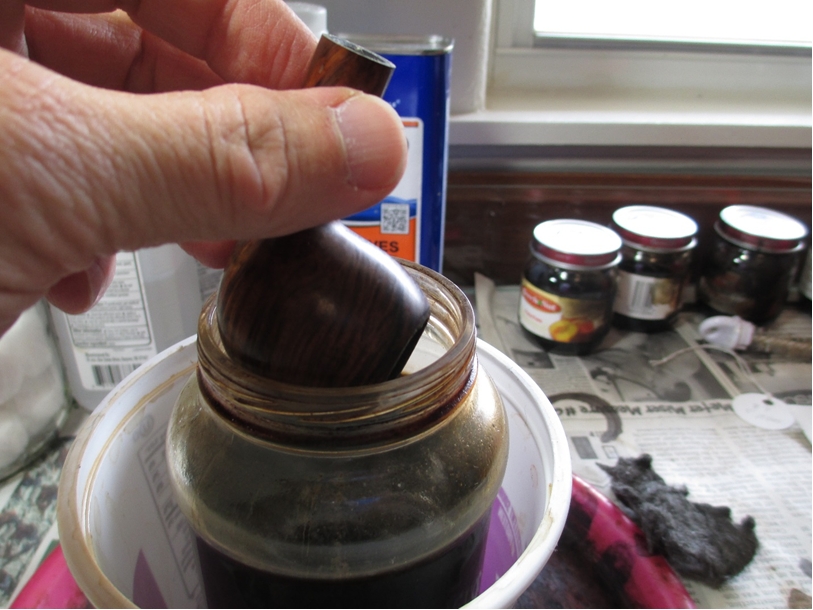
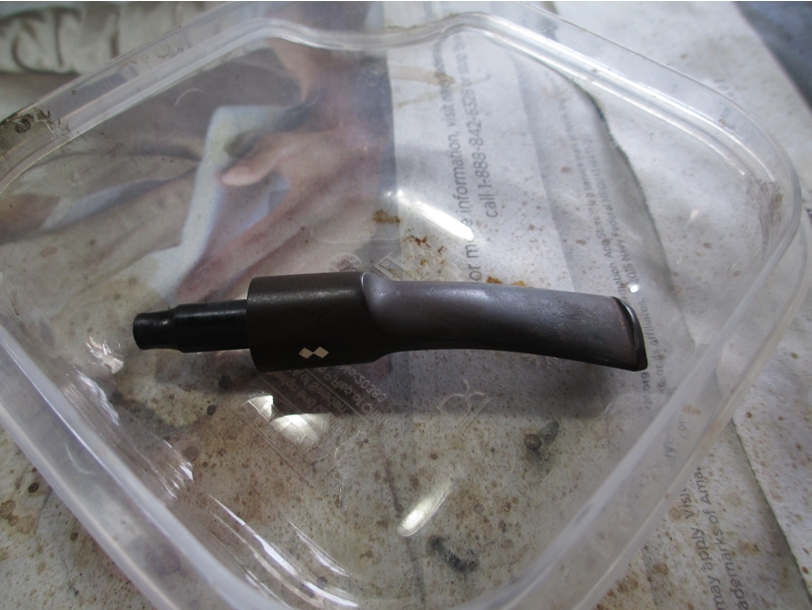
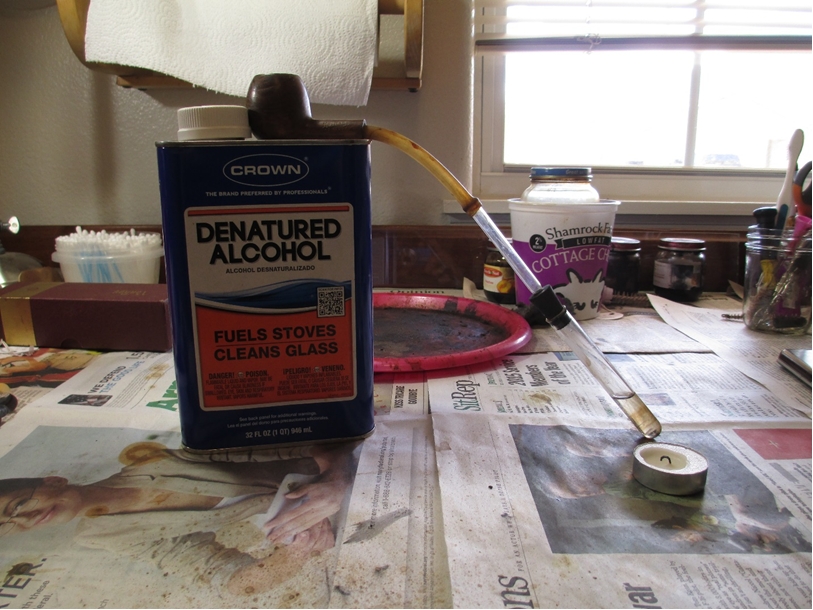
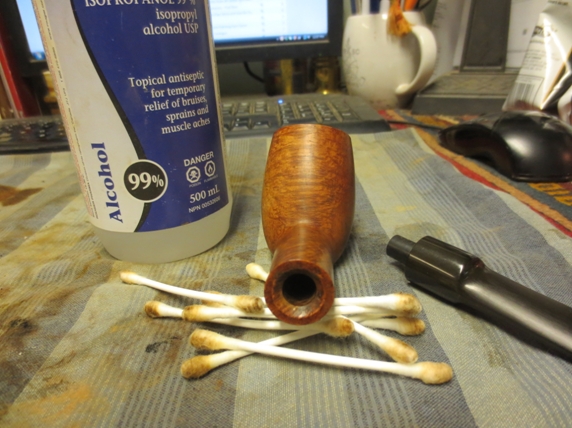
Tag Archives: Alcohol bath

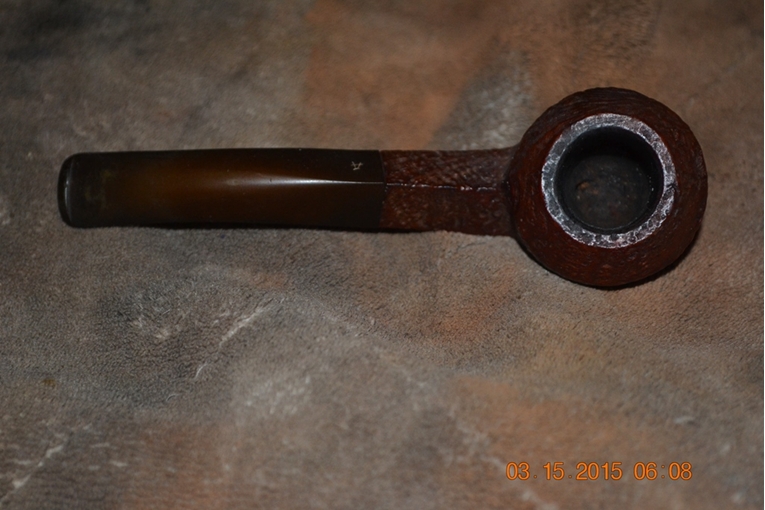
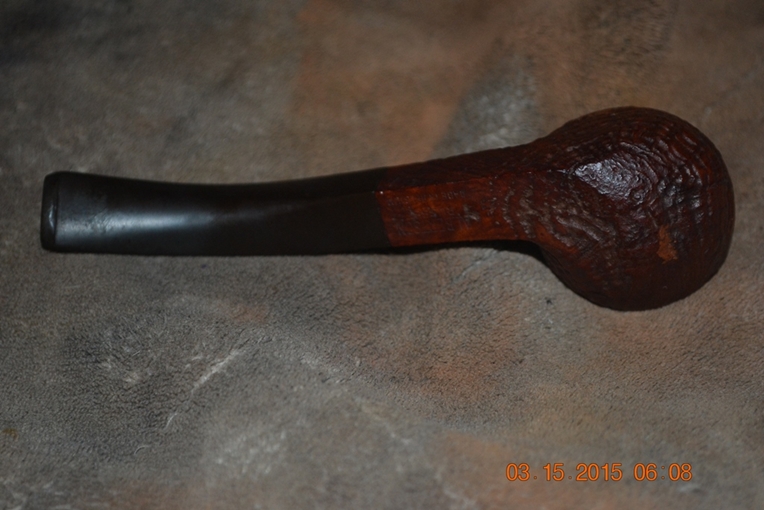
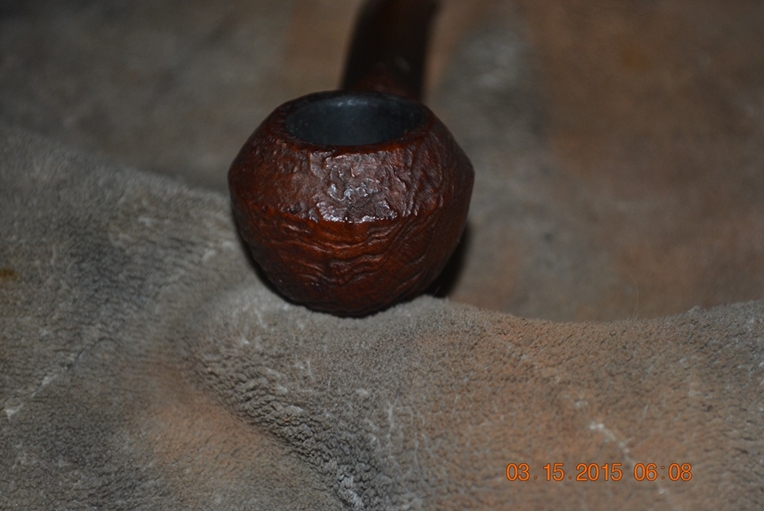
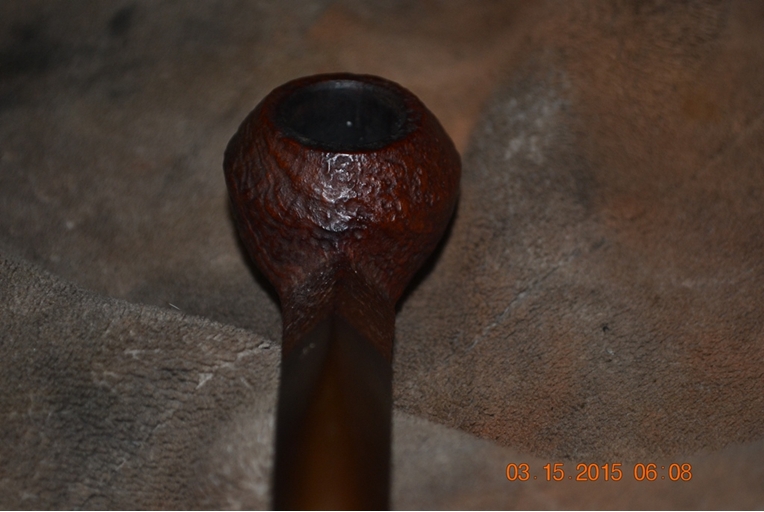
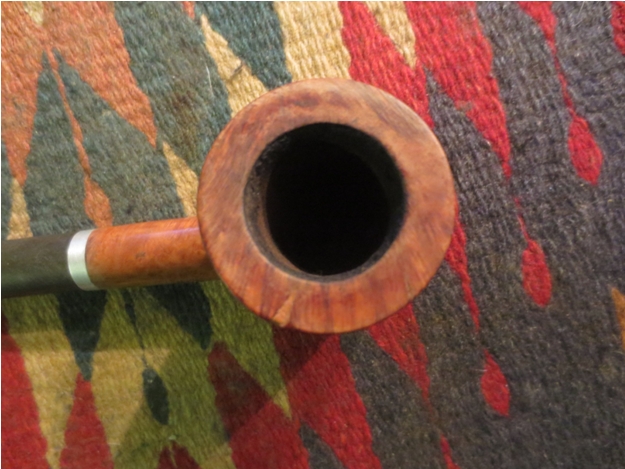
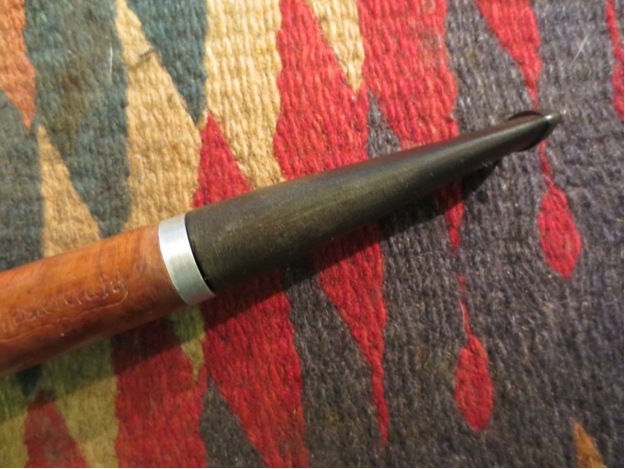
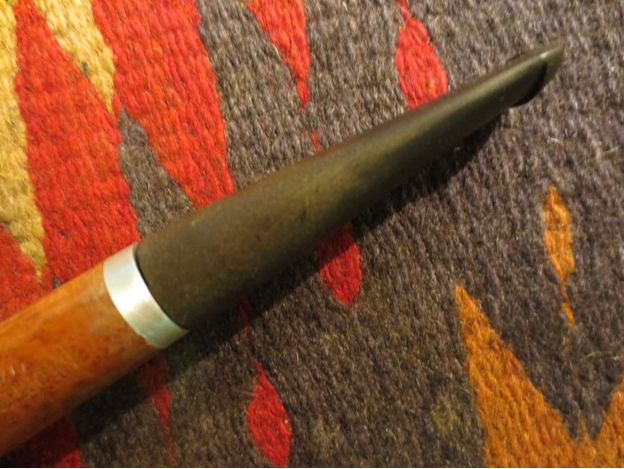
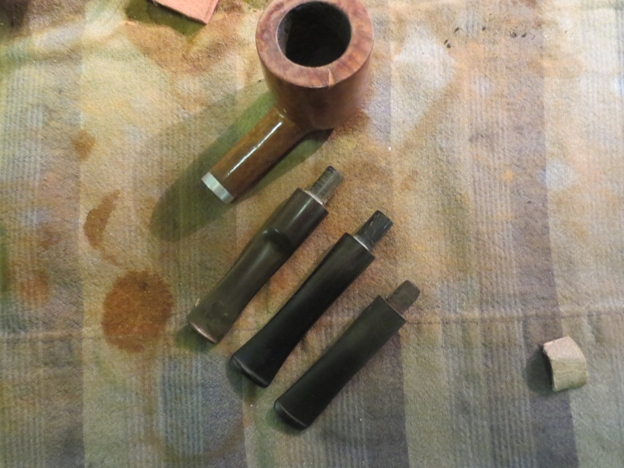
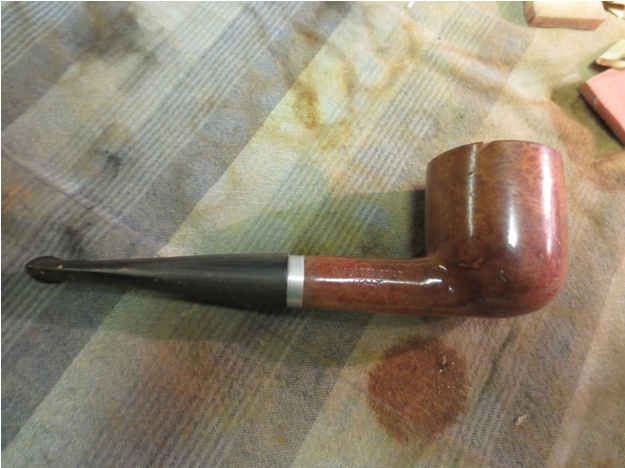
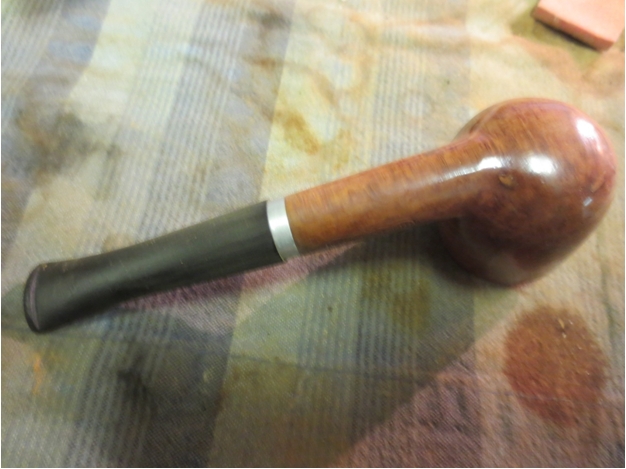
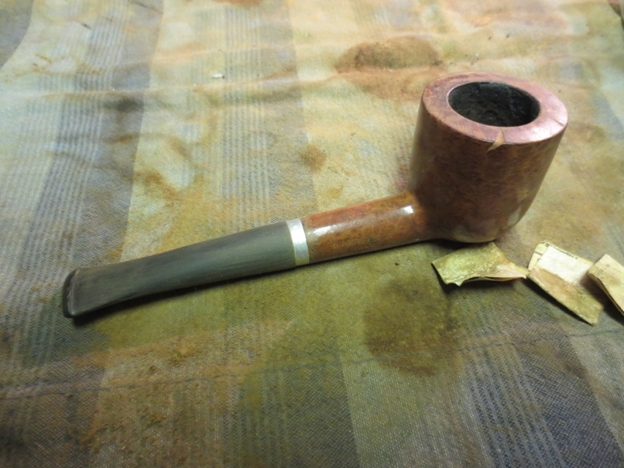
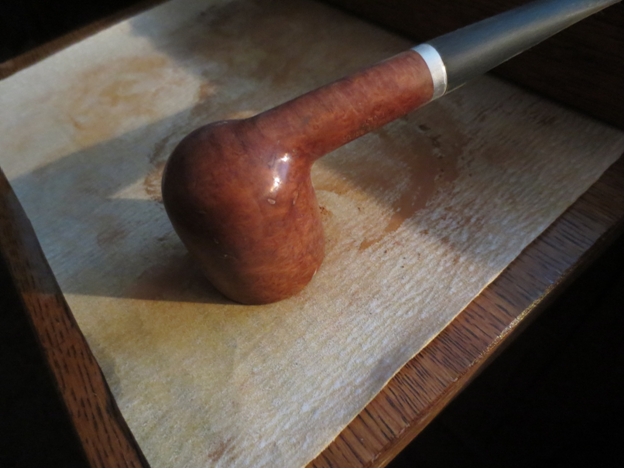
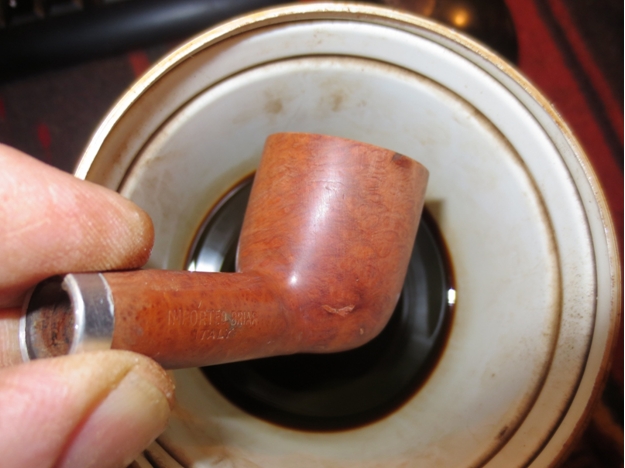
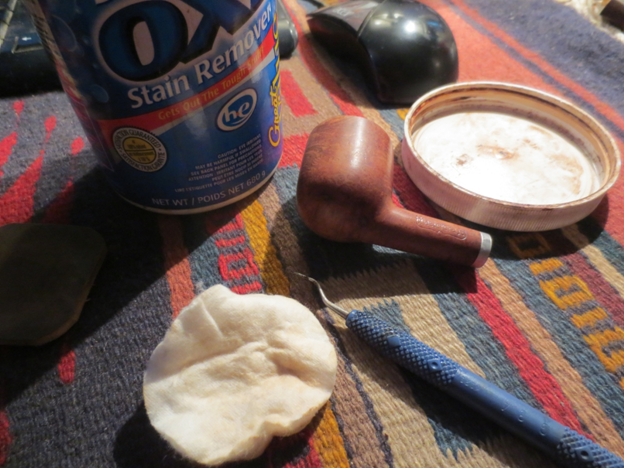
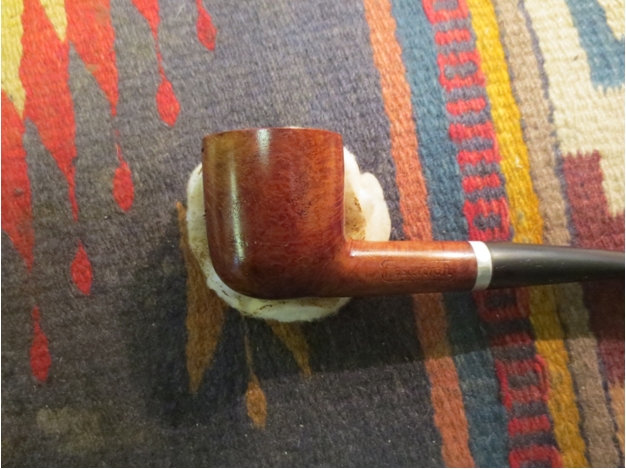
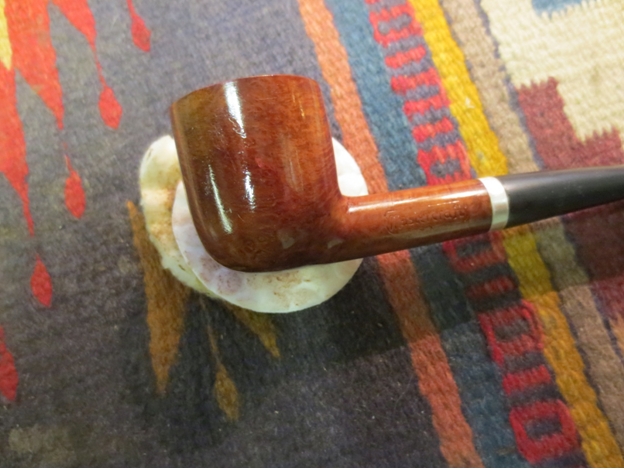
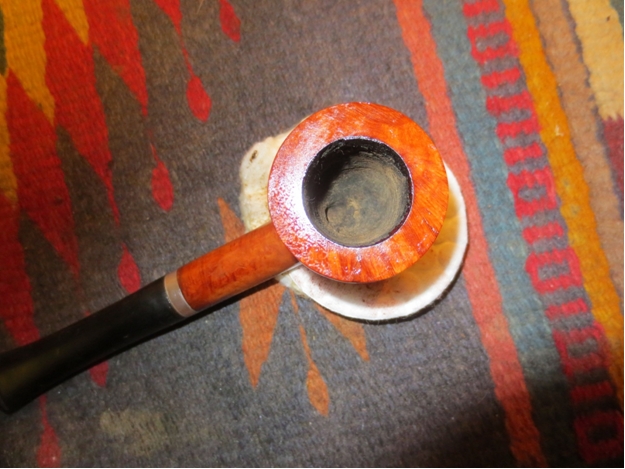
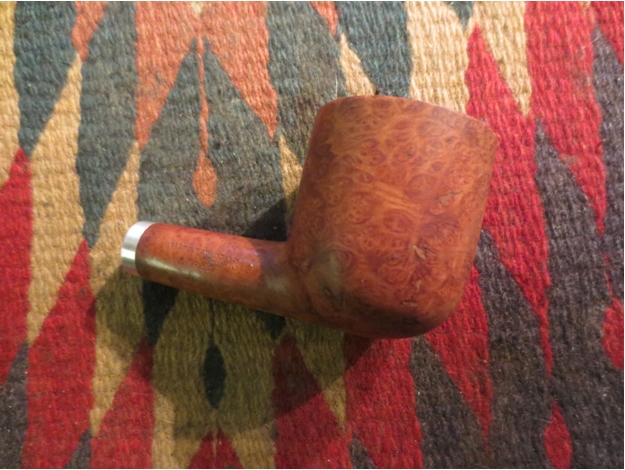
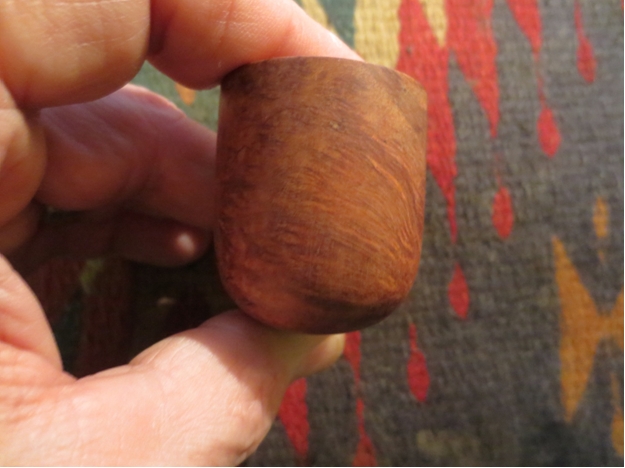
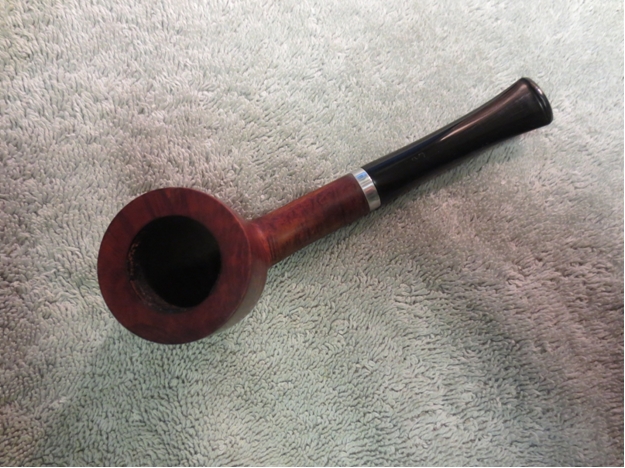
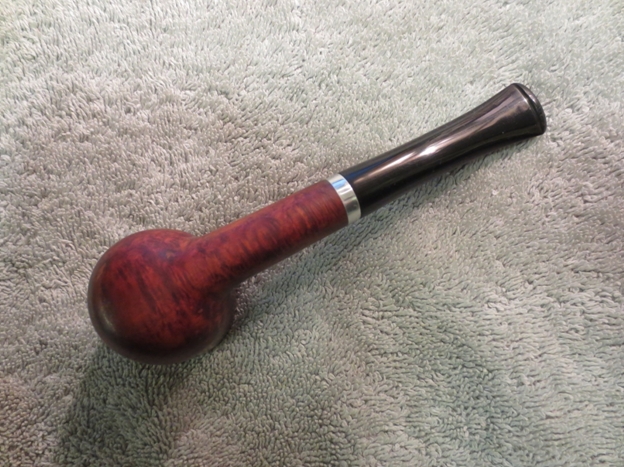
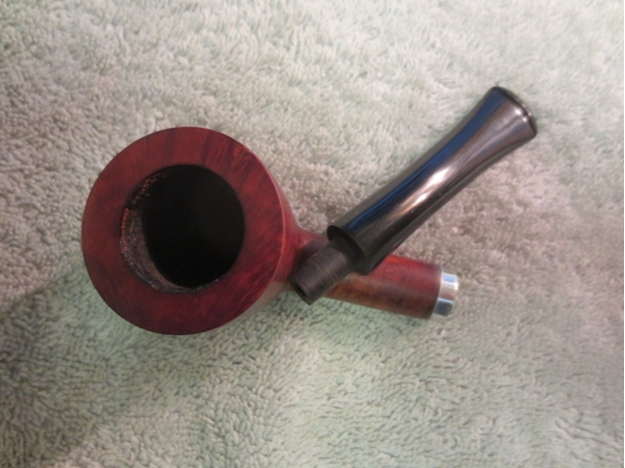
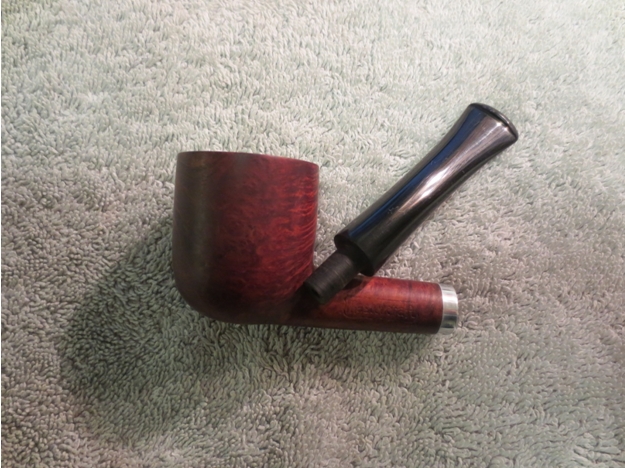
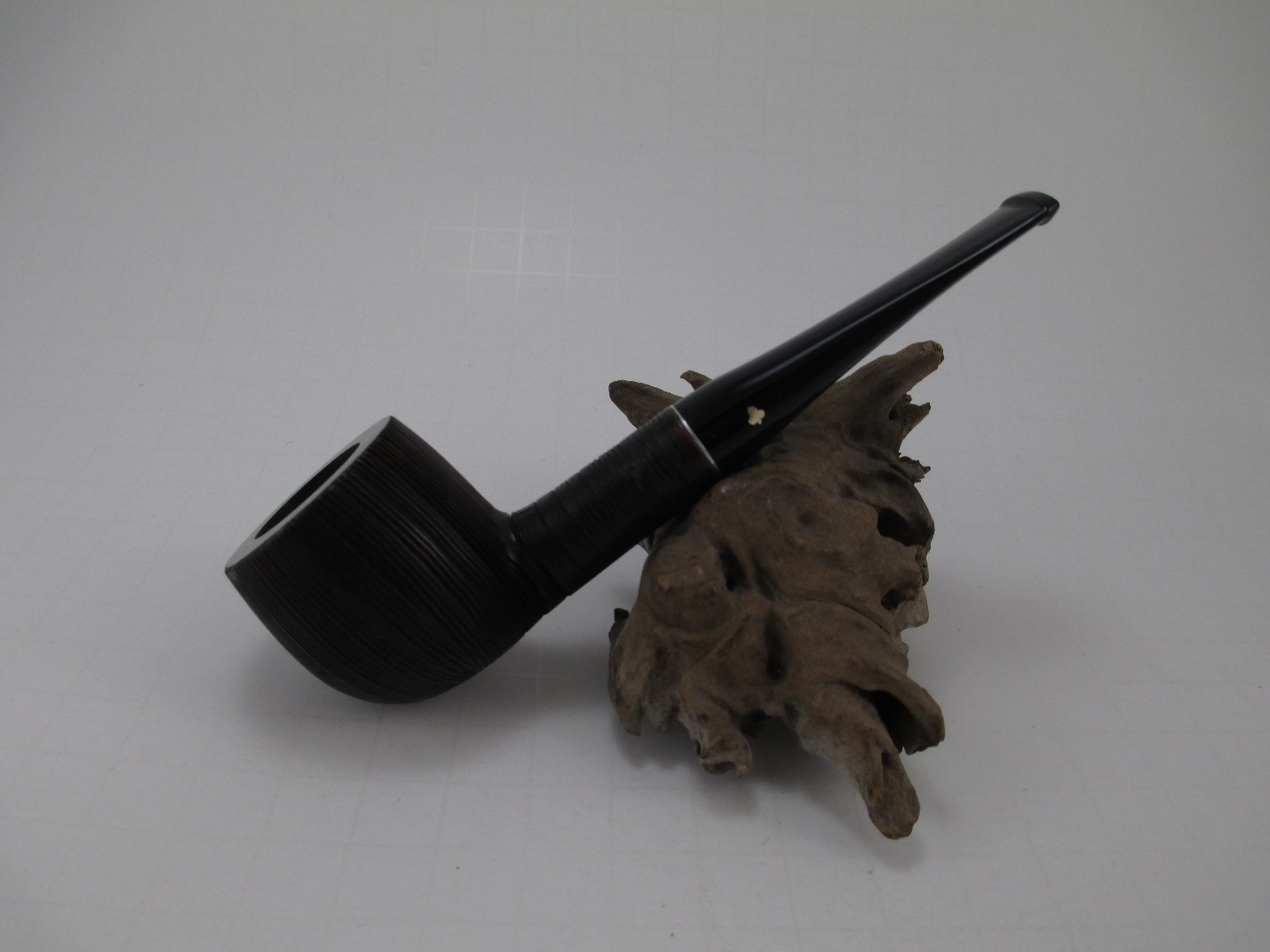
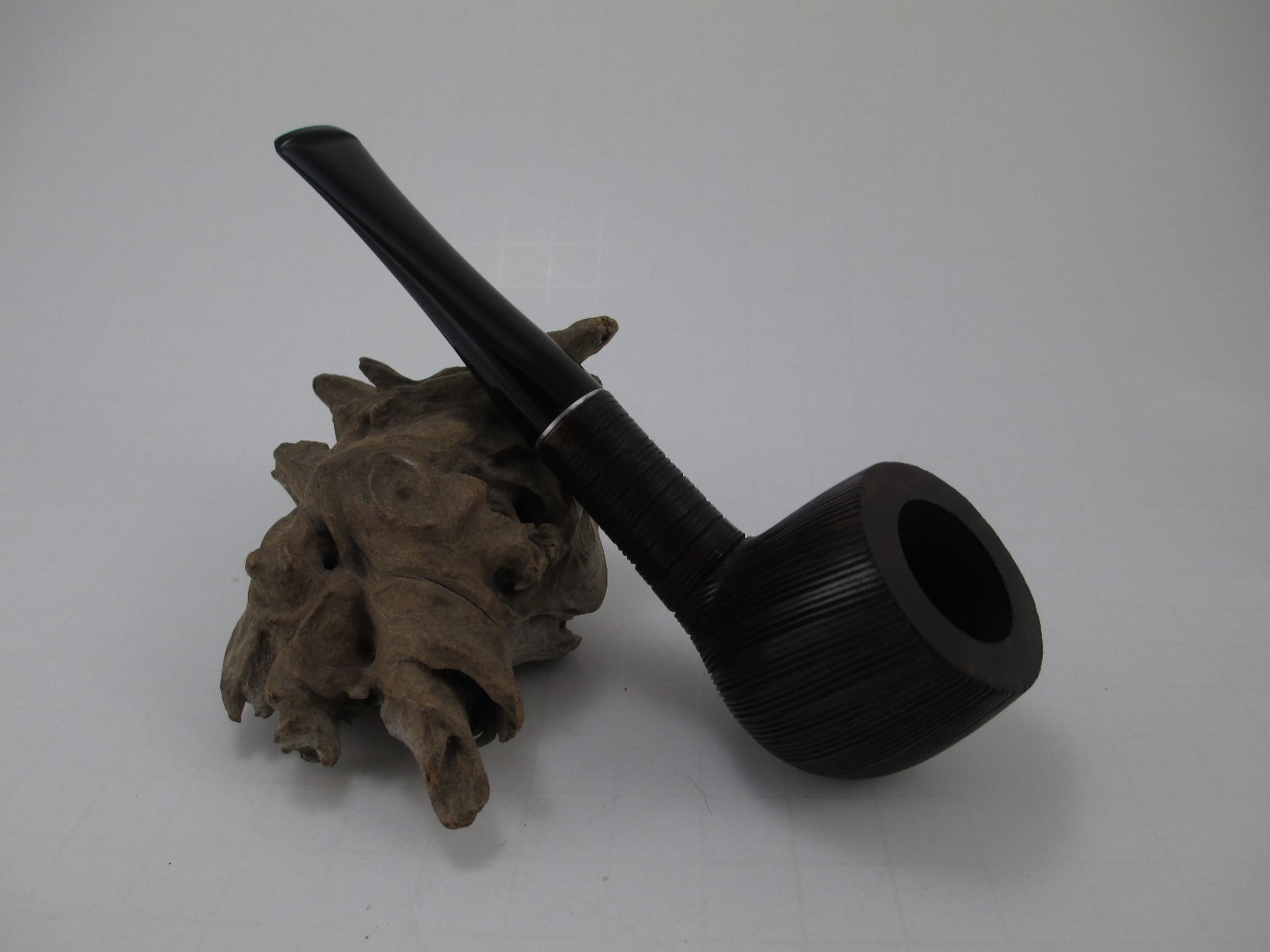
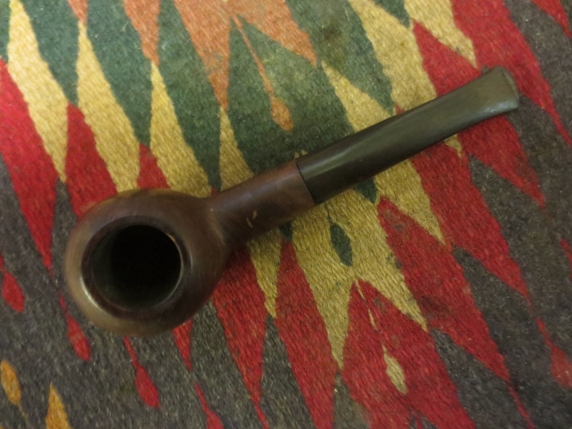
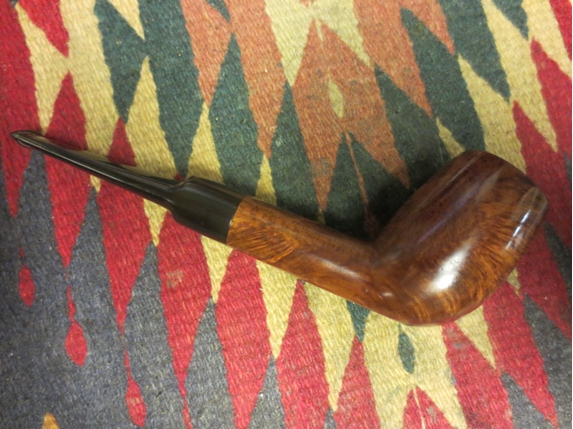
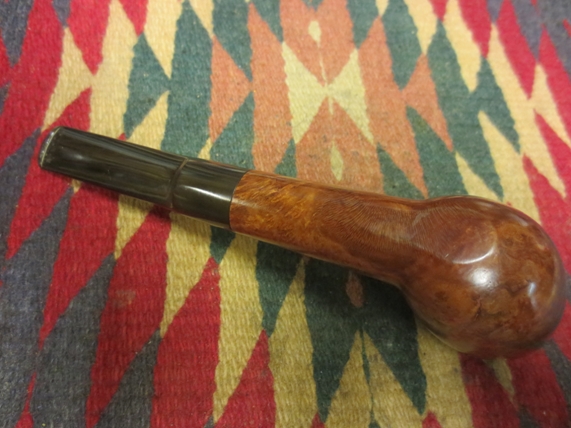
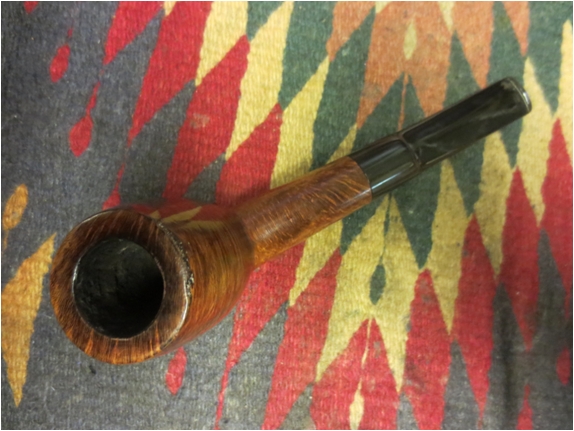
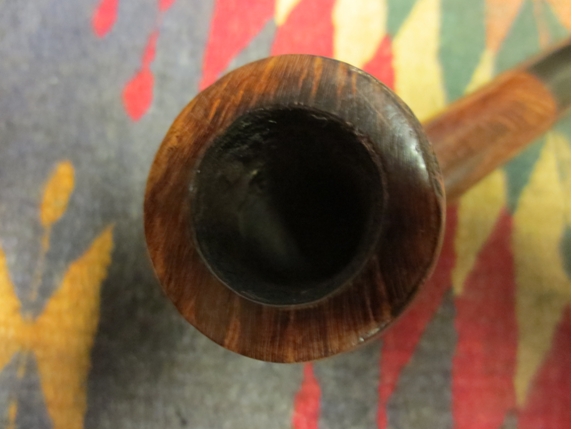
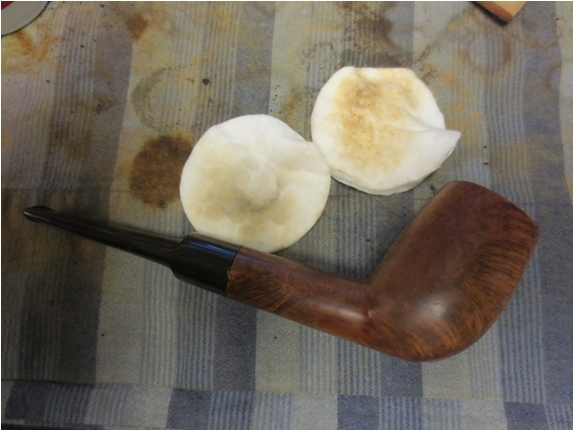
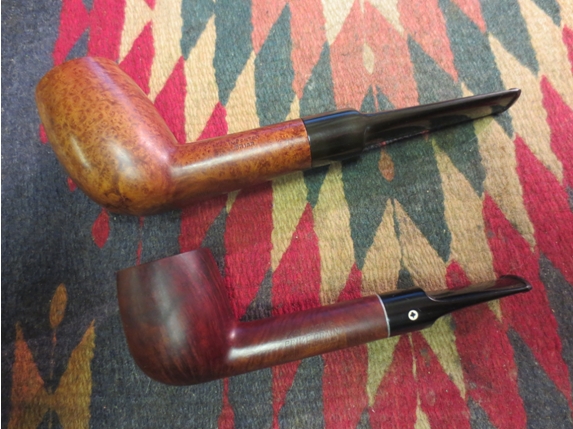
A New Lesson Graces an Albertson Sandblasted Bent Bulldog Restore


Guest Blog by Robert M. Boughton
Member, North American Society of Pipe Collectors
http://www.naspc.org
http://www.roadrunnerpipes.com
http://about.me/boughtonrobert
Photos © the Author

“Every failure is a lesson well learned, every success is a battle well fought, and every friend is a jewel well-kept in one’s heart.”
― Unknown

INTRODUCTION
As a valued friend and mentor, Chuck Richards can be counted on to tell me the truth, always. No matter how special are the occasions when his comments are clear thumbs-up, being thick-skinned, I can say with all honesty that I value more the constructive tips, outright lessons and even contributions (whether requested or not) that this gem of a friend has shared with me during the fleeting past three years since I made my first pipe restoration of a Czech-made La Grande Bruyère mini bent billiard. This openness in my character is fortunate, considering the greater incidence of the latter compared to the former.

Chuck with Victor Rimkus in a rare peaceful moment.

Chuck with Victor Rimkus in a rare peaceful moment.

The only aspect of Chuck’s always invaluable input that sometimes frustrates me, as can happen in particular when two people are friends and see each other often, is his erratic timing. While for the most part Chuck speaks his mind with blunt promptness, he has far more projects in his own shop, not counting the free work he performs for customers at the tobacconist where he works, than I can even imagine. Therefore, he has the odd habit of briefing me on certain pipe restoration intelligence data, pertinent to my Need to Know clearance, crucial to my reputation and consequent success in the business.

By way of example, there was the time early last December when Chuck, after being approached by an unspecified number of my local customers with reports of un-thorough cleaning of the inner stems and shanks of some pipes I had sold to that date, at last brought up the subject. I was not only unhappy to learn that any of my friends and associates who paid money for my pipes were too worried they might “hurt my feelings” by giving me the chance to correct the problem myself; I was still more irked that Chuck failed to warn me after the first instance. [See https://rebornpipes.com/2014/12/10/in-retort-to-claims-of-unclean-restored-pipes-robert-m-boughton/ for the full story.] Of course Chuck then emphasized the importance of retorting, and in one mad 18-hour marathon when my retort kit arrived in the mail soon after, I corrected the problem with every remaining pipe on my sales list, as I have done with each pipe I’ve restored since.

And so, last Friday night at our weekly pipe club get-together I showed Chuck my latest finished projects. He examined them before leaning toward me to tell me discretely of another fellow club member who saw my array of pipes for sale next to his at the monthly Moose Club meeting, where we are free to sell. It seems the gentleman in question, who is getting into the restoration practice, wondered why my pipes (and his own, it turned out) looked “so dull” compared to Chuck’s. I am pleased that I was apprised of the comment soon afterward, but had to wonder why Chuck – who no doubt noticed the same effect long ago – didn’t tell me of the importance of using an un-waxed buffer wheel after each application of the various waxes that can be used to finish pipes.

I had more than usual difficulty grasping the process as Chuck explained it to me, until his third description, when some light in my head snapped on. I understood he was not talking about removing the nice shiny layer of wax applied with such care; he was describing a way to take off the excess wax and firm up the rest so that it would shine even more, not smudge and last longer.

“You won’t believe the difference in the look of the pipe when you use a clean buffer after each wax you put on it,” Chuck told me, smiling in relief and the genuine pleasure he derives from explaining anything pipe-related, when he saw that my head had wrapped around the whole idea.

Again, of course, I remembered Chuck’s work-load and other difficulties, not to mention the bombardment of questions he receives every day from friends and customers. I identified with the high probability that every time he planned to say something it simply slipped his mind.

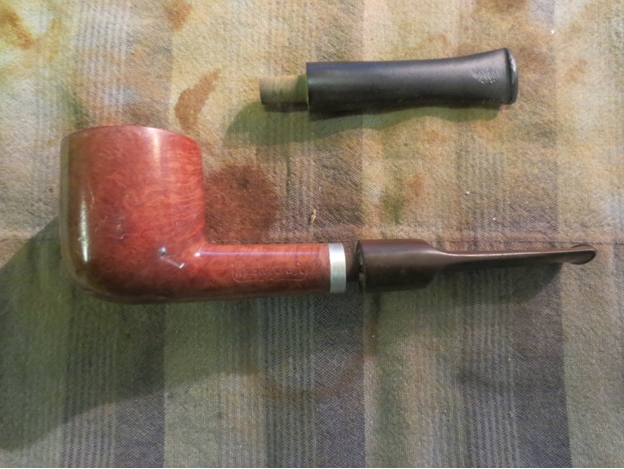
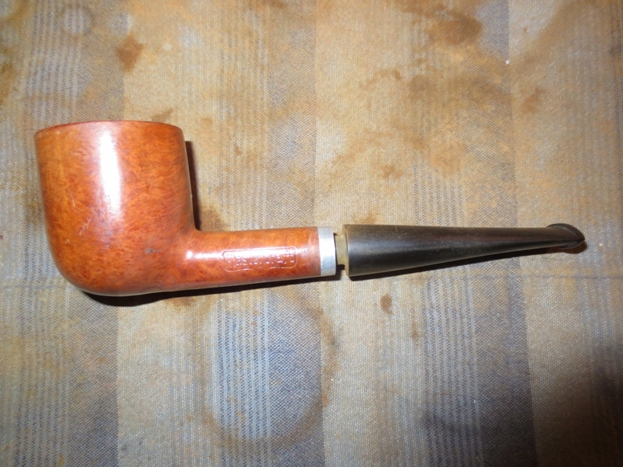
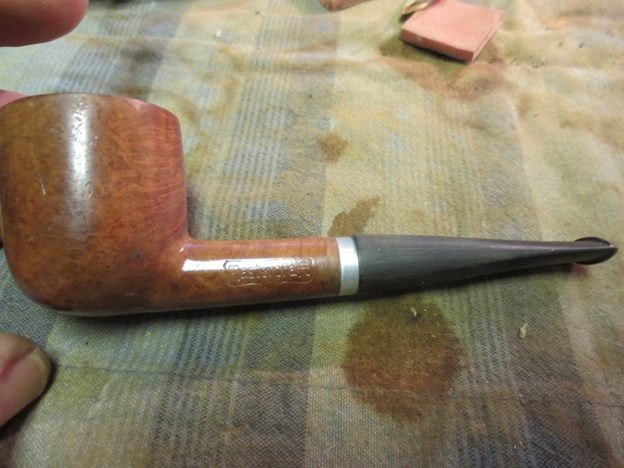
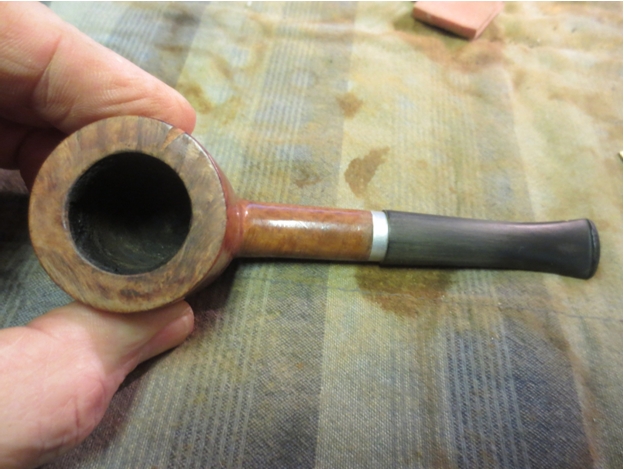
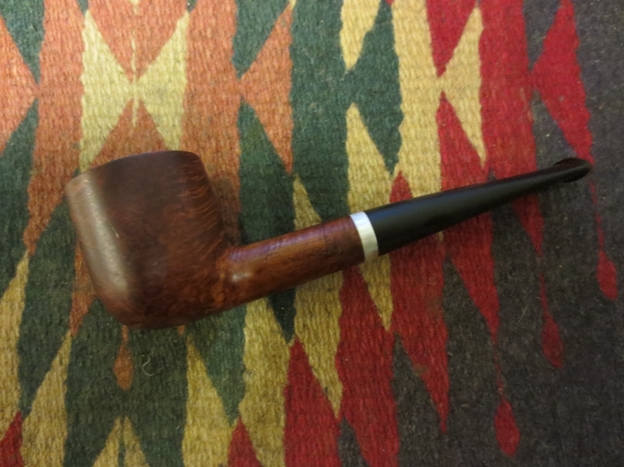
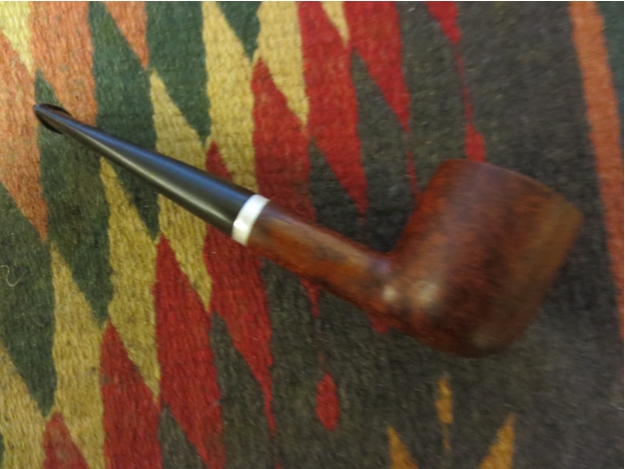
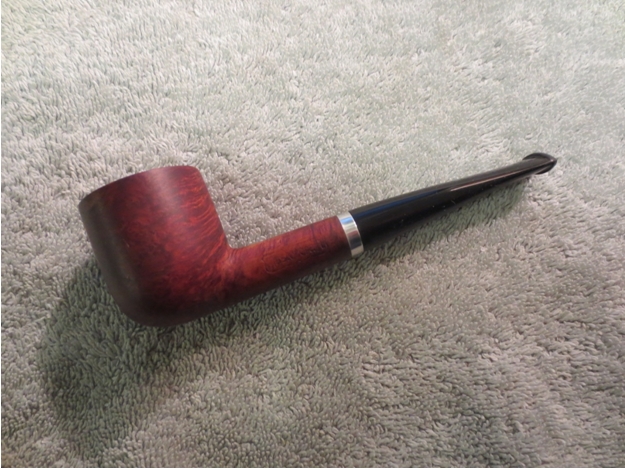
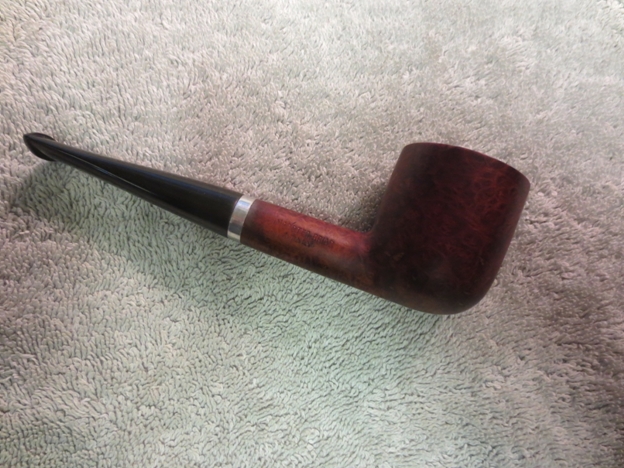
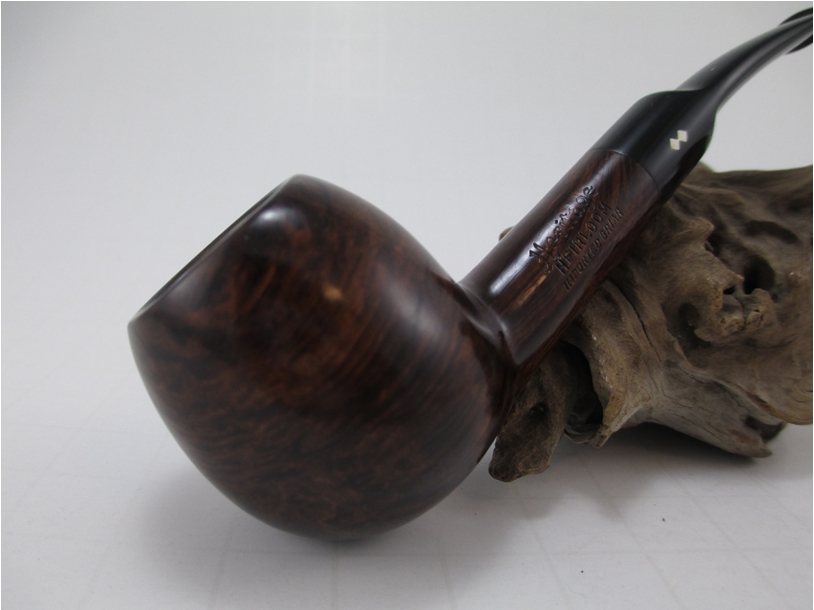
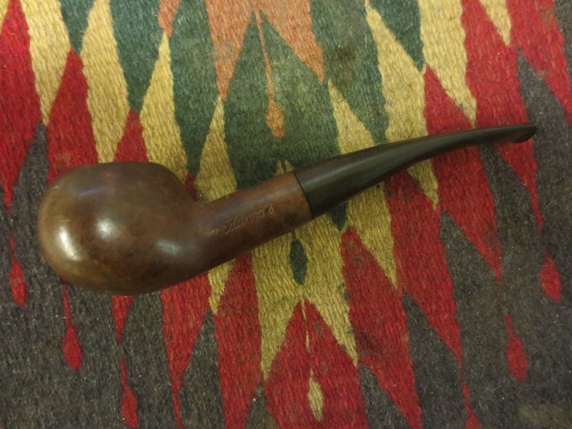
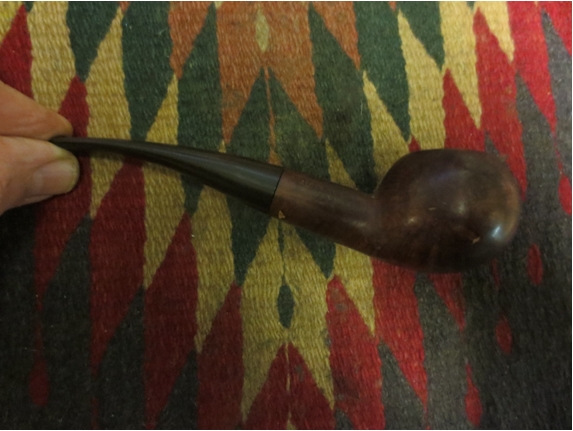
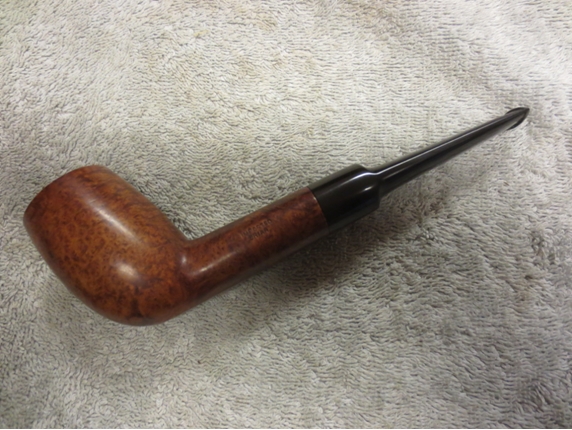
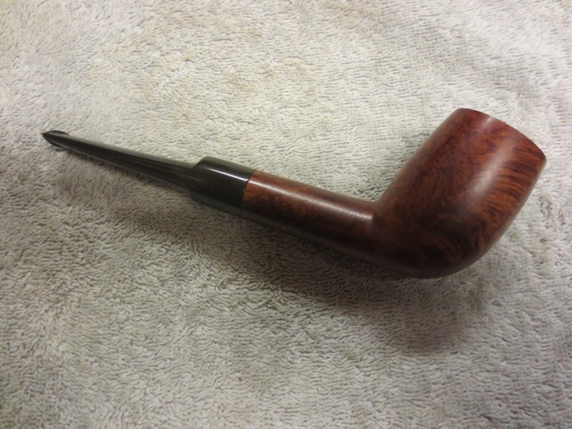
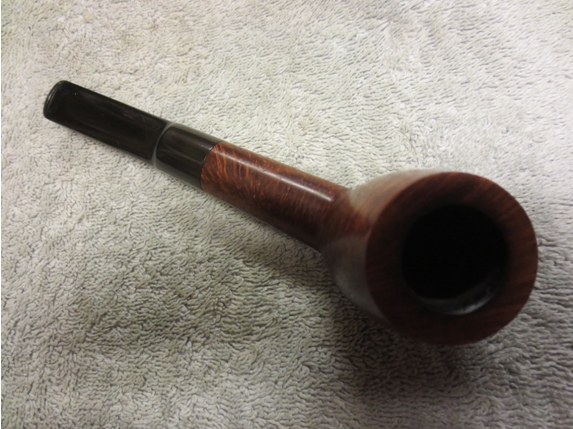
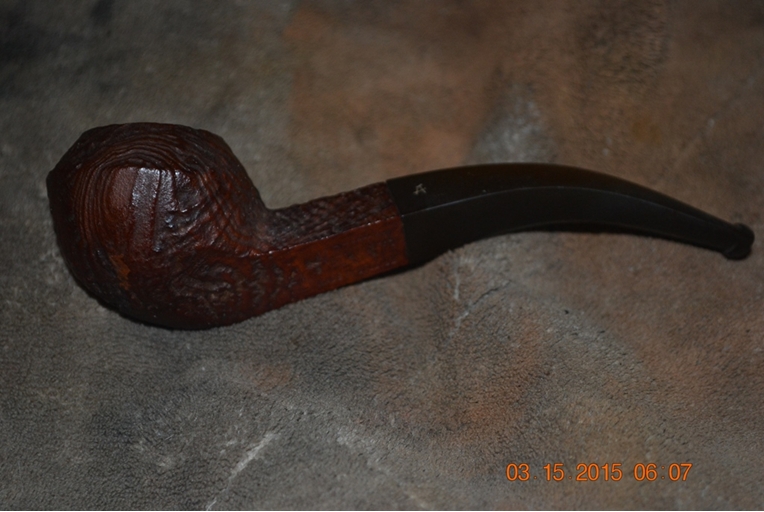
At any rate, this blog concerns a lovely rusticated bent bulldog made by the Belgian company known as Albertson, which, after World War II, was taken over by the Hilson factory. Since that crafter went bankrupt in 1980, the Albertson brand has been continued by the Royal Dutch Pipe Factory.

Considerable work went into this particular restoration, the first opportunity to use my new knowledge of proper pipe waxing. Thank you, Chuck, for being a real friend again. I officially challenge anyone to inspect this bulldog and find anything whatsoever lacking in its inner and outer shimmer.

THE RESTORATION Robert2
Robert3

Robert4

Robert5

Robert6

Robert7

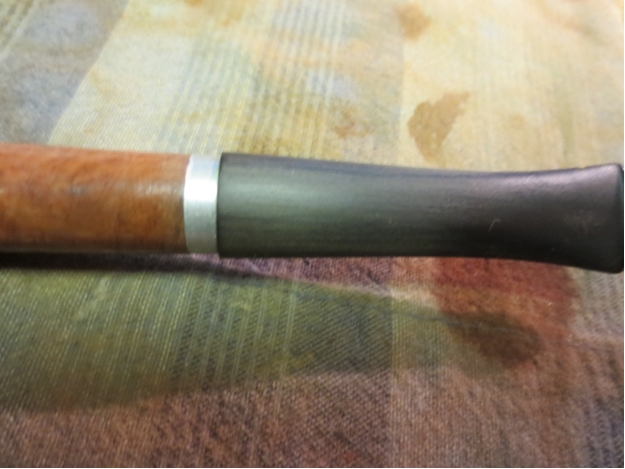
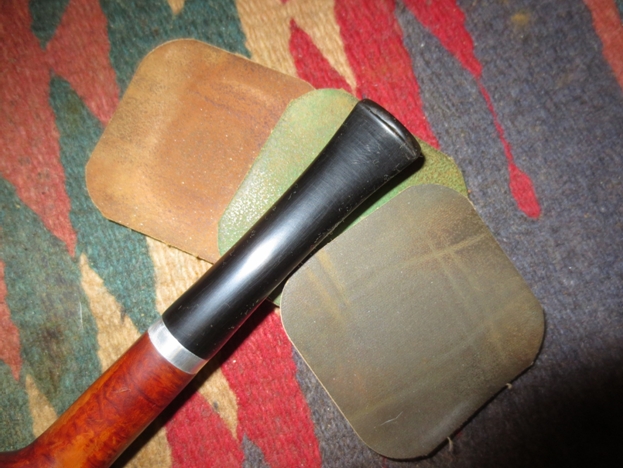
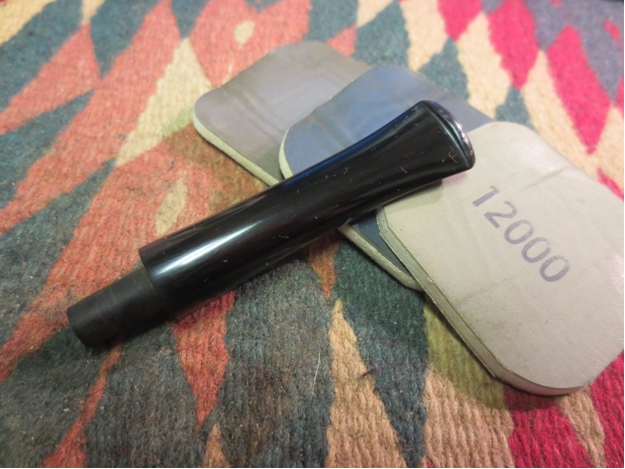
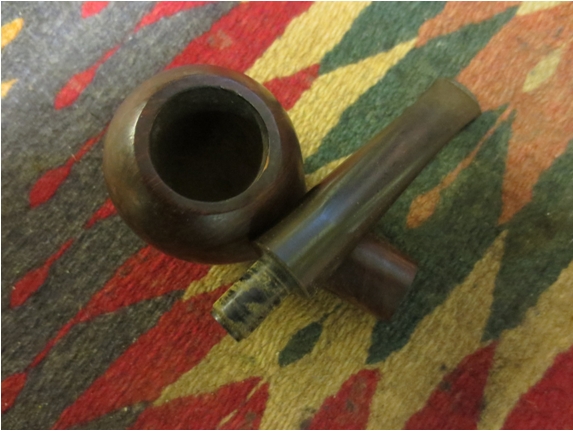
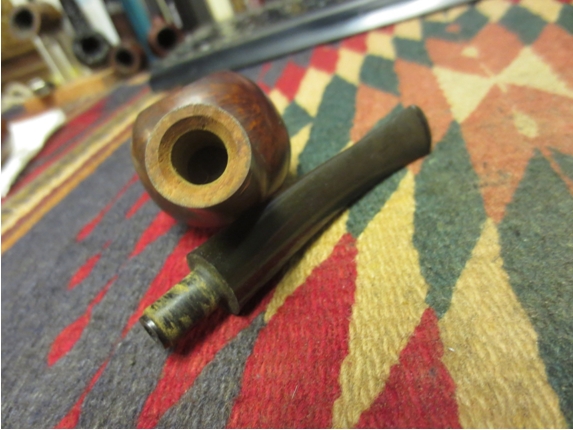
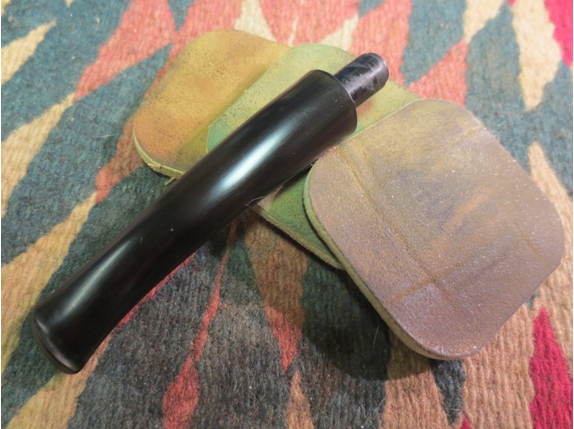
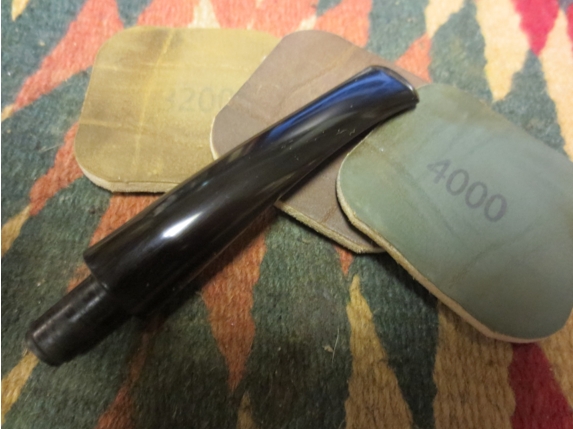
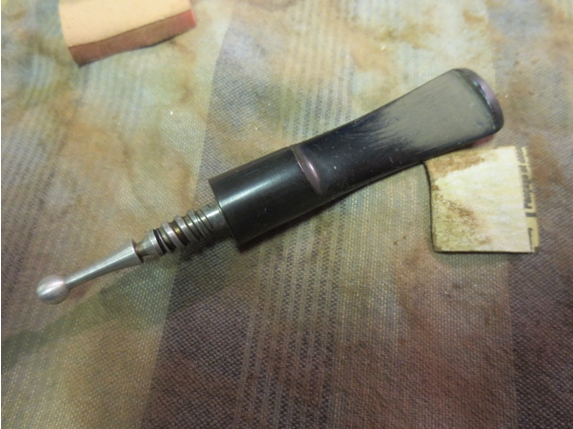
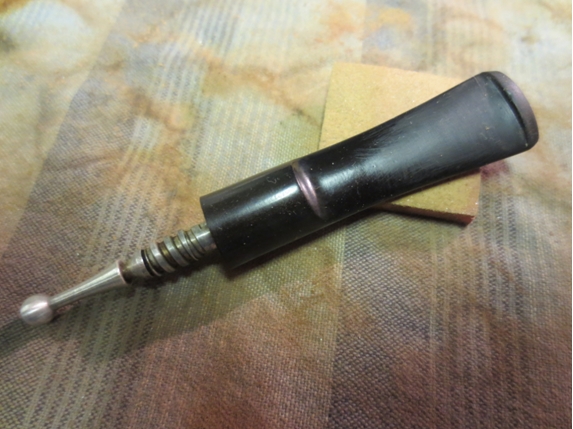
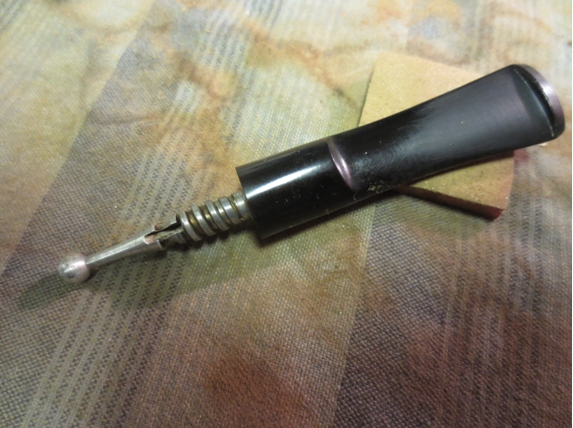
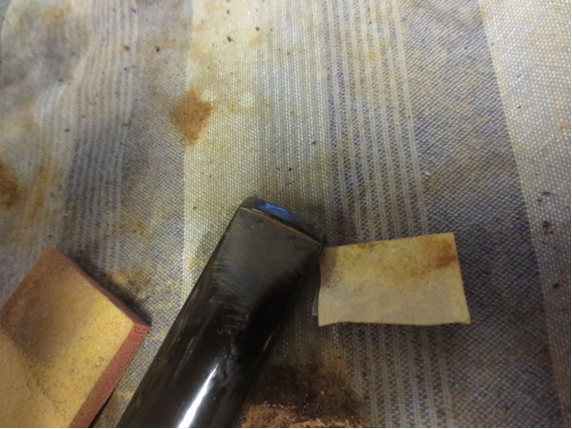
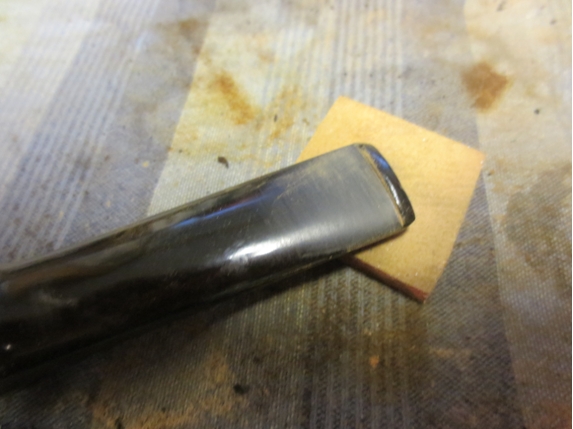
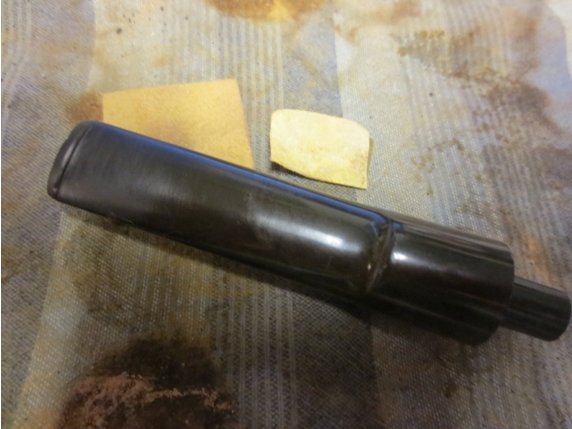
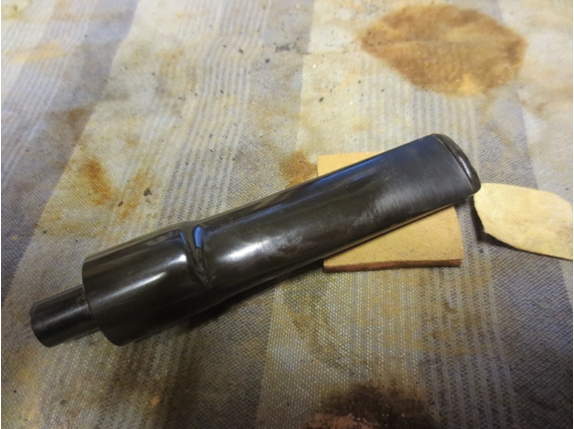
Robert8 When my now customary first step of OxiCleaning the stem was complete, the well-shaped and gently curved stem was clean but covered with green, white and brownish spots. I solemnly affirm that I documented the result with a photo, but it seems to have been lost due to a malfunction of my camera. Likewise, the effects of 220-grit sandpaper on removing the serious tooth chatter that marred both sides of the top of the stem, almost an inch below the lip, are gone. Even the lip had been gnawed and required intense sanding, but at least I avoided Black Super Glue.

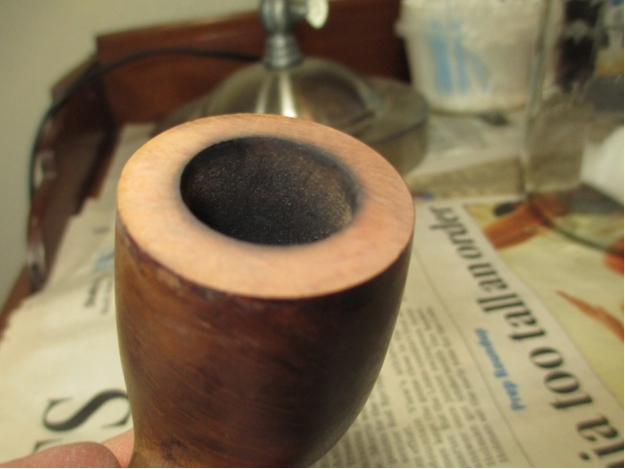
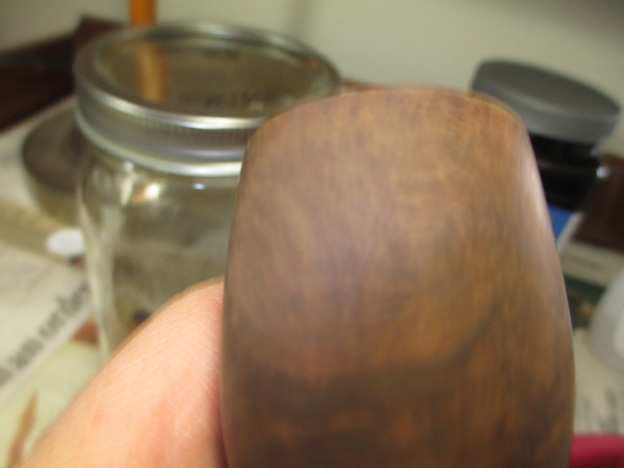
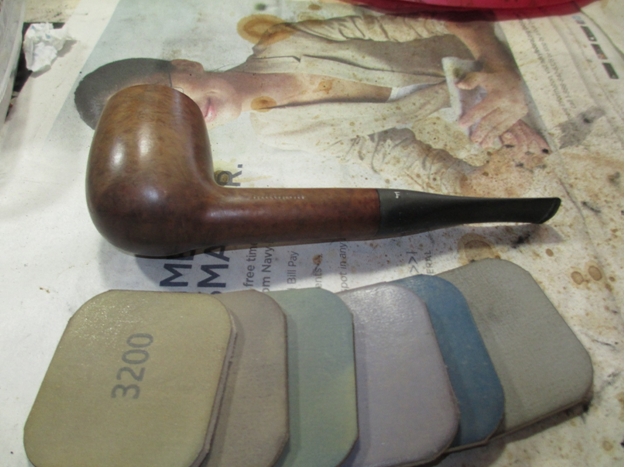
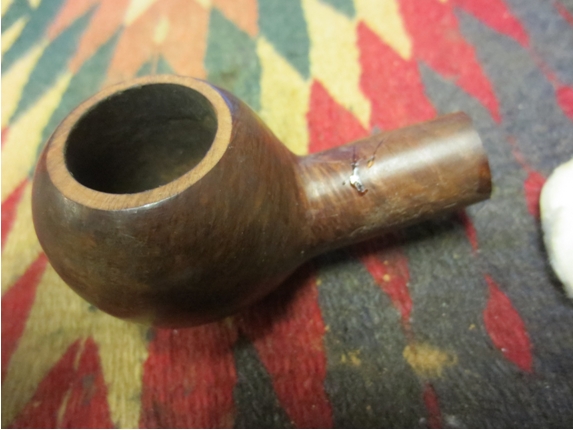
I stripped the rusticated briar in Everclear.Robert9 Again, the photos of the bare briar after this process are not to be found, although rubbing with super fine steel wool, then sanding the top of the bowl above the traditional line to make it lighter in color, followed by a thorough micro-meshing of the whole with five grades from 1500-4000 made the wood ready for buffing. The only way I can even begin to explain the absence of these particular photos is to note that all of them were taken in order during a short period of peculiar behavior by the DSLR.
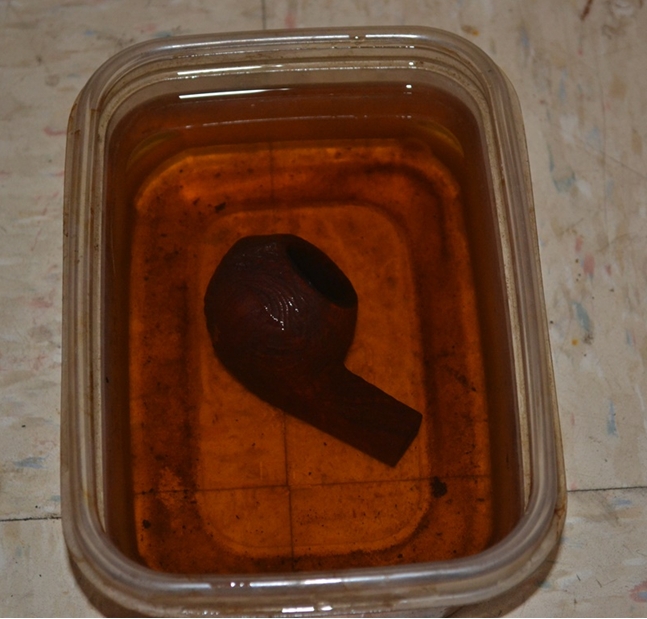
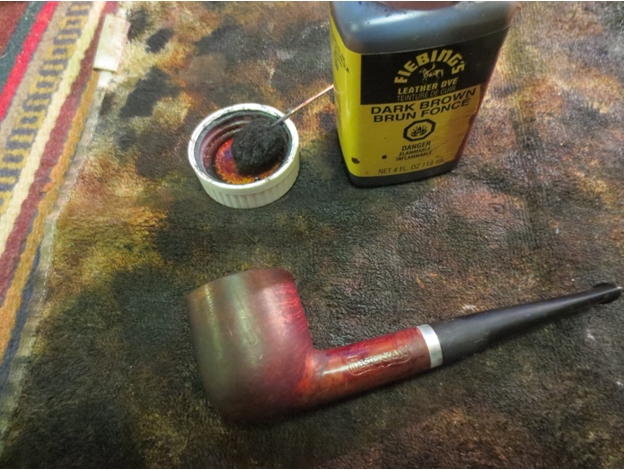
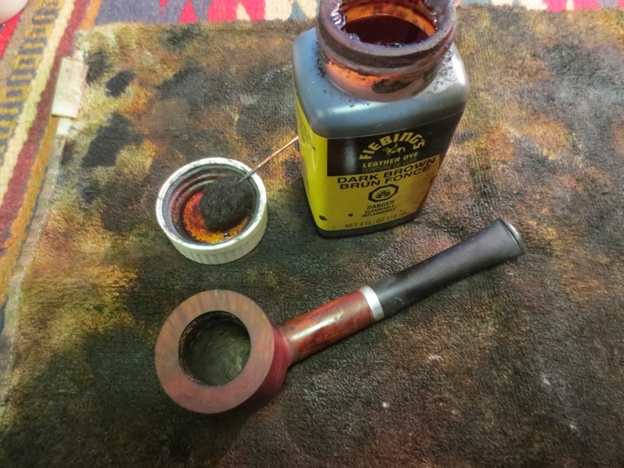
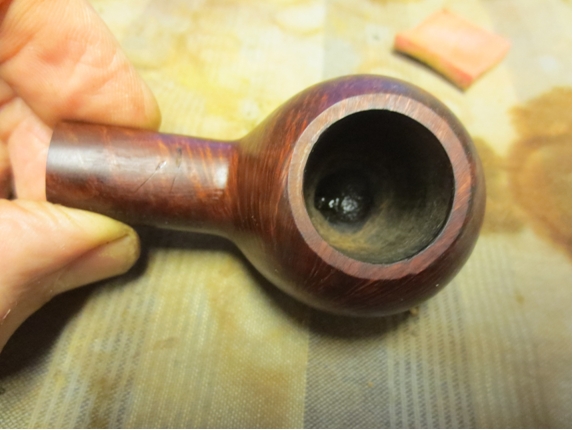
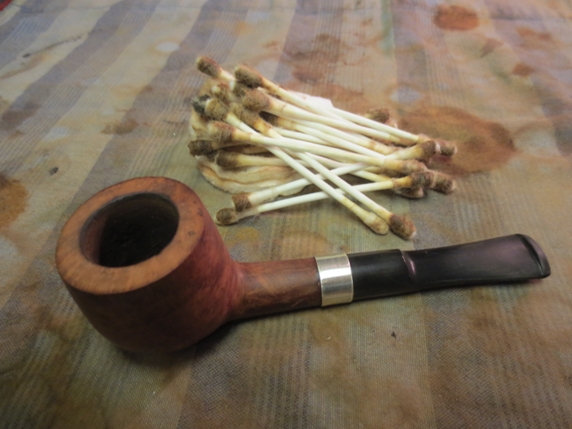
After sanding the chamber with 320-grit paper followed by 200, I retorted the pipe. For the first time, that step required only one test tube of boiled alcohol, thanks to the excellent care by the previous owner and the Everclear soak. I had stained all of it but the top and rim with burgundy boot dye, which I flamed and hand-buffed with 4000 micromesh before resorting to 3600 to heighten the new red tone. Here is the briar when I was almost done prepping it for the final buffs.Robert10 At the last moment, I decided to give the upper part of the bowl and the rim a final sanding with 320-grit paper and re-using the same micromesh progression as before to take it all the way down to its natural light brown color. All was in order to try out my newly-learned wheel buffing technique.
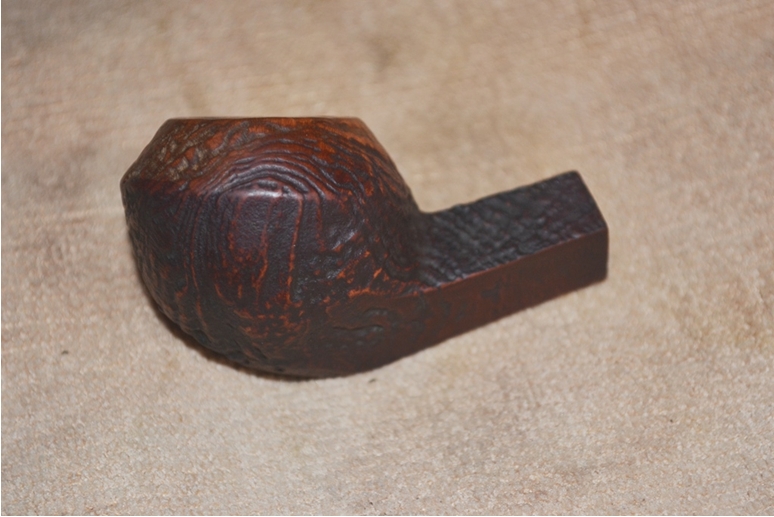
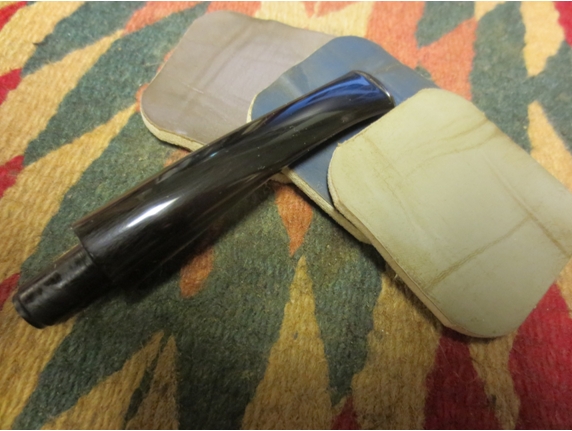
The stem took a little extra work with its extra lines, using the regular red Tripoli followed by White Diamond. I happened to have an extra, new buffer which I then attached to the electric wheel that had held the red Tripoli cloth. Beginning on the briar with a regular white Tripoli buff, I held it up in the light for a better look before I moved to the clean buffer and turned the wood with extra care. Again I held it up to see the change, which, as Chuck had promised, was prominent. Repeating these steps with White Diamond and at last carnauba (since I still need to replace my spent supply of Halcyon II), when the work was done I was truly impressed with the far finer and more solid shine.Robert11
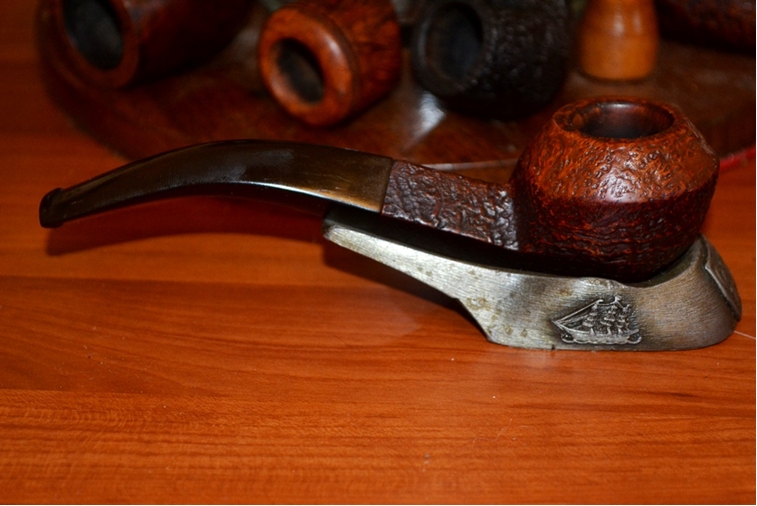
Robert12

Robert13

Robert14

Robert15

Robert16 CONCLUSION
I was fortunate to start with an estate pipe that was well-tended by it prior owner, and I like to think that he would be pleased with its new, sharper two-tone look. My only regret is that now I have to re-polish my entire growing collection of pipes for sale. But I am looking forward to the next monthly Moose Lodge meeting of the pipe club on the third Thursday of April. You can bet I’ll be there, with all of my pipes arranged proudly beside Chuck’s.

Still I wonder…what future comments might make their way to me via my good friend and mentor? Perhaps now my potential local customers might find the good grace and trust to approach me instead.
Stem Reconstruction on an Ehrlich Billiard


Blog by Andrew Selking

“He’s not dead, just mostly dead.” Miracle Max The Princes Bride

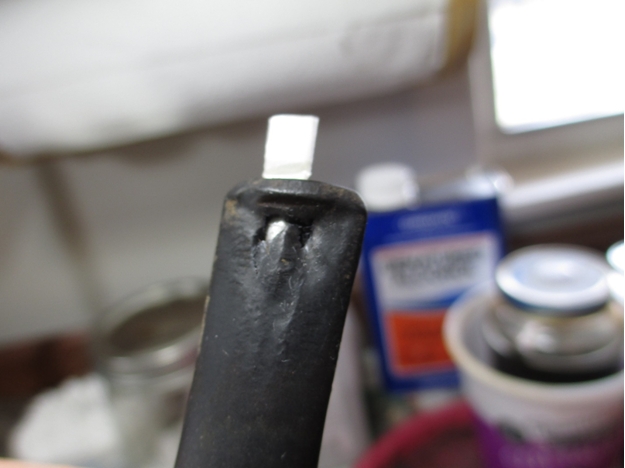
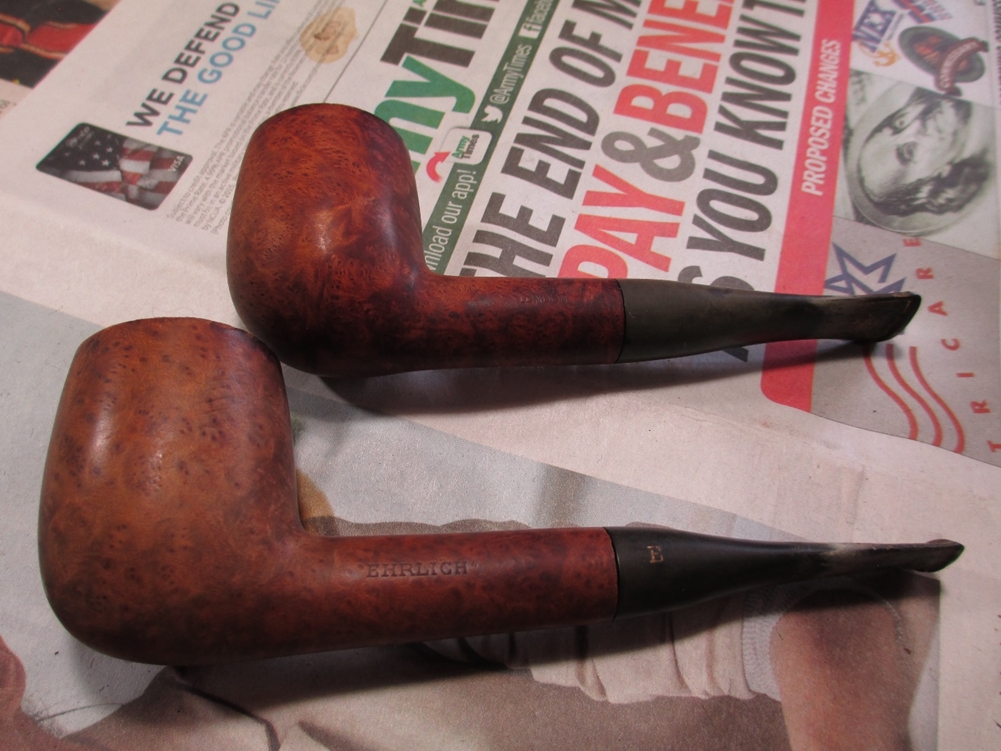
I like the way the pipe looked in the auction pictures, but when I first examined it I thought the stem was beyond help. This is not a little pipe, but the previous owner was obviously a clencher. The top and bottom of the stem had a hole, as you can see by these pictures.Andrew1

Andrew2

Andrew3

Andrew4 Before getting into the stem repair, I soaked the bowl in alcohol.Andrew5 Although I have done simple repairs on tooth marks, I had never tackled anything this complicated. The holes were far enough down that it wouldn’t be practical to cut a new button. The stem is fat enough that finding a replacement was also out of the question. The one thing the stem had going for it was the edges were still in good shape. I decided to do a complete reconstruction of the stem.

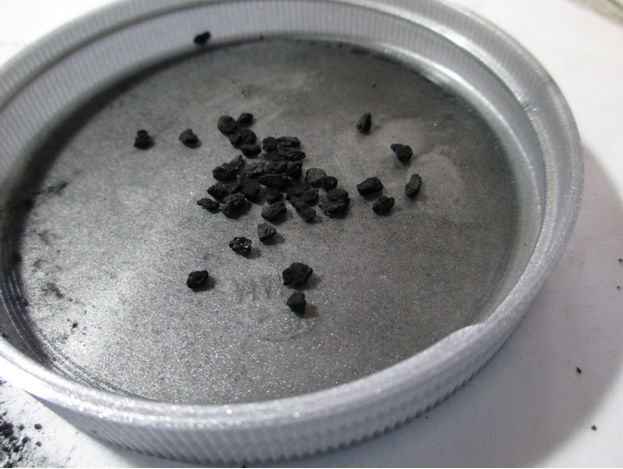
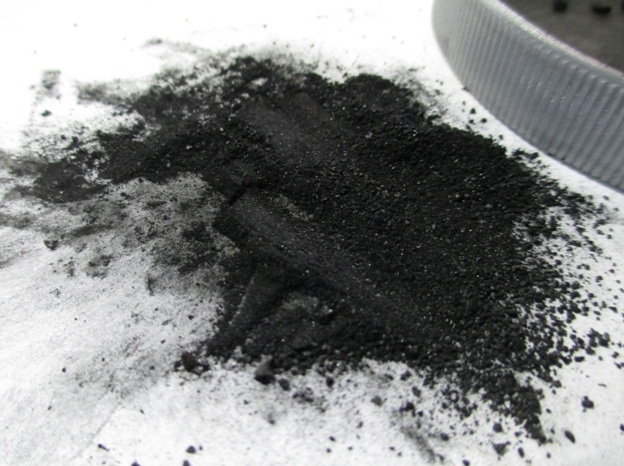
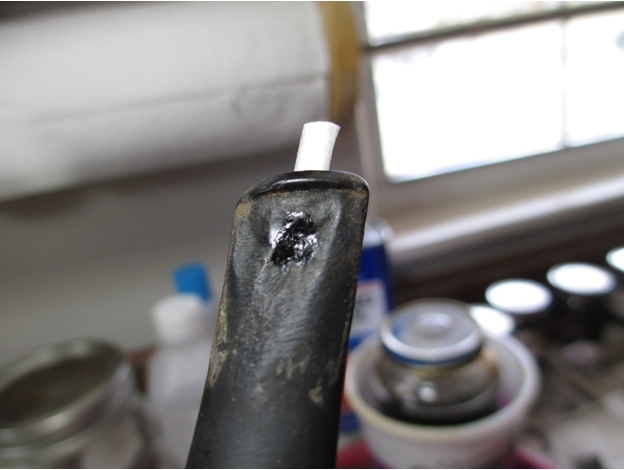
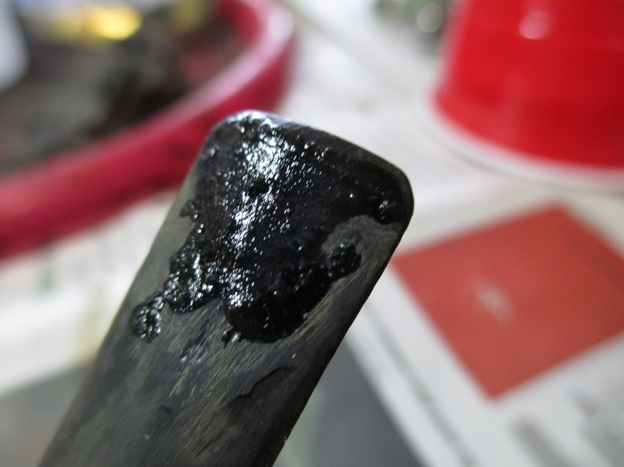
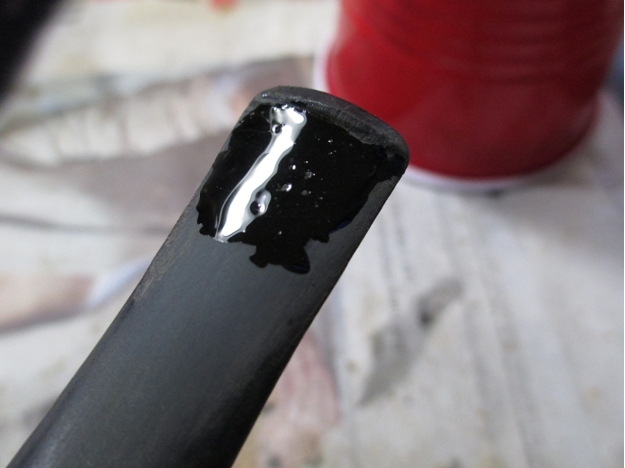
I don’t claim to be an expert on these things, so I turned to one of the how-to articles on Pipe Smoker’s Unlimited. The one gentleman used activated charcoal with super glue, so I decided to try it. I found a large container of activated carbon, which is the same thing, in the pet department of my local Walmart. It came in small pellets, which needed to be ground into a fine powder.Andrew6 This is what it looked like after grinding.Andrew7 I took some wax paper and folded it to fit inside the stem. Once I got the fit I wanted, I sprayed the wax paper with cooking spray and put it back inside the stem.Andrew8 I used a couple drops of clear super glue on the bottom of a plastic cup, mixed in some charcoal dust, and applied it to the hole. I added a couple of drops of glue accelerator and set it aside to cure.Andrew9 I did the same thing with the other side. I’ve found that even with accelerator, it’s a good idea to let the glue cure for at least 24 hours. You can work it sooner than that, but it has a tendency to come out when you’re sanding it.Andrew10 I used several applications of the glue and charcoal paste.Andrew11

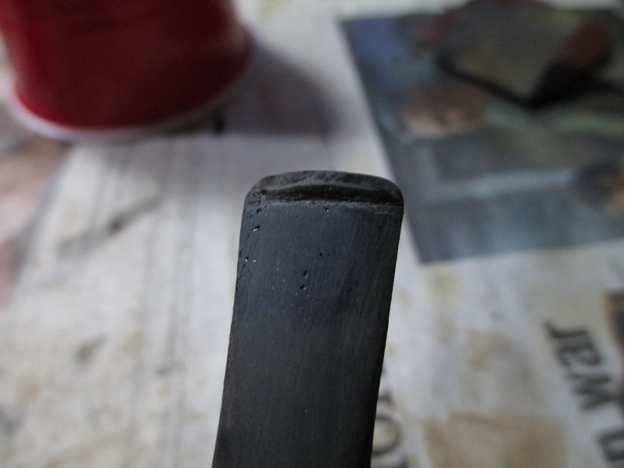
Andrew12 Once the hole was filled in I sanded it down.Andrew13

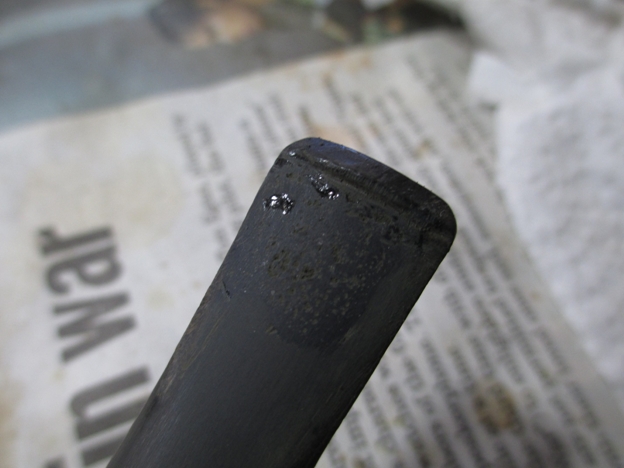
Andrew14 As you can see the charcoal left a few pits. To fill them in I applied a thin layer of super glue over the pits and sprinkled charcoal dust directly on top of it.Andrew15

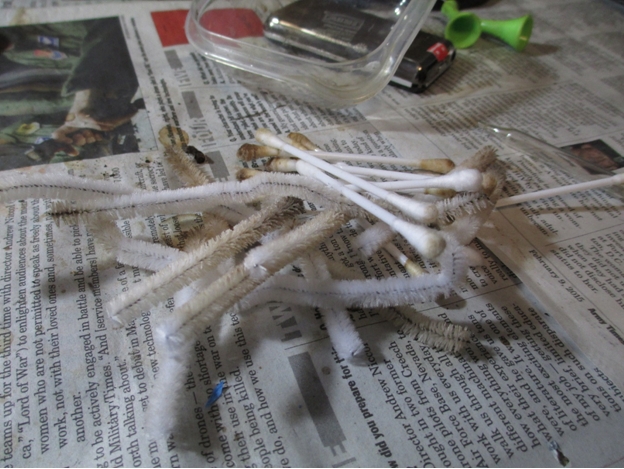
Andrew16 This is what it looked like after sanding.Andrew17 The stem was still far from finished, but it was good enough to start cleaning the insides.Andrew18 I went ahead and retorted the bowl first.Andrew19 The brush came out fairly clean.Andrew20 I learned a hard lesson while cleaning this shank. In spite of the large diameter, the inner hole was smaller than the q-tip I tried to stick inside it. The end came off and it took a lot of effort to get it out. The moral of the story is, if it doesn’t fit don’t try to make it fit.

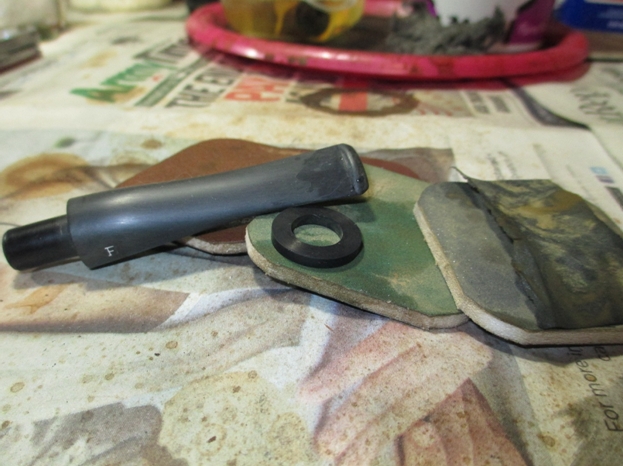
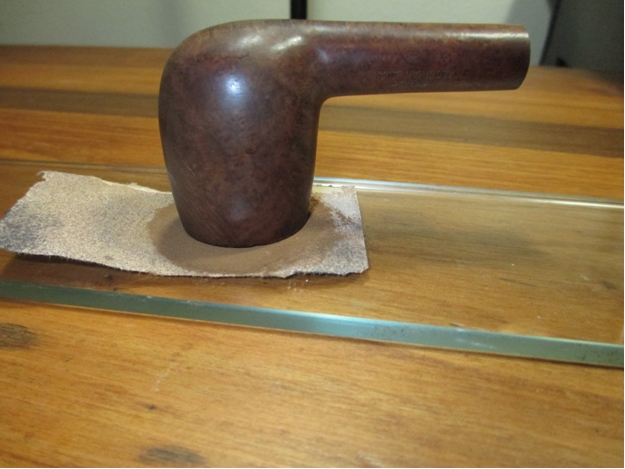
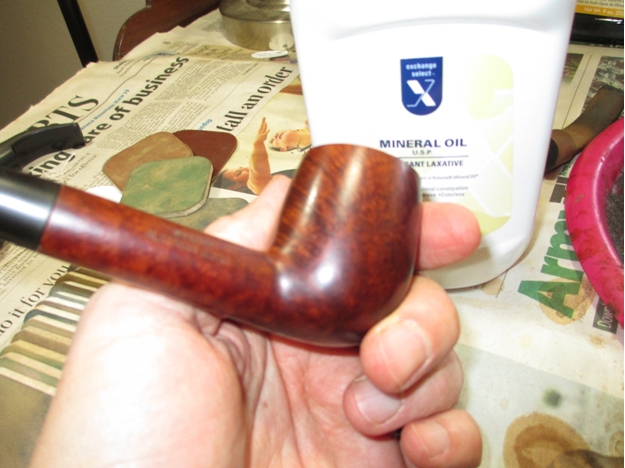
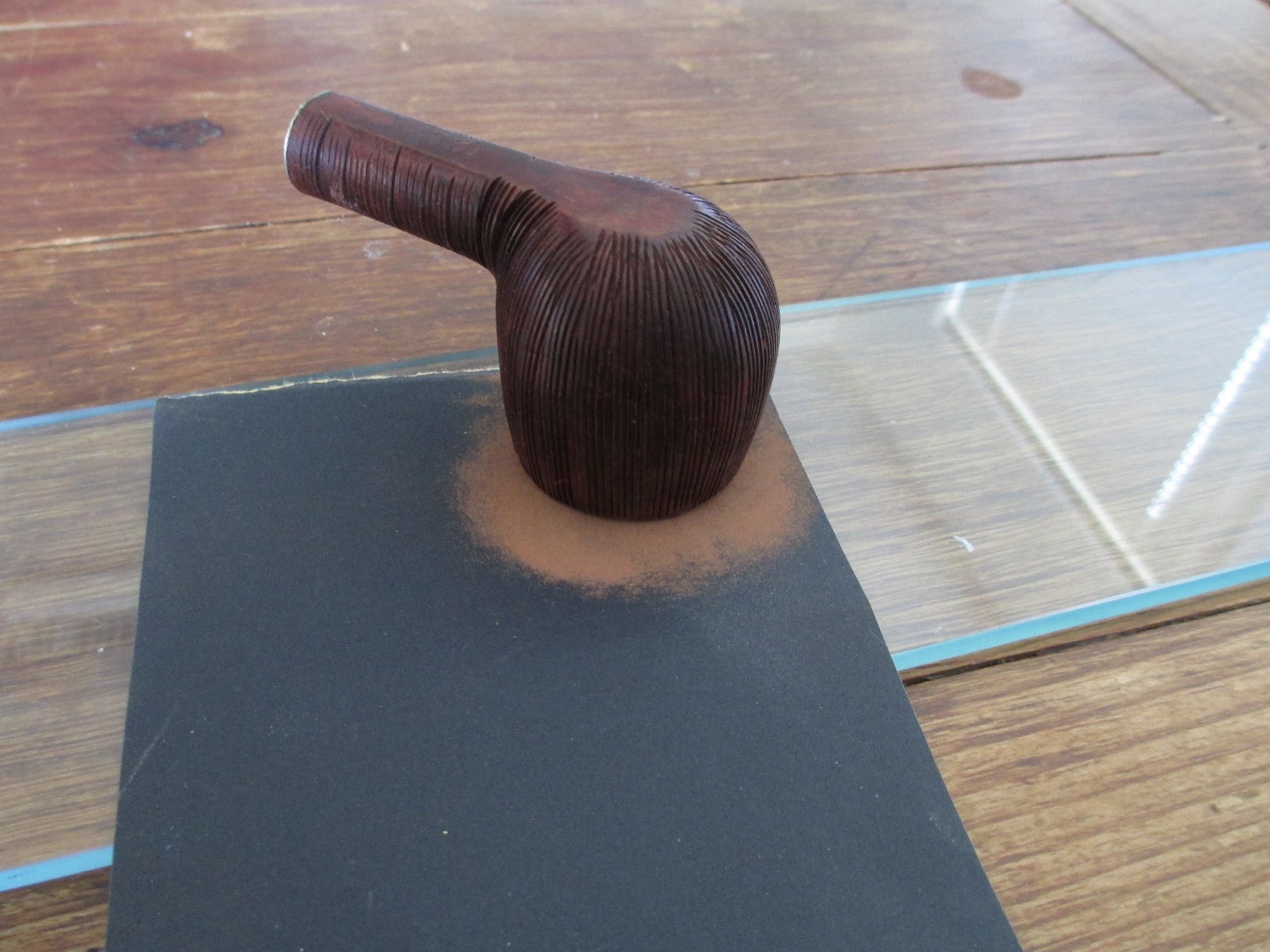
In spite of the minor set-back, the shank was pretty clean.Andrew21 Next I retorted the stem.Andrew22 It had a lot of tar inside it, so repeated the process an additional two times. It was easy to clean after that.Andrew23 With the inside cleaned, it was time to finish smoothing out the stem. I used 400 grit wet/dry with water, followed by 1500-2400 grit micro mesh pads with water. To prevent rounding the edges of the stem I held a rubber washer over the end of the tenon.Andrew24 While the stem dried I turned to repairing the rim damage.Andrew25 I used 150 grit sand paper on a piece of glass to remove the worst of the damage.Andrew26 Once I had the edge almost where I wanted it, I switched to 400 grit sand paper. This is what it looked like after sanding.Andrew27 I have become a big fan of natural finished pipes, especially when they have nice grain like this one does, so I used acetone and 0000 grit steel wool to clean the bowl.Andrew28 After cleaning the finish, I noticed a couple of dents on the front of the bowl.Andrew29 I used my wife’s iron and a wet cloth to steam out the dents.Andrew30 After allowing the wood to dry out overnight, I polished the bowl and stem with a progression of 3200-12,000 grit micro mesh pads.Andrew31 I know Steve uses Obsidian oil on his stems during this step and also uses olive oil to bring out the grain of the bowl. I’ve been experimenting with mineral oil for the same purpose. It doesn’t take much, just a little bit on the tip of your finger. I used one coat after the first three pads on both the bowl and the stem. After the final pad, I repeated the process. I really worked the bowl in my hand to bring out a beautiful reddish brown color.Andrew32 I used a soft cloth to buff the pipe and remove any excess oil before the final buffing stage. I buffed the bowl on my buffing wheel with white diamond and carnauba wax. I used my rotatory tool with white diamond and carnauba wax on the stem. I gave the whole pipe a final coat of Halcyon II wax and filled the E on the stem with a white out pen. This is the result.Andrew33

Andrew34

Andrew35

Andrew36

Andrew37

Restemming & Working on New Staining Techniques on a Mastercraft Pot


Blog by Steve Laug

The next pipe from the gift box is a Mastercraft Pot. It is stamped Mastercraft in a shield on the left side of the shank and Imported Briar over Italy on the right side. There are no shape numbers. There are a lot of fills on the bottom of the bowl and the right side of the bowl. The finish is a thick coat of what appears to be urethane – almost plastic looking. Someone had previous started refurbishing it – to bowl had been carefully reamed and the bowl topped. There was a large fill on the rim that was loose that ran from the middle of the right side of the bowl almost all the way across the rim. This pipe would be a great one to experiment with using different stains to blend the fills and highlight the grain. The urethane coat would prove a challenge to remove completely but once gone it would prove a perfect candidate for the new staining techniques I wanted to learn. The band on the shank is aluminum and is oxidized and dull. The stem is a replacement that is poorly fit. It is loose in the shank and does not fit against the shank well. The tenon is very short and almost conical in shape. I will break the work on this pipe into two parts: Part 1: Fitting a Stem and Part 2: The Staining Experiment and a Conclusion called Finishing Touches.Mas1

Mas2

Mas3

Mas4 I took a few close-up photos of the rim and the stem. These will help to give an idea of the state of affairs when I brought the pipe to the work table.Mas5

Mas6

Mas7

Mas8
Part 1: Fitting a Stem

I removed the stem and found two possible replacements in my stem can. The original replace in the one at the bottom of the photo below. The two options were a longer taper and a saddle stem. Both of them worked well with the length of the shank. They looked better than the one the pipe arrived with.Mas9 I tried the bowl with each of the stems to get an idea of the look of the pipe. I made a decision for the taper once I had seen them both in place in the shank.Mas10

Mas11 The taper stem was slightly larger in diameter than the shank so I would need to adjust the diameter. I cleaned out the shank and the stem with pipe cleaners, cotton swabs and isopropyl alcohol to remove the tars and oils from the shank. Because someone had already started the process on this pipe it was not a long clean. It took very few cleaners before the shank was clean.Mas12

Mas13

Mas14

Mas15 I sanded the stem with 220 grit sandpaper to start and then decided it was taking too much time. I used the Dremel with a sanding drum and quickly removed the excess material.Mas16

Mas17 I brought it back to the work table and sanded it with 180 and 220 grit sandpaper to smooth out the marks left by the sanding drum. I needed to fine tune the fit but it was working with the bowl.Mas18

Mas19
Part 2: The Staining Experiment

To prepare the bowl for staining I needed to do the repairs and remove the old finish. I decided to re-top the bowl to remove some of the damage and smooth out the area around the fill on the right side top and edge. I wanted to bring the top down to lessen the area that the fill intruded on.Mas20 I wiped the bowl down with acetone to remove the finish only to find that it did not work to cut through the finish. Before I intruded on the finish with my next measure I decided to repair the fill on the outer edge of the rim on the right side. I used briar dust and super glue to repair the fill on the side and top of the rim. Most of the fill had been smoothed out on the top but there was some of the fill missing on the edge of the rim. I cleaned and sanded the repair to blend it into the finish. When that was smoothed out I sanded the bowl with a medium grit sanding sponge to break the gloss of the finish and then dropped it into the alcohol bath.Mas21 When I took it out of the bath the finish was dulled but still not broken. This top coat was a real bear to remove. I needed to do quite a bit more sanding on the coating to remove the finish.Mas22 Once the finish was gone and I was at bare wood I decided I would use a three part staining process to try to hide the fills and blend them into the briar. I wanted to try something new as well with the staining of this pipe. I wiped it down a final time with acetone to clean off the dust and any remnants of finish, scrubbing hard around the stamping on the shank. I stained it with a medium walnut stain, flamed it and buffed it.Mas23

Mas24

Mas25

Mas26 When the stain dried I gave it a light buff with a cloth and a shoe brush and then gave it the second coat of stain. This time I gave it a coat of oxblood coloured stain. I wanted to bring out the grain on the sides and front and back of the bowl and try to blend the fills more. I stained it and flamed the stain.Mas27

Mas28

Mas29

Mas30 When that stain dried I buffed the bowl with White Diamond and wiped it down with isopropyl to even out the stain coat. I hand buffed it afterwards with a soft cloth. The bowl was beginning to take on the colour I wanted from these first two coats of stain.Mas31

Mas32

Mas33

Mas34

Mas35

Mas36 Then it was time for the third coat of stain. I stained the pipe with a dark brown aniline stain. I applied it and flamed it and repeated the process until I had good coverage on the pipe. The dark brown looked opaque when first applied.Mas37

Mas38

Mas39 I buffed the pipe with White Diamond on the wheel and gradually the grain began to show through the finish. The combination of stains gave the pipe precisely the colour I was wanting – a warm reddish brown with dark highlights in the grain patterns. The fills though still present, did not stick out as badly and seemed to blend into the finish.Mas40

Mas41

Mas42

Mas43
Conclusion: Finishing Touches

With the finish on the pipe completed I worked on the stem. I sanded it with a fine grit sanding sponge and then with micromesh sanding pads. I also sanded the band on the shank with the micromesh pads at the same time. I wet sanded with 1500-2400 grit pads and sanded the band without the stem present. You have to be careful with the pads when polishing metal as they will leave a dark stain on the briar and the vulcanite.Mas44 I rubbed the stem down with Obsidian Oil and dry sanded the stem with 3200-12,000 grit pads. I polished the band with the same and also with a silver polishing cloth. After each set of three pads I rubbed the stem down with the oil. When I had finished the stem I gave it a final coat of the oil and then let it dry.Mas45

Mas46 The next photos show the finished pipe. It is a rich brown/red colour that has warmth and depth to it. The silver band and the new stem make the pipe look quite rich. I figure it is at least as nice or nicer than when it left the Mastercraft warehouse.Mas47

Mas48

Mas49

Mas50

Mas51

Mas52

Mas53

Restoring a Heritage Heirloom 94C Outdoorsman


Blog by Andrew Selking

Ever since I stumbled across my first Heritage pipe, I have been on a quest to find more. Heritage pipes represent the pinnacle of American craftsmanship from the Kaufman Brothers and Bondy (KB&B) family of pipes. I will not go into great detail about the Heritage line, but here is a link for further information. https://rebornpipes.com/2014/12/23/the-wonderful-world-of-heritage-briars/

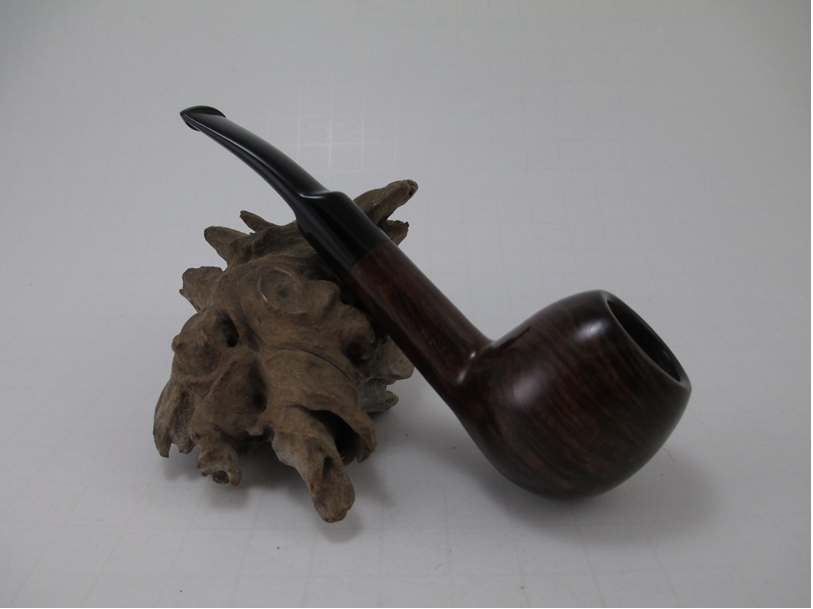
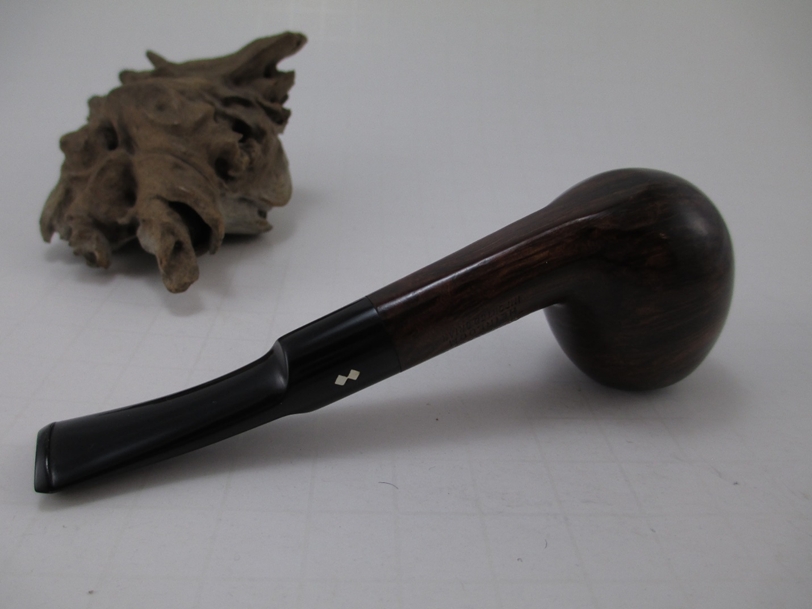
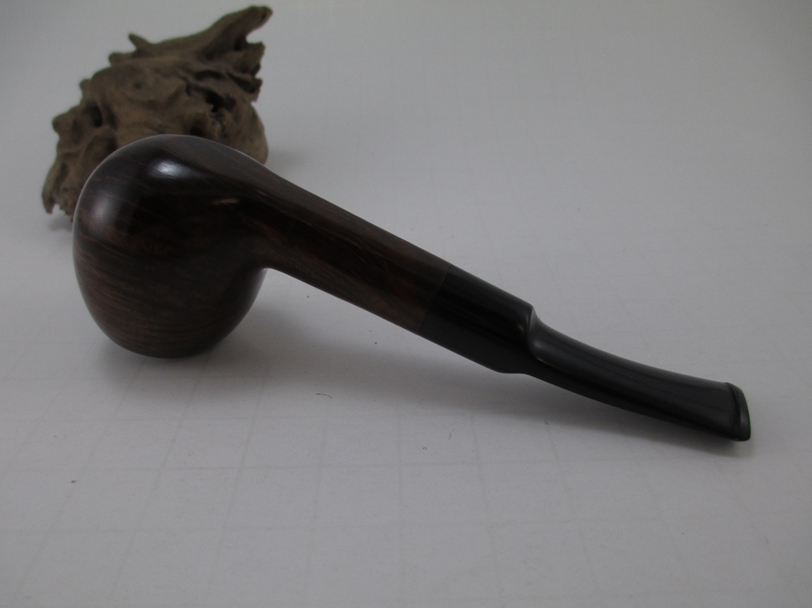
Although Heritage pipes used Kaywoodie shape numbers, this particular pipe’s shape is not in any of the Kaywoodie catalogues that I have (1936, 1947, 1955, and 1972). It has an apple shape bowl, a long shank, and a ¼ bent saddle bit. It’s a small pipe, weighing in at exactly one ounce and measuring 4.9 inches long, and as befitting its namesake I can envision the owner fly fishing while smoking it. What really amazed me about this pipe though is the cross grain. It starts at the front of the bowl and runs vertically throughout the entire pipe into the shank. I have never seen anything quite like it.

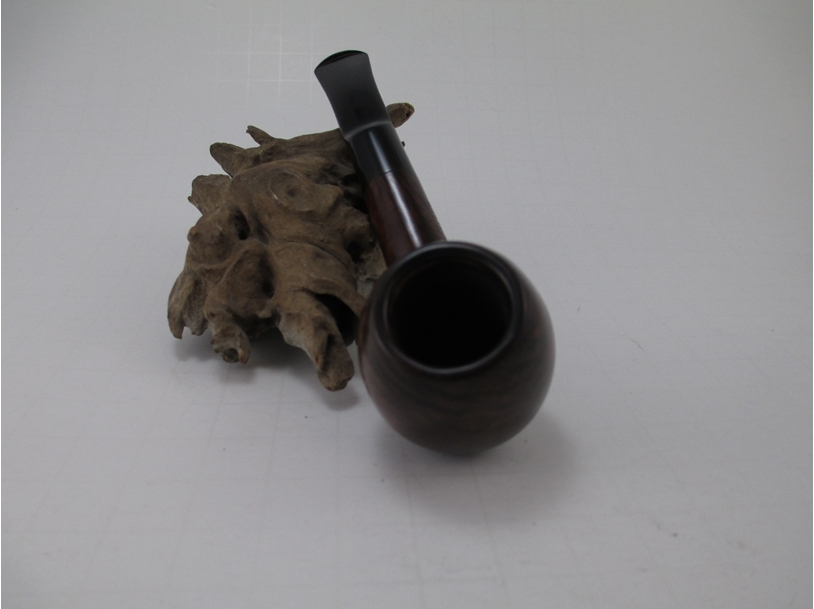
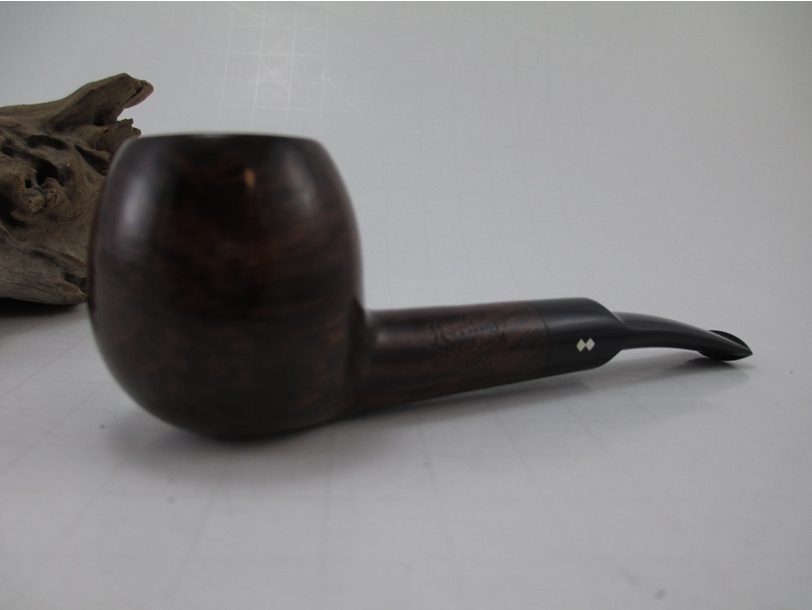
The pipe arrived in good shape, a slight tar build up on the rim, some minor oxidation on the stem, and a single tooth mark under the button. Here is what it looked like.Her1

Her2

Her3

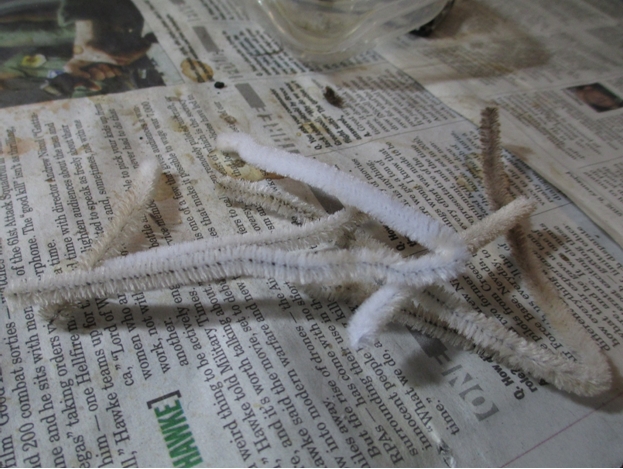
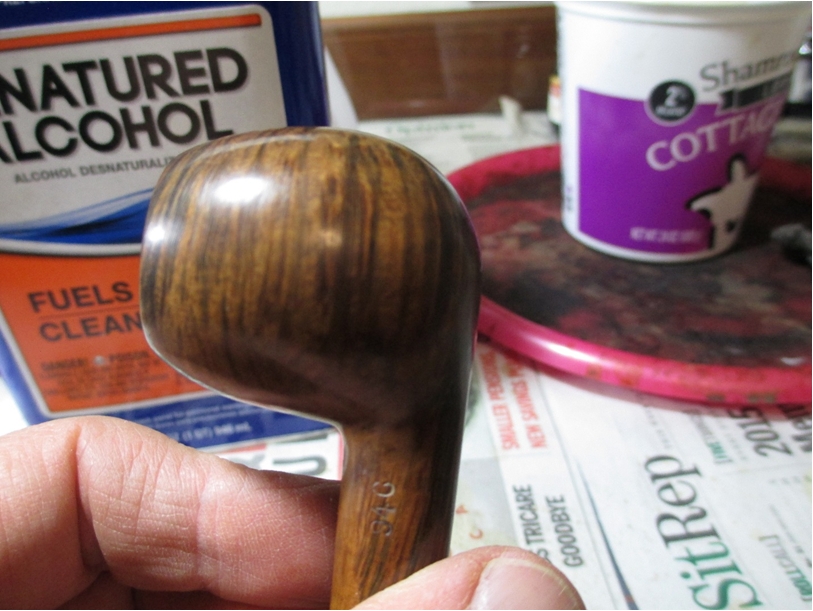
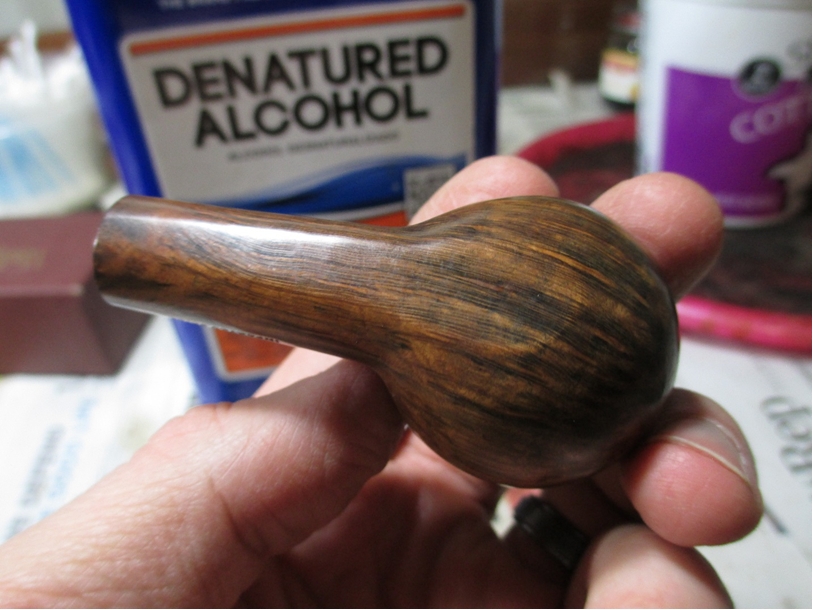
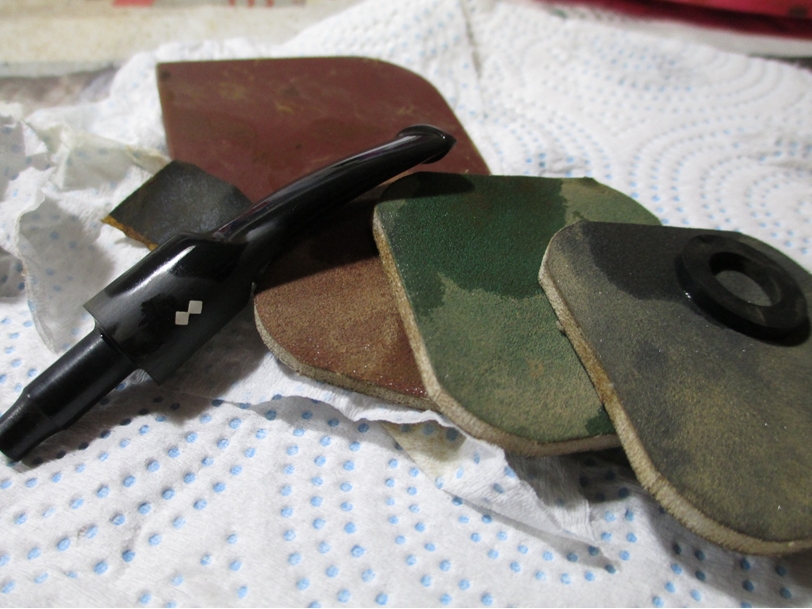
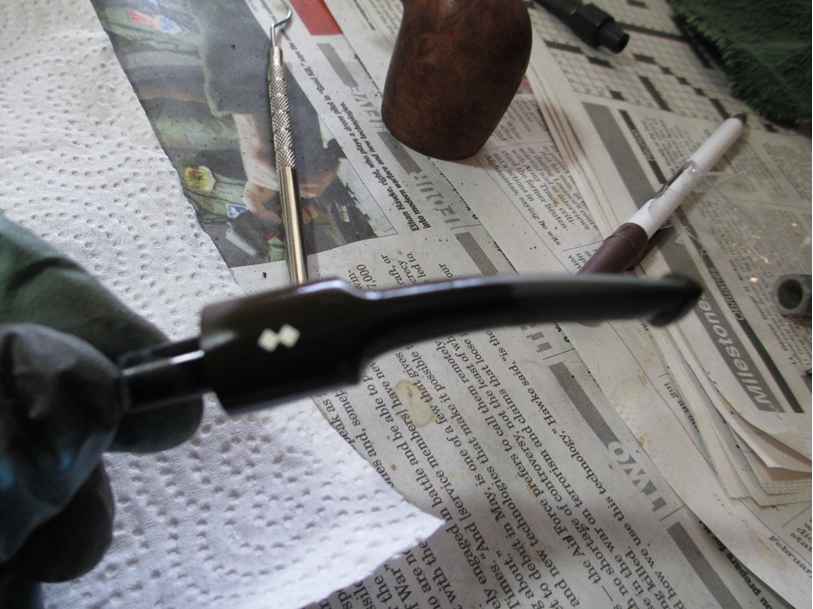
Her4 I started by giving the bowl an alcohol bath. The purpose of the bath is not to sanitize the pipe, the alcohol just loosens up all of the crud (tar, cake, un-burned tobacco etc.).Her5 While the bowl marinated, I soaked the stem in Oxyclean.Her6 The Oxyclean brings out the oxidation and helps loosen the gunk inside the stem. I usually run a fuzzy stick through the stem while I still have the cleaning solution. That’s always a good indicator how much work I will have during the next step. Fortunately, this stem didn’t look too bad. Notice the brown oxidation. Once I finished the inside of the stem, I took an old tooth brush and some tooth paste and removed the worst of the oxidation. This also had the benefit of making the white inlay nice and bright.Her7
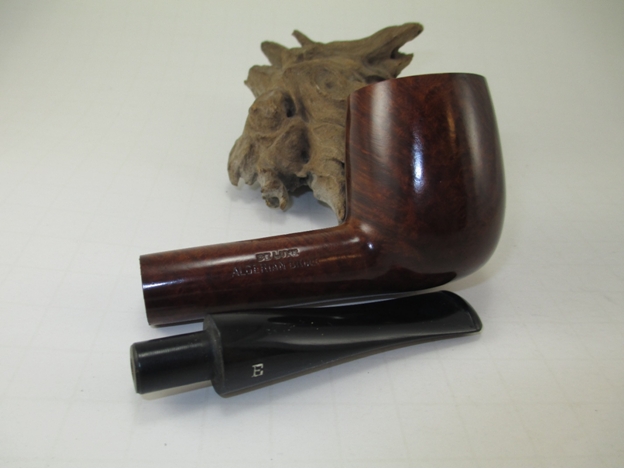
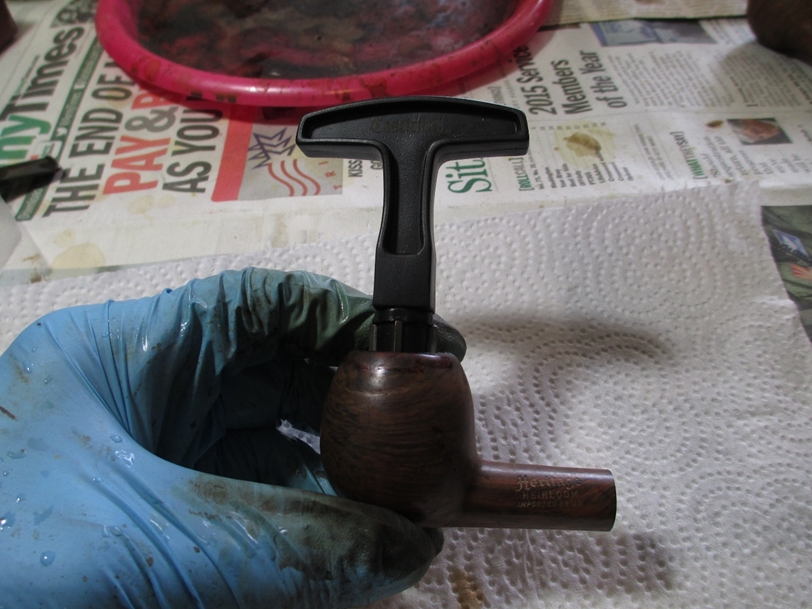
Her8 Next up was removing the cake from the bowl. After a 24 hour soak, it is very easy to remove even the most stubborn cake.Her9 After removing the cake it was time to tackle the shank using the retort.Her10 She was a dirty girl.Her11

Her12 I ended up retorting the shank five times! Not sure what kind of tobacco the previous owner smoked or if he ever used pipe cleaners.

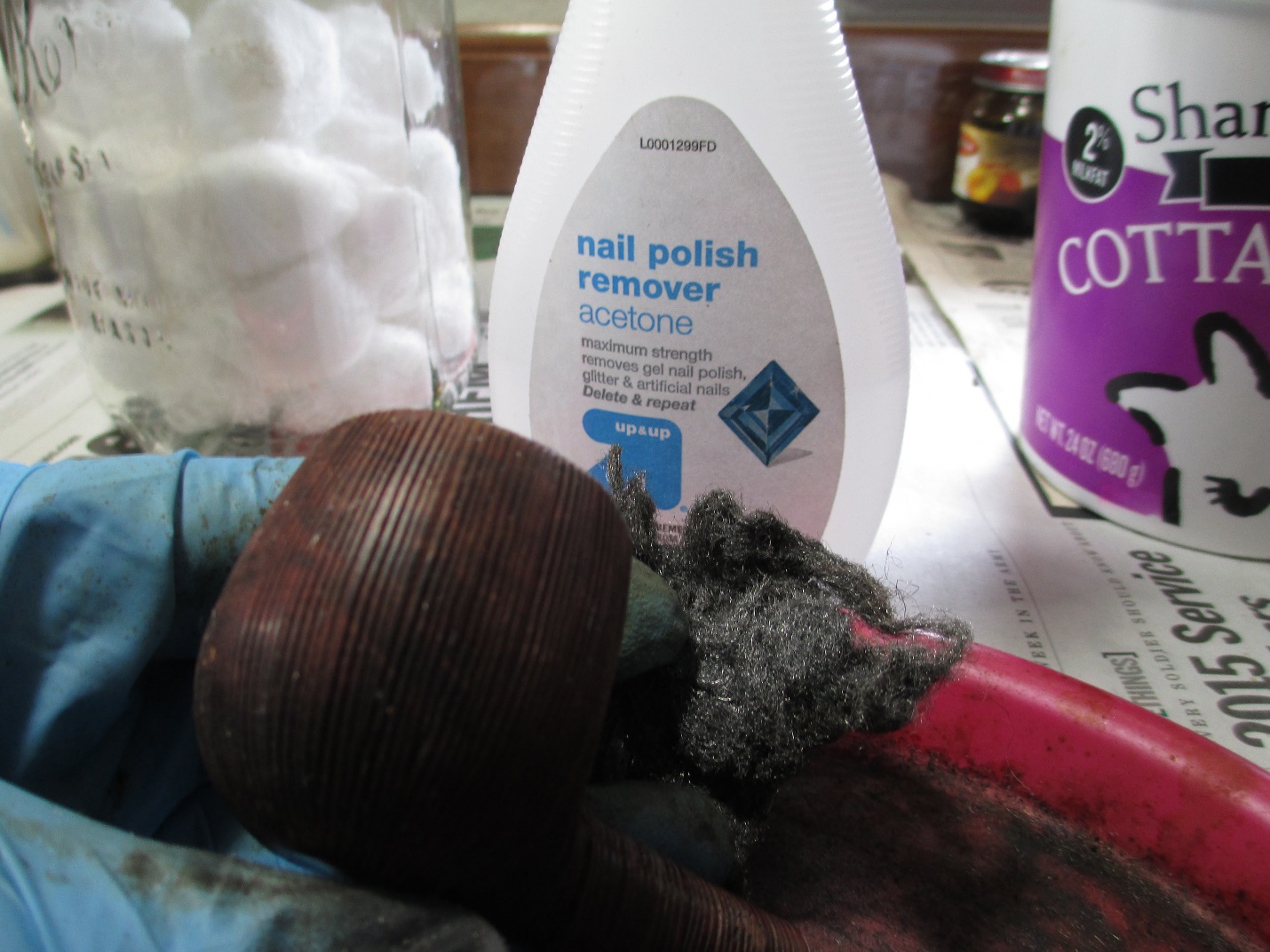
Next up, the shank. As I’ve mentioned before, if you retort the shank separately make sure you plug the end to prevent boiling alcohol and tobacco juice from spewing everywhere.Her13 Fortunately most of the nastiness was in the shank and the stem only required one fuzzy stick.Her14 The final cleaning step was removing the tar and cake from the rim. I used 0000 steel wool and acetone. The steel wool does a nice job removing the tar without damaging the finish.Her15

Her16 There were a couple of dents in the side of the bowl, so I used steam to raise the dents. I then used a progression of micro mesh pads, 1500-12,000 grit in preparation for staining. Here is the bowl ready for stain.Her17

Her18

Her19 You can see the grain is everywhere.Her20 I used Pimo Pipe Supply medium walnut stain, diluted by 50%, to even out the color. Followed by a furniture pen to add a little bit of red tint. Here is the final result.Her21 I used 400 grit wet/dry sandpaper with water to remove the tooth mark and oxidation. I’ve started using a rubber washer, placed over the tenon, to make sure that I don’t round the edges of the stem while sanding. After the 400 grit, I used 1500, 1800, and 2400 grit micro mesh with water.Her22 Once the stem dried I finished polishing it with a progression of micro mesh pads, 3200-12,000 grit, followed by white diamond and carnauba wax with my rotary tool. I buffed the bowl on the buffing wheel with White Diamond and carnauba wax. Here is the finished pipe.Her23

Her24

Her25

Her26

Her27

Her28

Her29

Her30

Her31

Resuscitating a Kaywoodie Fine Line


Blog by Andrew Selking

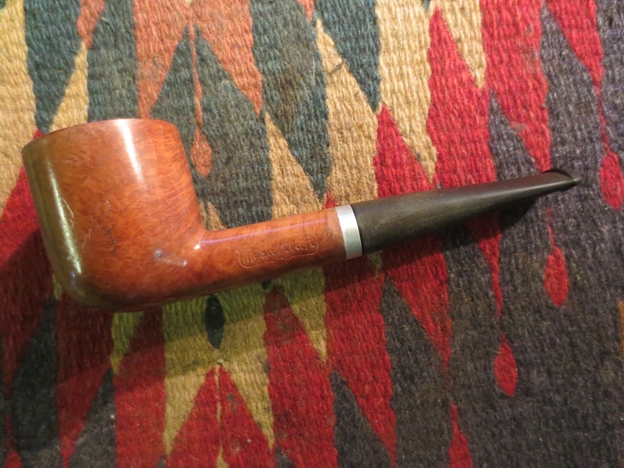
I remember back in basic training my Drill Sergeant always used to say, “Men, ugly women need love too”. That was my initial thought when I first saw this Kaywoodie Fine Line pot. The stem was under-clocked, the varnished finish was uneven, the rim had some damage, and it just looked kind of dull. On the plus side, the stem was in decent shape and my fondness for Kaywoodies provided the motivation to help it live up to its potential.KWA1 As you can see, the stem was noticeably under-clocked.KWA2 Fortunately I have a tool for that.KWA3 After directly heating the stinger with my heat gun, I gently turned it back to its original position and set it by running the end of the stem under cold water. This was the result.KWA4

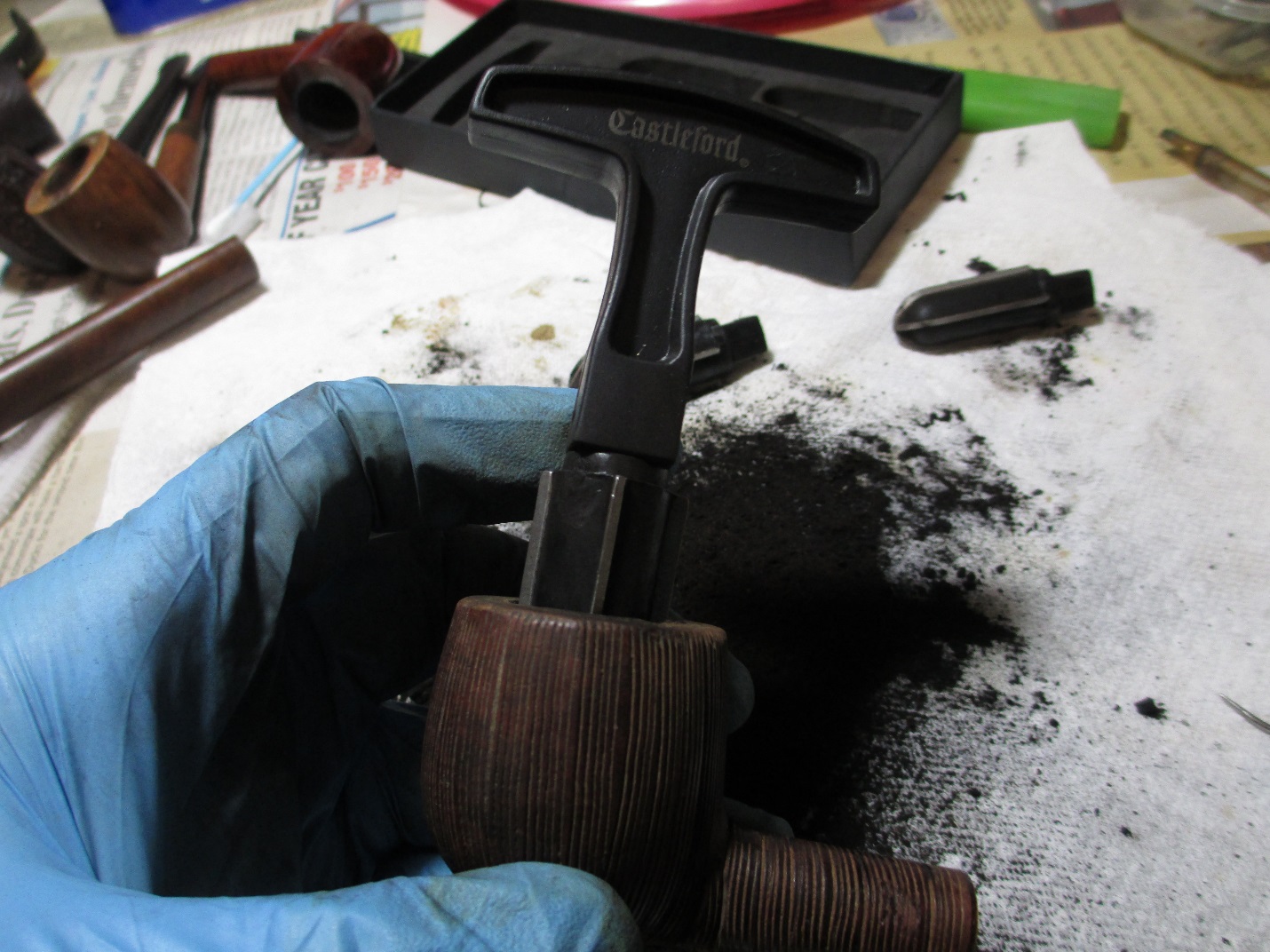
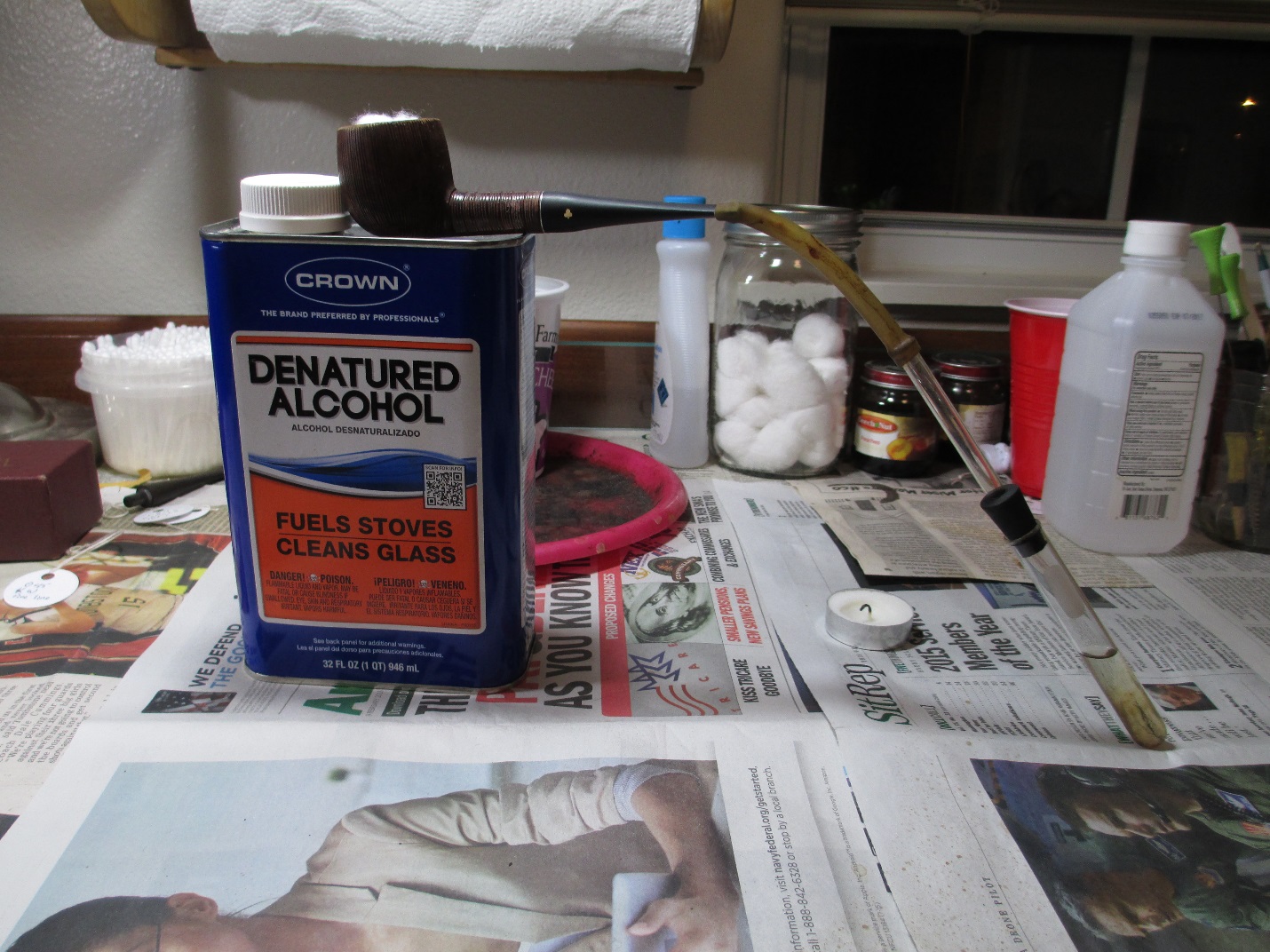
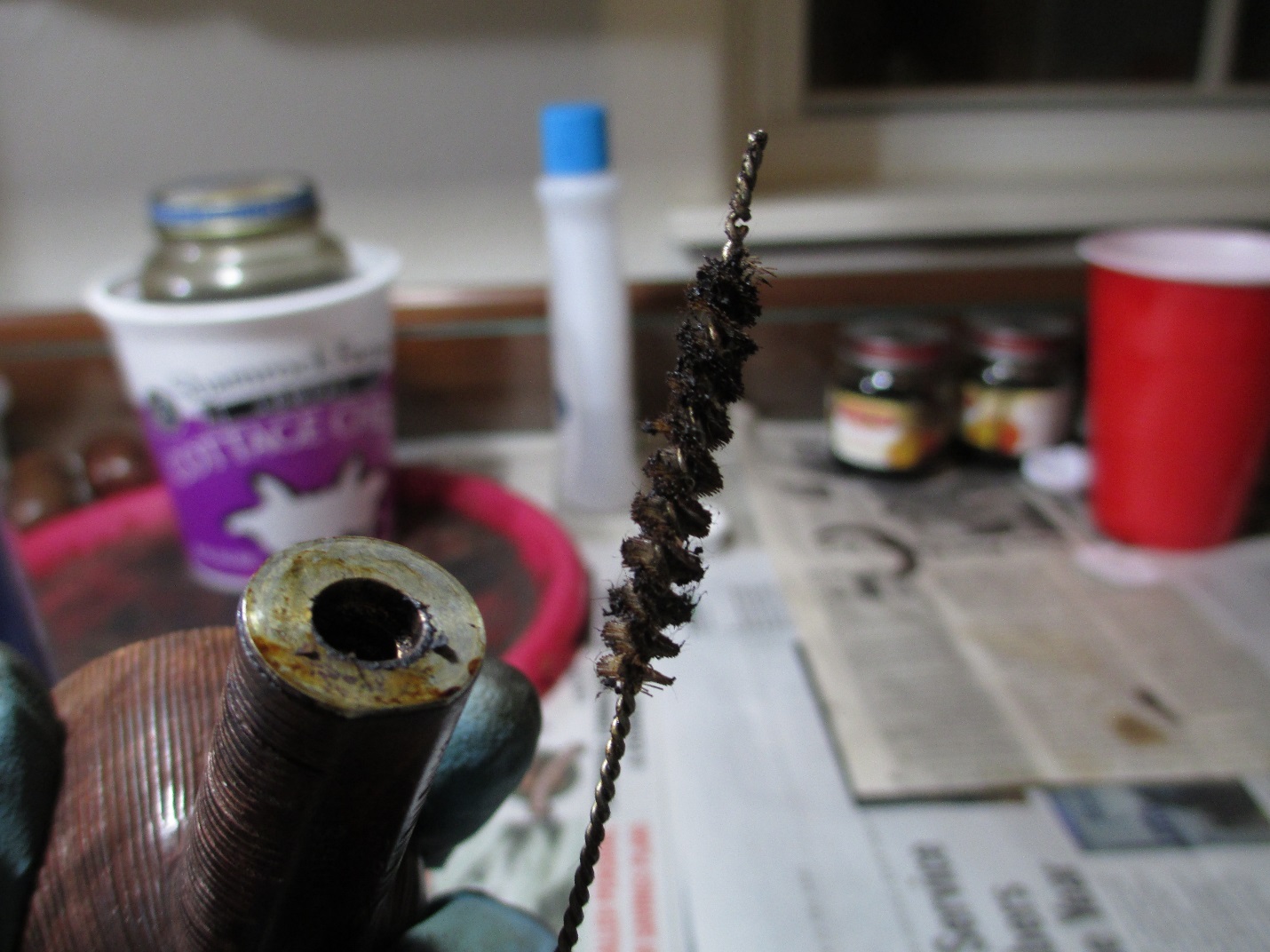
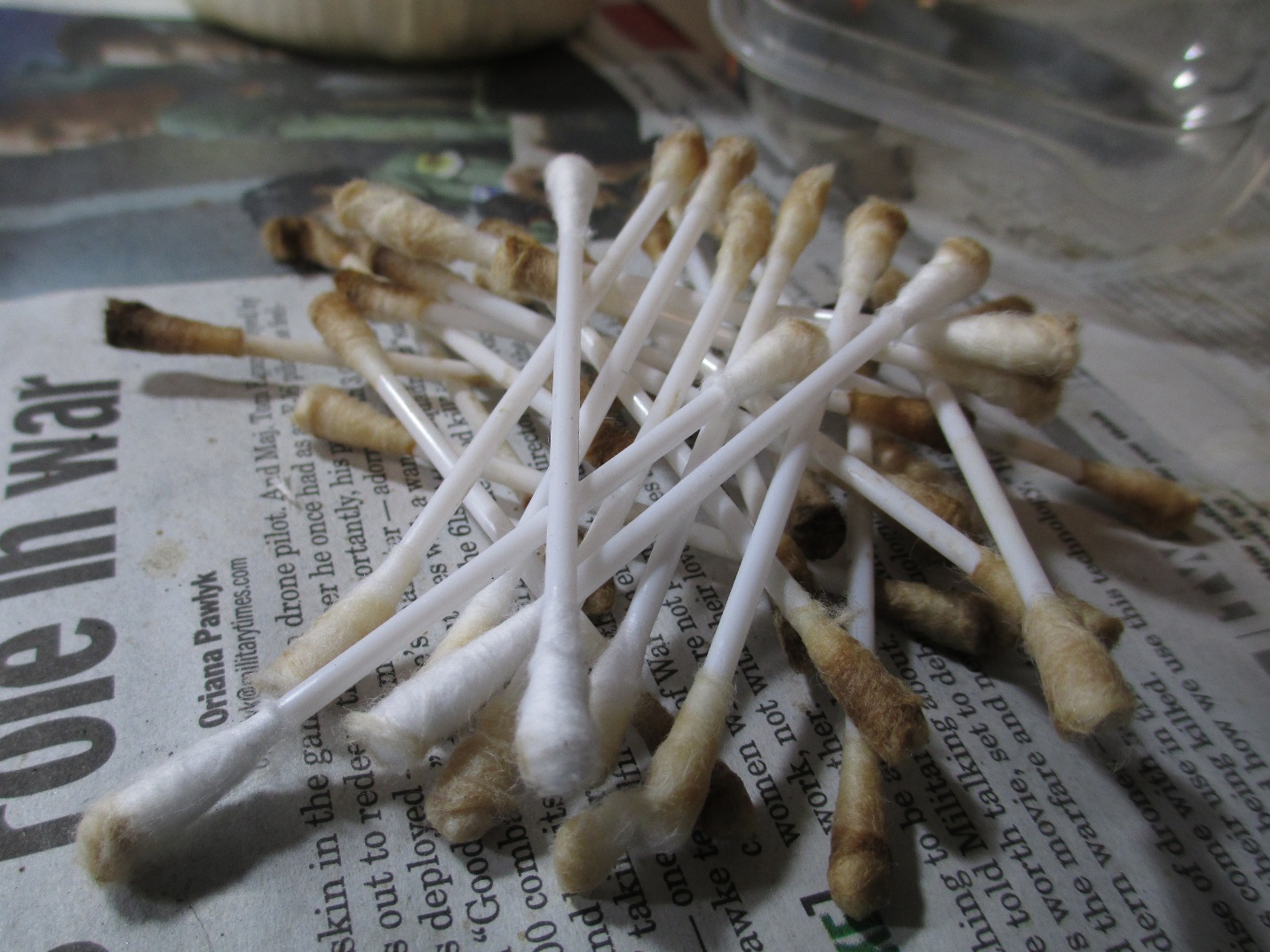
KWA5 I soaked the bowl overnight in the alcohol bath then reamed it with my Castleford reamer.KWA6 While the bowl soaked, I gave the stem a bath in Oxyclean. I make it a practice to use the Oxyclean and a fuzzy stick (that’s the politically correct term for a pipe cleaner intended for crafts rather than cleaning pipes) to get as much gunk out while it’s still soft. This is what the fuzzy stick looked like after the first pass.KWA7 Normally a fuzzy stick without a lot of tar and tobacco is cause for celebration, but I suspected the stinger merely kept the gunk in the shank. When cleaning Kaywoodies I have to deviate from my normal process of retorting the stem and bowl separately, since the rubber tube doesn’t fit inside the shank very well. Here is the pipe ready for retort.KWA8 After the first retort.KWA9I did the retort two more times. This is what was hiding inside the shank.KWA10 After scrubbing the solids out with a brush dipped in alcohol, I switched to q-tips dipped in alcohol. As you can see, it took a good amount to get it clean.KWA11 The boiling alcohol loosened up the tar in the stem. It turned out my original guess was correct, the stinger kept the stem relatively clean.KWA12

KWA13 With the inside of the pipe clean, I turned my attention to the outside of the pipe. The first thing I wanted to do was get rid of the remaining varnish. I used acetone and 0000 steel wool.KWA14 Next I topped the bowl to eliminate the rim damage. I used a piece of glass with 400 grit sand paper.KWA15 After topping the bowl I used Pimo Pipe Supply medium walnut stain to cover up the couple of fills.KWA16 While I was at it, I polished the aluminum insert in the shank with 0000 steel wool.KWA17

KWA18 With the bowl in good shape, I started work on the stem. I used 400 grit wet/dry sand paper with water to remove the minor tooth marks and oxidation. I then used 1500-2400 grit micro mesh pads with water. Next I re-assembled the pipe with a rubber washer between the stem and shank to prevent rounding the end of the stem. I finished the stem with micro mesh pads, 3200-12,000 grit, followed by white diamond and carnauba wax using the rotary tool on low speed. KWA19 A light coat of Halcyon II on the bowl and here’s the result.KWA20
KWA21

KWA22

KWA23

KWA24 I think the old girl cleaned up nicely. She may not be a shiny pipe, but she is a sturdy pipe. Thanks for looking.
Restoring a Dr. Grabow Starfire Wirecarved 85 Poker


Blog by Troy Wilburn

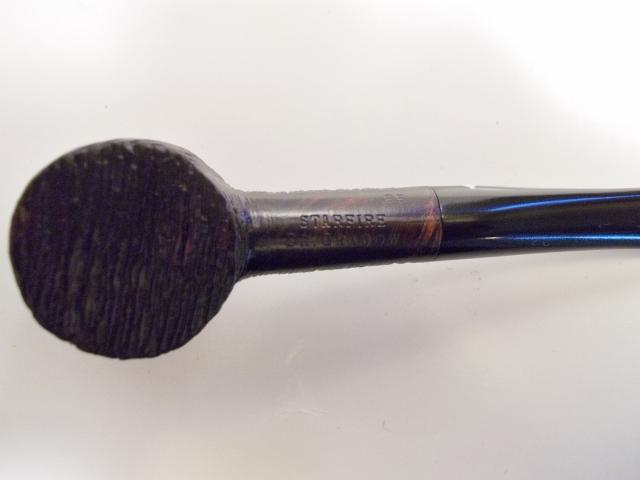
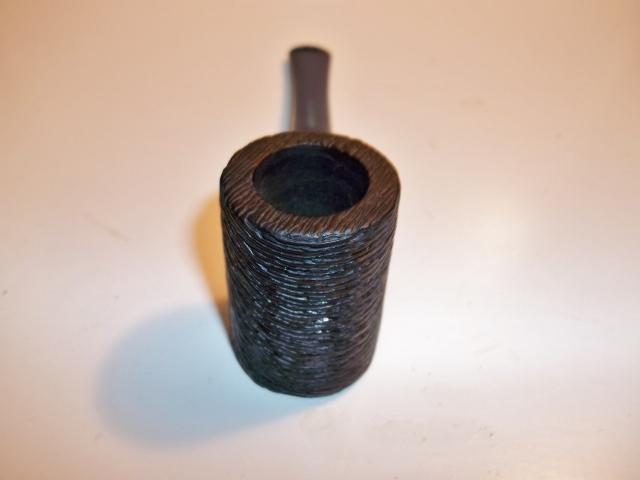
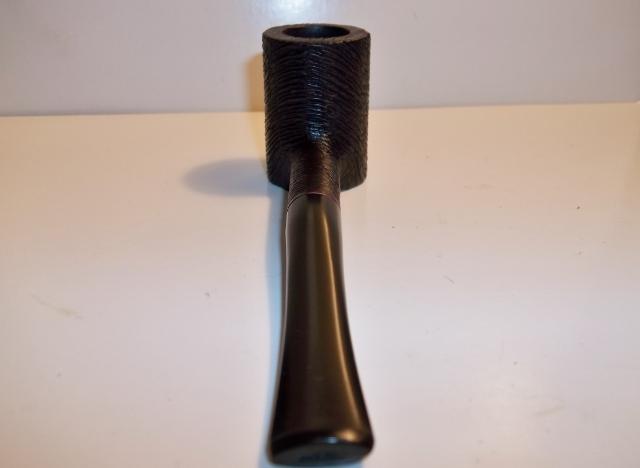
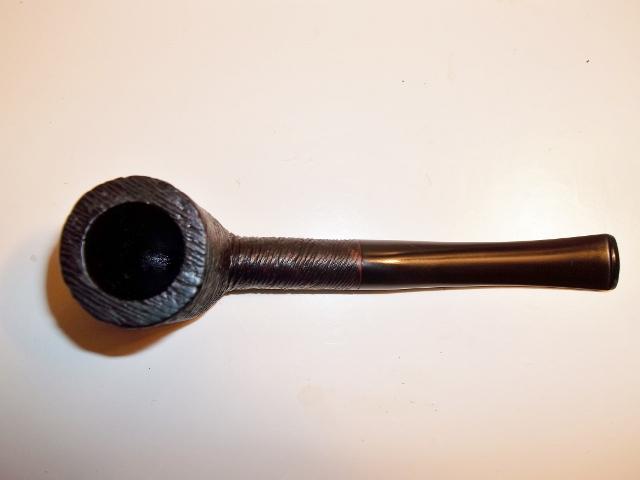
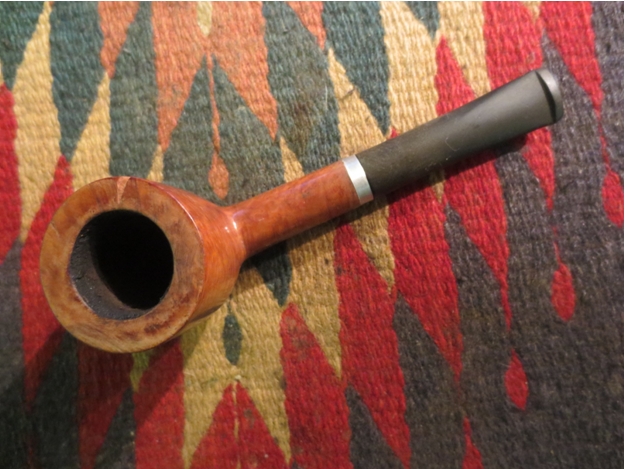
This pipe is a Dr . Grabow Starfire Wirecarved shape no.85 I picked up recently from an online auction. This is my favorite Dr. Grabow shape and I own several poker model 85s. Most of them are from the RJ Reynolds coupon era. Although the Starfire wasn’t a coupon pipe the quality was just as high on them as the RJ Reynolds pipes. I’m a big fan of the black wirecarved finish on the Starfires and Belvedere’s.

The pipe was in good shape although the wire carving was a little worn and the stem, an Adjustomatic, was stuck from corrosion. I did manage to get it unstuck after twisting on it several times really hard with hands and did not have to freeze it over night .

Before photos:Dr1

Dr2

Dr3

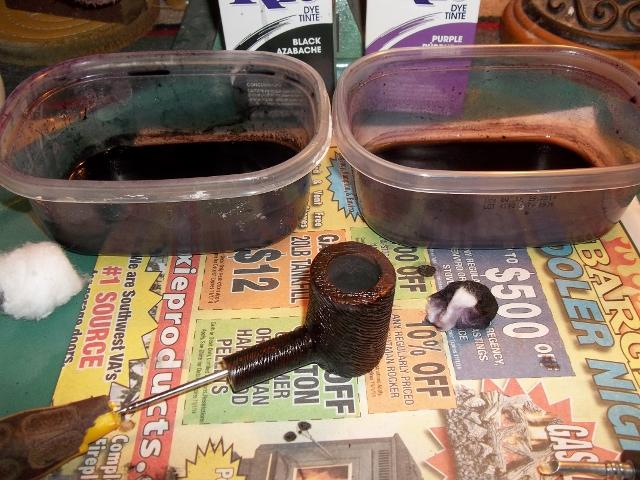
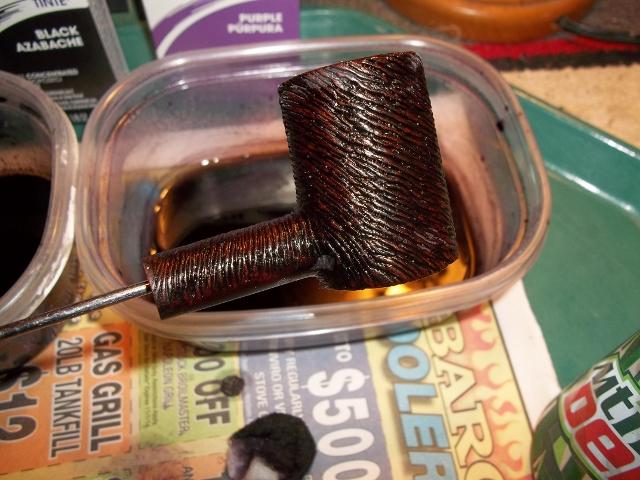
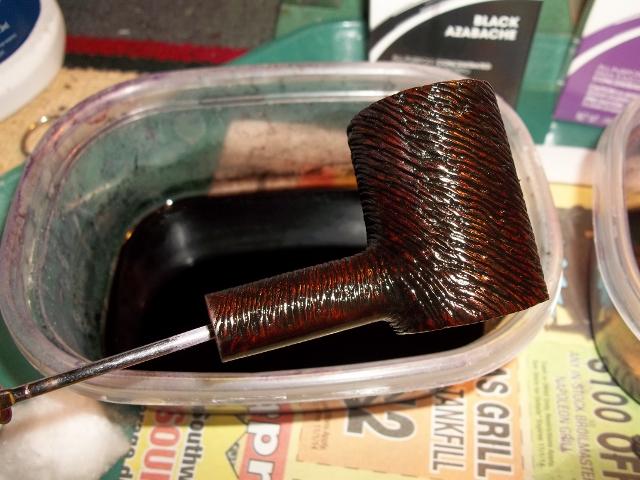
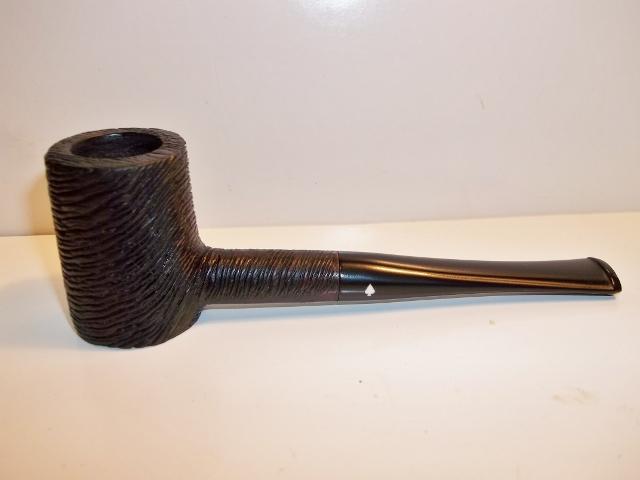
Dr4 After cleaning out bowl and shank I soaked bowl in alcohol and scrubbed it many times with a tooth brush trying to get as much dirt and residue as I could out of wire carving to make it crisper looking.Dr5 After a good soak in some OxyClean I managed to get stinger removed from stem and do some scrubbing on it with a scotch brite pad. I also oiled and heated the Adjustomatic and got it working correctly again.Dr6 With the bowl and stem cleaned, buffed and sanded I was ready to stain the bowl.Dr7 I decided to try a two part stain, so I mixed up some purple and black. The finish on Starfire and Belvedere wirecarved pipes is not a true black but black with purple undertones.Dr8 I applied three coats of purple dye letting it dry between coats. Then I applied three thinner mixed coats of black.Dr9

Dr10 With the staining done I now needed to let it dry for a bit.Dr11 The next photo shows the pipe back together and rubbed with mineral oil. It is ready for buffing after it dries some.Dr12 After photos:Dr13

Dr14

Dr15 This particular poker is also a less common shape stamped model.Dr16

Dr17

Dr18

Dr19

Dr20 It is a good pipe to smoke my favorite Old Codger Burleys OTCs in.Dr21

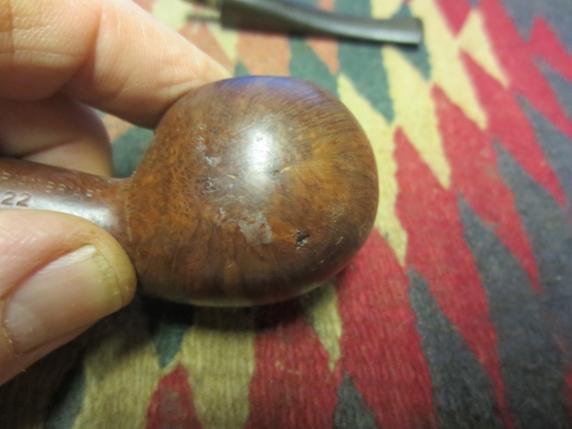
Restoring one of my favourite pipe shapes – an Edwards Author 722


Blog by Steve Laug

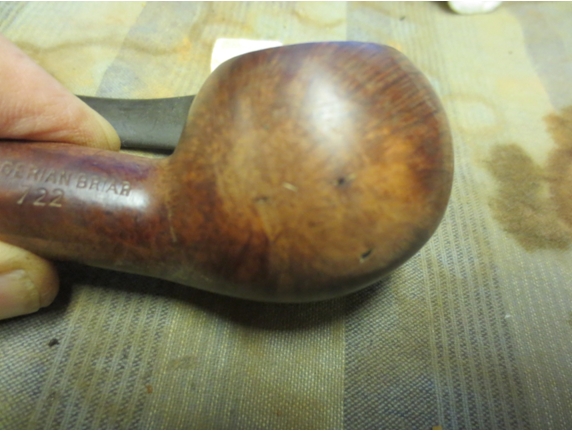
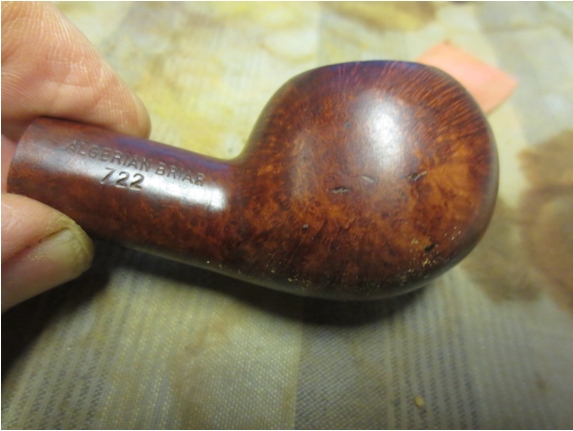
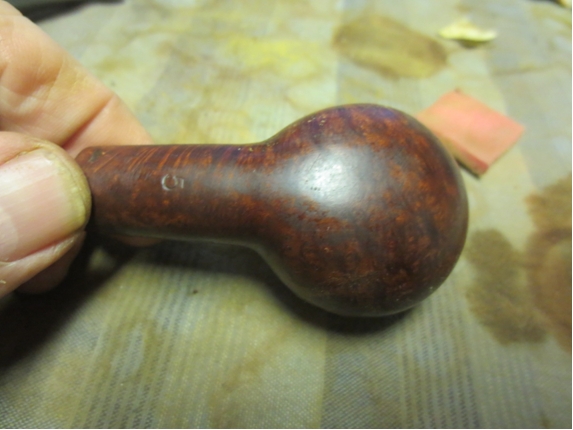
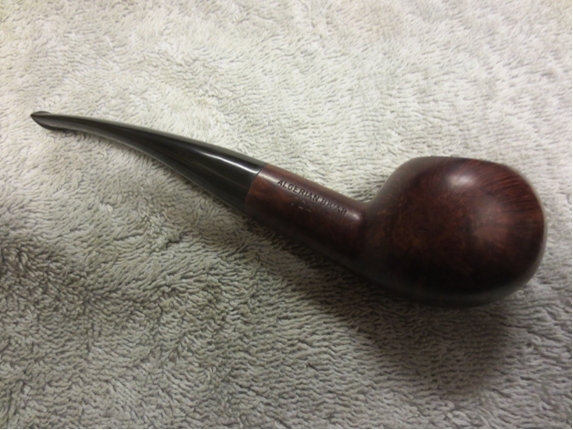
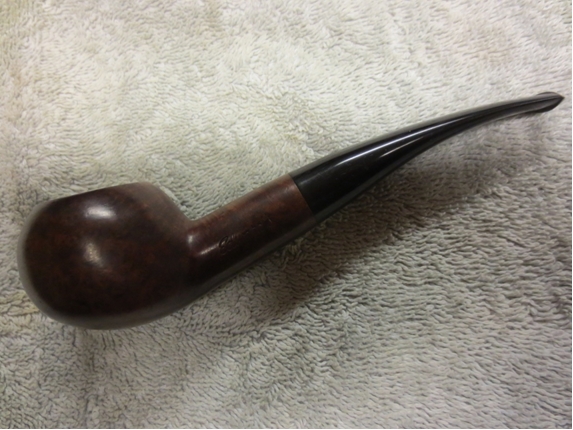
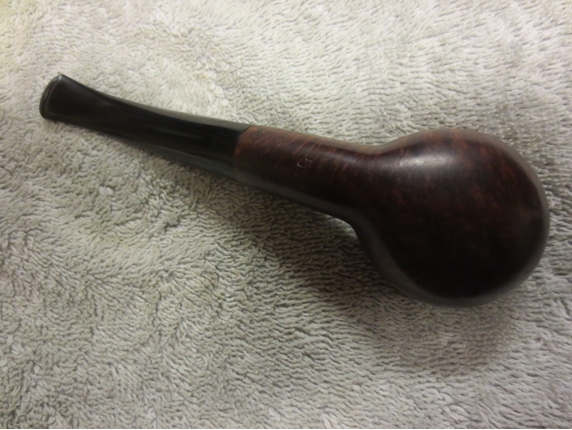
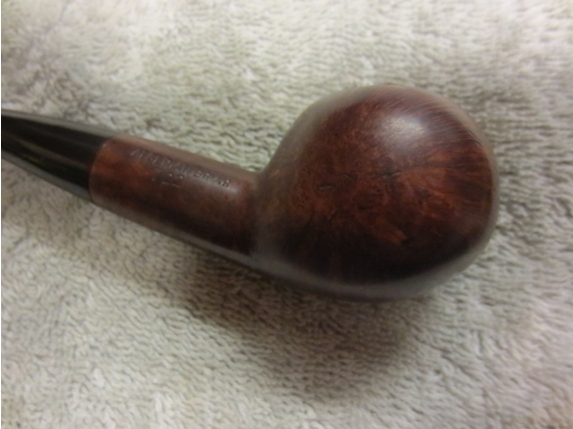
This Edwards Author 722 came to me in the gift box I received. The shape has always been one of my favourites. This one is stamped Edwards in script on the left side of the shank. On the right side it is stamped Algerian Briar over 722. I am guessing that the 722 is the shape number. I have looked but cannot find any information on the Edwards shapes. On the underside of the shank it is stamped with a large number 5. On the underside of the stem was stamped the word FRANCE.Ed1
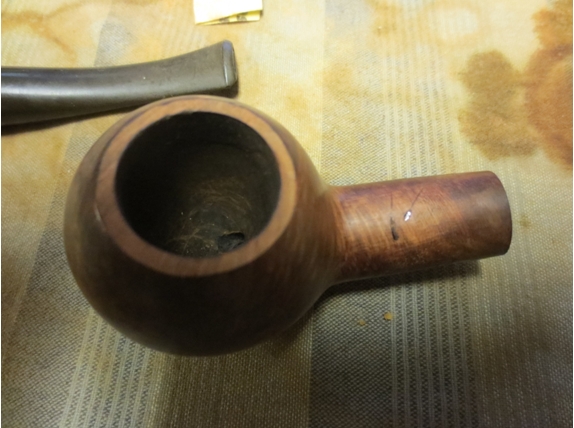
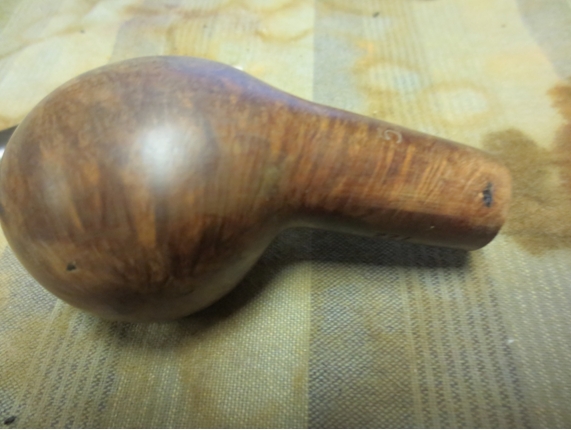
Ed2 From what I could find Edwards left all of their pipes with a natural finish, as was the case with this one. It was dirty and had darkened from smoking but it did not have a finish or stain on the briar. The bowl had been reamed and cleaned and the shank was clean. The briar had fills on the topside and the underside of the shank and on the left side of the bowl. They were white putty and some of them were shrunken and missing bits of the putty. The rim was dirty and slightly damaged.Ed3

Ed4 The stem was very tight in the shank and I carefully twisted it slowly from the shank. There was a yellow waxy substance on the tenon like old and dried beeswax. The mortise area was clean briar and was unstained by tars or oils. The fit of the stem to the shank was perfect. It was a smooth transition with no ridges or gaps.Ed5

Ed6 I wanted to know more about the brand. I have had several Edwards pipes over the years and still have them. I checked out my two usual sources Pipedia and PipePhil’s site. Reading on Pipedia I found the following information that I quote. http://pipedia.org/wiki/Edward%27s

“Edward’s pipes were originally produced in St. Claude, France when France actually was a world-class pipe maker with longstanding business & political connections to Colonial Algeria that allowed them to obtain the finest briar. During the tumultuous 1960’s, Edward’s created a business model to offer the finest briar available in both Classic and Freehand shapes – all at a fair price. They bought the company & equipment and cornered the market on the finest, choice Algerian Briar just before the supply vanished in political turmoil of Algeria’s independence. Edward’s packed up both machinery and briar-treasure to America, safely caching the essentials to create a new pipe-making dynasty. This was a coup, for the 70’s and 80’s were grim years for pipe smokers as quality briar all but disappeared.”

“Edward’s Design Philosophy is hard to pin down, think of their style as the “American Charatan” with unique & clever twists all their own. Today, they fashion pipes in several locations across the USA. All of Edward’s pipes are Algerian Briar – a fact very few pipe companies can claim, and all are oil-cured utilizing natural finishes – no strange concoctions are used to interfere in your tastebud’s dance with the briar. Algerian, Calabrian, Sardinian, Corsican – take your pick, but Algerian Briar is generally considered the finest smoking briar ever used. When combined with oil-curing, Algerian takes on a magical quality that even Alfred Dunhill recognized as far back as 1918 as the choice for both his Bruyere and Shell.”

There was also a non-working link to http://www.otcpipes.com that reference a collection of vintage Edward’s pipes and scans of Edward’s catalogs. I wish I could get that link to work. (If anyone has information on this please let me know as I would love to view this site and its information.)

I found a bit of additional information on the PipePhil site (http://www.pipephil.eu/logos/en/logo-e1.html). I quote it here as well.

“Edward’s Pipes, headquartered in Tampa, FL, got its start importing pipes from France and continued to do so from 1958 to 1963 when it started producing pipes in Florida from prime Algerian Briar, a practice they continue to this day (2010).”

I also found an interesting exchange on the Pipes Magazine site regarding Edwards that was posted three years ago. http://pipesmagazine.com/forums/topic/edwards-pipe I have copied one portion of that interchange by a poster named cypresspipe. He adds a personal dimension to the information having worked for Edwards in the 70’s. I quote him in full below.

“I worked at an Edward’s Pipe Shop in Jacksonville in the 70’s and I can provide more information about Edward’s pipes. Edward’s still exists with a few remaining shops around the country. Like the rest of the industry, they are primarily cigar stores and gift shops now. Edward’s pipes were and are their house brand and they were made in their factory in Tampa. I visited the Tampa store several years ago and they told me that Edward’s pipes are now made in Spain. They also told me that they were running out of Algerian Briar and, as a result, many of their pipes were no longer carrying that stamping.”

“If you are familiar with Randy Wiley pipes, he started out making pipes in the Edward’s factory in Tampa back in the 1970’s.”

“The models Skylark, Skipper, Royce, Benton, etc. are fairly recent name categories, probably starting in the 90’s. They didn’t use these names when I worked there, except the “Skipper” was a pipe with a particular style of etching on it. At the time they made some very nice high-grade freehands that sold in the $100-150 price range (several hundred dollars today).”

“While the individual Edward’s shops are franchisee-owned the parent company is FGT Enterprises of Tampa, Florida. The company makes pipes under the “Benton” brand for other shops around the country, and makes private label pipes for some shops as well. They are a leading wholesaler of smoking accessories. You can go to their website and download their catalog (www.fgtenterprises.com–you might want to check out the “About Us” page on the site. FGT at one time did not stress their connection to the Edward’s shops, as they wanted to downplay the fact that they were associated with stores that were competitors to some of their other customers.”

“I have about 20-30 Edward’s pipes from the time I worked there and they have always been good smokers. The only problem with them is that pipes in the 70’s tended to be smaller (about group 3) than they are today.”

“As far as I know, there are still Edward’s shops in Los Altos (CA), Englewood (CO), Tampa, Atlanta, Jacksonville, and Dallas. In case you are interested Edward’s was named after Edward Rowley, a Tampa TV personality of the 50’s and 60’s who founded the company in partnership with Frank Smith (“Smitty”). Rowley was essentially the “face” of the shops while Smitty was the tobacco and pipes guy. Smitty bought out Rowley’s interest in the company sometime in the late 70’s or early 80’s.”

Armed with that information I went to work cleaning up the pipe. I started by topping the bowl with 220 grit sandpaper on a topping board to smooth out the rim and even out the smooth surface. I followed that by sanding it with a medium and a fine grit sanding sponge.Ed7

Ed8 I picked out the ugly pink/white fills with a dental pick. I scrubbed the bowl down with acetone on cotton pads to remove the grime and the dust from the fills. When the bowl was clean I refilled the sand pits with briar dust from the rim and clear super glue. I have learned that these turn almost black but that is far easier to work with than the pink/white putty.Ed9

Ed10

Ed11 I sanded the repairs with 220 grit sandpaper and then with a medium and fine grit sanding sponge. I followed that by sanding with 1500-2400 grit micromesh sanding pads.Ed12

Ed13

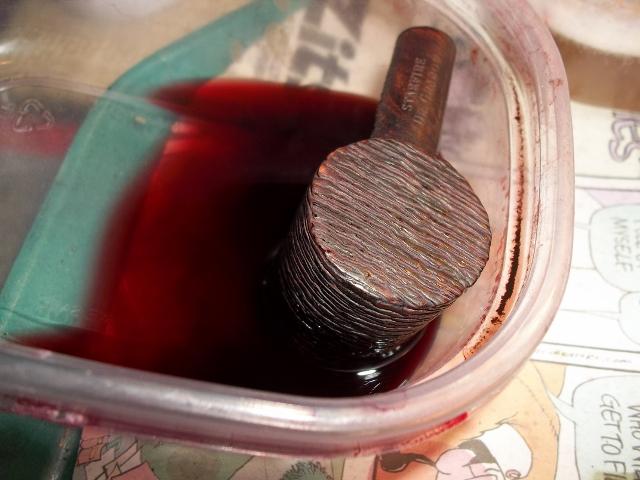
Ed14 I have a dark alcohol bath – I filter out the sludge monthly but leave the alcohol dark. I have found that a soak in it not only removes the finish but also gives a patina to the briar. It tends to make blending the repairs and the topped rim much easier.Ed15 While the bowl soaked in the bath I turned to the stem. I sanded the tooth marks and tooth chatter on the stem with 220 grit sandpaper to remove it and smooth out the surface.Ed16

Ed17 By the time I finished the initial sanding of the stem it was time to remove the bowl from the bath. I dried off the bowl and took the photos below to show the colour that the bath added to the briar.Ed18

Ed19

Ed20

Ed21 I set it aside and finished working on the stem. I sanded it with medium and fine grit sanding sponges and then with micromesh sanding pads. I wet sanded with 1500-2400 grit pads and dry sanded with 3200-12,000 grit pads.Ed22

Ed23

Ed24 I buffed the stem with White Diamond and Blue Diamond on the buffing wheel. I gave it several coats of carnauba wax and lightly buffed it with a flannel buff. I am always careful when buffing the stem without the bowl (in fact I rarely do it) because it is very easy to round the shoulders on the stem making a tight fit against the shank impossible.Ed25

Ed26 I buffed the bowl with red Tripoli and White Diamond to remove the surface scratches around the patches. I buffed the rim carefully with the same product. I took the next two close-up photos of the rim to show the repaired and polished rim.Ed27

Ed28 The finished pipe is shown in the photos below. The rich patina is only from the alcohol bath. I used a stain pen to touch up the light spots around the patches on the right side of the bowl and shank. I gave the pipe several coats of carnauba wax and buffed it with a soft flannel buff to raise a shine. All that is left to do is to load the bowl and fire it up. Something I hope to do before the end of the week.Ed29

Ed30

Ed31

Ed32

Ed33

Ed34

Ed35

Restoring an old Wally Frank Ltd. Huntleigh Pot


Blog by Steve Laug

I gravitated toward restoring this old Pot shaped pipe next because it looked rough with a worn finish and what I thought was an oversized band on the shank. When I took it out of the box and looked at it more closely my first impression was that someone had banded it post manufacture. It covered the stamping on both sides of the shank so that on the left the HUNTLEIGH stamping only read HUNTLEI and the Wally Frank Ltd. on the right only read ally Frank Ltd. On the flat bottom of the shank it is stamped Imported Briar in a Germanic Script. You can imagine my surprise when I found that what had appeared as a band was not. It was metal mortise and cap fitting that held a threaded screw mount stem and tenon. The tenon had a stinger apparatus that extended into the shank. Now the mystery – I don’t know if this was how the pipe was shipped from Wally Frank or if it was a later addition to a favourite pipe. The saddle stem appears to be original and fits against the cap perfectly. It is the same diameter as the shank of the pipe.Wally1

Wally2 The finish on this old boy was very tired. The finish on the top half of the bowl was worn off while on the lower half it had an old varnish coat that was peeling away. The outer edge of the rim was not beat up or worn at all. The inner edge was slightly damaged and had nicks in that made the bowl out of round. The top of the rim was damaged with small pin prick holes that look like they came from knocking out the pipe on a rough surface. The end cap/mortise insert was polished aluminum and it was oxidized. The stem had a lot of tooth chatter on both sides from the button up the stem about an inch. The button itself had nicks in it and there was a small tooth mark on the top and bottom of the stem next to the button in virtually the same spot. The stinger was quite clean. The bowl had been reamed out recently.Wally3

Wally4

Wally5

Wally6

Wally7 I decided to start with cleaning up the finish on the bowl. The peeling varnish and overall worn and tired appearance bugged me so I started there. I wiped the bowl down with acetone on cotton pads to remove as much of the finish as possible.Wally8

Wally9

Wally10 I mentioned above the damage to the rim surface so I have included the first photo below to show a close up view of the damage. I topped the bowl with 220 grit sandpaper on a topping board and removed the damaged surface. I sanded until the rim was smooth and the pinpricks were gone.Wally11

Wally12

Wally13 With the rim clean and the finish partially removed I decided to drop the bowl in my alcohol bath and let it soak awhile. I figured the alcohol would loosen what remained of the finish and also lend a patina to the sanded rim and the bowl. When I removed it from the bath after an hour of soaking it looked pretty good – as long as it remained wet!Wally14

Wally15 Once I dried it off I could still see the line around the bowl where the finish had been and where it had worn off. This was a stubborn bowl. I sanded it with a medium and a fine grit sanding sponge. I also repaired some of the fills that were pitted with super glue and briar dust. The next two photos show the bowl after I had sanded the finish off. It was finally getting to the point where I could start again with the finish. There were many imperfections and fills in the bowl and shank. This one was going to be a challenge. I knew I could not remove all of them but I wanted to give the old pipe a bit of dignity and take away the tired looking finish.Wally16

Wally17 While I reflected on what to do with the bowl I worked on the stem. I sanded the tooth chatter and tooth marks with a folded piece of 220 grit sandpaper. I was able to remove all of the tooth marks and chatter. The stem would clean up nicely.Wally18

Wally19 I sanded the stem with a medium and a fine grit sanding sponge to remove the scratches left behind by the sandpaper. The stem surface was free of marks now but still needed to be polished to bring back the shine to the vulcanite.Wally20

Wally21 I cleaned out the shank and stem with pipe cleaners, cotton swabs and isopropyl alcohol. The dirty portion of the shank was the grime in the threads of the mortise. The airway ahead of the metal mortise was clean. It took a bit of scrubbing but I was able to clean out the grime. The internals of the shank were clean. I ran pipe cleaners through the stem and stinger. I was surprised that I could easily run a pipe cleaner from the slot to the bowl without major issues with the stinger. Once it was clean I threaded the stem on the shank to see what the pipe looked like so far. It had come a long way and had the potential to turn out to be a good looking pipe.Wally22 I wiped the stem down with a damp cloth and then worked it over with the micromesh sanding pads. I wet sanded with 1500-3200 grit pads this time and then dry sanded with 3600-12,000 grit pads. I rubbed the stem down with Obsidian Oil between each set of three pads. I also used the later grit pads to polish the aluminum of the mortise insert. After sanding the stem with the 12,000 grit pad I rubbed it down a final time and let it soak in before taking it to the buffer.Wally23

Wally24

Wally25 I buffed the stem with White Diamond and a blue plastic polish bar that I picked up. It really gives the stem a deep shine.Wally26

Wally27 I stained the bowl with several coats of a cherry aniline stain and flamed it. In the photos below the pipe is shown after a light buffing with a soft cloth. (These photos were taken before I polished the stem.)Wally28

Wally29

Wally30

Wally31 I sanded the bowl with the 6000-12,000 grit micromesh sanding pads and then buffed it with White Diamond. I gave the bowl and the stem multiple coats of carnauba wax and buffed it with a soft flannel buff. The finished pipe is shown below. I have also included a photo of the reworked rim and the tenon and aluminum mortise just to show the finished pipe in all of its parts. It should make someone a good smoking pipe if the original condition was any sign of the smoke-ability of this pipe.Wally32

Wally33

Wally34

Wally35

Wally36

Wally37

Giving a Large No Name Imported Briar Cutty a New Look


Blog by Steve Laug

In the box of pipes that I was gifted was a large cutty shaped pipe that looked to be in pretty decent shape. It appeared that it did not need a lot of work to bring it back. The finish looked pretty good with birdseye on the sides and cross grain off to one side of the front and back of the stem. The grain followed a similar pattern on the shank. The bottom of the bowl had some mixed grain patterns. The stem was not oxidized. The bowl had a minimal cake in it. The only issue appeared to be the outer edge of the rim. On the back side it was very beat up and the briar was broken and nicked. All of this is what I assumed when I took it out of the box and took a closer look at the pipe.Cutty1

Cutty2

Cutty3

Cutty4 The pipe is large, at least for me. It is seven inches long from button to the front of the bowl. The bowl is 2 ¼ inches tall. The chamber is ¾ inch in diameter. Proportionally it is a well made pipe. There are no fills in the briar. There are no sandpits. But there were issues! The bottom of the bowl had been flattened but the flattened portion was not centered on the bowl and shank bottom. It was off to one side. This gave the bowl and pipe a distinct cant to the right. The damage to the rim was deep on the back outer edge. The stem had tooth marks on the top and bottom sides next to the button. All of these would need to be addressed in a restoration of this pipe.Cutty5

Cutty6

Cutty7 I reamed the bowl with the PipNet reamer. I seem to default to this T handled reamer as first choice in most of the refurbishing that I do. It is an easy tool to use. The T handle is small enough in diameter at the junction of the cutting head that it can be pushed deep into the bowl which was necessary with this pipe.Cutty8 Since I was planning on topping the bowl to repair the rim damage I decided to remove the finish from the pipe so that matching stain would not be necessary. I wiped it down with acetone on cotton pads. The finish dulled but it did not completely come off the bowl. It has the feel of a Urethane coat. Once I topped the bowl I would deal with that issue.Cutty9

Cutty10 I set up my usual topping board with 220 grit sandpaper. I would need to remove quite a bit of briar from the surface of the rim to take care of the damage. I also found that the cant on the bowl and shank left me with a canted bowl top as well. I sanded the bottom of the shank until the pipe sat upright and then had to work on the rim to make it horizontal without a slant. As usual I collected the briar dust for later use on fills and repairs.Cutty11

Cutty12

Cutty13

Cutty14

Cutty15

Cutty16 I used a folded piece of sandpaper to smooth out the inner edge of the rim and lightly bevel/chamfer it and remove the charring.Cutty17

Cutty18 I sanded the bowl and shank with a medium grit sanding sponge to break through the urethane finish. I wiped it down further with acetone until it was gone. I decided to drop the bowl in my alcohol bath to soak while I worked on the stem. I have found that the stain darkened alcohol bath works really well to give some patina to briar once the finish has been opened up. For such a large piece of briar the bowl was surprisingly light weight and it floated on the surface of the bath.Cutty19 I sanded the bite marks on the stem with 220 grit sandpaper until they were removed. I followed that by sanding the stem surface with a medium and a fine grit sanding sponge to minimize the scratches in the stem.Cutty20

Cutty21

Cutty22

Cutty23

Cutty24 I rubbed the stem down with Obsidian Oil and set it aside. I took the bowl out of the bath. The finish had completely disappeared with the soak and the entire bowl, including the rim had picked up a nice patina. The grain just popped in the clean surface of the bowl. It would be easy to stain and polish.Cutty25

Cutty26

Cutty27

Cutty28 The colour of the topped rim matched the bowl colour perfectly – in fact it matched so well that I was unsure that I would even stain it. The next photos show the bowl as it stood after the soaking and drying. I love the way that the grain stood out.Cutty29

Cutty30

Cutty31 I ran a few pipe cleaners and cotton swabs soaked in isopropyl alcohol through the shank to clean it out. I was surprised with how dirty the shank was. The buildup of tars and oils was heavier than I expected. I set up a retort and boiled alcohol through the pipe until the alcohol came out clean.Cutty32

Cutty33 After the retort I used a few pipe cleaners and cotton swabs to remove the alcohol and remaining tars from the shank.Cutty34 With the bowl and shank clean and ready to go it was time to finish the stem. I sanded it with micromesh sanding pads – wet sanding with 1500-2400 grit pads and dry sanding with 3200-12,000 grit pads. I rubbed the stem down with Obsidian Oil between each set of three pads. When I finished sanding with the 12,000 grit pad I gave it a final coat of oil and let it dry.Cutty35

Cutty36

Cutty37 I gave the bowl a light coat of olive oil to highlight the grain. I did not stain the bowl as I really liked the natural look of the briar. I gave it a buff with White Diamond and did the same with the stem. I then gave the pipe several coats of carnauba wax and a buff with a soft flannel pad. I took the photo below to give some idea of the size of this pipe. It is sitting next to the Kaywoodie Prime Grain Lovat that I finished restoring recently.Cutty38 The finished pipe is shown below. The first four photos show the overall look of the pipe. The last three photos give a close up view of the bowl and stem. The pipe is like new. The new finish is far better than the one that came with the pipe. The look of the grain and the way the bath and olive oil highlights it is quite stunning. This pipe will make someone a great addition to their rack and should be a great smoking pipe. It is too large of a pipe for me at this phase of my pipe smoking. I am much more drawn to smaller bowls and lighter pipes, but that being said, the grain on this one makes it very tempting.Cutty39

Cutty40

Cutty41

Cutty42

Cutty43

Cutty44

Cutty45

Making an Ehrlich Sandblasted Billiard Less Dreary


Guest Blog by Robert M. Boughton
Member, North American Society of Pipe Collectors
http://www.naspc.org
http://www.roadrunnerpipes.com
http://about.me/boughtonrobert
Photos © the Author

Once upon a midnight dreary, while I pondered, weak and weary,
Over many a quaint and curious volume of forgotten lore –
While I nodded, nearly napping, suddenly there came a tapping,
As of some one gently rapping, rapping at my chamber door.
“’Tis some visitor,” I muttered, “tapping at my chamber door –
Only this and nothing more.”
― Edgar Allen Poe (1809-1849), U.S. poet, author, editor and literary critic, in “The Raven,” 1845

INTRODUCTION
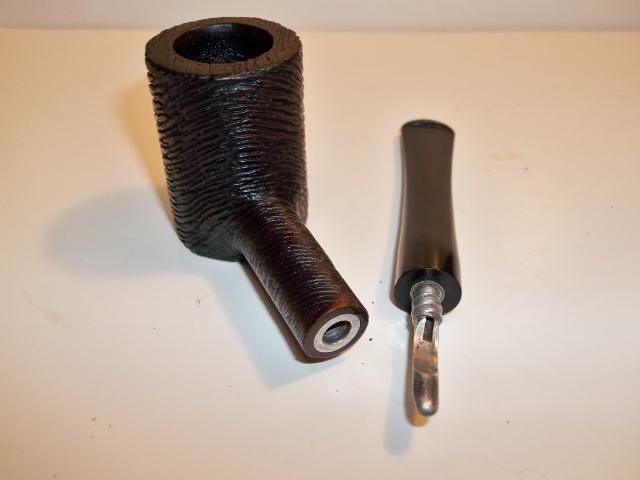
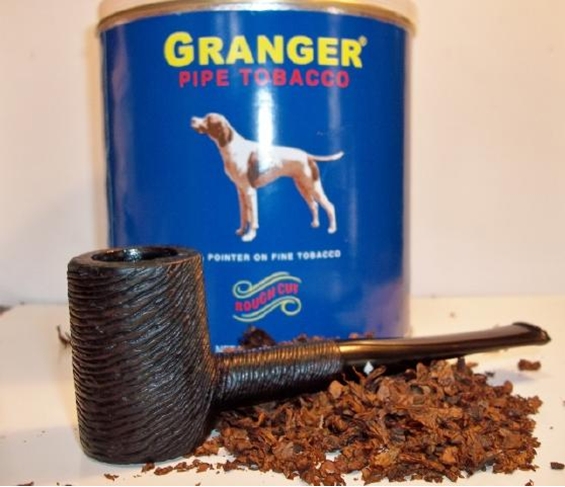
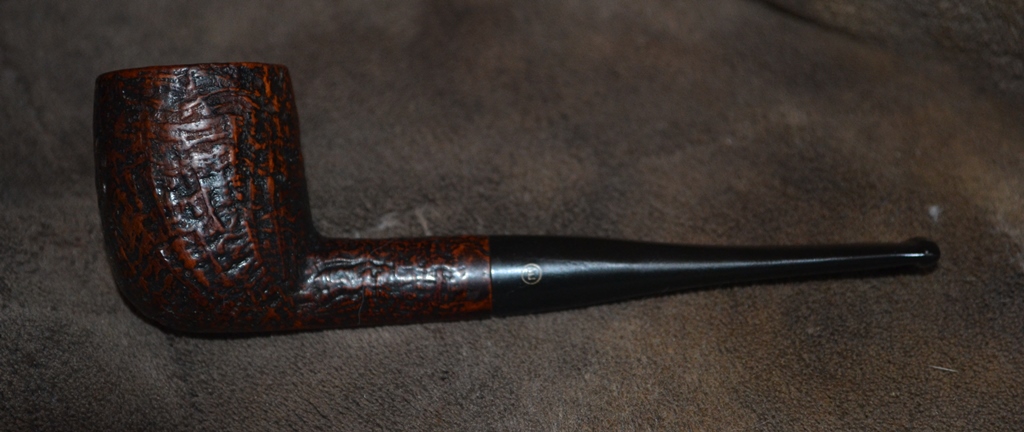
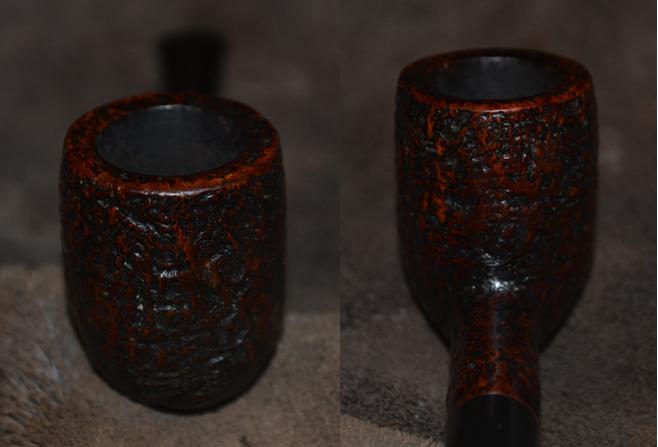
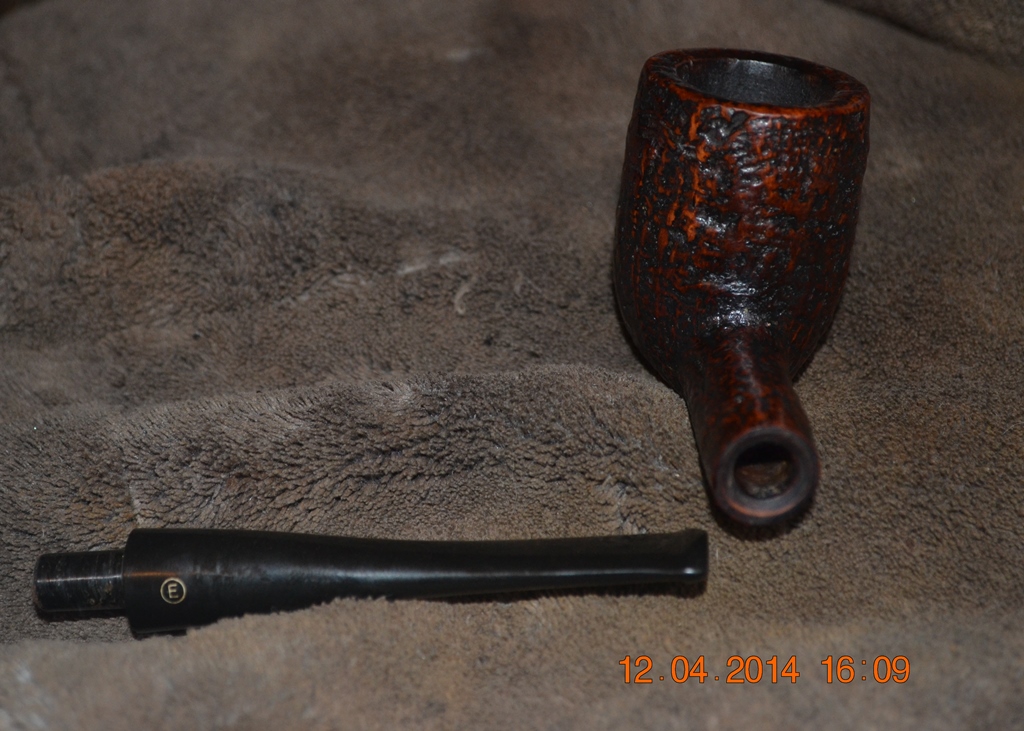
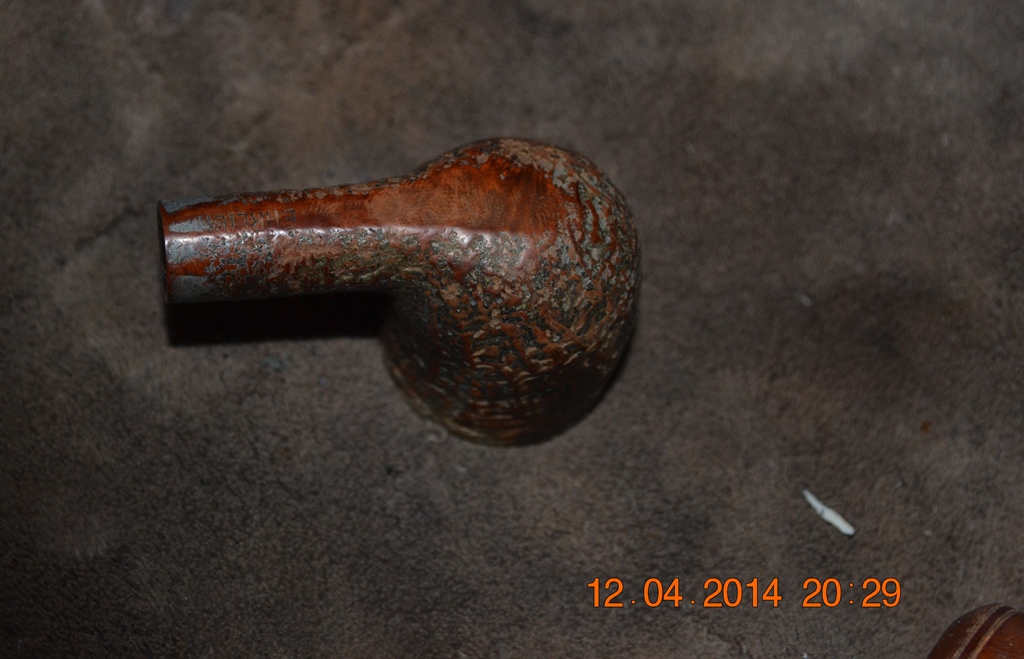
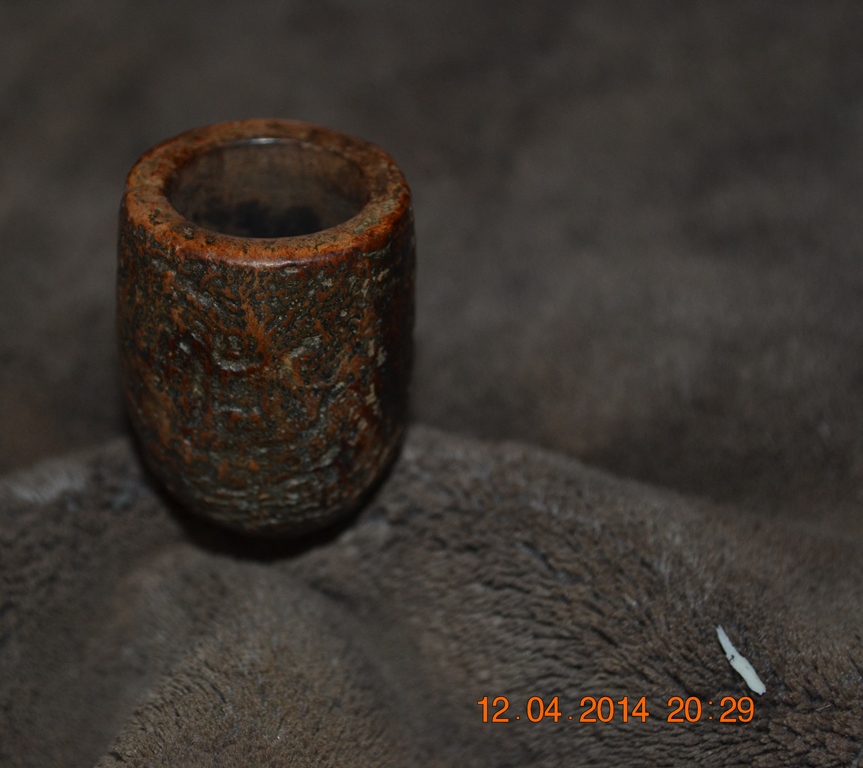
My inspiration for restoring an Ehrlich Sandblasted Straight Billiard acquired online as part of one very good estate haul was much like the opening lines to Poe’s most famous poem, except that no raven appeared to quethe negativity. Instead, the insight I gained from the gentle rapping on my creative door, which is how most of my contemplative phases before any restoration pass, was to transform the original dark and dreary pipe into something lighter and bolder.Rob1 Rob2 Rob3 Rob4 Rob5 Rob6 Rob7 Rob8 Rob9 THE RESTORATION
There are times when, to make something better of a pipe – whether it appears to have passed through a wood chipper or looks okay or at least nice enough as it first appears – calls for drastic action, such as stripping the old finish. There are two ways I know to accomplish this: the more invasive and time-consuming sanding approach, which always carries the contingency of scratches, and the faster, smoother method of soaking in Everclear. On rare occasions I have needed to start with the soaking and finish with light sanding, but for the most part I now try to avoid stripping at all because of my early restorations when I was gung-ho for the total overhaul idea. I soon enough learned there was a good reason for the darker finishes that so offended me, with a few notable exceptions.

But by either route, the initial result will be a striking step backward in the pipe’s aura. In other words, the wood is going to look like it’s been scorched by the fires of Hell. Still, I knew this was an occasion that merited stripping, and the pipe in question being sandblasted was one reason I chose the kinder, gentler Everclear.

Taking advantage of the fifteen minutes needed for the Everclear to do its work on the bowl and shank, I set upon the task of working out the few kinks in the stem. Starting with purified water on a small square of cotton cloth, I gave it a bath, then used 200-grit paper only on the bite mark below the top lip, which with concerted rubbing, to my surprise, eliminated any sign that the chatter had ever been there. I was able to finish spiffing up the stem with 2400, 3200 and 3600 micromesh.Rob10

Rob11 Removing the briar from the alcohol, I wiped down the outside and scrubbed the chamber with more cotton cloth pieces and scoured the inside of the shank with a wire-handled cleaner before I set it aside to finish drying.Rob12

Rob12a

Rob13

Rob14

Rob15

Rob16 Other upsides to the Everclear method were that the rim burn was gone and the chamber, which was not in the usual horrid state to begin with, needed no reaming at all and came smooth not even starting with my customary 150-grit first line of attack but an easy sanding with 320-grit paper.

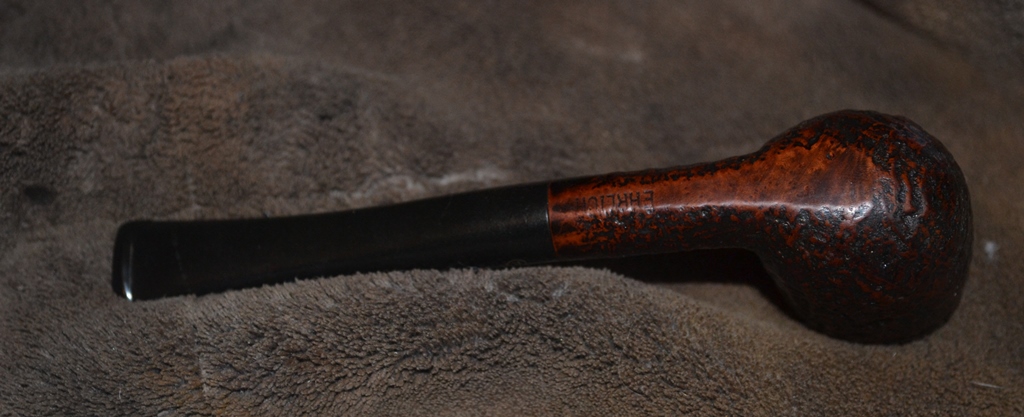
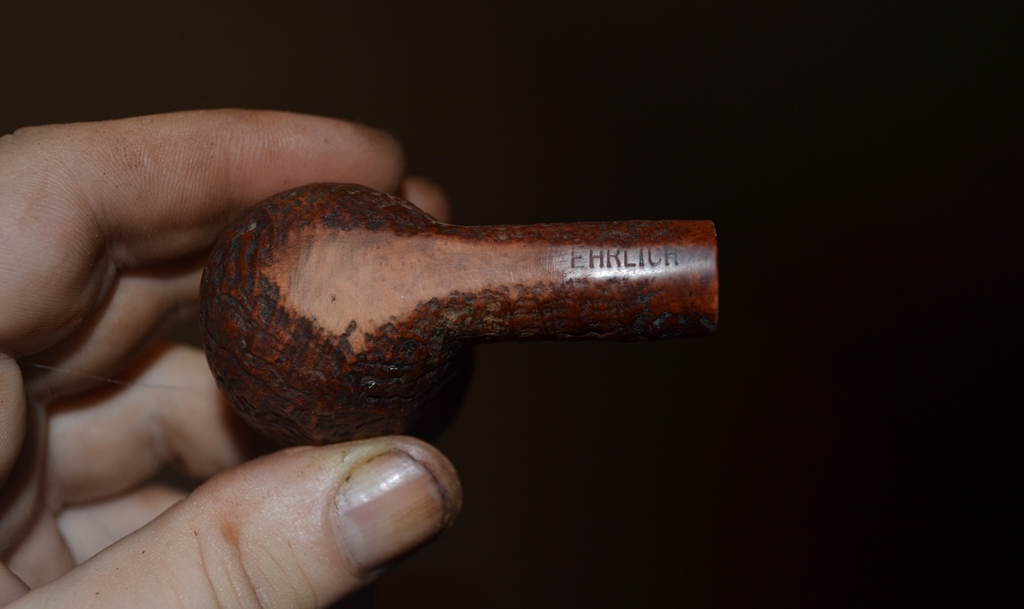
I seized the opportunity to retort the pipe before moving to the buffing of the wood with a progression from superfine steel wool to 2400, 3200, 3600 and 4000 micromesh. I only snapped one photo of the results of this step. It captures the nice return of a lighter, golden, more natural shine to the briar as well as the only nomenclature on the Ehrlich, a brand that hails from Boston, Massachusetts.Rob17 Ready to turn the finished parts on the wax wheels, I used red and white Tripoli and White Diamond on the stem and added carnauba (not having any Halcyon II) to the bowl and shank. The carnauba only needed more intense rubbing with a soft cotton cloth to clear out the excess.Rob18

Rob19

Rob20

Rob21

Rob22

Rob23CONCLUSION
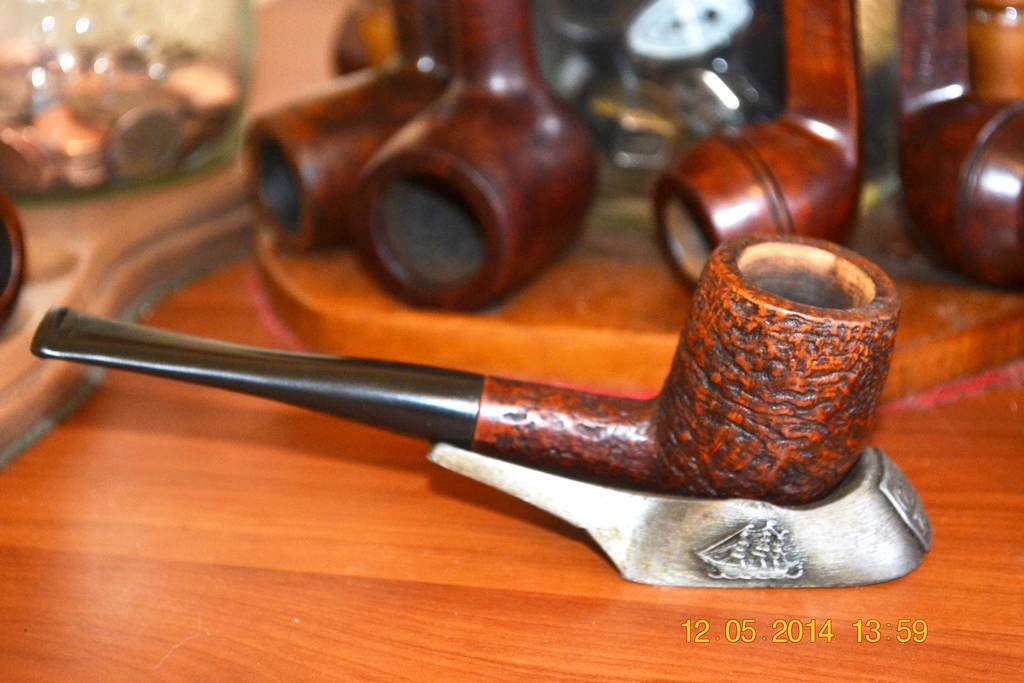
I’ve said it before. I’m more of a naturalist when it comes to pipe restoration, or a believer of using the truest color of the wood to its best effect, although for good cause I have strayed from the ideal. Most of the times I see an over-dark stain for no apparent good reason, I have an overwhelming urge to uncover the obscured richness of the wood beneath. I think I succeeded with this Ehrlich.