Tag Archives: Alcohol bath

Refurbished Stanwell 89


Blog by Steve Laug

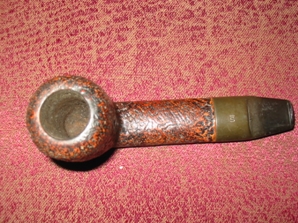
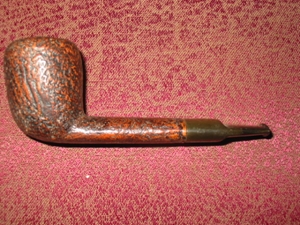
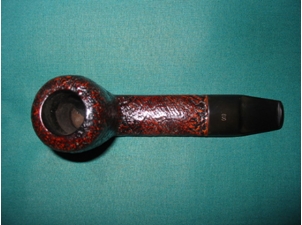
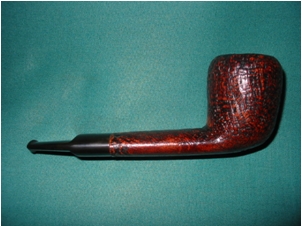
The day I decided to work on this one turned out to be my day for Danish pipes. The first one I chose to refurbish was this nice little Stanwell sandblast shape 89 – one of my favourite shapes with a flat oval shank and stem. It was very dirty and the finish was in rough shape. The bowl was heavily caked and the tars had run over the rim and down the edges. The sand blast was nicely done but almost smooth from the grime that filled the grooves. The stem was stamped hand cut and was oxidized. It also looked like it had worn a softie bit at one time as there was a hard line of calcified grit across the stem in front of the button. The pipe is stamped Stanwell Hand Made. It is a comfortable pipe to hold in the hand.

ImageImage

I reamed the bowl and scrubbed the inside of the bowl and shank with isopropyl alcohol and pipe cleaners, cotton swabs and a shank brush to clean out the grime. It took many pipe cleaners and cotton swabs before they came out clean and white. To clean the outside of the bowl I washed it with Murphy’s Oil Soap and wiped clean. I scoured the crevices of the blast with a brass bristle tire brush to get grime out of the grooves. I honestly did not care if it took of some of the stain and colour as I planned on restaining it anyway. Once it was clean I dropped it in my alcohol bath to let it soak and finish removing the finish.

I worked on the stem while the bowl soaked. I buffed it with Tripoli to knock off the oxidation as it was not a deep brown. This was an easy stem to clean as the oxidation was on the surface. I used 1500-6000 grit micromesh pads after the buffing. I buffed it carefully as I wanted to preserve the logo and the sharp edges of the stem where it met the shank. Once the bowl was finished I would put it on the pipe to give it a final buff with White Diamond.

I took the bowl out of the alcohol bath and dried it off. I then cleaned off any remaining grime and finish with a cotton pad and clean alcohol. Once dry I stained it with a medium brown aniline stain and flamed it to set the stain. I then put the stem on the pipe and took it to the buffer. I buffed it lightly with Tripoli to take remove some of the stain from the high spots on the blast and then buffed the whole pipe with White Diamond. I used a light touch on the bowl as I did not want to blur the edges of the blast. Once finished I coated it with multiple coats of Halcyon wax.

ImageImageImage

Refurbished a Karl Erik Apple


I picked this beautiful older Karl Erik apple up on EBay. When it arrived I loved the looks of it and decided to work on it immediately upon opening the package. It had many dents in the sides of the bowl and front and back. The bowl had some darkening along the back side of the bowl near the rim. It was not charred or burned just darkly stained. The rim was clean of tars and oils and the bowl had been reamed already. It was a very clean pipe other than the darkening and the dents on the rim and bowl sides. The stem was oxidized minimally and had a few bite marks on it that were not too deep. There was not a lot of work to do on this one so I went to work. ImageImage

I took it into the kitchen and turned on one of the gas burners on the stove. I wet a dish cloth so and laid it on the counter next to the stove. I heated my old butter knife over the flame. I placed the folded wet dish cloth on the dents that are visible on the sides of the bowl to steam them out. The hiss of the hot knife on the damp cloth generated the steam that lifted the dents. I worked on the dents on both sides of the bowl and on the rim. When I was finished the dents were gone. I washed the exterior of the bowl down with some isopropyl alcohol to clean off the darkening along the top edges of the bowl on the back side and on both sides. It came off quite easily. Once that was done I sanded the bowl with micromesh pads to smooth out the finish and prepare it for restaining. I stained it with a medium brown stain. I buffed it with White Diamond and then gave it several coats of carnauba wax.

I used my heat gun to lift the tooth marks on the stem near the button and then sanded it with 240 grit sandpaper and also the usual 400 and 600 grit wet dry sandpaper and water. Once they were smoothed out I sanded it with micromesh 1500-6000 grit and then put it back on the bowl. I  buffed and polished the whole pipe and waxed it again. It is a beautiful little pipe that I will enjoy smoking.
ImageImageImage

Resurrecting a Petersen Pre-Republic Billiard – Gan Barber


Blog by Gan Barber

It is a privilege to be able to post this blog entry from a friend and co-laborer in the refurbishing hobby. I have learned much from Gan, including the use of the alcohol bath for soaking bowls and preparing them. In fact as I read this report I am amazed at all the things we do similarly. I appreciate his taking the time to write this up to share here at rebornpipes. I look forward to more articles from Gan, as I am sure you will also after reading this one. Thanks Gan!

Well, the work is done, so it’s time to sit back, light up a bowl of Perreti 9575, and record this adventure….

I am not an expert on dating Petersen Pipes, but from the little I know, this one appears to be a Pre-Republic era vintage. There are no markings on the briar or stem. The hallmark on the band indicates nickel, not silver, and provides no dating information. The K&P, Peterson, Dublin stamping is the only indication that the pipe dates from the Pre-Republic era.

It came to me in a sorry state of repair, and, after some preliminary cleaning, sat in my ‘Lazarus’ box for many years. The shank had been snapped from the bowl, the rim was dented, and the P-Lip modified. It was never going to be a collector piece. Still, it held some promise…… Image

Before I begin the cleaning phase of any project, I like to remove any excess cake. I’m not looking to do anything more than scrape away thick accumulations from the bowl in order to find possible charring or burn-out. In this case, the break was clean, and exhibited no signs of burning that may have contributed to the damage. There was a small dent on the upper left rim of the bowl, leading me to believe that the previous owner liked to tap out the dottle, and had done so once too often.

Satisfied that the bowl was structurally sound, I placed it into a 91% Isopropyl alcohol bath. Once I removed the band, the broken shank followed. Image

I have had favorable results using this method to strip and clean a stummel. Using the highest percentage Isopropyl alcohol I can find (91%), means that only 9% of the solution is water. The low percentage of water allows the briar to dry rapidly once removed from the bath with very little residual moisture. I have soaked stummels for days without ill effects, though the extended time provides little in the way of additional cleaning. It can help with reducing strong ghosts, though. The alcohol will soften even the most stubborn cake, and sweeten the bowl as well as any other method.

Once the bowl had soaked long enough so loosen the dirt and soften the cake, I removed it from the bath and immediately reamed the bowl, removing as much cake as possible without quite  getting down to bare briar. My tool of choice here is a Senior Adjustable Reamer. Not that it’s the only tool that will work; it just happens to be what I have and works quite well for this task.

With the reaming completed, the stummel went back into the bath for another wash. I prefer to do the preliminary cleaning wet, so the stummel will see the bath frequently. The advantages of working wet are two-fold: The alcohol lubricates the mechanical action of the steelwool, mitigating scratching, and the wetting reveals any missed areas requiring additional attention. I worked the wet stummel with 0000 steel wool until most of the dirt, grime and tar were gone.

While the bowl soaked in the alcohol bath, the vulcanite stem soaked in a solution of Oxy-Clean (1/4 scoop to 16 ounces of clean, warm water). Depending on the level of oxidation, I will let the stem soak anywhere from 30 minutes to overnight. Again, I’ve left stems soaking for days without detriment. Generally, I like to soak the stem for two to three hours. The oxidation will turn to a yellow-white slime, and the majority of it will come off quite easily with 0000 steel wool. There was no logo present, so I used the 0000 liberally to achieve a thorough cleaning. Another advantage of the Oxi-Clean soak is its ability to loosen any gunk that has accumulated in the smoke passage. Several bristle pipe cleaners are all that are needed to literally pull the residue from the passage. Another pass with a regular pipe cleaner and some alcohol will remove any traces of tar.

Below are the bowl, shank, and stem after soaking in their respective baths and an initial wet scrub with the 0000 steel wool. Later on in the refurb, I will continue to clean them, but by dipping the steel wool into the alcohol for the wood and the Oxi-clean for the stem, rather than re-immersing them. Image

Once I was satisfied with the initial cleaning, it was time to move on to the most challenging aspect of this project – mating the shank to the bowl.

There are a number of factors to consider when choosing the proper bonding agent to use in repairing a broken or cracked stummel. Heat, moisture, clamping time and compatibility with wood are paramount. Traditional outdoor rated aliphatic glues (Tite-Bond, Elmers, etc.) are resistant to moisture, but I don’t trust them to withstand moist heat. Polyurethane adhesives are stronger and more resistant to both heat and moisture, but have high expansion rates and excessive foaming. Both require extended clamping periods, which is extremely challenging due to the irregular shape of a stummel.

My adhesive of choice is a a fast set epoxy – JB Kwik. It is extremely strong (though not as strong as regular Weld Bond), heat resistant to 500+ degrees F, impervious to moisture, and has a clamping time of only 3 minutes. Mixed from two parts (epoxy/catalyst), it has a reasonable working time, and the two pieces of the pipe stummel can be held together with strong hand pressure for three minutes and then released.

To rejoin the shank to the bowl, I carefully aligned the two pieces so that I could easily find the correct registration before mixing a small amount of the epoxy. I applied it to both surfaces with a toothpick, then pressed the shank and bowl together, squeezing as much epoxy out of the joint as hand pressure would allow. I held them this way for three minutes. I did not worry about any squeeze-out getting into the air passage – yet.

After hand clamping for three minutes, I gently set the stummel down and let it rest for another 7 minutes. If properly mixed, Weld Bond Quick will be set to a rubbery stage after ten minutes (at 70 degrees F). At this point, I took a utility knife and carefully lifted the squeeze out off of the briar. It should peel like a rubber gasket if you catch it at the right time, leaving only a dark oily residue where it contacted the briar. Next, I took the drill bit from the Senior Reamer, and gently worked it through the airway. Care must be taken to use as little pressure as possible to twist and push out any epoxy the made its way into the passage. Although Weld Bond is non-toxic when cured, if cleaned out properly, little if any will be present in the airway.

I allowed the epoxy to cure for 6 hours, and then set to work gently sanding the joint with 400 grit emery to fare the seam as smooth as possible without altering the shape of the pipe. The only caveat to using this epoxy – it is rather viscous and will leave a faintly visible line at the joint no matter how well the parts are mated. I’ve found that after sanding, staining and buffing, this line will all but disappear.

Image

The stummel after roughing in with the 400 grit emery. The graining did little to hide the seam on the left side…..

Image

…while on the right, the grain pattern was more favorable and the seam blended in nicely.

With the shank and bowl rejoined and fared, I finished cleaning the briar with 0000 steel wool wetted with alcohol. Working wet with alcohol eases the scuffing of the steel wool and reveals the grain and any remaining flaws that may need attention. It also removes any oils or dirt introduced from handling the raw wood. The JB Kwik is impervious to the alcohol.

The next stage consisted of wet sanding with 600 grit. I used alcohol as a lubricant. When finished with the 600, I took the bowl to the buffer for a gentle once over with red rouge. This serves to deepen the color of the briar and reveal any scratches or imperfections that the finer grits will have difficulty removing. Satisfied with the results, I continued to wet sand with 1500 grit emery. The final sanding stages were done dry with 3600 and 6000 micro-mesh. At this point in the process, I was simply polishing the briar to prepare it for staining.

I chose Feibings Light Brown dye and gave the stummel a wash coat, undiluted, using a cotton Q-Tip. I set the stain with my Perdomo table-top lighter, and then gave it a thorough rub down with a microfiber cloth. The microfiber works to even out any imperfections in the finish, and noticeably polishes the dye to a nice luster. The bowl is now ready for the buffer.

The stem received an additional scrub with 0000 steel wool wetted with Oxi-Clean to remove any remaining oxidation. I then wet sanded, with water now, using 400 and then 600 grit emery. A quick and gentle buff with red rouge to find any remaining scratches from the steel wool and sandpaper was followed by a wet sand with 1500 emery. I then polished the vulcanite with 3600 and 6000 micro-mesh to prepare it for the buffer.

Both the stem and bowl were given a soft buffing with white diamond on the buffer and then wiped down with microfiber to remove any trace compound.  I then swapped out the white diamond wheel for the wax one, and applied three coats of caranauba wax to the bowl. I like to use a moderate amount of pressure when applying wax as the caranauba is extremely hard and requires the heat generated to go on properly.

After the stem received a coat of Walker Briar Works sealer/wax and the nickel band was polished with Never Dull wadding, everything went back together and was ready to be enjoyed once again. It’s far from perfect, but then, it’s all about the journey, isn’t it? ImageImageImage

Thanks to Steve for inviting me to contribute.

Best Regards,

Gan Barber

Refurbished and Restemmed this interestingly shaped no name pipe


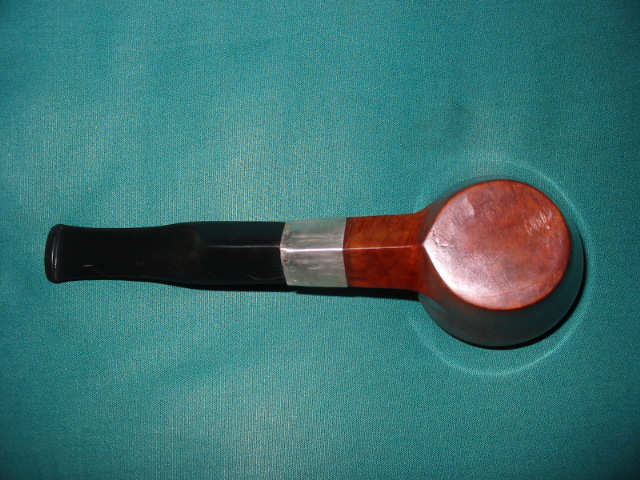
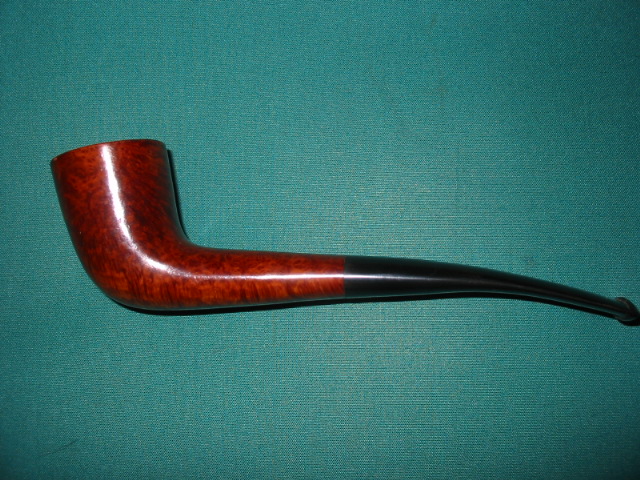
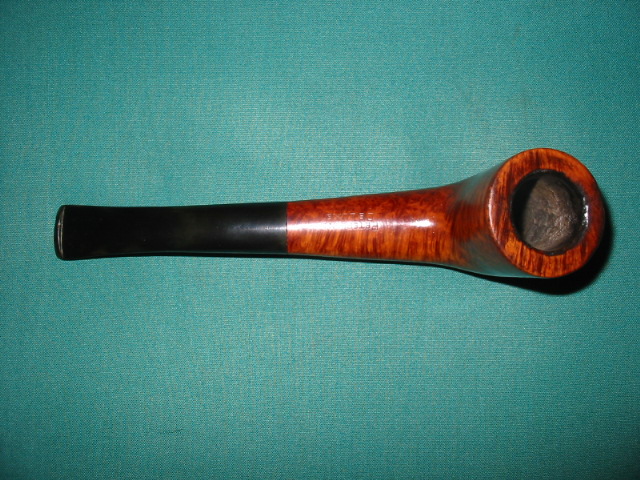
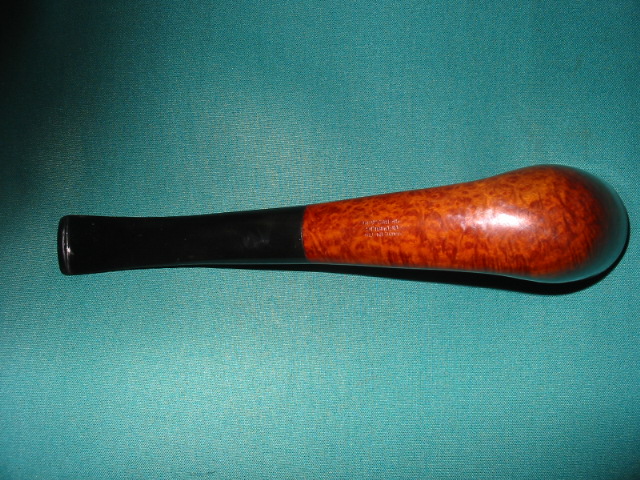
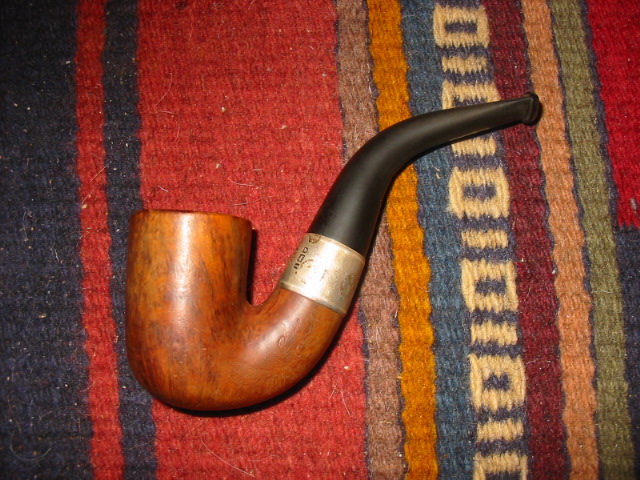
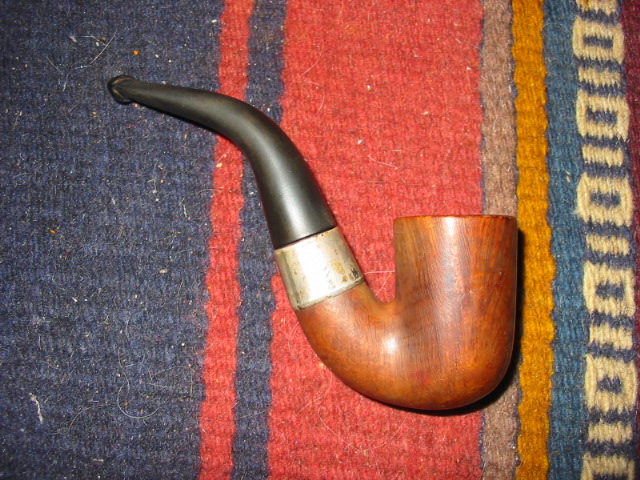
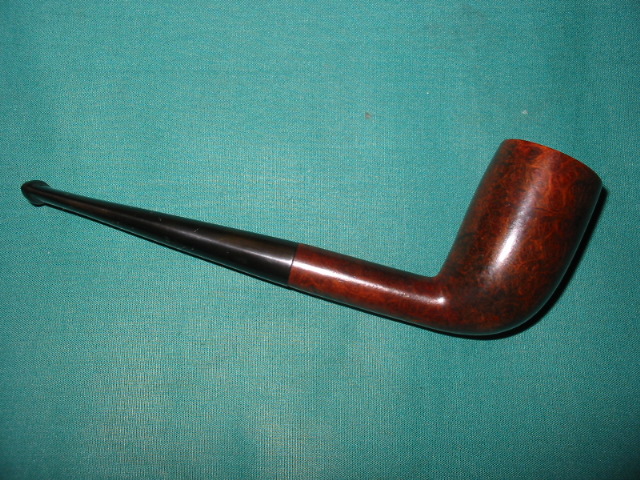
I refurbished this interestingly shaped no name pot/rhodesian/bulldog (?) or you name it shape. I was drawn to it and liked the look of it when I found it in my box of pipes and bowls that I have gathered for refurbishing. It is a box I have that at one point held over 300 pipes that needed work but is slowly shrinking even though I add to it each time I go scavenging. I am pretty much incorrigible about picking up estate pipes and hunting for them. I am getting more picky over the years as to what I want to work on but I pick up ones that will be a challenge to me or that I like the brand or the shape.

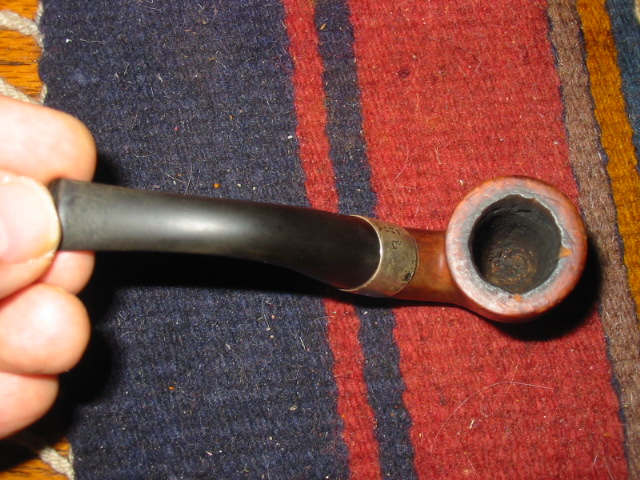
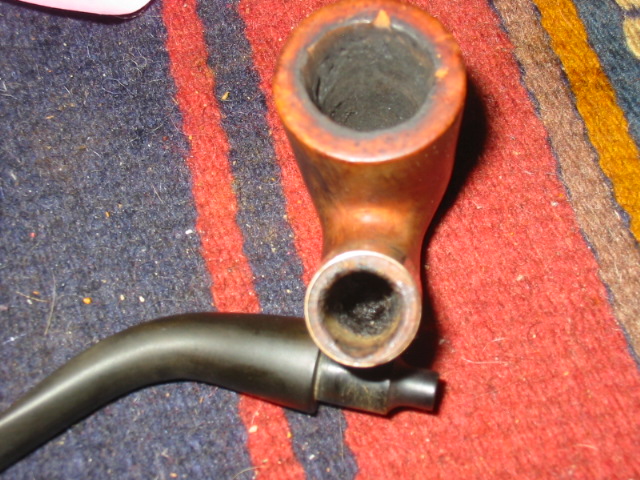
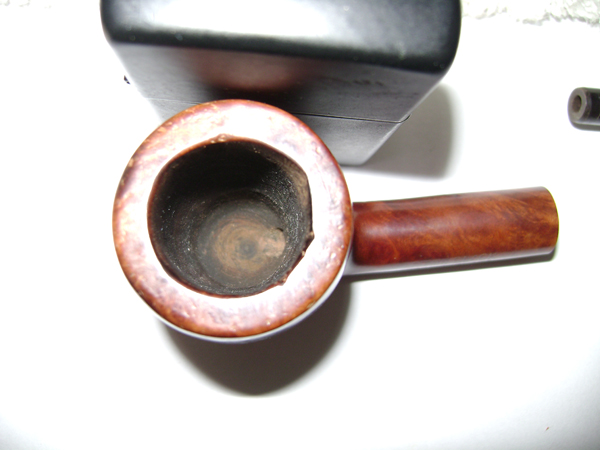
This one was truly a mess. I forgot to take pictures of what it looked like when I took it out of the box but I will describe it to you. In many ways it was no different than most of the others that I work on. The bowl was caked to the point of barely holding any tobacco any longer. It was a tarry mess on the rim and running down the sides of the bowl. There were dents and deep “wounds” in the briar of the rim. It also was without a stem. The silver band on the shank was badly beat up and to be honest the pipe was downright ugly. But in its ugliness I saw something that drew me to pick it up and see what I could do with it. So I took it to my work table and it became a project that took me two days.

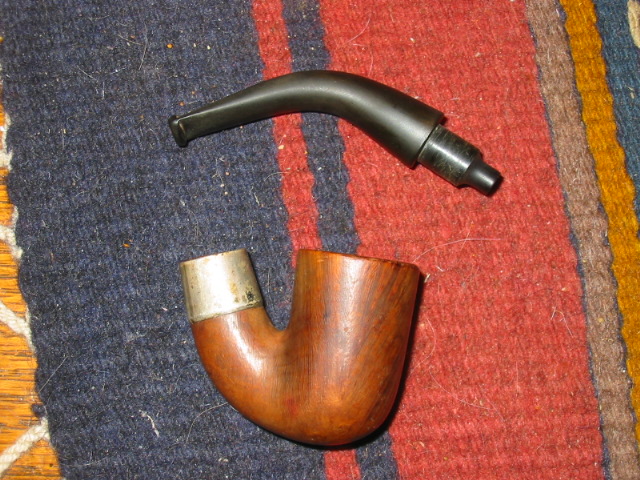
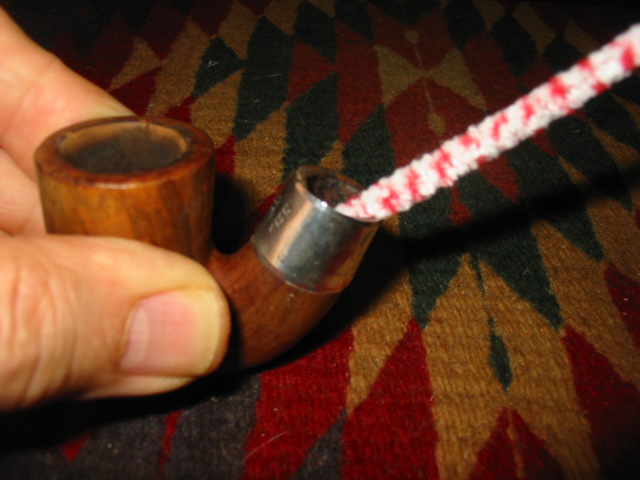
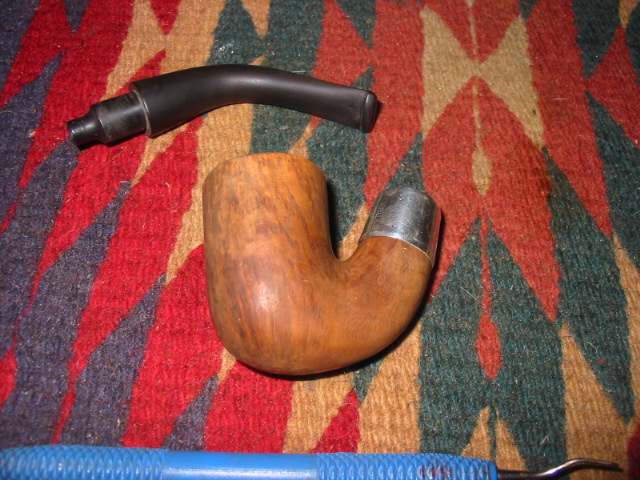
I did what I call field dressing the pipe the first day. That includes reaming the bowl and cleaning out the grit and grime from the shank and bowl. I washed the bowl down with acetone to remove the overflow from the bowl and rim on the outside of the bowl. I also removed the dirt and grease marking on the bowl. Once it was clean I fit a stem for it. It has a diamond shank, and those have always been a challenge for me to make a proper fit. I find that on these old timers what appears to be a diamond with equal sides never truly is equal. Each side on this one had a different measurement. I used a blank that I had here and shaped it to fit. It is difficult to get each side correct and maintain the shape to fit the shank. I cut the tenon with my Pimo tenon turner and worked the shape for a long time to make it flow with the shank. It took a long time because I would get one side perfect only to lose a bit of the angle on the next side. I finally was able to get the angles right and fit the stem to the shank well. In the finished photos you can get a bit of an idea of the work involved in that.

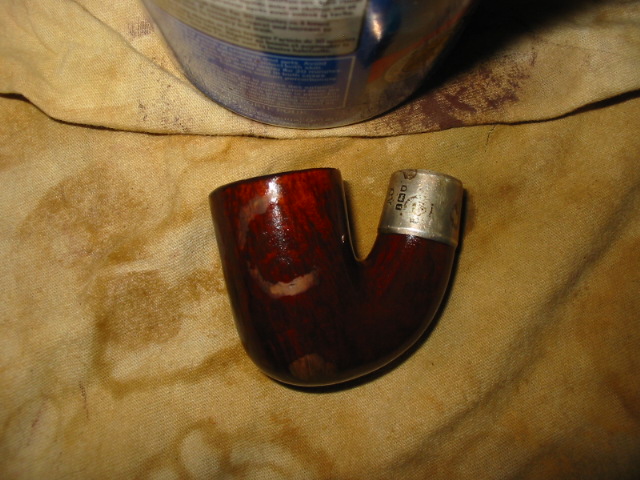
I then removed the silver band and put the bowl in the alcohol bath while I tried to straighten and smooth out the silver band. I got a lot of the wrinkles and dents out of it but a few still remained even after my work.  I set it aside to reinstall on the shank once it was restained and turned my attention to sanding and polishing the stem. I used 400 and 600 grit wet dry sandpaper as usual to remove the scratches and marks left by the shaping. I then use my normal regimen of 1500-6000 grit micromesh to bring a shine to the stem. When I had it finished and ready for the buffer I put it aside and went back to the bowl.

I removed the bowl from the bath and sanded it with the usual variety of sand papers and micromesh pads. Then I restained it with a cherry stain that I use on some of the older pipes as I have found that it brings out the old colours from the briar and really looks good. I then sanded again with micromesh and put the stem on it before taking it to the buffer to polish it with White Diamond. Once that was finished I gave the bowl and stem several coats of carnauba wax.

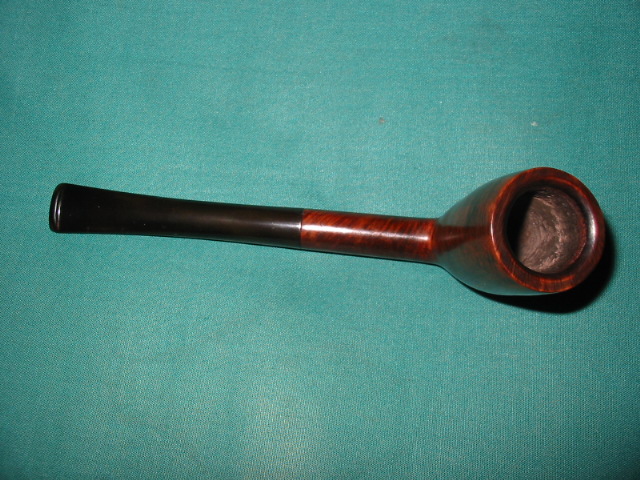
There are no stamping or marking on it all. But the unusual shape continues to attract me in an odd way. It is 6 inches long, bowl height is 2 inches. The chamber diameter is 1 inch and the chamber depth is1 1/4 inches. The rim is chamfered and clean. Anyone have a name for the shape??
ImageImageImageImage

Refurbished a Peterson’s Deluxe Zulu


In one of my EBay purchases was this little Peterson’s Deluxe Zulu shape #268. To me this pipe epitomizes the Zulu shape – in other words, when I think Zulu I think of a pipe that is shaped like this. When the pipe arrived the bowl was dirty and caked (two things that I almost forget to say as they are to be expected in estate pipes and I am surprised when I find one that is not). The finish was mottled with light and dark spots where the stain had worn off. It also had some flecks of paint on the surface that are not clearly visible in the photos below. The rim was very caked and covered with tars. Fortunately there was no charring that was visible as I looked it over. The stem also had paint flecks on it and was slightly oxidized. There were tooth marks on the top and bottom of the stem that would need to be repaired.ImageImage

I reamed and cleaned the bowl and the rim of the pipe. The shank took some work with isopropyl alcohol and many pipe cleaners and a shank brush before it was clean. I wiped down the surface of the bowl with acetone to clean off the remaining finish and the paint spots. I use cotton makeup removal pads that I picked up at the store. They work great and are easier to use than just cotton bolls. Once the finish was cleaned I dropped the bowl in the alcohol bath to soak while I turned my attention to the stem.

I buffed the stem to remove the oxidation and the paint spots. I was careful to avoid the area where the stem and shank meet so as not to round the sharp edges and ruin the great fit of the two. I heated the tooth marks that needed to be lifted with my heat gun and when they had come back as far as possible I sanded the stem with 240 grit sandpaper to remove what remained. I sharpened up the edge of the button with my needle files to give it a good crisp edge. I then sanded the whole stem with 400 and 600 grit wet dry sandpaper and water. I finished the sanding and polishing process with micromesh pads from 1500 to 6000 grit. Once that was finished I laid the stem aside with a coat of Obsidian Oil and turned back to the bowl.

I took the bowl out of the alcohol bath and restained it with a medium brown aniline stain. I flamed it, let it dry and then took it to the buffer and buffed it with White Diamond. This was done and the entirety buffed and polished with carnauba wax to give it several layers of wax. The cross grain, birdseye and straight grain on this beauty are well laid out. ImageImageImageImage

Two men and Pipe Restoration via Skype – Part 1


Blog by Steve Laug

Part 1 of this post appeared as an article in the August 2012 issue of Pipe Smoker Unleashed Magazine. It is available at the website address below. Part 2 will appear in the September issue.

I would like you to walk through the process of refurbishing two pipes that I sent to Carl Hackman. Once he received them we met on Skype and walked through the process of refurbishing them. Carl would also post pictures and comments and I would reply on Pipe Smoker Unleashed Forums http://www.pipesmokerunleashed.com/forum/forum.php to involve the PSU Community in the process as we worked together via Skype. This essay combines the two media to give a report on the process.

Carl described the condition of the two pipes before we started the work. It is an important part of the refurbishing process to discern what needs to be addressed before you work on a pipe. I have learned that half the battle in refurbishing a pipe is the preparation – both understanding the pipe and gathering the tools. To make this more interesting the reader should be aware that Carl is in the Dominican Republic and I am on the west coast of Canada – Vancouver, British Columbia. The Skype connection worked brilliantly for these lessons in the art of refurbishing. We completed the work in two 3 hour sessions and the end product in the pictures below will tell the story. Join us at the virtual work bench with your computer! CH is Carl and SL is me.

CH – Generosity from Steve has allowed me to try a full restoration of 2 pipes. He sent me 2 pipes to play with and try and hone some restoration techniques. I’ll document all the steps I take and show the end result. If I don’t screw it up too much and make a reasonable job of it then it may grace the pages of our magazine. With Steve’s help along the way I’m sure we can bring together an amateur refurbishment project.

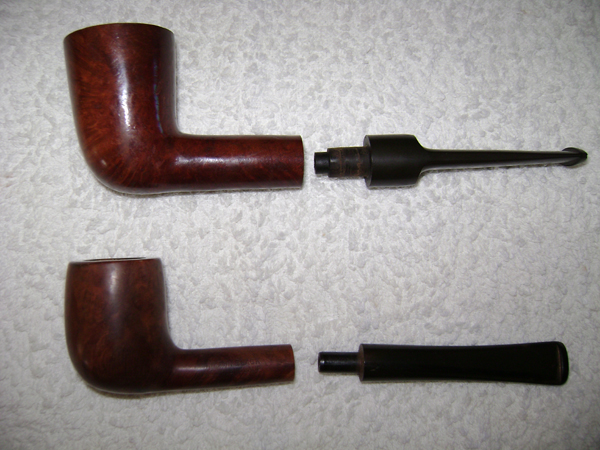
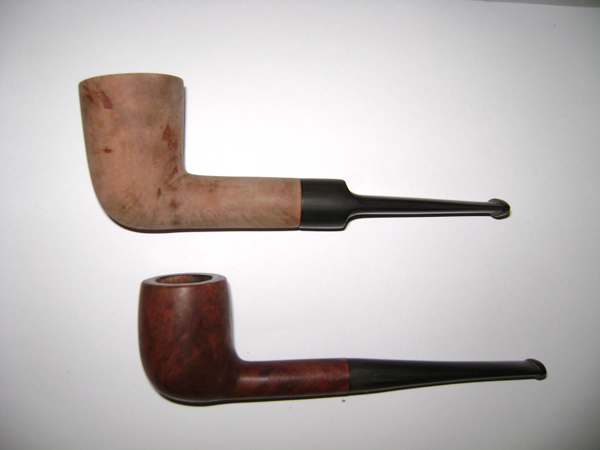
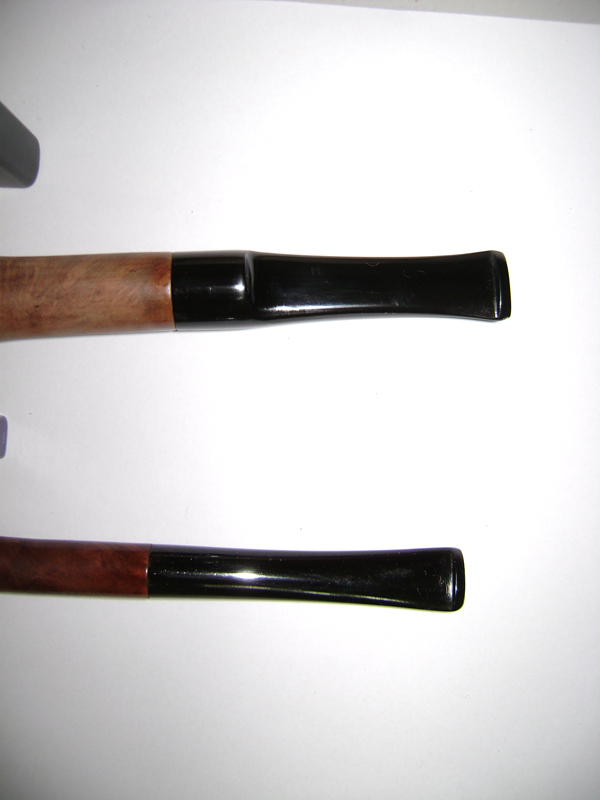
The top pipe is a French Dublin and below that is a Captain Black Billiard

The Dublin has a small chip on the rim and some dings on the outside of the bowl. There is caking around the rim but it looks in pretty good shape. The saddle shaped stem is really tight and may not be the original. When restored this will be a lovely pipe. I intend to sand the finish and stain off completely and re-stain the bowl, maybe a tan color.

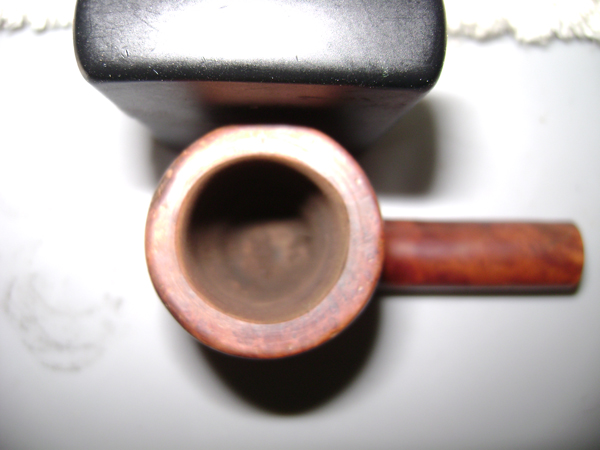
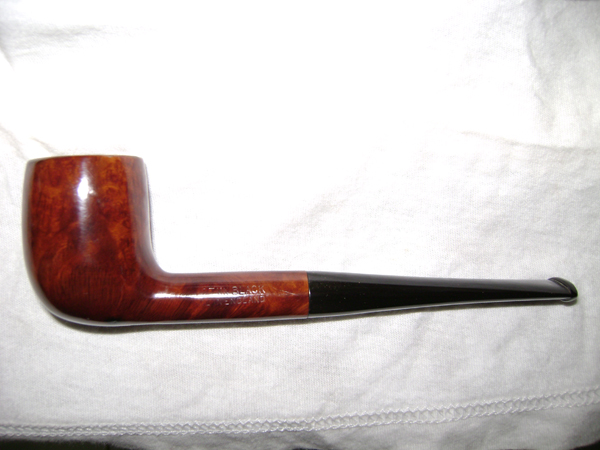
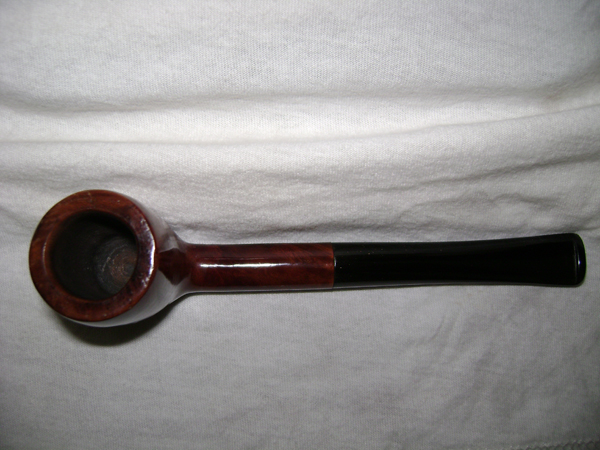
The Captain Black is made in England and is a dainty B14 model. The rim has some minor dings and the chamber rim is slightly misshaped (I’m not sure how to try and correct that but it isn’t so bad that it detracts from the beauty of this pipe). There is a burn mark on the base of the bowl near the start of the shank and I’ll have to see the extent when I start sanding it down. Again I intend to refinish the bowl, this time with a medium brown stain. The stem looks to be in good shape and probably just needs a bleach bath, light sanding and then some buffing with white diamond and carnauba wax. She will be a little beauty when restored.

I’m sure now that I have them here and have made some initial observations that Steve will chime in and let me know the best way to proceed and maybe point out some areas I may have missed.

SL – Good call on the observations. Well done. Not sure how the stains will come out or if you can do what you have planned. I usually have a plan before I start but then have to let what I find in the process determine where I go with the stains. Don’t use bleach on the stems Carl. It really deteriorates the vulcanite in my opinion. Let’s do it a bit differently. Both stems were original. The one on the Dublin is probably tight from the gunk on the tenon and in the mortise. We will clean that out in the process of the refurb.

Also before you sand either bowl down drop them in an alcohol bath over night and let them sit. It will soften the tars on the rims and also remove most of the finish for you. If you can snag a bottle of fingernail polish remover we will use that after the alcohol bath and the bowls dry a bit. It is acetone and works great to remove any remaining finish on the bowls.

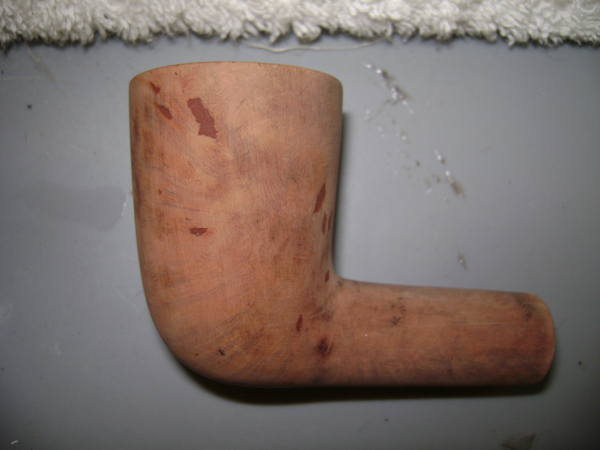
CH – I dropped the Dublin in as well. For the Dublin I initially started sanding it with 220 grit sandpaper to remove the initial layer of finish and the cake on the rim. I then wiped the bowl with an alcohol dampened cloth to highlight the dings (and there are quite a few now that I didn’t notice before). They really stood out after the wipe. I dropped it into the alcohol bath as you advised.

SL – Check the bowls in a half hour – particularly the Dublin as you sanded most of the finish off of it.

CH – Ok mate, I love the Dublin shape and it feels great in the hand. After the initial clean on it the stem fitted perfectly.

SL – I figured the stem would – it was the one that came with it. Once you take it out of the wash, wipe it down and let it dry. The pink spots on the pipe are the putty fills. You did a good job removing the finish.

CH– It will be a stunning pipe mate.

SL – The grain on both pipes looks good.

CH – Yeh, I love the little Billiard as well.

SL – We can use the black stain to hide the fills and highlight the grain.

CH – Nice to have an English pipe.

SL – I figured you would like that.

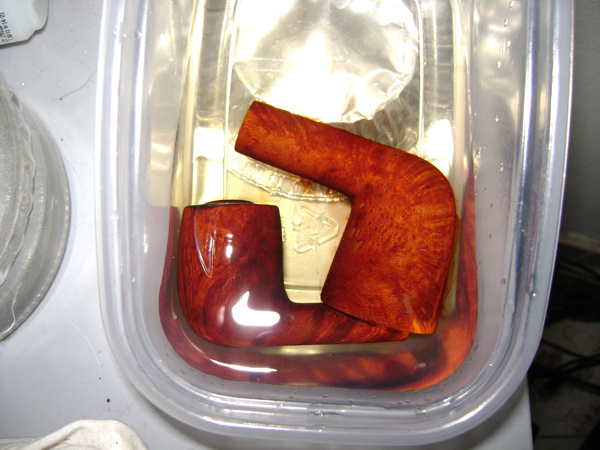
CH – Here is a picture of the Dublin after initial sanding with 220 and alcohol wiped to highlight dings. The next picture is shows both the billiard and Dublin in the alcohol bath.

SL – You can steam the dents out pretty easily. Heat a flat blade (I use a knife from our old cutlery) on a flame – I do it on the gas stove. You can also heat it on a candle or such. Once it is hot put a wet cloth on the ding and put the hot knife on top of the wet cloth – it should hiss and steam. Do this until you have removed the dents. Do this prior to sanding. Once the dents are raised as much as possible sand with the 220 – try to follow the grain on the pipe so you make less work or yourself in the later sanding. You can also use a steam iron in place of the knife and the fire.

As I look at the pictures though, it appears to me that many of those dents are fills. Fills can be hidden with a darker stain or picked them out and refilled with briar dust and super glue. We can decide that later. You will want a lid on the alcohol bath as it evaporates pretty quickly. I reuse mine for 3 or 4 months as I find the old stains give a patina to the briar as it soaks. While the bowls are soaking you can work on the stems.

CH – Ok mate, I’ll leave the bowls in the alcohol bath for another 1.5 hrs and then look at the marks on the Dublin. When I looked at the bowl initially before sanding those areas looked like indentations. I’ll have a closer look once the bowl has dried out.

SL – We can work with those Carl. We can also make a nice dark tea stain to do some grain work on it. Once they come out of the bath and dry we can sand a bit more. Sand with the grain as scratches can be a bear to get out. Once we are done sanding it all the way through your micromesh pads we can talk about the staining.

CH – The only colors I have are medium brown and tan. And I had to wait a month to get those from Miami to here due to the Dominicans saying that they were dangerous.

SL – No problem. We can use something else. You have some tea correct?

CH – Lipton’s – a pretty light tea though

SL – That will work. We want to make a very dark cup of tea. Let it steep over night you want it almost black.

CH – Right ok. The medium brown stain looks pretty dark

SL – Medium brown is dark but once it buffed it is pretty light. The tan is really light almost neutral. We will paint on the tea solution on the grain, following the grain with the brush that you apply it with.

CH – Ok. So just stick a couple or 3 teabags in a cup and leave to stew overnight?

SL – Yes leave it in overnight. We will repeat it a few times to give a good deep colour.

CH – Shame about the fills as I was thinking that shape would lead to a nice contemporary tan pipe.

SL – We may be able to hide them a bit with the tea stain. We shall see. If not we can also use the medium brown the same way to darken the fills.

CH – I spent a small fortune getting those 2 dyes over here and I won’t be able to use them. LOL!

SL – We will use them; the tan could work with the dark stain as an undercoat. We will have to stain them differently because of the fills.

CH – I want the billiard to look darker so I will definitely use several coats of the medium brown. I want to have a classic look for the billiard and contemporary one for the Dublin – sort of 2 different styles of refurbishment; one sympathetic to the original and one a complete facelift to bring it into current times.

SL – That should work. Let’s aim for that with the Dublin. Do you have a small paint brush?

CH – Yeh I have several paint brushes and also the applicator that comes with the dye.

SL – You want a pretty fine brush to follow the darker grain lines.

CH – You are an enabler mate. You create enthusiasm. LOL!

SL – Let’s get back to the stems.

CH – The stems are in excellent condition with no tooth marks or dents. I have used bristle pipe cleaners dipped in whiskey in them and they are surprisingly clean. I will sand them with 220 grit sandpaper and then micromesh. Do you use Tripoli on them or do go directly to White Diamond when buffing.

SL – Start with a higher grit on the stem as you will scratch it with the 220. If you have some wet dry sand paper 400 or 600 use that on the stems. If they are clean as you say then let’s use micromesh 1500 to work them over. I find with the lower grits if I sand length wise it scratches less than cross wise.

CH – Ok, I’ll work on the stems while the bowls are soaking.

SL – You can use only the micromesh on the stems if you like.

CH – I have a buffer mate and some Tripoli, White Diamond and carnauba.

SL – The first micromesh 1500 will make the stem appear grey. Keep working it until it is smooth. I keep a small bowl of water next to me when working and dip the pad in it while sanding. The grit cuts better when wet. You get a grey slurry of the pads when you dip them while sanding. Change the water between grits.

CH – Working on the Dublin stem now with wet mesh.

SL – Excellent. You won’t need to buff much if you work the pads up to about 6K.

CH – Can only get 220 or higher or 2000 here mate, remember we are 3rd world in this place LOL.

SL –I should have thrown in a few papers and sanding pads when I sent those to you. Pretty cheap here.

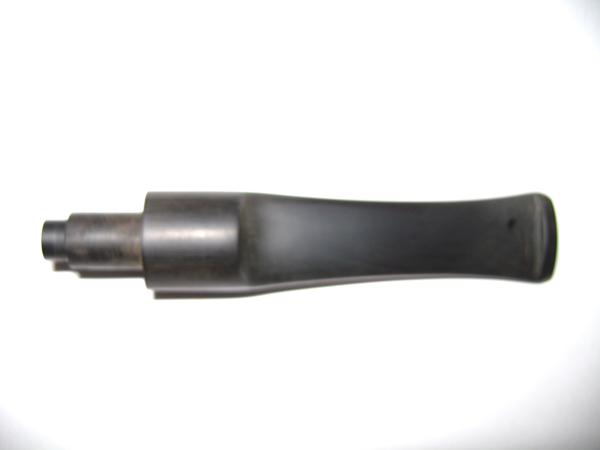
CH – No worries mate, I managed to get a mini buffer shipped over with Tripoli, White Diamond and carnauba. Here is the Dublin stem after wet and dry sanding. The tenon will need careful cleaning to ensure that the fit is not degraded.

CH– Would you use Tripoli on a stem or go straight to White Diamond? Some people say that Tripoli is too harsh for stems.

SL – I use Tripoli. Now would be a good time to pull the bowls out of the wash. Put the stem on the pipe before you buff them – VERY IMPORTANT AS YOU WILL ROUND THE EDGES. Give it a buff with Tripoli. Lightly load the buffing pad. It can go on heavy and it makes the work miserable. A heavily coated pad turns the Tripoli to a reddish brown sludge on the stem… a real pain. When done look for scratches. If there are some go back to the micromesh until they are gone. Once it is good and smooth move to the White Diamond. Again check for scratches. Remedy with Tripoli and/or pads. Use a light touch. I use it all the time and it is good. It is finer than the 2000 you are using

CH – Ok will do mate. Fit stem then photo then initial Tripoli buff.

SL – Perfect.

CH – Going to take a picture of the alcohol bath before removing the bowls as it is pretty brown LOL.

SL – Remember, the tenon may be a little tight when you take it out of the soak – that is ok.  The main thing is not to round the edges on the stem at the joint. Even if it does not go all the way in it is ok. It gives you a guide.

CH – Ok. Should I rinse the bowls after removing them from the bath?

SL – No don’t bother. It will evaporate quickly.

CH – Ok. Is the alcohol reusable even though it is brown?

SL– Yes I reuse it for 3 months or more. I find the brown in the alcohol seems to give a nice patina and evens things out on old bowls. I usually let the sediment settle out in the bottom of the alcohol bath and then pour it off, rinse the container, dry it and put the alcohol back.

In terms of buffing the pipe Carl, hold the pipe with a thumb or finger in the bowl when buffing as it will easily be jerked out of your hand.

CH – Yeh, I know LOL.

 SL – I have broken a few stems doing it wrong… even dented a beautiful pipe that was getting a final buff

CH – I think you are right about the fills mate. Took the pipes out of the bath and the Dublin has soft areas where the fills are.

SL – Yup they will harden again. We can level them off a bit. Should work out.

CH – I have some mahogany wood filler here that is similar color to the briar if we need to fill instead of sanding down too far.

SL – That may work. How does that burn look on the little billiard?

CH – Haven’t sanded the bowl yet on the billiard so not sure until I get into it. Can’t see anything on the inside of the chamber to indicate it has burned through.

SL – Most of that one you may not need to sand. I think it is a cigarette burn from an ashtray. How do the stems look? To give them a last bit of sheen I will often add some olive oil to the highest micromesh pad and rub the stem down then a final buff to give a glow.

CH – Ok here is a picture of the stems mate

SL – They look really nice. Well done

CH – Thanks mate, they look way better in natural light though. The flash can be a bit harsh.

SL – The next stage is buffing the stems with Tripoli, White Diamond and carnauba wax.

CH – Ok here is what the stems look like after buffing.

SL – Good job. The buttons still have the sharp edge! Also the shank stem junction still is crisp without a rounded edge – very nice. Rounding the edge and the loss of the crispness of the button are usual mistakes folks make. Buff the billiard with the Tripoli and see what it does.

CH – Ok

SL – Sometimes the alcohol bath removes the grime and gives you a great old patina look. All it needs is a buff.

CH – How old is it?  Do you know?

SL – Probably 60’s era on both of them. That was what the rest of the lot were.

CH – I would leave it original if it was a 61 LOL!

SL – Could be you know… no way of really knowing for sure.

CH – Hard decision whether to leave it and live with the rim mate.

SL – Nah lets work on it and smooth it out a bit.

CH – It has a nice patina, I wonder what diamond white and carnauba would do for it. I love the patina and after the alcohol dip and a quick blast with Tripoli the grain is quite lovely. The problem is the rim. It has some chipping on the outside and the inside looks as if it was reamed with a knife. I don’t want there to be a large variation in color and I don’t want to ruin the rim by sanding it out of true.

SL – We can leave the bowl as is in terms of the finish and even up the out of round bowl a bit. How is the rim?

CH – Obviously been reamed with a knife at some point. The outside of the rim is slightly rounded and has some chipping around the edges. Nice grain on the bowl though mate.

SL – It is indeed. I thought it would have when I had it here. Amazing how removing the grime and a bit of finish with the alcohol makes the grain show. As far as dealing with the roundness of the bowl – take a small 1 inch square of 220 grit sandpaper and fold it in half lay it at an angle to the inside of the rim. You will work in slowly evening out the rough spots and cuts on the inside. Try to work to get the distance from the inner circumference to the outer one to be equal all the way around the bowl. Doing this you may not need to do anything to the rim… we shall see. We can also work to match the whole thing…

CH – Mmm, trying to think how to match the stain when we are done with that.  The patina is really nice

SL – That will be fairly easy – medium brown will work perfectly for the patina of old pipes. Work on the roundness of the bowl first before tackling the rim. You may be able to leave the rim. Work the edge slowly with the 220 sandpaper to smooth it out on the inside edge. Doing it at an angle will allow you to even things out aiming for equal distance between inner and outer edge all the way around.

CH – Ok mate, working on it now.

SL – In your picture of the top I see that you need to take out some on the top side of the picture (right side) and also on the butt side of the bowl near the shank. Very little needs to be done with the left side.

CH – I think we are very close.  Not sure how much more I should play with it for a pipe of this age.

SL – You did it brilliantly!! Perfect

CH – Thanks mate. I was really worried about ruining it.

SL – No need. You did well. It looks way better and like it should after some 40 years of care. It is these little steps that make the difference.

CH – Yeh that is what I was thinking. You can be too anal and ruin the pipe’s character

SL – Now steam out a few of the dents to the top and you should be good to buff and polish. Heat a butter knife over a flame and fold a wet dish cloth on the rim. Lay the hot knife on top of the wet cloth and it should hiss and steam. You may need to do a few times but it will lift most of the dents in the rim. It will dull the finish but a buff with white diamond and some wax will remedy that.

CH – Right, I’ll get onto it mate. She is a little gem mate, I really appreciate it.

SL – You are doing great. Once that is done you can buff with White Diamond and wax. Should be a keeper. How is it working?

Carl went on to steam the dents until they were less visible and then he buffed the pipe on his buffer with Tripoli and White Diamond.

CH – Just going to upload a photo of the billiard.

New Life for an Old Barling


I have often written on the blog that good refurbishing begins with observation of the work at hand. I never fail to spend time looking at a pipe and noting areas of concern before I work on it. That is probably why it is pretty simple to record the work I have done on the pipe after the fact. In the old Barling bent, who’s refurbishment is recorded in the following post, I chose to post the notes from my observations. Enjoy!

At Smokers Forums a friend and I have exchanged ideas and thoughts through pm’s, emails and phone calls for several years now. Our talks have covered much ground but seem to also involve at least a fair amount of chatting about refurbishing estate pipes. A couple of weeks ago he contacted me with an idea of somehow collaborating on a refurb. He had an old timer he wanted me to look at and talk over with him. It came in the mail and I gave him a call with what I saw as I handled the pipe and took it apart. The list below gives some of my observations about the pipe as I checked it out carefully.

  1. The band is crooked and turned on the shank. It may take heating the band to it to loosen it.
  2. The silver hallmarks are an anchor, lion and a shield. The shield should have a letter in it to identify the year but it is worn away. The band is made in Birmingham, England, and it is Sterling Silver. As for the year, the best I can do is estimate; it lies within a 20 year period – 1876-1895. We would need to check the dates on Barlings made in the 1800s, to see when it fits into their history. That could narrow it down. It also may be an aftermarket band that was added to repair the shank.
  3. The only stamping is Barling in script. I cannot see an “s” on it and certainly no apostrophe. That should also help date it. The tail on the “g” hooks or curls under several other letters.
  4. The divot in the bottom edge of the shank, for lack of a better word, is not a worn spot in the shank – interestingly once I cleaned the shank I lined up a pipe cleaner in the centre of the divot and it is perfectly aligned with the drilling of the airway. With the pipe cleaner in place (think drill bit) the divot is gone and the walls are all equal. I am thinking this is the divot that is often found in Oom Paul or bent shapes to drill the airway straight to the bowl. I am going to give that a bit more thought before I step in with a repair to the shank. I may get away with building up the tenon instead.
  5. The bowl is in very good shape. I cleaned it out and the walls are all sound and the bottom of the bowl is also sound – no sign of damage to the briar; though the airway comes out a little high on the side of the bowl. I may need to smoke a cigar to make some pipe mud to raise the bowl bottom a bit!
  6. There is a little damage to the front outer edge of the rim but it has been rounded with time.  The inner rim was damaged by a reaming with a knife and is slightly out of round. I have already remedied that with sandpaper.
  7. The design of the tenon is very interesting. It is almost a reverse funnel (think inside of a funnel). The curvature at the tenon and step down is such that it provides a bit of a cooling chamber in the sump of the pipe almost like those new fangled calabash things that are hitting the market now.
  8. The vulcanite is very hard and does not seem to show any oxidation. I have seen that before on these old timers – they use a very good quality of rubber and maybe less sulfur in the mix to vulcanize it. Not sure but for some reason they hold the black colour without any browning.
  9. The stem has a few tooth marks – 2 on top and two on the bottom. Some minor tooth chatter as well.
  10. The silver band is also angled like it was put on crooked after it was misaligned. The hallmarks should be on the side but seem to be on the top.
  11. It appears that there is a crack in the shank that was repaired and then banded.

Chuck and I talked through this list a bit on the phone and then through pms on Smokers Forums and he left it to me to see what I could do with the old pipe. Here are some pictures of the pipe when it arrived. The finish was pretty much gone but there was some great looking grain underneath. The issues I pointed out above will be clearly visible by looking at the photos in the first series of three. All of the external issues are visible in these photos.

ImageImageImage

Once the stem was removed from the pipe several other issues became apparent. The biggest one that we discussed was the way the mortise was worn and out of round. You can see the dip or divot in the bottom of the shank that makes the mortise almost oval. Inside the mortise you can also see the tar buildup where the step down end of the tenon sat. It has the reverse of the shape of the step down. Where it had a curved shoulder between the tenon and the step down, the mortise had the reverse. The tars were built up to the point that the tenon step down sat firmly in place. The rest of the tenon was loose in the mortise as years of use had worn away a part of the mortise. The question we were left with once the pipe was cleaned was how to address the wear in the mortise and tighten up the fit of the tenon. The options were two:

  1. Build up the inside diameter of the mortise – this could be done by inserting briar and redrilling it or by using a build-up of glue and briar dust.
  2. Build up the outer diameter of the tenon – there are several ways of doing this including the use of clear nail polish or superglue applied to the tenon and then sanded to fit correctly.

Each method had a few issues involved in using them.

–          To build up the mortise with an inserted piece of briar would be difficult in that the mortise was no longer round and once the mortise was redrilled the walls of the briar plug would be very thin. Also the stem itself was cut to fit the out of round shape of the shank and mortise so it would have to be reshaped.

–          To build it up with glue and briar dust would work but be a bit hard to control the amounts and if it was built up too much removing it and sanding it would be difficult to control.

–          To build up the tenon with nail polish is a temporary fix and would need to be repeated over time and use. To use the superglue is more permanent but are there any long term effects from the use of the glue on the inside of the pipe. Even if, as in this case the tenon is not in contact with the mouth. The glue would only be used on the upper portion of the tenon and not on the step down portion.

ImageImageImage

Chuck and I discussed these options and issues and he left it to my judgment to choose one. I thought about it and laid aside the pipe for the night and came back to it in the morning. I examined the tenon and mortise once again to get another view of the problem before I worked on it. I inserted a pipe cleaner at the angle of a drill bit from the shank through the airway to the bottom of the bowl to see where the edge would land. The drilling of the shank matched the notch in the bottom of the mortise. It had been enlarged due to the age of the pipe and its use but it matched exactly. This influenced my decision where to go with the repair. Once that was decided it was time to work on the finish of the pipe and the internals. I dropped the bowl in the alcohol bath to let it soak and remove the grit, grime and old finish. I was hoping that the soak would also loosen the glue on the band so that I could turn it into the correct position on the shank. It soaked for about an hour and a half while I did other things. I removed it from the bath and laid it on my work table. The pictures below show it before I dried it off.

ImageImage

I steamed the dents on the top and also sanded out the remnants of them on the surface. I wiped down the bowl with acetone to remove any remaining finish on the bowl. I picked the thick tars in the sump of the shank and tapped out the crud that came loose. It took a lot of detailed picking to get the surface free of the build up. I then cleaned out the sump of the shank with many cotton swabs until they were clean. The picture below shows the pipe after the cleaning and wiping down with acetone. The second picture shows the rim with the dents removed and the roundness of the bowl restored.

ImageImage

After thinking through the options on the shank and the mortise situation I decided that the best way of dealing with this old war horse was not to build up the mortise and cause problems with the fit of the stem and shank but to work on the tenon on the stem. I had read elsewhere of the use of super glue to build up the tenon so I gave it a coating. The best way I have found it to work for me is to drip it on the tenon and turn it as it drips. The fluid thus gives the entire tenon an even coating. The first two pictures below show the tenon after the application of the layer. Once it was dry the tenon was obviously too big so I sanded it, while repeatedly checking for the fit. The third picture shows the tenon as it is now – a perfect snug fitting stem on the Barling this morning!

ImageImageImage

To highlight the beautiful grain in the pipe I used a brush dipped in black stain to follow the grain patterns on the bowl. I applied it with an art brush to give it a good coverage. Before applying the stain to the bowl I warmed the briar to open the pores in the wood to receive the stain deeply. The pictures below show the bowl after staining with the brush. It looks odd and actually less than charming but the process works as will be seen in the next series of photos.

ImageImageImage

After stain dried I sanded it with a fine grit sanding foam that allows me to follow the curves. I was careful around the faint stamping on the shank. Here is the pipe after it has been wiped cleaned with Isopropyl alcohol after sanding. The grain is highlighted well. The final picture below shows the grain on the front of the bowl.

ImageImageImage

I set aside the bowl for awhile and dealt with the tooth marks on the stem. After steaming them to raise them I sanded with 240 grit sandpaper to remove the remaining signs of the tooth marks and the tooth chatter. I then sanded with fine grit foam sanding pads to work out some of the scratches in the surface.

ImageImage

I did some more sanding with the micromesh sanding pads on the pipe bowl to get the black stain tamed a bit so that when I put the overstain on it would show through but not dominate. I wanted to get a stain on the pipe that fits the older Barling pipes that I have here so I thinned down some oxblood stain for the overstain. I applied it and flamed it. Then I took it to the buffer and with a light touch removed the excess and left a nice top coat of rich reddish brown stain with the black shining through to highlight the amazing grain on this old pipe. The three pictures below show the pipe with the stem on but the stem was not finished as it still showed some of the browning of oxidation.

ImageImageImage

From there I removed the stem again and sanded it with 400 and 600 grit wet dry sand paper and water. I finished the stem with 1500-6000 grit micromesh pads dipped in water to give bite to the sanding disks as I polished it. The way I use the micromesh is to dip it in water and then sand, dip again and sand again through the various grits until I am finished and the stem has some depth to its blackness. I coated the stem with several coats of Obsidian Oil and then a coating of wax by hand.

ImageImageImage

I put the stem back on the pipe and took it to the buffer. I buffed the whole thing with White Diamond and then cleaned the silver band with silver polish and polished the entire pipe with multiple coats of carnauba wax.

ImageImageImageImage

GBD Tapestry 9438 Re-boot


Earlier this year I refurbished a GBD 9438 in Tapestry finish and vowed never to touch a chair-leg stem again. That pipe proved to be a wonderful smoker and is a frequently used pipe in my rotation. A few weeks ago I found the identical pipe on Ebay and won the auction. This second 9438 was in a little better shape and the stem was not nearly as oxidized. The Rondell appeared to be damaged.

The bowl was in terrific shape, with very crisp nomenclature. There is an “E” stamp just at the end of the stem. If anyone has an insight as to what that means, please comment. The bowl was lightly reamed, then soaked with Everclear and sea salt. After the bowl was soaked, I buffed the briar with some Tripoli, White Diamond and finally a few coats of Carnuba wax. The briar is in really nice shape and the polished top is unmarred.

My attention then went to the stem. From the Ebay picture, I thought a piece of the brass rondell was missing. But that proved to be only grime. These rondells now appear to be unattainable, so I was pleased to discover this. The stem was soaked in an oxyclean solution. It was then cleaned with 2000 grit wet paper, than the last few grades of micromesh. After sanding, I buffed the stem with white diamond and then plastic polish.

I’m very pleased with the finished pipe. The briar a bit nicer than my first 9438 Tapestry. I bought it with the intention of giving to a family member as a Christmas gift, but now.….

Perspective of the pictures makes it appear the pipes are different sizes. However, they are identical in size. The tenon on the recent addition is curiously a bit longer than my first 9438.

Before:

The fisnished pipe and some shots with the sister 9438 Tapestry:

Al Jones aka “Upshallfan”

Restoring an Astor Belge


This was one of the pipes I picked up recently on a trip to the US. It is a small Astor Belge shape which is one of my favourite shapes of pipes. Astor pipes were made by Comoy as a second line of pipes. From the number of fills on this one it can easily be seen why it is a second. It is a shame as it also has some amazing cross grain on the front and back and some beautiful birdseye among the fills on both sides. The extent of the birdseye grain can be seen in the second photo below.

ImageImageImageImage

The pipe was dirty but really in pretty good shape for its age. I reamed the bowl and cleaned the bowl and shank with Isopropyl alcohol (99%) to remove the tars and oils from the inside. Then I dropped the stem in some oxyclean to soak and wiped the bowl down with acetone (fingernail polish remover) to remove the finish. I dropped the bowl in the alcohol bath for awhile to give it a good soak and worked on several others for awhile.

After an hour in the bath, I removed the bowl and dried it off. The next series of three photos show the pipe after removal from the bath. I used micromesh 1500 grit sanding pads to remove the grime and tar from the rim and the inside bevelled edge. It took a bit of work to smooth this out and keep the angles the same all the way around. The third photo below shows the finished bevel and the top after quite a bit of sanding. The top took a bit more sanding with the micromesh to remove the darkening as it was on the surface and not too deep into the briar.

ImageImageImage

At that point I decided to remove the fills from the bowl as I personally dislike the pink putty fills that are often used on these old timers. I used the dental pick to remove the as can be seen in the next series of three photos. They were all pretty deep and would need to be repaired. After picking out the fill I wipe the bowl down with a soft cloth and Isopropyl alcohol to clean the surface of any remaining bits of putty. When they are clean and dry I fill them with briar dust that I have saved for this purpose.

ImageImageImage

After filling them with briar dust I drip the super glue/krazy glue into the dust and it dries almost instantly. The next three photos show the newly filled holes at various stages of the repair. The first photo shows the dust and super glue in the bottom holes before I sanded them. The top holes in the photo have been sanded a bit to smooth them out but are not finished. The second photo of the front of the bowl shows both the sanded ones and a newly filled hole with the super glue patch before it dried. The final photo in this series of three shows all the holes filled and the initial sanding completed.

ImageImageImage

The next two photos sow the holes patched and sanded smooth. The super glue and briar dust turned black in this case. This does not always happen but it did this time. I have no explanation for that in this case but they do look better than the previous pink fills. I have also learned that they can be hidden a bit with a dark understain. In this case I decided to stain the entire bowl with black aniline stain for a first coat. I flamed the stain and when it dried I took the pipe to the buffer and buffed the entire bowl with Tripoli to remove the excess stain and leave the black in the grain and around the fills. You can also use black permanent marker to build the grain pattern around the fills to help hide them though I did not use that method on this pipe. I then sanded the bowl with the 1500 and 1800 grit micromesh pads to remove more of the overstain. I washed the bowl down several times with acetone to also lighten the black. Once it was at the saturation I wanted it was ready for the overcoat of stain.

ImageImage

I decided to use oxblood coloured aniline stain for the finish coat on this one. I wiped it on and then wiped it off before it dried to get good coverage I repeated that several times and finally gave it a full coat and flamed the stain to set it. When it was dry I took it to the buffer and buffed it with Tripoli and White Diamond to give the final coat a real shine.

I finished the stem with my usual regimen of micromesh pads from 1500-6000 before putting it back on the bowl and buffing the pipe with White Diamond. I coated the stem with several coatings of Obsidian Oil and then gave the whole pipe multiple coats of carnauba wax to finish. The pictures below show the finished pipe. Though the fills are still visible they are diminished in their overall presence in the pipe. They no longer stand out in the finish. I personally love the depth of colour that this old Belge has with the new stains.

ImageImageImage

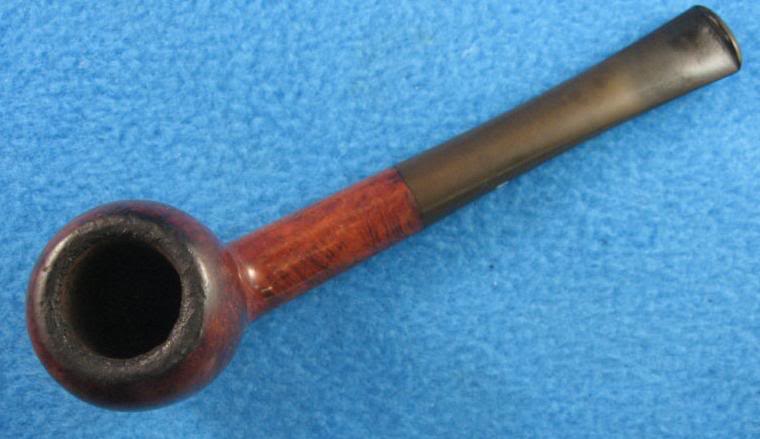
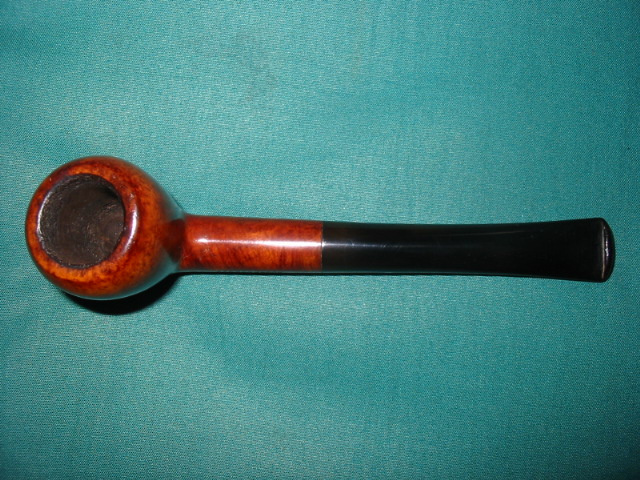
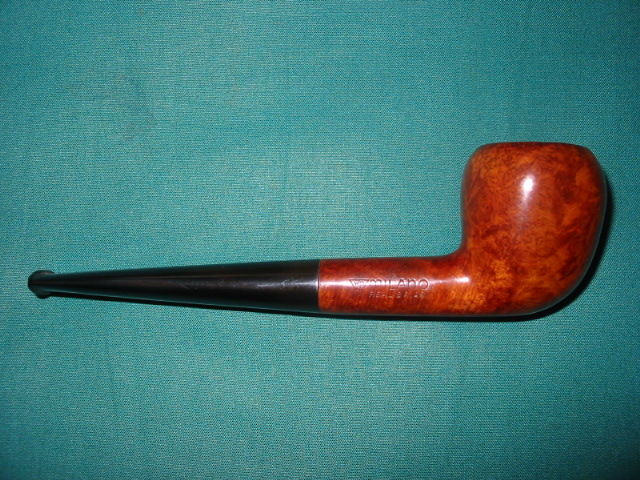
A WDC Milano Hesson Guard Reworked


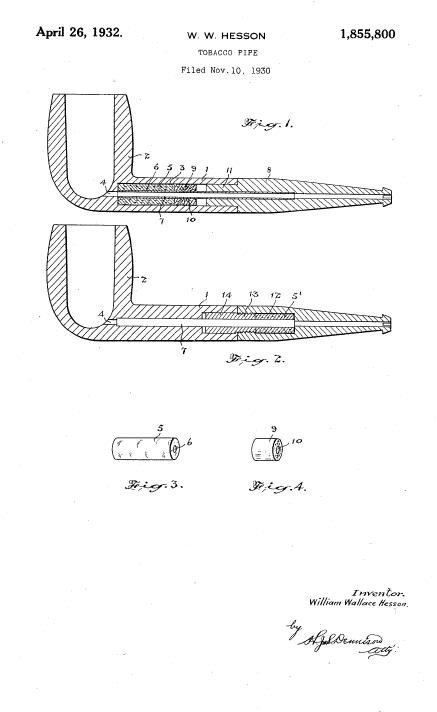
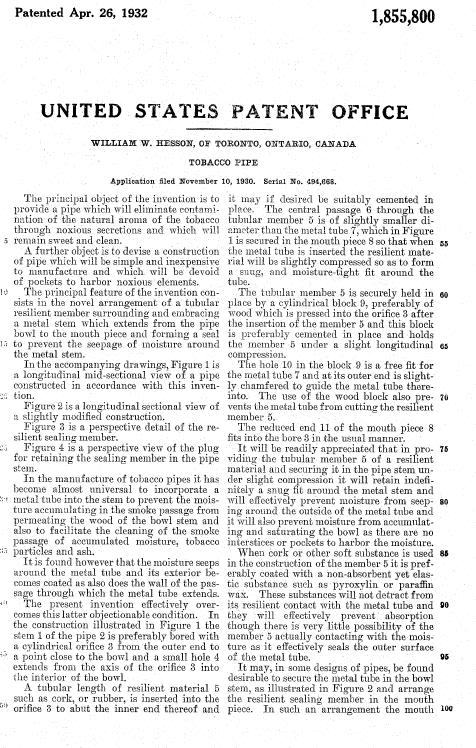
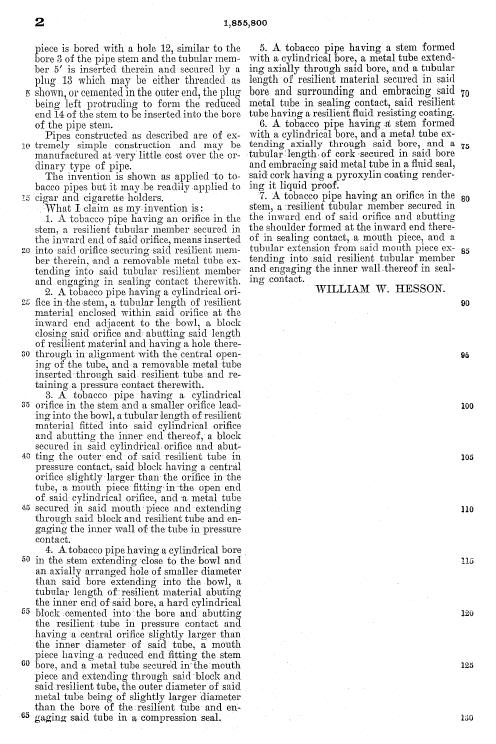
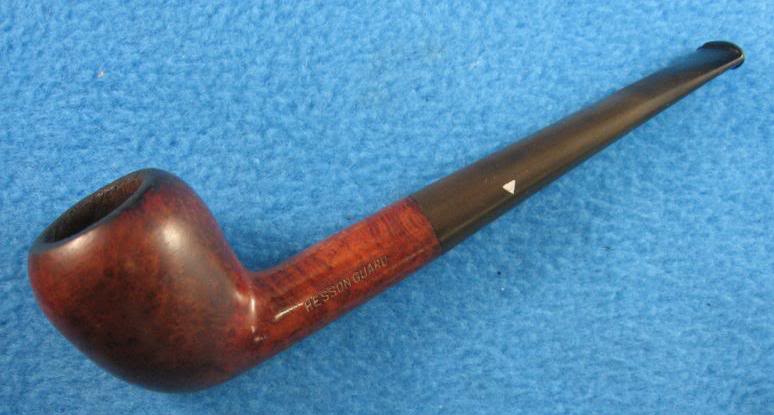
I just worked over this old timer – A WDC Milano Hesson Guard. In order to know more about the pipe I was working on I searched for information regarding the patent number stamped on the pipe and went to the US Patent site where I found documentation. The patent was filed for it in 1932. It is an early example of the pipe. It is in the acorn shape. It has the patent number stamped on it as well as the other WDC labels. The triangle on the stem is silver or steel inlay. For me this is a part of the mystery of unpacking the history and life of the brand and mark. I always like to know as much of the back story as I can find on any of the pipes I refurbish. Patent numbers stamped on the pipe provide a means of ferretting out information on the design and the particular part of the pipe that is patented. I have included the patent site information on the pipe for your reading pleasure. At least to me this part is fascinating information.
ImageImageImage

The pipe was caked with a crumbly thick cake that pretty much filled the bowl when I picked it up. I reamed it out to field dress the pipe. I generally do this with most of the pipes I bring home for renewal. It keeps the mess of the carbon from the cake outside and away from my work desk. In the photos below you can see that the finish was pretty dirty with a lot of hand oils and grease ground into the bowl surface. The rim was caked and tarred and it looked like it was damaged. The finish was worn and the stain faded in many places on the bowl sides. The stem was oxidized and had some bubbles in the surface along the button – the bubbles are visible near the button in the second photo below.
ImageImage

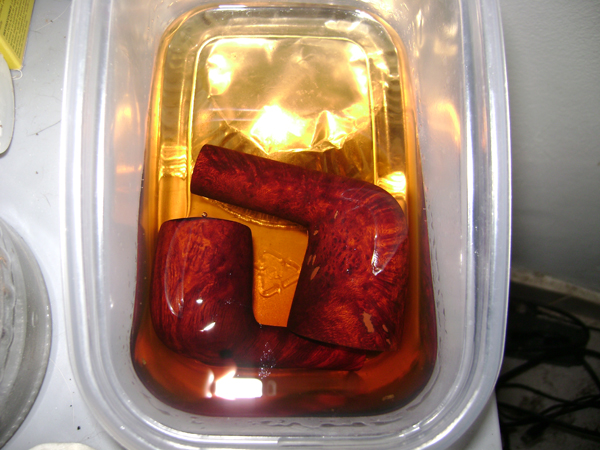
I scrubbed the exterior of the pipe with Murphy’s Oil soap, undiluted. I wipe it on with a cotton cloth and immediately wipe it off. Others have said that it removes the stain if left to long and it does indeed do that. But I have found it unsurpassed in quickly removing grime and grease if rubbed on and rubbed off quickly. I worked on the rim as well with a soft bristle tooth brush and the oil soap to remove the buildup. Once that was done I put it in the alcohol bath and removed the finish that was on it. It seemed to have had some built up waxes and also some kind of varnish coat over the stain. It came off with a bit of elbow grease after soaking. I decided to not stain this pipe as the briar looked great as it was. I just sanded it with the micromesh pads to polish it and remove the surface scratches. Then I took it to the buffer to give it a buff with White Diamond.

I worked on the stem while the bowl soaked in the bath. I soaked it in the Oxyclean mixture for a while to soften the oxidation. I dried it and buffed it with Tripoli to remove the surface oxidation. I sanded it with 240 grit sandpaper to get the deeper oxidation. I also had to lift a few tooth marks from the underside of the stem near the button. I used the heat gun to do that. The bubble on the top of the stem also was heated to try to smooth it out. It was evidently not a blister but a bump from teeth. It went back in place with the heat. I sanded the remaining signs of bite with 240 grit sandpaper and then 400 and 600 grit wet dry and water. I finished it with the normal regimen of 1500-6000 grit micromesh pads to polish. I put it back on the bowl and then gave the entirety a buff with White Diamond to polish it and finished the restoration with several coats of carnauba wax.

ImageImageImage