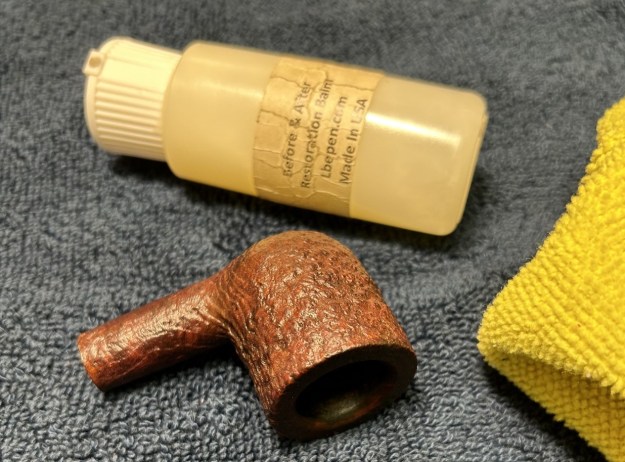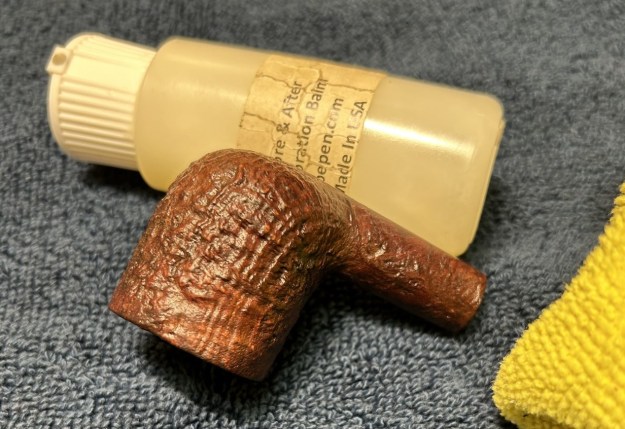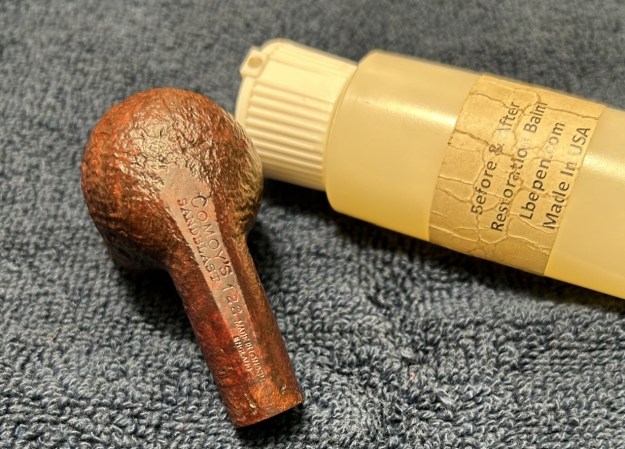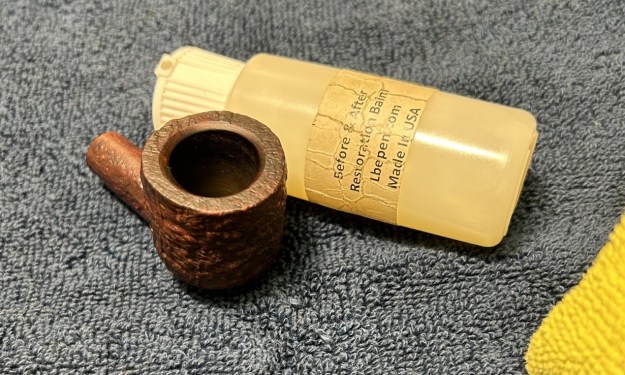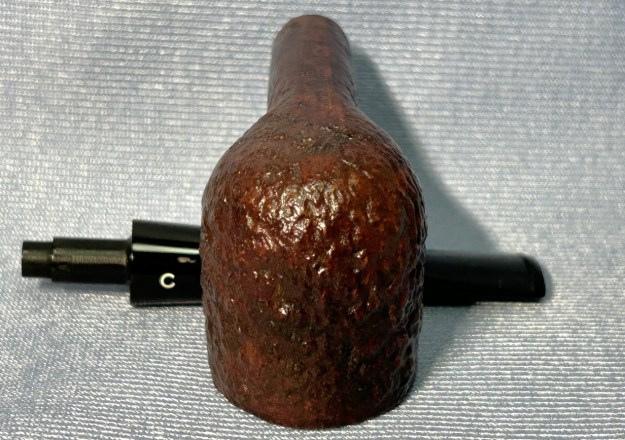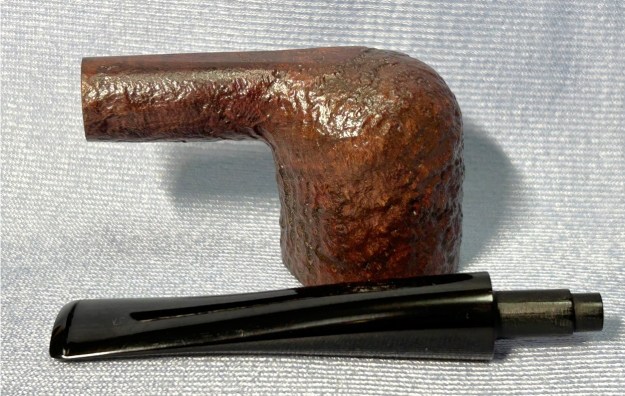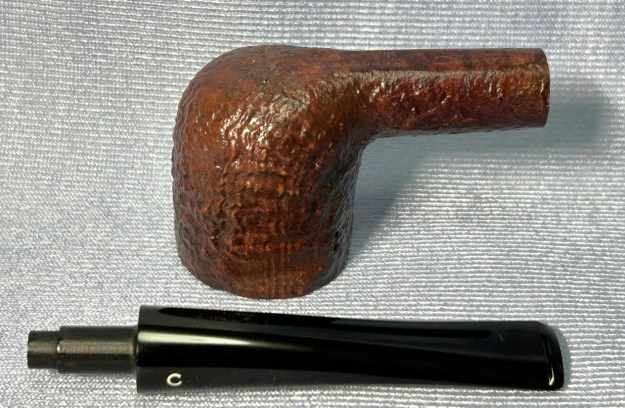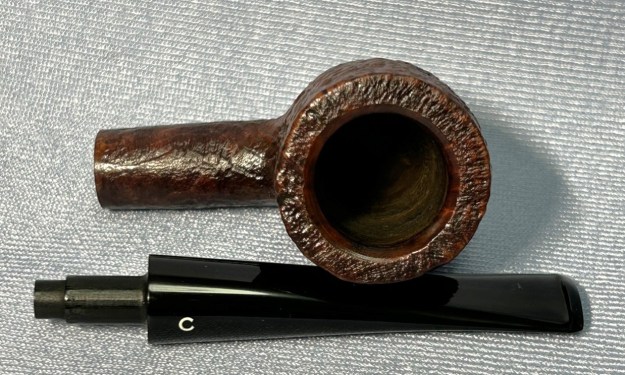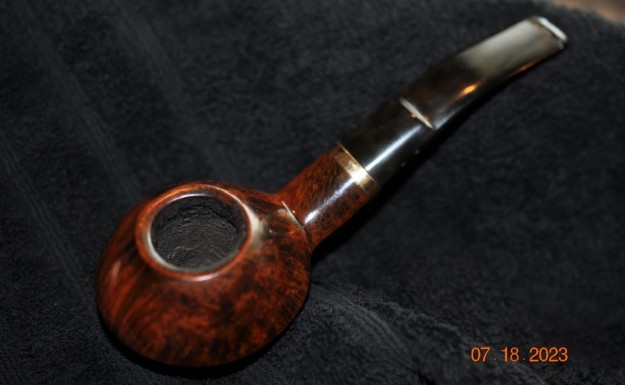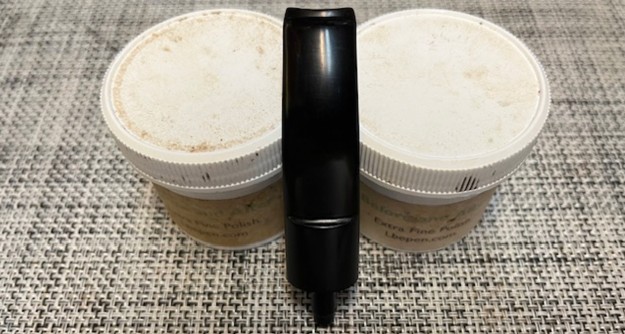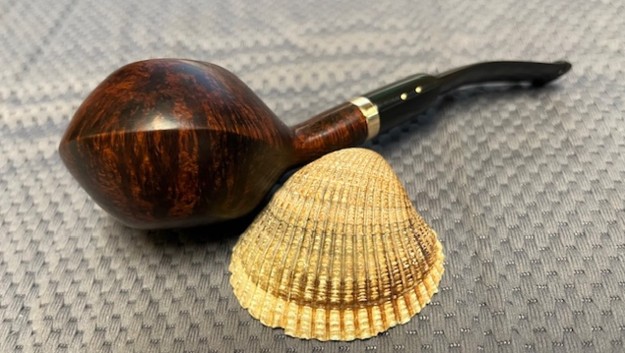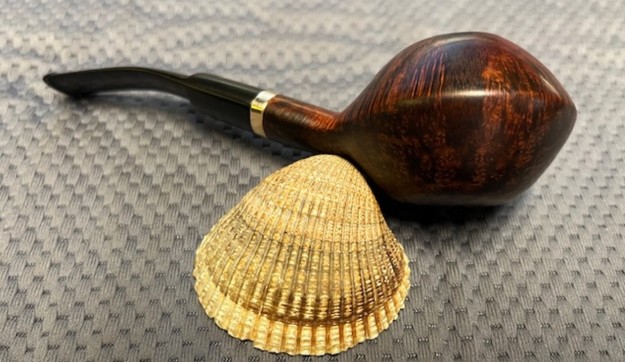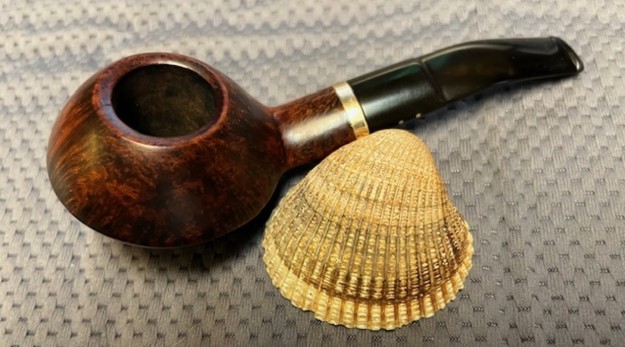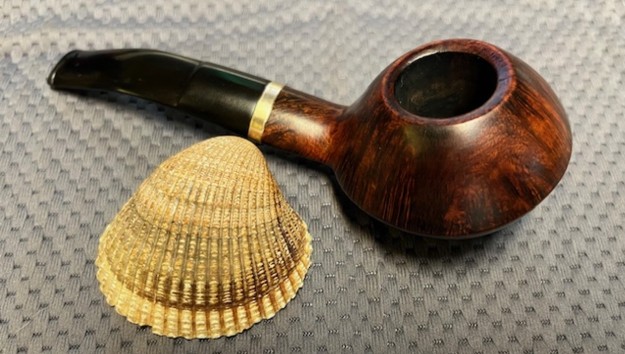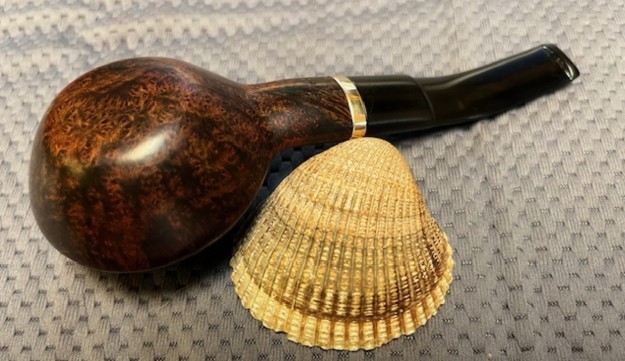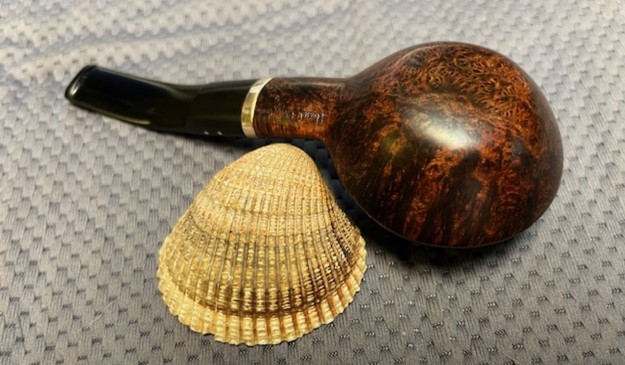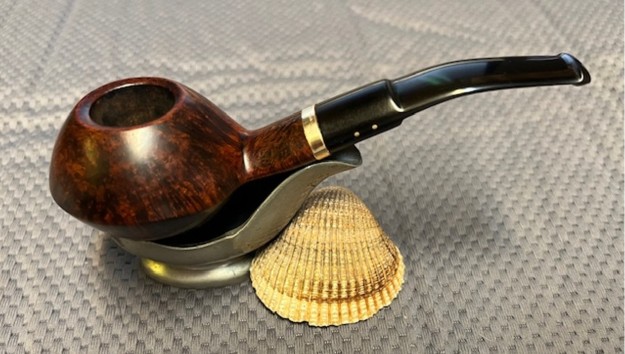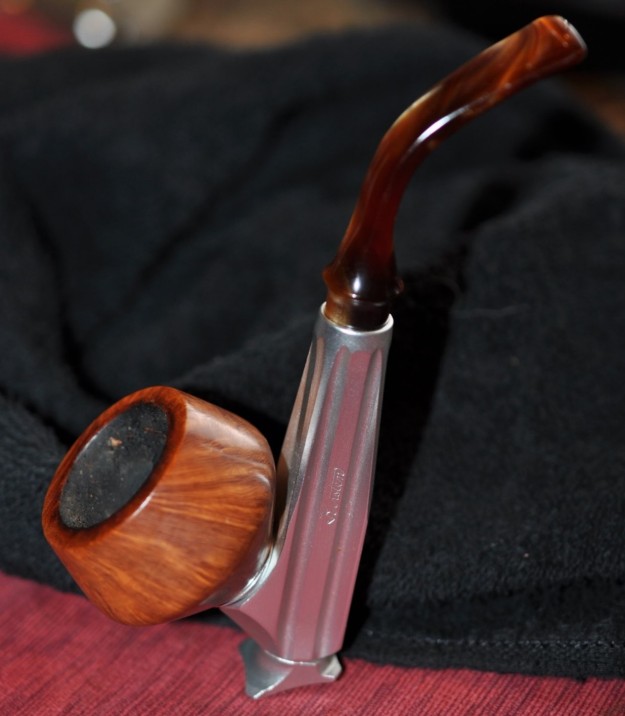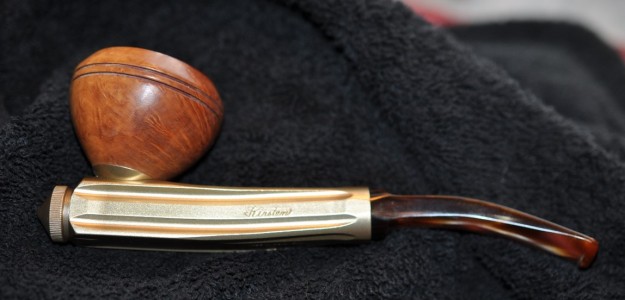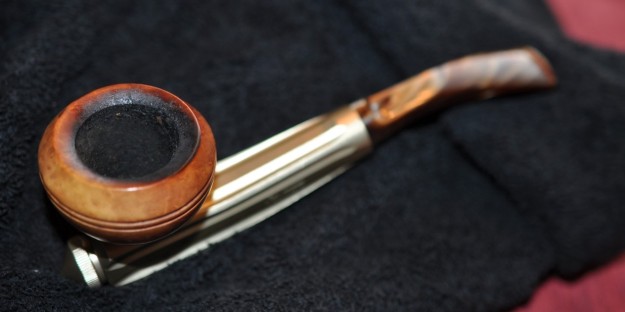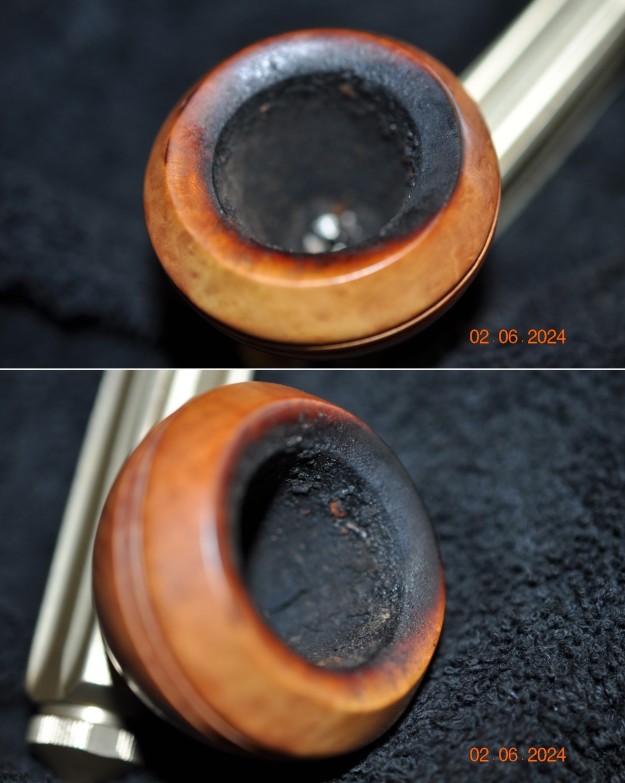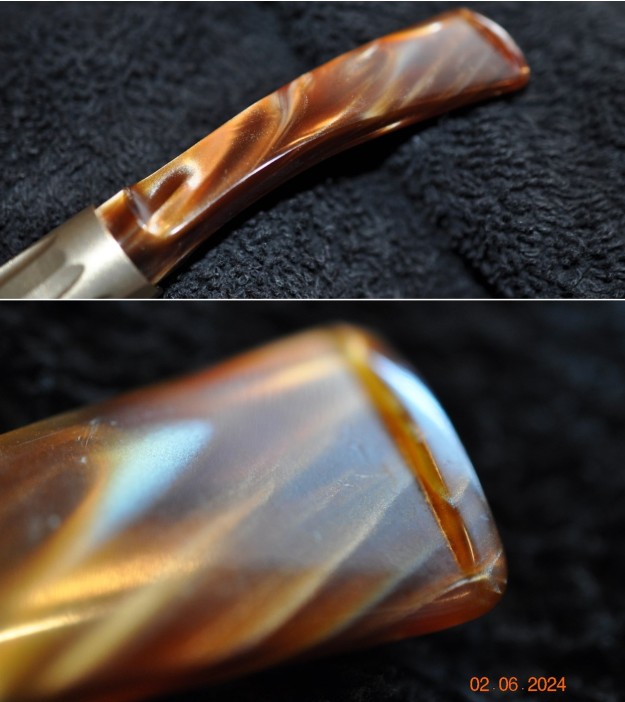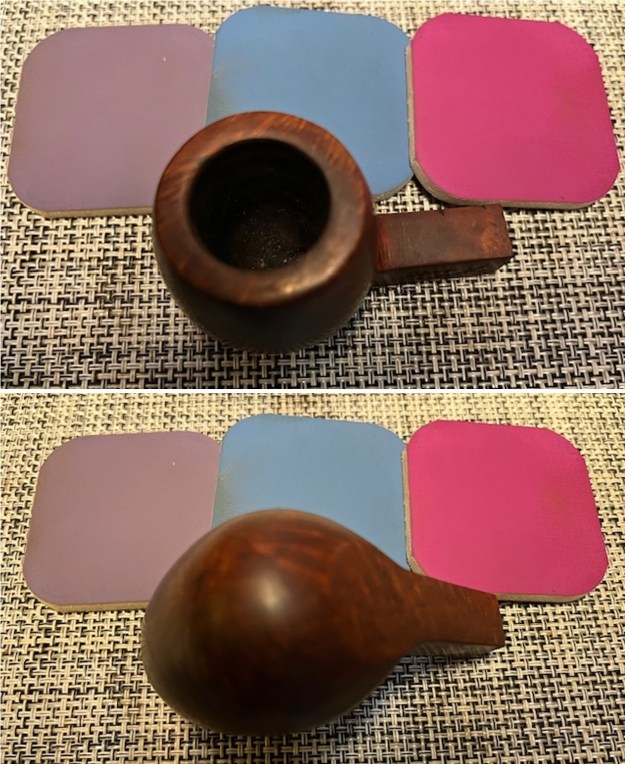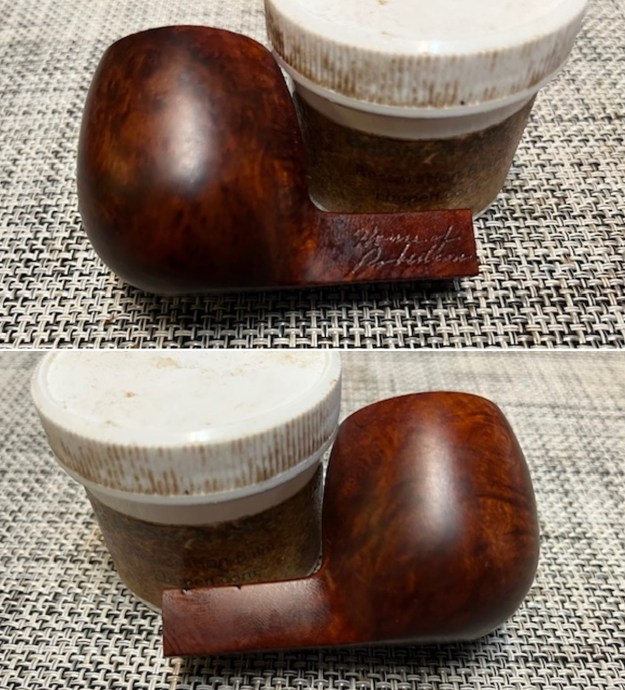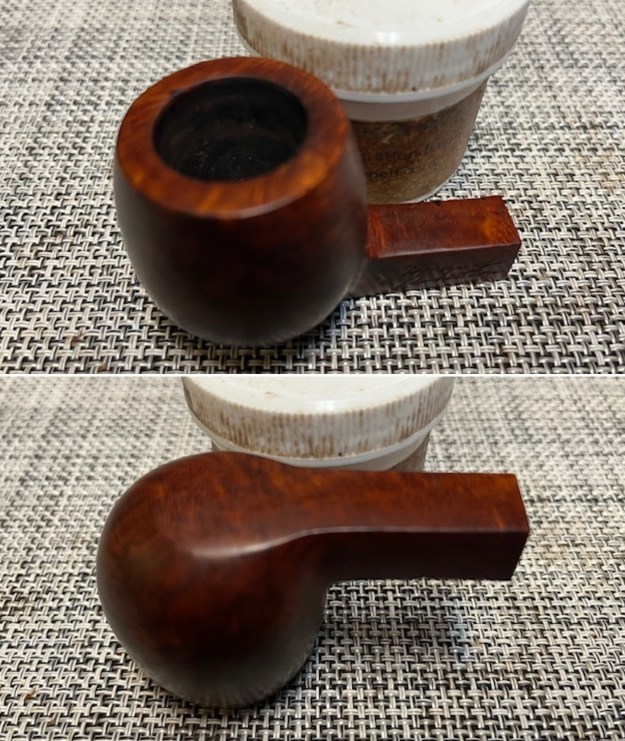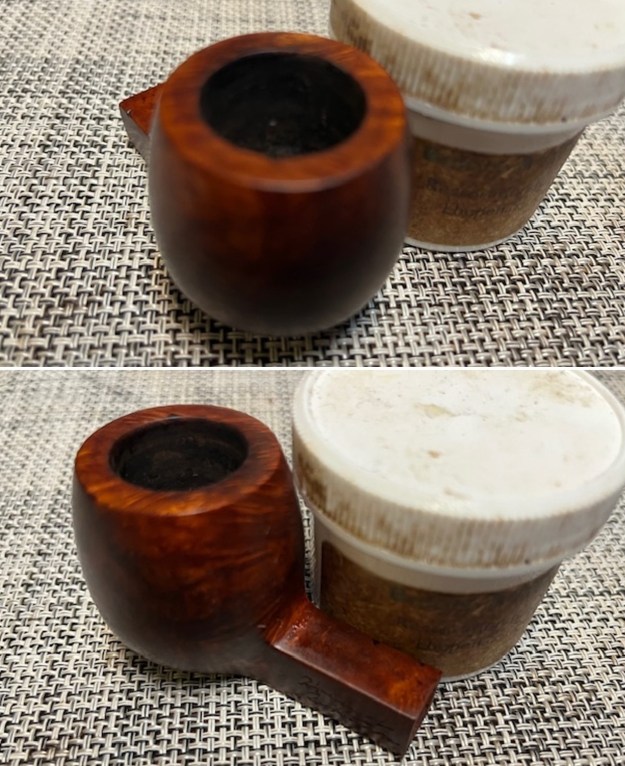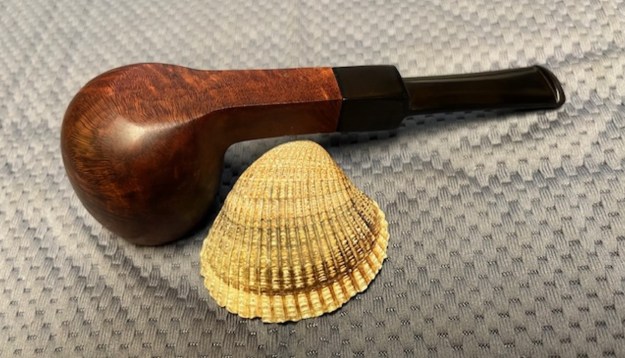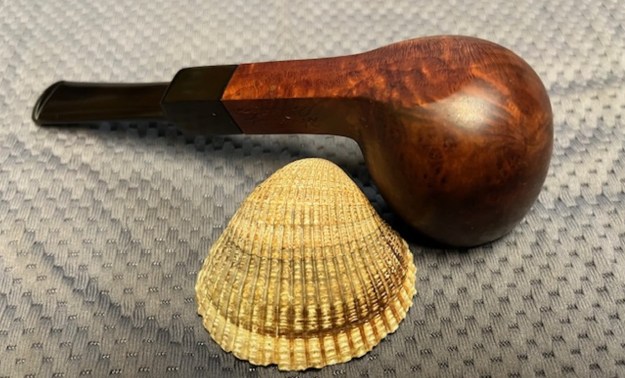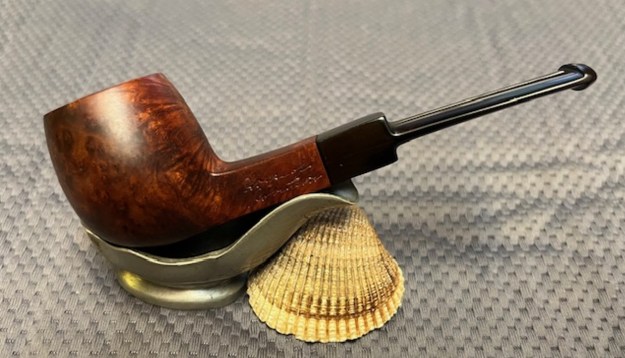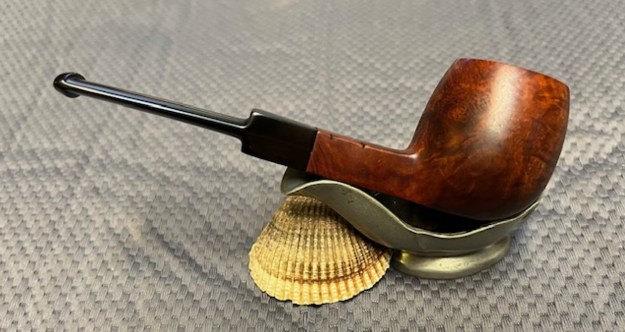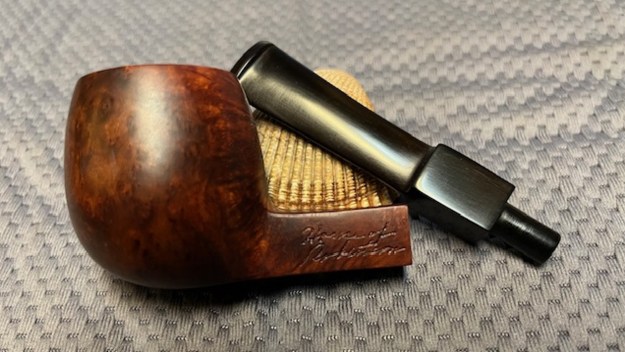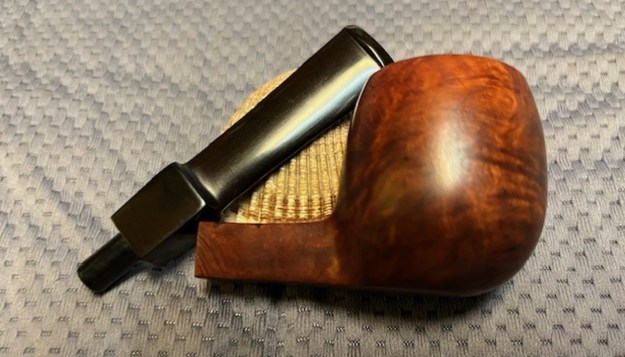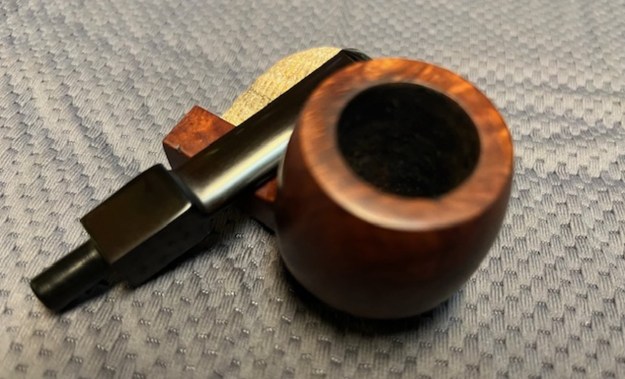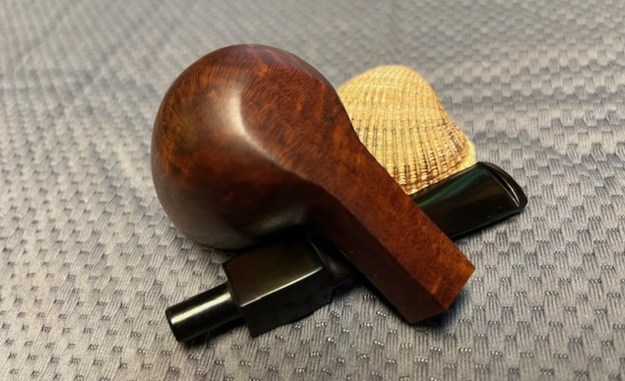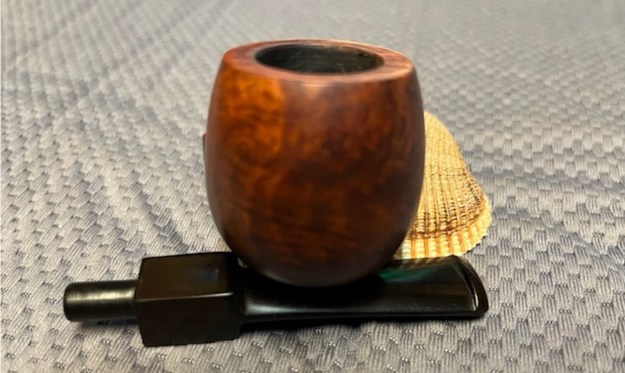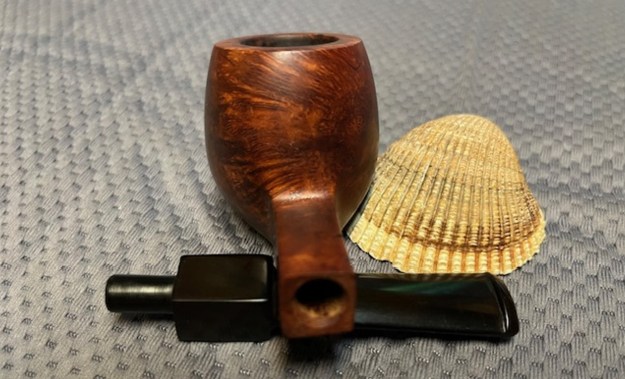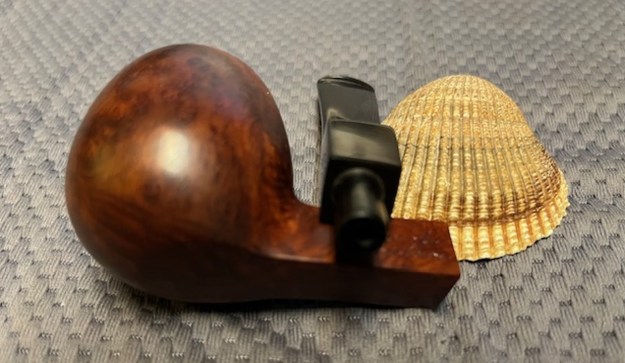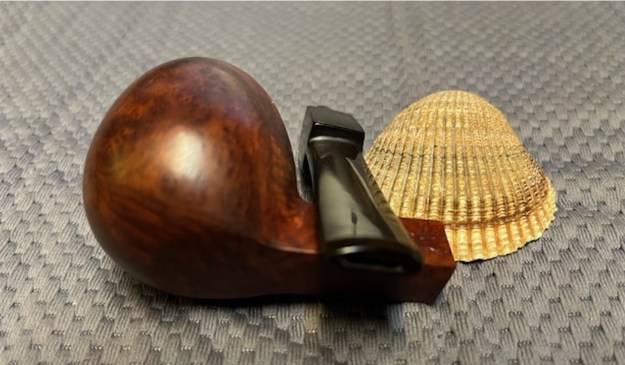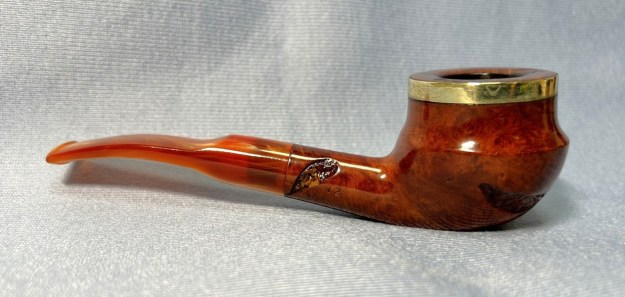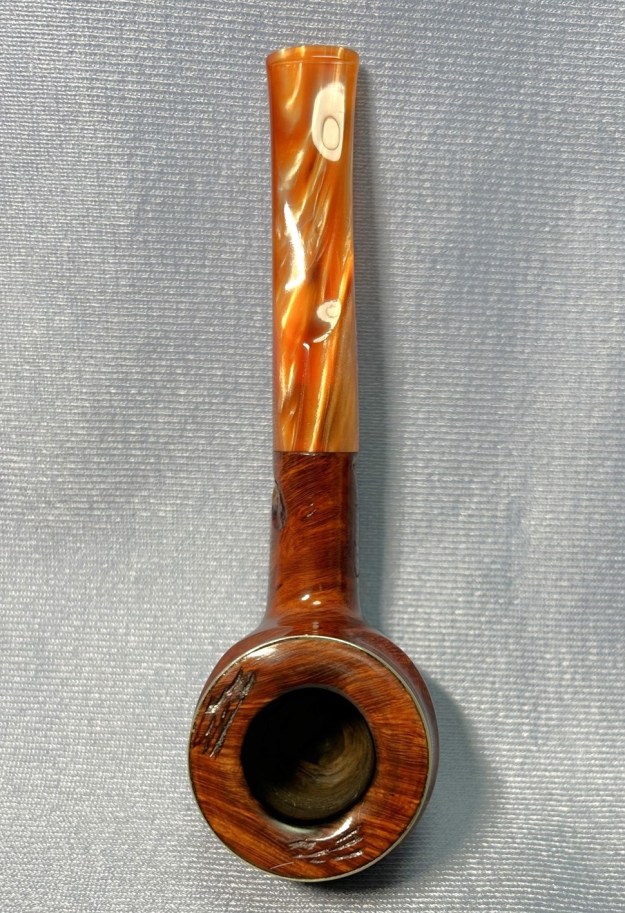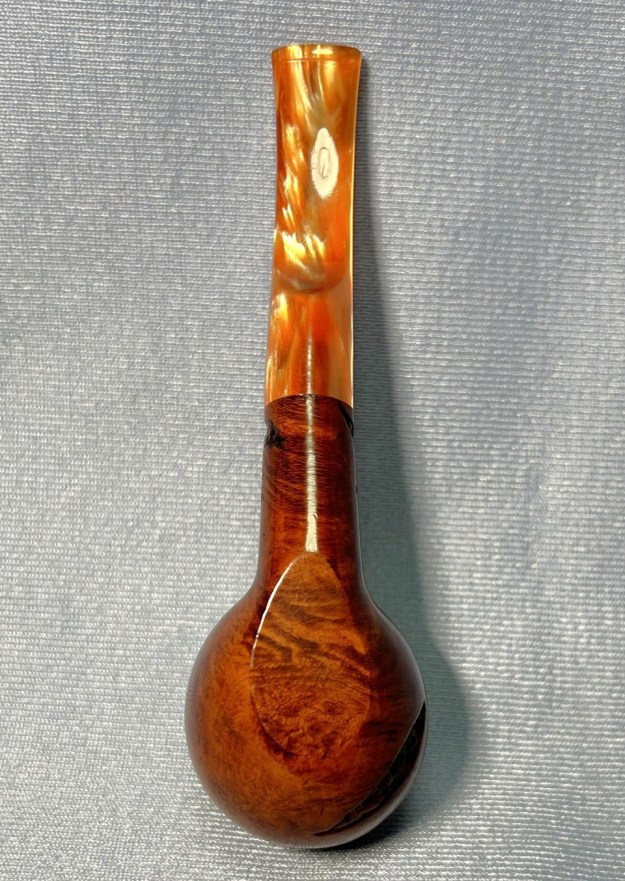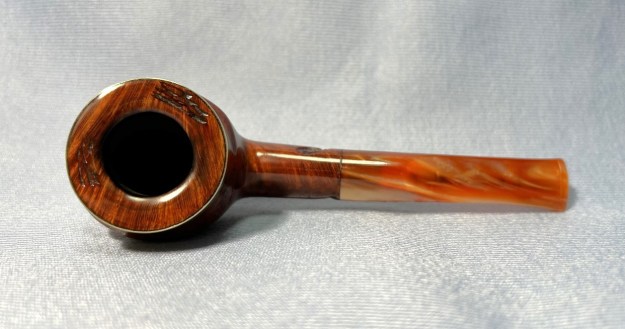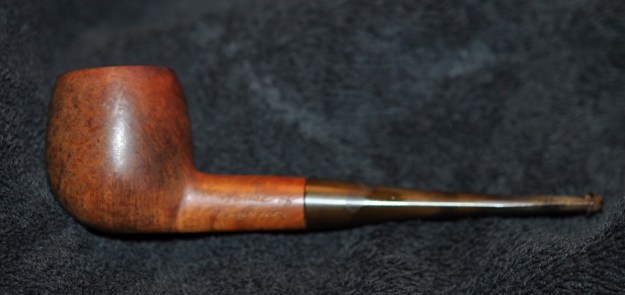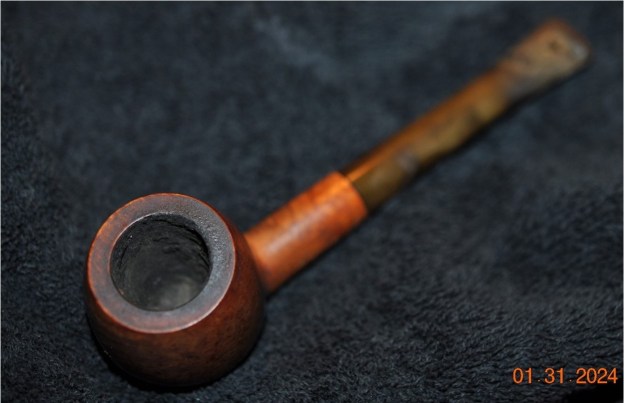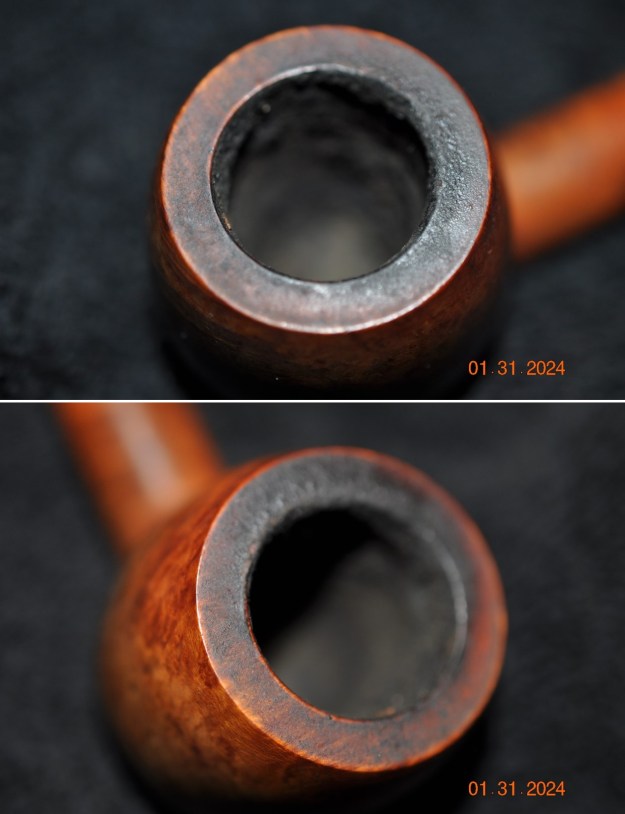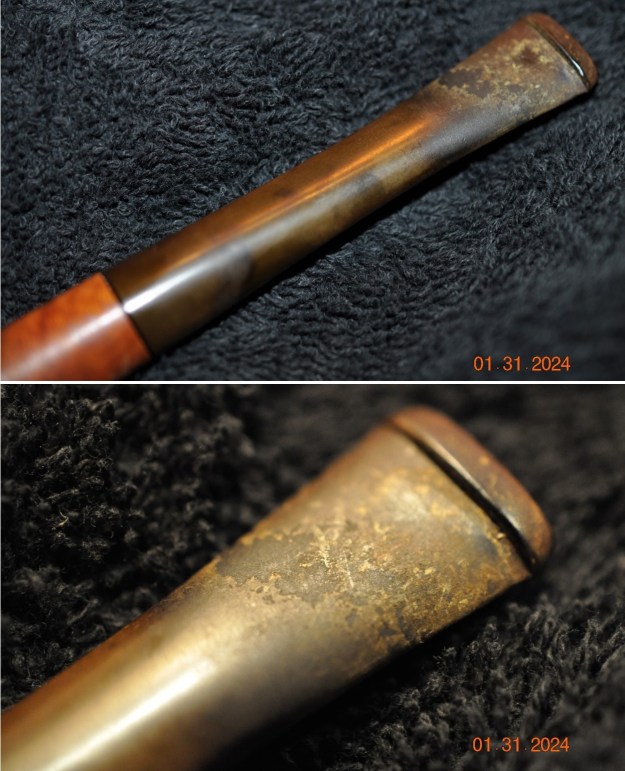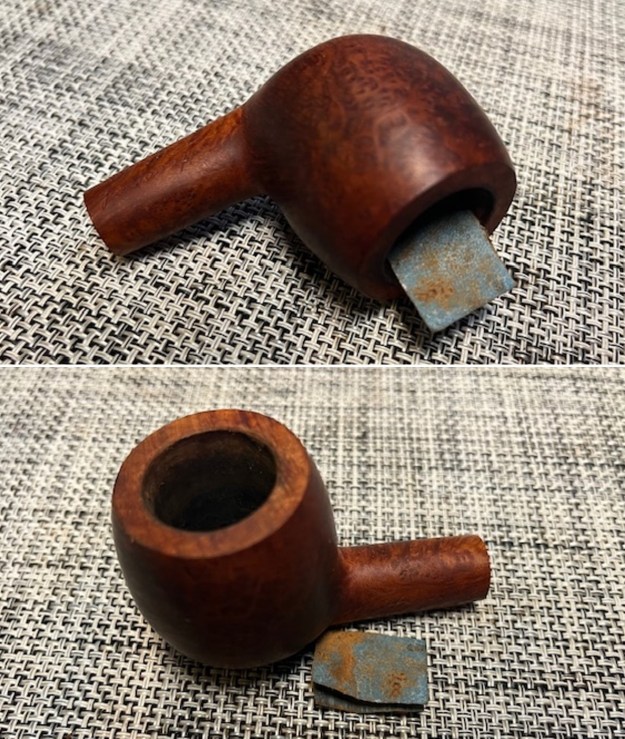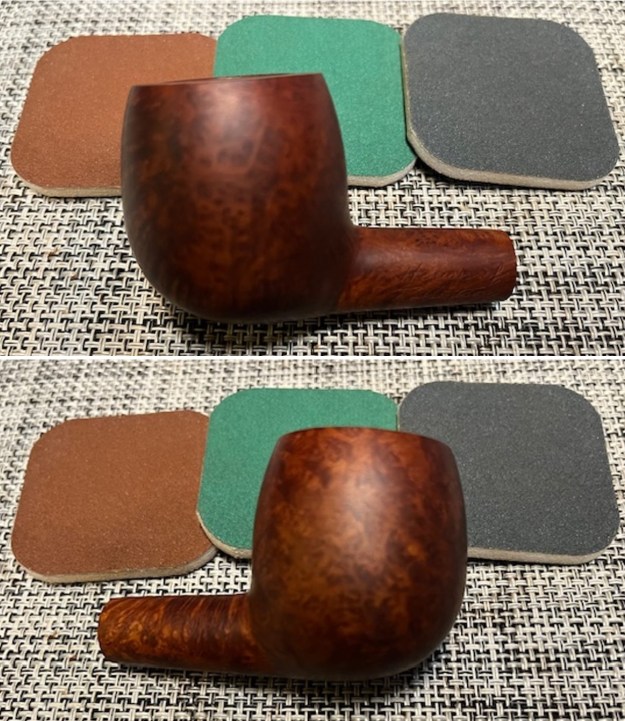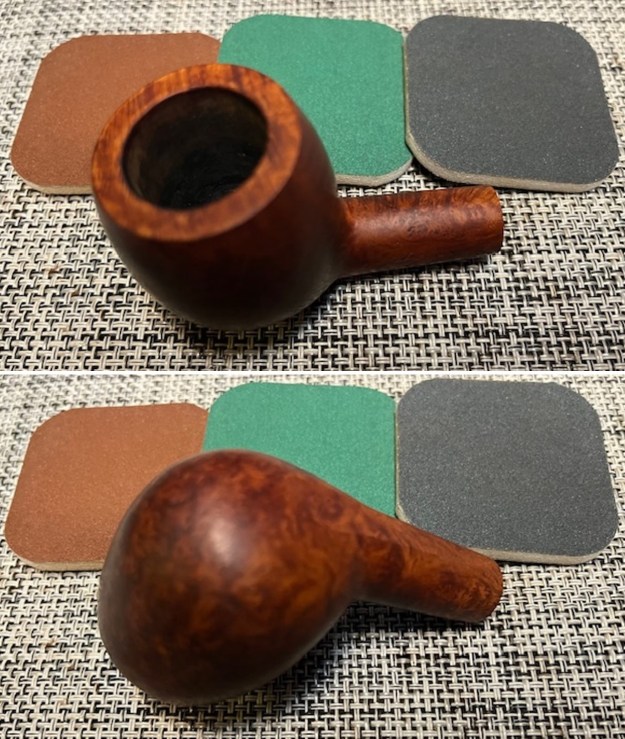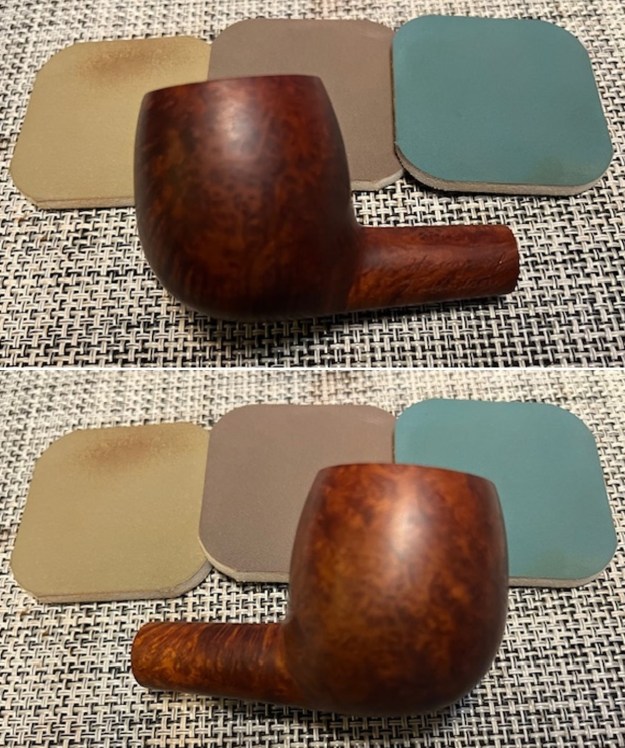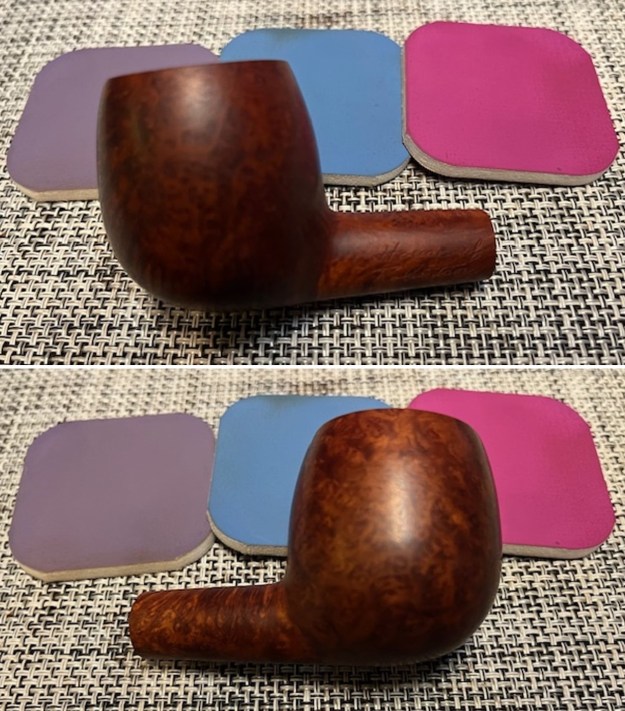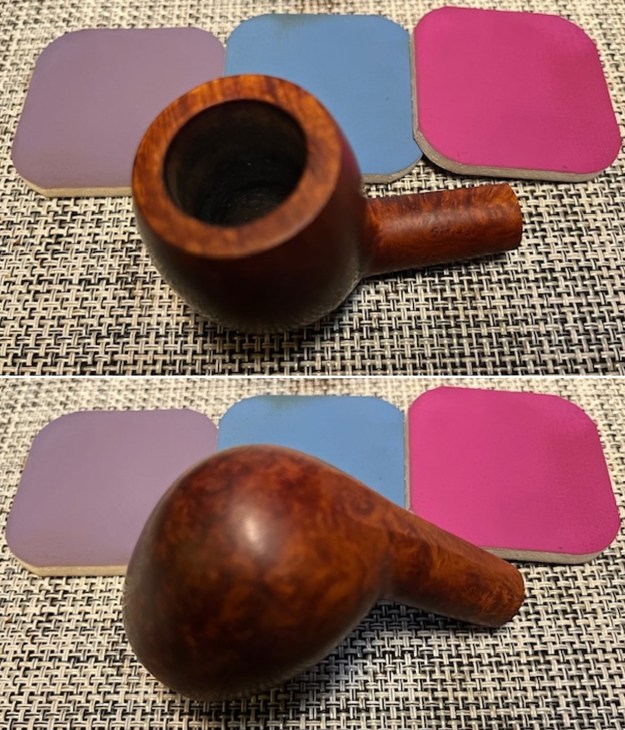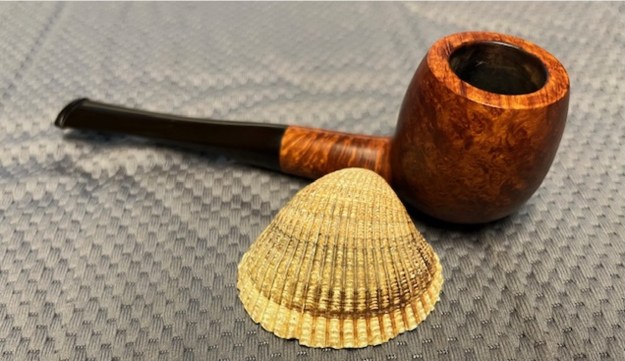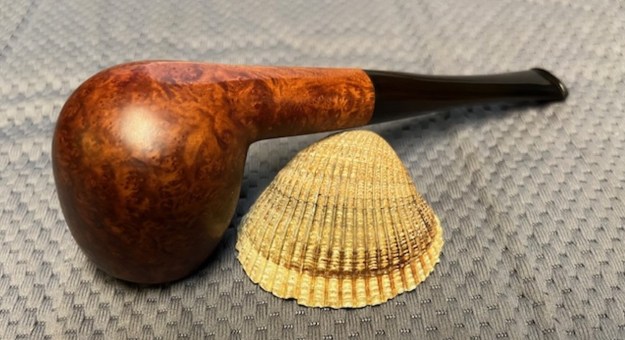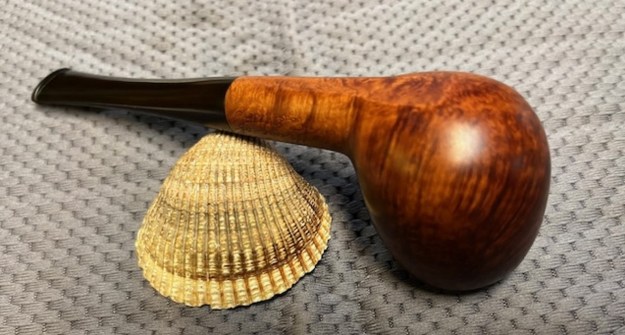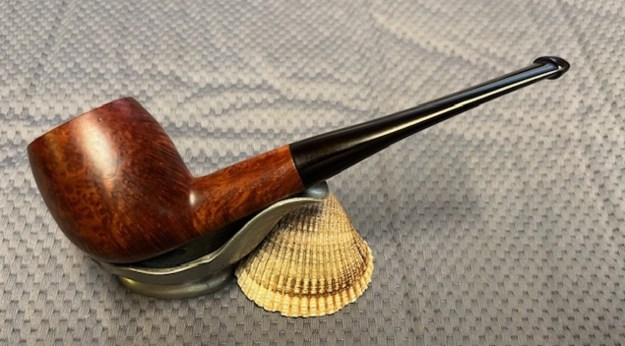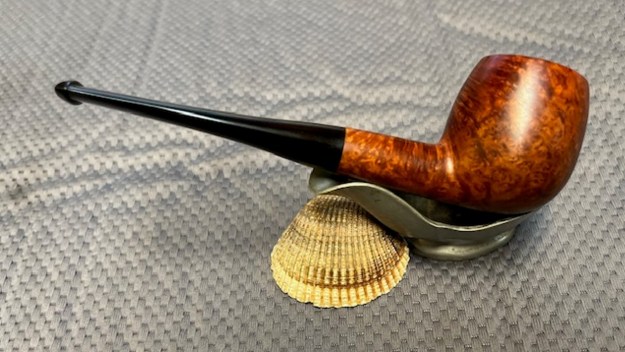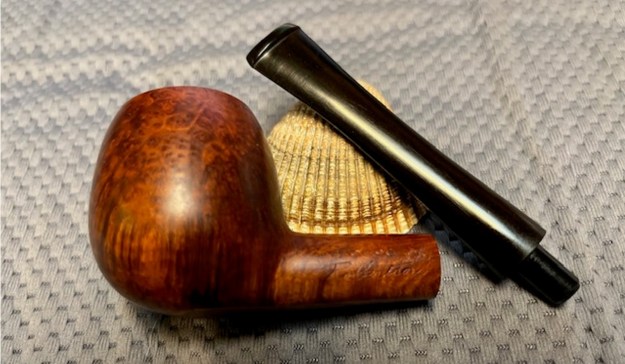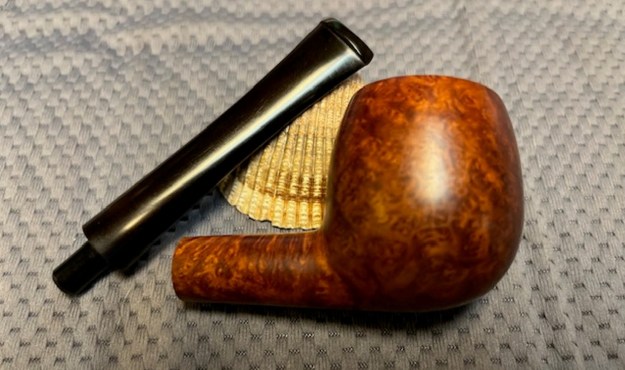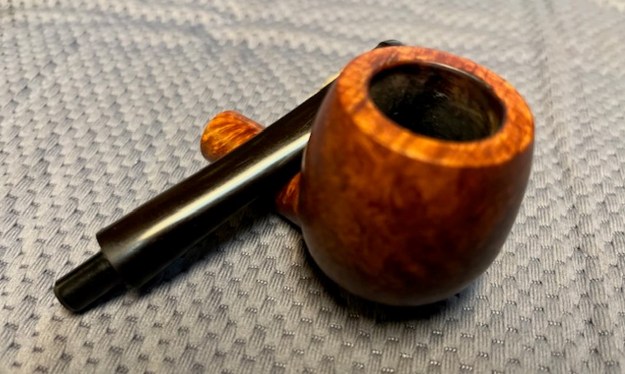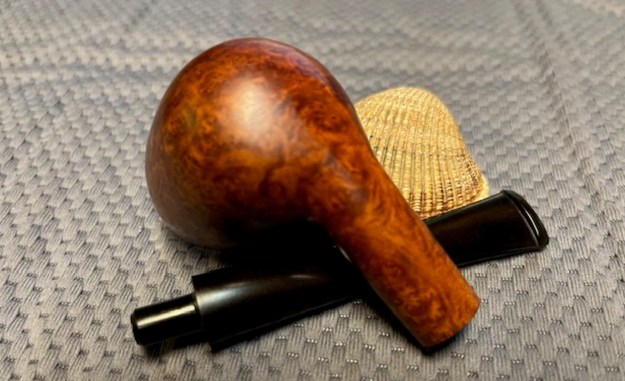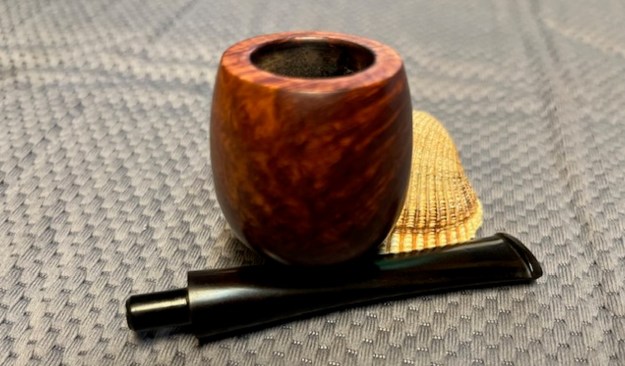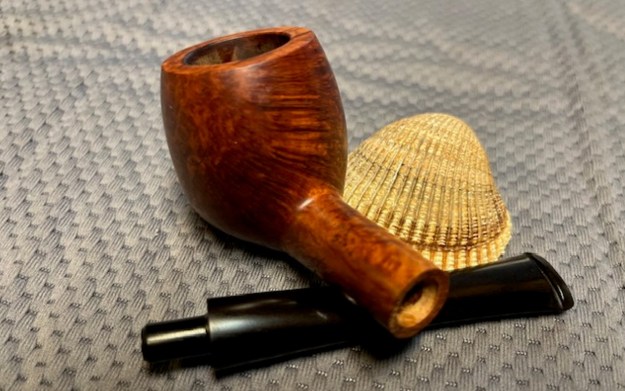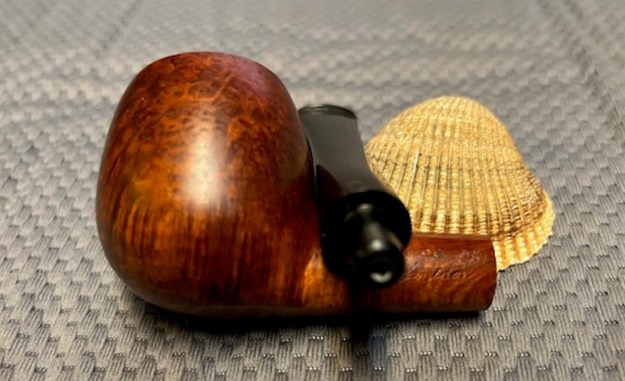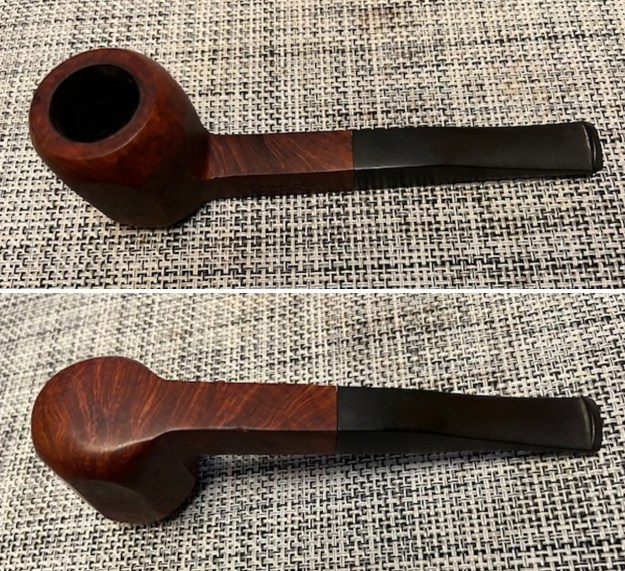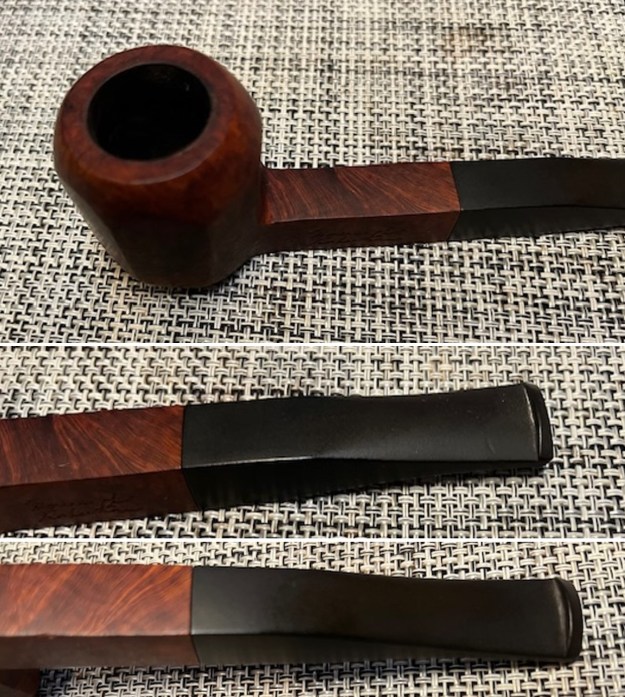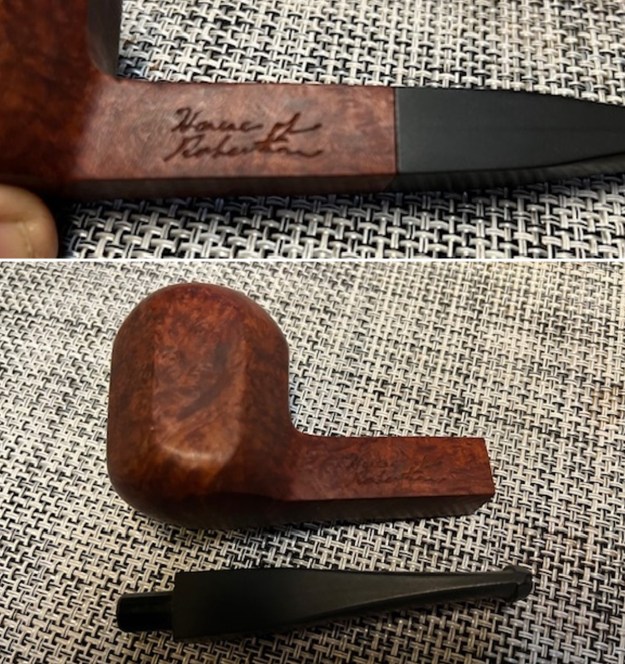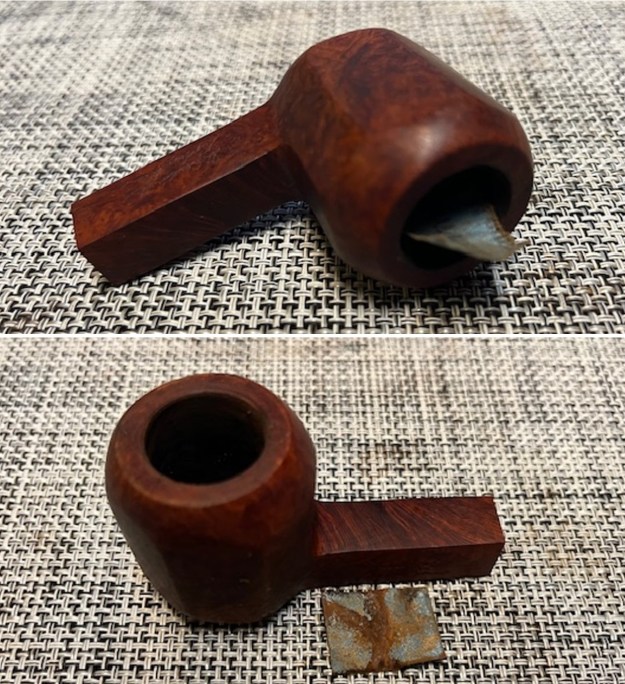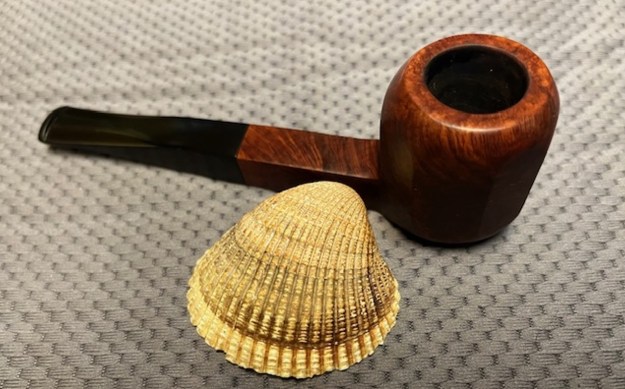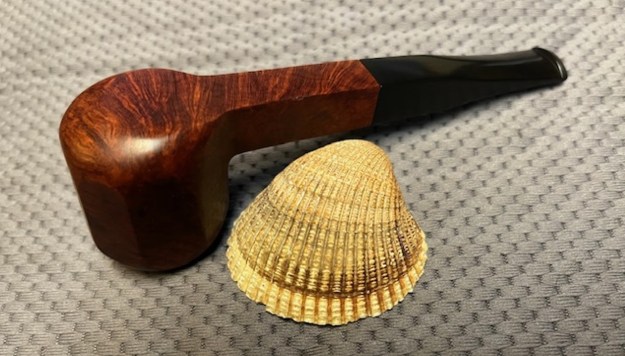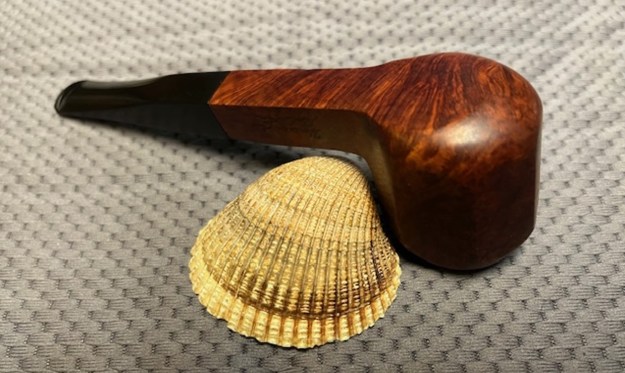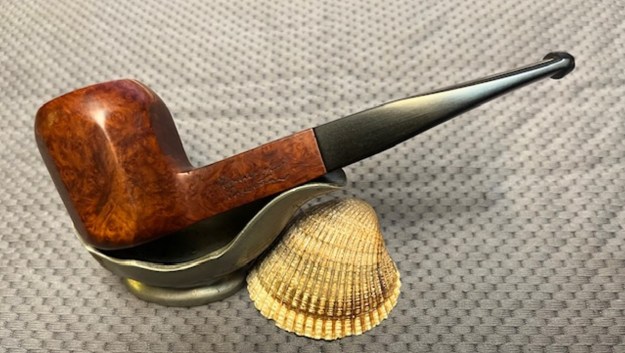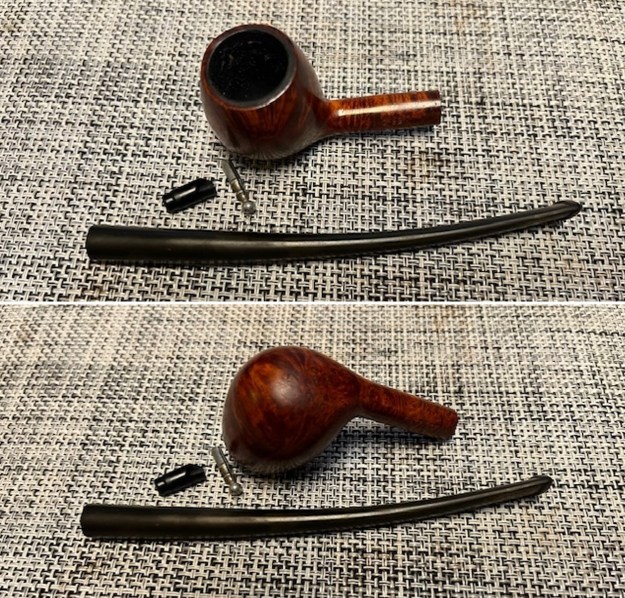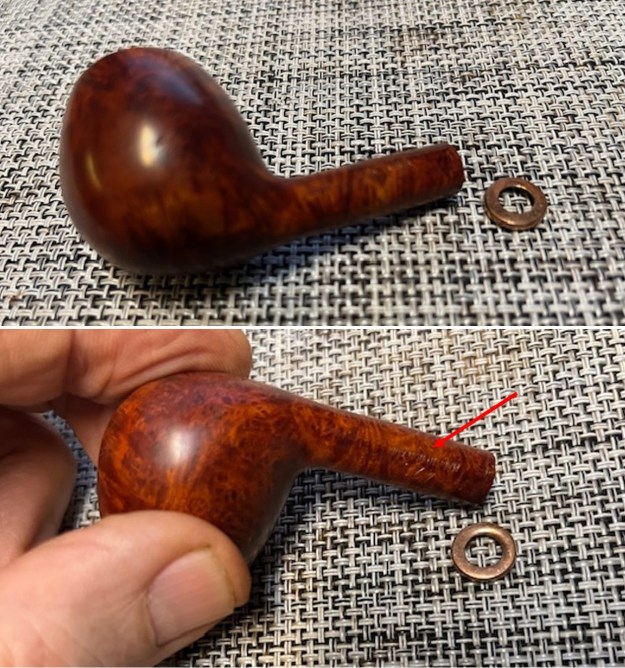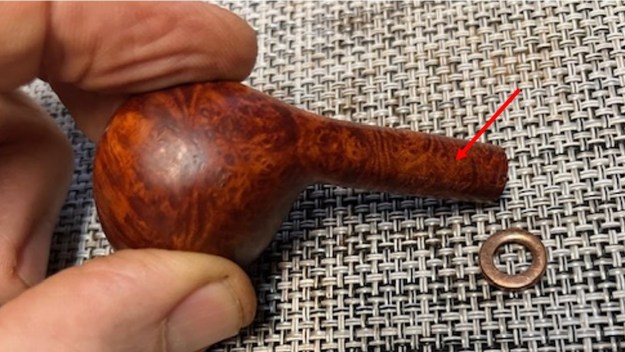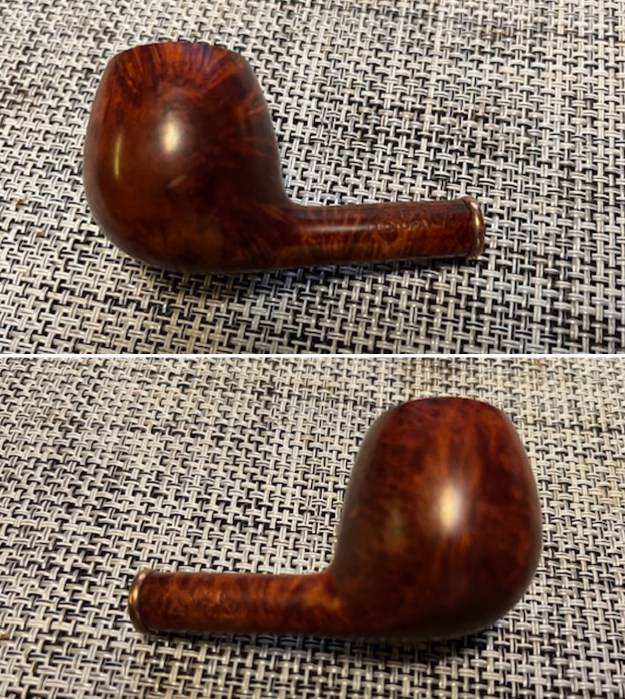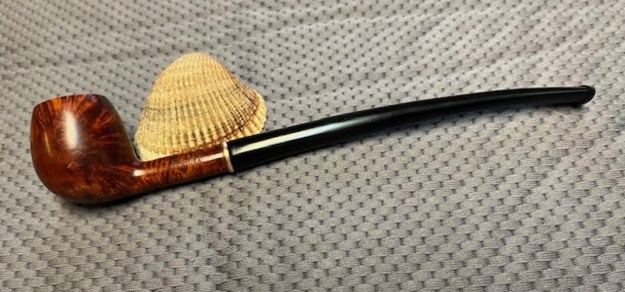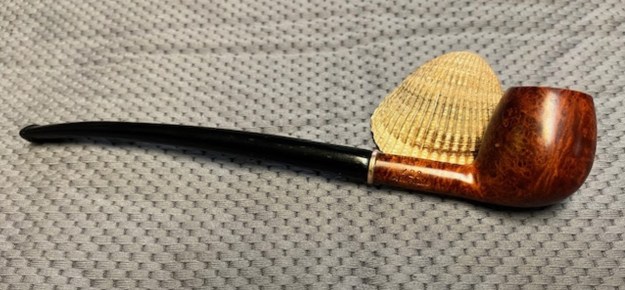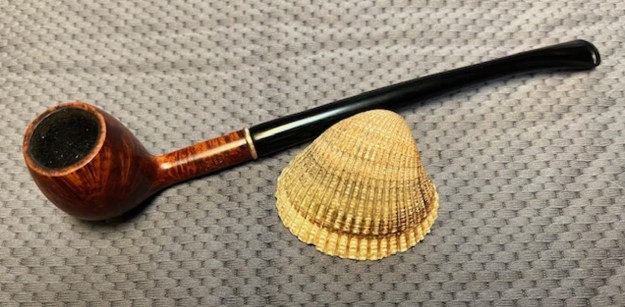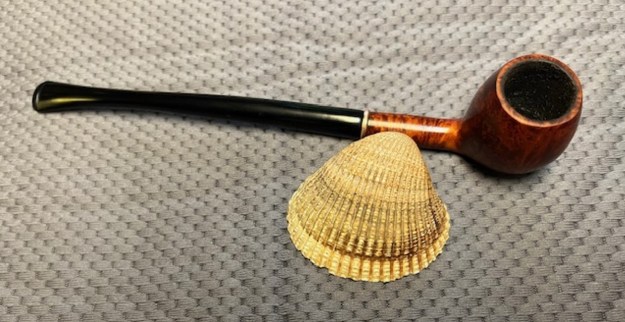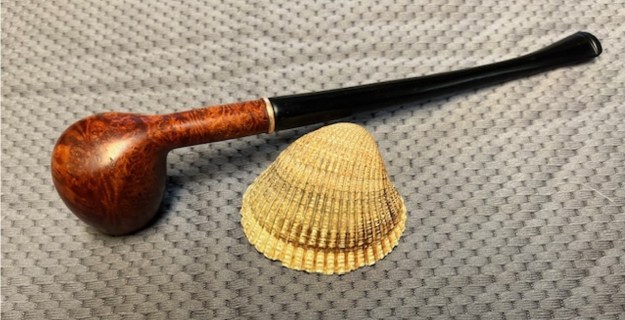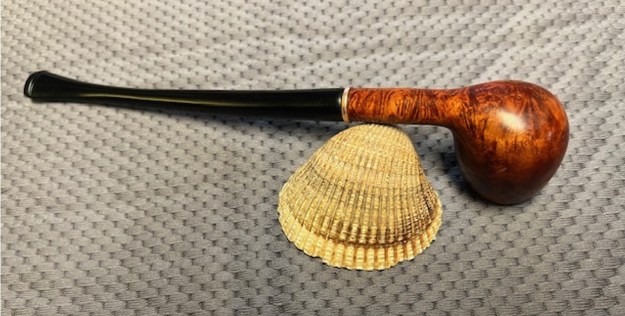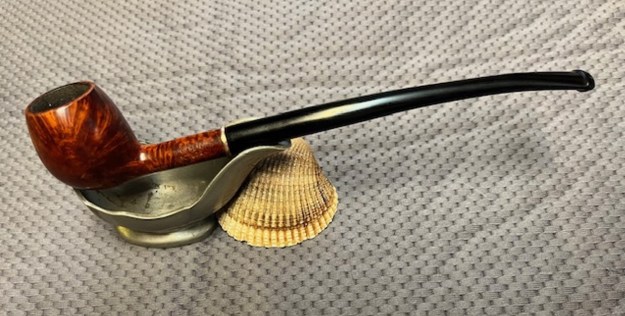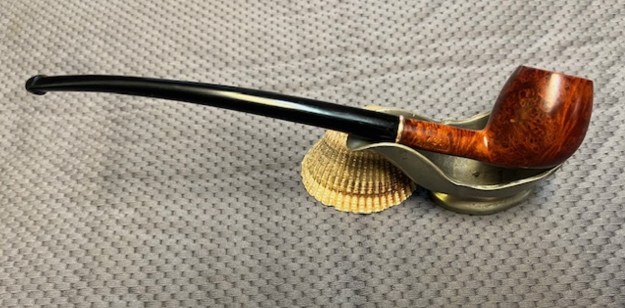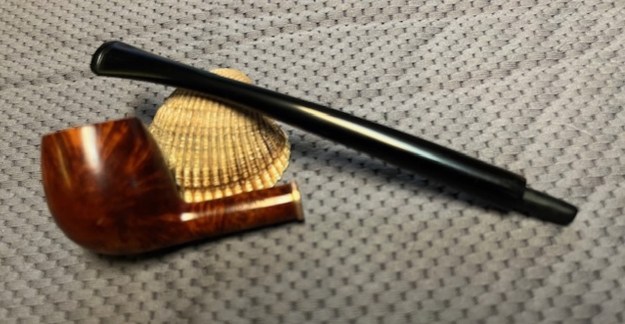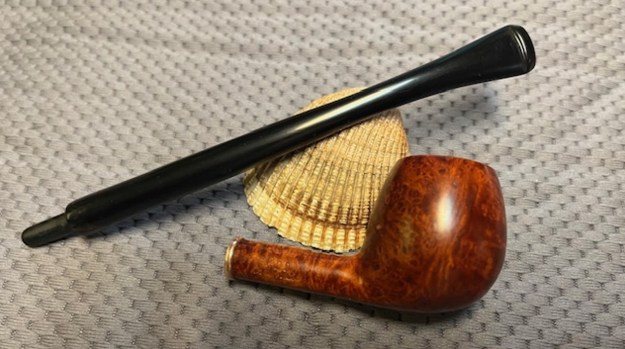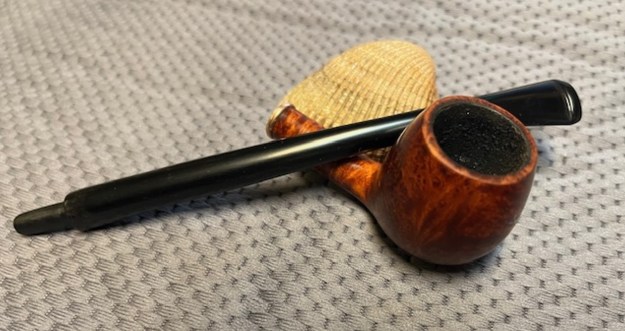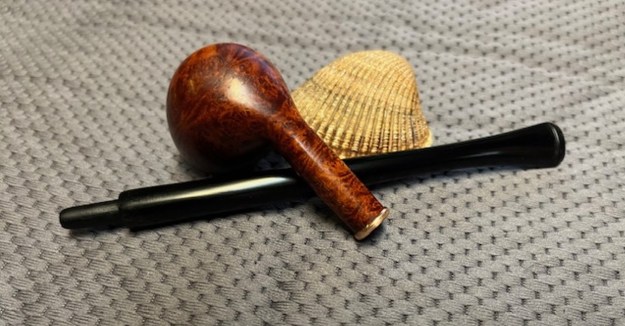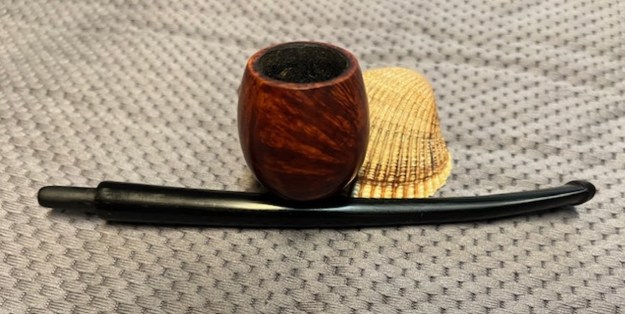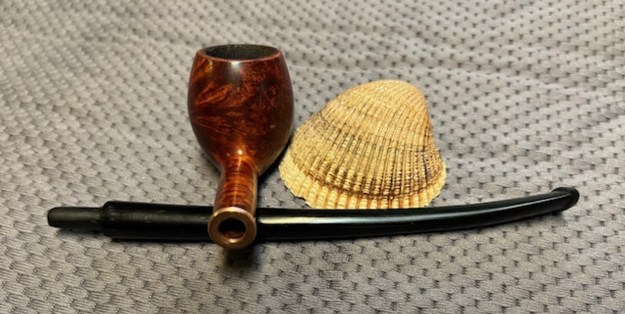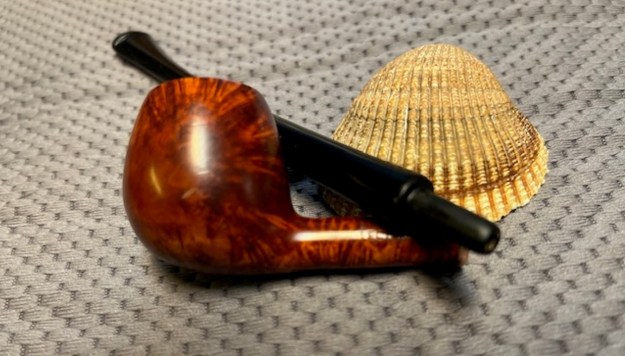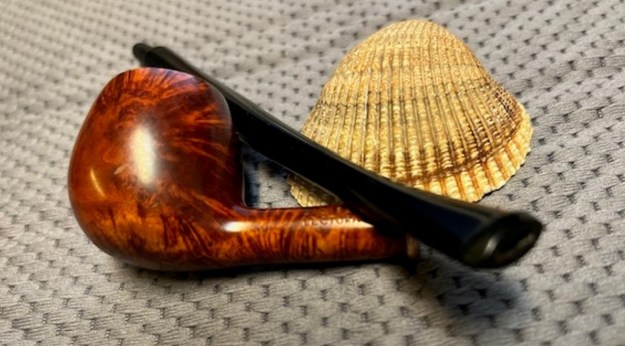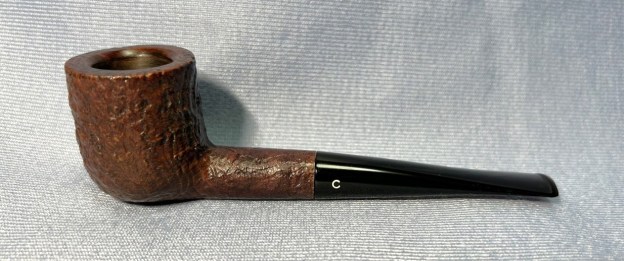
Restoring a Worn and Tired Republic Era Peterson’s System Standard 317


Blog by Steve Laug

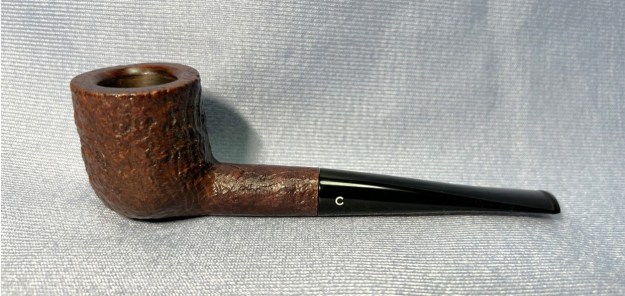
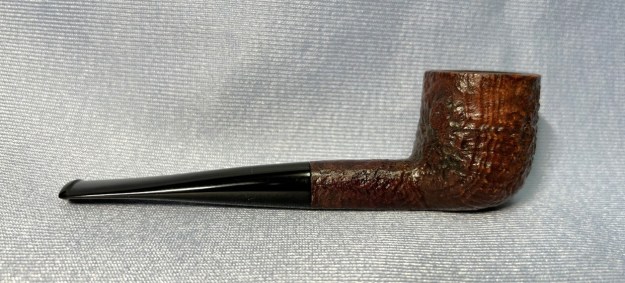
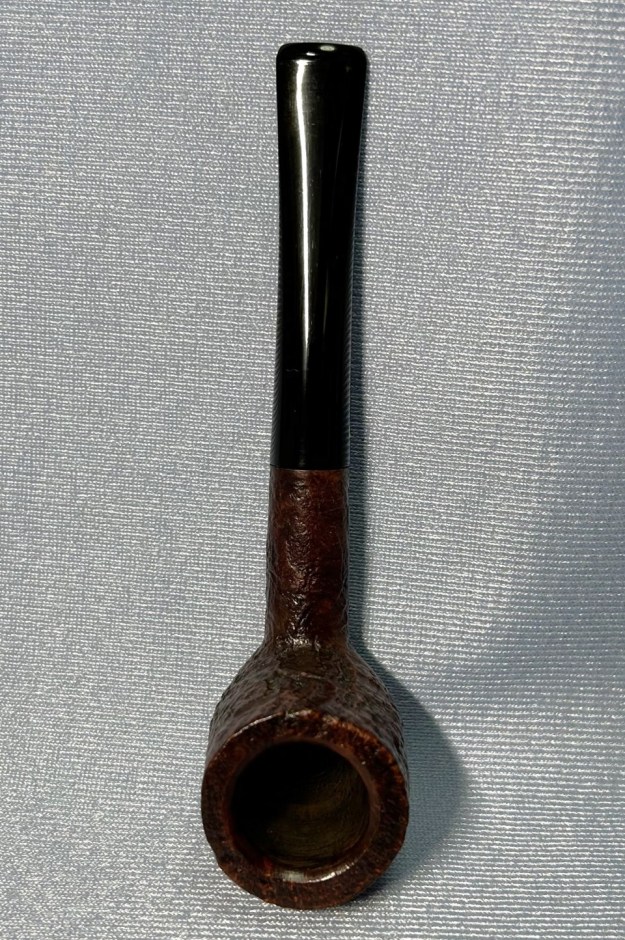
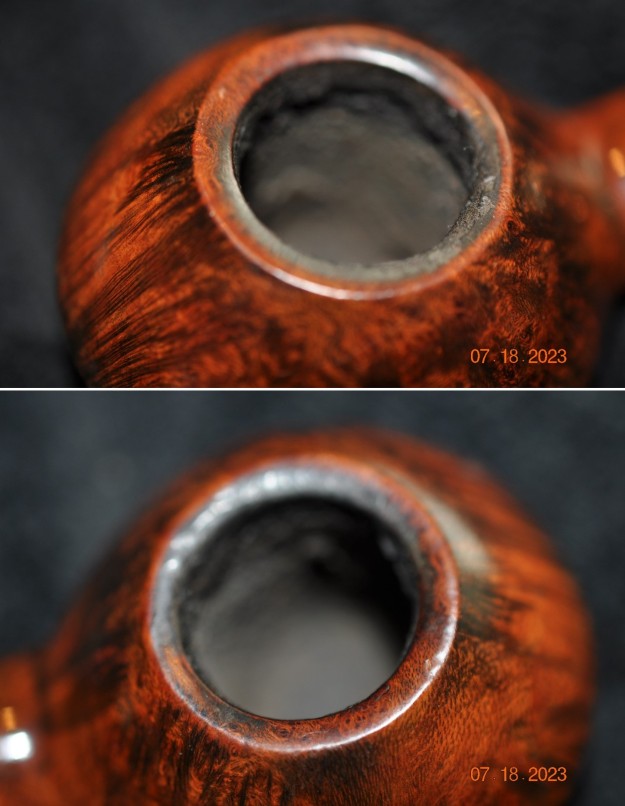
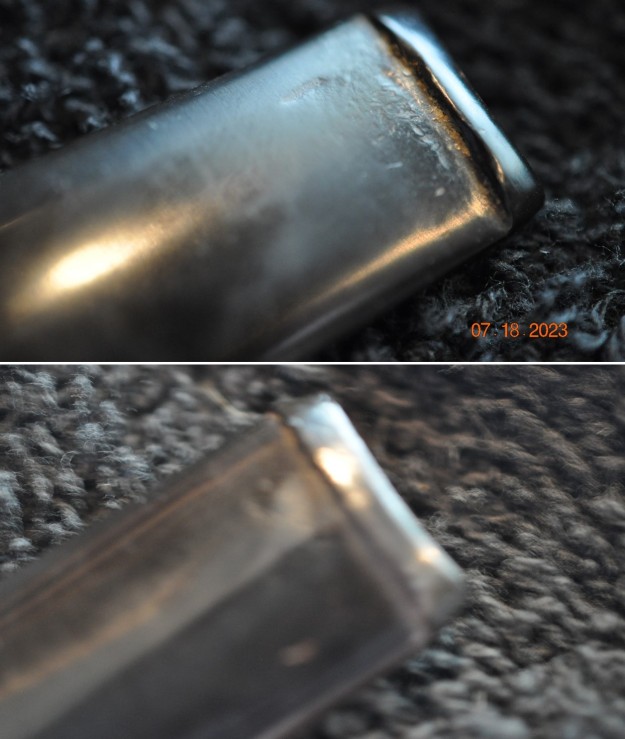
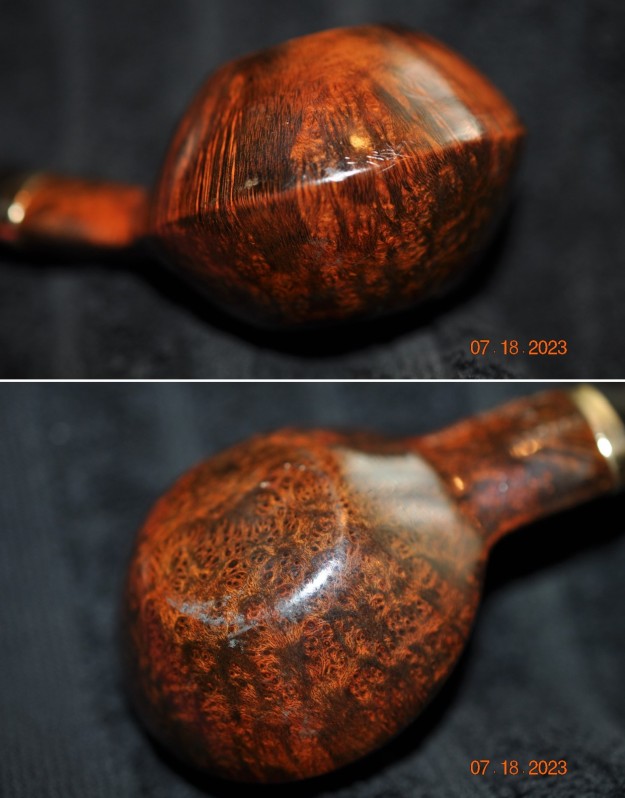
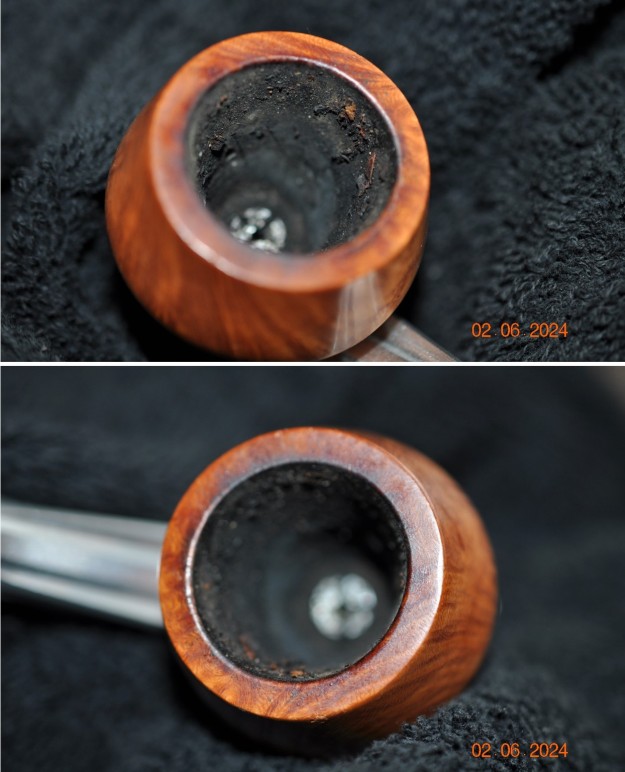
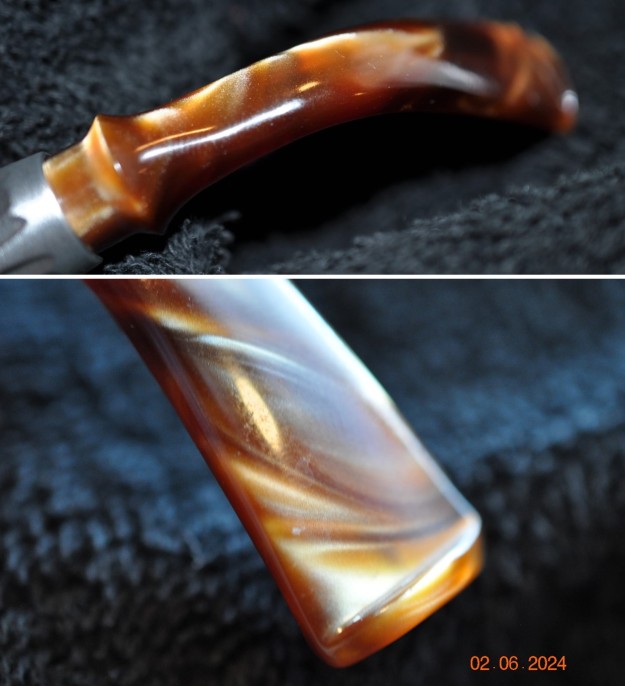
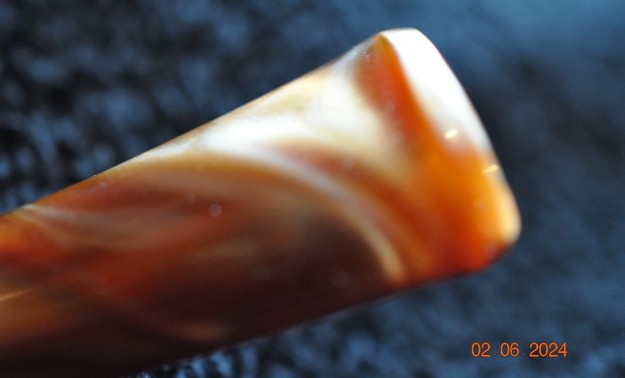
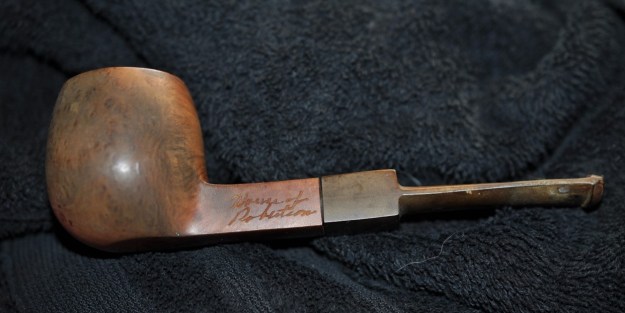
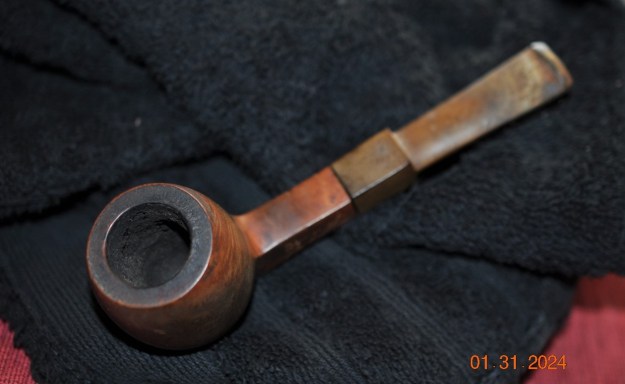
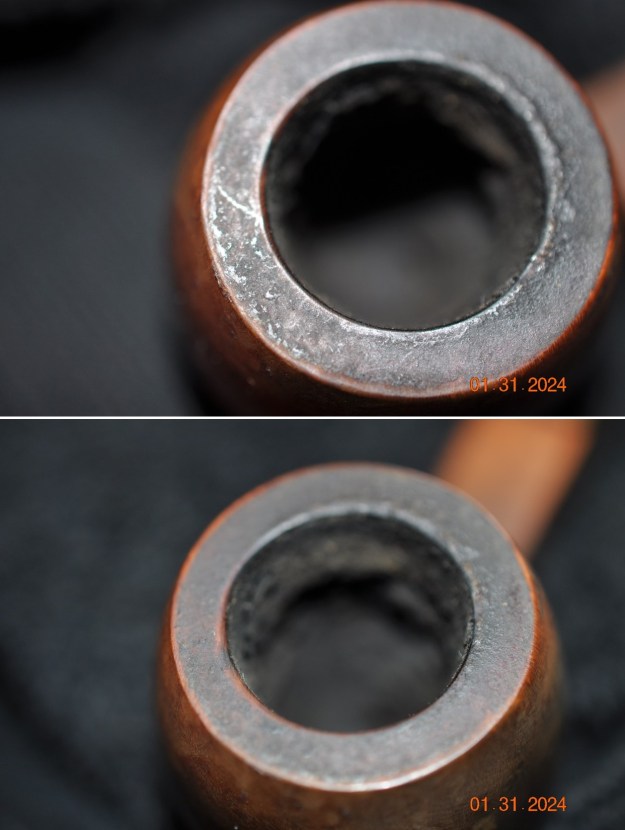
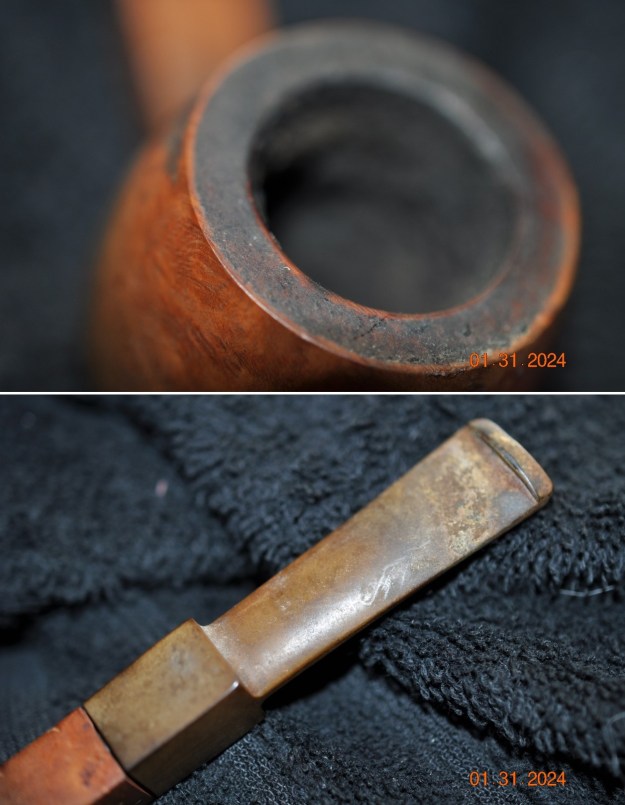
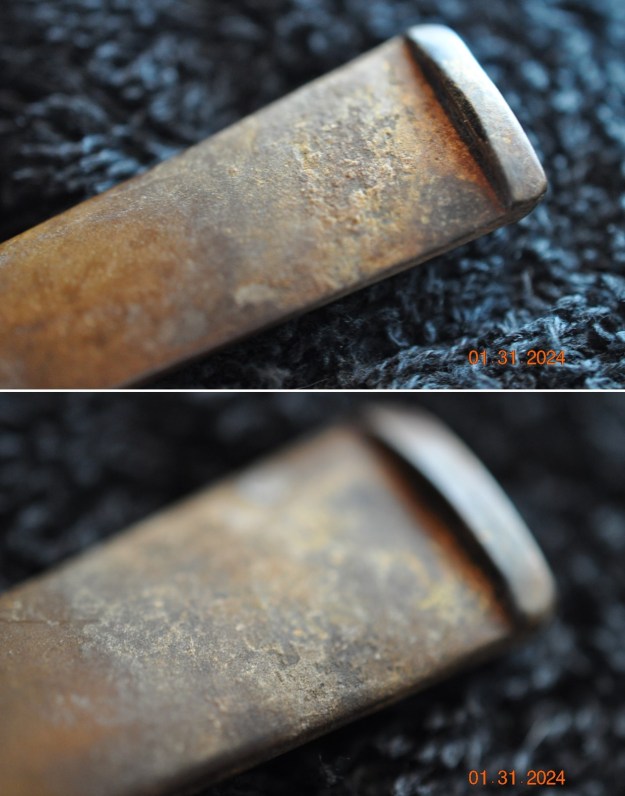
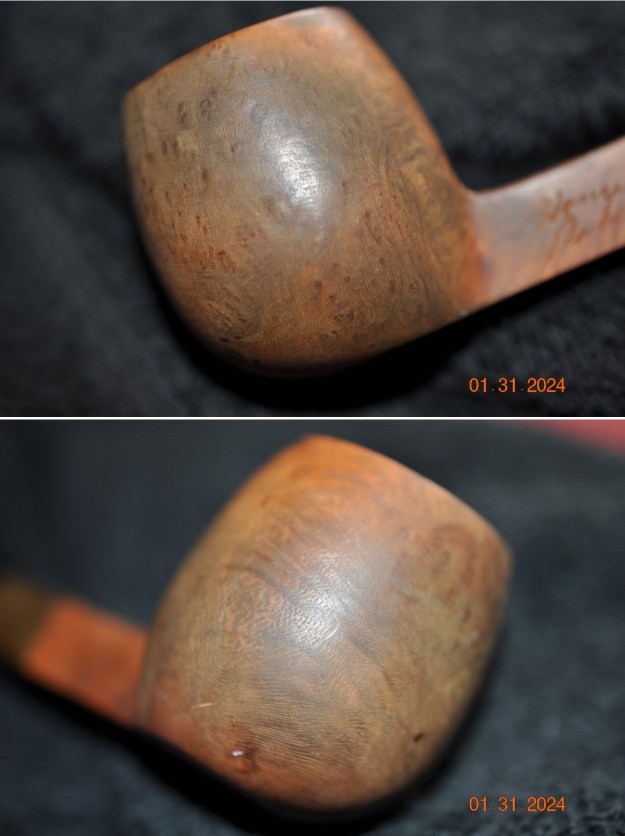
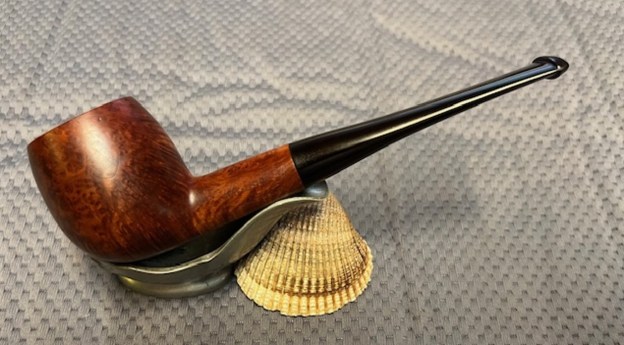
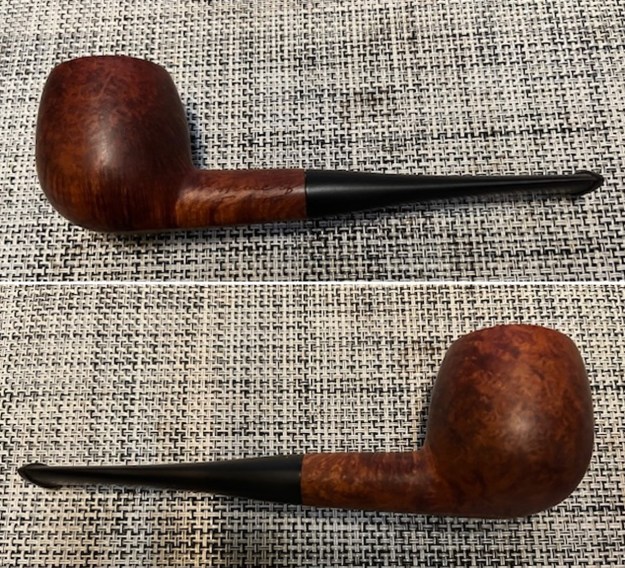
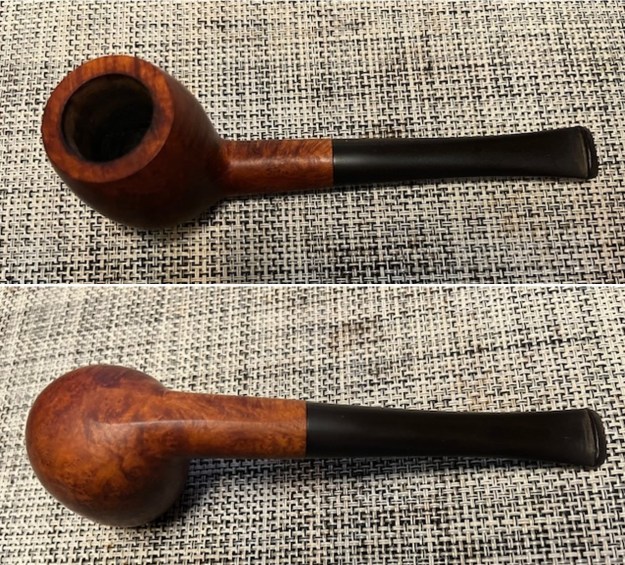
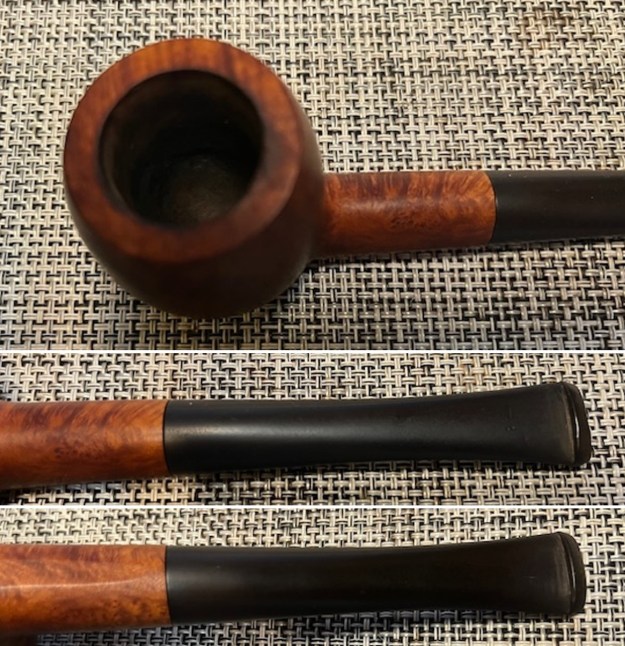
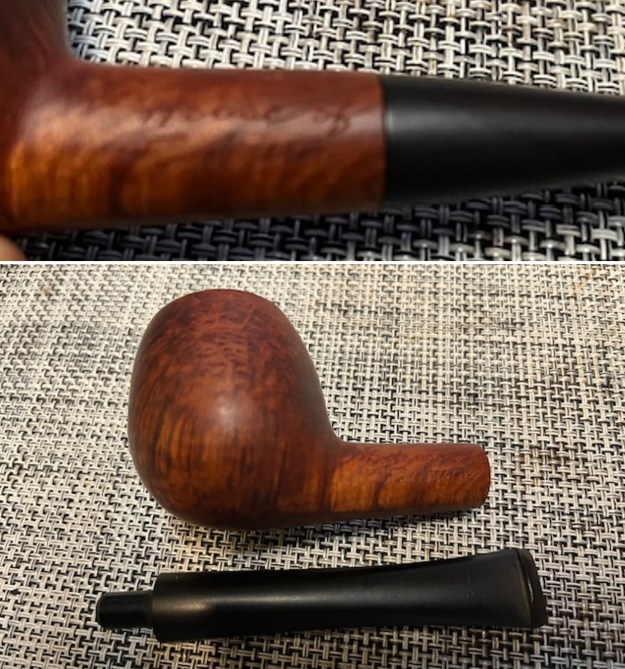
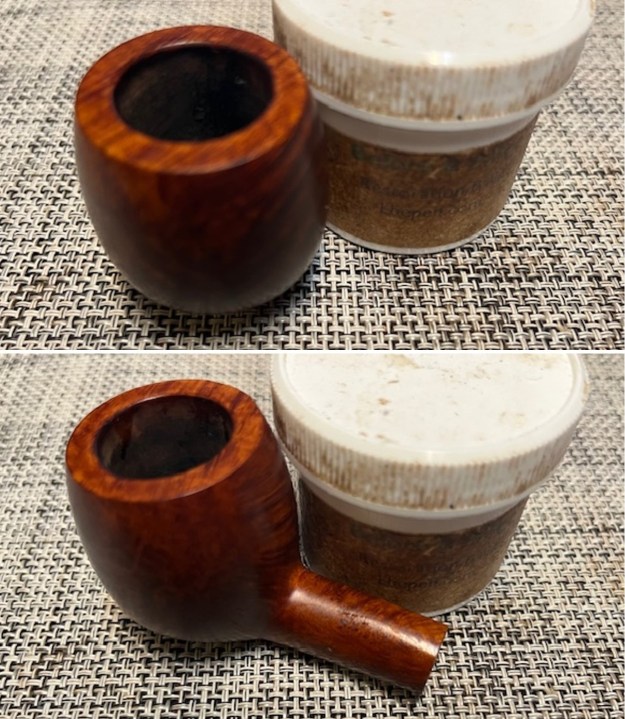
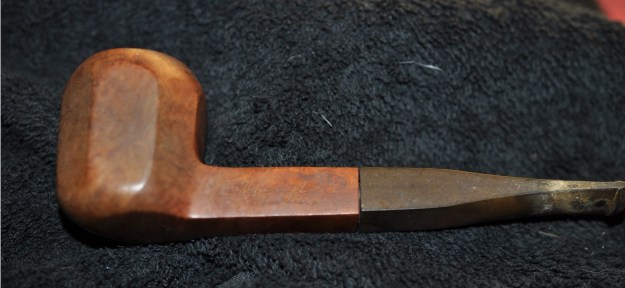
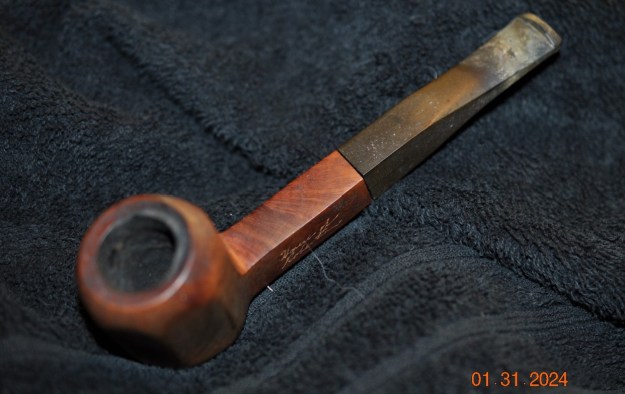
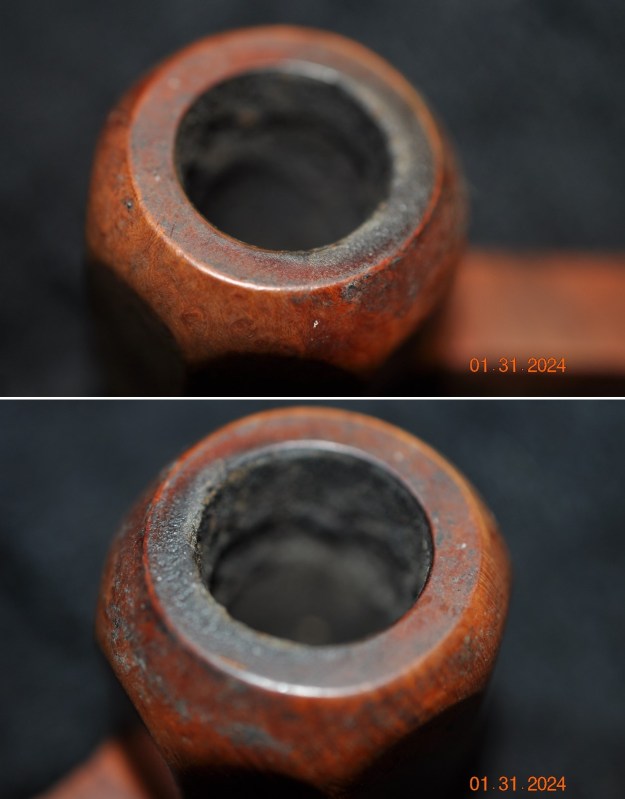
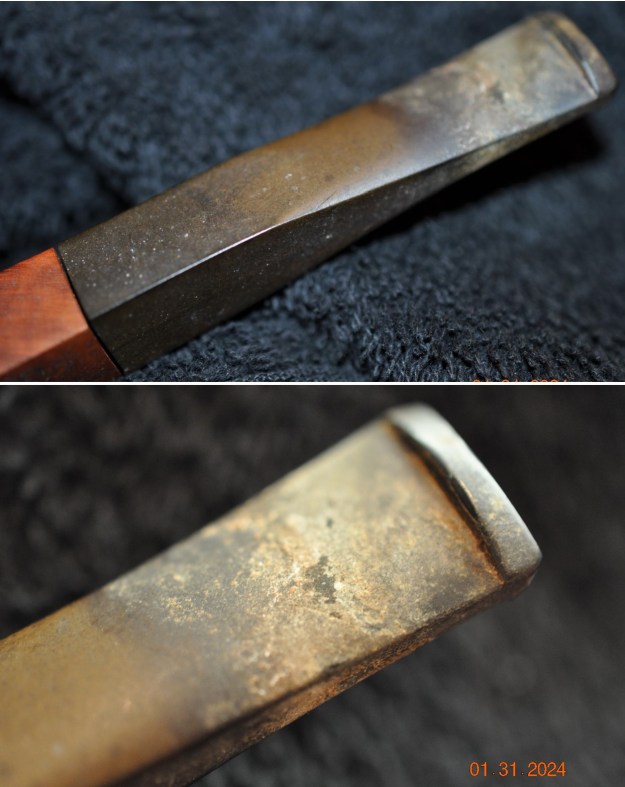
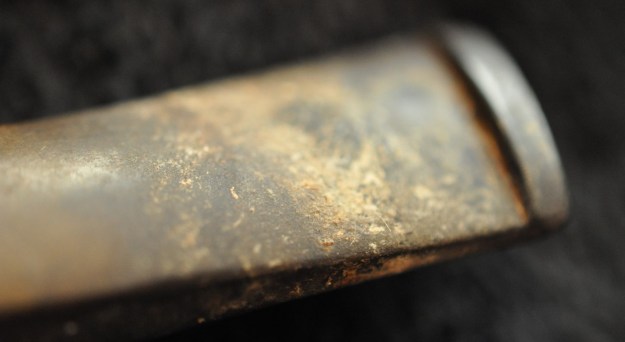
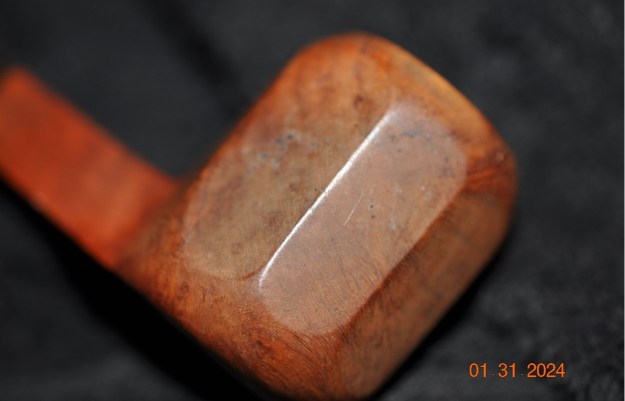
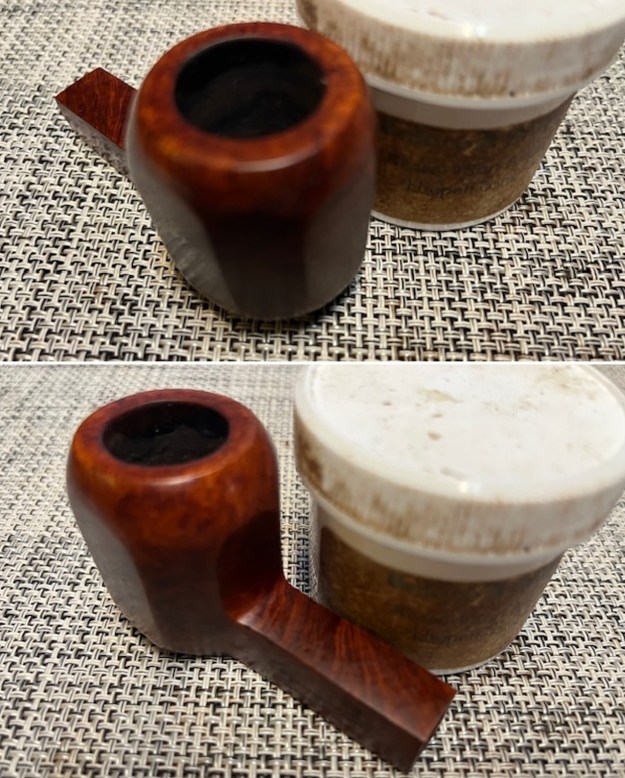
Jeff and I both have no idea where we picked up this pipe. We have no real memory of it but it is obvious that Jeff had cleaned it up sometime in its journey. It was stamped on the left side of the shank and read Peterson’s [over] System [over] Standard. On the right side it is stamped and reads Made in the Republic of Ireland (three lines) with the shape number 317 underneath. The pipe was a tired old workhorse with a worn finish. The bowl was also clean and there was no cake or damage on the bowl walls. The rim top was clean but there was some darkening on the top and on the inner and outer edge of the bowl. The nickel ferrule was tired and dull. It was stamped K&P [over] Peterson and there were no dents in the nickel ferrule. The stem was very clean with a light oxidation and light tooth marks and chatter on the top and underside. There was a faint “P” logo on the stem side. It had also straightened out over time and would need to be bent to fit the flow of the pipe. I took these photos before I started my clean up work to give an idea of the condition of the pipe. I took photos of the rim top and bowl as well as the stem to give a sense of the condition of both. The rim top had some scratching on the top and damage to the inner edge and rim top. The stem cleaned up well and the tooth marks on the top and underside ahead of the button are light and should clean up easily.I took photos of the stamping on the sides of the shank and on the ferrule and stem. It is readable but faint in places. I took the stem out of the shank and took a photo of the overall look of the pipe. I remembered that Paresh had restored a Peterson’s System Standard (his was a 314) earlier this year and as usual had done good work on the research. I turned to his blog and read through his work on the pipe (https://rebornpipes.com/2021/07/24/helping-a-fellow-piper-with-his-dream-pipea-petersons-system-pipe/). I quote below from the section on his blog regarding the dating of the pipe.
While dating a Peterson’s pipe, I always fall back to my under mentioned favorite site; http://thepetersonpipeproject.blogspot.com/2007/07/dating-peterons-pipes.html  I quote from the above site.

Stamping of Bowl: During the years of Kapp and Peterson’s business operations, the country of Ireland has undergone several name changes and K&P’s stamping on their pipes reflects these changes. Knowing these changes, a Peterson pipe can be roughly dated and placed in “eras.”

  • The Republic Era is from 1949 until the present. The Republic of Ireland was formed on 17 April 1949. From 1949 to present the stamp for this era is “Made in the Republic of Ireland” in a block format generally in three lines but two lines have been used with or without Republic being abbreviated.

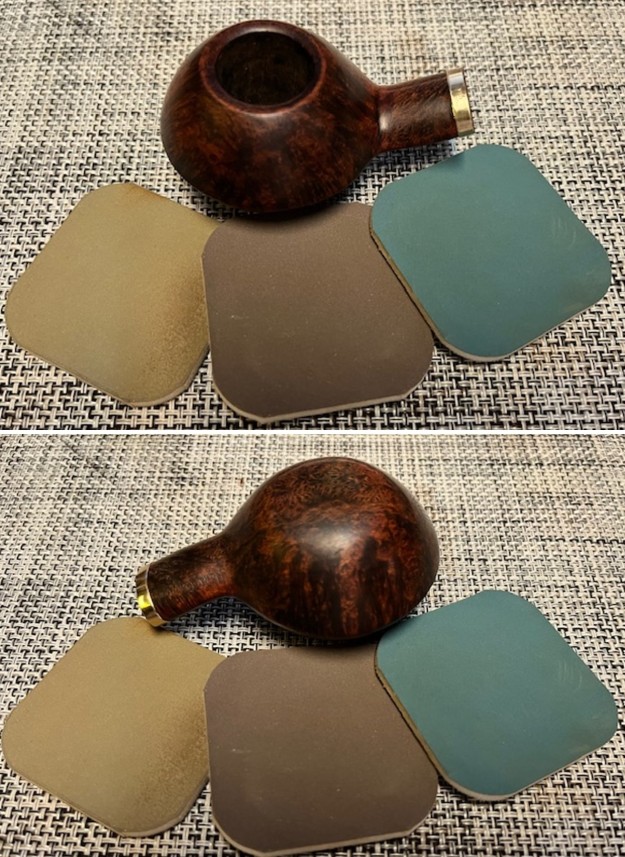
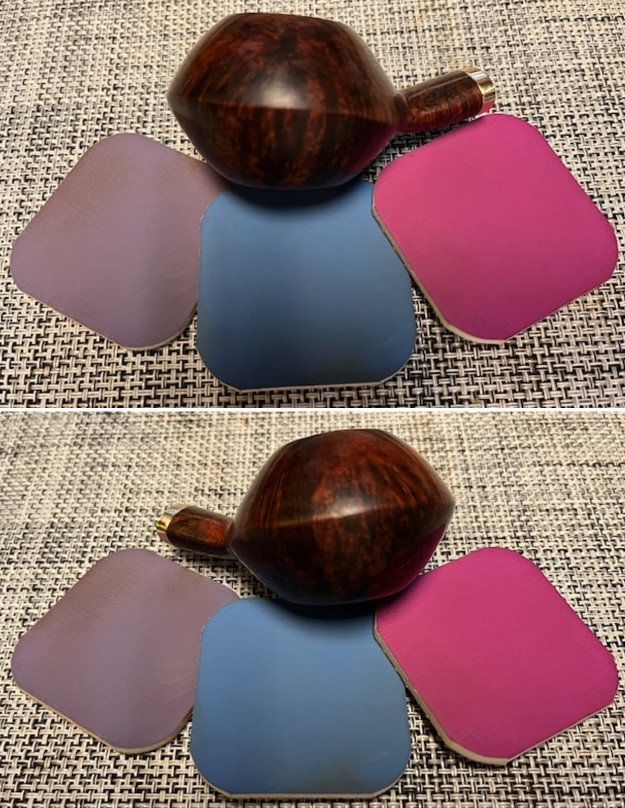
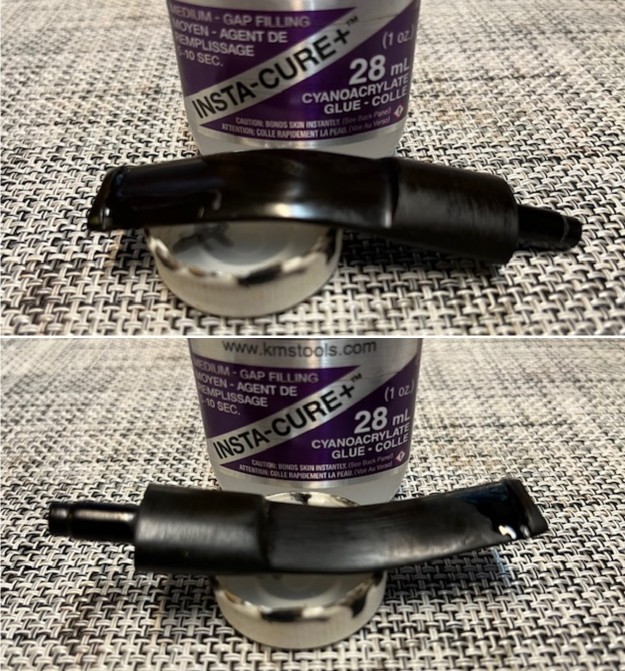
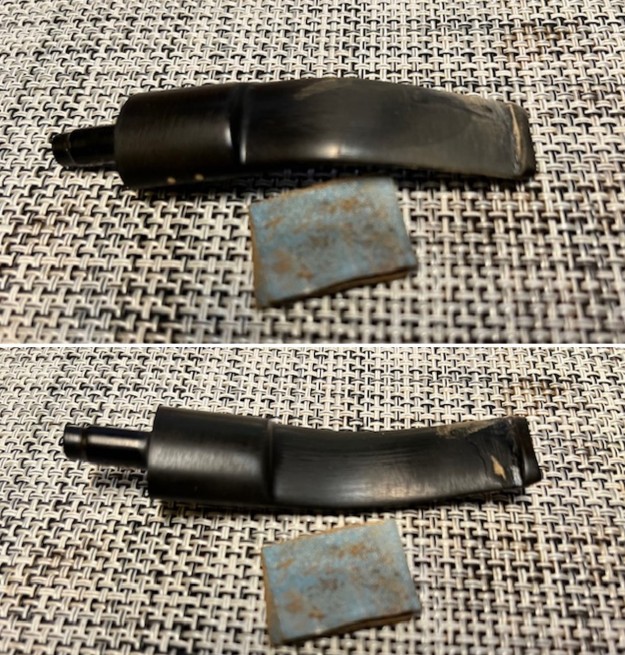
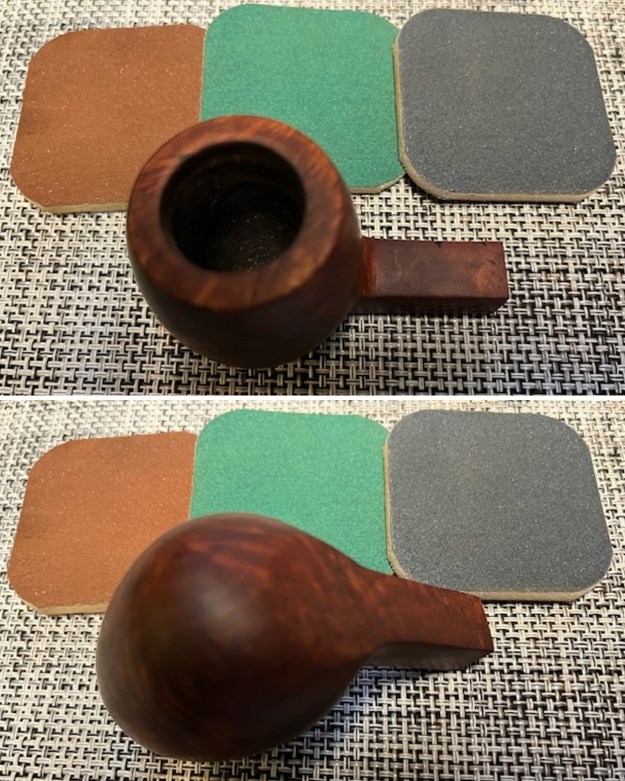
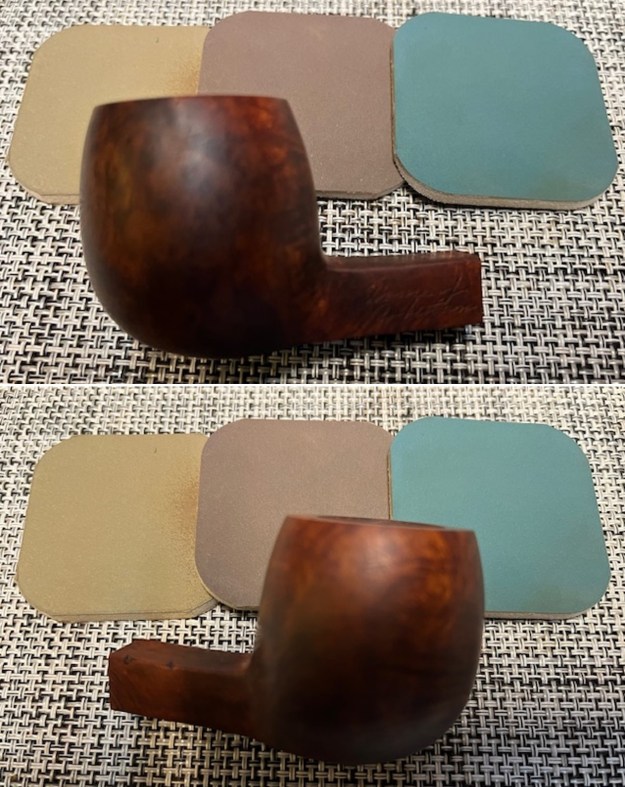
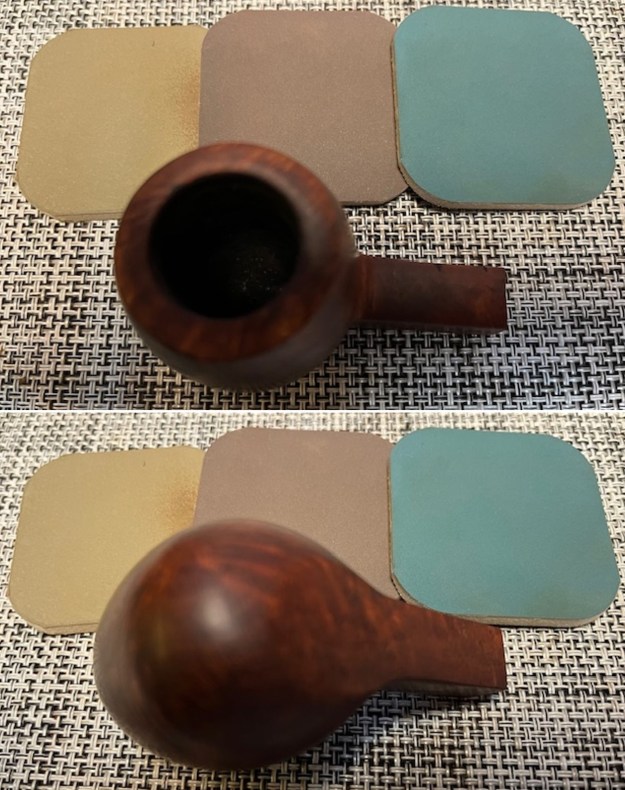
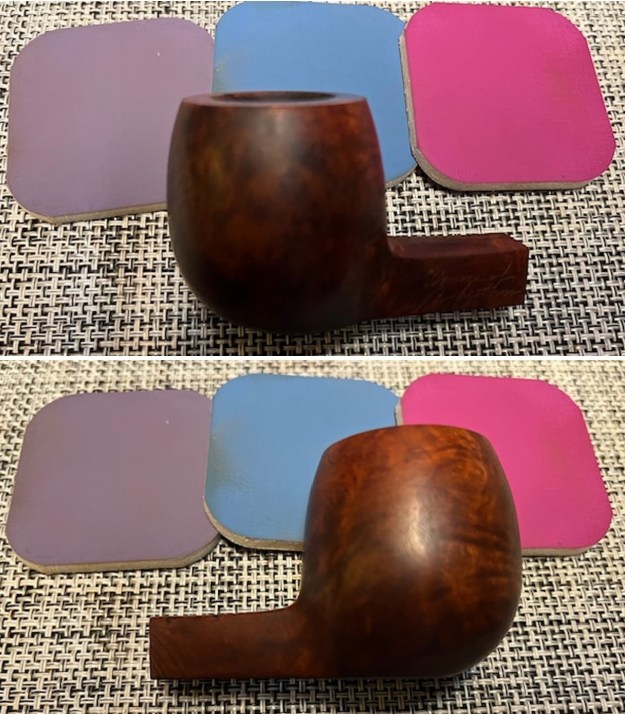
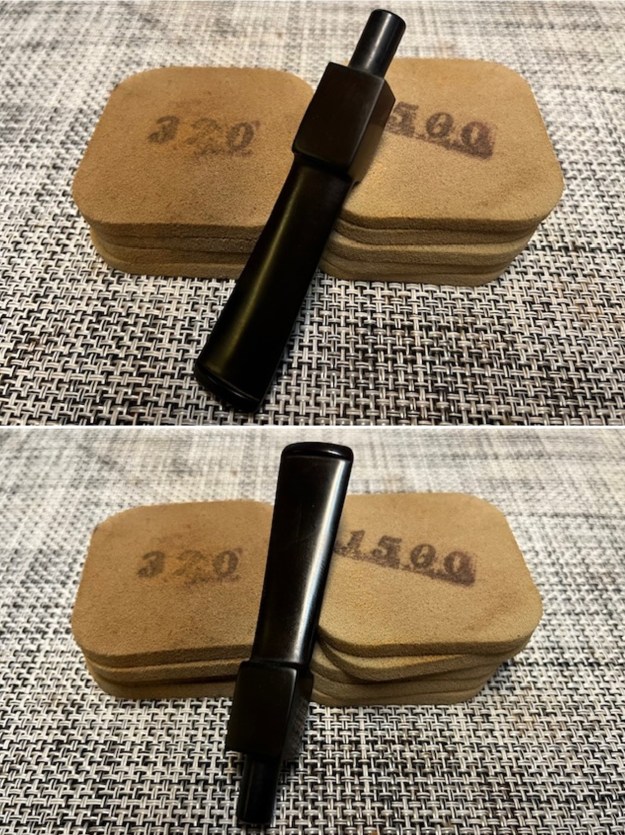
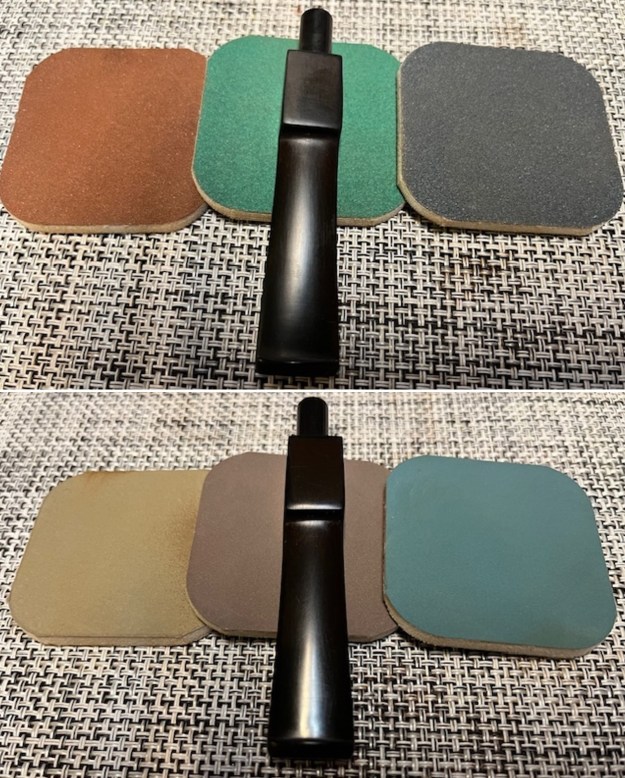
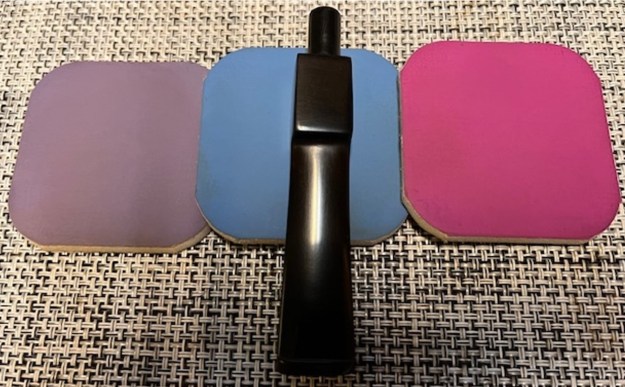
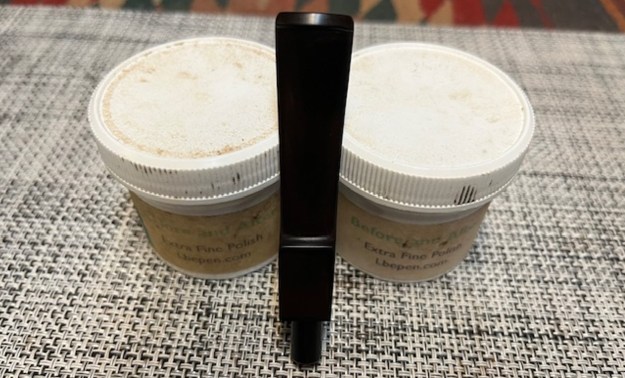
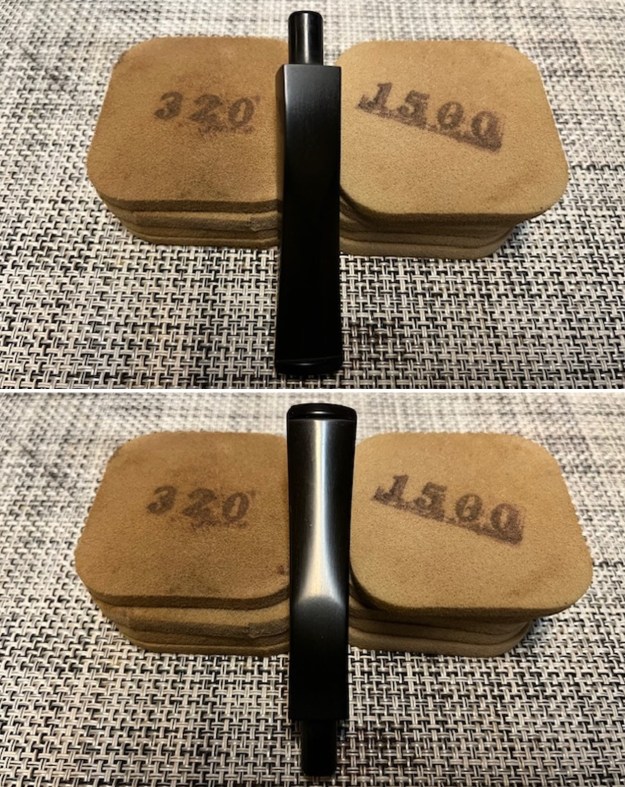
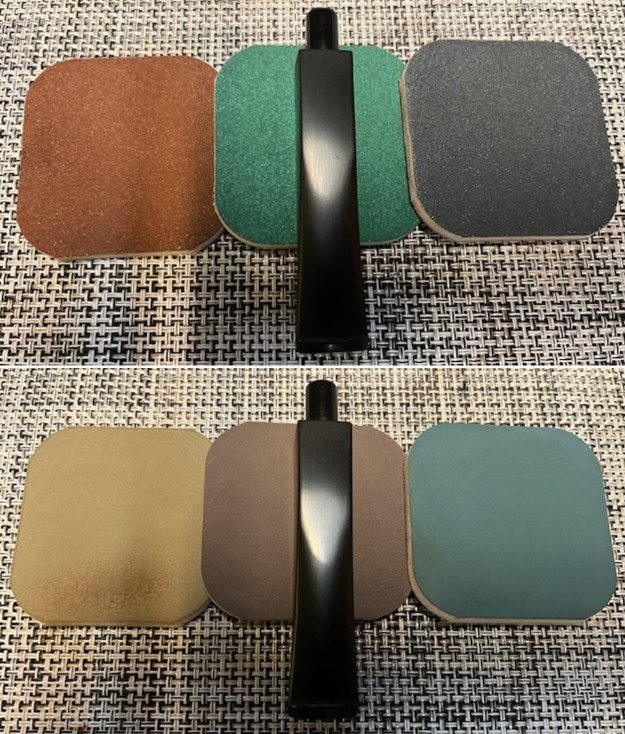
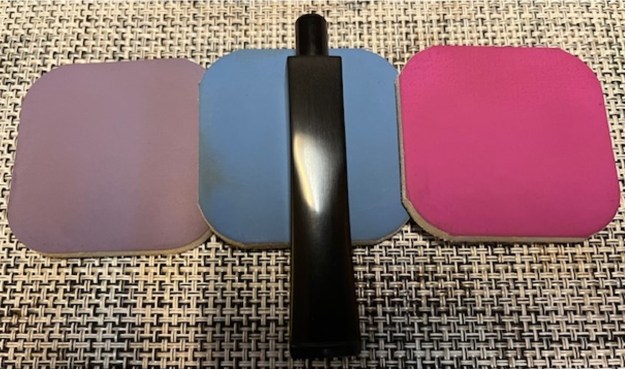
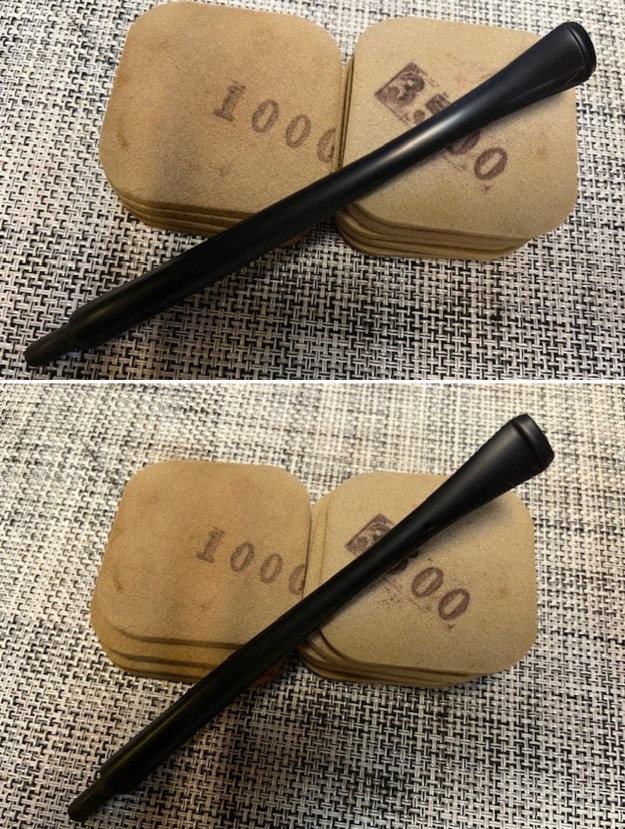
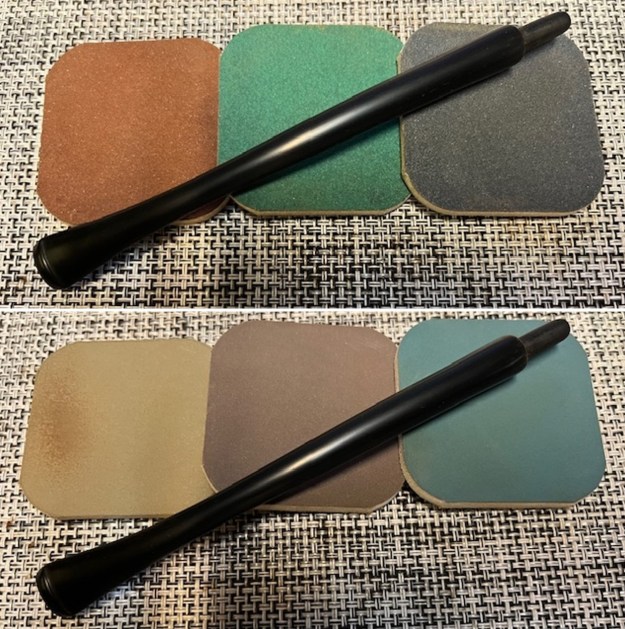
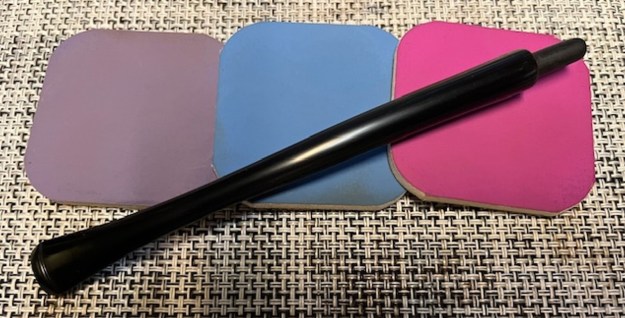
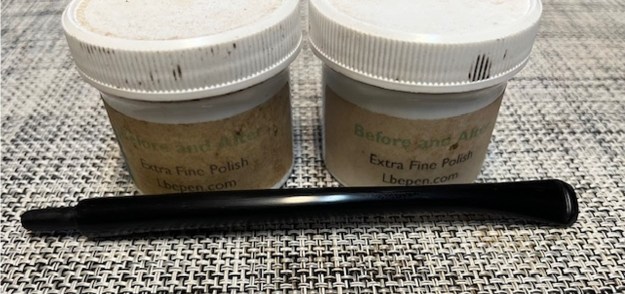
With that information at hand I turned to work on the pipe itself. I decided to start my work on the pipe by addressing the damage on the inside edge of the bowl and the rim top. I used a folded piece of 220 grit sandpaper to give the inner edge a slight bevel to remove the darkening and clean up the rim top. I wiped the top and edges down with a damp cloth and the rim top and edges looked much better. I polished the briar with micromesh sanding pads – dry sanding with 1500-12000 grit pads. I wiped the bowl down after each pad with a damp cloth. I did not need to restain the rim top and edge because with polishing the match is very good. I rubbed the bowl down with Before & After Restoration Balm. I worked it into the surface of the bowl sides and shank with my fingertips. The product works to clean, enliven and protect the briar. I let the balm sit for a little while and then buffed with a cotton cloth to raise the shine. I set the bowl aside and turned to work on the stem. I decided to start by rebending the stem. I heated it with the flame of a lighter to soften the vulcanite and when it was soft I bent it to the correct angle. It looked much better.I repaired the tooth marks on the top of the stem with clear CA glue. There were two deeper marks that I could not lift. This took care of those on the top side. There were none on the underside. Once it cured I sanded the repairs smooth with 220 grit sandpaper and cleaned up the light marks on the underside at the same time. I started polishing the stem with 600 grit wet dry sandpaper. I polished the stem with micromesh sanding pads – 1500-12000 grit pads. I wiped it down with Obsidian Oil after each sanding pad. I continued polishing the stem using Before & After Pipe Polish – both Fine and Extra Fine to further it. I wiped it down with Obsidian Oil and set it aside to dry. This Republic Era Peterson’s System Standard 317 Bent Billiard with a vulcanite stem is a great looking pipe now that it has been restored. The beautiful grain that shines through the polished finish is stunning. The dents in the rotated nickel ferrule really are a part of the story of the pipe and one that was unchangeable. It carries on to the next pipeman or woman who takes on the trust. As the pipe is smoked the patina should darken and look even better. I put the stem back on the bowl and carefully buffed the pipe with Blue Diamond on the buffing wheel. I gave the bowl and the stem multiple coats of carnauba wax on the buffing wheel and followed that by buffing the entire pipe with a clean buffing pad. I hand buffed the pipe with a microfiber cloth to deepen the shine. The finished Peterson’s System Standard 317 Bent Billiard fits nicely in the hand and feels great. Give the finished pipe a look in the photos below. The dimensions of the pipe are Length: 5 inches, Height: 1 ½ inches, Outside diameter of the bowl: 1 inch, Chamber diameter: ¾ of an inch. The weight of the pipe is 33 grams/1.16 ounces. I will soon be adding it to the rebornpipe store in the Irish Pipe Makers Section. If you are interested in this pipe send me a message or an email. Thanks for reading this blog and my reflections on the pipe while I worked on it. There are many more to come!

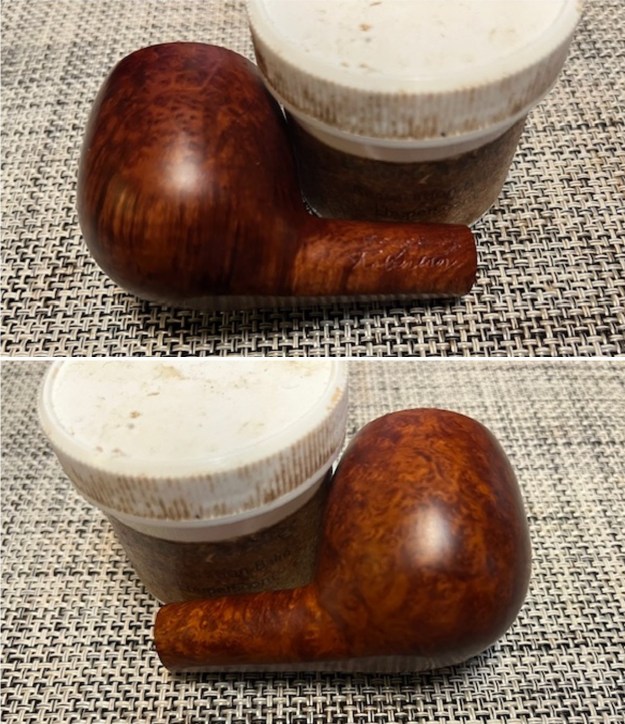
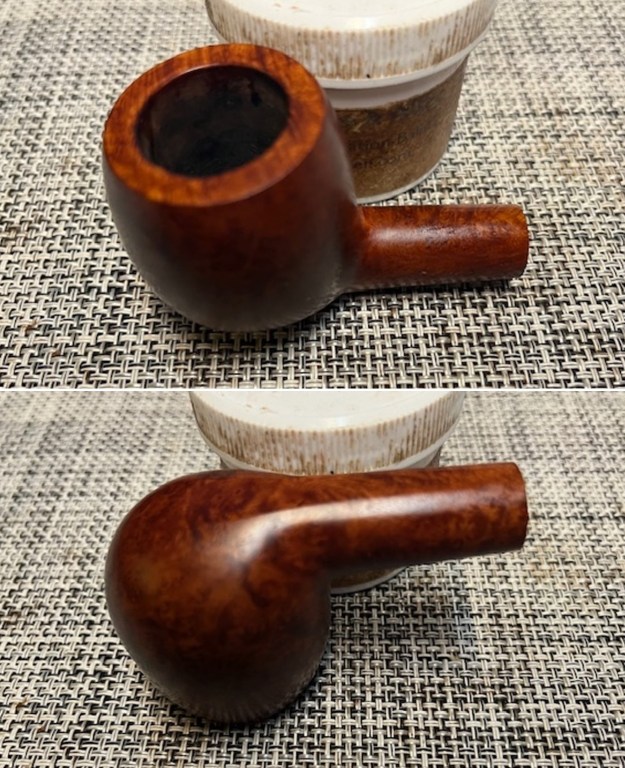
Restoring a Worn and Tired Republic Era Peterson’s System Standard 303


Blog by Steve Laug

Jeff and I both have no idea where we picked up this pipe. We have no real memory of it but it is obvious that Jeff had cleaned it up sometime in its journey. It was stamped on the left side of the shank and read Peterson’s [over] System [over] Standard. On the right side it is stamped and reads Made in the Republic of Ireland (three lines) with the shape number 303 underneath. The pipe was a tired old workhorse with a worn finish. The bowl was also clean and there was no cake or damage on the bowl walls. The rim top was clean but there was some darkening on the top and on the inner and outer edge of the bowl. The nickel ferrule was tired and had dents on the top and bottom. It was stamped K&P [over] Peterson and the stamp had been turned. Somewhere along the way it was glued on the shank end. It was not movable. The stem was very clean with a light oxidation and light tooth marks and chatter on the top and underside. I took these photos before I started my clean up work to give an idea of the condition of the pipe.  I took photos of the rim top and bowl as well as the stem to give a sense of the condition of both. The rim top had some scratching on the top and damage to the inner edge and rim top. The stem cleaned up well and the tooth marks on the top and underside ahead of the button are light and should clean up easily.I took photos of the stamping on the sides of the shank and on the ferrule and stem. It is readable but faint in places. I took the stem out of the shank and took a photo of the overall look of the pipe. I remembered that Paresh had restored a Peterson’s System Standard (his was a 314) earlier this year and as usual had done good work on the research. I turned to his blog and read through his work on the pipe (https://rebornpipes.com/2021/07/24/helping-a-fellow-piper-with-his-dream-pipea-petersons-system-pipe/). I quote below from the section on his blog regarding the dating of the pipe.

While dating a Peterson’s pipe, I always fall back to my under mentioned favorite site; http://thepetersonpipeproject.blogspot.com/2007/07/dating-peterons-pipes.html  I quote from the above site.

Stamping of Bowl: During the years of Kapp and Peterson’s business operations, the country of Ireland has undergone several name changes and K&P’s stamping on their pipes reflects these changes. Knowing these changes, a Peterson pipe can be roughly dated and placed in “eras.”

  • The Republic Era is from 1949 until the present. The Republic of Ireland was formed on 17 April 1949. From 1949 to present the stamp for this era is “Made in the Republic of Ireland” in a block format generally in three lines but two lines have been used with or without Republic being abbreviated.

With that information at hand I turned to work on the pipe itself. I tried to remove the nickel ferrule. I heated it, put it in the refrigerator, painted the joint of the briar and the ferrule with acetone and none of them worked. The ferrule had been obviously epoxied in place and there was nothing I could do to remove it. The dents in the ferrule would remain with the pipe as a part of its journey. There were also sharp edges on the ferrule end that I would need to smooth out to keep from damaging the vulcanite. It was turned to the left leaving the stamping on the ferrule on the left underside.

I decided to start my work on the pipe by addressing the damage on the inside edge of the bowl and the rim top. I used a folded piece of 220 grit sandpaper to give the inner edge a slight bevel to remove the darkening and clean up the rim top. I wiped the top and edges down with a damp cloth and the rim top and edges looked much better. I polished the briar with micromesh sanding pads – dry sanding with 1500-12000 grit pads. I wiped the bowl down after each pad with a damp cloth. I did not need to restain the rim top and edge because with polishing the match is very good. I rubbed the bowl down with Before & After Restoration Balm. I worked it into the surface of the bowl sides and shank with my fingertips. The product works to clean, enliven and protect the briar. I let the balm sit for a little while and then buffed with a cotton cloth to raise the shine. I used a folded piece of 220 grit sandpaper to smooth out the sharp edge of the ferrule. I polished the ferrule end with micromesh sanding pads. I buffed it with a jewellers cloth to protect and to raise the shine in the nickel. You can see the dents and the rotated ferrule in the photos below but it is still quite nice. I set the bowl aside and turned to work on the stem. I polished the stem with micromesh sanding pads – 1500-12000 grit pads. I wiped it down with Obsidian Oil after each sanding pad. I continued polishing the stem using Before & After Pipe Polish – both Fine and Extra Fine to further it. I wiped it down with Obsidian Oil and set it aside to dry.This Republic Era Peterson’s System Standard 303 Bent Apple with a vulcanite stem is a great looking pipe now that it has been restored. The beautiful grain that shines through the polished finish is stunning. The dents in the rotated nickel ferrule really are a part of the story of the pipe and one that was unchangeable. It carries on to the next pipeman or woman who takes on the trust. As the pipe is smoked the patina should darken and look even better. I put the stem back on the bowl and carefully buffed the pipe with Blue Diamond on the buffing wheel. I gave the bowl and the stem multiple coats of carnauba wax on the buffing wheel and followed that by buffing the entire pipe with a clean buffing pad. I hand buffed the pipe with a microfiber cloth to deepen the shine. The finished Peterson’s System Standard 303 Apple fits nicely in the hand and feels great. Give the finished pipe a look in the photos below. The dimensions of the pipe are Length: 5 ½ inches, Height: 1 ½ inches, Outside diameter of the bowl: 1 ¼ inches, Chamber diameter: ¾ of an inch. The weight of the pipe is 44 grams/1.55 ounces. I will soon be adding it to the rebornpipe store in the Irish Pipe Makers Section. If you are interested in this pipe send me a message or an email. Thanks for reading this blog and my reflections on the pipe while I worked on it. There are many more to come!

New Life for a Republic Era “Peterson’s Product” Shamrock 53 Lovat


Blog by Steve Laug

I am working through the remaining Peterson’s Pipes I have in my bins of pipes to work on. All that remain are pipes that neither Jeff or I remember where we obtained them. I chose to work on this nice looking Lovat with a fishtail style taper stem from that group of pipes. It is stamped on the left side of the shank and read SHAMROCK. It was also stamped on the right side and reads “A PETERSON’S [over] PRODUCT” over MADE IN THE REP. OF IRELAND (3 lines) with the shape number 53 next to the bowl. There was also the Shamrock logo “S” on the left side of the saddle stem. The bowl had been reamed and cleaned as obviously Jeff had done his magic on it before I got it. He had scrubbed the exterior with Murphy’s Oil Soap and a tooth brush. The rim top showed darkening and some damage on the inner and outer edges. He had rinsed it with warm water. He cleaned out the inside of the shank and stem with alcohol, cotton swabs and pipe cleaners. The vulcanite stem is lightly oxidized from sitting around here for years and has some light tooth marks and chatter on both sides ahead of the button. There is also a stamped Shamrock “S” logo on the left side of the stem. I took photos of the pipe before I started my work on it. I took photos of the rim top and the bowl to show the condition. The rim top had some nicks on it and some damage on the inner edge of the rim making it slightly out of round. There was also darkening on the bowl top. I also took photos of both sides of the stem to show the light oxidation and tooth chatter. Over all the pipe was in good condition.I took photos of the sides of the shank to show the stamping. The stamping is readable in the photos below and is as noted above. I took the stem off the pipe and took a photo of the parts to give a sense of proportion.I am including the link to the Pipedia’s article on Peterson pipes. It is a great read in terms of the history of the brand (https://pipedia.org/wiki/Peterson).

I turned to “The Peterson Pipe” by Mark Irwin and Gary Malmberg to get some background on the Peterson’s Shamrock Pipe. On page 312 it had the following information.

Shamrock (c1941-2009) Originally stamped SHAMROCK with no brand name, an inexpensive line first described in George Yale (New York) mail order booklet in 1941, imported by Rogers Import. The line was actively promoted beginning in ’45, aggressively promoted in US by Rogers from early ‘50s when they registered the Shamrock logo with US Patent Office, claiming propriety since ’38. Over the years offered with P-lip or fishtail mouthpiece, with or without nickel band, with or without shamrock logo on the band, with or without S stamped in white or later in gold on mouthpiece. Appearing in 2008 as unstained smooth and rustic, fishtail mouthpiece with gold impressed P on the stem. COMS of MADE IN over IRELAND (C1945-1965), MADE IN IRELAND forming a circle (c1945-1965), “A PETERSON’S PRODUCT” over MADE IN IRELAND (c1945-1965), MADE IN THE over REPUBLIC over OF IRELAND c1948-1998). Model is always difficult or impossible to date.

Judging from the description above, the pipe I am working on is stamped with the stamp noted in red above. It reads “A Peterson’s Product” over Made in the Rep. Of Ireland which narrows the date to between approximately 1948-1998. It is just stamped SHAMROCK on the shank side and has an “S” logo on the left side of the taper stem.

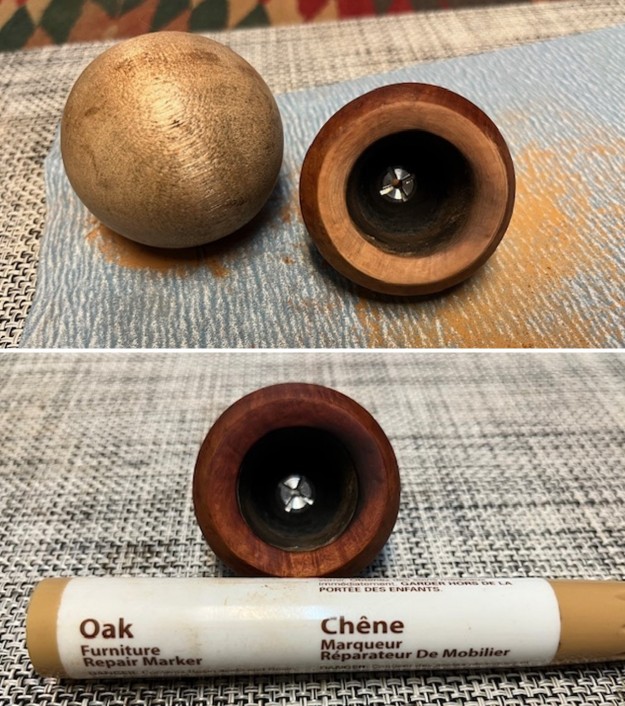
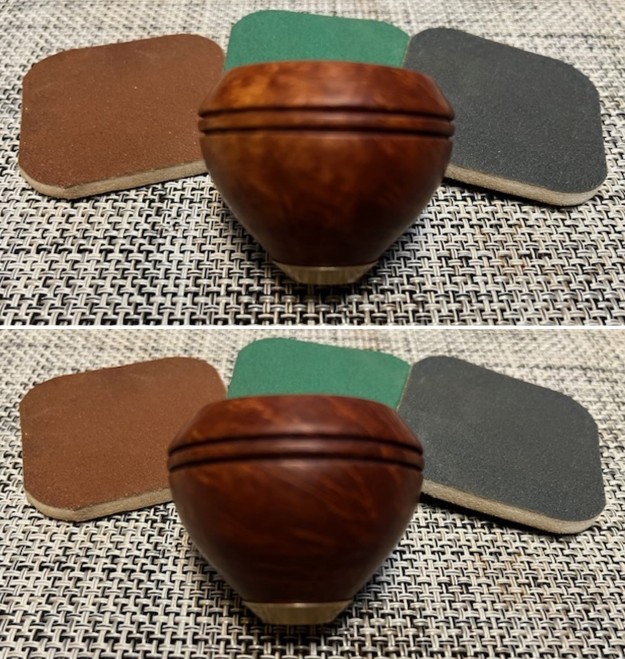
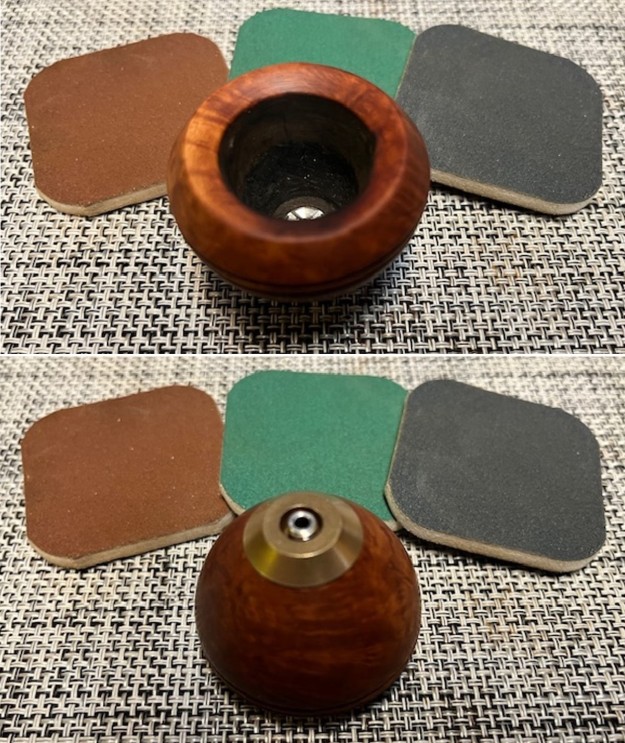
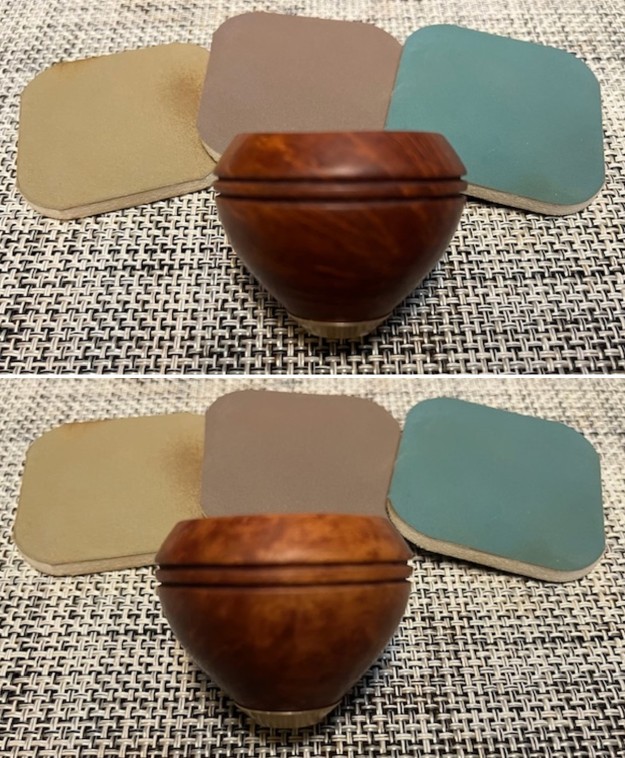
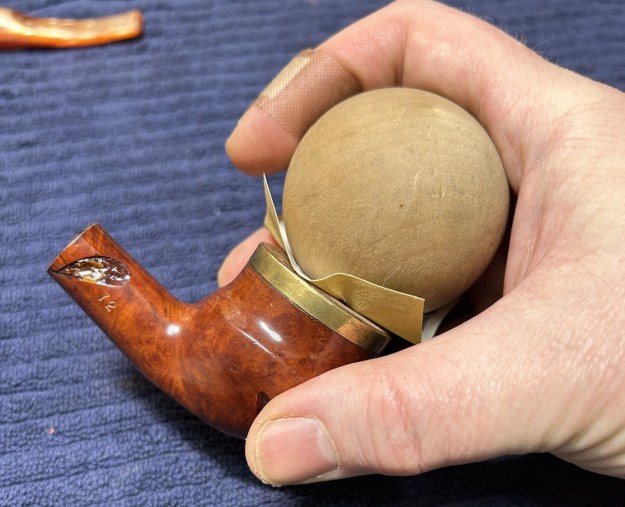
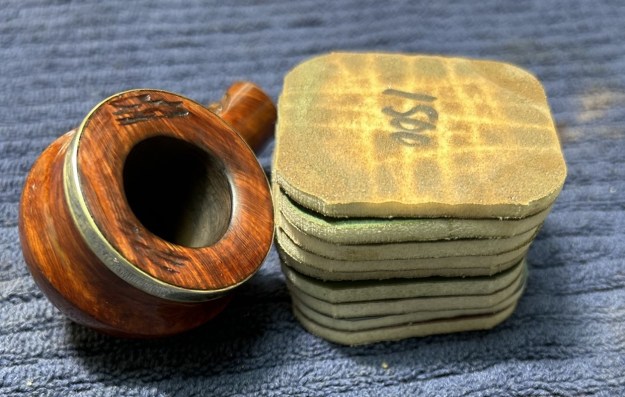
I decided to start my work on the pipe by addressing the darkening and damage on the inner and outer edge of the rim. I used a folded piece of 220 grit sandpaper to smooth out and clean up the edge. I also used a wooden ball and a piece of sand paper to give the inner edge a light bevel. It looked much better! I decided to leave the sandpits on the bowl side and filling them seemed unnecessary to me. I polished the briar with micromesh sanding pads – dry sanding with 1500-12000 grit sanding pads. I wiped the bowl down with a damp cloth after each sanding pad. (Note the sandpit on the left side of the shank near the bowl.) I worked some Before & After Restoration Balm into the surface of the briar with my fingertips to clean, enliven and protect the briar. I let the balm sit for 15 minutes and then buffed with a cotton cloth to raise the shine. The photos show the bowl at this point in the restoration process. I set the bowl aside and started working on the stem. I touched up the Shamrock “S” logo on the right side of the stem with white acrylic nail polish. Once it dried, I scraped off the excess wand sanded it clean with a worn 1500 girt micromesh sanding pad.I polished the stem with micromesh sanding pads – dry sanding with 1500-12000 grit sanding pads. I wiped it down after each sanding pad with Obsidian Oil. I finished hand polishing the stem with Before & After Pipe Stem Polish – both Fine and Extra Fine. I wiped it on with my fingers and buffed it off with a soft cloth. The stem really began to have a deep glow. I gave it a final wipe down with Obsidian Oil and set it aside to dry.I am excited to finish this Republic Era aPeterson’s Product” Shamrock 53 Lovat. I put the pipe back together and buffed it with Blue Diamond on the buffing wheel. I gave the bowl and the stem multiple coats of carnauba wax. I hand buffed the pipe with a clean buffing pad to raise the shine. It is fun to see what the polished bowl looks like with beautiful flame grain all around it. Added to that the polished Sterling Silver band and the black vulcanite stem was beautiful. This smooth Classic Shamrock 53 Lovat is great looking and the pipe feels great in my hand. It is light and well balanced. Have a look at it with the photos below. The dimensions are Length: 5 inches, Height: 1 ¾ inches, Outside diameter of the bowl: 1 ¼ inches, Chamber diameter: ¾ of an inch. The weight of the pipe is 41grams/1.45 ounces. It turned out to be a beautiful pipe. I will be putting it on the rebornpipes store in the Irish Pipe Makers section. If you are interested in adding it to your rack let me know by message or by email to slaug@uniserve.com. Thanks for your time and as Paresh says each time he writes – Stay Safe.

A Christmas Gift for a Blessed Husband: A Nørdin Made in Denmark Freehand


Nicely done Nording Dal. Welcome back.

With Christmas soon to come, I have received commissions from loved ones of very fortunate pipe men.  This beautiful Nørdin Freehand was commissioned…

A Christmas Gift for a Blessed Husband: A Nørdin Made in Denmark Freehand

A Greenwich House Restoration


John did a great write up on this experimental stem repair… laughed as I read his internal dialogues as he work and recognized myself. Well done John on the work too,

Written and photographed by John M. Young I know what you are thinking:  “Wow! That pipe is gorgeous.  I’m going to sell all my Savinellis and get a …

A Greenwich House Restoration

Refreshing a NOS UNSMOKED Nording WM Smooth Ball Pipe (Mexico World Cup 1986)


Blog by Steve Laug

The next pipe on the table is another NOS and UNSMOKED beauty. It is just dusty and dirty from sitting in a display case somewhere. We recently purchased it from an estate in Idaho. It is a smooth, dark stained ball shaped pipe with an inlaid coin on the left side of the bowl. The rim top and the inner edge are in excellent condition. It is stamped on the left side of the shank and reads Nording in script. On the underside of the shank it is stamped THE WM PIPE [over] MADE IN DENMARK. The coin on the side is stamped MEXICO arched over a soccer ball and arched underneath it reads VM 1986. The variation between the WM of the stamping and the VM on the coin are interesting. There is a light carbon bowl coating and the bowl was very clean and it is unsmoked. There is no smell of tobacco in the bowl. The rim top and the inner edge of the bowl looked very good. The mortise was also clean with no oils or tars darkening it. The bowl is stained in a dark walnut coloured stain. The vulcanite taper stem has some dust/dirt against the edge of the button. There were not any tooth marks or chatter on the top and underside on and near the button. There was no logo stamped on the left side of the stem. I took photos of the pipe before I started my cleanup work. They tell the story and give a glimpse of the promise that we see in this pipe.  I took a photo of the rim top and bowl to show the current condition. The rim top is in perfect condition with no nicks or flaws. The photo shows the clean walls on the bowl show the bowl coating and dust. The stem photos show a clean and well fit stem.I took photos of the of the side of the bowl to show the coin inset in the bowl side and the stamping on the left and underside of the shank. It is clear and readable as noted above but a bit hard to capture in the photos. I removed the stem from the shank and took photos of the overall look of the pipe. It is a beautiful pipe. I found a similar pipe on smokingpipes.com with a great description and clear information on it (https://www.smokingpipes.com/pipes/estate/denmark/moreinfo.cfm?product_id=552093). I quote the description and have included a photo below of the pipe. It has a different finish but it is the same pipe.

Handcrafting pipes since the 60s, there are few pipe makers more experienced than Erik Nørding. During his long career, Nørding espoused the Danish Fancy style, a maximalist aesthetic that delights in baroque flourishes. This Ball by Erik Nording is a fitting homage for the 1986 Mexico World Cup, which is memorialized by a metal button imprinted onto the left flank…I also found another similar pipe on Worthpoint, an auction site that confirmed the information other than calling it a golf ball pipe (https://www.worthpoint.com/worthopedia/unsmoked-erik-nording-m-pipe-sterling-1915283149).

Knowing what I was dealing with I now turned my attention to the pipe itself. I decided to polish the briar with micromesh to see if I could make the opaque stain a little more transparent so that the grain would shine through. I dry sanded it with 1500-12000 grit micromesh sanding pads and wiped the bowl down with a damp cloth after each sanding pad. I worked some Before & After Restoration Balm into the surface of the briar with my fingertips to clean, enliven and protect the briar. I let the balm sit for 15 minutes and then buffed with a cotton cloth to raise the shine. The photos show the bowl at this point in the restoration process. I polished the stem with micromesh sanding pads – dry sanding with 1500-12000 grit sanding pads. I wiped it down after each sanding pad with Obsidian Oil. I finished hand polishing the stem with Before & After Pipe Stem Polish – both Fine and Extra Fine. I wiped it on with my fingers and buffed it off with a soft cloth. The stem really began to have a deep glow. I gave it a final wipe down with Obsidian Oil and set it aside to dry.I am excited to finish this Nording The WM Pipe Made in Denmark with a polished vulcanite stem. It is a great looking pipe made to commemorate the 1986 Mexico World Cup there is a metal medallion/coin inserted in the left side of the bowl.  I put the pipe back together and buffed it with Blue Diamond on the buffing wheel. I gave the bowl and the stem multiple coats of carnauba wax. I hand buffed the pipe with a clean buffing pad to raise the shine. It is fun to see what the polished bowl looks like with beautiful mixed grain around the bowl. The polished coin, rich walnut stain and the black vulcanite stem was beautiful. This smooth Nording The WM (VM) Pipe is great looking and the pipe feels great in my hand. It is light and well balanced. Have a look at it with the photos below. The dimensions are Length: 5 ½ inches, Height: 1 ½ inches, Outside diameter of the bowl: 1 inch, Chamber diameter: ¾ of an inch. The weight of the pipe is 37 grams/1.34 ounces. It turned out to be a beautiful pipe. I will be putting it on the rebornpipes store in the Danish Pipe Makers section. If you are interested in adding it to your rack let me know by message or by email to slaug@uniserve.com. Thanks for your time and as Paresh says each time he writes – Stay Safe.

Refreshing a NOS UNSMOKED Handmade by Erik Nording 82 Sandblast Dublin


Blog by Steve Laug

The next pipe on the table is another NOS and UNSMOKED beauty. It is just dusty and dirty from sitting in a display case somewhere. We recently purchased it from an estate in Idaho. It is a sandblast Dublin with a rectangular shank. The crowned rim top also has some sandblast grain that looks a lot like plateau and the inner edge of the rim is smooth and slightly bevelled inward. It is stamped on the heel of the bowl and reads Handmade [over] By [over] Erik Nording at an angle. Next to that it is stamped with the shape number 82. There is a light carbon bowl coating and the bowl was very clean and it is unsmoked. There is no smell of tobacco in the bowl. The rim top and the inner edge of the bowl looked very good. The mortise was also clean with no oils or tars darkening it. There is a 9mm filter in the shank/tenon. There is a light coat of shellac on the bowl that gives it a rich shine. The acrylic filter stem has dust/dirt against the edge of the button. There were not any tooth marks or chatter on the top and underside on and near the button. There was a Nording “N” logo stamped on the left side of the stem. I took photos of the pipe before I started my cleanup work. They tell the story and give a glimpse of the promise that we see in this pipe.  I took a photo of the rim top and bowl to show the current condition. The inwardly bevelled rim top is in perfect condition with no nicks or flaws. The bowl photo shows the clean walls on the bowl show the bowl coating and dust. The stem photos show the dust or grime against the button each side.I took photos of the heel of the bowl to capture the stamping. It is clear and readable as noted above but a bit hard to capture in the photos. I removed the stem from the shank and took photos of the overall look of the pipe. It is a beautiful pipe. I turned my attention to the pipe itself. I wiped out the inside of the bowl with a paper towel to lightly remove the dust in bowl coating on the pipe. It looked much better at this point.I worked some Before & After Restoration Balm into the surface of the briar with my fingertips to clean, enliven and protect the briar. I let the balm sit for 15 minutes and then buffed with a cotton cloth to raise the shine. The photos show the bowl at this point in the restoration process. I set the bowl aside and started working on the stem. I sanded out the “crud” from the button edges with 600 grit wet dry sandpaper.I polished the stem with micromesh sanding pads – dry sanding with 1500-12000 grit sanding pads. I wiped it down after each sanding pad with Obsidian Oil. I finished hand polishing the stem with Before & After Pipe Stem Polish – both Fine and Extra Fine. I wiped it on with my fingers and buffed it off with a soft cloth. The stem really began to have a deep glow. I gave it a final wipe down with Obsidian Oil and set it aside to dry. I am excited to finish this Nording Handmade Sandblast 82 Rectangular Shank Dublin with a polished acrylic saddle stem. I put the pipe back together and buffed it with Blue Diamond on the buffing wheel. I gave the bowl and the stem multiple coats of carnauba wax. I hand buffed the pipe with a clean buffing pad to raise the shine. It is fun to see what the polished bowl looks like with beautiful birdseye and cross grain on the sides of the bowl. Added to that the polished nickel band and the black vulcanite stem was beautiful. This smooth Nording 82 Sandblast Dublin Filter Pipe is great looking and the pipe feels great in my hand. It is light and well balanced. Have a look at it with the photos below. The dimensions are Length: 5 ½ inches, Height: 2 inches, Outside diameter of the bowl: 1 ¾ inches, Chamber diameter: ¾ of an inch. The weight of the pipe is 49 grams/1.76 ounces. It turned out to be a beautiful pipe. I will be putting it on the rebornpipes store in the Danish Pipe Makers section. If you are interested in adding it to your rack let me know by message or by email to slaug@uniserve.com. Thanks for your time and as Paresh says each time he writes – Stay Safe.

Cleaning Up a NOS/Unsmoked Peterson’s St. Patrick’s Day 2007 Dent Dublin B10


Blog by Steve Laug

The next pipe on the table is another Peterson’s Pipe. This one is NOS and UNSMOKED. It is just dusty and dirty from sitting in a display case somewhere. We recently purchased it from an estate in Idaho. It is a nicely grained Dublin with cross grain on the sides and birdseye on the front and the back of the bowl. The crowned rim top also has cross grain across the top. It is stamped on the left side and reads St. Patrick’s [over] Day and on the right side it is stamped with the shape B10. The nickel band is stamped with a shamrock on the left side and around the outside of the leaf it is stamped Peterson arched over the top and the date March 17, 2007 arched underneath. There is a carbon bowl coating and the bowl was very clean and I am pretty sure it was either lightly smoked or unsmoked. There is no smell of tobacco in the bowl. The rim top and the inner edge of the bowl looked very good. The mortise was also clean with no oils or tars darkening it. There is a light coat of shellac on the bowl that gives it a rich shine. The stem had some oxidation, some white/sludge built up ahead of the edge of the button but there were not any tooth marks or chatter on the top and underside on and near the button. I took photos of the pipe before I started my cleanup work. They tell the story and give a glimpse of the promise that we see in this pipe.  I took a photo of the rim top and bowl to show the current condition. The inwardly beveled rim top is in perfect condition with no nicks or flaws. The bowl photo shows the clean walls on the bowl show the bowl coating and dust. The stem photos show the dust or grime against the button each side.I took photos of the shank sides to capture the stamping on the shank and the band. The silver “P” logo on the left side of the stem is also very clean. I removed the stem from the shank and took photos of the overall look of the pipe. It is a beautiful pipe. On Mark Irwin’s Petersonpipenotes blog he gives a great history of the St. Patrick’s Day pipes. It is a great read and includes a pictorial tour of the line. It is very helpful. Here is the link (https://petersonpipenotes.wordpress.com/tag/peterson-st-patricks-day-pipes/).

He includes the following information and a photo of the pipe that is very similar to the B10 I am working on. It is notable that he comments that the shape first appeared in 2002-2003 and that this pipe may well have been a collector’s piece for 2007.

The B10 appeared around 2002–2003 and may have been the collector’s piece for 2007.With that information I turned my attention to the pipe itself. I wiped out the inside of the bowl with a paper towel to lightly remove the dust in bowl coating on the pipe. It looked much better at this point.I worked some Before & After Restoration Balm into the surface of the briar with my fingertips to clean, enliven and protect the briar. I let the balm sit for 15 minutes and then buffed with a cotton cloth to raise the shine. The photos show the bowl at this point in the restoration process. I set the bowl aside and started working on the stem. I scrubbed the oxidation on it with Soft Scrub cleanser and was able to remove the majority of it. I polished the stem with micromesh sanding pads – dry sanding with 1500-12000 grit sanding pads. I wiped it down after each sanding pad with Obsidian Oil. I finished hand polishing the stem with Before & After Pipe Stem Polish – both Fine and Extra Fine. I wiped it on with my fingers and buffed it off with a soft cloth. The stem really began to have a deep glow. I gave it a final wipe down with Obsidian Oil and set it aside to dry. I am excited to finish this Peterson’s 2007 St. Patrick’s Day B10 Crown Top Bent Dublin with a polished nickel band and a taper vulcanite stem. I put the pipe back together and buffed it with Blue Diamond on the buffing wheel. I gave the bowl and the stem multiple coats of carnauba wax. I hand buffed the pipe with a clean buffing pad to raise the shine. It is fun to see what the polished bowl looks like with beautiful birdseye and cross grain on the sides of the bowl. Added to that the polished nickel band and the black vulcanite stem was beautiful. This smooth Classic St. Patrick’s Day 2007 B10 Dublin is great looking and the pipe feels great in my hand. It is light and well balanced. Have a look at it with the photos below. The dimensions are Length: 5 ½ inches, Height: 2 inches, Outside diameter of the bowl: 1 ½ inches, Chamber diameter: ¾ of an inch. The weight of the pipe is 50 grams/1.76 ounces. It turned out to be a beautiful pipe. I will be putting it on the rebornpipes store in the Irish Pipe Makers section. If you are interested in adding it to your rack let me know by message or by email to slaug@uniserve.com. Thanks for your time and as Paresh says each time he writes – Stay Safe.

New Life for a “Peterson’s Product” Shamrock 338 Bent Billiard


Blog by Steve Laug

I am working through the remaining Peterson’s Pipes I have in my bins of pipes to work on. All that remain are pipes that neither Jeff or I remember where we obtained them. I chose to work on this nice looking Bent Billiard with a P-lip style taper stem from that group of pipes. It is stamped on the left side of the shank and read SHAMROCK. It was also stamped on the right side and reads “A PETERSON’S [over] PRODUCT” over MADE IN THE REP. OF IRELAND (3 lines) with the shape number 338 next to the bowl. The bowl had been reamed and cleaned as obviously Jeff had done his magic on it before I got it. He had scrubbed the exterior with Murphy’s Oil Soap and a tooth brush. He had rinsed it with warm water. He cleaned out the inside of the shank and stem with alcohol, cotton swabs and pipe cleaners. The vulcanite stem is lightly oxidized from sitting around here for years and has some light tooth marks and chatter on both sides ahead of the button. There is also a stamped Shamrock “S” logo on the right side of the stem. I took photos of the pipe before I started my work on it. I took photos of the rim top and the bowl to show the condition. The rim top was smooth and clean. There were nicks on the rim top and some damage on the inner edge of the rim making it slightly out of round. There was also damage on the front outer edge of the bowl. I also took photos of both sides of the stem to show the light oxidation and tooth chatter. Over all the pipe was in good condition.I took photos of the sides of the shank to show the stamping. The stamping is readable in the photos below and is as noted above. I took the stem off the pipe and took a photo of the parts to give a sense of proportion. I am including the link to the Pipedia’s article on Peterson pipes. It is a great read in terms of the history of the brand (https://pipedia.org/wiki/Peterson).

I turned to “The Peterson Pipe” by Mark Irwin and Gary Malmberg to get some background on the Peterson’s Shamrock Pipe. On page 312 it had the following information.

Shamrock (c1941-2009) Originally stamped SHAMROCK with no brand name, an inexpensive line first described in George Yale (New York) mail order booklet in 1941, imported by Rogers Import. The line was actively promoted beginning in ’45, aggressively promoted in US by Rogers from early ‘50s when they registered the Shamrock logo with US Patent Office, claiming propriety since ’38. Over the years offered with P-lip or fishtail mouthpiece, with or without nickel band, with or without shamrock logo on the band, with or without S stamped in white or later in gold on mouthpiece. Appearing in 2008 as unstained smooth and rustic, fishtail mouthpiece with gold impressed P on the stem. COMS of MADE IN over IRELAND (C1945-1965), MADE IN IRELAND forming a circle (c1945-1965), “A PETERSON’S PRODUCT” over MADE IN IRELAND (c1945-1965), MADE IN THE over REPUBLIC over OF IRELAND c1948-1998). Model is always difficult or impossible to date.

Judging from the description above, the pipe I am working on is stamped with the stamp noted in red above. It reads “A Peterson’s Product” over Made in the Rep. Of Ireland which narrows the date to between approximately 1948-1998. It is just stamped SHAMROCK on the shank side and has an “S” logo on the left side of the taper stem.

I decided to start my work on the pipe by addressing the darkening and damage on the inner and outer edge of the rim. I used a folded piece of 220 grit sandpaper to smooth out and clean up the edge. I also used a wooden ball and a piece of sand paper to give the inner edge a light bevel. It looked much better!I decided to leave the sandpits on the bowl side and filling them seemed unnecessary to me. I polished the briar with micromesh sanding pads – dry sanding with 1500-12000 grit sanding pads. I wiped the bowl down with a damp cloth after each sanding pad. (Note the sandpit on the left side of the shank near the bowl.) I worked some Before & After Restoration Balm into the surface of the briar with my fingertips to clean, enliven and protect the briar. I let the balm sit for 15 minutes and then buffed with a cotton cloth to raise the shine. The photos show the bowl at this point in the restoration process. I set the bowl aside and started working on the stem. I scrubbed the oxidation on it with Soft Scrub cleanser and was able to remove the majority of it. I sanded out the tooth marks on the top and underside of the stem ahead of the button with 220 grit sandpaper and started the polishing with 400 grit wet dry sandpaper. I wiped it down with a cloth impregnated with Obsidian Oil once I was finished. I set it aside to cure. I touched up the Shamrock “S” logo on the right side of the stem with white acrylic nail polish. Once it dried, I scraped off the excess wand sanded it clean with a worn 1500 girt micromesh sanding pad.I polished the stem with micromesh sanding pads – dry sanding with 1500-12000 grit sanding pads. I wiped it down after each sanding pad with Obsidian Oil. I finished hand polishing the stem with Before & After Pipe Stem Polish – both Fine and Extra Fine. I wiped it on with my fingers and buffed it off with a soft cloth. The stem really began to have a deep glow. I gave it a final wipe down with Obsidian Oil and set it aside to dry.I am excited to finish this Republic Era aPeterson’s Product” Shamrock 338 Bent Billiard. I put the pipe back together and buffed it with Blue Diamond on the buffing wheel. I gave the bowl and the stem multiple coats of carnauba wax. I hand buffed the pipe with a clean buffing pad to raise the shine. It is fun to see what the polished bowl looks like with beautiful flame grain all around it. Added to that the polished Sterling Silver band and the black vulcanite stem was beautiful. This smooth Classic Shamrock 338 Bent Billiard is great looking and the pipe feels great in my hand. It is light and well balanced. Have a look at it with the photos below. The dimensions are Length: 5 inches, Height: 1 ¾ inches, Outside diameter of the bowl: 1 ¼ inches, Chamber diameter: ¾ of an inch. The weight of the pipe is 41grams/1.45 ounces. It turned out to be a beautiful pipe. I will be putting it on the rebornpipes store in the Irish Pipe Makers section. If you are interested in adding it to your rack let me know by message or by email to slaug@uniserve.com. Thanks for your time and as Paresh says each time he writes – Stay Safe.

A Restoration of a Pipe by Lee Restoration


I love these experimental pieces where new products and new ideas tested. This is one well worth a read. Thanks John

Or, part two of a Pipe by Lee Restoration Written and photographed by John M. Young Welcome back. I was impatiently waiting to see what I’d do to …

A Restoration of a Pipe by Lee Restoration