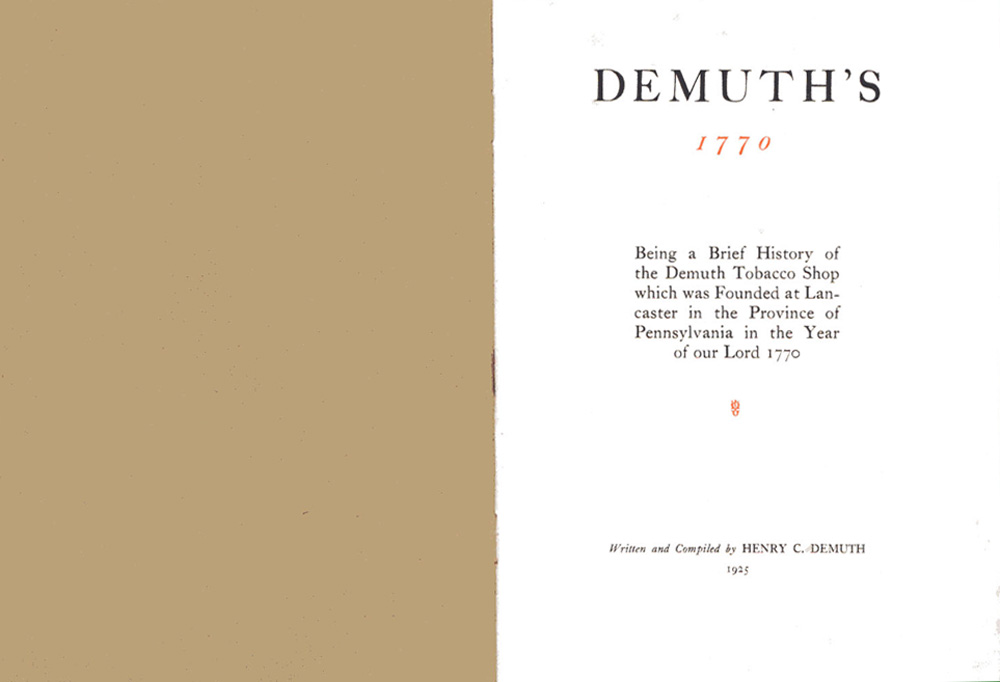
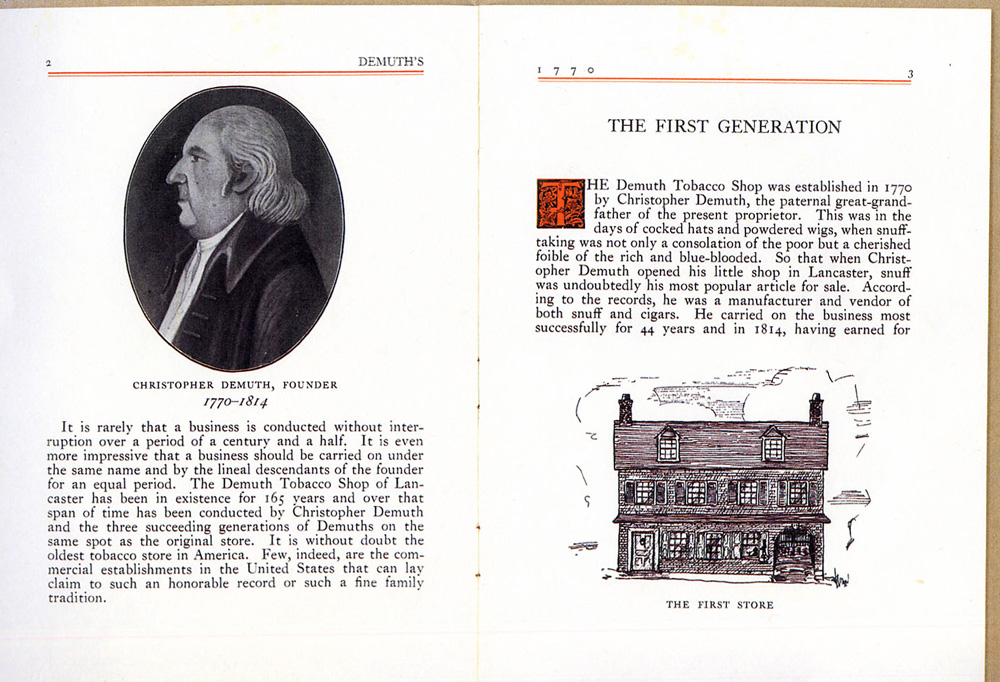
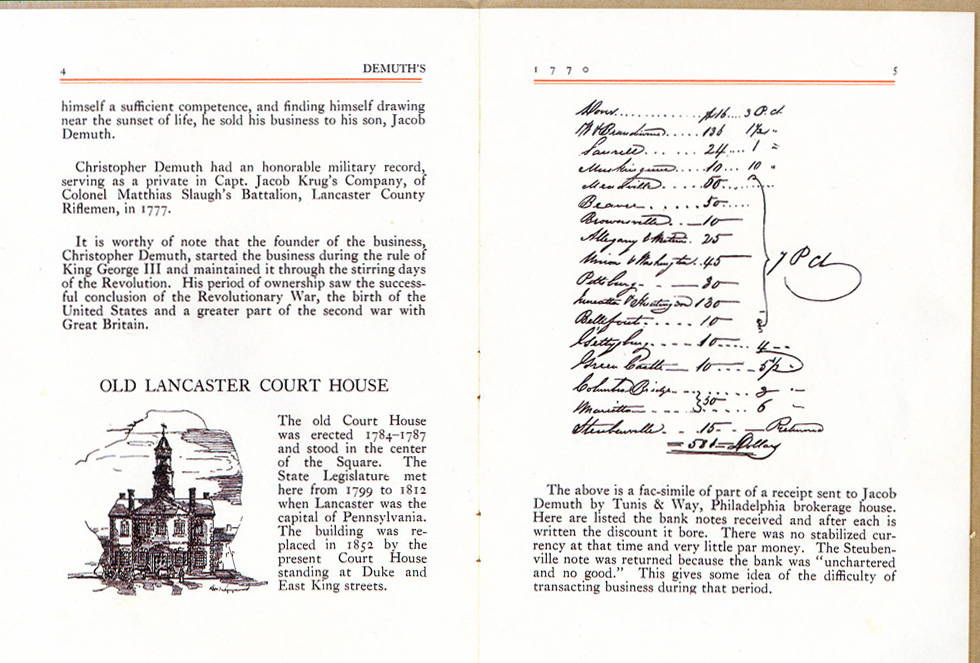
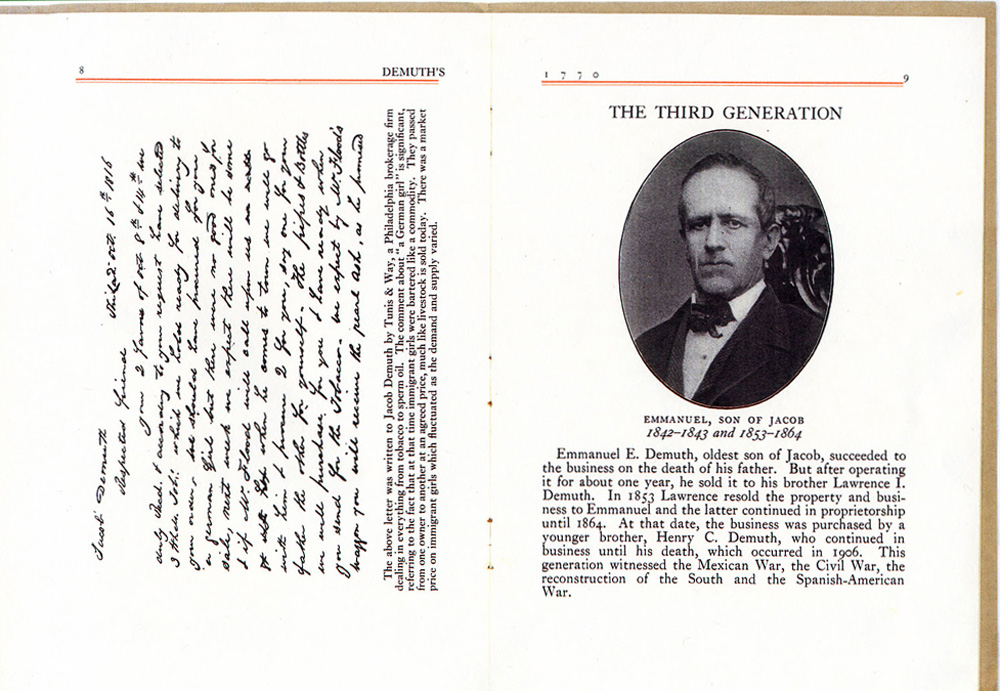
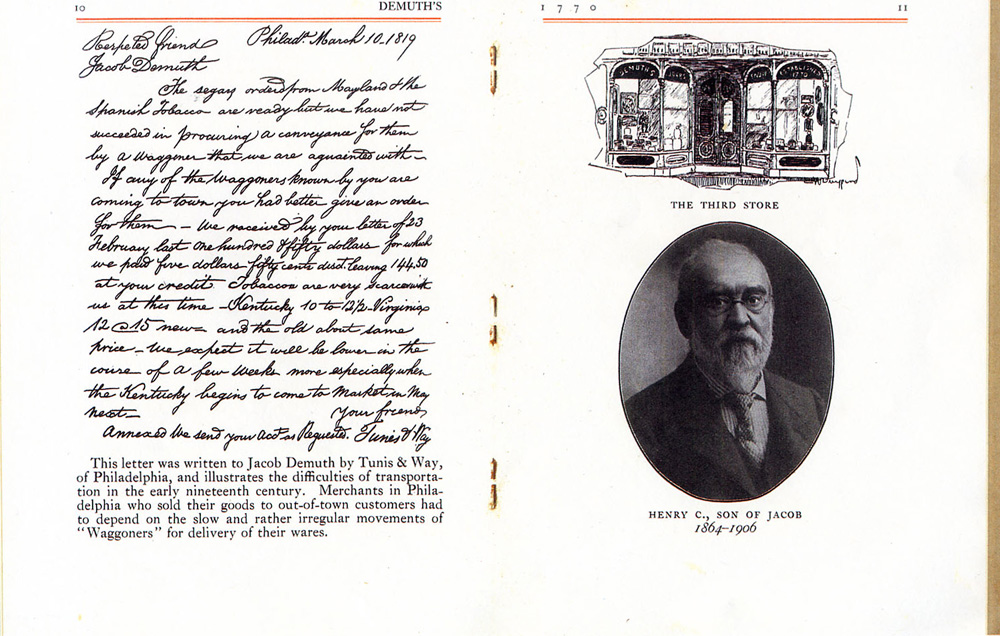
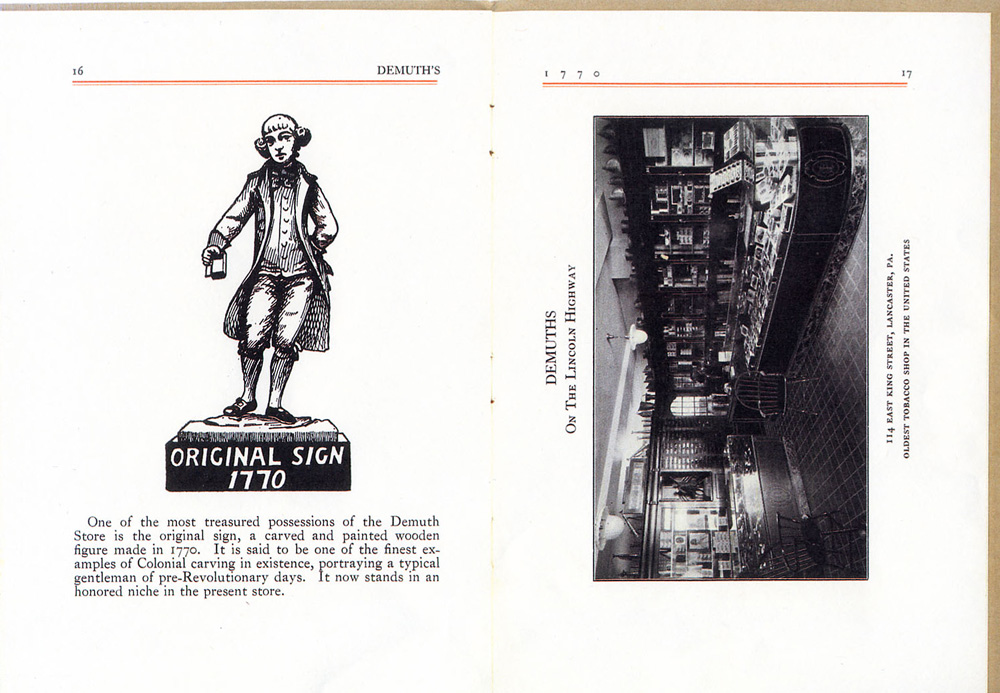
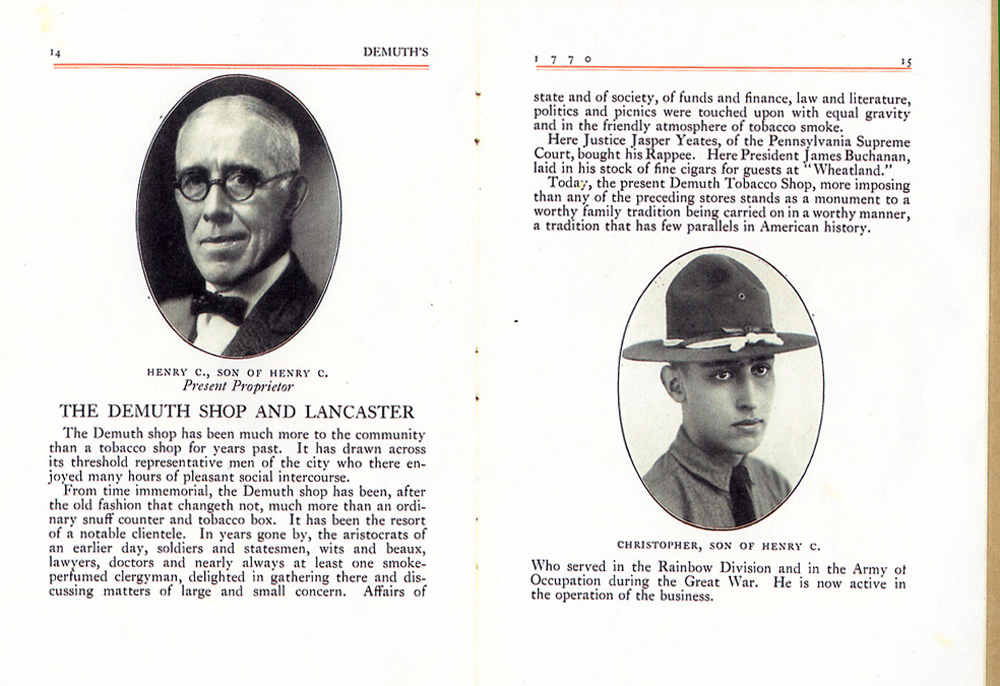
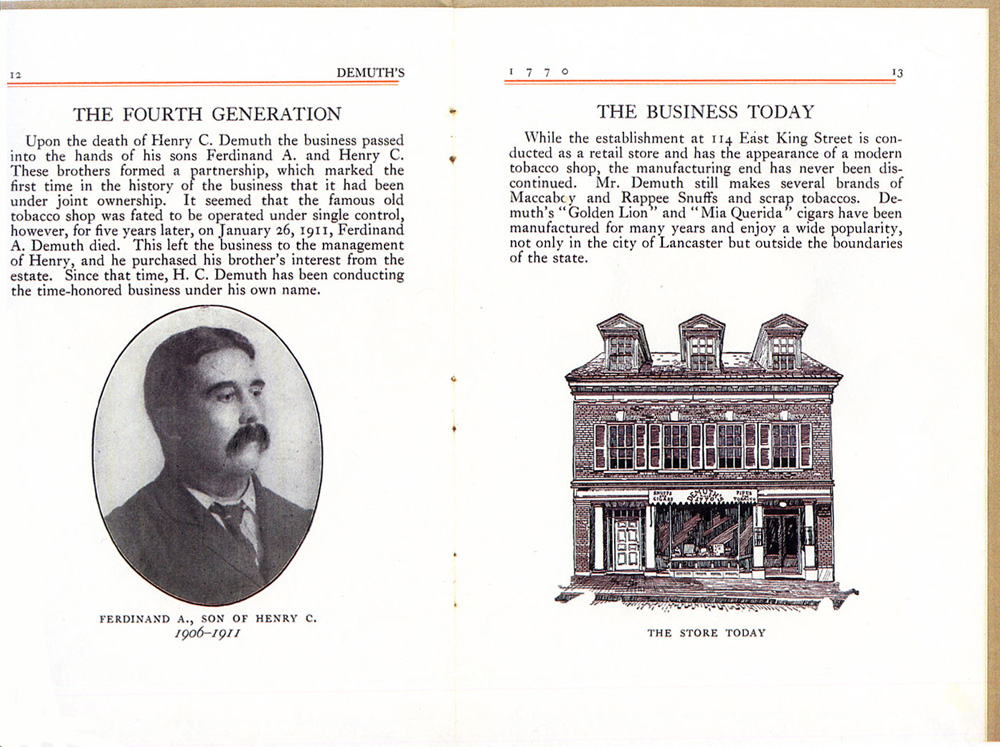
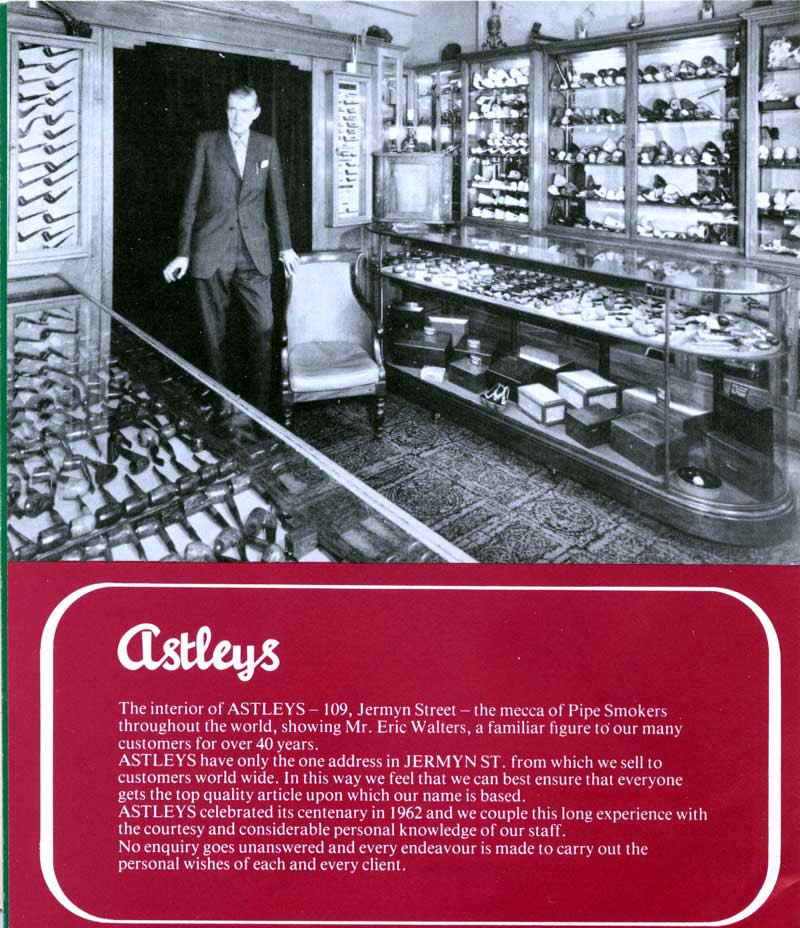
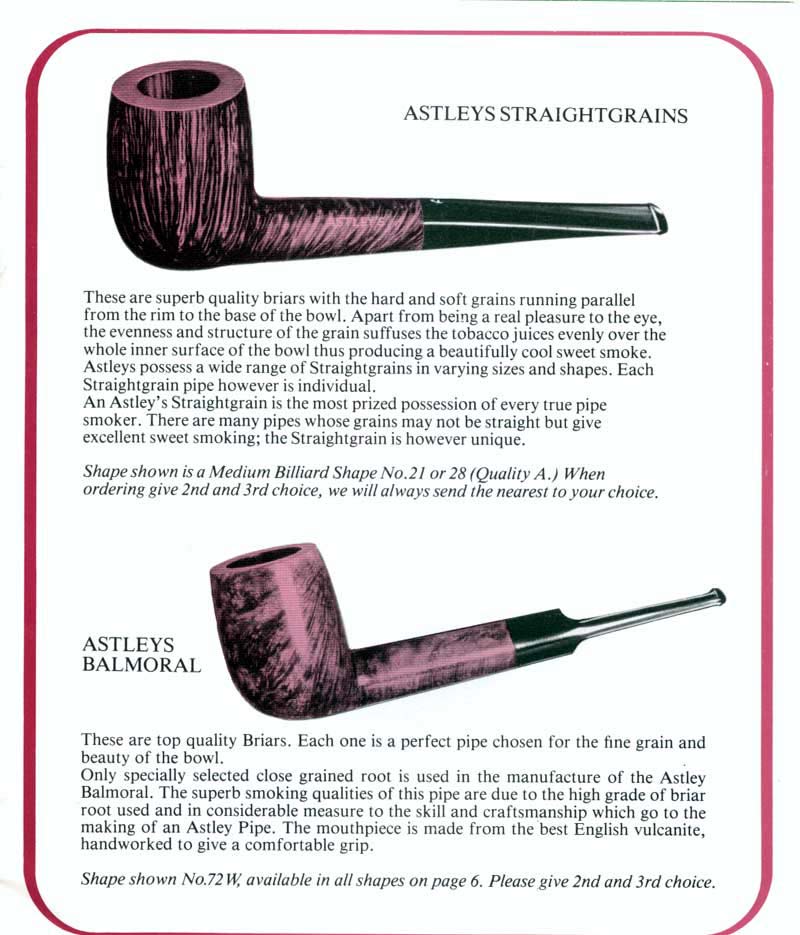
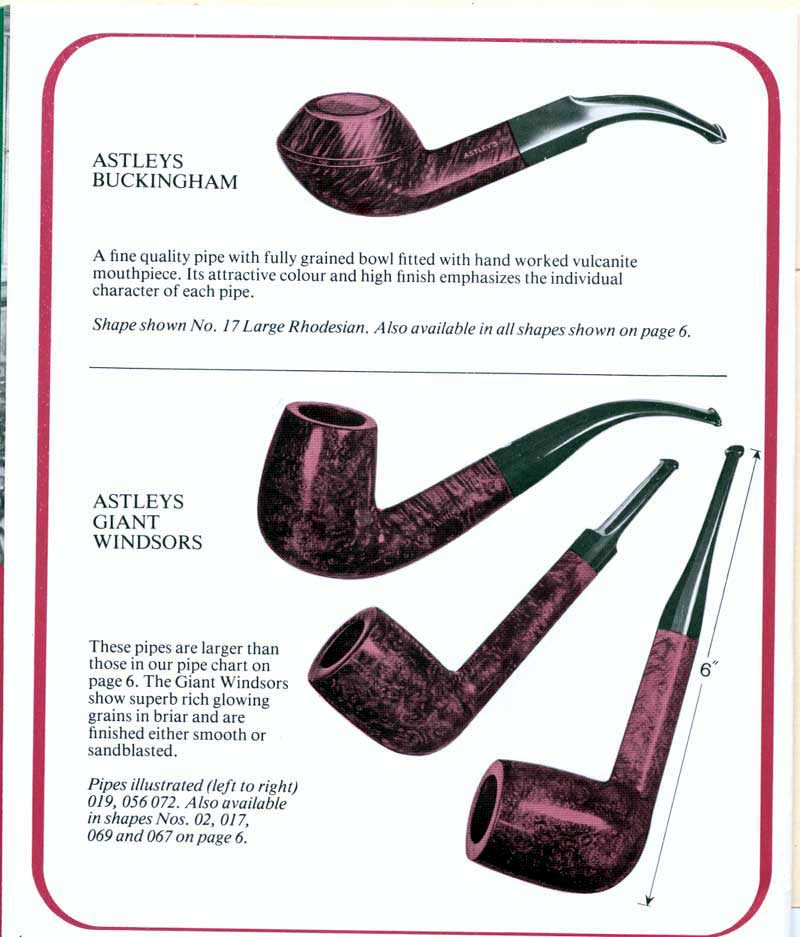
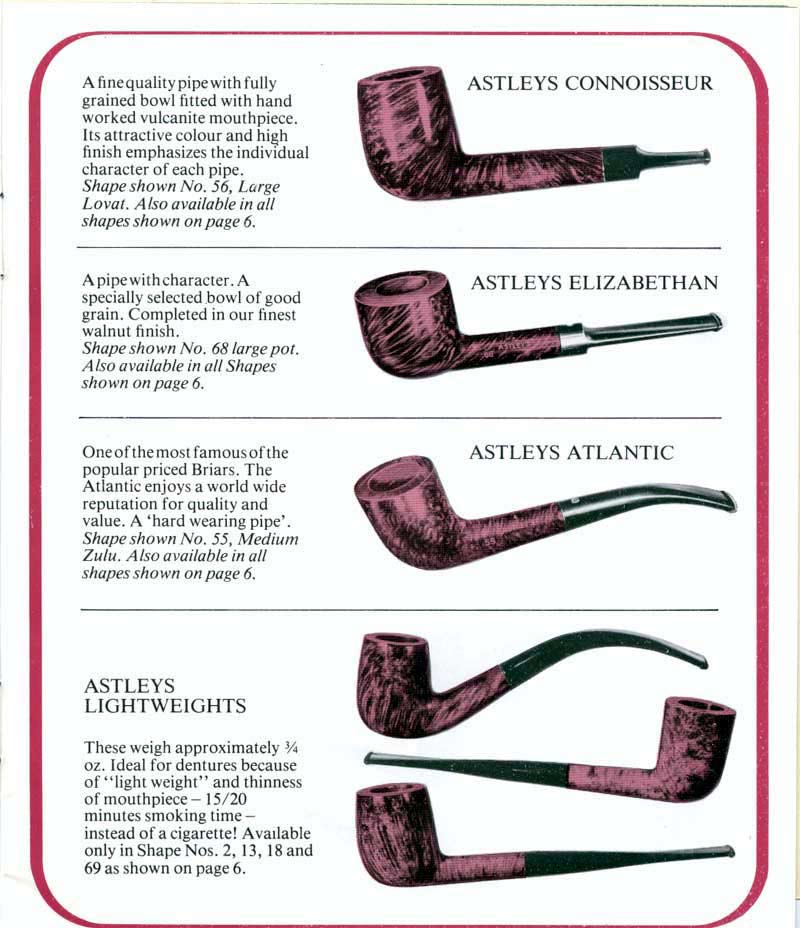
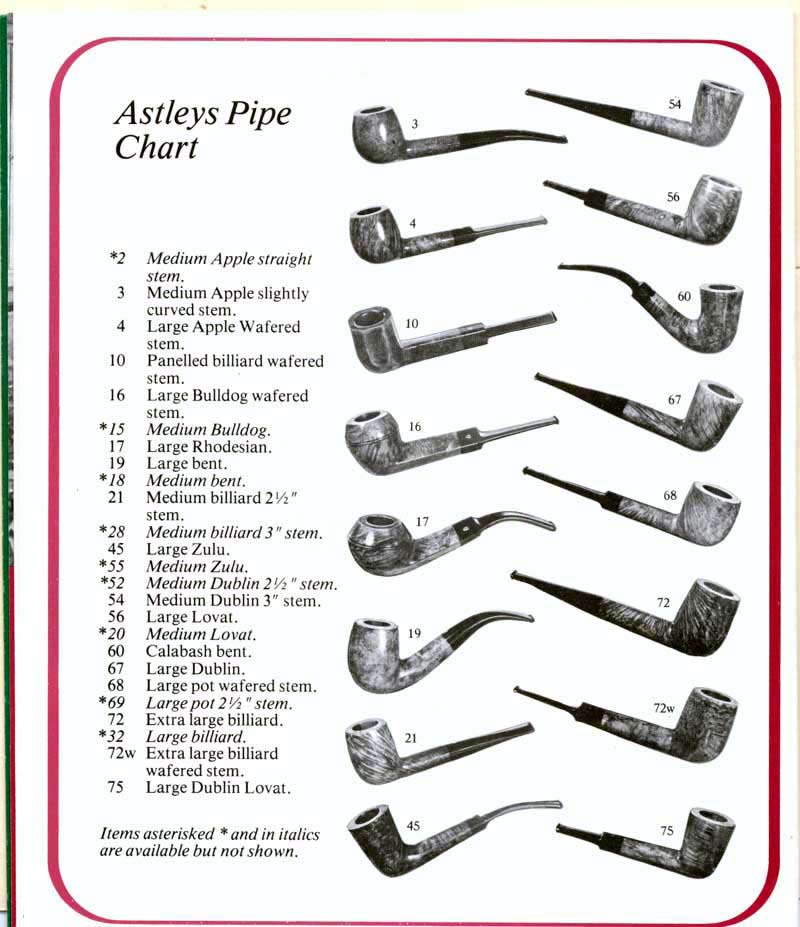
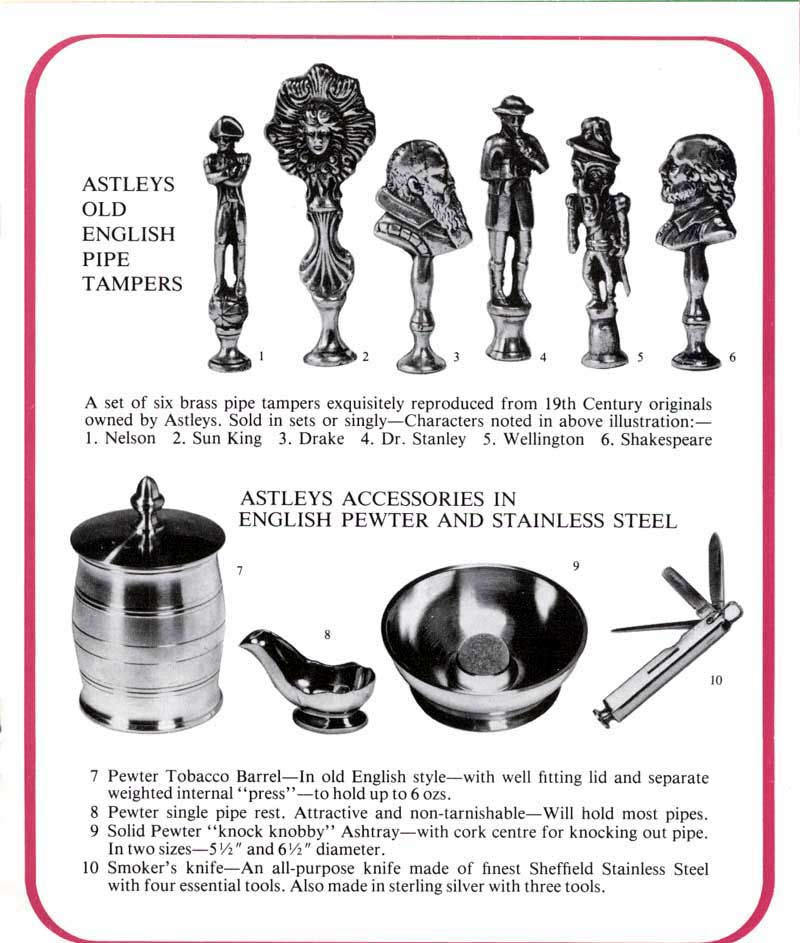
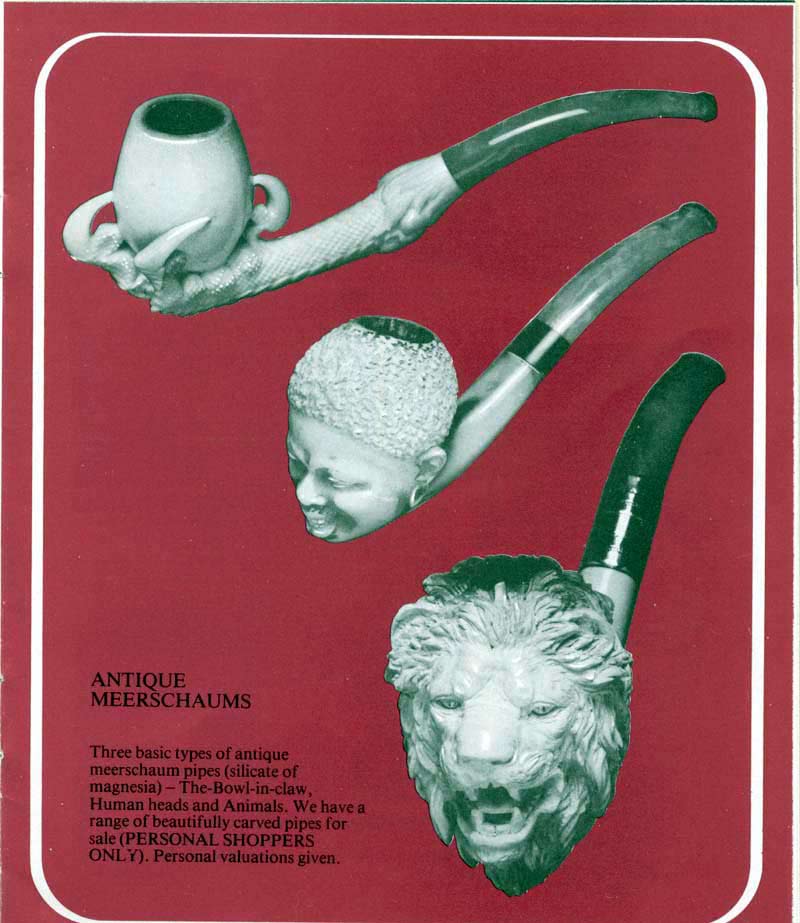
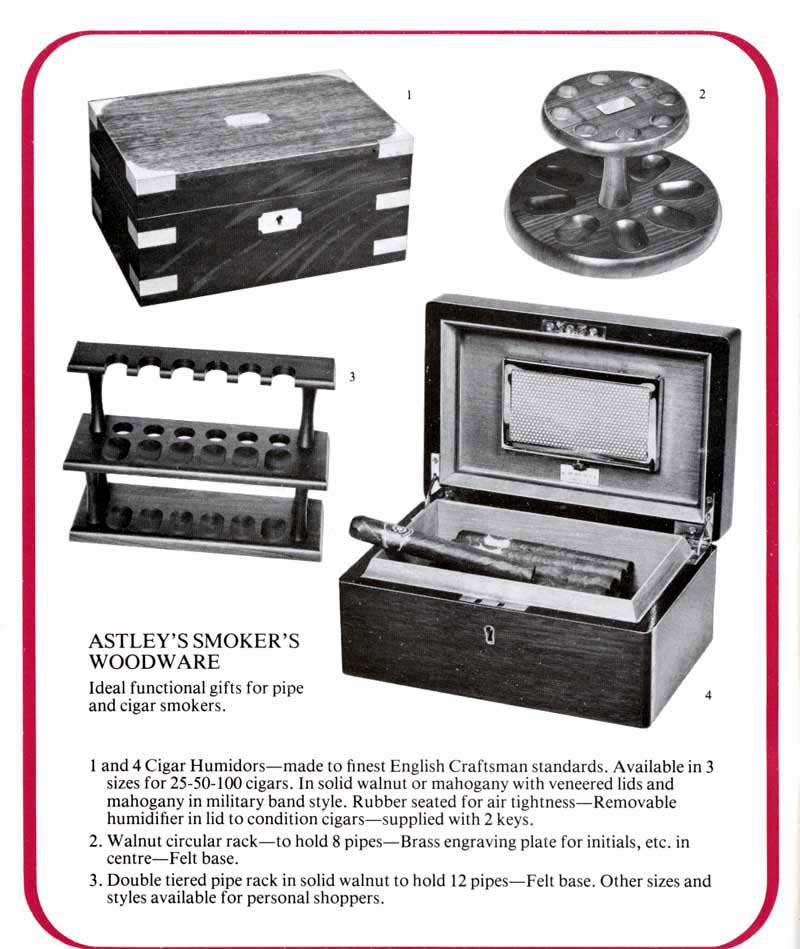
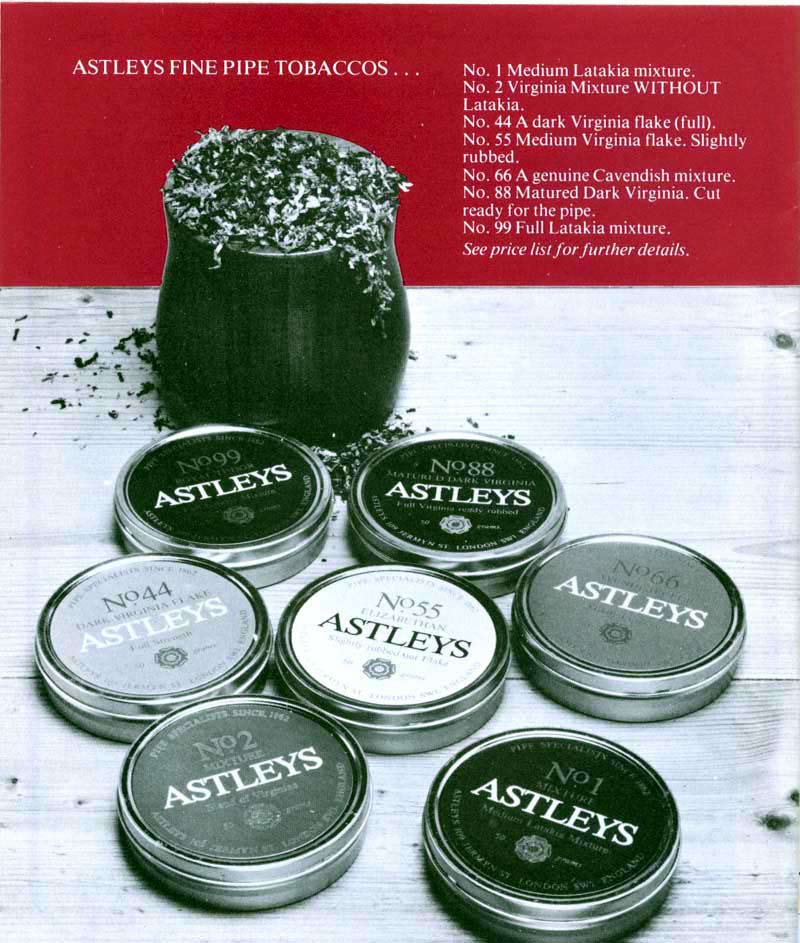
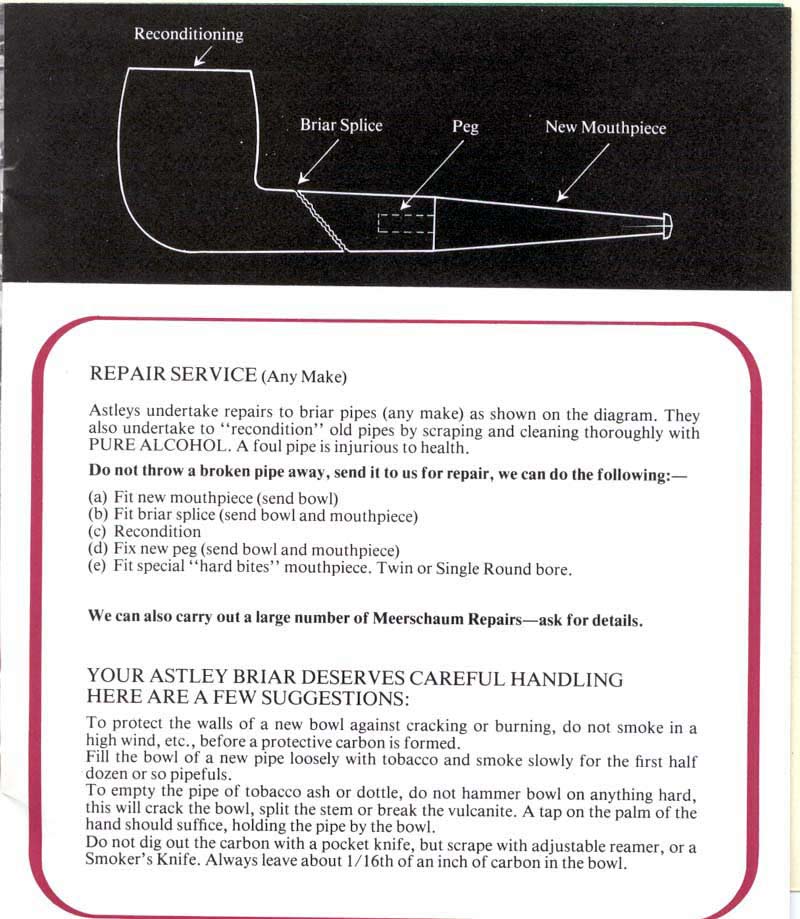
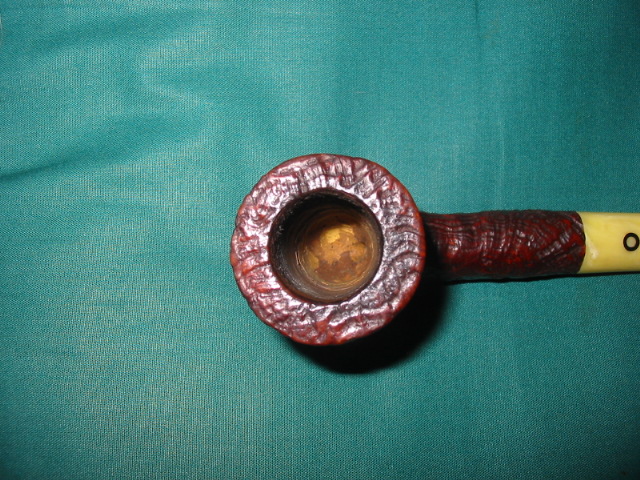
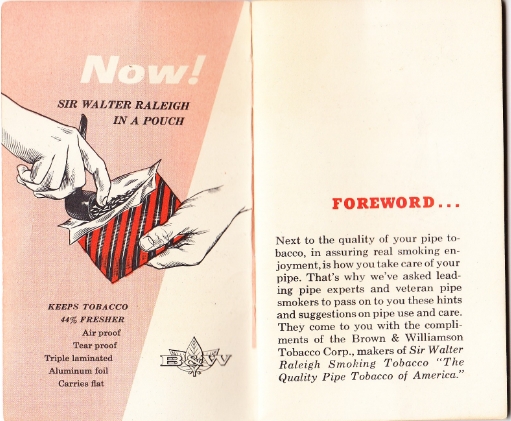
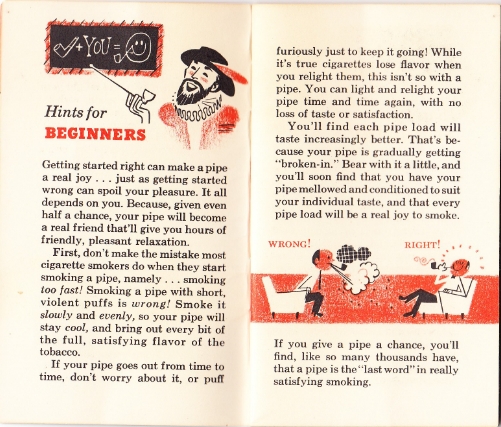
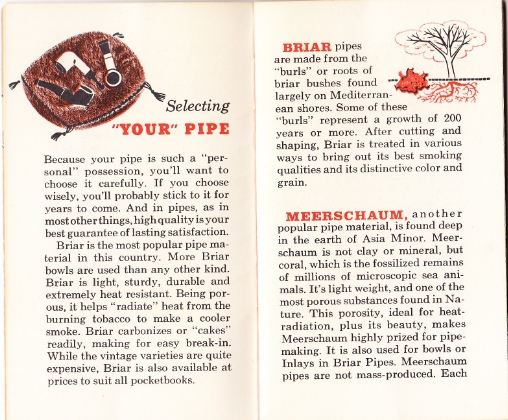
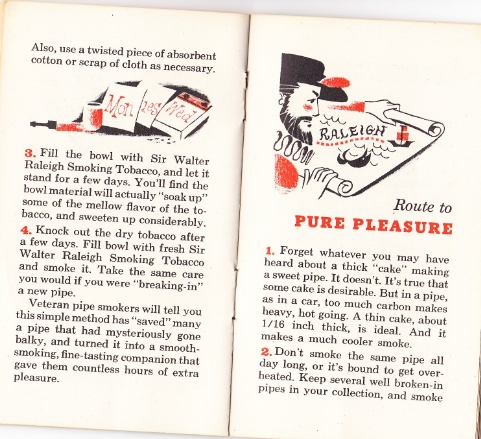
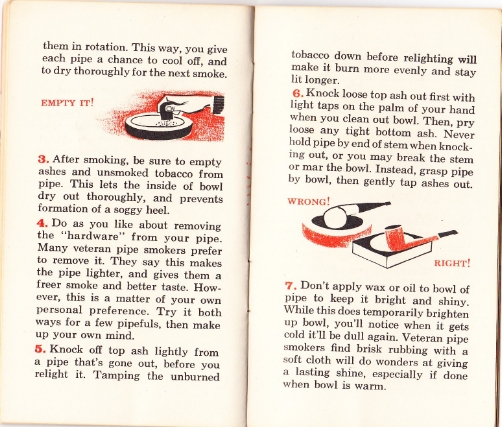
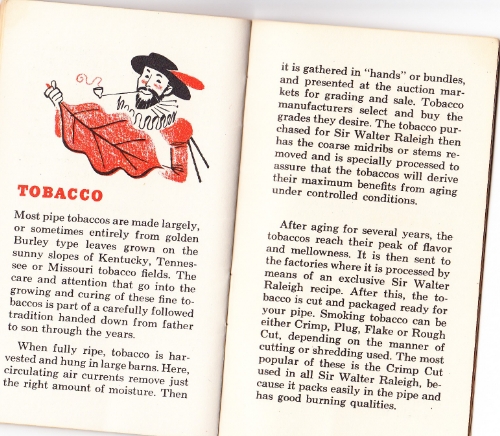
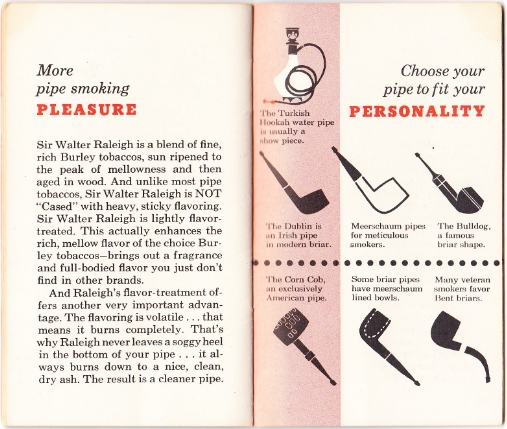
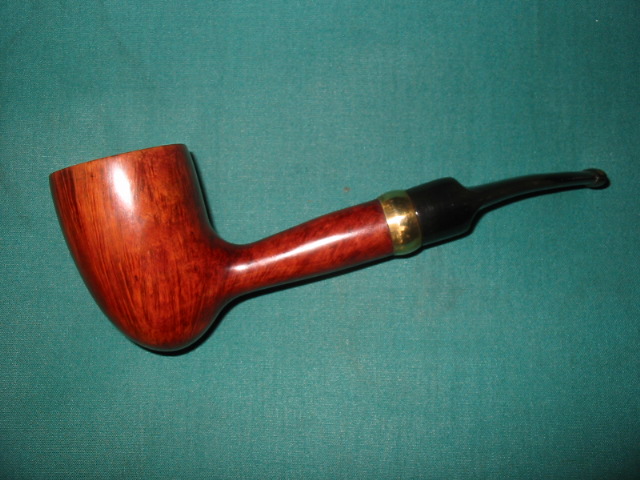
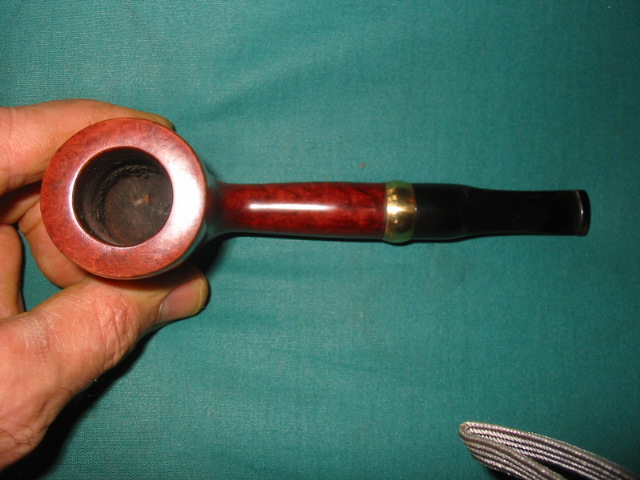
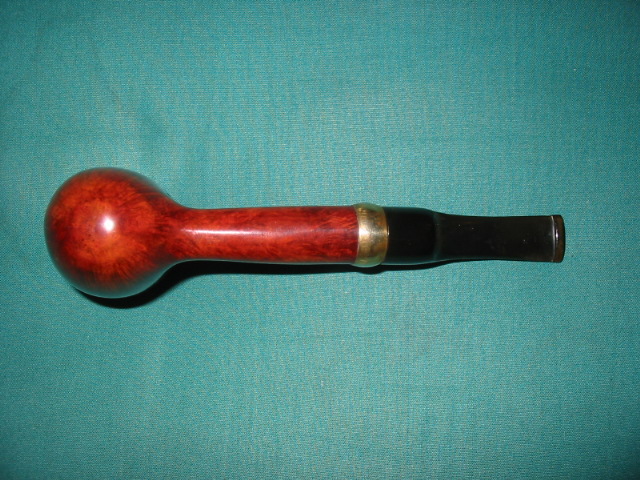
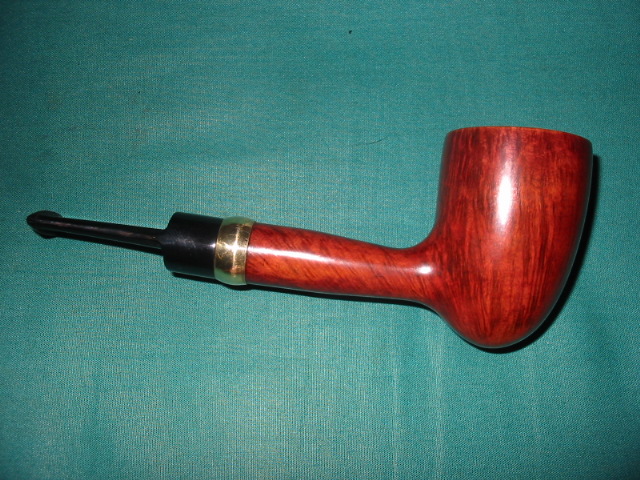
This is another older pipe booklet that I have a copy of here. I wanted to post it as well to give more data and pipe history to those of us who enjoy reading that kind of thing. Demuth’s must have been an amazing store in its day! Anybody know if it is still with us?
Astley’s Pipe Catalogue
Reflections of an amateur refurbisher
This week after seeing George Dibos’(of Precision Pipe Repair) three part post on cutting a stem from rod stock that he shared on Smokers Forums I have to say that I am left to confess that I am truly an amateur refurbisher. I am not downplaying the work I do or the pleasure I get out of my craft but only wish to acknowledge that there are true masters of the craft. George is truly a master at what he does. His careful attention to minute details of repairing pipes makes his refurbishments some of the best in the business. He is able to replicate stems that are incredibly matched to the originals. I am in no way negating the value of doing the work ourselves but it is acknowledging those who are leading the craft and creating beautiful work. I stand in awe of him and others like him who make this work look so easy. I must say that in comparison to them I feel a lot like a bush mechanic in the company of truly gifted mechanics.
I have no trouble acknowledging the fundamental difference between the work I do and what these gifted individuals in the pipe restoration/repair community do. It is truly no different than recognizing the difference between artisans who carve pipes as a livelihood and those who do it as a spare time hobby. Both are artists in their own right. To a varying degree there is a difference in the skill level, if not by natural gifting, certainly by sheer volume of practice. The same is true with pipe refurbishment. Those who have well developed shops, days focused on the process of pipe refurbishment, and skill and gifts in using the tools that they have will certainly have more carefully honed skills than the armchair or weekend hobbyist. This in no way makes light of either one. Both are integral parts of the hobby we enjoy.
I don’t have the tools, the space nor the skill set to do the kind of work that George and others like him do. I will probably never be the kind of individual who does what they do because, bottom line, to me it is a hobby and something I do for relaxation and not a vocation. I use what I have to do what I can and invent what I need as I go along. Part of the joy of the hobby for me is not just doing the work in the best way I can, but always learning new and better ways of doing things. I am a committed lifelong learner who has a hungry mind that is never satisfied with what I know and is always looking for new ways and new information. I love the creative process of refurbishment in that I can continually be challenged to work “magic” on new pieces that come across my desk. But another important part of the joy for me is the task that I have taken on willingly and freely to pass on what I learn to others in our hobby. It is a joy to see others take what I have learned and surpass me in their skill and expertise. To learn tricks from those who have learned from me is part of why I started the reborn pipes blog. I don’t just want to share what I have learned, I also want others to pass on what they have learned and their own refinements on the processes they experiment with. That is why I invite others like Al, Chuck, Fred, Rob, Ed, Bryan and more who share the love of reclaiming old briar and giving it new life.
For me the blog is a way we all can continue to learn from one another, share common ideas and issues and seek to understand how to address them as we work on the pipes on our desks. We can write about what we do and have others try it, refine it and pass on their knowledge. Thus, we create a living “school” in which to continue to develop our craft. It is a place for those of us who are amateur refurbishers, who love to tinker, love the process and the pipe, to continue to learn from each other. Lately I have been using Skype, an online web communication tool, to meet with individuals and work on pipes together. It is quite amazing to talk and work real time with another person on a pipe that they have on their work bench. It works with video and audio so that you can literally look at the pipes you are talking about. Worst case scenario Skype has an instant messaging component that you can type communications between several who are working on pipes. In my work I have used it with groups to have virtual meetings and can see that working really well to have a shop time gathering. I have written an article on one such experience and Part 1 of it was printed in the August issue of Pipe Smoker Unleashed Magazine – http://www.pipesmokerunleashed.com/magazine/august2012.html and is on the blog as a post. The second half of the article will be in the September issue and will soon follow on the blog. Skype provides a real time tool that we can also use to consult with each other on pipe repairs before and as we do them. This is a venue for us to use that is rich with possibilities. I am aware that others use “You Tube” and make videos of their work, but I am reticent to venture into that arena. I don’t know why, as I am sure it is helpful, but it just is not something I am interested in doing. Others may want to do videos and I can easily add them to the blog or they can start their own blogs.
As I close these reflections I have to say that when I look ahead at the future of pipe restoration and refurbishment I am excited to think of all the possibilities and all that there is yet to learn from one another. I also remain in awe of the calibre of work and craftsmanship of those like George. I delight to see the product of their skills and observe so that I can learn as much as I can in the process from them. I will always have to personalize their methods to work on my smaller scale of refurbishing but that too is part of the process I enjoy. I tip my hat to the masters and know that I will probably not live long enough to even come close to that kind of workmanship. However, I take my place proudly in the company of those who tinker at refurbishing and share their love of all things pipes with one another. My plan for the near future is quite simple, I will continue in my tinkering until I am no longer able. Why? Because it gives me pleasure!
A Quick Refurb – Yello Bole Dublin
I picked up this older KBB Yello Bole Dublin on eBay. It was stamped KBB in a cloverleaf, then Yello Bole over cured with real honey and then Imported Briar. I am working on the assumption that it was made shortly after WW2 with the imported briar stamp to differentiate it from the old Yello Boles made during the War from Manzanita or Mountain Laurel. http://pipedia.org/index.php?title=Yello-Bole
It was in far better shape than the pictures on the auction showed. It was dirty from dust on the outside. The bowl was dusty and cob webbed on the inside but it had been only smoked part way down the bowl. The old Yello Bole Honey Cured coating was still visible in the bottom half of the bowl. I removed the stinger apparatus, cleaned the stem inside and out (small tooth dent on the underside of the stem). Reamed the upper half of the bowl just gently to remove the bits of tobacco and beginning cake on the top half of the bowl and swabbed it out with a pipe cleaner dipped in alcohol. I scrubbed the outside of the bowl with Murphy’s Oil Soap, dried it off and gave it a light coating of stain add a bit of depth to the pipe. Here is the finished product.


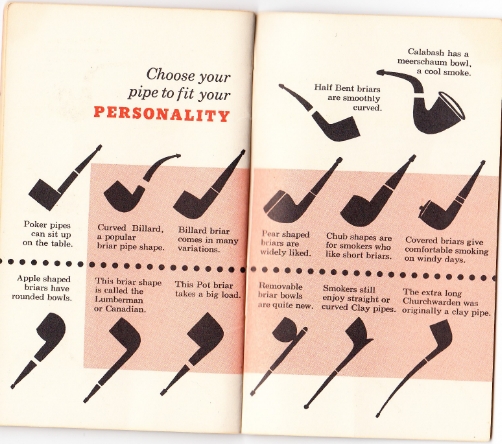
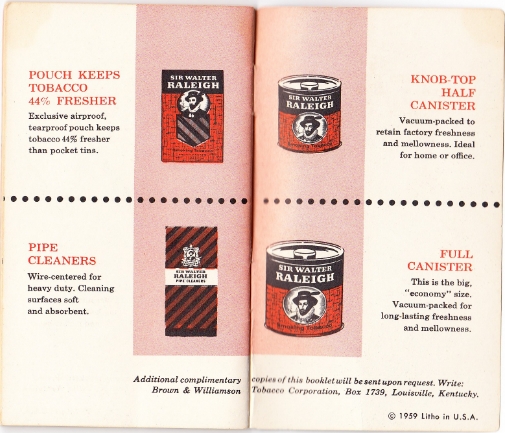
Sir Walter Raleigh Pipe Care Booklet 1959
Blog by Steve Laug
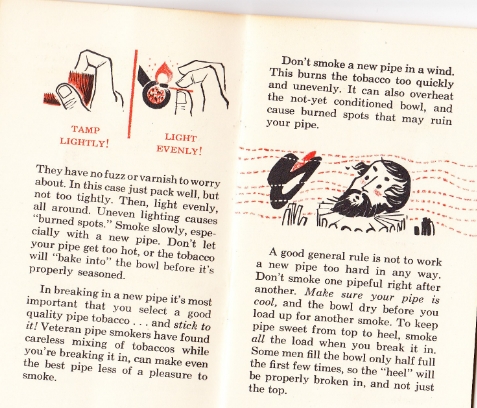
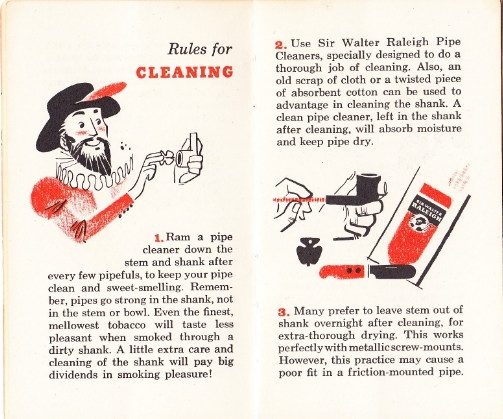
I was given a copy of this little booklet that used to be given out by Sir Walter Raleigh with their tobacco or with coupon pipes I believe. It is a great little piece of history so I scanned it and have posted it here for you to read and enjoy. All the pages are scanned so they are pictures instead of text.
Peterson Rustication pictorial – Kirk Fitzgerald
When Kirk Fitzgerald posted this step by step tutorial on Smokers Forums I thought it would be great to have it on the blog. I asked Kirk if I could post it on the blog and he granted his permission. So without further introduction here is his rustication process. Kirk is the founder of the Pipe Smokers Cubby Web Forum http://www.pipesmokerscubby.com/cubby.php
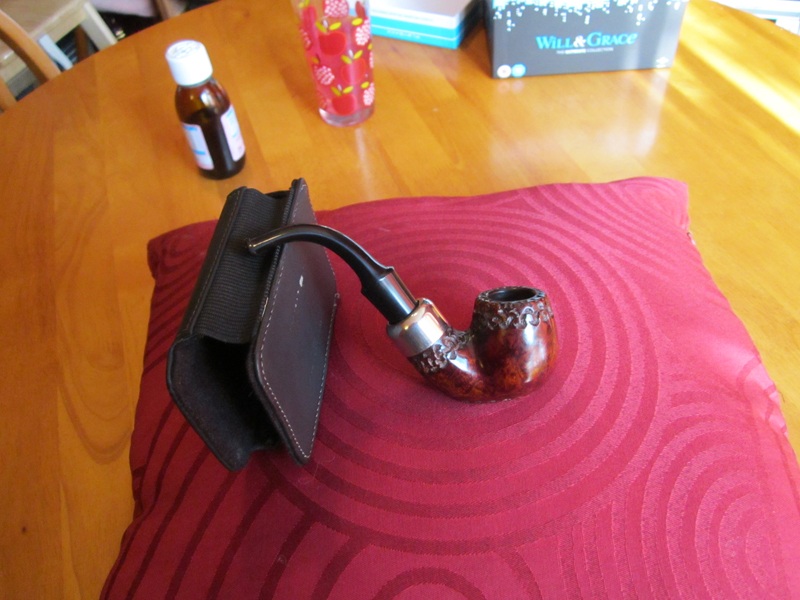
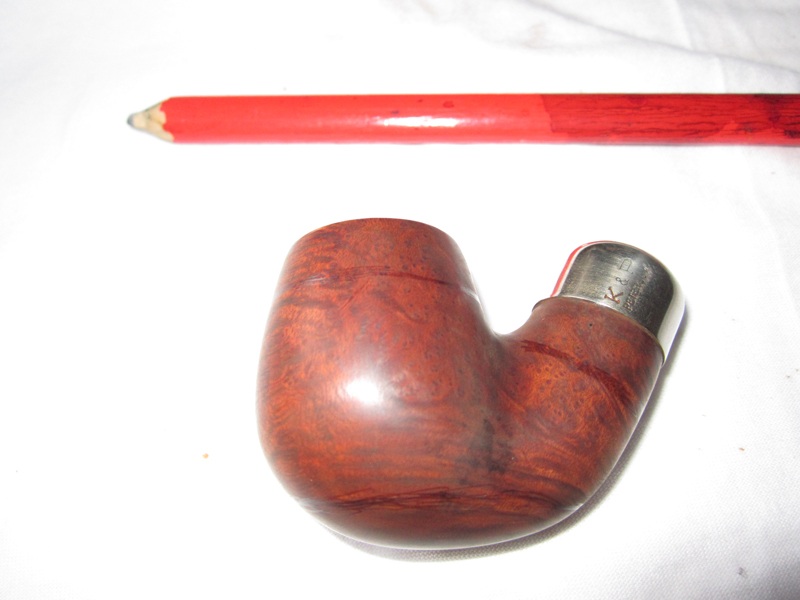
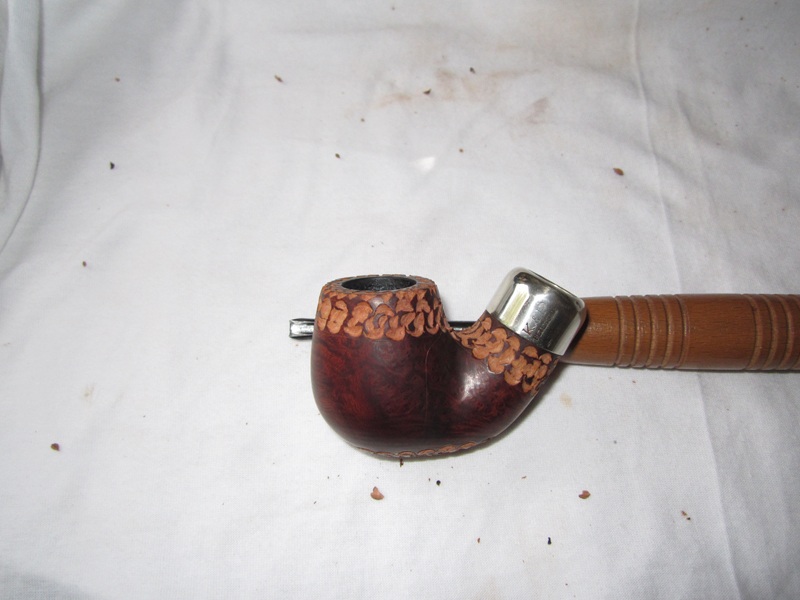
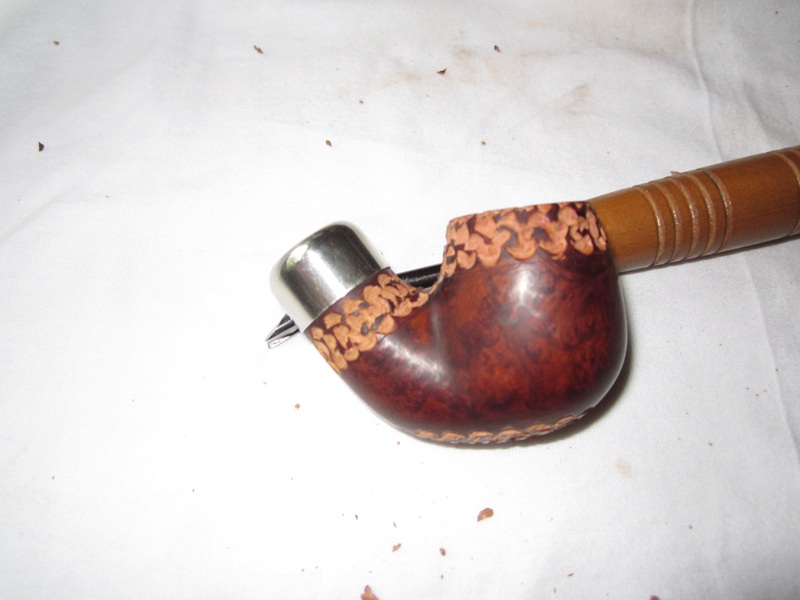
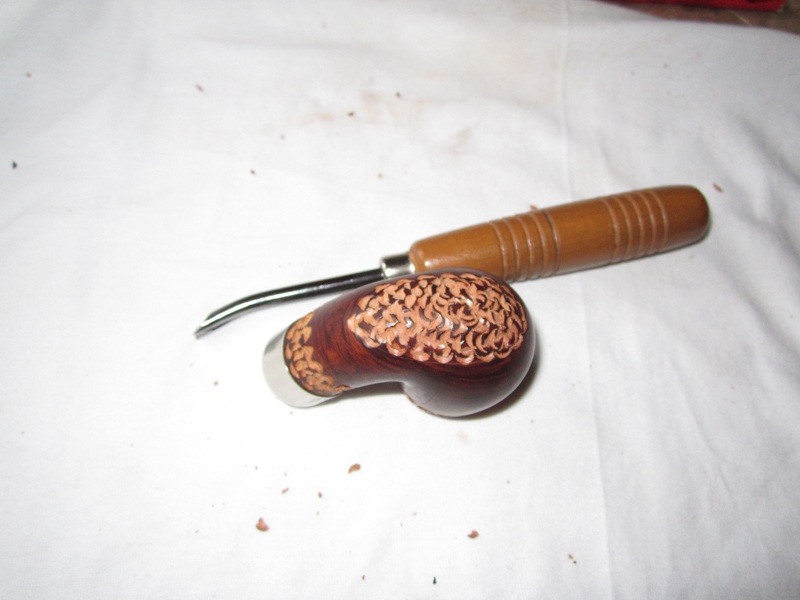
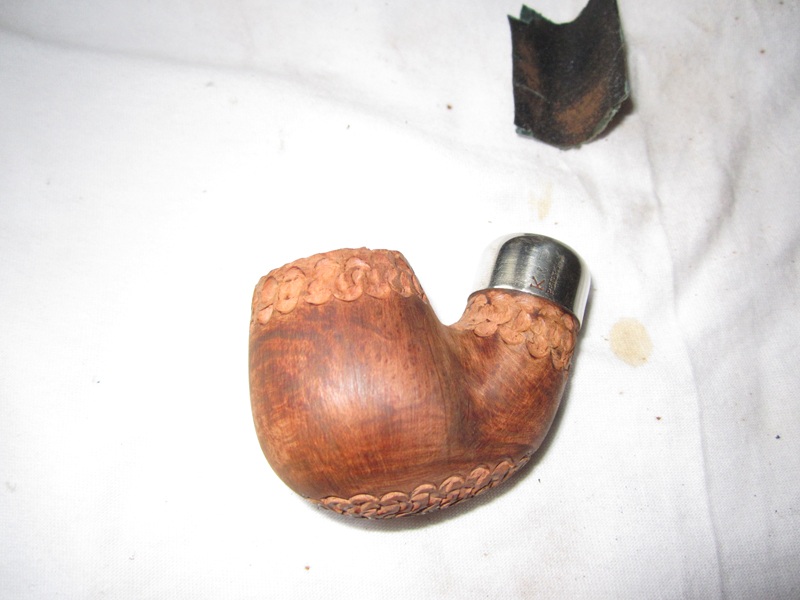
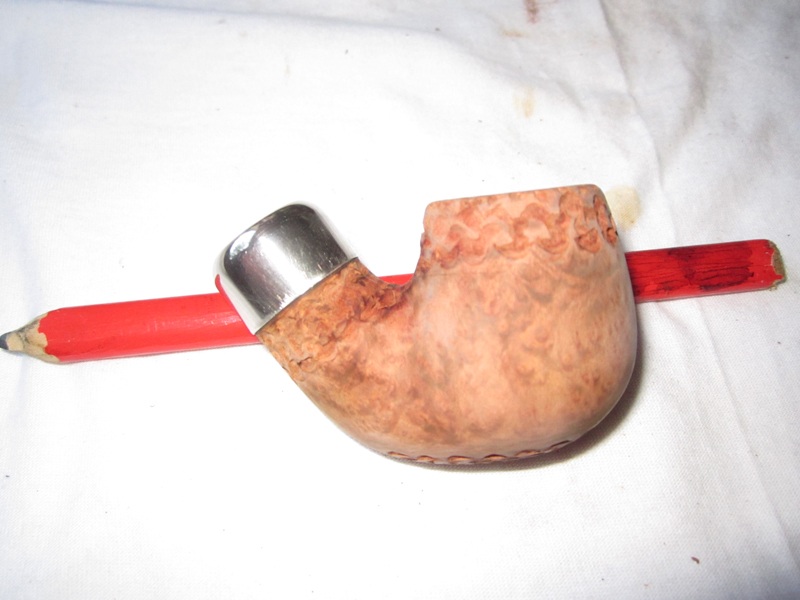
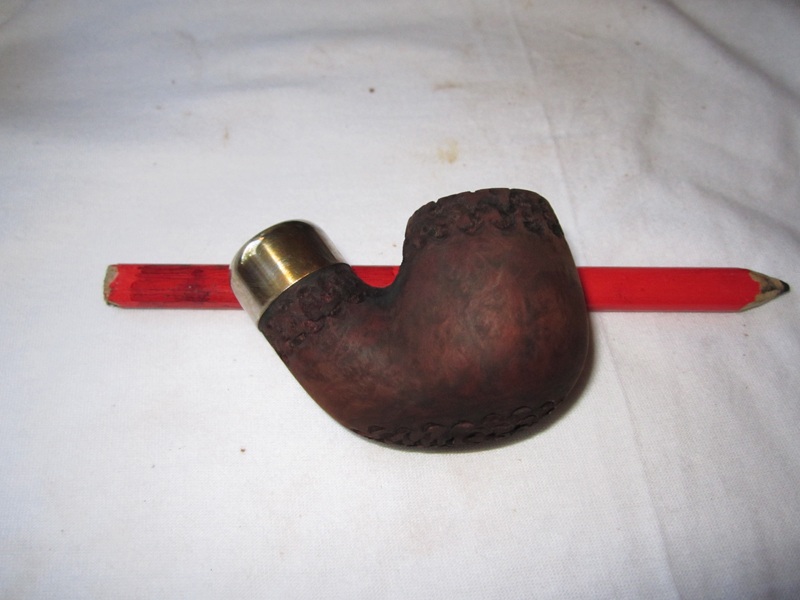
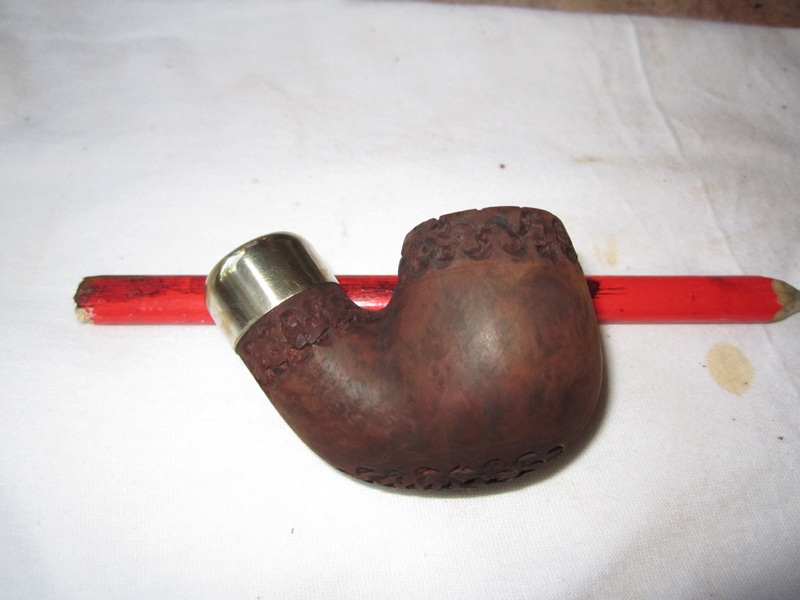
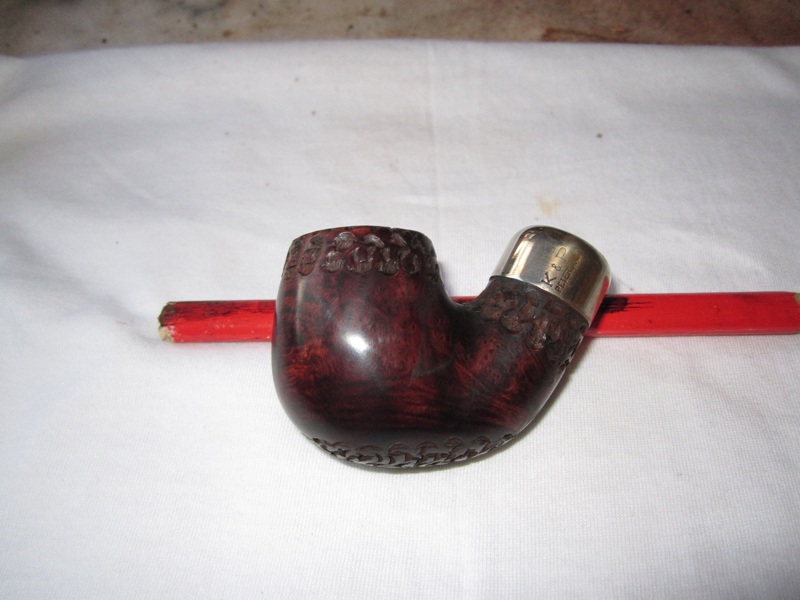
I was asked if I would do a step-by-step rundown on my own rustication process, so I have rusticated my own Peterson bent bowl for this purpose.
So before we get going, let’s see what the process will do to the bowl of the pipe
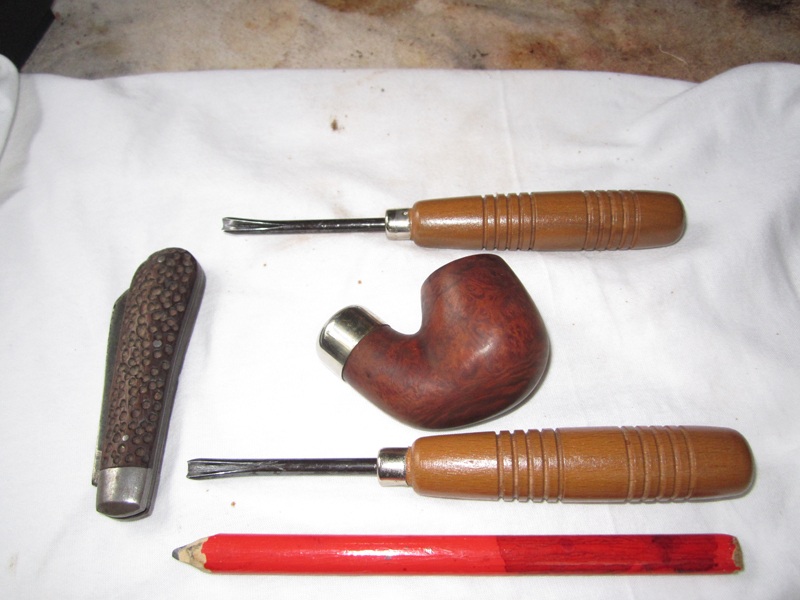
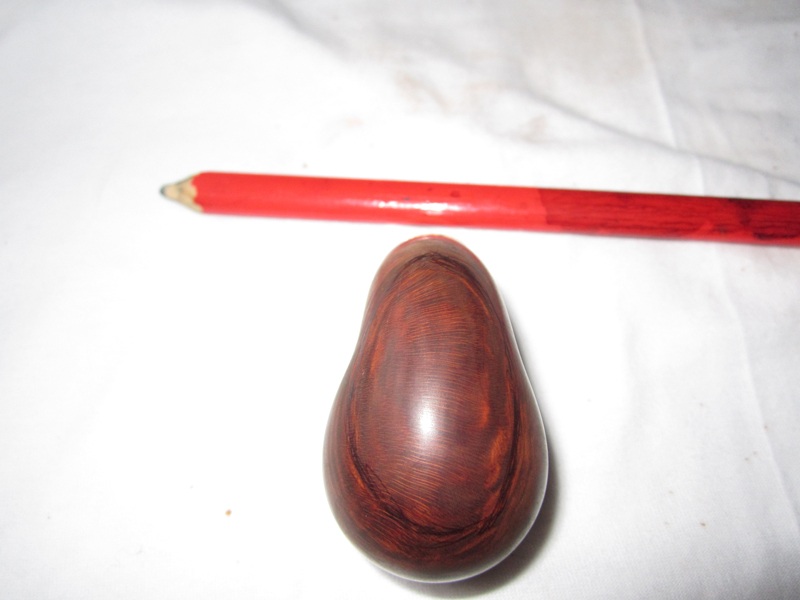
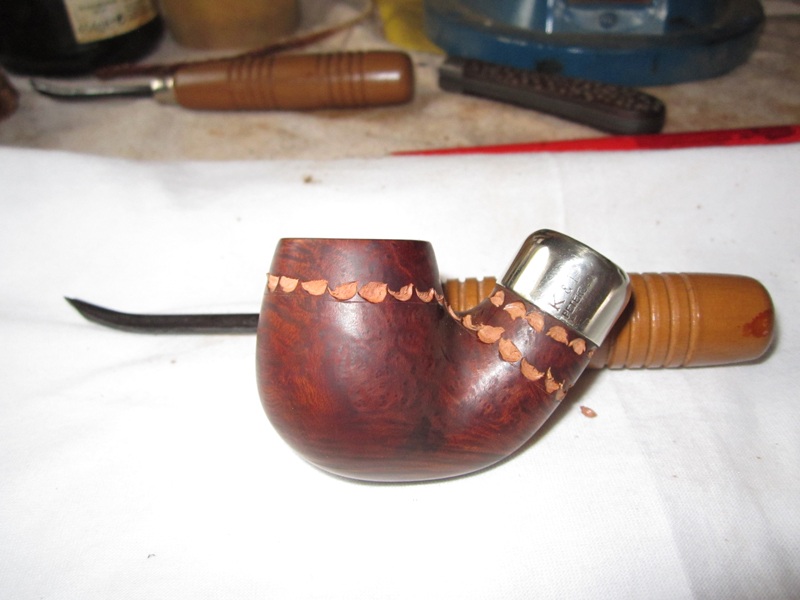
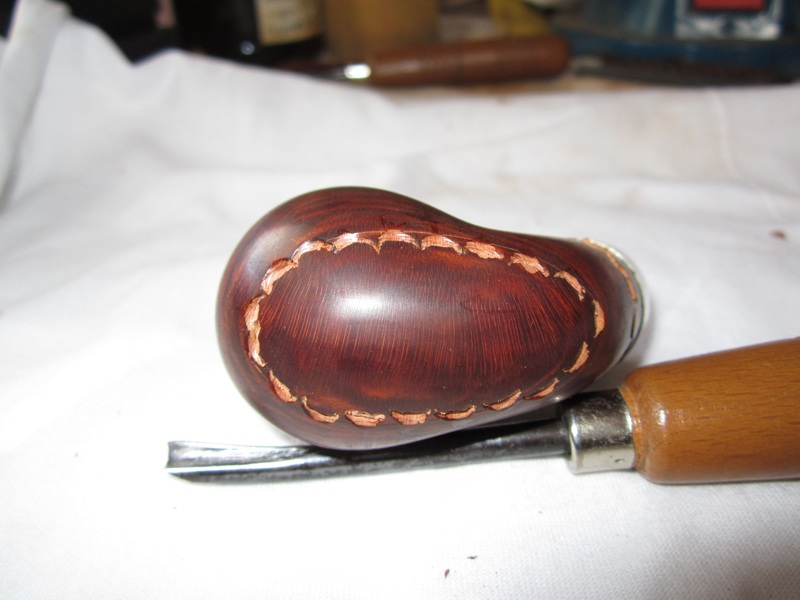
The pipe’s bowl, the two chisels I use, my crappy pencil and the knife I use to perma-line the boundaries for the areas to be rusticated
Here we mark the rustication boundaries in pencil
Here we perma-mark the boundaries using a sharp knife to scratch out the lines


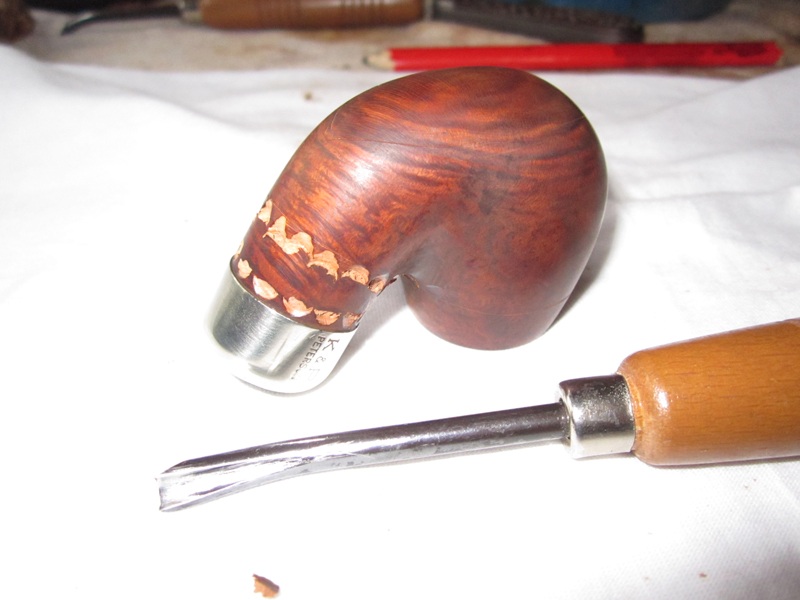
Notched out the shank boundary lines
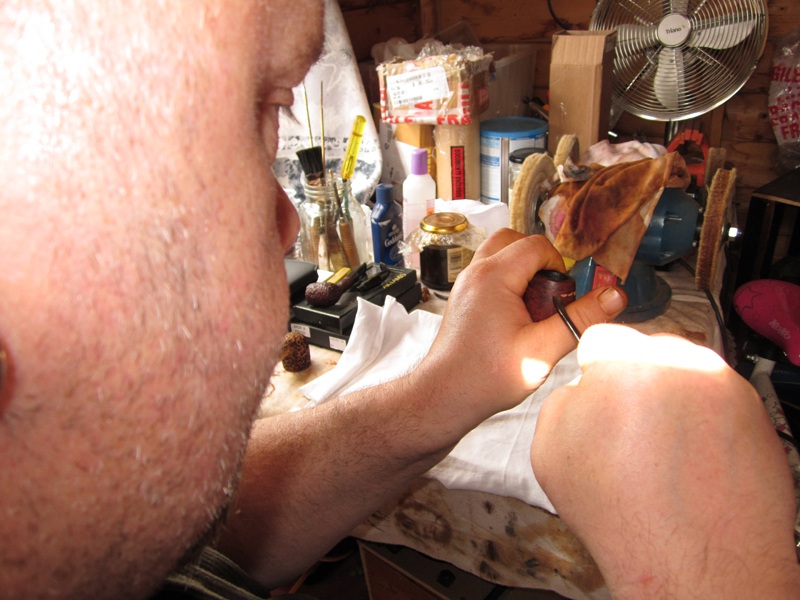
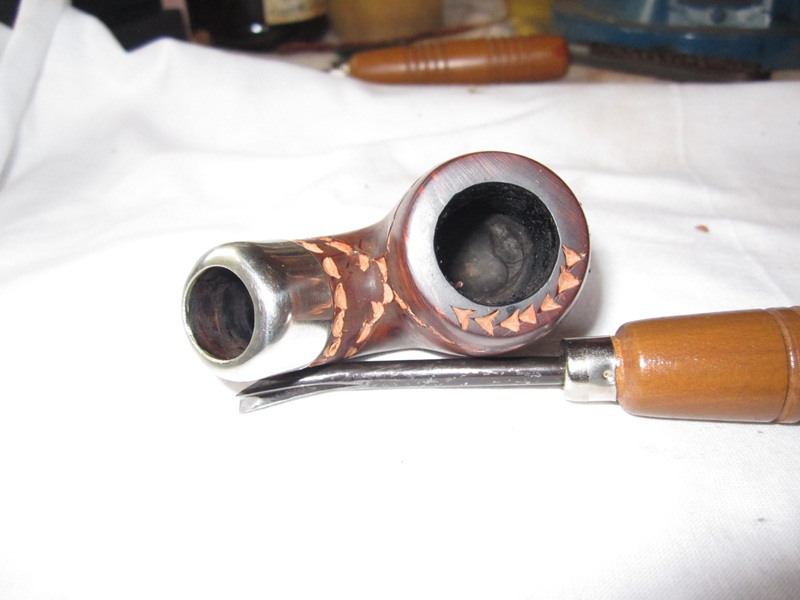
Here’s me notching the bowl rim boundaries
Here I have started notching the bowl top
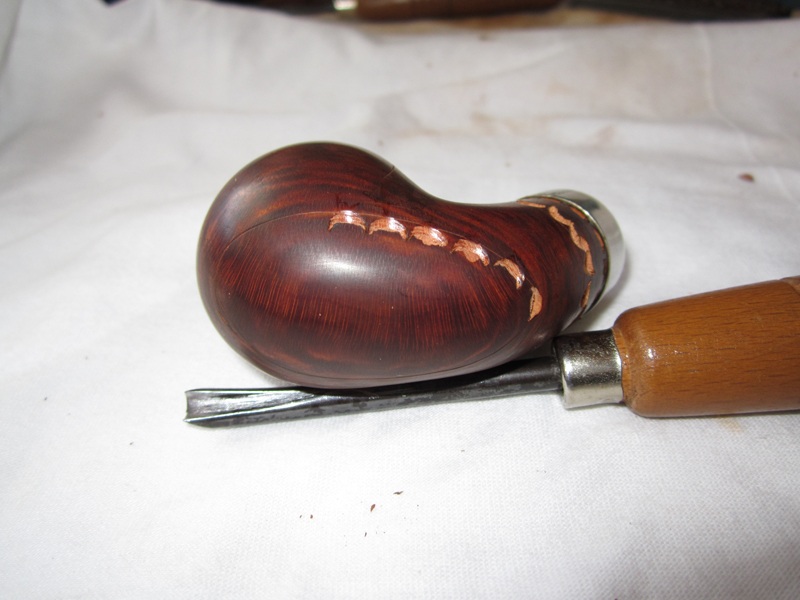
Start of the base boundary notches
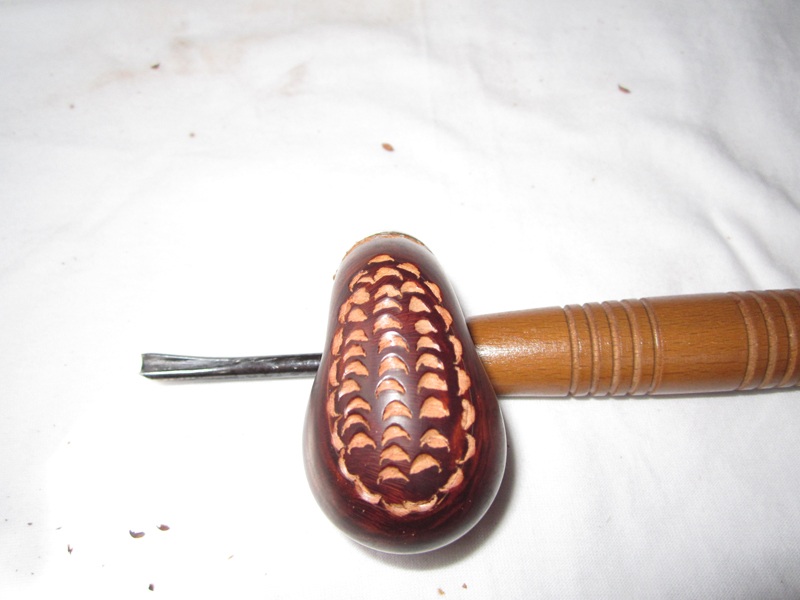
The base boundary notches are now done
This is where we are so far, getting there
Start to notch the bowl rim edge
Finished notching the bowl rim edge
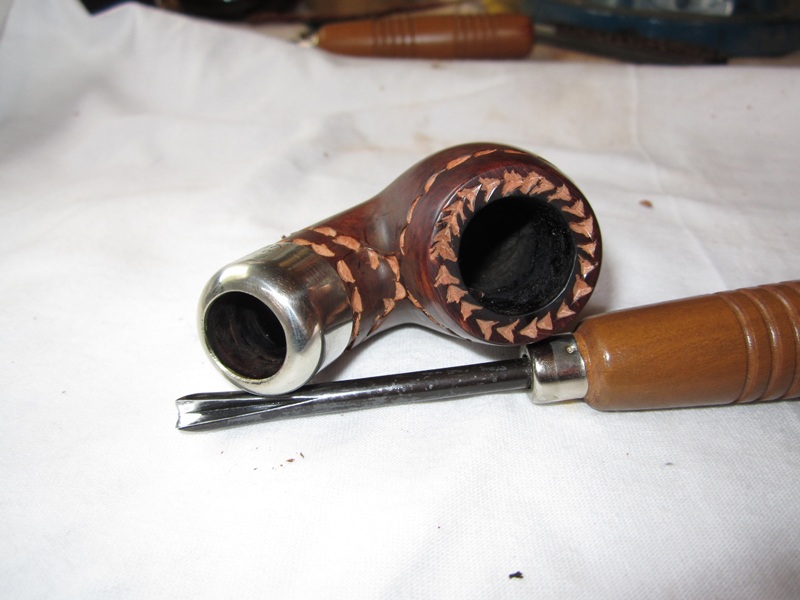
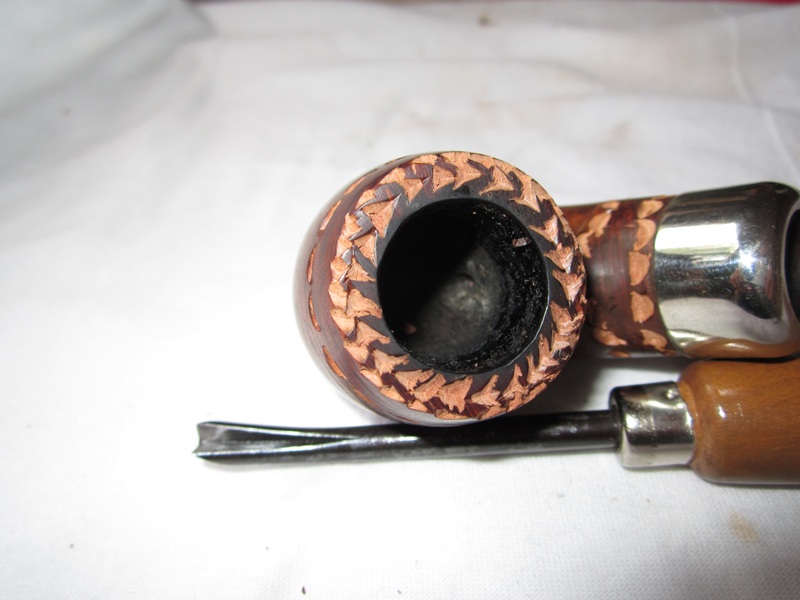
Here I have now notched the bowl top rim
Notching the bulk of the base interior
Here I have notched out the bulk of the bowl top rim interior

Here I have notched the remainder of the base interior
Here I am starting to remove the remaining surface finish with 180 wet and dry
Here the remaining finish is now removed; note I have made sure it looks distressed
Here I have now sanded the bowl smooth using 400, 600, 1200 grit wet and dry sand paper, note the effect is looking distressed
Here I have applied a dark brown stain, note it is a full and generous application
Here I have applied a dark red stain, again note the fullness of the coating
Now I have applied the final stain, a mid-brown, coverage is not so important with this one, a quick cover would do but I have opted for a full and generous application.
Now I have given the bowl an alcohol rub-down using a clean cloth and Isopropyl alcohol, note I have almost wiped the stains away, but only ‘almost’
I have now applied 2 very generous applications of Tripoli using the buffer wheels, this stage is vital to the finish of the bowl
This is after I have brutalised the bowl on the buffer wheels to remove some staining to distress the bowl further
Here I have used White Diamond on the buffer wheels to remove the Tripoli much and shine the surface a little before the wax
Here I have applied the first coat of wax and carnauba
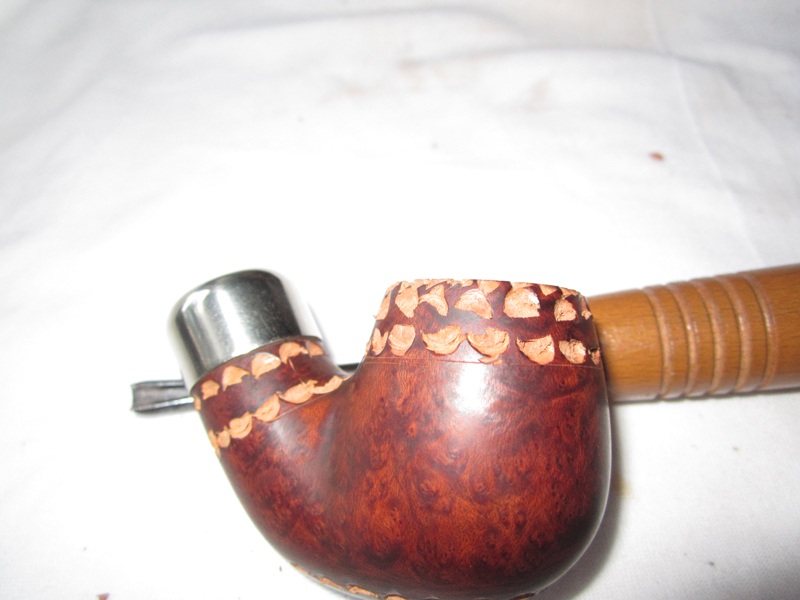
All done now, here is the final bowl re-attached to its polished stem.


Two men and Pipe Restoration via Skype – Part 1
Blog by Steve Laug
Part 1 of this post appeared as an article in the August 2012 issue of Pipe Smoker Unleashed Magazine. It is available at the website address below. Part 2 will appear in the September issue.
I would like you to walk through the process of refurbishing two pipes that I sent to Carl Hackman. Once he received them we met on Skype and walked through the process of refurbishing them. Carl would also post pictures and comments and I would reply on Pipe Smoker Unleashed Forums http://www.pipesmokerunleashed.com/forum/forum.php to involve the PSU Community in the process as we worked together via Skype. This essay combines the two media to give a report on the process.
Carl described the condition of the two pipes before we started the work. It is an important part of the refurbishing process to discern what needs to be addressed before you work on a pipe. I have learned that half the battle in refurbishing a pipe is the preparation – both understanding the pipe and gathering the tools. To make this more interesting the reader should be aware that Carl is in the Dominican Republic and I am on the west coast of Canada – Vancouver, British Columbia. The Skype connection worked brilliantly for these lessons in the art of refurbishing. We completed the work in two 3 hour sessions and the end product in the pictures below will tell the story. Join us at the virtual work bench with your computer! CH is Carl and SL is me.
CH – Generosity from Steve has allowed me to try a full restoration of 2 pipes. He sent me 2 pipes to play with and try and hone some restoration techniques. I’ll document all the steps I take and show the end result. If I don’t screw it up too much and make a reasonable job of it then it may grace the pages of our magazine. With Steve’s help along the way I’m sure we can bring together an amateur refurbishment project.
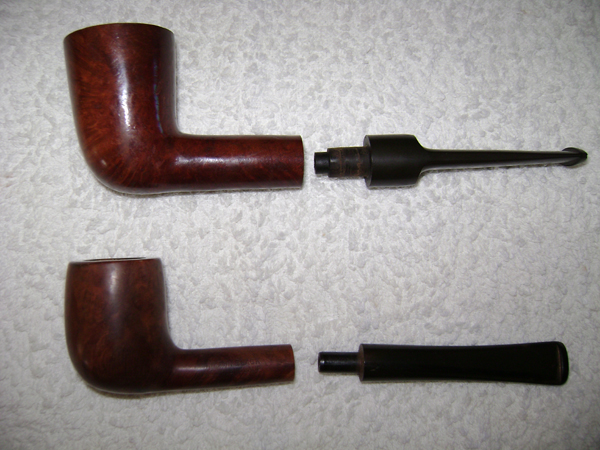
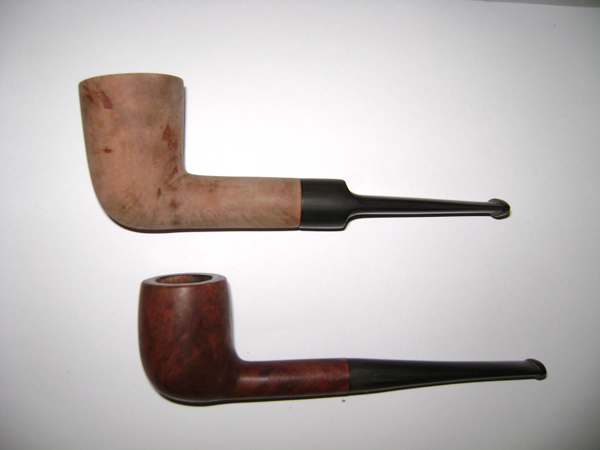
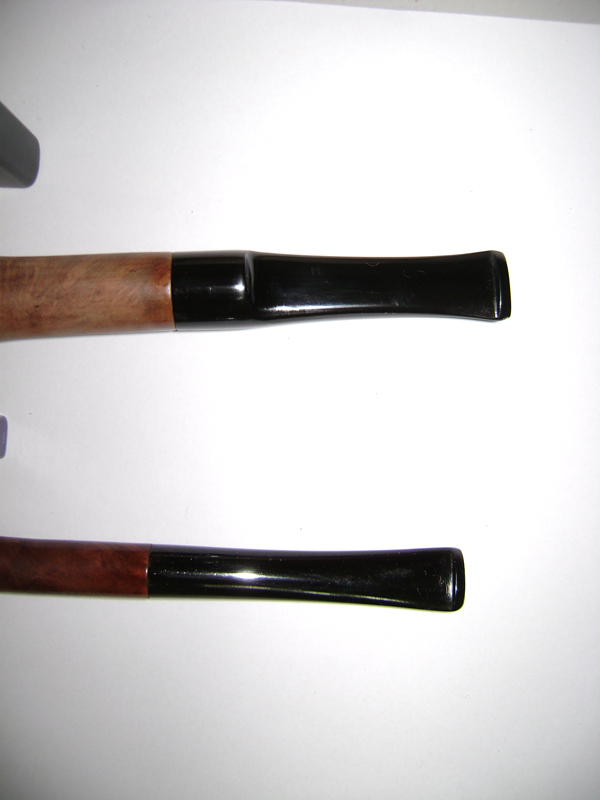
The top pipe is a French Dublin and below that is a Captain Black Billiard

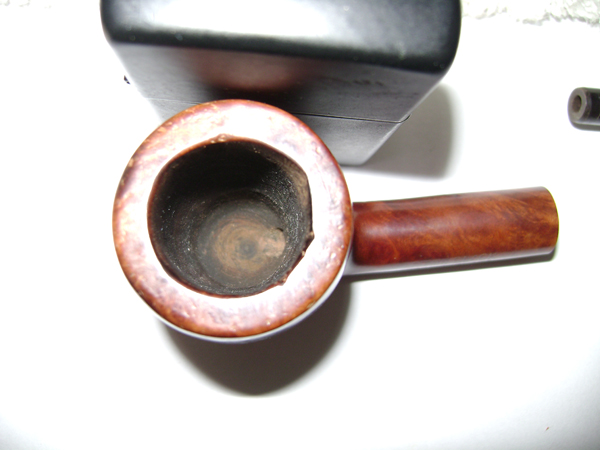
The Dublin has a small chip on the rim and some dings on the outside of the bowl. There is caking around the rim but it looks in pretty good shape. The saddle shaped stem is really tight and may not be the original. When restored this will be a lovely pipe. I intend to sand the finish and stain off completely and re-stain the bowl, maybe a tan color.
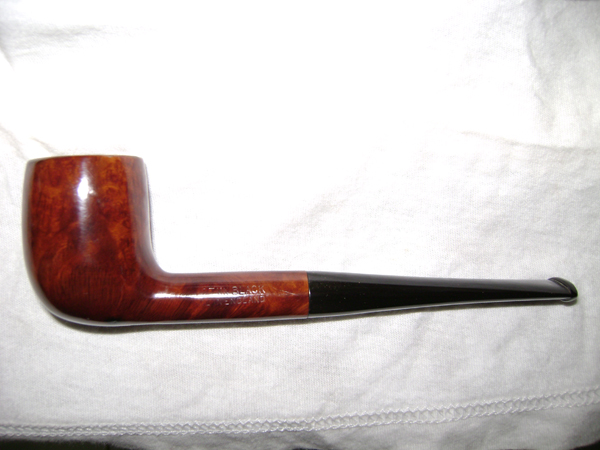
The Captain Black is made in England and is a dainty B14 model. The rim has some minor dings and the chamber rim is slightly misshaped (I’m not sure how to try and correct that but it isn’t so bad that it detracts from the beauty of this pipe). There is a burn mark on the base of the bowl near the start of the shank and I’ll have to see the extent when I start sanding it down. Again I intend to refinish the bowl, this time with a medium brown stain. The stem looks to be in good shape and probably just needs a bleach bath, light sanding and then some buffing with white diamond and carnauba wax. She will be a little beauty when restored.
I’m sure now that I have them here and have made some initial observations that Steve will chime in and let me know the best way to proceed and maybe point out some areas I may have missed.
SL – Good call on the observations. Well done. Not sure how the stains will come out or if you can do what you have planned. I usually have a plan before I start but then have to let what I find in the process determine where I go with the stains. Don’t use bleach on the stems Carl. It really deteriorates the vulcanite in my opinion. Let’s do it a bit differently. Both stems were original. The one on the Dublin is probably tight from the gunk on the tenon and in the mortise. We will clean that out in the process of the refurb.
Also before you sand either bowl down drop them in an alcohol bath over night and let them sit. It will soften the tars on the rims and also remove most of the finish for you. If you can snag a bottle of fingernail polish remover we will use that after the alcohol bath and the bowls dry a bit. It is acetone and works great to remove any remaining finish on the bowls.
CH – I dropped the Dublin in as well. For the Dublin I initially started sanding it with 220 grit sandpaper to remove the initial layer of finish and the cake on the rim. I then wiped the bowl with an alcohol dampened cloth to highlight the dings (and there are quite a few now that I didn’t notice before). They really stood out after the wipe. I dropped it into the alcohol bath as you advised.
SL – Check the bowls in a half hour – particularly the Dublin as you sanded most of the finish off of it.
CH – Ok mate, I love the Dublin shape and it feels great in the hand. After the initial clean on it the stem fitted perfectly.
SL – I figured the stem would – it was the one that came with it. Once you take it out of the wash, wipe it down and let it dry. The pink spots on the pipe are the putty fills. You did a good job removing the finish.
CH– It will be a stunning pipe mate.
SL – The grain on both pipes looks good.
CH – Yeh, I love the little Billiard as well.
SL – We can use the black stain to hide the fills and highlight the grain.
CH – Nice to have an English pipe.
SL – I figured you would like that.
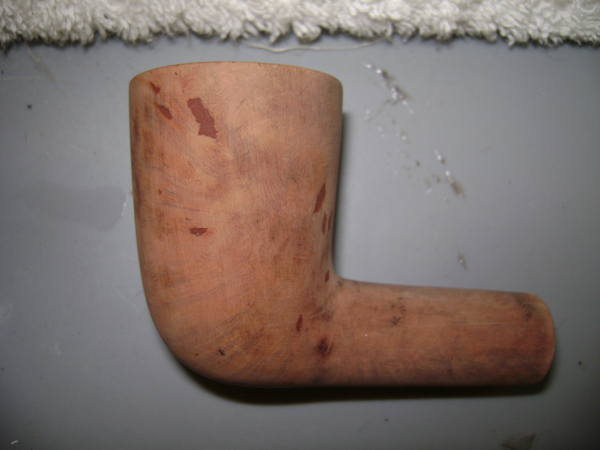
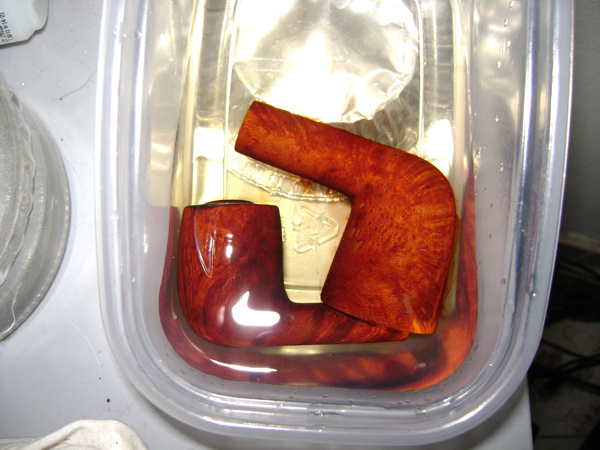
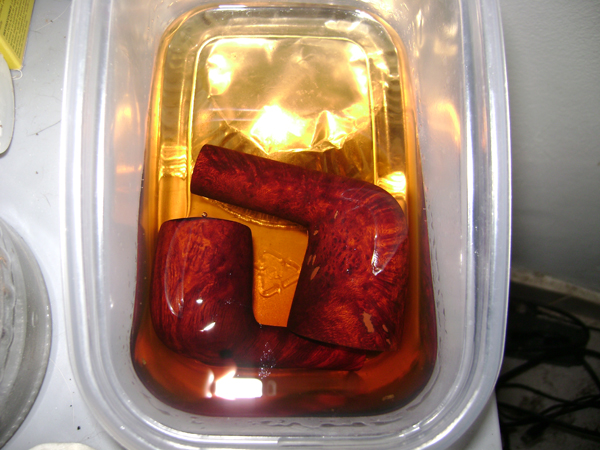
CH – Here is a picture of the Dublin after initial sanding with 220 and alcohol wiped to highlight dings. The next picture is shows both the billiard and Dublin in the alcohol bath.


SL – You can steam the dents out pretty easily. Heat a flat blade (I use a knife from our old cutlery) on a flame – I do it on the gas stove. You can also heat it on a candle or such. Once it is hot put a wet cloth on the ding and put the hot knife on top of the wet cloth – it should hiss and steam. Do this until you have removed the dents. Do this prior to sanding. Once the dents are raised as much as possible sand with the 220 – try to follow the grain on the pipe so you make less work or yourself in the later sanding. You can also use a steam iron in place of the knife and the fire.
As I look at the pictures though, it appears to me that many of those dents are fills. Fills can be hidden with a darker stain or picked them out and refilled with briar dust and super glue. We can decide that later. You will want a lid on the alcohol bath as it evaporates pretty quickly. I reuse mine for 3 or 4 months as I find the old stains give a patina to the briar as it soaks. While the bowls are soaking you can work on the stems.
CH – Ok mate, I’ll leave the bowls in the alcohol bath for another 1.5 hrs and then look at the marks on the Dublin. When I looked at the bowl initially before sanding those areas looked like indentations. I’ll have a closer look once the bowl has dried out.
SL – We can work with those Carl. We can also make a nice dark tea stain to do some grain work on it. Once they come out of the bath and dry we can sand a bit more. Sand with the grain as scratches can be a bear to get out. Once we are done sanding it all the way through your micromesh pads we can talk about the staining.
CH – The only colors I have are medium brown and tan. And I had to wait a month to get those from Miami to here due to the Dominicans saying that they were dangerous.
SL – No problem. We can use something else. You have some tea correct?
CH – Lipton’s – a pretty light tea though
SL – That will work. We want to make a very dark cup of tea. Let it steep over night you want it almost black.
CH – Right ok. The medium brown stain looks pretty dark
SL – Medium brown is dark but once it buffed it is pretty light. The tan is really light almost neutral. We will paint on the tea solution on the grain, following the grain with the brush that you apply it with.
CH – Ok. So just stick a couple or 3 teabags in a cup and leave to stew overnight?
SL – Yes leave it in overnight. We will repeat it a few times to give a good deep colour.
CH – Shame about the fills as I was thinking that shape would lead to a nice contemporary tan pipe.
SL – We may be able to hide them a bit with the tea stain. We shall see. If not we can also use the medium brown the same way to darken the fills.
CH – I spent a small fortune getting those 2 dyes over here and I won’t be able to use them. LOL!
SL – We will use them; the tan could work with the dark stain as an undercoat. We will have to stain them differently because of the fills.
CH – I want the billiard to look darker so I will definitely use several coats of the medium brown. I want to have a classic look for the billiard and contemporary one for the Dublin – sort of 2 different styles of refurbishment; one sympathetic to the original and one a complete facelift to bring it into current times.
SL – That should work. Let’s aim for that with the Dublin. Do you have a small paint brush?
CH – Yeh I have several paint brushes and also the applicator that comes with the dye.
SL – You want a pretty fine brush to follow the darker grain lines.
CH – You are an enabler mate. You create enthusiasm. LOL!
SL – Let’s get back to the stems.
CH – The stems are in excellent condition with no tooth marks or dents. I have used bristle pipe cleaners dipped in whiskey in them and they are surprisingly clean. I will sand them with 220 grit sandpaper and then micromesh. Do you use Tripoli on them or do go directly to White Diamond when buffing.
SL – Start with a higher grit on the stem as you will scratch it with the 220. If you have some wet dry sand paper 400 or 600 use that on the stems. If they are clean as you say then let’s use micromesh 1500 to work them over. I find with the lower grits if I sand length wise it scratches less than cross wise.
CH – Ok, I’ll work on the stems while the bowls are soaking.
SL – You can use only the micromesh on the stems if you like.
CH – I have a buffer mate and some Tripoli, White Diamond and carnauba.
SL – The first micromesh 1500 will make the stem appear grey. Keep working it until it is smooth. I keep a small bowl of water next to me when working and dip the pad in it while sanding. The grit cuts better when wet. You get a grey slurry of the pads when you dip them while sanding. Change the water between grits.
CH – Working on the Dublin stem now with wet mesh.
SL – Excellent. You won’t need to buff much if you work the pads up to about 6K.
CH – Can only get 220 or higher or 2000 here mate, remember we are 3rd world in this place LOL.
SL –I should have thrown in a few papers and sanding pads when I sent those to you. Pretty cheap here.
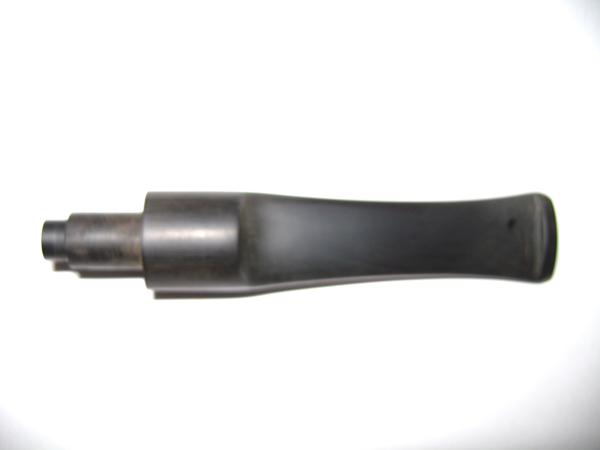
CH – No worries mate, I managed to get a mini buffer shipped over with Tripoli, White Diamond and carnauba. Here is the Dublin stem after wet and dry sanding. The tenon will need careful cleaning to ensure that the fit is not degraded.

CH– Would you use Tripoli on a stem or go straight to White Diamond? Some people say that Tripoli is too harsh for stems.
SL – I use Tripoli. Now would be a good time to pull the bowls out of the wash. Put the stem on the pipe before you buff them – VERY IMPORTANT AS YOU WILL ROUND THE EDGES. Give it a buff with Tripoli. Lightly load the buffing pad. It can go on heavy and it makes the work miserable. A heavily coated pad turns the Tripoli to a reddish brown sludge on the stem… a real pain. When done look for scratches. If there are some go back to the micromesh until they are gone. Once it is good and smooth move to the White Diamond. Again check for scratches. Remedy with Tripoli and/or pads. Use a light touch. I use it all the time and it is good. It is finer than the 2000 you are using
CH – Ok will do mate. Fit stem then photo then initial Tripoli buff.
SL – Perfect.
CH – Going to take a picture of the alcohol bath before removing the bowls as it is pretty brown LOL.
SL – Remember, the tenon may be a little tight when you take it out of the soak – that is ok. The main thing is not to round the edges on the stem at the joint. Even if it does not go all the way in it is ok. It gives you a guide.
CH – Ok. Should I rinse the bowls after removing them from the bath?
SL – No don’t bother. It will evaporate quickly.
CH – Ok. Is the alcohol reusable even though it is brown?
SL– Yes I reuse it for 3 months or more. I find the brown in the alcohol seems to give a nice patina and evens things out on old bowls. I usually let the sediment settle out in the bottom of the alcohol bath and then pour it off, rinse the container, dry it and put the alcohol back.
In terms of buffing the pipe Carl, hold the pipe with a thumb or finger in the bowl when buffing as it will easily be jerked out of your hand.
CH – Yeh, I know LOL.
SL – I have broken a few stems doing it wrong… even dented a beautiful pipe that was getting a final buff
CH – I think you are right about the fills mate. Took the pipes out of the bath and the Dublin has soft areas where the fills are.
SL – Yup they will harden again. We can level them off a bit. Should work out.
CH – I have some mahogany wood filler here that is similar color to the briar if we need to fill instead of sanding down too far.
SL – That may work. How does that burn look on the little billiard?
CH – Haven’t sanded the bowl yet on the billiard so not sure until I get into it. Can’t see anything on the inside of the chamber to indicate it has burned through.
SL – Most of that one you may not need to sand. I think it is a cigarette burn from an ashtray. How do the stems look? To give them a last bit of sheen I will often add some olive oil to the highest micromesh pad and rub the stem down then a final buff to give a glow.
CH – Ok here is a picture of the stems mate
SL – They look really nice. Well done
CH – Thanks mate, they look way better in natural light though. The flash can be a bit harsh.
SL – The next stage is buffing the stems with Tripoli, White Diamond and carnauba wax.
CH – Ok here is what the stems look like after buffing.
SL – Good job. The buttons still have the sharp edge! Also the shank stem junction still is crisp without a rounded edge – very nice. Rounding the edge and the loss of the crispness of the button are usual mistakes folks make. Buff the billiard with the Tripoli and see what it does.
CH – Ok
SL – Sometimes the alcohol bath removes the grime and gives you a great old patina look. All it needs is a buff.
CH – How old is it? Do you know?
SL – Probably 60’s era on both of them. That was what the rest of the lot were.
CH – I would leave it original if it was a 61 LOL!
SL – Could be you know… no way of really knowing for sure.
CH – Hard decision whether to leave it and live with the rim mate.
SL – Nah lets work on it and smooth it out a bit.
CH – It has a nice patina, I wonder what diamond white and carnauba would do for it. I love the patina and after the alcohol dip and a quick blast with Tripoli the grain is quite lovely. The problem is the rim. It has some chipping on the outside and the inside looks as if it was reamed with a knife. I don’t want there to be a large variation in color and I don’t want to ruin the rim by sanding it out of true.
SL – We can leave the bowl as is in terms of the finish and even up the out of round bowl a bit. How is the rim?
CH – Obviously been reamed with a knife at some point. The outside of the rim is slightly rounded and has some chipping around the edges. Nice grain on the bowl though mate.
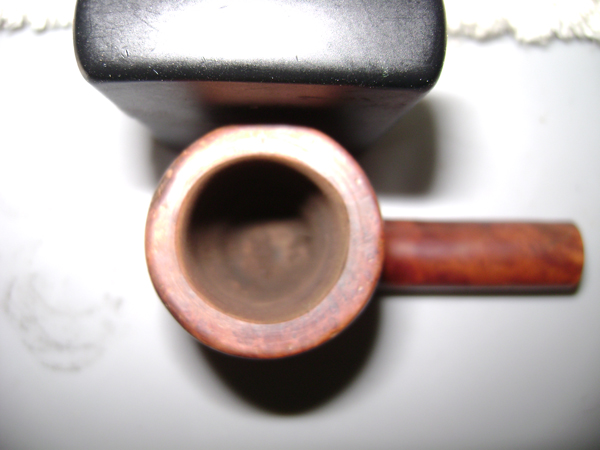
SL – It is indeed. I thought it would have when I had it here. Amazing how removing the grime and a bit of finish with the alcohol makes the grain show. As far as dealing with the roundness of the bowl – take a small 1 inch square of 220 grit sandpaper and fold it in half lay it at an angle to the inside of the rim. You will work in slowly evening out the rough spots and cuts on the inside. Try to work to get the distance from the inner circumference to the outer one to be equal all the way around the bowl. Doing this you may not need to do anything to the rim… we shall see. We can also work to match the whole thing…
CH – Mmm, trying to think how to match the stain when we are done with that. The patina is really nice
SL – That will be fairly easy – medium brown will work perfectly for the patina of old pipes. Work on the roundness of the bowl first before tackling the rim. You may be able to leave the rim. Work the edge slowly with the 220 sandpaper to smooth it out on the inside edge. Doing it at an angle will allow you to even things out aiming for equal distance between inner and outer edge all the way around.
CH – Ok mate, working on it now.
SL – In your picture of the top I see that you need to take out some on the top side of the picture (right side) and also on the butt side of the bowl near the shank. Very little needs to be done with the left side.
CH – I think we are very close. Not sure how much more I should play with it for a pipe of this age.
SL – You did it brilliantly!! Perfect
CH – Thanks mate. I was really worried about ruining it.
SL – No need. You did well. It looks way better and like it should after some 40 years of care. It is these little steps that make the difference.
CH – Yeh that is what I was thinking. You can be too anal and ruin the pipe’s character
SL – Now steam out a few of the dents to the top and you should be good to buff and polish. Heat a butter knife over a flame and fold a wet dish cloth on the rim. Lay the hot knife on top of the wet cloth and it should hiss and steam. You may need to do a few times but it will lift most of the dents in the rim. It will dull the finish but a buff with white diamond and some wax will remedy that.
CH – Right, I’ll get onto it mate. She is a little gem mate, I really appreciate it.
SL – You are doing great. Once that is done you can buff with White Diamond and wax. Should be a keeper. How is it working?
Carl went on to steam the dents until they were less visible and then he buffed the pipe on his buffer with Tripoli and White Diamond.
CH – Just going to upload a photo of the billiard.
The ongoing evolution of a handmade pipe
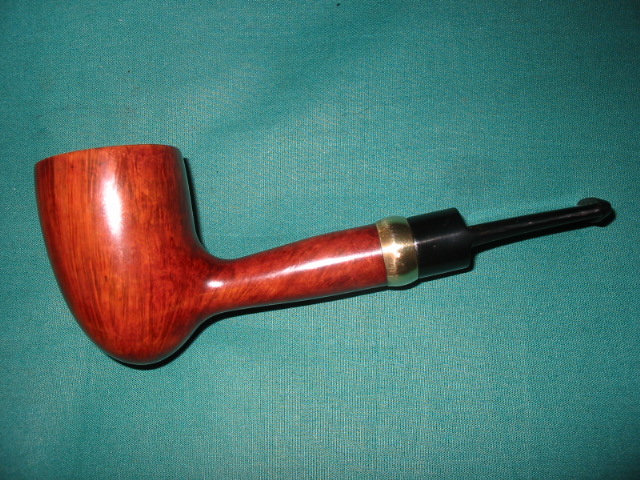
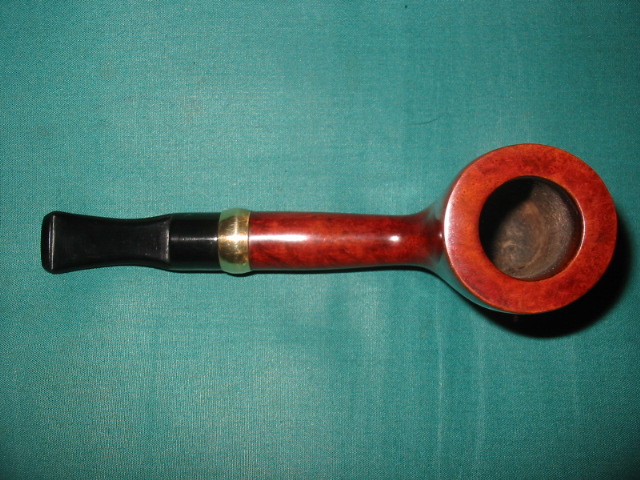
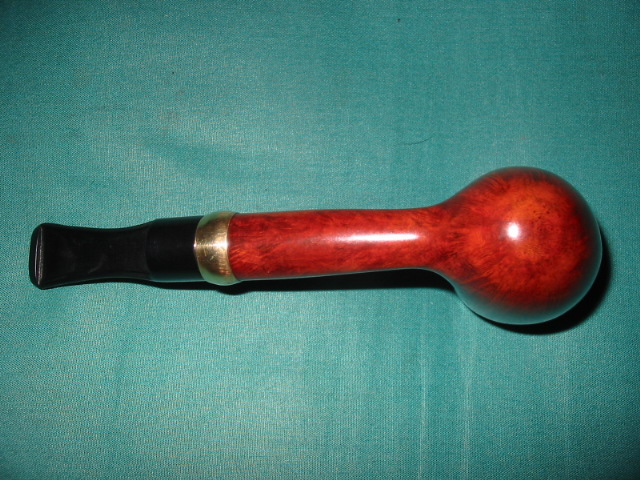
With all the refurbishing and staining I have done lately it is no wonder that when I pulled out this pipe from my rack it seemed just plain dull! This is a pipe I carved probably ten or more years ago and then reworked and thinned down in the past three or four years. It is great to be able to pull out one of my own pipes – carved by me – and rework it as the desire rises. I have no qualms about doing that as they are my creation and I am not changing someone else’s work. I had originally stained this pipe with a black understain and then used a very thin mix of medium brown stain on it. At the moment it looked good to me. But over the years that finish has grown faint and lack lustre. I have buffed it and given it new coats of wax but it still was lacking.
The morning I pulled it out was the day for a makeover. I finished the bowl I was smoking in it and while the briar was still warm I took it to the work table to restain. I decided to give it a coat oxblood aniline stain to liven it up and give it some warmth over the dark understain that had become more prominent with time. I rubbed on a coat of the stain and flamed it and then buffed it off so that the pictures below show its new look. I am enjoying its new look. I know it does not make it smoke better (it always has been a great smoking pipe) but the newness makes me reach for it more often.
I am thinking of restemming it now with a wider blade and tapered saddle but we shall see. These things seem to take a life of their own so truly there is no end to the changes that could be made over the years. Here it is now in its process of development!
UPDATE!!
Last evening (Aug. 8, 2012) after work I decided to cut a different stem for this pipe. The narrowness of the blade (flat portion of the stem from saddle to button) just did not look right to me. The more I looked at the pictures the less I liked it. I did not have any rod stock so I found a precast stem in my jar of stems that would work for now. I cut the tenon down so that it would fit and also reworked all the casting marks along the edges of the stem. I opened the draw and also reworked the slot and button for more comfort and ease of cleaning. Here are the pictures of how the stem looks now. I think it is better than before. Oh, I also decided not to bend the stem this time.
The stem looks shorter than the previous stem but it is actually the same length. The proportions are thicker and thus give the illusion of a more stubby looking stem.
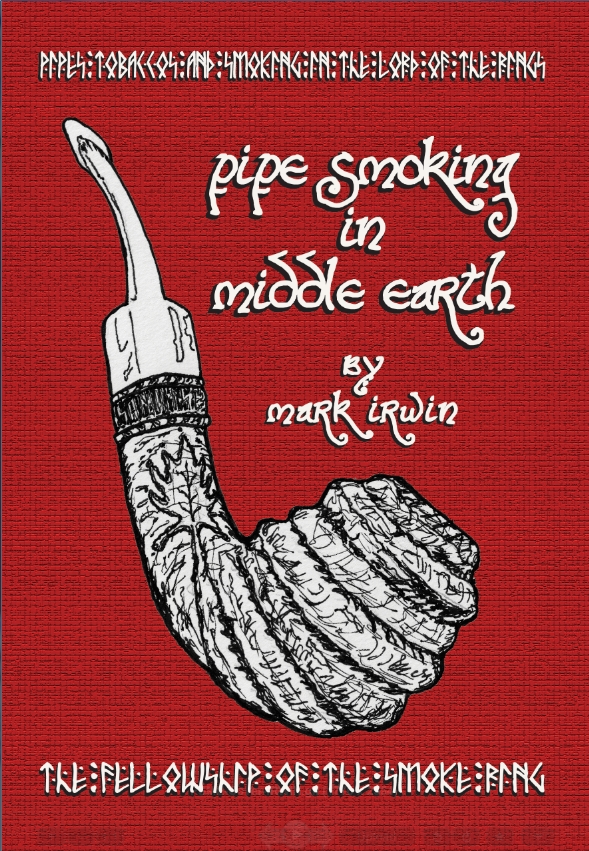
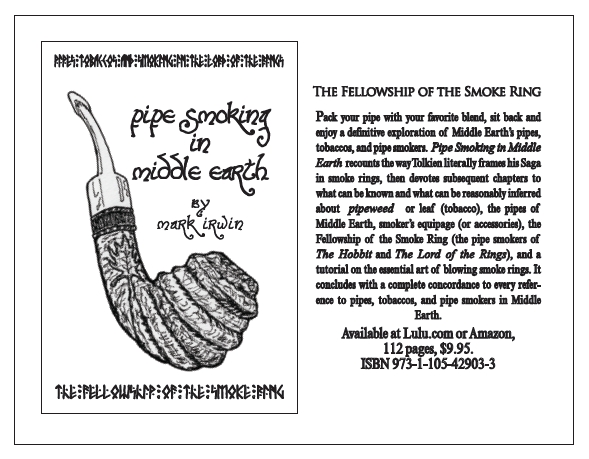
A Book Review: Pipe Smoking in Middle Earth – Mark Irwin
Blog by Steve Laug
I have been putting off reviewing this book for quite awhile now. I ordered it from Mark at the end of May and read it the first time in June, soon after it arrived. The reason I put it off is because I have also been rereading The Hobbit and The Lord of the Rings. I don’t know what read this is – I have been reading and rereading it for over 50 years probably. Each time I do I learn more and get more lost in its brilliant images and the magnificent tale. Well, since this is not a review of the LOTR but of Mark’s book I better get on with it.
Mark has done a masterful job in describing the pipes and tobaccos as he imagines them from many years of reading and rereading the books. His own book is filled with descriptions of the tobacco and the pipes of Middle Earth. He has hand drawn illustrations of the pipes of each of the pipes from a combination of his imagination and the descriptions provided by Tolkien of both the individual and their pipes in the pages of the Hobbit and the LOTR. He draws both his words and illustrations in marked contrast with those seen in the movies by Peter Jackson.
The book is divided into two major sections for ease of reading. The first is a series of essays on the pipes, tobacco and smokers of Middle Earth. The second is an annotated concordance or all of the occurrences of pipes, tobaccos and smokers in the Hobbit and the LOTR as well as other books of Middle Earth. Each of these two major divisions is further broken down. The first is broken into an introduction and six essays/chapters on a variety of topics pipes and tobacco as seen in Tolkien’s books. This section is illustrated with pen and ink drawings by Mark. The second is broken into two parts – a concordance on the books (Hobbit, LOTR and other relevant Middle Earth books) and a concordance on the extended version of the movies by Peter Jackson. It also has a variety of pen and ink drawings. The book closes with end notes worthy of the scholar Mark is.
The little book opens with an essay entitled Charring Light in which the direction of the book is delineated. The essay poses two problems that face the pipeman as he deals with the pipes, tobaccos and smokers of Middle Earth. The first is diminishment, or downplaying the role of pipes and tobacco in the books. He sets out a convincing argument that this is what Peter Jackson does in the movies. The second is enlargement, or over emphasizing the role pipes and tobacco play in the books and neglecting the larger purpose of the saga and its author. Mark is convinced that Tolkien shows us the middle way between diminishment and enlargement. To illustrate this he cites “an apocryphal but probably authentic letter” where Tolkien writes that basically he has said all that needs to be said about pipe smoking and Hobbits in the prologue. Mark’s purpose is to strive to stick with the text and set out the facts regarding what the books say about pipe smoking and what can be inferred from the text. He seeks to leave behind his own opinions and ideas and search what is on the pages of the books.
The details of the first six essays/chapters need not be mentioned at this point, as you can purchase the book and have a read yourself. But it is enough to say that they cover a variety of topics pipes and tobacco such as pipeweed or leaf, the pipes of middle earth, smoker’s accessories and how to blow smoke rings. Mark covers each of these and other topics relevant to Tolkien and pipe smoking in the chapters of this part of the book. I was repeatedly amazed at what he lifts from the books in his descriptions and drawings. For example take this section from the chapter entitled “Tolkien’s Smoke Ring”:
The Hobbit begins with Bilbo’s smoke, continues through the narrative with another nine evenly-spaced references to the art of smoking (smoke-rings in particular), then ends as Bilbo hands Gandalf the “tobacco jar” – which are the last two words of the story. And let us never forget that Bilbo’s finding of “the precious” – the One Ring – is precipitated by his search in Gollum’s dark cave for another treasure, albeit one much less perilous – his pipe.” PSME pg. 13.
Mark goes on to note the number of references in each of the three divisions of the Lord of the Rings to show that the pipe smoking concern that is evident in the Hobbit is repeated in the LOTR. Each volume of the three part division has numerous references to the pipe and tobacco. In fact Tolkien considers it important enough to include a section entitled, Concerning Pipeweed in the middle of his tripartite prologue of the book. Mark writes in a clear and captivating style and demonstrates a grasp of the middle way that Tolkien set forth in the “letter” referenced above.
In each of the chapters of the first section he uses the same clear and forthright style to show the type of pipes the characters may have smoked according to their personality and style as described in the story and how they used the pipe in their lives. The section on the tobaccos of Middle Earth is entertaining and probably the best explanation of the kinds of tobacco that may have been in Tolkien’s mind as he wrote about them in his books. Well done Mark.
The second major section of the book is devoted to a concordance of citations about pipes, tobaccos and pipesmokers as I mentioned above. Mark has done a stellar job of cataloguing these quotations in an annotated presentation. He works through each – the Hobbit, the Lord of the Rings and other Middle Earth related books gathering the quotes and references. Each citation is complete with reference notes to the page, chapter and section of the book cited. He continues the same process with an annotated concordance to the Peter Jackson movies (extended version) and quotes the scene and segment of the movie where the quotation was used.
The book is a short 112 pages of interesting and imaginatively written material on what has to be one of my all time favourite author’s books. Thank you, Mark for a job well done. I only have one serious complaint for you – why didn’t you extend the book, and like Peter Jackson make and extended version for those of us who cannot get enough.
Restoring a unique Peterson 10
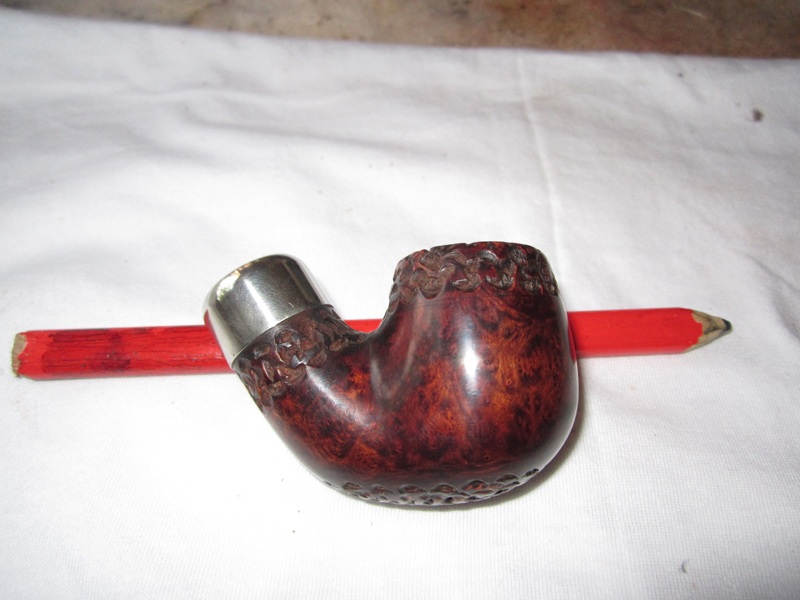
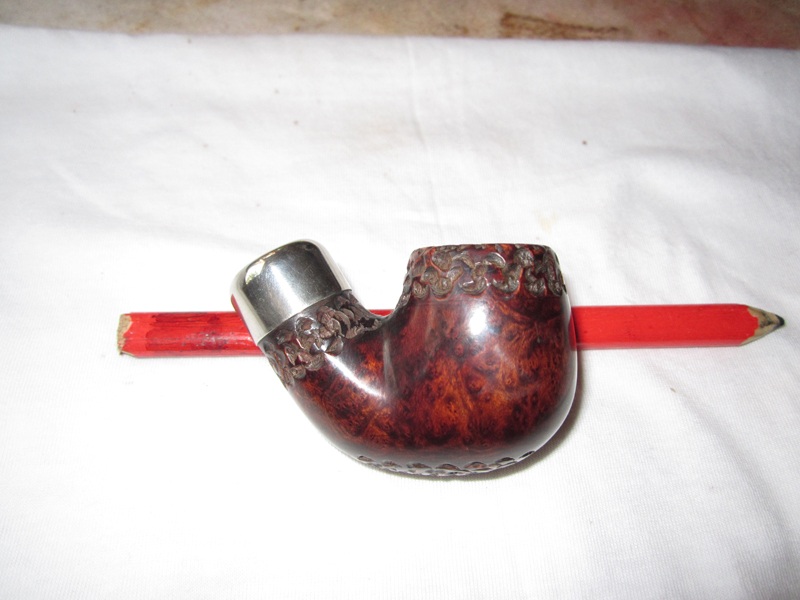
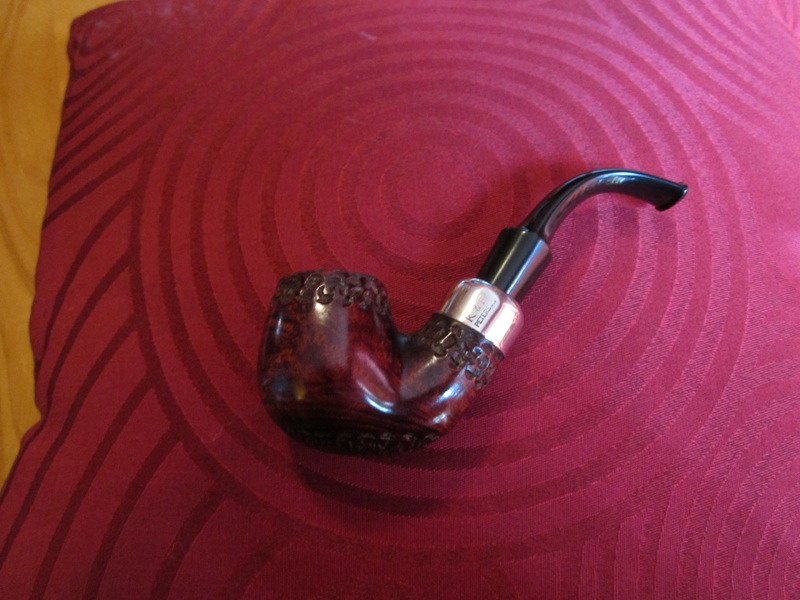
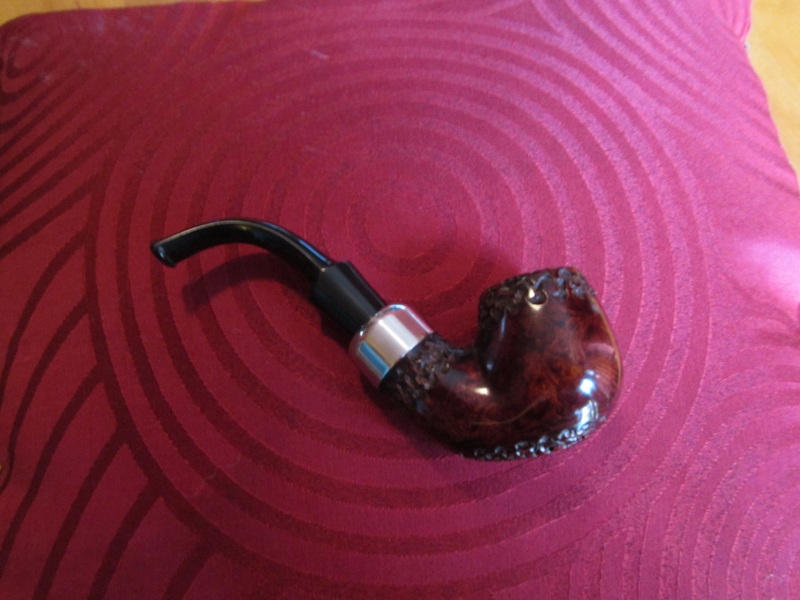
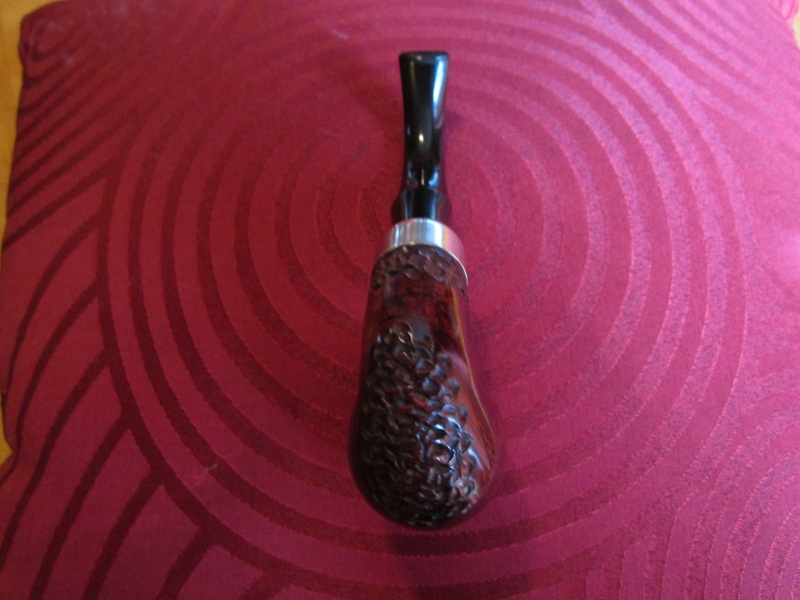
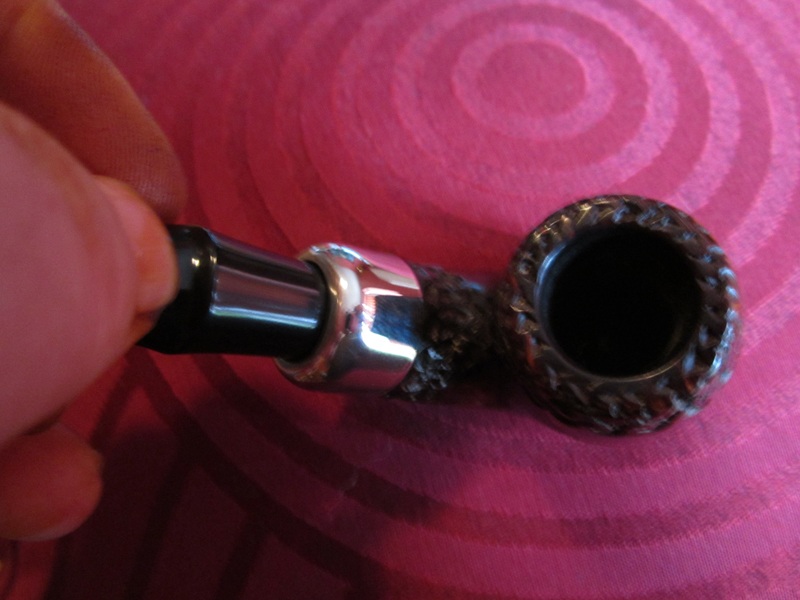
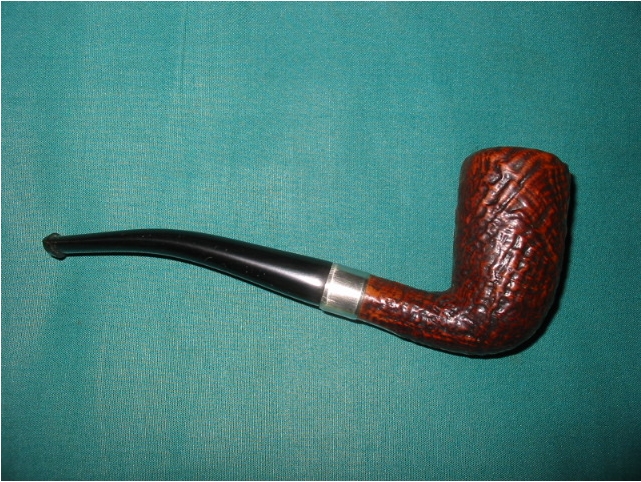
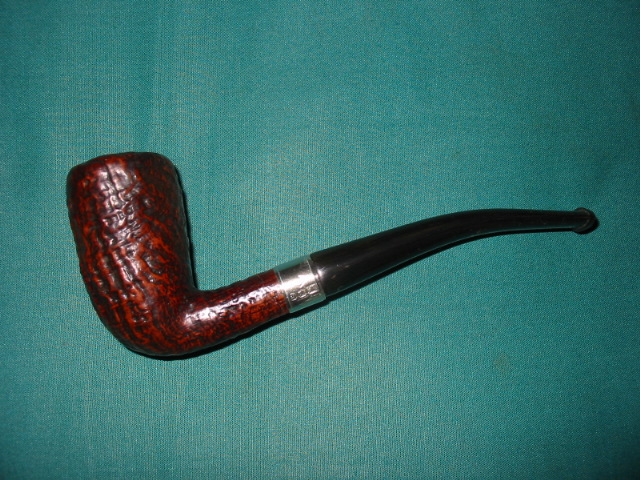
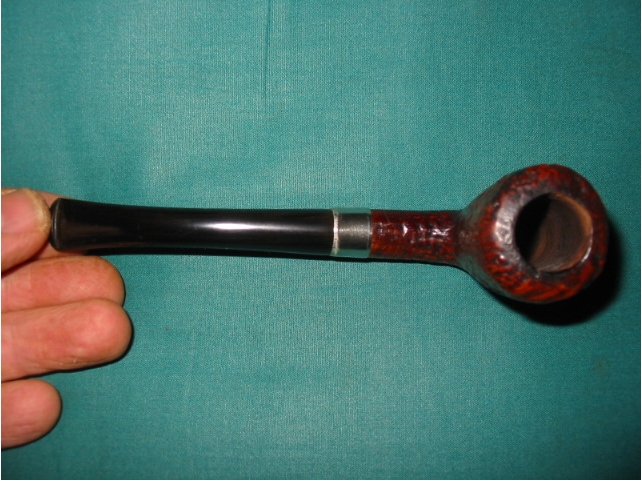
I picked up this old Peterson shape number 10 at a flea market for about $12. This one needed cleaning inside and out as well as reaming. The finish was quite good. I just used a soft bristle tooth brush to get into the crevices. The shank had a crack in it so I banded it with a silver band. The bowl was caked and very narrow. I used a battery terminal brush and an old adjustable reamer to get inside of it. The stem on it was obviously not the original but a smaller diameter replacement stem that did not fit well. The shank had been sanded smooth but was not tapered to meet the misfit stem but it was perfect for setting the band. Before doing that I used some super glue to squeeze the crack in the shank together. I held it until it was dry. I then heated the band with my heat gun and pressure fit it on the shank. I flattened the bottom edge of the band to match the flat bottom where the stamping is. I fit and shaped a new stem. Once it was fit I bent it to a comfortable fit for the mouth. Then I sanded and polished it with my usual regimen of micromesh pads from 1500-6000 grit.