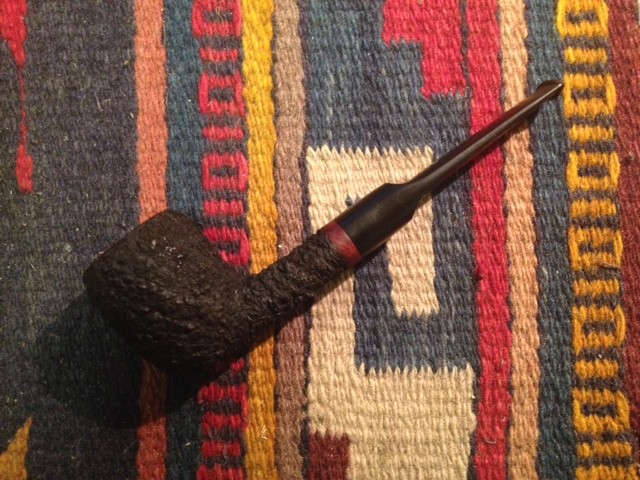
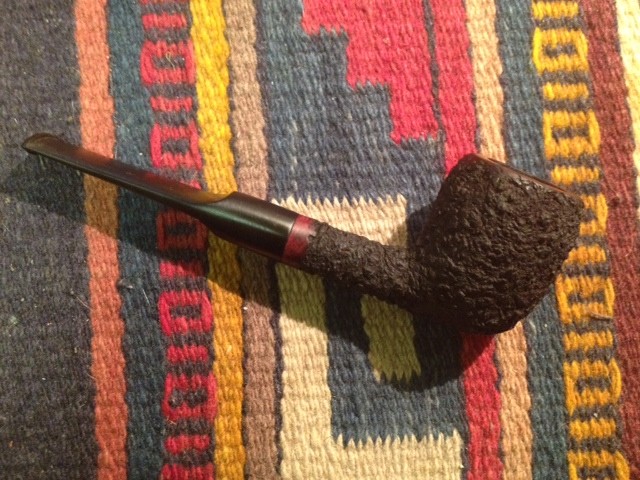
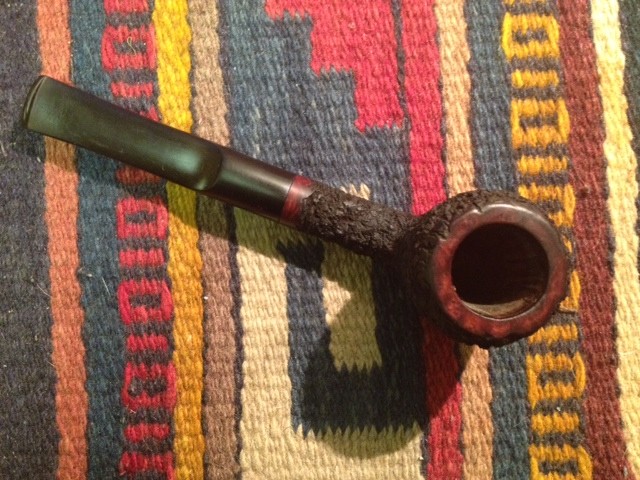
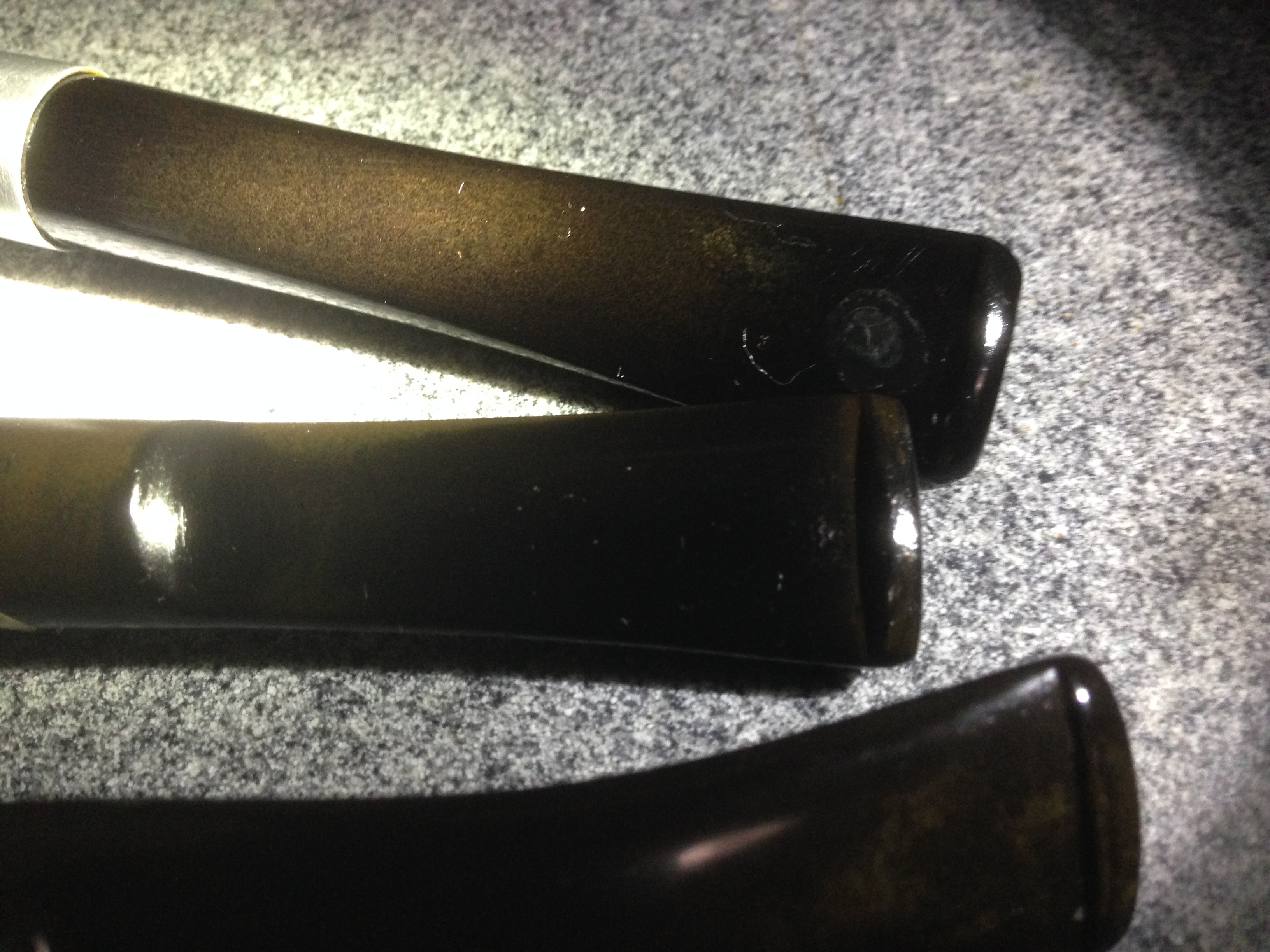
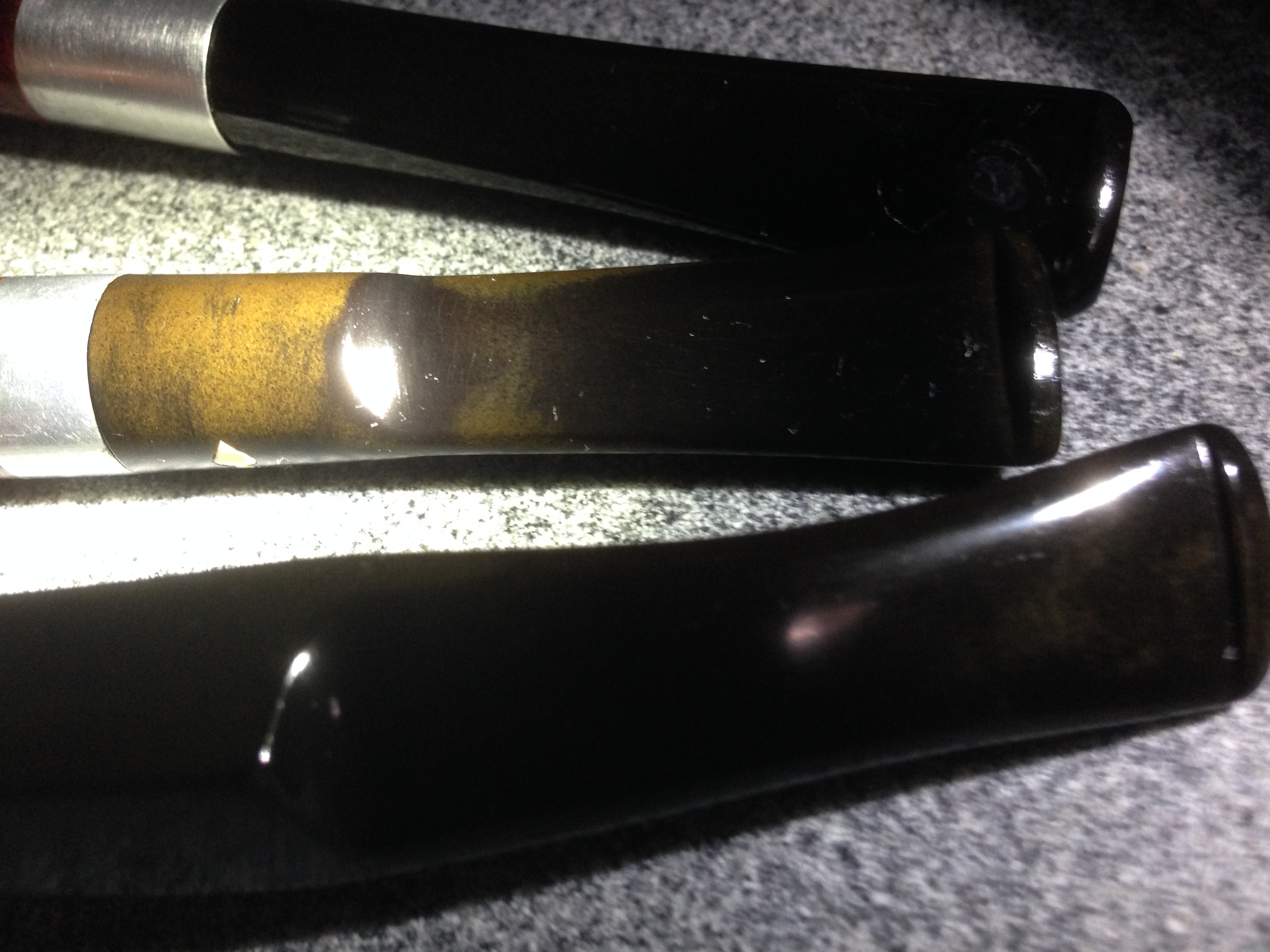
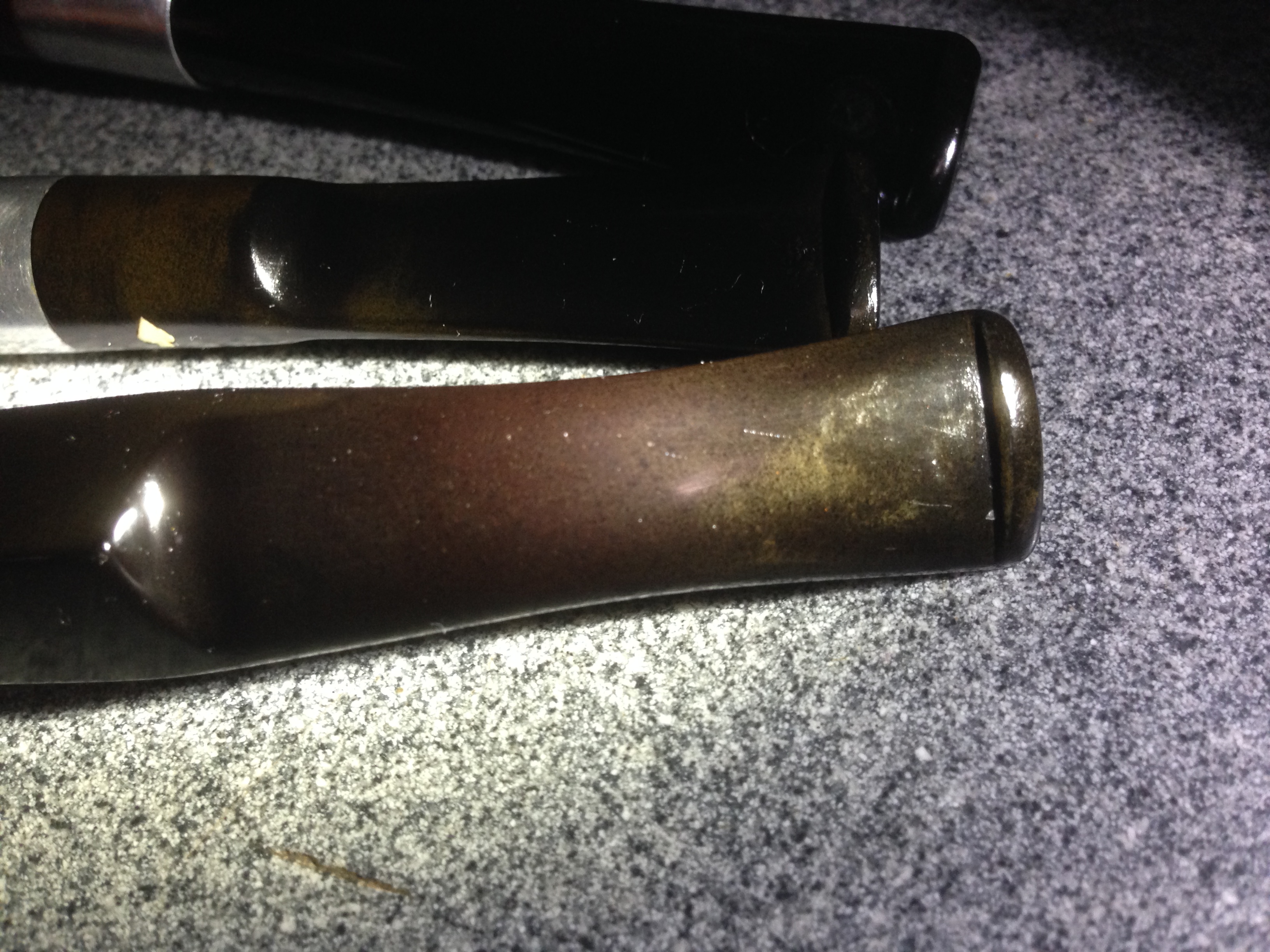
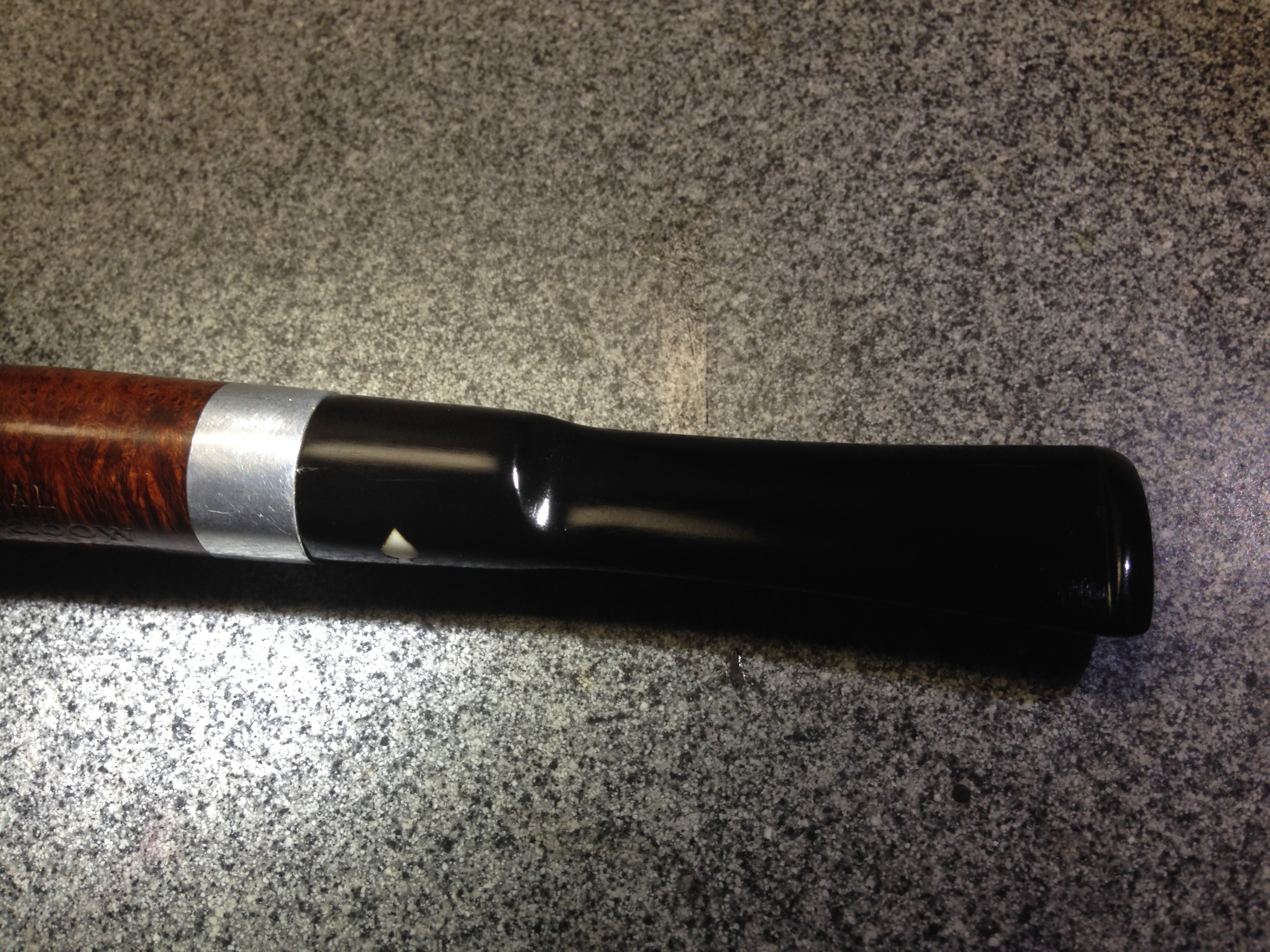
Getting back in the saddle – AJ Verstraten


It is a pleasure to post another article by AJ Verstraten aka Bananabox-Ninja. It has been a while since he has been able to do any refurbs do to some health issues he had to deal with. It is great to know he is back and feeling much better. Glad to hear from you AJ and glad to hear you are healing. Thank you for taking the time to record your work for us to read and enjoy.

Greetings, it’s been a while since I was able to get behind my workstation and get some work done on the huge lot of pipes that are patiently waiting for a fix.
Some of you might remember my earlier piece in which I explained that I was home bound due to a motorcycle accident. Turns out I needed an operation to fix my cruciate ligament in my knee, this left me with a long recovery time but last week I was able to sit down and do four pipes that only needed some minor work to ‘flex my muscles’ so to speak.

A note about the pictures, as I did it outside in the nice spring weather there were still a lot of clouds and this makes some of the pictures quite dark.

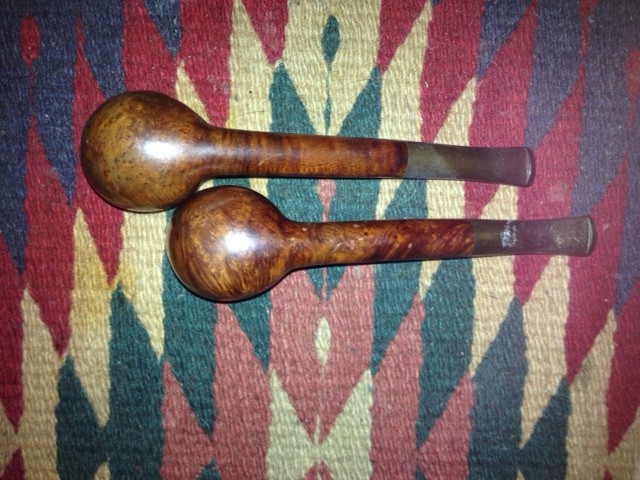
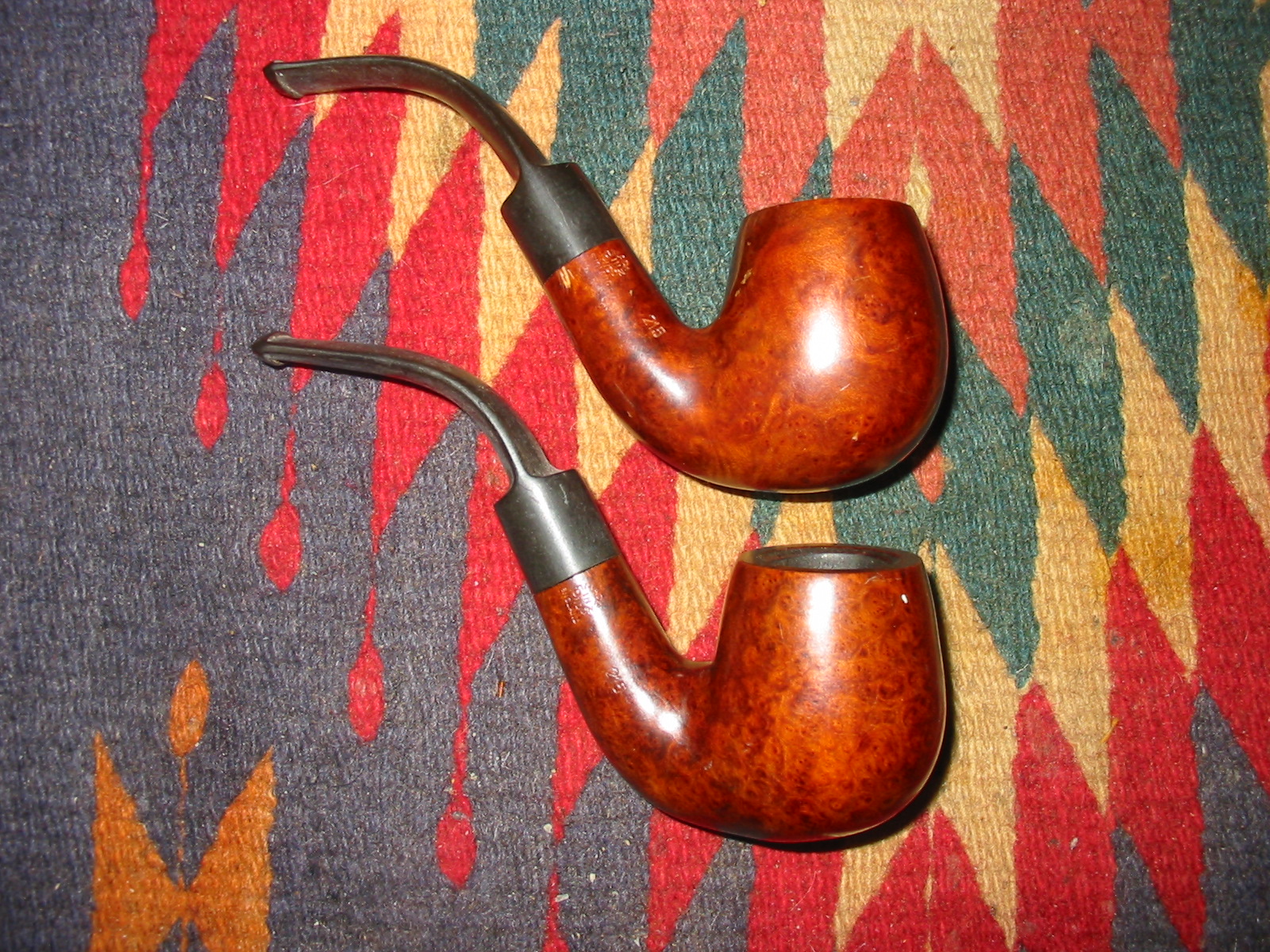
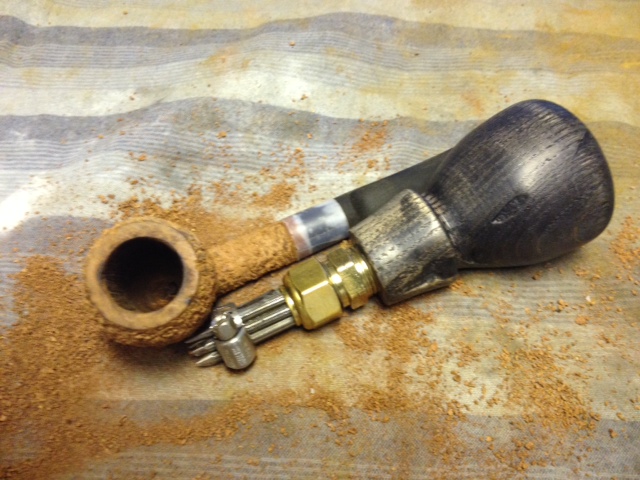
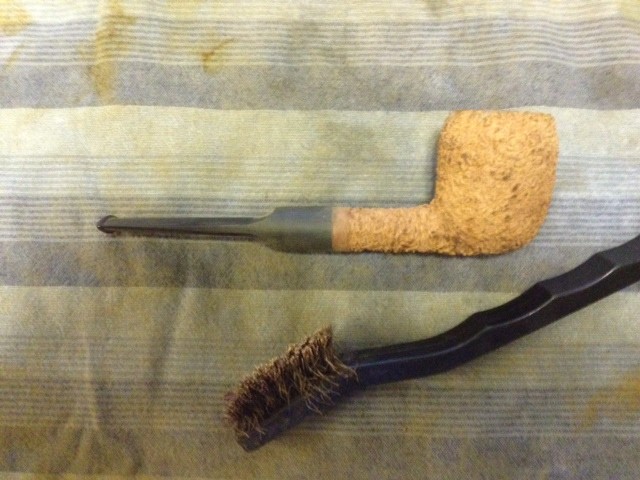
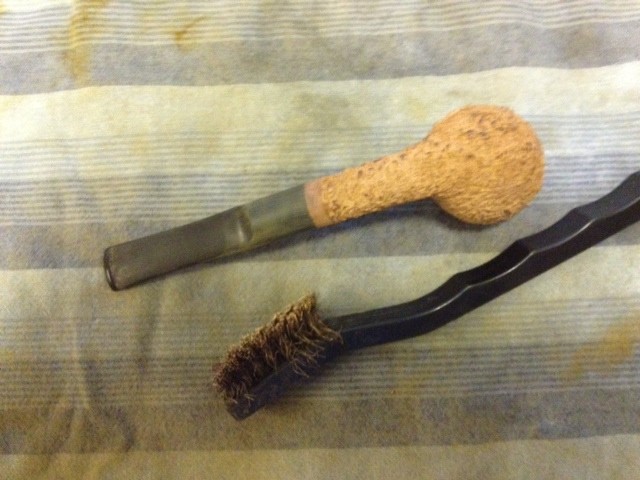
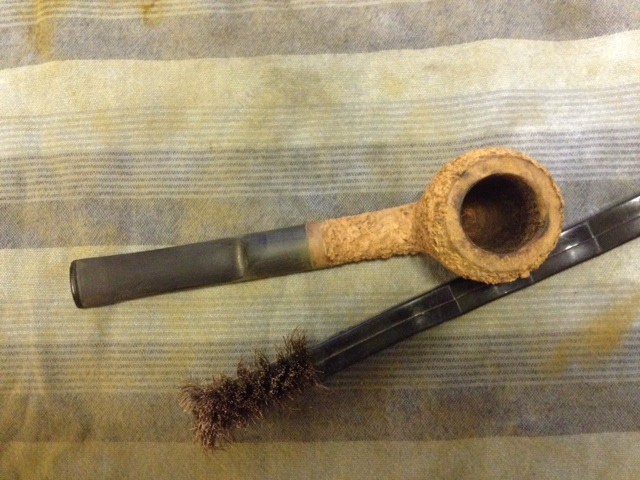
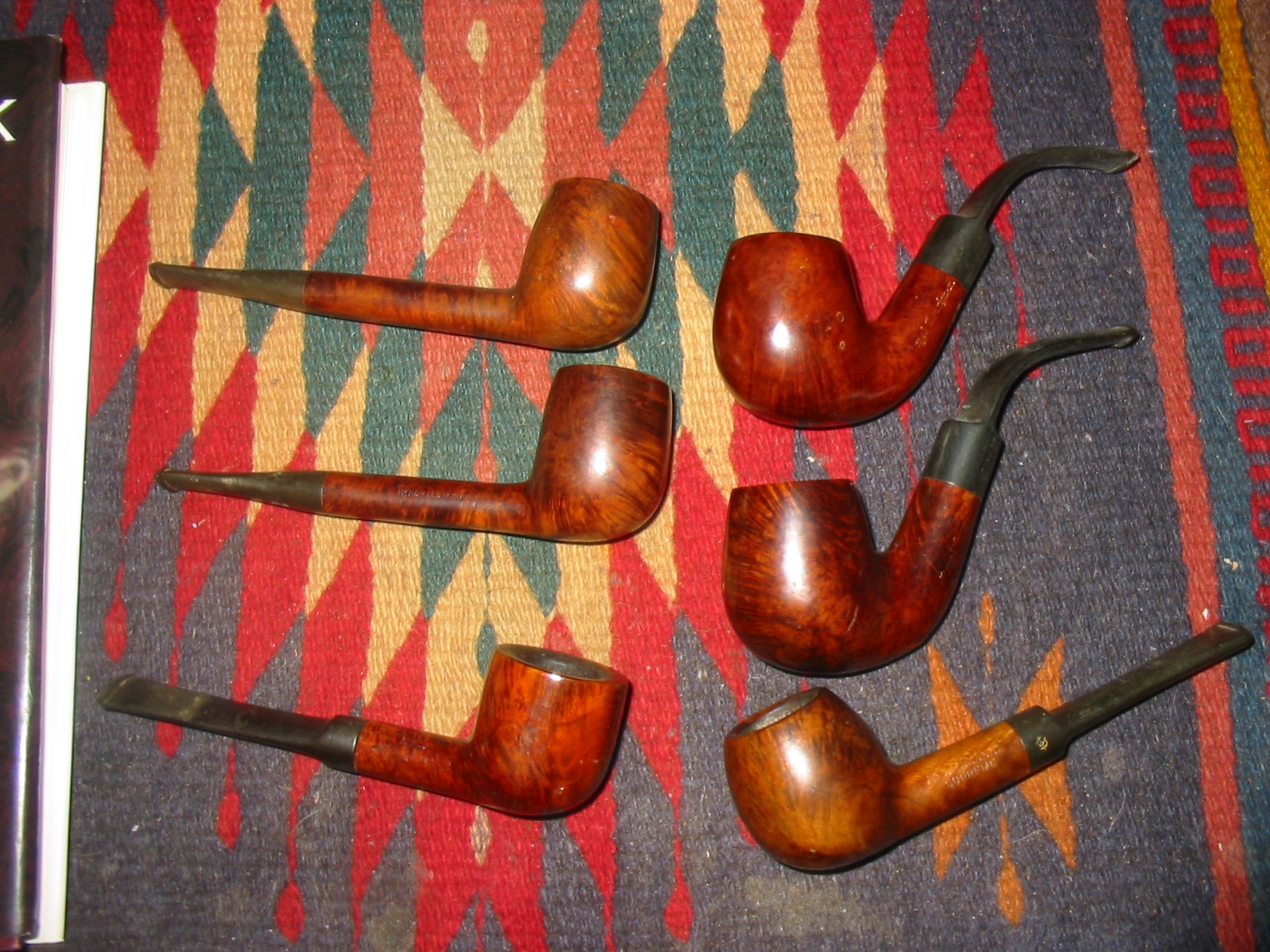
These are the pipes I chose for cleaning:

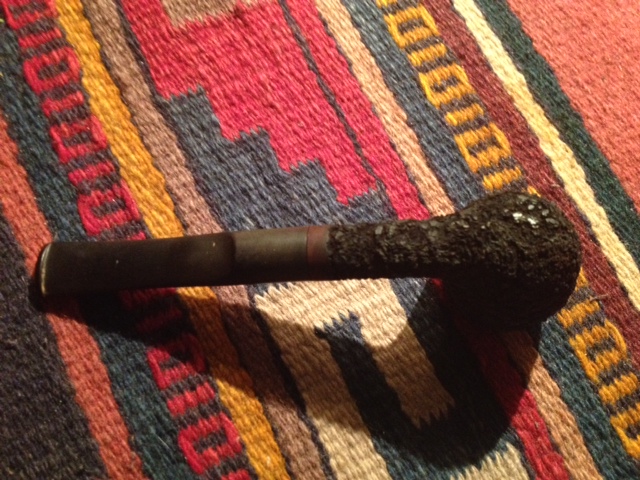
Winsløw Grade E bought on ‘Marktplaats’ the Dutch version of Ebay
001 Winslow E group a
Chacom Silhouette a gift from a family friend who quit smoking years ago.
002 Chacom Silhouette a
Vibro Woodart acquired from a fellow forum-goer at the PRF.
003 Vibro Woodart a
Georg Jensen straight grain from the same friend as the Chacom.
004 Georg Jensen a
The procedure for all was the same.
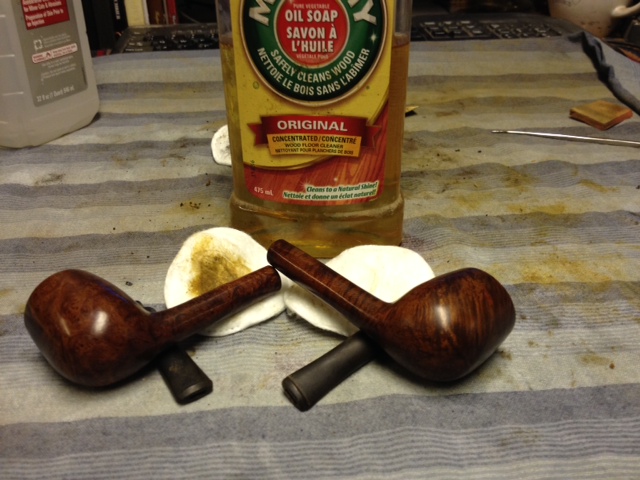
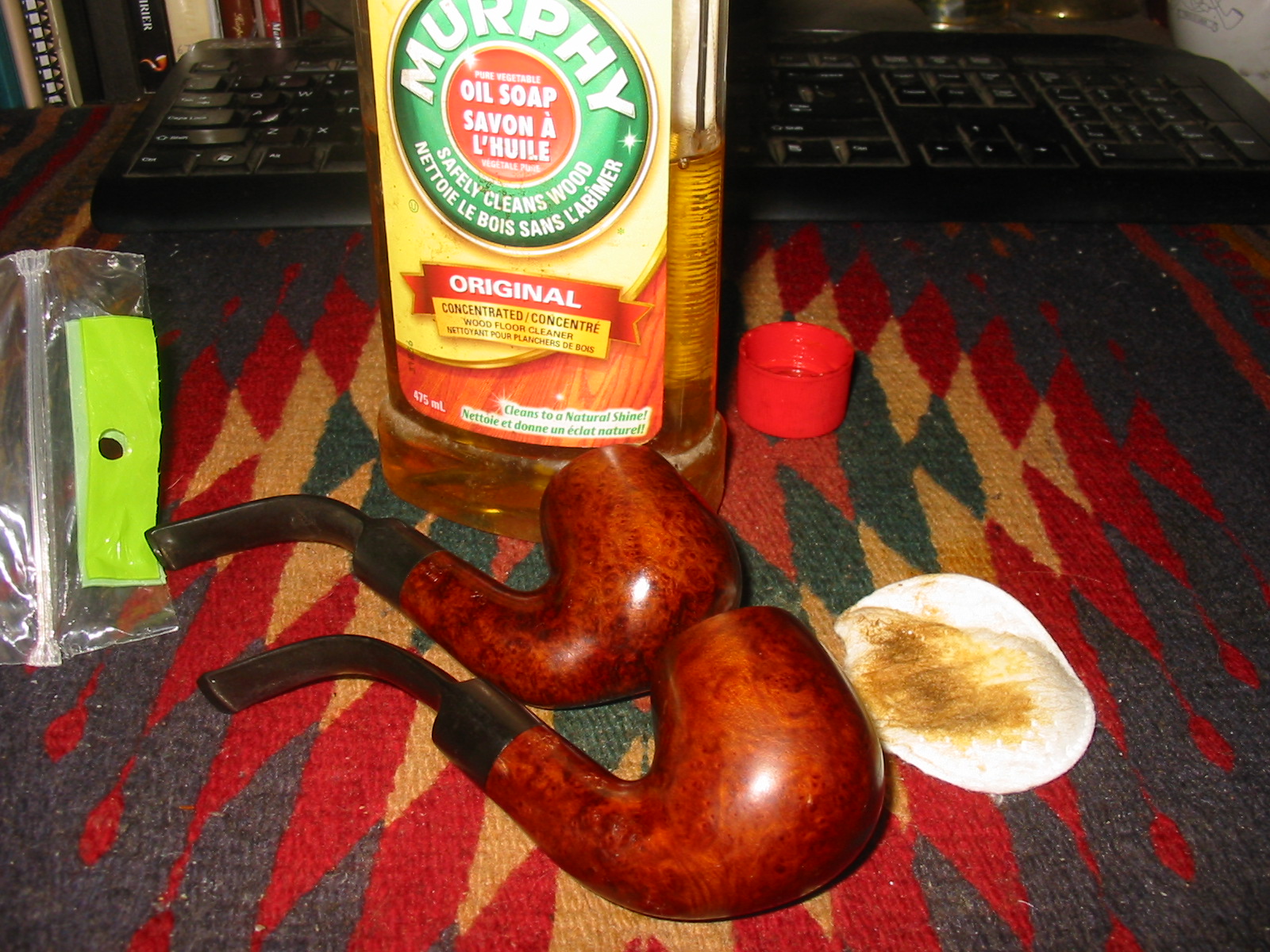
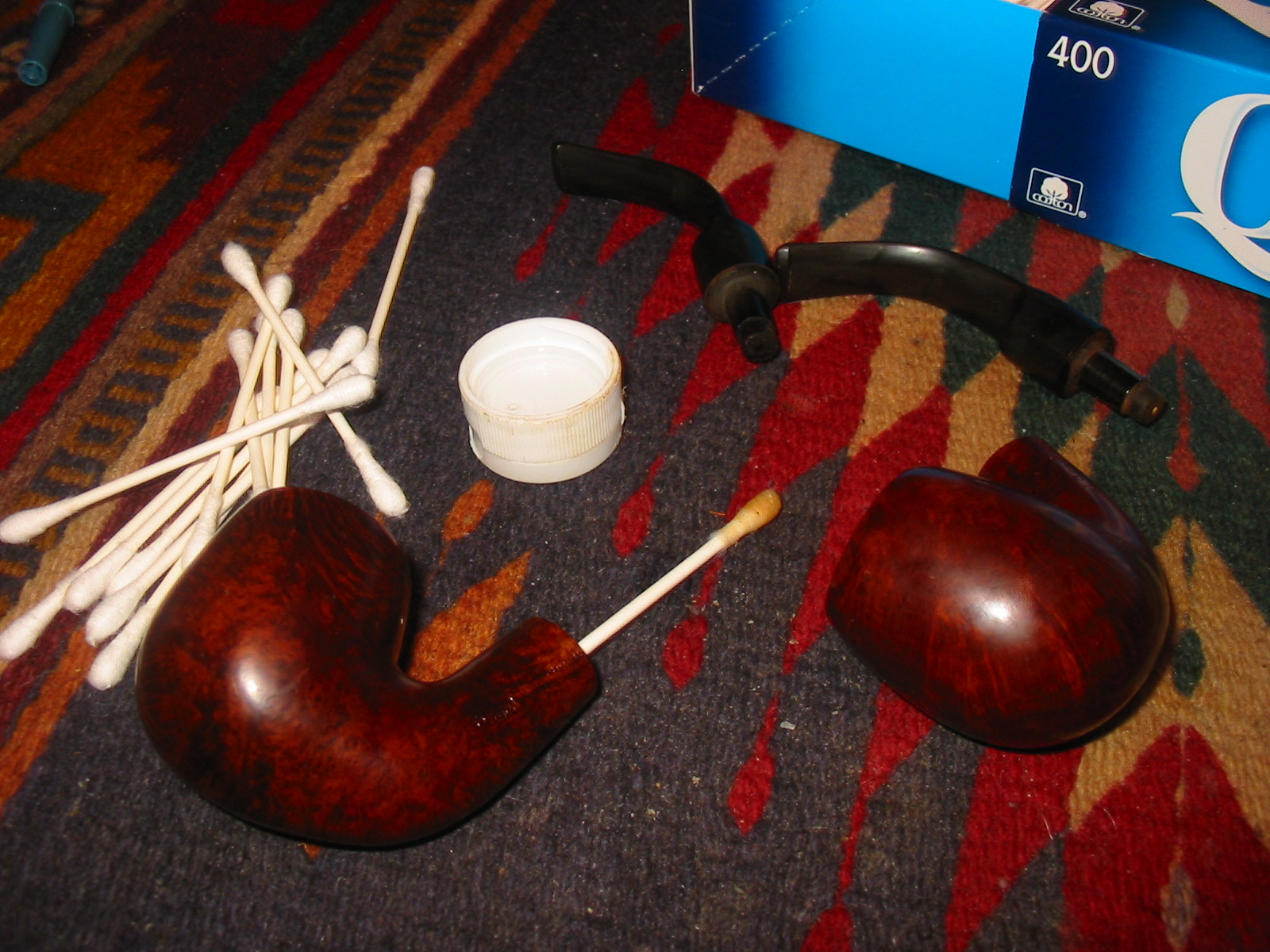
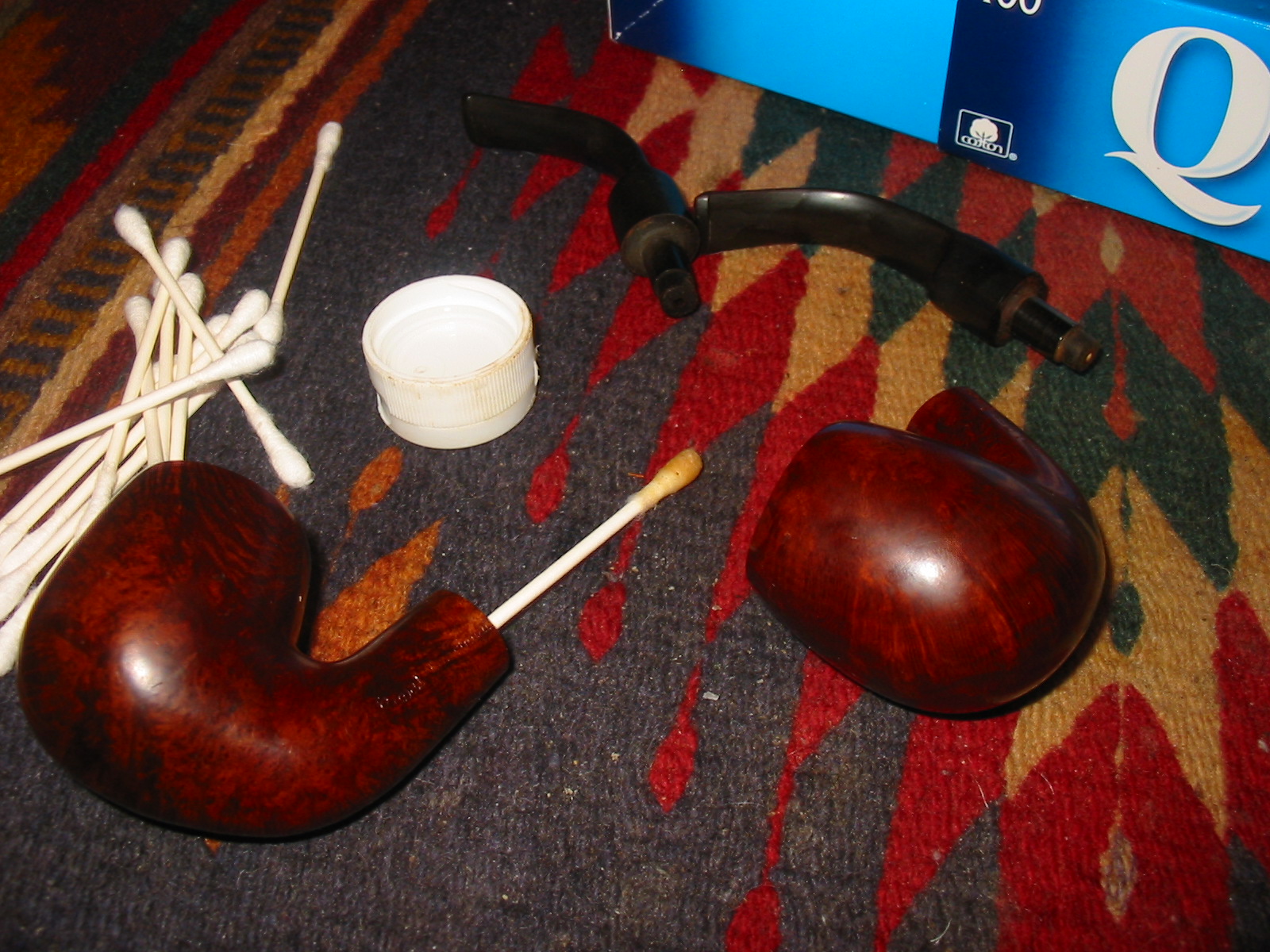
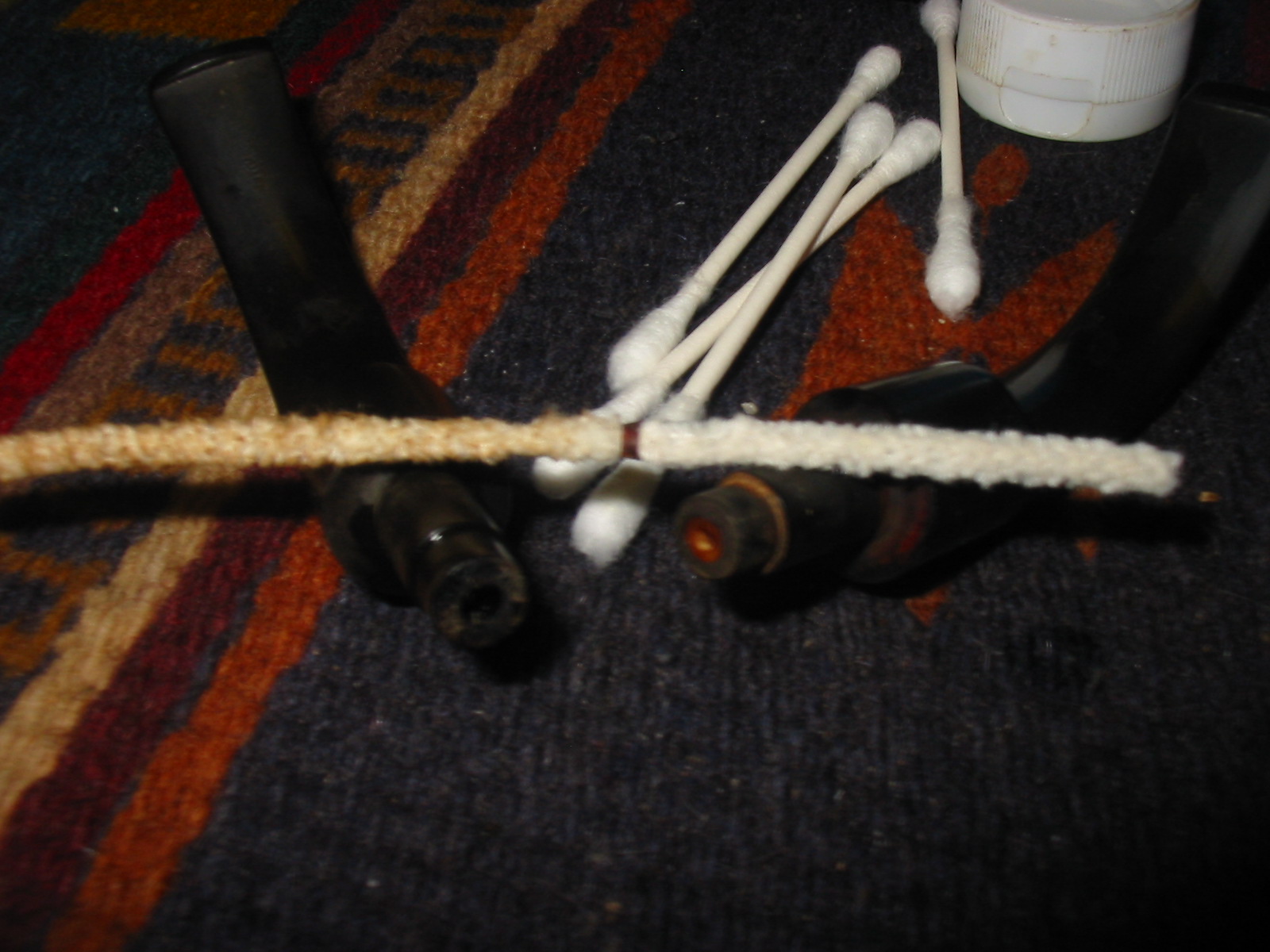
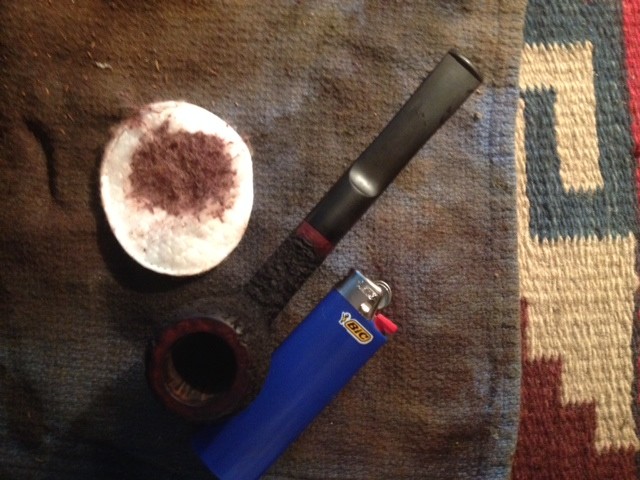
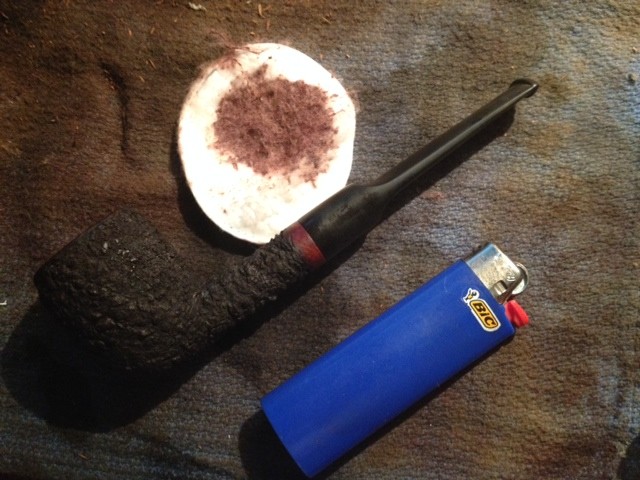
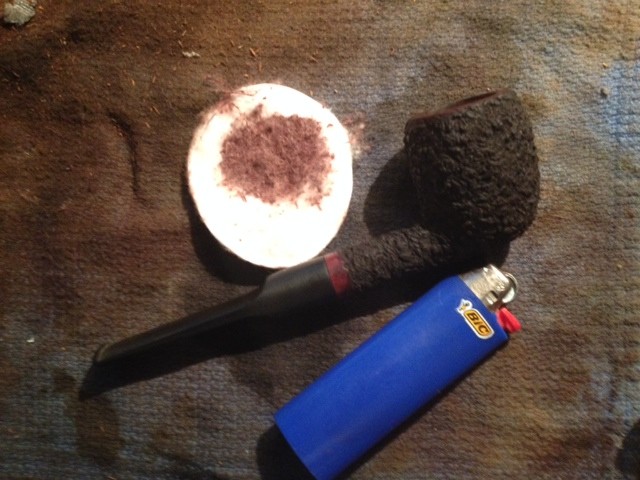
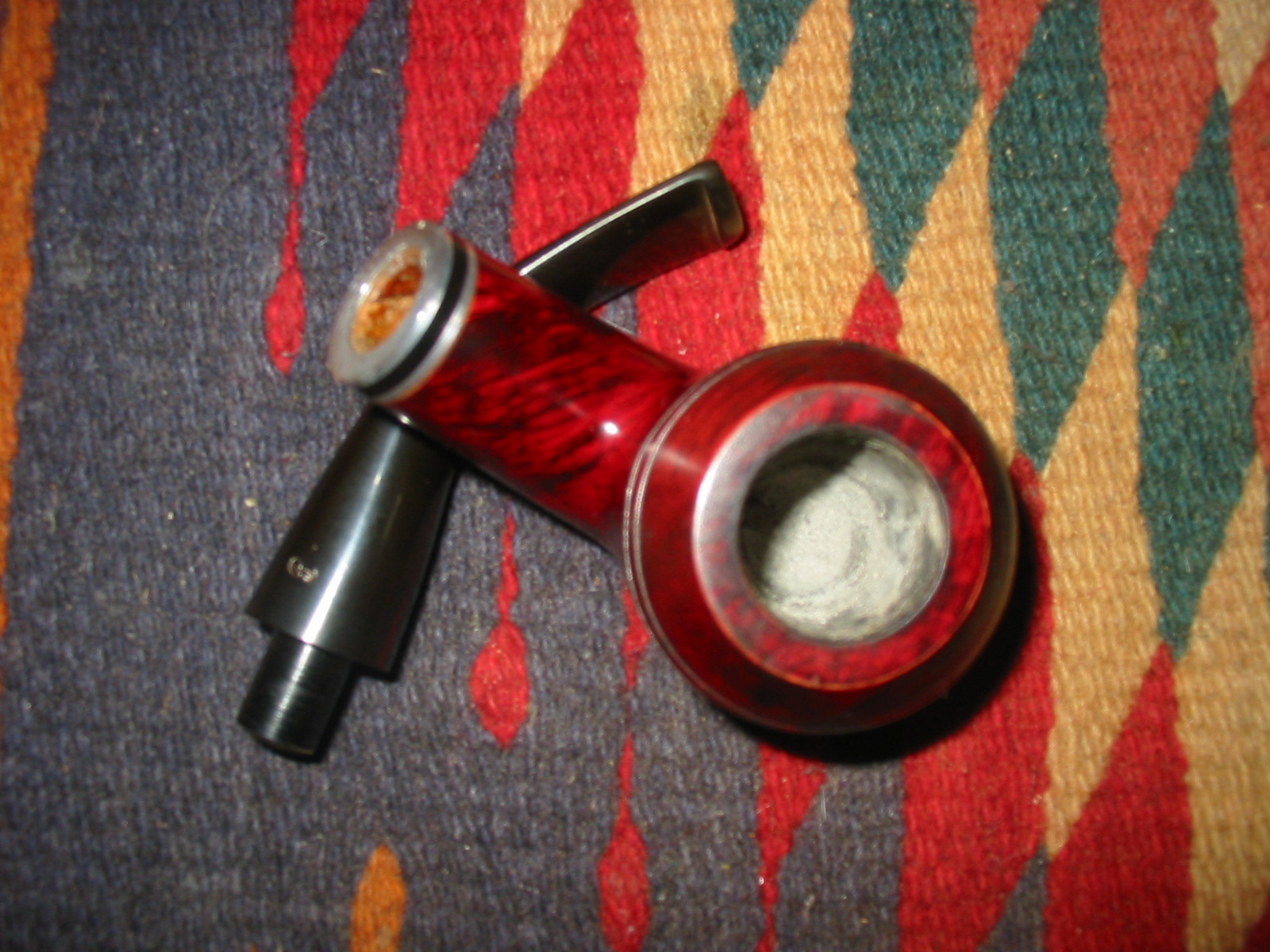
Firstly I used hard bristled pipe cleaners dipped in 96%-proof alcohol. Afterwards the kettle would be inspected and cleared if necessary. After this I would set them aside and buff them one after the other.

The Winsløw is remarkable as it has only one dot on its mouthpiece instead of the two, I reached out to the Winsløw company about this but they didn’t reply. The pipe rather dull to clean as it was very well kept. I only cleaned the inside with the alcohol and that was it, the rest was nice and clean so I set it aside.
005 Winslow
The Chacom Silhouette was heavily used as was evident from the mouthpiece. It is made from swirling acrylic and you can see through it as they used clear acrylic in it. The black tar buildup took a lot of cleaners and the use of a new tool I acquired at a flea market.
006 Cleaning
The brown of the tar build up sits in the small cracks on the inside of the acrylic. These were formed by the precious owner who bit rather hard on his mouthpieces. I tried the ultrasonic cleaner but it wouldn’t budge. So I decided to keep it as is. (If anyone has a tip for me on that one I would be much obliged.)
007 Mouthpiece
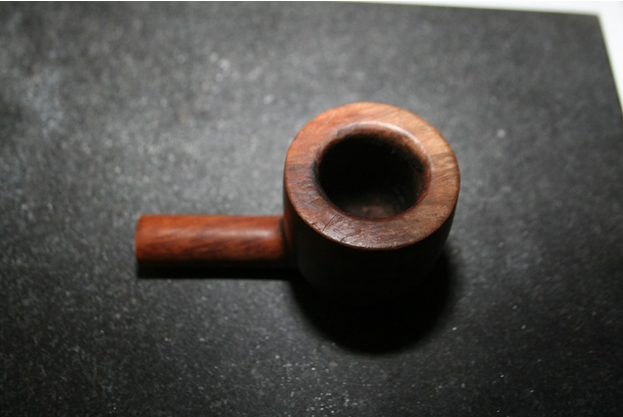
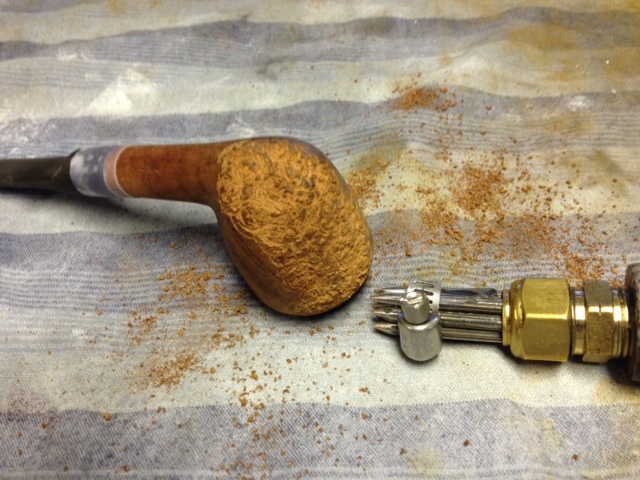
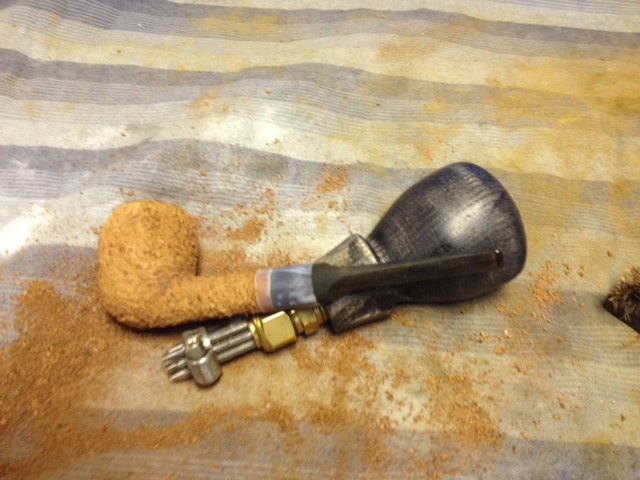
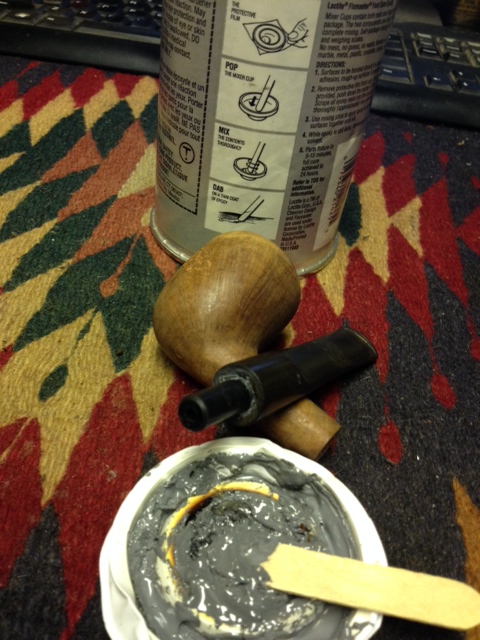
Then it was time for the bowl, it had seen better days but there was no damage on the wood itself. So with the help of spit, a sock and the tool as shown earlier the coal layer was removed and the bowl was reamed with the reamer tool.
008 CS bowl
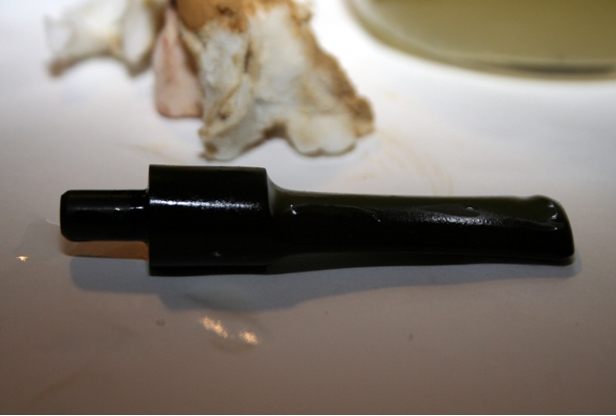
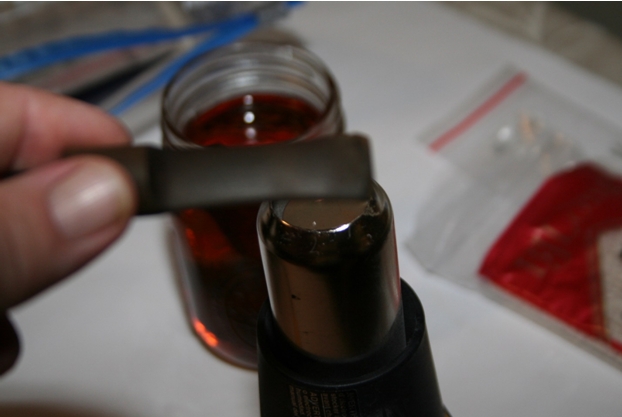
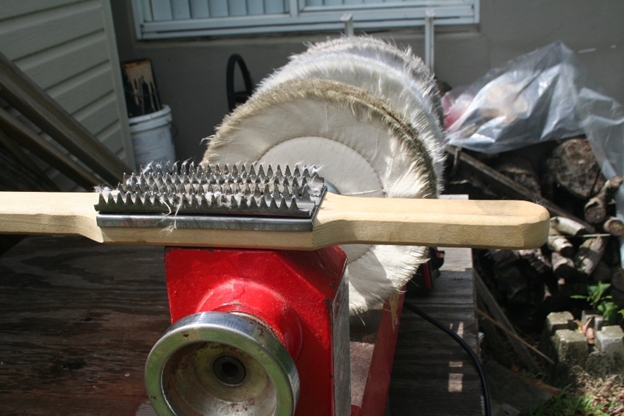
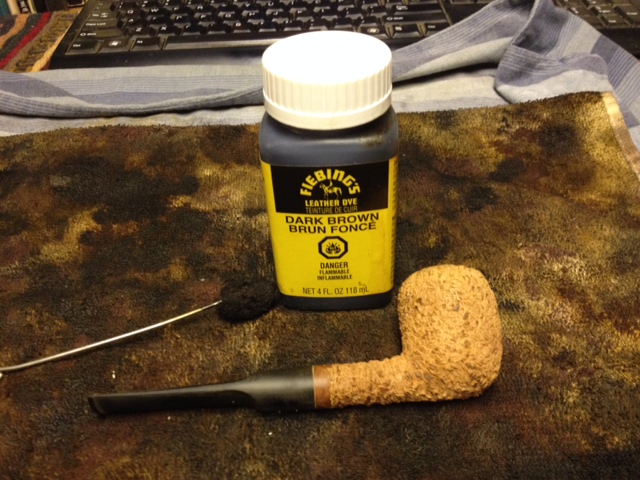
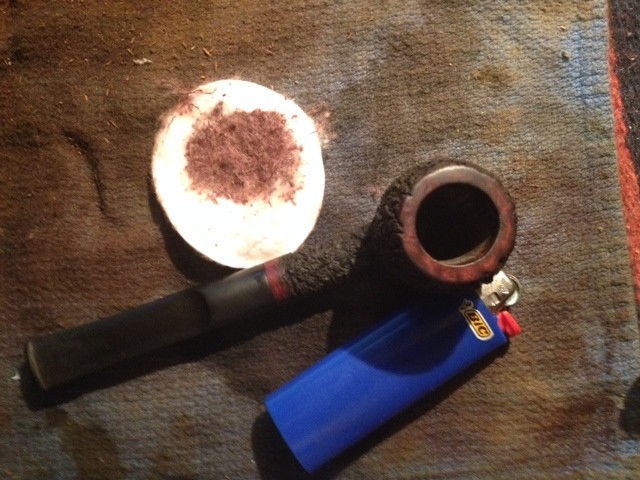
The Vibro Woodart pipe was the first one with an ebonite mouthpiece, so I set up the motor and abrasive wheel and let loose. It came out nice and black in the end.
009 Mouthpiece and motor
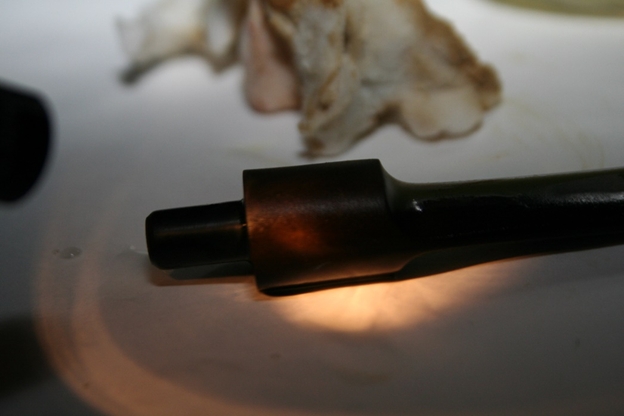
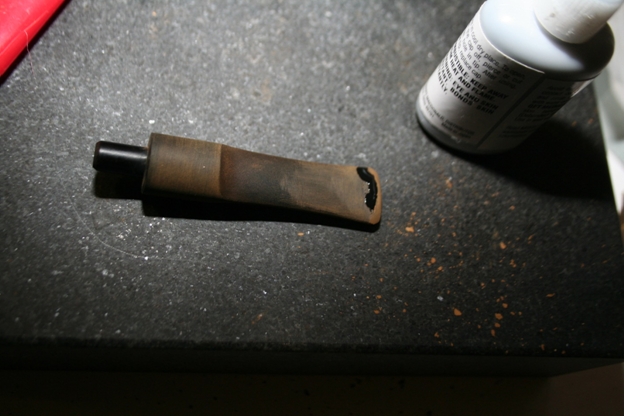
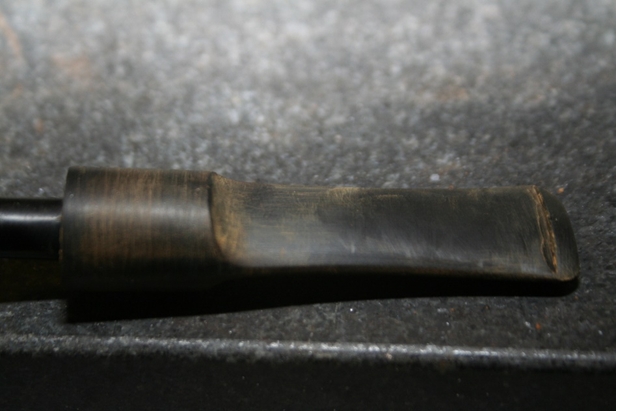
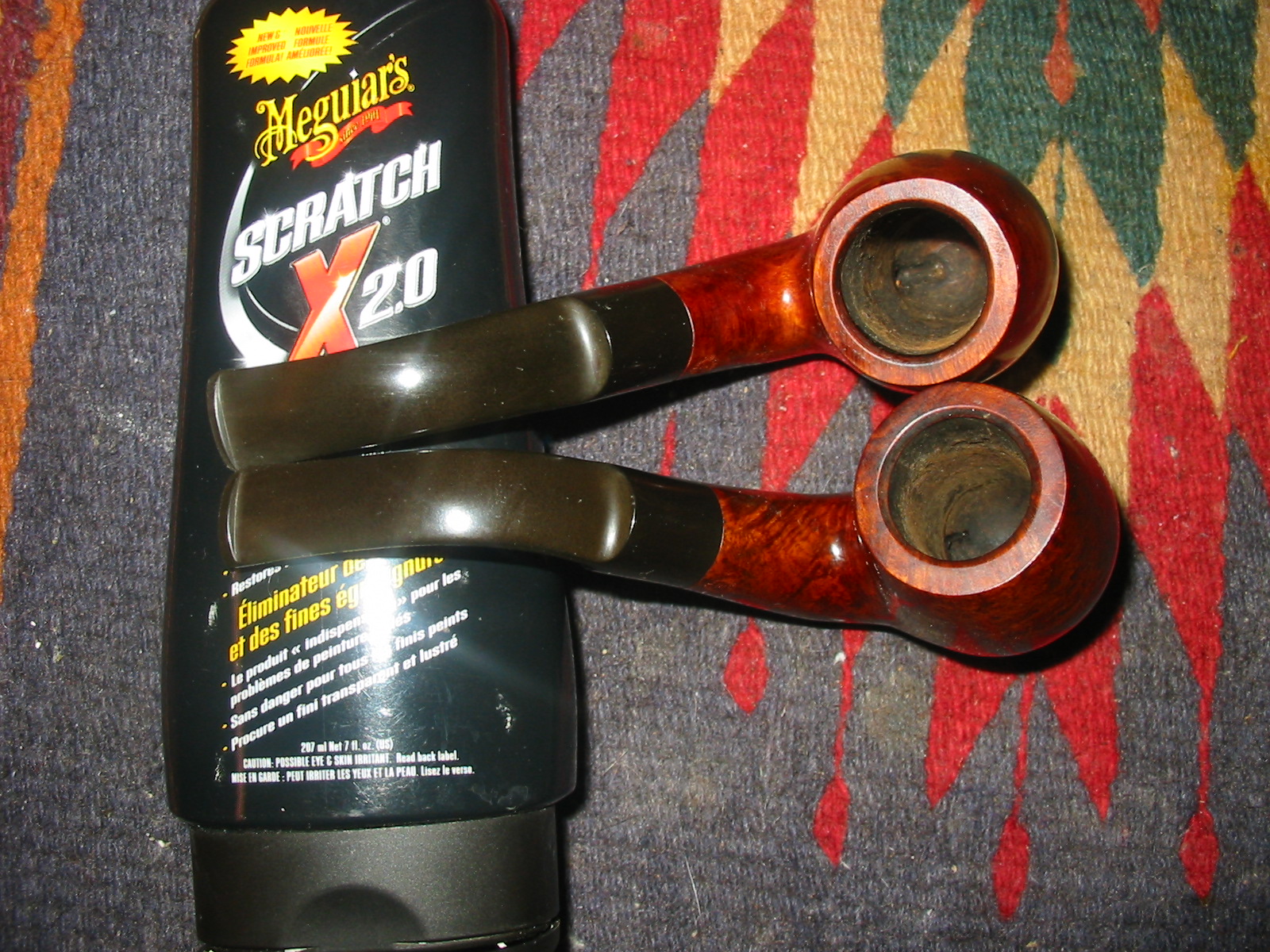
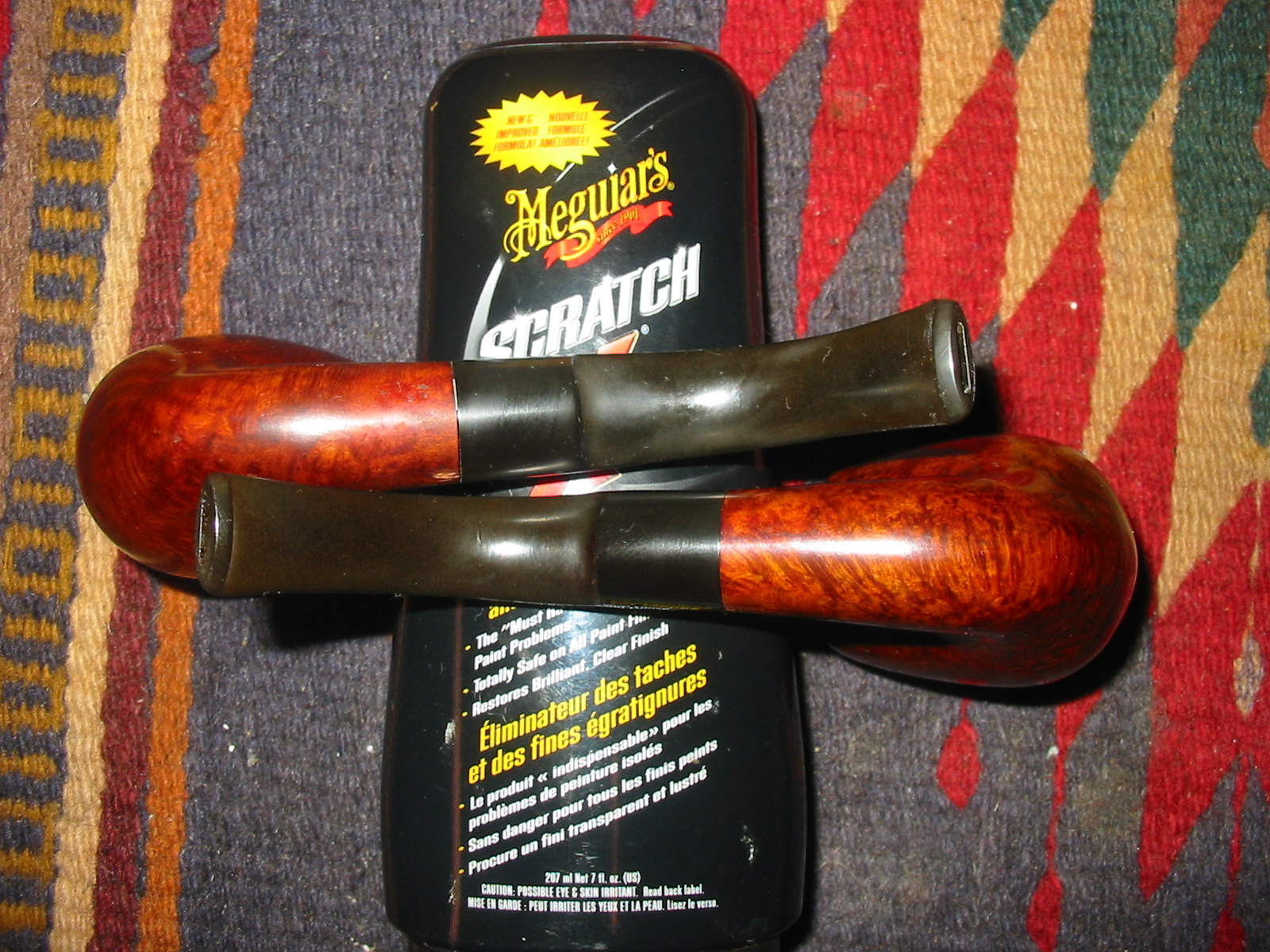
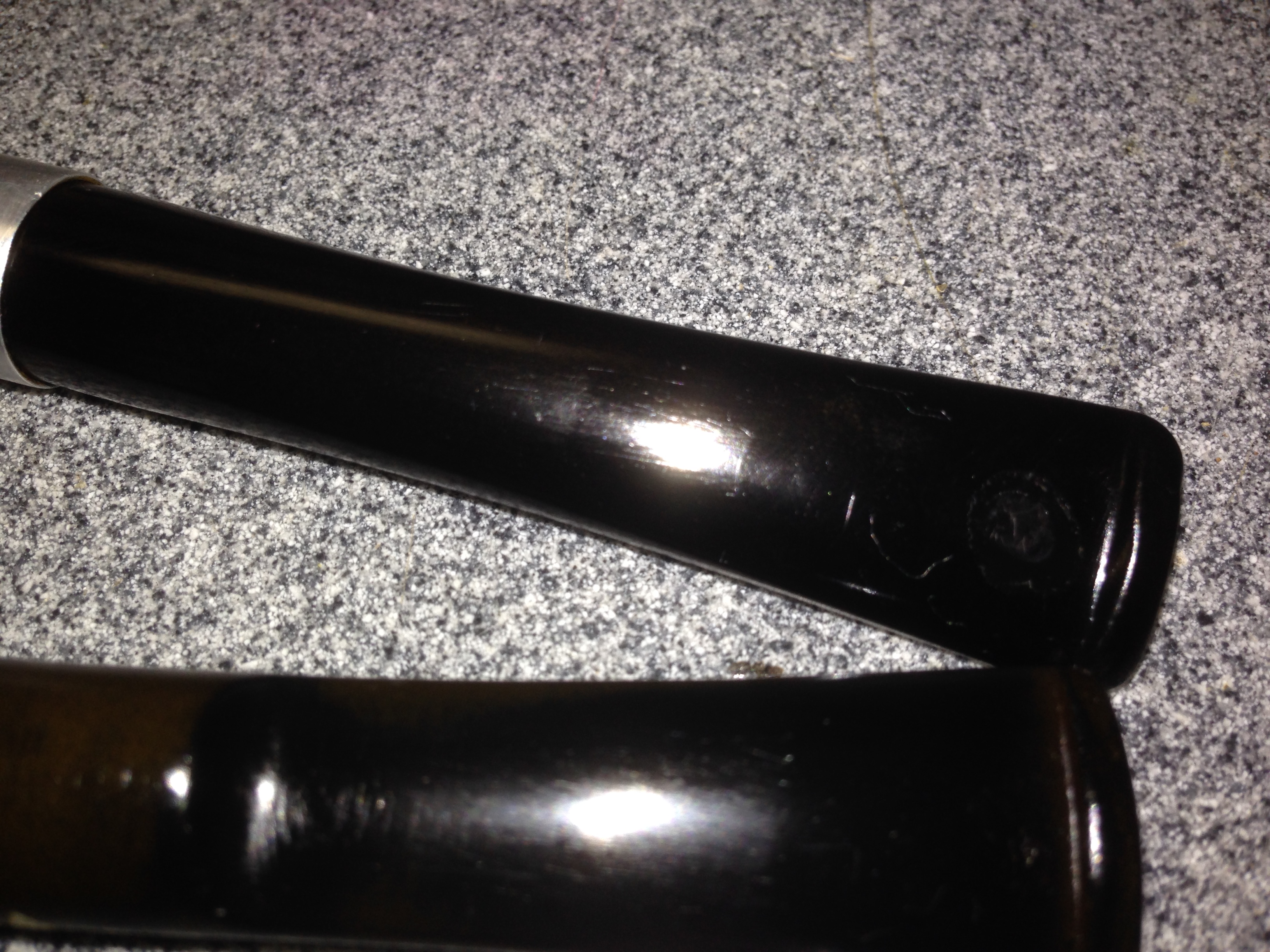
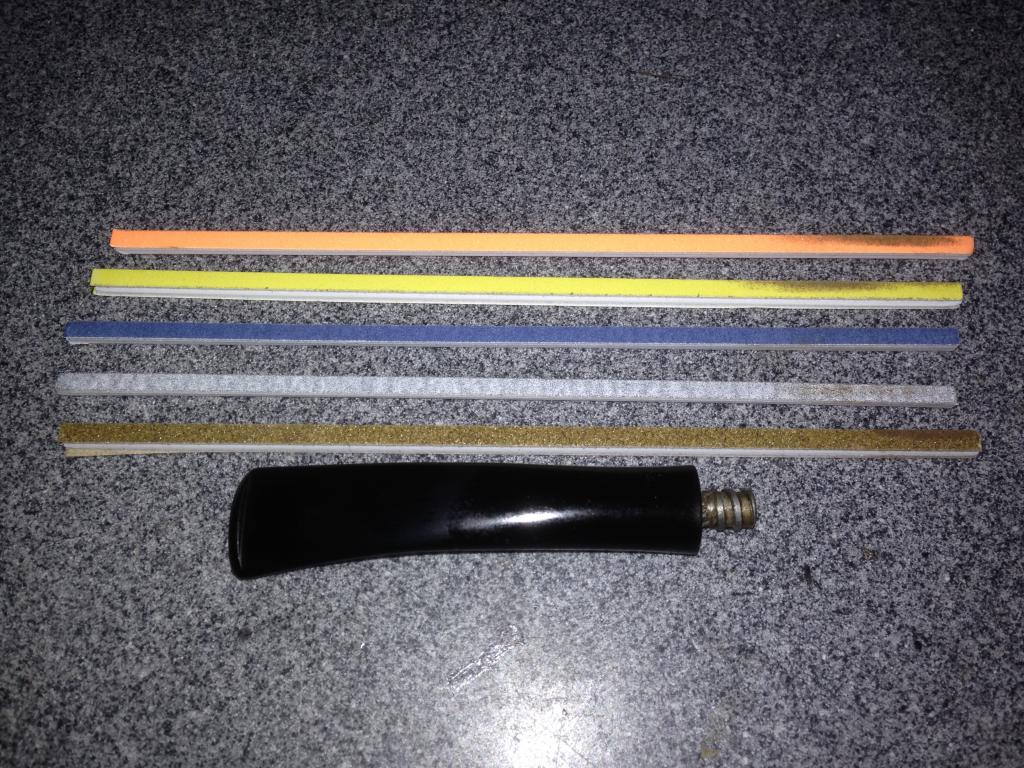
I noticed the mark in the mouthpiece was still visible so I used a correction fluid pen to fill it up and used the abrasive pads (8000 grit) to remove it gently.
010 colouring the letter
(The end result will follow)

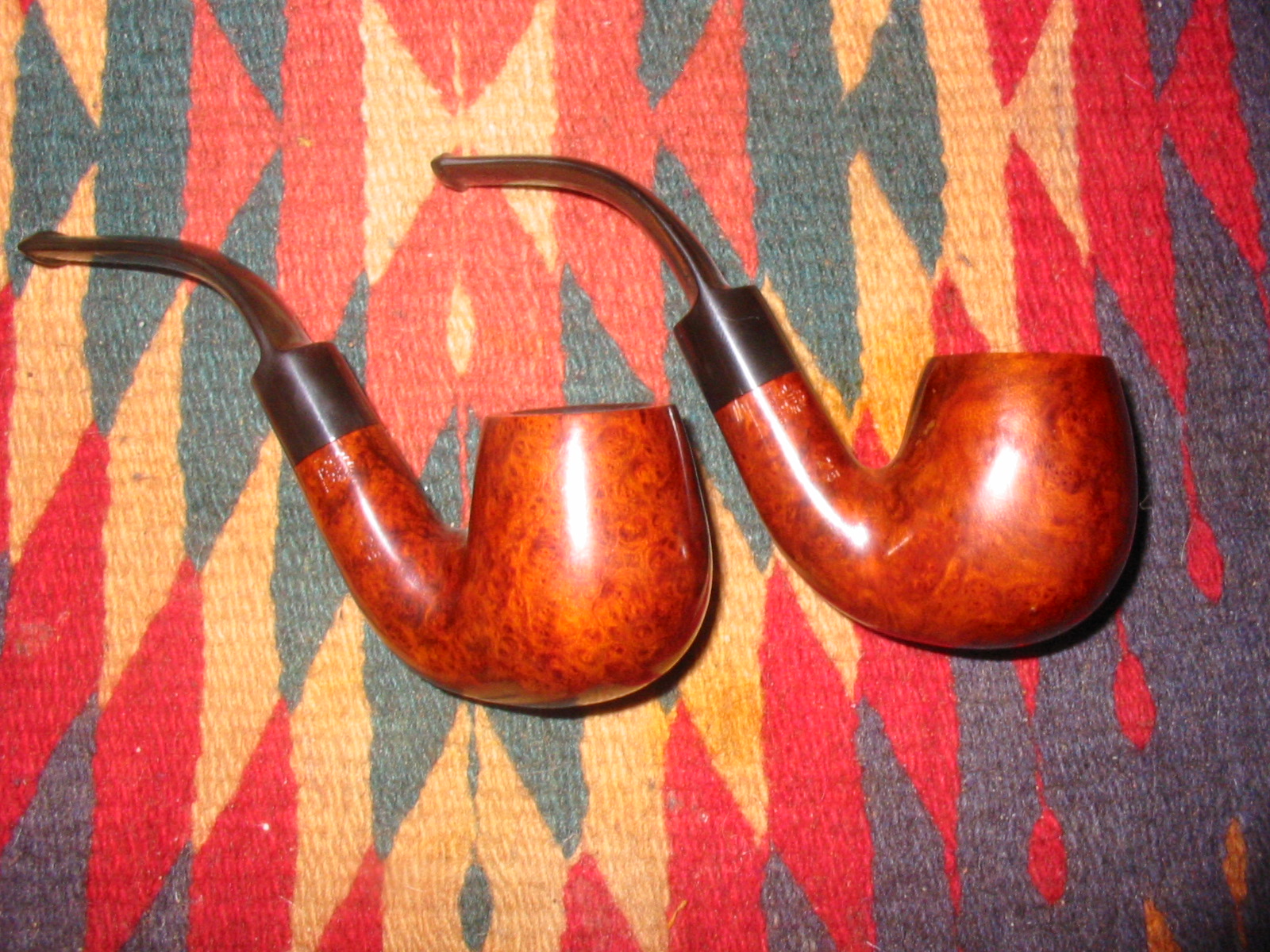
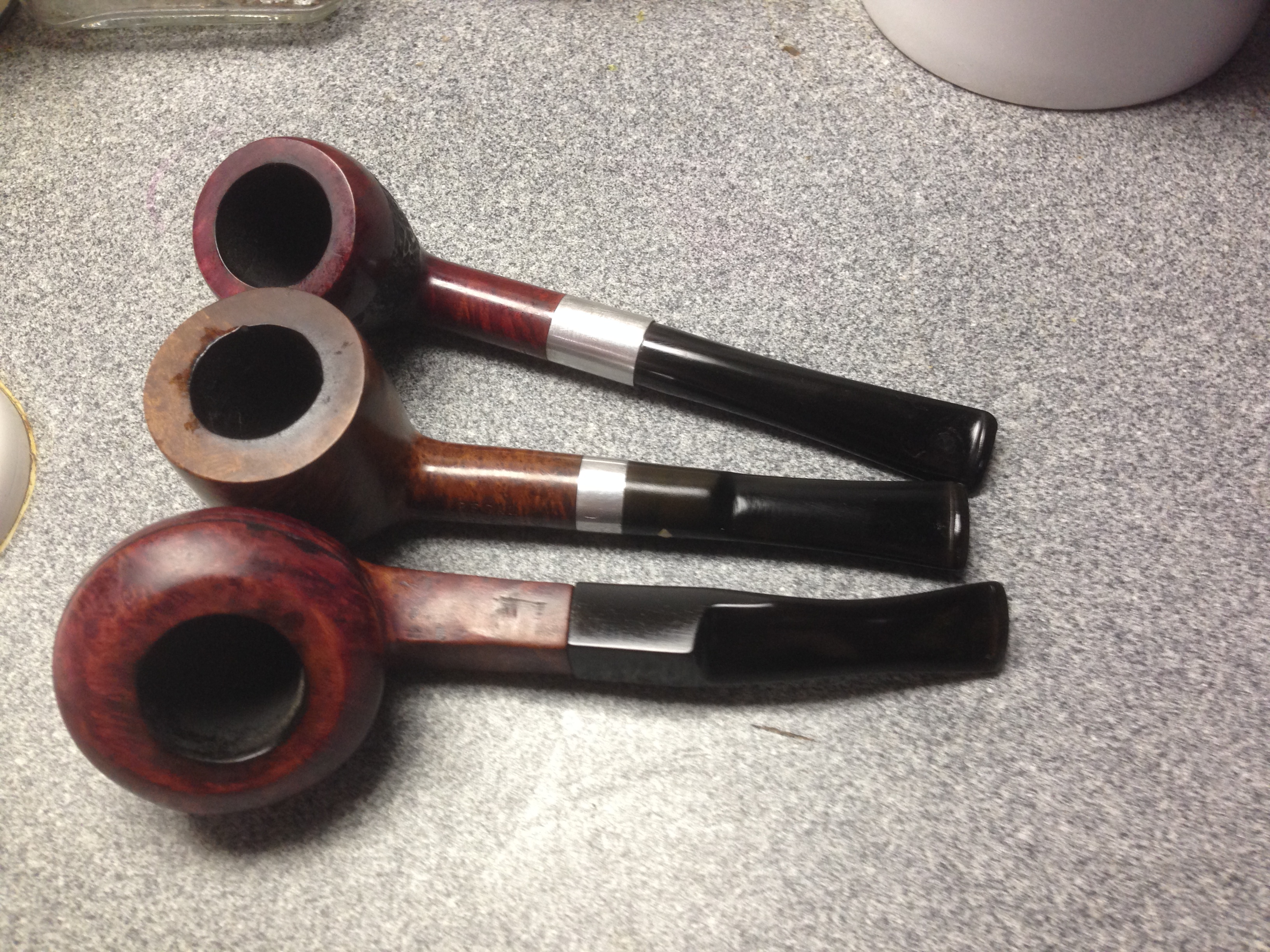
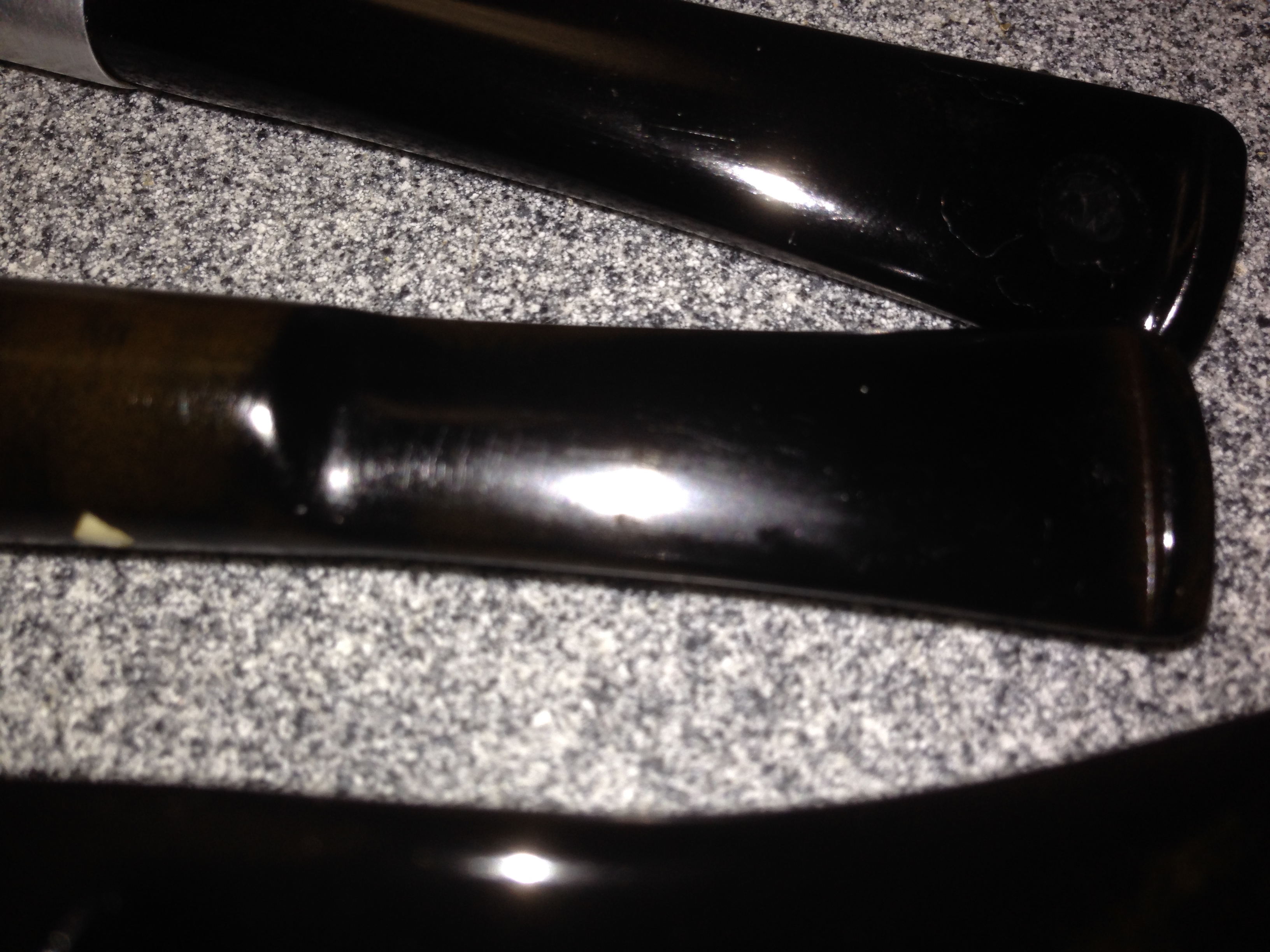
I don’t have any pictures of the Jensen pipe as the pictures were all too dark. But I did the same as the Vibro pipe. Using the abrasive wheel and the correction fluid pen to get the logo back out again.

Then it was time for the buffing. Buffing with brown (1), white (2) and then with carnauba wax (3).
011 Buffing
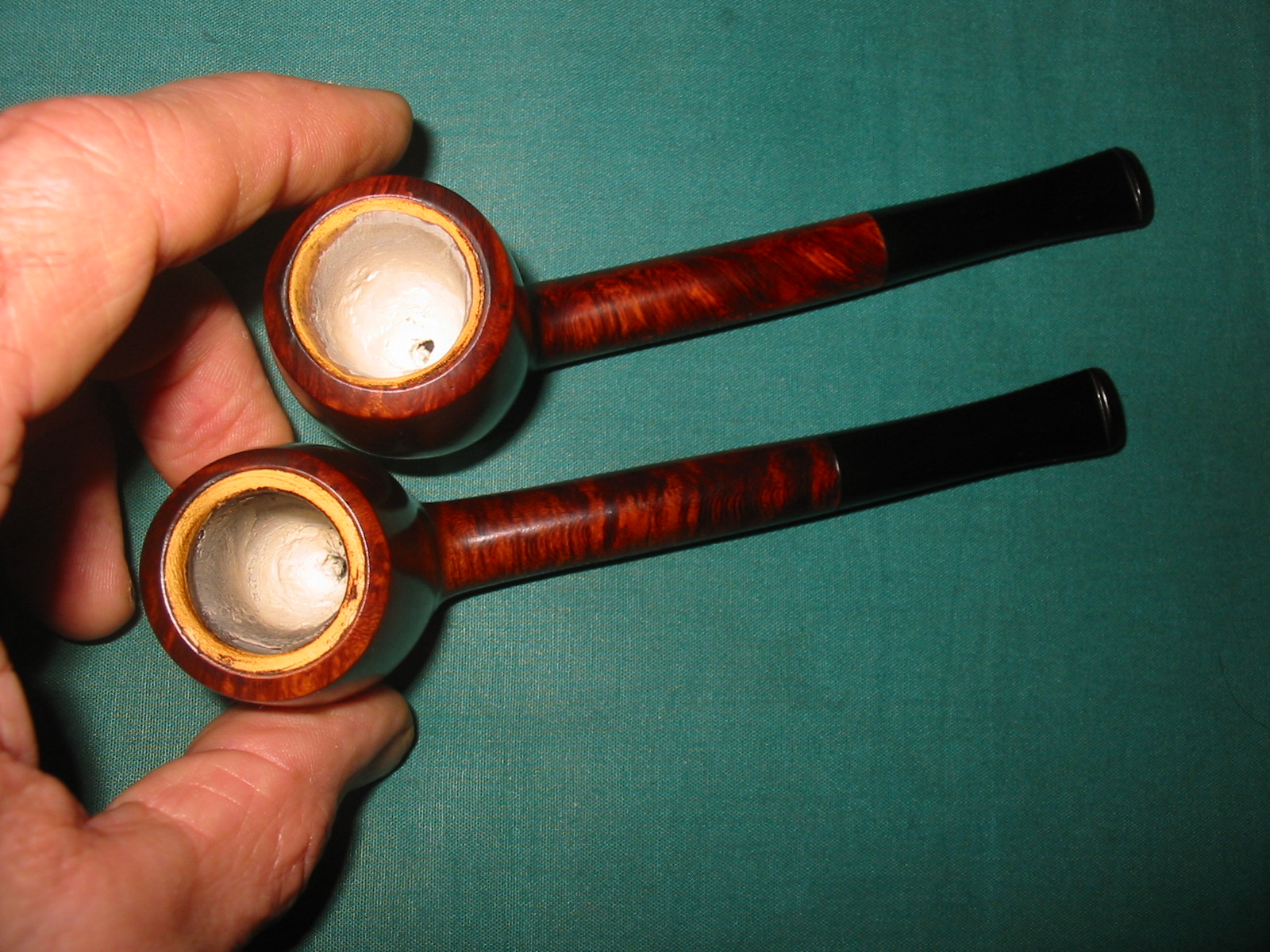
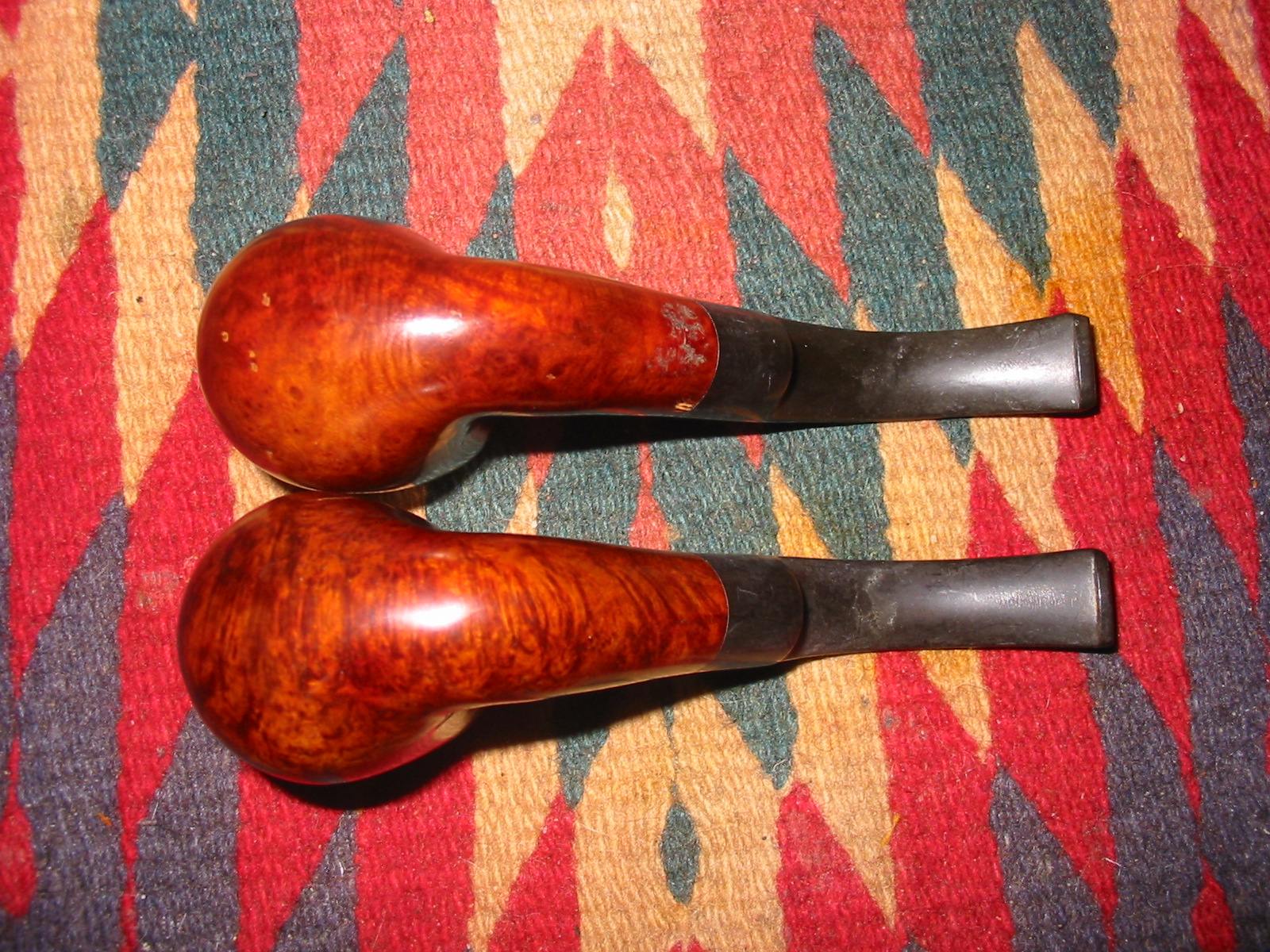
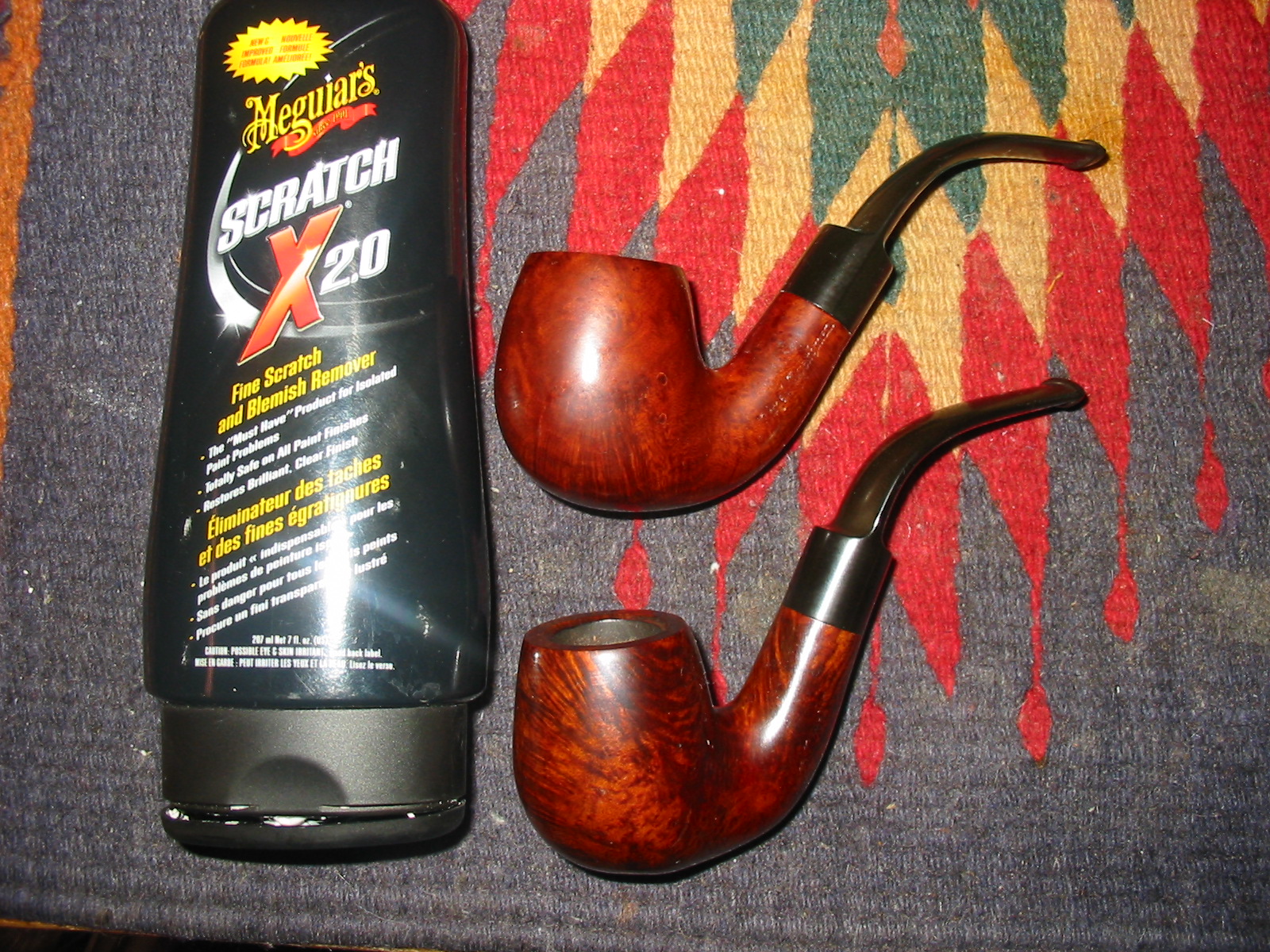
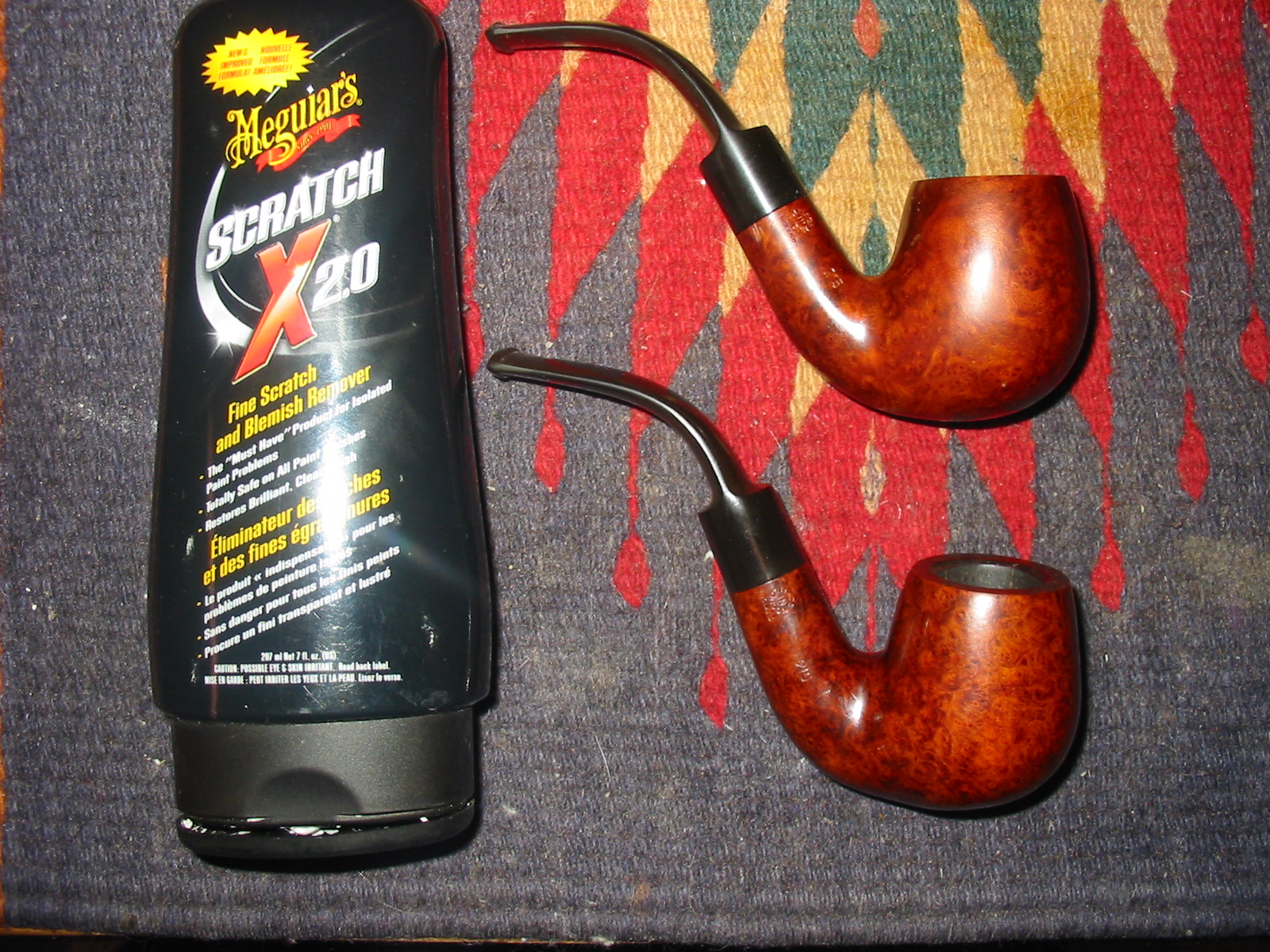
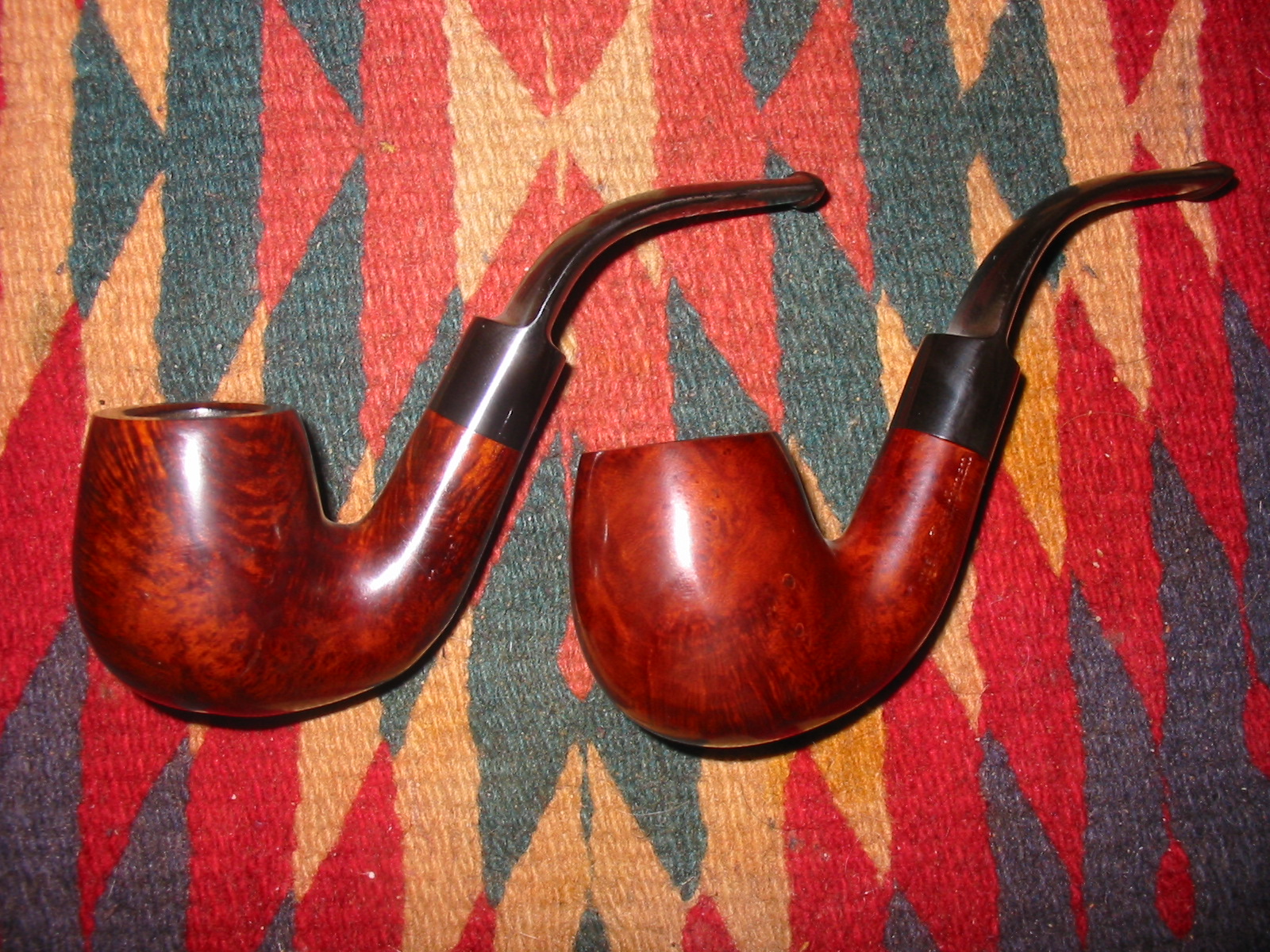
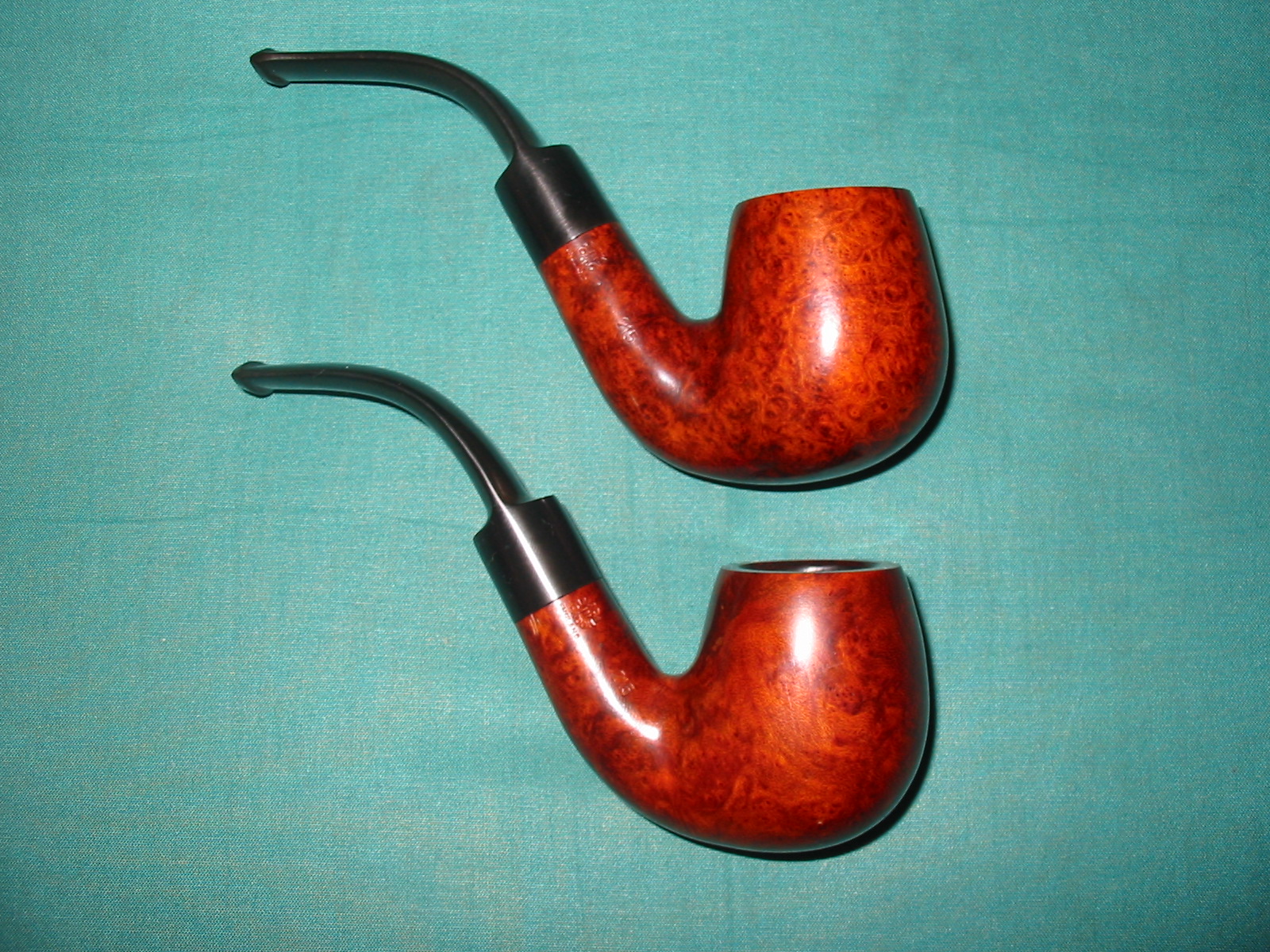
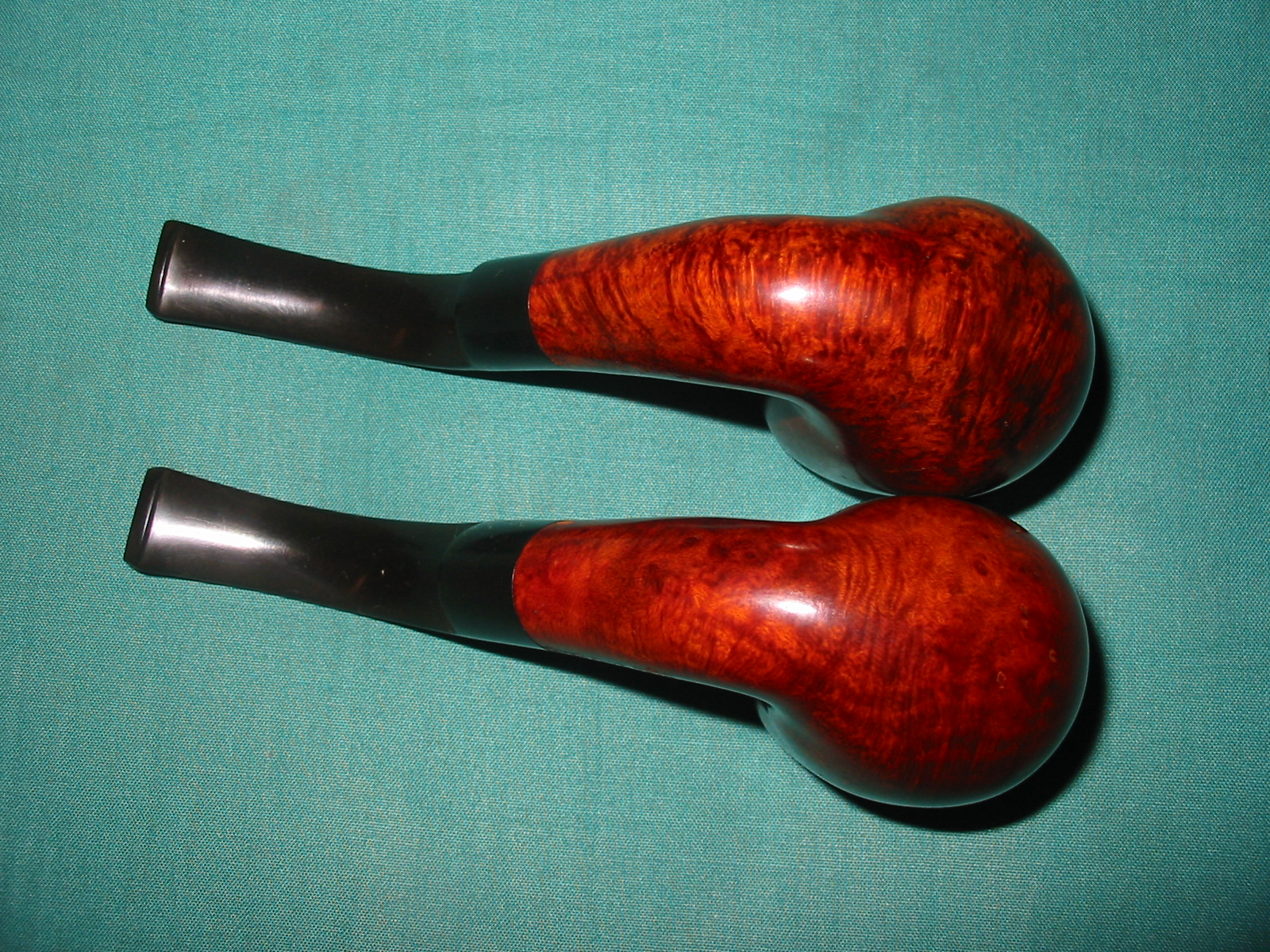
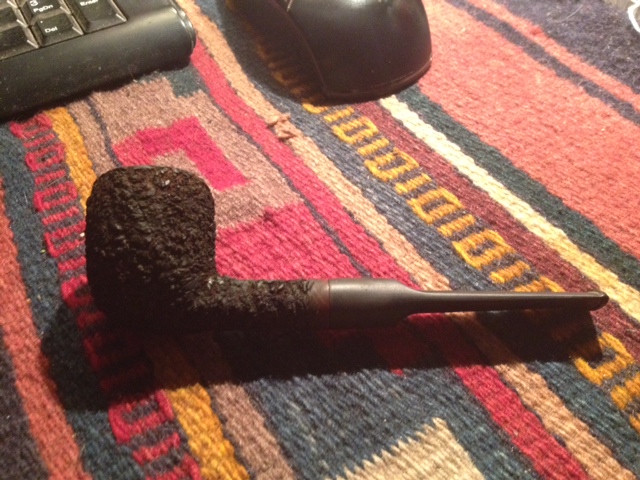
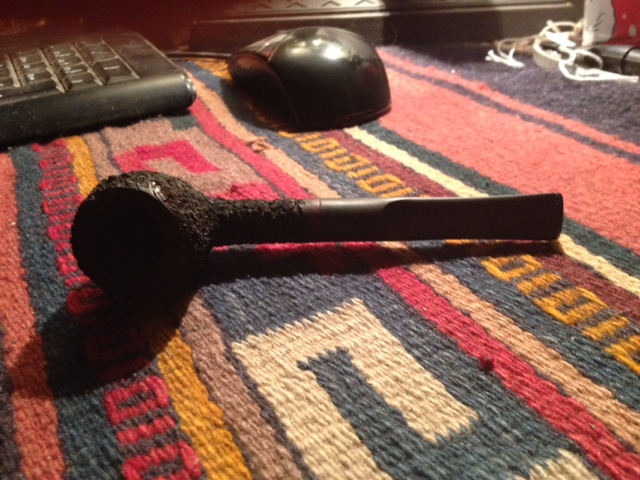
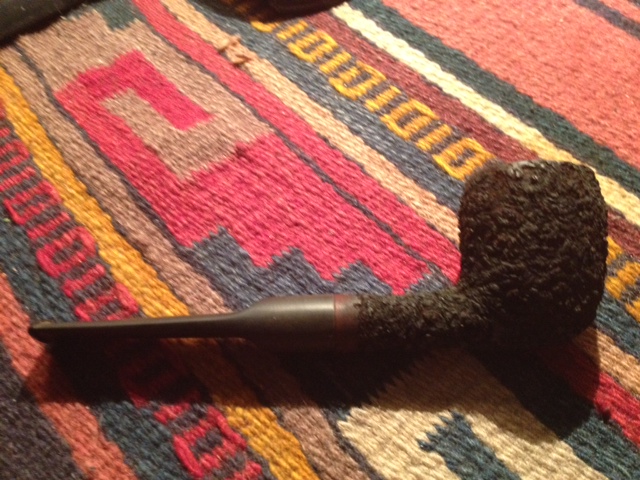
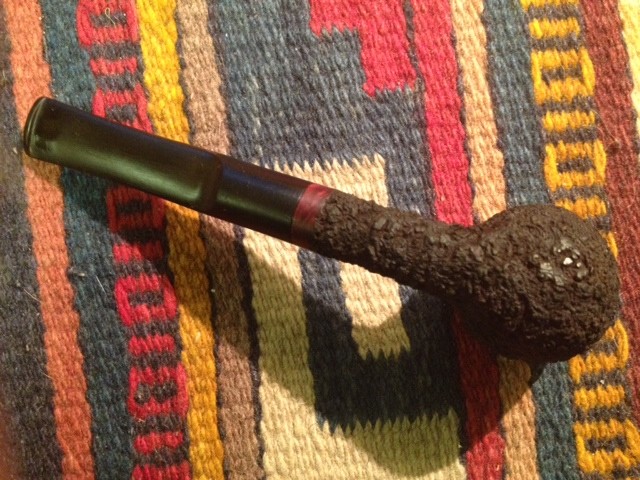
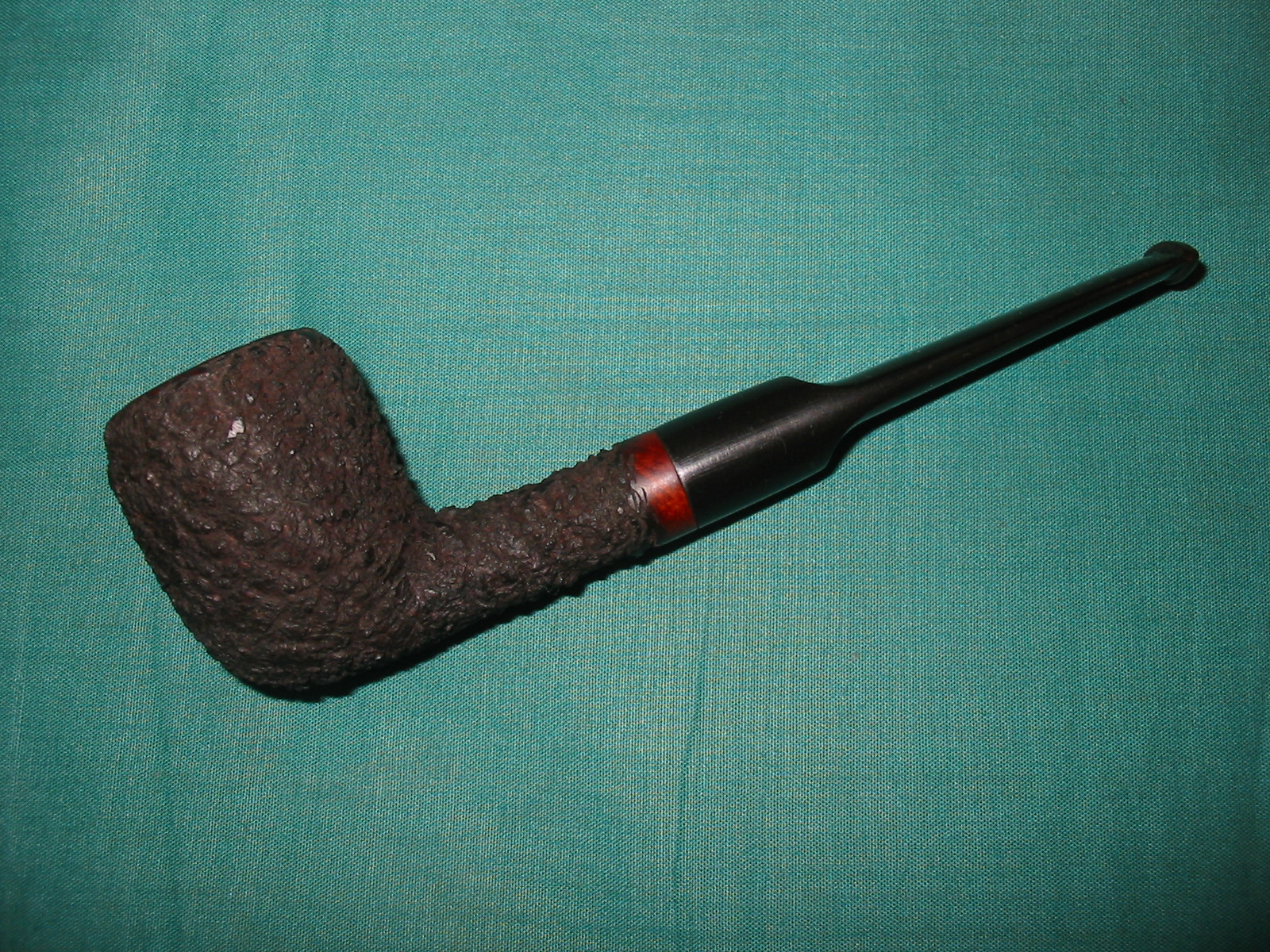
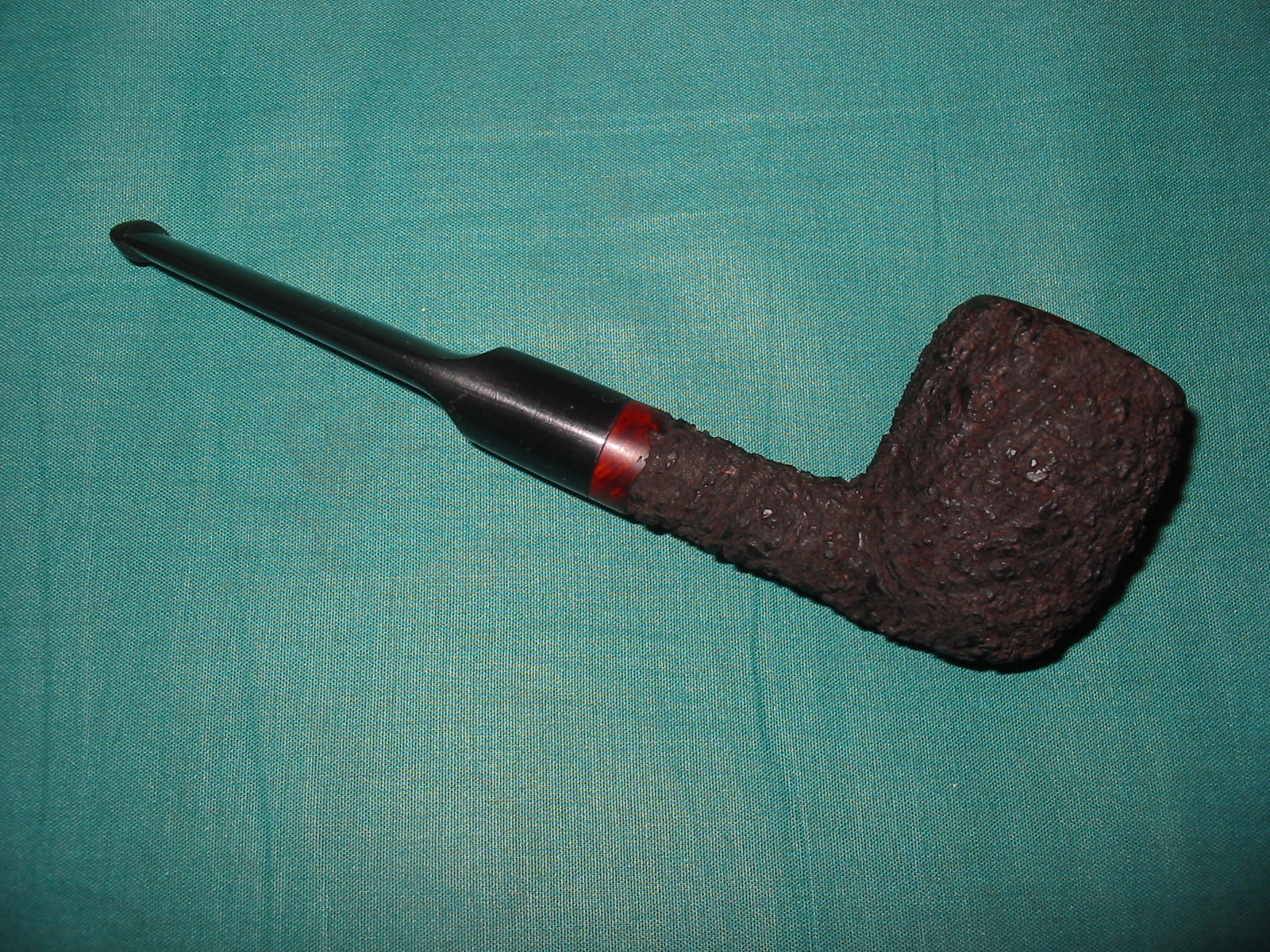
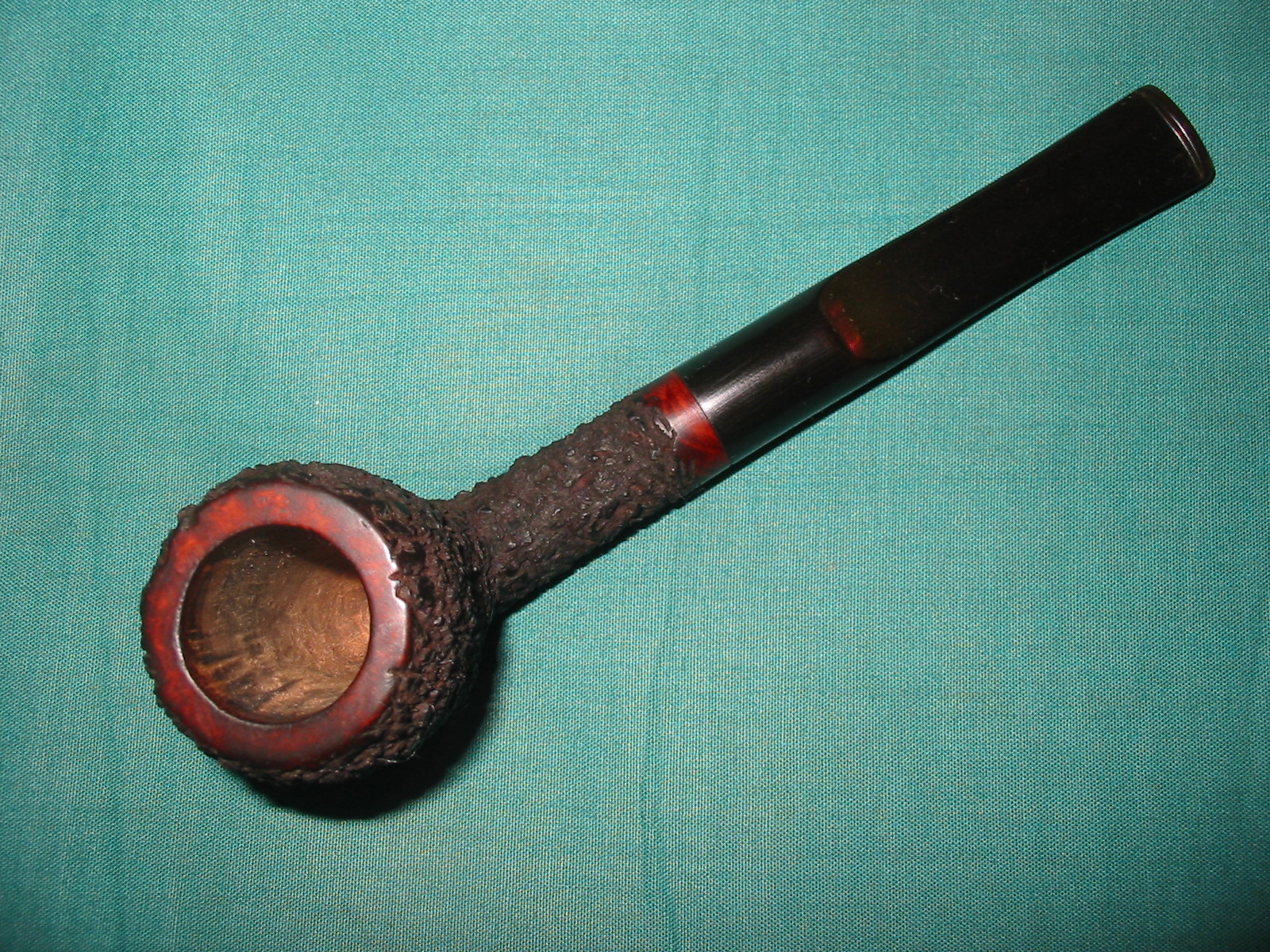
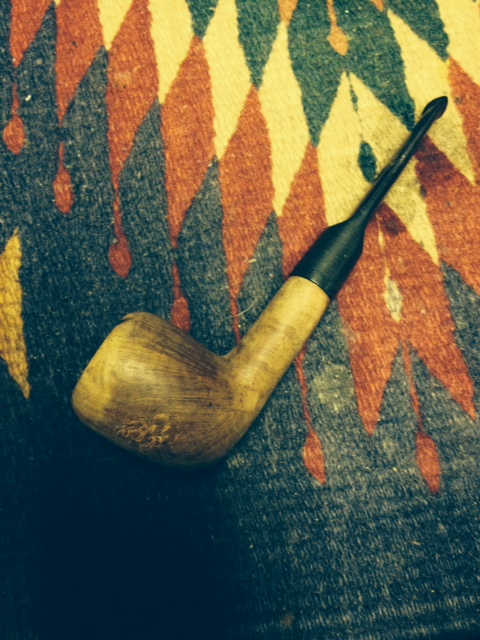
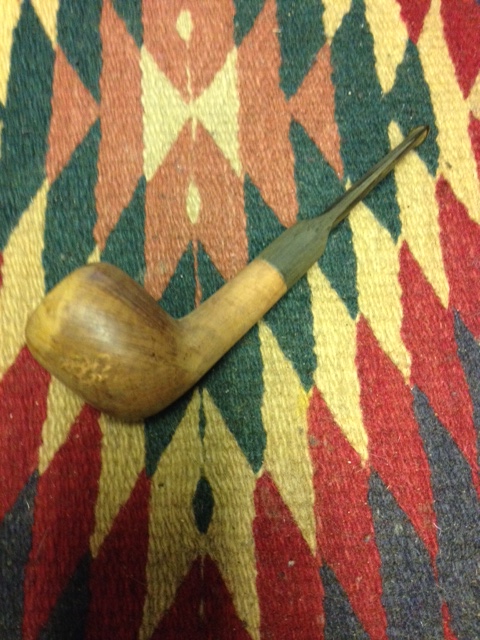
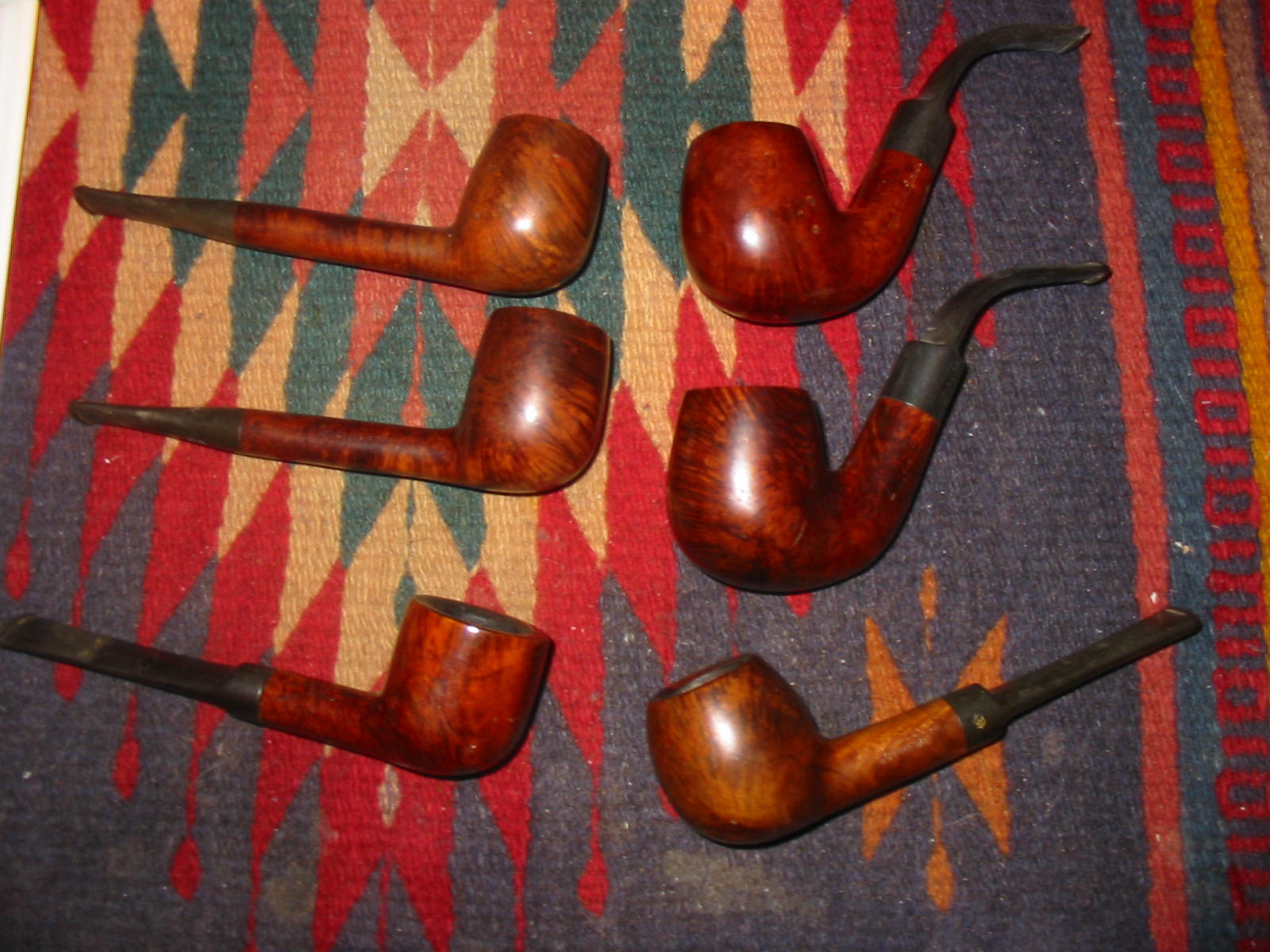
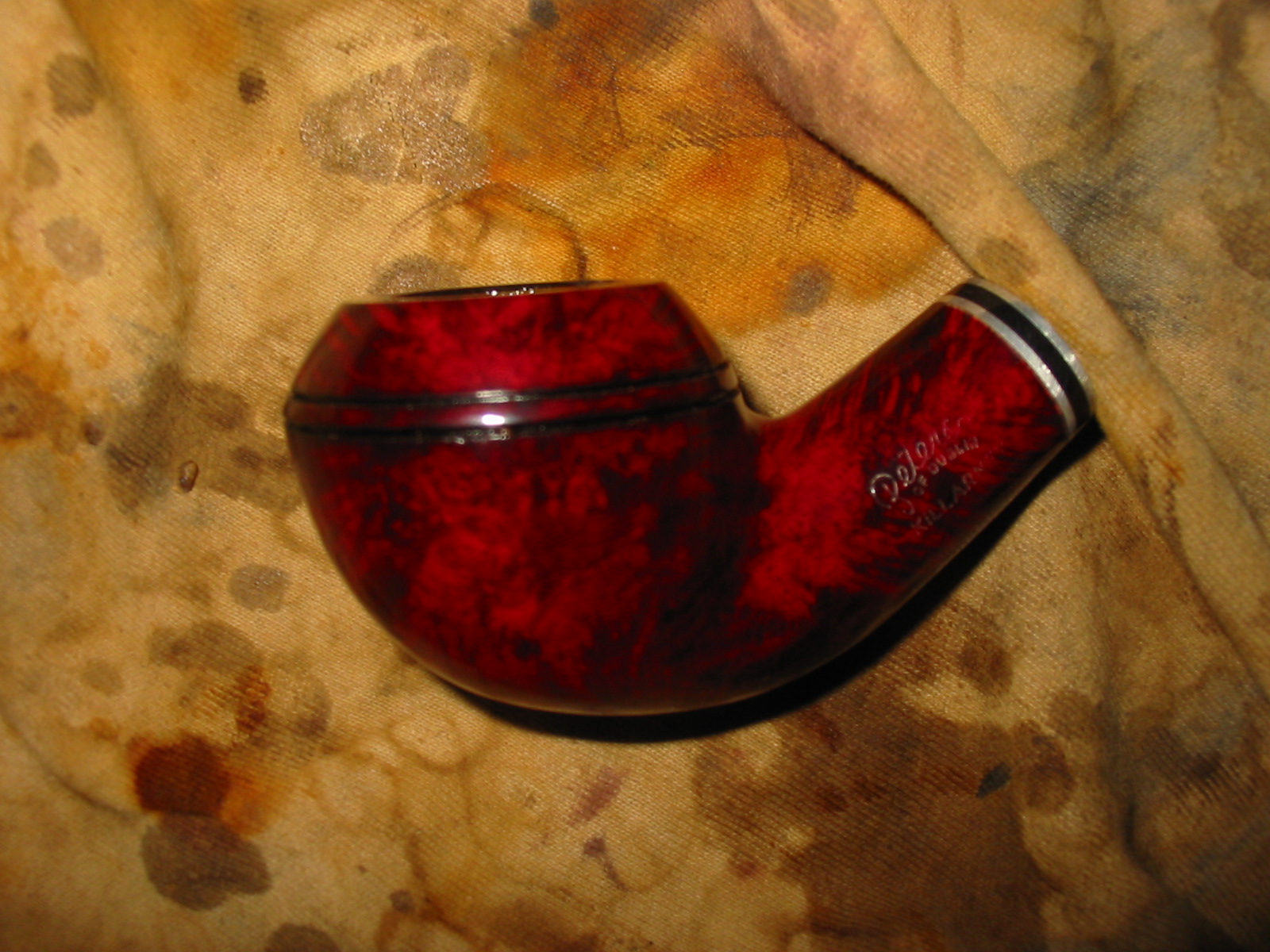
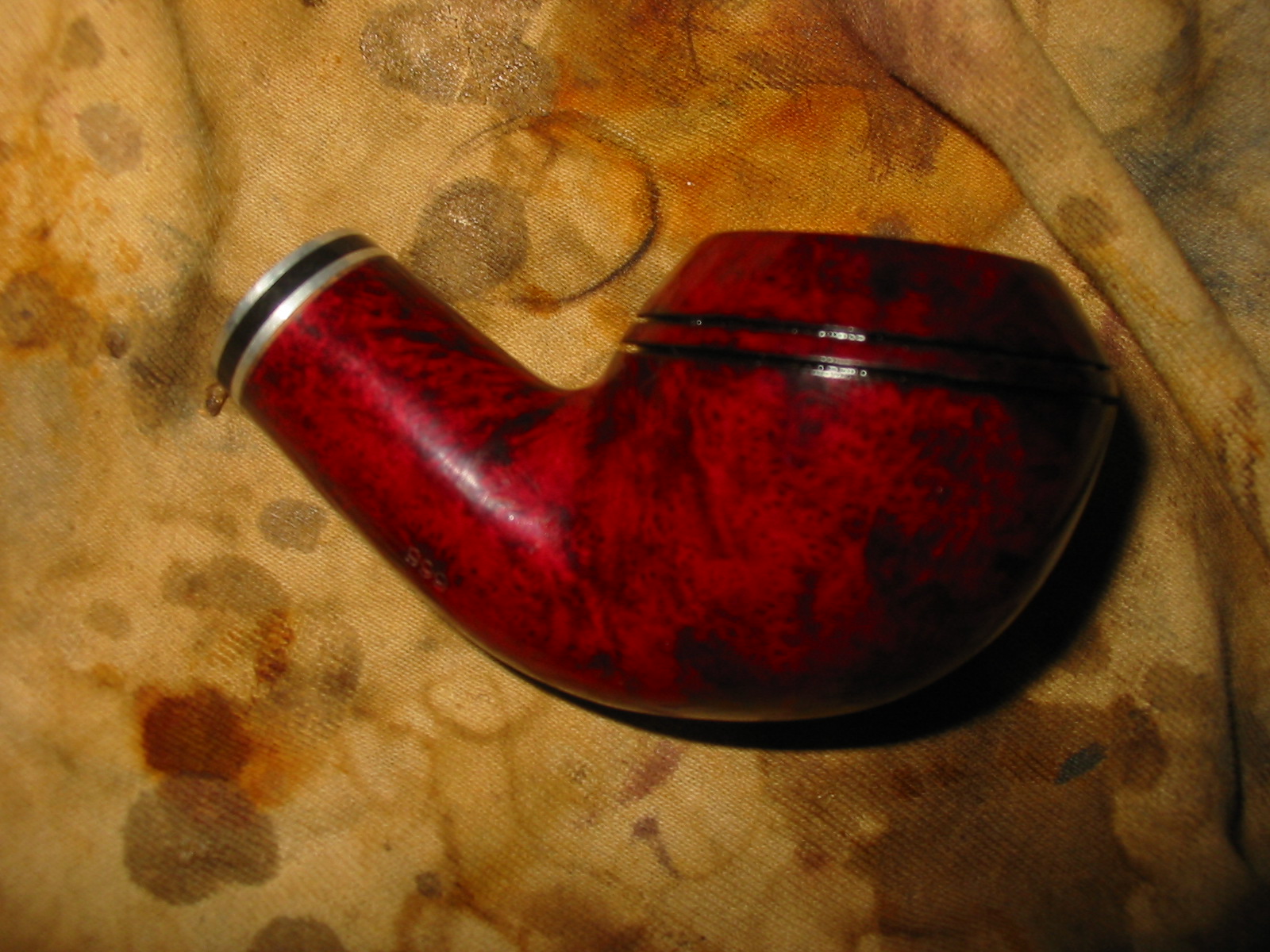
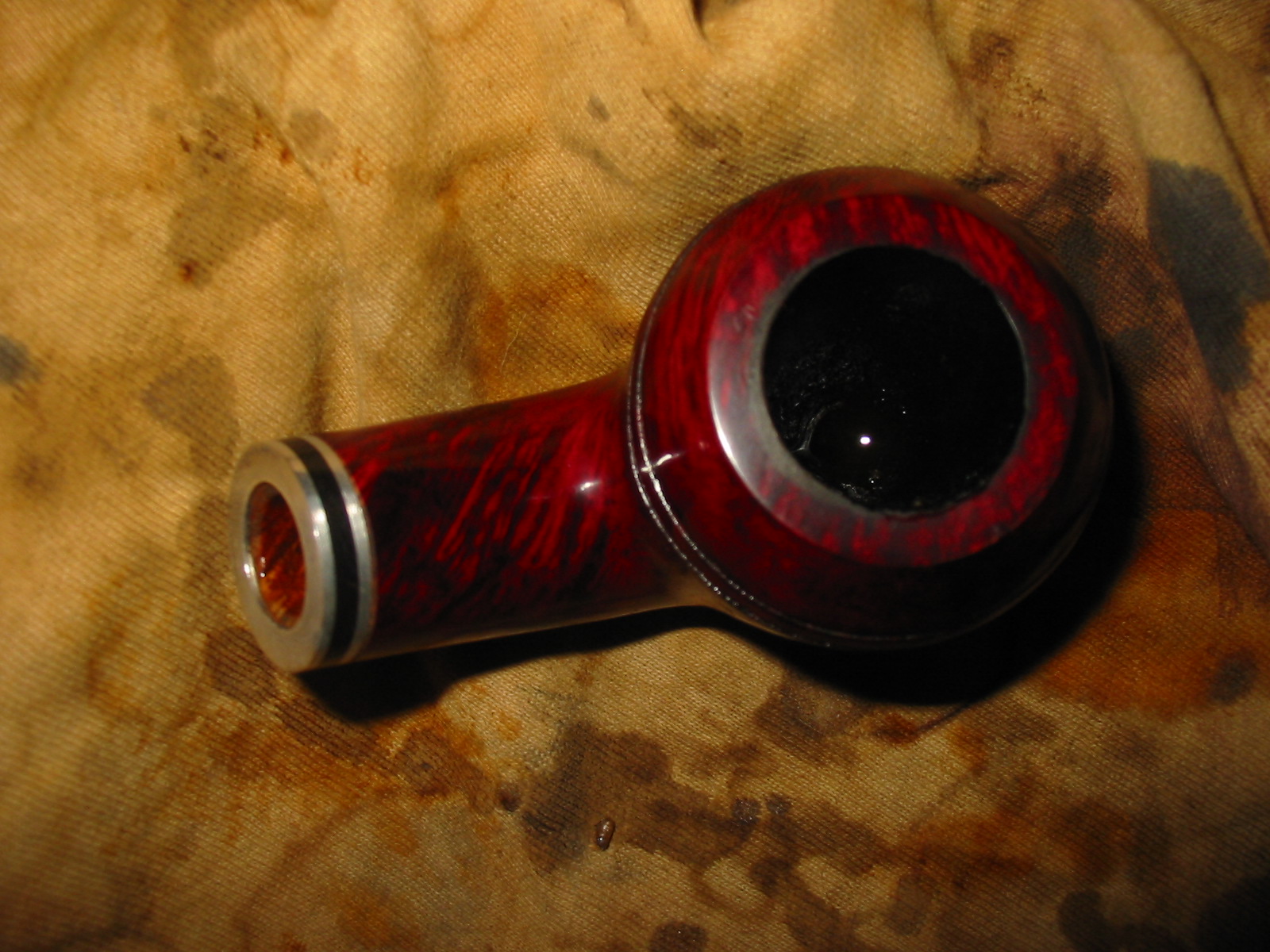
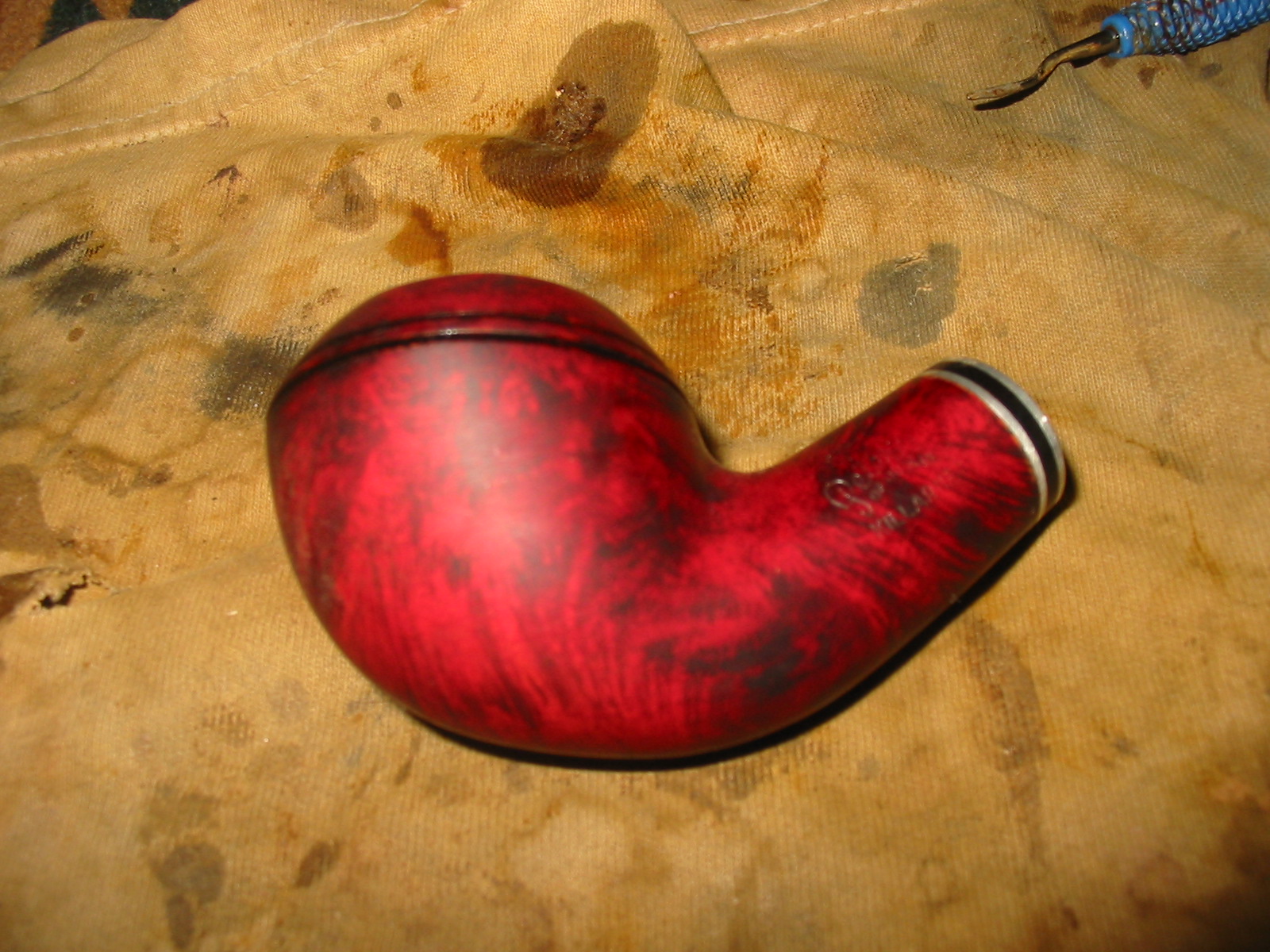
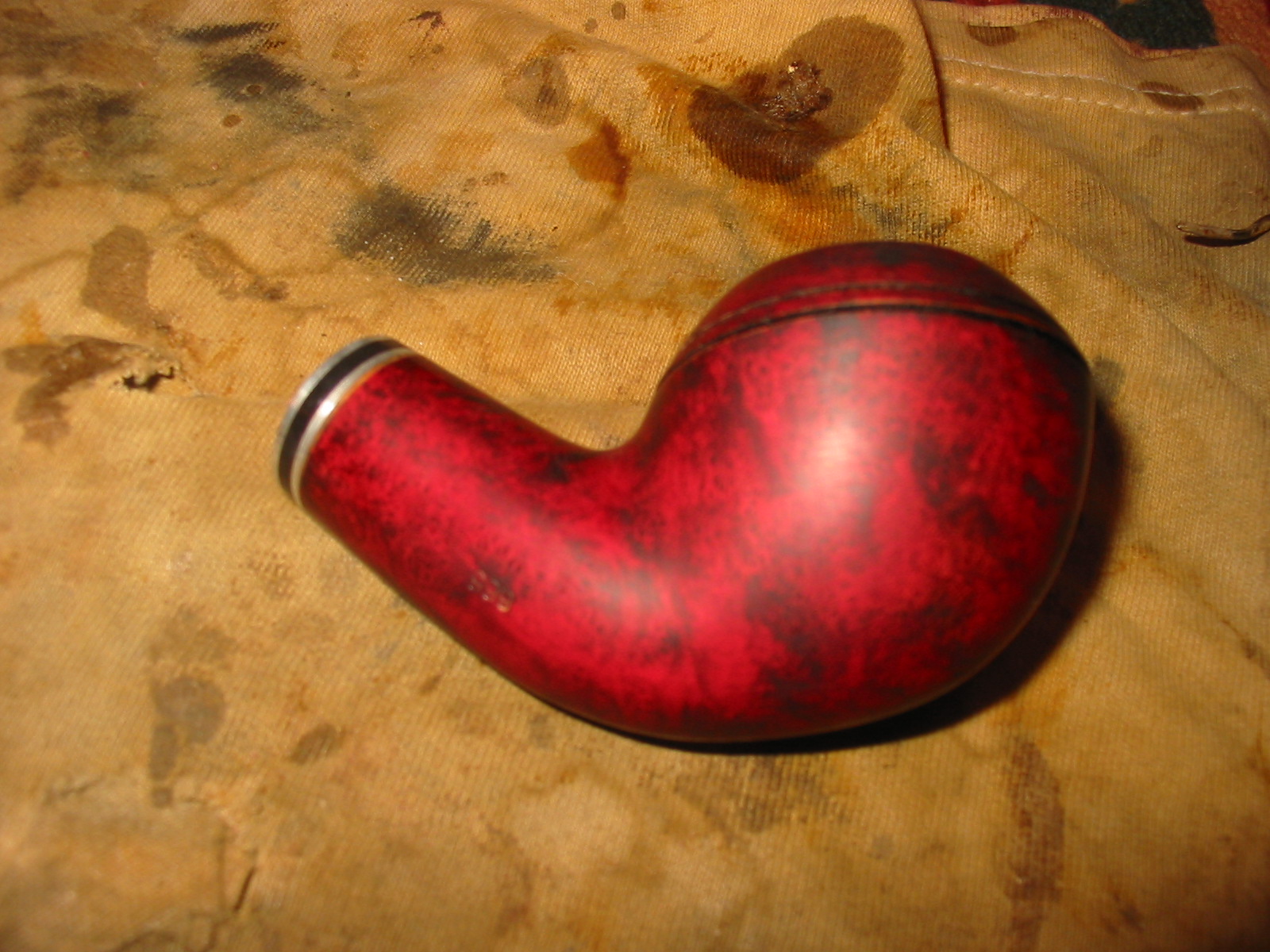
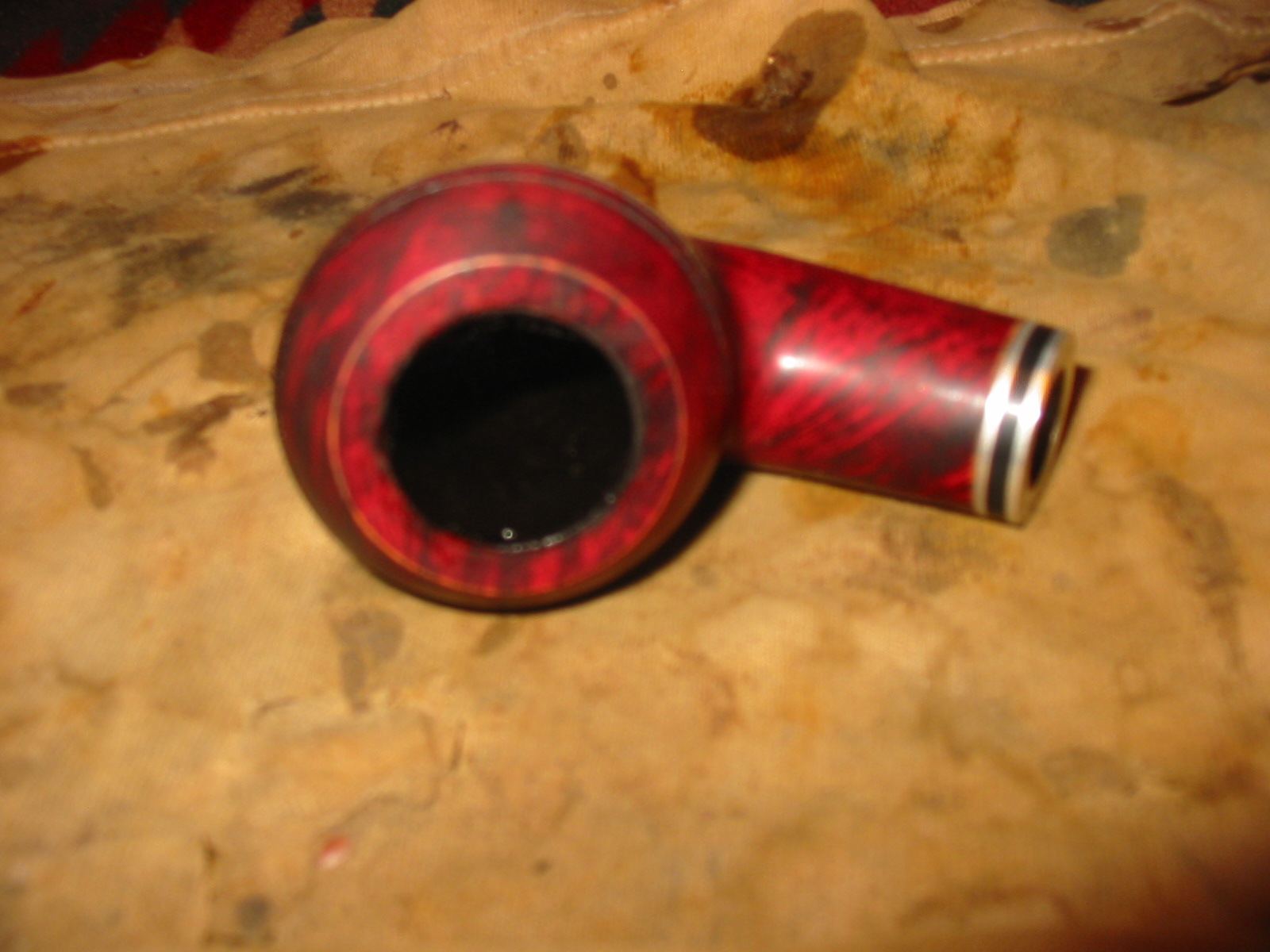
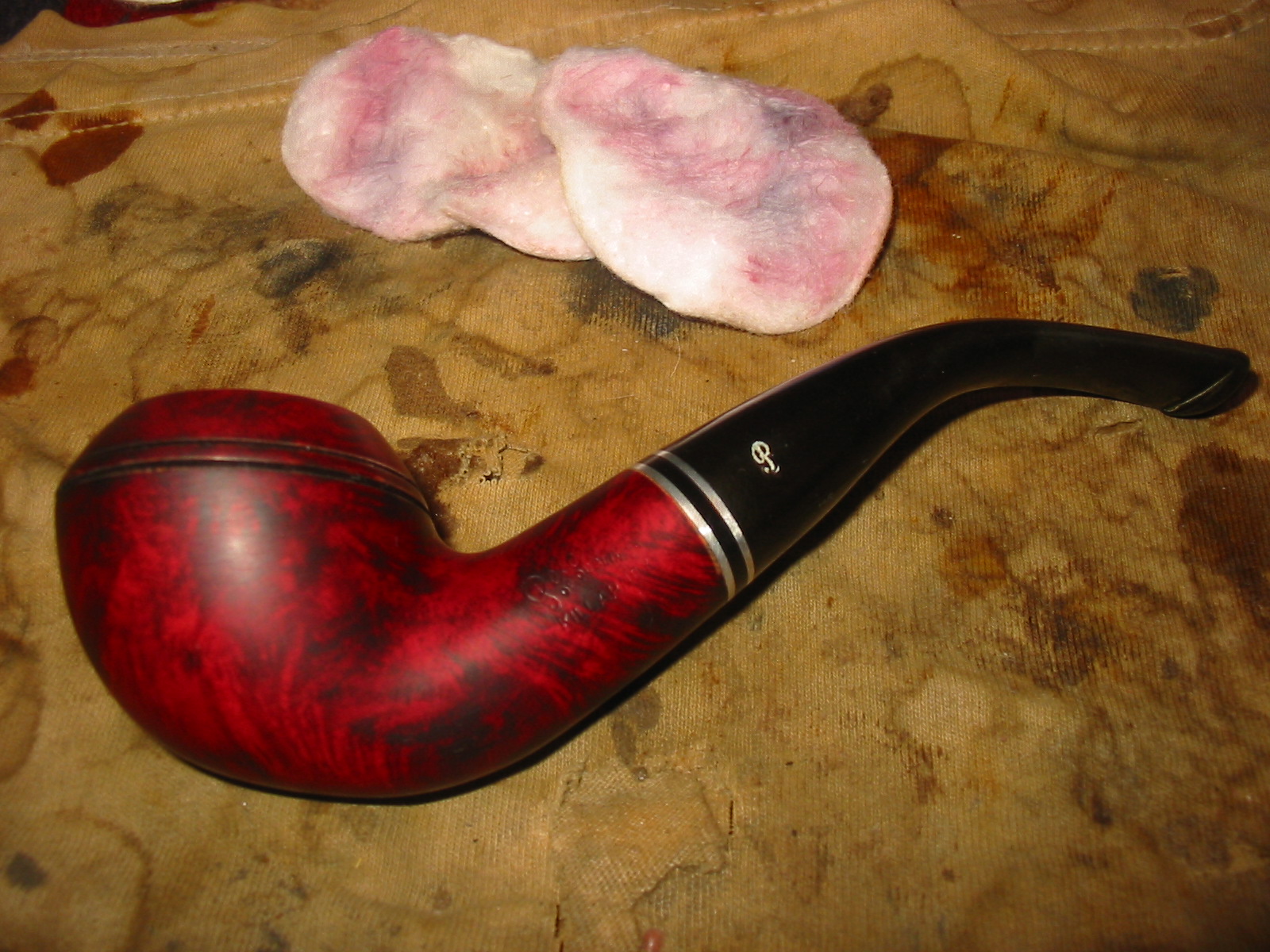
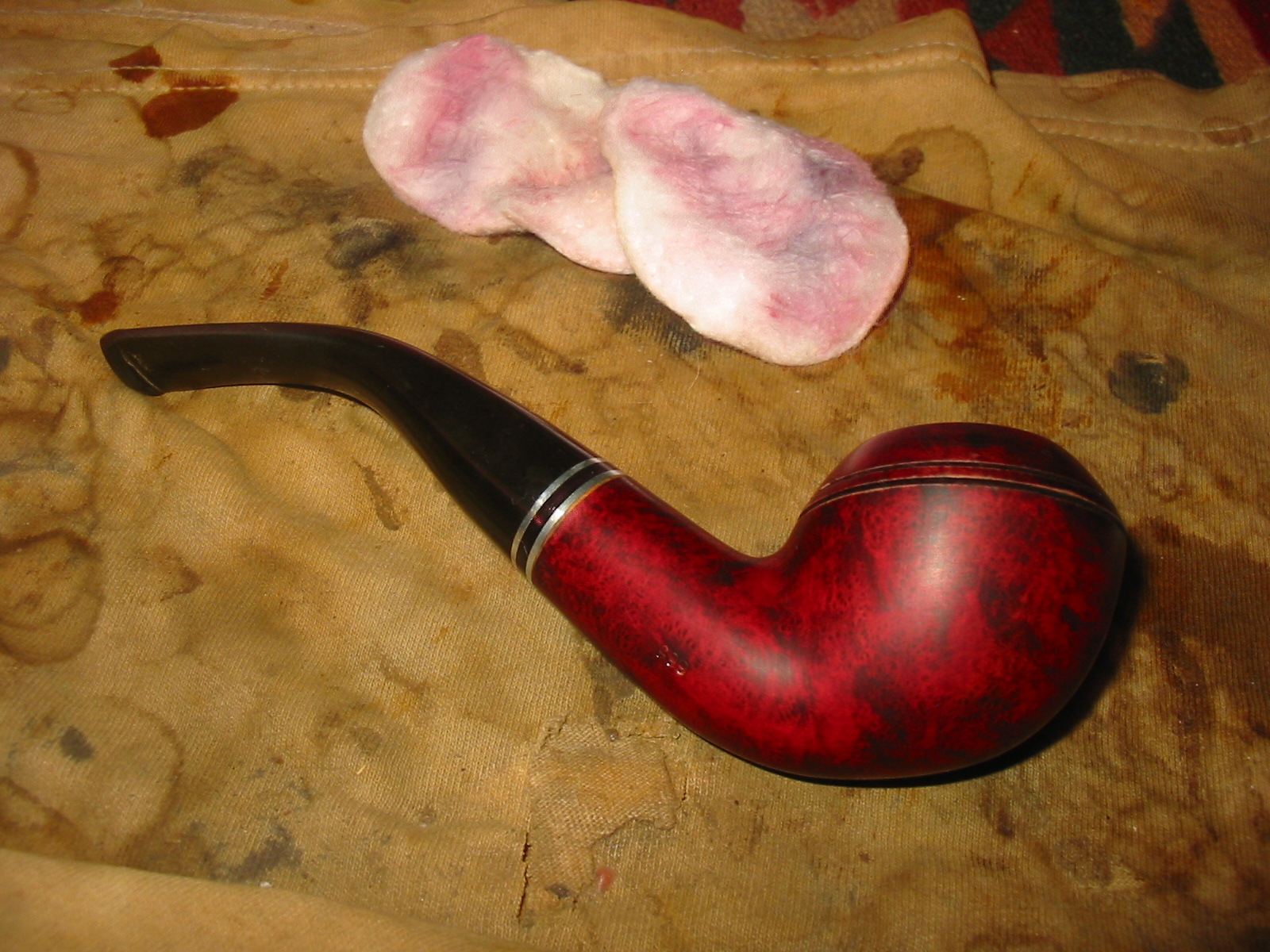
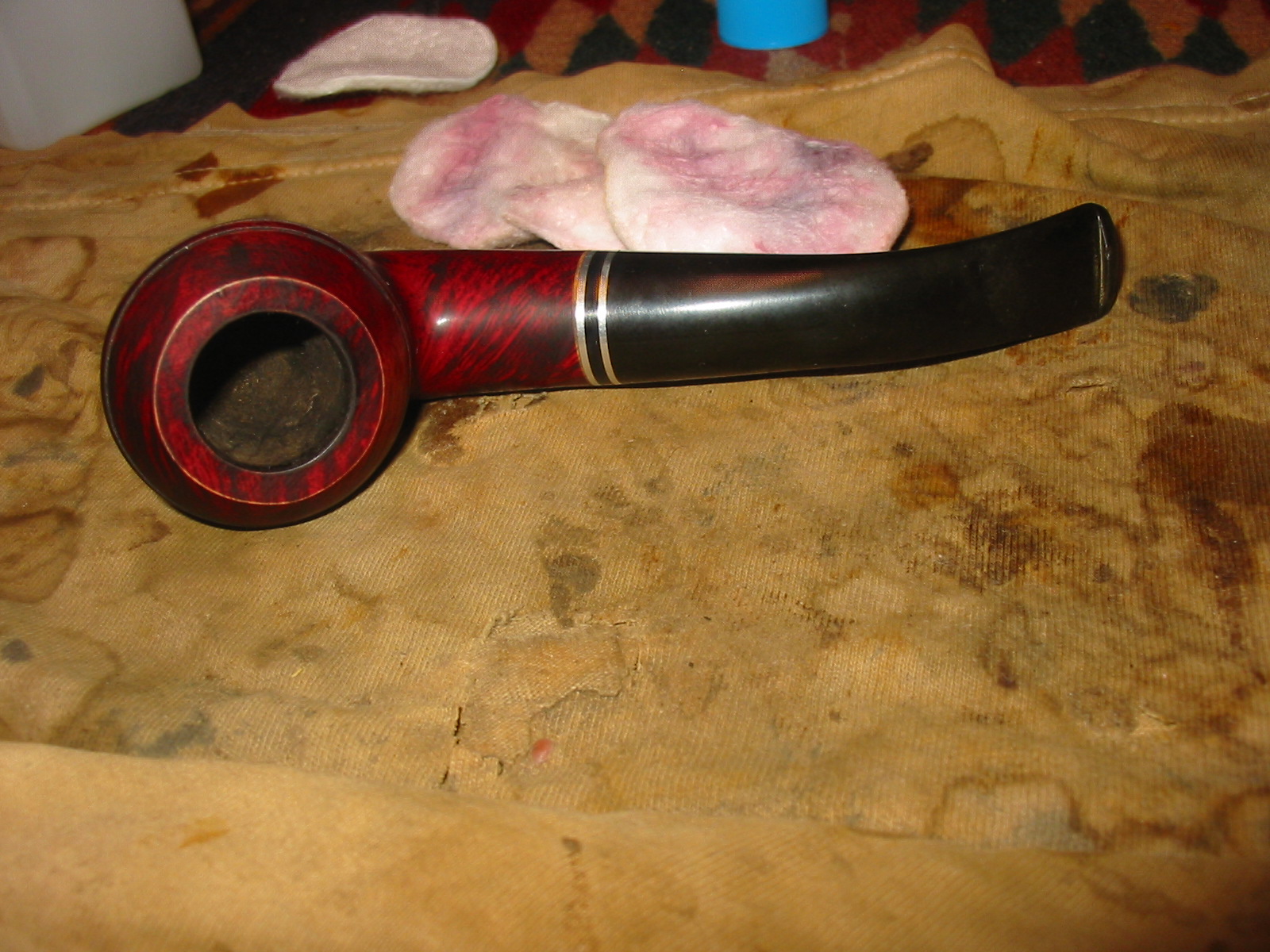
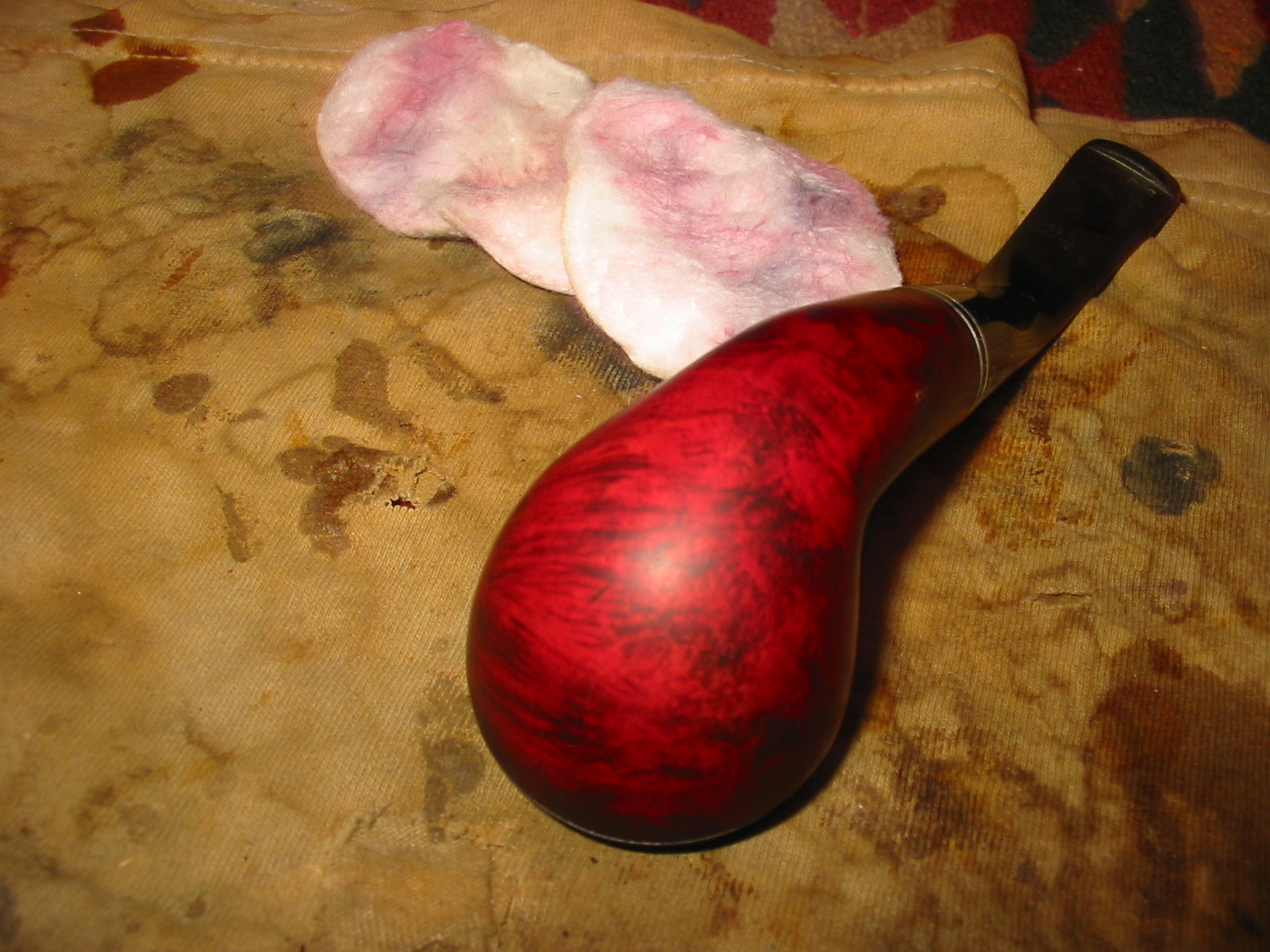
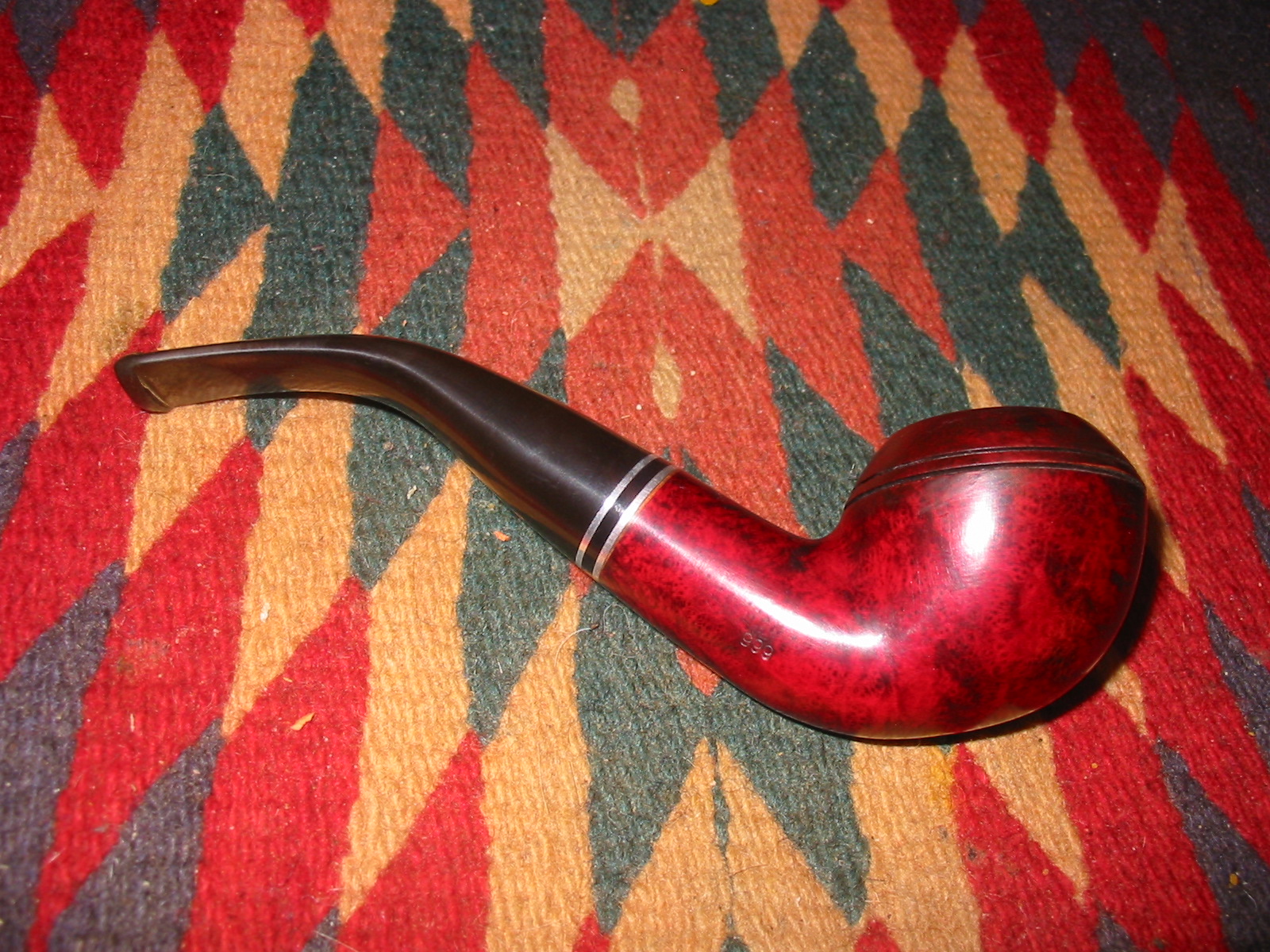
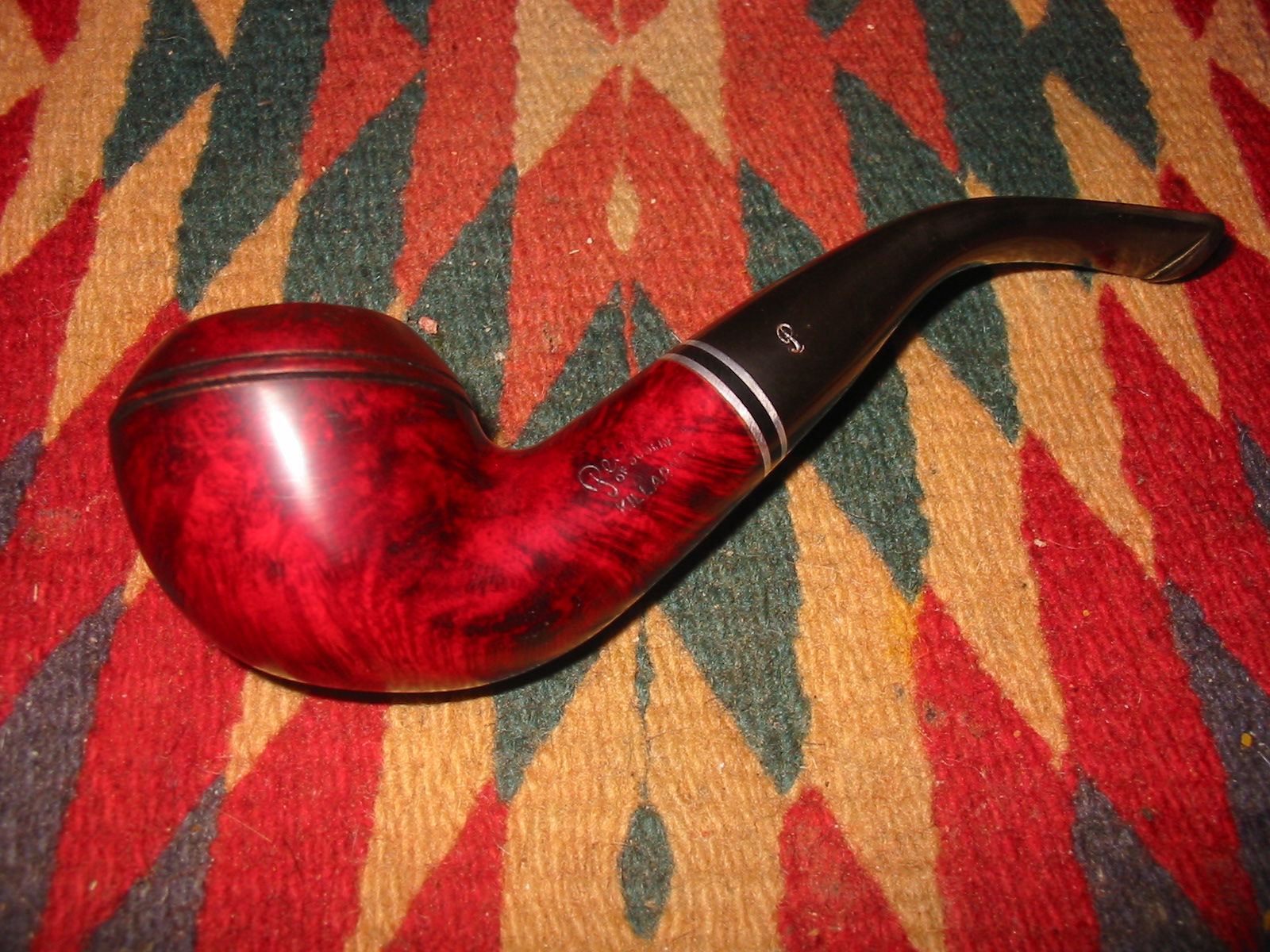
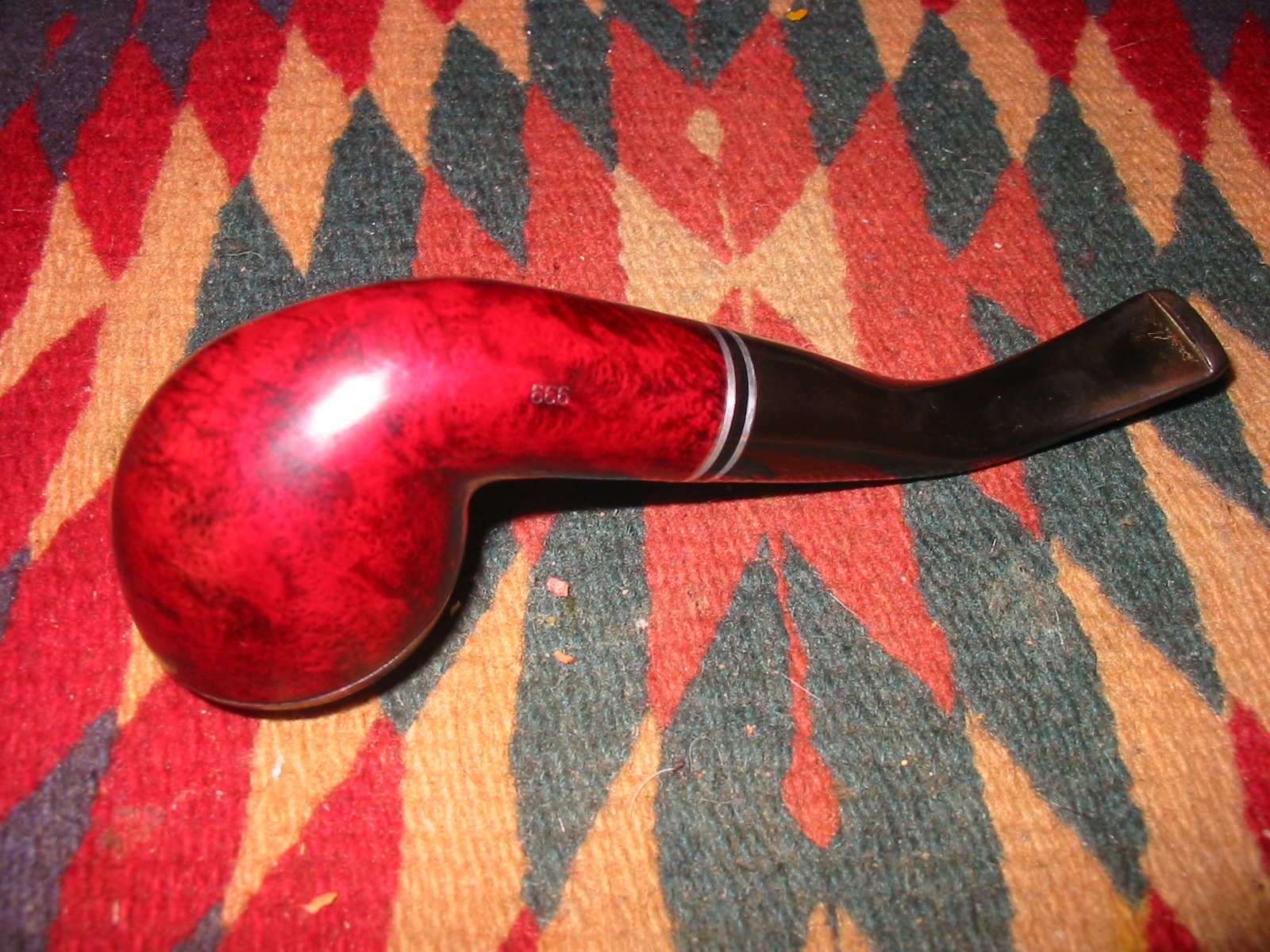
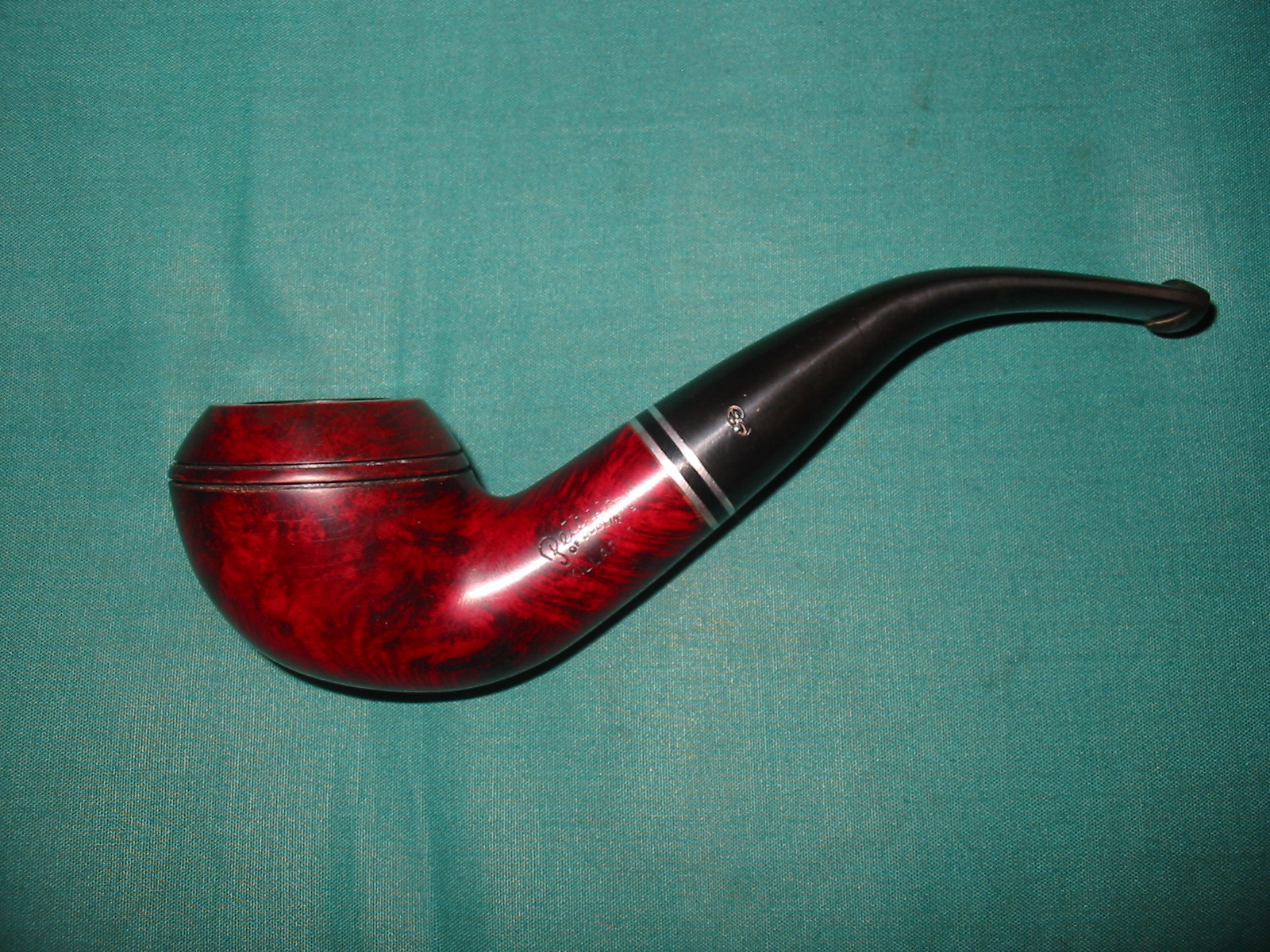
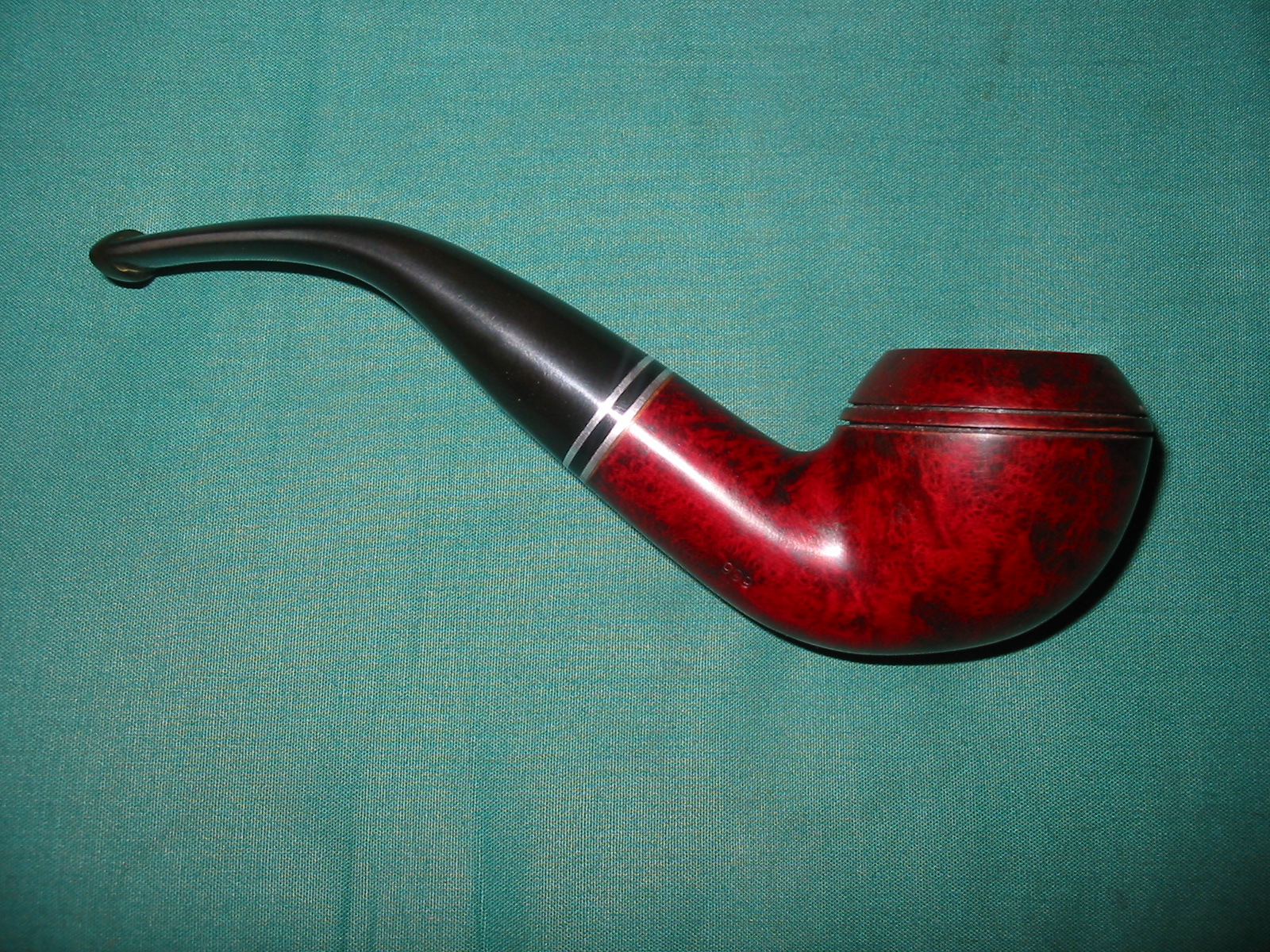
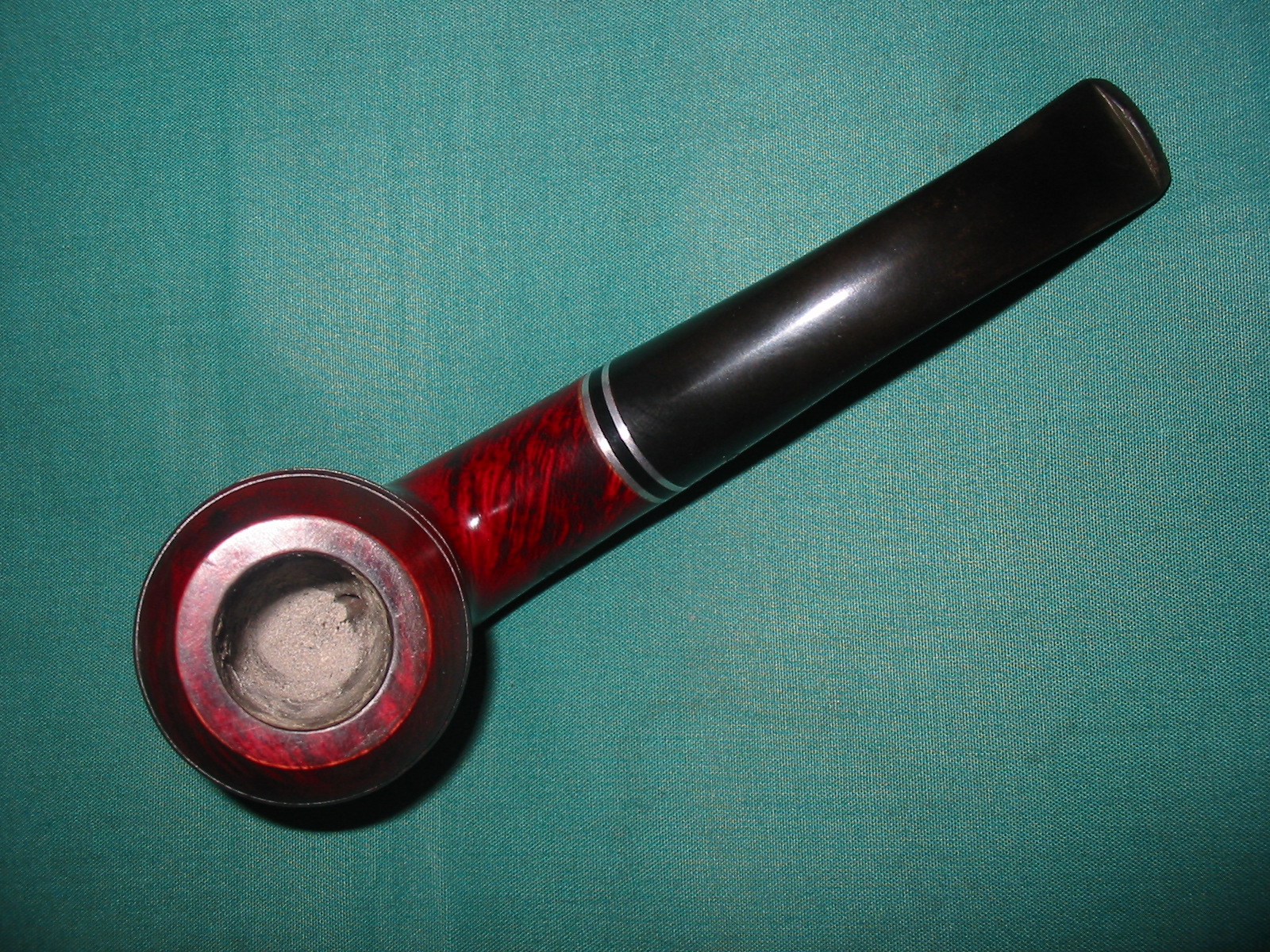
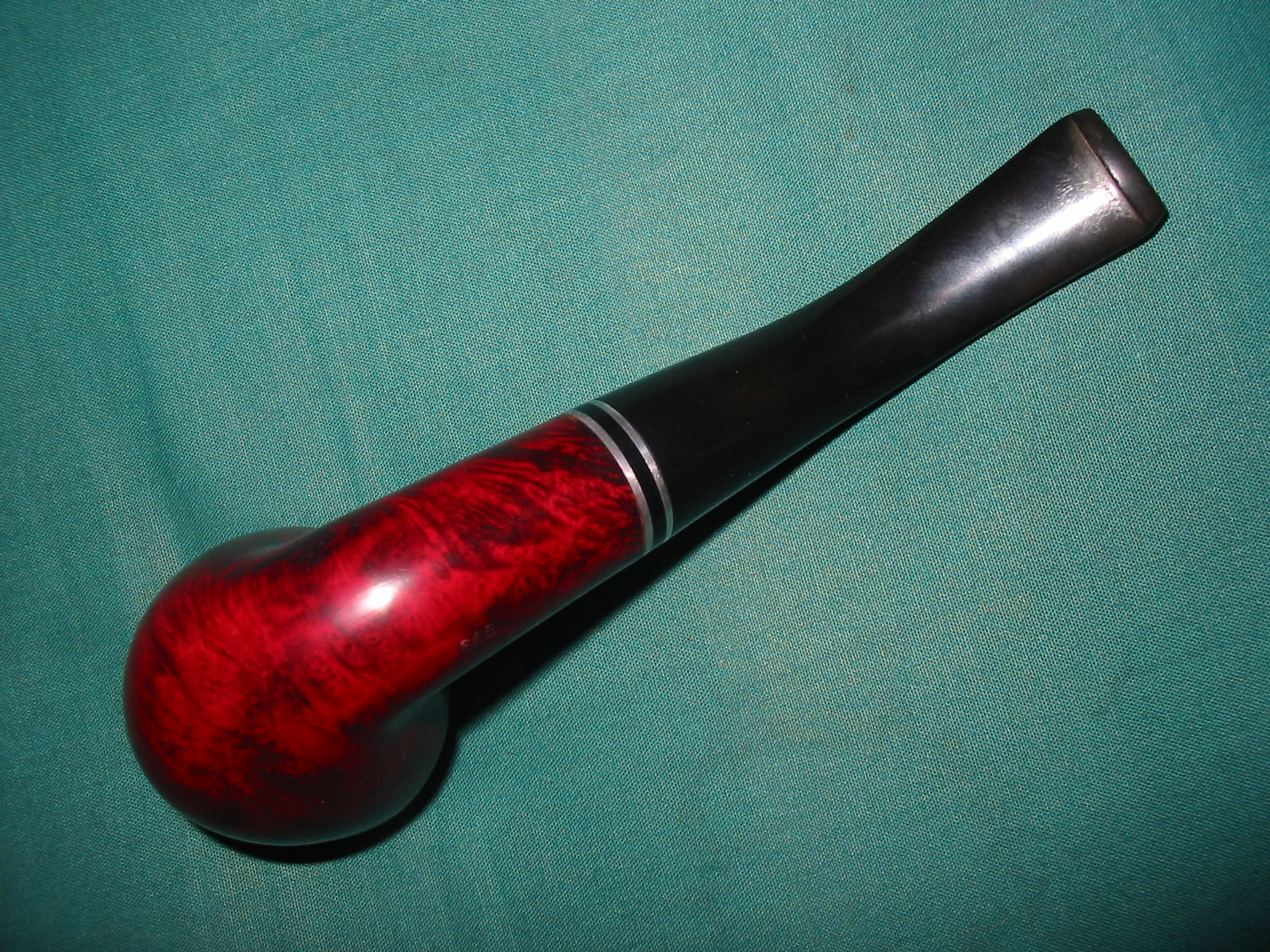
Here are the final results, you can see the W on the Vibro pipe quite clearly and on the group shot the result on the Jensen.
012

013

014

015

016
In the end it was good to sit in the sun and once again get my hands into cleaning a nice pipe.
I always feel quite happy when a dull pipe with a heavily caked bowl turns into a nice shiny one that can be once again hopefully be used for many years to come.

A Pair of Barling Canadians – The Trust Continues


Quite a few years ago I received a pair of Barlings Canadian bowls from the late Mike Leverette. We had exchanged quite a few pipes and tobaccos over the years and one day I received an email from him saying that he had sent me a pair of Canadians that needed stems but were otherwise in great shape. They were clean and ready except for a lack of stems. When they arrived they were beautiful the top on had a stunning sandblast – deep and rugged. The other had a good sandblast but not nearly as rugged. The two were oval shank pipes but one was slightly smaller and shorter than the other. The stamping on them was also different. The top pipe (below) is stamped in a line across the underside of the shank, Barling in script over London England, EXEL 5574 T.V.F. The bottom pipe is stamped slightly different. It begins with Barling in script over London England. That is followed by EXEL over 5579 and then it is followed by T.V.F.

I cleaned them and gave them a polish and sent them to Dave Wolf at Walker Briar Works for restemming. I wanted replacement stems that had the Barling cross stamp on them and new that Dave had the stamps to do that. Once I sent them to him the wait was not very long and they came back polished and stemmed. The photo below shows the pipes as they looked when they arrived and I took them out of the package.
Barlings 001
I took them out of the pipe cupboard the other evening to polish them and remind myself of the story behind them. For me, part of the joy of being a pipe man is to remember/know the stories attached to my pipes. Some of them the stories begin with me as I can find no information on them. Others come to me with a long history that makes them very interesting. This pair comes with that history. Mike bought them in a lot on EBay and figured I would enjoy them. He took the time to ream and clean them before he sent them my way. My story with the pipes is at least 12 years old if not more. Add to that Mike’s history with them and I can trace their story back 15 or more years. I enjoy that kind of thing. The only thing that would make it even better is to be able to know a bit more of the back story. Ah well, as I smoke them I raise a bowl in memory of Mike. I took the next three photos this evening to show the pair as they look now. Both have a few more years and smokes on them but they remain in great shape and have many more years left in them.
IMG_5971

IMG_5972

IMG_5974
I also decided to take a few pictures of each of the pipes separately to give you a better picture of their individual characteristics. The next series of four photos show the 5579, the bottom pipe in the photos above. It has a lighter blast and the stain took to the briar in a different way than it did on the deeper blasted 5574. Interestingly it is the same colour stain on both pipes – the variation is caused by the briar.
IMG_5982
There is gracefulness to this Canadian shape. Barling makes the shape like no one else does and I think it epitomizes the English version of the shape. The blast is well done showing both the ring grain and the vertical lines on both the shank and the bowl. The taper from bowl to button on the stems is very graceful as well. Dave was able to capture the look of the original stem very well.
IMG_5983
The blast carries on to the rim as well and ends as the inner edge of the rim bevels inward toward the bowl. The bevel is smooth as is the strip on the bottom of the shank where the stamping is located. There is also a smooth band at the stem shank union.
IMG_5984
The stamping is clear but faint on the Barling portion. The T.V.F. stamp is tight against the end of the shank.
IMG_5985
The second pipe, the 5574 is a different pipe. The look of the shape is not nearly as refined as the first pipe. The craggy blast and the shape of the bowl make the look more rugged and not nearly as elegant looking. The tactile nature of the blast though is amazing as bowl heats up during a smoke. The stain is also variegated on the pipe. It gives the pipe a mottled look that is even clearer in person. I like the look of the mottled appearance as combined with the texture it makes a very interesting pipe to look at and observe while I am smoking it. There are times when I am holding this pipe that I find myself drawn to just sit and examine it, turning it from side to side to look at the texture and finish.
IMG_5986
The craggy texture of the blast is carried through on both sides of the bowl while the shank is much more reserved and smoother. I am not sure whether it came this way originally or is that way from wear. I tend to think it was originally not as blasted as the bowl as the stamping in quite sharp on the bottom of the shank. I have found that a blast does not take as well on hard portions of the briar.
IMG_5987
The blast carries through to the top of the bowl and to the inner bevel on the rim. The bevel is smooth like the previous pipe as is the bottom of the shank and a small band at the stem shank union. I find that the taper on the shank to the stem is more dramatic than the previous pipe. If the blast was not unharmed I would attribute that to the restemming. It appears to have been like this when it left the Barling factory unless somewhere in its history it was previously restemmed and then repaired to look original.
IMG_5988
The stamping on this is very sharp from mid shank back toward the stem. The Barling script and London England stamping is not as sharp, though still very readable.
IMG_5991
I am pleased to have these two old pipes in my collection. Perhaps one of you who read this article can explain the difference in the shape numbers – 5574 and 5579 as I am unable to find any information online. It would be great to add that to the story. I will maintain the trust with them until the day comes that they pass into the hands of the next pipeman. They will then pass from my companioning to another’s and my story will be added to that of Mike’s. That is the thing I love about this hobby – the adding to the story of a pipe that occurs with each successive pipeman’s receipt of the trust. Until that day I will continue to fire them up and enjoy the great smoke that they deliver.

A Bouquet of Pipes


On a trip to England for my 25th Wedding Anniversary almost 12 years ago now I picked up a snack at a local pub. It was a bread pudding in a pottery jar. I kept the jar all these years and I have used it as a vase for a bouquet of corn cobs. This bouquet is kept in my pipe cupboard most of the year but on warm Spring and Summer days I take it out to my table when I am set up on my front porch for an afternoon of pipe smoking and reading. I have learned over time that as soon as I settle into a book and a pipe company drops by and settles in with me. Typically there is not much talking beyond the initial greetings before they note the tobacco and pipes and ask if they can give a pipe a try.

This is where my bouquet comes into play. In the bunch pipes in the jar are some unsmoked and some well broken in cobs. All are cleaned and ready for smoking. All have the filters removed to make the smoking much less wet and the draught wide open. On the table next to the bouquet I keep several jars of the tobaccos that I am currently smoking. Usually these include a Virginia and an English blend. Once in a while I put out an aromatic blend. Next to the jars are a pouch or pipe cleaners, several pipe nails and a bic lighter. With little ado they load up a pipe and fire it up. Then we settle into the quiet of the moment and puff, the rhythm of the puffing provides a cadence only interrupted by the bees and butterflies flitting by or a hummingbird stopping for lunch. It is a great moment.
031
On a rare occasion one of the “flowers” go home with the pipe smoker but as often as not they want to leave them in the vase for the next time they visit the front porch. I keep them clean and ready. I also have a few MM hard maple pipes and some smaller briars in the vase as well for those who want to try those out. I have found that this keeps my own pipes out of the hands and mouths of those who want to try pipes. I know that may sound harsh but I like to keep my pipes undented by teeth and free of tooth chatter from the unwary new smoker who seems bent on chewing the stem. In fact if I notice them chewing on the stem then the pipe automatically goes home with them. The last thing I want is more pipes to refurbish. At least not cobs and inexpensive briars that I put in the vase.
030
The bouquet has served me well over the years. If you have friends and neighbours stopping by for a visit and wishing to try out a pipe the bouquet is a great way to facilitate them doing so at a low cost to you. Somehow I find that the cob delivers a great smoke for these new pipesters and at the same time provides for the seasoned pipe man who for some reason known only to them has forgotten to bring along a pipe to smoke.

Spring is in the air here in Vancouver so I cleaned up the pipes in the vase this morning. I am getting ready for some good days on the front porch once the weather warms a bit. I know that my visitors will come with the sun so I am ready for them. Here is a photo of what I look forward to. The furniture is out, the table ready and waiting for the bouquet and tobaccos to be brought out and even my dog Bailey is waiting for me. The book, the computer and a brew are ready for me when I settle down for a pipe and some reading. Why not come by for a visit.
Porch2

A Review – A Benner Rusticated Oval Shank Pot


Blog by Steve Laug

I was drawn to this little rusticated estate pot when I saw in on Keith/Exile’s estate pipe site, http://exilesplace.dk/. I had not heard of Benner before so it was not the name that drew me but rather the look of the pipe that called out to me. Keith sells Benner’s pipe new as well, but in looking at them I still wanted this one. I emailed Keith and soon the pipe was on its way to me from Denmark.
003 (2)
While I was waiting for it to arrive I did some research on who Benner was in terms of the realm of Danish pipe carvers. Keith had this information:

“His real name is Bent Nielsen but the world knows him as Benner. Benner has been making pipes for a long time. He once worked with the late and great Karl Erik Ottendahl and did some design work for Stanwell at one time. He has exported to the US, Germany and, lately, to Russia. These days Benner runs his workshop as the mood takes him and he says he is looking forward to retirement. If I know Benner, that retirement won’t be a permanent thing.”
http://thepipesmoker.wordpress.com/2011/04/10/benner/

I found this picture of Benner on the web and also found information on Pipedia http://www.pipedia.org/wiki/Benner
2978_m
“Considering his reputation among some connoisseurs Bent Nielsen, nicknamed Benner, didn’t leave too much usable traces. He is sometimes mentioned as a nephew of Viggo Nielsen, but in fact he’s no relative of Viggo’s clan.

Starting around 1970 he worked for Karl Erik some years and later for Stanwell, where he sketched a number of new models. Around the climax of enthusiasm for Danish freehands he started to release pipes under his own name. Not too many at all, which stuck more closely to classical models.
He later worked under the synonym Benner. His German distributor however advised him against using his nickname for sales in Germany, because Benner didn’t sound really Danish. Benner, as a Danish pipester recently told, “dared” to carve some more fancy styled pipes than Bent Nielsen did before and every now and then he made some pipes of olive wood, too.

Still he’s supposed to make a few pipes every once in a while selling them to a few local shops in Denmark and a limited number of enthusiasts all over the world.”

I don’t remember the exact date when I purchased my Benner pot from Keith but I have been a frequent visitor to his website and his blog for a long time now. I frequently scan through his listings to see if anything in particular catches my eye. The particular day I found the Benner listed I am not sure what captured me – the shape, the gentle taper of the sides of the oval shank, the rugged rustication, the walnut band. I am just not sure. I am typically not attracted to pot shaped pipes. I have a few in my collection but they are minimal and I am rarely drawn to them when I reach for a pipe. But I remember seeing this one and being captured by it. I left the site, went to work and later that evening I bought the pipe.

The pipe is small, almost a nosewarmer at 4 3/4 inches long and 1 ½ inches tall. The tobacco chamber is 1 1/8 inches deep and 3/4 inches in diameter. The band is smooth, naturally finished hardwood (walnut or oak?) and adds a contrast to the dark stained rustication. It is integrated into the stem. The stem is handmade from vulcanite and has a gentle taper.
BennerWhen the pipe arrived it was far more impressive than Keith’s pictures had led me to expect. The workmanship of the pipe and colour and feel of it in my hand just captured me. I remember opening the package and sliding the pipe out of the sleeve and enjoying the look and feel of this pipe. It was and is beautiful. It had the faint aromas of the Virginias that its previous owner had smoked, yet it was clean and ready for me. The rustication is tactile yet is not sharp or jarring. It is a tight pattern that almost looks like it was sandblasted after rusticating. Examining it up close it is obvious that it is not blasted but that a master-hand rusticated it very well. The bowl is rusticated up and over the rim and ends at the inner rim edge. There is a smooth band of briar at the shank end that is narrow on the top and sides of the oval shank and slightly wider on the bottom of the shank to provide a spot for the stamping. The overall flow of the bowl and shank is brilliant and the colours are beautifully matched from rim to the end of the shank with a contrast of black stain and the underlying colour of the briar. Combined with the black of the vulcanite it gives the pipe a dressy look. The natural wood band that is part of the stem that not only separates the texture of the bowl and stem but gives focal point that draws the eye to take in the taper of the stem and the texture of the bowl.
005
The inner mechanics of the pipe are perfect. The drilling is perfectly executed from the shank and into the bowl – coming out exactly centre in the bottom of the bowl. The airway from the bowl into the mortise is centred. It is smooth in its entrance to the mortise and the mortise itself is also smooth with no rough spot left by drill bit. The bowl itself is U-shaped and smooth from sides to bottom. The air way enters the bowl and is smooth and clean. As the pipe was an estate when it came to me it was impossible to tell if it originally had a bowl coating but my guess would be that it would have been smoothly sanded briar.

The stem itself is hand cut out of a vulcanite. It is well tapered with good even angles top and bottom progressing from the shank to the button. The portion of the stem that is put in the mouth is thin and comfortable. Benner did a great job shaping the stem and capturing a shape that really works with this pipe. The hardwood band is integral to the stem and is seamless in its flow with the vulcanite. The tenon is Delrin that has been inserted into the vulcanite stem for durability and ease of use. The airway is funnelled slightly for a smooth transition from the mortise when it is in place. There is a very minimal gap between the end of the tenon and the base of the mortise. The transition where the Delrin meets the vulcanite of the stem is seamless. There is no lip or rough spot at that junction. The draught is unrestricted and open from the bowl to the tip of the stem. Draught is effortless. The fit of the stem to the tenon is very well done. The button is cut to my liking with a good sharp inner edge and tapered to the tip. The slot is opened and funneled to deliver a uniform airway from bowl to button.
004
The overall construction of this pipe is very well done. It is light in the hand and in the mouth. It is well balanced and has a great tactile feel when it is cool and as it warms up during the smoking of a bowl. I have smoked the pipe since I got it and enjoyed the fact that it was previously smoked and well broken in. The shape of the bowl has kept this a good Virginia smoking pipe in my rotation. It delivered a good smoke from the first smoke and continues to do so. It draws well; the lighting has never been a problem and continues to be an effortless smoke. Thanks Keith for introducing me to this maker and to Benner for delivering a well-made pipe that remains a very good smoking pipe to this day. If you can acquire a pipe made by Benner (they are hard to come by as he makes just a few) it will not disappoint you and soon become a favourite in your rack.

A Book Review – Tobacco, Pipes and the Pleasures of Pipe Smoking


IMG_5918 This beautifully illustrated little book was produced in Canada to be given as a gift to pipe smokers by the – Turmac Tabakmaatschappij Canada Ltd. In their introductory preface they declare their intent to give it as a gift to be enjoyed as much as they enjoyed collecting all the stories and anecdotes about pipes and pipe smoking. They end their paragraph with the words; “We hope that it will add new pleasure and meaning to your pipe smoking”.
On the inside fly page there are these words: “I keep a friend in my pocket… my pipe. When I sit out on the porch at the cottage and the evening is quiet, I like to take my friend out of my pocket, tamp in bright, golden shreds of tobacco, and light up.

Then, when the bowl glows red in the dusk, when the bit tastes warm, and fragrant wisps of smoke trail in the still air, peace comes to me and my friendly pipe.”

The book is a short 35 page overview of the field of pipes, tobaccos and pipe smoking itself. It is not divided into chapters but rather into sections. Virtually every page is filled with beautiful photos, engravings and pen drawings of pipe history. A wide variety of photos of pipes grace the pages – from ancient clay to modern clay, from briar to meerschaum.

The book begins with a brief history of tobacco and the art of smoking it. It development is traced across the continents on both sides of the Atlantic, or Pacific as the case may be! There is a quick walk through Columbus and the discovery of tobacco and its use among the indigenous population of the Americas. The name tobacco comes from what these people called their smoking tubes – Tobaga. It later morphed into our now well known term tobacco. The text quickly moves to Sir Walter Raleigh’s impact on the use of tobacco in the British Isles. The entire history is brief and well written. It moves through 8 pages and covers a broad scope of history in a way that is a pleasure to read – interspersed with quotations from early journals and drawings and photos from the time periods discussed.

From there the book turns to the history of the pipe itself. In a section entitled “From Coconut to Seafoam”, the authors give a brief introduction of the materials that have been used in making pipes. The section moves through the materials in quick order in a compact and entertainingly written piece. It begins with the coconut used in Nargilehs in the orient to clay, porcelain, iron, steel, bone, stone, silver, copper and bamboo and finally to the meerschaum and then the briar. The section then develops longer treatments on each of the major materials – clay, porcelain, meerschaum and finally briar.

I found it particularly interesting to read the well written discovery of the meerschaum pipe. A Budapest Shoemaker named Carl Kovac was the first man to carve a meer pipe. This section reads like a well written short story.

There is a short section on Pipe Smoking and Fine Art in which the writers quickly summarize the presence of the pipe in fine art. Again it is not the breadth that gives the subject its interest but the choice of what to cover. In a short paragraph the Dutch masters, Rembrandt and Honore Daumier are all mentioned.

The section on the pipe ends with a description of the briar pipe and its development from burl to pipe. In a succinct section the process of pipe making is delineated with enough information to be entertaining and informative.

From the discussion of the pipe the book turns to discussing what we smoke in our pipes. IN very short and descriptive sentences tobacco growth and processing is covered with a brief glimpse of Virginia, Burley and Oriental tobaccos and how they are processed to the leaf we smoke.
The next section is pictured below and is entitled “A Guide to Tobacco Blending”. The descriptions are well written and concise. I don’t think I have ever read this kind of compact and clear writing that is also entertaining and direct.
IMG_5919
Once the details on various blends are explored the text turns to the art of choosing a tobacco. I had to laugh when I first opened the book and found the tobacco placard below inserted at this point in the story. It was almost like a bookmark and of course is one of the blends that gifter of the book manufactures.
IMG_5923
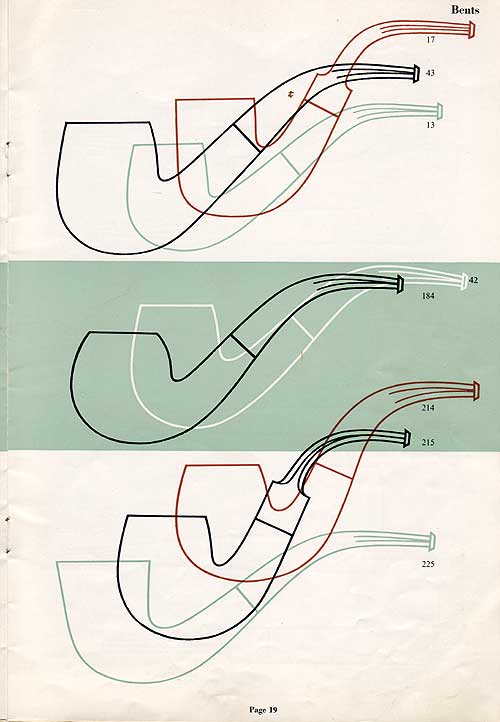
The section on choosing a pipe was fascinating reading. Again in the style of English that is clear and pointed the authors give the major things to keep in mind when choosing a pipe of a particular shape and finish. They provided the following diagram as a part of the book that is helpful.
IMG_5920
The last sections of the book can be summarized as tips for pipe smokers and includes all the information necessary to load and light a pipe as well as what is necessary to take care of it as you use it in the course of your life. There are tips on how to have and maintain a dry smoke, how to care for the cake in your pipe – proper reaming procedures etc are diagrammed to help the pipe smoker visualize how to keep their pipe functional and delivering the best possible smoke that it is able to deliver. It also includes a section on accessories that are necessary for having a great smoke. These include pipe cleaners, liquid pipe cleaner, humidors, tobacco pouches, ash trays, pipe tools, pipe racks and of course the pipe collection!
The closing paragraphs of the book bear quoting. They give both a great conclusion to the book and a clear picture of the writing style of the book. It is that which captured me the first time I read it and that which keeps me coming back. I quote:

“ A day can never be completely without brightness as long as there is a glowing pipe in hand, nor can a man be alone, for in a good pipe there is companionship, its warmth is like a glowing hearth where in there is deep understanding and peace.

You like the friendliness of a man with a pipe and what better compliment to a friendship than for a man to offer you some of his own special tobacco. Just this one simple act will tell you he is gracious, reliable, unselfish and, above all, considerate.

A good pipe and a good tobacco say good things of a man. And the good things that it does are many: it gives heart to the man at work, it accompanies his leisure hours and brightens his fireside at night.
His cares, his worries drift away in the air, weariness floats away and disappears, it brings hope for the days ahead and the contentment of well-being. It is a brightener of conversation, the maker of friendship.

In its aroma there is comradeship, and in the goodness of its taste there is unending pleasure.
Indeed a simple pleasure with deep satisfaction, and priced so that a man may enjoy the contentment of hours, if he has but two silver quarters.”

I think that well summarizes the beauty and pleasure of this small book. If you can find a copy you will not do wrong to buy it whatever the cost. It is a treat to read and has the ability to lift you from the mundane of your days. The following drawing in on the end piece of the book.
IMG_5922

Crafting a Bamboo Shank Briar Mini Churchwarden


Blog by Steve Laug

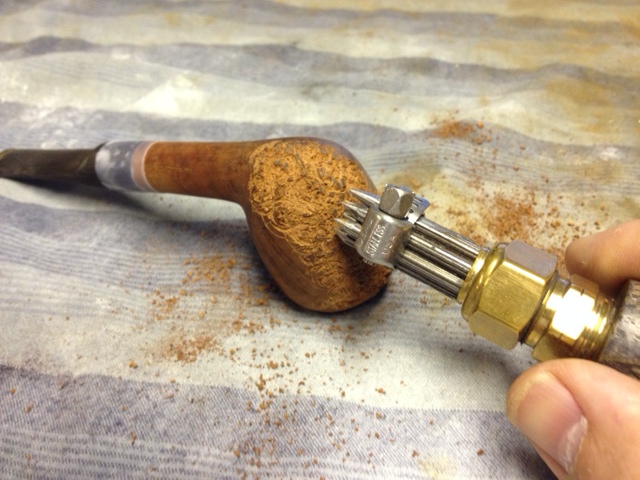
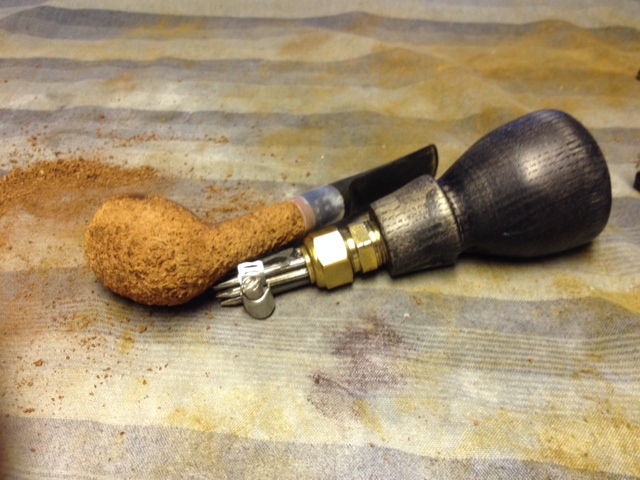
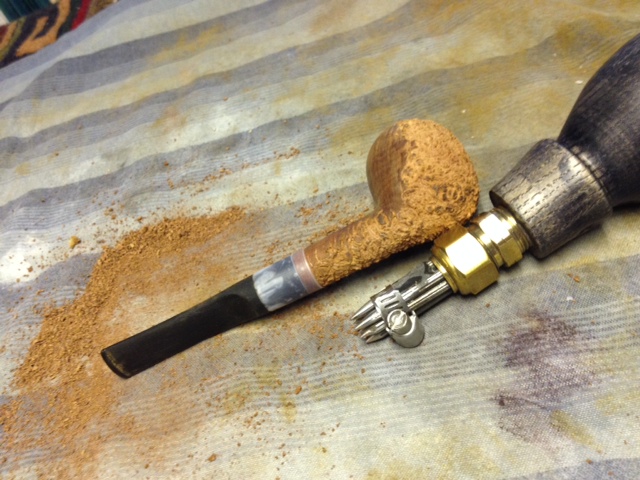
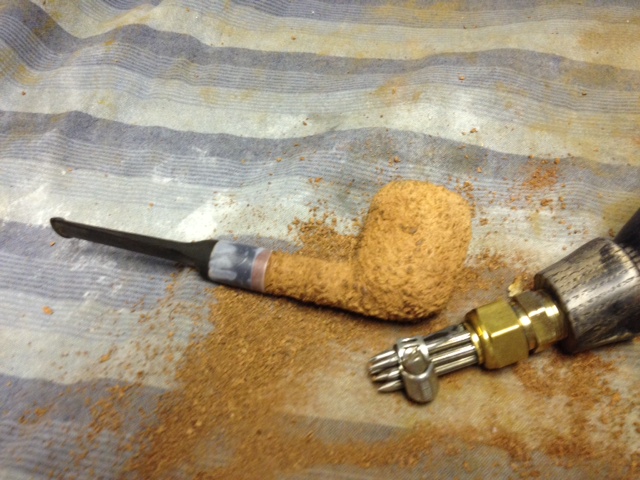
I had all the parts to do a bit of an experiment. I had a broken shank briar pipe, a long piece of black bamboo and an assortment of stems to choose from to see if I could connect all the pieces and make a workable smoking pipe. Putting together the pieces is reminds me of playing with my old Erector Set when I was a kid. The only limit to what can be put together is your imagination. The bowl came to me with two large gashes in the shank. They were both quite deep and both had been repaired by fills. There was a metal threaded mortise in the shank for a threaded tenon. While I was cleaning up the bowl the shank fell off in my hands. I put it in the cupboard as I expected I could scavenge some briar for repairing burn outs in the future. It sat there for more than a week before I began to wonder if I couldn’t do something with it. I went through my parts drawer and found the piece of black bamboo that had been sitting for quite a few years waiting for the right moment. I brought the bowl out and put the two pieces side by side and kind of liked what I saw. The end product would be a four knuckle bamboo mini Churchwarden pipe. It would be extremely lightweight and might actually end up looking quite nice. Now it was time to start working.
IMG_5869

IMG_5870

IMG_5871
I drilled out the inside of the bamboo with an 11/64 inch drill bit. I then drilled out the end that would meet the bowl with a ¼ inch and then a 3/8 inch bit so that I could use a metal tenon I had saved from a previous pipe. Once the drilling was done the tenon fit the newly drilled bamboo mortise very well. I faced the end of the broken shank so that the bamboo would fit against it smoothly.
IMG_5872

IMG_5873
The metal tenon also fit in the shank of the bowl well. The length was perfect as it fit against the airway in the end of the shank next to the bowl bottom. There was no gap between the two so the smoked would flow smoothly down the shank of the pipe. I cleaned out the bamboo airway with pipe cleaners and isopropyl alcohol and then put the pipe together and checked the draw. It was open and was an effortless draw.
IMG_5874
I repaired the fill on the side of the shank as it was not even with the surface of the shank. I used a superglue and briar dust patch on it. Some might wonder why I did not cut back the shank and eliminate the damaged area. I chose not to do that as I wanted the shank to have some length to it in contrast to the long bamboo section. I also planned on rusticating the entire bowl so the damage would be covered. The insert of the metal tenon would stabilize the area as well and the shank repair would be solid.
IMG_5875

IMG_5876

IMG_5877
I took the bamboo shank off the bowl and sanded the bowl with 220 grit sandpaper to smooth out the finish. I repaired several of the gouges on the bowl surface with superglue and briar dust. I wanted a smooth canvas to work on when I rusticated the bowl. I then sanded the bowl with a medium grit sanding sponge. The top of the bowl had a slight buildup of tars so I cleaned that with the medium and fine grit sanding sponge. I wiped down the bowl with acetone on cotton pads. I sanded the knuckles on the bamboo to remove the fibers that were still attached and to smooth out the nodules. More work would need to be done on the shank but at least at this point it would be smooth in my hand while I worked on the bowl.
IMG_5878
I set the bowl aside and went through my can of stems to find a nice saddle bit that would look good proportionally with the pipe. I drilled out the stem end of the bamboo with a ¼ inch bit to serve as a mortise for the stem. I turned the tenon on a PIMO tenon turning tool and then hand sanded it. I pushed the stem in place and starting sanding the saddle portion of the stem to get the diameter of the stem and shank to match. I mixed some two part epoxy and glued the metal tenon in place in the bamboo. When it was dry I put the pipe together. I did not epoxy the bowl to the shank at this point as I wanted to be able to remove it work on the rustication. The next three photos show the pipe with all parts in place.
IMG_5879

IMG_5880

IMG_5881
I used a Dremel with a cone shape cutting head to pre-rusticate the shank and then followed that up with the modified Philips screwdriver. I rusticated the briar shank with it attached to the bamboo so that I could rusticate it up to the joint of the two shank materials. Once I had the shank finished I removed the bowl and worked on it with the Philips screwdriver. I find it easier to manipulate the bowl when it is not attached to the shank. When the bowl was completely rusticated I used a brass bristle wire brush to knock of the rough edges and give the bowl the texture that I wanted. I left the rim smooth to contrast with the finish on the bowl.
IMG_5882

IMG_5883
I put the pipe back together to have a look at the finished rustication and the contrast with the finish on the bamboo. I liked the overall look of the pipe at this stage. I did a bit more rustication on the bowl and shank and wire brushed them until I was happy with the end result.
IMG_5884

IMG_5885

IMG_5886

IMG_5887
At this point I was ready to attach the shank to the bowl permanently. I scored the metal shank to give the surface something to bond with in the briar shank. I mixed the two part epoxy and applied it to the metal shank with a dental pick. I pressed the two parts together and used the dental pick to trim off the excess glue and wiped it down with a soft cloth. I clamped the parts together while the epoxy set.
IMG_5888

IMG_5889

IMG_5890

IMG_5891

IMG_5892
While the glue was drying I worked on the stem to taper it to fit the diameter of the bamboo shank. I sanded it with a Dremel to take off the majority of the excess vulcanite and then hand sanded it with 220 grit sandpaper. Once the epoxy had set, late last evening I inserted the stem and took the photos below.
IMG_5893

IMG_5894

IMG_5895

IMG_5896
This morning I got up early and stained the bowl with a black aniline stain. My plan is to use the black stain as an undercoat on the bowl. Once the pipe is dry I will buff it with red Tripoli to remove the black from the high spots on the rustication and then stain the bowl with a brown topcoat to give it depth and contrast.
IMG_5897

IMG_5898

IMG_5899
I buffed the bowl with the Tripoli and then used isopropyl alcohol on cotton pads to dab off the stain on the high spots. The finish is rough so to scrub it with the pads leaves behind a lot of cotton bits. I sanded the surface of the bowl with a fine grit sanding sponge to remove more of the black stain from the high spots and to soften the rustication. I stained the bowl and shank with a coat of walnut stain to give some depth and highlights to the bowl. I had asked online how to finish bamboo and received a step by step response from James of JSEC pipes. He said to stabilize the cracks in the bamboo with superglue and then to sand the bamboo with 600 grit wet dry sandpaper and follow that with 1500 grit sandpaper. I followed that process to the letter. The change in the surface of the bamboo was noticeable. It was smooth and had a developing patina on the surface. I then took the next steps in the process and rubbed the shank down with Danish Oil. James said the he generally gave multiple coats of Danish Oil over several days. The photo below was taken after the bowl had been stained with the walnut and the shank sanded as described above. It also shows the first coat of Danish Oil on the stem. After about one hour the oil had dried to a matte finish on the bamboo.
IMG_5900

IMG_5901

IMG_5902

IMG_5903
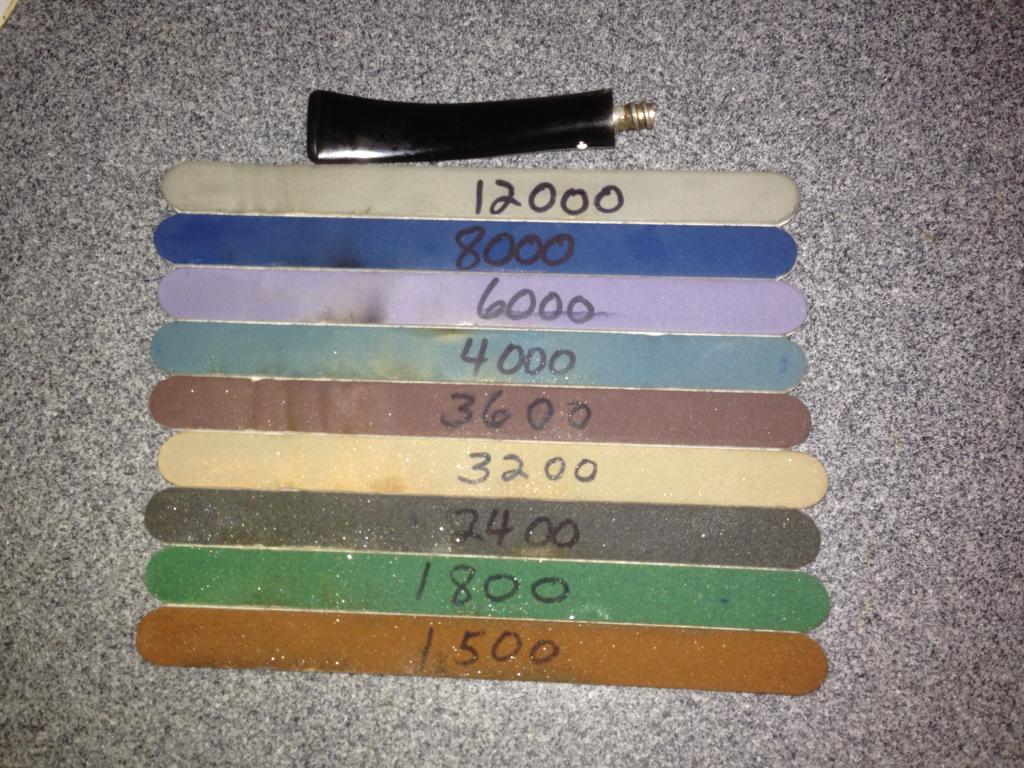
While the Danish Oil was drying on the bamboo I worked on the stem. I sanded it with 220 grit sandpaper to reduce the diameter of the saddle to match the shank diameter. I then used a medium grit sanding sponge and 600 grit sandpaper. I then sanded the stem with my usual array of micromesh sanding pads. I wet sanded with 1500-2400 grit pads and dry sanded with 3200-12,000 grit pads. I rubbed the stem down with Obsidian Oil and let it soak into the vulcanite.
IMG_5905

IMG_5906

IMG_5907
When the bamboo had dried I buffed it with White Diamond on the buffing wheel. I buffed bowl and stem as well. I took the next series of four photos before I gave the bamboo a second coat of the Danish Oil. The pipe is beginning to look finished. I like the look of the black bamboo with this treatment – there is a rich patina beginning to show up on the shank now.
IMG_5908

IMG_5909

IMG_5910

IMG_5911
I gave it a second and third coat of Danish Oil and then buffed the bamboo with White Diamond. I gave the stem and the bowl a light buff as well. The bamboo is looking really nice. I like the developing patina that is coming from the finishing. I gave the shank and stem multiple coats of carnauba wax and then buffed to a shine with a clean flannel buff. The finished pipe is picture below. This weekend I hope to take it on its inaugural smoke!
IMG_5912

IMG_5913

IMG_5915

IMG_5916

An Earl of Essex Apple Reborn


This Earl of Essex pipe bowl was in bad shape. I had received the bowl without a stem so I would need to restem it if I was going to refurbish it. The bowl rim was angled down toward the front and was worn and rough. It appeared to be thinner in the front than the back of the bowl and had burn marks and rough patches on the front. The finish was shot and the aluminum insert in the shank was oxidized. The bowl had an uneven cake and was crumbling. There were several red spots on the surface of the rustication. What interested me in this old bowl was the rustication. The top of the bowl had almost a wax drip look to it with rustication between the drips of “wax”. The drip pattern is smooth briar as was the rim at one time. The end of the shank and the high spots on the shank were also smooth.
IMG_5827

IMG_5828

IMG_5829

IMG_5830
The aluminum inset mortise took a screw in tenon and I did not have any metal screw in tenon stems. I would have to drill it out to fit a new stem. I decided to try my hand at opening up the mortise with a drill. I started with a drill bit slightly larger than the mortise and then moved up with bigger drill bits until the mortise was smooth and open enough to take a new push stem.
IMG_5831

IMG_5832
I started to top the bowl but stopped mid stream and reamed the bowl with a PipNet reamer to clean out the cake. I wanted the bowl clean so that as I topped it I would be able to see how deep the damage to the bowl went.
IMG_5833
Once reamed, I took it back to the topping board and sandpaper. I used 220 grit sandpaper and twisted the bowl top into the sandpaper in a clockwise pattern. With the bowl topped and the shank opened the bowl was ready to clean up.
IMG_5834

IMG_5835

IMG_5836
I wiped down the bowl with acetone on cotton pads to remove the finish from the bowl and clean up the grime that was built up in the grooves of the rustication. There was a bright red pigment in the grooves on two sides of the bowl. I scraped at it with a dental pick to clean it up. At first I thought it might be putty but as I scraped it, it came off like a red pigment. I am not sure what the red material was. I wiped it down after scraping it.
IMG_5837

IMG_5838

IMG_5839
I decided to stain the bowl with a contrast to set off the rusticated portion from the smooth portion of the bowl. I used a cotton swab and black aniline stain to stain the rusticated portions of the bowl. I wanted the black to highlight the areas between the smooth drip portions of the bowl. I stained and flamed it and repeated the process until it was a good even colour around the bowl. I sanded the smooth areas of the bowl with a medium and a fine grit sanding block and sponge to remove scratches and clean them up for the next coat of stain that would be used on the smooth areas.
IMG_5840

IMG_5841

IMG_5842

IMG_5843
I had several stems in my stem can that would fit the shank of the drilled out mortise. I tried a BBB stem first. It fit very well in the shank. The look was exactly what I wanted but I did not want to waste a BBB stem with the logo intact on an experiment.
IMG_5844

IMG_5845
So I used the second stem I had from the can. It was a saddle stem with a bite through on the top of the stem. I decided to cut it back and then reshape the button until it was a new stem.
IMG_5849
I cut it back with a Dremel and a sanding drum until it was smooth, solid and straight across.
IMG_5850

IMG_5851
Before working on cutting the new button in the stem I stained the top portion of the bowl with a light walnut stain on the smooth parts of the bowl. I buffed the bowl with White Diamond to give it a shine.
IMG_5852

IMG_5853

IMG_5854

IMG_5855
I worked on the button with needle files cutting in the straight line of the inner edge of the button and then smoothed out the button itself with the files. I carved away the surface of the stem tapering it from the saddle to the button. Once it was cut with the files I sanded the new taper with 220 grit sandpaper and then with a medium and fine grit sanding sponge to remove the scratches on the vulcanite.
IMG_5856

IMG_5857

IMG_5858

IMG_5859

IMG_5860
I sanded the stem with my usual array of micromesh sanding pads. I wet sanded the stem with 1500-2400 grit pads and dry sanded with 3200-12,000 grit pads. I rubbed down the stem with Obsidian Oil and buffed it with White Diamond.
IMG_5861

IMG_5862

IMG_5863
I buffed the bowl lightly with White Diamond and buffed the stem with it as well. I gave it multiple coats of carnauba wax and buffed it with a soft flannel buff to give it a shine. The finished pipe is shown in the photos below. The bowl top is clean and new, the finish is redone and the wax drip look is highlighted with the stains. The new stem and the newly cut button fit the pipe well. The experiment of drilling out the aluminum shank insert to take a push stem was a success. The metal polished well and looks like a shank band. Overall the final product is nice looking pipe that will make a good addition to someone’s rack in the future.
IMG_5865

IMG_5866

IMG_5867

IMG_5868

Repairing an Out of Round Bowl


On the recent post I made regarding the Dublin that I cut the shank off of and reworked I neglected to work on the out of round bowl. https://rebornpipes.wordpress.com/2014/03/28/cutting-back-a-broken-shank-and-reworking-a-no-name-dublin/ A friend on one of the online forums sent me a message and asked me why I had not bothered to rework the out of round bowl. My answer to him was that I had done minimal work on it and then turned my attention to the shank. His words niggled at me all day at work and I wrote him and told him I would work on the bowl when I got home this evening. So, I did and decided it was worth a write-up of its own. Many times in refurbishing pipes for myself or others I am face with a bowl that has suffered at the hands of a “mad reamer” who leaves the bowl with all kinds of nicks and dents in the inner rim of the bowl. Often the inner edge is so out of round that it almost appears to be oblong (at best) or ragged and jagged (at worst). Either way if left as it was the ragged inner rim detracts from the overall beauty of the refurbished pipe. I dedicate this post to Chiz, the friend who called me on my skipping of the inner rim. Thanks Chiz, without your urging I don’t know if I would have even given this a second thought.

The first photo below shows the bowl as it was when I received it. The inner rim edges are a mess. On the left side of the photo you can see the major cut and damage to the bowl and on the right side of the photo there is also major damage. The bowl is badly out of round on the inner rim.
IMG_5773
I scrubbed off the top of the bowl with acetone on cotton pads. Sometimes this is unnecessary as you will be topping the bowl anyway but I always want to know how deep the cuts and scarring goes into the surface of the rim. This gives me an idea of how much I will have to top the bowl to remove the damage.
IMG_5782
I topped the bowl on a hard surface that holds a piece of sandpaper flat. I place the bowl face down on the 220 grit sandpaper and sand it in a clockwise direction. If you were to ask me why clockwise, I would have to say I don’t honestly know! I suppose it is because I am right-handed and it seems that everything I turn goes that direction. The point however, is to keep the bowl flat against the sandpaper. Check it often to see if you have removed enough of the rim surface to deal with the problems.
IMG_5790
In the photo above the bowl has been topped but will need further topping to take care of the damage to the outer rim. I am always careful to not change the profile of the bowl when I am doing the topping. It is too easy to remove more briar than is necessary and it is impossible to put it back. I returned the bowl to the topping board and worked to remove more of the damage. You can also see the extent of the damage to the inner edge of the rim clearly. Once I had it finished, I sanded it with medium and fine grit sanding blocks and then with 1500-2400 grit micromesh sanding pads to remove the scratches.

I stained the bowl with an aniline stain to highlight the great grain patterns on this particular block of briar and buffed it with red Tripoli to remove some of the black stain. I sanded and resanded with multiple grits of sandpaper, sanding blocks, and micromesh sanding pads to get a clean smooth finish on the rim. In the photo below you will still note the out of round bowl. I did minimal work in smoothing out the roughness but did not address the problem of the out of round bowl.
IMG_5798
I sanded the bowl with a small folded piece of sandpaper to even out the edge a bit more. I still did not address the major issue. I think at one level I was avoiding it. There is nothing that bugs me more than this kind of careless reaming that leaves a nice pipe in such a state. I have seen this in high-end pipes to Dr. Grabows and everywhere in between. The careless wielding of a reamer or knife knows no economic bounds.
IMG_5804
At this point in the process I buffed the pipe, gave it several coats of wax and set it aside. I posted it on the blog and on a pipe forum. That is the pipe as it was when Chiz saw the finished pipe and asked his “immortal question” WHY.
IMG_5809
When I got home from work today, with that WHY ringing in my ears I sat down at my work table and used a folded piece of 220 grit sandpaper to work on the inner rim of the bowl. I proceeded carefully so as not to damage the finish on the rim itself. This would sure have been easier had I done it before I refinished the bowl! I sanded the inner edge of the rim to minimize the damage and give the bowl a slight bevel on the edge. The next photo shows the first step in the sanding process. Already the bowl is beginning to take a better shape.
IMG_5811
I continued to work on the inner edge with the folded piece of sand paper (approximately 1inch square). I wanted to not only smooth out the edges but I wanted to also bevel the inner edge to a point where the damage blended into the flow of the circle. This involved working the edge to get the distance between the inner and out diameter of the bowl the same/or close to the same the entire way around the bowl. The next three photos show the progressive reshaping of the inner rim. By the third photo the rim is almost finished.
IMG_5812

IMG_5813

IMG_5814
I finished the sanding with a small square of medium and fine grit sanding sponge to remove scratch marks on the bevel and get it ready for a buff. I did not intend to stain the inner rim at this point merely smooth it out.
IMG_5819

IMG_5822
I took the pipe to the buffer and buffed it with White Diamond. I then polished it with carnauba wax to bring up the shine and give it some protection. The next two photos show the finished rim.
IMG_5824

IMG_5825

Cutting Back a Broken Shank and Reworking a No Name Dublin


In keeping with the theme of my last few posts about my recent pipe restorations the pipe I took on in this repair/restoration was in fairly bad shape. The rim was damaged on the top and the outer edge had been beaten badly and was rough to the touch. The inner edge had been reamed out of round somewhere in the distant past of its life. The bowl finish was “finished”. It was in rough shape. The left side had many fills and divots on the surface. It looked as if it had been dropped on concrete or rocks. The shank was much the same but worse in that the end on the top right side had a large chunk of briar missing. It did not have a stem but that was the least of the concerns at the moment.
IMG_5771

IMG_5772

IMG_5773

IMG_5774
I went through my can of stems and found one that would work. The diameter and length were correct for this size pipe. However I had to decide what to do with the missing chunk of briar. I could band it and cosmeticly hide the missing piece under the band or I could cut back the shank, shorten it and then band and restem the pipe.
IMG_5775

IMG_5776

IMG_5777
I removed the band – this is slightly harder than the simple words sound. It really involved cutting the metal and peeling it off the shank. I was not happy with the look so I decided to cut off the damaged end of the shank. What made this a happy solution to me was that the shank itself was not cracked. There were no cracks radiating from the area of the missing piece of briar.
IMG_5778
When cutting back a shank I use a small hack saw with a fine toothed blade to do the work. I am limited to hand tools as I do not have a shop. The problem with this method is that it is very difficult to get a good, clean, straight cut with a hand saw. I followed the scoring left behind by the band as I sawed around the shank.
IMG_5779
Even in being careful and working slowly the shank end was not perfectly square. That would have to be dealt with later.
IMG_5780
I needed to deepen the mortise area as I had removed a major piece of it by shortening the shank. I started with a drill bit that fit well in the existing mortise and turned it in by hand. I worked up to the correct size bit – each time anchoring the bit in my hand drill and turning the bowl onto the bit by hand. I did not want to risk using the power and having the bit go right through the bowl. I have a pin vise but it was not large enough to hold a bit this size so I improvised.
IMG_5781

IMG_5782
Once I had the airway drilled in the shank I set up a topping board to sand down both the end of the shank and the rim. I started with the shank end hold the bowl against the sand paper and making sure that it was straight up and down vertically and sanded the end of the shank to face it. I also topped the damaged rim to remove the damage to the surface and the edges of the bowl. I sanded the bowl down with sandpaper in preparation for the topping. The shank needed to be re-tapered to match the diameter of the stem and to give it more of a flow from the bowl to the stem. I used 220 grit sandpaper to taper the shank and to sand the bowl.
IMG_5783

IMG_5784

IMG_5785

IMG_5786

IMG_5787
Once I had a good fit on the stem and the shank and the bowl was topped and the finish cleaned up I decided to put a band on the shank. I thought that the shiny bling of the band would be a nice contrast to the stain I intended to use. I heated the band and pressed it onto the shank.
IMG_5788

IMG_5789

IMG_5790

IMG_5791
With the band in place and the stem fitting well it was time to address the finish of the briar. The left side damage needed to be cleaned up and repaired. I picked out the loose fill material with a dental pick. I washed down the surface of the bowl with acetone on cotton pads to remove dust and clean up any loose pieces of fill material. I roughened the edges of the divots and crevices on the briar and then filled them with briar dust and superglue.
IMG_5793
I sanded the repaired area with 220 grit sandpaper to remove the excess material and smooth out the surface of the bowl.
IMG_5794
I sanded the bowl with medium and fine grit sanding sponges to remove the scratches and prepare the surface for staining. I wiped it down with isopropyl alcohol on a cotton pad to pick up any surface dust before staining. I am continuing to experiment with contrast stains so I gave the bowl a heavy coat of black aniline stain. I flamed it and heated it to set the stain deep in the grain of the bowl. This particular bowl had some really stunning birdseye on the sides and great cross grain on the front and back and underside of the shank and bowl. I wanted to highlight that grain and make it pop.
IMG_5795
Once the stain was dried I wiped the bowl down with acetone on pads to remove the surface stain and then buffed the pipe with red Tripoli. I wanted to remove as much of the stain on the surface as possible while leaving it in the grain and around the birdseye. I sanded the bowl with medium and fine grit sanding blocks and sponges to get the surface down to the place the grain was highlighted. I then rubbed the bowl down with olive oil and buffed it with White Diamond to make the bowl shine.
IMG_5796

IMG_5797

IMG_5798

IMG_5799
I was happy with the contrast on the contrast stain and the look of the bowl at this point but now needed to work on the stem and the band. I sanded the stem with medium and fine grit sanding sponges to remove the scratches. I sanded the band with a fine grit sanding sponge as well. I then sanded the stem, band and the bowl with micromesh sanding pads. I wet sanded the stem with 1500-2400 grit pads and dry sanded the bowl with the same grit pads. I dry sanded the bowl and the stem with 3200-12,000 grit pads to finish polishing them both. I rubbed the stem down with Obsidian Oil and then when dry I buffed the bowl and stem with White Diamond.
IMG_5800

IMG_5801

IMG_5806
The series of four photos below show the bowl and stem after sanding with the micromesh sanding pads. The finish on the bowl is exactly what I was aiming for. The translucency of the finish was perfect. The fills and damage on the left side of the bowl all but disappeared – not just hidden by the finish by smooth to touch as well.
IMG_5802

IMG_5803

IMG_5804

IMG_5805
I buffed the pipe one last time with White Diamond and then gave the bowl and stem multiple coats of carnauba wax to polish and protect it. I finished by buffing with a clean flannel buff to lift the shine. The finished pipe is shown below and is ready for its inaugural smoke. The bowl and pipe came out well in my opinion and should last a long time in the hands of the person whose rack it eventually will grace.
IMG_5807

IMG_5808

IMG_5809

IMG_5810
I just reworked the inner rim of the bowl. I did a write up on the process and posted it here: https://rebornpipes.wordpress.com/2014/03/28/repairing-an-out-of-round-bowl/

No Name Pot Brought Back to Life from the Brink


This bowl came to me with a batch of bowls needing different degrees of work. This old-timer needed cleaning as the buildup of grime and grit that was ground into the bowl was thick. The surface was coated with a greasy black substance all around the top of the bowl and the sides. The bowl/shank junction was incredibly grimy. The inner rim was out of round and the outer rim and the top of the rim were in rough shape. The outer edge had been hammered around the sides and the top had dents and cuts in the surface. The shank looked to be slightly shorter than I have come to expect on this shape of pipe; though the drilling and the mortise were original. The shank had definitely not been shortened. The bowl was caked and the buildup thickest around mid bowl. There were quite a few small pink fills around the bowl sides. There was no stamping or identifying marks on the pipe. There had been some sanding done around he shank and it had left behind some fairly deep scratches.
IMG_5732

IMG_5733

IMG_5734

IMG_5735
I went through my can of stems and found one that fit quite well. It did not need work on the tenon diameter as the fit was snug. The stem was bent and would need to be straightened to give it a proper fit to the bowl. Once the stem was in place it was clear that the shank was out of round. The bottom edge of the shank was somewhat thicker than the stem at the same spot. I would need to work on the flow of the shank from the bowl to the stem union to insure that the fit was smooth and the transition seamless.
IMG_5736
The stem was badly oxidized so I figured heating it to straighten it would actually soften the oxidation and bring it to the surface. I used a heat gun on the low setting to heat the stem. I generally hold it about 4 or more inches above the heat source and hold so it bends in the correct direction as it softens. In this case it did not take long for the vulcanite to heat and the stem to return to the original straight position. I decided to leave a slight bend in the stem as I like the look of on the pipe.
IMG_5737
The next two photos show the stem after heating and straightening. The variation in the diameter of the shank and the stem is also clearly visible in these two photos.
IMG_5738

IMG_5739
Since the shank had no stamping to preserve I decided to sand the shank and the stem to even things out and to bring the shank into round. I used 220 grit sandpaper to remove the excess briar and to shape the taper on the stem. I sanded the stem as well to remove the softened oxidation and make the cleanup simpler.
IMG_5740

IMG_5741

IMG_5742

IMG_5743
I set up a topping board and anchored a piece of 220 grit sandpaper on the surface to provide a flat straight surface to sand the top on. I twisted the top into the sandpaper in a clockwise motion to remove the tars and rim damage on the bowl.
IMG_5744

IMG_5745
I wiped down the surface of the bowl with acetone on cotton pads to remove the grimy buildup on the finish. The black tarry substance took some elbow grease and hard scrubbing to remove. The inner rim would need some work to bring it back into round but that would wait until after I reamed the pipe.
IMG_5748
I sanded the bowl with 220 grit sandpaper and medium and fine grit sanding sponges to further remove the finish and the grime. I worked on the inner edge of the rim with a folded piece of 220 grit sandpaper to bevel the inner edge into the bowl. This minimizes the appearance of the bowl being out of round. It also removes burn damage and smooths the look of the rim as a whole.
IMG_5749

IMG_5750

IMG_5751

IMG_5752
I decided to try something different on this bowl in terms of stain. It had some great cross grain and some nice birdseye grain that I wanted to highlight. It also had some ugly pink fills that I did not want to pick out and refill. This led me to try a black aniline stain. Before I stained it I used a black permanent marker – a sharpie to line through the pink fills. I blended them into the grain of the wood with the pen. I heated the bowl with the heat gun to open the grain and then applied several coats of black aniline stain, flaming the stain between each application. Once the stain was dry I wiped the bowl down with isopropyl alcohol on cotton pads and then sanded the bowl with a medium grit sanding block. I wanted to remove the black stain from the higher/harder areas of the briar while leaving it in the grain patterns.
IMG_5753

IMG_5754

IMG_5755
I sanded the bowl with a medium grit sanding sponge and then wiped it down with isopropyl alcohol to remove the dust. I remarked the fills with the black Sharpie. In the four photos below the marked fills are visible and the finish has about all the black removed that I wanted to take off.
IMG_5756

IMG_5757

IMG_5758

IMG_5759
I rubbed the bowl down with Olive oil on a paper towel and rubbed it into the finish. I sanded the bowl with micromesh sanding pads – 1500-2400 grit, while the oil was wet as the oil gives the pads a bit more bite. I worked on the marked areas to blend them in with the sanding pads. I also sanded the stem with the micromesh sanding pads and the Olive oil at the same time. The next four photos show the finish after it had dried over night. I then buffed it on my buffer with White Diamond and gave the bowl several coats of carnauba wax. You can see how well the black sharpie blended into the finish. The pink fills have all but disappeared in the finish.
IMG_5760

IMG_5761

IMG_5762

IMG_5763
I sanded the stem with my usual array of micromesh – the difference this time was all pads were used to dry sand the stem – 1500-12,000 grit. In between each grit I rubbed the stem down with Obsidian Oil and rubbed it into the vulcanite before sanding with the next grit pad. Once I had finished with all grits I gave the stem a final rub down with the Obsidian Oil.
IMG_5764

IMG_5765

IMG_5766
I gave the pipe several more coats of carnauba wax on the buffer and then buffed it with a soft flannel buff to bring out the shine. I was aiming for a stem shape similar to what I had seen on the Castello 55 shape and wanted that slight bend downward in the final look. While the pipe is certainly no Castello, I like the final look of the stem and the bowl. It certainly has come a long way from the bowl that came in the lot I received in the mail. This one should make a good addition to someone’s rack once it leaves here. The next four photos show the finished pipe.
IMG_5767

IMG_5768

IMG_5769

IMG_5770