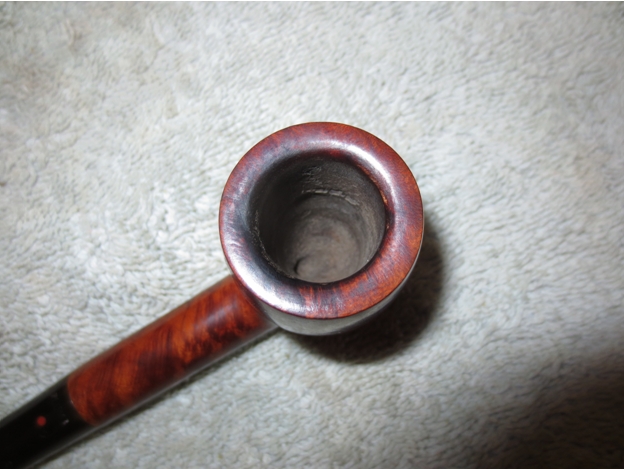
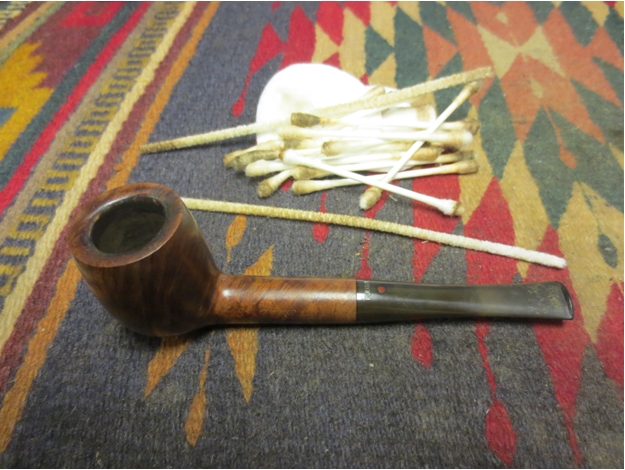
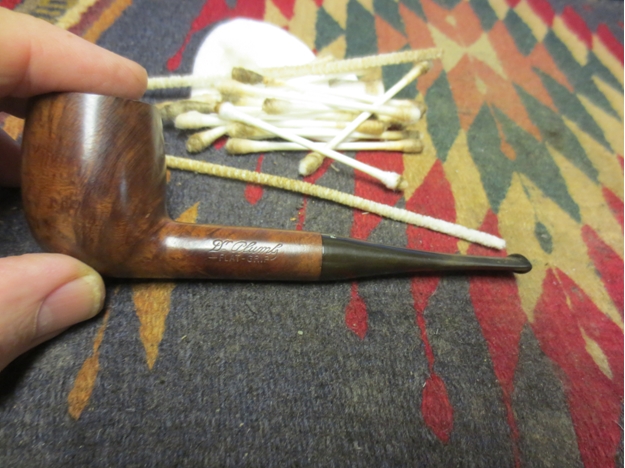
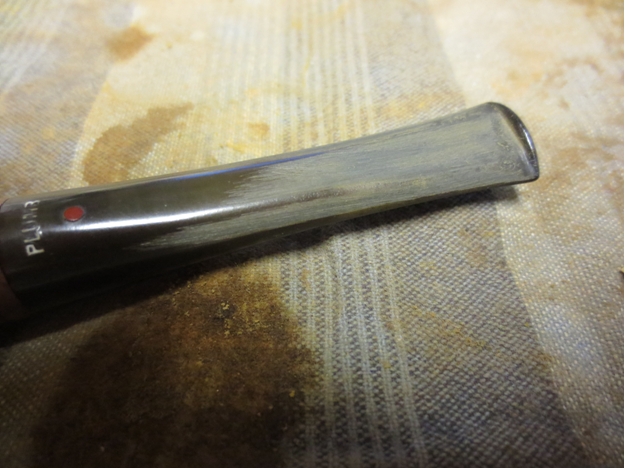
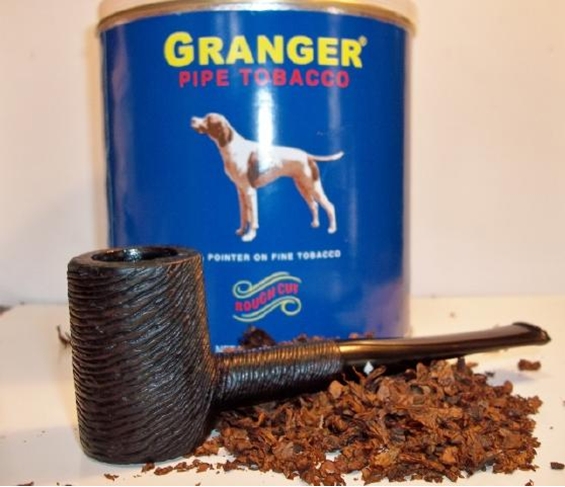
Put Up Your Ducs: Restoring a Meer-Lined Le Duc


Blog by Anthony Cook

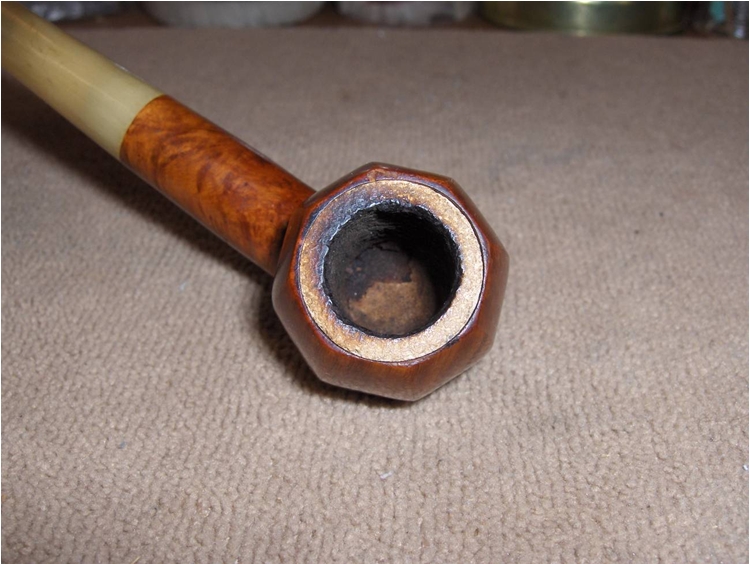
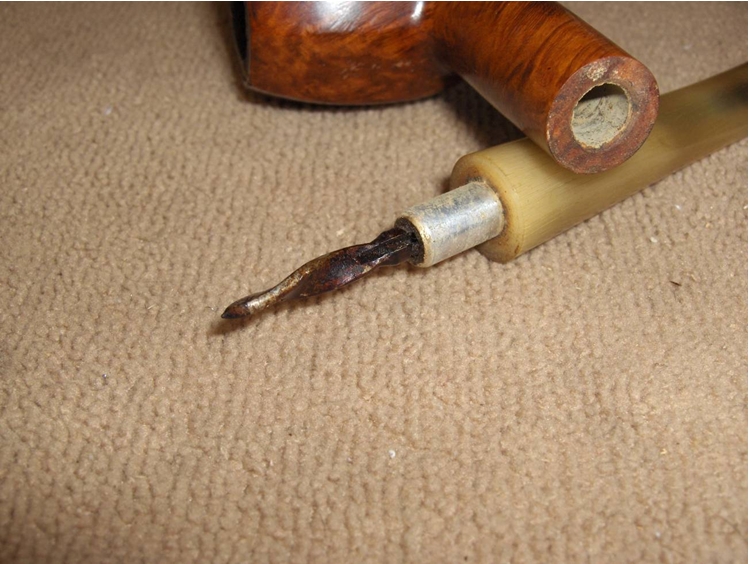
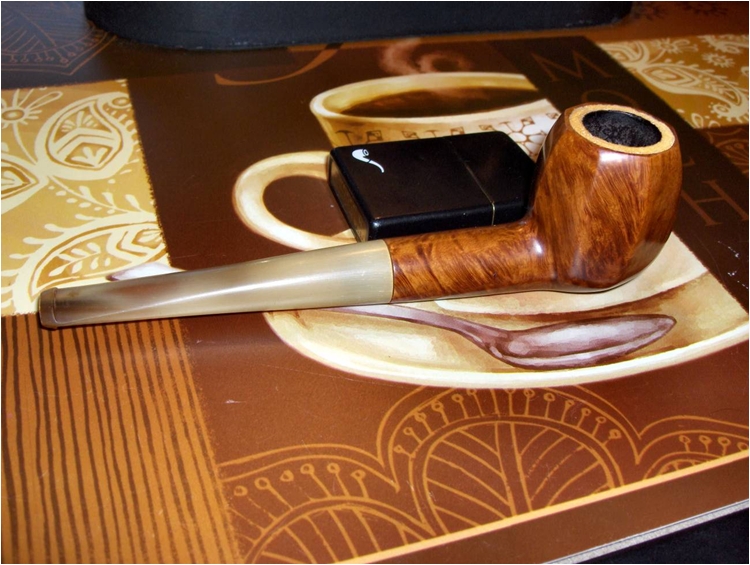
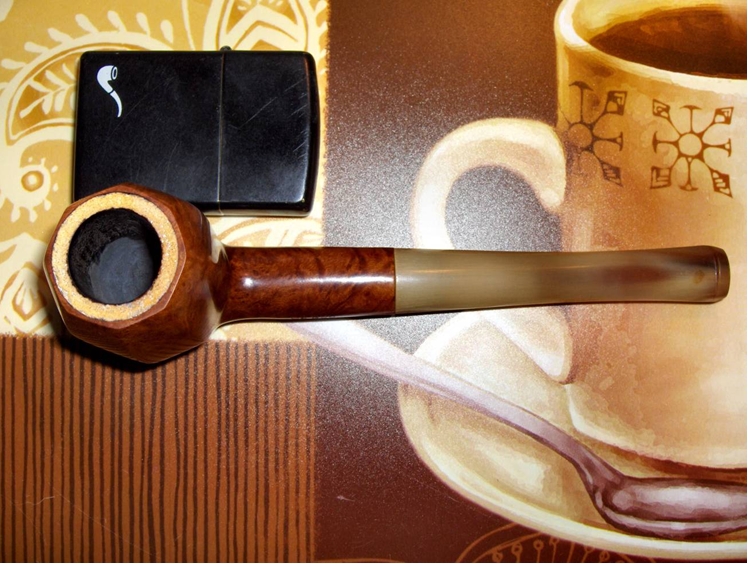
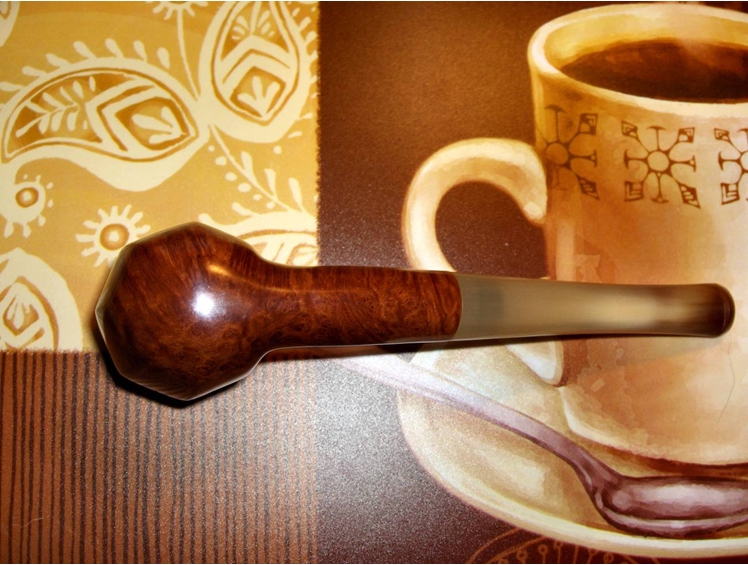
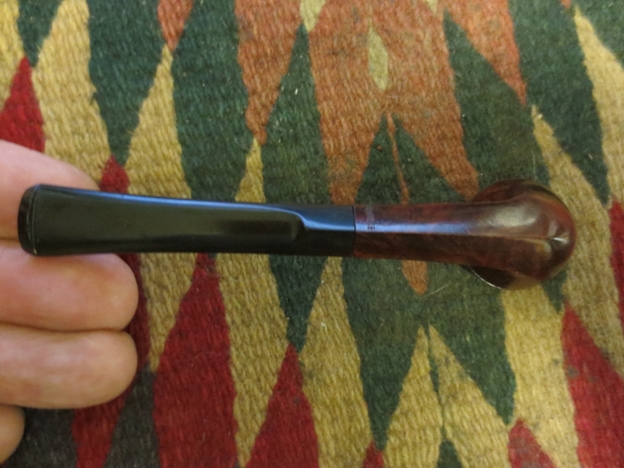
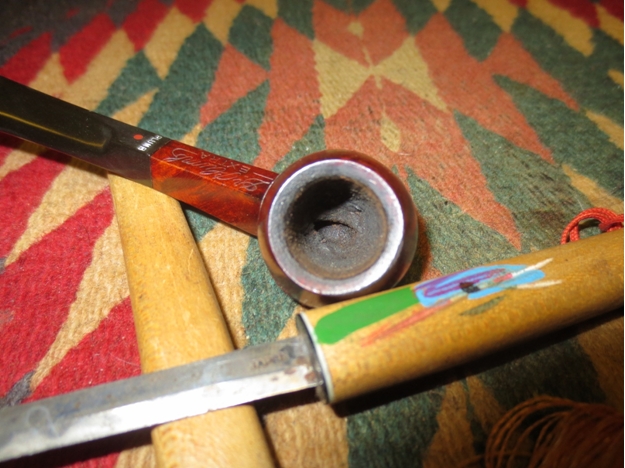
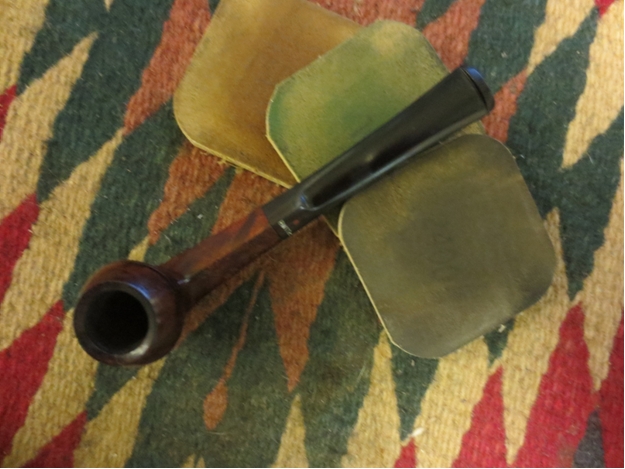
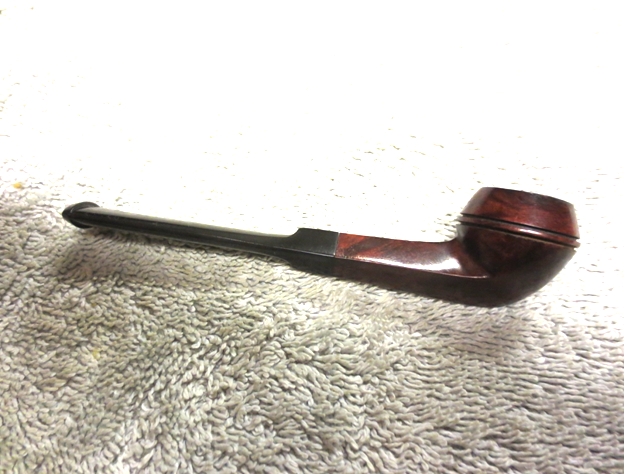
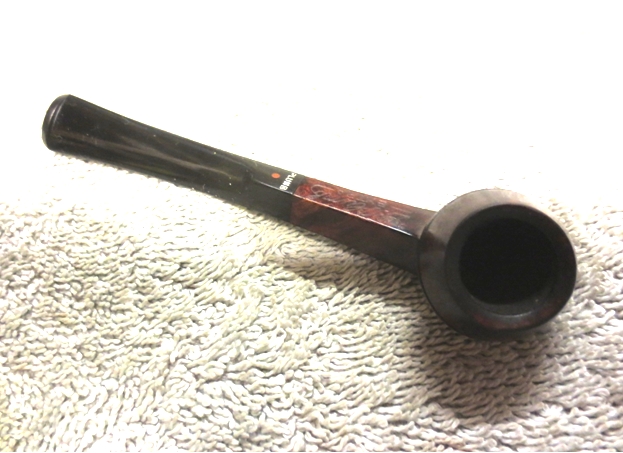
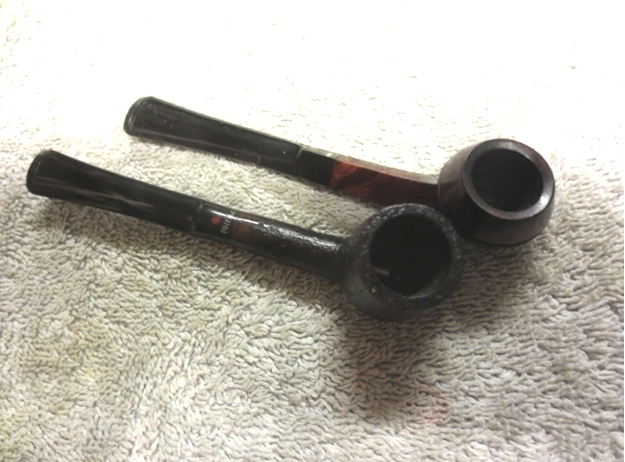
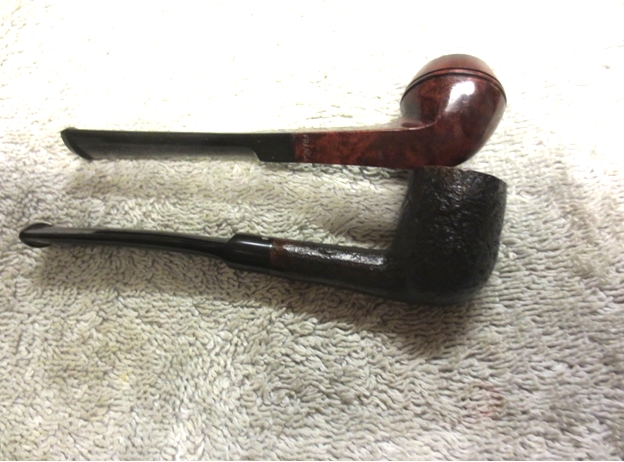
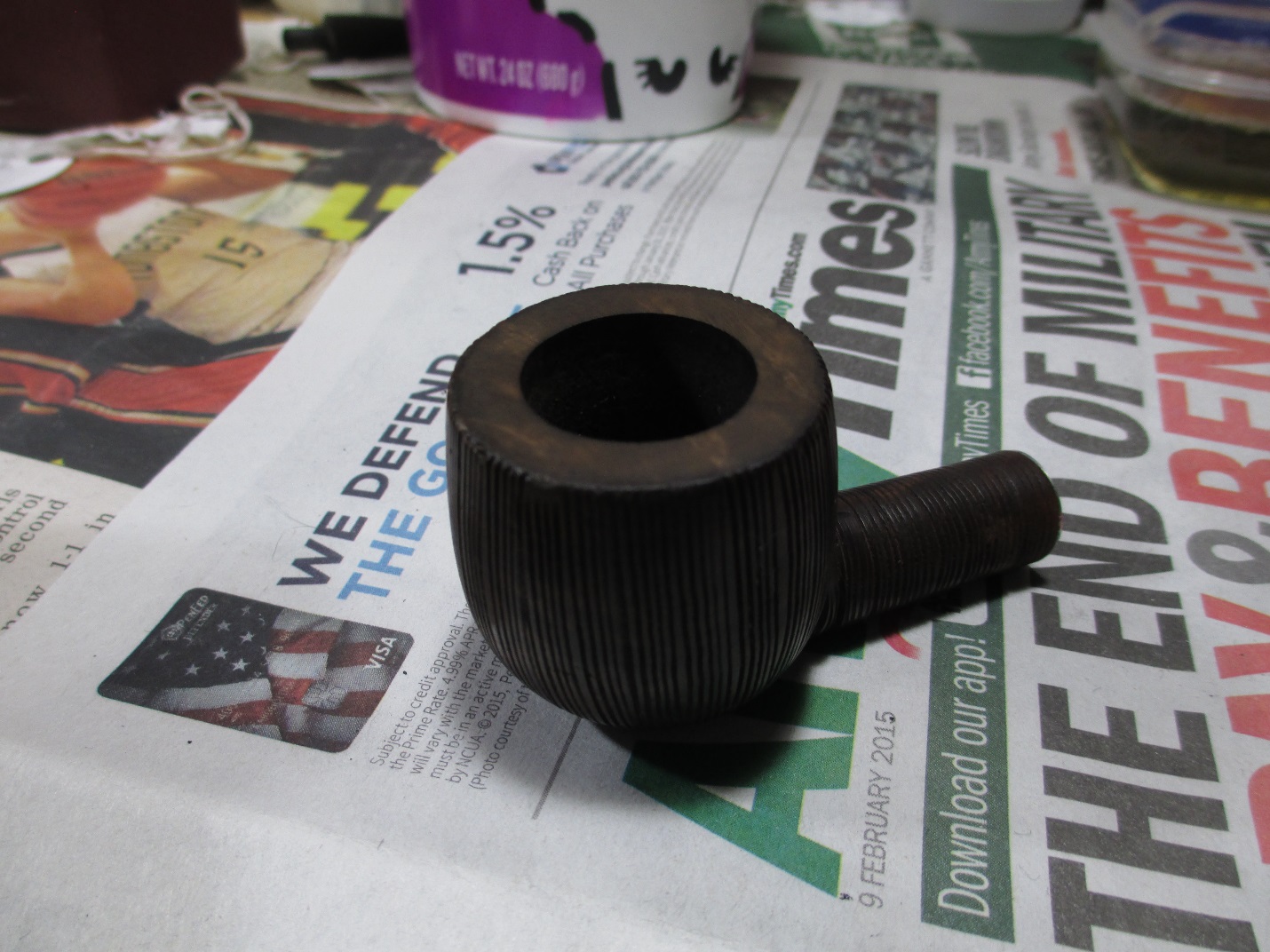
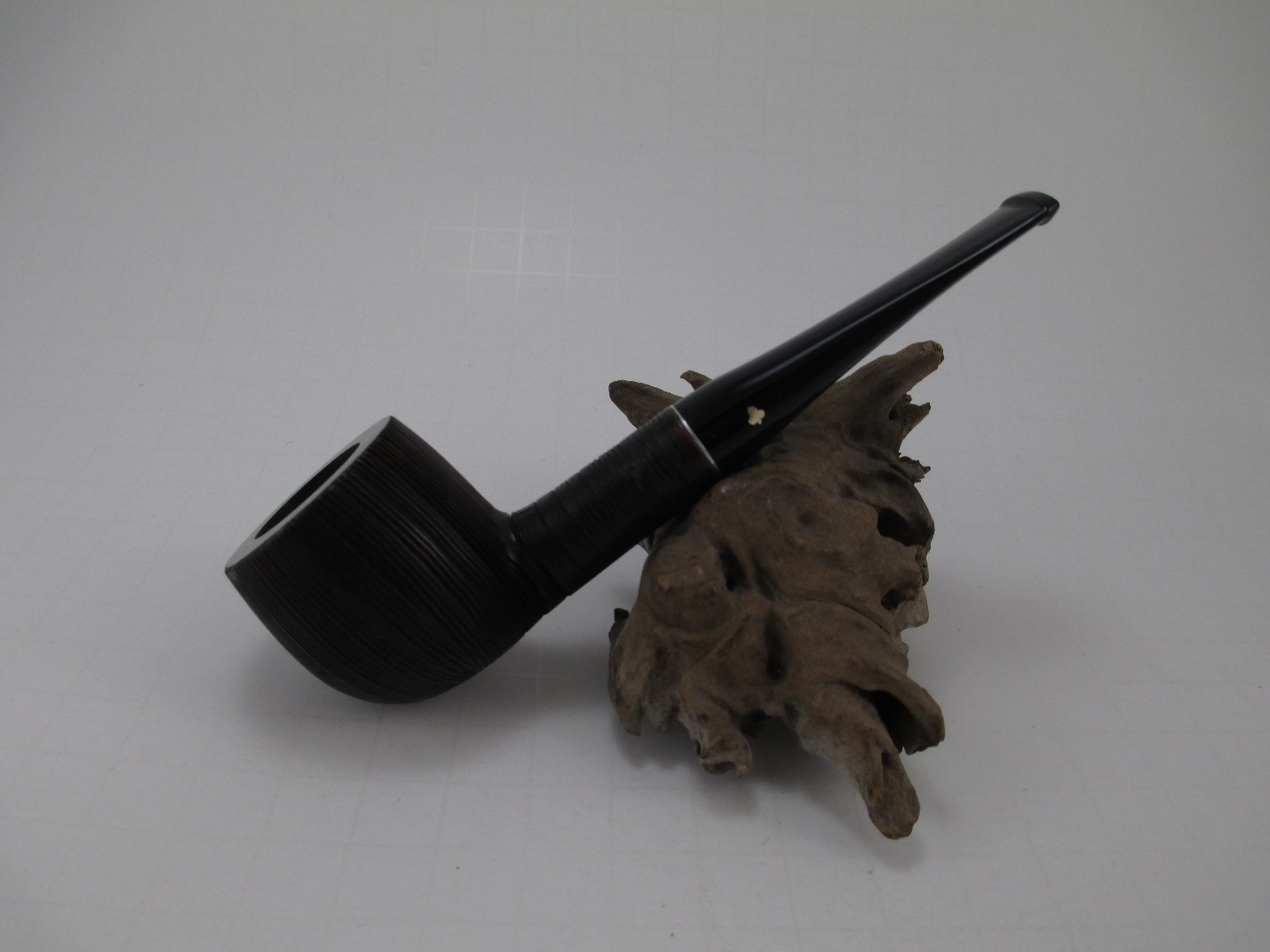
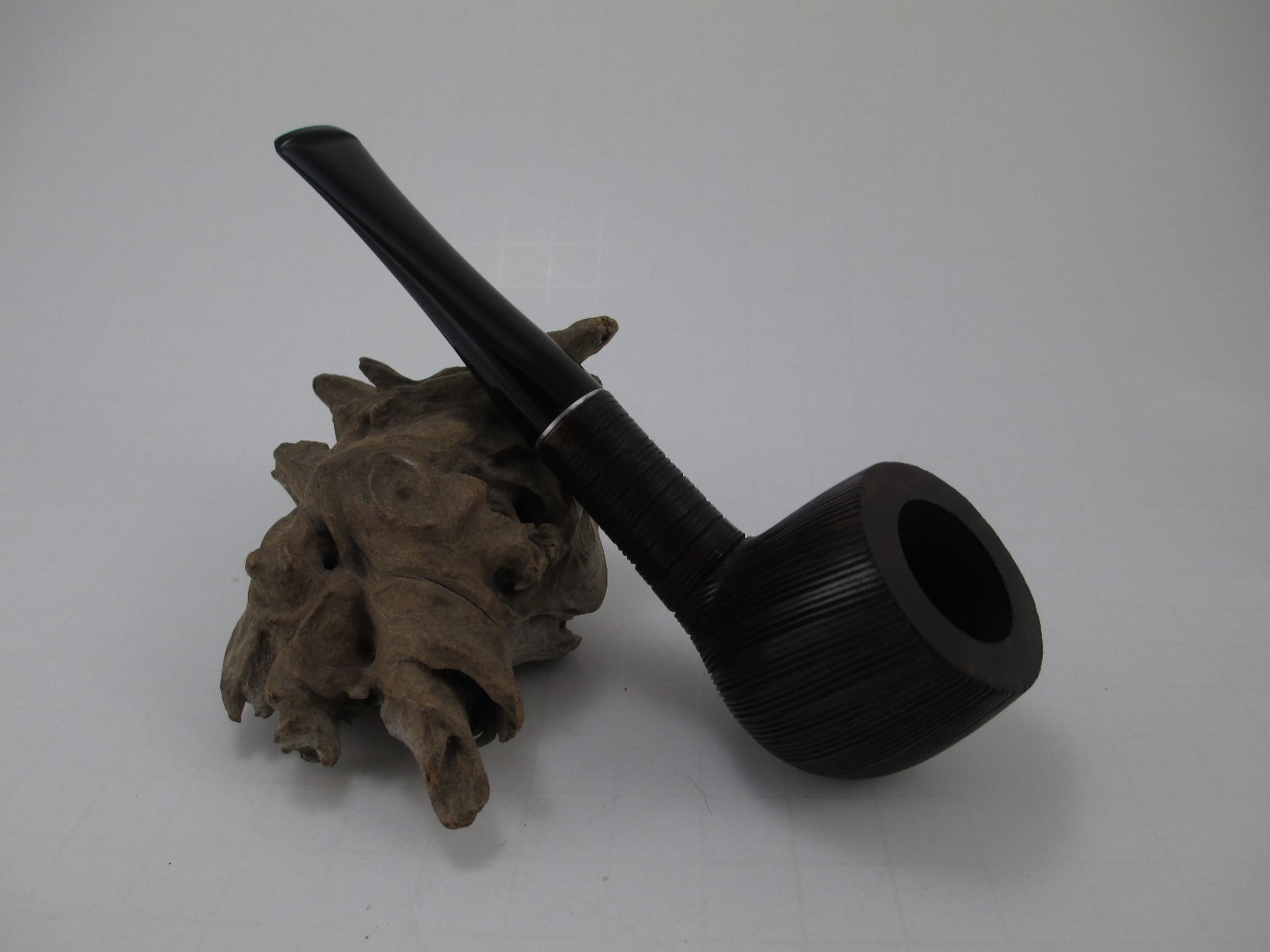
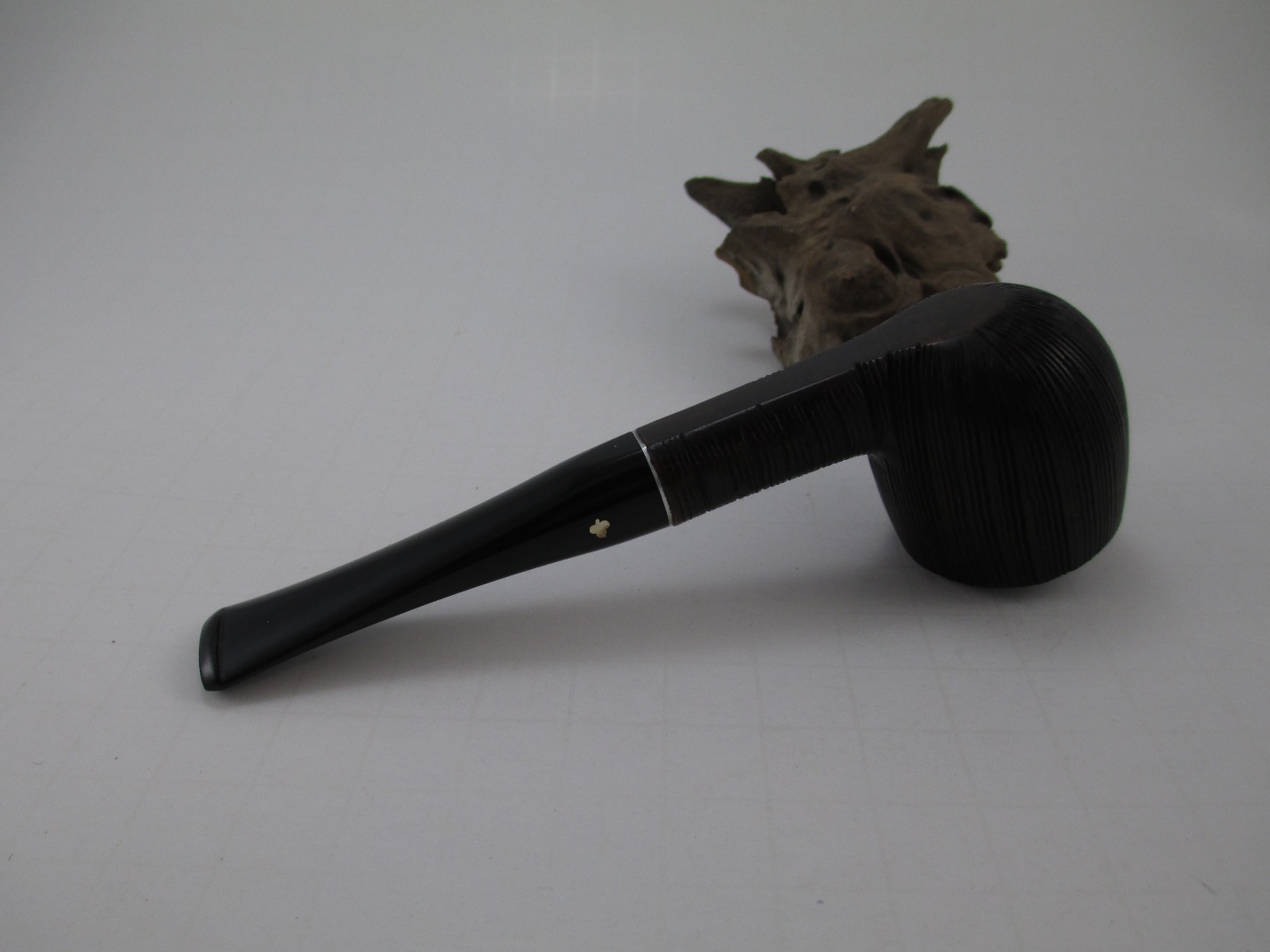
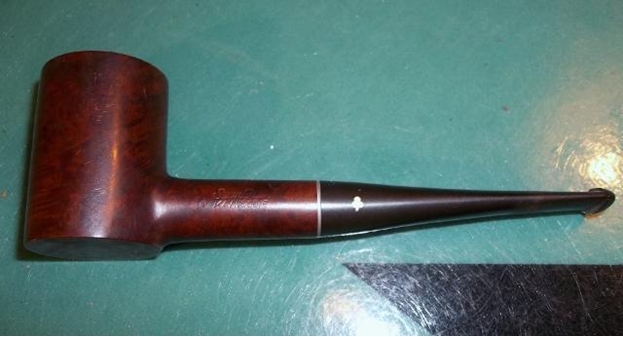
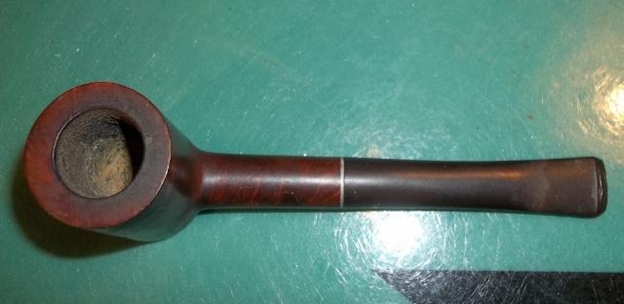
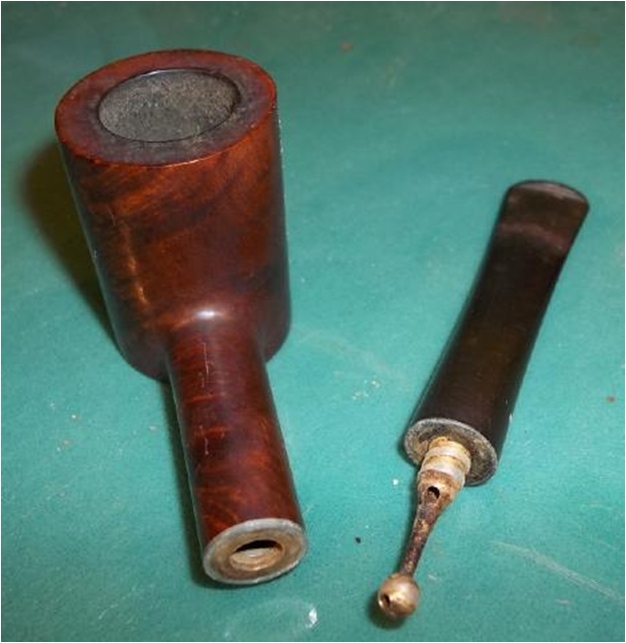
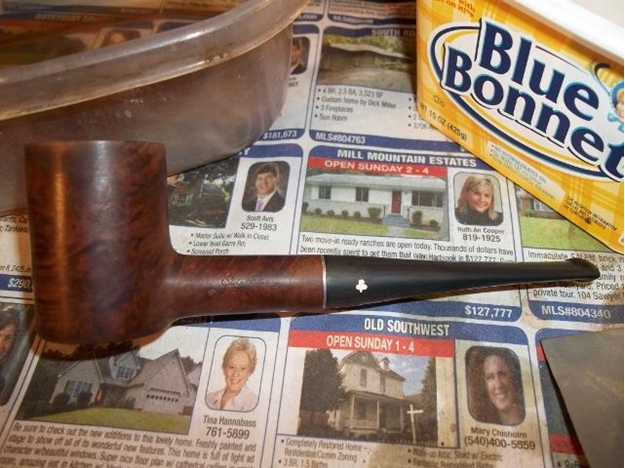
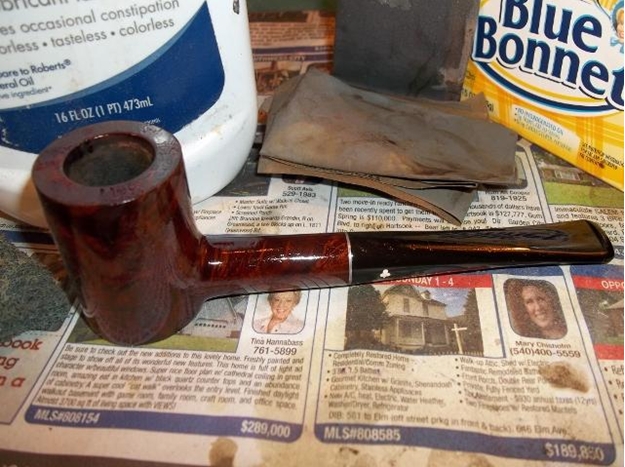
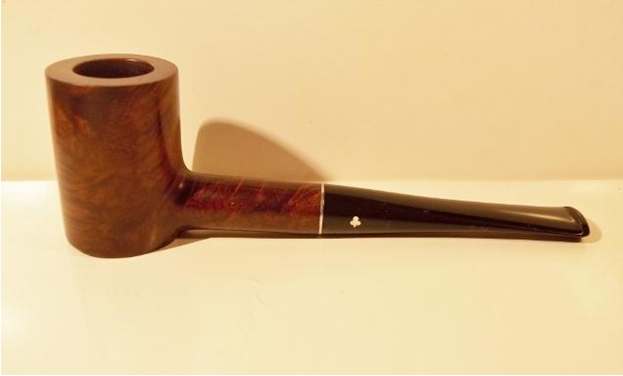
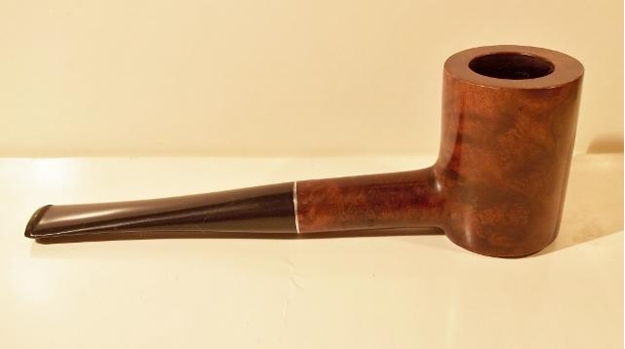
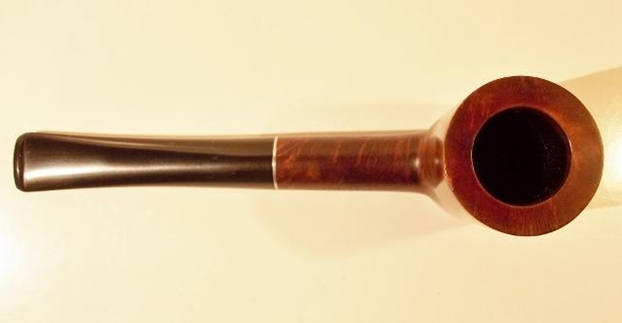
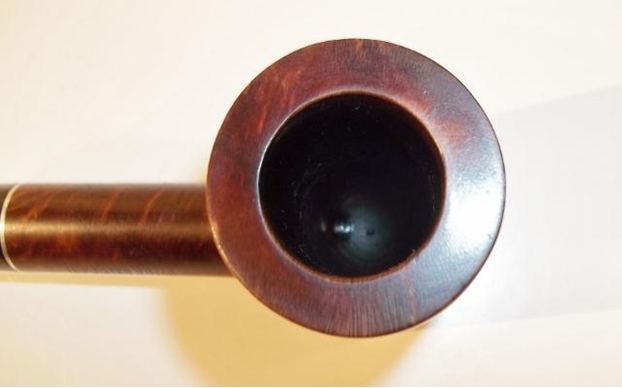
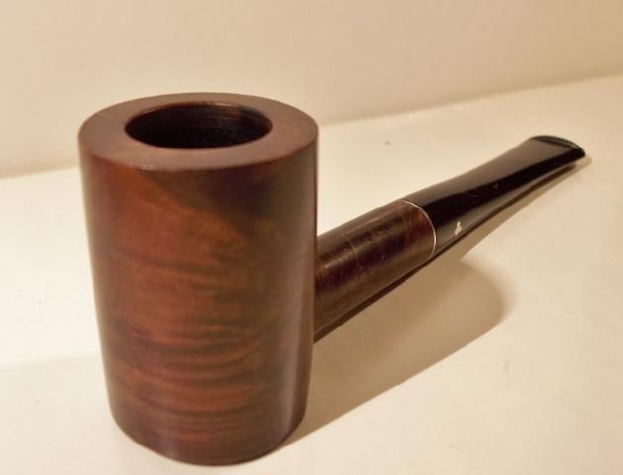
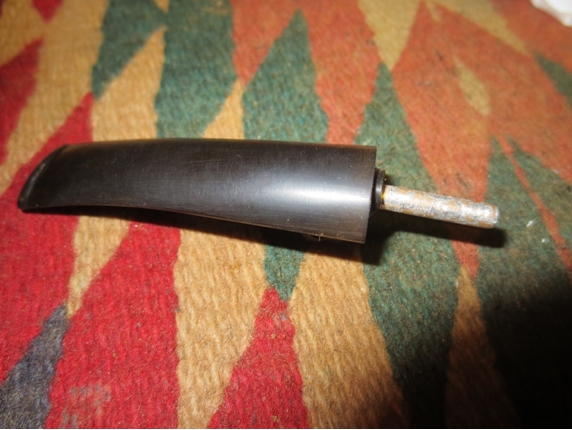
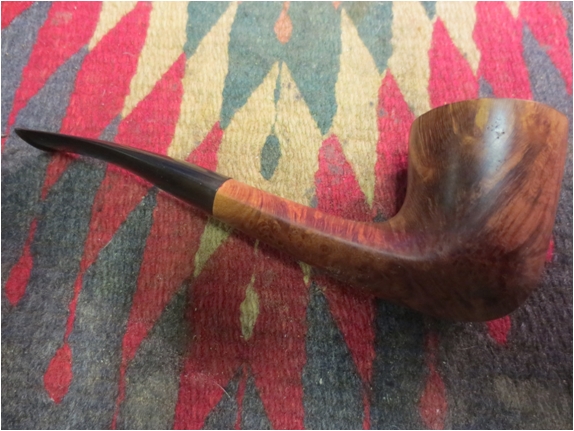
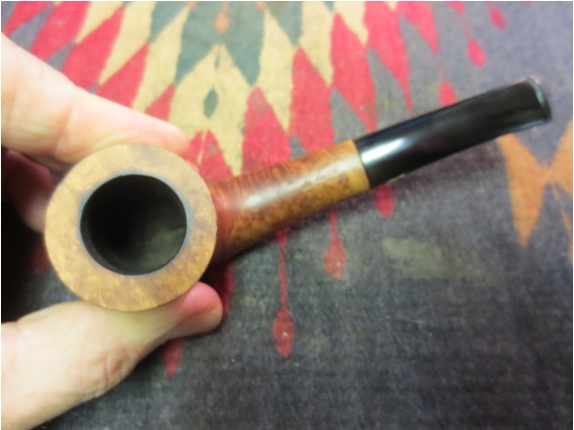
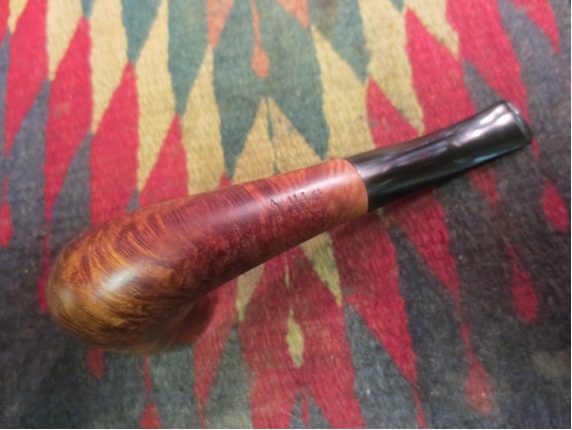
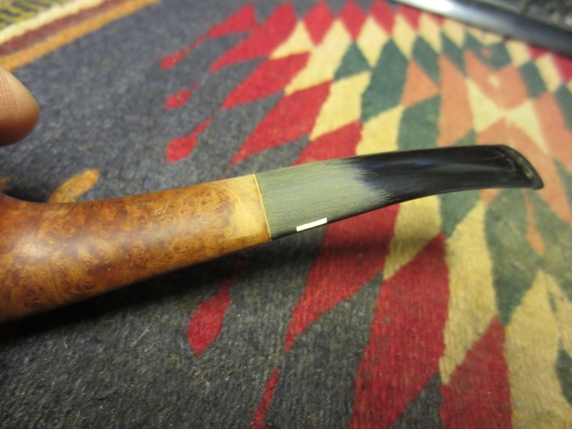
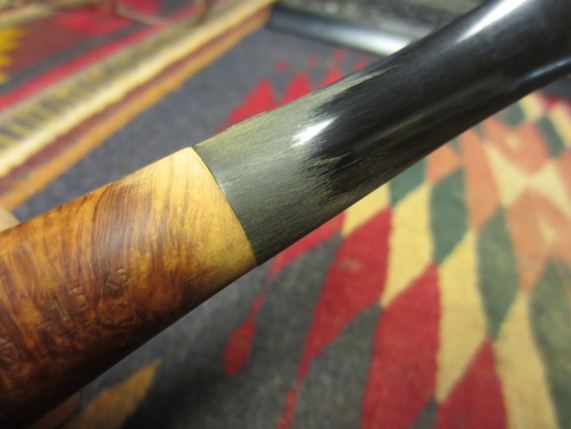
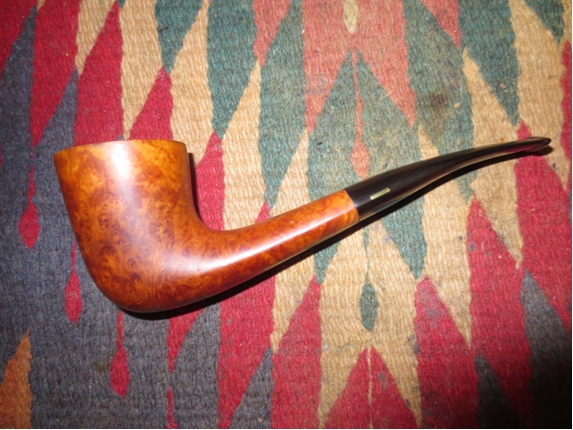
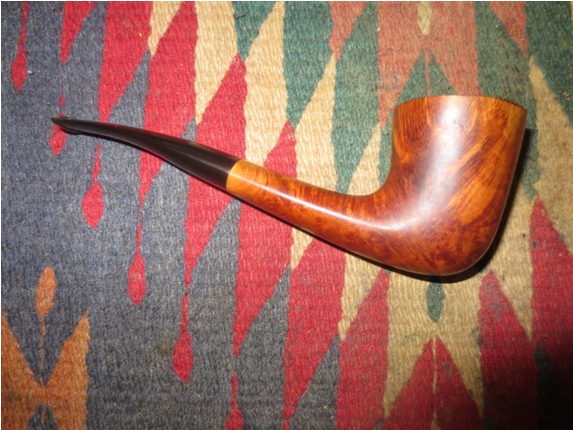
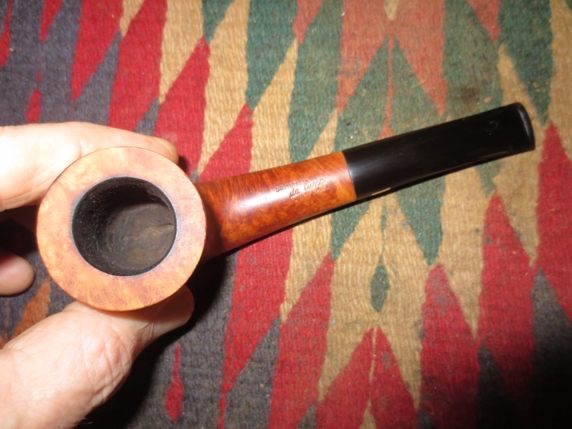
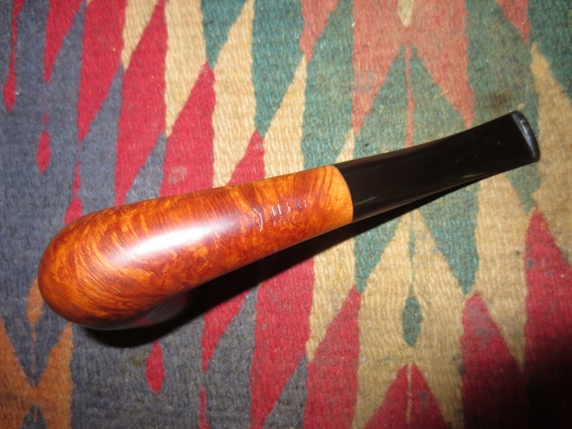
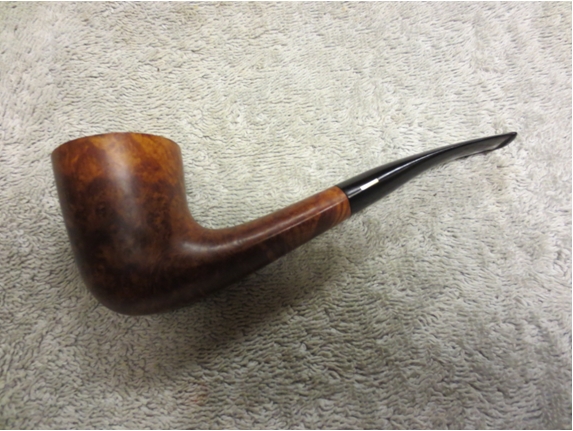
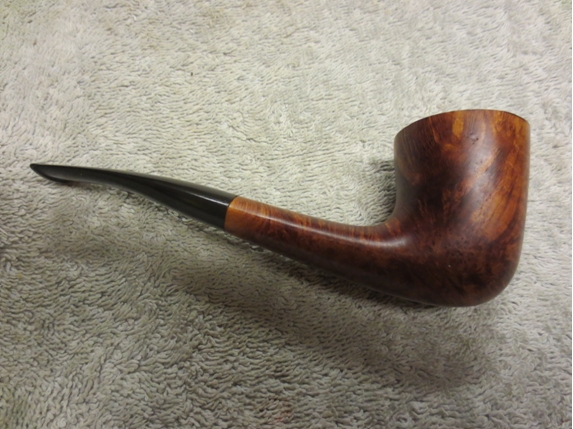
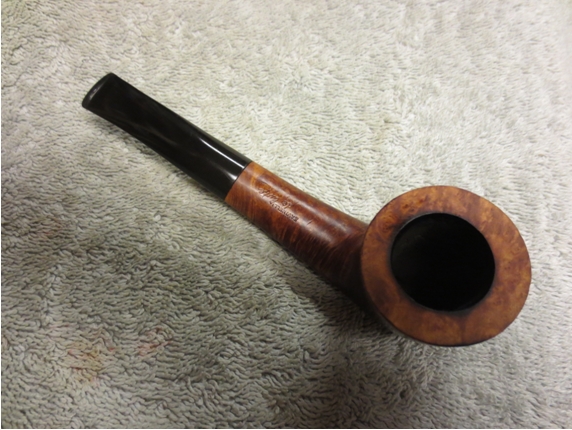
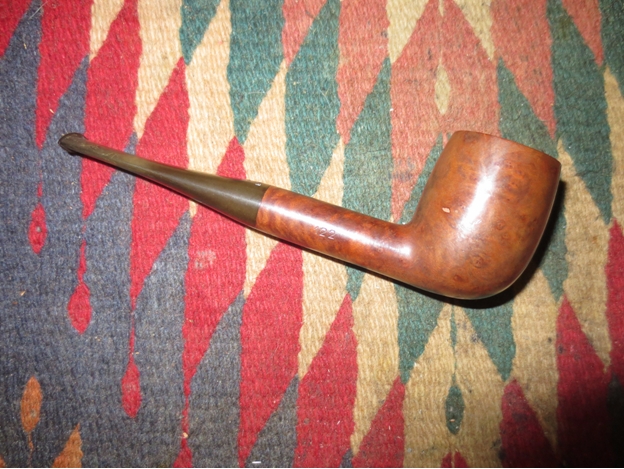
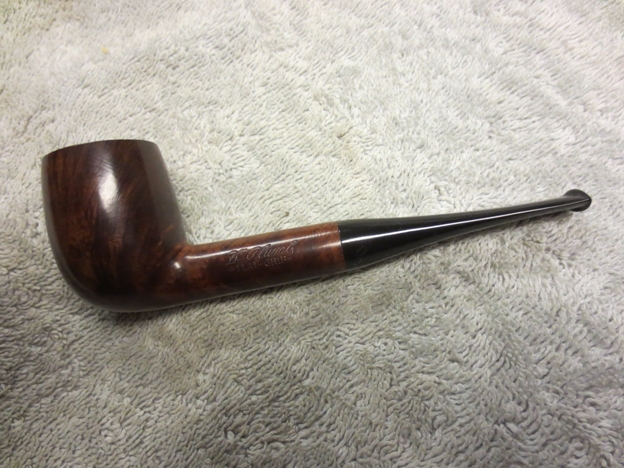
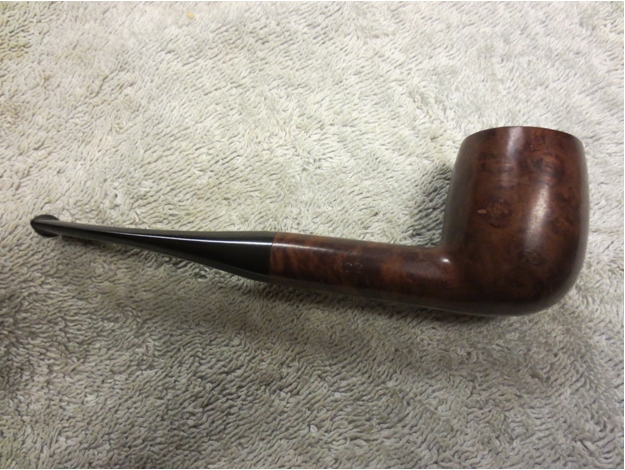
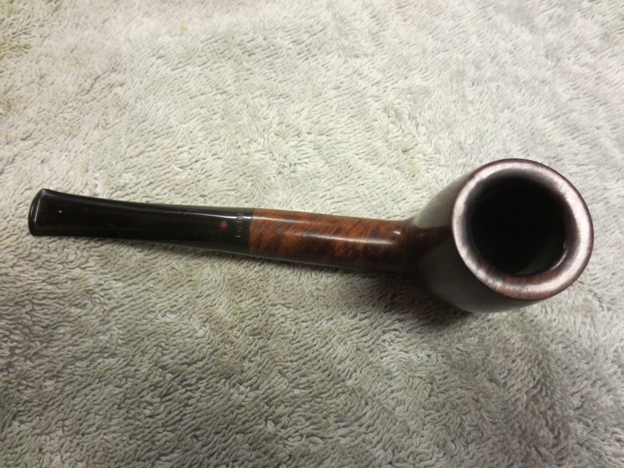
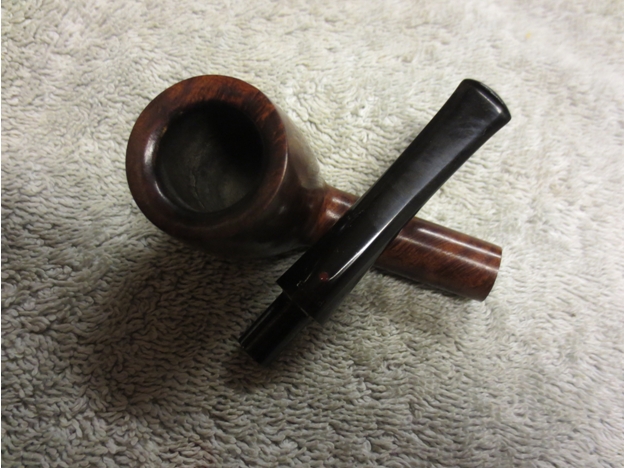
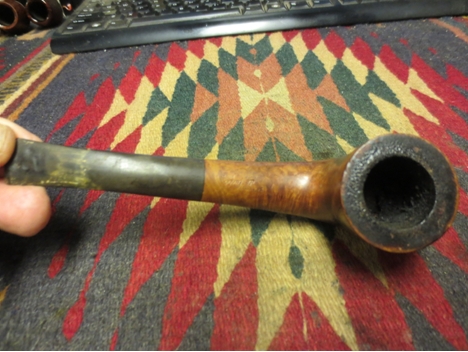
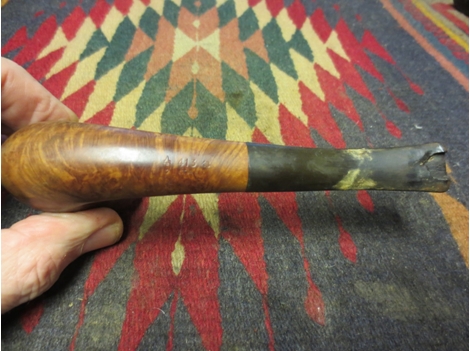
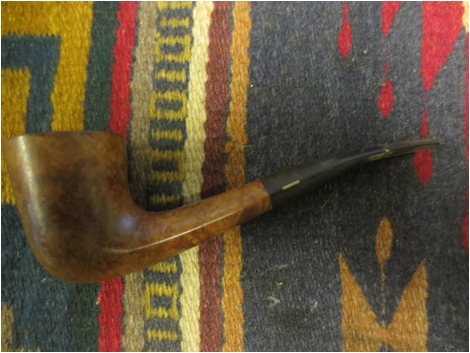
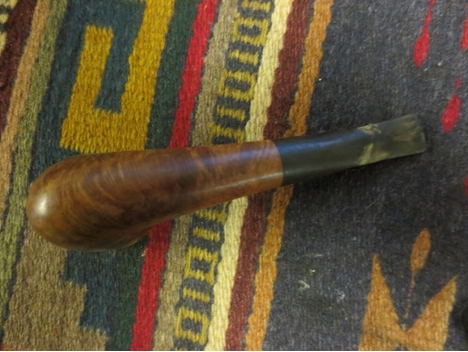
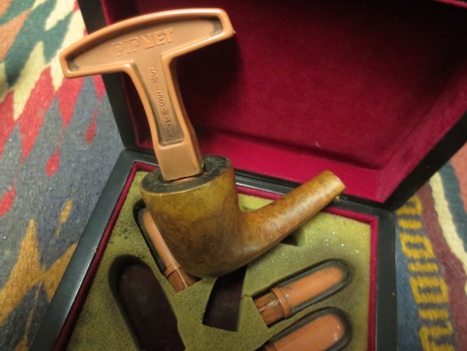
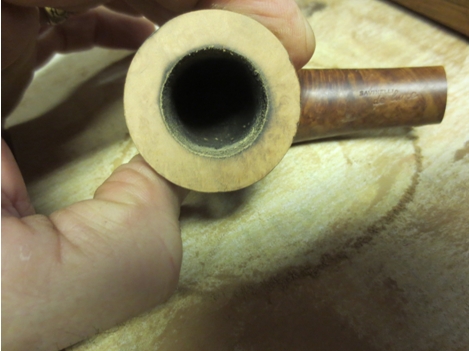
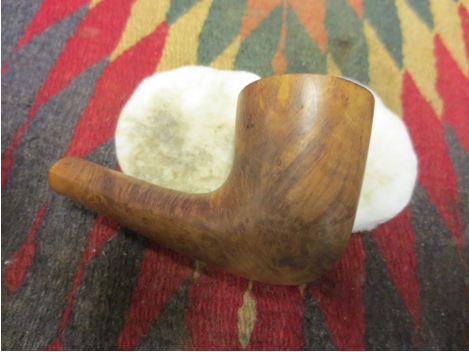
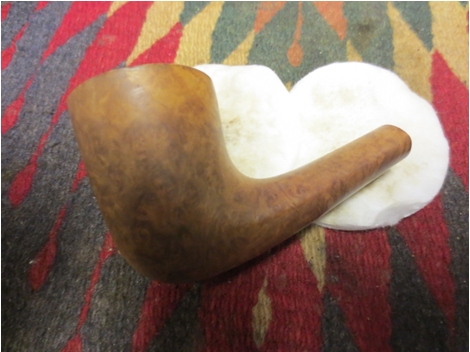
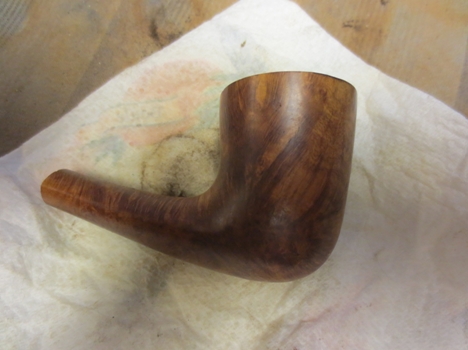
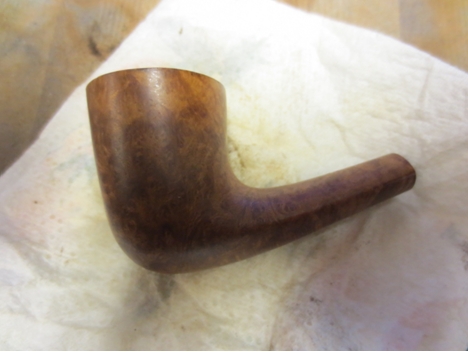
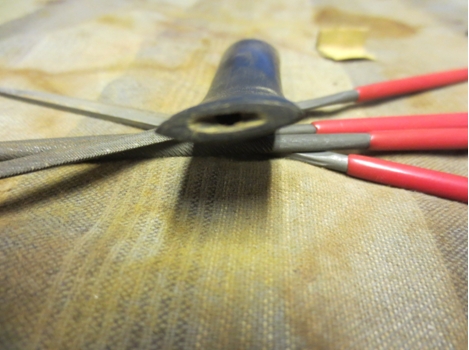
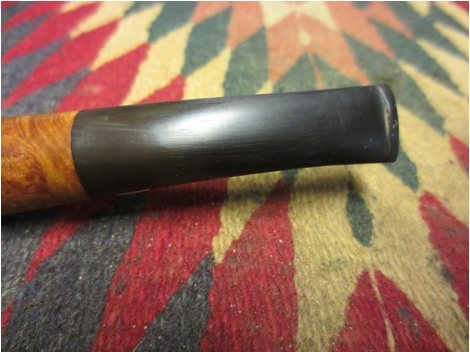
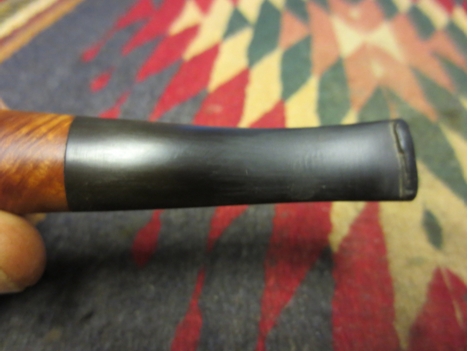
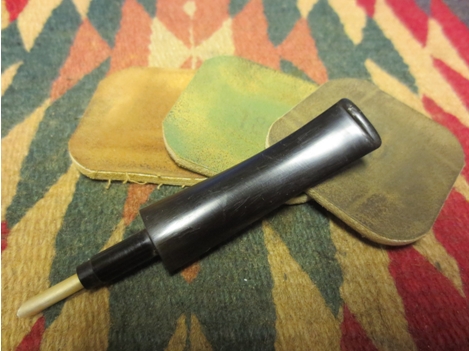
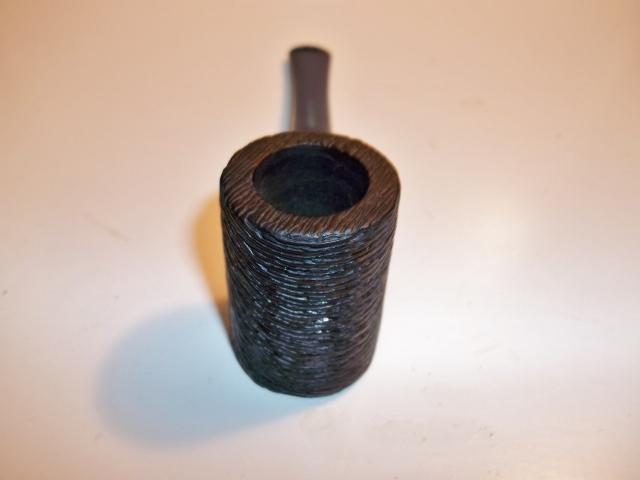
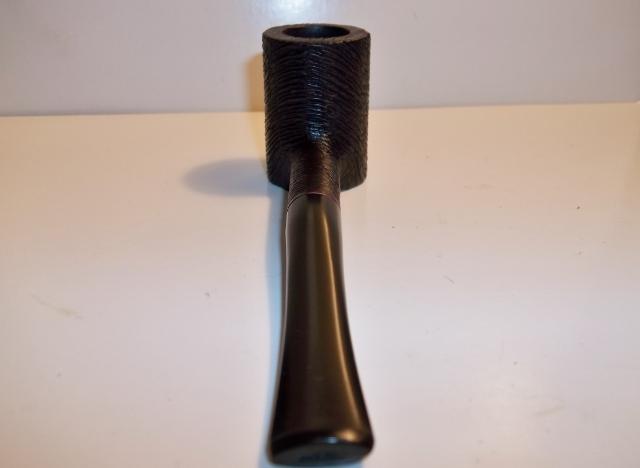
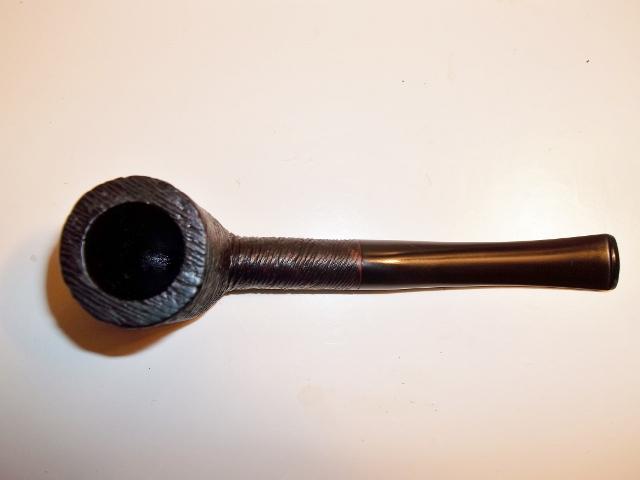
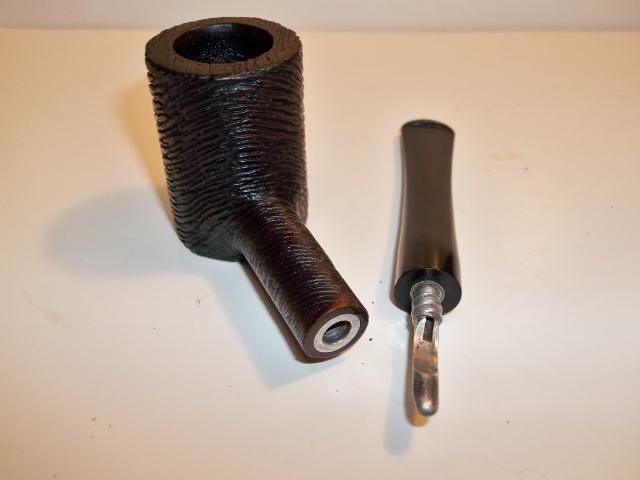
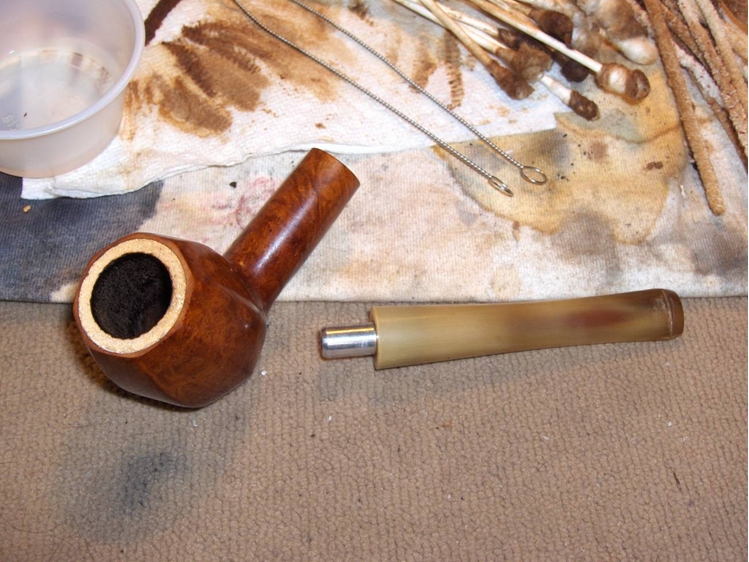
I recently completed work on this meerschaum-lined Le Duc pipe. It has a paneled bowl and a shape that sits somewhere between a squat egg and an elongated apple. It’s stamped simply, “LE DUC” on the left side of the shank and “1” on the right side, which I assume is the shape code. The stem is horn with an aluminum tenon and a twisting, screw-in stinger. This pipe presented me with a number of firsts. I had never worked with panels, meer-linings, or horn stems. So, I knew this one would be fun.Duc1 It’s been difficult to dig up anything conclusive on the history of the Le Duc brand. Both Pipephil and Pipedia come up empty, and a Google search reveals very little more other than a couple of links to an estate pipe that was once available for purchase from Amazon and eBay (the same pipe at both sites). That pipe is the only other example of a Le Duc that I have been able to find. The previous owner of this one did mention that it was from the Netherlands. So, it’s possible that it’s somehow associated with Gubbels.
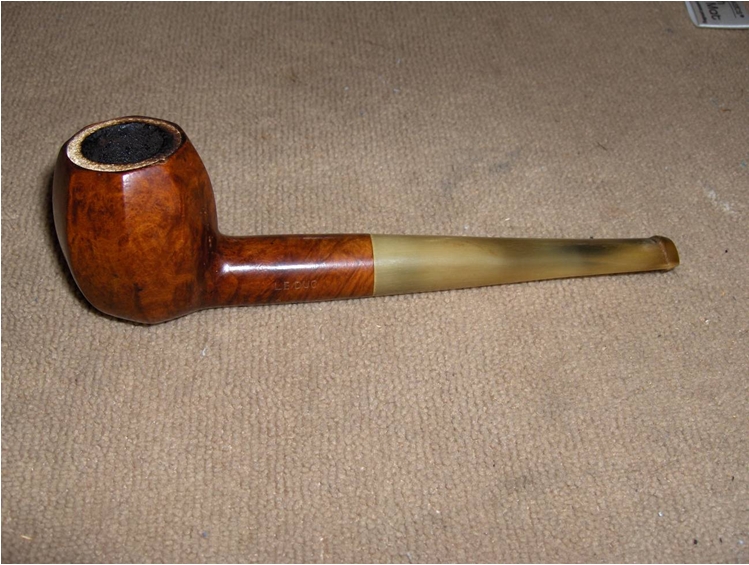
I posted pictures of the pipe on Pipe Smoker Unlimited and asked if anyone had any more information. General consensus was that it is a French-made pipe, but that’s about as far as it went. Due to some slight shaping errors that I found in both the stummel and stem, I’m willing to bet that it’s somebody’s seconds brand. Though, I’m not quite willing to bet all of my marbles on a particular country of origin yet. So, if anyone out there has any insight into the brand, please don’t hesitate to let me know in the comments section.

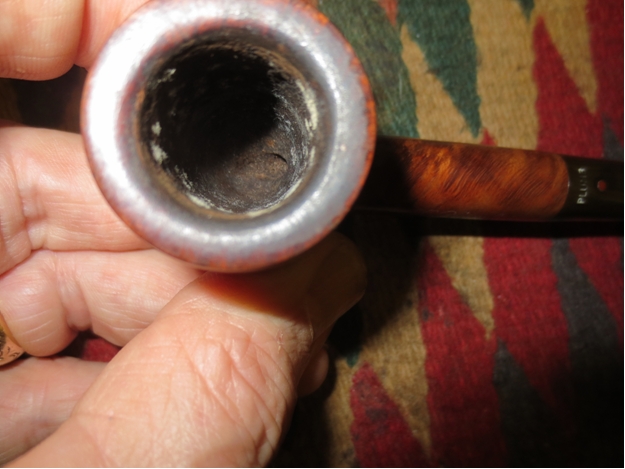
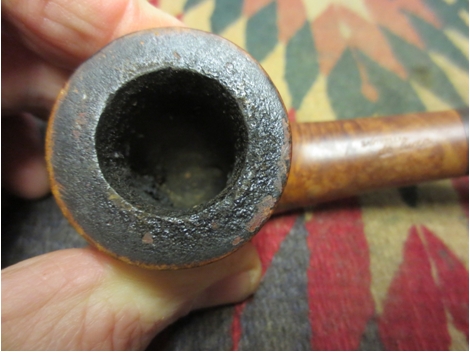
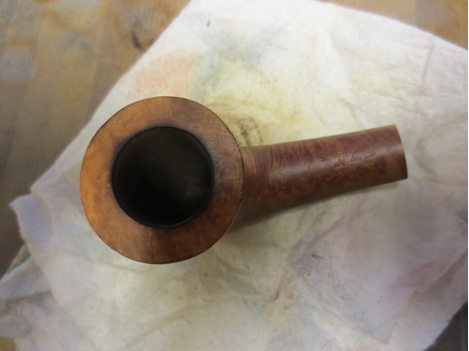
There were a few small scratches and dents on the surface of the lacquer-coated stummel. The worst of which was a series of more than a dozen nicks on one back panel. The narrow surface of briar around the rim was lightly scratched, but didn’t appear to be charred. A thin layer of old tar covered both the meer and the briar on the back of the rim.

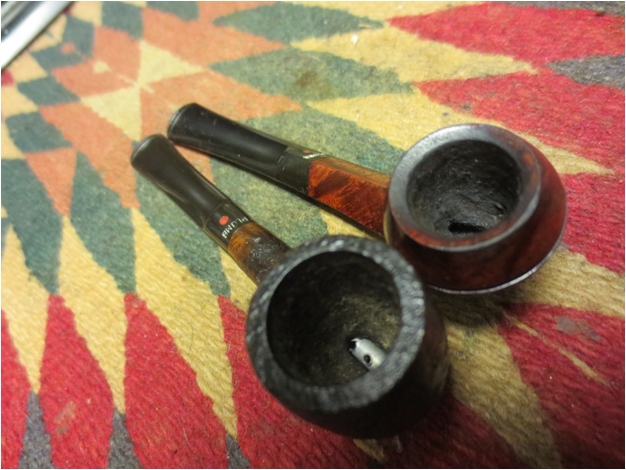
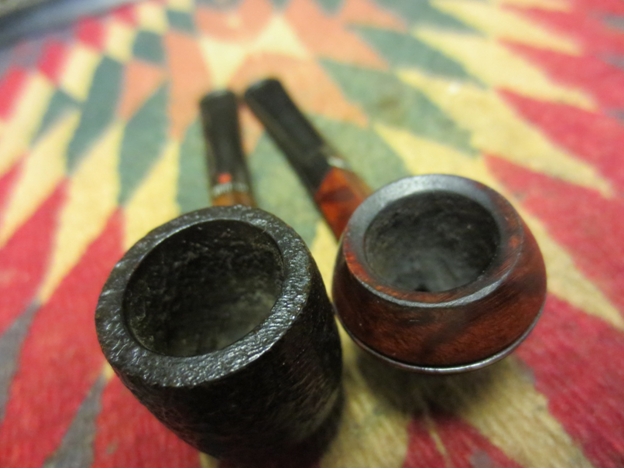
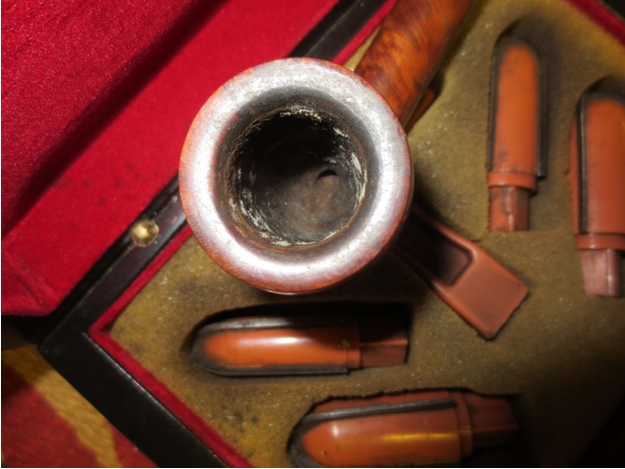
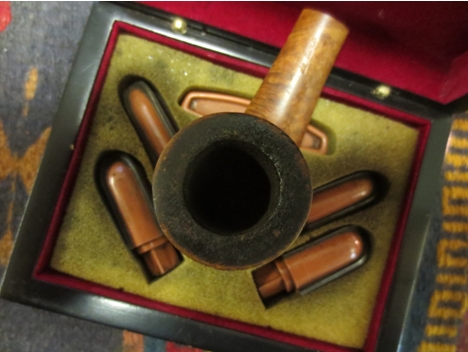
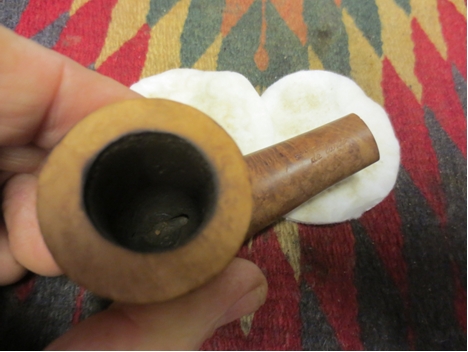
The chamber was lightly caked, mostly in the top two-thirds. The meerschaum lining was by and large intact, but roughly a third of it had been broken out of the heel of the bowl around the draft hole. A crack in the remaining meer ran around the circumference of the heel and I could not for life of me figure out what was holding the rest in. I planned to eye this area with suspicion while I worked.

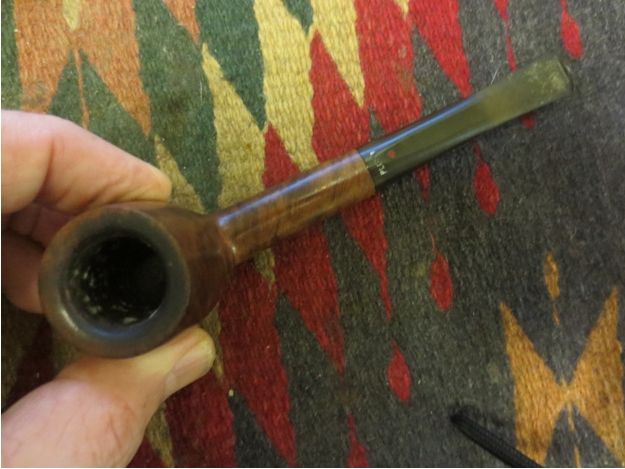
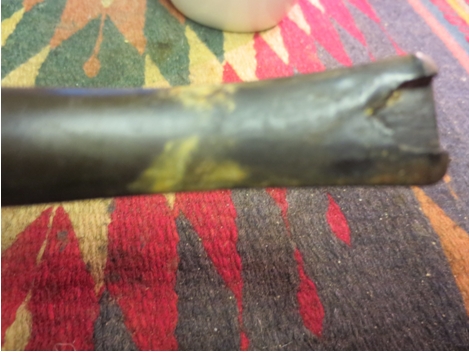
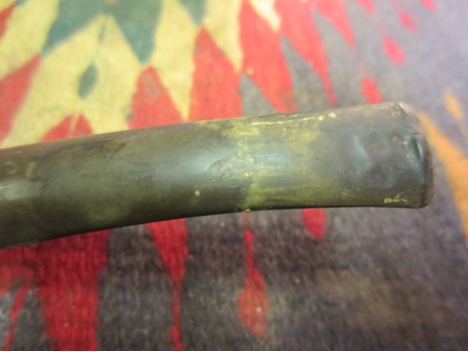
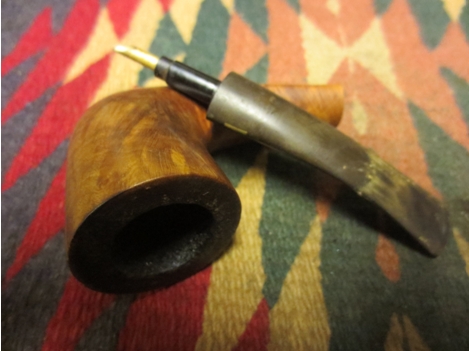
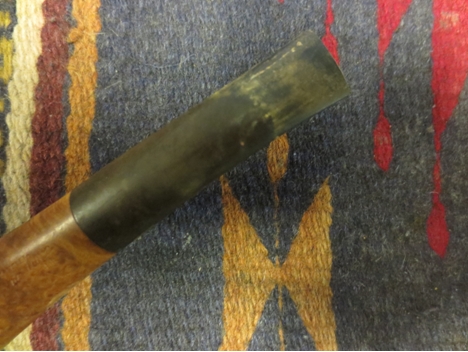
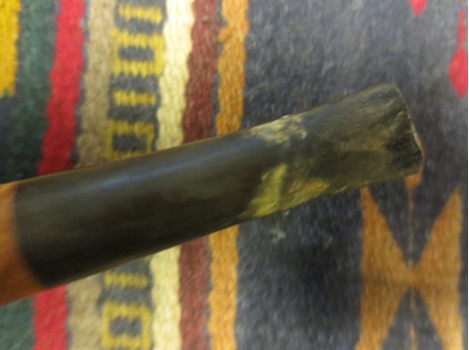
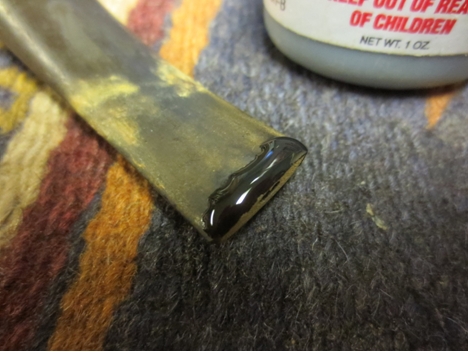
Some light chatter was present on both sides of the stem and there were a couple of shallow tooth impressions on the top. Someone had also chosen to add a dash of white paint to the bottom of the button, apparently for contrast and flair.

Overall, things could have been better, but I’ve seen much, much worse. The photos below should give you a better idea of the condition of the pipe when I started work.Duc2

Duc3

Duc4 (By the way, that dark spot in the photo above is not a natural coloration. It’s tar build-up showing through the translucency of the horn. More on that later.)Duc5
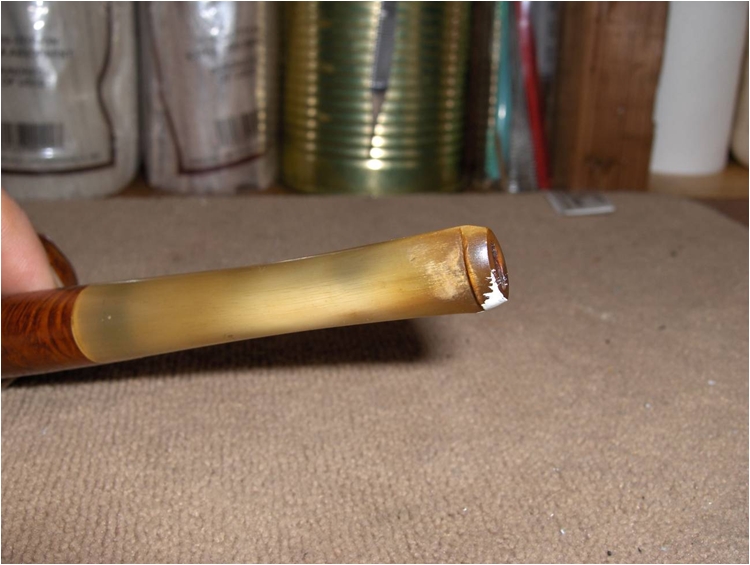
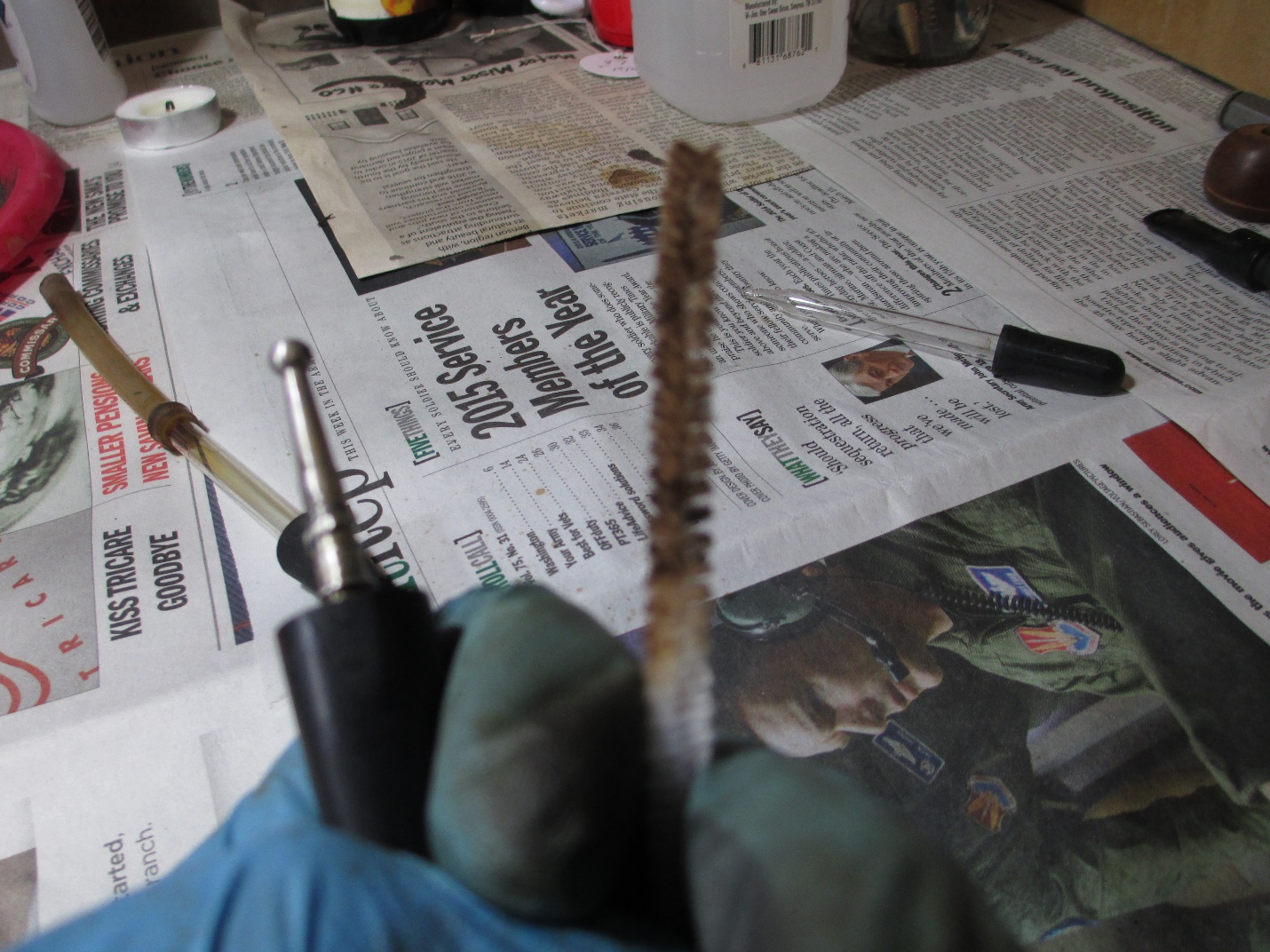
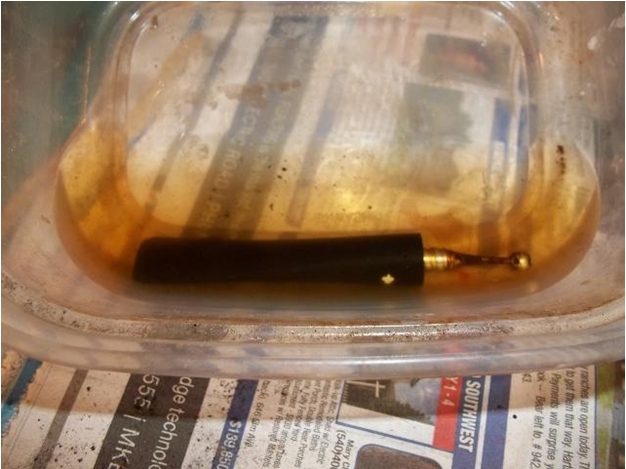
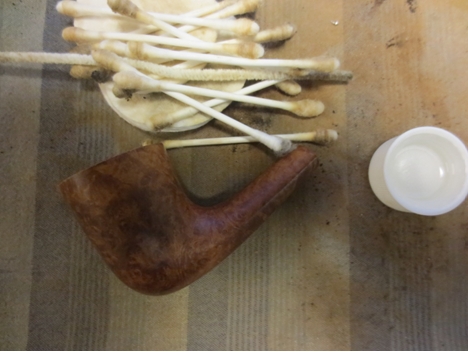
Duc6 The first thing I did was remove the nasty, tar-caked stinger, which wasn’t easy. The build-up had pretty much glued it into place. I dripped alcohol around the joint until the tar had softened enough that I could unscrew it. Then, I dropped the stinger into a small container of alcohol to soften the remainder of the gunk.

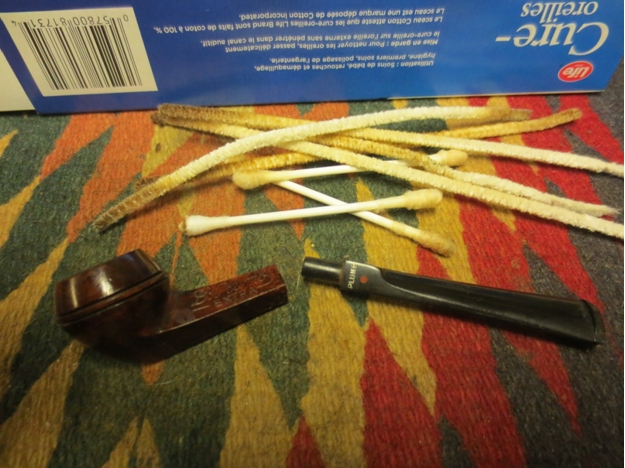
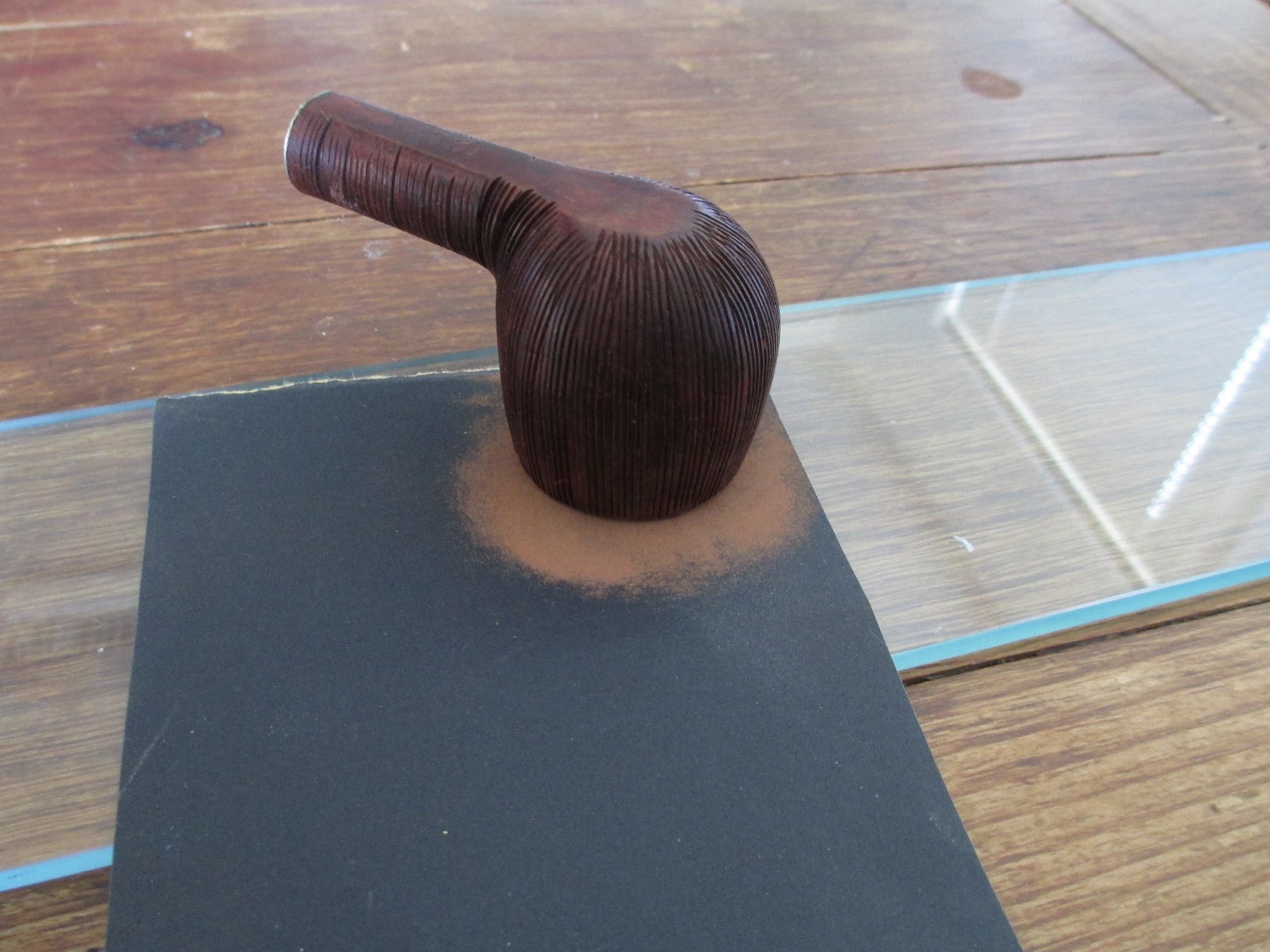
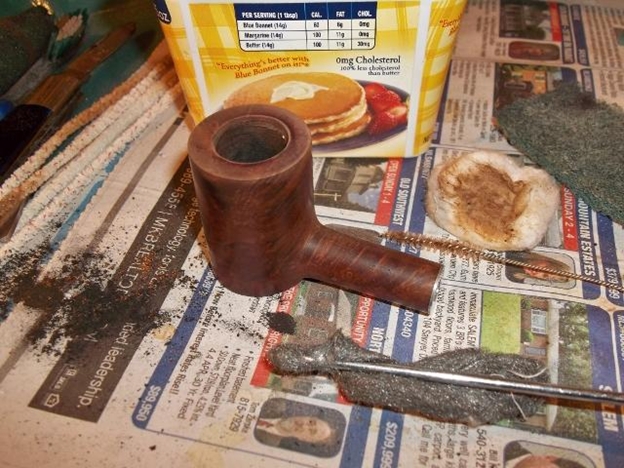
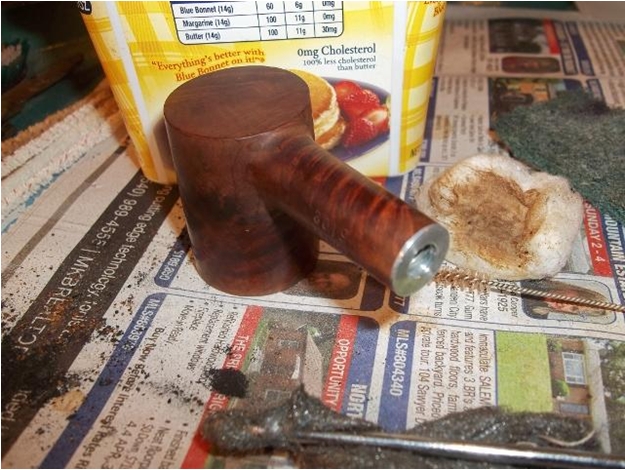
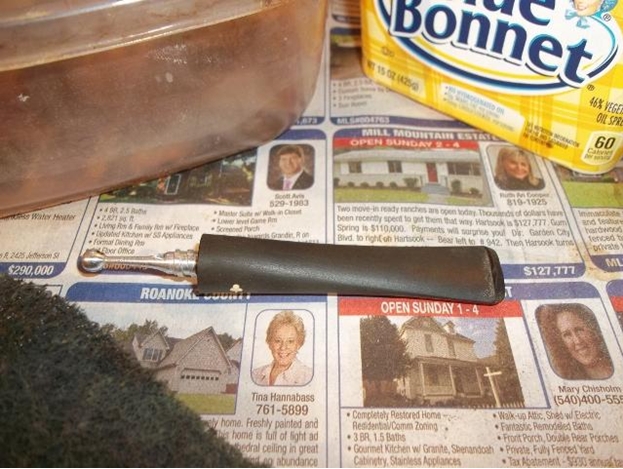
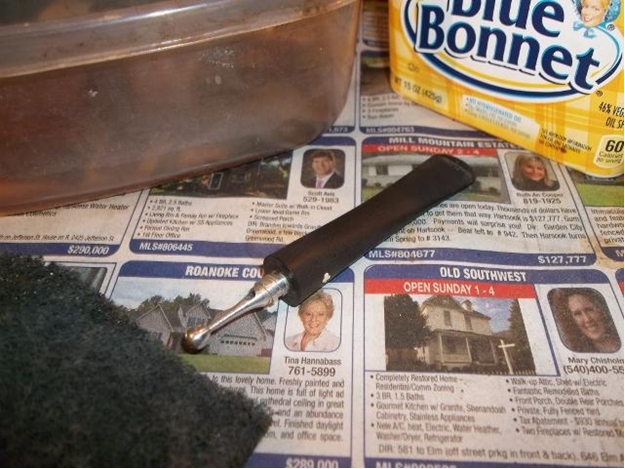
While the stinger detoxed, I attempted to remove the schmutz along the rim with good ol’ cotton pads, saliva, and elbow grease, but I found it to be too stubborn. Since I needed to address the scratched in the briar along the rim anyway, I lightly topped the bowl with 320 and 400-grit sandpaper until both the tar and scratches were gone.Duc7 The cake in the chamber was light but very hard. I started removing it by sanding out with 320-grit paper. Once most of it had been removed, I switched to 400-grit to finish it off. Unfortunately, like William Butler Yeats wrote, “Things fall apart; the centre cannot hold;” and as careful as I was, the remaining bottom of the meer liner was sacrificed during the cake removal process. Of course, I wasn’t at all surprised. I think the cake was the only thing holding it in to begin with.Duc8 After removing most of the cake, I checked back in with the gummy stinger. The alcohol had softened the tar enough that the majority of it could be removed with cotton swabs and a pipe cleaner. The crud in the air slot was still pretty firm, however, and I had to use a pick to scrape it out before I could scrub it clean with a pipe cleaner. I followed with some #0000 steel wool along most of its length. The aluminum is very soft. So, I maintained a very light pressure and avoided the threaded end.Duc9 Then, I started scrubbing out the inside of the shank with isopropyl alcohol and a few shank brushes, cotton swabs, and pipe cleaners. Let me tell you, this was one dirty Duc. The tar was built up into peaks and ridges that seemed to rival the Himalayas. Removing the crud in the shank was less like cleaning and more like heavy landscaping.
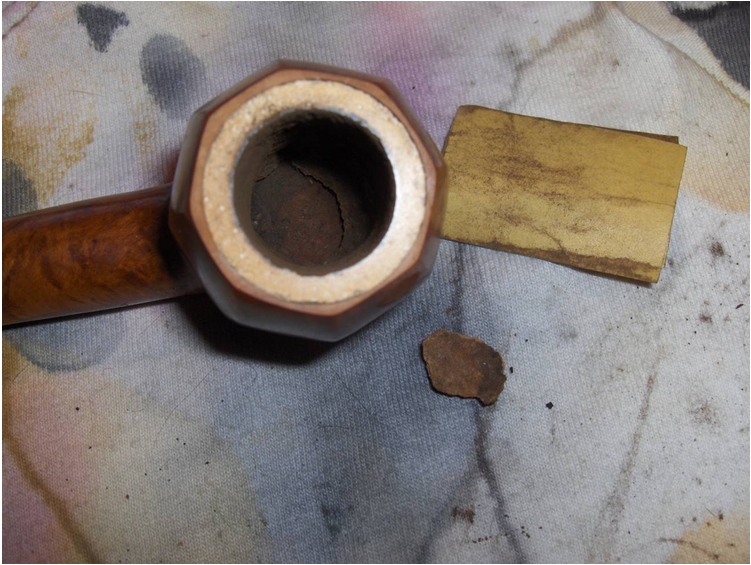
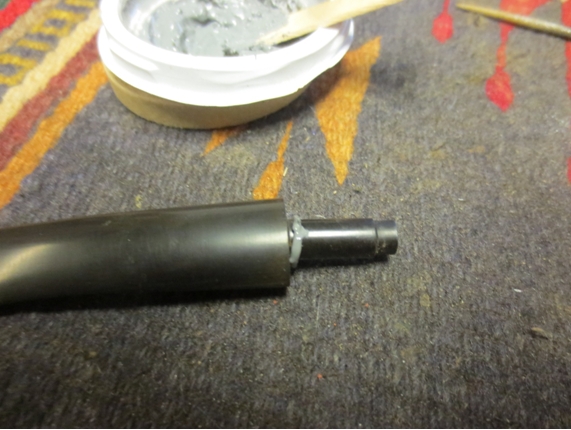
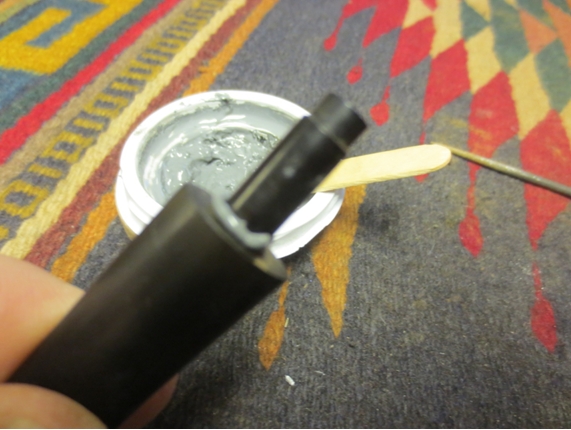
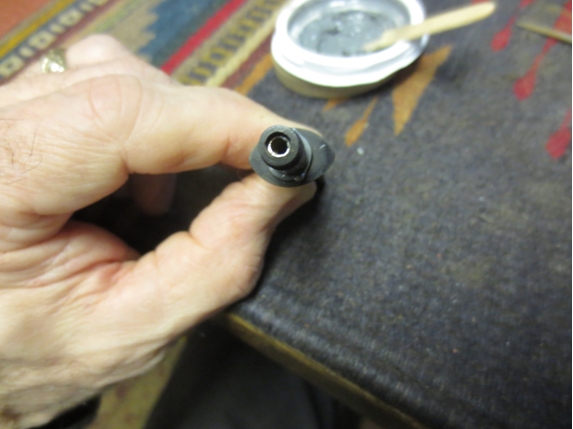
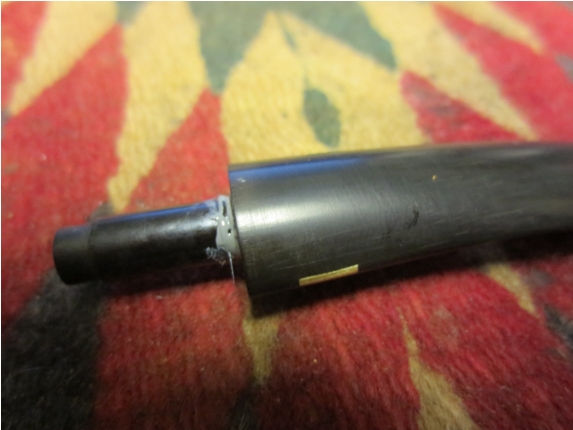
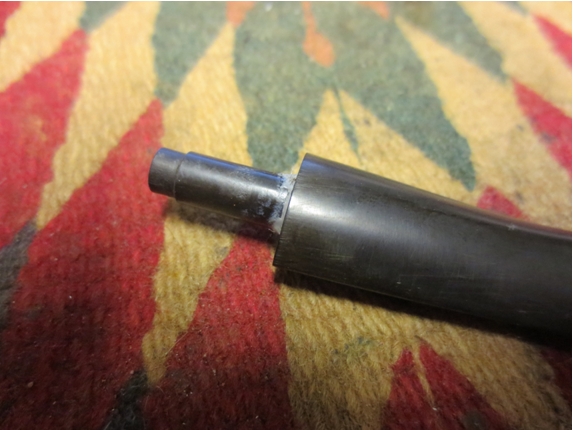
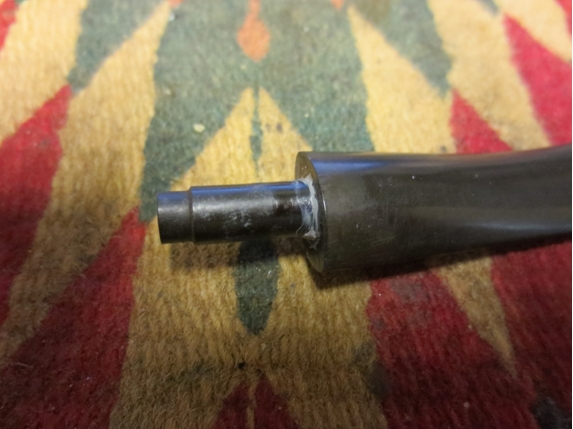
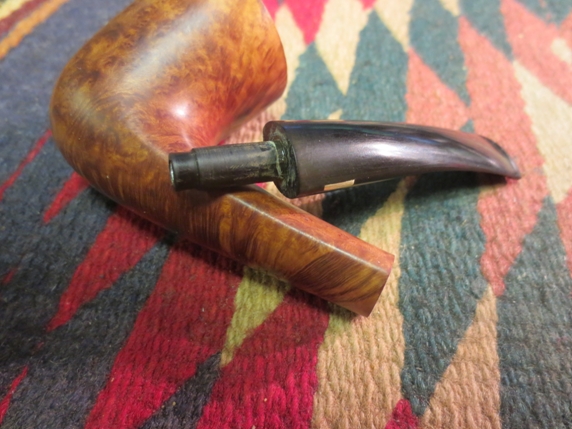
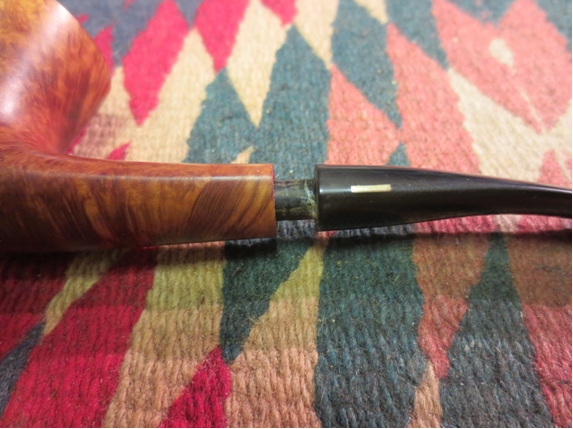
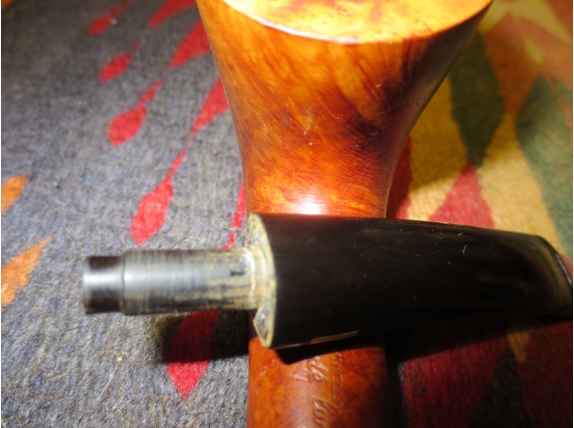
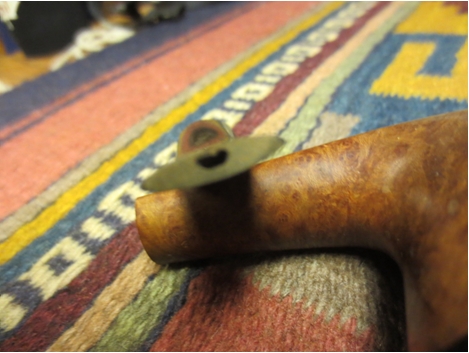
Eventually, it did start to come clean and I was surprised to discover a cork gasket in the mortise that I hadn’t noticed before. It was quite worn and seemed to be deteriorating with age. I found a similarly colored, dry dust around the tenon and also clogging the airway of the stem that I assumed to be detritus from the crumbling cork. There still remained enough of the gasket to give the stem a fairly snug fit, though, and I didn’t have anything at hand for a proper replacement. So, I decided to leave it for the time being to give it some thought.Duc10 Cleaning the stem internals was no more fun than the shank had been. It was completely clogged and would by no means pass a cleaner. To open it up, I had to drip alcohol into the tenon, wait for it to soak in, and then gouge the softened tar with a straight pick. Rinse and repeat all the way down. The process was a bit like mining, except there was no prospect of gold or precious jewels. When I finally broke through the button end, the sludge that came pouring out looked for all in the world like black squid ink. It actually cleaned up pretty quickly after that and you can see it for yourself in the photo below. Notice that the dark spot on the stem that I referenced earlier has lightened considerably after cleaning.Duc11 The more I thought about the mortise gasket, the more I knew that I couldn’t leave it be. It was clearly on its last legs and I started to worry about the taste that might be imparted to the smoke by the years of tar soaking into the cork. I still didn’t have a solid solution, but I learned years ago with my first car that anything can be easily disassembled. If you want to continue using it though, you’ll have no choice but to figure out a way to put it back. With that in mind, I decided to remove the gasket.
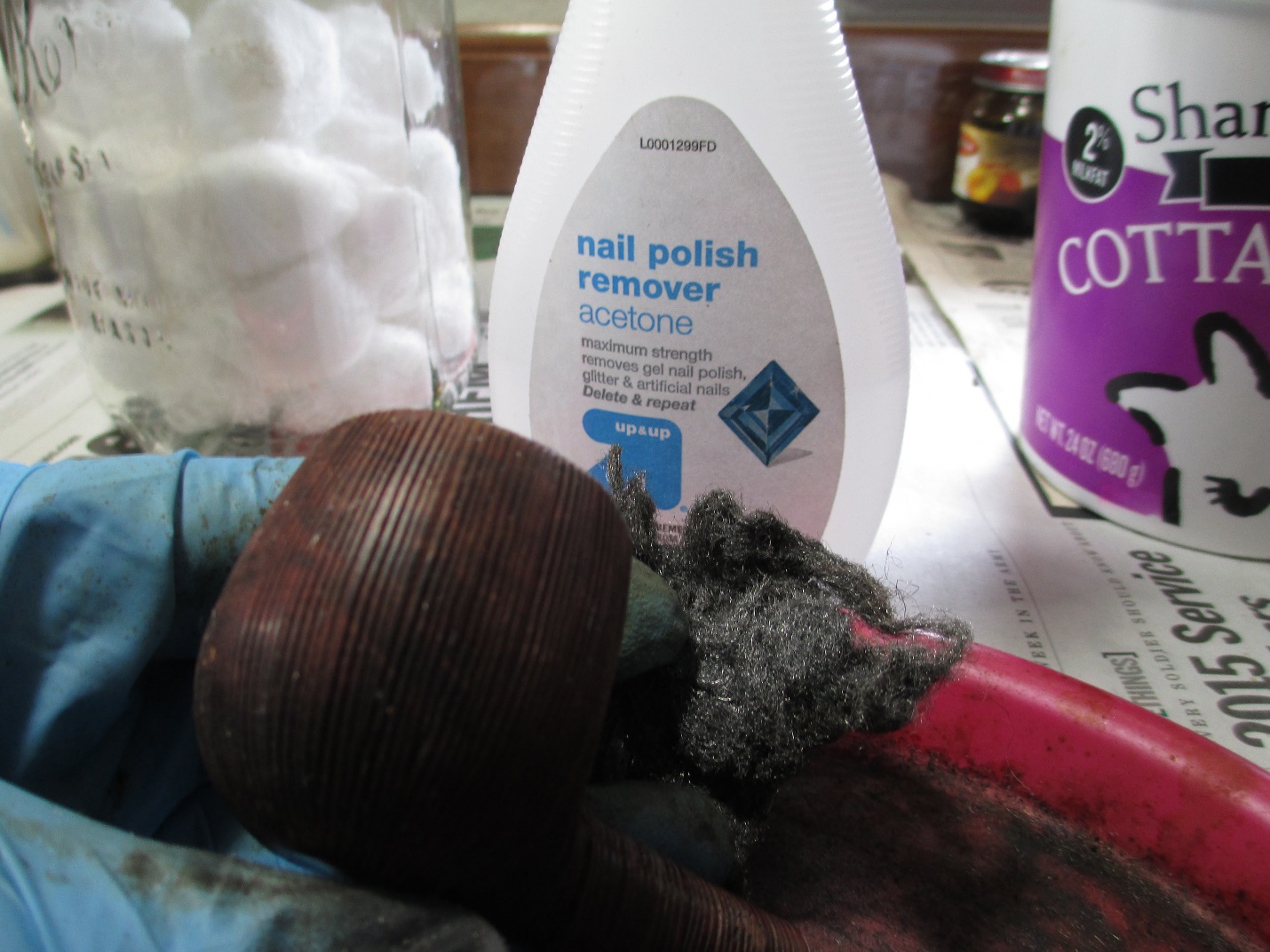
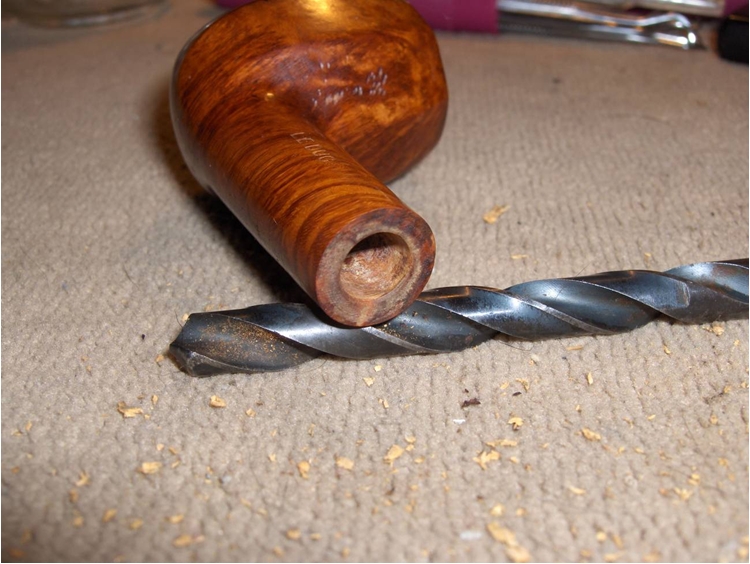
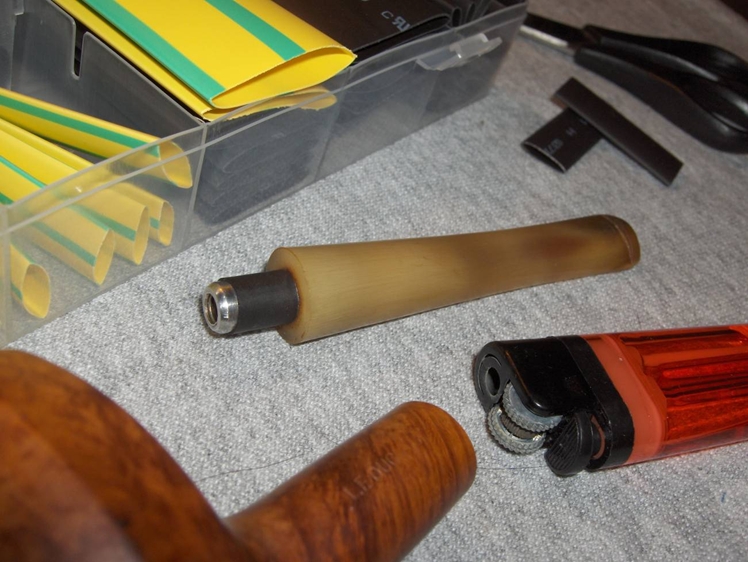
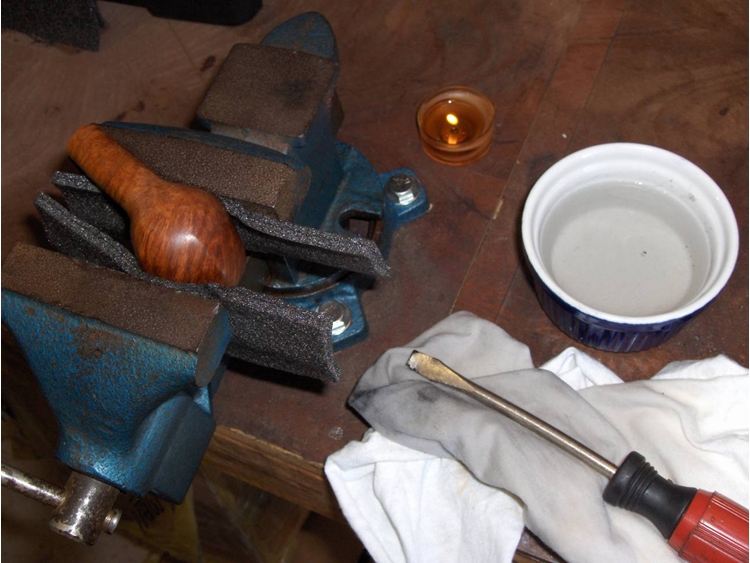
I picked through my selection of drill bits until I found one that was a perfect match for the job. It was almost exactly the diameter of the mortise. So, I could insert it and rotate it by hand to remove the gasket without any fear of it scraping the briar. Afterward, I very carefully sanded the mortise with 400-grit paper wrapped around a pencil end to remove the remaining cork and glue. The photo below shows the mortise just after using the bit.Duc12 I gave a lot of thought to how best to replace the gasket and experimented with a couple of different materials. Surgical tubing used as a sleeve fitted over the tenon had the longest legs at this stage. I found that tubing with a 1/32” wall would kind of work, but was much too tight of a fit and put far too much stress on the mortise. My ideas were just about exhausted. I began to consider drilling out the mortise to accommodate the tubing sleeve, but that was something that I really didn’t want to do. Then, I remembered that I had some marine heat shrink tubing that I’ve barely ever used. I gave it a try out of desperation. Perfect fit! Since it’s the marine quality stuff, it has adhesive on the inside to keep it from slipping. I made sure to use a piece without any printing because that would just be ugly.Duc13 With that problem out of the way, I turned my attention back to the stummel. I stripped the lacquer coat off the bowl by wiping it down with acetone and cotton pads. It was quite stubborn in areas. So, I had to use #0000 steel wool to remove it in a few spots. When the bare wood was exposed it was much easier to tell which of the surface blemishes would require special attention.Duc14 I then clamped the stummel in my bench vice to prepare it for the first step in removing the blemishes. I used some soft foam between the stummel and the vice jaws to protect the wood. Then, I set up my steaming kit, which includes a tea candle, a flat-blade screwdriver, a cotton cloth, and a container of water. I wet the cloth and placed it over the surface dents. Then, I heated the blade of the screwdriver and applied it to the cloth. A hiss and a tiny puff of steam later and the dents were on their way to being level with the rest of the surface. It took multiple applications of steam to raise the nicks along the back of the bowl. The edges were sharp. So, they weren’t removed completely, but they were raised enough to make them much easier to deal with when sanding. All in all, the steam treatment did a great job and would save a lot of time and material later.Duc15 I addressed the remaining nicks and scratches by sanding them out. I used 220-grit paper on the deepest ones to knock them down until they were barely visible. Then, I used 320-grit to completely remove them along with some of the minor scratches. I followed that with 400-grit to blend those areas into the rest of the surface.Duc16 The next order of business was to repair the damage in the chamber. The meer liner sits like a cup inside the bowl and there had been a slight gap between the bottom of the liner and the heel of the bowl. So, with a section of the liner completely missing at this point, there was a significant gap between the draft hole and the bottom of the chamber. I decided to use a two-stage mud application to build up the bottom and replace the missing lining.
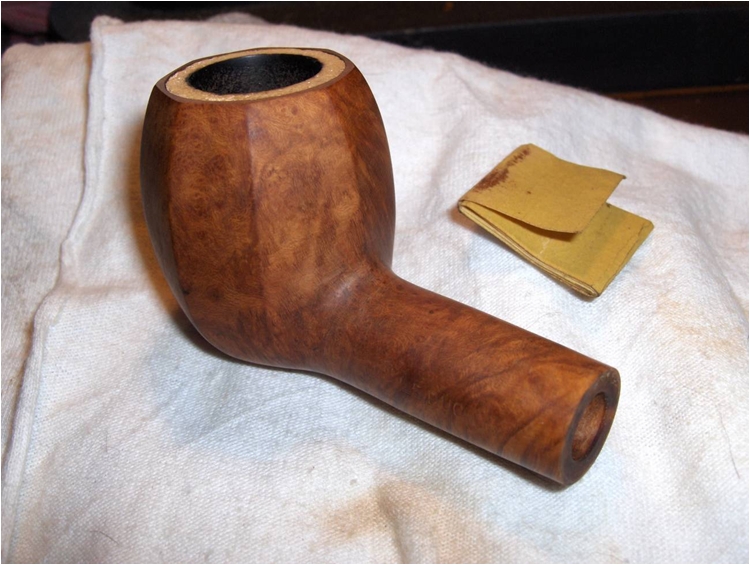
In stage one; I ran a pipe cleaner through the shank and slightly into the bowl to protect the airway. Then, I mixed up a batch of what I like to call “pipe tar” and applied a small amount to the bottom of the chamber with my pipe tool. Pipe tar is equal amounts of activated charcoal and FFFF-grade (very fine) powdered pumice mixed with just enough sodium silicate (waterglass) to give it a tar-like consistency. It’s very sticky and sets up quickly. So, it can be difficult to work with when fresh. It clings like ivy, though, and it can be applied in fairly thick layers without developing cracks while it dries. This makes it an excellent choice for building up the bottom of a chamber. It takes about three days to fully cure, but once it has, it is as hard as concrete and just as porous. However, due to its hardness it’s extremely difficult to sand. So, I’ve learned that it’s best to use it sparingly.

In stage two; I again secured the airway with a pipe cleaner, and then mixed up a batch of more traditional pipe mud. The recipe is largely the same, except that I used water instead of sodium silicate for the mix. Although, I did add a drop or two of sodium silicate to act as a binder and to give it a little more “stick”. The mud has a more paste-like consistency than the tar and is slightly gritty. I used my pipe tool to apply the mud around the edges of the heel, and then shaped it to round out the bottom. It takes a full day to dry. Once it has, it’s a bit softer and easier to sand smooth than the tar. The photo below was taken shortly after applying the mud.Duc17 I wasn’t idle during all of that drying. I took the opportunity to get some work done on the horn stem while I was waiting. As I’ve said, this was my first time working with horn and it was quite different from any other stem material that I have encountered.
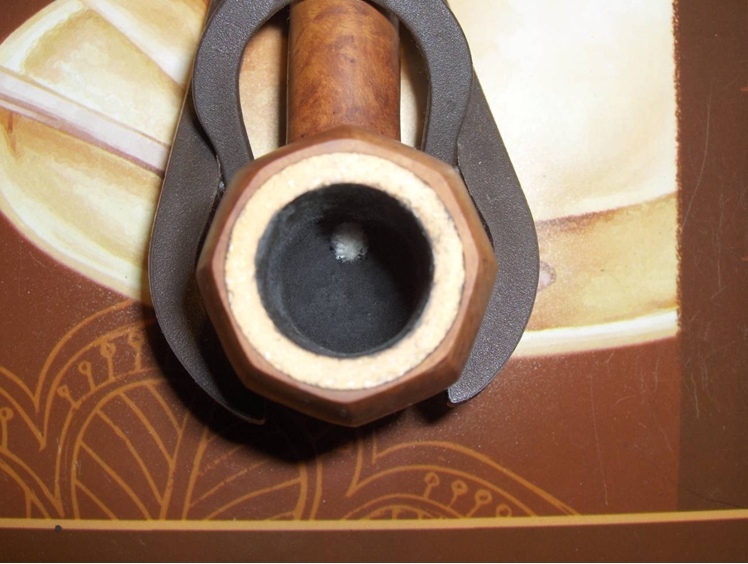
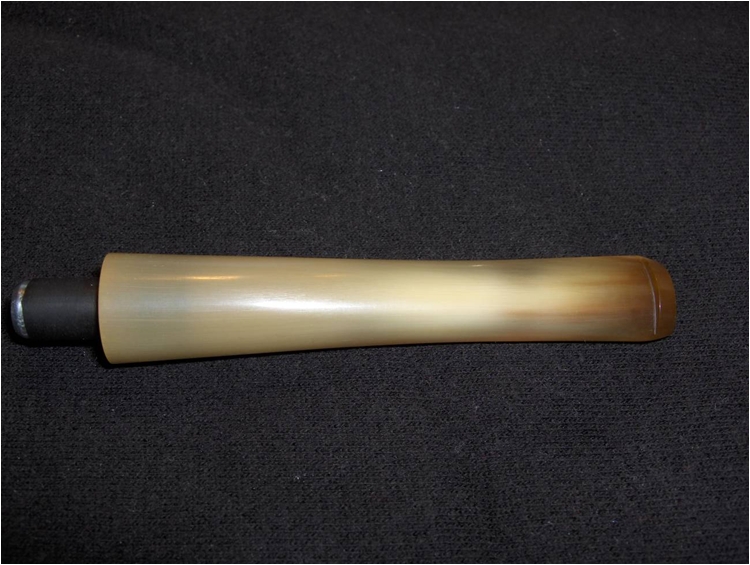
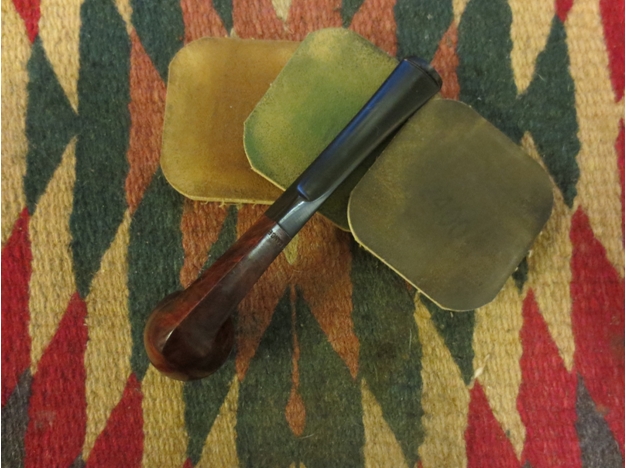
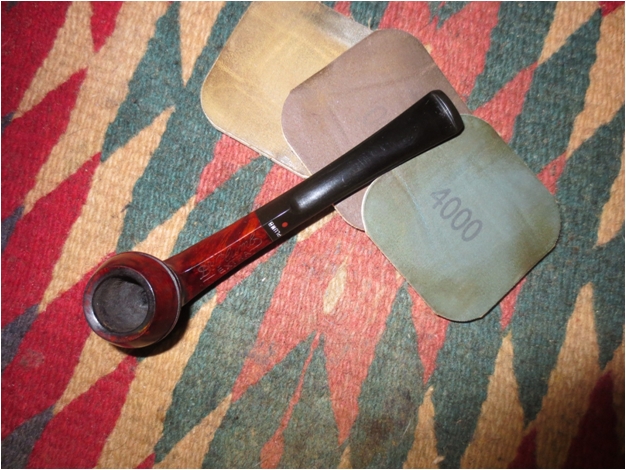
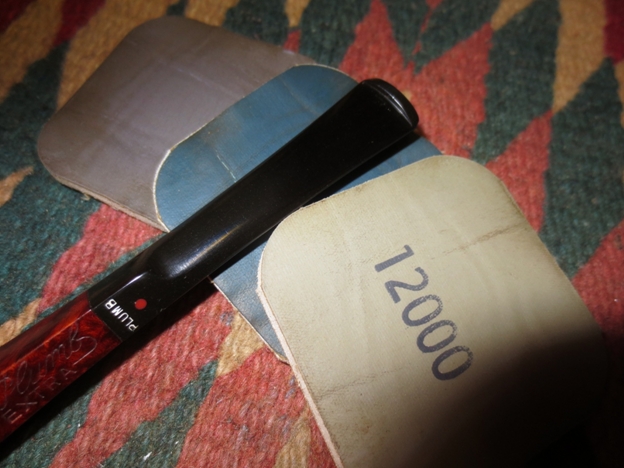
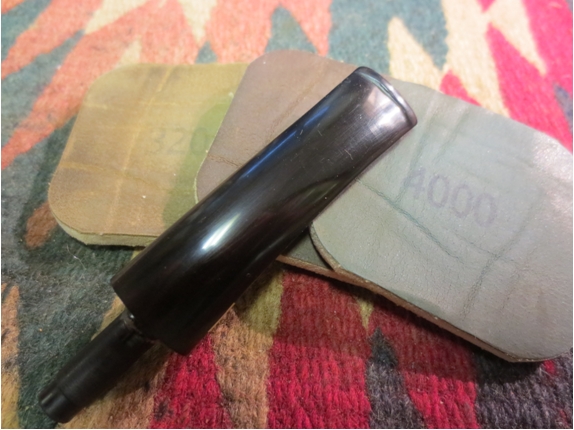
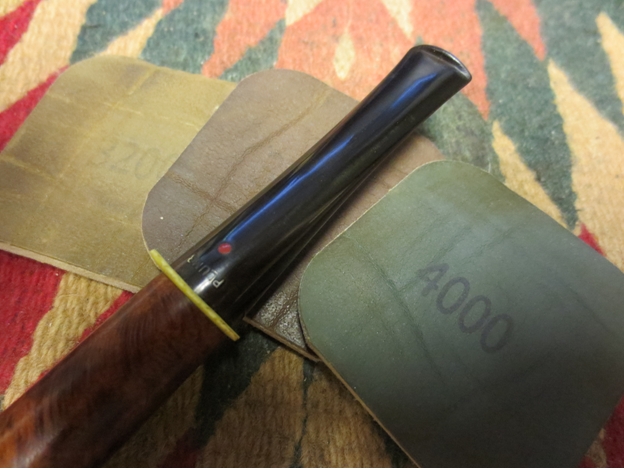
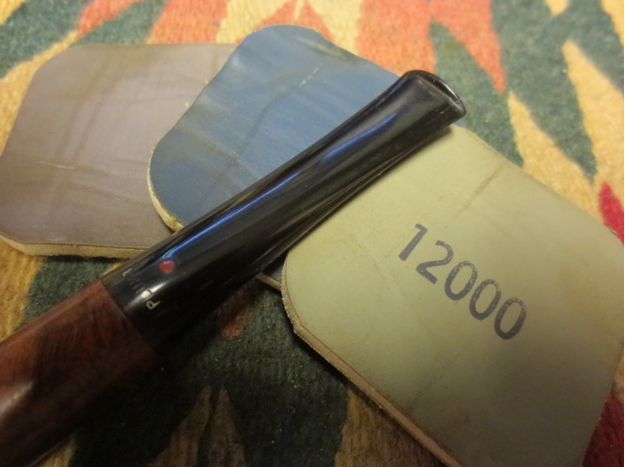
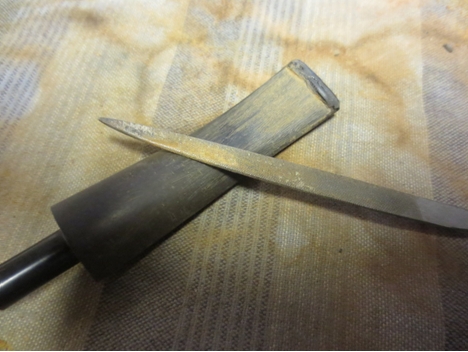
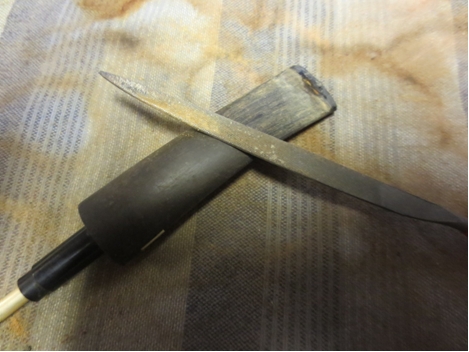
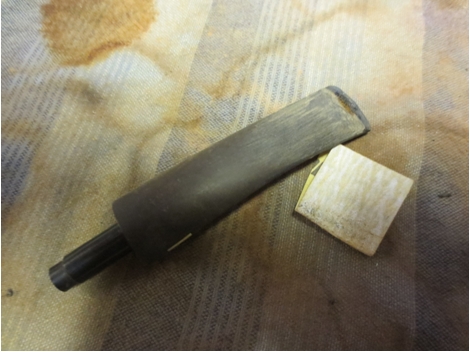
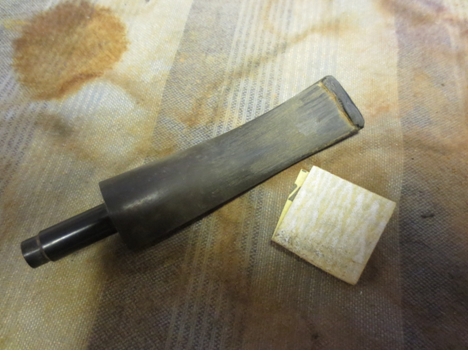
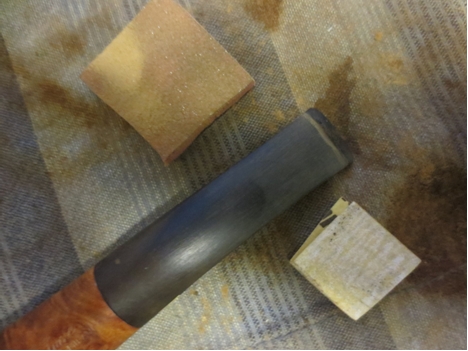
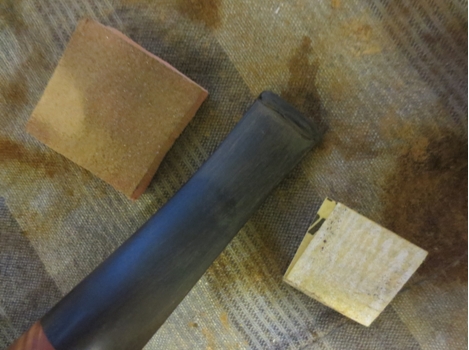
I started by leveling out the chatter with 220-grit paper. The horn turned out to be much softer than I expected. So, I used a very light touch to avoid removing too much material.Duc18 Next, I applied a thin patch of clear CA glue to the tooth impressions at the top. The dents were small and very shallow. So, instead of dripping glue directly on the stem, I put a couple of drops on a cardboard surface. Then, I used a flat toothpick to pick up small amounts of glue and applied it to the stem.Duc19 When the glue had dried, I sanded the patches down with 220-grit paper. I began blending them in with 320-grit followed by 400-grit. I rubbed the stem down with a drop of mineral oil between each grit to keep the fine fibers from splintering.Duc20 Once the patches were blended, I again rubbed the stem down with mineral oil and lightly sanded the entire surface with 600-grit and 1200-grit to remove a few faint scratches and smooth it out.Duc21 Finally, I polished with 1500-12000 micromesh pads with an application of mineral oil between each progression of three grits.
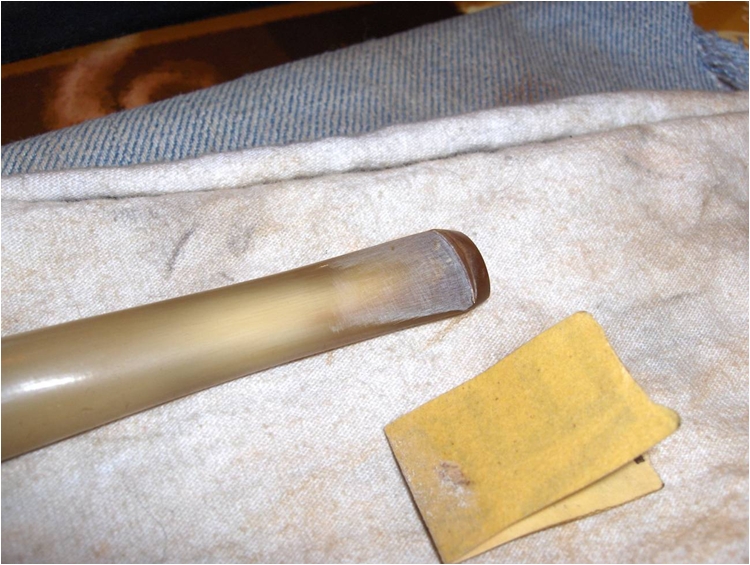
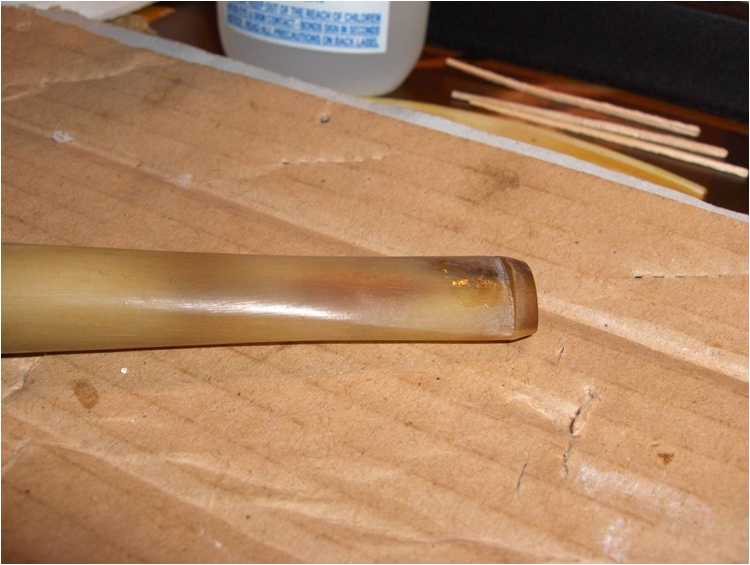
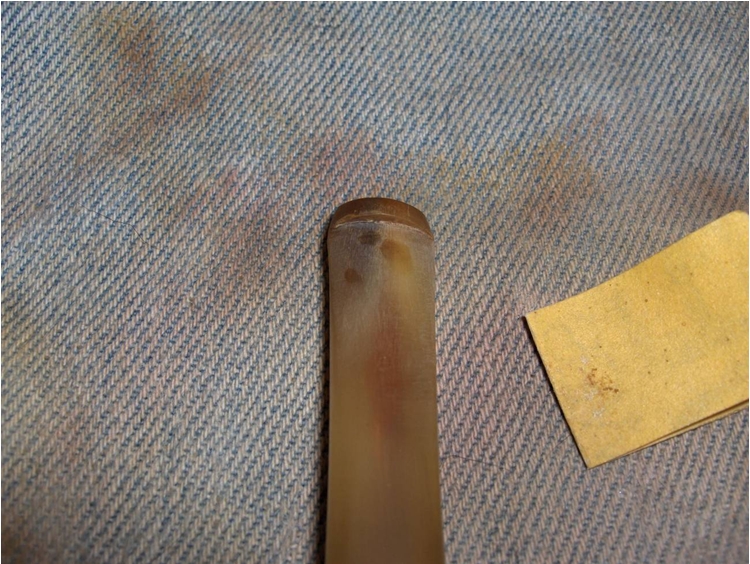
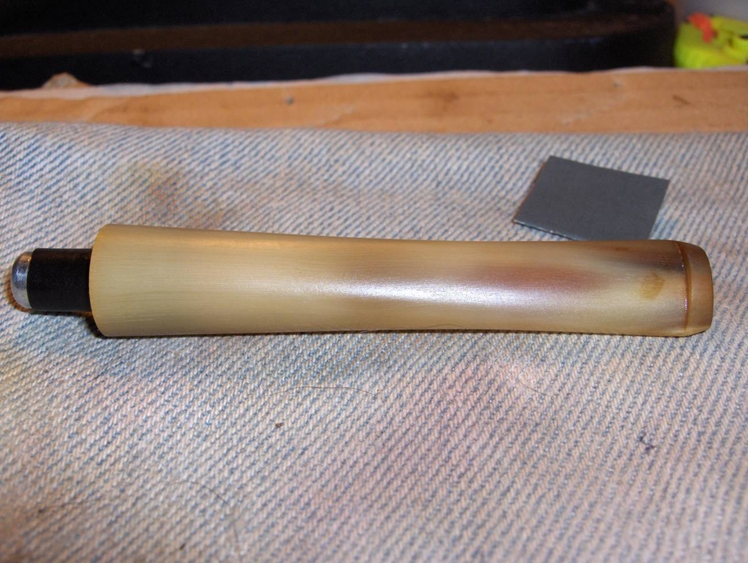
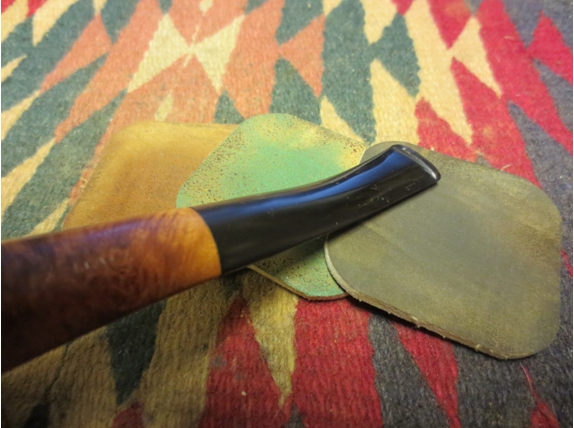
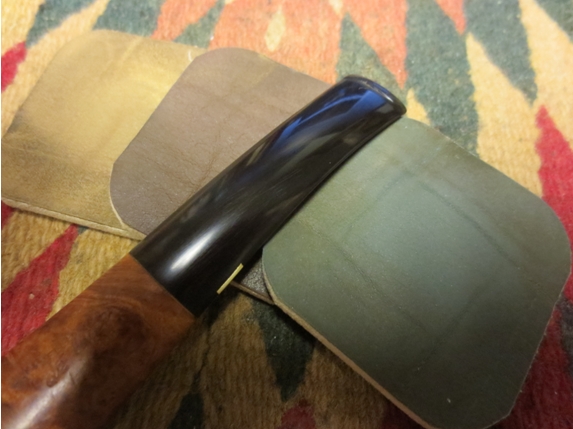
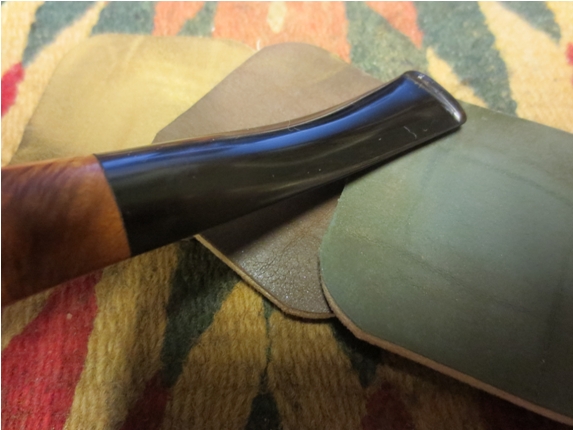
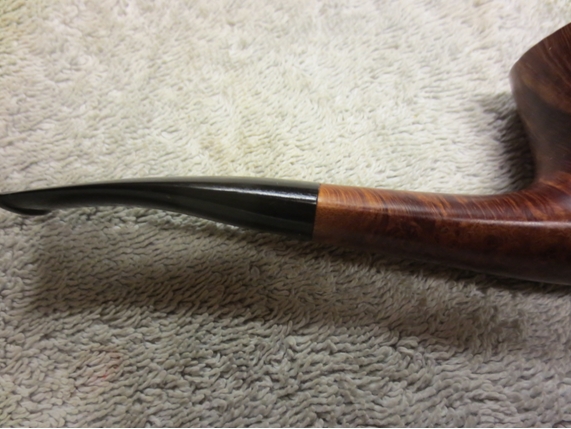
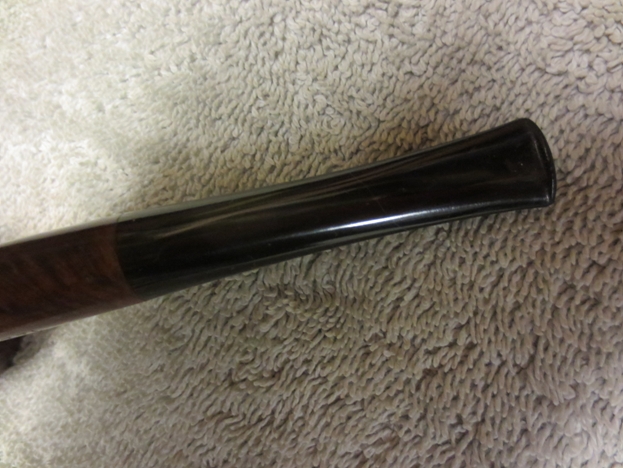
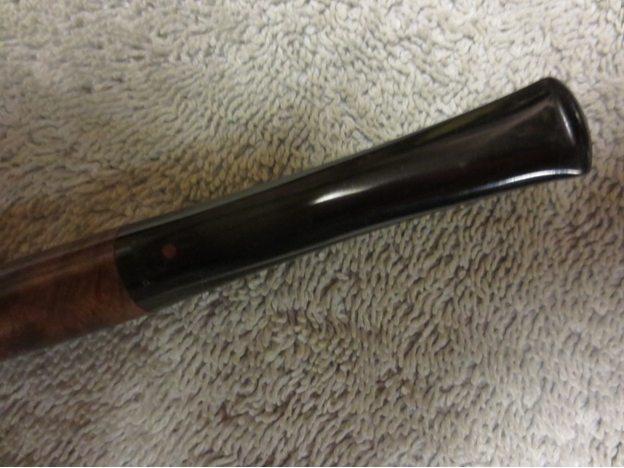
I had no idea when I began working with it that this stem would turn out like it has. When the light hits the stem, the translucency gives it a soft glow. I am completely in love with it and ready to replace all of my stems with horn. The polished stem can be seen in the two photos below (although they don’t do it justice).Duc22

Duc23 With the stem work completed, it was time to get back to the chamber. The tar and mud repair had cured. So, I used a finger to sand the patch smooth with 400-grit paper. Unfortunately, I seem to have forgotten to take any photos at this stage. I get caught up in the work sometimes. No worries. You can see the final patch in the photos of the completed pipe.

There was nothing left to do then but to work on the finish. I was very nervous about staining around the meer liner. The briar around the rim was so narrow that it seemed impossible to stain it without touching the meerschaum. So, I made an attempt to protect it by smearing a little petroleum jelly over the surface of the meer with a toothpick.Duc24 I began staining by applying a rather sloppy coat of Fiebing’s medium brown dye thinned 3:1 with isopropyl alcohol. I used a size 10/0 filbert brush to paint over the grain. I made sure to leave several open and unstained areas to provide some contrast. Normally, I would heat the briar before doing this, but I didn’t want to melt the petroleum jelly into the meer. So, I made do.
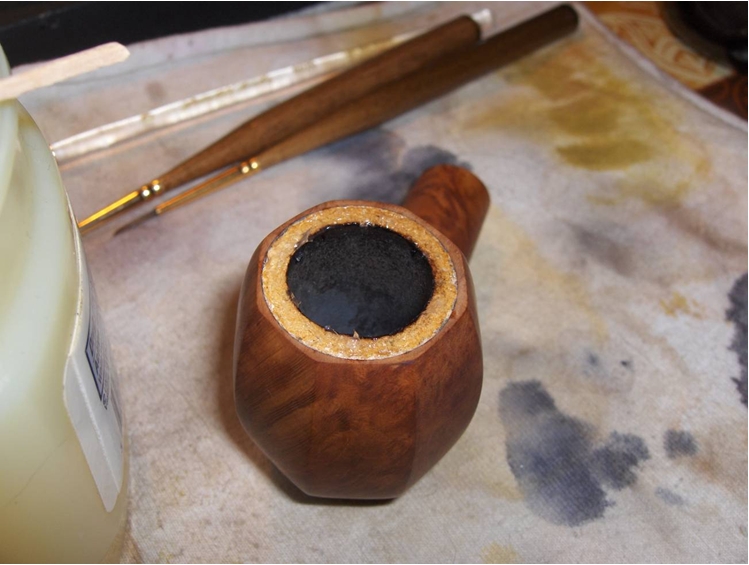
After application and flaming, I wiped the rim clean and realized that the petroleum jelly had been a mistake. It had given the meer a slight yellow stain. I scrubbed it out as best I could with a couple of cotton swabs lightly dampened with alcohol, but some of it still remains. Oh, well. Lesson learned. I won’t be doing that again.

I finished this step by hand-buffing the stummel with a cotton cloth to remove the excess stain. You can see the results in the photo below.Duc25 Next, I lightly sanded the entire surface with 600-grit paper before using a size 20/0 liner brush to make a more specific application of dark brown dye thinned 3:1 with alcohol. I used this sparingly, since I just wanted to add some depth to a few areas in the grain. After flaming the stain to set it, I hand-buffed the stummel with a cotton cloth again. Obviously, I skipped the petroleum jelly this time. It turns out that it was unnecessary anyway. The liner brush did a great job of precisely applying the stain to the rim.Duc26 The stummel was sanded with 1200-grit paper, which I followed with 1500, 1800, and 2400-grit micromesh pads. Then, I gave it one, final coat of stain. This time I used light brown thinned to the same ratio as the previous applications. I used a cotton swab to apply it to the entire stummel, except for around the rim where I used the liner brush. I gave it a final hand-buff to achieve the results in the photo below.Duc27 To finish up the work on this pipe, I polished the stummel with the remaining pads in the micromesh series. I then gave it a light buff and a few coats of wax to seal the deal.
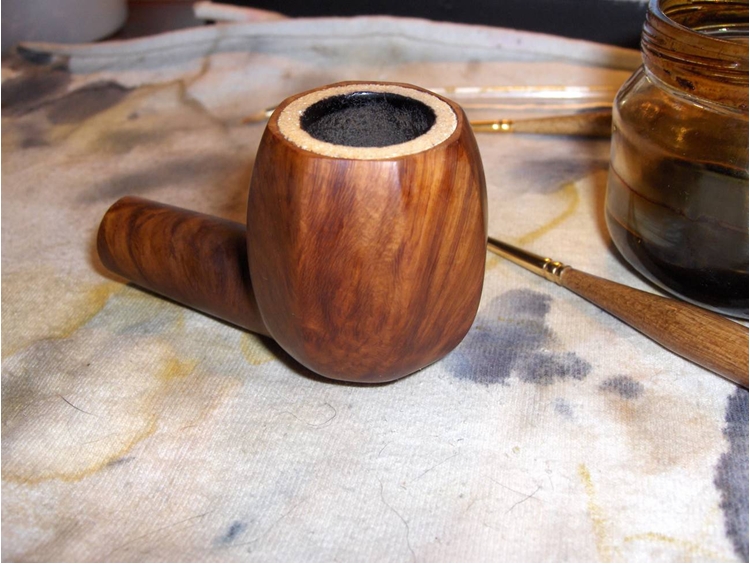
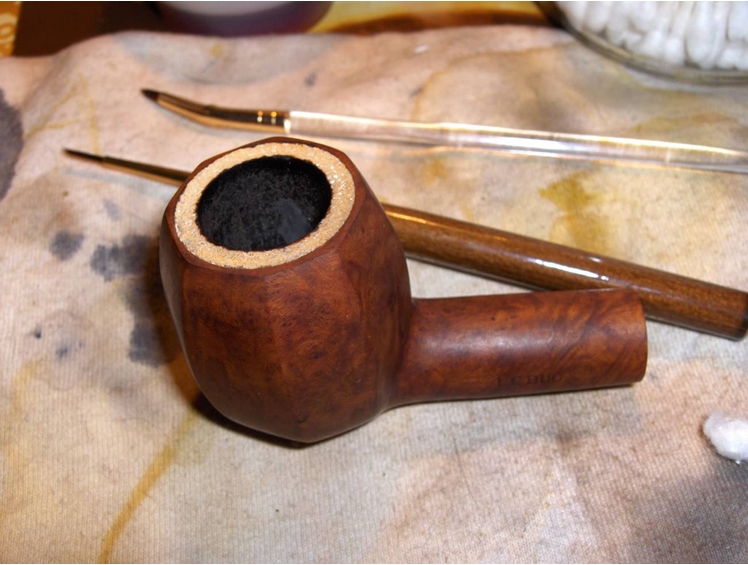
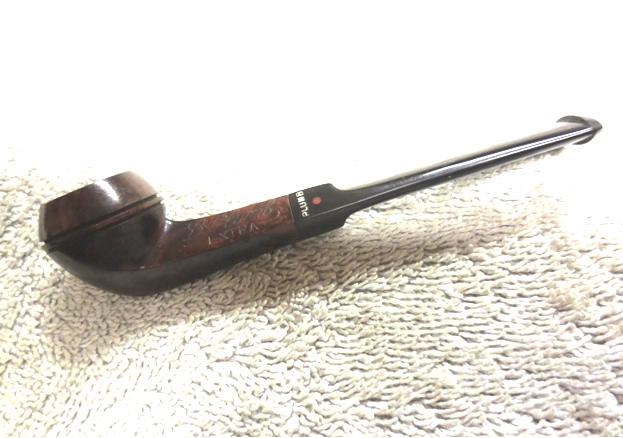
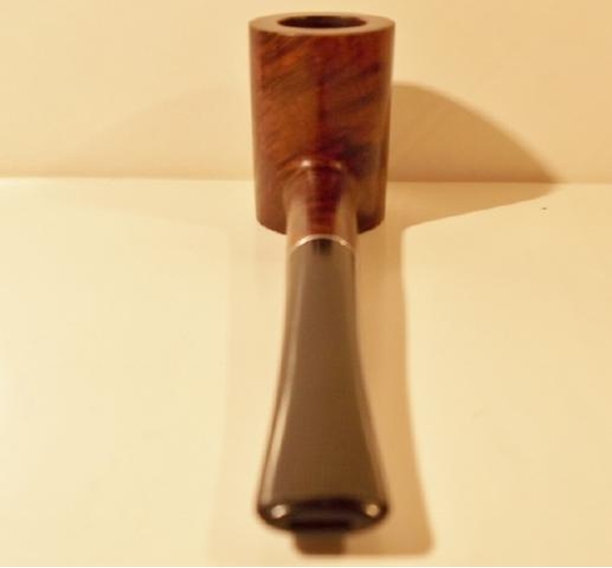
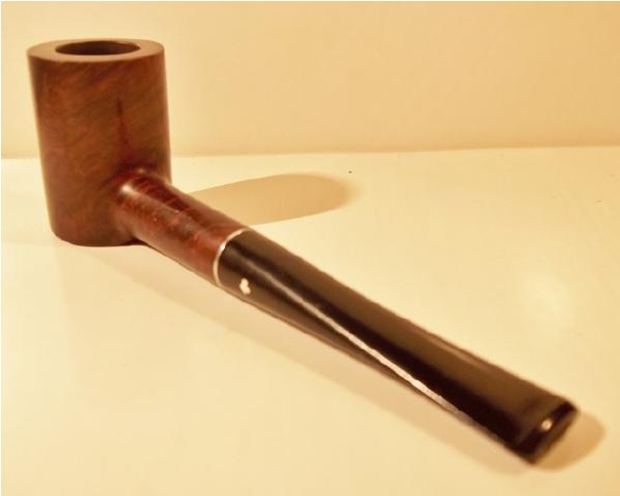
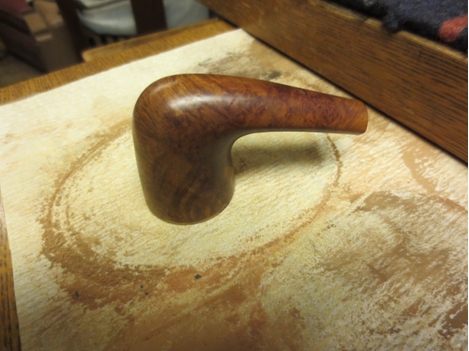
I think this one turned out quite nice. There is a “warmth” to the pipe that is difficult to describe. It was also a pleasure to work on a pipe that did not require any major modifications to facilitate repairs for a change (repairs to the bowl lining notwithstanding). You can see the final pipe for yourself in the photos below.Duc28

Duc29

Duc30

Duc31

Duc32

Duc33

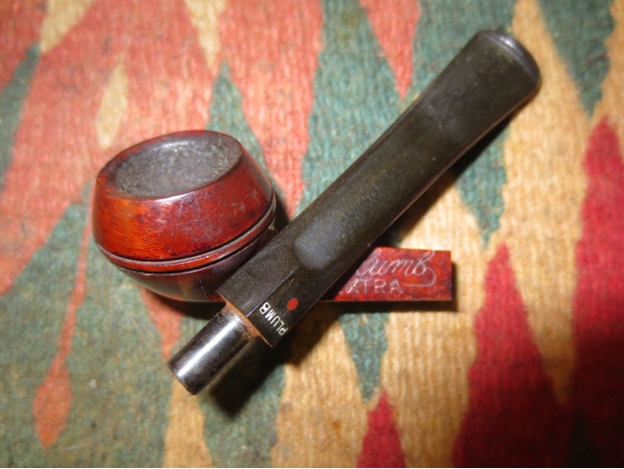
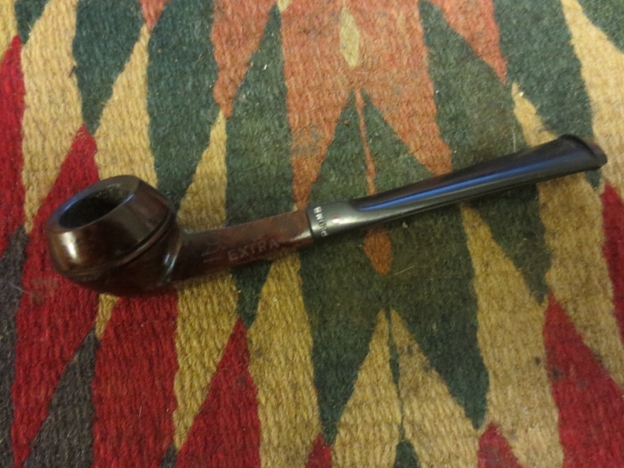
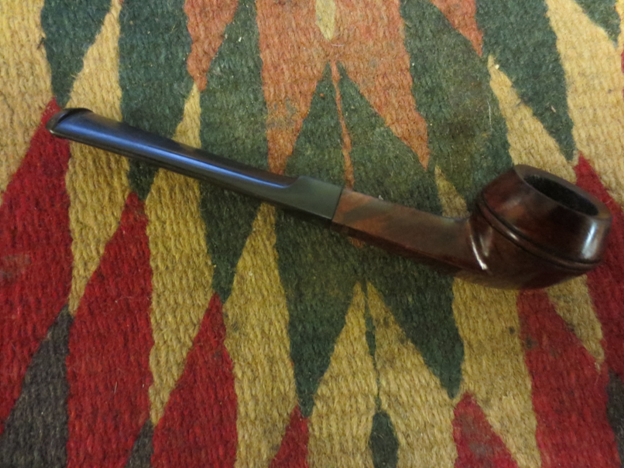
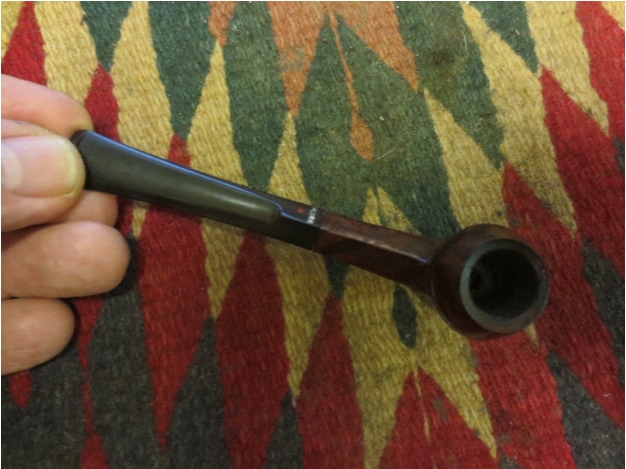
Adding a Tiny Dr. Plumb Bulldog to an earlier find of a Tiny Dr. Plumb Billiard


Blog by Steve Laug

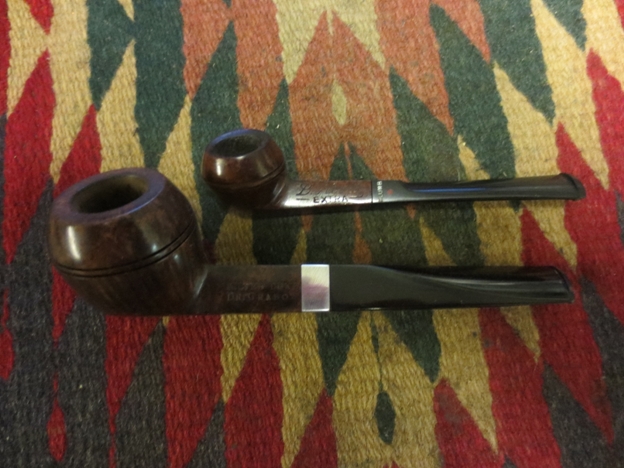
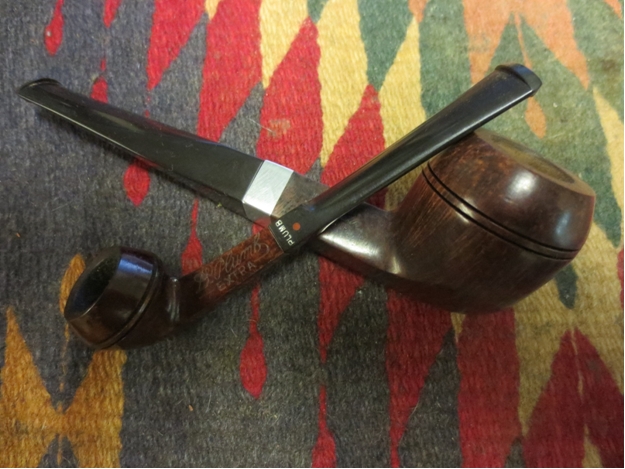
I was gifted a tiny little Dr. Plumb Bulldog a few weeks ago by a friend and that reminded me that I also had a tiny little Dr. Plumb Billiard as well. I have no idea if these were salesmen pipes but they have the same size as many of those that I have seen over the years. Both were smoked and had a cake in the bowl. The billiard has the original stinger apparatus in it but the little bulldog is sans stinger. They are only about 4.5 inches long and incredibly delicate looking. All briar and vulcanite stems and very smokable. The next two pictures below show the little dog next to the Dr. Grabow I cleaned up earlier for comparison and to give an idea of the size.Dr1

Dr2 The little bulldog is stamped Dr. Plumb Extra on the left top side of the diamond shank and is stamped France on the right bottom side of the shank.KWA24 The pipe was in pretty good shape. The finish was slightly worn and the rim had a buildup of tars. The inner and outer edge of the rim was undamaged. The bowl had a light cake in it and it and in the bottom of the bowl there was a groove where the original stinger apparatus extended from the tenon the length of the shank. The stem was oxidized and there was tooth chatter on the top and the bottom of the stem next to the button.Dr4 I took the next four photos to show what the pipe looked like when I started working on it. There is an understated elegance to this little bulldog.Dr5

Dr6

Dr7

Dr8 To give another view of the smallness of the pipe I took a photo of it with my little finger inserted in the bowl. It was a tight fit for even the tip of my little finger.Dr9 The bowl was so small that none of my reamers fit in the bowl. I used a pen knife letter opener to scrape the cake back to the briar.Dr10

Dr11 I scrubbed out the shank and the stem with pipe cleaners, cotton swabs and isopropyl alcohol until it was clean.Dr12 I took out the tiny billiard that I also have and took a picture of the two pipes together. In the billiard’s bowl you can see the end of the stinger in the bottom of the bowl.Dr13 While both pipes are tiny the bulldog appears to be a little bit smaller. I compare it to the size variation between bulldogs and billiards in general.Dr14 The diameter of bowl bowls is identical. Both are ½ inch in diameter. The depth of the billiard is deeper than that of the bulldog.Dr15

Dr16 I scrubbed the tars on the rim with cotton pads and saliva and was able to remove most of the buildup. I followed that by lightly sanding the stem with 1500 grit micromesh sanding pads.Dr17 I sanded the stem lightly with a medium and fine grit sanding sponge to break up the oxidation. I followed that by sanding with micromesh sanding pads. I wet sanded with 1500-2400 grit pads and dry sanded with 3200-12,000 grit pads. I rubbed the stem down with Obsidian Oil between each set of three pads and then gave it a final rub down with the oil once I had finished.Dr18

Dr19

Dr20

Dr21 I was able to remove the oxidation and the tooth chatter with little effort. The stem has a deep glow to the vulcanite. The finished pipe is shown below. One day I will fire them both up with a nice Virginia flake for a quick and flavourful smoke.Dr22

Dr23

Dr24

Dr25

Dr26

Dr27

Resuscitating a Kaywoodie Fine Line


Blog by Andrew Selking

I remember back in basic training my Drill Sergeant always used to say, “Men, ugly women need love too”. That was my initial thought when I first saw this Kaywoodie Fine Line pot. The stem was under-clocked, the varnished finish was uneven, the rim had some damage, and it just looked kind of dull. On the plus side, the stem was in decent shape and my fondness for Kaywoodies provided the motivation to help it live up to its potential.KWA1 As you can see, the stem was noticeably under-clocked.KWA2 Fortunately I have a tool for that.KWA3 After directly heating the stinger with my heat gun, I gently turned it back to its original position and set it by running the end of the stem under cold water. This was the result.KWA4

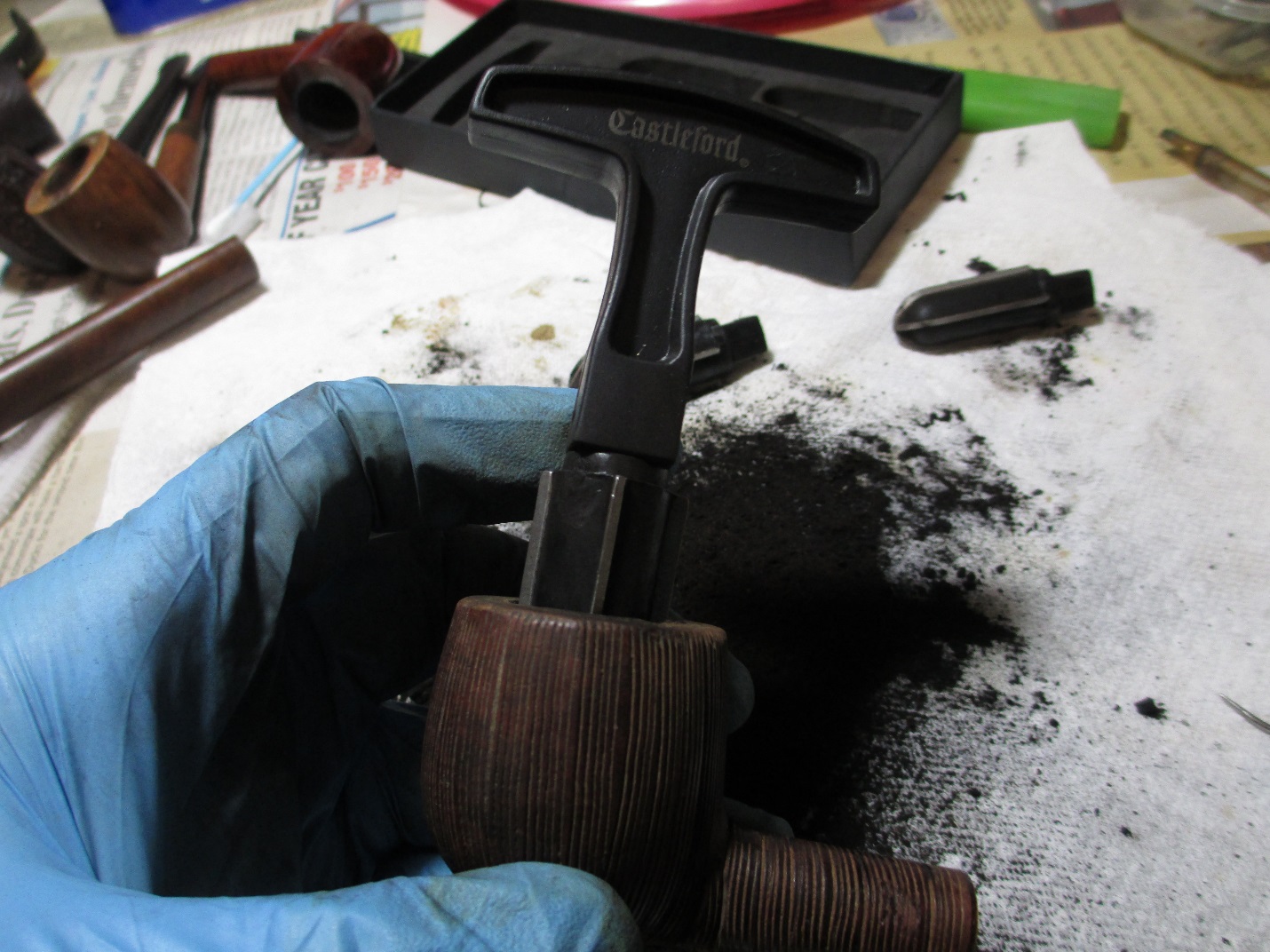
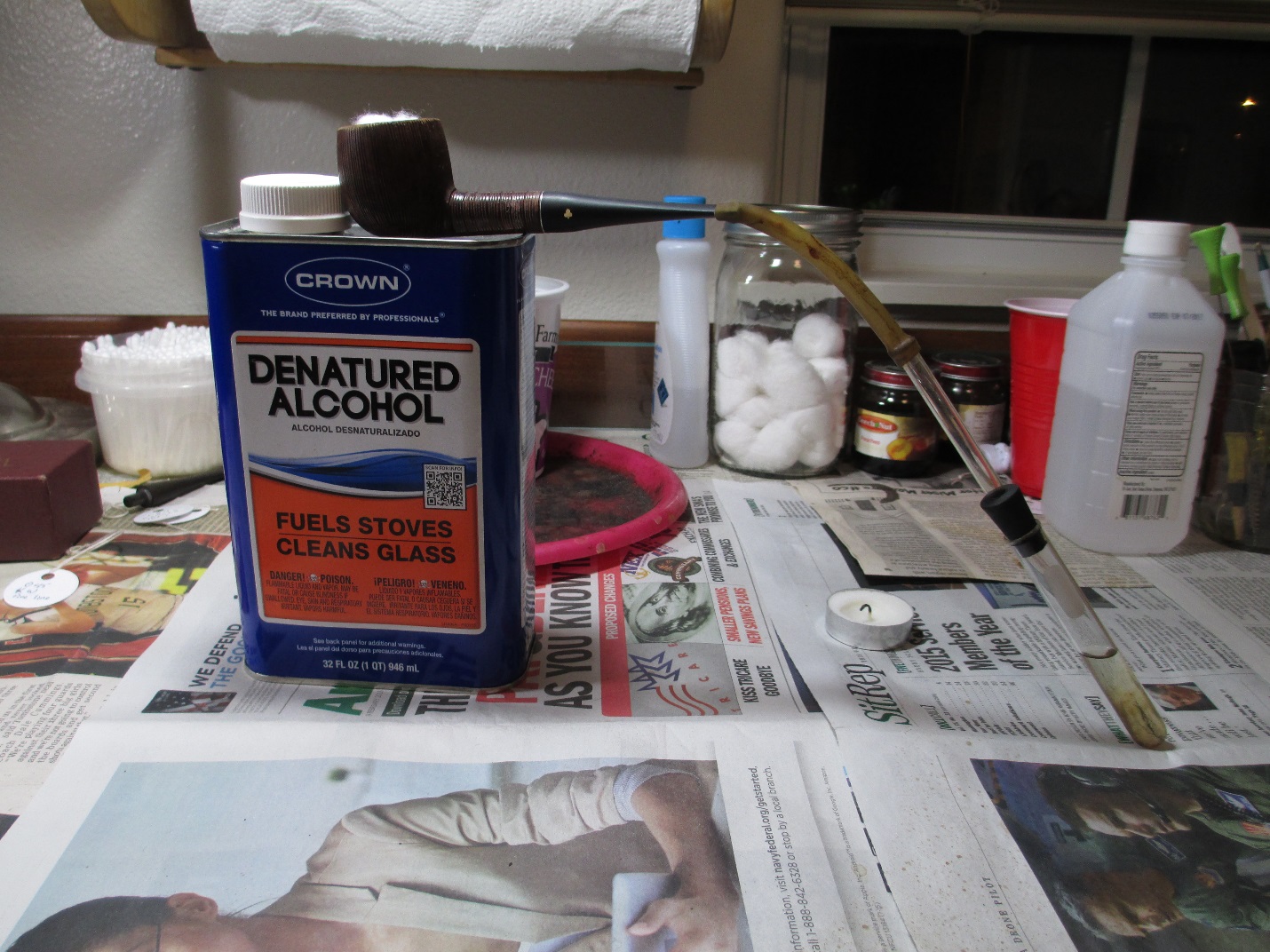
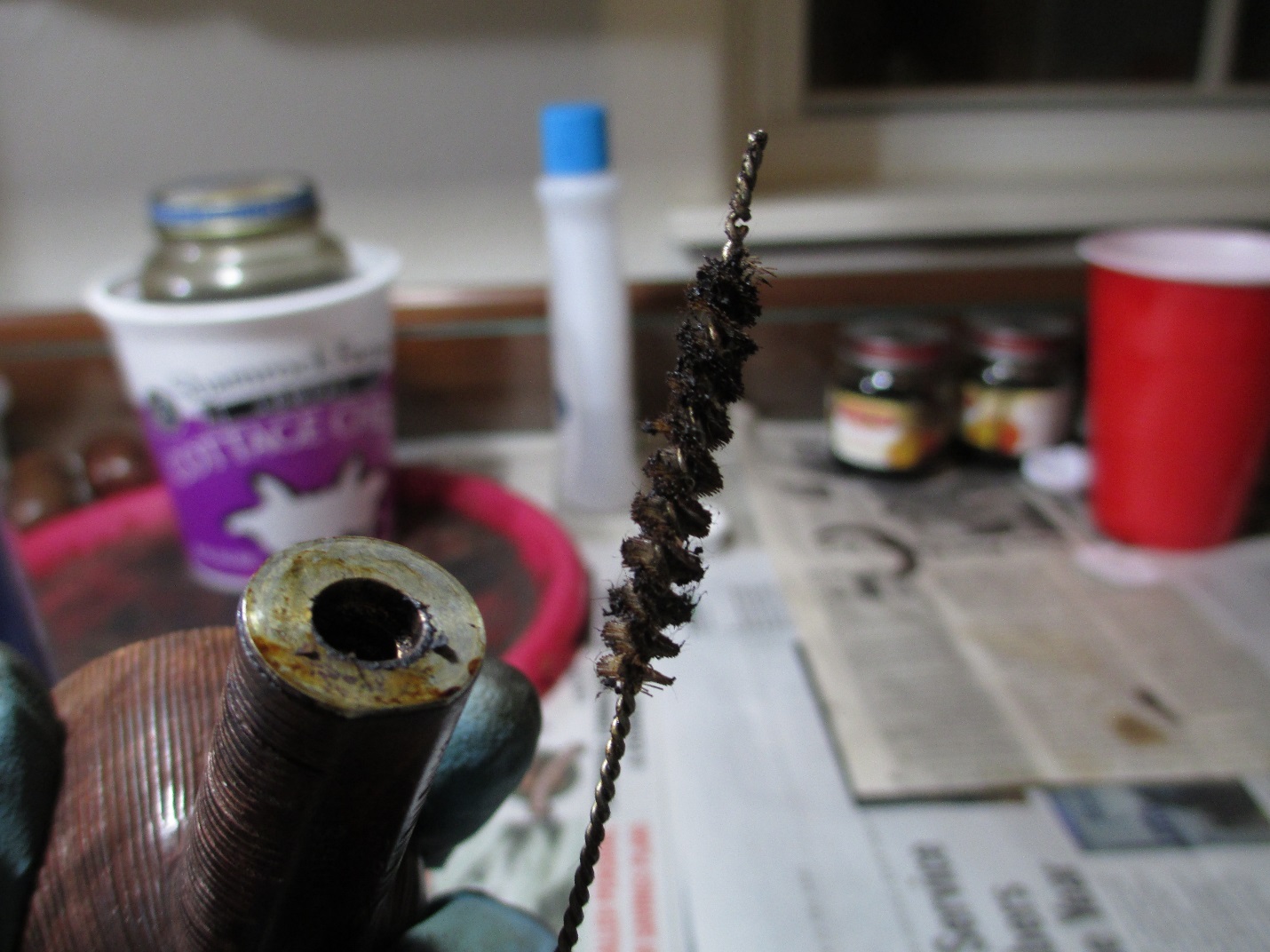
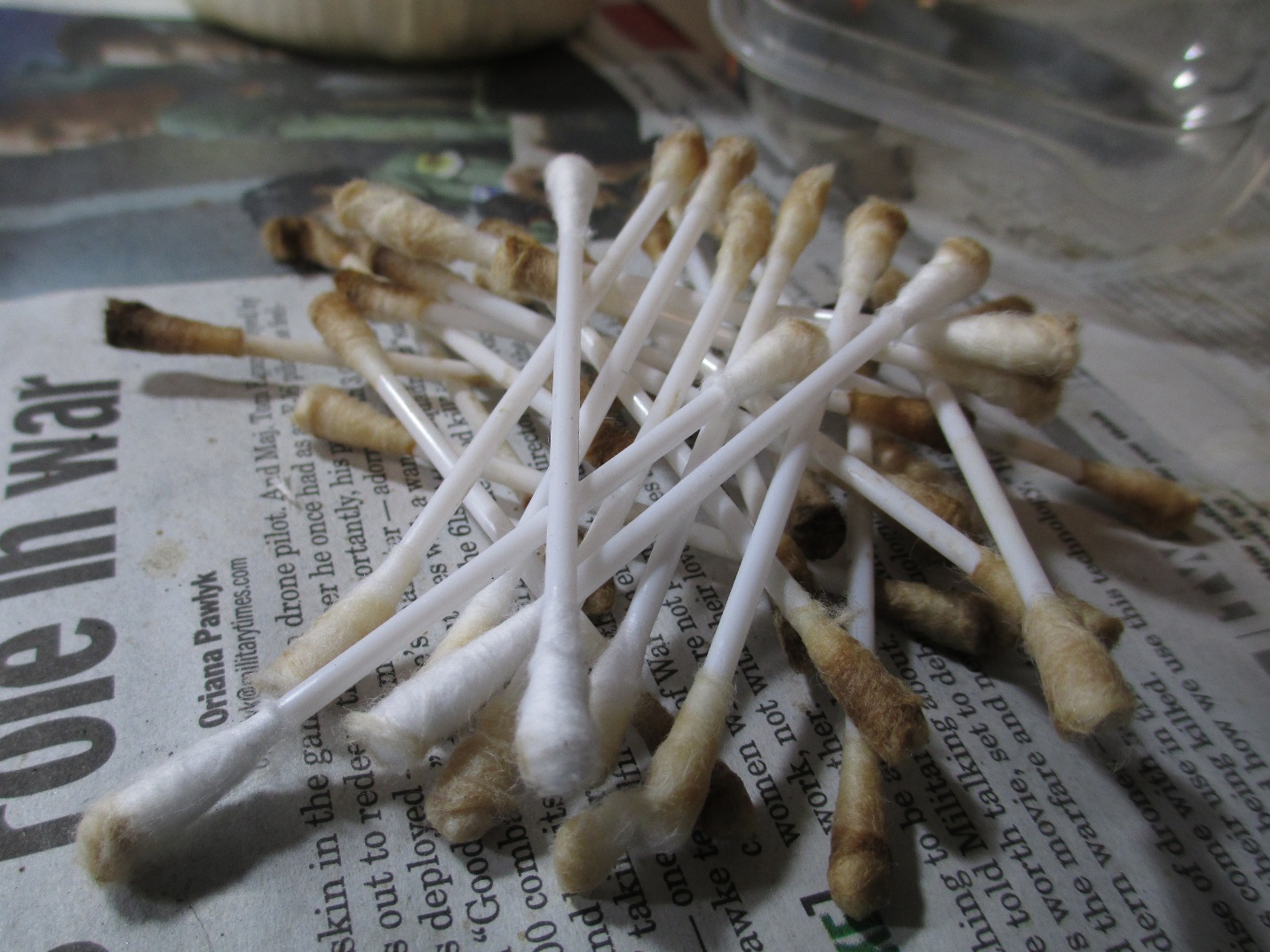
KWA5 I soaked the bowl overnight in the alcohol bath then reamed it with my Castleford reamer.KWA6 While the bowl soaked, I gave the stem a bath in Oxyclean. I make it a practice to use the Oxyclean and a fuzzy stick (that’s the politically correct term for a pipe cleaner intended for crafts rather than cleaning pipes) to get as much gunk out while it’s still soft. This is what the fuzzy stick looked like after the first pass.KWA7 Normally a fuzzy stick without a lot of tar and tobacco is cause for celebration, but I suspected the stinger merely kept the gunk in the shank. When cleaning Kaywoodies I have to deviate from my normal process of retorting the stem and bowl separately, since the rubber tube doesn’t fit inside the shank very well. Here is the pipe ready for retort.KWA8 After the first retort.KWA9I did the retort two more times. This is what was hiding inside the shank.KWA10 After scrubbing the solids out with a brush dipped in alcohol, I switched to q-tips dipped in alcohol. As you can see, it took a good amount to get it clean.KWA11 The boiling alcohol loosened up the tar in the stem. It turned out my original guess was correct, the stinger kept the stem relatively clean.KWA12

KWA13 With the inside of the pipe clean, I turned my attention to the outside of the pipe. The first thing I wanted to do was get rid of the remaining varnish. I used acetone and 0000 steel wool.KWA14 Next I topped the bowl to eliminate the rim damage. I used a piece of glass with 400 grit sand paper.KWA15 After topping the bowl I used Pimo Pipe Supply medium walnut stain to cover up the couple of fills.KWA16 While I was at it, I polished the aluminum insert in the shank with 0000 steel wool.KWA17

KWA18 With the bowl in good shape, I started work on the stem. I used 400 grit wet/dry sand paper with water to remove the minor tooth marks and oxidation. I then used 1500-2400 grit micro mesh pads with water. Next I re-assembled the pipe with a rubber washer between the stem and shank to prevent rounding the end of the stem. I finished the stem with micro mesh pads, 3200-12,000 grit, followed by white diamond and carnauba wax using the rotary tool on low speed. KWA19 A light coat of Halcyon II on the bowl and here’s the result.KWA20

KWA21

KWA22

KWA23

KWA24 I think the old girl cleaned up nicely. She may not be a shiny pipe, but she is a sturdy pipe. Thanks for looking.

A Kaywoodie Supergrain 5102 Poker Clean Up


Blog by Troy Wilburn

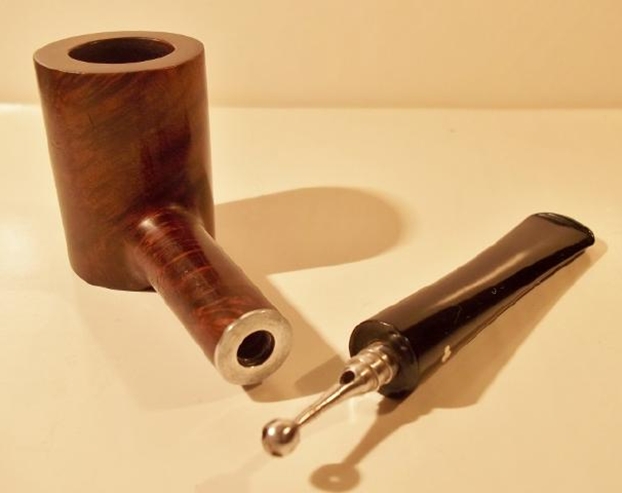
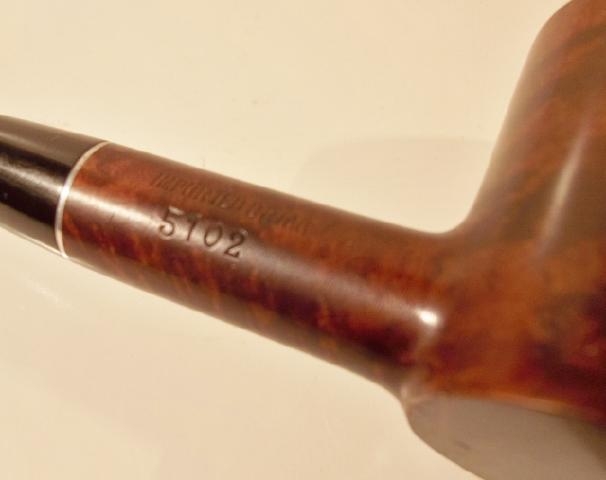
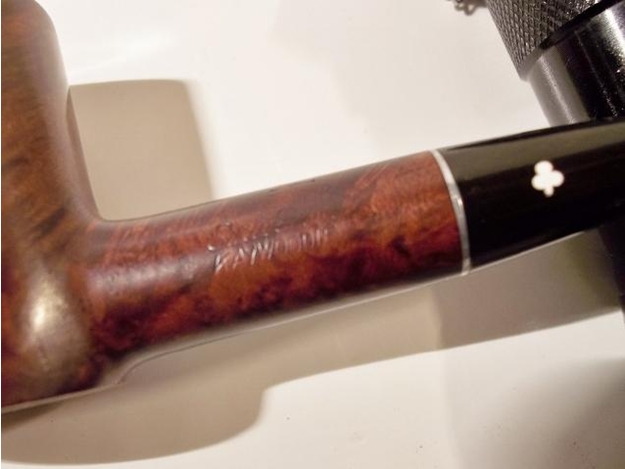
I got this pipe in a lot of pipes I received from a friend on Facebook. It’s a pre 1936 four digit (5102) stamped poker with the 4 hole stinger. It was in terrific shape, so being at least 78 years old I wanted to keep it as original as possible. I basically just gave it a good cleaning with little else needed.

Here is the pipe before:KW1

KW2

KW3 I scraped out old cake (which there wasn’t much of) and gave the shank a good cleaning. I cleaned off all the old grime with a cotton ball and a small amount of Oxy Clean mixed with warm water. I cleaned the rim with isopropyl alcohol on a cotton swab followed by scrubbing it with oxy/water with a Scotch Brite pad. Mineral oil will bring the color back out.KW4

KW5 I soaked the stem and stinger in isopropyl alcohol for about 45 minutes to loosen up the stuff on the stinger.KW6 I cleaned stinger and inside stem with steel wool and isopropyl alcohol. Once finished with the scrubbing it was ready for wet sanding.KW7

KW8 I had to file out some very minor tooth marks on the top and bottom of the stem next to the button.KW9 With the bowl cleaned and stem wet sanded I put the pipe back together for inspection.KW10 I wiped down the pipe and stem with mineral oil to condition wood, bring color back out and then did some final inspecting before buffing.KW11 Once the oil absorbed into the wood and vulcanite it was ready for a little buffing.

Here is what the pipe looked like after I was finished.KW12

KW13

KW14

KW15

KW16

KW17

KW18

KW19

KW20

KW21

KW22

KW23

KW24

A Savinelli de Luxe Milano 431KS Reborn Twice – PART 2: repairing a broken tenon


Blog by Steve Laug

In Part One I wrote about the refinishing of this pipe and how I cut off the broken stem and reshaped the button. I wrote of the time and energy it took to rebirth this pipe. I also ended with the sound of the click as the pipe hit the floor and the tenon snapped off in the shank. You have to understand the sick feeling that settled into the pit of my stomach. I knew I could cut a new stem and reshape it to fit the pipe – no problem. I knew I could drill out the stem and put in a new replacement tenon – again no problem. I had done both of those things many times. But you also need to understand that I am stubborn. I hated, having invested the time and energy into this repair to this point to throw it away and start over. To me that is a frustration that I did not want to deal with. Besides I would lose the straight brass insert in the stem that is so much a part of these older Savinellis.

I laid the pipe aside and went to bed. I was irritated and frustrated with myself for even carrying it upstairs in the first place. A good night’s sleep would give me a different perspective. I woke up with a kernel of an idea regarding the broken pipe. Really it was a bit of an experiment for me as I had never tried the idea in reality. I think it was born out of conversations with Troy about repairing a cracked shank on a LHS billiard that he was working on and from my recent putting together my latest Frankenpipe. If a metal tube could provide a strong bond in joining two parts of a shank together why wouldn’t it work to bond a broken tenon to the stem? I know that the repair works well on a stable, unmovable shank but would it work on a removable stem and tenon? Would it be stable enough to endure repeated removal from the shank for cleaning and just observing that pipe smokers do? I had no idea but figured it was an experiment worth trying and also worth documenting.

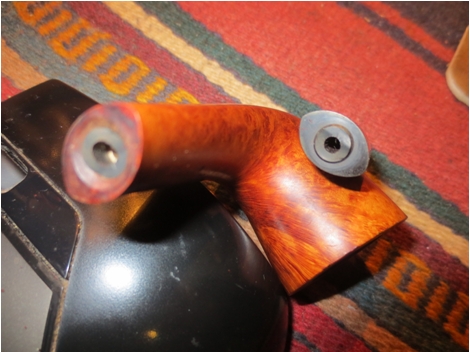
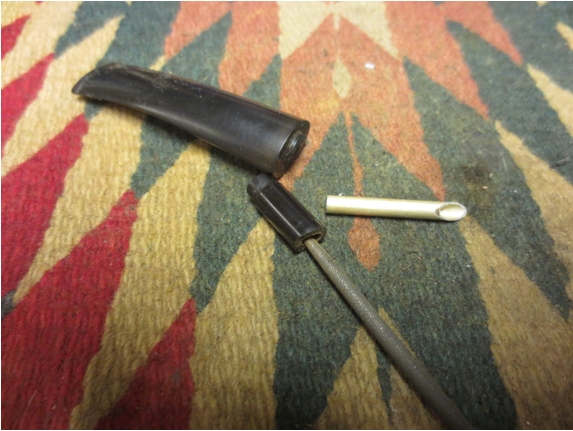
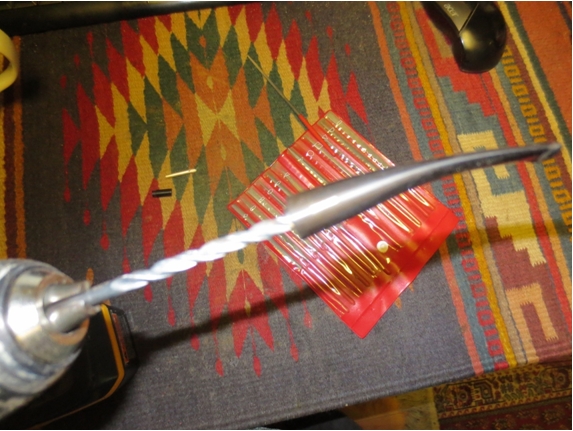
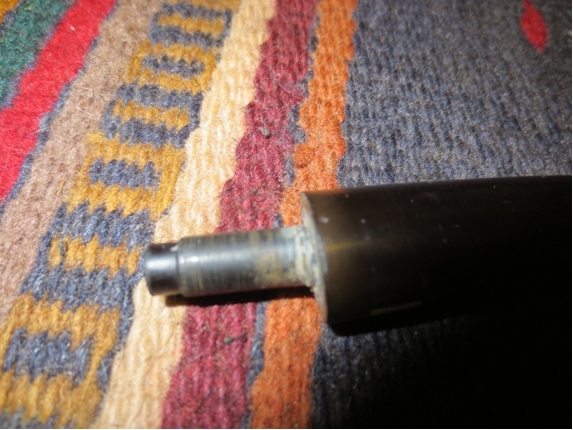
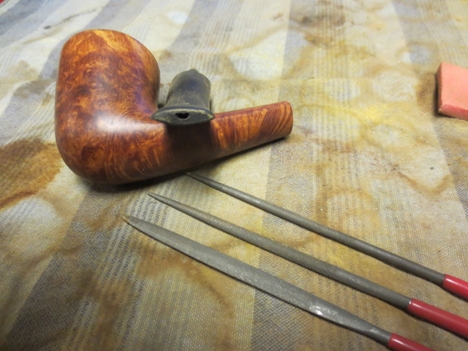
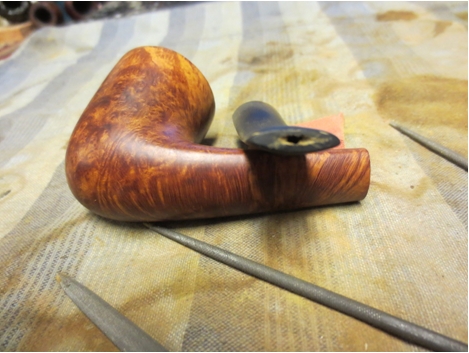
In Part 2 I want to look at that experiment in from the idea to the execution and see what develops. I want to look at the challenges and the issues that arose in executing this repair. And ultimately I want to document it so that I can come back to it and report on its durability and feasibility as a long term solution to a broken tenon. I took the first photo below just after the event happened. I took the pipe back to the worktable to lay it aside and before I did I thought I would take a photo to document the damage. Those of you who have snapped a tenon will well know the thoughts going through my mind. And those of you who restore old pipes only to have a fiasco occur at the end of a long clean up will know the “pain” of the moment.Sav47 In the morning when I got up I pulled the tenon out of the shank using a screw that I keep on the work table for that purpose. I screw it into the tenon and then work the tenon out of the shank. This time it would be both easy and difficult. The shank was clean and the pipe had not been smoked so it would not be stuck in the shank – that was the easy part. The hard part was the metal inner tube that was in the end of the tenon. It would be in the way of the screw when I turned it into the shank. On an off chance that the tube would pop free of the tenon I inserted an ice pick into the end of the shank and push on the tube. I let out a sigh of relief when I heard it drop into the airway and bowl. I inserted the screw and with no effort popped the broken tenon free. I tipped the shank back and the tube fell out of the airway. It was at this moment that my idea was born. The metal tube lay on the table next to the tenon and stem. Why not use that already fitting tube to try to join the broken parts? It was worth a try.Sav48 I tried to run the tube through the broken tenon only to find that it did not go all the way through. It stopped ¾ of the way in and would not go through. I used a needle file to open up the airway until the tube could be pressed all the way through. I removed the tube and opened it further so that once it had a coat of epoxy on it the tube would still fit through the airway. I had decided to sacrifice the inner tube to this purpose.Sav49 With the tube easily fitting through the tenon I then tackled the airway in the stem portion of the break. It was too small for the tube to fit. It would need to be opened up considerably for the tube to slide in place with the epoxy. I decided to begin opening it with a drill bit. I set up my cordless drill with the proper sized bit and hand turned the stem on the bit. I do this without powering up the drill as I find that I can turn it by hand without risking going too far with the bit.Sav50 Once I had the airway opened far enough into the stem to give it a decent depth for the tube when inserted I cleaned up the airway with needle files to ensure a smooth transition from the tube to the remainder of the airway. I did not want a lip between the two that a pipe cleaner would catch on when cleaning the pipe.Sav51

Sav52 With the airway open on the tenon and the stem I used a flat knife blade needle file to score the smooth surface of the inner tube. Smooth aluminum does not provide a surface that epoxy will bind to so I need to score. I then coated the sharp end of the tube with a two part epoxy and pushed the tube into the stem portion of the break. I slide the tenon on to ensure that the tube was straight and the tenon when glued on would still fit tightly against the shank.Sav53 When the epoxy had set in the stem I gave the tube a quick once over with the file to further score the surface and then brushed on the epoxy mix. I pressed the tenon onto the tube and before pressing it in place used a tooth pick to coat the broken surfaces of the tenon and stem with epoxy.Sav54 When pushed into place the excess epoxy squeezed out.Sav55

Sav56 The next photo shows the fit of the tenon on the metal tube. I pushed it in just below the surface of the face of the tenon.Sav57 I used a dental pick to clean off the excess epoxy from the joint then set aside the stem to let the epoxy set and cure for several days.Sav58

Sav59

Sav60 Once I figured that the epoxy had cured and the joint was solid I cleaned it off with a dental pick, a sharp knife and sandpaper. I did not want a ridge at the joint that would catch when the tenon was pushed into the shank. I still needed to sand the joint and clean it up but the repair seems strong.Sav61

Sav62 I put the stem back in the shank and found that I had not let the epoxy cure enough. When I removed the stem from the shank the tenon remained in the shank. The epoxy holding the tenon to the tube was solid and rock hard. The epoxy on the stem side was dry but soft. It had not hardened enough. I am wondering if I should have glued it into the stem side first and let it harden before putting the tenon in place. Well, I will never know with this one. I cleaned off the metal tube and the airway in the stem and mixed a second batch of epoxy. I roughed up the surface of the metal tube even more to give the glue something to bite onto. I pressed the stem in place. This time I will let it cure for a longer before fussing with it. I wonder if the fact that it is in a confined space with limited airflow makes it take longer for the epoxy to harden. Time will tell. I am hoping that the fix works.

I let it dry for two days and then did some sanding with micromesh sanding pads to polish the stem. I did not put it into the shank at this point as I wanted it to have at least another day to cure. I did a quick, wet sand with 1500-2400 grit micromesh pads and then rubbed it down with Obsidian Oil then dry sanded with the 3200-4000 grit pads. I cleaned up the excess epoxy with a flat needle file to smooth out the joint and to clean up the face of the stem. All of this was done to prepare for refitting the stem in the shank.Sav63 After another day sitting and curing I decided to carefully put the stem in place. I once more sanded the tenon to make sure it was clean and smooth. I wanted a snug fit but not a tight fit.Sav64 I put the first half of the tenon into the shank, literally holding my breath as I pushed it carefully into the shank. I was fully expecting the epoxy to break loose again and leave the tenon in the shank. But it did not. I push the stem in and took it out carefully several times to check the joint. I checked the crack that I had repaired and it was holding. I let out the breath I must have been holding. It was working.Sav65

Sav66

Sav67

Sav68

Sav69 With the stem in place and apparently solid I turned the pipe over in my hands to check it out. You cannot imagine the frustration when I saw that somehow the tenon was slightly lower than it had been and now the fit against the shank did not match. The two edges along the shank and the stem no longer lined up but were both equally off – maybe 1/16 of an inch, but off nonetheless. I set the pipe down and took a deep breath. I was not going to leave this alone. I was going to make the fit perfect. I sanded the shank and stem junction carefully with 220 grit sandpaper to smooth out the transition and remove the excess briar on the top of the junction and the excess vulcanite on the bottom of the junction. I worked on the sharp edge on both sides of the stem and shank to bring them back into alignment. Once I was done with the sandpaper I took a few photos to check the alignment.Sav70

Sav71

Sav72 I sanded the stem and shank with a medium and a fine grit sanding sponge to minimize the scratches left by the sandpaper and smooth out the surface of both.Sav73

Sav74 I wiped off the sanding dust and rubbed the stem down with Obsidian Oil and took the next two close-up photos.Sav75

Sav76 I took the stem off the pipe and cleaned out the sanding dust that had slipped in the joint of the stem and shank. I pushed the stem back in place and worked it over with micromesh sanding pads – wet sanding with 1500-2400 grit pads and dry sanding with 3200-12,000 grit pads. I rubbed the stem down with Obsidian Oil after each set of three pads.Sav77

Sav78

Sav79

Sav80 After all of the sanding I was worried that I might have jarred the repair to the tenon so I took the stem out and took a close look. The crack was still solidly close and the repair was holding well.Sav81 I put the stem back in place and took the next four photos of the pipe with the stem in place. The repair had worked so far.Sav82

Sav83

Sav84

Sav85 I wanted the portion of the shank that I had sanded match the colour of the rest of the pipe. Since I had oiled the bowl with olive oil, I did the same again. I rubbed the bowl and shank down with the oil and let it absorb. I then gave the bowl and stem several coats of Conservator’s Wax and hand buffed it with a shoe brush. The finished pipe is shown below. The repair is holding well and the pipe looks good as new. The new button on the stem worked well and the repaired tenon worked. Now comes the period of waiting to see if it will hold up to regular use and cleaning. Smoking it should be no problem as the airway is open and has a clean draught. All that remains is to fire up a bowl… and wait.Sav86

Sav87

Sav88

Sav89

Sav90

Sav91

Sav92

Sav93

Peterson XL90s Shamrock Filter / BC


John it has been a while since you have posted some of your work. this is a nice looking old pipe once you finished it up. Good work.

ReserectedPipes's avatarReserectedPipes

The first thing I need to say is –

“Put the knife down and step away from the pipe!!”

I got this on eBay recently and was dubious of the buy but got it cheap enough. It has a stem with the letters BC in a plastic / lexan insert in it. In looking up the BC it resembles the Butz – Choquin style. The fit is good and it has a 9mm filter inside. The nomenclature on the pipe is in good shape and says Peterson XL90s on the right and Shamrock filter on the left. The stem had a very rough texture to it, like it had been sand blasted. It wasn’t scratched as in sanding, just raised material that was very dull in color.

The reason for the first comment was that a prior owner had left knife marks in the cake. A reamer was a foreign…

View original post 453 more words

An Easy Restoration – A Dr. Plumb Flat-Grip 422 Billiard


Blog by Steve Laug

After the latest struggle with the Savinelli I decided to work on one that I thought would be an easy restoration. But given my track record with the last one I was not sure. Time would tell if it would be easy or if the work on it that I did would make it hard. This little billiard came to me in the gift box of pipes to rework.boxadditions It is stamped on the right side of the shank Dr. Plumb in a script over – Flat-Grip. On the right side of the shank it is stamped with the shaper number, 722. On the underside of the shank there is a horizontal stamping next to the stem that reads FRANCE.Dr1

Dr2 The pipe was in good condition. The finish was dirty but had no damage. There was one fill on the bowl on the back right side. The stain was even and not faded at the shank stem union or on the sides of the bowl. The rim had some build up and darkening but did not have damage to either the inner or outer edges. It had a slight bevel inward to the bowl that is often found on older billiards of this era. The shape bore all the marks of the GBD line that is sprung from. My guess is that the one fill on the back right moved it from the GBD line to the Dr. Plumb line. The stem was oxidized and had some tooth chatter and marks on the top and underside near the button. The bowl was caked and had a few spots that looked like mould on the inside of the bowl. I scraped one and looked at it under the light to see if it was mould. For all intents and purposes it was. Now the question was how deep into the cake did it go and would a complete ream of the bowl remove it from the pipe. Maybe this pipe would not be as easy a restoration as I had thought.Dr3

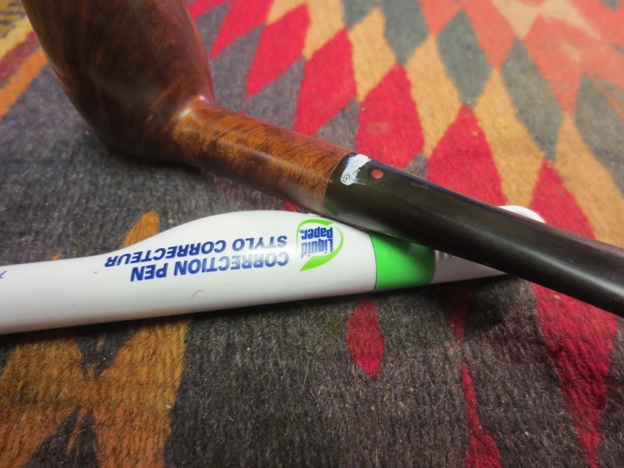
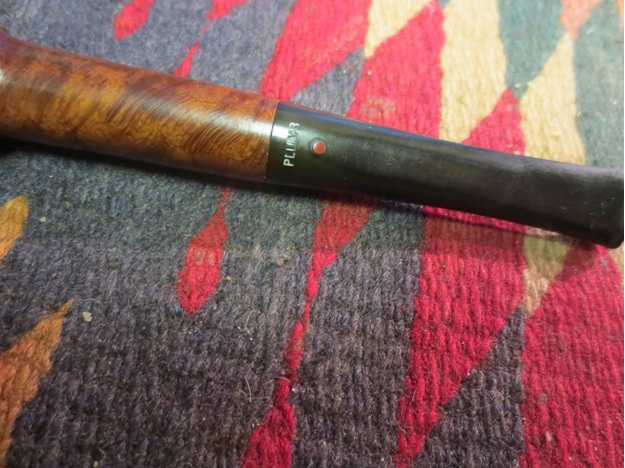
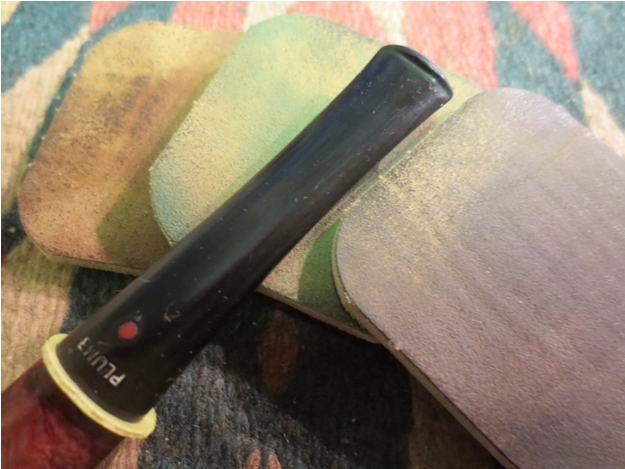
Dr4 The stem had the Dr. Plumb red dot on the top of the stem with the word PLUMB stamped over the top in white. The Plumb stamping on the stem would need to be touched up.Dr5

Dr6 I have included two close-up photos of the bowl rim and the white mould in the bowl. I was very curious to see if a good ream would remove it. Would the mould go deeper into the bowl than the cake? Would it be in the briar itself? I certainly hoped not but a reaming would disclose the depth of the problem.Dr7

Dr8 I reamed the cake back to bare wood. I wanted to remove all signs of the mould. I scrubbed off the cutting head before putting it away. I examined the bowl to make sure I had removed all of the signs of the mould. The wood was clean and bare. It was so it looked as if the mould had only been on the surface. I scrubbed the surface of the walls with alcohol and cotton swabs to make sure that none of the spores survived.Dr9

Dr10 I scrubbed the darkening and build up on the rim with cotton pads and saliva and was able to remove it. I use cotton swabs with alcohol as a follow up on the rim and when I was finished the rim was dull but clean.Dr11

Dr12

Dr13 I scrubbed out the shank with cotton swabs and isopropyl alcohol and pipe cleaners to clean out the airway in the mortise and the stem. I put the stem back in the mortise and took a few photos of the pipe at this point.Dr14

Dr15 The Dr. Plumb Flat Grip stem is unique in its design. It has a different style of taper that allows it to have what GBD called a flat surface. Instead of a crowned, rounded stem top and bottom there were slight taper from the edge of the surface to the side of the stem on all sides top and bottom. On this stem these were slightly rounded from use. I used a 220 grit sandpaper to break through the surface of the oxidation, remove the tooth marks and chatter and also clean up these tapered edges.Dr16

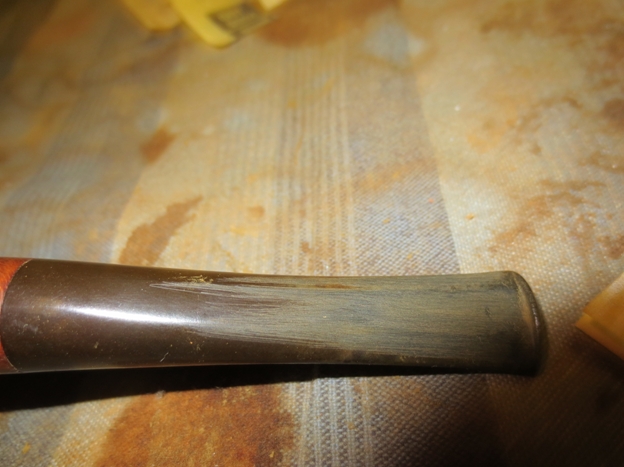
Dr17 I sanded the stem with a medium and a fine grit sanding sponge to smooth out the scratches and clean up the stem surface further. I wet sanded the stem with 1500 grit micromesh and then used a liquid paper/Whiteout to touch up the PLUMB stamping on the top near the shank.Dr18

Dr19 I put the plastic washer on the tenon and inserted it into the shank so that I could sand the edge without rounding the shoulders of the stem. I sanded it with a fine grit sanding sponge to remove the light oxidation that still remained on the shoulders. I repeated the wet sanding with 1500-2400 grit sanding pads and then dry sanded with 3200-12,000 grit pads. I rubbed the stem down with Obsidian Oil between each set of three pads. I rubbed it down a final time and let it sit until it was absorbed into the vulcanite.Dr20

Dr21

Dr22 I buffed the stem with White Diamond to finish polishing it and raise the shine. I buffed it with a soft flannel buff to finish the stem.Dr23

Dr24 I buffed the entire pipe with White Diamond and Blue Diamond to polish the briar and stem. I gave the pipe multiple coats of carnauba wax and then buffed it with a soft flannel buffing pad to raise the shine. The finished pipe is shown in the photos below. It is cleaned and there is no sign of the mould that once was in the bowl. The pipe smells clean and new. It is ready to load up and smoke the first bowl.
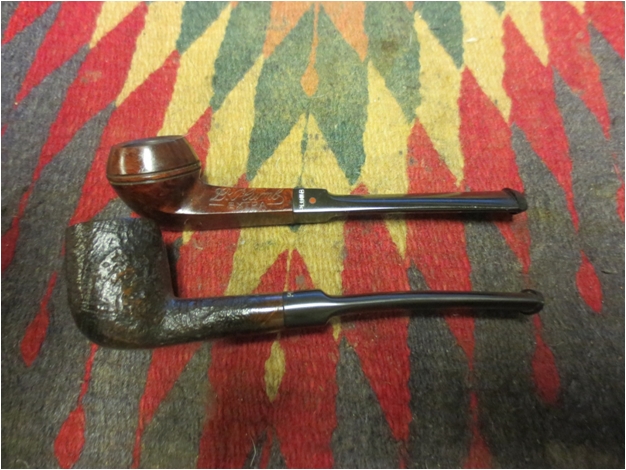
Dr25

Dr26

Dr27

Dr28

Dr29

The use of Rit Dye to stain pipes


Blog by Troy Wilburn

imagesYesterday I sent an email to Troy about his use of Rit Dye to stain pipes. I have been reading and enjoying his blogs on the various restorations he has done here on rebornpipes and from reading them had some questions about his use of the dye. I have had questions for a while now about water based stains in general so I looked forward to his reply. His response was very helpful and gave me the information I wanted to know. I have included my email that started the conversation before Troy’s response.
Hey Troy,
Hope the morning is going well for you. I have been thinking about your Rit dye stain. I have a couple of questions for you.
1. Does the dye swell the grain being water based? I wonder if you could mix it with Isopropyl alcohol like the aniline stains that come in powder form and mix with alcohol.
2. What is the durability? When you heat it does the stain come off on your hands? Over time does it come off with use?

Thanks
Steve
Rit2 Here is Troy’s response:

The dye does not mix with alcohol well from my experience.

The mixture does raise the grain some but not as much as you think. That is one reason I rub the pipe down with mineral oil after drying. It seems to knock down the raised grain. I usually use a cotton ball with oil. If it’s a rusticated or blasted pipe after wiping with oil I take a tooth brush and gently spread the oil in recesses.

Some dye will be lifted in doing this and in the first time you apply wax with a wheel, so I tend to make it a little darker as it will lighten up slightly. When I apply the first base wax I do it very lightly as I just want to use it as a sealer.

As far as durability I have had no problems using this and all the pipes I have done have held up well to constant smoking.

If I want to do a light stain I simply wipe on and wipe off. I repeat this process if I want to add just a slightly darker coat. If I want to do a very dark stain or a dark base I wipe the mixture on heavy and use a small paint brush and brush the stain after applying it with a rag or cotton ball.

I used to do be employed as a wood finisher for a custom cabinet furniture company in Florida, so I have some experience in water based stains and mixing my own colors. One reason I chose to try and use fabric dyes is basically they are water based stains and can be found easily and they are cheap to buy.
I have used alcohol based stains before also but prefer water based as they are more forgiving and easier to manipulate if you want to lighten or darken. They are also easier to tint over.

Getting the Rit dye to mix well and figuring out the right amount to use does take a little time but can be mastered by trial and error rather quickly. The hotter the water the better and use small amounts until you get the right consistency and the depth of color you are looking for.

If you are interested in trying out the Rit dye I suggest messing around with some old trashed bowls and judge for yourself if it is something that you would like to use. Just because I like it and works for me you may not like it.

I think for someone who has used a lot of alcohol based stains and is comfortable with them this may not be their cup of tea.

As I stated before I’m more comfortable with water based stains and used to mixing my own colors.

Hope this helps in your questions and feel free to ask anymore anytime.

Troy

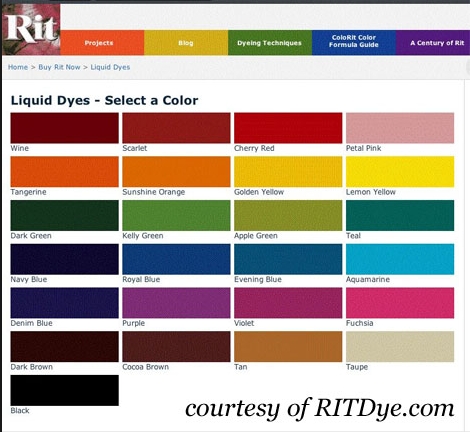
I thought I would include some of the colours that are available for Rit dye. The chart below gives just a few of them and the combinations that can be made are many. – SteveRit dye

A Savinelli de Luxe Milano 431KS Reborn Twice – PART 1: reshaping a broken stem.


Blog by Steve Laug

You will see by the end of this blog why I say the pipe was reborn twice. Suffice it to say in this opening paragraph that a near pipe repair tragedy occurred when I had all but finished the first rebirth.When I picked up the pipe it was one of two that I found while on a pipe hunt in Bellingham, Washington with a friend. The other pipe was a Custom Bilt that I have already blogged about. The grain on this pipe attracted my attention and made me want to see what I could do with it.Sav When I brought the pipe to the work table most of the issues were with the stem. The bowl had originally had a natural finish so it was dirty but not stained. There was no finish on it or varnish that needed to be removed so the clean up would be quite simple. The rim was caked with a thick tar and oil buildup that was shiny and hard. The bowl had a cake of the same material and had the sweet smell of an aromatic – lots of vanilla. The main issue with the stem was twofold. The top surface of the stem from the button up the stem about 1 inch there were many dents and bite marks. The underside of the stem had a large piece of vulcanite missing from the stem and the airway had been clamped down by biting. It also was oxidized and calcified. The fit against the shank was fairly decent with a slight gap on the left side, top and bottom at the shank.Sav1

Sav2

Sav3

Sav4 The next two close up photos of the stem show the damage to the top and bottom side of the surface next to the button. The underside is the most damaged with a huge chunk missing. The second photo shows the top of the stem with the many tooth marks and bumps that created a thin surface on the top of the stem.Sav5

Sav6 I took the next photo to show the rim. All edges are intact but the surface is coated with a thick, hard coat of oils and tar.Sav7 The tenon had an inner tube insert in it. I have had several of these Savinellis but never had one with the tube. It would turn out to come in handy later.Sav8 I weighed my options with the stem for several days before I decided to cut off the damaged portion of the stem. I used my Dremel with a sanding drum and took the stem back to solid material.Sav9

Sav10 The next four photos show the look of the pipe with the shorter stem. Personally I like the more compact look of the stem as it seems to fit proportionally well with the pipe.Sav11

Sav12

Sav13

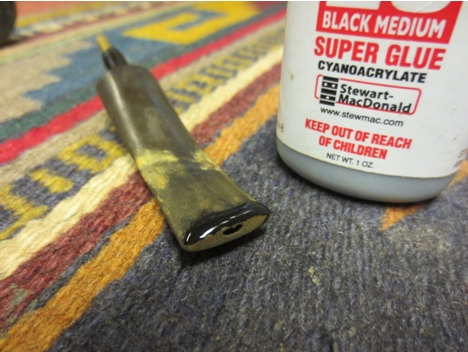
Sav14 I decided to work on the button on the pipe before turning to the bowl. You can see from the photo below that the underside of the area where I would cut the button was quite thin. I did not want to cut back the stem any further so I built up that area with black super glue. I applied the glue and set the stem aside to cure. It would take several coats before the button was built up.Sav15

Sav16

Sav17 While the glue cured and hardened I worked on the bowl. I reamed it with a PipNet reamer starting with the smallest cutting head and working up to a head that would cut back the cake to bare briar.Sav18

Sav19 With the bowl reamed back I could tackle the top of the bowl. Even using the reamer did not chip or crack the buildup on the top of the rim. It was like rock. I scrubbed the rim with oil soap and a tooth brush. I picked at it with a dental pick and was not able to break through the rock. I decided to lightly top the bowl to remove the buildup. The idea was not to remove any briar but merely to take of the rock hard tars on the rim. I used my topping board and 220 grit sandpaper and worked the rim carefully to ensure that I only took the rim down to briar. Once I broke through the rock I took several more turns on the sandpaper to finish up the rim.Sav20

Sav21 I scrubbed the bowl with acetone on cotton pads to remove the soiling and oils in the briar. It did not take much to bring the briar back to its natural state.Sav22

Sav23

Sav24 I decided to rub down the bowl with a light coat of olive oil to protect the briar and give it some life. I applied the oil with a paper towel and rubbed it in and rubbed it off. It also served to highlight the grain and make it stand out.Sav25

Sav26

Sav27

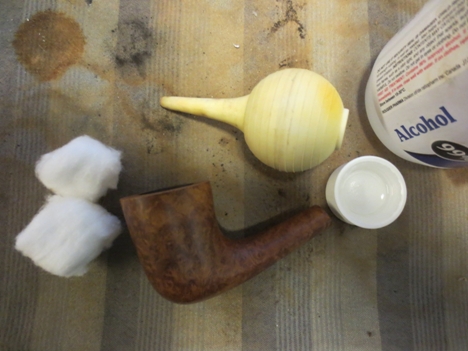
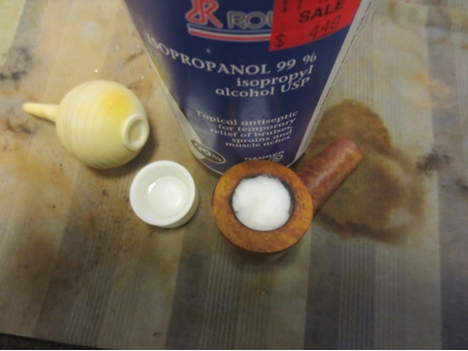
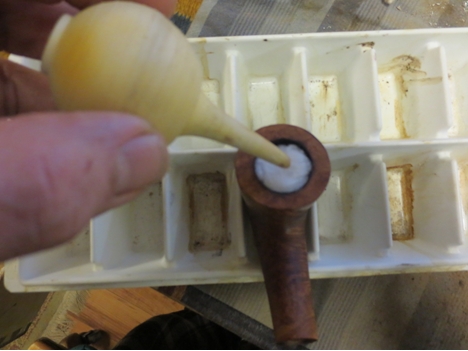
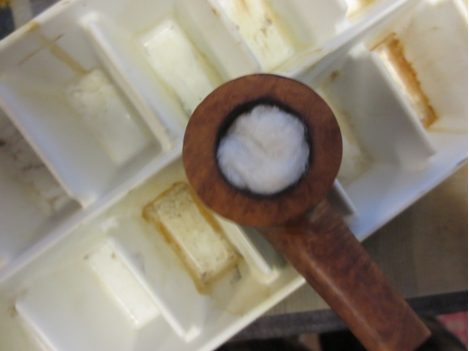
Sav28 I cleaned out the shank with cotton swabs, pipe cleaners and isopropyl alcohol until they came out clean. For the amount of build up of tars and oils on the rim the shank was quite clean.Sav29 I decided to use a cotton ball and alcohol soak on the bowl to remove the sweet smells of the aromatics that had been smoked in the bowl. It had a thick vanilla smell that needed to go in my opinion. I set the stuffed bowl in an ice cube tray and used an ear syringe to fill it with alcohol. I let the bowl soak overnight to leach out the oils in the wood.Sav30

Sav31

Sav32

Sav33 By the time I had finished setting up the bowl I called it a night and went to bed. The next morning I worked on cutting and shaping the new button on the stem. I used my usual knife blade file to make the initial cuts and shave back the slope of the stem.Sav34

Sav35 When I had the slope and look right I sanded the newly shaped button and stem with 220 grit sandpaper. I then repaired some of the low spots with clear super glue. I recut the button with the needle files and sanded it with 220 grit sandpaper to clean up the edges.Sav36

Sav37 With more sanding and shaping I had it where I wanted it and then sanded the stem with a medium and a fine grit sanding sponge to clean up the scratches in the vulcanite.Sav38

Sav39 With the button shaped in I worked on the slot in the airway. I used my usual three needle files – a flat oval, an oval and a round file to work on the slot. I always start with the flat oval and work to the round file.Sav40

Sav41 I used a folded piece of sandpaper to smooth out the inside of the slot.Sav42 At this point I worked some more on the surface of the button. It still was too rough to my liking. I sanded and filed it to reshape it. The next two photos show it before I worked it over with files and papers.Sav43

Sav44 Once I had the button shaped to my satisfaction I sanded it with micromesh sanding pads. I wet sanded with 1500-2400 grit pads, rubbed down with Obsidian Oil and then set it aside to dry. I was pleased with the overall effect of the new button and could not wait to finish polishing it. This is where I made the first mistake in this repair.Sav45

Sav46 Instead of leaving it on the work table and calling it a night I brought the pipe upstairs with me from the basement work area. I wanted to show the girls in my family the result of my work. I know that they are not that interested but they attempt to humour the old man. I stopped at the fridge to get some water and that is when the disaster struck. I could not believe it. The pipe simply slid through my fingers and hit the hardwood floor in our kitchen. I can’t tell you how many times that has happened with no issues. But this time there was going to be a major issue and it came with a vengeance. When it hit the floor, really only 2 feet as I was bending over, I heard the awful click and the stem and bowl separated. The tenon snapped at the shank.Sav47 All that work done and now what to do? I was sick with the thought of starting over. I carried the broken pipe down the stairs to the work table and left it in the dark and went to bed – just a tad frustrated. If you are interested in seeing what I did to try and redeem this disaster make sure to read Part Two of the work on this pipe.

Restoring a Dr. Grabow Starfire Wirecarved 85 Poker


Blog by Troy Wilburn

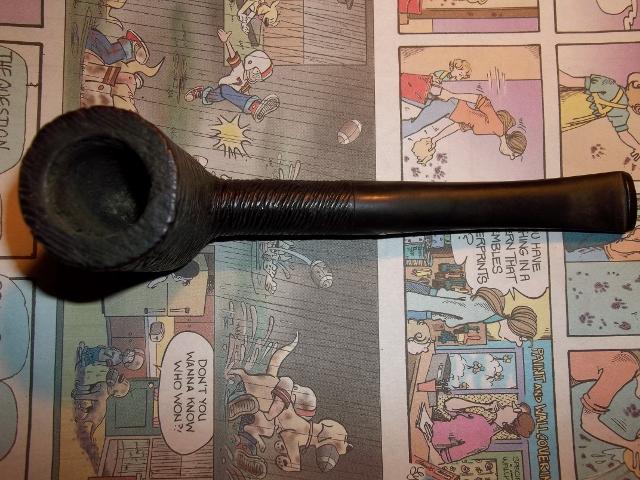
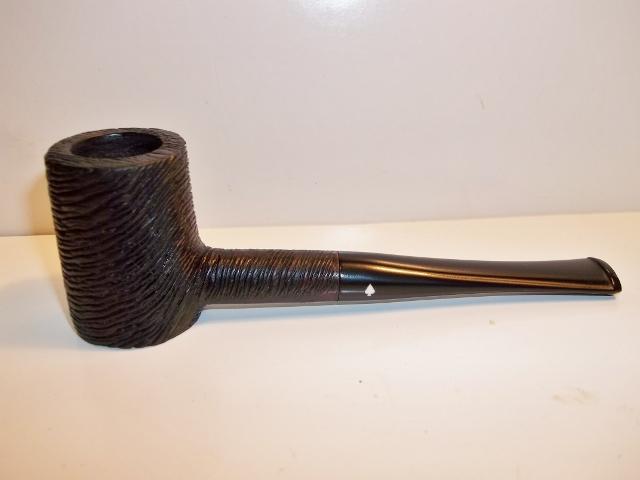
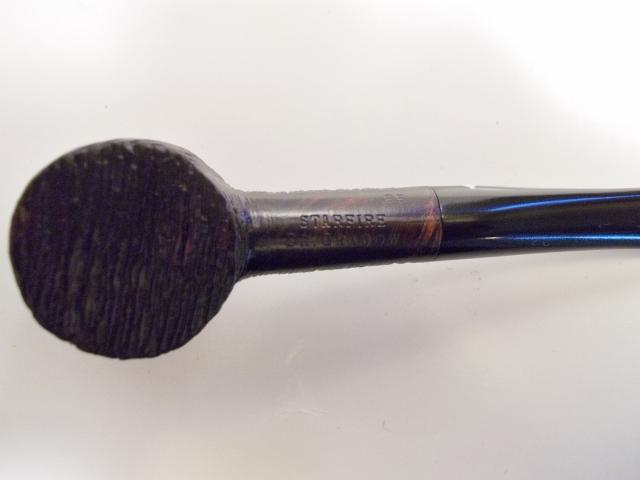
This pipe is a Dr . Grabow Starfire Wirecarved shape no.85 I picked up recently from an online auction. This is my favorite Dr. Grabow shape and I own several poker model 85s. Most of them are from the RJ Reynolds coupon era. Although the Starfire wasn’t a coupon pipe the quality was just as high on them as the RJ Reynolds pipes. I’m a big fan of the black wirecarved finish on the Starfires and Belvedere’s.

The pipe was in good shape although the wire carving was a little worn and the stem, an Adjustomatic, was stuck from corrosion. I did manage to get it unstuck after twisting on it several times really hard with hands and did not have to freeze it over night .

Before photos:Dr1

Dr2

Dr3

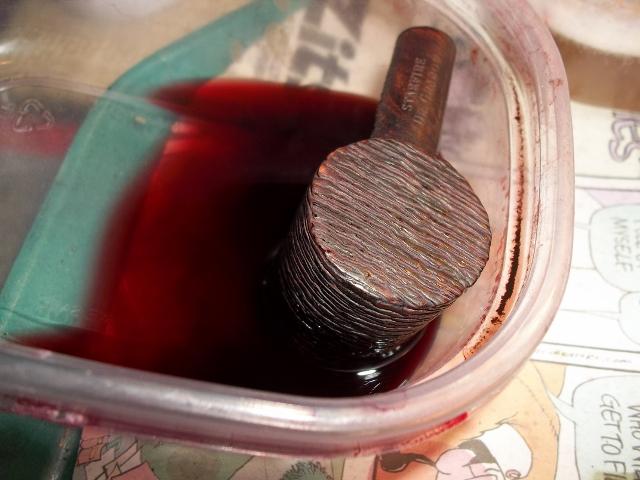
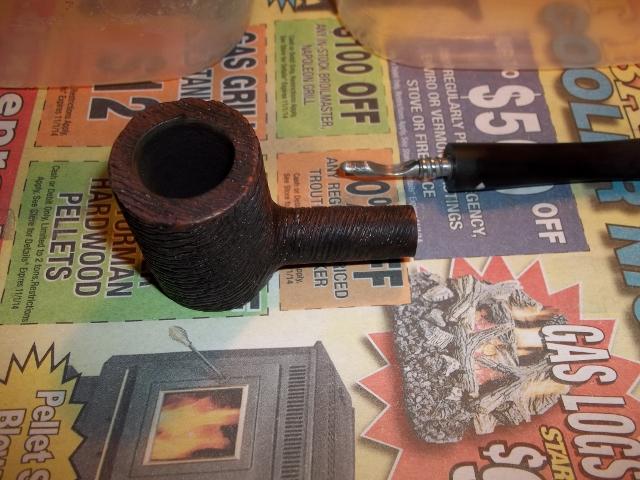
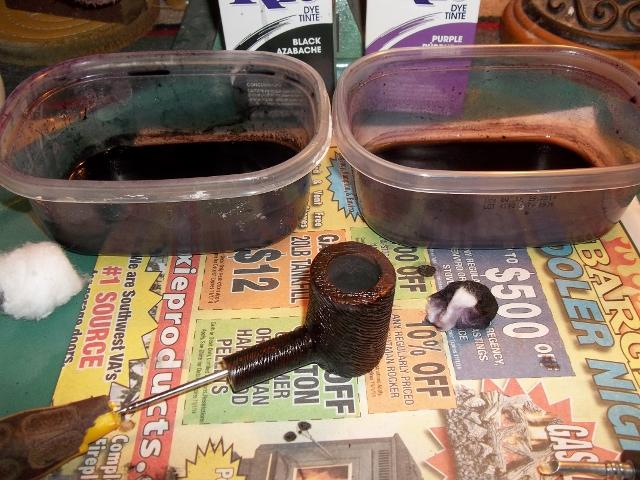
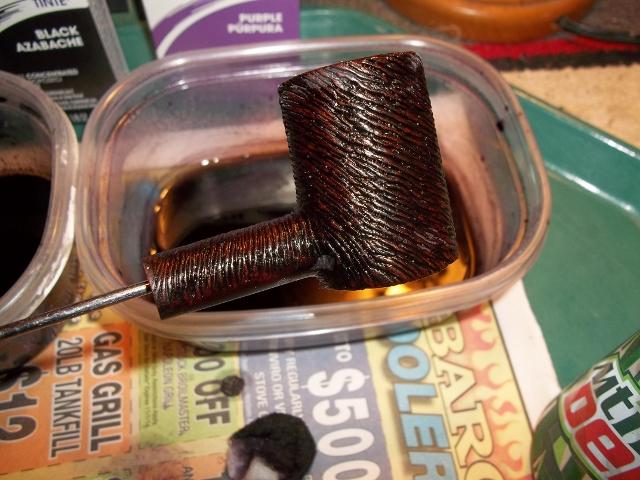
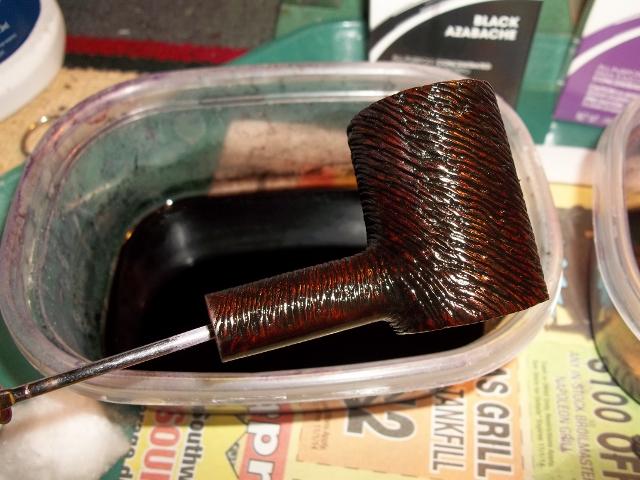
Dr4 After cleaning out bowl and shank I soaked bowl in alcohol and scrubbed it many times with a tooth brush trying to get as much dirt and residue as I could out of wire carving to make it crisper looking.Dr5 After a good soak in some OxyClean I managed to get stinger removed from stem and do some scrubbing on it with a scotch brite pad. I also oiled and heated the Adjustomatic and got it working correctly again.Dr6 With the bowl and stem cleaned, buffed and sanded I was ready to stain the bowl.Dr7 I decided to try a two part stain, so I mixed up some purple and black. The finish on Starfire and Belvedere wirecarved pipes is not a true black but black with purple undertones.Dr8 I applied three coats of purple dye letting it dry between coats. Then I applied three thinner mixed coats of black.Dr9

Dr10 With the staining done I now needed to let it dry for a bit.Dr11 The next photo shows the pipe back together and rubbed with mineral oil. It is ready for buffing after it dries some.Dr12 After photos:Dr13

Dr14

Dr15 This particular poker is also a less common shape stamped model.Dr16

Dr17

Dr18

Dr19

Dr20 It is a good pipe to smoke my favorite Old Codger Burleys OTCs in.Dr21