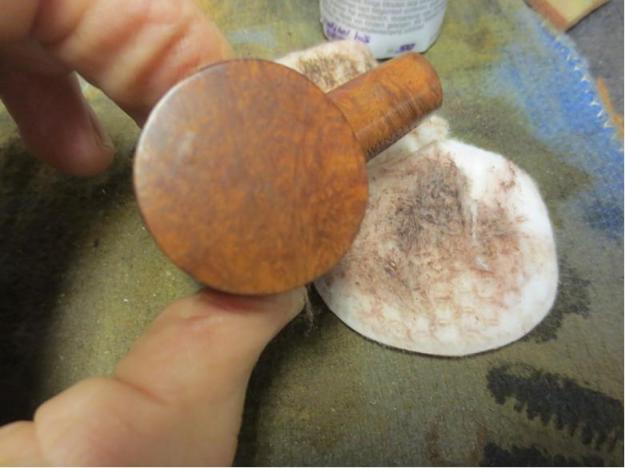
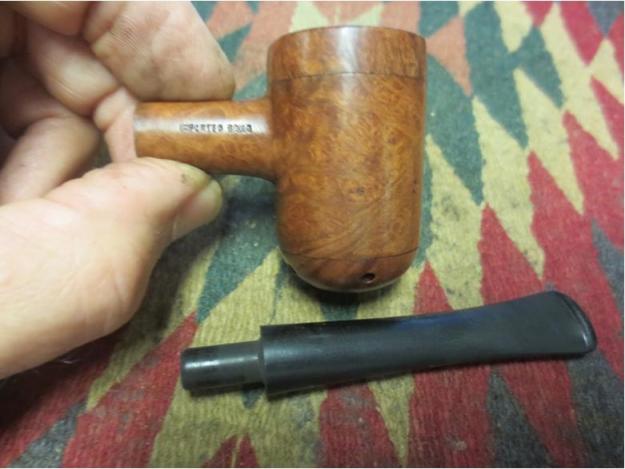
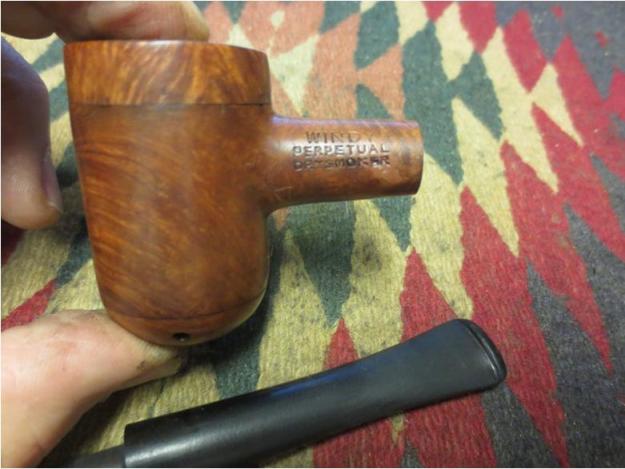
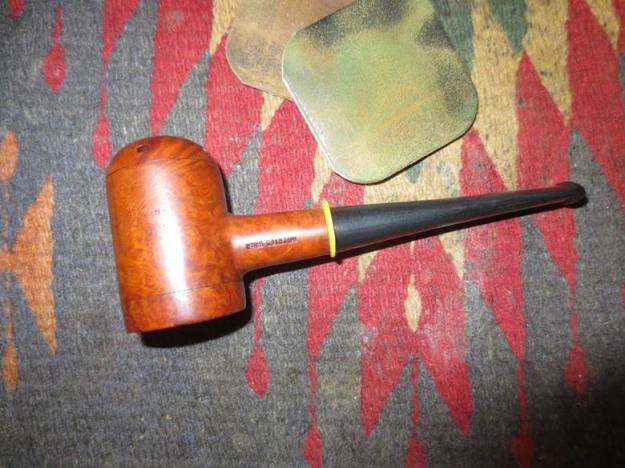
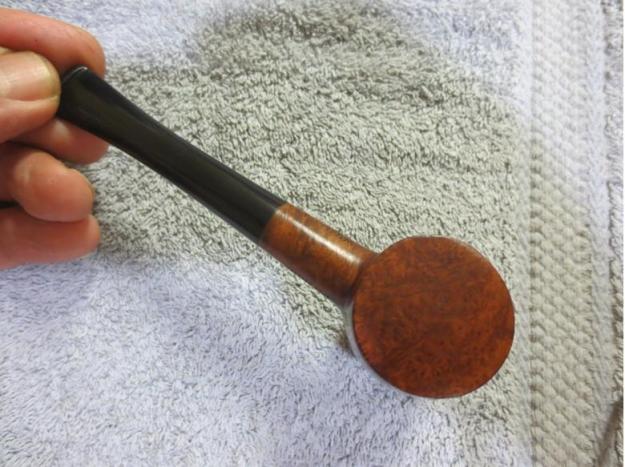
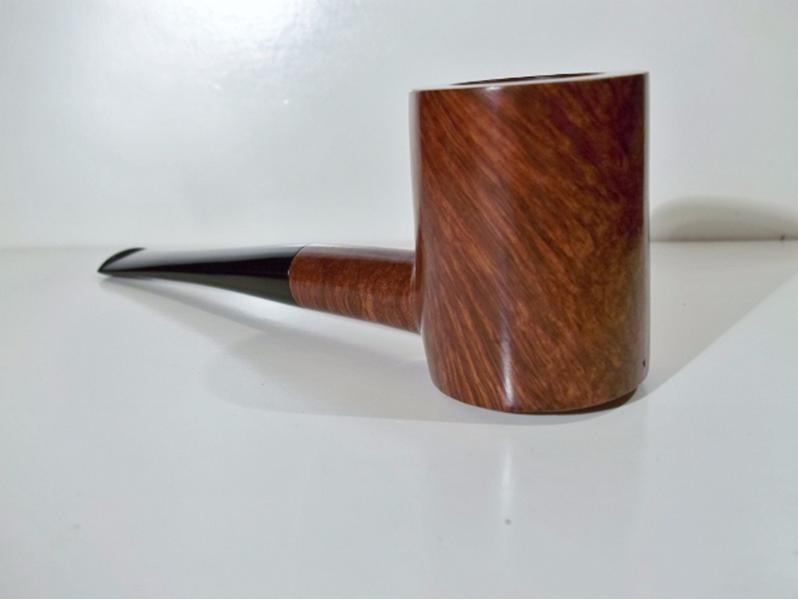
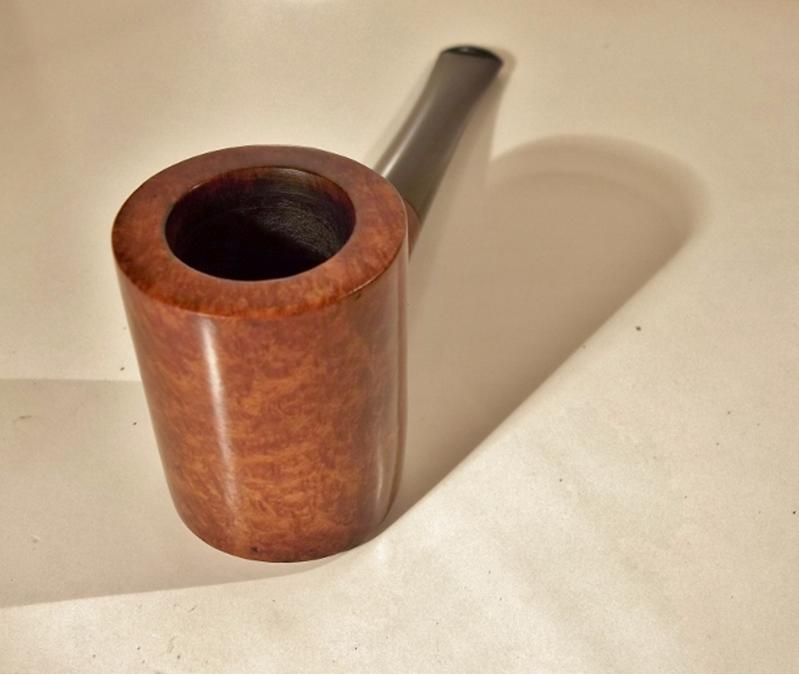
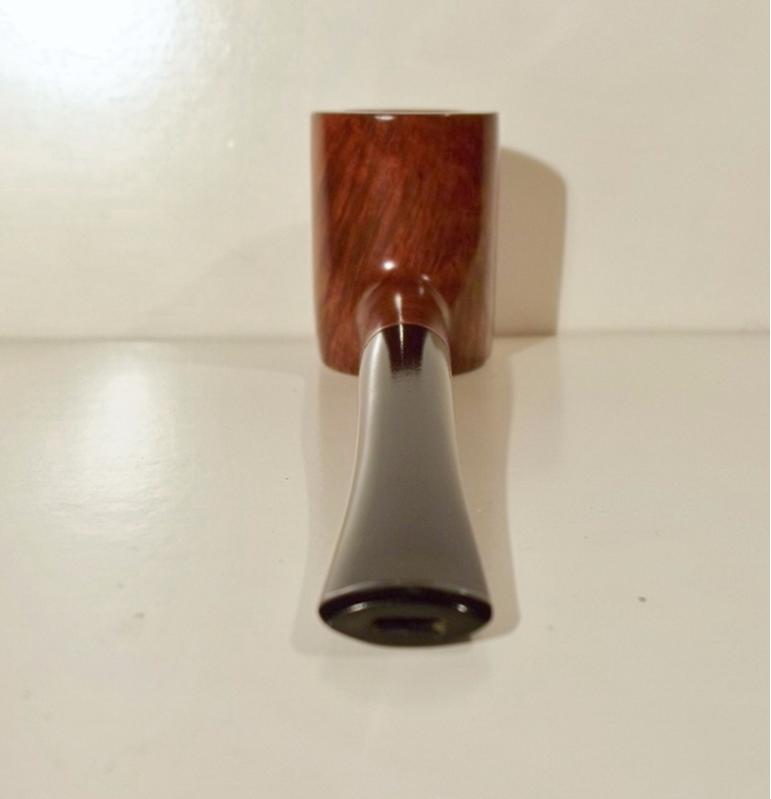
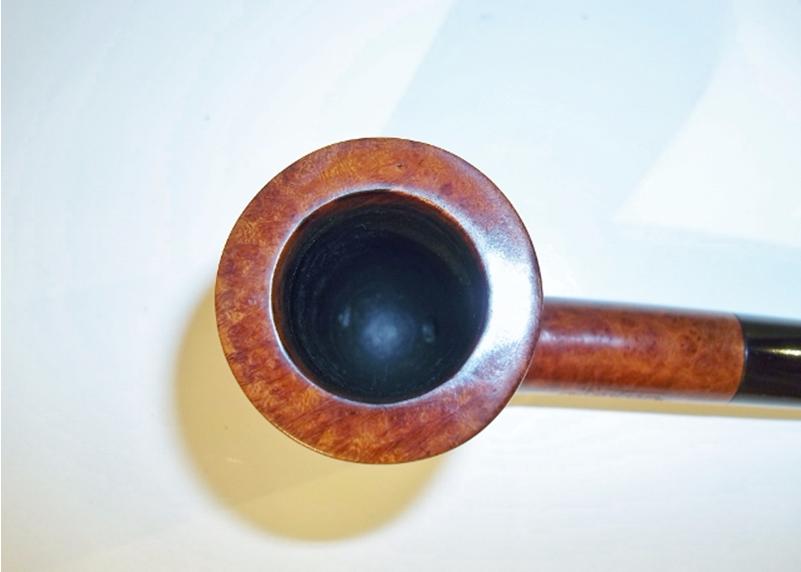
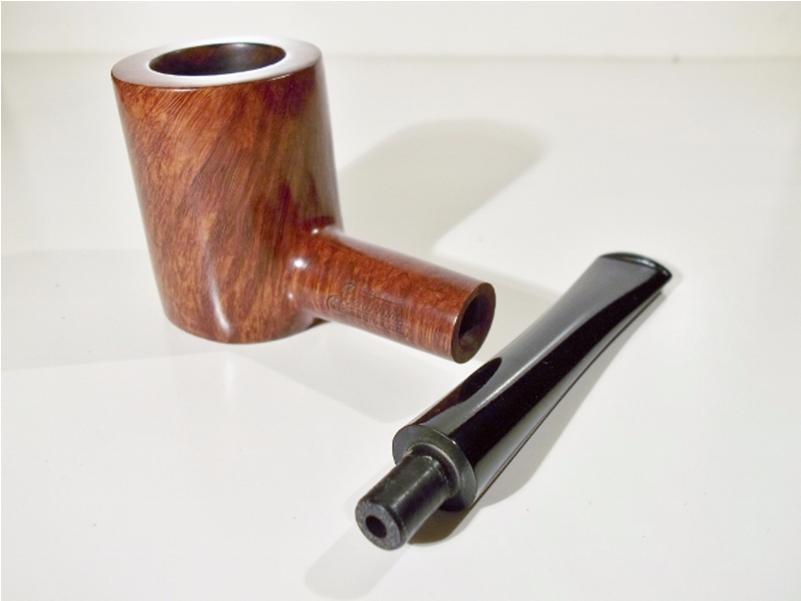
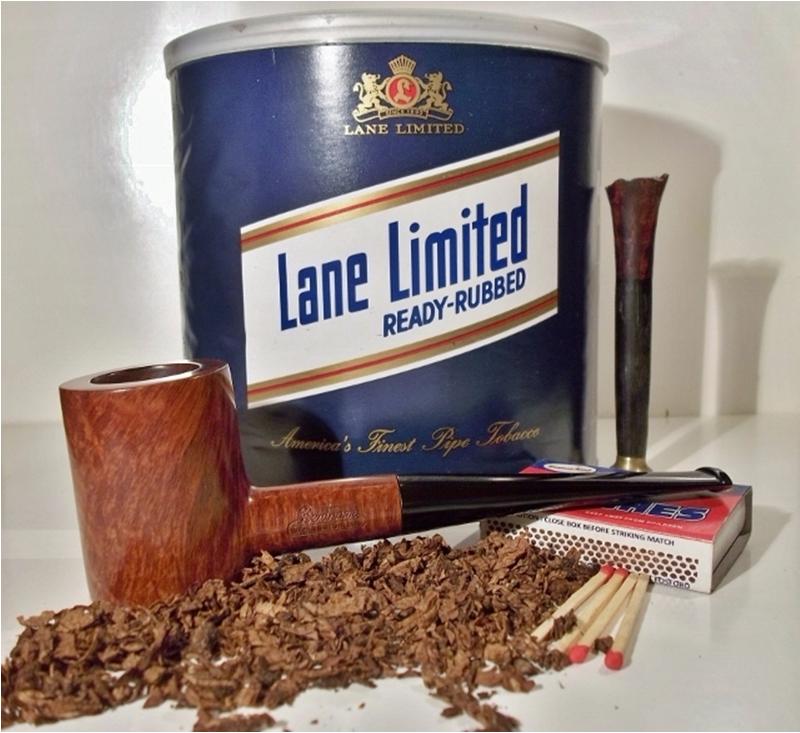
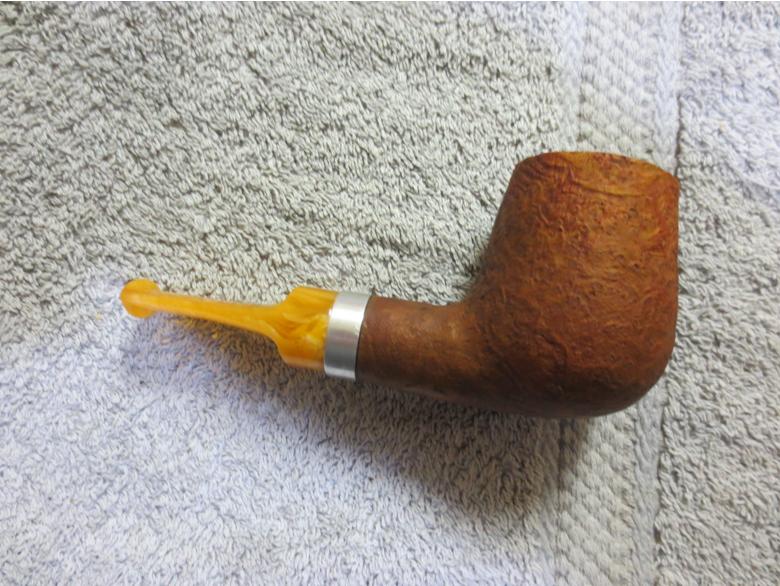
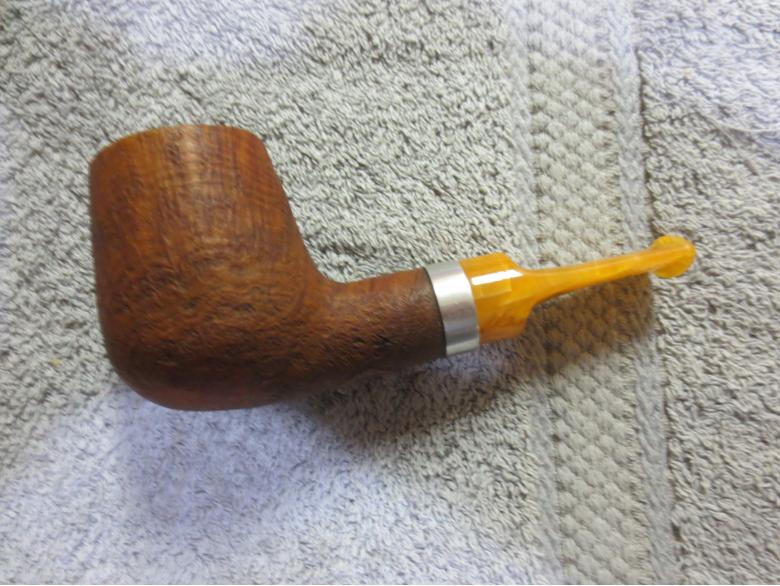
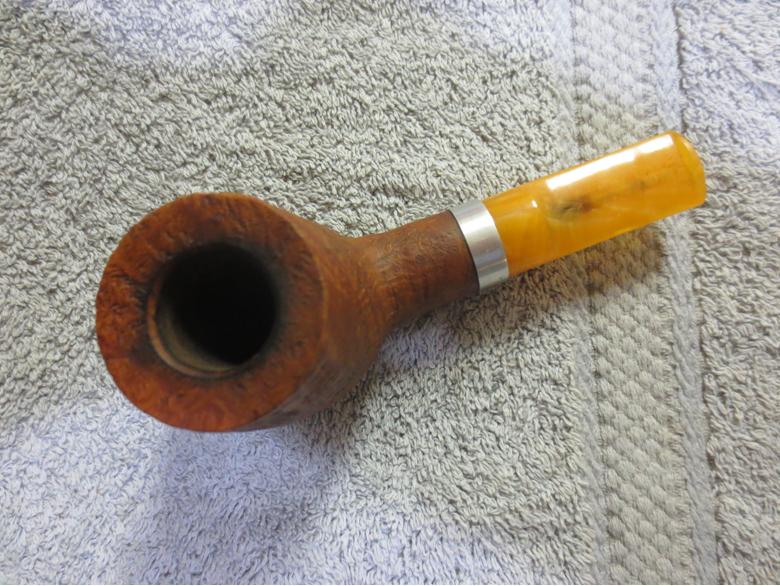
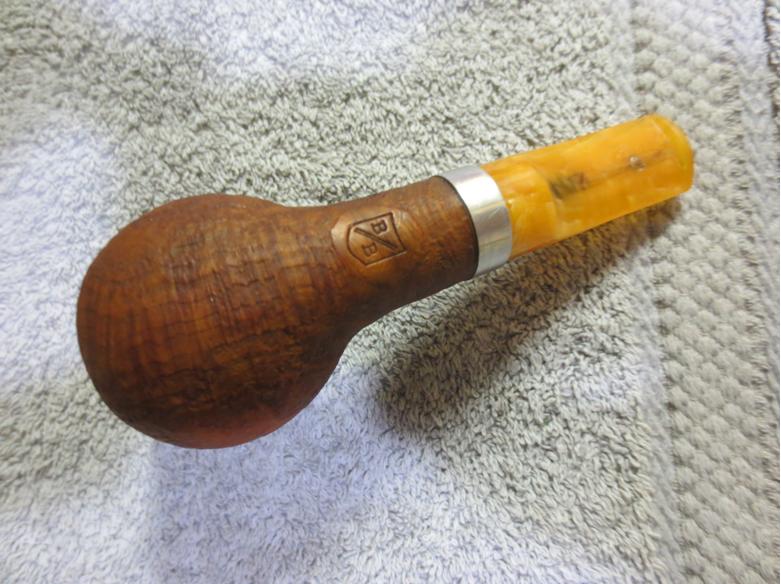
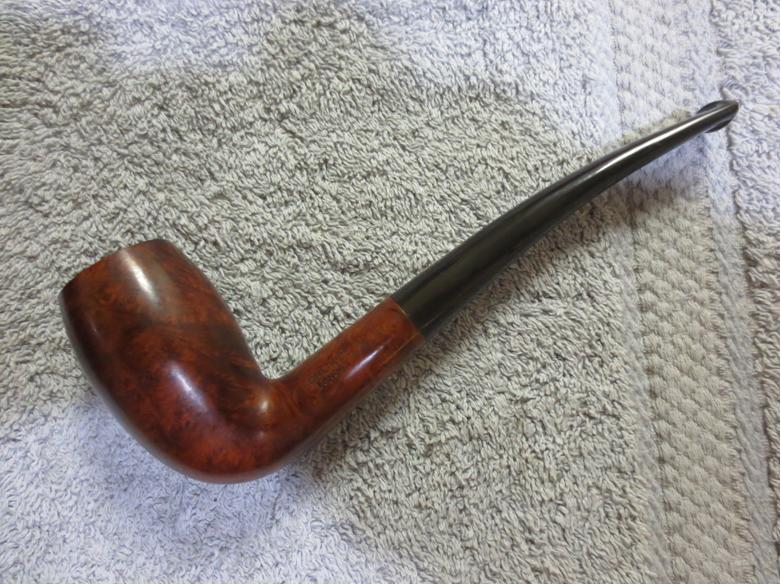
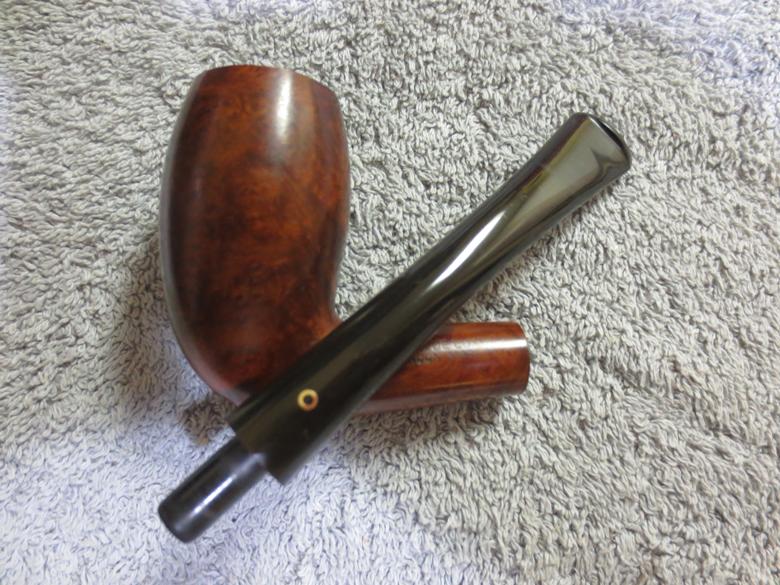
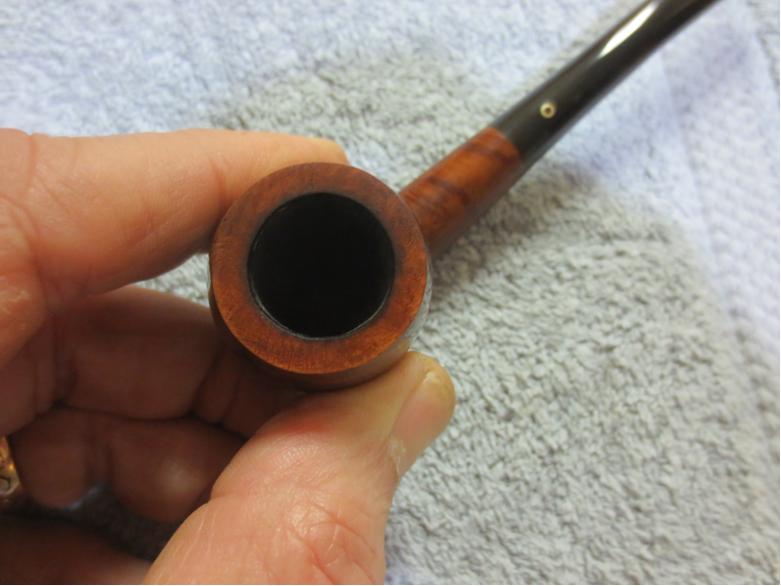
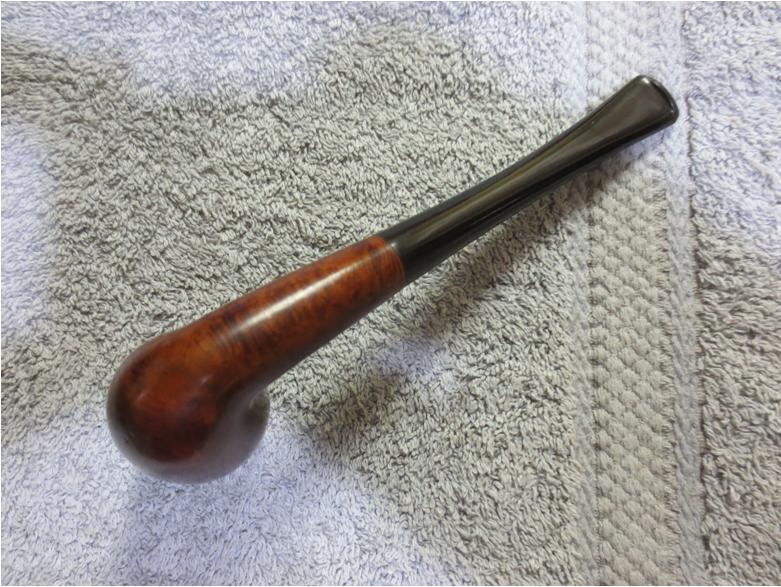
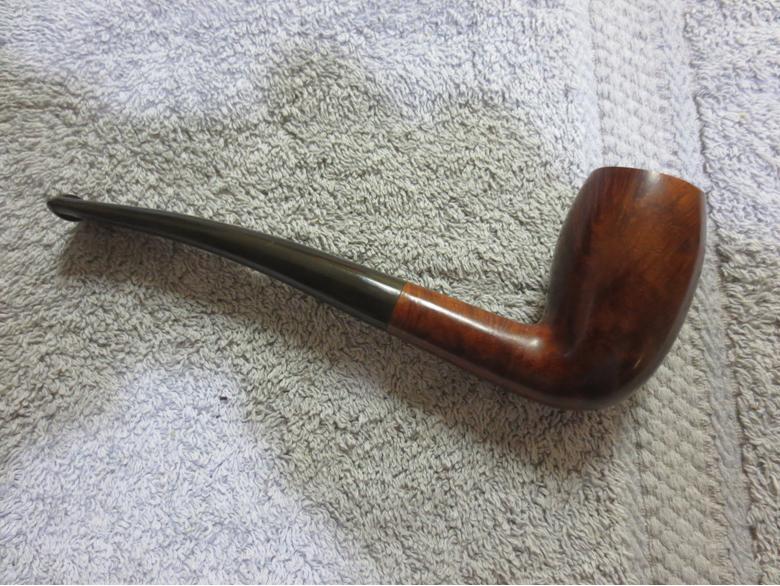
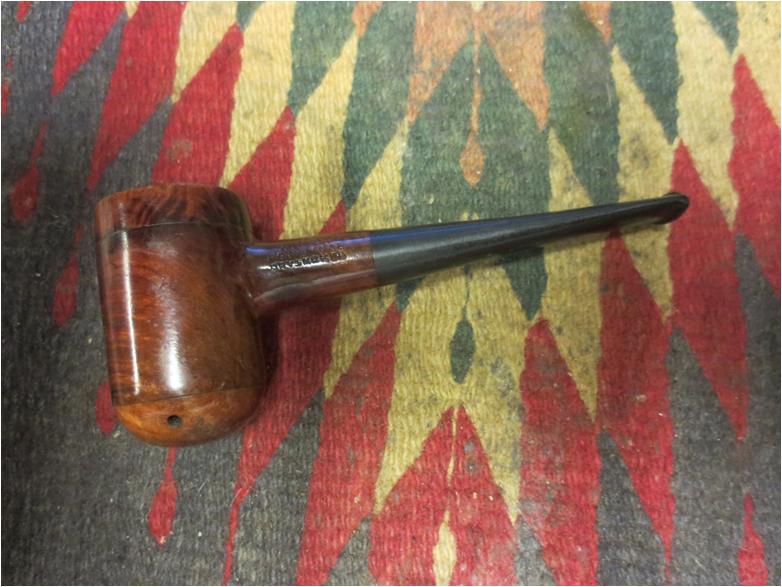
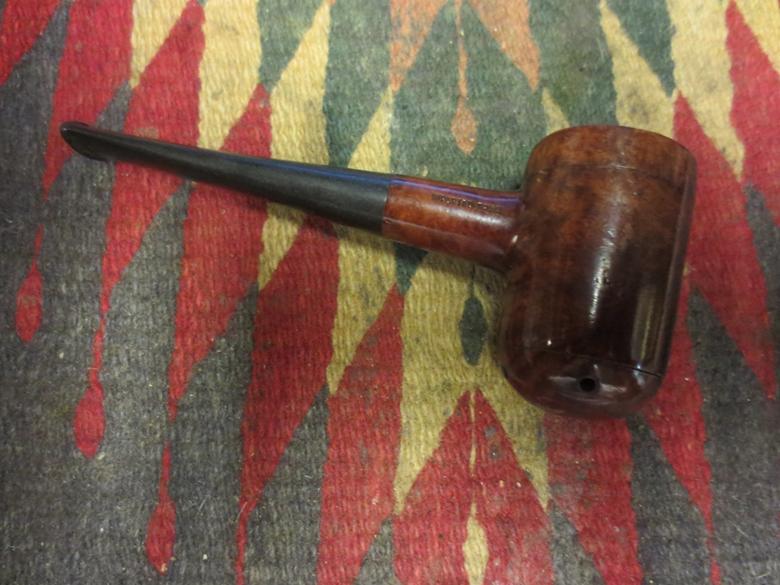
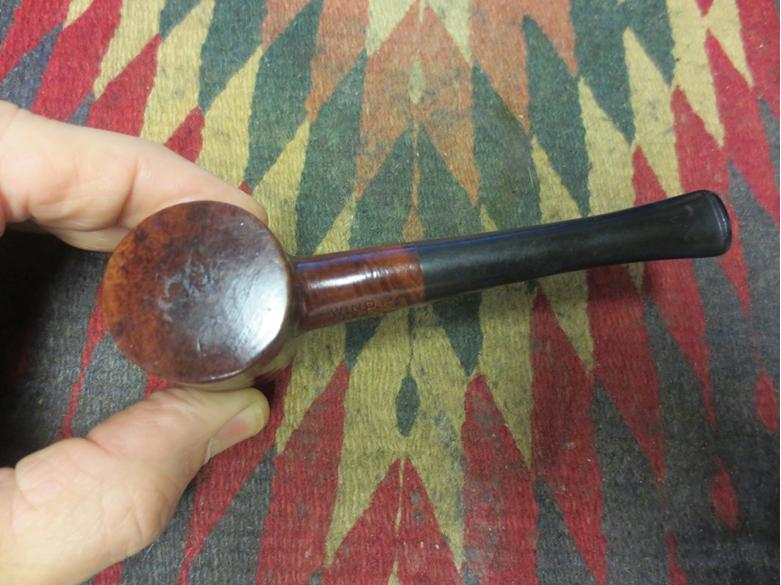
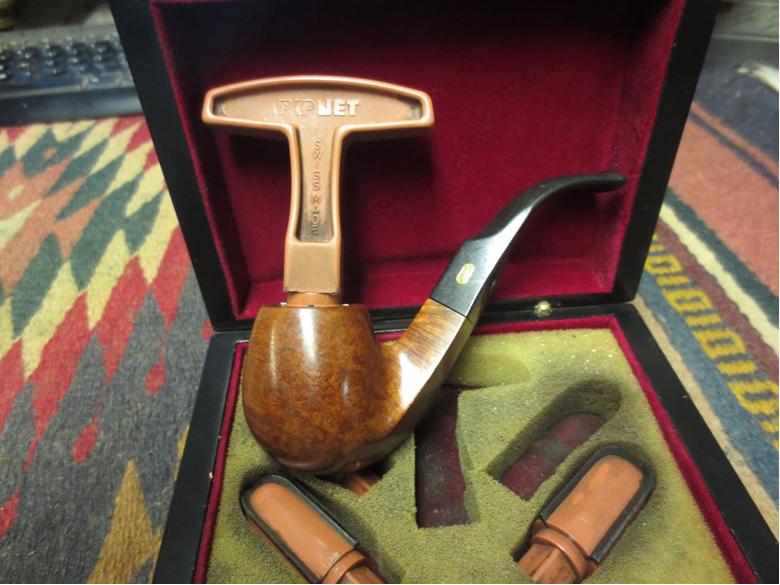
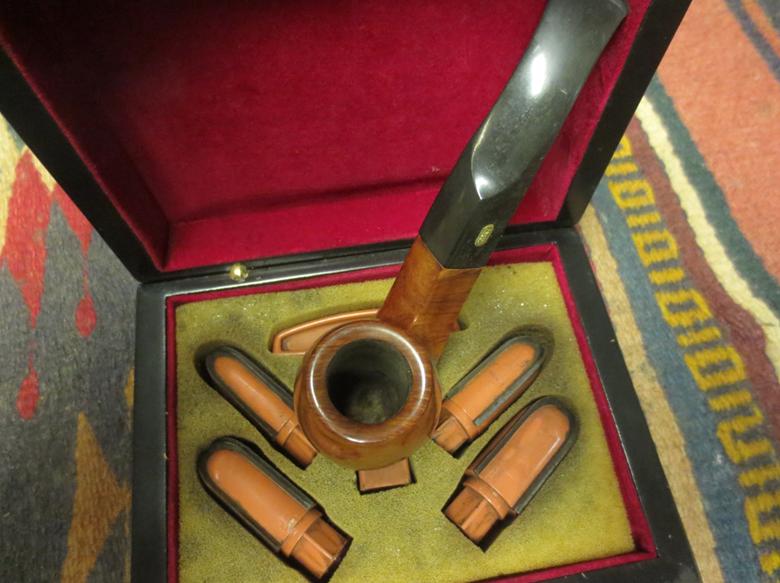
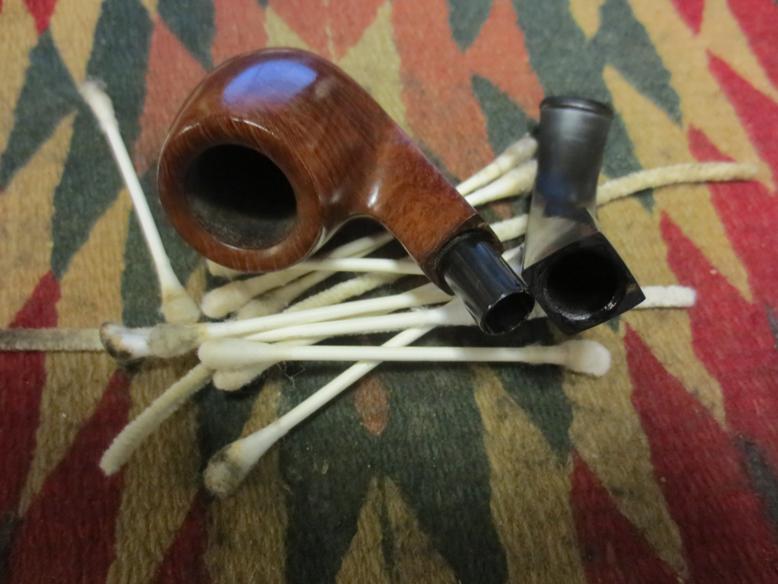
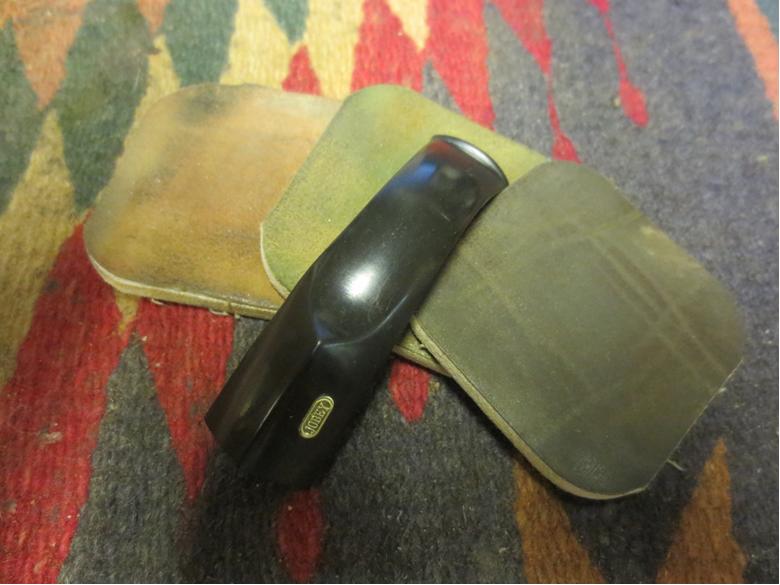
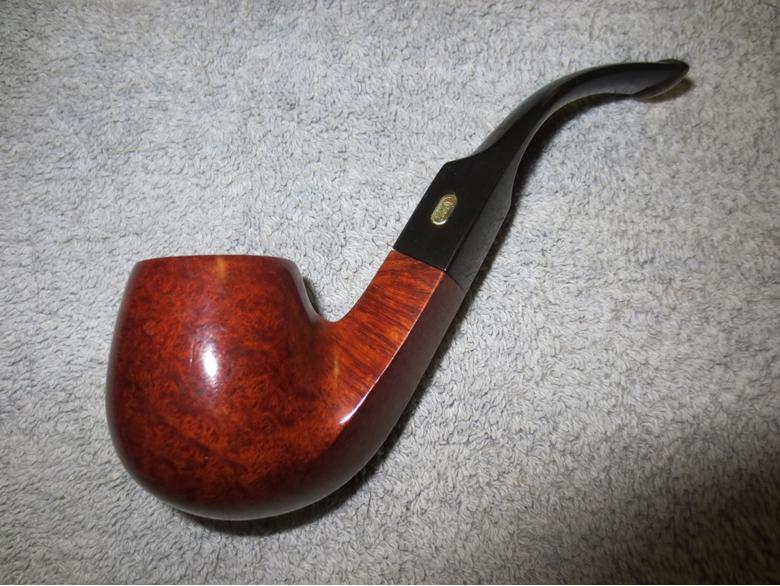
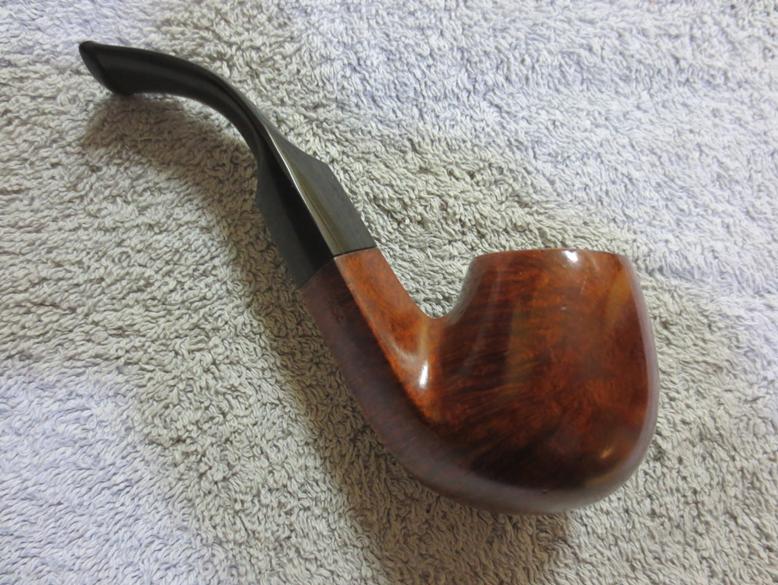
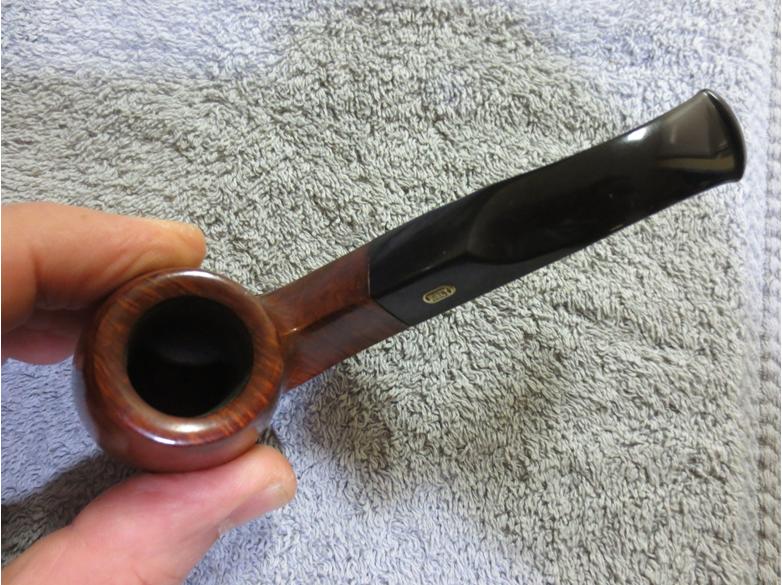
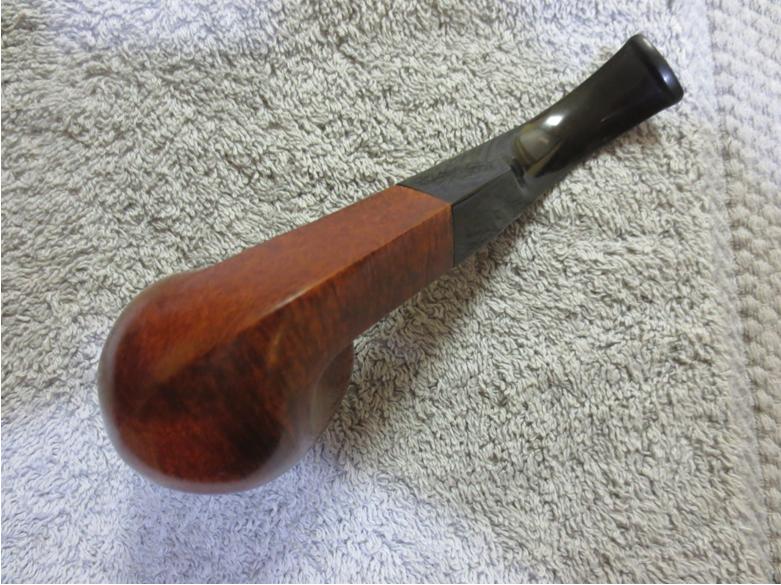
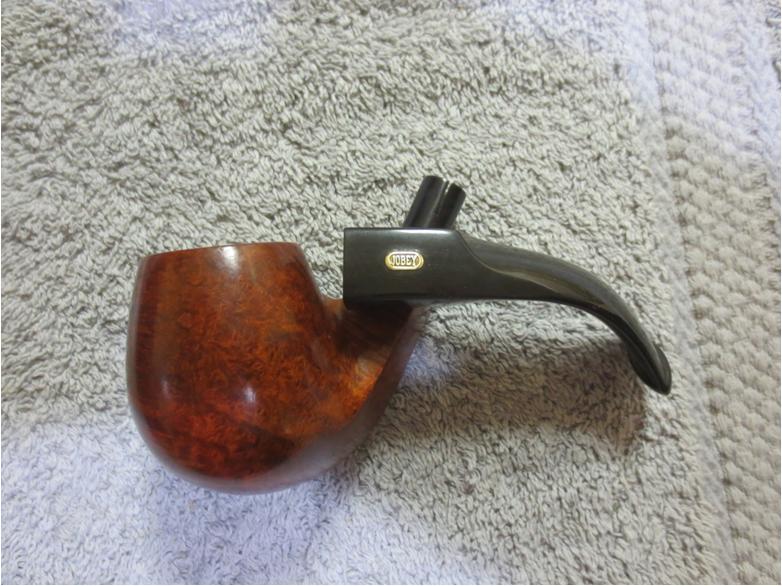
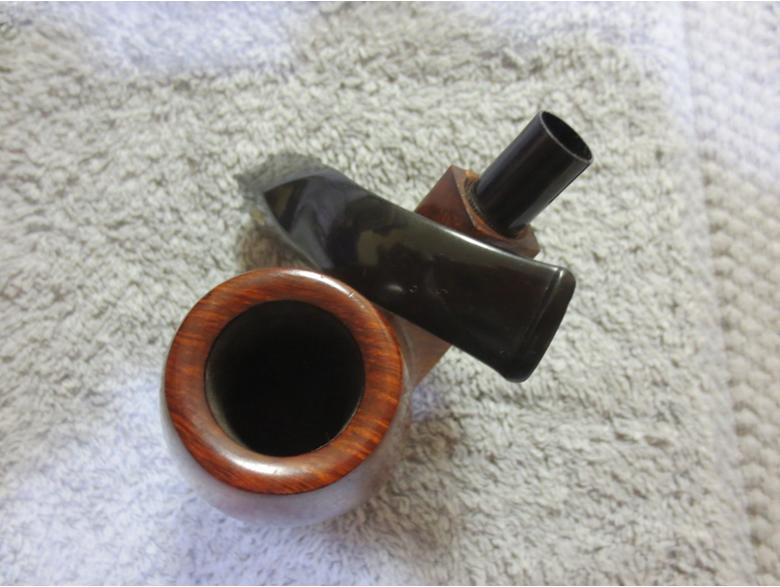
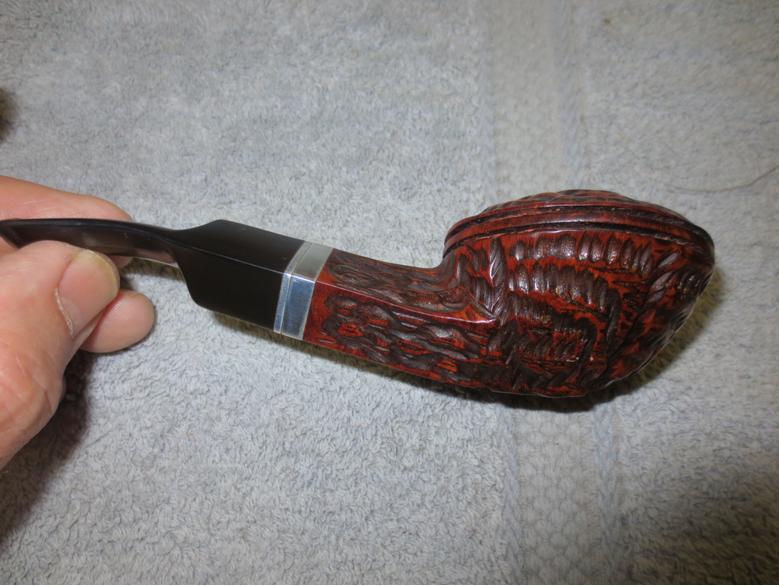
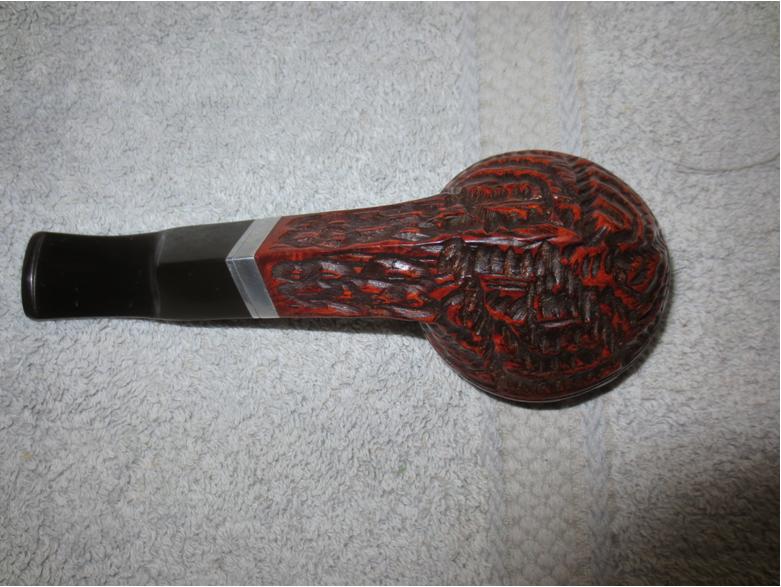
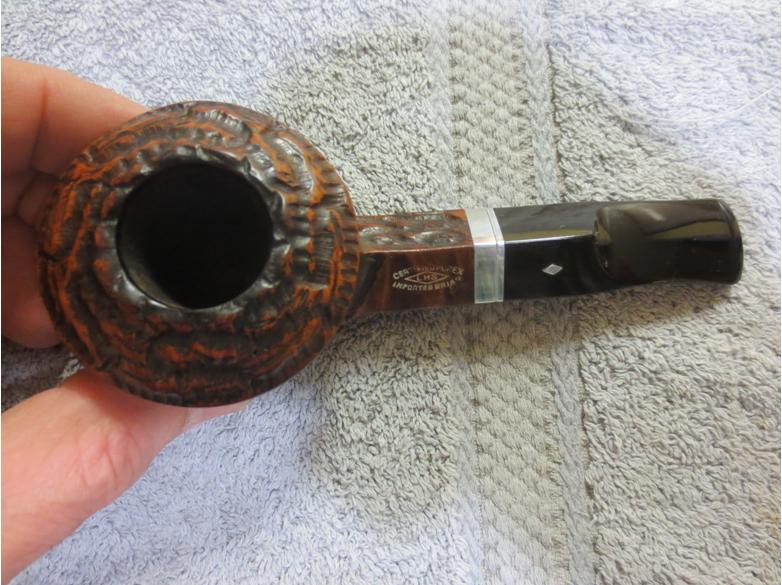
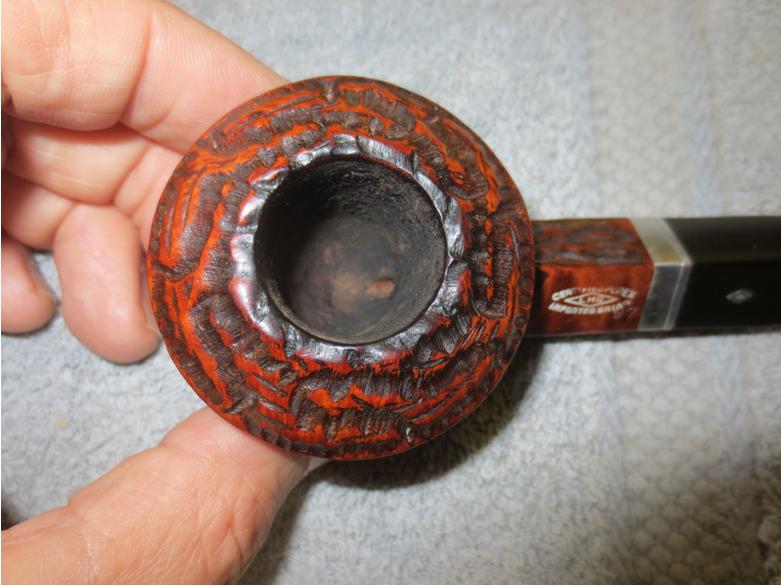
An Easy Restoration of a Bertram Grade 60 217 Poker


Blog by Troy Wilburn

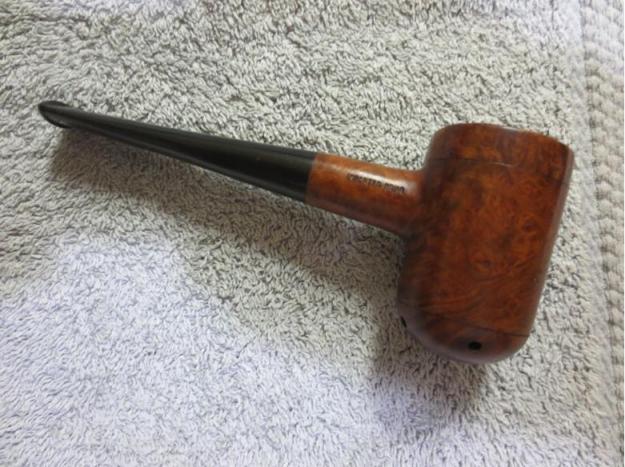
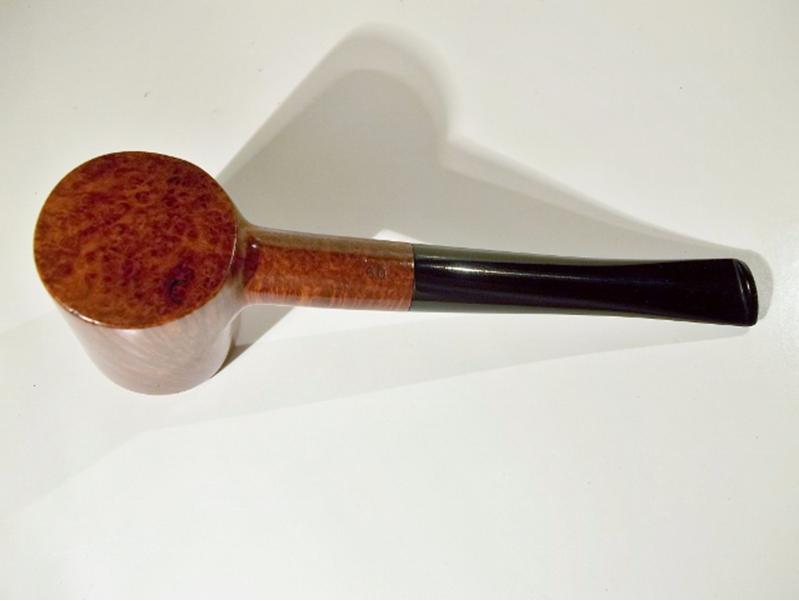
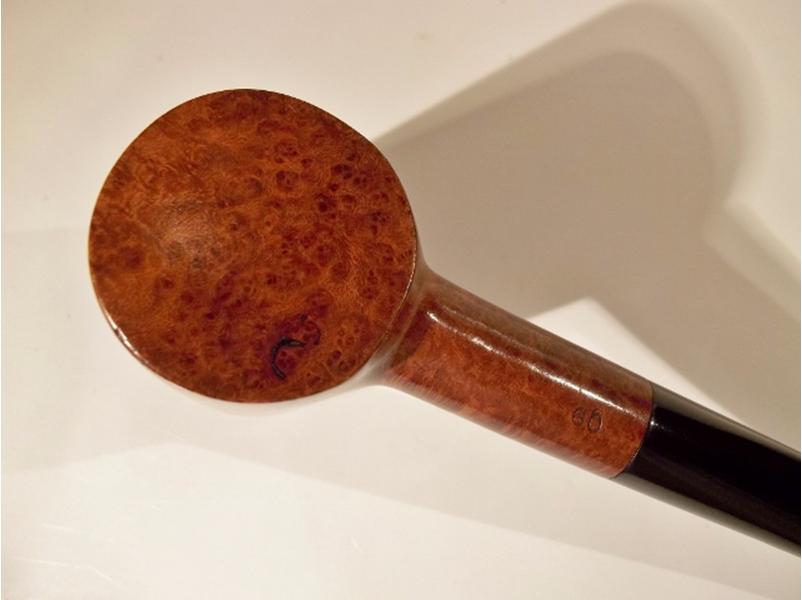
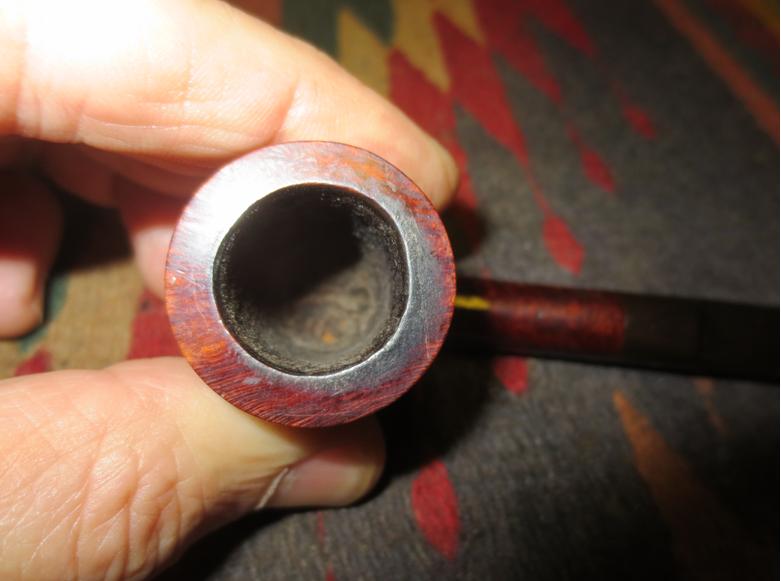
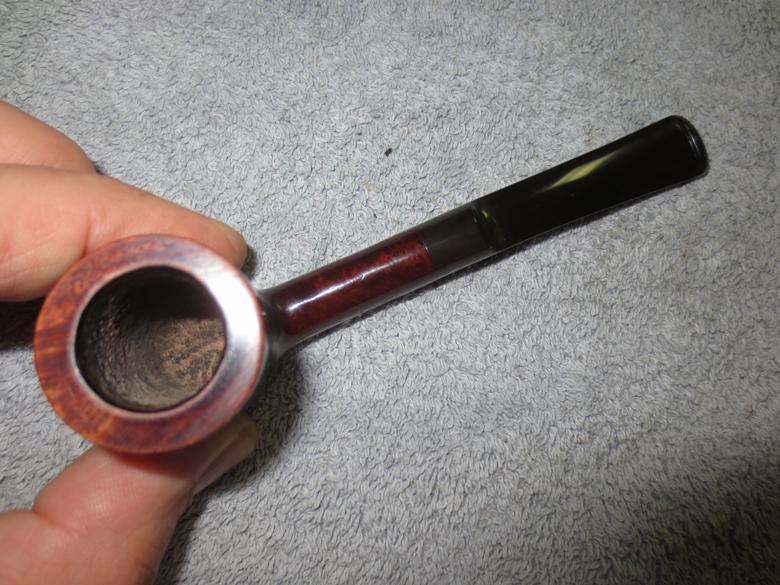
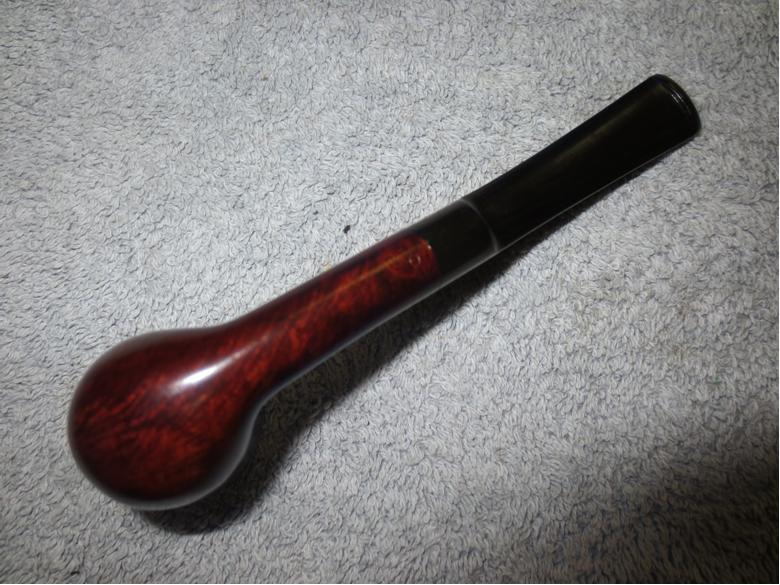
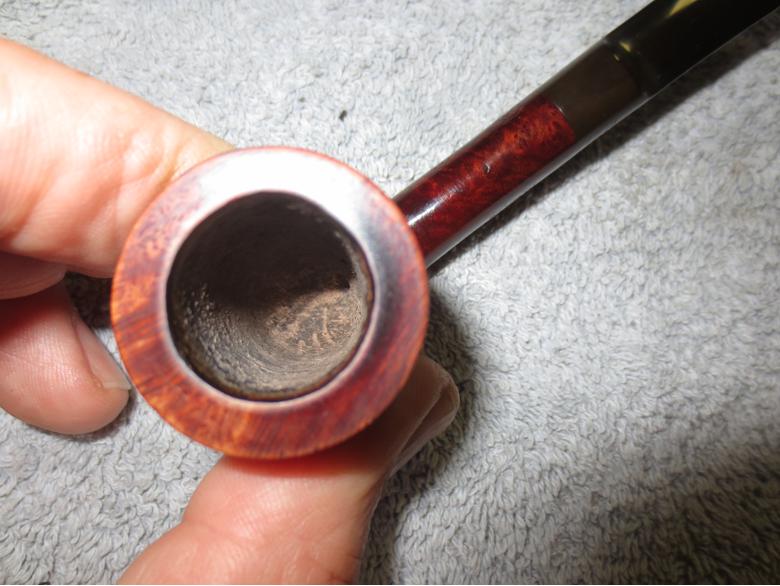
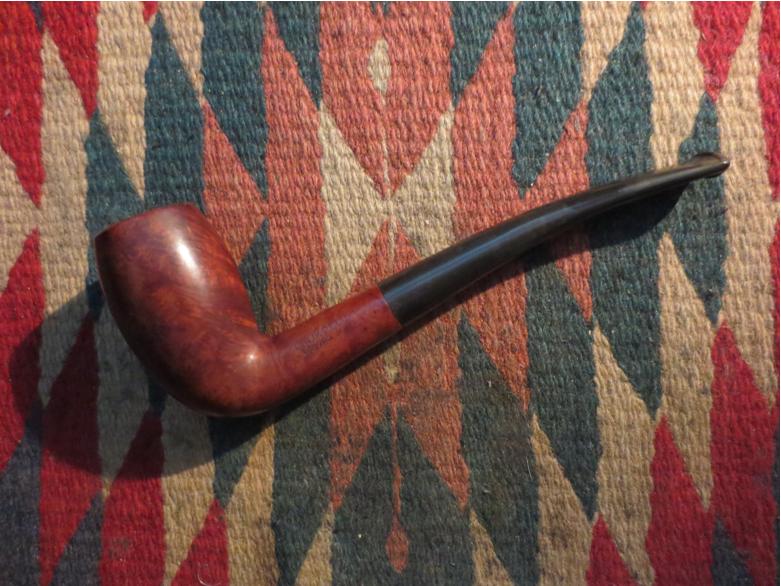
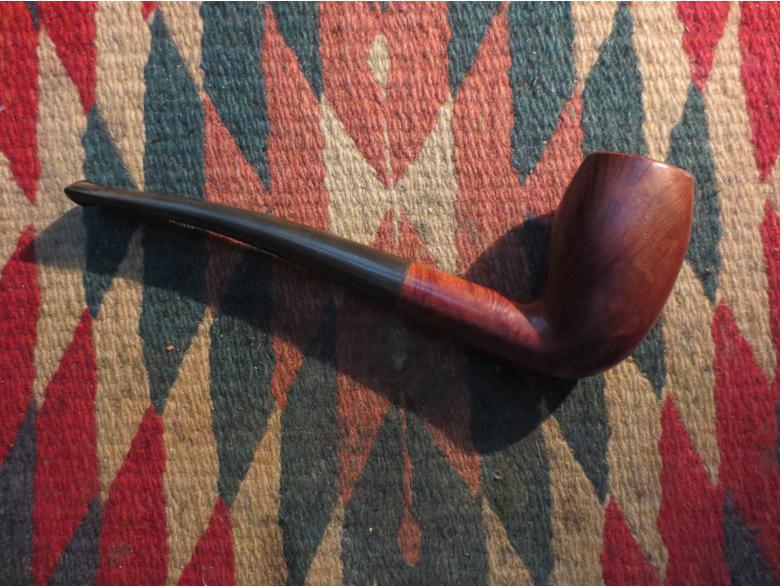
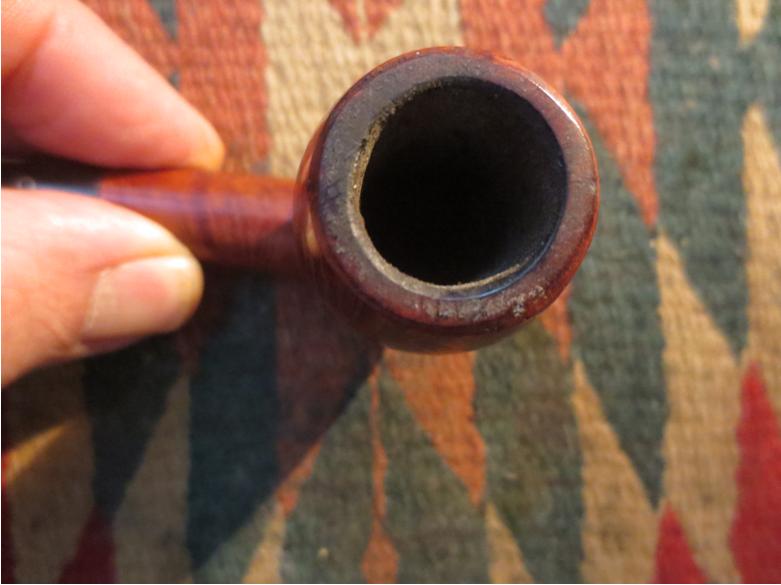
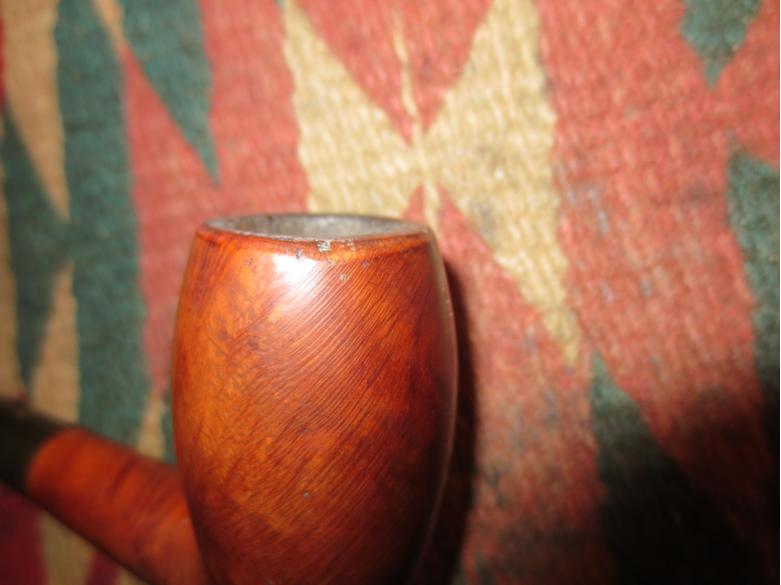
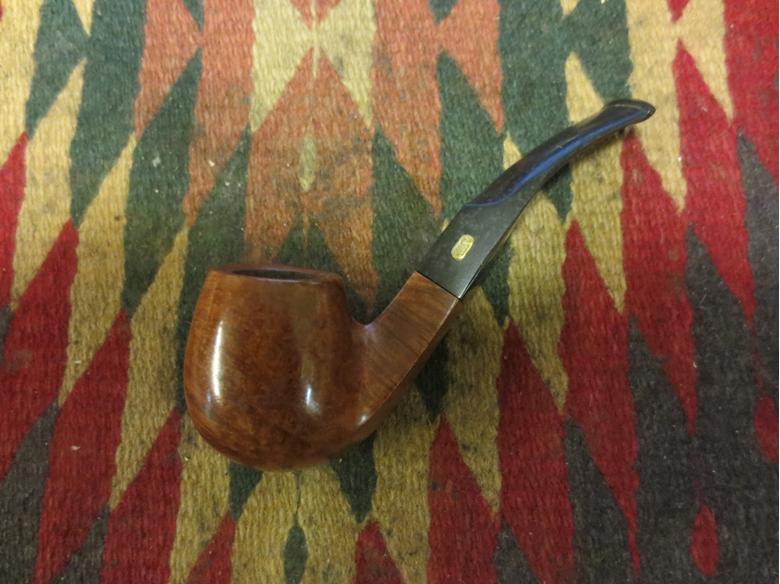
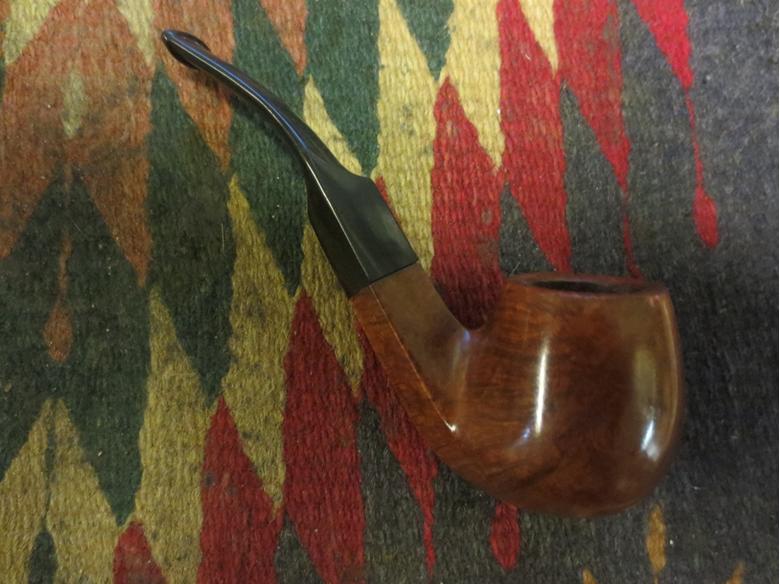
I have been looking for a nice upper grade (Grade 50 or above) Bertram Poker for a while. I had almost purchased a couple of lower grades and one 50 grade but they were all either to expensive or pretty beat up, so I kept holding out for the right one. When this nice example of a 60 grade came across my path for a modest price I knew my patience had paid off.

This makes my 2nd Bertram pipe. The other being a straight Cutty and it is an excellent smoker. They are some of my highest end estate pipes. I very much like the quality of them and the long interesting history they have.

If you don’t know much about them I recommend doing a little research on them. Bertram pipes were based out of Washington DC. They were popular among famous politicians and celebrities of the time. They made many products for them from FDR’s cigarette holders to Joseph Stalin’s favorite pipe. They were considered some of the best America had to offer till they finally closed their doors in the 70s. They graded their pipes by 10s, the higher the grade the better. Above 60s are uncommon and 80-90s are quite rare. I’ve never heard of or seen a 100 grade. Here is a link with some brief history of Bertram pipes on Pipedia.

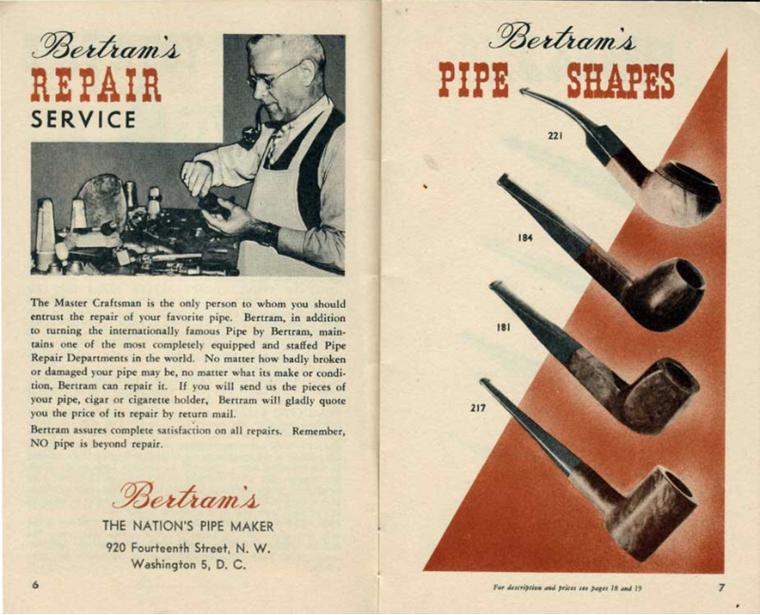
I found this image of from a page of a Bertram pipe booklet that shows the poker shape number of 217.
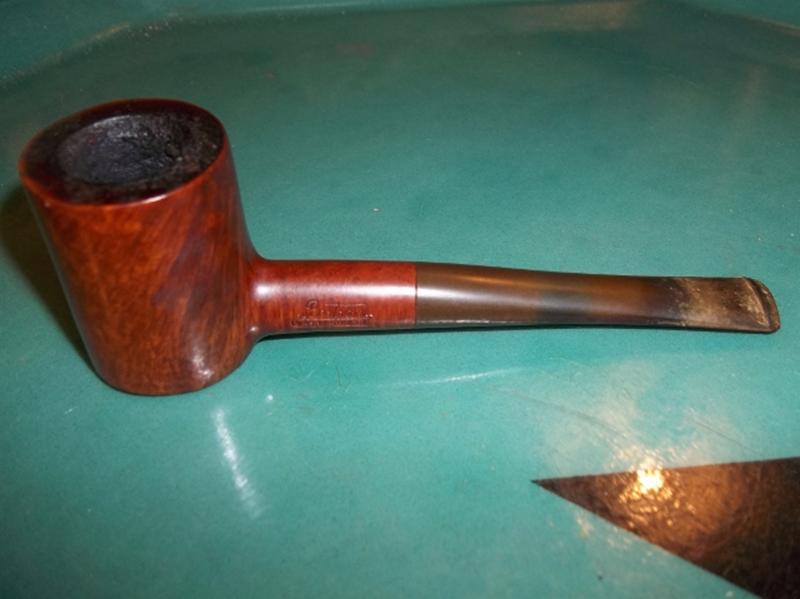
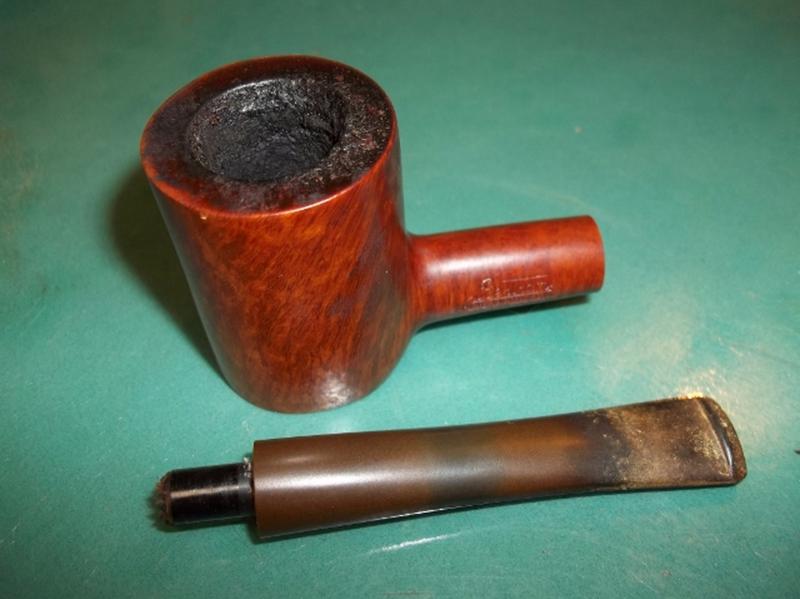
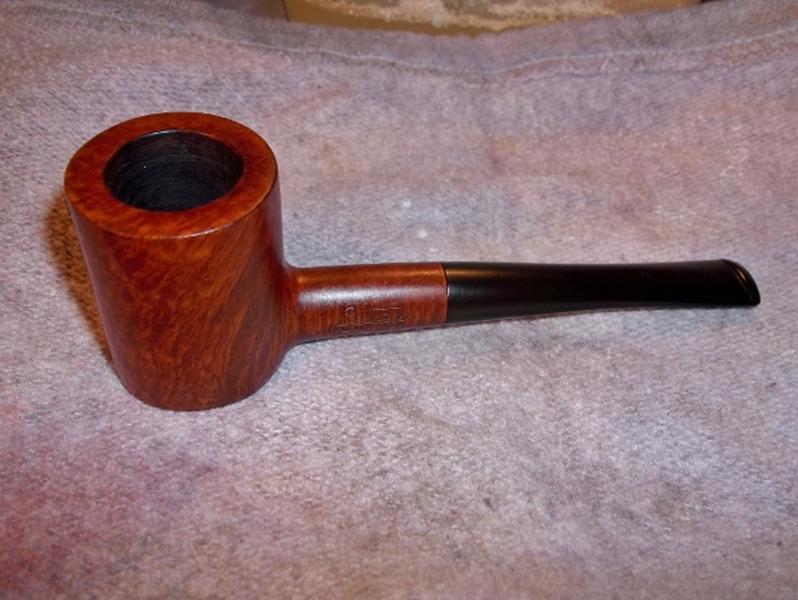
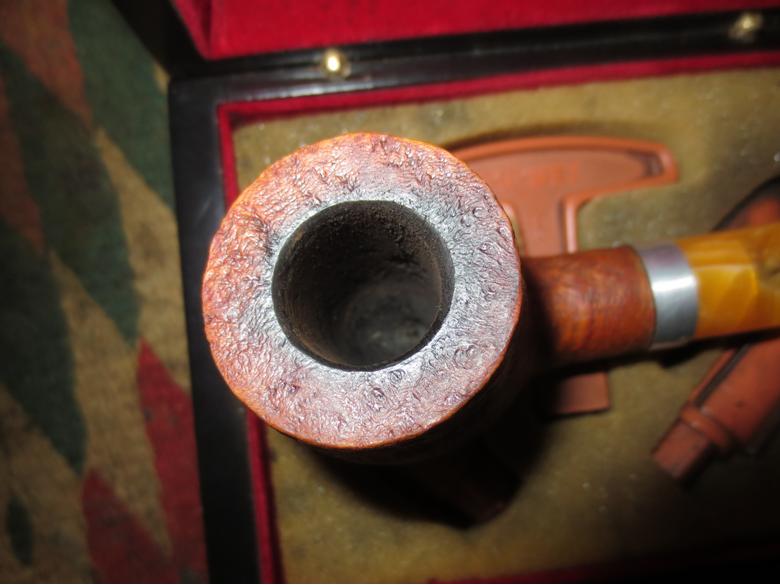
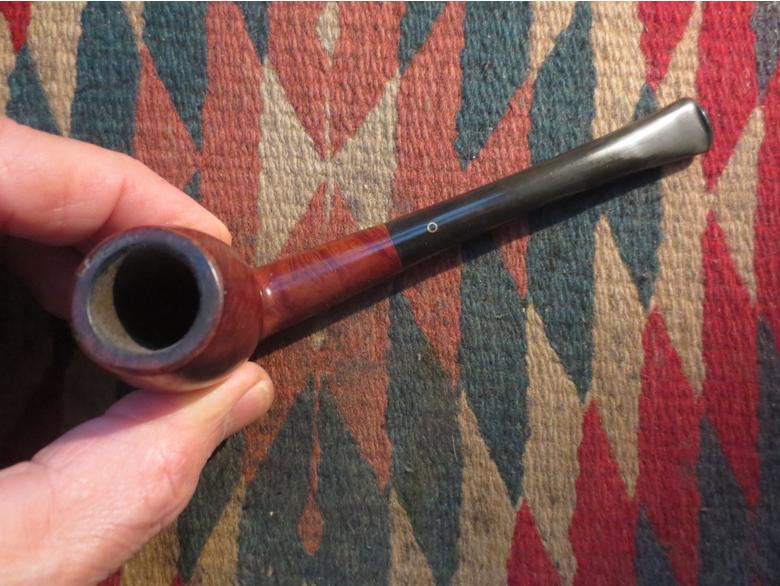
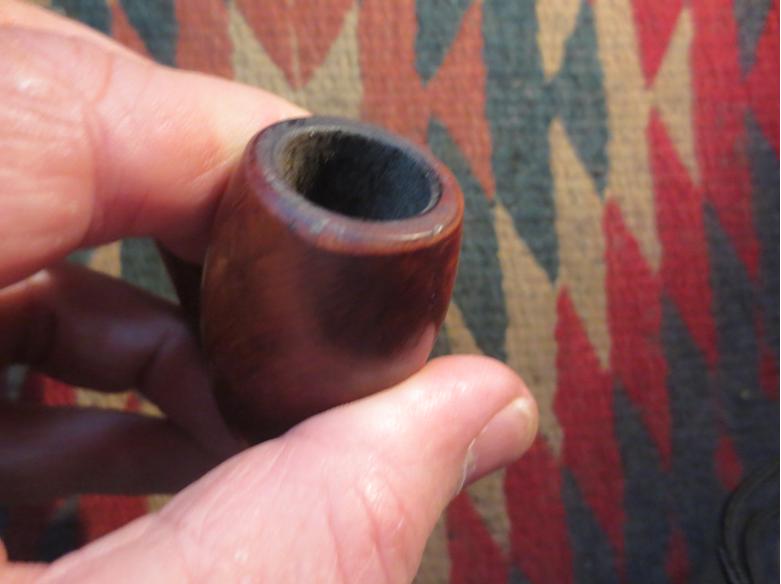
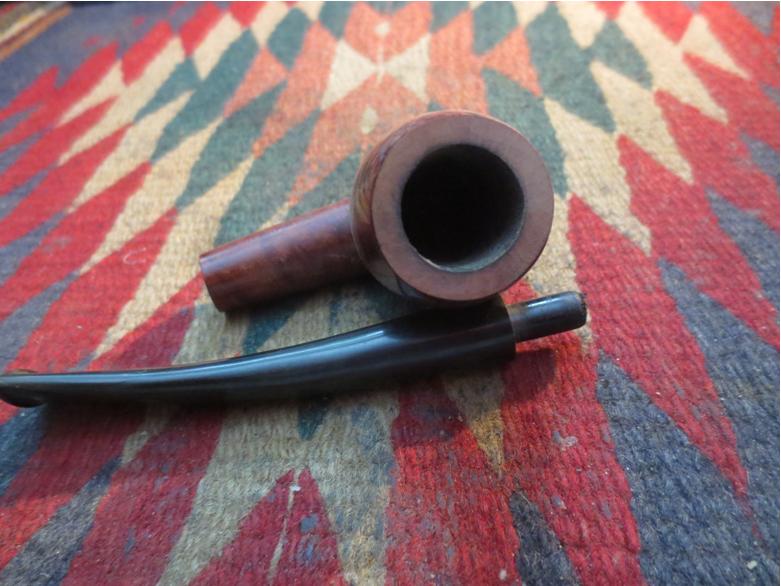
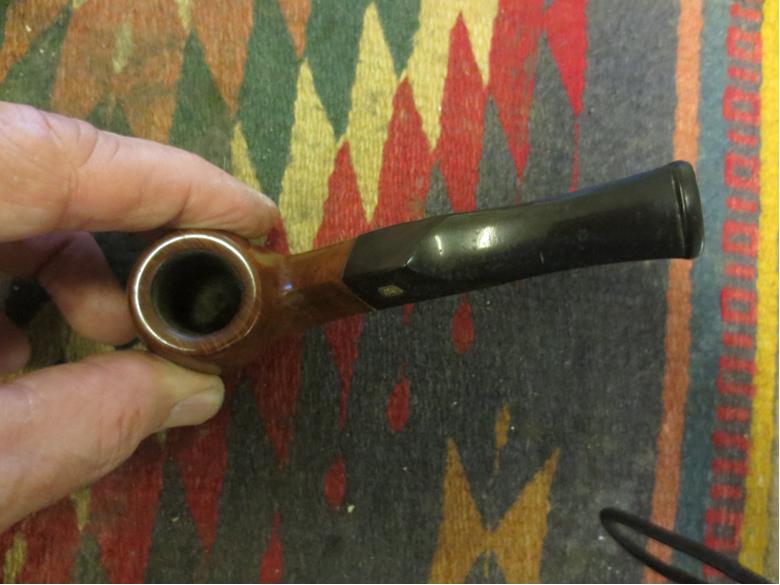
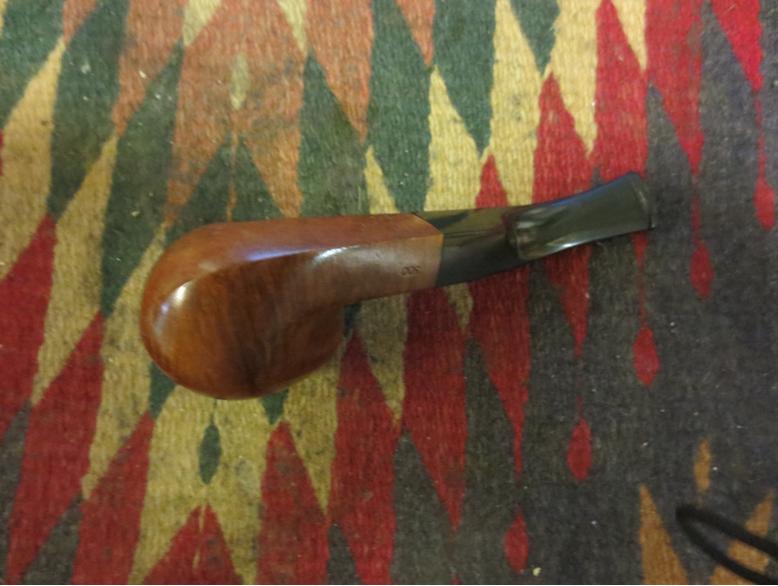
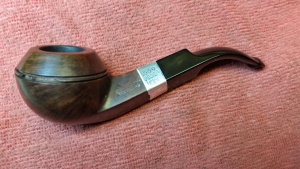
http://pipedia.org/wiki/Bertram Bertram1 This is what the pipe looked like when I received it. Other than being dirty it’s in excellent shape. It’s hard to put a date on it but it’s at least from the 70s and maybe as far back as 40s or more. Bertram started in 1927.Bertram2

Bertram3

Bertram4

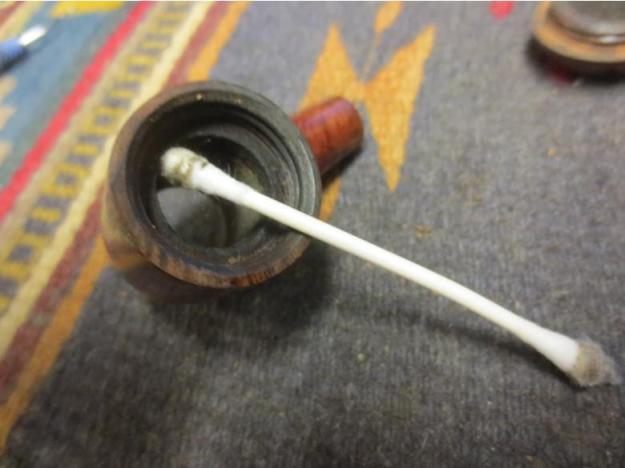
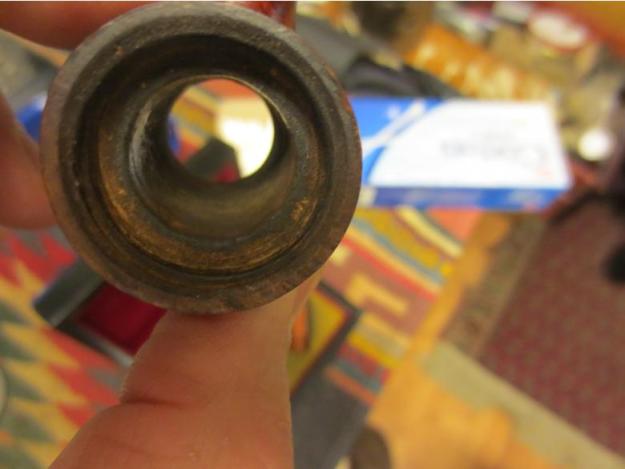
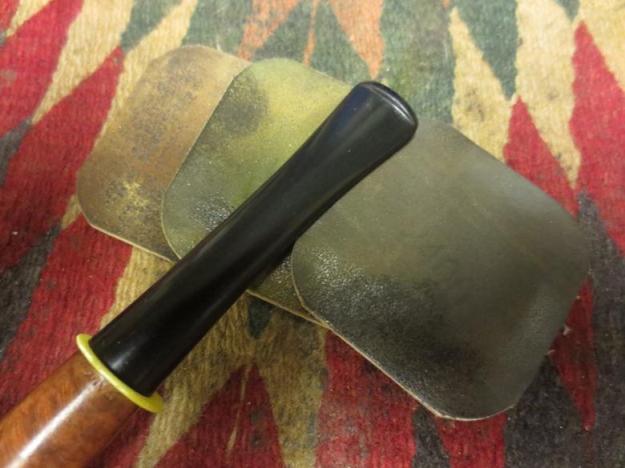
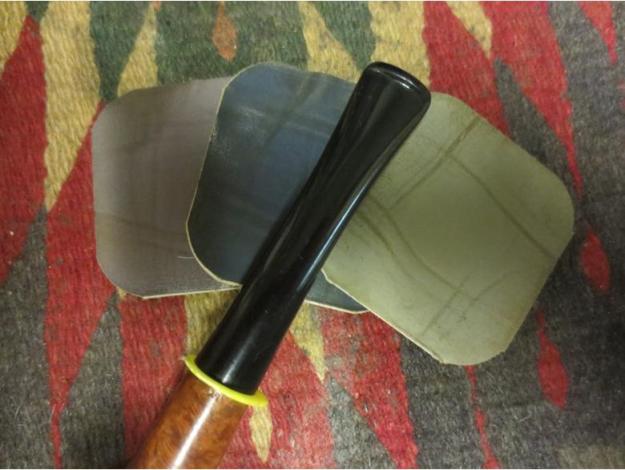
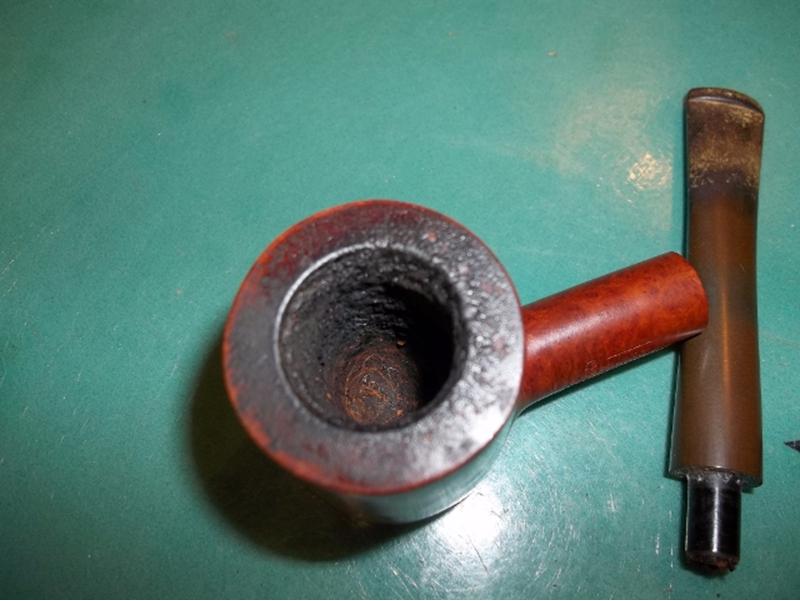
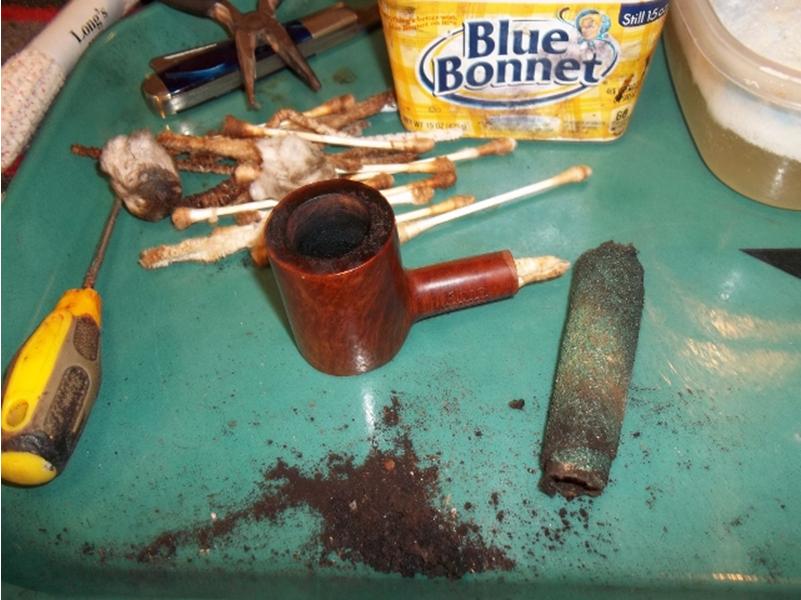
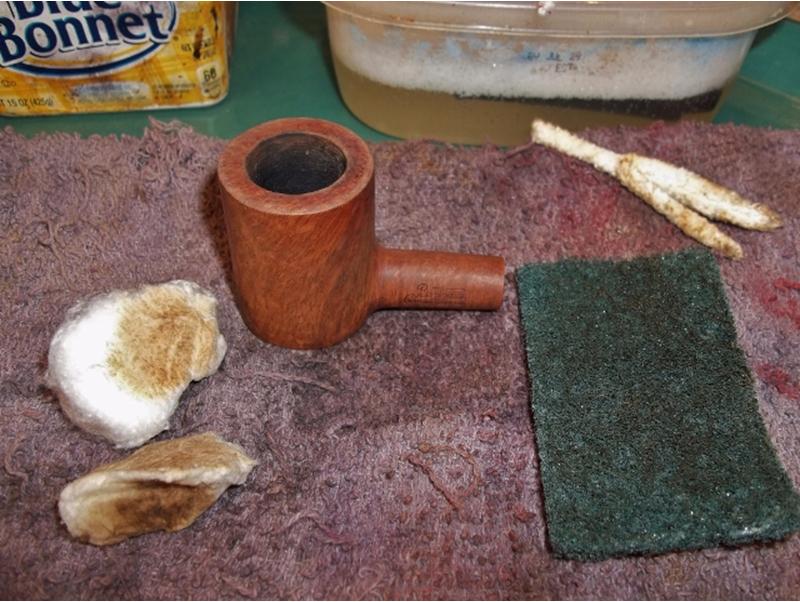
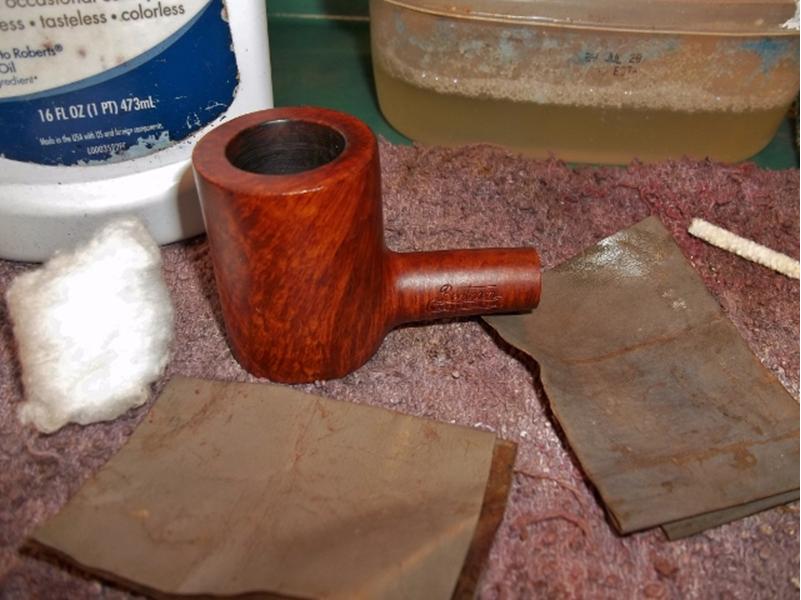
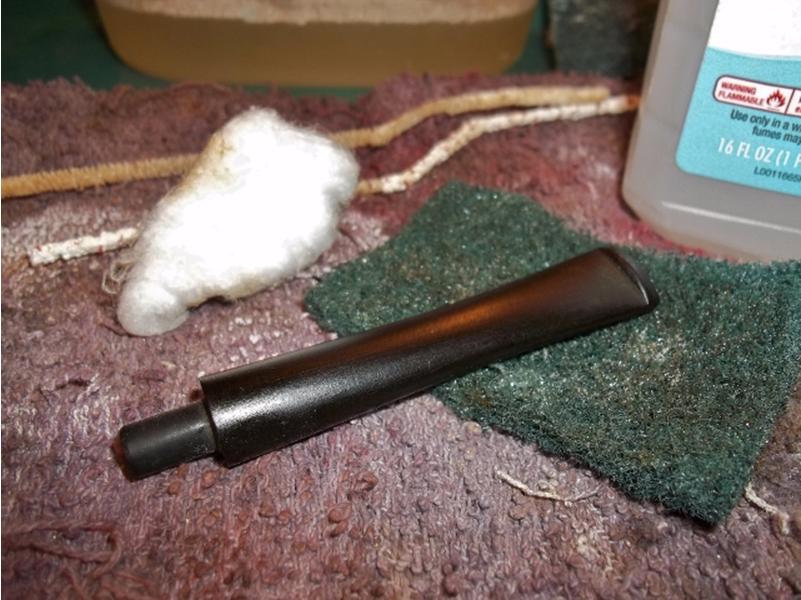
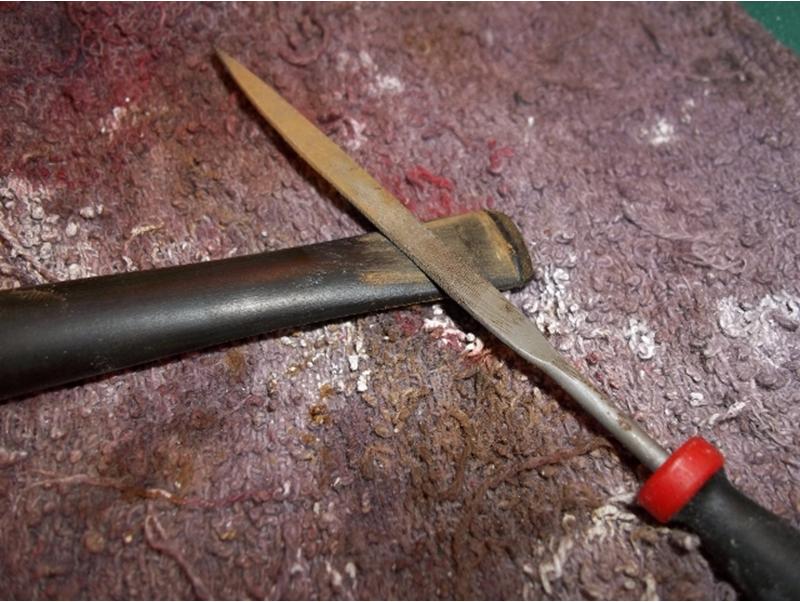
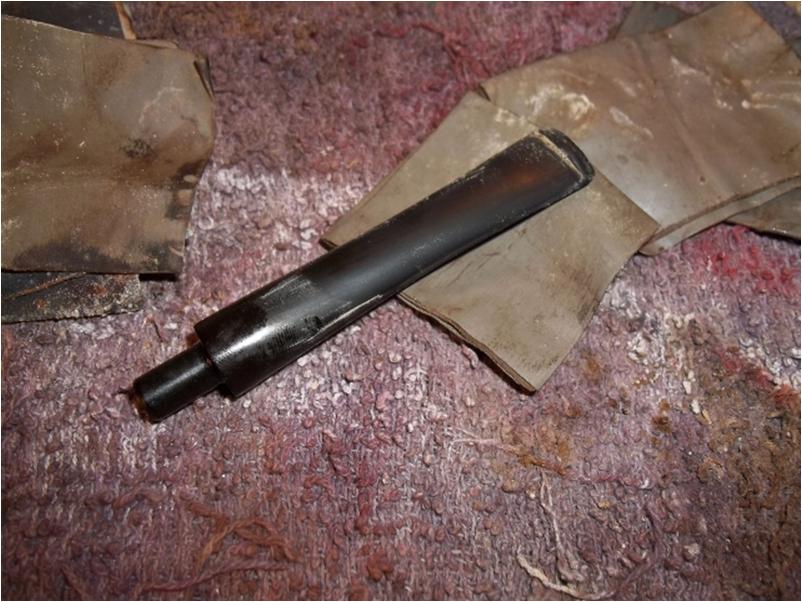
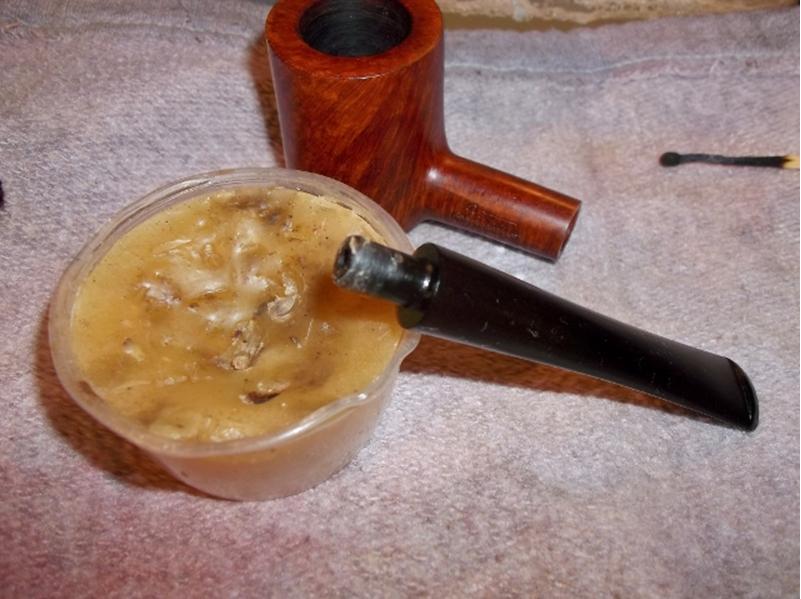
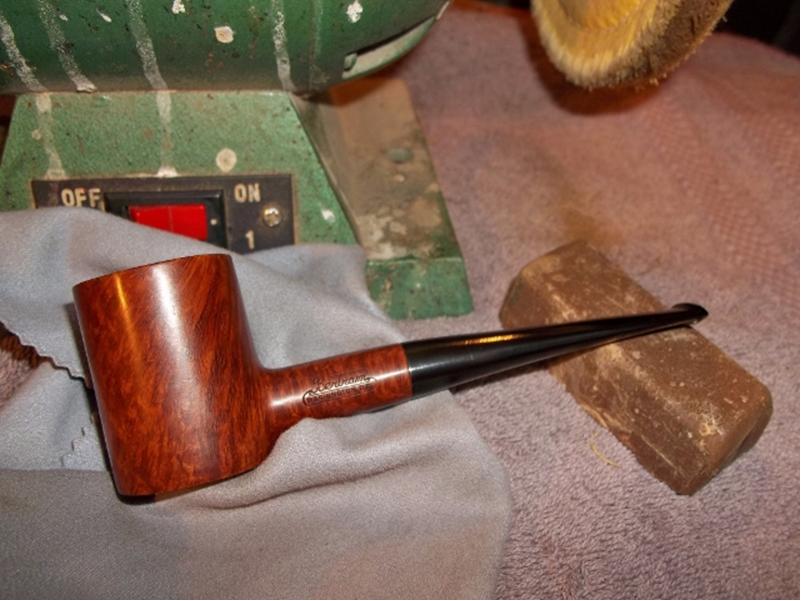
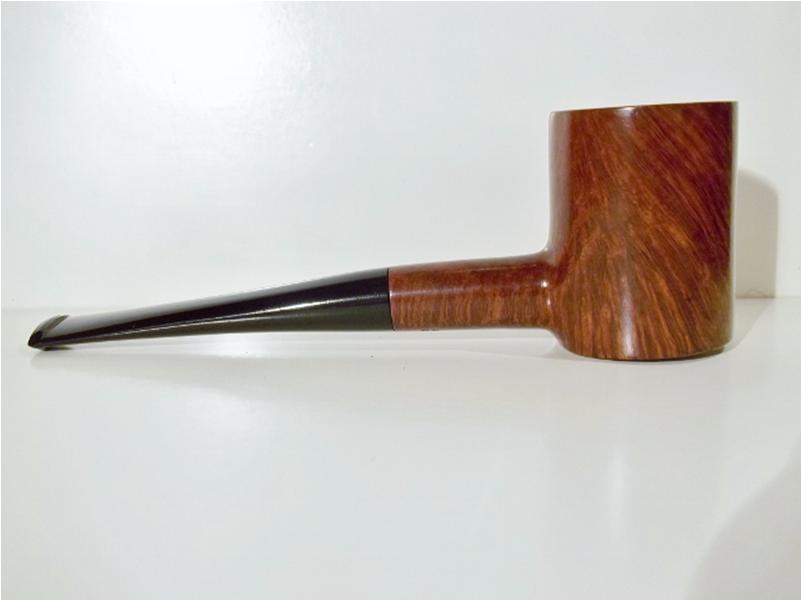
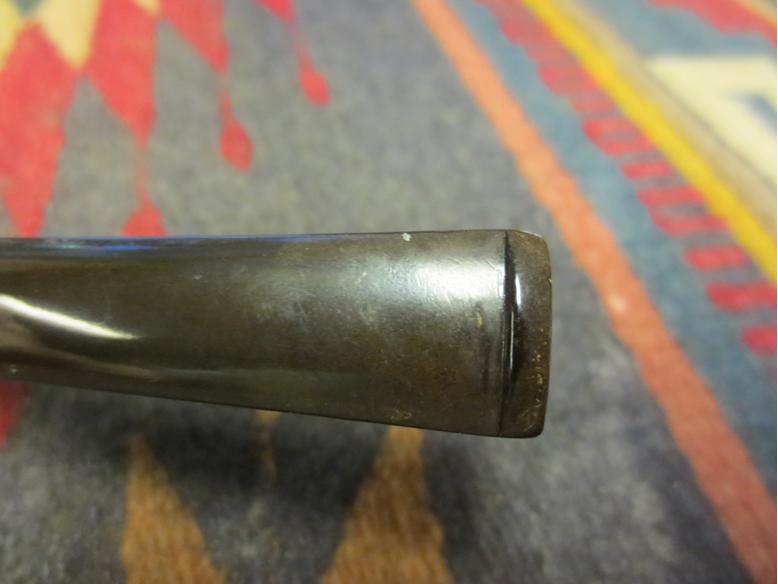
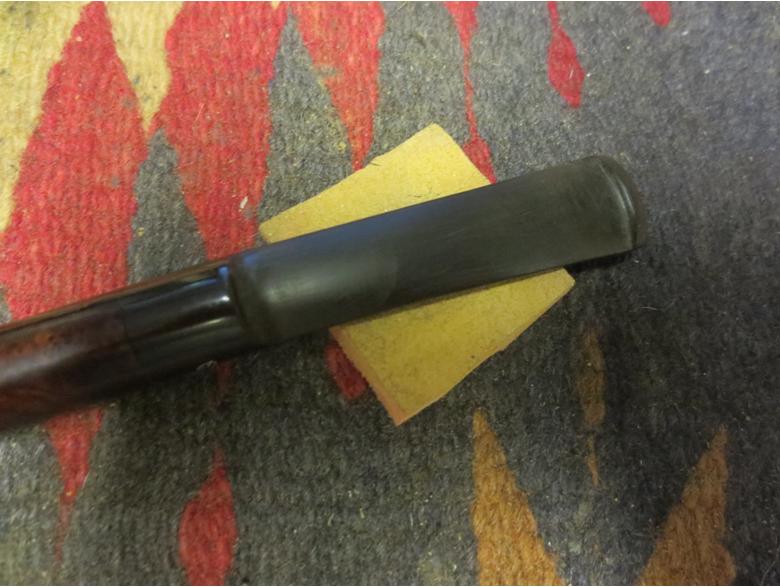
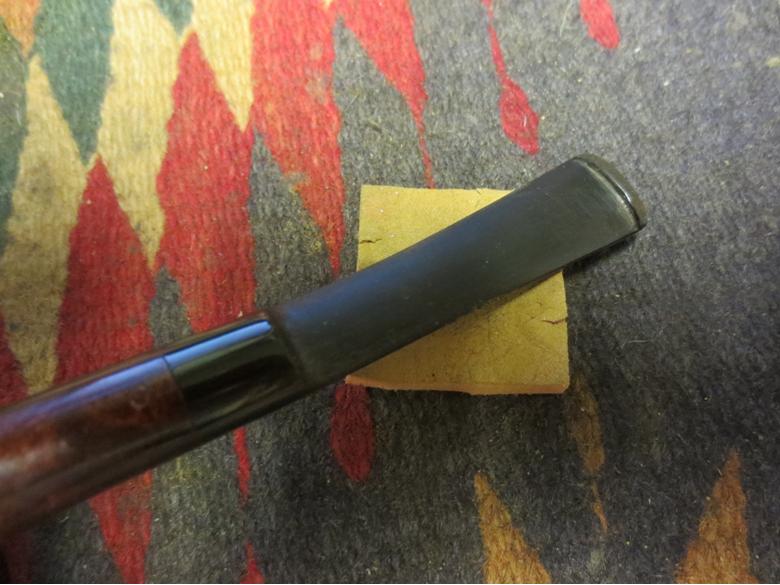
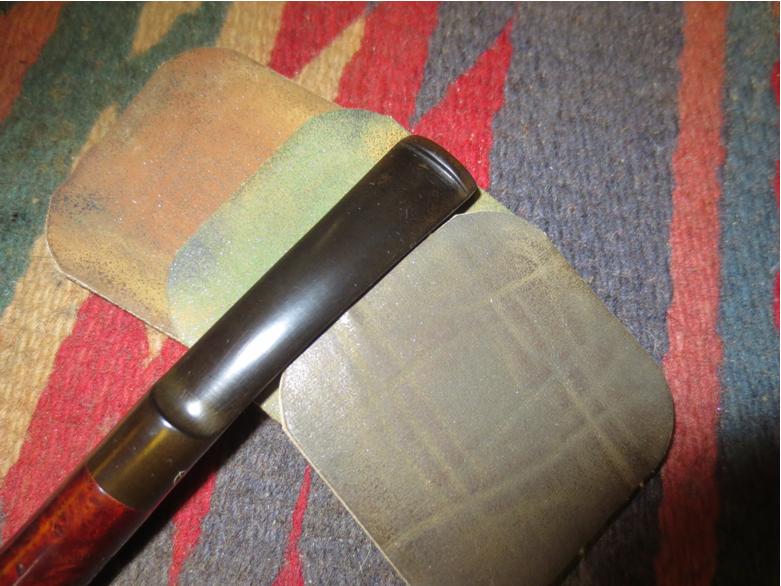
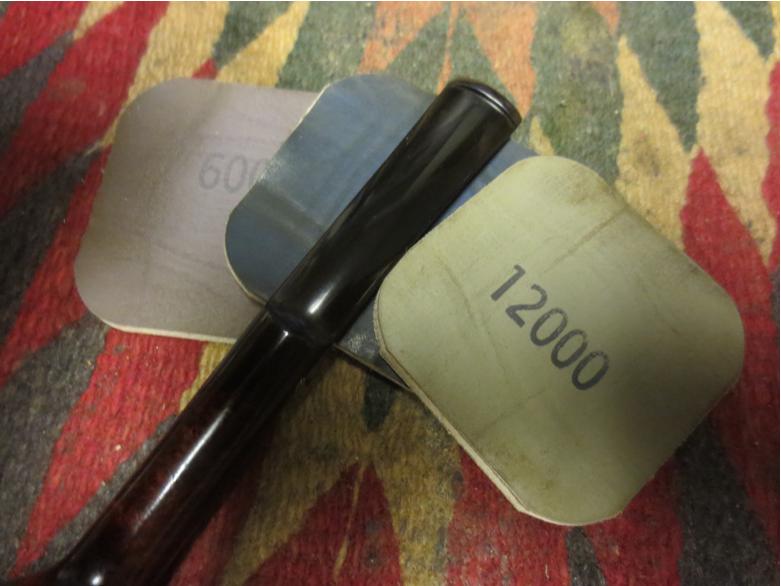
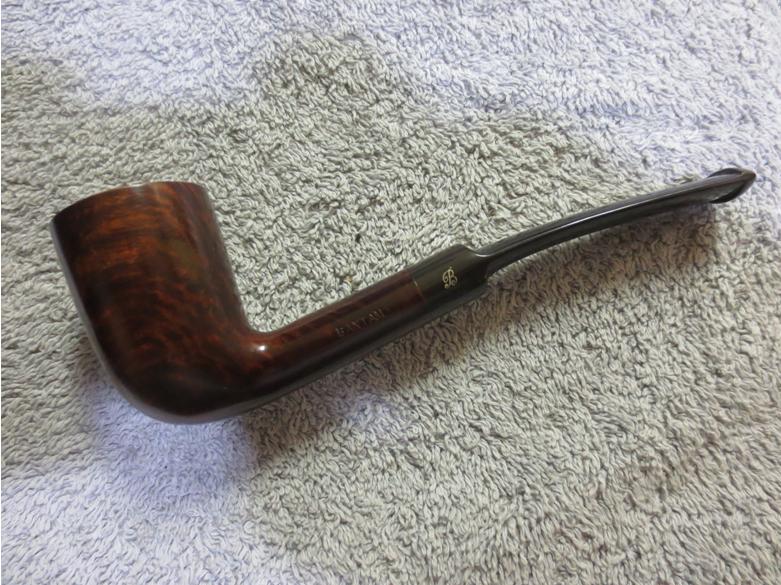
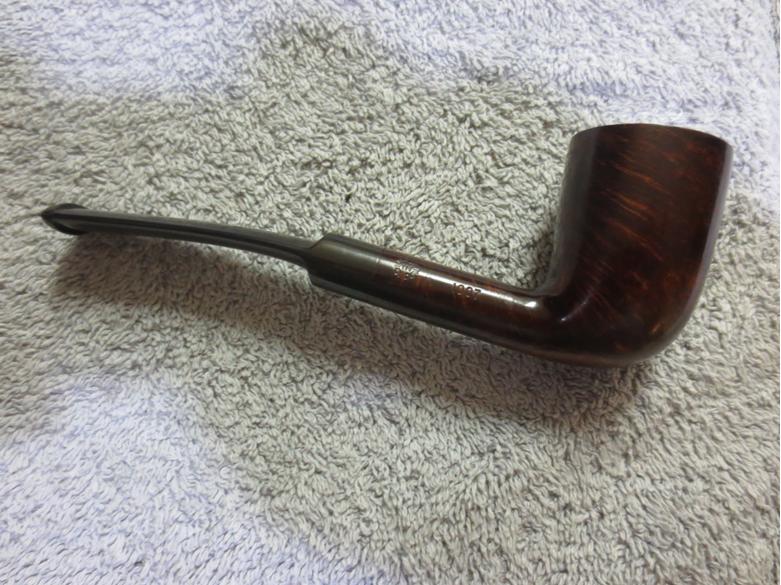
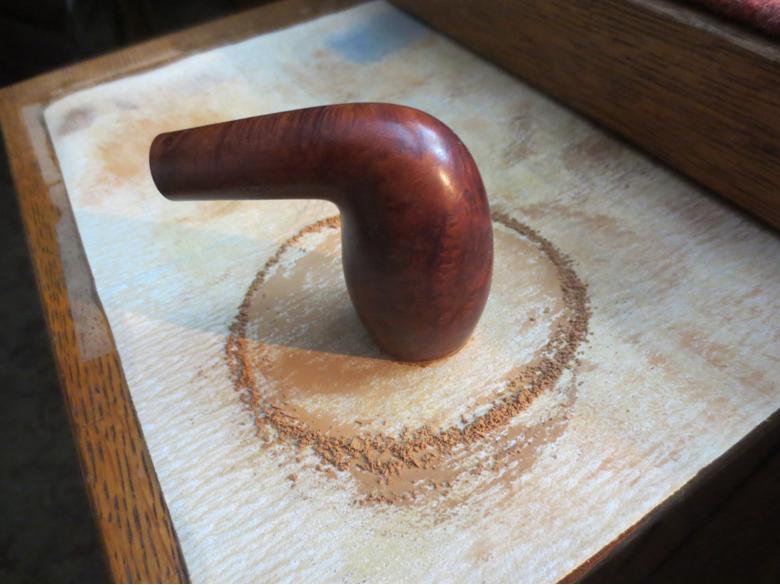
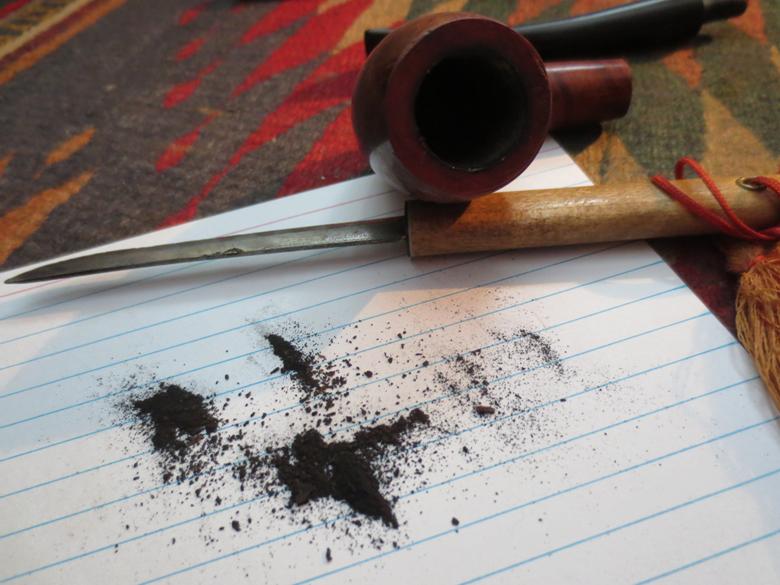
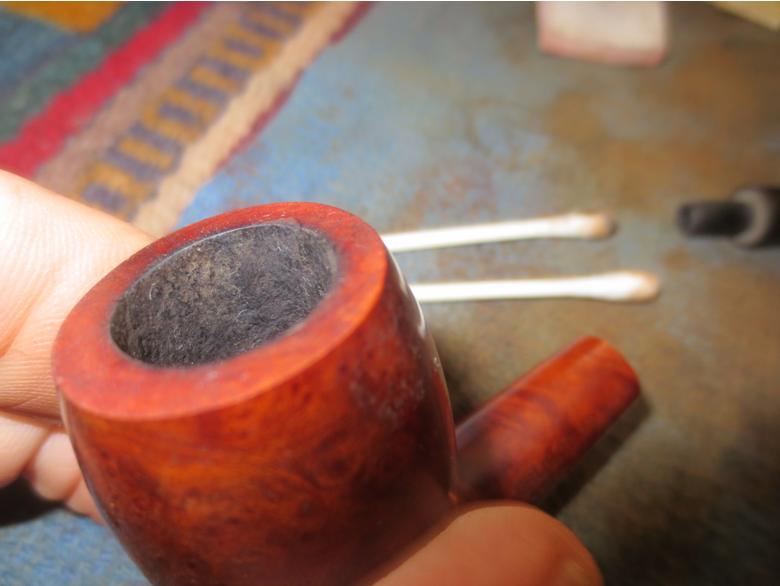
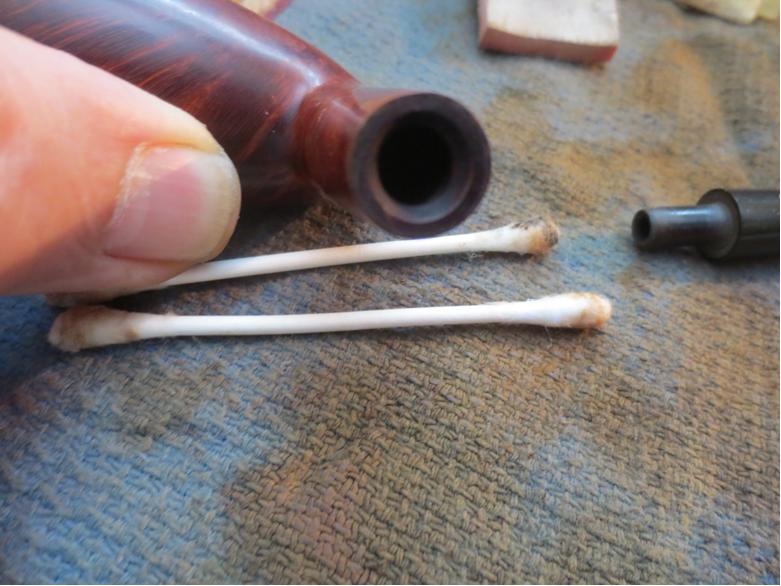
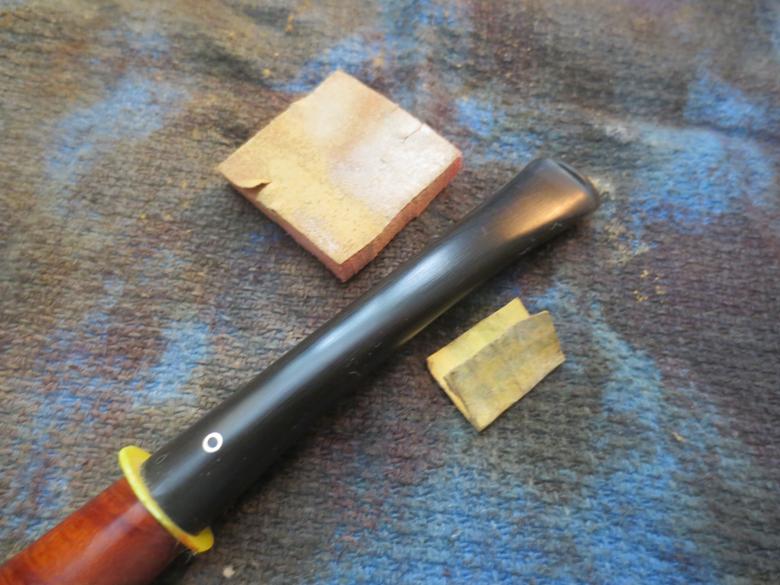
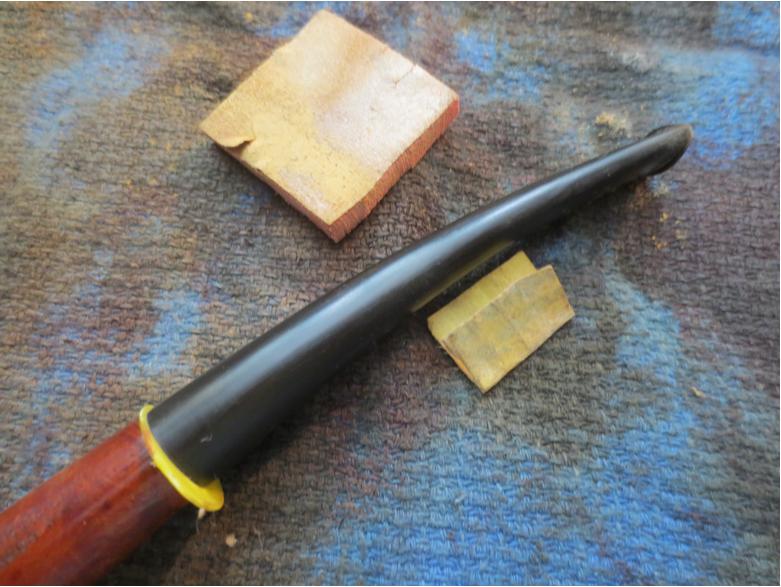
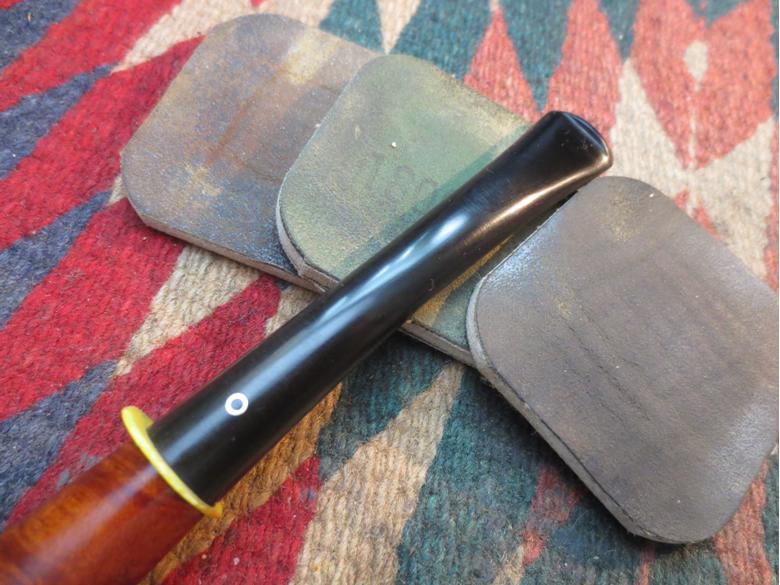
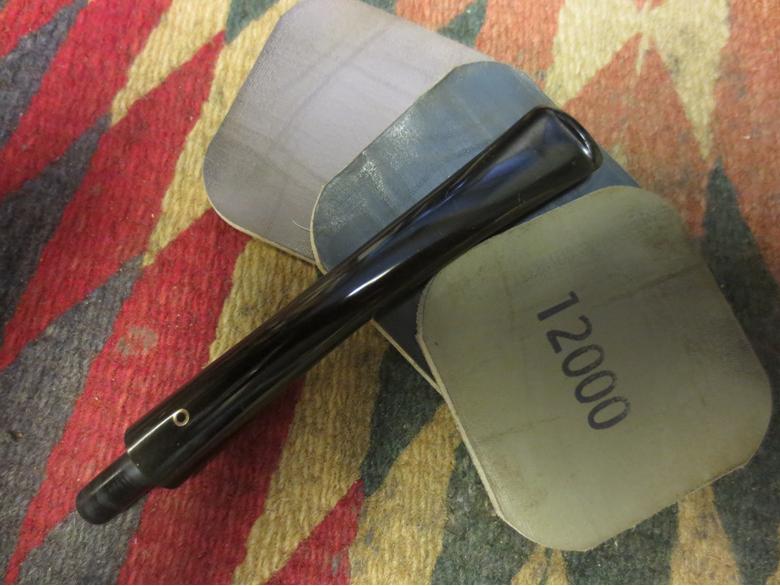
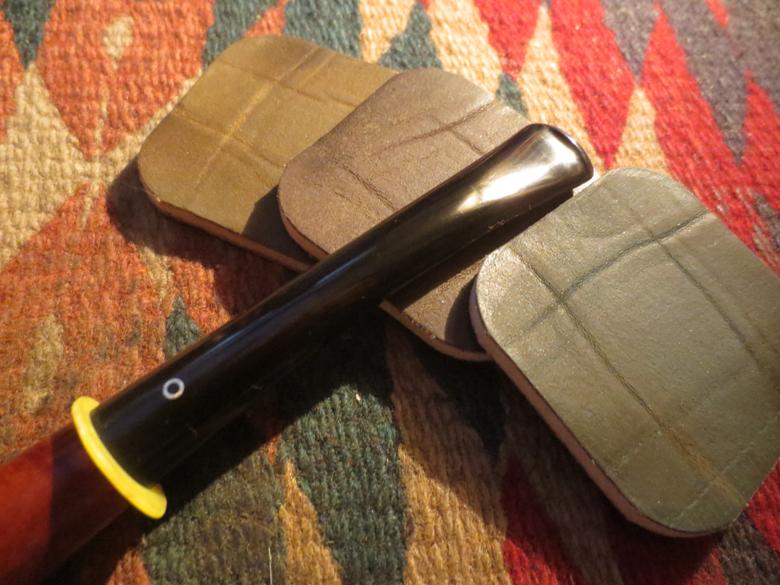
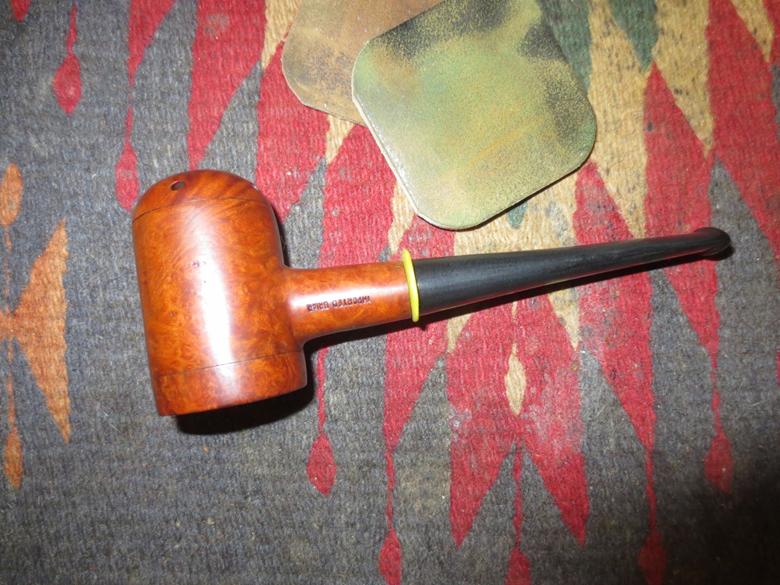
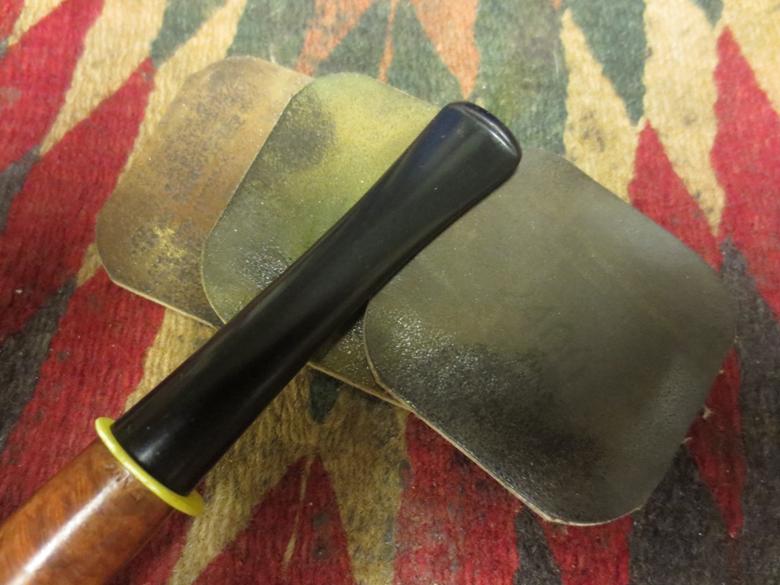
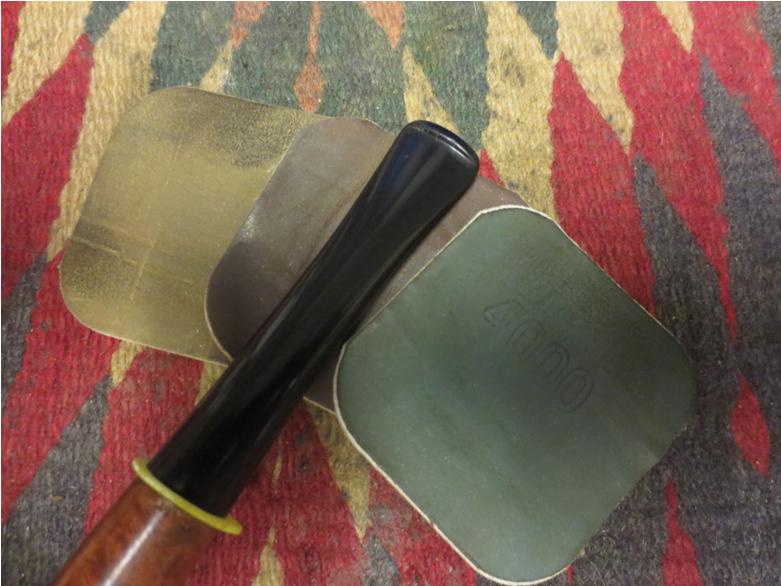
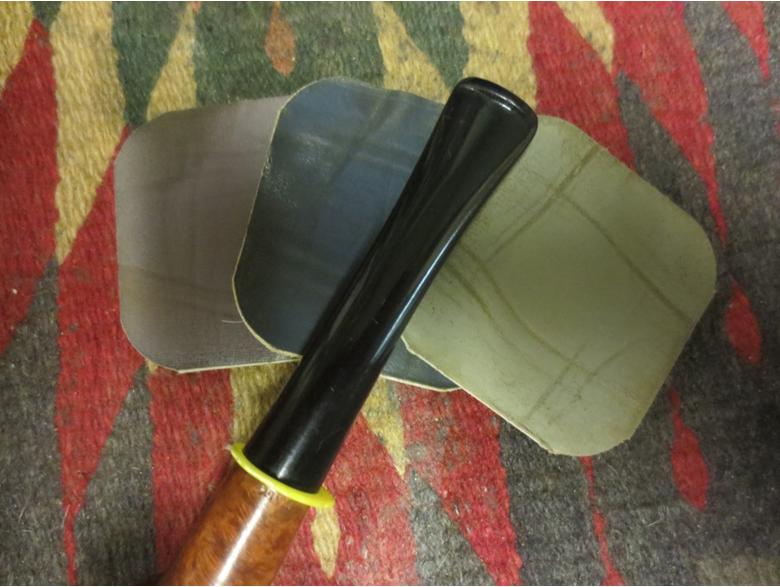
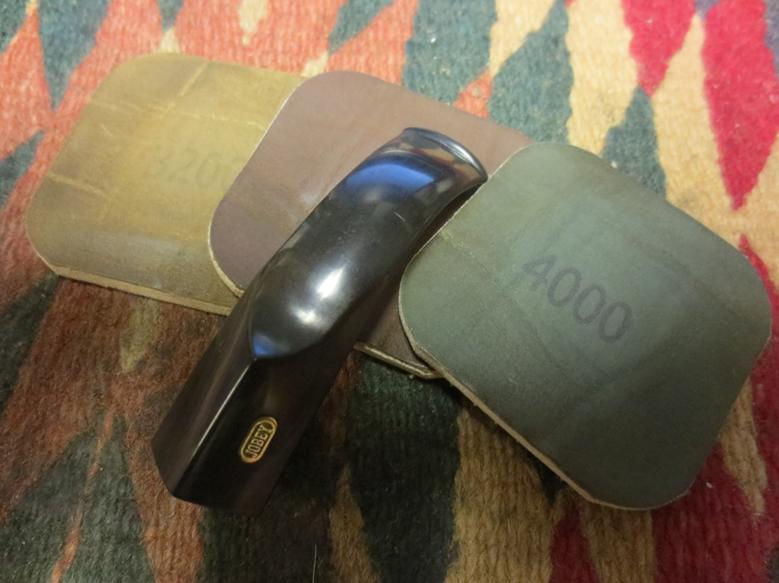
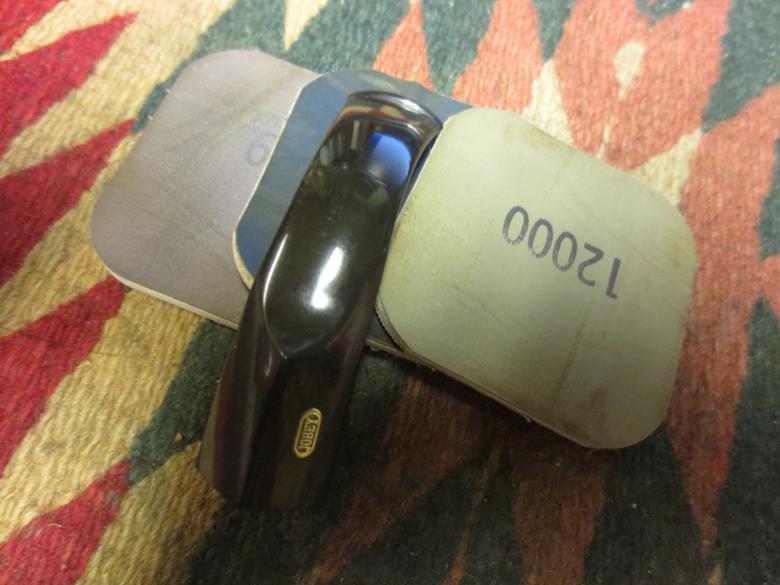
Bertram5 I started by cleaning out the bowl and shank. The cake came out very easily and the cleaning was not that difficult.Bertram6 I then cleaned and stripped off old wax and rim residue with Oxy Clean, warm water, cotton balls and a Scotch Brite pad on the rim.Bertram7 I then wet sanded the bowl with mineral oil and 1200 to 2500 grit sandpaper.Bertram8 After soaking the stem for a couple of hours in Oxy Clean and warm water I scrubbed off all the surface oxidation with a Scotch Brite pad.Bertram9 I had a couple of small tooth marks to file out.Bertram10 Then I wet sanded the stem with 400-2500 grit paper.Bertram11 The stem was fitting rather tight so I applied some bee’s wax to the tenon.Bertram12 The bowl and stem back together with a mineral oil applied and wiped off for a quick inspection before buffing.Bertram13 I gave it a quick buff with some brown Tripoli before applying some white Tripoli then many coats of carnauba wax.Bertram14 After applying wax and finished pipe.Bertram15

Bertram16

Bertram17

Bertram18

Bertram19

Bertram20

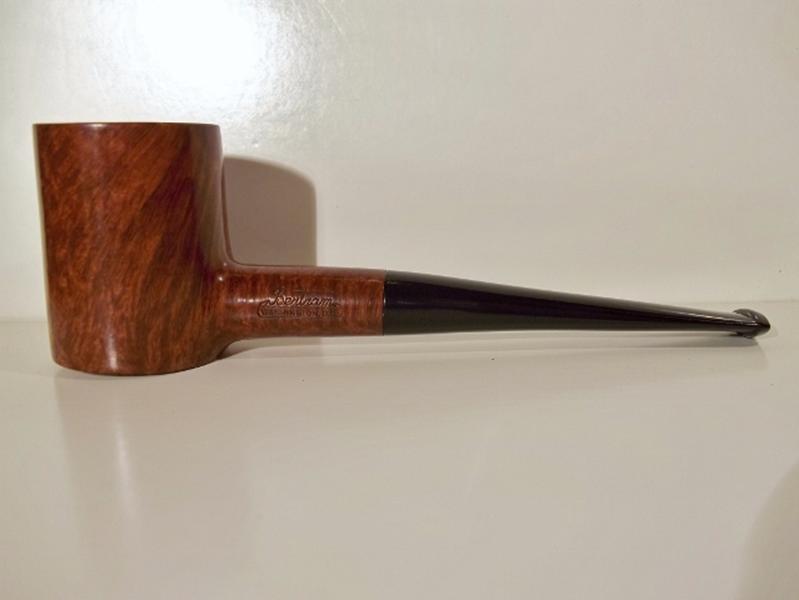
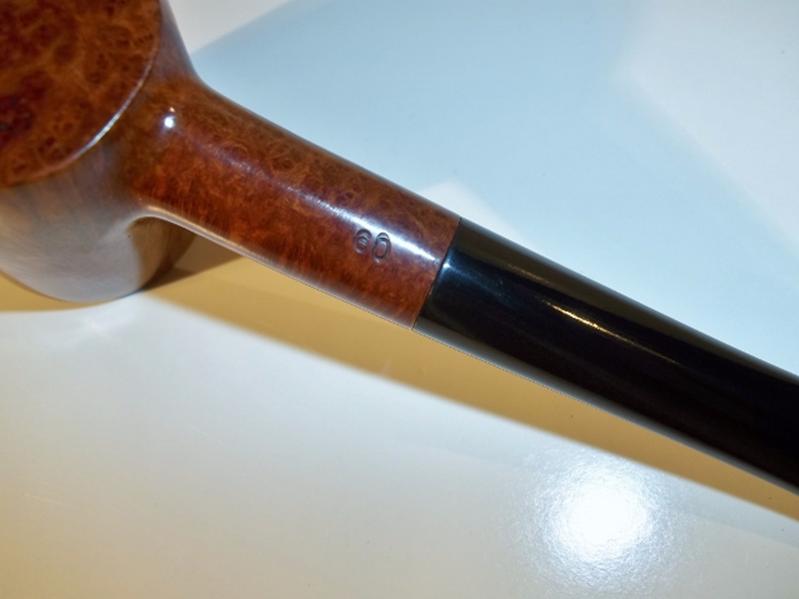
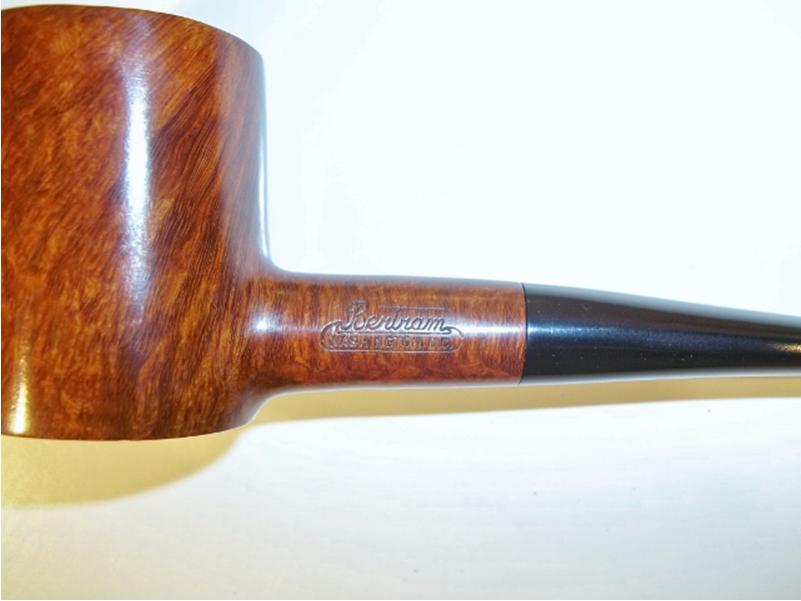
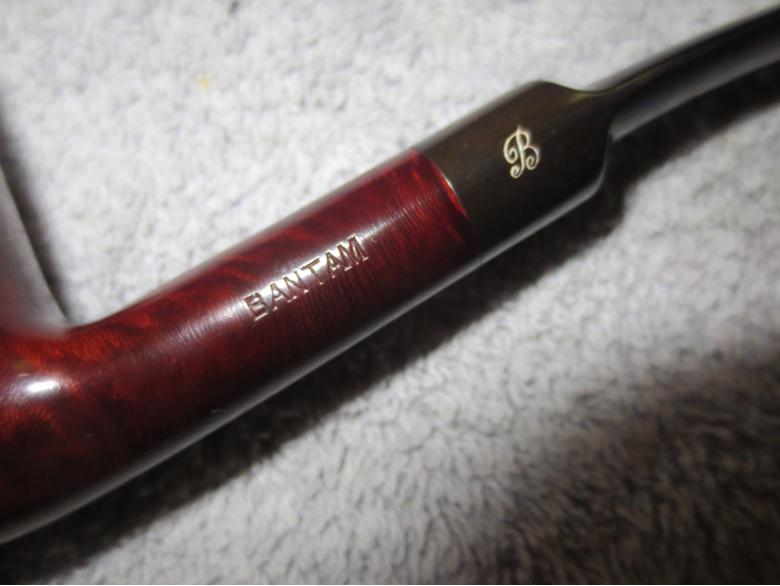
Bertram21 There was one small flaw in the briar. I decided to leave it as is.Bertram22 Very nice stampings on pipe.Bertram23

Bertram24

Bertram25

Bertram26 All in all it was a very simple refurbish due to its condition. I’m very happy with the way it turned out and have intentions of adding at least one more Bertram to my collection. Hopefully a large straight billiard.

Repairing a Hole in a Briar Bird Pipe Stem


Blog by Steve Laug

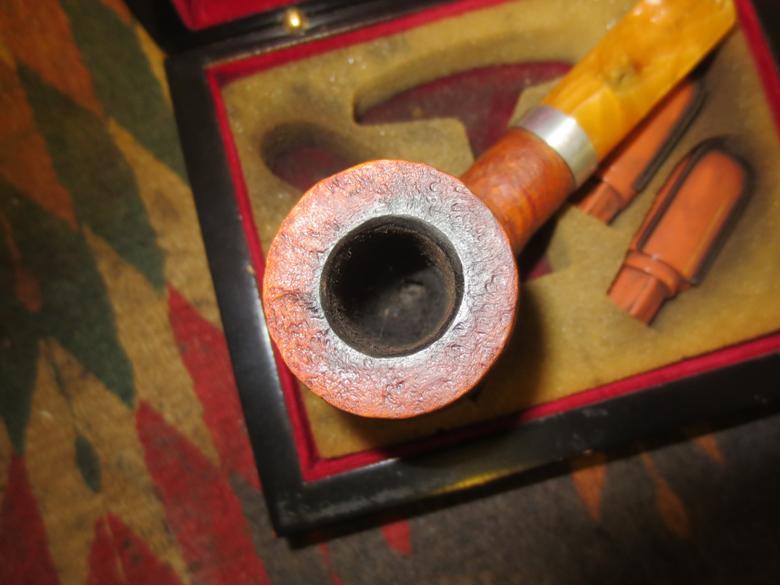
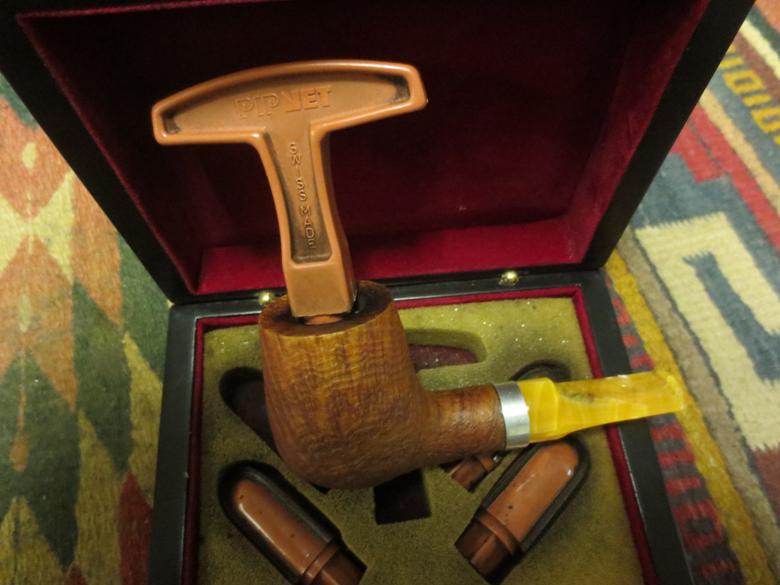
Last evening a fellow pipeman stopped by with a few pipes for me to look at and see if I wanted to do the work on them. Several of them were in need of general clean up. But two of them had a fairly large hole in the surface of the stem about ½ inch from the button. The first of them was a little Briar Bird Nosewarmer with an amber coloured acrylic stem. This hole was the smaller of the two. I figured I could repair it for him. He also wanted me to do a general ream and clean on the pipe as well. The rim had some darkening and some charring on the inner edge that would need to be addressed.

I sanded around the hole with 220 grit sandpaper. I cleaned the surface of the acrylic with a cotton pad and a little alcohol.Theo1 I reamed the pipe with a PipNet reamer to take the cake back to almost nothing so that I could address the issues with the inner edge of the rim on the back side.Theo2

Theo3

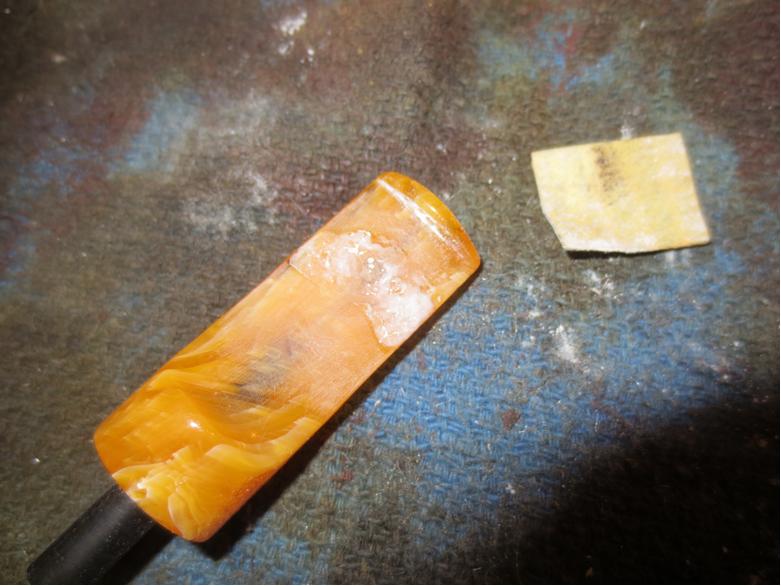
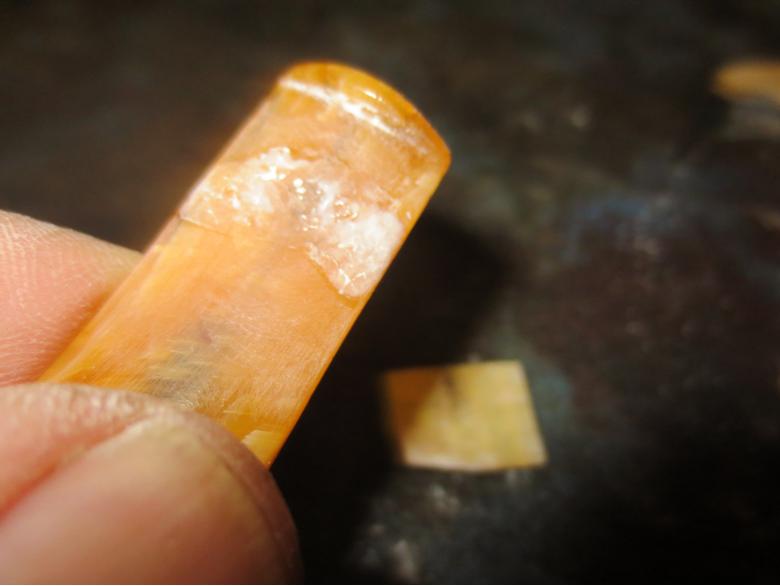
Theo4 I do not have any amber cyanoacrylate glue so I used clear one instead. I greased two pipe cleaners with Vaseline and inserted them in the airway from each end as the airway was quite large. I then dripped the glue on the hole in several layers and coats to build it up and effectively patch the hole. I have found that the glue has an interesting effect on the acrylic when it is first added to the surface. The glue bubbles and hisses and there is a small puff of smoke/steam. When it dries it is a hard white surface. It does not seem to damage the stem as once it is sanded off it is unnoticeable. But it is something that gives you a little bit of a scare the first time it happens.Theo5 Once the glue patch had dried the work of sanding could begin in earnest. The glue dries very hard on the acrylic. It seems to be much harder than with vulcanite. I sanded it with 220 grit sandpaper to flatten the patch and begin smoothing it out with the surface of the stem.Theo6

Theo7 Once I had flattened the patch and blended it with the 220 grit sandpaper I moved on to sand it with a medium and then a fine grit sanding sponge. When I had finished with the sanding sponges the repair looked quite good as can be seen in the next two photos below.Theo8

Theo9 I went on to polish the stem and the patch with micromesh sanding pads – wet sanding with 1500-2400 grit pads and dry sanding with 3200-12,000 grit pads.Theo10

Theo11

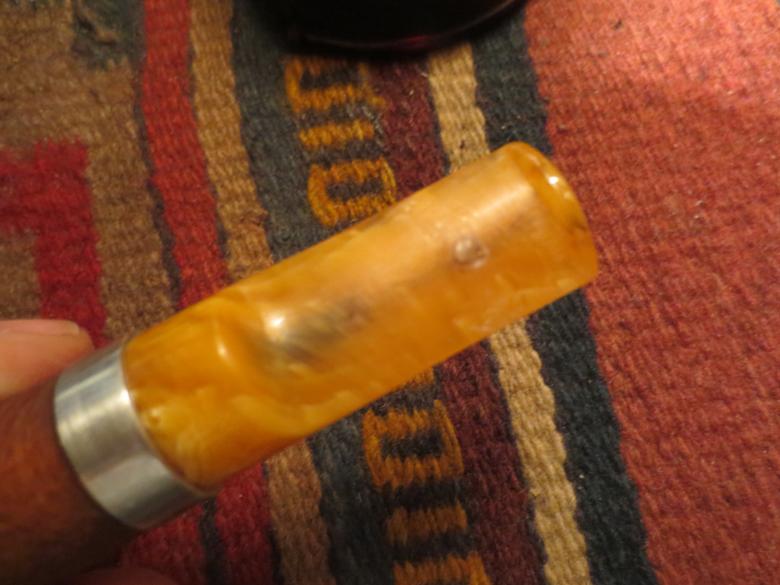
Theo12 The photo below shows a close-up of the repair to the stem surface. While it is not amber it is a hard clear patch that picks up some of the colour from the airway below.Theo13 When I finished I buffed it with Blue Diamond plastic polish on the buffing wheel to raise the shine and polish it.Theo14 I scrubbed the rim with Magic Eraser to clean up as much of the darkening as possible. I also beveled the inner edge of the rim to minimize the damage there. I used 220 grit sandpaper folded and held at an angle to do the beveling and then smoothed out the sanding with a micromesh pad.Theo15 The finished pipe is shown below. I buffed it lightly with carnauba to give it a shine and then buffed it with a clean, soft flannel pad to polish it. The patch on the stem, while not exactly beautiful, effectively solves the issue with the hole in the stem surface. While I was at it I used a needle file to clean up the slot in the end of the button to give it more of a Y taper.Theo16

Theo17

Theo18

Theo19

NEPAL PROJECT PIPE SALE 7 –Restoring a Kirsten K – Companion Generation 2


Blog by Steve Laug

This is the seventh pipe from the box of pipes that I was gifted by a good friend of mine with the instructed purpose of cleaning them up and selling them with all of the proceeds going to the aid of earthquake victims in Nepal. Once again all funds raised will all go to the SA Foundation, and organization that has worked in Nepal for over 15 years helping provide recovery, housing and job training for women who are victims of sexual exploitation and trafficking. The ongoing earthquakes (over 300) that continue to shake Nepal have left much in ruins. The SA Foundation Project there was able to find new housing for the women and help with staff as well. Every dollar raised from the sale of these pipes will go to the work in Nepal.

It is a Kirsten metal pipe with a briar Dublin bowl. It is stamped on the left side of the shank, Kirsten in a cursive script. On the underside it is stamped Made in U.S.A. – K. These pipes were made for a long period of time in the Seattle, Washington area of the US. They came in four generations or iterations – Generation 1, 1.5, 2 and 3. The stamping on this one, the absence of a metal cap to hold the bowl, and the presence of the rubber O rings on the metal valve and on the stem insert, point to it being a Generation 1.5 pipe or a transitional one.

Documentation that I quote on an earlier blog from Dave Whitney shows the following information on the Generation 1.5 – transitional period – mid to late 50’s. This was an experimental stage. Kirsten realized that the bit and insert were prone to seizure as the condensate dried. This model always has O-rings on the metal insert, and later models can have O-rings on both. Same markings, as I remember it. There is no metal cup spacer under the bowl. This generation has O rings either on the valve or mouthpiece but no O rings on the other end. This transitional period is stamped “Pat. Pending” and “Pats. & Pats. Pending” some with “Made in U.S.A. It seems like the company was using surplus parts to combine into this series of pipes. This particular pipe is stamped K after the U.S.A. thus making it a Companion.

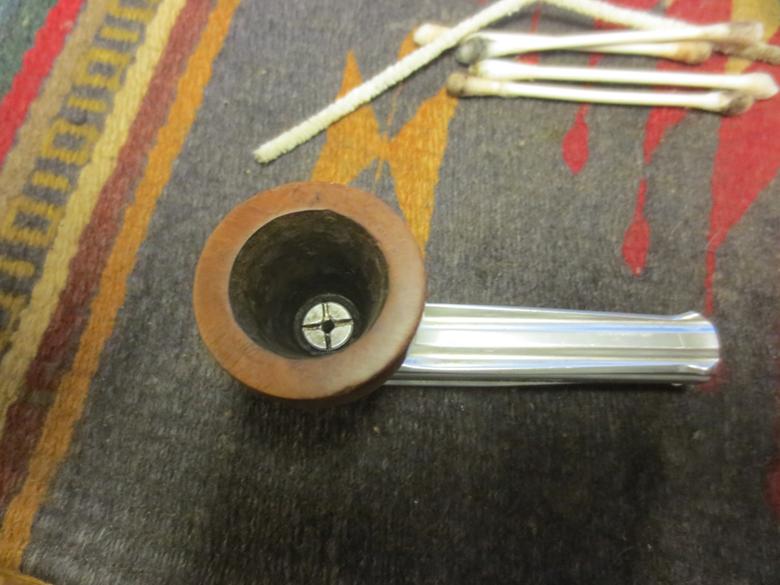
When I brought this one to the work table the stem was frozen in the shank and the valve on the end was also frozen. The bowl could not be turned off by hand as my other Kirsten’s can. The bowl had a layer of cake and the screw in the bottom of the bowl was also caked and dirty. The rim was dirty and the metal was barrel was dull and soiled. The stem was not only stuck but it also had tooth marks on the top and underside of the stem near the button. There was also some discoloration and sticky buildup on the stem.K1

K2

K3

K4 I cleaned out the slot on the screw in the bottom of the bowl and was able to remove it with a flat blade screwdriver. The valve at the end of the barrel also came out when I used a pair of pliers that I had taped the end on so that it would not damage the aluminum of the valve. It was very tight and the tobacco oils acted like dried varnish on the rubber gasket and the aluminum almost welding it to the barrel. By carefully working it back and forth I was finally able to remove it.K5 The stem would not budge so I dropped the barrel stem down in my alcohol bath and let it soak overnight. I dropped the bowl into the bath at the same time to soften the cake in it and also make the cleanup of the rim and bowl easier.K6 I filled a small cap with alcohol and put the valve and the screw into the small bath overnight as well. I figured a good soak would make the clean up process much simpler.K7 In the morning I was able to remove the stem and rod apparatus from the barrel with ease. It was caked with the same kind of varnish from the tars and oils of the tobacco.K8 I took a photograph down the barrel to show what the inside looked like once the stem was removed.k9 I took the bowl out of the bath as well and laid out the parts of the pipe side by side for the photos before I cleaned them up.k10 Using a piece of 0000 steel wool I scrubbed the rod and the bowl down to clean up the grime and buildup. I also scrubbed the screw and the valve as well with the steel wool. It did not take much effort to remove that from the metal or the briar. The photo below shows the cleaned up parts.k11 I scrubbed out the barrel with cotton swabs and alcohol as far as I could reach. I pushed it through the threaded connector for the bowl as well to remove all of the oils and tar.k12 I took the next photo of the barrel to show the inside and how much cleaner it was. I still needed to clean it more so I twisted some tissue into a cord and turned it into the barrel until it came out the other end. I move it back and forth to scrub out the inside of the barrel. Once it was out the inside of the barrel shone.k13

k14 I reamed the bowl using a sharp pen knife paying particular attention to the seat at the bottom of the bowl which held the screw flat against the bowl bottom. I cut the cake back to a very thin coat along the walls. I then used some Vaseline on the threads of the screw and put it through the bottom of the bowl and used the screw driver to turn it into the barrel. I still needed to polish the grooves on the barrel and the valve but the pipe was beginning to look very good.k15

k16 I sanded the tooth marks on the stem with 220 grit sandpaper to remove as much of them as I could without thinning the surface of the stem or leaving behind a groove. I was able to remove both marks on the top and bottom of the stem.k17

k18 I used micromesh sanding pads to polish the stem and bring back the shine. I wet sanded with 1500-2400 grit pads and then rubbed the stem down with Obsidian Oil and then dry sanded with 3200-4000 grit pads and gave it another coat of oil. Finally I sanded with the 6000-12,000 grit pads and then gave it a final coat of oil and let it dry.k19

k20

k21 I buffed the stem with Blue Diamond Plastic Polish on the wheel and brought out a deep shine. I then gave the stem multiple coats of carnauba wax and buffed it with a clean, soft flannel buffing pad to raise the shine.k22

k23 I buffed the barrel lightly with the Blue Diamond and also buffed the bowl. I gave the bowl and barrel several coats of carnauba wax and then lightly buffed it with a clean flannel buffing pad to raise the shine. The finished pipe is shown in the photos below. It is ready for someone who has been looking for one of these to pick it up and add it to their rack and help out the women of Nepal at the same time.k24

k25

k26

k27

k28 This older Kirsten Companion K is a great looking pipe and the Dublin bowl gives it a distinctive look. As I said above, it should make someone a great addition. If you are interested in this pipe email me with an offer at slaug@uniserve.com and we can discuss it. The entirety of the sale price will go to the Nepal project. I will pay the postage so that does not get taken off the proceeds. If you are interested in reading about the SA Foundation you can look at their website at http://www.safoundation.com.

Thanks for looking.

NEPAL PROJECT PIPE SALE 6 –Restoring a Bantam ¼ bent Dublin


Blog by Steve Laug

This is the sixth pipe from the box of pipes that I was gifted by a good friend of mine with the instructed purpose of cleaning them up and selling them with all of the proceeds going to the aid of earthquake victims in Nepal. Once again all funds raised will all go to the SA Foundation, and organization that has worked in Nepal for over 15 years helping provide recovery, housing and job training for women who are victims of sexual exploitation and trafficking. The ongoing earthquakes (over 300) that continue to shake Nepal have left much in ruins. The SA Foundation Project there was able to find new housing for the women and help with staff as well. Every dollar raised from the sale of these pipes will go to the work in Nepal.

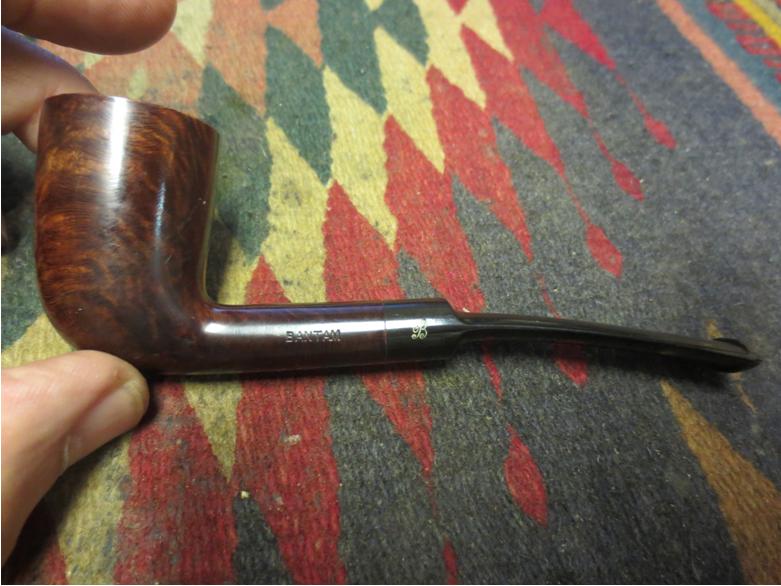
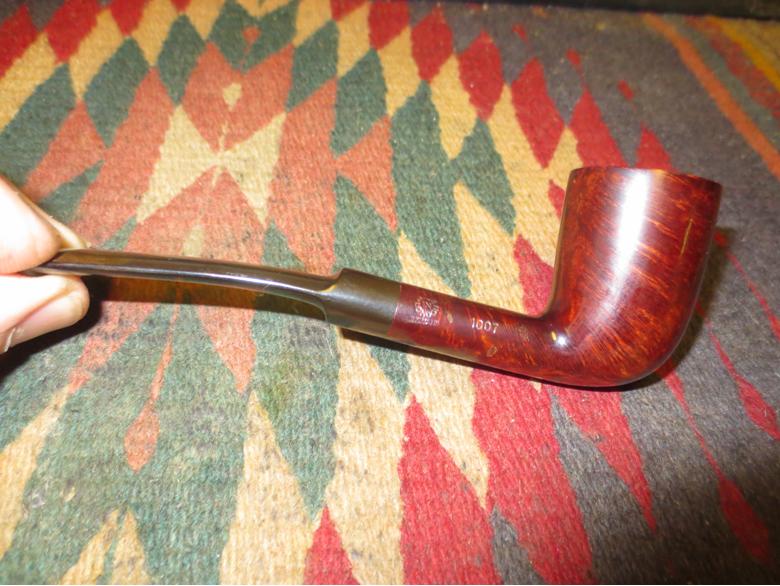
It is stamped on the left side of the shank, BANTAM with a cursive B on the saddle portion of the stem. On the right side it is stamped with the classic Comoy’s circle Made in London over England then the shape number 1007. On the underside of the shank next to the stem is the stamp O. In checking on the maker of the brand in Who Made That Pipe (WMTP) I found that it was indeed made by Comoy.

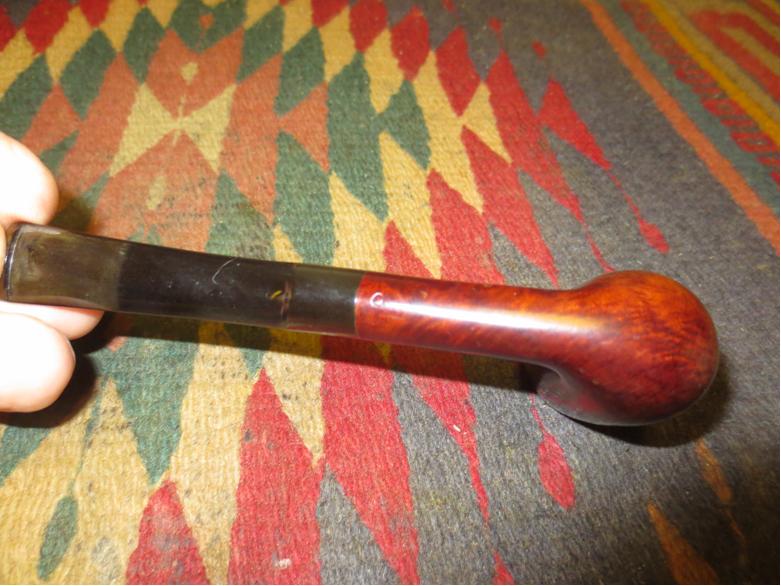
The finish on this one was in decent shape, just a little dirty. The rim had a build of tar on the back quarter that needed to be scraped and cleaned. The rim itself was quite clean and was undamaged on either the outer or inner edge. The stamping was very clear on both sides of the shank as noted above. I am a little mystified by the 1007 shape number on the shank as I can find no mention of that in the catalogues. The stem was oxidized and had a bit of tooth chatter on both the top and bottom sides near the button. The bowl had been reamed and cleaned but the inside of the shank and the stem were very dirty. The slot in the end of the stem was partially clogged and constricted the airflow. The pipe is a delicate Dublin shape around 5 inches long and very light weight.Bantam1

Bantam2

Bantam3

Bantam4 The close-up photo of the rim below shows the tar and oil build up on the back side as well as the ragged cake that had been left behind when the bowl had been reamed previously.Bantam5 I did not take photos of the bowl clean up. I am not sure what happened but I know I was working on several pipes at the same time so somehow I over looked photographing this one. I apologize for that and give you a description of the work I did on the bowl and the interior of the pipe.

I reamed back the rough cake with a sharp pen knife to smooth it out and leave a very thin coating. I scrubbed the rim with saliva and cotton pads and worked on it until I was able to get all of the tarry buildup off the back of the rim. I scrubbed the bowl with a tooth brush and Murphy’s Oil Soap and then rinsed it off with cool water. I dried off the bowl. I then buffed the bowl and rim with White Diamond and gave them a light coat of carnauba wax. I then took the bowl back to the work table and cleaned out the shank and the airway in the stem with pipe cleaners, cotton swabs and alcohol. I scrubbed until the cleaner came out white and the pipe smelled clean and fresh.

I did take a close-up picture of the stem to show the tooth chatter and tooth mark. The other side of the stem had matching tooth marks.Bantam6 I sanded out the tooth marks and the tooth chatter with 220 grit sandpaper followed by a medium and fine grit sanding sponge. Once I had the tooth marks cleaned up and no longer present I sanded the entire stem, carefully working around the stamped logo on the left side of the saddle.Bantam7

Bantam8 The oxidation on this one was particularly stubborn. I wet sanded it with 1500-2400 grit micromesh sanding pads and repeated that until I had the majority of the oxidation conquered. I rubbed the stem down with Obsidian Oil and took the first photo below. The oxidation still showed up in the bright light of the flash so I started over with this set of micromesh pads and repeated the process until it was clean.Bantam9 When the oxidation was gone I moved on to dry sand with 3200-4000 grit micromesh pads and sanded the stem until it began to shine. I rubbed it down with Obsidian Oil once more and when it dried I buffed the stem with White Diamond on the wheel before continuing with the next set of micromesh pads.Bantam10 I dry sanded with 6000-12,000 grit micromesh pads and then rubbed the stem down again with a final coat of Obsidian Oil.Bantam11 When the oil had dried I buffed the pipe and the stem with Blue Diamond Plastic Polish and then gave them both multiple coats of carnauba wax. The finished pipe is shown below. It is ready for the next owner to load with a bowl of his or her favourite tobacco and enjoy it. It should serve as a good smoke for a long time to come.Bantam12

Bantam13

Bantam14

Bantam15

Bantam16

Bantam17 You can purchase this beautifully shaped English looking Bantam 1007 ¼ bent Dublin and add it to your collection and help out the women of Nepal who are part of the SA Foundation’s project there. If you are interested in purchasing the pipe email me with an offer at slaug@uniserve.com and we can discuss it. The entirety of the sale price will go to the Nepal project. I will pay the postage so that does not get taken off the proceeds. If you are interested in reading about the SA Foundation you can look at their website at http://www.safoundation.com.

Thanks for looking.

NEPAL PROJECT PIPE SALE 5 – Restoring an Orlik De Luxe L206 – an Inclined Bevelled Egg


Blog by Steve Laug

This is the fifth pipe from the box of pipes that I was gifted by a good friend of mine with the instructed purpose of cleaning them up and selling them with all of the proceeds going to the aid of earthquake victims in Nepal. Once again all funds raised will all go to the SA Foundation, and organization that has worked in Nepal for over 15 years helping provide recovery, housing and job training for women who are victims of sexual exploitation and trafficking. The ongoing earthquakes (over 300) that continue to shake Nepal have left much in ruins. The SA Foundation Project there was able to find new housing for the women and help with staff as well. Every dollar raised from the sale of these pipes will go to the work in Nepal. It is stamped on the left side of the shank, Orlik De Luxe over London Made and on the right side of the shank it is stamped with the shape number L206. According to the page from the Orlik shape chart below, the L206 (the bottom pipe on the page) was called an Inclined Bevelled Egg.Egg1 The next four photos show the condition of the pipe when I brought it to the worktable to clean it up. The finish was in very decent shape though soiled and would clean up very nicely. The stamping was clear, though toward the back of the shank it was stamped more lightly than the front half of the shank.Egg2

Egg3

Egg4

Egg5 The next photos are close-up pictures of the outer edge of the rim. The outer edge was damaged around over half of the bowl. Someone along the path this pipe took during its life time had smoothed out the damage and in so doing had rounded the outer edge of the bowl.Egg6

Egg7

Egg8 From the Orlik shape chart and photos on the web I could see that the edge was supposed to be sharp and smooth rather than rounded. The rounding also hid some rough spots in the briar caused by knocking out the pipe against something hard. I decided to top the bowl with a topping board. I used 220 grit sandpaper on the board and sanded the top in a circular motion while pressing it into the sandpaper. I took it down until the damaged sections were gone and the outer edge was sharp once again.Egg9

Egg11

Egg10 I sanded the rim with a medium and fine grit sanding sponge to remove the scratching. I sanded it with 1500-2400 grit micromesh sanding pads to further smooth it out. I buffed the bowl and rim with White Diamond. I used a light and a medium brown stain touch up pen mixed together to match the stain with the rest of the bowl.Egg12 I used a sharp knife to ream cake the bowl, remove the crumbling cake from the bottom portion of the bowl and leave a thin cake on the walls of the bowl. My purpose was to facilitate forming a new cake on the walls.Egg13

Egg14 I cleaned out the mortise and the airway in the shank and the stem with pipe cleaners, cotton swabs and alcohol until the cleaners came out white.Egg15 With the inside clean I put the stem back in place with a plastic washer on the tenon so that when it was pushed in place it sat between the shank and the stem. This allows me to sand the stem and remove the oxidation without rounding the shoulders or damaging the stain and finish on the shank. I sanded it with a worn piece of 220 grit sandpaper and then with a medium and a fine grit sanding sponge.Egg16

Egg17 With the oxidation removed from the stem I went on to sand it with micromesh sanding pads – wet sanding with 1500-2400 grit pads and dry sanding with 3200-12,000 grit pads. I rubbed down the stem with Obsidian Oil between each set of three pads and then when I had finished the third set I did it again and set it aside to let the oil dry.Egg18

Egg20

Egg19 After the oil dried I buffed the pipe and the stem with Blue Diamond Plastic Polish on the wheel while carefully avoiding the stamping. I gave it multiple coats of carnauba wax and buffed it with a soft, flannel buff to raise the shine. The finished pipe is shown below. It merely waits for the right person to add it to their rack and enjoy a flavourful smoke in a very light weight pipe.Egg21

Egg26

Egg25

Egg24

Egg23

Egg22 This beautifully shaped Danish looking Orlik L206 Inclined Bevelled Egg should make someone a great addition. If you are interested in this pipe email me with an offer at slaug@uniserve.com and we can discuss it. The entirety of the sale price will go to the Nepal project. I will pay the postage so that does not get taken off the proceeds. If you are interested in reading about the SA Foundation you can look at their website at http://www.safoundation.com.

Thanks for looking.

A Windy Perpetual Drysmoker Restored


Blog by Steve Laug

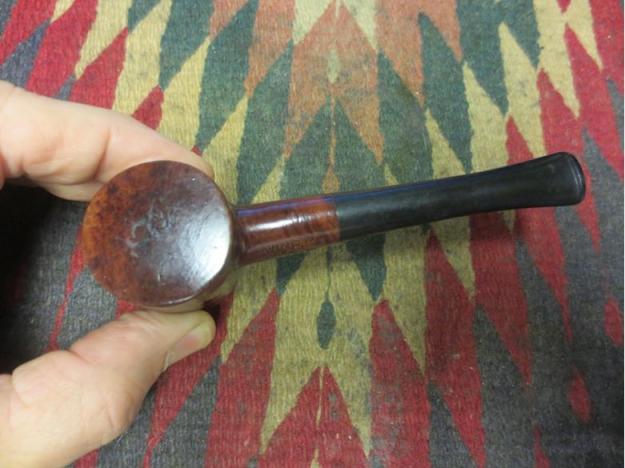
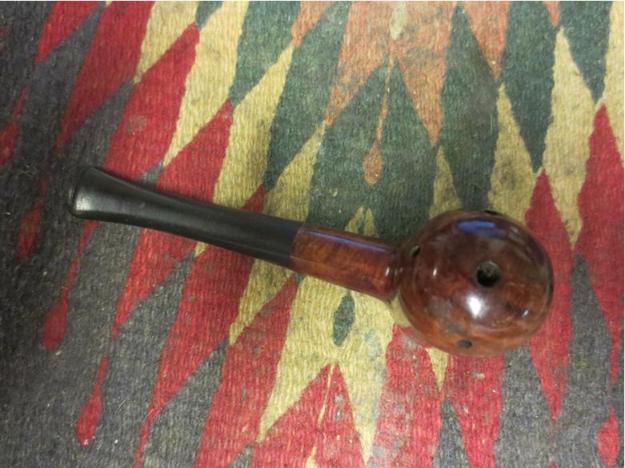
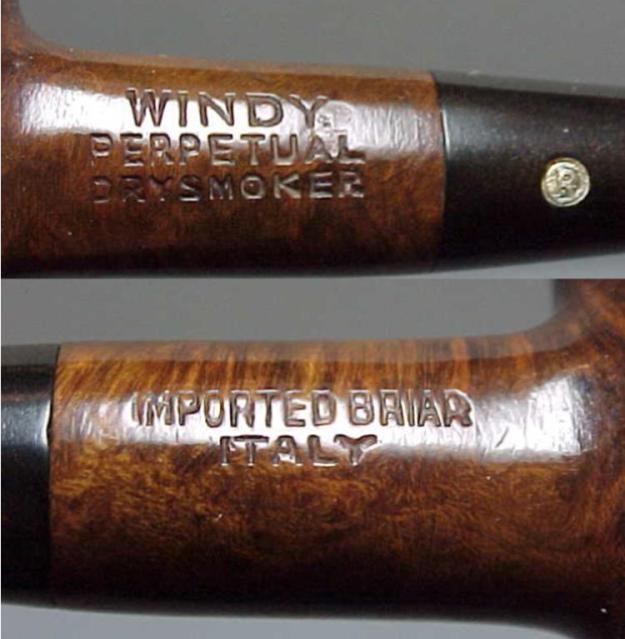
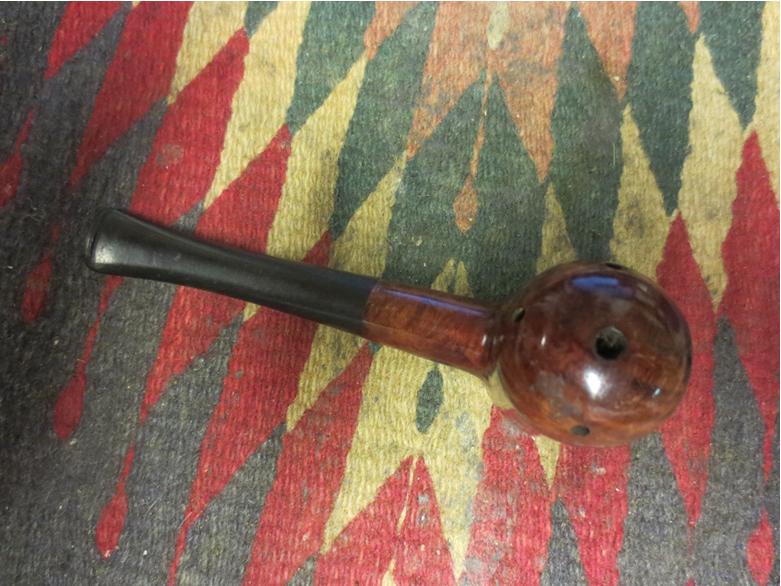
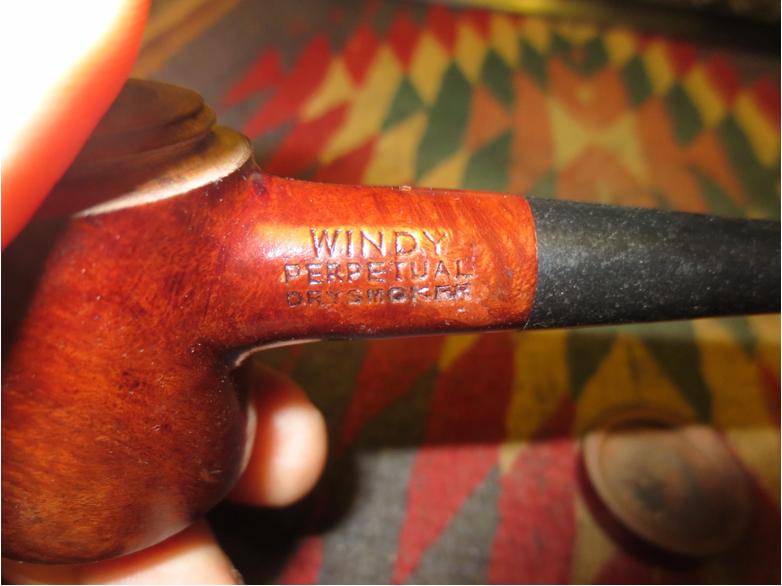
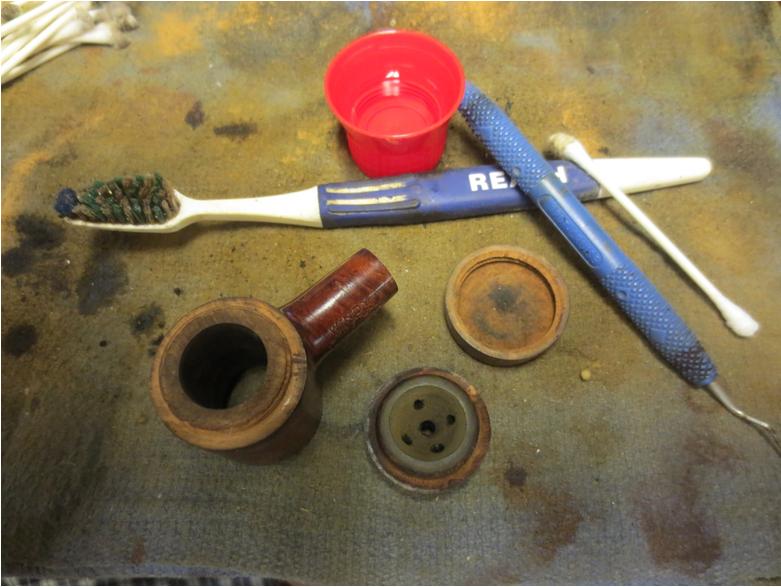
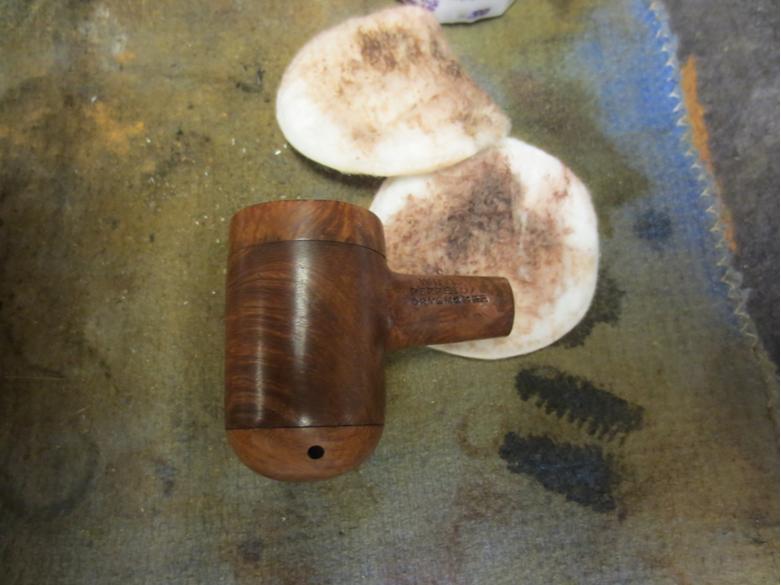
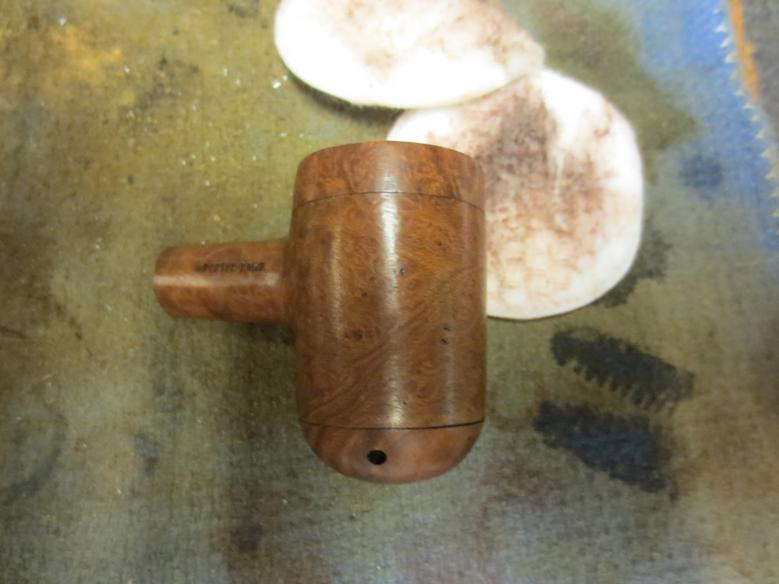
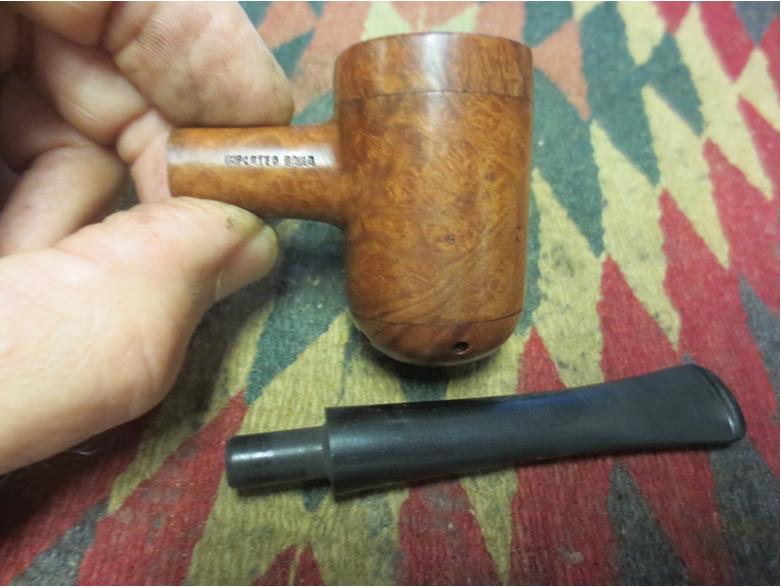
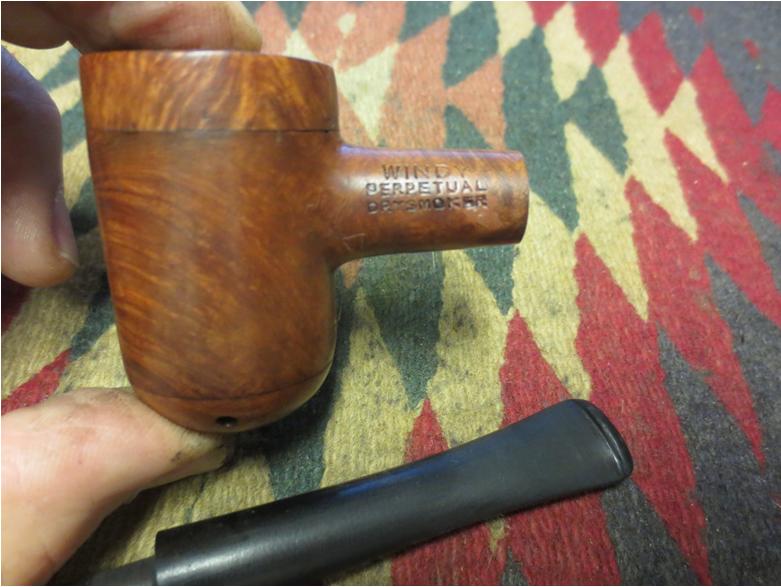
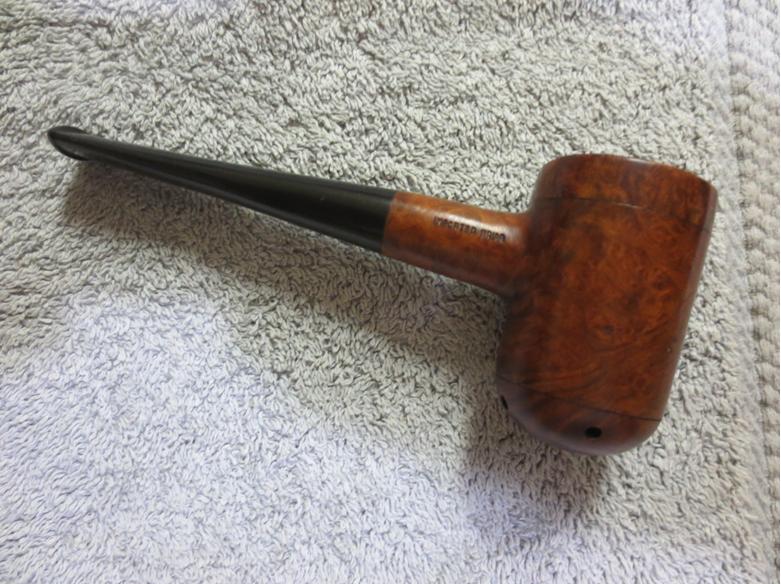
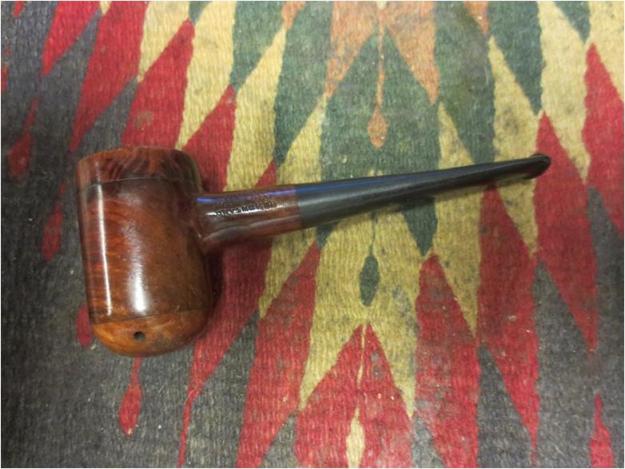
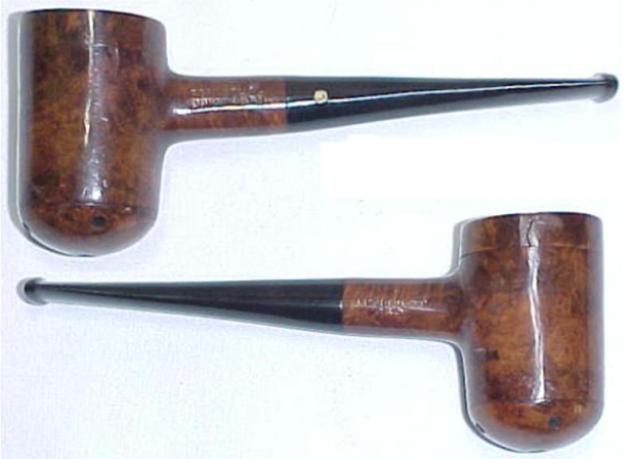
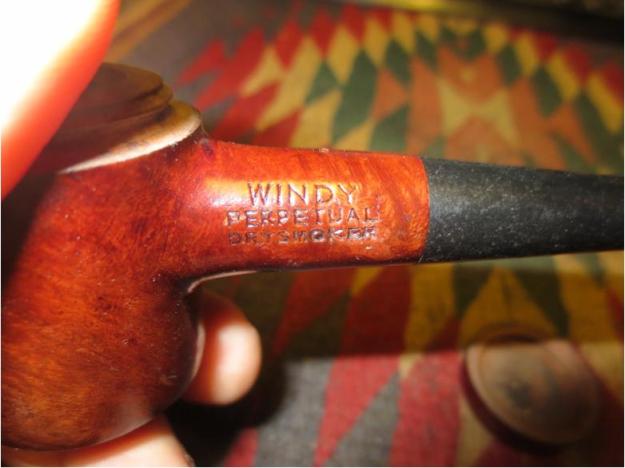
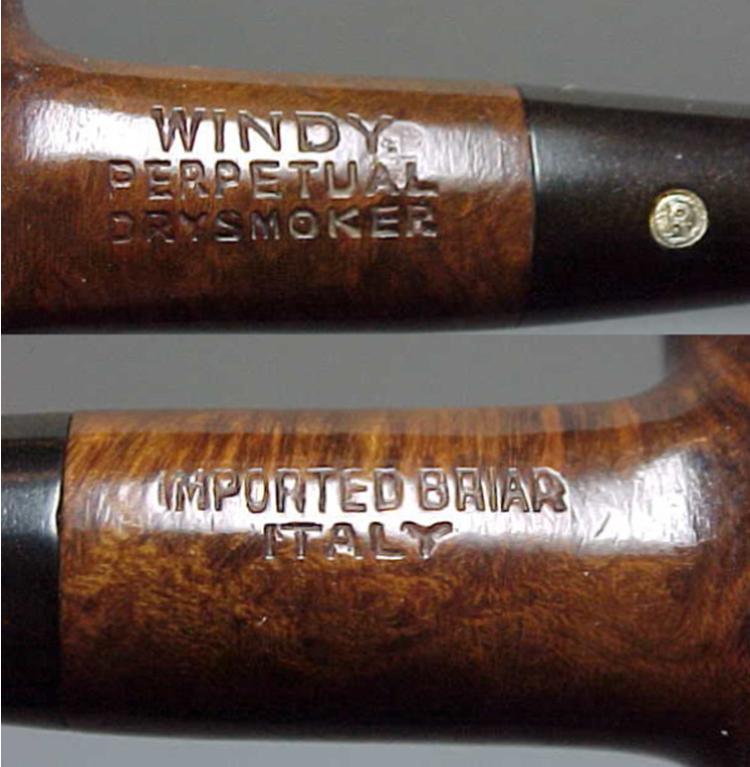
One of the contributors to rebornpipes,Troy Wilburn gifted me with a couple of pipes not long ago. Today I worked on the first of them – an interestingly odd old pipe the likes of which I have never seen. It is stamped on the left side of the shank WINDY over PERPETUAL over DRYSMOKER and on the right side of the shank IMPORTED BRIAR. Around the end of the shank on what I assume is the bottom of the pipe it is stamped ITALY.Dry1
Dry2

Dry3

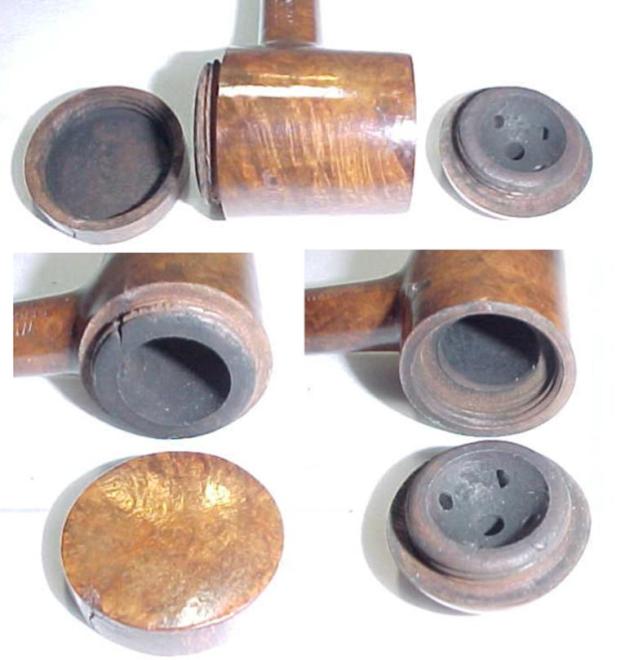
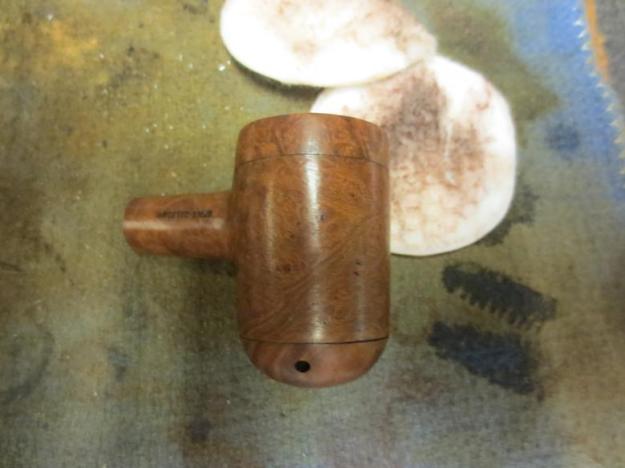
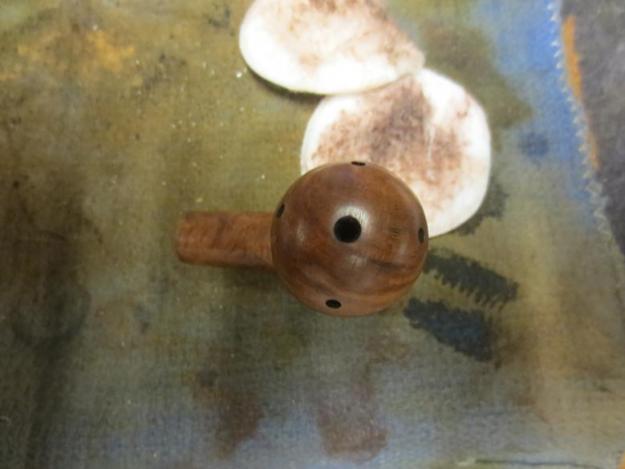
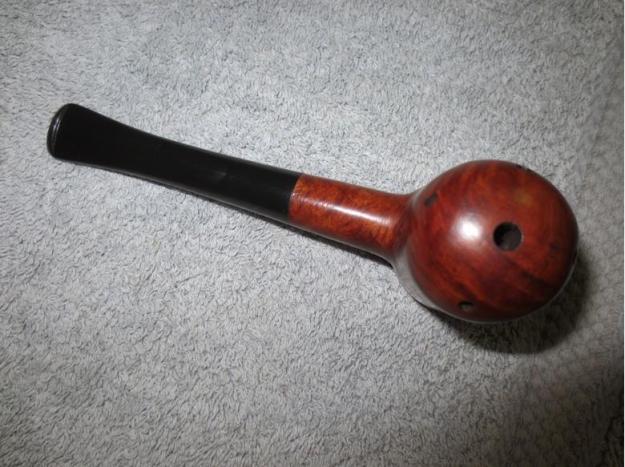
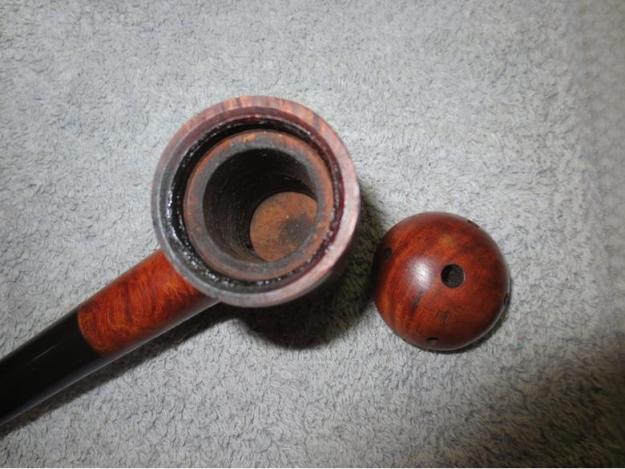
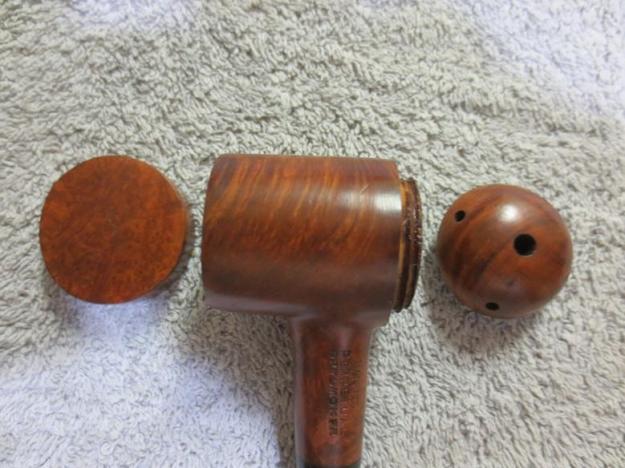
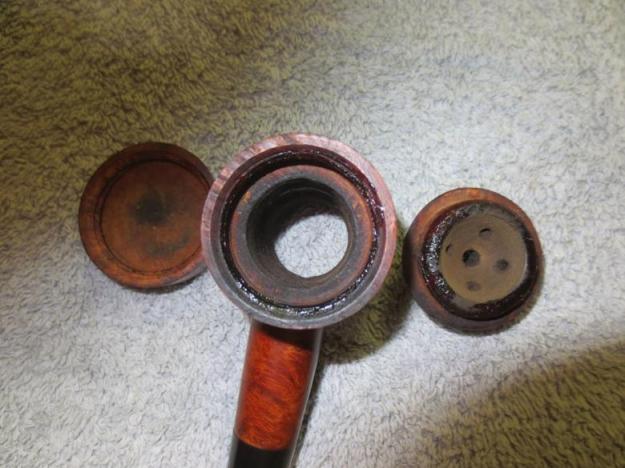
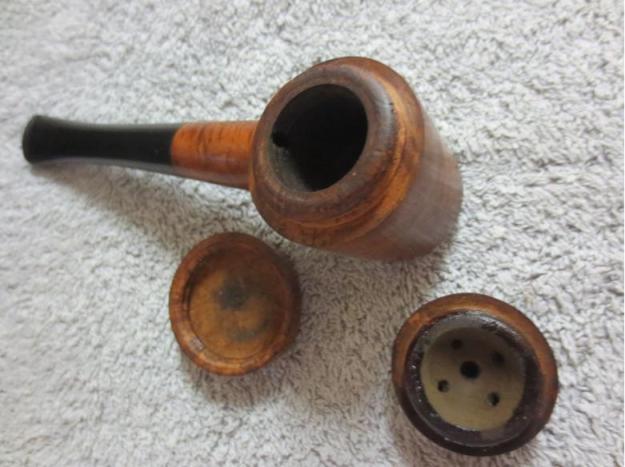
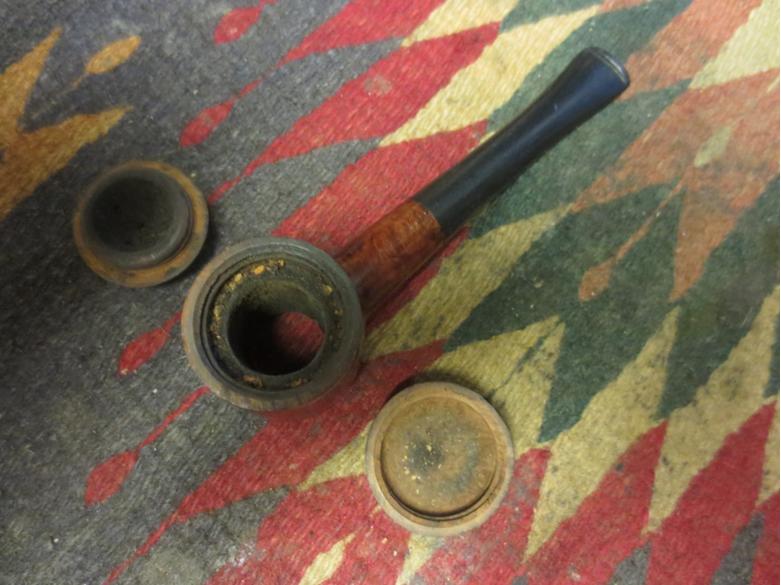
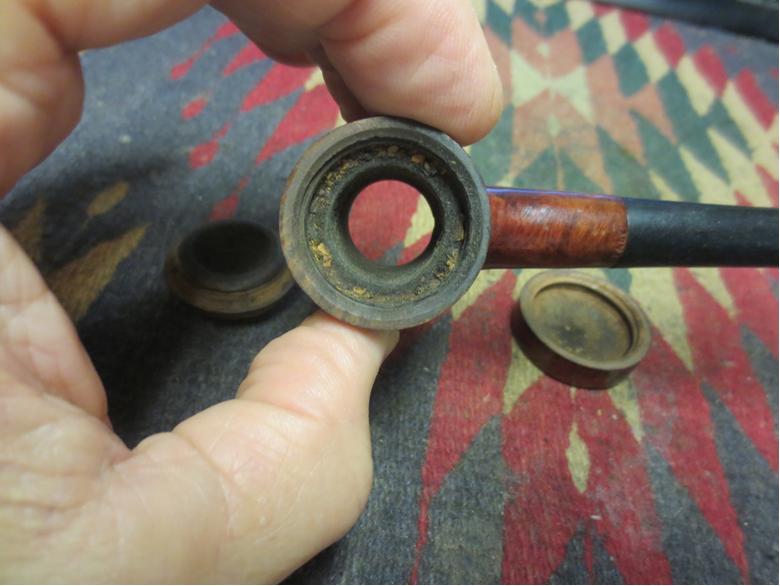
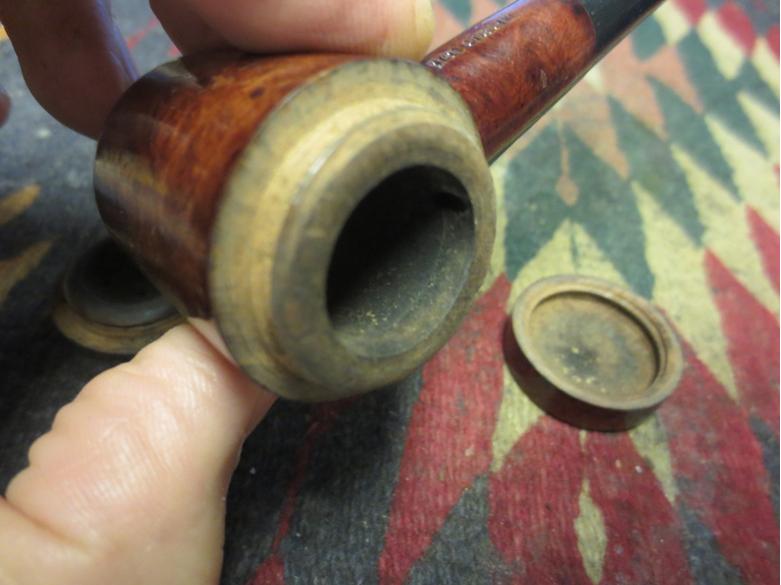
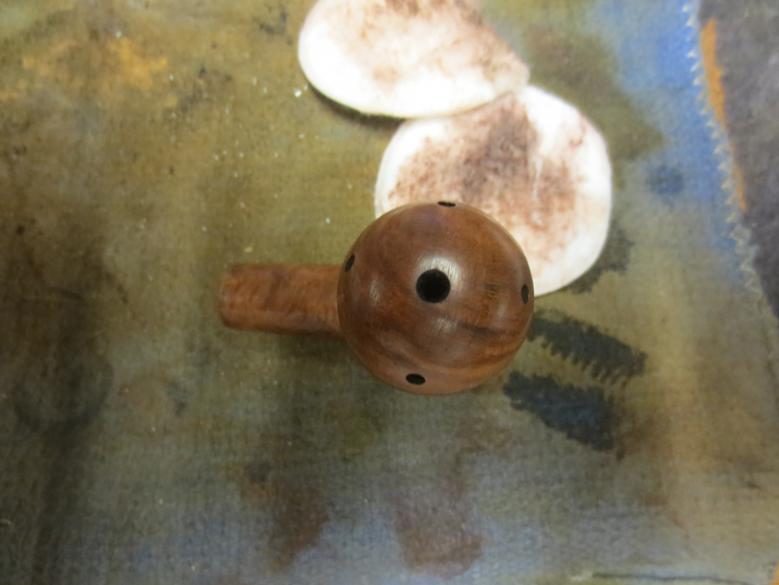
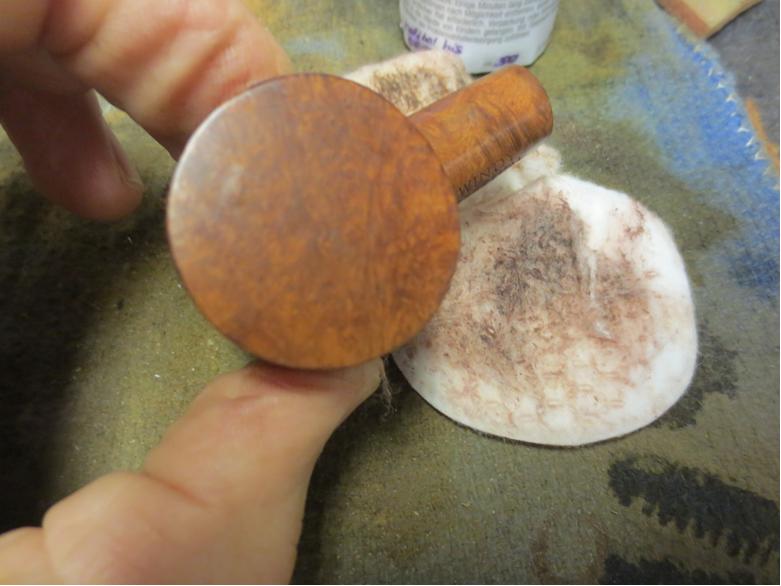
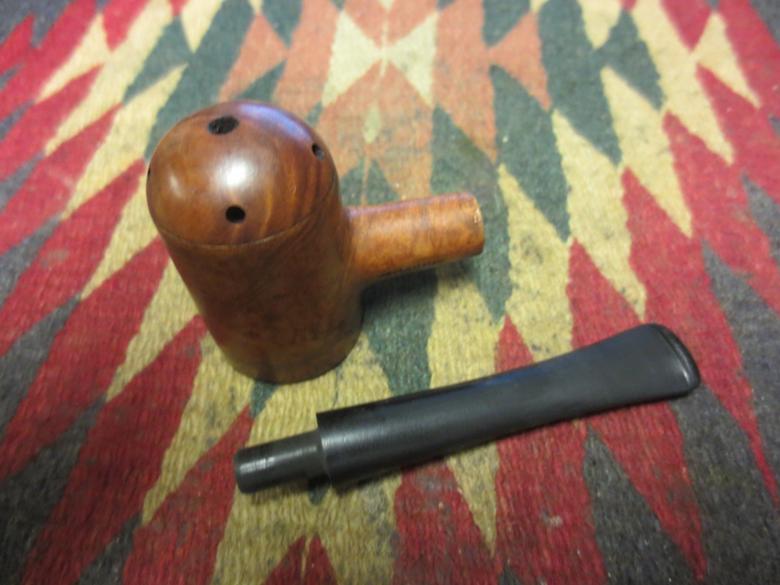
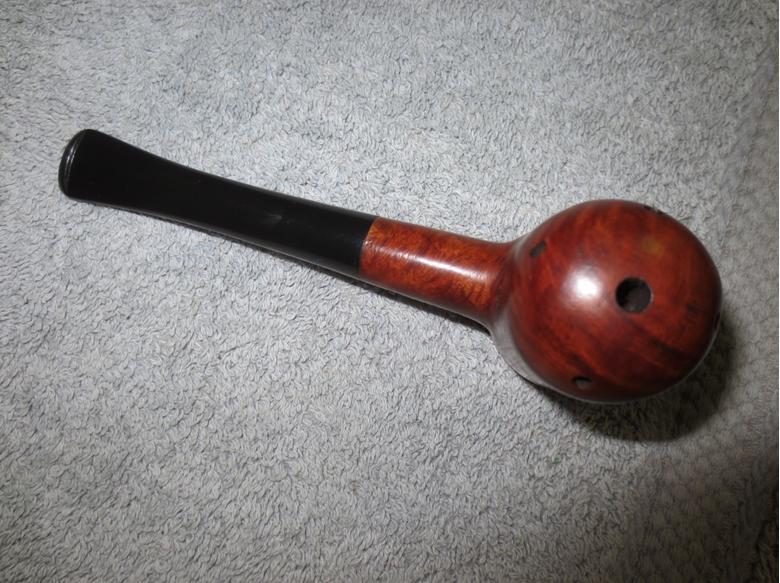
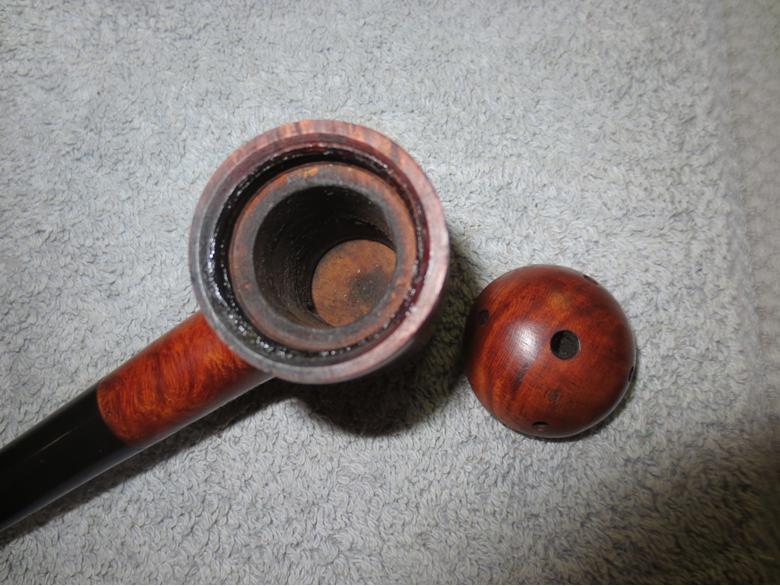
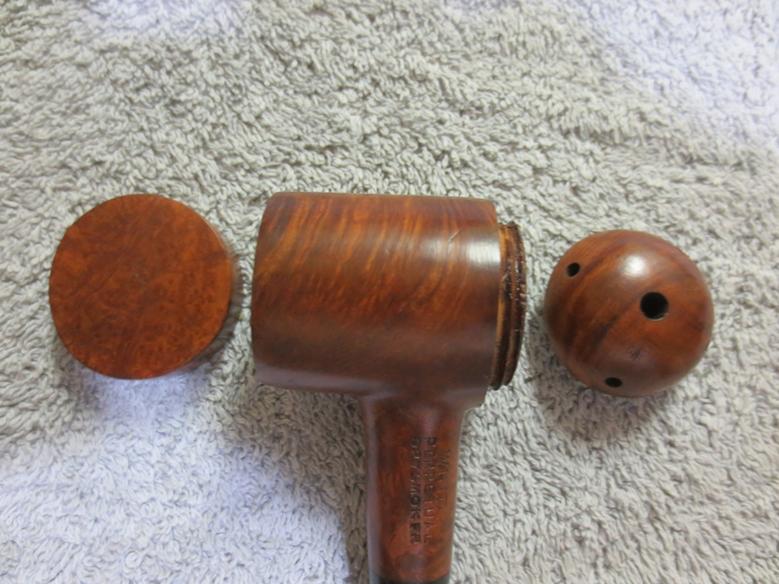
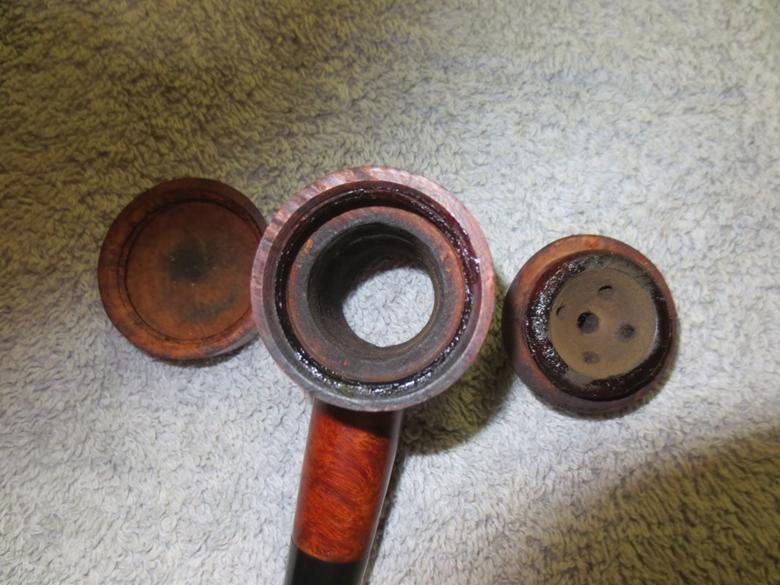
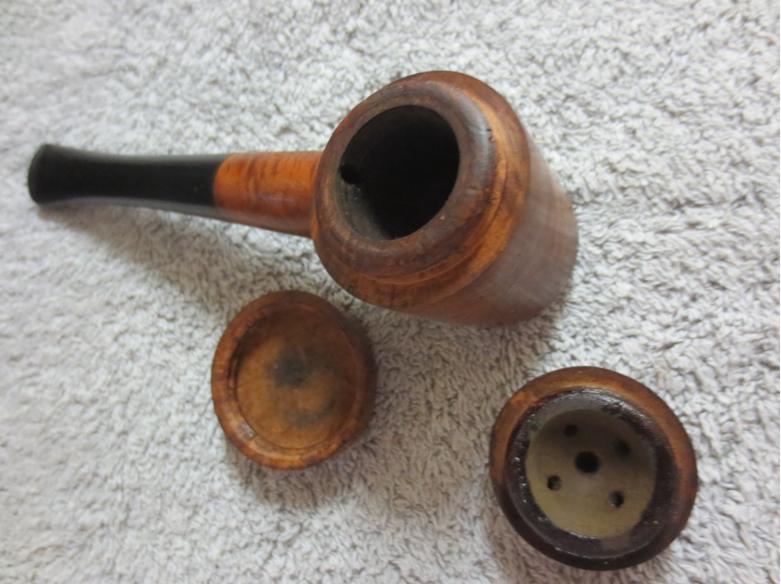
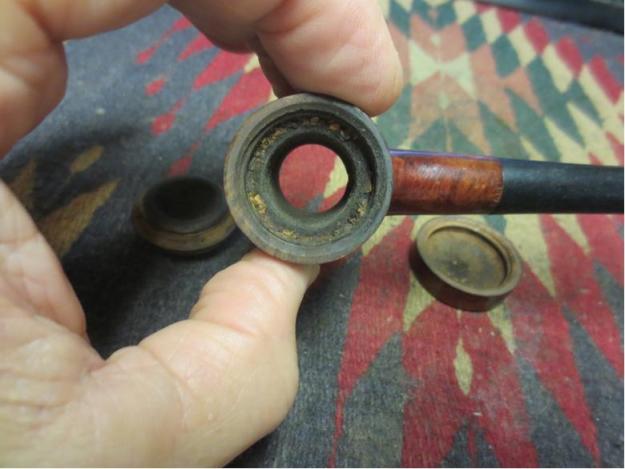
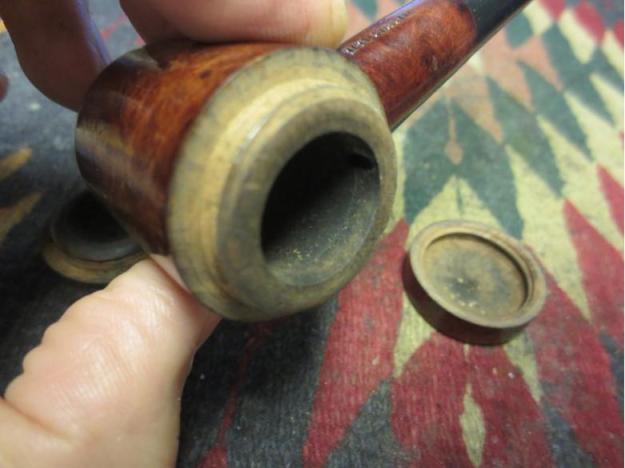
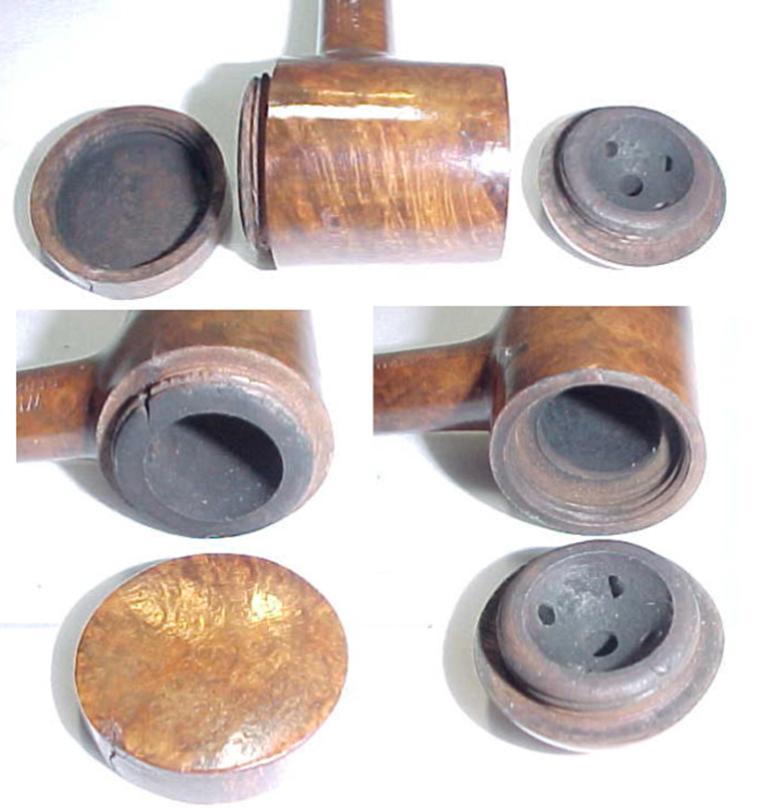
Dry4 This odd pipe is a bit of a mystery to me in terms of how it is smoked. You may laugh at that and say, “Put the end in your mouth and fire it up.” However it is a little more complicated. This particular pipe has a screw on wooden cap that sits on the “top” of the bowl if looked at the way I took the photos above. Held this way the stamping is right side up. On the other end of the bowl is what is like a normal windcap with five airholes in it. It is screwed into the bowl. When held with the windcap as the “top” the stamping is upside down. I can find nothing online that gives a hint to how it is to be smoked.Dry5 When I took it apart it was clear to me how the previous owner had smoked it. There was a cake on the walls of the bowl. There was a cake on the threaded five hole windcap. There was not any cake of darkening on the flat threaded cap. So the pipe had been smoked with the windcap facing downward and the stamping in the correct position. The bowl had been lit from the windcap end and then the cap put back in place and the bowl turned over and smoked with the coal on the bottom… I shall have to experiment with that to see what I can tell after smoking it myself.
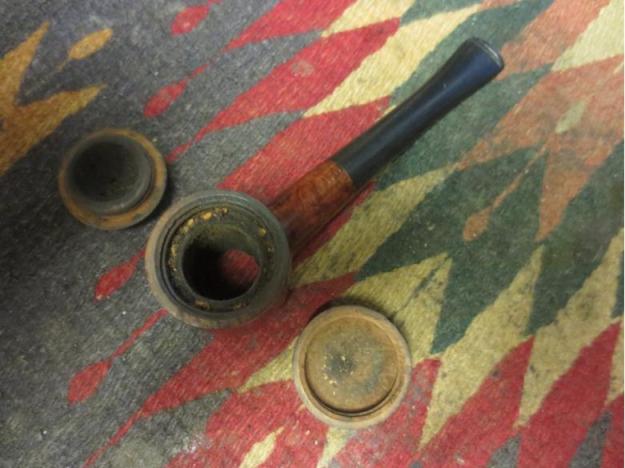
The pipe was quite dirty. Tobacco shards were around the threads in both the top and the bottom of the bowl. There was a light cake that was crumbly in the bowl. The airway was reduced in size by the tars and cake. The stem was rough and the airway partially blocked. The finish on the briar was crackling and spotty.Dry6 Before cleaning up the pipe I did a quick Google search to see if I could find out any information. I wanted to see if the brand was known and if there was anything on the Pipephil site regarding the stamping. I found just two links to the pipe. One was on the smokingmetal site. The other was a YouTube video that was about a fellow smoking his Windy Perpetual Drysmoker. I did not find it helpful in that it was just a running commentary on the experience rather than information about the brand. The link to the smokingmetal site is here: http://www.smokingmetal.co.uk/pipe.php?page=508
I am quoting the article in full as it is really the only source of information I found.
WINDY – perpetual drysmoker
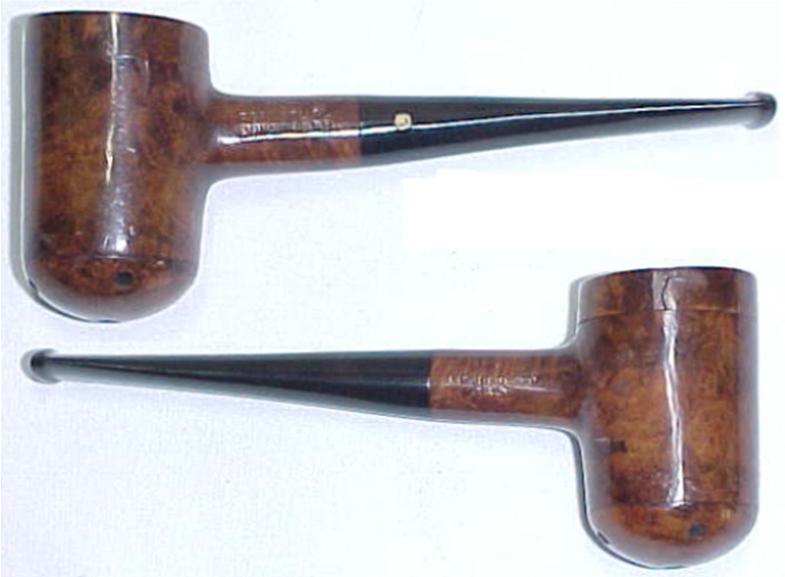
Appears to be a late 1940’s pipe, briar, which I thought initially should have had an internal bowl which did not appear to be present with this one. Some doubt as to how many parts there should be to this pipe, but see the following comments. The stamping is simply WINDY Perpetual Drysmoker one side of shank and Italy Imported Briar on the other

Sitter pipe. The pipe is just over 5 inches of the bowl to end of bit. Chamber diameter is just over 5/8 inch and depth is over 1 1/2 inch.

I have the following from Stan Wolcott, his are the images as well:

“WINDY PERPETUAL DRYSMOKER by Stan Wolcott”
In my travels I recently came across this intriguing pipe on which very little information appears online by Google search. The left side (?) is stamped “Windy Perpetual Drysmoker” and on the right side (?) “Imported Briar/Italy”. The stem has a small round gold medallion on the left side bearing a “R”. Although several similar pipes are pictured online here in the USA and UK, no explanatory information is included with those images. Floyd Norwood of Tennessee, who restored the pipe for me, also had no idea how the pipe was to be smoked. Tony Pringle of the UK, who has one pictured on his website, believes there may be other pieces which are missing from the four present in the images—flat cap, rounded cap with five vent holes (presumably the wind cap) and the pipe bowl and stem. As can be seen from the images, the flat cap has female threads and screws into the bottom (?) onto male threads on the bowl. The wind cap has male threads and screws into the top (?) of the bowl. I have placed the question marks in parentheses following the terms top, bottom, right and left, since I’m not even sure whether the flat cap is intended to be the bottom. Can someone out there enlighten me and the NASPC readership about this “mystery pipe”, its manufacturer and the proper way of smoking it?

This guy seems to have mastered it ..http://www.youtube.com/watch?v=c1Zk3qxuce0

The “Perpetual” part of the name seems to come from the ability to actually load more tobacco from the bottom of the pipe whilst still alight and of course the dottle etc. gets burnt as the smoking progresses. Rather ingenious. There are at least two possible for makers from the logo, REGIS and EMPIRE STATE and nothing seems to be known of these either.

Tony Pringle of smokingmetal then includes the following photos of the pipe. There is no doubt that it is the same pipe that I have. There are a few variations between the two but the overall design is the same. He shows photos of the pipe as a whole, taken apart and of the stamping.Dry7
Dry8

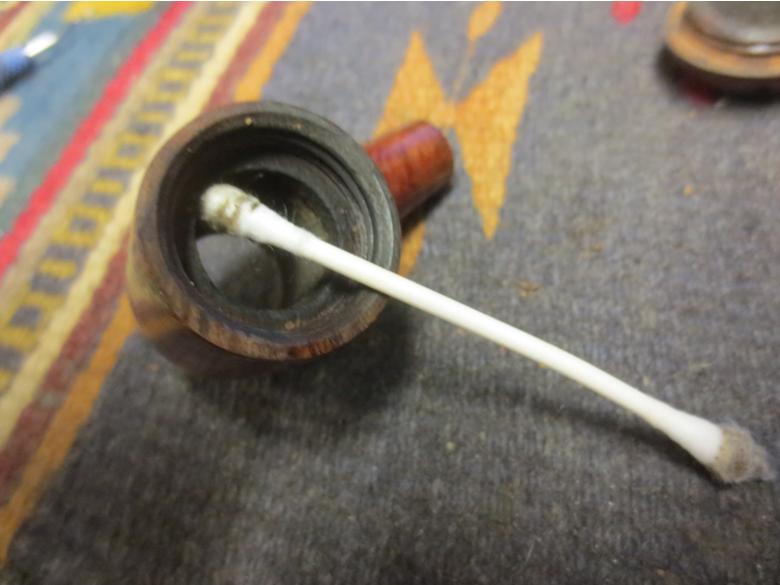
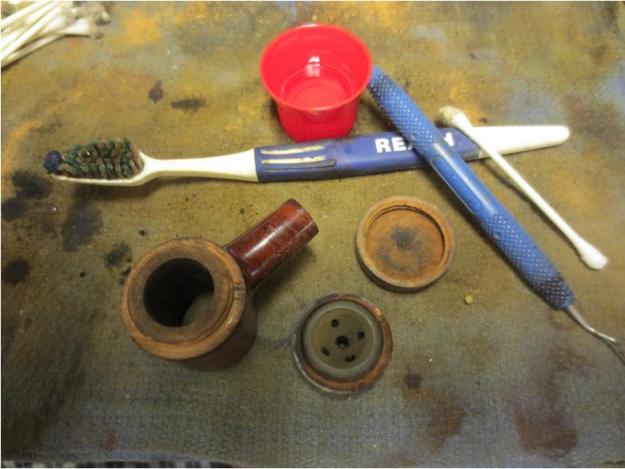
Dry9 The pipe that Troy gave me is in much better condition and also is stamped slightly different. The left side of the shank is the same but the right side only reads IMPORTED BRIAR on mine. The ITALY stamping runs around the shank at the junction of the shank and stem. It is stamped on what would be the bottom side if the cap is on the bottom. The stem on the one I have does not have the gold logo or seal.Dry10 I used a cotton swab and alcohol to scrub the threads on the bowl and the two lids. There was a lot of debris in both sets of threads.Dry11
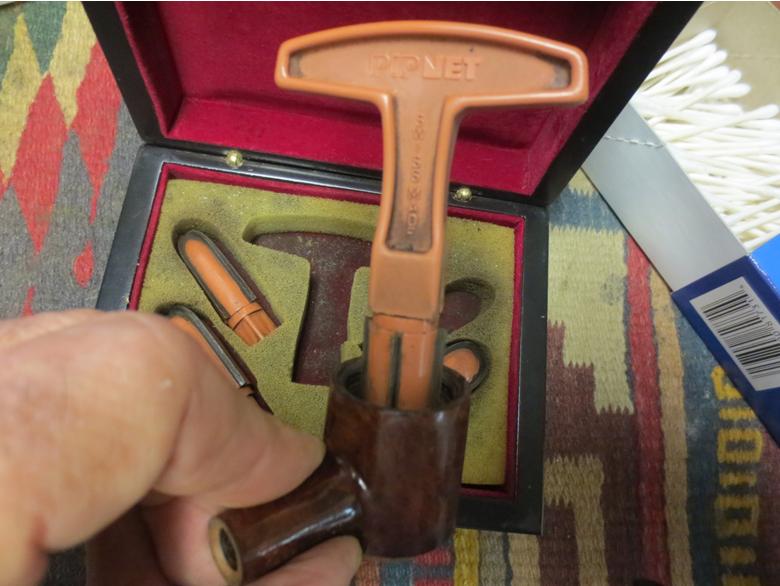
Dry12 I reamed the bowl with a PipNet reamer and the second cutting head as it was a perfect fit for the diameter of the bowl. I took the cake back to bare wood.Dry13
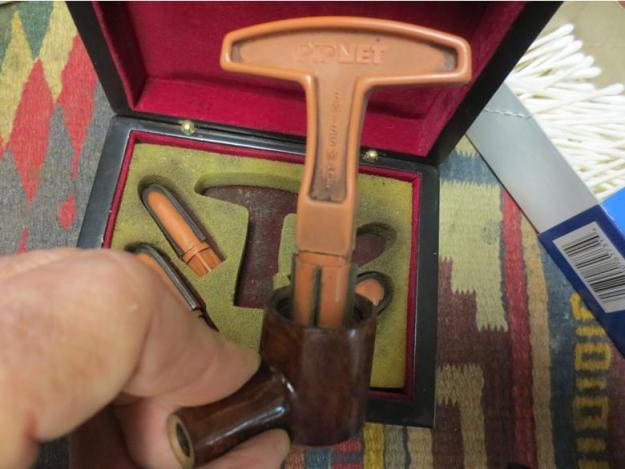
Dry14 With the major debris cleaned away with the alcohol and cotton swabs I used a toothbrush to scrub the threads on both the top and bottom of the bowl and also on the two caps.Dry15 With the interior cleaned out and the threads cleaned I put some Vaseline on the threads of the caps and put the pipe back together. I used some acetone on cotton pads to remove the spotty and broken finish on the bowl. I was amazed at the grain that was underneath the finish. There were no fills and just a few small sandpits.Dry16
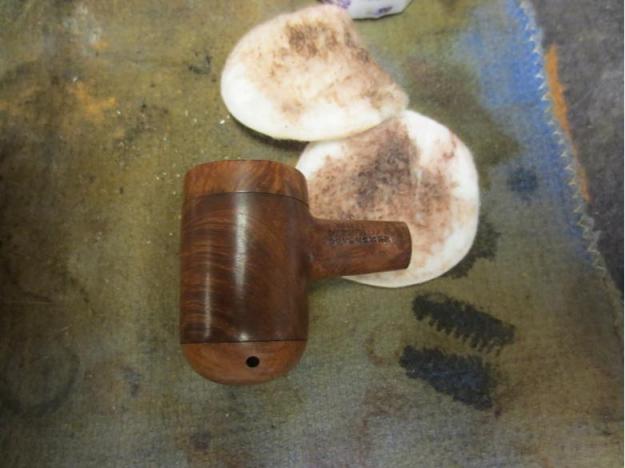
Dry17

Dry18

Dry19 With the finish removed the pipe was beginning to look like new. All that was left was to clean up the stem and then buff the two of them together. Look closely at the grain on the bowl and caps. I really find this a beautiful pipe.Dry20
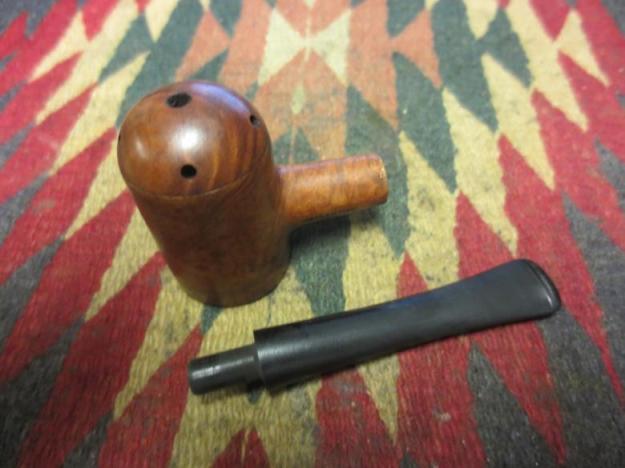
Dry21

Dry22 I put a plastic washer on the tenon between the shank and the stem so I could sand the stem in place in the shank and keep the shoulders of the stem from rounding. I sanded the tooth chatter on the top and bottom of the stem with 220 grit sandpaper and then with a medium and fine grit sanding sponge. I went on to sand it with micromesh sanding pads – wet sanding with 1500-2400 grit pads and then rubbing it down with Obsidian Oil. One this that was very interesting about this stem was the quality of the vulcanite. The sanding dust was absolutely black rather than the usual brown. It left black streaks on the micromesh.Dry23
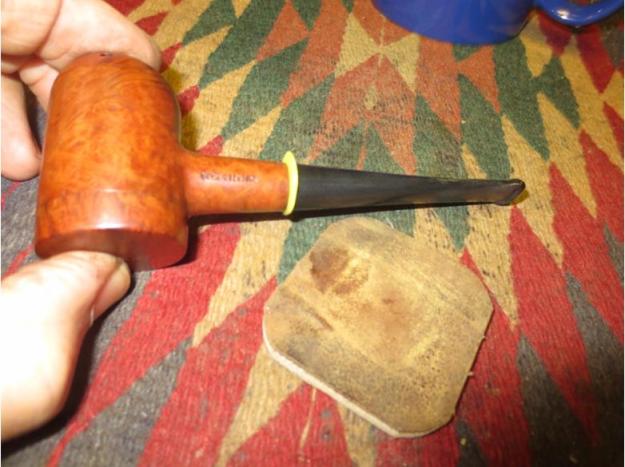
Dry24

Dry25 I dry sanded with 3200-12,000 grit pads and then rubbed the stem down with Obsidian Oil after the 4000 grit pad and the 12,000 grit pad.Dry26
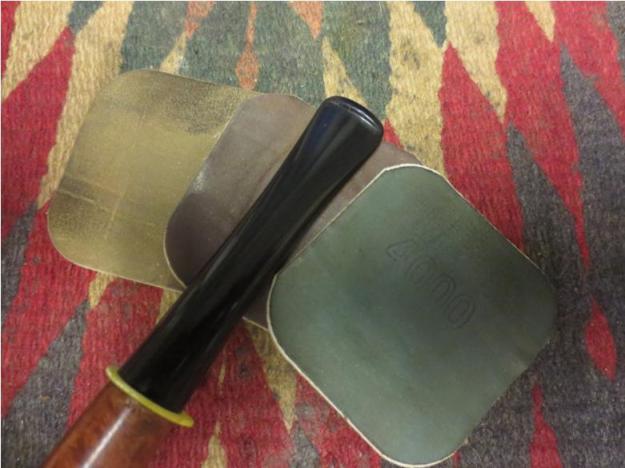
Dry27 I buffed the pipe and stem on the buffer using Blue Diamond Plastic Polish on the wheel to polish the bowl and the stem. I gave it multiple coats of carnauba wax to protect the finish and then buffed it with a clean, flannel buff to raise the shine. The finished pipe is shown in the photos below. Thanks Troy for the strange yet beautiful pipe. I enjoyed working on this one and will also enjoy experimenting with how to smoke it!Dry28
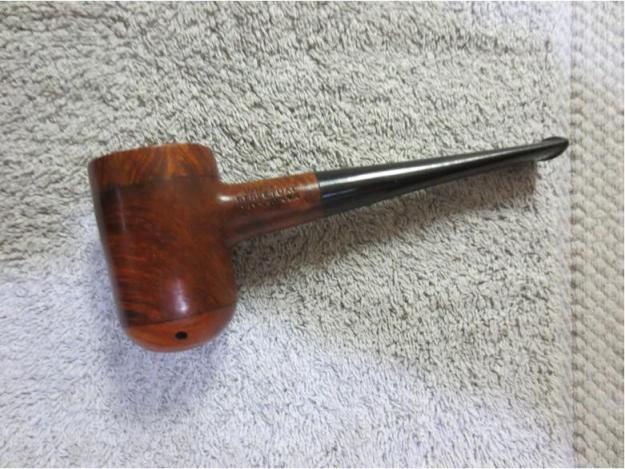
Dry29

Dry30

Dry31

Dry32

Dry33

Dry34

Dry35 Thanks Troy and thanks for looking!

DIY tenon expanders


I was chatting with Mark about tenon expander and he told me about these. Great write up Mark. Thanks

Lone Star Briar Works's avatarLone Star Briar Works Blog

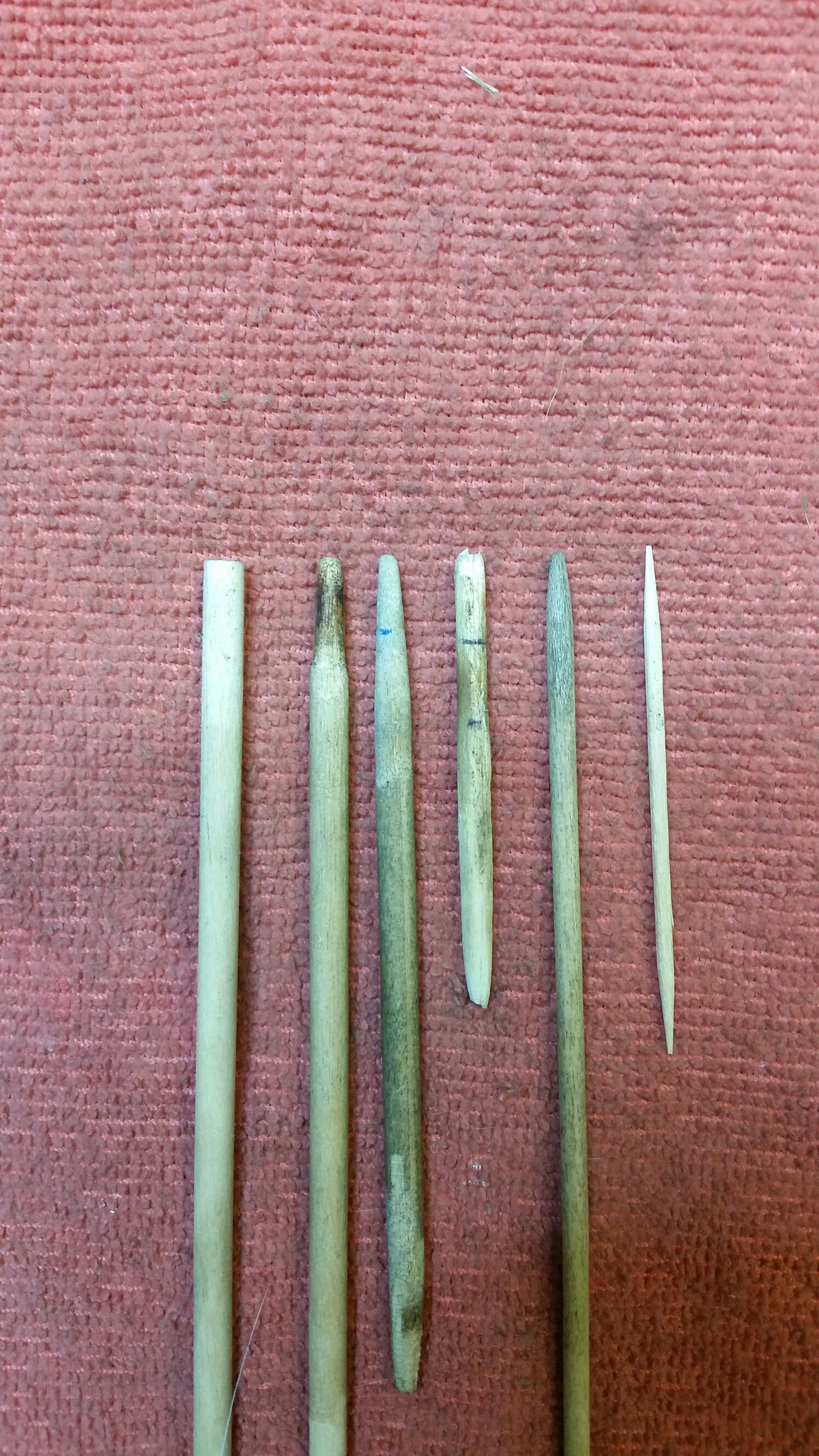
On the subject of tightening a loose tenon, I wanted to share my tools. If heating won’t swell it and beeswax won’t do the trick, you want to expand as much of the length of the tenon, rather than just heating and pressing it to flatten the tip only. I have several small dowels bought from the hardware store. The pic shows my arsenal along with a toothpick for size comparison.

image

I cut a small section and then sand it to gradually increase the diameter, much less sharp than a pencil. The ultimate goal is to heat the tenon and insert the dowel to swell the tenon along its entire length, not just the tip (which a sharpened pencil would do). I put the appropriate size dowel in the cold tenon and sometimes make a mark to see how deep it goes after I heat it up. Of course you…

View original post 36 more words

NEPAL PROJECT PIPE SALE 4 – Jobey 300 Bent Diamond Shank Brandy 9mm Meerschaum Filter Pipe


Blog by Steve Laug

This is the fourth pipe from the box of pipes that I was gifted by a good friend of mine with the instructed purpose of cleaning them up and selling them with all of the proceeds going to the aid of earthquake victims in Nepal. Once again all funds raised will all go to the SA Foundation, and organization that has worked in Nepal for over 15 years helping provide recovery, housing and job training for women who are victims of sexual exploitation and trafficking. The ongoing earthquakes (over 300) that continue to shake Nepal have left much in ruins. The SA Foundation Project there was able to find new housing for the women and help with staff as well. Every dollar raised from the sale of these pipes will go to the work in Nepal.

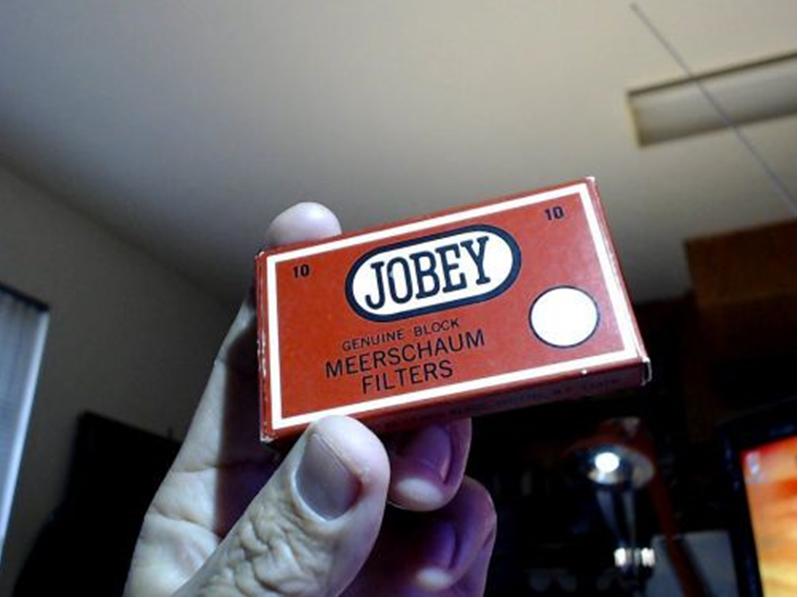
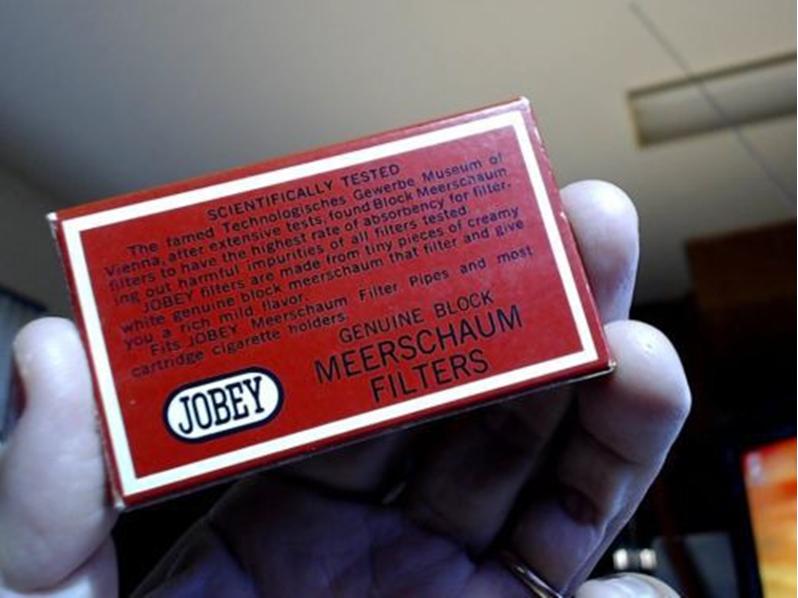
jobeylogoThis one is a little Jobey pipe has the typical Jobey fitment system with the tenon in the shank and the stem sliding over that. However that is where the typical ends. It is open for a 9mm filter and in this case a 9mm meerschaum filter. The pipe is stamped on the underside of the shank on the left side with the words Jobey over Meerschaum over Filter and on the right side it is stamped 300.Jobey1

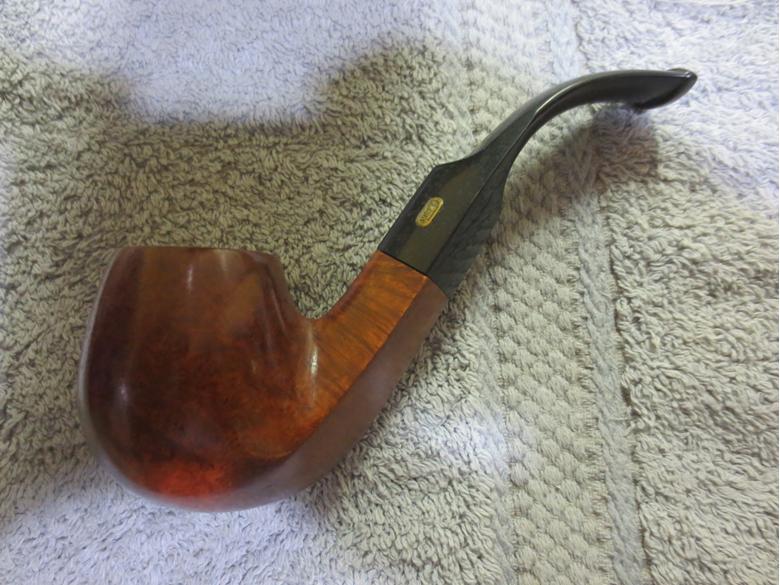
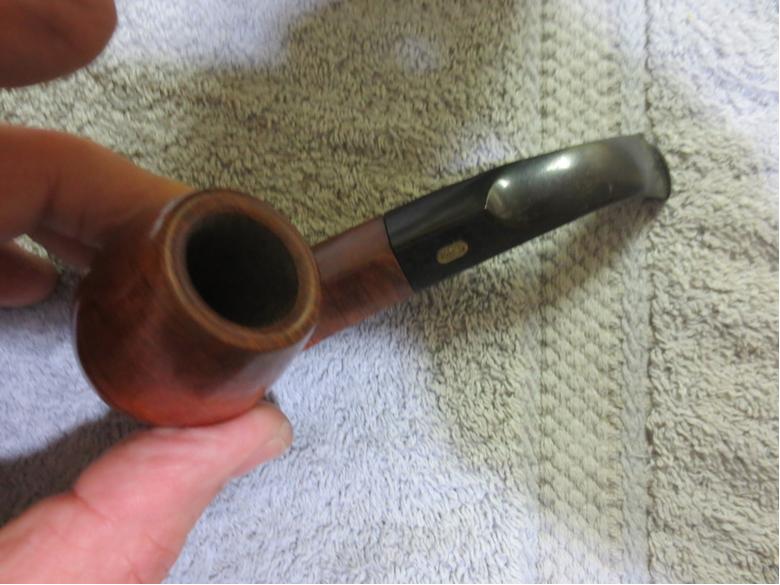
Jobey2 The finish on the bowl was in great shape, just dirty. The bowl itself needed a light reaming. The stem was dirty, oxidized and had straightened over time. There was a small nick on the top of the stem about mid-point. The inside of the bowl, shank and stem were dirty with tars and oils. There was no filter moldering away inside the shank which I was glad to see.Jobey3

Jobey4 I did some searching to find out about the filters that were used. I found some pictures of the meerschaum filters that were used. I checked and the shank easily holds a regular 9mm filter from Vauen should the new owner wish to use one.Jobey5

Jobey6 I set up the heat gun and heated the stem to deal with the bend first. I wanted to bend enough to give it a proper look. Once it was flexible I bent it over a wooden rolling pin that I use for this purpose.Jobey7

Jobey8

Jobey9 With that corrected I took it back to the work table to address the cleaning issues. I used a PipNet reamer to ream the cake from the bowl and clean up the inside of the bowl.Jobey10

Jobey11 I cleaned the shank and the airway in the bowl and stem with cotton swabs, pipe cleaners and alcohol until it was clean. It did not take much to clean it out. A few pipe cleaners and cotton swabs and it was clean.Jobey12 I used a medium and a fine grit sanding sponge to knock off the grime on the stem and work over the small nick on the top of the stem. Once I had it cleaned up I moved on to polishing the stem with the micromesh sanding pads. I wet sanded with 1500-2400 grit pads and then dry sanded with 3200-12,000 grit pads. As is my practice, I rubbed the stem down between each set of three pads with my Obsidian Oil Sock to give me continued traction in polishing the stem.Jobey13

Jobey14

Jobey15 When I finished with the micromesh sanding pads I buffed the pipe and stem with Blue Diamond Plastic polish on the wheel and then gave it several coats of carnauba wax to preserve and protect. I finished by giving it a final buff with a clean, soft flannel buffing pad to raise the shine. The finished pipe is shown below. It should make whoever picks it up a decent smoking pipe.Jobey16

Jobey17

Jobey18

Jobey19

Jobey20

Jobey21 This Jobey 300 bent brandy should make someone a great addition. If you are interested in this pipe email me with an offer at slaug@uniserve.com and we can discuss it. The entirety of the sale price will go to the Nepal project. I will pay the postage so that does not get taken off the proceeds. If you are interested in reading about the SA Foundation you can look at their website at http://www.safoundation.com.

Thanks for looking.

Peterson’s Sterling Pre-Republic 80


Mark posted this on his blog. It is a timely post for me as I have an old Dunnie that I need to use the trick on…. now to practice that! Thanks Mark

Lone Star Briar Works's avatarLone Star Briar Works Blog

I had this Pre-Republic Peterson’s Sterling bent bulldog 80 with a damaged rim. It is marked Made in Ireland in block format which I think places this pipe pre 1946.20150609_204956
image

image

As you can see the main problem was the missing ridge on the side of the bowl.

I used clear superglue mixed with briar chips, not dust. I’ve found that dust turns black when mixed with the glue. I got the chips which are slightly larger by grinding down a donor stummel with a dremel. I filled in the missing area, let dry and sanded and filed down the excess

image

I used a needle file to cut a groove and finished deepening the grooves with a serrated kitchen knife.

image

. When I was almost finished, a piece broke off.
image

So I mixed up more glue/briar chips and made a second patch.
image

Again sanded and filed and then touched up the…

View original post 58 more words

NEPAL PROJECT PIPE SALE 11 – Restoring a LHS Certified Purex 97 Squashed Bulldog


Blog by Steve Laug

I decided to add this LHS Bulldog to the sale. It is thus the eleventh pipe from the box of pipes that I was gifted by a good friend of mine with the instructed purpose of cleaning them up and selling them with all of the proceeds going to the aid of earthquake victims in Nepal. Once again all funds raised will all go to the SA Foundation, and organization that has worked in Nepal for over 15 years helping provide recovery, housing and job training for women who are victims of sexual exploitation and trafficking. The ongoing earthquakes (over 300) that continue to shake Nepal have left much in ruins. The SA Foundation Project there was able to find new housing for the women and help with staff as well. Every dollar raised from the sale of these pipes will go to the work in Nepal.

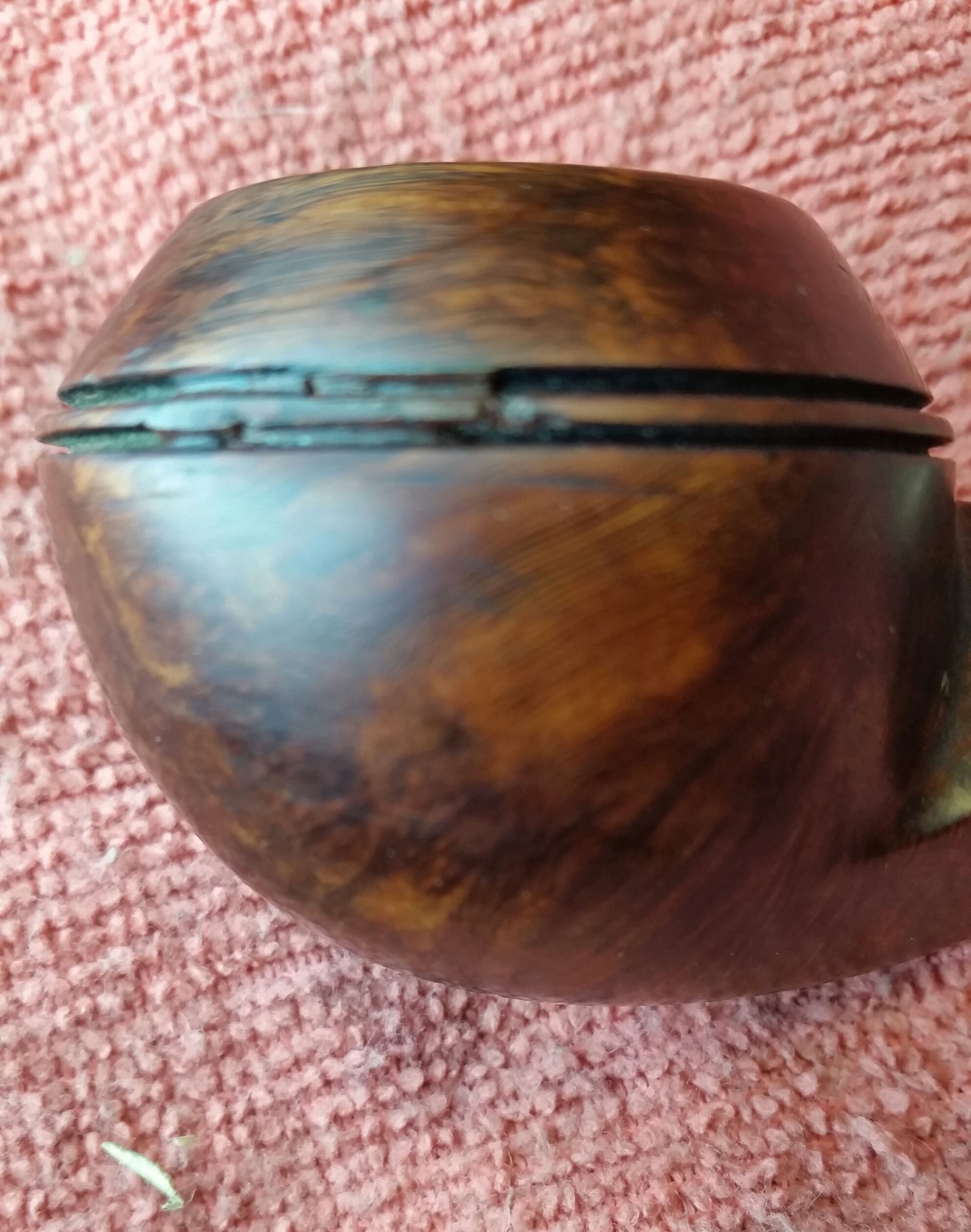
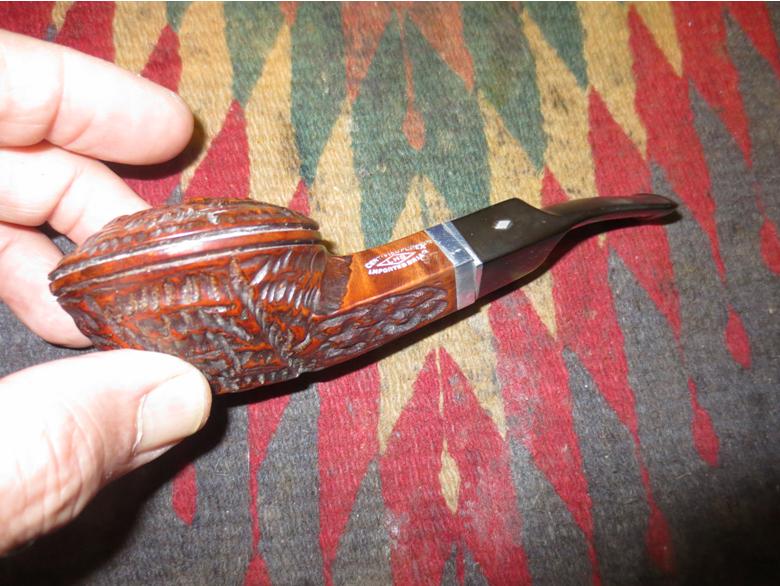
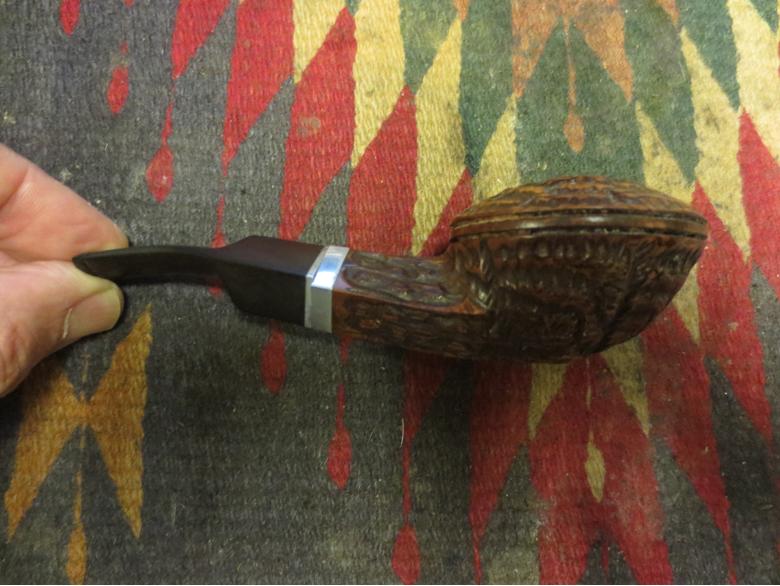
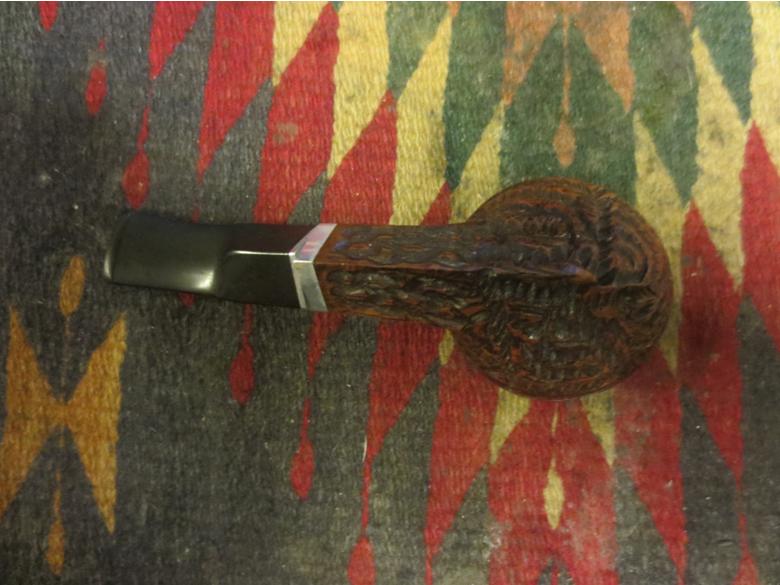
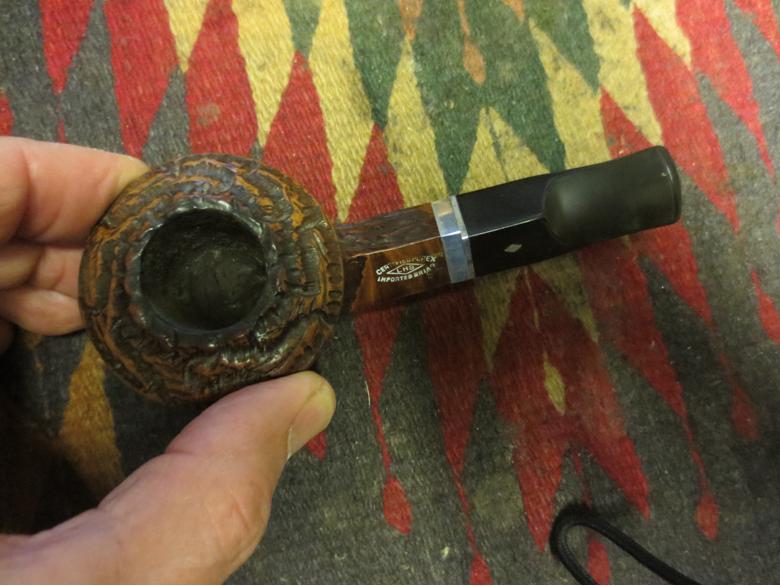
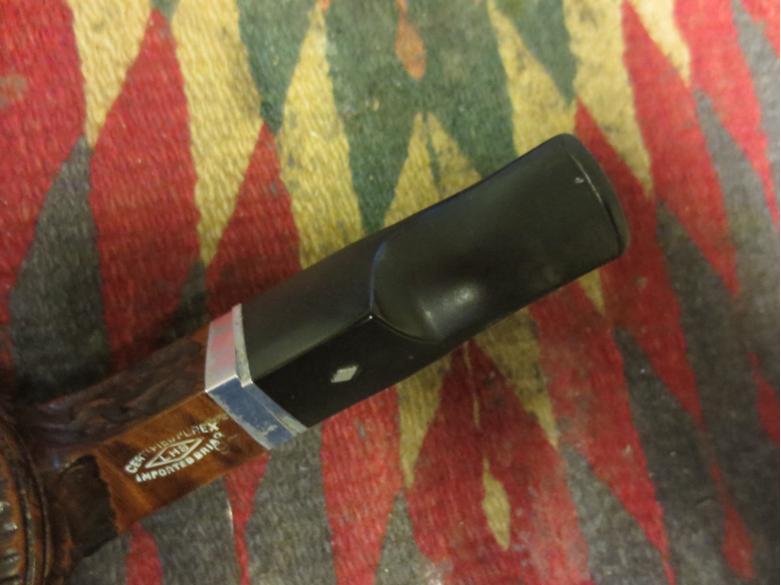
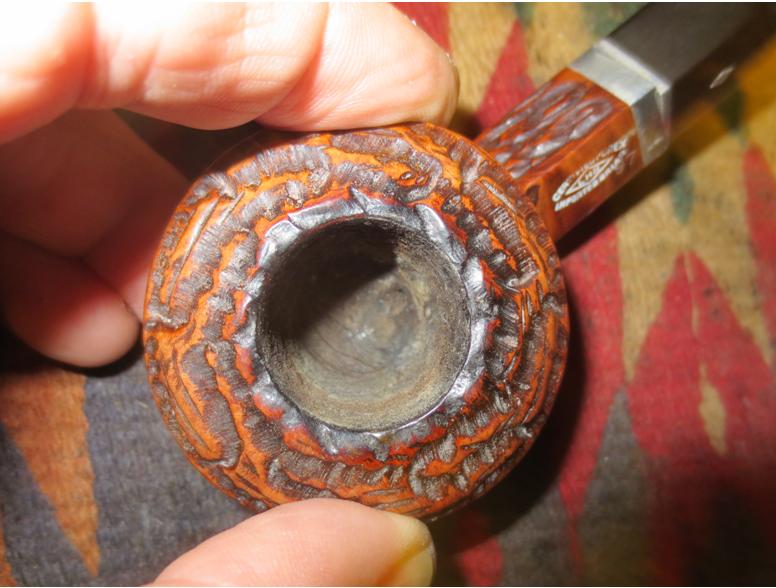
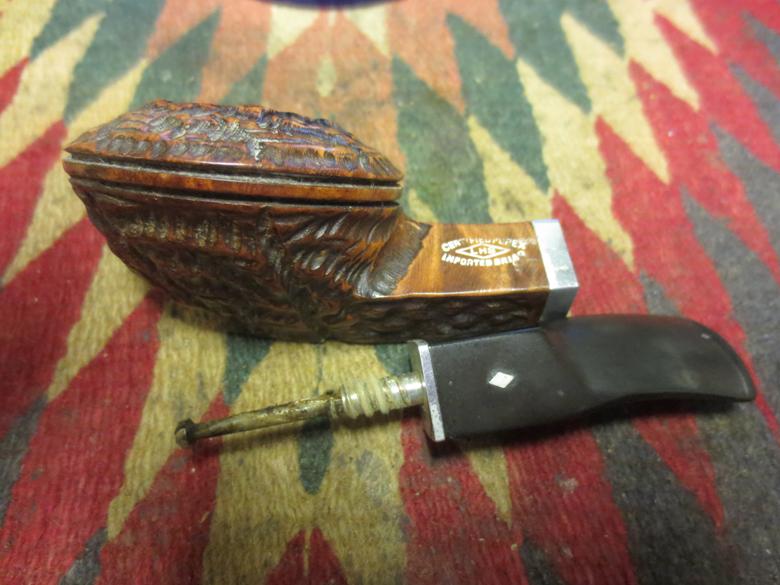
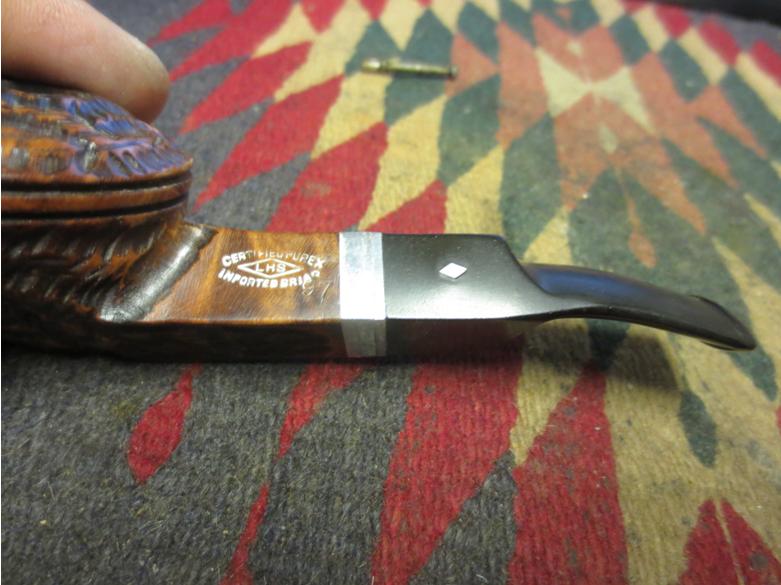
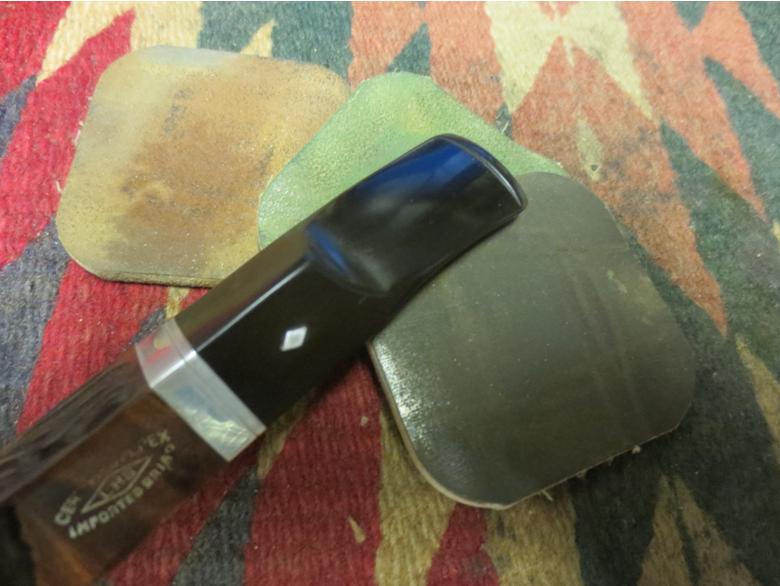
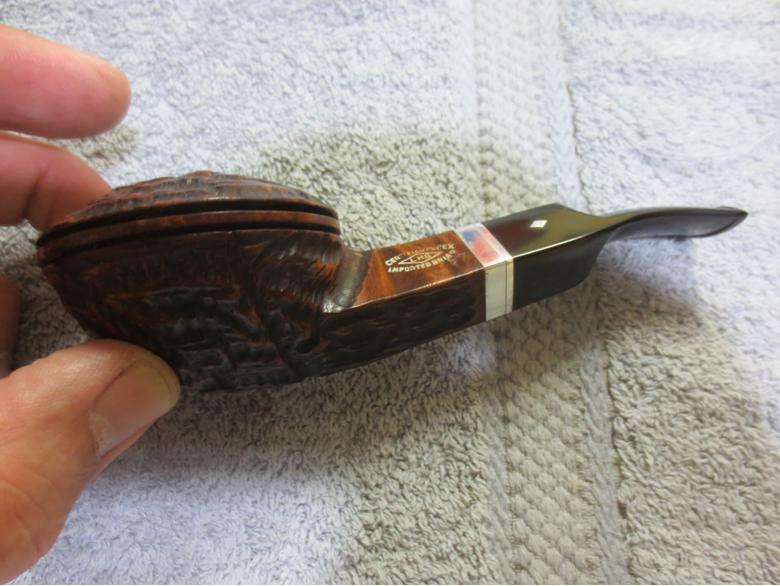
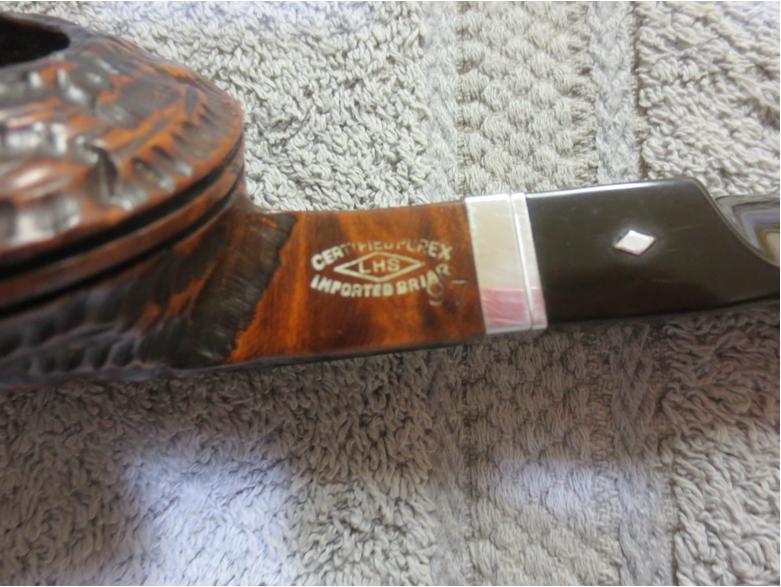
It is an old LHS (LH Stern) Bulldog. It is stamped on the left side of the shank with the shape number 97 and almost over the top of that stamp is the application of a white imprinted logo. The logo reads LHS in a flattened diamond. On the top of the diamond it reads Certified Purex and on the bottom of the diamond it read Imported Briar.Bulldog1 I have had quite a few LHS pipes on my work table over the years but this is the first time I have seen this shape bulldog. It is squat and short but has a large bowl – the size of my thumb and the bowl is quite deep. There are two rings around the bowl and a bulldog cap. The rustication pattern is also quite unique – looking like a thatched pattern. There is an aluminum fitment in the shank of the pipe and an aluminum tenon with a separated stinger that screws into the fitment in the shank. The stem was slightly oxidized and underturned. There were no major tooth marks or chatter on the stem. The finish was in decent shape, just dirty and dusty. The rings around the cap were plugged with debris that would need to be cleaned out. The airway in the bottom of the bowl was very small looking. The bowl had been reamed recently and was clean that way.Bulldog2

Bulldog3

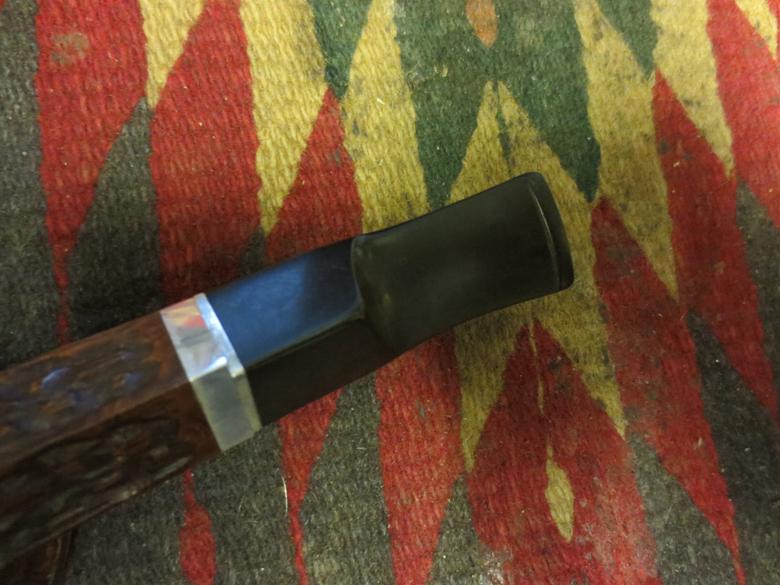
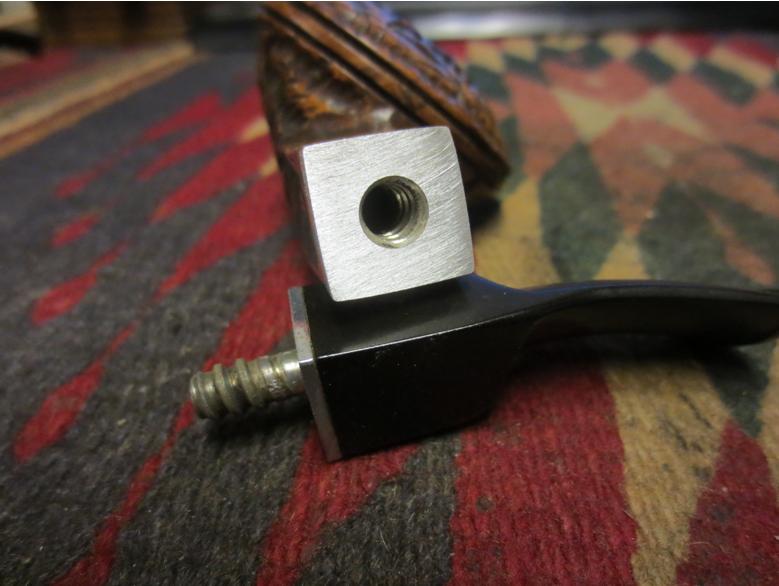
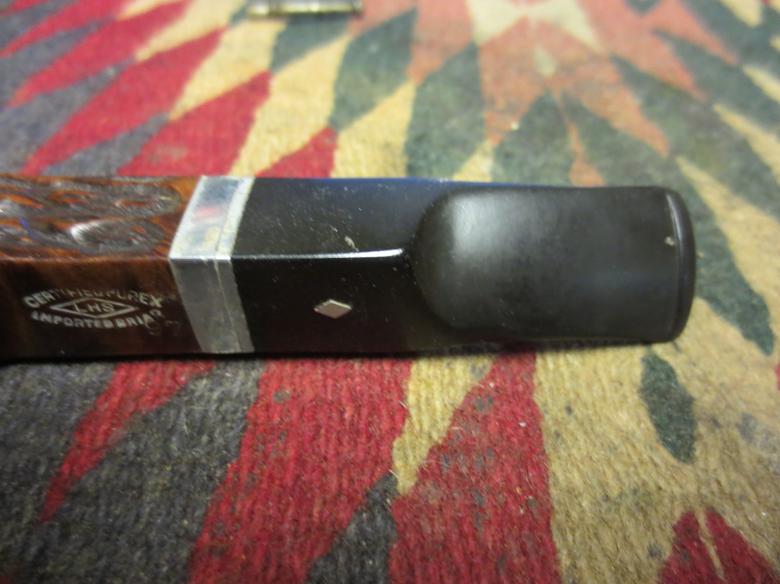
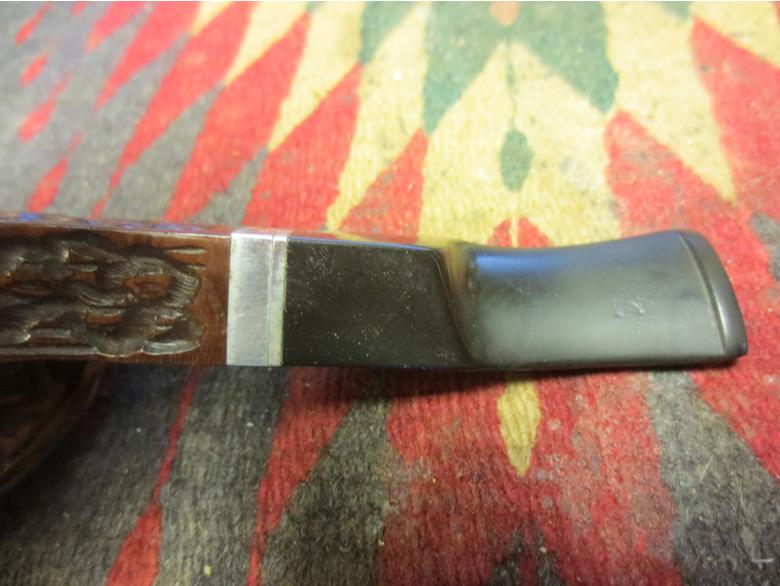
Bulldog4 If you look closely at the alignment of the metal band on the shank with the band on the stem you will see how it is underturned and how the band on the shank is slightly corroded next to the shank.Bulldog5

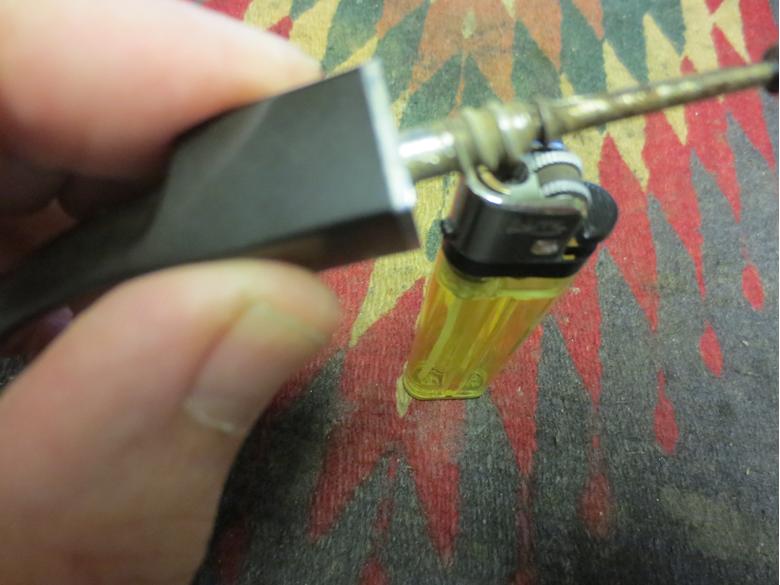
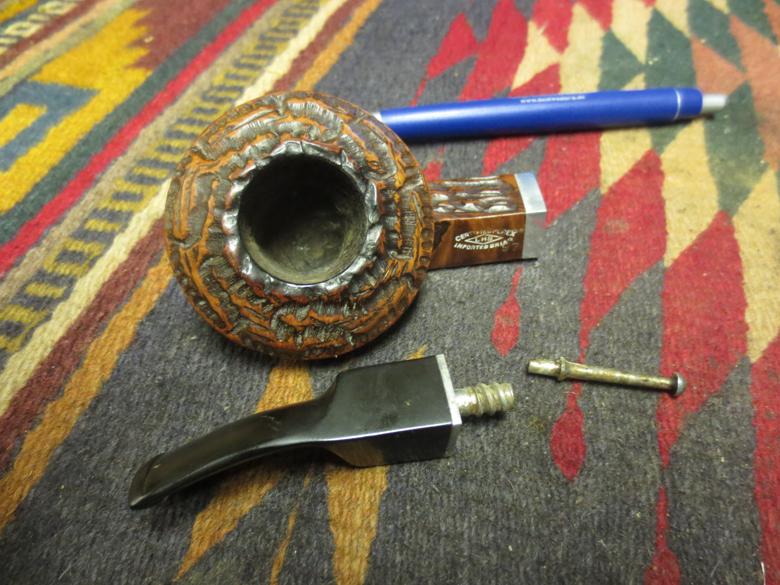
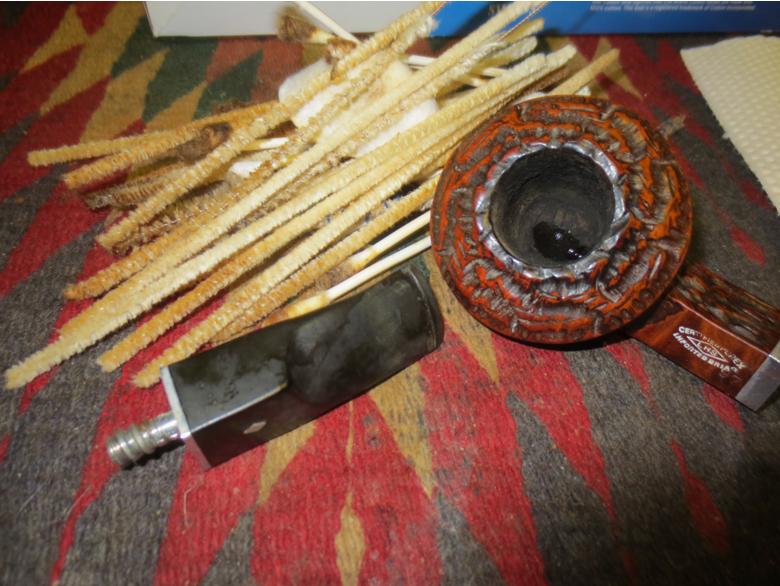
Bulldog6 The close up of the bowl shows the constricted airway at the bottom of the bowl on the back side. Too me it looked to be almost plugged with tars and would not be too difficult to open.Bulldog7 I unscrewed the stem from the shank to look at the internals. I have found that pipes with the metal fitment in the shank are generally quite dirty on the other side of the metal mortise and take some work to clean. This pipe was no exception. I tapped the metal end against my desk top and a lot of chunks of tar fell out on the desk top. The stinger was inserted into the threaded tenon and also was quite dirty and the slots in it were also restricted with buildup.Bulldog8 I heated the tenon and stinger with the flame of the lighter hoping to loosen the tenon in the shank and straighten the fit in the shank. I heated it until the stem itself was warm and the metal tenon did not budge. I was able to remove the stinger for cleaning.Bulldog9

Bulldog10 I examined the tenon insert in the stem (probably should have done this first). I found that the metal plate that acted as a stem adornment and the tenon were integrated into one piece and no amount of heating would ever loosen the tenon from the shank. I had to come up with another solution. I screwed the stem back on the pipe and set it aside to contemplate my course of action. I thought of adding a thin plate of Lucite or briar between the stem adornment and the shank adornment but decided against that. I let it sit for a while and worked on the stem.

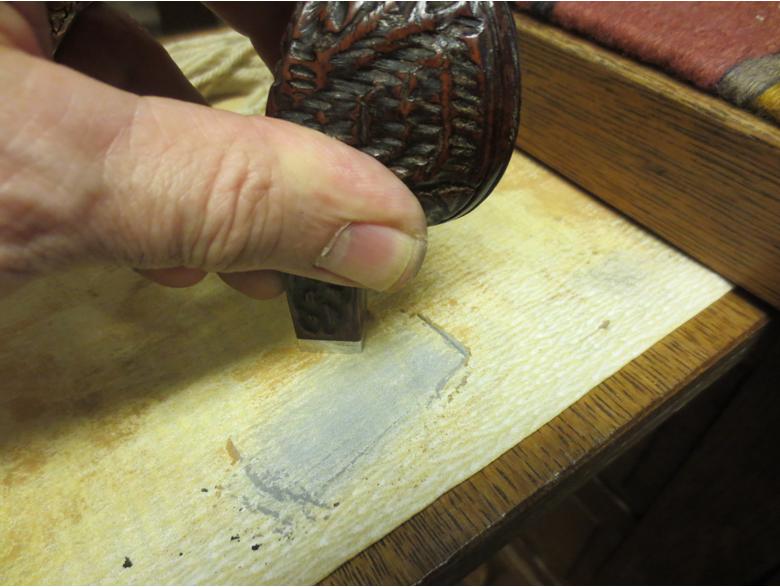
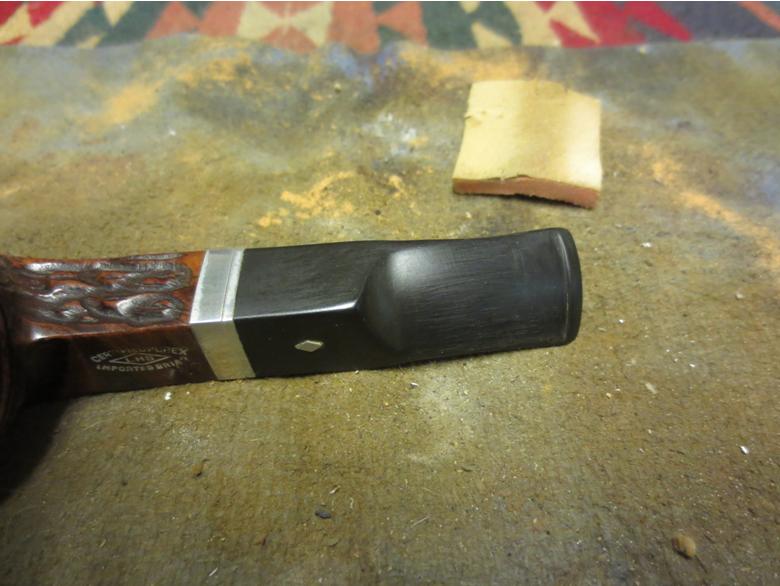
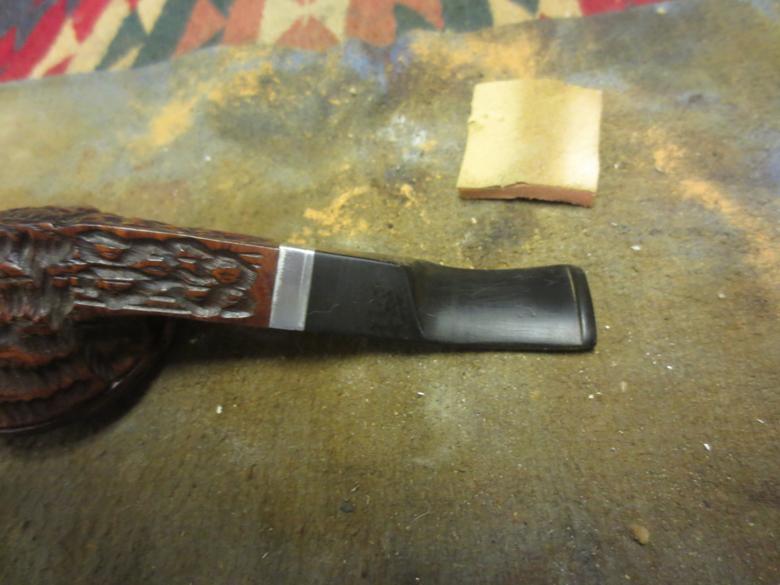
Suddenly I figured out a potential fix. If I were to sand down the shank end enough to allow the stem to sit correctly I could possibly get the alignment correct. I measured the depth of the threads in the shank and then those on the tenon and found that the thread went deeper than the length of the tenon by about 1/8 of an inch. If I could remove some of the aluminum shank end plate I could get it to seat correctly. I used my topping board and pressed the end of the aluminum end plate flat against the board. I carefully worked it in a circular motion on the sandpaper. I checked frequently to make sure I did not take of too much or too little of the aluminum plate.Bulldog11 The next photo shows the end plate after it had been topped sufficiently. The scratches from the sandpaper would easily be polished off with micromesh. I have also included four photos of the different angles on the stem to show how the underturn had been corrected. The fit was perfect.Bulldog12

Bulldog13

Bulldog14

Bulldog15

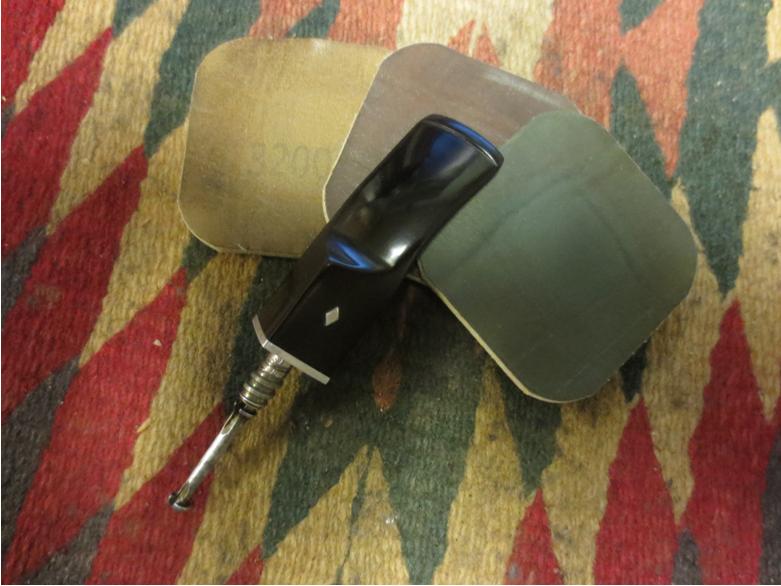
Bulldog16 With the stem fit corrected I then turned to cleaning out the inside of the stem and the shank. It took many pipe cleaners, cotton swabs and alcohol. I also used the drill bit from the KleenReem reamer to open the airway into the bowl. Bulldog17 I scrubbed the exterior of the bowl down with oil soap and a tooth brush. I picked out the debris in the twin rings around the cap. I sanded the stem down with 220 grit sandpaper and then followed that by sanding with a medium and a fine grit sanding sponge.Bulldog18

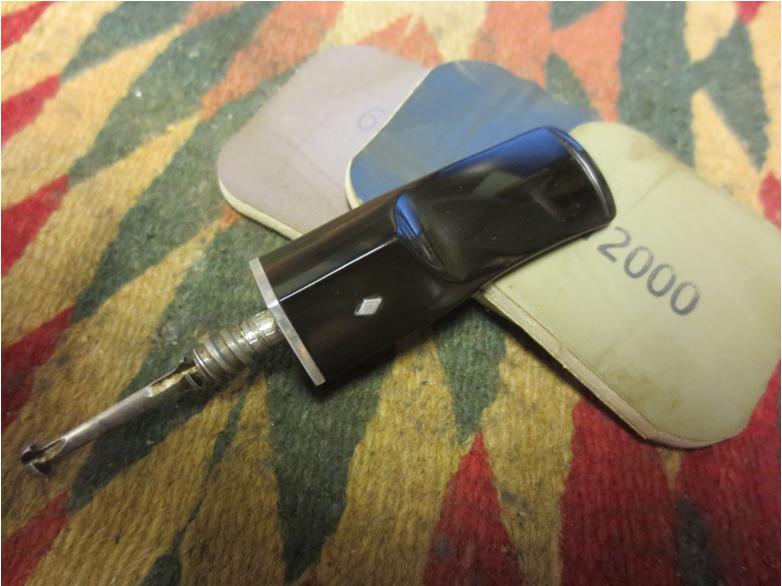
Bulldog19 There were two small tooth marks in the vulcanite on the underside of the stem. I repaired those with a drop of clear super glue. I sanded the glue patch with 220 grit sandpaper and then repeated sanding it with the two sanding sponges. When finished I sanded it with micromesh sanding pads – wet sanding with 1500-2400 grit pads and dry sanding with 3200-12,000 grit pads. Between each set of three pads I rubbed the stem down with an Obsidian Oil saturated sock that I use for this purpose. I let it sit for just a few moments before continuing with the next grit of pads. The oil gives traction for polishing the stem.Bulldog20

Bulldog21

Bulldog22 I used the micromesh pads to also polish the aluminum on the shank and the stem. I worked through all of the grits to polish it to a shine. I also used 0000 steel wool to polish the stinger and the tenon. Then I buffed the stem with Blue Diamond Plastic polish to further raise the shine. I put it back on the bowl and buffed the bowl and shank lightly with Blue Diamond. A light touch keeps the buffing compound from collecting in the grooves. I also carefully worked around the white stamping on the shank. I gave the stem several coats of carnauba wax and then rubbed the bowl down with Halcyon II Wax and hand buffed the bowl and shank with a shoe brush. The finished pipe is shown in the photos below. I really like the shape and the rustication on this one. I am looking forward to loading a bowl and enjoying it on the weekend ahead. Thanks John.Bulldog23
Bulldog24

Bulldog25

Bulldog26

Bulldog27

Bulldog28 This LHS Bulldog is a beautiful pipe and the rustication and stain gives it almost a multidimensional look. It should make someone a great addition. The entirety of the sale price will go to the Nepal project. I will pay the postage so that does not get taken off the proceeds. If you are interested in reading about the SA Foundation you can look at their website at http://www.safoundation.com.

Thanks for looking.