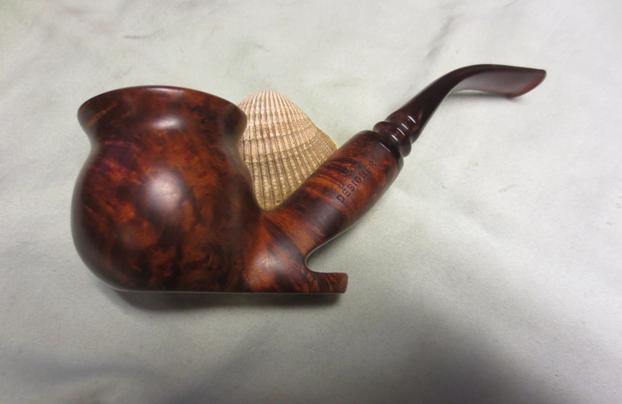
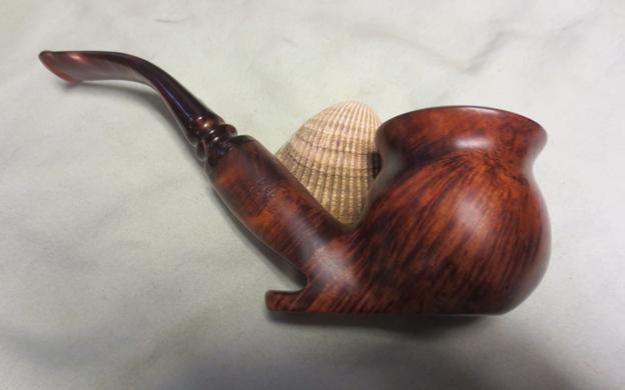
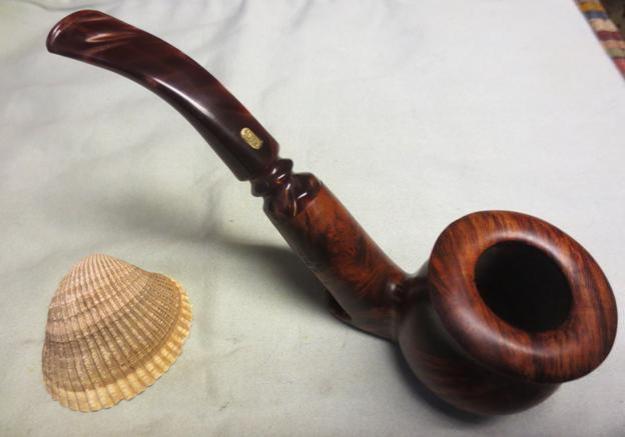
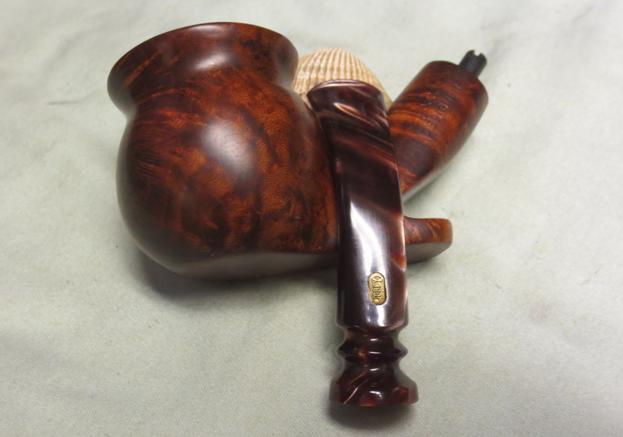
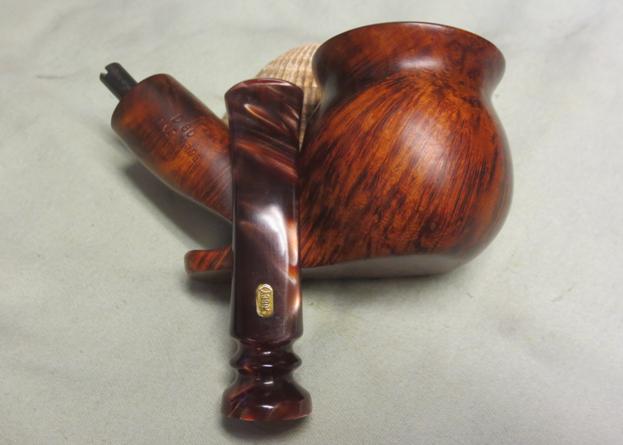
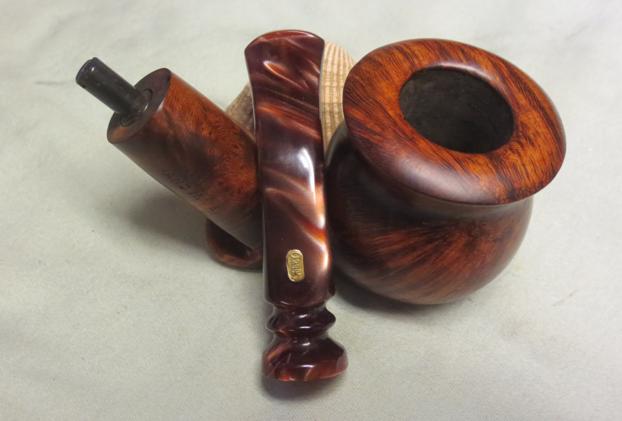
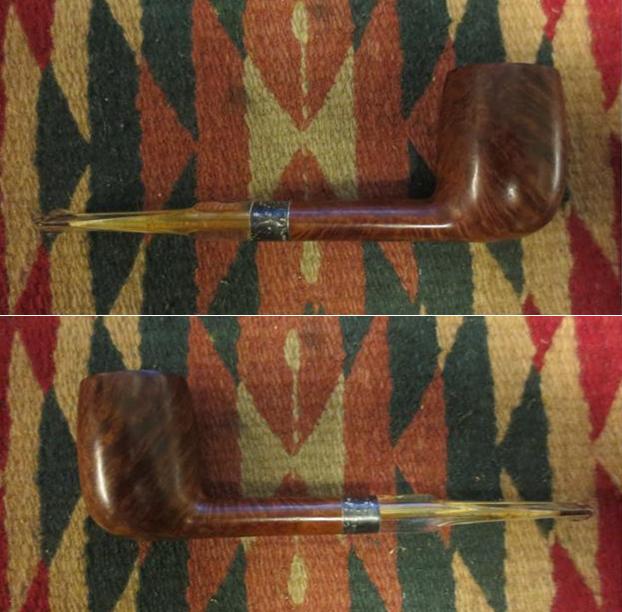
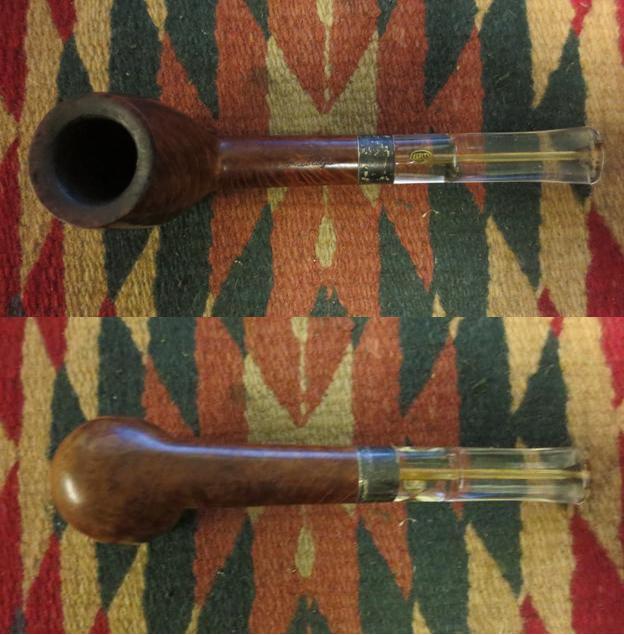
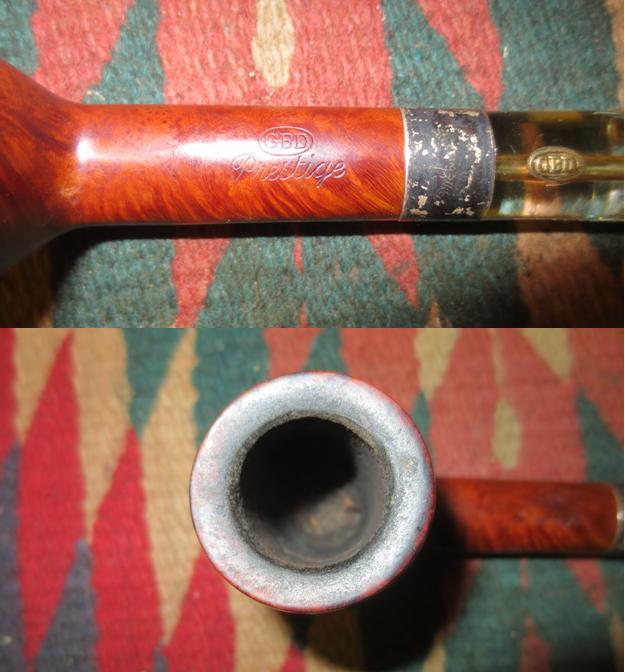
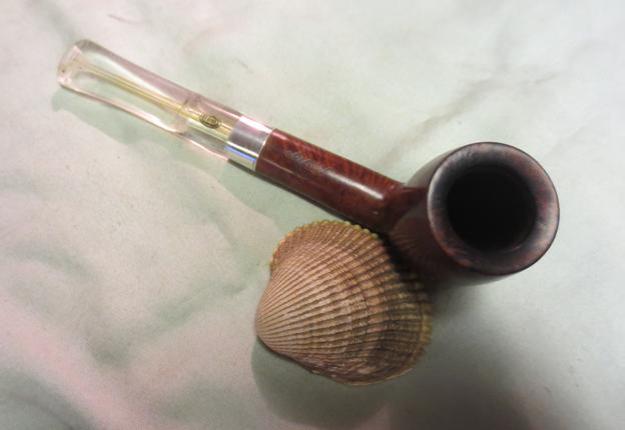
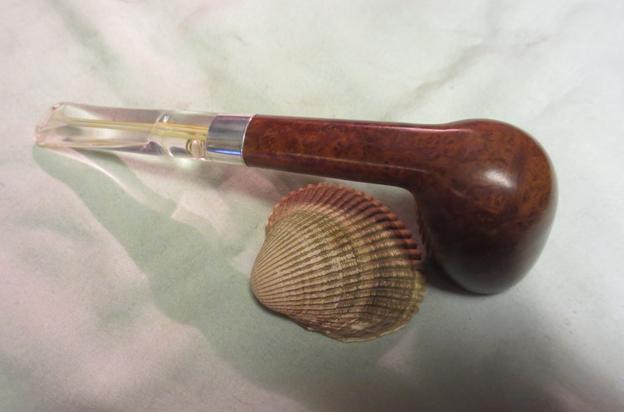
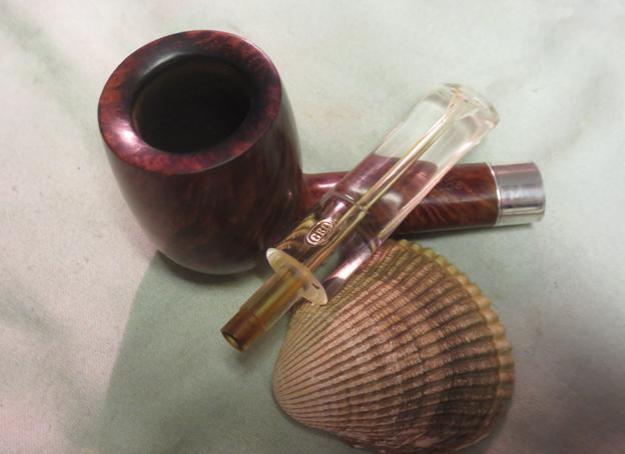
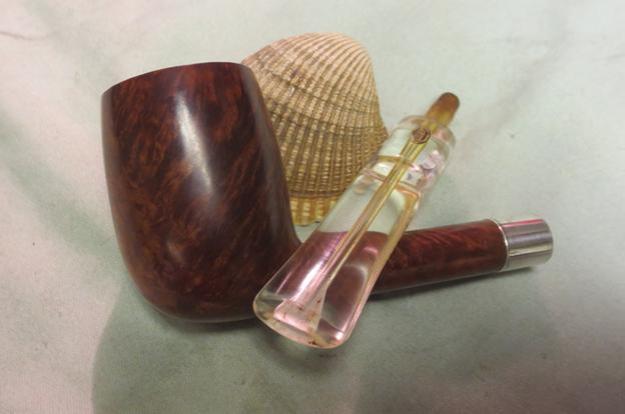
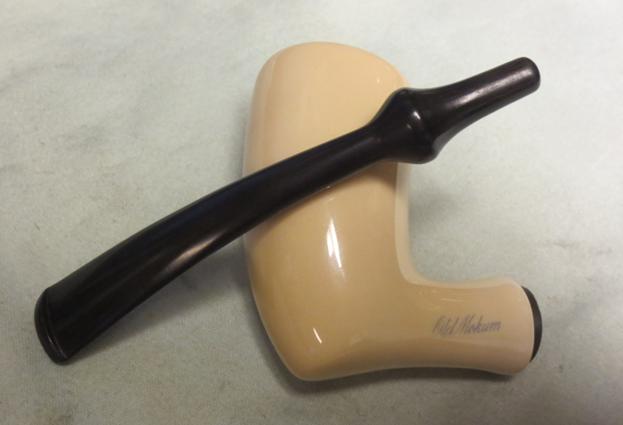
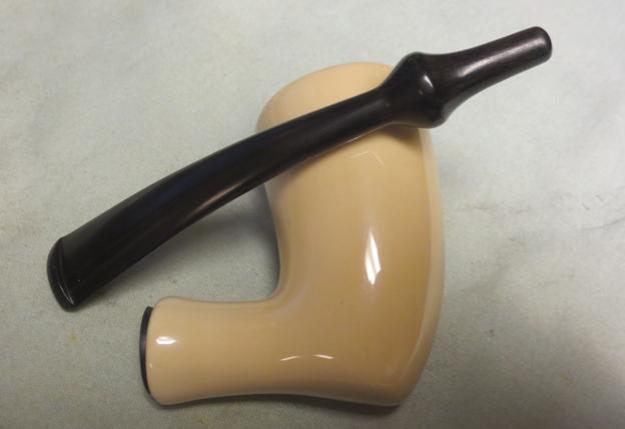
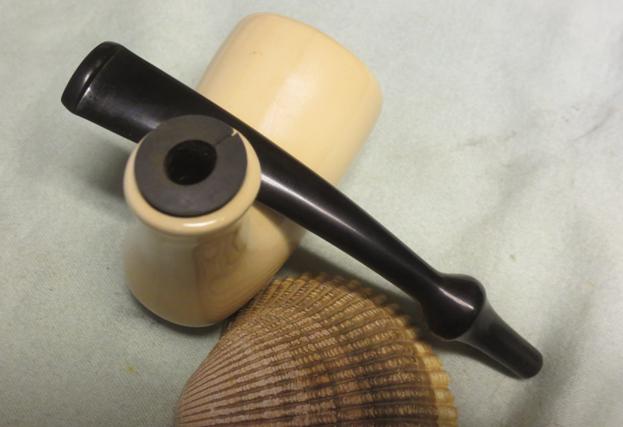
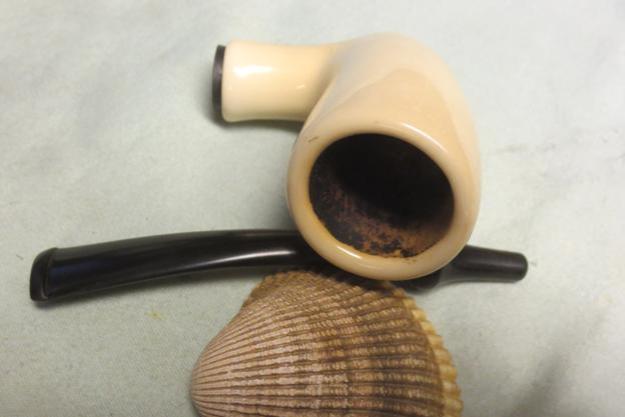
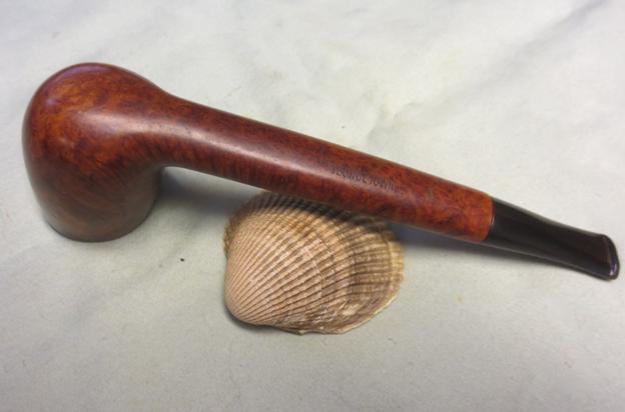
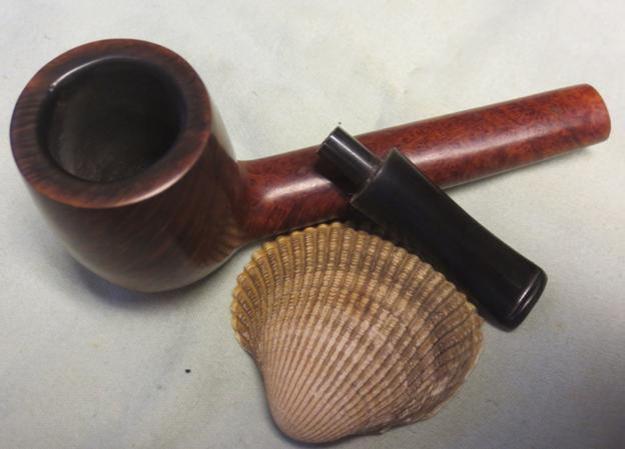
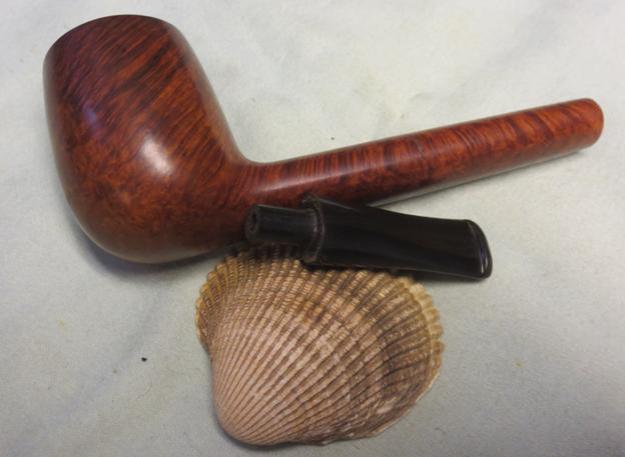
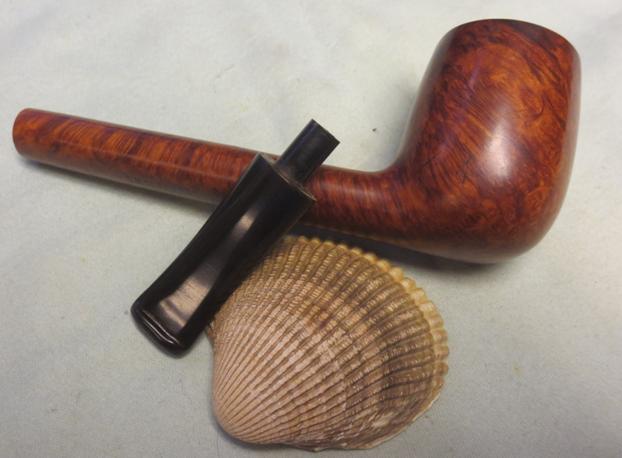
A Newbie Restore of a Dr. Plumb 9456 Oom Paul


Blog by Dal Stanton

It is a pleasure to introduce Dal Stanton to you all. He has become a good friend through the work that I do. I just returned from spending time with him in Sofia, Bulgaria where we went pipe hunting and enjoyed some great smokes over dinner together. Here is his first blog for rebornpipes. I hope that he will do many more. Thanks Dal. Welcome to rebornpipes as a contributor. — Steve

Well, after much encouragement and a bit of prodding from Steve, I’m submitting this, my first full restore, to rebornpipes exclusively (and hesitantly) from a newbie’s perspective.  After discovering the hobby of restoration only last year, I’ve been intrigued by the restoration process and amazed at the skills and blogging of Steve Laug (rebornpipes.com), and Charles Lemon (Dad’sPipes.com) and several other contributors.  I thoroughly enjoyed the ‘Mission Impossible’ episodes that Steve and Charles collaborated on.  All the posts have been workshops for me as I’ve pieced together the different steps and techniques of pipe restoration.  Since I live in Sofia, Bulgaria, and on the 10th floor of a formerly Communist ‘Block’ apartment complex, I do not have a basement or a garage to set up a workspace.  My wife has lovingly allowed me to set up shop in our bedroom (yes, I know that limits the night-time hours for restoration and reflection!) but it has forced me to develop ‘compact’ ways of approaching the hobby.  Instead of polishing wheels I utilize a Dremel with many wheels purchased from China on eBay!  It works well for me and most importantly, I’m enjoying something that has surprised me with the satisfaction involved in finding a tired candidate that can be redeemed and brought back to life.

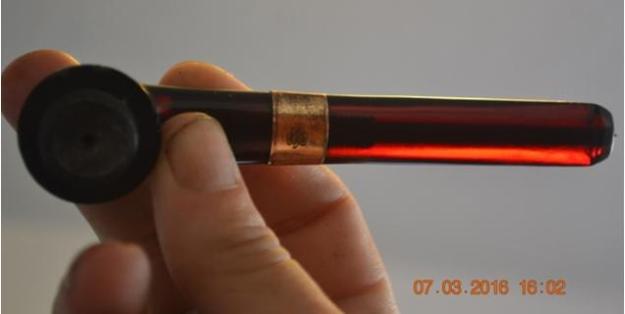
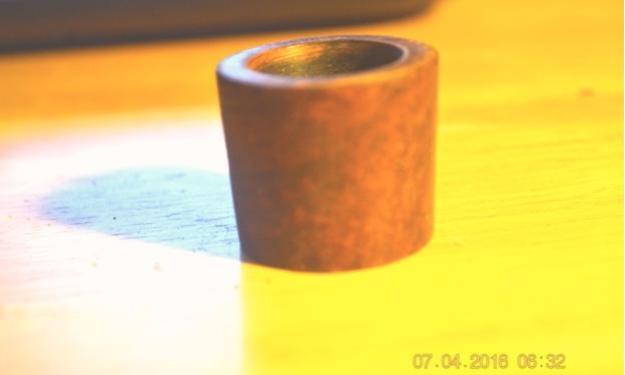
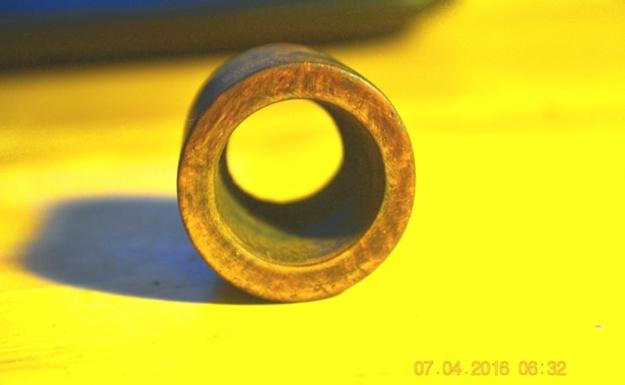
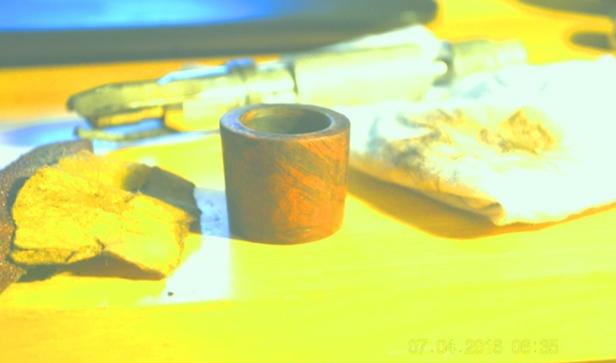
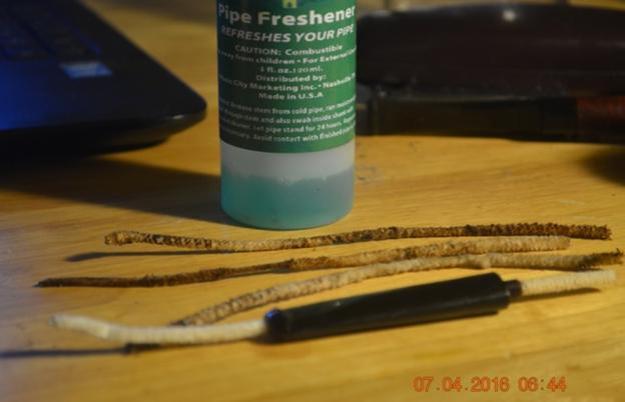
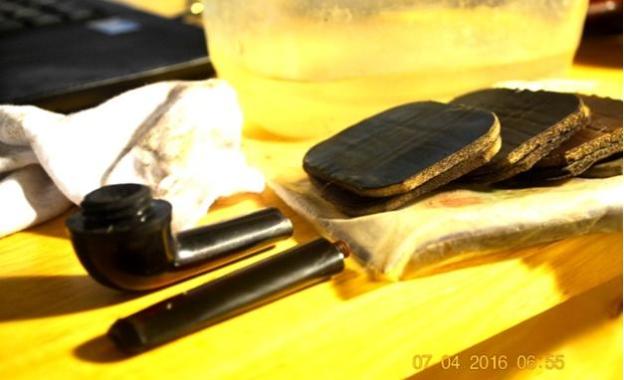
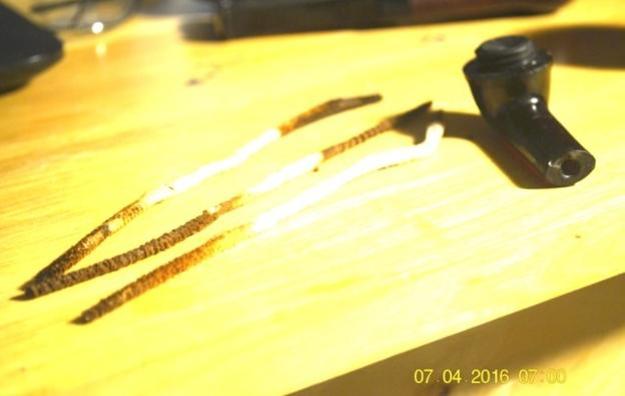
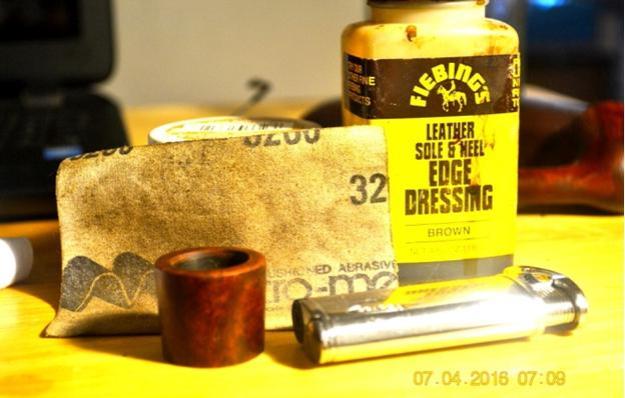
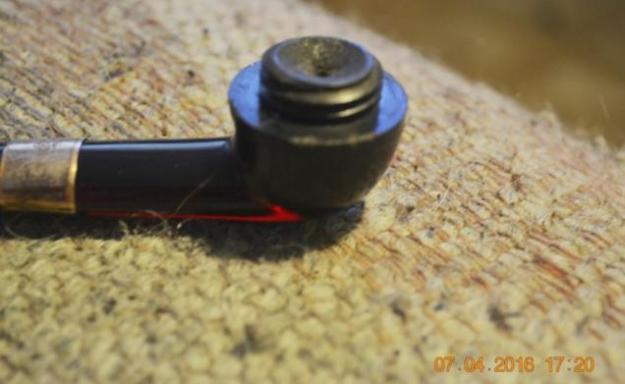
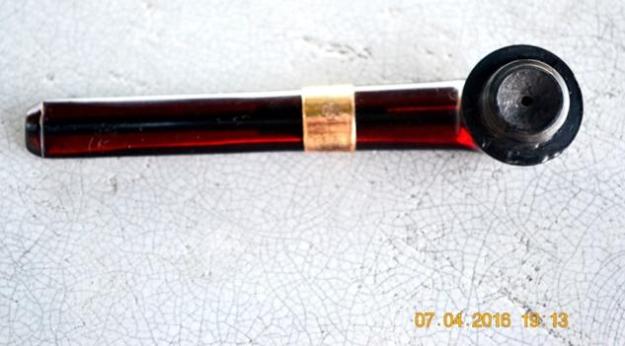
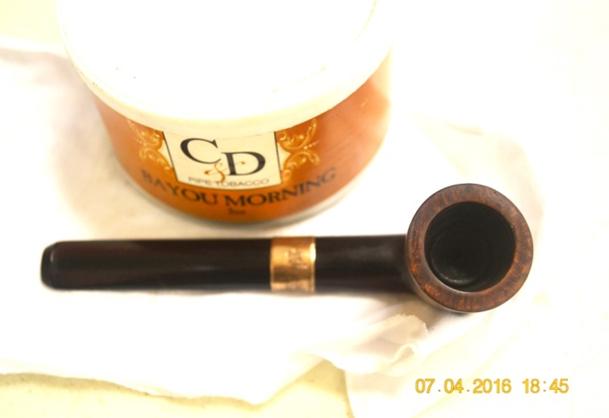
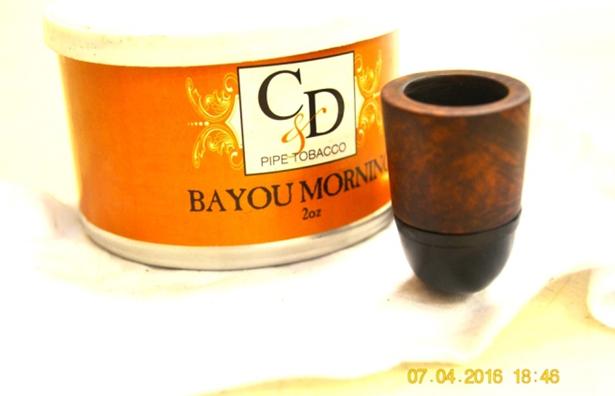
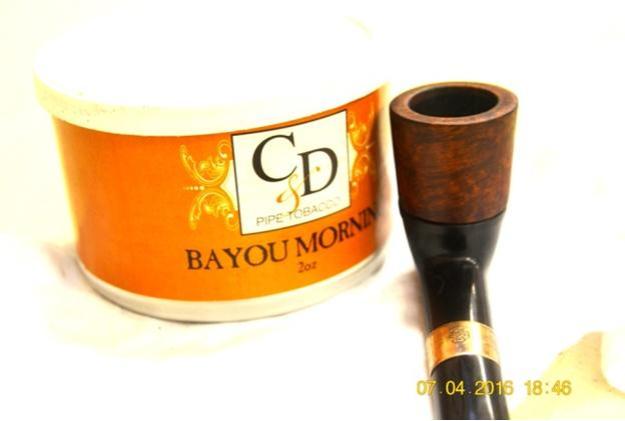
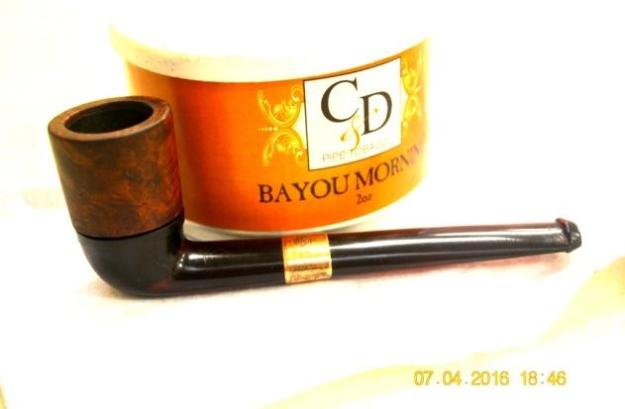
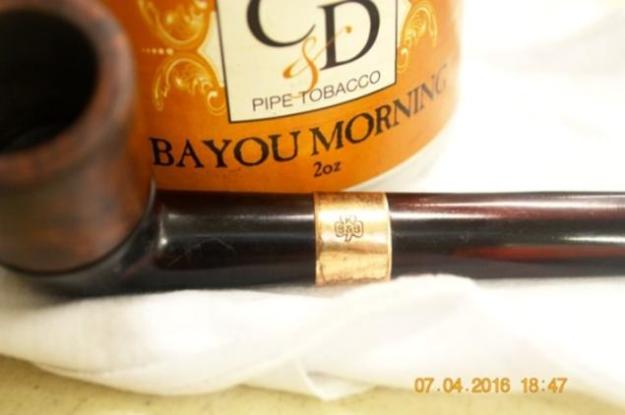
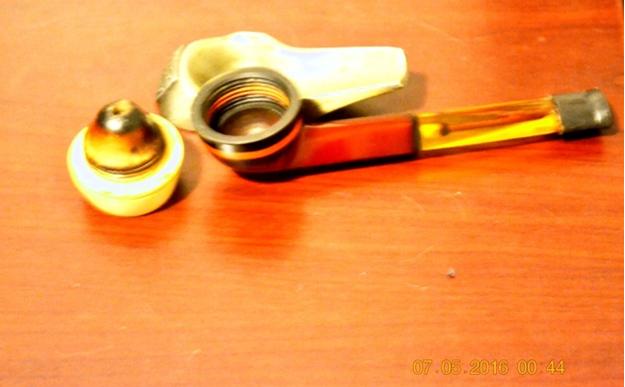
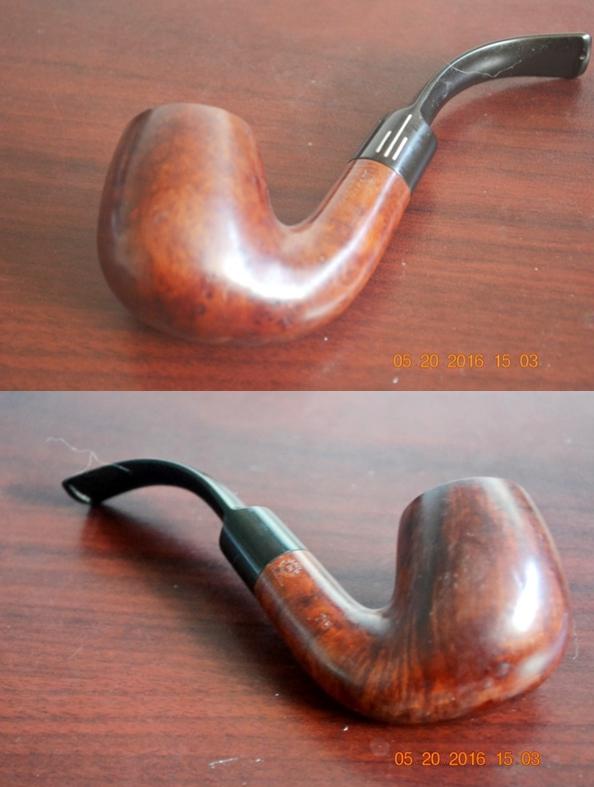
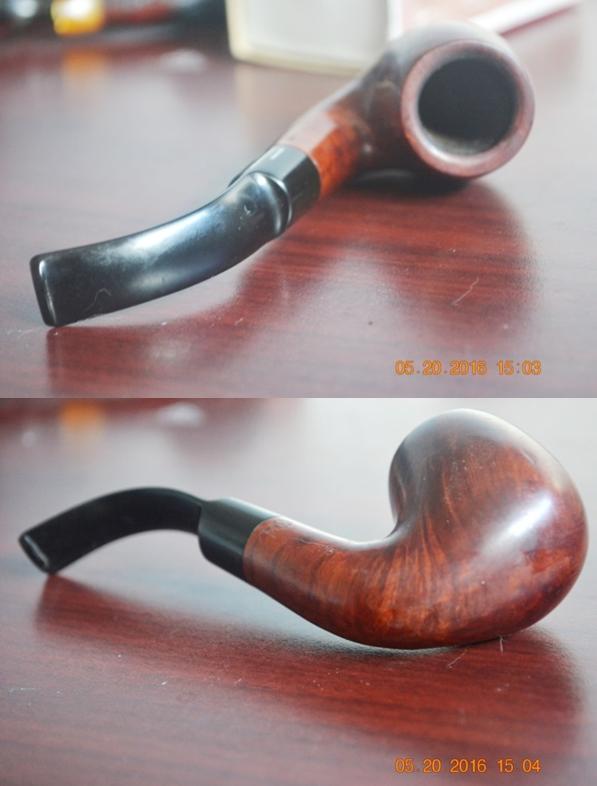
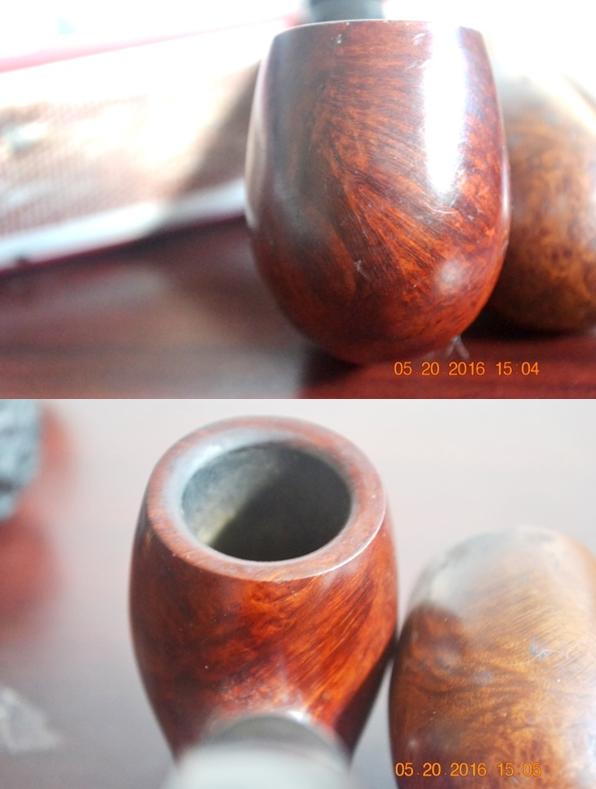
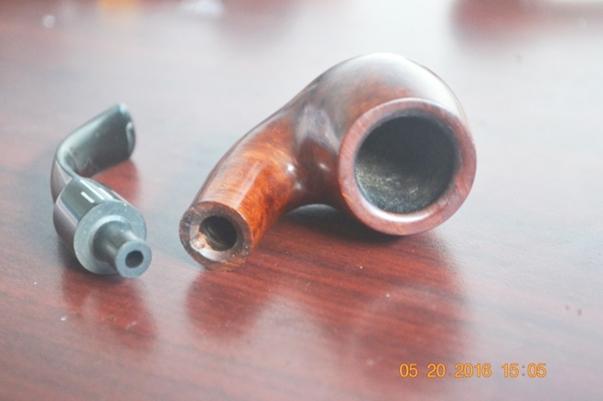
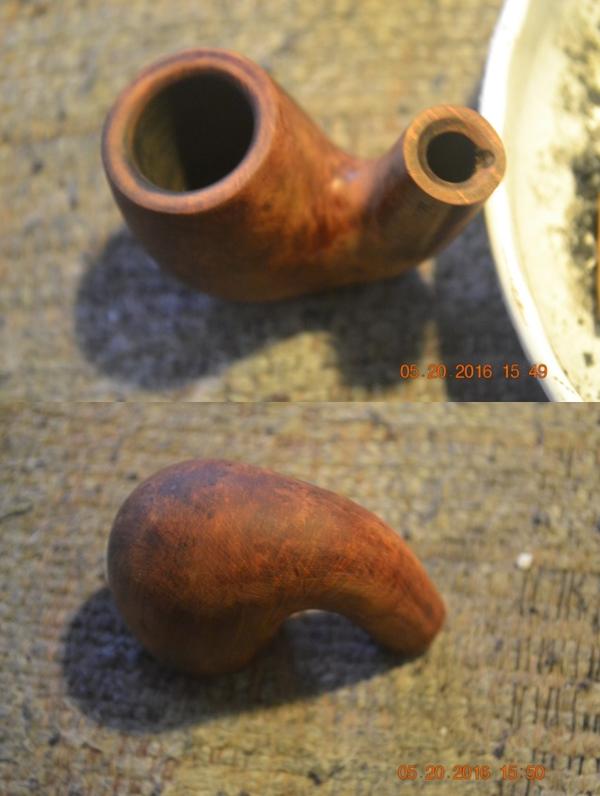
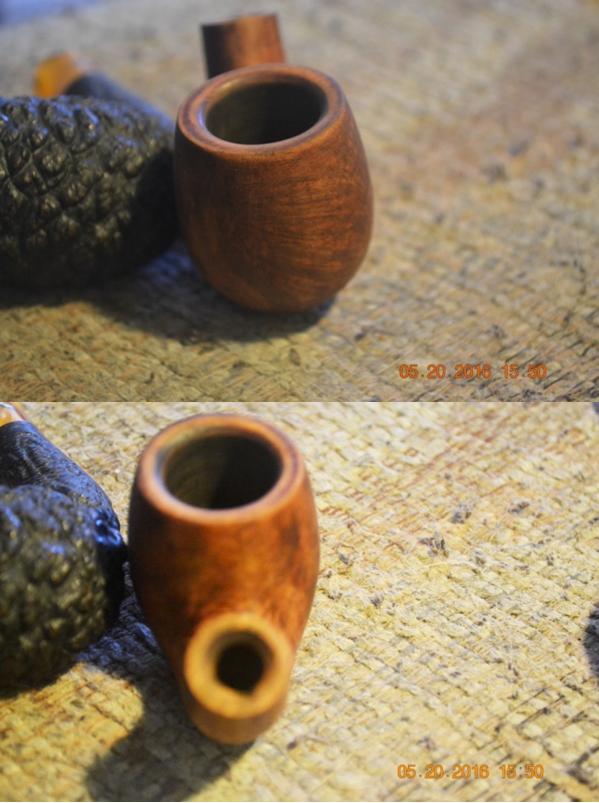
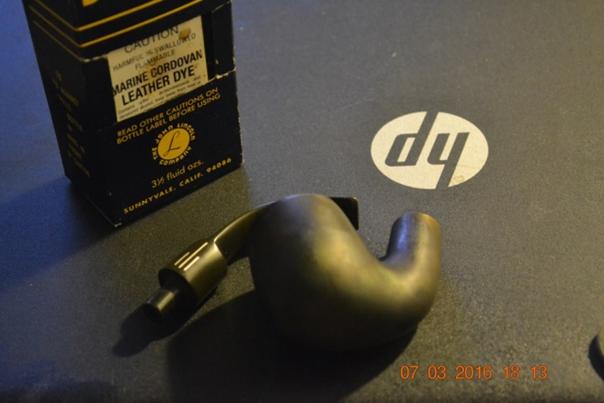
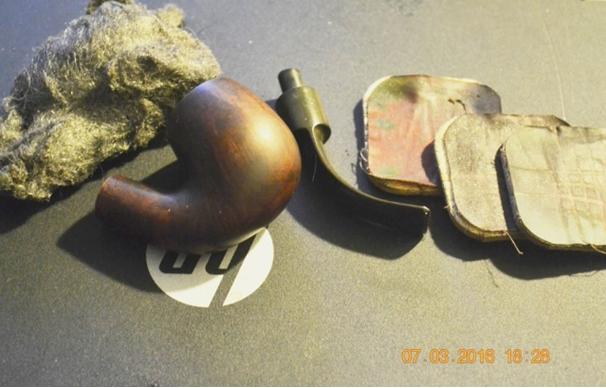
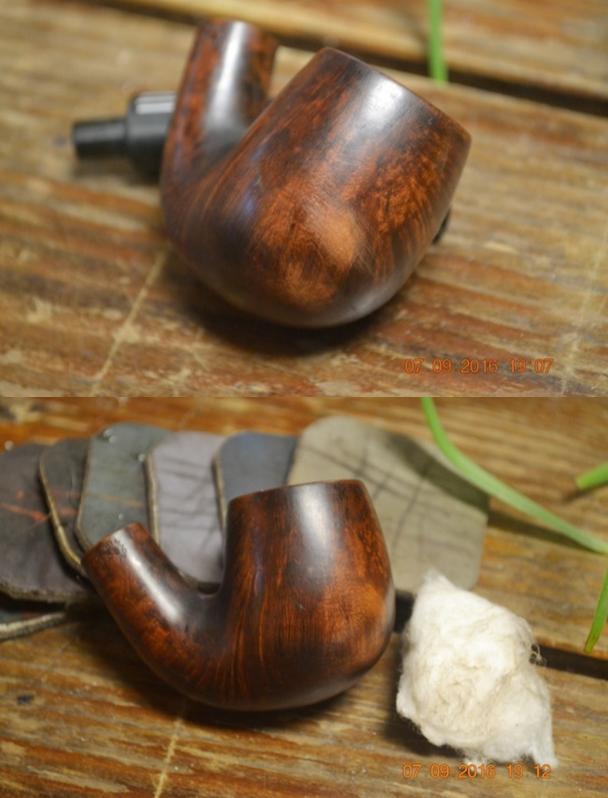
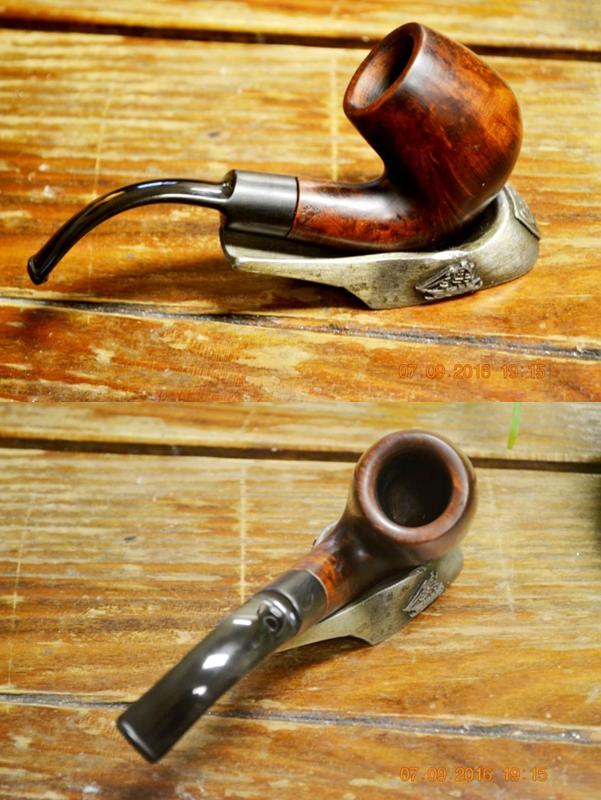
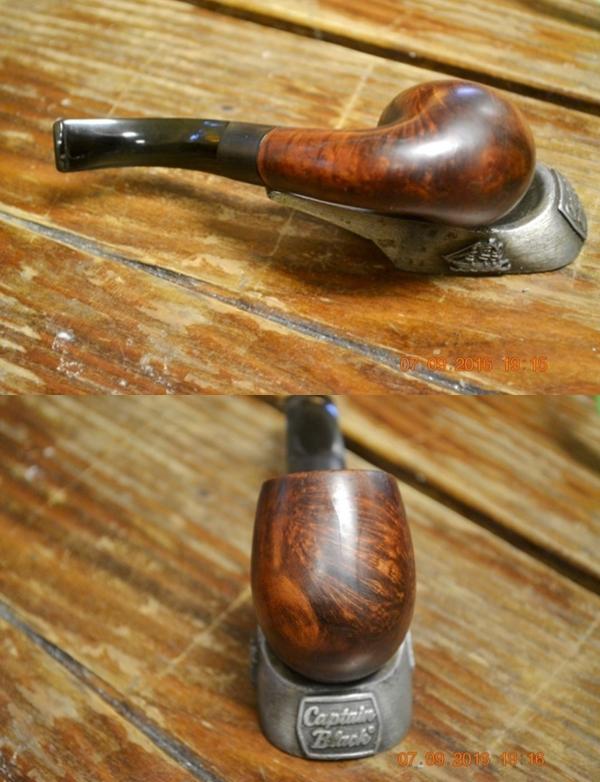
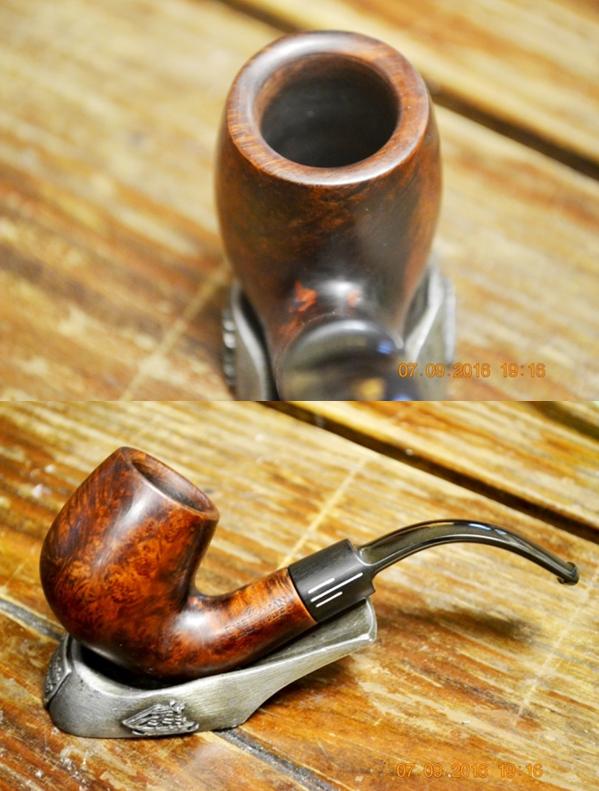
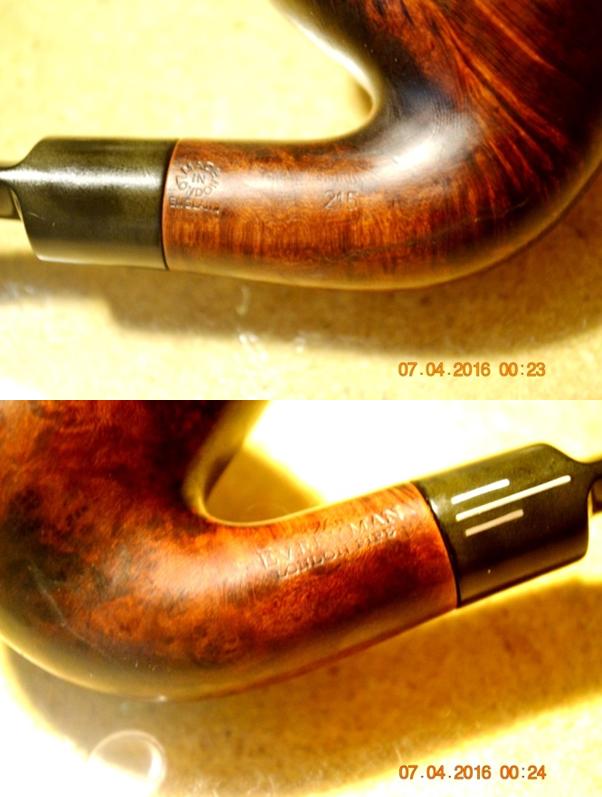
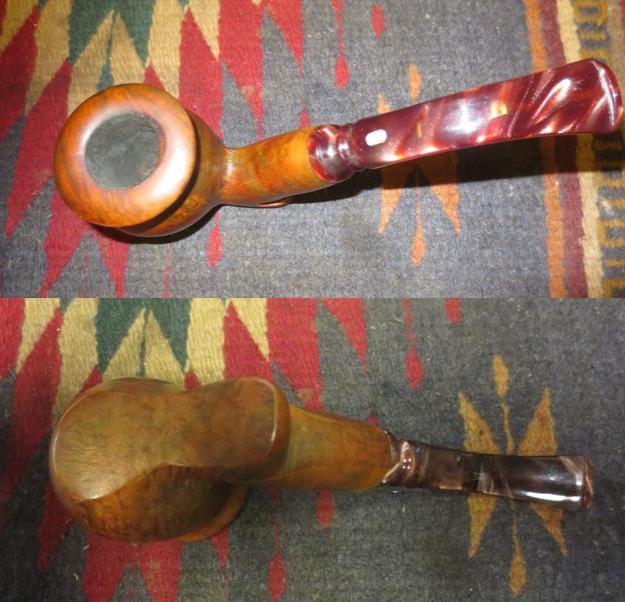
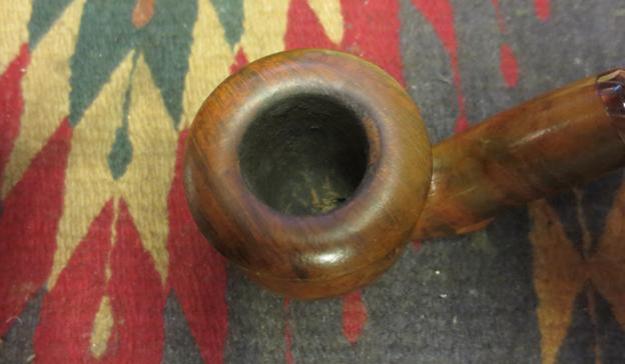
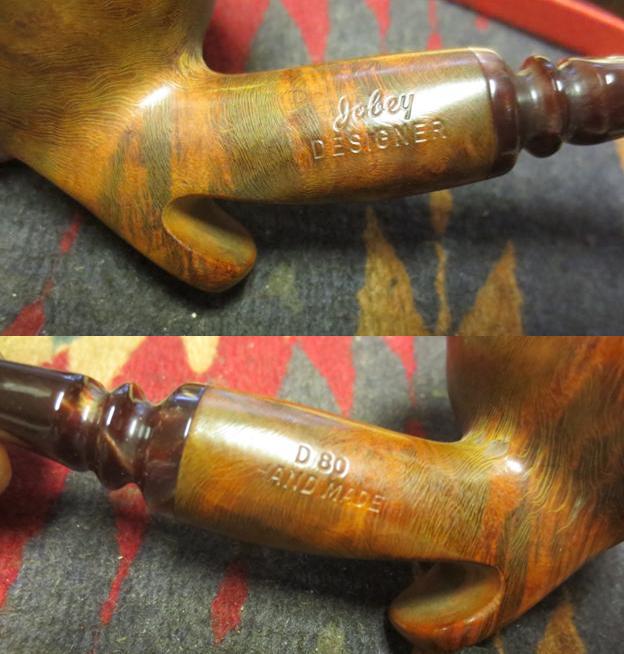
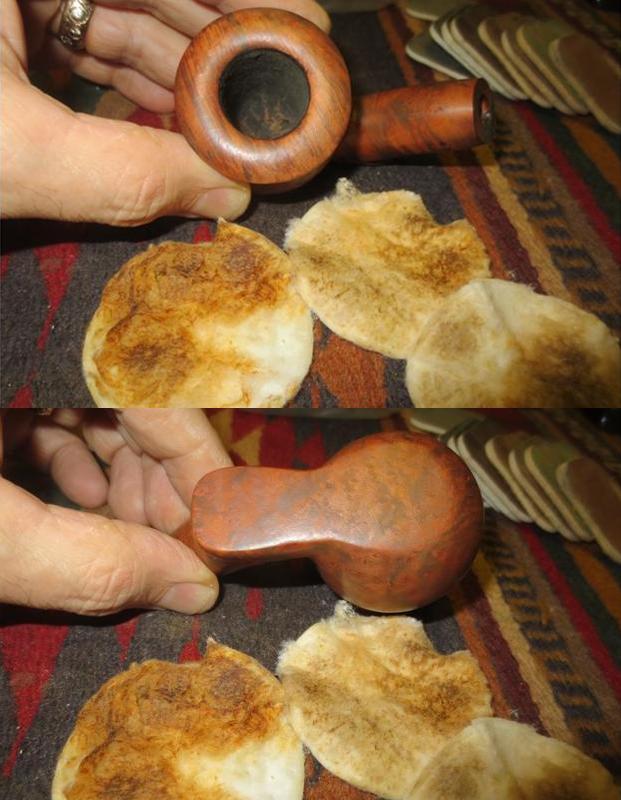
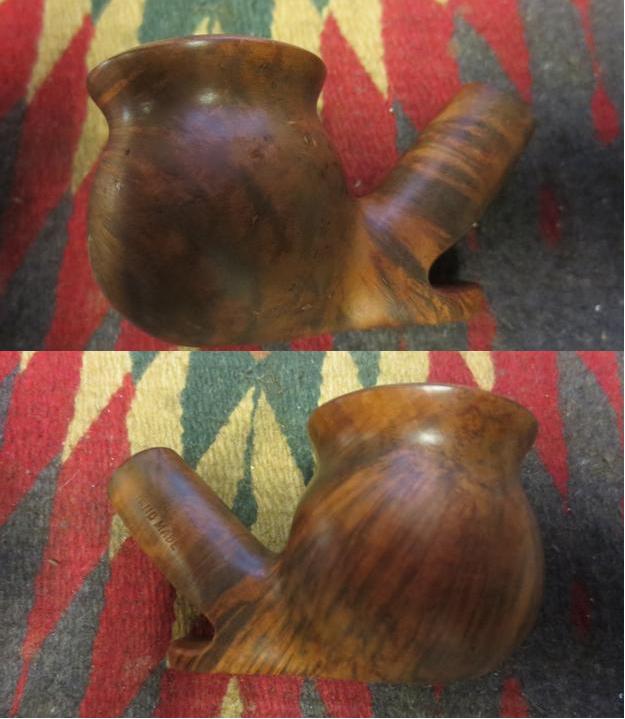
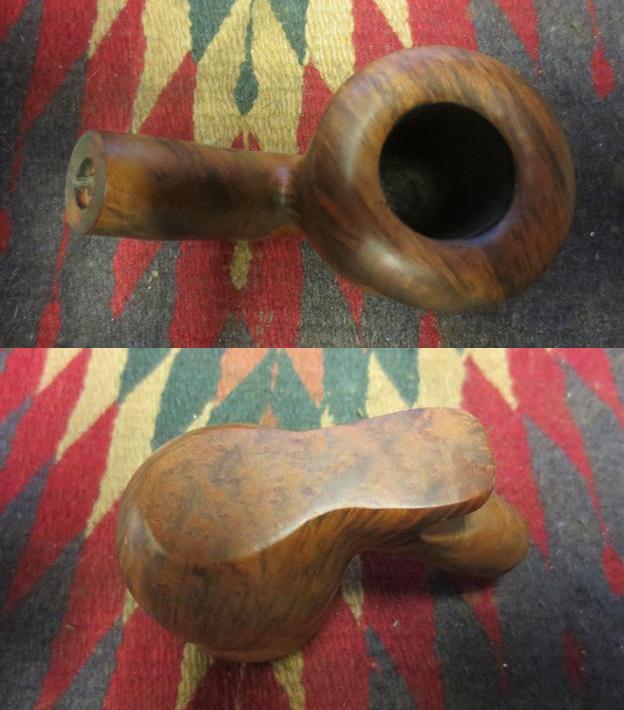
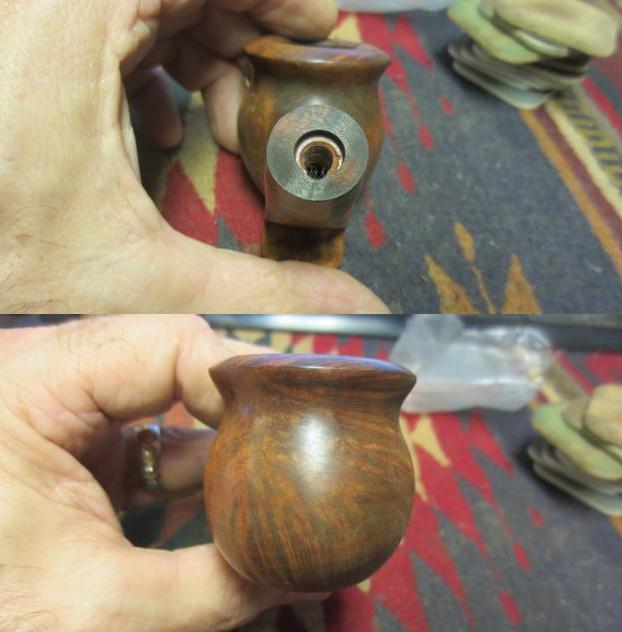
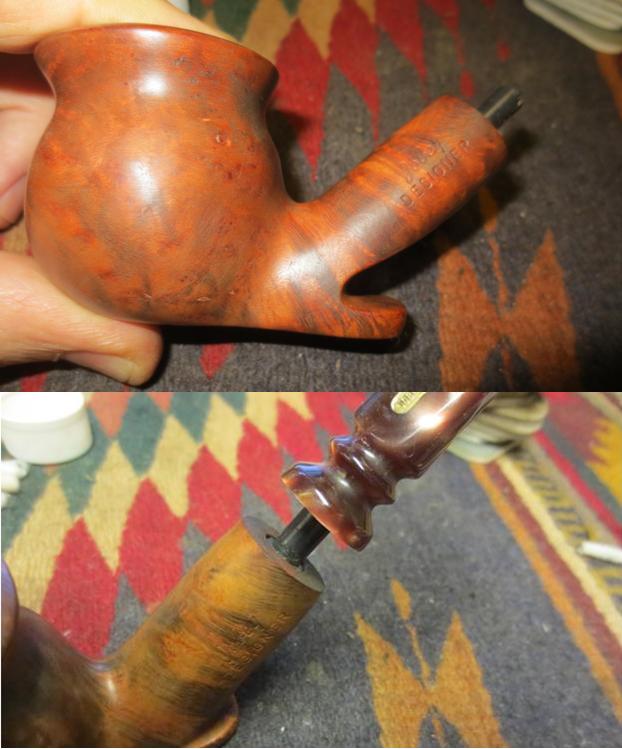
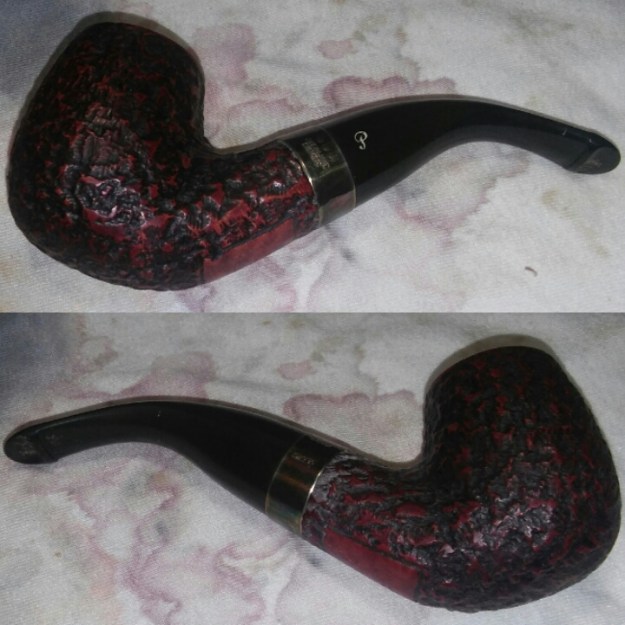
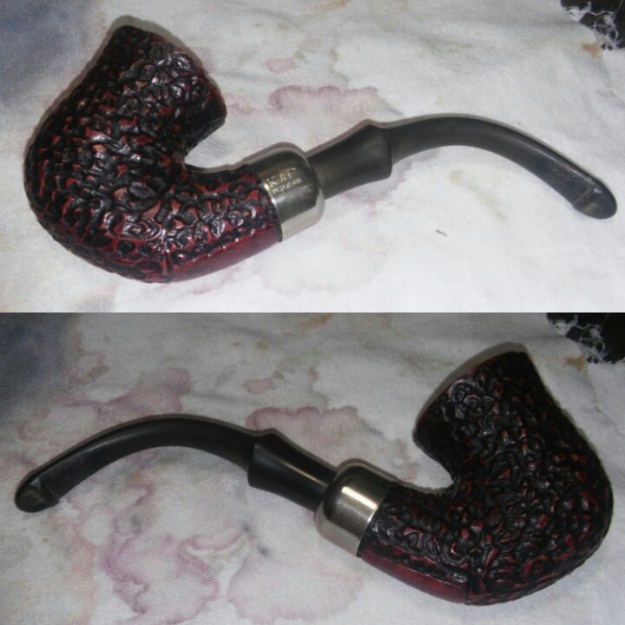
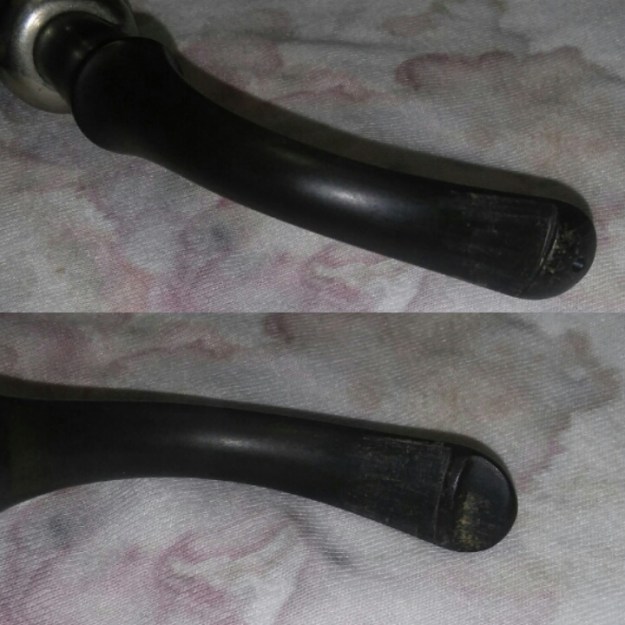
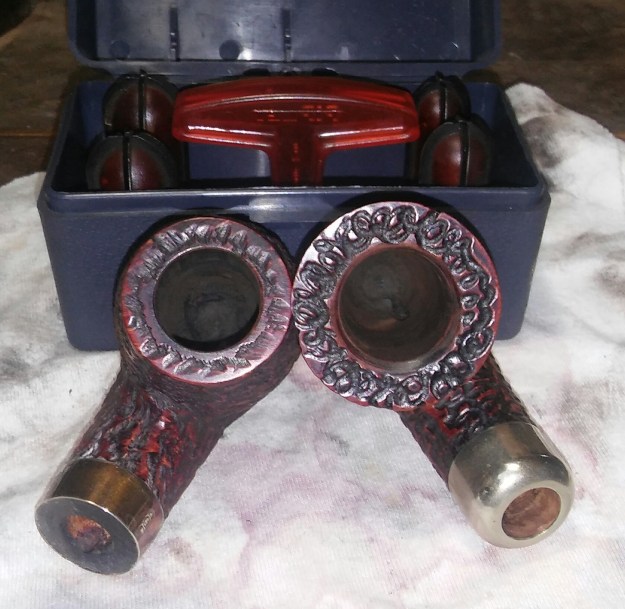
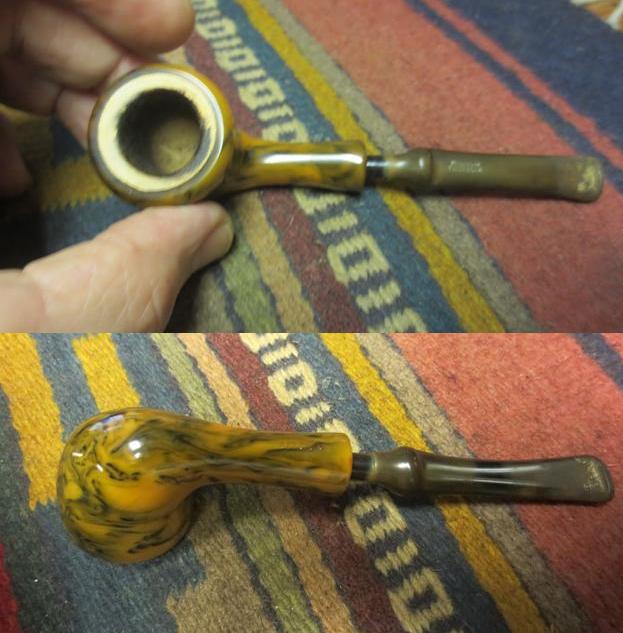
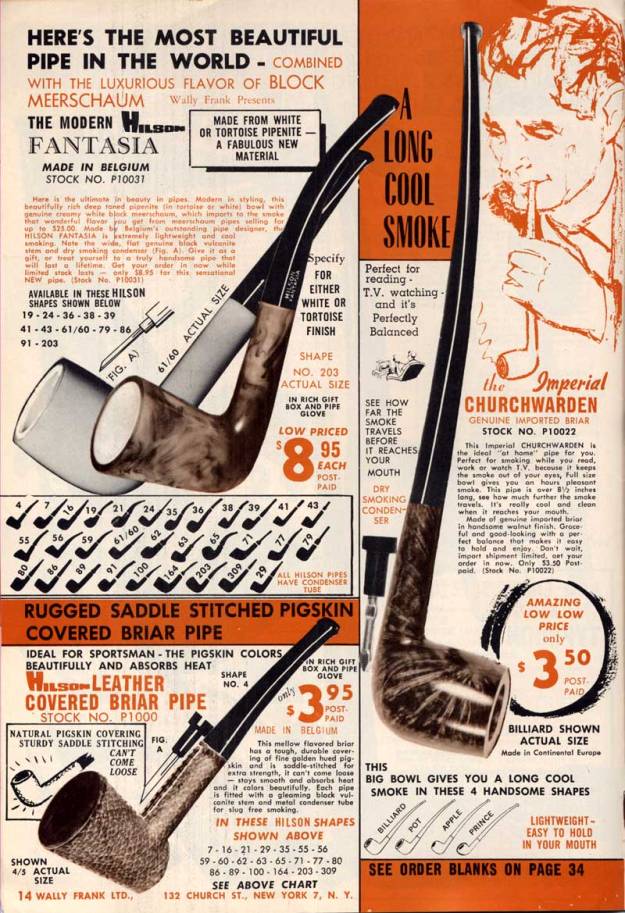
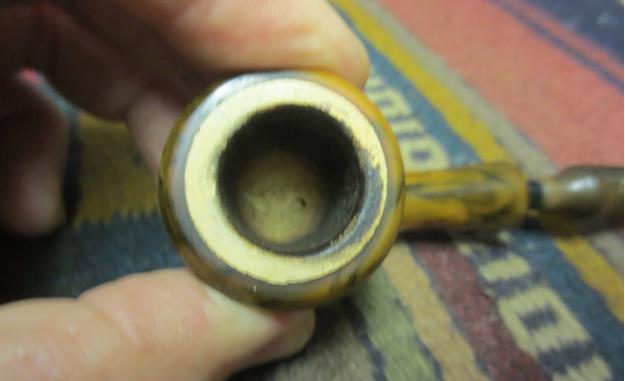
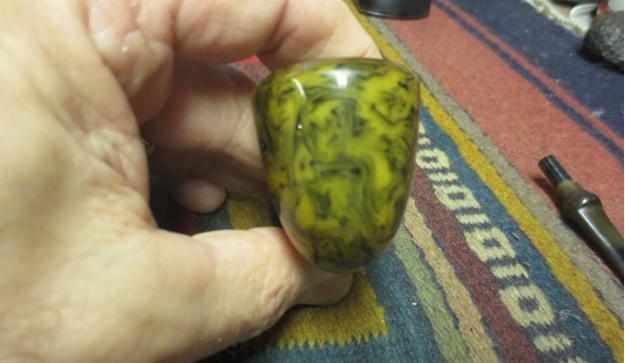
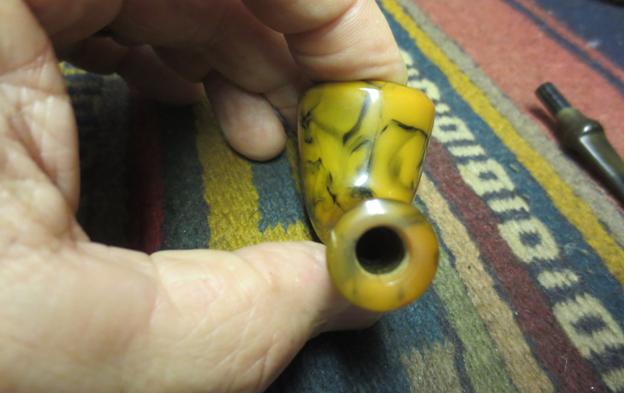
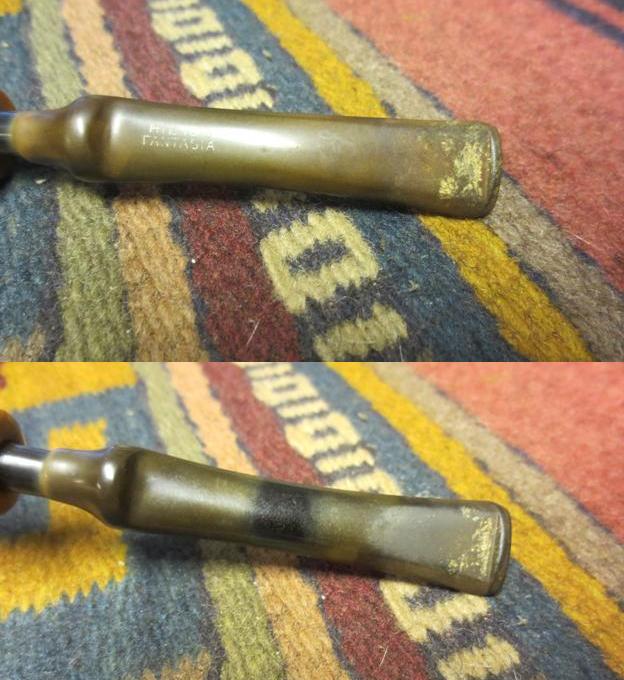
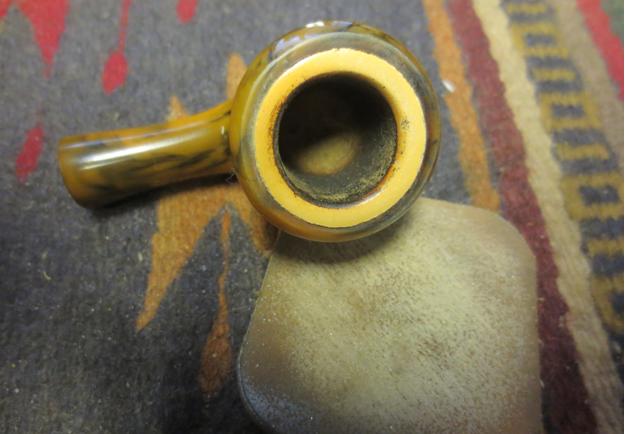
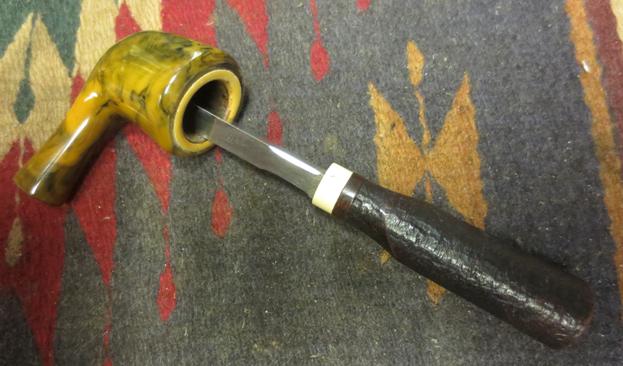
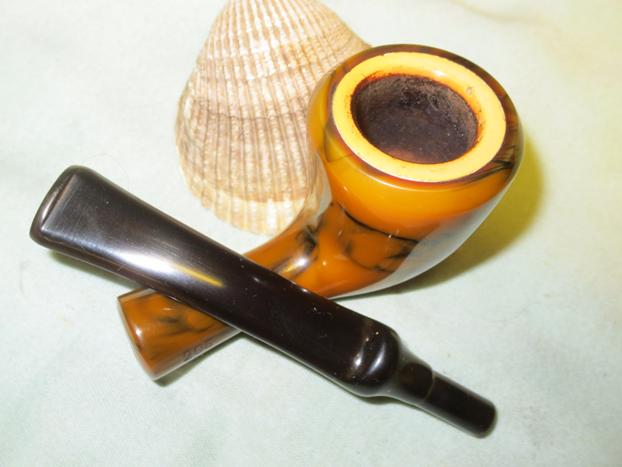
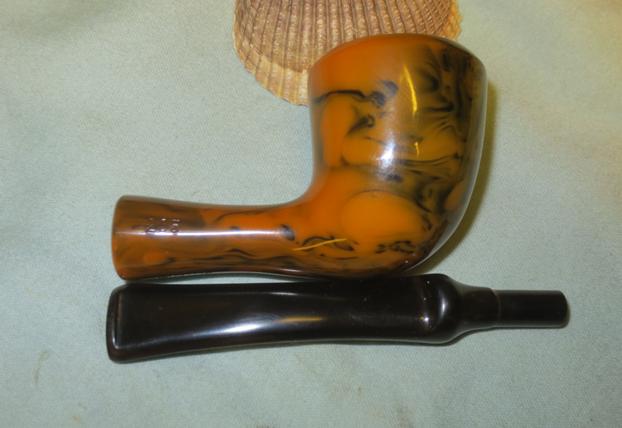
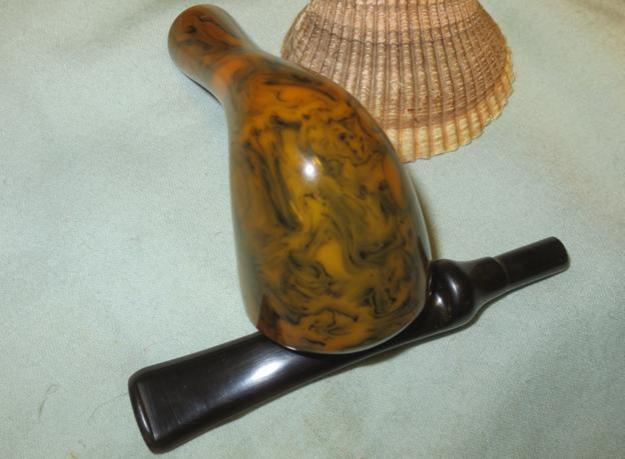
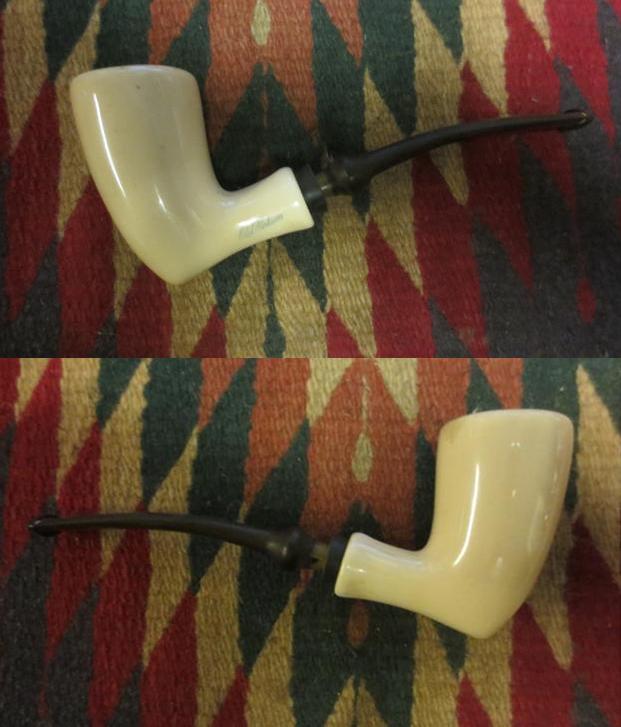
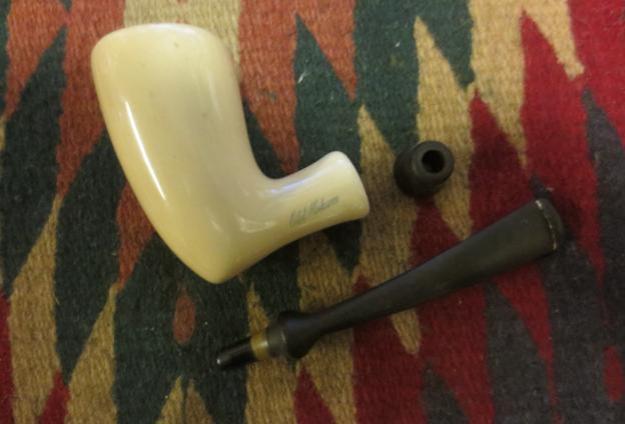
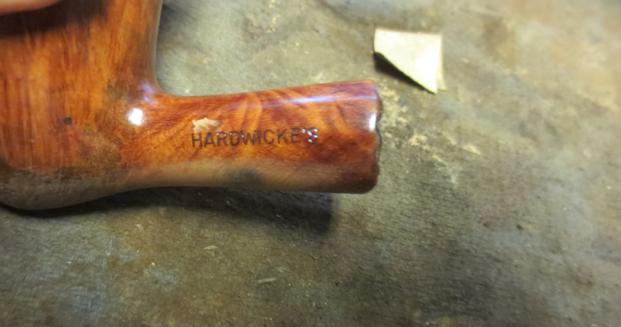
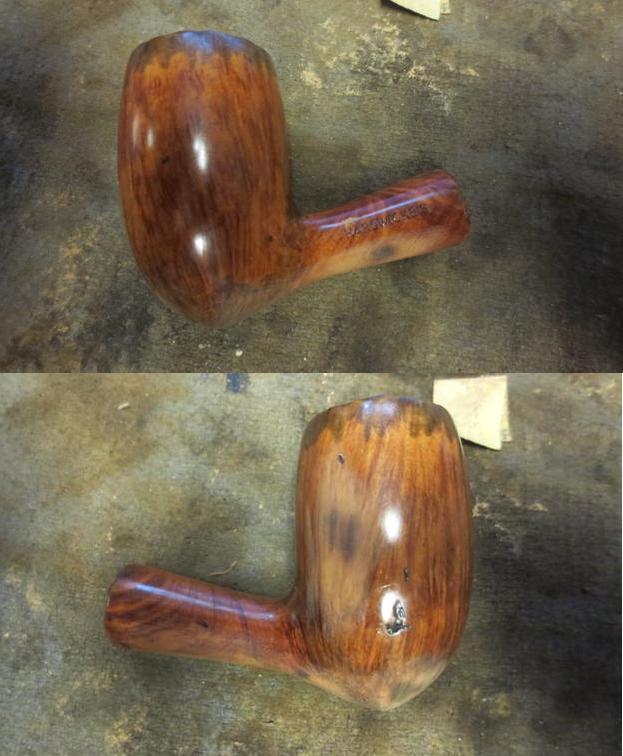
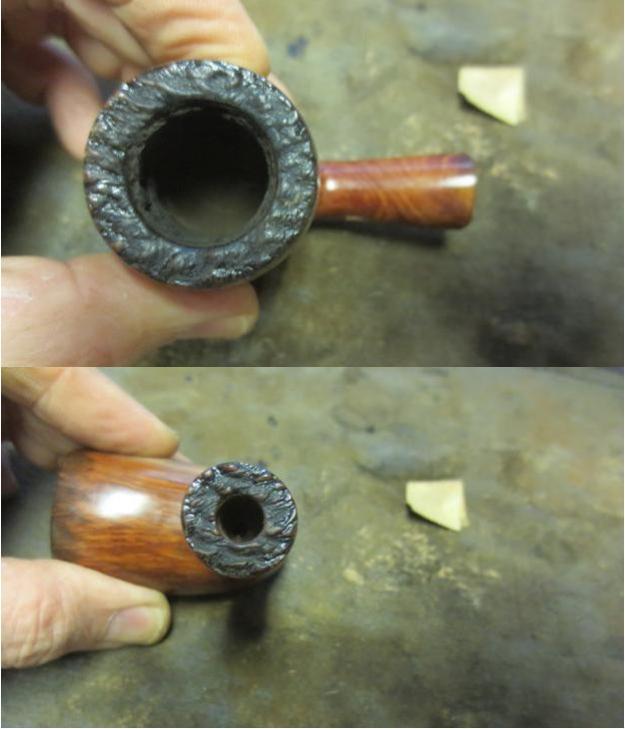
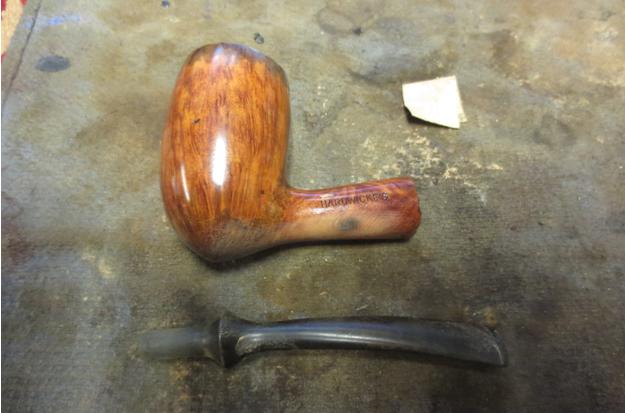
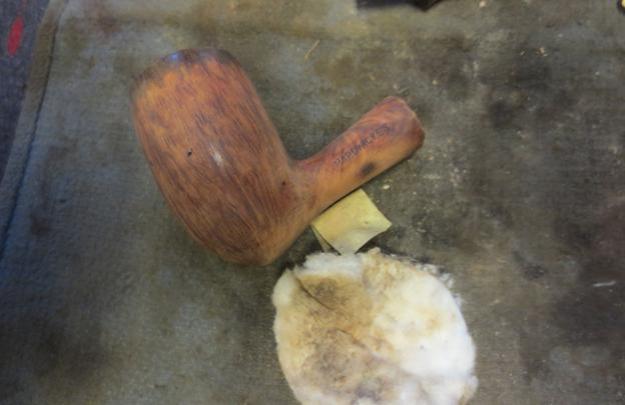
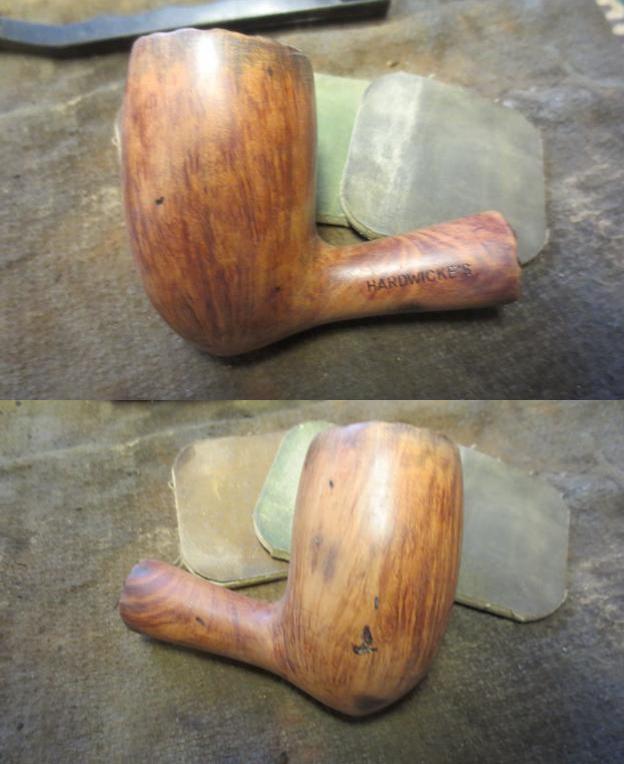
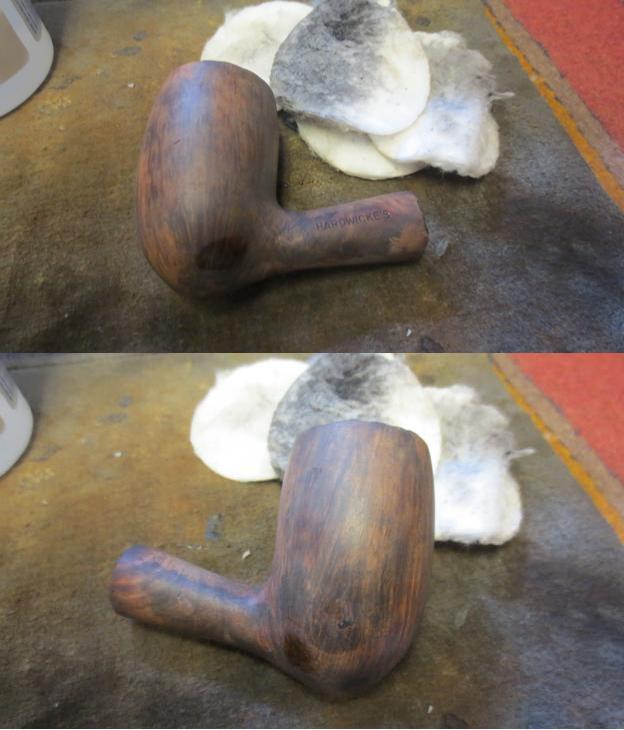
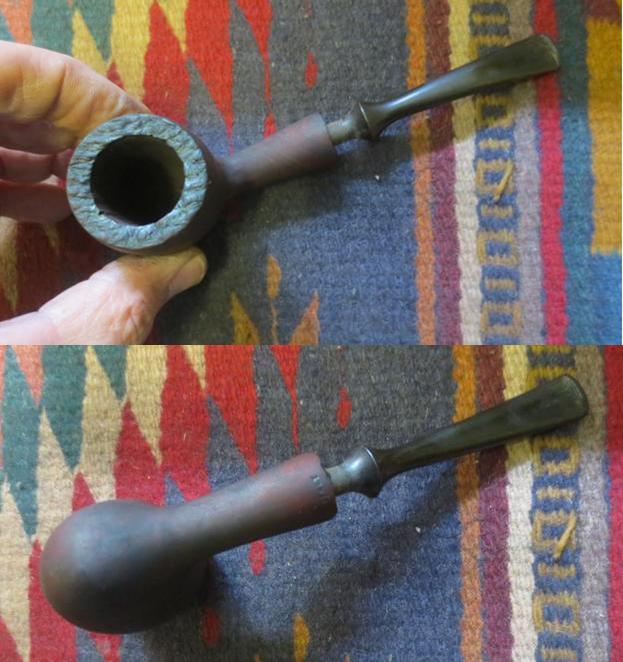
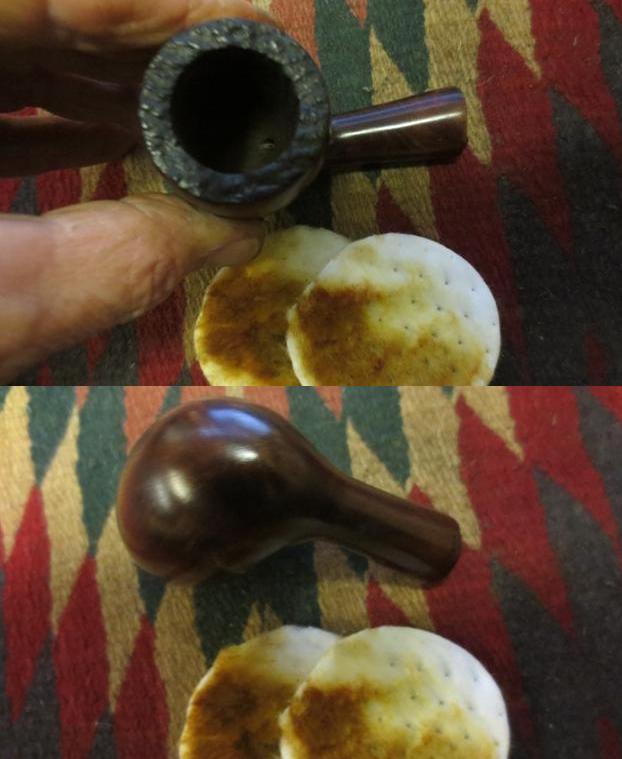
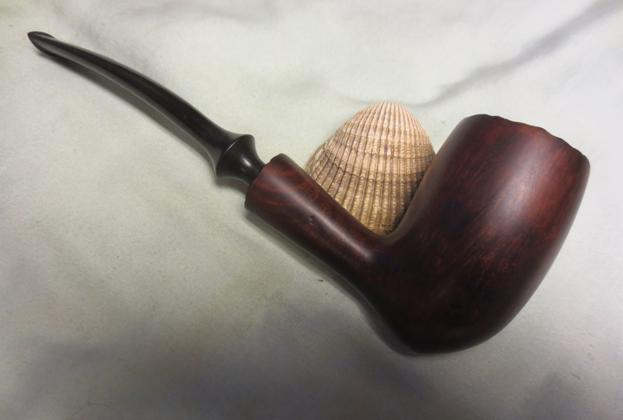
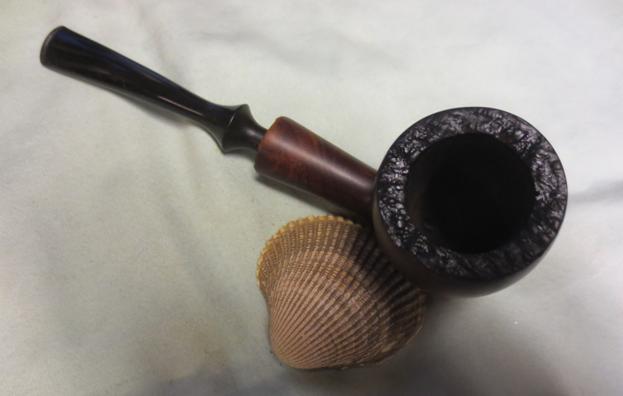
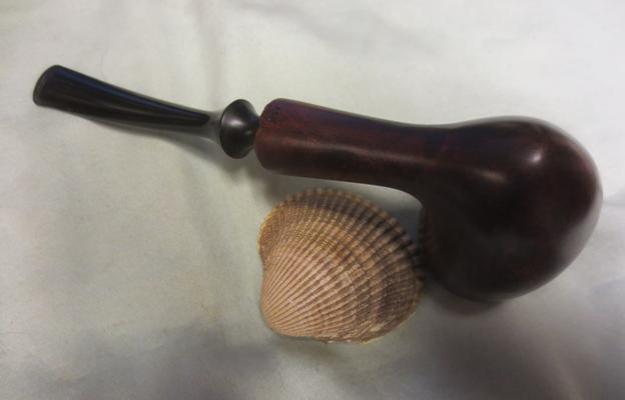
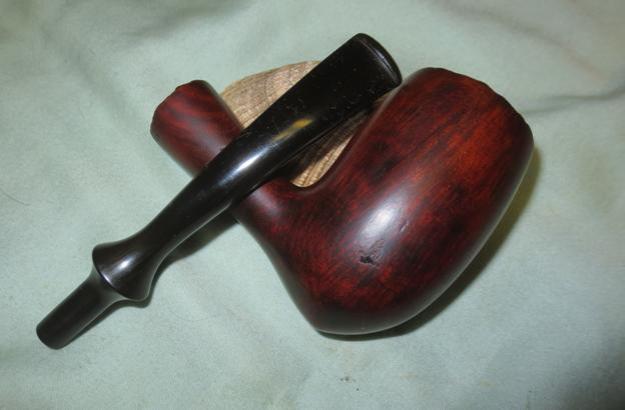
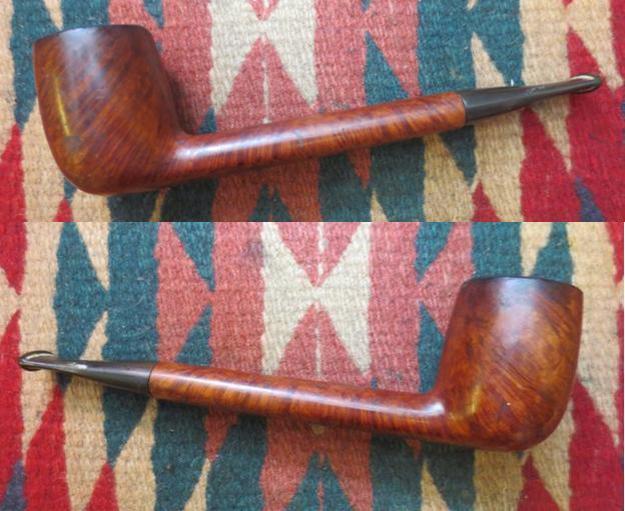
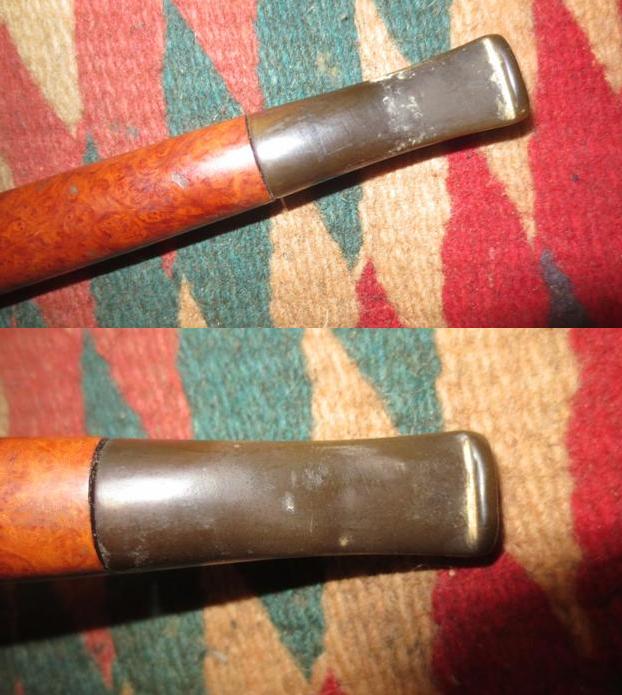
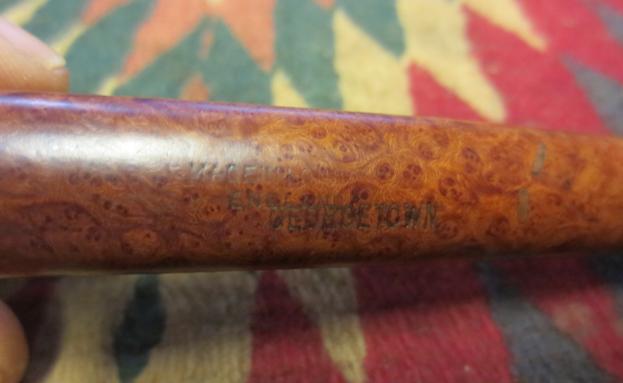
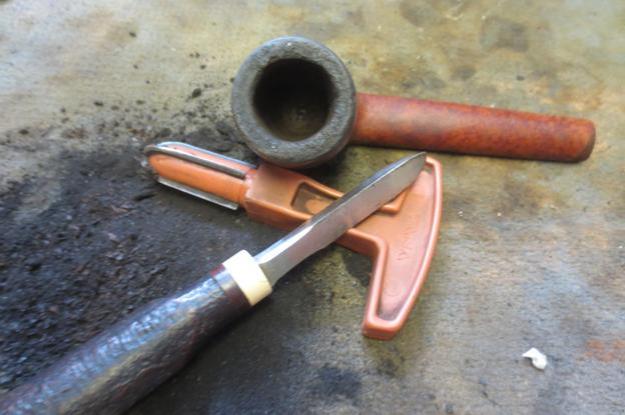
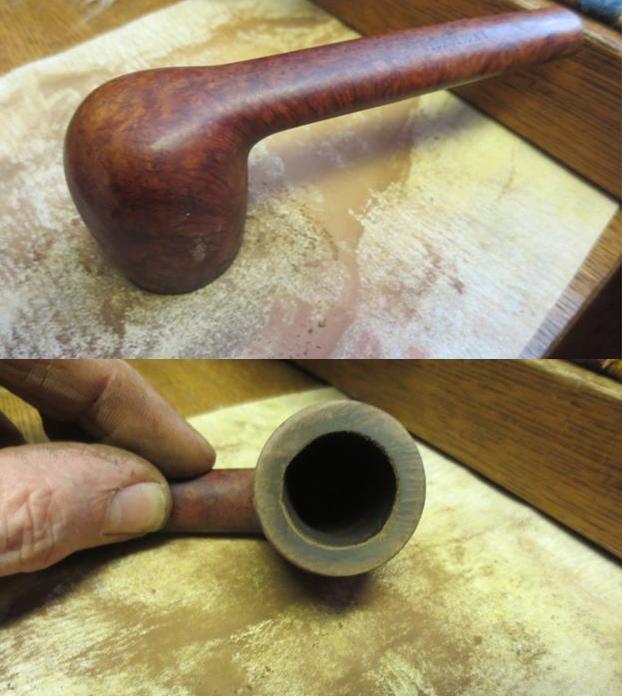
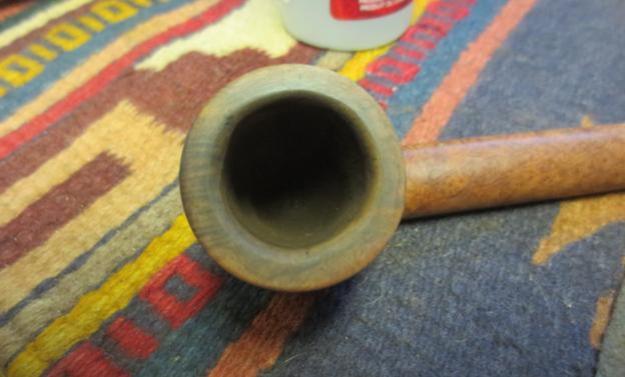
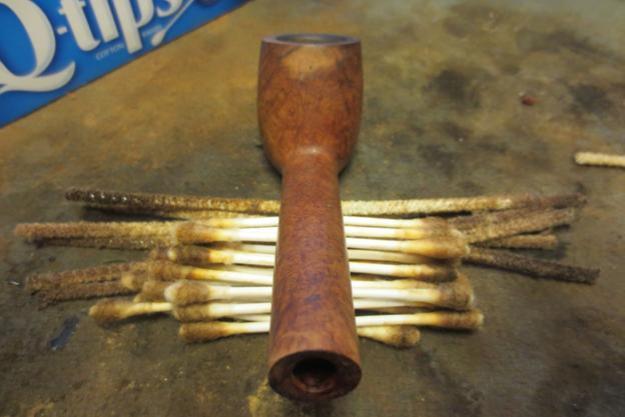
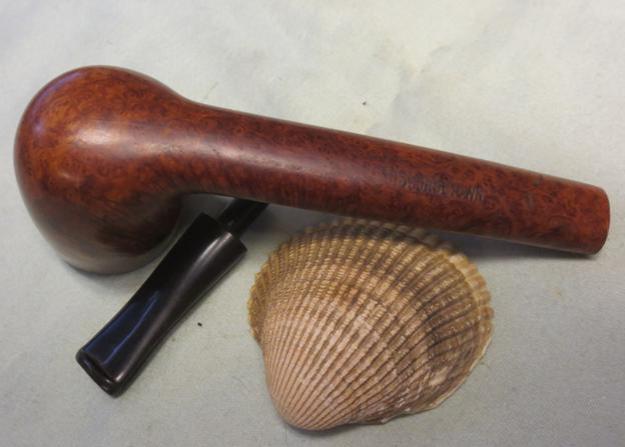
So, in April I found the Oom Paul bowl from a vendor in an outside antique market in the shadow of Sofia’s largest church building – Nevski Cathedral.  I enjoy my developing relationship with the young Bulgarian man who enjoys the bartering event as much as I and has begun to recognize me in the crowd as I have become a regular buying customer.  After looking through his holdings and striking deals for a few tired candidates for future attention, he produced a bag full of orphaned bowls and stems.  At this point in my early pipe collecting strategy, my eye is drawn to the styles I’ve yet to add.  The Oom Paul jumped out even though I wasn’t sure I wanted to touch it!  The first question that came to my mind as I got a feel for the bowl in my palm was, “How could anyone smoke a pipe to a state that I was looking at!”  I took the pictures below when I got home from the antique market. Dal1 Dal2 Dal3 Dal4My initial look at the markings found Dr. Plumb over London Made with what I assume is the shape number 9456.  I checked it out in Pipedia and found this:  The Dr. Plumb brand name is owned by A. Oppenheimer & Co., Limited, owners of Cadogan Investments, Ltd. J.B. Rubinovich, GBD’s Parisian sales manager, created this brand in 1925. The pipe was produced by the Ruchon & Verguet and also Ropp factories (Saint-Claude, France). In 1962 a Dr. Plumb pipe sold for between C$3.95 and C$4.95, or $31.72 in 2015 U.S. dollars and pipes can still be purchased from this brand for a similar price today.  These pipes have long been advertised as Dr. Plumb’s Perfect Pipe, that name coming from an aluminum tube system designed to keep the smoke cool and dry while at the same time permitting the “cooling chamber” to be cleaned by simply twisting the stem. While Dr. Plumb pipes were long made in France and stamped accordingly, they are now British made.

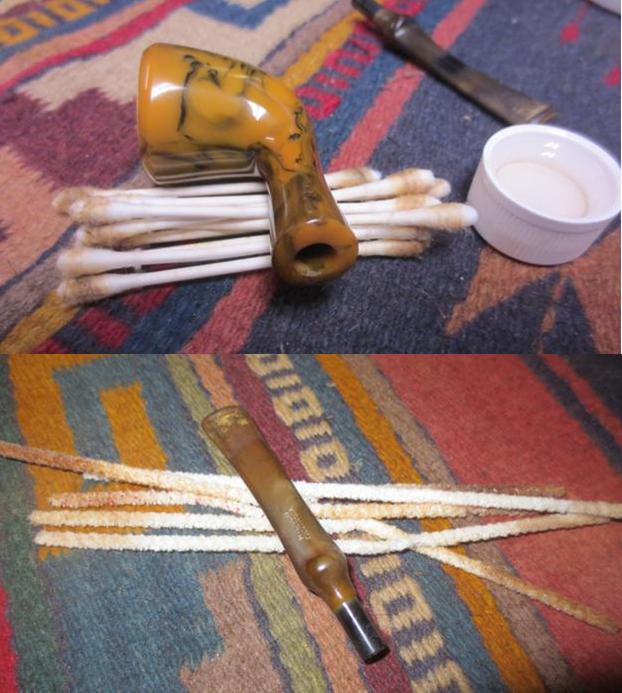
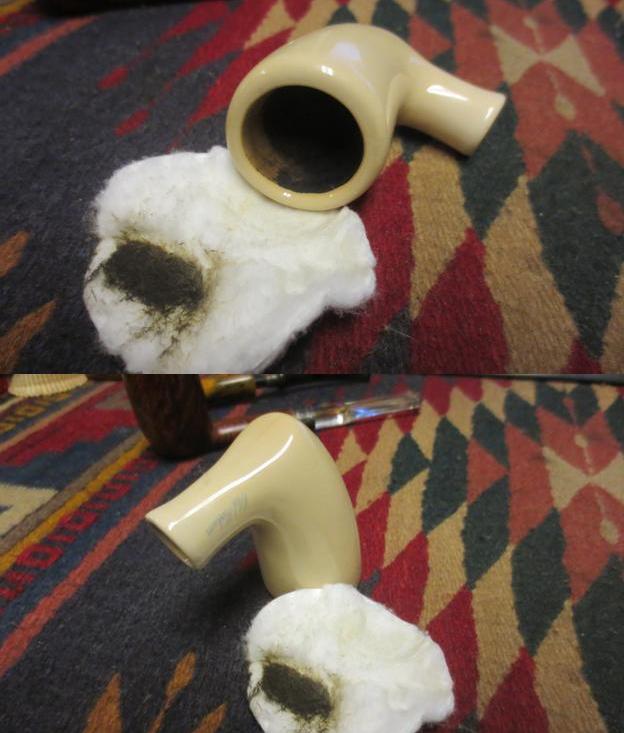
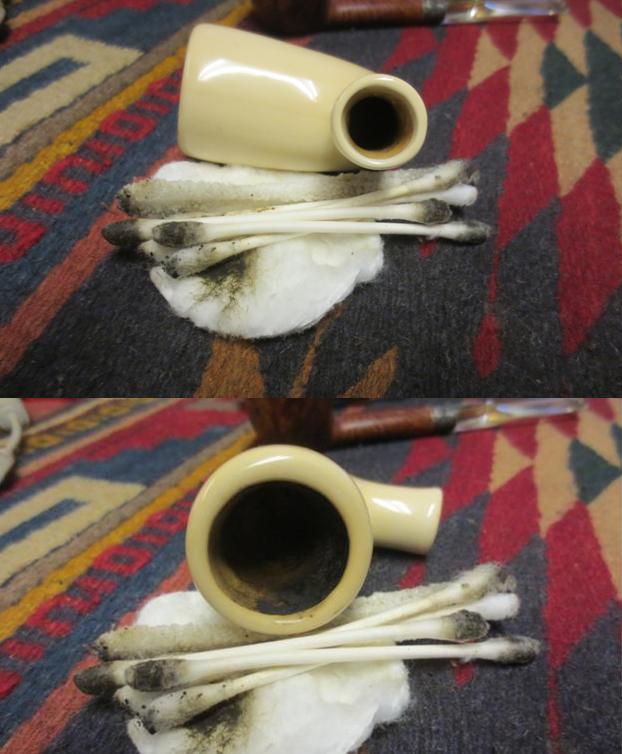
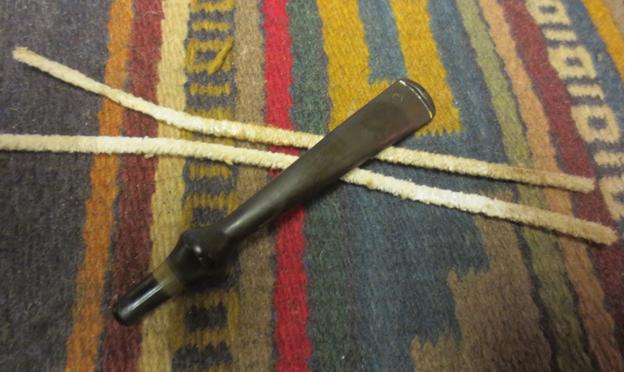
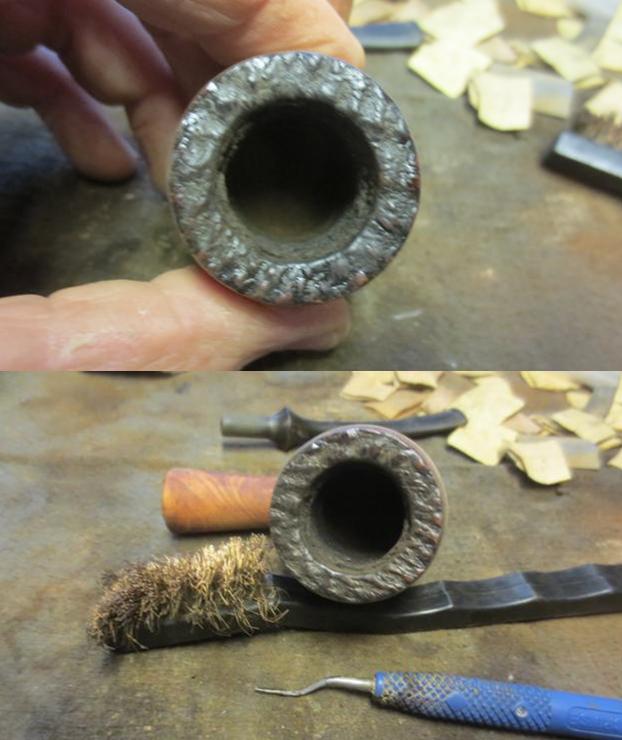
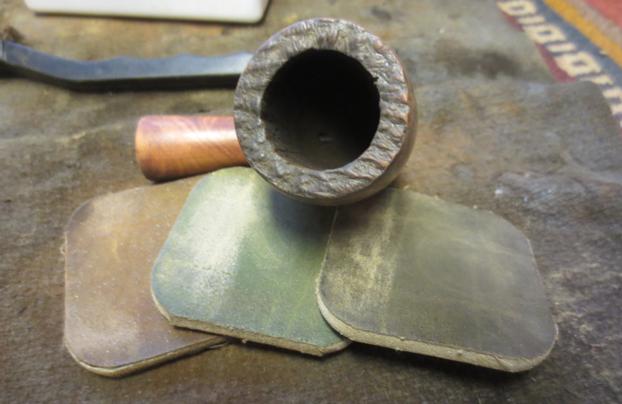
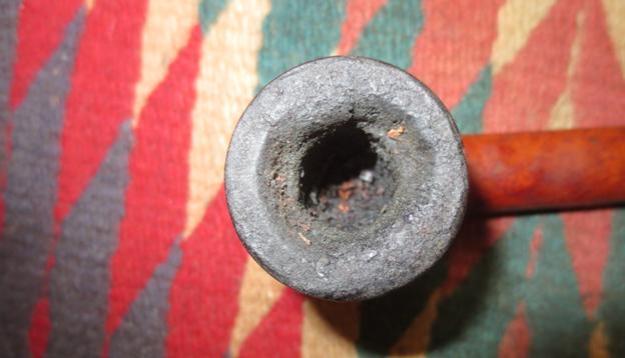
The bowl was almost closed with the buildup of lava and the rim was in pretty tough shape revealing at least one unfortunate drop on the front – that part that I could see.  A look down the shank revealed something lodged.  I couldn’t detect any cracks or burns.  I enjoyed the feel of the bowl in my hand and the briar had great potential – I liked the dark reddish hue of the briar and the gentle rustification seemed to enhance the mostly hidden grain but showing promise.  I would have to ream the bowl and clean the rim before I could know what might lie underneath.  I would also have to find an appropriate stem too to fit the Dr. Plumb, no small task in Bulgaria.  Since I was soon to make a trip to the US for my daughter’s graduation from college (Yes!), I decided to order the needed stem and bring it back to Bulgaria in order to complete the restoration.  Steve recommended J. H. Lowes (http://www.jhlowe.com/).  I discovered that finding the correct stem wasn’t too difficult but I was a bit nervous about the measurements.  The directions on the website were pretty clear that the shank diameter would do the trick.  I wasn’t sure whether the tenon measurements factored in at all.  I purchased the Giudici bit – Round Saddle 17mm X 75mm.  While I was buying a stem for my Oom Paul project, I bought a selection of nickel silver bands to have on hand in Bulgaria.  While I was looking at the bands, I had the idea of dressing the Oom Paul with a band – and since it was my first honest to goodness restore – I splurged and bought a sterling silver band – oh, to get the correct size!  Again, the size was measured by the diameter of the shank as the stem which looked to be at 17.5mm.   I might also mention that Tim West at JH Lowe answered my emailed newbie questions and was a great help.  Having put in motion the strategic plan with the stem and band, I moved to the cleanup of the bowl.  In order to soften the muck buildup in the bowl I put the bowl in a bath of isopropyl 95% overnight.  The pictures reveal the post-bath bowl working in my ‘satellite workspace’ on the 10th floor balcony!Dal5 Dal6 Dal7I tried unsuccessfully to remove the obstacle in the shank using a wooden chopstick as a tool.  It works great on Chinese food, but not so well here.  I decided to leave the shank for the time and I moved to reaming the bowl with the Pipnet reaming kit that recently arrived from Germany – eBay of course.  I started with the smallest blade working toward the larger bringing the tobacco chamber back to the wood.  Not having used the reaming kit too much, I’ve learned that it works best if I allow each blade to do the work – not applying too much vertical pressure on the tool.  Simply rotating the tool (clockwise) with consistent pressure proved to do the job.  I had a pretty big pile of ‘charcoal dust’ resulting from the ream – Question: Can this be used for stem repairs mixing with superglue?  After completing the ream I turned my attention to the rim.  I used a brass brush and isopropyl to clear away the remaining lava flow allowing me to see more clearly the condition. The rim would need to be topped but the prospect of ’re-rustifying’ the rim was a daunting thought at this point.  The rim appeared to have a ‘lined’ rustification before, but I decided to put that question off till later. These pictures show the progress.Dal8 Dal9Moving to the shank, I knew that I would need to do extraction work.  After working with several Qtips and a dental probe I was not able to extract the muck.  Drawing on previous rebornpipes posts, I decided to use a wood screw to remove an obstruction.  While I don’t have an extraction tool like Steve’s, in Bulgaria we do have wood screws.  Carefully I inserted a smaller diameter wood screw into the mortise slowly rotating the screw to grip the obstruction without damaging the briar.  Thankfully, the battle was not long and the pictures reveal the unearthed obstacle to now allow pipe cleaners to do their part.Dal10 Dal11 Dal12When the remains of what appeared to be an old filter were removed, I went to work on the airway with pipe cleaners and Qtips dipped in isopropyl 95%.  Cleaning the Oom Paul seemed to go on forever.  Part of the problem was that I could not quite figure out through ‘Qtip feel’ what the design was in the internals of the bowl.  No matter how many Qtips I put in, they didn’t seem to make a dent on the muck.  So I went to the internet and discovered on puff.com questions from what appeared to be another newbie trying to figure out Oom Paul gunk problems.  I discovered that Dr. Plumb’s internal design had a trap that would collect the moisture while the airway flowed over it – theoretically giving the proverbial ‘dryer and cooler’ smoking experience.  I’ve included the cut-away picture that helped me understand what I was dealing with in my seemingly unending cleaning project.  If I had a retort at this point, I would have put it to work (I just ordered one on eBay that I would also pick up in the US and bring back to Bulgaria!).  I settled for loading the bowl and shank with isopropyl and letting it sit overnight again hopefully to loosen things up more.  The next day I used a bunch of Qtips and pipe cleaners to clean the bowl sufficiently for me.  At this point I put the project aside in anticipation of my trip to the US.  I needed to have stem and band in hand before I proceeded with the bowl preparation and finishing.  I would also return from the US with purchased cleaning and finishing supplies that I cannot find in Bulgaria.  Thankfully, Qtips are in great supply in Bulgaria!Dal13http://www.puff.com/forums/vb/general-pipe-forum/175391-oom-paul-gunk-problem-2.html

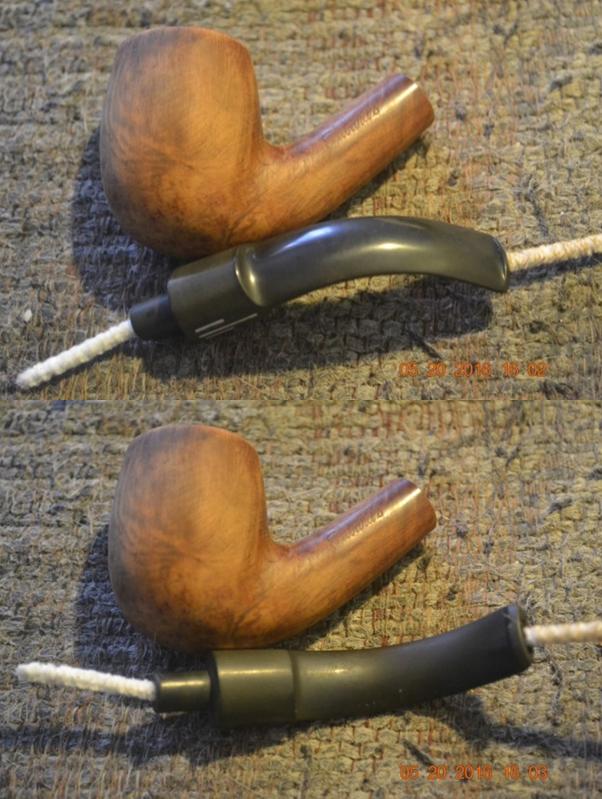
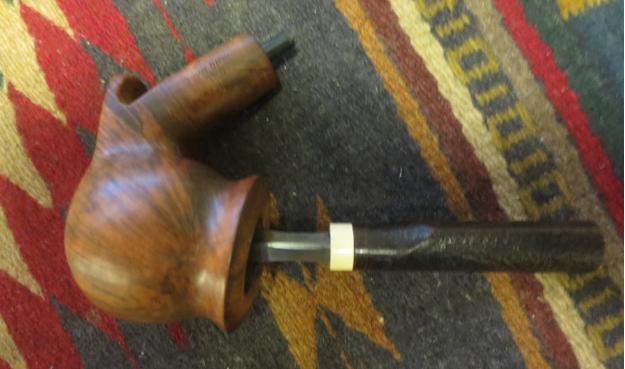
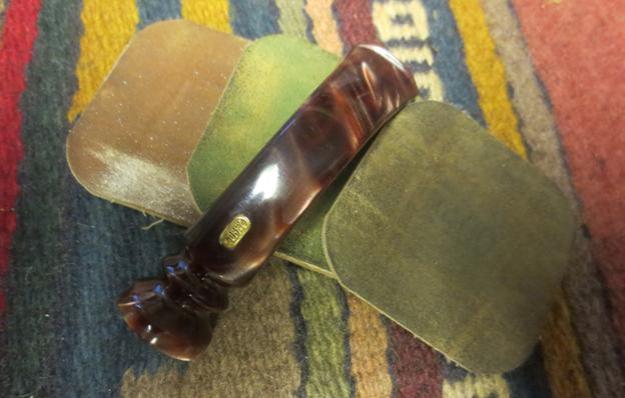
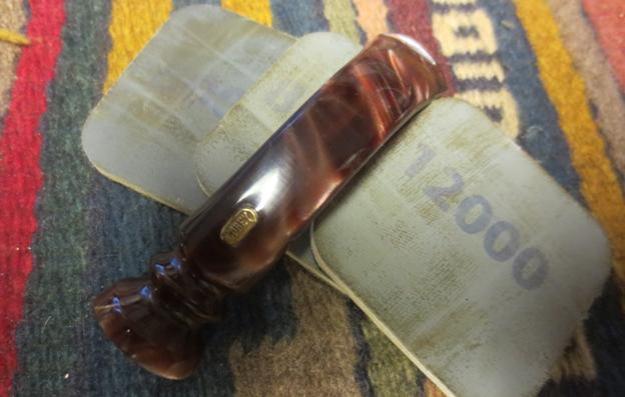
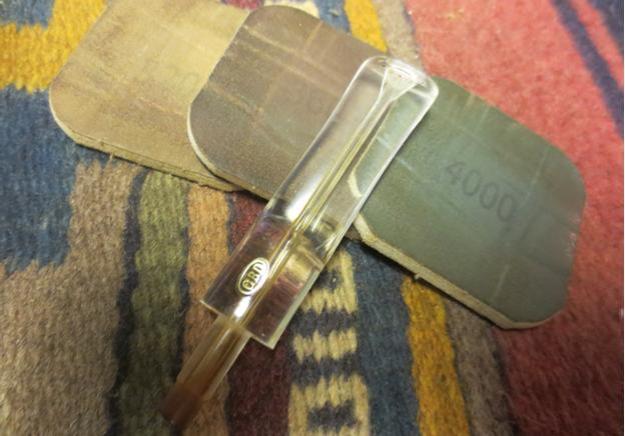
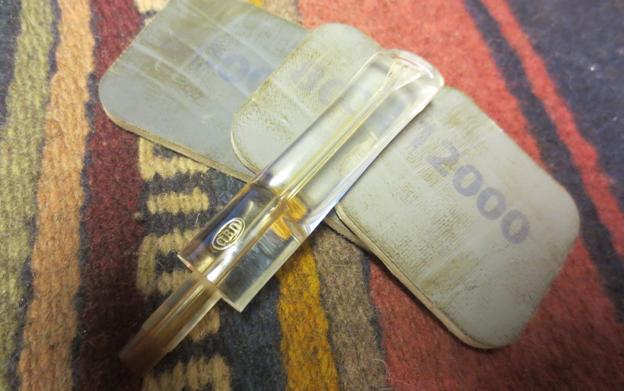
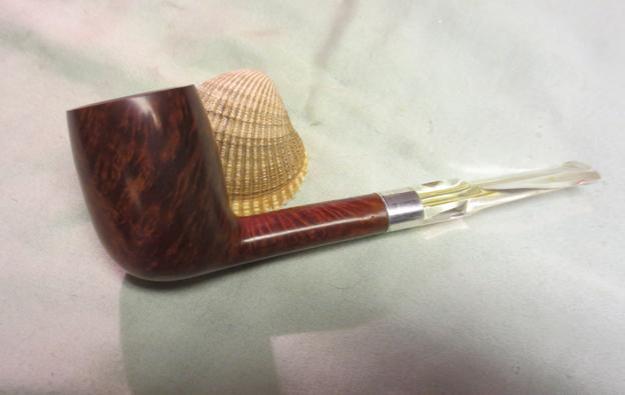
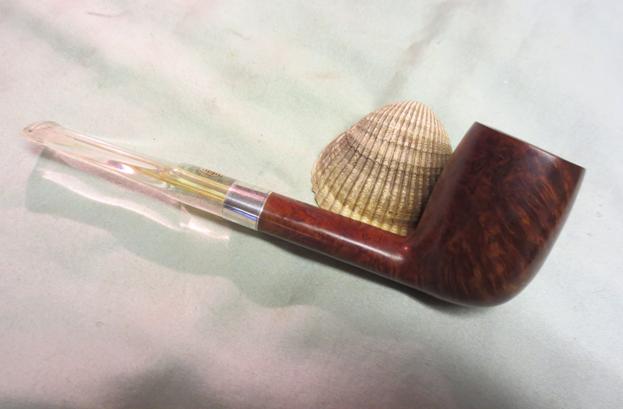
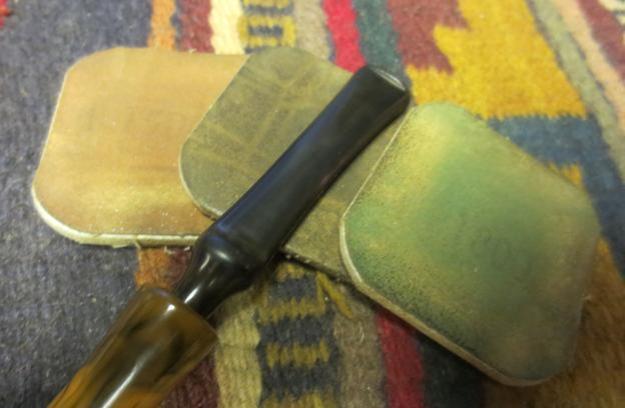
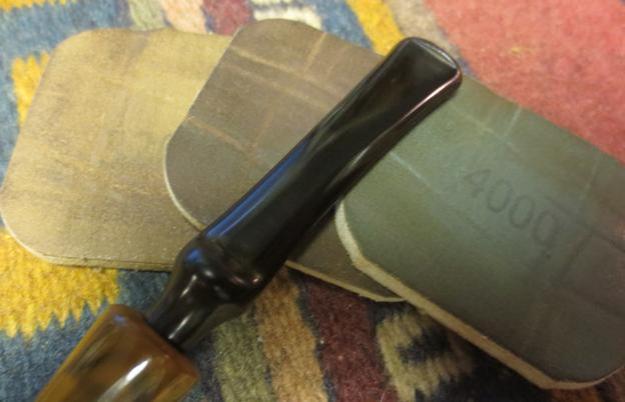
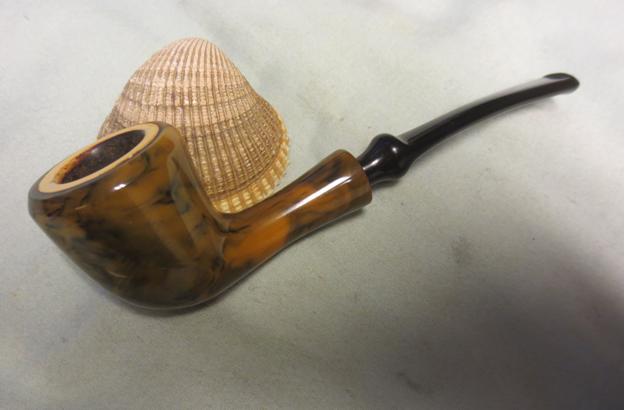
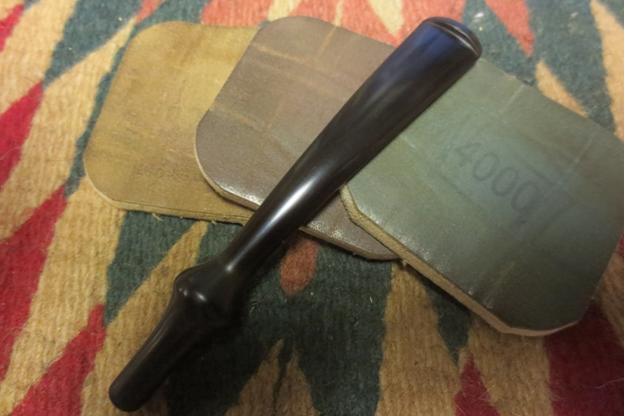
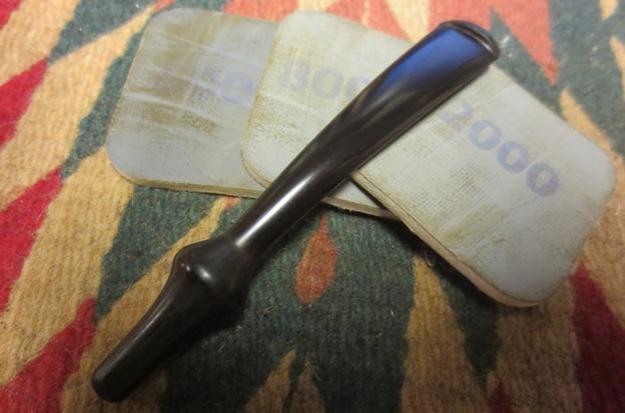
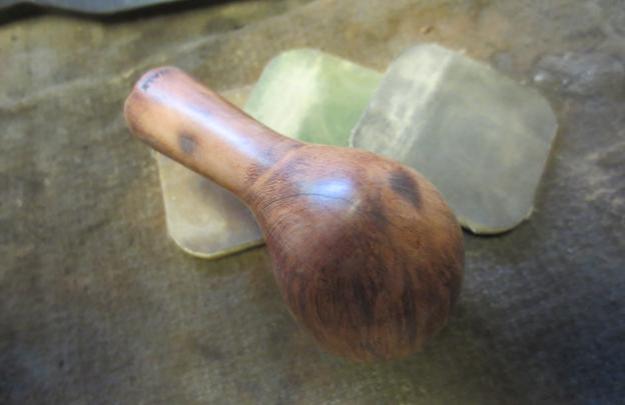
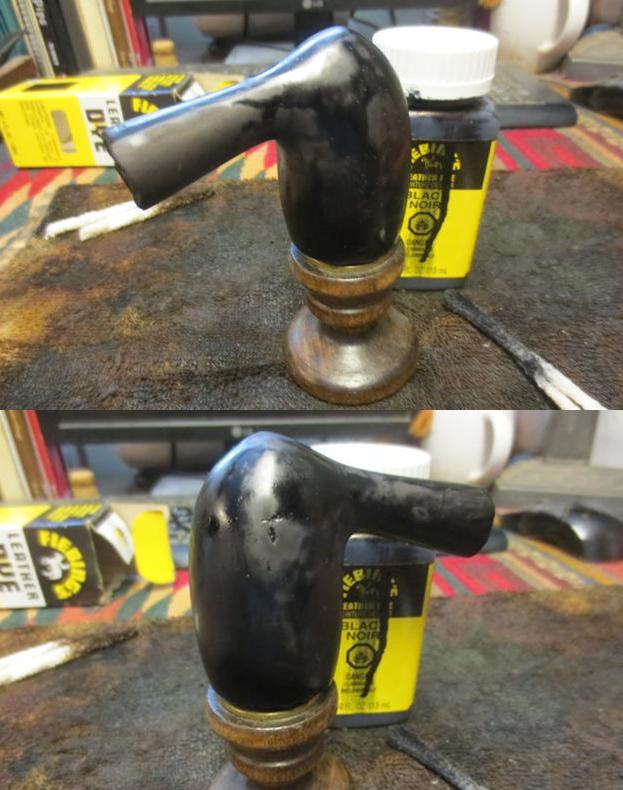
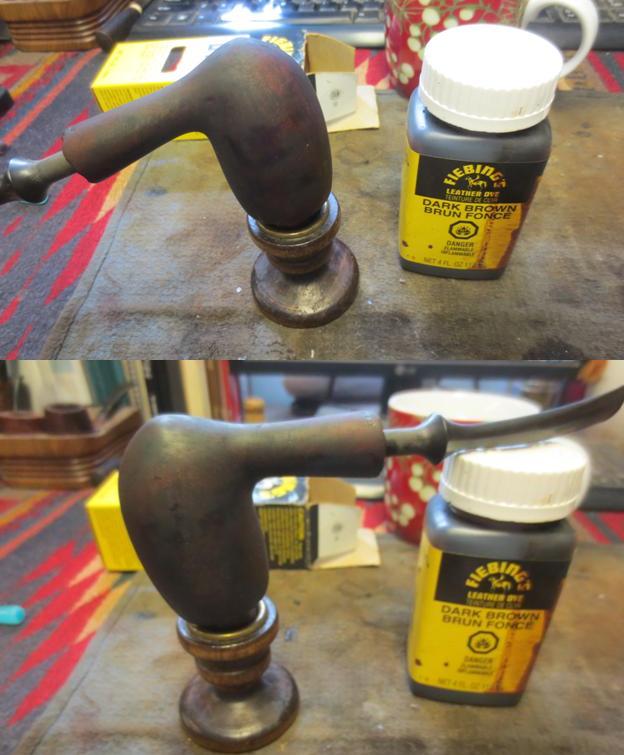
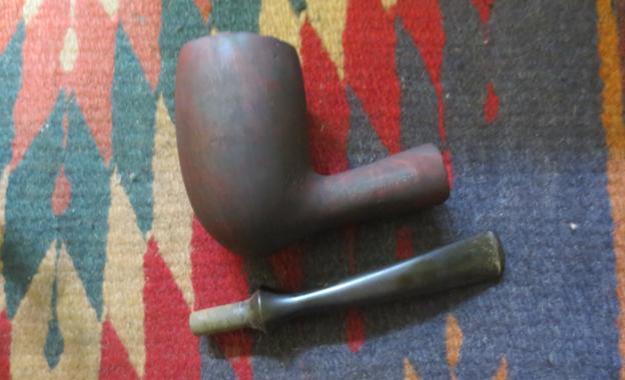
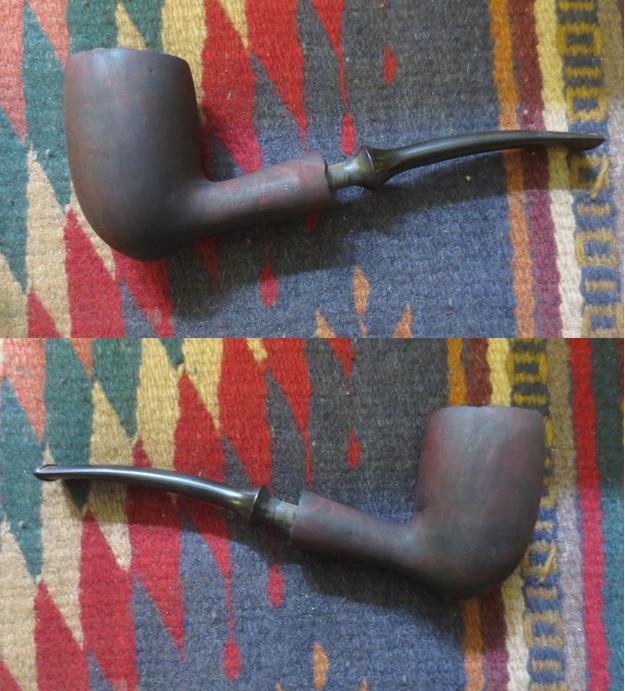
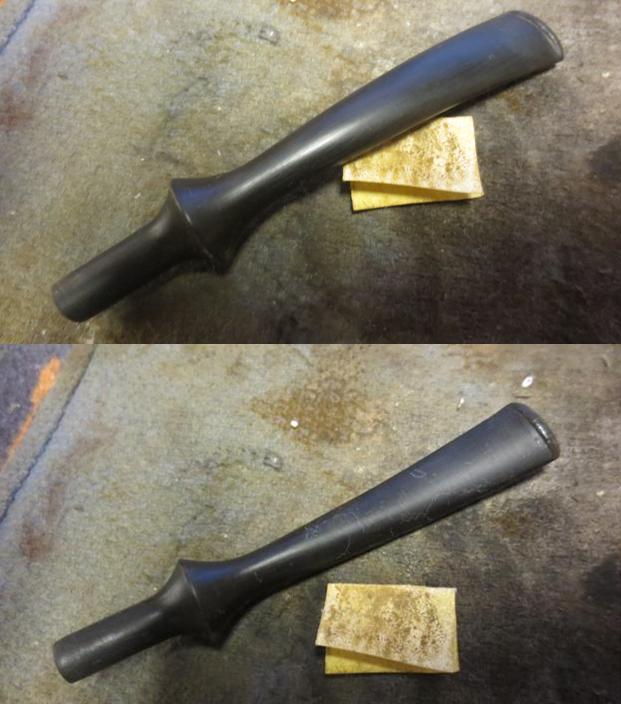
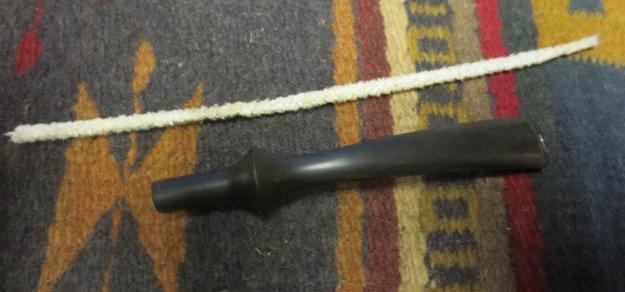
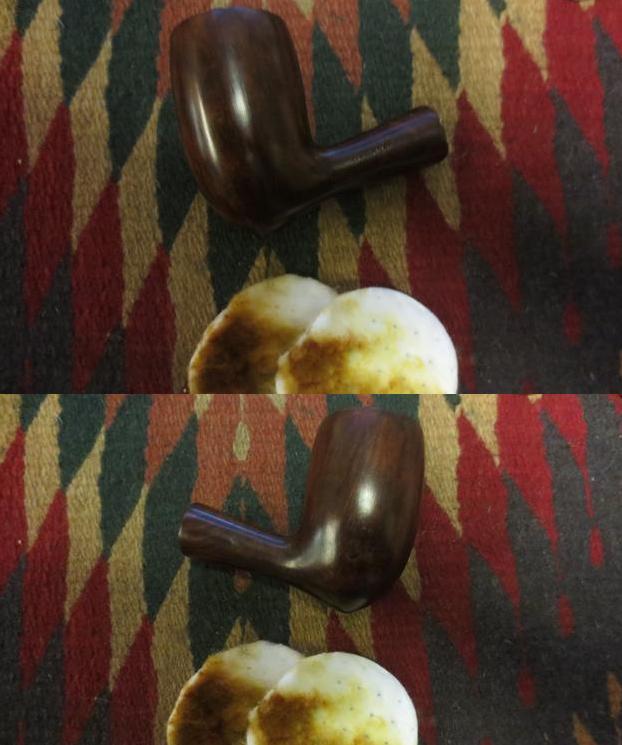
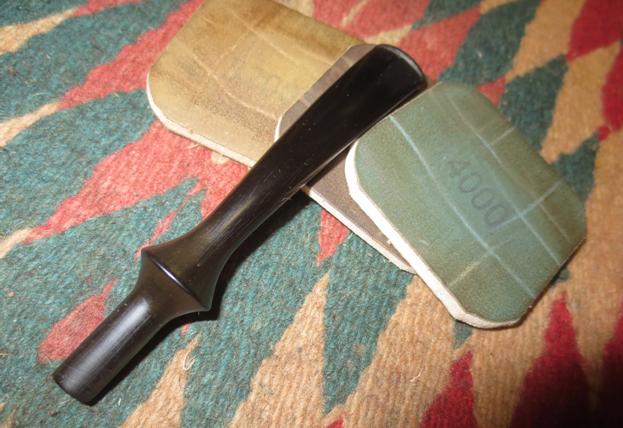
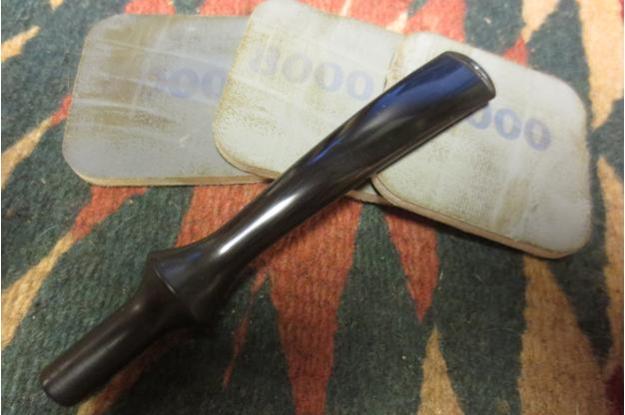
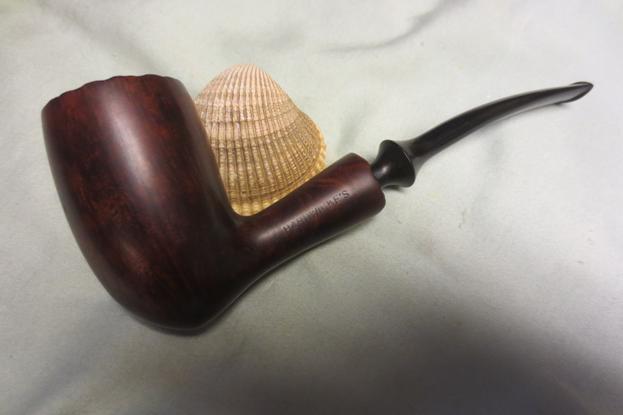
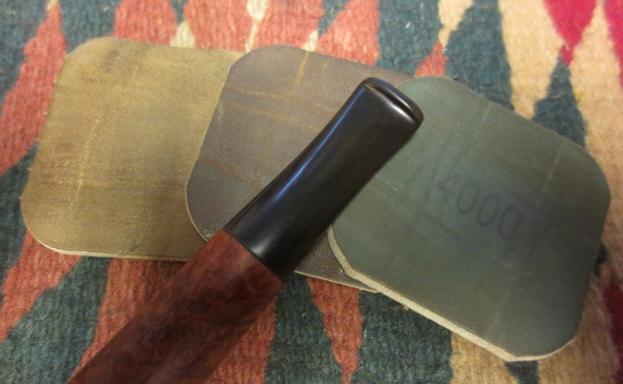
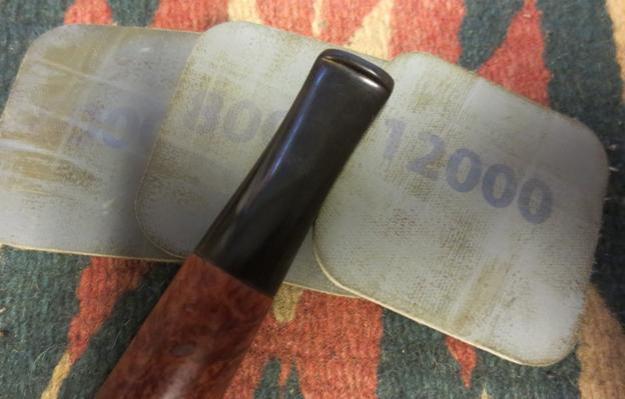
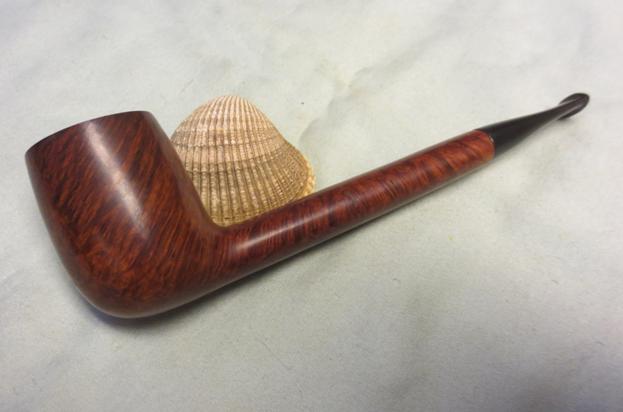
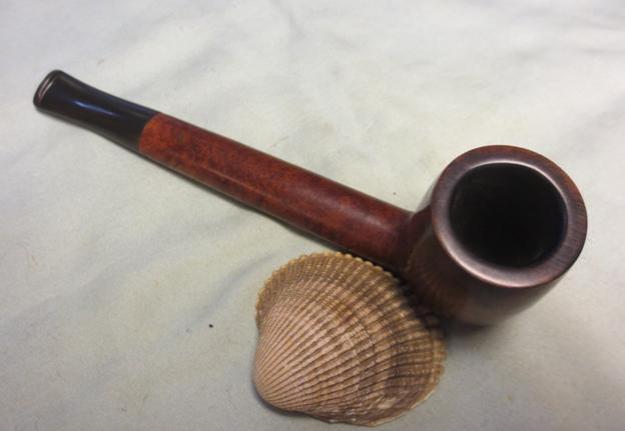
Dal14My time in the US for my youngest daughter’s graduation from college was a blessing as my wife and I were reunited with our 5 children and now, 2 grandchildren.  We were happy to meet our newest grandson who was born only recently!  I returned with a suitcase full of eBay estate pipe purchases to compliment my local finds – as well as cleaning and finishing supplies that I could not find in Bulgaria.  My new retort arrived too and I’m looking forward to giving it a go – though I am a bit nervous about boiling alcohol!  Also in hand were the new stem and band that JH Lowe had delivered to my US mailbox.  I was anxious to see if my measurements were accurate and to continue my Oom Paul project.  The first thing I discovered was that the tenon of the new stem was too large and would need to be resized.  I was relieved to see that the actual diameter measurement of the shank was correct.  From this I learned that there seems to be no standard tenon sizing with new stems – the most important measurement is the exterior dimensions, so that the stem and the shank have a proper mating.  Given that I had not shaped a tenon before, I discovered that I had all the tools needed after a quick email question to Steve – what I didn’t know I would have was the patience to go slowly!  My biggest concern was that the ’rounding’ of the tenon would not be true as I downsized it with the use of Dremel, files and sandpaper.  I knew also that I didn’t want to have to repair a previously uncracked shank by forcing a too large tenon into the mortise.  I ALSO knew that I didn’t want to take too much off the tenon and it be too loose and then have to build it back up with clear nail polish (epoxy) which I’ve had to do before.  With questions and concerns loaded in my conscious mind, I went to work on the brand new stem.  The pictures show the progress. Dal15 Dal16 Dal17 Dal18After bringing the tenon down to close proximity to the mortise size, I gently tried the fit the tenon without pushing.  I did this several times while slowly taking more vulcanite off the tenon.  I discovered that when I partially inserted the tenon into the mortise to test it, the places on the tenon that were more firmly in contact with the mortise wall would be shinier – thus cluing me in to where I needed to apply the file more directly.  I also discovered that the positioning of the stem in the shank – as it progressed more deeply into the mortise – began to reveal a more favorable positioning of the stem for the eventual bend direction that would be made.  The technique I used (discovered!) that seemed to make sense as I started the process was to shape the tenon as a cone that gradually brought the tenon tip to the correct diameter of the mortise.  I then moved gradually working that diameter toward the base of the tenon.  By doing this I was more effectively able to remove the vulcanite evenly and not have a crooked or untrue tenon.  The pictures below show the seated tenon from different angles.  I realized that the base of the tenon where it ties into the stem was pretty roughed up from my use of the Dremel. It unevenly pushed out at the shank and needed more attention.  I decided to put the stem aside for a while and turn to the bowl – I needed some new scenery at this point!Dal19Looking to the rim, I took some closer pictures as a reminder of the rustification design.  The damage on the front of the bowl was significant and the bowl needed to be topped. I moved out onto the balcony so as to minimize the sawdust in our bedroom (helping my wife to be happier 🙂 and I spread out 230 sandpaper on a flat surface (cutting board).  I wanted to take off enough of the top to remove the rim damage but not too much to maintain the bowl proportions.Dal20 Dal21I was satisfied with the topping at this point.  However, what the topping revealed was the beautiful briar underneath.  Part of what has attracted me to this hobby is the ‘surprise’ I get from each peek of revealed briar grain – never the same, always creatively new with potential beauty to be more fully revealed.  Getting ready for staining the bowl, I used a dark mahogany stain stick (from Italy) to darken the rim and bring out the dark rich reds I’m seeing in the briar.Dal22 Dal23I have yet to find an alcohol based stain in Bulgaria that Steve uses in his restorations.  The stains are pigment based with water.  So, the ‘flaming’ technique that I’ve studied on rebornpipes doesn’t come without some help.  I used a Cherrywood stain and diluted it with 50% alcohol as the base stain.  Again, reaching for the red-tones that I see in the briar.  When I applied the stain mix I used a cotton ball and let it flow over the bowl surface.  I was careful to have full coverage by picking up the candle stick and cork set-up and manipulating the stain so it reached the inverted rim.  When I applied the lighter, it still didn’t flame but I was able to essentially ‘dry’ the stain to the wood by moving the lighter lightly over the surface.  I think it pretty closely achieved the same thing – sealing the dye in the grain.  I repeated the process a second time – the pictures show the progress.  Oh, and shot glasses make for good stain mixers in cramped quarters! (Also, thanks to my wife for providing the candle holder :-).  I put the stained bowl aside for several hours to allow the stain to set – I suppose it needed it, but I had other things to do!Dal24I was anxious to get back to the project because I would be able to employ new supplies that I just brought back from the US – Tripoli, Blue Diamond and carnauba wax!  I also had purchased different Dremel wheels for each different application.  Based upon my readings, I used felt wheels for the Tripoli and blue diamond applications – in that order.  Then, to bring out the grain further, I used a cotton wheel attachment for the carnauba wax application.  Since Dremels have a very high RPM potential, I buffed at the slowest setting and kept the wheels moving so as to not overly heat up a particular area.  Applying the carnauba wax needed some heat to spread the wax evenly over the bowl surface, but I soon was able to see the way the wax liquefied and I used that to work over a particular area and then move on.  Its difficult describing the ‘rush’ of seeing the beauty of the briar grain emerge with each application.  It was at this point I decided not to rusticate the rim, but to leave it smooth, revealing the grain and to me, a very classic appearance when adding the band.  The pictures show the bowl but I know that I will need to polish up more after applying the band later on.Dal25 Dal26 Dal27 Dal28With the bowl restoration nearly complete, I was re-energized to look at the stem.  The tenon needed to be more finely-tuned to fit the mortise, but first, I had to deal with scars from the over-anxious Dremel sanding wheel that ate a little too much into the base of the tenon.  The result was that small ridges kept the stem from seating snugly up to the shank.  I remembered a technique I read on, I believe, Dadspipes.com (I’ve read so much I can’t remember for sure!) that was able to help me uniformly smooth out the base of the tenon, which is almost impossible using files freehand.  I drilled a hole in a piece of wood providing enough space for the tenon to rotate freely and covered the hole with 230 sanding paper and clamped it.  I punctured the paper and then forced the tenon into the hole.  I rotated the stem on the flat board back and forth to evenly sand down the tenon base.  I stopped the rotation periodically and let the stem ‘free-stand’ in order to eye-ball it and to make sure I was not sanding unevenly and unintentionally creating a tilt. The pictures show the process and the successful results of a more snuggly fitting stem!Dal29 Dal30 Dal31 Dal32 Dal33 Dal34Again I was anxious to move to finishing the stem proper and to utilize the micro-mesh pads that were newly acquired in the US!  Up to this point I had been utilizing sanding paper I found here in Bulgaria and I was anxious to see the results of using micro-mesh pads.  I employed Steve’s stem finishing pattern that he utilizes with almost each stem finish: Picture 1 reveals the results of wet-sanding with micro-mesh 1500, 1800, and 2400 then an application of obsidian oil.  Following is dry sanding with 3200, 3600, 4000 again followed by an application of obsidian oil.  I have to confess, I was so excited to see the luster popping out I forgot to document the two sets with a picture!  Finally, picture 2 shows the results from dry-sanding (with obsidian oil) with 6000, 8000, and 12000.  After this, I gave the stem another coat of obsidian oil and put it aside to dry.Dal35 Dal36Now I’m stoked!  While the obsidian oil was drying I was re-reading the blogs on bending stems (https://rebornpipes.com/2012/07/15/bending-vulcanite-stems/) and turning on the oven to warm it up.  My experience was limited – I bent one stem for a pipe I acquired off eBay from Budapest, Hungary.  I named that pipe, Budapest (I may have developed a bad habit of naming my pipes like pets…).  I warmed the oven to about 200 to 220 Fahrenheit, (for those living in Europe that is about 93 to 100 C).  I found a ‘bender’ using a small jar measuring about 1.5 inches in diameter and stuck the pipe cleaner in the airway to keep it open during the bend.  I had researched pictures of Oom Pauls and I found another Dr. Plumbs 9456 online (http://www.bidorbuy.co.za/item/222662283/VINTAGE_DR_PLUMB_LONDON_MADE_SMOKING_PIPE_NO_9456.html).  I wanted the bend to reflect the original as closely as possible.  I wanted the bend to be tighter toward the stem expansion at the base – the effect was that the button end of the stem reached out more, or it seemed to me.  It didn’t take long for the vulcanite to become pliable – about 5 minutes or so in the oven on a cookie sheet (thanks again to my wife!).  When I brought it out the first time and bent it over the jar, I was not pleased with the bend – it was too much of an arch for my liking.  So I found a pestle from my wife’s mortar and pestle set that she uses to grind up spices.  Its diameter was smaller.  I put the stem back into the oven and it slowly flattened back out as it heated up.  After about 7 minutes I took it out and bent it around the pestle – that got it.  I held the bend (careful, it’s hot!) and ran the stem under tap water to galvanize the bend.   I wanted the angle to be right – anxious to see the stem with the bowl, I took a few pictures to show what I feel are better results.Dal37 Dal38 Dal39Almost home.  The sterling silver band was awaiting my attention but I wasn’t in a mood to be rushed!  I re-read again Steve’s blogs on banding (https://rebornpipes.com/2012/10/31/banding-a-cracked-shank-pressure-fitting-a-metal-band-on-a-pipe-shank/). Armed with renewed knowledge and the resounding warning not to work too quickly (or else you will tear the band!) I started the work on the band.  I had one large obstacle – I did not have a heat gun to apply heat to the band to enable its expansion to fit successfully over the shank (and not tear!).  I did not have a heat gun, but my wife owns one of the wonders of German technology, a Braun hairdryer.  It gets pretty hot and I gave it a try.  The first picture shows the band placement (about 50% shy) before I started the hairdryer heating process.  I heated up the band on the shank as shown in picture 2 and after about 1 minute or so I took the shank and pressed it down against the cloth on a flat cutting board and applied gentle vertical pressure against the band to slide it further onto the stem.  Patience – I kept hearing “Don’t tear it!”  After I felt a wee bit of movement from the band I stopped the downward pressure and started the reheating process again and then again, a wee bit of band movement as I pressed it vertically against the cloth.  I repeated this process about 7 or so times and was able to move the band to where I wanted it – without tearing it! (picture 3).  I finished up by applying some Weiman Silver Cream to shine the band up nicely.Dal40 Dal41 Dal42 Dal43I’m very pleased with the results of restoring this Oom Paul and putting him back into service.  I’ve already identified areas that I want to improve next time around.  I didn’t describe how I had to re-top the bowl after I put the stem in and discovered that the rim was not perpendicular to the shank.  Result?  The stem was tilted out and not aligned.  I re-topped the rim to straighten it.  I also detected areas on the stem I had missed during the sanding process.  Yet, overall I’m very pleased and appreciate the rich color and grain of this piece of briar.  I think the band sets if off in a classic way.  Since this Oom Paul will remain in my collection, I’ve named it – a bad habit probably, but I enjoy the life rekindled in restored pipes and names seem appropriate.  Steve told me about the history of Oom Pauls in his recent visit to Bulgaria.  This is when I learned that Oom Paul was Afrikaans Dutch meaning ‘Uncle Paul’.  So, in Bulgarian, meet ‘Chicho Pavel’!  Thanks for reading!Dal44 Dal45 Dal46 Dal47 Dal48 Dal49 Dal50 Dal51 Dal52 Dal53


CEO Ferndown Restoration


By Al Jones

This Ferndown Bark belongs to my friend, John Fruhmann. I first became acquainted with John through the PipesMagazine.com forums and later met him and his friends at the Lehigh Valley Pipe Club. If you are ever in the Allentown, PA area, and have an opportunity to participate in a club meeting, take it. They are a great bunch of guys with a terrific meeting place, The Wooden Match Cigar Bar/Restaurant located in beautiful Bethlehem PA. Their Facebook page is:

Lehigh Valley Pipe Club

John recently took the position of Chief Executive Officer for The Standard Tobacco Company of Pennsylvania. Standard Tobacco re-introduced several fabled blends to the market in the past twelve months. You can check out their offerings at their website.

The Standard Tobacco Company of Pennsylvania

John acquired this Ferndown Bark at a recent club meeting. You may have heard that Les Woods and his wife have decided to retire, so there will be no more new Ferndown pipes. This is a 2 Star pipe and at 62 grams, seems just right. I thought that the top just had a layer of tar and I was hoping it would come off. Unfortunately, the bowl top had seen some serious heat abuse and was burned in several spots. Below is the pipe as received.

Ferndown_Bark_John_F_Before (1)

Ferndown_Bark_John_F_Before (4)

Ferndown_Bark_John_F_Before (3)

Ferndown_Bark_John_F_Before (2)

Ferndown_Bark_John_F_Before (5)

I reamed the pipe and found the bowl interior was in very good shape. I used a cloth and some mild Oxy-Clean to remove the tars on the bowl top. That was when the damage was revealed. I didn’t really want to top the bowl in the traditional way but rather to keep the original rustification edge. I decided to bevel the bowl top, like you might see on a GBD Prehistoric pipe. I used 800 grit paper to remove the scorched wood and reshape the bowl. 1500 and 2000 grades were used next, then the bowl top was polished with White Diamond and several coats of carnuba wax. The bowl top looked much better and close to factory. The pipe was soaked with alcohol and sea salt. After that step, I used bristle brushes to clean out the shank. I used “Halycon” wax to hand wax the rusticated section, which was only a little grimey. A toothbrush was used to work the wak into the finish, then polished with a cloth towel. The shot below shows the finished top and the bowl soaking.

Ferndown_Bark_John_F_Before (7)

I soaked the stem in a mild Oxy-clean solution, with a dab of grease over the fragile LJS stamp. I had to be careful to preserve this stamp. Sometimes the unpolished stamp stands out too much, but I was pleased with the end result on this one. There were a few dents that raised nicely with heat. 800 grit paper was used to remove the heavy oxidation. Next up was 1500 and 2000 grade wet paper, followed by 8000 and 12000 grade micromesh. The stem was mounted on the pipe and buffed with White Diamond and Meguiars Plastic Polish. I put a small piece of masking tape over the LJS logo. I used silver polish to clean the Sterling band.

Below is the finished pipe, fit for a CEO!

Ferndown_Bark_Jon_F_Finish (1)

Ferndown_Bark_Jon_F_Finish (5)

Ferndown_Bark_Jon_F_Finish (4)

Ferndown_Bark_Jon_F_Finish (3)

Ferndown_Bark_Jon_F_Finish (6)

Ferndown_Bark_Jon_F_Finish (7)

Ferndown_Bark_Jon_F_Finish (1)

Karl Erik


Tim that is great work. Well done. I especially like the way you improvised with the drill to turn the stem… that gave me some great ideas. I appreciate the creativity on that – well done. that pipe and stem are amazing. Just had to reblog it so the rebornpipes family get a chance to see the innovation and the beauty.

pipesrevival's avatarPipesRevival

Karl Erik.

My free hand pipes can be counted on one hand , I’m not the biggest fan but once and a while one catches my eye .Erik Nording, Preben Holm, Ben Wade,Karl Erik Ottendahl and W.O. Larsen pipes are a few I keep an eye out for but they have to be the right shape and preferably smooth , so as luck would have it I found just that a Karl Erik and at a price I couldn’t refuse thirteen bucks. Now for thirteen bucks your not getting mint condition , some work would be involved . The stamping reads Karl Erik over Hand Cut In Denmark and below that the number 5. I’ve read the grading of his pipes but was unable to find the use of the number 5. To my eye the pipe is flawless not an ounce of filler. The stem on the other…

View original post 662 more words

Holy Grail X2 – GBD 357 Pedigree Restored


By Al Jones

After searching for four years for the right GBD shape 357 shape, I recently found and restored a Virgin grade in that shape. I was surprised a week later to find a 357 Pedigree offered (it was sold as a Virgin). The Pedigree line is described in the Pipedia GBD page as being produced starting in the 1930’s. It’s impossible to date the pipe, and only that with the brass rondell and “London, England” COM, it was made prior to 1981. The Pedigree line is the highest GBD grade. In comparison with my Virgin, the grain lines are straighter and the birds-eye on the bowl top really sets it apart.

The pipe had the typical build-up on the bowl top, but it looked to be minimal. The stem was oxidized heavily, near the button so it was difficult to determine it’s condition. Below is the pipe as it was received.

GBD_357_Pedigree_Before (1)

GBD_357_Pedigree_Before (2)

GBD_357_Pedigree_Before (3)

GBD_357_Pedigree_Before (4)

GBD_357_Pedigree_Before (5)

I removed the stem and put a dab of grease on the rondell. It was soaked in a mild Oxy-Clean solution for several hours to loosen the build-up.

The bowl was reamed and in good shape. I rubbed the tars off the bowl top with a wet rag and some further diluted Oxy-clean water. The bowl top was otherwise undamaged. There were some dings on the bowl that I was able to remove with steam from an iron and a wet rag. The bowl was then polished with White Diamond and Carnuba wax.

There were several teeth indentions on the stem, they were made less severe with the flame of my lighter. The oxidation was removed first with 800 grit wet paper, followed by 1500 and 2000 grades. 8000 and 12000 grades of micromesh were used next. The stem was buffed with White Diamond and Meguiars Auto Plastic polish. A few teeth indentions remain, but they were severe enough to be filled with superglue.

The stem was straight as received, but I believe it would have originally been 1/8th bent. I used a heat gun to warm the vulcanite, after inserting a cleaner to keep the draft hole open. I bent it slightly to match the stem on the Virgin and then immersed it in cold water to “set” the bend.

Below is the finished pipe which includes a shot with the 357 Virgin. I promised myself I would only keep one of the two 357 shapes, so now I have to decide which one remains.

GBD_357_Pedigree_Finish (1)

GBD_357_Pedigree_Finish (5)

GBD_357_Pedigree_Finish (2)

GBD_357_Pedigree_Finish (6)

GBD_357_Pedigree_Finish (4)

GBD_357_Pedigree_Finish (7)

GBD_357_Pedigree_Finish (8)

GBD_357_Pedigree_Finish (3)

?

?

?

?

Although difficult to tell from this photo, the Pedigree pipe is slightly smaller in all dimensions and a few grams lighter. The stem on the Virgin is thicker, which adds to the weight.

GBD_357_Pedigree_Finish (12)

GBD_357_Pedigree_Finish (1)

I Believe I Found an Undercover Lorenzo of Some Sort


Guest Blog by Robert M. Boughton
Member, International Society of Codgers
Member, North American Society of Pipe Collectors
http://www.naspc.org
http://www.roadrunnerpipes.net/ (Opening soon)
http://about.me/boughtonrobert
Photos © the Author

INTRODUCTION
In late October of 2014, I wrote a blog here about a Lorenzo second with the name Spitfire Mille (Italian for thousand, just as Starbuck’s large drinks are designated by Venti, meaning 20 – for the number of ounces, including the ice in my With Room Raspberry Iced Americano right now).  Lorenzo, an Italian brand that has been around since 1946, makes an assortment of traditional shapes and styles but is, among my local pipe friends at least, best known for its lines of, well, enormous proportions.  Take this Spitfire, not all versions of which are so large.Lor1 Lor2 Lor3 Lor4 Lor5You can’t tell by these pictures, but although the length was near the limit of the norm at about 6”, the chamber diameter was something like 1” x 2” when I checked before adding the Spitfire to my old business website.  That’s about 6/8 (¾”) x 1” larger than usual.  Then I measured less common specifications, including the diameter of the entire rim across, bowl height and the top half of the shank leading into the bit.  Here is where the numbers became astounding: from one side of the rim to the other was a little under 2”; the height of the bowl was close to 3”, and the shank was 1” across.
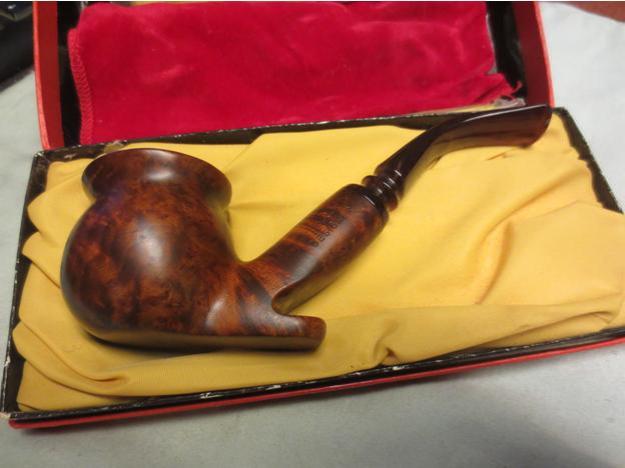
If those numbers don’t sound impressive, consider three of my largest pipes, the Peterson 150th Anniversary smooth bent billiard, the Digby Six-Panel and the Soborg Danish Panel.Lor6 Lor7The Pete’s length is 7”; chamber diameter is ⅞” x 1¾”; the full rim is 1⅜”; the bowl height is 2¼”, and the shank is 1½”.  The Digby’s length is 5¾”; chamber 1” x 1¾”; rim 1½”; bowl height 2½” and square shank 1” at the halfway point.  The Soborg’s length is 7”; the chamber is ¾” x 1½”; total rim is 1¼”; bowl height is 2”, and the shank is 1”.

And so, it seems, not counting the length, the Spitfire is the overall “winner,” if size really counts.  All of this is to introduce the no-name Italian Dublin XM (by way of indicating extra monster, for lack of a better description).  This pipe without a name, perhaps the more so for that most unfortunate social status, has all the earmarks of a Lorenzo reject.  It looks like a Lorenzo; comports itself like the portlier brothers, sisters, uncles, aunts and so on and on of its fertile familia, and as it was stamped with the single word “Italy” to boot, so it must be a Lorenzo by birth if not legitimacy.

RESTORATIONLor8 Lor9 Lor10 Lor11Once again the troubles the marvelous pipe faced before it could be presented to a new owner who would cherish it were greater than met the casual eye.  The rim was just a tad crusty and therefore offered itself as the place to begin.  I chose super fine 0000 steel wool to commence the task.  Most times now I have at last embraced more popular techniques such as the wet micro mesh method, but on this occasion I did it with steel wool before I performed a little sanding with 320-grit paper with the goal of ridding the fair and rounded rim of scratches attendant to burning.  There are still other means to this end.  Yet with gentle ministration, I have found the finest steel wool an excellent first step in the process in some situations.  This was one of them.Lor12At that juncture of the growing adventure, I considered the dull state of the bit and the small but numerous scratches and dings through the original stain to the excellent Mediterranean briar beneath.  Perceiving an unusual thickness to the lovely red coating, I arrived at the clear and positive efficacy of an OxiClean bath for the bit and a concurrent but somewhat longer soak of the stummel in Everclear.Lor13 Lor14I slipped the bit and stummel into their respective Tupperware containers and the sequel to the prequel of the not only continuing but never-ending adventures of the Starship Enterprise (“Into Darkness”) in the desktop PC’s DVD player to watch – once again for me – with my new roommate.  He had somehow managed never before to see the movie, and we had some time to relax and smoke our pipes.  The roommate, Darren, became convinced by someone that he could give up the doubly negative costs of cigarettes with the far lesser expenses and greater merits of a good tobacco pipe.  Of course, he will gladly pay me tomorrow, figuratively speaking, for the pipe he savors today.

Furthermore, no less, his eyes became misty and enamored at the sight of the Albertson Belgian black rustic small bent billiard that is scheduled to be the culmination of my seven part series on ladies pipes and, despite his professions to the opposite, I knew he had to have it – oh, how I know that dewy look!  Picture this: a guy who looks and dresses and has tats like a gang banger, getting misty for a tiny little pipe that, although not specifically made for ladies, certainly fits the bill!  The fantastic sci-fi epic aside, I could only imagine what Darren must have thought of the no-doubt perplexing acts I surely appeared to be perpetrating against the once whole but weathered Dublin XM.

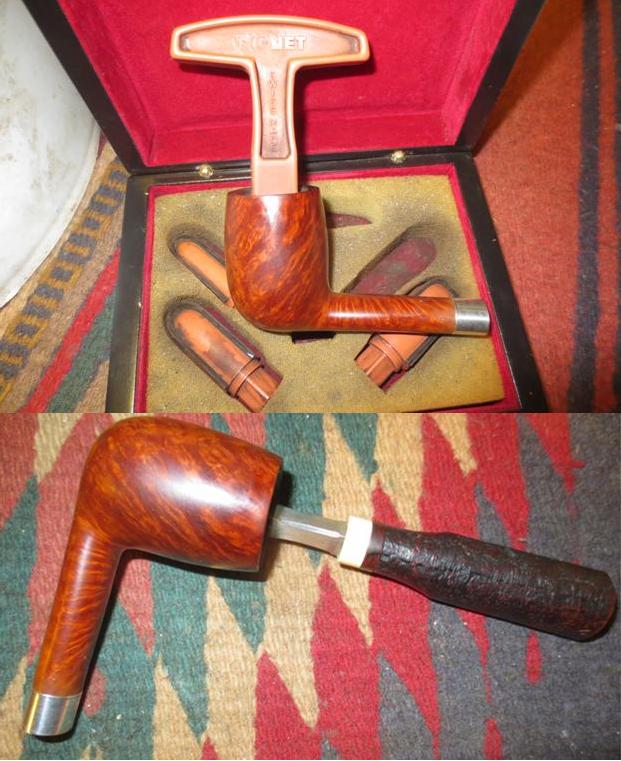
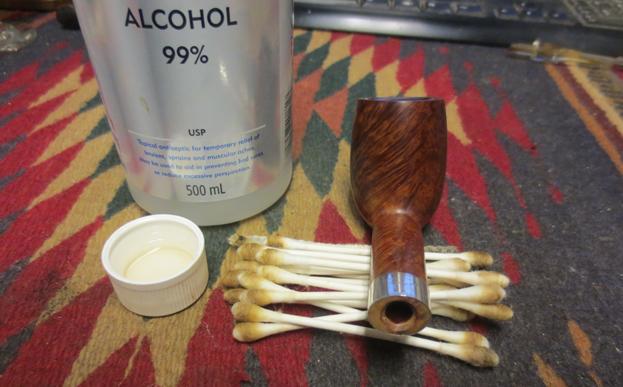
Here is the bit following its bath and then after sanding with 220-grit paper and wet micro meshing all the way from 1500-12000.Lor15 Lor16The stummel had the thickest stain I have ever encountered other than with some Chinese pipes on which I’ve labored.  It took longer than the 2 hr. 12 min. movie, with Darren or me (he’s decided he wants to learn about this esoteric occupation) flipping the big piece of briar over in the alcohol now and then to keep it soaking evenly, for the Everclear to eat through the barrier enough to sand the stummel lightly, also with 220.  I only found one small spot where a hole was filled.  In an email later, Steve, who had expressed some doubt that the pipe was a Lorenzo reject but suggested it might be a second, wrote that Lorenzo seconds are known for fills.  To me, given the similarity of style, stain and huge proportions of the ostensible Italian no-name (the single word ITALY was stamped almost flush with the steel band, on the underside), my theory of a Lorenzo connection was cinched in my mind at least. Lor17 Lor18 Lor19 Lor20By a stroke of good luck, as I always see it, the band came off at the end of the sanding, and I was able to make the area under it match the rest.  I got on with the next step, micro meshing from 1500-12000.Lor21 Lor22 Lor23This is where the real challenge came.  Forced to strip the stummel of its original stain to get at the scratches without creating more damage using sandpaper, I wanted to re-stain the wood as close as possible to the bright reddish tone it had, knowing that was impossible with the stains I had on hand.  I opted to mix Lincoln Marine Cordovan about three-to-one with Fiebing’s Brown alcohol-based boot dyes.  When flamed with a lighter or matches, the stain is fixed to the stummel without running as the light char is micro meshed off and again later with waxes and compounds buffed on.Lor24I also knew this combination, or even using only the burgundy color, would be so dark that none of the grain would show through.  Applying the mix liberally, I used a couple of good strong wooden kitchen matches from a box of 250 I bought at Walmart for about a dollar to flame the pipe, but the result was not the usual impressive blue flash I expected.  Still, it did the trick.  I think the alcohol in my liquid stains is evaporating with age.  I told Victor Rimkus, a successful pipe crafter/engineer here, how I needed to buy a new supply as well as other colors.  He said I could mix what was left with alcohol, which sadly only struck me as obvious when I heard the idea, or, as he does, buy the powder and mix it as needed with alcohol.  I had never heard of this powder stain before but found it online at a very affordable price.  There are even some great discounts for buying the complete kit with every color made – and the variety of colors and shades is staggering.  You know I can’t pass up a good discount.Lor25The light coat of residual char came off with 2400 and 3200 micro mesh.  Super fine 0000 steel wool gradually lessened the dark combination of stains until I concluded the color mix was still a bit off.  I deliberately took the stain down a notch lighter to add another quick layer of the brown, and when it cooled after flaming again I wiped off the char as before.  The result was much better.Lor26 Lor27 Lor28Lor29I used a couple of dabs of Super Glue spread thin around the inside of the band to reattach it.  In one of the emails I exchanged with Steve regarding the chance of this pipe being a Lorenzo relative, he pointed out that in the photo of the band I attached with a plea for help in identifying the hallmarks, the band had been placed unevenly.  Trying first to determine the meaning of the marks on my own, I had found a site that was clearly not the best.  The closest I came was a reference to a pair of brothers named Edwin and John Power, known naturally as Power Brothers, who ran a tobacconist shop and seem to have made pipes in 1900.  They marked their bands with an EP in an oval which, given the site’s other shortcomings, I considered might be – but given the year, likely was not – a misnomer for the diamond on this band.  Steve identified it as an Electro-Plate band that he thought could be an after-addition.  Studying the band and the one item of nomenclature on the bottom side of the shank – the block lettered word ITALY near the opening but above the band – I was doubtful it was indeed an afterthought.
But by that time, the restoration had progressed to the point where I had already corrected the problem.

The time to retort the odd Dublin had come, but looking at the wider than wide mouthpiece of the bit, I knew that of the three rubber tubes I have, none would work.  And so, as I have done in past situations like this, I rummaged around my spare bits until I found one from a Ropp natural cherry wood that matched the tenon size – at least halfway in.  As always, I was happy I retorted the pipe thoroughly, as this one had more than usual use on it.  I had to run six alcohol soaked regular cleaners through the shank before the last came out clean.Lor30 Lor31After buffing the bit with red and white Tripoli, White Diamond and carnauba, and the nice smooth reddish-brown wood with the same progression (I laid on a heavy coat of the red Tripoli to approximate the original color somewhat closer), here is the result.Lor32 Lor33 Lor34 Lor35
CONCLUSION
I have to say, this was nowhere near the most difficult restore I’ve ever done, but the research into Lorenzo, in my attempt to establish whether or not it is one of their rejects or a second of some sort, made the process one of the most exciting of my projects.  In my mind now, there is no doubt this conundrum of a pipe, is in fact a Lorenzo reject.  This conclusion is not based on an overwhelming desire to make the pipe more than it may be.  It is based on the evidence: the undeniable similarity of design between the Spitfire by Lorenzo Mille second; the identical color of each that has the appearance of being created specially by the maker, and the presence of somewhat erratic grain and even the single fill I found after stripping the original stain, given that Steve wrote of Lorenzo seconds tending to be known to present these defects.  Although, with due respect to Steve, I doubt this is a second because of the lack of any such nomenclature, the same standards would apply to outright rejects.  I did my best to make it once more the beautiful pipe it was when first created, but the grain certainly is less than perfect, and there is one place where briar shavings were mixed with some clear bonding element to fix a ding.  But now, neither of these facts detracts from the pipe’s allure and good fit in a large hand, which its new owner certainly has.
The Spitfire awaited a new home for months after I finished the restoration, and in the end was purchased by a New World gentleman, from Raymore, Missouri to be specific, who read my blog of another pipe and found the massive Lorenzo (second) on my site.  The lovely example of Italian flair and craftsmanship in this blog, on the other hand, was reserved prior to its restoration by a visitor to my pipe club’s monthly meeting.  His name is Evan, and here he is at the tobacco shop with his “new” pipe.  See how snug it is in Evan’s big mitt. Lor36When Evan, who resides in the much smaller town of Placitas about a half-hour’s drive from the relative metropolis of Albuquerque (close enough to commute to and from where he works here), talked to me alone in the big back room of the Moose Lodge where our official monthly pipe meeting is held, I asked if he had seen any of my pipes he found interesting.  I assumed he had not located one he wished to buy but also wanted to get an idea of what he looks for in a pipe, other than the Dunhill with its distinctive dot on the bit he enjoyed for the meeting.  I admit to thinking I might have something I put off restoring that I could perhaps expedite.

Evan was courteous enough to tell me the truth: none of the pipes I had displayed was big enough for his general taste.  That remark turned out to be the exact sort of intelligence I hoped to receive from my question, for I knew I had just what he was looking for, at my humble home and small business, waiting to be cleaned up.  I inquired if he had heard of Lorenzo pipes and added that I had restored and sold one but had another pipe like it that I believed was a reject by that company, although there was nothing wrong with its looks or quality.  Evan had not heard of Lorenzo but was intrigued by my description of the large pipe.

After getting a look at the photos I emailed to him showing the restored Spitfire and the no-name as it was before cleaning up, the good man replied with considerable enthusiasm.  In fact, considering the low price I offered him, he asked me to name the time and place he could pick it up!  I had the pleasure of presenting Evan with the finished Lorenzo or second or whatever it is Monday morning at the tobacconist shortly after the comfortable little shop opened at 10.  With any sale, online or in person, and in particular when the buyer has requested a pipe that was not yet restored, I always wonder if it – or, rather, I – will match the new owner’s expectations. I observed at once that Evan had pondered his reverse version of the same scenario from his reaction of unconcealed surprise.  In short, the pipe was just the kind he loves most – big enough to fit in his large hand, solid, possessed of an unusual shape and beautiful to behold.  I add the last part not to pat myself on the shoulder but due to Evan’s appraisal.  To my way of thinking, pipe restoration is very much the same as newspaper editing, with which I have had more experience than working on pipes: the flaws in the pipe or article are unimportant so long as all of the necessary information is there to put in order.  The best word to describe Evan’s reaction to his latest acquisition – which went on for close to a half-hour – is effusive.

SOURCES
https://www.smspipes.com/index.cfm/fuseaction/catalog.listProducts/catId/4/Lorenzo_Pipes.htm
http://vermontfreehand.com/product/powdered-dye/
http://www.pipes.ws/Lorenzo
http://www.silvercollection.it/DICTIONARYTOBACCONISTE.html Power Bros. hallmark

Restoring a Patent Era Brigham 232 Saddle Billiard


This is a great restoration of a rather rare Brigham shape. Like Charles I have a soft spot for these Canadian made pipes. Great job Charles.

Charles Lemon's avatar

This old Brigham is the pipe I used when writing up my previous post on fixing common stem issues. To paraphrase the late Paul Harvey, here is the rest of the story.  – Charles

I spotted this old Brigham in a mixed lot of mostly basket pipes I bought recently. As many of you know, I’ve got a soft spot for these Canadian pipes, made in Toronto before Brigham moved production to Italy in 2001. This 232 is a smaller pipe, perhaps equivalent to a Group 3 Dunhill bowl, but in a rarely seen shape for Brigham, a saddle-stemmed billiard. The majority of vintage Brigham pipes came with a tapered stem to better accommodate the rock maple filter, and this saddle stem is thicker than average for the same reason.

Overall, the pipe came to me in fairly good shape. The stummel was reasonably clean for an estate pipe, with…

View original post 1,045 more words

Fixing Another Common Stem Fit Issue – Stem to Shank


I wanted to bring this post to the attention of the rebornpipes readers as it addresses a common issue that most of us have or will face in our restoration/refurbishing work. thanks Charles.

Charles Lemon's avatar

A little while back, I wrote up a blog entry on fixing two stem fit problems that crop up regularly – a too-loose stem, and a too-tight stem. Today I’d like to spotlight another common, and completely avoidable, stem problem that I deal with regularly when restoring estate pipes, namely the issue of a stem that won’t seat flush against the end of the pipe’s shank.

This picture illustrates the problem. No matter how much twisting, pushing, pleading or threatening, the stem simply will not insert any further into the mortise.

20160516_082855

Presumably, the stem fit just fine on this pipe when it was new, so what has changed? The simple answer is that the pipe has been used and although a pipe cleaner may pass easily through the airway, tars and oils from the smoke have condensed inside the shank and built up a nice little plug in front of…

View original post 708 more words

A Mystery Bent Apple Pipe Turned out to be an Oldenkott


Blog by Steve Laug

My brother bid on this pipe because he liked the look of it. I saw the photos and had to agree with him as it is one of my favourite shapes. The shank is absolutely clean with no stamping on it. The briar is uniquely grained and unstained. The rim had a light coat of lava that was rock hard. The finish was very dirty and oil marks were on the sides of the bowl. There were a few small sandpits and fills in the briar. The bowl had a light cake building up on the inside. The stem was oxidized and had some small tooth marks on bother the top and bottom sides near the button. The stem had a white dot in a red circle inlaid on the top of the saddle stem. When I removed the stem it turned out to be drilled out for a nine millimeter filter and had Vauen Dr. Perl filter in place. That gave me a clue that it was made in Europe. But even with that I did not clue into the maker of the pipe. It took a random scrolling through eBay and seeing and Oldenkott with the same stem logo that I remembered where I had seen that marking on a pipe. The mystery was solved. The pipe was an Oldenkott whose markings had obviously been buffed off over the years. The stem is original so I am convinced that the mystery is solved.apple1apple2On the underside of the right side of the pipe there was a burn mark in the vulcanite stem. It looked as if someone had laid the pipe down in an ashtray and a cigarette or ash had burned this spot on the stem. The first close-up photo below shows the burn mark. The second photo show the tooth chatter and marks on the stem near the button (The ones on the other side of the stem are not as deep). The third close-up photo below shows the rim of the pipe and the state of the bowl.apple3apple4

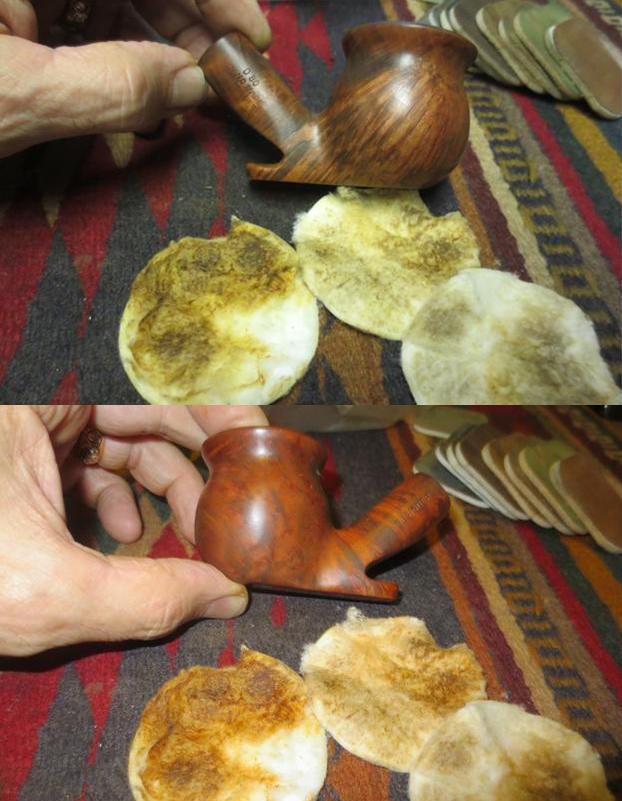
I took the pipe apart and the three parts are shown in the photo below – you can see the Vauen filter and the large mortise and tenon made to accommodate the 9mm filter. apple5I scrubbed the bowl surface with acetone on a cotton pad to remove the finish from the bowl. It removed the grime and oils from the original natural finish of the bowl and left it clean.

apple6apple7

I scrubbed the rim with the acetone and got some of the tars off but decided to lightly top it to clean it further.apple8

The cake was light so I reamed it with the Savinelli Pipe Knife and took it back to bare briar.

apple9

I sanded the stem and particularly the burn mark with 220 grit sandpaper to remove the damaged vulcanite. I picked it clean and wiped it down with alcohol. I filled in the burned area with black super glue and set it aside to dry.apple10

I set the stem aside to cure overnight and gave the clean bowl a light rub down of olive oil. I wanted to have a better look at the grain of the briar and work out a plan for what I would do with the finish.apple11apple12

In the morning I used the drill bit from the KleenReem pipe reamer and cleared out the tars and oils in the airway of the bowl. I set up the retort and boiled alcohol through the pipe to remove the oils on the inside of the stem, mortise and airway into the bowl.apple13

apple14

When I finished with running two test tubes of alcohol through the pipe I cleaned it out with pipe cleaners, cotton swabs and alcohol. The retort had removed the majority of the grime from inside the pipe.apple15

I had a box of Vauen 9mm filters from a recent trip to Hungary so I got the box out and compared the filter to what was in the pipe when I started. I had the match so I was good to go with a new filter.apple16

I put the pipe on the staining stand I use and gave it several coats of Danish Oil and Cherry stain to highlight the grain and give it some definition.apple17apple18

While the stain dried I wet sanded the stem with 1500-2400 grit micromesh sanding pads to remove the oxidation and begin to shine the vulcanite. I gave it a coat of Obsidian Oil and dry sanded with 3200-4000 grit pads. Another coat of oil was rubbed into the vulcanite and finally I sanded it with 6000-12000 grit pads. I gave a final coat of oil and let it dry.

apple19apple20apple21

I buffed the pipe with Blue Diamond on the wheel and then gave it multiple coats of carnauba wax. I buffed it with a clean buffing pad to raise the shine and finished by hand buffing it with a microfibre cloth. I am happy with the finished pipe and think I will try to make or hunt down an adapter to put in the tenon to make the filter unnecessary. That way it can be used either way – filtered or unfiltered. Thanks for looking. apple22apple23apple24apple25apple26apple27apple28

Miracle Pipe Mud Review


Al contacted me with a new product that he has been using called Pipe Mud. This is different than the standard refurbishers cigar ash and water mixture. Al does a great write up on the product and also introduces us to his new blog. Thanks Al. Cheers

pipedreamersite's avatarPipeDreamer

A blog by Al Loria

Have you ever had a tobacco chamber burnout or a draft hole that got too large? I think this may be a product worth looking into. It’s a pipe mud made by Aristocob called Miracle Pipe Mud. Many of us have used the traditional cigar ash mud, or JB Weld, or even a briar plug in the bottom of a burnt out bowl. This mud could possibly be an easier and more permanent solution.

The mud comes in powder form in a ziplock bag. It’s a light gray color and is fine grained. It has real cigar ash in it and other proprietary ingredients. It doesn’t look like anything special, but, it is.

I had three estate pipes that needed serious tobacco chamber restoration. A pre-republic Peterson Shamrock, bent Bulldog, a Marxman Author and an Upshall Canadian with a Dublin bowl. The shamrock had gouges…

View original post 627 more words

Dunhill White Dot Repair


Lance Leslie

I received an email from Lance this afternoon with a blog submission. In his email he states that he thought that this would make a good blog for the site. He has been restoring pipes for a few years and has learned some valuable tips on rebornpipes. He sent along a restoration he completed that had a repair tip he had not seen addressed on the blog. While I have inserted dots on Dr. Plumb pipes and an odd variety of others I have not dedicated a blog to this repair so I agreed that it would be good to have his process spelled out here.  Welcome to rebornpipes as a contributor Lance. It is good to have you here. Hopefully this will be the first of many contributions that you bring to the site. — Steve

I have been restoring pipe for a few years now and have learned some valuable tips from rebornpipes. I have a restoration to share and unless I have missed it, I have not seen this issue addressed on this blog. The issue being, adding the infamous white dot to new replacement stem. Or…in my case, a blank replacement stem.

I recently won this Dunhill on eBay and noticed that the White Dot was missing. After asking all the right questions to be sure I WAS bidding on a Dunhill, I made my offer and won. The owner did not know much about pipes so he did not know if it was a replacement stem. I have seen the white dot covered by soot only to be revealed during the cleaning, but this was not the case. This was listed as a 1982 Dunhill Bruyere but it turned out to be a 1977. Here is the pipe as it looked when it arrived.Dun1The rim was covered with lava and the bowl was thick with cake. There were some dings in the bowl that would need to be addressed. The stem had some dents and would need a White Dot added. What is a Dunhill without the White Dot? The stem was also heavily oxidized.Dun2 Dun3 Dun4I placed the stem in an Oxyclean bath and let the stummel soak in an alcohol bath to loosen the lava. After I removed the lava I saw significant damage to the rim of the piped and the rim was scorched in two places. This could only be fixed by topping the bowl. Rats!Dun5 Dun6I removed the stem for the Oxyclean bath and polished it with Meguiar’s scratch X 2.0. I didn’t want to go too far with the stem because I would be adding the dot later.Dun7 Dun8I then took the bowl and my sanding bit and topped the bowl. As you can see, it is now clean and sharp. The scorching was also gone. Thank goodness it was not too deep.Dun9 Dun10Next I wanted to address the dents in the sides of the bowl. Thanks to rebornpipes I knew a simple way to do this. And yes, my wife is missing a dish towel. With said dish towel wet, I heated a kitchen knife with a lighter. I pressed the knife against the dish towel and steamed the dent right out. Works every time.Dun11 Dun12 Dun13Now I needed to stain the top of the bowl. I mixed up some leather dye to match color of the bowl and gave the top several coats until it matched.Dun14Now the fun part!! It was time to add the White Dot to the stem. I had recently acquired a quad copter (Syma X5SW) and remembered the propeller protectors that came with the copter.
These are added for beginners to help protect the blades while you learn to fly. I no longer needed these so I checked the size and knew it would be a perfect match. BTW, you can order these blade protectors off of Amazon. Just type in replacement parts for Syma X5SW. They are cheap! See photos below…Dun15 Dun16 Dun17The ends of the blade protectors would do nicely. They are even conical shaped!!! I clipped off one end and sat it to the side. I then took some old stems and did a practice run before trying it on the Dunhill. It worked like a charm. I did not take pictures of my practice run, sorry.Dun18 Dun19I then went to my drill bits and chose the correct size. I lined up another Dunhill beside this one to get the proper distance for the White Dot on the stem. After I found the distance and center, I carefully drilled about 3 mm down. (Start your drill out slow if you use a hand-held drill. I would suggest a drill press if you have one.)Dun20 Dun21 Dun22I added some black super glue to the hole and placed the little white rod into the hole. Then using a rubber hammer, I hammered it into the hole.Dun23Then I clipped the plug as close as I could using scissors, and sanded down the rest with my sanding bit.Dun24 Dun25 Dun26The rest of the plug was sanded down with 220 sandpaper.Dun27Then it was a trip through the micro-mesh sanding/polishing pads. The pipe was married to its stem once again and polished with carnauba wax. Here is the finished pipe.Dun28 Dun29 Dun30 Dun31 Dun32