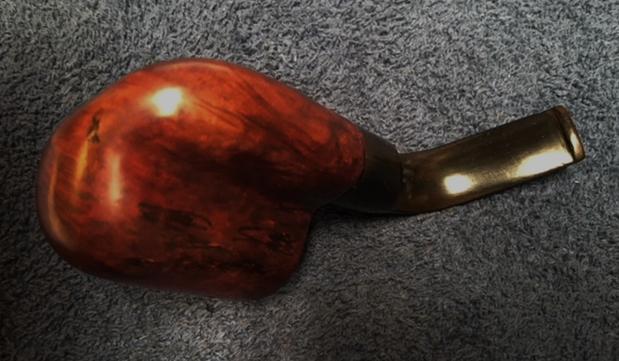
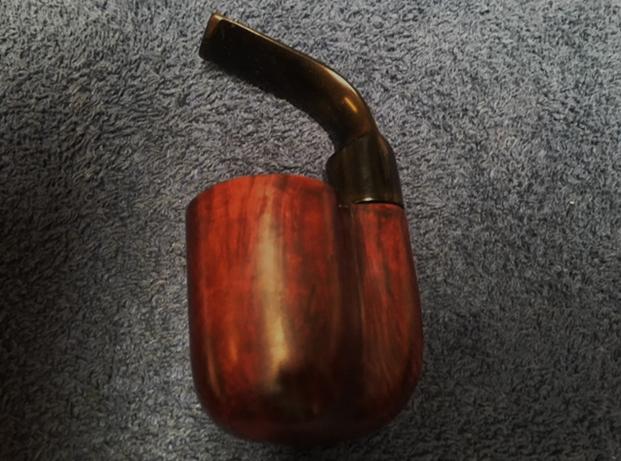
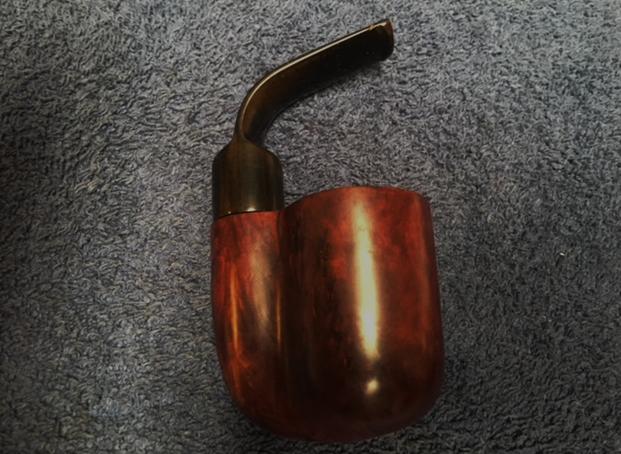
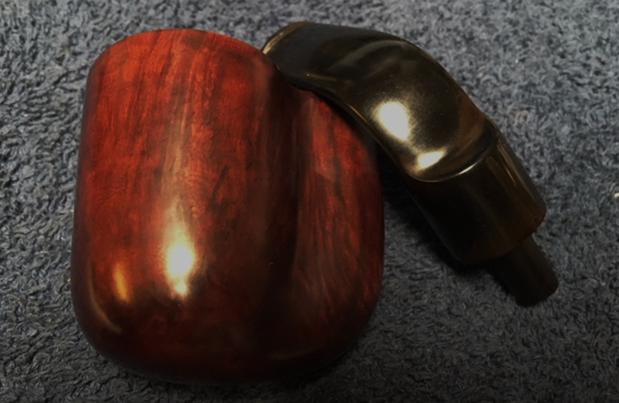
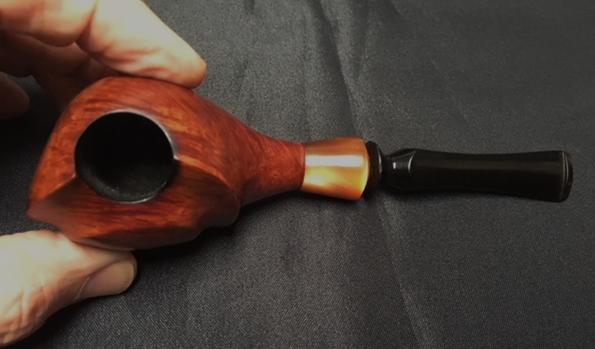
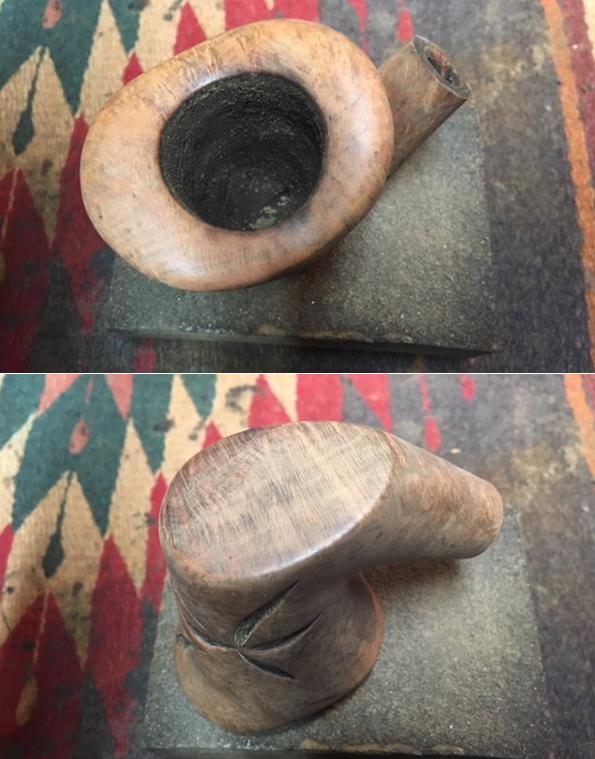
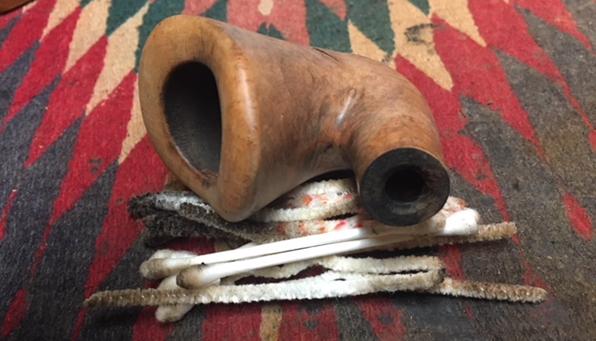
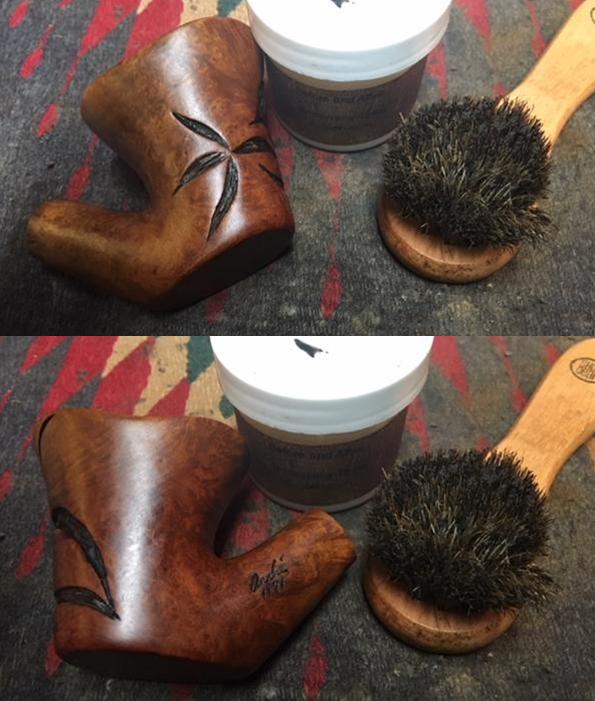
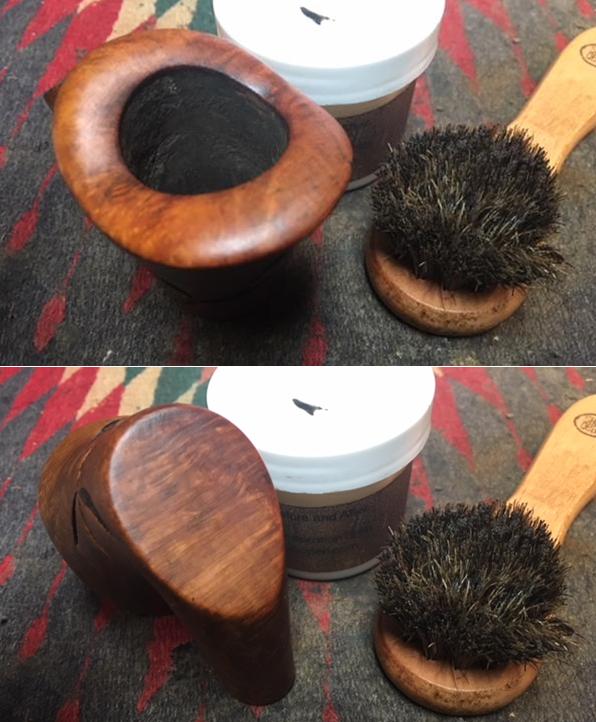
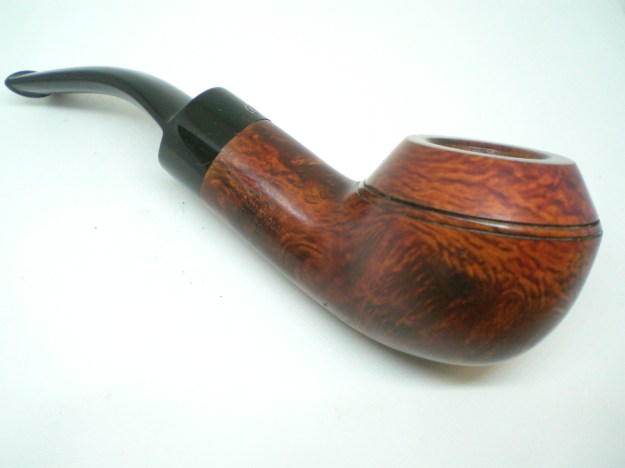
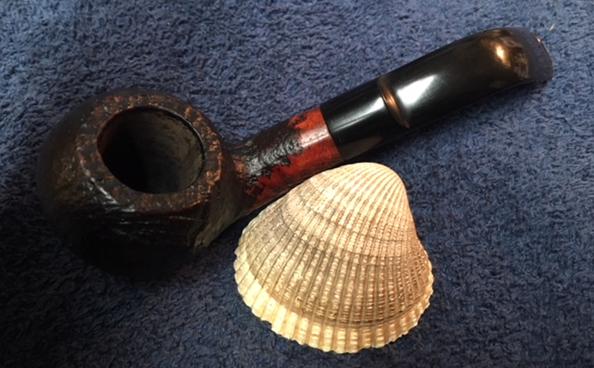
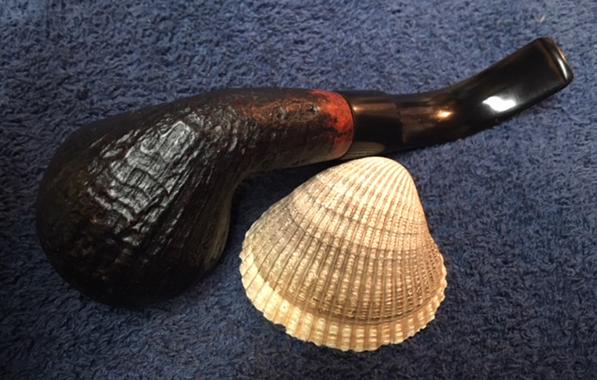
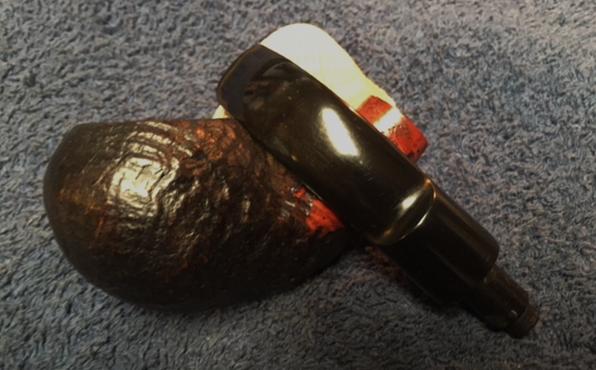
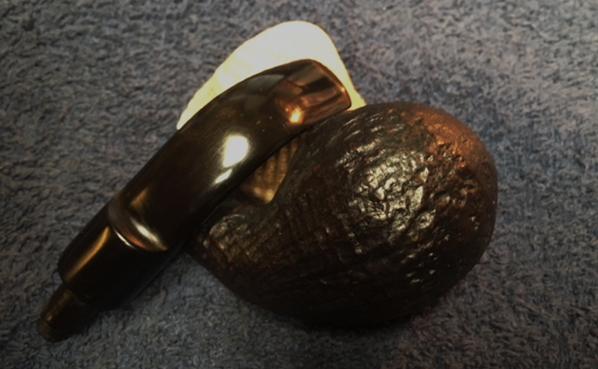
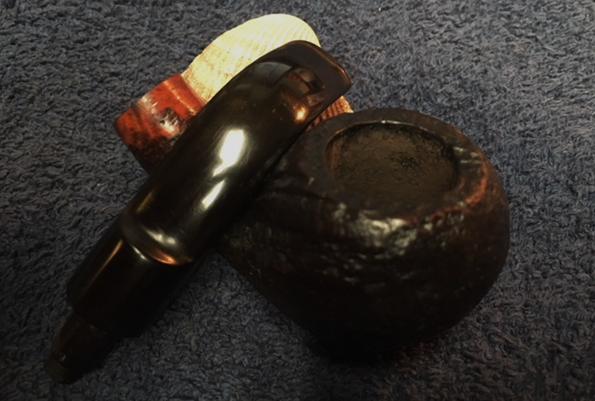
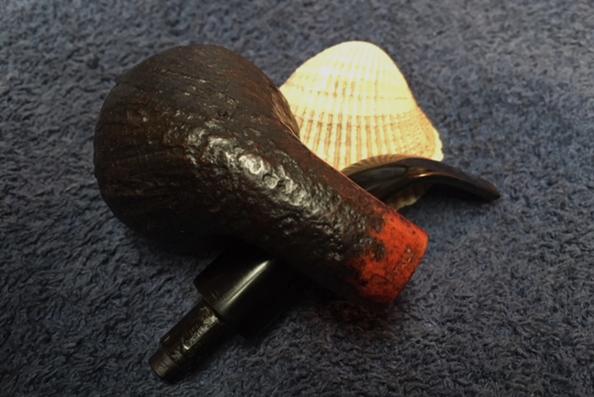
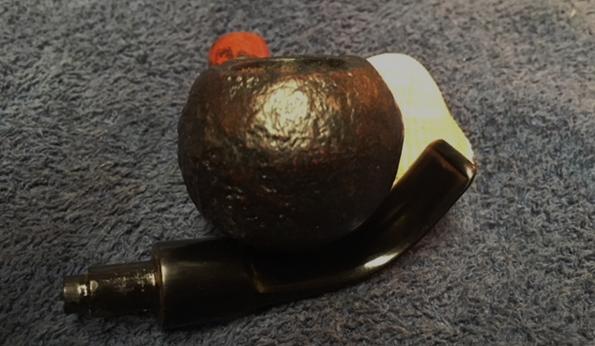
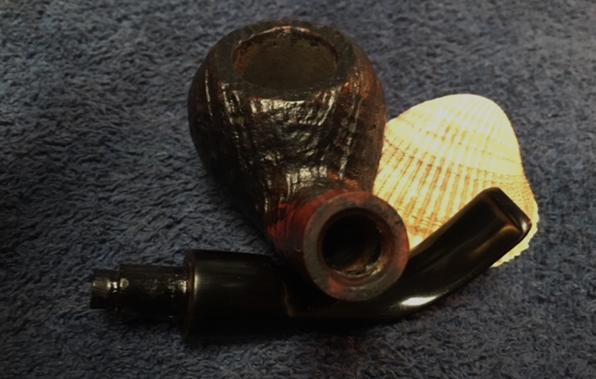
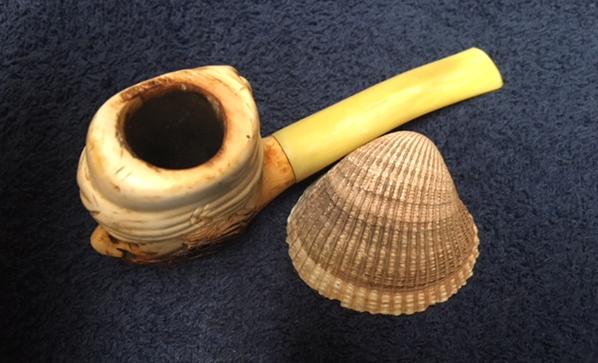
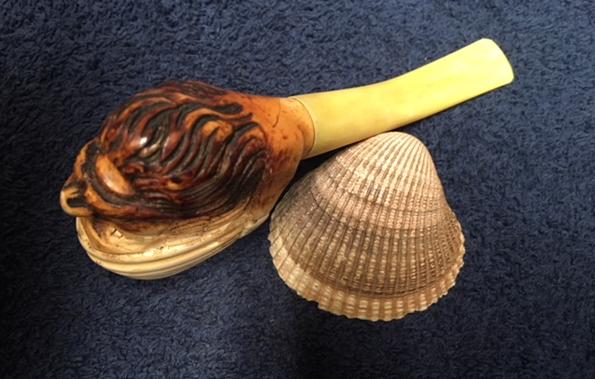
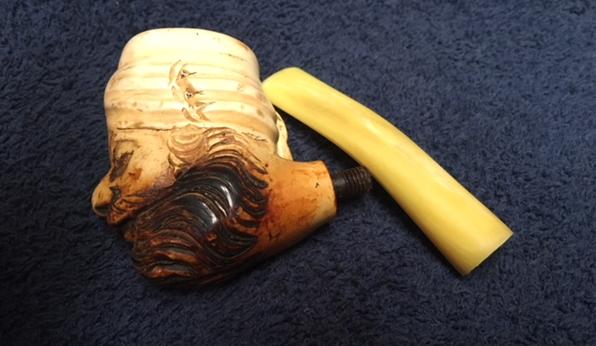
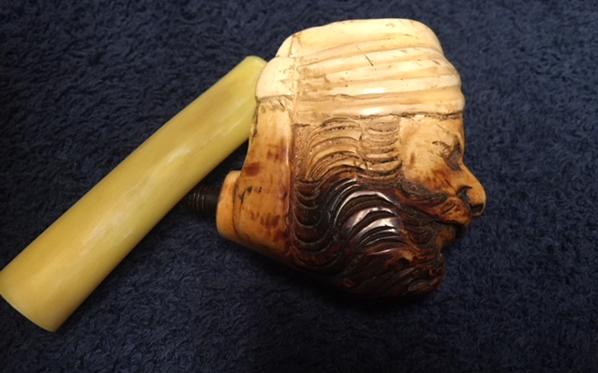
Adding some length to a Chimera Blowfish


Blog by Steve Laug

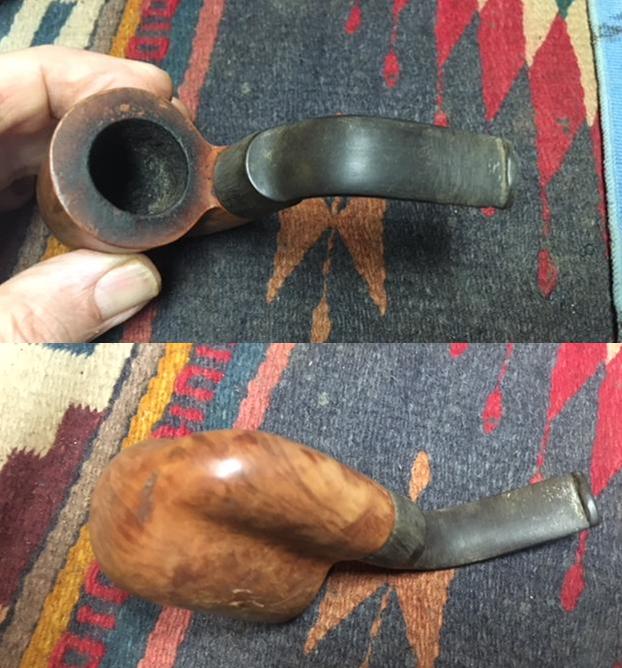
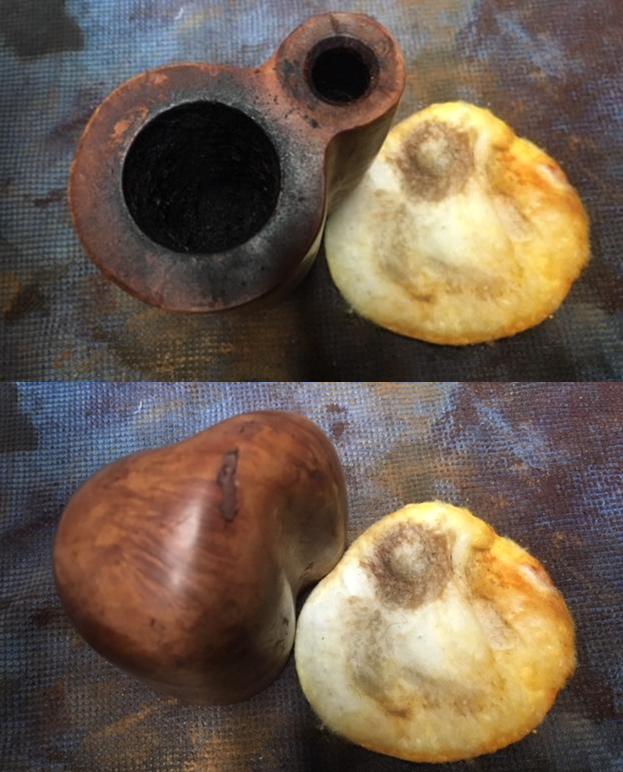
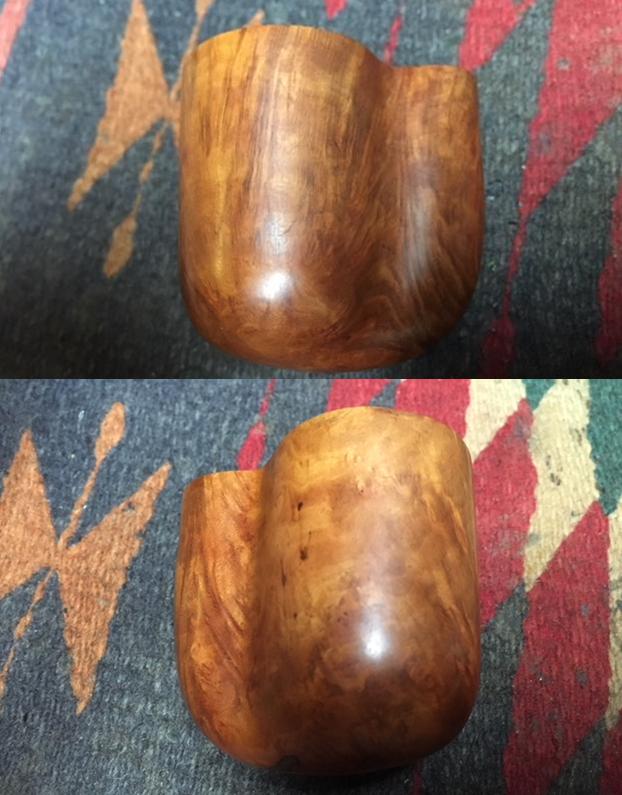
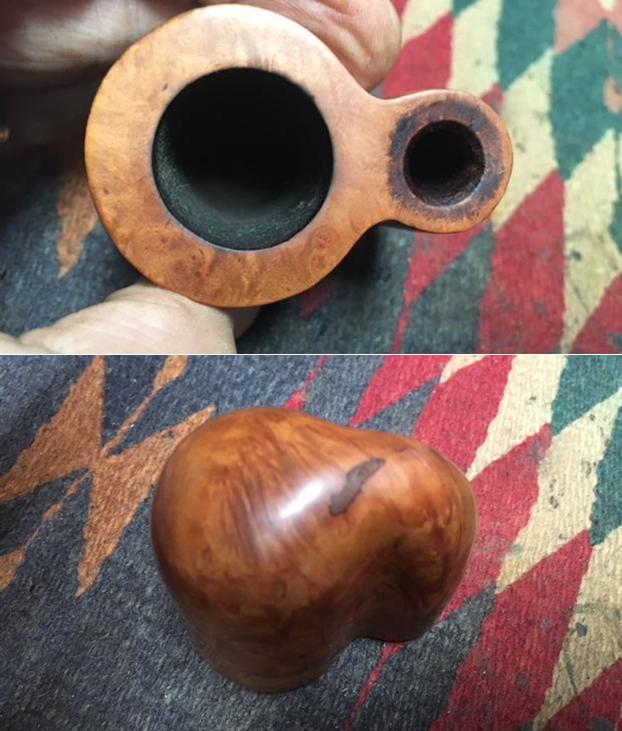
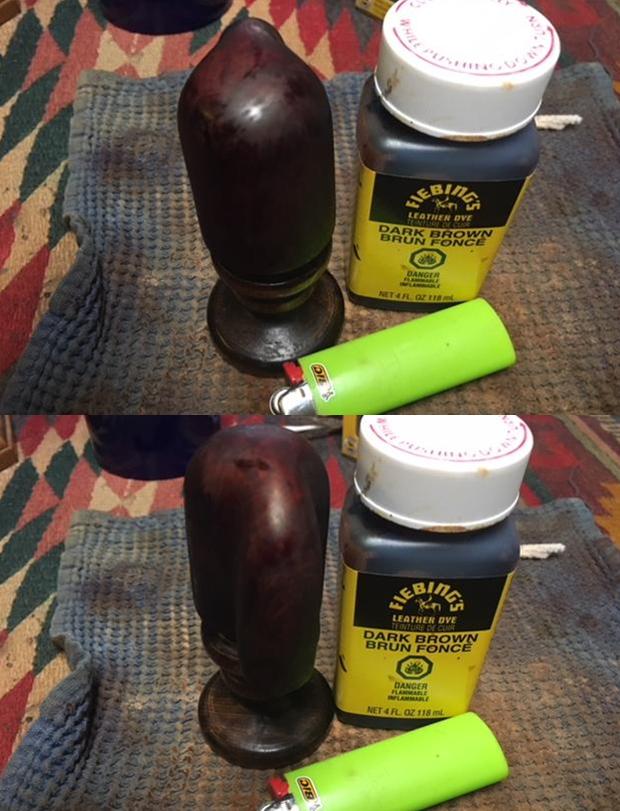
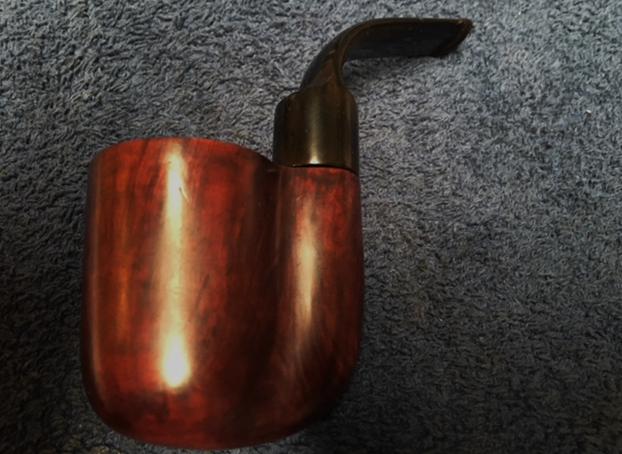
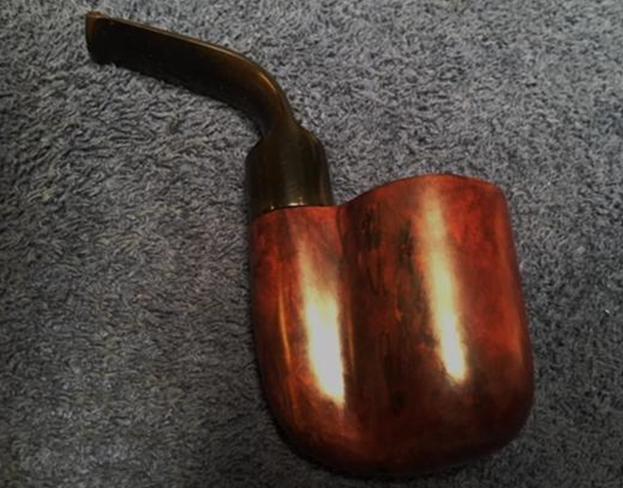
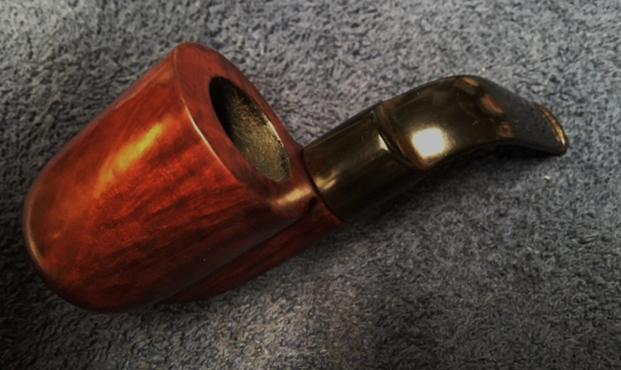
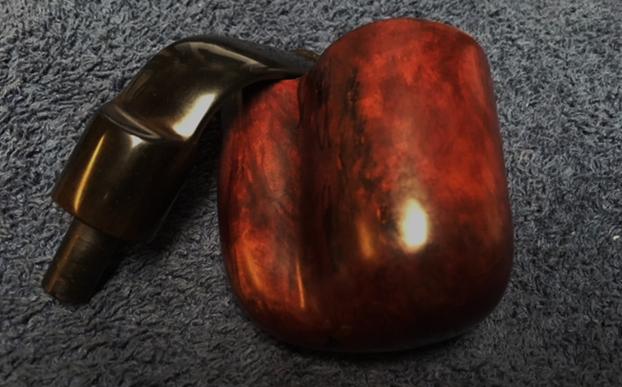
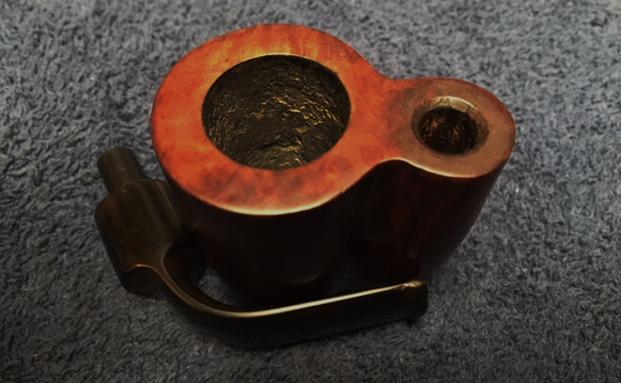
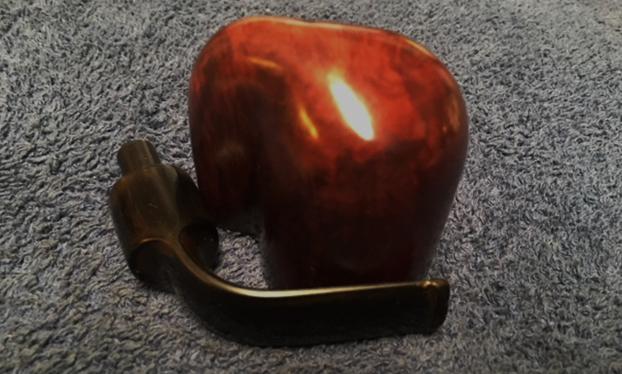
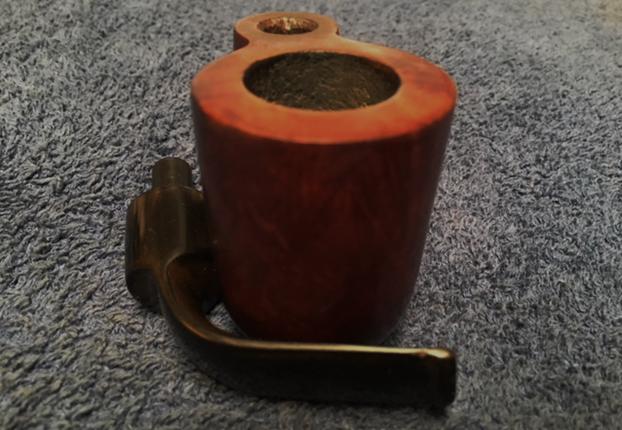
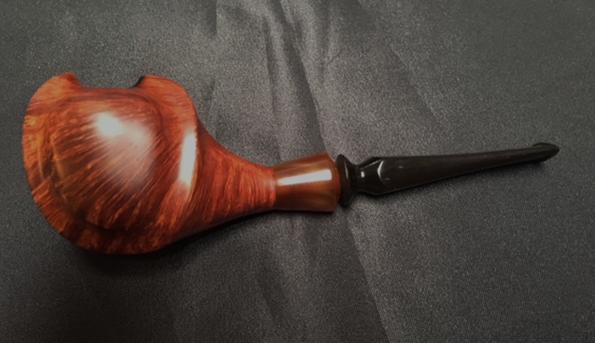
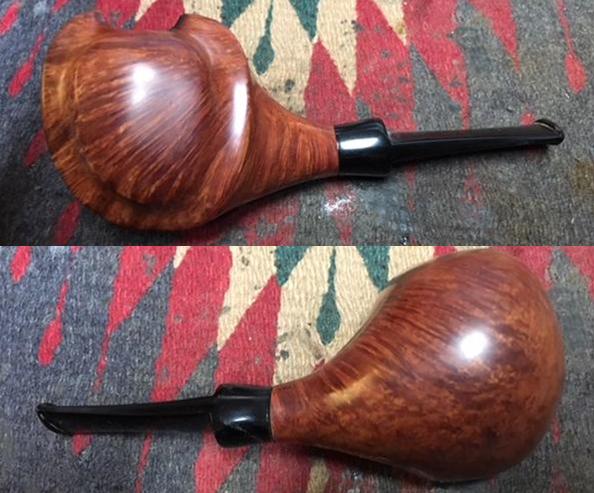
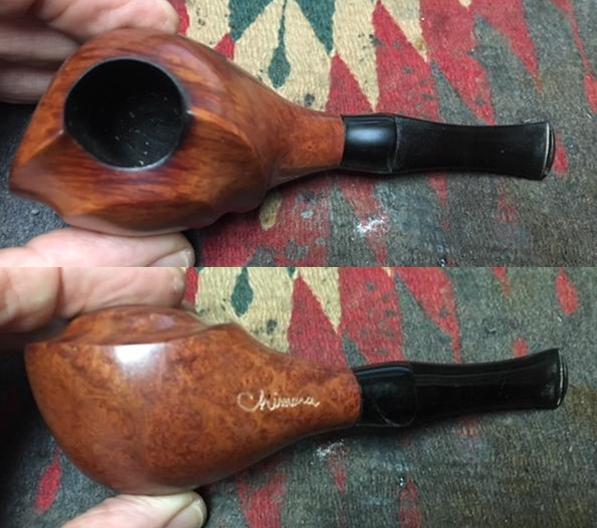
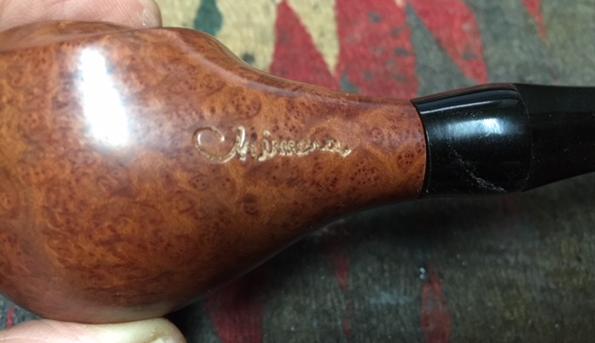
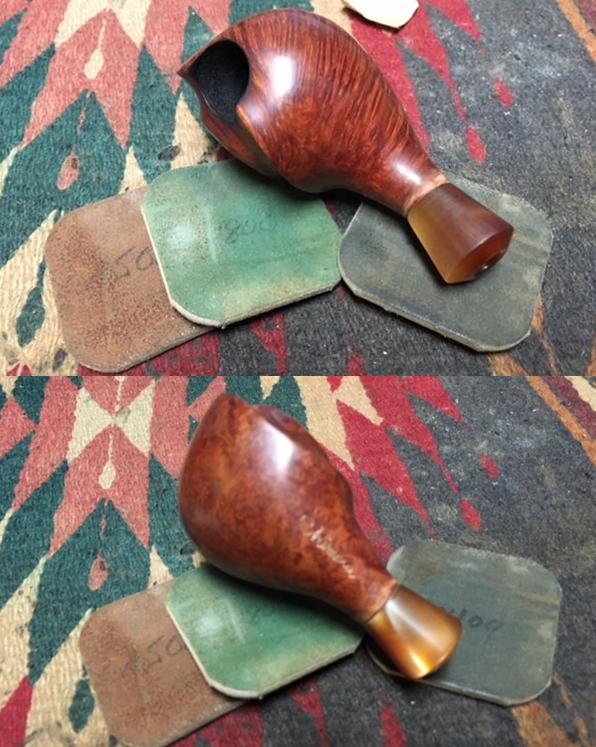
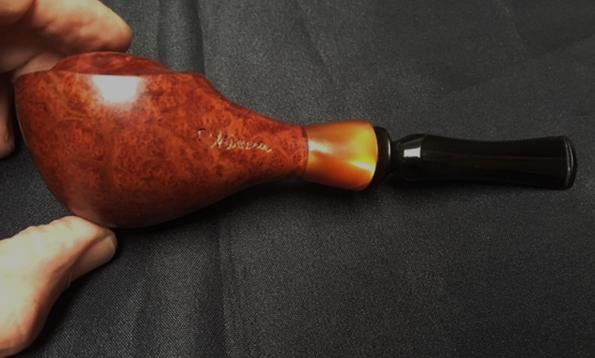
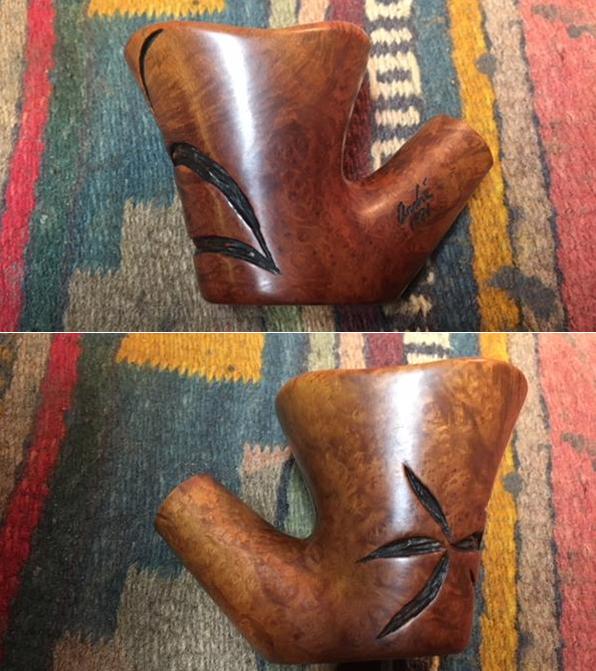
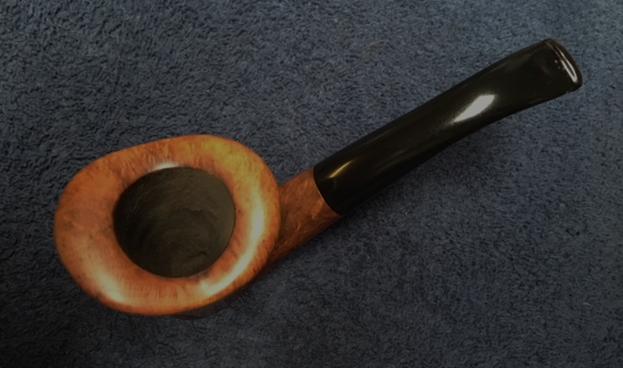
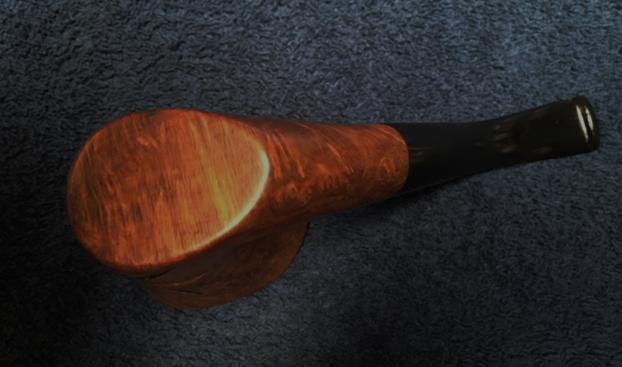
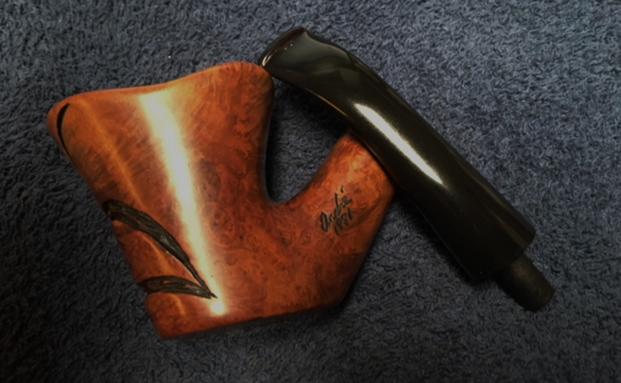
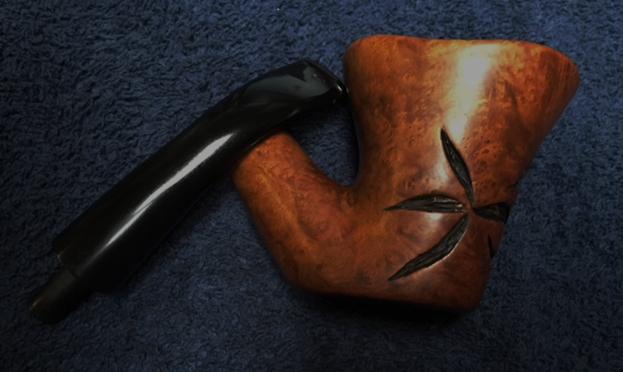
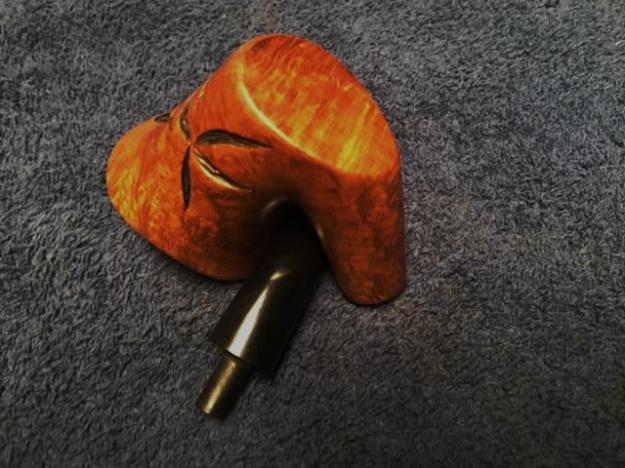
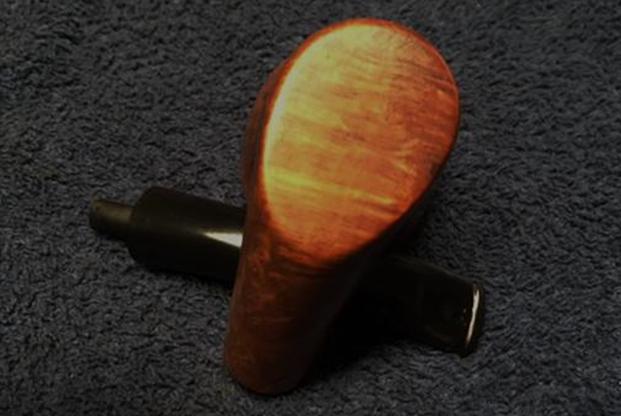
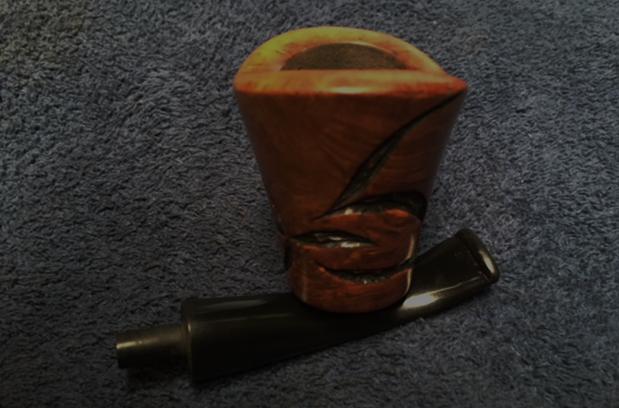
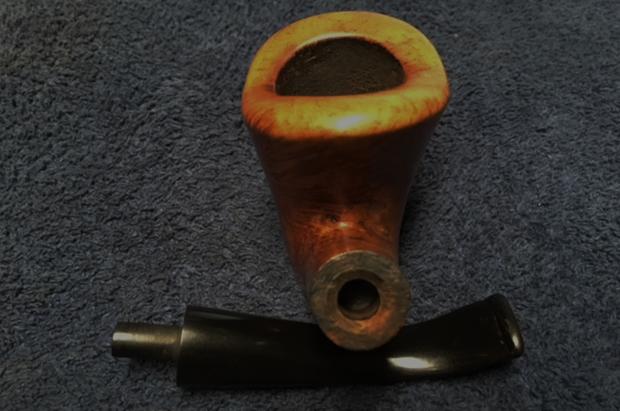
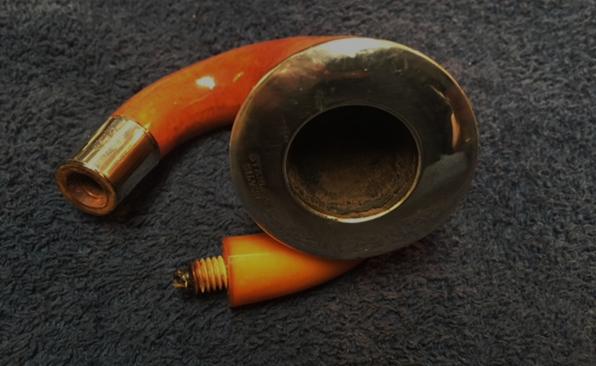
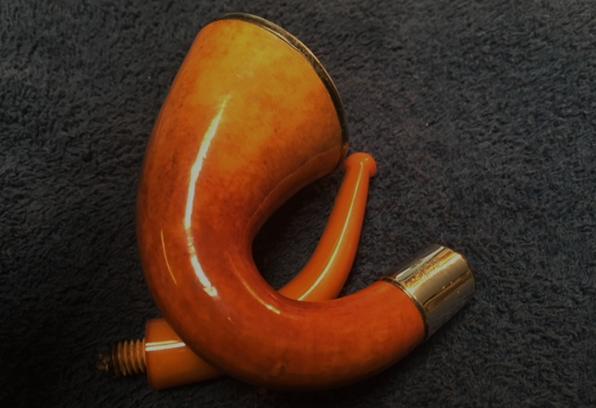
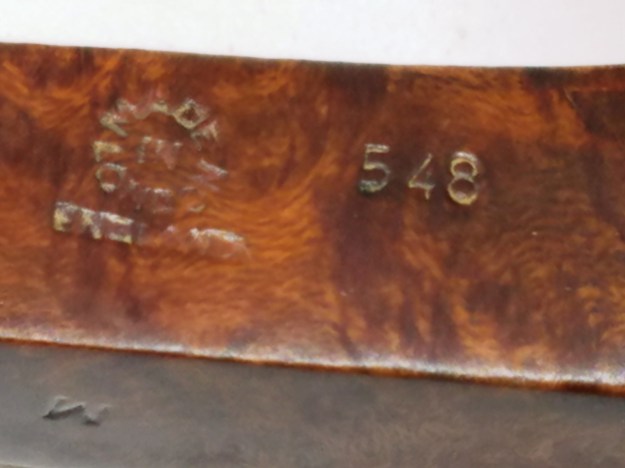
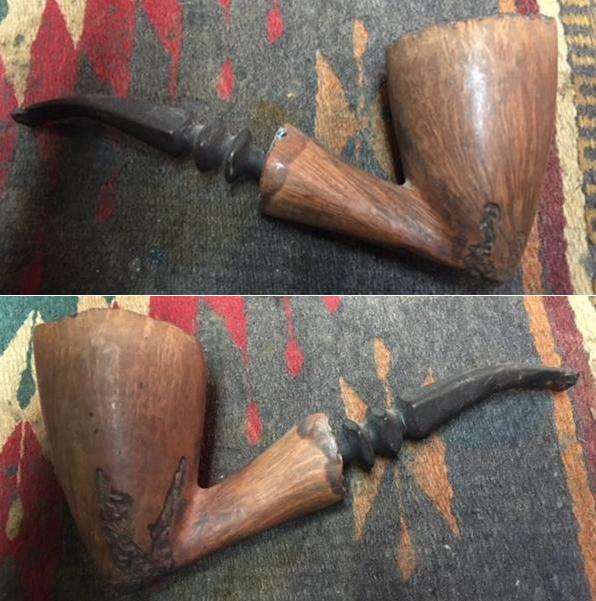
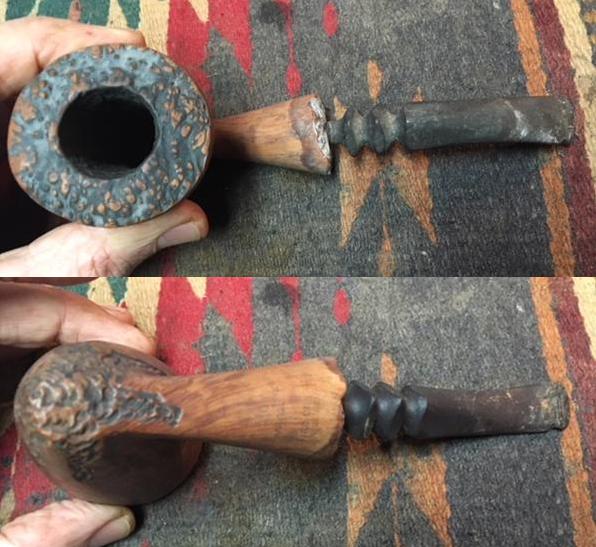
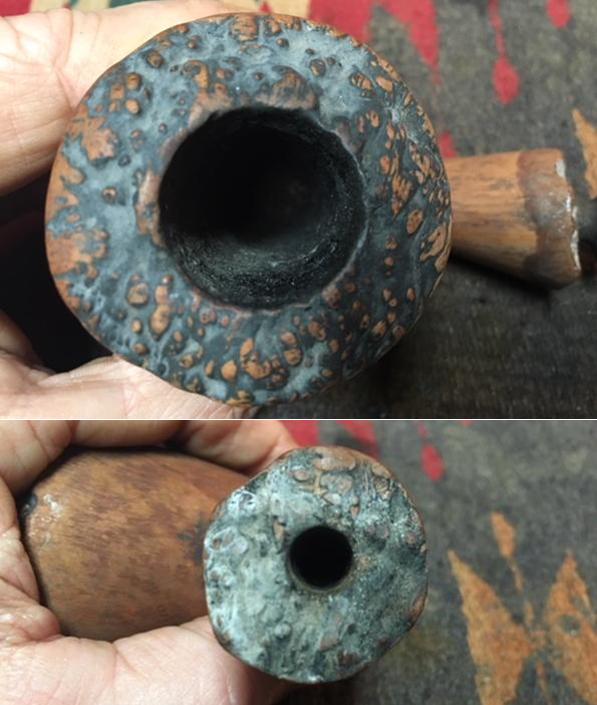
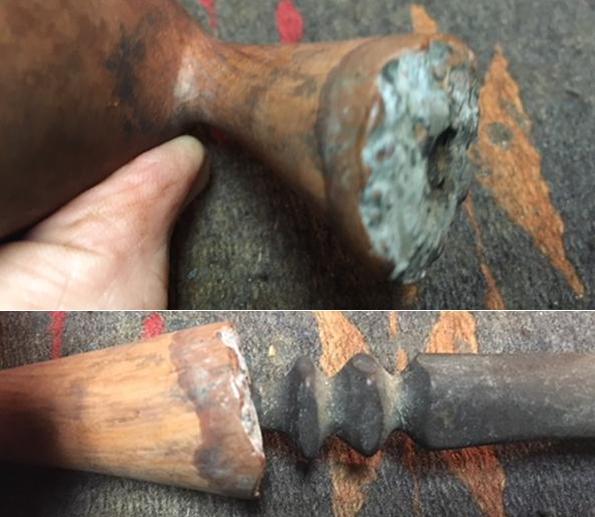
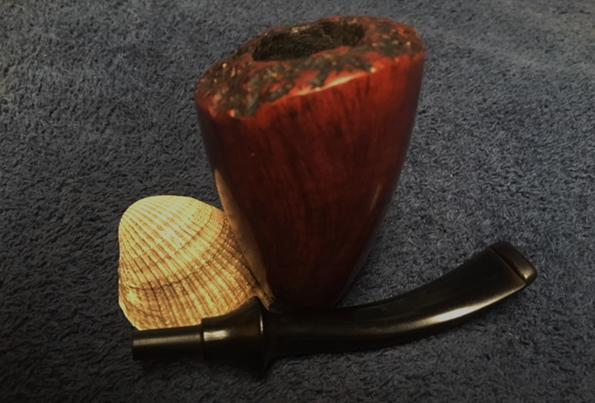
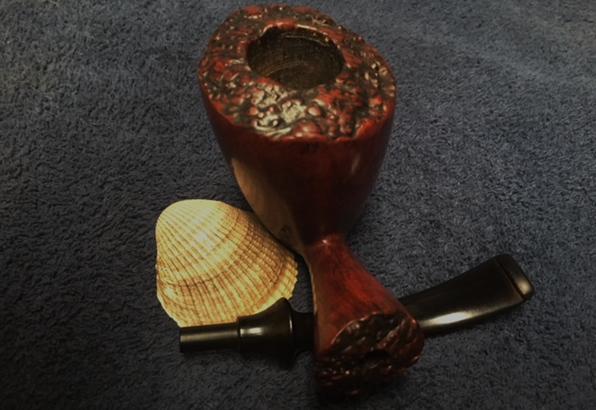
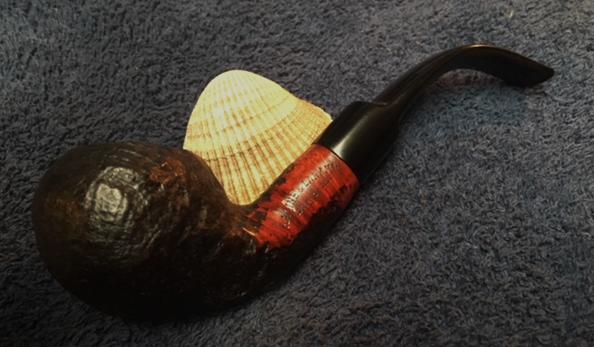
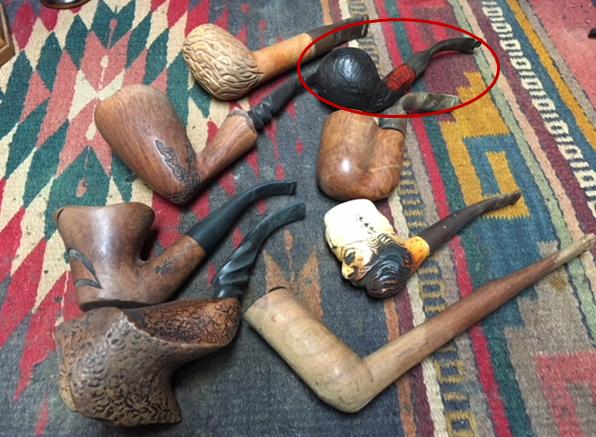
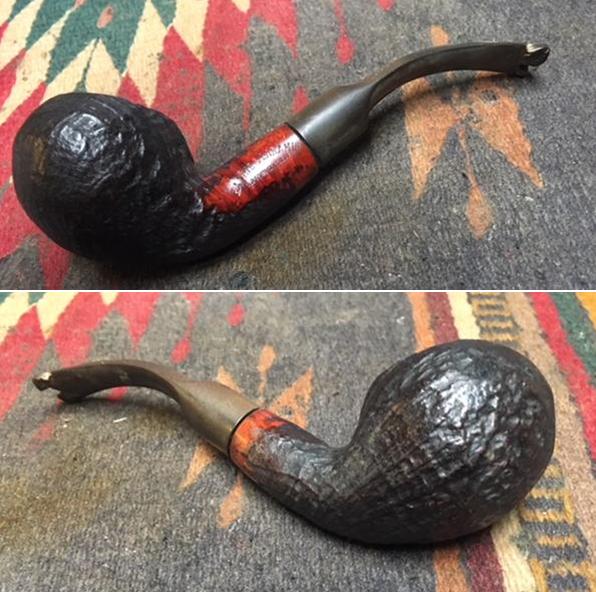
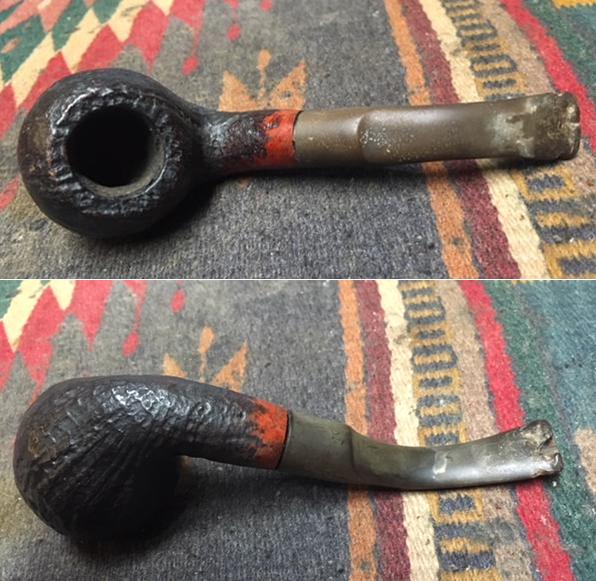
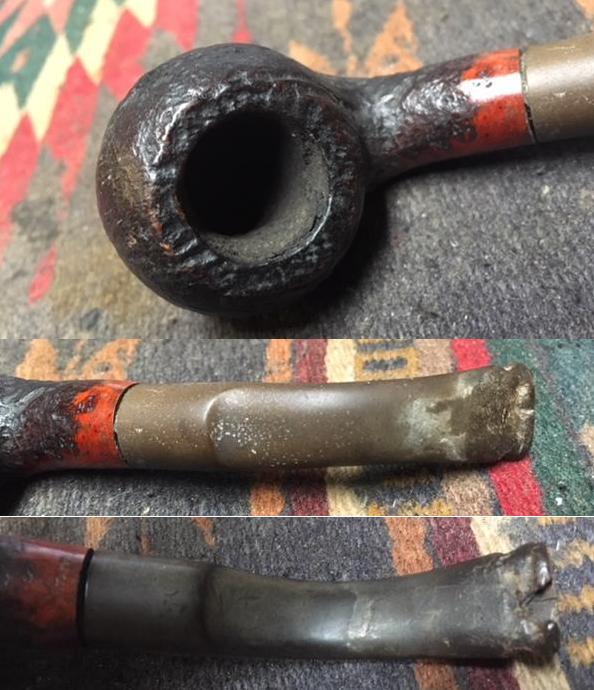
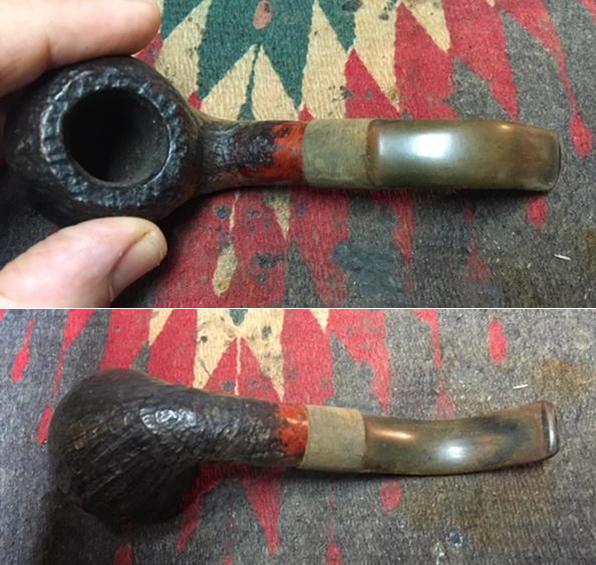
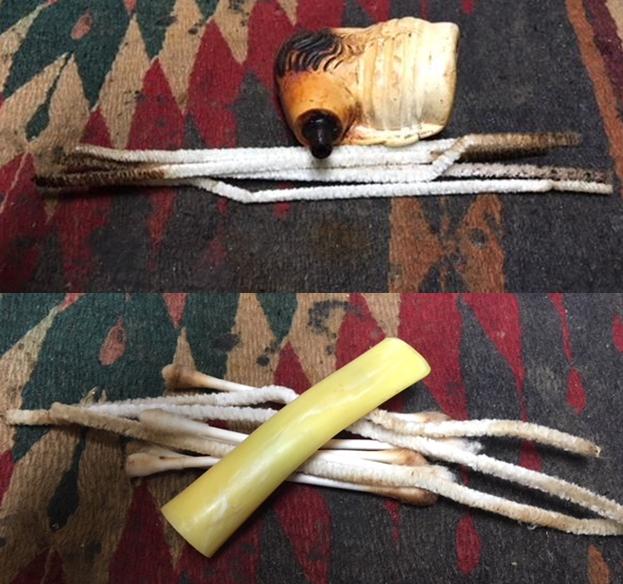
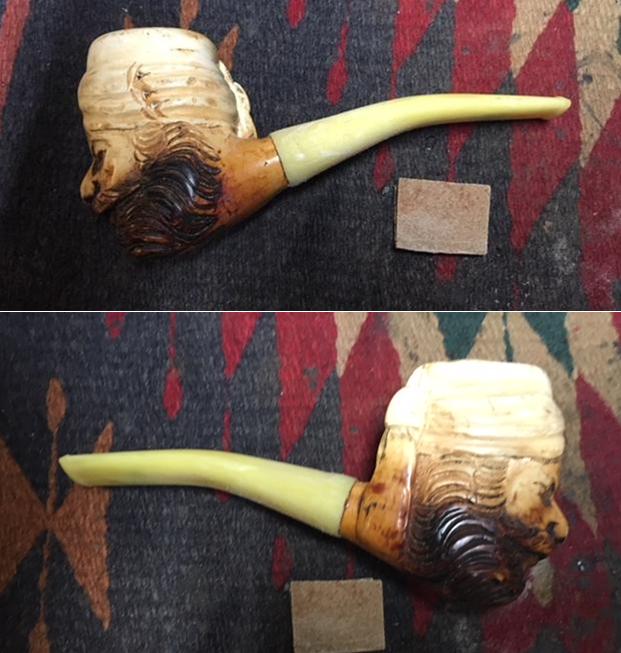
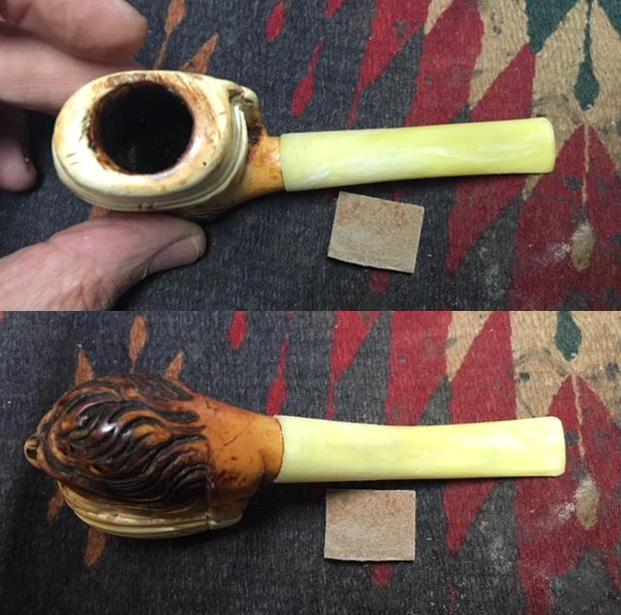
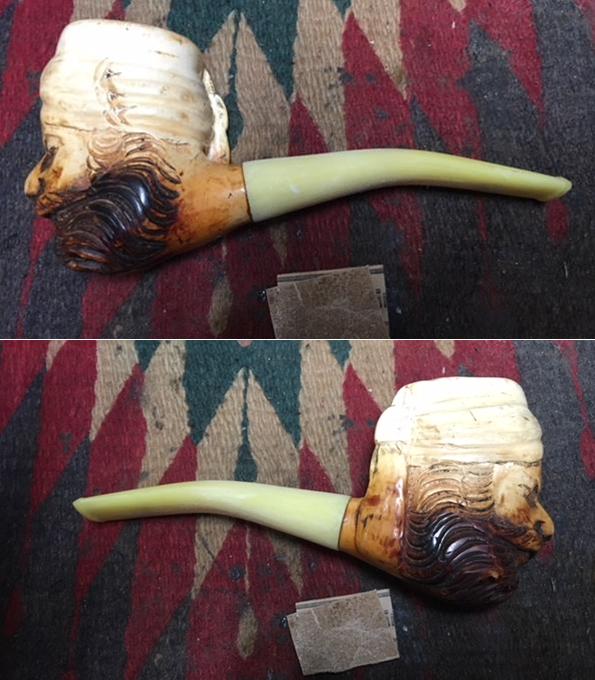
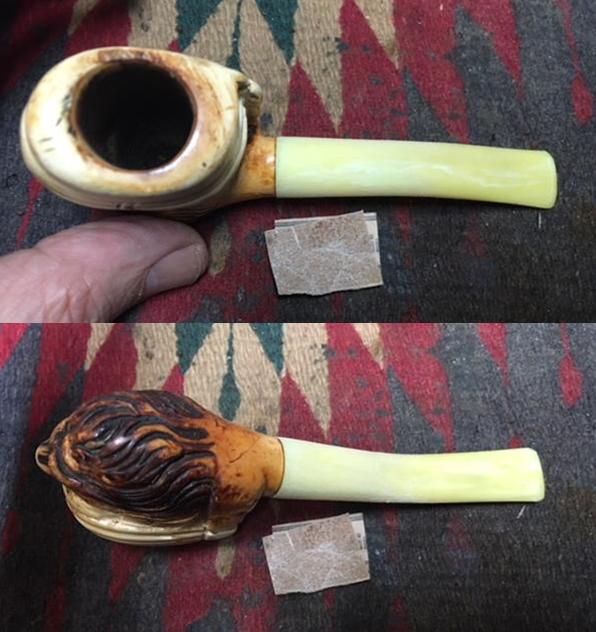
I received a call from a fellow who lives nearby my house about working on some pipes for him. He happened to be packing them up to send to the US for repairs when he stumbled on the rebornpipes.com website. He stopped by with a box of pipes that he wanted to know if I could work on for him. Two were pretty straight forward – 1910 Calabash that needed a cleanup and a freehand that belonged to his dad that he wanted cleaned up so that he could send it back to him. The freehand was simple – buffing, touching up stain, cleaning the bowl and shank and removing tooth chatter and oxidation from the stem. I finished that one first and then moved on to this calabash. I have written about the calabash on a previous blog that can be found at the following link: (https://rebornpipes.com/2018/07/01/a-simple-restoration-of-a-1910-gourd-calabash/). The third pipe that he wanted me to work on was a different proposition – it was a Blowfish shaped pipe with the name Chimera etched on the underside of the shank. He did not like the stem and the way it looked on the shank. He was wondering if I could add some length to the shank and fit a different looking stem on it that better fit the shape and look of the pipe. I took photos of the pipe before I started working on it. I took a close up photo of the stamping on the shank. It is a brand that I don’t know much about. It is not listed on Pipedia or Pipephils site. I wrote an email to the owner to see what he could tell me about the pipe. He wrote back as follows:

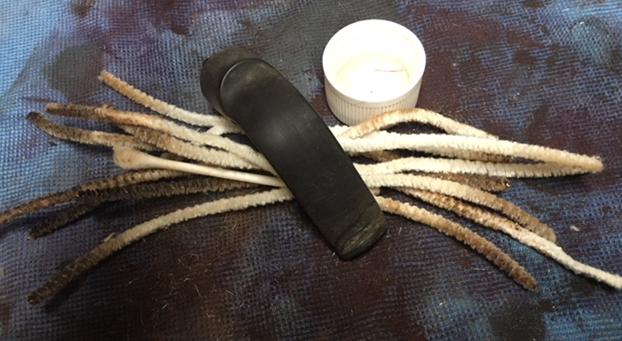
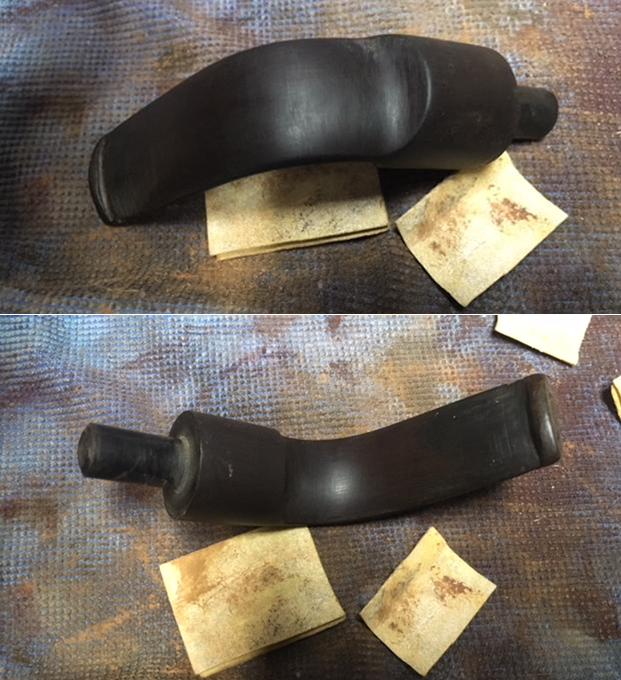
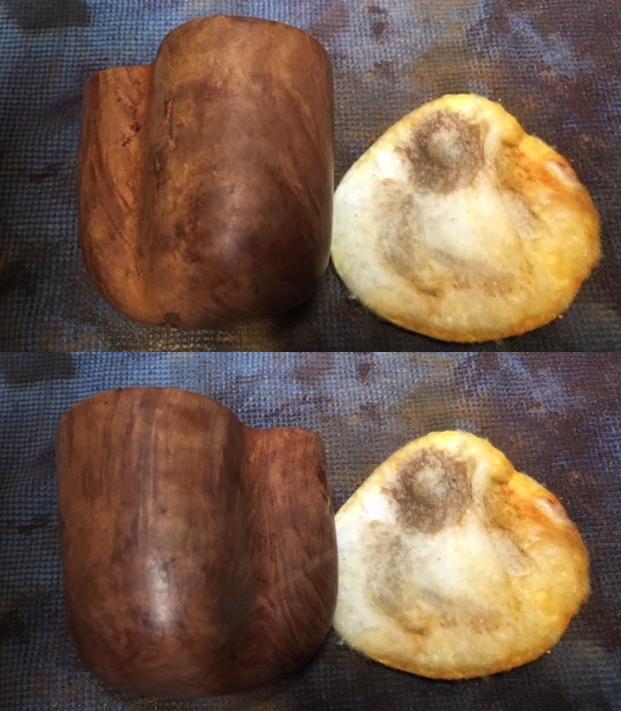
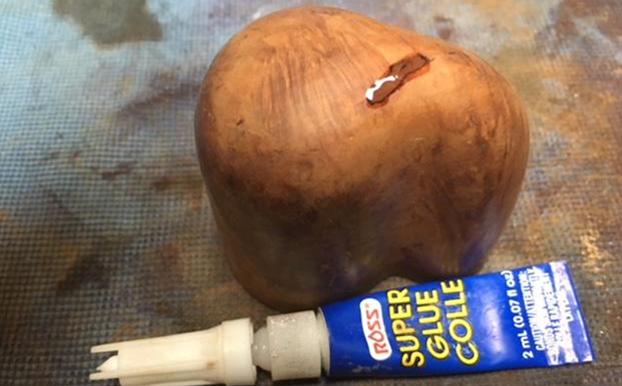
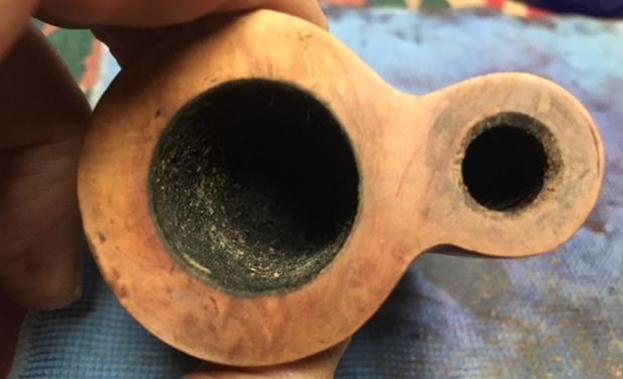
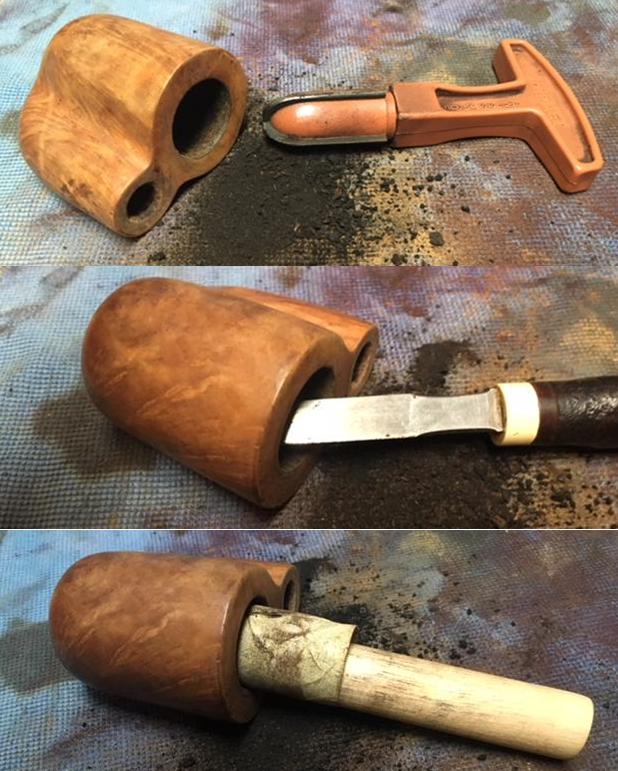
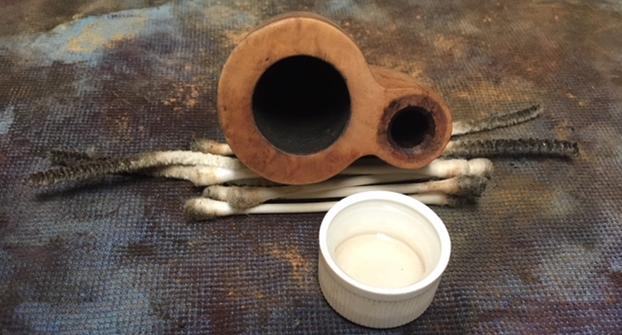
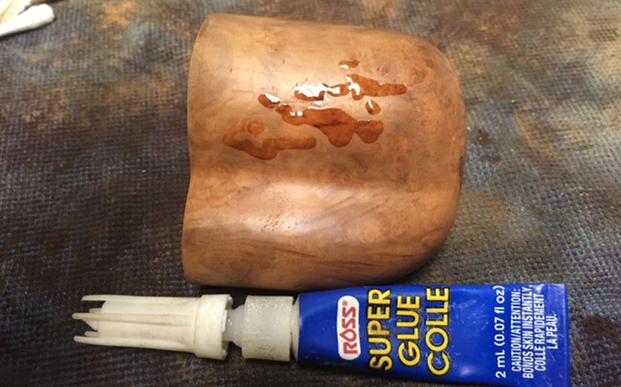
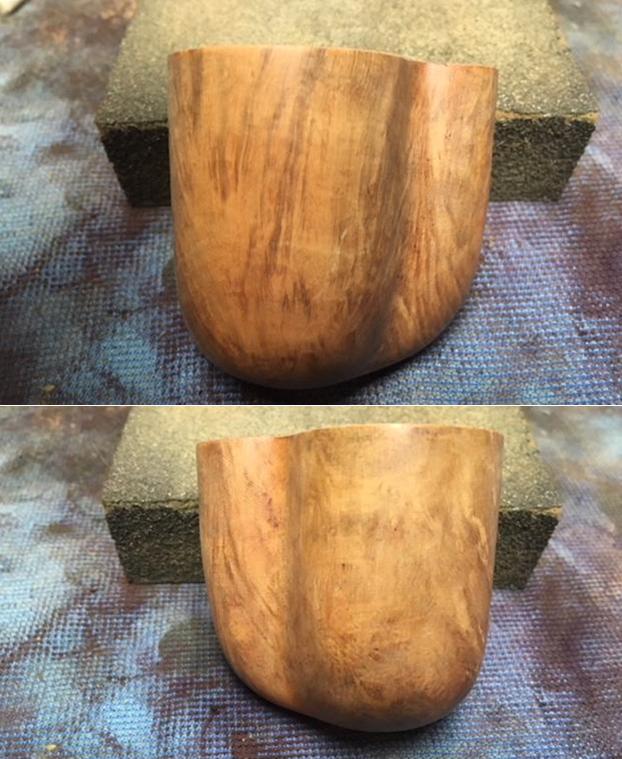
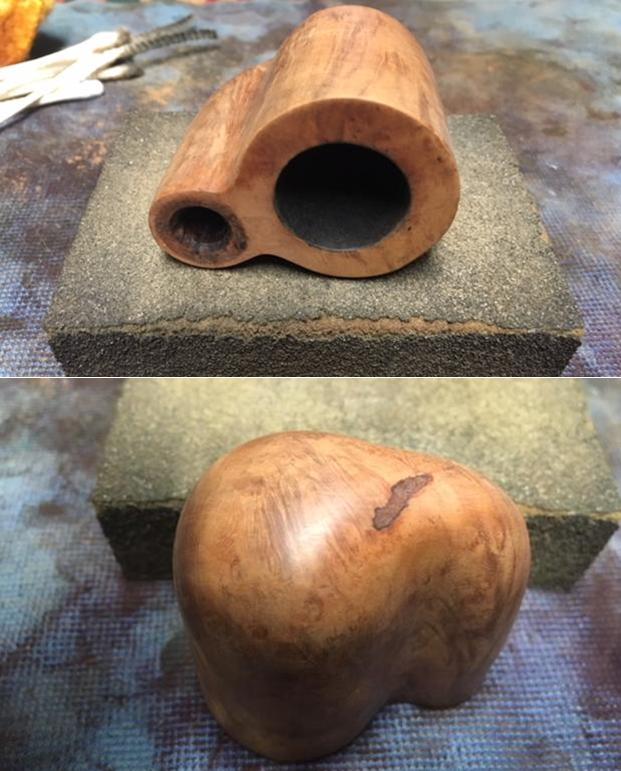
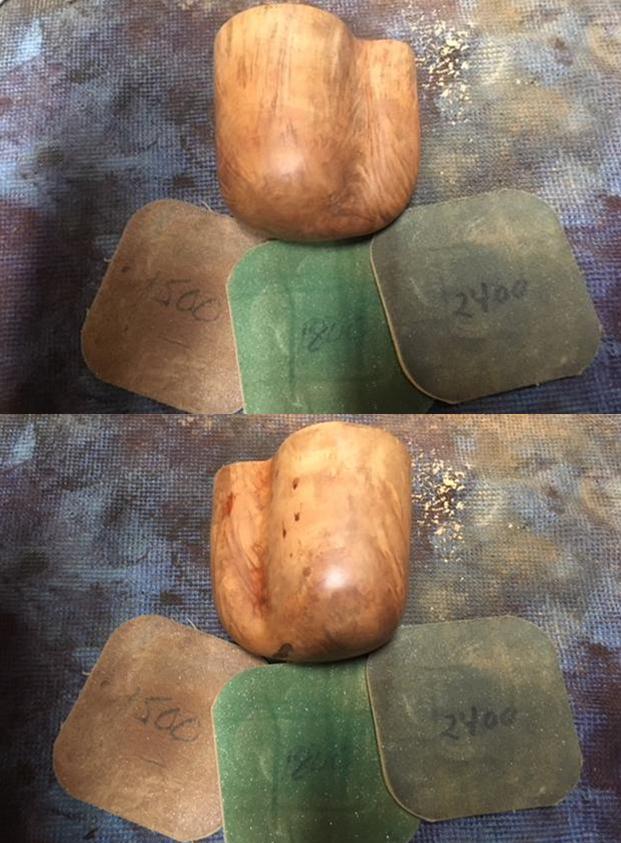
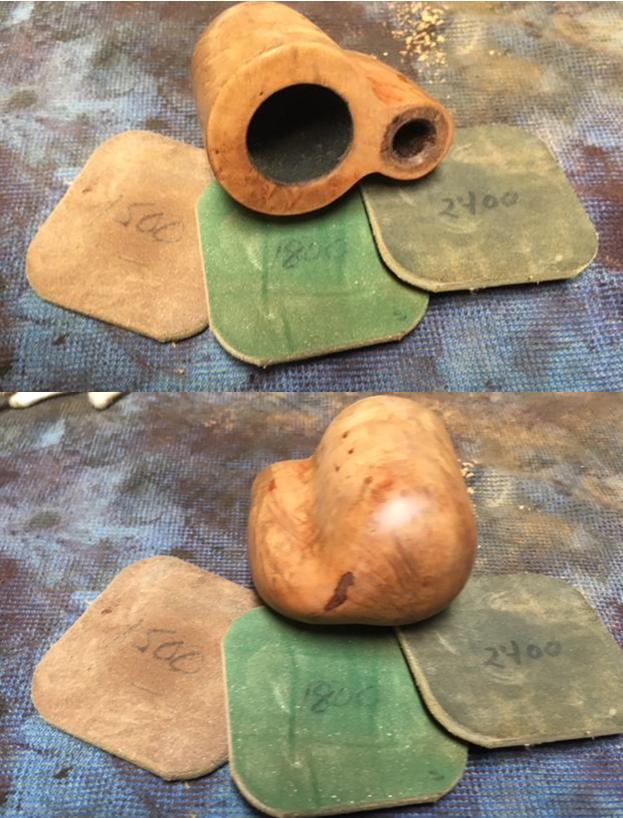
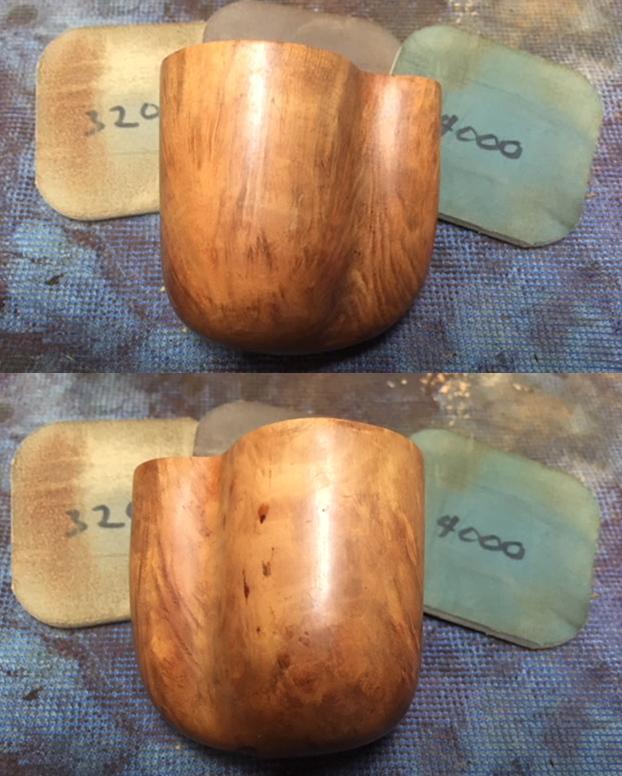
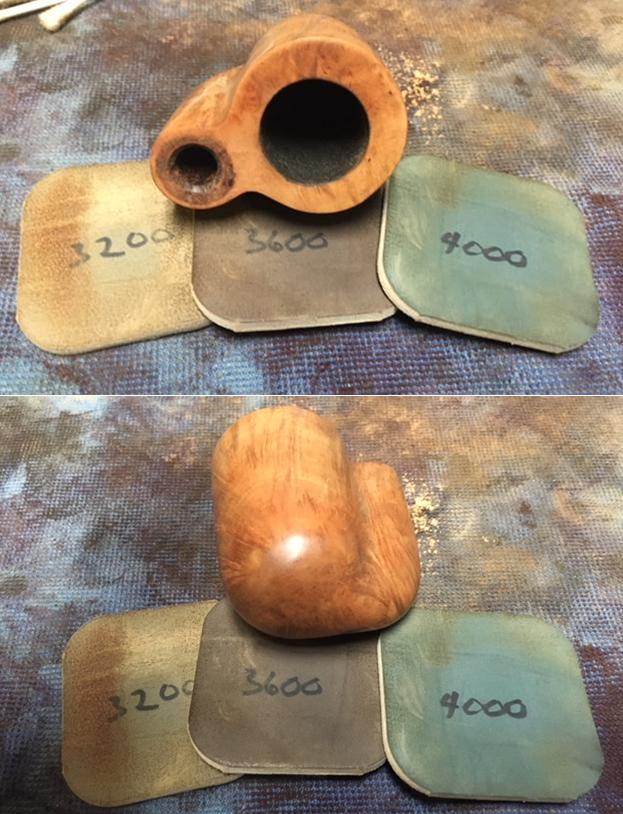
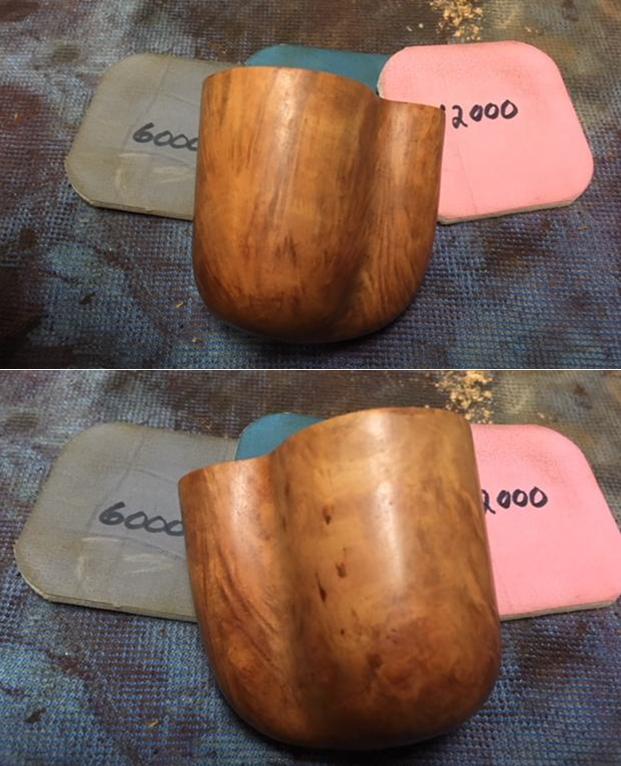
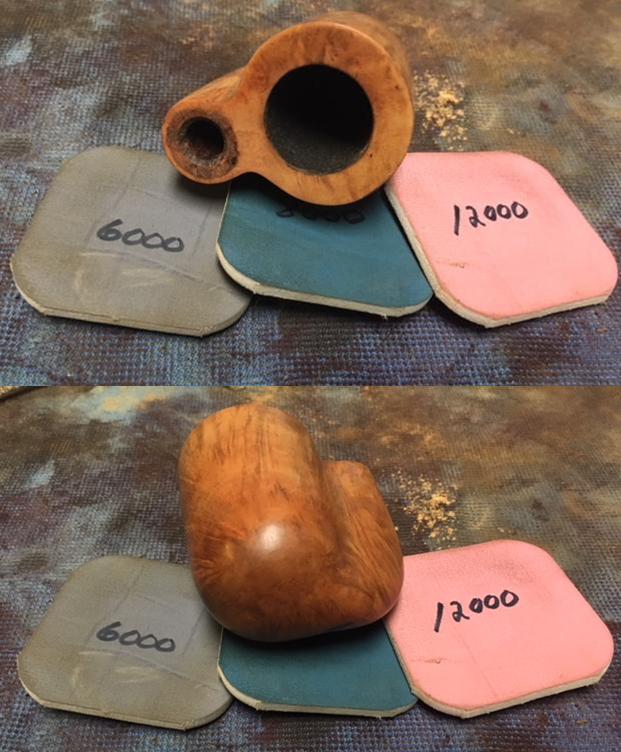
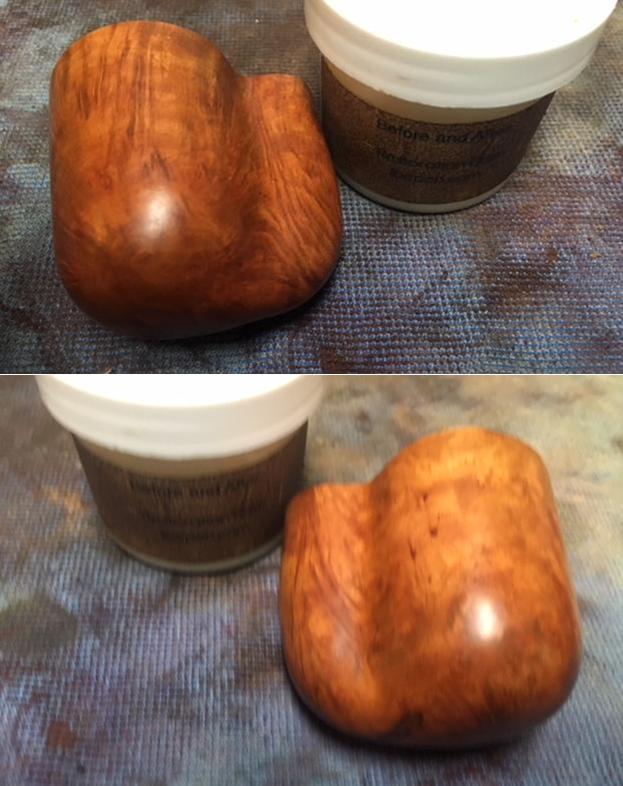
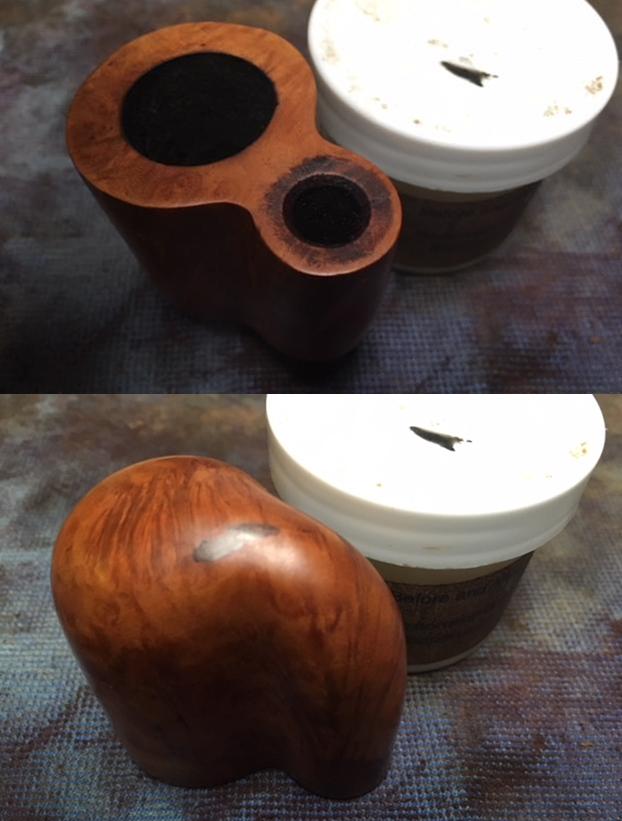
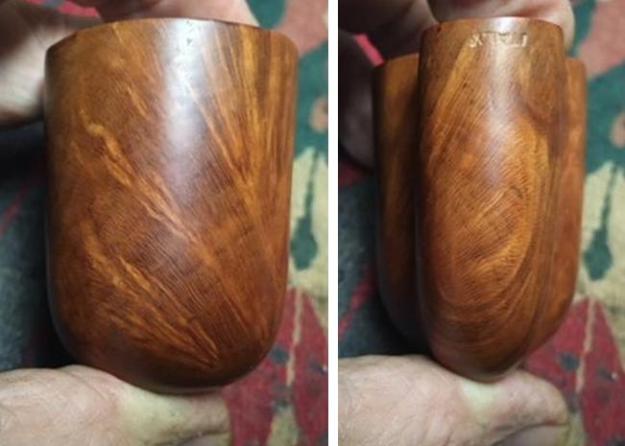
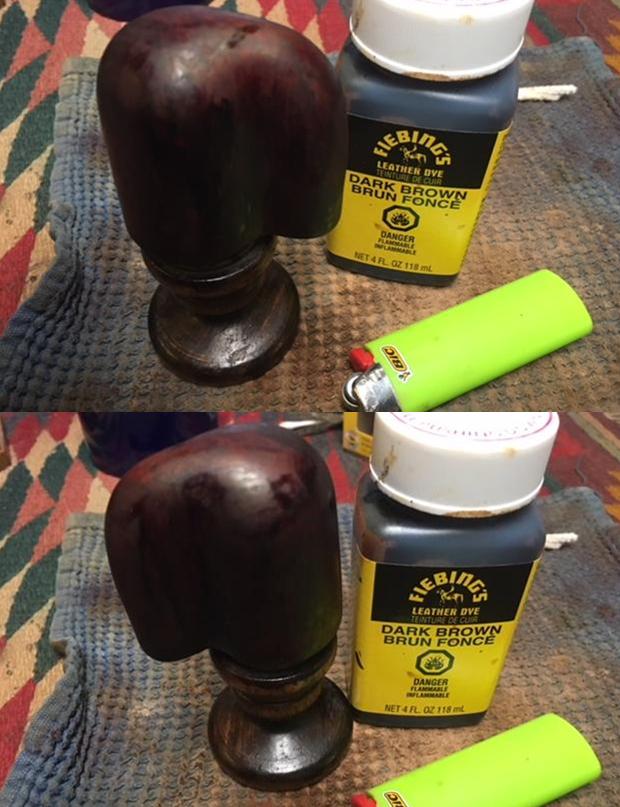
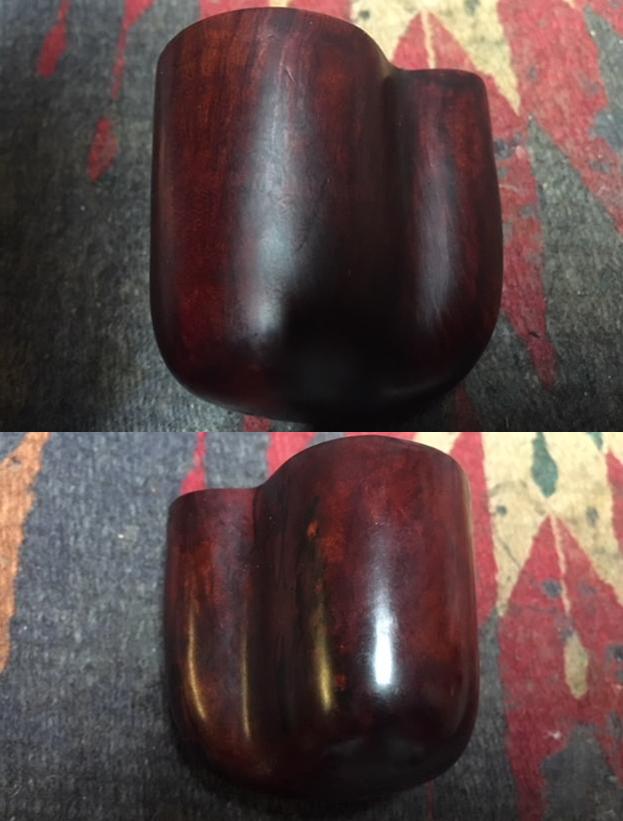
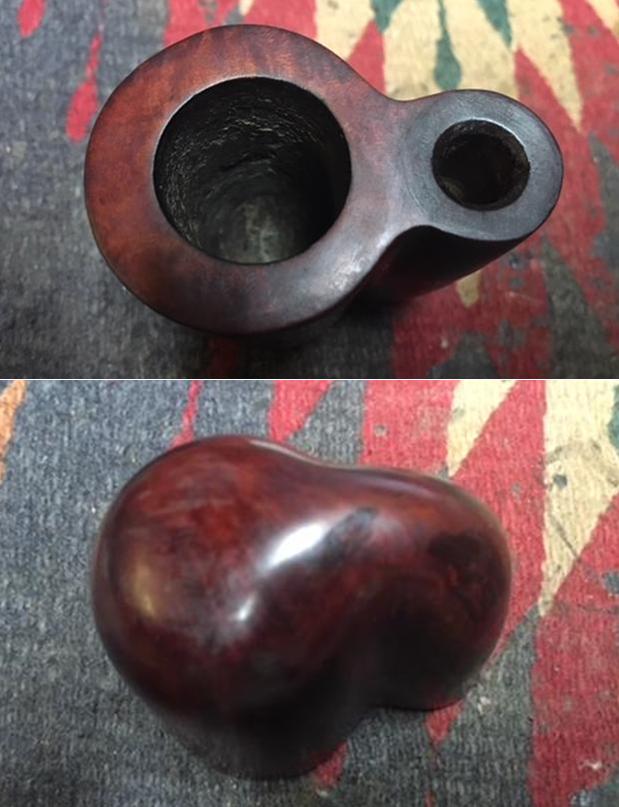
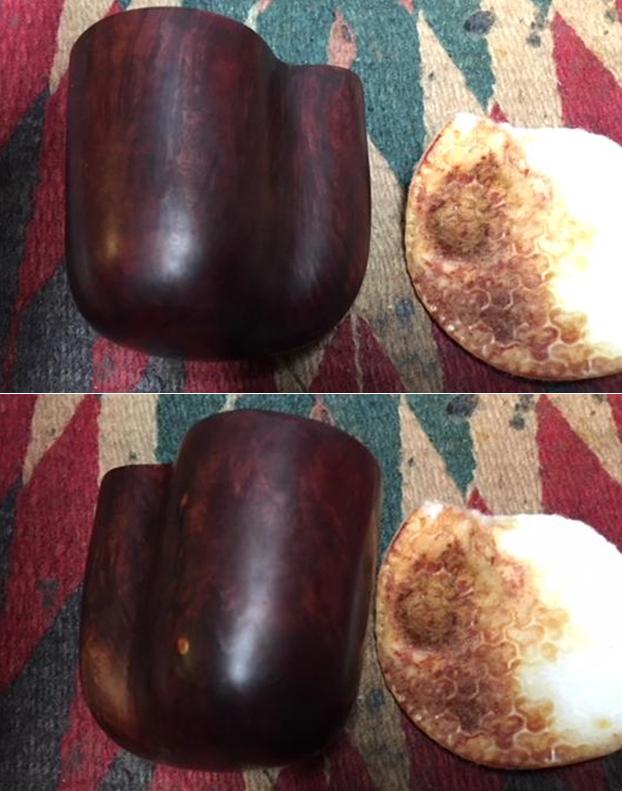
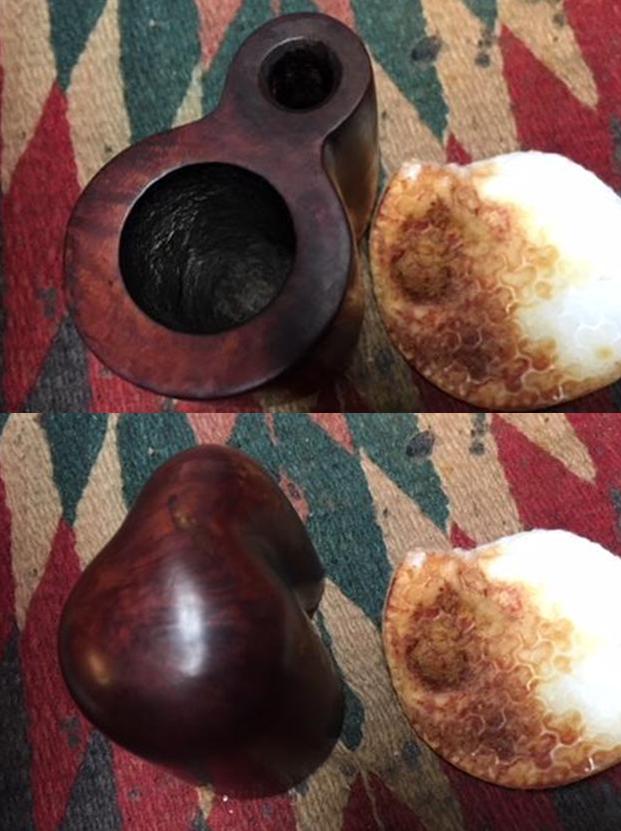
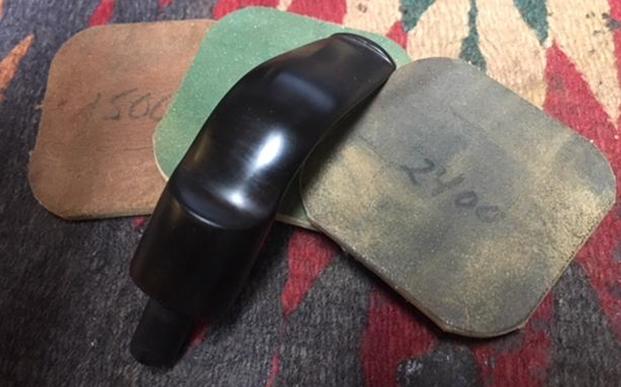
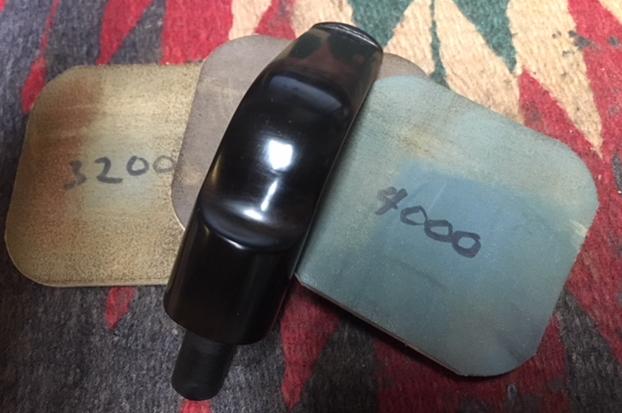
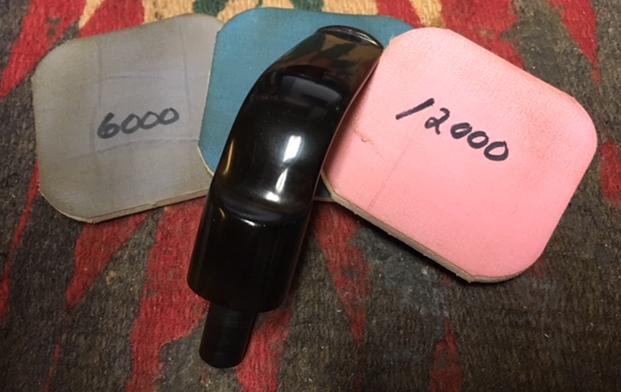
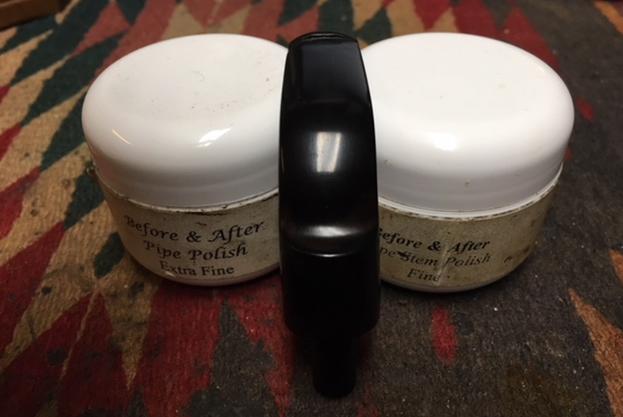
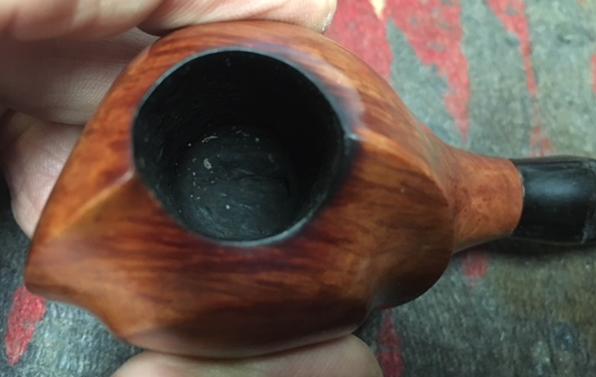
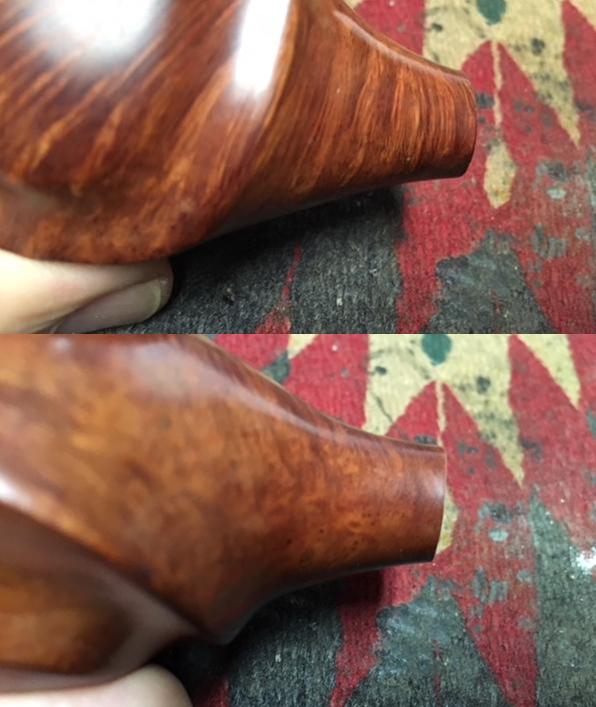
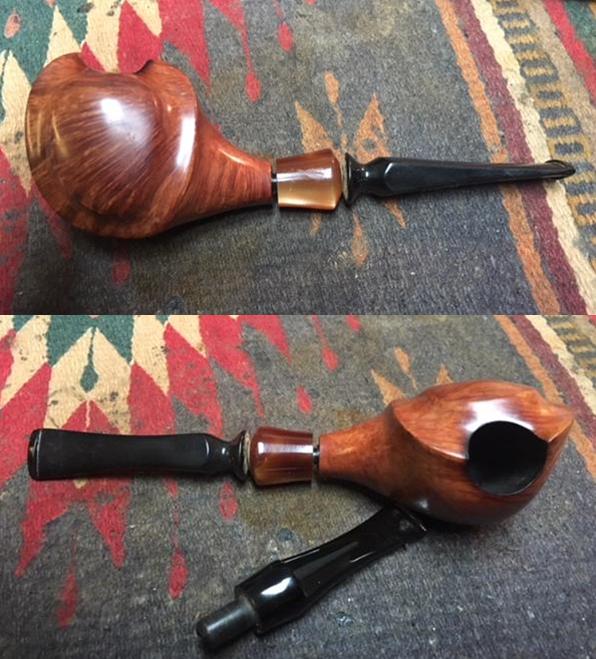
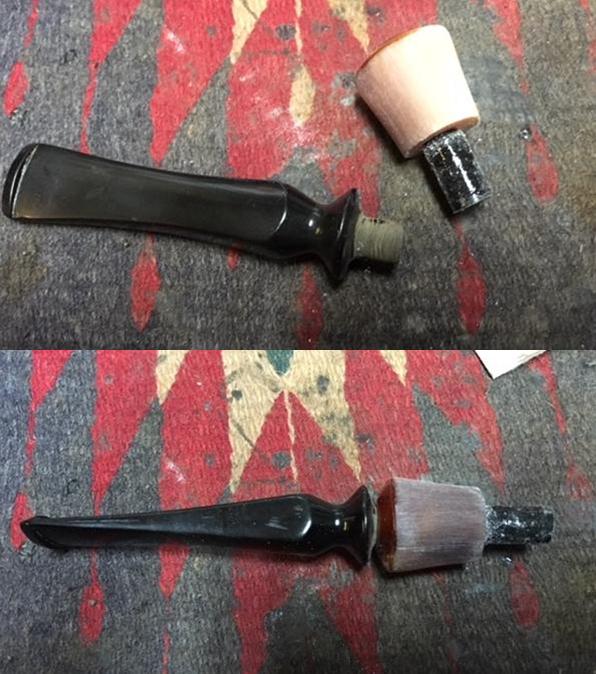
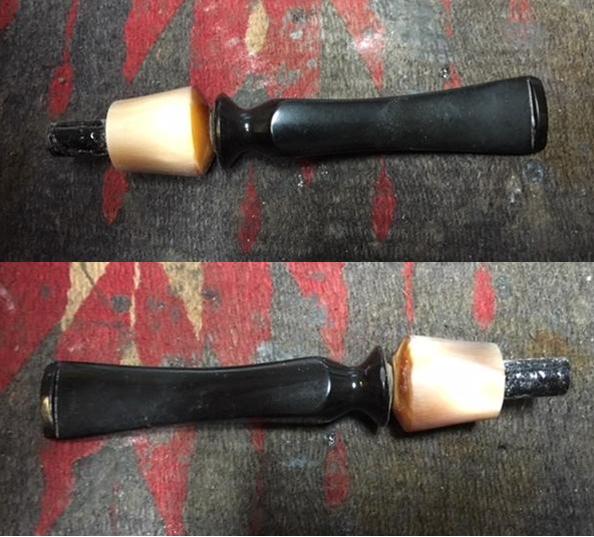
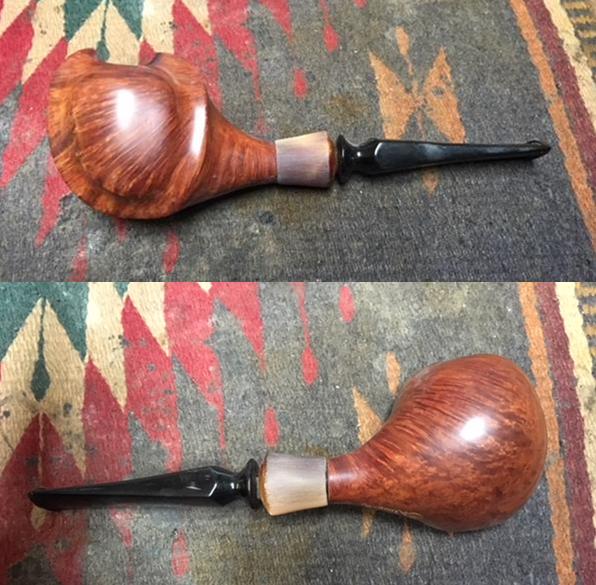
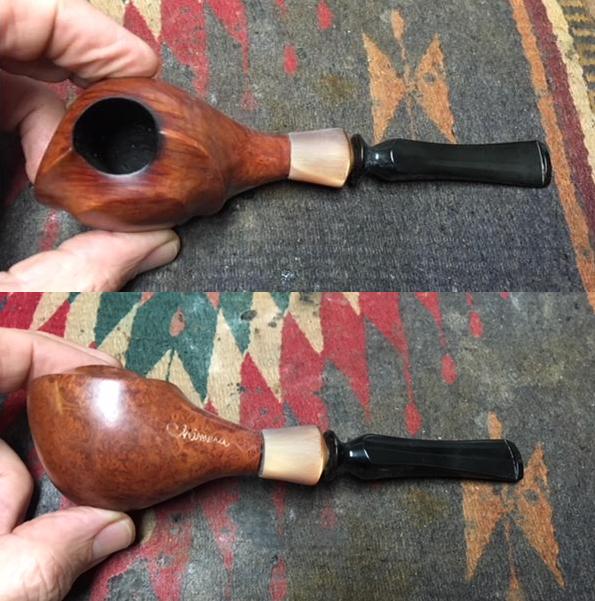
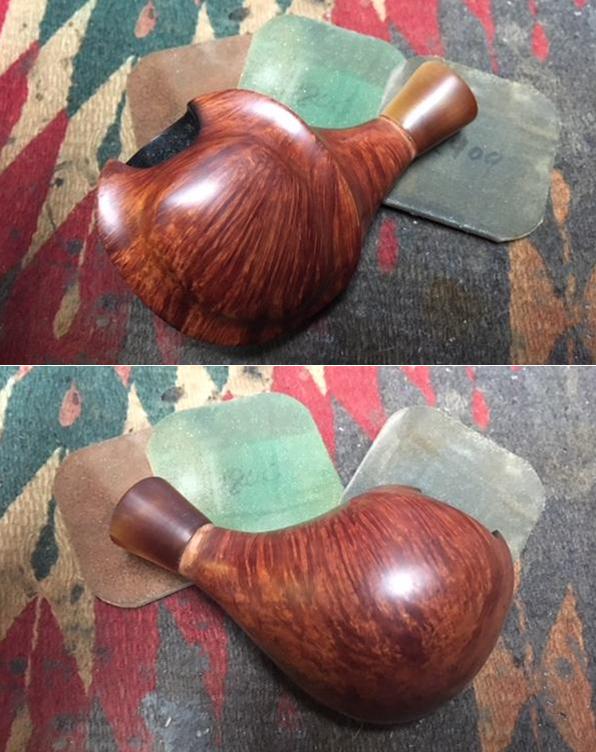
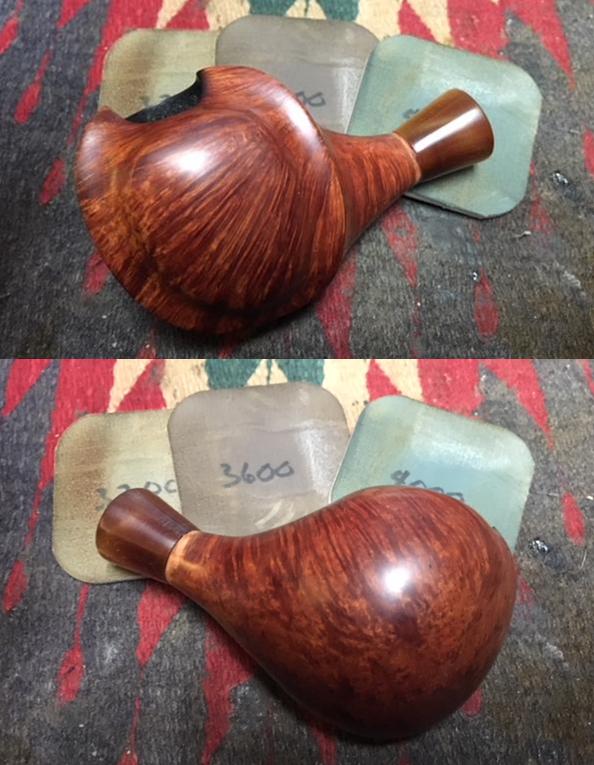
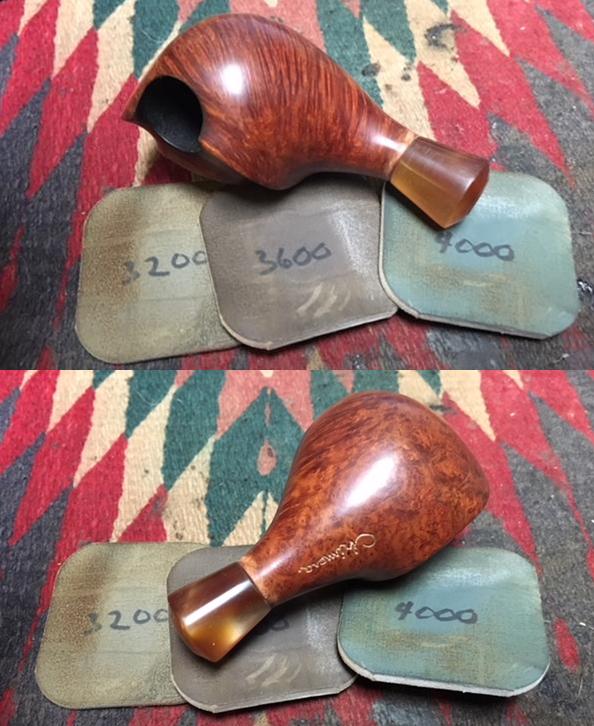
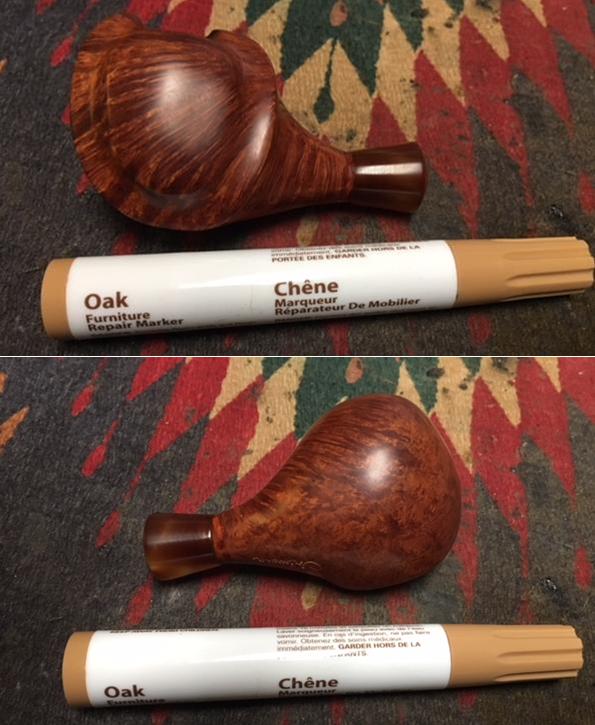
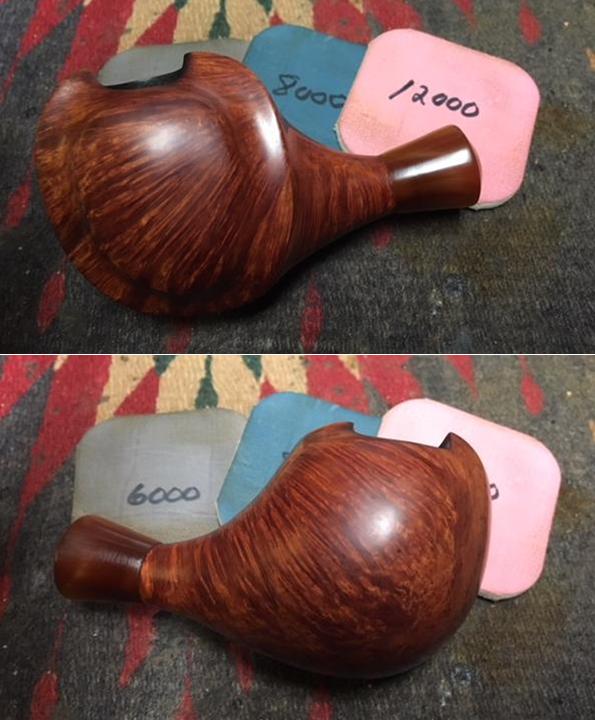
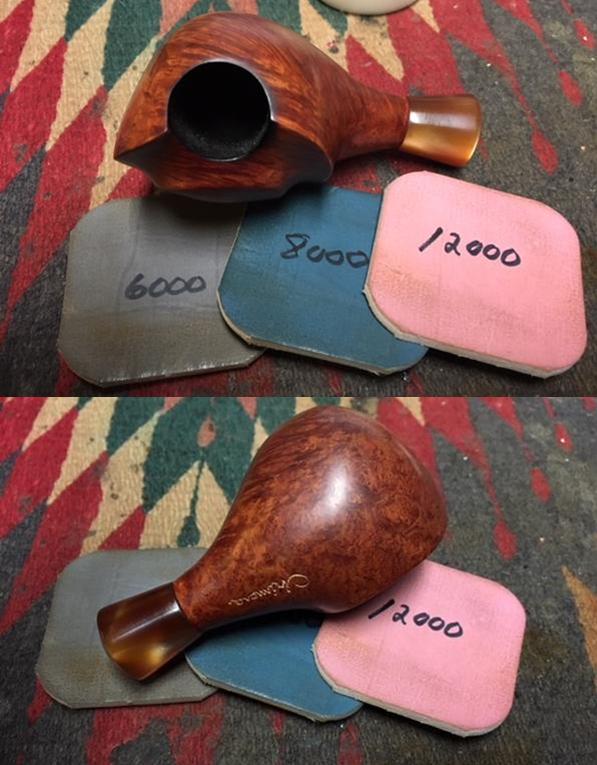
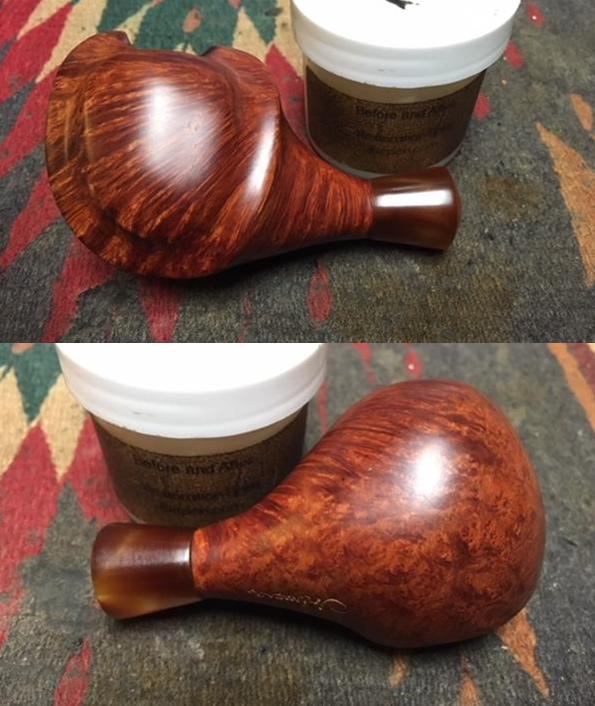
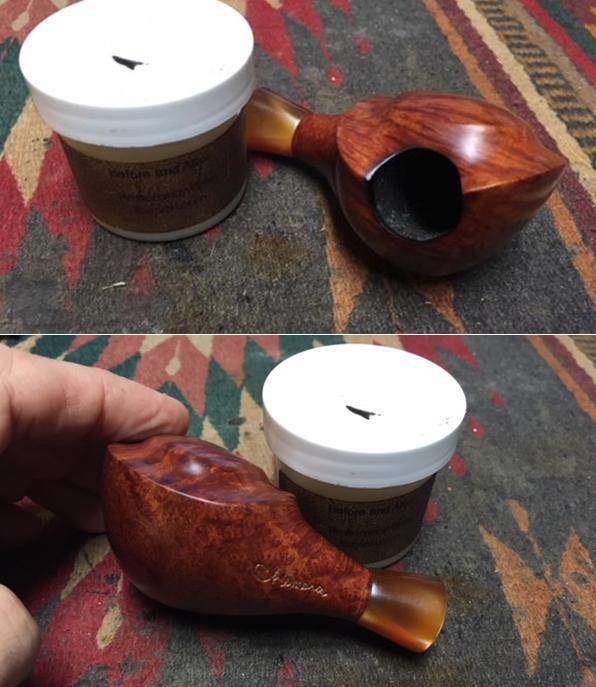
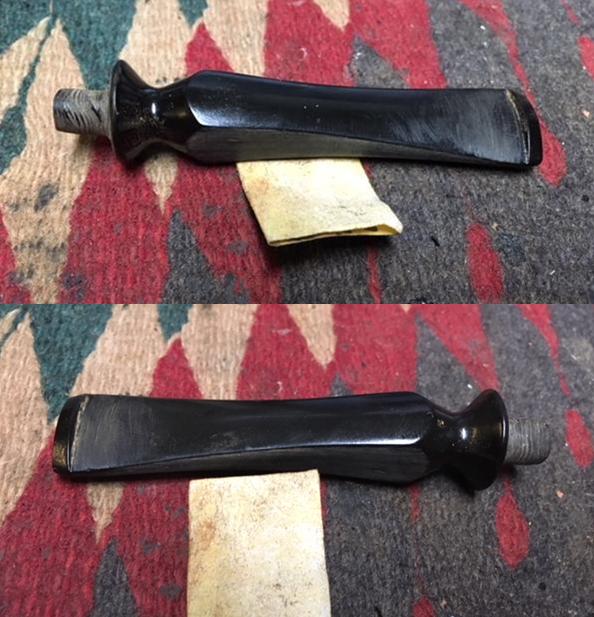
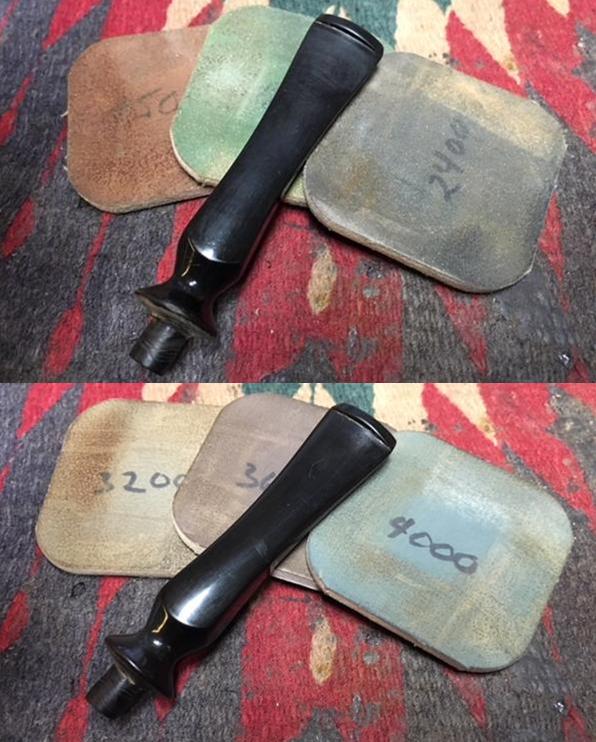
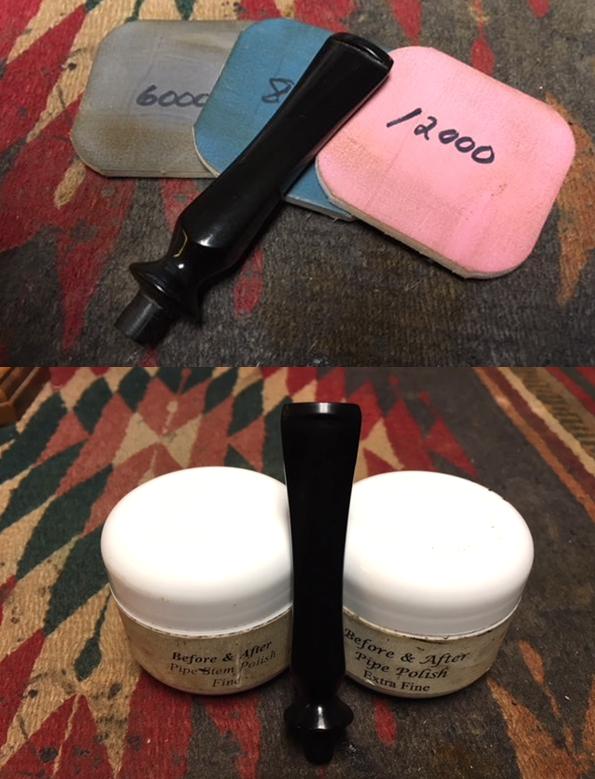
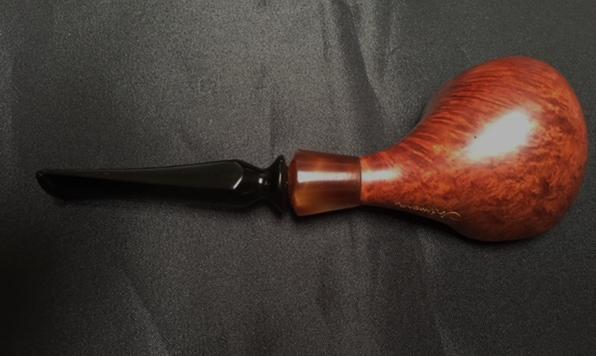
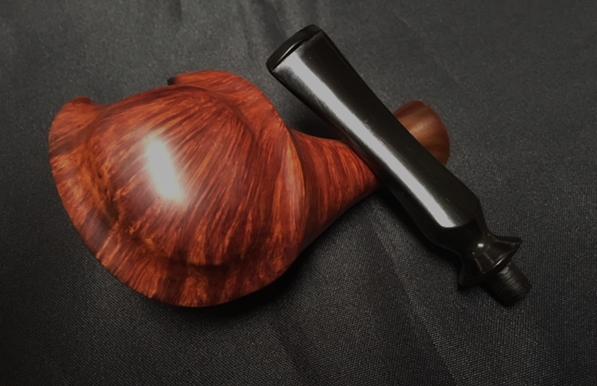
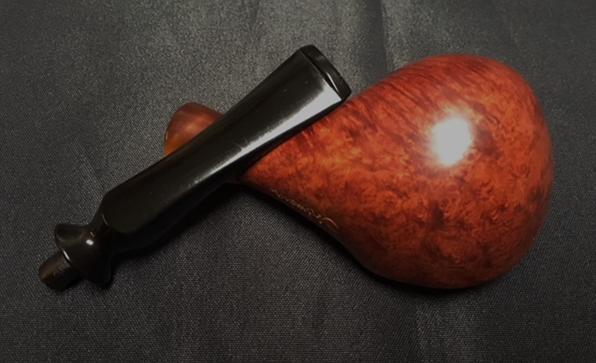
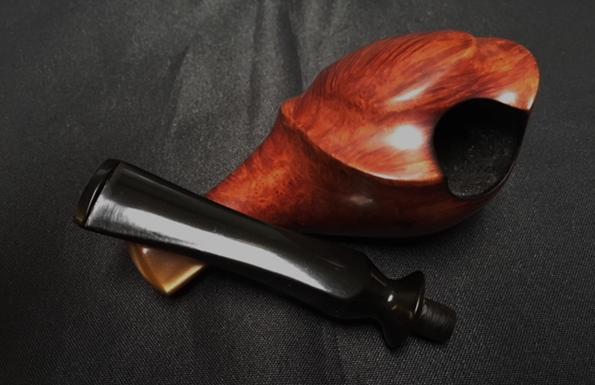
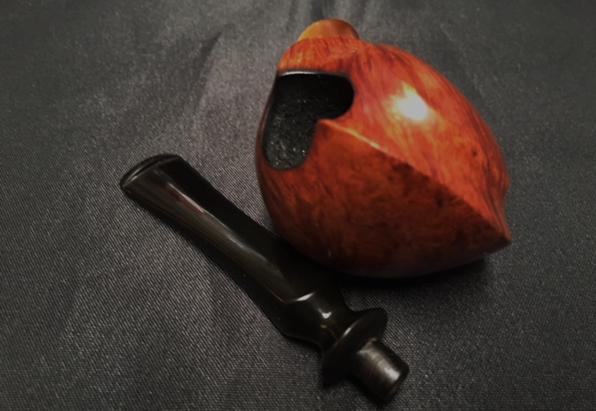
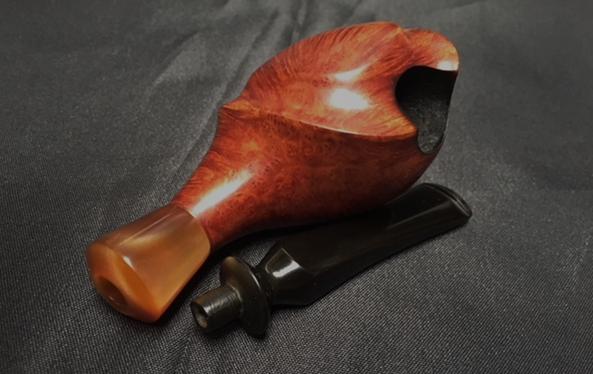
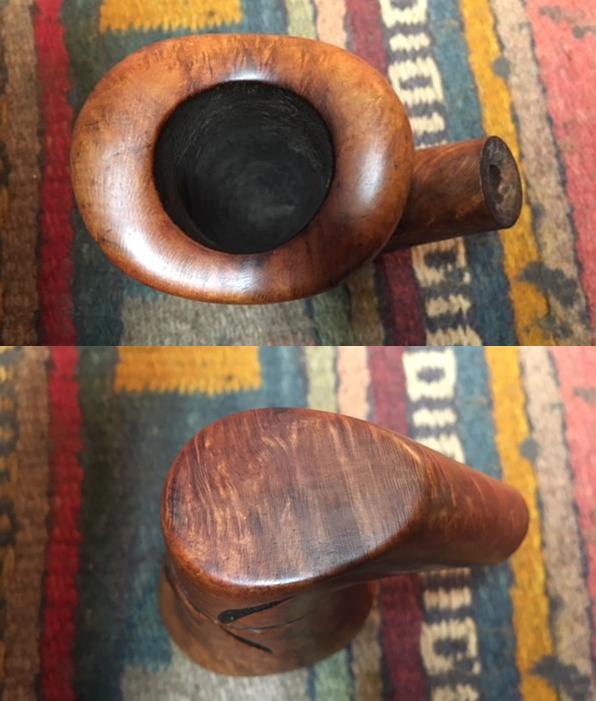
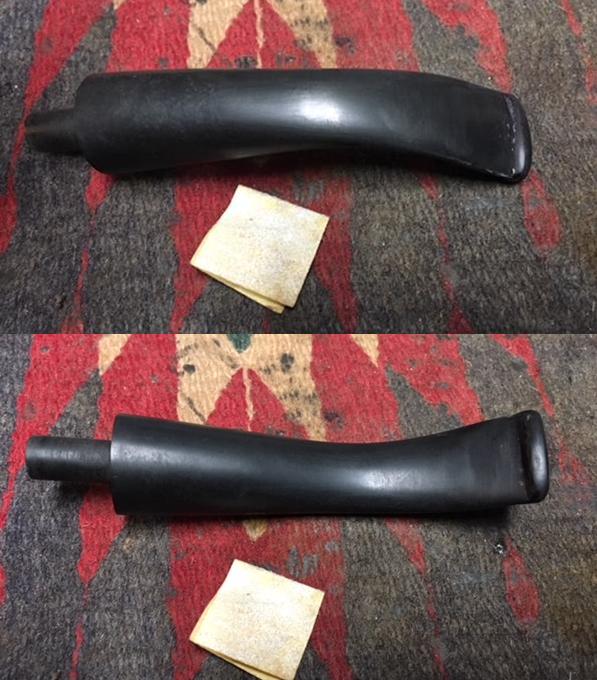
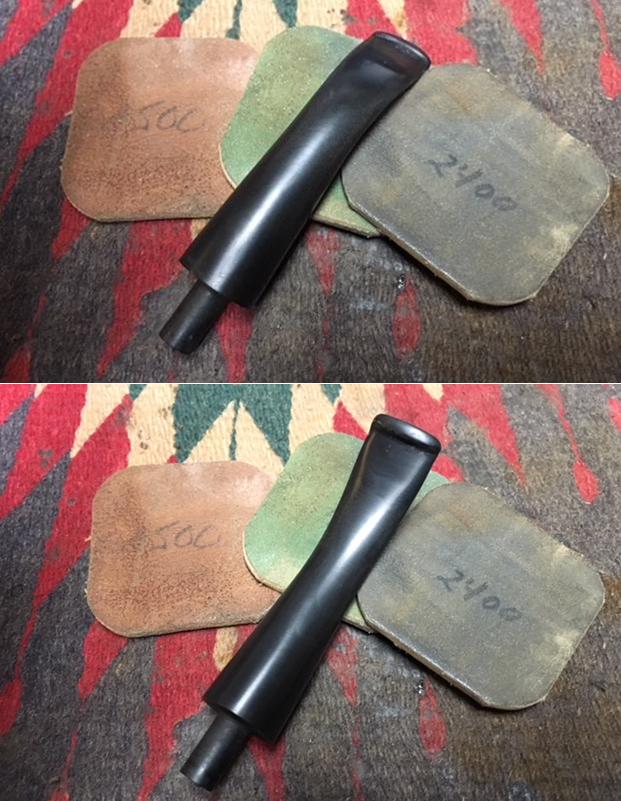
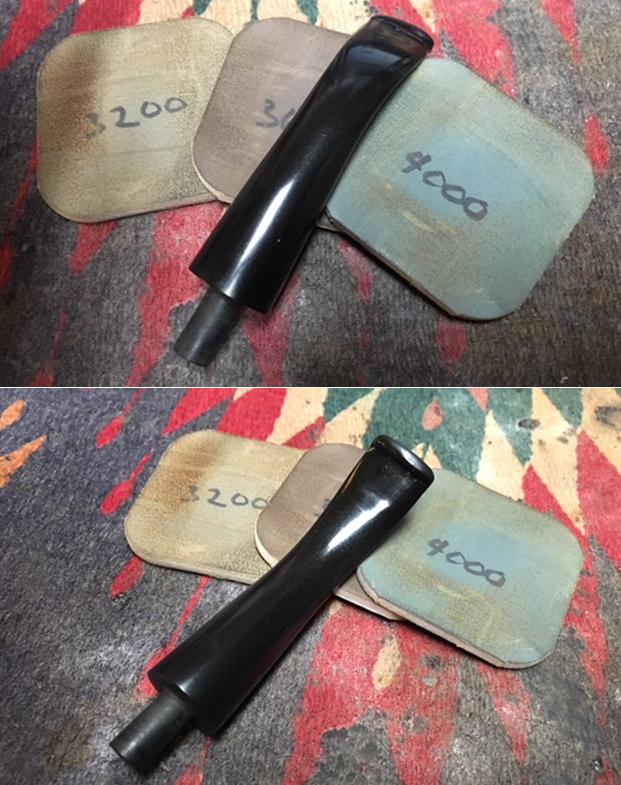
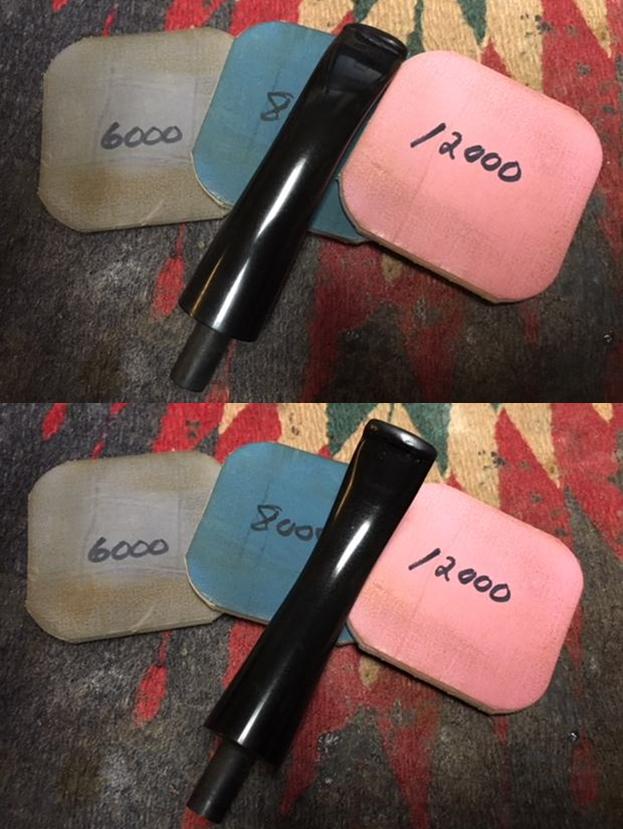
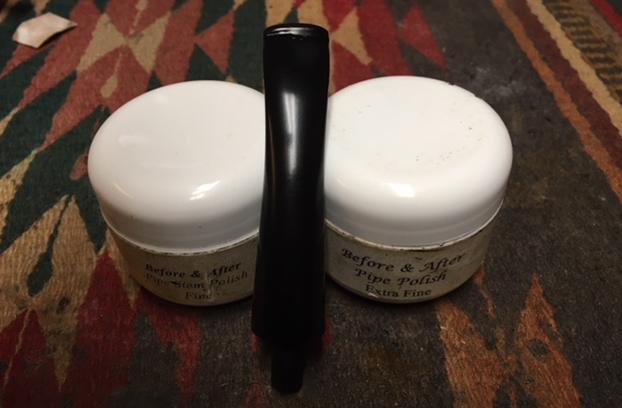
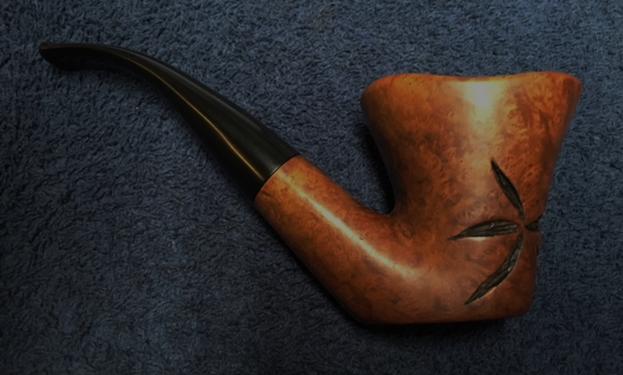
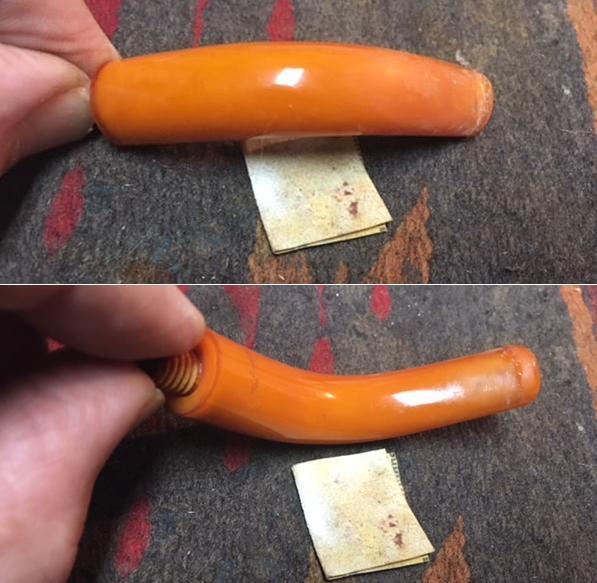
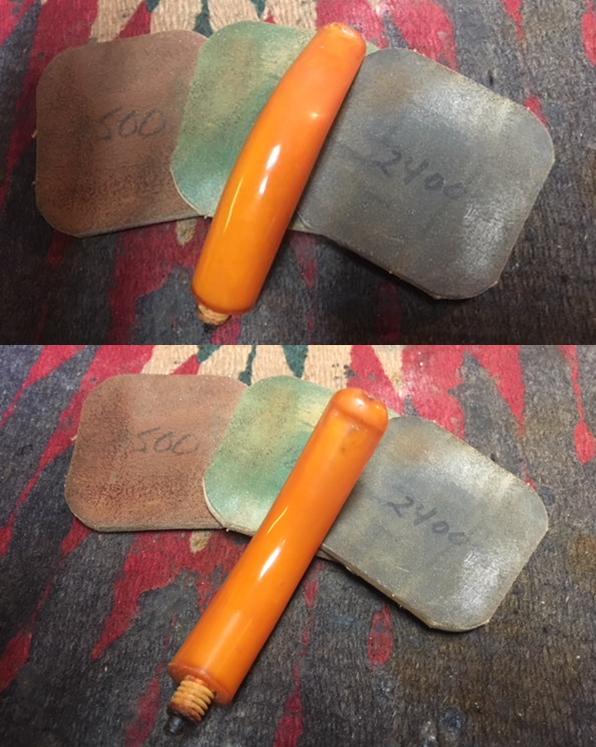
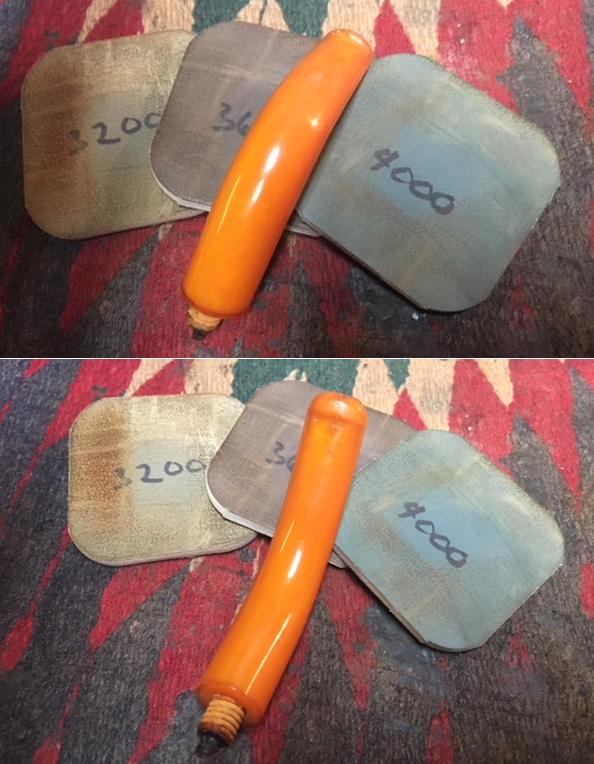
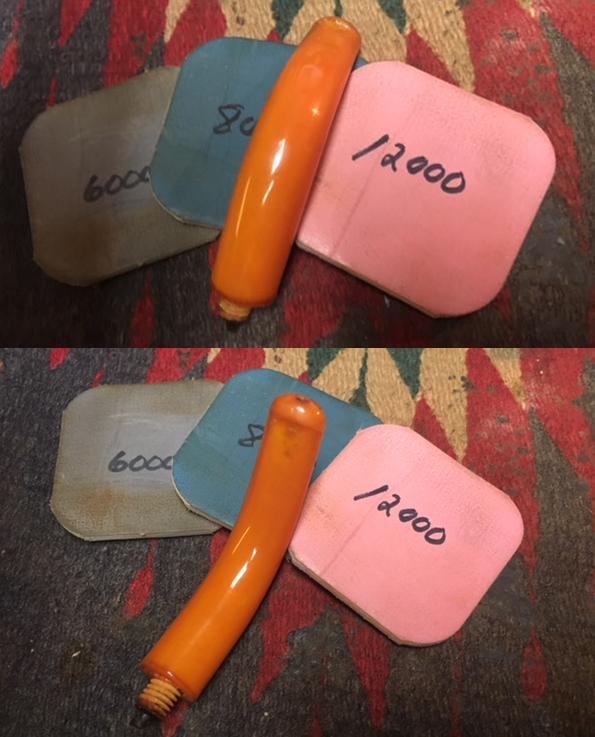
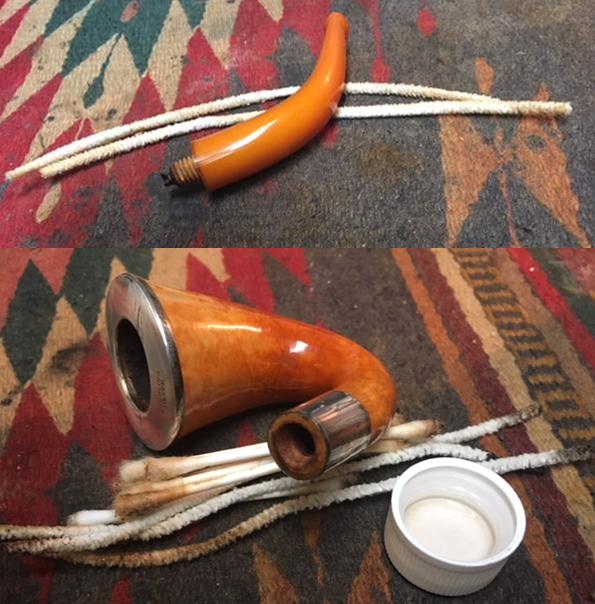
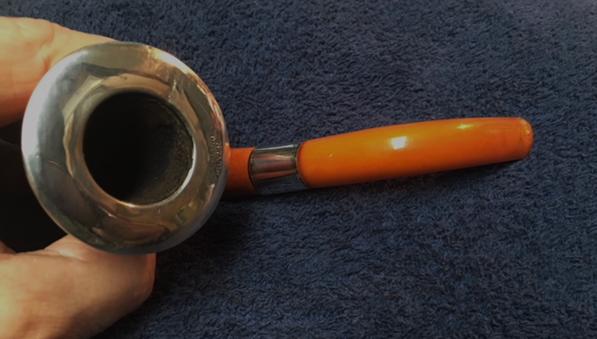
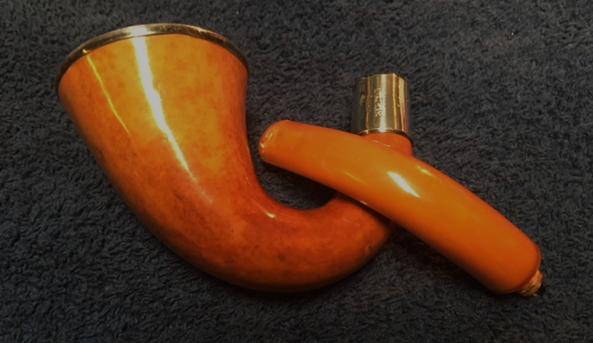
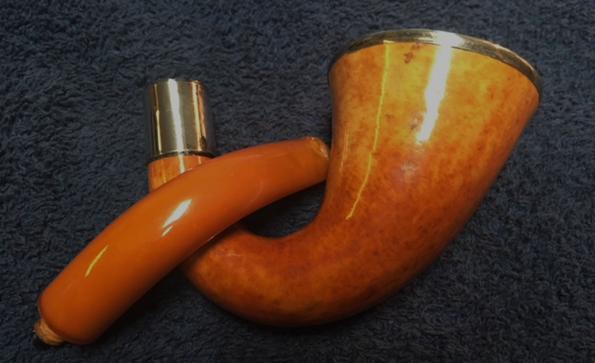
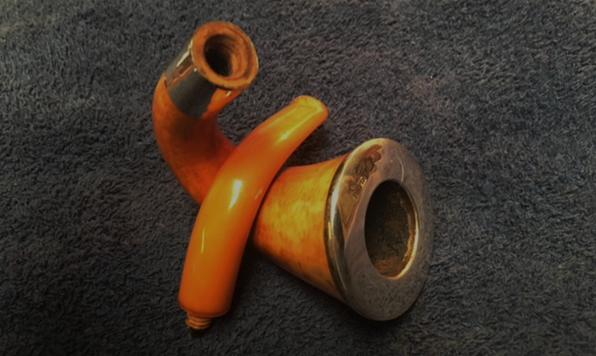
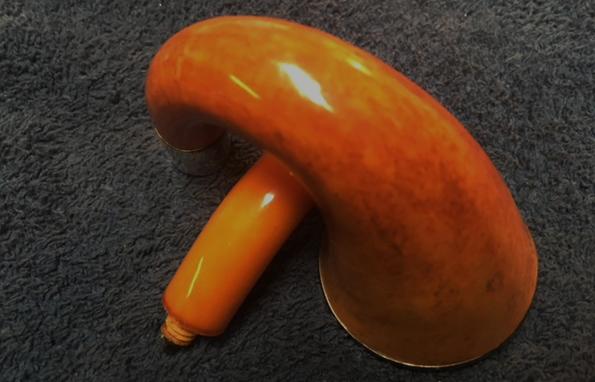
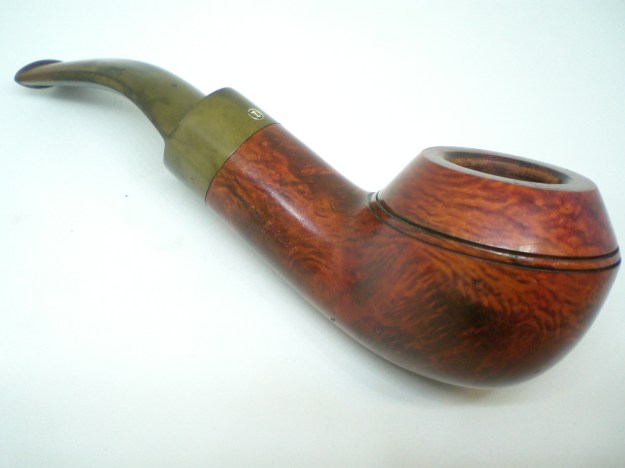
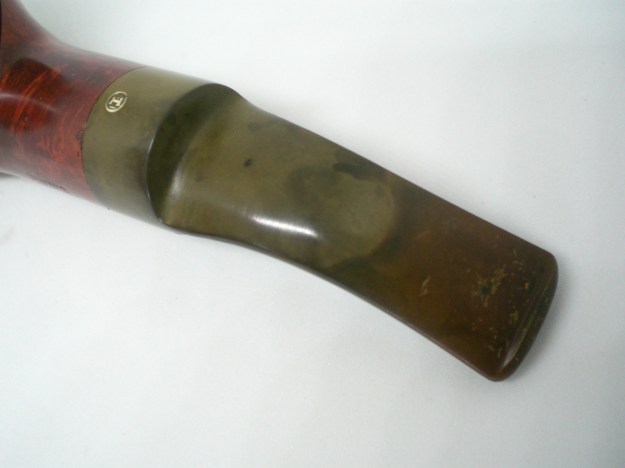
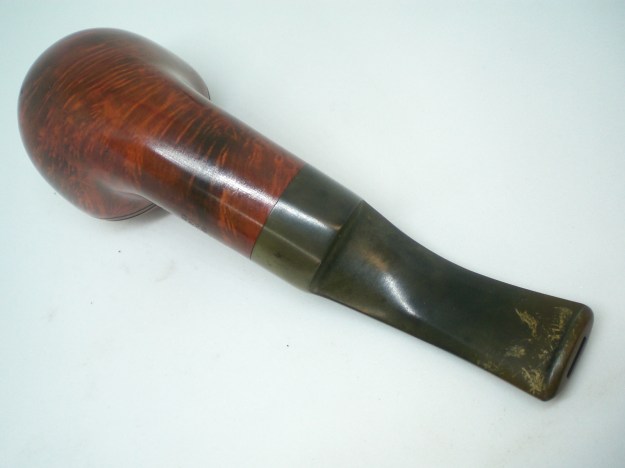
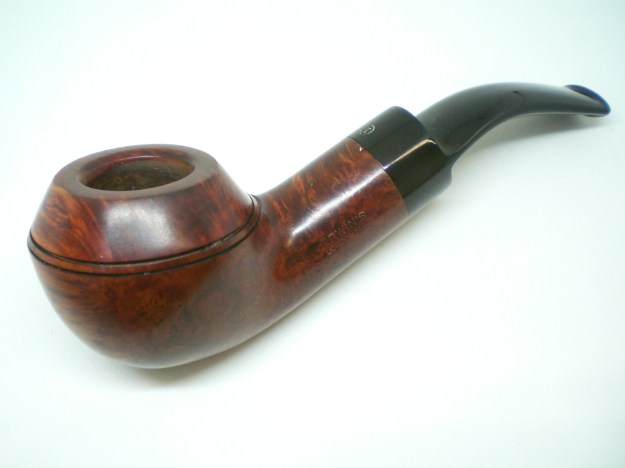
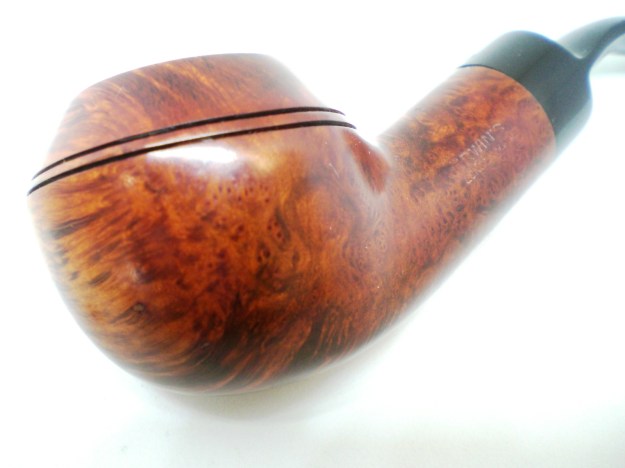
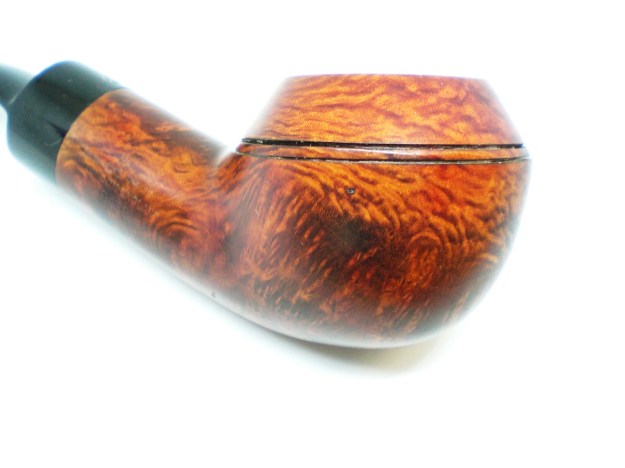
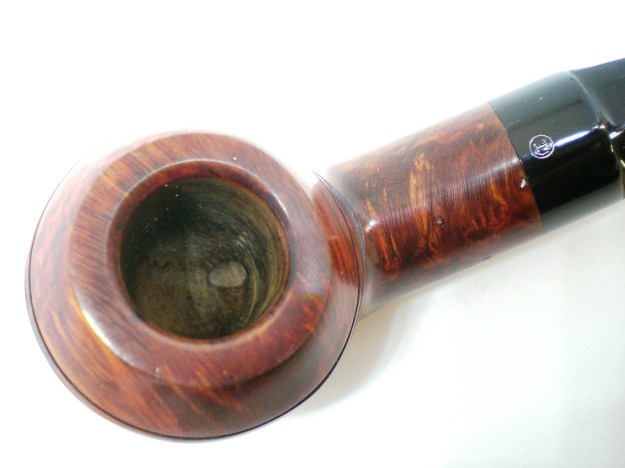
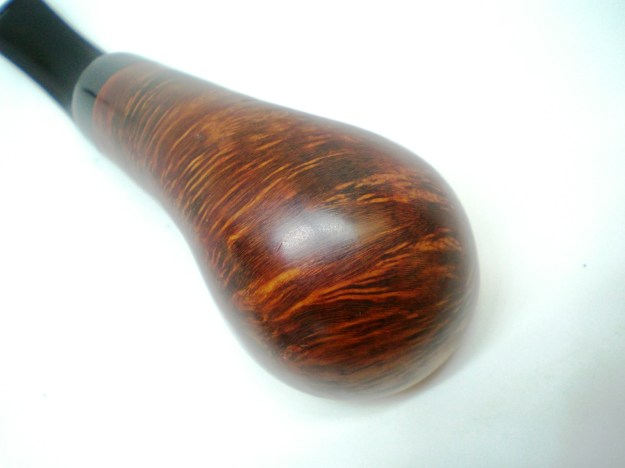
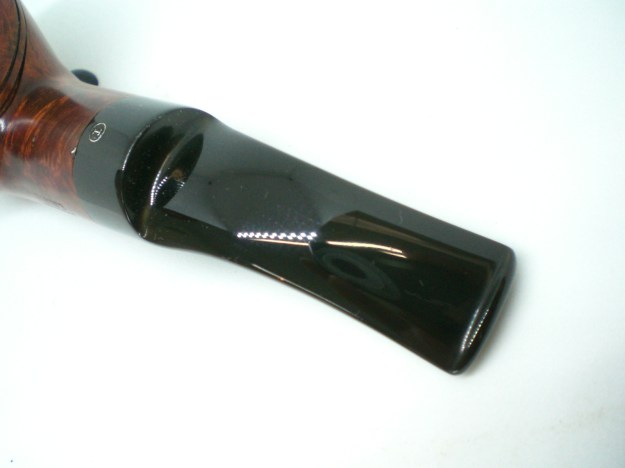
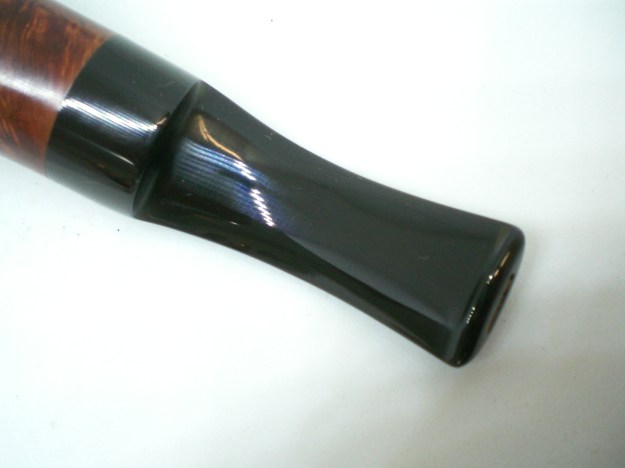
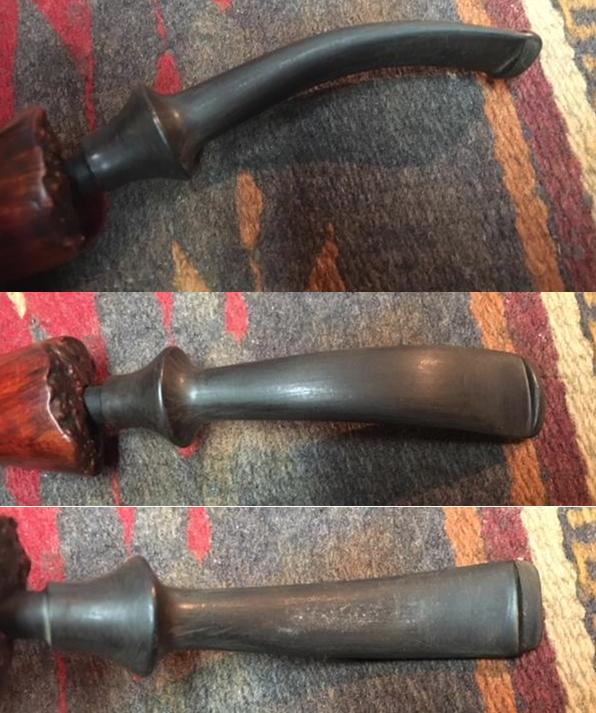
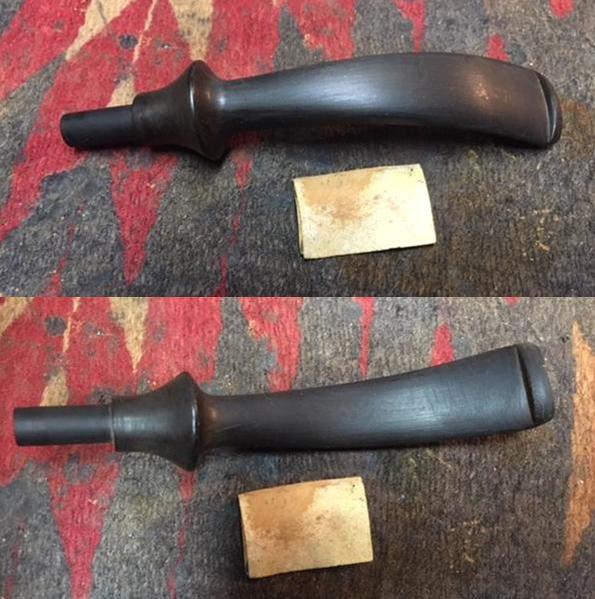
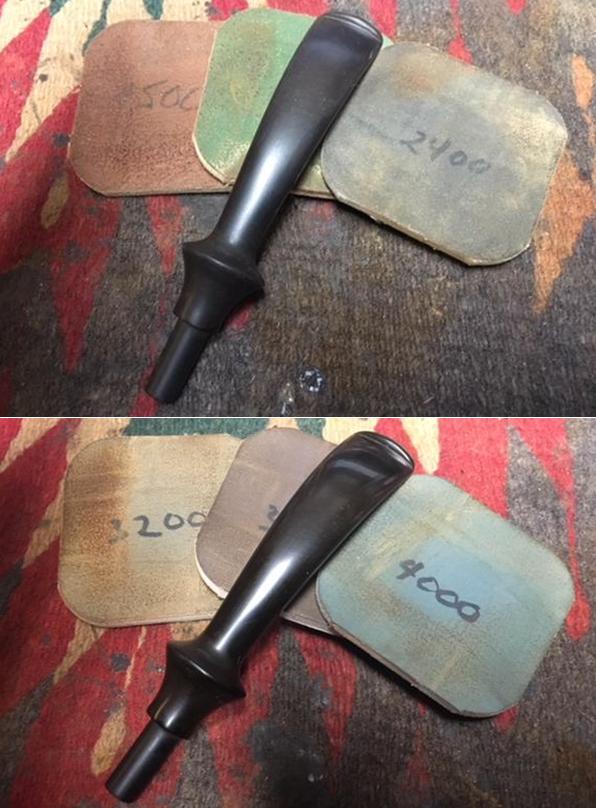
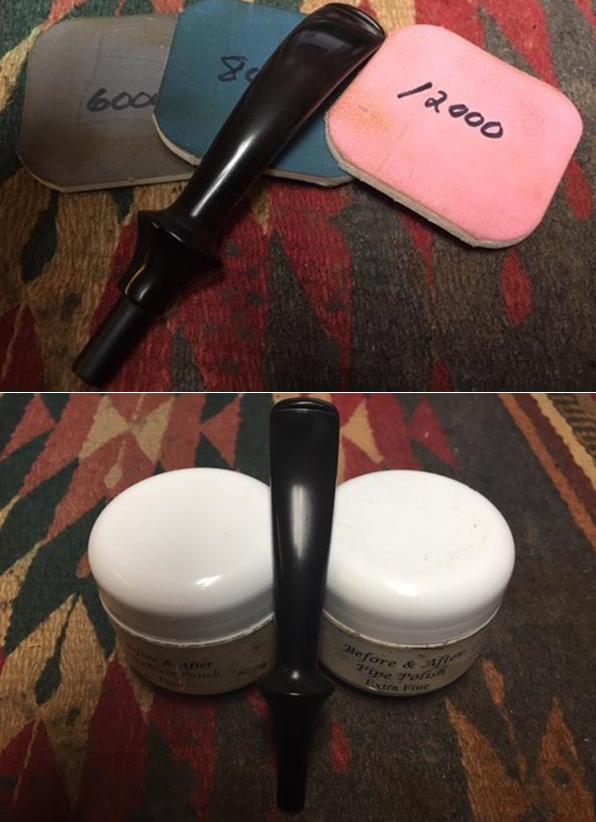
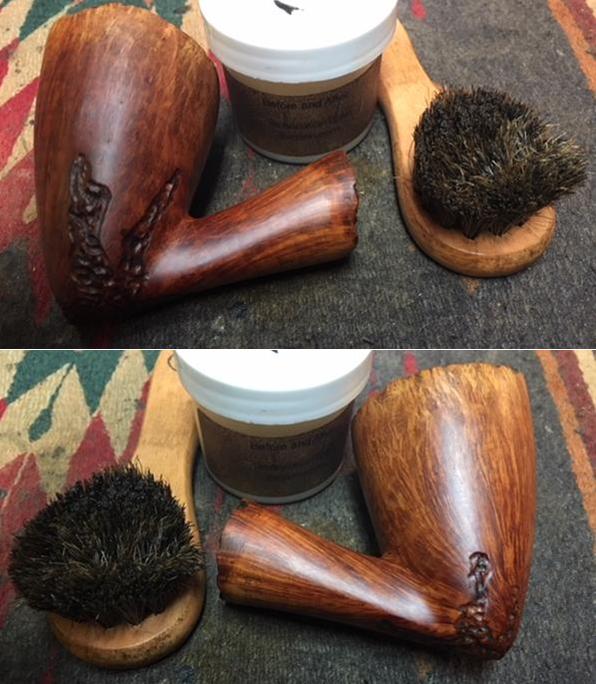
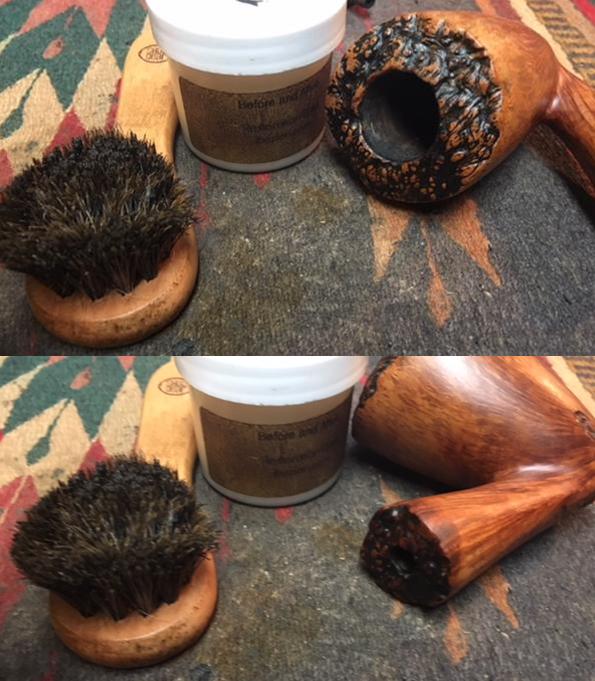
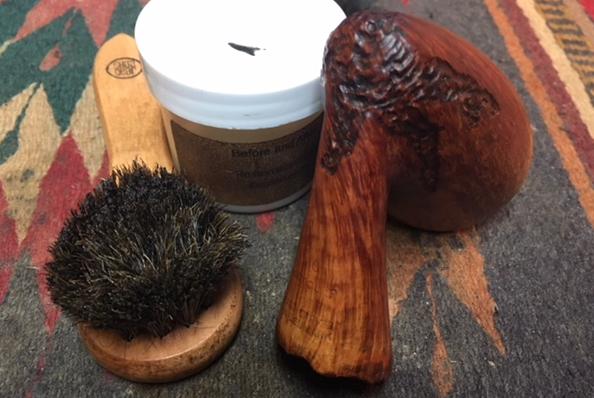
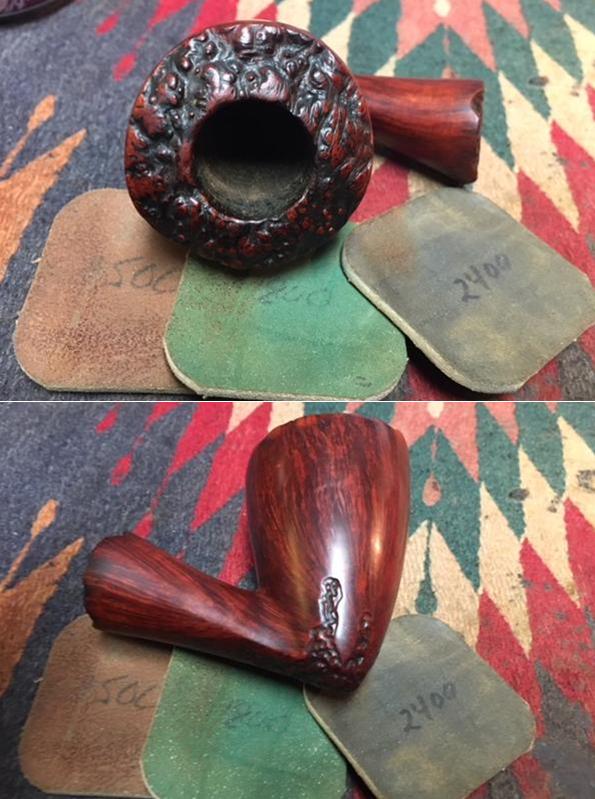
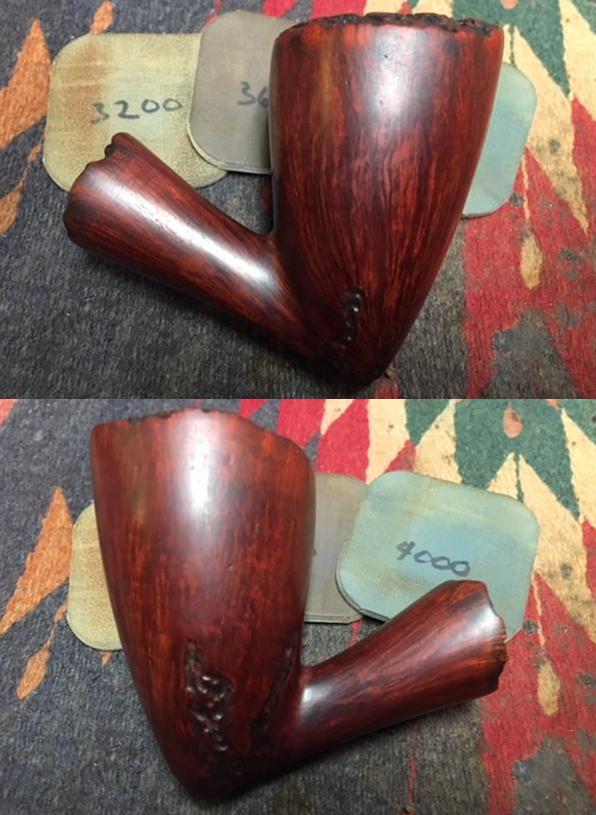
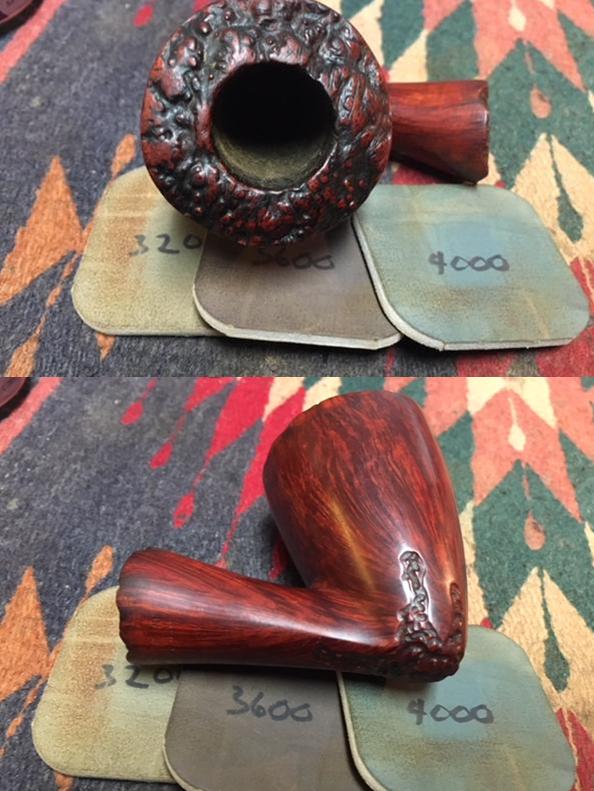
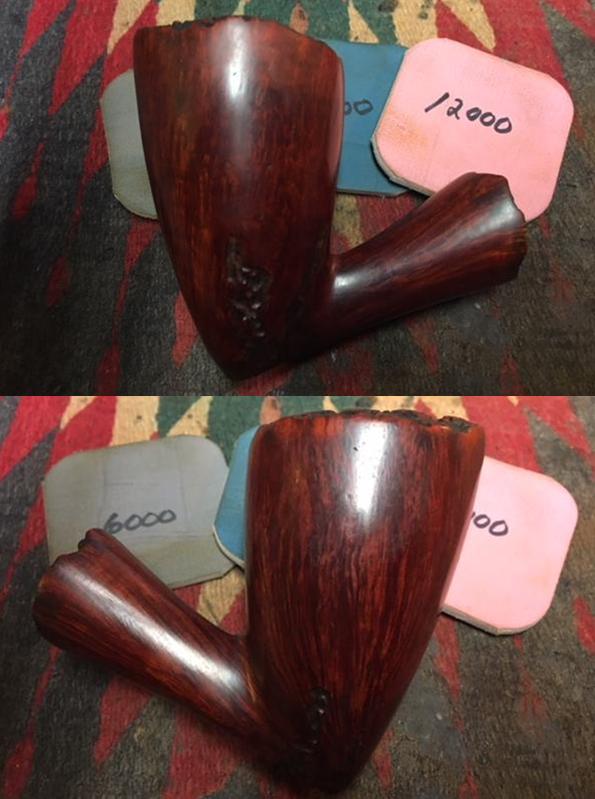
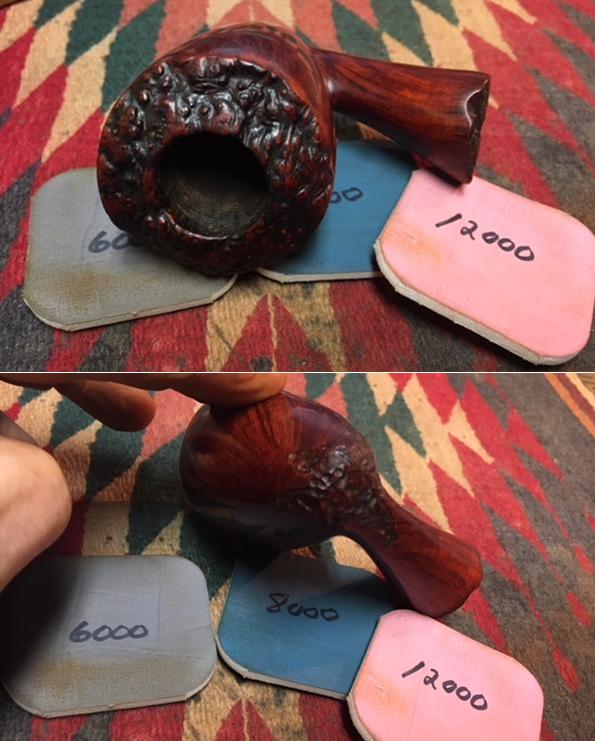
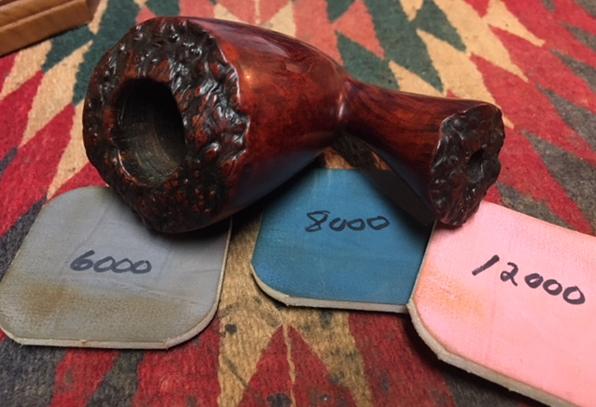
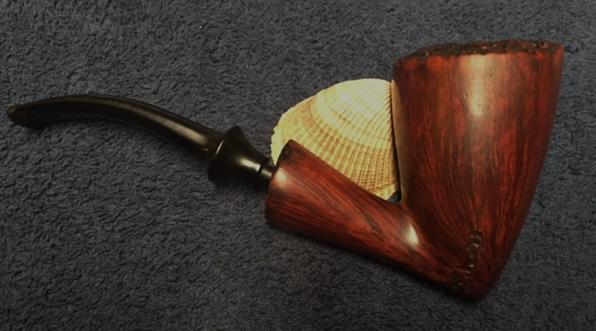
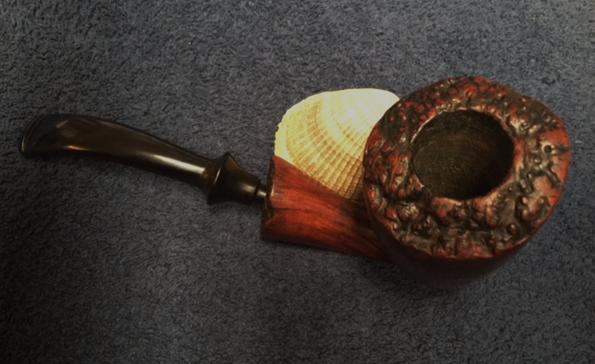
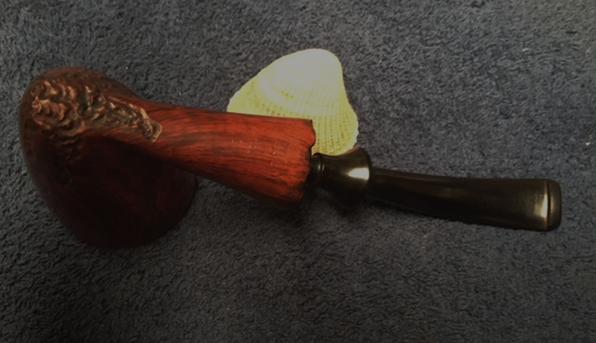
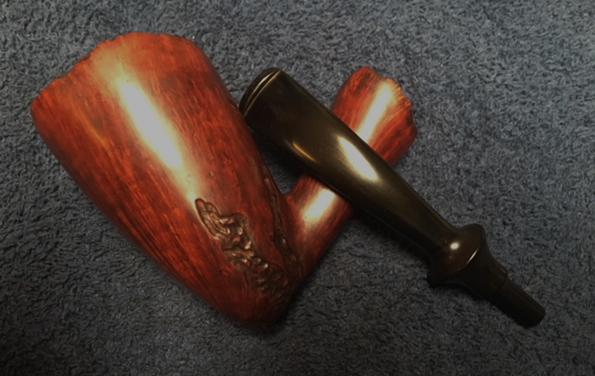
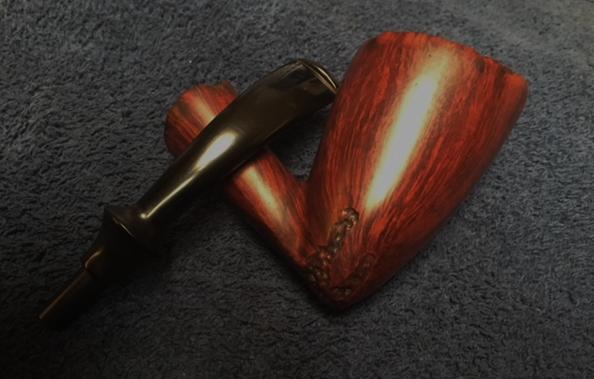
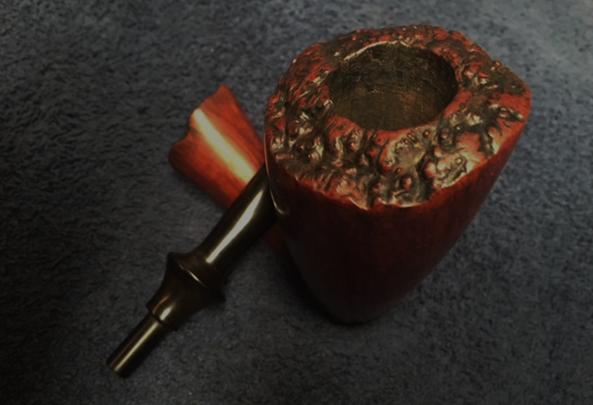
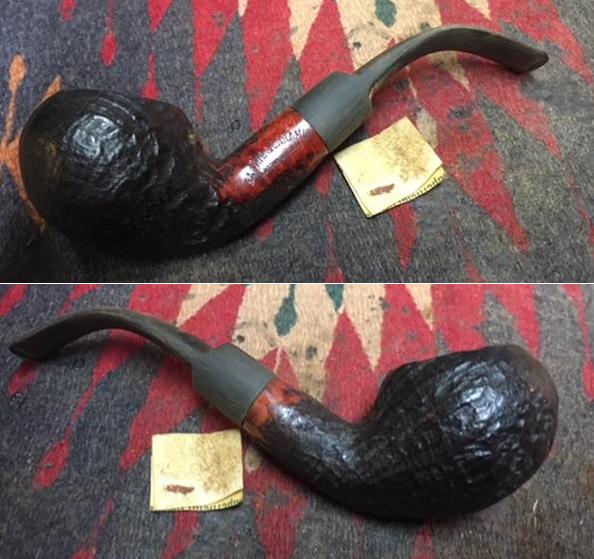
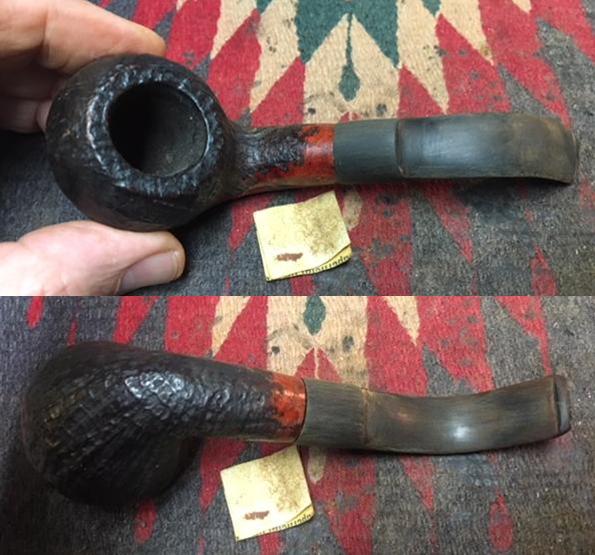
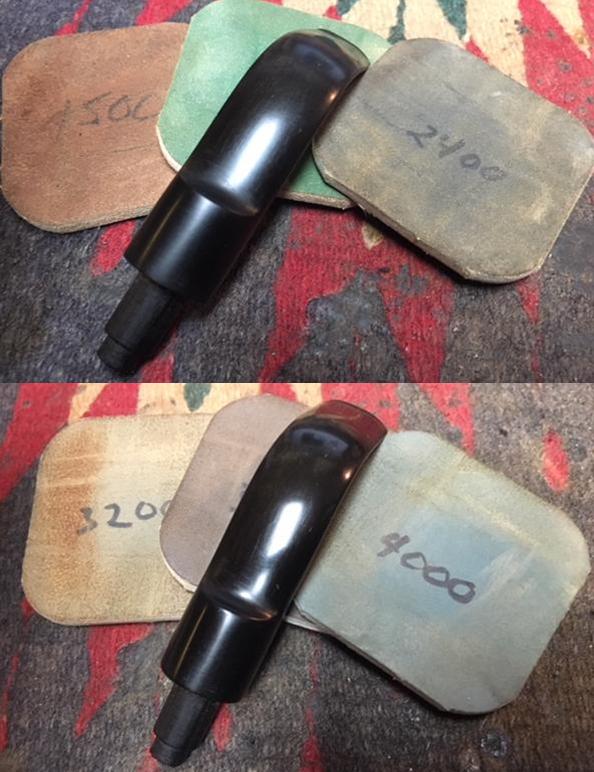
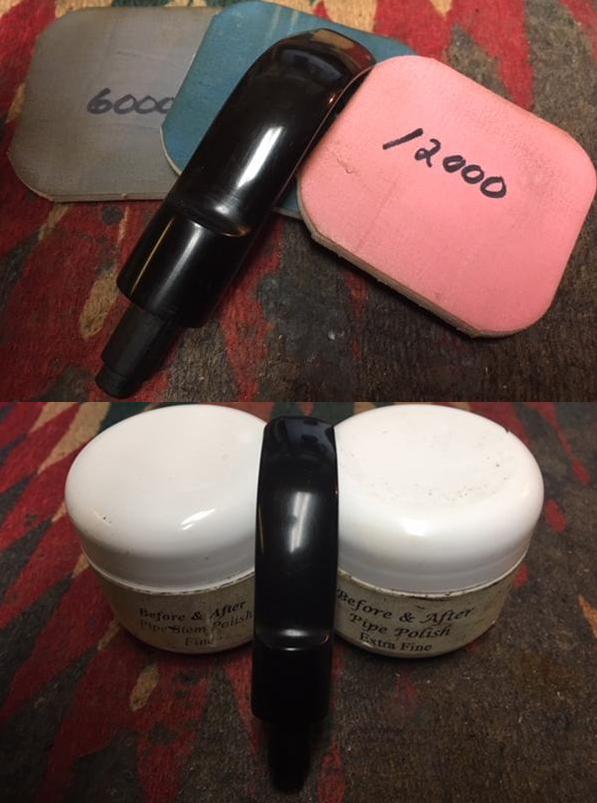
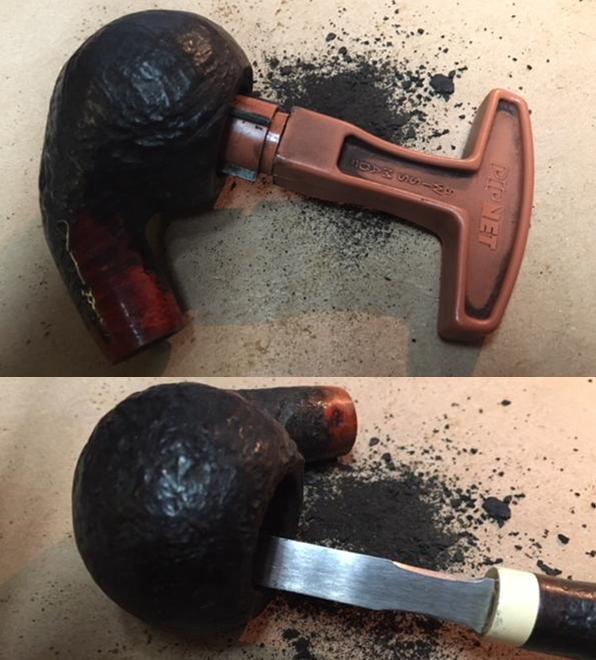
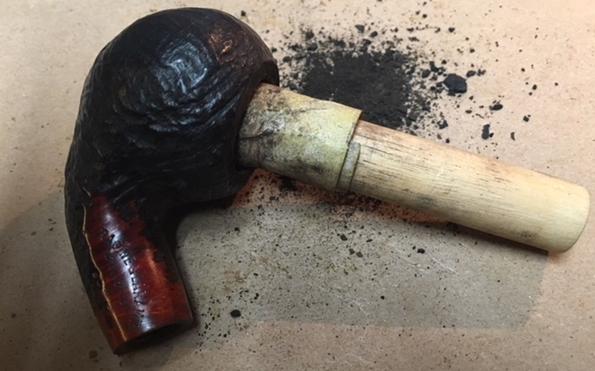
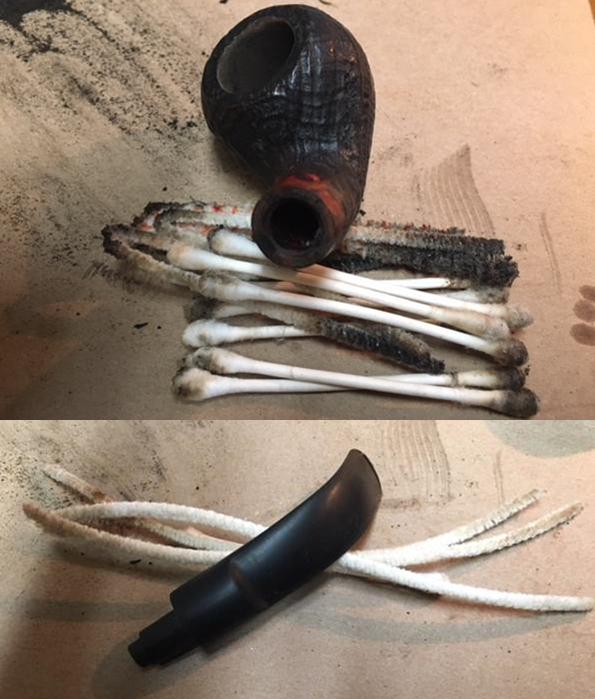
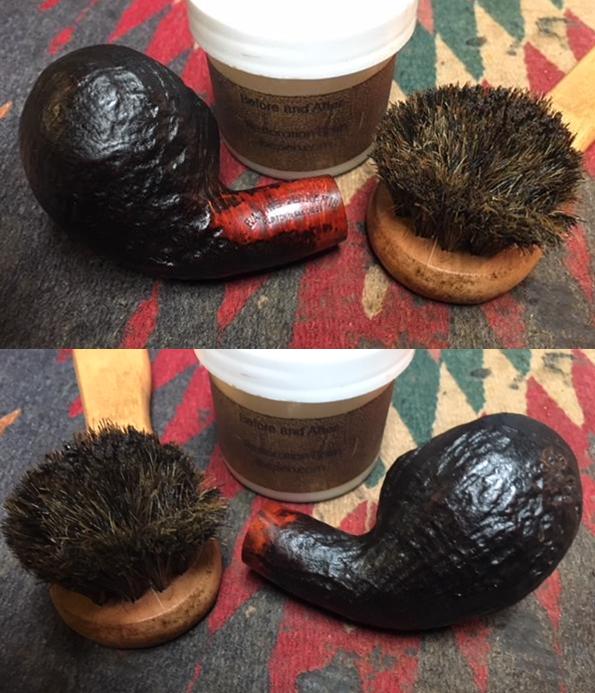
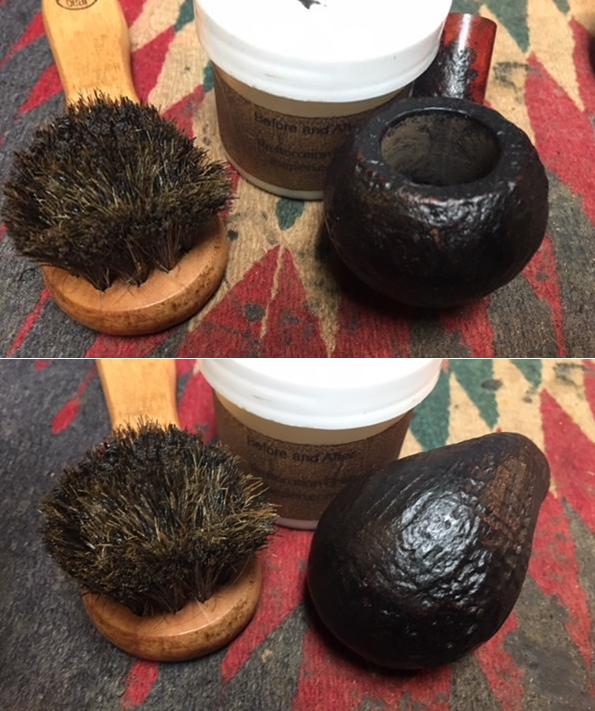
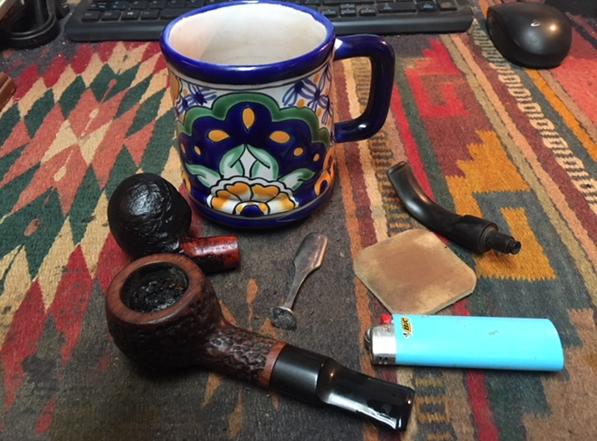
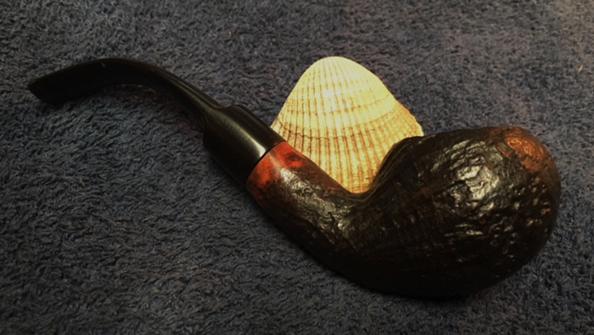
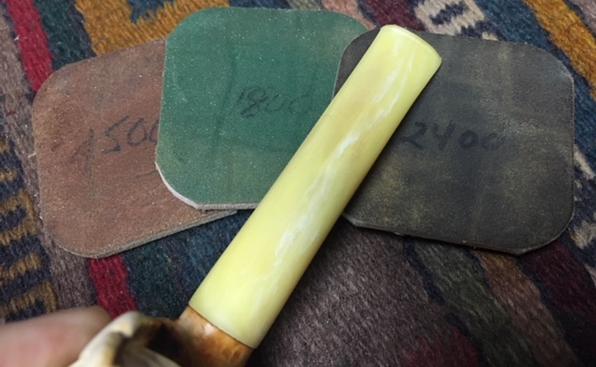
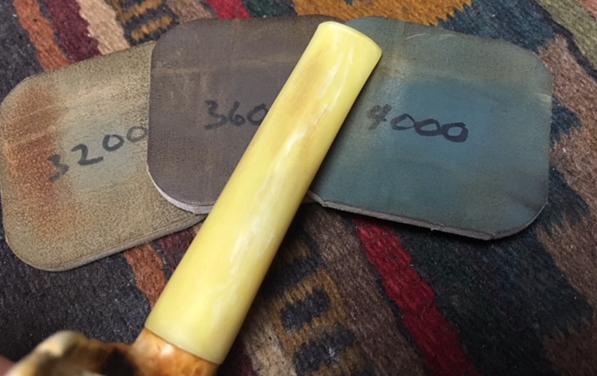
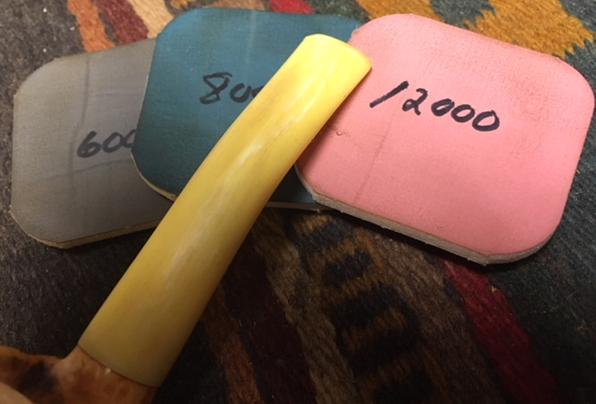
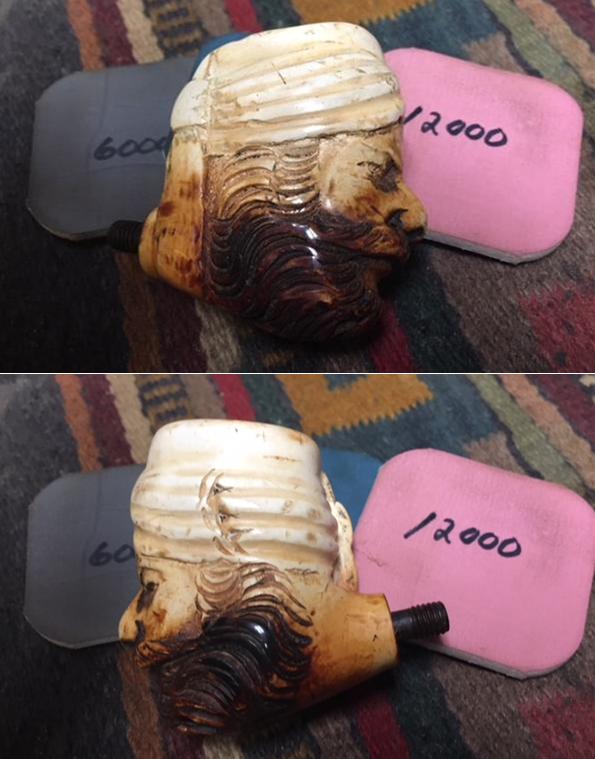
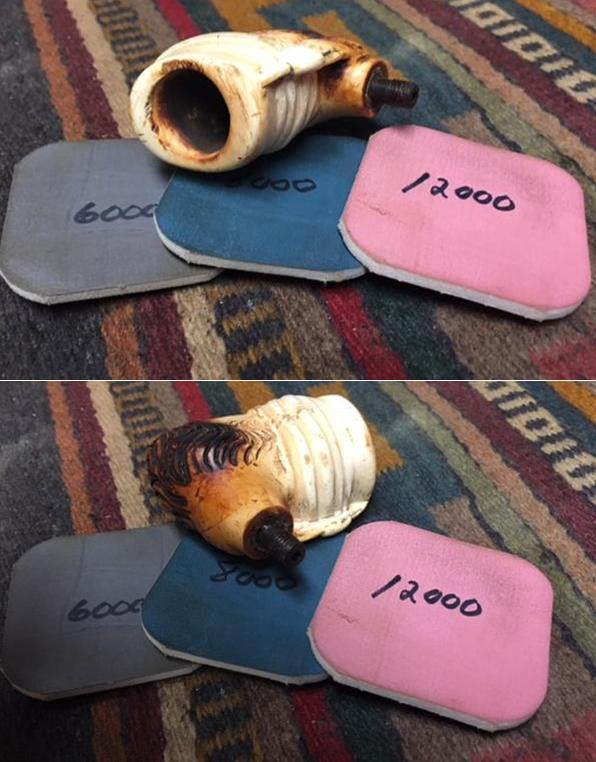
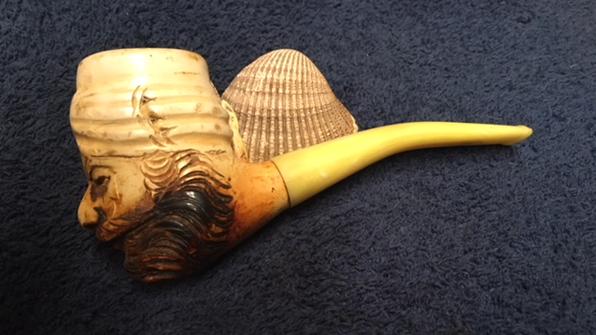
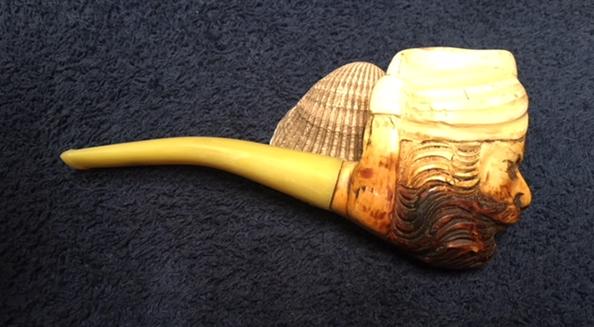
The blowfish “Vincent” was made by Tedd Weitzman in Atlanta around 2010. He started making pipes out of the shop of a local amateur maker and this was his first sellable one… “Chimera” would have been his marque, but he hadn’t made a stamp yet, but as far as I know he never made another.The pipe had an interesting shape and worked with the grain very well. It seemed to have a clean and open draw. I took a few photos of the bowl from various angles to show the grain. Some of you may note that the shank end is not square and require that the saddle of the stem be cut at an angle. This will need to be addressed when I add the shank extension. I had an interesting faux horn (Lucite) shank extension here that I thought make an interesting contrast with the shape of the bowl. I also had a four sided, square vulcanite tapered stem that I thought would look good with the pipe. I laid out the pieces and took a photo of the proposed look of the pipe. I sent the photos to the owner and his response was to go with what I thought would look good. I was good to go on this one.I took the pipe apart and worked on the shank extension. I glued a threaded Delrin tenon in the shank end of the stem to join it to the shank of the pipe. The taper on the shank extension was not quite enough to make a smooth transition with the briar shank. I took it down with a Dremel and sanding drum and got it close. The rest of the fitting would have to be done by hand with files and sandpaper. The tenon would need to be cleaned up a bit but it was going to work nicely. I put the stem back together with the extension and took some photos. I put the stem and shank extension in place on the bowl and took some photos. You can see that the transition is getting close. I think the faux horn shank extension and new stem are going to look really good. It is        quite unique looking as a whole. I like the longer shank and stem with the large blowfish shaped bowl. Once I had the transition sanded smooth with 220 grit sandpaper I polished it and the extension with micromesh sanding pads – wet sanding with 1500-2400 grit pads and dry sanding with 3200-4000 grit pads. I wiped the extension down after each pad with a damp cloth. Before I polished it with the 6000-12000 grit pads I stained the connection with an oak coloured stain pen to match the colour of the rest of the bowl. I finished by polishing the junction and the extension with the last three grits (6000-12000) of micromesh pads. I really like the look of the longer shank. The faux horn extension looks good with the rest of the pipe. I worked Before & After Restoration Balm deep into the briar on the smooth finish to clean, enliven and protect it. I wiped it off with a soft cloth. I buffed the bowl with a cotton cloth to polish it. It really began to have a deep shine in the briar. I took some photos of the bowl at this point to mark the progress in the restoration. The grain on the bowl is really beginning to stand out and will only do so more as the pipe is waxed. I set the bowl aside and began to work on the stem that I had chosen. It was an interesting four sided taper stem with a flare at the bottom where it joined the shank. The tenon was rough so it would need to be worked on. I funneled the airway in the stem to give it a good open flow. I sanded out the tooth chatter on the top and underside near the button. I sanded out the scratches in the tenon and the underside of the disk between the tenon and the stem. I used a folded piece of 220 grit sandpaper to do the shaping and smoothing work on the stem.I polished the stem with micromesh sanding pads – wet sanding with 1500-2400 grit pads and dry sanding with 3200-12000 grit pads. I wiped the stem down after each pad with Obsidian Oil  and rubbed it into the surface. To finish the polishing I used Before & After Pipe Polish – both Fine and Extra Fine polishes. I gave it a final coat of Obsidian Oil and hand buffed it to a shine. This Chimera Blowfish has some really beautiful grain all around the bowl and shank. The grain really is quite stunning. The asymmetrical nature of the bowl and shank give it a really unique look. I can see why the original stem was a hard fit. The shank extension that has the look of faux horn looks really good in contrast between the briar and the stem. The panelled vulcanite stem is high quality and shined up well. I buffed the bowl and the stem with Blue Diamond polish to raise the shine on the briar and the vulcanite. I was careful to not buff the stamping and damage it. I gave the bowl and stem multiple coats of carnauba wax. I buffed the entire pipe with a clean buffing pad to raise the shine. I hand buffed it with a microfiber cloth to deepen the shine. The finished pipe is shown in the photos below. The dimensions of the pipe are: Length: 6 1/2 inches, Height: 2 inches, Outside Diameter: 1 3/4 inches, Diameter of the chamber: 3/4 inch. This blowfish feels great in the hand and its light weight give it the potential of being a clencher. I have one more repair to do for this pipeman and I will give him a call soon and I know that he is looking forward smoking these pipes. Thanks for walking through the restoration with me.

This is a pipe like none I have ever seen – a Jeantet Hawaii Bent Billiard


Blog by Steve Laug

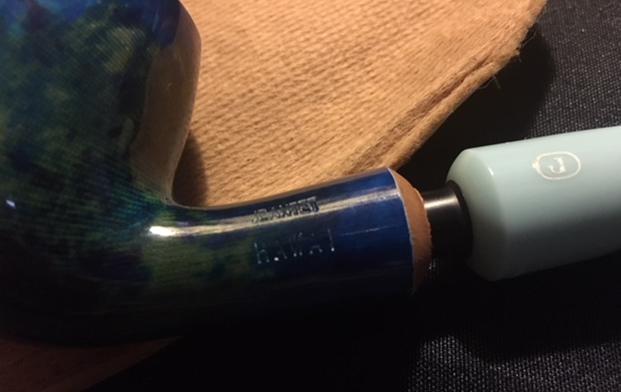
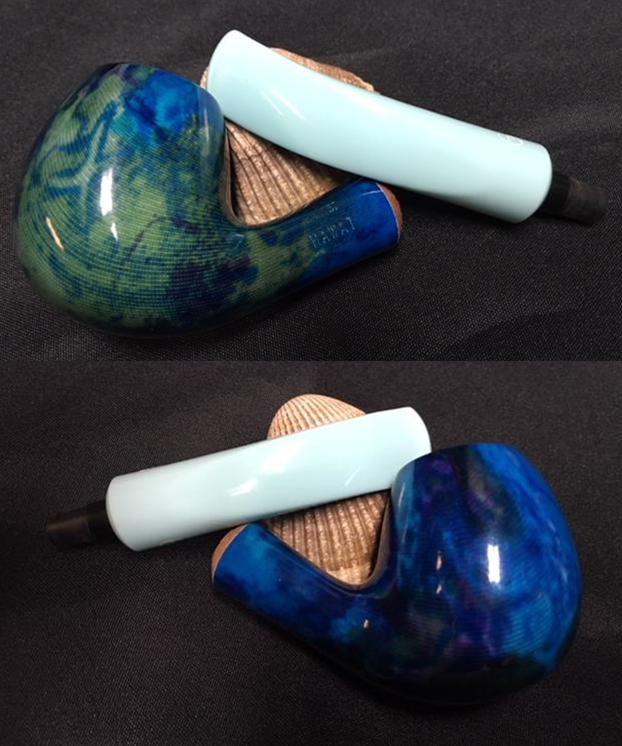
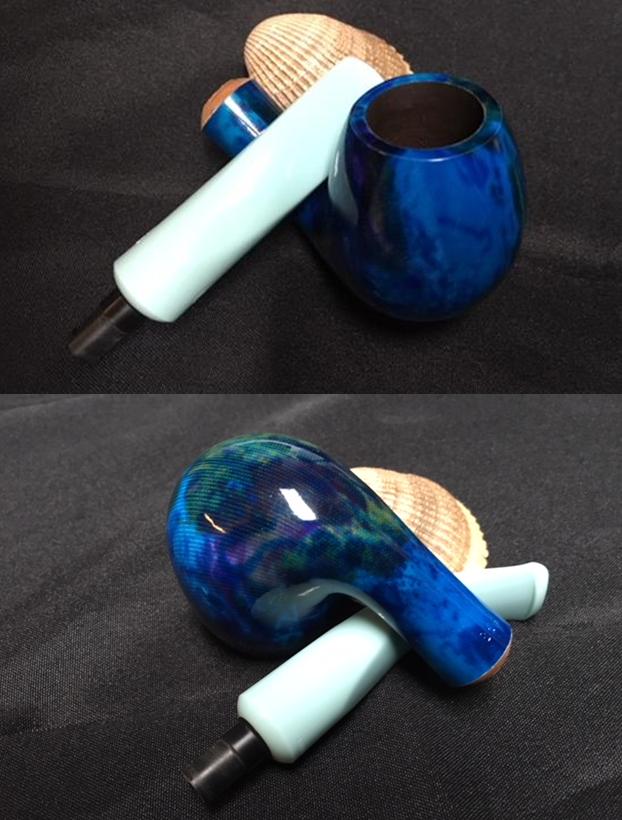
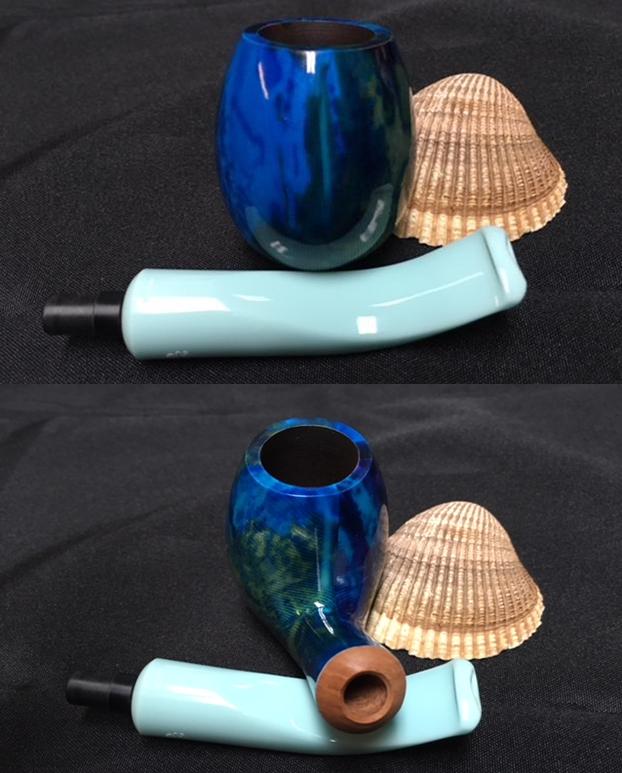
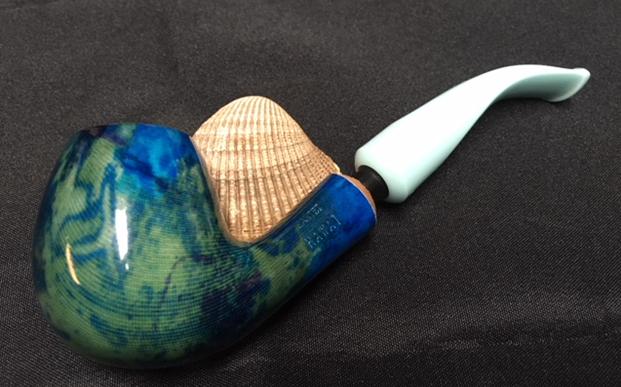
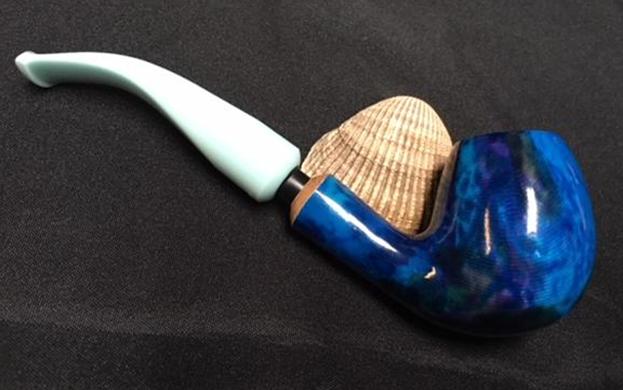
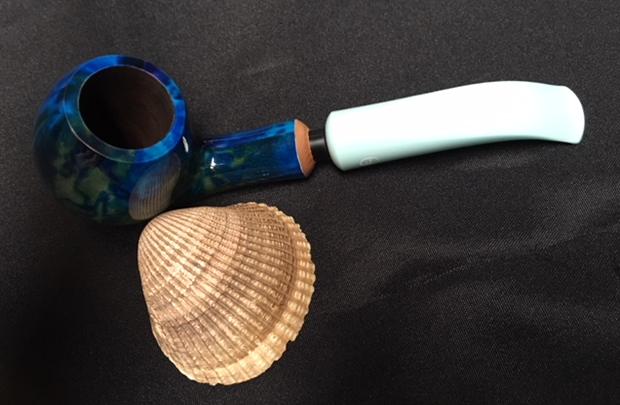
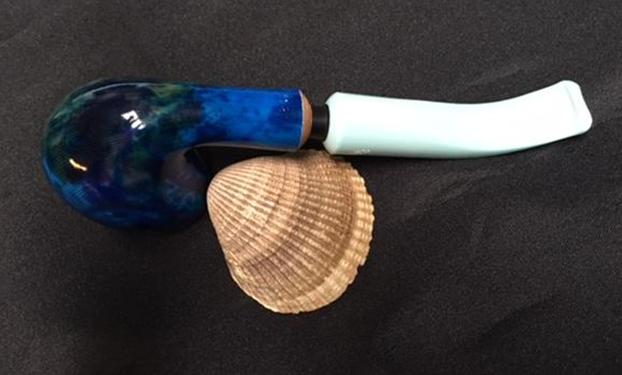
My brother Jeff was intrigued by this pipe when he saw it. I don’t remember if it was on an auction on Facebook or another site or if he picked it up in his travels. The thing is when he showed it to me I said, “Why?”. I had never seen a pipe like this one either in terms of the colour of the bowl or the stem. It was definitely unlike anything we had ever worked on and it was New Old Stock (NOS) and unsmoked. To be honest with you all it is not a pipe that I would ever choose for myself though I cannot tell you why, exactly. I just do not like it. It is very different. As is often the case with me these days, I actually forgot about it and worked on the pipes in my restoration box and the repairs I have on the go instead. They were more of what I was used to in terms of look, finish and feel both of the bowl and the stem.

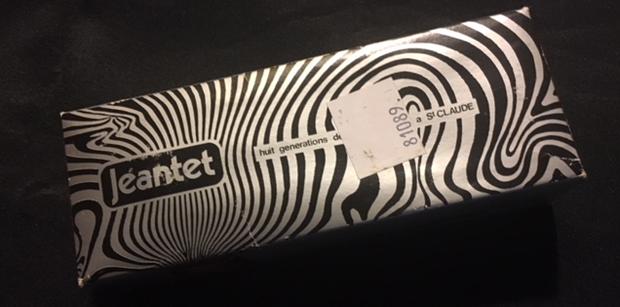
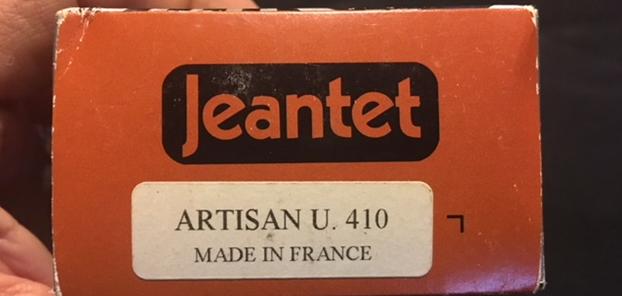
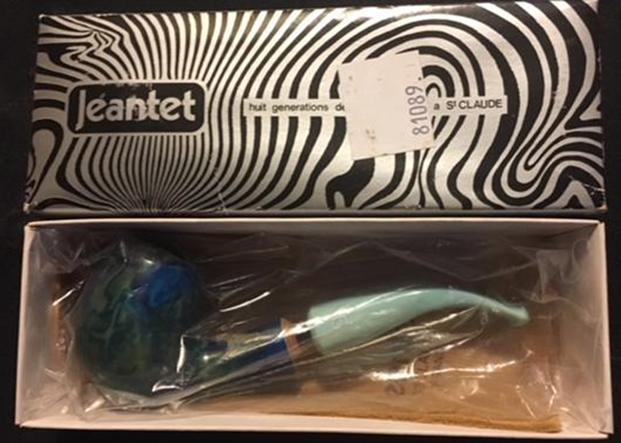
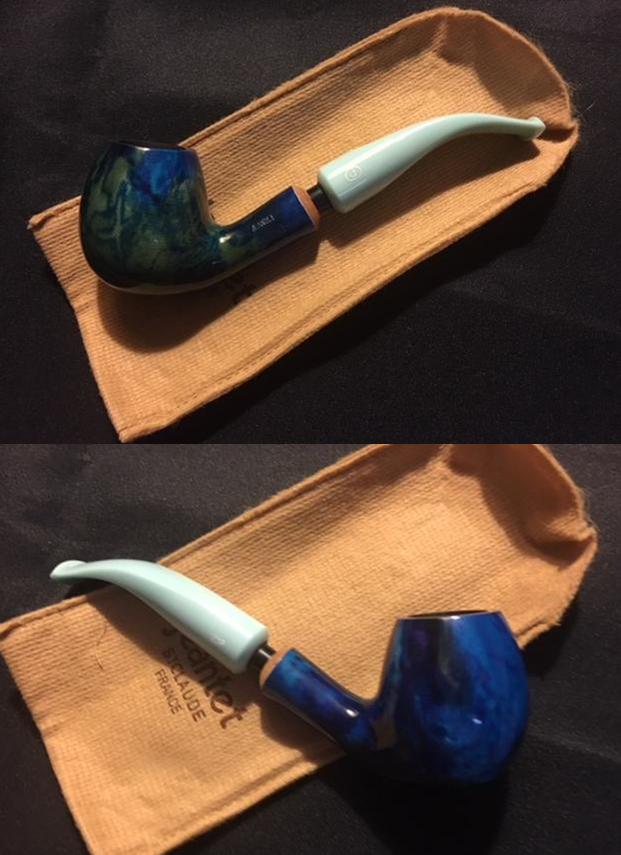
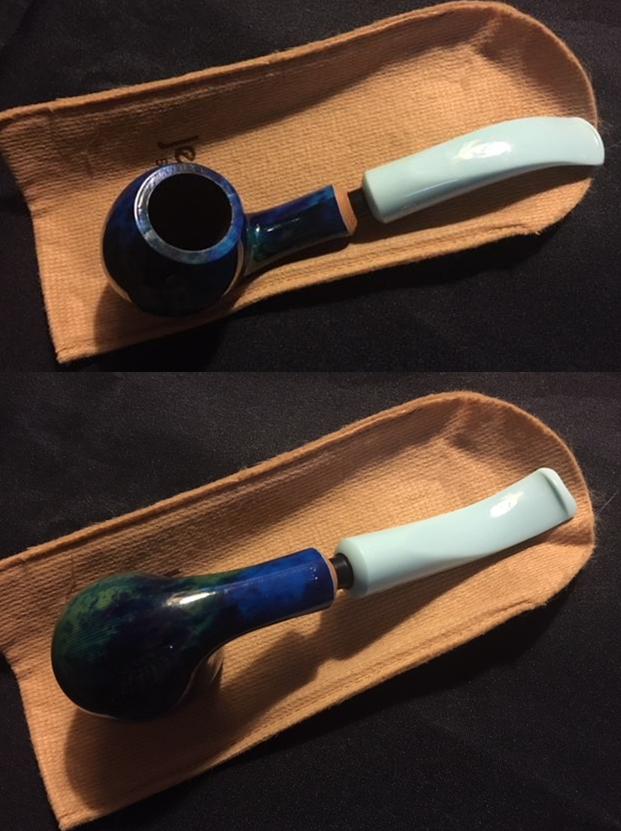
Two of my daughters were in the US for my father’s birthday at the end of June and they stayed with Jeff and his wife. Jeff talked them into bringing a few pipes back with them for me. This pipe was one of them. When they got home from their trip they brought me the pipes and the rack that Jeff had sent home. This particular pipe was still in its original box – kind of a zebra striped pattern on the lid and a sticker on the top that I interpret as a date code – August 10, 1989. The end of the box bore the name of the line – Jeantet Artisan U. 410, Made in France. Normally I don’t do a blog on a NOS pipe, I just post it on the rebornpipes store. But this one was just too different to pass up the opportunity of doing a write up on it and showing it to you all. I am curious to hear if any of you have seen one of these or smoked one. They got home about 11pm on Monday night but when I saw the box and the Jeantet name on it I had to open it and see if it was the pipe Jeff had shown me earlier. Here is what I saw in the box.The pipe was still in its plastic bag in the bottom of the box. Underneath it was a soft cloth pipe sock with a rounded bottom on the sock that read Jeantet over St. Claude, France. I took the pipe out of the bag, the pipe sock out of the box and took photos of the pipe on the sock. The next photo not only shows the stamping on the left side of the shank but give a good sense of the finish on the pipe. Underneath the blue and green there are swirls that give the pipe a look of texture even though it is smooth to touch. The stamping on the shank reads Jeantet over Hawaii. The J in an oval stamped on the left side of the stem is also clear.I took a series of photos with the stem removed from the shank to give an idea of the look of the pipe. The stem is an unblemished robin egg blue acrylic. It is actually quite a beautiful colour and sets off the rich ocean like colours of the finish on the bowl. You will notice the variations in colour of the bowl. The left side is a swirl of algae like green on the surface of the ocean blue beneath. The greens curve around to the front of the bowl and on the left side of the shank. They disappear into the rich blues of the underside of the bowl and shank. The right side is the rich ocean blue with patches of the green scattered throughout. As you turn the bowl it is like the blues and greens move like undulating waves. It is aptly stamped Hawaii. The complete pipe is actually quite a beautiful piece. Though it is not my style it is still quite stunning. The way the finish was applied gives it a sense of depth and movement that is hard to capture fully with photos. The Delrin tenon in the acrylic stem is a snug fit in the shank. The polished briar shank end it quite nice in adding a contrast. The bowl is unsmoked and clean. The pipe is ready for the pipeman who wants to add it to his or her collection to break in with their favourite tobacco. It is about a Dunhill group 4 sized pipe. The dimensions of the pipe are – Length: 6 inches, Height: 2 inches, Outside diameter of the bowl: 1 1/8 inches, Chamber diameter: ¾ inch. If you are interested in adding it to your collection it will soon be placed on the rebornpipes store. You can contact me by email at slaug@uniserve.com. Thanks for looking.

An Andre Hand Carved Freehand – #8 of Anthony’s Dad’s Pipes


Blog by Steve Laug

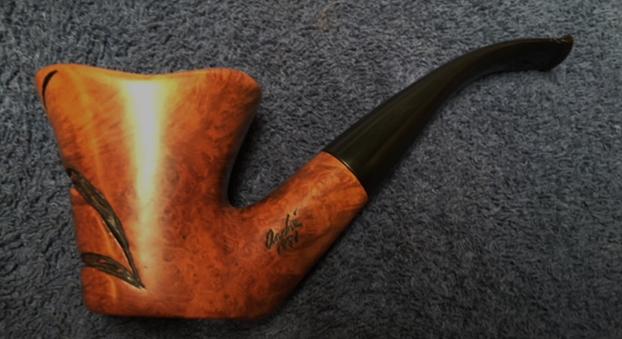
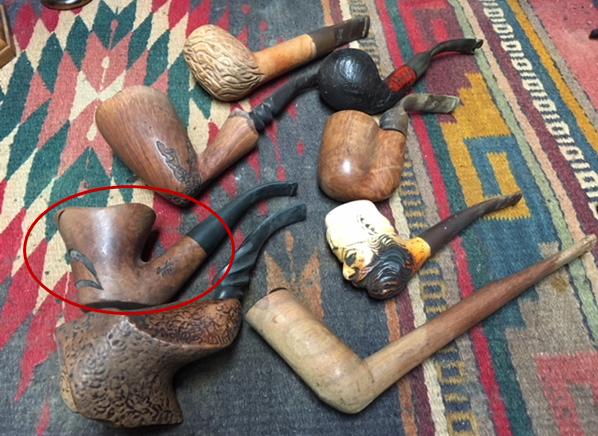
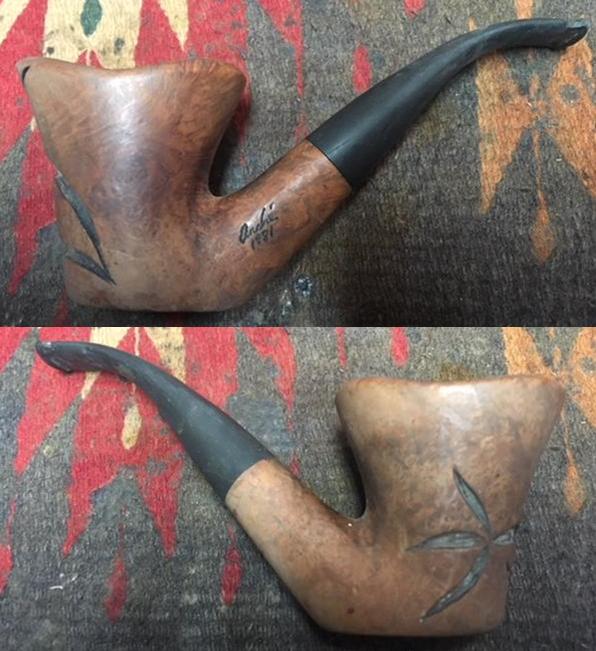
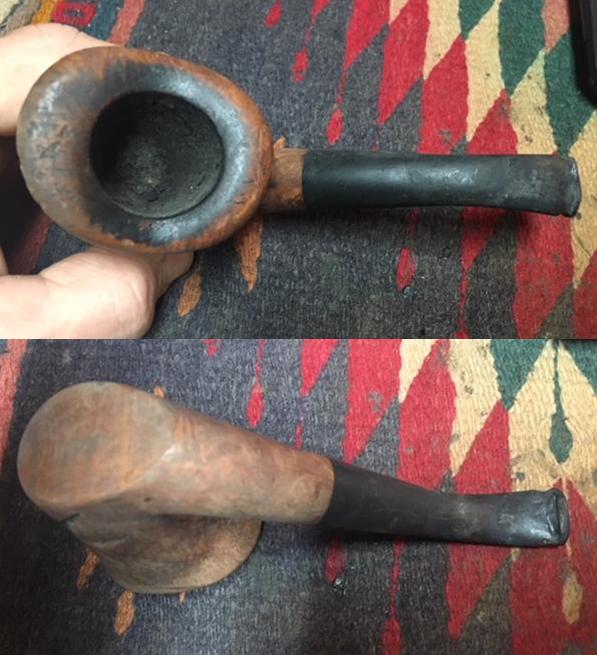
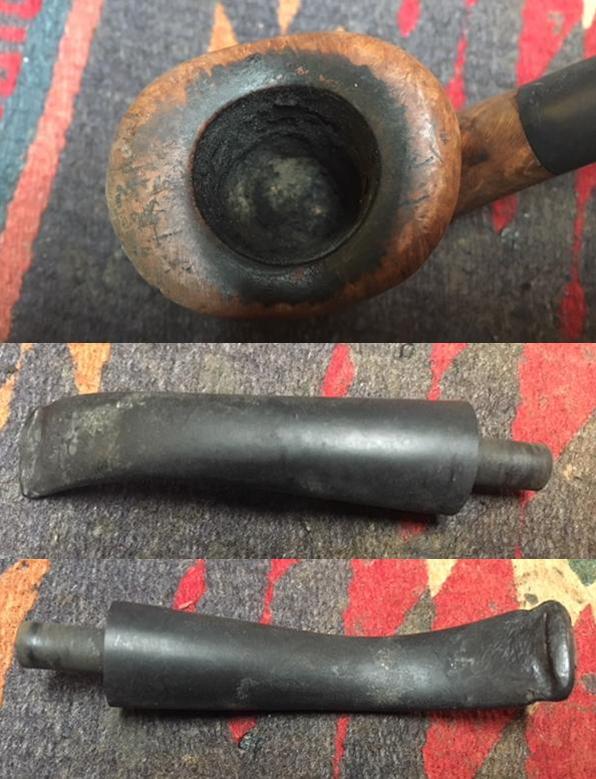
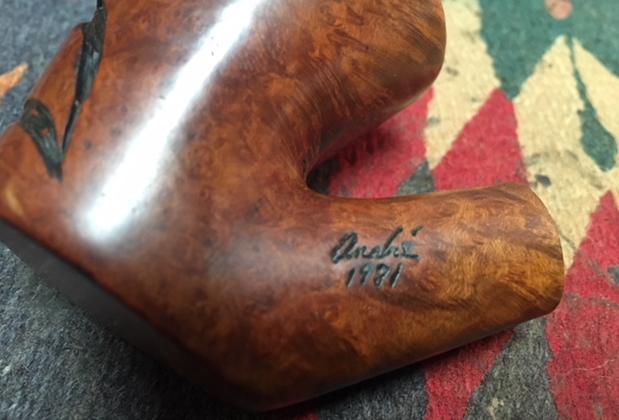
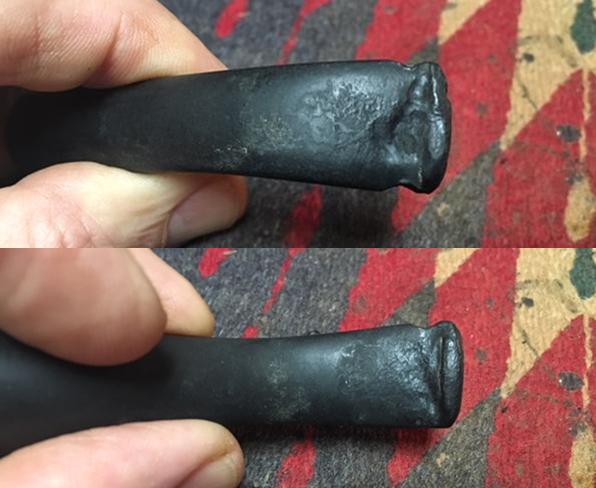
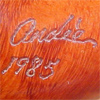
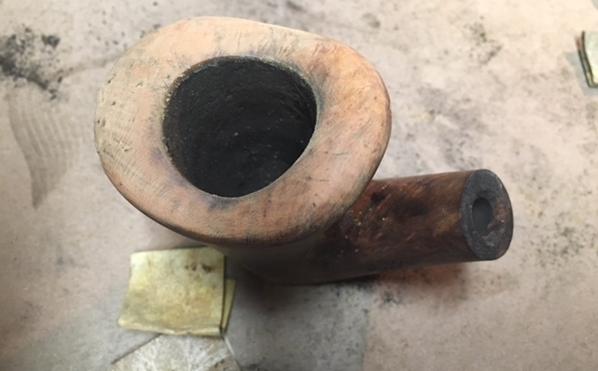
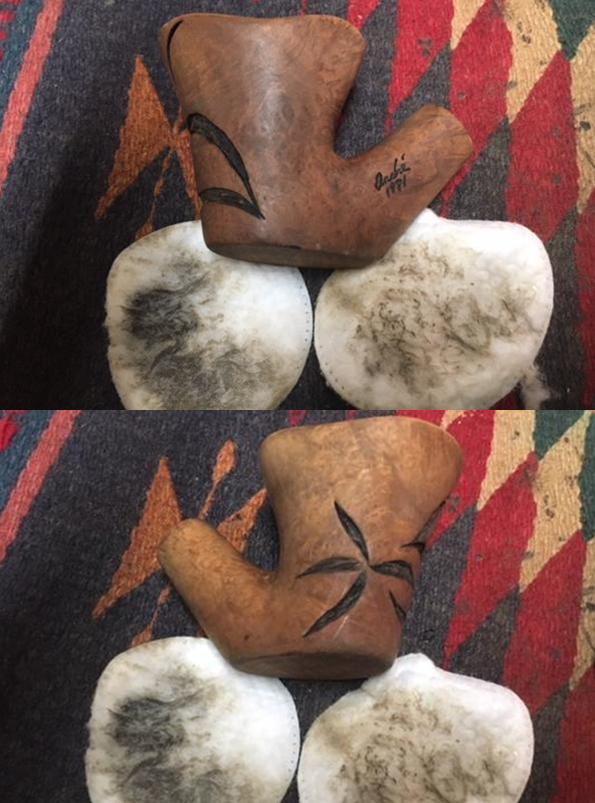
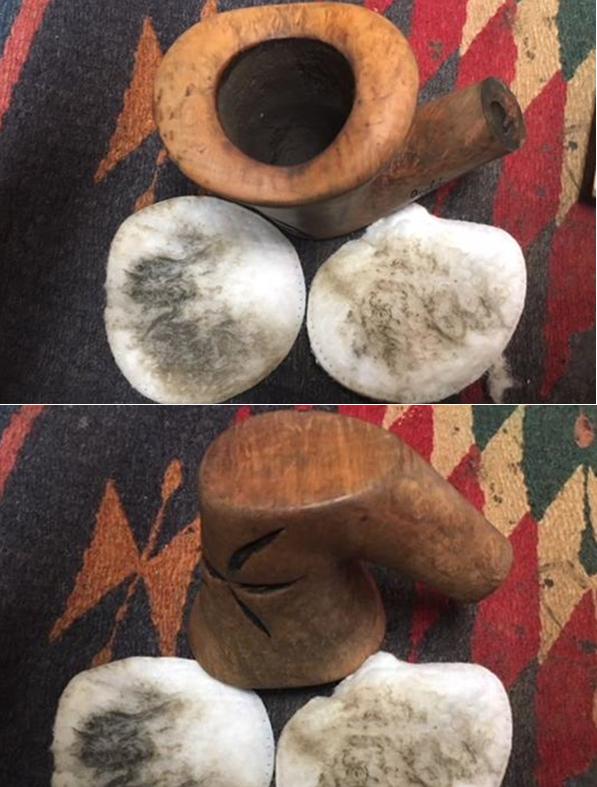
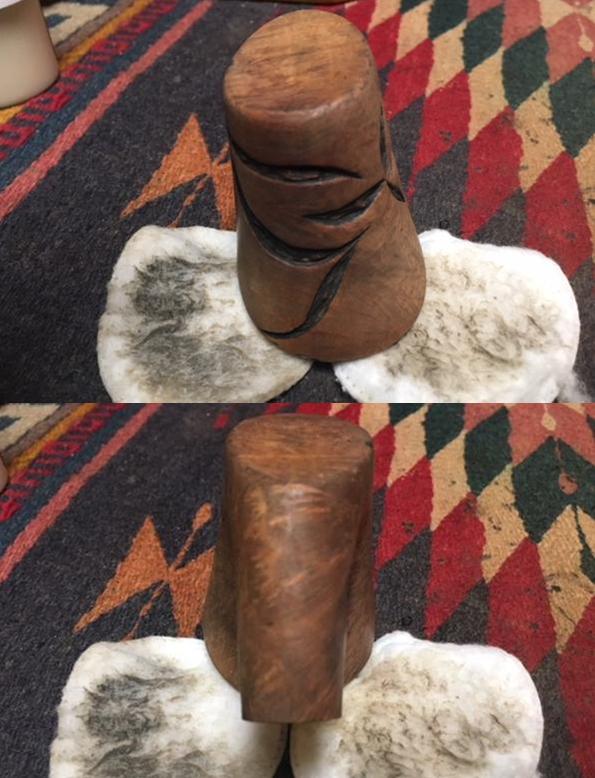
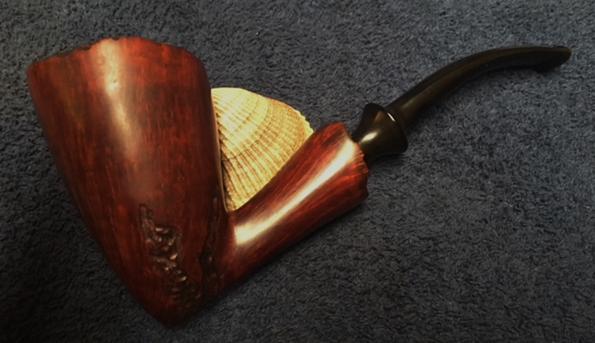
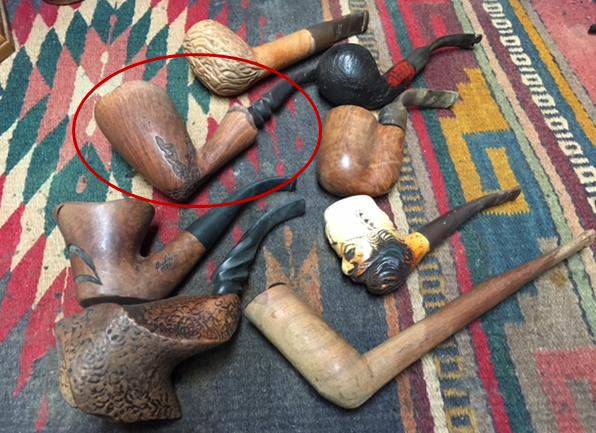
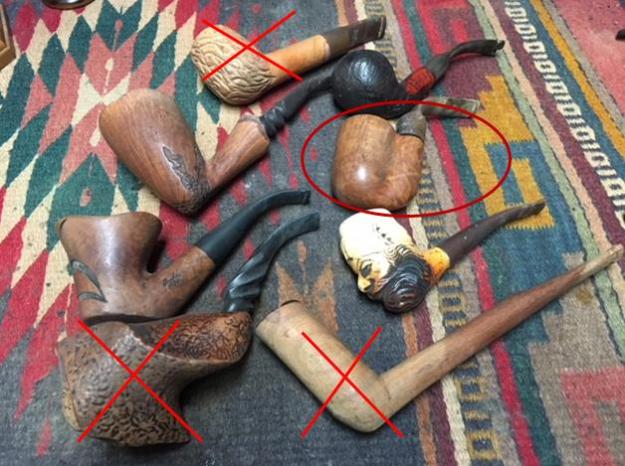
I am finishing the work that began with an email from Anthony, a reader of rebornpipes asking if I would be willing to help him clean up his Dad’s pipes. He wrote; “I have a few pipes (8 or so) that haven’t been smoked in 15 years. They were my dad’s. I would like to get someone to restore them”. We chatted back and forth via email and the long and short of the story is that I have eight of his Dad’s pipes in my shop now to work on. The photo below shows the mixture of pipes that he sent me. There are some interesting shapes and most are very dirty and have very little if any of the original finish left on the briar. All have an overflow of carbon on the rim top and all have chewed, damaged stems and buttons. Anthony remembers his Dad smoking them throughout the years he was growing up so they went from regular use to being boxed and stored. They will need a lot of TLC to bring life back to them but it should be fun to give it a go. I went through the pipes and assessed their condition and contacted him and got the go ahead to proceed on the lot.I have completed the restoration of seven of the pipes. The last pipe I am working on is a floral shaped freehand with a rounded top and a flush fit tapered, bite proof stem. It the third pipe down on the left hand column in the above photo. I have circled it in red. It is another tall freehand with a 1/4 bent stem. It has some pretty grain with carved floral patterns on the front and right side of the bowl. The bottom of the bowl is flat making the pipe a sitter. The stem that is on it is a twin bore/bite proof stem that is chewed with deep tooth marks on both the top and bottom of the stem and button. This may well be the original stem on this pipe. But in any case the fact that most of these pipes have a replacement twin bore bite proof stem tells me a lot about Anthony’s Dad’s habitual gnawing on his pipes. The pipe is stamped on the left side of the shank with the script signature Andre over 1981. The bowl had about a half a bowl of dottle and tobacco in the bottom and a thick cake, and some lava overflow on the rim top. The finish was gone and very washed out looking. Even the dirt and grime were anemic. I took photos of the pipe to show its overall condition when it arrived at my work table.   I took some close up photos of the bowl, rim top and the stem to show what I was going to be dealing with on this pipe. The rim top was in rough condition – mold filled in the grooves and valleys of the plateau. There was also some lava overflowing from the bowl that had filled in the grooves. The plateau on the shank end was worse than the rim top (if possible). The finish worn off and there was water staining all around the shank end.After I cleaned the pipe up a bit, I took a photo of the stamping on the left side of the shank. It reads Andre over 1981.The stem was in rough condition as you can see from the photos below. The “bite proof” stem evidently was not bite proof. Anthony’s Dad had gnawed on it and left behind deep tooth marks on the stem and button. It would take some work but I would save this stem.I looked up the brand on the pipephil website index and found it listed. Here is the link – http://www.pipephil.eu/logos/en/logo-a6.html. I have included a photo from the site that shows a stamp on the left side of the shank that is like the one I am working on. The only difference is the year – this is a 1985 while I am working on a 1981. The site says that André Mermet was a French craftsman who immigrated to the USA. He (and after him his son) produced pipes for Barclay Rex or Wilke pipeshops.
I looked on Pipedia https://pipedia.org/wiki/American_Pipe_Brands_%26_Makers_A_-_B and found that though there was no listing with information, there was the brand name in the list of US pipe companies and makers. It stated: North American brand, possibly associated with Andre’s Pipe Gallery.

I wondered if this was not the shop that Anthony’s Mom had referred to in her email to him that I quoted in previous blogs on these pipes. She had written about a shop called “Andre’s,” around 1969 or ’70. She said it was a unique shop, originally located in Los Gatos, or Campbell, California she thought. She said that it later moved to the Alameda area in San Jose. Anthony’s Dad also bought his favorite tobacco blends there so it makes sense to me that he may have also purchased this signature pipe from them. Perhaps Anthony will let us know when he reads this.

One last time I want to include the tribute Anthony wrote about his Dad and his pipe smoking. Here is what Anthony sent: When my dad died 6 years ago, my mom asked if I wanted my dad’s old pipes. He was a long time pipe smoker, ever since I was a kid I can remember him sitting on the couch smoking his pipe inside. He worked at IBM and used to smoke his pipe in his office before they changed the laws in California. So you can imagine he had quite the collection over the years.

I took his pipes and put them in storage for a few years, I myself recently quit smoking cigarettes and decided to take up pipe smoking as it was easier on the wallet. I asked in /r/pipetobacco if anyone could recommend a pipe restoration service and someone told me about rebornpipes.com. I was hesitant but after looking at the blog I knew it would be a good place to send my dad’s pipes.

My dad loved smoking his pipes, sitting out by the pool in the sun taking a nap or in the garage wood working. The house was my mom’s area and the garage was my dad’s area. I spent hours sitting out in the garage as a kid watching the niners or a’s and giants on tv while doing woodworking projects. I hope to do the same with my kids these days.

I’m not sure if my dad smoked other tobacco but I remember Captain Black was the kind he smoked regularly. He had tins of it in the garage, full and empty and would turn the old tin jars into storage for odds and ends, like screws or washers or miscellaneous stuff.

I remember when I played little league my dad would sit in the stands and smoke his pipes. One of my teammates asked “What is that smell?” and I ashamedly said “Oh that’s my dad’s pipe…I’ll go tell him to put it out” and my teammate said “No man, it smells good!”.  It’s funny how the little conversations over the years you remember.

Another time when I was in 3rd grade or so we learned how smoking was bad for you (this was back in the 80s). I remember I asked my teacher if smoking a pipe was bad for you too….and she hesitated and said “Not as bad as cigarettes, since you don’t inhale it”. After that I was no longer worried about my dad smoking.

Knowing my mom I have no idea how my dad pulled this off but he managed to smoke his pipe in the house. I guess she liked the smell of it. Recently when I was waiting for my girls to get out of school I was sitting on a side street smoking my pipe and someone walked by and thanked me for bringing the pipe back. He said his dad used to smoke a pipe and he loved the smell. As did mine. The only difference is my daughters complain constantly about the smell of my car, but that is mostly because I smoke cigars too.

Anyway, grab some fine tobacco, light up a bowl and sit back and relax. I don’t have a pool like my dad did but you can catch me working on my laptop sitting in my driveway smoking a nice pipe, especially one of these restored pipes from reborn pipes….I can’t wait to smoke them.

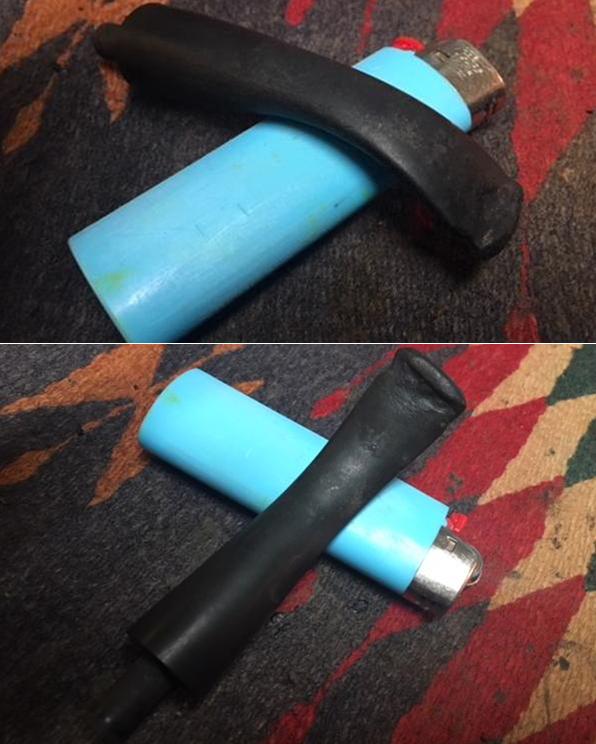
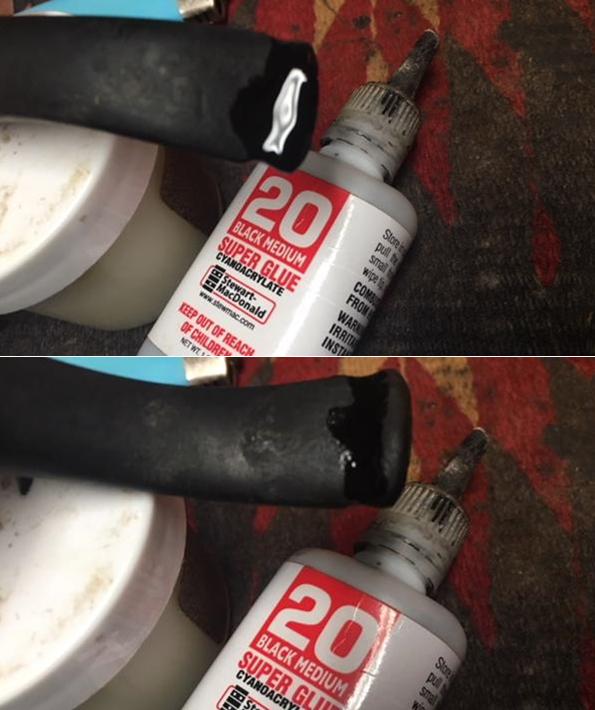
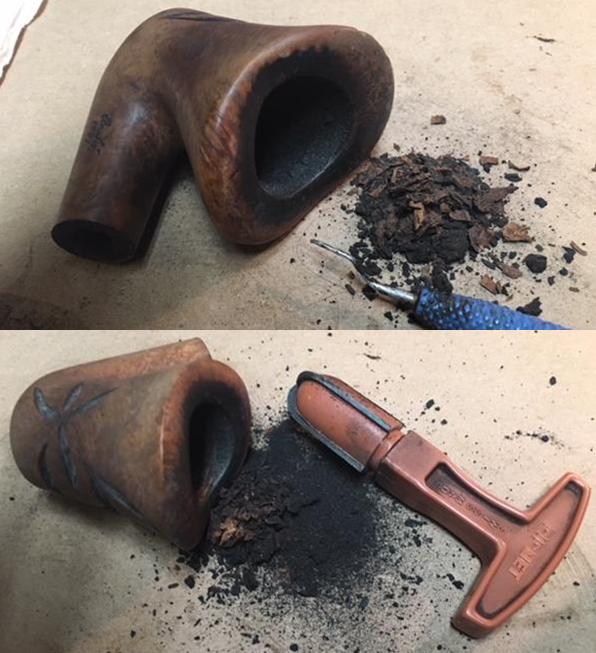
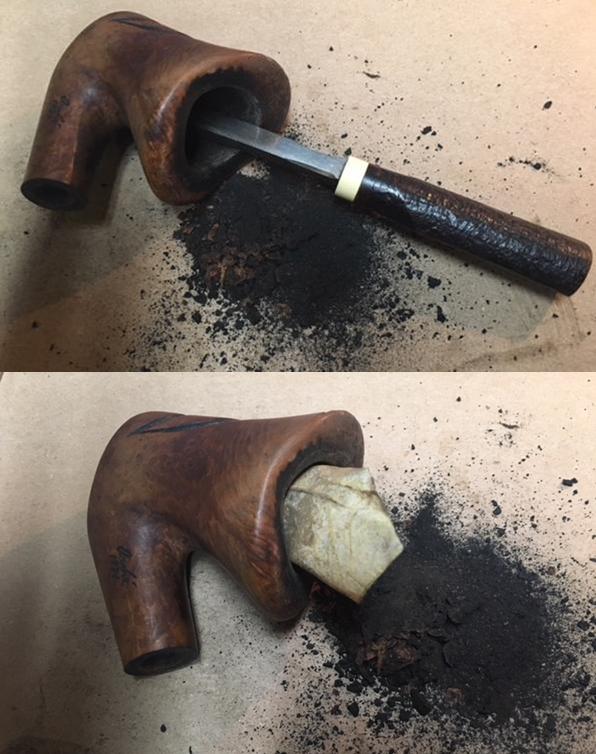
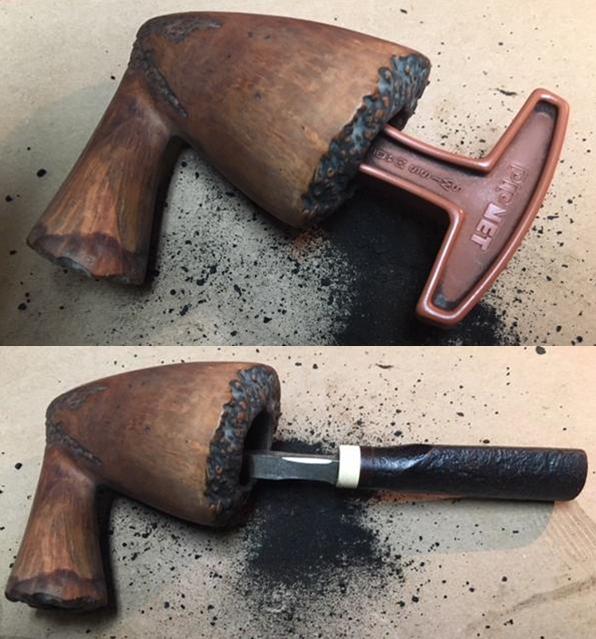
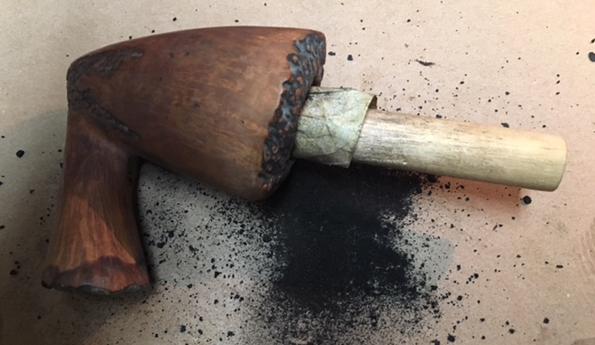
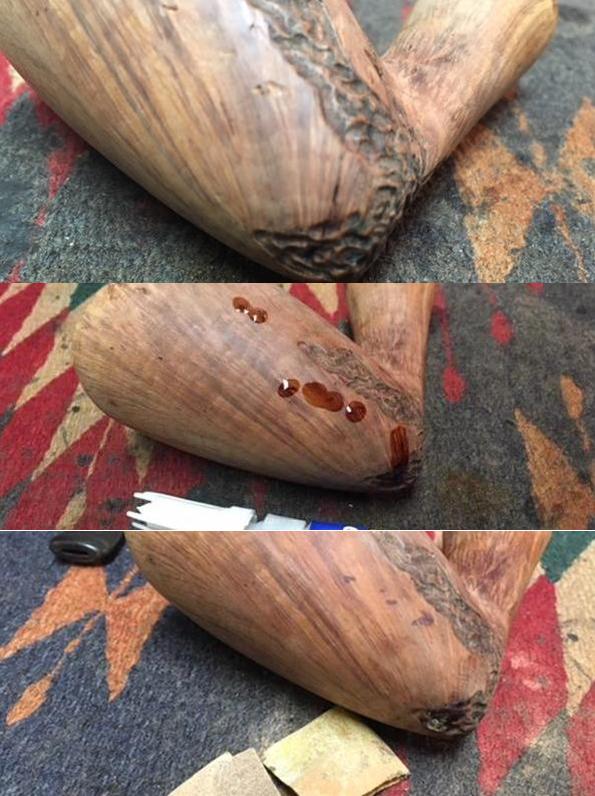
Thanks Anthony, I appreciate how your tribute gives a sense of who your Dad was and how he enjoyed his pipes. I think it is somehow appropriate that the 8th and final pipe is from Andre’s shop. I decided to start with the stem. I “painted” the deep tooth marks with a Bic lighter to raise the dents. It helped but these dents were deep and had sharp edges.  I filled in the remaining dents with black super glue. It would take several applications of the glue to thoroughly fill in and repair the dents. I set the stem aside to let the repair cure and worked on the bowl.I set the stem aside and worked on the bowl. I used a dental pick to remove the dottle and unsmoked tobacco that filled the lower half of the bowl. I reamed it back to bare briar using a PipNet pipe reamer to remove as much of the cake as I could. I finished with a Savinelli Fitsall pipe knife and then sanded it with 220 grit sandpaper wrapped around my index finger. The rim top had a thick coat of lava and many nicks and dents in the surface and along the outer rounded edge. I sanded it with a fold piece of 150 grit sandpaper followed by 220 grit sandpaper to clean off the damage and smooth out the nicks and dents.I wiped down the bowl and rim with acetone on a cotton pad to remove the remnants of stain in the bend of the shank/bowl junction and the grime ground into the finish. I was careful around the carved leaves or flower petals around the bowl and the stamping on the shank. Both seemed to have a darker stain in the grooves and I wanted to leave that undamaged. I sanded the smooth surfaces of the bowl, rim and shank with a medium and a fine grit sanding sponge to remove the scratches on the briar. I cleaned out the internals in the mortise, shank and airway with bristle and smooth pipe cleaners, cotton swabs and alcohol. It was pretty dirty but it did not take a lot of time to clean it up.I worked some Before & After Restoration Balm into the nooks and crannies of the carvings on the front and right side of the bowl and into the grain of the smooth portions of the briar. I worked it deeper into the grooves with a horsehair shoe brush. The balm works to clean, enliven and protect the briar. I really like the way it brings life to the briar. When I wipe it off with a soft cloth it not only adds a shine but takes away the grime that is in the finish.    I buffed the bowl with Blue Diamond on the buffing wheel to polish briar and further work in the Restoration Balm. The pipe is looking good. I smoothed out the repairs with a needle file and 150 and 220 grit sandpaper. I reshaped the button and repaired the straight edge. I sanded the light oxidation off the surface of the stem at the same time.I polished the stem with micromesh sanding pads – wet sanding with 1500-2400 grit pads and dry sanding with 3200-12000 grit pads. I wiped the stem down with Obsidian Oil after each sanding pad. I polished the stem with Before & After Pipe Stem Polish – both Fine and Extra Fine to finish removing the light scratches that remained. I gave stem another coat of the oil after that and set it aside to let the oil dry. I put the pipe back together and polished the bowl and stem with multiple coats of carnauba wax. I buffed it with a clean buffing pad to raise the shine. I hand buffed it with a microfiber cloth to deepen the shine. The pipe polished up pretty nicely. The finished pipe is shown in the photos below. This is final pipe of the eight pipes that I restored from Anthony’s Dad’s collection. I am looking forward to hearing what Anthony thinks once he sees the finished pipe on the blog. This week I will pack them up and send them back to him so that he will have the opportunity to carry on the trust from his Dad. The dimensions are Length: 6 inches, Height: 2 1/4 inches, Outside diameter of the bowl: 2 inches, Chamber diameter: 1 inch. Thanks for walking through the restoration with me as I worked over this final pipe from Anthony’s Dad’s collection.

A Simple Restoration of a 1910 Gourd Calabash


Blog by Steve Laug

I received a call from a fellow who lives nearby my house about working on some pipes for him. He happened to be packing them up to send to the US for repairs when he stumbled on rebornpipes. He wanted to know if I could work on them for him. Two were pretty straight forward – 1910 Calabash and a freehand that was his dad’s that he wanted to clean up and send back to him. The freehand was simple – buffing, touching up stain, cleaning the bowl and shank and removing tooth chatter and oxidation from the stem. I finished that one first and then moved on to this calabash. The rest will warrant a blog on each of them to explain the process.

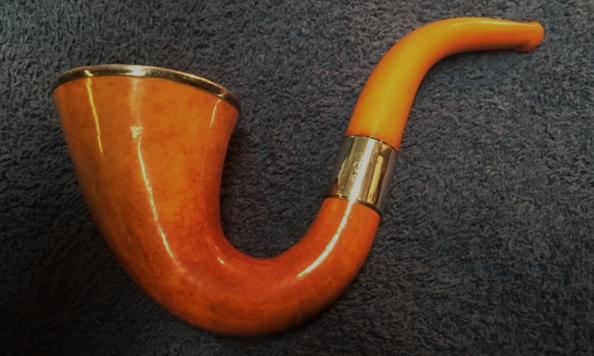
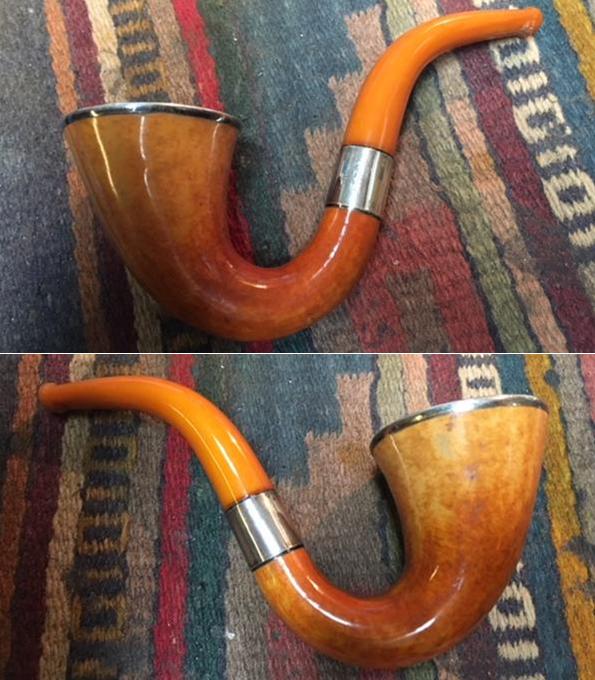
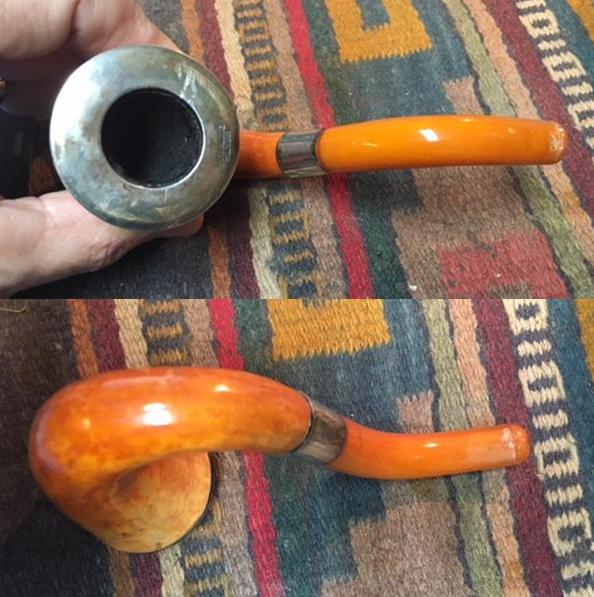
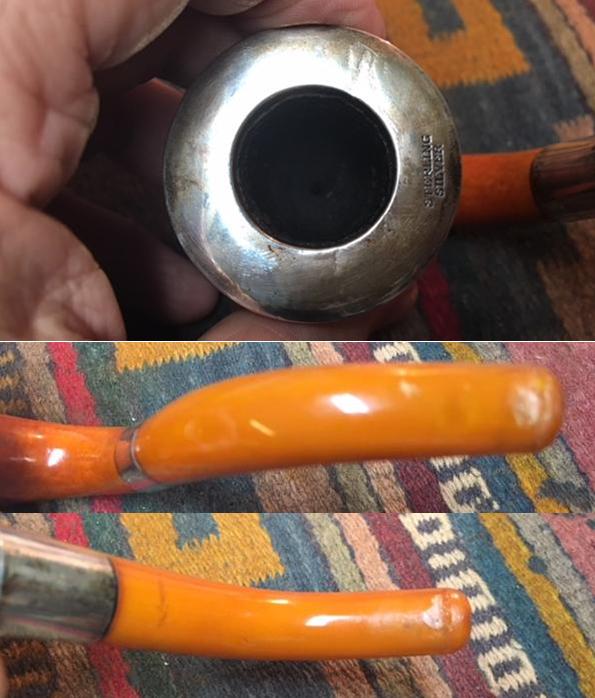
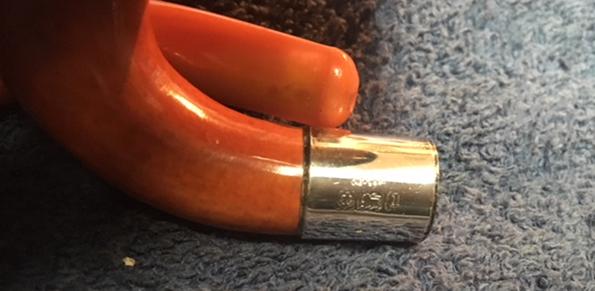
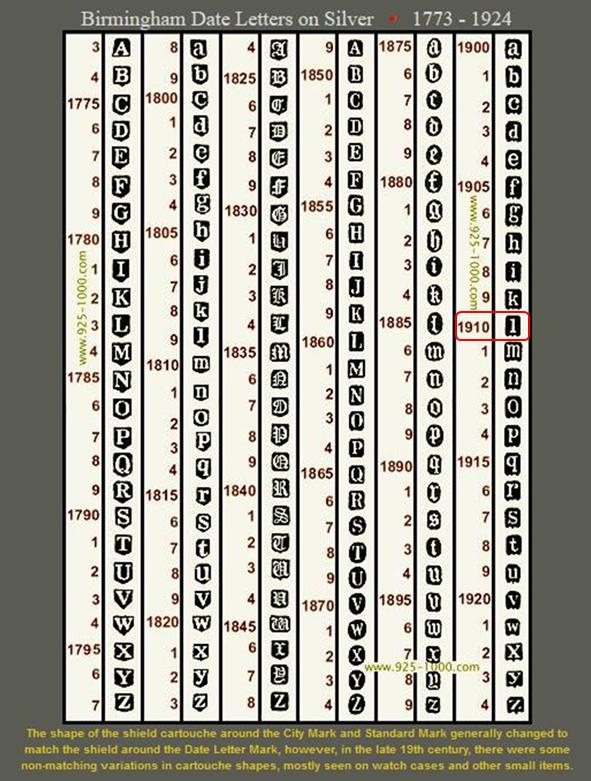
This Gourd Calabash was interesting. When I first saw it I thought it had an amber stem but as I worked on it, it became clear that it was a Bakelite stem or some kind of early acrylic. The way the material acted told me that. The stem had tooth chatter and nicks in the surface of the stem. The bowl was dirty and had a pretty thick cake build up on the inside walls. I carefully scraped it back leaving a thin cake on the walls. I think that the inner bowl is clay. The bowl is held in place by a pressure fit Sterling Silver rim cap that is unmovable without damaging the gourd. The silver was tarnished and had scratches and some dents in the surface. The clay inner bowl was plugged at the bottom so that there was minimal airflow or draw on the pipe. The gourd itself was in really good shape with some kind of varnish coat on the surface. The end of the shank was bound with a tarnished Sterling Silver band that had hallmarks and maker marks on the left side. The tenon appeared to be bone and was in great condition with a slight nipple on the end that had a small chip in it. It fit in the shank perfectly and everything aligned well. This would be a fun one to clean up and restore. I took some photos of the rim top to show the scratches and dents in the silver as well as the tarnish on the silver. The dark cake on the wall of the bowl is visible as well. The photos of the stem show the tooth chatter on both sides near the button and some small nicks on both sides.I took a photo of the hallmarks and makers mark on the Sterling Silver band. The hallmarks are clear in the photo below. There is an anchor, a lion, and the lower case letter “l”. The anchor identifies the city of the manufacture of the silver to be Birmingham, England. The lion is the mark for .925 Sterling Silver and the letter “l” is the date stamp. I have included a hallmark chart for dating the pipe. I put a red rectangle around the letter for 1910. It is the same style of “l” and the cartouche that holds the letter stamp matches the photo as well. The maker stamp shows the letters and ampersand as follows: J&H in a long rectangular cartouche. I was unable to identify the silversmith from these marks. I sanded out the tooth chatter and nicks with a folded piece of 220 grit sandpaper and smooth out the areas that were damaged to blend into the surface of the early Bakelite stem.I polished both sides of the stem with micromesh sanding pads – wet sanding with 1500-2400 grit pads and dry sanding with 3200-12000 grit pads. I wiped the stem down with Obsidian Oil after each pad to clean away the debris from sanding. When I finished I buffed it with a microfiber cloth to raise the shine in the stem. I cleaned out the airway in the stem and the mortise, shank and inside of the calabash with pipe cleaners, cotton swabs and alcohol. The idea on cleaning these gourds is to not let the inside ever get too wet with the alcohol. I worked over the airway in the bottom of the bowl with pipe cleaners and cotton swabs as well after reaming it back with a Savinelli Fitsall pipe knife.I worked on the scratches and nicks in the Sterling Silver rim cap with micromesh sanding pads – wet sanding with 1500- 2400 grit pads and dry sanding with 3200-12000 grit pads. I finished cleaning the rim top and the band on the shank with a jeweler’s treated silver polishing cloth to give the silver a rich shine and protect it from tarnishing for a while. I polished the gourd with Before & After Restoration Balm and rubbed it into the surface of the gourd. It really brought more life and depth to the finish on the gourd. I buffed it with a soft cloth and removed the excess. I gave the bowl and stem several coats of Conservator’s Wax and buffed it with a soft cloth to raise the shine. It came out really well. The finished pipe is shown in the photos below. The next two that I have on the table from him are an interesting blowfish that has a very short shank and a stem that just does not work well with the shape and the other is a small, meerschaum cigarillo holder with a broken tenon between the stem and the holder. Thanks for looking.

GBD 548 Virgin Restoration


By Al Jones

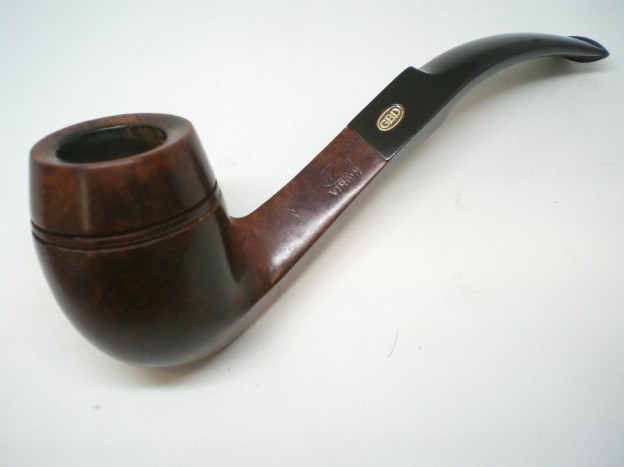
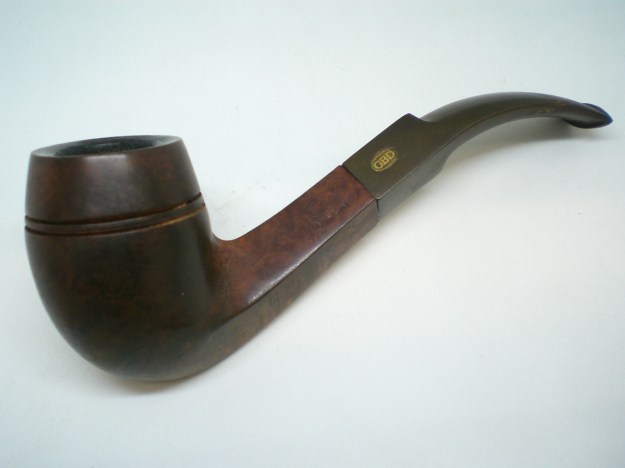
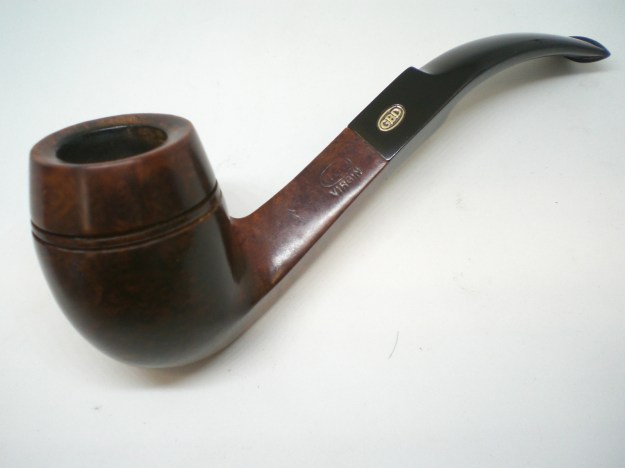
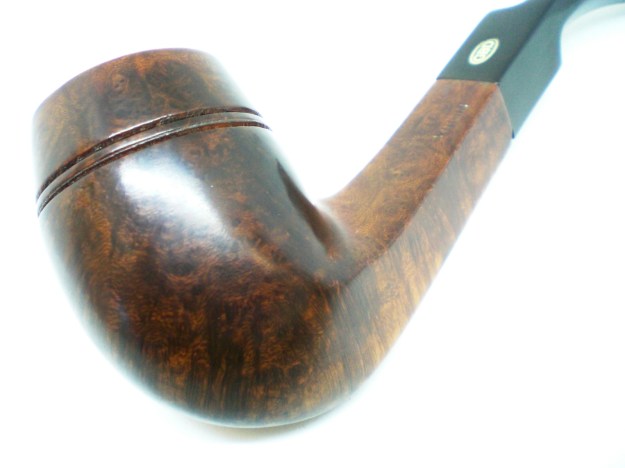
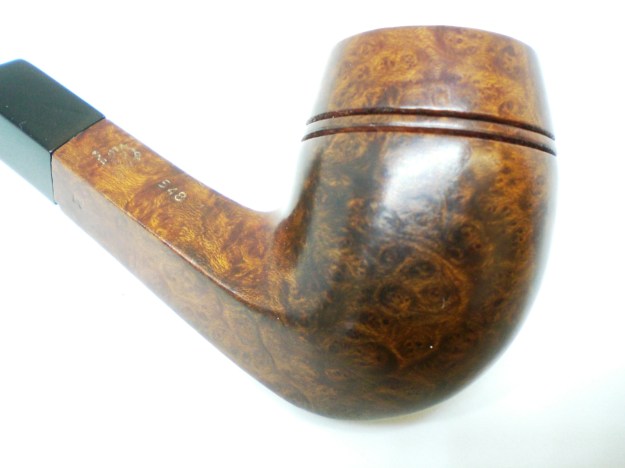
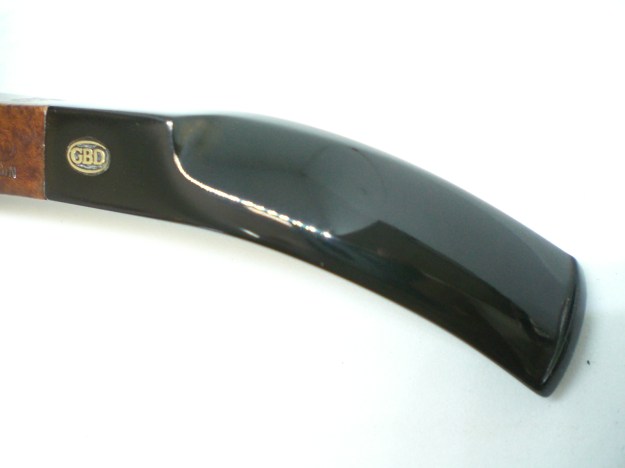
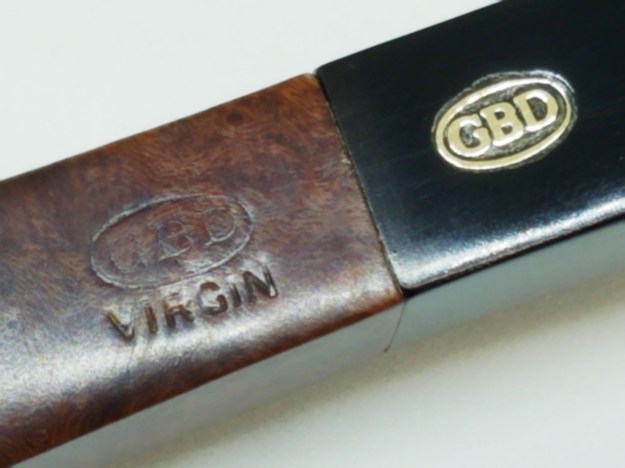
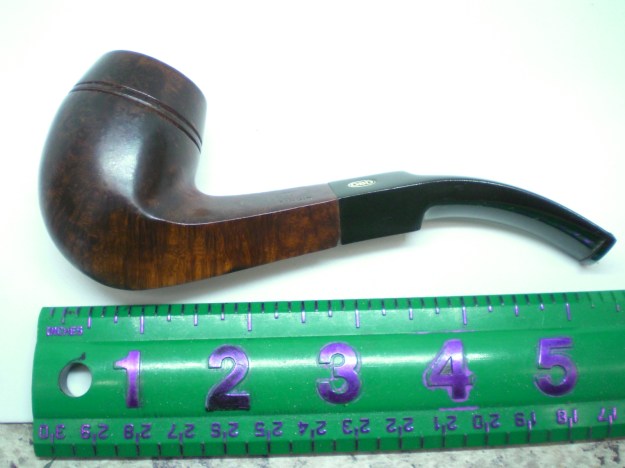
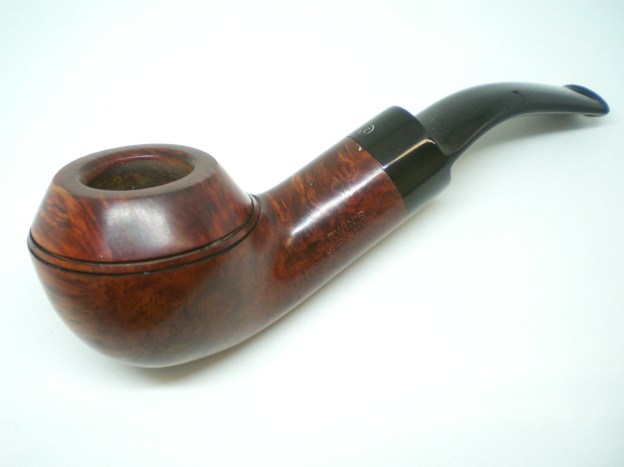
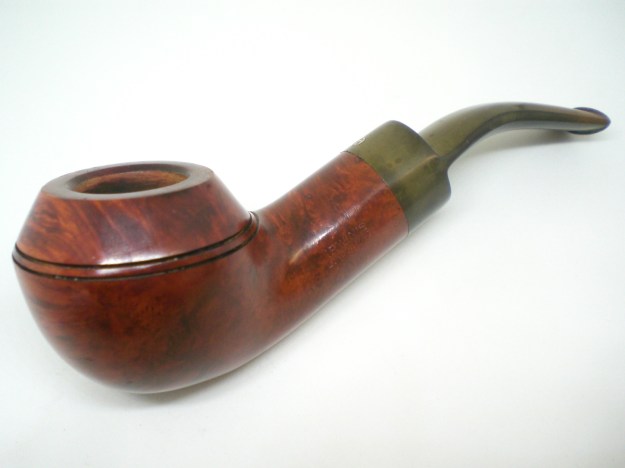
The 548 is a tall bulldog shape in the GBD catalog. This one is odd in that it has the brass rondell used prior to 1981 (pre-Cadogan merger) and the round “Made in London, England” COM used in the Cadogan era. I’ve occasionally come across this combination, but never with a “Virgin” grade pipe. I suspect it was made early in the merger era, where they were still using up the inventory of brass rondells.

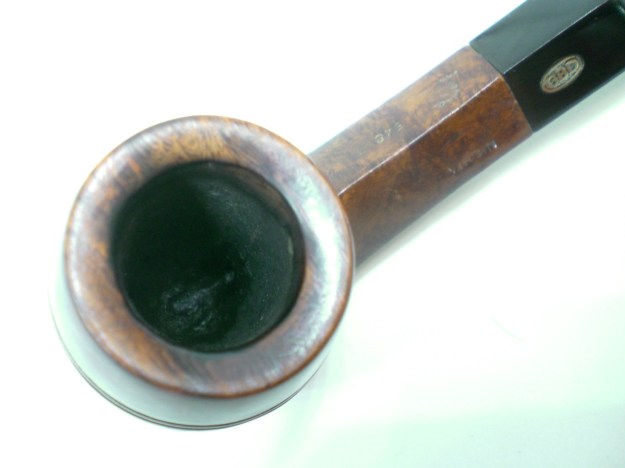
The pipe had some build-up on the bowl top, an oxidized stem and various dints and dings.

The pipe was reamed and soaked with sea salt and alcohol. The build-up on the bowl top was removed with a worn piece of scotch-brite, followed by polishing with an 8000 grade micromesh sheet. I steamed out a few dings around the bowl and top with an electric iron and a wet cloth. There is a nick on the bottom of the stem, but the steam didn’t bring that back. The bowl was buffed with white diamond rouge, followed by several coats of carnuba wax.

The stem was mounted and oxidation removed using 800,1500 and 2000 grade wet paper. Next up was 8000 and 12000 grade micromesh sheets. The stem was then buffed with white diamond rouge and Meguiars Plastic polish. The bowl was finished by buffing with White Diamond and several coats of carnuba wax.

Below is the finished pipe. Despite the deep bend, the pipe passes a cleaner. Suprisingly, even with the tall bowl, the pipe only weighs 38 grams.

?

Irwin’s (GBD) 9438 Restoration


By Al Jones

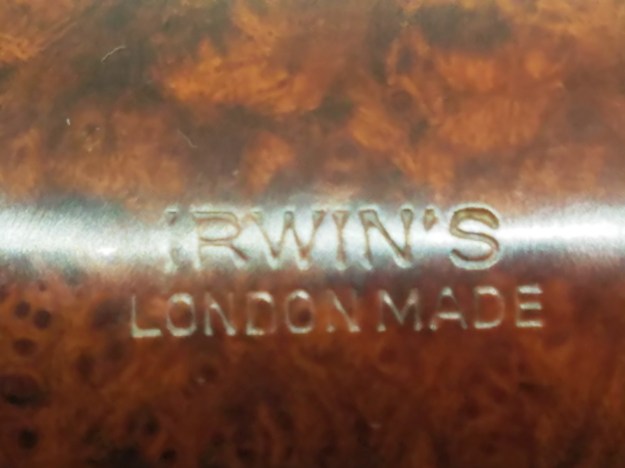
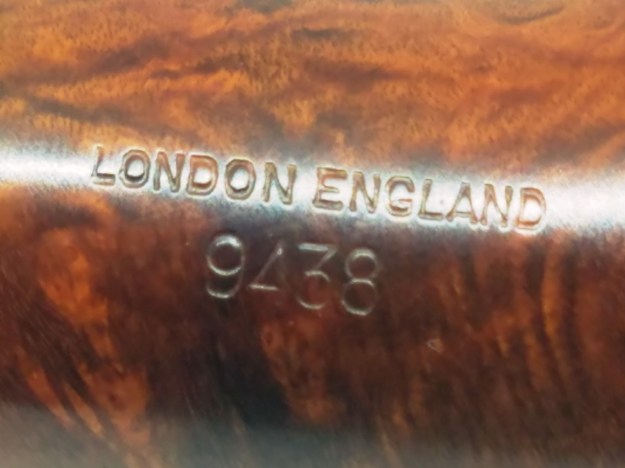
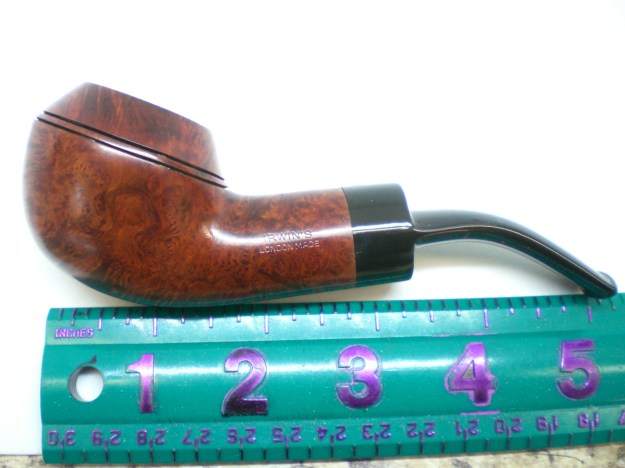
Here’s yet another 9438 model, this one is stamped “Irwin’s” and adds London Made. Not much is written about Irwin’s stamped pipes but they were assumed to be a GBD 2nd’s line, like Dr. Plumb, etc. This pipe also has the pre-Cadogan, straight line “London, England” COM and 9438 shape number stamped on the other side.

Below is the pipe as it was received.

The pipe arrived in very good condition, requiring only a mild restoration effort. The stem was lightly oxidized, but the bowl was very clean. I soaked the stem in a mild Oxy-Clean solution. I worked a few dents out of the briar with an electric iron and a wet cloth. I reamed the bowl only with 320 sandpaper wrapped around a reamer bit.

The stem was mounted and oxidation removed using 800,1500 and 2000 grade wet paper. Next up was 8000 and 12000 grade micromesh sheets. The stem was then buffed with white diamond rouge and Meguiars Plastic polish. The bowl was finished by buffing with White Diamond and several coats of carnuba wax.

I used a “Magic Eraser” around the stamped “I” stem logo, which worked very well in removing the oxidation, without damaging the stamp.

Below is the finished pipe.

?

A Harcourt Hand Carved Freehand – #7 of Anthony’s Dad’s Pipes


Blog by Steve Laug

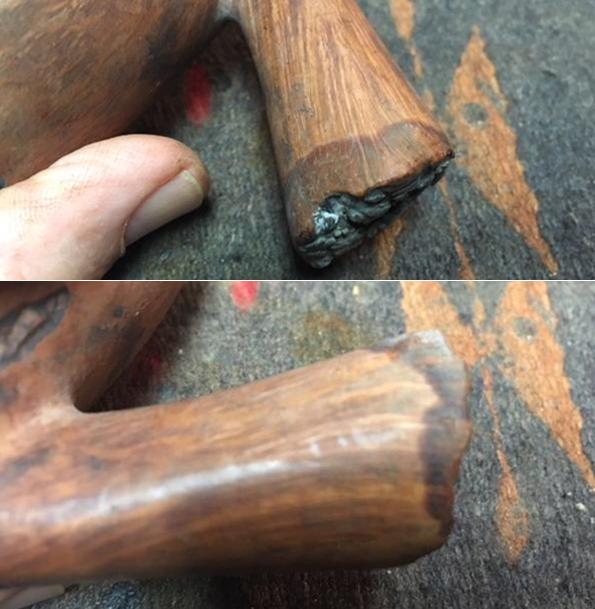
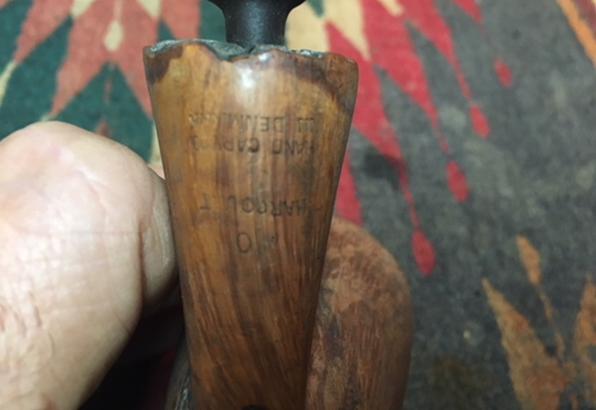
This is a continuation of the work that began with an email from Anthony, a reader of rebornpipes asking if I would be willing to help him clean up his Dad’s pipes. He wrote; “I have a few pipes (8 or so) that haven’t been smoked in 15 years. They were my dad’s. I would like to get someone to restore them”. We chatted back and forth via email and the long and short of the story is that I have eight of his Dad’s pipes in my shop now to work on. The photo below shows the mixture of pipes that he sent me. There are some interesting shapes and most are very dirty and have very little if any of the original finish left on the briar. All have an overflow of carbon on the rim top and all have chewed, damaged stems and buttons. Anthony remembers his Dad smoking them throughout the years he was growing up so they went from regular use to being boxed and stored. They will need a lot of TLC to bring life back to them but it should be fun to give it a go. I went through the pipes and assessed their condition and contacted him and got the go ahead to proceed on the lot.I have completed the restoration of six of the pipes. The next pipe I chose to work on was the tall freehand with plateau on the rim and the shank end. It too had a replacement vulcanite stem – it is the second pipe down on the left hand column in the above photo. I have circled it in red. It is a tall freehand with a 1/4 bent stem. It is a really pretty straight grain with patterns of rustication on the bottom portion of the bowl. It has plateau on the top and on the end of the shank. The plateau finish has what looks like mold or at least water damage on both the top and end of the shank. There is also water damage around the end of the shank. The stem that is on it is again a replacement twin bore/bite proof stem that is chewed and for all intents and purposes destroyed. The fact that most of these pipes have a replacement twin bore bite proof stem tells me a lot about Anthony’s Dad’s habitual gnawing on his pipes. The stem is ruined with large pieces tooth marks and holes on both the top and underside extending from the chewed button into the surface of the stem. I will need to find a different stem. The pipe is stamped on the underside of the shank with the number 0 and under that Harcourt over Hand Carved in Denmark. The bowl had a thick cake, and some lava overflow under the water damage. The finish was gone and very washed out looking. Even the dirt and grime were anemic. I took photos of the pipe to show its overall condition when it arrived at my work table. I took some close up photos of the bowl, rim top and the stem to show what I was going to be dealing with on this pipe. The plateau rim top was in rough condition – mold filled in the grooves and valleys of the plateau. There was also some lava overflowing from the bowl that had filled in the grooves. The plateau on the shank end was worse than the rim top (if possible). The finish worn off and there was water staining all around the shank end.The water damage around the end of the shank was darker than the rest of the finish. It was water stained and those are hard to remove. I took a photo of the stamping on the underside of the shank. It reads 0 over Harcourt. Underneath that are two lines reading Hand Carved over In Denmark.The stem was ruined you can see from the second and third photos below. The “bite proof” stem evidently was not bite proof. Anthony’s Dad had gnawed through the twin bore and left holes in the deep tooth marks on the stem. It would need to be replaced.I had some vague memory about the Harcourt brand that had a connection to Preben Holm and the stamping seemed a lot like the way that he stamped his pipes. I did a bit of research on the brand to see the connection. The first place I looked was on Pipedia at the following link: https://pipedia.org/wiki/Harcourt. There I found the following information which I quote in full.

The brand Harcourt was produced by Preben Holm (†) for Dunhill to secure a share of the Danish fancy boom for Dunhill’s principal pipe dealers. Later Erik Nørding made Harcourt pipes for a shorter period. These pipe are sometimes (partially) rusticated.

It had been reported that the second generation of Harcourt pipes were sold exclusively through Dunhill stores, but we now know through Rich Mervin that the Brick Church Pipe Shop, a chain of 3 stores in NJ sold Danish freehands in the 1970s and 80s including Knute, Ben Wade, and Harcourt. They were also an authorized Charatan and Dunhill retailer. So, apparently Harcourt freehands were sold through at least some Dunhill dealers as well as the Dunhill stores.

I then turned to the pipephil site at this link and found out some more information on the brand. http://www.pipephil.eu/logos/en/infos/harcourt1.html. I followed the links there to some photos of a boxed pipe and the stamping on the shank.

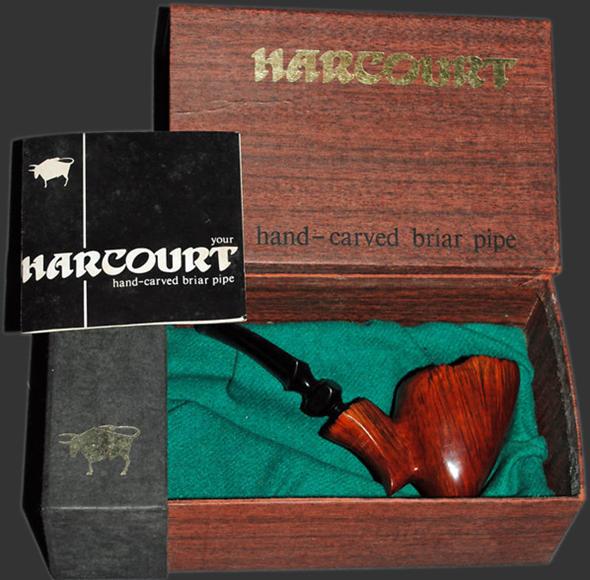
This box contains a pipe carved for Dunhill in the 1970s. Harcourt pipes were Dunhill’s answer to the passion Danish style raised during this period.There was also a photo of the stamping on Preben Holm’s designed Harcourt that is recognizable by the characteristic shape of the pipe as well as by the stampings on its shank. The stampings in the photo are identical to the pipe I am working on. It is stamped with an 0 over HARCOURT and underneath that it reads  HAND CARVED over IN DENMARK.

From the two sites I was able to make the connection between the pipe I am working on and the Harcourt pipes that were made by Preben Holm. The connection between Preben Holm and Dunhill’s desire to tap into the Danish Freehand market in the US was also helpful as it gave me a potential date for the pipe. It was made in the 1970s – the height of the Danish period in the US.

So now I knew that Anthony’s Dad had purchased this pipe during the 1970s from a shop probably somewhere in California. Possibly even the pipe shop that Anthony’s Mom had written about called “Andre’s,” around 1969 or ’70. She said it was a unique shop, originally located in Los Gatos, or Campbell, California she thought. She said that it later moved to the Alameda area in San Jose. Anthony’s Dad also bought his favorite tobacco blends there so it makes sense to me that he may have also purchased the pipe there. Perhaps Anthony will let us know when he reads this.

Once again I am including the tribute that I asked Anthony to write about his Dad and his pipe smoking once again in case some of you missed that and wanted to have some background. Here is what Anthony sent: When my dad died 6 years ago, my mom asked if I wanted my dad’s old pipes. He was a long time pipe smoker, ever since I was a kid I can remember him sitting on the couch smoking his pipe inside. He worked at IBM and used to smoke his pipe in his office before they changed the laws in California. So you can imagine he had quite the collection over the years.

I took his pipes and put them in storage for a few years, I myself recently quit smoking cigarettes and decided to take up pipe smoking as it was easier on the wallet. I asked in /r/pipetobacco if anyone could recommend a pipe restoration service and someone told me about rebornpipes.com. I was hesitant but after looking at the blog I knew it would be a good place to send my dad’s pipes.

My dad loved smoking his pipes, sitting out by the pool in the sun taking a nap or in the garage wood working. The house was my mom’s area and the garage was my dad’s area. I spent hours sitting out in the garage as a kid watching the niners or a’s and giants on tv while doing woodworking projects. I hope to do the same with my kids these days.

I’m not sure if my dad smoked other tobacco but I remember Captain Black was the kind he smoked regularly. He had tins of it in the garage, full and empty and would turn the old tin jars into storage for odds and ends, like screws or washers or miscellaneous stuff.

I remember when I played little league my dad would sit in the stands and smoke his pipes. One of my teammates asked “What is that smell?” and I ashamedly said “Oh that’s my dad’s pipe…I’ll go tell him to put it out” and my teammate said “No man, it smells good!”.  It’s funny how the little conversations over the years you remember.

Another time when I was in 3rd grade or so we learned how smoking was bad for you (this was back in the 80s). I remember I asked my teacher if smoking a pipe was bad for you too….and she hesitated and said “Not as bad as cigarettes, since you don’t inhale it”. After that I was no longer worried about my dad smoking.

Knowing my mom I have no idea how my dad pulled this off but he managed to smoke his pipe in the house. I guess she liked the smell of it. Recently when I was waiting for my girls to get out of school I was sitting on a side street smoking my pipe and someone walked by and thanked me for bringing the pipe back. He said his dad used to smoke a pipe and he loved the smell. As did mine. The only difference is my daughters complain constantly about the smell of my car, but that is mostly because I smoke cigars too.

Anyway, grab some fine tobacco, light up a bowl and sit back and relax. I don’t have a pool like my dad did but you can catch me working on my laptop sitting in my driveway smoking a nice pipe, especially one of these restored pipes from reborn pipes….I can’t wait to smoke them.

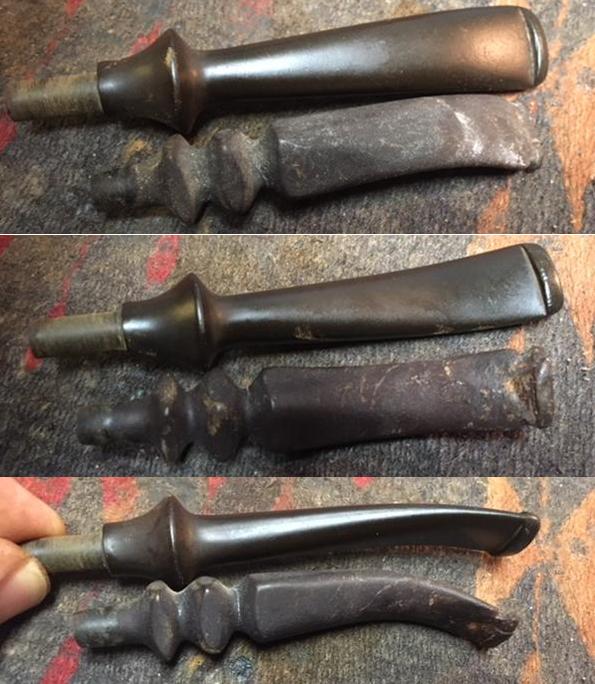
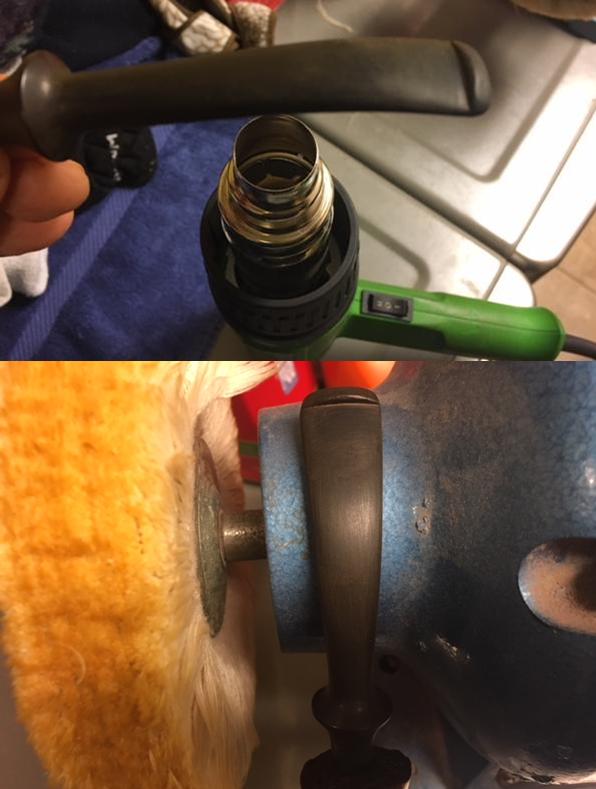
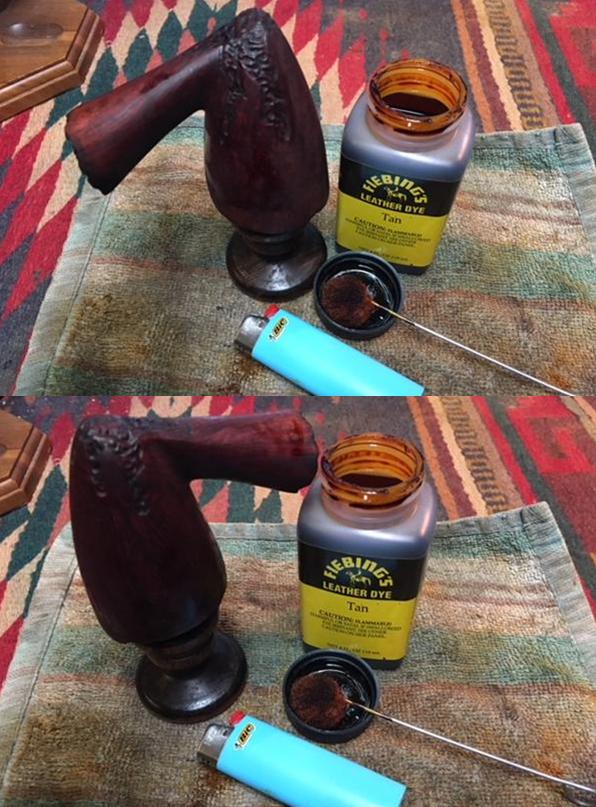
Thanks Anthony, that gives me a sense of who your Dad was and how he enjoyed his pipes. I was ready to turn my attention to this seventh pipe. I went through my can of stems and found a stem that I really like the looks of. There was something classic about it and simple that looked right with the pipe. It was about ½ inch longer than the replacement stem. The tenon was the right length for the shank and once it was cleaned up it would look good. I would need to put a slight bend in the stem to fit the flow of the shank and pipe. It was lightly oxidized but otherwise a pretty clean saddle stem. I took photos of the two stems together to show how they compared.I heated the new stem with a heat gun to soften the vulcanite enough to bend it. When it was flexible I bent it over the end of the buffing wheel to get the proper bend on the shank. I put the stem in the shank and took photos of the newly bent stem. The fit was good. I liked the look of the bend and the flow of the pipe. I sanded down the circumference of the tenon with 150 and 220 grit sandpaper. It did not take too much work to get the stem to fit well in the shank  the way I wanted. I sanded the oxidation off the surface of the stem and sanded out the tooth chatter and light tooth marks on the top and underside of the stem at the button. I polished the stem with micromesh sanding pads – wet sanding with 1500-2400 grit pads and dry sanding with 3200-12000 grit pads. I wiped the stem down with Obsidian Oil after each sanding pad. I polished the stem with Before & After Pipe Stem Polish – both Fine and Extra Fine to finish removing the light scratches that remained. I gave stem another coat of the oil after that and set it aside to let the oil dry. I set the stem aside and worked on the bowl. I reamed it back to bare briar using a PipNet pipe reamer to remove as much of the cake as I could. I finished with a Savinelli Fitsall pipe knife and then sanded it with 220 grit sandpaper wrapped around a dowel. There were some deep gouges and flaws in the briar on the left side toward the bottom half of the bowl. I cleaned the area and filled them in with drops of clear superglue. When the glue cured I sanded them back to blend into the surrounding bowl side.I worked some Before & After Restoration Balm into the nooks and crannies of the sandblast finish on the rim top, bowl and shank. I worked it deeper into the grooves with a horsehair shoe brush. The balm works to clean, enliven and protect the briar. I really like the way it brings life to the briar. When I wipe it off with a soft cloth it not only adds a shine but takes away the grime that is in the finish.    I needed to stain the bowl to get some coverage on the water damaged areas. Even after sanding they were darker than the rest of the briar. I stained the pipe with Fiebing’s Tan stain. It seems the tan stain may be improperly labelled because everything seems to come out like it has been stained with oxblood or cordovan stain. It brought the red out of the briar. I applied the stain and flamed it with a lighter. I repeated the process until the coverage was even around the bowl. Once the stain had cured I buffed the bowl with Blue Diamond on thebuffing wheel to polish the stain and smooth out the finish. The pipe is looking good. The finish is a little too opaque for me so I will need to address that shortly. I decided to make the finish less opaque by polishing it with micromesh sanding pads. I sanded with 1500-12000 grit sanding pads to make the finish more transparent. The photos below show the process. I put the pipe back together and polished the bowl with multiple coats of Conservator’s Wax and the stem with multiple coats of carnauba wax. I buffed it with a clean buffing pad to raise the shine. I hand buffed it with a microfiber cloth to deepen the shine. The pipe polished up pretty nicely. The finished pipe is shown in the photos below. This is seventh of eight pipes that I am restoring from Anthony’s Dad’s collection. I am looking forward to hearing what Anthony thinks once he sees the finished pipe on the blog. Once I have the remaining pipe finished I will pack them up and send them back to him. It will give him opportunity to carrying on the trust from his Dad. The dimensions are Length: 7 inches, Height: 3 1/8 inches, Outside diameter of the bowl: 2 inches, Chamber diameter: 7/8 inches. Thanks for walking through the restoration with me as I worked over this pipe from Anthony’s Dad’s collection. One more freehand pipe remains and will soon follow in the days ahead keep an eye out for it.

A Racine & Laramie Bent Apple – #6 of Anthony’s Dad’s Pipes


Blog by Steve Laug

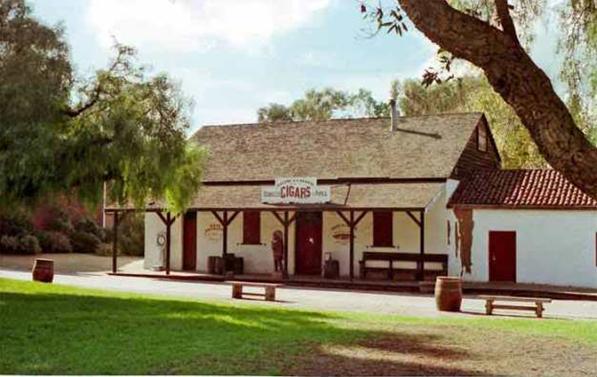
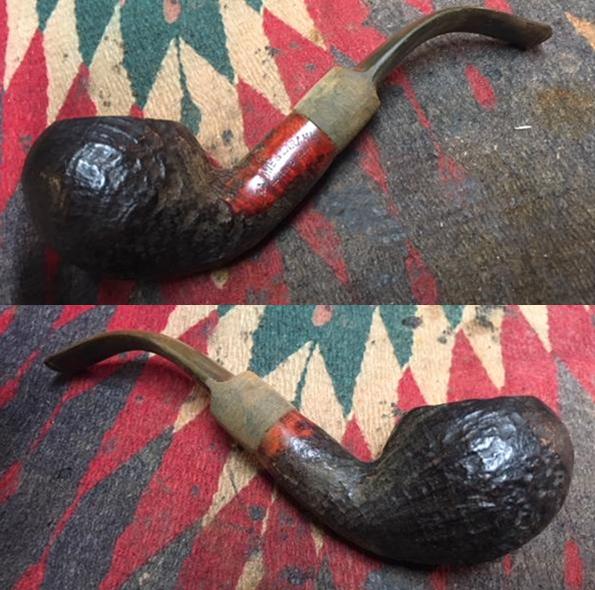
This is a continuation of the work that began with an email from Anthony, a reader of rebornpipes asking if I would be willing to help him clean up his Dad’s pipes. He wrote; “I have a few pipes (8 or so) that haven’t been smoked in 15 years. They were my dad’s. I would like to get someone to restore them”. We chatted back and forth via email and the long and short of the story is that I have eight of his Dad’s pipes in my shop now to work on. The photo below shows the mixture of pipes that he sent me. There are some interesting shapes and most are very dirty and have very little if any of the original finish left on the briar. All have an overflow of carbon on the rim top and all have chewed, damaged stems and buttons. Anthony remembers his Dad smoking them throughout the years he was growing up so they went from regular use to being boxed and stored. They will need a lot of TLC to bring life back to them but it should be fun to give it a go. I went through the pipes and assessed their condition and contacted him and got the go ahead to proceed on the lot.I have completed the restoration of five of the pipes. The next pipe I chose to work on was the A unique sandblasted bent apple with a ruined replacement vulcanite stem – it is the first pipe at the top of the right hand column in the above photo. I have circled it in red. It is a bent apple shaped 1/4 bent pipe with a sandblast finish on the bowl and the majority of the shank and some smooth portions on the side and around the end of the shank that provide contrast between the finish of the bowl and the black vulcanite stem. The stem that is on it is again a replacement twin bore/bite proof stem that is destroyed. The fact that most of these pipes have a replacement twin bore bite proof stem tells me a lot about Anthony’s Dad’s habitual gnawing on his pipes. The stem has a diameter is slightly less than the shank. The stem is ruined with large pieces missing from the button on both the top and underside extending into the surface of the stem. I will need to find a different stem. The pipe is stamped on the left side of the shank in a smooth band. It reads Racine & Laramie in an arc over Old Town San Diego. On the underside it reads Italy. The bowl had the least cake of any of the pipes, just a slight, uneven buildup on parts of the bowl. The biggest issue with the finish was just the dirt and grime ground all around the bowl. I took photos of the pipe to show its overall condition when it arrived at my work table.   I took some close up photos of the bowl, rim top and the stem to show what I was going to be dealing with on this pipe. The rim top was din excellent condition with just some dust and debris in the grooves of the blast. The finish looked good other than the grime. The shank looked a little pinched in the smooth portion and makes me wonder if whoever restemmed the pipe did not do that to adjust the shank diameter to approximate the stem diameter. I find that a bit frustrating as it is not that hard to fit a decent stem without doing that. The stem was ruined you can see from the second and third photos below. The “bite proof” stem evidently was not bite proof. Anthony’s Dad had gnawed through the twin bore and left a gaping hole in the stem. The topside was cracked and missing chunks and the underside had a large chunk missing. It would need to be replaced.I had worked on a Racine & Laramie pipe before that also needed a stem. I went back and read the blog I did on that pipe. Here is the link: https://rebornpipes.com/2013/06/30/a-restemming-job-with-memories-of-the-past/. Like the previous R&L Italian Made pipe the look and feel of this one says it is made by Lorenzo. I quote from that blog now in part to remind you of the tobacco shop whose name is stamped on the shank of this pipe.

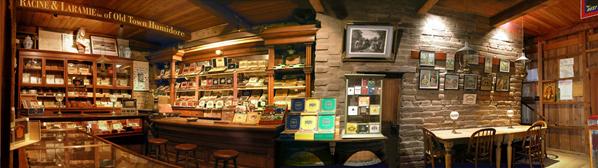
When I read the stamping is when the memory came back. I have been in the Racine & Laramie tobacco shop in Old Town San Diego, California. It is a museum like tobacco shop that has a wide range of tobaccos and pipes in an old California mission style village setting. You can almost imagine cowboys riding up and tying up their horse to go in and get a pouch of fixin’s. The picture below is what I remember of the shop. It is from the website http://www.racineandlaramie.com/

The following excerpt on the history of the shop comes from the website as well. I find it incredibly interesting reading.

History of Racine & Laramie

In 1868 Racine & Laramie became San Diego’s first Cigar Store. Having come from eastern Canada in the prosperity following the War Between the States, Messrs. Racine and Laramée sold cigars, tobacco, stationery, pipes, cutlery and gentlemen’s furnishings. The adobe they rented had been built in the 1820’s as the retirement home for leather-jacket soldier, Juan Rodriguez of the Royal Presidio. It was one of the first six buildings in the small pueblo, 500 registered voters, thousands of Kumeyaay. The Rodriguez family held ownership through periods of depression and Gold Rush boom, and their son, Ramon, was on the City Council. The widow Rodriguez had the building remodeled in 1867 and rented to Racine & Laramie and the Bank Exchange saloon. All was lost in the fire of 1872.

Using archeology, historic research and photographs this building has been reconstructed with the interior furnished and stocked as it may have been in that remote, frontier Pacific port. This picture gives a panoramic view of the interior of the shop looking at the cigar humidor.It was this shop that I visited many times over the years. It is like stepping back in time to enter the old town and then to walk into the shop itself. I think the last time I was there was about six years ago now. I took the train from the downtown harbor area to the old town site. I walked through the reconstructed village. I must have spent 3 or 4 hours wandering around the site and ending up in the old tobacco shop. I looked at pipes and tobaccos before settling on a couple of tins. I think I picked up some Dunhill EMP and maybe a tin of McClelland Dark Star before catching the train back into town.

That gives you an idea about the shop that this pipe came from. I can imagine Anthony’s Dad, a Californian, visiting this shop and like me picking up a pipe and some of his favourite tobaccos.

I want to include the tribute that I asked Anthony to write about his Dad and his pipe smoking once again in case some of you missed that and wanted to have some background. Along with the information on the Racine & Laramie Pipe Shop in Old San Diego I find that knowing a bit about his Dad helps to give me a sense of the previous pipeman when I work on a pipe from an estate. Anthony sent me this tribute: When my dad died 6 years ago, my mom asked if I wanted my dad’s old pipes. He was a long time pipe smoker, ever since I was a kid I can remember him sitting on the couch smoking his pipe inside. He worked at IBM and used to smoke his pipe in his office before they changed the laws in California. So you can imagine he had quite the collection over the years.

I took his pipes and put them in storage for a few years, I myself recently quit smoking cigarettes and decided to take up pipe smoking as it was easier on the wallet. I asked in /r/pipetobacco if anyone could recommend a pipe restoration service and someone told me about rebornpipes.com. I was hesitant but after looking at the blog I knew it would be a good place to send my dad’s pipes.

My dad loved smoking his pipes, sitting out by the pool in the sun taking a nap or in the garage wood working. The house was my mom’s area and the garage was my dad’s area. I spent hours sitting out in the garage as a kid watching the niners or a’s and giants on tv while doing woodworking projects. I hope to do the same with my kids these days.

I’m not sure if my dad smoked other tobacco but I remember Captain Black was the kind he smoked regularly. He had tins of it in the garage, full and empty and would turn the old tin jars into storage for odds and ends, like screws or washers or miscellaneous stuff.

I remember when I played little league my dad would sit in the stands and smoke his pipes. One of my teammates asked “What is that smell?” and I ashamedly said “Oh that’s my dad’s pipe…I’ll go tell him to put it out” and my teammate said “No man, it smells good!”.  It’s funny how the little conversations over the years you remember.

Another time when I was in 3rd grade or so we learned how smoking was bad for you (this was back in the 80s). I remember I asked my teacher if smoking a pipe was bad for you too….and she hesitated and said “Not as bad as cigarettes, since you don’t inhale it”. After that I was no longer worried about my dad smoking.

Knowing my mom I have no idea how my dad pulled this off but he managed to smoke his pipe in the house. I guess she liked the smell of it. Recently when I was waiting for my girls to get out of school I was sitting on a side street smoking my pipe and someone walked by and thanked me for bringing the pipe back. He said his dad used to smoke a pipe and he loved the smell. As did mine. The only difference is my daughters complain constantly about the smell of my car, but that is mostly because I smoke cigars too.

Anyway, grab some fine tobacco, light up a bowl and sit back and relax. I don’t have a pool like my dad did but you can catch me working on my laptop sitting in my driveway smoking a nice pipe, especially one of these restored pipes from reborn pipes….I can’t wait to smoke them.

Thanks Anthony, that gives me a sense of who your Dad was and how he enjoyed his pipes. I was ready to turn my attention to this sixth pipe. I went through my can of stems and found a stem that was the right shape and would do the job. It was larger in diameter than the shank so I would need to work that down but once finished I think it would look better. It was oxidized but otherwise a pretty clean saddle stem. I took photos of the two stems together to show how they compared. I put the stem on the shank and used a Dremel and drum to take down the circumference of the new stem. I wanted to get as close as possible to the size of the shank without damaging the shank itself. It worked very well. I took photos of the stem after the Dremel work. There is still a lot of sanding to do but it is getting there. I sanded out the scratches and removed the rest of the excess material to match the circumference of the shank with 150 and 220 grit sandpaper. It was a bit of a challenge as the previous restemming had left the shank out of round – much narrower on the underside than the top. It took a lot of hand sanding and constant checking to make sure I had removed enough and not too much material. I took photos of the fit once it was what I wanted. I knew that the polishing with micromesh sanding pads would make the final adjustments to the fit. I polished the stem with micromesh sanding pads – wet sanding with 1500-2400 grit pads and dry sanding with 3200-12000 grit pads. I wiped the stem down with Obsidian Oil after each sanding pad. I polished the stem with Before & After Pipe Stem Polish – both Fine and Extra Fine to finish removing the light scratches that remained. I gave stem another coat of the oil after that and set it aside to let the oil dry. I set the stem aside and worked on the bowl. I reamed it back to bare briar using a PipNet pipe reamer to remove as much of the cake as I could. I finished with a Savinelli Fitsall pipe knife and then sanded it with 220 grit sandpaper wrapped around a dowel. I cleaned up the mortise, shank and airway in the bowl. Remembering that I had not cleaned the stem, I cleaned airway and slot in the stem with pipe cleaners, cotton  swabs and alcohol.I worked some Before & After Restoration Balm into the nooks and crannies of the sandblast finish on the rim top, bowl and shank. I worked it deeper into the grooves with a horsehair shoe brush. The balm works to clean, enliven and protect the briar. I really like the way it brings life to the briar. When I wipe it off with a soft cloth it not only adds a shine but takes away the grime that is in the finish. I decided this was a good time to take a break. I fired up a bowl of some gifted Uhle’s #44 in my “Malaga” rusticated Diplomat and sipped some coffee to look over the pipe to see if I was missing anything. It was great to be able to sit and work with a pipe in my mouth.I put the pipe back together and polished the bowl with multiple coats of Conservator’s Wax and the stem with multiple coats of carnauba wax. I buffed it with a clean buffing pad to raise the shine. I hand buffed it with a microfiber cloth to deepen the shine. The pipe polished up pretty nicely. The finished pipe is shown in the photos below. This is sixth of eight pipes that I am restoring from Anthony’s Dad’s collection. I am looking forward to hearing what Anthony thinks once he sees the finished pipe on the blog. Once I have the remaining two pipes finished I will pack them up and send them back to him. It will give him opportunity to carrying on the trust from his Dad. The dimensions are Length: 5 1/2 inches, Height: 1 1/2 inches, Outside diameter of the bowl: 1 1/2 inches, Chamber diameter: 3/4 inches. Thanks for walking through the restoration with me as I worked over this pipe from Anthony’s Dad’s collection. Two freehand pipes remain and will soon follow in the days ahead. Keep an eye out for them because there are still some unique pipes in the lot.   

A Heavily Smoked Sultan Meerschaum – #5 of Anthony’s Dad’s Pipes


Blog by Steve Laug

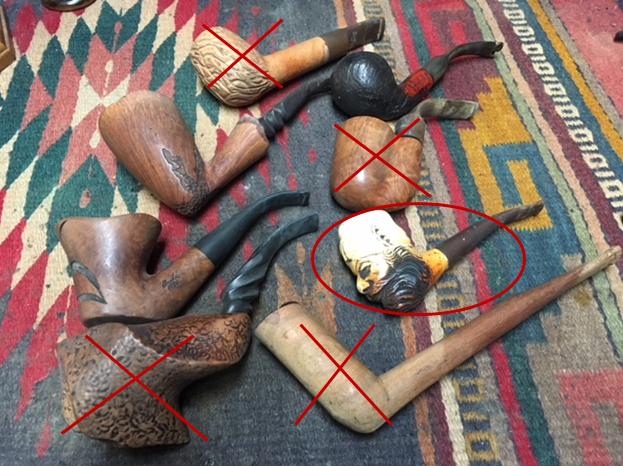
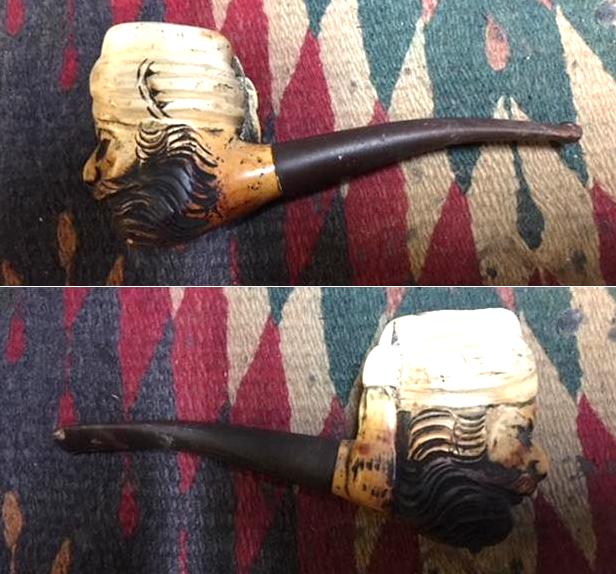
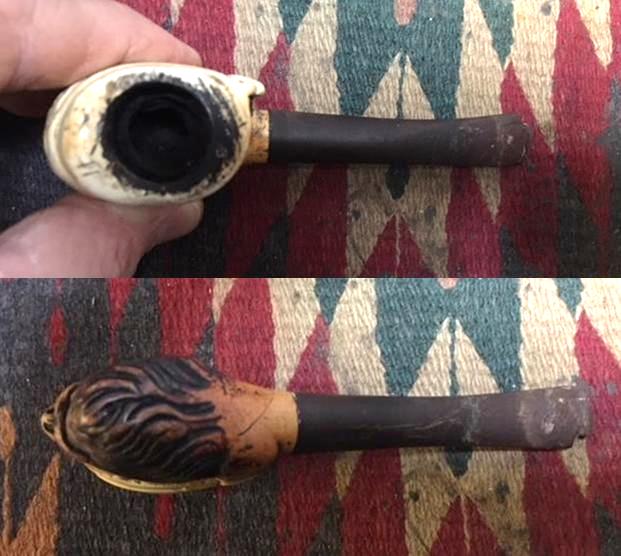
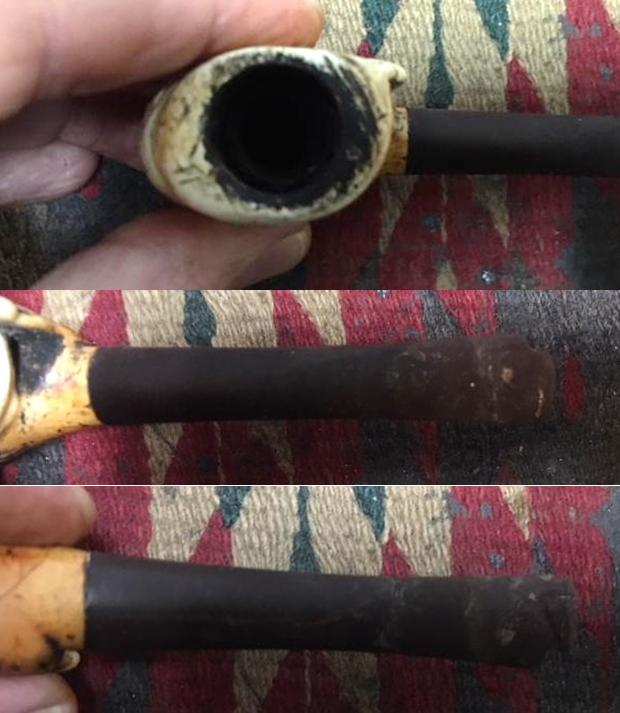
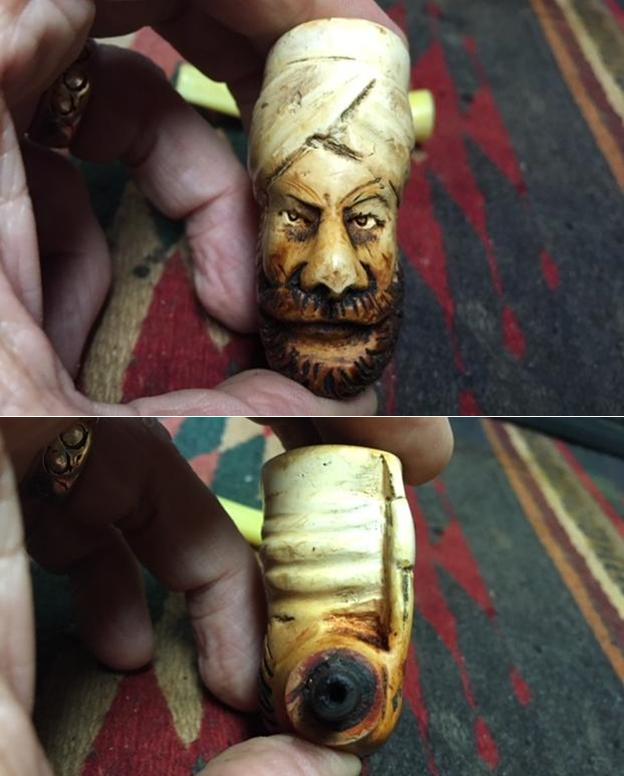
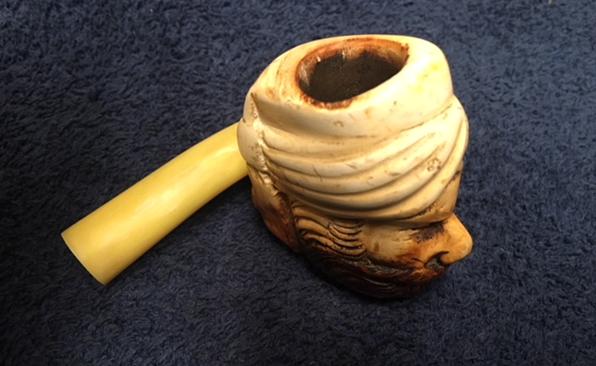
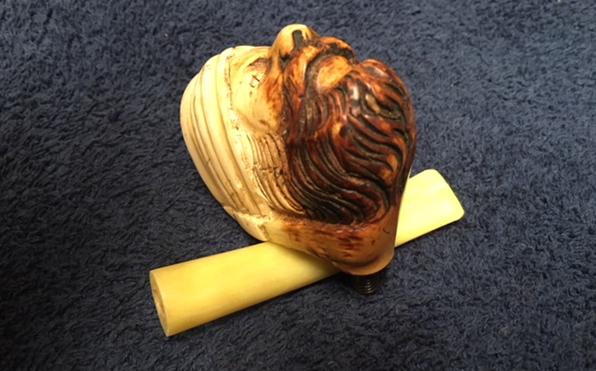
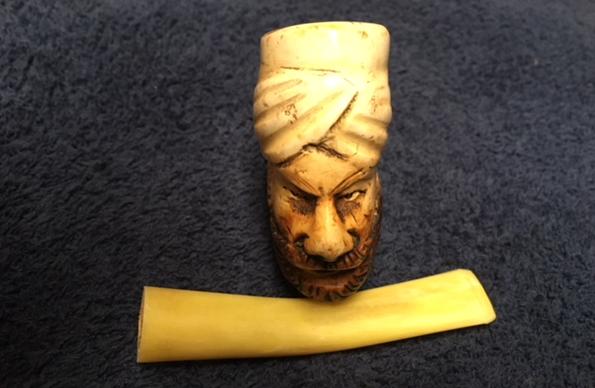
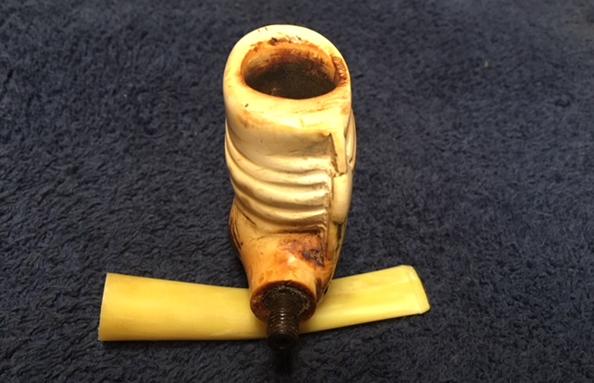
This is a continuation of the work that began with an email from Anthony, a reader of rebornpipes asking if I would be willing to help him clean up his Dad’s pipes. He wrote; “I have a few pipes (8 or so) that haven’t been smoked in 15 years. They were my dad’s. I would like to get someone to restore them”. We chatted back and forth via email and the long and short of the story is that I have eight of his Dad’s pipes in my shop now to work on. The photo below shows the mixture of pipes that he sent me. There are some interesting shapes and most are very dirty and have very little if any of the original finish left on the briar. All have an overflow of carbon on the rim top and all have chewed, damaged stems and buttons. Anthony remembers his Dad smoking them throughout the years he was growing up so they went from regular use to being boxed and stored. They will need a lot of TLC to bring life back to them but it should be fun to give it a go. I went through the pipes and assessed their condition and contacted him and got the go ahead to proceed on the lot.I have completed the restoration of four of the pipes. I put red X’s through the pipes in the above photo to show the ones that I have completed. The next pipe I chose to work on was the interesting little carved Sultan head Meerschaum with a ruined replacement vulcanite stem – it is the third pipe down on the right hand column in the above photo. I have circled it in red. It is an interestingly shaped 1/4 bent pipe with a short shank and an inserted metal tenon that has been glued in place in the mortise. The stem that is on it is a replacement twin bore/bite proof stem that is destroyed. I was not the original stem as the diameter is slightly less than the shank. There is no stamping on the pipe. The bowl has a thick cake with lava overflow over the rim top and a lot of dirt and grime ground into the finish of the meerschaum. The face has some dirt deep in the carvings on the features so it is hard to tell if there is any real colouring the bottom half of the bowl (the beard) is very dark and once again I cannot tell how much is colouring and how much is dirt and grime in the meer. I will look forward to seeing what is there once I scrub the bowl. As mentioned above the stem is ruined so I will need to find a different stem. I am checking to see if I have some more amber coloured or even yellow that will go well with the meerschaum and be more like what was originally on the pipe. I took photos of the pipe to show its overall condition when it arrived at my work table.   I took some close up photos of the bowl, rim top and the stem to show what I was going to be dealing with on this pipe. The rim top was dirty and lava covered but the inner edge appeared to be in decent condition. The carving of the Sultan was very dirty with lots of grime and dirt in the grooves of the hat and the beard. The area around the eyes, nose and mouth was also very dirty. It was a mess and it was hard to know what was patina and what was dirt. The stem was ruined you can see from the third and fourth photos above that there was a large chunk of the stem missing on right side. It would need to be replaced. To me the whole stem and shank joint did not look right. It seemed like at the very least the stem was a replacement but it could also be that the shank had been shortened due to damage and a new stem added at the same time. The tenon was threaded and metal and was solidly glued I the shank.Before I started to work on this one I thought that it would be good to share the tribute that I asked Anthony to write about his Dad and his pipe smoking in the past two blog posts in case some of you missed that and wanted to have some background. Personally, I find that it gives me a sense of the previous pipeman when I work on a pipe from an estate. Anthony sent me this tribute: When my dad died 6 years ago, my mom asked if I wanted my dad’s old pipes. He was a long time pipe smoker, ever since I was a kid I can remember him sitting on the couch smoking his pipe inside. He worked at IBM and used to smoke his pipe in his office before they changed the laws in California. So you can imagine he had quite the collection over the years.

I took his pipes and put them in storage for a few years, I myself recently quit smoking cigarettes and decided to take up pipe smoking as it was easier on the wallet. I asked in /r/pipetobacco if anyone could recommend a pipe restoration service and someone told me about rebornpipes.com. I was hesitant but after looking at the blog I knew it would be a good place to send my dad’s pipes.

My dad loved smoking his pipes, sitting out by the pool in the sun taking a nap or in the garage wood working. The house was my mom’s area and the garage was my dad’s area. I spent hours sitting out in the garage as a kid watching the niners or a’s and giants on tv while doing woodworking projects. I hope to do the same with my kids these days.

I’m not sure if my dad smoked other tobacco but I remember Captain Black was the kind he smoked regularly. He had tins of it in the garage, full and empty and would turn the old tin jars into storage for odds and ends, like screws or washers or miscellaneous stuff.

I remember when I played little league my dad would sit in the stands and smoke his pipes. One of my teammates asked “What is that smell?” and I ashamedly said “Oh that’s my dad’s pipe…I’ll go tell him to put it out” and my teammate said “No man, it smells good!”.  It’s funny how the little conversations over the years you remember.

Another time when I was in 3rd grade or so we learned how smoking was bad for you (this was back in the 80s). I remember I asked my teacher if smoking a pipe was bad for you too….and she hesitated and said “Not as bad as cigarettes, since you don’t inhale it”. After that I was no longer worried about my dad smoking.

Knowing my mom I have no idea how my dad pulled this off but he managed to smoke his pipe in the house. I guess she liked the smell of it. Recently when I was waiting for my girls to get out of school I was sitting on a side street smoking my pipe and someone walked by and thanked me for bringing the pipe back. He said his dad used to smoke a pipe and he loved the smell. As did mine. The only difference is my daughters complain constantly about the smell of my car, but that is mostly because I smoke cigars too.

Anyway, grab some fine tobacco, light up a bowl and sit back and relax. I don’t have a pool like my dad did but you can catch me working on my laptop sitting in my driveway smoking a nice pipe, especially one of these restored pipes from reborn pipes….I can’t wait to smoke them.

Thanks Anthony, that gives me a sense of who your Dad was and how he enjoyed his pipes. I was ready to turn my attention to this fifth pipe. I decided to start with the bowl. I removed the damaged stem and reamed the bowl using a PipNet pipe reamer to remove as much of the cake as I could. I finished with a Savninelli Fitsall pipe knife and then sanded it with 220 grit sandpaper wrapped around a dowel. I cleaned the top of the rim.The meerschaum was so dirty I resorted to scrubbing it with Murphy’s Oil Soap and a tooth brush to remove all of the debris, grit and grime from the crevices of the carving on the beard, face and cap. It was a real mess. I rinsed it with warm water and dried it off with a soft cloth.  I went through my collection of stems and found a stem that had originally come to me on a broken meerschaum. It is a good thing I am a scavenger because this would take very little adjustment to work and the stem was already tapped to fit the threads on the metal tenon in the shank of the meerschaum. I took some photos of the cleaned up bowl to give an idea of what it looked like at this point in the process. It is showing some promise. You can see the new stem underneath it because I used it as a prop for the photos. I think the stem will look good. I cleaned up the mortise, tenon, shank and the airway in the stem with pipe cleaners, cotton  swabs and alcohol.I used my Dremel and sanding drum to remove some of the diameter of the new stem and threaded the stem on the tenon. I wanted to see how much more of the material I would need to remove to get a good flow between the shank and the stem. The photos give you an idea of what the stem will look like on the pipe and also how much more work I need to do to get the fit right. More work and sanding to follow! I used files, 150 and 220 grit sandpaper to reduce the diameter of the stem to match the shank. It took a lot of patient hand sanding to align every thing. I took it part way with a Dremel and sanding drum but because the shank is not round and every side even I had to had fit it. I think it was worth the effort. I polished the stem with micromesh sanding pads – wet sanding it with 1500-2400 grit pads and dry sanding it with 3200-12000 grit pads. I wiped the stem down with a damp cloth after each sanding pad to remove the dust. I polished the meerschaum bowl with micromesh sanding pads. I wanted to minimize the scratching but not necessarily remove them all. The pipe has a full history that is told by the scratches and nicks in the meerschaum. I want to give the bowl a shine but not remove the story. It is not a new pipe but a refurbished pipe. I worked through all the grits of micromesh pads from 1500-12000 and buffed the bowl with  a microfibre cloth to raise the shine.  I polished the bowl with Conservator’s Wax and buffed it with a shoe brush. I buffed it again with a clean buffing pad to raise the shine. I hand buffed it with a microfiber cloth to deepen the shine. The pipe polished up pretty nicely. The finished pipe is shown in the photos below. This is fifth of eight pipes that I am restoring from Anthony’s Dad’s collection. I am looking forward to hearing what Anthony thinks once he sees the finished pipe on the blog. Once I have the remaining three pipes finished I will pack them up and send them back to him. It will give him opportunity to carrying on the trust from his Dad. The dimensions are Length: 5 1/4 inches, Height: 2 1/4 inches, Outside diameter of the bowl: width is 1 inch and length is 1 3/8 inches, Chamber diameter: 5/8 inches. Thanks for walking through the restoration with me as I worked over this pipe from Anthony’s Dad’s collection. Three more will soon follow in the days ahead. Keep an eye out for them because there are still some unique pipes in the lot.   

A Nice Little Full Bent Pocket Pipe – #4 of Anthony’s Dad’s Pipes


Blog by Steve Laug

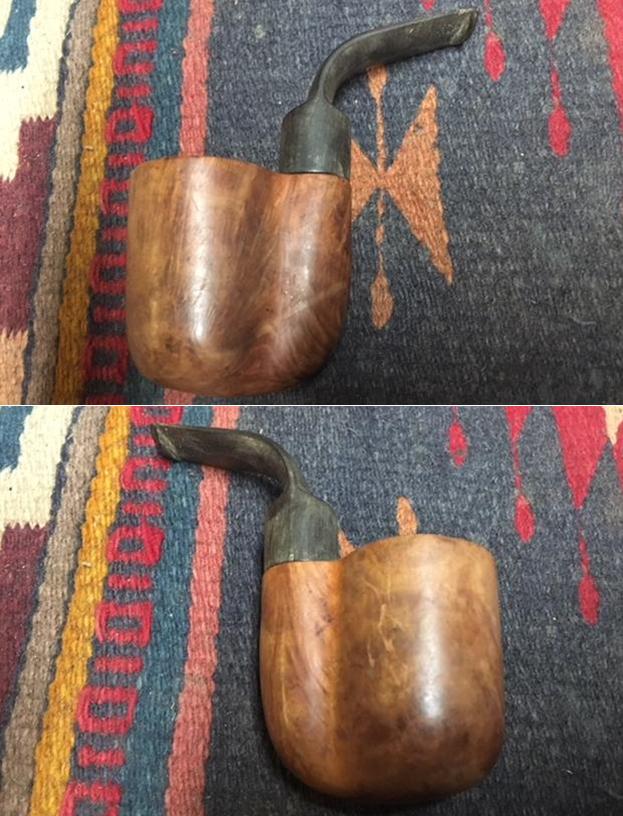
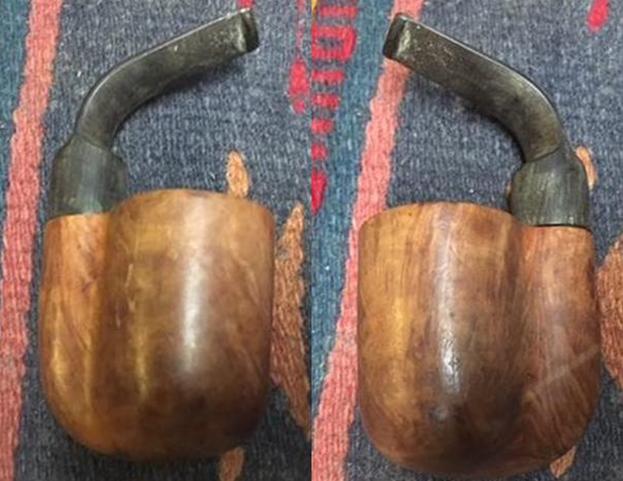
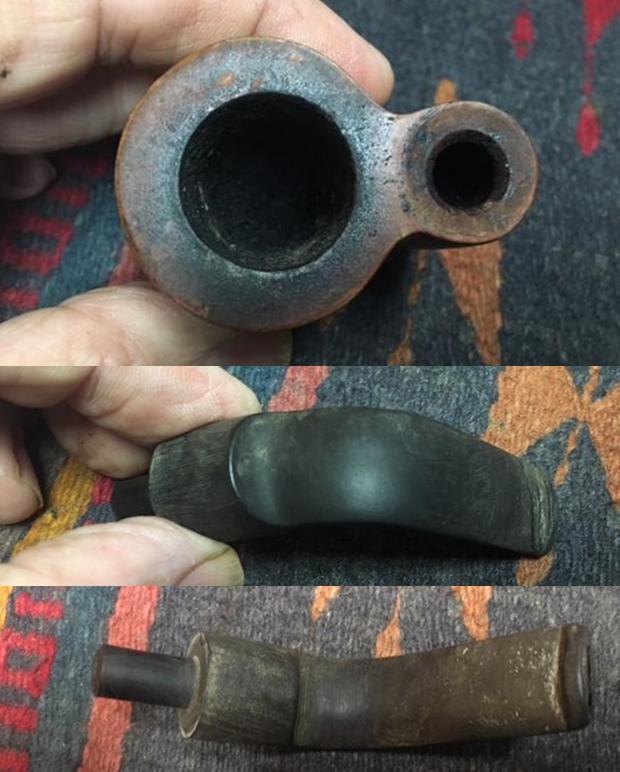
This is a continuation of the work that began with an email from Anthony, a reader of rebornpipes asking if I would be willing to help him clean up his Dad’s pipes. He wrote; “I have a few pipes (8 or so) that haven’t been smoked in 15 years. They were my dad’s. I would like to get someone to restore them”. We chatted back and forth via email and the long and short of the story is that I have eight of his Dad’s pipes in my shop now to work on. The photo below shows the mixture of pipes that he sent me. There are some interesting shapes and most are very dirty and have very little if any of the original finish left on the briar. All have an overflow of carbon on the rim top and all have damaged stems and buttons. Anthony remembers his Dad smoking them throughout the years he was growing up so they went from regular use to being boxed and stored. They will need a lot of TLC to bring life back to them but it should be fun to give it a go. I went through the pipes and assessed their condition and contacted him and got the go ahead to proceed on the lot.I have completed the restoration of three of the pipes. I put red X’s through the pipes in the above photo to show the ones that I have completed. The next pipe I chose to work on was the full bent briar with a stem that turned over the bowl to make it a pocket pipe – it is the second pipe down on the right hand column in the above photo. I have circled it in red. It is an interestingly shaped full bent pipe with the shank and the bowl being side by side with no gap between them. The only stamping on the pipe is on the underside of the shank at the stem/shank junction and reads ITALY. The bowl was very dirty and the finish was worn to the point that it was lifeless looking. Once again, not only did it have a thick cake in the bowl and some darkening and lava overflowing onto the rim top it also appeared that Anthony’s Dad had laid the pipe aside mid smoke. The bowl was about 1/3 full of partially burned tobacco that had hardened and dried with age. The bent, vulcanite stem was the least chewed of the collection and had some tooth chatter and light marks on both sides around the button. It was also oxidized and would need to be cleaned. I took photos of the pipe to show its overall condition when it arrived at my work table.   I turned the stem over the bowl to show how it was used as a pocket pipe and took a photo. The stem turned gave the pipe a better profile and it could easily be stuffed in a coat or vest pocket for use and reuse.I took some close up photos of the bowl, rim top and the stem to show what I was going to be dealing with on this pipe. The rim top was dirty and lava covered but the inner edge appeared to be in decent condition. The stem was lightly oxidized and it had the least chewing damage of any of these pipes. There were light marks and tooth chatter on both sides of the stem and button.I took photos of the bowl from various angles to try to capture the condition of the pipe for you. The briar appears to have some interesting grain around the sides. There is one fill in the bottom of the bowl that is chipped and damaged. I shared the tribute that I asked Anthony to write about his Dad and his pipe smoking in the last blog post and will share it again now. I always find that it gives me a sense of the previous pipeman when I work on a pipe from an estate. Anthony sent me a great tribute. Here it is in his words:
When my dad died 6 years ago, my mom asked if I wanted my dad’s old pipes. He was a long time pipe smoker, ever since I was a kid I can remember him sitting on the couch smoking his pipe inside. He worked at IBM and used to smoke his pipe in his office before they changed the laws in California. So you can imagine he had quite the collection over the years.

I took his pipes and put them in storage for a few years, I myself recently quit smoking cigarettes and decided to take up pipe smoking as it was easier on the wallet. I asked in /r/pipetobacco if anyone could recommend a pipe restoration service and someone told me about rebornpipes.com. I was hesitant but after looking at the blog I knew it would be a good place to send my dad’s pipes.

My dad loved smoking his pipes, sitting out by the pool in the sun taking a nap or in the garage wood working. The house was my mom’s area and the garage was my dad’s area. I spent hours sitting out in the garage as a kid watching the niners or a’s and giants on tv while doing woodworking projects. I hope to do the same with my kids these days.

I’m not sure if my dad smoked other tobacco but I remember Captain Black was the kind he smoked regularly. He had tins of it in the garage, full and empty and would turn the old tin jars into storage for odds and ends, like screws or washers or miscellaneous stuff.

I remember when I played little league my dad would sit in the stands and smoke his pipes. One of my teammates asked “What is that smell?” and I ashamedly said “Oh that’s my dad’s pipe…I’ll go tell him to put it out” and my teammate said “No man, it smells good!”.  It’s funny how the little conversations over the years you remember.

Another time when I was in 3rd grade or so we learned how smoking was bad for you (this was back in the 80s). I remember I asked my teacher if smoking a pipe was bad for you too….and she hesitated and said “Not as bad as cigarettes, since you don’t inhale it”. After that I was no longer worried about my dad smoking.

Knowing my mom I have no idea how my dad pulled this off but he managed to smoke his pipe in the house. I guess she liked the smell of it. Recently when I was waiting for my girls to get out of school I was sitting on a side street smoking my pipe and someone walked by and thanked me for bringing the pipe back. He said his dad used to smoke a pipe and he loved the smell. As did mine. The only difference is my daughters complain constantly about the smell of my car, but that is mostly because I smoke cigars too.

Anyway, grab some fine tobacco, light up a bowl and sit back and relax. I don’t have a pool like my dad did but you can catch me working on my laptop sitting in my driveway smoking a nice pipe, especially one of these restored pipes from reborn pipes….I can’t wait to smoke them.

Today after publishing the blog on the twisted freehand pipe I received an email from Anthony. He copied me an email that he had received from his Mom after she read the blog. It gives more insight into his Dad so he gave me permission to post it here.

Dear Anthony,I really enjoyed your email attachment about Steve Laug’s restoration of your dad’s pipes (“#1 and #3”)!  Your father would be so thrilled to see this master craftsman bringing back to life his old favorites — especially as he so loved wood-working himself — and to know that you treasure them.  (I wonder if the one I “rescued” from his workshop and now display in plastic case — the meerschaum lion’s head — is ruined.  After vacuuming and blowing out all the dust and rat-turds, I soaked it in vinegar till white again.  It looks good, anyway!)

I also loved reading your comments about Dad’s enjoyment of them.  I don’t think he was ever addicted to tobacco; he just enjoyed it casually (and mostly chewing on them!).

I remember when he acquired the large, twisted one (“#3”) at a pipe shop called “Andre’s,” around 1969 or ’70.  It was a unique shop, originally in Los Gatos or Campbell (I think) which later moved — maybe to The Alameda area in San Jose.  I’m not sure if Andre made any that he sold, but as a woodworker Dad was fascinated by this one especially.  He also bought his favorite tobacco blends there.  (Maybe there’s something on the Internet about Andre’s, if he became more well known.)

While expecting our first child in early April 1971, I went down there to get Dad a surprise gift pipe for his April 25 birthday and picked out a plump, short one labeled “The Little Chub.”  Not knowing in those days whether Baby would be a boy or girl, I wrapped it with a card saying it was “To My New Daddy from your Little Chub.”  Lo and behold, Baby arrived on Dad’s very own birthday, when I tucked the pipe into my suitcase for the hospital and presented it to him there (along with The Little Chub herself — his best birthday gift ever)!  I don’t see it among these photos, so I guess it got chewed down worse than the others!

Re. your notes on changes over the years in  smoking habits and rules:I think it was IBM that banned smoking at work before state or local governments did.  Also, as tobacco was made stronger (and more addictive), odors grew stronger and more permeating, and its terrible health effects became more obvious, more bystanders were impacted and objected.

As for my allowing pipes in the house in “the old days,” I had grown up with both parents heavy smokers, when that was common practice.  (I didn’t take it up myself, as I couldn’t afford it — in the break room at work in my teens, machines sold candy bars for a nickel, but a pack of cigarettes cost 35 cents!  And I liked chocolate better anyway.)  But a  man with a pipe was more attractive (especially if he dressed well), it seemed a sophisticated image, and the smoke smelled better.    Many of my professors at Berkeley had pipes on their desks!  But after we had kids and knew smoke was a hazard for them, we didn’t want them near it inside.  And of course, we watched both my parents suffer terribly (Daddy’s heart attacks and emphysema, and Mom’s lung cancer) from near-lifelong smoking.

Anyway, these are beautiful, vintage, collectors’ items when restored and they’d look great in a closed case on the wall!

Love,Mom

Thanks Anthony, that gives me a sense of who your Dad was and how he used and enjoyed his pipes. I was ready to turn my attention to this third pipe. On this pipe I decided to work with the stem as it seemed a pretty straightforward cleanup (unlike the others). I cleaned out the inside with pipe cleaners and alcohol and worked on the funneled end of the tenon with a cotton swab and alcohol. It was quite dirty but it did not take too long to change that.  I used some 000 steel wool to clean off the light oxidation and then sanded the tooth chatter and marks out with 220 grit sandpaper. I wiped down the bowl with acetone on a cotton pad to remove the grime and remnants of the finish on the bowl. I scrubbed the rim top but that would take a bit more work to clean it off. I cleaned up the fill on the bottom of the bowl and refilled it with super glue. I did not pick it out as it was merely pitted and not loose. The super glue would take care of the damage.With the exterior of the bowl cleaned and repaired it was time to address the rim top. I used a folded piece of 220 grit sandpaper to clean off the lava and remove the damage that was present on the surface. I worked over the surface of the shank end as well and cleaned off the grime there. There was still some darkening on the briar but it was clean.Now it was time to ream the bowl. I used a PipNet pipe reamer and took the cake back to bare briar. The pipe had been sitting for so long I wanted to do a maximum cleanup and also check out the walls of the bowl for damage. I cleaned up the bowl with a Savninelli Fitsall pipe knife and then sanded it with 220 grit sandpaper wrapped around a dowel.  I cleaned out the sump in the shank and mortise and the airway into the bowl with pipe cleaners, cotton swabs and alcohol.I repaired some deep gouges on the right side of the bowl with clear super glue. When it was dry I sanded it smooth with 220 grit sandpaper to blend it into the surface of the bowl.I began the polishing of the briar with a medium and a fine grit combination sanding sponge. I polished out the scratches and the repairs until the surface began to shine. I followed that by polishing it further with micromesh sanding pads – wet sanding with 1500-2400 grit pads and dry sanding with 3200-12000 grit pads. I wiped the bowl down after each pad with a damp cloth to remove the debris from the previous pad. Once I had finished I wiped it down with an alcohol dampened pad and let it dry. I rubbed Before & After Pipe Balm into the surface of the wood with my finger tips and worked it into the grain. The product did its magic and enlivened, cleaned and gave the wood a rich glow. It cleaned up the repaired areas so I could see where I needed to work in the stain to blend it into the briar. The photos show what it looked like at this point. I buffed the bowl on the buffing wheel with Blue Diamond to further polish it. The photos below show the condition of the bowl at this point. It is almost ready to restain. With the bowl cleaned, it was time to restain the pipe. I chose to use a Fiebing’s Dark Brown stain to give some life back to the pipe. It is dark enough that I figured it would hide the repairs a bit and blend the fill in on the bottom of the bowl. I heated the briar and then applied the stain with a dauber. I flamed the stain to set it in the grain and repeated the process until I was happy with the coverage. I set the bowl aside to let the stain cure overnight and called it a day.  I took pictures of it once I had buffed it with Blue Diamond to remove the topcoat of crust. It needed some more work in my opinion. The stain was a bit too opaque for me as I wanted the interesting grain to stand out. I would need to sacrifice some of the coverage on the files to get the grain to stand out. I decided to go for it and wiped the bowl down with alcohol on a cotton pad to make the stain a bit more transparent. I set the bowl aside and polished the stem with micromesh sanding pads – wet sanding it with 1500-2400 grit micromesh sanding pads and wiped it down with Obsidian Oil after each pad. I dry sanded it with 3200-12000 grit micromesh pads and again wiped it down after each pad with oil. I gave it a final coat of oil after the final pad and set it aside to dry. There were still some stubborn spots of oxidation in hard to sand spots so I polished the stem with Before & After Pipe Polish – Fine and Extra Fine polishes and I am happier with the end result.I polished the pipe with Blue Diamond to polish out the remaining small scratches. I gave the bowl and the stem multiple coats of carnauba wax. I buffed the pipe with a clean buffing pad to raise the shine. I hand buffed it with a microfiber cloth to deepen the shine. The pipe polished up pretty nicely. The finished pipe is shown in the photos below. This is fourth of eight pipes that I am restoring from Anthony’s Dad’s collection. I am looking forward to hearing what Anthony thinks once he sees the finished pipe on the blog. Once I have the remaining four pipes finished I will pack them up and send them back to him. It will give him opportunity to carrying on the trust from his Dad. The dimensions are Length: 3 1/2 inches, Height: 2 1/8 inches, Outside diameter of the bowl:  1 5/8 inches, Chamber diameter: 7/8 inches. Thanks for walking through the restoration with me as I worked over this pipe from Anthony’s Dad’s collection. Four more will soon follow in the days ahead. Keep an eye out for them because there are still some unique pipes in the lot.