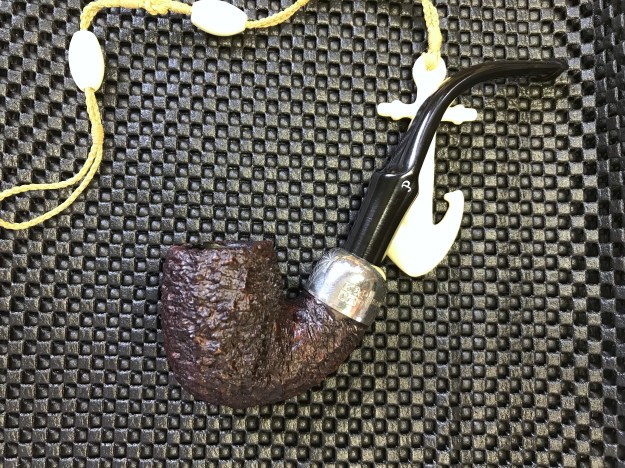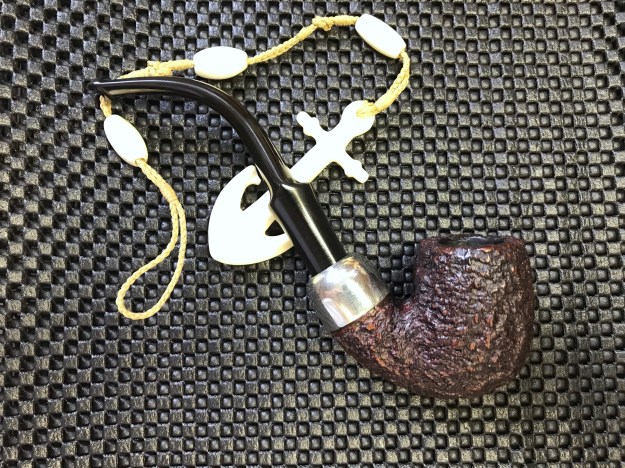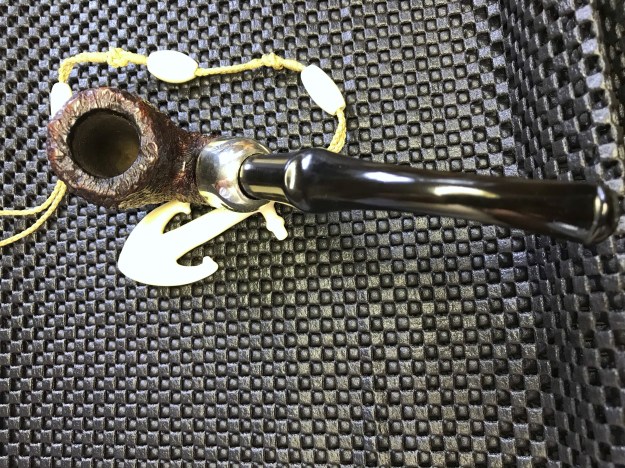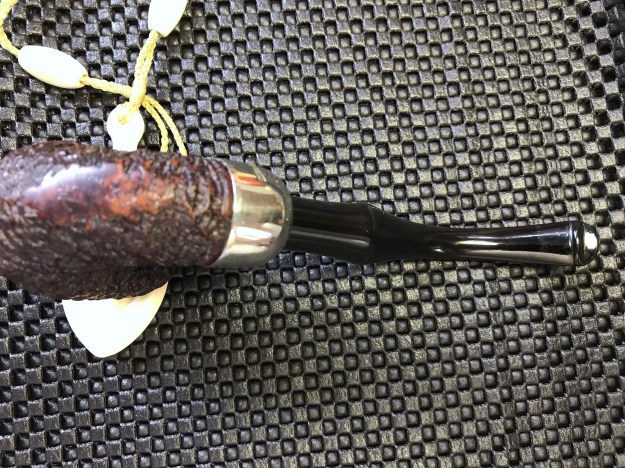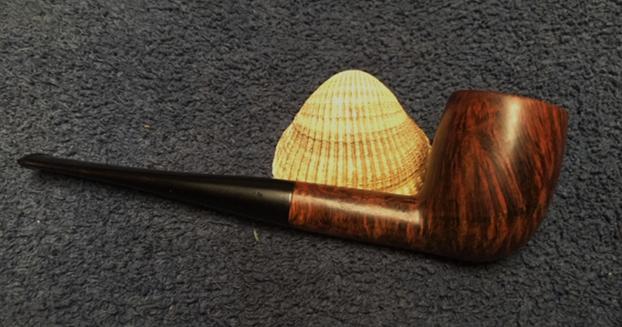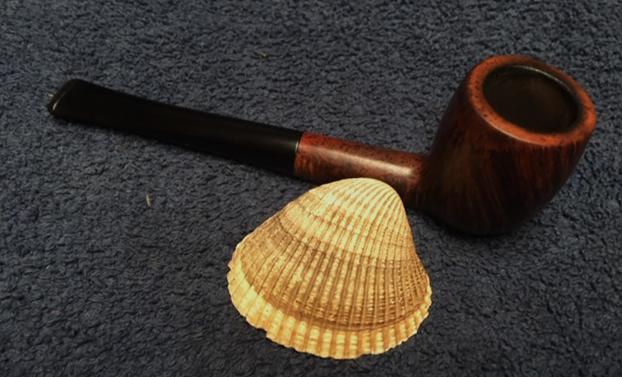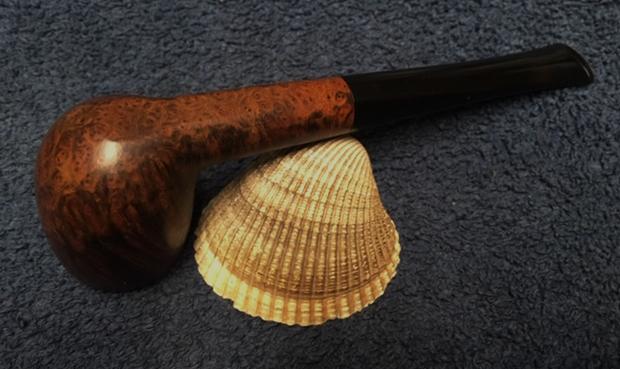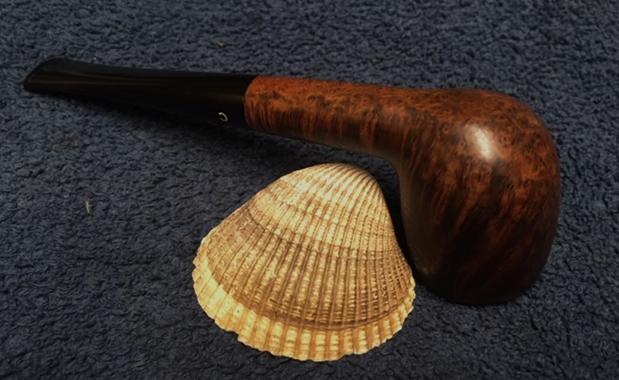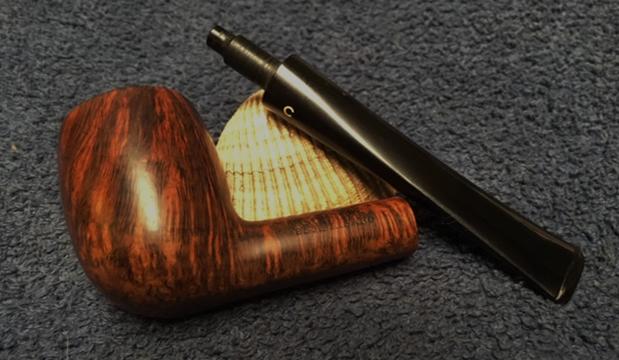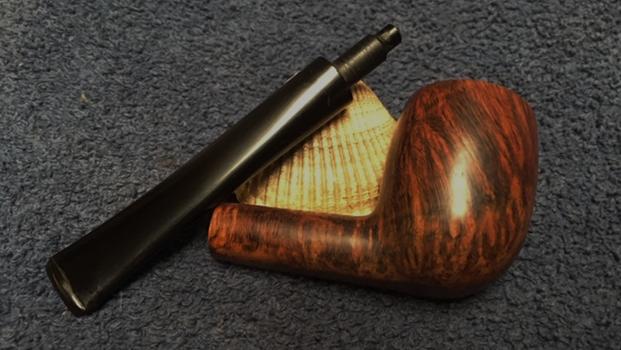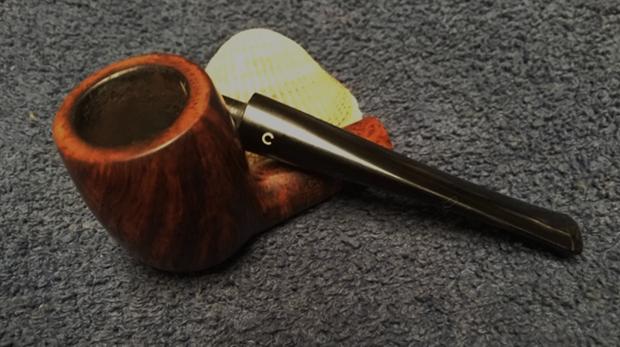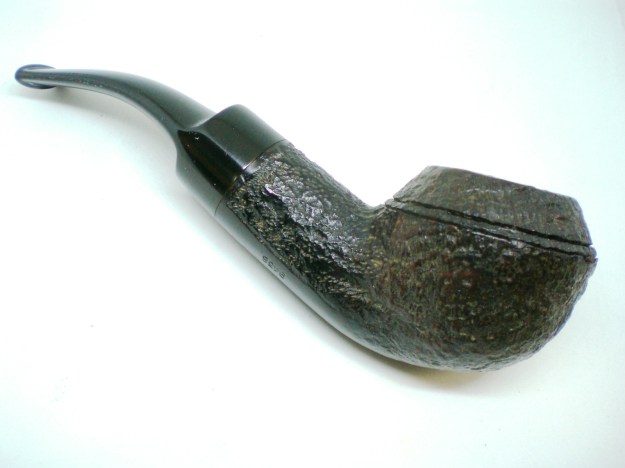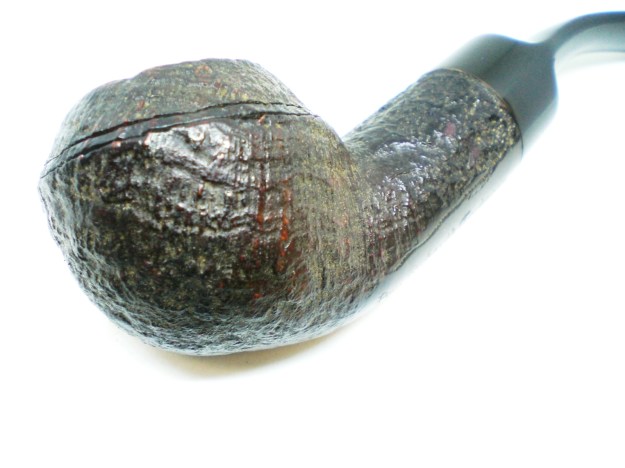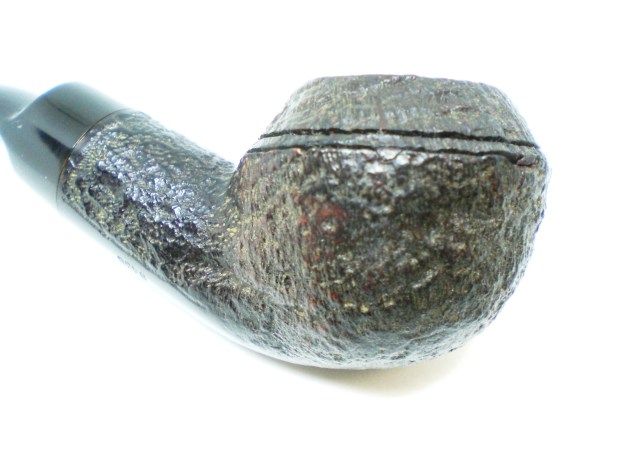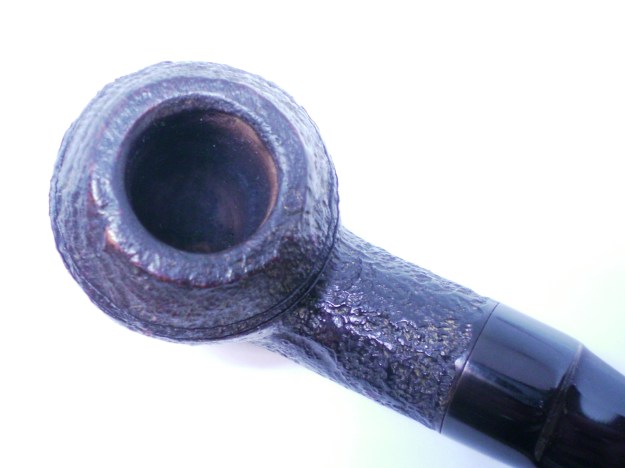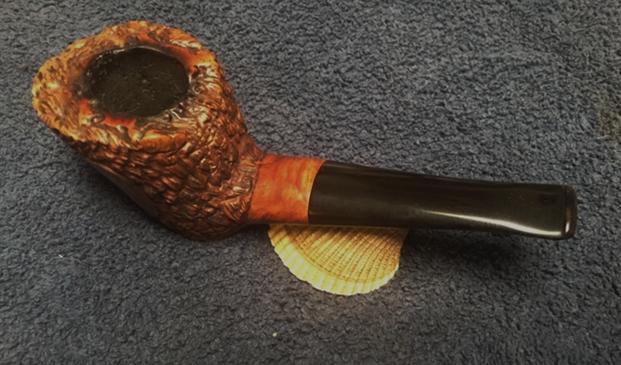
New Life for a Jandrew Free Hand Sitter


Blog by Steve Laug

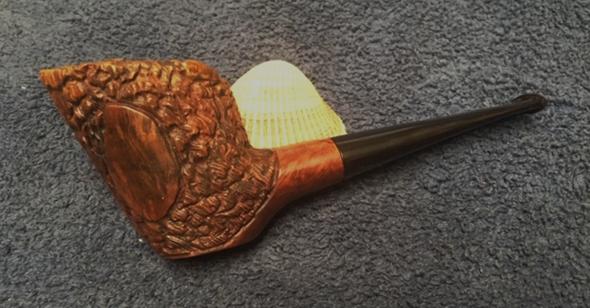
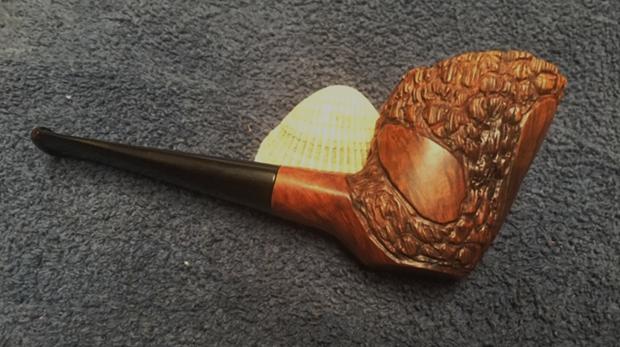
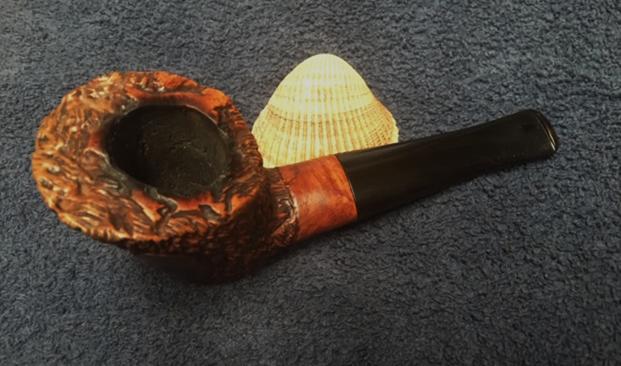
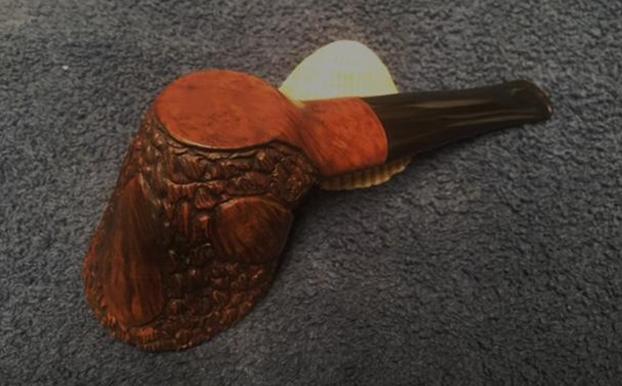
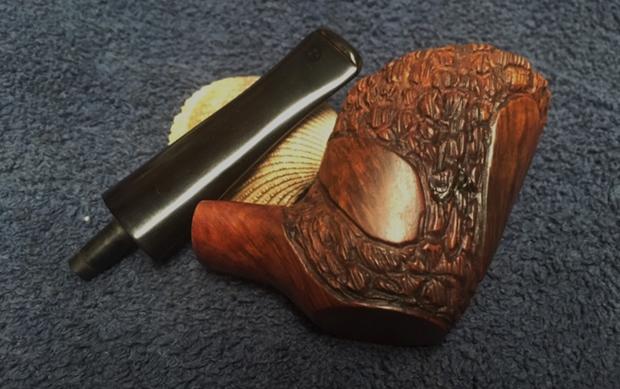
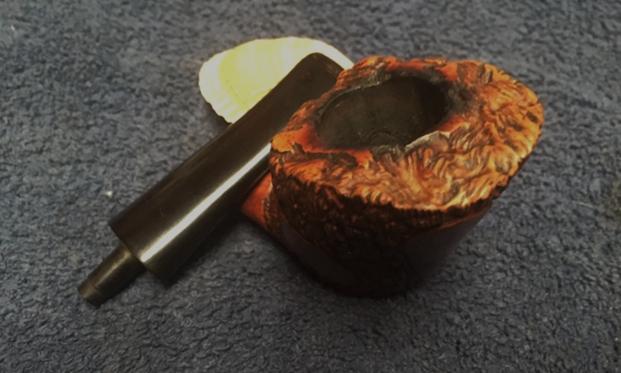
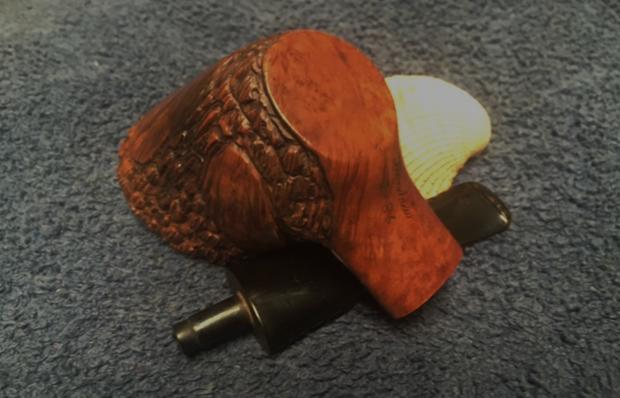
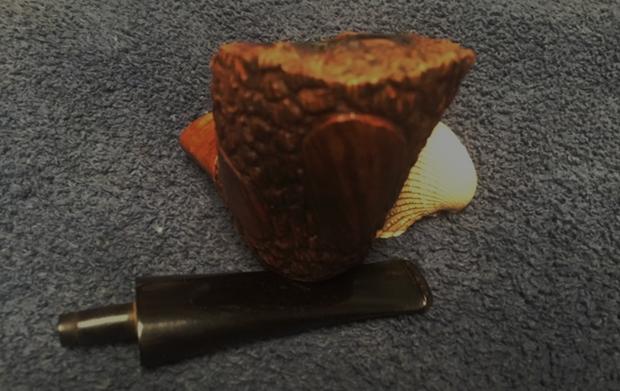
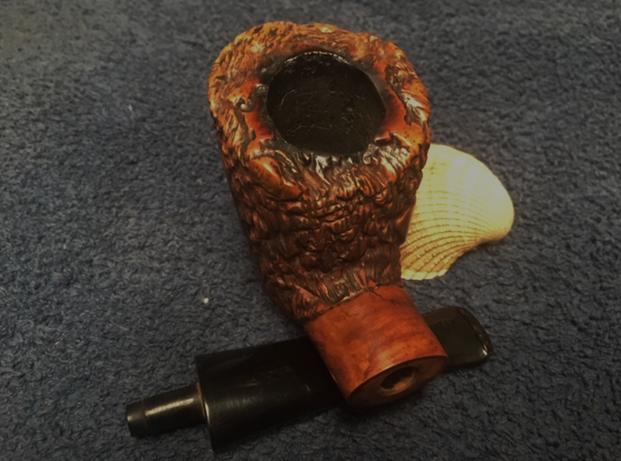
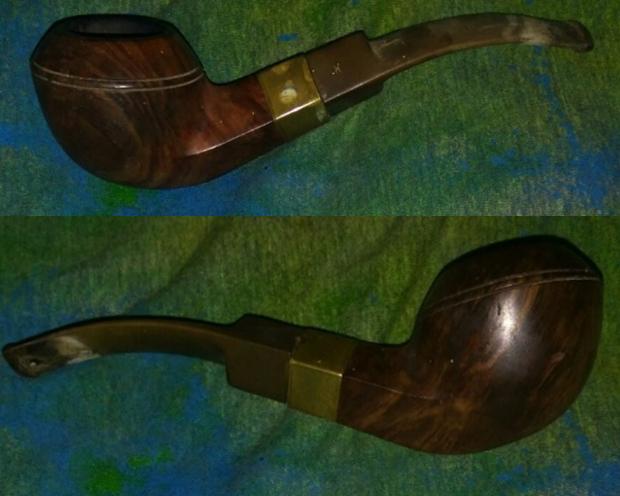
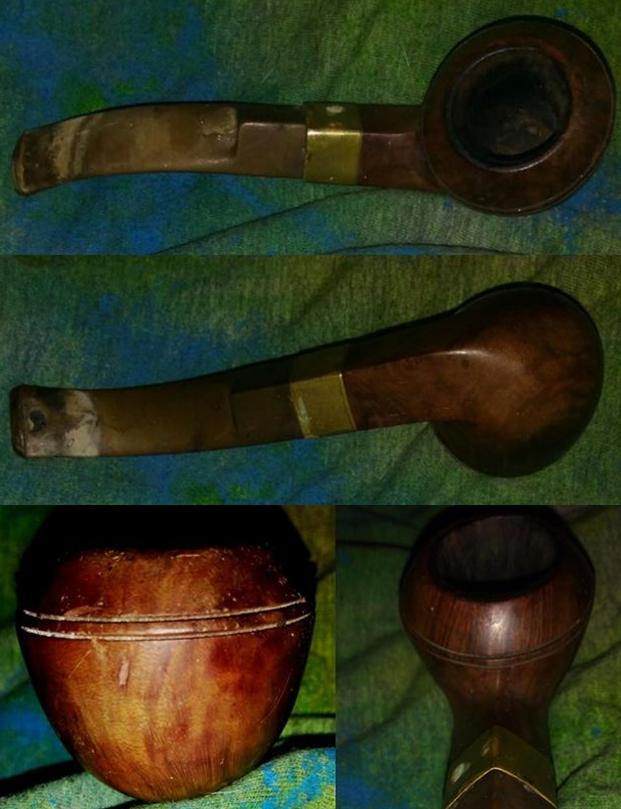
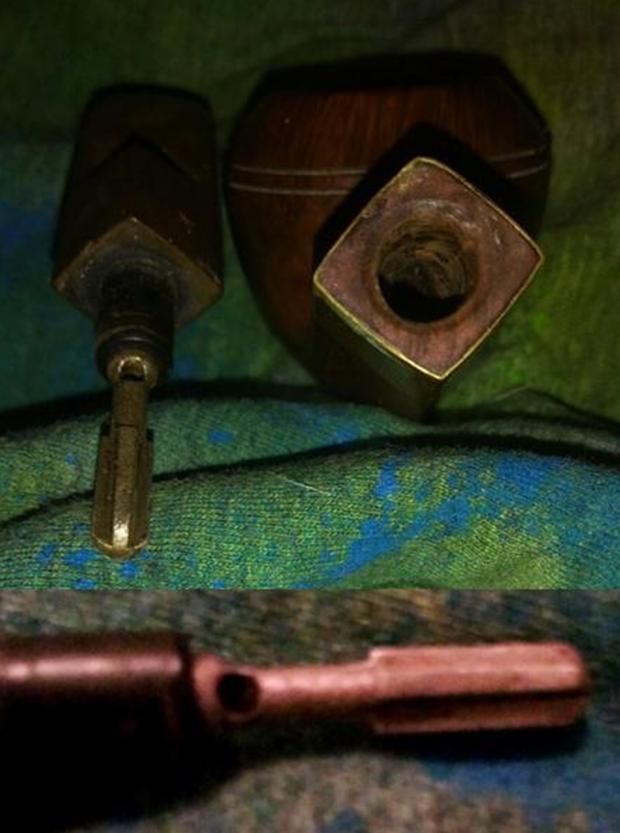
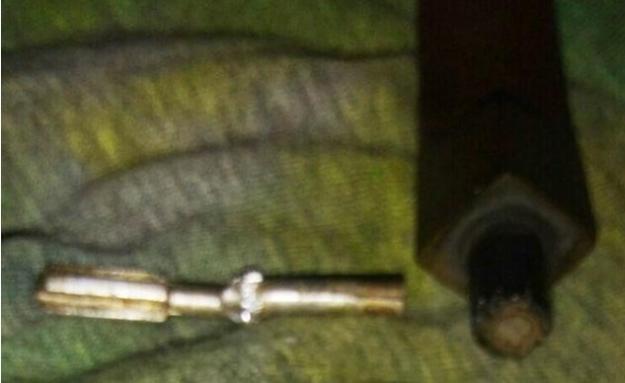
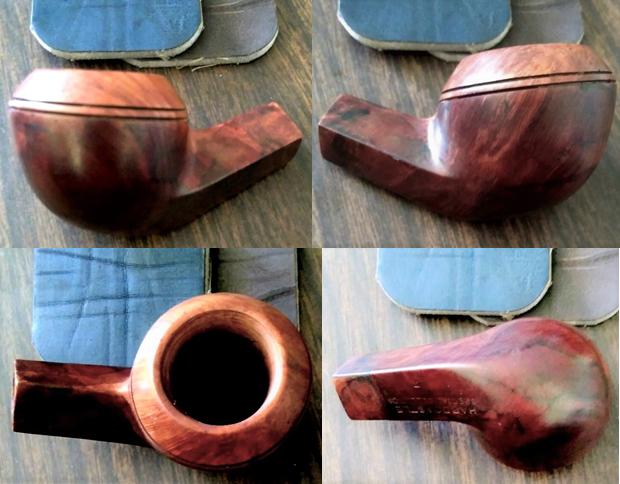
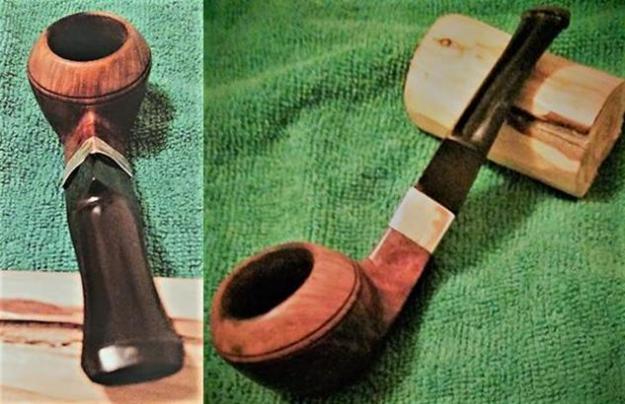
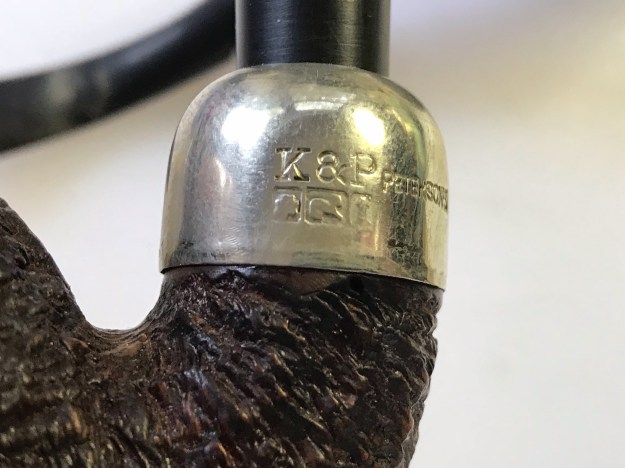
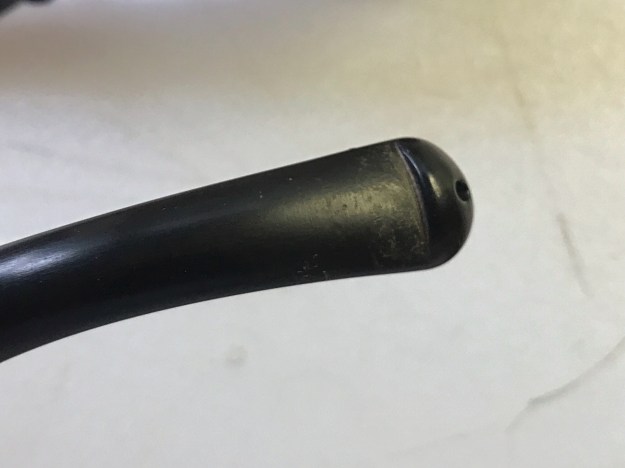
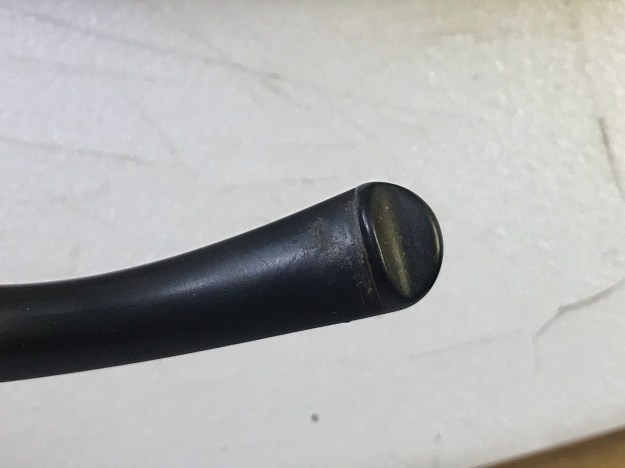
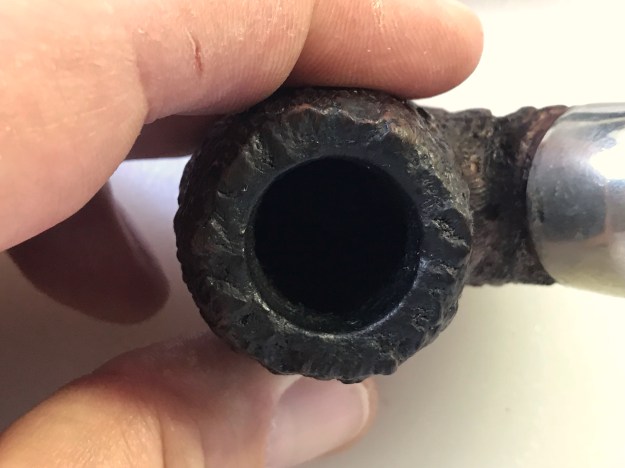
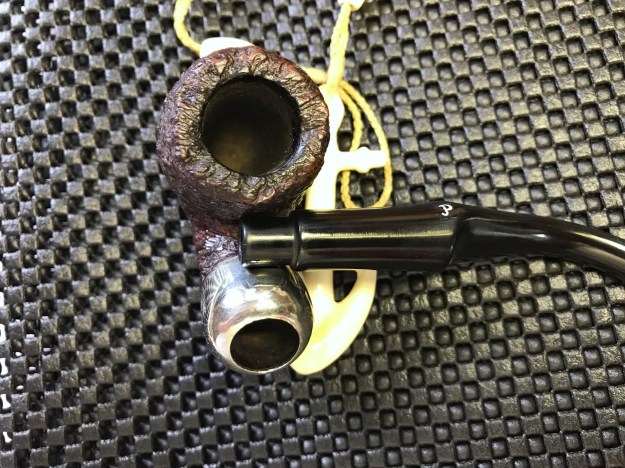
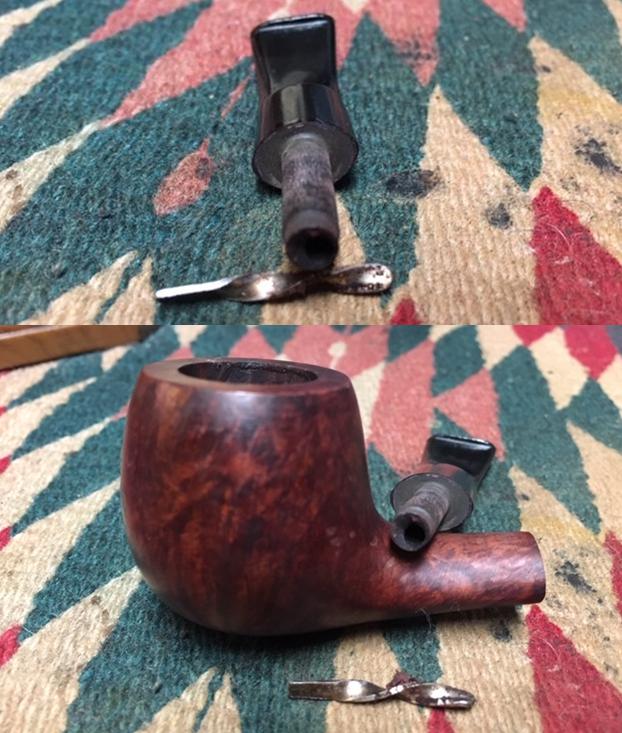
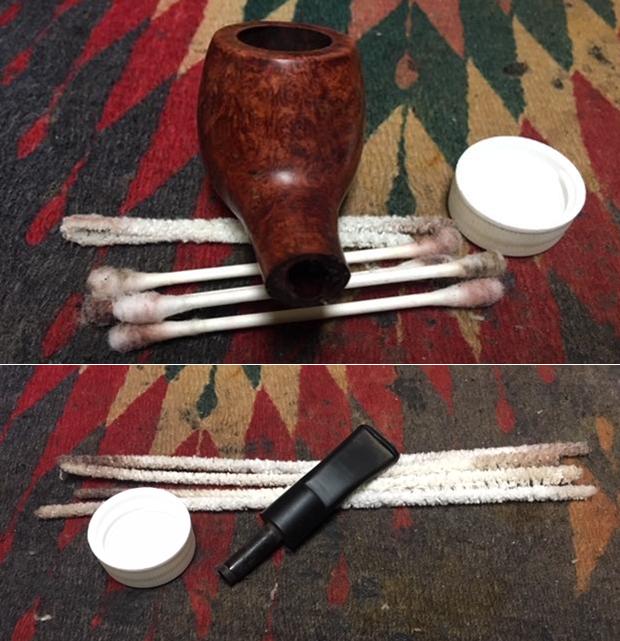
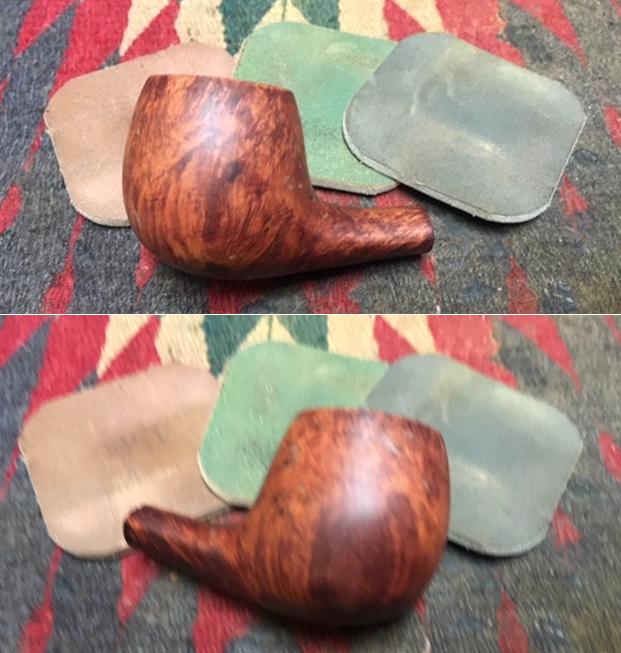
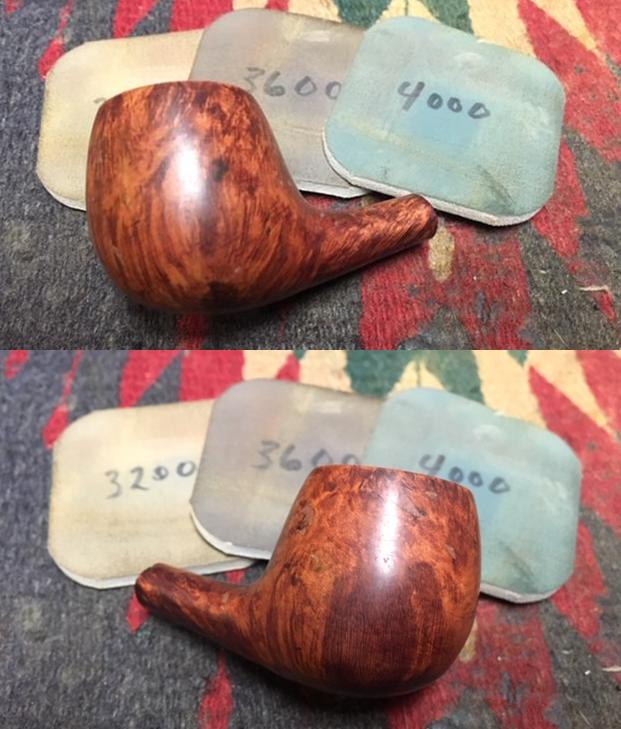
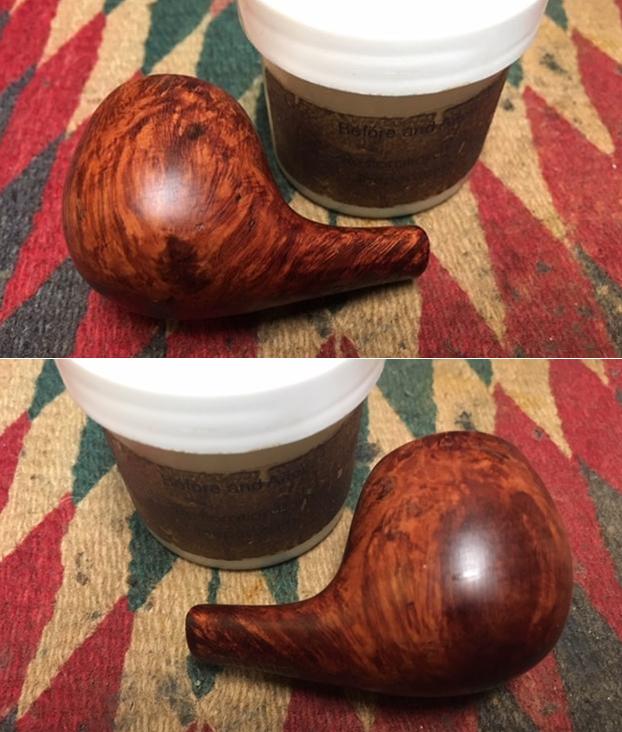
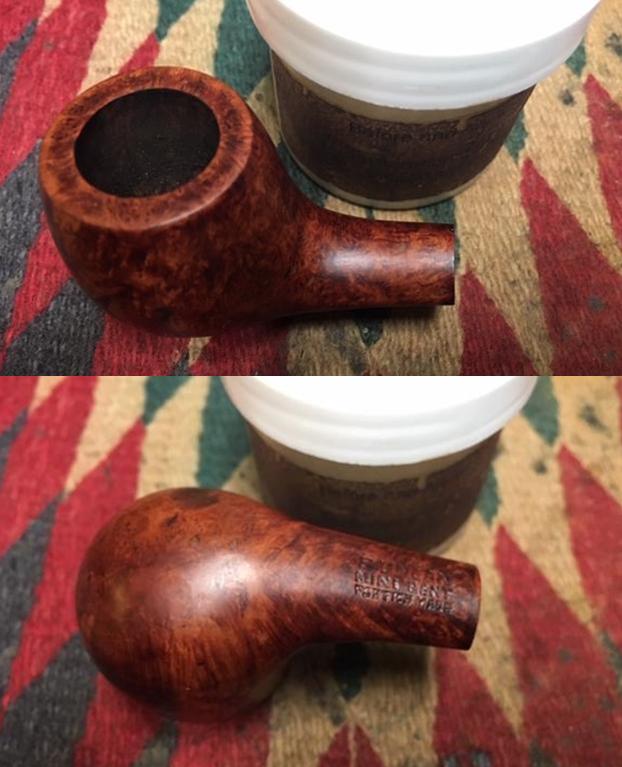
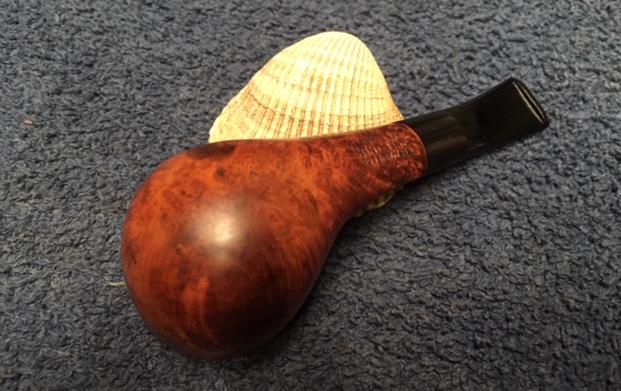
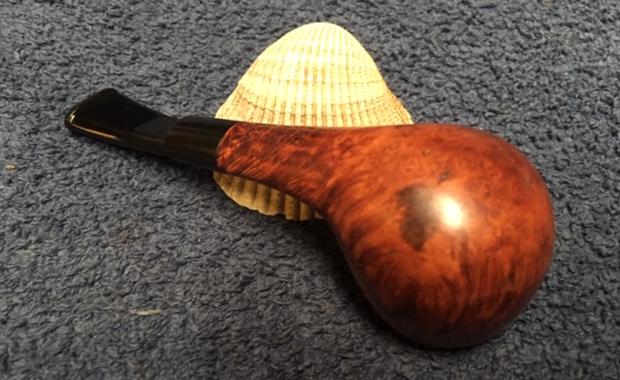
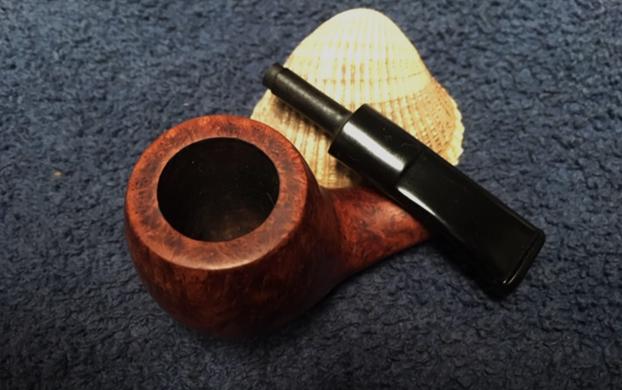
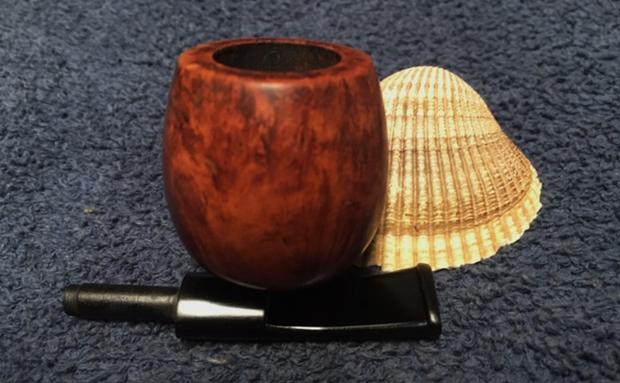
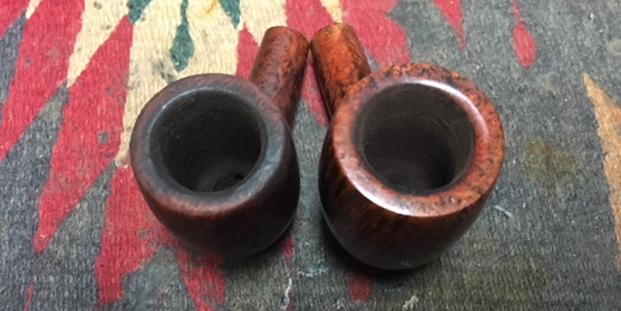
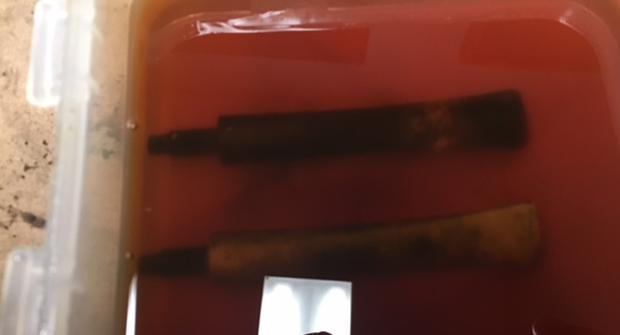
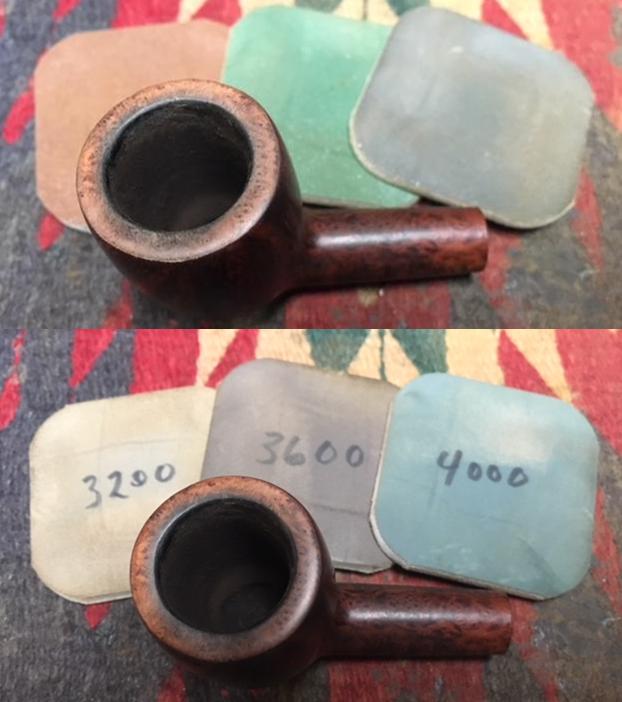
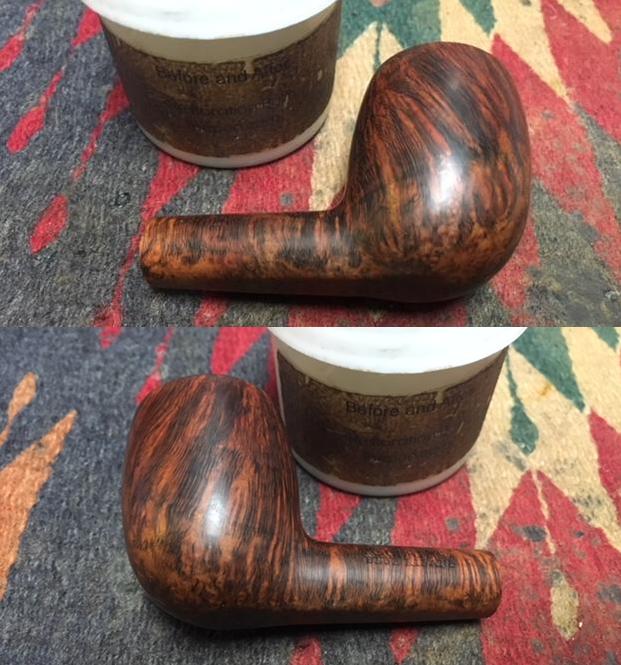
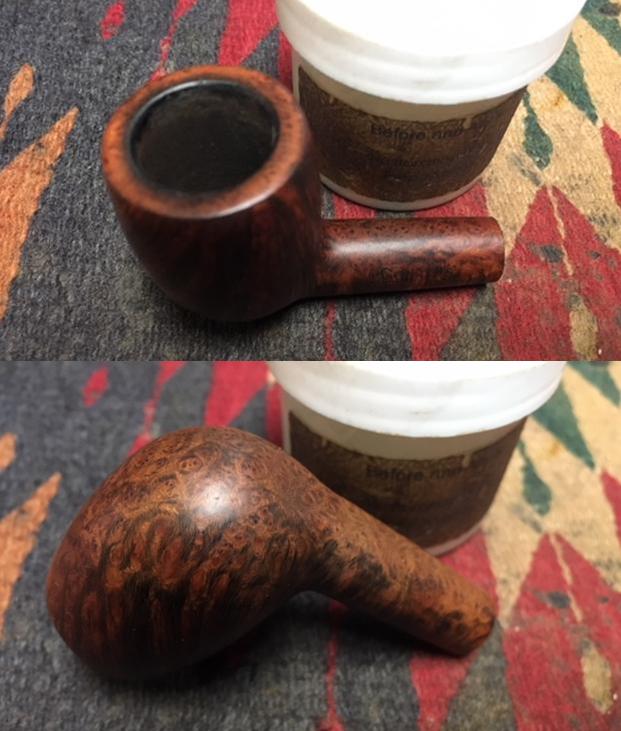
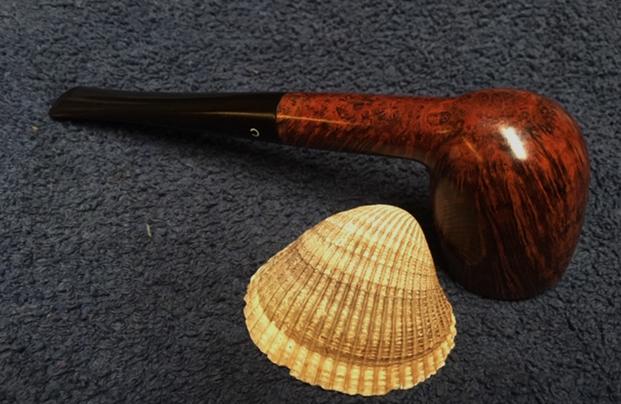
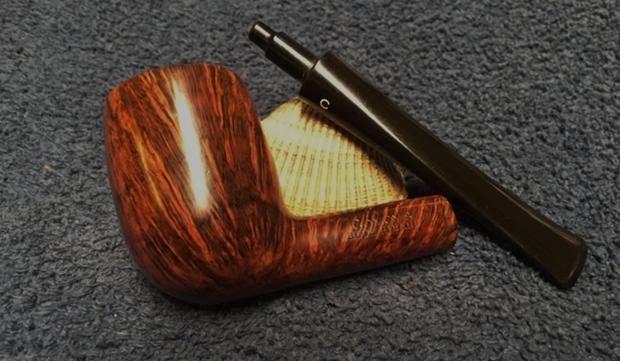
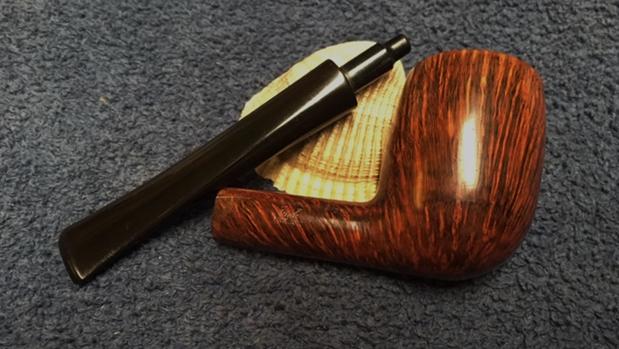
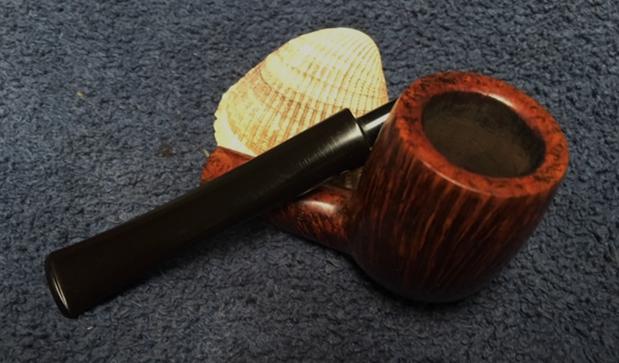
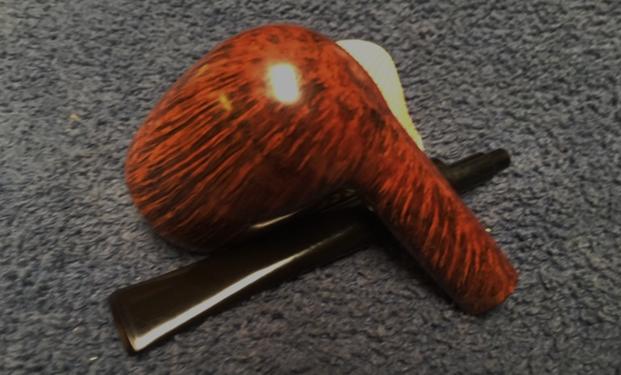
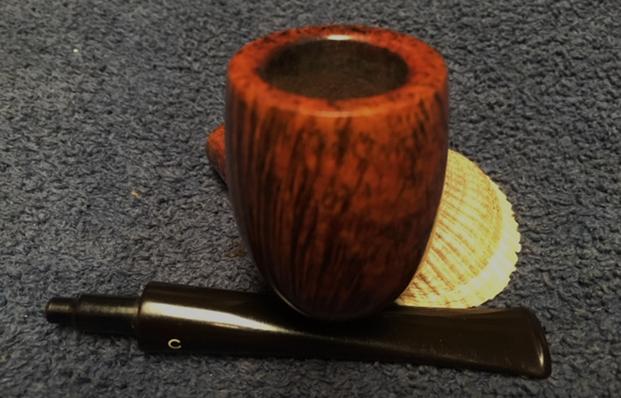
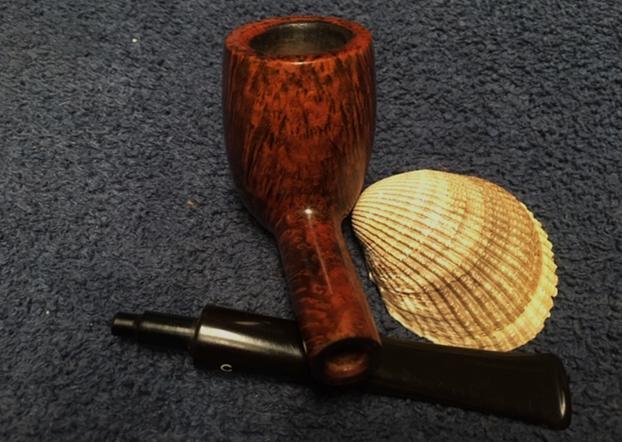
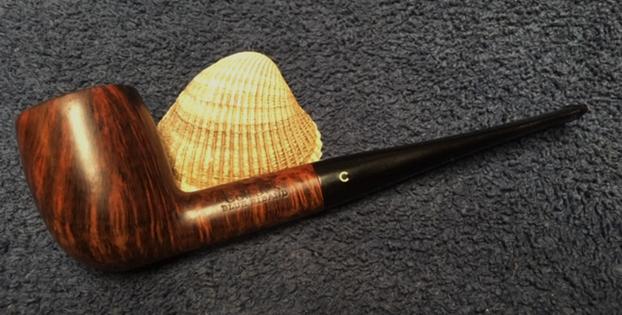
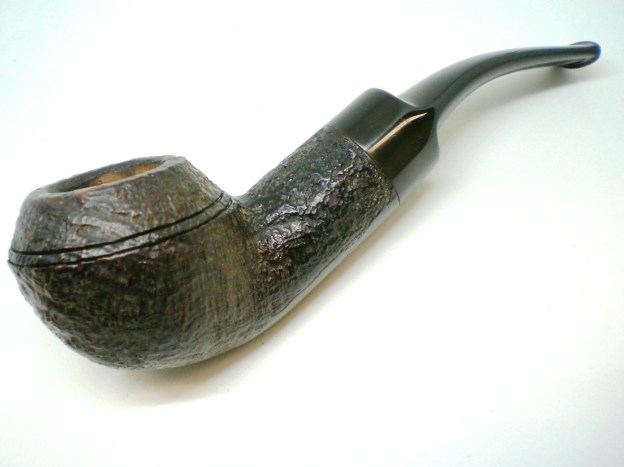
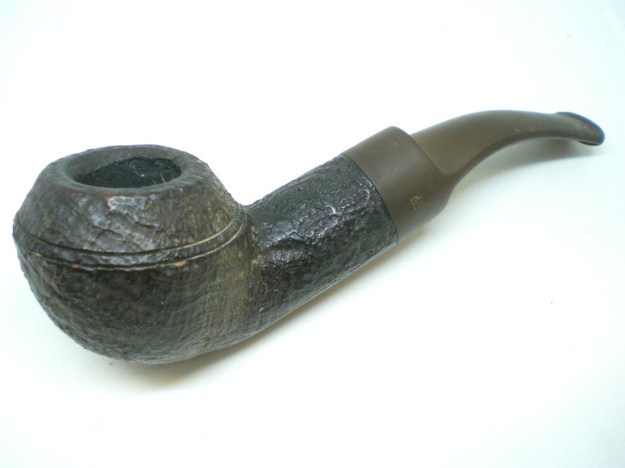
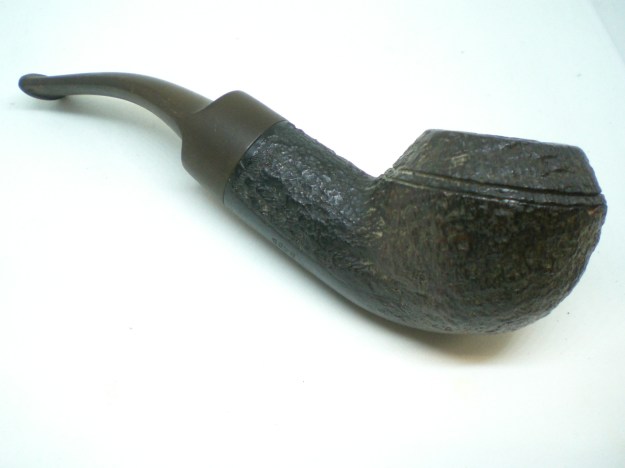
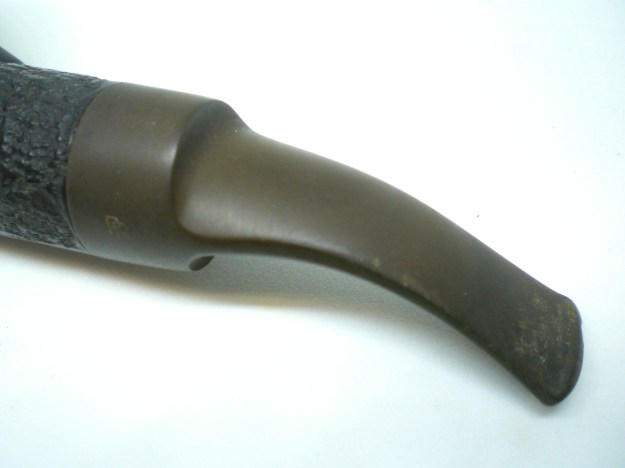
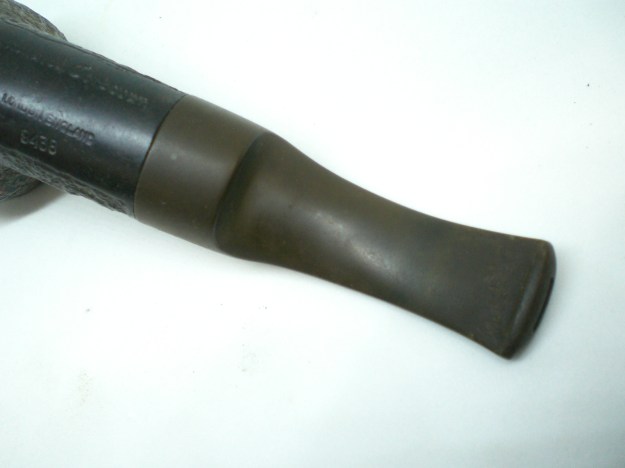
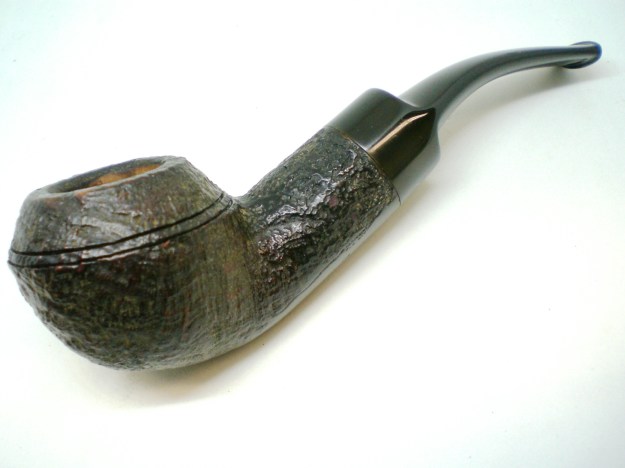
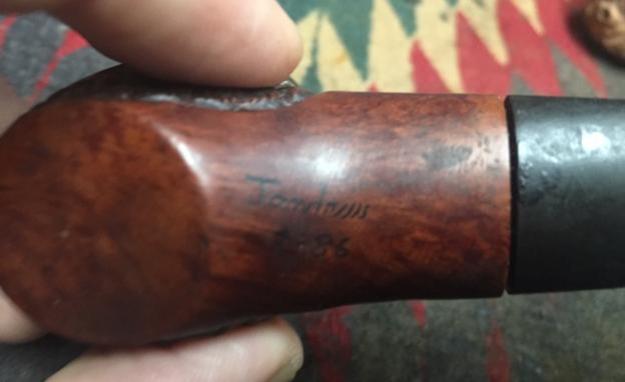
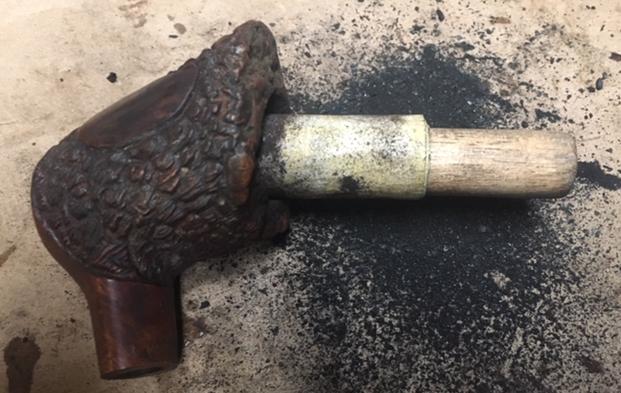
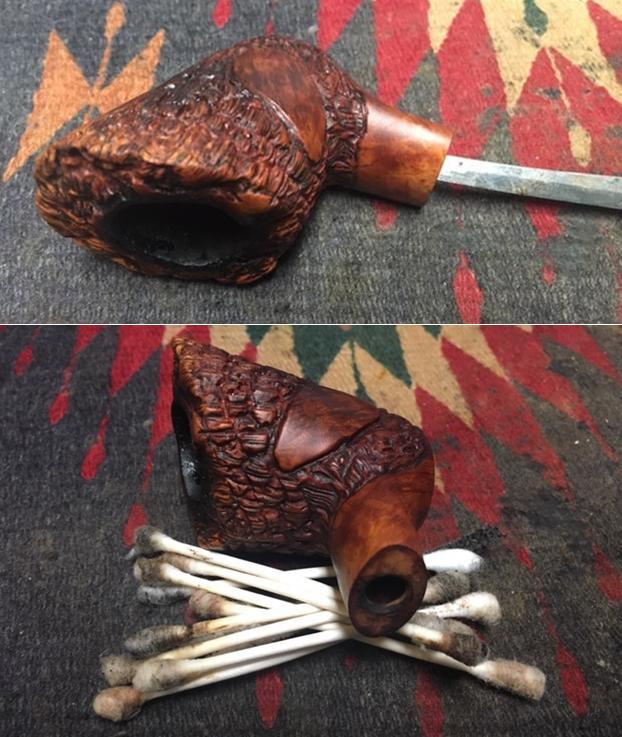
I don’t remember where this old pipe came from. It was a mess with lava overflowing the large caked bowl and filling in most of the carved plateau rim top. The rusticated finish was very dirty and hard to differentiate the smooth portions from the rustication. It appears that the bowl had been rusticated then a wire wheel had been used to striate the rustication. There were three smooth panels on the sides and front of the bowl and a smooth shank and heel of the bowl. The stem was a mess with oxidation, tooth chatter, deep tooth marks and calcification built up for over an inch of the length of the stem. The stem did not seat well in the shank due to the buildup of tars and oils. It also appeared that the tenon was slightly bent making the stem crooked (bent to the right). The pipe was stamped on the underside of the shank and under a bright light with magnification I could read Jandrew over 2-86. My assumption was that the pipe I was dealing with was a Jandrew (I have worked on other pipes made by this maker) and that it was made in February of 1086. The pipe was at least 32 years old and had seen a lot of use. It was obviously some pipeman’s favourite smoker. There was something about the pipe that captured my attention and made me want to work on it. I took some photos of the pipe before I started my cleanup work. I took some close up photos of the rim top and stem to show the condition they were in before I started. The rim top is heavily caked with lava flowing out of the thick cake in the bowl. It fills in much of the carved rim top leaving me unsure what lies underneath. I have no idea what the inner edge of the rim looks like at this point but it seems likely that it is darkened or maybe burned on the back edge. The stem has tooth marks on the top and underside near the button and on the button surface as well. There is some serious oxidation/calcification on the first inch or more of the stem. The stem fit against the shank is off as you can see from the photos and the tenon appears to be bent making the stem curve to the right side.I took a photo of the stamping to capture it and help identify the pipe. It reads Jandrew over 2-86. It is readable but faint in the middle of the stamp where the slight curve in the shank is located.I looked up the brand on Pipedia and found the following: Jandrew pipes are (or were?) made by J. Andrew Kovacs. He lived in Jerome and Cottonwood, Arizona and is said to have moved to Milwaukee, Wisconsin. https://pipedia.org/wiki/Jandrew
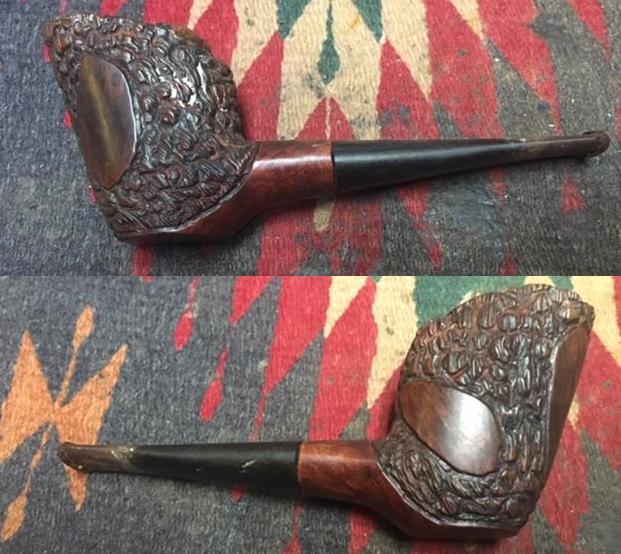
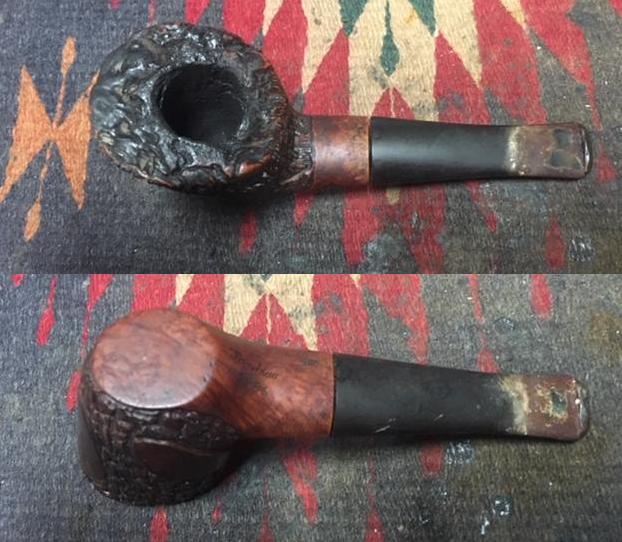
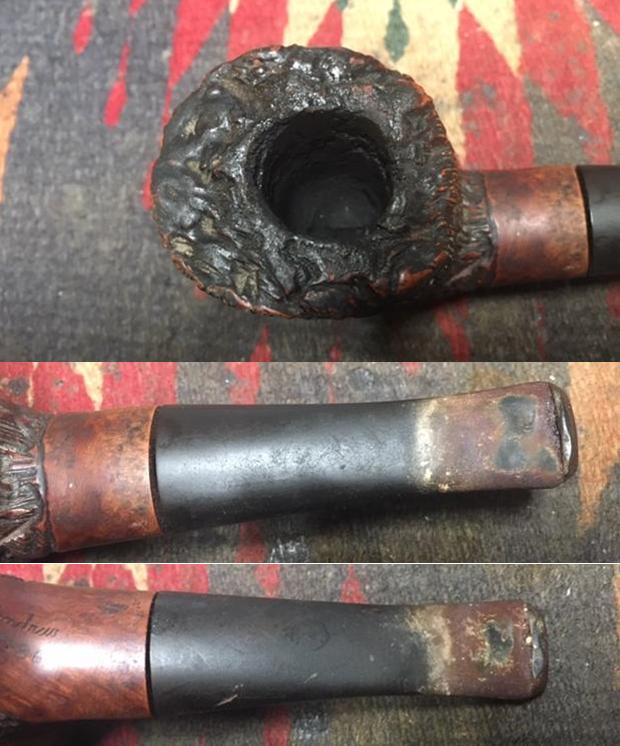
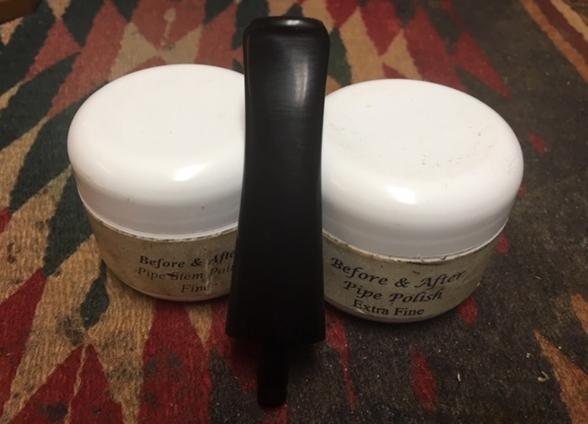
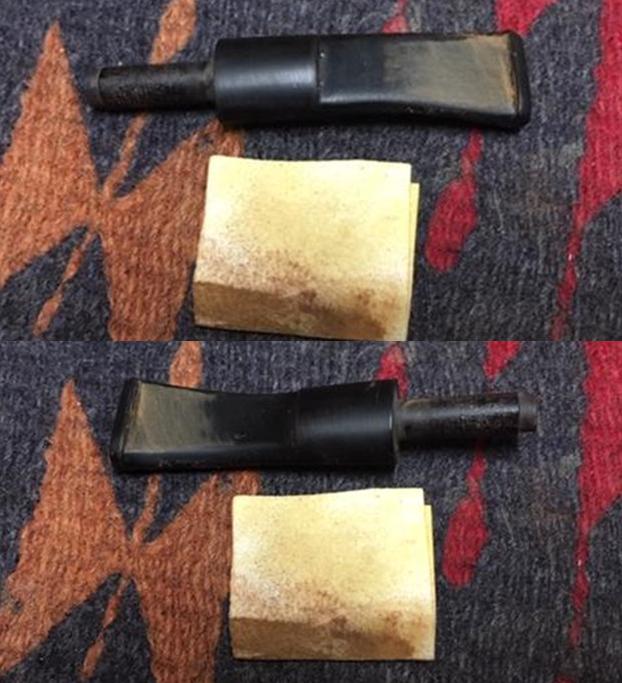
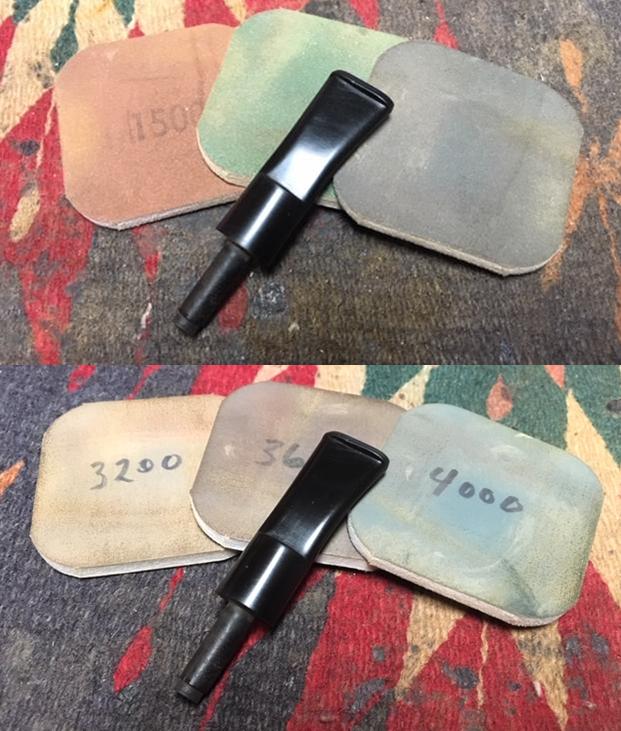
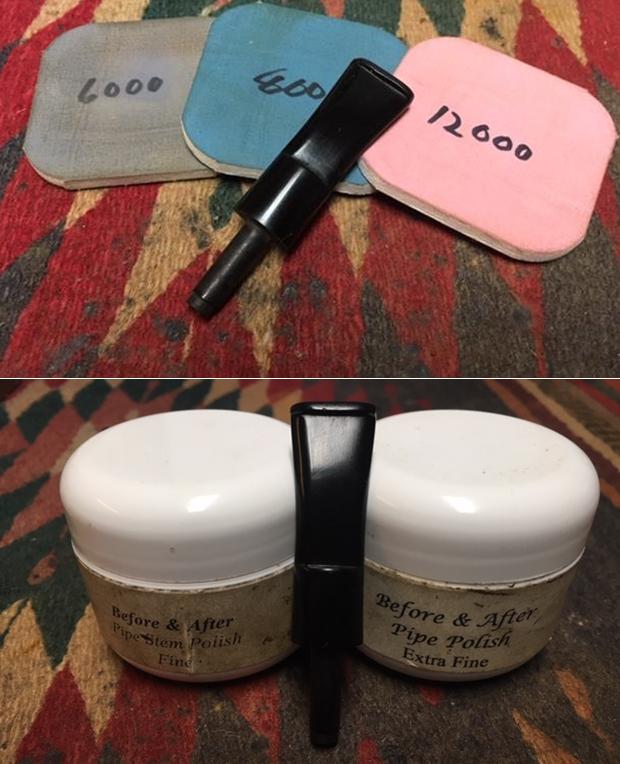
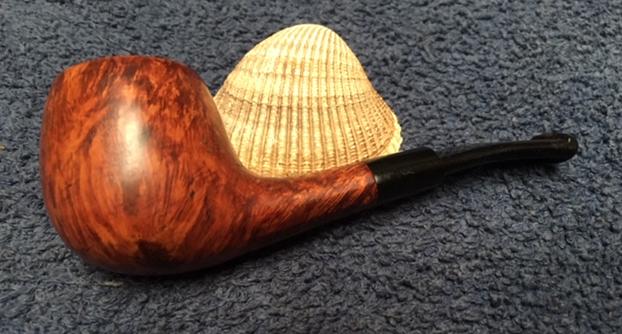
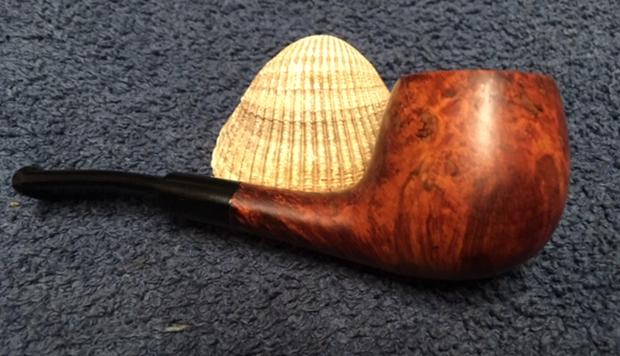
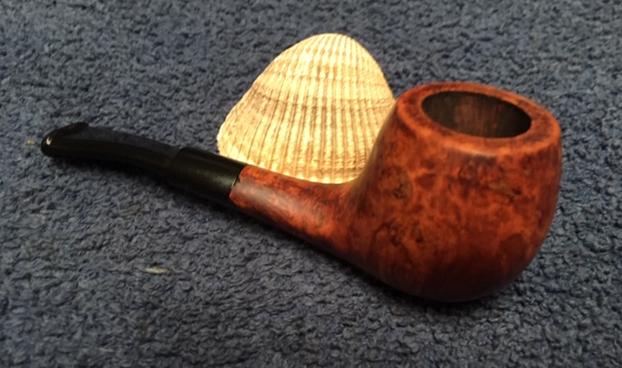
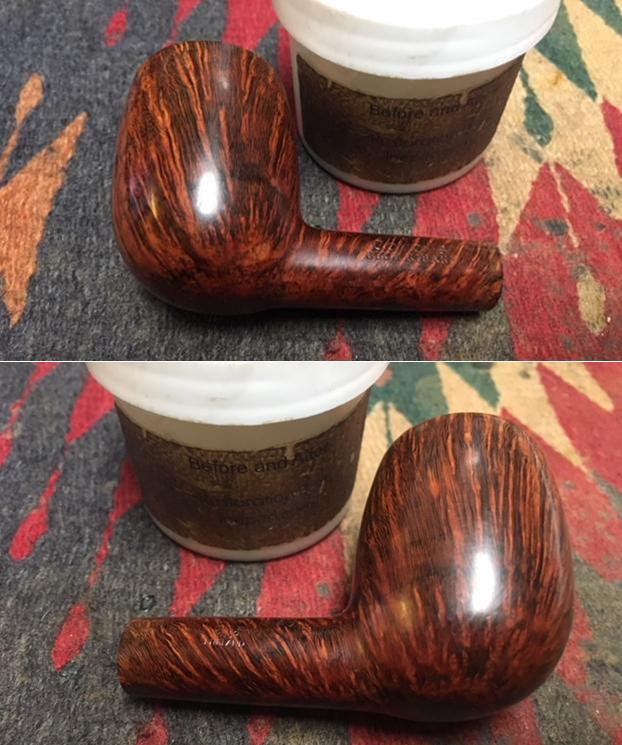
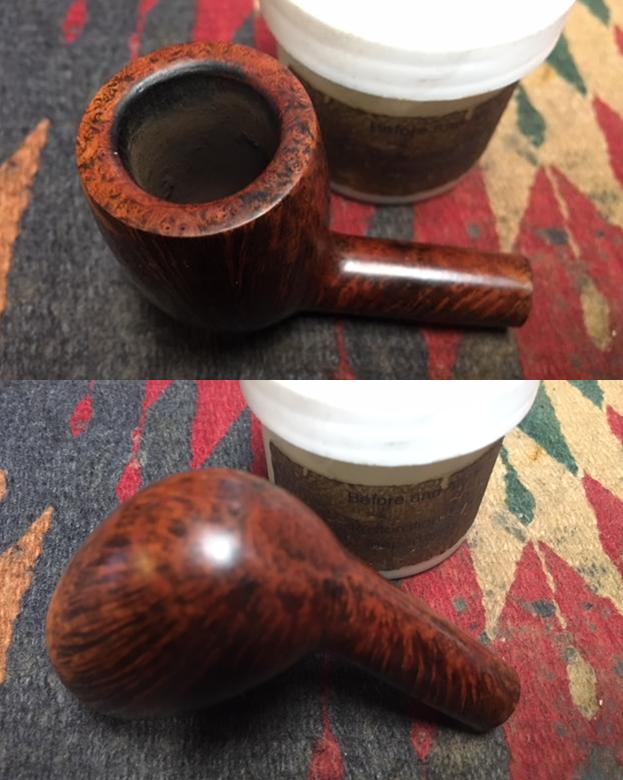
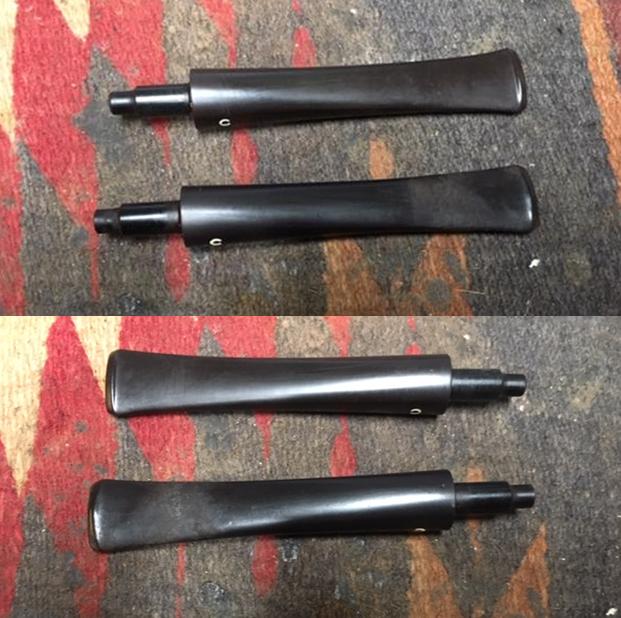
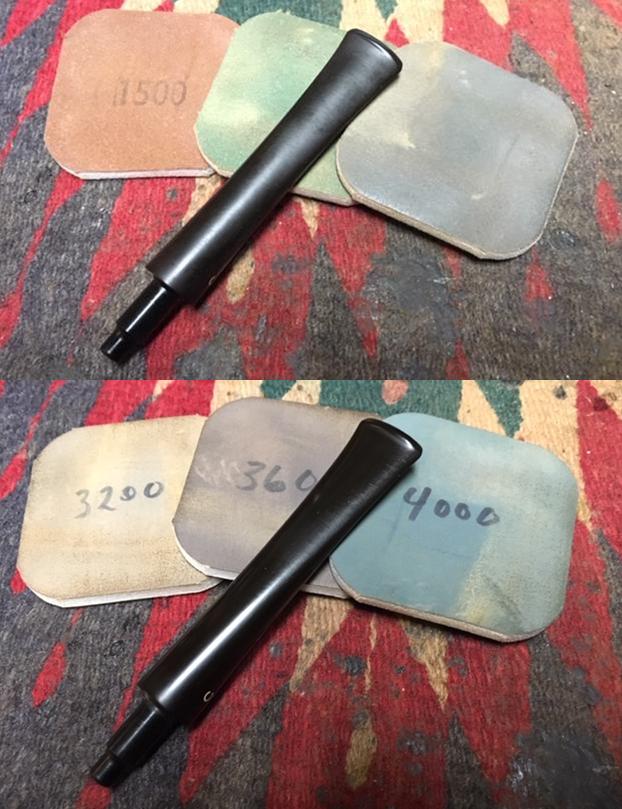
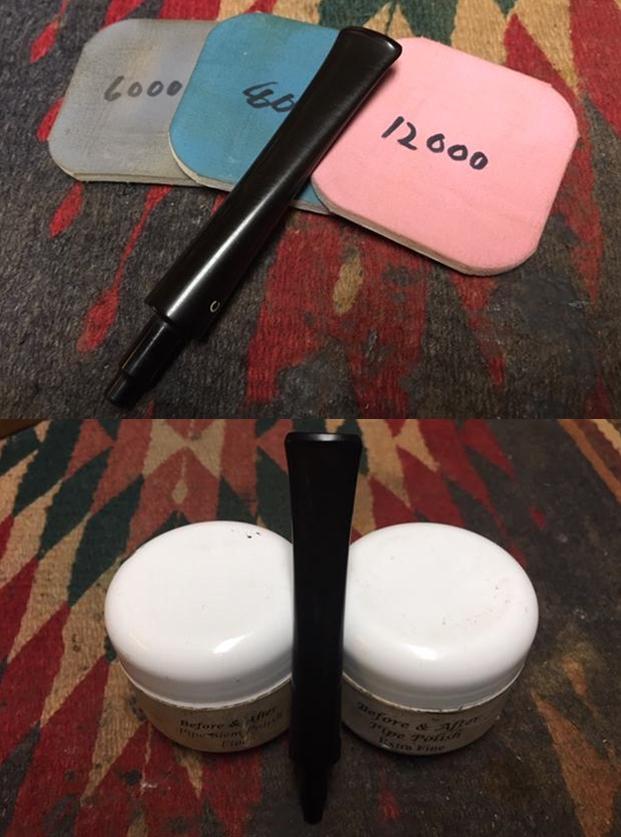
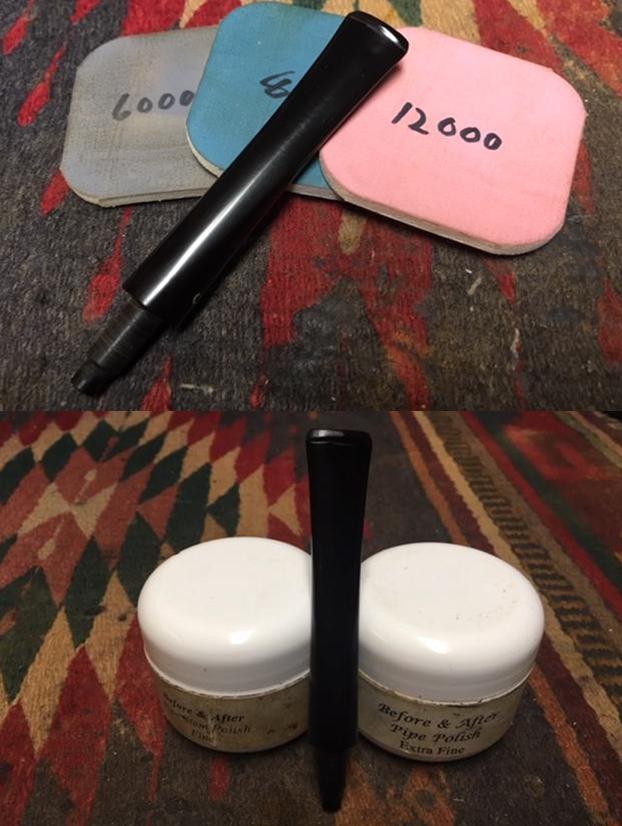
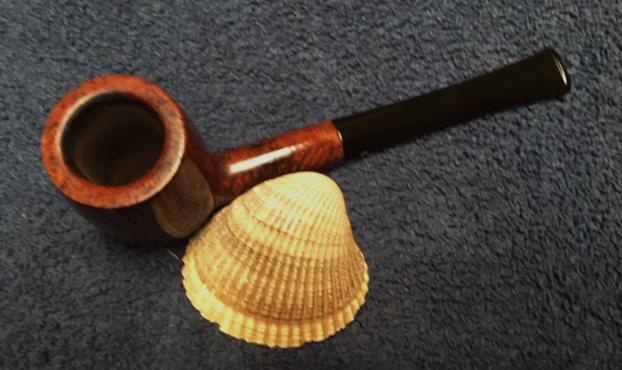
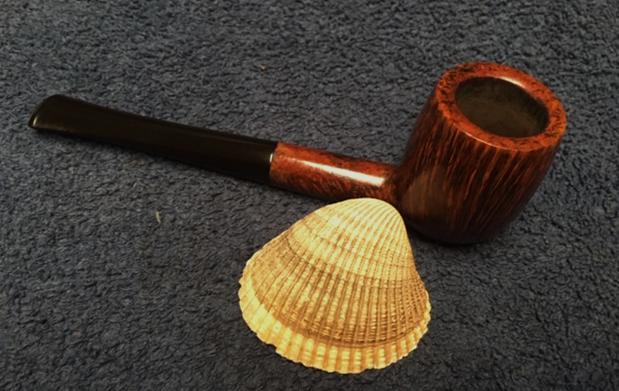
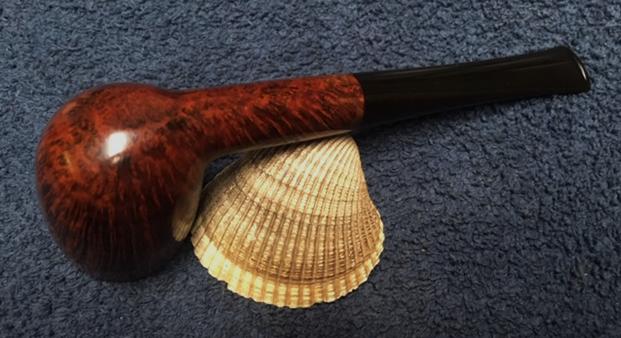
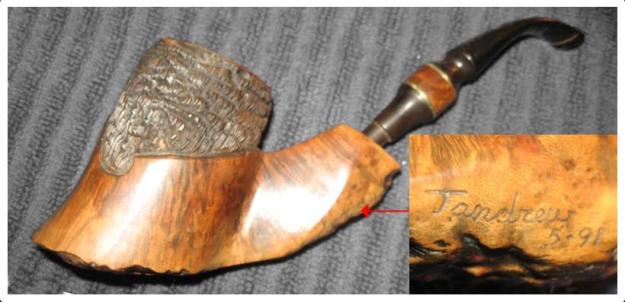
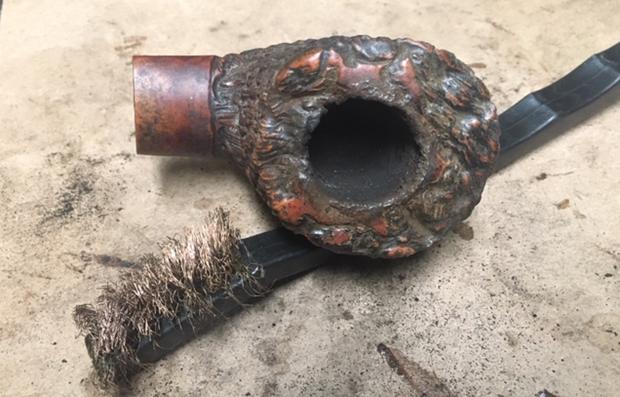
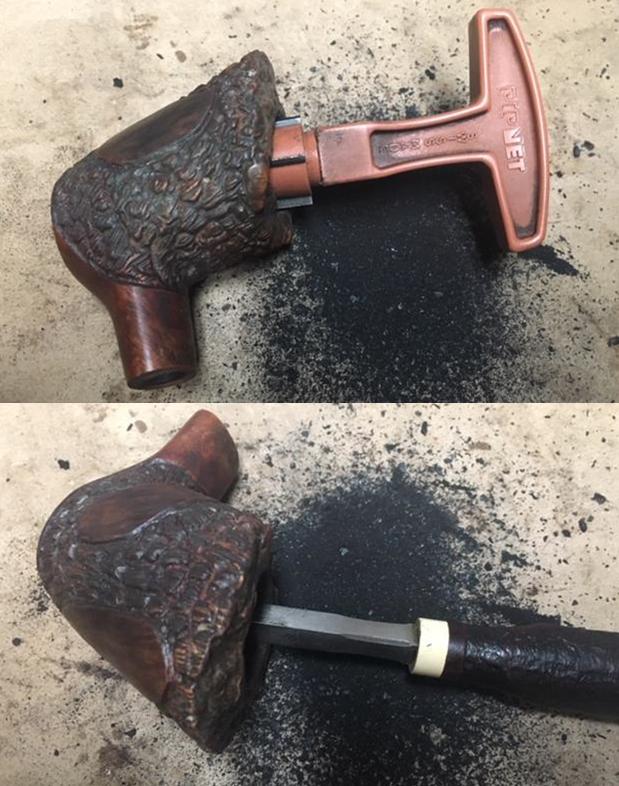
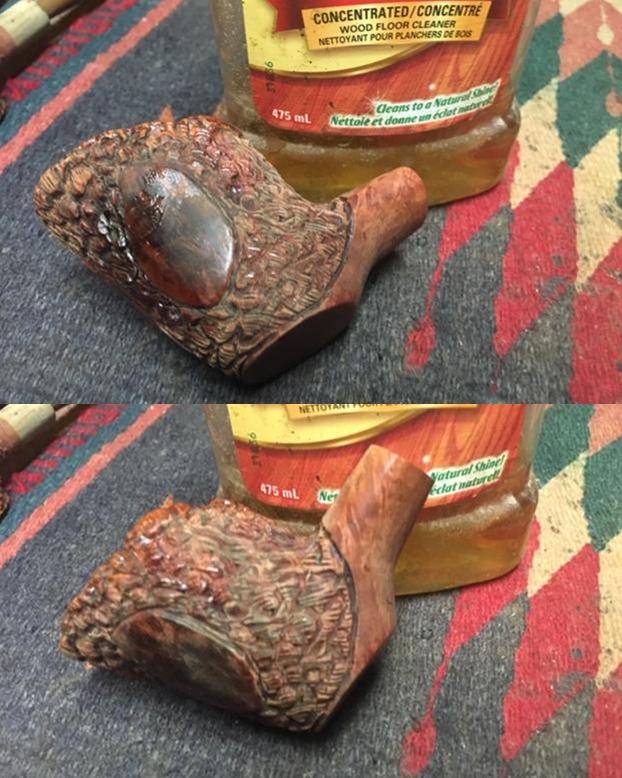
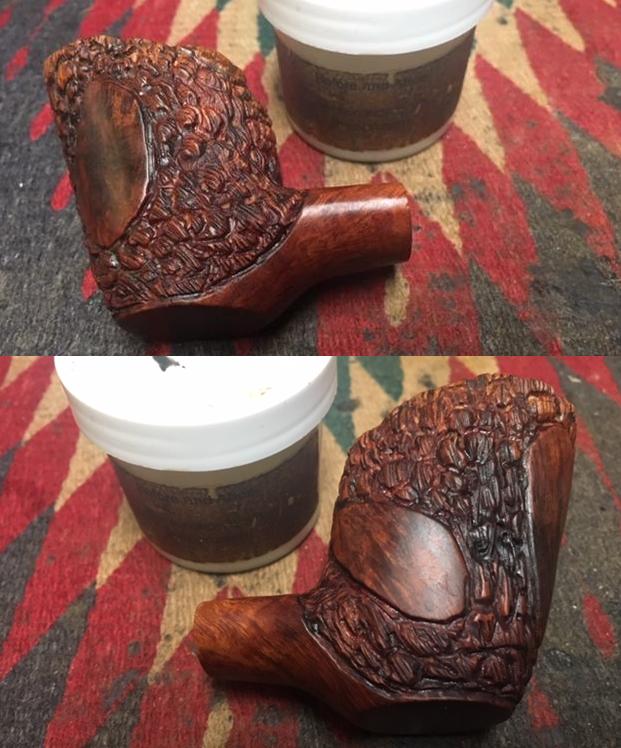
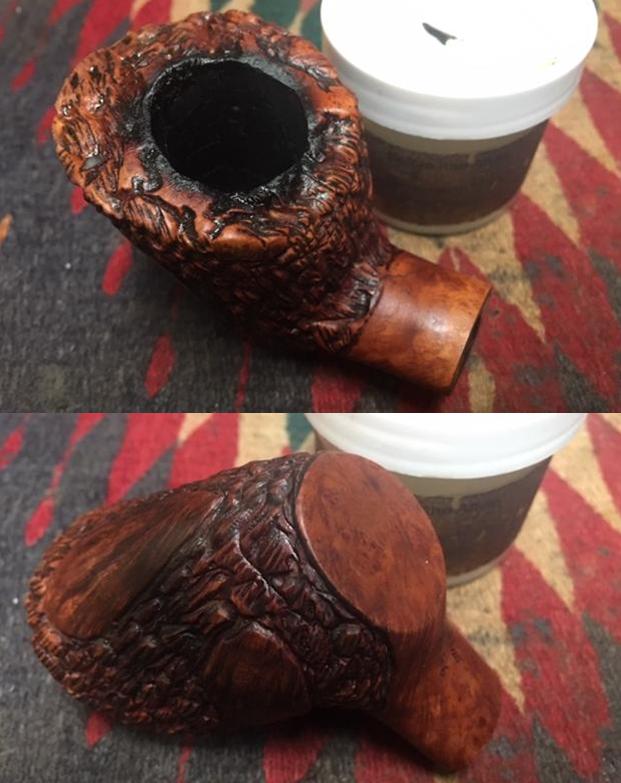
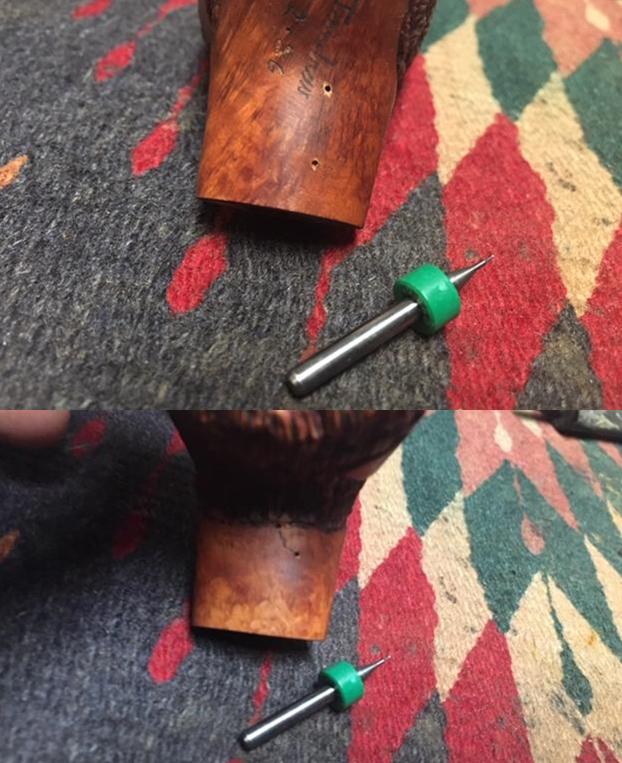
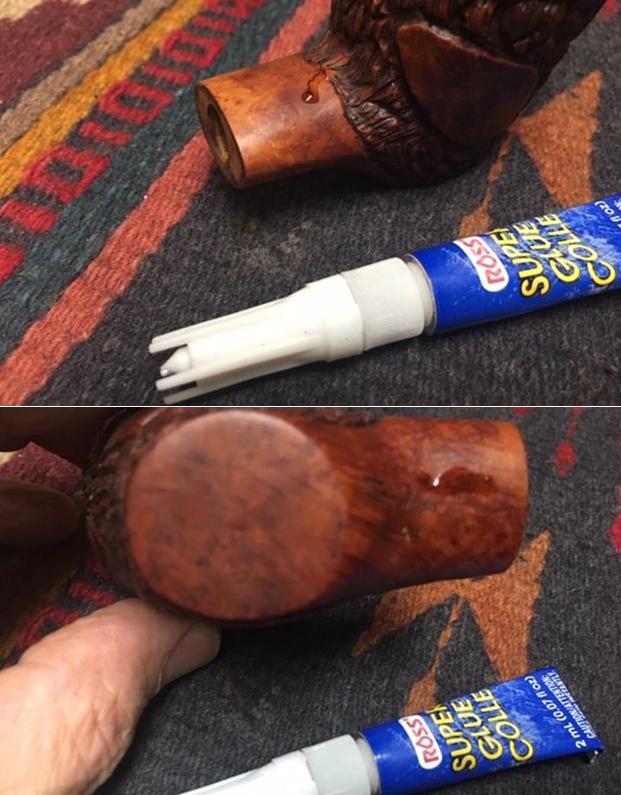
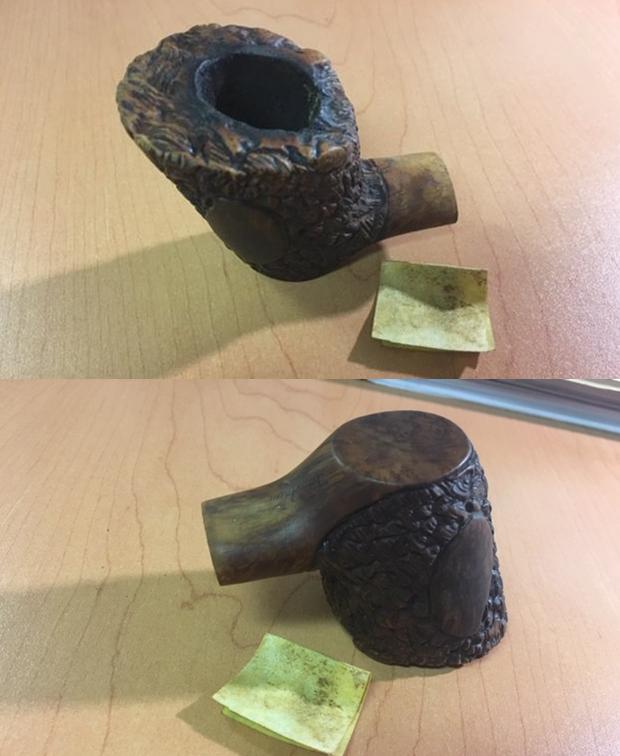
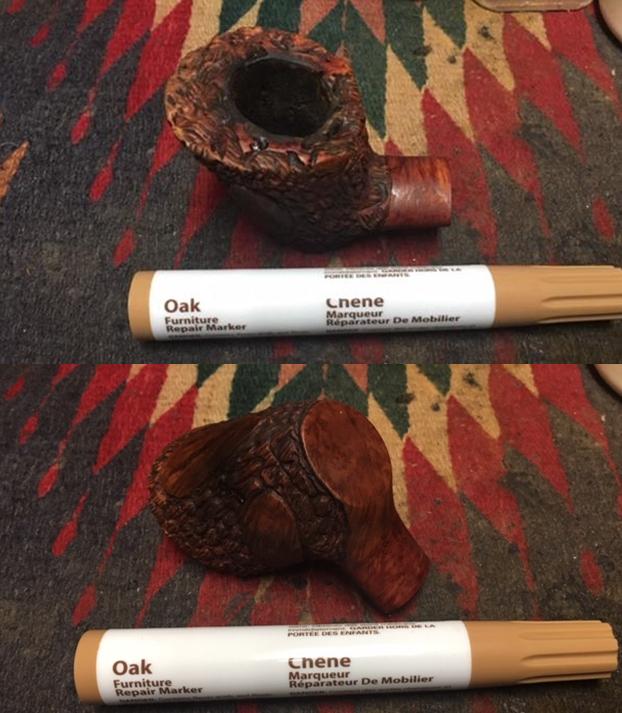
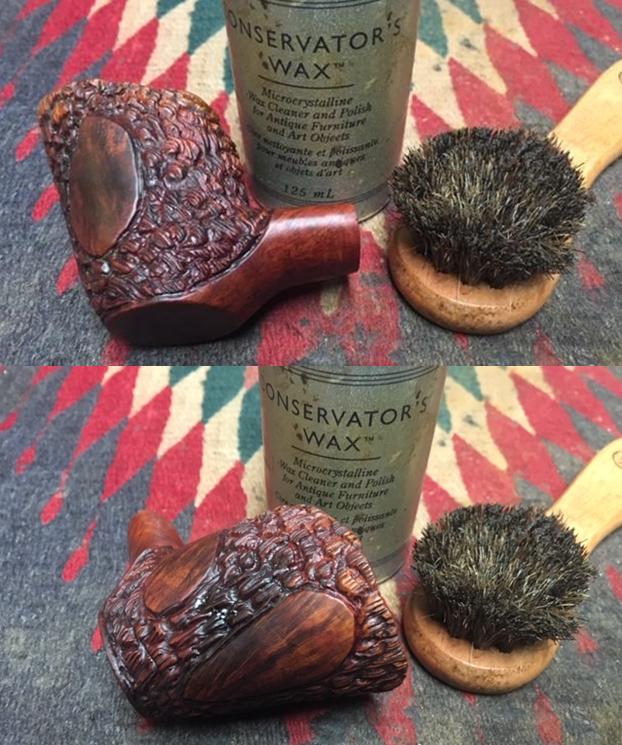
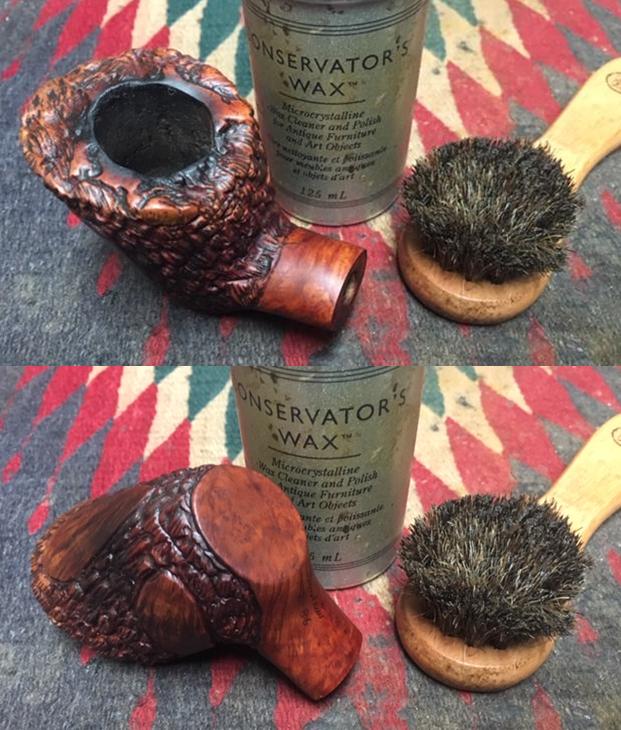
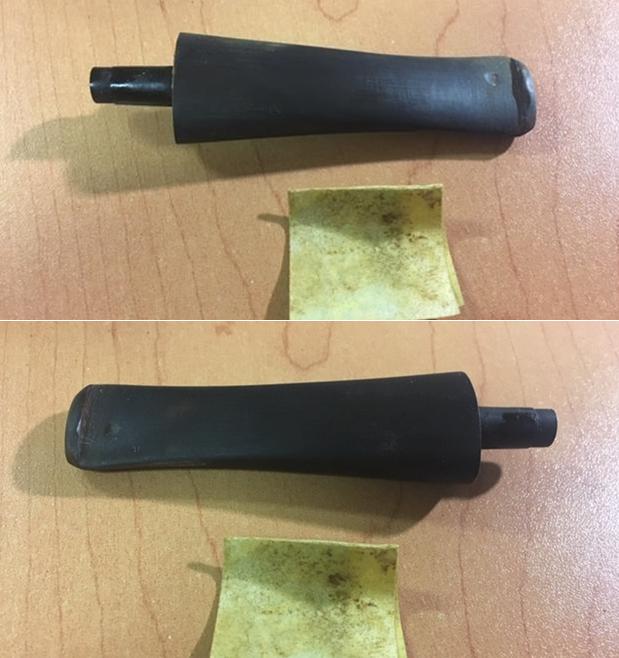
I turned to Pipephil’s site to see if I could gain a bit more information. There was no additional info but there was a photo of a pipe with the same signature and a similar date stamp on the shank. I have included that below for comparison(http://www.pipephil.eu/logos/en/logo-j1.html).I turned to the pipe to begin the cleanup. I dry scrubbed the rim top with a brass bristle brush to break the lava buildup from the crevices. This technique works wonders and the brass is soft enough not to scratch the plateau. I do not use it on smooth rims (not daring enough to give it a try as I am pretty certain it will cause scratching and make more work for myself). The photo below shows the cleaned rim top after the scrubbing.With the top cleaned it was time to ream the bowl. I reamed it with a PipNet pipe reamer using the largest cutting head. The cake was thick and hard. I carefully worked the bowl clean using the reamer. I followed that by scraping out the remaining cake in the bottom of the bowl and along the edges with a Savinelli Fitsall Pipe Knife and took the cake back to bare briar. I wrapped a piece of dowel with 220 grit sandpaper and sanded the inside walls of the bowl to smooth out the walls. With the bowl reamed it was time to scrub the exterior of the bowl. I scrubbed it with Murphy’s Oil Soap, working it into the crevices and nooks and crannies of the rustication with a tooth brush. I rinsed it under running water to remove the soap and the grime. I took photos of the pipe at this point to show the condition after cleaning.I worked some Before & After Restoration Balm into the smooth and rusticated parts of the briar on the bowl and shank with my fingertips to clean, enliven and protect the wood. I worked the balm into the nooks and crannies of the rustication and the carved rim top with a horsehair shoe brush. I let the bowl sit for about 20 minutes and buffed it off with a soft cotton cloth. I took photos of the bowl at this point in the process. The photos show the condition of the bowl at this point in the process. It was looking quite good at this point with some beautiful grain showing through on both the smooth and rusticated portions of the bowl. I scraped the tars and oils from the walls of the mortise with a pen knife. I cleaned the mortise and the airway in the shank with pipe cleaners, cotton swabs and alcohol.During the cleanup of the bowl I had noticed two small hairline cracks in the shank. There was one next to the stamping on the underside about a ½ inch long (first photo) and one on the top side of the shank from the rustication running toward the shank end for ¼ of an inch (second photo). I used a microdrill bit to drill pin holes at each end of the crack to stop it from spreading further on the shank. I was glad to see that under a bright light that the crack did not extend to the end of the shank. The repair would be straightforward.I cleaned out the crack on the top and underside with a dental pick. I filled in the drill holes and the crack on both with clear super glue and set the pipe aside to cure. Once it was cured I sanded it with 220 grit sandpaper and blended it into the finish of the shank. I touched up the stain on the shank with an Oak stain pen to blend it into the rest of the briar.I worked some Conservator’s Wax into the finish of the briar making sure it went deep into the crevices of the carved finish. I let it dry and then buffed it with a shoe brush and with a clean buffing pad. The photos below show the pipe at this point. I set the bowl aside and turned my attention to the stem. I sanded the stem with 220 grit sandpaper to remove the oxidation and the calcification build up. I worked on the tooth chatter and marks to reduce them.I cleaned the surface of the stem with alcohol and dried it off. I filled in the deep tooth marks with clear super glue and set the stem aside to let the glue cure.I sanded out the tooth chatter and marks with 220 grit sandpaper. I wiped down the stem with Obsidian Oil and cleaned out the inside of the airway to get rid of the dust and debris from the sanding. I polished the stem with micromesh sanding pads – wet sanding it with 1500-2400 grit pads and dry sanding with 3200-12000 grit pads. I wiped the stem down with Obsidian Oil after each pad. I polished the bowl with Before & After Pipe Polish – Fine and Extra Fine. I gave it a final coat of Obsidian Oil and set it aside to dry. I polished stem and the bowl with Blue Diamond polish on the buffing wheel. I gave the bowl multiple coats of Conservator’s Wax and the stem multiple coats of carnauba wax. I buffed the pipe with a clean buffing pad to raise the shine. I hand buffed it with a microfiber cloth to deepen the shine. The pipe polished up pretty nicely. The grain really came alive in both the rusticated portions and the smooth panels with the buffing and works well with the polished black vulcanite stem. Together the pipe looks much better than when I began and has a rich look. The finished pipe is shown in the photos below. The shape, finish and flow of the pipe and stem are very well done. The dimensions are Length: 6 inches, Height: 2 1/4 inches, Outside diameter of the bowl: 1 7/8 inches, Chamber diameter: 7/8 of an inch. I will be putting this freehand style pipe on the rebornpipes store shortly if you are interested in adding it to your collection. Thanks for walking through the restoration with me as I worked over this unique Handmade Jandrew pipe.
Revitalizing a GBD Colossus International London Made 1759 London England


Blog by Dal Stanton

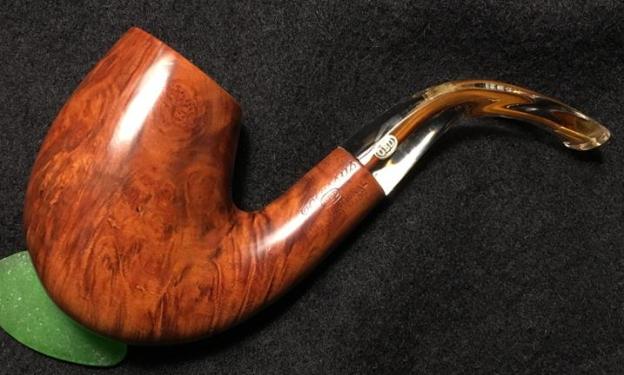
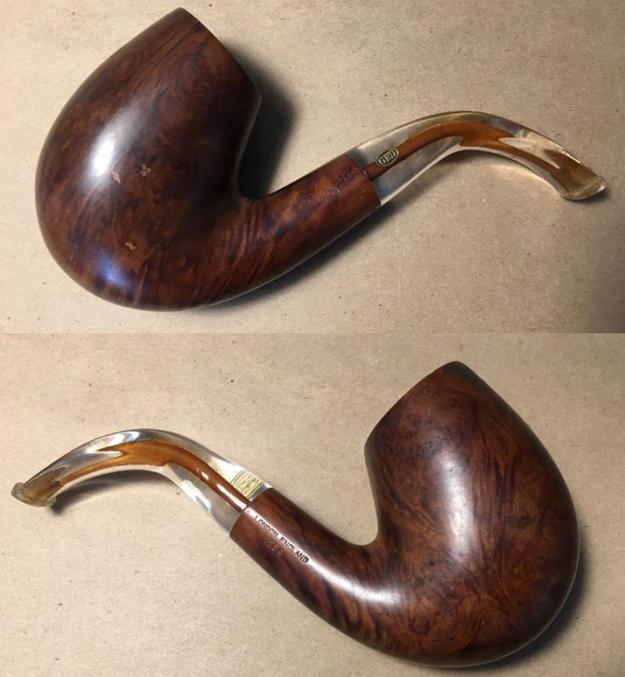
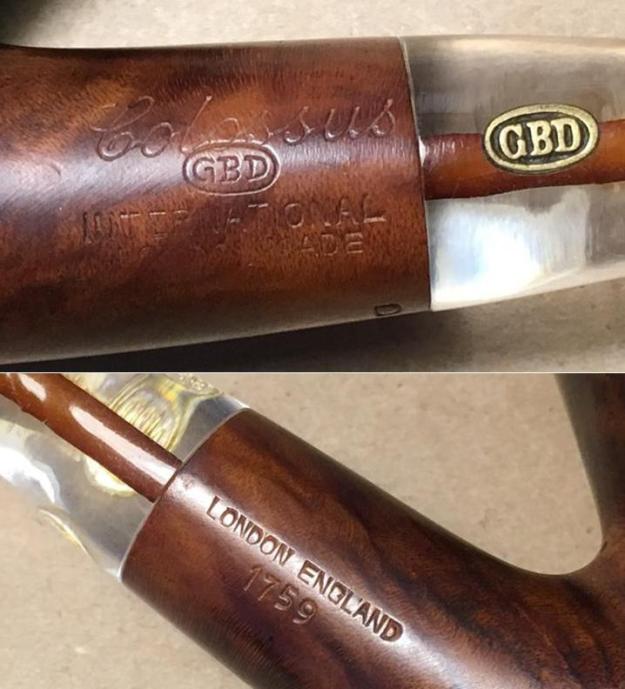
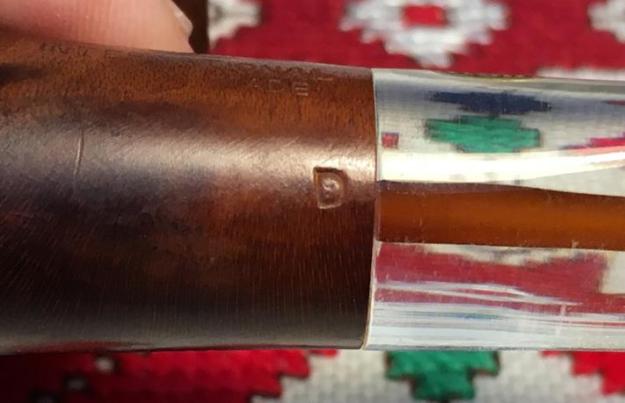
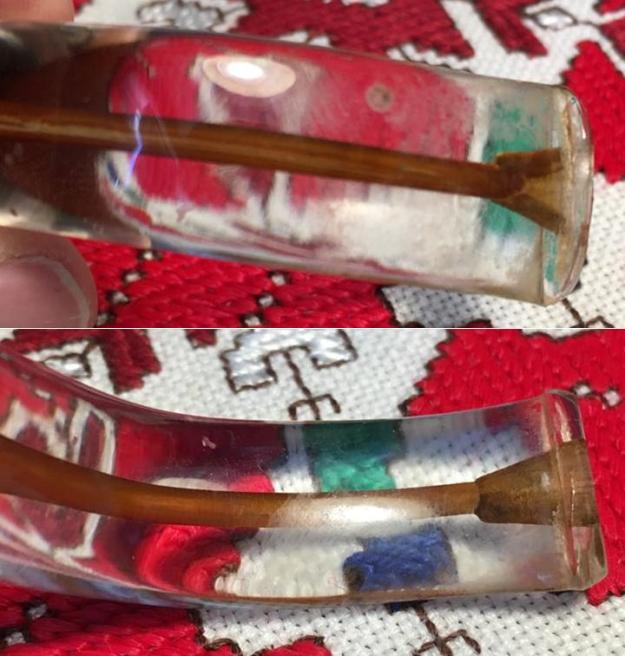
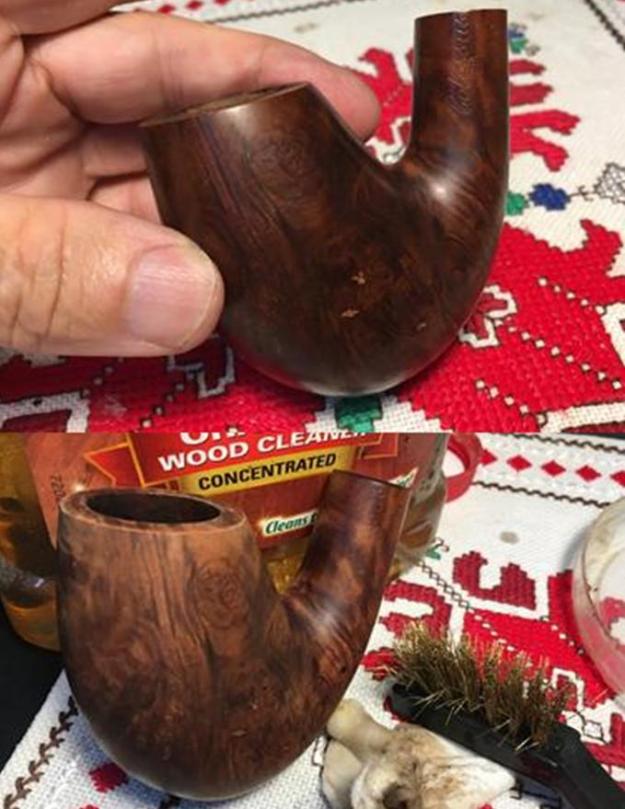
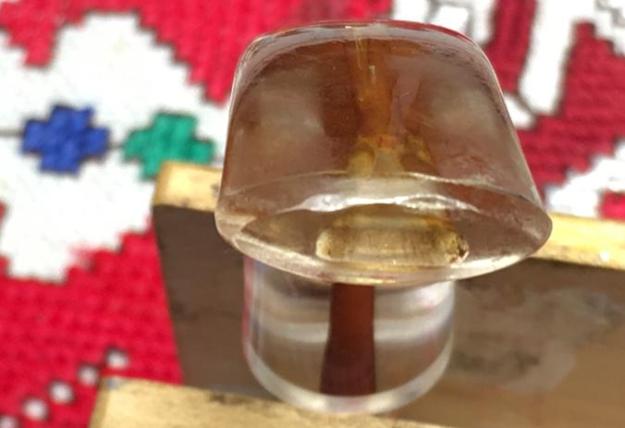
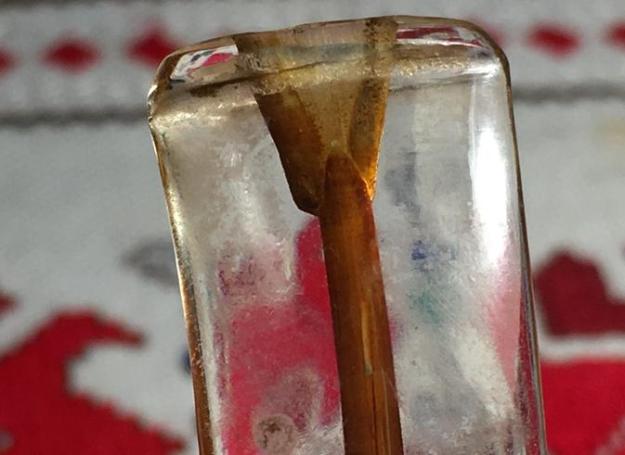
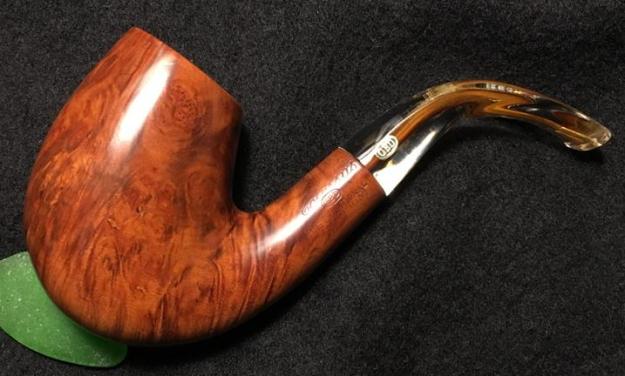
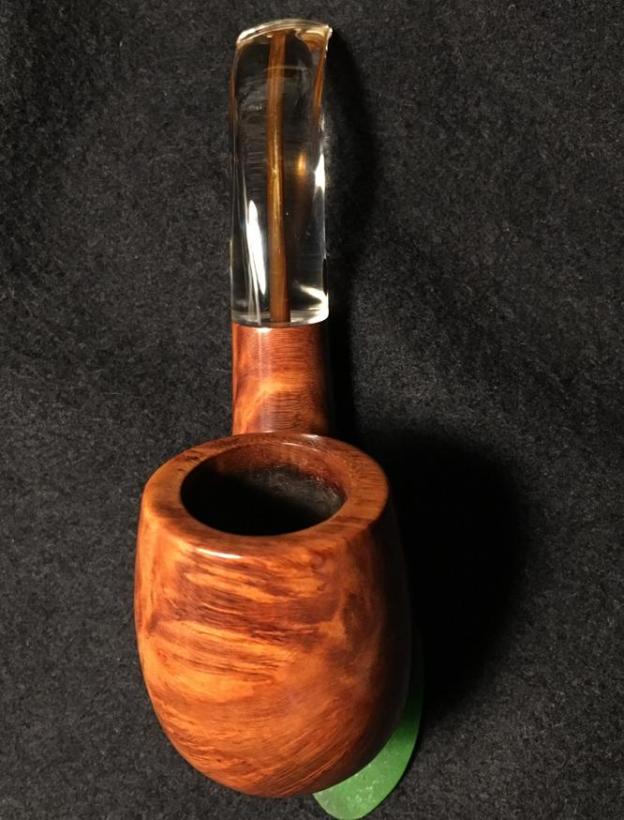
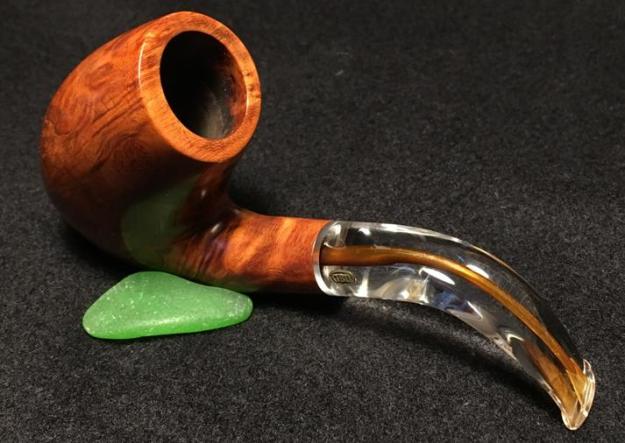
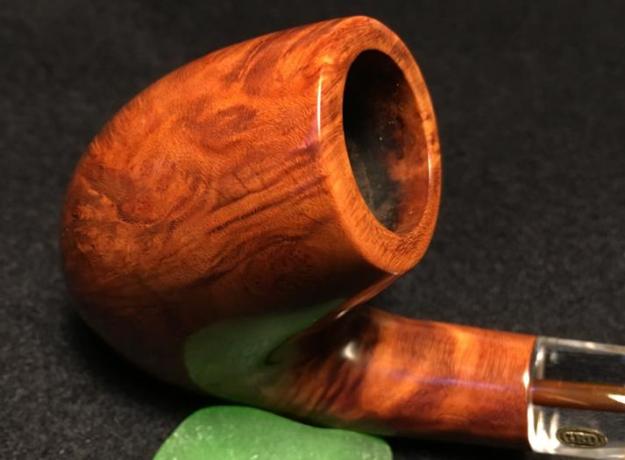
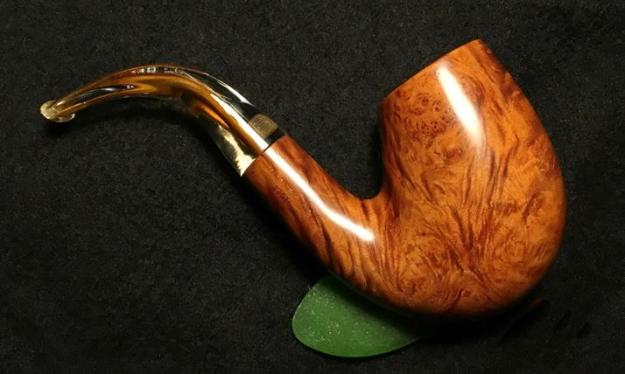
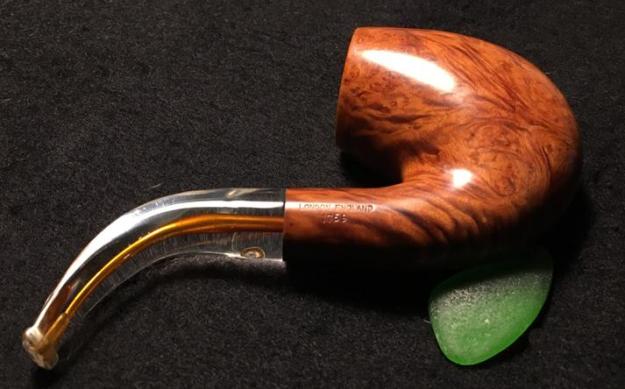
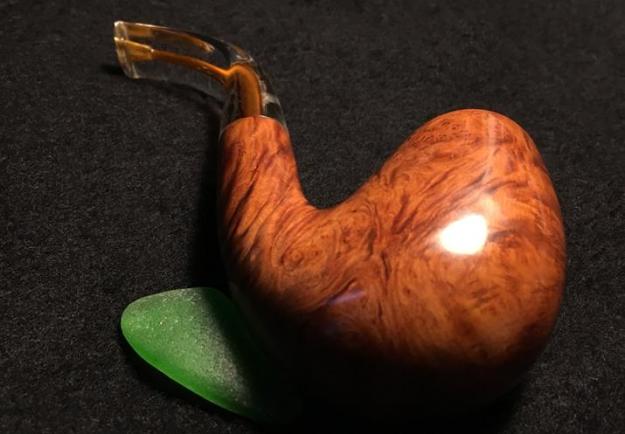
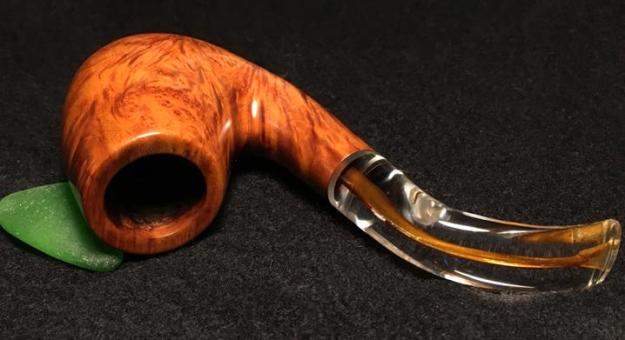
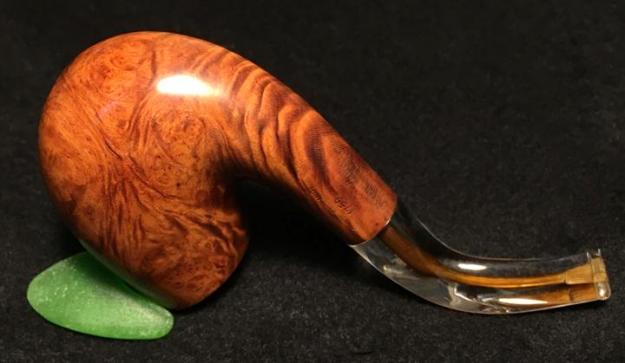
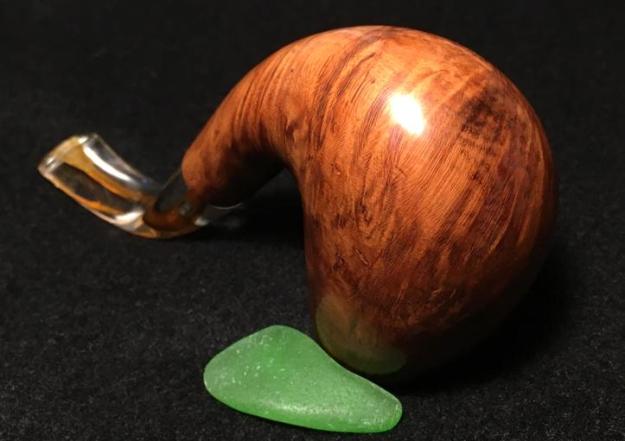
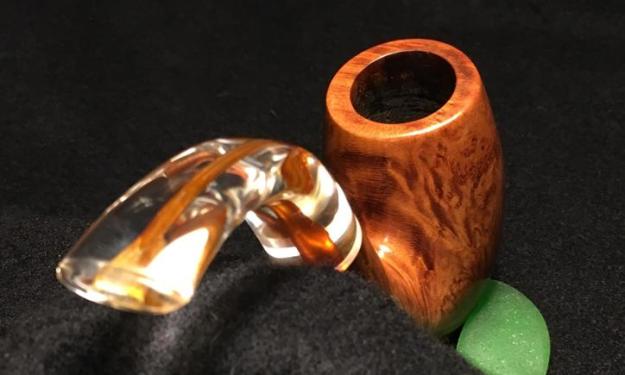
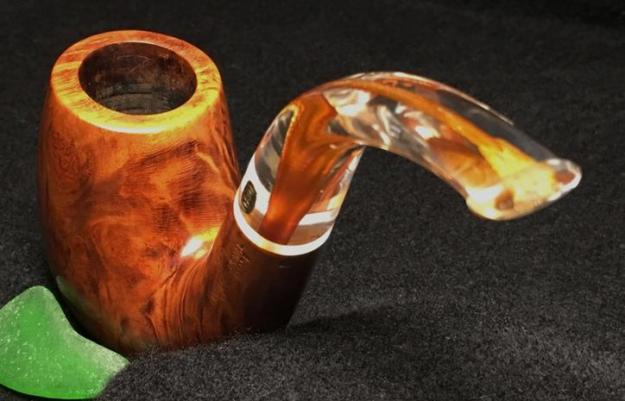
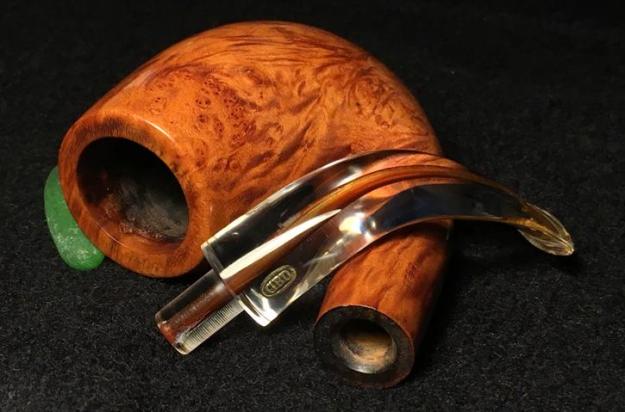
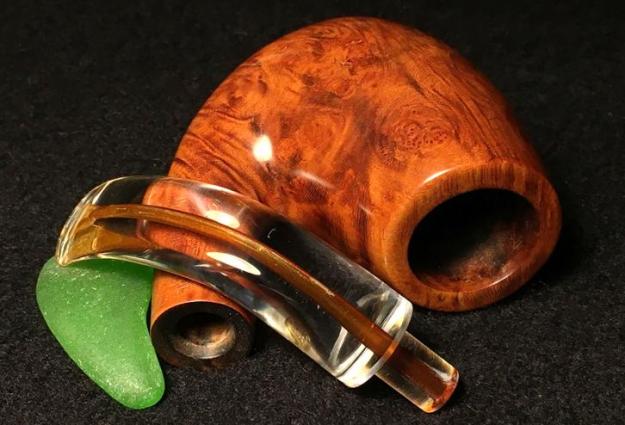
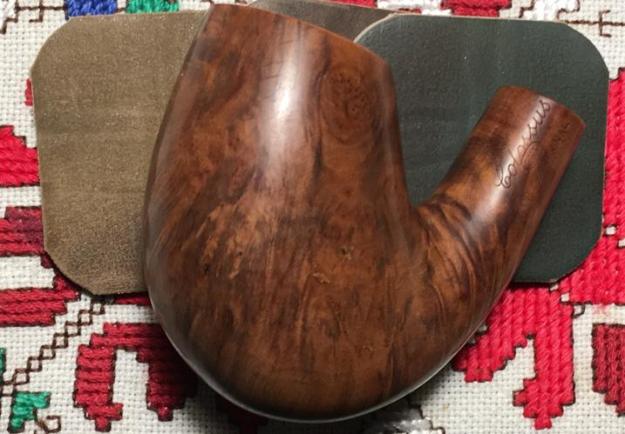
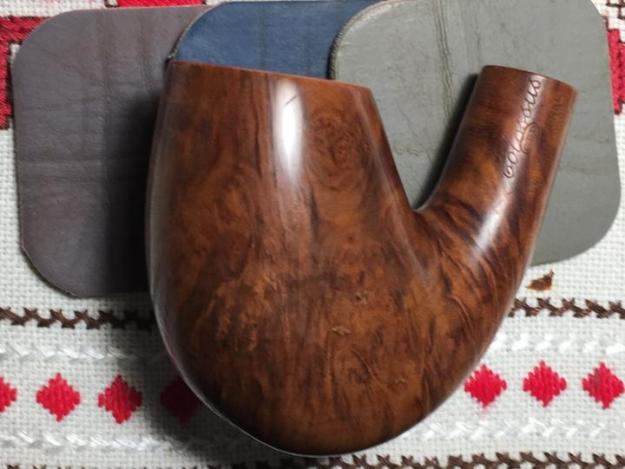
This is the second pipe I’ve restored that was commissioned by Paresh.  Like the first, a Tom Howard Jumbo Rustified Squat Tomato, this is a large pipe and the name reflects this – a GBD Colossus International.  It truly is a ‘Colossus’ with a huge stylish stummel that is cut with angles that makes one think of a ‘dinner’ pipe.  With the clear, acrylic stem and canted, sharp angled stummel – and his sheer size, sets this pipe on an upper shelf.  Paresh commissioned the GBD from the For‘Pipe Dreamers’ Only! section and this pipe, along with the Tom Howard, benefit the Daughters of Bulgaria.  Here are the pictures that got Paresh’s attention.The left side of the stummel encases the nomenclature, Colossus (in cursive script) [over] GBD (in oval) [over] INTERNATIONAL [over] LONDON MADE.  A classic brass GBD rondel is embedded in the acrylic stem, placing the dating of the pipe as pre-Cadogan.  On the right shank side is stamped LONDON ENGLAND [over] 1759, the GBD shape number.  I also see a ‘D’ stamped on the lower side of the shank which I have no information on!

Based upon the straight COM LONDON ENGLAND and the brass rondel, this GBD is dated pre-Cadogan which is 1981 and earlier.  In the GBD Pipedia article, this reference places the pipe in the 60s or 70s naming the lines that GBD had during that time.  ‘International’ is nestled in the middle of the list.

The following list comprises the better grades in descending order:

Pedigree, Pedigree I, Pedigree II, Straight Grain, Prodigy, Bronze Velvet, Virgin, Varichrome, Prestige, Jubilee, New Era, Prehistoric, International, Universe, Speciale Standard, Ebony, Tapestry, New Standard, Granitan, Sauvage, Sierra, Penthouse, Legacy, Concorde.

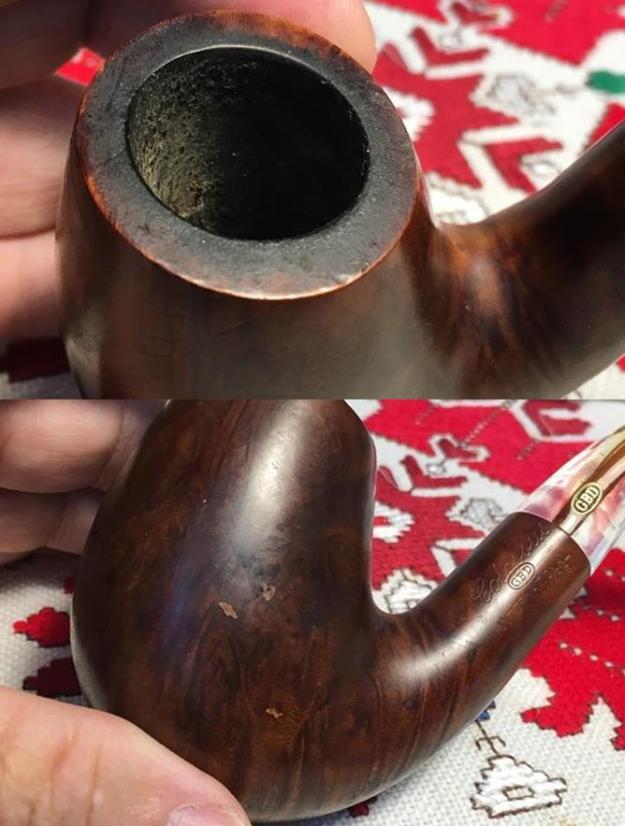
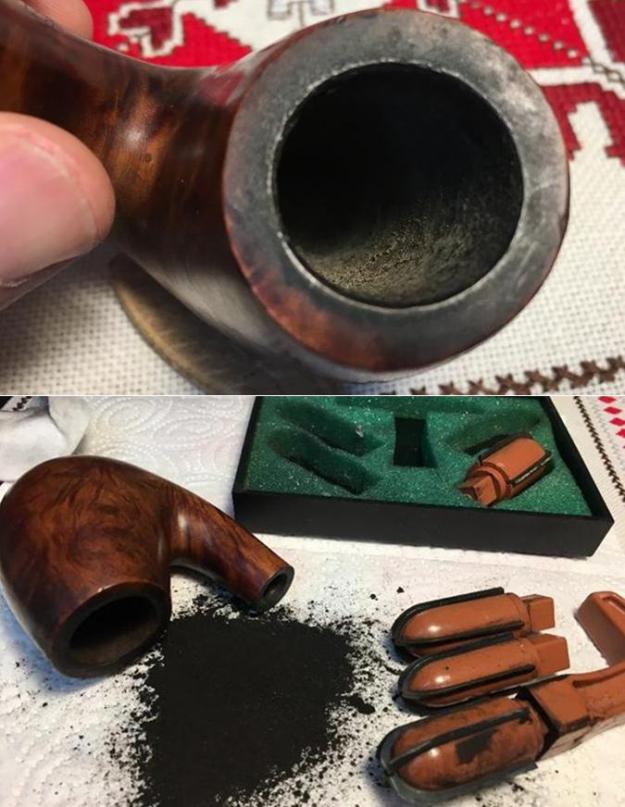
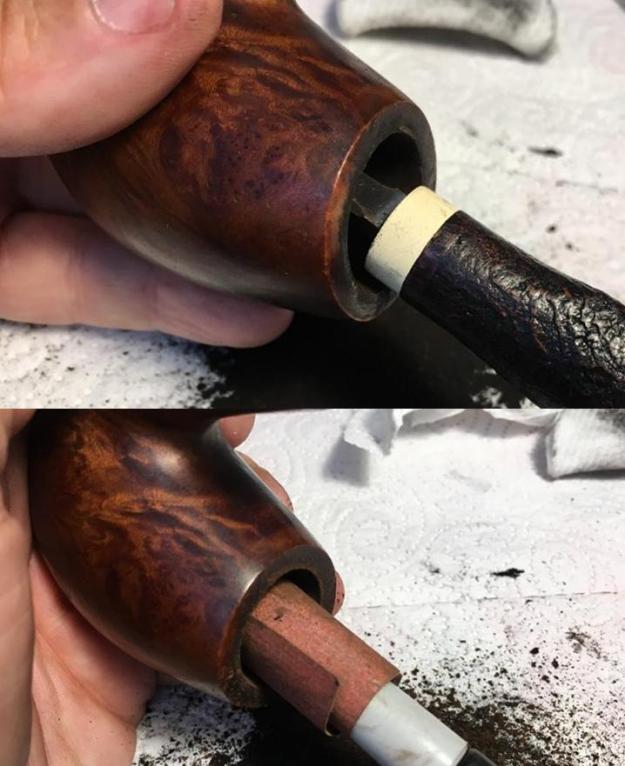
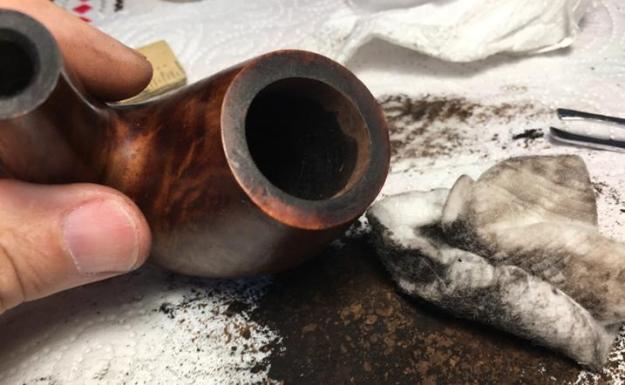
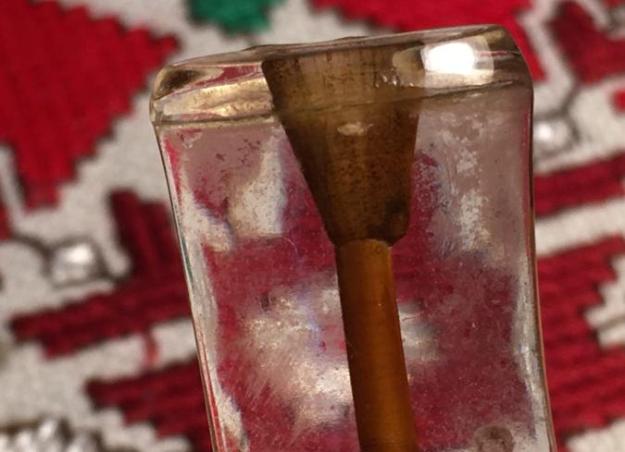
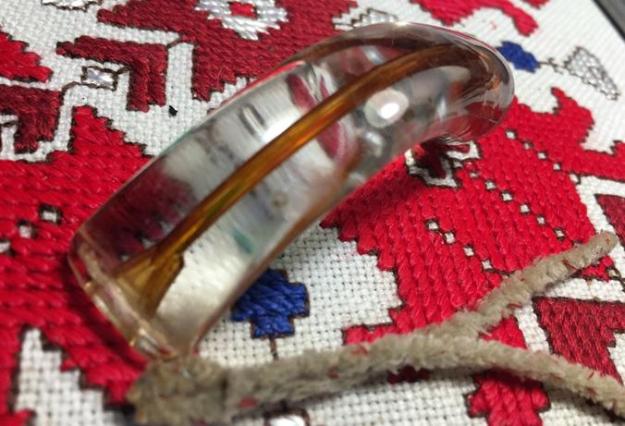
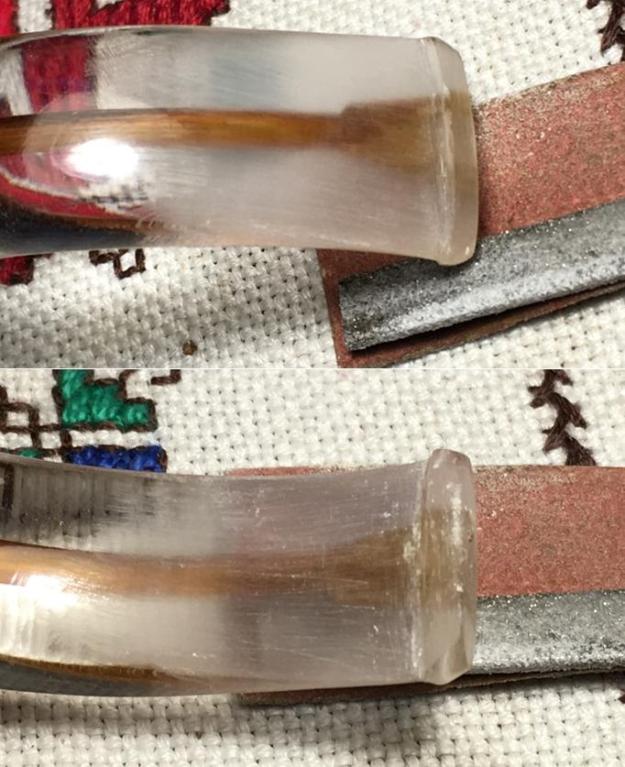
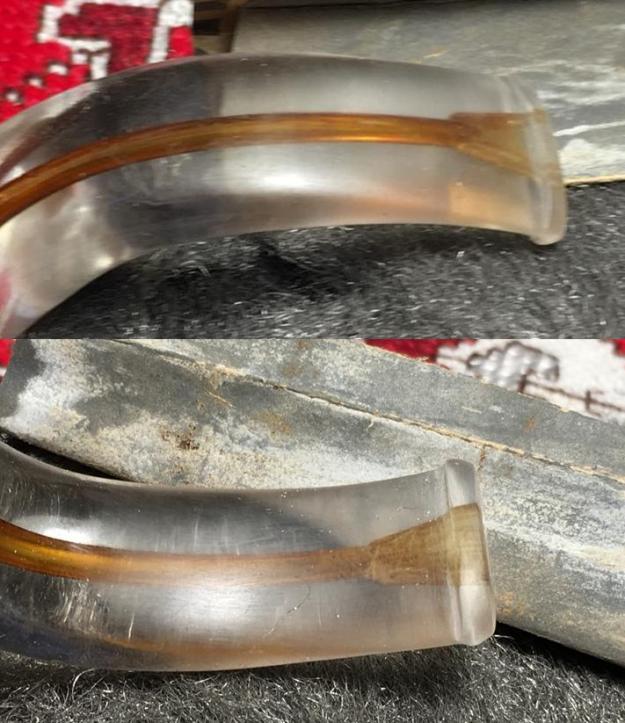
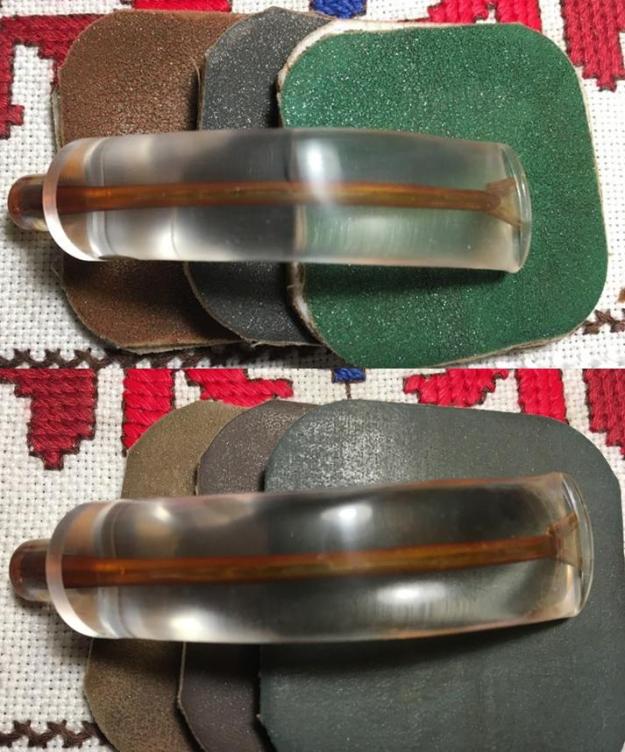
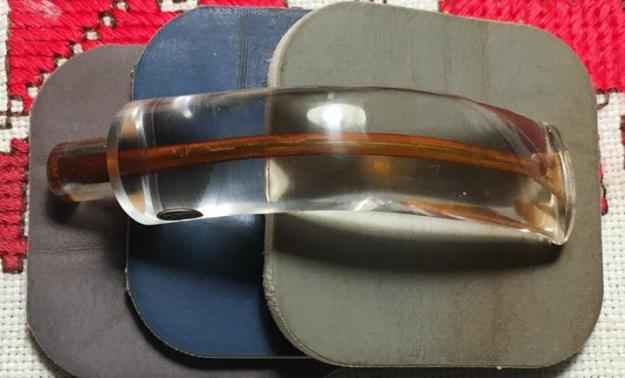
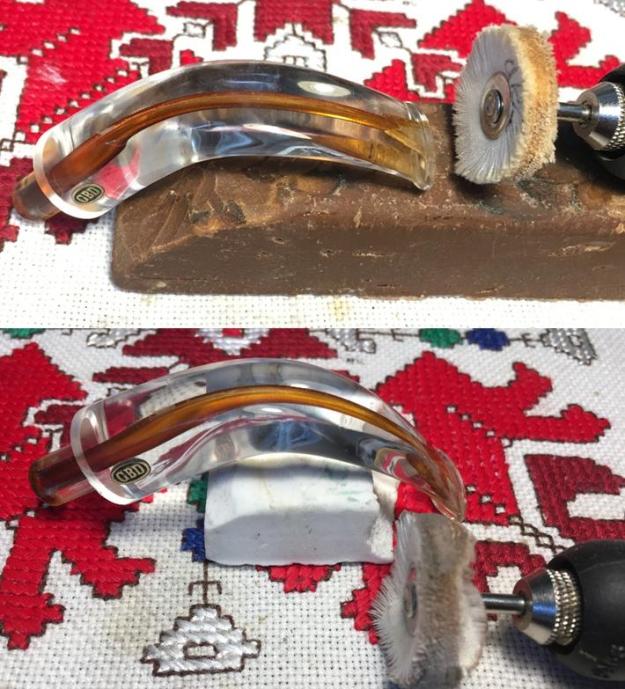
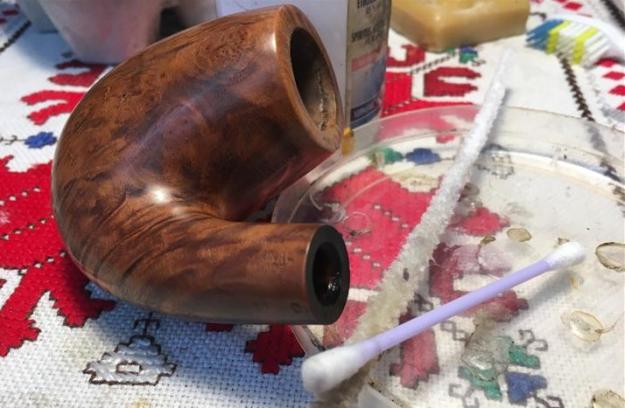
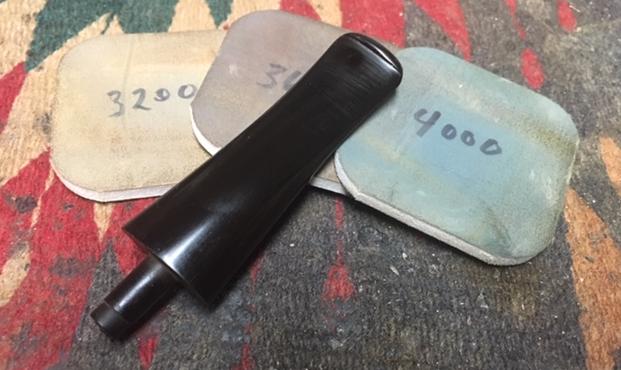
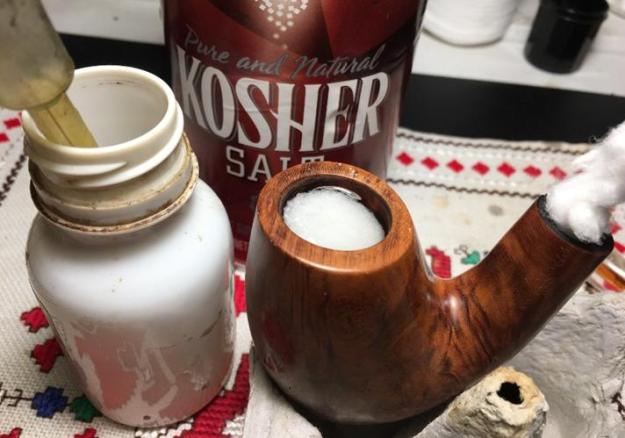
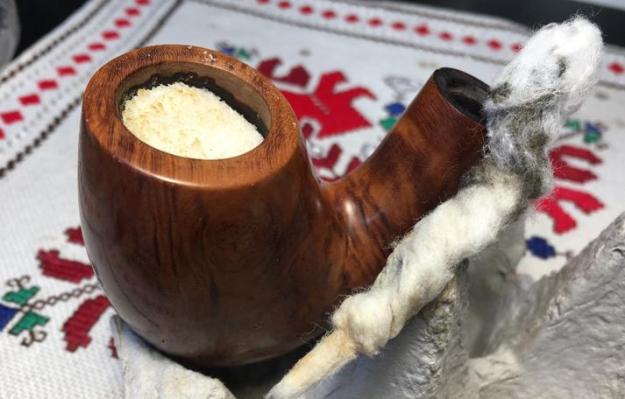
This is confirmed by information sent to me from Al Jones, who knows more than most about GBD pipes.  Al sent me a PDF of Jerry Hannah’s finish guide and one reference for an ‘International’ comes from the 1976 catalog. Unfortunately, I found no listing for a shape number of 1759, but the shape is most definitely at least a 3/4 bent – not sure I would call it a Billiard but the sharp canted stummel reminds one of a Dublin! Looking more at the pipe’s condition, it bears normal scratches and nicks from normal use.  The rim is darkened with some lava flow.  There are a few light fills on the side of the stummel that need to be examined.  The acrylic stem has tooth chatter that needs addressing.  The amber colored airway should clean nicely.  I take some additional shots to show the issues. Starting with the basic cleaning, I ream the chamber of the light cake using the Pipnet Reaming kit revealing fresh briar.  The depth of the chamber becomes evident at almost 2 1/2 inches (2 7/16 to be exact) as it swallows the 3 blade heads I use to clean the carbon cake!  This chamber will pack a good bit of tobacco!  Following the Pipnet blades, I use the Savinelli Fitsall Pipe Tool to fine tune and clean the chamber further reaching the depths.  Finally, I sand the chamber by wrapping 240 grit paper around a Sharpie Pen.  I finish the clean up of the chamber by wiping out the carbon dust using a cotton cloth wetted with isopropyl 95% and inspection of the chamber shows no problems.  The pictures show the progress. To clean the externals, I use undiluted Murphy’s Oil Soap and a cotton pad to scrub the briar and darkened rim. I also use a brass wire brush to work on the rim.  Pictures show before and after.Continuing with the stummel cleaning, I work on the internals with pipe cleaners and cotton buds dipped in isopropyl 95%. I also utilize a shank brush to work through the draft hole as well as a dental spatula to scrape the mortise wall.  The pipe cleaners and cotton buds start coming clean, but later, at the close of my work day, I’ll also utilize a kosher salt and alcohol soak to clean and freshen the internals further.Now, looking at the acrylic stem, it’s difficult to see with the pictures I’ve taken, but the button has some compression dents and the bit is clouded from tooth chatter.   The pictures show the starting point.   I first run a bristled pipe cleaner dipped with isopropyl 95% to clean the airway.Then, using a flat needle file and 240 grit paper I sand the bit and button to work out the tooth marks and compression dents on the button lip.  Following this, to erase the scratches of the filing and 240 grit paper, I sand using 600 grade paper and 0000 grade steel wool. Moving from the steel wool, I wet sand the stem using micromesh pads 1500 to 2400 and dry sand from 3200 to 12000 to bring out the glassy shine of the acrylic stem. I then mount a cotton cloth buffing wheel onto the Dremel with speed set at about 40% and apply Tripoli compound to the entire stem.  I follow this using another buffing wheel, same speed, and apply White Diamond compound.  To remove the compound dust, I buff the stem with a felt cloth.  Acrylic stems love to be buffed up and this GBD Colossus International’s stem is looking great!  The acrylic is like glass. Looking now at the stummel, to address the dents and scratches on the surface, I wet sand using micromesh pads 1500 to 2400 followed by dry sanding with the remaining pads, 3200 to 4000 and 6000 to 12000. I enjoy watching the grain emerge during the micromesh cycles.  This GBD stummel has a lot of briar real estate and the grain is beautifully showcased.  The pictures show the emerging grain. With my work day closing, I continue the cleaning of the internals of the stummel using a kosher salt and alcohol soak.  To do this I create a wick by pulling and twisting a cotton ball and stuffing it down the mortise and airway as far as I can manage with a rigid straight wire.  I then place the stummel in an egg crate for stability and fill the huge chamber with kosher salt which leave no after taste as its iodized cousin.  I give the stummel a shake capping the bowl and then fill the chamber with isopropyl 95% until it surfaces over the salt.  After a few minutes and the alcohol has been absorbed, I top off the chamber again.  Then, I set it aside until the morning.  The following morning the salt has discolored and the wick has an ink-like color on the top – not sure what that is.  I clear out the expended salt and use paper towel to clean the chamber.  I also blow through the mortise to dislodge used salt.  I then use a pipe cleaner and cotton bud dipped in isopropyl 95% to make sure all was clean, and it was. With the sanding of the GBD stummel with micromesh pads, the briar grain naturally darkens and deepens through the process.  I look again at the fills I identified earlier which are solid but they had lightened.  I want to darken and blend these fills at this point in the process.  I use a maple dye stick and gently color the fills.  To blend, I feather wipe the fills with a cotton pad wetted with a bit of alcohol.  The result looks good. Before proceeding to apply compound to the stummel surface, I apply Before & After Restoration Balm to deepen and enrich the briar.  I apply some Balm to my finger and work the Balm in to the briar.  As I’ve noted on previous restorations, the Balm begins with a light oil texture and thickens as it is applied.  I like the Balm because it treats the natural briar hue and deepens and enriches the look.  I take a picture after applying the Balm and before wipe/buffing it off after a few minutes standing. I now mount a cotton cloth buffing wheel to the Dremel, with speed set at approximately 40% full power and apply Blue Diamond compound to the briar surface.  After this is completed, I reunite the GBD Colossus International acrylic stem with the stummel and apply coats of carnauba wax.  I do this after changing cotton cloth buffing wheels on the Dremel – at the same speed.  I finish the restoration by giving the pipe a rigorous hand buffing with a microfiber cloth.This GBD Colossus International lives up to its name.  The stummel is huge and the grain showcased is a beautiful labyrinth of swirls.  Completing the ensemble is the glass-like acrylic stem with an amber vein dissecting the 3/4 bent orientation.  Paresh commissioned the GBD Colossus International from For ‘Pipe Dreamers’ Only! and will have the first opportunity to acquire the GBD in the The Pipe Steward Store.  This pipe benefits the Daughters of Bulgaria – women and girls who have been trafficked and sexually exploited.  Thanks for joining me!

A Hardcastle Bulldog Run Roughshod over: The Original Restoration


Blog by Robert M. Boughton

Copyright © Reborn Pipes and the Author except as cited
https://www.roadrunnerpipes2k.com/
https://www.facebook.com/roadrunnerpipes/

Grace is neither gentleness nor fragility.  Grace is treating yourself, others and even inanimate objects with respect.
— Kamand Kojouri, Iranian-born novelist and poet

INTRODUCTION
A former roommate, one of Stephen King’s Constant Readers, once remarked with ridicule-tainted respect that I have always been attracted to needful things.  He was speaking of someone I met not long before then whose tragic life had left him wounded to the core, one of the results being his over-demanding, often verbally corrosive and manipulative treatment of me.  The roommate, who like almost everyone had plenty of his own flaws if less obvious and abusive, said my other acquaintance was no friend of mine.

“That may be true,” I replied, “but I’m his friend and the only one he seems to have, and I just can’t give up on him because that’s not what friends do.”

The physically and emotionally damaged person I undertook to help ended up becoming and remaining my genuine though stormy friend until he died at home 14 years later from an unusual and excruciating autoimmune disorder for which there is no cure.  He was 46.

My affinity for care-challenged pipes, therefore, should come as no surprise.  I try to avoid those with fatal flaws such as bad cracks or burnouts and for the most part reject any with serious holes in the stem, but as a restorer I prefer estate pipes that need some real attention to rehabilitate as opposed to the few I find ready to sell or to keep in my collection with minimal effort on my part.

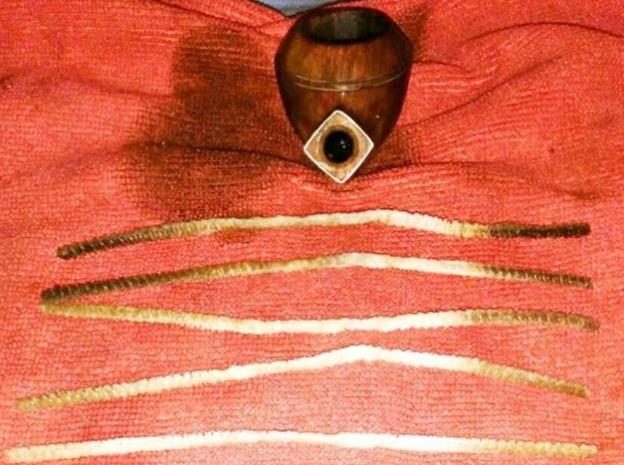
I don’t even remember how the Hardcastle Special Selection #7 smooth bulldog came into my custody or why I chose to ignore the obvious void of vulcanite below the lip on the underside of the stem.  Other than that handicap, the pipe was nowhere near as mistreated as I’ve seen but was plagued enough by dings, scratches and other problems to keep me happy.

One final initial note: I repaired this bulldog to almost like-new condition more than a year ago but failed to blog it because of personal distractions that have left me with a large backlog.  I sold it for next to nothing to one of my present housemates who decided he wanted me to refinish it as a black dress pipe.  The same pipe is the subject of Part 2 of my series on that subject, and so I was going to include this original restoration in that blog.  But anyone who reads my harrowing account of the experience that could be called too much of a bad thing will understand why I broke the overall work into two blogs.

Intrigued by the atypical presence of a stinger in the Hardcastle, and an unusual one at that, I searched online for such phenomena with a faint hope of dating the bulldog.  Of course, at the top of the list was one of Steve’s blogs from 2014.  No other road I found led anywhere close to Rome, as it were.  Steve’s pipe is a Dental Briar brandy, bearing the Registered Design Number 857327, with a unique – or bizarre – dental stem, a system-type metal rod in the shank extending to the mortise hole, and a different short stubby little stinger of its own.  Here is the Dental Briar stinger before Steve’s restoration and the pipe after his usual fantastic work.Steve narrowed the date of manufacture to the Family Era and concluded his pipe was created from 1949-1967 using the National Registry link below.  However, looking at the same link, I see in Table 6.5 that designs numbered 548920-861679 were registered between 1909 and 1950 and suspect the 857327 might have been pre-1949 – no disrespect intended to the master!  Besides, he’s right to note that his Dental Briar could have been made at any time between its registration and 1967 when the family lost all control of the brand.  His pipe is also stamped MADE IN LONDON ENGLAND on the right shank.

I am not so fortunate.  The bulldog has no Registered Design Number or even the usual right shank nomenclature (London Made, British Made, Made in London England, Made in England).  This nomenclature is not faded, it’s just not there.  Only the left shank identifies it as a HARDCASTLE/SPECIAL SELECTION/7.  All I know for sure is that I tried it out after a basic sanitization, and it was quite good.

For a great synopsis of Hardcastle’s history, see Steve’s blog below.  Details are in the Pipedia link.

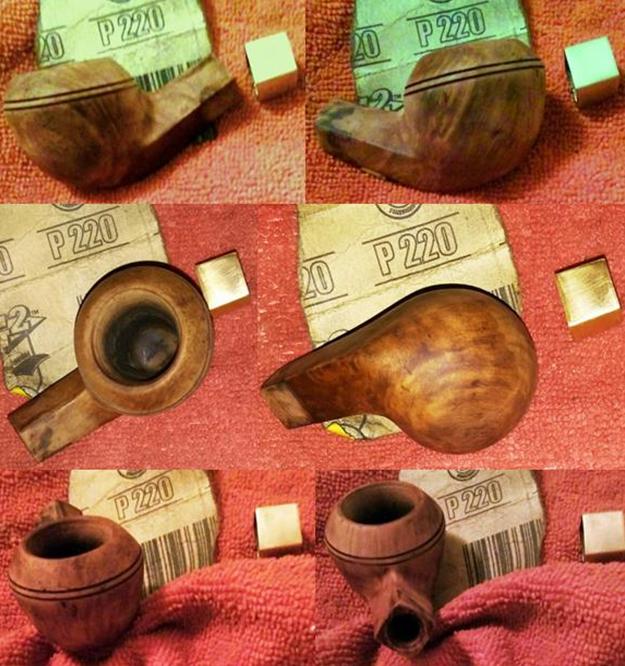
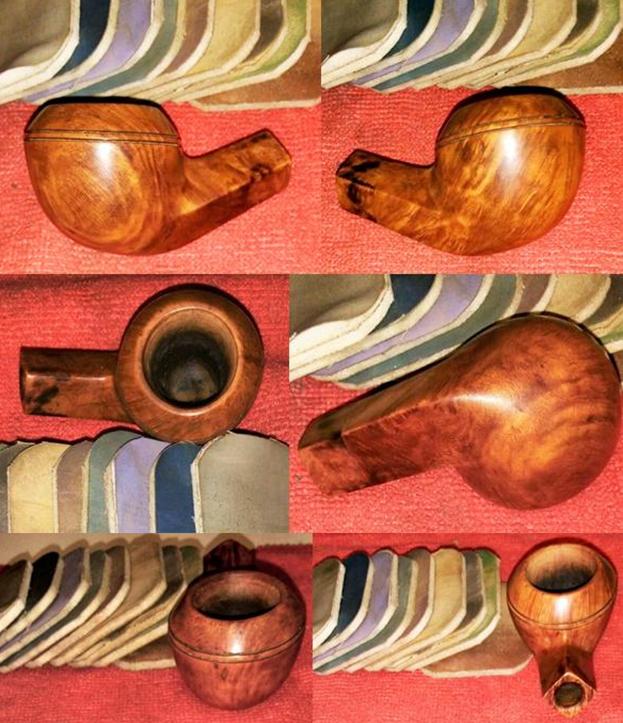
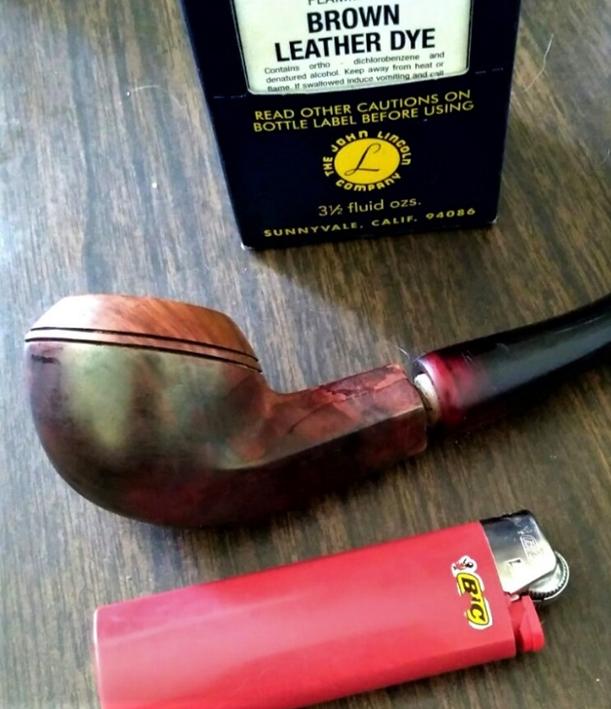
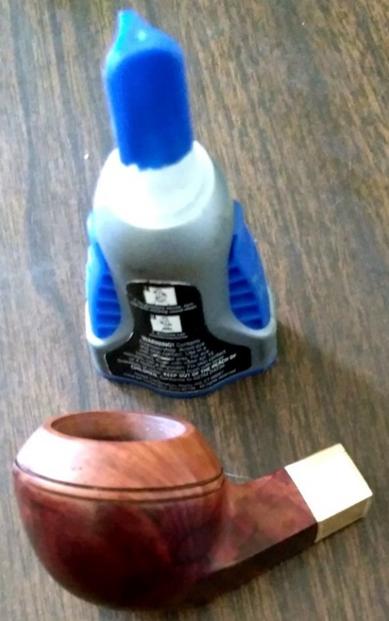
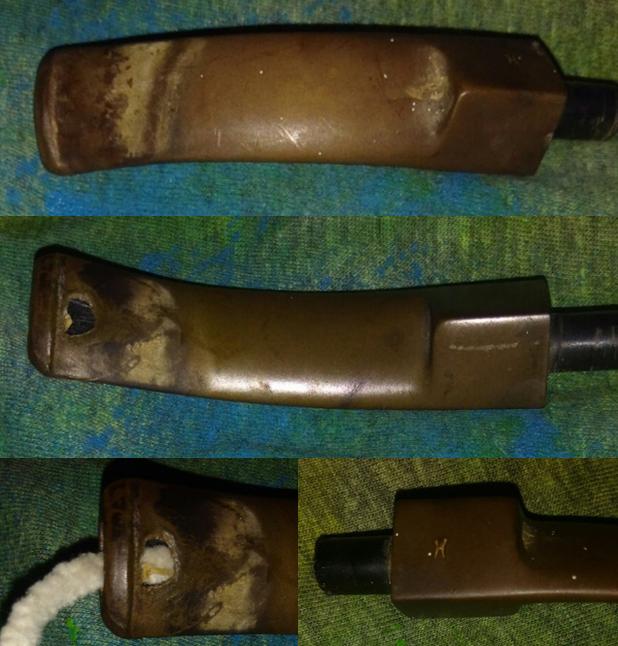
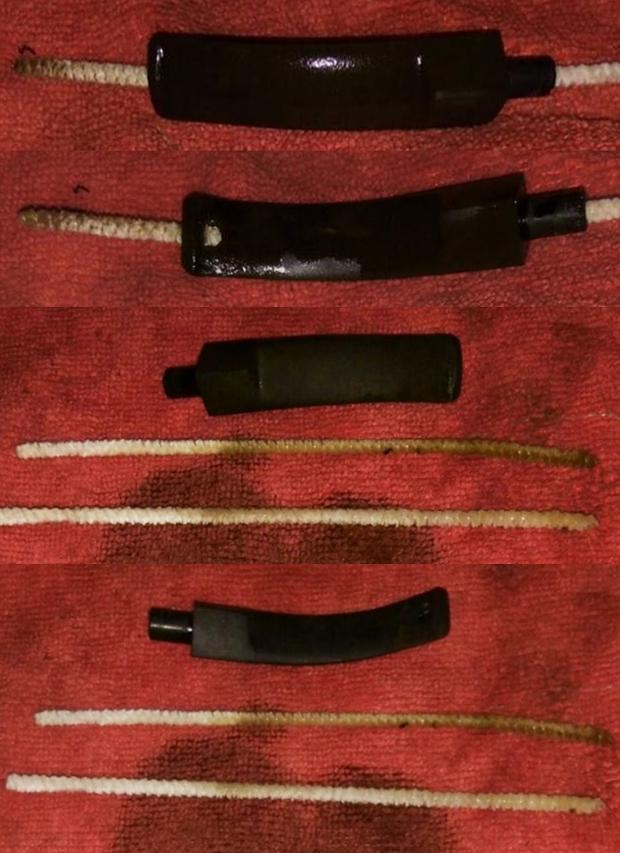
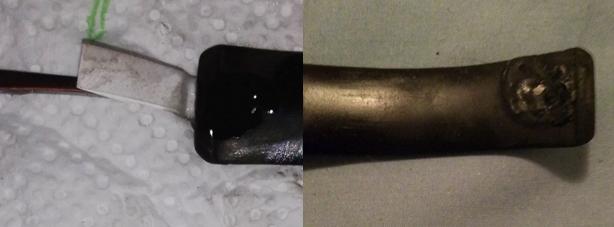
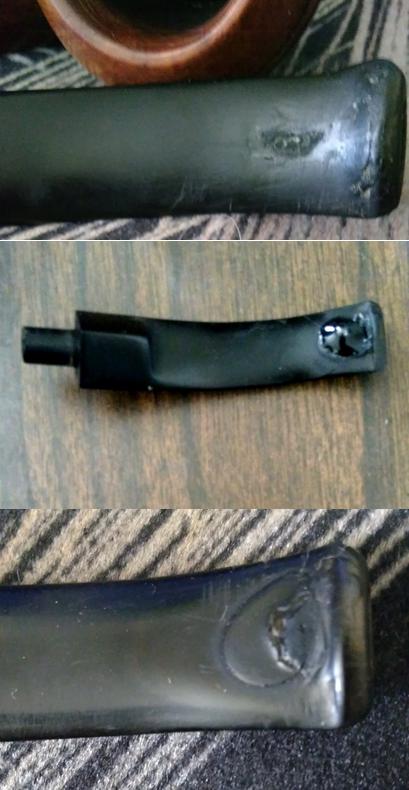
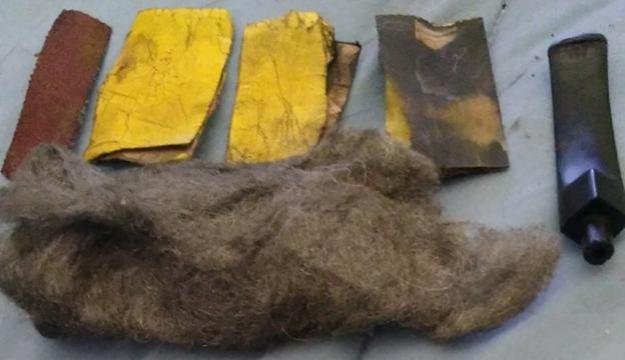
RESTORATION I would have removed the stinger anyway as useless, but it was also bent and more fragile than usual, and so I experienced even less than usual emotional distress heating the pointless thing with a Bic and twisting it out.Considering the appreciable grime, I started by swabbing the stummel first with purified water and then alcohol.  In hindsight, I should have skipped the water method that had little effect.  The blemishes stand out even more after the cleansing with alcohol.  The one shot below showing the minor rim damage, an unevenness being the only bad part, and decent chamber condition was taken with a flash and therefore looks pre-water and -alcohol cleaning.  I’m still having to do the best I can with a cell phone cam.  I used 150-, 220-, 320- and 400-grit papers to start shaping up those areas.After that I re-addressed the chamber and unevenness of the rim with a Senior Reamer and the blade from my Peterson’s Pipe Tool and made them a little better with 150-400-grit paper.I gave the shank a preliminary alcohol cleaning and retorted the pipe with a meerschaum stem that wasn’t crippled by a hole but somehow forgot to snap a pic of the latter.With 220- and 320-grit papers I was able to remove the dings and scratches as well as giving the chamber a semi-final what-fer.For some reason, the band popped off, and I still wasn’t happy with the color.  I decided to go at it once more with the 220.A full micro mesh buff made the old pipe begin to shine as it should.By now I should be somewhat known for fancying two-tones with bulldogs and Rhodesians where the top of the bowl above the two lines curves upward to the rim.  For the most part, at least, I’ve left this area lighter than the rest of the stummel, although on occasion I’ve dabbled in darkening it with, say, maroon stain.  This one screamed at me to lighten the top of the bowl as usual under these circumstances.  And so I stained the stummel below the lines with Lincoln brown leather dye, flamed it and after letting it cool took off the char and a little of the darker color with 8000 and 12000 micro mesh pads.  By the way, I was alarmed when I got a look at the first pic below and noticed what to every appearance seems to be a wicked and poorly repaired crack in the shank.  I assure everyone it’s a trick of the light or whatever, as the other pics prove. Gluing the band on again was a formality after buffing it on the electric wheel.Okeydokey, then.  There could be no more avoiding the chomped and degraded stem with its hole on the underside and other shortcomings. I had already given it an OxiClean soak, and it wanted repair.  Just to get an idea of what the stem would look like when finished, I gave it a quickie micro mesh rub.   I cut a little strip of card stock from the business leftover of someone with whom I didn’t care to do any more business and lubed it and a very small tweezers with a dab of petroleum jelly.  I inserted both into the mouth opening of the stem, with the cleaner behind the paper, until they were firmly in place inside the airway to a point just below the hole.  Finding my trusty old vulcanite stem that was long ago destroyed by another stem abuser, I shaved some fine flakes onto a small piece of paper with one side of a narrow, relatively smooth triangle rasp.

This was where I had to be prepared to act fast: I moved the flakes into a pile and added a few drops of black Super Glue, stirred the two into a gritty paste and scooped up a gob with the part of a three-piece pipe tool made for clearing tobacco from the chamber.  As fast as possible without making a mess, I slapped the goop liberally over the hole and set it aside to dry, removing the card stock and tweezers when the vulcanite mixture was dry on the inside but still a little wet on the outside.It’s a good thing I have an excellent recall of what I did in a particular restoration because the photographs I took of this project were more jumbled and duplicated than those from any other pipe on which I’ve worked.  I had so many of the same thing from alternate angles and differing clarity, for example, that I had to delete quite a few to make sense of it.  I concluded this was because of two things, trying different ways to get a good shot with my poor cell phone camera at the time and lack of sleep during the process.  It’s clear, excuse the pun, that some of the “best” are quite indistinct.  The following photos, as a result, are incomplete, but I always have the words to describe what I did.

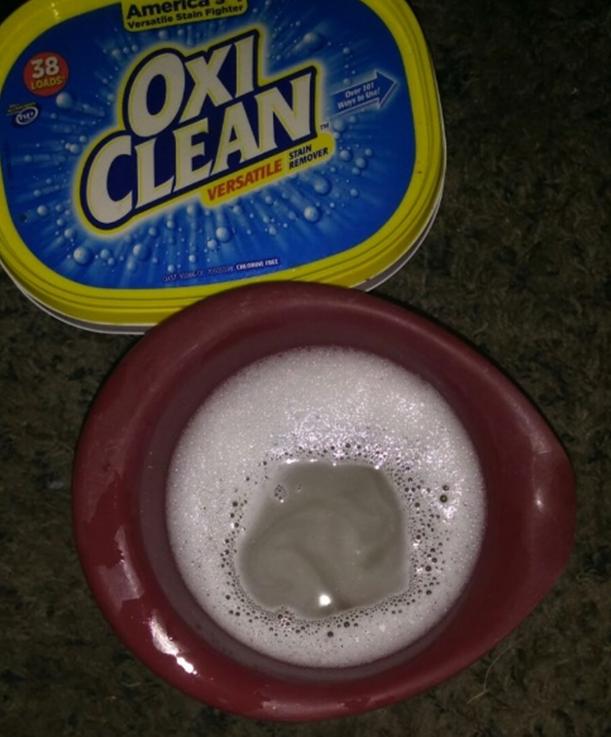
For example, after the previous step, I started sanding with 150-grit paper and then smoothed it up with 220-, 320- and 400.  A common, less serious groove resulted, and I added more of the black Super Glue/vulcanite mix and let it dry again.  The mixture settled in well.That’s when I got serious with the sanding, using 150-, 220-, 320- and 400-grit paper and super fine “0000” steel wool.There’s still a small lump visible under the lip that I handled with as little abrasion as possible before the stem was done.  And that was it – for the bottom side.  I still had the top to do.  In every way other than the hole in the bottom, the top was worse, although it only needed a dab of black Super Glue/vulcanite solution to fill a small divot following the same initial OxiClean soak and a more vigorous sanding before filling a small divot with.  Considering again the top of the stem when I received it, close up, notice the wear below the square shank fitting before the rest of the work. The stem never quite fit the shank, which had been given a replacement band somewhere along the way, not to mention the band was damaged. After beginning to re-sand the bottom of the stem, the original hole caved in again.  Accepting defeat, I chose a new bulldog stem I had that needed serious filing at first and then sanding of the 9mm tenon to fit the shank. I bent the stem.  That required heating the stem – with a pipe cleaner inserted through the airhole – at 210° F. for about 15 minutes and bending the nice and pliant material over a complex tool.

Remembering the cell phone photos were atrocious and I had to edit them using every halfway adequate means of adjustment available with my so-called photo editor to show any similarity whatsoever to the actual result, here one last time is the stummel as it in fact looked when it was one step from completion before electric buffing.And these are the final photos of the pipe.  The most offensive discrepancies to me are the obscurity of the two-tone and the lack of shine the pipe had.  The bad twist on the stem in the fifth shot of the rear is all on me!

CONCLUSION
This blog being the occasion of my official announcement in this forum of my new webstore on  my own site, https://www.roadrunnerpipes2k.com/, is unfortunate in that the depictive presentation almost convinced me to give up any idea of writing the blog.  The poor quality and lack of photographs, as well as other stated reasons, were overwhelmingly opposed to the idea of even trying.  Then I thought of the work I put into the briar and the stem alone. In the end, I know how smooth, golden brown and at least hardly blemished the Hardcastle bulldog looked when I was done with it.  Whether anyone else does is of no importance to me.

SOURCES
https://rebornpipes.com/2014/06/27/a-unique-piece-of-pipe-history-almost-lost-a-hardcastles-dental-briar-reg-design-no-857327/
http://www.nationalarchives.gov.uk/help-with-your-research/research-guides/registered-designs-1839-1991/
https://pipedia.org/wiki/Hardcastle

An easy step back in: Peterson System 312 refurbishment


After almost two years of hard looking, my wife and I are finally in a new house. The new place has no stairs, one of our biggest “have to haves” on the home-buying list and a decent size room for me to work in, among other things. After having most of my pipes and tools packed up for an extended period, I have almost got my new work area all set up. I have had to make a few concessions – no room for my buffer, for instance – but it sure is good to have an accessible work area again!

I dug out a few pipes to get started back on: two GBDs (a Virgin billiard and a French made Rhodesian), a well-smoked Dr. Grabow Omega, and a dirty but in good shape Peterson System Standard 312. I started on all four at once, jumping from pipe-to-pipe over the course of a week or so. Being out of practice, I forgot to take many pictures but do have before and after shots. For this post I will focus on the Peterson.

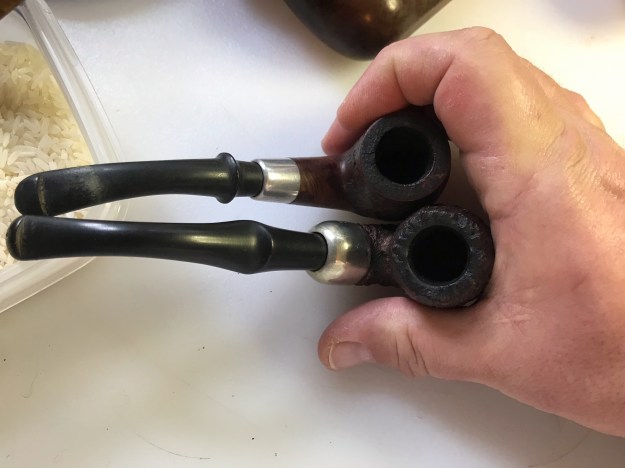
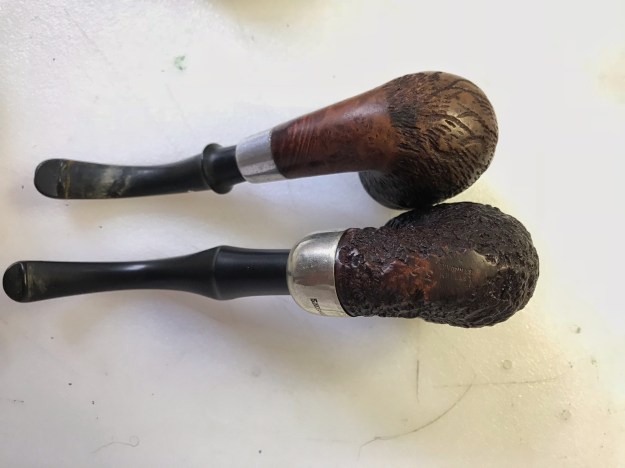
The pipe was in good condition overall, just very dirty. I took a few photos along side the Omega before I got started on it.

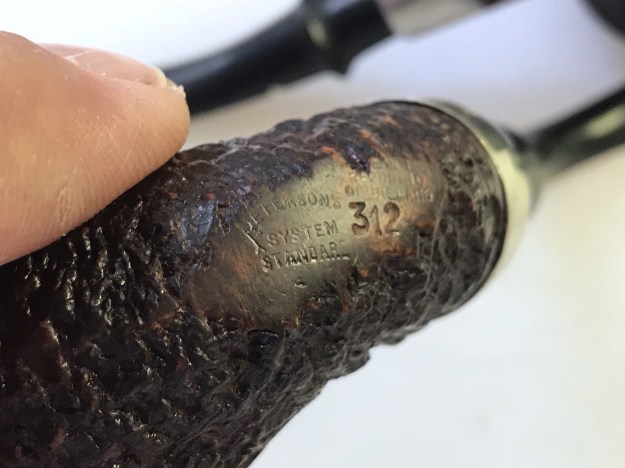
The nomenclature is very readable, showing I have a Republic Era System Standard 312. The faux hallmarks on the shank cap tell us that it dates from 1949-1963. The stummel has beautiful old-style rustication, which I much prefer. The stem was is very good shape, too, with very little oxidation or dents; the P-logo was very strong to my surprise.

I began by reaming the bowl with my PipNet reamer with the smallest cutter then progressed to a Decatur pipe knife (very similar to a Savinelli FitsAll) and 220-grit sandpaper to smooth out the inner walls. The bowl was in good condition and needed no extra attention.

I moved to cleaning out the internals with pipe cleaners, cotton swabs and alcohol. The stem was very clean, needing only a couple of pipe cleaners to finish it up. The stummel was a different story. The sump and airway were caked with oils and tar. I scraped out what I could with a wax-carving tool, similar to a dental pick, and cotton swabs dipped in alcohol. I then put a cotton ball in the bowl and filled it with alcohol from the sump-side and left it overnight. The next day the cotton ball was thick with funk drawn from the briar and the inside of the bowl still somewhat sticky. I decided to give it another treatment and left it until the next day, periodically adding alcohol through the day.

The next day the cotton ball was equally dirty but the interior of the bowl was no longer gunky. I returned to cotton swabs dipped in alcohol, cleaning the airway and sump unit they were clean.

I moved to the stem and some 400-grit wet/dry paper to remove the light oxidation. After that was cleaned off I put a drop or so of CA glue on the small tooth dents and set the stem aside for the glue to cure until the next day.

In the morning I cleaned the stummel with cotton pads and swabs with a bit of alcohol to remove the grime in the bowl and the lava build up on the rim. I was slow and careful because the finish was in good condition and I didn’t wasn’t to strip it or the stain. The rim was the most time consuming but after a good bit of elbow grease it and the stummel came clean. With the stummel clean I gave it a rub down with Before and After Restoration Balm, rubbing it in the rustication well and sitting it aside to penetrate for a bit.

I checked the stem to see if the CA glue was cured and it was so I began smoothing the patch. I used a needle file and sandpaper files to blend the patch into the stem. I then used 1″ buffing wheels on my Dremel to buff the stem with brown and then blue compounds at about 12,000 rpms. I feel that the Dremel actually gives me more precise control than the full size buffer … and I don’t shoot anything across the room with it! I applied acrylic Titanium White paint to the logo to highlight it as it should be. Then I used the Before and After Restoration stem polish, both fine and extra-fine, before applying Carnuba wax with the Dremel.

It was time to remove the restoration balm from the stummel now; I used an old cotton shirt for this. I applied two coats of Renaissance Wax to the rusticated surface, buffing it off by hand with an old flannel rag. To finish up the stummel I buffed it lightly with Carnuba wax which really raised the shine to the high points. The finished pipe is below.

I am smoking the second “short bowl” of C&D Haunted Bookshop in it as I finish typing this post. I’m extremely pleased with how it turned out and, so far, it seems it will smoke as good as it looks. Not a bad start back into this wonderful hobby if I do say so myself.

Father Tom – the decision is made


Blog by Steve Laug

The urologist had given him a month to make a decision about how he wanted to address the prostate cancer. He had given a prescription for a book for Father Tom to read to help him in the decision making process. Father Tom had read it and had also called several old friends who had already walked this road to see what they had to say about the process and which procedure they had chosen. He met with a radiologist to discuss what a radiation treatment would look like. He had learned more than he ever wanted to know about the disease and how it could be addressed. He had learned about laparoscopic surgery, radiation, implanting radiated seeds into the prostate and finally radical prostatectomy. Each one came with all of the usual medical disclaimers regarding success of that method over other ones. Each spelled out the likelihood of a return of the cancer and percentages of success. All had long lasting impact on his life after cancer. All in all it was “great news”!

He had taken a time off work to think through his decision and then called the urologist and let him know that he was going with the radical prostatectomy. It seemed to be the best solution to his mind. The receptionist made an appointment for him to come in for a consultation with the doctor. When the day came for his appointment he was resigned to go through with his decision. He loaded his pipe with his favourite Virginia, walked to his favourite coffee shop and ordered his usual Americano and took his usual route walking to the doctor’s office. He was a creature of habit and rarely varied from his normal pattern. Besides, with all the changes that lay ahead of him he needed a sense of stability that the routines of his day brought to him in this season.

He arrived at the doctor’s office early and sat outside and finished his coffee and his pipe. He had to admit he was not looking forward to this meeting with the doctor but it had to be. He tapped out his pipe on his palm, dumped the ash in the bin and put the pipe in his pocket. He took the stairs up to the third floor office and went in to the reception area. His “favourite” receptionist was working and she asked him to sit down and she went over the surgical forms with him. She explained each form as they went through them and had him sign in the appropriate place. The only form he was slightly stunned by was one where he surrendered the right for his survivors to pursue liability against the surgeon, the anesthesiologist and the hospital should he die during the procedure. He signed even that one and felt a finality descend over him.

It did not take long for the surgeon to call him in. He sat through the consultation with the doctor and asked the questions that were on his mind. The doctor wanted to do a scope of the cancer in the prostate to see more clearly the affected areas so with little ado that is what happened. It was a bit unexpected and uncomfortable to be sure but what could he do. As the procedure happened the doctor invited him to have a look at the screen to see what he was looking at. The good news was that the cancer seemed to be contained in the prostate and had not spread. The doctor was optimistic when he told Father Tom that the timing of the surgery was perfect.

He cleaned up after the procedure and the doctor walked out with him to the waiting room. The surgery was scheduled for the following Monday morning – one week away. He shook Father Tom’s hand and mentioned that between now and then he would meet with a medical historian to go over his surgical risk and also with the anesthesiologist. Father Tom took out his pipe and absentmindedly fiddled with it while the doctor was talking. The doctor saw it and made a passing comment that he would need to stop smoking a couple days before the surgery. Of all the things that had happened on that eventful day that final passing comment bugged the good father the most.

Tom stood in the hallway and loaded his pipe, totally unaware of the stares and comments that were leveled at him by people walking by. He had more on his mind than their pettiness. He stuck his pipe in his mouth and got on the elevator. When he got to the street he lit his pipe and headed home. Today he did not feel like chatting and just wanted some time in his study to think through what would happen after the surgery. He absentmindedly puffed on his pipe as he walked and soon he was at his front gate. He tapped out the pipe into his flower bed and climbed the steps to his home. He let himself in and went to his study. He reloaded his pipe, fired it up and took out the calendar. He started a list of who he needed to call to inform them of the plans on the agenda.

Once he had it done he made his calls. The first was the Bishop who assured him that they would have someone at the church the next day and he could stay throughout Father Tom’s recovery. He called the head of the Parish Council and let her know where things stood and that the Bishop was sending someone to fill in while he went through surgery and the recovery time. She asked how long and he let her know that he really had no idea – a month, maybe two. He would keep her informed. He put in a call to Anna, his late friend William’s wife. He wanted to let her know about the surgical date coming. They had kept in touch since William’s death a few years back and had become good friends. It seemed right to give her a call but in reality he needed to hear her voice and assurances.

The next five days literally flew by. He had his appointments with all of the specialists and was cleared for the Monday surgery. On Friday he received a call from the urologist himself and was told to be at the University of British Columbia Hospital by 5am to check in. His surgery was scheduled for 7am. He would be in surgery up to 3-4 hours and then recovery until he woke up. His urologist/surgeon had been able to finagle things so that he had a hospital room by himself after surgery. He was the only male scheduled for surgery on a day typically reserved for women. That would give him a few quiet days after the surgery. He hung up the phone and sat in his chair – he had the next two days off so he would have to figure out what he would do. He loaded a pipe realizing that after today he would not have another pipe until after the surgery. He wasn’t sure what he thought of that but he would follow directions.

The weekend was filled with people stopping by the house to wish him well. They filled up the time and he must have explained what was happening to him dozens of times. Sunday afternoon he closed up the house and walked to a neighbourhood restaurant for an early dinner of his favourite Thai food. He jokingly called it his last supper because he would not have anything to eat until post-surgery. As he left the gate to walk to the restaurant Anna appeared, walking toward him on the street. He waited for her and gave her a hug and a greeting. He invited her to join him for dinner and she agreed. They walked to the Thai place. He ordered a bottle of wine and they sipped it while they waited for the meal to be prepared. He talked with Anna about the surgery on Monday, airing some of his fears and concerns. She was a great listener and as he worked through his thoughts with her he found comfort. They ate their meal together and he walked her home. Normally he would have had a pipe on his walk but he was following orders and not smoking. It was not the smoke he craved now but the ritual that gave him that ability to step out of the moment and think. He headed home and got ready for bed. He pre-booked a taxi so he would not need to do it in the morning. The trip to UBC Hospital would come early.

Waking and getting to the hospital was no problem – in fact he wondered if he had slept. With the morning routine completely blown – no coffee, no pipe, no breakfast, no coffee – he was not in the best of moods when he sat down at the admissions desk. The lady at the desk was way to chipper for 5am. He mumbled his answers in response to her interview and was taken back to the pre-op room to get ready for surgery. They had him put on the surgical gown and surgical stockings and “relax” while thy hooked up the intravenous pump. He dozed off while he was waiting and when he woke the nurse came to get him to take him to surgery. He was used to being wheeled on a gurney so he was caught off guard when she told him to follow her. He took his IV hook up and walked with her to surgery. He remembered saying hello to the doctors and laying down on the table and that was it.

The next thing he knew he was waking up in recovery. He could hear the nurses talking about a restaurant they were going to after work and wondering if it was any good. He surprised them by answering that it was one of his favourite places and asking if they would bring him their leftovers. They checked his vitals and welcomed him back. They said he would be going to his room shortly. He closed his eyes and heard his surgeon ask how he was doing. The surgeon told him that everything looked very good and he had been able to remove all of the cancer. It had not metastasized into the surrounding tissue or organs so he said it had been a simpler procedure. He gave Father Tom’s shoulder a squeeze and left. Soon Tom was back to sleep and the next thing he knew he was being wheeled to his room. He had no idea of how much time had passed.


108. The Old 900 Shape Group: Restoring an IFS 949 Oval-Shank Billiard


I really like the looks of this old Pete. Mark did a great job on the restore and the write up. Cannot wait to read the book he is working on!

Keyser Hygienic Pipes Pamphlet


Blog by Steve Laug

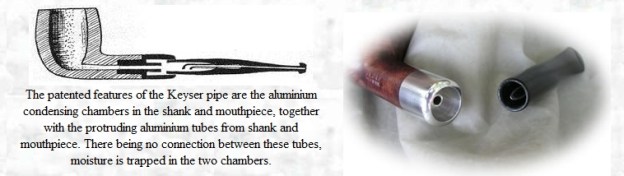
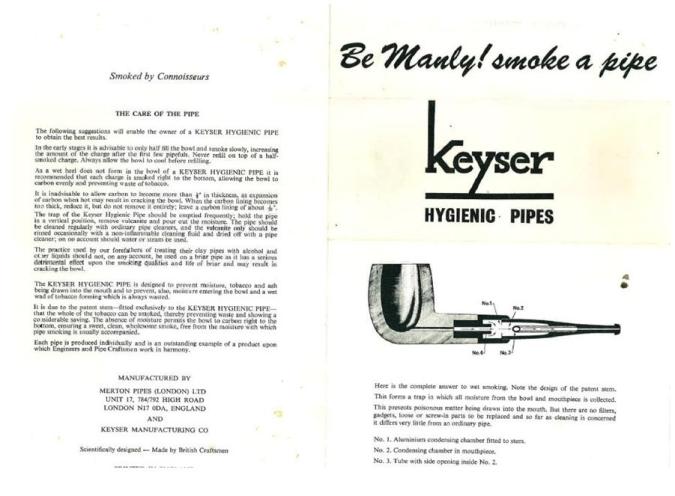
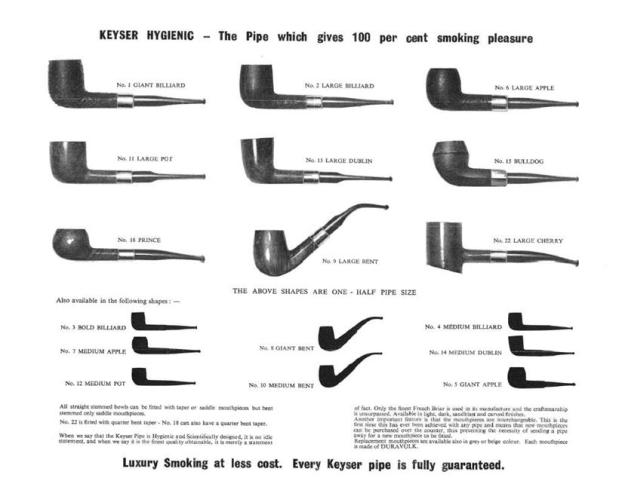
Here is a copy of the pamphlet that came with my newly restored Keyser Hygienic Pipe that came from an English Garden Shed (https://rebornpipes.com/2018/09/27/restoring-a-keyser-hygienic-patent-from-a-garden-shed-in-england/). It really is a fascinating read and gives a sense of history of the era the pipe was made. It includes a letter on the care of the pipe as well as a cut away picture/diagram of the Keyser Hygienic system. On the inside there is a shape chart that Is very helpful. I have looked for one for a long time so I was glad to see this. Enjoy.

The text of the Care of the Pipe document above is hard to read. I have included it below. Here is in all of its quintessential “Britishness”.

Smoked by Connoisseurs.

The Care of the pipe

The following suggestions will enable the owner of a KEYSER HYGIENIC PIPE to obtain the best results.

In the early stages it is advisable to only half fill the bowl and smoke slowly, increasing the amount of the charge after the first few pipefuls. Never refill on top of a half smoked charge. Always allow the bowl to cool before refilling.

As a wet heel does not form in the bowl of a KEYSER HYGIENIC PIPE it is recommended that each charge is smoked right to the bottom, allowing the bowl to carbon evenly and preventing waste of tobacco.

It is inadvisable to allow carbon to become more that 1/8 inch in thickness, as expansion of carbon when hot may result in cracking the bowl. When the carbon lining becomes too thick, reduce it, but do not remove it entirely; leave a carbon lining of about 1/16 inch.

The trap of the Keyser Hygienic Pipe should be emptied frequently; hold the pipe in a vertical position, remove vulcanite and pour out the moisture. The pipe should be cleaned regularly with ordinary pipe cleaners, and the vulcanite only should be rinsed occasionally with a non-flammable cleaning fluid and dried off with a pipe cleaner; on no account should water or steam be used.

The practice used by our forefathers of treating their clay pipes with alcohol and other liquids  should not, on any account, be used on a briar pipe as it has a serious detrimental effect upon the smoking qualities and life of briar and may result in cracking the bowl.

The KEYSER HYGIENIC PIPE is designed to prevent moisture, tobacco and ash being drawn into the mouth and to prevent, also, moisture entering the bowl and a wet wad of tobacco forming which is always wasted.

It is due to the patent stem – fitted exclusively to the KEYSER HYGIENIC PIPE – that the whole of the tobacco can be smoked, thereby preventing waste and showing a considerable saving. The absence of moisture permits the bowl to carbon right to the bottom, ensuring a sweet, clean, wholesome smoke, free from the moisture with which pipe smoking is usually accompanied.

Each pipe is produced individually and is an outstanding example of a product upon which Engineers and Pipe Craftsman work in harmony.

MANUFACTURED BY
MERTON PIPES (LONDON) LTD
UNIT 17, 784/792 HIGH ROAD
LONDON N17 0DA, ENGLAND
AND KEYSER MANUFACTURING CO

Scientifically designed – Made by British Craftsmen Printed in England

Giving New Life to a Duncan Mini Bent Foreign Made Pocket Pipe


Blog by Steve Laug

Not too long ago I received an email from through the rebornpipes site. I am actually getting quite a few emails each week which I find a pleasure to read and answer. They range from questions on restoration to those regarding estate pipes. This one was interesting to me in that it was about a two particular brands of pipes that I have worked on and enjoyed in the past. I have included the initial email and subsequent ones below to give you the context of the ongoing interaction on this pipe. I thoroughly enjoyed the interchange with Mrs. C. Howard and look forward to being able to send her photos of the restored pipe.

Hello. Clearing out our shed today my husband came across a couple of old pipes, one of which is a Keyser Hygienic, which I have now read about, on your website, how you clean and refurbish them. For my husband and his crewmate in the London Ambulance Service in the 70’s, smoking a pipe was just another one of their fads (with motorbikes at that time, they rather fancied themselves, too, as facsimiles of Starsky & Hutch!) so although tooth-marked, not badly for the amount of time they were in use, I would think. My husband’s reaction to ‘turfing out’ unwanted things is to take it all to the dump, whereas mine is to locate useful ‘homes’ for items that are still serviceable and would serve a useful purpose. I see that you are on the look-out for Keyser pipes and wondered if you would like this one. It would only go to charity anyway and I would rather donate it to you – it would be no difficulty for me to post, if you wanted it. I also have a Duncan Mini Dent pipe; if you would like this also I could send it at the same time. I have washed both of them but, obviously, your attention to that aspect would be done best by you. I look forward to hearing from you. – Yours sincerely – Mrs. C. Howard

I immediately wrote her back and told her I would be delighted to receive the pipes and would gladly pay her for the postage from England to Canada. She replied:

Hello Mr Laug,

I was very pleased to hear your response and will post both pipes to you as soon as I’ve wrapped them.  There will be no need for a refund of postage; I’ll be happy just to know the pipes are being re-located from my shed, ignored and unloved, to a good home where they will get both!

My husband and I loved Vancouver when we visited, particularly enjoying the trip over to Vancouver Island to see Mrs. Butchart’s Gardens and where my aunt and uncle had moved to years ago.  We especially, too, liked the laid-back nature of the Canadian people.

However, I shall get these pipes posted asap and hope you enjoy the final result of your labours in refurbishing them. With best wishes – Mrs. C. Howard

Once again I replied thanking her for her kindness in gifting and sending the pipes to me. I looked forward to receiving them from her and working on them to restore them to their former glory.

Hello Mr Laug,

Just to let you know that you should be receiving the pipes in the not-too distant, since I posted them off yesterday, the 23rd. Optimistically, it won’t be too long before they arrive at your door.  I hope I don’t sound like an Amazon rep, although I rather fall down on being able to provide you with parcel tracking details, et al! – Kind regards. Mrs. C. Howard

To me this kind of information is priceless and gives me the background on the pipes when I work on them. I like to picture in my mind the pipe man who smoked them. In this case the information made me wonder how many more pipes are sitting in garden sheds around the world, having been discarded when the pipesmoker decided to lay them down. Thank you Mrs. C. Howard for the foresight you had in rescuing these pipes.

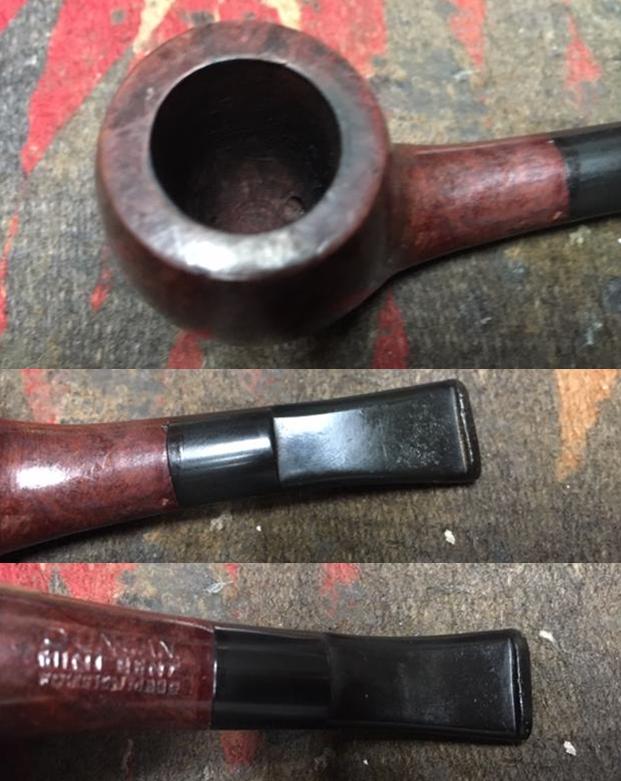
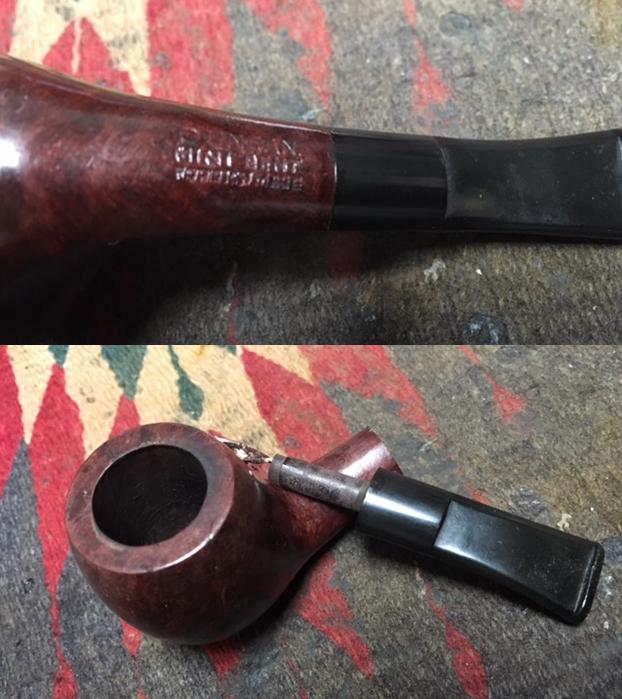
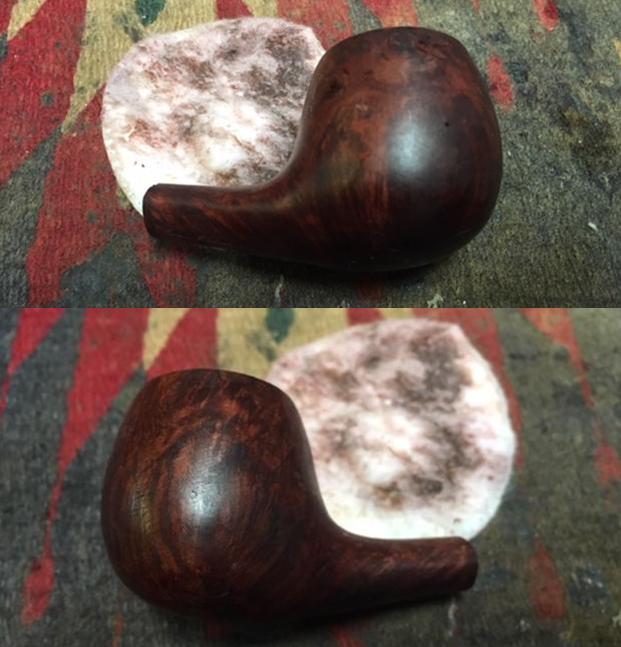
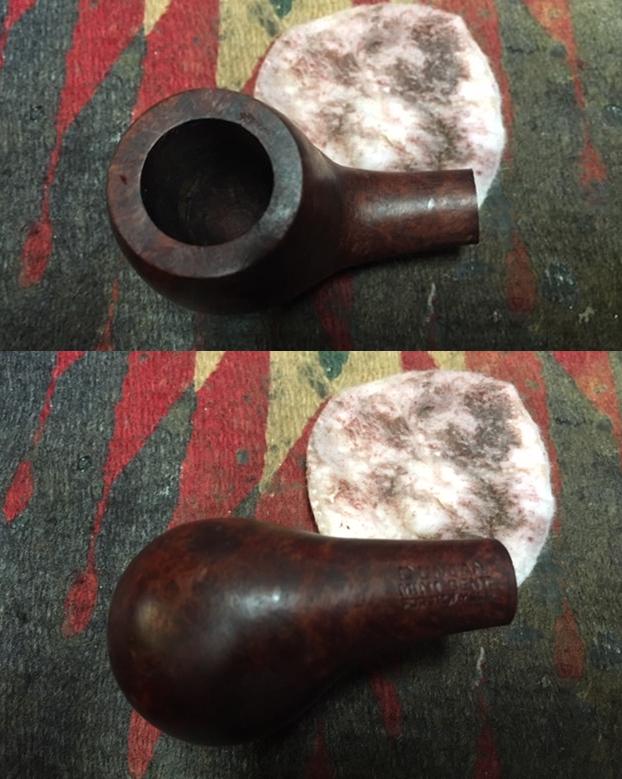
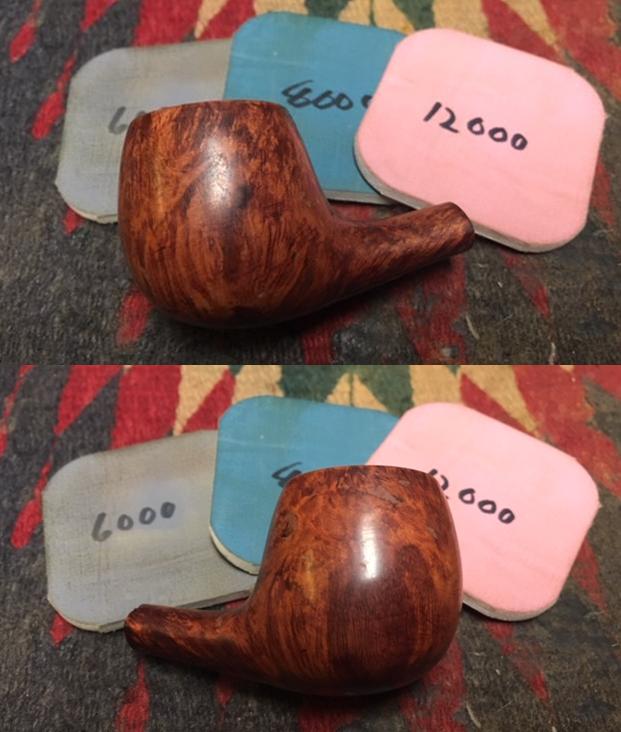
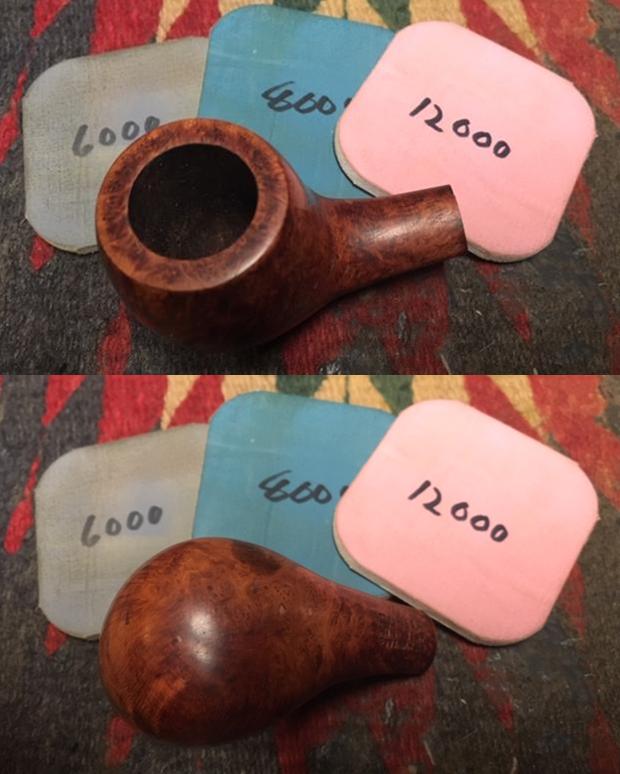
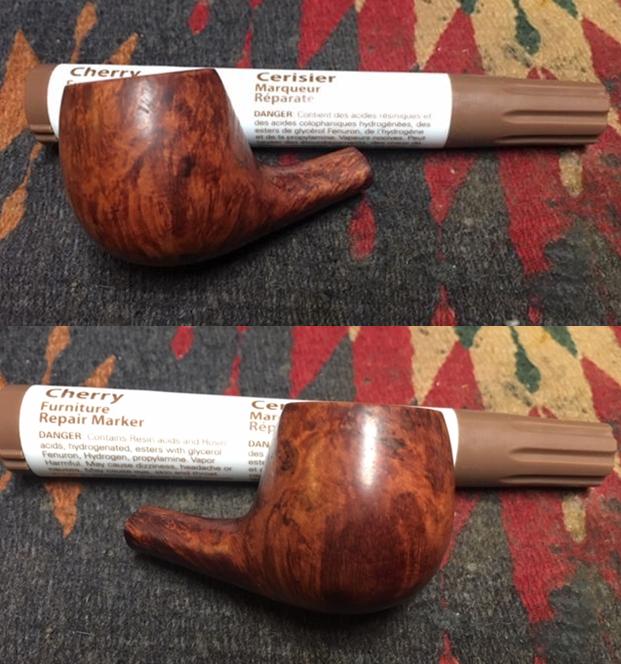
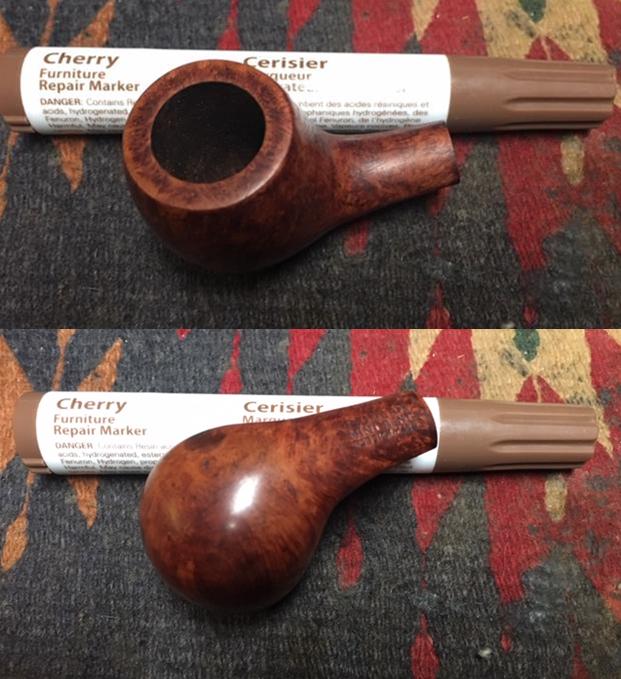
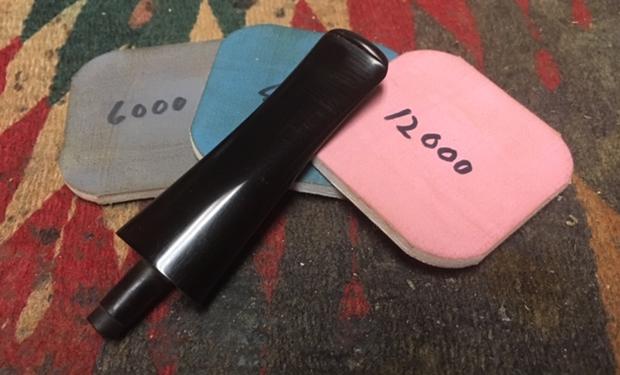
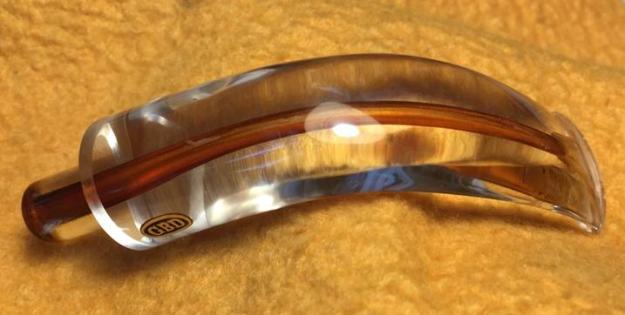
When the box arrived in Vancouver I wrote Mrs. C. Howard and let her know they arrived safely. I opened her parcel and found the contents were well wrapped and had come undamaged. The second pipe that came in the box is one that I have on the table now. It is stamped on the underside of the shank. It reads Duncan over Mini Bent over Foreign Made. It is a small pocket sized pipe that was heavily coated with varnish – even on the saddle portion of the stem. It looked as if it had been dipped. It has an interesting shape that feels great in the hand. The photos below show what it looked like when it arrived. The pipe had the same garden shed aroma as the Keyser that came with it. It was kind of musty smelling. It had definitely been smoked but not much. There were some dings on the rim top but other than the varnish coat wrinkling it looked good. The bowl did not have a cake and was raw briar half way down the bowl. The stem had a lot of tooth chatter and some light tooth marks on both sides near the button. The button itself also had a few tooth marks. You can see the varnish run on the saddle portion of the stem in the first photo of the stem below. I took some close up photos of the rim and stem to show the condition.The next photo shows the stamping. It appears blurry but sadly the stamping itself is blurred from repeated stamping. It reads Duncan over Mini Bent on the first two lines. The last line is the most blurry but it appears to read Foreign Made as best as I can make out. I removed the stem and was surprised at the length of the stepped down tenon – ¾ of an inch. There was a spiraled stinger in the airway that was dirty and pushed deep in the airway. I decided to address the heavy coat of varnish on the bowl first. I wiped it down with acetone on cotton pads and was able to remove all of it from the surface of the briar. I removed the stinger from the tenon. It was merely stuck in the airway so it was an easy removal. I think that half of the insert end is missing so it was not tight. The airway in the tenon was drilled off-centre toward the right side leaving the wall thin.I cleaned out the mortise and the airways in the shank and the stem with pipe cleaners, cotton swabs and alcohol. While a bit of tars and oil came out most of the colour on the swabs came from the same stain I had removed from the exterior with the acetone. It is a reddish coloured stain that revealed that the entire bowl had been dipped in stain.I sanded the bowl with micromesh sanding pads to remove the rest of the finish. I wet sanded it with 1500-2400 grit sanding pads and dry sanded it with 3200-12000 grit pads. I wiped the bowl down with a damp cotton pad after micromesh grit. There are a few dark spots on the briar – right side mid bowl and on the underside on the right as well. I am not sure what they are but they are not removed by sanding. As I polished it the fills in the bowl became very visible. The briar had taken on a shine. The fills were very visible so I used a Cherry stain pen to touch up the fills around the bowl sides, bottom and shank. A light stroke across the fill with the pen hid the fill and I set the bowl aside to let the stain cure. The fills blended in but the dark spots remained on the left and underside. I worked some Before & After Restoration Balm into the briar of the bowl with my fingertips to clean, enliven and protect the wood. I let the balm sit for about 20 minutes and buffed it off with a soft cotton cloth. I took photos of the bowl at this point in the process. The photos show the condition of the bowl at this point in the process. The bowl was looking quite good at this point with some beautiful grain showing through. I set the bowl aside and turned my attention to the stem. I sanded out the tooth chatter and marks with 220 grit sandpaper. I polished the stem with micromesh sanding pads – wet sanding it with 1500-2400 grit pads and dry sanding with 3200-12000 grit pads. I wiped the stem down with Obsidian Oil after each pad. I polished the bowl with Before & After Pipe Polish – Fine and Extra Fine. I gave it a final coat of Obsidian Oil and set it aside to dry. I polished stem and the bowl with Blue Diamond polish on the buffing wheel. I gave the bowl and the stem multiple coats of carnauba wax. I buffed the pipe with a clean buffing pad to raise the shine. I hand buffed it with a microfiber cloth to deepen the shine. The pipe polished up pretty nicely. The grain really came alive with the buffing and works well with the polished black vulcanite stem. Together the pipe looks much better than when I began and has a rich look. The finished pipe is shown in the photos below. The shape, finish and flow of the pipe and stem are very well done. The dimensions are Length: 4 inches, Height: 1 1/2 inches, Outside diameter of the bowl: 1 1/4 inches, Chamber diameter: 3/4 of an inch. I will be putting this little pocket pipe/nosewarmer on the rebornpipes store shortly if you are interested in adding it to your collection. Thanks for walking through the restoration with me as I worked over this unique little pipe.
Restoring a pair of Comoy’s Blue Riband Billiards


Blog by Steve Laug

Not long ago I received a package in the mail from a reader of the blog, Scott in California, US containing two Comoy’s Blue Riband Billiards. There was a note in the box regarding what he wanted done with the pipes. He wrote:

…As you can see both stems do not seat all the way in the shank of the pipes. The pipe in two separate wrappings is in a little better shape than the other one. Both need the stems refinished, bowls reamed and cleaned, etc. Would like to keep the original patina on the outside wood if possible. Thanks again for your help and let me know if you have any questions.

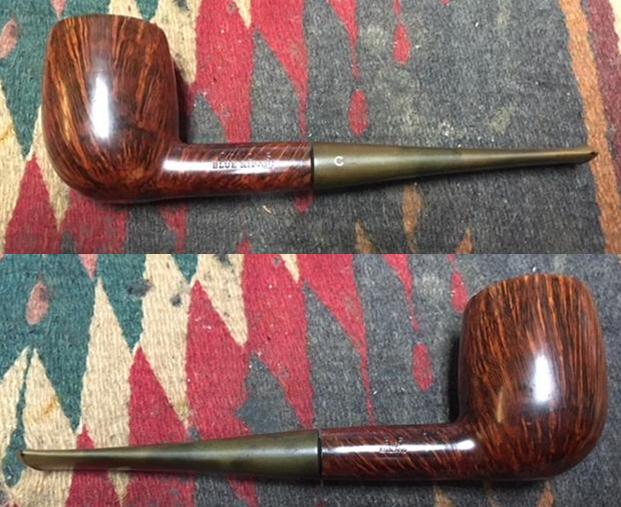
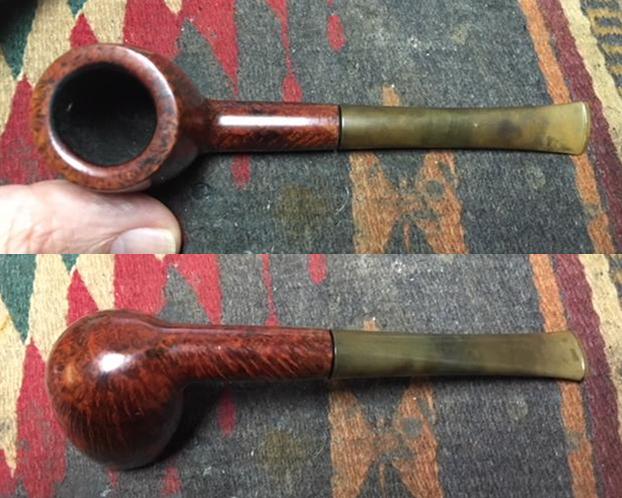
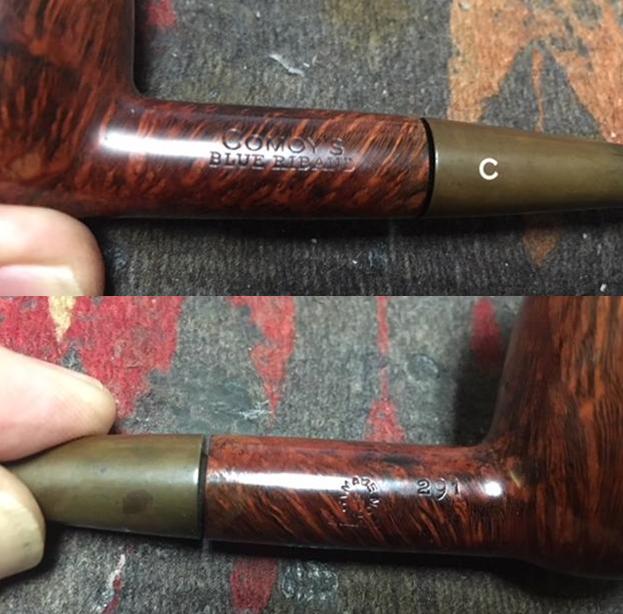
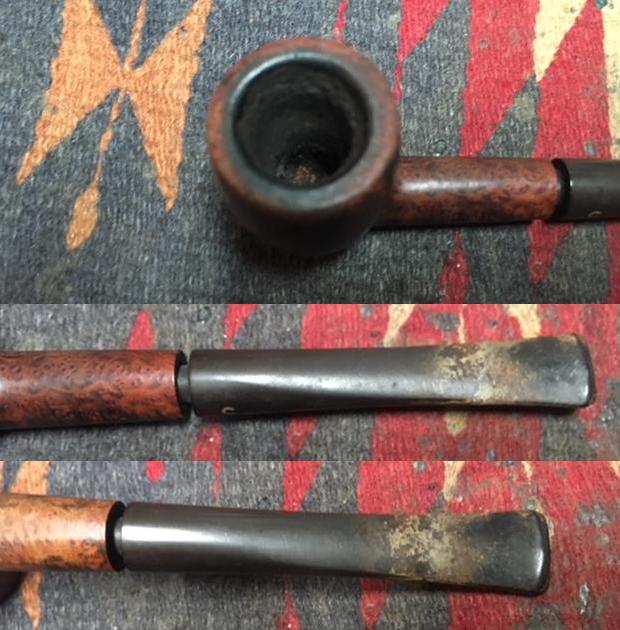
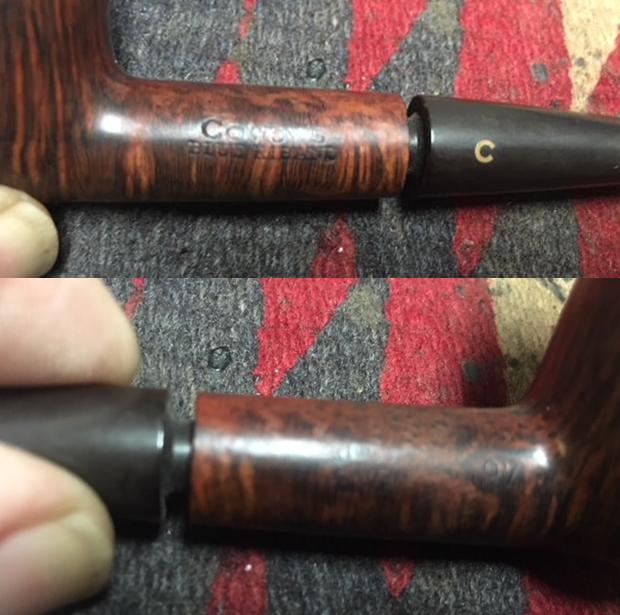
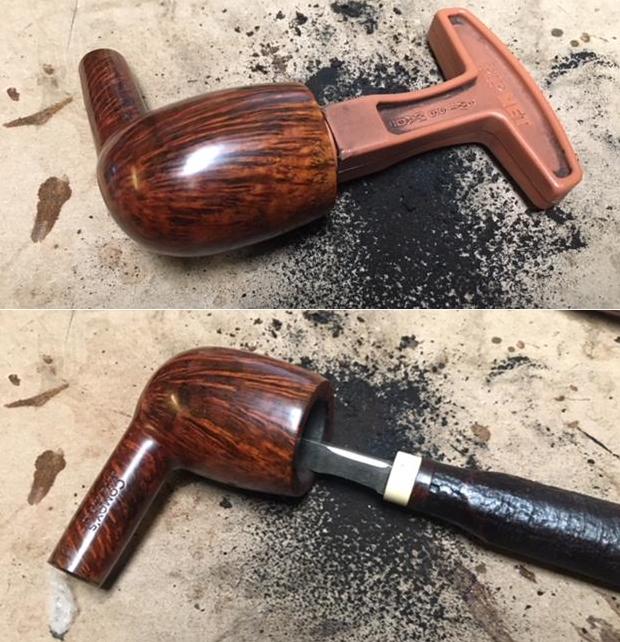
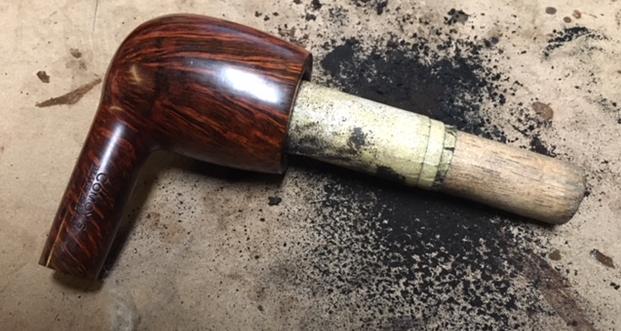
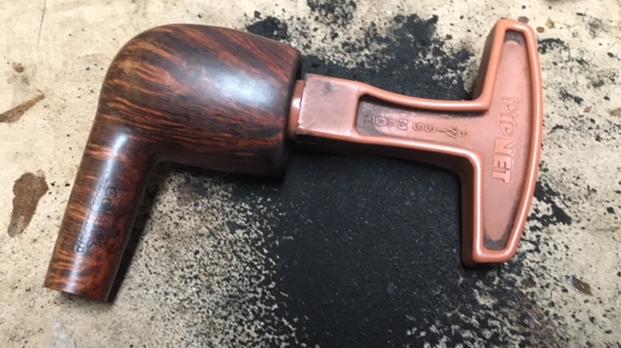
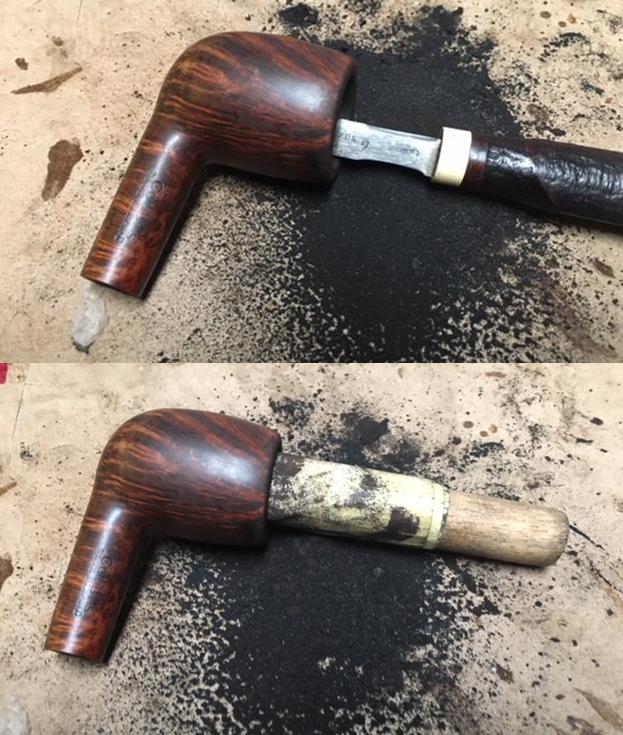
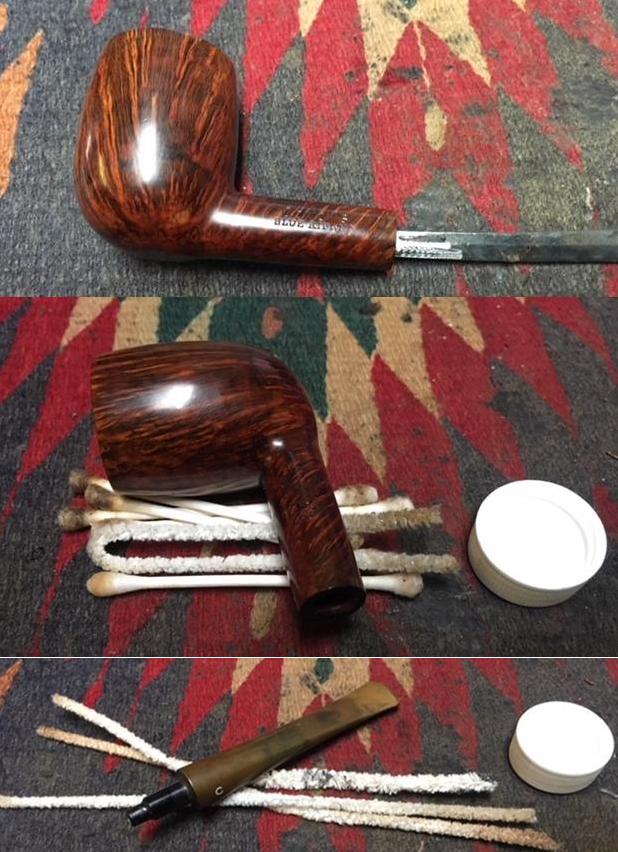
After opening the wrappings in the well packed box I found the two pipes. I took pictures of both pipes to capture their condition when they arrived. The first set of photos show the one that he said was “in a little better shape”. The finish still had a shine on the bowl and shank. The rim top was in decent condition. There was a light cake in the bowl and some light lava on the rim. The stem did not seat in the shank completely and when I looked the shank was very dirty and caked with tars. The stem was oxidized and had tooth marks and chatter on both sides near the button. I took some close up photos of the rim top and the stem to give a clearer picture of the condition of the pipe.I took photos of both sides of the shank to show the stamping on the pipe. The left side read COMOY’S over BLUE RIBAND with the three part C in the left side of the stem. The right side had the circular COM stamp and read MADE IN LONDON over ENGLAND followed by the shape number 291. You can see the stunning Blue Riband grain on the photos above and below. It is a beautiful pipe.The next set of photos show the second Blue Riband which was far more worn and dirty. The finish dirty and did not have the glow of the other pipe. The rim top had darkening all around the inner edge and there were some dents and marks in the top surface. The cake in the bowl on this one was thick and rock hard, narrowing about midbowl. There was some light lava on the rim. The stem did not seat in the shank completely and when I looked the shank was very dirty and caked with tars. The stem was not as oxidized as the other pipe and had tooth marks and chatter on both sides near the button. There was some calcification on the surface around the button. I took some close up photos of the rim top and the stem to give a clearer picture of the condition of the pipe.I took photos of both sides of the shank to show the stamping on the pipe. The left side read COMOY’S over BLUE RIBAND with the three part C in the left side of the stem. The right side is a bit harder to read as the stamping is worn but it also had the circular COM stamp and read MADE IN LONDON over ENGLAND followed by the shape number 97. It is a bit smaller sized than the previous pipe but also has stunning Blue Riband grain. It is also a beautiful pipe underneath all of the grime.I reamed both bowls with a PipNet pipe reamer working through the cutting heads to take the cake back to the bare briar so I could check for damage to the interior walls of the pipe. I cleaned up the reaming with a Savinelli Fitsall Pipe Knife and finished with a piece of dowel wrapped in 220 grit sandpaper to smooth out the walls. The first pipe was definitely cleaner than the second. The cake came out easily. The second pipe had a cake that was rock hard and I had to switch between the smallest cutting head on the PipNet and the Fitsall Knife to break through the cake. I worked my way alternating between the two until the bowl was reamed and then sanded it smooth. I scraped the mortise walls of both pipes with a pen knife to remove the buildup of hardened tars and oils. I cleaned out the mortise and the airway into the bowls as well as the airway in the stems of both pipes with alcohol, cotton swabs and pipe cleaners. Unfortunately I forgot to take photos of the second pipe at this point… Arghh this is why I generally do one pipe at a time…. But I can tell you that the second pipe was far dirtier than the first.I took a photo of both pipes together at this point to show the clean bowls and the condition of the rim tops.I removed the stems from both of the pipes and put them in a bath of Before & After Pipe Stem Deoxidizer. I let them sit while I turned my attention to the two bowls.I worked on the rim top of the second pipe (shape 97) with micromesh sanding pads – wet sanding it with 1500-2400 grit pads and dry sanding it with 3200-12000 grit pads. I was able to remove the damaged areas and leave the rim top clean. There was still darkening around the inner edge but I have chosen to leave that for now. I worked Before & After Restoration Balm into the briar of both bowls with my fingertips to clean, enliven and protect the wood. I let the balm sit for about 20 minutes and buffed it off with a soft cotton cloth. I took photos of both at this point in the process. The first set of four photos show the more damaged bowl (shape 97) and the second set of four photos show the bowl that was in better condition (shape 291) when I started. Both bowls are looking quite good at this point. The stems had been sitting in the Before & After Deoxidizer overnight by the time I removed them from the bath. I rinsed them under running water and ran pipe cleaners dipped in alcohol through the airway to remove the solution from the airway. I took photos of the stems at this point.I decided to polish the top stem in the photos. It was the stem for the newer (shape 291) pipe. I polished it with micromesh sanding pads – wet sanding it with 1500-2400 grit pads and dry sanding with 3200-12000 grit pads. I rubbed it down with Obsidian Oil between each pad. I polished it further with Before & After Pipe Polish – both Fine and Extra Fine. I gave it a final coat of Obsidian Oil and set it aside. With that stem completed I turned to the second stem (shape 97), the older, dirtier pipe. I used a needle file to sharpen the edge of the button on both sides of the stem. I cleaned up the file marks with a folded piece of 220 grit sandpaper to remove the file marks and smooth out the edge.I polished it with micromesh sanding pads – wet sanding it with 1500-2400 grit pads and dry sanding with 3200-12000 grit pads. I rubbed it down with Obsidian Oil between each pad. I polished it further with Before & After Pipe Polish – both Fine and Extra Fine. I gave it a final coat of Obsidian Oil and set it aside. I polished the bowls and stems with Blue Diamond to polish out the scratches in the briar and rubber. I gave the bowls and the stems multiple coats of carnauba wax. I buffed the pipes with a clean buffing pad to raise the shine. I hand buffed them with a microfiber cloth to deepen the shine. Both pipes polished up pretty nicely. The original patina on both bowls came alive with the buffing and worked well with the polished black vulcanite stems. Both pipes have a rich look. The finished pipes are shown in the photos below. The first pipe is the one that was in “better condition” when it arrived. I think it is a bit newer than the second one. The shape, finish and flow of the pipe and stem speak well of the Blue Riband brand. The dimensions of the first pipe, shape 291 are Length: 6 inches, Height: 1 7/8 inches, Outside diameter of the bowl: 1 1/4 inches, Chamber diameter: 3/4 of an inch. The dimensions of the second pipe, shape 97 (the older one) are Length: 5 ¾ inches, Height: 1 ¾ inches, Outside diameter of the bowl: 1 ¼ inches, Chamber diameter: ¾ of an inch. This pair will soon head back to California so that Scott can enjoy them.  Thanks for walking through the restoration with me as I worked over this beautiful pair of Comoy’s Blue Riband pipes… now I need to find some for myself!    
 

Poor Richards 9438 Cordovan Restoration


By Al Jones

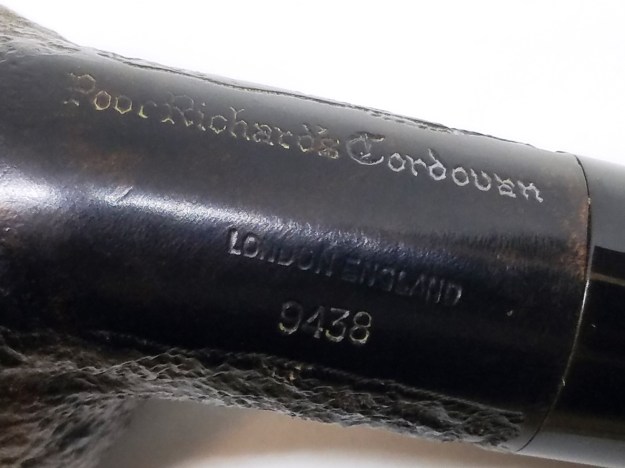
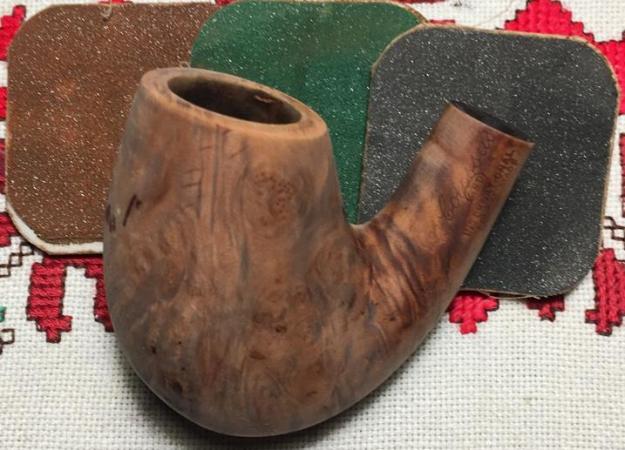
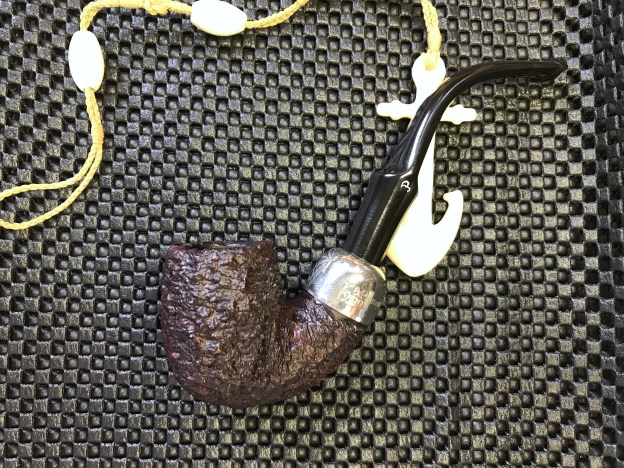
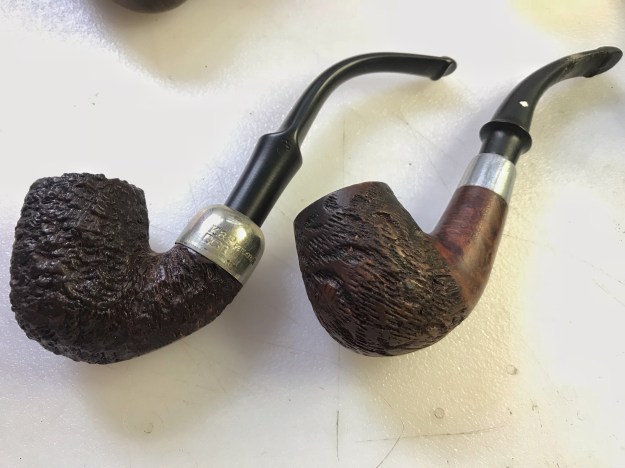
Here’s yet another variation on the GBD 9438 shape. This example is stamped “Poor Richards Cordovan”. We’ve seen another Poor Richards pipe here in the past, but that one was stamped in a different font and added Bozeman, Montana in the nomenclature. Poor Richards is indeed a shop in Montana, that while having changed hands over the years, is still in operation today. Was this a “shop pipe” made for that location? Possibly, but now lost to time and the new owners had no information or insights to offer.

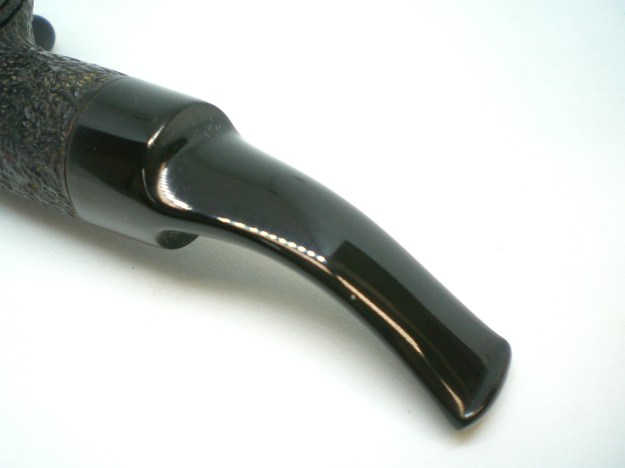
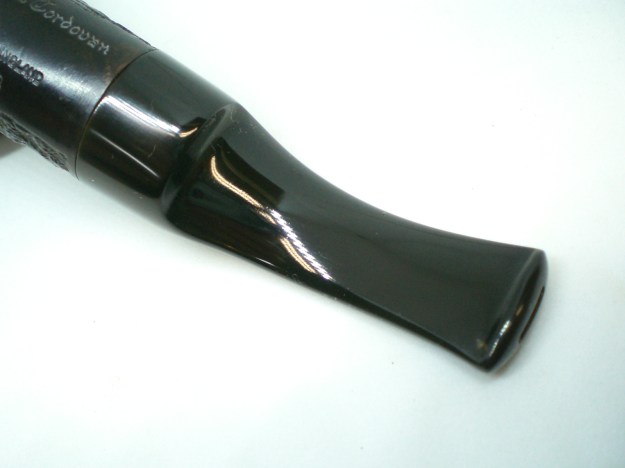
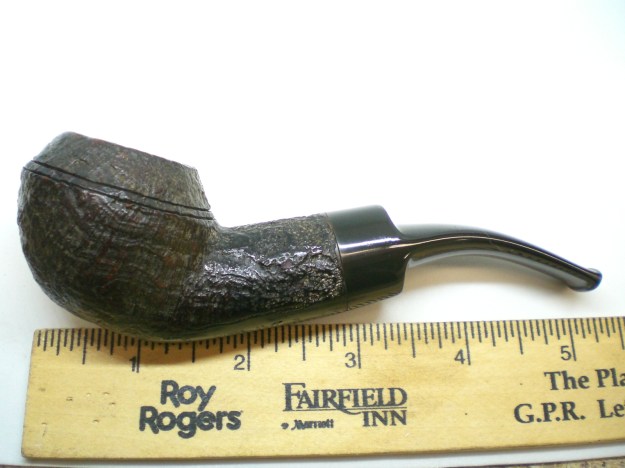
This was a very good example of the 9438 shape. The stem has the “wasp waist” style and the COM is the “London, England” used by GBD prior to 1981. The finish appears to be a combination of sandblast and rusticated. This was a fairly simple restoration in that the only real work was in the oxidized stem and some mild teeth indentions. Below is the pipe as it was received.

I used a piece of worn scotchbrite on the top of the bowl, than it was reamed and soaked with sea salt and alcohol. The stem was soaked in a mild Oxy-Clean solution. The bowl interior was in excellent shape.

Following the soak the stem was mounted to remove the oxidation. The stem fitment was perfect, and I had a feeling it may have never been removed. The stem was stamped “PR”, but I didn’t try to save that stamp.  I used a lighter to lift some of the teeth indention’s. Sandpaper starting at 400 grit was used to removed oxidation, working thru 800, 1,500, 2,000 grades. This was followed by micromesh sheets in 8,000 and 12,000 grades. The stem was then buffed with White Diamond and Megiuars Plastic Polish.

I used some warm soapy water to clean the briar, then buffed it by hand with Halycon wax.

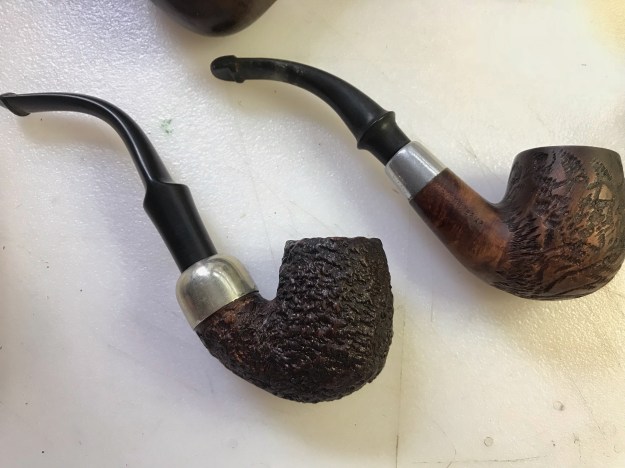
Below is the finished pipe.
?