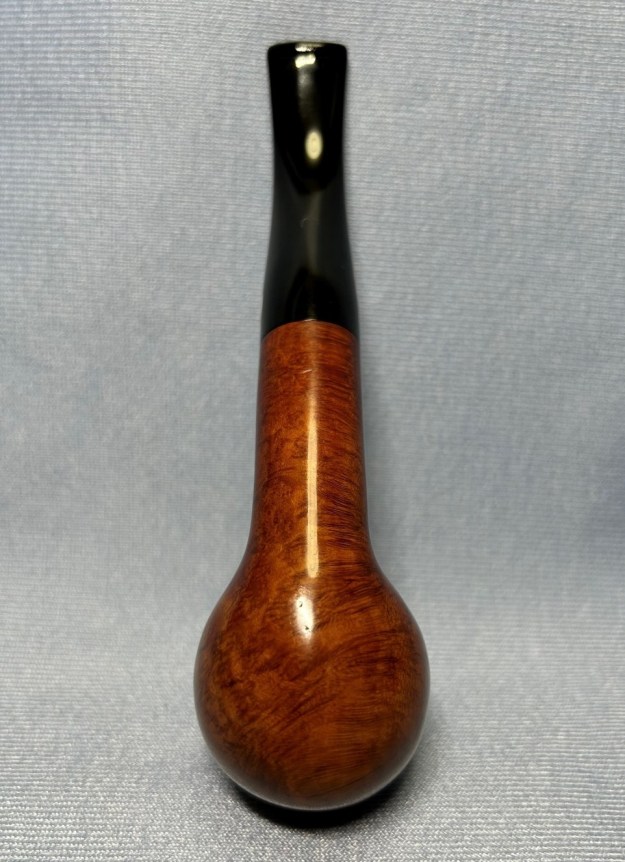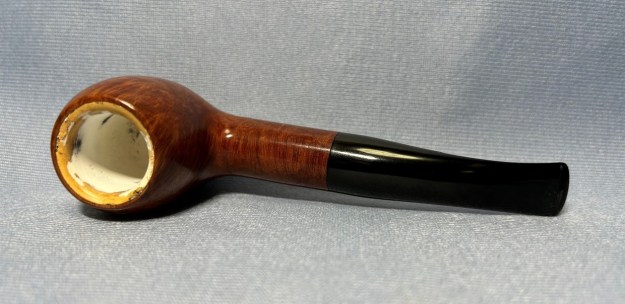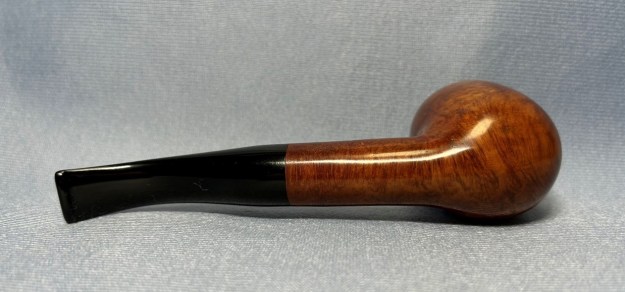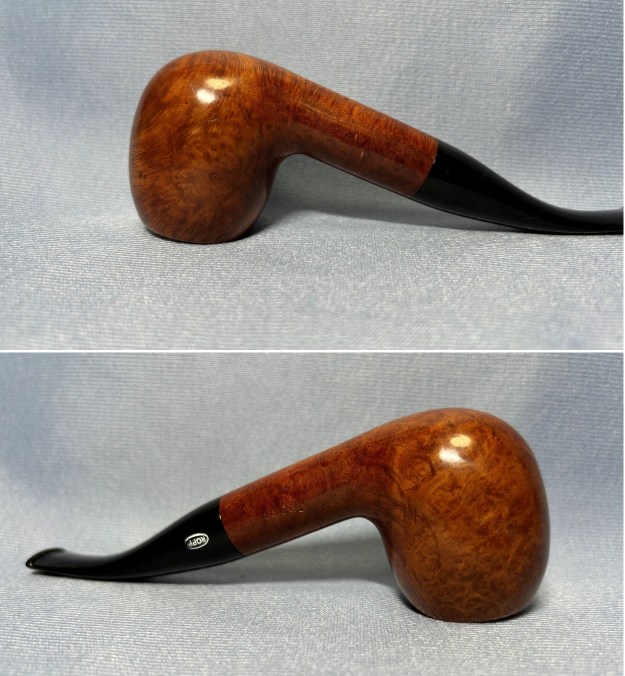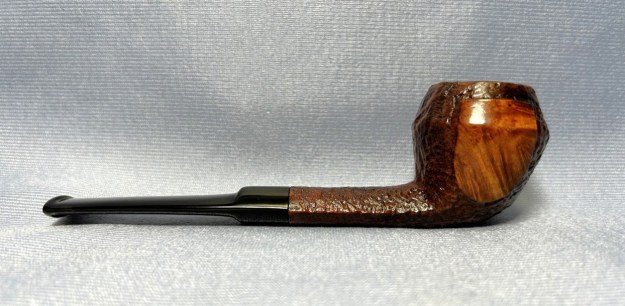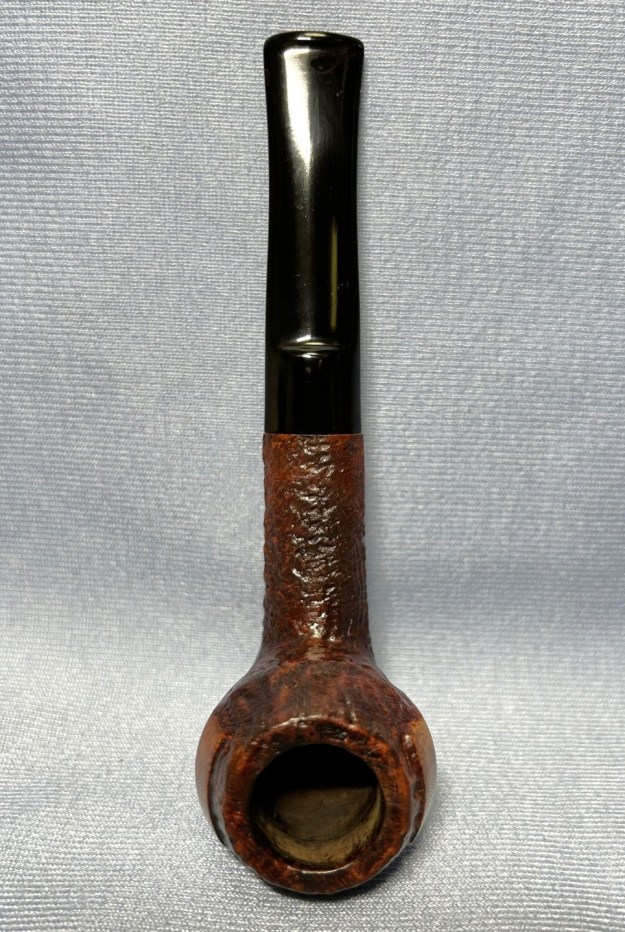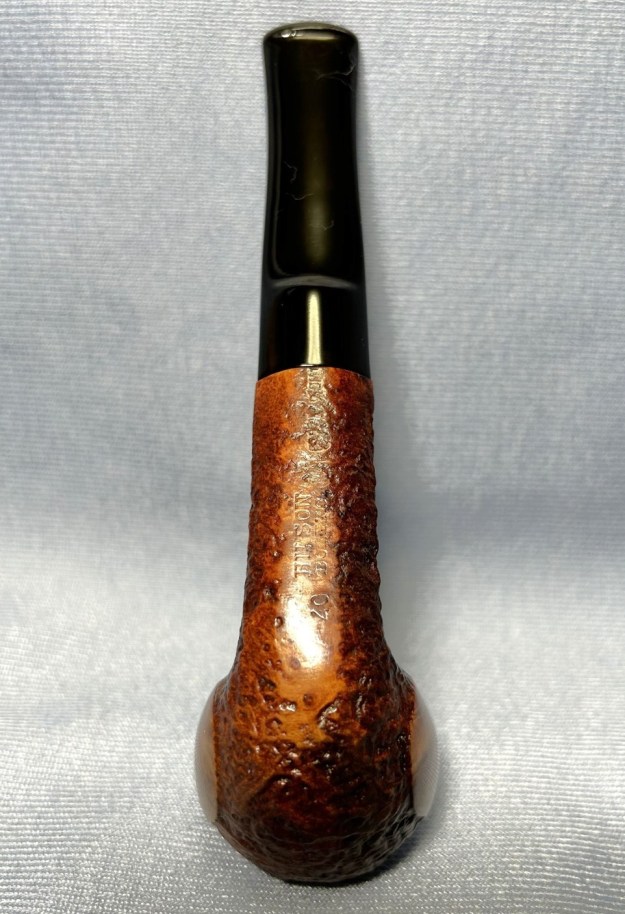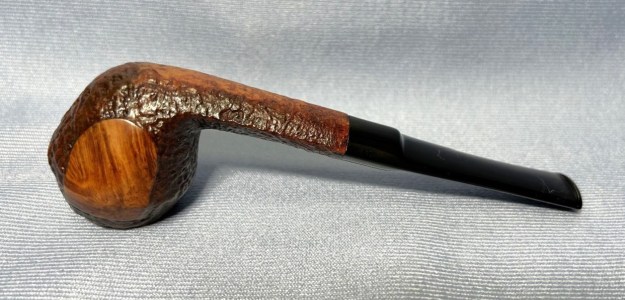
Category Archives: Pipe Refurbishing Essays

Essays and pictorial essays on the art of refurbishing

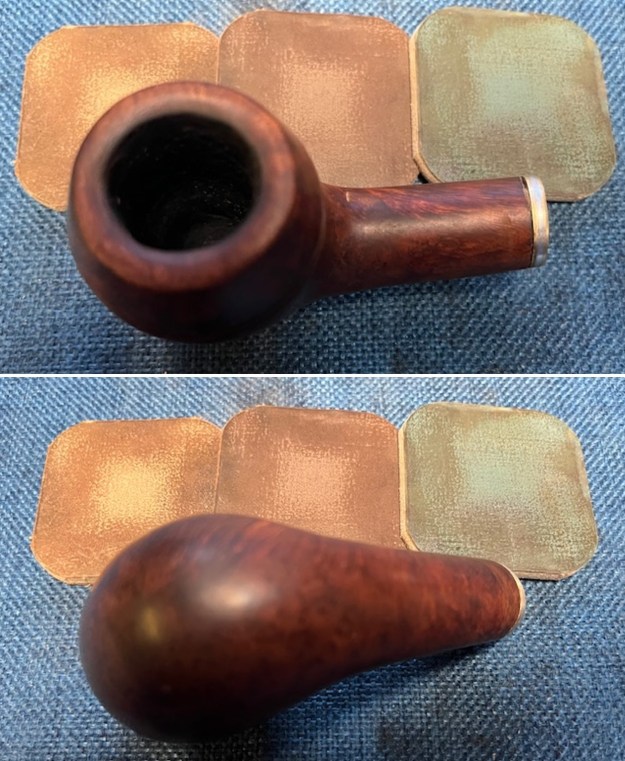
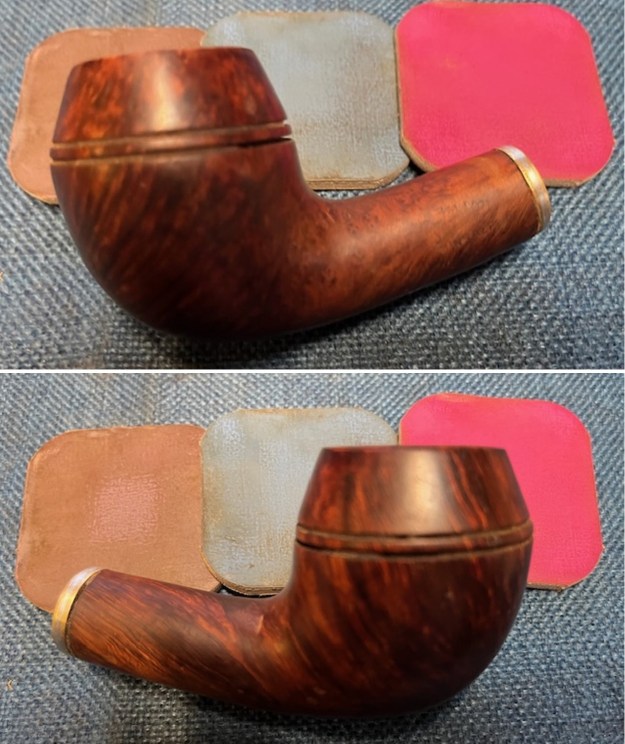
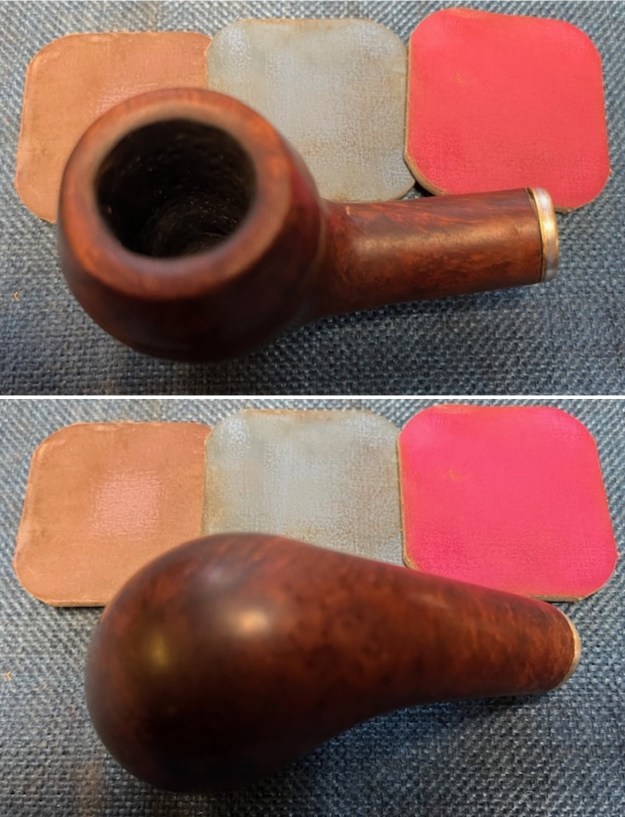
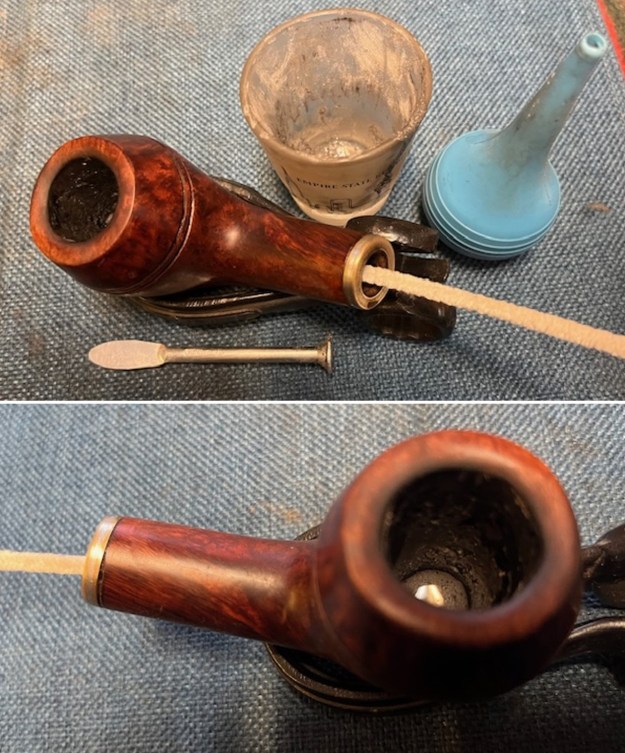
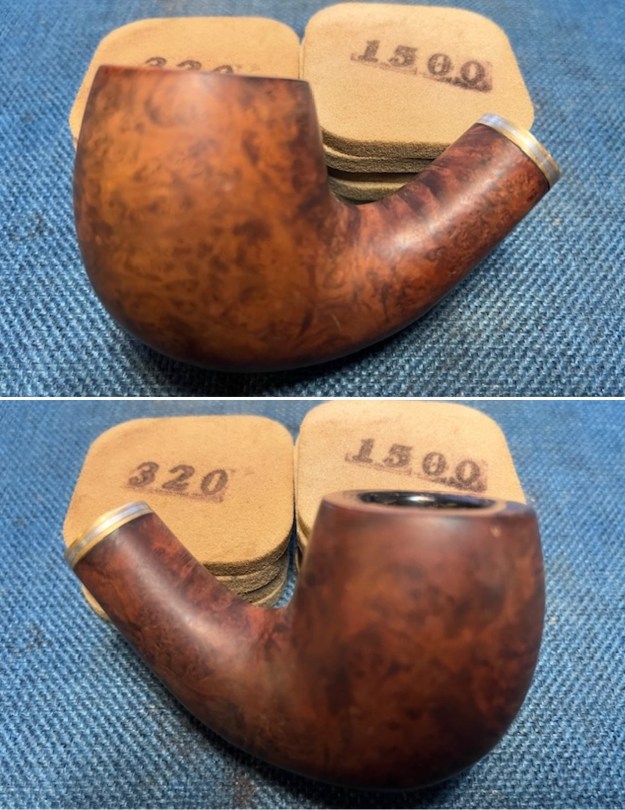
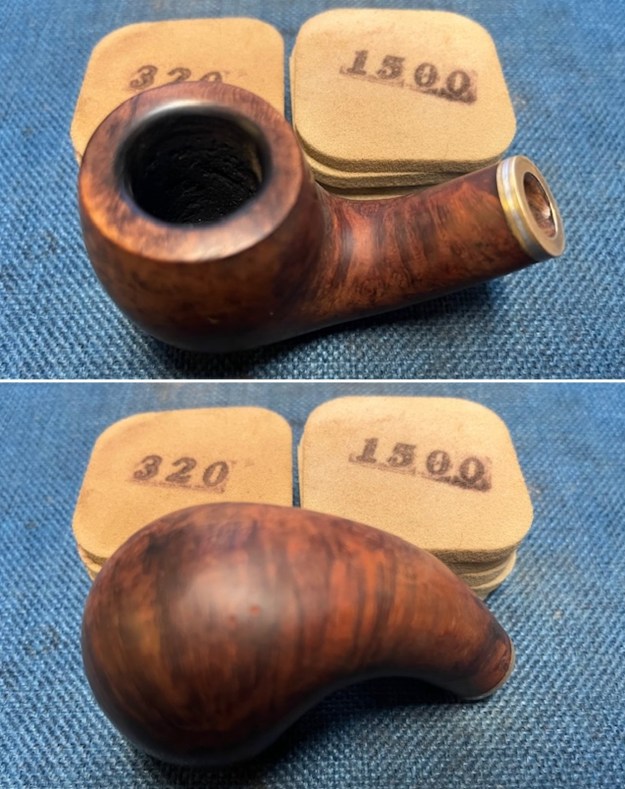
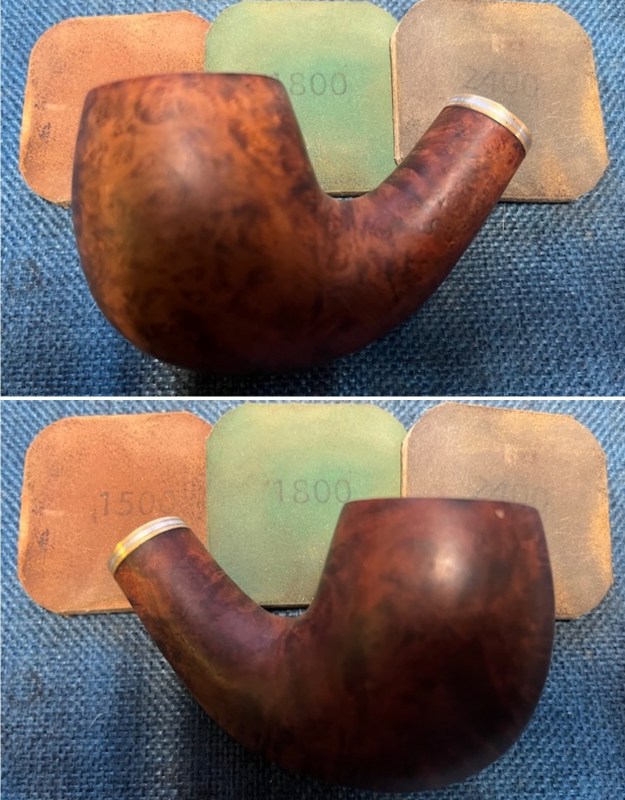
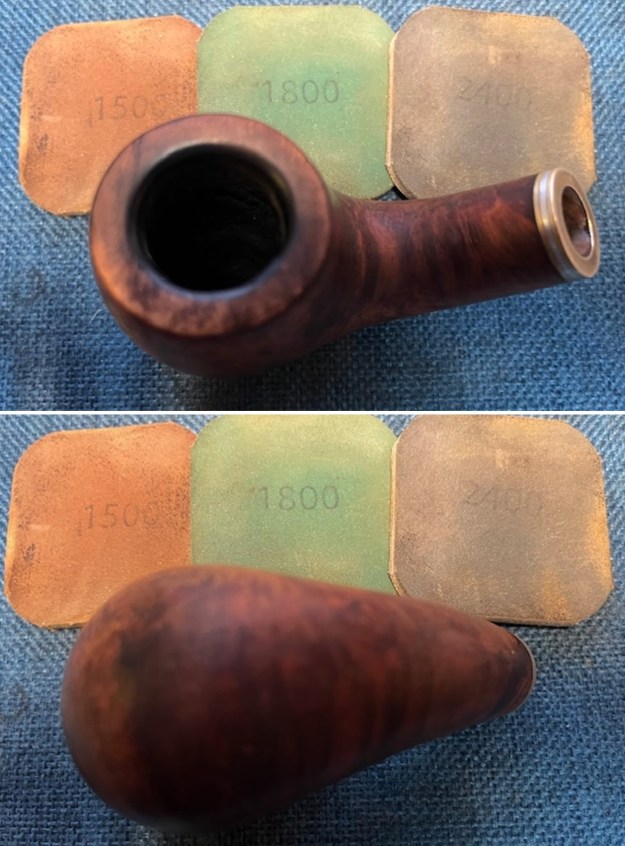
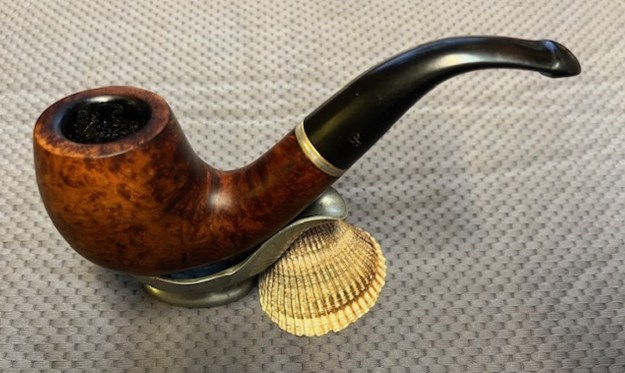
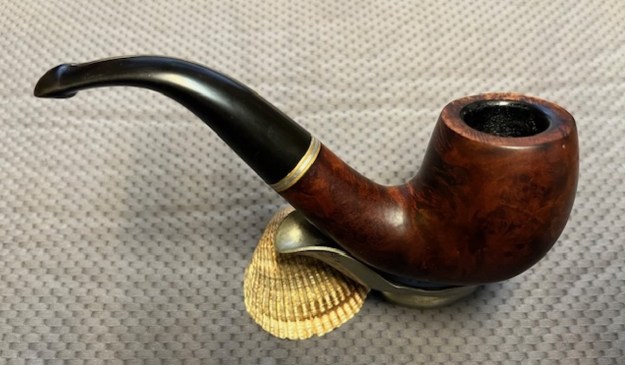
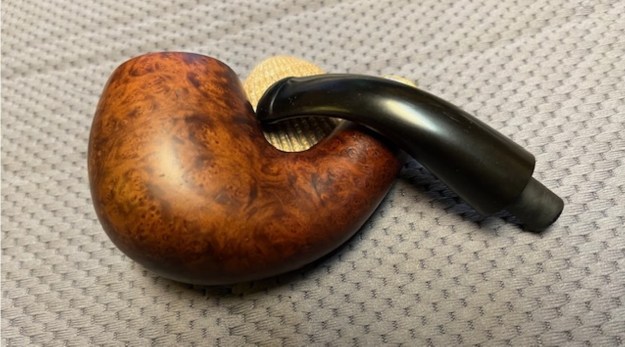
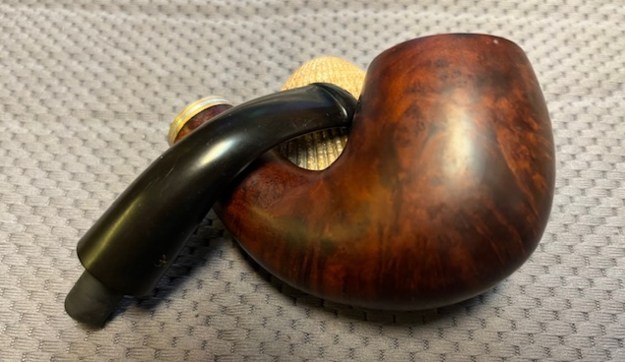
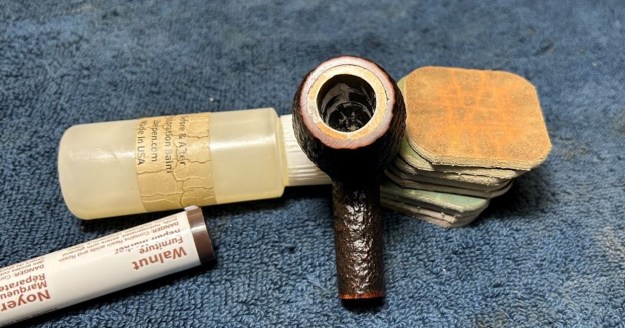
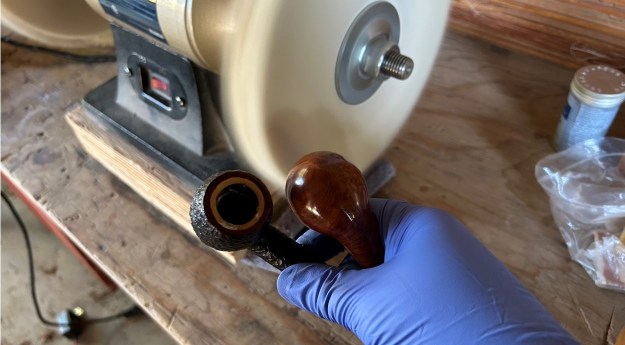
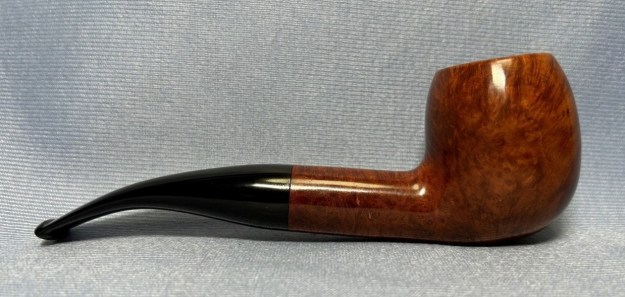
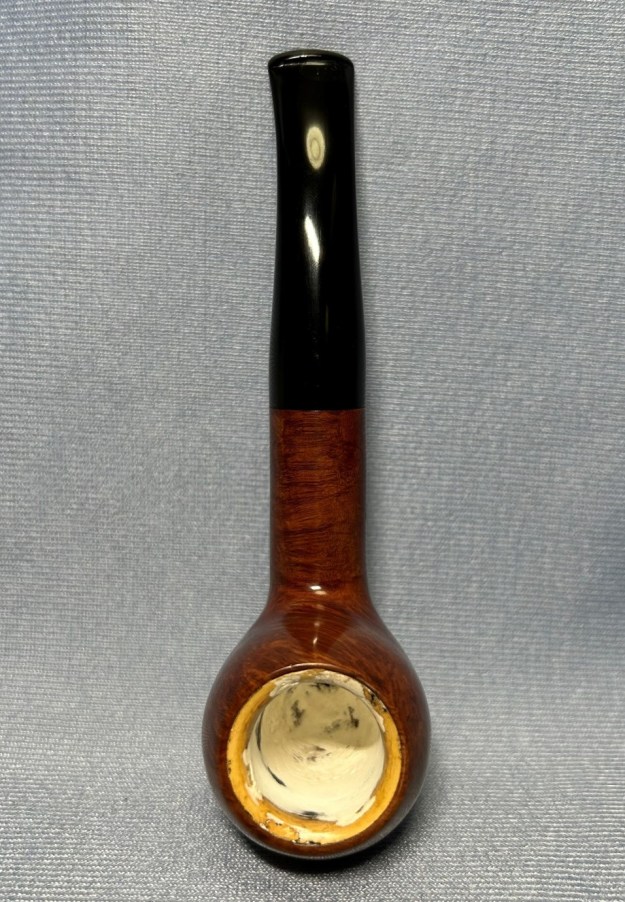
New Life for a GBD Speciale Standard London England 788 D Bent Apple


By Steve Laug

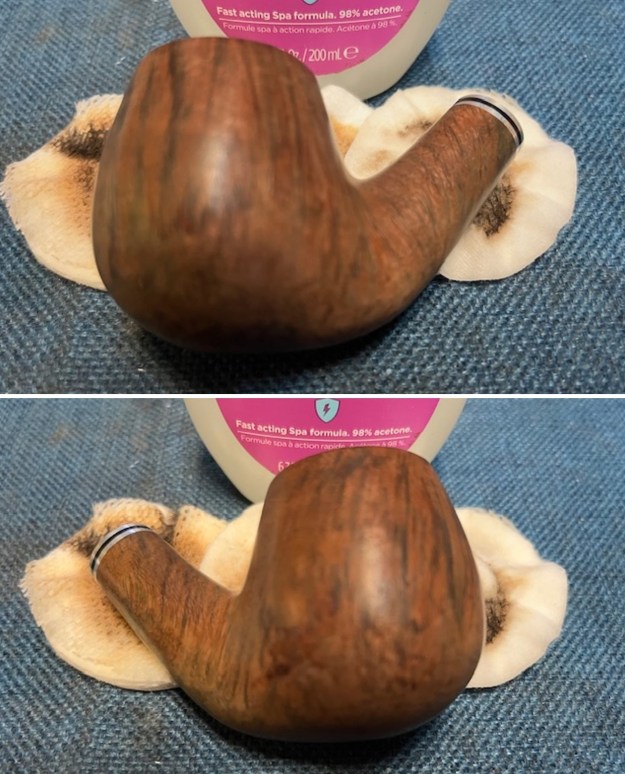
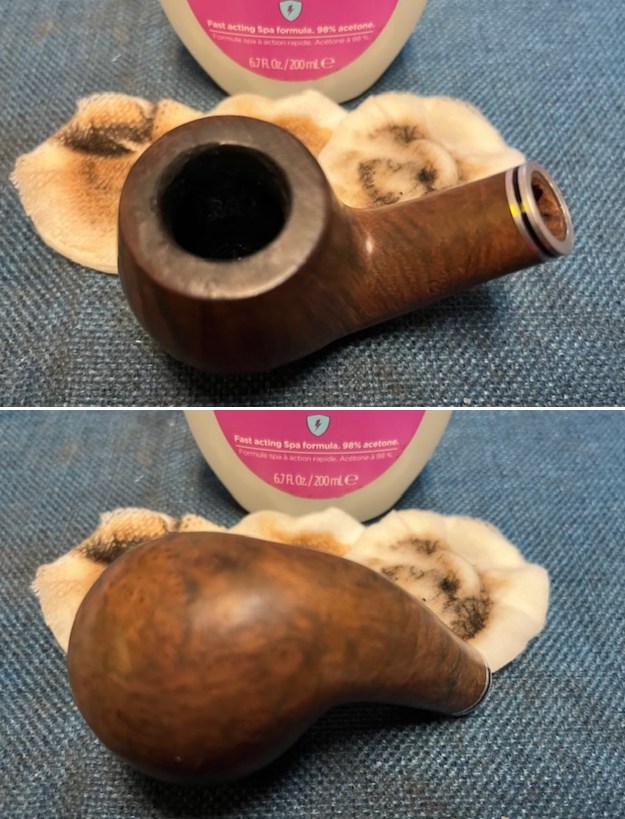
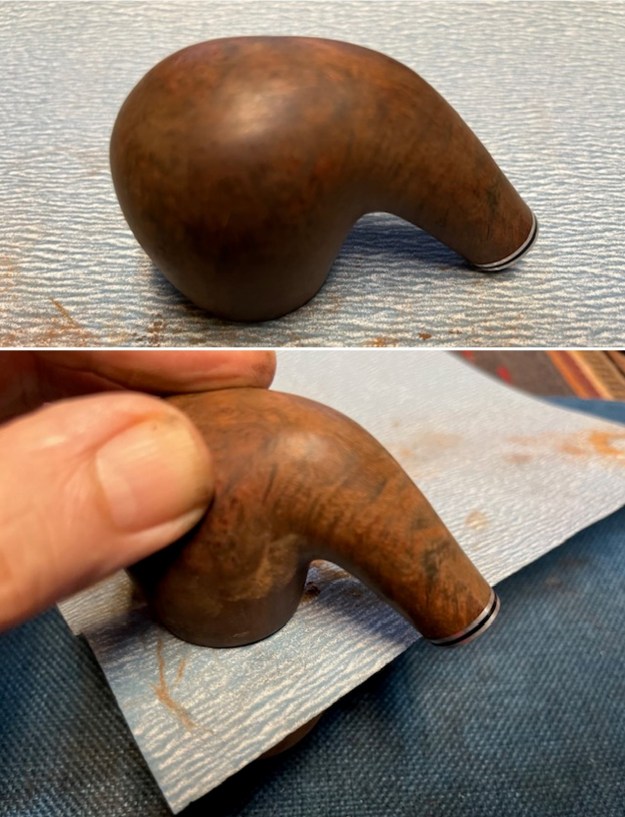
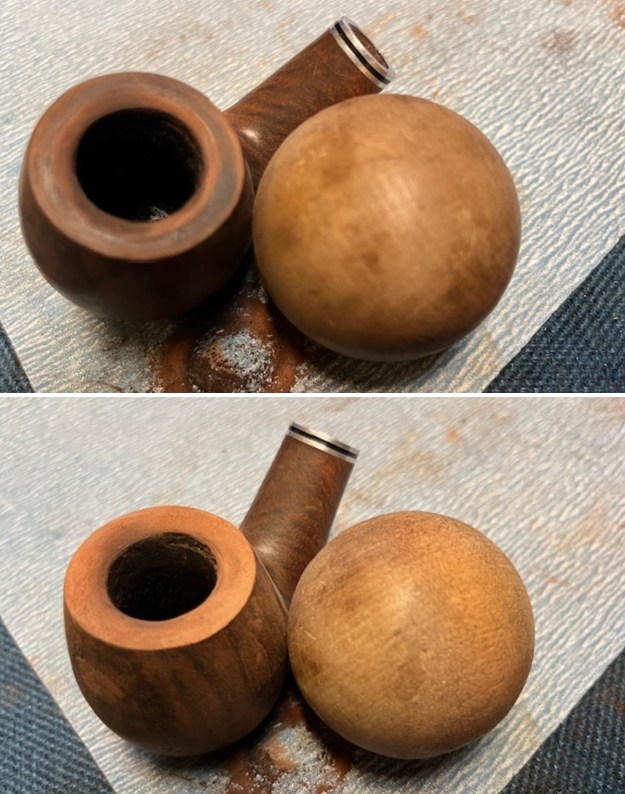
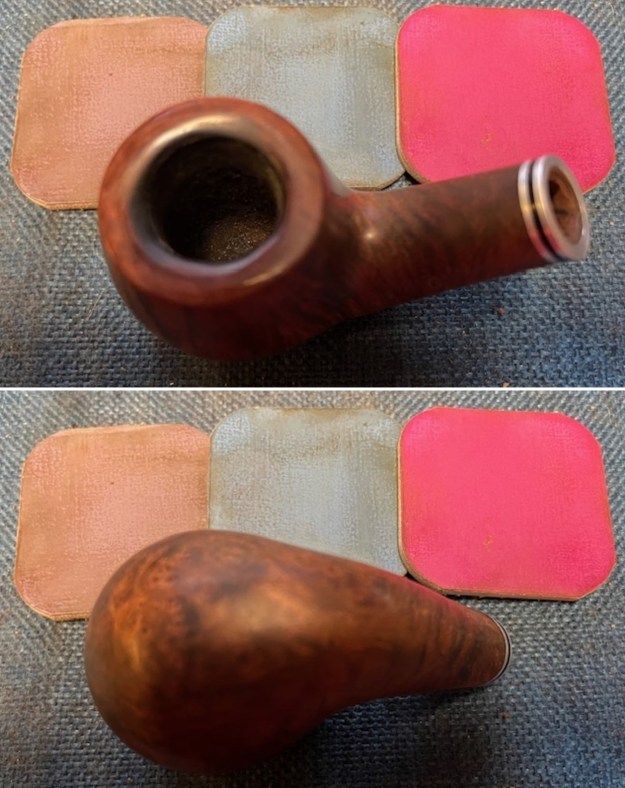
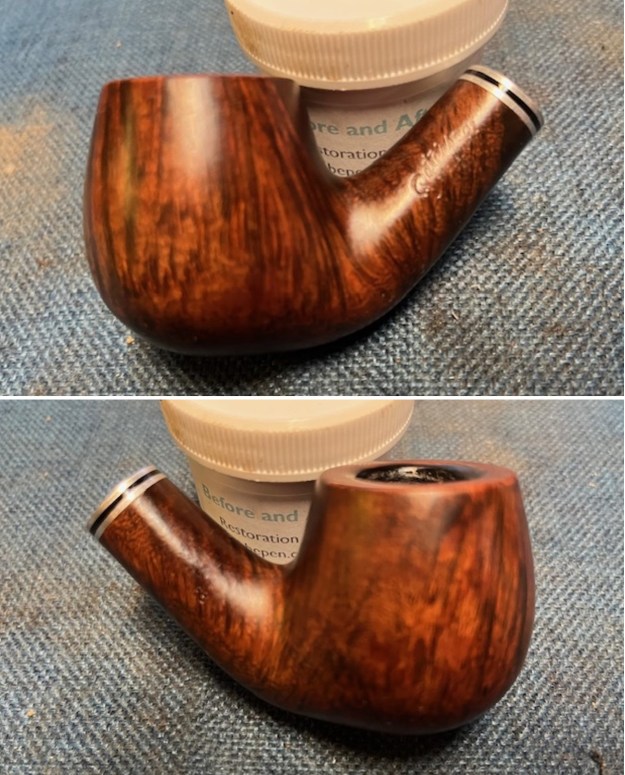
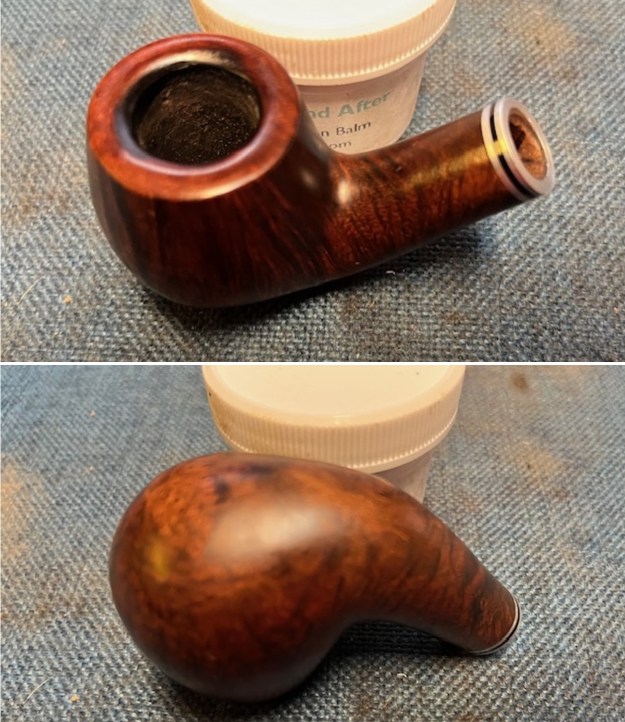
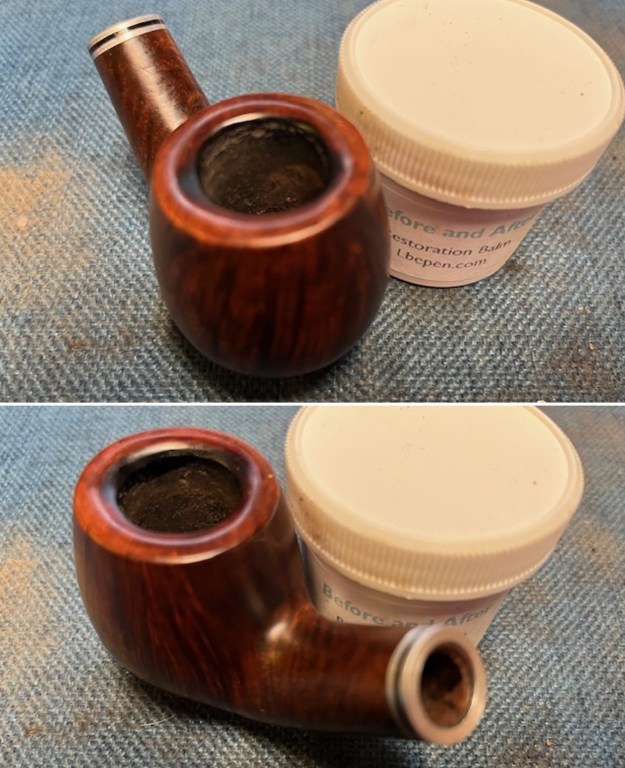
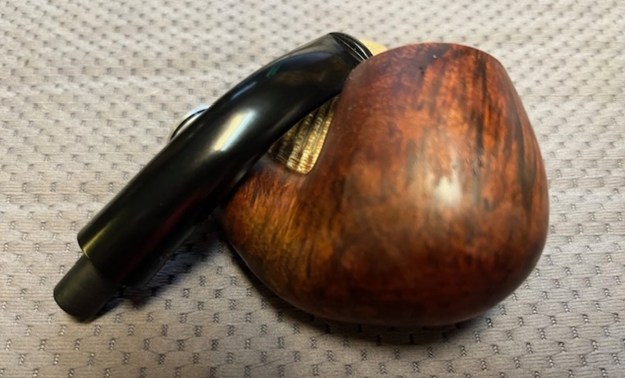
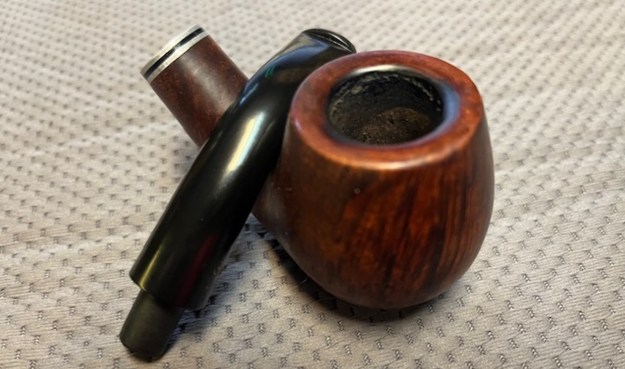
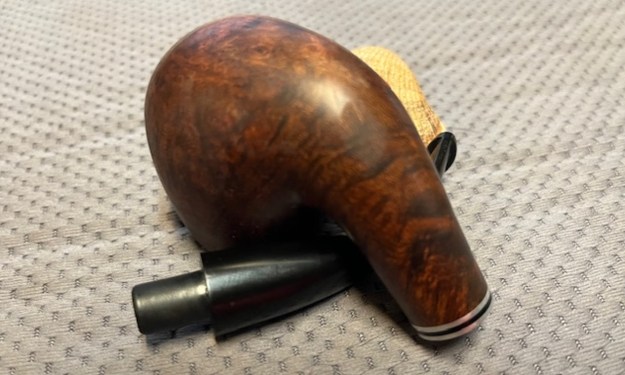
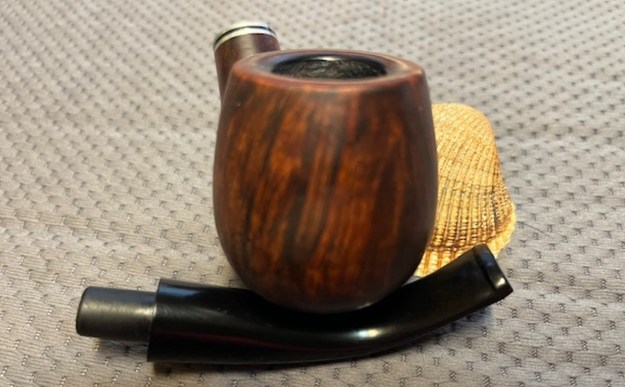
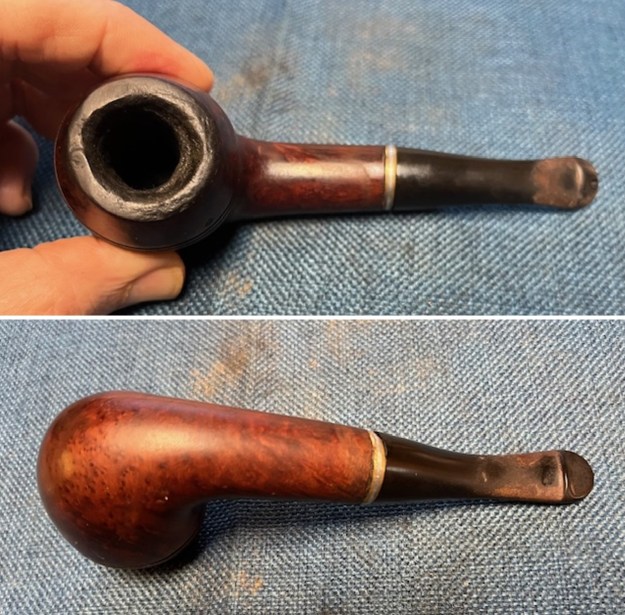
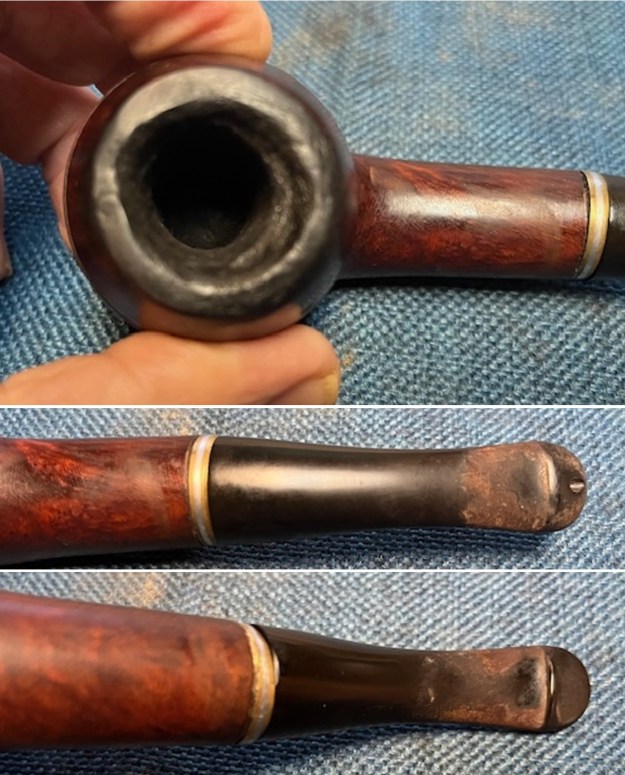
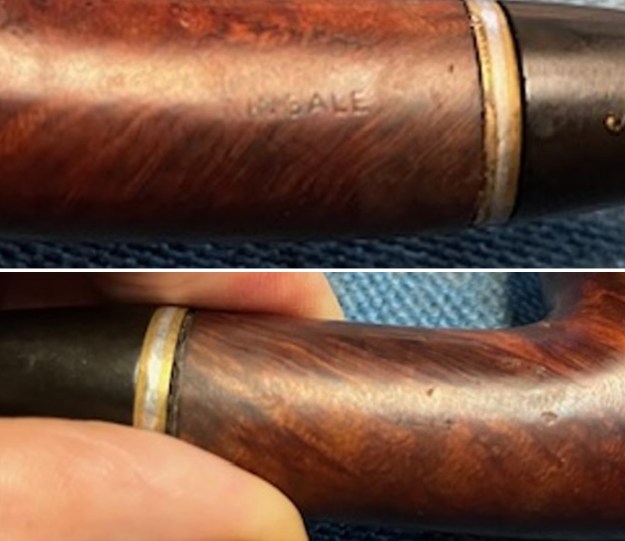
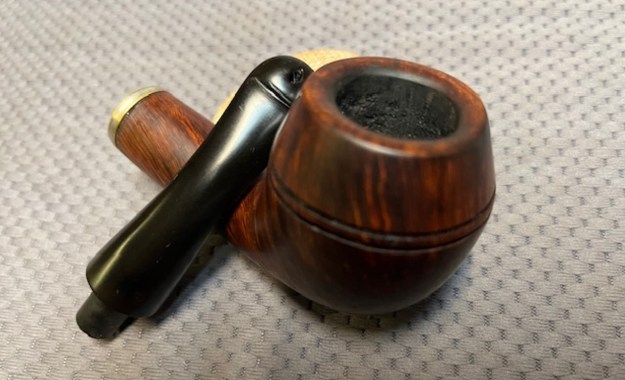
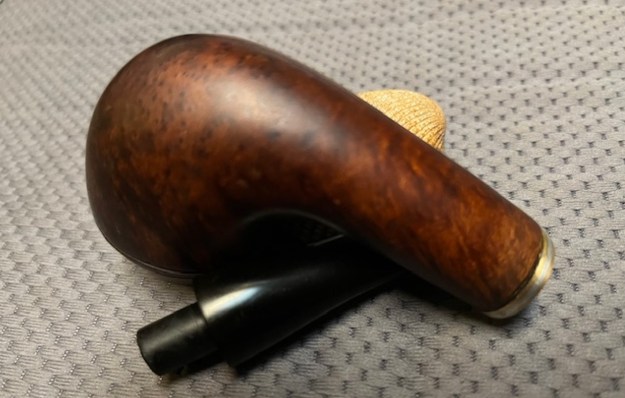
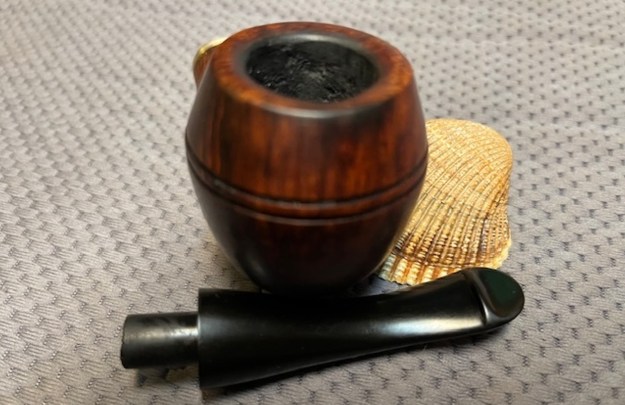
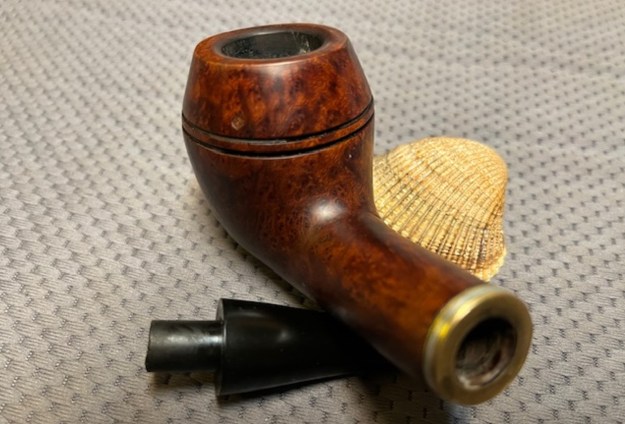
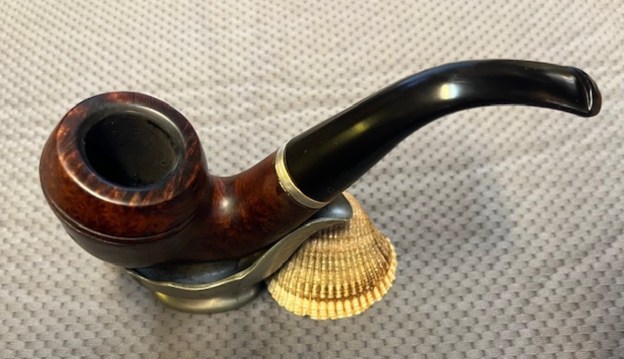
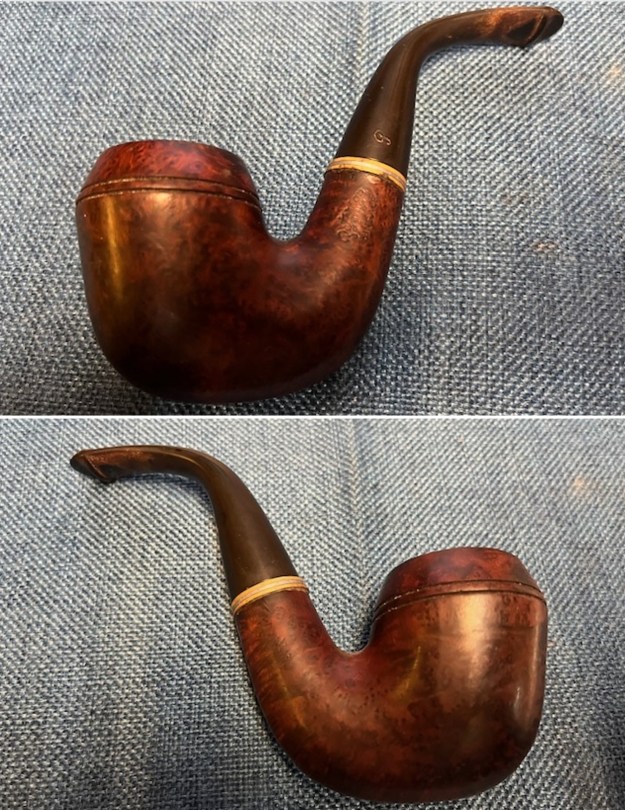
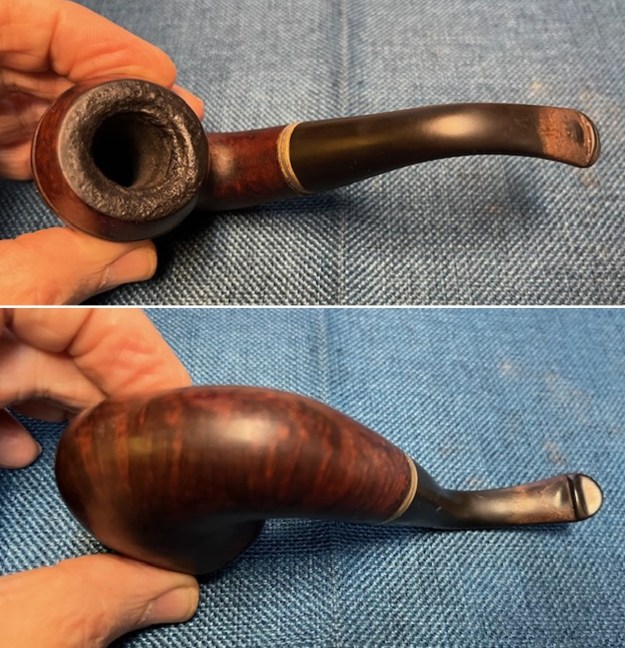
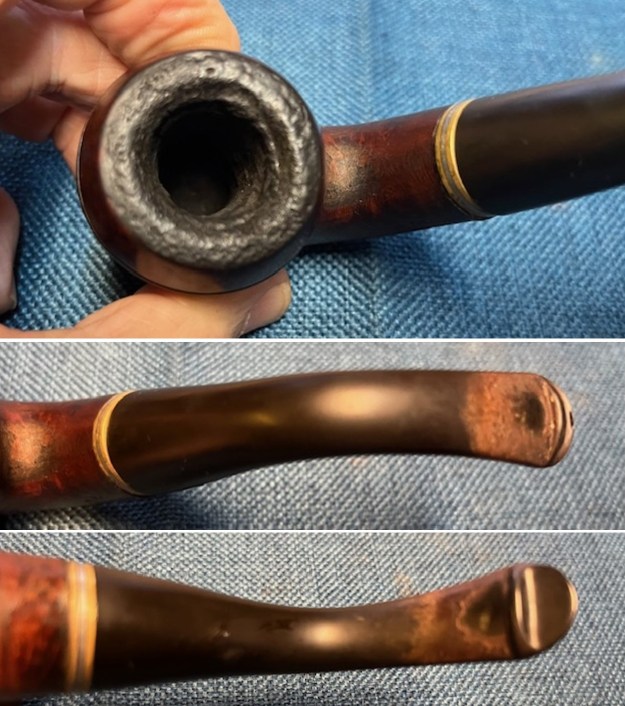
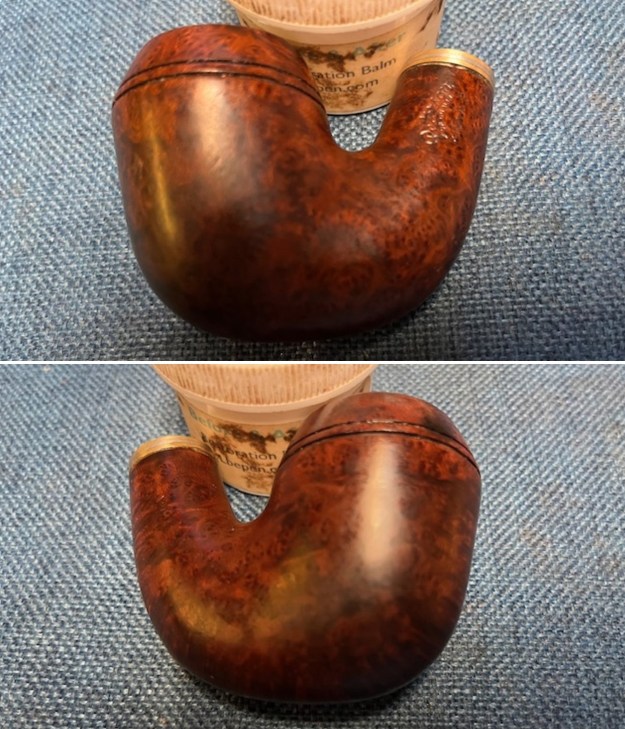
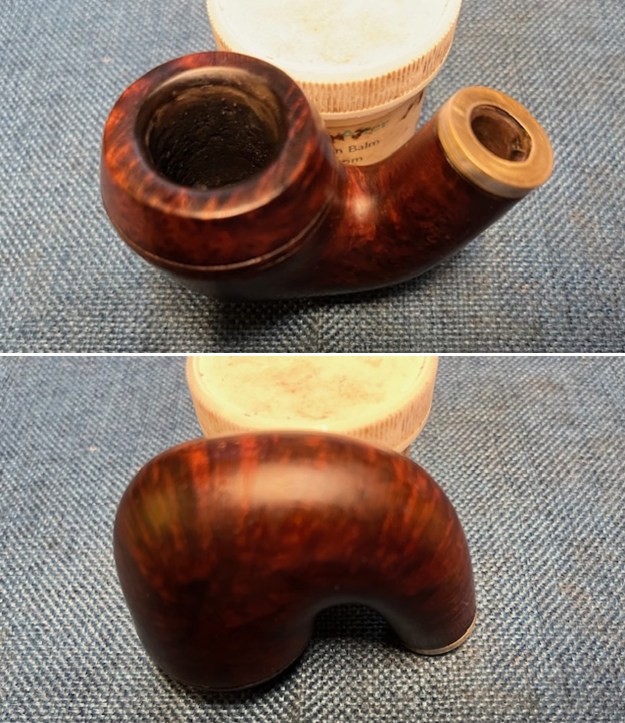
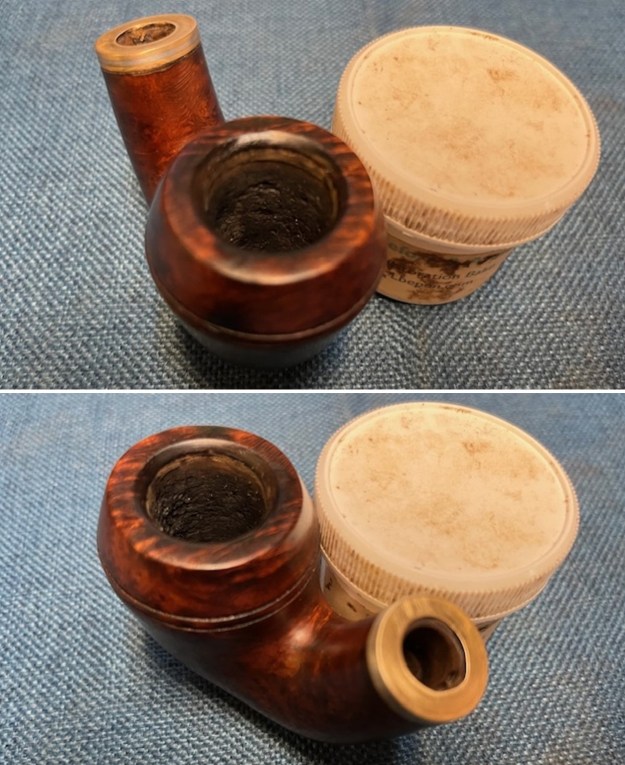
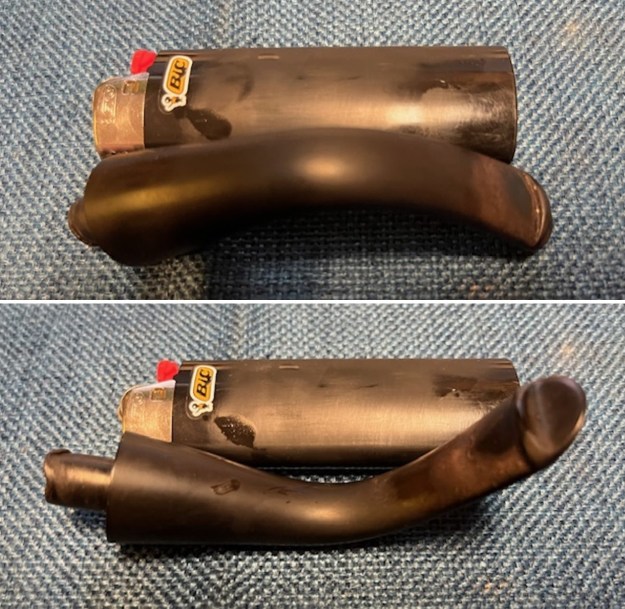
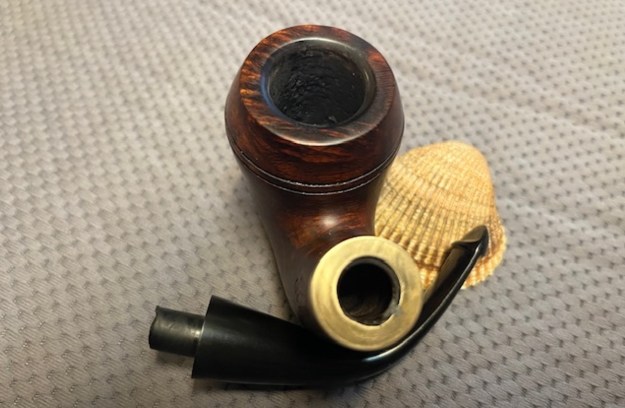
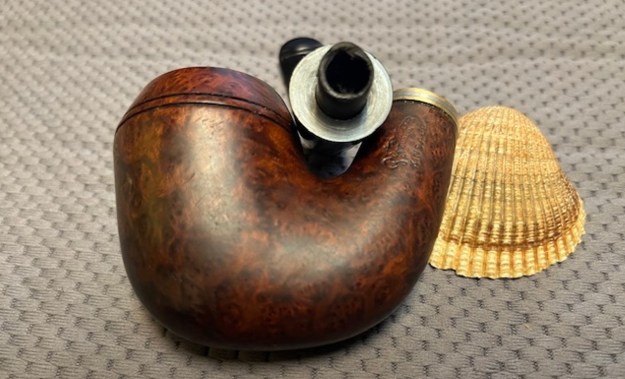
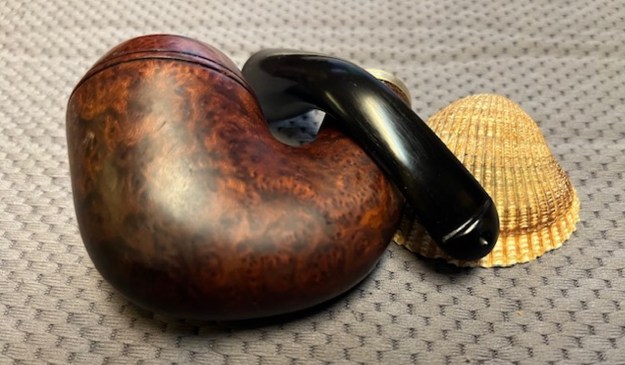
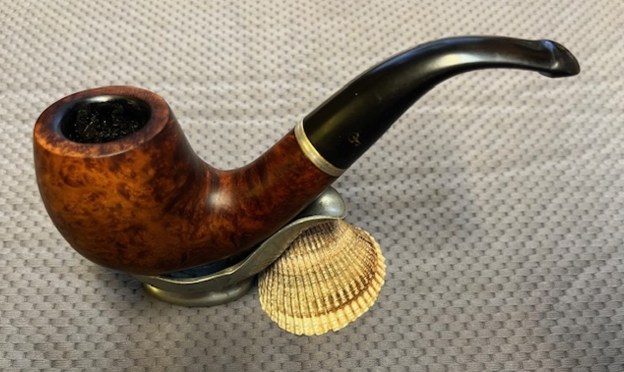
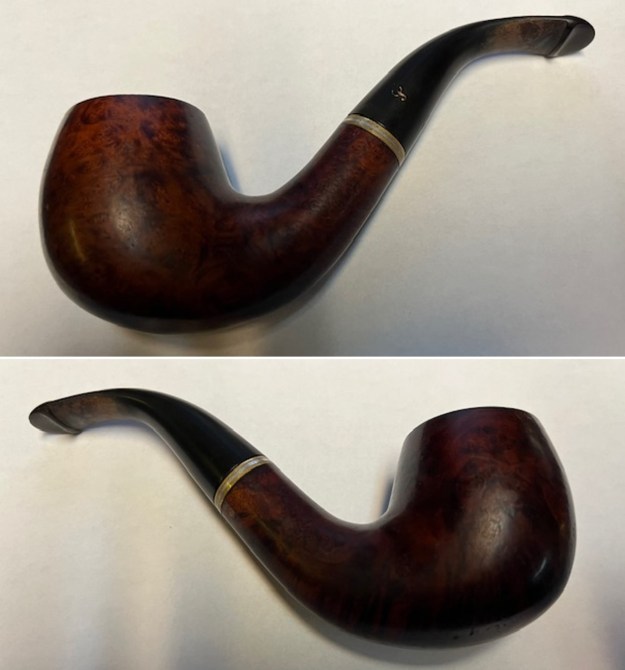
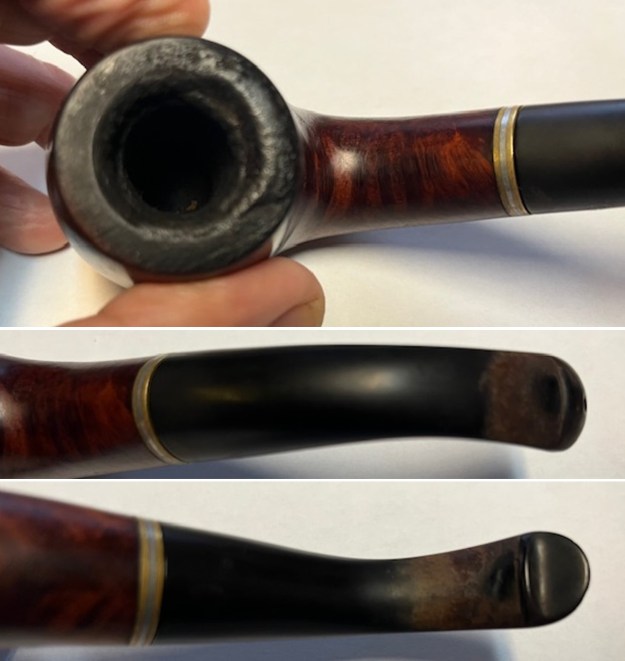
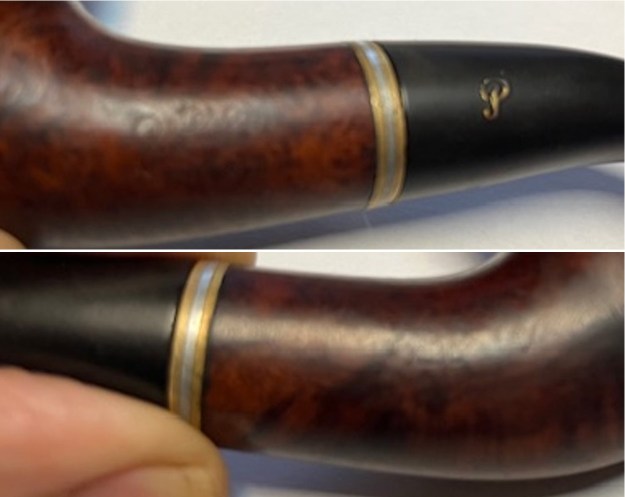
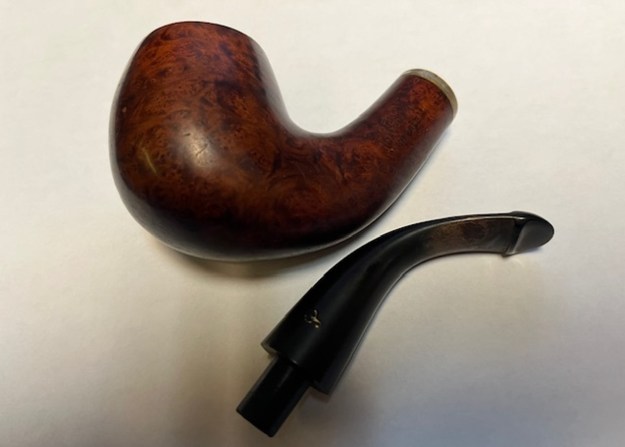
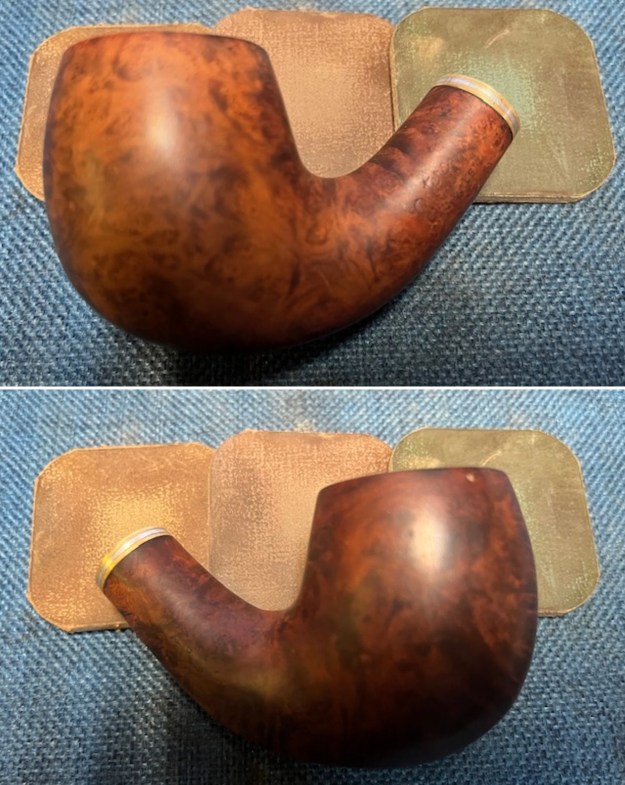
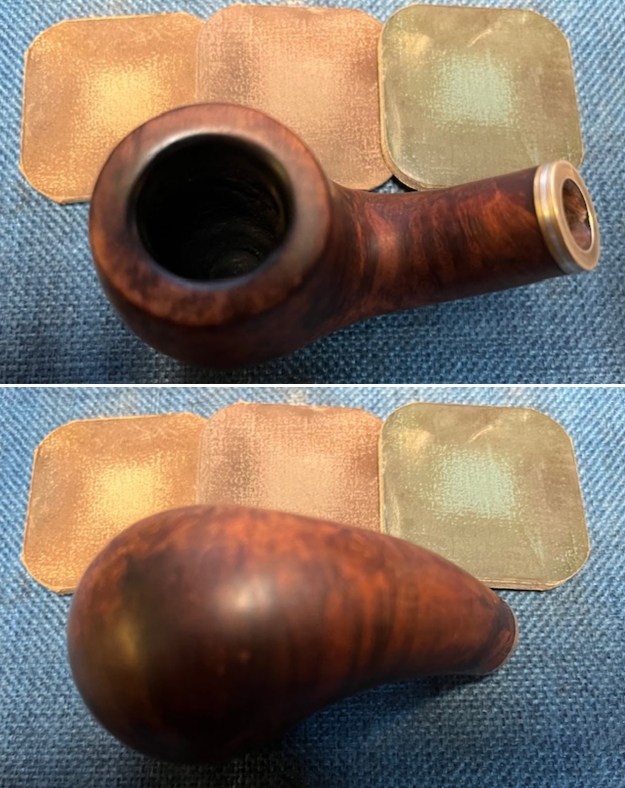
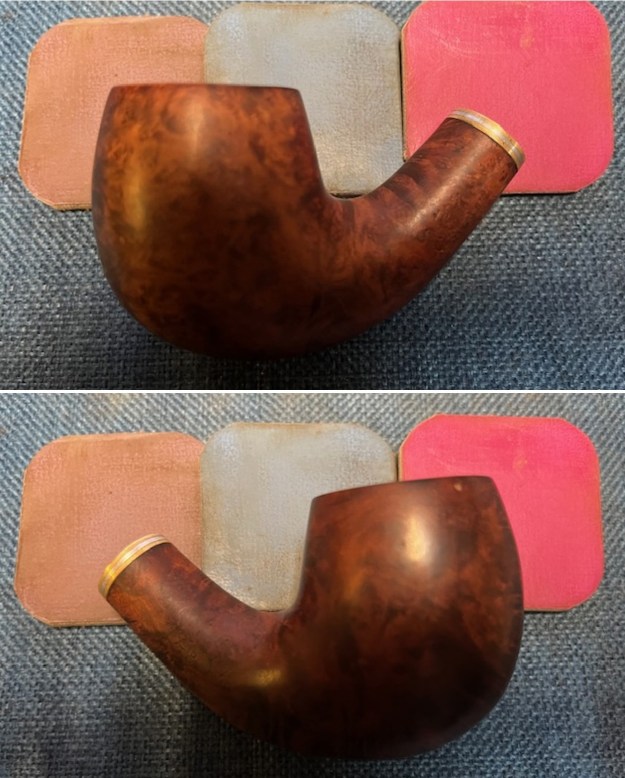
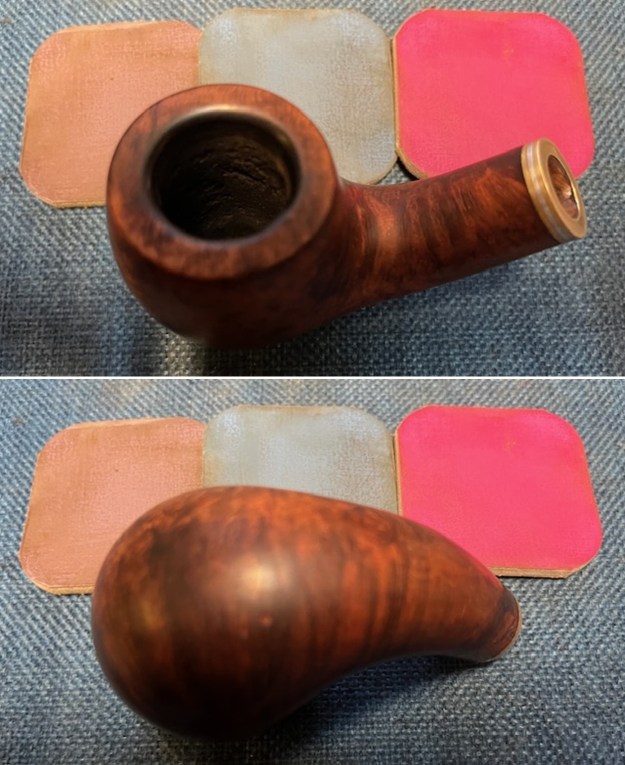
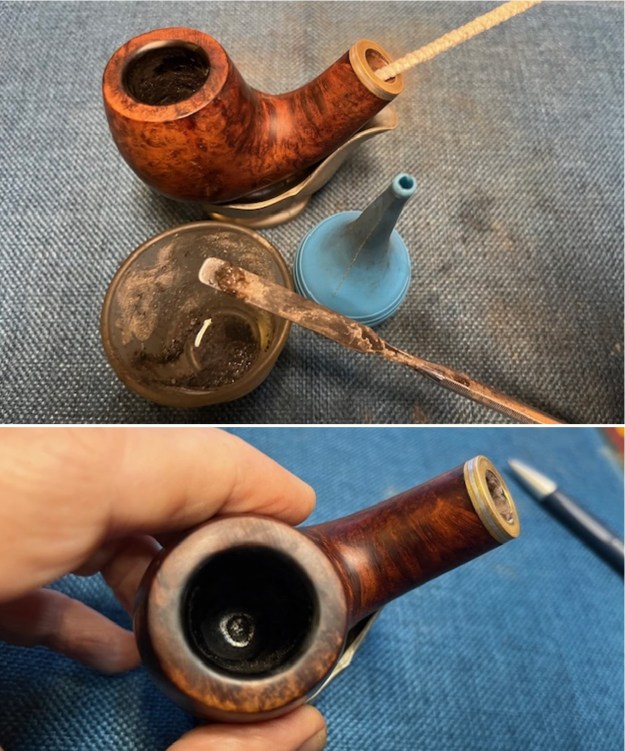
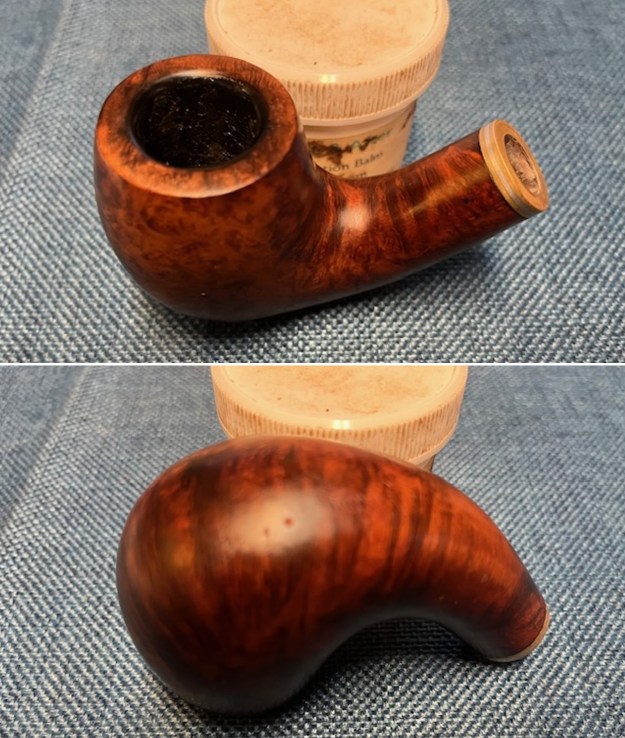
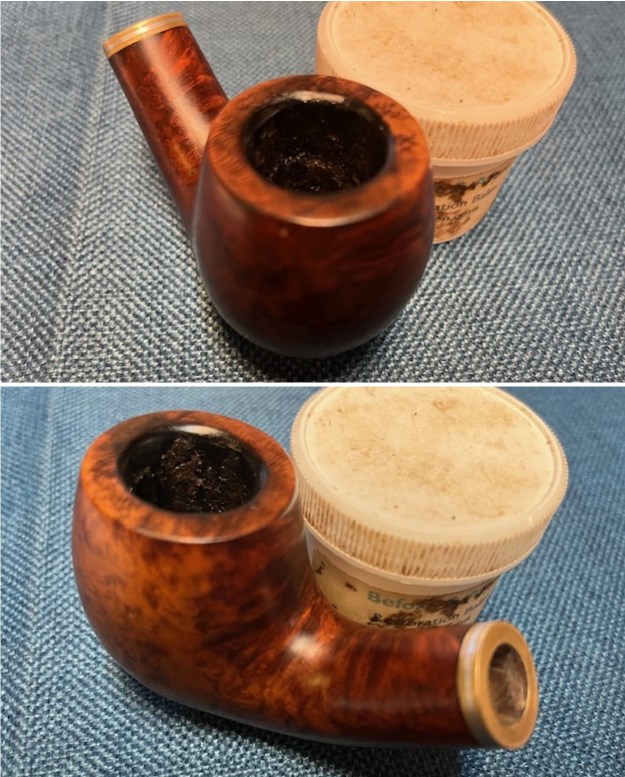
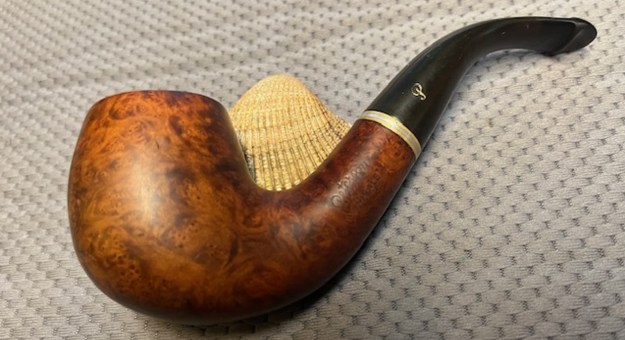
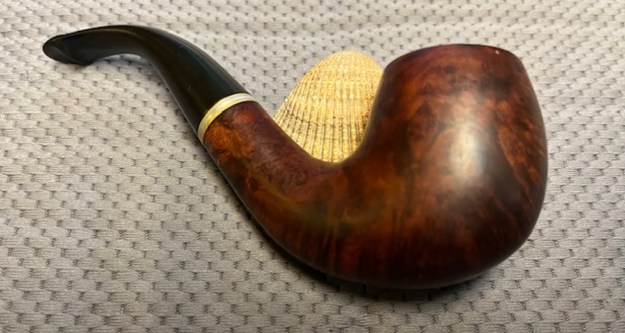
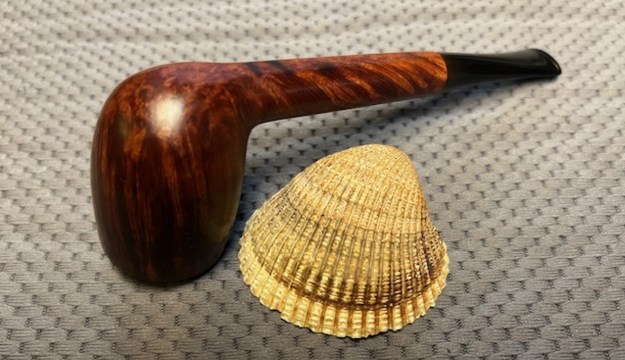
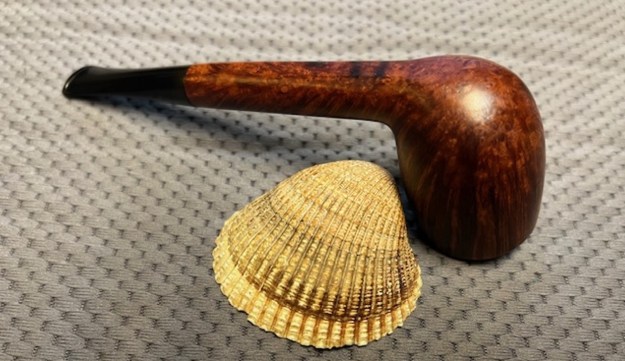
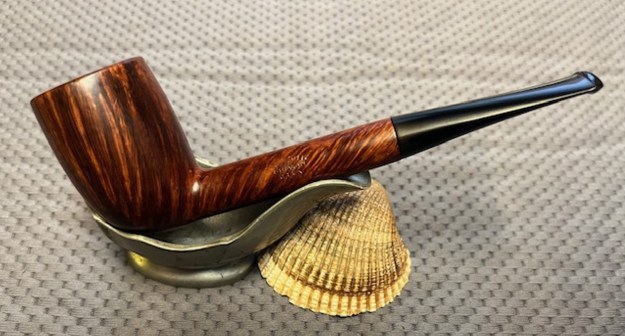
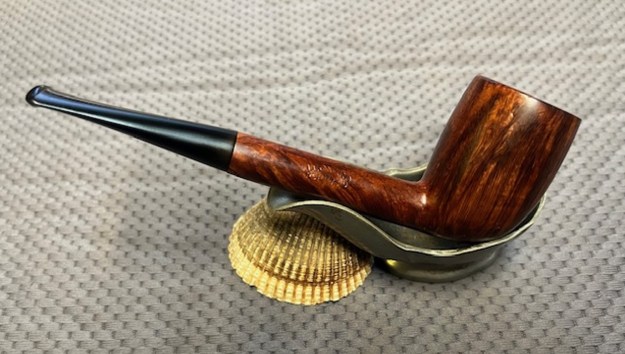
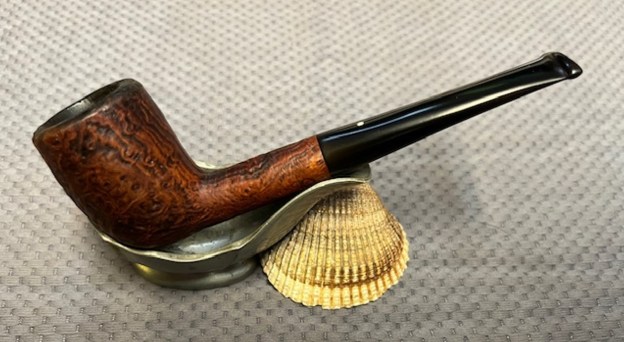
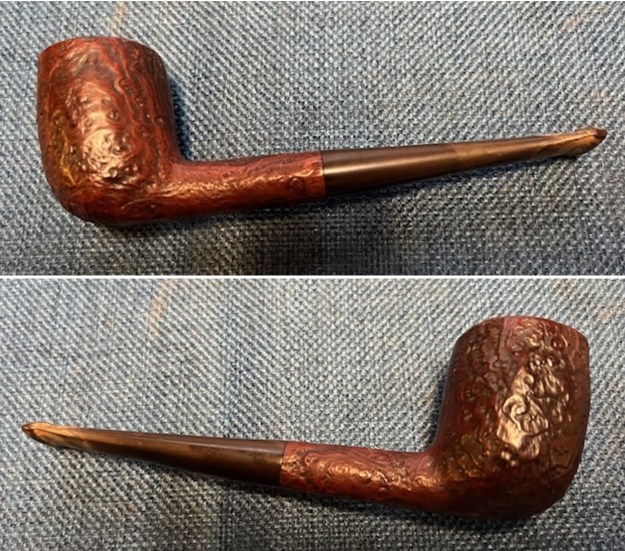
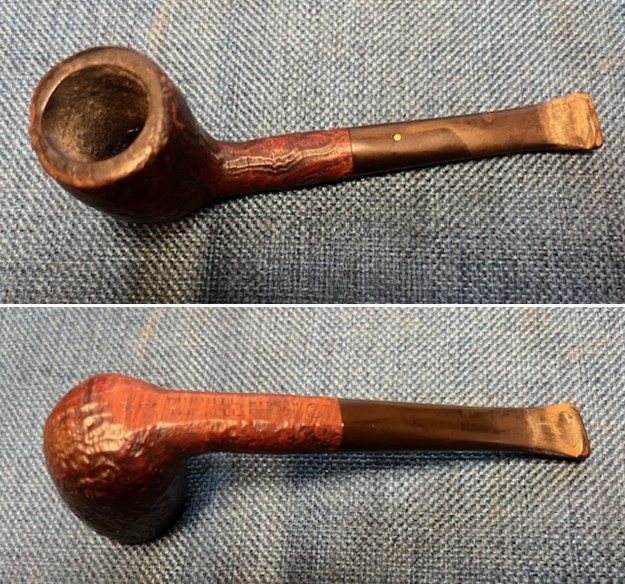
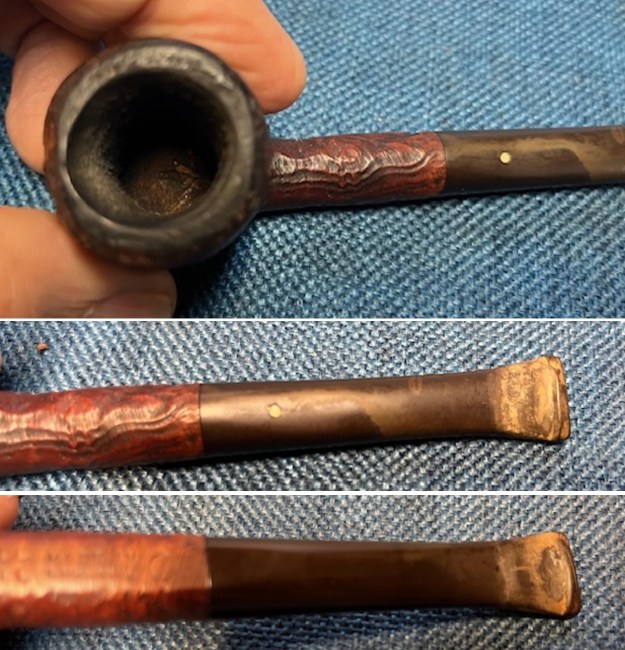
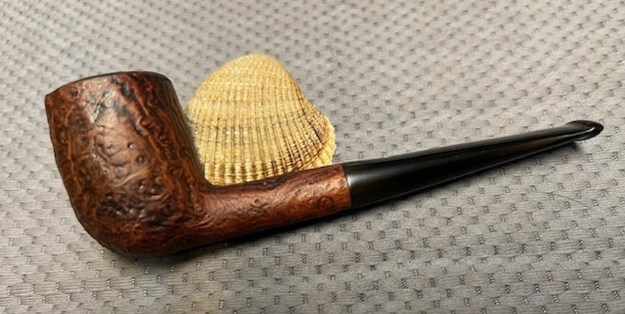
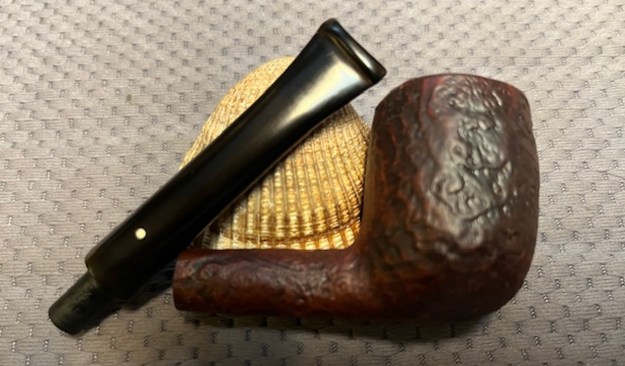
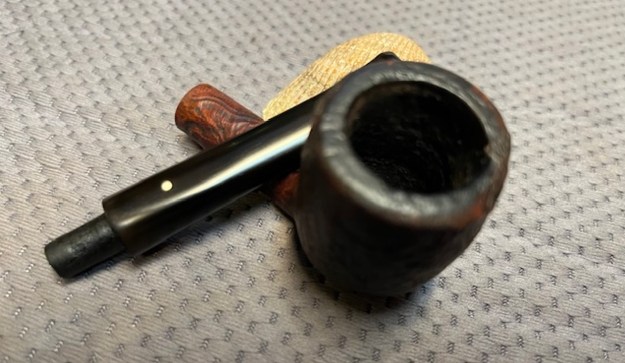
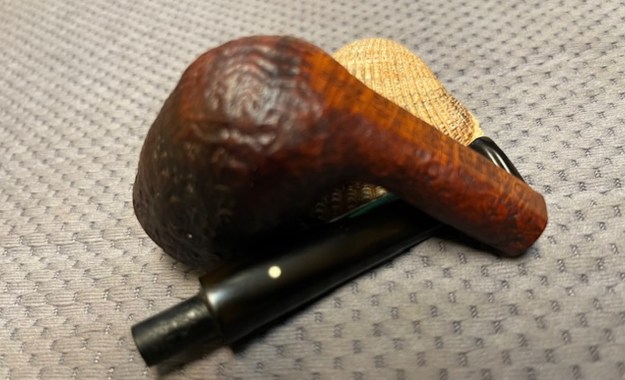
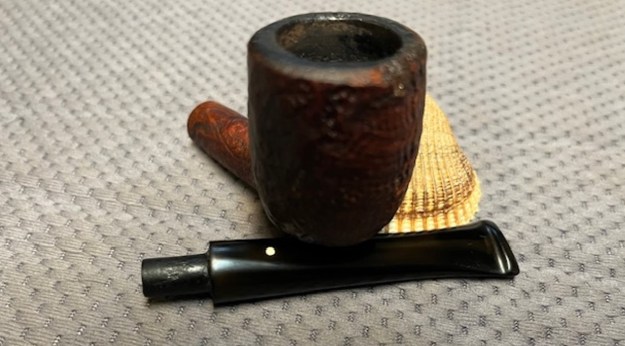
The next pipe on the worktable is an English made oval shank bent Apple with a classic brown finish. It is a combination reddish brown stains. The pipe came to us from a lot that we bought from a Facebook auction from Beach Lake, Pennsylvania, USA on 01/29/2024. The pipe is very dirty with a thick cake in the bowl and lava on the rim top. The rim edge looks good but it was hard to know what was under the lava coat on the top and edges. It is stamped on the top and the underside of the shank. On the topside it reads GBD in an oval [over] Speciale [over] Standard. On the underside it is stamped London, England [over] the shape number 788 followed by the letter D. The finish was dusty and there were oils and grime ground into the finish around the sides of the bowl. The stem is a vulcanite saddle stem with grime on the surface and tooth chatter and deep marks ahead of the button on both sides. There is an inlaid GBD oval medallion on the top of the saddle stem. Jeff took some photos of the pipe before he started his cleanup work. Jeff took a photo of the bowl and rim top to show the condition of the pipe. There was a thick cake in the bowl and a build up of lava on the smooth rim top. It is also built up on the inner edge of the bowl. The stem photos show the grime and the deep tooth marks on both sides ahead of the button. He took photos of the sides and the heel of the bowl to show the finish on the pipe. It is a unique stain on it that really shows the grain around the bowl sides. He took two photos to capture the stamping on the sides of the shank. It is clear and readable as noted aboveI turned to PipePhil’s site (http://www.pipephil.eu/logos/en/logo-gbd.html) to see what I could find. The site had nothing particular on the GBD Speciale Standard line of pipes.

I then turned to Pipedia (https://pipedia.org/wiki/GBD) to see if there was info the brand. It is a great read in terms of history but there was nothing giving details on a GBD Xtra Straight Grain.

The claims after the 1st World War demanded further distinctions. First of all was the London Made, which became the Standard London Made, followed by the New Era– in 1931 the top model asking 12½ Shilling. The Pedigree, although sketched around 1926, was not produced until the later 1930s. The New Standard was introduced in order to give the popular Standard of the 20s a higher rank in value. The Prehistoric, a deeply sandblasted black pipe, that still carried the small GBD Xtra stamp, was entirely new and unusual.

The French GBDs more or less followed the same developments, although Xtra and Speciale very longly used there. In the late 1920s a GBD with a metal filter system was introduced under the name Extra Dry. Also, from Paris came another important new feature: the introduction of the inserted metal plate with the GBD initials on the stems. That insert added a further “touch of class” to the pipes and in London it was attached immediately.

From that small note I knew that I was working on a post WW1 Pipe that carried the GBD Speciale Standard stamp.

I then followed a link at the end of the article to another article on Pipedia about model information (https://pipedia.org/wiki/GBD_Model_Information). There I found a note to the Speciale stamp that stated Production in France.

Further on in the thread on the Speciale pipe I found this response by snagstangl that reads as follows:

I was re reading a Jacques Cole article concerning GBDs titled “Story of a Pipe Brand” it had this to say about this topic:

“We have seen that early Briar GBDs were made in only one, later two qualities and the need to mark the difference did not arise. There were few finishes but towards the end of the 19th century demand was changing, for instance the UK had a “penchant” for the darker finishes. Qualities were therefore sub-divided and we see the introduction of the GBD XTRA (note the spelling). The GBD Speciales were as the name implied, special models, finishes and fittings. GBD XTRAs were the cream, being mostly straight grains. The “ordinary* quality was simply
stamped GBD. Demand after the First World War called for further identification starting with GBD ‘London Made* which became ‘Standard London Made*, followed by GBD “New Era’, top of the range in 1931 at 12/6d! GBD ‘Pedigree’, although first thought of around 1926, was well established in the late 1930s. GBD “New Standard’ was created to give a boost to the “Standards’ of the 1920s and a newly introduced sandblast was called GBD ‘Prehistoric’, still bearing a small GBD ‘Xtra* stamp. French made GBDs followed more or less the same ideas, still however using ‘Xtra’ and ‘Speciale’ while in the late ’20s a metal system GBD was introduced under the name GBD ‘Extra Dry*. The 1920s also saw an important development with the introduction of the metal GBD inlay on mouthpieces which gave the pipes that extra ‘touch of class’. This inlay has been used on GBDs for nearly 60 years.”

That was followed by a response from osiris01:

I started with either this text or one using it as source and it does explain well the reason for creating, first the Xtras and Speciales, and later, the other graded lines like New Era, Pedigree etc. The problem is that the Xtra and Speciale were discontinued in 1937/8 (Pipedia et al) because the new lines provided a more refined grading system. And yet, the Xtra was listed in the catalogs until 1950.

My guess is that the French factory continued with the Xtra, for a reason unknown to me. The only evidence I have of this is a badly translated sentence from Pipedia that describes the process of creating additional lines. It reads “The French GBDs more or less followed the same developments, although Xtra and Speciale very longly used there.” What ‘Longly used there’ means I don’t know, but somewhere was still making them, and if you translate ‘longly’ as ‘longer’, it does imply that they continued making them for a longer period. It’s a far from perfect explanation but, as I said, they were still being made somewhere and it does imply that the French factory were responsible. However, they were different to the Xtras made in the 20s/30s since the later ones had a chamfered rim, different stems etc.

However, reading you text again, I wonder if the it is hinting at a COM. “Demand after the First World War called for further identification starting with GBD ‘London Made* which became ‘Standard London Made*,”. It doesn’t say that a COM was not used before then (that would be too easy), but you wouldn’t stamp a pipe “Xtra, London Made, London Made” or similar.

I just don’t have enough evidence, reference points, old models to compare against etc. Even describing it as an educated guess is still stretching it a bit. The best guess, perhaps.

However, what I do know is that the 1930s Xtras were fitted with a specific stem with an unusual button called the ‘curved wafer tip of comfort’ (just rolls off the tongue). The following images shows the detail from a 1938 catalogue and the button on my pipe, and to my eye, they are the same. Not in any way conclusive, but it’s the best I’ve been able to come up with.

Now I knew that I was dealing with a French made GBD Speciale Standard created in the 1950s.

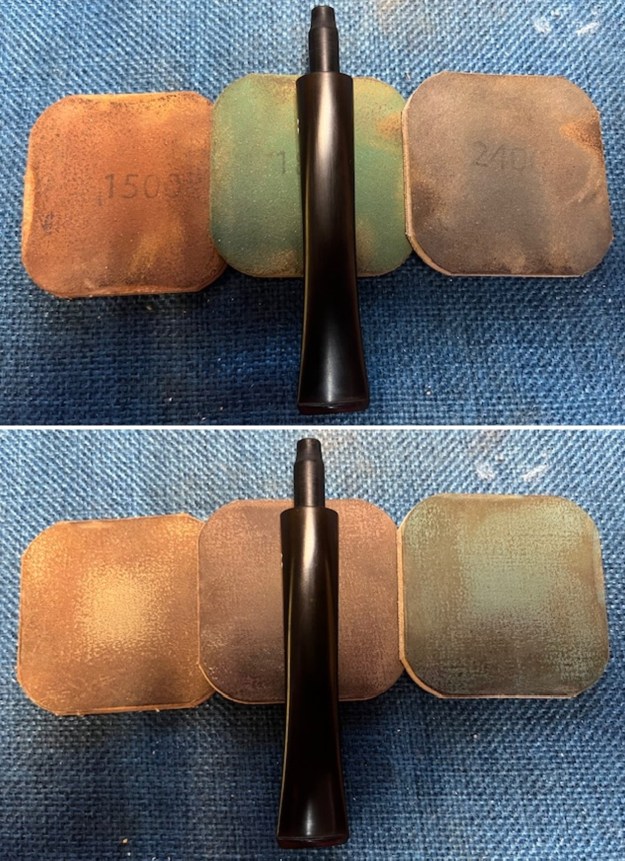
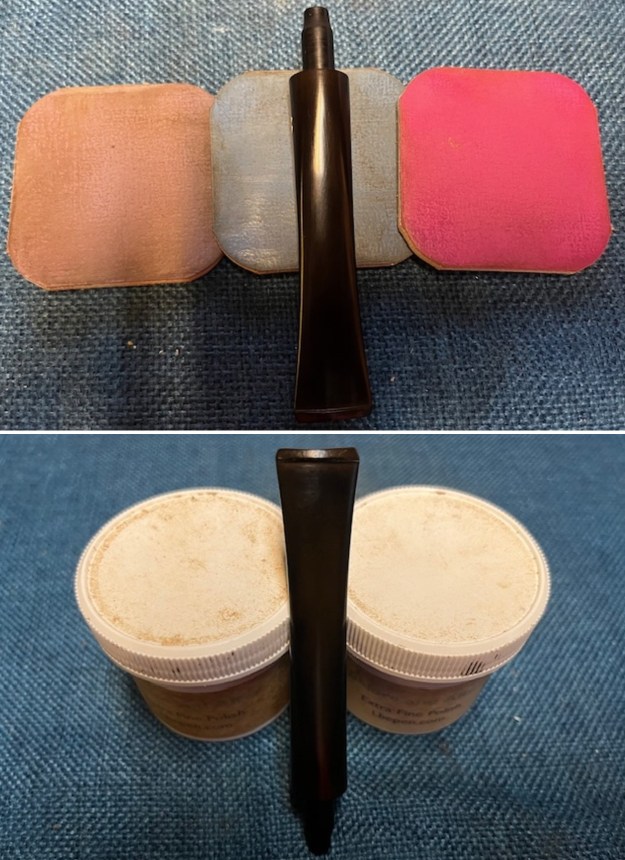
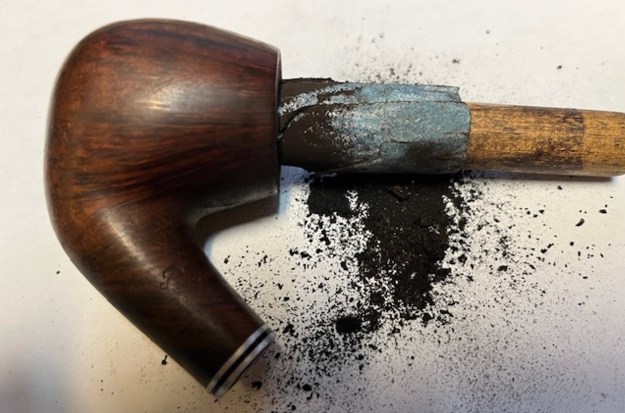
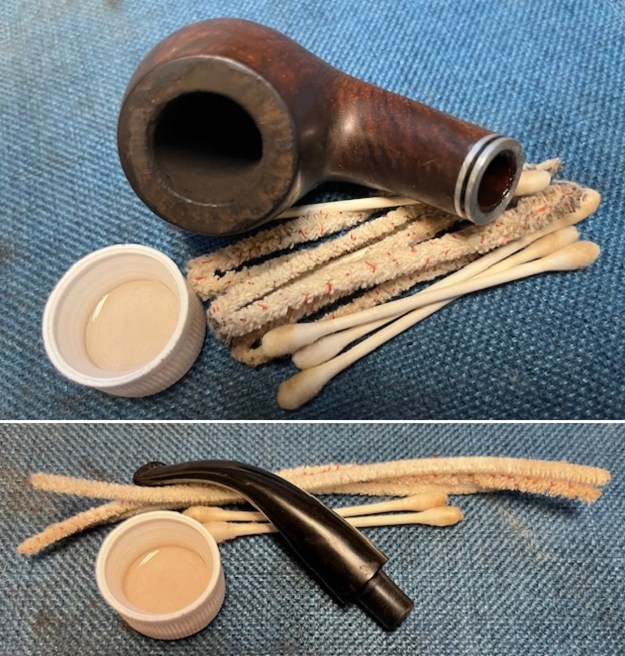
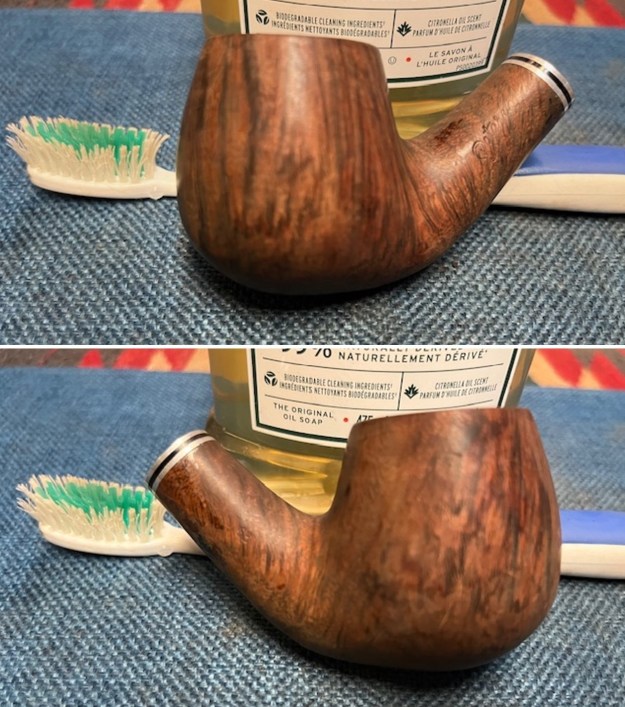
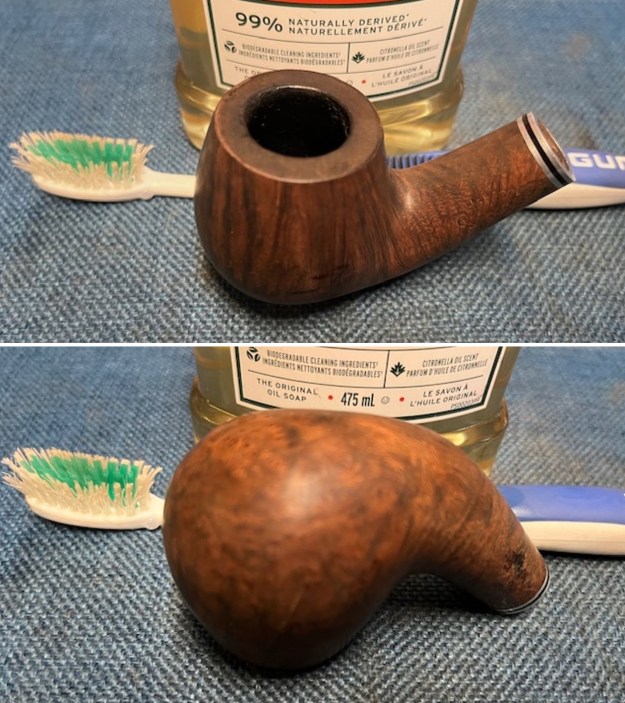
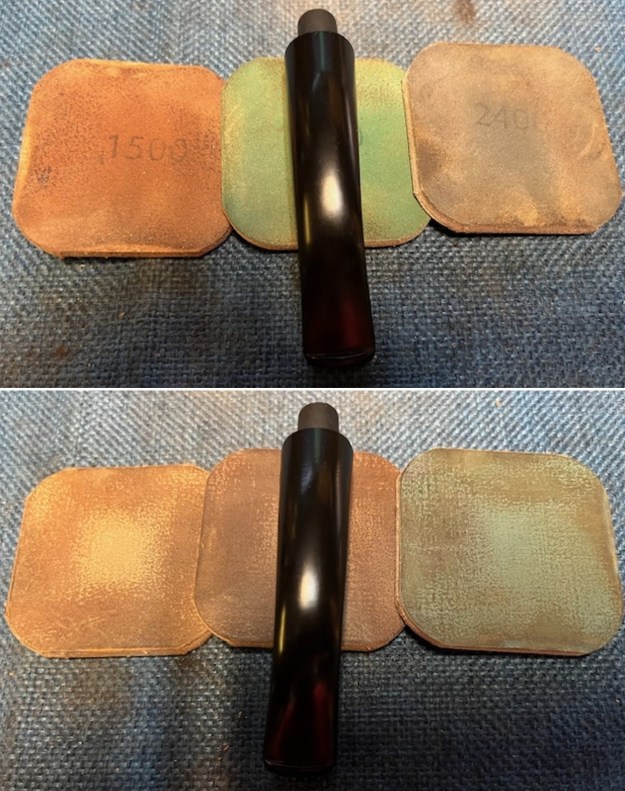
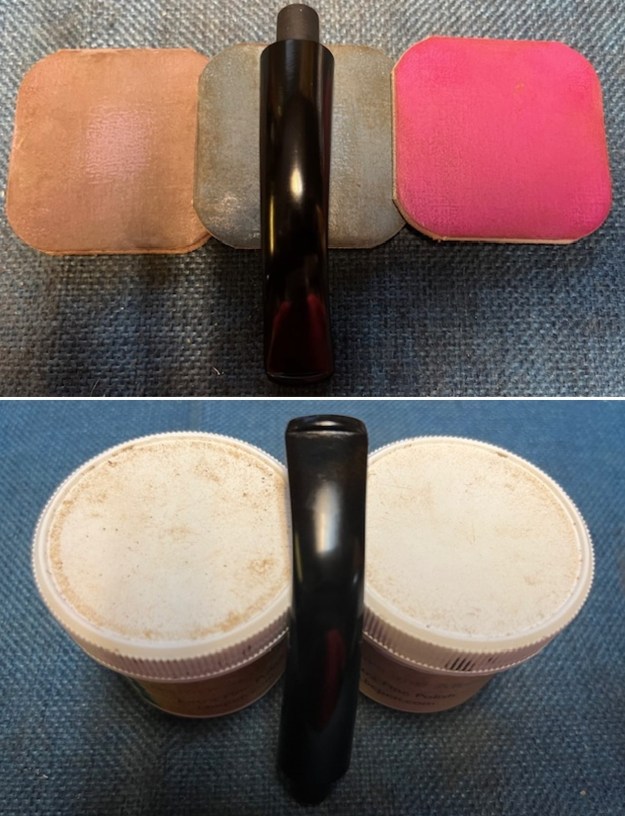
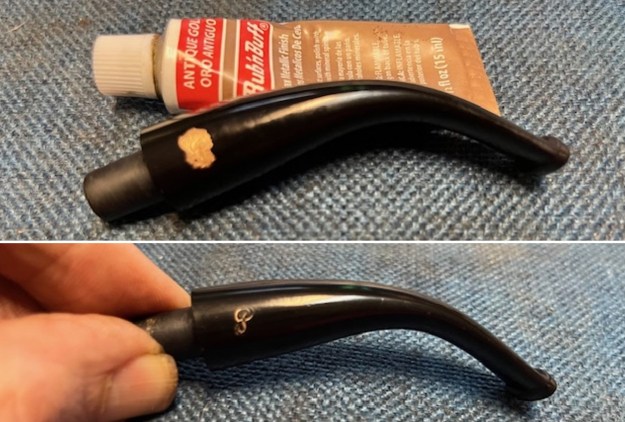
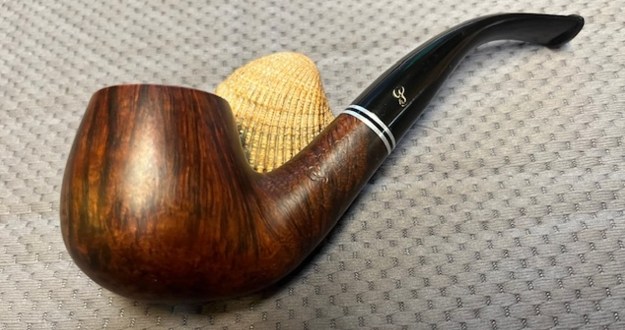
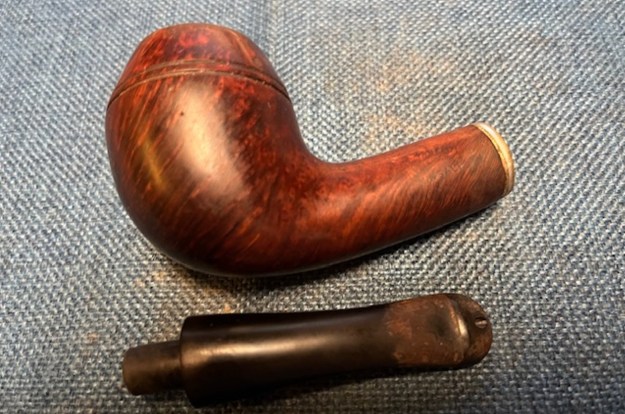
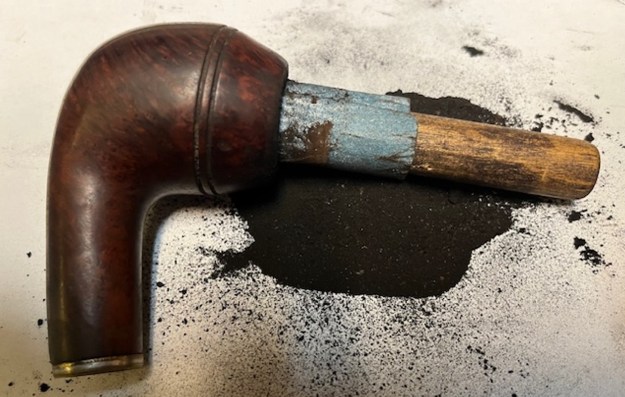
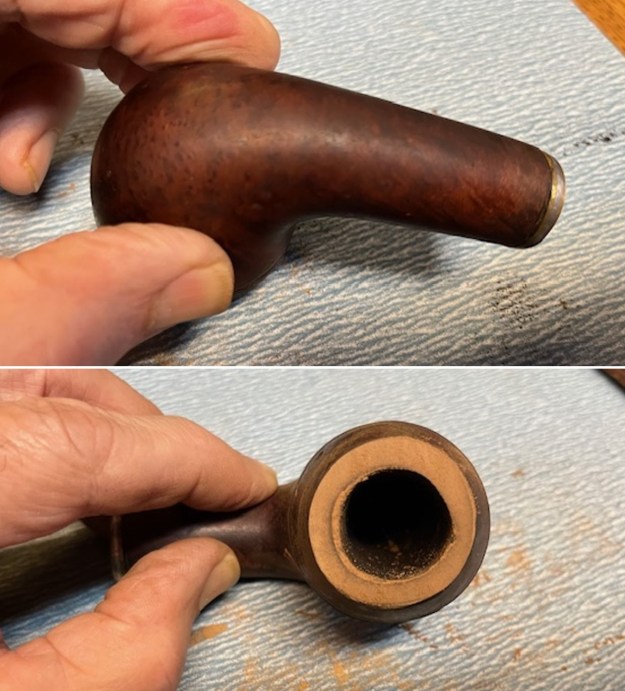
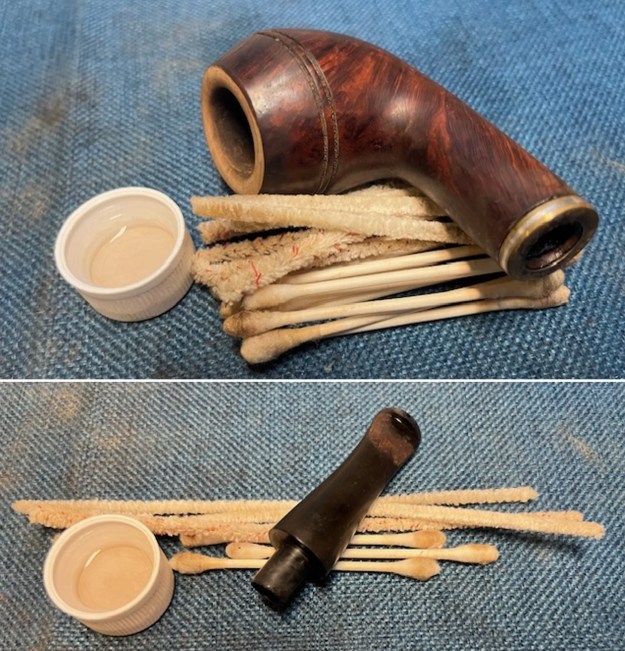
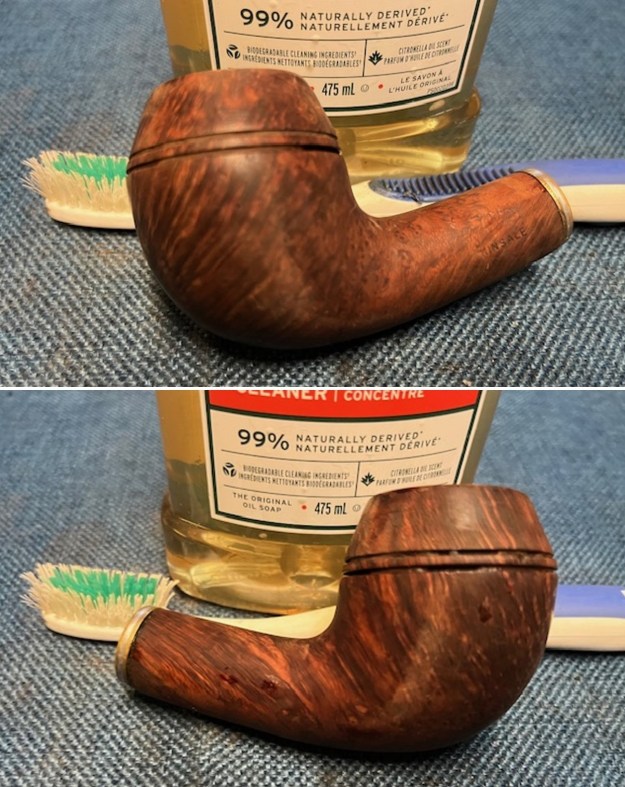
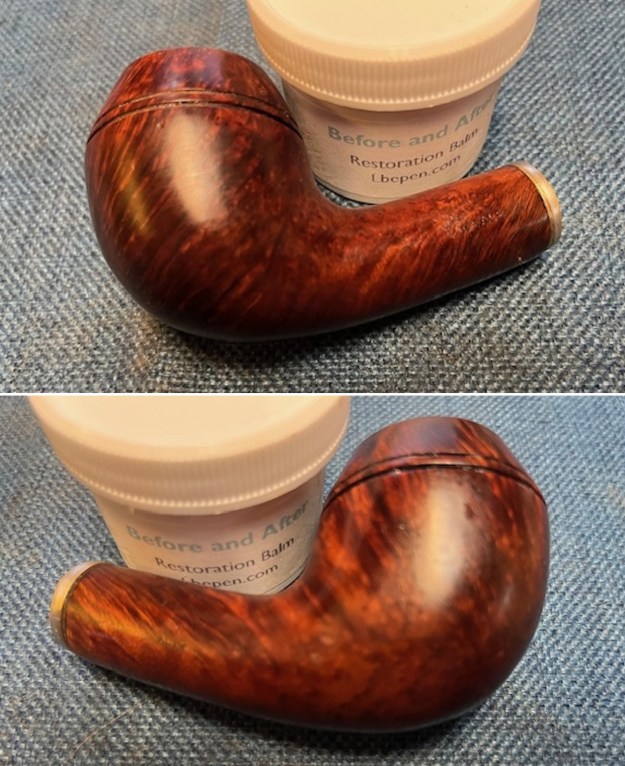
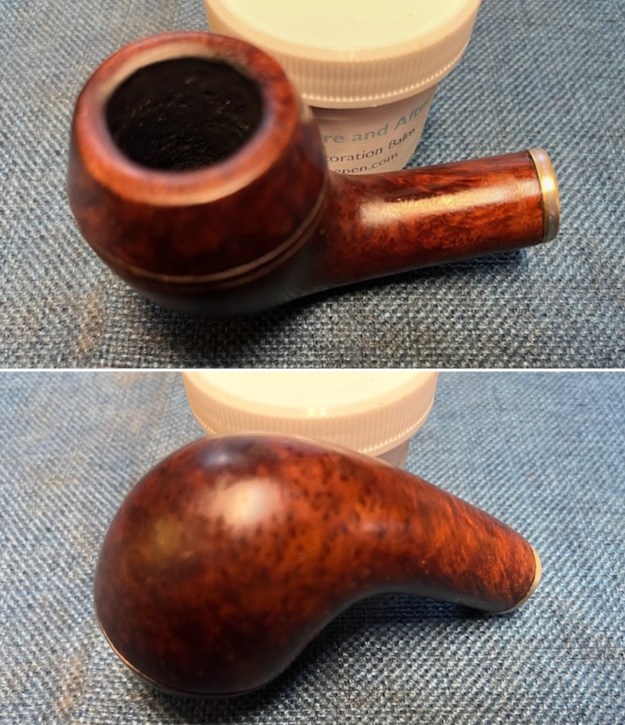
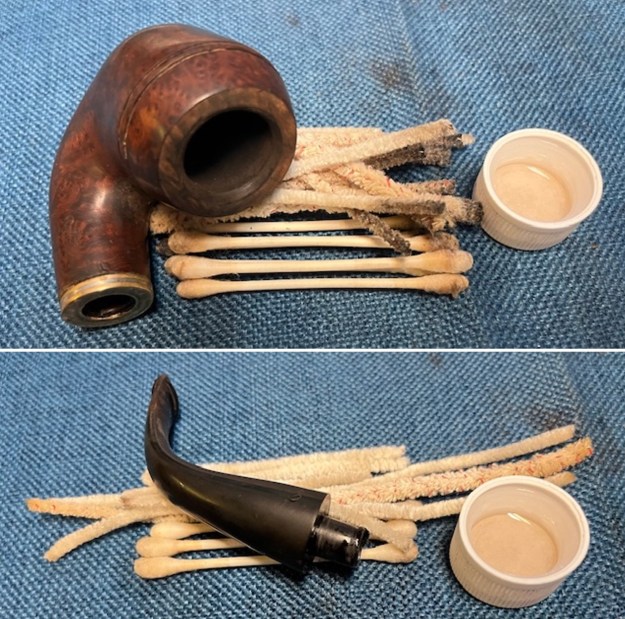
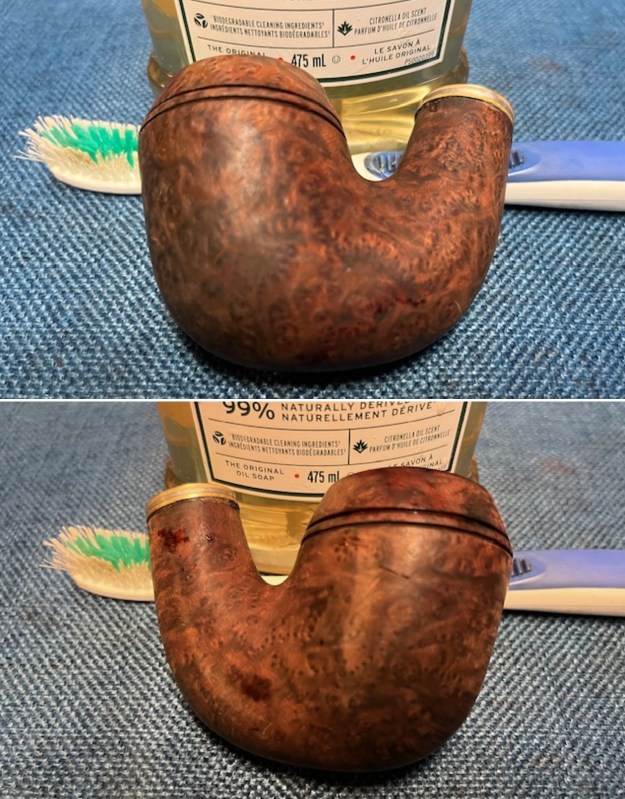
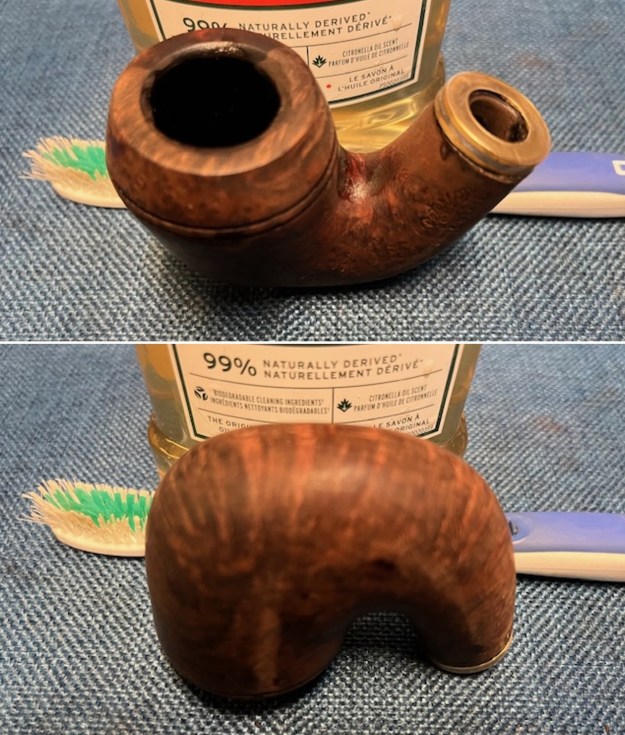
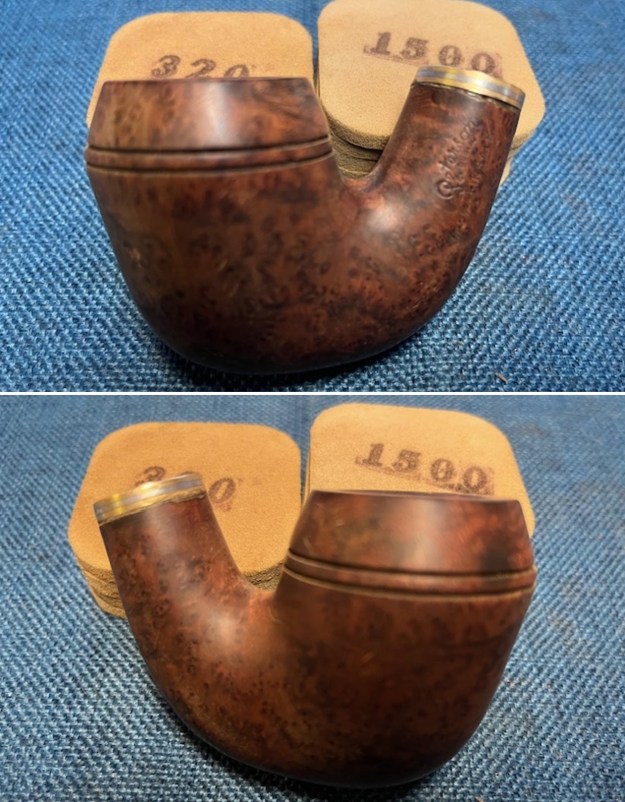
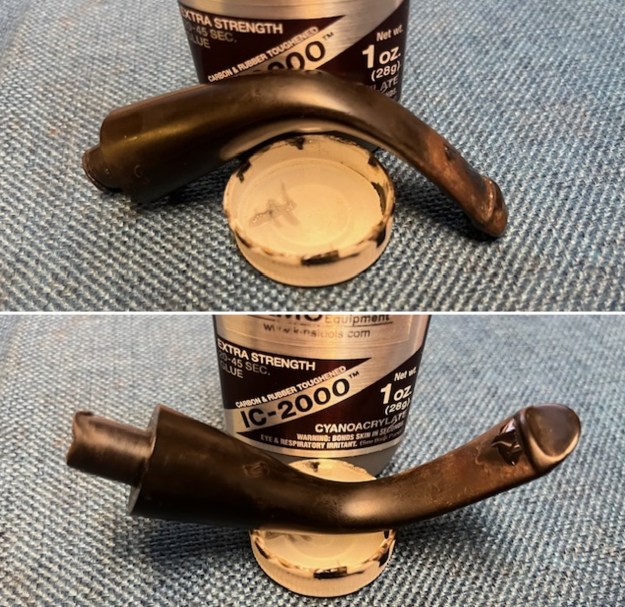
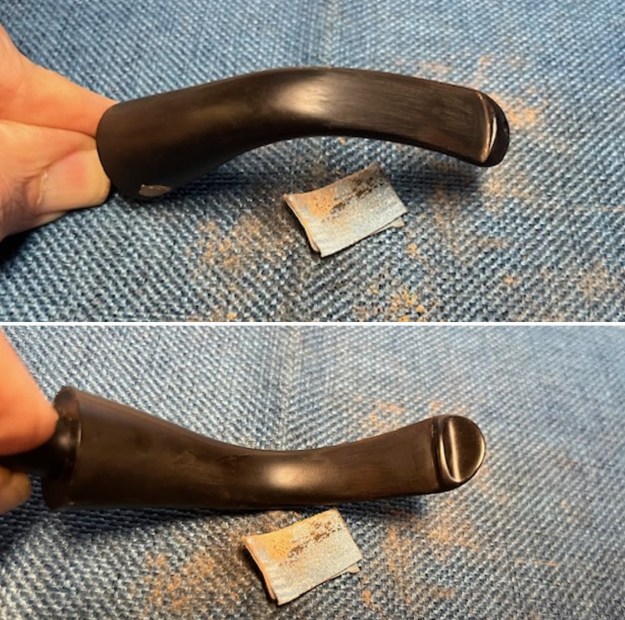
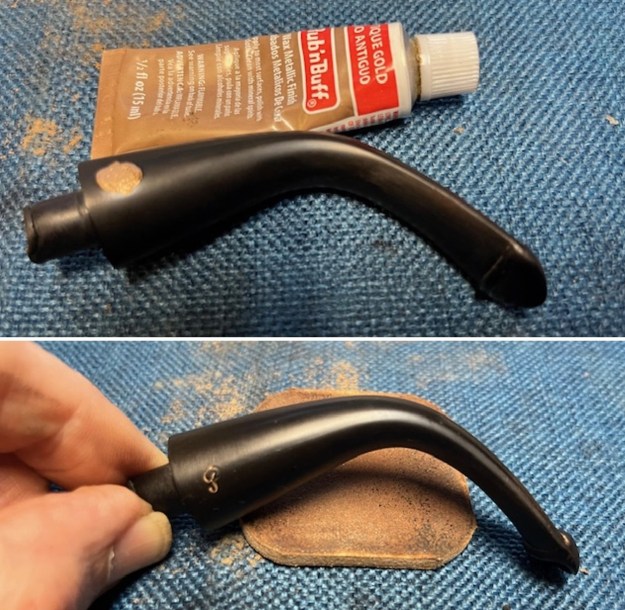
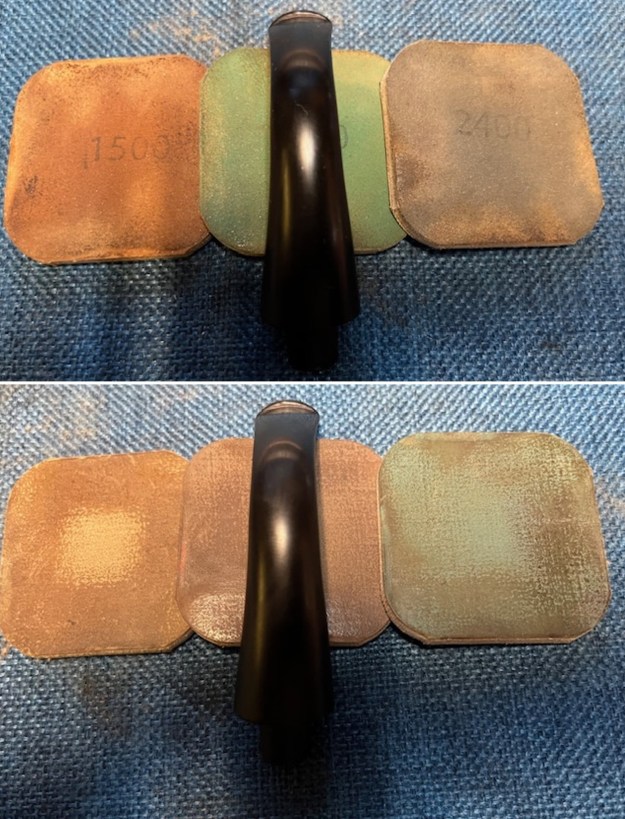
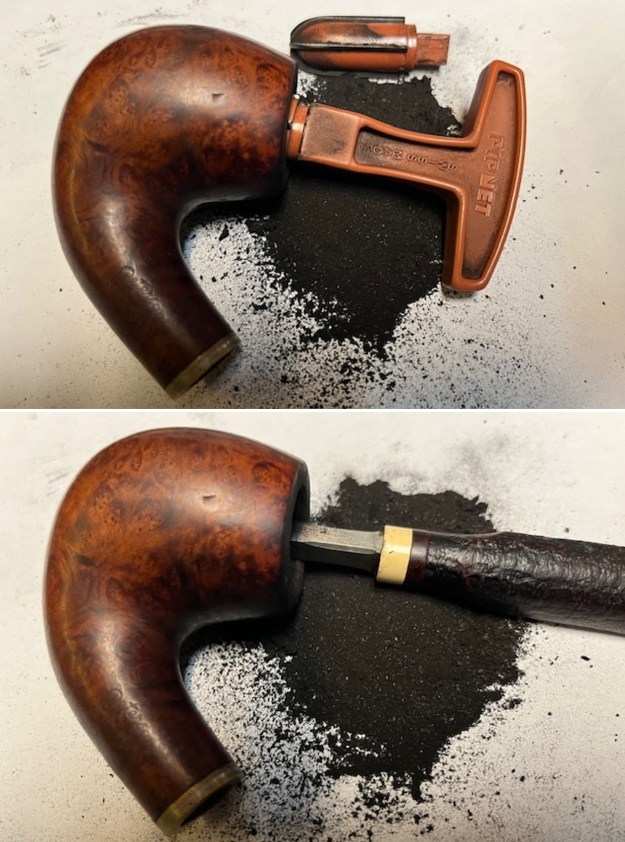
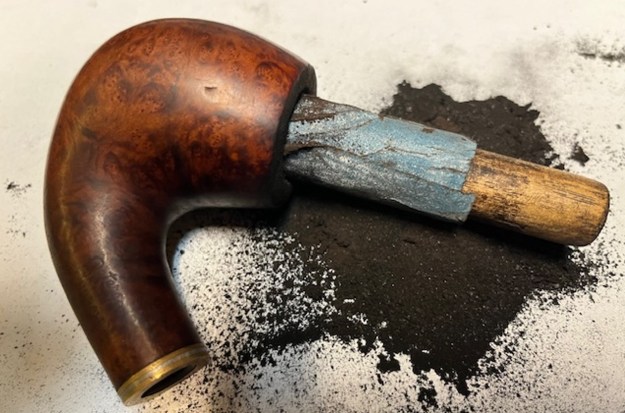
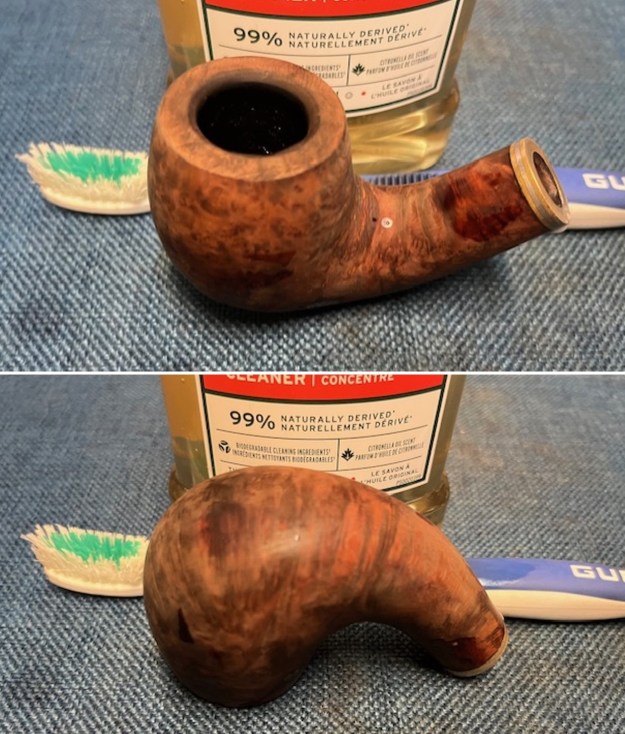
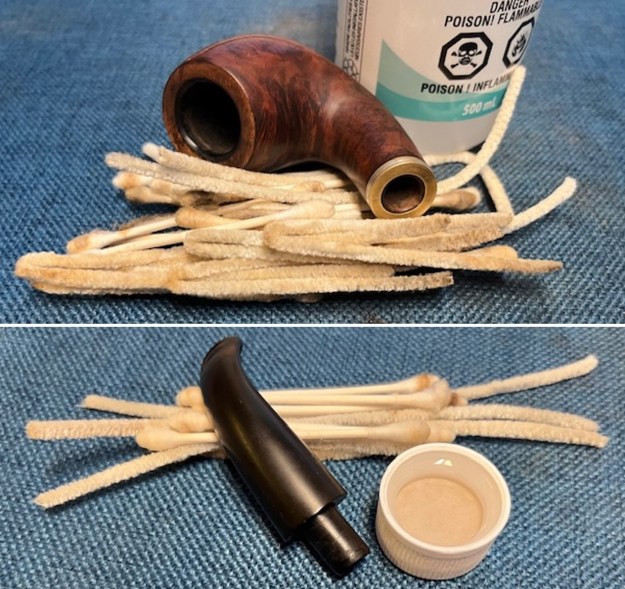
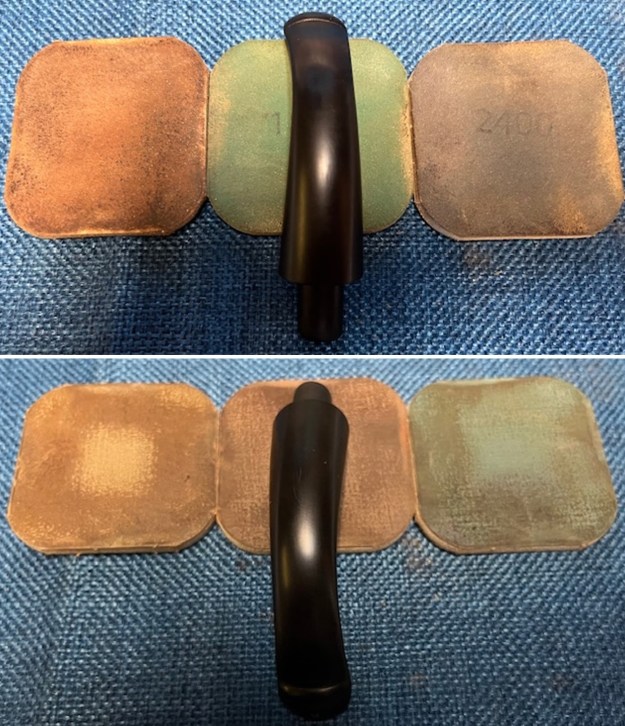
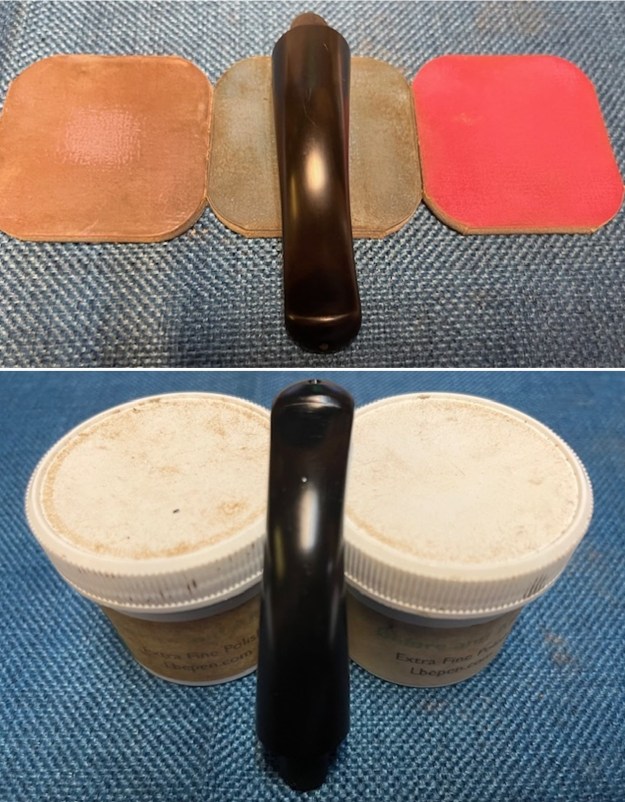
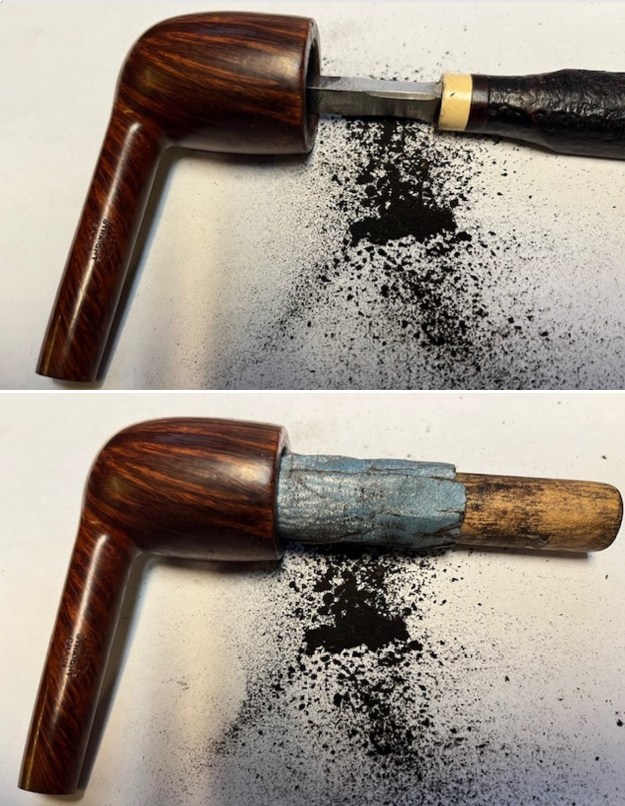
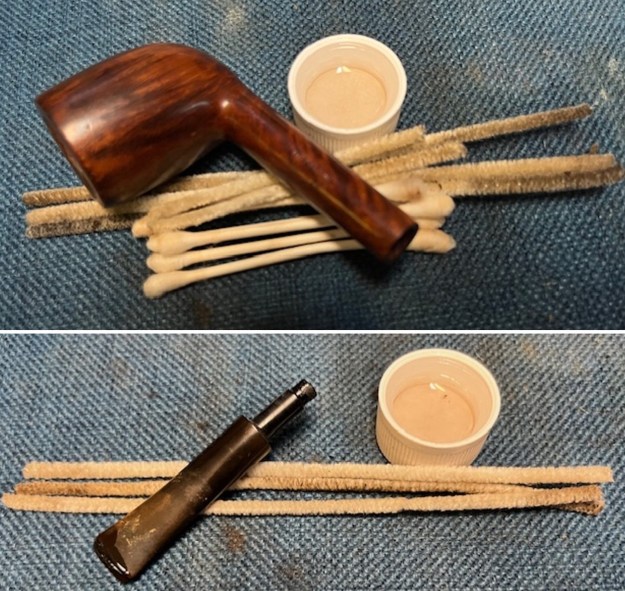
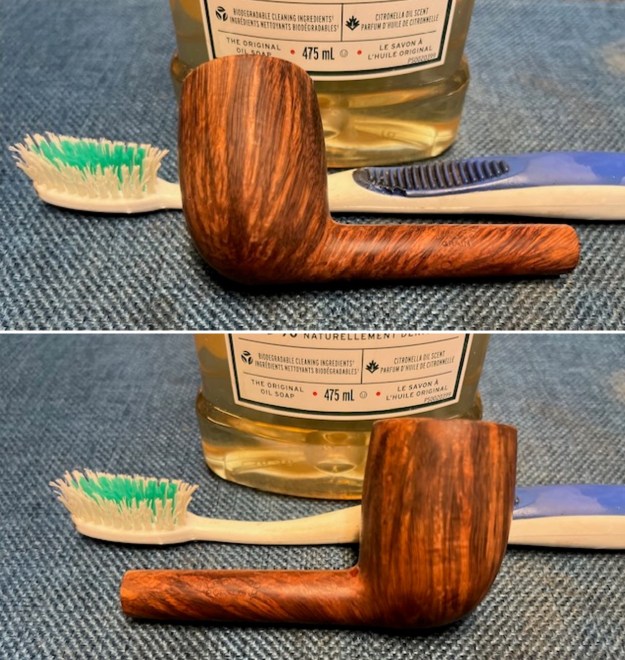
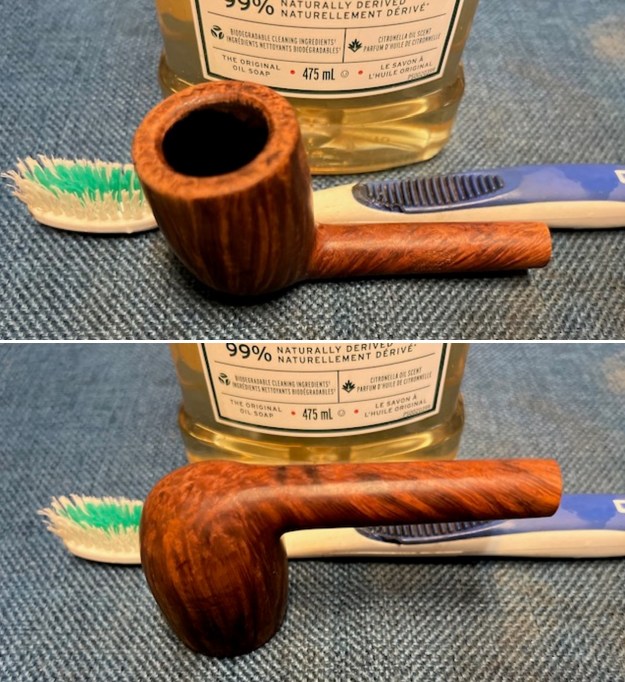
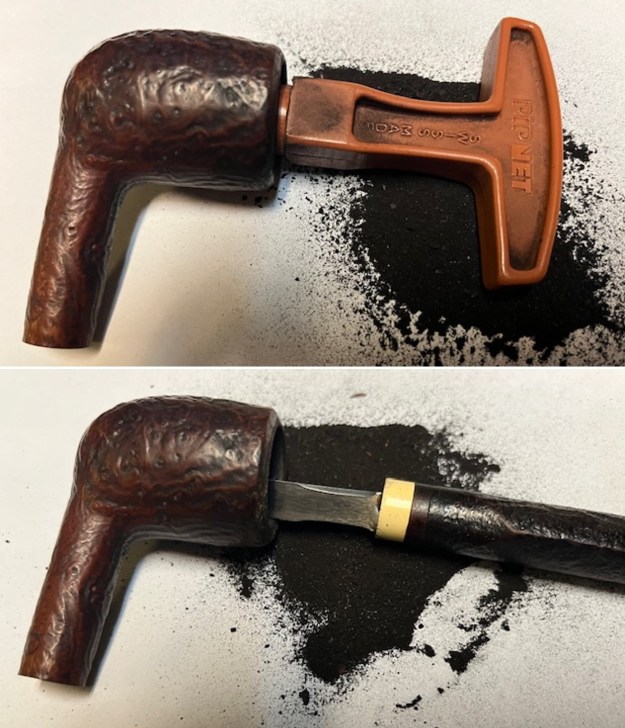
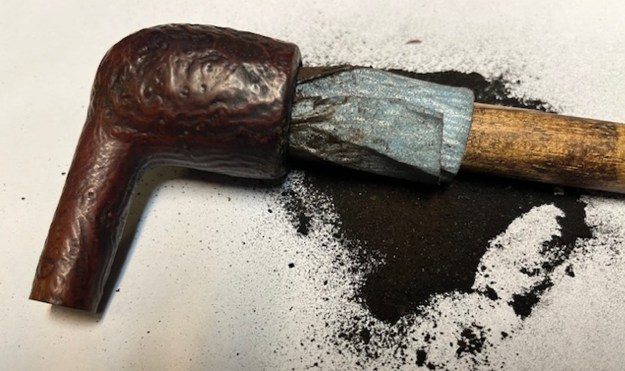
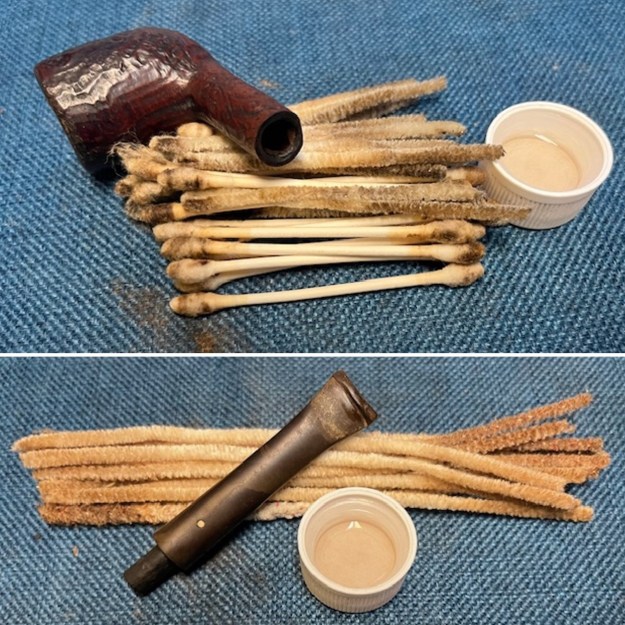
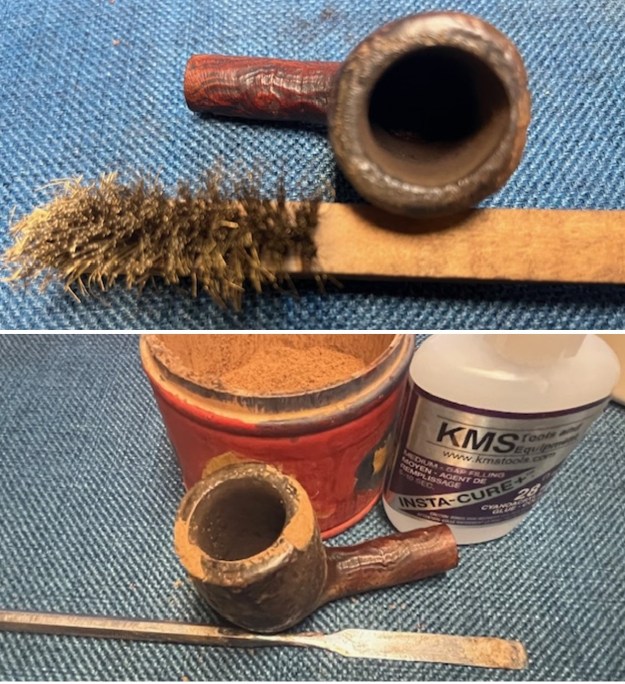
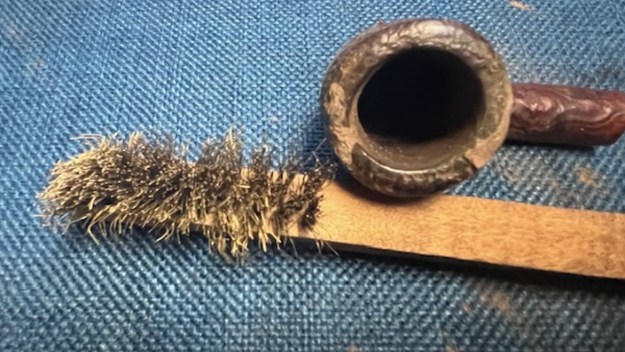
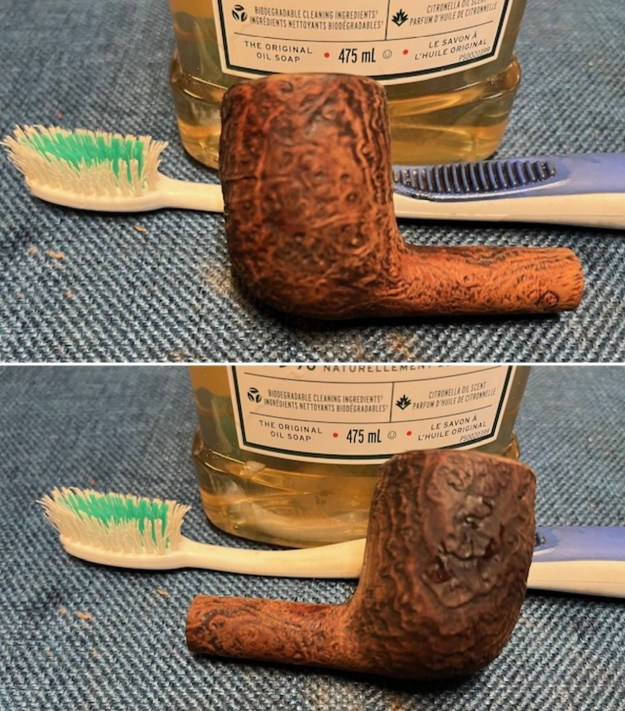
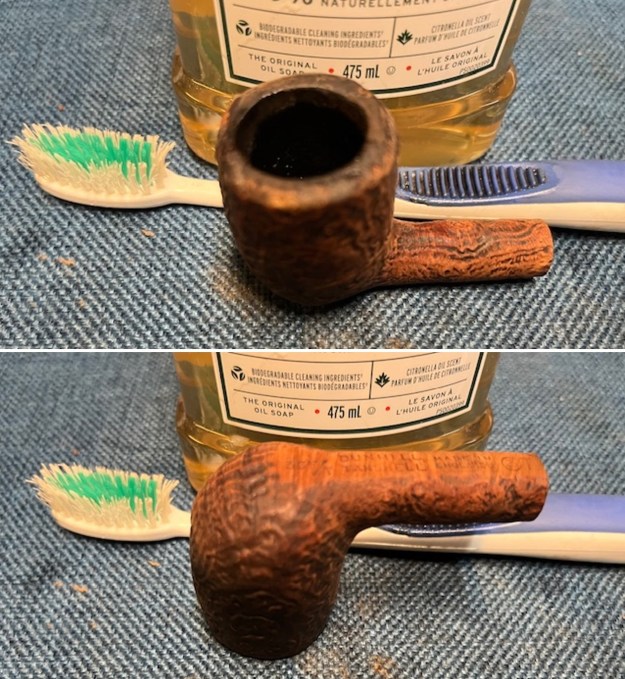
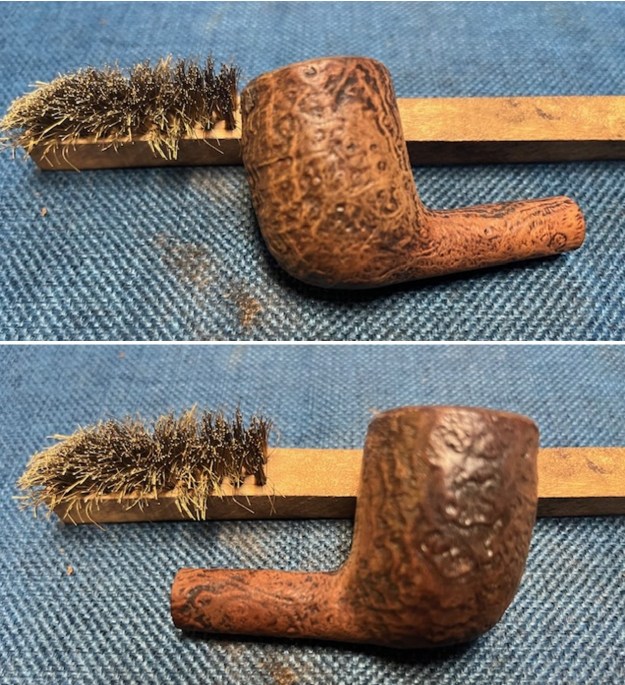
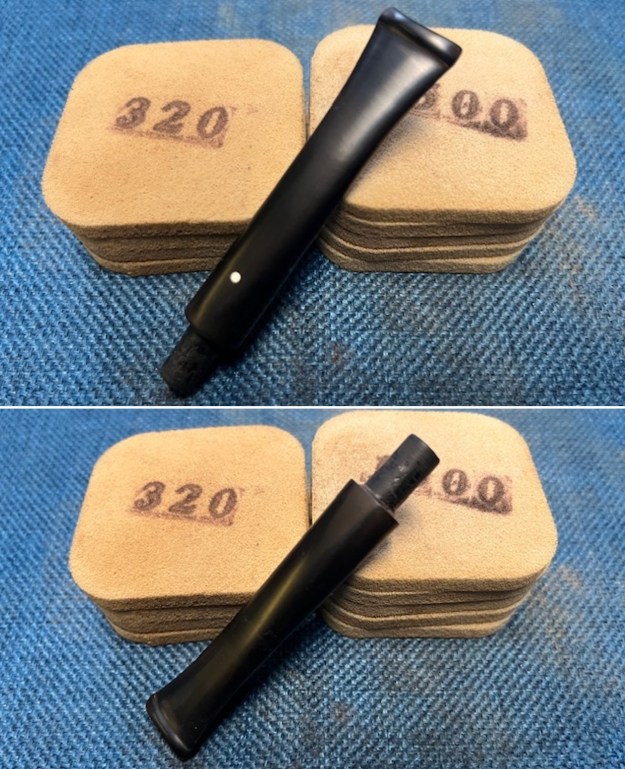
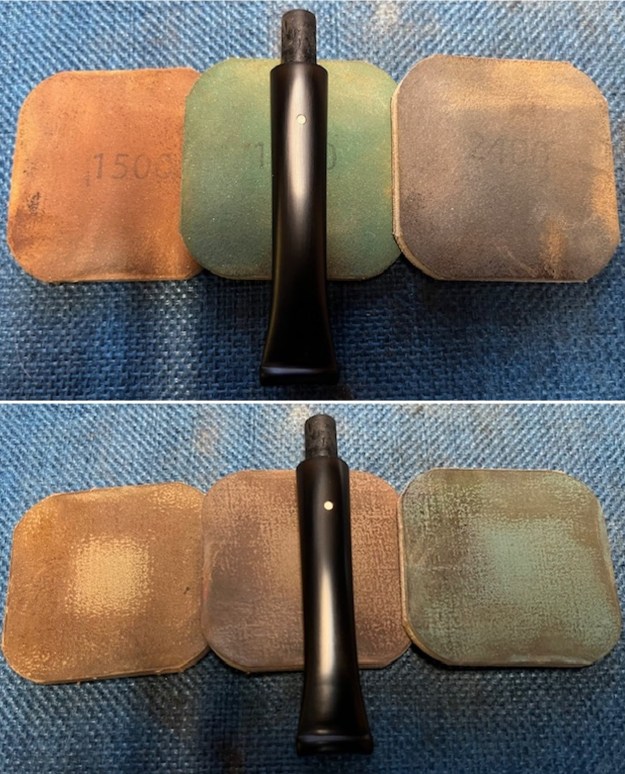
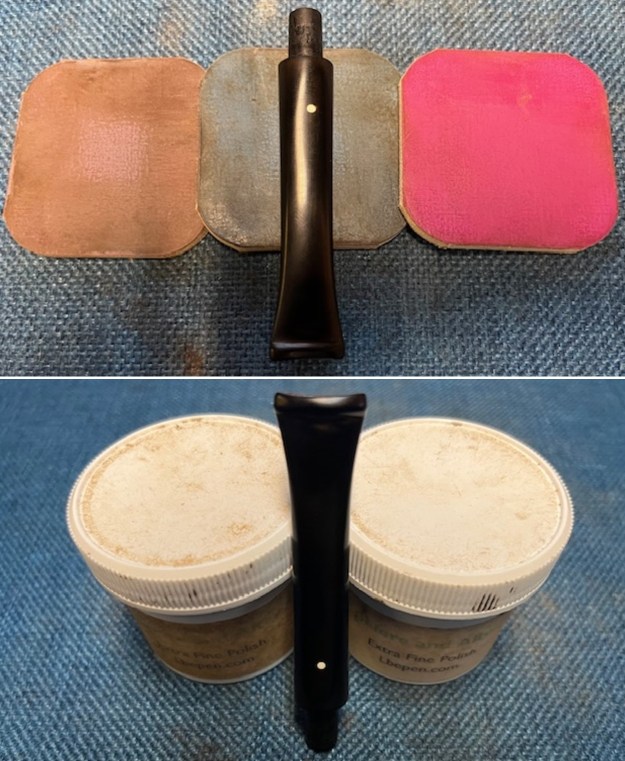
Jeff reamed it with a PipNet pipe reamer and cleaned up the reaming with a Savinelli Fitsall Pipe Knife. He scrubbed out the internals of the shank and stem with alcohol, pipe cleaners and cotton swabs until the pipe was clean. He scrubbed the exterior of the bowl with Murphy’s Oil Soap and a tooth brush to remove the grime and grit on the briar and the lava on the rim top. The finish on the bowl looked really good when I got it. The rim top and edges looked very good. He soaked the twin bore stem in Briarville’s Pipe Stem Deoxidizer bath to remove the oxidation. The stem looked better and the deep tooth marks and chatter on the surface were also visible. When the pipe arrived here in Vancouver for the second stop of its restoration tour it looked much better than when he found it. I took photos of the pipe before I started my work on it.  I took photos of the condition of the rim top and stem before I started working. The rim top looks very good and the bowl is spotless. The stem is much better but still shows some oxidation and tooth chatter and deep marks on both sides near the button. I took photos of the stamping on the sides of the shank. The stamping was clear and readable as noted above. I took the bowl and stem apart and took a photo of the pipe to show the look of the pipe. Now it was my turn to work on the pipe. The bowl was in very good condition so I polished the briar with micromesh sanding pads – dry sanding with 1500-12000 grit pads. I wiped the bowl down after each pad with a damp cloth to remove the sanding dust. I worked some Before & After Restoration Balm into the finish of the bowl, rim top and shank with my fingertips to clean, enliven and protect it. I find that the balm really makes the briar come alive again. The contrasts in the layers of stain really made the grain stand out. I let the balm sit for 15 minutes and then buffed with a cotton cloth to raise the shine. The bowl really looks good at this point. I set aside the bowl and turned my attention to the stem. I “painted” the tooth marks on the surface of the stem and was able to lift them partially. I cleaned out the tooth marks with alcohol and q-tip then filled in the ones that remained with some rubberized, black CA glue. Once the glue cured I flattened out the repairs and recut the button edge with small files to start the process of blending them into the surface of the vulcanite. I sanded the stem with 320-3500 grit sanding pads to further blend in the repairs. I wiped the stem down after each pad with an Obsidian Oil saturated cloth to remove the grime and protect the stem. I polished the stem with micromesh sanding pads – wet sanding it with 1500-12000 grit pads. I polished it further with Before & After Pipe Stem Polish – both fine and extra fine. I wiped it down again with some Obsidian Oil and let it sit and dry. I always look forward to the moment when all the pieces are put back together. The pipe makes a final trip to the buffing wheel and is met first with Blue Diamond polish on the buffing wheel. That is followed by multiple coats of carnauba wax over the whole pipe. Then I do a step that not everyone does but I learned from one of the old pipe men who no longer with us, I buff the pipe with a clean buffing pad to raise the shine. Finish my buffing by hand with a microfiber cloth to deepen the shine. It is fun to see what the polished bowl looks like with black vulcanite stem. This richly stained GBD Speciale Standard 788 Bent Apple is light weight and ready for you to load up a tobacco of preference and enjoy. Have a look at it in the photos below. The dimensions are Length: 5 ½ inches, Height: 1 ½ inches, Outside diameter of the bowl: 1 ¼ inches, Chamber diameter: ¾ of an inch. The weight of the pipe is 48 grams/1.69 ounces. This is one that will go on the British Pipemakers Section of the rebornpipes online store shortly. Let me know if you are interested in adding it to your rack. Thanks to each of you who are reading this blog. Remember we are not pipe owners; we are pipemen and women who hold our pipes in trust until they pass on into the trust of the next generation.

A Nice Break after a few complicated ones – a Comoy’s Classic 184 Bent Globe


Blog by Steve Laug

The next pipe on the worktable is an English made Bent Globe with a classic brown finish. It is a combination dark and medium brown stains. The pipe came to us from a lot that we bought from an estate in Spring Branch, Texas, USA on 02/29/2024. The pipe is very dirty with a thick cake in the bowl and lava on the rim top. The rim edge looks good but it was hard to know what was under the lava coat on the top and edges. It is stamped on the sides of the shank. On the left side it reads Comoy’s [over] Classic. On the right side it is stamped with the shape number 184. Next to the shank/stem junction it has a circular COM stamp that reads Made London in a circle around “In” in the centre [over] England. The finish was dusty and there were oils and grime ground into the finish around the sides of the bowl. The stem is acrylic with grime on the surface and tooth chatter and marks ahead of the button on both sides. The is a single stamped C on the left side of the taper stem. Jeff took some photos of the pipe before he started his cleanup work. Jeff took a photo of the bowl and rim top to show the condition of the pipe. There was a thick cake in the bowl and a build up of lava on the smooth rim top. It is also built up on the inner edge of the bowl. The stem photos show the grime and light tooth marks on both sides ahead of the button. He took photos of the sides and the heel of the bowl to show the finish on the pipe. It is a unique stain on it that really shows the grain around the bowl sides. He took two photos to capture the stamping on the sides of the shank. It is clear and readable as noted above. I looked on both Pipedia and Pipephil’s sites for information on the Comoy’s Classic Line. Neither site had any information about that particular stamping. The name stamp obviously remains a bit of a mystery. The COM stamp on the shank was a Comoy’s style stamp as noted above. I would need to move ahead and do some work on the shape number to see if what I could learn of that.

I turned to Pipedia’s Comoy’s shape chart and sure enough the 184 shape was a Comoy’s shape. I have included the link (https://pipedia.org/wiki/Comoy%27s_Shape_Number_Chart). I did a screen capture of the section on the 184 shape. The shape is a Medium sized half bent pipe that was called a GLOBE.I now knew that the pipe I was working on was made by Comoy’s (thanks to the shape number and the COM stamp on the shank). It was a beauty for sure and one that would only become more beautiful as it was restored.

I really enjoy working on classic shaped pipes so I was glad to be working on this one. Jeff had reamed it with a PipNet pipe reamer and cleaned up the reaming with a Savinelli Fitsall Pipe Knife. He scrubbed out the internals with alcohol, pipe cleaners and cotton swabs until the pipe was clean. He scrubbed the exterior of the bowl with Murphy’s Oil Soap and a tooth brush to remove the grime and grit on the briar and the lava on the rim top. The finish looks better but there is still some darkening on the rim top and edges of the bowl. Jeff scrubbed the stem with Soft Scrub and soaked it in Before & After Deoxidizer to remove the oxidation on the vulcanite. When the pipe arrived here in Vancouver for the second stop of its restoration tour it looked a lot better. I took photos before I started my part of the work. I took some close up photos of the rim top and the condition of the bowl. I also took photos of the top and the underside of the stem.I took photos of the stamping on the top and underside of the shank to show the condition after the cleanup. This stamping is clearer than the photos show. I removed the stem from the shank and took a photo of the parts of the pipe to show the overall look of the pipe. I polished the briar with micromesh sanding pads – dry sanding with 1500-12000 grit pads. I wiped the bowl down after each pad with a damp cloth to remove the sanding dust. I rubbed the bowl down with Before & After Restoration Balm.  I worked it into the finish of the bowl, rim top and shank with my fingertips to clean, enliven and protect it. I find that the balm really makes the briar come alive again. The contrasts in the layers of stain made the grain stand out. I let the balm sit for 15 minutes and then buffed with a cotton cloth to raise the shine. I set aside the bowl and turned my attention to the stem. I sanded out the bite marks on both sides ahead of the button with a folded piece of 220 grit sandpaper remove the damage.I polished the stem with micromesh sanding pads – dry sanding with 1500-12000 grit sanding pads. I wiped it down after each sanding pad with a cloth containing some Obsidian Oil. I finished polishing it with Before & After Pipe Stem Polish – both Fine and Extra Fine and buffed it off with a cotton cloth. This Comoy’s Classic Made in London 184 Bent Globe is a great looking pipe now that it has been restored. The shape is elegant and flowing with a taper acrylic stem. I put the stem on the bowl and carefully buffed the pipe with Blue Diamond on the buffing wheel using a light touch on the briar. I gave the bowl and the stem multiple coats of carnauba wax on the buffing wheel and followed that by buffing the entire pipe with a clean buffing pad. I hand buffed the pipe with a microfiber cloth to deepen the shine. The finished Comoy’s Classic 184 Bent Globe fits nicely in the hand and feels great. Give the finished pipe a look in the photos below. The dimensions of the pipe are Length: 5 inches, Height: 1 ¾ inches, Outside diameter of the bowl: 1 inch, Chamber diameter: ¾ of an inch. The weight of the pipe is 1.45 ounces/41 grams. I will be putting it on the British Pipe Makers Section of the rebornpipes store shortly. If you are interested in adding this pipe to your collection send me a message or an email. Thanks for reading this blog and my reflections on the pipe while I worked on it.

A Portland Pipe from my Grandfather


by Kenneth Lieblich

Next on the chopping block is a very personal pipe – and one that is staying in my collection. The pipe you see belonged to my late grandfather. It is this pipe’s restoration that I am recounting today. I have blogged here about some of my grandfather’s pipes before, but I haven’t done one in a while. In this case, I do not know where my grandfather acquired it (or under what circumstances), but I suppose it does not ultimately matter. My grandfather was an enthusiastic pipe smoker and I am definitely looking forward to cleaning this one up. It has a value well beyond dollars – especially because this is actually the first pipe I ever smoked. Unsurprisingly, I didn’t know what I was doing it with it, so any damage you see is almost certainly from me! I don’t remember why I picked this pipe of his to try, but it definitely worked well. The pipe is a classic billiard shape with a lovely, long stem. What a handsome pipe! I do not know the exact date of the pipe, but, knowing what I do about my grandfather and his pipes, it seems likely to be from the 1950s or 1960s. On the left-hand side of the shank, the pipe’s markings read, First Call [over] London. To the right of that is the number 69 – presumably a shape number. The right hand side of the shank also has markings, but they are more worn. They read, Portland Pipe Product [over] Made Wholly in England. I wasn’t familiar with these names, so I did some digging.I began my research with José Manuel Lopes’ book, Pipes: Artisans and Trademarks. As the photo shows, there was a little information, but not a lot.The connection with Barling was interesting, so I also checked Wilczak and Colwell’s book, Who Made That Pipe? From the photos below, you can see that First Call refers me to the Portland Pipe Co. and that they both make a connection to Barling too.Time to check online. Pipephil had a similarly brief write-up (included here).Pipedia was a bit more helpful. Their page on the Portland Pipe Co. includes the following information (the typos are in the original and are NOT mine):

Portland Pipe Company was an English pipe maker, and appears to have started in the 1930’s, and went out of business in 1962. It’s though they had ties to Barling pipes from the 1930’s. They might have been a sub-brand or “second” which was separate from, but fully owned by Barling’s all along. It also thought that after Portland closed down, and during Barling’s corporate era (BB&S), Barling picked up some of the Portland brand (Londoner, Cragmoor and Portland) and made them for a while. WILCZAK & COLWELL in their book “Who Made That Pipe?” acknowledge the brand as from England, though some have been made in Italy as well (see Pipephil.eu). The Brand John Peel is a pipe which has the stamping: JOHN PEEL, A PORTLAND PIPE, MADE WHOLLY IN ENGLAND. I have a model with is also stamped SPECIAL, it’s a stack design with shape number 801. This pipe might have been made either by Portland or Barling. According to a 1940 price sheet, the following models were offered, along with the correlating prices:

Vintage (10/6)
Exchange (7/6)
Londoner (7/6)
Mosaic (7/6)
Portland Super (7/6)
Crustor (5/6)
Diploma (5/6)
Port Royal (5/6)
Port-de-Luxe (5/6)
Portland Patent (5/6)
Souk-el-Arba (5/6)
Times (4/6)
British Sovereign (3/6)
John Peel (3/6)
Jubilee (3/6)
Sirdar (3/6)
Campaigner (2/6)
Dandy (2/6)
First Call (2/6)
Knobby (2/6)
Topsall (2/6)
Topsall Comfort (2/6)
Portman (2/-)
British National (1/6)
Ruf Kut (1/6)

This seems to confirm that this pipe is in the lower range of Portland Pipes AND that it likely comes from before 1962. However, there are a few other tidbits of information. The PipesMagazine.com forums include an interesting comment from Barling expert Jonathan Guss:Finally, over at the Very Keen on Pipes website, a reader commented on one of their posts by saying:

“… Portland pipes make up one of the great mysteries of London pipe making. No one knows when Barling bought Portland but most of us barling guys believe it was mid to late 30’s. I saw a reference once online using the year 1936 but this cannot be confirmed. Next, John Peel was for a long time thought to have been a shop but there is no evidence proving that. However, John Peel pipes were almost certainly made by Portland. What most of use want in a pipe of this type is a pipe made before 1962, when the barling family was let go by the new owners and the brand went into a downward spiral quality wise. Re Portland, a number of them have recently turned up as a result of a “garage find” of a batch of pipes from the Toronto Canada area and they were mixed in with other wood from the 50’s and that seems to indicate a 50’s date of manufacture. Note: in those days several of the larger pipe makers made pipes or just bowls for other brands and these were mostly Charatan, Comoy and other makers such as Orlick. What is almost certain is that never did barling make / sell any pipes that were not carved by barling carvers untill after 1970. So, Portland and Peel were never actually barling made, these pipes were either made by Portland in house or, in later years past 1962, by Charatan and others. Also, if one looks at the style of the bits it evident that Portland and Peel pipes were not made that long ago, probably 50’s and 60’s unless there is a BB&S stamp which indicates post 1970 age (the & symbol being the give away since B.B.S was used in the older pre 1962 era.) Just some info for you to keep in mind… “

Let’s tie it all together. By inference (and some educated guesswork), this pipe of my grandfather’s was made in England, prior to 1962, and that the Portland Pipe Co. who made it was owned by Barling. As for the “69” shape number, I do not know what to say – this doesn’t correspond to Barling, so I suppose Portland had their own numbering system. It’s a nifty pipe – however, it was not without its issues. The stem had plenty of tooth chatter and was pretty oxidized. The stummel was actually in pretty good shape, except for the rim. I burned it pretty darn thoroughly. It had some minor wear, but nothing too tricky. The stem was first on my list. I wiped down the outside of the stem with Murphy’s Oil Soap on some cotton pads. Then, I cleaned out the insides with pipe cleaners and isopropyl alcohol. Then it went so soak in the deoxidizing fluid. After that, I wiped it down with some cleanser and removed the rest of the oxidation. Once clean, I built up the nicks and dents and scratches on the stem with black cyanoacrylate adhesive and let it fully cure.I then sanded the adhesive down with my grey pads to bring the repairs to the level of the stem. I ensured that the stem kept its shape and looked like it should. I then used all nine Micromesh pads (1,500 through 12,000 grit) to emphasize the beautiful black of the stem. I also used Obsidian Pipe Stem Oil in between each pad scrubbing, after 3,600. On to the stummel, and the usual cleaning procedures were in order for this pipe. I used the KleenReem to remove the built-up cake, and followed that with 220-grit sandpaper to remove as much as I could. I wanted to take the bowl down to bare briar to ensure there were no hidden flaws in the walls of the bowl. Fortunately, there were none. I then proceeded to clean out the insides of the shank with cotton swabs, pipe cleaners, and isopropyl alcohol. There was quite a bit of filth inside this stummel – it took many pipe cleaners et cetera to clean it out. I decided that a de-ghosting session would be a good idea. I thrust cotton balls into the bowl and the shank and saturated them with 99% isopropyl alcohol. I let the stummel sit overnight. This caused the oils, tars and smells to leach out into the cotton. The bowl was nice and clean after this.I followed that up by cleaning the insides with some dish soap and tube brushes. I then moved on to cleaning the outside of the stummel with Murphy’s Oil Soap and some cotton pads. Because of the extensive burning to the rim, I sanded away the damage on my topping board and it looked much improved. Now, it was time to sand down the stummel. I used all nine Micromesh pads (1,500 through 12,000 grit) to wet/dry sand everything smooth. After that, a light application of Before & After Restoration Balm brought out the best in the stummel’s grain. What a difference that made! There is some beautiful wood there! Then it was off for a trip to the buffer. A dose of White Diamond and a few coats of carnauba wax were just what this pipe needed. The lovely shine made the wood look absolutely beautiful.This is a beautiful pipe that has a very elegant feel to it. I hope the final product is worthy of my beloved grandfather’s memory. Obviously, this is one pipe that I am keeping for myself and adding to my collection. The approximate dimensions of the Portland First Call are as follows: length 6⅓ in. (160 mm); height 1¾ in. (44 mm); bowl diameter 1¼ in. (32 mm); chamber diameter ⅔ in. (17 mm). The weight of the pipe is 1 oz. (30 g). I hope you enjoyed reading the story of this pipe as much I as I did restoring it. If you are interested in more of my work, please follow me here on Steve’s website or email me directly at kenneth@knightsofthepipe.com. Thank you very much for reading and, as always, I welcome and encourage your comments.

Reworking a newly acquired trade, a Barclay Rex Bent Billiard


Blog by Steve Laug

A month or so ago I received an email from a fellow in Japan who had some pipes he wanted to sell. He sent me a few and one of them was this interesting older Barclay Rex Bent Billiard. The Pipe was faintly stamped and read Barclay Rex on the left side of the shank. The stamping was faint but readable. It looks as if it is stamped underneath very faintly and read New York. The rest of the stamping is unreadable and the stamping on the right side of the shank is buffed away. The bowl has been reamed and the pipe cleaned. The rim top is slightly out of round and there are scratches and debris on the rim top. The pipe has been polished and the junction between the shank end and the stem shows some rounding of the edges – something that I truly hate in a restoration. The stem itself is also rounded at the shank junction but is polished and there are light tooth marks on the top and the underside against the button. The shank is very clean inside and the pipe has a faint aroma of English tobacco. Overall, I am happy with it but I will need to deal with rounded joint of the stem and shank. I took photos of the pipe before I started my work on it. I took a photo of the rim top to show the condition of the bowl and the top. You can see the lava on the rim top that had been left from the restoration previously done. The bowl is slightly out of round due to damage to the inner edge. The shank stem joint shows some rounding to the edges.I took a photo to show the stamping on the left side of the shank. It is readable and I think there is also some stamping underneath what is present.  I took a photo of the right side as well to see if anything showed up in the photo. It did not show anything on the right side. It has some great grain on the bowl and shank and the rounding at the shank and stem joint. I took the stem off and took a photo of the pipe to show its condition. I turned to Pipephil’s site to see what I could learn about the Barclay-Rex brand and particularly the sandblast one I was working on (http://pipephil.eu/logos/en/logo-b1.html). I have included a screen capture of the information that is shown there.I quote from the sidebar on the site below as it gives a good summary of information.

Brand created in 1910. The shop was situated on Maiden Lane. Three addresses now (2010): 75 Broad Street, 70 East 42nd Street, 570 Lexington Avenue. See also: André

I turned to Pipedia to try and place this pipe in the timeline of the brand and was able find some helpful information which I have included below (https://pipedia.org/wiki/Barclay_Rex). I quote the information below.

Barclay-Rex, a downtown Manhattan tobacconist, was founded in 1910 by Vincent Nastri, a pipemaker from Salerno, Italy. The store was originally located at Barclay and Church Street, and the name was taken from that location and Nastri’s beloved Great Dane, Rex. The business is still run by Vincent Nastri, III and owned by Vincent Nastri, Jr. They have several locations in New York City. The store has carried pipes from all fine makers, and the Barclay-Rex line of pipes is also much sought after, in that pipes were made in a range from the very inexpensive into the several hundreds of dollars. The pipes were, at least into the 1960’s, made of Algerian briar.

In addition to pipes made by Mr. Nastri over the years, Mr. Nastri, III, has been quoted as stating that a pipemaker just leaving Dunhill made pipes with a small off-white dot on the stem for a time for the shop. As was discovered by Steve Laug of Reborn Pipes, they were evidently made by a pipemaker whose initials were HGP, and stamped on the pipe as such. These pipes were made for a single run only, and then never made again.

In addition, Sasieni at least for a time made private label pipes stamped with the Barclay-Rex name, but with their own shapes and shape numbers.

Locations: (Flagship Store) 75 Broad Street, New York, New York 10004 Telephone: (212) 962-3355

70 East 42nd Street, New York, New York 10165 Telephone: (212) 692-9680

570 Lexington Avenue, New York, New York 10022 Telephone: (212) 888-1015

Email: info@barclayrex.com Website: http://www.barclayrex.com Toll Free: (888) 278-6222 Fax: (212) 962-3372

With the information from Pipedia I knew that I was working on a pipe from the Barclay-Rex Tobacconist in New York City. The fellow I bought it from had no background information on the pipe. I was unable to pin down the date this pipe was made. Now it was time to work on the pipe.

I started my work on the pipe by addressing the spots of lava on the rim top and the damage on the inner edges of the bowl. I used a folded piece of 220 grit sandpaper to work over the inner and outer edge to smooth out the damage. I polished the rim top with 1500-12000 grit micromesh sanding pad – dray sanding to remove the darkening and remaining lava on the rim top as well. I worked some Before & After Restoration Balm into the finish of the bowl, rim top and shank with my fingertips to clean, enliven and protect it. I find that the balm really makes the briar come alive again. The contrasts in the layers of stain really made the grain stand out. I let the balm sit for 15 minutes and then buffed with a cotton cloth to raise the shine. The bowl really looks good at this point. I spent some time studying the shank/stem junction to see the edges looked. I could see them on both the stem edge and the shank edge. The internal of the shank There as no way to square the shank end to be a smooth transition because of the rounded edges. The top edge of the shank is quite thin so there is no room for smoothing it out. With those issues in mind I chose to band it with a thin brass band to square up the shank edge. The photos of the shank end show the rounding but it worse in person than shown in the photos. I heated the band and pressed it onto the shank end. I took photos of the shank end before and after the banding. I put the stem on the shank and took a photo of the pipe with the band in place. I like the look of it as it adds a nice touch of bling. I set the bowl aside and worked over the tooth marks against the button edge with a folded piece of 220 grit sandpaper to blend them in the rest of the stem surface. Once it was finished the tooth marks were gone. I needed to polish the sanding marks out with micromesh sanding pads.I polished the stem with micromesh sanding pads – dry sanding with 1500-12000 grit sanding pads. I wiped it down after each sanding pad with Obsidian Oil. I polished it with Before & After Pipe Stem Polish – both Fine and Extra Fine. I gave it a final coat of Obsidian Oil. With the bowl and the stem finished I put the beautiful Barclay-Rex New York Bent Billiard back together and buffed it on the wheel using Blue Diamond to give it a shine. I gave the bowl and the stem multiple coats of carnauba wax on the wheel. I buffed it with a clean buffing pad to raise the shine. I hand buffed it with a microfiber cloth to deepen the shine. It really is a great looking pipe. The dimensions of the pipe are – Length: 6 inches, Height: 1 ½ inches, Outside diameter of the bowl: 1 ½ inches, Chamber diameter: 1 inch. The weight of this large pipe is 1.34 ounces /38 grams. This Barclay-Rex Bent Billiard is another great looking pipe and the brass brought the junction back to square. It is much more beautiful in person than these photos can capture. I will be putting it on the rebornpipes store soon. If you would like to add it to your collection let me know. This is another pipe that has the possibility of transporting the pipe man or woman back to a slower paced time in history where you can enjoy a respite. Thanks for walking through the restoration with me.

Argggh…sometimes the easiest restoration becomes a real nightmare


Blog by Steve Laug

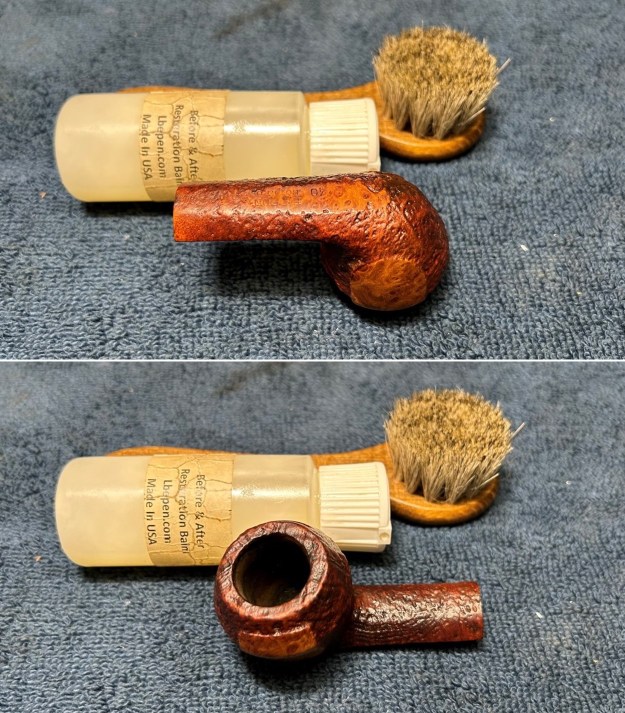
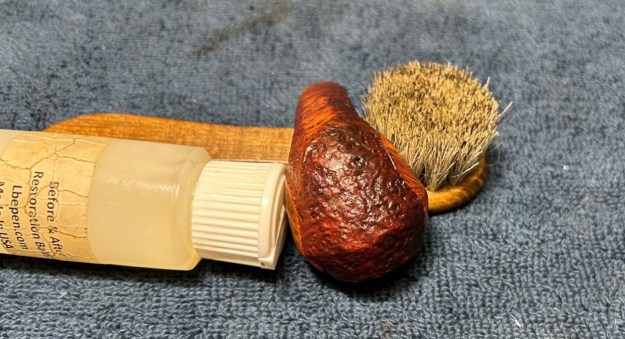
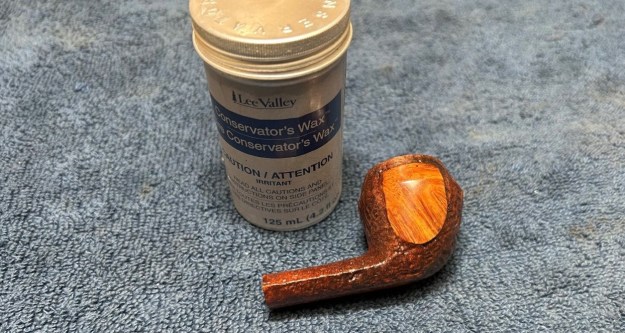
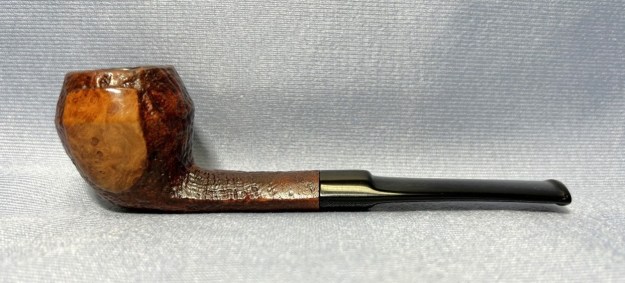
The next pipe on the worktable is a Danish made pipe from the workshop W.O. Larsen. It is a combination of rustication and smooth portions and a horn shank extension. The bowl is a classic Danish looking Canadian with almost a Brandy shaped bowl. It came without a stem. The pipe came to us from eBay on 01/22/2024 from a seller in Jordan, Minnesota, USA.  The pipe is very dirty with a thick cake in the bowl and lava on the rim top. The rim edge looks like it might be slightly out of round but it was hard to know what was under the lava coat on the top and edges. It is stamped on the underside of the bowl and shank on a smooth panel. It reads W.O. Larsen [over] Handmade [over] Made in Denmark. On the top side it is stamped Rustica. The finish was dusty and there were oils and grime ground into the rusticated and the smooth finish around the sides of the bowl. The horn shank extension had a metal insert to protect it from cracked but there were still two hairline cracks – one on the top and one on the underside. Jeff took some photos of the pipe before he started his cleanup work. Jeff took a photo of the rim top to show the thick build up of lava in the sandblast of the rim top. It is also built up on the inner edge of the bowl. The thick cake in the bowl is very visible.He took photos of the sides and the heel of the bowl to show the blast finish on the pipe. It is a unique blast that really shows the birdseye and other grain around the bowl sides. He took two photos to capture the stamping top and underside of the bowl. Each one moves down the shank to the horn shank extension. It is clear and readable as noted above. Jeff took a photo of the hairline crack on the underside of the horn extension. There is a matching one on the topside. The shank itself is lined with a metal insert that actually stabilized the extension to protect it from further cracking.I turned to Pipephil (http://www.pipephil.eu/logos/en/logo-l2.html) to get a quick view of the brand once again. I did a screen capture of the site’s information and have included that below. The pipe I am working on is a W.O. Larsen as it is stamped similarly to the ones in the photos. It is interestingly stamped with a lot more detail than any of the ones shown in the screen capture below. With the “Designed By W.O. Larsen” addition it is a bit unique.I turned to Pipedia (https://pipedia.org/wiki/W.%C3%98._Larsen) for a quick read. The site is worth reading the history of the shop and the brand and its influence on Danish pipe carving. There was no additional information on the unique stamping on this pipe.

What I learned from the research is that the pipe is a W.O. Larsen made pipe that could have been designed by W.O Larsen himself or at least one of the shop carvers. It is a beauty though.

With that information I moved forward to work on the pipe itself and see what I had to do with it. Jeff had done an amazing job in removing all of the cake and the lava on the sand blast rim top. He had reamed the bowl with a PipNet Pipe Reamer and cleaned up the remnants with a Savinelli Fitsall Pipe Knife. He took the cake back to bare briar so we could check the walls for damage. He scrubbed the exterior of the bowl with Murphy’s Oil Soap and a tooth brush to remove the grime on the bowl and rim and was able to remove the lava and dirt. The finish on the bowl and rim top looked very good showing a unique and beautiful combination of smooth and rusticated finishes. He cleaned out the interior of the bowl and shank with pipe cleaners, cotton swabs and alcohol until they came out clean. I took photos of the pipe before I started my part of the restoration. I took some close up photos of the rim top showing the inner edge of the bowl – damages and nicks in the edge and some damage on the top itself. I took photos of the cracks in the top and underside of the horn shank extension.I took photos of the stamping on the top and underside of the shank to show the condition after the cleanup. This stamping is clearer than the photos show. I went through my can of stems and I found one that was the right shape and length. It has been shaped a little but I would need to reduce the shank end diameter and shape for a proper fit in the metal shank insert. NB: This is the reason I am always picking up stems where ever I can find them. I just know that one day I will need one and it might just be the one!I laid the stem aside to work on the shank repair first. I applied some clear super glue to the crack in the horn extension on the top and the underside and clamped the horn shank end with a small clamp. THEN DISASTER STRUCK! I was standing at my work table and was about to lay it down with the pipe shot out of the clamp. It literally shot across the room and hit the floor. I cannot tell you enough how many times I have dropped the pipe on the same floor with nothing happening to the pipe. I would pick it up and carry on. BUT THE TIME THAT SOMETHING WAS GOING TO HAPPEN WAS THIS TIME! THE BOWL SHOT OUT FURTHER & THE SHANK AND CLAMP WAS MUCH CLOSER.

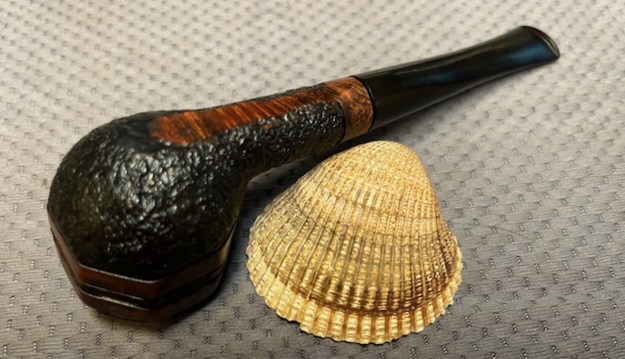
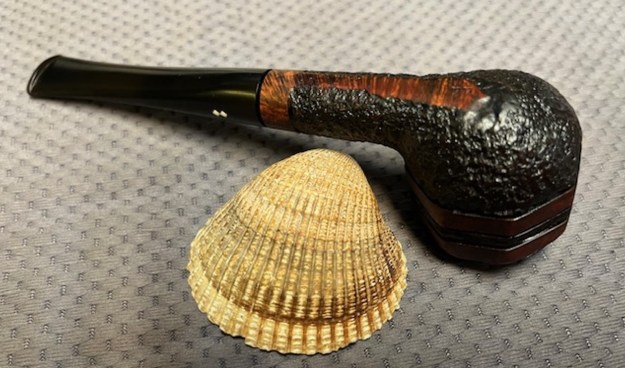
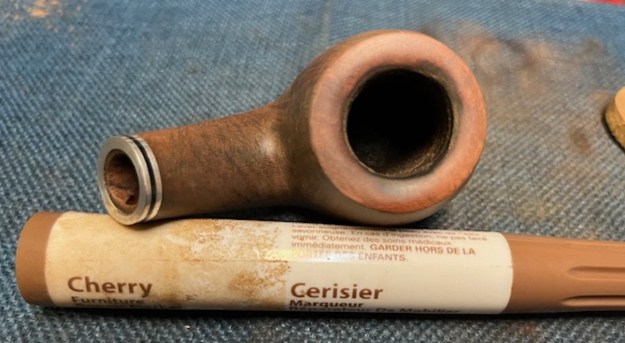
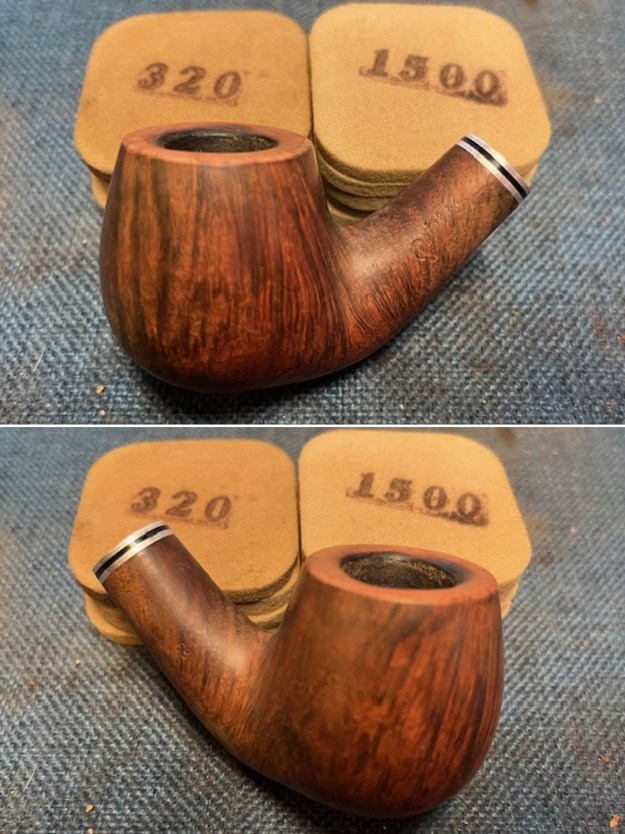
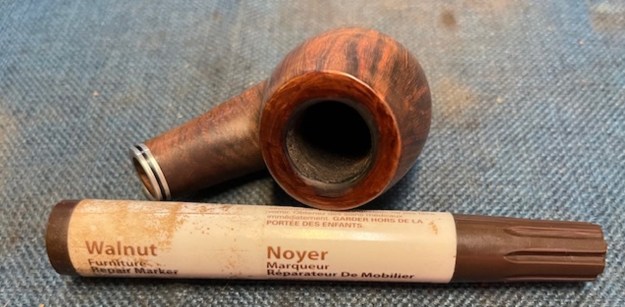
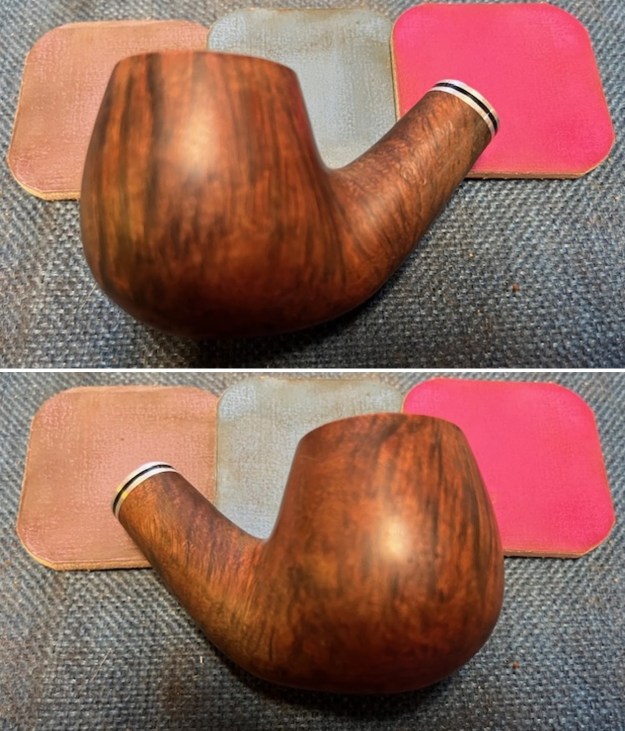
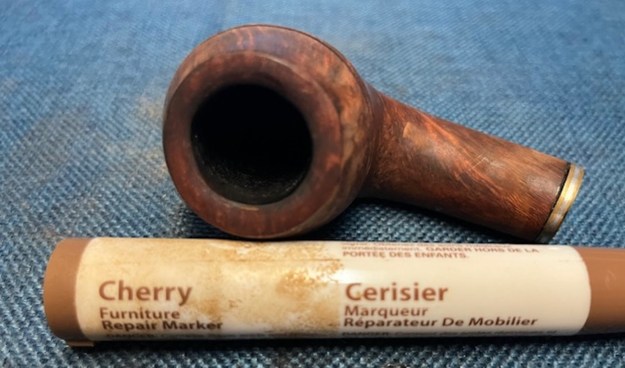
Now I needed to add yet another project to the work on this pipe. I wrote Jeff and told him about the accident and his response was that he was okay with throwing it away. I told him that I still wanted to work on it. I cleaned up the cracks on the shank and added new glue to the repairs. I clamped the extension together with the clamp while it was laying on the table. You can see the snapped off bowl and shank in the photos below. The only good news was that it was a clean snap and everything fit together really well.Once the repair cured on the shank end it was time to address the broken shank. I found a metal piece of tubing in my collection of tubes and stingers that fit into the hole in the shank and in the airway into the bowl. I cut off a piece long enough to extend into the airway into the bowl and into the shank end almost a half inch each way. I glued the cut off tube into the bowl airway first with a clear CA glue. I coated the shank ends on both sides with clear CA glue and painted the tube with the same glue. I pushed the bowl and shank together. The tube went easily into the shank and the pieces of briar fit together with no sign of the damage other than the glue.Once the repair cured and the shank was stable I worked over the repaired area with a brass bristle brush to remove the excess glue. It was looking much better once I finished. I stained the repaired area with a Mahogany stain pen to match the colour on the rusticated portions of the bowl. It looked much better once it was finished. With the repair finished I turned to address the rim top and inner edge of the rim. I used a folded piece of 220 grit sandpaper to remove the damage and smooth out the edge. I used a wooden sphere and a piece of 220 grit sandpaper to reshape the rim edge and give it a light bevel. It cleaned up the edge and the darkening to the rim top at the same time. I sanded the rim top and the horn shank repairs with 320-3500 grit sanding pads. I sanded the horn shank extension at the same time. I wiped it down after each sanding pad to remove the dust and debris. I restained the rim top with a Cherry Stain pen to match the smooth finish around the bowl. The finish was spotty but it matched well. I knew that once I polished it with micromesh sanding pads and the stained top blended in very well.I polished the briar and the horn shank extension with micromesh sanding pads – dry sanding with 1500-12000 grit pads. I wiped the bowl down after each pad with a damp cloth to remove the sanding dust. I rubbed the bowl down with Before & After Restoration Balm. I worked it into the smooth and the rusticated finish of the bowl, rim top and shank with my fingertips and a shoe brush to clean, enliven and protect it. I find that the balm really makes the briar come alive again. The contrasts in the layers of stain and the contrasting finish really made the grain stand out. I let the balm sit for 15 minutes and then buffed with a cotton cloth and shoe brush to raise the shine. The shank repair and the rim top reworking came out looking very good at this point. I started with the stem fitting. I needed to shape the flow of the stem from the shank upward. It needed some work to change the taper to incorporate and tenon that fit in the shank and still allowed the stem to fit well. I used a Dremel and sanding drum and files to shape the stem to fit. I fine tuned the shape of the stem with a folded piece of 220 grit sandpaper to give it the stem a proper fit in the shank.Now I needed to sand it to clean up the file marks and fine tune the shape. I sanded the newly shaped tenon with 320-3500 grit sanding pads. I worked on the file marks and fine shaping of the stem fit against the shank. The pads worked to polish out the marks and the fit to the shank was very good. The stem began to take on a rich shine in the vulcanite by the time I sanded it with the 3500 grit pad. I set the bowl aside and polished it with micromesh sanding pads – dry sanding with 1500-12000 grit sanding pads. I wiped it down after each sanding pad with a cloth containing some Obsidian Oil. I finished polishing it with Before & After Pipe Stem Polish – both Fine and Extra Fine and buffed it off with a cotton cloth. This W. O. Larsen Hand Made Rustica Canadian is a great looking pipe now that it has been restored. The shape is elegant and flowing with a thin, fitted taper vulcanite stem. I put the new stem on the bowl and carefully buffed the pipe with Blue Diamond on the buffing wheel using a light touch on the briar. I gave the rusticated parts of the bowl multiple coats of Conservator’s Wax and the smooth portions and the stem multiple coats of carnauba wax on the buffing wheel and followed that by buffing the entire pipe with a clean buffing pad. I hand buffed the pipe with a microfiber cloth to deepen the shine. The finished W. O. Larsen Rustica Canadian fits nicely in the hand and feels great. Give the finished pipe a look in the photos below. The dimensions of the pipe are Length: 6 ½ inches, Height: 2 inches, Outside diameter of the bowl: 1 ¼ inches, Chamber diameter: ¾ of an inch. The weight of the pipe is 1.55 ounces/44 grams. I will be putting it on the Danish Pipe Maker Section of the rebornpipes store shortly. If you are interested in adding this pipe to your collection send me a message or an email. Thanks for reading this blog and my reflections on the pipe while I worked on it. There are many more to come!
A Wounded Warrior GBD Xtra Straight Grain Billiard with a Sterling Silver Repair Band


Blog by Steve Laug

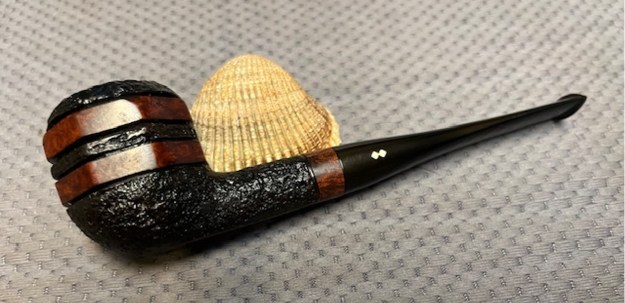
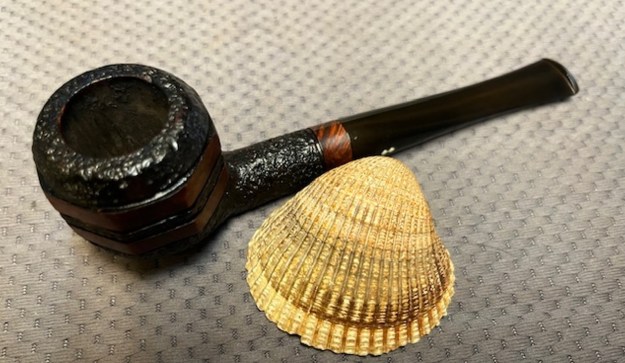
The next pipe on the work table is long and classic looking smooth finish straight grain Billiard. It is faintly stamped on the left side of the shank and clearly reads GBD in an oval [over] XTRA [over] Straight Grain. On the right side of the shank it is faintly stamped London England [over] an impossible to read shape number. It came from a lot we purchased on 03/21/2024 from an estate in Oregon City, Oregon, USA. It is a Billiard pipe with some great grain and having a replacement vulcanite taper stem. There is a Sterling Silver Band on the shank end showing a shank repair that was glued and banded. The bowl has a thick cake and some lava overflow in the finish on the rim top and inner edge. The rim top and inner and outer edge showed damage from being knocked against a hard surface. The finish looked quite good in terms of wear and tear but there was dirt and hand oils in the finish. Under the grime the finish looked very good and highlights some beautiful grain. The twin bore replacement stem was lightly oxidized and there was a Softee Bit on the stem end. Underneath the rubber Softee Bit there were some light tooth marks. Jeff took photos of the pipe before he started his cleanup. Jeff took photos of the bowl and rim top to show the cake in the bowl and the condition of both. It was heavily caked with a light lava overflow on the rim top. The rim top and the outer edge show damage on the left front from being knocked against a hard surface. He took photos of the top and underside of the stem with the Softee Bit in place and then removed showing the light oxidation and tooth marks on the stem surface and button. The stem is not the original it is a twin bore bite proof stem that is a replacement. Jeff took photos of the heel and the sides of the bowl and shank to show the grain on the pipe. It is a beauty. He took photos of the side of the shank to show the faint stamping on the left side. His photos also show the repaired crack on the left side of the shank. The silver band is stamped Sterling Silver and is readable. I turned to PipePhil’s site (http://www.pipephil.eu/logos/en/logo-gbd.html) to see what I could find. The site had a photo and information on a GBD Xtra but not a lot of background on it. The photo shown was from the 1930s but it is also noted as a New Era Pipe. There was nothing on a pipe stamped as GBD Xtra Straight Grain.

I then turned to Pipedia (https://pipedia.org/wiki/GBD) to see if there was info the brand. It is a great read in terms of history but there was nothing giving details on a GBD Xtra Straight Grain.

The claims after the 1st World War demanded further distinctions. First of all was the London Made, which became the Standard London Made, followed by the New Era– in 1931 the top model asking 12½ Shilling. The Pedigree, although sketched around 1926, was not produced until the later 1930s. The New Standard was introduced in order to give the popular Standard of the 20s a higher rank in value. The Prehistoric, a deeply sandblasted black pipe, that still carried the small GBD Xtra stamp, was entirely new and unusual.

From that small note I knew that I was working on a post WW1 Pipe that carried the GBD Xtra stamp.

I then followed a link at the end of the article to another article on Pipedia about model information (https://pipedia.org/wiki/GBD_Model_Information). There I found a very brief listing on the Xtra stamping and the Straight Grain stamping. However there was nothing with the two combined.

Xtra — Factory unknown: Reddish smooth -PR: Introduced in 1930s?

Straight Grain — France and made in England too

https://pipesmagazine.com/forums/threads/old-gbd-xtra-ive-hit-a-research-wall.64992/

A brief summary of what I think I know scavenged from Pipedia/forums etc. Back around the late 20s, GDB didn’t grade their briar, so they created two designations – the Xtra and the Special to denote pipes that have had addition features/finishes etc. These weren’t product/model lines, but more of a grade system that differentiated it from the standard GBD (which had just the ‘GBD’ stamp). By 1937, the Xtra/Special designations were dropped and the more tradition model lines were introduced (Pedigree/New Era etc). However, there were a couple of exception: some Prehistorics were also marked ‘Xtra’, and a 1950s catalogue I’ve seen also seems to carry the Xtra line (although they do look quite different). I’ve been trying to determine if this is one of the 1930s Xtras, with little luck.

That paragraph gave me a bit of a hint that the Xtra designation was used on pipes that had additional features not identifying product lines but more of a grade system. It also tells me that the stamping ended by 1937. There are also examples of it showing up in the 1950s. Below the next part is a quote from Jacques Cole and he notes that the XTRAs were the cream, being mostly with straight grains!

Further on in the thread on the above pipe I found this response by snagstangl that reads as follows:

I was re reading a Jacques Cole article concerning GBDs titled “Story of a Pipe Brand” it had this to say about this topic:

“We have seen that early Briar GBDs were made in only one, later two qualities and the need to mark the difference did not arise. There were few finishes but towards the end of the 19th century demand was changing, for instance the UK had a “penchant” for the darker finishes. Qualities were therefore sub-divided and we see the introduction of the GBD XTRA (note the spelling). The GBD Speciales were as the name implied, special models, finishes and fittings. GBD XTRAs were the cream, being mostly straight grains. The “ordinary* quality was simply
stamped GBD. Demand after the First World War called for further identification starting with GBD ‘London Made* which became ‘Standard London Made*, followed by GBD “New Era’, top of the range in 1931 at 12/6d! GBD ‘Pedigree’, although first thought of around 1926, was well established in the late 1930s. GBD “New Standard’ was created to give a boost to the “Standards’ of the 1920s and a newly introduced sandblast was called GBD ‘Prehistoric’, still bearing a small GBD ‘Xtra* stamp. French made GBDs followed more or less the same ideas, still however using ‘Xtra’ and ‘Speeiale’ while in the late ’20s a metal system GBD was introduced under the name GBD ‘Extra Dry*. The 1920s also saw an important development with the introduction of the metal GBD inlay on mouthpieces which gave the pipes that extra ‘touch of class’. This inlay has been used on GBDs for nearly 60 years.”

That was followed by a response from osiris01:

I started with either this text or one using it as source and it does explain well the reason for creating, first the Xtras and Speciales, and later, the other graded lines like New Era, Pedigree etc. The problem is that the Xtra and Speciale were discontinued in 1937/8 (Pipedia et al) because the new lines provided a more refined grading system. And yet, the Xtra was listed in the catalogs until 1950.

My guess is that the French factory continued with the Xtra, for a reason unknown to me. The only evidence I have of this is a badly translated sentence from Pipedia that describes the process of creating additional lines. It reads “The French GBDs more or less followed the same developments, although Xtra and Speciale very longly used there.” What ‘Longly used there’ means I don’t know, but somewhere was still making them, and if you translate ‘longly’ as ‘longer’, it does imply that they continued making them for a longer period. It’s a far from perfect explanation but, as I said, they were still being made somewhere and it does imply that the French factory were responsible. However, they were different to the Xtras made in the 20s/30s since the later ones had a chamfered rim, different stems etc.

However, reading you text again, I wonder if the it is hinting at a COM. “Demand after the First World War called for further identification starting with GBD ‘London Made* which became ‘Standard London Made*,”. It doesn’t say that a COM was not used before then (that would be too easy), but you wouldn’t stamp a pipe “Xtra, London Made, London Made” or similar.

I just don’t have enough evidence, reference points, old models to compare against etc. Even describing it as an educated guess is still stretching it a bit. The best guess, perhaps.

However, what I do know is that the 1930s Xtras were fitted with a specific stem with an unusual button called the ‘curved wafer tip of comfort’ (just rolls off the tongue). The following images shows the detail from a 1938 catalogue and the button on my pipe, and to my eye, they are the same. Not in any way conclusive, but it’s the best I’ve been able to come up with.

Now I knew that I was dealing with a French made GBD created in the 1950s. It did not have the original stem so the information on the stem did not help.

Jeff reamed it with a PipNet pipe reamer and cleaned up the reaming with a Savinelli Fitsall Pipe Knife. He scrubbed out the internals of the shank and stem with alcohol, pipe cleaners and cotton swabs until the pipe was clean. He scrubbed the exterior of the bowl with Murphy’s Oil Soap and a tooth brush to remove the grime and grit on the briar and the lava on the rim top. The finish on the bowl looked really good when I got it. The rim top and edges looked very good. He soaked the twin bore stem in Briarville’s Pipe Stem Deoxidizer bath to remove the oxidation. The stem looked better and the deep tooth marks and chatter on the surface were also visible. When the pipe arrived here in Vancouver for the second stop of its restoration tour it looked much better than when he found it. I took photos of the pipe before I started my work on it.  I took photos of the condition of the rim top and stem before I started working. The rim top looks very good and the bowl is spotless. The stem is much better but still shows some tooth chatter and marks on both sides near the button. I took photos of the stamping on the sides of the shank. The stamping was faint but still readable with a lens and light. It reads as noted above. I took the bowl and stem apart and took a photo of the pipe to show the look of the pipe. Now it was time to work on the rim top and bowl edge damage. I cleaned up the inner edge with a folded piece of 220 grit sandpaper to smooth out the burn damage and cuts from reaming with a knife. I used a piece of 220 grit sandpaper and a wooden sphere to work on the edges to give it a slight bevel. I used a topping board to smooth out the damage on the top. It was looking better at this point. I polished the briar with micromesh sanding pads – dry sanding with 1500-12000 grit pads. I wiped the bowl down after each pad with a damp cloth to remove the sanding dust. I worked some Before & After Restoration Balm into the finish of the bowl, rim top and shank with my fingertips to clean, enliven and protect it. I find that the balm really makes the briar come alive again. The contrasts in the layers of stain really made the grain stand out. I let the balm sit for 15 minutes and then buffed with a cotton cloth to raise the shine. The bowl really looks good at this point. I set aside the bowl and turned my attention to the stem. I “painted” the tooth marks on the surface of the stem and was able to lift all of them. Those that remained I removed by sanding them out with 220 sandpaper to blend them into the surface.I sanded the stem with 320-3500 grit sanding pads and wiped the stem down after each pad with an Obsidian Oil saturated cloth to remove the grime and protect the stem.I polished the stem with micromesh sanding pads – wet sanding it with 1500-12000 grit pads. I polished it further with Before & After Pipe Stem Polish – both fine and extra fine.   Once again, I am the part of the restoration that I always look forward to – the moment when all the pieces are put back together. I put the pipe back together and buffed the bowl and the stem with Blue Diamond on the buffing wheel. I gave the bowl and the stem multiple coats of carnauba wax. I buffed the pipe with a clean buffing pad to raise the shine. I hand buffed it with a microfiber cloth to deepen the shine. It is fun to see what the polished bowl looks like with the smooth finish and the black vulcanite stem. This richly stained GBD Xtra Straight Grain Billiard with a sterling silver repair band and a twin bore vulcanite stem is light weight and ready for you to load up a tobacco of preference and enjoy. Have a look at it in the photos below. The dimensions are Length: 6 inches, Height: 1 ¾ inches, Outside diameter of the bowl: 1 ¼ inches, Chamber diameter: ¾ of an inch. The weight of the pipe is 39 grams/1.38 ounces. This is one that will go on the British Pipemakers Section of the rebornpipes online store shortly. Let me know if you are interested in adding it to your rack. Thanks to each of you who are reading this blog. Remember we are not pipe owners; we are pipemen and women who hold our pipes in trust until they pass on into the trust of the next generation.

De Profundis: Rescuing a Peterson 301


Blog by Kenneth Lieblich

If this pipe could talk, surely it would say, “Out of the depths I have cried unto Thee, O Lord…”. This great pipe has truly come from the depths of … who knows where. It’s a handsome, rugged Peterson 301 System rusticated bent pot with a P-lip. As is often the case, this pipe (and the others in the photo below) came from an old gentleman, now deceased, who lived on Vancouver Island. The first two pipes below are both 301s and the third is perhaps/maybe a 317 (not sure yet). I have no idea what he did with these pipes (dropped them down the mines perhaps), but boy-oh-boy, these are pretty rough. No problem – it’s my job to sort things out.The only markings to be found on this pipe are the 301 found on the underside of the stummel, the K&P [over] Peterson on the nickel ferrule, and the double-stamped, stylized P on the stem. That’s annoying! Mark Irwin of Peterson Pipe Notes has written a few good articles about the 301s on his blog and I recommend reading one here and another one here. Of course, Steve has also written restoration blogs about the 301, including this one and it contained an important tidbit of information that I quote here:

I learned previously that the shape 301 was not introduced until 1975. Considering the Republic stamp, this one would likely date between 1975 and 2000.

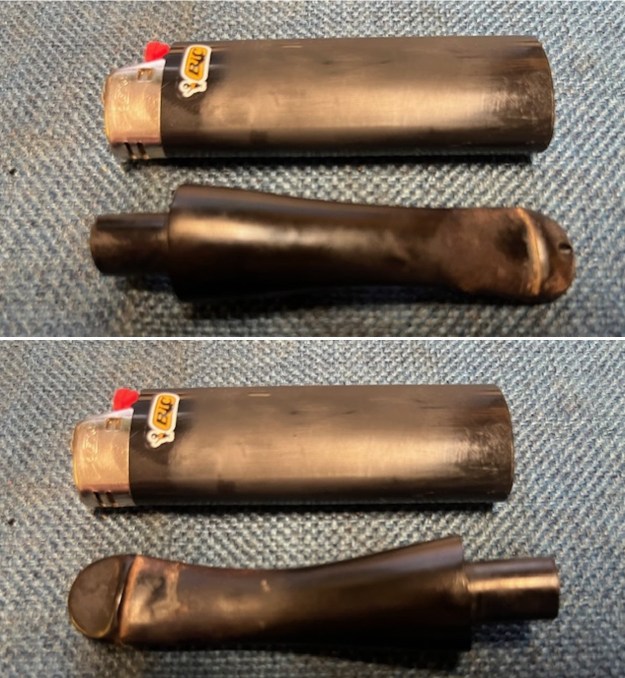
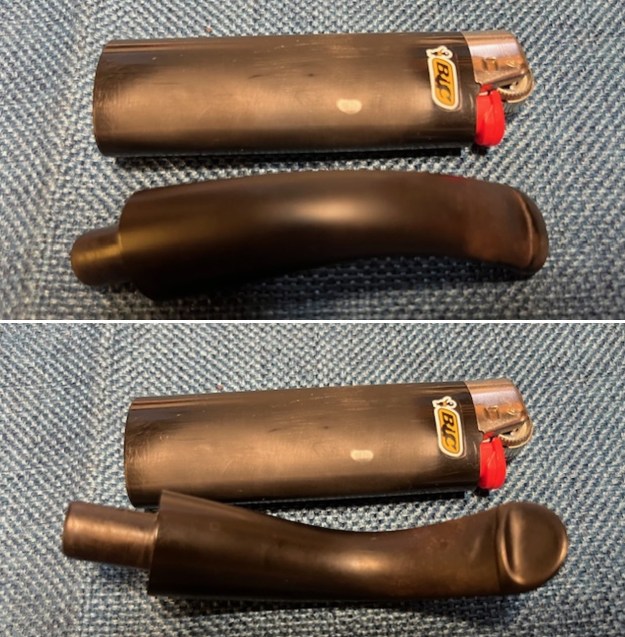
This was significant because, due to the markings being almost entirely worn on this pipe, there was nothing on the wood other than the number 301 – and I couldn’t tell an age from that. Charles Lemon from Dad’s Pipes also has a post about a 301, which he describes as coming from the “1970’s era”. Now, what’s interesting about Steve and Charles’ pipes is that the patch of briar which shows the marks is quite different from mine. Below are Steve’s, Charles’, and my pipes, respectively. The first two are sort of freeform oval-ish shapes. Third (mine) is a rectangle and I wonder if that indicates a different era. I don’t know, but any of you reading this do, please let me know!  This pipe is filthy beyond description – but must have been smoked frequently and with great affection. The stem has dirt everywhere, severe toothmarks aplenty, and calcification as I have seldom seen. Meanwhile, the stummel looks as though oily dirt has been rubbed into the surfaces of the rustication. The rim is coated in lava, the front edge of the rim is bashed, and the bowl is clogged with cake. Some spots on the rustication are really worn – the old fellow must have really loved his pipes. I began by cleaning some of the calcification on the outside of the stem. I took a blade (an old butter knife, actually) and began gently scraping at all that build-up. Obviously, I took it easy, as I did not want to damage the stem’s vulcanite any further. The butter knife worked quite well and I got a good amount loose. I followed that up with some Murphy’s on some cotton rounds to try and scrub the rest away. I broke out the isopropyl alcohol and pipe cleaners, and got to work on the inside of the stem. Predictably, it was unbelievably dirty and I went through a good number of pipe cleaners in order to clean it up.As I mentioned, there were quite a few dents in the stem. Some were obviously tooth marks, but other dents looked like blunt force trauma! Time to break out the BIC lighter to see if it could raise some of them. Quite frankly, it did not do much – this repair was going to require some considerable sanding etc. Before that, however, the stem went for an overnight soak in the deoxidizer. The following day, the oxidation had migrated to the surface and would be fairly straightforward to remove. I scrubbed vigorously with SoftScrub to remove the leftover oxidation. At this point, I painted the accidentally-duplicated P on the stem, as it was pretty rough – just like everything about this pipe.

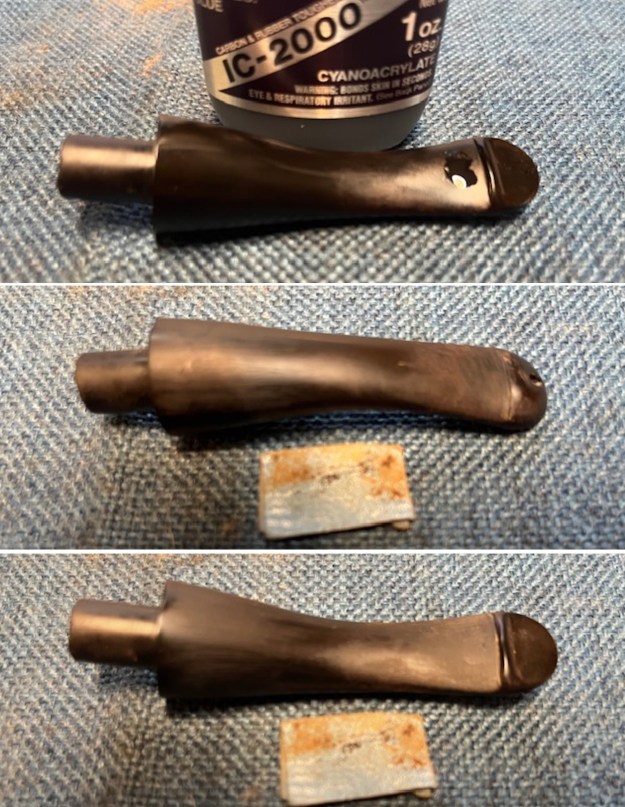
Once clean, I set about repairing the dents. Before I moved on to the Micromesh pads, I built up the dent damage on the stem with black cyanoacrylate adhesive and let it fully cure. It turned out that this was not as straightforward as I had hoped. It took more than one application of adhesive to sort this problem out. I sanded the lumps down with my needle files and my grey pads, to make the stem look sort of normal. I then used all nine Micromesh pads (1,500 through 12,000 grit) to bring out the lovely black lustre on the stem. I also used Obsidian Pipe Stem Oil in between each of the last five pads. On to the stummel – this is where the lion’s share of the work was. The insides (both bowl and shank) were overwhelmed with cake and tar and anything else you’d care to mention. The bowl really needed to be reamed, so I used the KleenReem to scrape off as much built-up cake as possible. Generally, I prefer to sand the chamber down to bare briar. When restoring, it is important to ensure that there is no damage to the briar under the cake. There are a few situations when I might leave some cake in the bowl, but not today. There were definitely some craze lines in the briar on this pipe. I’ll come back to that later. Just like the bowl, the shank was absolutely disgusting. It had never been cleaned – or, not for many decades. I started cleaning the inside with isopropyl alcohol, Q-tips, and pipe cleaners. This took a while. The inside was very dirty and required and extraordinary number of Q-tips and pipe cleaners. Eventually some cleanliness came to it.I threw the stummel in my alcohol bath in the hope that it would loosen some of the ground-in filth on the outside of the bowl. After 24 hours, this worked a bit, but not enough. I added some scrubbing with Murphy’s and a toothbrush. This made things much better, but it’s a case of two steps forward and one step back: sure, it’s clean, but lots of the stain in now gone too. I decided to de-ghost the pipe despite what I had just done with the alcohol bath. I thrust cotton balls into the bowl and the shank and saturated them with 99% isopropyl alcohol. I let the stummel sit overnight. This caused even more oils, tars and smells to leach out into the cotton. The bowl was nice and clean after this.On to the ferrule – which was bashed and discoloured from years of mistreatment. Somewhat to my surprise, the ferrule came off very easily and required no special effort. I began by cleaning the metal with some SoftScrub on cotton rounds. This was quite good at removing the unsightly bits. I used some of my MicroMesh pads (only 3,600-12,000) to eliminate some of the minor scratches on the metal. It also gave a nice shine which clearly hadn’t been seen for decades. I used a jewelry cloth to give the final polish to the nickel. This ferrule would always retain some small dents etc. from its hard life, but it looks much improved. And this is where I stopped for a looooong time. It occurred to me that the amount of work involved in this pipe was tremendous. I was torn about how invasive I wanted to be in my pipe surgery. What about the damage to the rim? What about rematching the stain? What about the heavily worn sections of the rustication? Perhaps my temperament didn’t suit this pipe too well. I freely admit that I set aside the pipe for nearly six months before coming back to it. That sounds absurd, I know, but it was either that or chucking it in the fireplace.

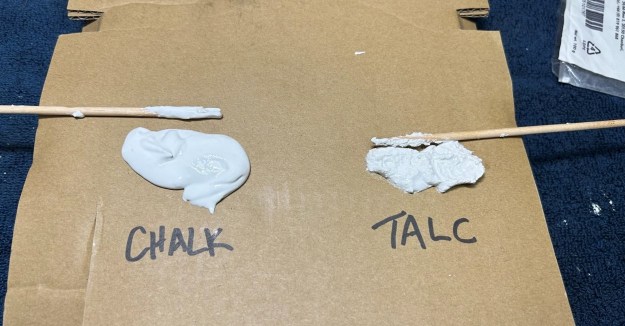
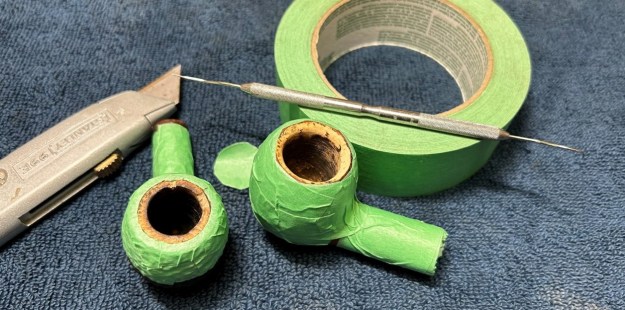
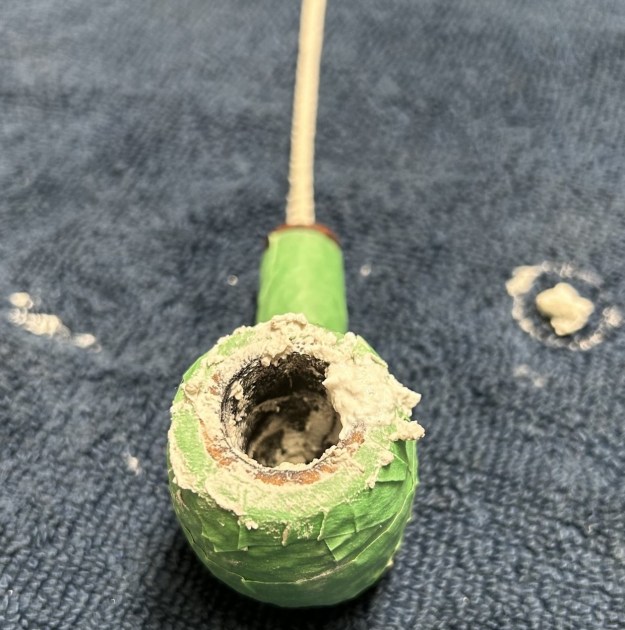
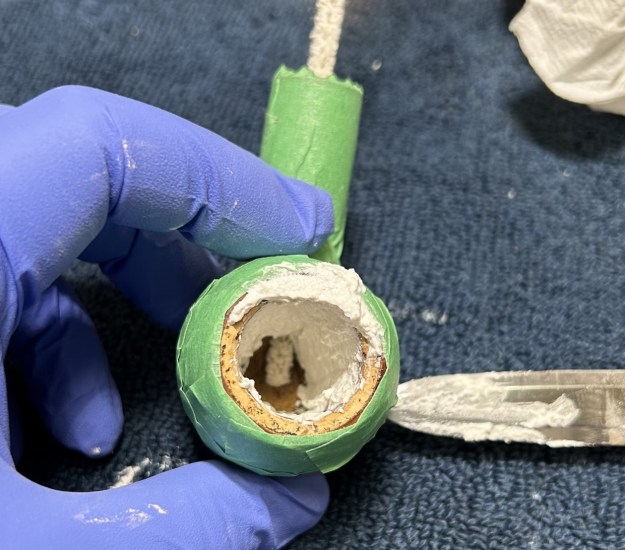
Back in the present day, I began by working the rim back into shape. I sanded it down on my topping board so that it was level (it wasn’t before). I used some tools, including my Dremel and some modified screwdrivers, and re-rusticated the rim. It looked great, but too sharp. So, I sanded the sharp bits to add some softness to the rim. At this point, six months on, I couldn’t remember what cleaning I had and had not done to the pipe. I dragged out some soap and some tube brushes and scrubbed the insides. I’m glad I did – it still needed it.I wanted to have another look at the underside of the stummel for any sign of markings. I used a piece of chalk and pretended this was an old gravestone rubbing. The 301 came out more clearly, but, sadly, nothing else was revealed. It was worth a shot.I knew I had to stain the stummel, but I wanted to address the heat crazes inside the bowl first. I prepared some heat-resistant epoxy and filled the cracks and gouges, ensuring that the epoxy was evenly spread throughout the bowl. Of course, I did plug the draught hole with a folded pipe cleaner (coated in petroleum jelly) to make sure none of the epoxy made its way up there. Once done, a good 24 hours was needed to ensure that the epoxy was properly set.Having completed that, it was time for staining. This would require more than one colour and some finessing to get right. I applied black leather dye with a cotton dauber to colour the recesses (or valleys, if you like) of the rustication. I flamed it with my BIC lighter and let it set. This dye is alcohol-based, so I used isopropyl alcohol to wipe down the pipe and remove excess stain. This wasn’t sufficient, so I also used some 0000-grit steel wool. I coated it again with cordovan leather dye, flamed it again, and let that set too. As before, I wiped it down with alcohol to provide depth, nuance, and variation to the colour. I was pleased – and would be more pleased soon. At long last, I was off to my bench buffer to put the final touches on this pipe. I first gave it a thorough going-over with Red Tripoli. This may seem strange, but I needed to lighten the colour of the high points of the stummel. Then I used the White Diamond compound. Following that, several coats of conservator’s wax created a beautiful, glossy seal on the pipe and moved closer to closure for this long and involved repair.At this point, I glued the ferrule back in place. Then I gently sanded the inside of the bowl to provide a rough surface for what was to come next. I thinly coated the entire inside of the bowl with a mixture of activated charcoal and my wife’s homemade yogurt. Once hardened, this provided a good, slightly rough surface for a new cake to build.This rugged and handsome Peterson 301 System rusticated bent pot has come out of the depths and is back to life. I am pleased to announce that this pipe is for sale! If you are interested in acquiring it for your collection, please have a look in the “Ireland” pipe section of the store here on Steve’s website. You can also email me directly at kenneth@knightsofthepipe.com. The approximate dimensions of the pipe are as follows: length 5¾ in. (145 mm); height ¾ in. (45 mm); bowl diameter 1½ in. (38 mm); chamber diameter ¾ in. (20 mm). The weight of the pipe is 2 oz. (60 g). I hope you enjoyed reading the story of this restoration as much as I enjoyed restoring it. If you are interested in more of my work, please follow me here on Steve’s website or send me an email. Thank you very much for reading and, as always, I welcome and encourage your comments.
Restoring a beautiful Bari Select Mandarin Made in Denmark 7824


Blog by Steve Laug

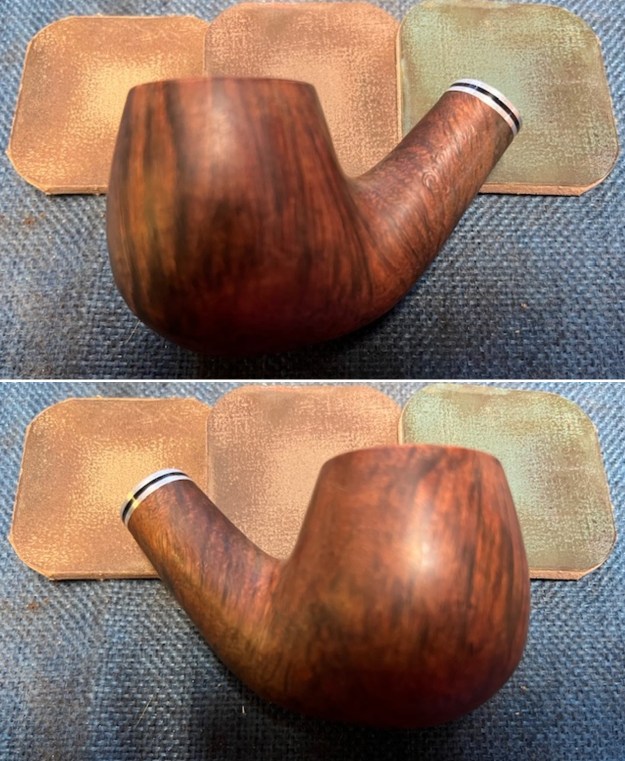
The next pipe on the work table is a beautifully grained Bari Oval Shank Acorn. It is stamped on the topside it reads Bari [over] Select [over] Mandarin. On the underside it reads Made in Denmark [over] the shape number 7824. It came from a lot we purchased from a seller on eBay on 01/22/2024 from a seller in Jordan, Minnesota, USA. It is very nicely shaped Danish style acorn shaped bowl with a vulcanite saddle stem. The bowl has a thick cake and some lava overflow on the crowned rim top and bevelled inner edge. It was hard to know for certain if there was any damage on the top or rim edges because of the debris covering them both. Only cleaning would make that very clear. The vulcanite saddle stem had a worn Bari logo stamp on the topside of the saddle. It is dirty and has tooth chatter and tooth marks on both sides ahead of the button. Jeff took photos of the pipe before he started his cleanup. Jeff took photos of the bowl and rim top to show the cake in the bowl and the condition of both. It was heavily caked with a lava overflow on the rim top. The inner and outer edges look very good. He took photos of the top and underside of the stem showing the oxidation and tooth marks on the stem surface and button. Jeff took photos of the heel and the side of the bowl and shank to show the grain on the pipe. It is a beauty. Jeff took photos to capture the stamping on the sides of the shank. It is clear and readable as noted above. He also took a photo of the faint Bari stamp on the topside of the stem. I turned to Pipephil’s site (http://www.pipephil.eu/logos/en/logo-b1.html) to see if I could find a listing for the Bari Select Mandarin with this four digit number. There was nothing specifically listed for this line of Bari pipes. There was also good info on the brand as a whole and that it was founded by Viggo Nielsen in 1950 and he ran it until 1978 when Age Bogelund managed the production for them. In 1993 it was sold to Helmer Thomsen. I have included a screen capture of the section below.Pipedia gives a great history of the brand (https://pipedia.org/wiki/Bari) that is well worth reading. There were also photos of the Bari stamping on the Select Mandarin line of pipes.

Jeff reamed it with a PipNet pipe reamer and cleaned up the reaming with a Savinelli Fitsall Pipe Knife. He scrubbed out the internals of the shank and stem with alcohol, pipe cleaners and cotton swabs until the pipe was clean. He scrubbed the exterior of the bowl with Murphy’s Oil Soap and a tooth brush to remove the grime and grit on the briar and the lava on the rim top. The finish on the bowl looked really good when I got it. The rim top and edges looked very good. He soaked the stem in Briarville’s Pipe Stem Deoxidizer bath to remove the oxidation. The stem looked better and the deep tooth marks and chatter on the surface were also visible. When the pipe arrived here in Vancouver for the second stop of its restoration tour it looked much better than when he found it. I took photos of the pipe before I started my work on it. I took photos of the condition of the rim top and stem before I started working. The rim top looks very good and the bowl is spotless. The stem still shows some light oxidation remaining and some tooth chatter and marks on both sides near the button. I took photos of the stamping on the top and underside of the shank. The stamping was faint in spots but still readable. It reads as noted above. I took the bowl and stem apart and took a photo of the pipe to show the look of the pipe. I polished the briar with micromesh sanding pads – dry sanding with 1500-12000 grit pads. I wiped the bowl down after each pad with a damp cloth to remove the sanding dust. I worked some Before & After Restoration Balm into the finish of the bowl, rim top and shank with my fingertips to clean, enliven and protect it. I find that the balm really makes the briar come alive again. The contrasts in the layers of stain really made the grain stand out. I let the balm sit for 15 minutes and then buffed with a cotton cloth to raise the shine. The bowl really looks good at this point. I set aside the bowl and turned my attention to the stem. I “painted” the tooth marks on the surface of the stem and was able to lift all of them other than the one deep one on the underside. I filled in the mark with clear super glue. Once the repairs cured I flattened them out with 220 sandpaper to blend them into the surface. I sanded the stem with 320-3500 grit sanding pads and wiped the stem down after each pad with an Obsidian Oil saturated cloth to remove the grime and protect the stem.I touched up the Bari white logo on the stem with acrylic white fingernail polish. Once it dried I buffed off the excess with a cotton pad. The BA are too faintly stamped to take in the acrylic so the stamp is incomplete. I wiped the stem down with Obsidian Oil once more.I polished the stem with micromesh sanding pads – wet sanding it with 1500-12000 grit pads. I polished it further with Before & After Pipe Stem Polish – both fine and extra fine. Once again, I am the part of the restoration that I always look forward to – the moment when all the pieces are put back together. I put the pipe back together and buffed the bowl and the stem with Blue Diamond on the buffing wheel. I gave the bowl and the stem multiple coats of carnauba wax. I buffed the pipe with a clean buffing pad to raise the shine. I hand buffed it with a microfiber cloth to deepen the shine. It is fun to see what the polished bowl looks like with the smooth finish and the black vulcanite stem. This richly stained Bari Select Madarin 7824 Acorn is light weight and ready for you to load up a tobacco of preference and enjoy breaking it in. Have a look at it in the photos below. The dimensions are Length: 5 inches, Height: 2 inches, Outside diameter of the bowl: 1 ¼ inches, Chamber diameter: ¾ of an inch. The weight of the pipe is 50 grams/1.76 ounces. This is one that will go on the Danish Pipemakers Section of the rebornpipes online store shortly. Let me know if you are interested in adding it to your rack. Thanks to each of you who are reading this blog. Remember we are not pipe owners; we are pipemen and women who hold our pipes in trust until they pass on into the trust of the next generation.

A Pipe Hunt Find in Bellingham – A WDC Royal Demuth Imported Briar Root 25 Apple


Blog by Steve Laug

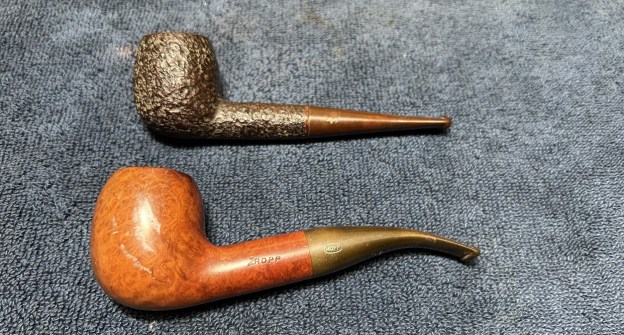
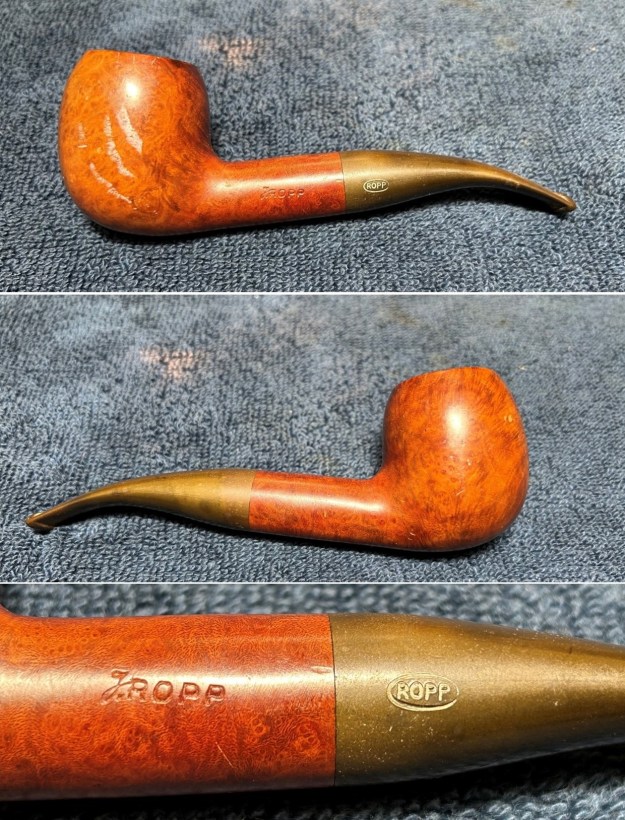
On our recent Victoria Day Weekend (5/18/24) my family met Jeff and his wife in Bellingham for breakfast, a visit and a bit of pipe hunting. We visited three of my favourite antique malls and worked out way through the aisles of wares for sale. Jeff and I tend to divide and conquer, each walking through the aisles of the shop looking for pipes. The rest of the family moves through looking for their own treasures. We left the second shop and using Google maps worked our way to a new shop that I had not visited before. We walked into a nicely laid out shop and I asked the clerk if there were any pipes available. He walked us back to a display case and took out a circular pipe rack. There in the rack were two pipes remaining in it. The first was a square shank Irwin’s (GBD made) London Made London England 9487 shape and the second was an older WDC Royal Demuth Imported Briar Root 25. Both were great and were added to the hunt bag. Here is the link to the blog on the hunt and a photo of the pipes we added (https://rebornpipes.com/tag/bellingham-pipe-hunt/). I decided to take a break from the pipes in my queue of pipes to work on and deal with the Royal Demuth 25 Apple. It is the bottom pipe in the two photos above. It was an interesting shape that has some great grain under the grime on the bowl and shank. It is stamped on the left side of the shank and reads WDC in a triangle [followed by] Royal [over] Demuth. On the right side it is stamped Imported Briar [over] Briar Root [followed by] the shape number 25. On the underside of the shank it is stamped FILTER PAT’D [over] 1934. The stem has the WDC white triangle on the left side of the taper. The stem was an older style vulcanite with a narrow taper from shank to button. It was lightly oxidized and has some tooth marks on the top and underside of the stem near the button. The bowl had a thick cake in it and some bits and bobs of tobacco stuck to the walls. There was a thick lava coat on the rim top and edges. The finish had been varnished sometime in its life and it was peeling and there was a lot tars ground into the surface of the bowl. I took some photos of the pipe before I started working on it. I took photos of the rim top and stem to show the general condition of the pipe. The bowl is heavily caked and the rim top and edges have a heavy coat of lava overflowing on to them. It is hard to know with certainty the condition of the bowl at this point but clean up will reveal all. The stem is lightly oxidized and has light tooth chatter and marks on both sides ahead of the button end. I took photos of the stamping on the sides of the shank. You can see that it is faint in spots but it is still very readable. It reads as noted above. I removed the stem from the shank and took a photo of the parts to show how the pipe looks. I looked on Pipephil’s site and though there were many WDC pipes there was nothing stamped Royal Demuth and nothing with any of the other stamping on the shank sides of this pipe. I turned then to Pipedia (https://pipedia.org/wiki/William_Demuth_Company). As always there is a great history of this American brand. If you are interested be sure to turn there and take time to read about it.

Royal Demuth example with box and filters, courtesy of Doug Valitchka

There was an interesting example of the Royal Demuth provided by Doug Valitchka that has identical stamping to the one that I am working on. It is a different shape but it identical in terms of the stamping. It also looks like it takes a filter that is similar to the Medico filter but I will doulbe check that once it is thoroughly cleaned.There was also an advertisement for the WDC Changeable Filter Pipes that included the Royal Demuth. I have included that below.There is also a great article by Ben Rappaport on the Demuth – Dunhill Connection that is an enjoyable read (https://pipedia.org/wiki/A_Demuth%E2%80%94Dunhill_Connection%3F).

I now knew that the pipe was part of a line of Filter Pipes that WDC put out and that the filter system was patented in 1934. The stamping that the Filter was Pat’d 1934 tells that it came out after the patent was granted. However, I could not fine tune the date more than that. I also knew that the pipe I was working on was an older one because of the style of the stem – straight taper and smaller profile at the button ends.

I started my work on the pipe cleaning up the bowl and the shank. I reamed the bowl with a PipNet pipe reamer to take the cake back to bare briar. I cleaned up the remnants of the cake with a Savinelli Fitsall Pipe Knife. I sanded the bowl walls with sandpaper wrapped around a piece of briar to smooth them out. The inside walls were clean and there was no sign of burning or checking on them. Note the spotty varnish coat peeling on the bowl sides that would need to be removed. I decided to clean the internals before scrubbing the externals. I scrubbed the shank and the airway in the shank and the stem with pipe cleaners, cotton swabs and isopropyl alcohol. Once it was clean it smelled much better. To get rid of the peeling and spotty varnish coat on the bowl I wiped it down with some acetone (fingernail polish remover) on cotton pads until the shine was gone and the finish was quite smooth and clean. I scrubbed the externals of the bowl and shank with undiluted Murphy’s Oil Soap and a tooth brush to remove the grime in the finish. I rinsed the bowl off with warm water. I scrubbed the internals with a shank brush and soap to remove the remaining tars and oils inside both the stem and the shank. I was able to remove a lot of the lava on the rim top as well. The bowl was beginning to look much better at this point. The pipe really smelled strongly of the aromatic tobacco (perhaps Half & Half) that had been smoked in it before so it needed some work. I deghosted the bowl with 99% isopropyl alcohol and cotton bolls. I stuffed it and twisted a plug for the shank. I used an ear syringe to load it with alcohol and set it in a pipe rest to let it do its job. I would let it sit for several hours while I was at work today. In the evening I removed it and it was dark with tars and oils. I recleaned the bowl and shank afterwards and the pipe is smelling better! I sanded the bowl (rim top and shank) with sanding pads – sanding with 320-3500 grit pads and wiped down with a damp cloth after each sanding pad. The bowl began to take on a real shine. It was going to be a beautiful pipe. I wiped down the sanding dust with a damp cloth and restained the pipe with some Fiebing’s Cordovan alcohol based stain. I applied the stain and flamed it with a lighter to set the stain deep in the grain. It was a rich colour that I knew would look better with a little more work and buffing. I wiped the bowl down with alcohol on cotton pads to make the stain more transparent. I wanted to be able to see the grain. I wiped it down further with some 100% acetone to get even more transparency. It is beginning to look very good at this point. I followed that by polishing the briar with micromesh sanding pads – dry sanding with 1500-12000 grit pads and wiping the bowl down after each sanding pad. The grain really began to shine through. It is a beautiful pipe. I rubbed the bowl down with Before & After Restoration Balm. I worked it into the surface of the briar to clean, preserve and polish the wood. The product works to really give new life to the briar and in this case the briar looked much better. I sanded out the scratches and marks in the stem surface with 320-3500 grit sanding pads. I wiped the stem down with a damp cloth after each sanding pad. It looked much better and really started to take on a shine.I polished the stem with micromesh sanding pads – wet sanding with 1500-12000 grit sanding pads. I wiped it down after each sanding pad with Obsidian Oil. I polished it with Before & After Pipe Stem Polish – both Fine and Extra Fine. With the pipe cleaned up and ready to go I fitted the filter stem with a Medico Paper Filter and it fit precisely like the original WDC paper filters. I am excited to put the final touches on this interesting piece of American Pipe History found in Bellingham, Washington. It is a beautiful WDC Royal Demuth Filter Pat’d 1934 Shape 25 Apple shaped pipe. I put the pipe back together and buffed it with Blue Diamond on the buffing wheel. I gave the bowl and the stem multiple coats of carnauba wax. I hand buffed the pipe with a clean buffing pad to raise the shine. It is fun to see what the polished bowl looks like with beautiful grain on the bowl sides, top and bottom. The polished black vulcanite stem combined with the bowl to make a stunning pipe. This older WDC Royal Demuth Filter Pipe is great looking and the pipe feels great in my hand. It is light and well balanced. Have a look at it with the photos below. The dimensions are Length: 5 ¾ inches, Height: 1 ½ inches, Outside diameter of the bowl: 1 ¼ inches, Chamber diameter: ¾ of an inch. The weight of the pipe is 40 grams/1.41 ounces. I will be adding it to the American Pipemakers Section of the rebornpipes store shortly. If you want to add it to your collection let me know. Thanks for walking through the restoration with me as I worked over this pipe. Thanks to each of you who are reading this blog. Bowl – finishing, Bowl – refinishing, bowl topping, Bowls – refinishing, buffing, finishing, fitting a new stem, micromesh sanding pads, WDC Pipes, WDC Royal Demuth apple 25, Royal Demuth Filter Apple 25 Pipe, pipe refurbishing, polishing, polishing a stem, polishing stems, refinishing, refurbishingstem work, vulcanite, waxing, waxing a stem, removing tooth marks, repairing bite marks, sanding a stem, stem work, polish a vulcanite stem, waxing, waxing a stem

A No-Name Basket Pipe I mean Medico Guardsman Apple


Learned a lot with you on this one John. thanks for doing this restoration to this detail. Loved it.

Photographed and written by  John M. Young The question “Why do I do this?”  comes to mind with this Nameless pipe.    I had written the title and …

A No-Name Basket Pipe I mean Medico Guardsman Apple