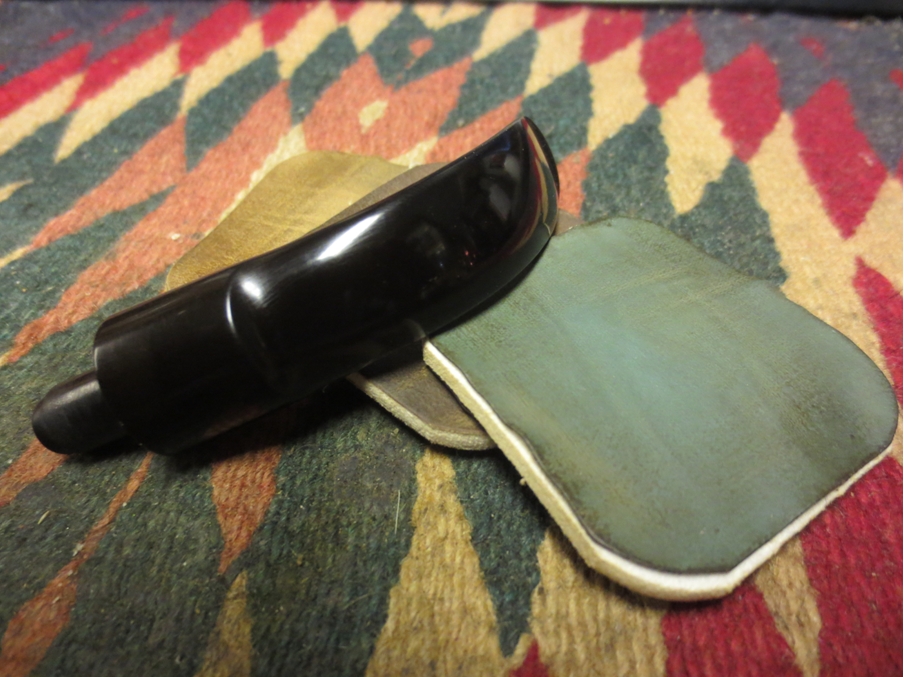
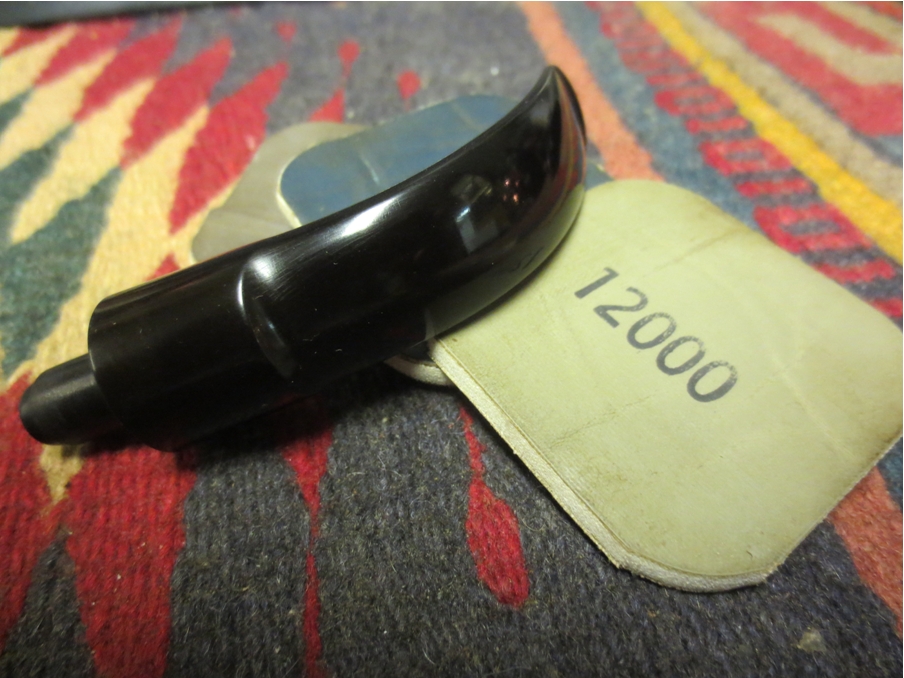
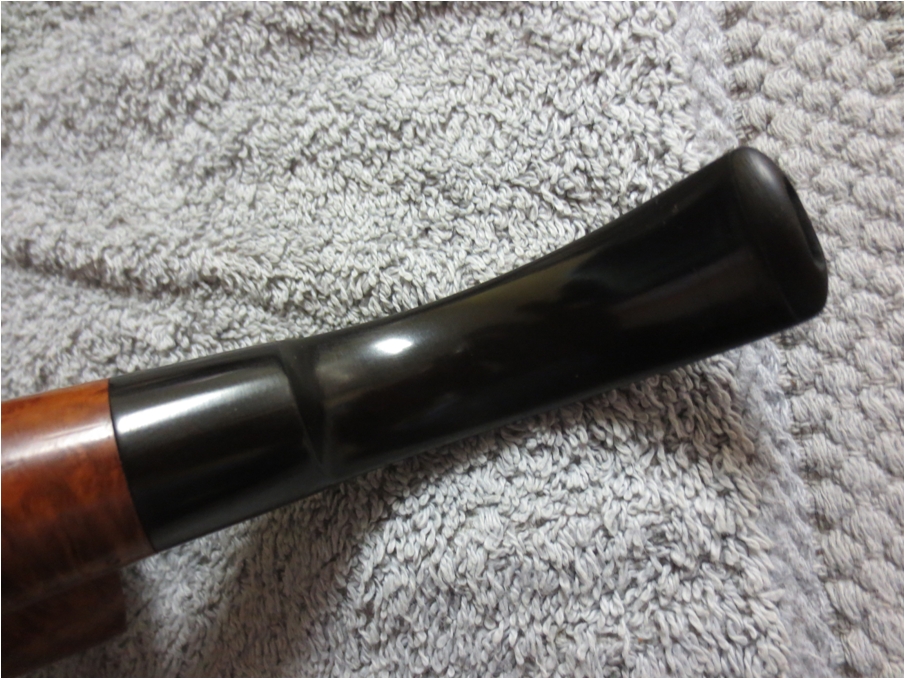
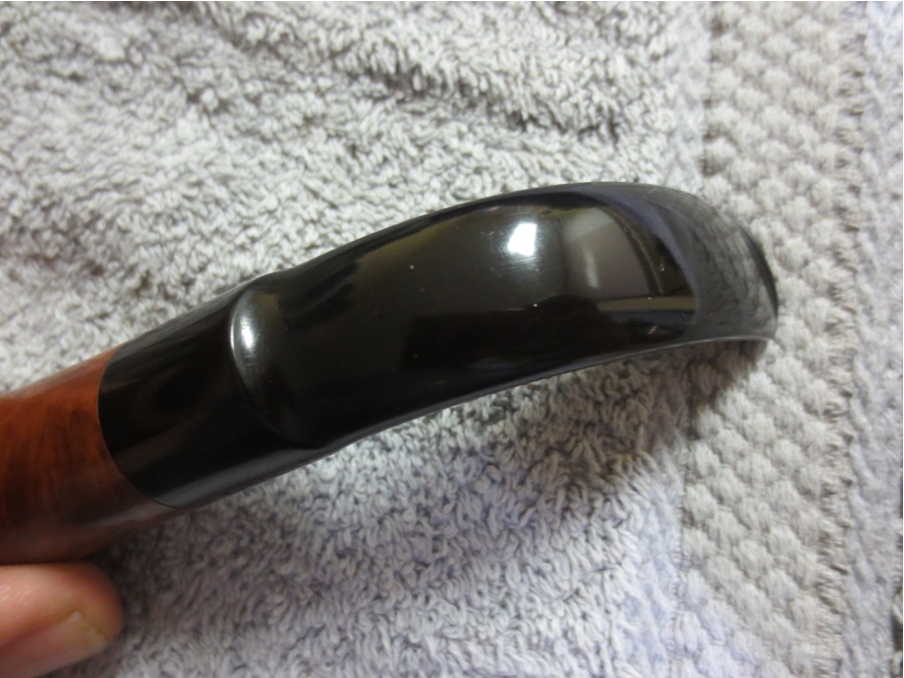
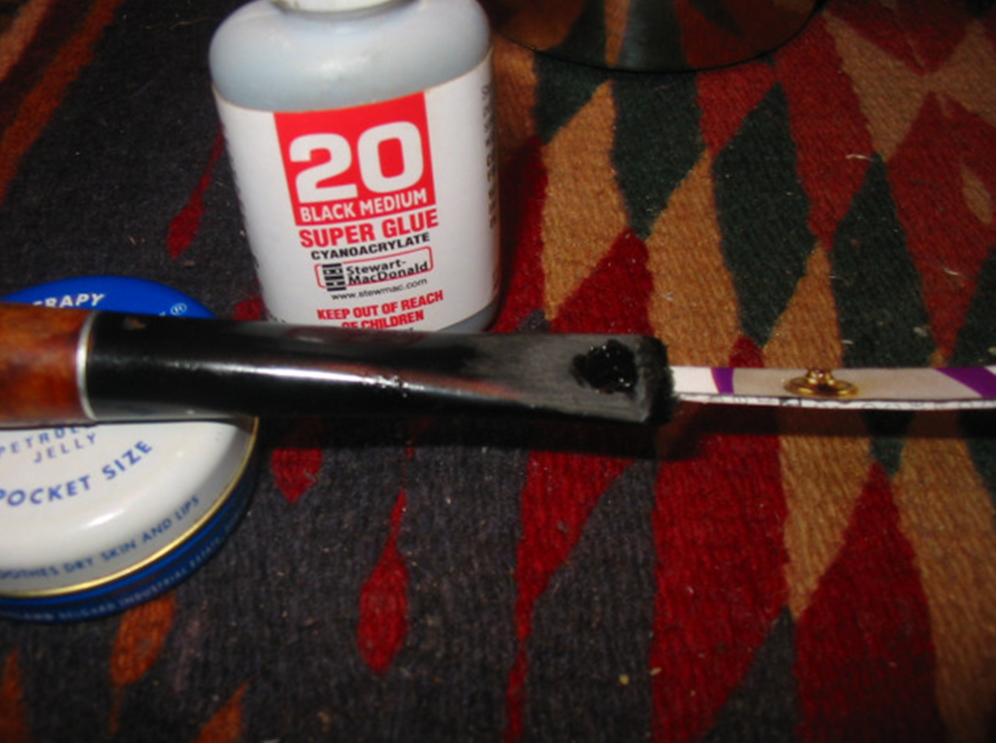
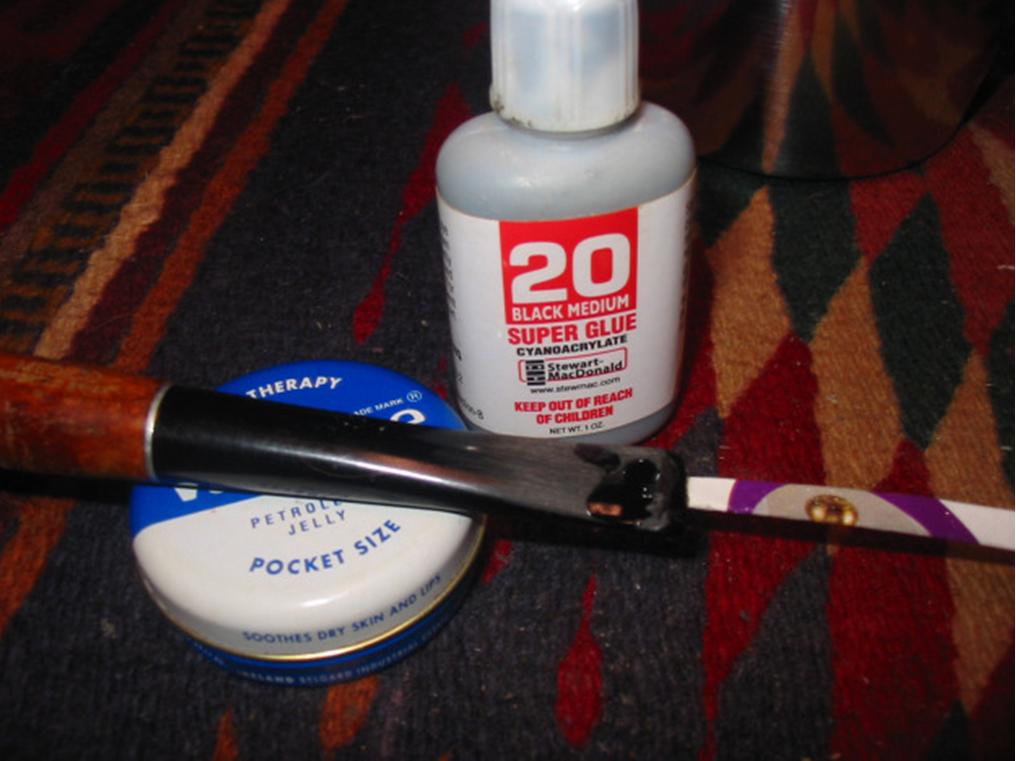
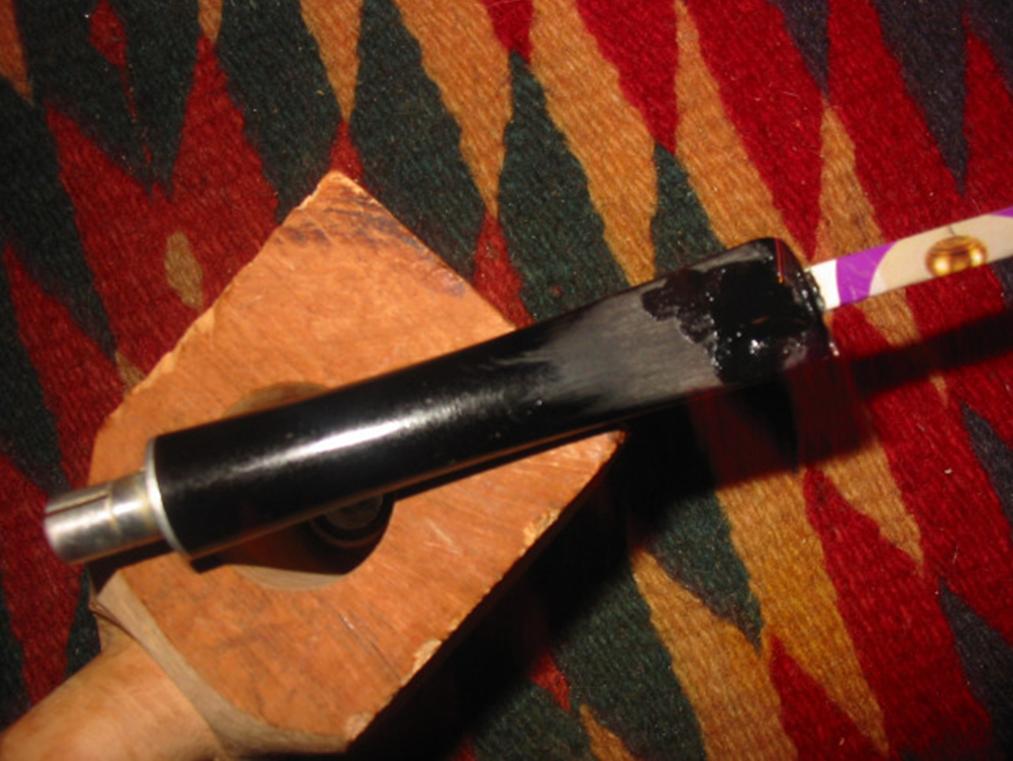
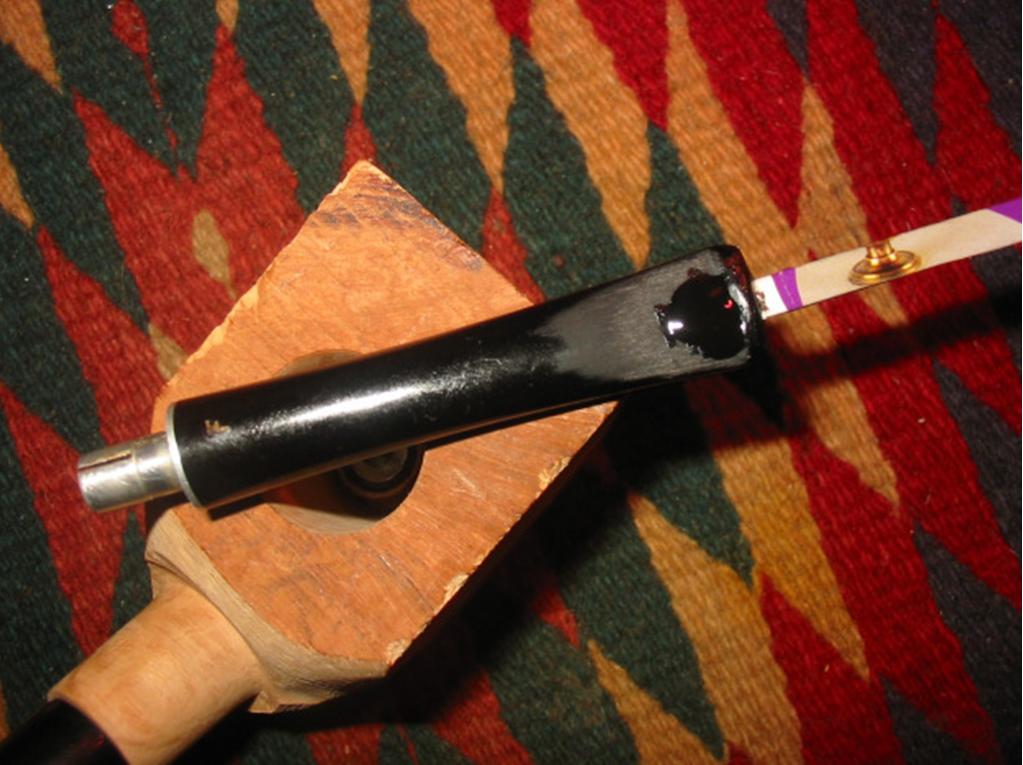
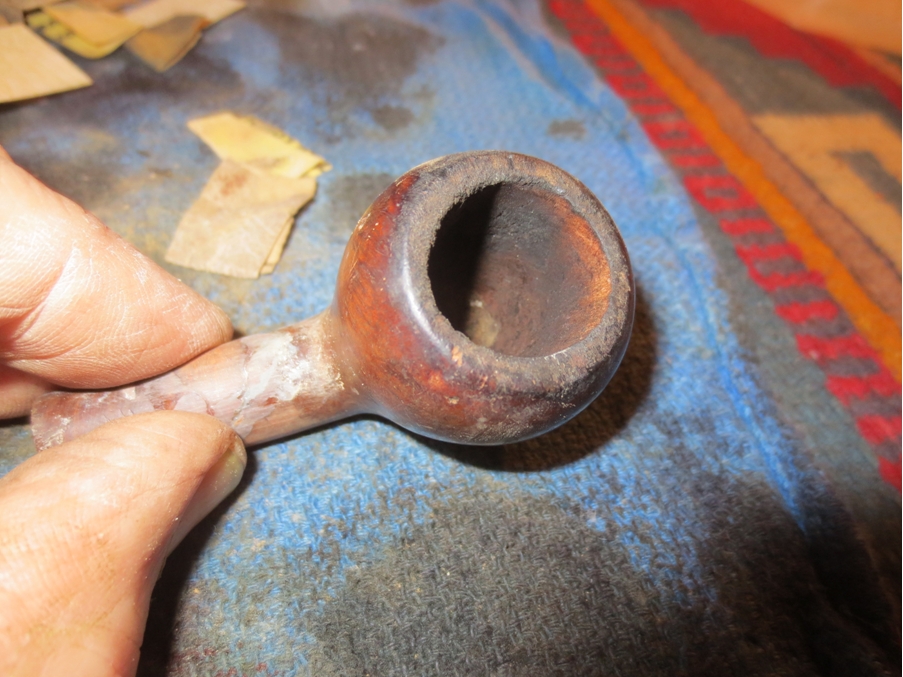
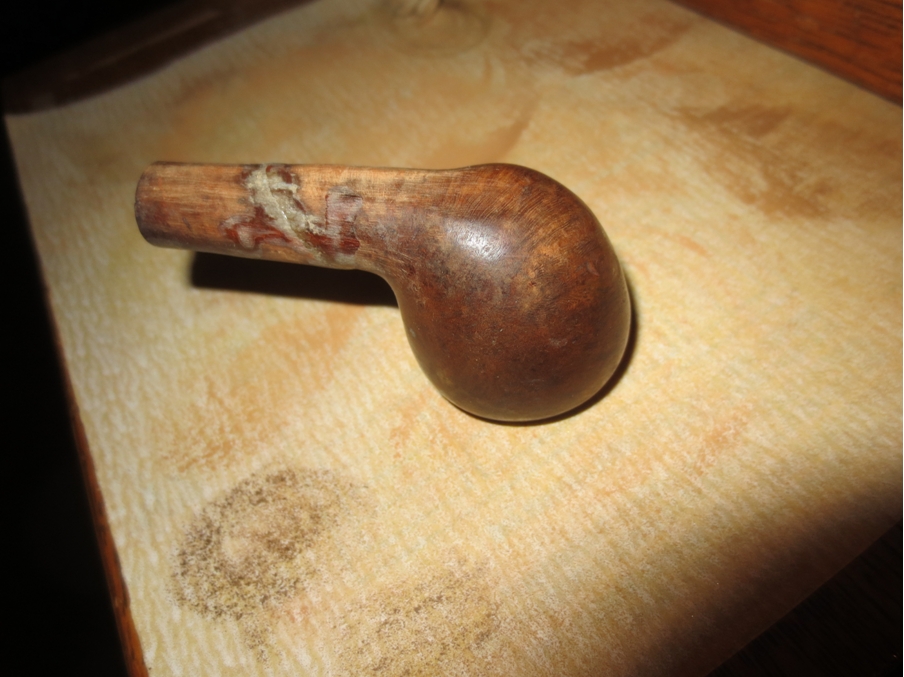
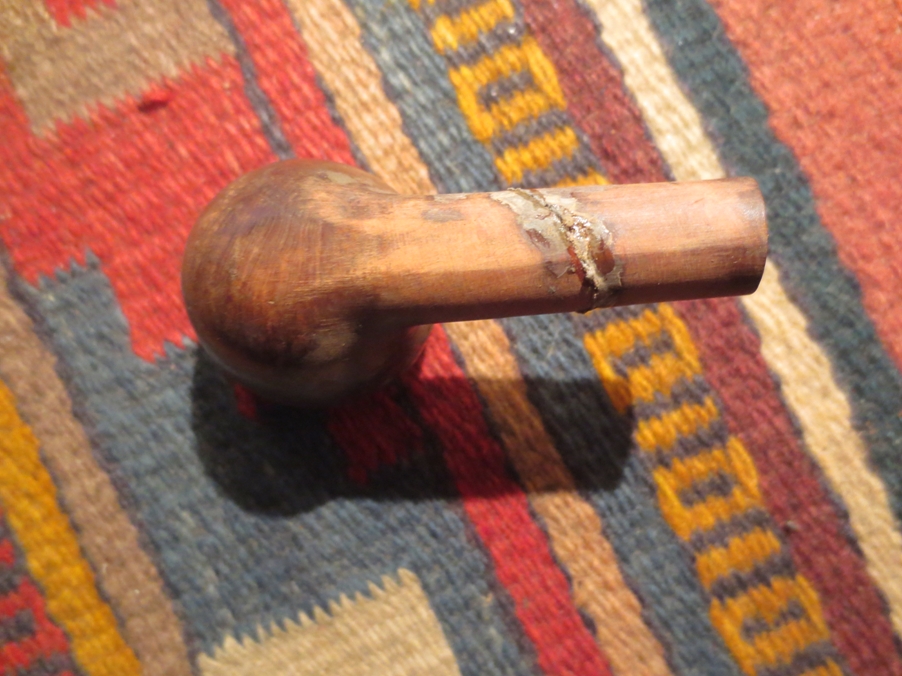
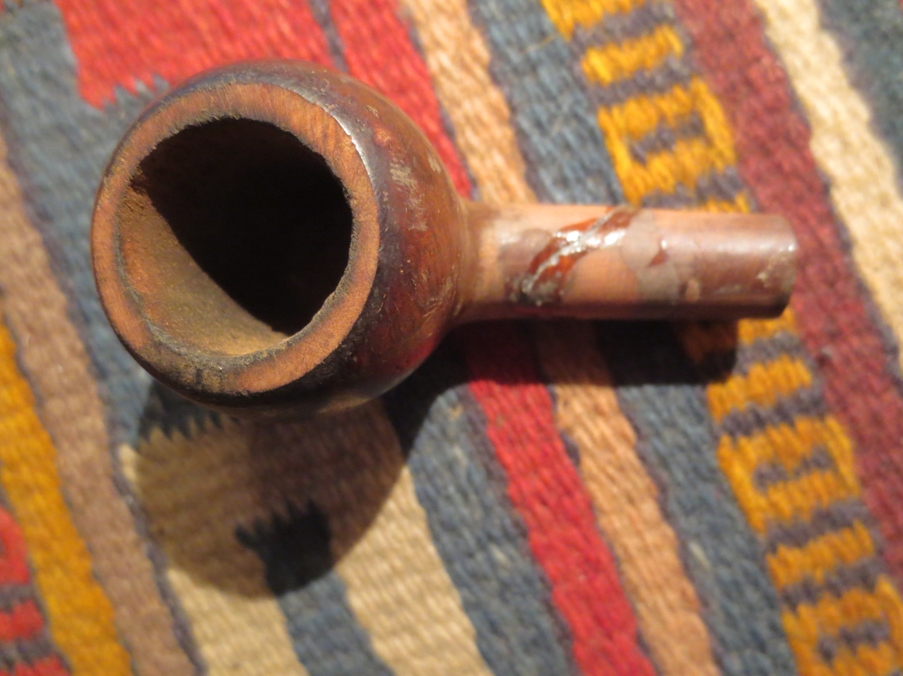
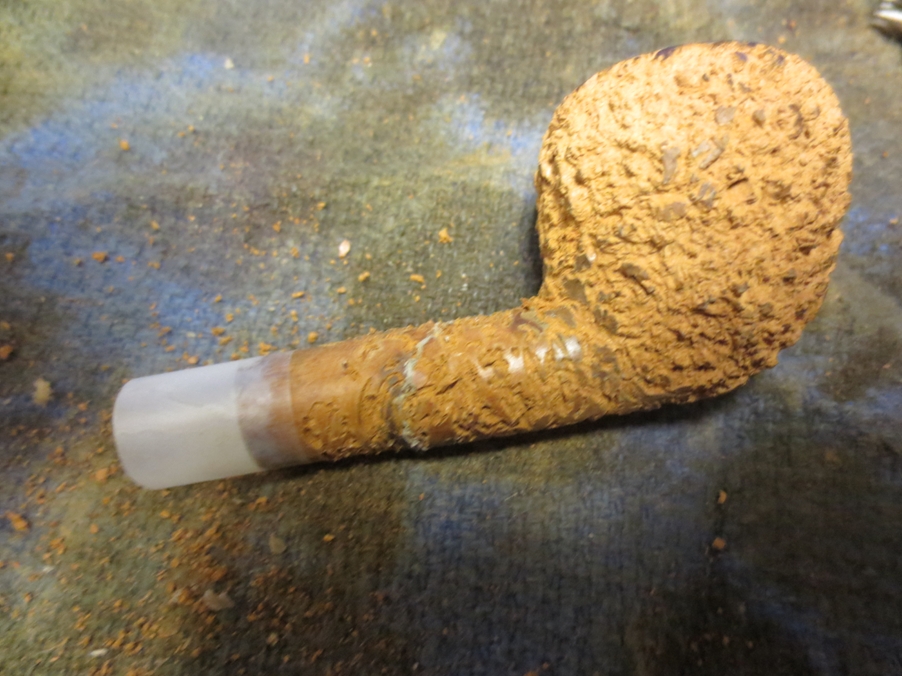
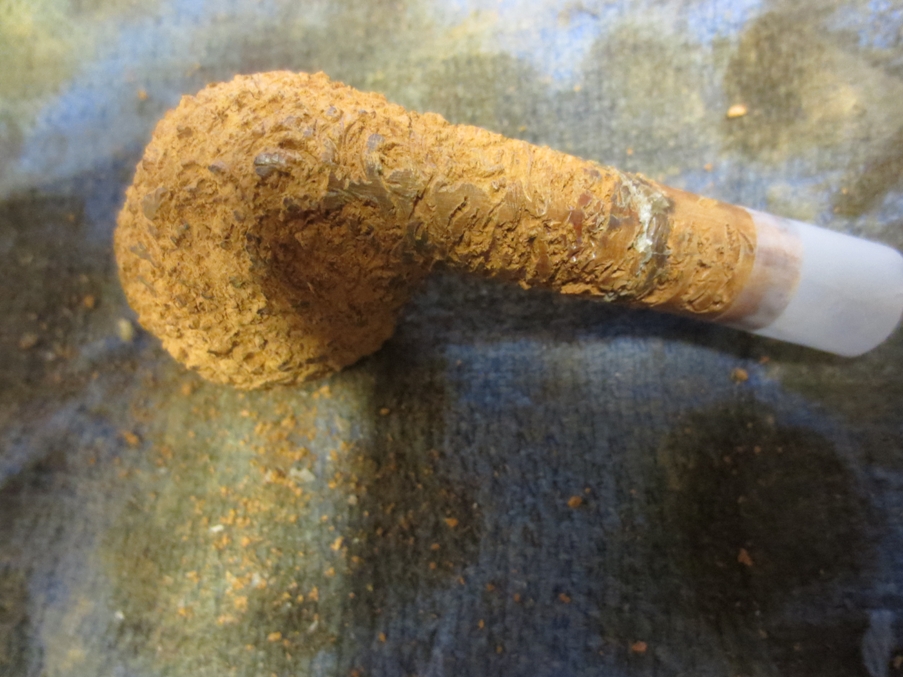
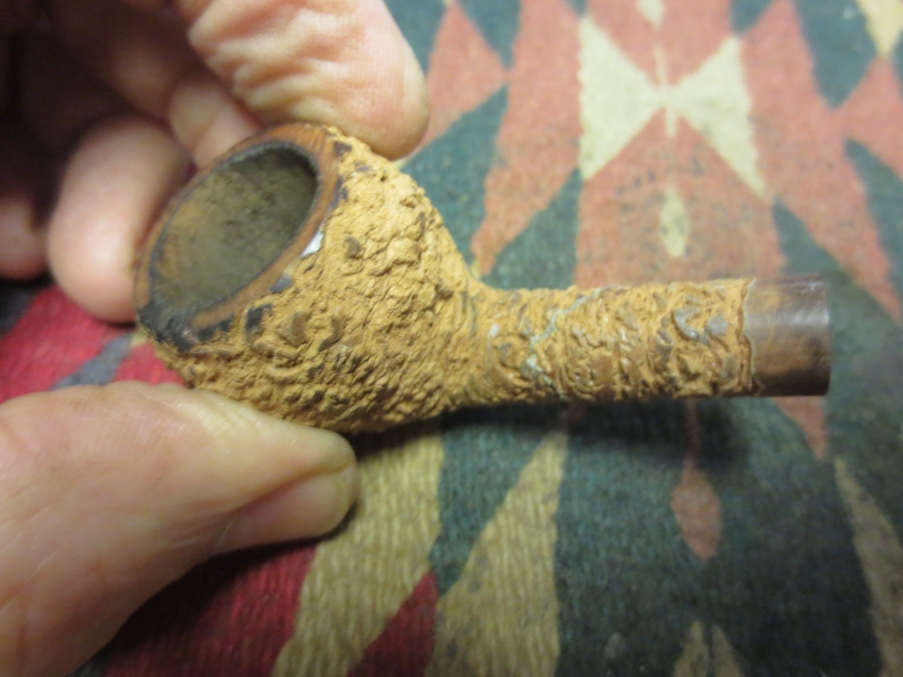
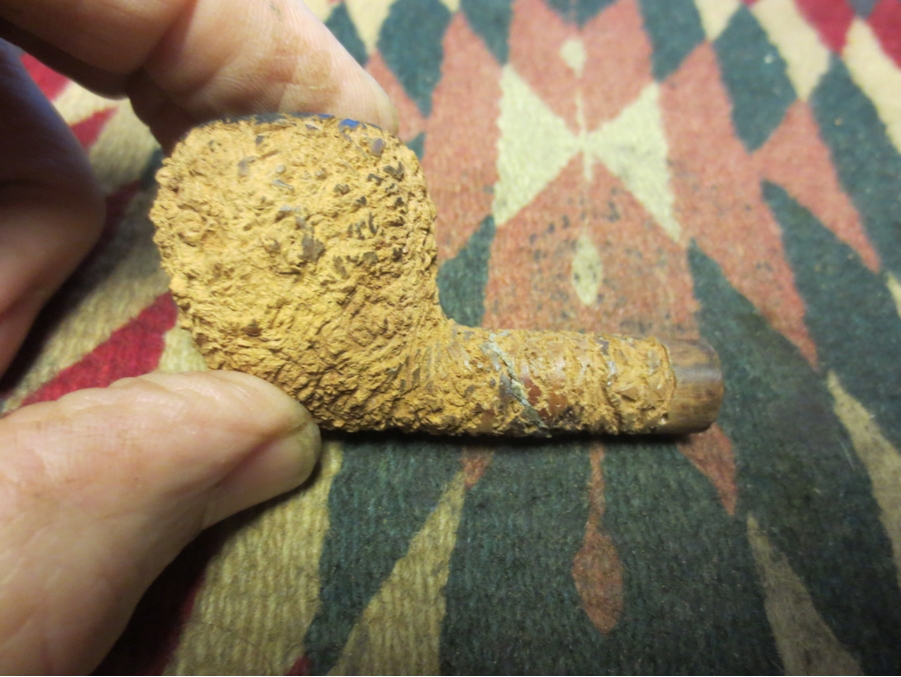
Category Archives: Pipe Refurbishing Essays

Essays and pictorial essays on the art of refurbishing

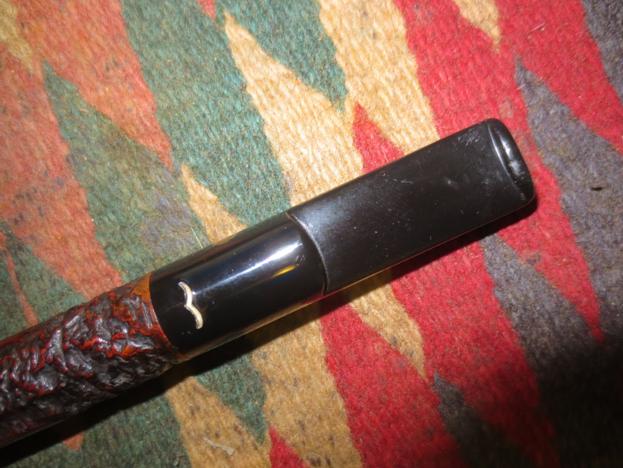
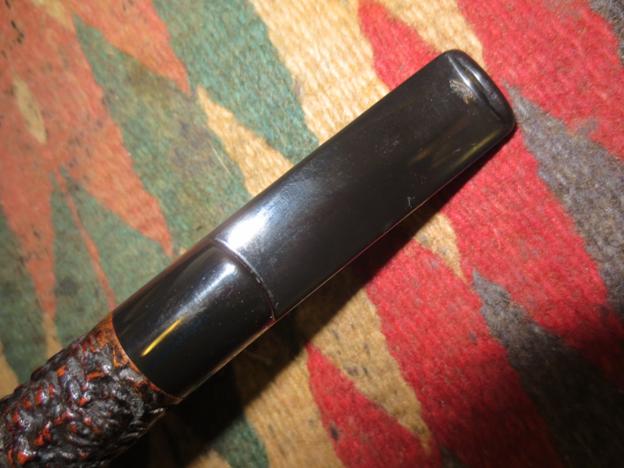
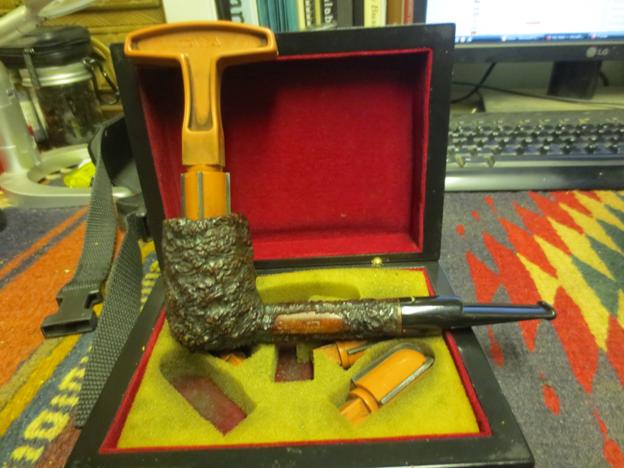
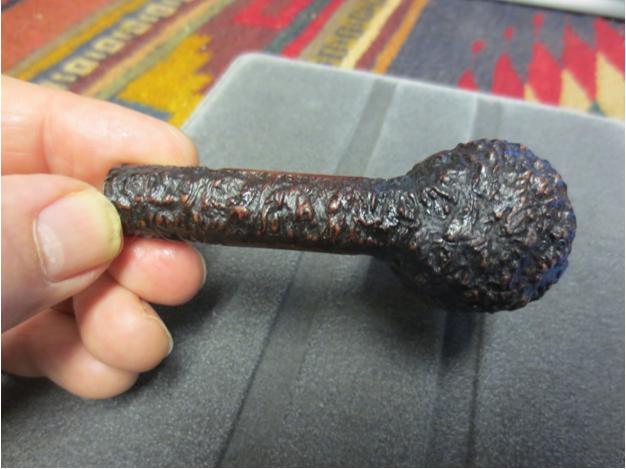
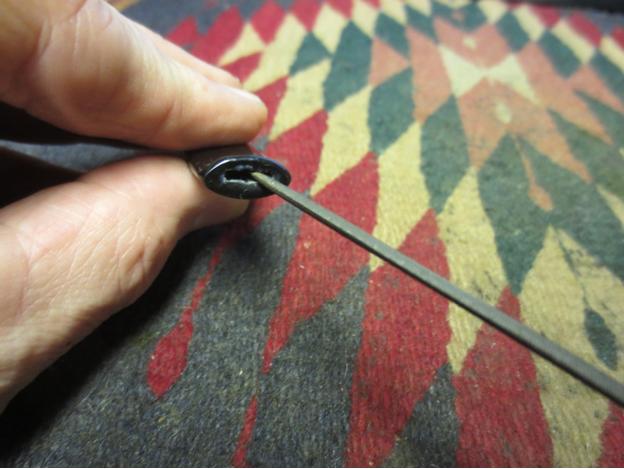
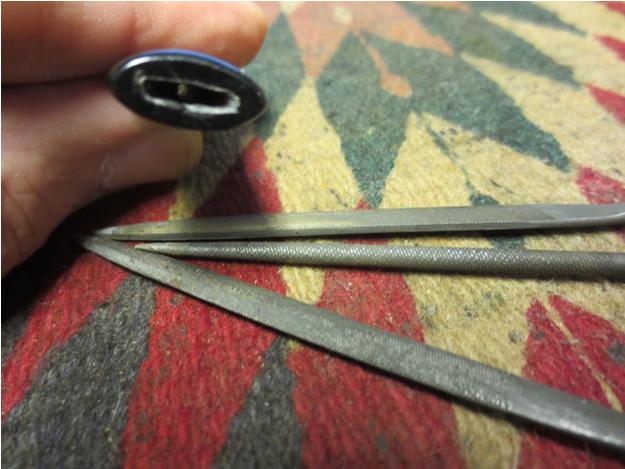
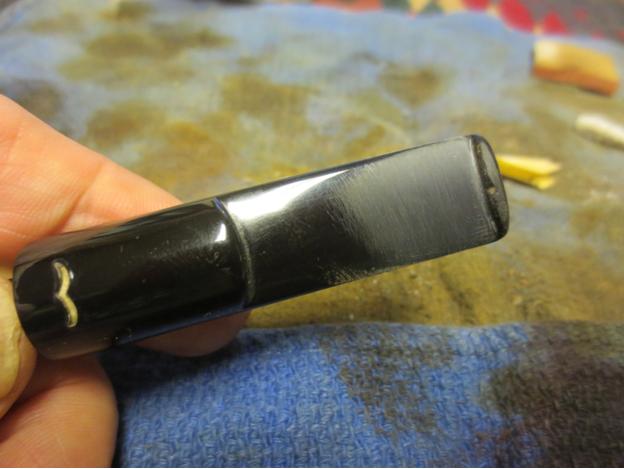
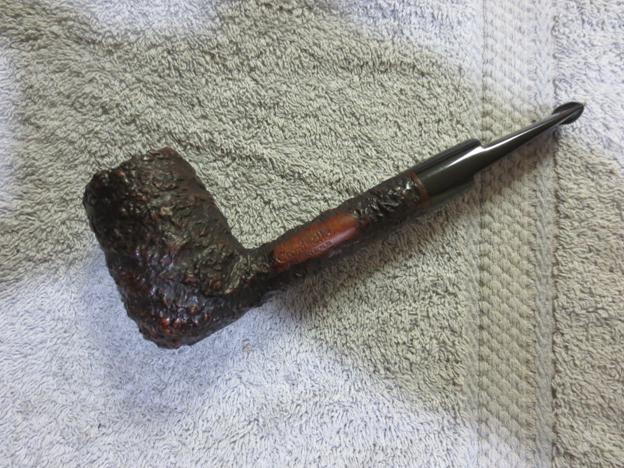
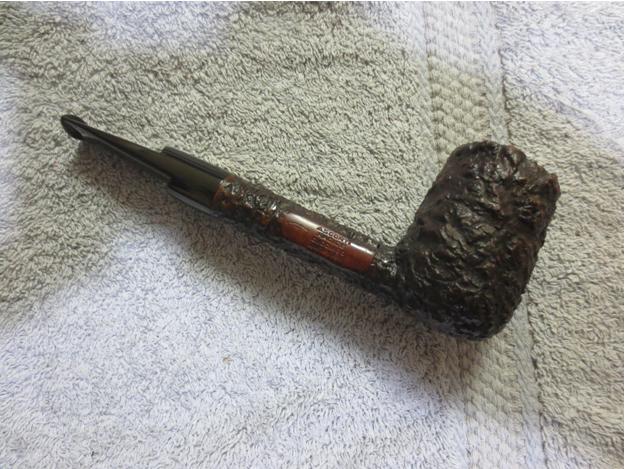
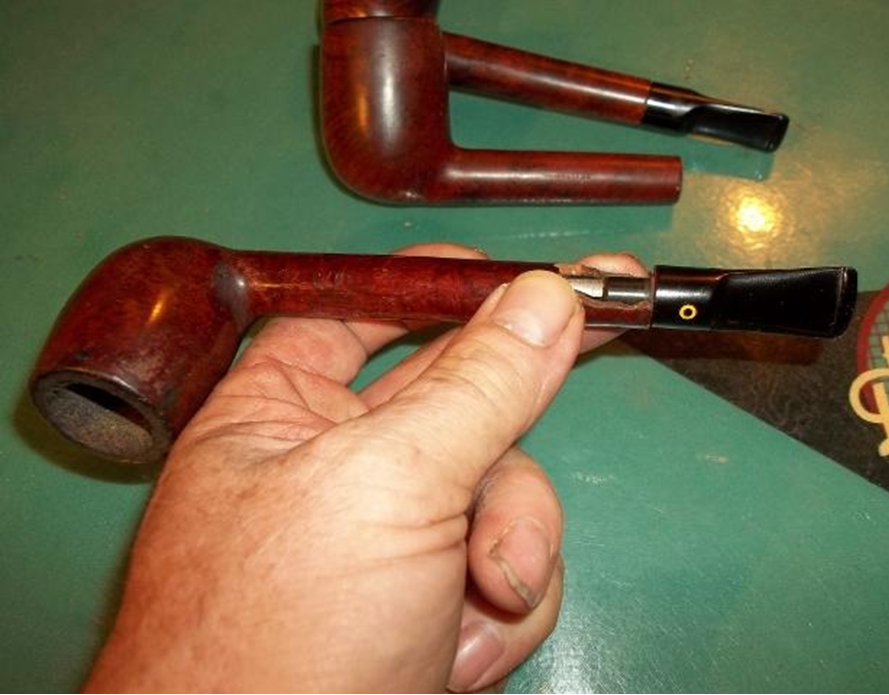
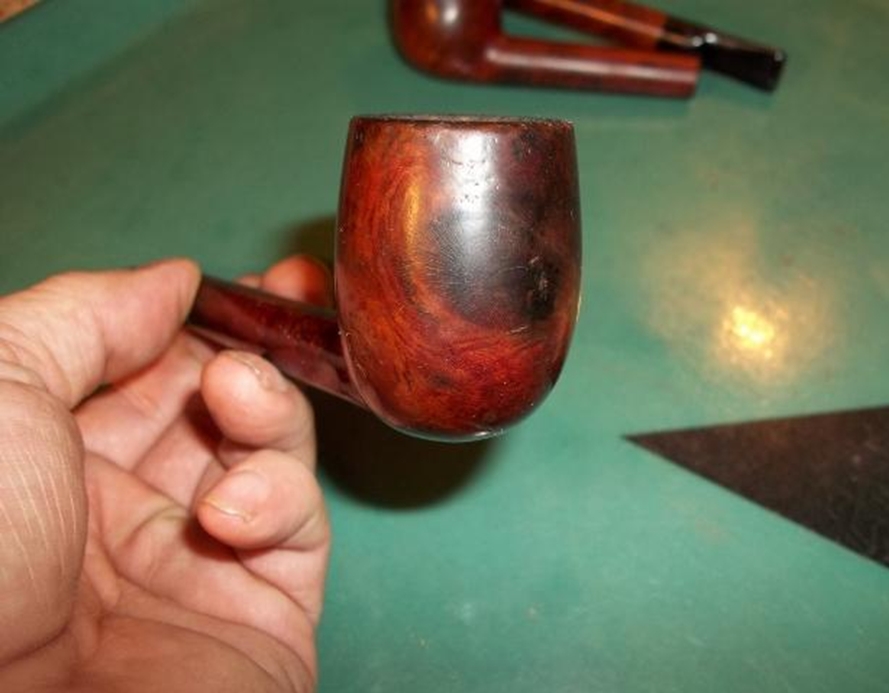
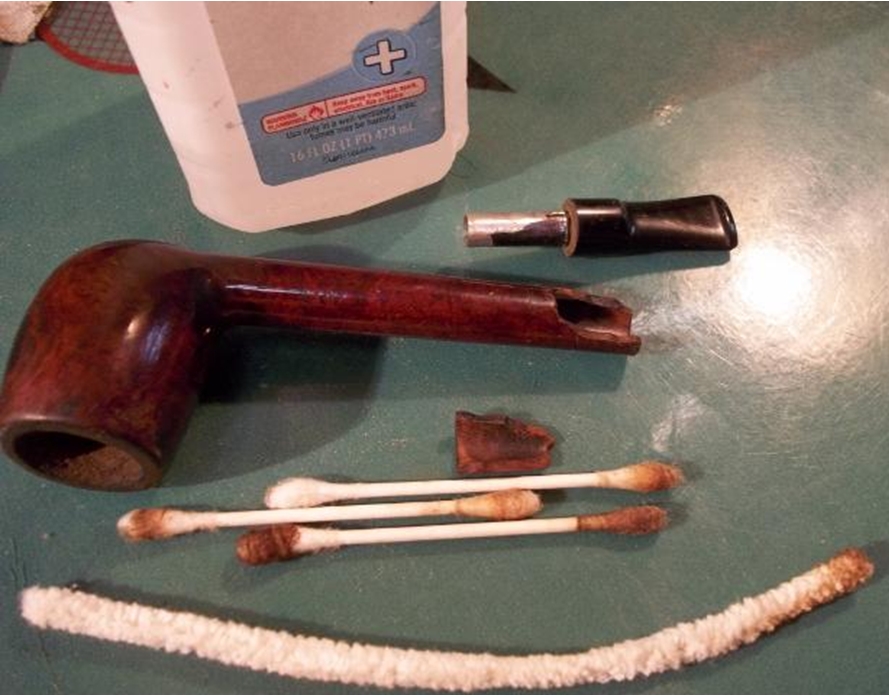
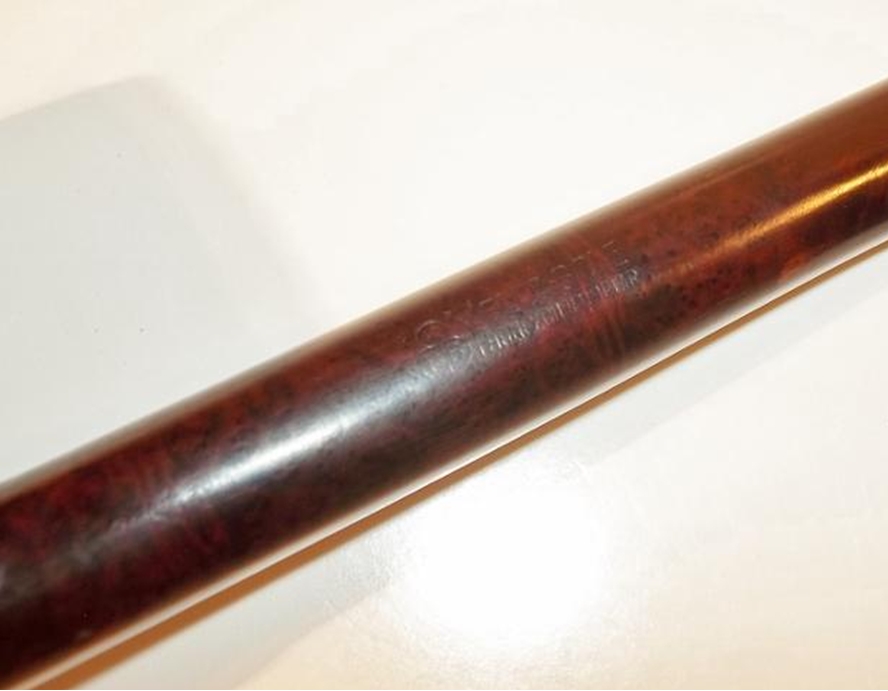
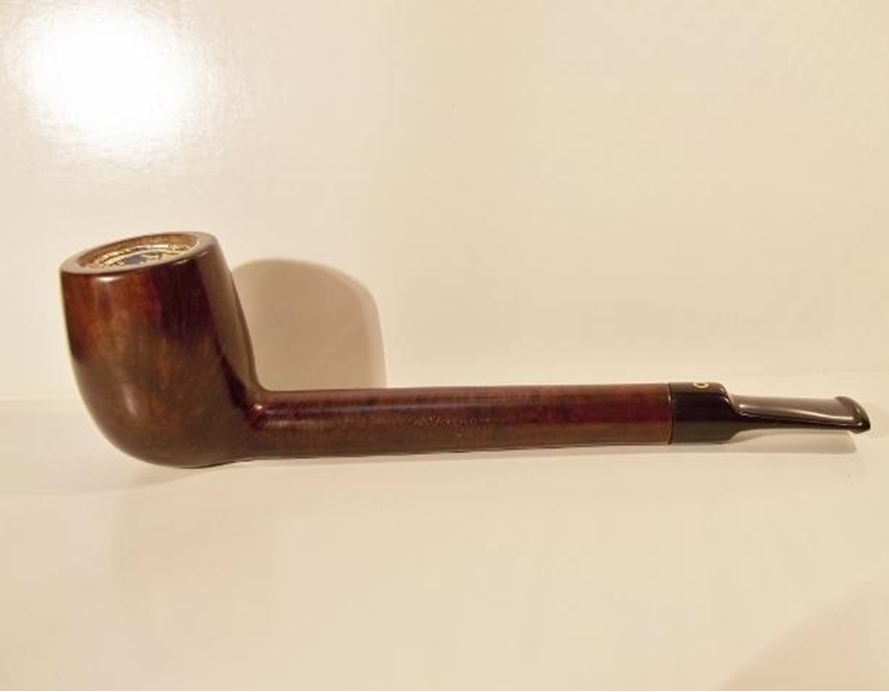
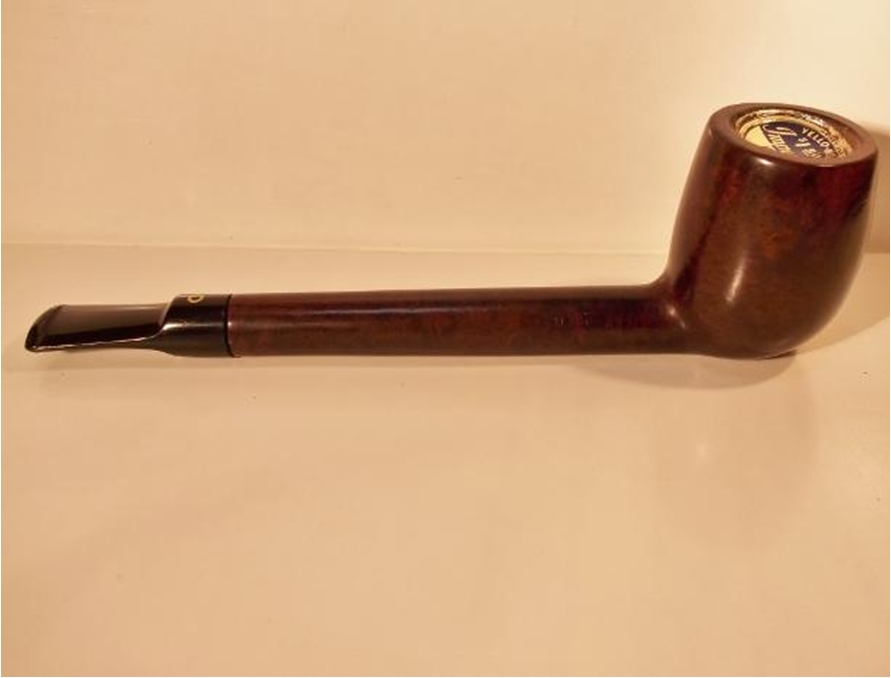
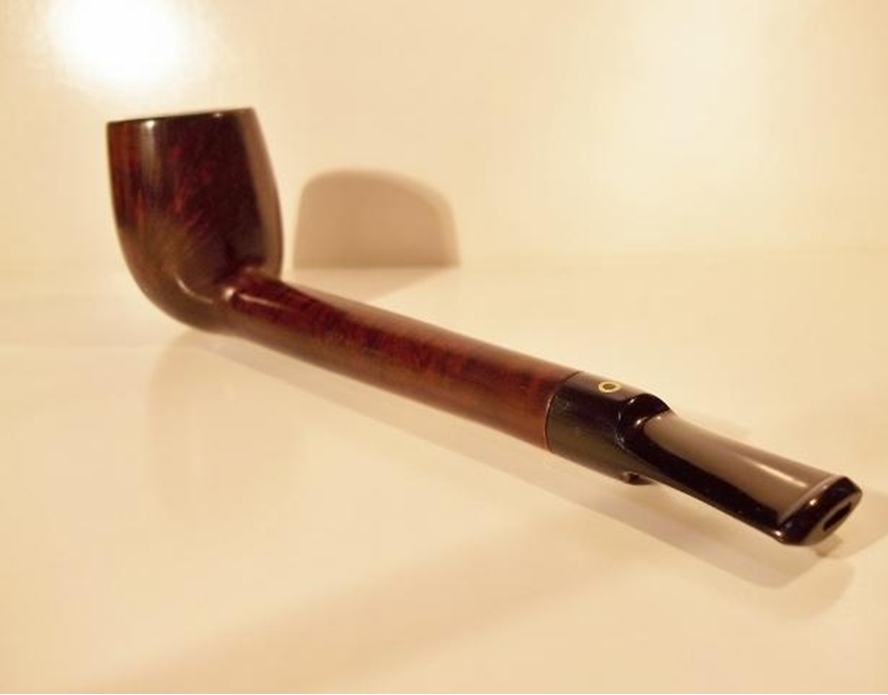
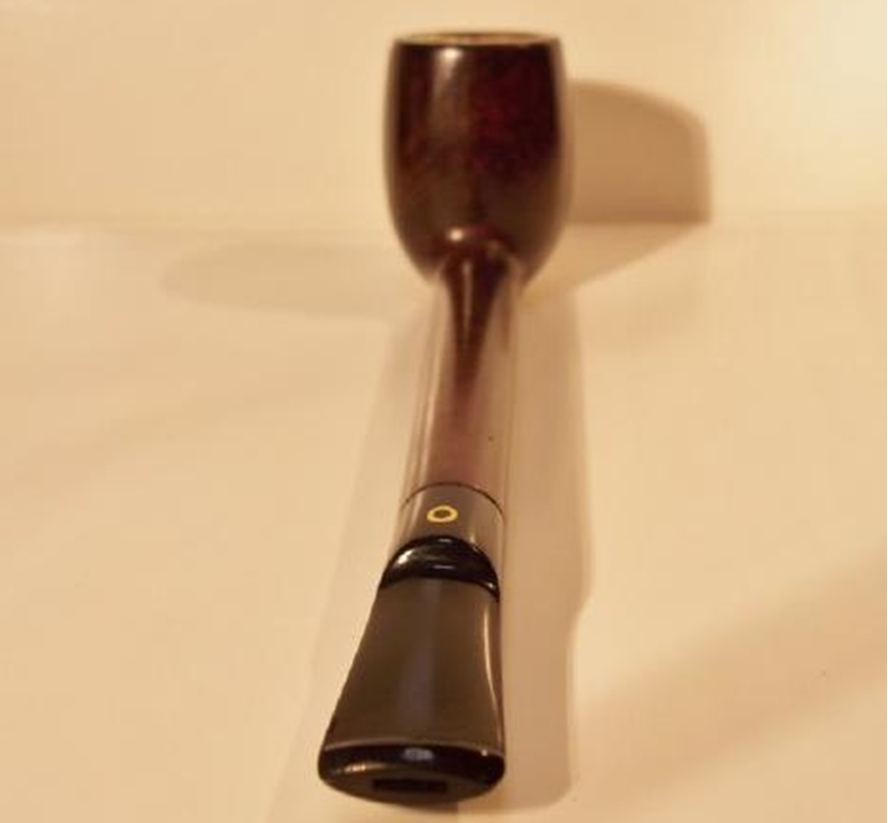
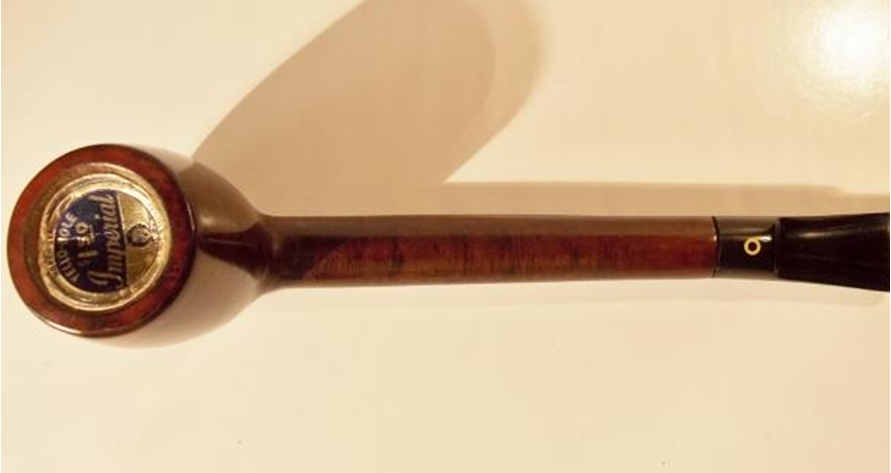
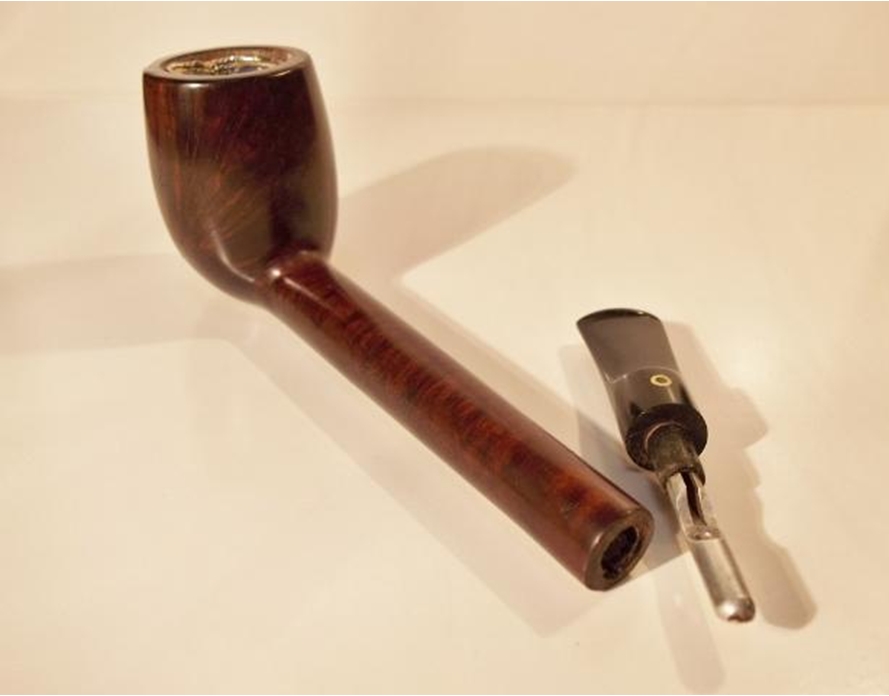
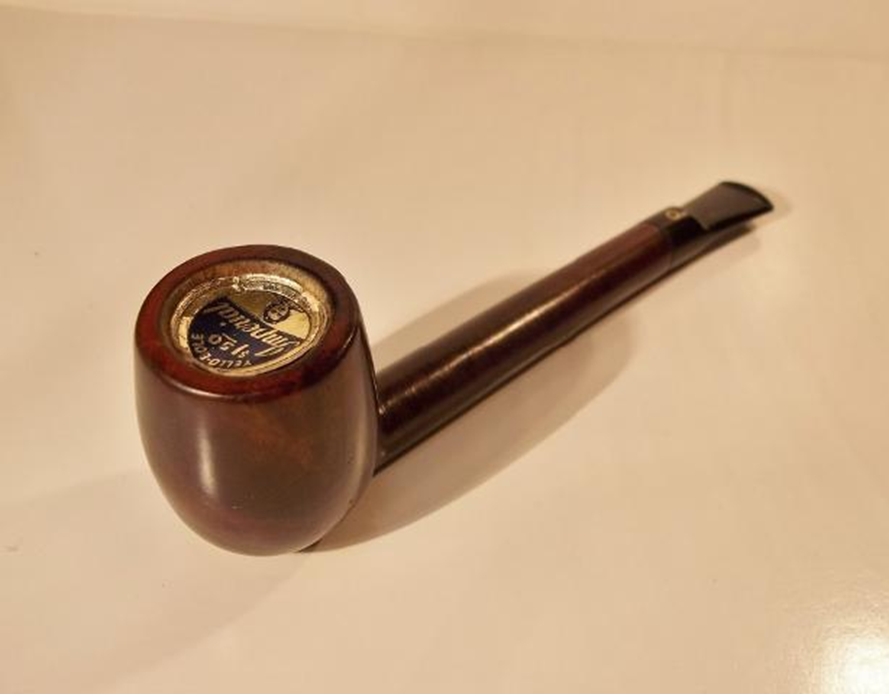
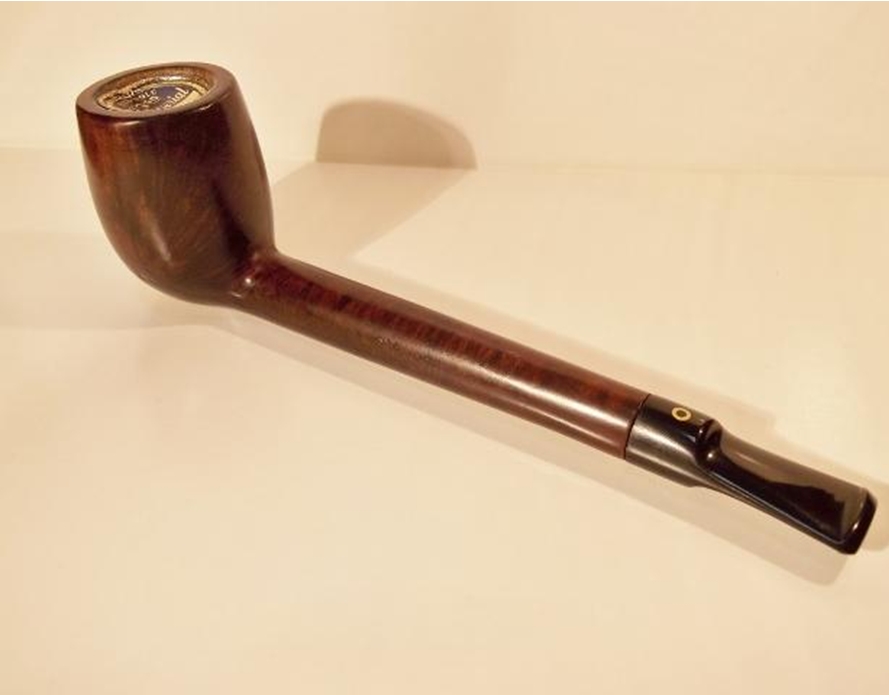
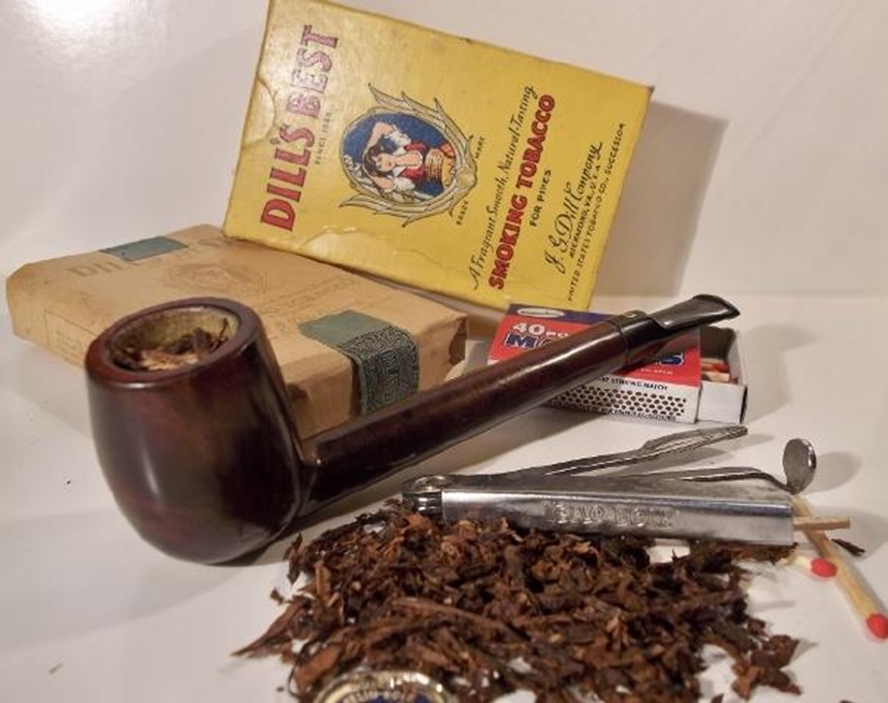
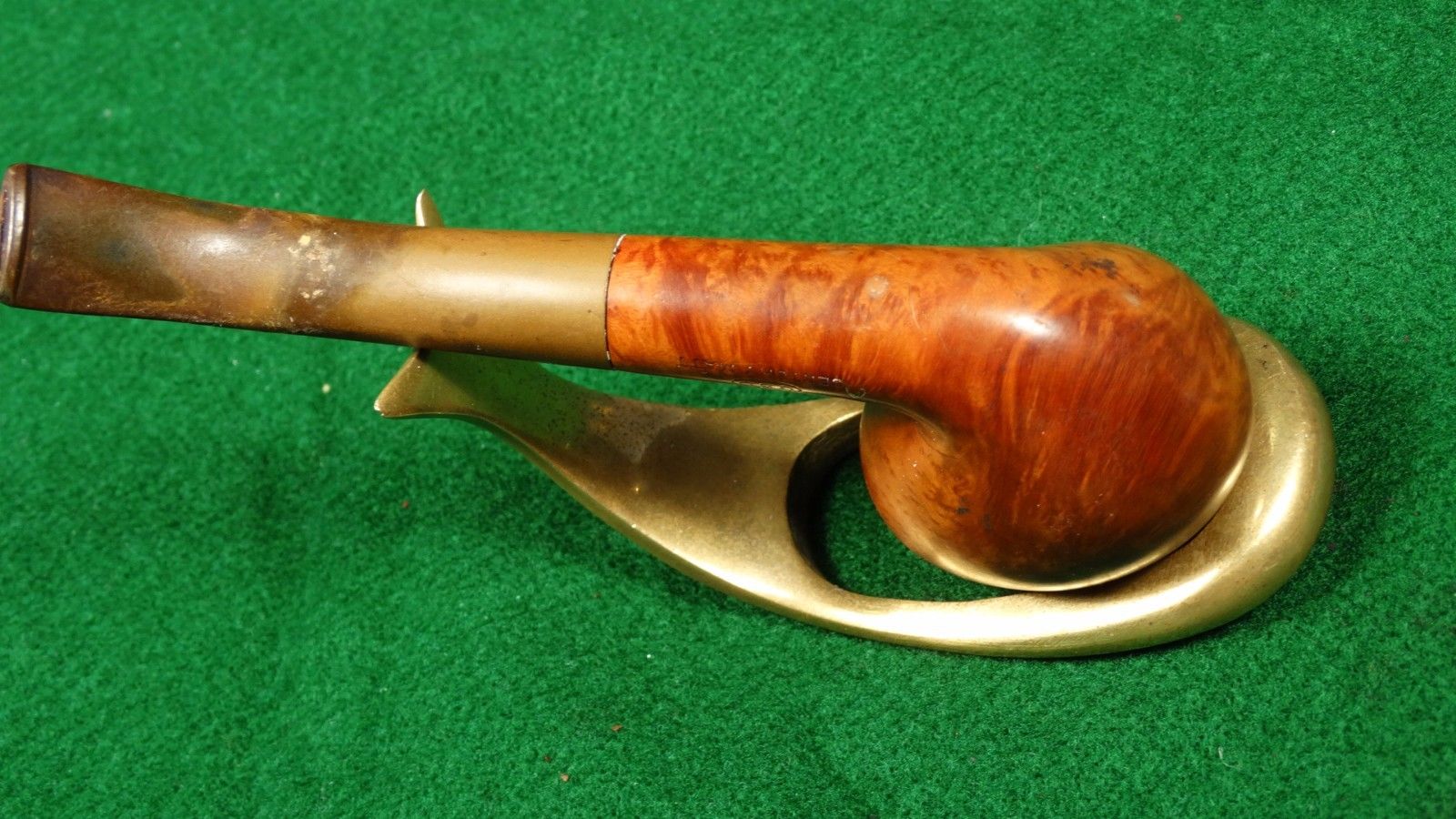
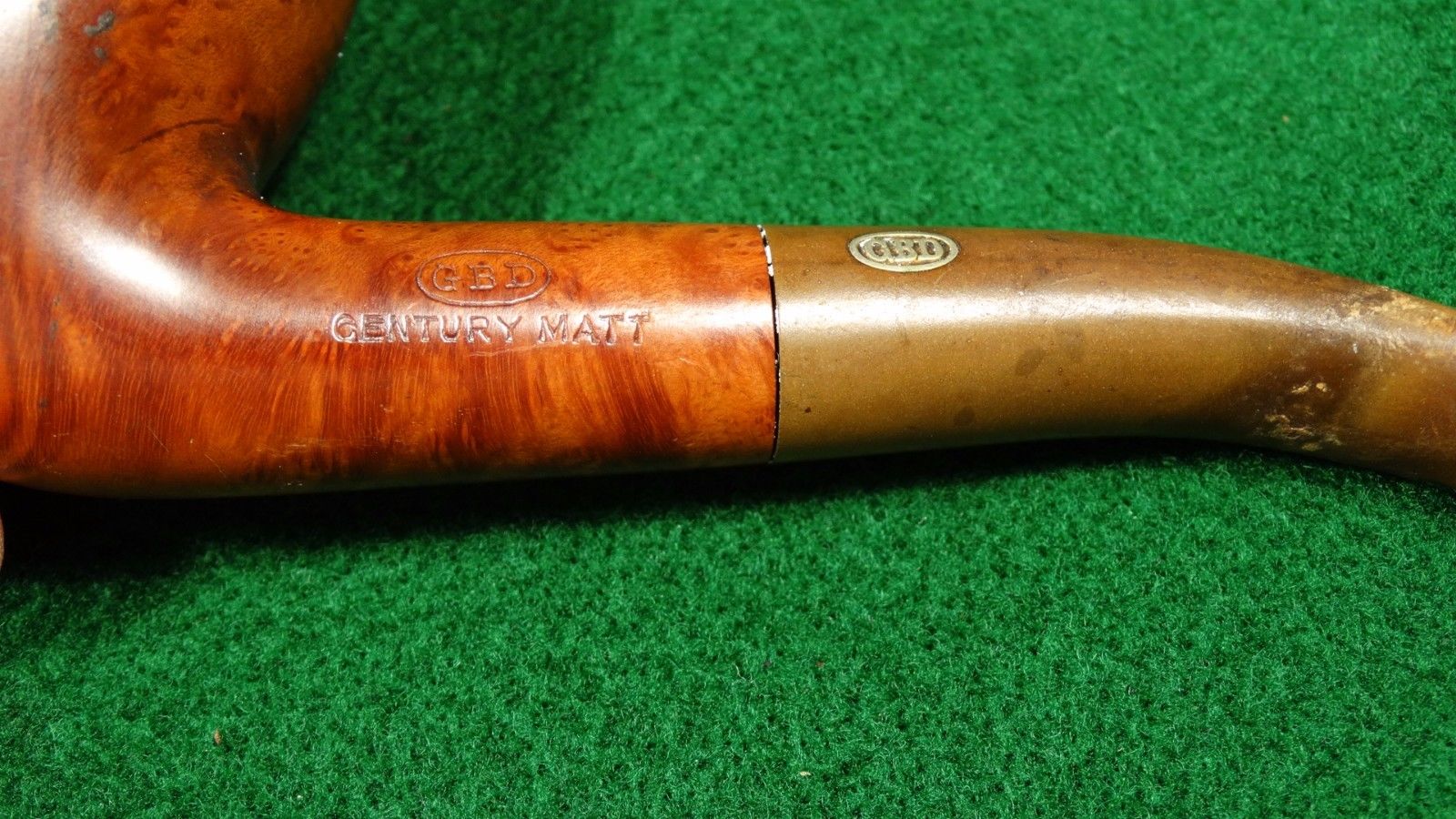
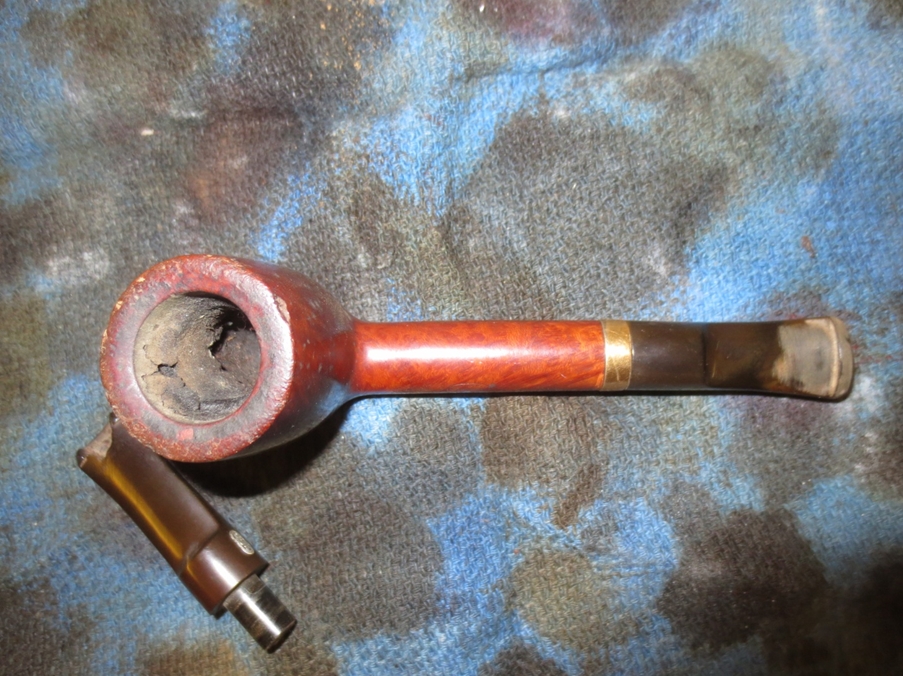
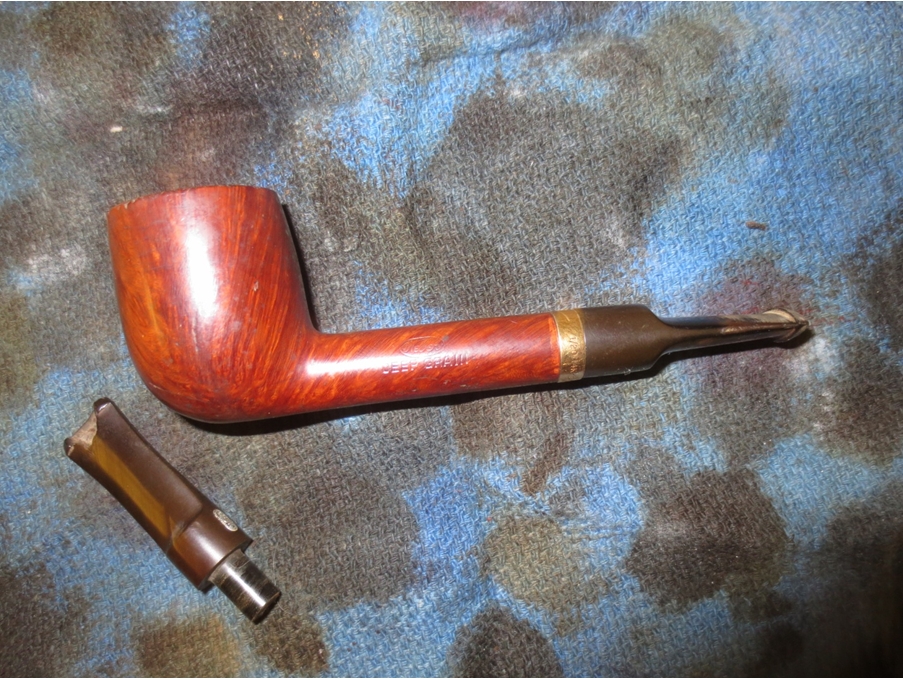
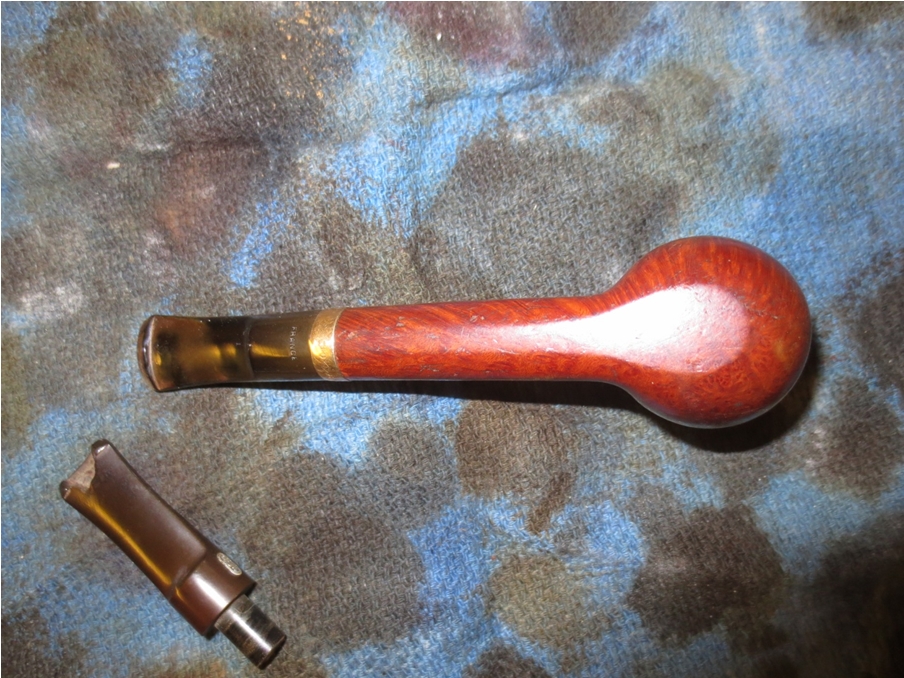
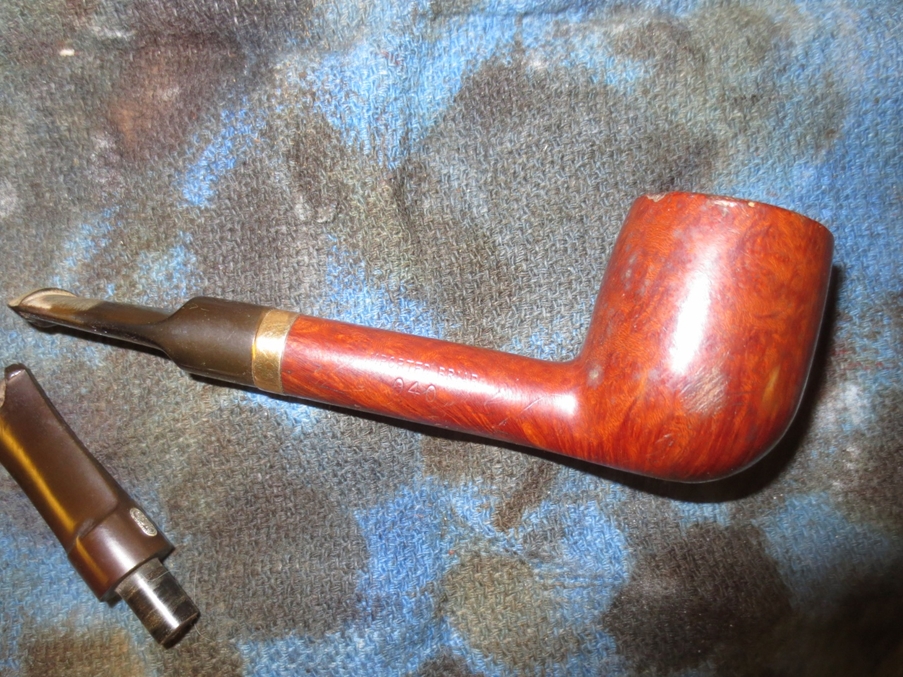
Replacing a Broken Tenon and Repairing a Cracked Shank on an Old KBB Yello Bole Billiard


Blog by Steve Laug

Troy Wilburn and I have been corresponding for a few months now about pipe restoring and the fun of the hobby. He has posted some of his work here so he is no stranger to pipe restoration. I had not heard from him for a while so I sent him and email to check on him. I know he loves the older Yello Bole pipes and I wondered if he had worked on any recently. I am including a portion of the email he sent me in response to mine. He wrote:

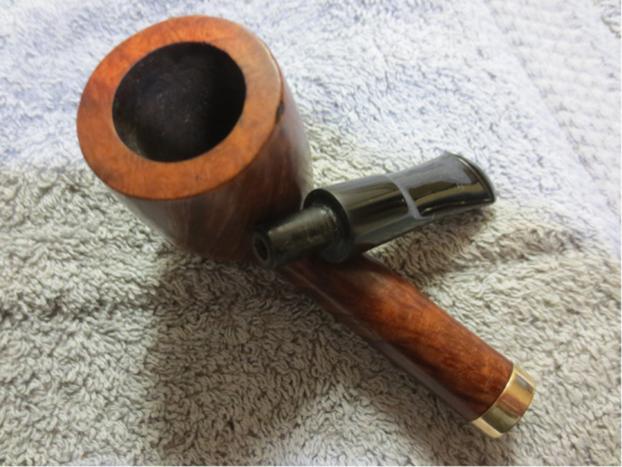
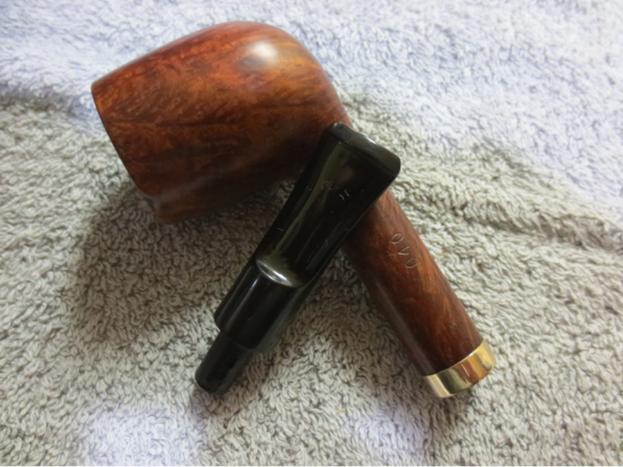
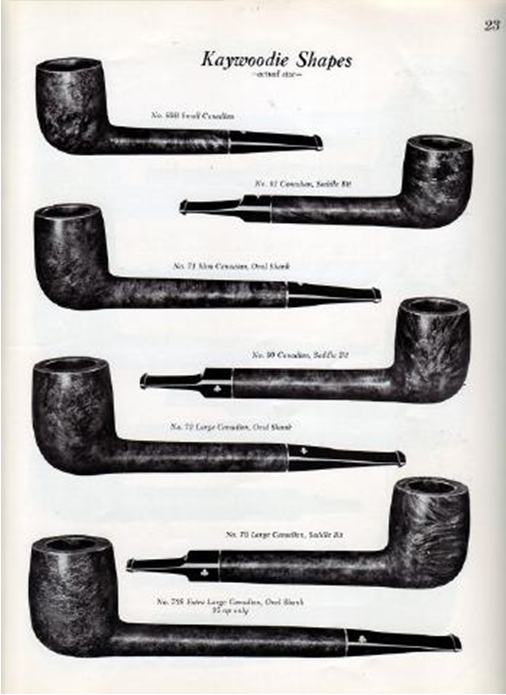
“Funny thing you have contacted me as I do have a couple of Yello Boles I need tenon repairs on. One is an old favorite of mine that snapped off. I have tried to repair it and it failed. The other is an odd shaped NOS (I can’t find the shape on any KW chart. It’s a large bowl billiard with a short oval shank and short straight stem) pipe that I purchased with a broken tenon already but I can’t get the broken piece out (it’s really stuck!) So it might need to be drilled out and a new tenon made, I don’t know.”

“Tenon repair is something I’m not that experienced on and they are both very nice old KBB YBs and would like nice repairs done on them, so I was thinking about sending them to someone more experienced in those types of repairs. I was gonna ask Ed but I know he is always swamped with projects, so I was thinking about asking you if you would be interested in repairing them for me…”

I replied that I would gladly have a look and them and give them a go if they were something that I could fix. When they arrived last week I unpacked the box that Troy sent. I have to tell you he did a masterful job of packing these old pipes. They were individually wrapped in bubble wrap and then placed in small plastic containers. Then the plastic containers were put in bubble wrap and put in a box. There was no movement or rattle in that package.

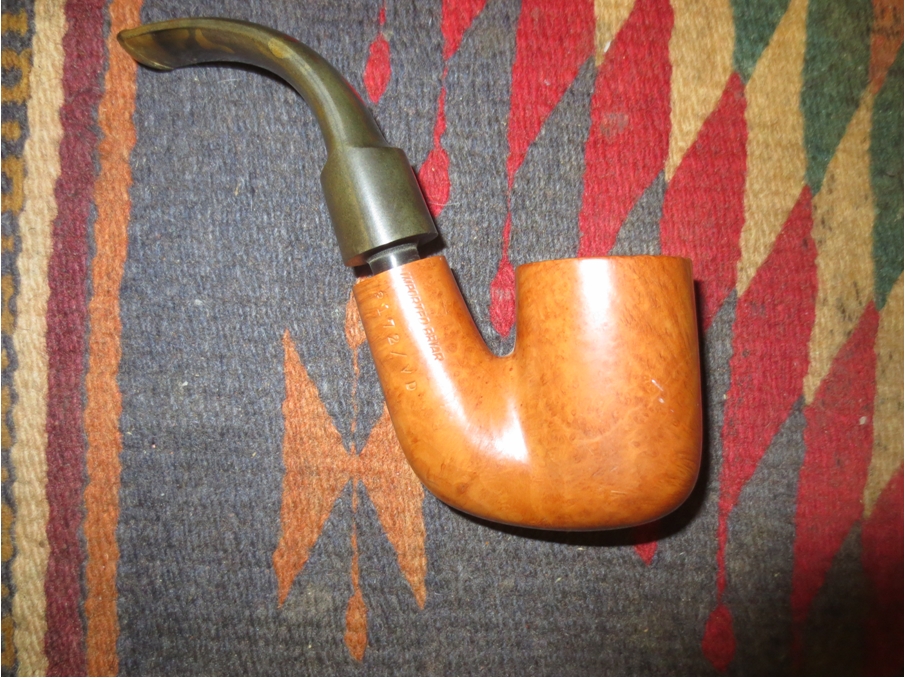
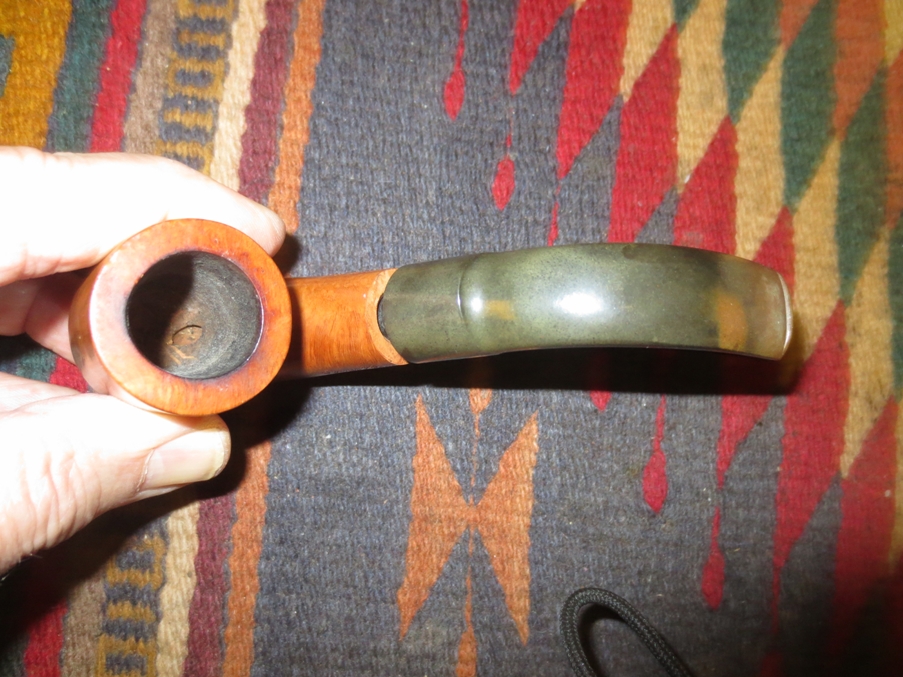
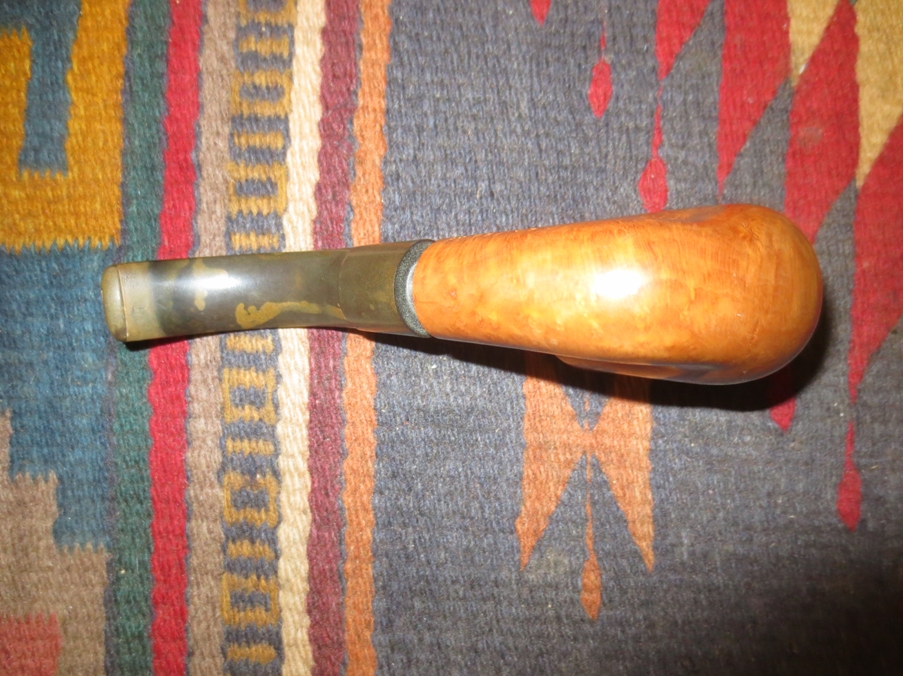
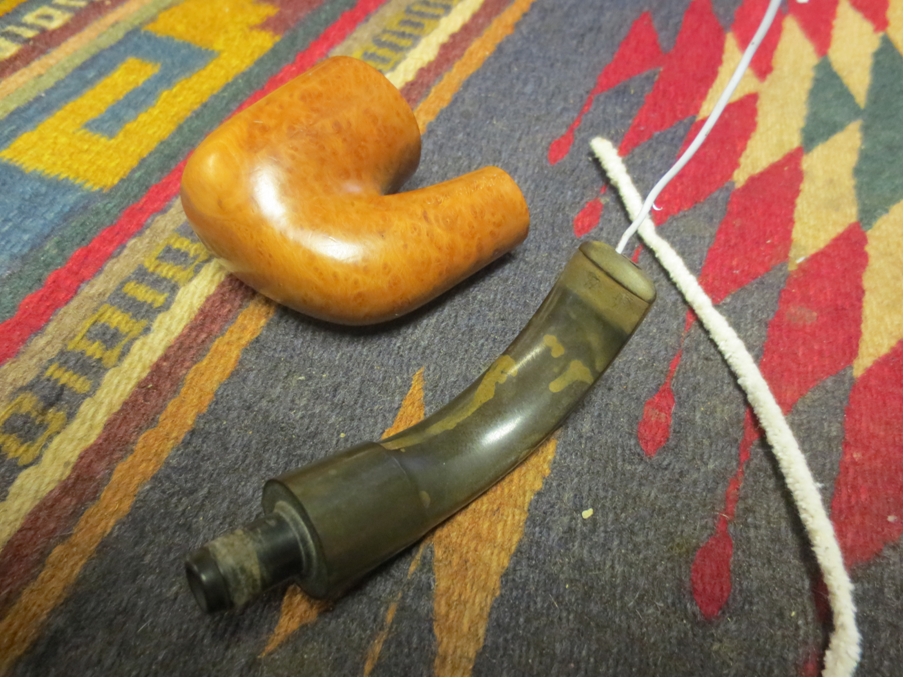
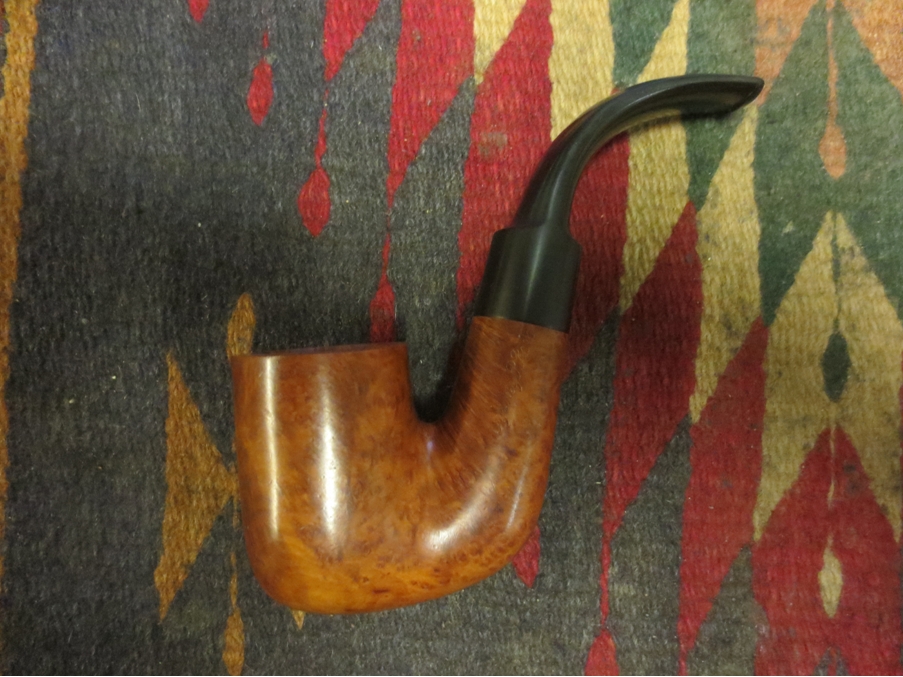
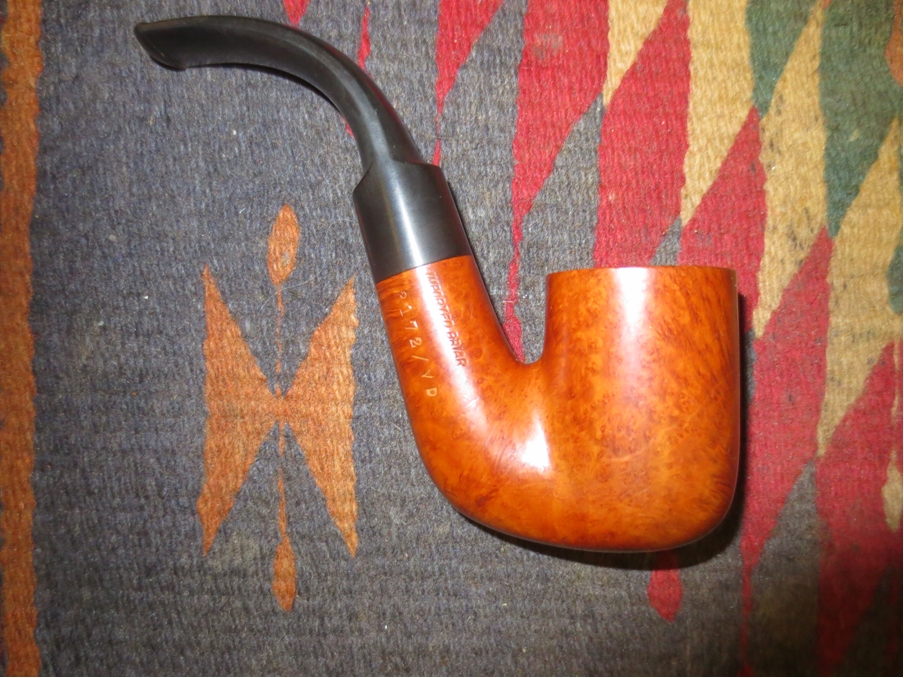
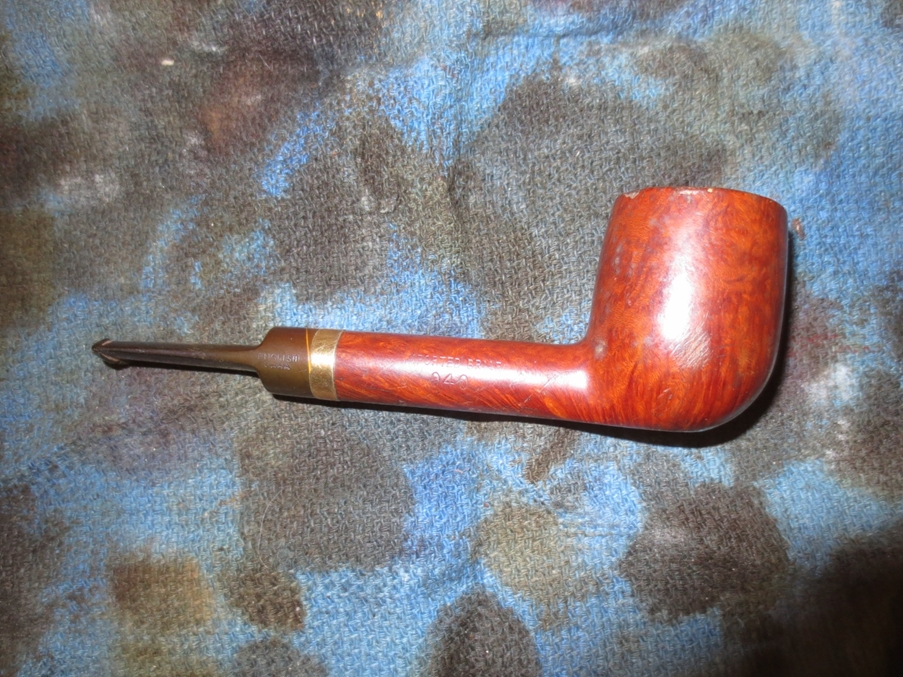
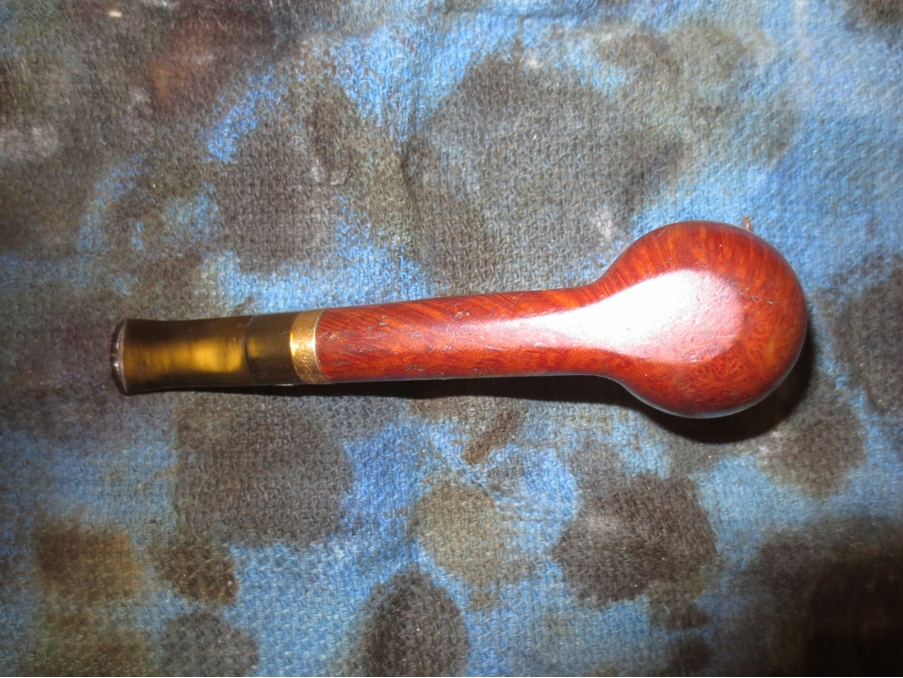
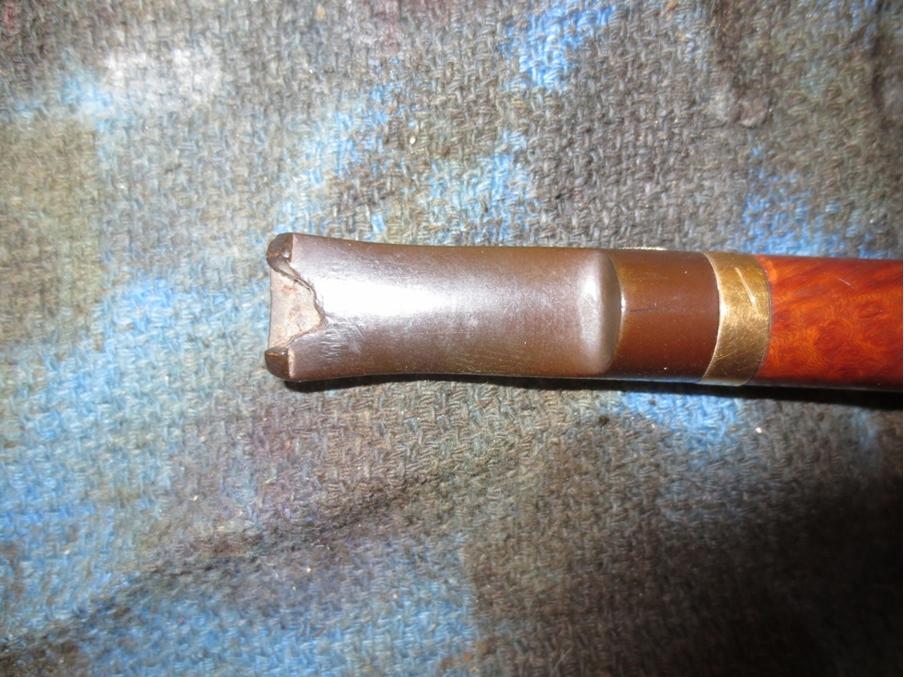
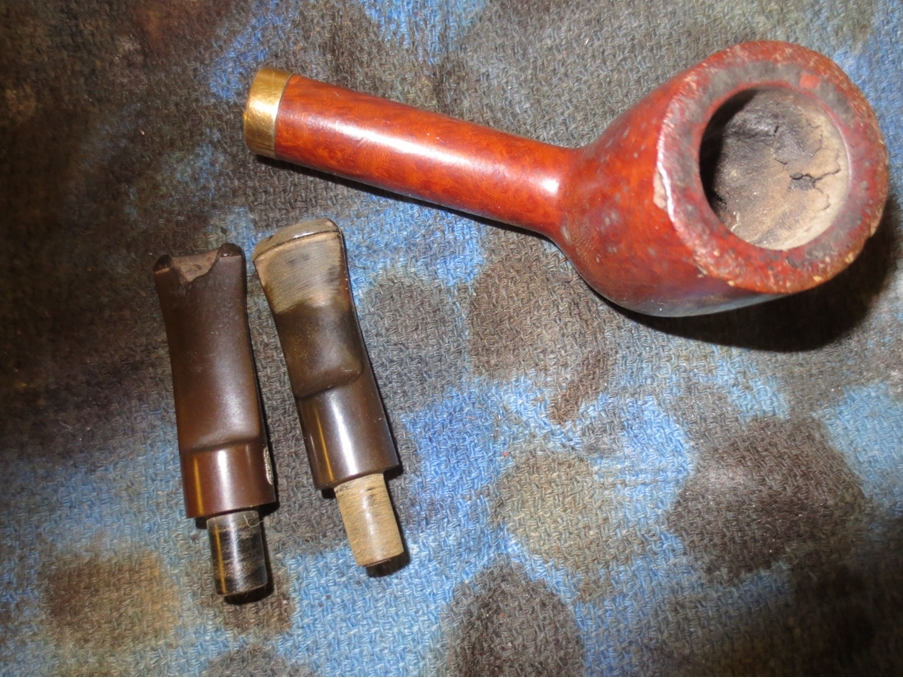
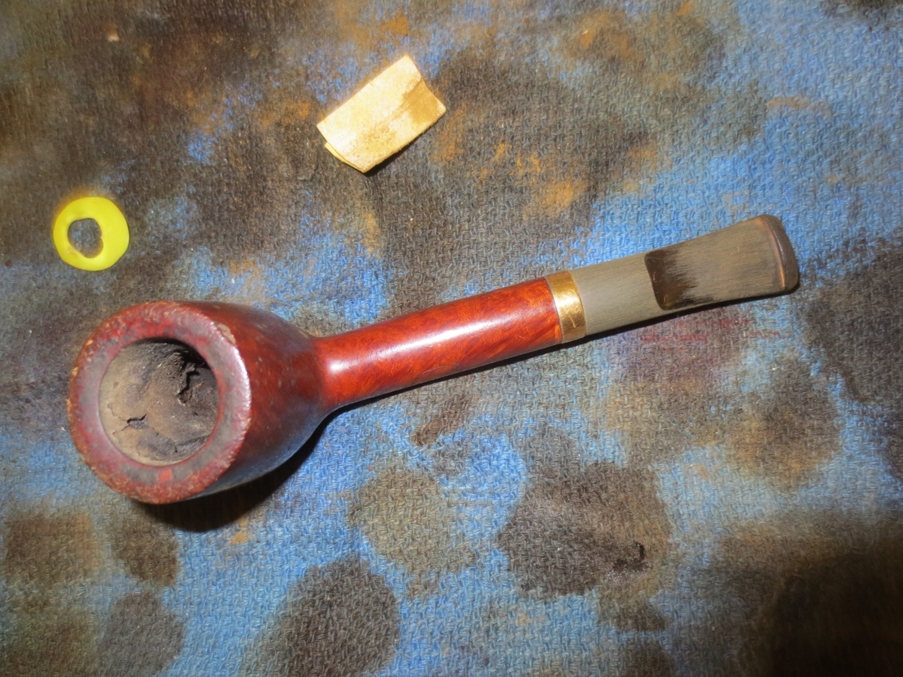
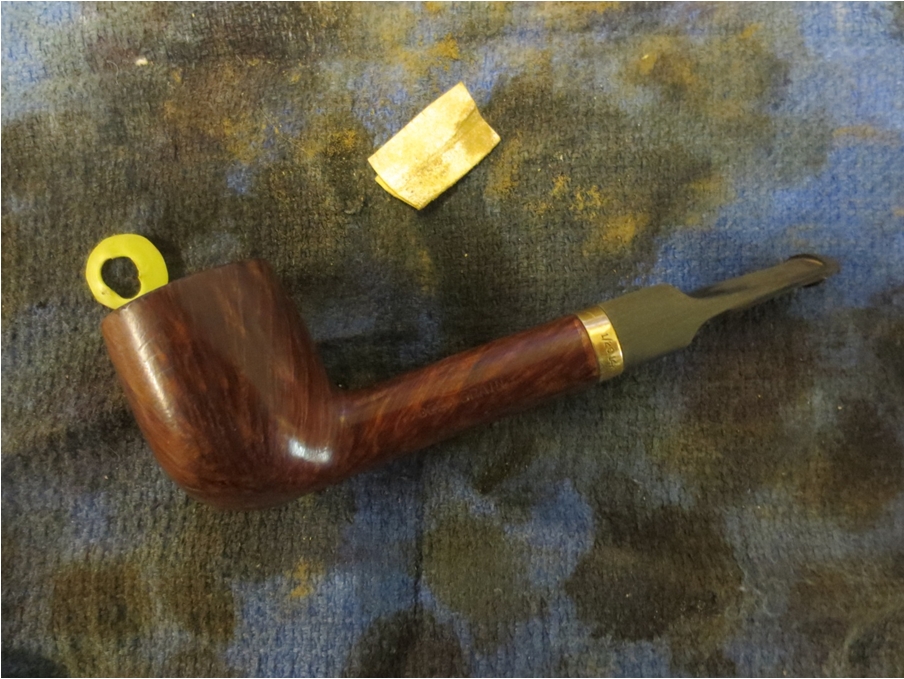
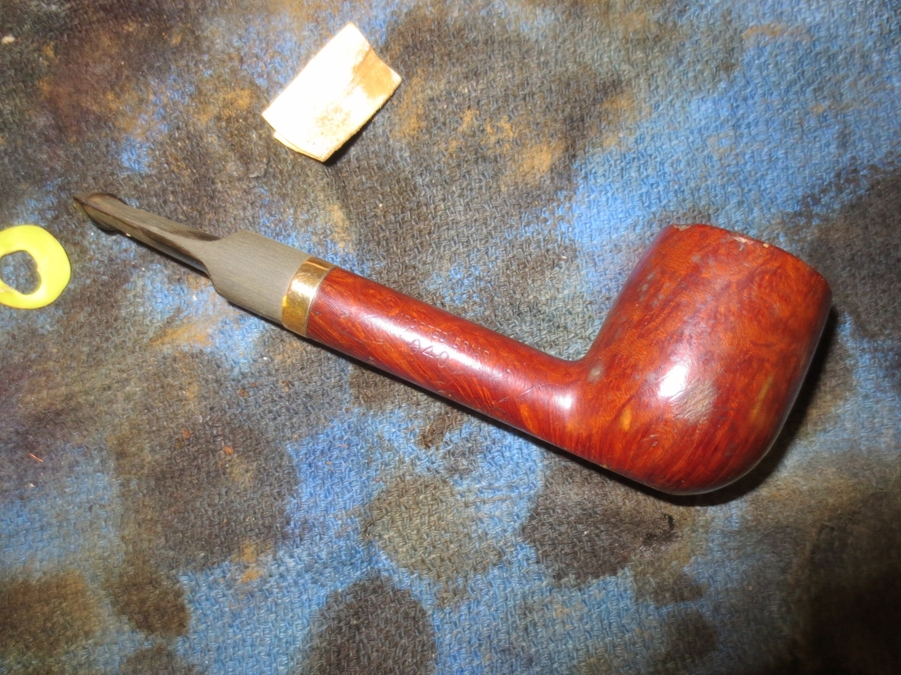
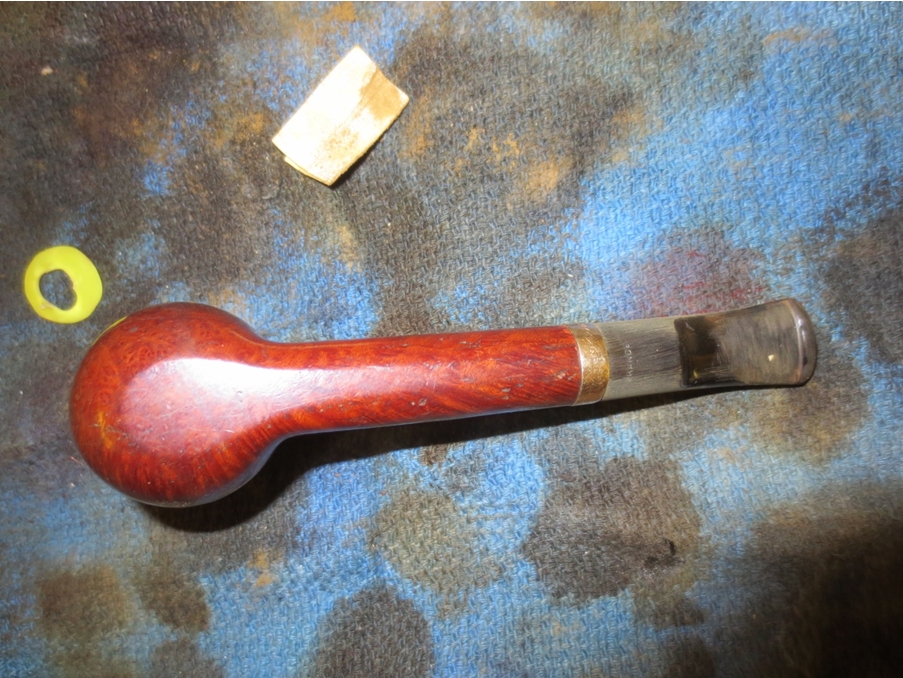
When I took the pipes out I could see what Troy was talking about. The little odd shaped NOS Canadian was strange. It had a metal tenon. Upon observation I could see that someone had left the broken tenon in the shank and then made a metal tenon that slipped inside the broken tenon. Deep in the shank was the stinger rattling around free in the airway between the broken tenon and the bowl. The billiard that I chose to work on first was another matter. I think Troy tried to epoxy the stem on the tenon but it did not hold. The face of the stem was spotty with glue. The shank on the pipe was clean but I did not spend too much time checking it out to see if there were cracks or problems. Even though the tenon snapped I just by passed my normal observation and went to work. That was a decision I would regret shortly… but let’s not get ahead of ourselves yet.

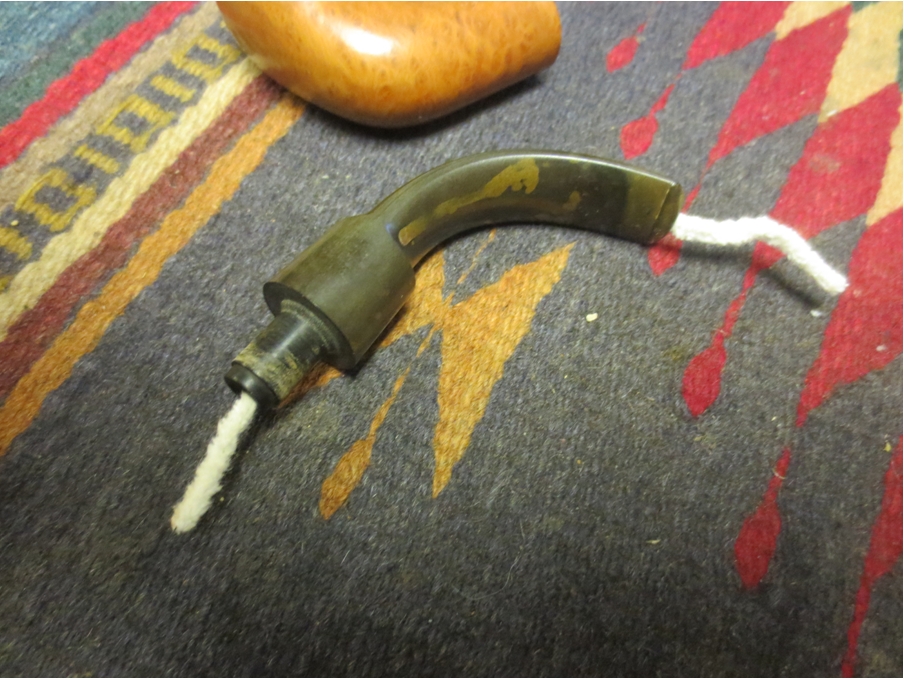
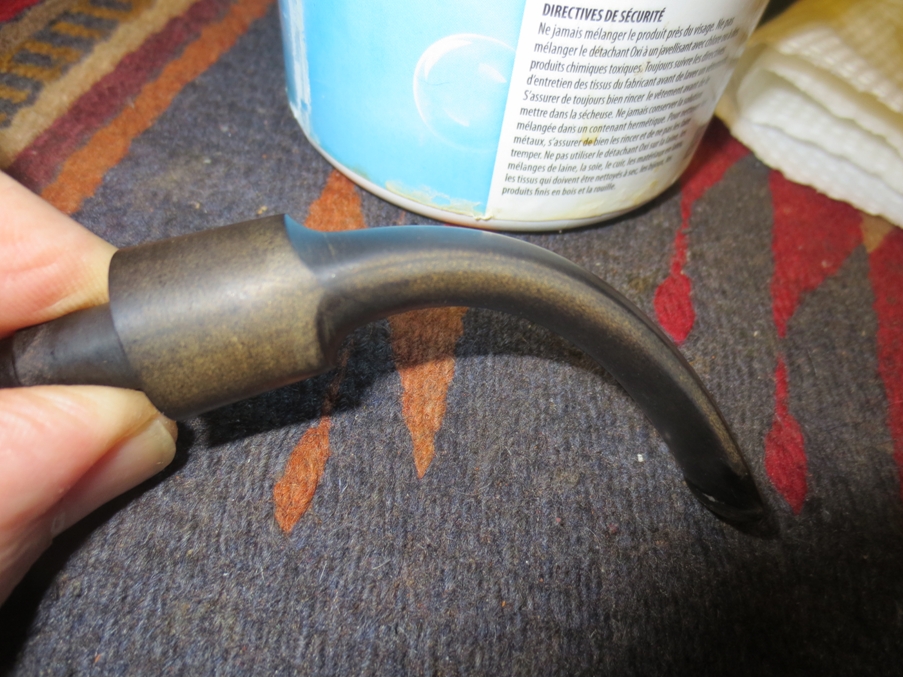
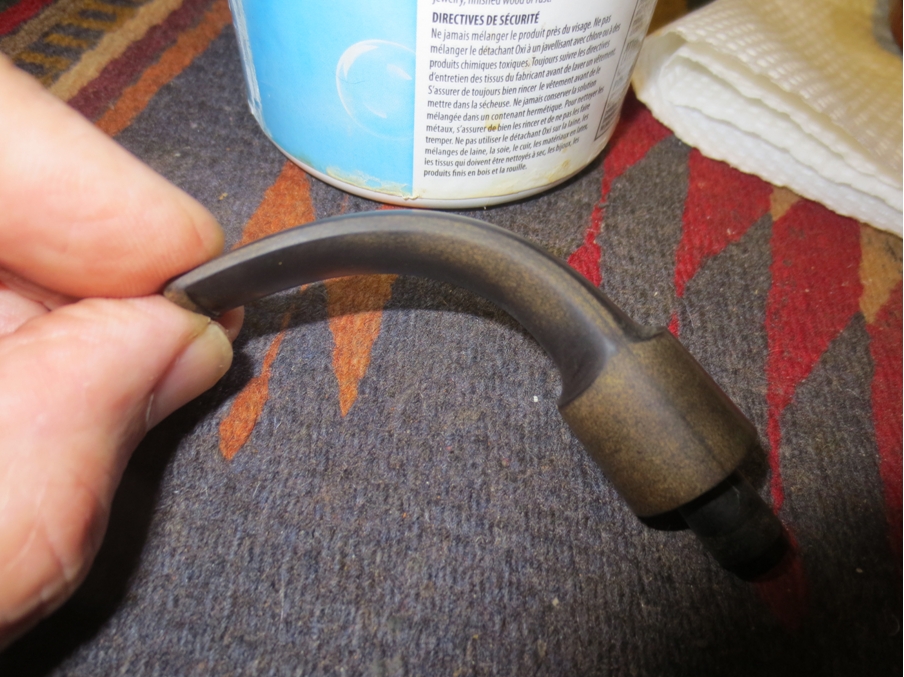
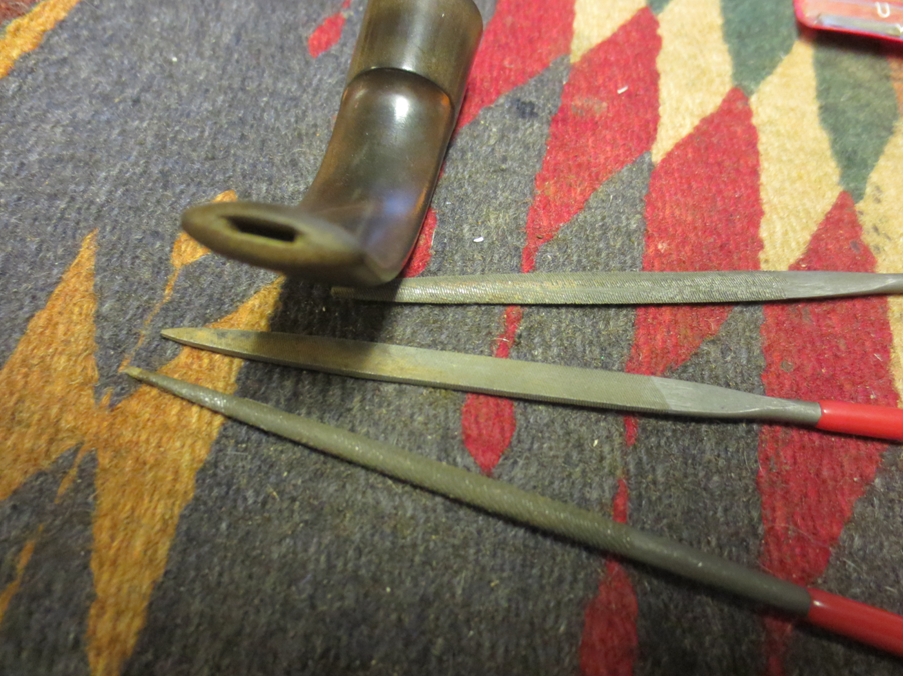
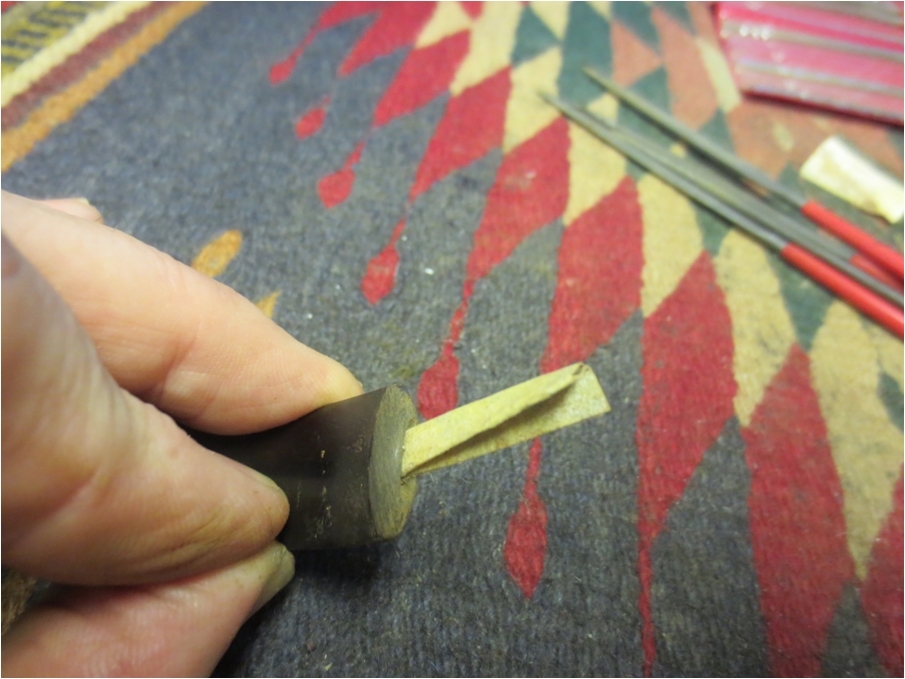
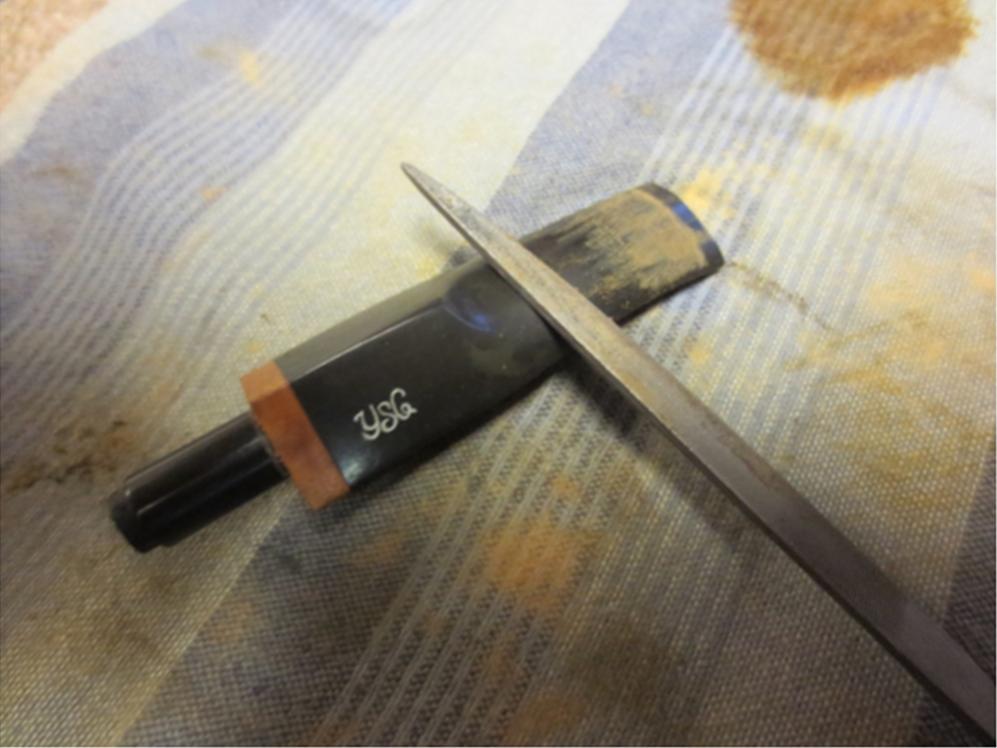
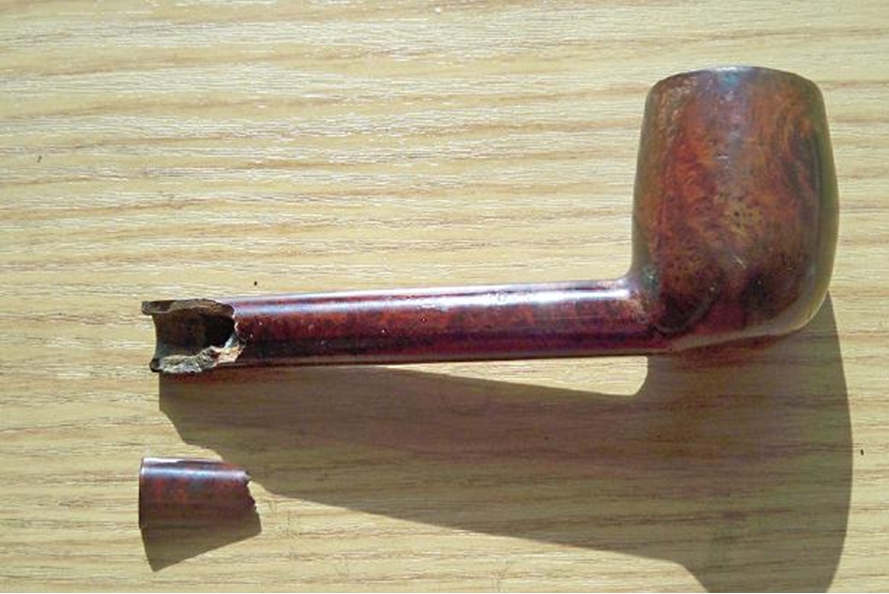
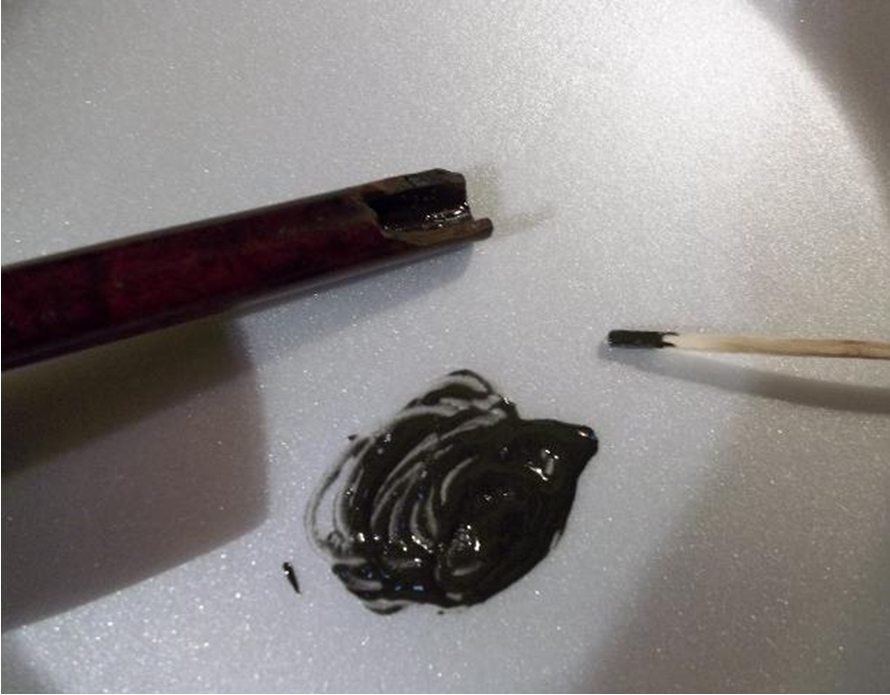
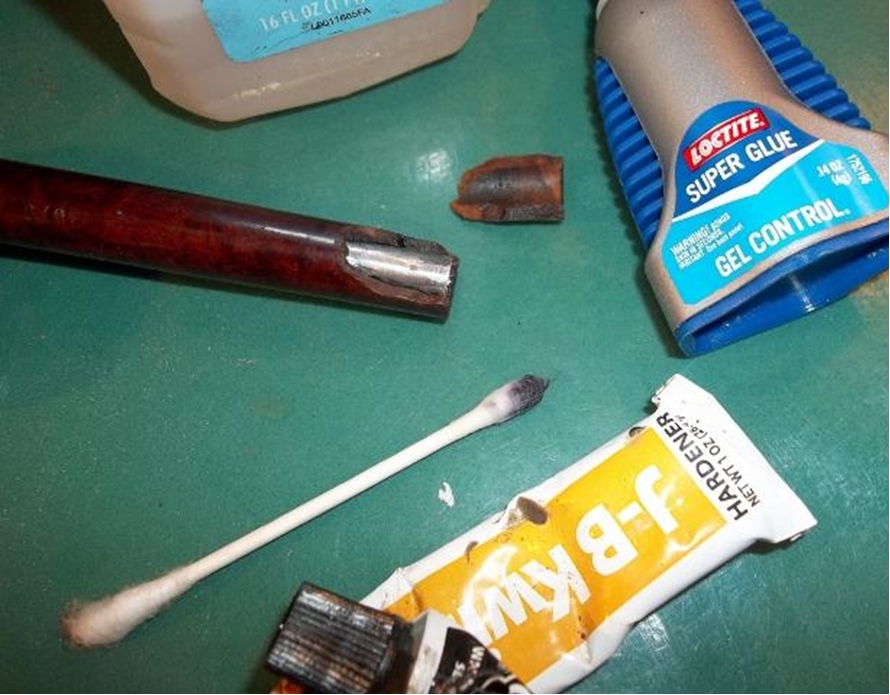
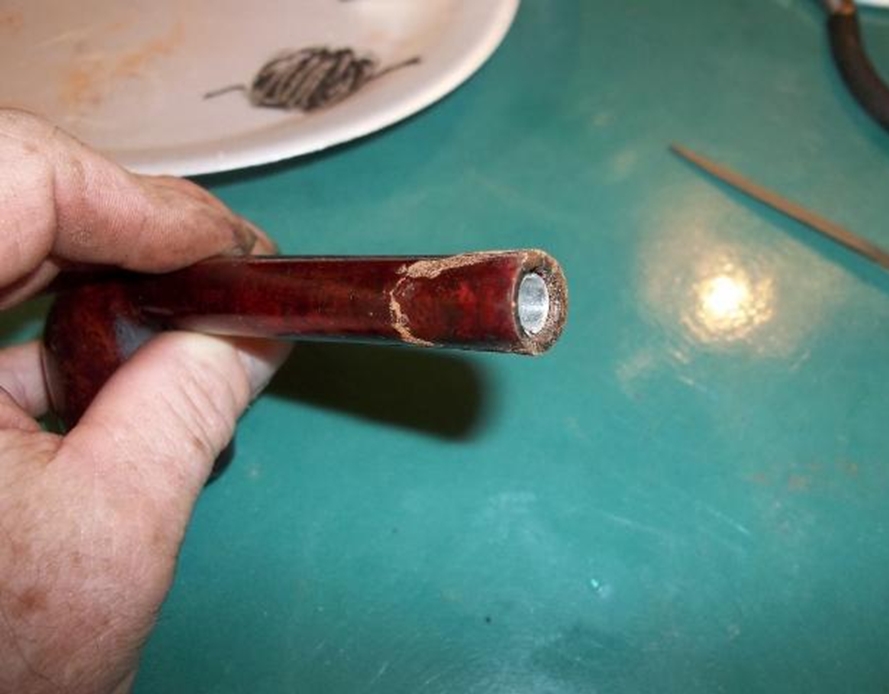
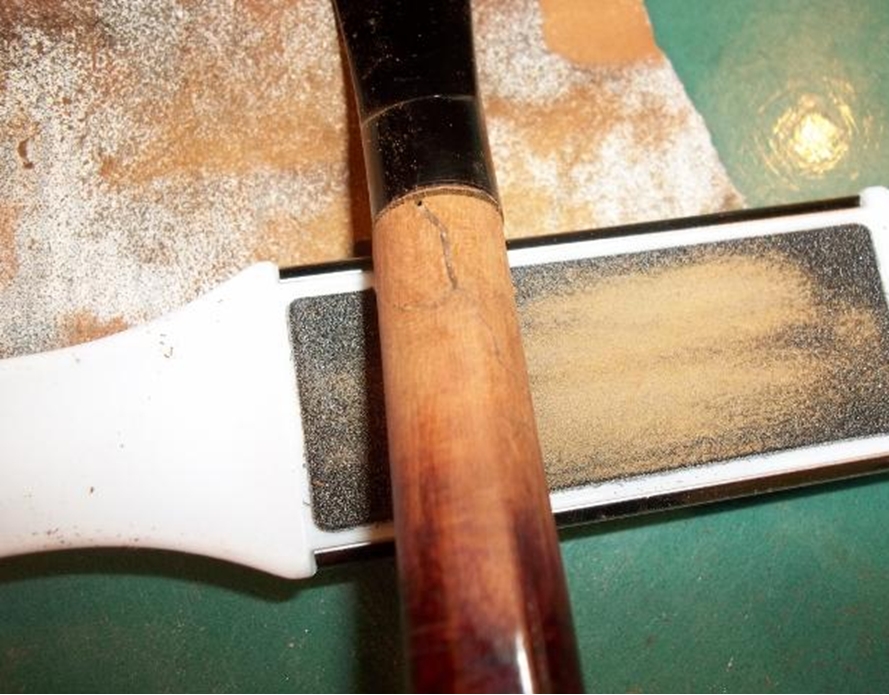
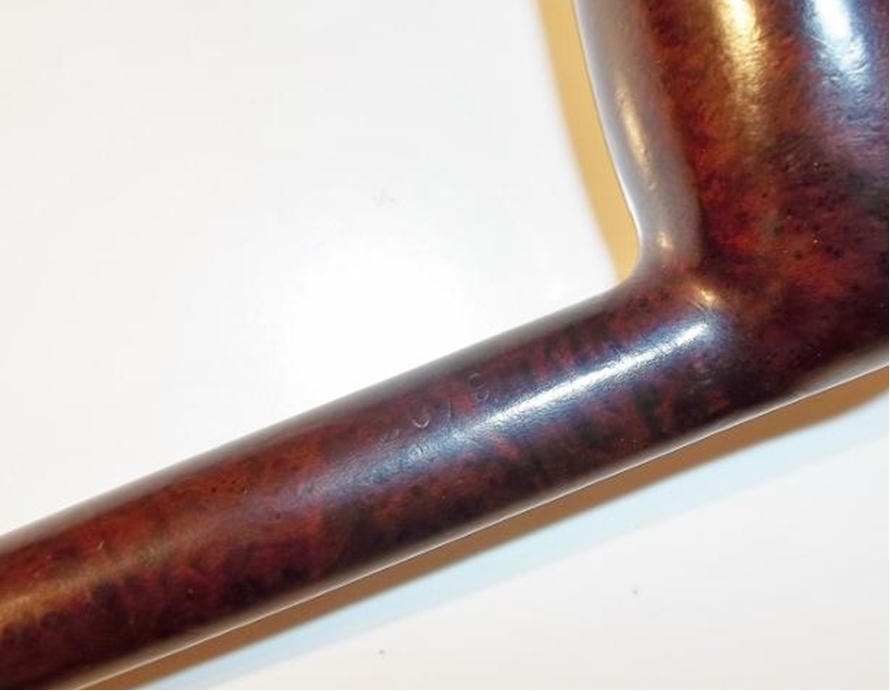
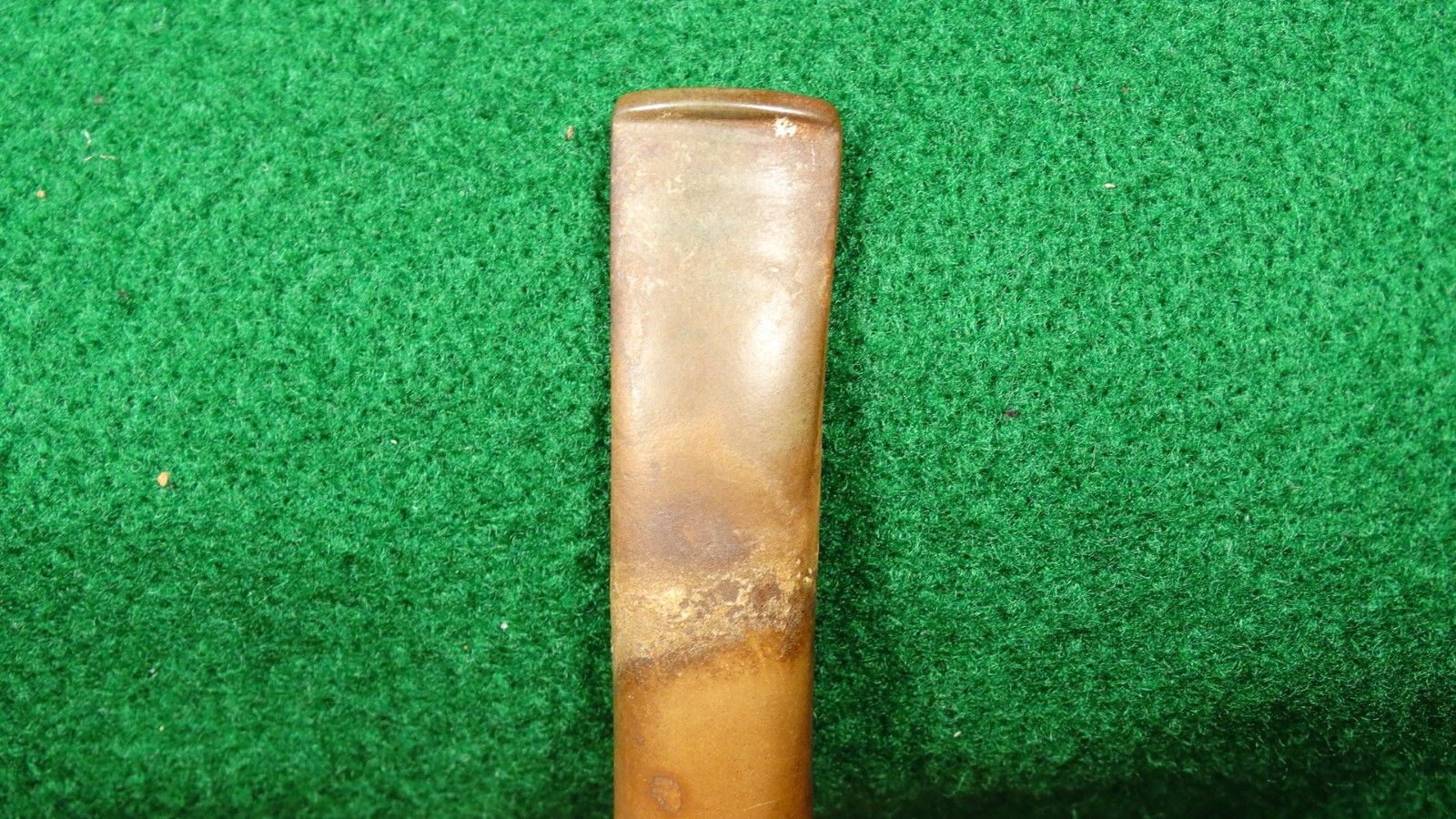
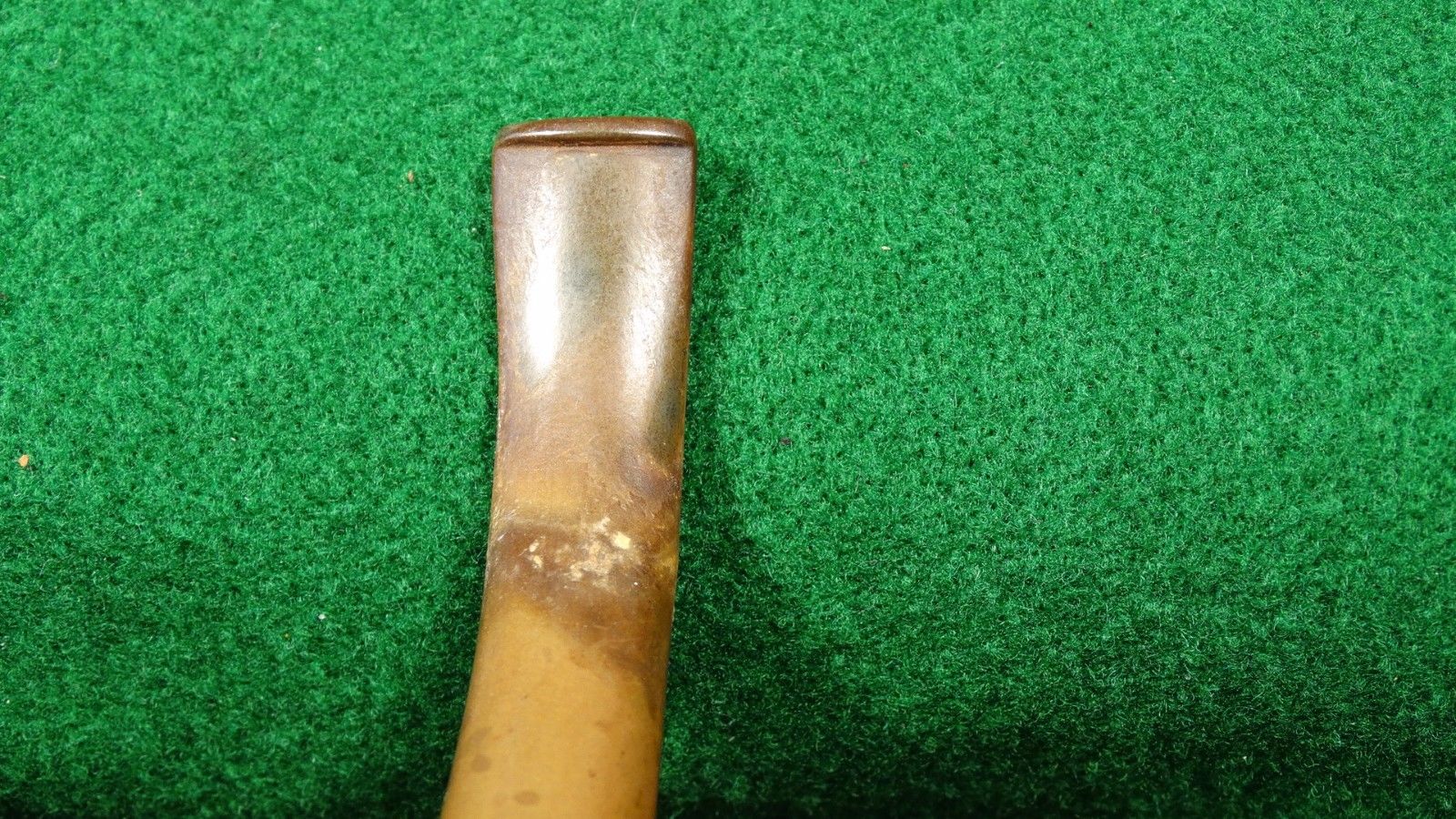
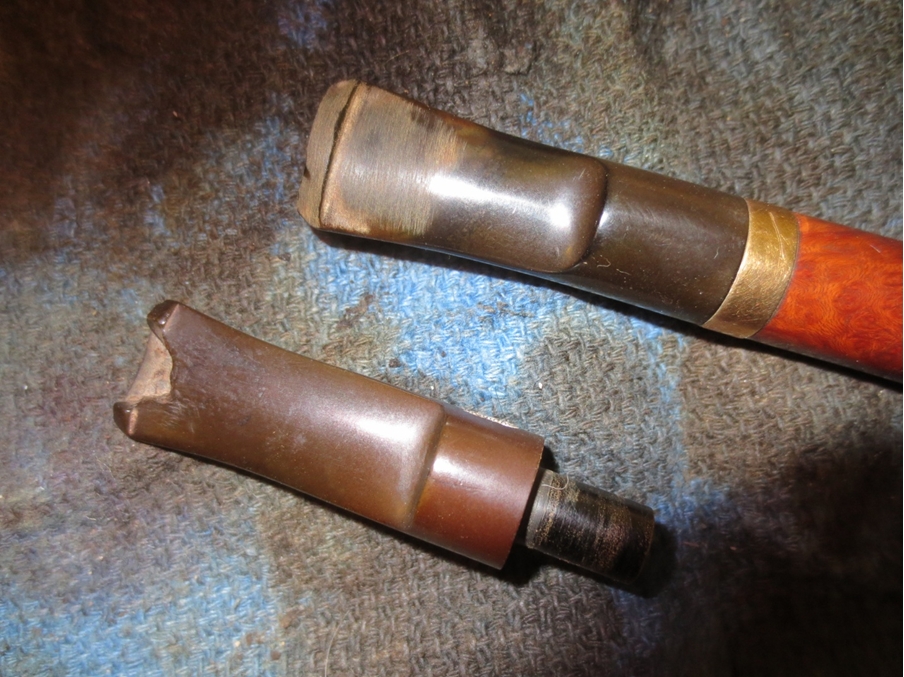
I faced the surface of the stem and smoothed out the broken area on a topping board. I started with a drill bit slightly larger than the airway and worked my way up to a large enough drill bit that I could turn a tap into it to thread it for the new threaded tenon. This has to be done very slowly and carefully to not drill to deeply into the stem or to angle things so that the tenon does not sit straight in the shank once it is in place. The stem had some spots of glue on the surface and some marks around the end where the tenon had snapped off that would need to be addressed once I got to that point.tenon1 I generally have a few threaded tenons to work with around here. Wouldn’t you know it all of my ¼ inch tenons were gone and all I had left were these large ½ inch ones. It would have to work for this repair. I used a tap to thread the newly drilled stem. I fit the tenon in place and twisted it down until it sat flat against the stem. I then twisted it free and put some glue on the threads and twisted the new tenon into the stem. I cleaned up the excess glue around the junction so that the fit of the tenon was smooth and tight.Tenon2 Once the glue set in place I set up my PIMO Tenon Turning tool on my cordless drill and took down the tenon slowly until I had removed enough of the excess Delrin to get it close to a fit. Because there are no micro adjustments on the tenon turning tool I always get as close as possible with the tool and then use the Dremel and sanding drum and to strip it more and then finish it by hand with sandpaper.Tenon3 I love the way the Delrin spins off the cutter on the tool. Here is the new tenon sitting among the Delrin scraps ready to take to the Dremel and then hand sand.Tenon4 I used the Dremel to take the tenon down some more. I then sanded it by hand until the size was the same as the shank. When I slid it in place the fit was perfect. I was happy to have finished what seemed to be an easy repair. I slipped the stem out of the shank to clean and polish the tenon. When I slid it back in place the sound that makes me cringe was heard. It was just a slight low pop. I removed the stem and could see a small crack had either appeared on the shank with the new tenon in place or the new tenon had made the crack appear. I will never know for sure as I did not check it before. I cleaned off that area of the shank and examined the crack. It was just under ½ long and curved up through the stamping on the shank. I was sick.

I wrote Troy a quick email and told him the situation as it stood – great fitting stem, repaired tenon and now a cracked shank. I asked if it was cracked before or if I had cracked it. He was not sure either. Ah well no matter. I was hoping he would confirm that it was previously cracked but he didn’t know. I asked about banding the shank and he said he would rather not as he did not like bands. But if I had to a thin one would do. The problem was twofold – I did not have a thin band and a thin one would not fix the crack. I suggested that maybe I could do an internal repair and thin down the new tenon to fit inside of the tube that would be used to repair the shank. He said to go for it and see what I could do.

So I did a bit of looking through my parts bin to see if I could find either a piece of Delrin tube that I could drill and fit or a piece of metal that would work for the repair. I found I had a metal tube that would work. I cut off a piece the length of the mortise. I used the Dremel and sanding drum to roughen the surface of the tube and to reduce the diameter slightly. I wanted a good snug fit in the shank but did not want to open the crack or crack it further. I spread the crack slightly and put super glue in it and clamped it until it set.

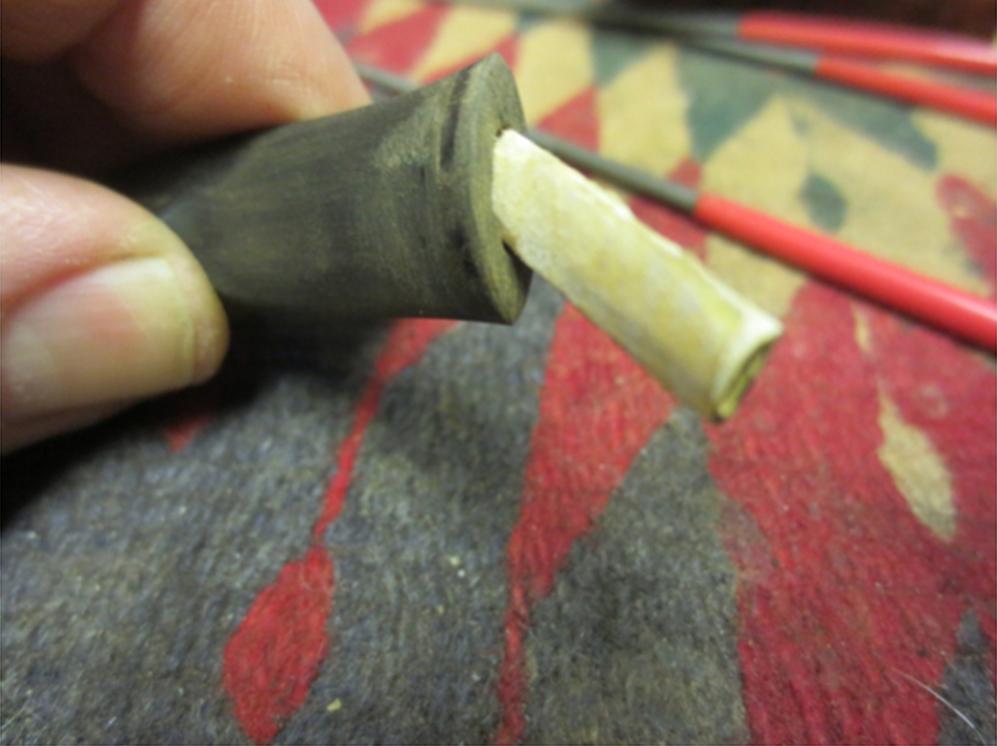
While it was drying I used the Dremel to reduce the diameter of the tenon until it would fit inside of the metal tube. I figured it would be easier to do that fitting with the tube out of the shank than when it was inserted in the cracked shank. Again I sanded with the Dremel and then finished by hand sanding until the fit was a nice snug fit with the tenon all the way into the tube.tenon5

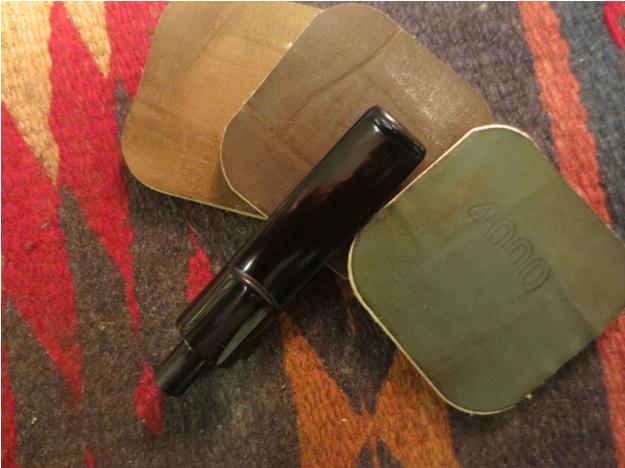
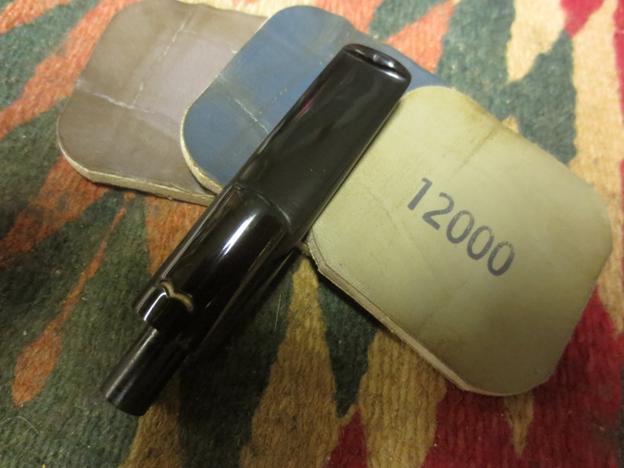
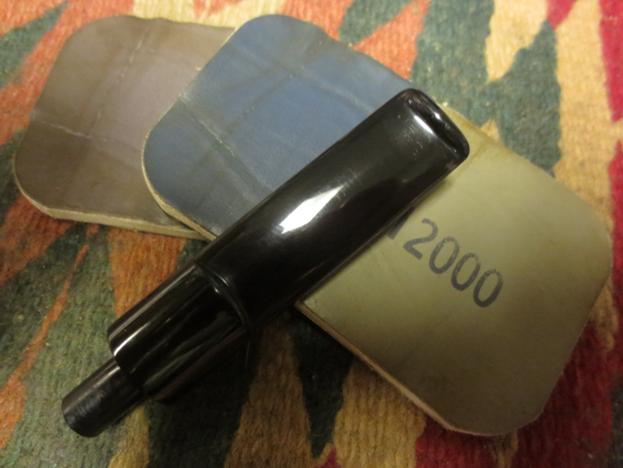
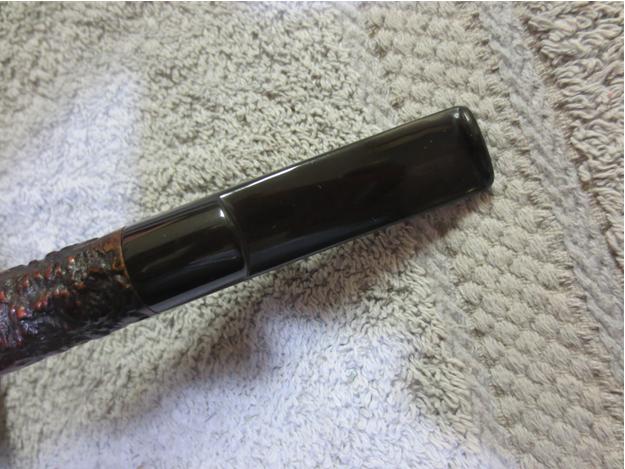
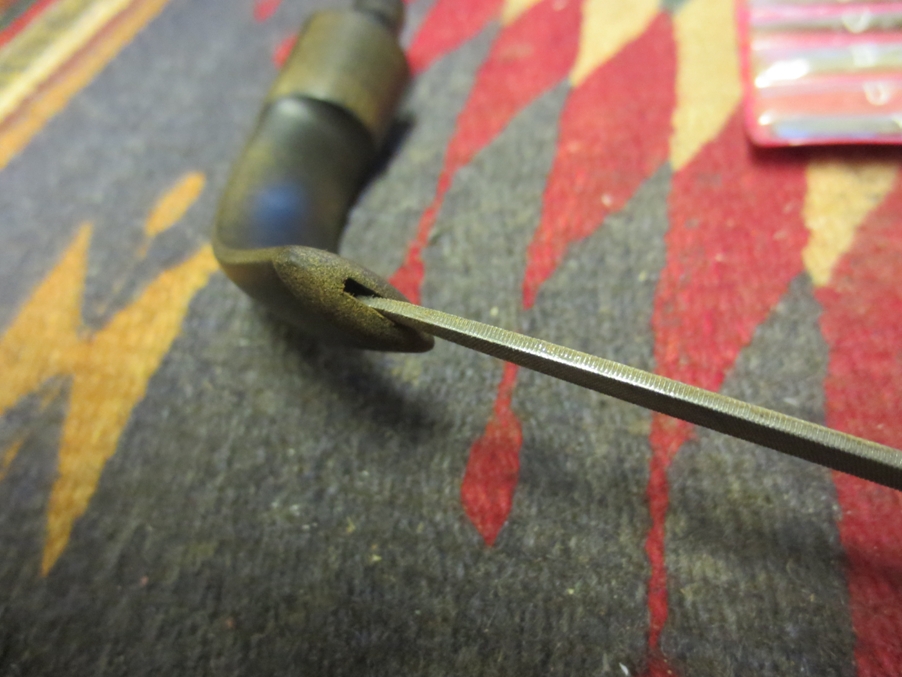
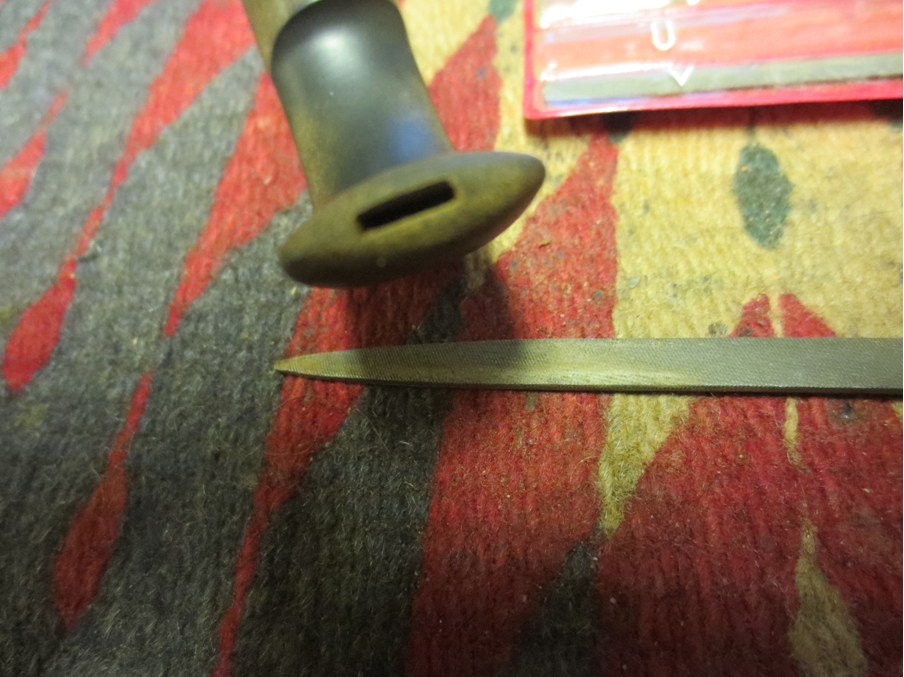
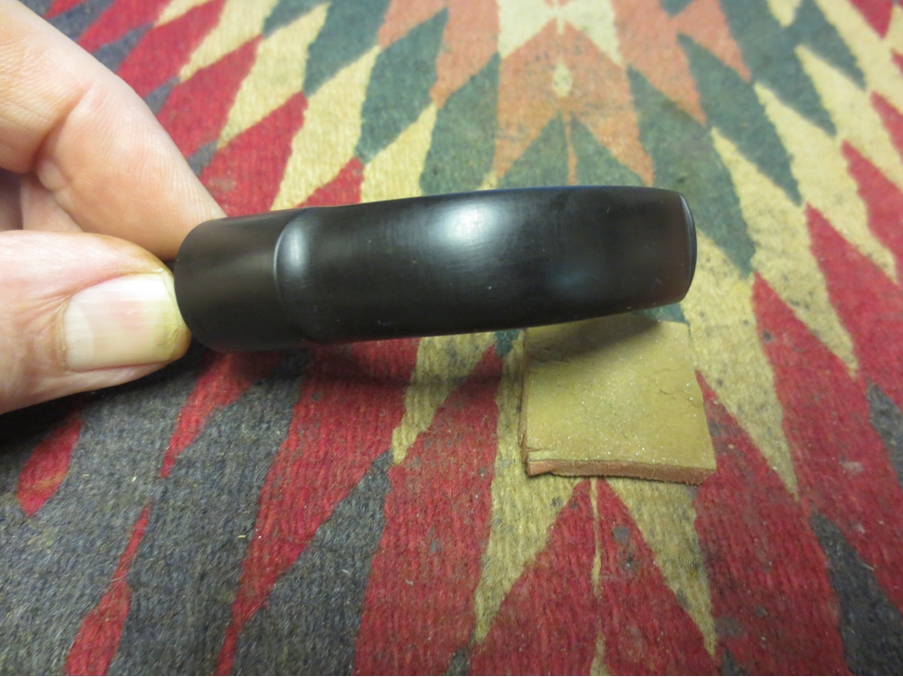
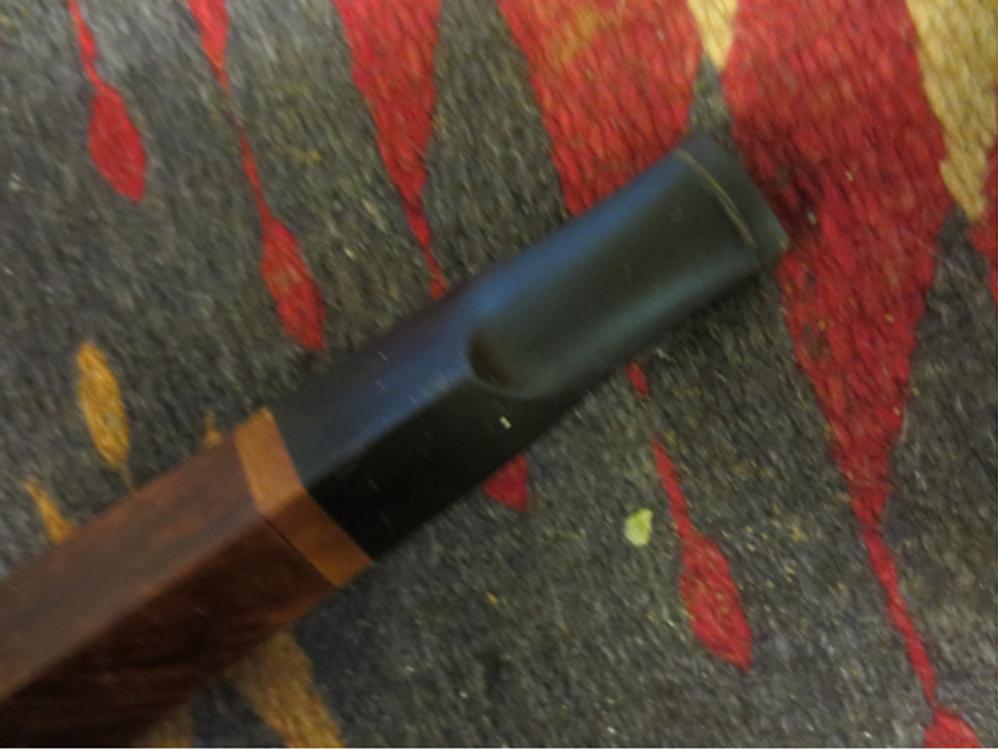
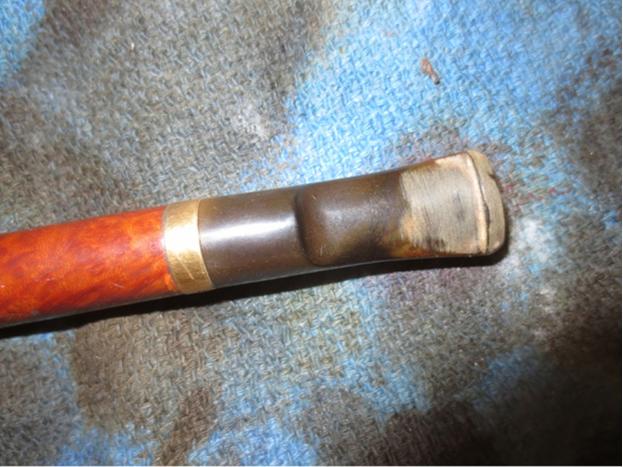
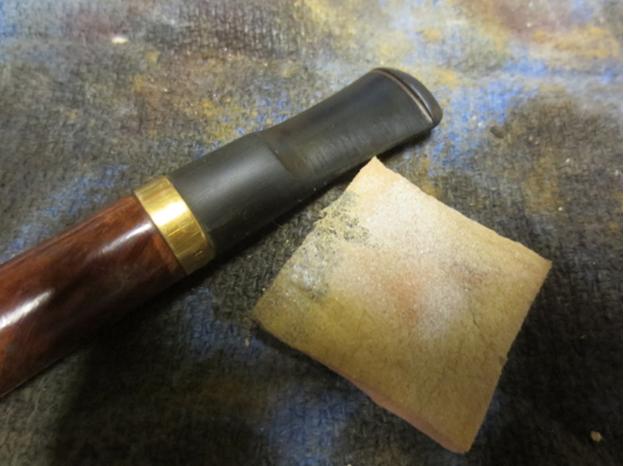
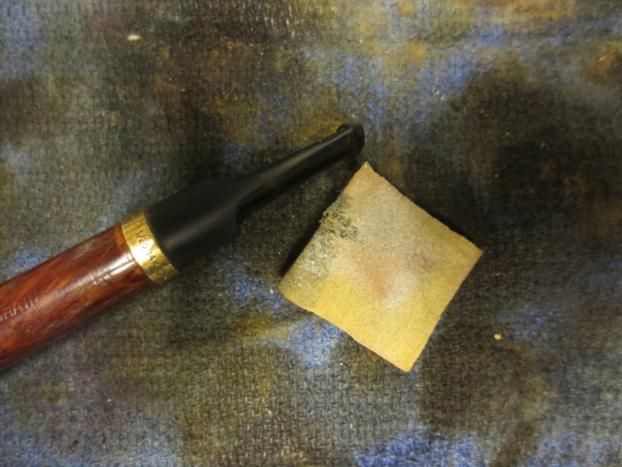
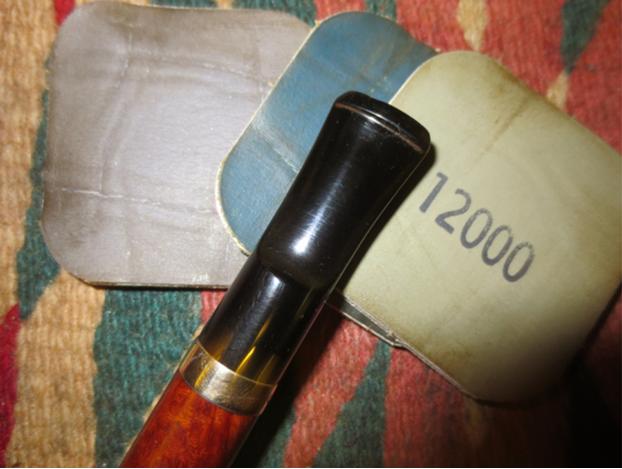
Tenon6 I sanded and smoothed the ends of the tube and made sure that the surface was rough enough to bond to the inside of the mortise. I roughened the walls of the mortise with a dental pick so that it was scored. I wanted to make both surfaces rough enough for the glue to bond to and make the tube secure in the shank. It would have to be a tight fit as I did not want the tube to come out with the stem when Troy took it off the pipe to clean it. I coated the outside of the metal tube with glue and let it get tacky. When it was tacky I pressed into the shank with the sharp end of a pair of needle nose pliers. I pushed it in until it sat against the end of the mortise in the shank.Tenon7 With the tube in place in the shank I still needed to flare the end so that it would fit against the bevel of the mortise end. I probably could have shortened the tube slightly but beveling the end would take care of that.Tenon8 I pressed the end of rounded tip of the needle nose pliers into the end of the tube and worked on the flare. It took some work to mould it to shape. I then use a small round needle nose file to smooth out the flare and match the angle of the bevel.Tenon9 I stained the end of the shank with a stain pencil and also touched up the cracked area on the shank. I will need to polish that to get it to match the shine on the bowl but you can see the fit of the stem against the shank and look of the shank.Tenon10 With the shank repair completed I needed to work on the stem. I sanded it with 220 grit sandpaper to remove the scratches and glue build up that was on the surface of the stem. I sanded it with medium and fine grit sanding sponges. Then it was time to sand it with micromesh sanding pads. Instead of wet sanding I used a little olive oil on the stem and sanded with the micromesh with oil. I did that with 1500-2400 grit pads. I continued with 3600-12,000 grit pads without adding any further oil to the surface of the stem. With these older Yello Bole stem I find that wet sanding does not work well but to sand with oil is perfect and will raise a nice shine. I also am careful about buffing them as they have a pretty low melting point and are easily damaged. This particular stem does not appear to be vulcanite so I was careful.Tenon11

Tenon12

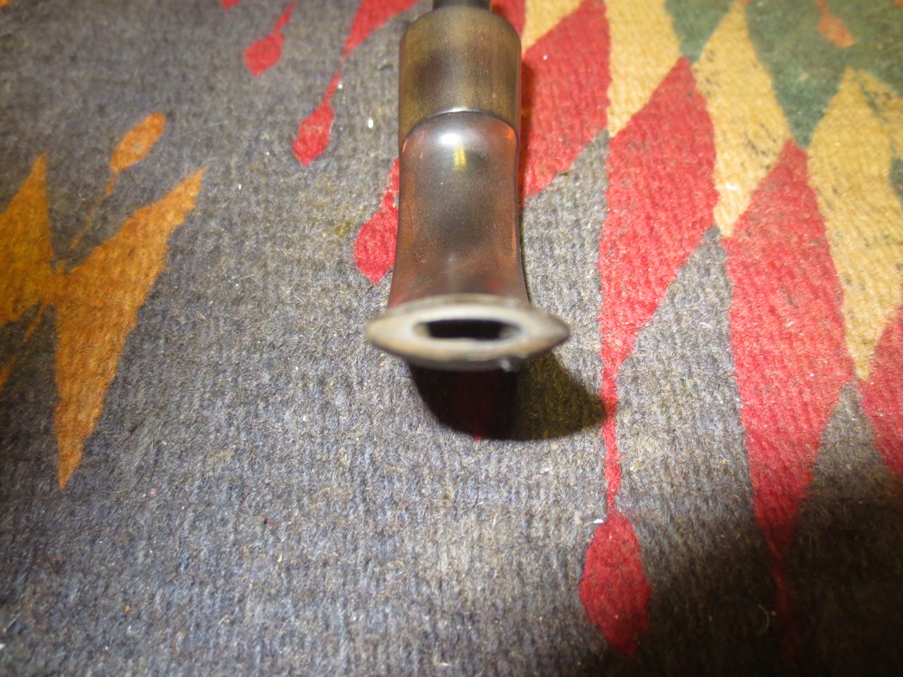
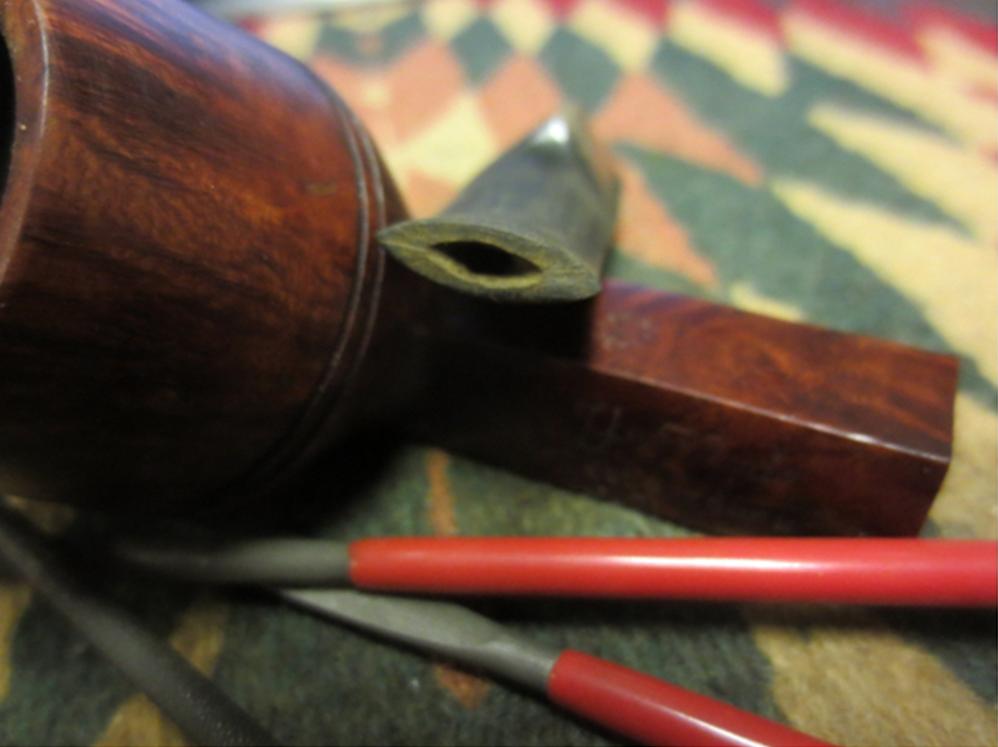
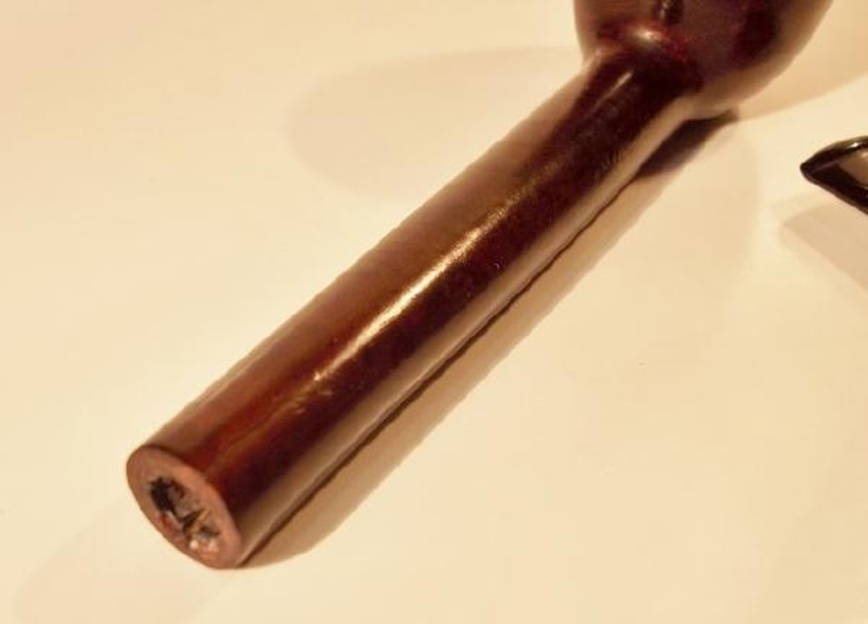
Tenon13 The next two photos show the shank end. The stain got on the flare of the metal tube and I will need to wipe it out with a bit of alcohol. However you can see the flare of the metal and the briar to take the new tenon and hold the stem tight against the shank. The airway has what appears to be a loose piece of metal on the second photo at the bottom of the shank. I blew out the shank with air and the dust and fibres that were present disappeared.tenon14

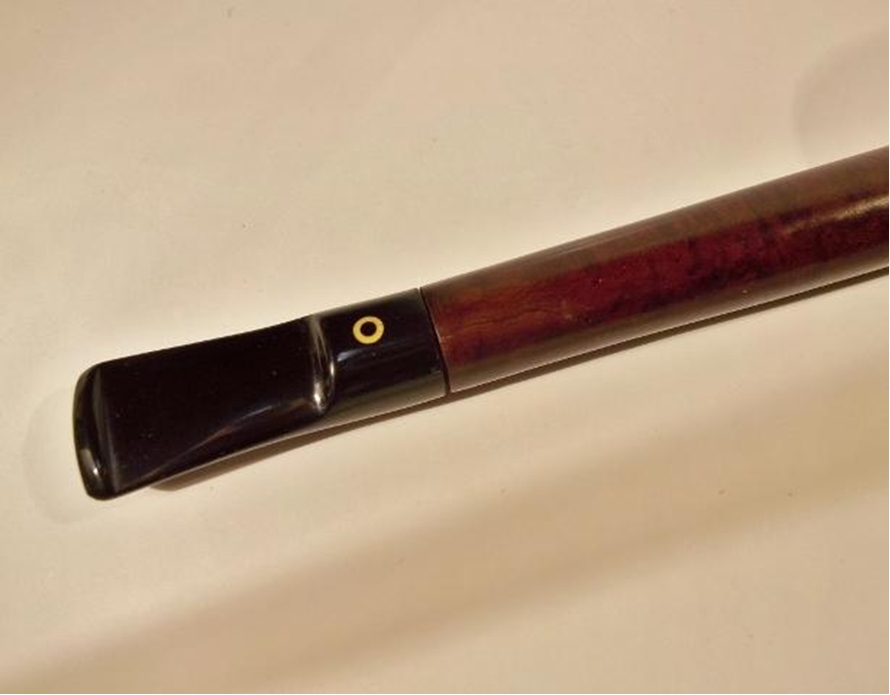
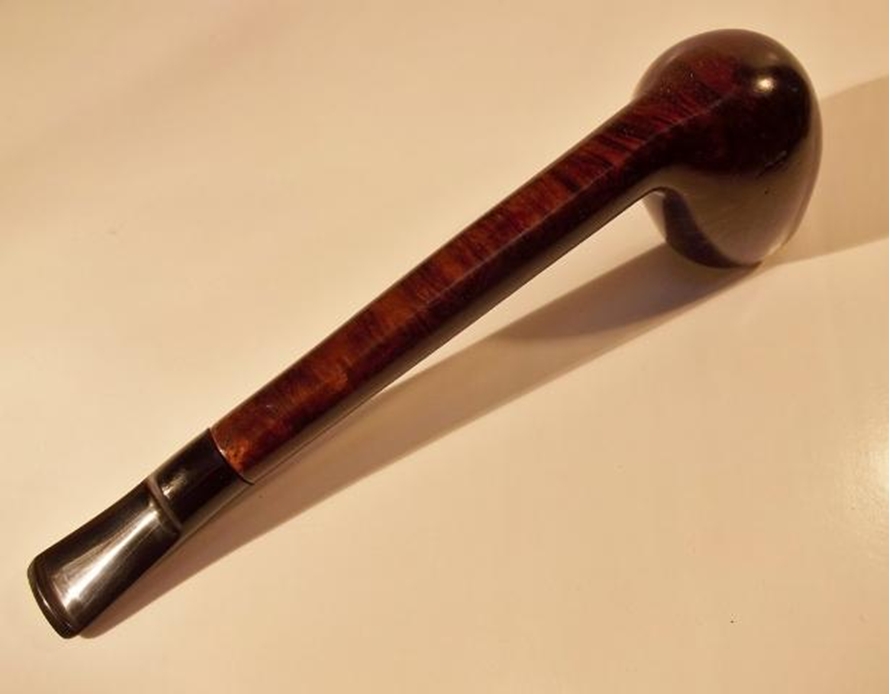
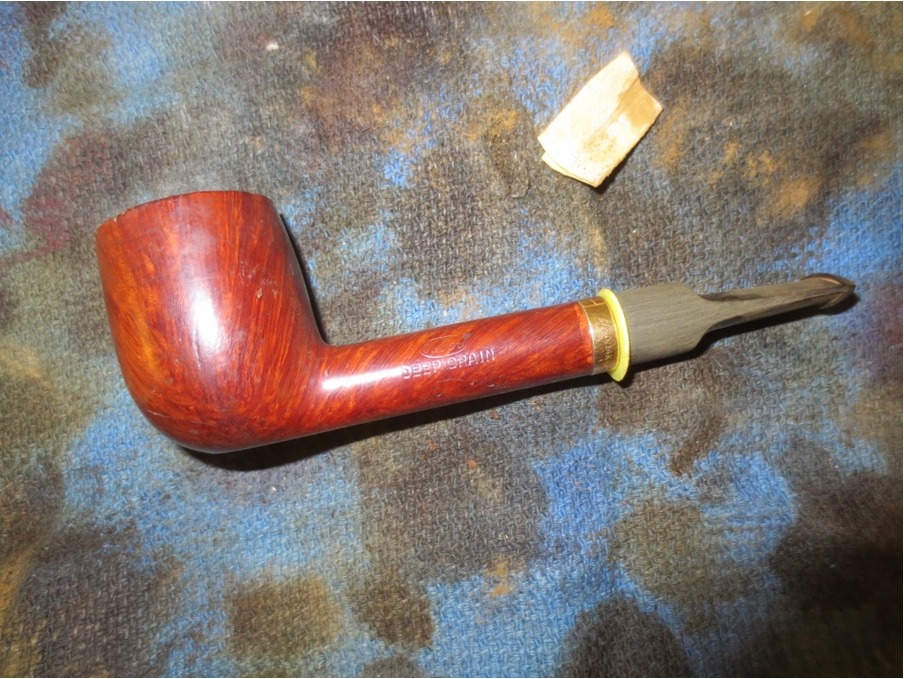
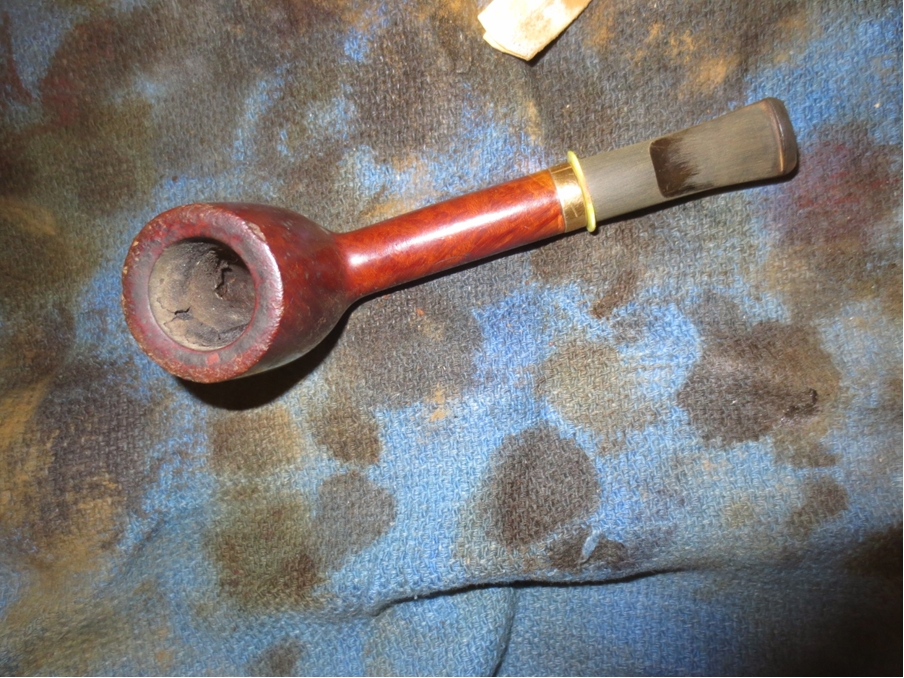
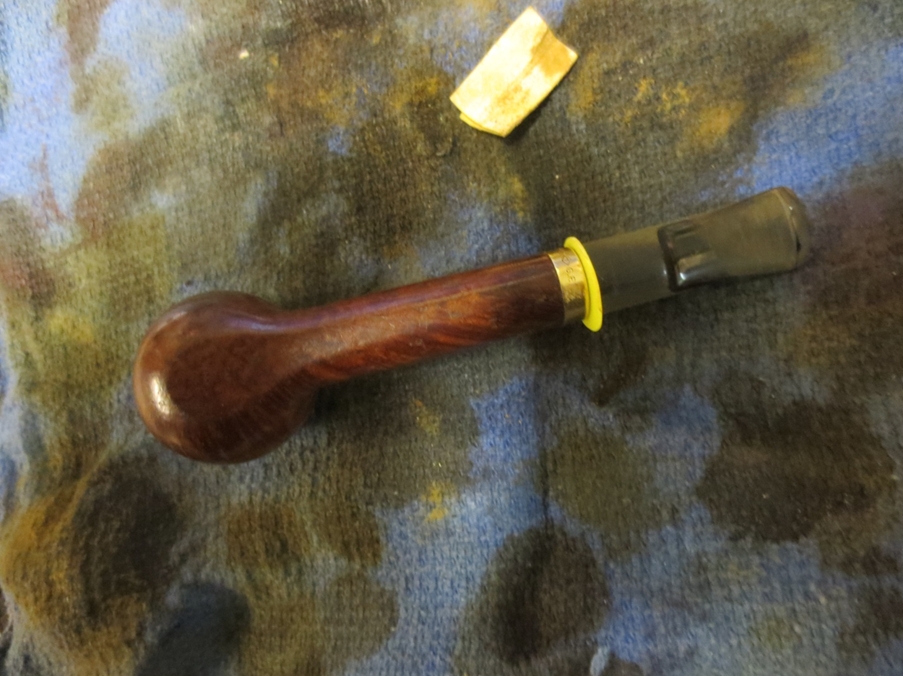
tenon15 The next four photos show the finished pipe and stem. The newly fit stem sits nicely against the shank. The repair to the shank is solid and the crack is closed. With the metal insert it should be free from further cracking and the tenon slides in snugly to the mortise.tenon16

tenon17

tenon18

tenon19 The next two photos give a close look at the shank/stem junction. It is good and tight. The final photo shows that the new tenon sits tight against the stem and looks like it was when it left the factory – just narrower in diameter to fit in the metal tube.tenon20

tenon21

tenon22 The first pipe is finished Troy. Hopefully the second one will be much simpler. This one is ready for you to load up and enjoy once again.

1934-35 Yello Bole Carburetor


Blog by Andrew Selking

The more I work on old Yello Bole pipes, the more I appreciate them. First of all, they used the same briar that went into the higher end Kaywoodies. From my experience you might find a Yello Bole with one fill, but otherwise spectacular grain. This pipe is no exception, stunning swirling birds-eye and spectacular cross grain, with one fill on the bottom of the bowl.

I can say with a fair degree of certainty that this pipe is from 1934 or 35. The carburetor patent was granted in 1935, this pipe is stamped “Pat Applied For.” Interestingly enough, it also has a patent number on the bottom of the shank. Additionally, the four digit number was used by Kaywoodie until 1936. The first two numbers indicate the finish and the second two numbers indicate the shape.

When I got the pipe it had the usual heavy finish that Kaufman Brothers and Bondy (KB&B) put on the Yello Bole line to cover imperfections.Andrew1

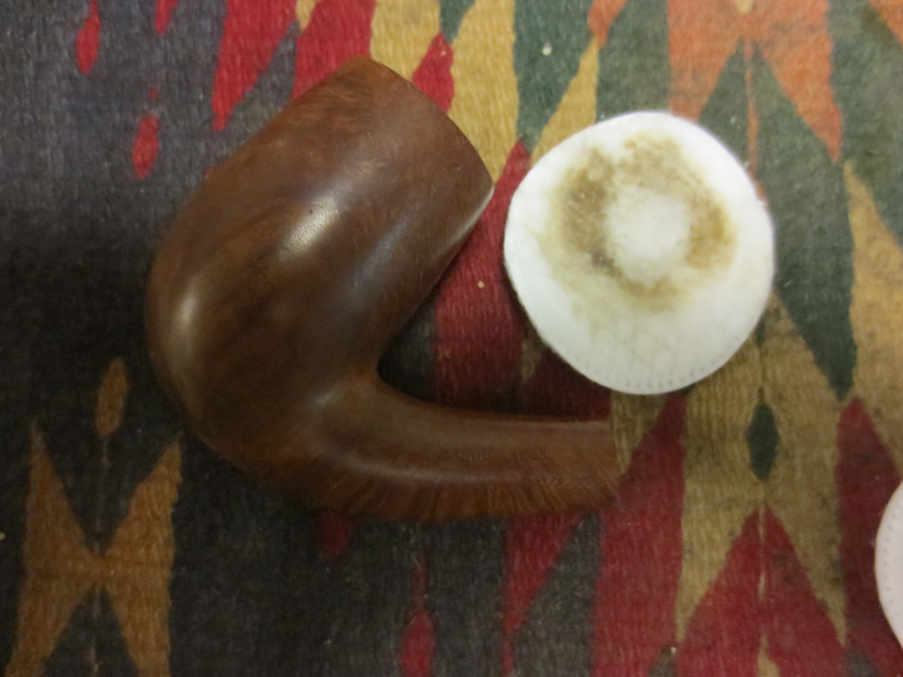
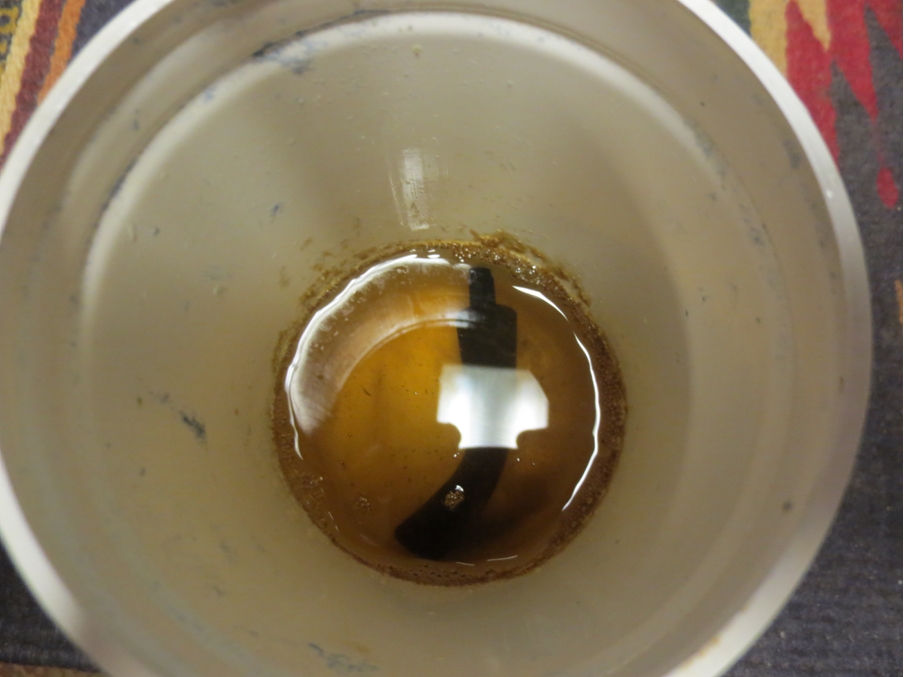
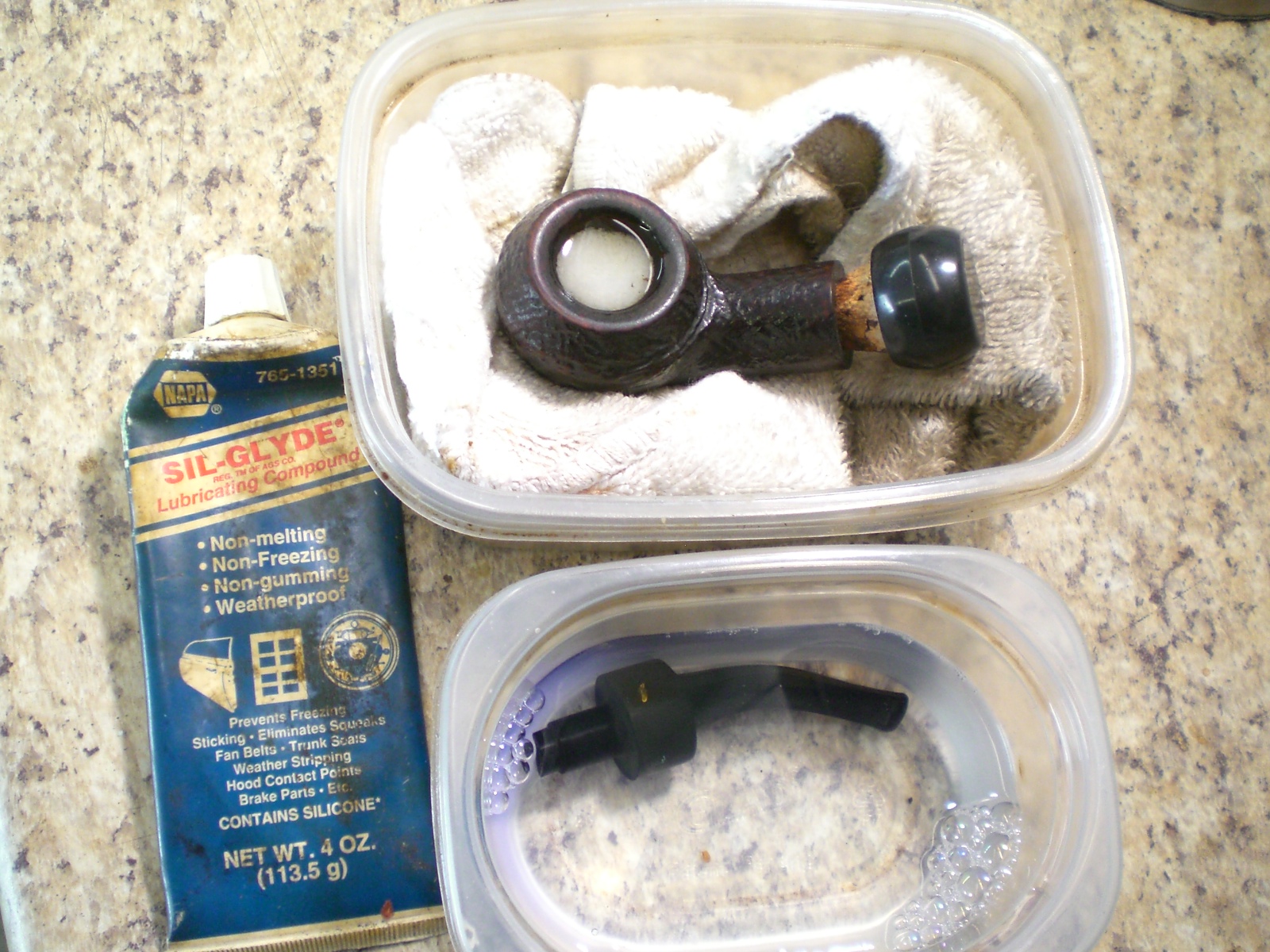
Andrew2 As you can see from the picture, I was working on more than one Yello Bole stem.Andrew3 While the stem soaked in Oxyclean, I dropped the bowl into the alcohol bath to begin loosening the gunk inside.Andrew4 After soaking overnight, I used my Castleford reamer to ream the bowl. The cake seems to come off easier if I ream the bowl right after the alcohol bath.Andrew5 I normally document cleaning the inside of the pipe, but for some reason didn’t this time. I did the usual retort on the stem and bowl, followed by scrubbing the inside of the shank with a brush, followed by q-tips dipped in alcohol. I used pipe cleaners dipped in alcohol to remove the last of the tar build up in the stem.

Once the internals were sorted, I decided to see what was under the varnish. I used 0000 steel wool and acetone to remove the worst of the finish.Andrew6 Here are some details of the markings on the bowl.Andrew7

Andrew8

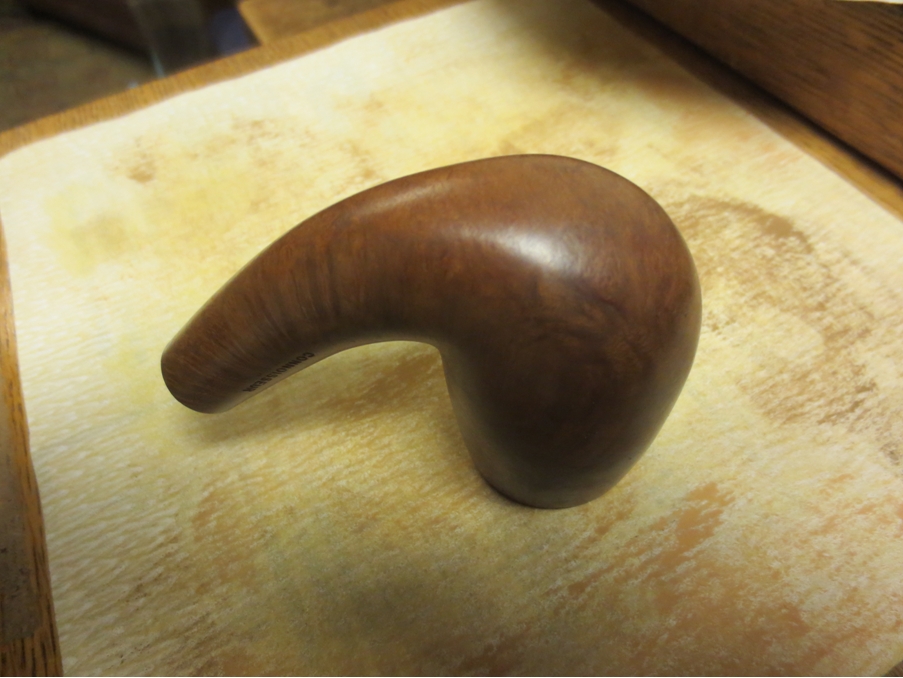
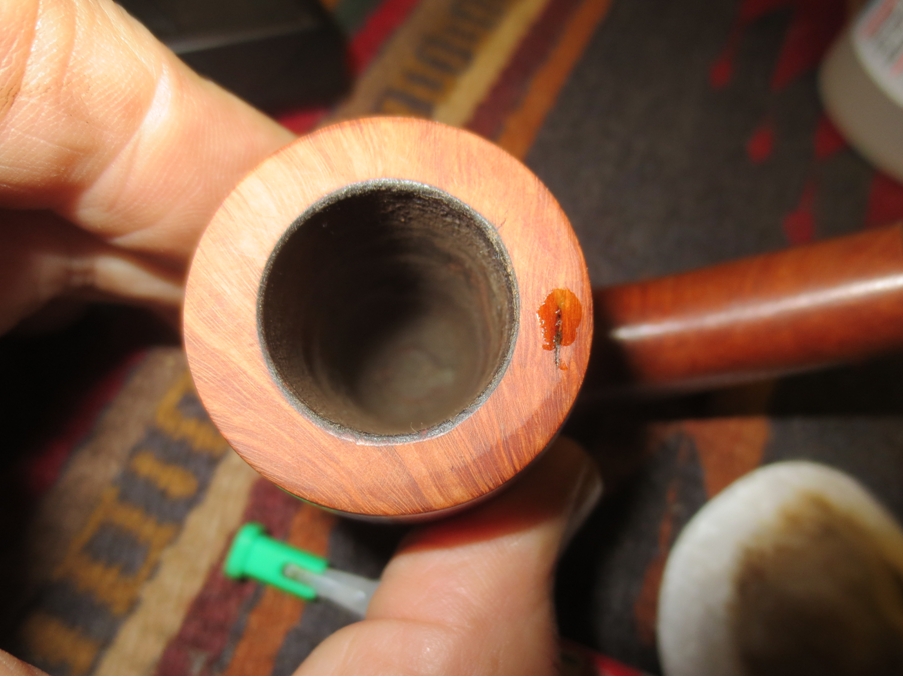
Andrew9 With the varnish off I could see the single fill on the bottom of the bowl.Andrew10 I used my dental pick to remove the fill…Andrew11 And repacked it with briar dust and CA glue.Andrew12 I use accelerator with the CA glue. This gives me the ability to start rough shaping the fill within a minute or two of application. I used 150 grit to knock of the high spots, followed by 400 grit to blend it in. I used a progression of micro mesh pads, from 1500-12,000 to remove most of the dings in the bowl and to prepare the wood for stain and final polish. I used 400 grit wet/dry with water on the stem, followed by micro mesh pads (1500, 1800, and 2400) with water. Next I used micro mesh pads without water (3200-12,000) to polish the stem. Finally I buffed the bowl with white diamond and carnauba wax on the buffer. I used my rotary tool (the generic term for a Dremel that isn’t made by Dremel) with white diamond and carnauba wax to polish the stem. Here is the final result.Andrew13

Andrew14 Some better detail of the grain.Andrew15

Andrew16

Andrew17

Andrew18 I forgot to mention that I tried something new to highlight the grain. I normally use a coat of black aniline dye followed by a brown or mahogany. This time I used dark walnut as the base coat. I like how it turned out.

Here is a better view of the stem and bowl.Andrew19 Thanks for looking.
Restoring and Shaping a New Stem for a Savinelli Roma 305


Blog by Steve Laug

When I saw this old Savinelli Roma on eBay I decided to bid on it and see what I could do with it. It had a triangular shank without a stem. The bowl had a cake build-up and the rim was covered with tars that were flaking off. The finish was dirty and worn as these pipes usually have a contrast dark stain on the bowl and a lighter stain on the rim. The rim is chamfered or bevelled inward toward the bowl. The edges of the rim – both inner and outer – were in great shape. The bowl was still in round.Roma1 The band was an aftermarket addition and from the looks of it covered a cracked shank. In the photo below you can see the band has been pressed into place and damaged the shape of the shank on the bottom right side. Notice the step down from the band to the bottom edge of the shank and you will see what I mean.Roma2

Roma3 I have included the next photo of the Savinelli Roma 305 to show what the pipe originally looked like. The triangular shank and matching stem are attractive. This should be interesting to duplicate on a replacement stem! The round rim and the contrast colour of the bowl and rim look very good. The thin metal spacer between the stem and shank would have been connected to the stem and with the cracked shank on the one I picked up will not be possible to duplicate.Roma5 I have also included a picture I found on the web of a badly oxidized stem. I saved this because it gives a good close up of the angles on the stem that I will need to duplicate.Roma4 When the pipe arrived I took it out of the package and gave it a thorough inspection. As I suspected the band was an added feature. It was pressed loosely in place to deal with a crack in the right side of the shank and also on the bottom edge. It was poorly fit and would need shaping before I put it permanently in place. I would also need to address the cracks in the shank and the missing notch on the right side of the shank.Roma6 The next group of three photos shows the damaged areas on the bowl and shank. The crack is visible in the first photo and the missing notch is visible in the second photo. The third photo gives a close up of the bowl and rim.Roma7

Roma8

Roma9 I slipped the band in place and took a photo of the end of the shank to give an idea of what the shape of the stem will need to be when I worked on it. You can see the poor fit of the band at this point as well.Roma10 I went through my can of stems to find one that fit. I tried diamond shaped stems and none had a wide enough diameter to match the width of the shank without being too long to look right. I finally settled on a round stem blank that had the correct diameter. I turned the tenon down with a PIMO Tenon turning tool until it fit the shank. In the photo below you can see the stem and the stem before I corrected the tenon.Roma11 With the tenon turned to fit I pushed it into the shank of the pipe.Roma12

Roma13 Using a rasp and files I roughed in the shape of the new stem. I used a Dremel and sanding drum to take it down as close as possible to the finished shape and then brought it back to the work table to use the files again. The photo below shows the roughly shaped stem. Much more sanding will be necessary before this stem is finished.Roma14 I slipped off the band from the shank and worked on the area on the right side of the shank where there was a large divot in the shank. I also cleaned the cracks on that side of the shank and the underside of the shank with alcohol. I picked out the loose briar with a dental pick and then filled in the divot with briar dust and superglue. I built it up to match the current level of the shank and carved it with the dental pick and needle files to match the finish around the repair. I put super glue in the cracked areas on the shank as well and pressed them until the glue set.Roma15

Roma16 The next photo shows the repaired edge of the shank. The shiny area on the right side of the photo is the glue and briar dust repair.Roma17 With the band off and the repairs made I inserted the stem and used the files to further shape the angles on the stem. I sanded it with 100 grit emery cloth to smooth out the file marks and further shape it.Roma18

Roma19

Roma20

Roma21 After more sanding with 180 grit sandpaper the stem is finally beginning to take shape. You can see the shape in the photos below.Roma22

Roma23

Roma24

Roma25 I decided to clean up the bowl before continuing further on the stem. I reamed it with a PipNet reamer and took it back to a thin cake. I would sand it smooth later in the process.Roma26 With hard sanding work done on the stem I worked on the bowl. I scrubbed down the bowl and shank with acetone to remove the remaining finish and scrubbed and scraped the buildup of tars on the rim. I used a small piece of folded 220 grit sandpaper to clean up the rim further.Roma27

Roma28 I scrubbed the rim with acetone and elbow grease and was able to remove all of the tars on the rim.Roma29 I put some wood glue on the shank and pressed the band into place. I wiped off the excess glue with a little alcohol on a cotton pad. I sanded the stem with 220 grit sandpaper to continue shaping and fitting it against the shank. I would need to clean up the straight edges on the sides of the stem and the flattened top portion before I was finished but I wanted to get the shank fit done first.Roma30

Roma31

Roma32

Roma33 I sanded the stem (particularly working on the shank stem junction) with 600 grit wet dry sandpaper. I also sanded the bottom and the sides of the stems at the same time.Roma34 I stained the bowl with a dark brown aniline stain, flamed it and repeated the process.Roma35

Roma36

Roma37

Roma38 I buffed the pipe with White Diamond to even out the stain and bring some shine to it.Roma39

Roma40

Roma41

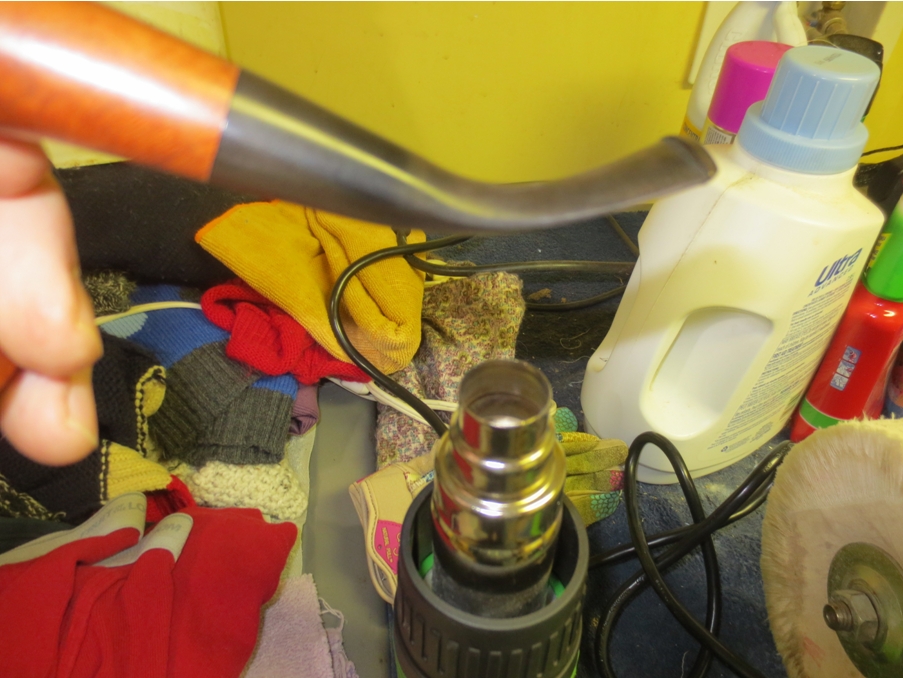
Roma42 Then it was time to bend the stem to match the original in the photo that I had. I heated it with a heat gun until it was flexible and then bent it over a rolling pin that I use to get an even and straight bend.Roma43 I took the pipe back to the worktable and took the following photos so I could compare the stem with the original photo. The bend looked correct.Roma44

Roma45 However, the top of the stem needed to be flattened more and lose the arched look. I used a flat file that I have and worked on the top of the stem to flatten it.Roma46

Roma47

Roma48

Roma49 The next three photos show the stem after I had filed and flattened the top of the stem to get the angles correct.Roma50

Roma51

Roma52 I sanded the stem with 220 grit sandpaper, medium and fine grit sanding sponges and with 600 grit wet dry sandpaper. I moved on to polishing it with the micromesh sanding pads – wet sanding with 1500-2400 grit pads and dry sanding with 3600-12,000 grit pads.Roma53

Roma54

Roma55

Roma56 I buffed the stem with White Diamond and Blue Diamond plastic polish to further shine the stem.Roma57

Roma58 I polished the band with micromesh sanding pads and then buffed the pipe with Blue Diamond to bring out a shine. I then gave it multiple coats of carnauba wax and buffed it with a soft flannel buff to lift the shine even higher. The finished pipe is shown in the photos below.Roma59

Roma60

Roma61

Roma62

Peterson Premiere Selection 9BC


Blog Entry by Al Jones

Several weeks ago, Steve Laug reposted a “Peterson Pipes Notes” blog entry on the Shape 9BC, a chubby bent billiard. It was written by Peterson authority, Mark Irwin. In the past, Mark had been a helpful to me in identifying an older 999 shape and I always enjoy reading his blog updates.

Peterson Pipe Notes has Moved!

While I’m not necessarily a Peterson collector, the shape was immediately appealing to me, and I added it to my “Holy Grail” pipe list. In fact, that was my comment on Marks blog. I was quite surprised a few days later to stumble onto the eBay auction for this pipe. It was listed as a Peterson’s “Premiere Selection Pipe” and the shape was not clearly identified. I could see by the “Made in Ireland” Country of Manufacture stamp, that it was a pre-Republic era pipe and made prior to 1949. The shape looked like the 9BC but I couldn’t clearly identify the shape number. I like the shape so I took a shot and won the auction. Later, in communication with the seller, I learned the shape stamp was indeed the 9BC. Dating non-hallmarked Petersons is never a sure thing, but from the nomenclature, I believe the pipe was made in the 1947-1949 era.

I didn’t know much about the “Premiere Selection” grade, but later learned it was just under the Deluxe in the Peterson grading system.

The pipe as it was delivered. It was in excellent condition. The bowl interior was clean, the finish just slightly dulled with very good nomenclature. The stem was lightly oxidized and only had one small tooth mark. Stem fitment was excellent.

Peteson_9BC_Before (1)

Peteson_9BC_Before (3)

Peteson_9BC_Before (2)

Peterson_Premiere_Selection_eBay7

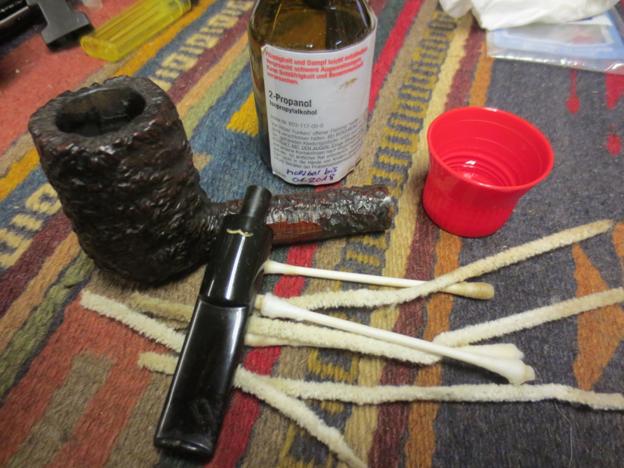
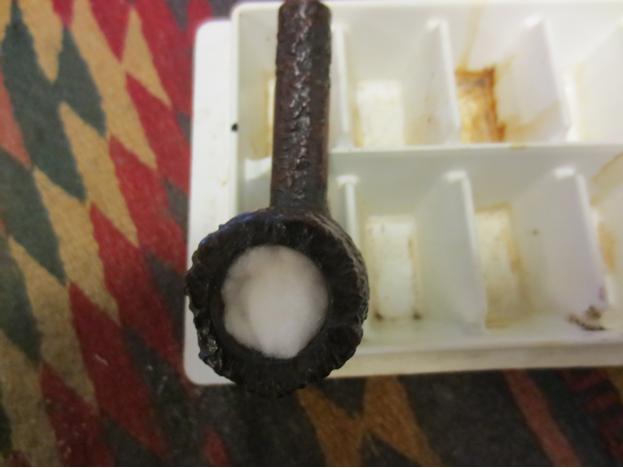
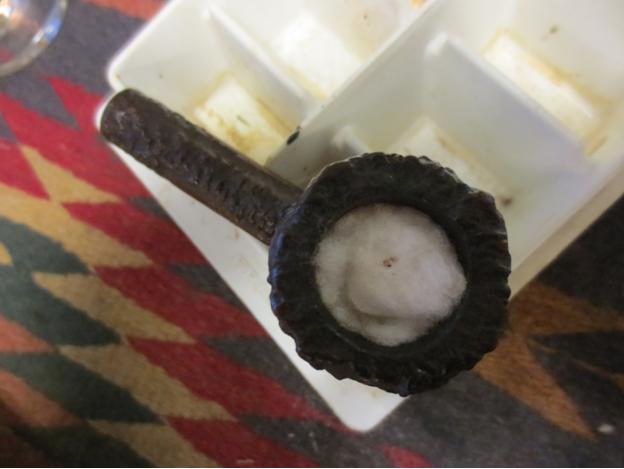
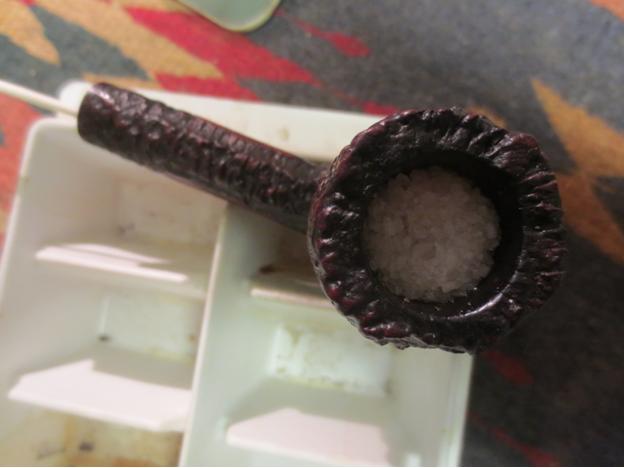
The bowl was very clean, but I gave it my usual soak with 91% isopropyl alcohol and sea salt. The shank has a sump like area that needed attention. After the soak, I cleaned that area thoroughly with a series of brushes and pipe cleaners dipped in alcohol.

The stem was lightly oxidized and had one small tooth mark. That lifted out nicely with some heat from a flame. I removed the first layer of oxidation with 800 grit wet paper and then moved to 1500 and the 2000 grades. Next up was 8000 and 12000 grade micromesh sheets. The stem was then buffed with White Diamond and then Meguiars Plastic Polish.

There were a few dings on the bowl, which lifted out with heat from an iron and a wet cloth. I then buffed the briar with white diamond to bring up the shine, being careful to stay away from the nomenclature. The briar then received several coats of carnuba wax.

I’m thrilled with this one and can’t wait to smoke it. The size of pipe was also a surprise. I was expecting a diminutive Peterson, but this is truly a chubby pipe at 70 grams.

Below is the finished pipe.

Peterson_9BC_Finish

Peterson_9BC_Finish (3)

Peterson_9BC_Finish (1)

Peterson_9BC_Finish (2)

Peterson_9BC_Finish (7)

Peterson_9BC_Finish (1)

Peterson_9BC_Finish (4)

Peterson_9BC_Finish (3)

Peterson_9BC_Finish (10)

Peterson_9BC_Finish (11)

Using Charcoal & Cyanoacrylate glue to do a Stem Repair on a Dr. Grabow Starfire Churchwarden


Blog by Joe Mansueto -“JoeMan” (Dr. Grabow Collectors Forum)

Joe sent me the following email and an attached link for the article that follows. He has done some excellent work and I have followed it on Pipe Smokers Forums and also on the Dr. Grabow Collectors Forum. It is a pleasure to be able to post his work here on rebornpipes. Welcome and thank you Joe.

“Steve – I’ve looked in on your blog a number of times. Thanks for posting some really good information, and featuring the work of other guys in the field. One of the things I learned here which I had not done before was the use of Plaster of Paris to mend cracked / broken meer-lined bowls. That was helpful…and I think that was one of your own posts. I’d been looking for a better solution…thanks.”

“I’m not looking to get published so much as I’m happy to help other guys with refurb processes. I learned a LOT of things from others who’ve been at it for many years more than I, and have also developed a few of my own techniques…as I’m sure most of us have! Cleaning out gunk…refitting a stem…rusticating….topping a bowl…staining…refinishing…de-oxidizing stems…repairing chips…etc…these are all things I do on a regular basis. Recently, I took my hand to making pipes, and made 2 of them during a stay-home vacation…came out pretty good! But, I see myself primarily as a refurb guy…I really enjoy making an old broken-down relic of a pipe gleam again. If I were to count, I suppose I’ve refurbished most of a thousand pipes over the last 4 years. No…I don’t have 1,000 pipes…most have gone to others by way of sale, trade or gift. I suppose I do have 200 pipes in my collection however.”

“One of the things that most refurb guys seem to struggle with most is chewed / eaten stems. Those nasty tooth indentations…or worse yet…missing chunks from the button. I’ve heard of guys using super-glue, heat, JB Weld, vulcanite dust & glue, and other mad-scientist approaches. There are many good approaches to repairing a stem. The most effective approach I’ve personally found is Cyanoacrylate and activated charcoal. Ed James (AKA Ozark Southpaw online) is just about the best talent I’ve seen in all-things pipes. He too learned from others over many years, but what an innovator this gentleman is. I visited his shop when I was on the road over 2 years ago, and I’ve learned a lot from him. One of his own experiments a few years ago was mixing CA with activated charcoal and comparing the result with other repairs. It was a great discovery, and at the time he did it and shared it on the forum, I’d not seen anyone else doing it that way. I’m not saying it’s the ‘best method’…because you know how some pipe guys can get into struggles over their method being best…but I’ve personally not seen anything more successful. Ed James has not done too many of these CA/charcoal repairs himself…but once he discovered, tested and shared it, I took it and ran with it. Do with this info as you please or nothing at all…but here is one example of the process…”

“At the time of that Starfire churchwarden refurb, I had done a couple hundred stem repairs. Since the time of that refurb, I’ve surely done a couple hundred more, and have tweaked my own process here and there. I’ve done some of these repairs on pipes for myself, but more for pipes which I’ve then sold, as well as others who bring them to me. This one served as a good example, since it was one of the worst cases that I documented. Most of those I’ve done, I’ve not documented at all.” – Joe Mansueto “JoeMan” (Dr. Grabow Collectors Forum)

Here is Joe’s blog:

Just recently got this pipe from Sam (DG forum name SamCoffeeMan – hasn’t been here in a while) along with the Grabow Unique. When I expressed interest in it…Sam said that he’d “cut off 1/2” of the stem, and file out a new button. I said…nnnooooo…leave it original and I’ll fix it.

I am sure the stem is original to the pipe. The stem is identical to the stem on my Linkman Grabow 6033, it is perfectly registered, and the wire carving is that of an ‘early’ Starfire, as you’ll see below. That said, this was surely among the last of the churchwardens to leave the Grabow factory.
Joe1 The previous owner should have had a sandwich instead of smoking this pipe…Joe2

Joe3 This can be fixed!

Bleach soak first, then an isopropyl alcohol scrub of the surgery site to assure the CA will stick best.

The form I used is 2 thicknesses of cereal box cardboard, cut to the shape of the tapered slot opening, wrapped in shiny packing tape. Since both sides of the button were nearly identically eaten, there was nothing to keep the form properly seated. So, I taped the form to a pipe cleaner and pulled it into place as tight as I could, then centered it top to bottom…if that makes sense.Joe4 CA mixed with activated charcoal, applied in multiple layers…Joe6

Joe7 Using a needle file to shape between layers…Joe7 Just about done shaping, ready for multiple-stage wet sanding…Joe8 Buffing…done.Joe9

Joe10 Some of you will know which shape number this medium billiard would be. Bowl height is nearly 1 3/4″, ID is 3/4. Overall length is 11 3/4″.Joe11 This is an older Starfire for sure. It’s got the very deep wire carving which is continuous over the entire pipe as I believe Tom pointed out about Belvedere.Joe12

Joe13 This was originally posted on The Dr. Grabows Collectors Forum. Here is the link: http://drgrabows.myfreeforum.org/sutra87253.php#87253

A Hand Made Marvic & Purdy Billiard 15


Blog by Troy Wilburn

A short time back I was doing one of my favorite past times and that’s scanning for pipes on eBay. I spotted this Charatan and was just infatuated with it. The shape, style and blast just really drew my attention but I knew that it was beyond my budget.Blast1 So I got the idea to contact a friend of mine on the Dr. Grabow Collectors Forum, Gary Balestrieri Jr. Gary is a truck driver and a pipe carver who owns Marvic Pipes. I asked him if he could carve me a pipe based on that Charatan but unfinished. I suggested a narrow yellow acrylic band instead of a metal band as the only major change. To my happiness he agreed.

I then contacted another friend of mine from the forum, Carl Purdy, who does some fine sand blast work on pipes. I have posted some of his work before on here on the Jobey Lumberman I restored and he sandblasted.

With both on board to do the work for me, it was agreed that the pipe would be mailed to Carl after Gary carved it and then mailed to me and I would put the finish on it.

Well I got it in the mail last Saturday and I must say that I was giddy at such nice work they both did on this pipe for me. Gary nailed the shape and Carl did a masterful job on the blast. I’m very proud of both of them and honored to own this pipe now. I now have a pipe that to me is a 100 times better than that Charatan and it cost me half the price that pipe sold for. It was made with care by two friends and I consider that the most important aspect of his pipe.

This is what the pipe looked like when it arrived in the mail.Blast2

Blast3

Blast4

Blast5 I was expecting just a plain yellow band on the stem but Gary used some kind of acrylic that changes from black to yellow. It was an unexpected and nice touch.

I was just going to stain the pipe a plain jet black, but after seeing the blast I decided to see if I could do a kind of Dunhill Shell look to make it more interesting and high end looking. The first thing I did was carve a holder out of a corn dog stick – nothing but the best high end equipment on my kitchen table you know. Then I wiped it down with 91% alcohol to make sure that there were no contaminants on the briar. I also rubbed the bowl with a Scotch Brite pad to soften the sharp edges on the blast.Blast6 I then did some contrast staining on the stamping using a black sharpie as I wanted the stampings to stand out. I was also glad to see both Gary and Carl’s name stamped on the pipe. That was another very nice touch.Blast7 Then I wet sanded the smooth area with very lightly using 91% alcohol.Blast8 Then to make sure that the dye would not penetrate too deeply and turn the whole smooth area black I took mineral oil and painted it on with a Q tip.Blast9 I mixed up some black RIT dye and applied several coats to the bowl until it suited me.Blast10 I set the pipe to dry in my high tech drying rack disguised as a cardboard box.Blast11 I wiped down the bowl with mineral oil and checked over the colour. It looked good. Now it was ready for some wax.Blast12 I buffed it kind of heavy on the first coat to take some color off and to get that shell look to the briar. On a sandblasted pipe after several initial coats of wax I heat it over my stove to melt the wax into all the crevices. Then I buff it with a few more coats and repeat the process until it builds up to my liking.Blast13 Here is the pipe after a couple of hours of buffing and waxing.Blast14
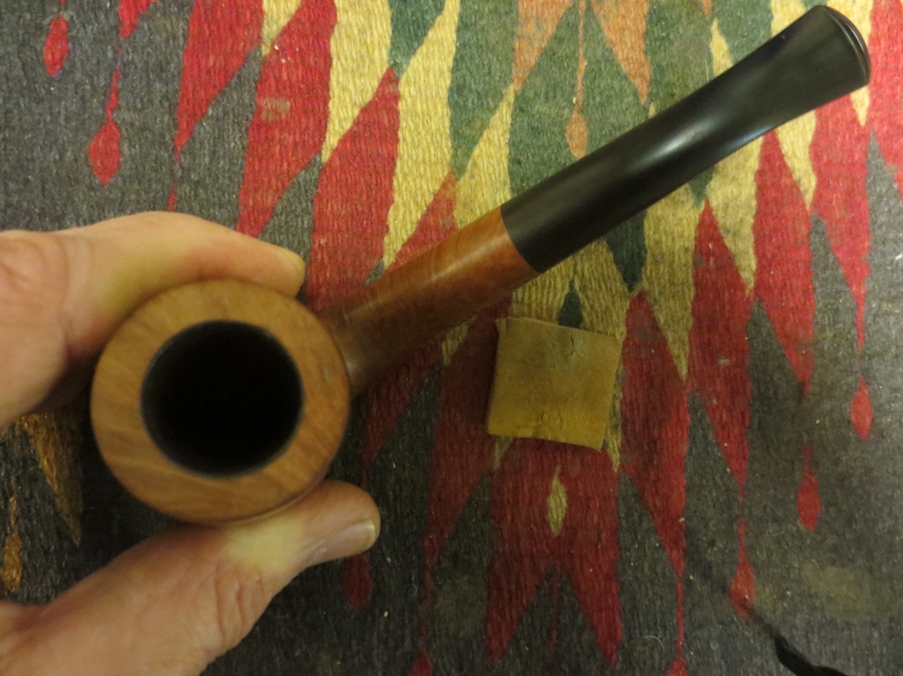
Blast15

Blast16

Blast17

Blast18

Blast19

Blast20

Blast21

Blast22 The pipe is a fantastic smoker and already after only a couple of ounces or so of tobacco smoked through it is beginning to break in. The draw is very easy and butter smooth. The pipe almost seems to smoke itself. I can only imagine how it will smoke after several more ounces are smoked through it.

Gary did perfection on the mechanics of the pipe and Carl put a world class looking blast on it. I couldn’t have asked for a better pipe. It turned out beyond my expectations. This will always be a cherished pipe to me. I have to add that the pictures just do not do it justice.

Concerning the Rising Popularity of Churchwardens in General, a Little about Their History and the Cleanup of a Barely Smoked Savinelli Rustic Aged Briar


Guest Blog by Robert M. Boughton

Member, North American Society of Pipe Collectors
http://www.naspc.org
http://www.roadrunnerpipes.com
http://about.me/boughtonrobert
Photos © the Author, except as noted

“The supreme accomplishment is to blur the line between work and play.”
― Arnold J. Toynbee (1889-1975), British historian

INTRODUCTION
If ever a pipe found its way into my possession and was sheer play and no work to clean up, this black Savinelli Rustic Aged Briar Dublin Churchwarden is it. I bought the long, sleek, exquisite example of the fine Italian pipe crafter’s genuine labor as a perfect addition, not to my own collection but to the growing and diversifying line of brands and styles I sell. Based on the requests I have received for churchwardens in general, as well as my eavesdropping at the local tobacconist I favor, this classic old style appears to be experiencing a comeback in popularity.

Perhaps the shift in supply and demand – as well as the corresponding rise in average churchwarden prices, at my preferred tobacconist and online, compared to the not so distant past – are due in part to the timeless popularity of the classic fantasy novels of J.R.R. Tolkien, starting with “The Hobbit” [1937] and “The Lord of the Rings” trilogy [1954-1955]. This year, in fact, marks the sixtieth anniversary of “LOTR,” and the recent releases of movie versions of both of these can only have spurred interest in the centuries-old pipe shape thanks to the churchwarden-puffing Hobbits, wizards, elves, dwarves and – yes – men. Or maybe the increase in sales and prices is just a sign of greater discernment among pipe enjoyers, and those new to the pleasure in particular, who seek the smoother, cooler satisfaction of a good tobacco’s flavor that the longer shank and bit can provide.

Whatever the cause of this apparent resurgence, I am doing my best to follow the tide by locating and restoring more of this venerable style’s many examples at affordable prices. I already went so far as to clean up a beloved but no longer often enjoyed Clark’s Favorite from my own collection. I bought the lovely pipe several years ago, restored, for about $40 (at which time a quick check online showed the same but new pipe on sale at $69) and sold it to a prospective customer who was bent on a medium-length church or nothing.Rob1 I still miss the Clark’s Favorite, which I supposed I could always replace for the new price noted above. Today, the same smooth version, with its orange-black acrylic bit, is on sale for $112 compared to the MSRP of $140.

Savinelli for one, seeming to recognize the inconvenience of carrying a long, fixed-bit church about town to enjoy on the go, now offers a nice selection of “Tandem” versions that can be enjoyed at home in their full glory and, when traveling anywhere, with a second short bit. The model shown below, the Tandem Rusticated #112, comes with two completely separate bits – the longer Vulcanite and the shorter acrylic.Rob2 This particular Tandem, by the way, is now on sale for $108 as opposed to its regular price of $130.

There are, however, still other “churchwardens” with the two bits combined as one, where the entire bit can be twisted off at the shank and the shorter part at the top, with the button, replaced in the shank. Of course, these models carry a higher price tag. Take, for example, this adjustable Cassano smooth billiard, which I bought last night at my tobacconist’s shop for $175. The full churchwarden large poker is 13” in length, and the smaller option is 8½”.Rob3

Rob4

Rob5 A BIT OF HISTORY
The churchwarden is one of the oldest of pipe shapes. The earliest use was in the Orient, where the bowls were likely made (for the most part to smoke opium) not only of known materials – including amber, ivory, various metals such as brass, different kinds of wood, bone and clay – but also jade and other exotic minerals. The bits (without buttons) often matched the bowls, although combinations of brass, wood, bone and/or ivory were not uncommon.

However, the clay bowl and long wooden shank without a bit was the design adopted and quickly adapted in late 18th or early 19th century Europe. So popular were the original Western World churchwardens that many Eastern European taverns kept supplies on hand for their customers’ use, and the habit of biting off the end of the wood shank for a fresh smoke developed. Until the mid- to late-1800s, clay bowls with wood shanks, open where the bit would now be found, remained the prevailing materials of construction.

As for the origin of the name churchwarden, there are three main theories, given here in reverse order of likelihood: the first, that smoking was permitted almost everywhere, including churches, in those dear lost days, and the long length and design of the pipe allowed it to rest on the pews; the second, that certain individuals, erroneously called churchwardens and trusted with guarding England’s churches in the 1800s, very much enjoyed their pipes and fancied the popular style, and the third, that real churchwardens (who by every official definition were not guards but honorary officers of local parishes or district churches entrusted with administrative and other minor duties) became known for their love of the pipe later named for them.

And contrary to popular myth created by various actors who have performed the role of Sir Arthur Conan Doyle’s brilliant mystery solving character, Sherlock Holmes, using fancy Gourd Calabashes or sundry churchwardens as props – which falsehood was adored and perpetuated by generations of Sherlockian fans – these are the facts: the shape or material of pipe most often cited by Holmes’ fictional chronicler, Dr. John H. Watson, was cherry wood (six references), followed by several mentions of standard-sized clay pipes and some appearances of briars. You can read the entire “Adventures of Sherlock Holmes” at https://www.gutenberg.org/files/1661/1661-h/1661-h.htm and locate all of them yourselves.

THE CLEANING
Rob6

Rob7

Rob8

Rob9

Rob10

Rob11

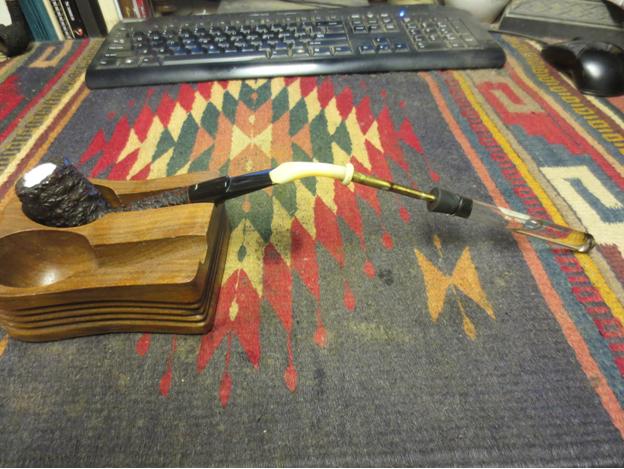
Rob12 To start on an honest note, I only show the few following steps needed to clean this almost-new Savinelli Rustic Dublin Churchwarden beauty for the sake of showing the pipe itself and the ease with which it was spruced up. The bit had no signs whatsoever of having been touched by any hands, much less placed in a mouth and smoked. In other words, its outside was buffed to the highest sheen, as if it came fresh from the factory in Barasso, Italy, in the Varese province. And so I began by running a long, soft cleaner dipped in alcohol once through the 7½” bit, which was all but 3” of the total length, removing the smallest amount of tobacco residue, and again for good measure.

The rim had minor blackening, not part of the stain. I removed that with a quick brush using 1800 micromesh and proceeded to the chamber. Two easy turns of a reamer followed by about 30 seconds of sanding with 200-grit paper and then 320 made the chamber as smooth as it ever was.

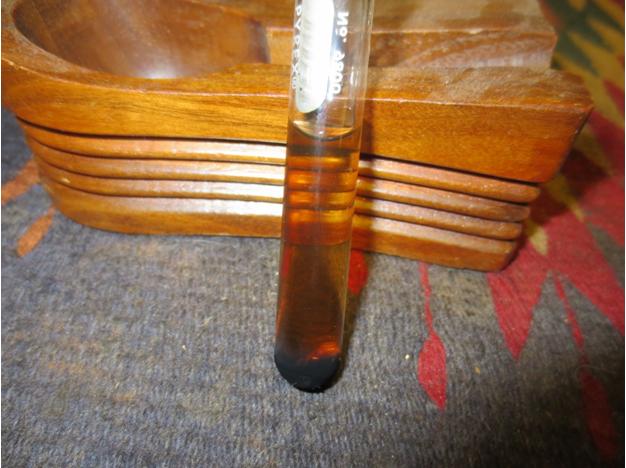
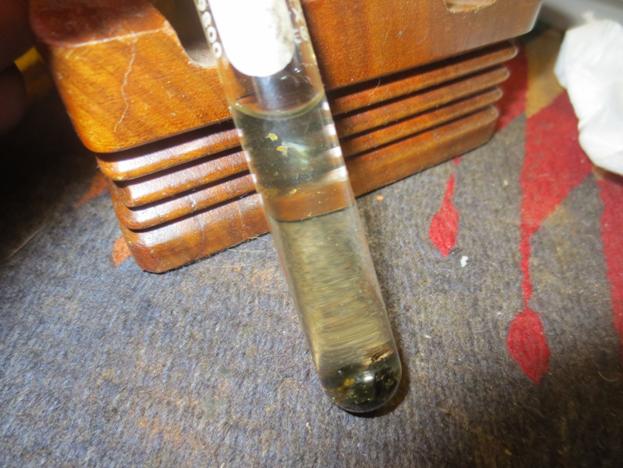
For the sake of thoroughness, I attached an otherwise useless small bit with a tenon that fit the shank and retorted the inner shank and chamber. To my amazement, one Pyrex test tube of boiled Everclear came back from the first passage with the lightest shade of brown, and despite about six more tries to make the alcohol darker, the barely tested briar was clean.

Then I noticed a spot on the outer edge of the shank opening that appeared to be smooth and dark red. With a small scrap of super fine steel wool, I probed the narrow strip of briar around the opening and watched it come clean. Below are before and after photos.Rob13

Rob14 I could have left the briar in the excellent shape it already was, but as chance happened, I had just received my order of a new jar of Halcyon II wax, and had to try it out. Therefore, I gave the wood a spin on the clean buffer and with one finger applied a dab of the Halcyon as far as it would spread before adding a smidge more to finish coating the bowl, shank and rim. Setting the wood on a cotton rag, I waited about 10 minutes and again took the duller-looking briar for a fast spin on the clean wheel. Whether or not these steps were necessary, here are the final results.Rob15

Rob16

Rob17

Rob18

Rob19

Rob20

Rob21 CONCLUSION
That is all.

SOURCES
(in haphazard order)

http://www.onlineoriental.com/Merchant2/merchant.mv?Screen=CTGY&Store_Code=1&Category_Code=14
http://www.quora.com/What-kinds-of-pipes-did-Sherlock-Holmes-smoke-according-to-Sir-Arthur-Conan-Doyles-writings
http://www.sherlockian-sherlock.com/jeremy-brett-churchwarden-pipe.php
http://www.pipedia.org/wiki/Churchwarden_Pipes

Guide to Tobacco Pipes & Pipe Smoking


http://www.smokingpipes.com/pipes/new/savinelli/index.cfm?tag=Clark’s%20Favorite
http://www.smokingpipes.com/pipes/new/savinelli/moreinfo.cfm?product_id=160492

Mixing an Organic Bowl Coating for a Repaired Pipe


Blog by Steve Laug

I have used a homemade bowl coating on the inside of pipe bowls that have had varying degrees of damage. This bowl lining is a way of adding a layer of protection to the briar until a natural cake is formed to insulate the walls of the pipe. I remember getting the recipe for this mixture from a pipemaker friend of mine. I have since modified it slightly to make it work better for me.

The mixture has two basic components – sour cream and activated charcoal. You can also substitute plain unsweetened yoghurt for the sour cream. I know that sounds utterly disgusting to you who are reading this and you have visions of it spoiling and stinking up your pipe permanently. You must be thinking the same thing I did when I heard about the combination. I remember thinking, “Forget about worrying about ghosting your pipe from tobacco, now you are asking me to put dairy products in my pipe”. I can tell you from quite a few years of using the recipe that you do not need worry about that. The amount of the mixture that you are putting in the bowl of your pipe is negligible and when it dries/cures it creates an almost rubber bowl coating that leaves no residual taste in the bowl.

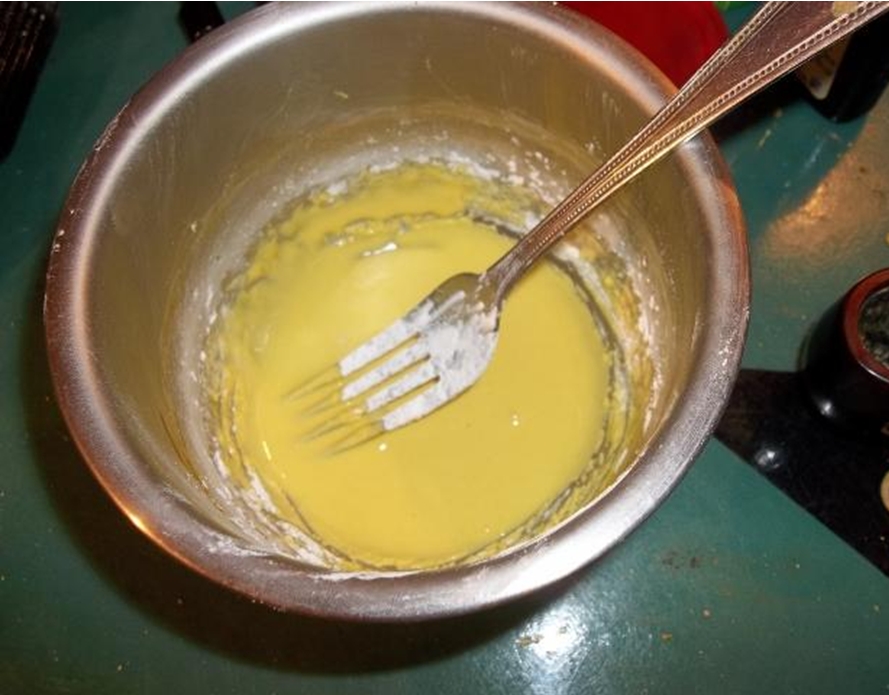
My pipe maker friend used a charcoal for aquarium filters that he bought at Walmart and then ground it with a mortar and pestle to a powder before using it. That was too much of a mess to my liking and added yet another thing to clean up after the work. So I buy activated charcoal capsules from the health food section of a local pharmacy and use those instead. Not only is it cleaner but I also find that the food grade charcoal is ground much finer than I can grind the aquarium grade. I have had a jar of capsules that I have been using for over 10 years and still have lots left for future mixtures.Jack46 I generally mix the charcoal from four capsules with two table spoons of sour cream. I have yet to get the exact amount of mix that I need per bowl but I often will coat several bowls at a time so very little goes to waste.Jack47 I open the charcoal capsules and shake out the contents on top of the sour cream. I choose a bowl that is large enough to allow me to stir the parts together easily.Jack48 I have a dentist’s spatula that I got as a gift from holymolar for the mixing tool.Jack49I stir in the charcoal until the mixture is evenly blended and no white sour cream is showing. The paste that is created is a dark grey/black in colour and is thick enough that it will stick to the walls of the pipe bowl.Jack50 I use the spatula to apply it to the walls of the bowl. I spread it on fairly thick and don’t worry about it clumping or bunching up. I am more concerned with getting the mix on the walls at this point in the process than I am in spreading it out evenly throughout the bowl.Jack51
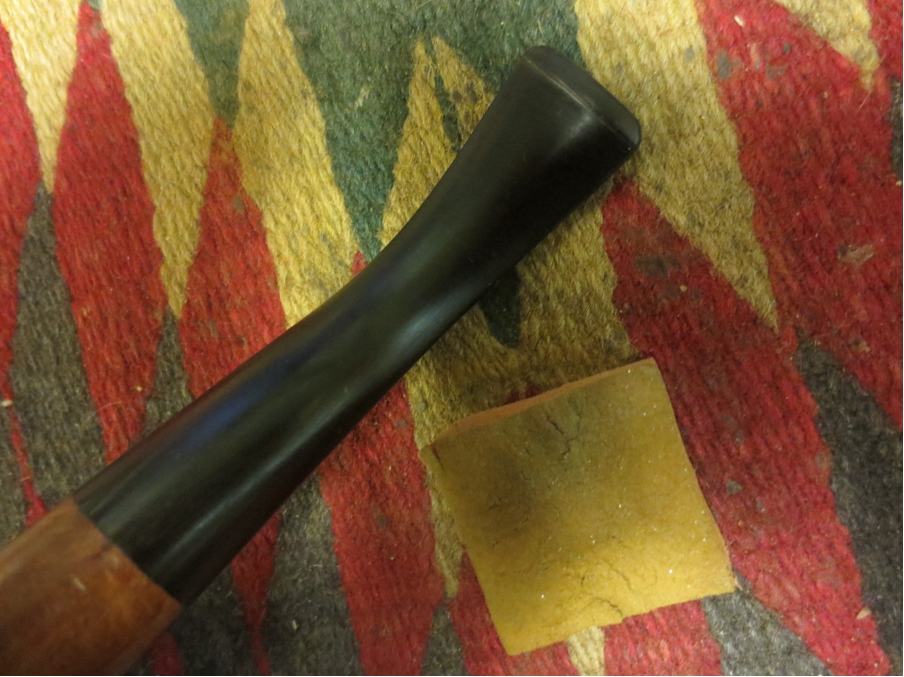
Jack52Once it is in the bowl I use a folded pipe cleaner to spread it around evenly on the sides and bottom of the bowl. I always put a pipe cleaner in the airway to keep the mixture out of the airway at the bowl bottom. I work the paste until it is evenly spread out and the entire bowl surface is covered.Jack53

Jack54 I then set the bowl upright on a pipe rest to dry and cure. In 24 hours the surface is dry to touch. In 48 hours it is ready to smoke. I load a bowl carefully and when I am smoking it I am careful to not scratch the surface with my tamper for the first few bowls. When I tap out the dottle at the end of the smoke I am careful to not damage the bowl coating until I have run at least 6-9 bowls through it. At that point it is hardened sufficiently and the new cake has begun to form on top of the coating.Jack66 Even the finely ground charcoal powder leaves a rough surface on the side of the bowl. I have found that the rough surface is what facilitates the building of a good cake in the bowl.Jack69 I used this bowl coating for quite a few years now with no ill effect. It works well to protect the bowl of damaged pipes and give them time to build up a cake that protects the briar from burn out. If there is any residual taste (and honestly I can’t taste one) it is short lived as the tobacco is burned in the bowl. It has worked well from me and I thought I would pass it on. If it works for you that is great. If you choose to not use it that too is fine.

Restoring a Heritage Heirloom 98S Bulldog


Blog by Andrew Selking

I am always on the lookout for high quality American pipes that have yet to gain the popularity of some of the more well-known European makes. Heritage pipes appeal to my sense of American pride, craftsmanship, and value. These pipes were made in the Kaywoodie factory, but on a completely separate line. Heritage pipes were Kaywoodie’s answer to Dunhill. According to one of their brochures, Heritage pipes were made from “briar burls seasoned and cured for up to 8 months,” with only “one briar bowl in over 300 selected to bear the Heritage name.” “Heritage stems are custom fitted with the finest hand finished Para-Rubber stems. Mouthpieces are wafer thin and concave.”

The Heritage line began in the early 1960’s, with the trademark issued in 1964. The line was started at the request of Stephen Ogdon, (who worked for Kaywoodie in 1962). Mr. Ogdon had previous experience working for Dunhill, either running the New York store or working for Dunhill North America. Mr. Ogden was made President of Heritage Pi pes, Inc., Kaywoodie Tobacco Co.,Inc. and Kaywoodie Products Inc. as well as a Vice President of S.M. Frank & Co. Heritage Pipes were produced from 1964 until 1970 (Source Kaywoodie.myfreeforum.org).

Here is a link to a Heritage brochure:

The Wonderful World of Heritage Briars

The best part about Heritage pipes is, for the most part other collectors have yet to discover them and you can still find one for a reasonable price. I found this fantastic bulldog in a lot of pipes otherwise unremarkable pipes. It had a good bit of cake, some tooth marks, and what looked like mold on the stem.Andrew1

Andrew2

Andrew3

Andrew4 With concerns about cleanliness in mind, I dropped the bowl into the alcohol bath.Andrew5 I also soaked the stem in Oxyclean.Andrew6 After soaking overnight, I used my Castelford reamer to clean the cake.Andrew7 I checked the cleanliness of the shank with a brush and was pleasantly surprised.Andrew8 I retorted the shank, sorry no pictures this time, and after a few q-tips and fuzzy sticks the shank was clean.Andrew9 Next I retorted the stem.Andrew10 It was also relatively clean; this was a fuzzy stick dipped in alcohol right after the retort.Andrew11 I used two fuzzy sticks dipped in alcohol just to make sure.Andrew12 I wanted to tackle the grime on the bowl and tar on the rim, so I used 0000 steel wool and acetone.Andrew13 Next I turned my attention to the stem. I used 400 grit wet/dry sand paper with water, followed by 1500-2400 grit micro mesh pads with water.Andrew14 Since the stem had some tooth marks, I mixed up some clear CA glue and ground charcoal. I applied the glue with a straight pin and added accelerator to dry it. I used a small flat file to shape the repairs followed by sanding with 400 grit and micro mesh pads.

The bowl had some scratches and was darker than I preferred, so I used a progression of 1500-12,000 grit micro mesh pads to get it ready for polishing. I buffed the bowl on the wheel and used the rotary tool on the stem. Here is the final result.Andrew15
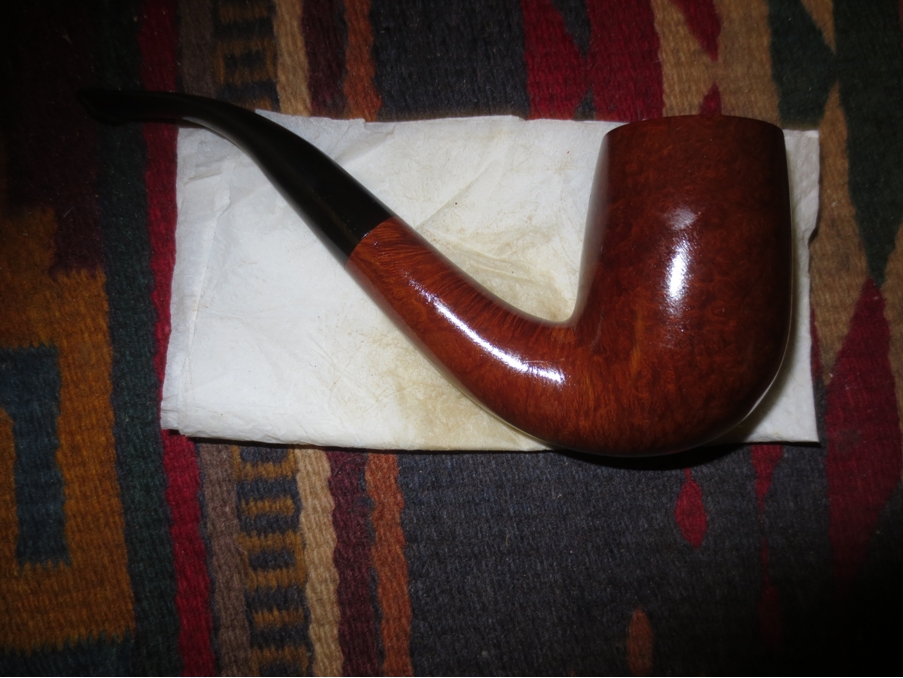
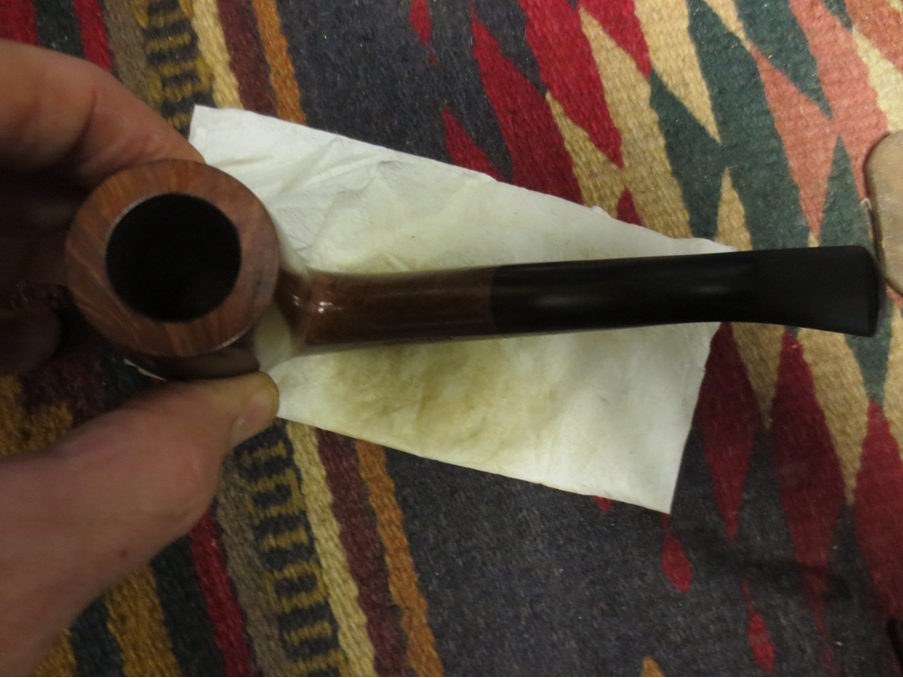
Andrew16

Andrew17

Andrew18

Andrew19 Thanks for looking.