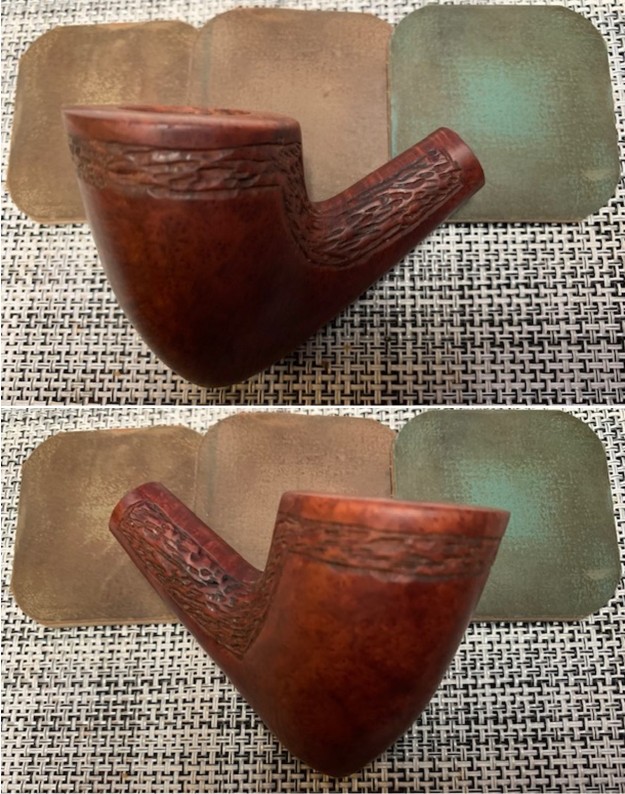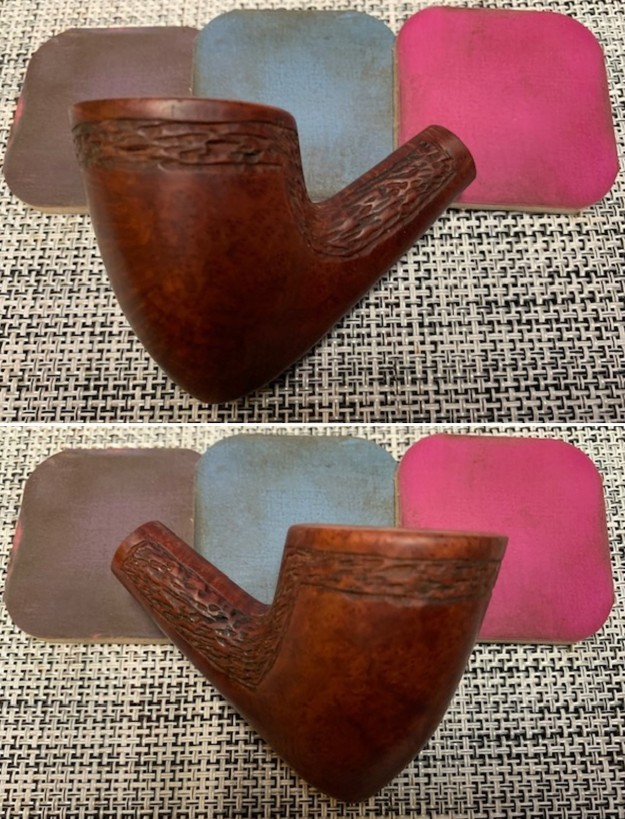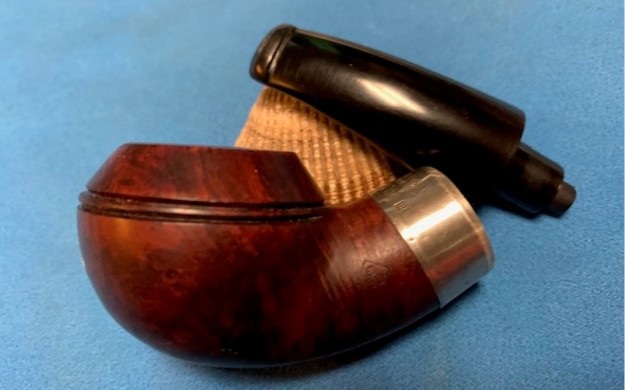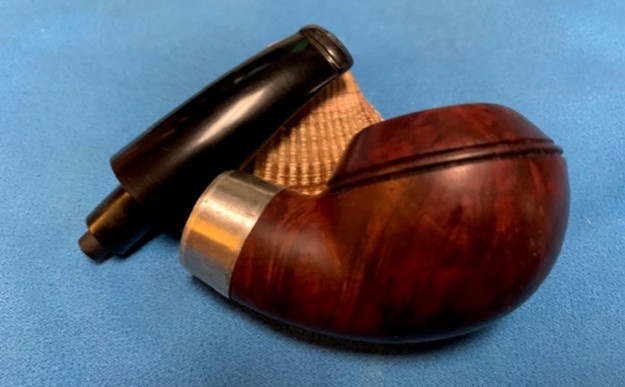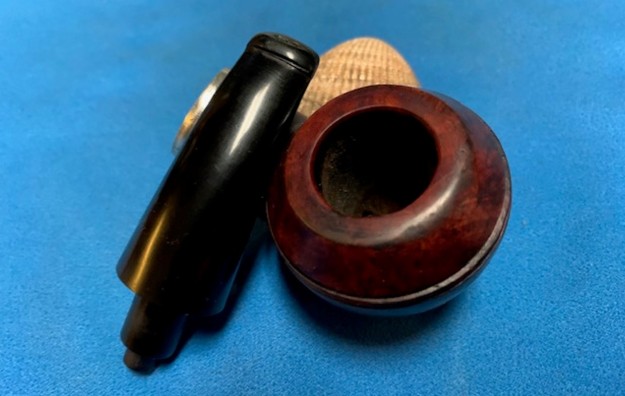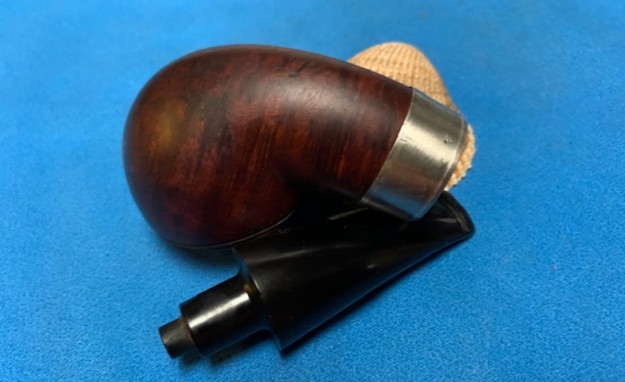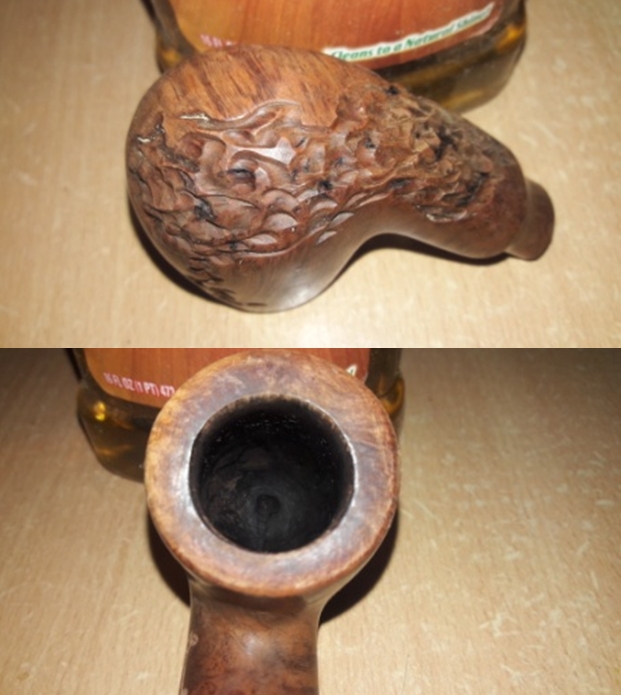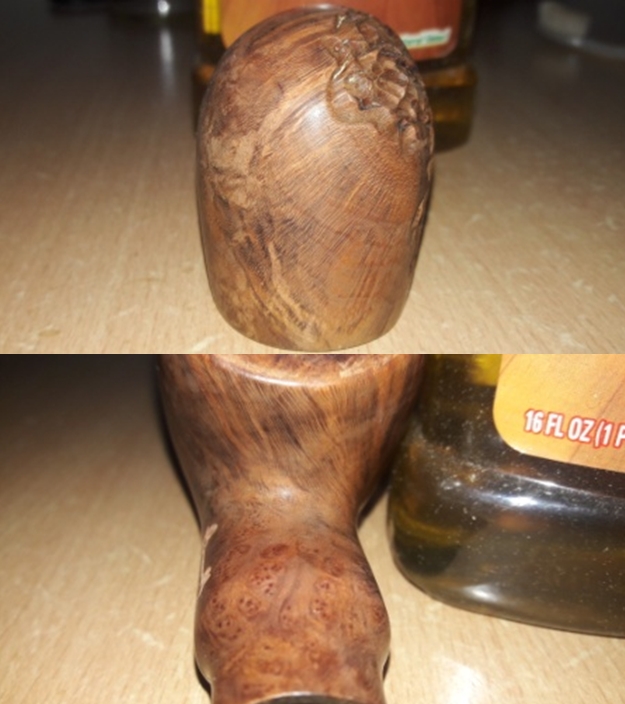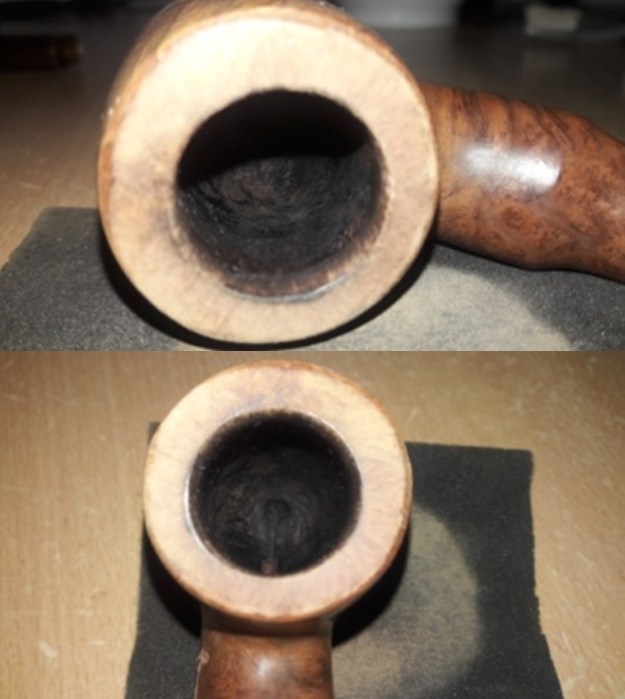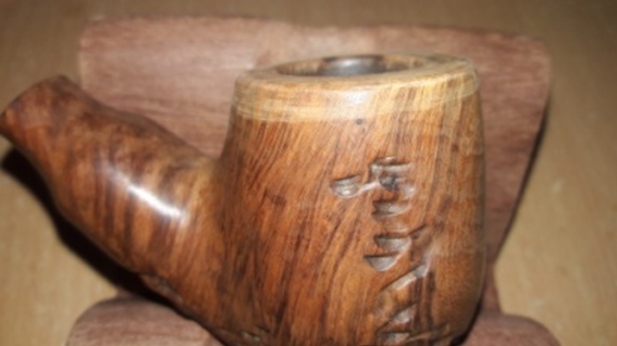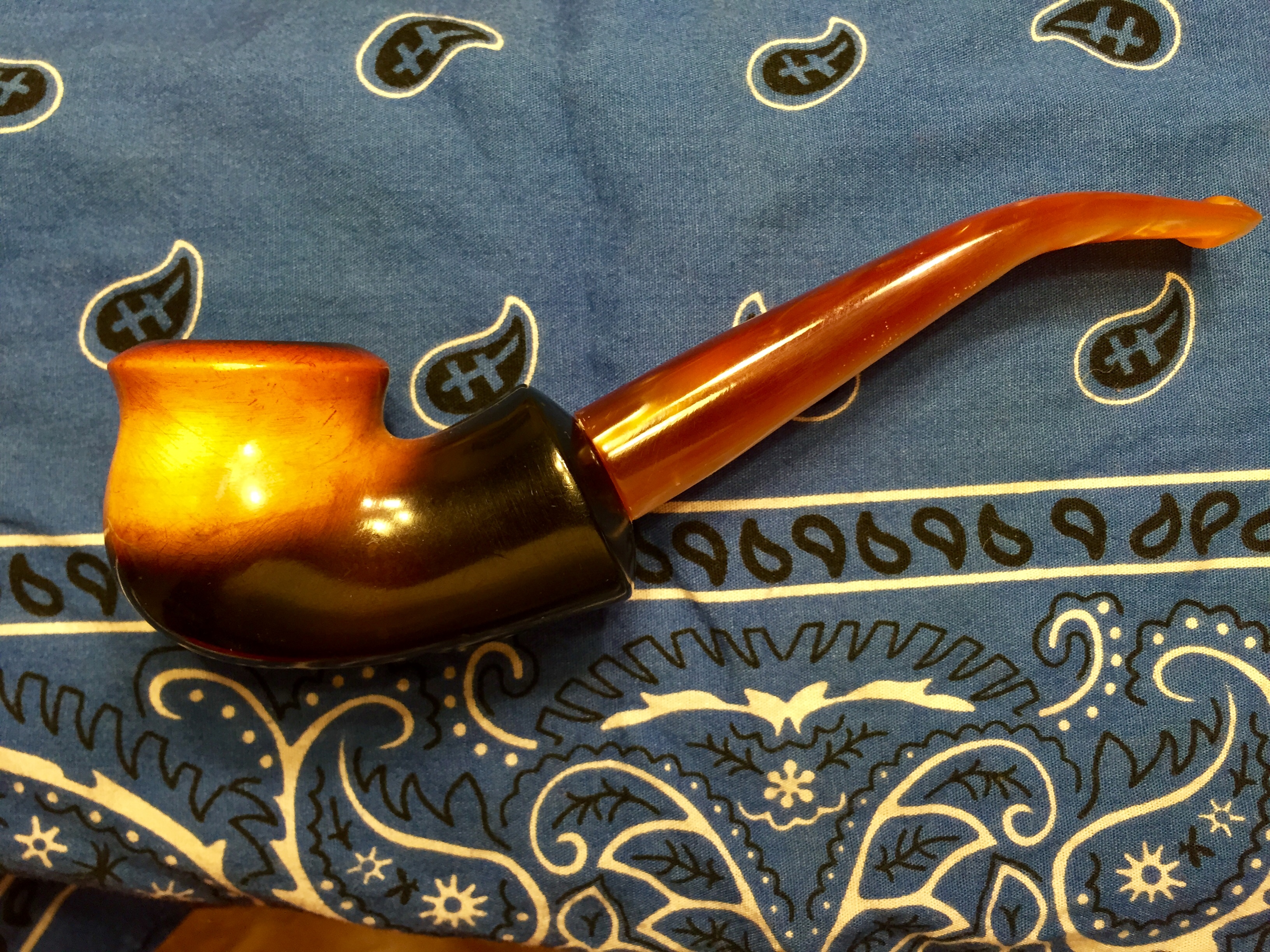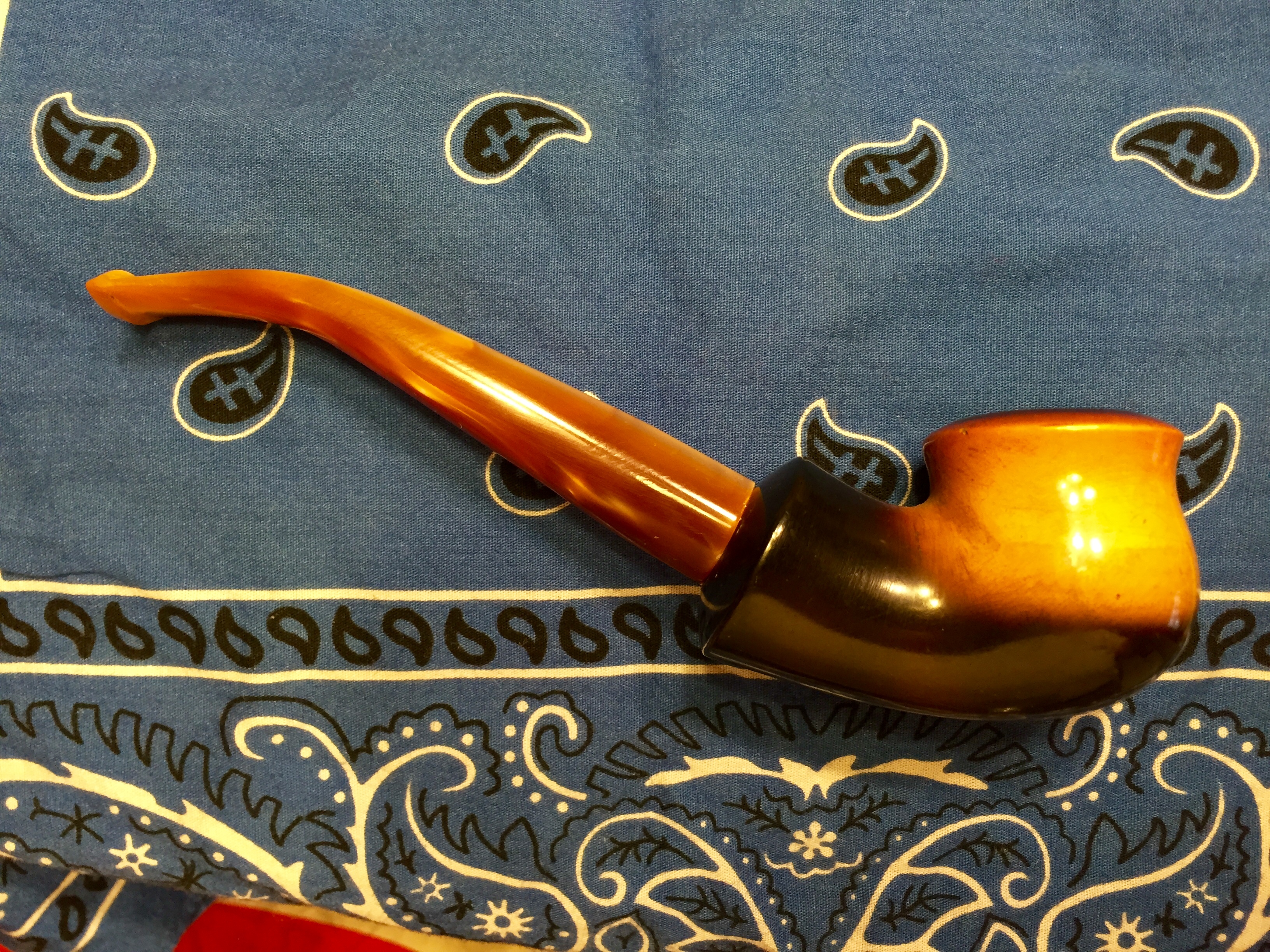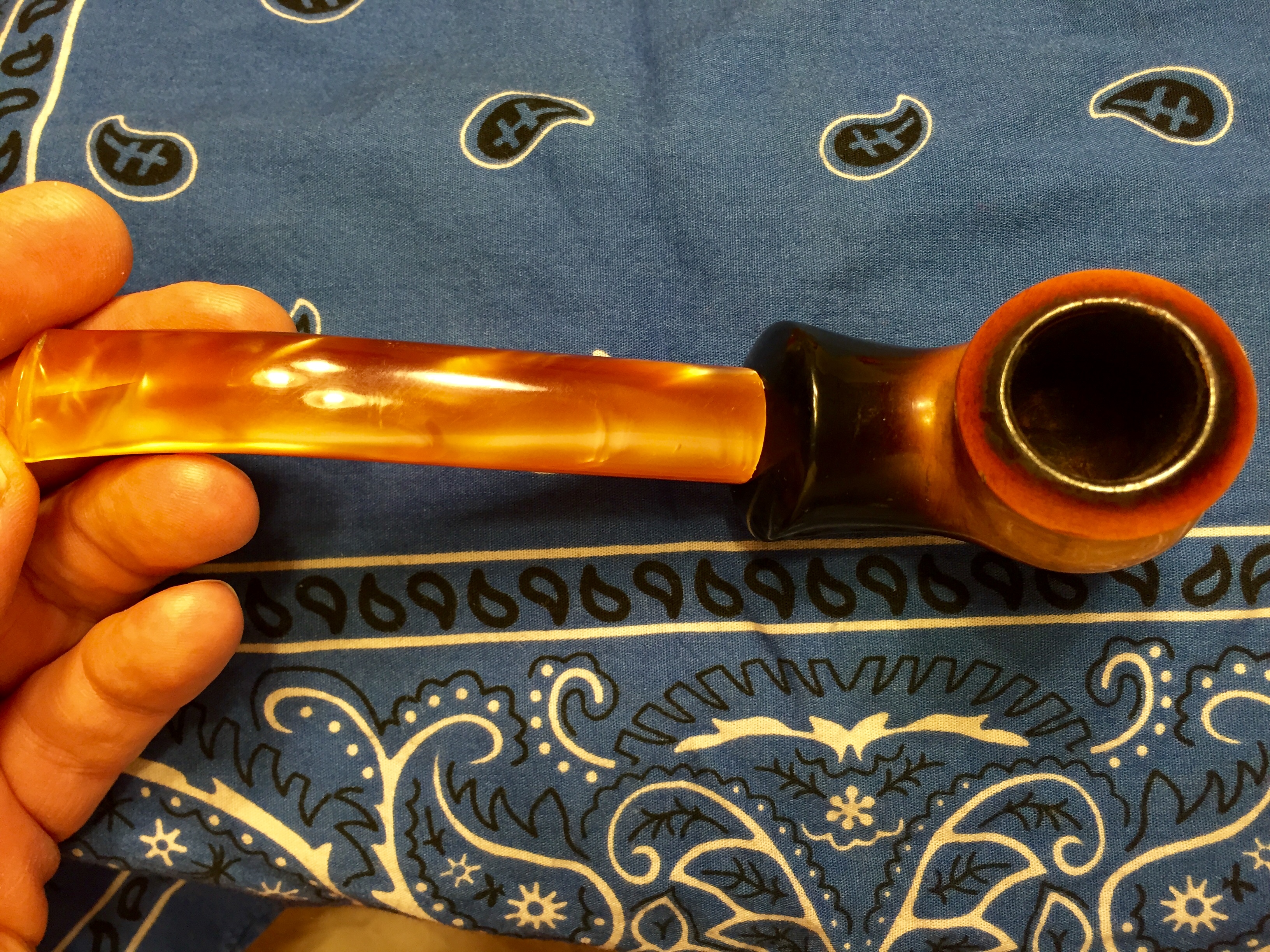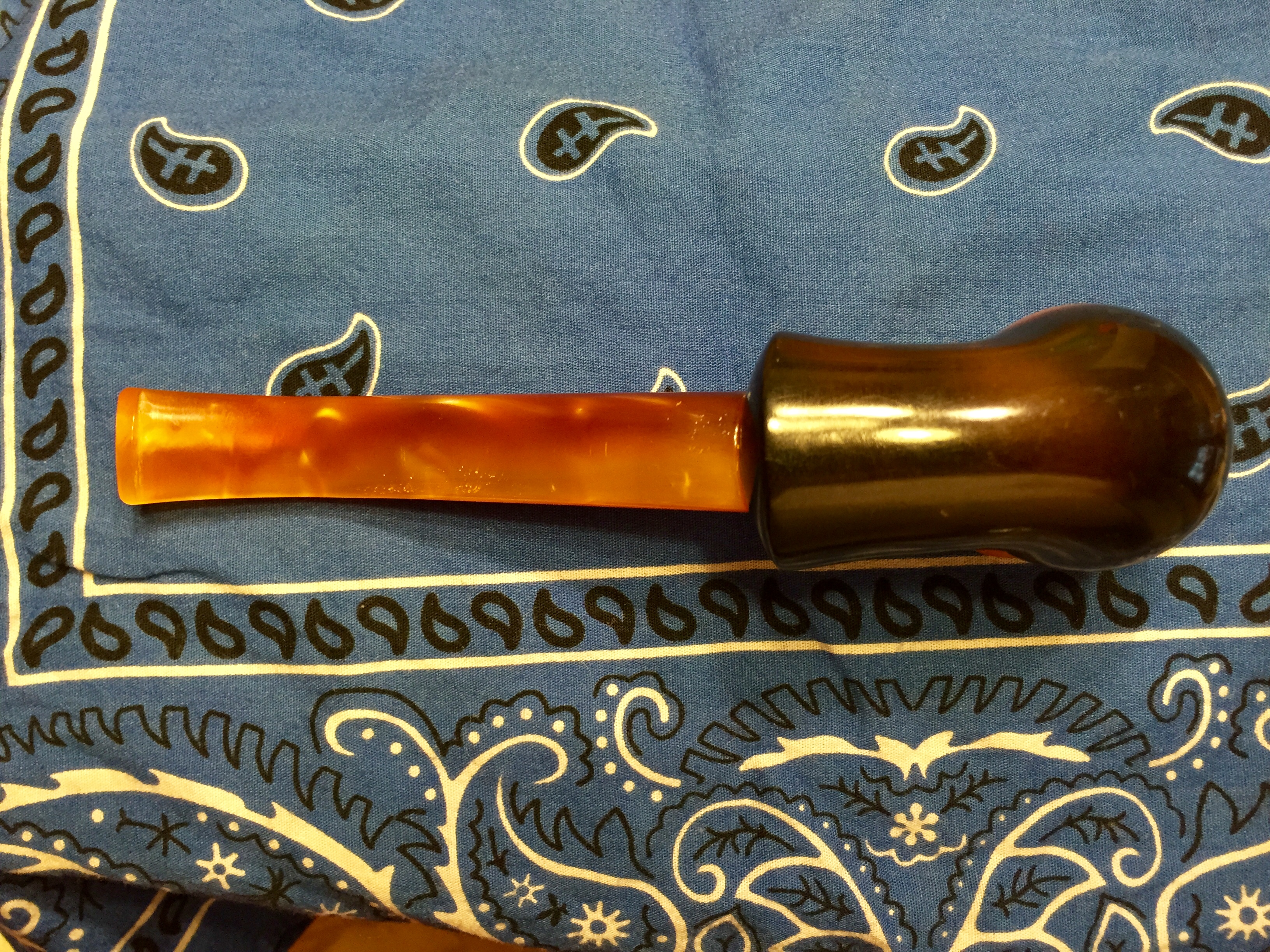
Category Archives: Examples of Refurbished Pipes

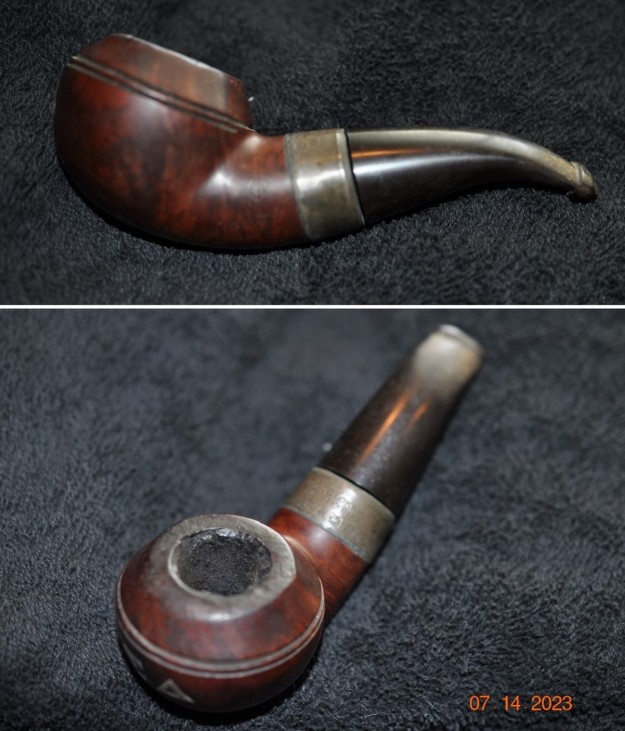
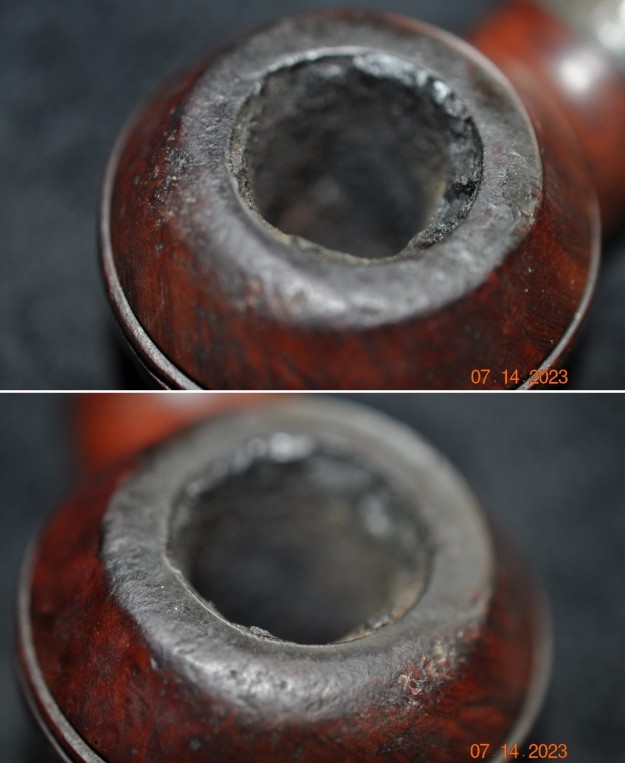
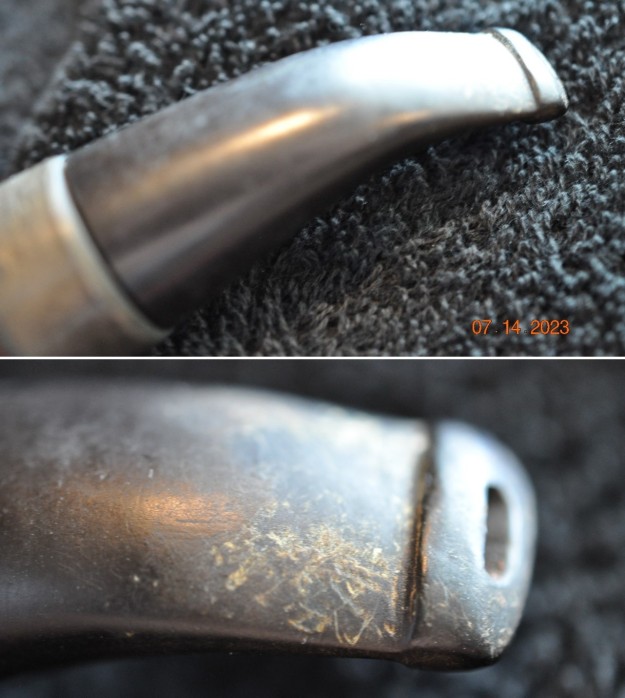
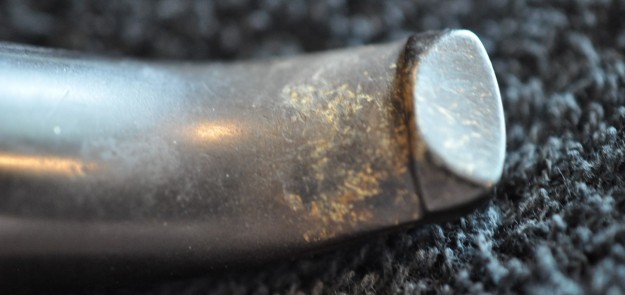
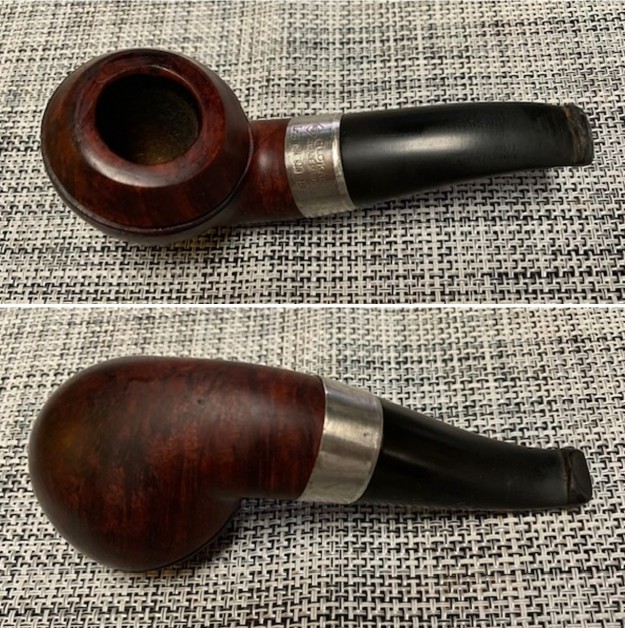
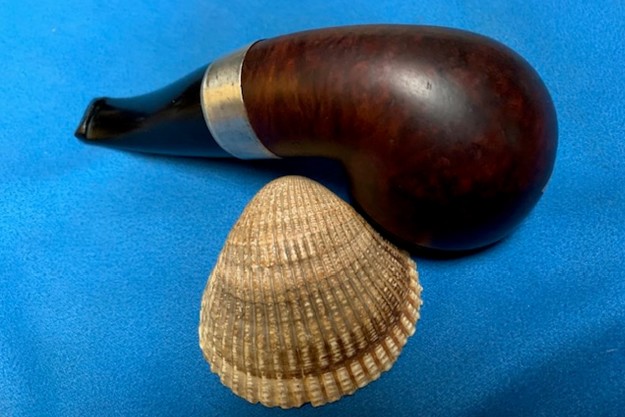
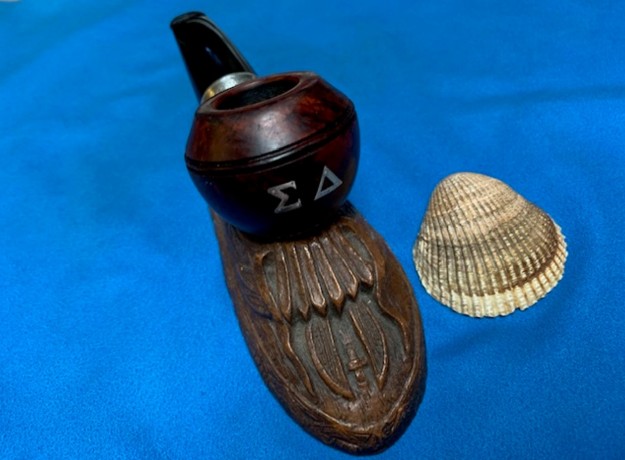
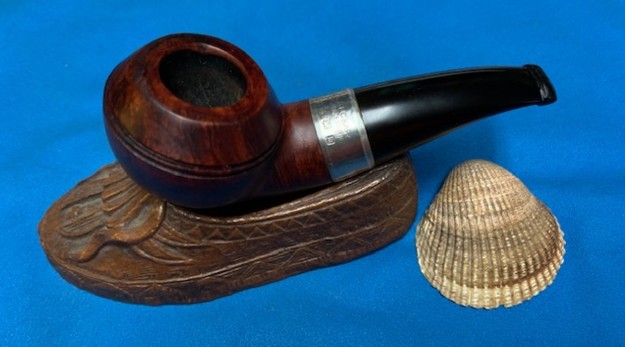
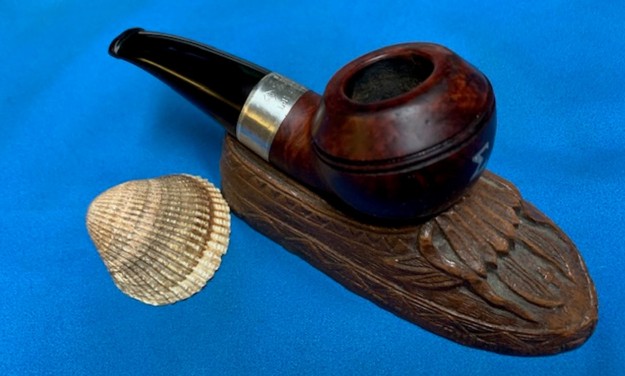
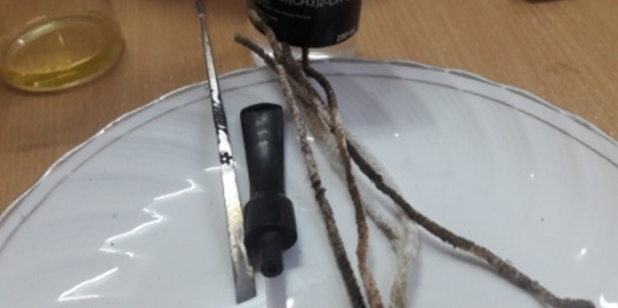
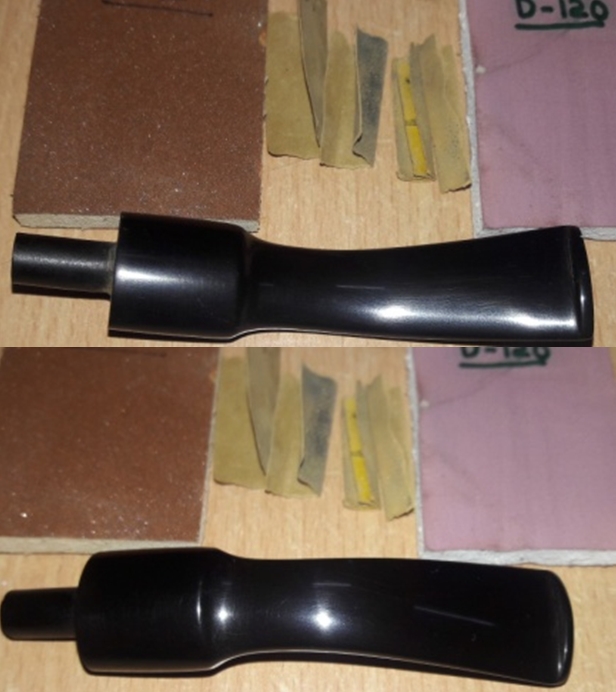
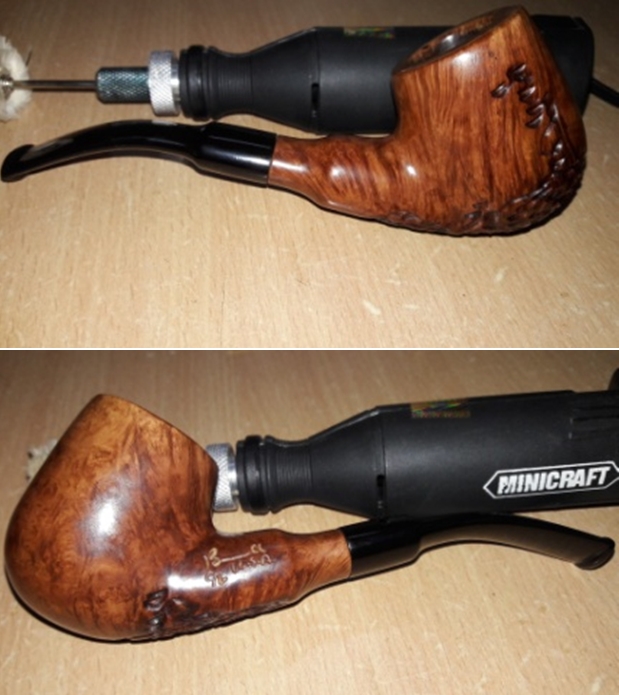
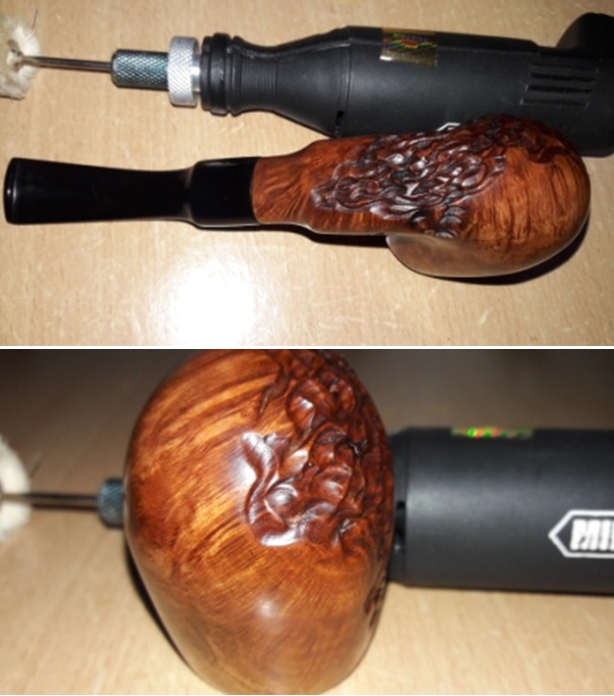
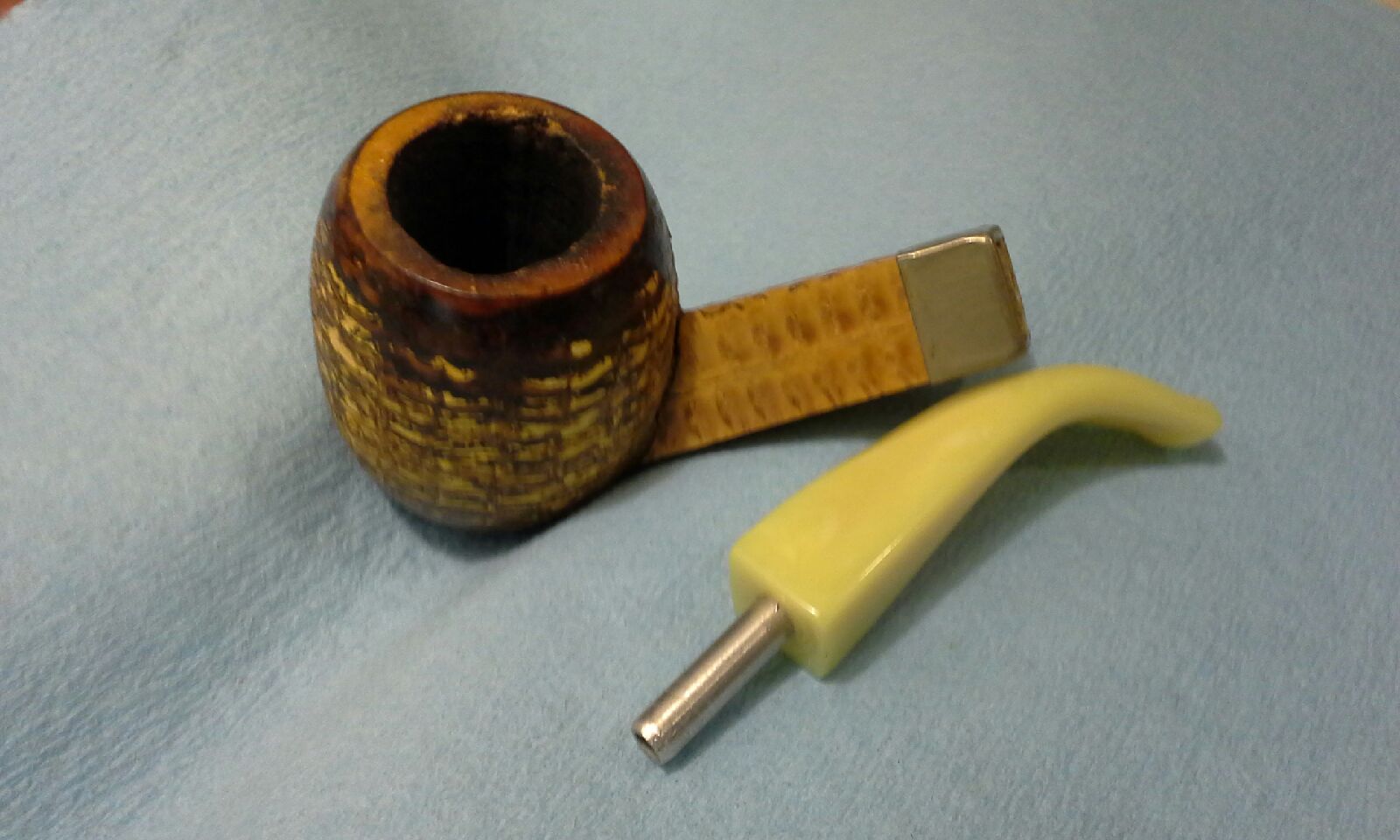
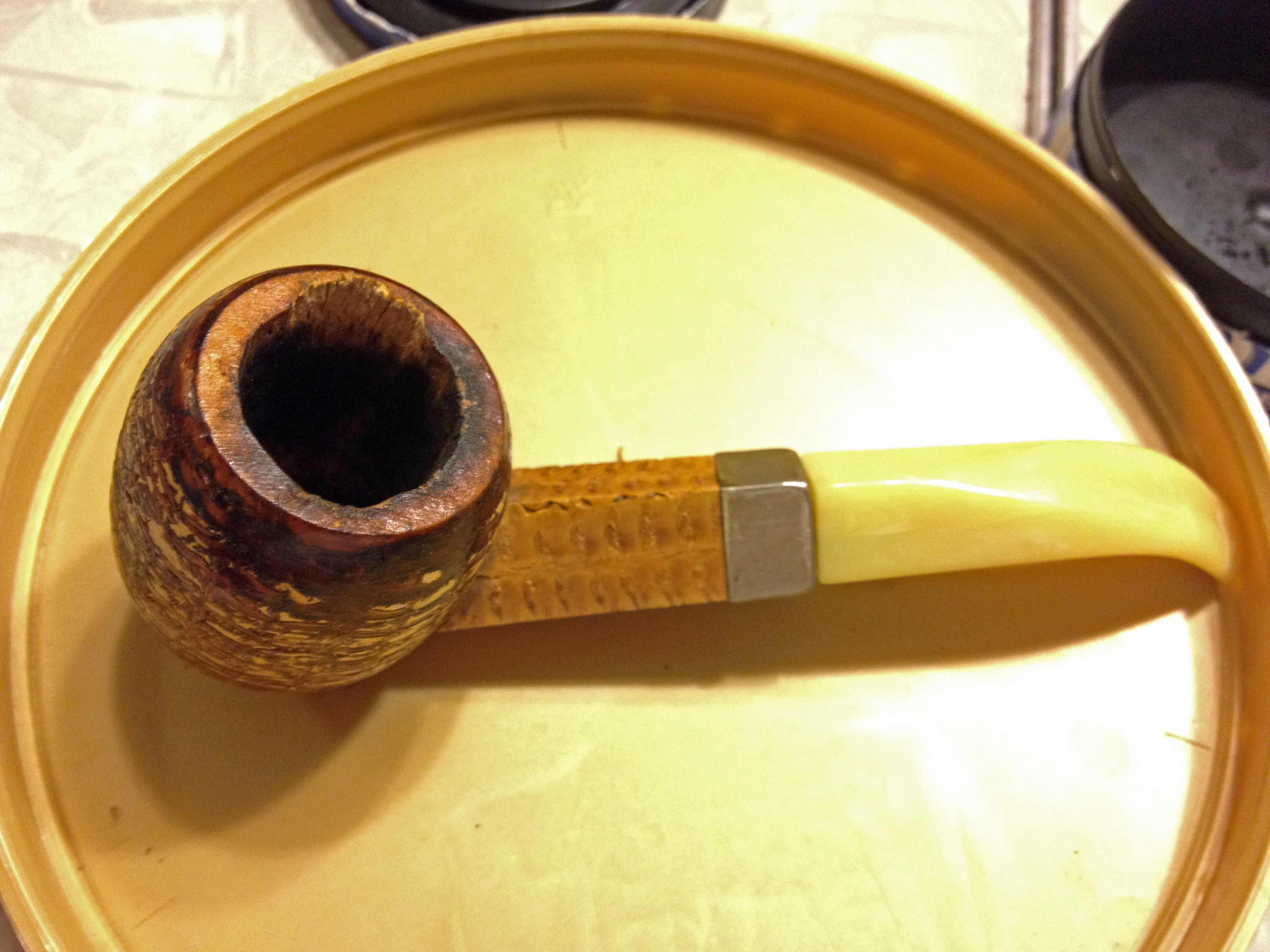
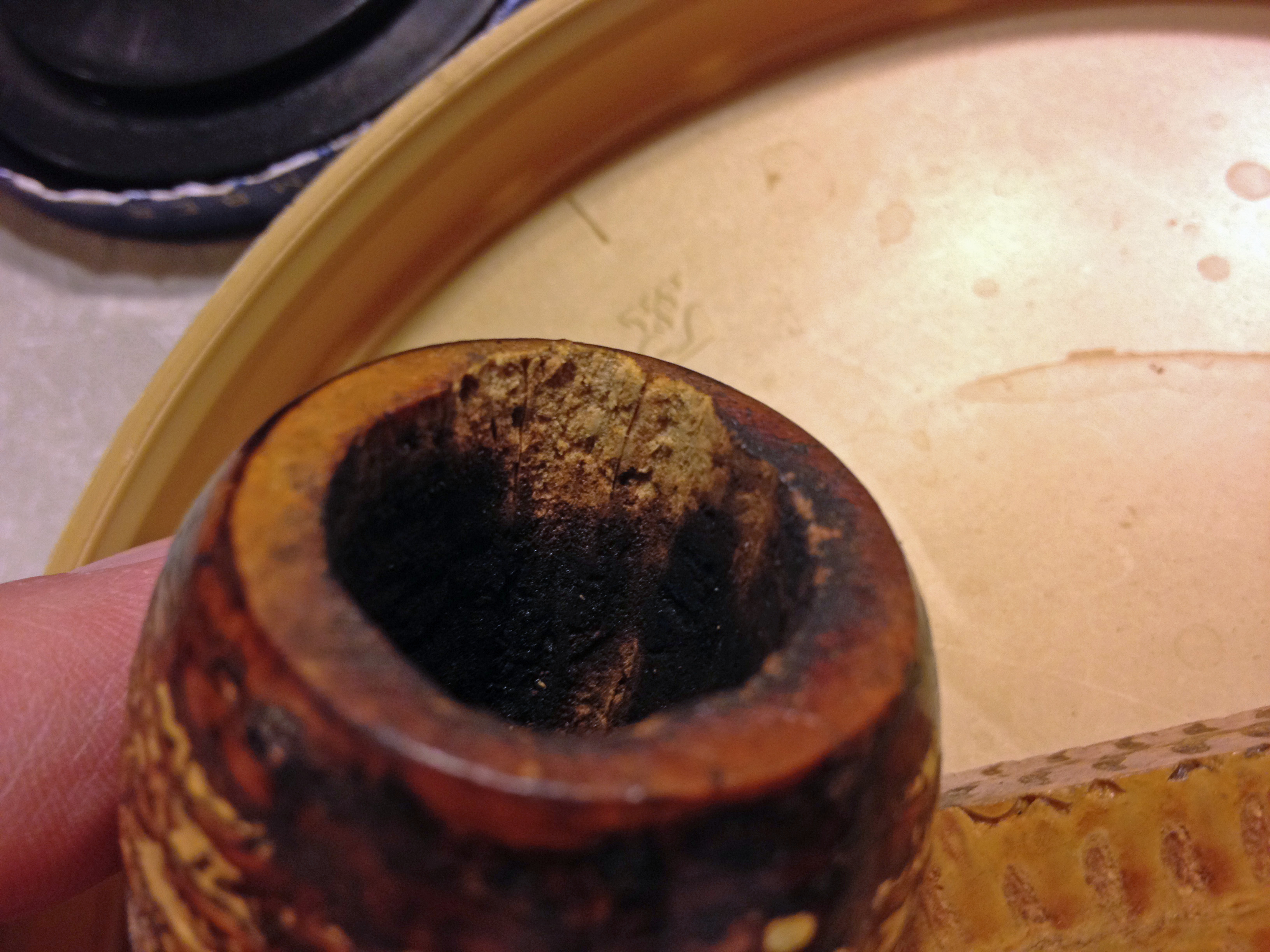
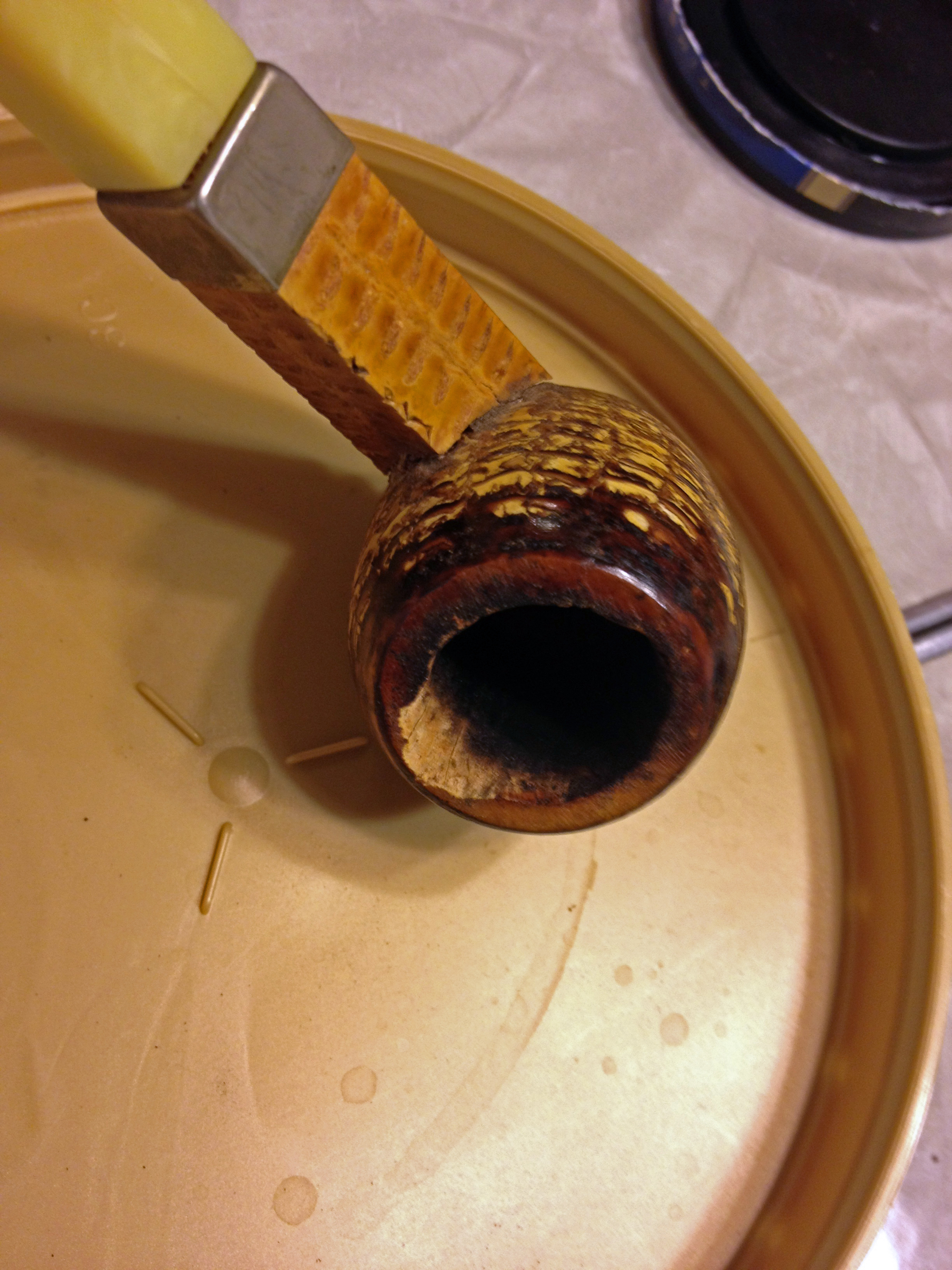
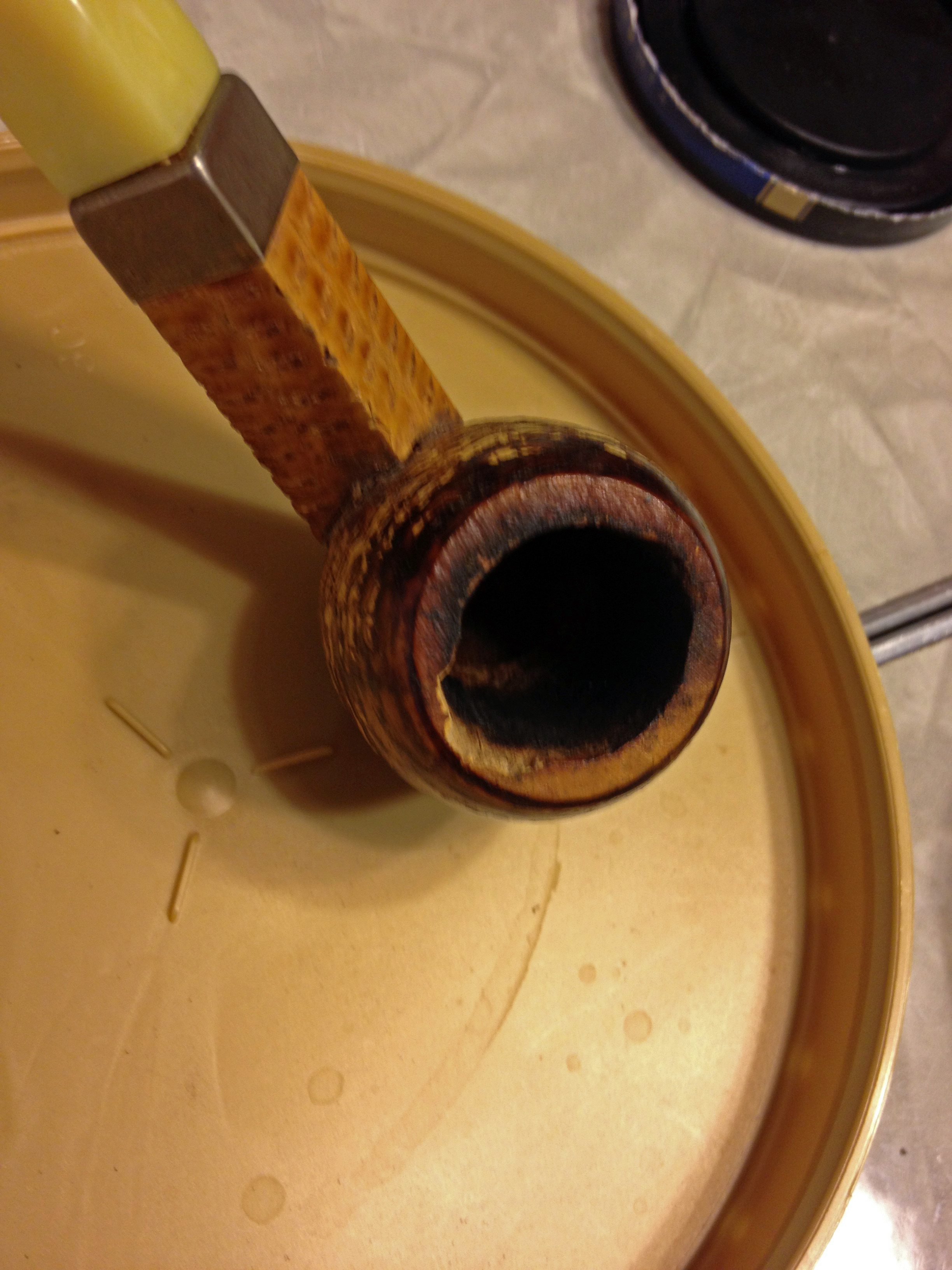
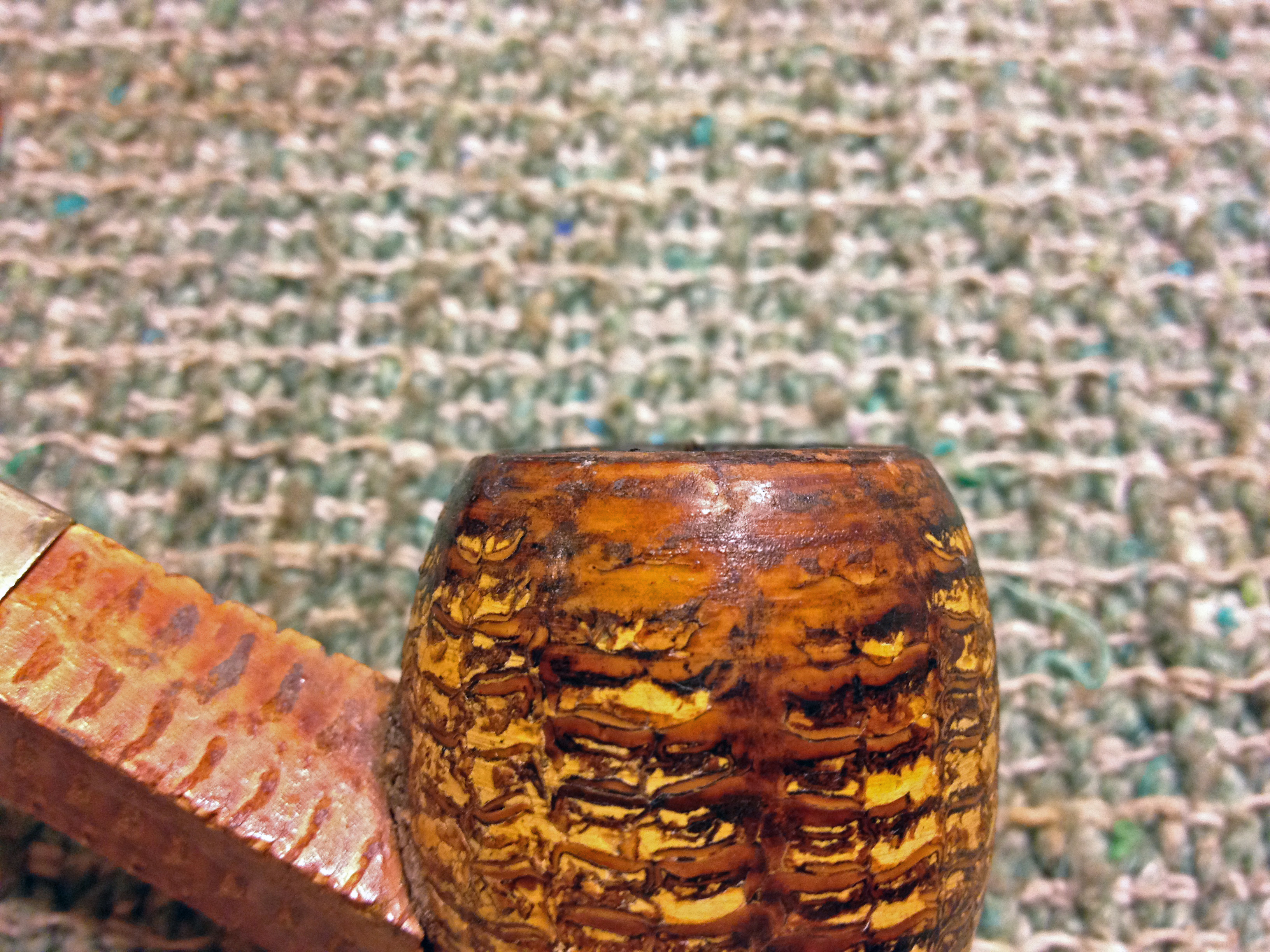
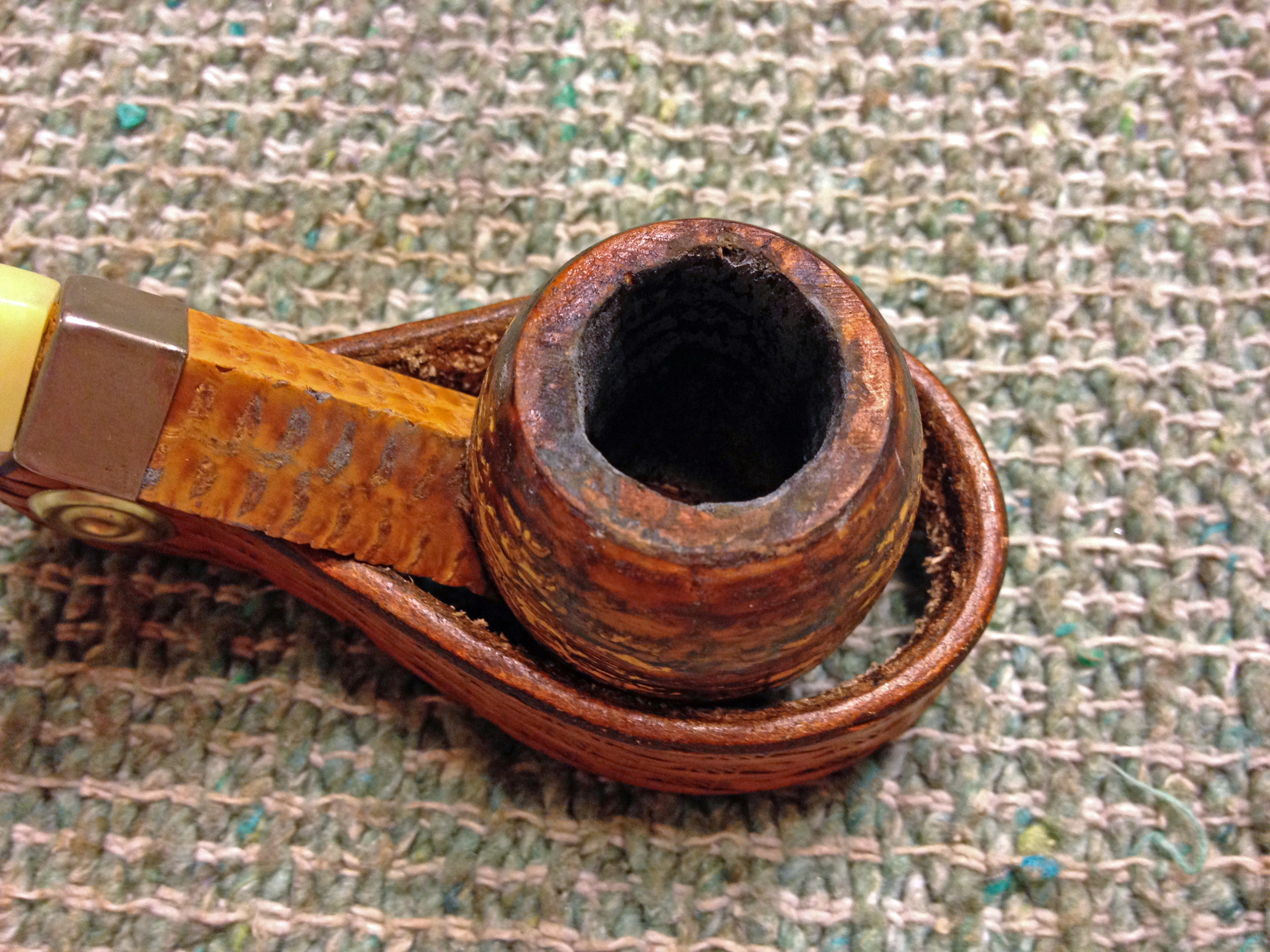
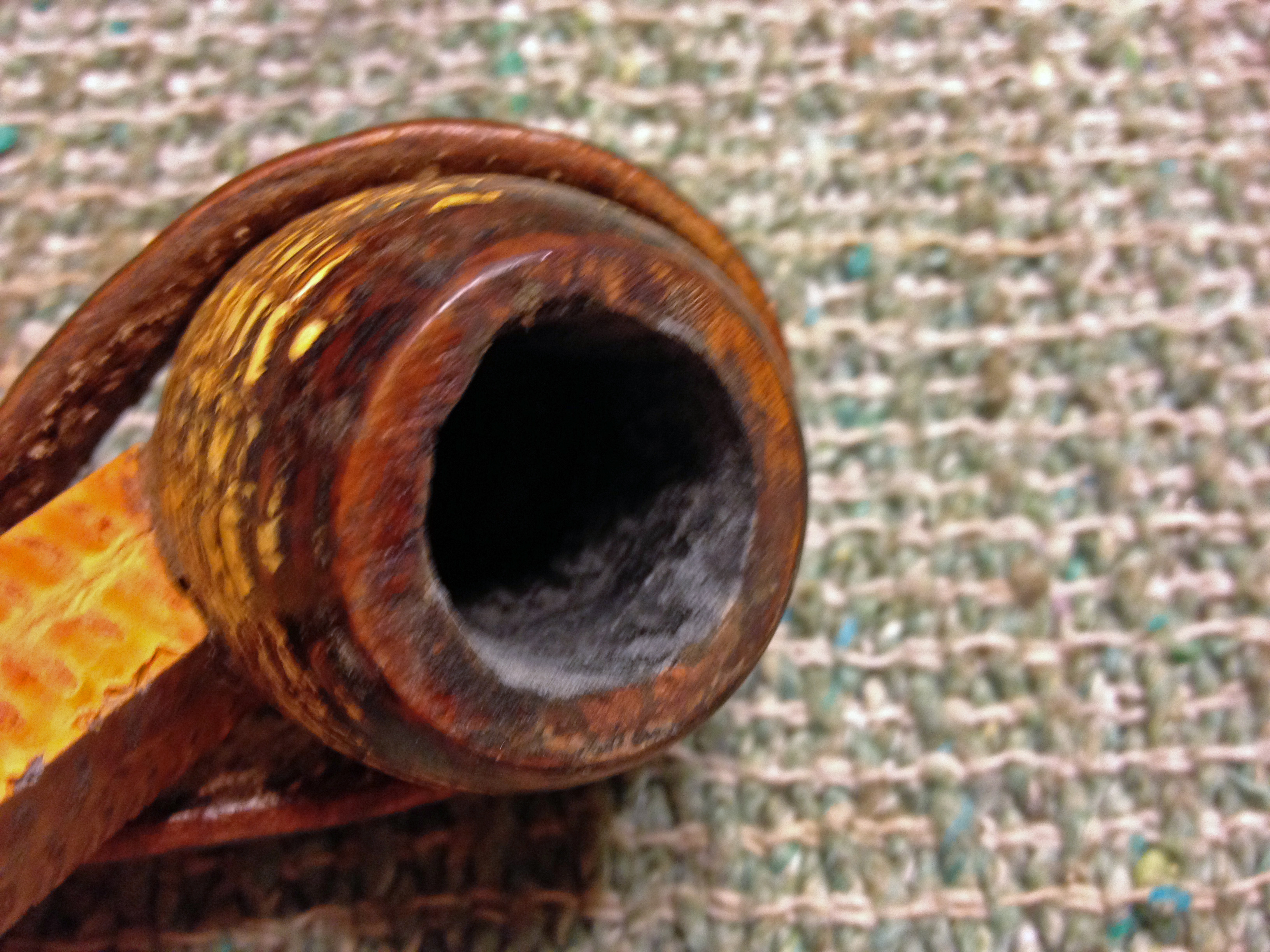
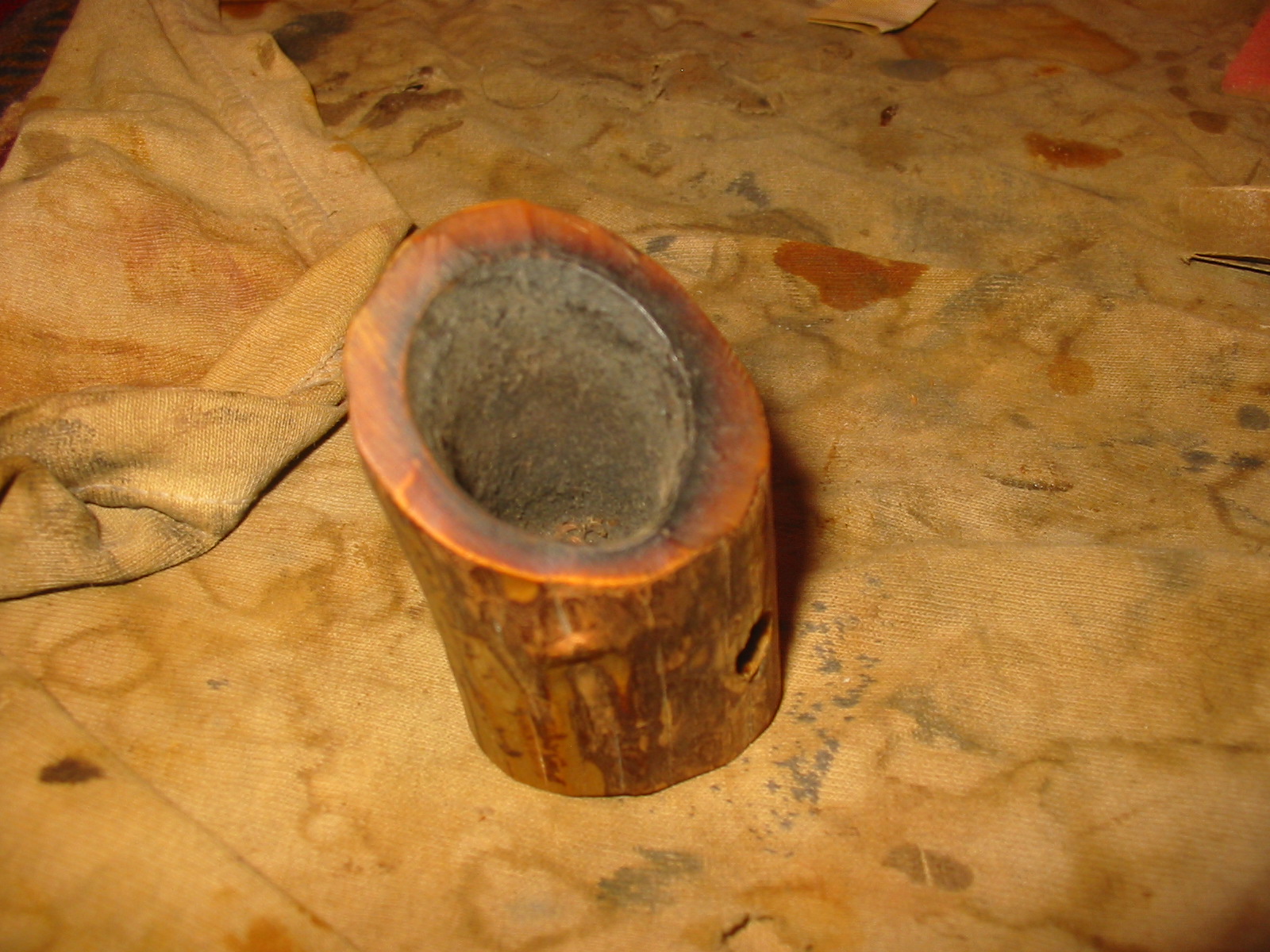
In this section of the blog you will find before and after pictures of pipes that I have reworked. In each of them I give a summary of the work done to them. There are tips on working with different materials in these posts as well. For instance I have posted two horn stem pipes that I did work on the horn stems to removed tooth damage.

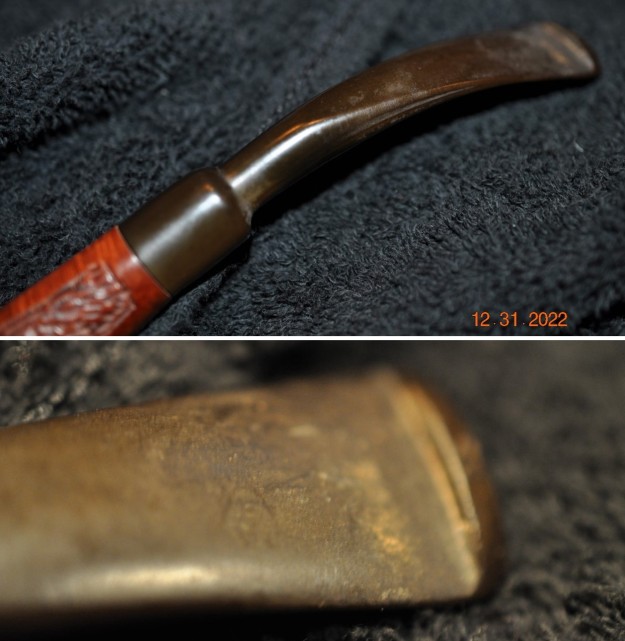
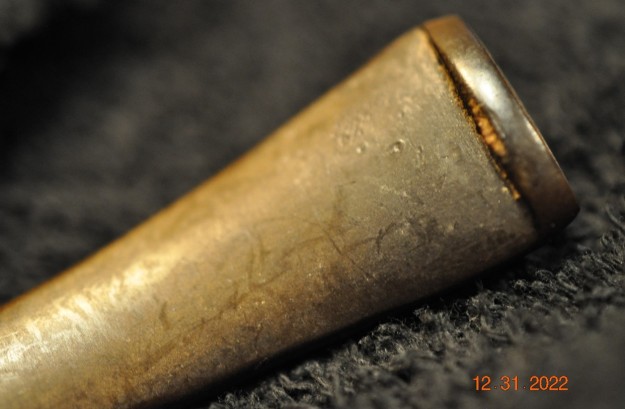
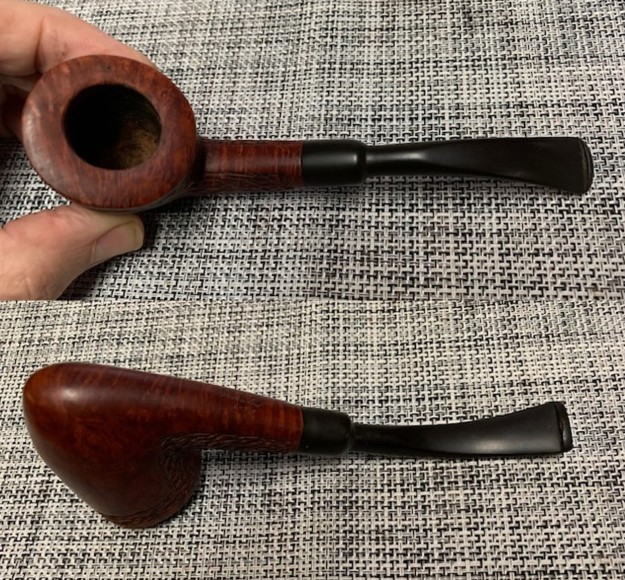
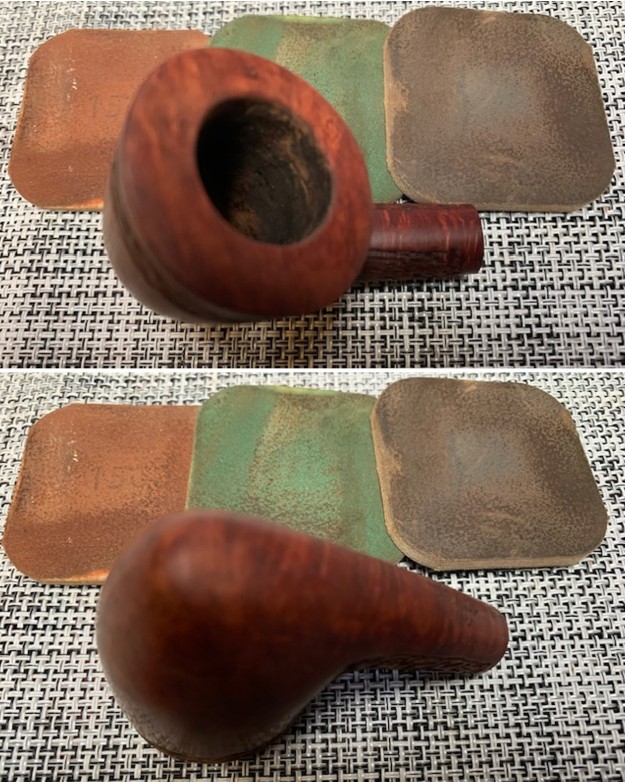
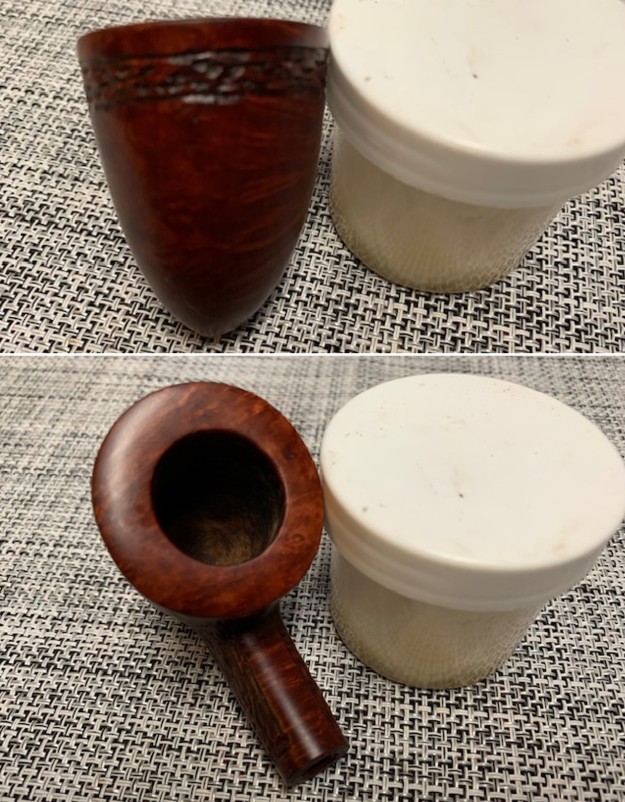
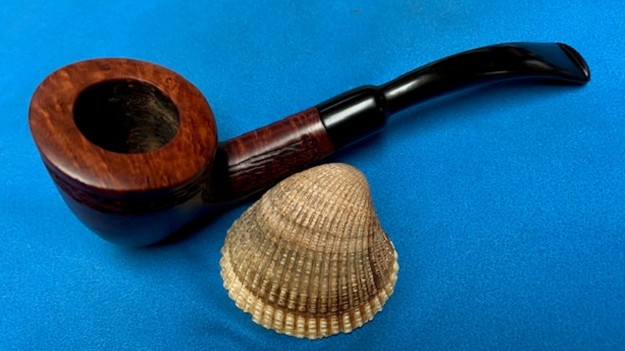
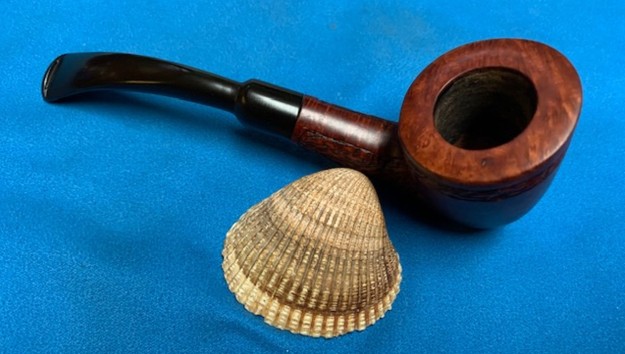
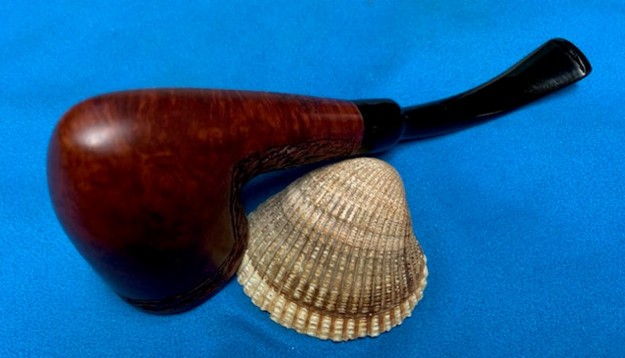
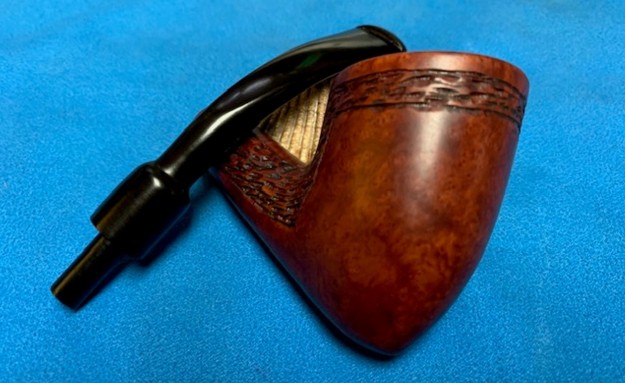
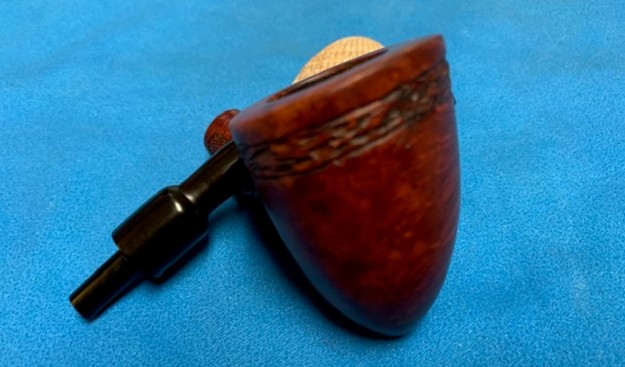
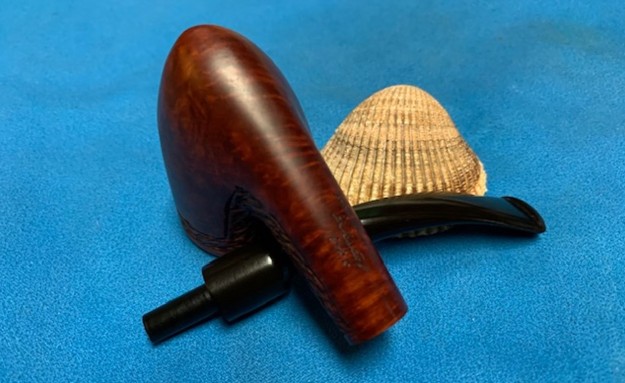
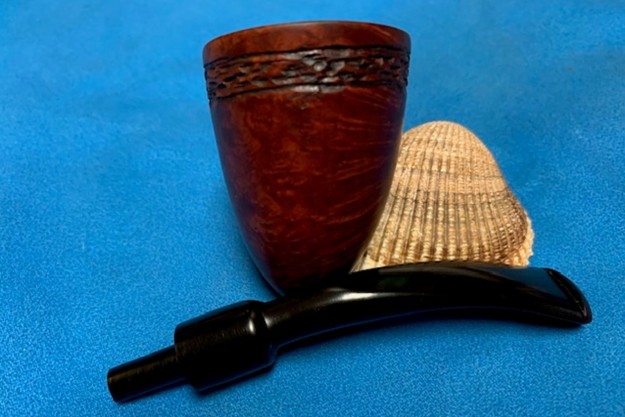
Refreshing a Piece of American Pipemaking Craftsmanship – a Lakatosh 6-83 Acorn


Blog by Steve Laug

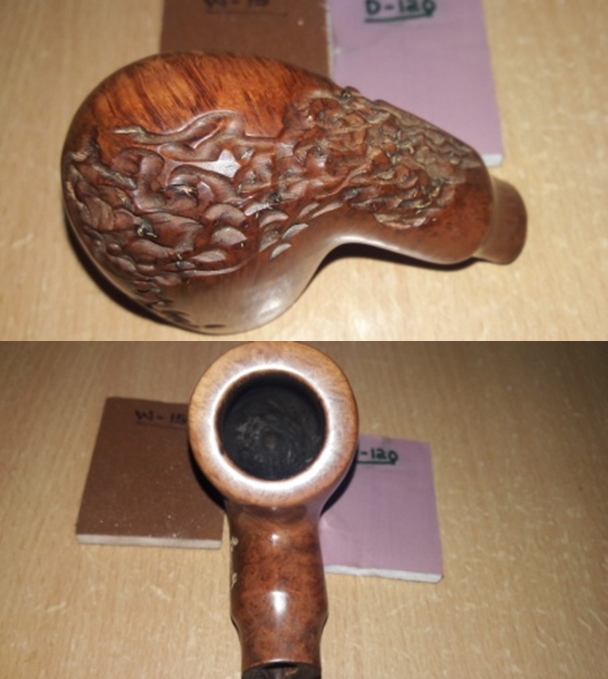
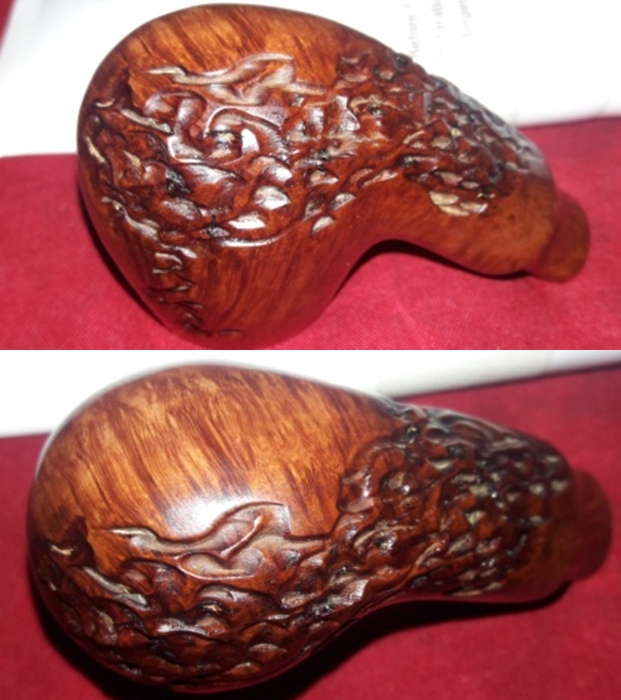
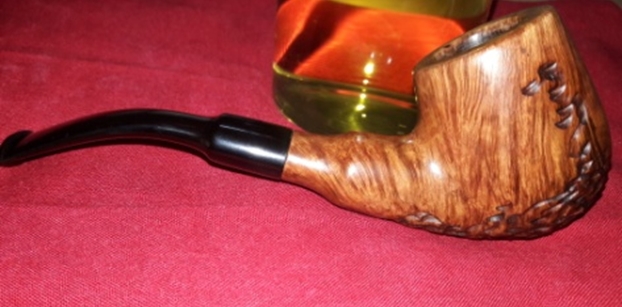
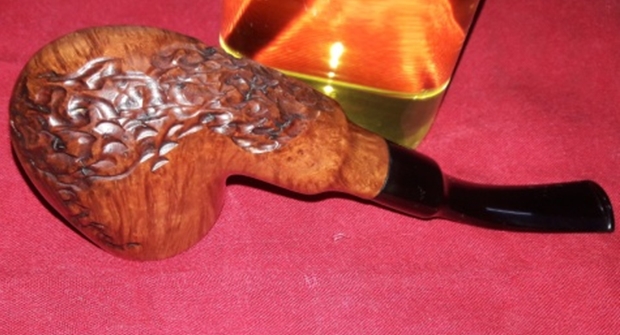
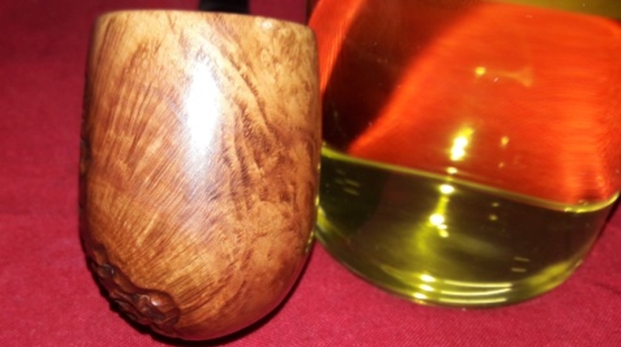
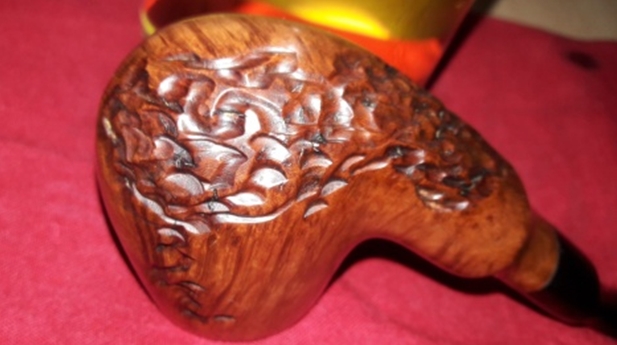
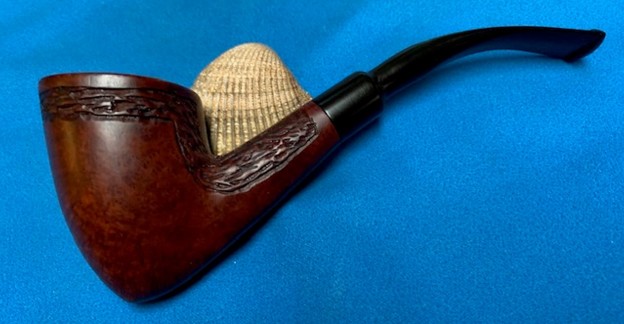
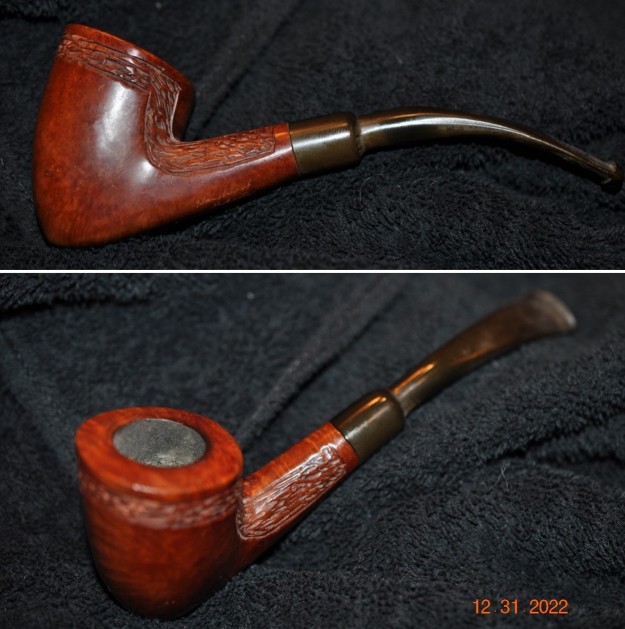
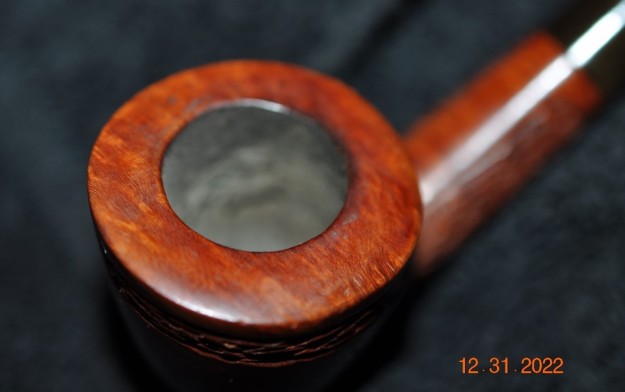
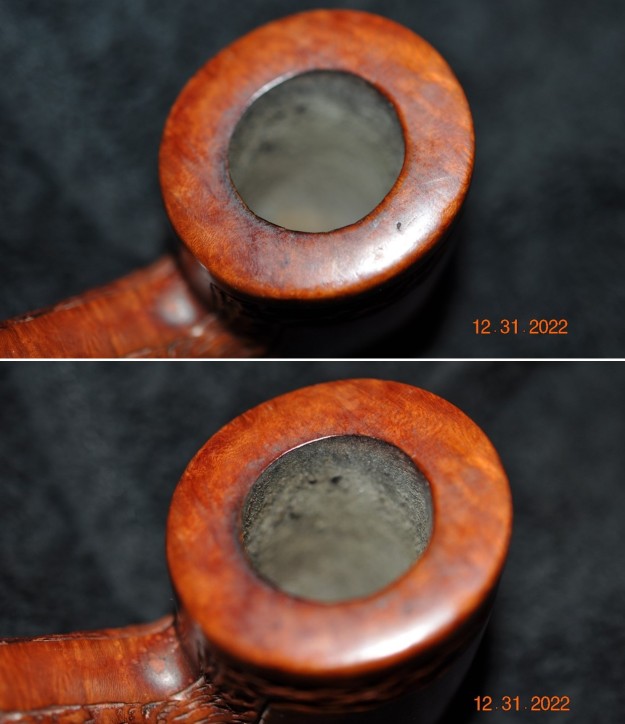
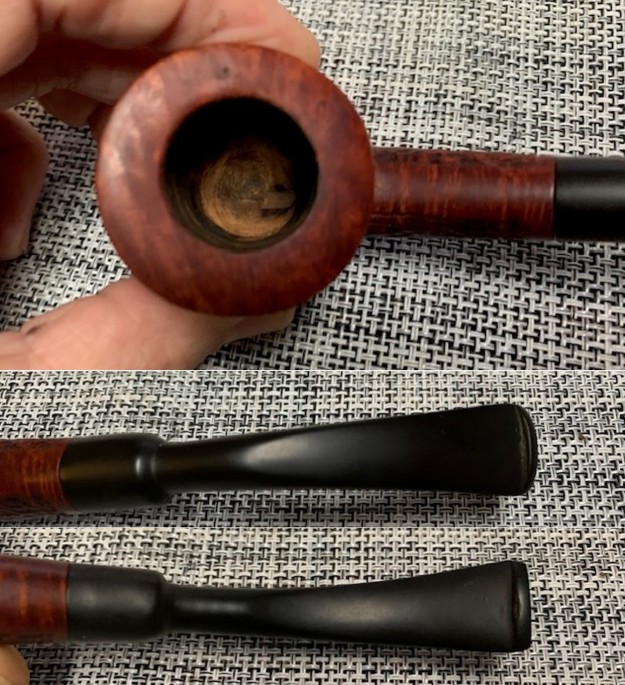
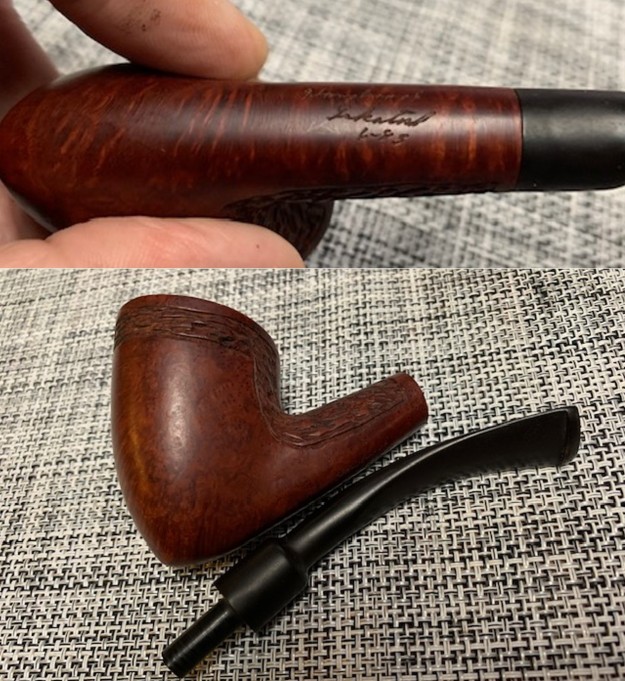
In the last box of pipes Jeff sent me there two Lakatosh freehand pipes. The first I have chosen to work on came to us from an online auction in Gonzales, Louisiana, USA on 09/04/2020. It is engraved by hand on the underside of the shank and reads Handmade [over] Lakatosh [over] 6-83. It was a beautiful pipe but a dirty pipe when we received it. The finish has a unique smooth finish on the bowl and shank with a ribbon of rustication around the top of the bowl and up the topsides of the shank on both sides. There was a moderate cake in the bowl that darkened the inner edge with a light coat of lava onto the topside. The vulcanite, fancy saddle stem was oxidized, calcified and there were light tooth marks and chatter on the top and underside ahead of the button. Jeff took some photos of the pipe before he started his cleanup work.He took photos of the bowl and rim top to show their general condition. You can see the moderate cake in the bowl and the slight lava coat on the top of the rim and inner edge of the bowl. The finish on the bowl is very dirty with grime and oils ground into the bowl, but still very stunning. This pipe has a Danish Freehand look to me with a bit of an American flair. The round saddle stem that has some oxidation, calcification on the surface of the vulcanite. There is chatter and tooth marks on the top and underside. Jeff took some photos of the sides and heel of the bowl to give an idea of the grain and the rustication around the bowl and shank. It is amazing and I cannot wait to see what it looks like once it is polished and waxed. He took a photo of the stamping on the underside of the shank to capture it for me. It is hand etched and is clear and readable as noted above.I remembered that Paresh had worked on three of these pipes in India and I believed they were from his Grandfather’s collection. We had chatted about them wondering how they had traveled from Pennsylvania to India. I turned to the blog that he wrote on the restoration to have a look at the information that he had gathered when he worked on the pipes (https://rebornpipes.com/2018/12/30/a-tribute-to-an-american-pipecarver-john-l-lakatosh/). I was not disappointed… the old memory still held onto a few things. I quote from his blog for the history of the brand. He also included a photo of the pipemaker that is great.
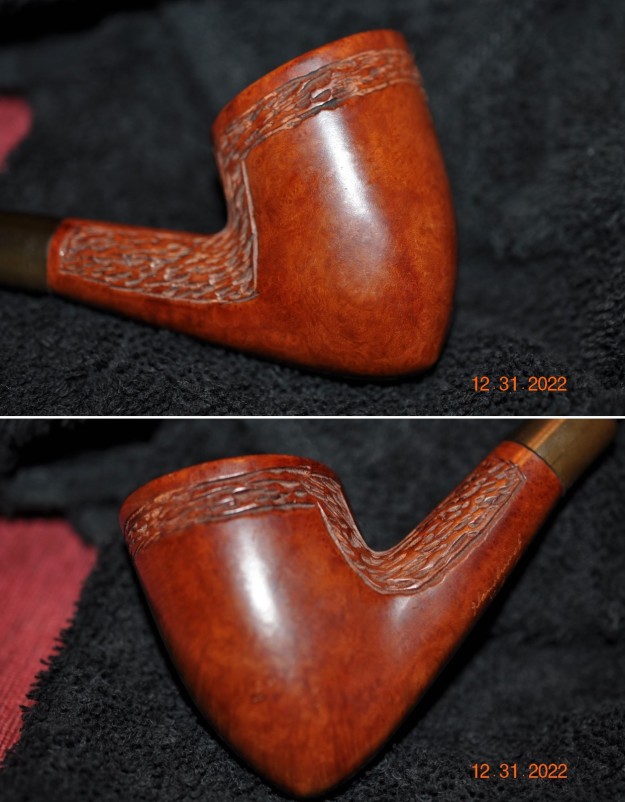
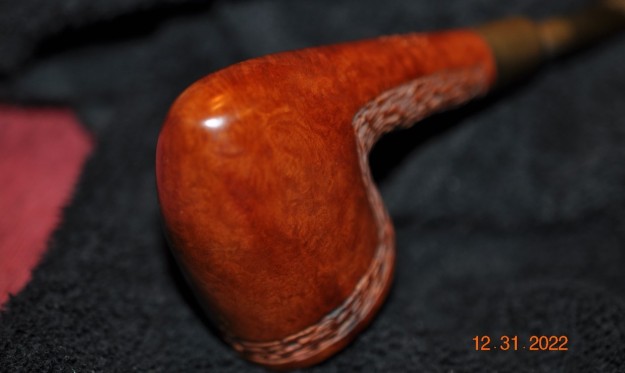
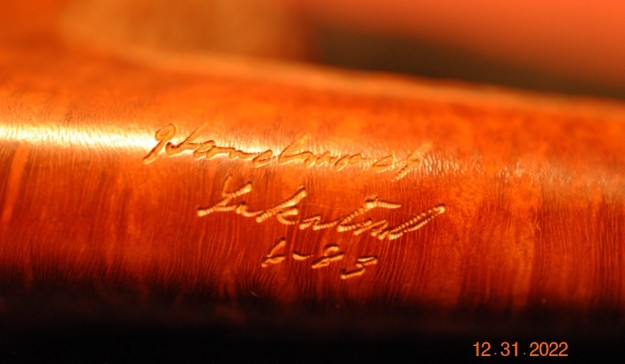

All these pipes bear the stamping “HANDMADE” over “LAKATOSH” over the “MONTH AND YEAR” in which they were made. These stamps are in engraved in a script hand on the shank end of each pipe.

I was keen to know more about John Lakatosh, the carver, his pipe making techniques and philosophy. I searched pipedia.com and there is a very brief write up on him. I reproduce the information available on pipedia.com for a quick read. [Editor: He quotes]

John Lakatosh was a carver from New Columbia, Pennsylvania. He made pipes in his home workshop in the Susquehana Valley up above Sunbury. John made pipes during the week and sold most of them at craft fairs in Central and Southern Pennsylvania. He retired from carving, to go back to bus mechanic work after the tobacco industry took a decline. He now lives with his wife in Lewisburg Pennsylvania, where he now crafts furniture for family and friends. He recently passed on March 8th 2018. (Primary/Familial Source)

As I was surfing the net for more information on Mr. John Lakatosh, I came across his obituary. Here is the link (https://www.heffnercare.com/obituaries/obituary-listings?obId=3010702)

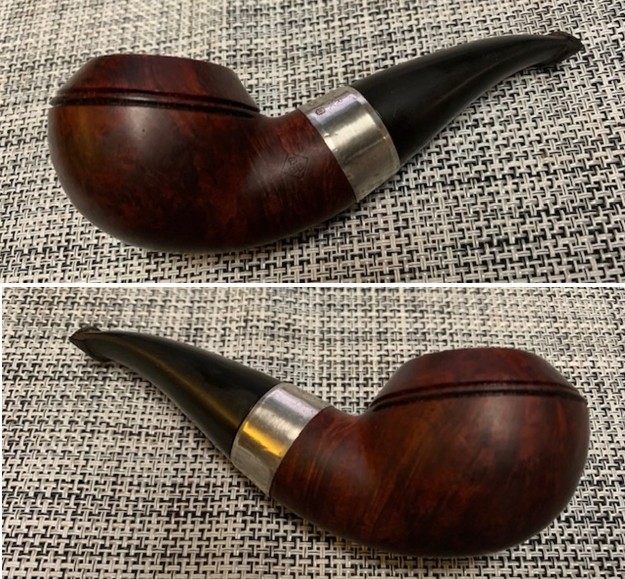
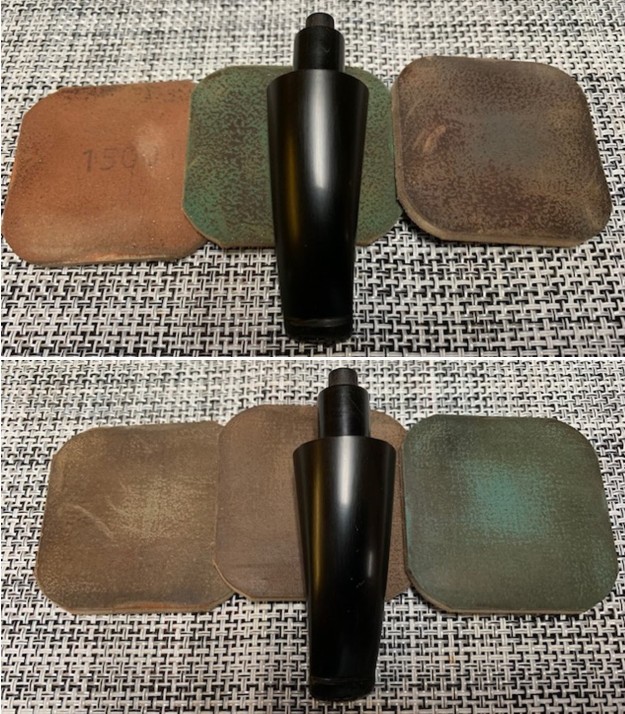
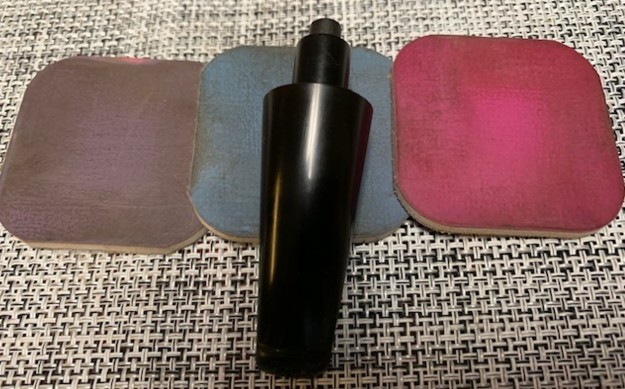
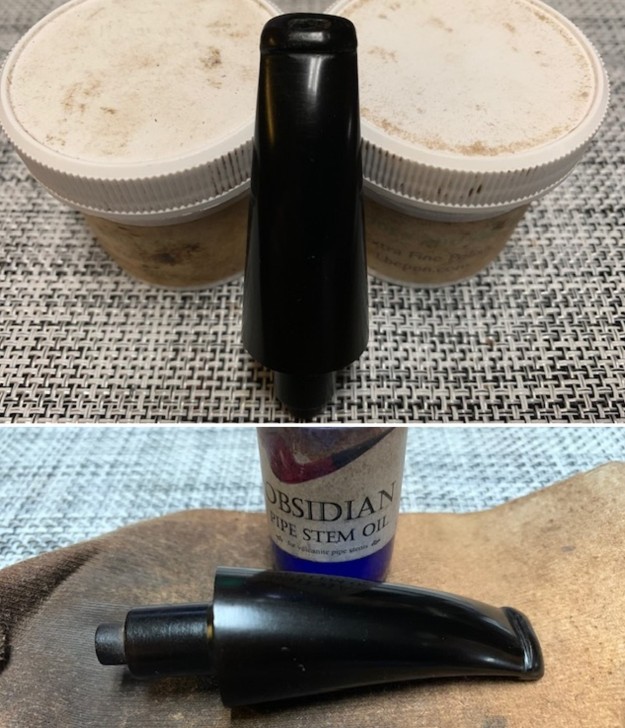
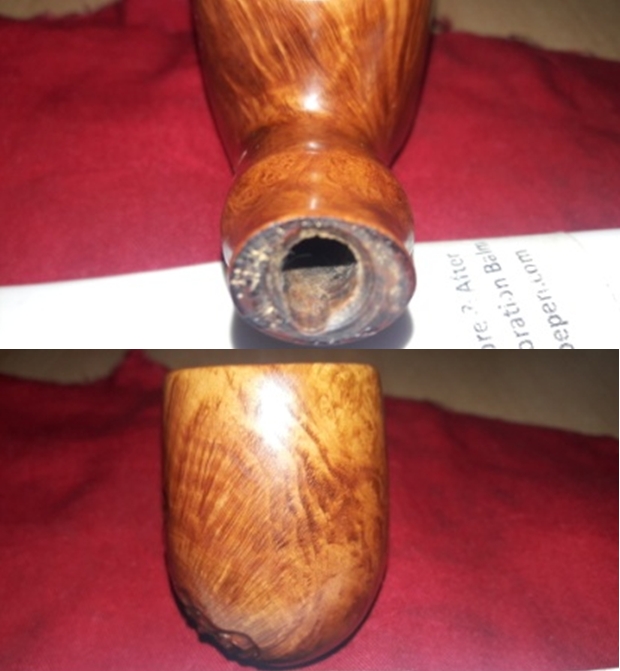
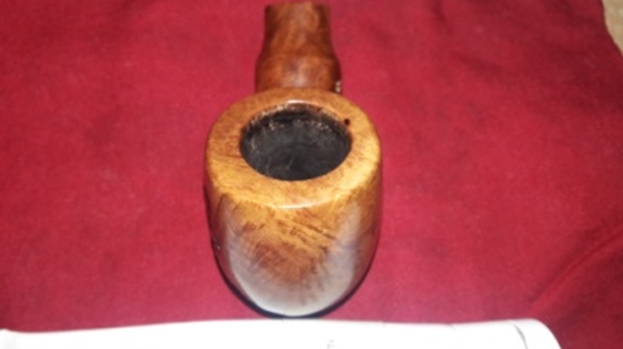
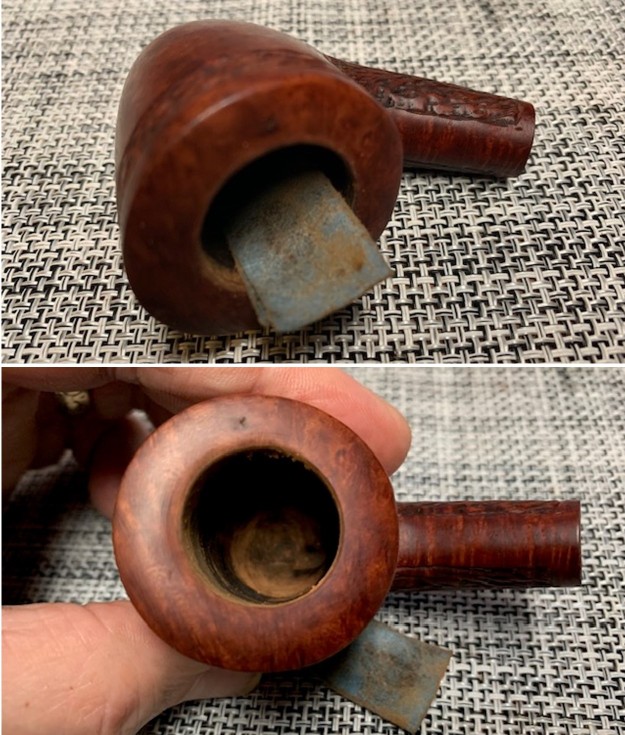
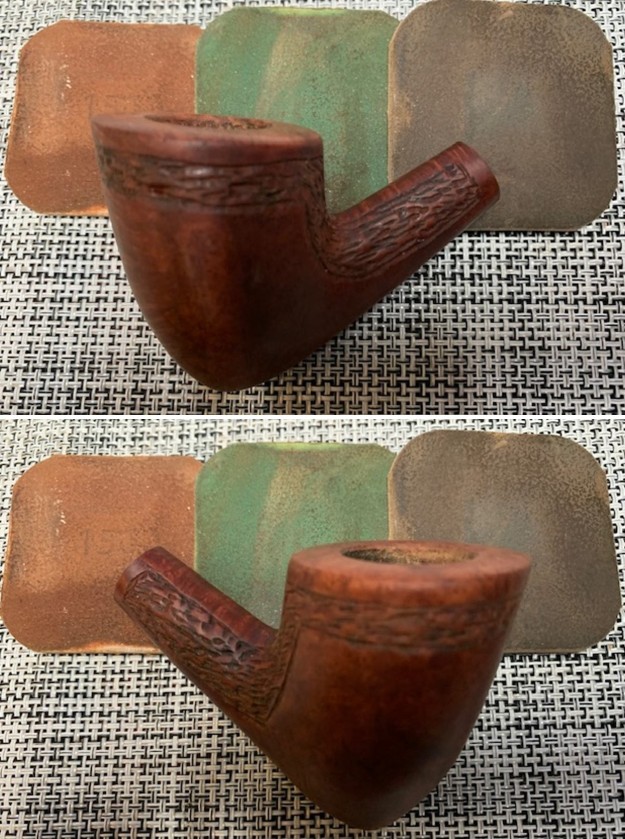
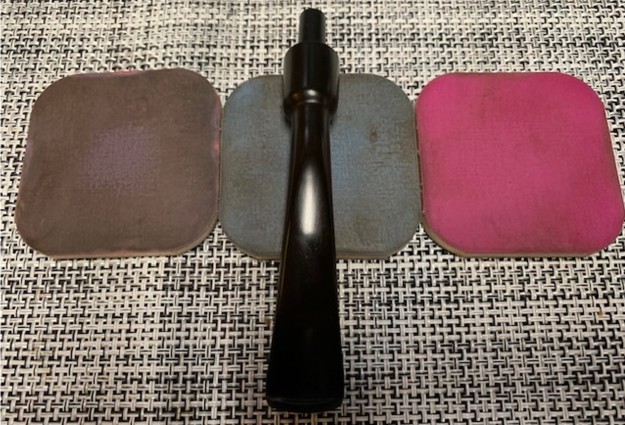
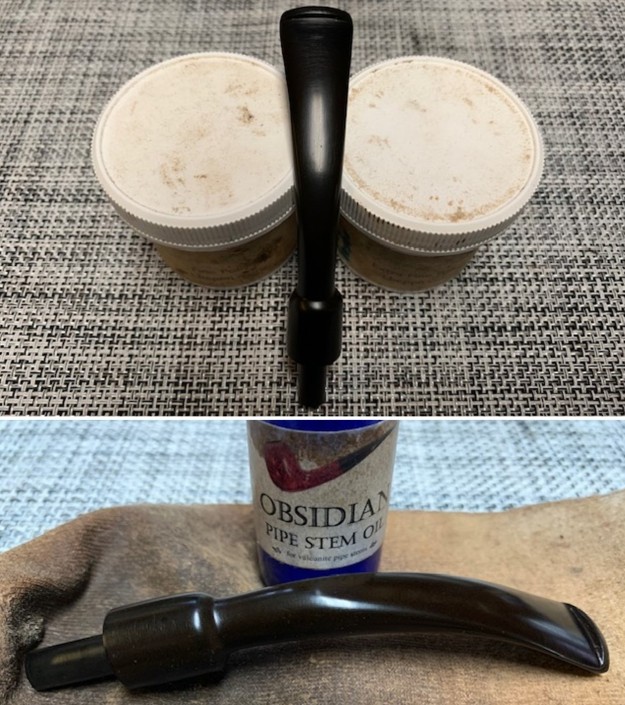
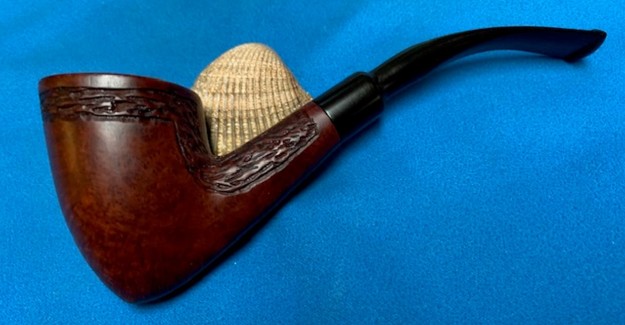
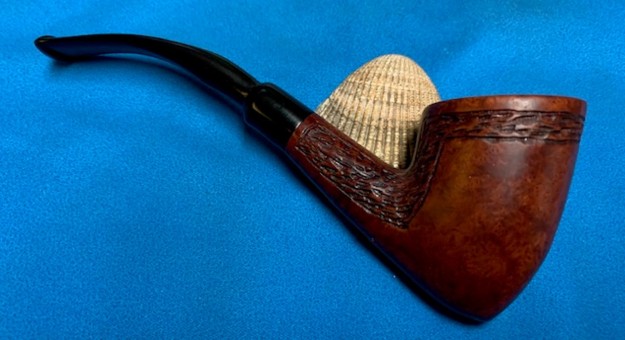
With that information at hand I turned to work on the pipe itself. Jeff had thoroughly cleaned up the pipe. He reamed the pipe with a PipNet Pipe Reamer and cleaned up the remnants with a Savinelli Fitsall Pipe Knife. He scrubbed the bowl with undiluted Murphy’s Oil Soap with a tooth brush. He rinsed it under running warm water to remove the soap and grime. He cleaned out the inside of the shank and the airway in the stem with alcohol, cotton swabs and pipe cleaners. He scrubbed the exterior of the stem with Soft Scrub to remove as much of the oxidation and calcification as possible. He soaked the stem in Briarville’s Pipe Stem Deoxidizer and rinsed it off with warm water. I took photos of the pipe once I started to work on it.  I took some photos of the rim top and stem. The rim top and bowl looked very good. The cake and lava overflow were gone and the rim edge was very clean. Jeff had been able to get rid of all of the lava and tars. The rim top looked good with light marks and scratches on the surface. The closeup photos of the stem shows that it is a much cleaner and looks good. The light tooth marks and chatter were still present on both sides.I took a photo of the stamping on the underside of the shank to show the condition after the cleanup. It was very readable and undamaged. I took the stem off the shank and took a photo of the pipe to give a sense of the proportions of the pipe.I started my restoration work on this pipe by addressing the darkening around the inner edge of the bowl. I used a folded piece of 220 grit sandpaper to clean up the inner edge and the rim top with the same sandpaper. The finish rim top looked very good. I started my polishing regimen on the bowl. I used nine micromesh sanding pads and dry sanded the bowl with 1500-12000 grit pads. I wiped the bowl down with a damp cloth after each pad. The bowl really shines by the final three pads.  I worked some Before & After Restoration Balm into the surface of the briar with my fingertips to clean, enliven and protect it. I let the balm sit for a little while and then buffed with a cotton cloth to raise the shine. The photos show the bowl at this point in the restoration process. I set the bowl aside and sanded out the tooth marks and chatter on both sides ahead of the button. I used a folded piece of 220 grit sandpaper to remove the damage. I started the polishing with 600 grit wet dry sandpaper.I polished the stem with micromesh sanding pads – dry sanding with 1500-12000 grit sanding pads. I wiped them down after each sanding pad with a cloth containing some Obsidian Oil. I finished polishing it with Before & After Pipe Stem Polish – both Fine and Extra Fine and buffed it off with a cotton cloth. I gave it a coat of Obsidian Oil to preserve and protect the stem. I don’t know how many times I have said this but I love it when I come to the end of a restoration and all of the parts come together and the pipe looks better than when we started the cleanup process. I put the stem back on the Lakatosh 6-83 Acorn and buffed the pipe with Blue Diamond on the buffing wheel. I carefully avoided the stamping on the shank sides during the process. I gave the bowl and stem multiple coats of carnauba wax on the buffing wheel and followed that by buffing it with a clean buffing pad on the buffer. I hand buffed the pipe with a microfiber cloth to deepen the shine. The finished pipe is a real stunning example of a Lakatosh 6-83 Handmade Acorn. Once again, the grain and the way the shape follows the grain is amazing. Give the finish pipe a look in the photos below. I can only tell you that it is much prettier in person than the photos capture. The dimensions of the pipe are Length: 6 inches, Height: 2 ¼ inches, Outside diameter of the bowl: 1 ½ inches, Chamber diameter: 7/8 of an inch. The weight of the pipe is 1.69 ounces/48 grams. This Lakatosh Freehand is a great piece of pipe history that is in exceptional condition. Thanks for walking through the restoration with me as I worked over another beautiful pipe. I will be putting this one on the rebornpipes store in the American Pipemakers Section. Let me know if you are interested in adding it to your collection. Thanks for your time.
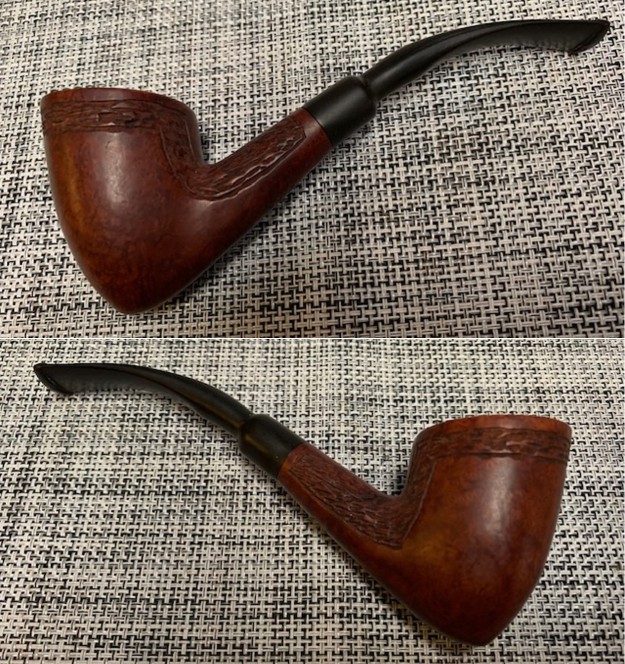
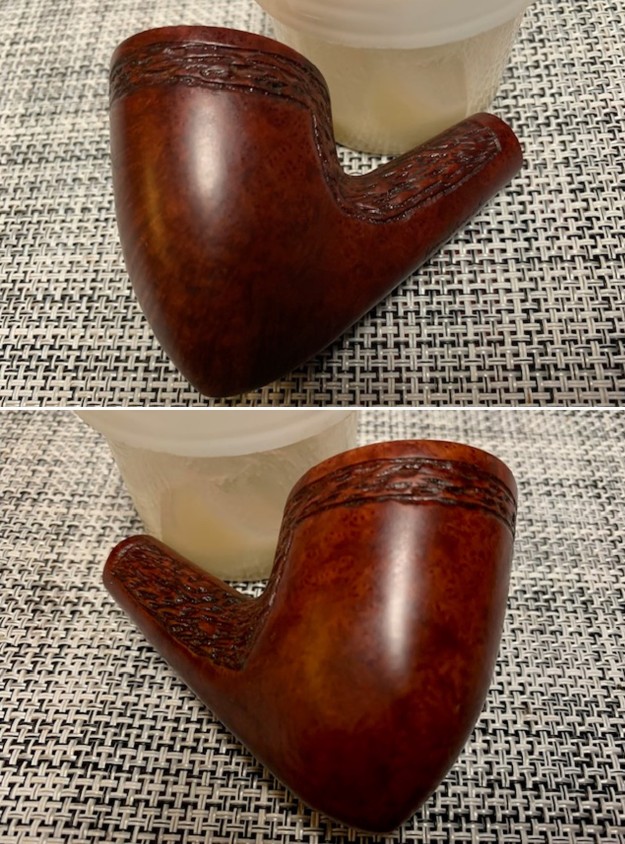
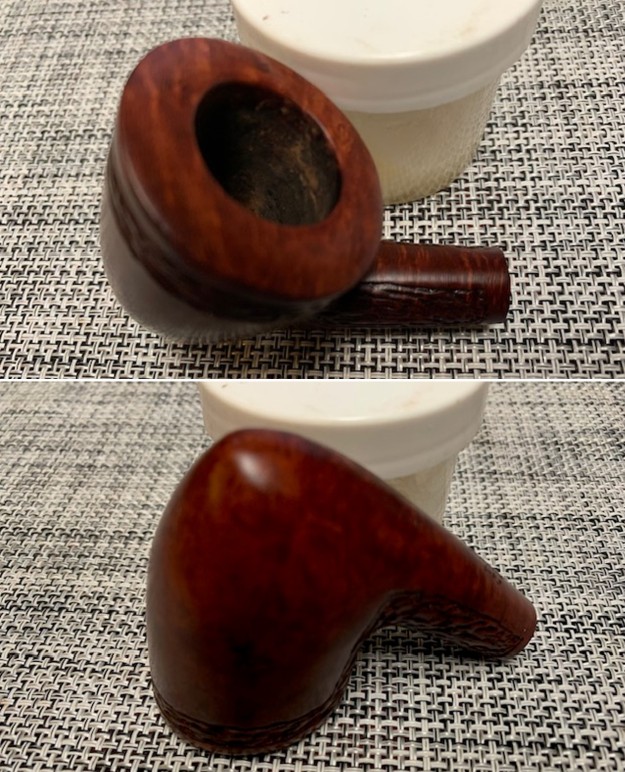
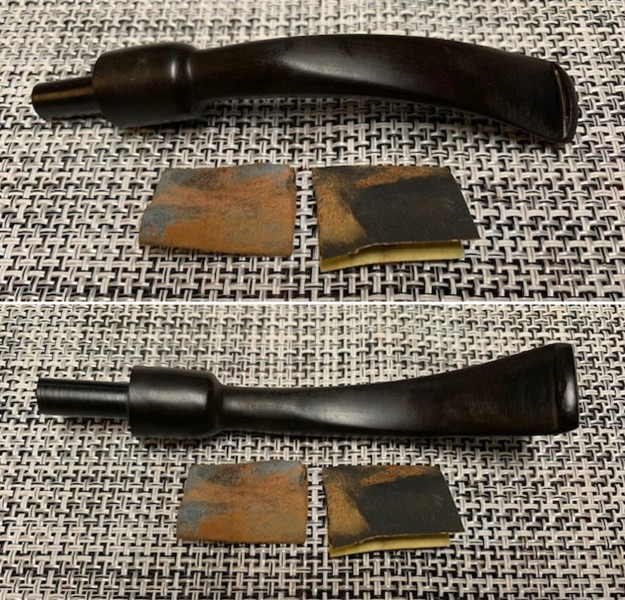
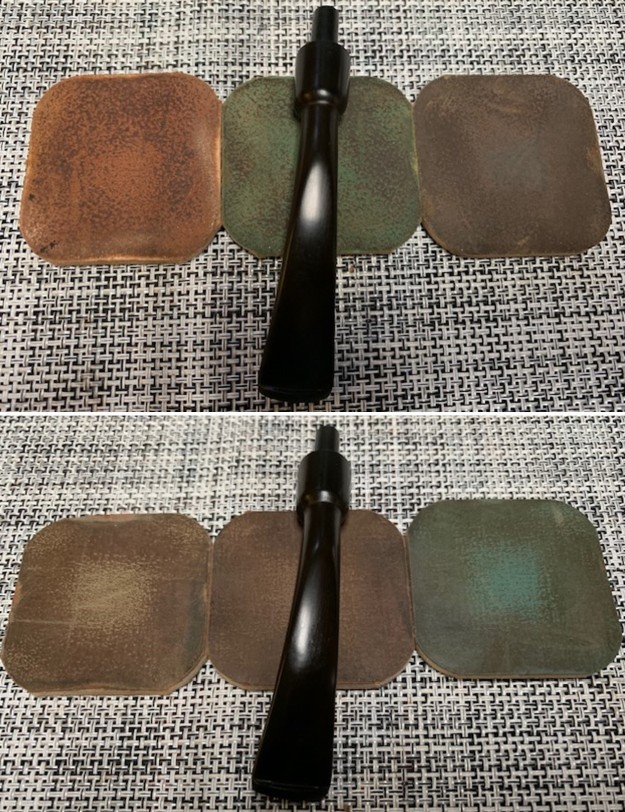
As always, I encourage your questions and comments as you read the blog. Thanks to each of you who are reading this blog. Remember we are not pipe owners; we are pipe men and women who hold our pipes in trust until they pass on into the trust of those who follow us.
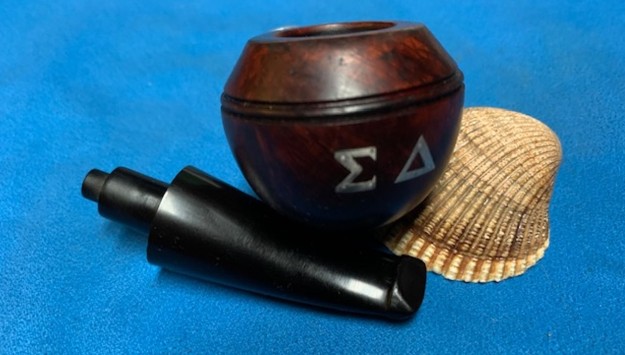
Restoring a 1911 BBB Glokar Rhodesian with Fraternity Silver Sigma Delta inlaid on the front.


Blog by Steve Laug

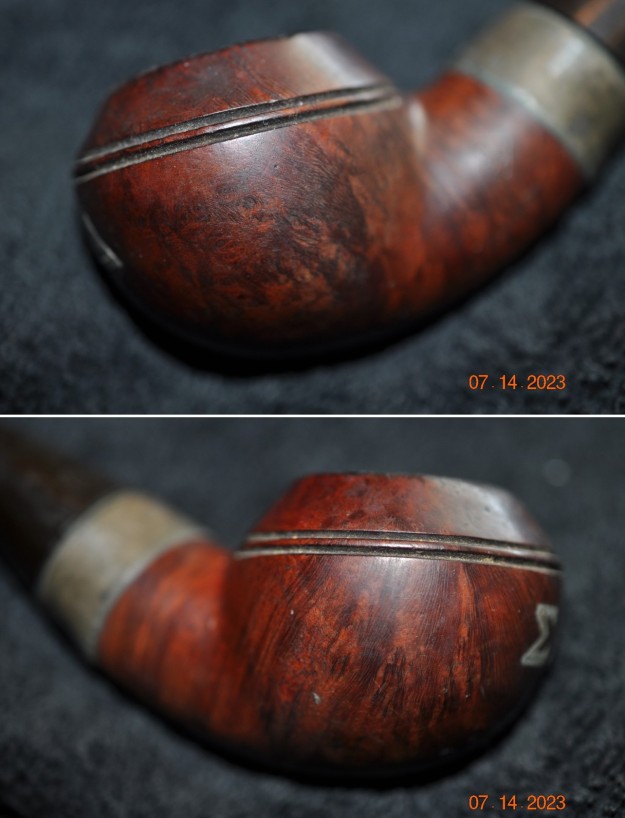
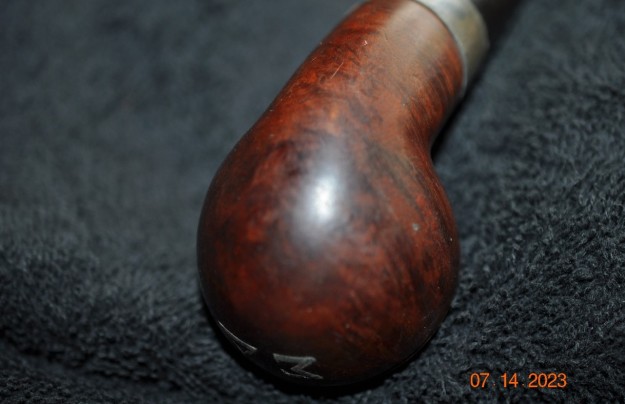
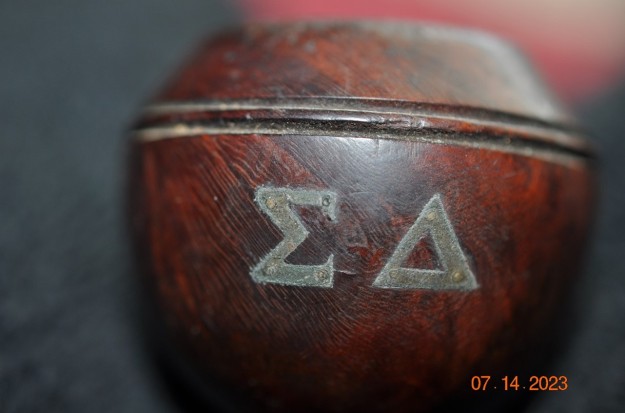
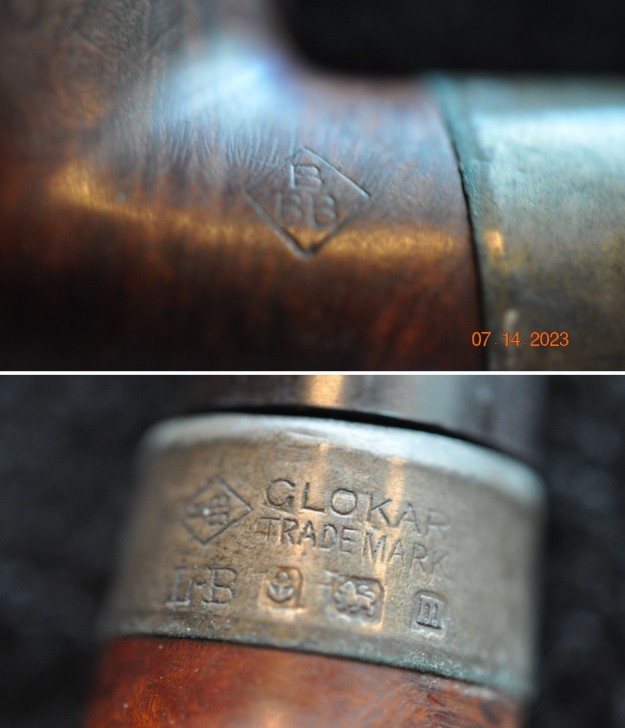
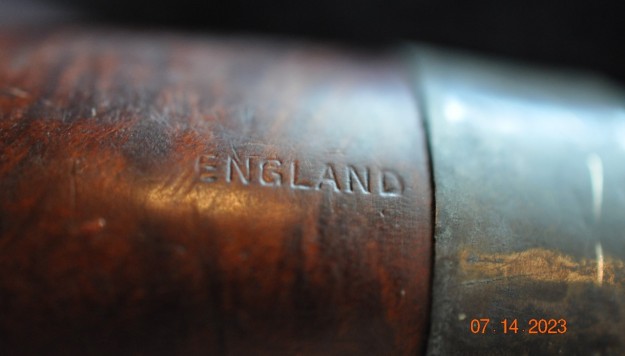
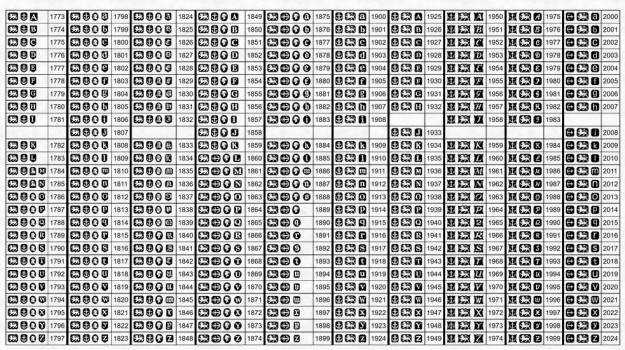
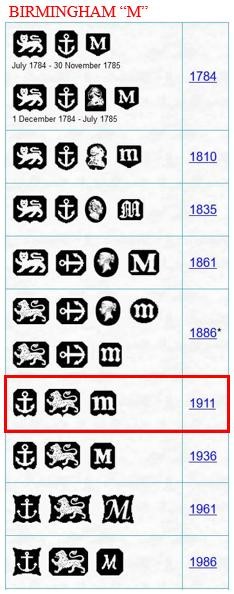
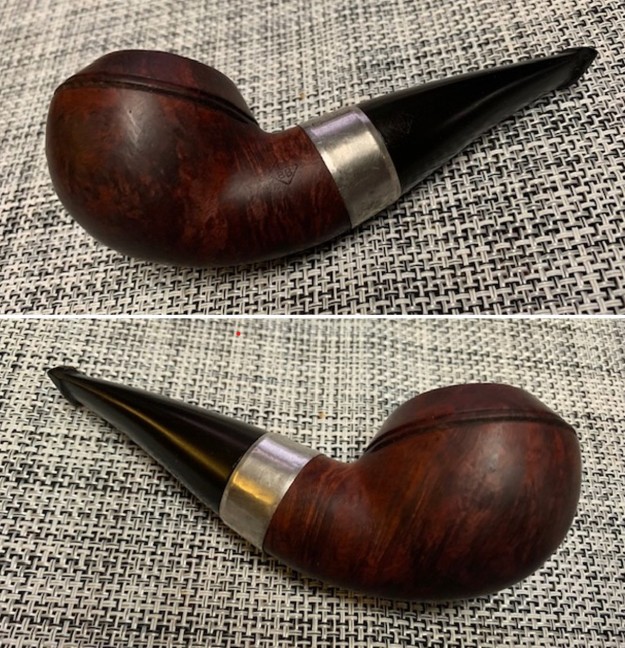
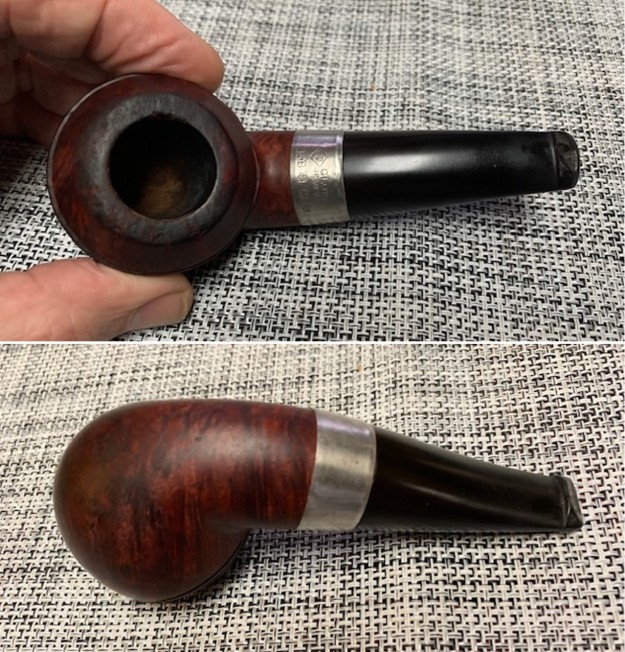
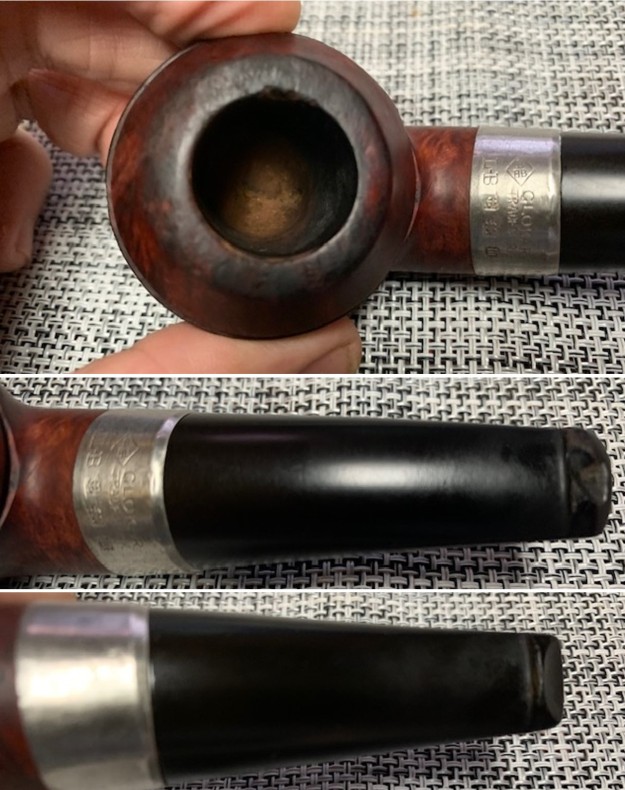
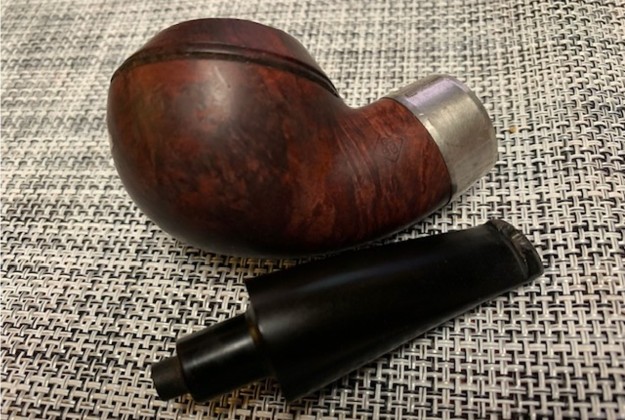
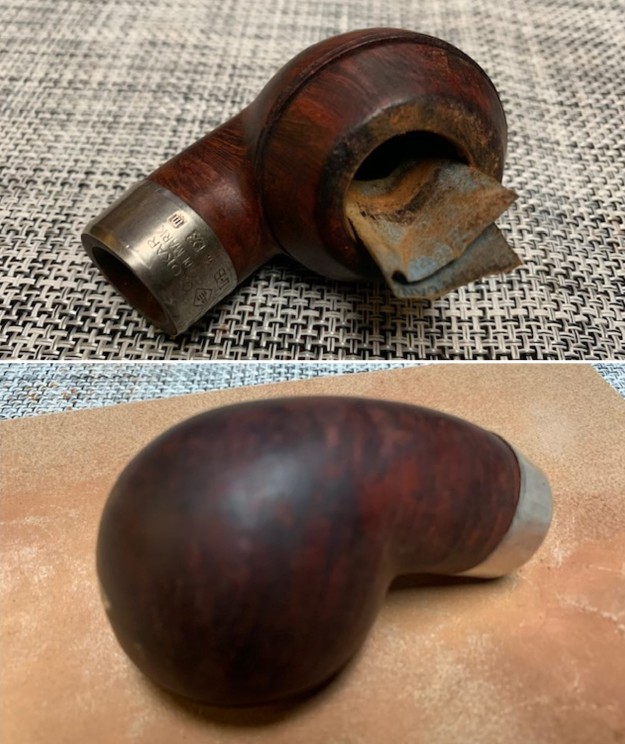
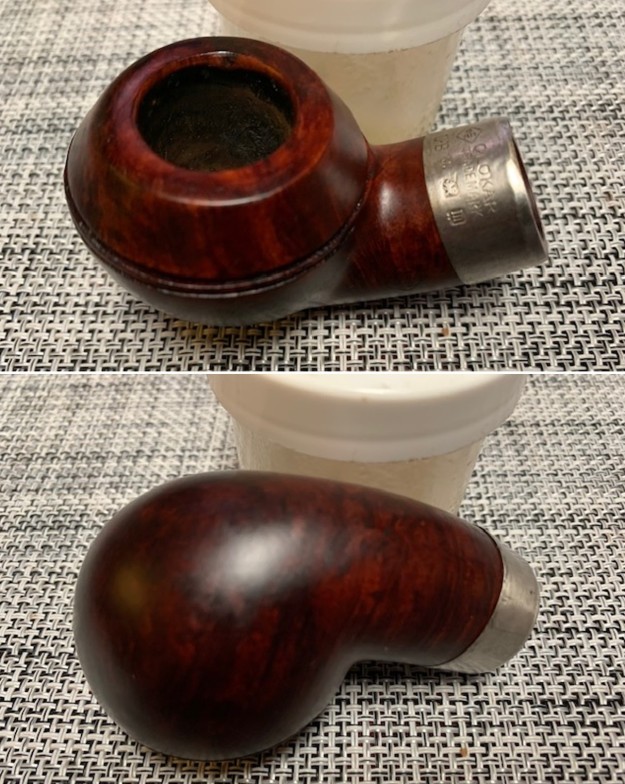
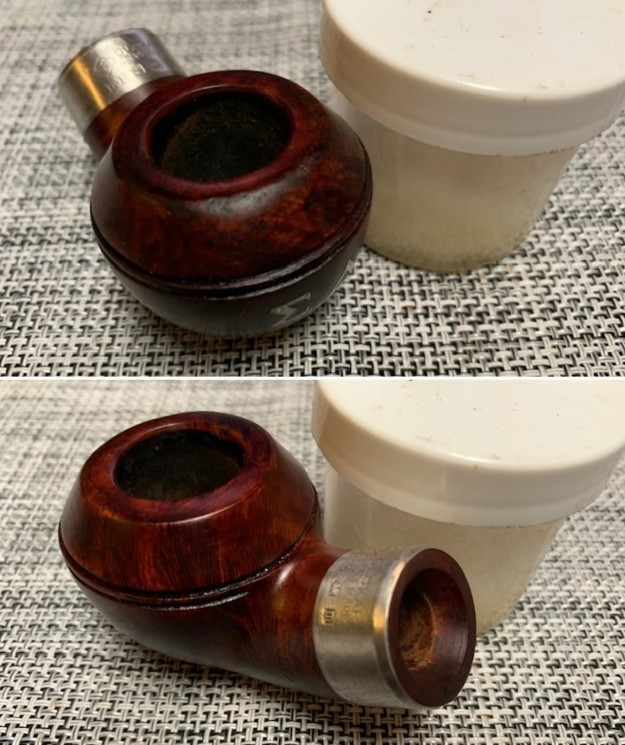
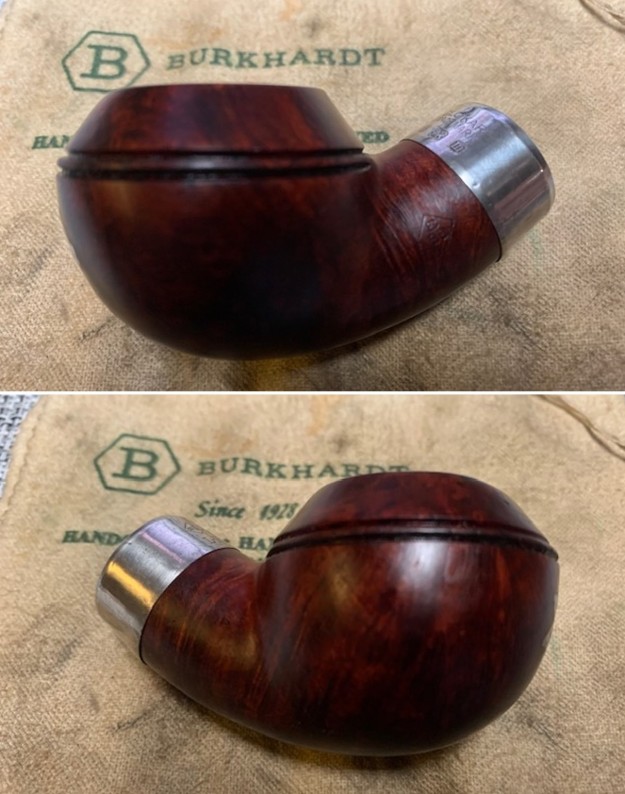
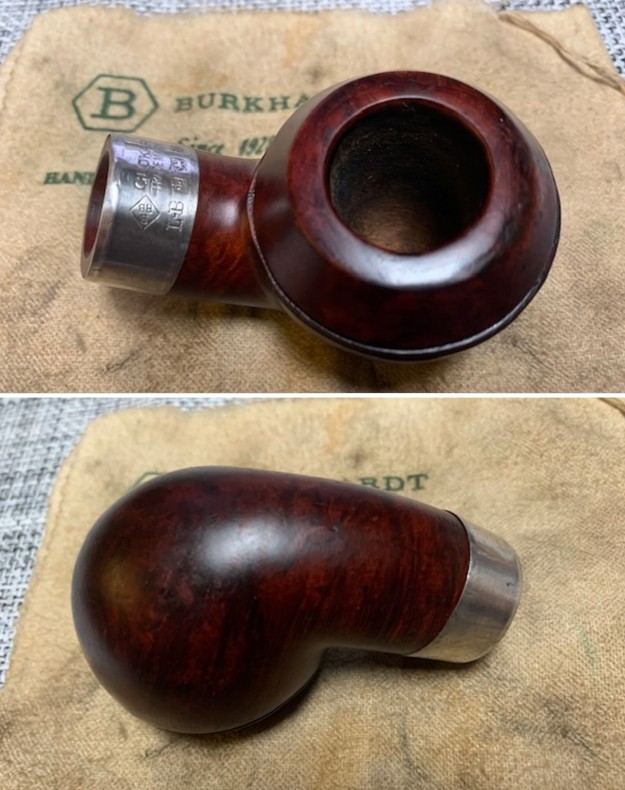
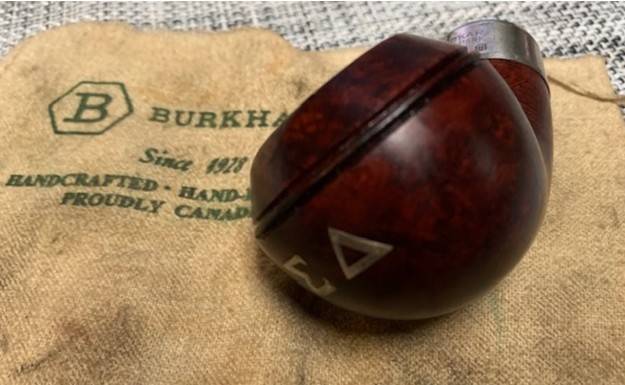
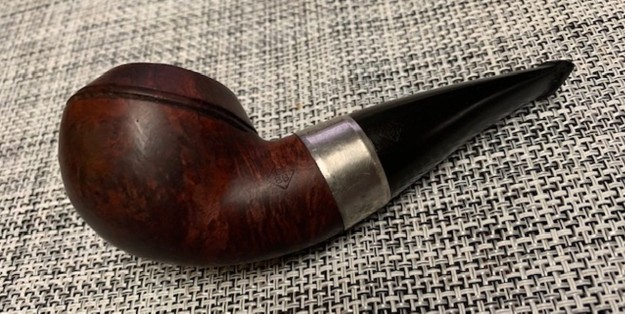
I decided I needed a change of pace in my restoration/clean up work. I went through my pipes waiting in the queue and chose pone from a group of four pipes that were given to us by a woman in Columbus, Ohio, USA. It had belonged to her Grandfather who lived from 1882 to 1977. There were four pipes that she sent us from his estate – the metal bowled apple, a cased meerschaum with a broken shank and an amber stem, a Whitehall rusticated apple and a BBB Glokar Fraternity Pipe.If you have followed rebornpipes for a while now you know that I really have a passion for BBB pipes. I have one BBB GLOKAR already that is a pleasure so when I saw this one I knew it would be one I would like to work on. Also, the fact that it is a taper stem Rhodesian also adds to its charm for me. I could see that it was an old timer but I would have to decode the silver hallmarks on the stem to pin down a date. It was well smoked, reamed with a knife. The stamp on the left side of the shank had BBB in a Diamond and on the underside of the shank it read ENGLAND next to the silver band. The oxidized and tarnished silver band was stamped with a BBB Diamond [over] L-B. That was followed by the word GLOKAR [over] Trademark. Underneath that were three silver hallmarks. The first mark was a cartouche with an anchor in it that was the mark for Birmingham, England. The second mark was a cartouche with a rampant lion – the symbol for Sterling Silver. The final mark was a cartouche with a lower case “m” in it that would give me the date for the pipe. The pipe was dirty and well used. The finish had deep grime ground into the smooth briar around the bowl. The bowl had tobacco debris in it and a very thick cake overflowing as lava onto the rim top. The rim top and edges were hard to assess because of the lava coat and the cake flowing out of the bowl onto the rim top. It was also hard to assess the outer edge of the rim. There were two Greek letters in Silver inlaid into the front of the bowl – a Sigma and a Delta which are attached to a Fraternity. The stem was hard rubber had a slight bend to it and fit the shank well. It had oxidation, calcification and light tooth marks and chatter on both sides ahead of the button. The button was the patented GLOKAR slot and airway through the stem. Jeff took photos of the pipe before he started his cleanup work. Jeff took photos of the rim top and bowl to show the condition. You can see the thick cake in the bowl and the lava coat on the top of the rim. The condition of the inner edge of the bowl is a hard to assess but the outer edge appears to have some damage on the front outer edge. It was obviously another of her grandfather’s favourite pipes. The hard rubber taper stem was oxidized, calcified and had tooth marks and chatter on both sides ahead of the button. It was nice but will take some work. Jeff took photos of the sides and heel of the bowl to show the grain and the bowl and shank and shape of the pipe. The twin rings around the bowl cap are in good condition and are very clean and undamaged. The shape of the bowl makes it quite nice looking. Jeff captured the inlaid Greek letters Sigma Delta on the front of the bowl. There were tarnished but looked very good. He took a photo of the stamping on the smooth panel on the left side of the shank. You can see that it is readable as noted above. The name of the brand is stamped on the top of the silver band. It reads as noted above. The stamp on the underside of the shank is ENGLAND and it is readable. Since the hallmarks were so clear, I turned to one of the numerous silver hallmark charts on line for the city of Birmingham, England to see what I could find out about the “m” date stamp and pin down and age for the pipe (https://www.silvermakersmarks.co.uk/Dates/Birmingham.html). I clicked on the section that applied to the date stamp on this pipe. The first chart below is the chart from 1773-2024.I am also including screen capture of the enlarged section on the Birmingham dates for the letter M. This chart covers pipes made in 1778-1986. I have drawn a read box around the hallmark pattern that matches the one on the BBB Silver ferrule. You can see that it dates the pipe to 1911. That means that this little pipe is roughly 112 years old.

With the information from the hallmark site I had a clear date for the manufacture of the pipe. It was definitely an old timer and really was another stellar acquisition.

I wanted know more about the GLOKAR stamp and what it signified. I had an inkling that I was dealing with a BBB system pipe not unlike the Peterson’s System pipes but I wanted to see what I could find out about that. I have a facsimile of a 1912 BBB Catalogue No. 20 that has a section dedicated to the Glokar. On page 107-110 there is information about the pipe and the various versions available. Interestingly it does not include a picture/drawing of my Poker. I quote the description of the Trademarked Glokar below.

The “Glokar” Mouthpiece does away with the great drawback of all ordinary pipes, viz., the unpleasant and possibly injurious, effect of the smoke upon the tongue, as the end of the stem has a smooth, concave surface, which while forming a pleasant rest for the tongue, acts as a barrier between it and the smoke. Instead of pressing through an ordinary round bore, the smoke leaves the mouthpiece through a fan-shaped slot, which is drilled in and upward direction – thus preventing saliva from entering the bore of the pipe.

Advantages:

  1. The bore, being kept dry, requires less cleaning than that of an ordinary pipe.
  2. As no saliva can reach the bowl, the tobacco can be consumed to the last particle.
  3. The shape of the mouthpiece affords the perfection of comfort for the mouth, tongue ad lips.

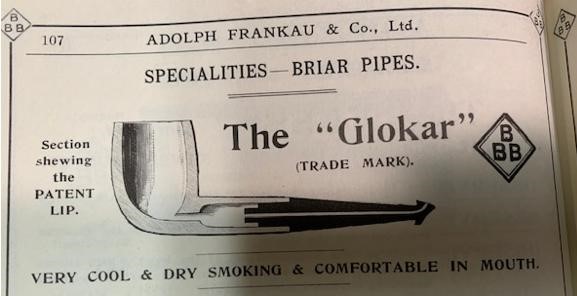
I took a photo of the picture that was included in the catalogue for the “GLOKAR” and have included it below. The cutaway diagram shows the system in the bowl and shank as well a the patented lip design. It is remarkably like a Peterson’s system pipe. One of the differences is the shape of the exit of the air way in the button. This one is a slot rather than a round hole.

Now it was time to work on the pipe. Jeff carefully cleaned the pipe from top to stern. He reamed it with a PipNet pipe reamer and then cleaned up the reaming with a Savinelli Fitsall Pipe Knife. He scrubbed out the internals of the shank, stem and shank extension with alcohol, pipe cleaners and cotton swabs until the pipe was clean. He scrubbed the exterior of the bowl with Murphy’s Oil Soap and a tooth brush to remove the grime and grit on the briar and stem. The finish looks much better and has a deep richness in the colour that highlights grain of the briar. The rim top looked good with some darkening and damage on the top and inner and outer edge of the bowl. Jeff worked it over with Soft Scrub All Purpose Cleaner to remove any remnants of oxidation. He then soaked the stem in bath of Briarville Pipe Stem Deoxidizer to remove the oxidation on the rubber. When the pipe arrived here in Vancouver I was amazed it looked so good. Here are some photos of what I saw.

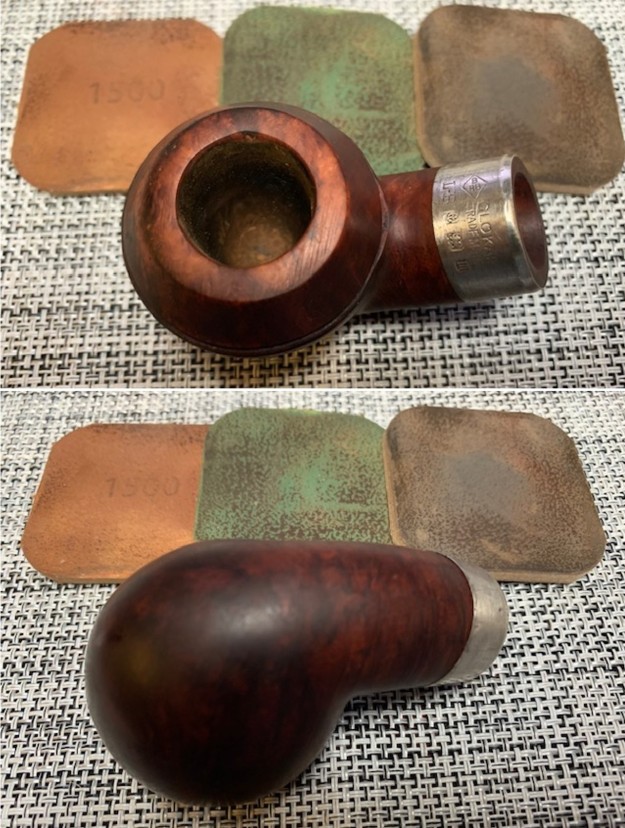
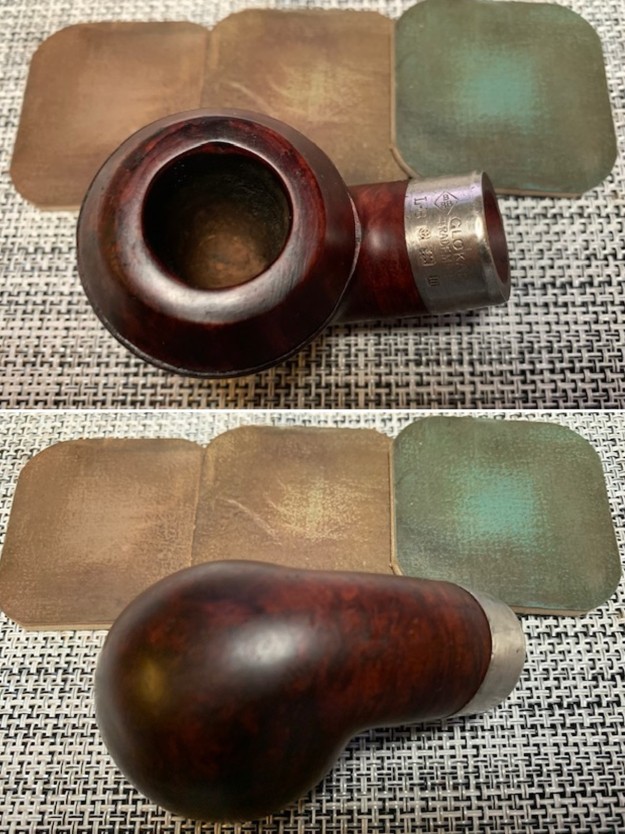
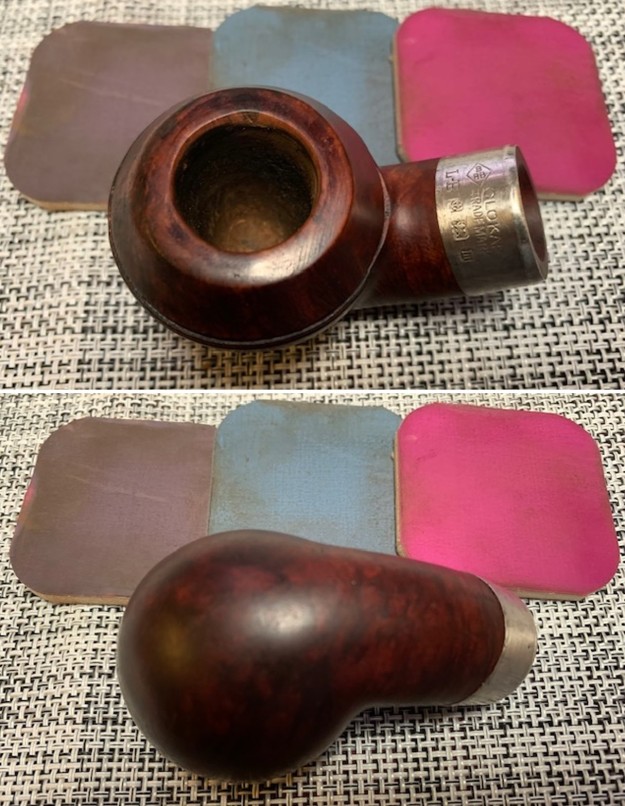
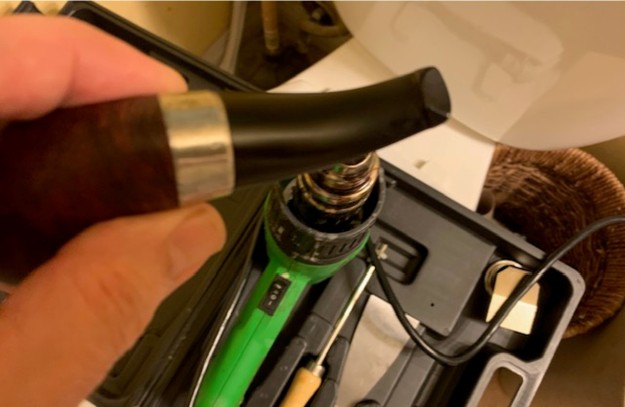
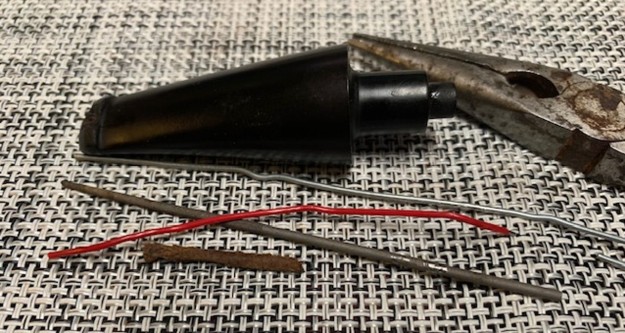
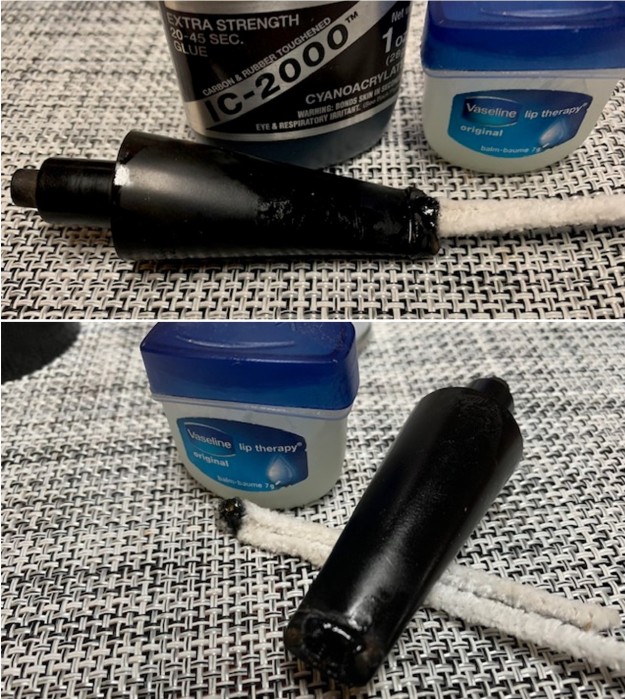
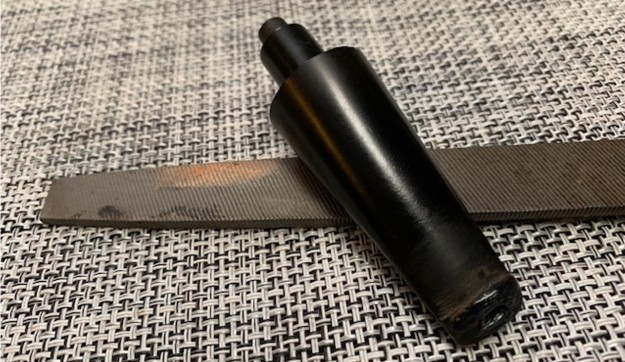
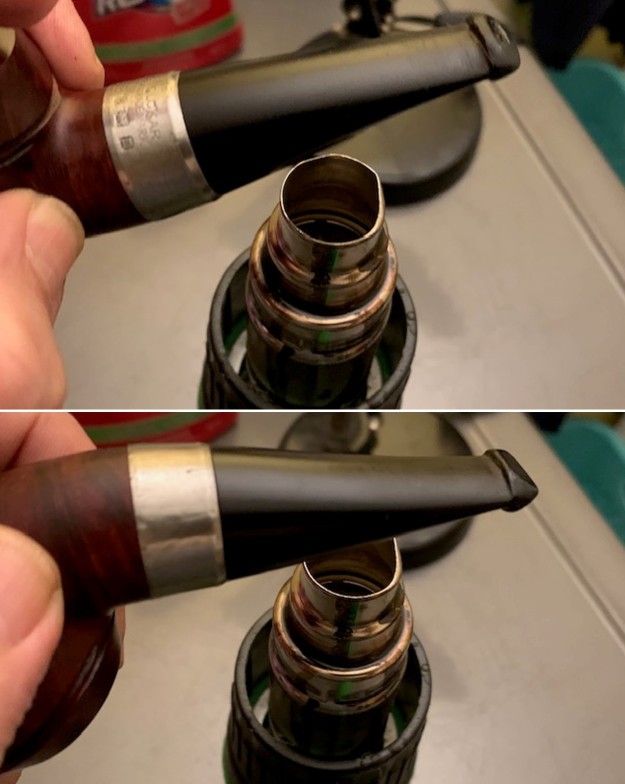
Now time for a confession… when Jeff was cleaning it a pipe cleaner broke off in the stem just inside the Glokar style slot. He had tried many ways to remove it but could not. It was up to me to remove the blockage. Last evening, I got in a hurry to work on it so I used a heat gun to straighten the stem so I could work the offending piece of wire out. It dawned on my once I finished straightening it that I had forgotten to take any photos of the pipe when it arrived. Once finished, I took the following photos… sorry for my haste! I took photos of the bowl and the rim top to show the condition. It is clean and the damage is very clear. The bowl is very clean and there were nicks, burn damage and cuts all around the inner edge and top. The bowl was out of round due to the damage. The vulcanite stem is clean and the damage on the Glokar slot is very visible. The rest stem surface ahead of the button is clean and undamaged.I took a photo of the top of the shank and the silver band to capture the stamping on the silver. I took a photo of the BBB diamond on the left side of the shank. It is faint but it is still readable. I took a photo of the bowl and shank separated to show the condition of the pipe. It really is a great looking pipe. I started my work on the rim top by addressing the issues with the rim top and edge. I started by smoothing out the damage on the edge and smoothed out the top of the rim with a folded piece of 220 grit sandpaper. I lightly topped the bowl on a topping board with 220 grit sandpaper to flatten on the damage on the rim top. It looked much better! Once I started polishing it with the micromesh sanding pads you can see the rim top.I polished the briar with micromesh sanding pads – 1500-12000 grit pads. I dry sanded the briar and then progressively brought a shine to the pipe. It looked really amazing – the combination of rustic and smooth portions of the briar. It is a beauty!  I set aside the sanding pads to stain the rim top to match the rest of the bowl and shank on the pipe. I looked pretty good but I think with the rest of the micromesh sanding pads it would look very good. I went back to the sanding pads. I rubbed the bowl down with Before & After Restoration Balm. I worked it into the finish with my fingertips and into the twin rings with a shoe brush. The product works to clean, preserve and protect the briar. I let it sit and absorb for 10 minutes. I buffed it off with a soft cloth and then gave it a rigorous buff to raise the shine. It looks good at this point. I polished the silver band and silver inlaid letters on the front of the bowl with a jeweler’s cloth to remove any residual tarnish and also to protect it from future tarnish (at least for a while). With that done the bowl was finished other than the final buffing. I set the bowl aside and turned my attention to unplugging the broken pipe cleaner in the stem. I started by heating the stem with a heat gun and straightening it out. I took a photo of it once I had it straightened. I carefully straightened a paper clip and used it to probe the plugged area. It took time and patience to carefully work around the clog. I continued to pull out bits of pipe cleaners as I worked on it. I used two different paper clips that I worked with. I used a fine round file to push the clog out. I worked on it from both end of the stem. Finally, I blew through the stem and the clog of pipe cleaner piece flew out. In the photo below, it is the brown piece at the bottom of the photo. There was a chip out of the top side of the button. It had chipped away when Jeff was working on removing the broken piece. It was not big but it needed to be repaired. I greased a pipe cleaner with Vaseline and inserted it in the airway below the chipped area. I filled in the chipped area with black KMS CA rubberized glue. I removed the pipe cleaner and set it aside to let the glue cure. Once the repair cured I flattened out the repair with a flat file to smooth out the excess and flatten the surface of the button. I sanded the stem surface and shaped the repair to blend the repairs into the surrounding rubber. It looked quite good at this point in the process. With the repairs and reshaping of the button finished it was time to rebend the stem. I heated it with a heat gun to soften the rubber and once it softened bent it back to what was there previously.I bent the heated stem once it was flexible to match the previous bend it had before I straightened it. I put it back on the pipe and took the following photos. I polished out the chatter and marks on the stem surface with micromesh sanding pads – dry sanding with 1500-12000 grit sanding pads. I wiped it down with Obsidian Oil on a cloth after the sanding pads. I finished the hand polishing of the stem with Before & After Pipe Polish – both the Fine and Extra Fine polishes. I gave it a final coat of Obsidian oil and set it aside to dry. With the bowl and the stem finished I put the pipe back together and buffed it on the wheel using Blue Diamond to give it a shine. I gave the bowl and stem multiple coats of carnauba wax on the wheel and then buffed it with a clean buffing pad to raise the shine. I hand buffed it with a microfiber cloth to deepen the shine. It really is an amazing little pipe. The dimensions of this part of the pipe are – Length: 5 inches, Height: 1 ½ inches, Outside diameter of the bowl: 1 ¾ inches, Chamber diameter: ¾ of an inch. The weight of this pipe is 2.15 ounces /62 grams. This unique find – a 1911 BBB Glokar Rhodesian System pipe with a silver band is joining the other pipes in my collection of BBB pipes and will hold a place of honour while it is in my trust. This is another pipe that one day soon I will enjoy a special bowl of tobacco in it and be transported to a slower paced time in history where I can enjoy a respite. Thanks for walking through the restoration with me.

As always, I encourage your questions and comments as you read the blog. Thanks to each of you who are reading this blog. Remember we are not pipe owners; we are pipe men and women who hold our pipes in trust until they pass on into the trust of those who follow us.
Restoring a Pipe Carved by an American Living Legend – “J.M. Boswell”


Blog by Paresh Deshpande

I shall be honest with you; I love vintage English made pipes! I love vintage British bikes and own a couple; I love vintage British fountain pens and have a decent collection of the same. It is something about the simplicity yet unique British craftsmanship, robustness and reliability factor of British made products that I find most appealing. However, after having worked on a number of pipes made by various pipe carvers from USA like Tracy Mincer, Custom-Bilts, Kaywoodies, John Bessai etc, I realize that American pipe carvers are artistic, technologically inventive and the pipes they made are robust, life lasting with a nice feel and heft and of very high quality. Am I gravitating towards American pipes? May be……. The next pipe on my work table is a 22 years old and completely handmade freehand full bent billiard made by an iconic pipe maker from Pennsylvania, USA. Yes, I am working on a pipe made by J M Boswell from the year 1996.

This is a large sized full bent billiard freehand pipe with a nice heft and hand feel. The shape of the pipe is unique in that the proportionate shank has a sudden taper towards the shank end and this size is carried forward on to the saddle of the stem, tapering a bit along the stem before flaring out at the stem end. Wow!!!! That was one hell of a description which has left me exhausted and brain drained!!!! The stamping on the left side of the shank was clear and readable. It read “Boswell” in script signature over “96 USA”. The pipe was made in 1996.The saddle stem bears no stampings.I was keen to know more about J M Boswell the carver, his pipe making techniques and philosophy. I searched rebornpipes.com and sure enough, Mr. Steve has worked on a Boswell before!!! As is his habit, he has thoroughly researched this carver and has included valuable information in his write up. Therefore, instead of reinventing the wheel, here is the link to this write up for detailed information; (https://rebornpipes.com/2017/07/19/refurbishing-a-boswell-2003-spiral-twist-bent-billiard/). Do give it a read.

Is there not a single brand that this gentleman has not worked on before??? Is there never going to be an opportunity for me to research and contribute one pipe make on rebornpipes??? Well, I have just started on my journey as against his decades of dedicated hard work and as Robert Frost wrote in his poem “……..and miles to go before I sleep”. The quest for excellence and contribution continues!

INITIAL VISUAL INSPECTION
The stummel surface boasts of beautiful straight grains on the right side and most of the front while the left side has lovely swirls of grain interspersed with bird’s eye. The bottom of the shank has unique hand carved rustication which taper towards the right side and extends in a thin and straight line towards the rim on the right side. Lovely bird’s eye can be seen on the top of the shank surface with straight grains on either side of the shank.  The stummel is covered in oils, tars and grime from the overflowing lava. The crevices in the rustication are filled with dirt, dust and grime. The briar is dull and lifeless and has taken on a layer of aged patina, through which one can make out the beautiful grains all round. This one should clean up nicely. This pipe has seen heavy use and the chamber has a nice thick consistent layer of cake, about the size of dime, as is recommended. The cake has been regularly reamed to maintain correct thickness. This seems to be a well cared for pipe. The condition of the inner walls of the chamber can be ascertained only after the cake has been removed completely and taken down to bare briar. The bowl feels robust and solid to the touch from the outside. However, the mortise does show signs of accumulated dried oils, tars and remnants of ash, greatly restricting the air flow. This issue should be a breeze to address.The rim top is covered in a thick overflow of lava from the chamber. This is the only part of the stummel which appears to be neglected. The condition of the inner edge and rim top can be commented upon only once the rim has been cleaned. However, I have a feeling from looking at the appearance, that the right side of the inner edge in 3 o’clock direction may be charred from frequent lighting. Well, we’ll see about it later. Thankfully, the outer edge is pristine and shows no signs of damage!!The vulcanite stem is without any bite marks or tooth chatter. The upper and lower lip does show one bite mark each. The stem was apparently used with a rubber bit as can be seen from the calcification marks on the stem (Come on!! One does not have to be a Sherlock Holmes for this deduction!!). The saddle stem is heavily oxidized. The tenon is covered in dried oils and tars and so is the airway. The air flow through the stem is laborious to say the least. The fit of the stem in to the mortise is very loose, which will loosen further after the mortise and tenon have been cleaned. These issues will need to be addressed.THE PROCESS
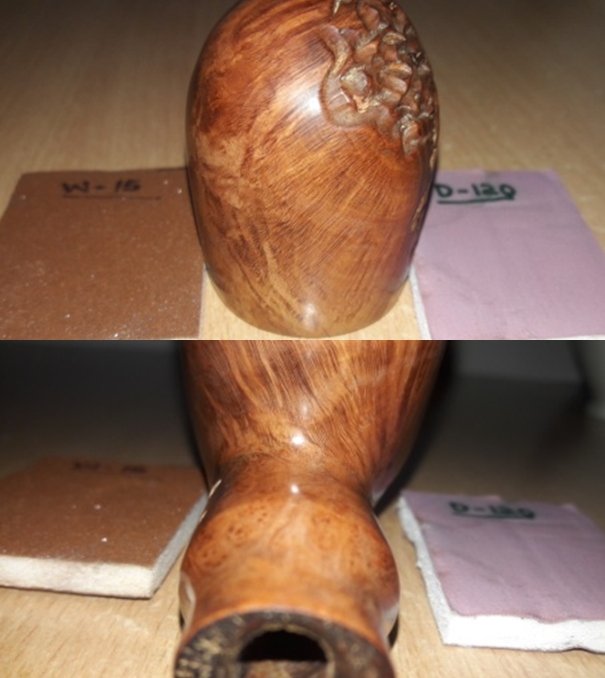
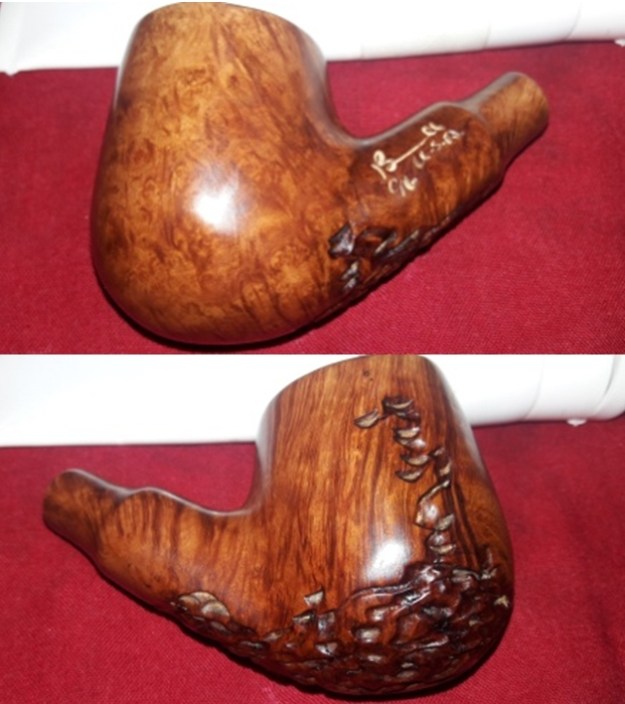
I started this project by reaming the chamber, starting with size 2 head of PipNet reamer and moving on to size 3 head. I used a 220 grit sand paper, pinched between my thumb and forefinger, to sand the inner walls of the chamber. Once I had reached the bare briar, I wiped the chamber with a cotton pad dipped in isopropyl alcohol. This removed all the residual carbon dust and also rid the chamber of all ghost smells. Using a sharp knife, I gently scraped the rim top to remove the lava overflow. I followed up the reaming by cleaning the mortise and air way using hard bristled and regular pipe cleaners, q-tips dipped in alcohol. The mortise and the draught hole was chock-a- block with all the dried tars, oils and gunk that I had to use my fabricated spatula and the drill bit from the Kleen Reem pipe reamer!!!! I gave a final clean with shank brushes dipped in alcohol and dried the mortise with a rolled paper napkin. The shank internals and the draught hole is now nice and clean with an open and full draw.I cleaned out the internals of the stem using hard bristled and regular pipe cleaners dipped in alcohol. I scraped the dried oils and tars from the tenon with the sharp edge of my fabricated dental spatula.Now, it was the turn of the stummel to get cleaned up. Using a hard bristled tooth brush dipped in undiluted Murphy’s oil soap, I very deliberately scrubbed the stummel, cleaning the surface thoroughly. Special attention was paid to scrub out all the dirt and dust from the crevices in the rustication on the bottom of the shank and right side of the bowl. I cleaned the rim too. The stummel and rim top was dried using paper napkins and soft cotton cloth. I was not happy with the way the rim top had cleaned up. There were darkened areas on the rim top, which kept drawing my attention, as well as very light, almost negligible damage to the outer edge in the form of dents. For the sake of my own satisfaction, I decided to address these blemishes. I topped the rim top on a 220 grit sand paper. I was careful to avoid excessive topping and frequently checked the progress. It was at this stage that I realized that the left inner edge has a slight char in 8 o’clock direction. And all this while I had anticipated this damage to be on the right!! So much for playing Sherlock Holmes!! I address the issues to the inner and outer edge by creating a slight bevel using a 220 grit sand paper pinched between my thumb and forefinger. It’s looking good now, I say, save for a black spot on the left side!!! I wanted to highlight the grains seen and further blend all the repairs carried out to the stummel. To achieve this aim, I sand down the stummel and rim top using micromesh pads, wet sanding with 1500 to 2400 grit pads and dry sanding with 3200 to 12000 grit pads. The stummel now has a deep shine with grains popping out with magnificent contrast. Though this part of restoration is the second most time consuming and laborious, the end results are also the most satisfying. The play of grains, the contrast and the smooth surface are well worth the efforts. I rub a small quantity of “Before and After Restoration Balm” in to briar and let it rest for a few minutes. I took some extra efforts to work the balm in to the hand carved rustications on the bottom of the bowl. The balm almost immediately works its magic and the briar now has a nice vibrant appearance. I further buff it with a horse hair shoe brush. With the stummel nice and clean and attractive, I worked the stem. I sharpened the lip edges using a needle file and sand the entire stem with 220 followed by 400 and 800 grit sand paper. This helps to reduce the sanding marks left behind by the more abrasive 220 grit paper. By mere sanding itself, the minor tooth marks seen on both stem surfaces were addressed completely. To bring a deep shine to the vulcanite stem, I went through the complete set of micromesh pads, wet sanding with 1500 to 2400 grit pads and dry sanding with 3200 to 12000 grit pads. I wiped the stem with alcohol after each pad and rubbed it down with Extra Virgin Olive oil. The internals of the stem was cleaned out using alcohol and pipe cleaners. The pictures of the process and final results are shown below. To finish, I re-attach the stem with the stummel. I mount a cotton cloth buffing wheel on to my local machine which is similar to a Dremel.  I set the speed at about half of the full power and applied White Diamond compound to the entire pipe. I wiped/ buffed the pipe with a soft cotton cloth to clear it of any leftover compound dust. I then mounted another cotton cloth wheel on to the polishing machine and applied several coats of carnauba wax. I finished the restoration by giving the entire pipe a rigorous hand buffing using a microfiber cloth to raise the shine further. The completed pipe, with the dark brown hues of the stummel contrasting with the shiny black stem, looks lovely, fresh and vibrant; the photographs speak for themselves. The beauty, size and shape of this pipe make it one of my favorites and will find a place of pride in my modest collection. If only the pipe could tell the story of its journey till date…………… Cheers!! PS: The last functional aspect which I addressed at this stage was the protection of the walls of the chamber against the possibility of a developing serious heat fissures. I mix activated charcoal and yogurt to a consistency which allows for an easy and even spread and evenly apply it on the inner walls and set it aside to dry out naturally. This coating helps in protecting the wall surface and assists in quicker formation of a cake.
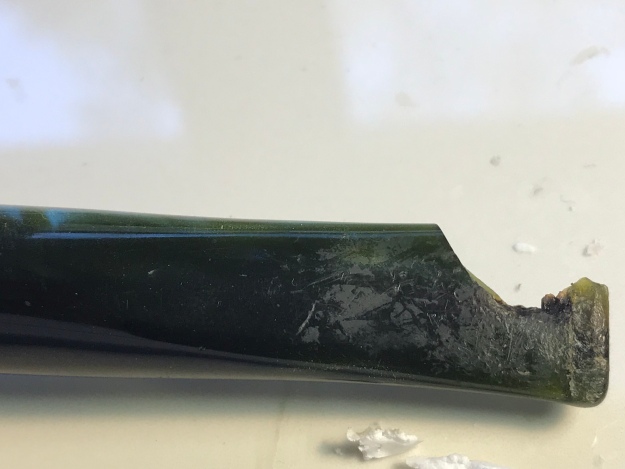
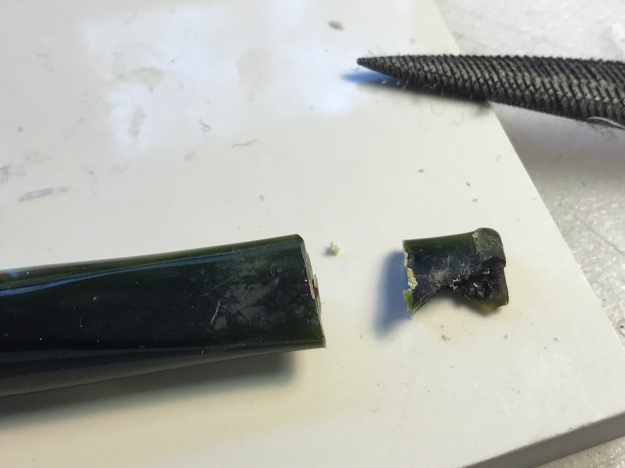
Reworking a Chewed Savinelli Alligator Stem


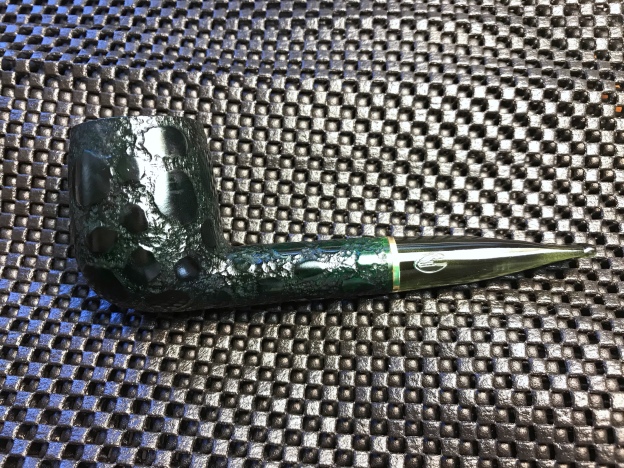
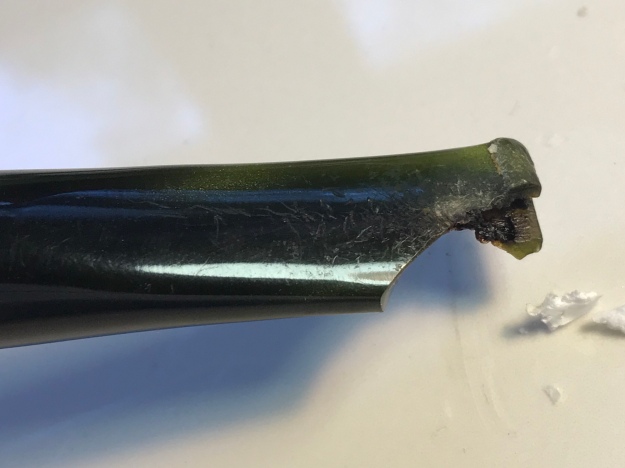
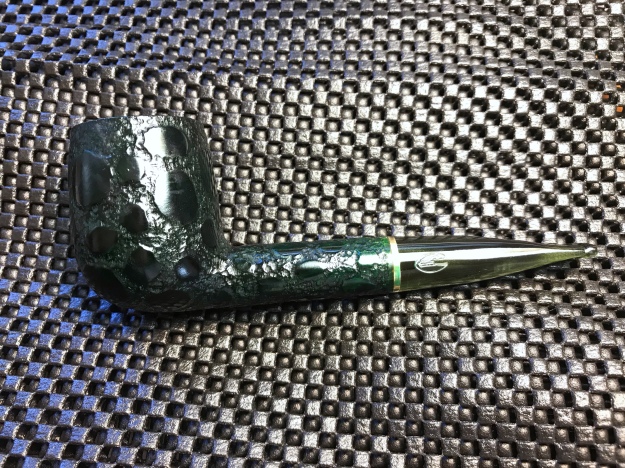
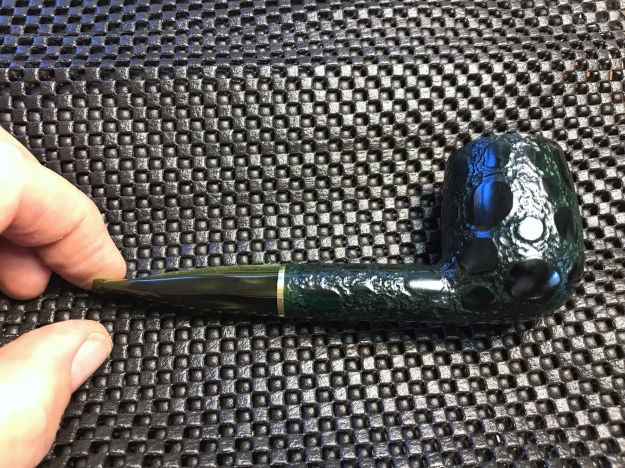
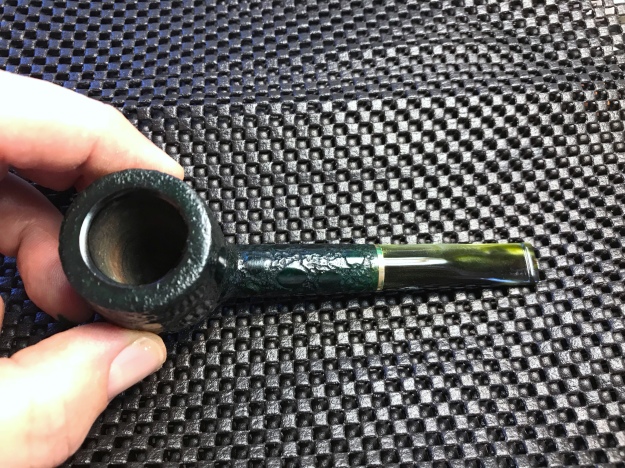
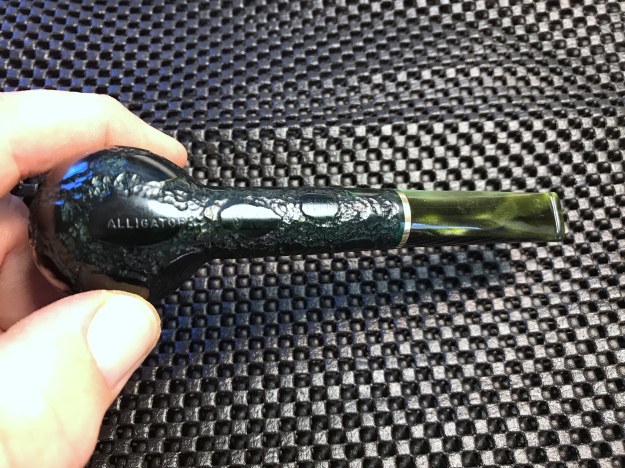
I picked up this Savinelli Alligator from a life-long friend some time back, along with a meerschaum pipe. They both needed a good cleaning but they also needed major stem repair. My friend is a clencher, an understatement, to be sure, and had bitten through both stems. When I saw the pipes I asked him if an alligator had been smoking the Alligator! I have lost the “before” pictures on this one so I’ll have to describe the condition it was presented to me in.

I’ve found that pipes with green stain don’t seem to fair very well; all of them loose their color in my experience. This Alligator was no exception; it was a grimy natural color with only a hint of green in the rustication. The bowl was heavily caked with a crumbly vanilla cake and an overflow of lava on the rim. I did the normal clean up routine on it to get it ready for cosmetic work and stem repair.

The stem, as the photos show, had a sizable chunk missing. I had a few options that I considered. I thought about replacing the stem but that would mean sacrificing the original. It also was not an easy task to find a green lucite swirl that matched and was the right dimensions. I thought about trying to rebuild the end of the stem. I even ordered some epoxy pigment to color-match the repair. But it would be a huge repair and I wasn’t sure it would hold up.

After weighing my options I decided to cut off the damaged end, saving as much length as possible and cutting a new button. I used a Dremel cutoff wheel at 15k RMP to remove the end. I used a combination of files to thin and reshape the stem, cutting a new button in the process.

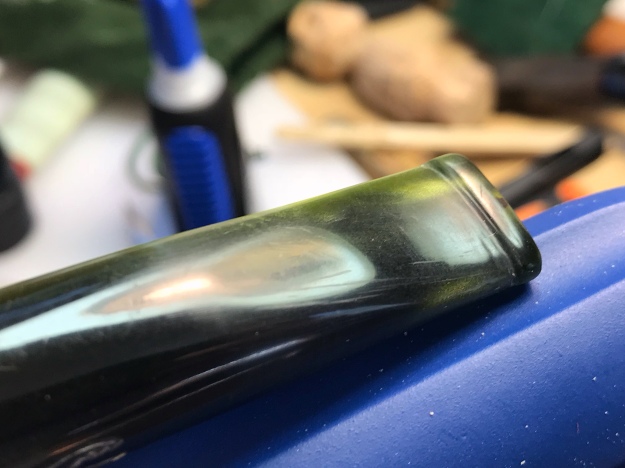
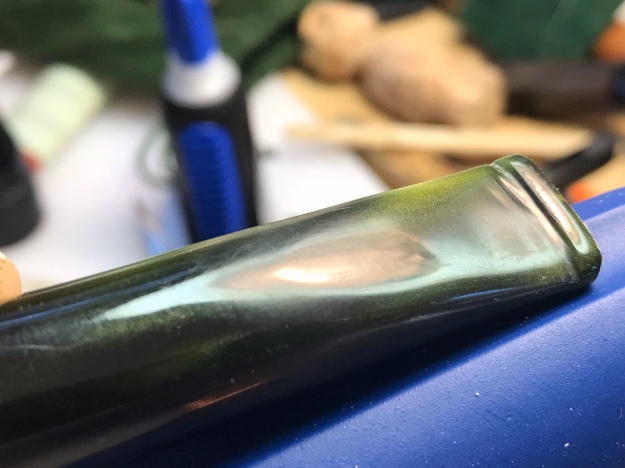
Once the button and stem were shaped to my satisfaction I began sanding and polishing it with wet/dry paper (220-grit) and the full range of micro mesh. I then polished the stem with Meguir’s ScratchX 2.0. The stem looked good; time for the stummel.

I cleaned the stummel with alcohol on a cotton pad to remove the left over grime and oils. Then I applied a couple of coats of Fiebimg’s green leather dye, making sure I had a nice even coat. I buffed the pipe with white diamond to remove the extra dye and set up the shine on the wood and stem. I then gave the pipe several coats of carnauba wax and a hand buff with a micro fiber cloth.

The Alligator still has some battle scars but my buddy can smoke it once again. Our local university’s colors are green and white, the reason he bought a green pipe. I’m happy to say his Marshall University Pipe will ready for service come Homecoming game day.

Why You Need to Disassemble a Pipe


It’s been a while since I’ve been able to do much restoration work but I did have this short video I cobbled together with an article and thought I’d share it here; I know this is something many of the regular readers here will identify with and have come in contact with. And for new folks that may be searching for information I figured they would find it here easier than where it was first posted. 

Why You Need to Disassemble a Pipe – Tobacco University (Reblogged from Smoking Jacket Magazine.)

I know some folks aren’t big on regular, routine maintenance/cleaning of their pipes; I get a little lax at times, too. But for the best performance, enjoyment, and taste from you pipe it is very necessary to have a routine and actually do it. Being one who enjoys and has restored many old estate pipes […]

Briar, cleaning, featured, stuck stem, pipe, pipe smoking, maintenance

http://smokingjacketmagazine.com/2015/10/28/why-you-need-to-disassemble-a-pipe-tobacco-university/

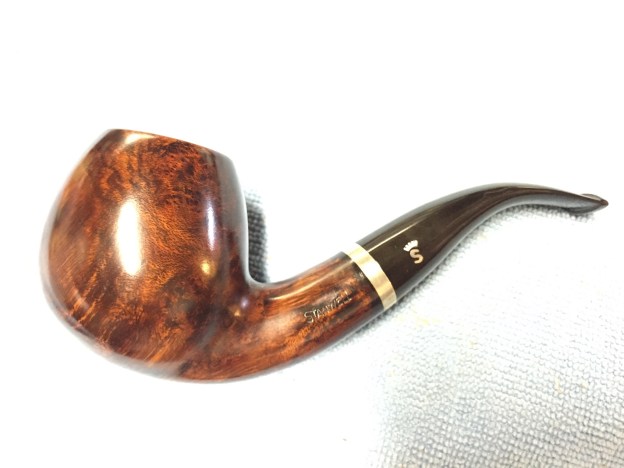
Undressing a Stanwell Black Diamond


Blog by Greg Wolford

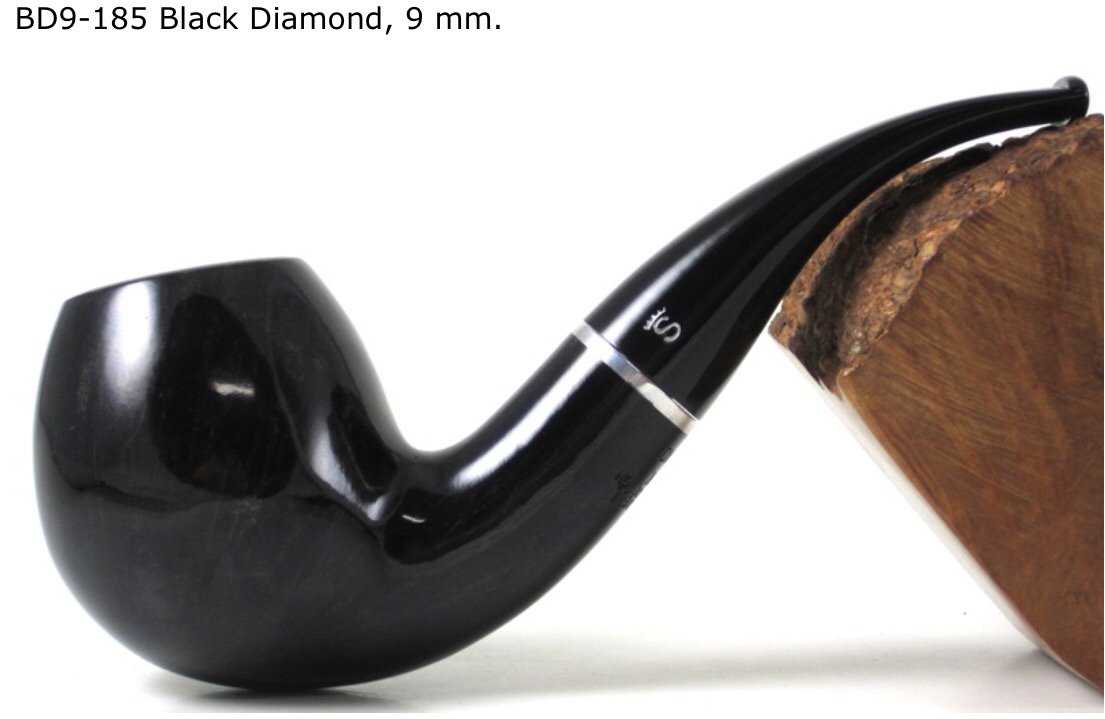
A few days ago I received a Stanwell Black Diamond shape 185 in the mail, gifted to me from an Instagram friend. It was a pipe he’d bought as an estate and hadn’t touched. When it arrived it was a “dress black” pipe, covered with a matte black opaque finish that needed some TLC: the rim was a bit uneven from being bumped or tapped out, the finish was “thin” in a few spots, with the briar peeking through, and needed to be cleaned internally. I thought I was going to do a quick clean up and smoke it but the story developed into something more soon. So I didn’t plan on all that I ended up doing and didn’t take photos. I even forgot to take a before picture so I’m using a “stock” picture of this model.

I cleaned the bowl, stem and shank first. This pipe had almost no cake and was not very dirty at all; it took only half dozen or so pipe cleaners to get it done. As I said before, I thought this was be a really fast job when I saw how little use the pipe had had. But it, of course, didn’t turn out quite so simple.

I wiped the stummel down with alcohol to clean off the surface and prepare it for a treatment with a new idea I had: colored wax. Some time back, Steve had mentioned to me about a product that Hobby Lobby carried that was a rub on/rub off wax that comes in different colors and might be good to highlight stem or shank nomenclature. I picked up a tube of black and have tried it once or twice with less than great results. But I thought it might be just the thing to touch up the black finish on this pipe and shine it up, too. The alcohol removed a little of the black coat but not too much as I cleaned it so I knew the finish was removable at this pint, in case the idea didn’t work. After the briar dried I rubbed the ebony wax onto the pipe, let it haze and buffed it off by hand. I did about three coats of the wax and wasn’t really thrilled with the pipe, even though the color “took”.

The bumpy rim was irritating to me and I knew it would continue to be a distraction. Although I was worried about what lay under the opaque finish, I decided to top the bowl and go from there. The newly smooth rim pleased me and I couldn’t help but wonder what was under that black coat. So I began to sand the black away to see.

The coating was fairly thick and took some time to remove. I sanded with 220 grit paper until the black was mostly gone. It was a pleasant surprise that no fills were under that coat. In fact, the grain was pretty nice. So I moved on to 400 grit paper and then buffed the briar with tripoli to see how it looked; it was nice and the black would make a great contrast stain. I wiped the pipe down with alcohol again to remove the wax and dust and started sanding with 600 grit paper. After I was happy with the smooth surface of the pipe I removed the tape I’d applied earlier to the stamping to protect it and began to work gently around the black patches under the tape to make as little damage as possible to the nomenclature but break up the black.

I mixed up some Fiebing’s dark brown leather dye with isopropyl alcohol in a 1:3 ratio. I applied and flamed the stain several times to get a nice, even coat. Then I wiped the bowl down with alcohol wetted pads until I removed enough due to see the grain well. I moved to the buffer where I buffed with tripoli and white diamond before laying the stummel aside to deal with the stem.

The stem on this pipe is acrylic and was in good shape; there were no major scratches or tooth dents so I polished it with plastic polish and then reassembled the pipe. Then the entire pipe got several coats of carnauba wax and buffed to a shine on a clean flannel buff and then a bit more by hand with a microfiber cloth.

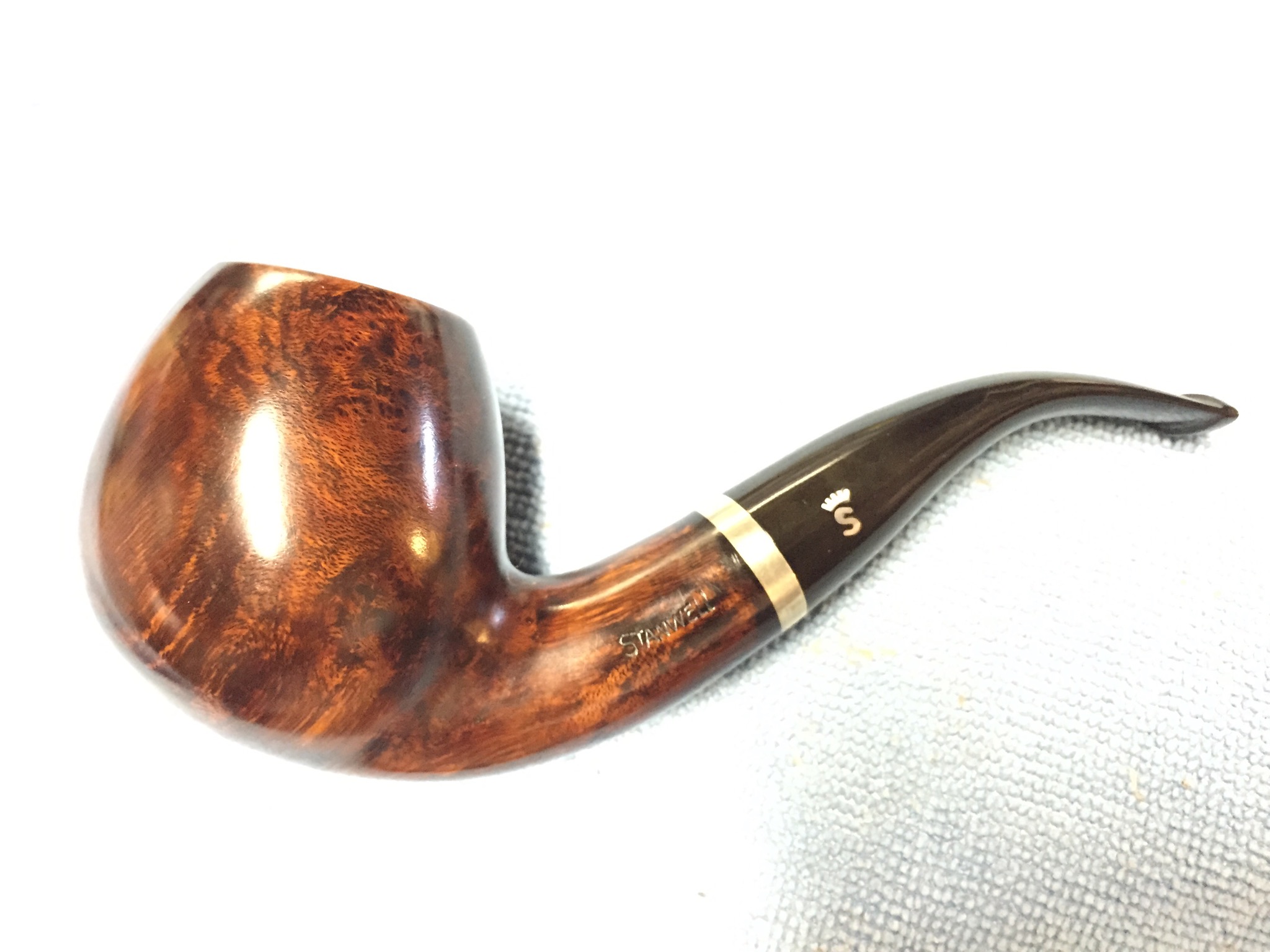
I’m really pleased with the “undress” pipe. And I’m relieved that the briar under the “coat” was as nice as it is. This large, heavy pipe will now have a spot on my rack, to be used and enjoyed, something that it hasn’t had much of in its life. IMG_0986.PNG

IMG_0982.JPG

An Old Meerschaum Bowl Restemmed and Reborn


Blog by Greg Wolford

Over the past couple of months I’ve been moving my workshop upstairs to an empty bedroom. With winter’s quick approach, I wanted to be ready for the bone-stiffening cold so I could do more restorations this year. All but the buffer had been moved into its new home and was close to being tidily organized when my plan went south; our son was moving back home and would need my new space back for his room!

It was a rather quick transition so all of my supplies were hastily packed up and moved back to the basement garage. In my rush, I didn’t think to make notes on boxes or anything else to help me sort through it later, I only packed quickly and securely and moved it all out. I felt like I got evicted! (Please note, that is not what happened to my son.) So finding any of the half-dozen projects I had in the works is now a daunting challenge; our garage serves as a catch-all of sorts, with our laundry area, my workshop, my wife’s “over flow” from her antique booth, and all of my son’s extras now piled in there.

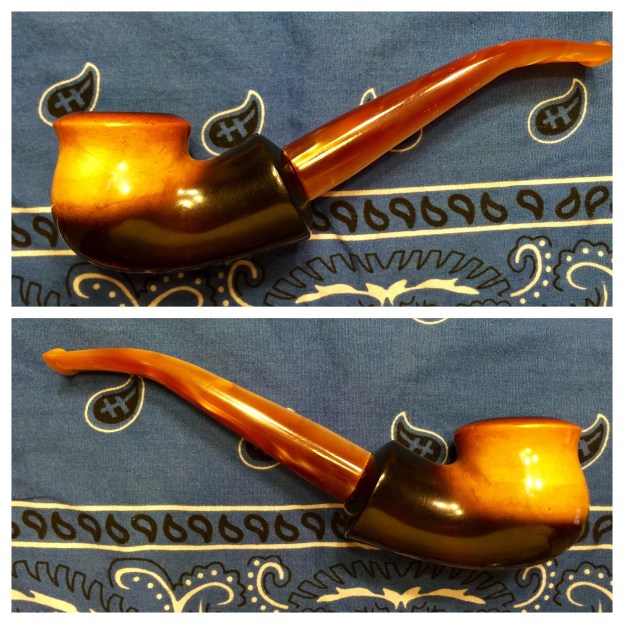
The other day I did manage to find an old meerschaum bowl that I’d began to work on. It came to me in a lot I had gotten a couple of months ago I think, along with another bowl and aOld Meer couple of pipes (this is the only before photo I have).  In fact, this bowl was the main reason I got the lot; it looked old and interesting to me.

After doing a little research and getting some comments from friends on Instagram and Facebook I think it may be an Austrian meerschaum; I originally thought it was African. If I am correct, this pipe, well, bowl, is probably over 100 years old. It originally had a wooden shank extension which is now long gone. At first I thought of trying to make some sort of extension to replace it but soon decided that was more than I was willing to risk/attempt on this bowl.

(I forgot to take photos along the way; sorry folks.)

There was a think but soft and crumbly cake in the bowl and lots of oily build up in the shank. I gently reamed the cake back to very close to the meerschaum walls with my Castleford reamer, followed by an old round-ended, dull knife that I use for this purpose. Then I used some 400 grit wet/dry paper to get the last of the cake out and leave a nice, smooth bowl.

For the shank I stared with the poker-end of a Czech-tool, opening up the airway very gently. Then I moved to pipe cleaners that were dampened with isopropyl alcohol. Then I used alcohol dampened and dry cotton swabs to clean the shank. Do note the term dampened here; you do not want to get the meerschaum too wet. It took some time and many cleaners and cotton swabs to get the shank clean; there were also bits of meerschaum that were loose or came loose in the cleaning process that had to be removed. I also wiped out the bowl with several dampened cotton swabs after cleaning the shank. I also wiped off the outside of the bowl with alcohol dampened cotton balls; other than the rim, the exterior was quite clean. Then I let the pipe rest, to dry, overnight.

The next morning I examined the shank and found it to be a little rough inside. There was also a small divot in the bottom of the “lip” where the extension was and the new tenon would enter. I took the same dull reaming knife and scraped the mortise very gently to smooth it out; this took only a couple of passes and removed very little material but made a bug difference. I put a drop of amber superglue in the divot and sprayed it lightly with glue accelerator (I used a cloth to cover the pipe from over-spray) and then let it cure for a little while as I piddled with other things in the garage. I repeated this a second time and the result was a nice hard, smooth mortise entrance. Now it was time to decide on a stem.

Since the extension was gone, the mortise was very large, which would limit my stem options. I looked through my stems and found two candidates that had tenons large enough to work: a fancy vulcanite one and a long, round tapered acrylic one. It was a pretty easy choice when I put them up to the pipe to compare: acrylic wins by a long shot! The amber/bronze color of the stem just looked “right” with this bowl to my eye so now it was time to fit it.

I used my PME tenon turning tool to slowly reduce the size of the tenon.I noticed as I was cleaning the shank that the mortise narrowed a bit, probably from material loss both previously and current, closer to the bowl. So, as I test fit the tenon and found it stopping at the point of the narrowing I began to turn the tenon only about halfway up the total length. By doing this in small increments I was able to tell when the tenon was almost a perfect fit, which is when I switched to 320 grit paper and sanded the tapered tenon smooth and to a very nice fit.

The new stem was in nice condition, without a lot of drawer-dings, so it didn’t require much polishing: a little sanding with 220 and 400 grits, some plastic polish and a buff (lightly) with Tripoli and white diamond. I then used a heat gun to soften the stem and put the bend in it that I wanted and was pleased with. One more round of plastic polish and then everything got a coat of Halcyon II wax.Old Meer (1) Old Meer (2)Old Meer (3) Old Meer (4)

I’d love to tell you how wonderful the old ‘meer smokes but I can’t. You see, my son, the source of my “eviction”, saw the bowl on my work table and fell in love with it, before it was even cleaned up. So, after I got it all finished I took it straight to him to “see what he thought”; he really went nuts over it all reborn! As you have probably guessed by now, the old ‘meer now has a new home in his pipe rack, his first meerschaum pipe, which I hope and expect will serve him well with many good smokes for many years to come.

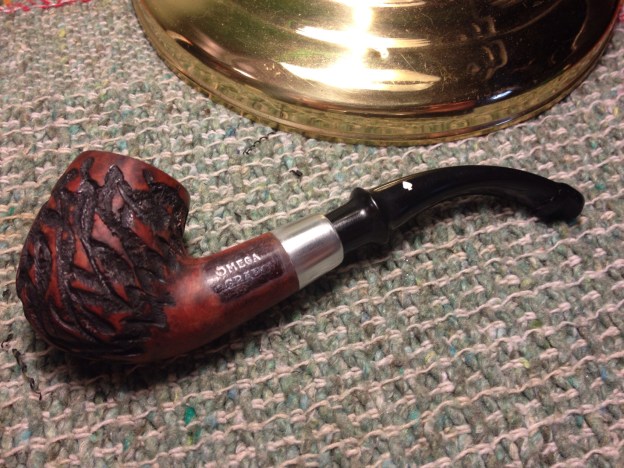
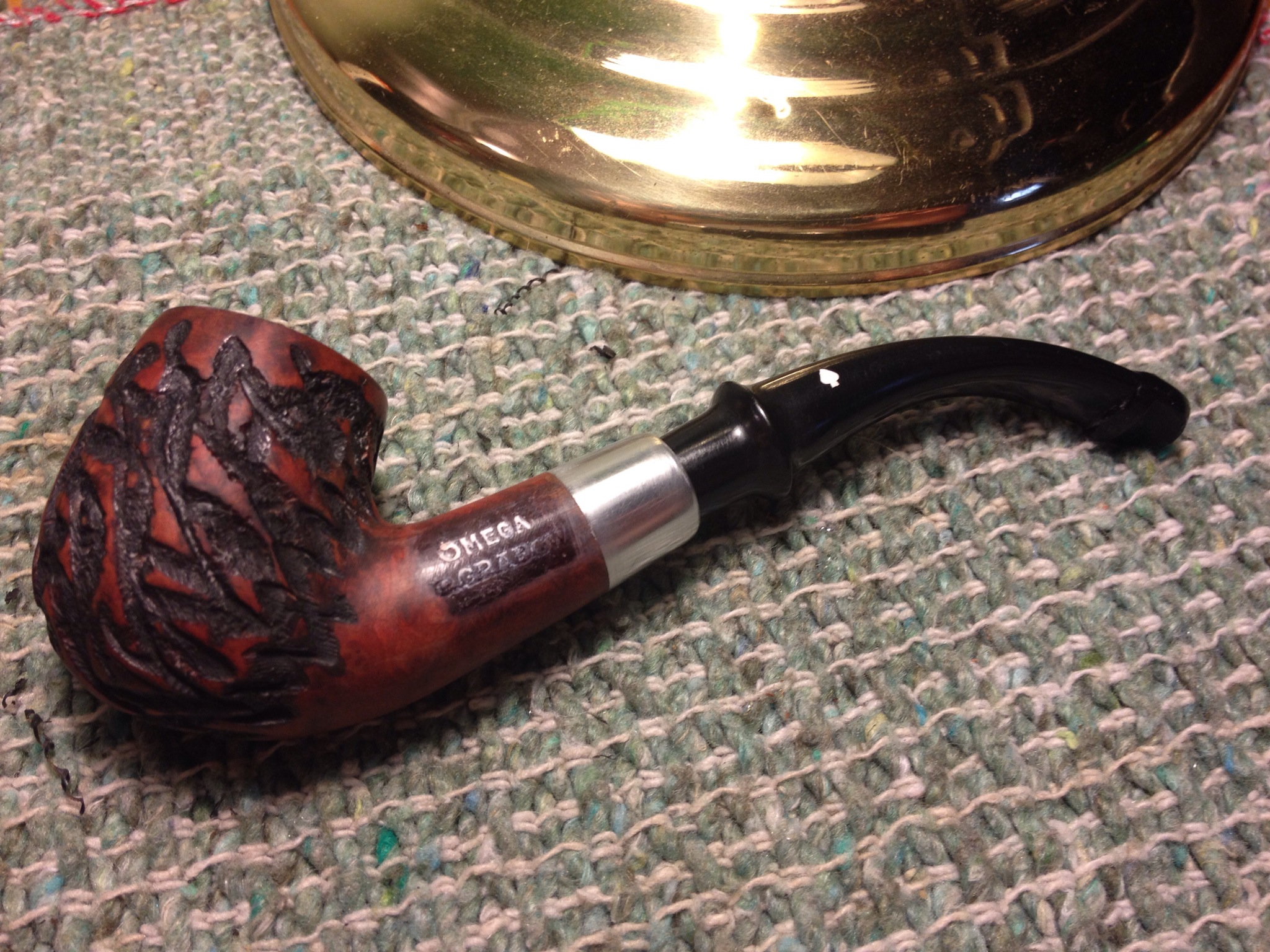
The Doctor Gets a New Coat- A Dr Grabow Omega Reborn


Blog by Greg Wolford

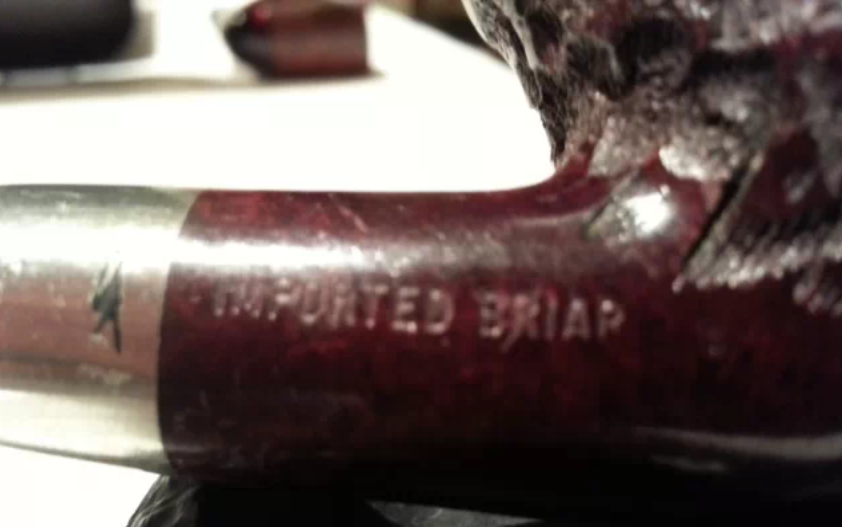
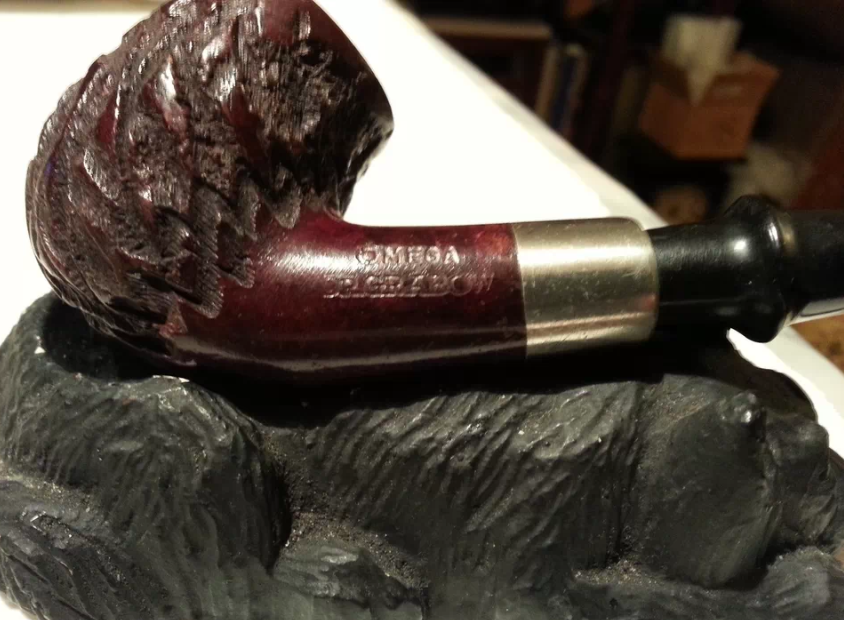
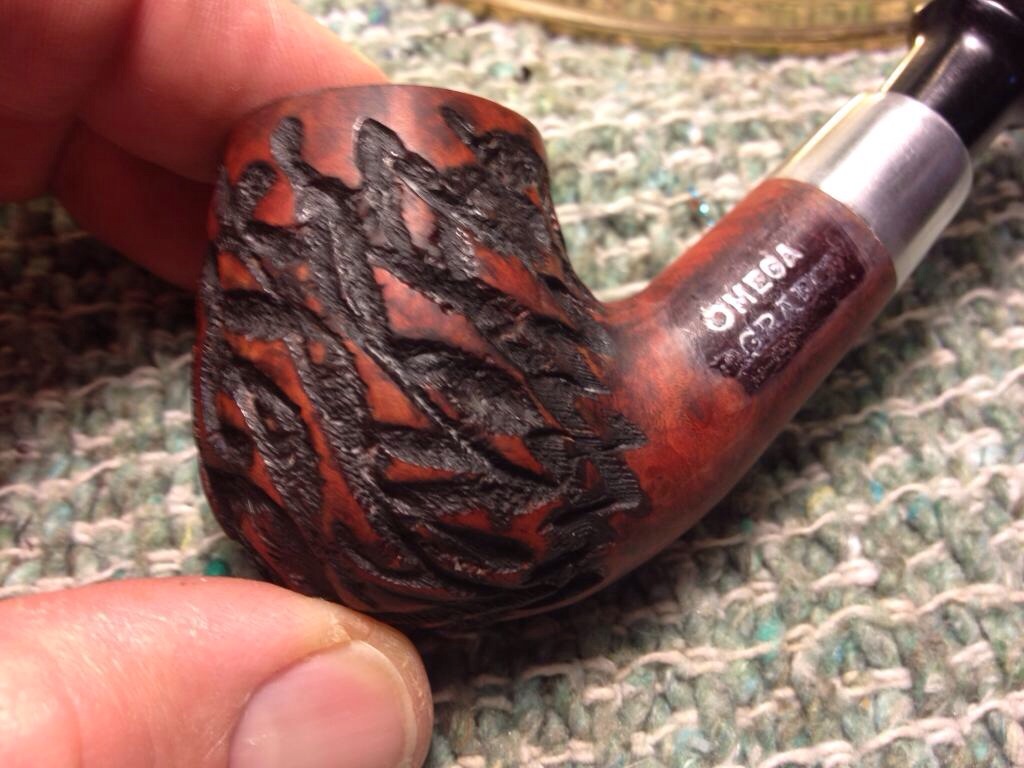
Of late I’ve been admiring system-type pipes. Having never had one I placed a bid on a lot of four old pipes – two I had little interest in – two of which were Dr Grabow Omegas, a smooth and a rusticated. Here are a few photos from the seller; I forgot (again) to take before and even some along-the-way shots.
IMG_0286.PNG

IMG_0287.PNG

IMG_0285.PNG

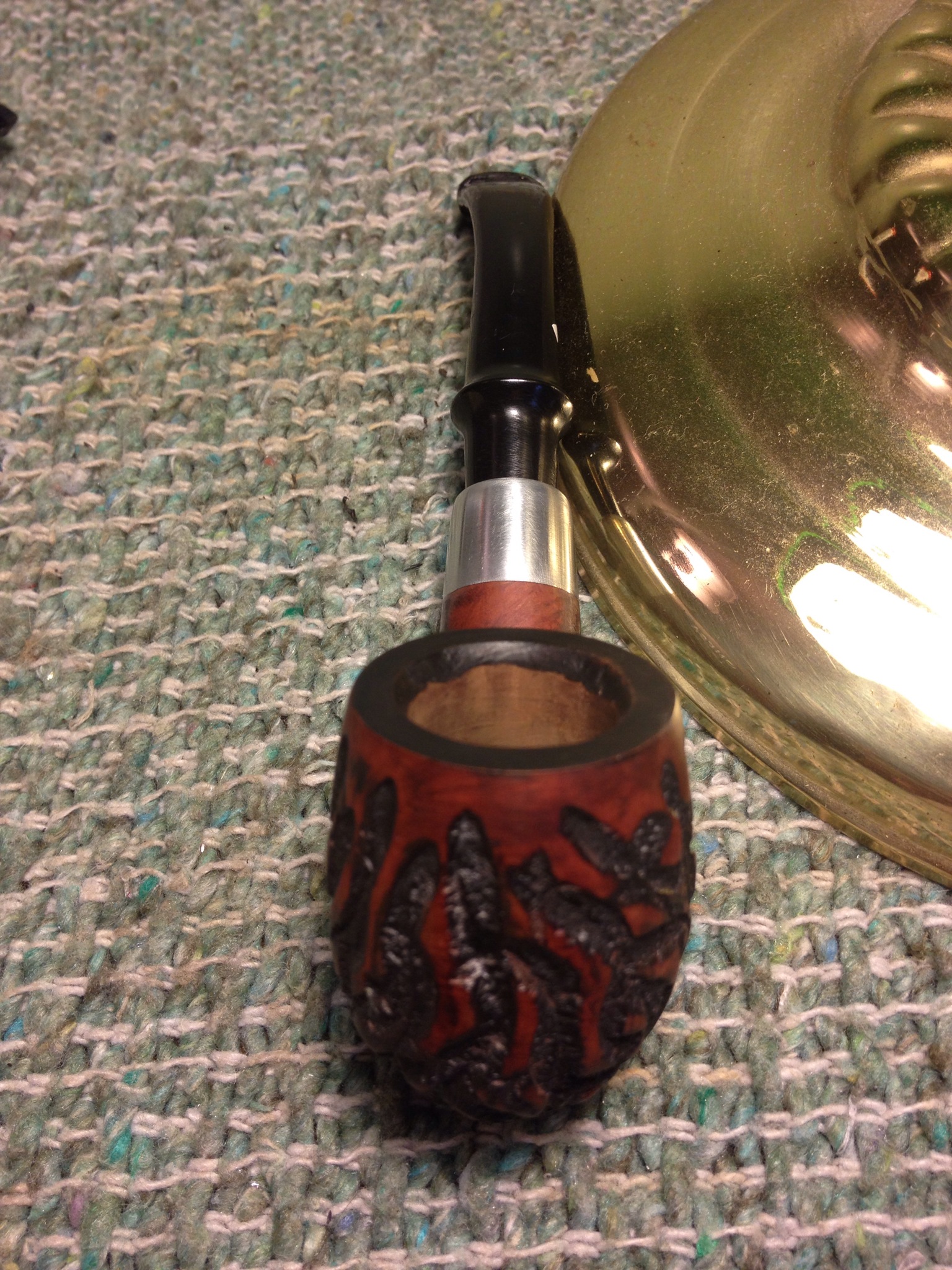
I stared on them both with the normal scrubbing the outside with acetone on cotton balls to remove their finishes. Then I reamed them back to bare wood. The smooth pipe was heavily caked but the rusticated one wasn’t at all, barely smoked really. However, you can’t tell in the above picture, the rusticated one had some heavy damage to the inner rim. I began by topping the bowl to even it it some but it would take a lot of briar removal to attempt to get out the chunks missing from the inner rim. So I took the second largest head on my Castleford reamer, too big for the bowl, and started a “bevel” on the inner rim, which I then worked with needle files and sandpaper to smooth out. I couldn’t take out all the damage but made it much less noticeable and would be even better after I stained it and it was later smoked. Next I got out my hand drill and re-drilled both bowls with a 5/32″ bit to improve the draw. I did the same thing with the tenon ends of the stems and then funneled them out. At this point I dropped both bowls in an alcohol bath overnight.

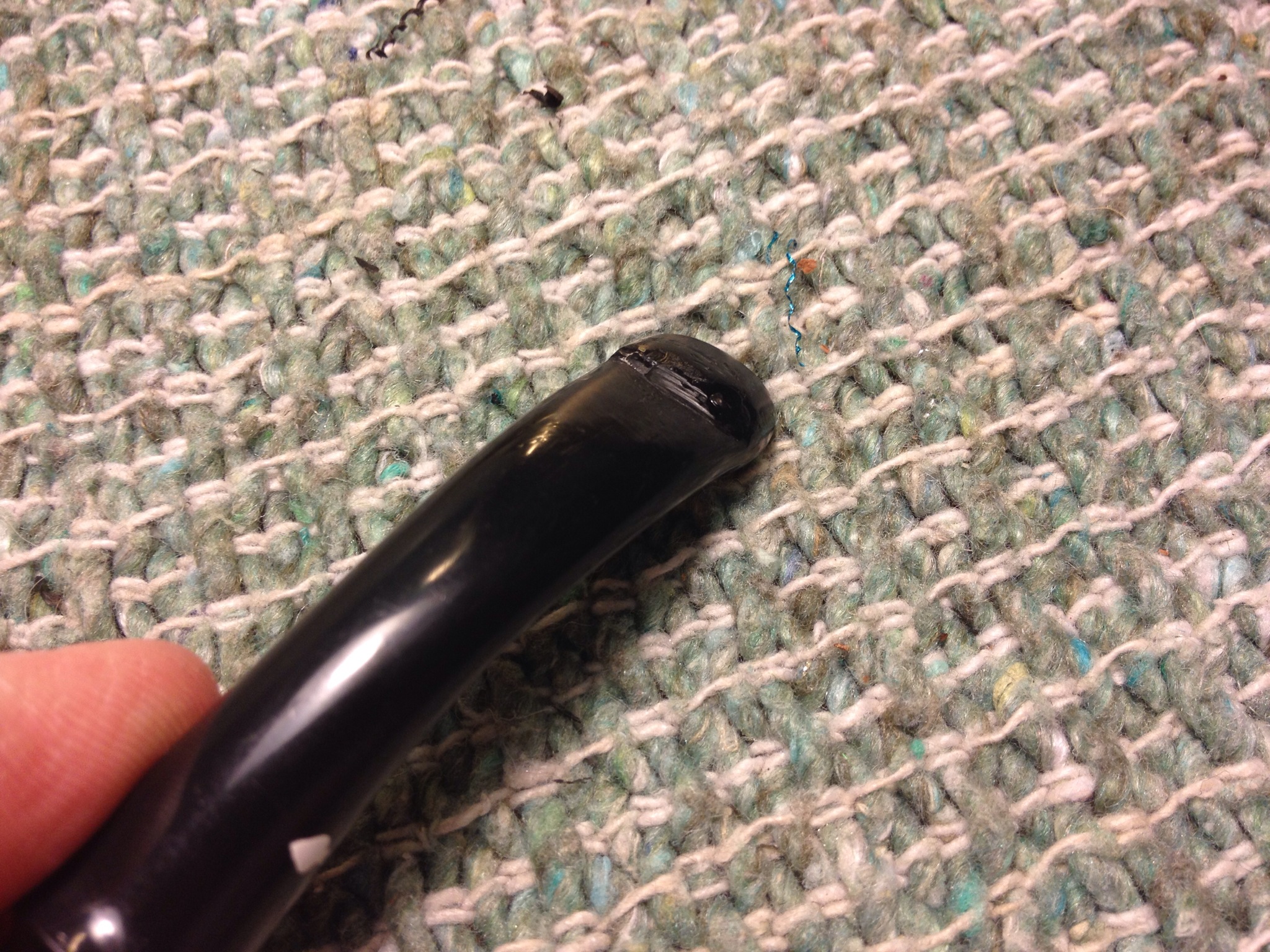
I cleaned out the stems with alcohol and pipe cleaners until they came out white. These stems are not vulcanite but a nylon-type material, ABS plastic I believe, and are not my favorite to work on. The smooth bowled pipe had a good stem the rusticated one’s stem was chewed pretty badly. I decided to use some of the adhesive accelerator and black super glue to raise up some the bites marks; I left the “roughness” of the chew marks on, thinking the glue would adhere better. I alternated polishing the “good” stem and building up the patch on the chewed up P-lip style one. Once the “rough” stem was built up to my satisfaction I used a needle file and some 320 wet/dry paper to smooth off the roughness from the chewing the previous pipeman had done. Then I polished the stem with plastic polish and was happy with the “decent” look I ended up with; I felt it just wasn’t worth the time and effort to try to get this plastic stem any closer to “new” than it was now.

The next morning I took the bowls out of their soak and let them dry an hour or so. I wanted to make this “typical” rusticated Omega look less typical so I started sanding in it; the rustication was plenty deep enough to remove some briar on the smooth part without worry of loosing the rustication’s definition. I did tape off the stamping to retain that as much as possible before starting.

Taking off the old deep red top coat would give me a great opportunity to create a kind of unique contrast on this pipe I thought so after sanding the bowl and band with 220 and 320 grits I used a black sharpie to color in all the rustication and also the rim and new inner bevel. Then I used 400 grit to sand off the bowl again, to remove the over-marks of black, and the band. Then I applied a coat of a lighter red, which is actually a stain marker I got in a set at The Dollar Tree and is marked “medium brown”. I let the stain cure for a bit and then highlighted the nomenclature with white acrylic paint, for an extra “pop”.

IMG_0290.JPG

IMG_0288.JPG

IMG_0289.JPG

While the paint cured I have the stem a final polish with plastic polish just to brighten and shine it a little more. I was tempted to try to make the bit nicer but the back of my mind kept telling me it wasn’t worth the headache so I finally decided to leave it.

I have the bowl one last coat of stain and let it dry for about 15 minutes; these bargain-markers dry real fast, even if the colors aren’t what I thought they’d be. Then I applied a good coat of Halcyon II wax to the pipe and stem and buffed it by hand.

The end product is, in my eye, a pretty neat and definitely different from most other Omega product, even with the “boogered” stem.

IMG_0223.JPG

IMG_0222.JPG

IMG_0221.JPG

IMG_0225.JPG

IMG_0230.JPG

IMG_0224.JPG

Repairing an Over-Reamed Corn Cob Pipe


Blog by Greg Wolford

About three weeks ago I was contacted by fellow PSU member, and sometimes-contributor here, Astrid after she had an accident reaming a nice old corn cob pipe. Cob Pipe Pic.1

She had remembered reading about some work my grandson and I had done to a few of my cobs and was curious if I might be able to fix the chunk that had accidentally been removed when she was reaming her “Corn Dog”.  As you can see, it really is a nice old pipe, with a super (in my opinion) Bakelite stem; I was really looking forward to getting it in hand after seeing it.

As luck would have it, I have done several repairs of this type to different corn cob pipes, as well as using the general technique for everything from raising to bottom of bowls to repairing cracked bowls. So, I told her I would be happy to doctor the old cob up for her and she sent it out to me a few days later.

When the pipe arrived I had no idea of exactly what the extent of the damage was so I was anxious to see what the box from Canada held! I was pleasantly surprised to find a couple of old pipes to tinker with (and keep) as well as a generous gift of tobacco. At the bottom of the box I finally found the old pipe, and was happy to see it was just about what I’d hoped it would be: Nothing too difficult! Here are a few photos of the rim damage:Old Cob (1)_edited-1Old Cob (2)_edited-1Old Cob (3)_edited-1Old Cob (4)_edited-1

You can see the “chip” was reasonably large, but it didn’t go through the bowl – a very good thing. I started my using a dental pick to lightly scrap the damaged area to remove any loose material; there was very little, most likely because Astrid had already cleaned the pipe very well.

The next step was to mix up a patch for the damaged area. Old Cob (5)_edited-1For this project I used a new tube of fireplace mortar/sealer; my old tube had turned into stone on me. I mention this because I have found that the different brands behave differently when dry: some are impervious to moisture, while others are not. I have found that mixing in a little cigar ash (other fine ash will work too) makes the patch solid but allows for moisture and to go through to the briar (or cob in this case) and disperse better. I also mix in a little powdered activated carbon; I use the capsules now, instead of the messy process of grinding it up myself. The activated carbon does two things: it filters out any potential taste in the first few smokes that the mortar/ash patch might have and it makes it much darker, thus blending in better. The addition of these to components also makes the patch set much faster so you need to have some water on-hand to mix it right; you are looking for a dough-like consistency, wetter for longer working time. After mixing the “putty” up I began applying it with an old pipe tool’s spoon end, working it in to make a nice, Old Cob (6)_edited-1even surface, except for the top, where I left a small gap to blend in later. You can see the still wet patch in this photo, after I had smoothed it out; I used a flashlight to make the repair area easier to photograph. I then took a small amount of powdered carbon and sprinkled it onto the patch to make it blacker and less noticeable. I then set the pipe aside until morning to allow the repair to cure.

The next day it had hardened into a night patch. But, as it sometimes does, the patch had shrunken. I mixed up a little pipe mud and applied it over the patch to make it more flush inside. You can see the result of the second patch in this photo.Old Cob (8)_edited-1 You can also see here the “dip” I left in the rim; I did this to blend in the rim with wood putty.

As I was waiting on the pipe mud to dry, I took a damp cotton swab and cleaned off the rim of the pipe to make sure there was nothing to keep the next patch layer from sticking and to lighten the bit of residue on the rim already. I then applied some Elmer’s Natural Wood Putty to the rim. Again, this is something you want a little water on-hand to work with and smooth the repair as you go.Old Cob (9)_edited-1 I used both a cotton swab and my finger to apply the wood putty, shaping it as I went, but applying a little extra in case it shrank.Old Cob (10)_edited-1 After I was happy with the wood putty patch I used some of the pipe mud and charcoal powder to mute the brightness of the rim repair. This would ultimately be sanded and stained so I didn’t spend too much time or effort on this step, only on making sure the inside or outside of the bowl didn’t have an excess on them.

The weather was rainy and humid during the time that I worked on this pipe so extra drying time was required on each step/patch. At this point I set the pipe aside for a couple of days to be assured that everything was well dried and cured before I moved onto the final shaping and stain blending.

When I came back to the pipe I checked to make certain the repairs were all well cured, and they were: very solid feeling all the way around. Now it was time to shape the rim; I wanted to get the top nice and even but didn’t want to take away the character of the rim so I opted to lightly top the bowl with 400 grit wet/dry paper, checking often. Old Cob (13)_edited-1After I was satisfied with the rim being level, I used the same sandpaper to touch up the edges just a bit. Looking well-shaped to my eye, I broke out the stain markers I so often rely on, choosing the lightest color I had for staining and blending the rim.

All in all, I think this was a successful repair job that came out quite well. I am sure that after a few gentle smokes that the rim will take on an even more “natural” and blended look. And best of all, I think this old corn cob pipe will provide many more years of good service to Astrid – and maybe even to someone else down the road!Old Cob (11)_edited-1 Old Cob (12)_edited-1


One Just for Fun: A New Frankenpipe – Combining a Few Parts to Craft a Rustic Pipe


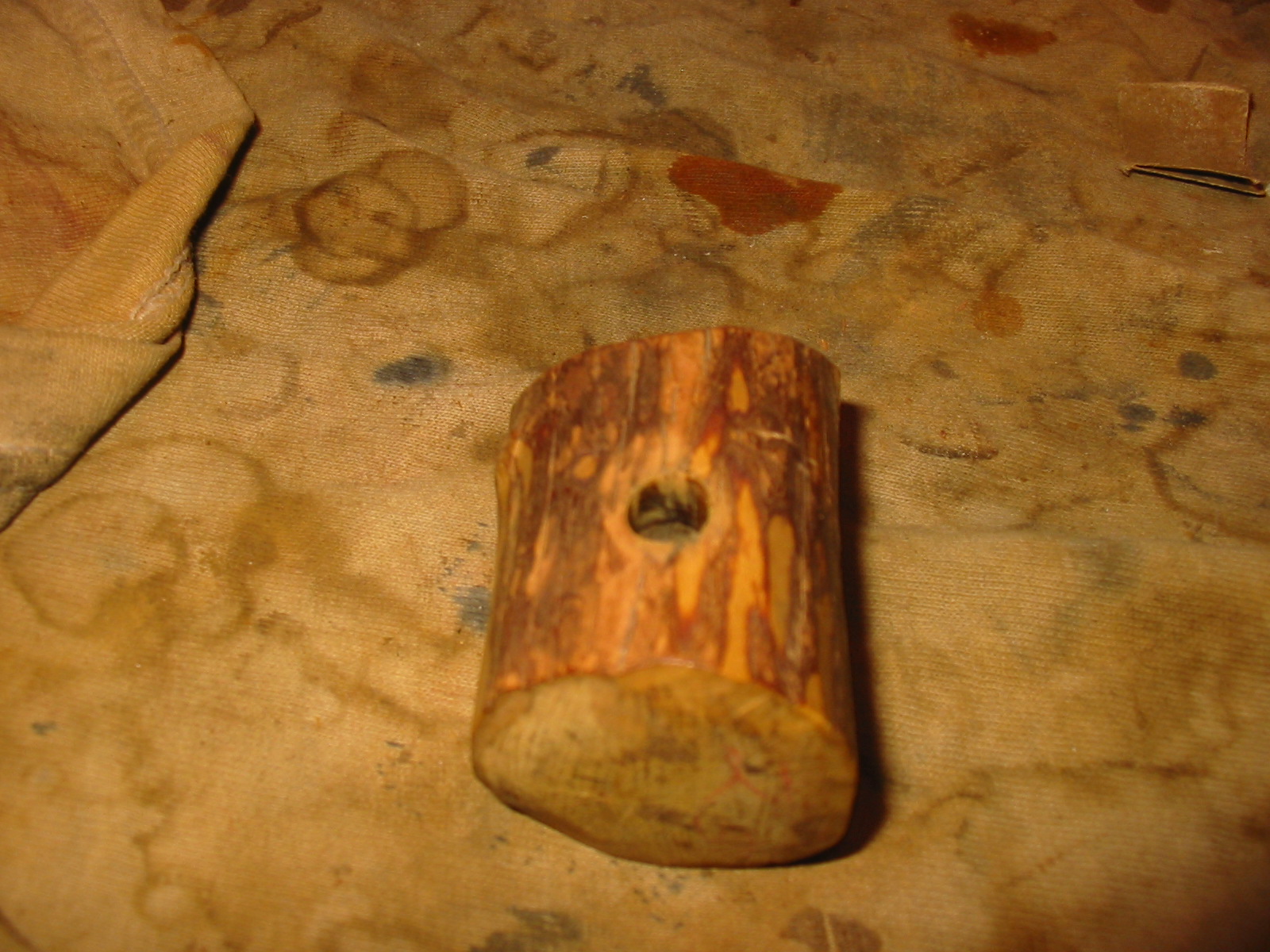
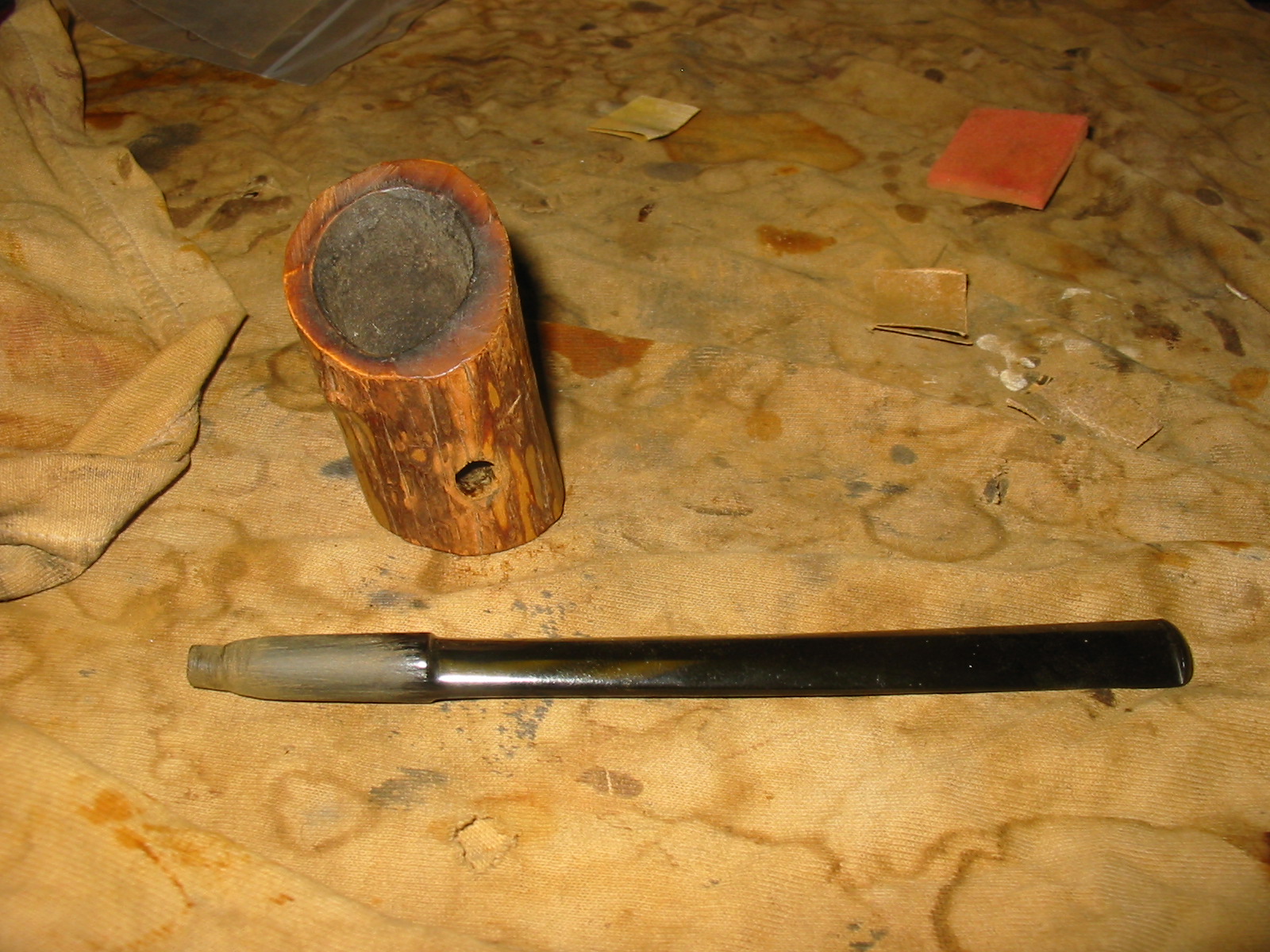
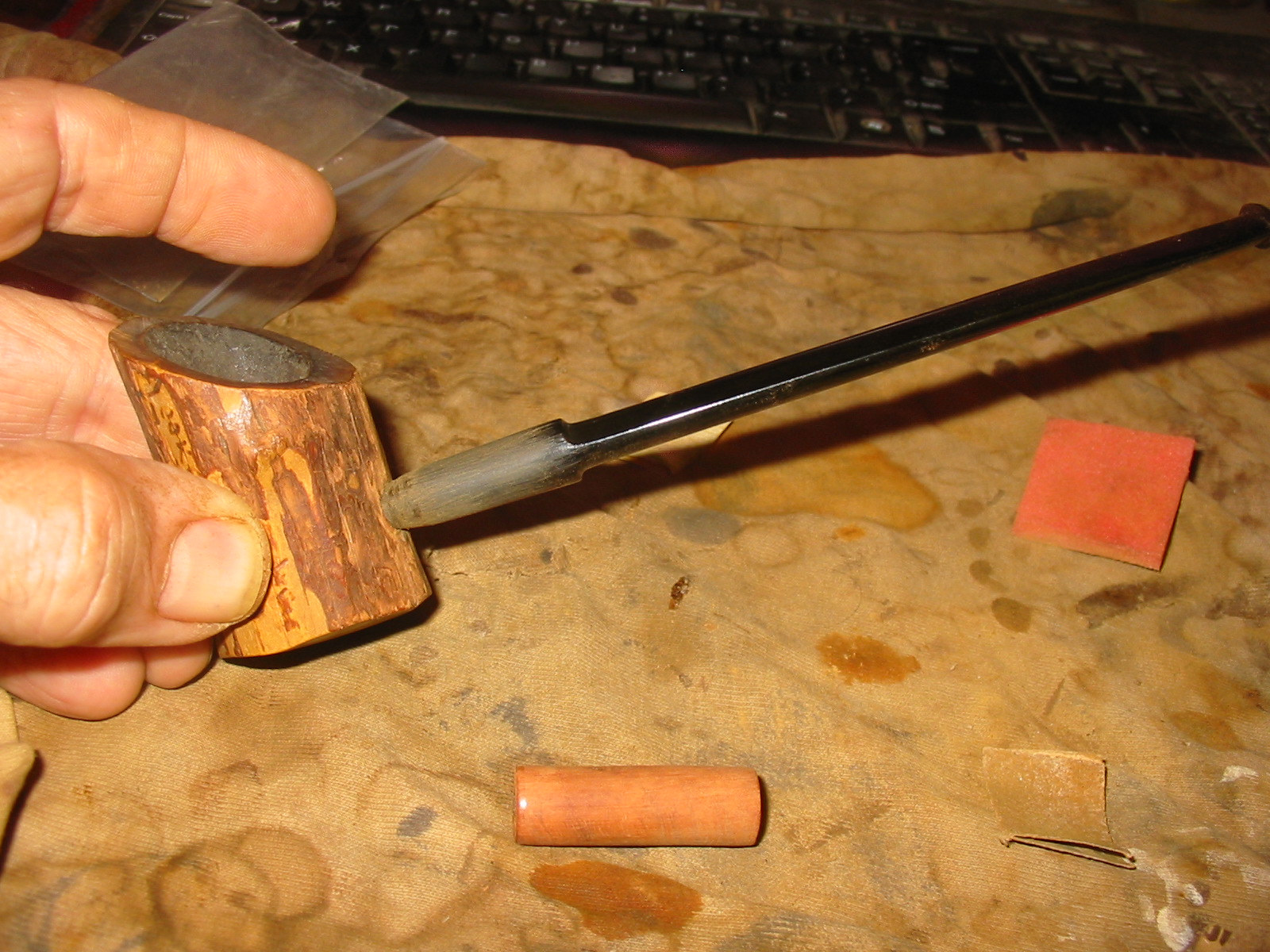
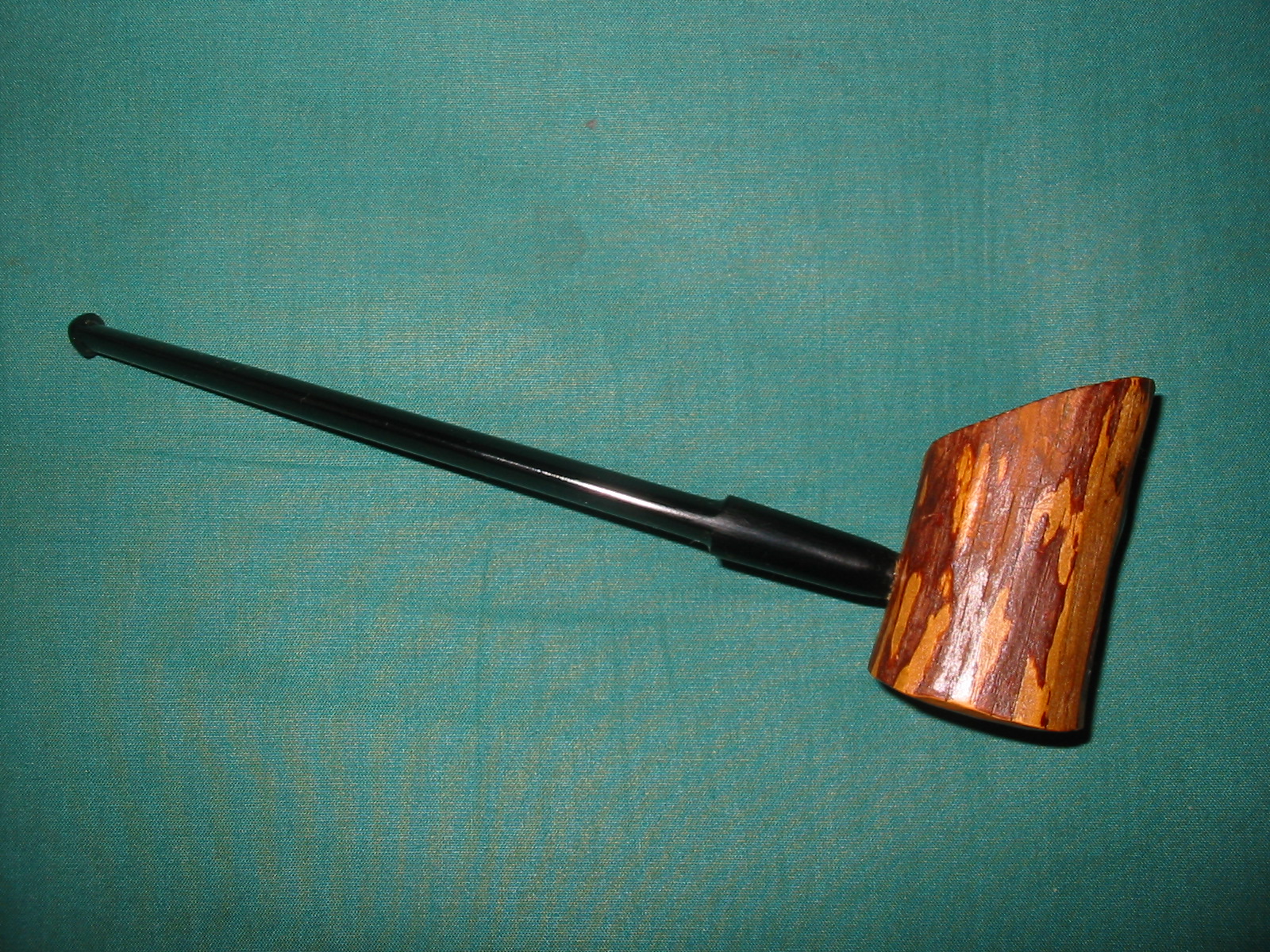
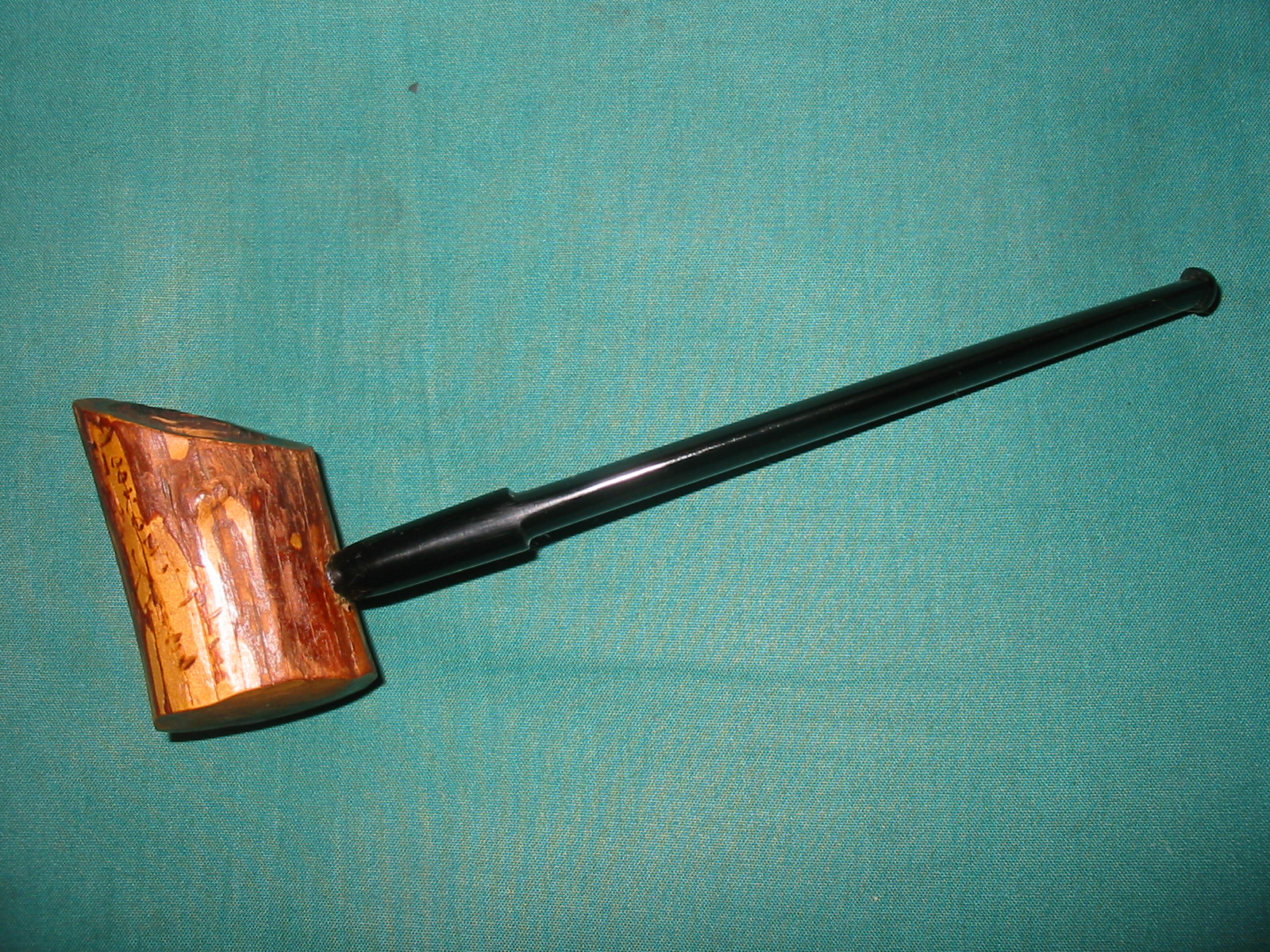
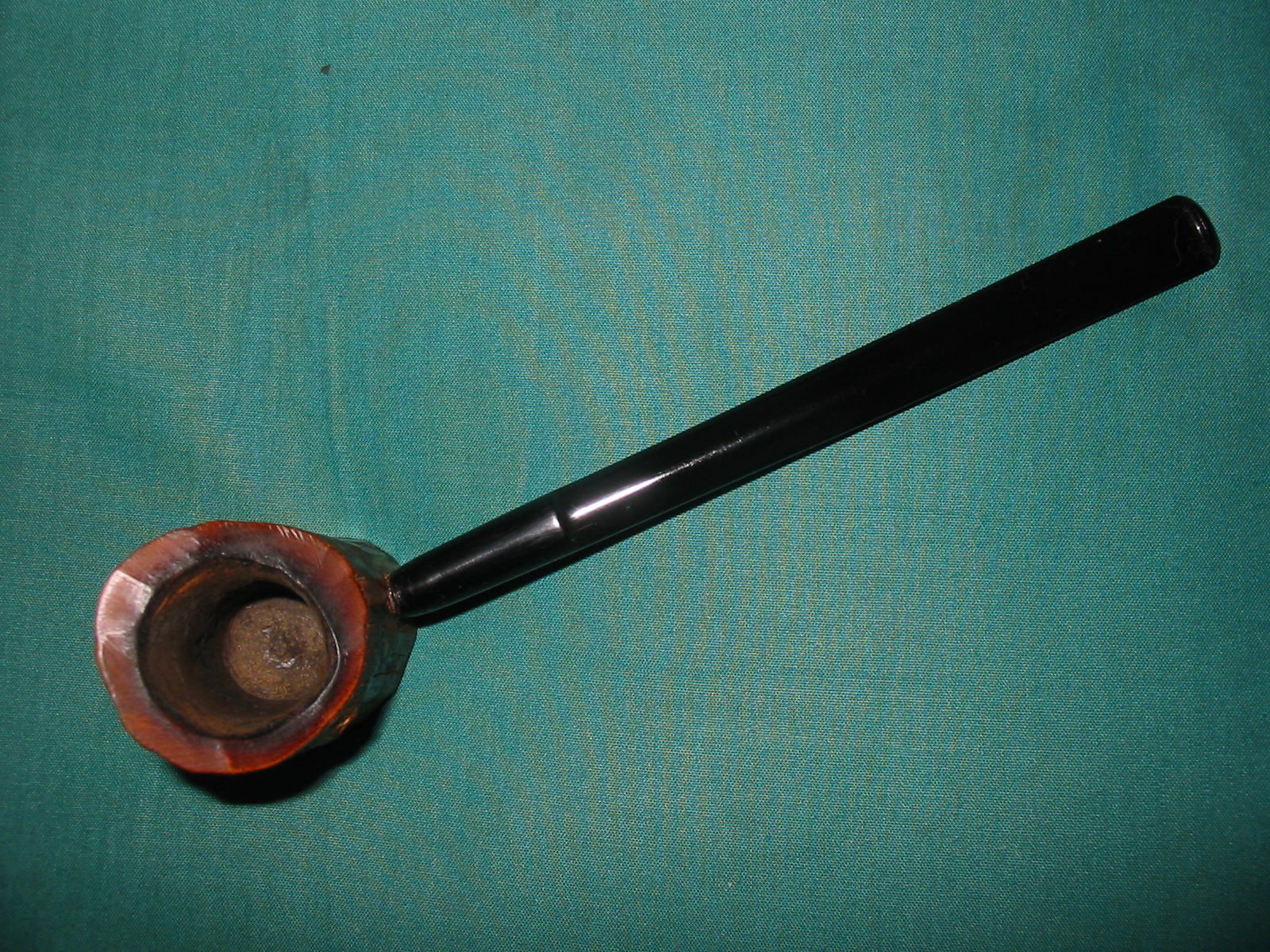
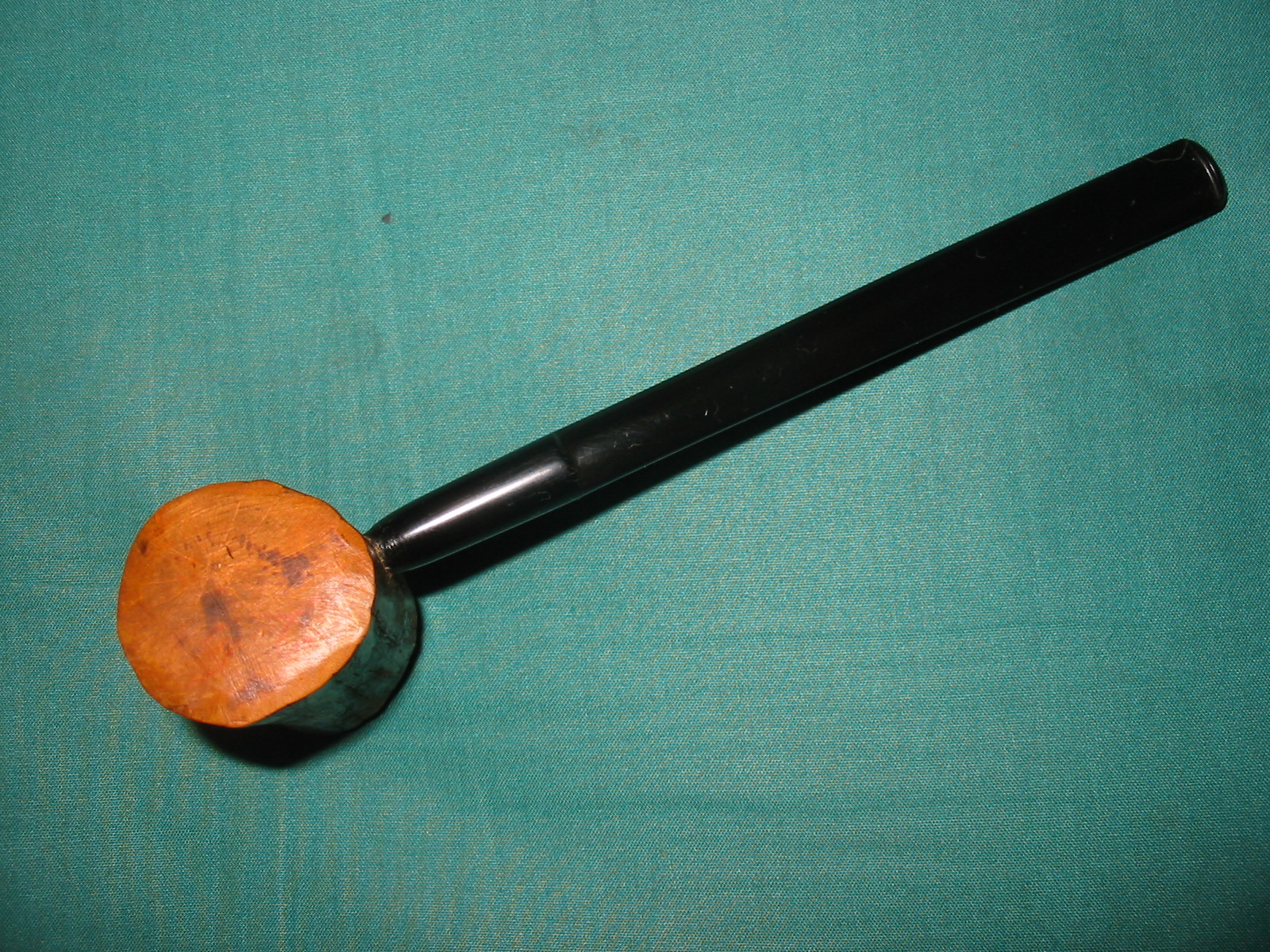
In the box of gift bowls that came to me were a few that I could fiddle with and see what I could come up with. There were no stems for these items so it was a blank slate to work on. The first of these was an old rustic bowl. As I looked at it I could see some possibilities for this old bowl. The bowl had a decent cake on the walls and there were no cracks in the piece of wood. It was like an old branch of cherrywood. The bark had been peeled and the top roughly carved. The bottom of the bowl was rounded. Internally the bowl bottom was flat and sound. The airway entered the bowl precisely on the bottom. There was a drilled airway on the side of the bowl that looked like it probably had a long stick for a shank and stem – possibly a reed stem.
IMG_7394

IMG_7395
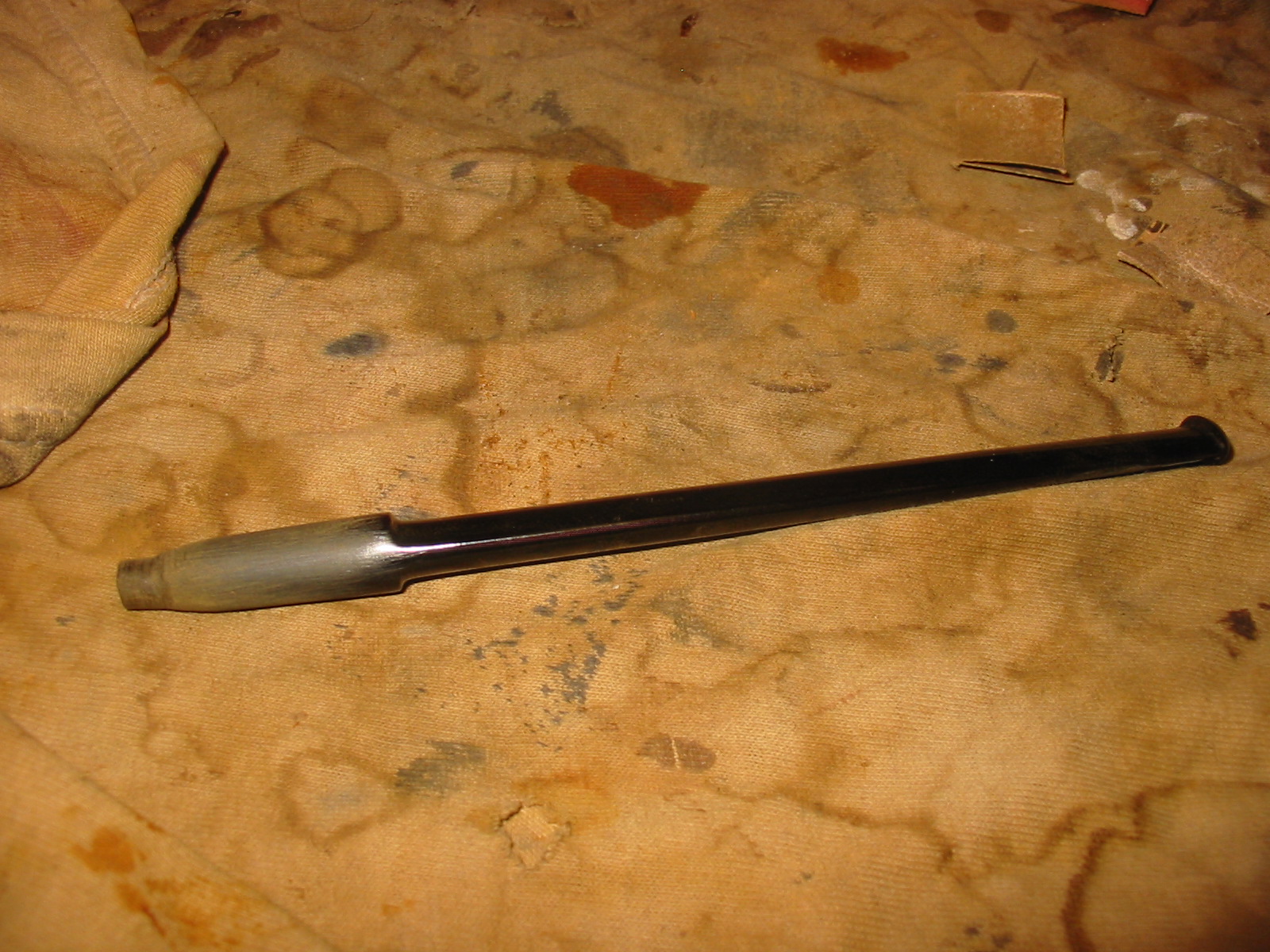
I did not have a reed stem or a wooden shank to insert in the bowl but I did have an old vulcanite long stem that would work. The tenon had been tapered down and it had a slight saddle that gave it a unique look.
IMG_7393
I sanded the taper and reduced the diameter of the end of the stem/tenon. I sanded it until it fit snug in the hole in the bowl. I sanded it with 150 and 220 sandpaper to shape the stem and clean up the fit. I sanded it with a medium and a fine grit sandpaper to remove the scratches left behind by the sandpaper.
IMG_7396
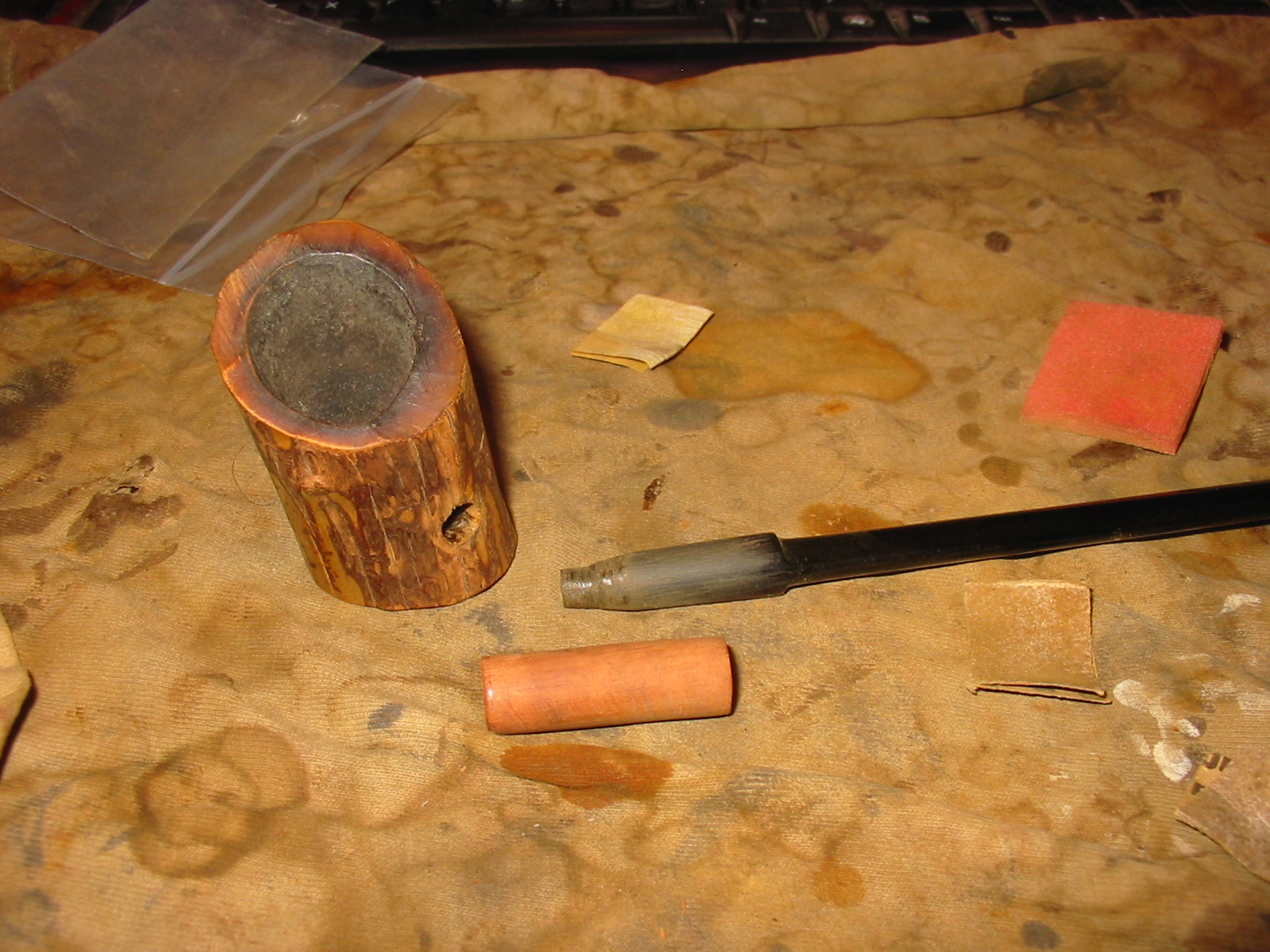
I have a briar shank piece left over from other work I had done and for a short time considered inserting that between the bowl and the stem. I laid it out to see what it would look like and did not like the look so I set it aside for a later project.
IMG_7397
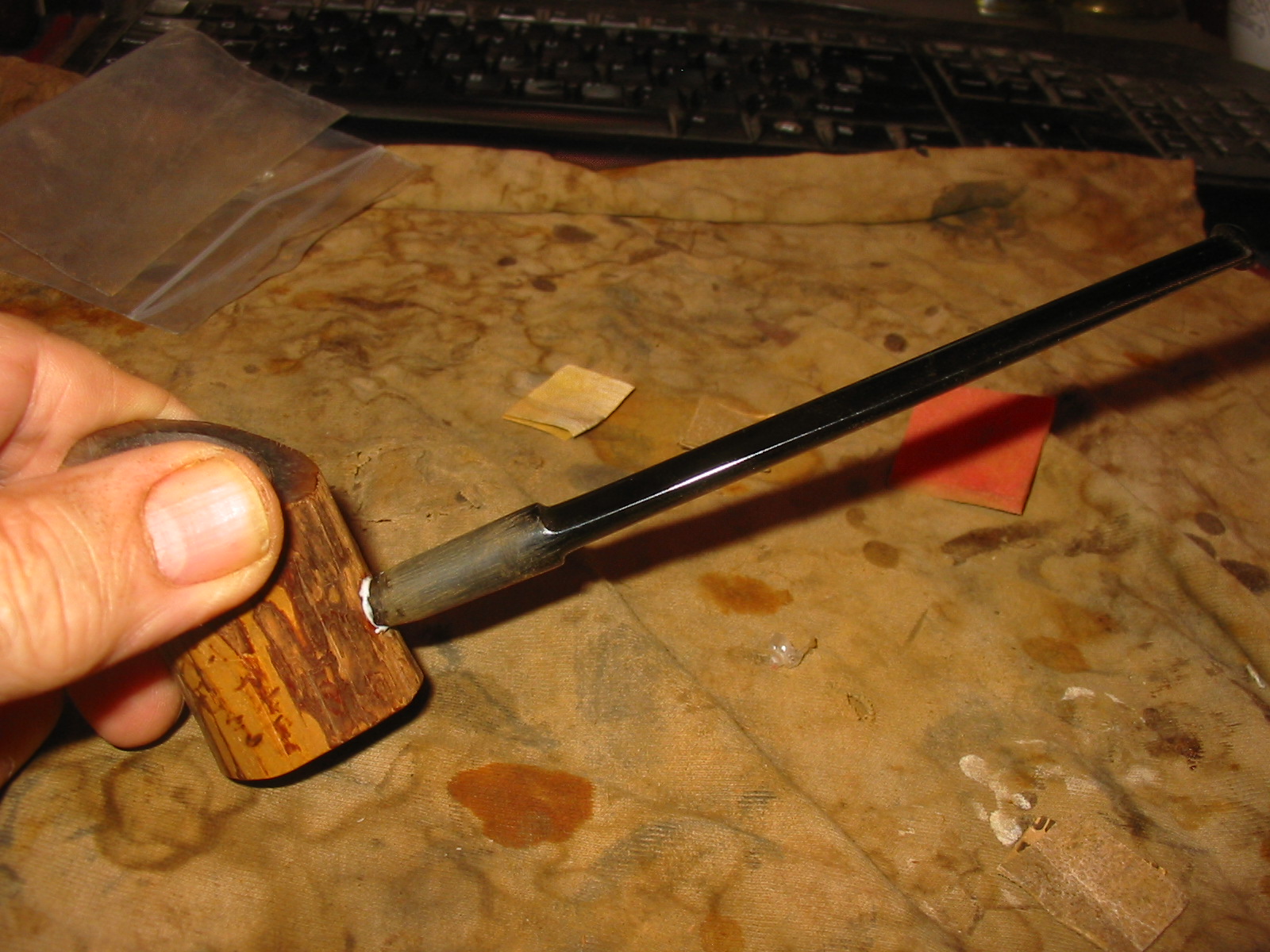
I turned the stem directly into the bowl and checked on the fit. The short tenon end on the stem was the precise depth of the hole in the side of the bowl. That made the fit perfect.
IMG_7398
I decided to glue in the stem with wood glue rather than leaving it a pressure fit stem. I decided the look would be similar to a mini-church warden cob and the fixed stem would work well with this particular bowl. I put the glue on the tenon and pressed it into place. I wiped up the spill over and wiped it down with a cotton pad to clean the briar and vulcanite surfaces.
IMG_7399
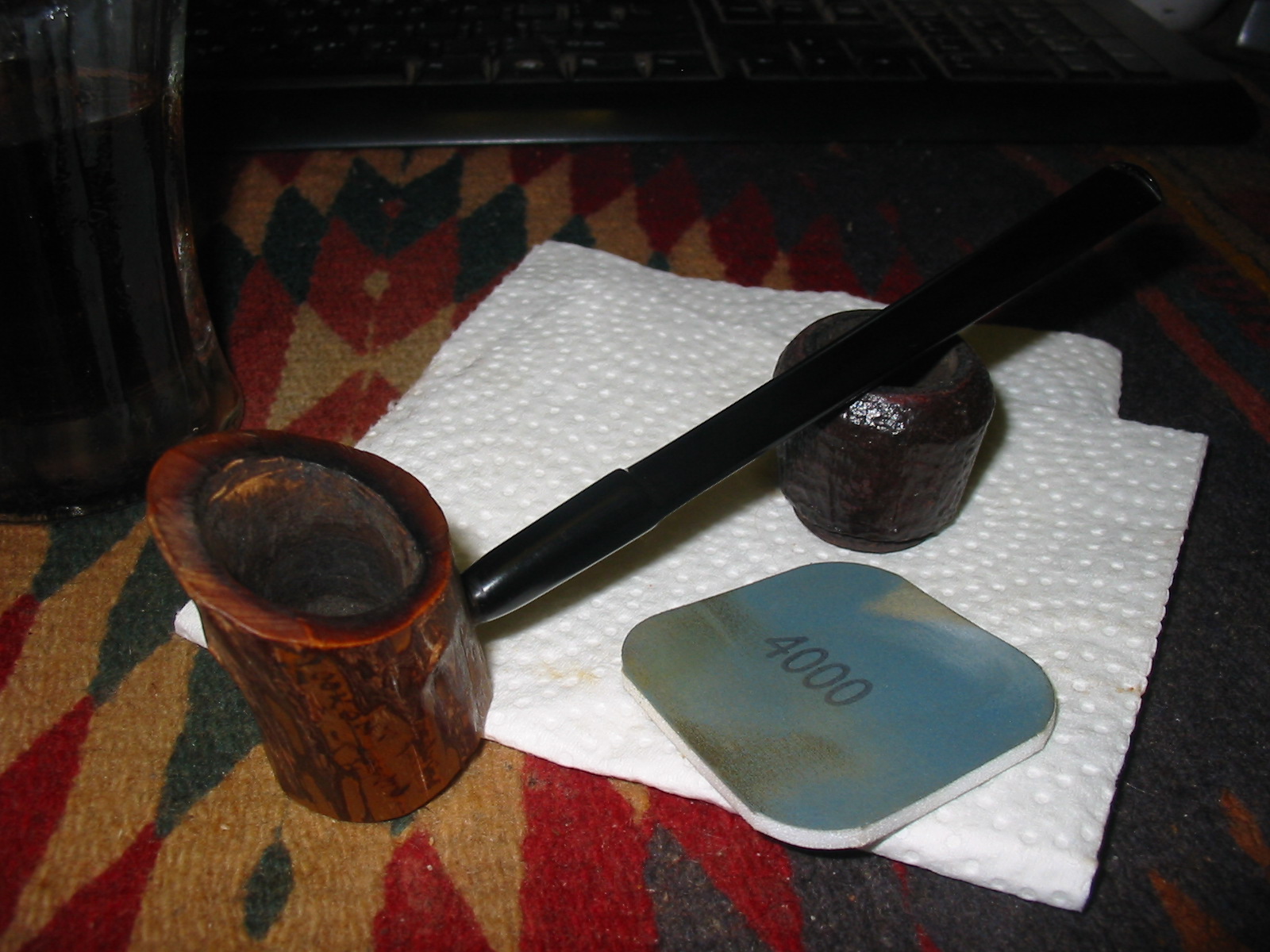
I sanded the stem with micromesh sanding pads – wet sanding with 1500-2400 grit pads and dry sanding with 3200-12,000 grit pads. The look of the pipe was quite acceptable.
IMG_7401

IMG_7402
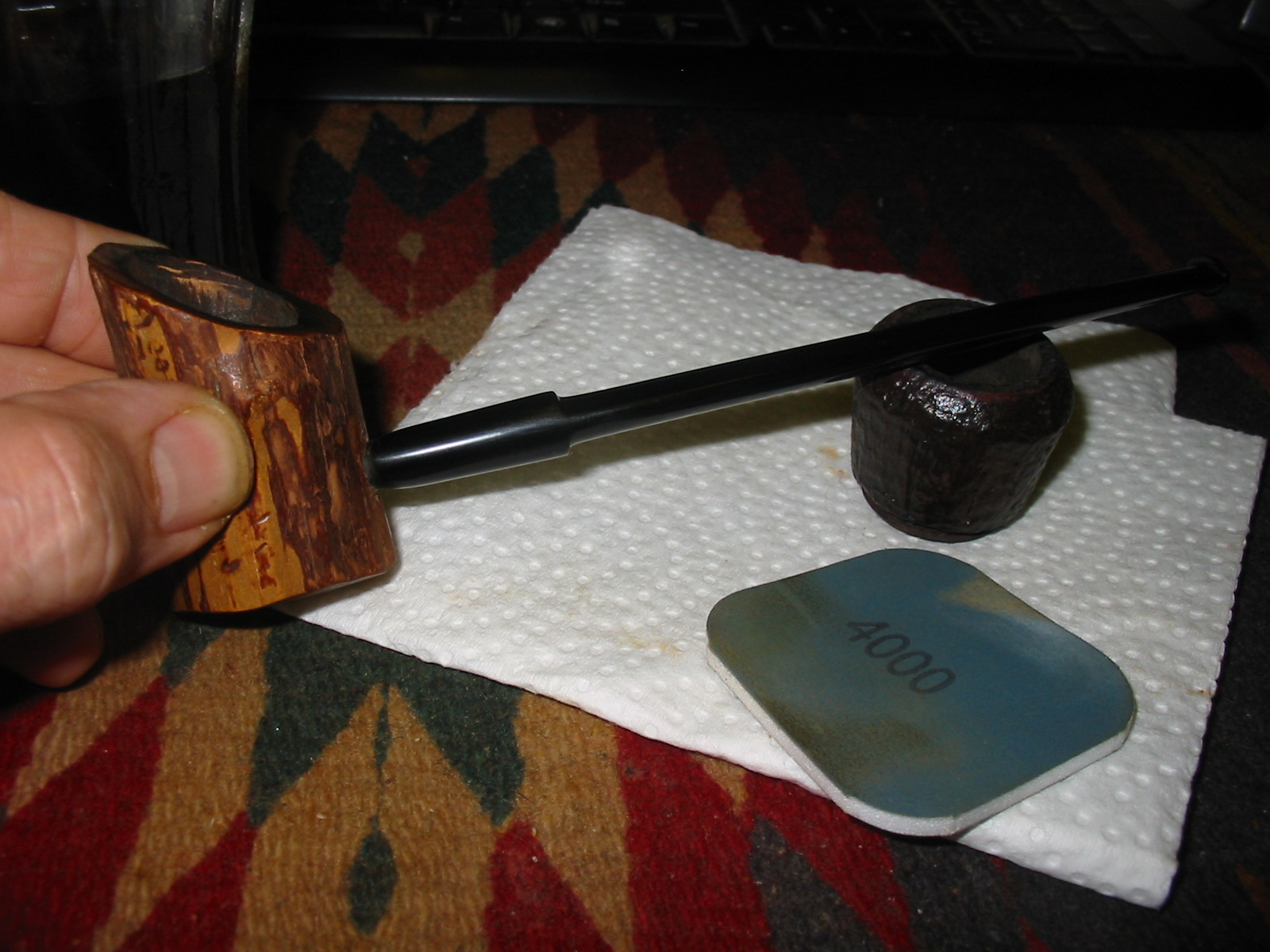
I gave the bowl a thin coat of medium brown aniline stain, flamed it and buffed it. The finished pipe is shown below. Now I need to get a straw hat and use it as a yard pipe. It should work well as a pipe that will not leave any worry when I am working in the garden or mowing the lawn. It will be a good pipe to smoke while sitting and reading on my front porch.
IMG_7414

IMG_7413

IMG_7411

IMG_7412