Author Archives: upshallfan

Unknown's avatar

About upshallfan

Moderator on the PipesMagazine forum since 2011. Guest contributor on the Reborn Pipes Blog by Steve Laug.

Alpha Abrasives – Micromesh Alternative


Blog by Al Jones

Yesterday I reluctantly escorted Mrs. Jones into our new “Hobby Lobby” store. After overcoming the fright of a giant floral area near the entrance, I have to admit there was some interesting items for sale.

I made my way to the model making section and found some products made by Alpha Abrasives that appear to be identical in design and grade sizes as Micromesh. But, these products were significantly cheaper. Later, I found their entire line on their website. Hobby Lobby carried the sheet and pad sets detailed below at the online pricing.

Micro Cloth Finishing Products
http://www.alphaabrasives.com/alpha/micro-cloth-finishing-products.php
– 2″ x 2″ pads @ $8.99/set
– 3″ x 4″ cloths @ $14.99/set (my preference)
– Foam block for holding the cloth (I bought one of these)

Sanding Files
http://www.alphaabrasives.com/alpha/sanding-files.php

Plastic Sanding Needles
http://www.alphaabrasives.com/alpha/plastic-sanding-needles.php

Sanding Pads & Sanding Foam Blocks
http://www.alphaabrasives.com/alpha/sanding-pads-foam-blocks.php

I find that I don’t use the full line of the micromesh and typically only use the last four grades. Alpha does not sell individual grades, but I will inquire about that option

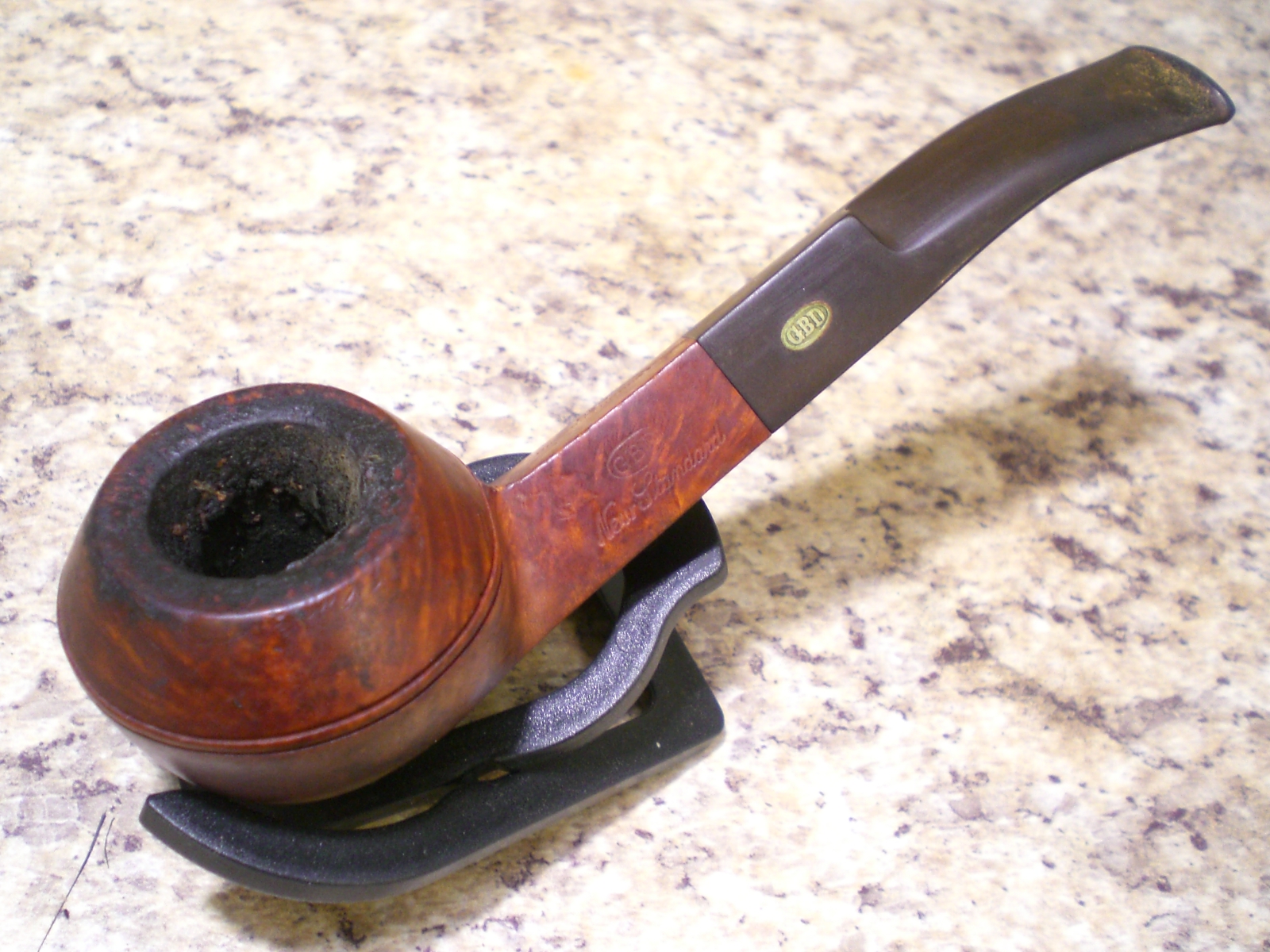
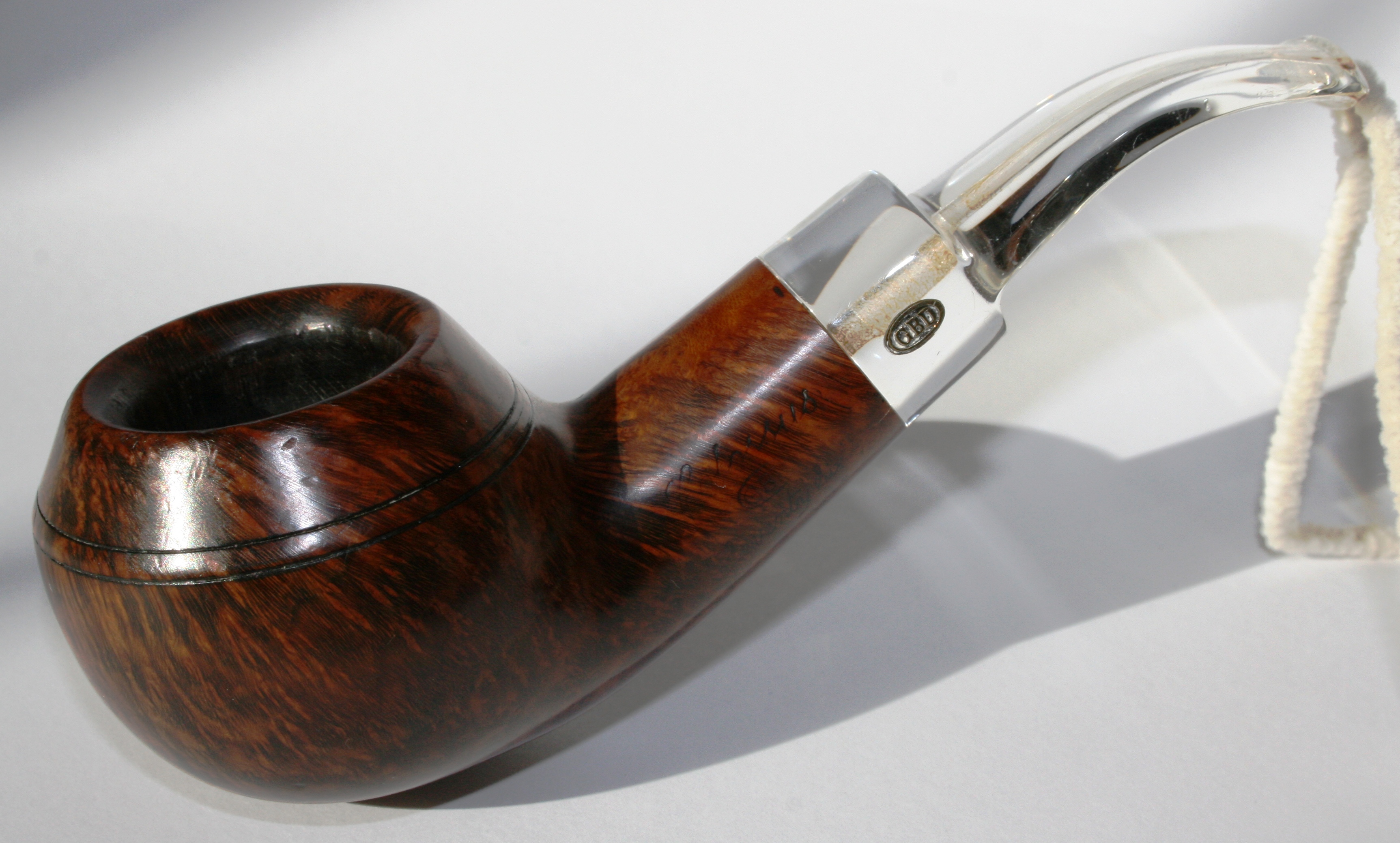
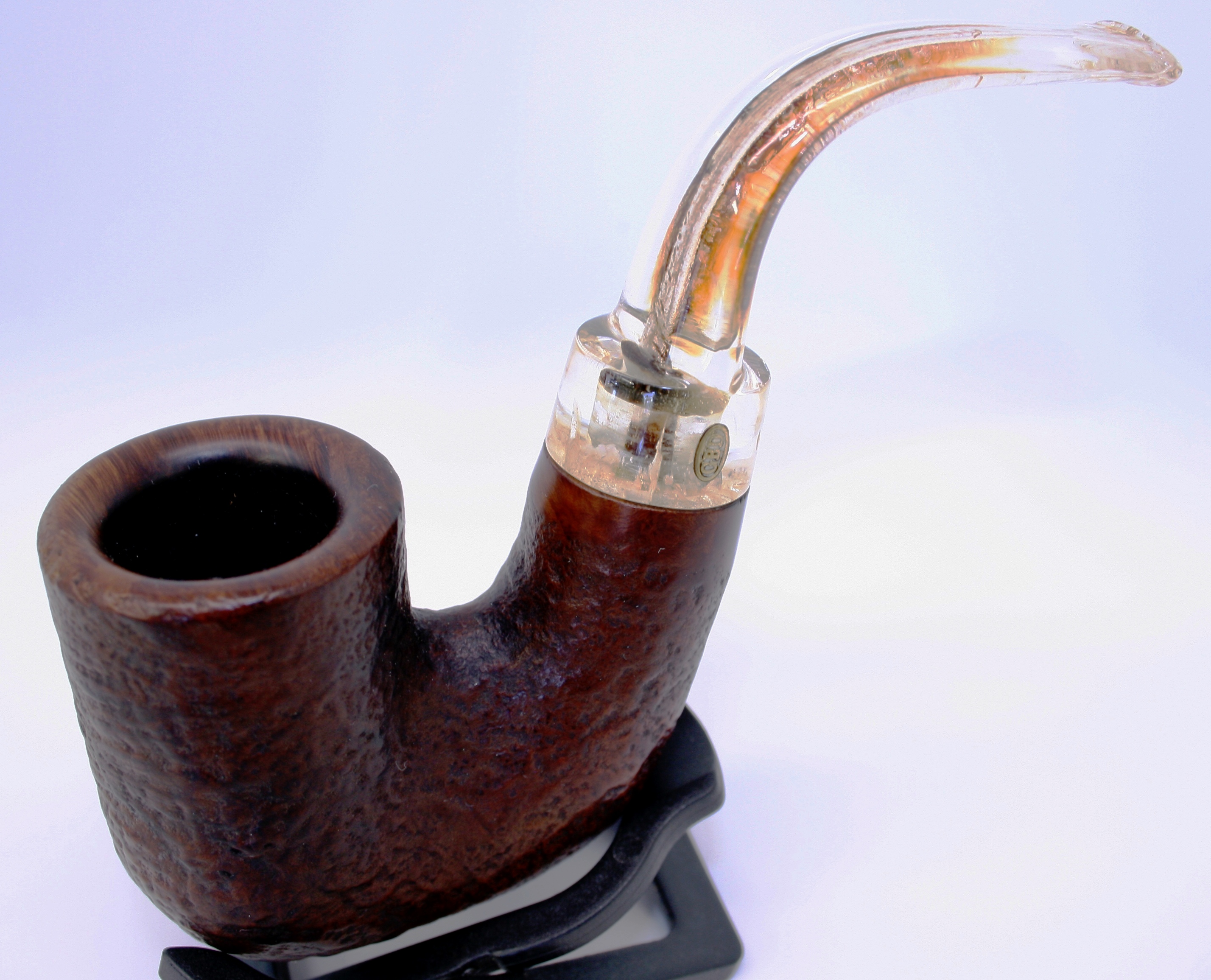
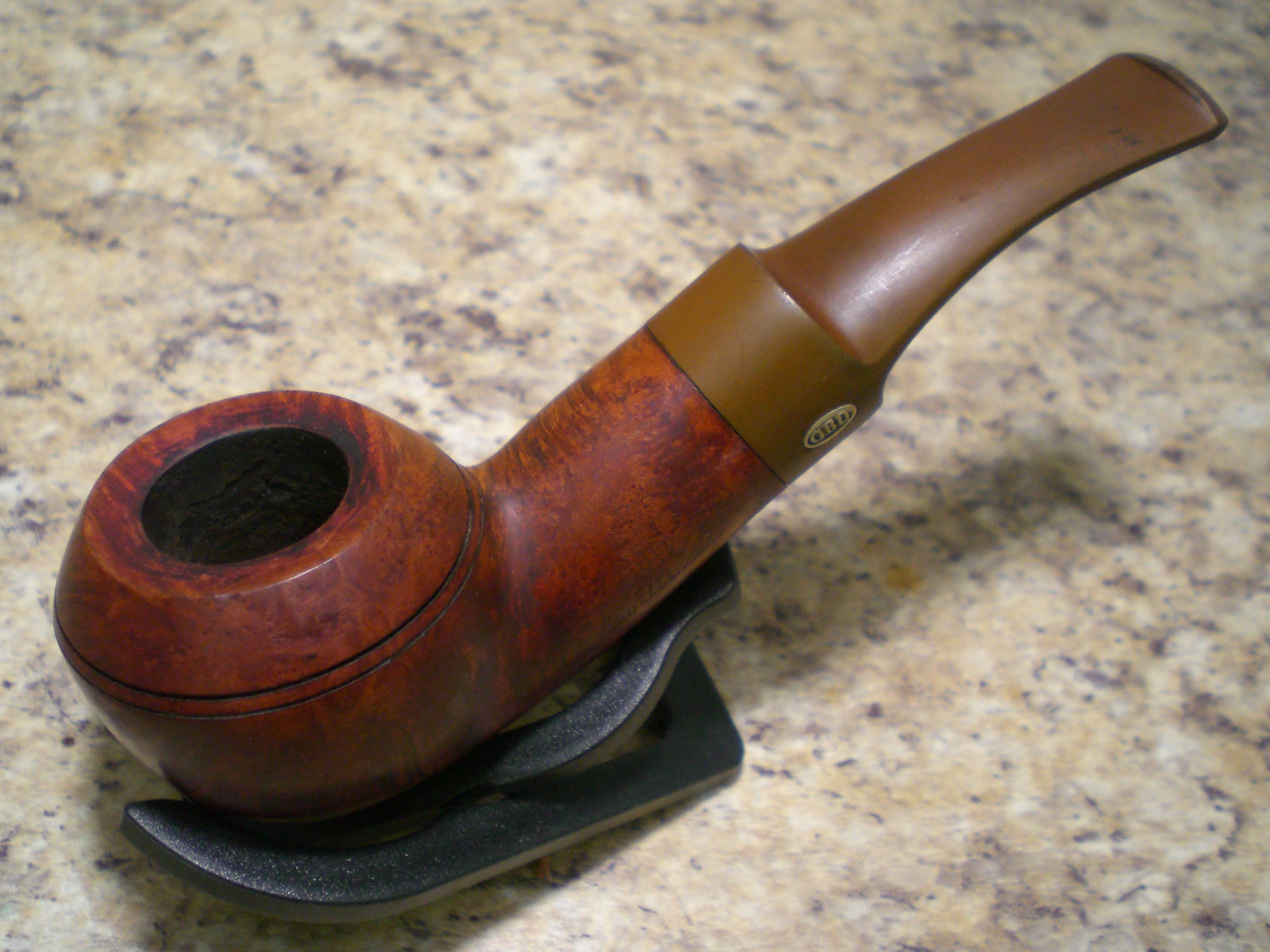
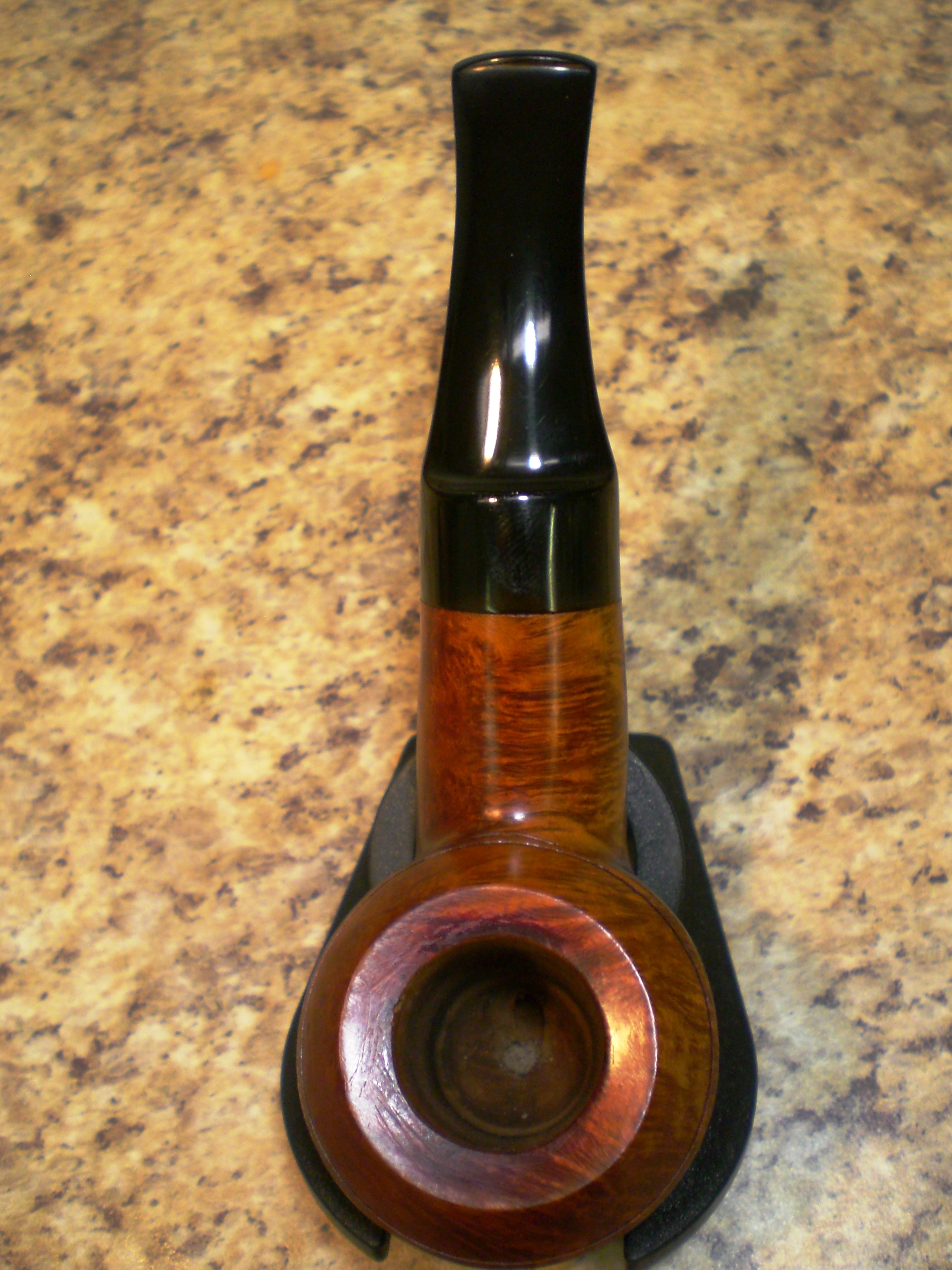
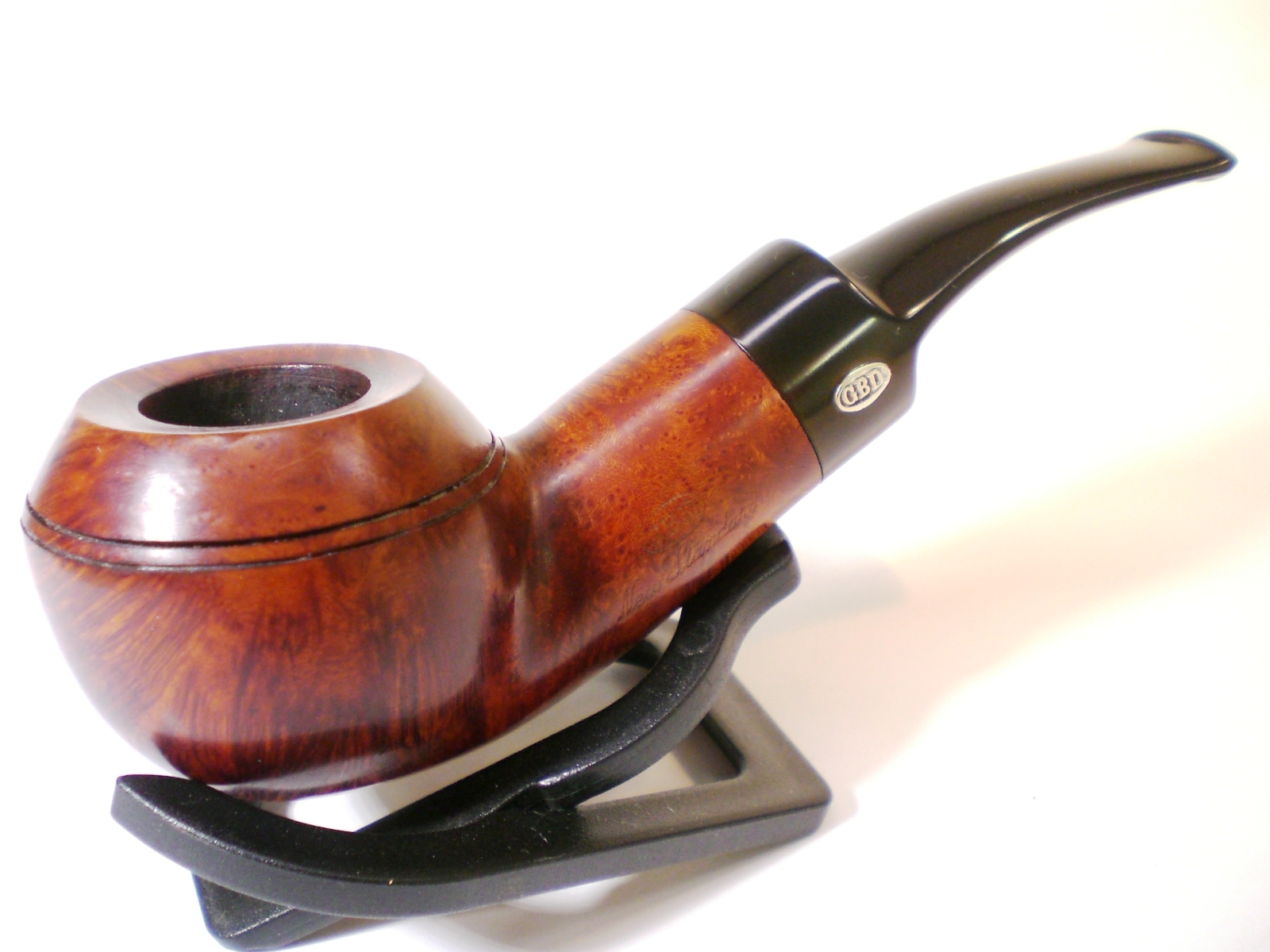
GBD Bulldog #549 New Standard Restoration


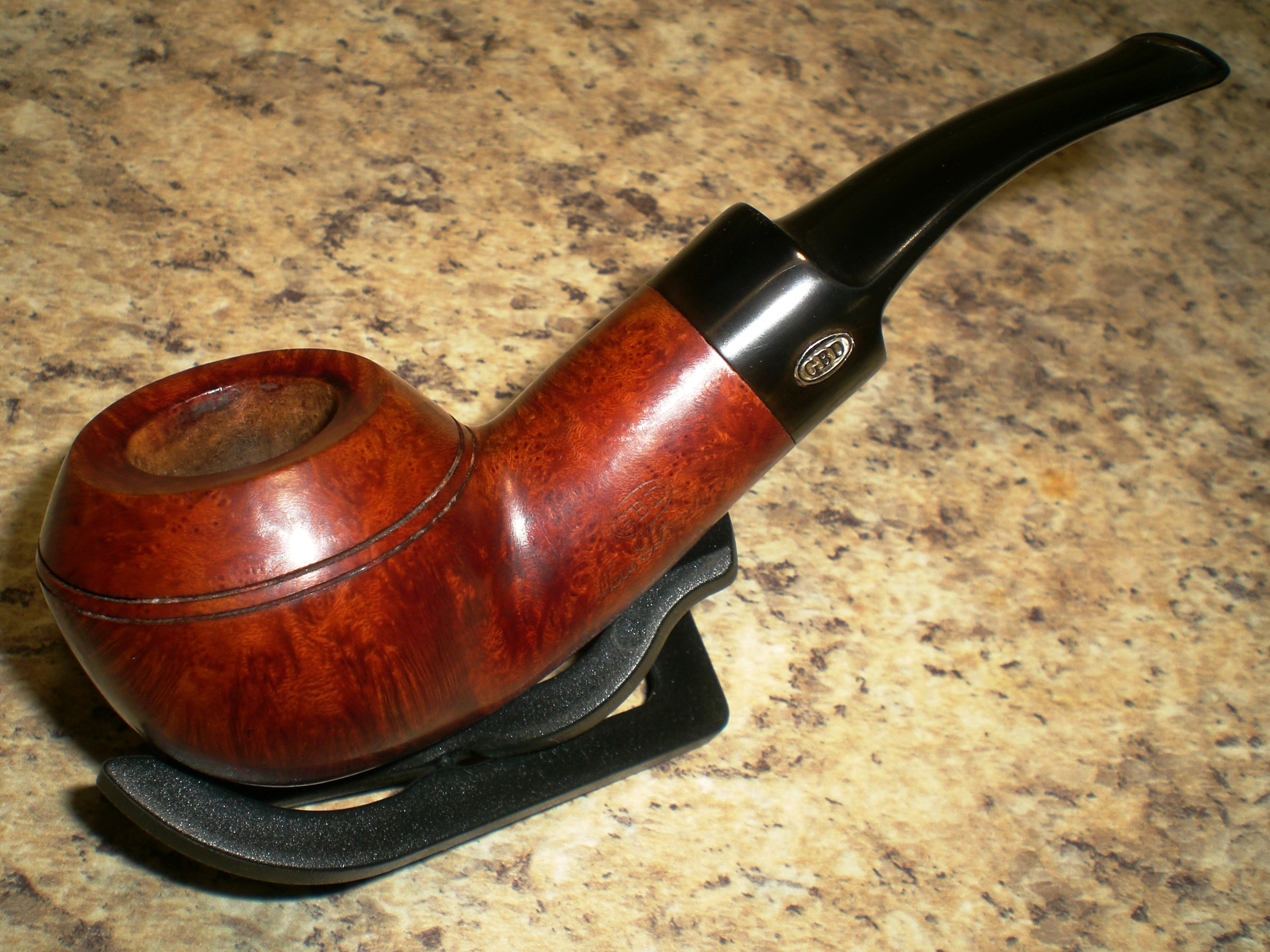
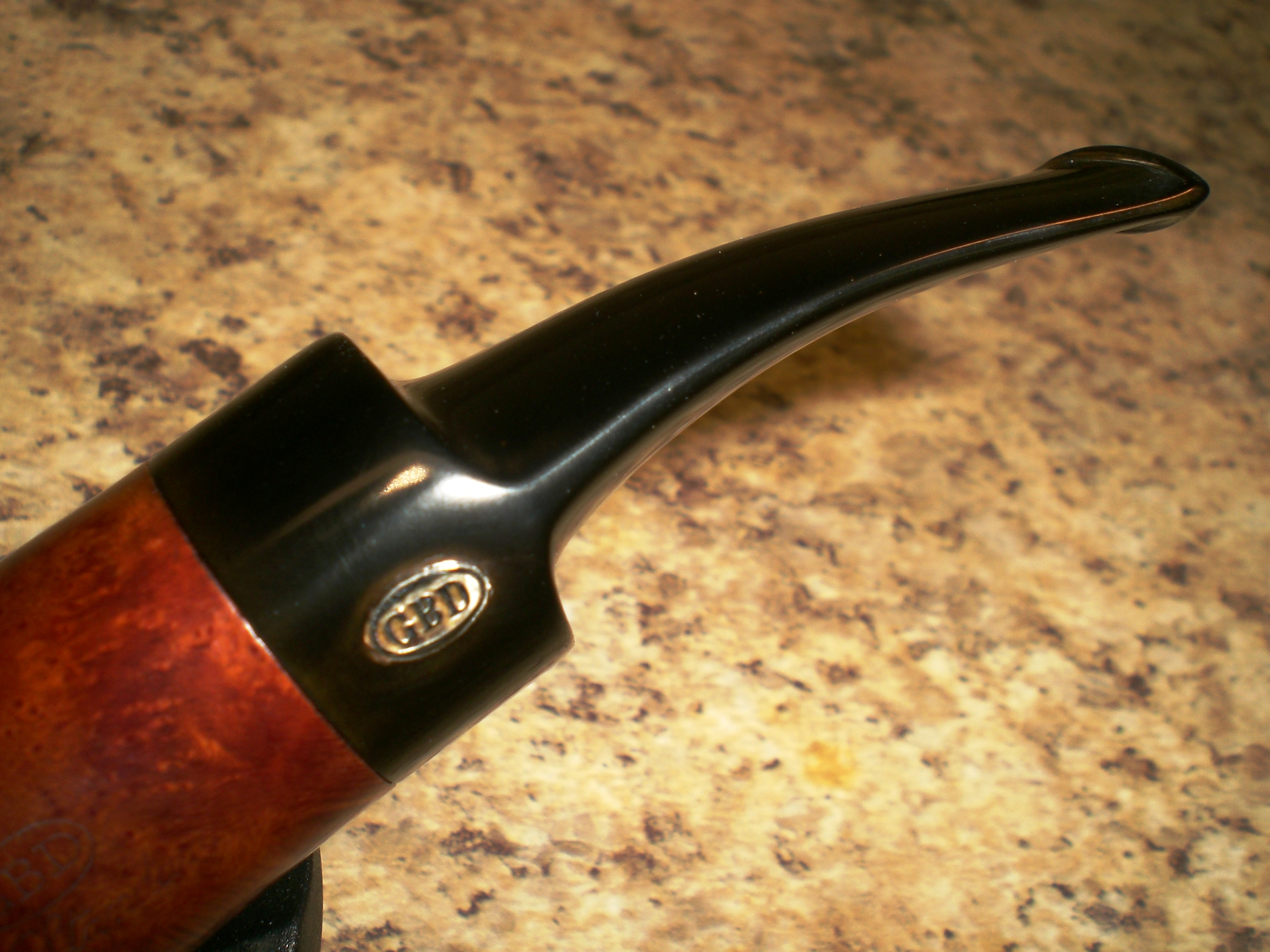
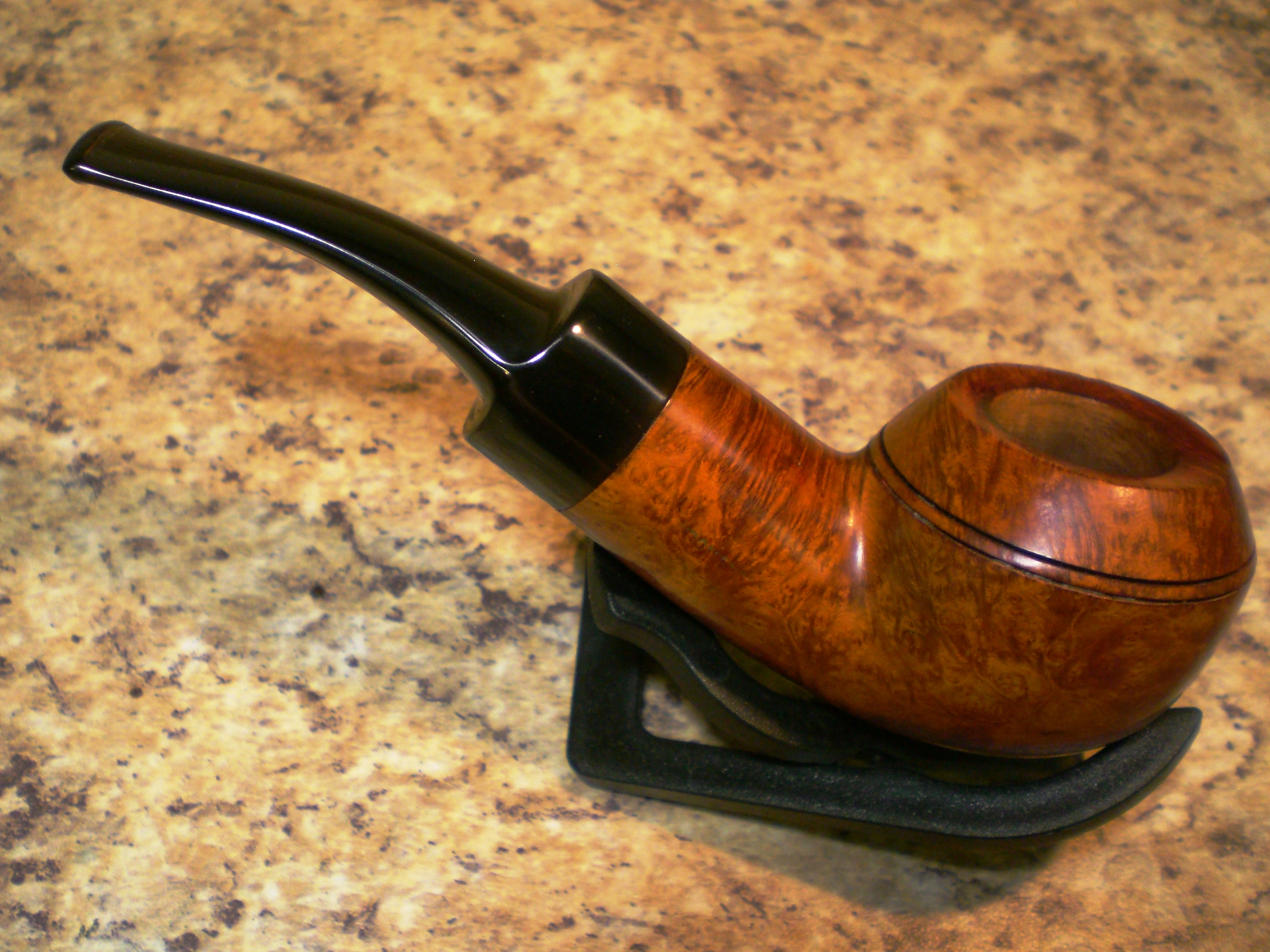
I picked up this New Standard GBD bulldog on Ebay recently.
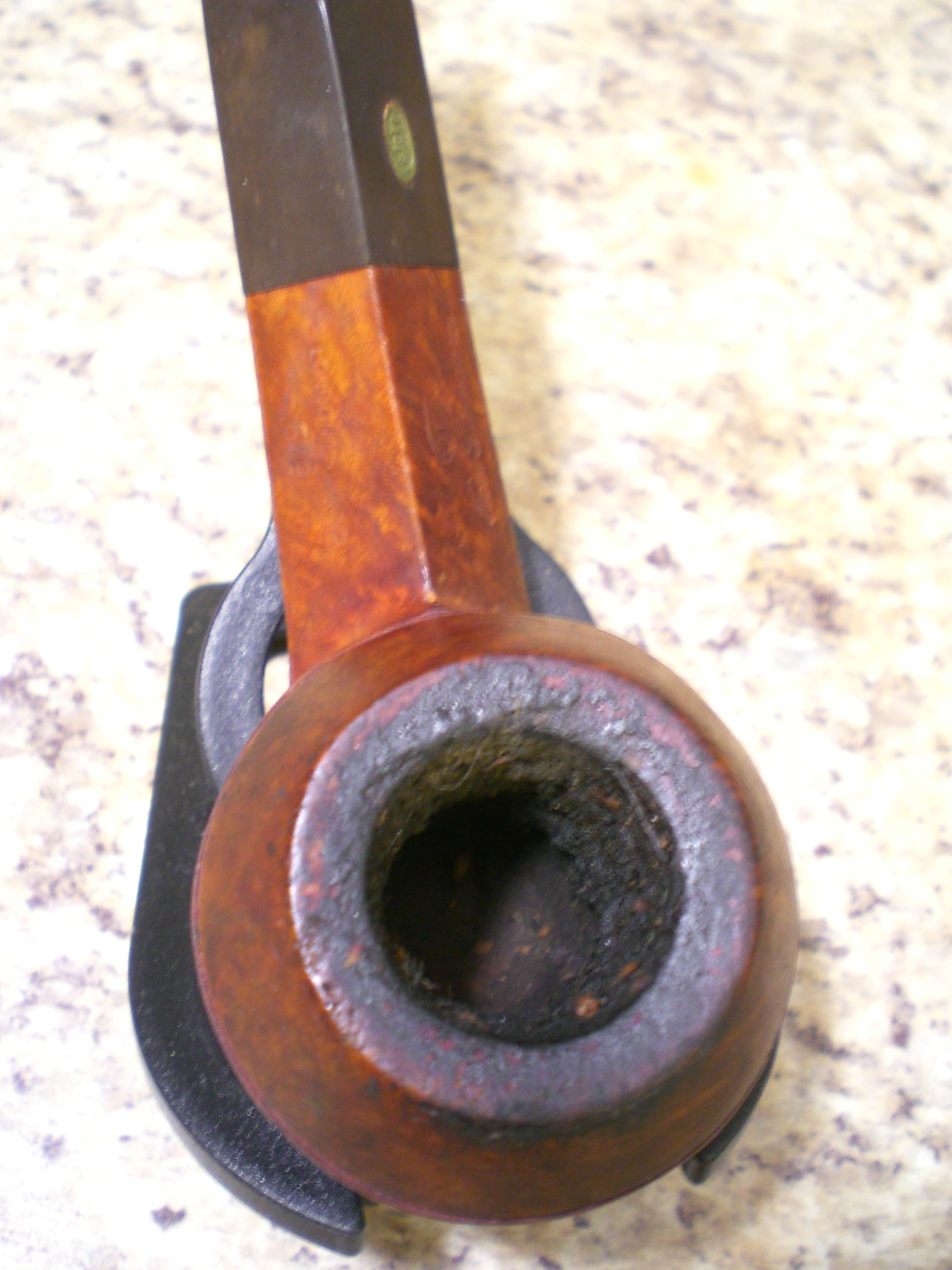
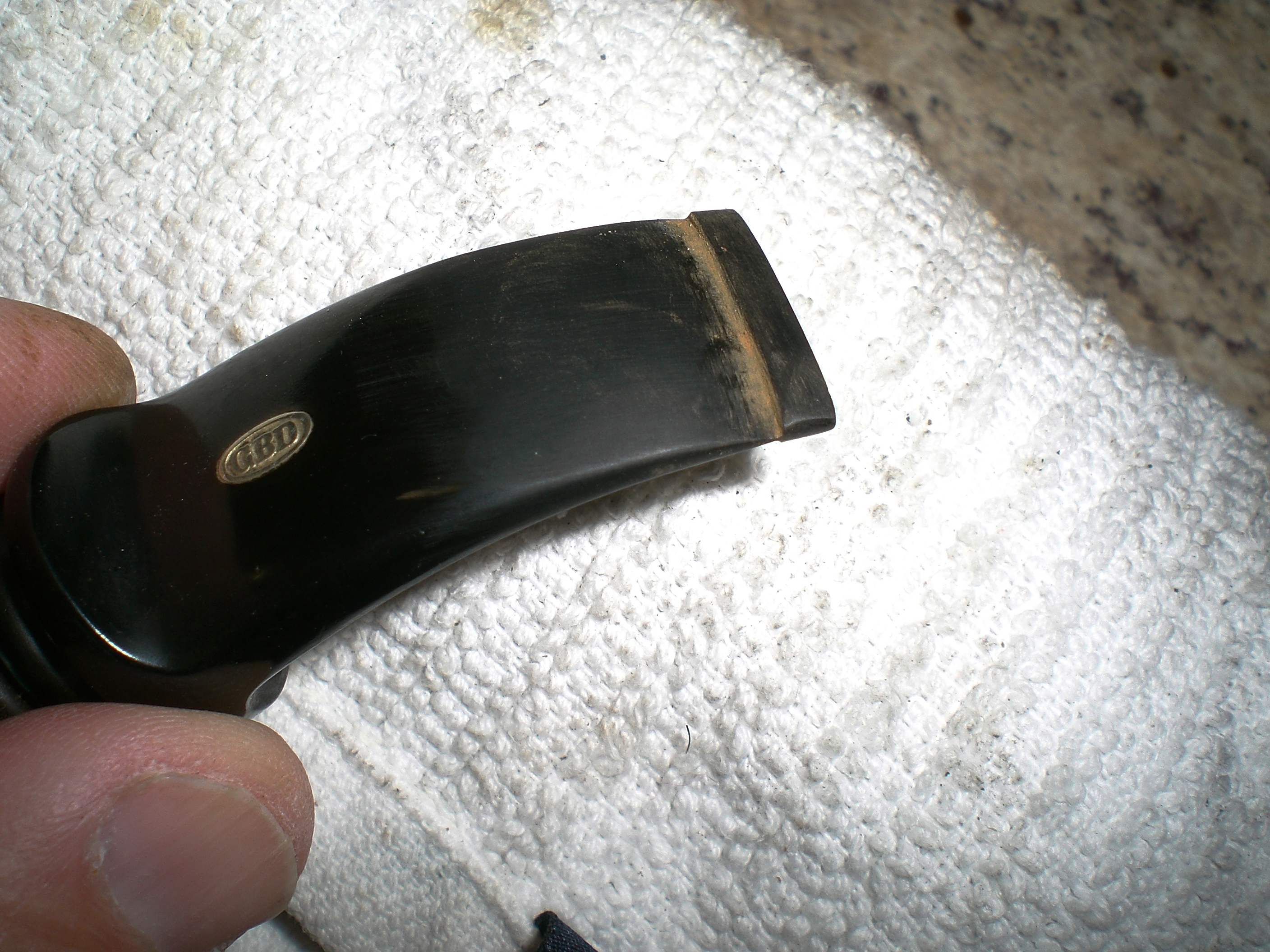
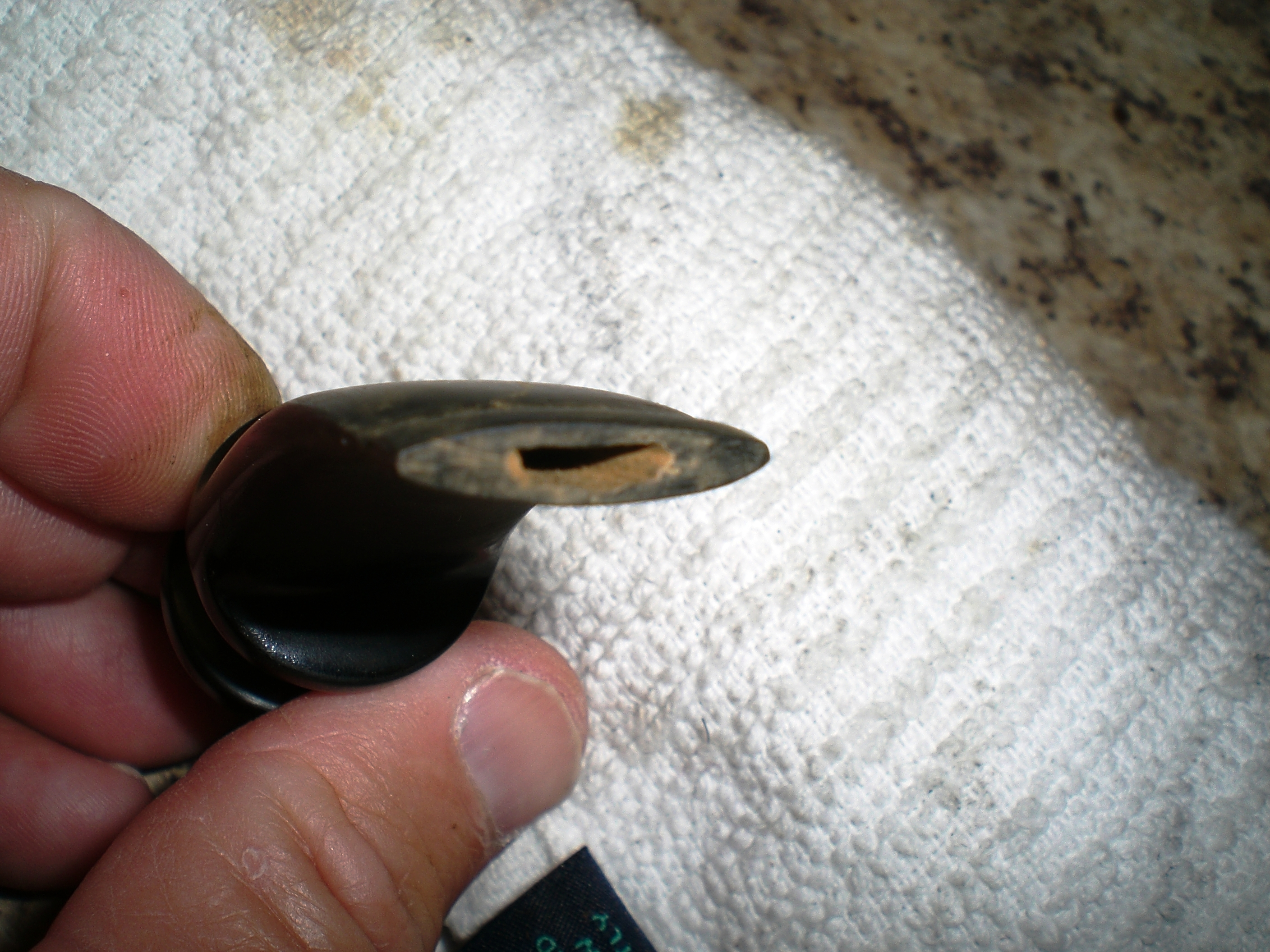
They briar had quite a build-up of what I hoped was just tars on the bowl top and the stem had a small amount of chatter that I thought could be removed.

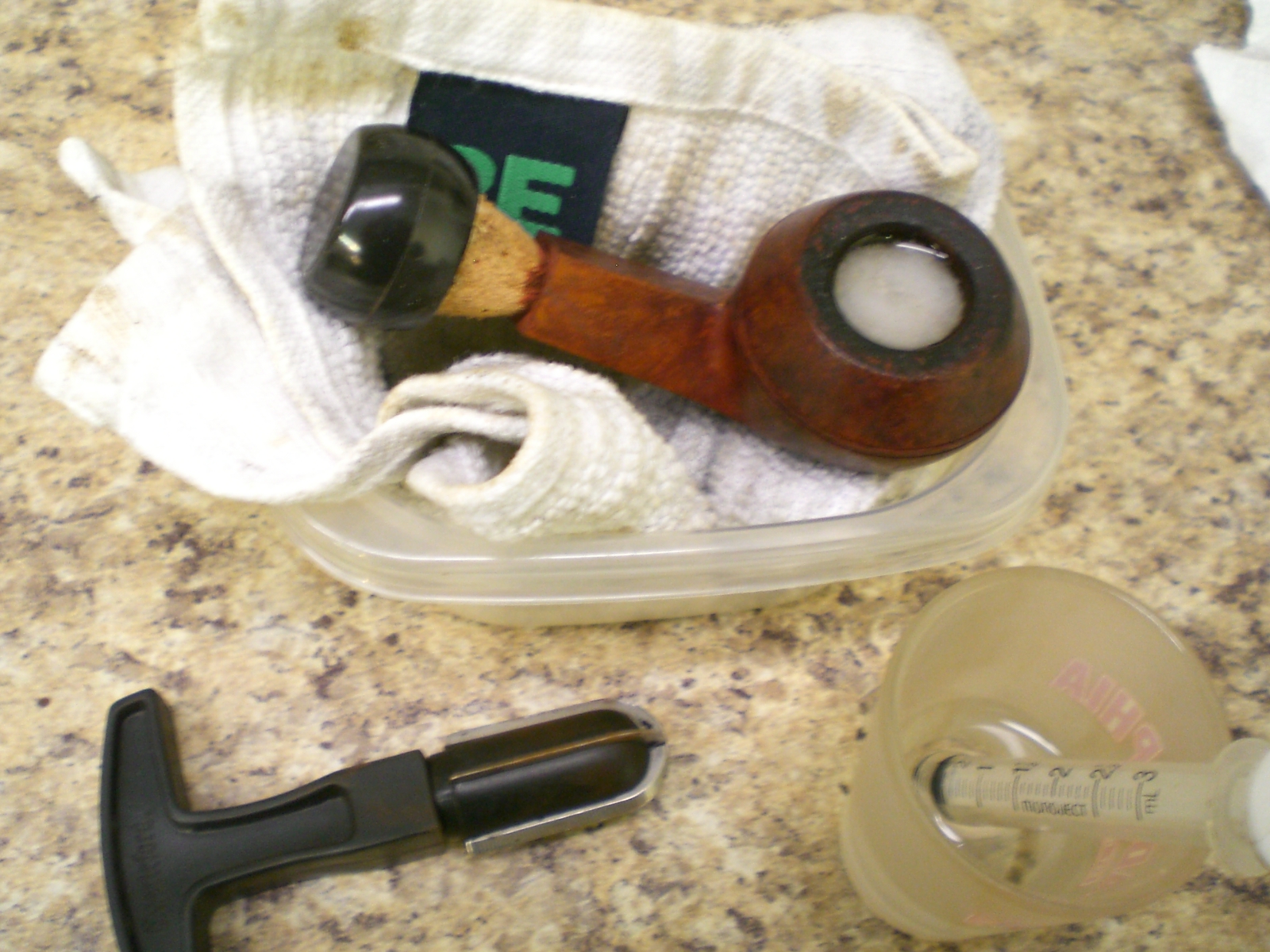
I reamed the bowl and soaked in in 91% isopropyl alcohol and sea salt.  The stem was soaked in a 3:1 solution of Oxyclean and water.  I put a dab of grease on the brass GBD rondelle.  Here is the bowl soaking in oxyclean.

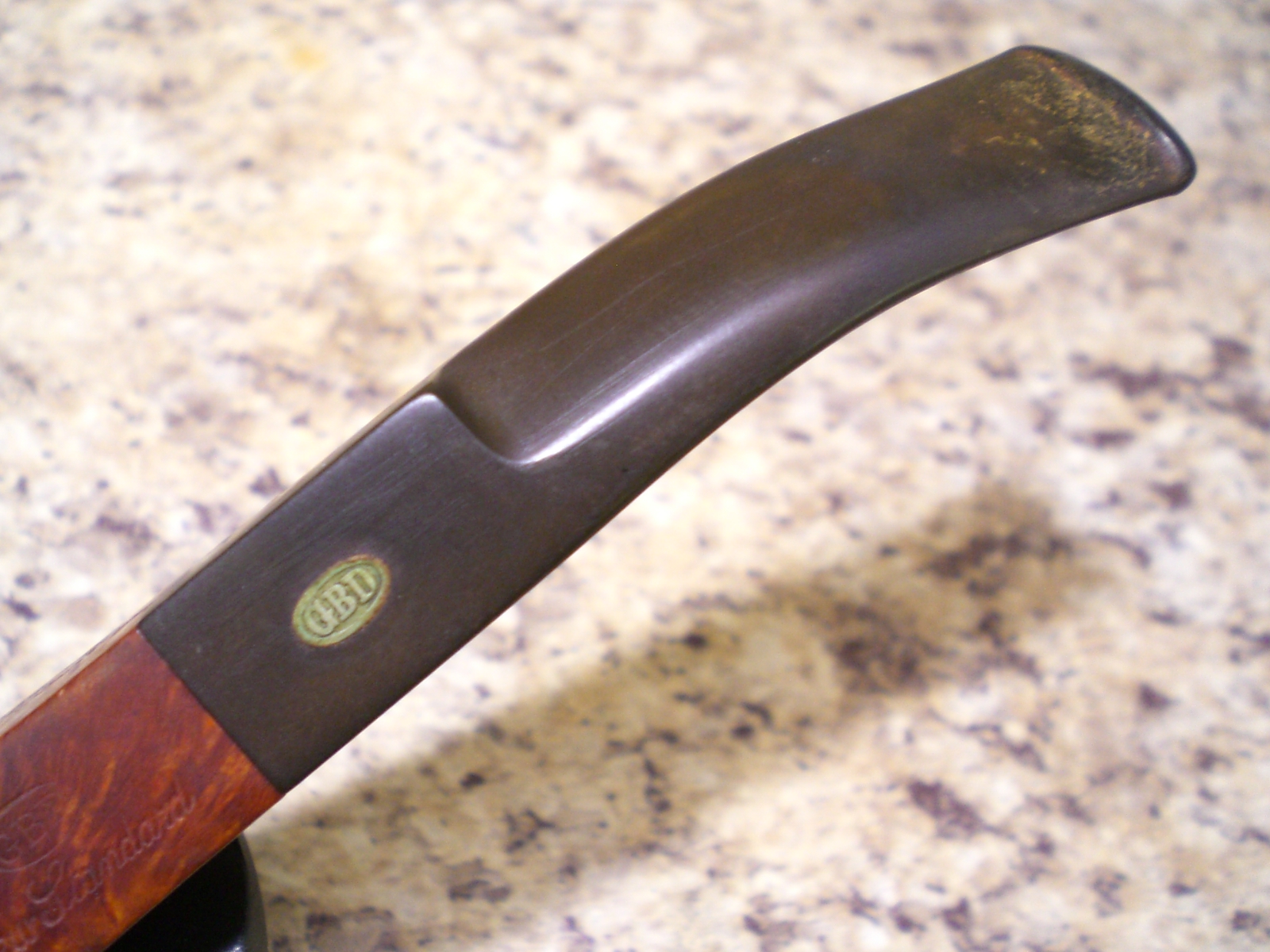
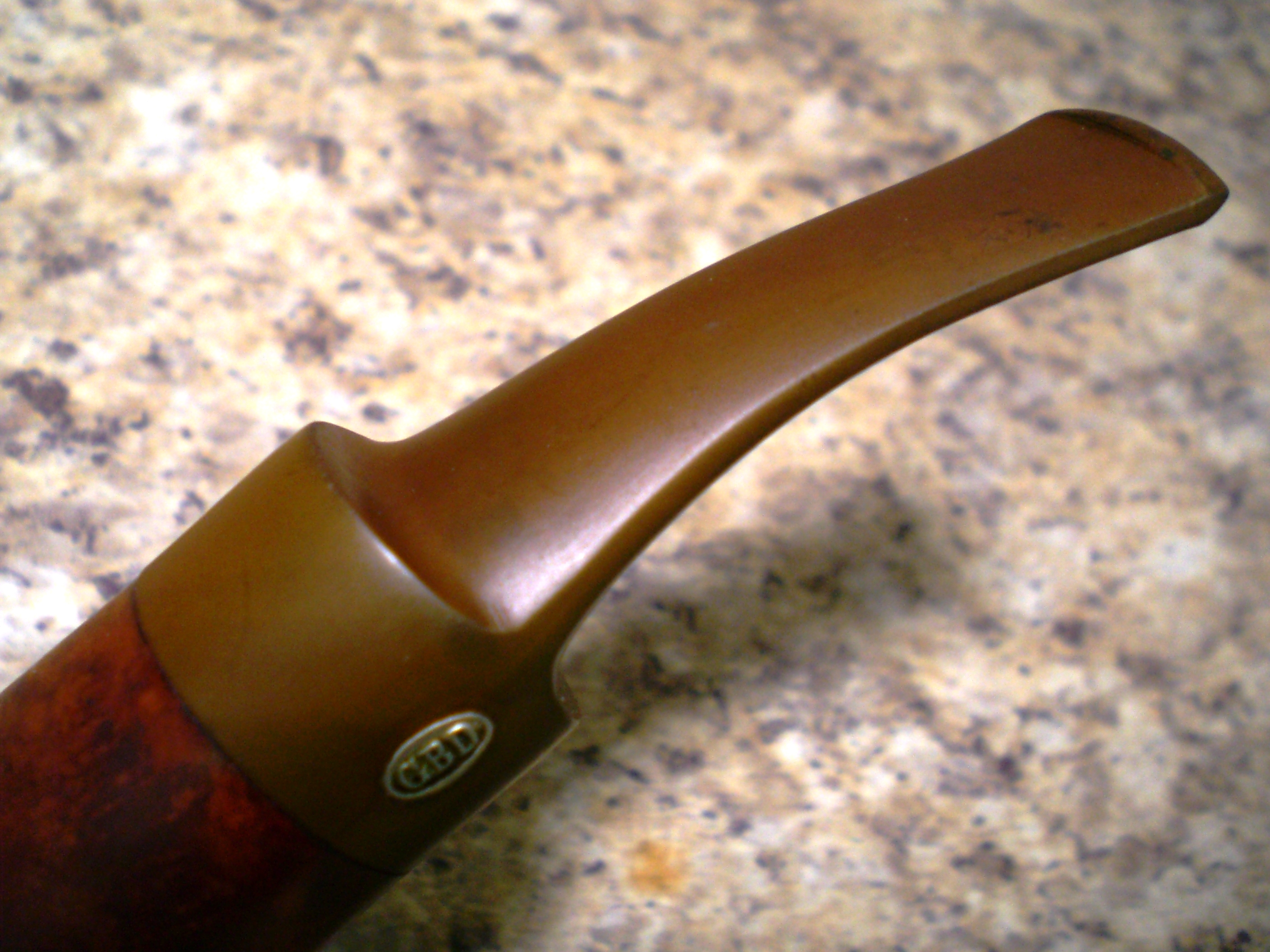
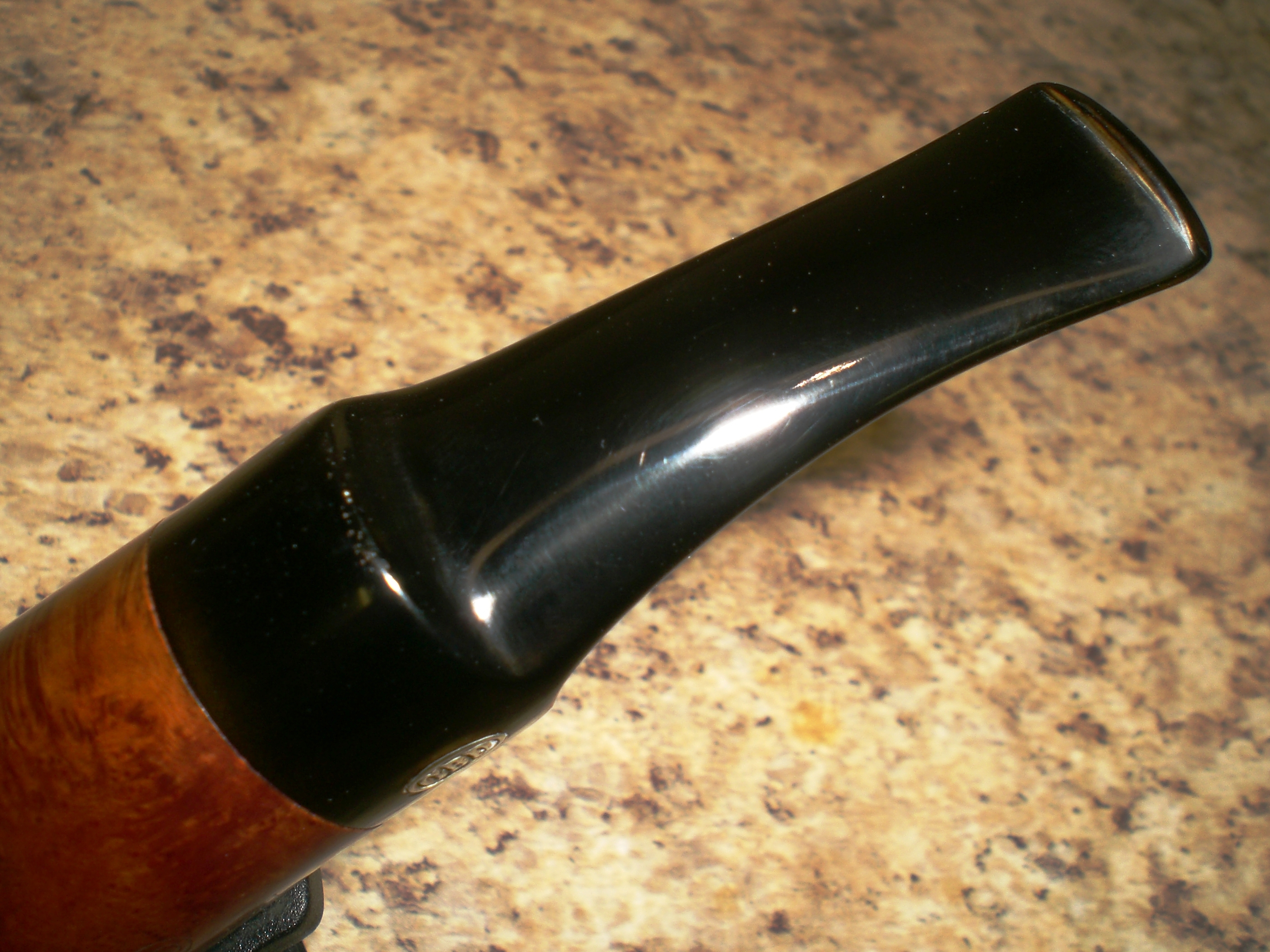
After a few hours of soaking in the Oxyclean solution, the stem was ready for sanding.  I removed the teeth chatter with 800 grit wet paper. One tooth indention remained, but it was small enough I didn’t bother trying to fill it.  1500 and 2000 grit wet papers were used next to bring up the shine.  The stem looked like this after the 1500 grade paper:

I then buffed it on a machine with tripoli rouge which removed most of the oxidation.  Then, back to the micromesh papers, using the 8000 and 12000 grades of paper to bring up the shine.  The stem was then finished with white diamond on the buffer followed by an automotive plastic polish.

After the bowl was done soaking, I turned my attention to it.  It was buffed on the wheel with tripoli, white diamond and finally several coats of carnuba wax.  Despite the heavy cake and tar buildup, inside the  shank was really clean inside.  So, I anticipate no ghosting.
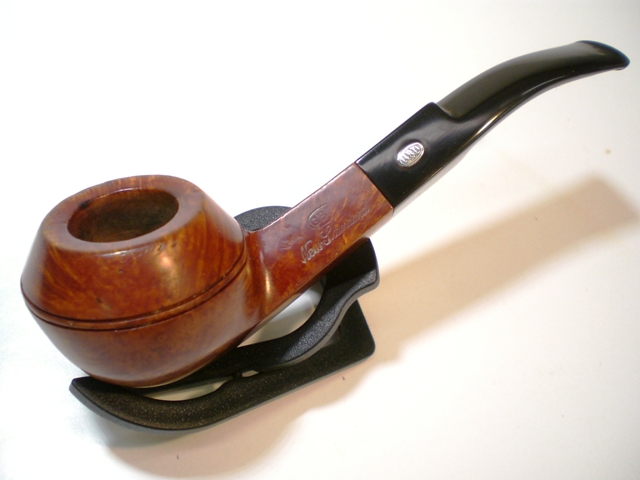
Below is the finished pipe, which is being enjoyed by its new owner who lives in Norway and happens to be a reader of this blog – Enjoy!

Savinelli Autograph & Sherlock Restorations (3 & 4 of the Four Pipe group)


Back in September, I documented the restoration of two pipes in a four pipe set belonging to a friend in Ohio.  (Charatan Shape 44 and London Billiard)  Steve reminded me that I hadn’t submitted the final two pipes of that group.

The third pipe was this lovely Savinelli Autograph.  To this point, I had never seen an Autograph model in person and I was very impressed with the pipe.  As with the others in my friends group, this was also a very large pipe.

Here is the pipe as it was delivered to me.
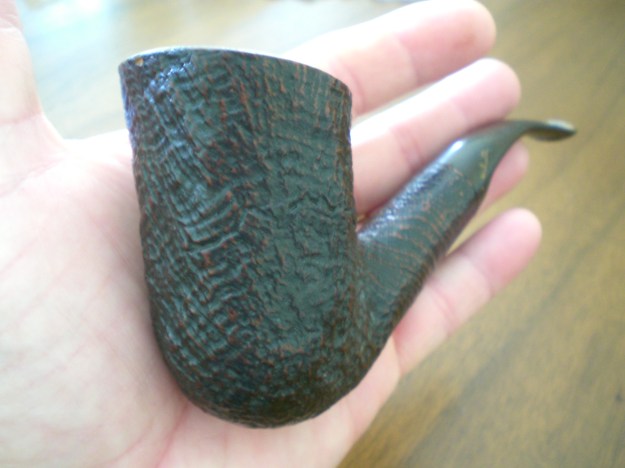
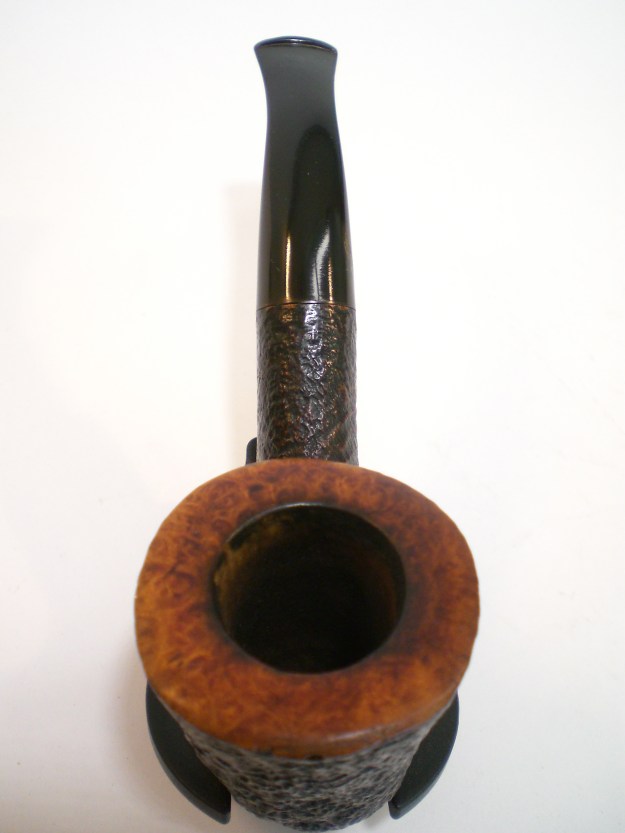
This one definitely felt like a hand-made pipe.  The stem is wonderful and feels good in the hand, so I bet she’s a wonderful smoker.  In this group of pipes, this Autograph was the one least abused. The finish was a little grimy.  Removing the tar build up on the bowl top took some rubbing with first isopropyl  alcohol on a rag.  But, once removed, a beautiful birdseye top was revealed.  The bowl was buffed lightly with Tripoli, than white diamond and finished with several coats of carnuba

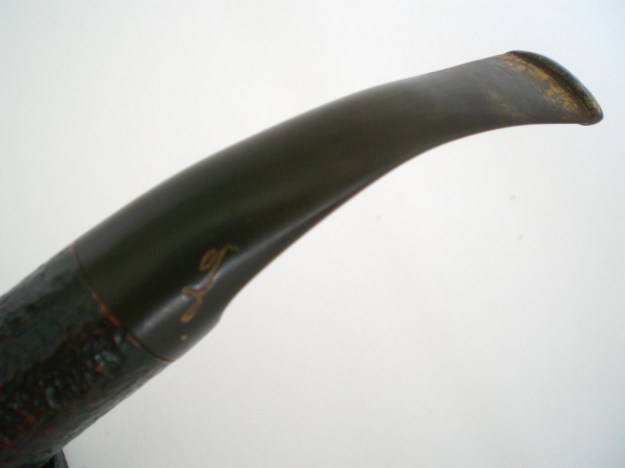
The stem took the usual steps and was deeply oxidized with some teeth chatter. I soaked the stem in an oxyclean solution for several hours with a dab of grease over the logo. I was able to preserve Gincarlo Savinelli’s stamp nicely. I sanded the stem (on the pipe) first with 1500 grit and then 2000 grit wet paper.  Next I buffed the stem with the final two grades of micromesh (8000 and 12000).  The stem was then polished on the buffer, with white diamond and then plastic polish.

I learned that Savinelli used vulcanite for the Autograph stem prior to 1982, when they switched to acrylic and 6 mm filters. I believe these pipes came from Smokers Haven in Ohio in the mid 70’s as my friends father lived in this area.

I didn’t weigh the pipe, but estimate it was approximately 90 grams.

Here is the finished pipe.  After handling this pipe, I would one day love to add a vulcanite stemmed Autograph to my collection.
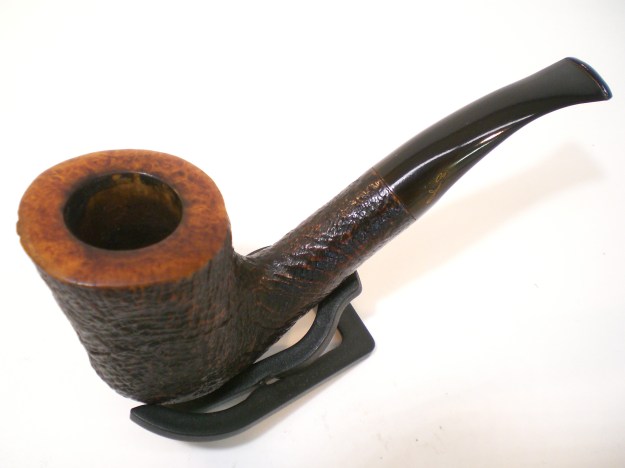
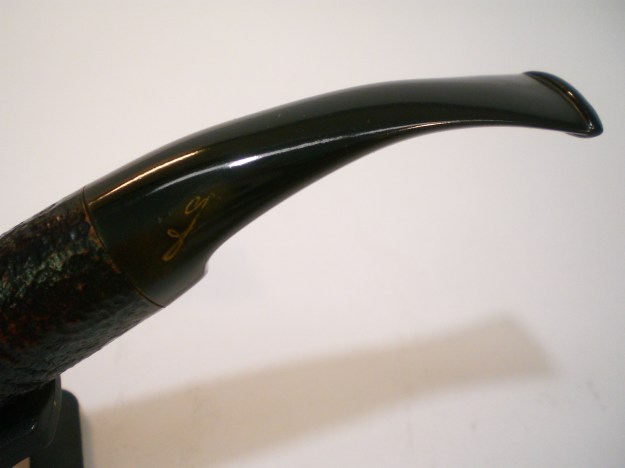
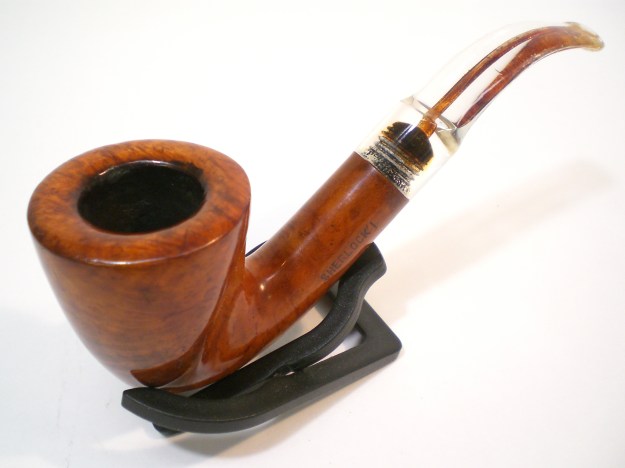
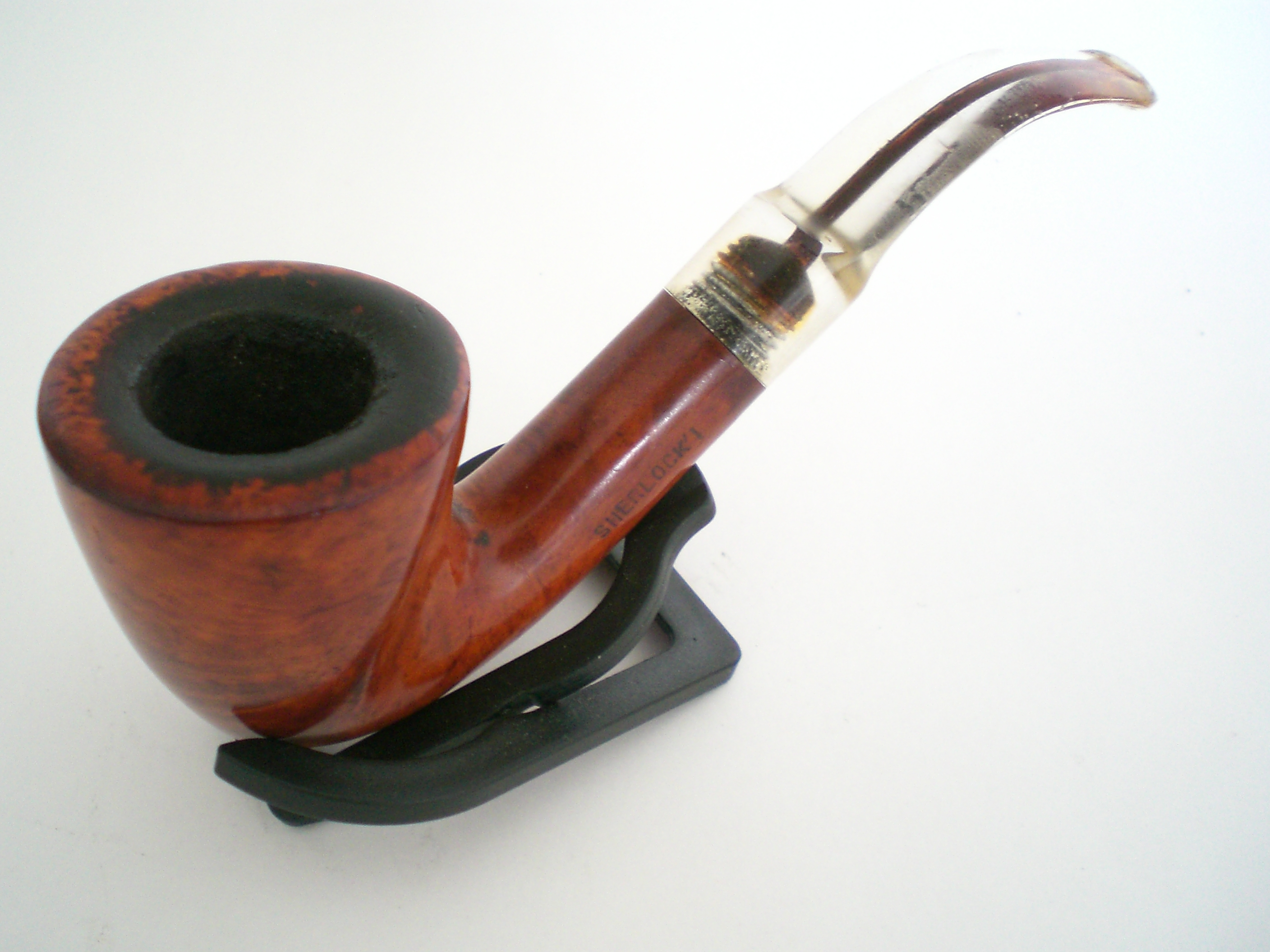
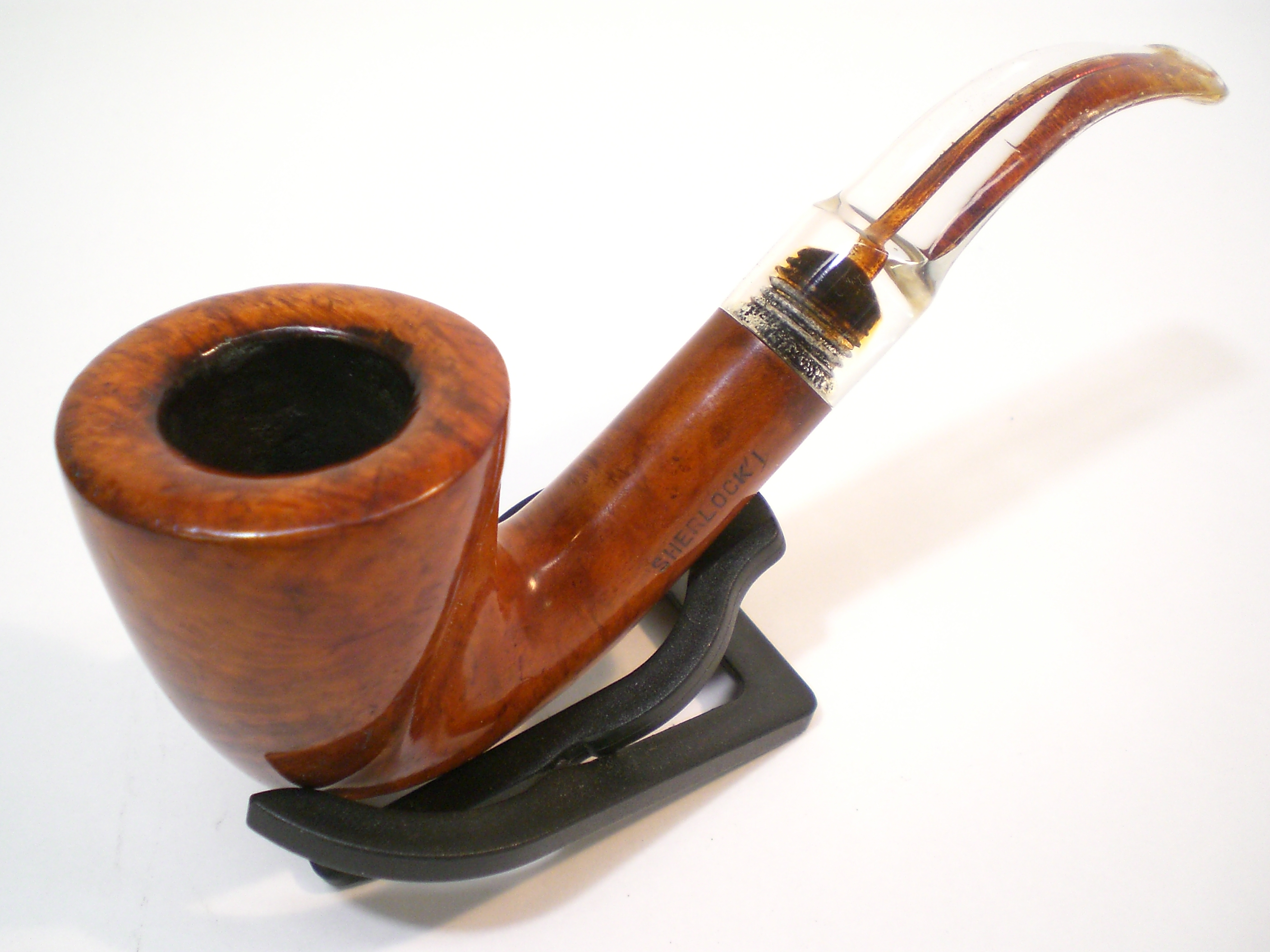
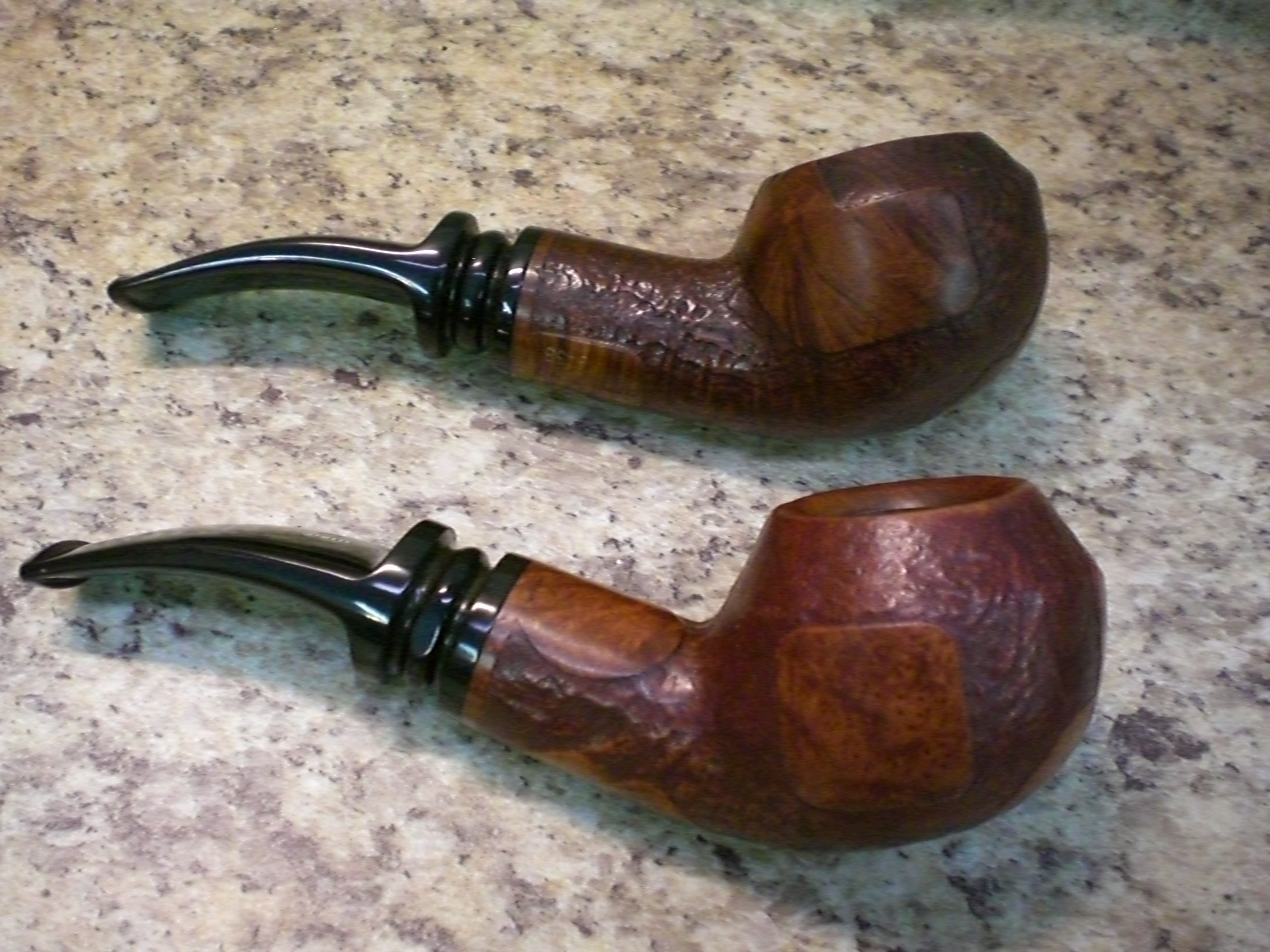
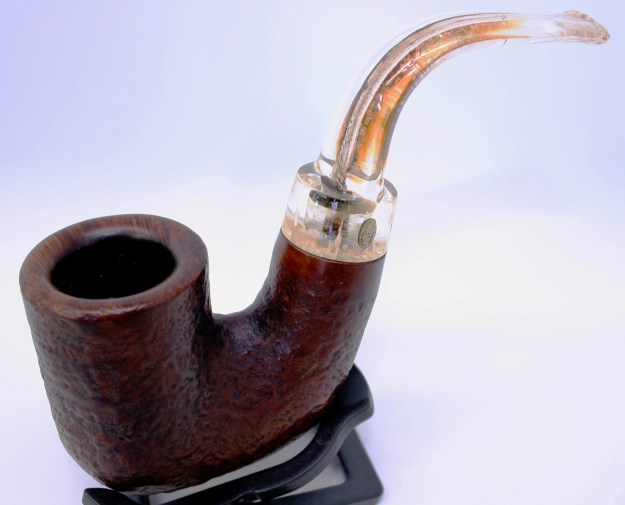
The last pipe in the group was another large pipe, stamped simply “Sherlock”and “Made in Italy”. This one had a perspex stem, that had some stubborn staining but no teeth chatter. I removed a good bit but not all of the stain in the perspex. I use a bristle cleaner soaked in 90% isopropyl alcohol.  You must run a dry cleaner thru the perspex next to remove the alcohol which could fog the clear plastic.  The briar has a lovely golden glow with some faceted features on the bowl (ala Willmer?). I’m not familiar with this brand, but the briar is beautiful. The tars on top came off, just leaving a light scorch mark on the inner bowl rim.   I estimated this pipe weighed approximately 80 grams.
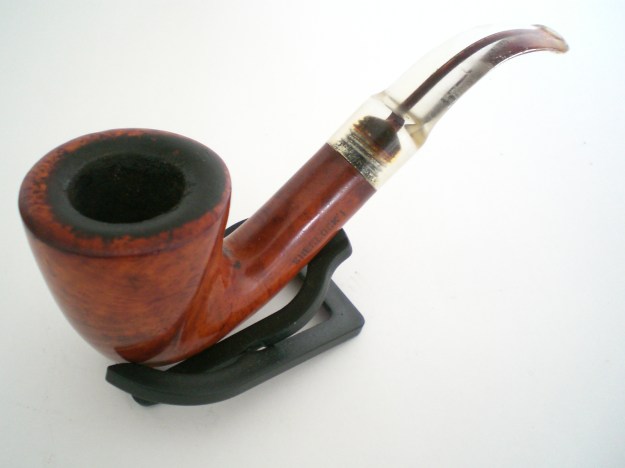

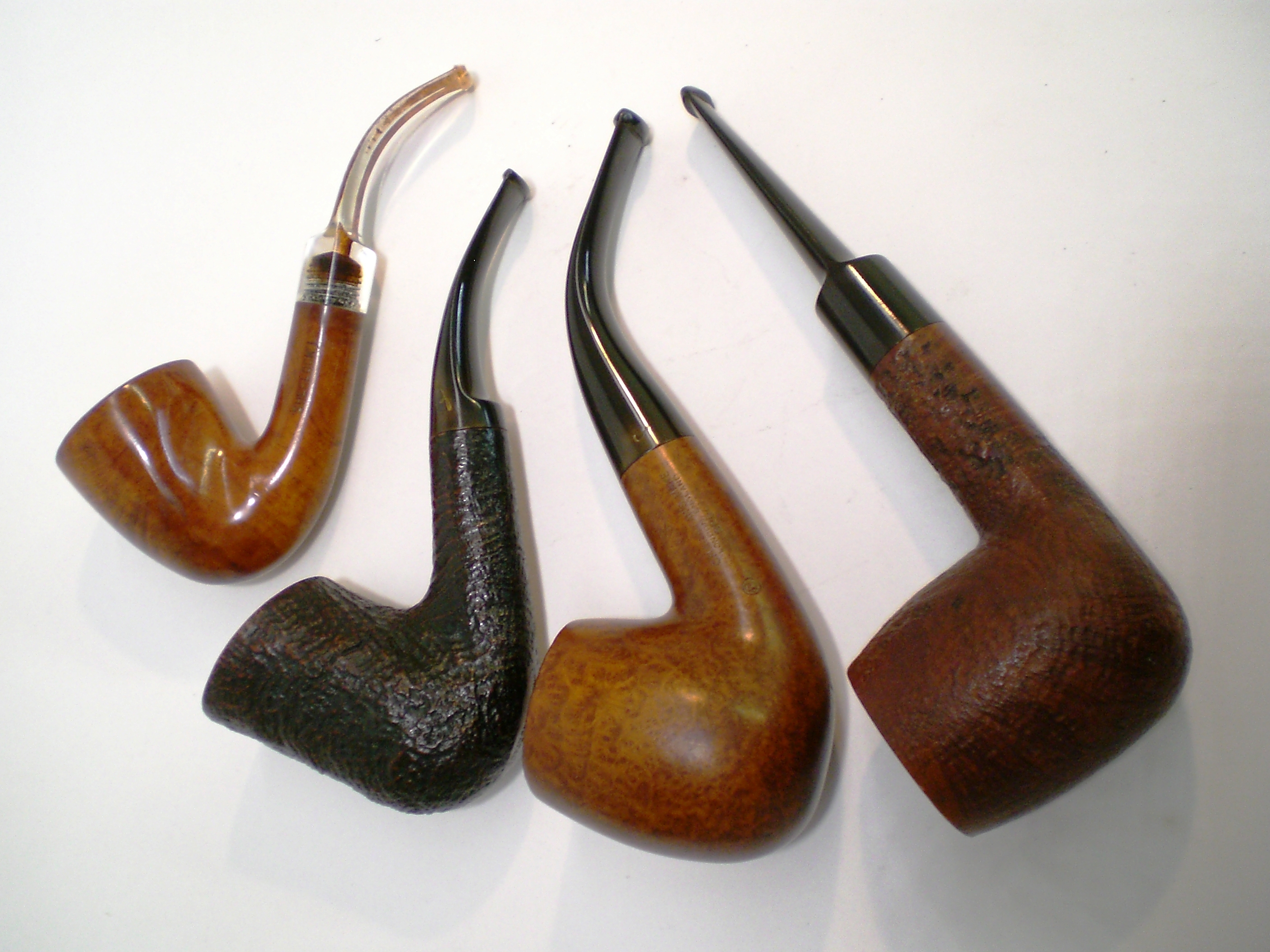
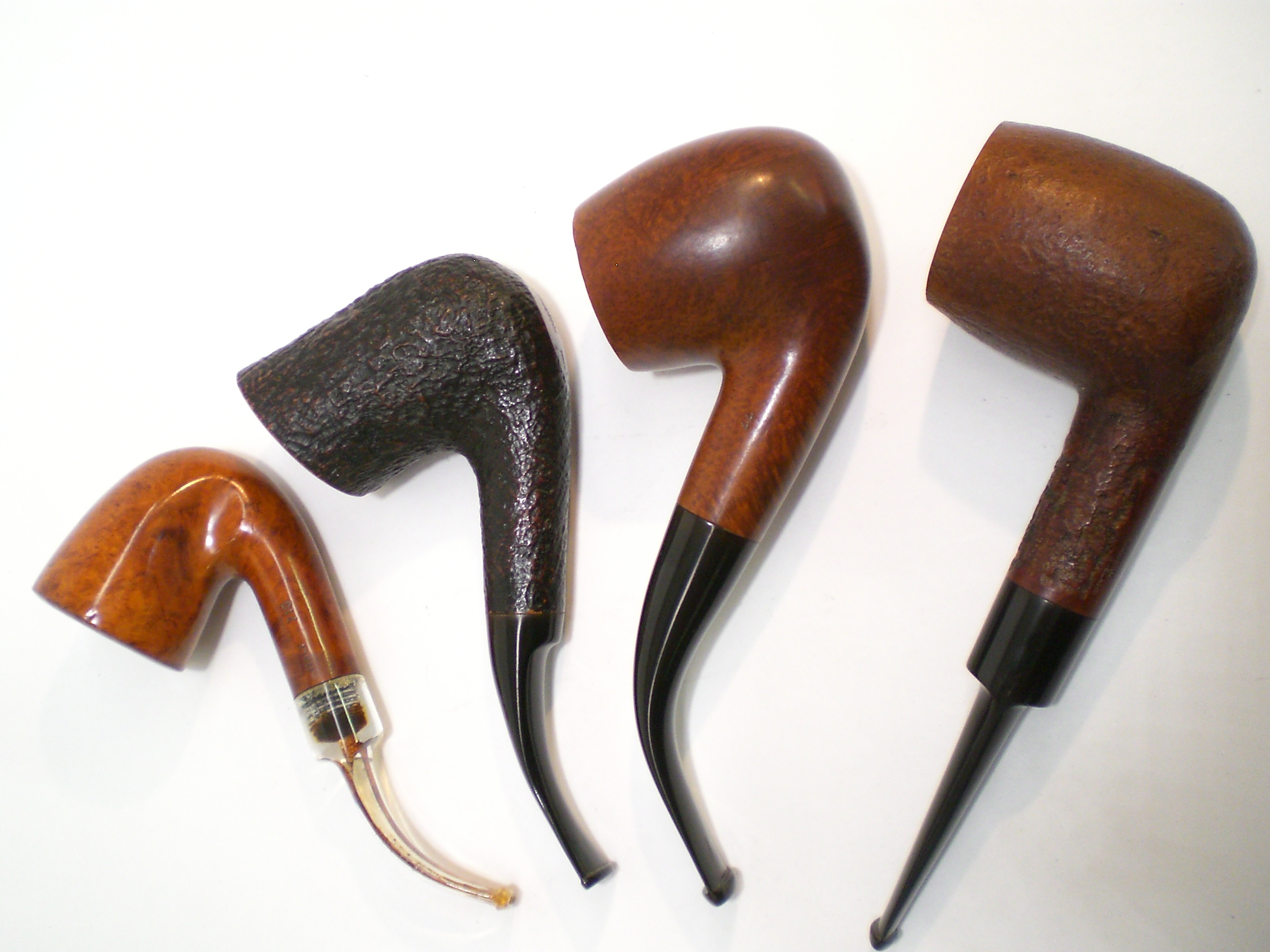
Here is a shot of all four finished pipes.
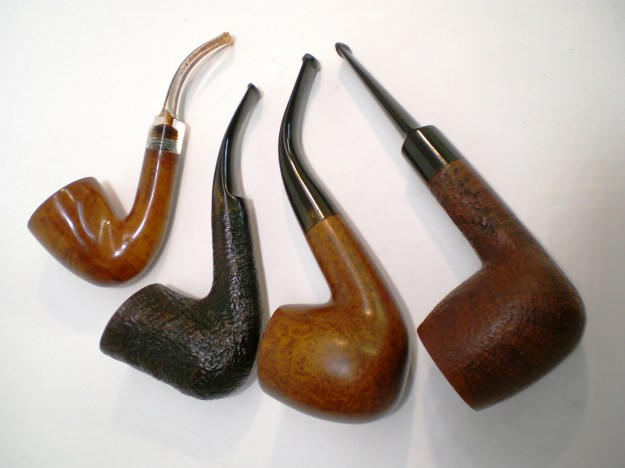
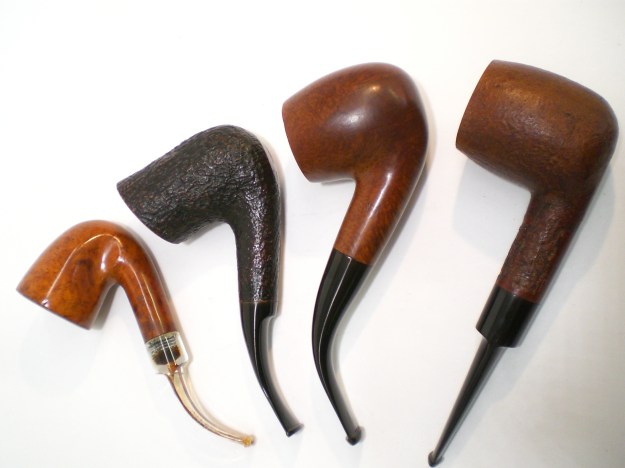
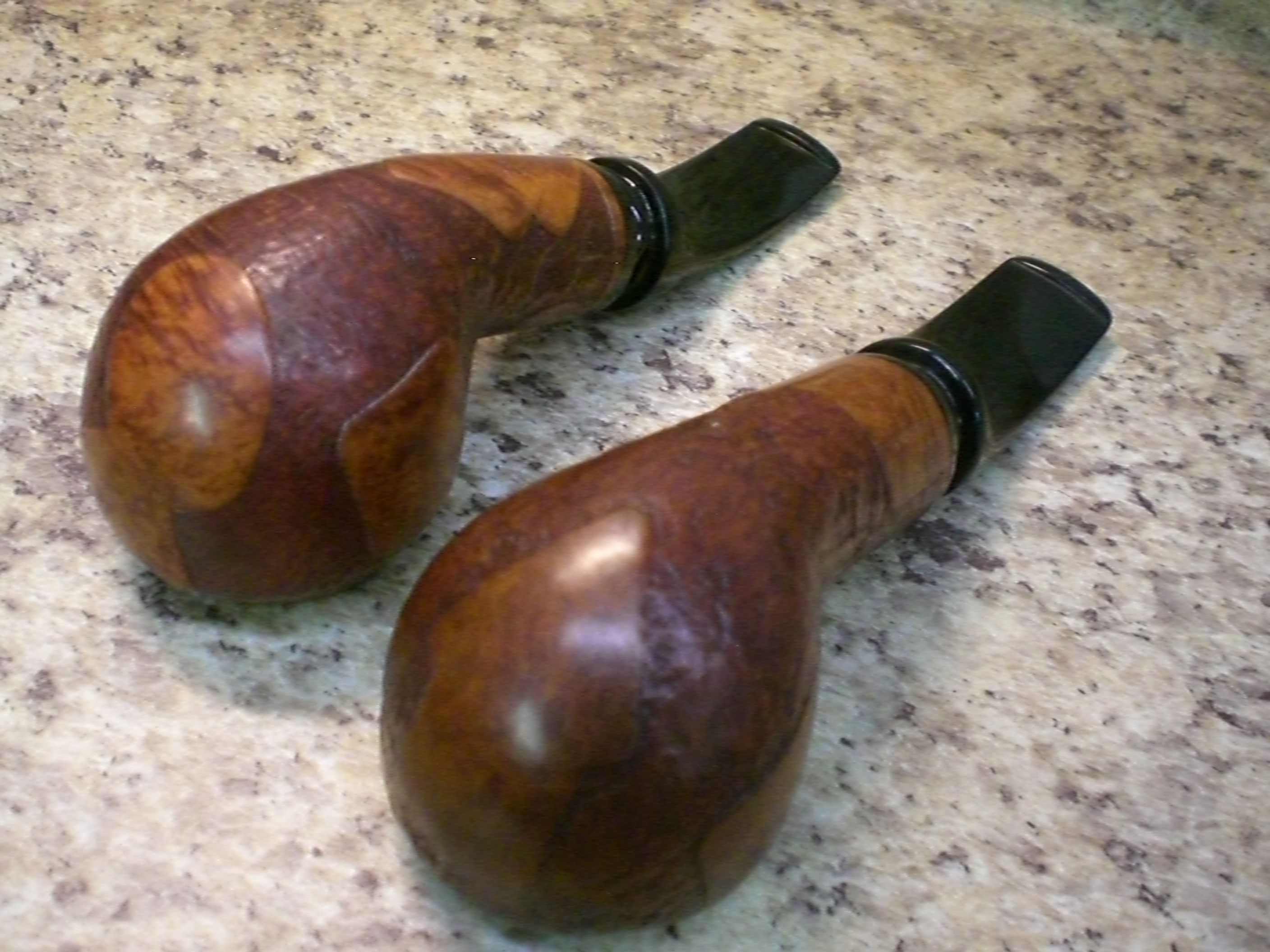
I also add pictures of these two GBD pipes, both Colossus models as they came from this estate and were gifted to me by this gentleman.  Both are treasured and enjoyed pipes in my collection and I was very happy to restore these other four for my friend.

GBD Seventy-Six Colossus, Shape 9676.
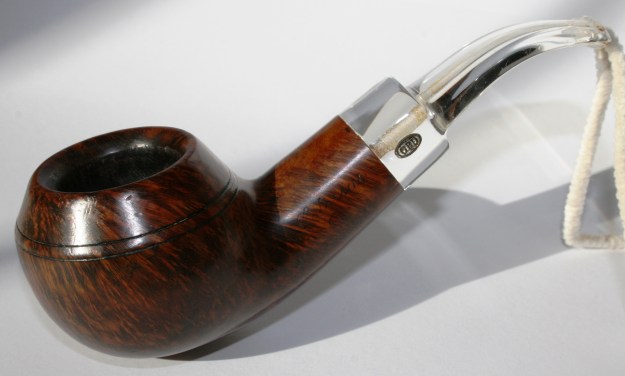
Prehistoric Oom-Paul Colossus:
As you can see, the gentleman who owned all six of these pipes had an affinity for large briar pipes!


GBD 9438 New Standard Restoration


As you no doubt have learned, the pre-Cadogan era GBD 9438 is one of my favorite shapes. I have this model in several finishes (Tapestry, Fantasy, Seventy-Six Collossus) but was lacking a smooth finish. This one, found on Ebay, went unnoticed until the last few minutes of the auction. It is only a New Standard grade, but looked in good shape with no bite marks, etc. on the stem. I thought from the pictures that it would only require a simple clean up.

Here is the pipe as it was delivered.

The bowl had a very thin cake, which I reamed slightly revealing a very nicely maintained bowl and bowl top. There was a little stain lightening on one side, but I think with use, it should blend in. The stain is an interesting reddish-brown color, GBD called a “tobacco brown” finish in their 1976 catalog. The bowl was polished with tripoli, white diamond and finally several coats of carnuba wax.

The stem was soaked in oxyclean, with a dab of grease on the brass rondell. I sanded it with 1000, 1500 and then 2000 grades wet sandpaper. Then, the last two grades of micromesh were used (8000, 12000). The stem was then polished on the buffer with tripoli, white diamond and final top coat of plastic polish. There were no bite marks to lift or sand out, so it was a relatively simple clean-up.

Here is the finished pipe.

Al Jones

GBD 9438 Tapestry – Stem Repair


Al Jones

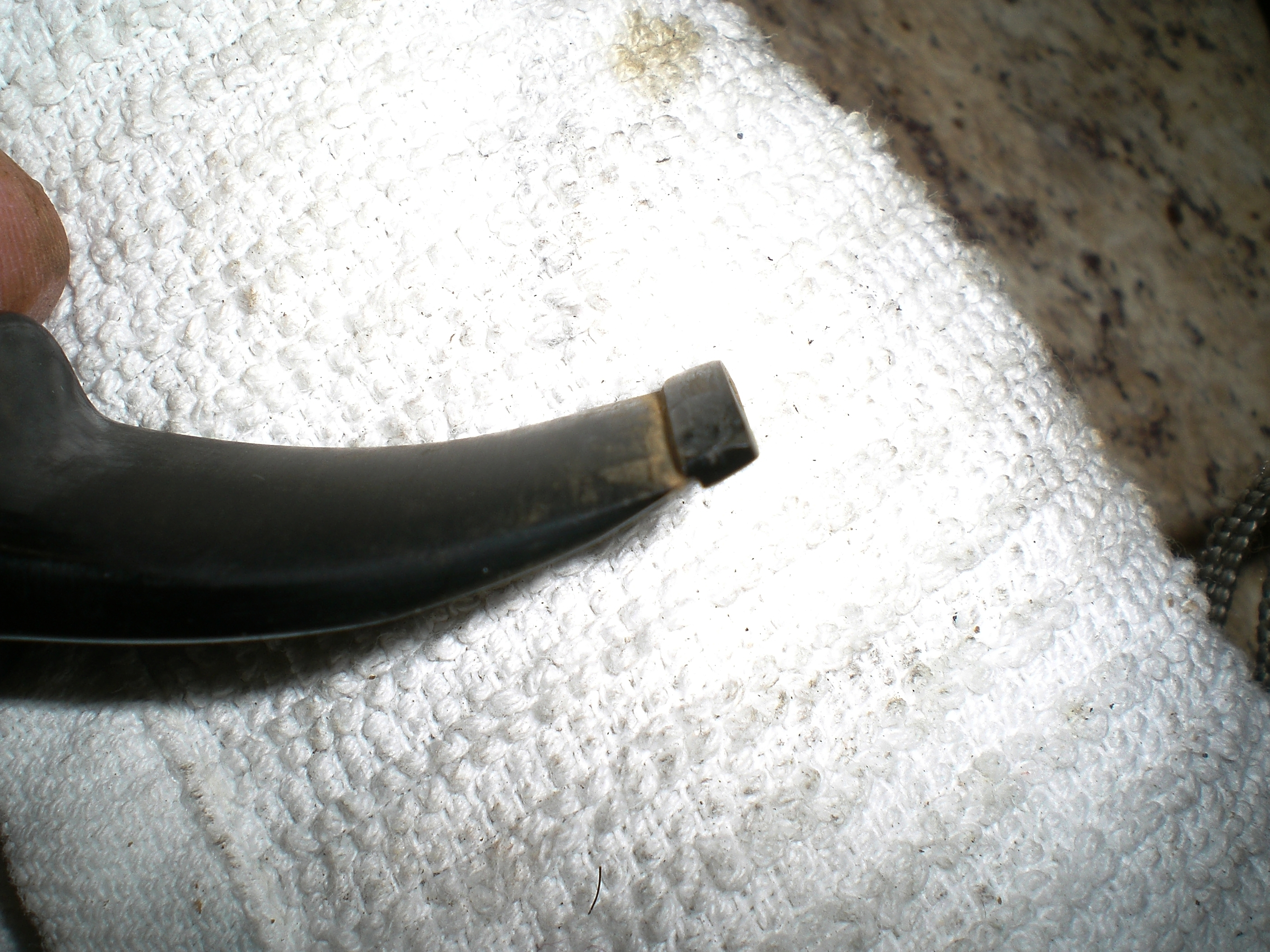
Well, I fell prey to yet another GBD 9438 in Tapestry finish on Ebay. Yes, another chair leg stem, my fourth this year. However, this time I made a somewhat foolish offer on this particular pipe using my Ebay Android phone app. Using the phone, I completely missed that the seller stated a piece was missing from the stem and the large detailed photograph of the damaged area.

When the pipe arrived, the briar looked in great shape but the damage loomed large. In the ad, the seller offers that he could do the repair for an additional $15. I was skeptical, but curious as to how he might accomplish this feat. The seller replied that Walker Briarworks did his repair work. I did contacted Dave Wolfe at Walker and was not surprised to learn a $15 repair was not an option. Unfortunately, neither was getting a new stem made and transferring the brass rondell. Dave told me that vulcanite stock in that diameter (22 mm) was no longer available.

So, it appeared the repair was left to my own hands. I considered trying to patch it with Superglue, but as you can see, the missing piece was quite large. I didn’t think it could be done nor be durable enough.

I decided the best way to repair the pipe was to cut off the broken button and reshape a new one. I made the cut with a hobby saw and there was no turning back.

Using a small, flat blade needle file, I made a cut on both sides of the stem for the crease. Than, using a heavier metal file I carefully carved out a new button. I went back to the flat needle file to remove some of the heavier file marks. I used both files to shape the button into a “football” shape. additional flat, tapered shape needle files were used to open up the stem hole.

Using some 600 grit wet paper, I sanded out the file marks from the stem. Next the stem was polished with increasingly finer grades of wet sand paper, advancing from 800>1000>1500 and 2000 grit papers. I then polished the stem on the buffer with some Tripoli rouge. I used the final two grades of micro-mesh (8000 and 12000) to bring up the shine. The last steps were to buff the stem with White Diamond rouge followed with a final polish using automotive plastic polish.

The bowl was soaked with Everclear and sea salt and the shank cleaned with alcohol and bristle pipe cleaners. I buffed the bowl with Tripoli, White Diamond and then several coats of carnuba wax. The briar was also polished by hand with Paragon wax.

The finished pipe came looks great and should offer many more years of service.

“Made In England” Billiard


This is the third of the four pipes I recently refurbished for a friend in Ohio.  This is another very large pipe and a  bit of a mystery.  The pipe is just under 7″ long and weighs approximately 95 grams.  Another hefty hunk of briar from this four pipe estate.  It is stamped simply, “Made In London England”.  The rest of the polished nomenclature area is left blank.  It sure does have a Charatan feel and I wonder if it was a reject or a second?  The detail of the stem tip is almost identical to the Charatan.  Someone on the SmokersForums.uk once told me to “read the pipe, not the stamping”, but this is just a hunch.

The bowl top was pretty beat up and had a heavy tar buildup.


The tenon has the same features as the Charatan Select pipe from the four pipe estate.

When I removed the heavy layer of tar, it lightened the stain a bit.   So it became necessary to restain the bowl.  I soaked it for several hours in an alcohol bath and using a brass bristle brush to get stain out of the blast.  With  the stain removed, the bowl top was so rough, I decided to sand it smooth.  I’m glad that I did and think it looks smashing with a smooth, polished top.  I used a series of 800-1500-2000 than the last two Micromesh grades for sanding with the paper on a flat workbench surface.

I used a very light mixture Fieberlings “Medium Brown” stain, thinned with alcohol.  I put on two coats of stain, with each one set with a flame (I’ve perfected this process, so it no longer frightens me).  I use a 6″ socket extension to hold the bowl during application of the stain and the flame setting.  This shows the bowl stripped of finish and ready for the first coat of stain.

The bowl then was buffed lightly with white diamond and finally several applications of carnuba wax.

The stem was soaked in oxyclean during the briar work and was polished with 1500>2000 grit wet paper, than the last three grades of micromesh (up to 12,000).  I then buffed the stem with White Diamond and a final buff with automotive plastic polish.

Thanks for reading, smoke safe!
Al Jones

Four Pipes Restored – #1 Charatan Special Shape 44


Blog by Al Jones

Recently a friend asked me to restore four pipes that came from the estate of a family friend . This gentleman, from Ohio, had previously gifted me two wonderful GBD’s from this same estate. So, I was more than pleased to restore this quartet for him to enjoy.  From research into this group of pipes and my two, I belive they were purchased from the old Smokers Haven in Ohio.

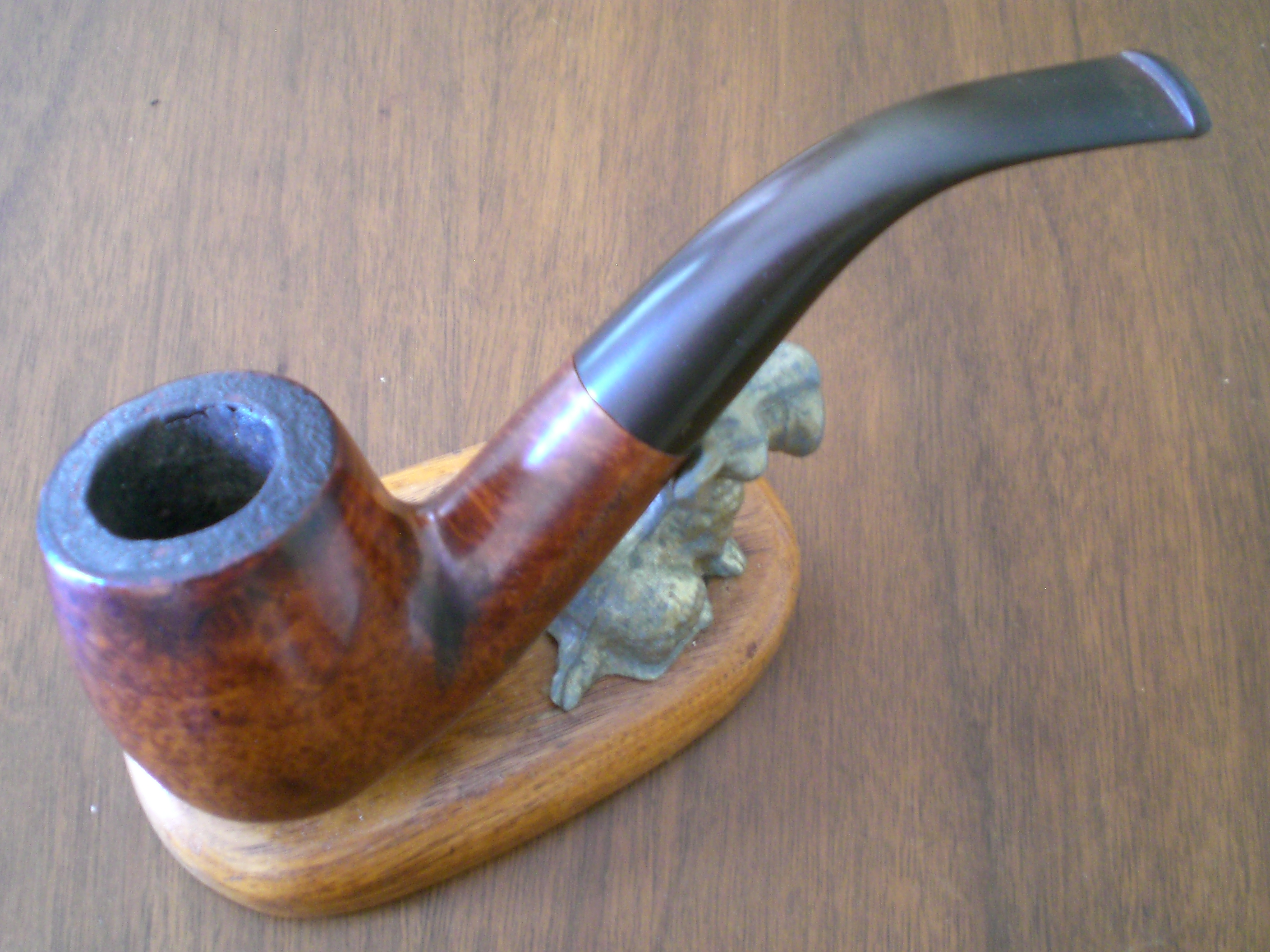
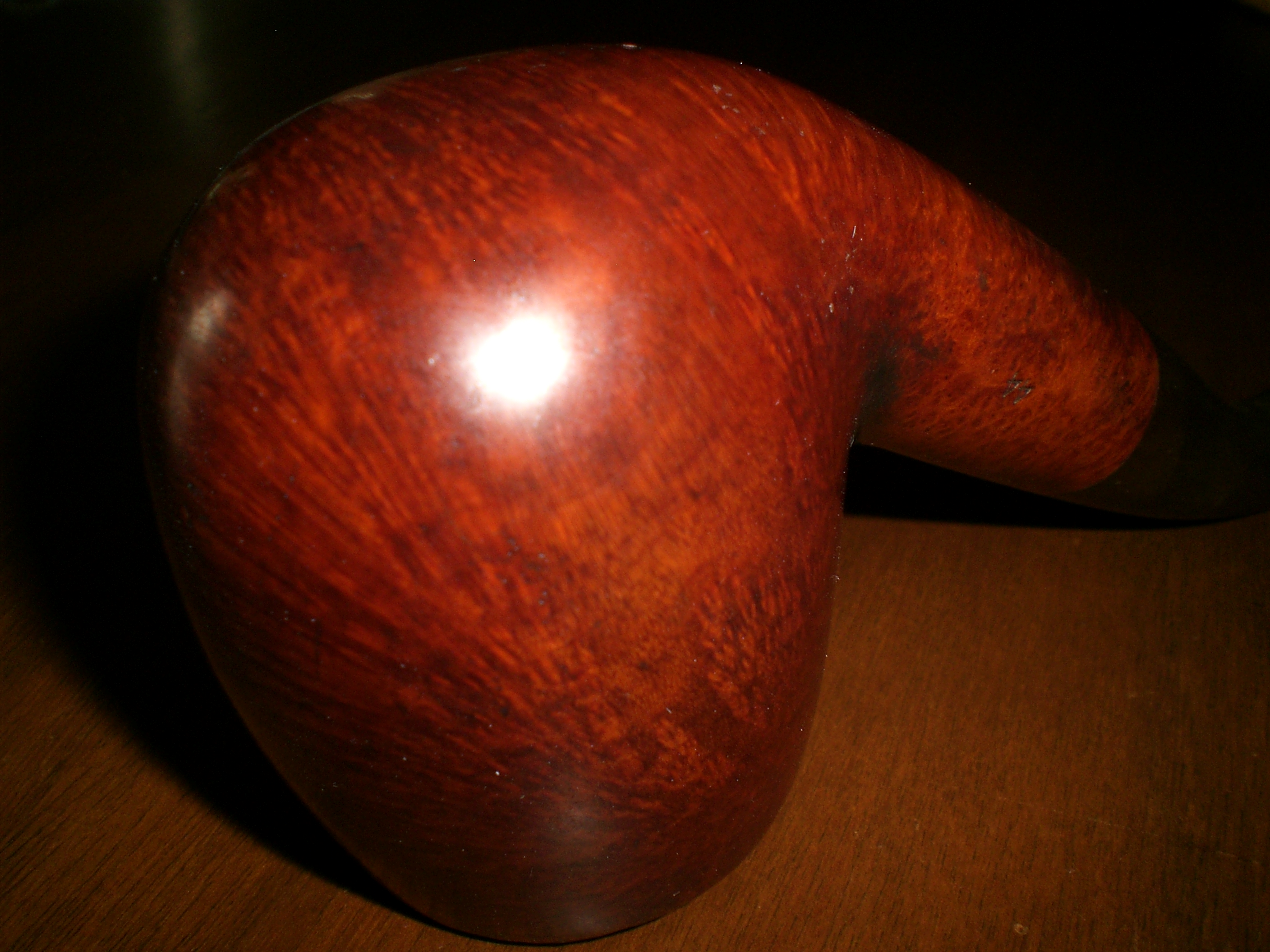
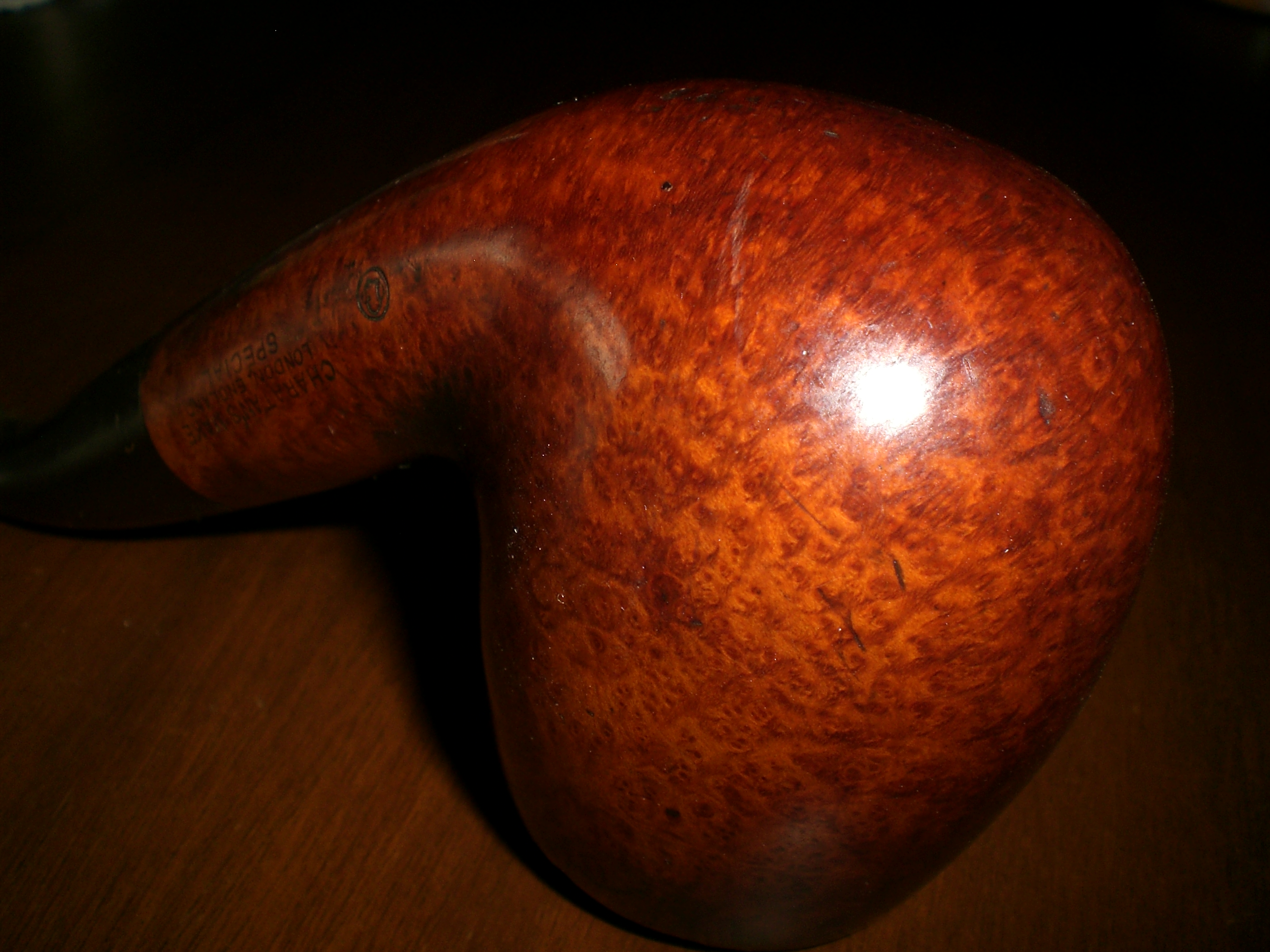
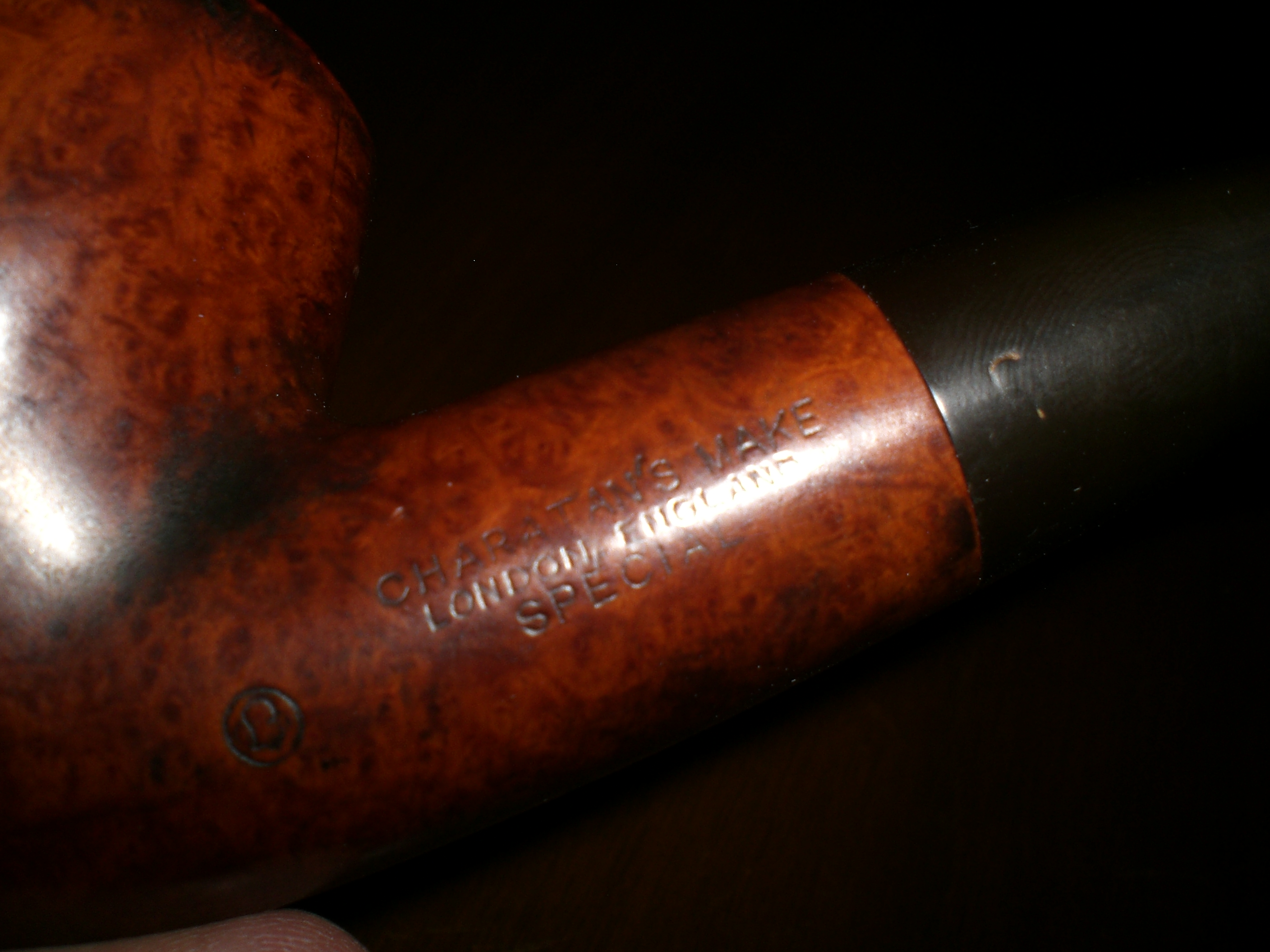
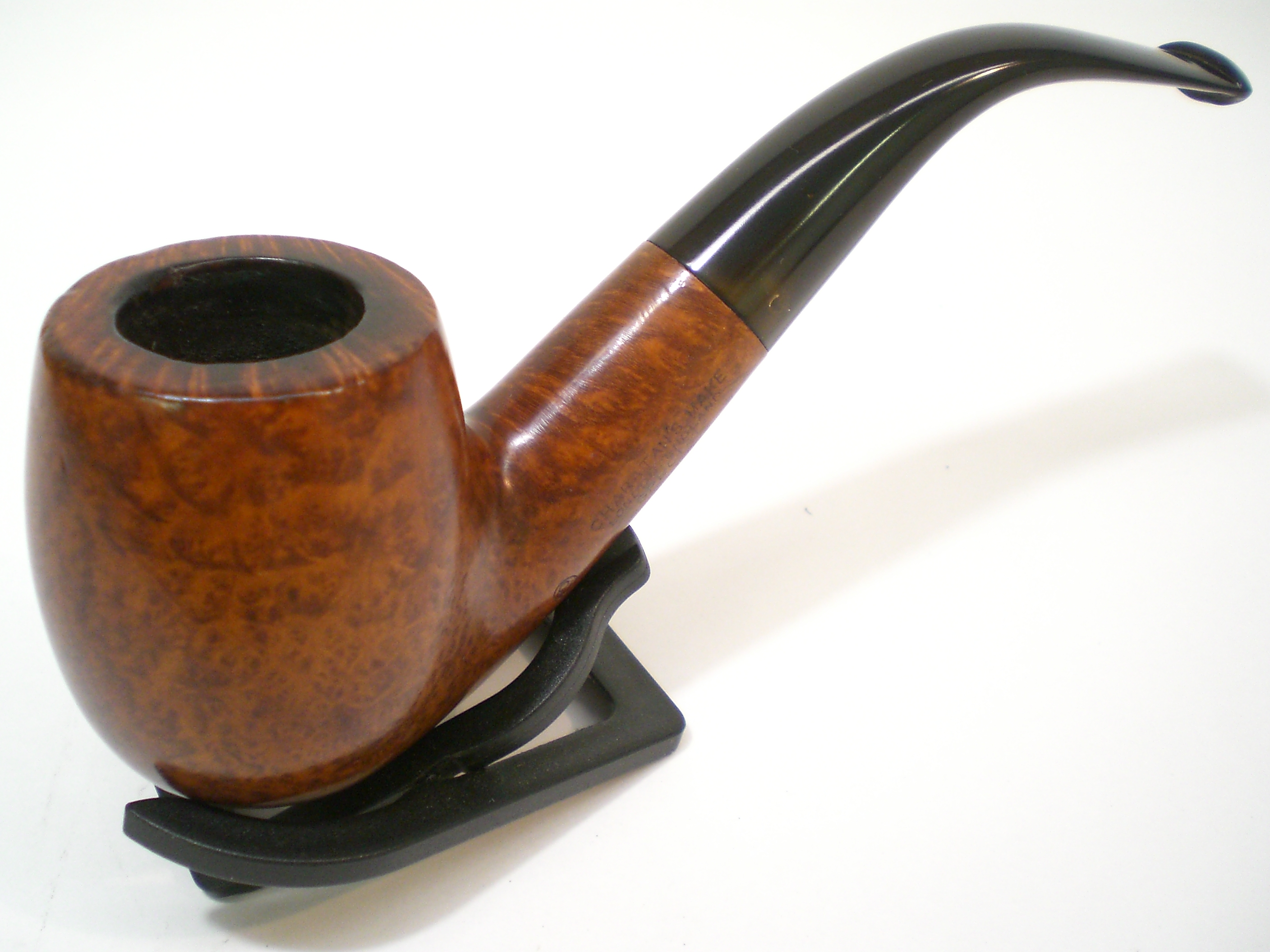
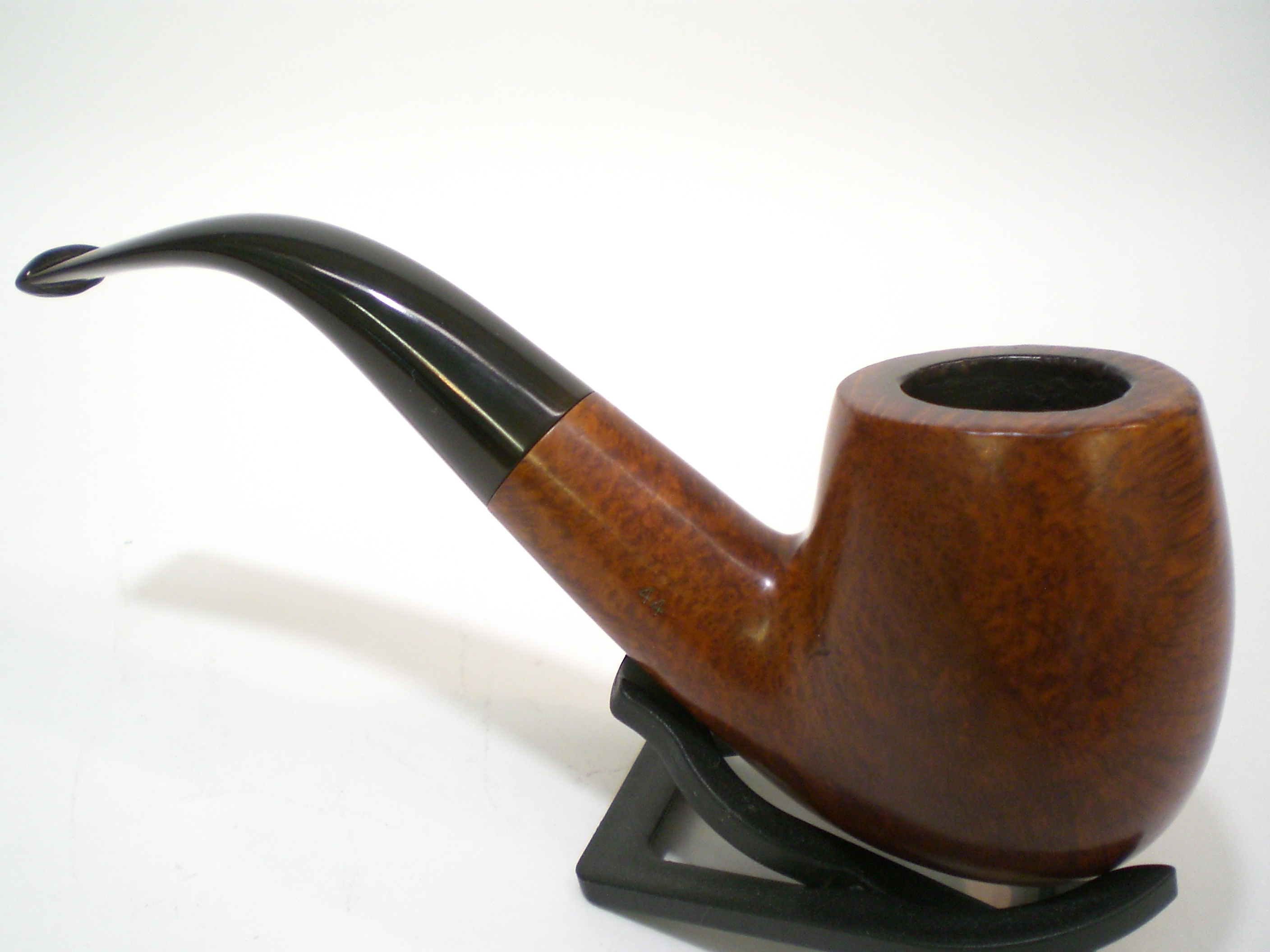
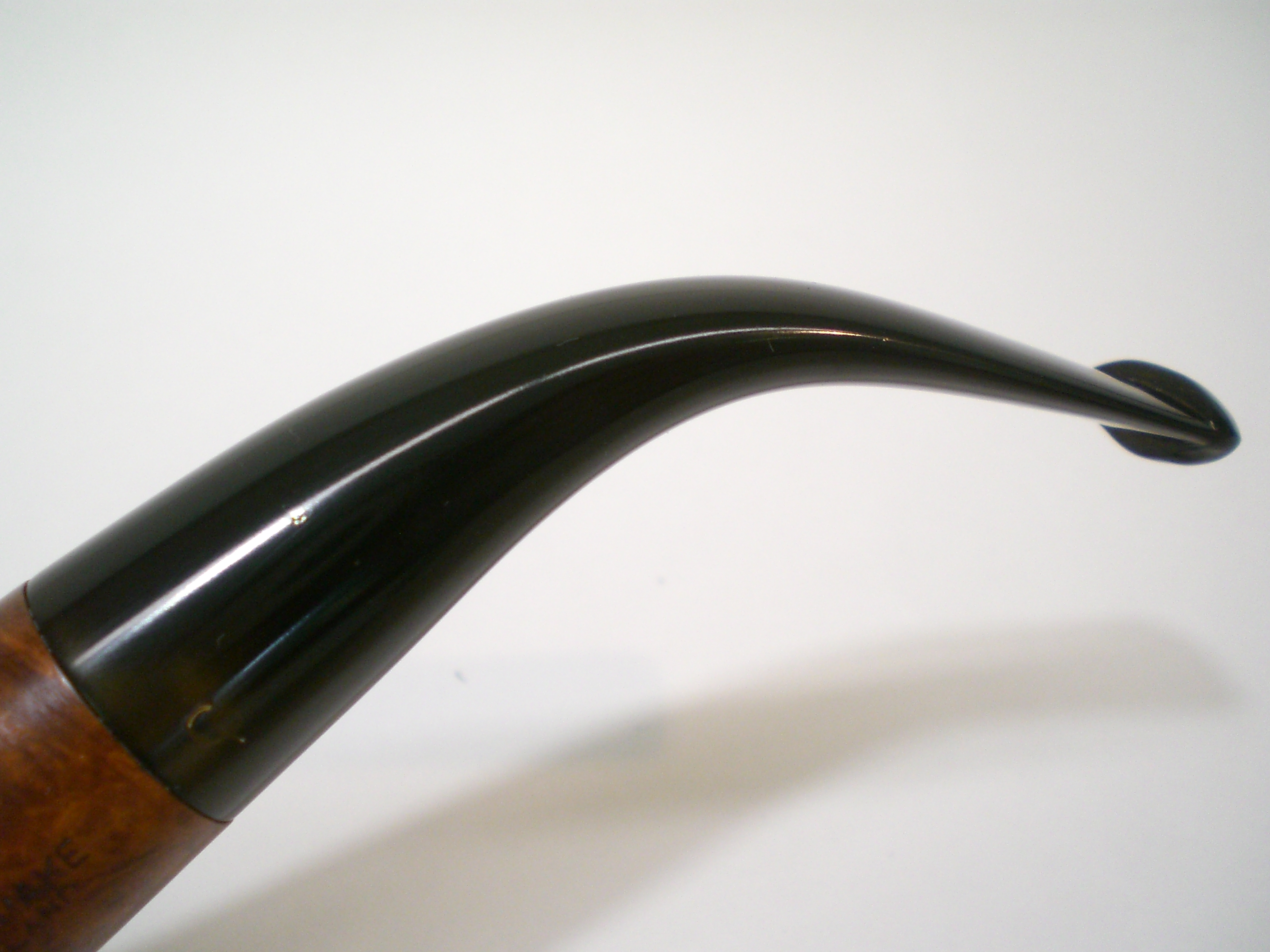
First up on the bench was this massive Charatan Special billiard. I’ve seen these Specials before, but they almost always have a saddle stem. This one has a lovely tapered stem. The pipe is 7″ long and at exactly 100 grams, a hefty hunk of briar. This one is a shape 44 and has the Lane stamp.

Paired with a 4K Castello to give you a perspective on the size of the pipe:


Each of these four pieces had a heavy layer of grime on them (as did the two GBD’s in my collection) and a very thick layer of tar on the bowl top.  The had some small tooth impressions that lifted out with some heat.

The tars on top came off with some light scrubbing. I soaked the stem in a mild Oxyclean solution to remove some stubborn oxidation. I stayed away from the “CP” stamp. It is light, but visible. I did not soak the bowl on this one, just gave it a light reaming. The owner smoked all of these pipes very hot and did a fair bit of damage to the inside of the bowl.  I was afraid to remove the cake filling that was filling in the crevasses. With a little use, the cake should build over these spots and the pipe should still have a long life, the briar is still very thick all over. There were a few dents on the bottom of the bowl. They lifted out nicely with an old kitchen knife held over a propane torch and a wet cloth.

After soaking the stem, the oxidation was removed with 1500 and then 2000 grit wet paper.  I then moved to using the last three grades of Micromesh sheets (6000>8000>12000).  The stem was then buffed first with Tripoli and then White diamond rouges.  A final buff with Blue Magic Plastic polish was the final step.

The tars on the bowl top were removed with a very mild solution of water and alcohol as I didn’t want to lighten the stain.  As the heavy layer was removed, I switched to plain water on a cloth.  The bowl was buffed with Tripoli, White Diamond and then Carnuba wax.  The briar really cleaned up nicely.

The finished pipe is a very regal looking piece.


I’ll detail the other three pipes from this estate in future essays.

Al Jones, aka Upshallfan

GBD Tapestry 9438 Re-boot


Earlier this year I refurbished a GBD 9438 in Tapestry finish and vowed never to touch a chair-leg stem again. That pipe proved to be a wonderful smoker and is a frequently used pipe in my rotation. A few weeks ago I found the identical pipe on Ebay and won the auction. This second 9438 was in a little better shape and the stem was not nearly as oxidized. The Rondell appeared to be damaged.

The bowl was in terrific shape, with very crisp nomenclature. There is an “E” stamp just at the end of the stem. If anyone has an insight as to what that means, please comment. The bowl was lightly reamed, then soaked with Everclear and sea salt. After the bowl was soaked, I buffed the briar with some Tripoli, White Diamond and finally a few coats of Carnuba wax. The briar is in really nice shape and the polished top is unmarred.

My attention then went to the stem. From the Ebay picture, I thought a piece of the brass rondell was missing. But that proved to be only grime. These rondells now appear to be unattainable, so I was pleased to discover this. The stem was soaked in an oxyclean solution. It was then cleaned with 2000 grit wet paper, than the last few grades of micromesh. After sanding, I buffed the stem with white diamond and then plastic polish.

I’m very pleased with the finished pipe. The briar a bit nicer than my first 9438 Tapestry. I bought it with the intention of giving to a family member as a Christmas gift, but now.….

Perspective of the pictures makes it appear the pipes are different sizes. However, they are identical in size. The tenon on the recent addition is curiously a bit longer than my first 9438.

Before:

The fisnished pipe and some shots with the sister 9438 Tapestry:

Al Jones aka “Upshallfan”

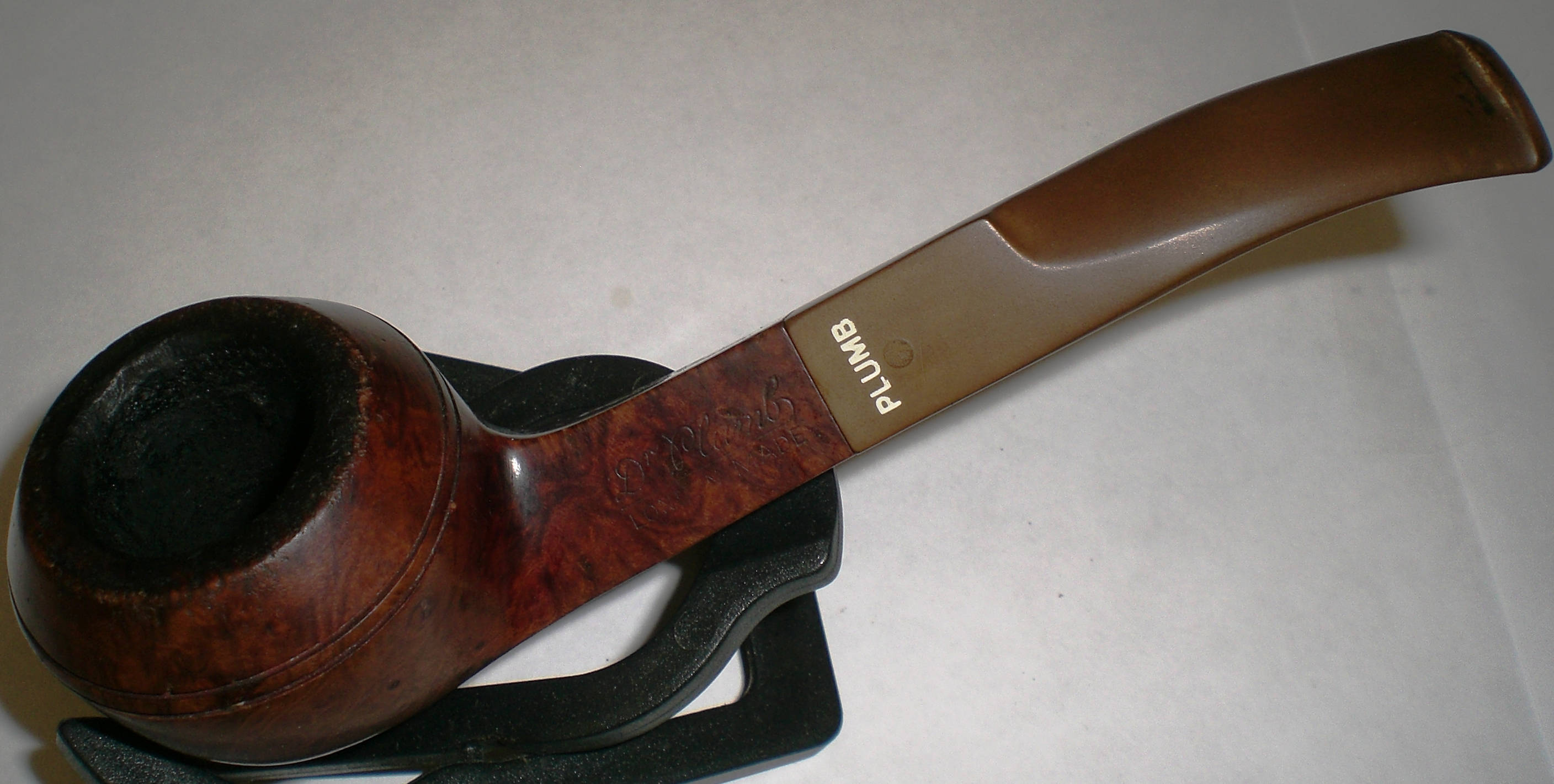
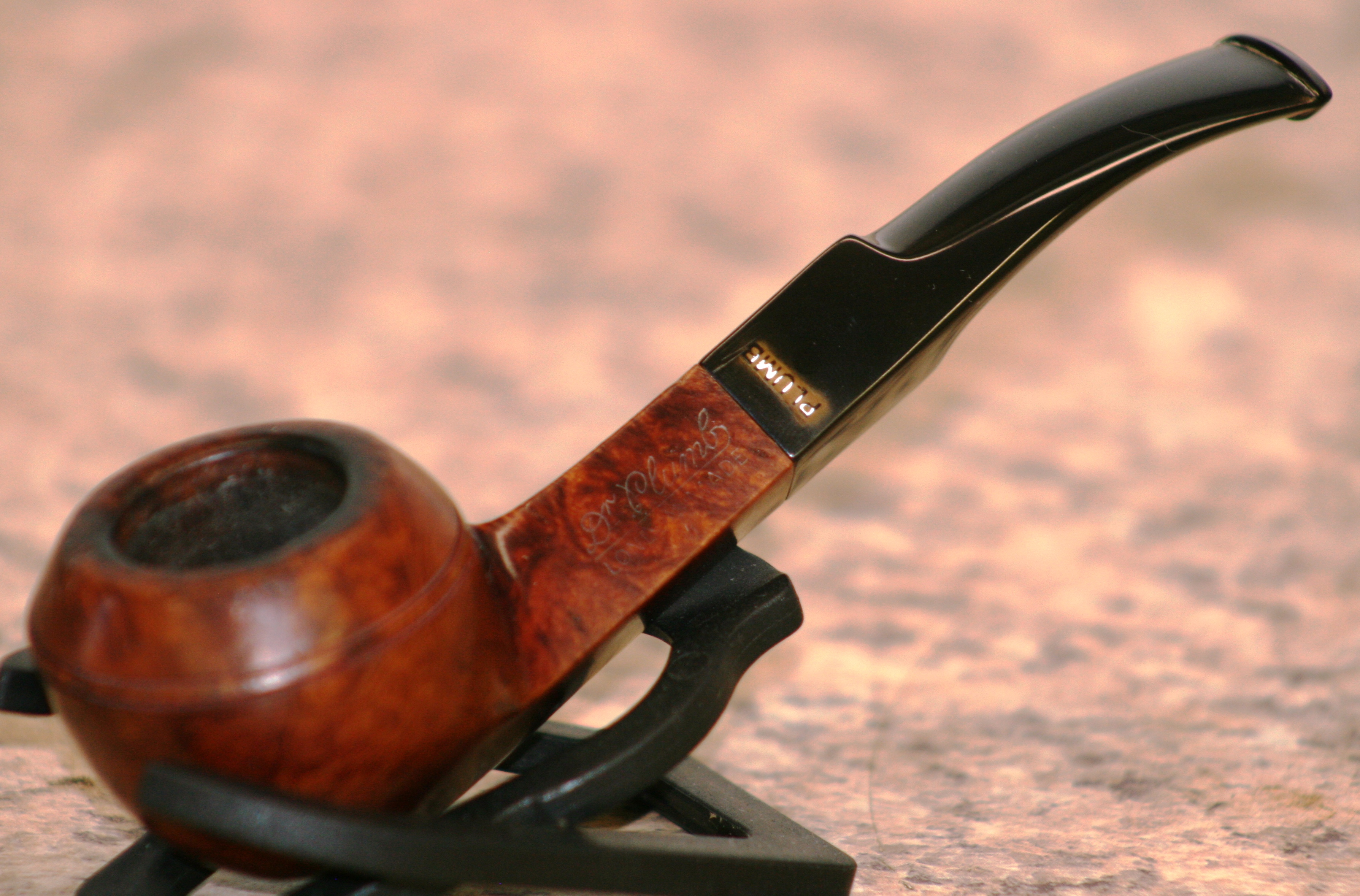
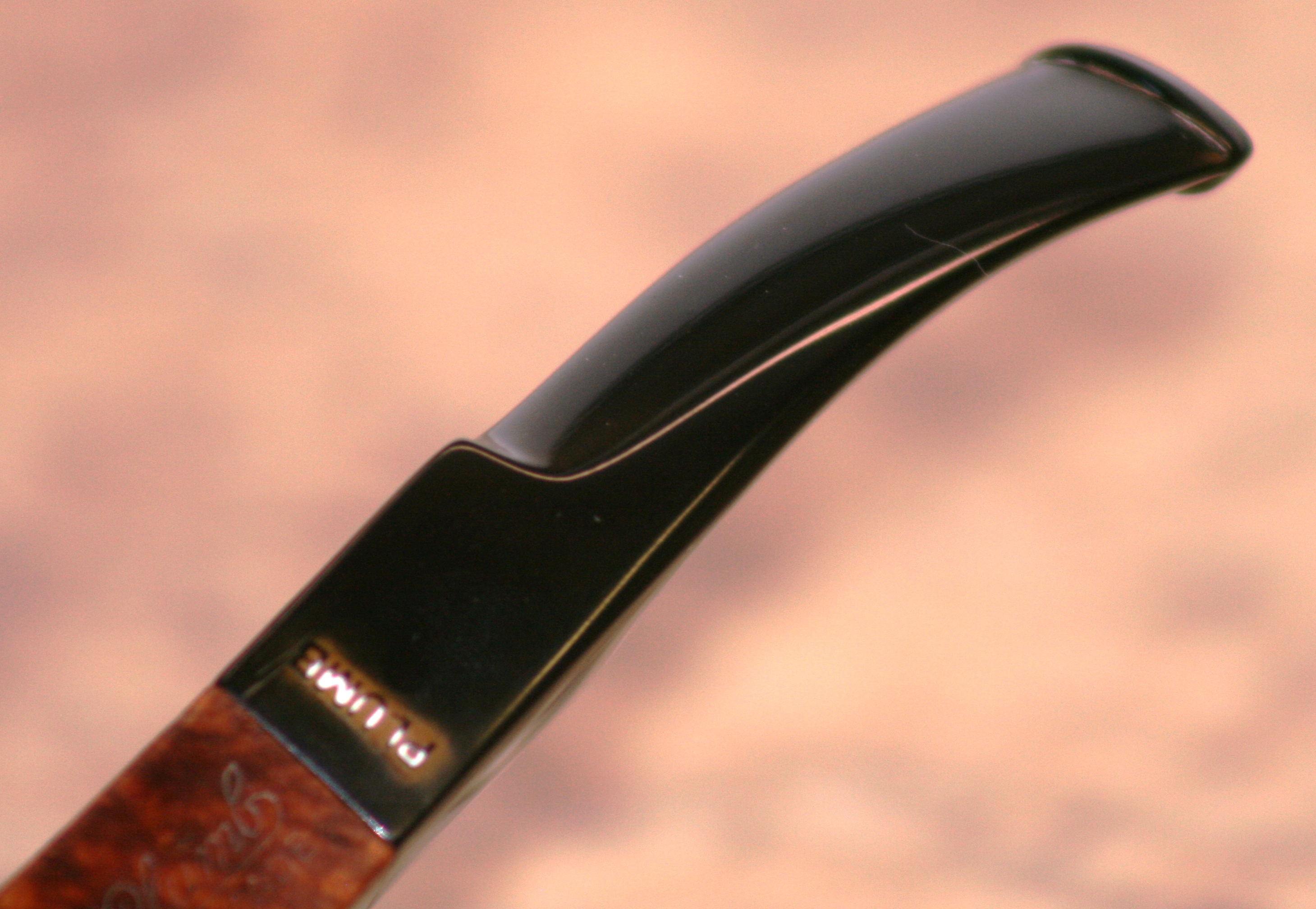
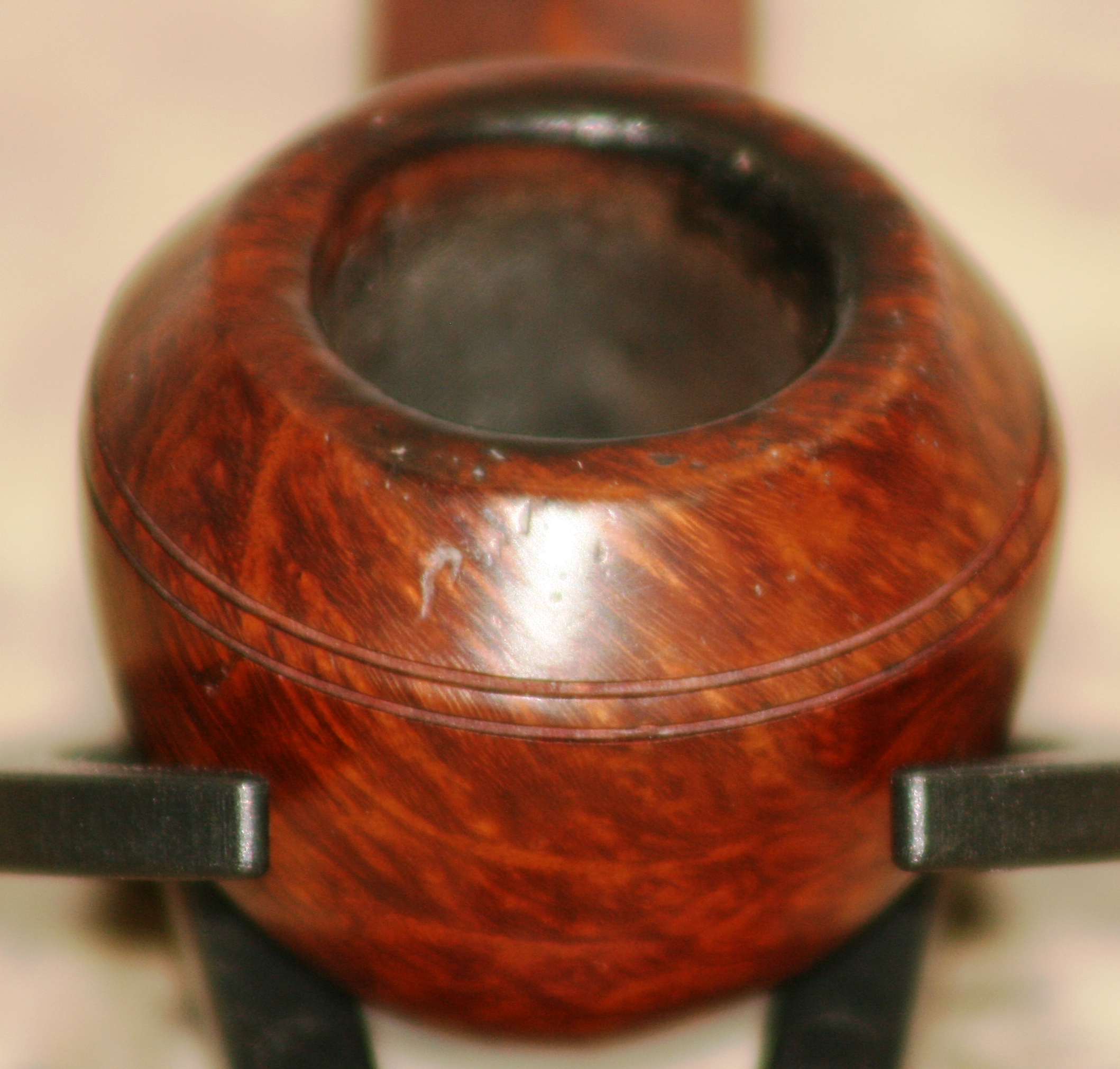
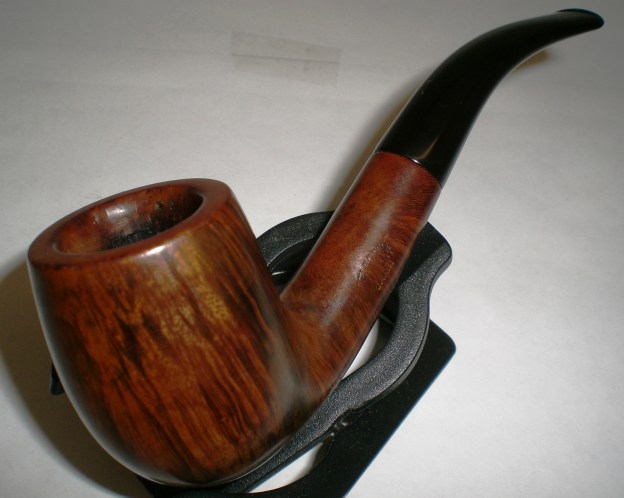
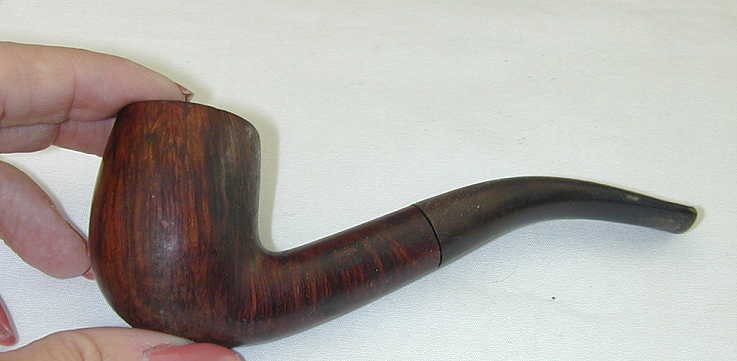
Dr. Plumb Bulldog Restoration


My daughter’s boyfriend found this neat little Dr. Plumb bulldog at a New Orleans shop and sent it to me for restoration. I thought Dr. Plumb had a connection to GBD and I believe they are now owned by the Cadogan group. The stem was in terrific shape, save for a heavy coat of oxidation. The top of the bowl was scorched and it had some dents and scratches.

Before:

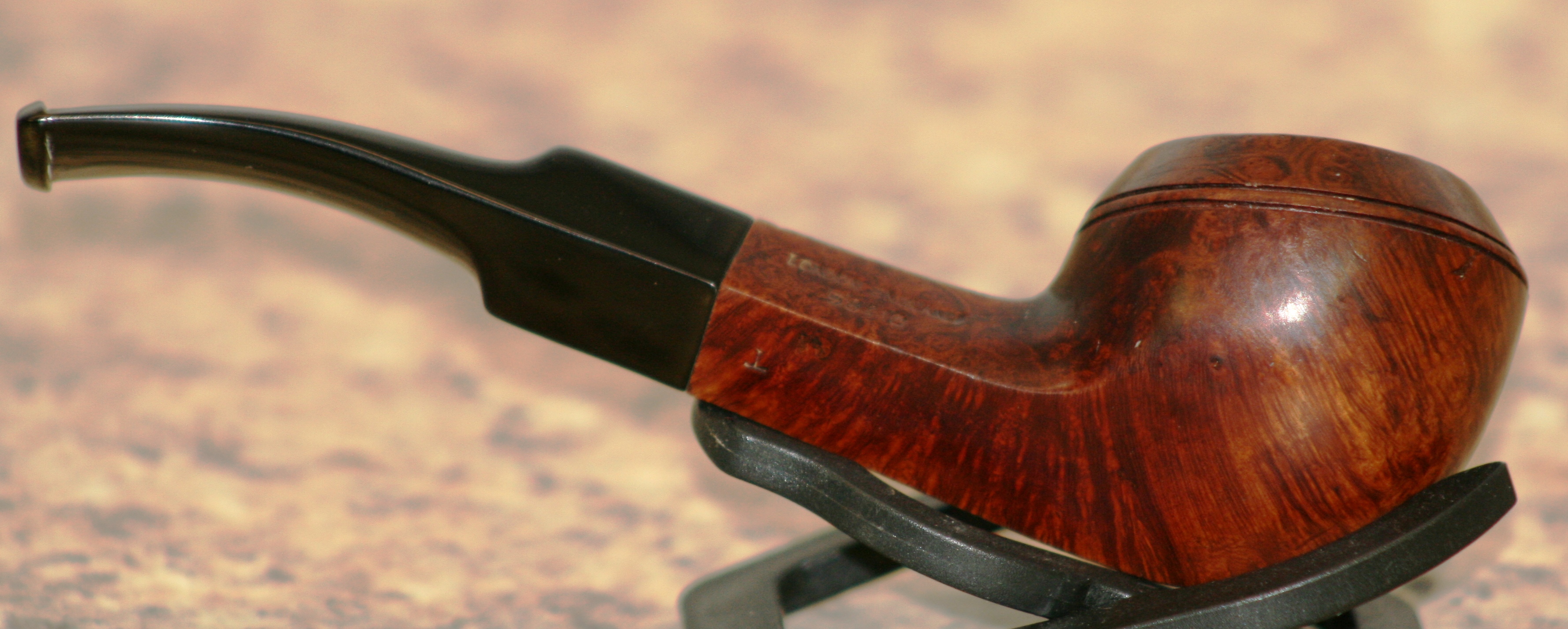
I reamed the bowl with both my Castleford and Senor reamers. Someone in the pipes past had reamed it a little out of round, but it wasn’t too bad. I removed some of the dents with a knife heated by a flame and a wet towel. Most of the major ones popped back out nicely. The bowl has some fills, but they are hidden well by the factory finish. In order to remove the scorched top, it would have required a restain. I was afraid with the numerous fills, it would look better with the factory finish. “Character” as they say. I buffed the bowl with some Tripoli, White diamond and with a final buff using Carnuba. The stamping is very legible.

The stem was soaked in an Oxyclean solution overnight to soften the brown coating. Unfortunately, the stem logo proved very problematic. I could not get the oxidation off this part of the stem without removing the logo. The owner opted for me to leave the logo and brown patch.

Here is the finished product.

The pipe sure looks like it would be a good smoking piece and I hope the young man enjoys it for many years.

Selected Straight Grain (Comoys) Restoration


By Al Jones

Several months ago, a thread on the SmokersForum.uk about the Comoys “Selected Straight Grain” pipes piqued my interest. Member Dirigo (Tom) was kind enough to share with me how to identify these interesting pipes. I was able to grab this Shape 13 via Ebay last week, which corresponds with the Comoys shape chart. That shape looked to be in decent shape, with the exception of one putty fill. I assume this flaw made the pipe unworthy of the Comoys stamping. There were only the slightest tooth marks and no pesky stem logo to worry about.

From the Ebay picture, you can see the ugly fill.

There was only minimal cake inside the bowl so it was lightly reamed and soaked with Everclear and sea salt. The top of the bowl was scarred, so that was going to take some work.

While the bowl was soaking, I started on the stem, which had been soaking in a Oxyclean solution. I went thru my usual 1500/2000 grit wet paper that onto the final four micromesh grades. The stem was then buffed with white diamond and a final plastic polish. Removing the light chatter was pretty straight forward. The button was worn, so I used a needle file to slightly reform the edges.  Unfortunately, I was unable to remove the oxidation without making the edge of stem slightly rounded.  I need to learn how to avoid this issue.

Once the bowl was done soaking it was moved to an alcohol bath to remove the stain. I spoke to Steve prior to this step and he recommended the fill be corrected using the superglue & briar technique he recently posted on Reborn Pipes. That solution worked well and I used two steps to fill in the pit. After restaining, the fill is just slightly visible, a big improvement from the factories solution using the bubble-gum putty.
The Super-Glue and briar dust patch.

I used a two-step stain process to highlight the grain, also a recommendation from Steve. First I “painted” on some black stain, after the bowl was warmed to open the grain. Then, the bowl was sanded with micromesh and a very diluted application of Medium Brown stain was applied. The bowl was than buffed with Tripoli and white diamond, followed by a final buff with Carnuba wax. I was careful on all steps not to diminish the stamping, which is quite legible.

Thanks to Steven Laug for his help with this one and Tom for information on this interesting Comoys niche.