Author Archives: rebornpipes

Parker Super Briarbark Cherrywood 809


Blog by Steve Laug

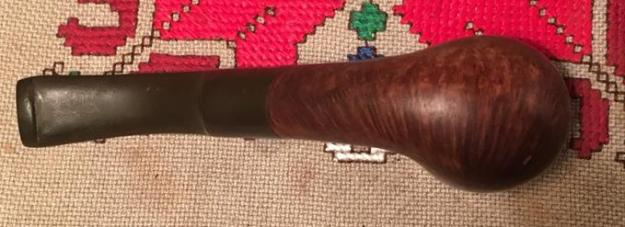
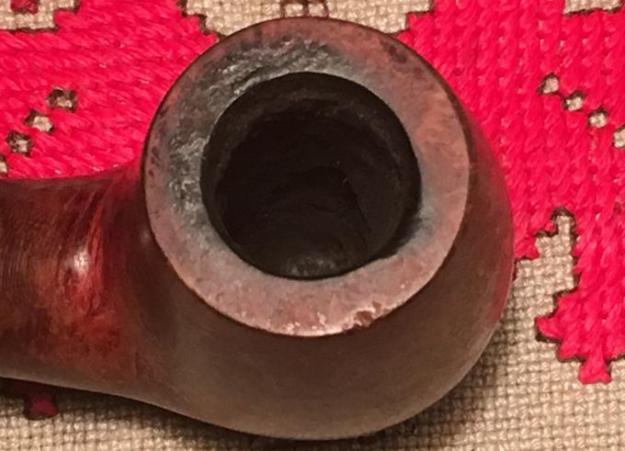
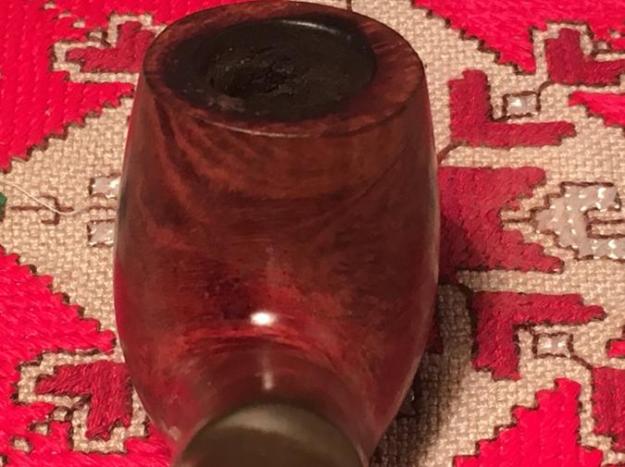
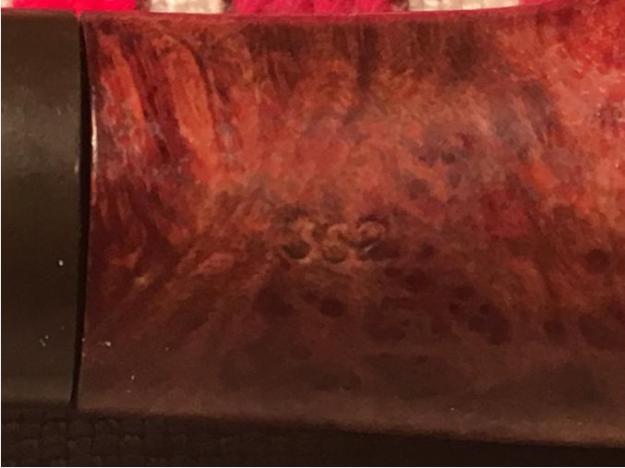
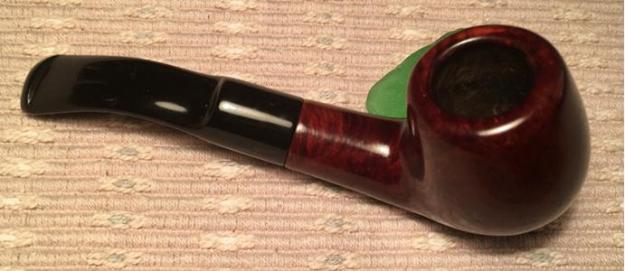
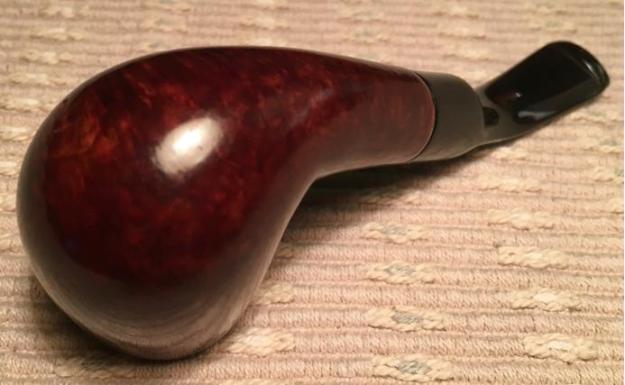
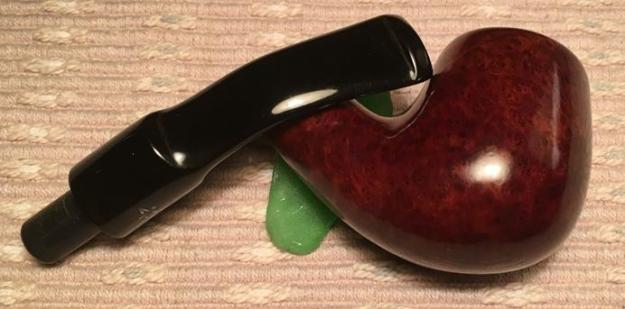
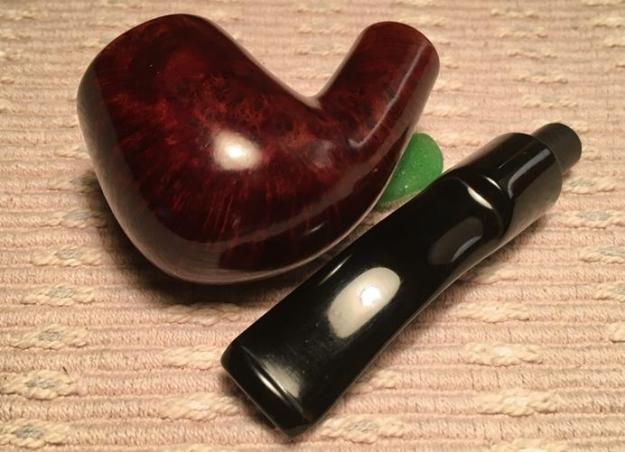
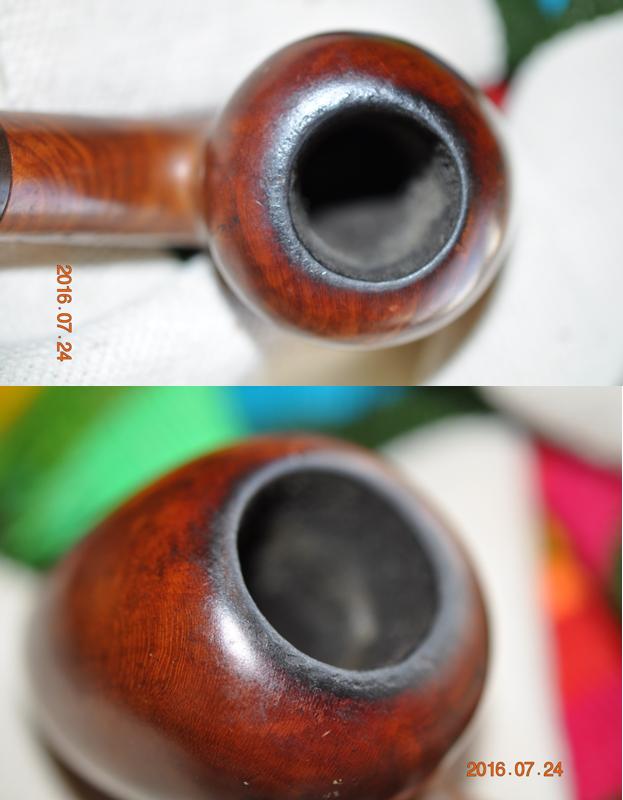
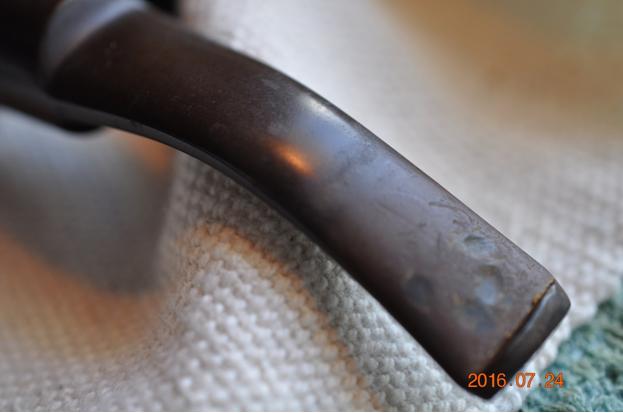
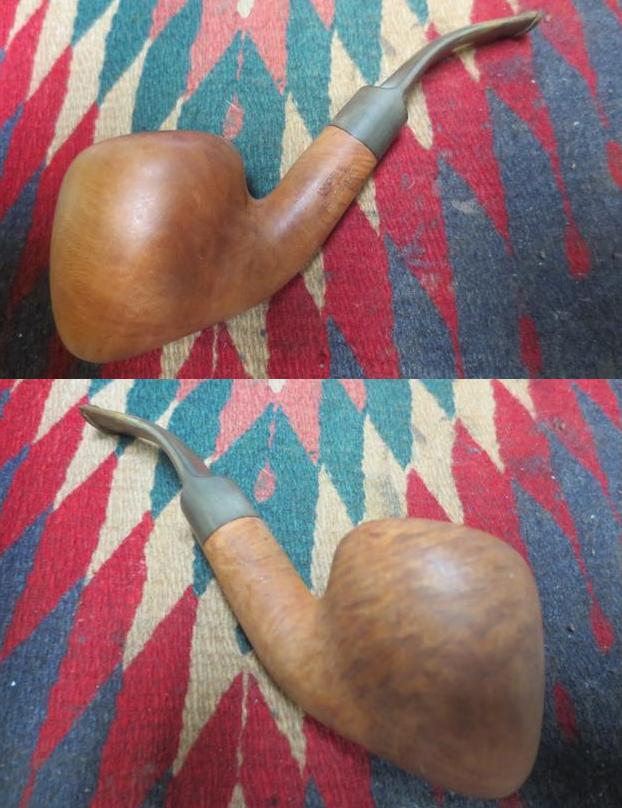
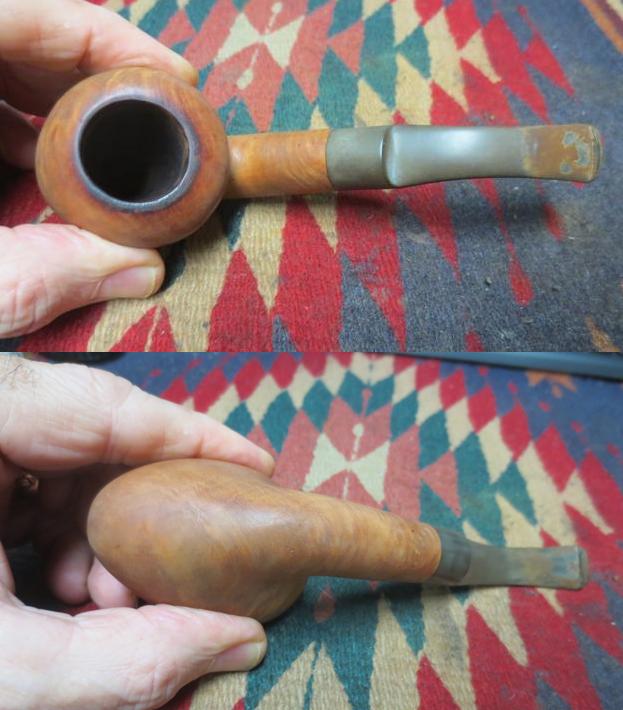
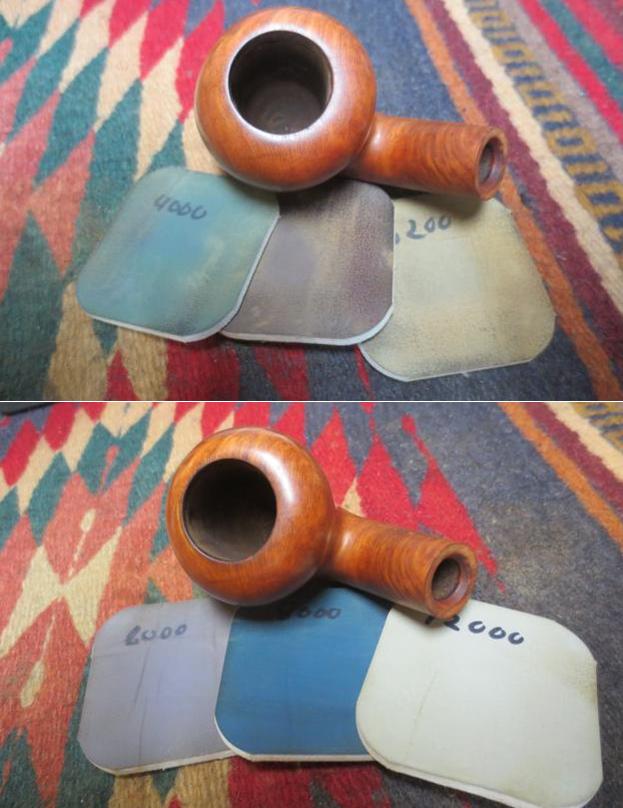
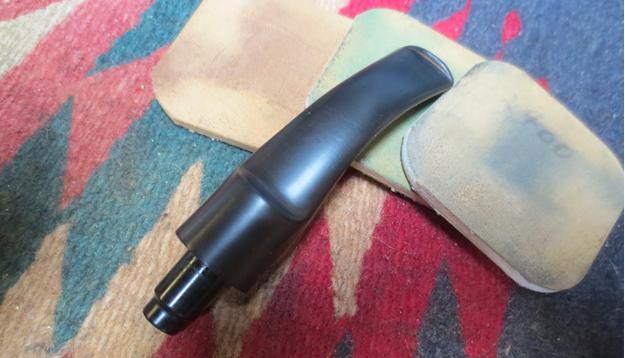
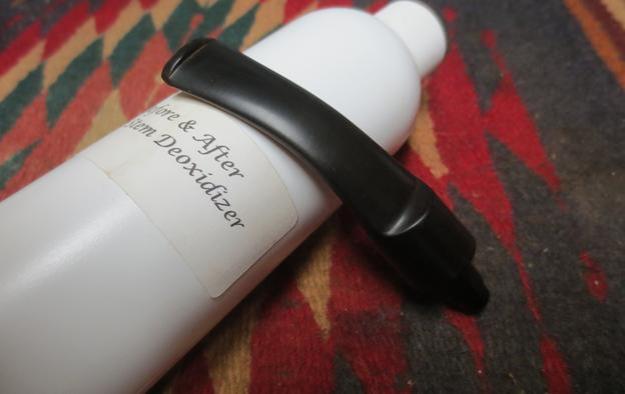
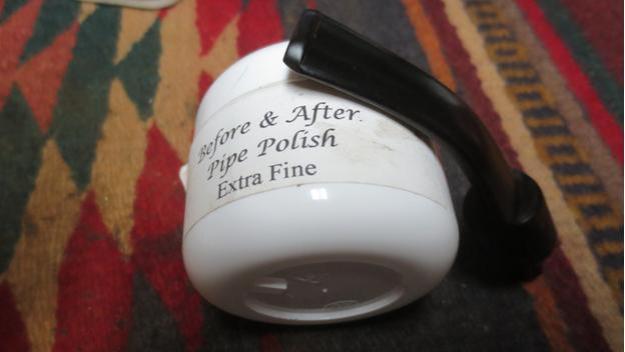
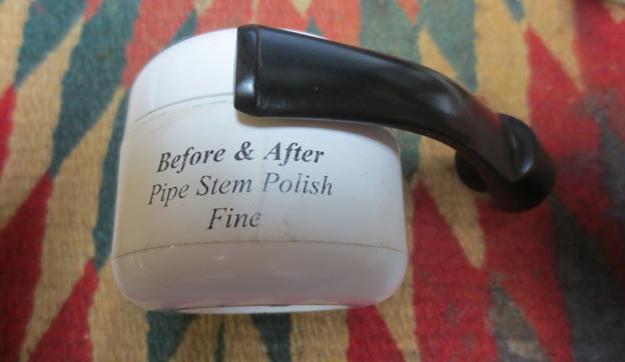
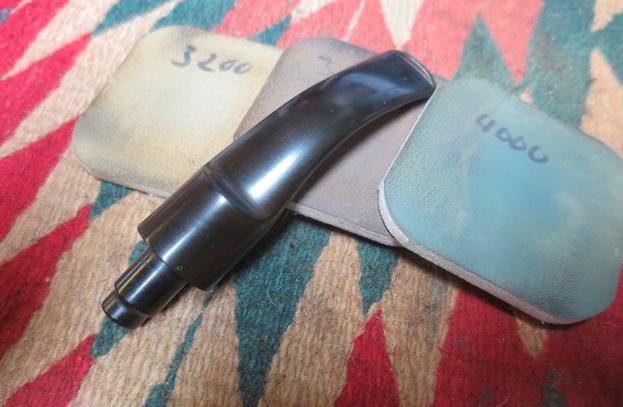
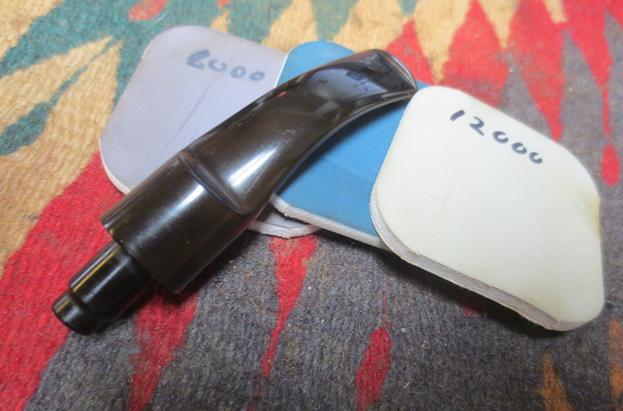
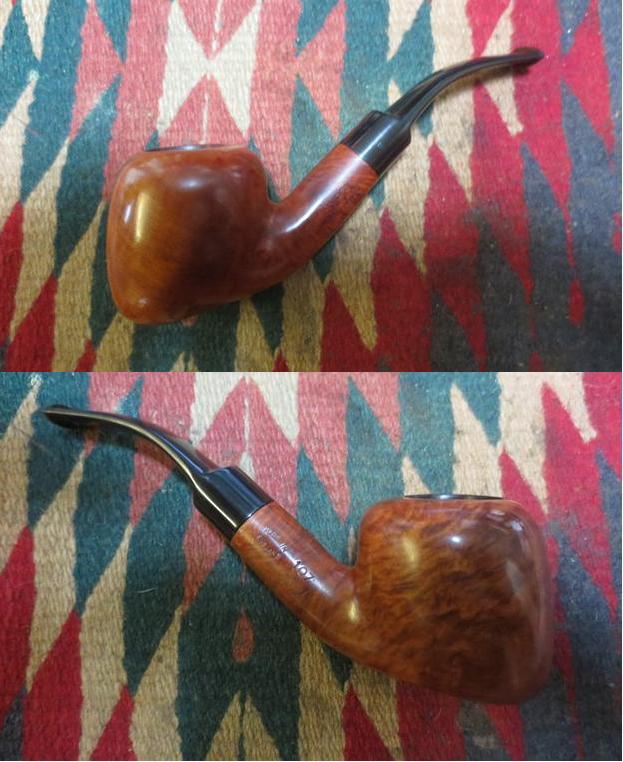
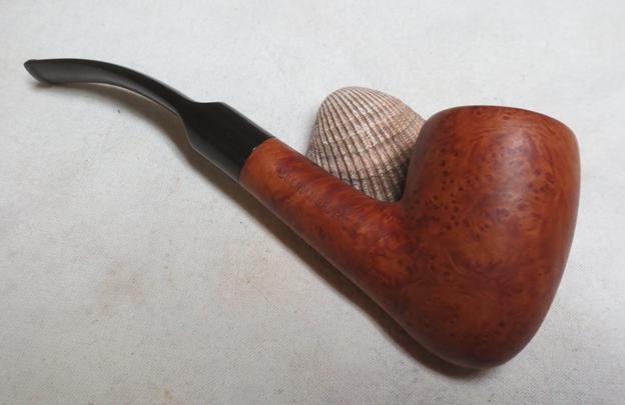
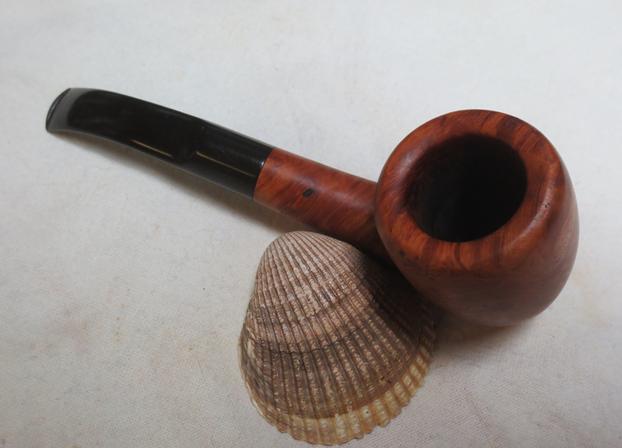
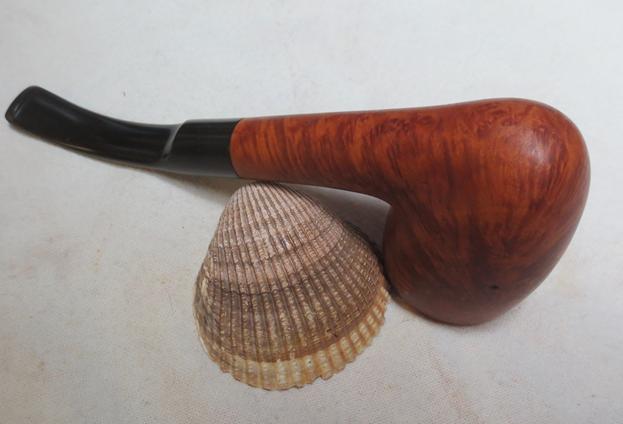
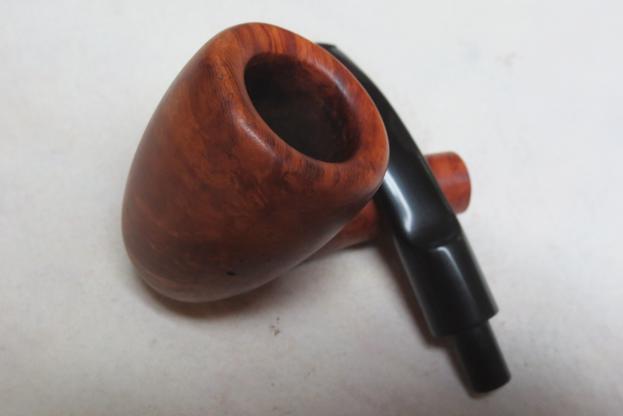
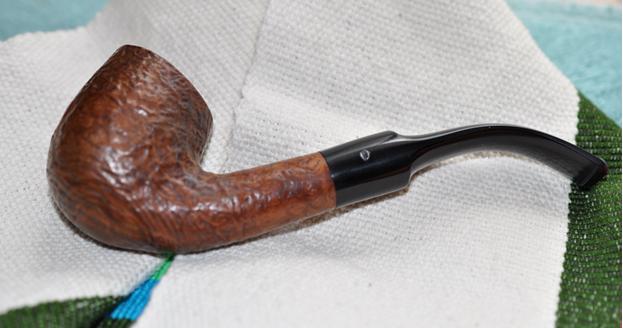
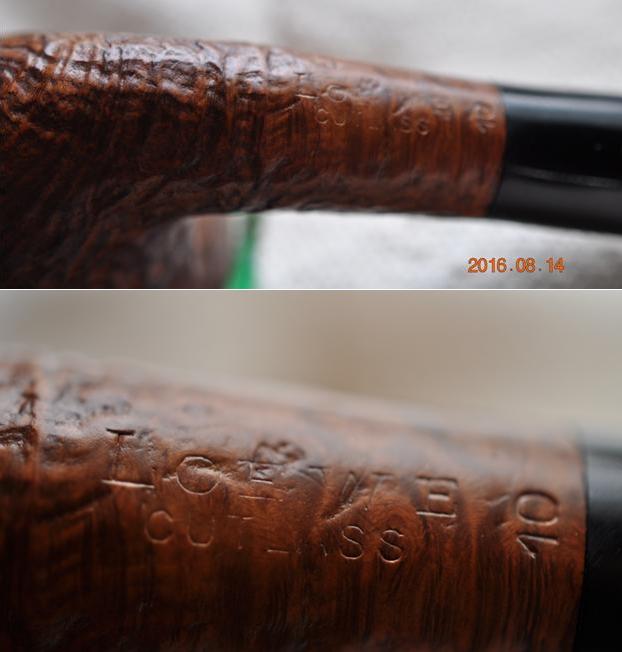
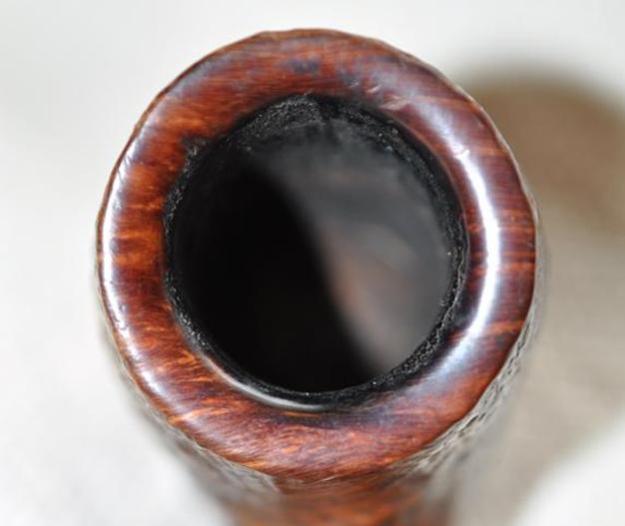
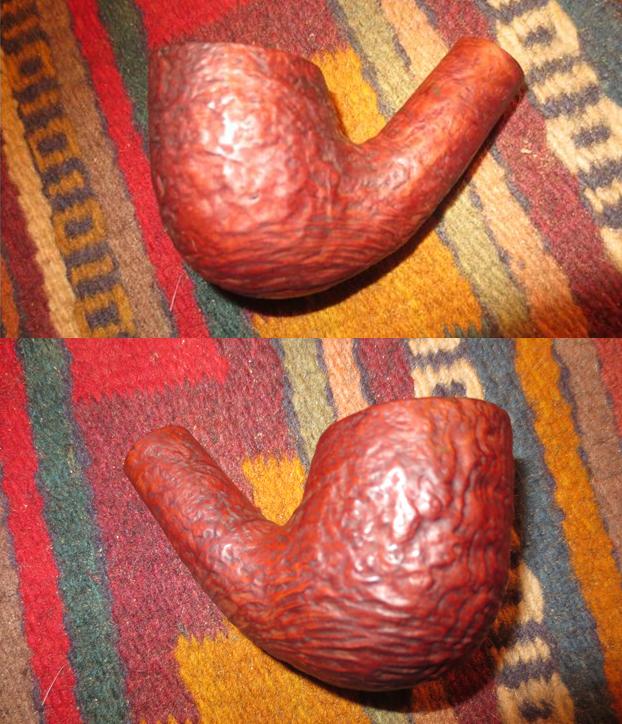
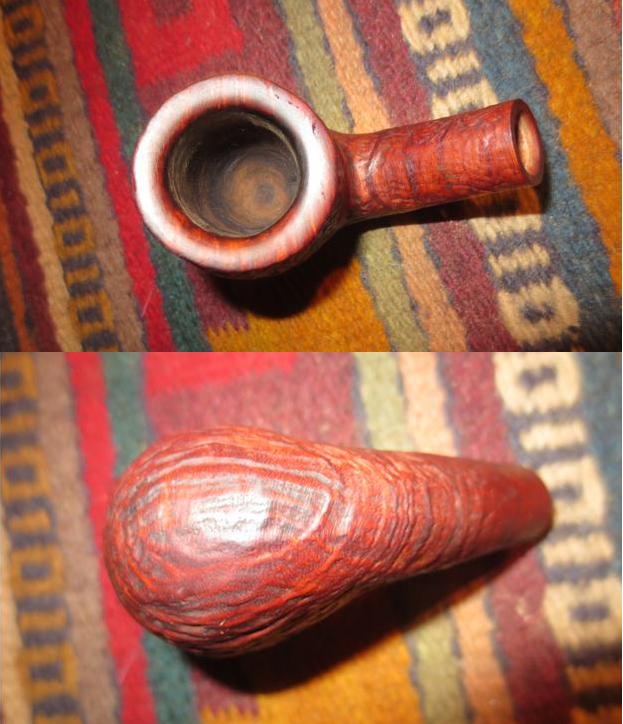
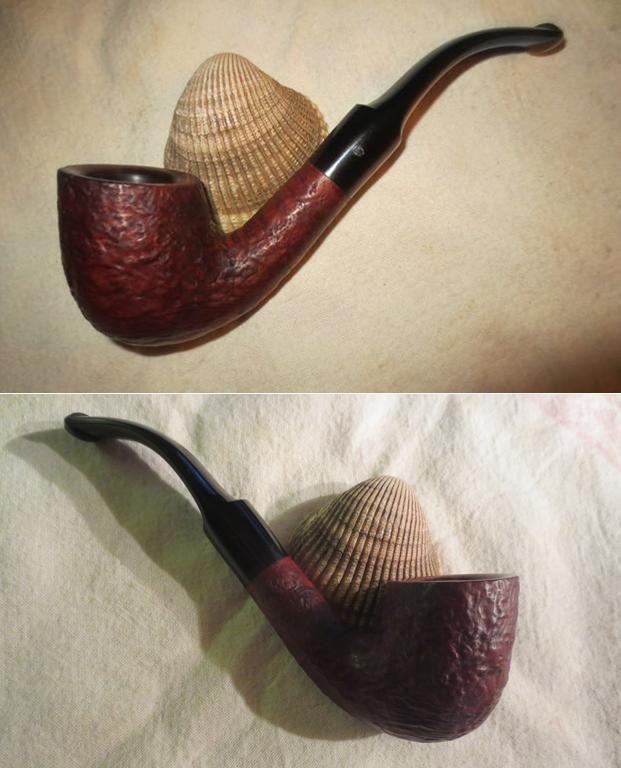
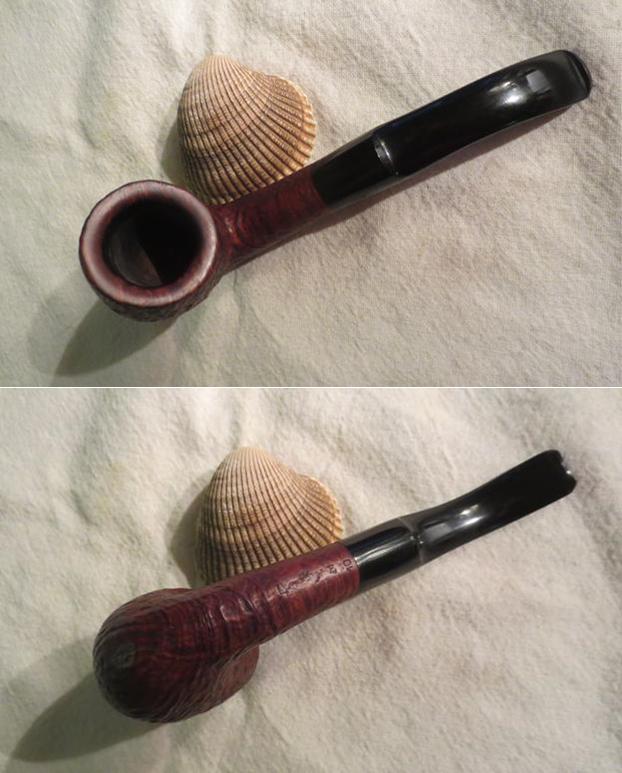
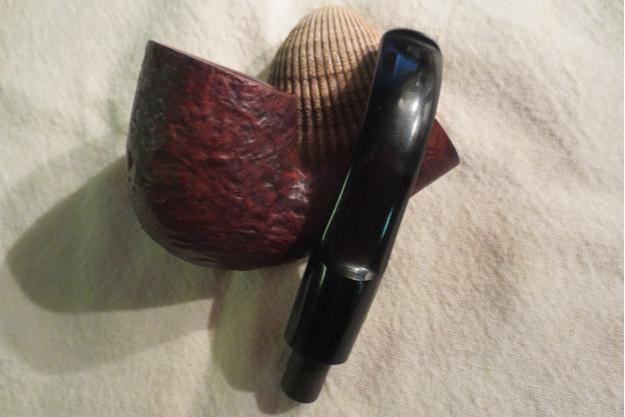
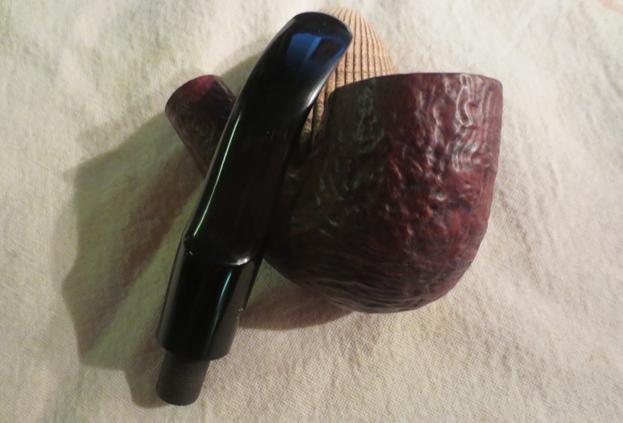
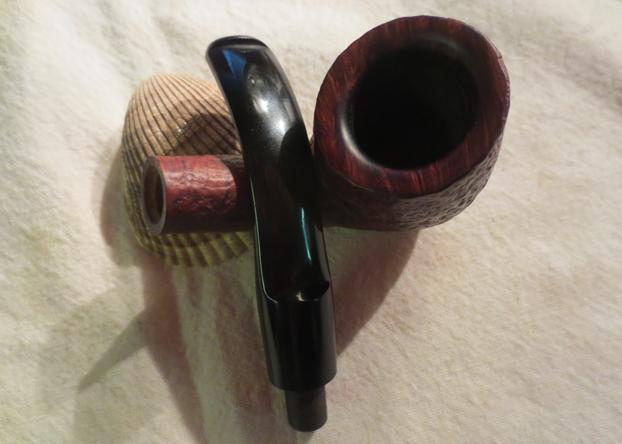
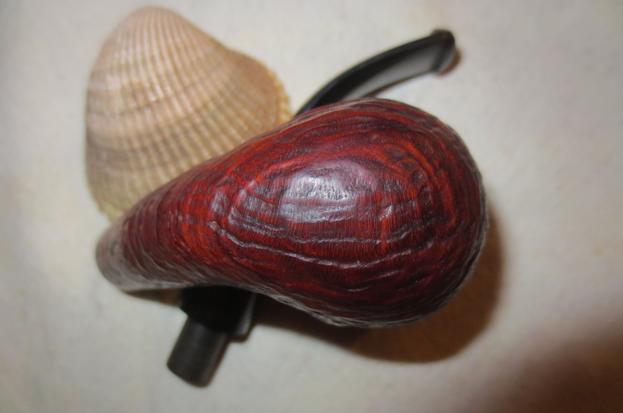
The grain on this Parker is absolutely stunning. The sandblast follows the cross grain around the bowl with a deep, craggy blast. The shape is a classic poker or Cherrywood. It is stamped on underside of the shank with the brand name Parker over Super in a Diamond over Briarbark over Made in London England. Next to the shank/stem union it’s stamped with the shape no. 809 and a circled 4 designating the bowl size. There is a Diamond P on top of the stem. The finish is in decent shape with a medium to dark brown stain. When I received the pipe it had a thick cake in the bowl and the lava had overflowed onto the rim filling in the grooves of the sandblast. It is hard to tell if there was rim damage as it is so caked and encrusted on the rim. The stem had calcification from a softee bit on the first inch from the button forward. There were deep tooth marks on top & bottom side of the stem near the button. The following four pictures show the general condition of the pipe when I brought it to my work table. The next photo shows the rim top and the thickness of the cake. The cake was very hard and it would take some serious work to remove it from the bowl. It also looked to me like there was rim edge and bowl damage on the front left side. Once I had reamed it I would know for sure. (Just a side note – this is where I really appreciate my brother’s clean up work. I really like working on pre-cleaned pipes.)The cake was very hard. I have found that on some of these older pipes the tobacco must have been significantly different as the cake is like concrete whereas on the newer tobaccos it is never this hard. Could it be just the fact that the pipe has been sitting for a long time? I reamed it with the PipNet reamer starting with the smallest cutting head and working my way up to the third head. I used the Savinelli Fitsall Pipe Knife to work on the cake as well. It took a lot of time to get the pipe cleaned out. I probably spent over 45 minutes just reaming this bowl. The second photo below shows the bowl at the end of the 45 minutes of work. Still work to do on it as you can see the remnants of the cake on the walls. I used the Savinelli Fitsall to clean it up further.I picked at the lava on the rim with a dental pick to loosen the rock hard buildup and a brass bristle brush to clean off the debris once I had it loosened. The photo below shows the cleaned out bowl and the cleaned rim. Notice the damage to the front left inner edge of the rim.With the bowl cleaned and reamed I turned my attention to the internals. I scrubbed out the mortise and the airway in the shank and the stem with pipe cleaners, cotton swabs and alcohol. It took some coaxing with the swabs and cleaners to finally get the internals free of buildup and debris.The stem had a thick calcified buildup on the first inch from the button forward on both sides. This too was rock hard. I sanded the calcification off the surface of the vulcanite. Doing so revealed the tooth dents on the surface of the both sides of the stem near the button.I “painted” the stem with a Bic lighter flame to raise the tooth dents as much as possible. While they came up significantly some of the edges were sharp and the dents would rise no more. I wiped the stem down with some alcohol to clean out the dents and filled them in with black super glue. I set the stem aside so that the repairs would cure and headed off to work.When I returned in the evening the patches had cured. I sanded the repairs with 220 grit sandpaper and sharpened the 90 degree angle of the button with needle files. I sanded the stem surface some more to remove the oxidation.I decided to take a bit of time and work on the bowl so I set the stem aside for a while. I touched up the worn spots on the rim and on the shank end with a dark brown stain pen. The colour was a perfect match to the rest of the bowl and it blended in very well. I waxed the briar with Conservator’s Wax. It is a soft rub on past that work well with sandblast and rusticated finishes. I buff it with a shoe brush and I am able to polish even the deep grooves in the grain so that no wax sits in those and hardens, dulling the finish. I lightly buffed the bowl with a soft microfibre cloth to raise the shine. The photos below show the bowl at this point in the process. I decided to polish the stem using a different method than my normal routine. I sanded it with 1500-2400 grit micromesh sanding pads to remove the scratching in the vulcanite. I use a product that I have used before called Before & After Pipe Stem Deoxidizer to work over the remaining oxidation. I repeated the process until the vulcanite was clean. I polished it with the Before & After Pipe Polish in both Fine and Extra Fine grits. I rubbed the stem down with a soft cotton pad to remove the polishing compound and buffed it with Blue Diamond on the buffing wheel. I rubbed it down with a coat of Obsidian Oil and set it aside to dry.I used an artist’s fine bristle brush and white acrylic paint to fill in the Parker Diamond P stamp on the stem. I wiped it down afterwards and lightly buffed it with Blue Diamond to remove the excess paint.I buffed the pipe and stem with Blue Diamond on the buffing wheel – with a light touch on the bowl. The finish shows up beautifully, the sandblasted ring grain standing out front. It is one of those rugged blasts that are a tactile wonder as it heats up during a smoke. I gave the bowl another coat of Conservator’s Wax and the stem multiple coats of carnauba followed by a buff with a clean buffing pad. I hand buffed the bowl with a shoe brush and then with a microfibre cloth to deepen the shine. The finished pipe is shown in the photos below. The dimensions of the pipe are Length: 6 inches, Height: 2 inches, Outer diameter of the bowl: 1 1/2 inches, Chamber diameter: 7/8 inches. The contrast of the dark brown and a medium brown that shines through give the finish a rich patina. The bowl has been cleaned and the entire pipe is ready to smoke. The stem is in great shape. The tooth marks have been removed though there is slight scratching on the vulcanite. It is a beautiful pipe, just a little big for my liking or I would hang on to it. I will be putting it on the rebornpipes store soon. If you are interested in adding it to your collection email me at slaug@uniserve.com or send me a message on Facebook. Thanks for looking.
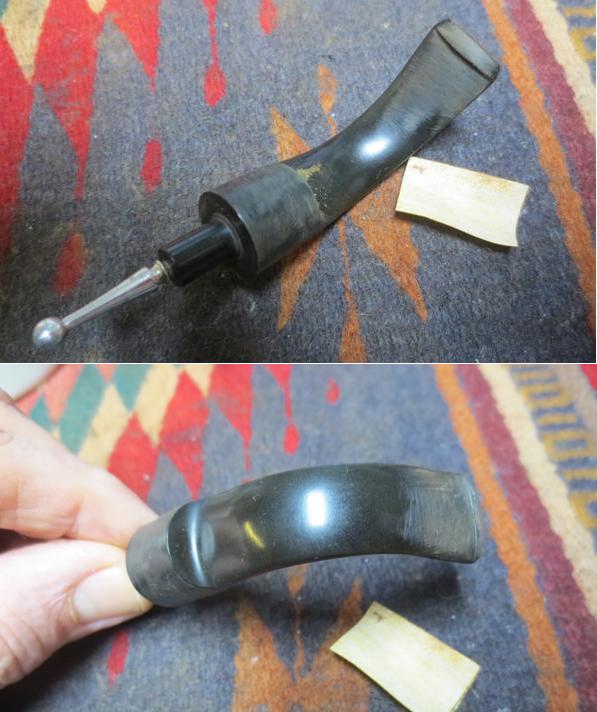


Rebuilding a Stem for a 1960’s Brigham 419 Club


Well done rebuild on a damaged button. Worth a read. Charles makes this look simple – but it’s not.

Charles Lemon's avatar

I’ve wanted to add a Brigham Club pipe to my collection for some time, so when I spotted this 4 Dot version on eBay recently, I knew I’d be bidding, despite the pipe’s obvious shortcomings. The auction listing clearly showed one major problem – the lower portion of the stem’s bite/button area was missing a large chunk of material.

It’s times like this that being both a collector and a restorer comes in handy; as it turned out, the damage, which I knew I could repair, was sufficient to make other potential buyers a bit gun-shy and I ended up winning the pipe for a very reasonable price.

I took this series of pictures when the pipe arrived on my worktable. As you can see, a Club pipe to Brigham is a Lovat to just about everyone else, the saddle-stemmed, round-shanked cousin to the Canadian pipe shape. Apart from the…

View original post 874 more words

One of those Antique Mall finds that makes you catch your breath


Blog by Steve Laug

This past weekend my wife and I took some much needed R&R and checked into a nice hotel about an hour and a half from home. We needed a break, as both of our work schedules have been heavy and my travel schedule has been quite demanding. It was great to be together and spend the weekend without a ringing phone and the ever-present work demands. We had plans for Saturday morning until about noon. However, we were absolutely free on Saturday afternoon and Sunday. We used the afternoon to visit one of our favourite spots. It has great restaurants, brewpubs and many different kinds of shops. One shop that we always check out is an antique mall. Irene always seems to find something there and so do I. She was happy to have found an older hard cover cookbook to replace one she had given away. I could not believe what I found. It was in the last row of the stalls in the mall, in almost the last booth. I looked in a cupboard thinking I might find something. There in the middle of the cupboard there was an old style tin of Capstan Medium Strength Navy Cut tobacco.
The label covered the lower part of the tin and goes about half way up the tin. The tin itself was oxidized and discoloured but did not appear to be punctured or compromised. The label on the front side of the tin reads; Medium Strength “Capstan” Navy Cut over W.D. & H.O. Wills, Bristol & London. You can see the layout of the label in the photo to the left. I could not believe what I was seeing. This looked like an old timer. I have handle a lot of old empty tobacco tins in my hunt for that full tin hidden among the tobacciana memorabilia. Many have looked like they had something in them. Some were empty or at best half full of old dried and rattling tobacco that was beyond its life. The difference was that this tin had a hand written tag from the seller that said that it was unopened. It was hard to tell through the glass of the cupboard what the seller meant by unopened. I purchased a “sealed” tin of older Balkan Sobranie that was open under the metal top cap once I opened it at home. The tobacco had dried out. Even rehydrating it did not bring the true depth of flavour of the tobaccos. So I was dubious about this “unopened tin”. I was hopeful that it was; and if so then the price of $25 was not a lot to pay for aged Virginia tobacco.
With a bit of “optimistic pessimism” I went to find the clerk to open the cupboard for me so I could check out the tin. I am one of those “got to have it in hand and check it out” kind of guys. I wanted to give it a light shake to see if it rattles. When the clerk opened the cupboard and handed me the tin I lightly shook it. Instead of a rattle, there was a thud as the contents moved from top to bottom. I looked at the sides and bottom of the tin and it appeared undamaged. I pried of the top and underneath the top of the tin was intact! I did not let the clerk see my enthusiasm at this point I just wanted to pay for the tin and take it to the car to check it out more thoroughly. I paid the $25 plus the extraneous taxes here in British Columbia and she wrapped the tin in newspaper and handed me the bag.

When I got to the car, I took it out of the wrapping and checked it out more carefully. The tin had a slight bulge on both the top and the bottom. It was sealed tight and there appeared to be no rusted areas or punctures in the tin surface. I was excited. I took photos of the top and the bottom of the tin. The photo to the left shows the top of the cap. The second photo shows the cap removed and the sealed tin. The third photo shows the bottom of the tin.

The embossed lettering on the top of the can reads, “To open the tin remove lid and press “V-Cut” until the point is directly downwards. Replace lid, press slightly and turn.” This gives simple and clear instructions on how to open the can. In essence the can has its own built-in can opener on the cap. The lettering on the underside of the can reads, “NAAFI Stores for HM Forces” in a circle around the outside with a CM in the centre.

The last tin photo below shows the back of the tin and label. The label on the back of the tin had same light and dark blue colour scheme as on the front of the tin. It reads Grand Diploma of Honour over a series of coins/medallions that span the top of the label. In a small banner centered under the medallions, it read Antwerp 1885. Under the top banner, there was a rectangular box with a star and the word Trade Mark in a square on either side of the rest of the label. In the remainder of the rectangle, it read Cut Cake Tobacco manufactured from specially selected Leaf. Being perfectly air tight and easily opened, this tin is the best package for preserving Tobacco in fine condition in all climates. At the bottom of the label it read, Capstan (Navy Cut) is supplied in the following grades and strengths: Mild – Yellow Label, Medium Strength – Blue Label, Full Strength – Chocolate Label.

I had no idea what NAAFI Stores was when I read the bottom of the tin. I understood the CM probably stood for Capstan Medium.

I also understood the HM Forces to mean Her Majesty’s Forces. This gave me a starting point to try to date the tin. I looked first on Wikipedia to learn about the NAAFI stamp. Here it the link: https://en.wikipedia.org/wiki/Navy,_Army_and_Air_Force_Institutes#NAAFI_is_Born  In reading that I learned quite a bit. I quote that in part below.

After the First World War the Expeditionary Force Canteens (EFC) and the Navy and Army Canteen Board (NACB) did not return to the gratitude of the Nation. This was because EFC had made a large amount of profit from the sales of goods to the troops and opinion was divided as to what should be done with the money.

In March 1920 Winston Churchill, then Secretary of State for War, set up a committee to advise on the kind of organisation which would be needed for the Armed Forces in the future. The findings were unanimous; there should be one organisation to serve all three Services, it should be permanent and it should be able to rapidly expand or contract at times of war or peace. The Navy, Army, Air Force Institutes was therefore established on 6 December 1920 and started trading as NAAFI in 1921

As a not for profit organisation, with no shareholders to reward, NAAFI was asked to run the catering and recreational establishments needed by the armed forces. It had to make a profit for the good of the NAAFI customers – the men and women of the British Armed Forces- and so in addition it undertook to sell goods to servicemen and their families over and above those that were initially provided by the Royal Army Service Corps (RASC). The servicemen would benefit directly by getting cash rebates and discounts on purchases and indirectly through surpluses given back as a whole from each year’s trading.
For the first time the troops overseas were able to buy the same things in the canteen abroad as they could at home. NAAFI first saw overseas service in Ireland in 1922. Six years later NAAFI would have a presence in Bermuda, Ceylon, Germany, Gibraltar, Iraq, China, Jamaica, Malta, and the Middle East.

The NAAFI’s greatest contribution was during the Second World War. The Chairman & CEO during the war years was Sir Lancelot Royle and by April 1944 the NAAFI ran 7,000 canteens and had 96,000 personnel (expanded from fewer than 600 canteens and 4,000 personnel in 1939). It also controlled ENSA, the forces entertainment organisation. In the 1940 Battle of France alone, the EFI had nearly 3,000 personnel and 230 canteens.

From this I learned that NAAFI was formed by a committee set up by Churchill post WWI. The acronym NAAFI meant Navy, Army, Air Force Institutes and was formed in December of 1920 and began trading in 1921. It operated as a catering and recreation non-profit to sell goods to servicemen and their families. It was a discount store for servicemen. Its greatest contribution was during WWII growing from a small organization to a large one by 1944. This gave me a bit of a clue regarding the age of this can. Is it possible that this tin of tobacco remained unopened that long? Could it truly be from the time period of 1921-1945 with the close of WWII? I am not sure but that would date tin to the 1940’s. Is that true? Is that the correct period for this type of tin? I don’t really know. Perhaps some of you may be able to pin down the dates on this tin.

I close with an advertisement from the time period that I found while researching dates for this tin of tobacco. I love the language and the promises that are given in advertising from this time period. Things just seemed so much simpler in many ways – notice I said simpler, not better. Thanks for reading this blog.


Jen’s Trove No. 3 – Meerschaum Hand Carved Vineyard Bent Billiard


Blog by Dal Stanton

This is the third pipe I’m restoring for Jen, a colleague working here in Bulgaria.  She handpicked, with great care and deliberation, several pipes from my ‘Help me!’ basket (and boxes) that she desires to present as gifts to the men folk in her family when she returns to the US this summer.  What makes it better, each pipe Jen culls as a gift benefits the Daughters of Bulgaria, our work here with women and girls who have been trafficked and sexually exploited.  Thank you, Jen!  The Meerschaum now before me caught her eye very quickly as she trolled through the many hopeful pipes!  I remember acquiring this pipe from eBay last year after communicating a few times with the seller from North Carolina about bundling a few pipes she had on the auction block.  One of those was an attractive French made, Pickwick Arms Bulldog along with the Meer.  This is what I saw, first the Bulldog, still awaiting his turn in the ‘Help me!’ basket and the hand carved Meerschaum.The last restoration I did on a Meerschaum was my first (LINK), when I was challenged with the rebuild of the Bakelite stem using a somewhat experimental method – mixing powdered furniture dye and CA glue to rebuild the stem and most of the button.  Since it was experimental, Steve encouraged me to put it to the test before putting it in The Pipe Steward Store.  I did, the patch has held true, and the beautiful Meerschaum continues as a regular friend in my rotation.  So, the patch works!  And a picture of that eye-catching Meerschaum restoration.With Jen’s Meerschaum on my worktable, I take several pictures to fill in the gaps. The scorch on the rim shows the former steward probably used a lighter over the back to light his tobacco.  The carbon cake buildup in the fire chamber is moderately thick – for a Meerschaum no cake is needed or desired unlike briar pipes.  Meers are popular for this reason – they do not need to be broken in nor do they need to be rested between use.  Smoke a bowl, reload it and he’s ready to go!  I’ll remove the cake bringing it down to the Meer surface.  When I first saw this Meer on eBay, something wasn’t right.  It didn’t take long to determine what was not resonating.  The bend of the Bakelite stem is too much for my taste.  I will see if I can straighten it out a bit – better symmetry!  While there’s no way to tell how old this Meerschaum is, I note that the pipe is fitted with an orific stem – the airway in the button is rounded rather than a horizontal slot.  These stems were mainly used before and during the 1920s when they gradually were replaced by the horizontal slot style. The vineyard carving is very attractive and a classic Vineyard design.  However, I see some damage to a grape cluster ensconced in the rounded fresco on the left side of the stummel.  I take a close-up picture to show this.  The missing grapes aren’t very noticeable – the damage blends quite well as part of the fresco, but I will try to mask it a bit more by doing a bit of Meer sculpting myself. The other potential challenge is the metal tenon/mortise system.  This shows that this pipe has some age as most new Meerschaum pipes I see now in my trips to Istanbul’s markets, are the acrylic push/pull systems.  For the sake of ease of future cleaning, I may go in that direction, but I need to look more closely.  One last thing I see that is good news – there is a bit of the coveted patina developing around the scalloped shank and climbing toward the back of the bowl.  This is good.  This brief description from Meerschaum.com that I’ve previously cited is helpful:
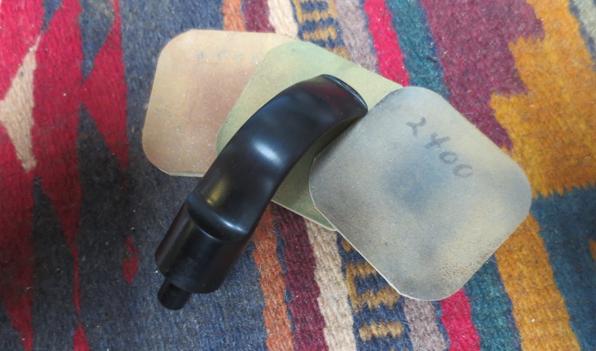
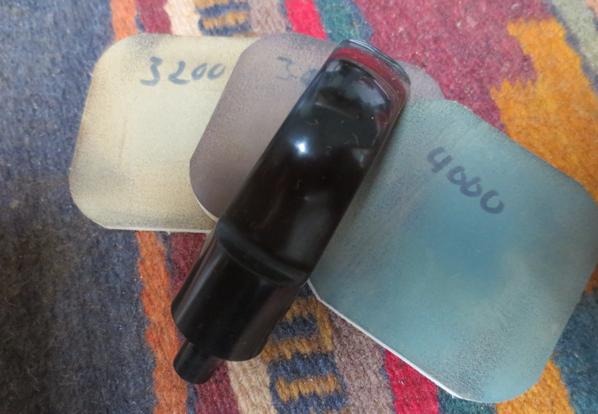
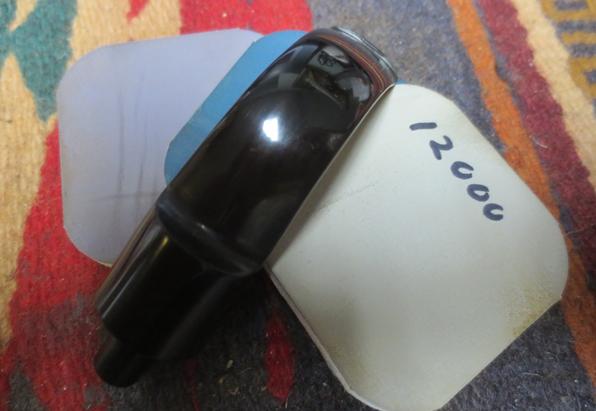
Meerschaum is a very rare mineral, a kind of hard white clay. Light and porous structure of the pipe keeps the smoke cool and soft. The pipe itself is a natural filter which absorbs the nicotine. Because of this peculiarity, meerschaum pipes slowly change their colors to different tones of gold and dark brown. This adds an esthetic enjoyment to its great smoking pleasure. The longer a pipe is smoked the more valuable it becomes due to the color change. Today many old and rare meerschaums have found a permanent place in museums and private collections.I first start with the metal screw in tenon.  I want to see if I can easily remove it and clean it before I try to remove the more difficult mortise receptor.  Carefully, I heat the tenon with a lit candle and counter clock the tenon with needle-nose pliers.  I wrap the tenon with a cloth to protect it from metal on metal scratches.  With little trouble, the heating of the tenon loosens the grip and it easily unscrews holding the tenon/stinger stationary with the pliers and rotating the stem.  Examining the tenon, I can see daylight through it but the slot is very small and clogged with gunk.  I’m not sure it’s possible to run a pipe cleaner through it.  I drop it in alcohol to soak it a bit and then clean it. I dig gunk out of the slot using a dental probe and run a bristled pipe cleaner in it to clean the internal.  The pipe cleaner will go through the slot but not without a good deal of coaxing.  I use a brass brush on the stinger with alcohol and then shine it us with 0000 steel wool.  Since it cleaned up well and a pipe cleaner will pass through it, I will leave well enough alone and use the stinger system. I now turn to removing the carbon cake in the fire chamber.  I insert a pipe cleaner through the draft hole because it was covered by debris.  I discover that the drilling of the draft hole is a bit off center, but this should not be any trouble.  I use the Savinelli Pipe Knife to scrape the carbon buildup off the chamber walls.  It does a great job getting down to the smooth Meerschaum surface.  I follow the reaming by sanding the chamber walls with coarse 120 grade paper wrapped around a Sharpie Pen and then with 240 grit paper.  To remove the carbon dust left behind I clean the chamber out with a cotton pad wetted with isopropyl 95%.  The surface in the fire chamber looks great – I can see no problems.  The pictures show the progress. Turning now to the rim.  The backside of the rim is scorched from flame being pulled over it in lighting.  I first use the spittle test to see if I can make a dent by rubbing my own spittle over the surface with my finger.  No progress.  I then use a cotton pad wetted with isopropyl 95% but with results close to spittle.  I then use a medium grade sanding sponge and lightly (very lightly) top the stummel to break up the carbon.  This did the trick.  There is a bit of the carbon scorching left on the inner lip of the rim.  I role a piece of 240 grip paper to cut an internal rim bevel to remove the last of the scorch stain from the Meer.  I like the inner bevel on the rim and I’m pleased with the progress.  The pictures show the progress from the original state. I like working on a clean pipe so I turn now to the internals of the stummel.  I use cotton swabs dipped in isopropyl 95% and pipe cleaners to do the work.  After a bit of effort, also digging and scraping with a spaded dental tool, the cotton swabs and pipe cleaners start emerging clean.  Just a word here that I’ve heard from others, never clean the internals of a Meerschaum using an alcohol/salt soak.  This will have adverse effects on the Meer.  I finish up by shining up the metal mortise receptor with 0000 steel wool. The picture shows the cleaning.With the internals of the stummel clean, I now clean the external Meerschaum surface.  I use undiluted Murphy’s Oil Soap with cotton pads and a bristled tooth brush.  I use the brush to clean the sculpted carving lines of the vineyard frescoes. I then rinse the stummel with cool tap water using the bristled brush as I rinse.  Wow!  I didn’t expect cleaning the surface would result in the patina of this Meer Vineyard to pop! The honey brown patina around the shank is more distinct now.  The picture shows the results.With the stummel cleaned, I take a closer look at the damaged cluster of grapes.  The Meer took a hit somewhere along the line.  I think that all I want to do is to smooth out the inside of the damaged grapes.  The round external shaping of the grapes remain and I want to keep them intact.  I know I need to be very careful. I mount a pointed shaping instrument on the Dremel.  I will use the Dremel carefully to remove the rough area and blend it more.  Ok, I’m not a Meer carving master!  What I did was use the Dremel tool to hone out the center of the grapes, then I use a 470 grade piece of sanding paper and ‘feather’ the edges around the damage.  The sand paper has the effect of smoothing the edges around the damage and blending the trauma.  I decide ‘less is more’ and leave it and not fiddle with it too much.  I don’t want to make things worse!  The pictures show my Meer sculpting debut. Now I turn to the Bakelite stem and clean the internals first using different sizes of long, wired bristle brushes.  This set of brushes has come in very handy to ‘plow’ the airway when pipe cleaners won’t break through – usually when stems are clogged up and have more severe bends.  I begin by deploying the long-bristled brushes dipped in alcohol to do the heavy lifting.  Then I follow with pipe cleaners.  After they are coming out clean, I reattach the screw-in stinger and reattach the stem to the stummel to see where things are.  The pictures show the progress. I mentioned earlier that I believed the stem was over bent.  The stem’s bend should flare out and be close to parallel with the plane of the rim.  I will heat the stem up and bring it closer to this ideal.  To keep the airway integrity, I insert a pipe cleaner through the stem.  To help achieve the right angle, I make a sketch on a lined index card to help as a template.  I also notice that the bit is over-clocked just a bit.  I’ll try to straighten that as well.  Since the hour is late, and my workstation is adjacent to where my wife has turned in for the night, I take my heat gun to the kitchen and set up on the counter.  I insert a pipe cleaner through the airway which also serves as a handle to help manipulate the stem as it heats.  With the heat gun on, I rotate the stem over the heat focusing on the bend area.  After a short time, the Bakelite becomes supple and gradually I begin to straighten it while I rotate.  I find too, that pulling on the two ends of the pipe cleaner helps facilitate this.  After reaching where I think I need to be with the bend, I hold the stem under cool tap water to set the bend.  The first time I did this, and compared to the template, I decided I needed a bit less bend.  I repeated the process, cooled with tap water and compared with my make-shift template.  I reassemble the Meer Vineyard and it’s looking good!  I’m happy with the new look of the stem.  The pictures show the process. I want to complete work with the Bakelite stem. There is some very light tooth chatter around the upper bit area and there are ‘stretch marks’ along the area where the tight bend had been previously. Using 240 grit paper, I work on the ‘stretch marks’ on the upper side as well as the teeth chatter.  I follow the 240 by wet sanding with 600 grit sanding paper and then with 0000 steel wool.  At this point I wet sand using micromesh pads 1500 to 2400 then I follow with dry sanding with pads 3200 to 4000 and 6000 to 12000.  After each set of three micromesh pads I apply Obsidian Oil to the Bakelite stem to revitalize it – and now that I am writing that this is what I’ve done, I’m not at all sure if Obsidian Oil has the same effect on Bakelite as Vulcanite!  Creature of habit.  Following the micromesh cycles, I mount the Dremel with a cotton cloth buffing wheel and apply Blue Diamond compound to the Bakelite stem for a very fine abrasive polishing.  I complete the stem work by applying carnauba wax with a cotton cloth wheel mounted on the Dremel set and speed 2, one notch up from the slowest speed.  The pictures show the stem progress. Turning now to the stummel, unlike briar pipes, Meerschaum does not use carnauba wax to finalize the finish.  The practice of using bees’ wax to shine the Meer is the standard practice.  I went back to a post from Charles Lemon at Dad’s Pipes that I filed to use as my guide (See: Quick Clean-up of a Tulip Meerschaum Sitter).  I mentioned before how Meerschaum pipes change color as they are smoked and this patina increases the value of the pipe.  Not only does bees’ wax shine the Meer but it also enhances the growth of the patina as one smokes the pipe and the tobacco oils are absorbed. I reattach the stem to the stummel, but place a pipe cleaner between the stem and shank to tighten against – creating a gap so that I don’t get wax on the stem and the stem acts as my handle.  From the last time I did this, I had congealed bees’ wax that I had melted in a mason jar.  I use the hot air gun and reheat the wax until it liquifies, and then I warm the stummel with the air gun.  Using a cotton swab, I paint the stummel with the liquified bees’ wax and am careful to work it into all the nooks and crannies of the vineyard frescos carved into the Meerschaum.  After this is completed I put the stummel down on a cloth for it to dry.  I must say, this time was much easier than the last time when it was in the middle of the Bulgarian winter and the wax cooled and congealed before I could apply it!  I use a clean cloth to remove gently the excess wax then I buff up the shine using a micromesh cloth. The pictures show the bees’ wax application.
I’m pleased with the bees’ wax application.  The Meerschaum absorbed and colored in ways that I wasn’t expecting.  The rim absorbed a great deal and the patina looks great around the stummel.  This Meerschaum hand carved Vineyard has a bit of wear and tear character, with some missing grapes, but he’s ready to go.  With time, his patina will only deepen and increase the attractiveness of this classic Meerschaum carving.  I’m glad that this Meer will be put back in service with one of Jen’s family members.  Her gift benefits the Daughters of Bulgaria, our work with women and girls who have been trafficked and sexually exploited.  For more information, check out my blog, The Pipe Steward.  Thanks for joining me!


Fanfare for the Everyman Pretender


Blog by Robert M. Boughton

Member, International Society of Codgers
Member, North American Society of Pipe Collectors
Member, Facebook Gentlemen’s Pipe Smoking Society
Website Roadrunner Restored Pipes
Blog RRP
Falderal About Me
Photos © the Author except as noted

From their inception, Kapp & Peterson’s goal was to make a good smoking pipe that the ordinary, common working man could afford and we believe they have, very admirably, lived up to this.
— From A Peterson Dating Guide: A Rule of Thumb, by Mike Leverette

INTRODUCTION

The restoration this blog recounts has nothing to do with Peterson’s pipes.  Still, the litany of near fabled proportions in pipe lore, that Charles Peterson and the Brothers Kapp, Friedrich and Heinrich, experienced a mutual epiphany of good will toward all, even the less fortunate commoners, still rings forth in perfect, ever-flowing three-part harmony.  The more probable truth, after all – that the good men of K&P had a capital brainstorm in the form of a simple but revolutionary merchandising notion to market early designs of Peterson’s System pipes starting sometime in the last quarter of the 19th century – lacks a certain universal, perpetual attraction, as it were.

Now, I should at least attempt mitigation of the foregoing critique I ’am sure will be perceived by some as an unwarranted attack on one of the last bastions of master pipe craftsmanship, as some readers may misinterpret the kind of remarks I’m prone to make after I’ve spent a good deal of time thinking a matter through.  No kind of disrespect on my part for Peterson of Dublin could be farther from the truth.  One fellow on the Smokers Forums UK who had never met me other than a few cursory cyber comments back and forth once made me the butt of a snarky but harmless jab after I posted a brief description of my restoration of a nice though common System Pipe that I decided to offer for sale given the number of finer samples in my collection.  So far, I’ve bought about 33 Petes I kept, not counting those I passed on to others with the gleam of love in their eyes I know so well.  As I recall the unhappy SF member’s words in typed reply, they were: “Wonders never cease!  I didn’t think I’d live to see the day you would say you could have enough Petersons!”  The member in question warmed up quite a bit after I began flooding his posts with compliments, and they were even genuine.

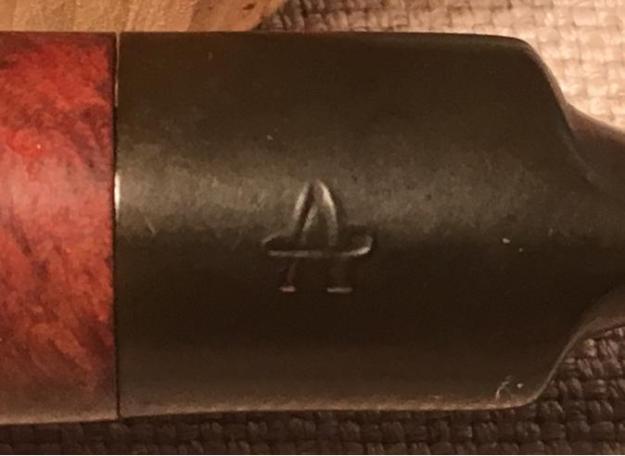
The real mystery of this blog is the single mark of nomenclature on the entire pipe, even counting the original black Vulcanite/Ebonite bit of the style called “fancy,” but which proved to be broken beyond my time and patience if not ability to repair.  Even the relative ease of the kind of work needed by the likes of Steve to mend a gap in the upper lip of the mouthpiece as gaping as that shown below requires, as our host notes in the blog cited under Sources, much practice.  Also – and this is an important factor, not an excuse – I intend to sell the pipe, not keep it for the shop, and at times have different standards for the two choices.See the date and time stamps?  I worked on the infernal bit from then until a couple of weeks ago before settling on the better part of valor.  As can be seen from the stummel, the pipe is called, with somewhat disingenuous simplicity and similarity to the well-known The Everyman London Pipe by Comoy’s of London (with all of that and more stamping packed onto even the sandblasted versions of the latter).  From the beginning, when I acquired the bedraggled waif in an estate lot at least two years ago and sat on it until late September last year, I had one of those uneasy feelings in my stomach at the mere idea of committing myself in print to the conclusion that it was in fact somehow part of the Comoy’s brood.

Before I snapped my habitual first seven shots of the pipe as it presented in O.R.  with more worthy candidates ahead of it in triage, I began my online search that only further clogged the veritable obstruction in my intestines.  Having made some genuinely heroic efforts on real Everyman and Guildhall London Pipes in my limited time learning this wonderful tradecraft, in the combined senses of the words as well as the more clandestine meaning of the singular, I knew just what to expect from Pipephil and Pipedia but visited both once again anyway.  Variations on this theme continued off and on during the interim period until a few days ago when I took the

Google approach of “I’m feeling lucky” and again entered the terms “Everyman Pipes.”  I swear I typed the same simplest of many search terms I had tried for two years, but this time, in one of those inexplicable flashes of serendipity, the top listing was for P&K Everyman Pipes at JR Cigar!

Growing breathless, I clicked on the link and saw, more or less, my pipe in two other shapes but with the same distinctive fancy bits and rugged vertical striations around the bowls, and both were straight.  One was a billiard, the other a pot, and both, marked down $10, were still, to me, listed at an outrageous $31.95.  Despite all that, I was quite pleased with myself to read the blurb at the top of the page:

“A true example of eye-catching yet economical handcrafted tobacco pipes, the P&K Everyman selection by the famed Comoy’s of London promises a premium pipe-smoking experience at prices that can’t be beat.”

 I scanned further down the search result page, spotting a listing for the same pipe brand at Santa Clara Cigar, possessed of a remarkable resemblance to JR but with the Comoy’s blurb, ahem, omitted.  Nevertheless, at the fourth of five shapes down, there was my pipe, the P&K Straight Rustic #9, a Dublin.  Better later than never, the idea of looking up P&K Everyman pipe images occurred to me and at the top I saw the following, being the perfect factory image of my pipe.

OK, then.  As supremely pleased with myself as I was at this morsel of intel, even if some faiths that consider pride a sin could be right, I am not now nor have I ever been a member of the Nitwit Party, whose followers believe everything they read on the Internet or hear on TV is the truth.  There are many reasons for my worldview, not the least of which being my years as a newspaper journalist and photographer, as opposed to a photojournalist.  I sold my first news article when I was 15, and when I was 17 became credentialed by the Los Angeles County Sheriff’s Office as an official police and justice beat reporter for a community paper.  My publisher, editor and I tried the year before, and although there was no real age clause at the time (1978), the powers-that-were in the L.A.S.O. were too – well – pig-headed to relent until I gave everyone in the issuing bureau a major headache re-applying on the first of every month.

I try, no joke, not to pester Steve with questions to which I can find or – OMG! – figure out on my own using the brain that was between my ears at birth and, operating best on the right side of it, form a working plan to press on.  One of my best qualities is the willingness to admit at once when I am wrong, which in fact is a very good thing because I have had much more experience with that than, say, repairing bits with outlandish holes gnawed through them by people with Intermittent Explosive Disorder or tardive dyskinesia.  And no, I’m not making fun of people with disabilities, in particular schizophrenics, who seem to have been drawn to me all of my life, other than most of those in my family for some reason.  It’s sort of Cole Seer’s dramatic need in The Sixth Sense, having to be like a shrink to dead people. At any rate, Steve is one of the busiest, most productive persons I know, traveling the world almost non-stop, it seems at times,  doing good works while never letting on that his constant other full-time “job” writing and publishing mostly his own pipe restoration adventures and posting those of other contributors online.  All of this last part is by way of a drum roll of sorts.

You see, had I not called and left a brief message on Steve’s phone before emailing him more than the full details, as par for the course, I never would have received back the following concise words of wisdom as to the possibilities of who really made the Everyman Rustic Dublin on which I’m so very close now to describing all of the work I did!  Yes, I am!  Steve’s reply, in pertinent part, read:

I got your message when I got home late last evening and then read the email this morning.  I have not heard of the P&K brand and Everyman pipe does not at all look English to me. I am wondering if it could  possibly be from one of two original makers.

1. Alpha pipes Israel made for the cigar shop – the finish, style of the bowl and the stem make it look very much like many Alpha Israel pipes ) pre-Grabow ownership.

2. Lorenzo pipes Italy as they made many basket pipes for different shops.

That is as much as I would hazard to guess.

If I’ve ever needed Steve’s direction in research for a restore, this was it!  There is no way I would have reached those conclusions with such apparent ease and speed, in fact not ever, no how, no way, because I just don’t have his experience.  I mean, if there were a way I could get him to donate me a spare kidney or maybe his spleen so I could, like, grow all of his knowledge, why, I’d lie down on the table and do it in a heartbeat.  For now I guess I just need to get busy buying up and devouring and going back to again and again all of the great reference books out there, such as Who Made That Pipe?  The bottom line here is that Steve’s tip came back so fast my head spun like Linda Blair’s in The Exorcist, not to overdo the whole movie thing.

All I had to do was figure out how to look up the Lorenzo and Alpha possibilities, which I knew I could manage, and I did a few minutes after reading Steve’s email.  The funniest place the Lorenzo idea led me was to some images of my own restoration of a gigantic Spitfire by Lorenzo Mille I restored and blogged just before Hallowe’en 2014.  The money card turned out to be with the pre-DrG Alphas made in Israel.  I found the following oddly familiar-appearing Burl Briar Freehand Pipes on eBay, complete with the same fancy bits curved just so.

Case closed.

RESTORATION

The bit aside, the only real problem with the pipe, and it was a real problem to be sure, was the rim.  Char and even the worst blistering from a close call with full-blown combustion, which so far I’ve had the opportunity to witness only with homemade corncobs, have often occasioned rise to heated anger but never cold feet.  (I – tender my apologies for all three puns.)  My mother for many years rose in the nursing world and enriched my vocabulary with terms the likes of crispy critter, with all of their brio, and sometimes spread cat cadavers across the dining room table, both extenders in place, on a single large thermo scientific wrap-around cover.  Thus I looked at the “easy” heat damage and the acute and problematic jagged rim edge and unequal width of the bowl’s peak with a logical, methodical approach that began to form.

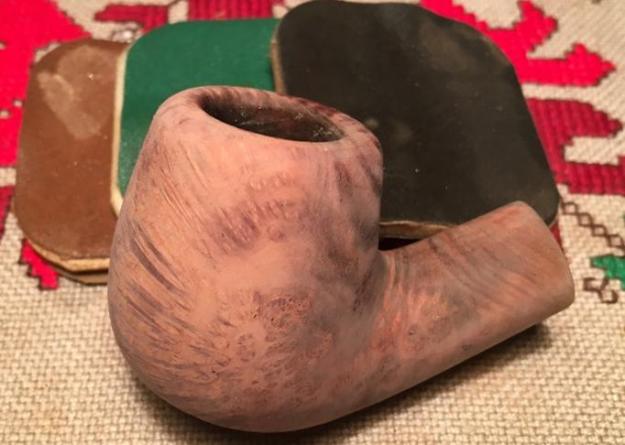
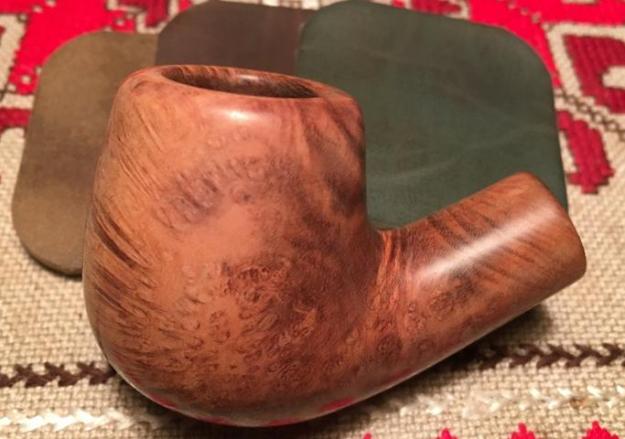
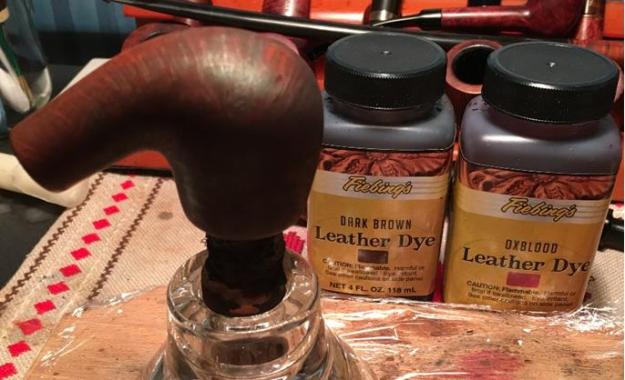
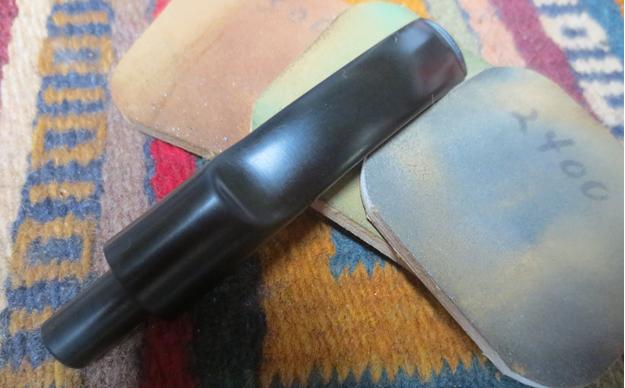
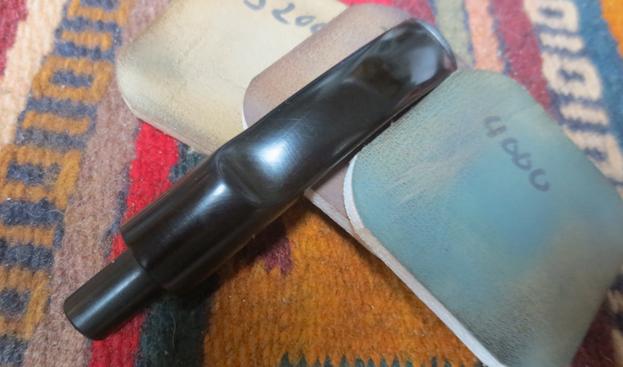
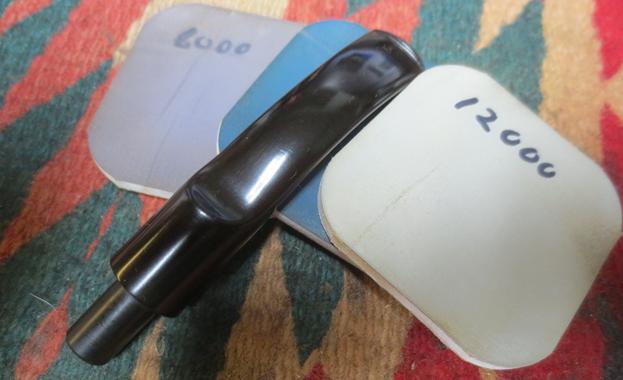
I expect to blog my restores with the methods fresh in my mind.  There are even some of the jobs I hold special from the past few years that I’m sure I’ll never forget a single detail.  Not to suggest this was common or insignificant, but after nine months I can’t remember the specifics of how I accomplished the result of the first shot below.  The chamber had to be reamed, and when I do that I always follow up with 150-, 220- and 320-grit paper, so that’s a given.  I’m guessing I started with micro mesh on the rim just for the sake of trying and found it ineffective.  Then I would have turned to sandpaper and chosen 220 with the same rationale as the micro mesh but opted for 180 with the usual progression up to 400 before starting in on micro mesh and stopping when I realized I would have to solve the other obvious problems with more drastic steps.  Here are the results I just described, and after the drastic measure of a file.Healing the wounds of a procedure I consider radical enough that I have only used it less than the number of fingers I have on a hand (or, rather, considering the thumb is not technically a finger, the same number), in fact is not all that difficult in most cases, and seeing the result of the steps is always a great pleasure.  I used 180-, 220-, 320- and 400-grit paper, and then 1500-12000 micromesh on the rim.Then, I began the rest of the outer stummel.  Starting with super fine “0000” steel wool to lighten the color of the wood and easily get between the grooves, I switched to the full micro mesh.It was time for the retort.  As always, I was glad I did it, because this little stummel was filthy!  I have done as many as six retorts on a single pipe, and this one “only” needed three, all of them clearer.  I had no bit to connect to the shank and therefore had to stretch the rubber connector over the opening.  I show only the first round below.  I also followed the final retort with three cleaners dipped in alcohol alternated with three dry, all of which came out clean.Applying alcohol-based leather stain and flaming it is always fun, and I used Fiebings Medium Brown on all but the rim to leave a definite two-tone.  When it cooled, I wiped away the char and a little extra darkness with 8000 micro mesh. I hand-rubbed a sparing amount of Halcyon II Wax into the wood and crevices of the rusticated pipe for which it is made, not to be frugal but because a little goes a long way.  In most cases, I let it dry or set or whatever as much as it can, in general 20 minutes or so but sometimes a considerable time longer, and wiped the excess off with a soft cotton rag while rubbing more into the pores of the wood.  Other times, I let the setting process go on for a considerable time longer, but not often.  I was then almost finished with the long project and was more than prepared to accomplish the final main task,  filled with joy to tackle (thinking of football) the key part of the  experience: fitting one of two fancy Lucite stems, an orange and a yellow, that arrived in the mail – eight months after I finished the stummel.  In case anyone wondered at my persnickety comments regarding the amount of time I spent on a certain bit of work trying to repair a part of the original Everyman that I will now leave unnamed, in my own way, that’s why.

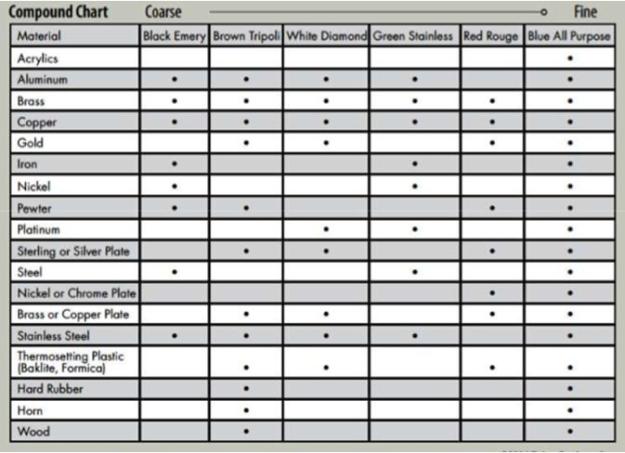
I went with the golden bit to the right.  As a point of interest, the popular online site where I bought a total of three bits in one order listed these two as gold, but the system is a touch odd, to me at least, and also the viewing system for the product you in fact get wasn’t working that day for all items, including the yellow bit.  But I can use it, and it was inexpensive!  Having none of the finer and more expensive equipment for tenon cutting, I hand-sanded the shank insert end down to where it had a nice, tentative fit for the time being.  That task took another day.  Making use /of another of Steve’s blogs, on bending stems, I chose the oven method because it had worked so well on several occasions in the past with Vulcanite.  BTW, I doubt the Lucite was the problem.  I always take a look in the mirror before pointing a finger lest I see three others pointed right back at me.  I say, go figure!  After that mishap, I switched to the boiling water method that worked better but I’m sure was spoiled by already having baked the bit. I repeated the boiling method and achieved the desired bend.  Halcyon II was is meant to be used in place of regular buffing wheel waxes and compounds, but I wanted a slightly brighter finish, and so I ended with spins of Red Tripoli and carnauba.

CONCLUSION

Even regardless of its look, and by that I mean nothing rude, the likelihood of this pipe being of British make – lacking any indication of such origin, whether the city or country of manufacture, a line name, or the often top secret coded markings of which our friends across the Pond are so fond – is so paltry as to end any further debate lacking official admissible documentary evidence.  WikiLeaks might suffice, in particular if the disseminator were to flee his country or be arrested or renditioned or still more conclusively, become the subject of cover page stories of the world’s tabloid toilet wipes.  On the other hand, and here I am not being facetious, if my already stated conclusion that the simple but honorable Everyman is a blast from the past of the pre-Dr. Grabow Alpha days of Israel, made by the Shalom Pipe Factory, and I am in fact wrong, I would as always appreciate input from any authorities or scholars among us.

SOURCES

https://www.jrcigars.com/brand/pipes-accessories/p-k-everyman-pipes

https://www.santaclaracigars.com/brand/pipes-accessories/p-k-everyman-pipes

https://rebornpipes.com/2015/07/18/bringing-new-life-to-a-gift-pipe-a-gasparini-mgm-elegante-brandy/comment-page-1/#comment-21243

https://pipedia.org/wiki/Stanwell_Shape_Numbers_and_Designers

http://www.ebay.com/itm/ALPHA-Burl-Briar-Freehand-Estate-Tobacco-Pipe-Made-In-Israel/332252221412?_trksid=p2047675.c100011.m1850&_trkparms=aid%3D222007%26algo%3DSIC.MBE%26ao%3D1%26asc%3D41376%26meid%3D0c2217f15e5f4850ad0061cb84cc5850%26pid%3D100011%26rk%3D1%26rkt%3D12%26sd%3D121269666970

http://www.ebay.com/itm/Vintage-Shalom-Select-Imported-Tobacco-Pipe-Vintage-smoking/322513288986?_trksid=p2047675.c100011.m1850&_trkparms=aid%3D222007%26algo%3DSIC.MBE%26ao%3D1%26asc%3D41376%26meid%3D0c2217f15e5f4850ad0061cb84cc5850%26pid%3D100011%26rk%3D5%26rkt%3D12%26sd%3D121269666970\

https://rebornpipes.com/2012/07/15/bending-vulcanite-stems/


1967 DUNHILL 197 SHELL BRIAR Clean-up


Blog by Henry Ramirez

When surfing Ebay I noticed a very well smoked Shell billiard whose stem had lost its White Dot. It looked like it could be cleaned up to present an elegant addition to my collection. I anxiously awaited its arrival and immediately dunked the stem in an Oxyclean bath for a nite.

The next morning I pulled it out of the bath and wiped off the smegma for my first real look at the stem. The divots reminded me of a deflated balloon. Just what I was hoping for! Off to the buffer I went to buff off the sulfur discoloration with a wet rag wheel and pumice. Knowing what I know now, I should have popped this baby in the oven to raise the dents but instead I got to cleaning the stem’s airway and tenon. I bonded some shade A2 dental composite in the hole for the White Spot and was dismayed that it refracted the surrounding black vulcanite. Note to self, next time place a layer of opaque before the bulk fill. Luckily, when researching the earlier White Spots I came across examples of dots so dark they were black. I had made a silicone impression of a new pipe’s stem and used that as a mold to create a refurbishment of the button. What a mess! Next time I’ll mix the charcoal in with the composite resin rather than CA. I ended up recreating the button the way Steve has posted here on Reborn Pipes. OK, so now it’s the bowl’s turn. My armamentarium and procedure is pretty routine for cake and gunk removal. The rim’s blast was scorched but luckily, the rest of the pipe’s blast was vestigial. This was an opportunity to try out emulating a blast through rustication. Plus, since the pipe was stained rather darkly, it would help hide a myriad of sins. When polishing the chamber I noticed some alligatoring of the briar. Today I would probably schmeer some JB Weld into the cracks but what I did was a coating of Structural Sour Cream and charcoal. I played around with the button’s internals, polished with the usual green, red and white compounds (thanks Tim West), threw on some wax and called it a day! Thanks for looking, regards, Henry

FANCY FIX AVERTED!


Blog by Henry Ramirez

In an earlier blog submission I created what I named a FrankenStem bit replacement on a chewed up Dunhill Shell bent. In heating the stem in the oven to straighten and re-bend it I inadvertently caused the stem/shank union to open (iatrogenic). I thought that if I could just sand down the high spot that everything would fit tight again. I wanted to be precise in my actions so I coated the tenon with a disclosing solution. I mated the pieces together and, quite frankly, am lucky I didn’t split the shank. The thickness of the powder was enough to cause quite a tight fit. It did show me where it was hanging up but I was terrified to push my luck. Dunhill’s engineering and quality control are such that I knew everything should fit without additional removal of material. Upshallfan had mentioned his use of a heat gun to bend stems and I figured I’d try the same but on the tenon. I heated the tenon until I could SMELL the vulcanite and then quickly inserted it into the shank and tweaked it with psi vs the shank’s mortise. After holding it for a minute, I removed it and ran it under cold water to set the shape. As you can see, even under magnification the fit is closed. It makes me wonder about other previously owned pipes that had this issue when I received them. I tried resurfacing the mortise and resurfacing the tenon with inadequate results. They were old pipe shop basket pipes so I don’t know if they ever fit together properly but I didn’t have that dilemma here. I was also pleased to note that my sense of smell is a powerful ally, not only when cooking but heating stems! Regards, Henry

Old Time Meer Lining Repair Method On a Kaywoodie Shellcraft #5651


Thanks Troy for doing this post. It is a procedure I have been wanting to do but have not tried. I read about your work on this one with interest. I really glad that you took a chance on the old method.

Troy W's avatarBaccy Pipes

I recently acquired this 1930’s 4 digit Kaywoodie Shellcraft #5651 from Ebay. Being a pre-World War II sandblast and one of my favorite Kaywoodie shapes (a 51) . I decided to bid on it. The blast looked really nice and looked in general really nice shape.s-l1600 (2) (640x355).jpgs-l1600 (1) (640x340).jpg

My main concern was it had a meer lining that was damaged about the rim. This is most likely why i won the pipe so easily and with a low bid. I thought well it shouldn’t be that hard of a repair and the seller told me in a message that he could not see any cracks in the bowl. Well we were both wrong, but we will get to that.s-l1600 (3) (640x514).jpg

Stem had some tooth marks and the seller had listed the stinger was cut. Again no problem i thought , easily fixed.s-l1600 (4) (640x411).jpg

Unscrewed the stem and it was indeed cut.s-5.jpg

I did some…

View original post 1,410 more words

Jen’s Trove No. 2–Perhaps a LHS London Royal Full Bent Billiard – Oom Paul


Blog by Dal Stanton

I don’t usually begin a blog with an addendum, but just before I sent this to Steve to publish on Reborn Pipes, I sent a picture of this pipe along with a few other pipes with the question, “Oom Paul or Full Bent Billiards?”  Here are the two pictures I sent – the first, Jen’s #2, and two others: This is the fun part of learning the fine art of pipe shape identification!  I was identifying the third pipe, (far right) as definitely an Oom Paul – mainly by the way the shank and bowl merge vertically and then the shank/stem breaks away but stays real tight in a full bend.  The other two, have more of a ¾ bend, but they also have more of a merge between shank and bowl creeping upwardly.  I called the 2 on the left, full-bent Billiards for that reason.  I loved Steve’s response:

Dal

To me they are all variations on an Oom Paul Shape which is actually a full bent billiard. LOL! The joys of identifying shapes.

Steve

So, with addendum completed, Jen pulled this very nice Full Bent Billiard, (Oom Paul!) out of the ‘Help Me!’ basket and added it to the trove she has asked me to restore for her.  She will be transitioning back to the US at the end of the summer and she will be packing several of The Pipe Steward’s restorations to give as gifts to the special men in her family.  I’m happy to oblige!  Jen’s purchases will benefit the Daughters of Bulgaria, and bring much joy to her family!  I found this pipe on eBay as one in a lot of 13 pipes – I acquired some interesting pipes that await restoration in the basket!  The pictures I saw from the seller in Nevada included Jen’s Oom Paul – at 8 o’clock below and then a closer view following. The seller’s attempt to identify the Oom Paul were helpful and set me on the path:

Unknown – Markings appear to be rubbed out from handling. I think I see the word “London” followed by some indiscernible word.

On my work desk in Sofia, Bulgaria, I take some additional pictures to fill in the gaps. Looking at two pictures above and the nomenclature on the left side of the shank, I tend to agree with the seller that the first word appears to be London in a cursive-type script with a flared line underneath.  The second word appears to start with a “P” also in a script with a flare line underneath. To see if I can make a possible identification with a pipe name starting with “London P…” I go to Wilczak & Colwell’s “Who Made That Pipe?” and I find some Comoy contenders – “London Pipe” and “London Pride”.  Neither of these candidates seem likely because the corresponding Comoy stem mark, “C” was absent.  Yet, the pipe could have a replacement stem, but not likely.  I then go to Pipephil.eu and simply search anything starting with “London”.  What I found was very interesting and possibly a match.  The clipping from Pipephil below shows the ‘London Royal’ nomenclature – looking at my specimen, what I thought was a “P” very likely is an “R”.  The flare lines underneath is a convincing indicator as well.  Also matching was the right side “Imported Briar”.  Again, missing is any stem marking – a hat in the specimen below.

While I cannot be 100% sure in the identification, “London Royal” may indeed be on target.  Pipedia gives a short description of the LHS company:

Ludwig Stern, a successful pipe manufacturer since 1893 and closing around 1960, reorganized his company along with his brother Hugo Stern, opening a factory in 1911. They named the company L&H Stern Smoking Pipes & Holders. The newly formed company was moved into a six-story building on the corner of Pearl and Waters street Brooklyn, NY.

The American company produced such pipe names as Sterncrest, Purex, Silvercrest, Barrister, Marwyn, Park Lane, Radmanol and Warwick.

Whether (or not) the Oom Paul (Billiard) before me is a LHS London Royal, it is a very attractive pipe with quality grain movement.  Overall, it is in good shape and I’m hoping an easier than normal clean-up and recommissioning.  There are a few nicks on the rim and some fills that need attention.  The chamber has very mild cake.  The stem bit shows some tooth chatter and no oxidation that I can see.  I begin the restoration of this possible, LHS London Royal by reaming the chamber bringing it to the briar for a fresh start.  I also plop the stem into the Oxi-Clean bath even though there is no visible oxidation.   Starting with the smallest, I use 2 of the 4 blades available in the Pipnet Reaming Kit.  I follow with the Savinelli Pipe Knife to fine tune the ream then sand the chamber using 240 grit paper.  I then wipe the bowl with a cotton pad wetted with isopropyl 95% to remove carbon dust.  The pictures show the progress. Turning now to the internals, I use cotton swabs and pipe cleaners wetted with isopropyl 95% to clean.  I discover the internals are pretty gummed up.  With the hour becoming late I decide to use the stealth method of cleaning.  I use kosher salt and alcohol to soak in the chamber overnight.  I first twist a cotton ball to form a wick to stuff down the mortise to draw out the oils and tars from the briar.  I then fill the bowl with salt and after placing my palm over the top give it a shake to displace the salt.  Then I carefully fill the chamber with the alcohol until it surfaces over the kosher salt.  I put it aside and turn the lights off.  The pictures show the cleaning process.Turning to the stem the next day, I remove it from the Oxi-Clean bath and even though it is minimal, the bath has successfully ‘raised’ oxidation to the surface.  Using 600 grit paper, I wet sand the stem.  Following this, I utilize 0000 steel wool to remove more and begin the polishing of the stem.  I still detect some tooth chatter especially on the lower bit and a small compression dent on the upper.  I use the heating method to raise the chatter by passing the end of the stem carefully over a lit candle.  The vulcanite when heated like this will naturally expand and seek its original place.  The heating helps, but I still need to do some sanding in the upper and lower button area using 240 grit paper.  Using a flat needle file, I use the opportunity to sharpen the upper and lower button lips. Following the 240 grit paper, I use 600 grit to further smooth and polish then conclude with 0000 steel wool.  The pictures show the progress. The stummel has been in a kosher salt/alcohol soak through the night.  Kosher salt is used because, unlike iodized salt, it does not leave an after-taste.  I remove the wick from the shank and it has done its job of pulling oils and tars out of the stummel.  I toss the used salt in the waste and clean the bowl with paper towel and a long-bristled brush.  I also use a brush reaching into the mortise to remove residue salt.  I follow by continuing use of cotton swabs dipped in alcohol and pipe cleaners to finish up the internal clean-up.  The pictures show the progress.With the stummel internals cleaned, I turn to the internals of the stem.  Using pipe cleaners dipped in isopropyl 95% I attack. It did not take long because the pipe cleaners emerged clean.With the internals clean, I now turn to the stummel surface.  I use Murphy’s Soap and cotton pads to clean the stummel surface. As advertised, Murphy’s does a great job cleaning the oils and grime that build up on the surface. After scrubbing, I rinse the excess off using tap water careful to keep water out of the internals. The cleaning reveals two fills on the surface which appear to be solid after I probe them with a sharp dental tool.  The rim has a scorch mark over the 10 o’clock area in the picture below.  There are also scuff marks at the 6 and 8 o’clock areas.  The pictures show what I see.I decide to do a light topping using 240 grit paper on a chopping board.  I don’t need to take off much – only enough to remove the scuffing and surface part of the scorching.  I will make an internal rim bevel which will remove damage along the inner rim edge.  It is a little tricky, because the shank extends beyond the height of the stummel top.  I do the topping on the edge of the board as a result.  After rotating the stummel on the topping board, periodically checking to make sure I’m staying true, I switch to 600 grade paper to smooth the top further.  Using a coarse 120 grit paper, I cut an internal rim bevel to remove damage as well as soften the rim lines.  I follow with 240 grit paper.  On the outside rim edge, I give it a light bevel with 240 followed by 600 paper – again, removing the left-over nicks as well as softening the lines of the rim.  I think bevels add a touch of class to a rim.  The pictures show the rim progress. With the rim repair complete, I move straightaway to the stummel surface.  I’m anxious to see how the briar grain emerges during the micromesh pad process.  I’m careful to stay away from the almost non-existent ‘London Royal’ nomenclature on the sides of the stummel.  I want to preserve what I can. Using micromesh pads 1500 to 2400 I wet sand.  I follow wet sanding by dry sanding with micromesh pads 3200 to 4000 and then finishing with 6000 to 12000.   As hoped and expected, the pictures show the grain emerge.  As I look at the grain, I’m beginning to think that this stummel is a candidate to remain as the natural grain color and not to stain.  There are a few fills that I darken and blend with stain sticks.  It looks good!  I think Jen will like how this Full Bent Billiard (aka Oom Paul) is coming along.  I’ll finish the stem before making the final decision about whether to apply a stain.  Turning now to the stem, I wet sand using micromesh pads 1500 to 2400 then dry sanding using pads 3200 to 4000 then 6000 to 12000.  After each set of 3 micromesh pads, I apply a coat of Obsidian Oil to the thirsty vulcanite stem.  This oil revitalizes the vulcanite.  I love the vulcanite ‘pop’ as the pads do their magic! Moment of decision.  I reassemble stummel and stem to get a look at the big picture.  The possible LHS London Royal Oom Paul is without doubt a handful of pipe.  The grain presents bird’s eye on both sides of the stummel with lateral straight grain in the front and on the shank top and bottom.  A very nice feel to it as well, as I hold it and balance it in my palm.  The rim looks great too with soft beveled lines.  Decision point – do I leave the stummel the natural grain color or do I stain it?  If I stain it, I will use a light brown hue simply to tie together what is already there.  The original appeared to have been leveraged toward the lighter hue as well.  With some input from my wife, who has more color coordination DNA in her gene pool, I decide to stay with the original, natural, saddle, leathery color – leaving it just as it is. With that decision made, I fine tune and bring out the natural finish by using Tripoli compound which applies a fine abrasion, then Blue Diamond compound – more abrasion but finer than Tripoli.  I use a cotton cloth wheel with the Tripoli compound (not my usual felt wheel) because I’m not cutting through the fired crust of a stained stummel.  After mounting the buffing wheel on the Dremel, I set the speed at 2 of 5 (fastest) and purge the wheel to clean it from old compound. I apply the compound over the stummel, rotating the wheel over the surface, not apply a great deal of downward pressure.  I let the compound and the RPMs do the work.  After completing the Tripoli cycle, I attach the Blue Diamond compound cotton cloth buffing wheel, reattach the stem and stummel, and give both the Blue Diamond buffing using the same approach as with Tripoli.  When completed, I hand buff the pipe with a felt cloth to remove the compound dust preparing for the wax.  Then, switching to the carnauba wax cotton cloth wheel, also with Dremel set at speed 2, I apply several coats of carnauba wax to stem and stummel. During the carnauba wax application, I notice that the stem has loosened during the process.  I use a technique of expanding the tenon a bit so that it gains more purchase in the shank from Charles Lemon’s blog site, Dad’s Pipes.  The procedure usually uses a drill bit, where, after gently heating the tenon, a next larger drill bit is inserted into the supple tenon expanding it microscopically.  Instead of a drill bit, I find that a Dremel shaping tool sized up a little better than the drill bit.  After heating the tenon, the shaping tool eased into the tenon.  It did the trick giving the tenon a better fit in the mortise.  The pictures show this procedure.With the tenon now a bit snugger, I complete the application of the carnauba wax. After the carnauba cycles, I mount a clean cotton buffing wheel on the Dremel and do a ‘clean’ buff over the entire pipe.  I do this to assure that no pockets of wax are left on the surface and to raise the shine.  After this, I hand buff the pipe using a micromesh cloth to deepen and raise the shine of the briar grain more.

This possible LHS London Royal Full Bent Billiard, Oom Paul has turned out very well.  I think that whichever of Jen’s family of men receives this pipe, he will enjoy it for many years to come as its new steward.  As I said earlier, the profits of this pipe benefit the work we do here in Bulgaria with women who have been sexually exploited and trafficked, the Daughters of Bulgaria.  Check out my blog, The Pipe Steward, for more information about this.  Thanks for joining me!


Tooth Dents and Rim Lava on a Blatter Rustic Bent Rhodesian


Charles just finished another Blatter pipe – this is one of my favourite shapes. Have a look at his stem repair! Well done Charles

Charles Lemon's avatar

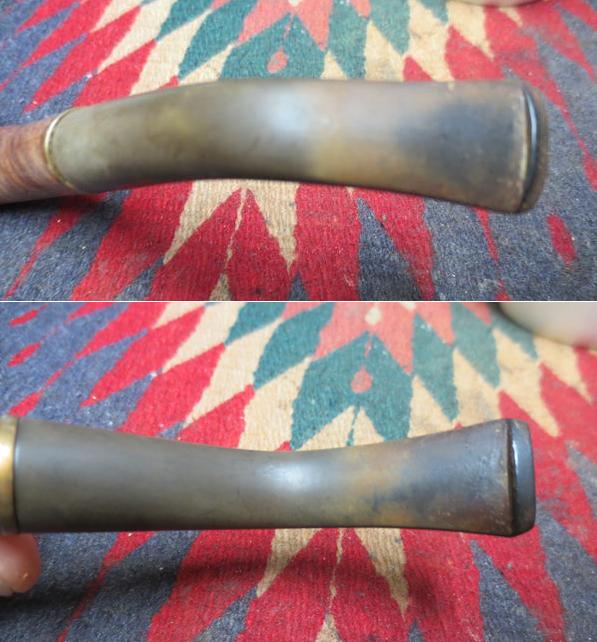
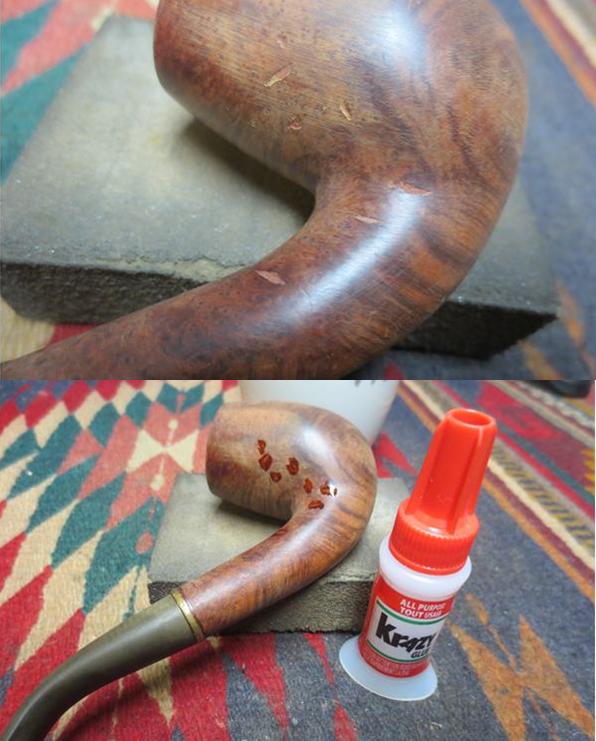
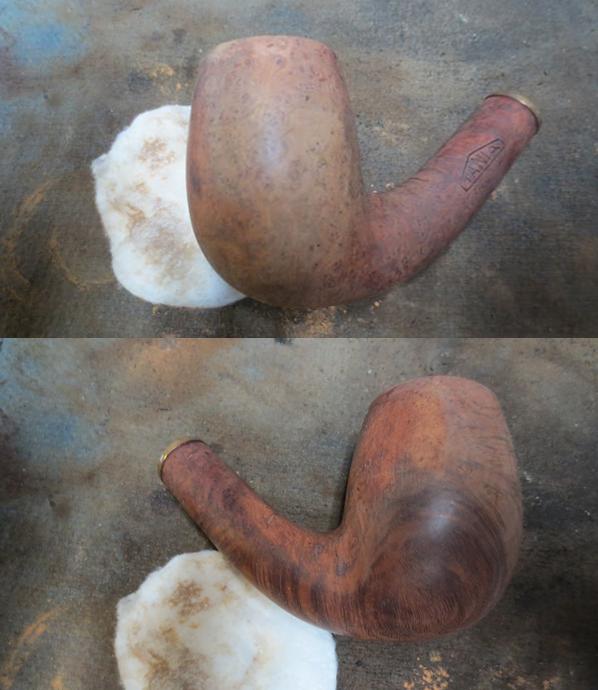
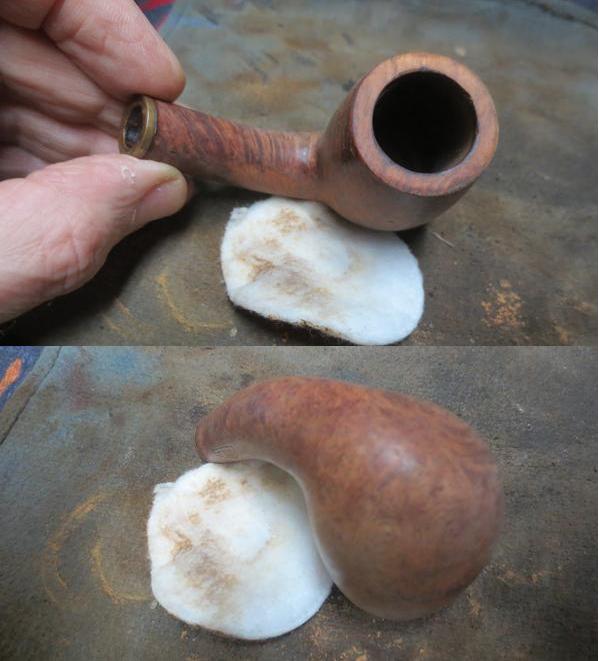
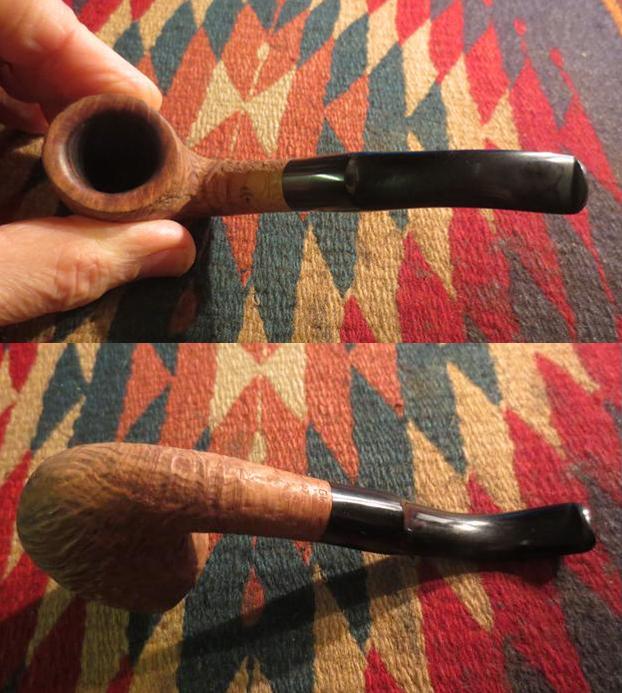
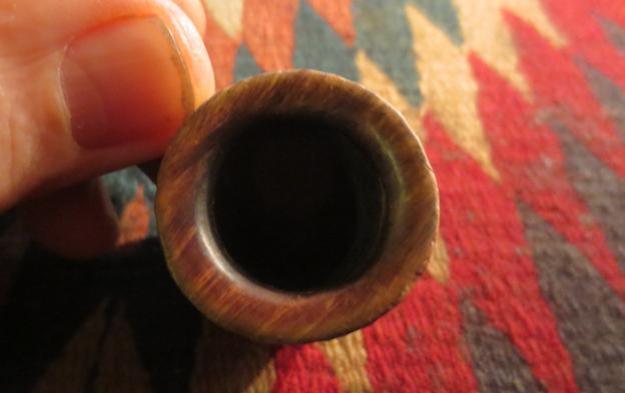
This is pipe #5 from the group of Blatter pipes sent to me from a piper in Iqaluit, Nunavut. This compact Rhodesian stood out to me immediately, the Rhody being one of my favourite pipe shapes. The rustication on this particular pipe is also quite striking – deep, craggy and very tactile.

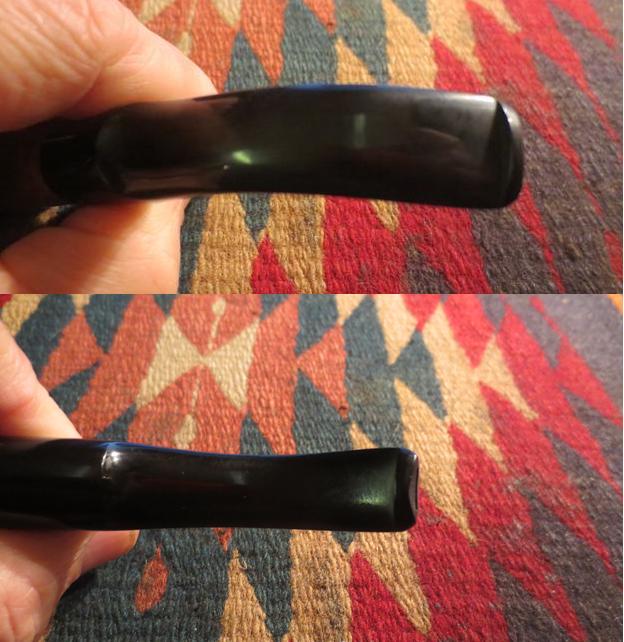
The pipe arrived on the workbench in pretty good condition. It had been well cared for, like the rest of its brethren, and had recently been reamed to cut the cake back. There was a ring of lava stuck in the rusticated bowl rim that would have to come out, and the stem was fairly oxidized. The biggest issue with the pipe, however, was the business end of the stem – the bite and button areas showed some of the deepest tooth dents I’ve contended with in some time.

20170330_13252720170330_132532
20170330_13253720170330_132543
20170330_13260220170330_132609
20170330_132614

The pipe is stamped on its smooth underside with…

View original post 676 more words