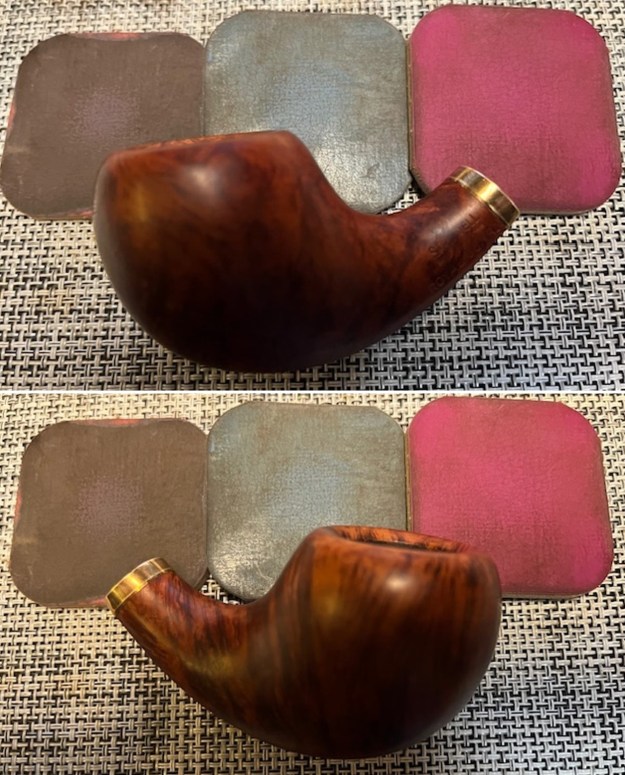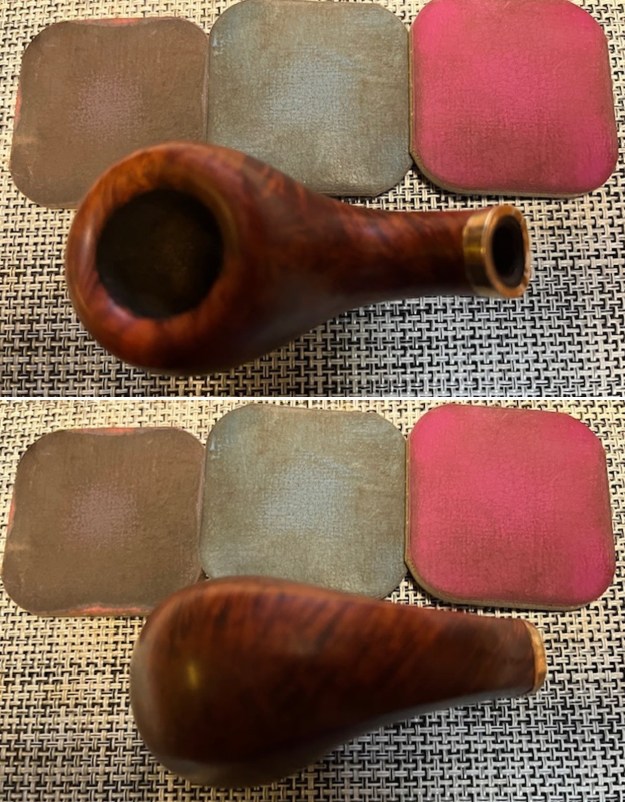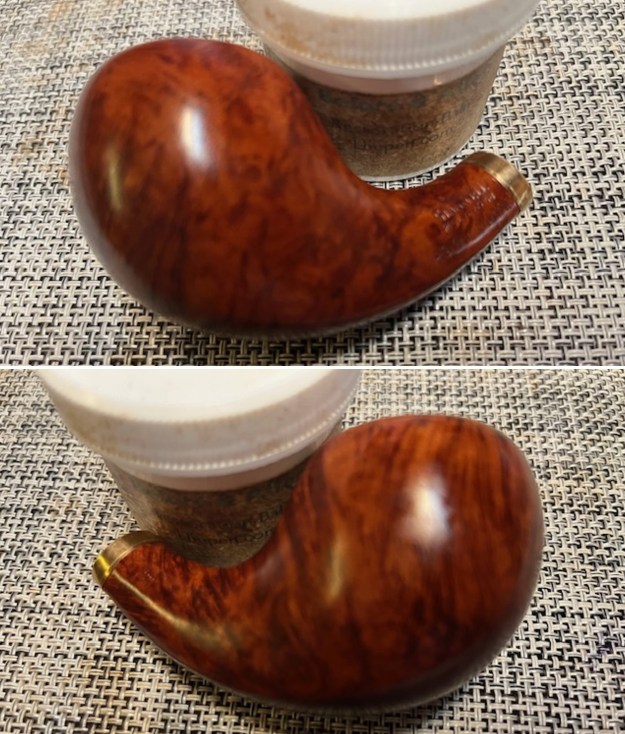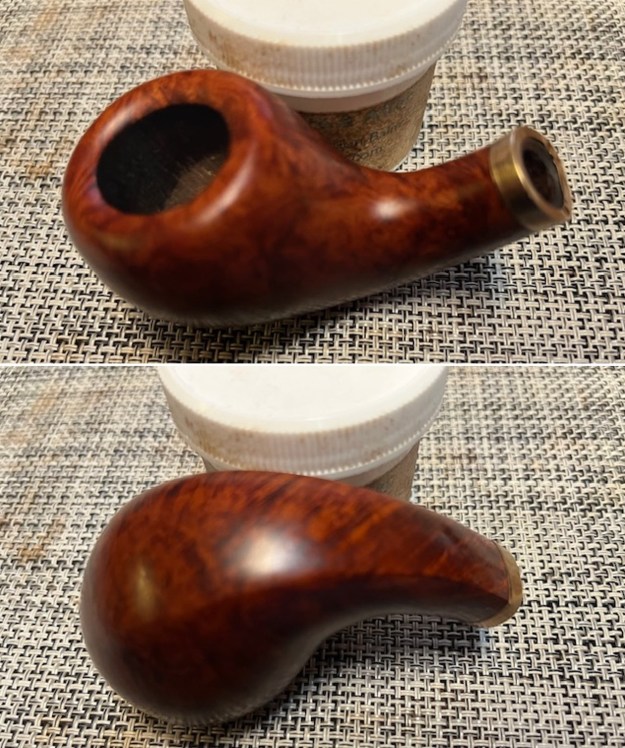
Monthly Archives: December 2023

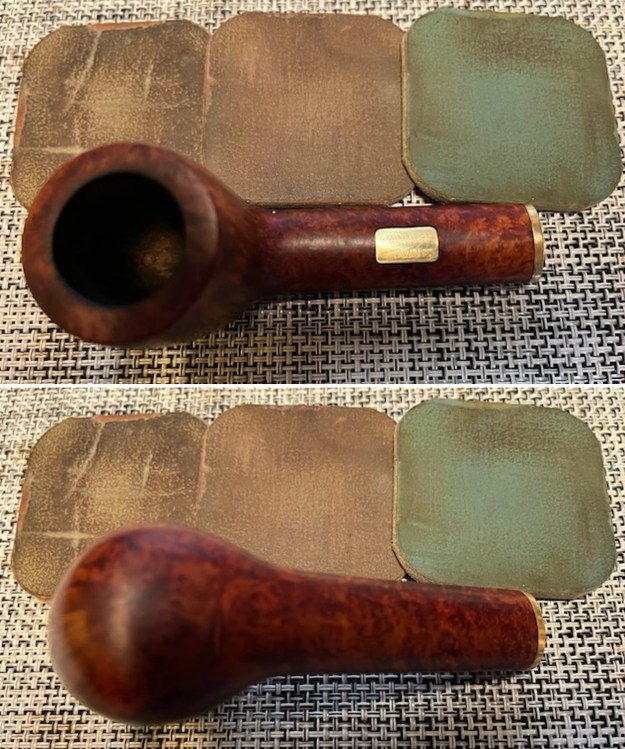
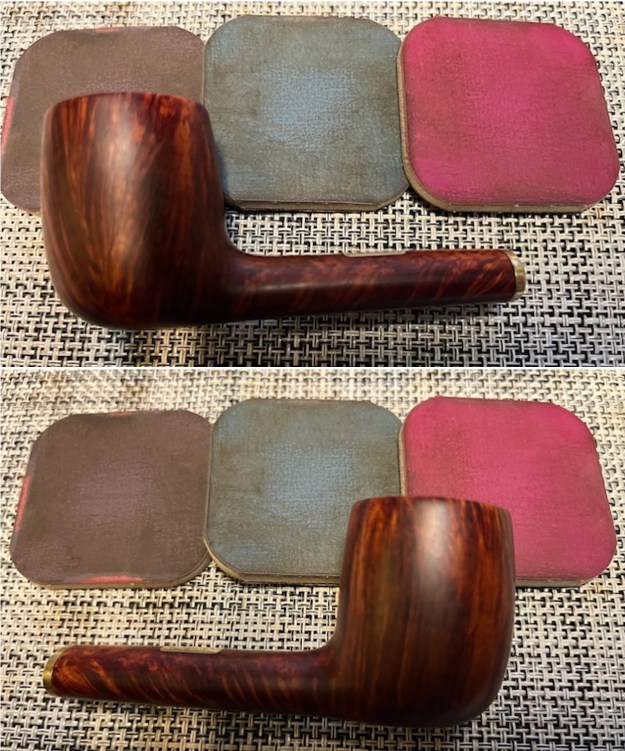
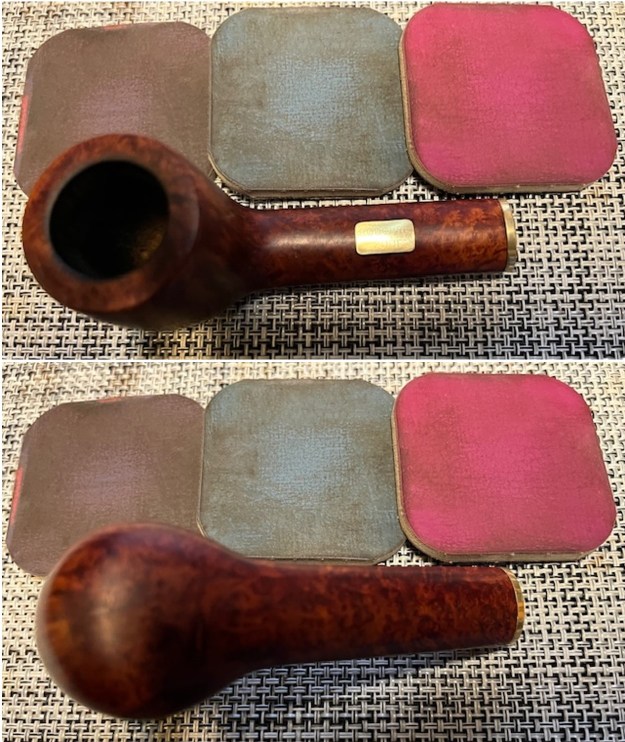
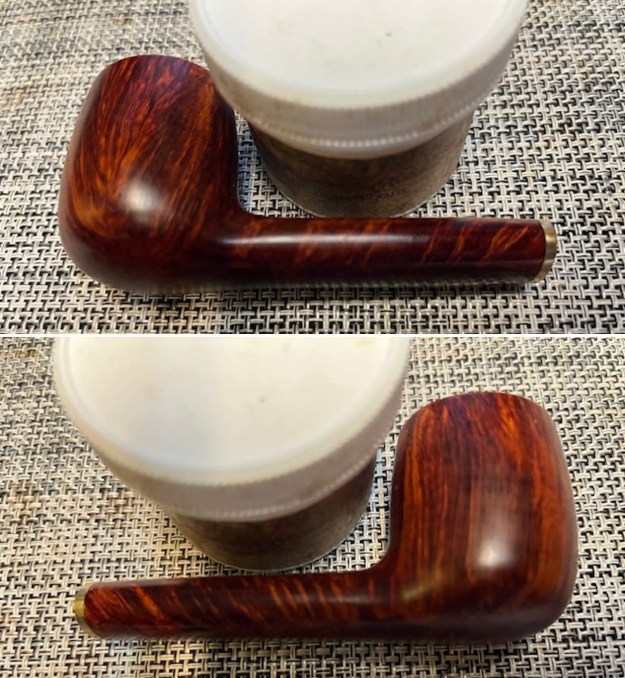
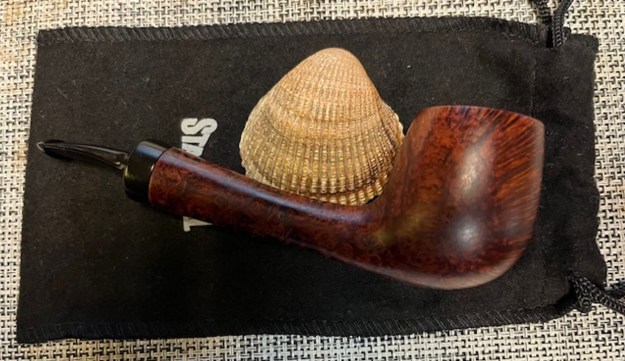
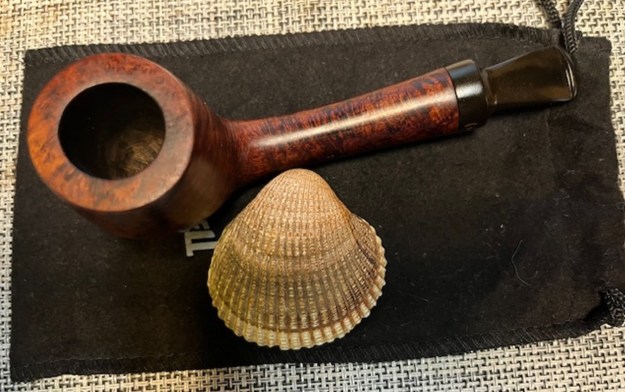
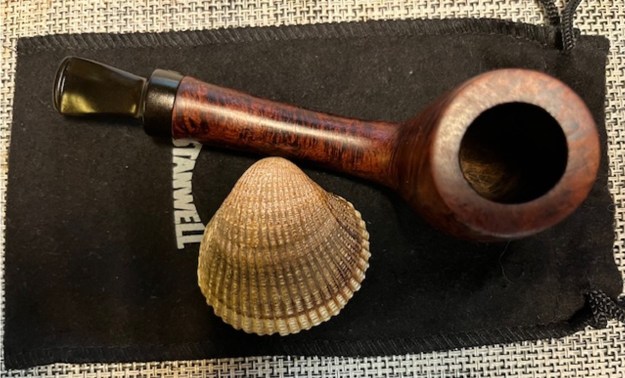
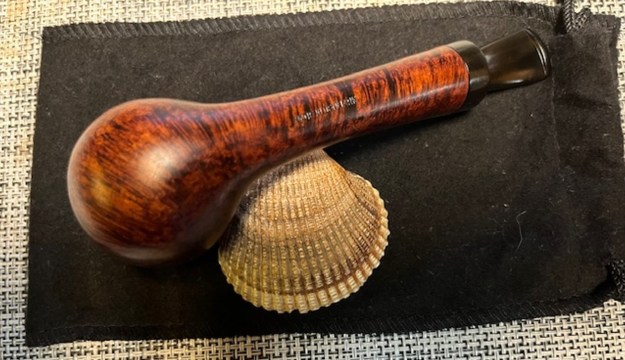
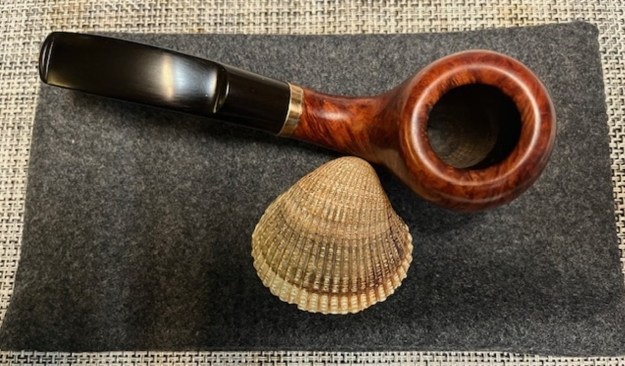
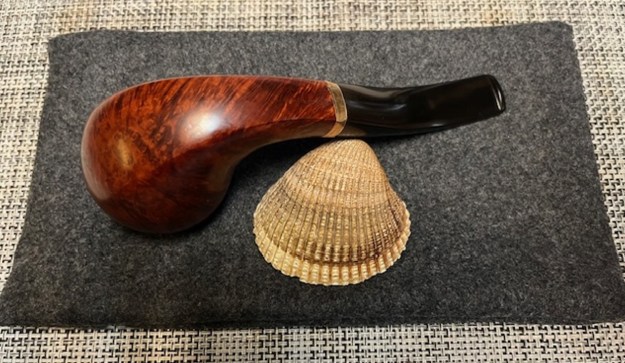
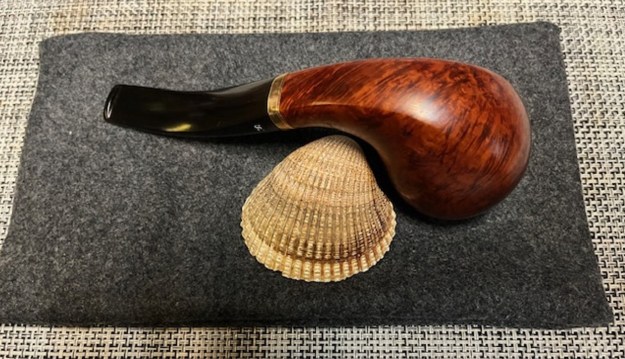
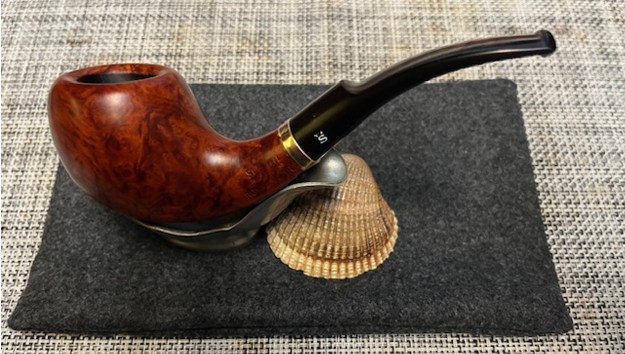
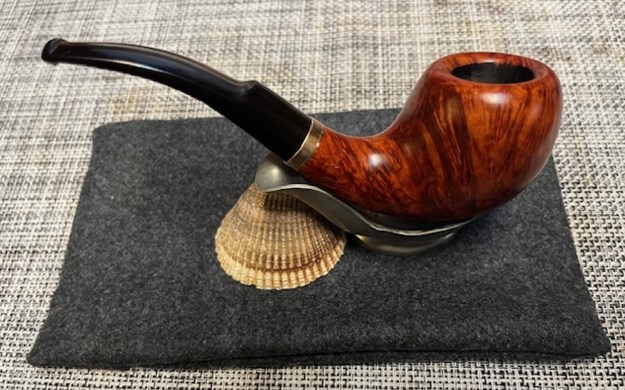
Restoring a Truly Elegant Danish made Stanwell Brass Band 179 Apple


Blog by Steve Laug

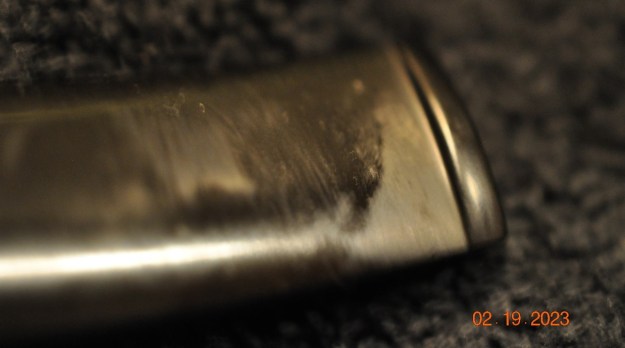
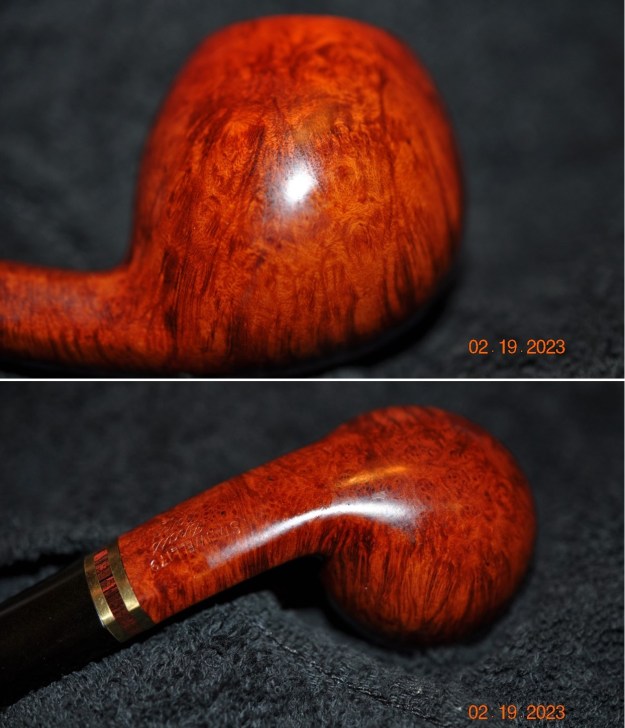
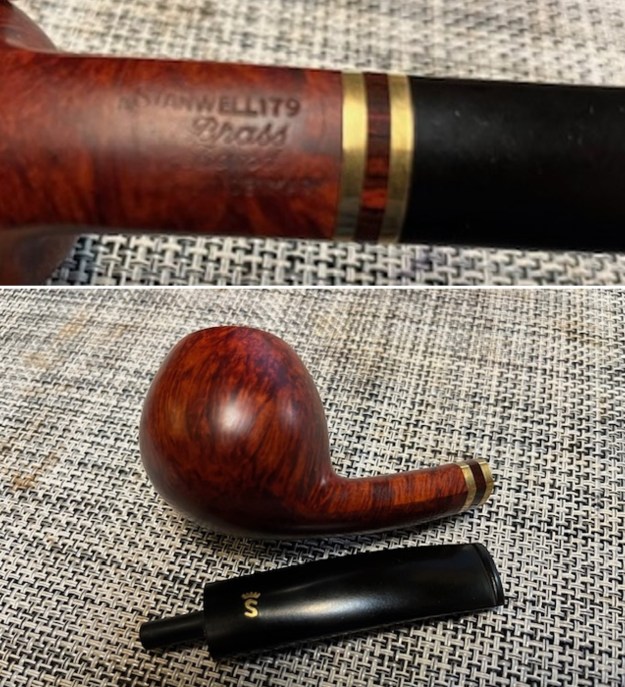
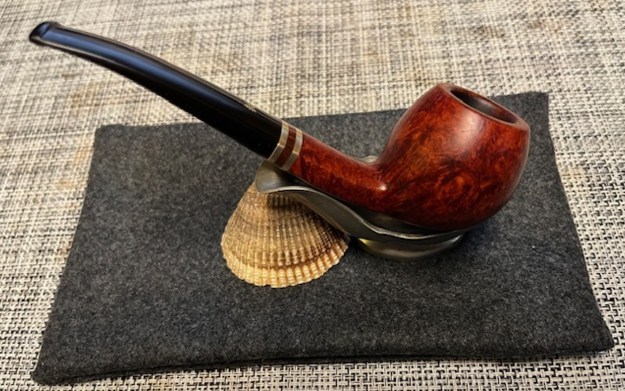
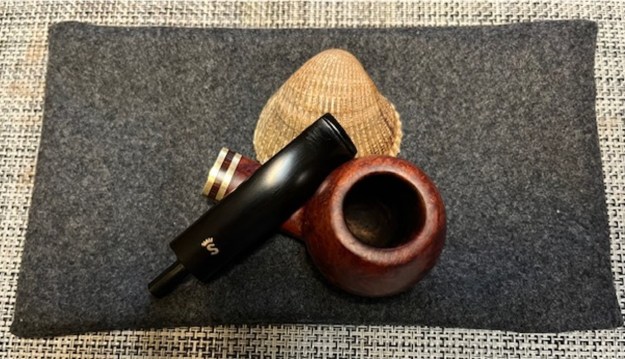
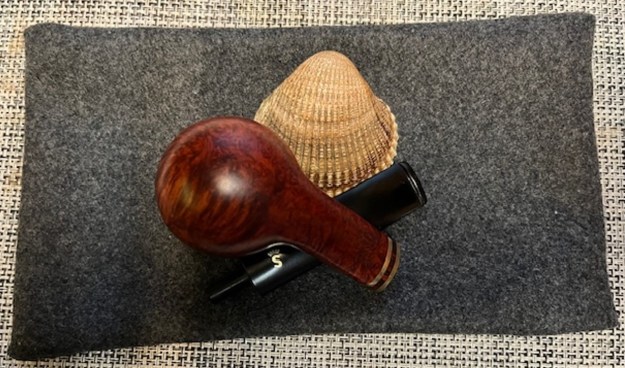
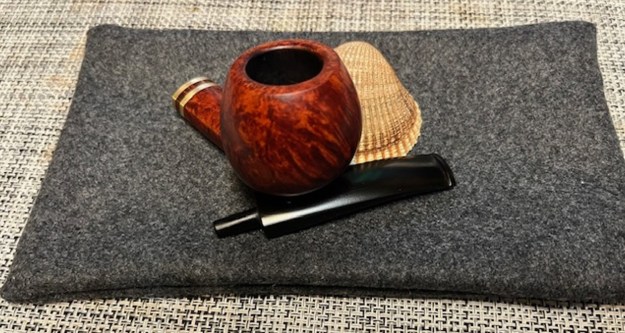
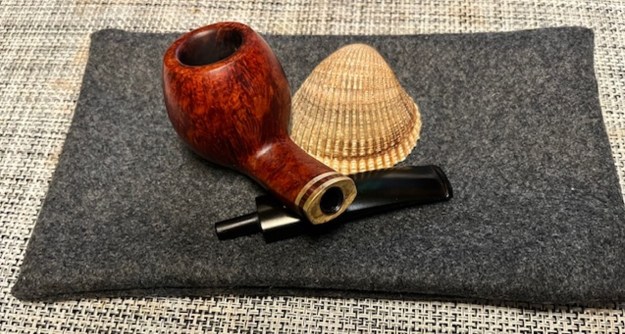
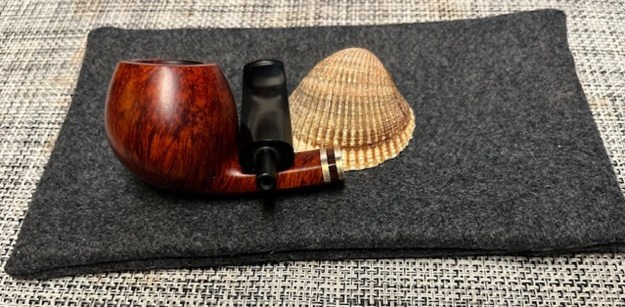
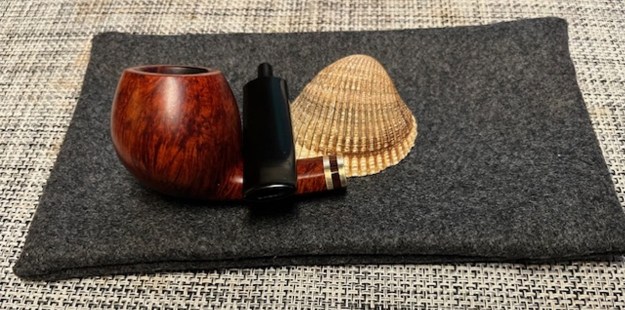
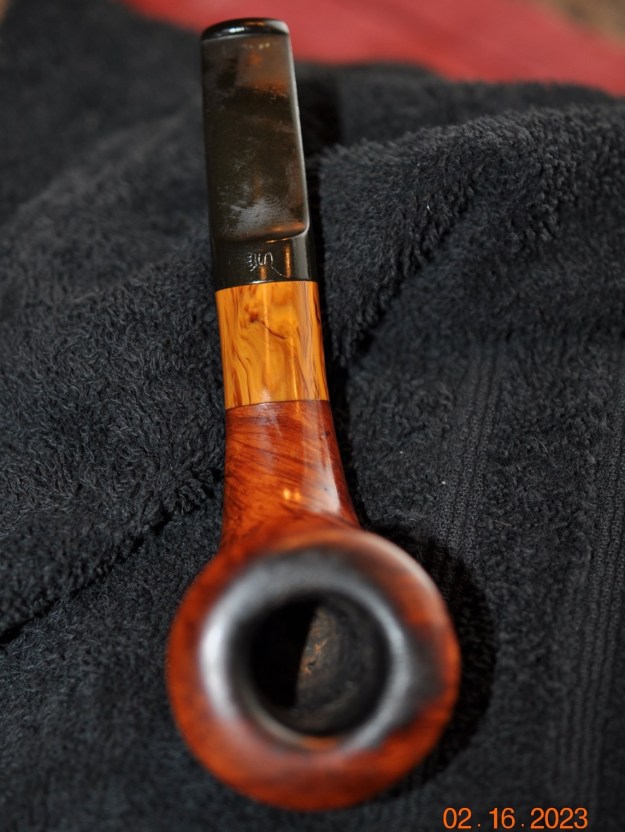
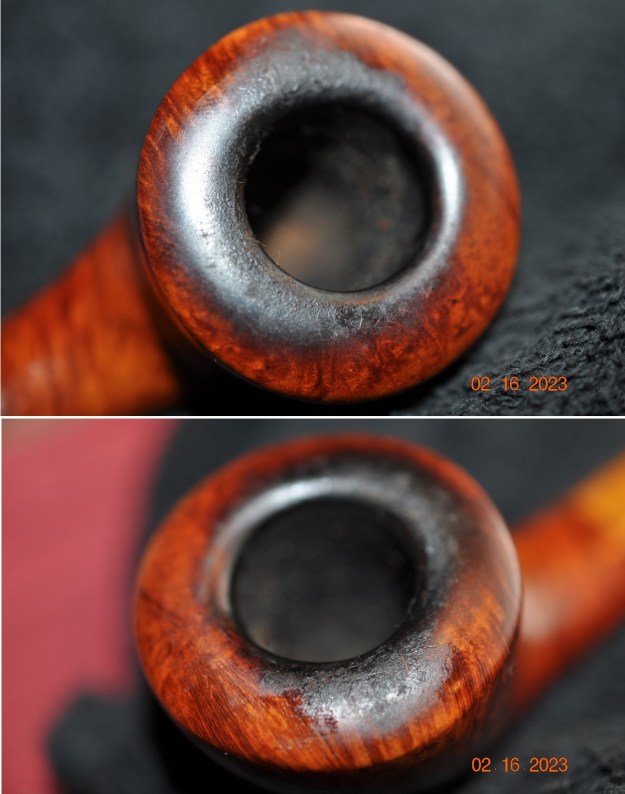
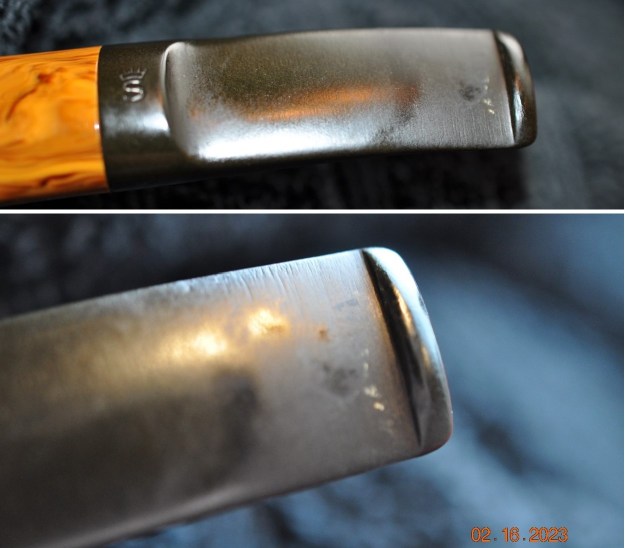
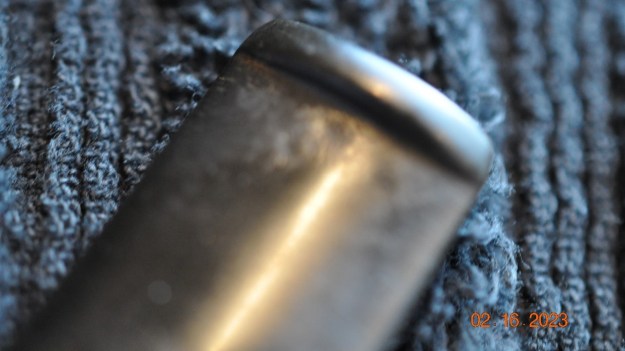
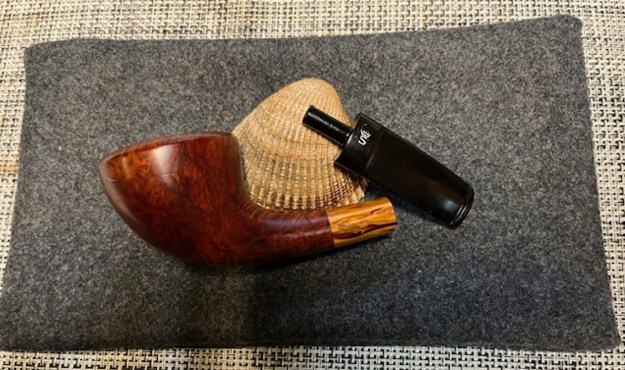
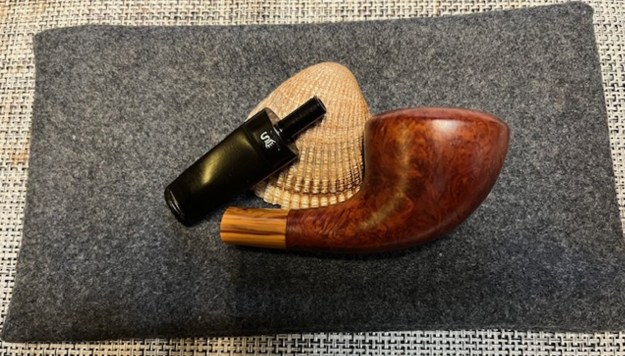
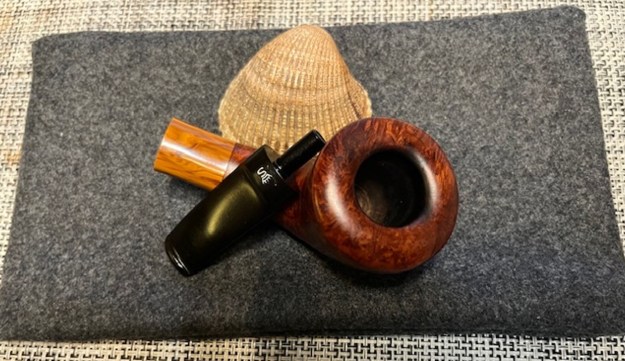
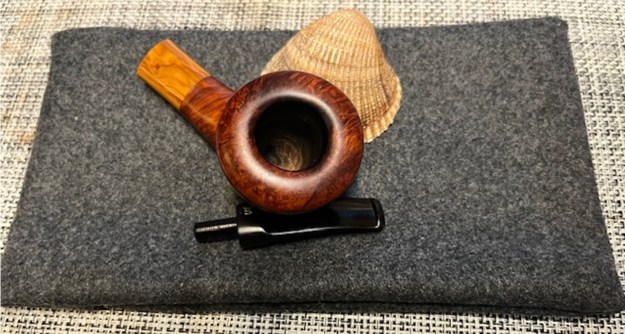
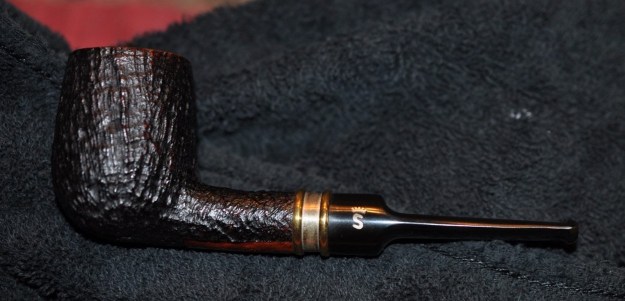
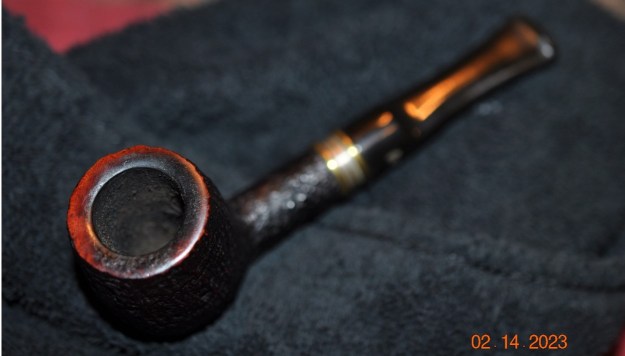
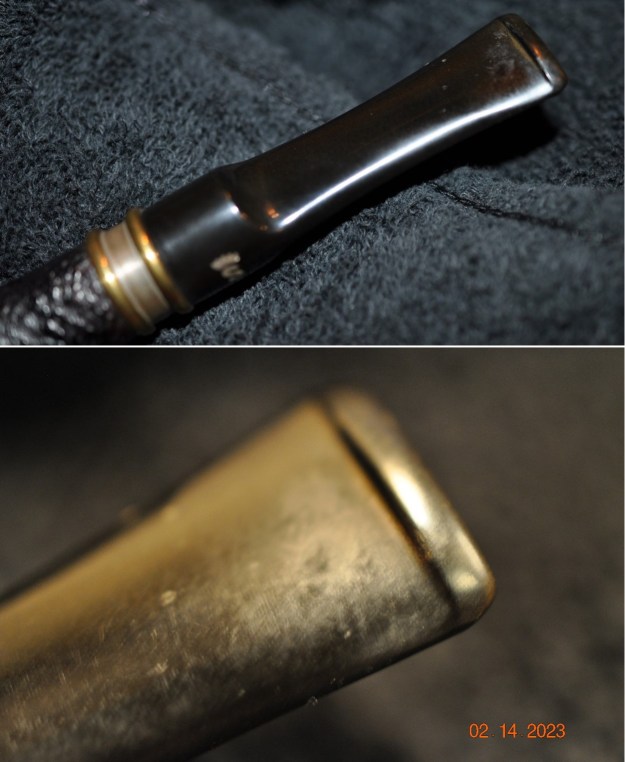
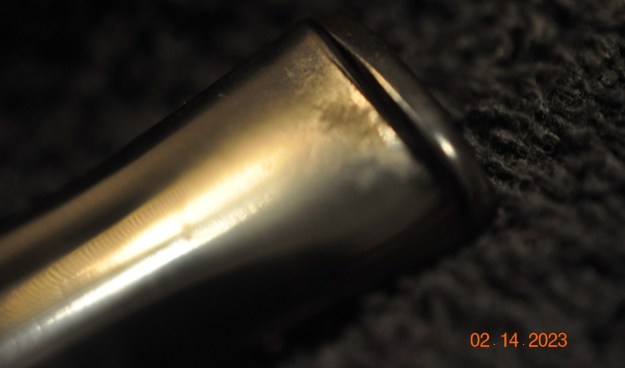
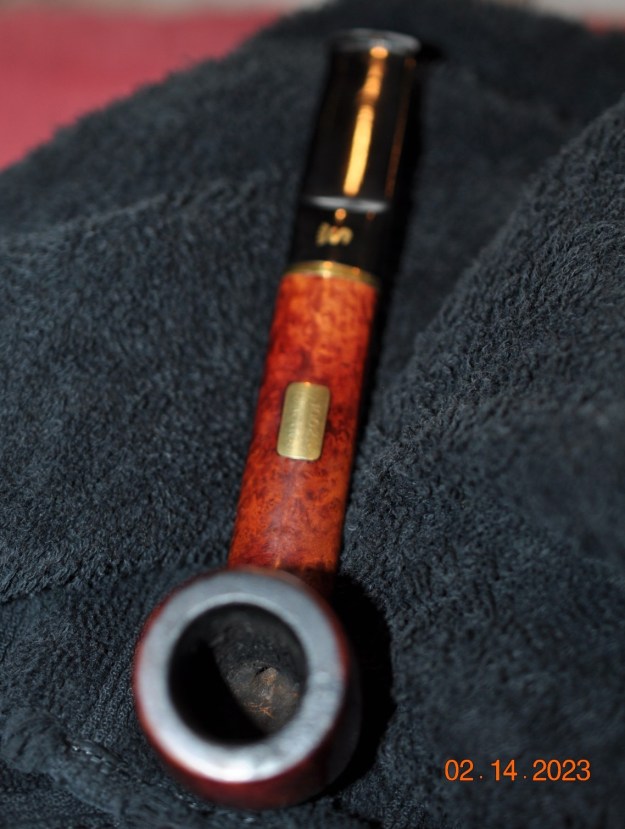
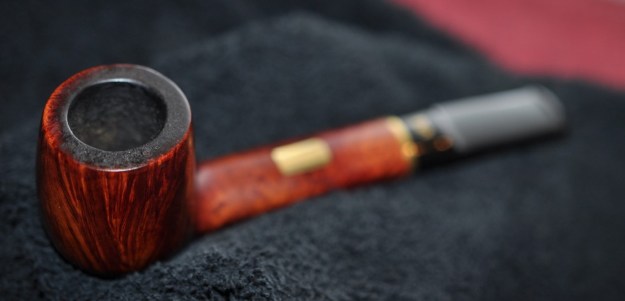
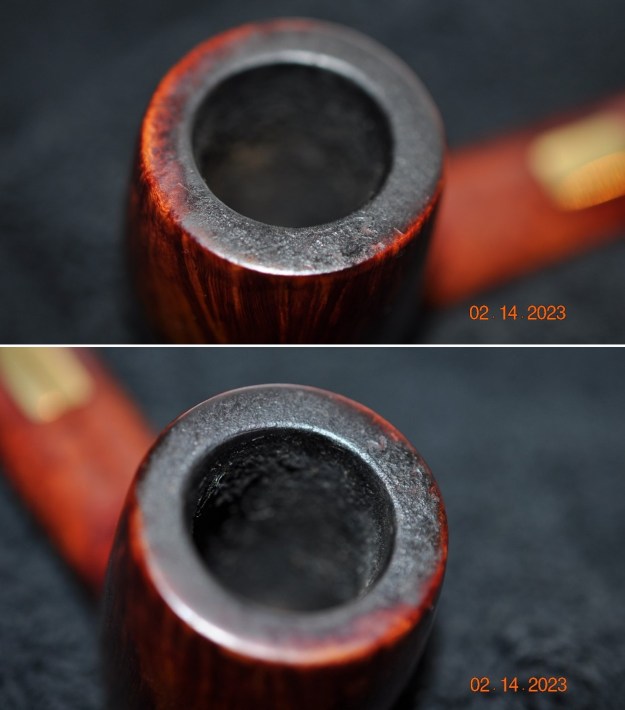
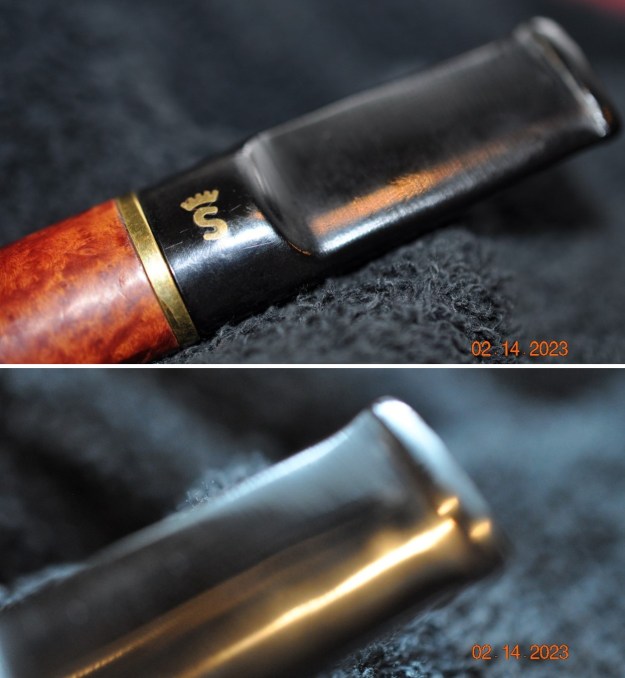
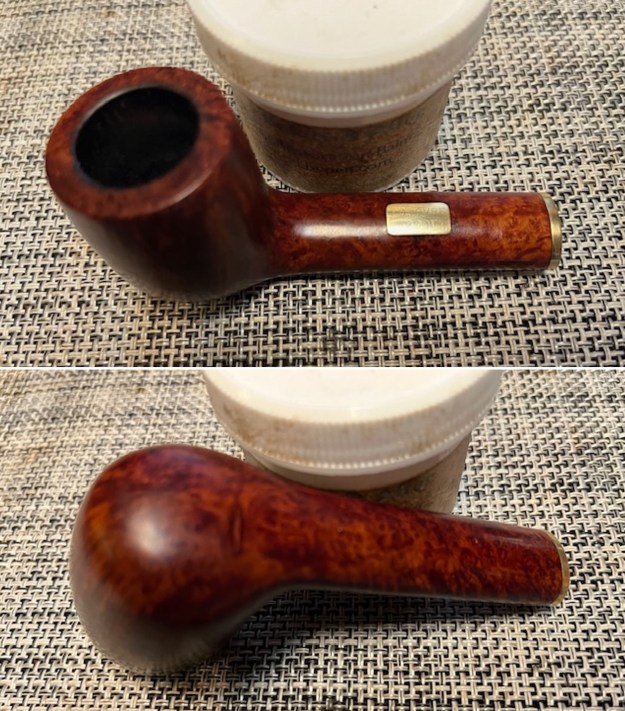
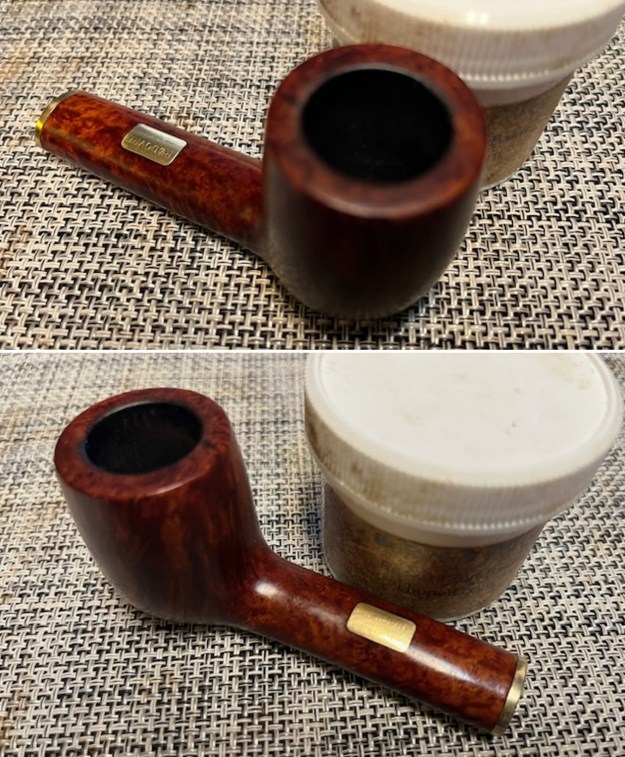
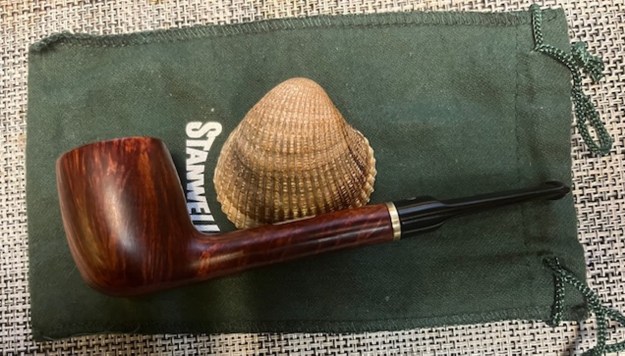
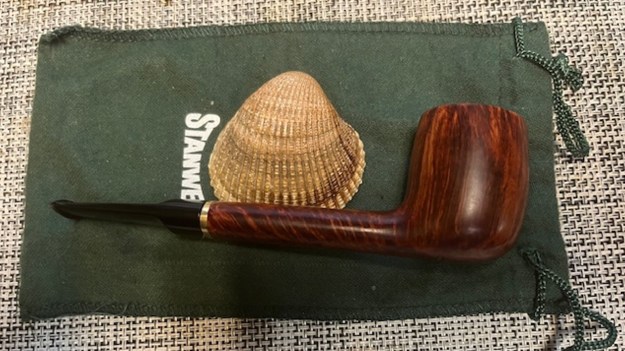
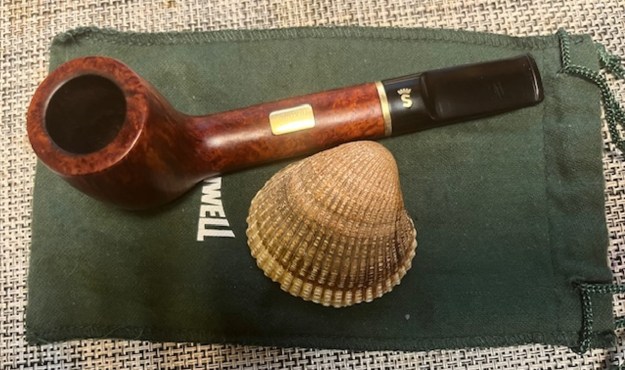
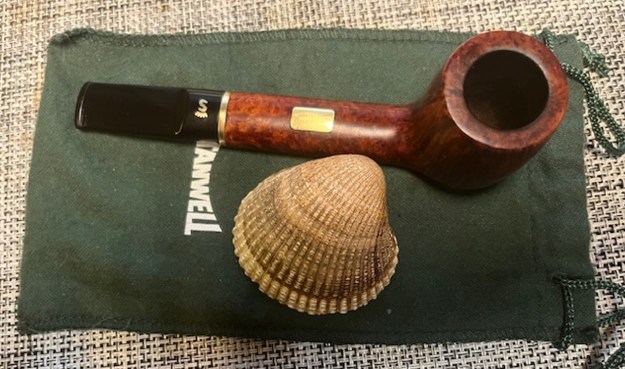
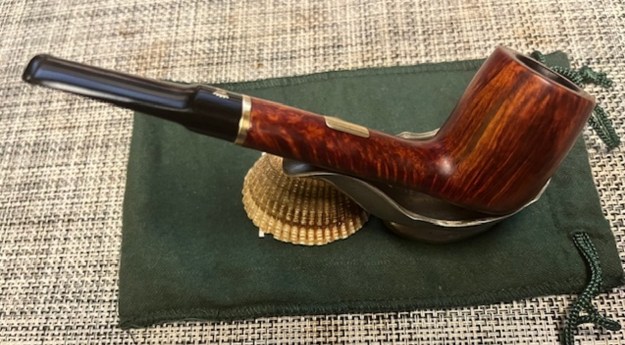
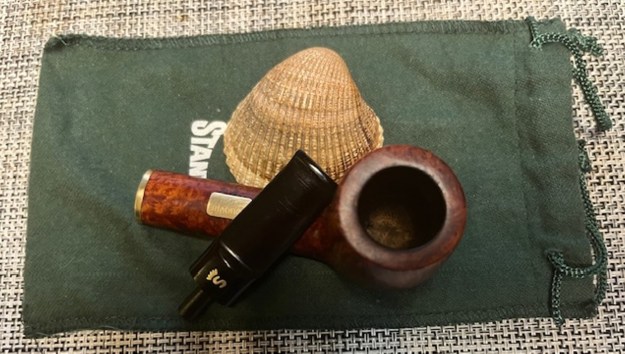
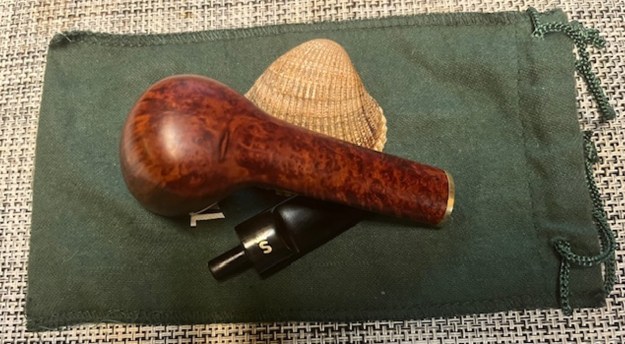
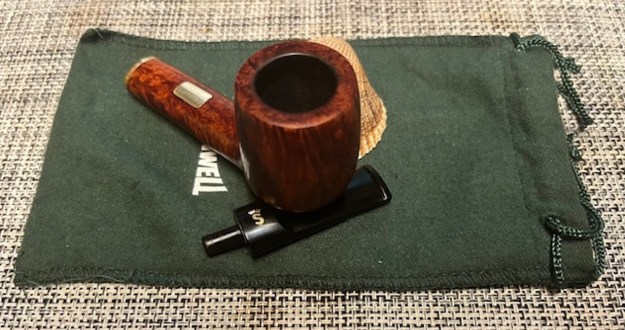
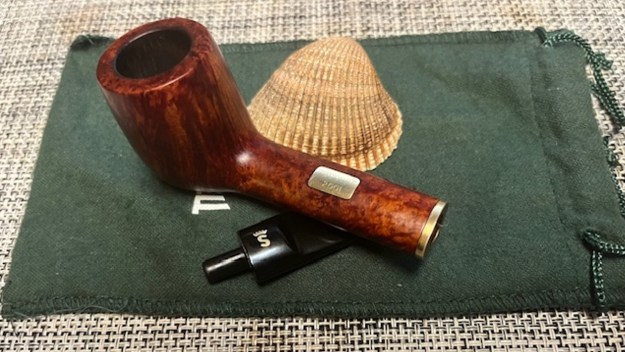
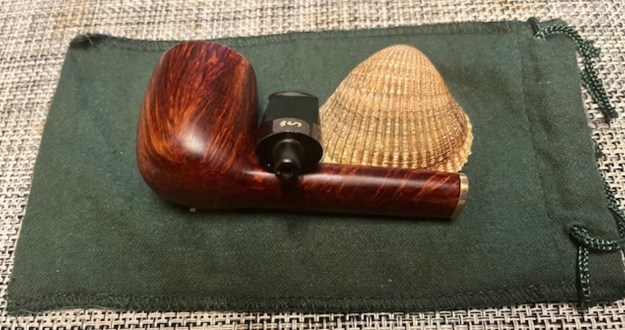
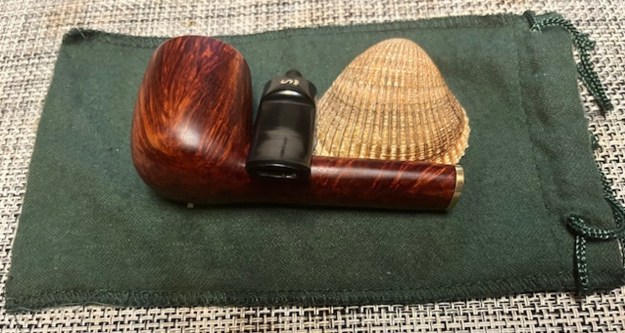
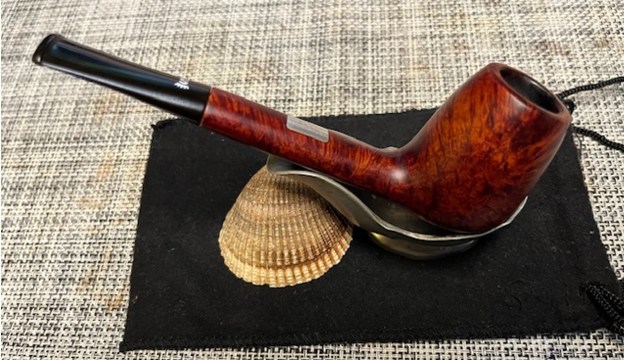
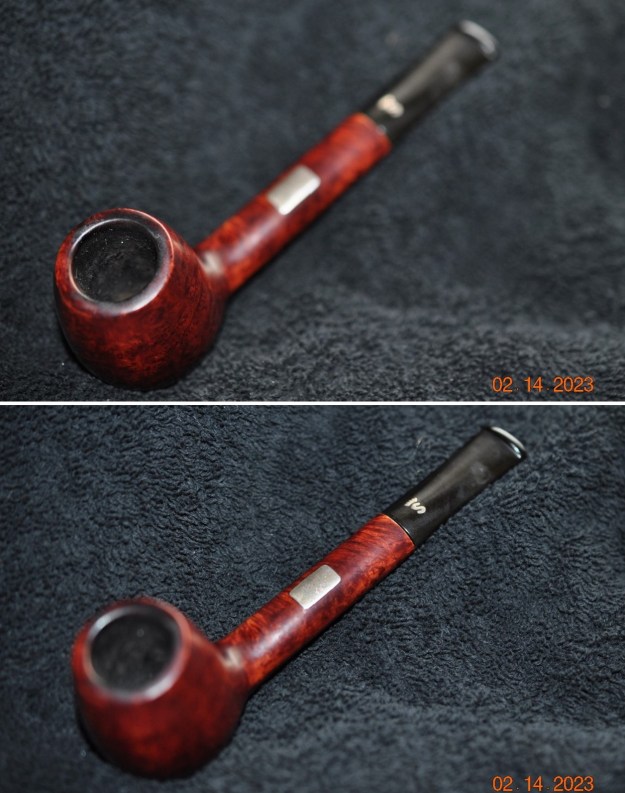
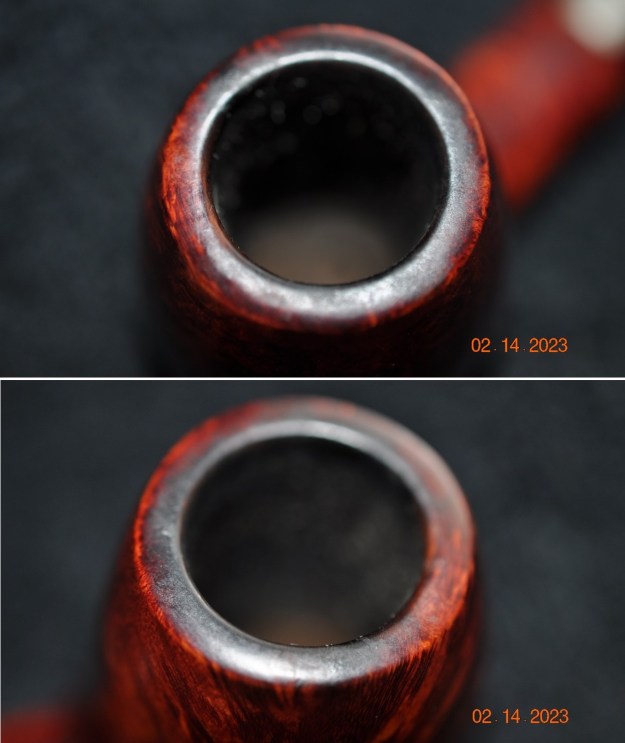
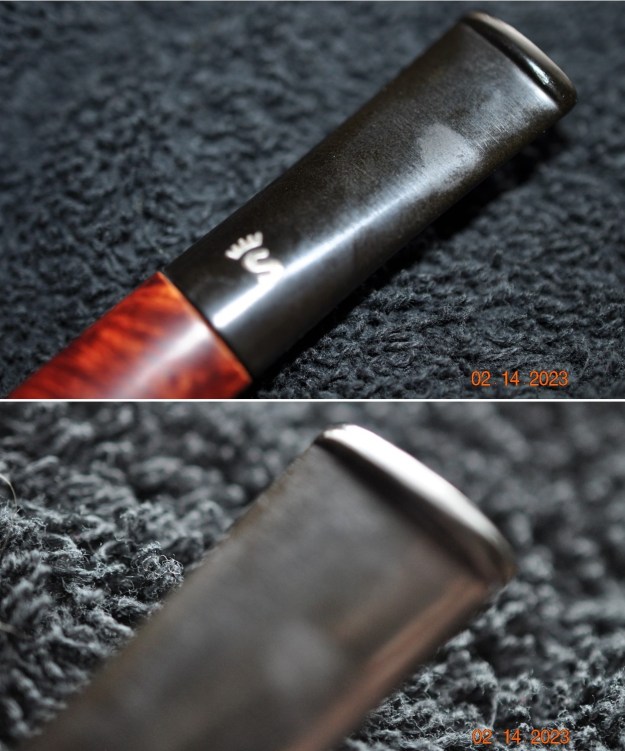
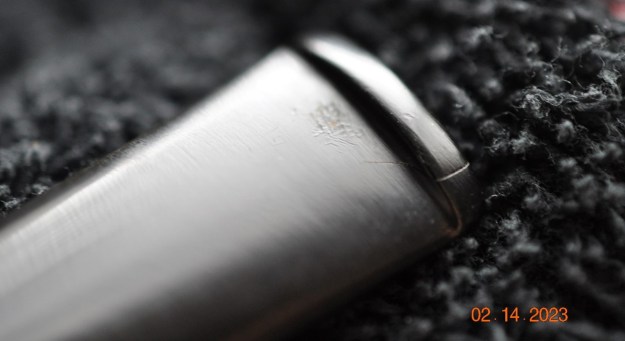
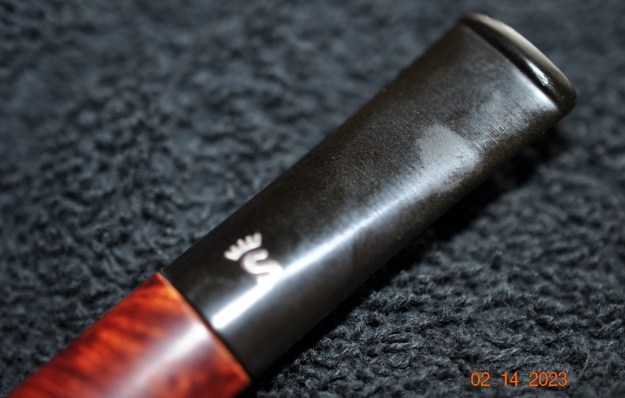
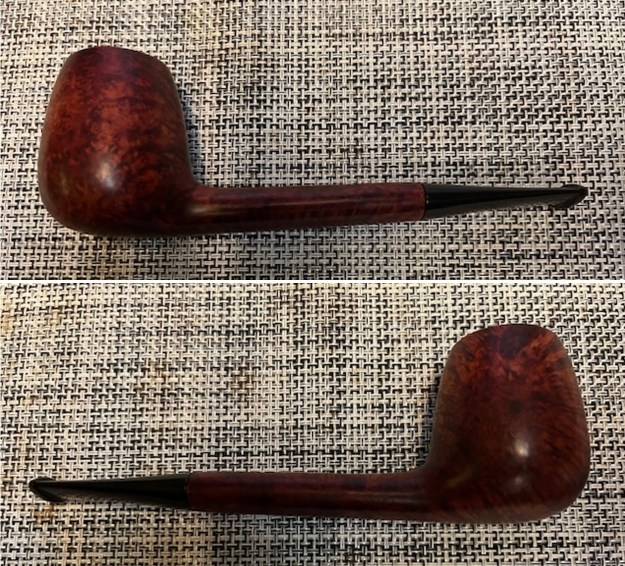
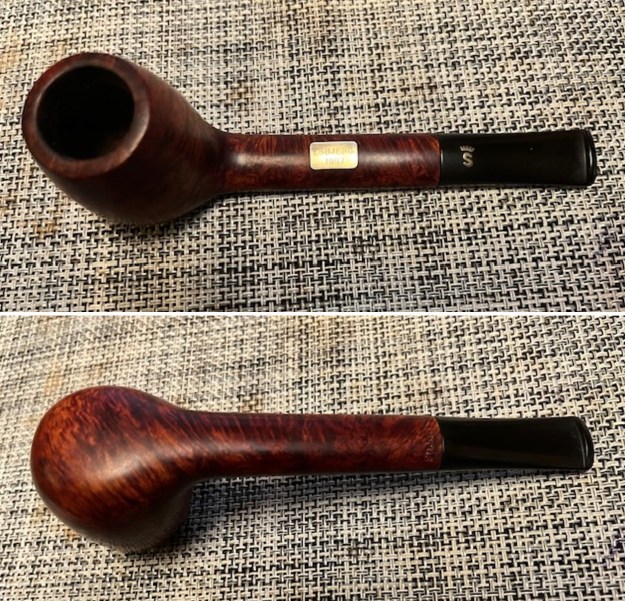
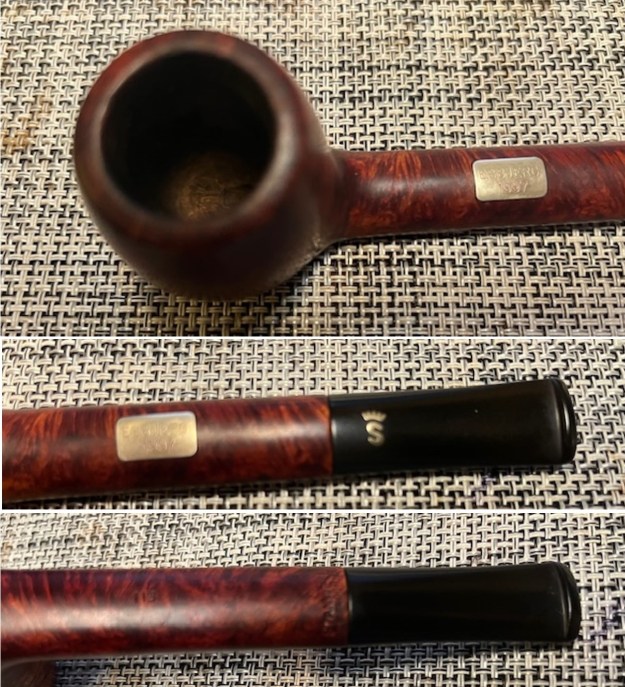
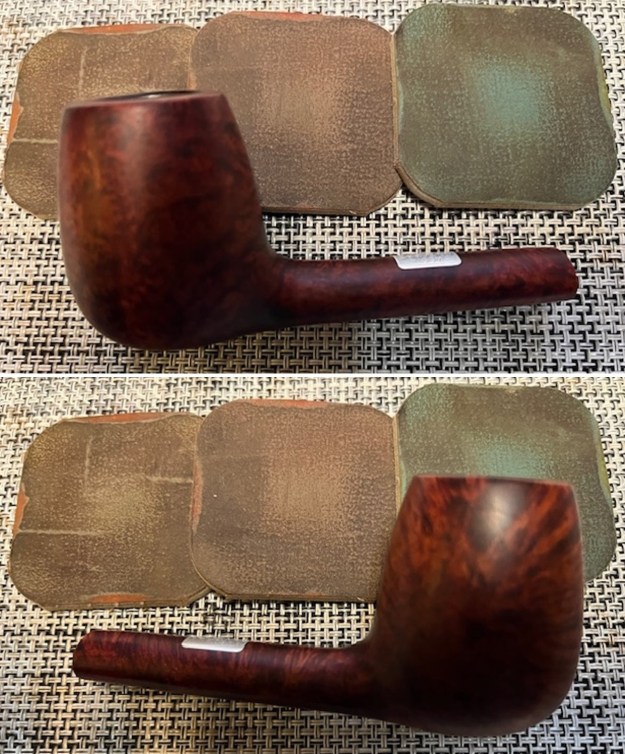
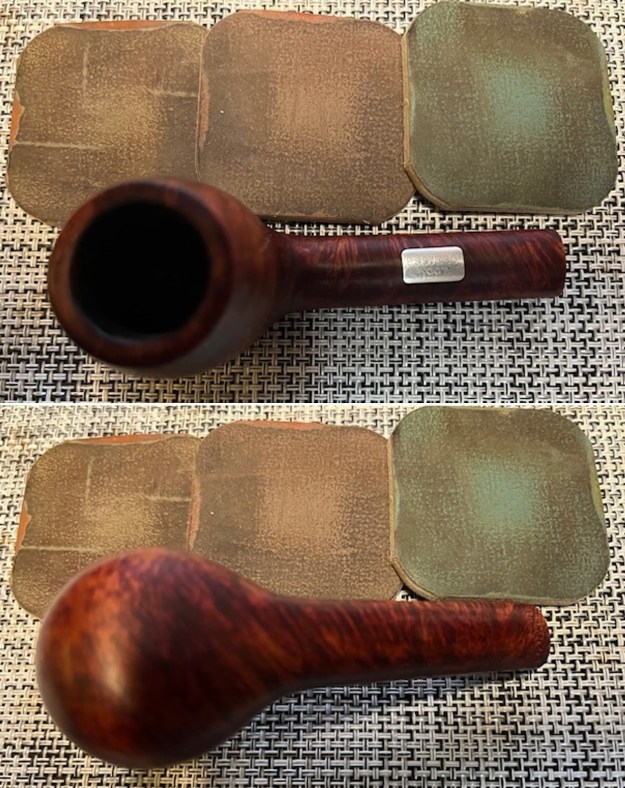
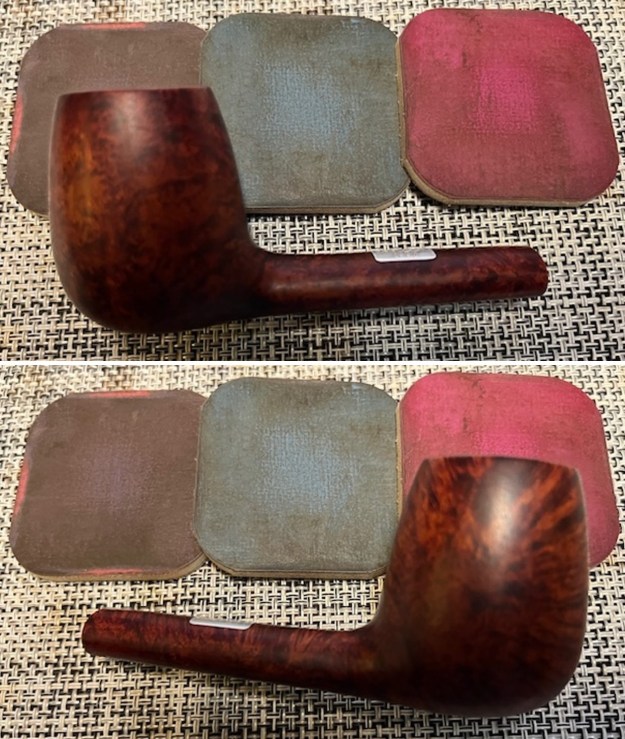
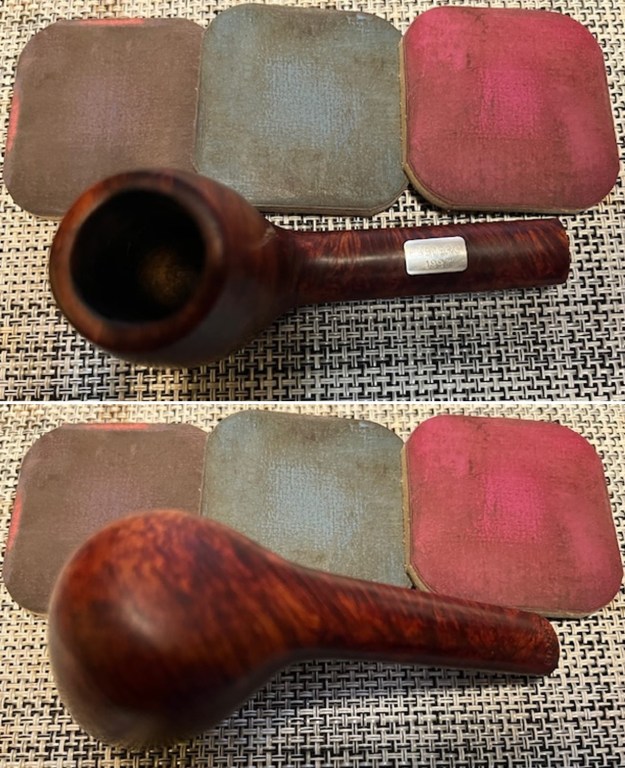
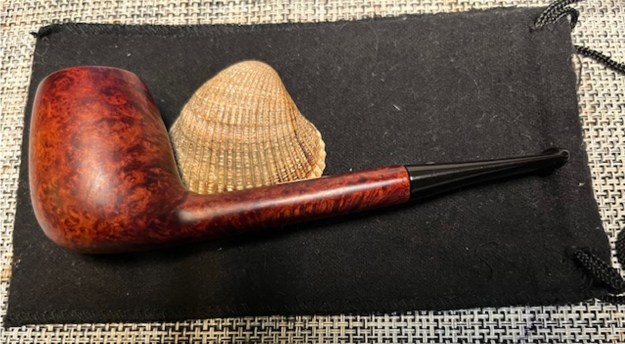
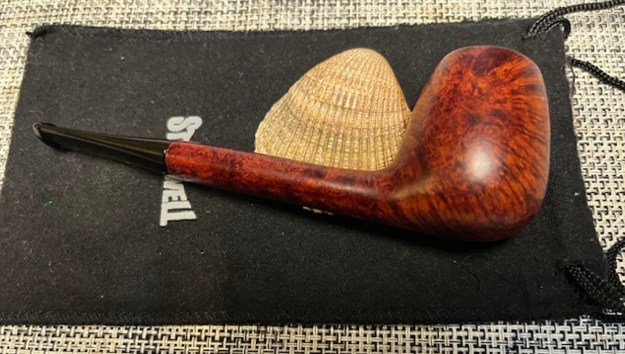
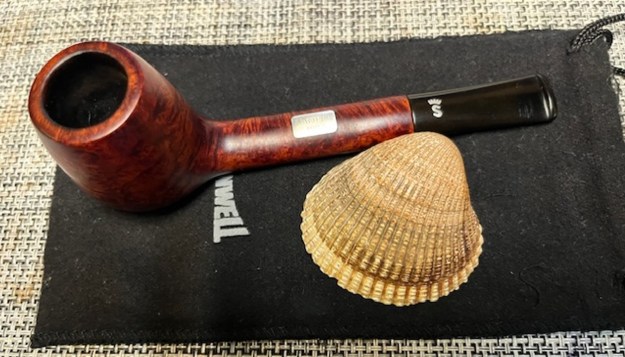
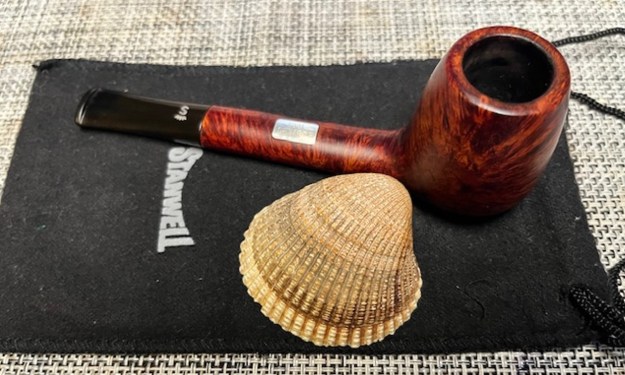
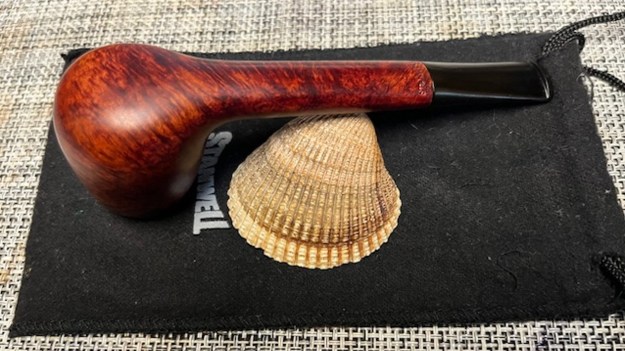
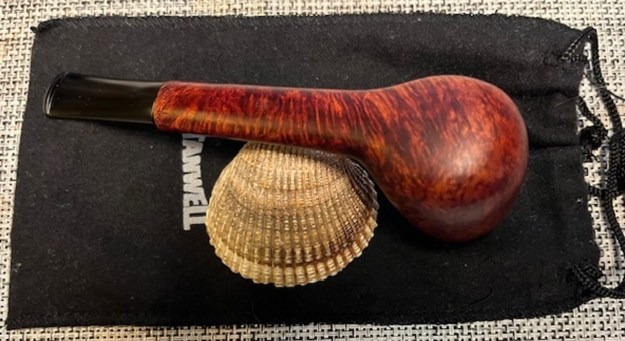
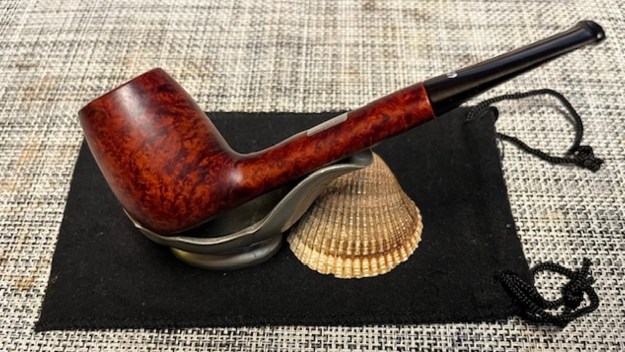
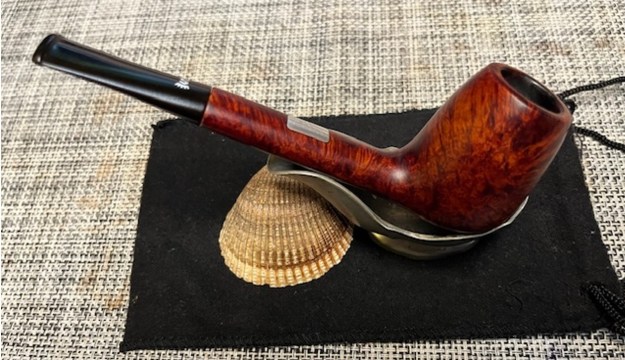
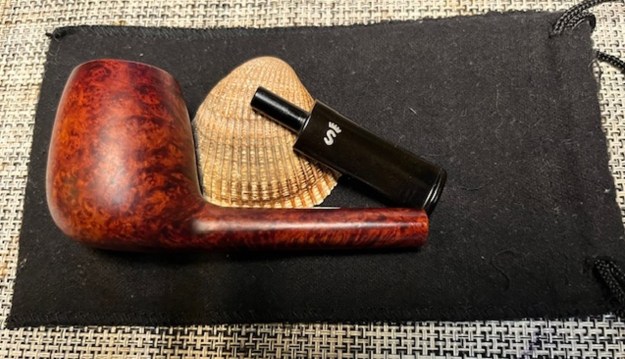
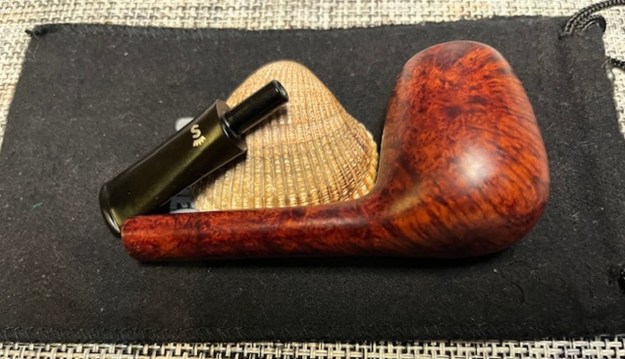
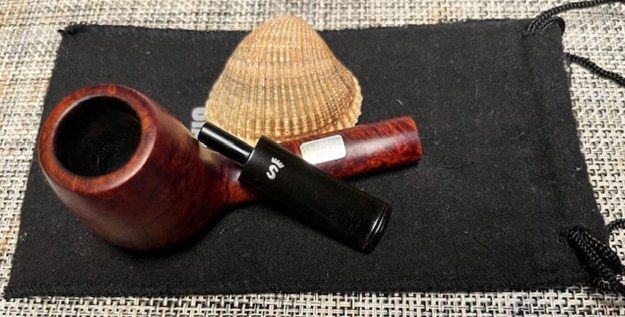
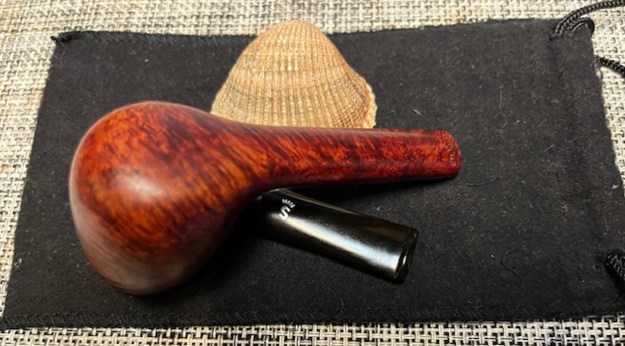
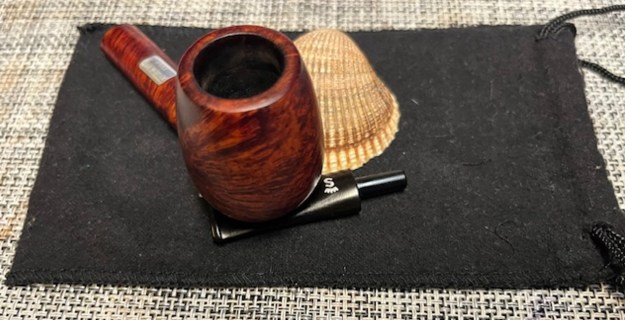
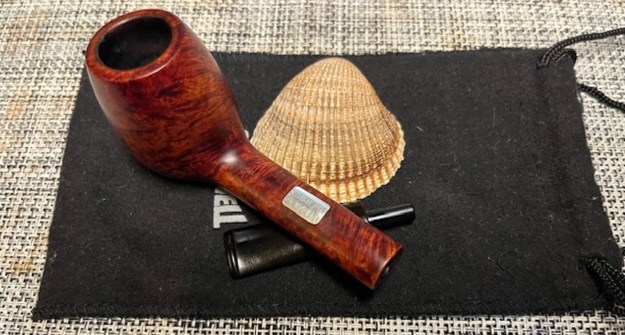
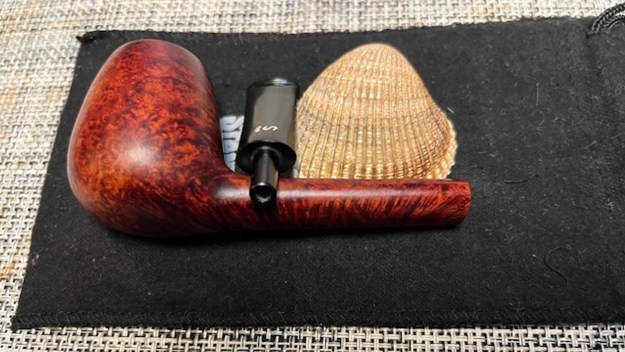
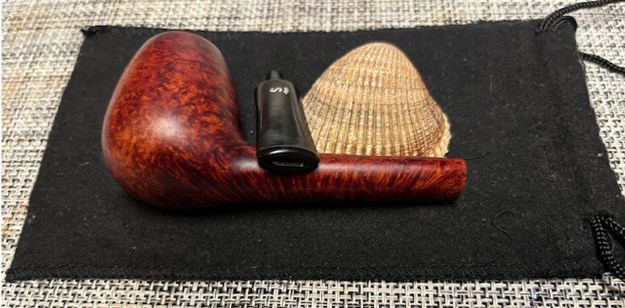
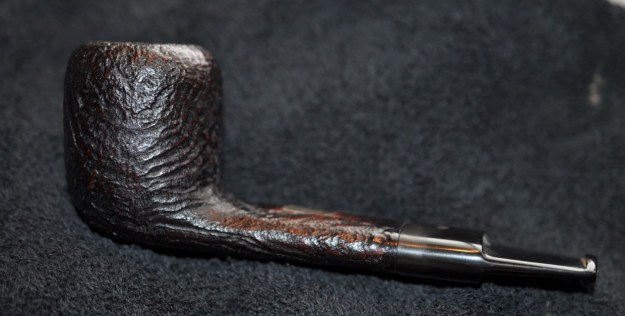
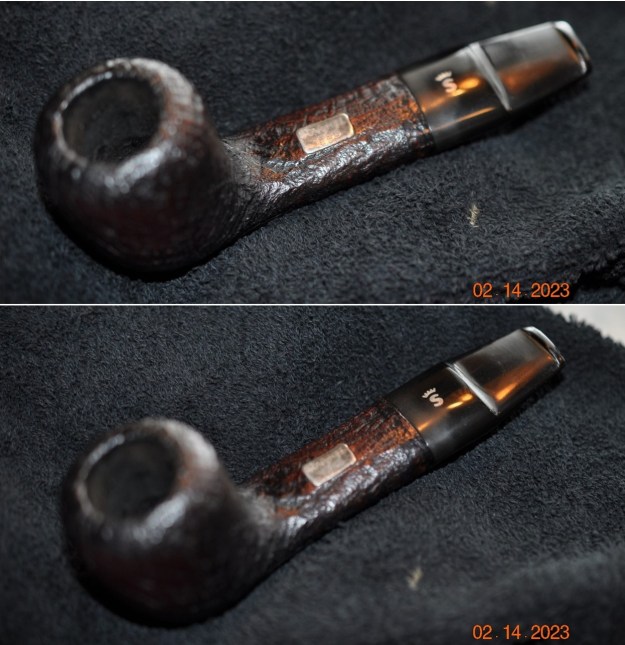
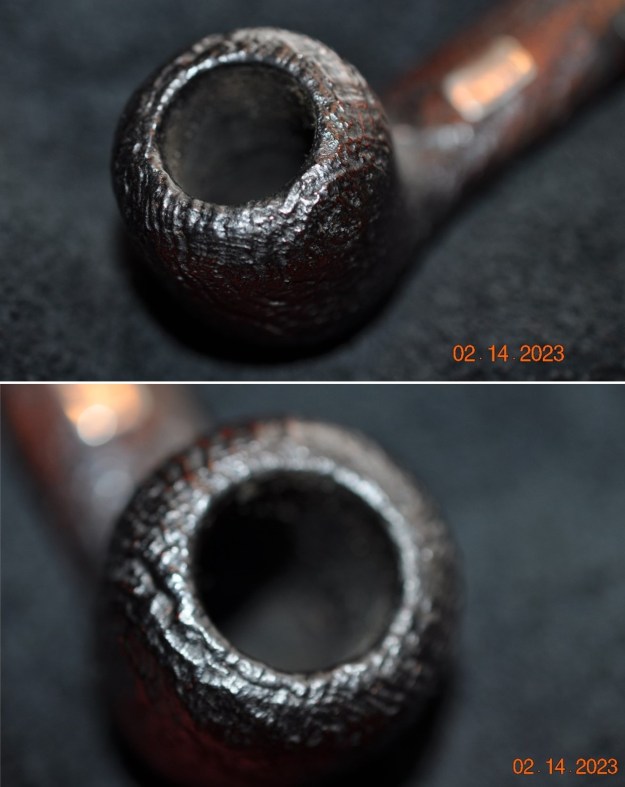
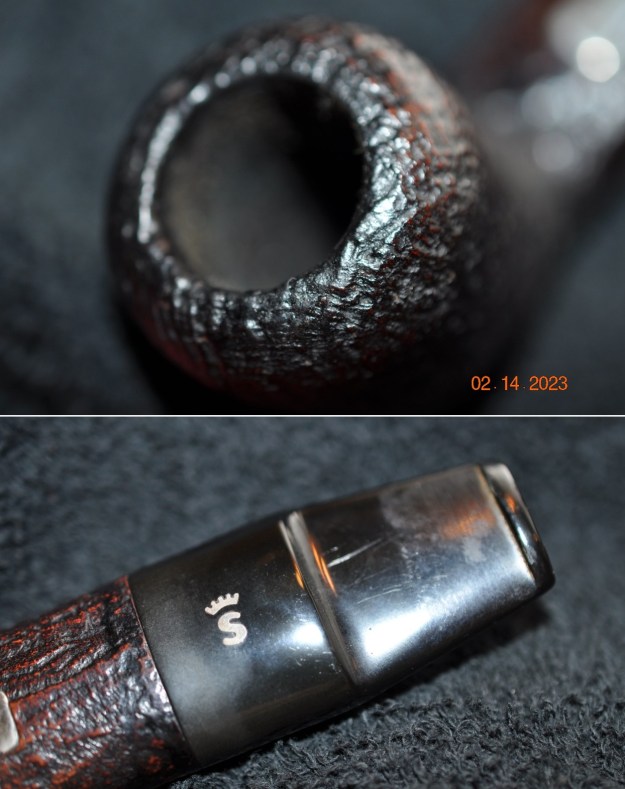
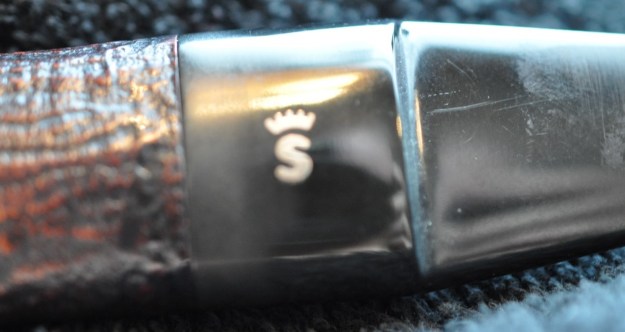
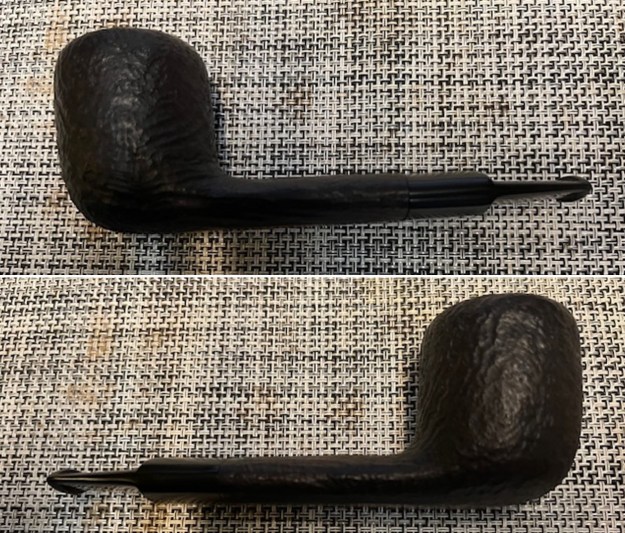
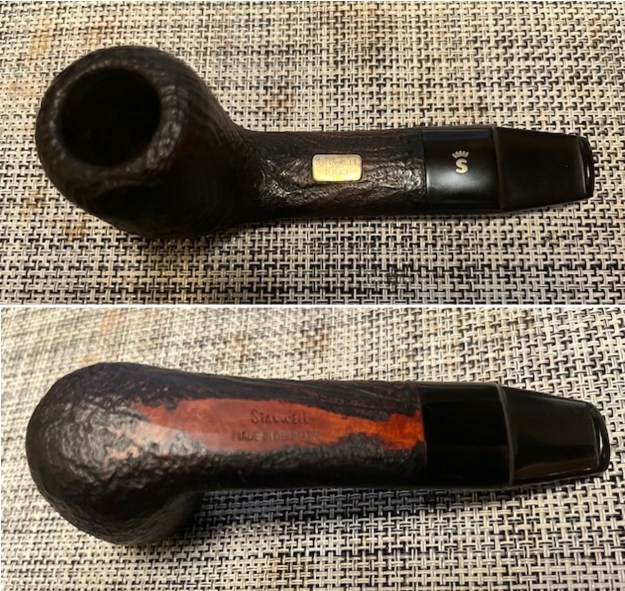
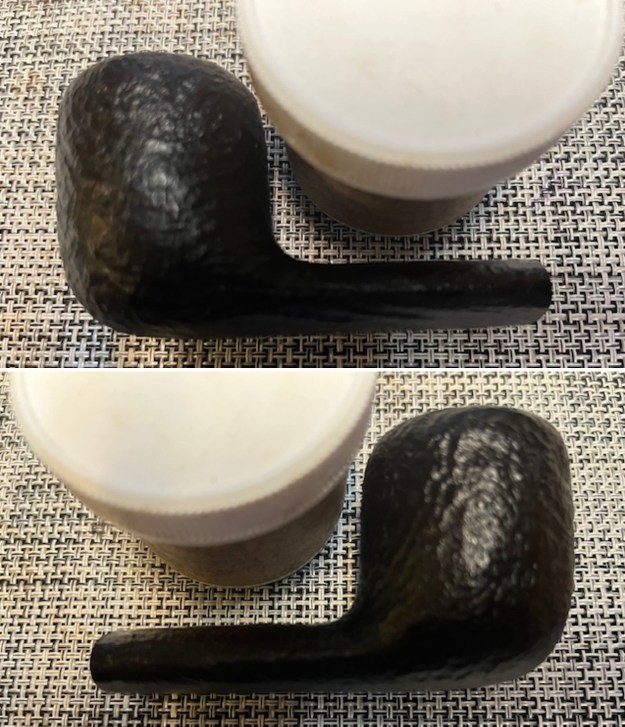
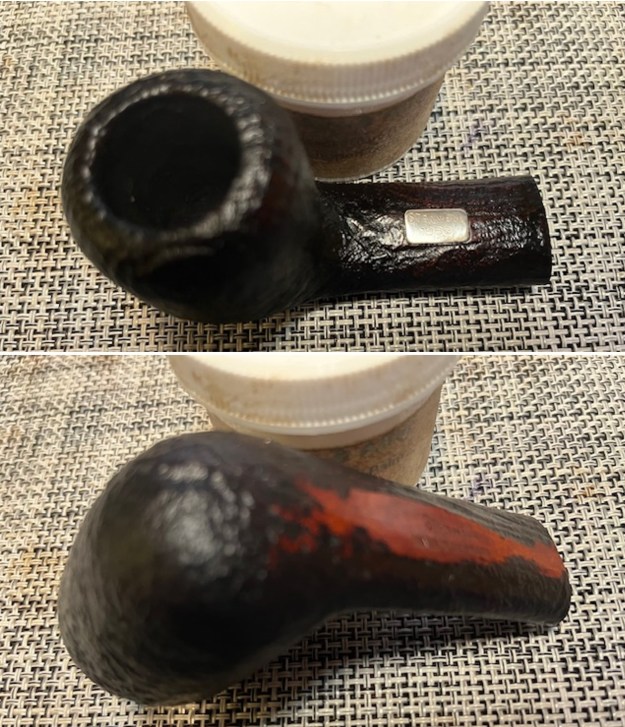
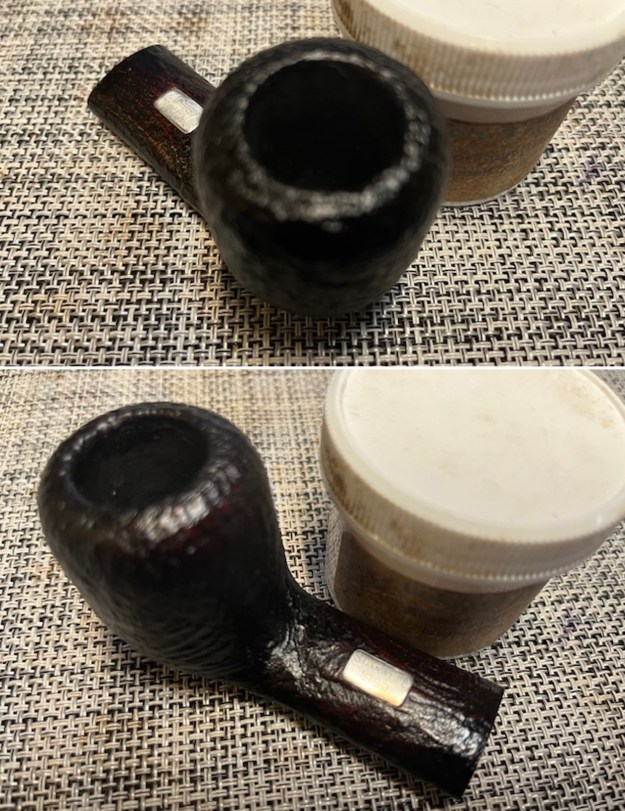
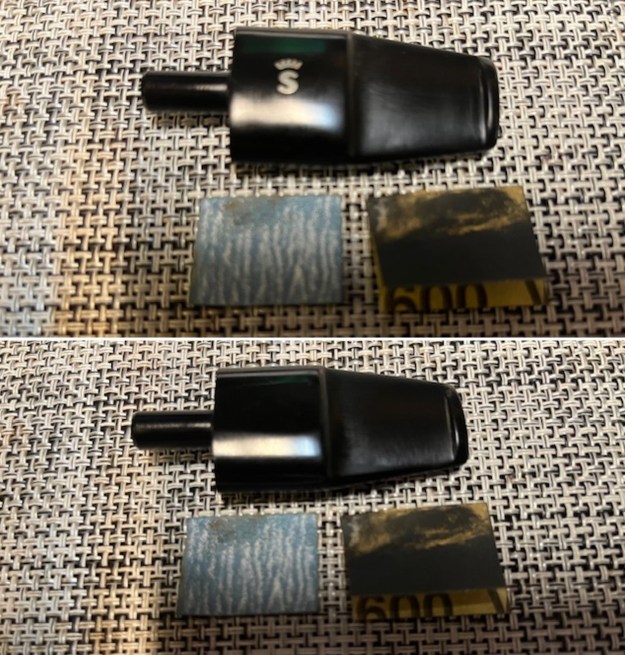
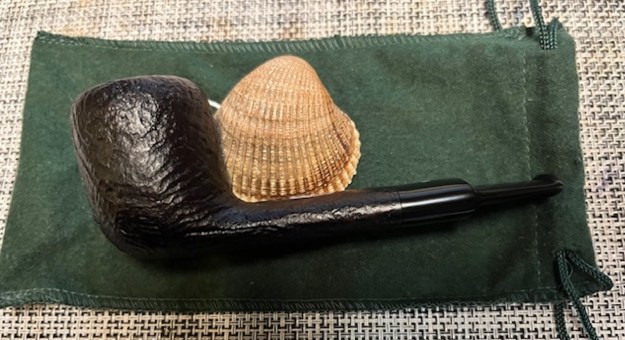
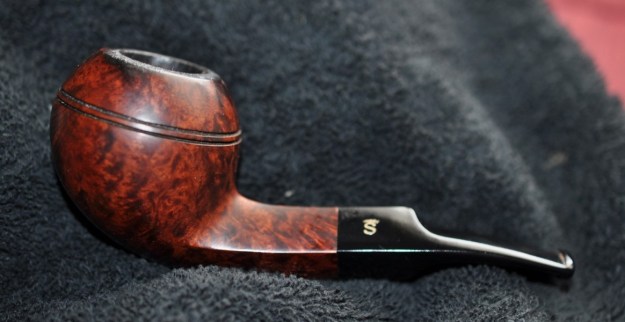
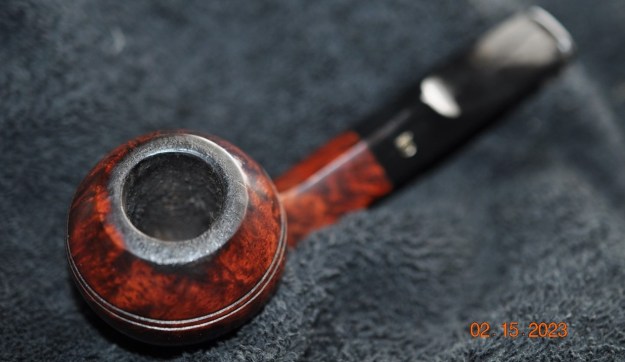
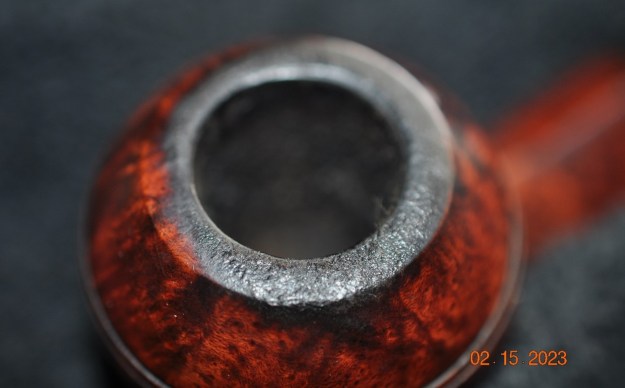
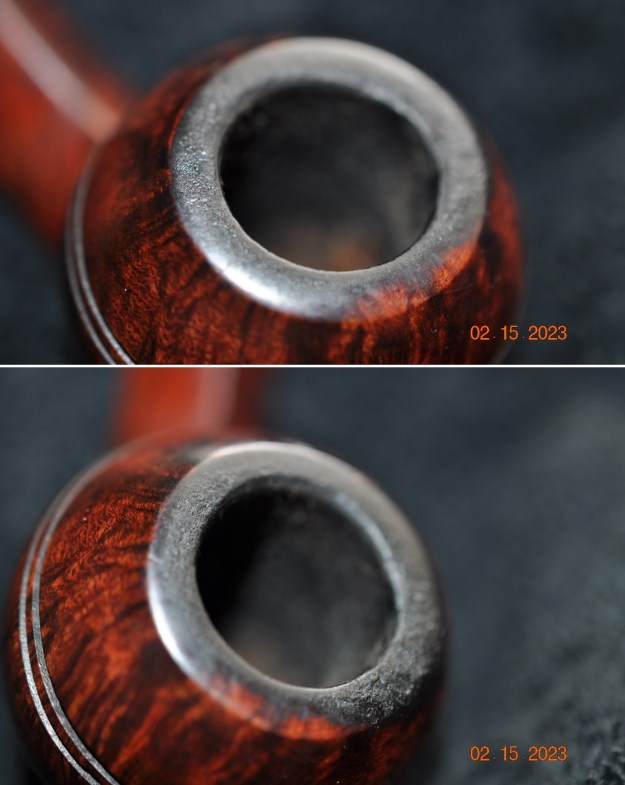
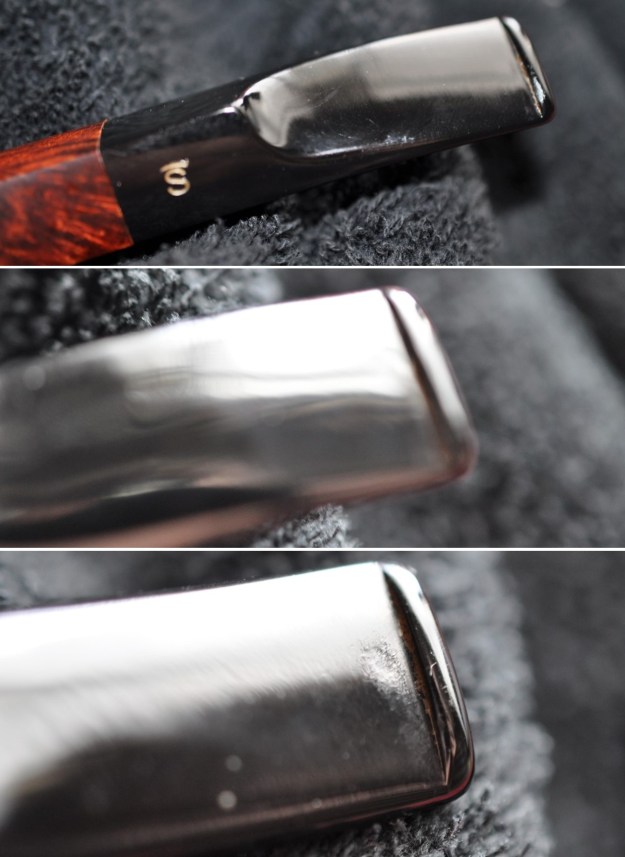
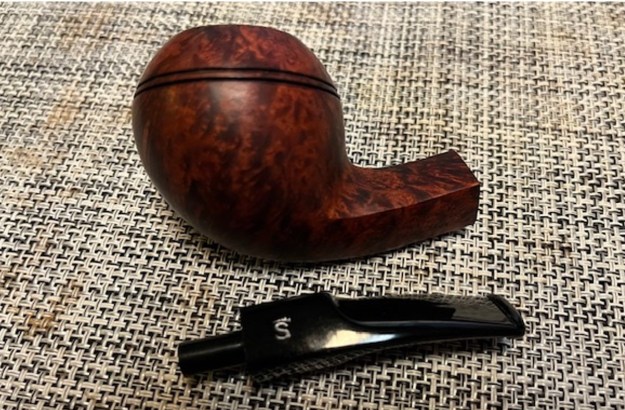
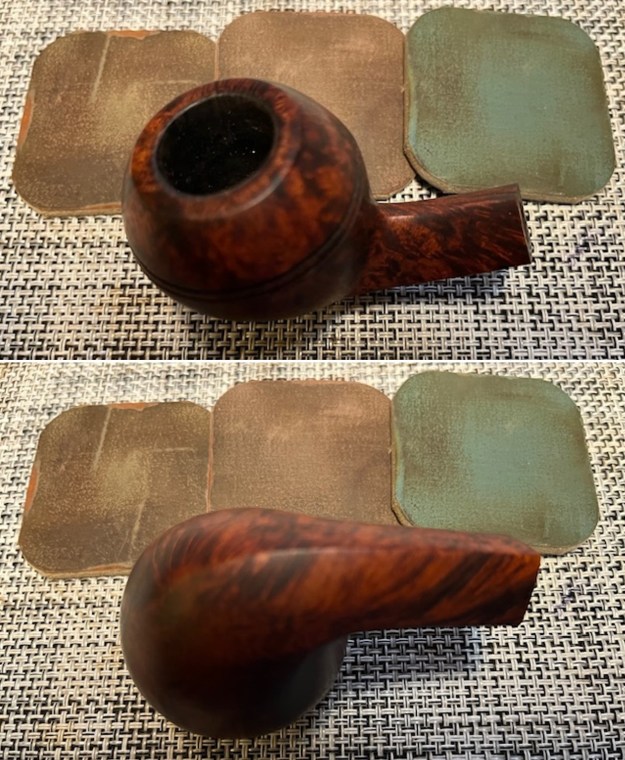
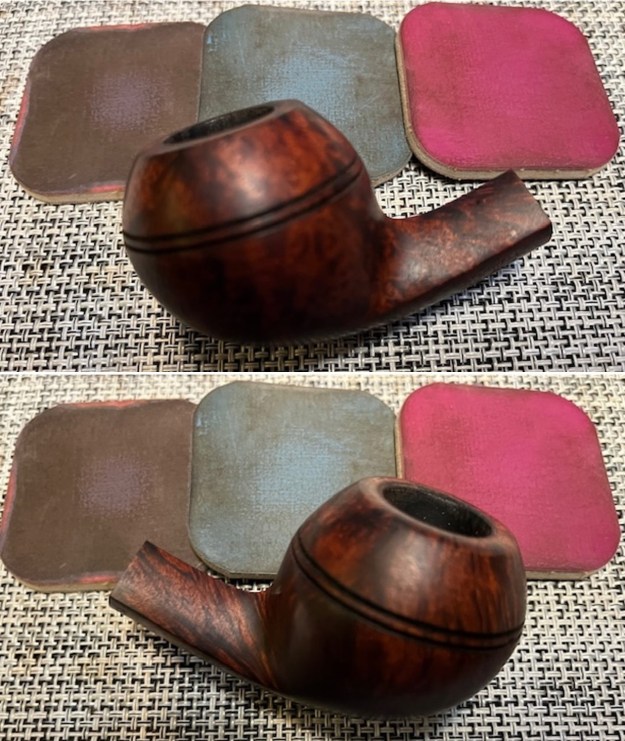
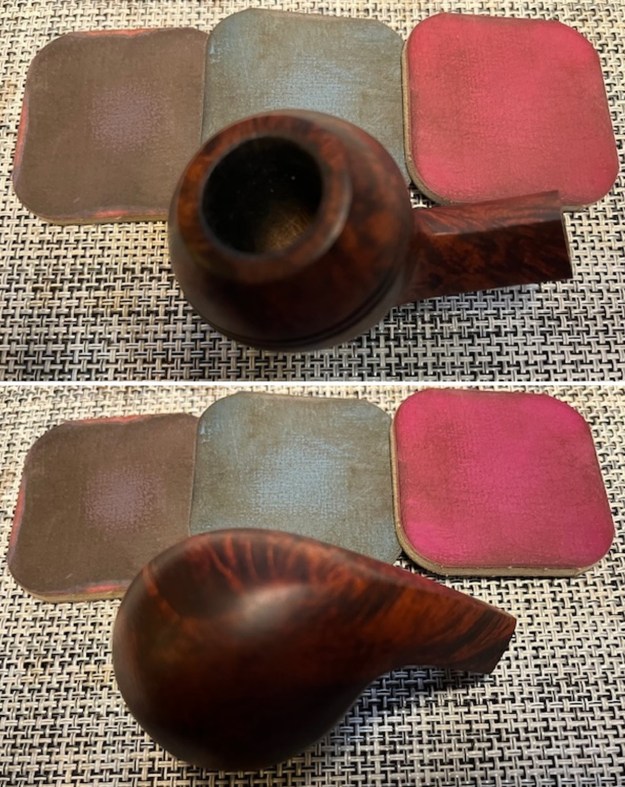
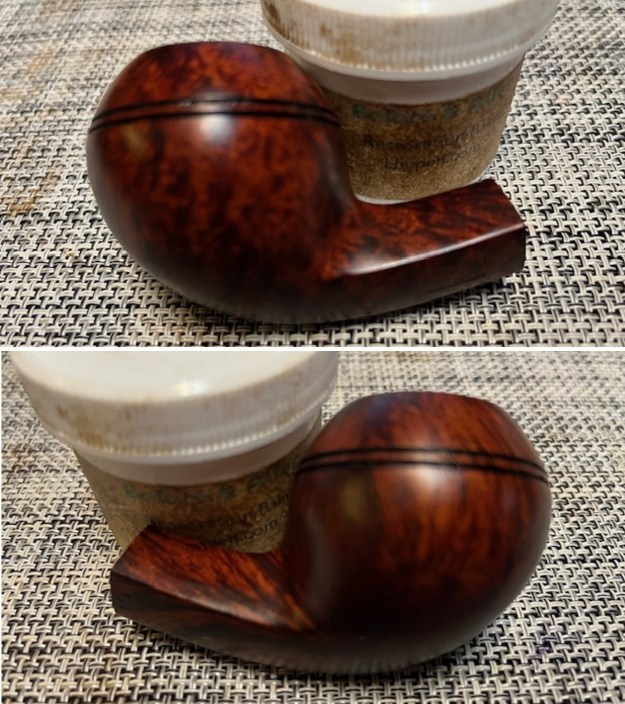
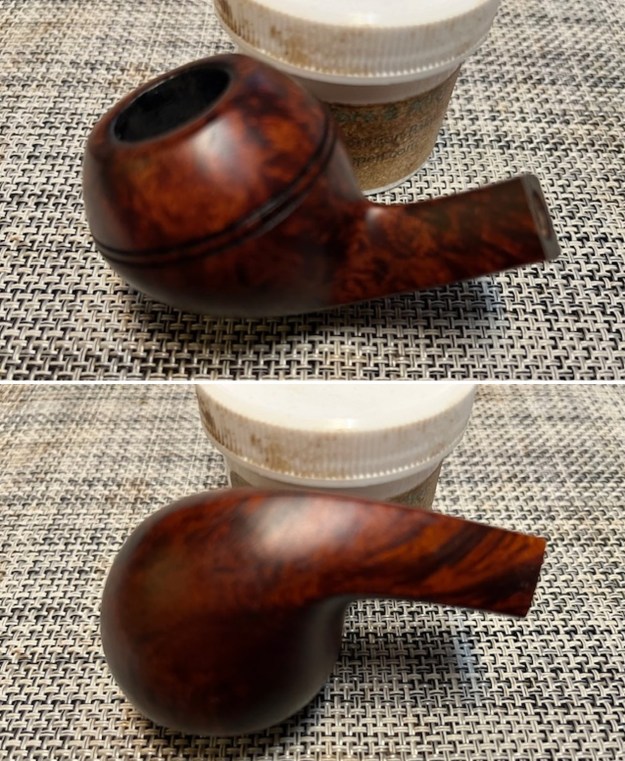
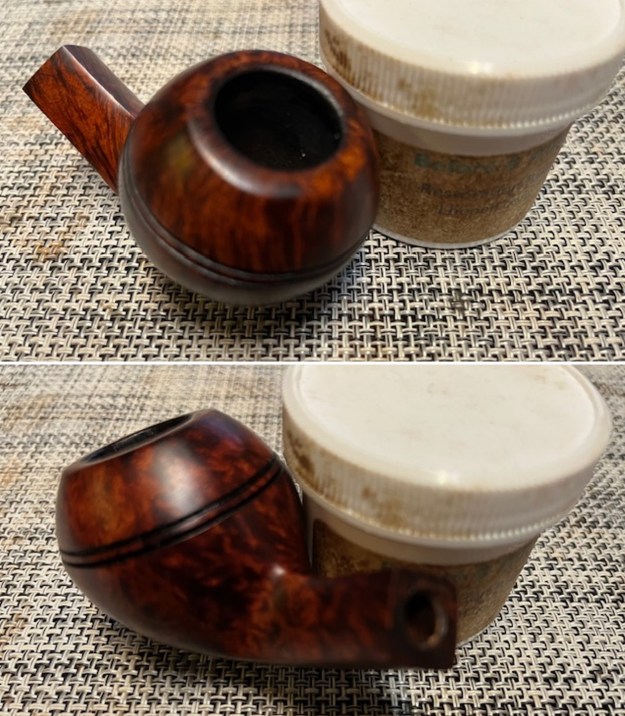
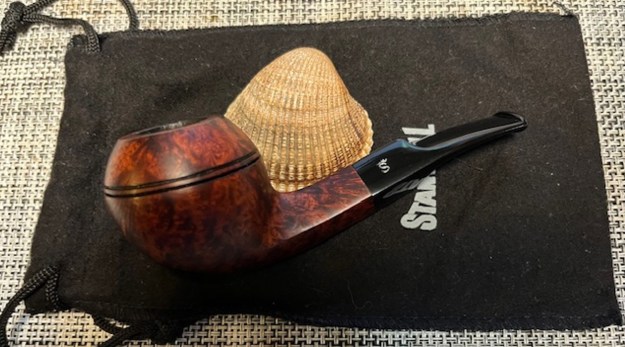
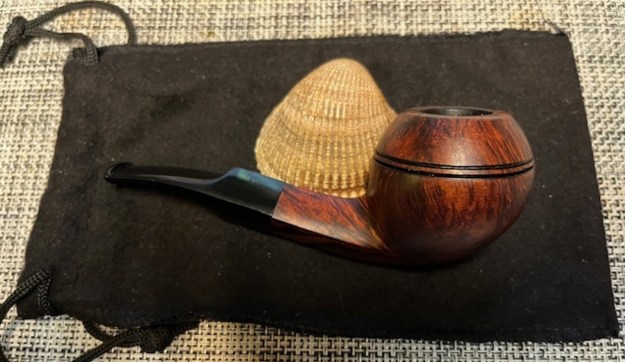
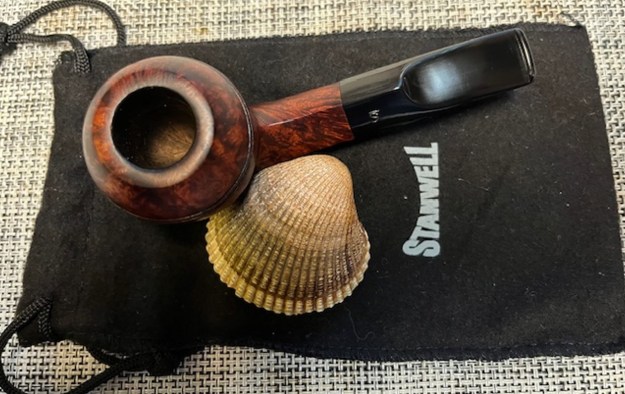
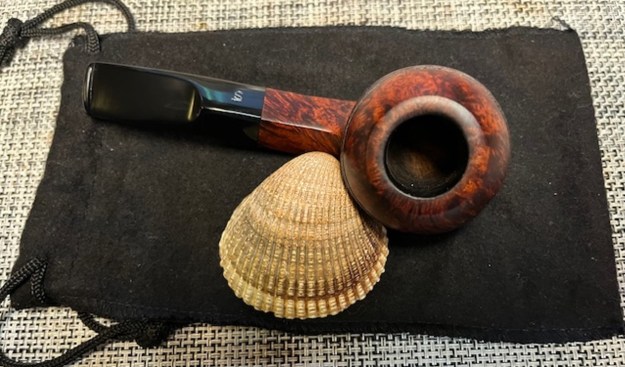
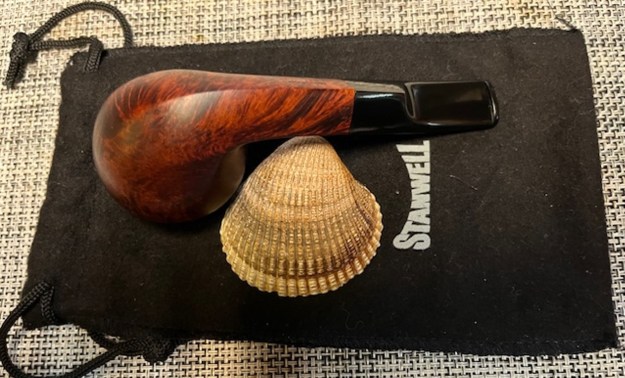
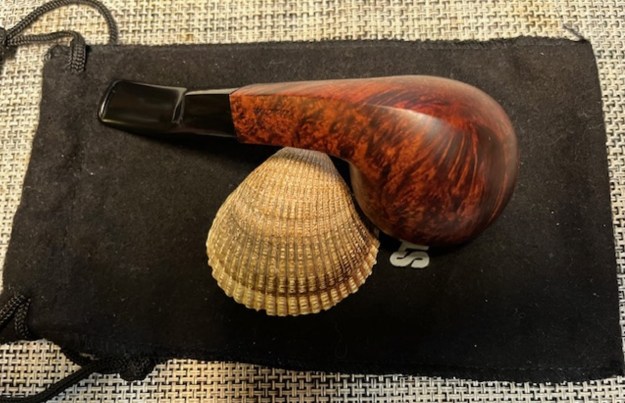
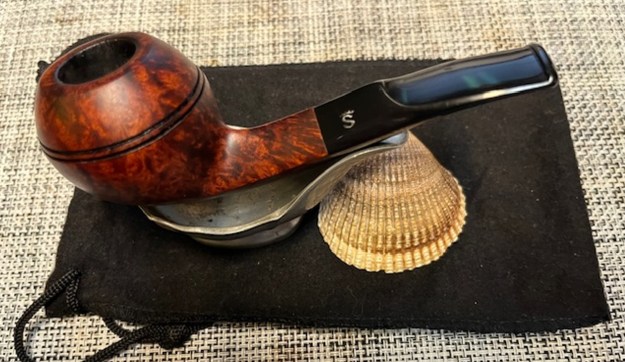
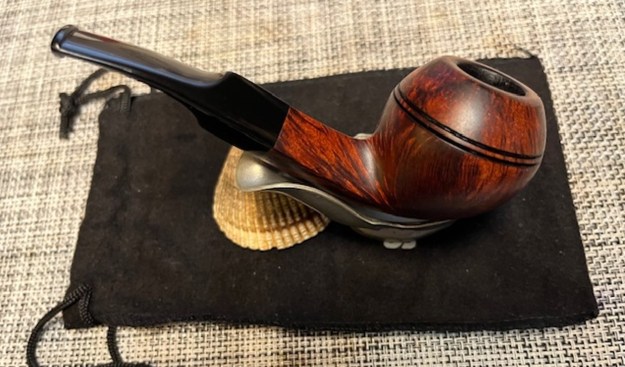
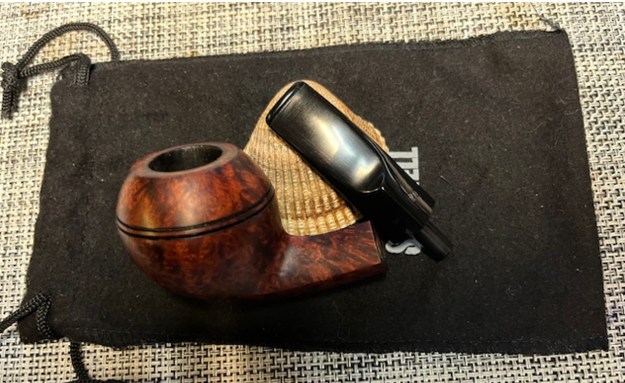
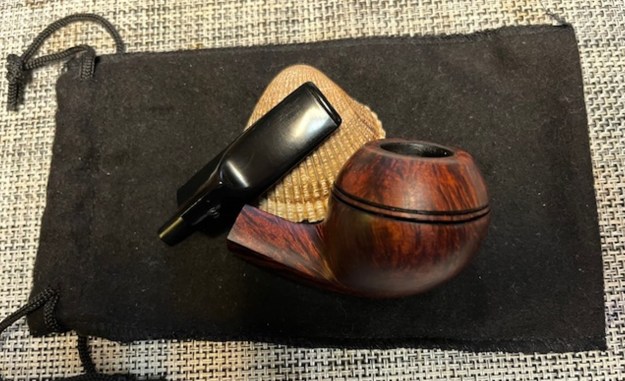
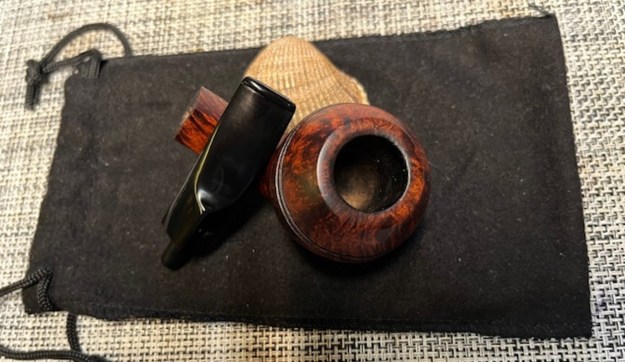
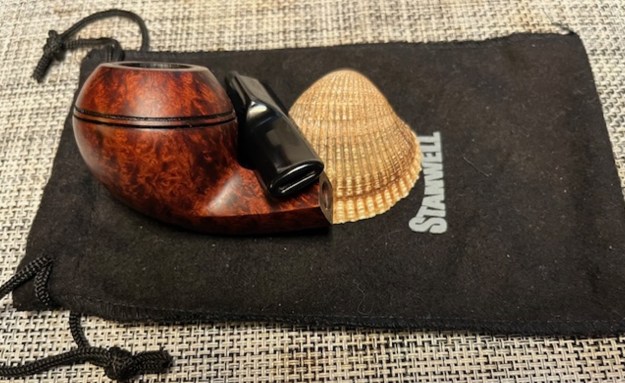
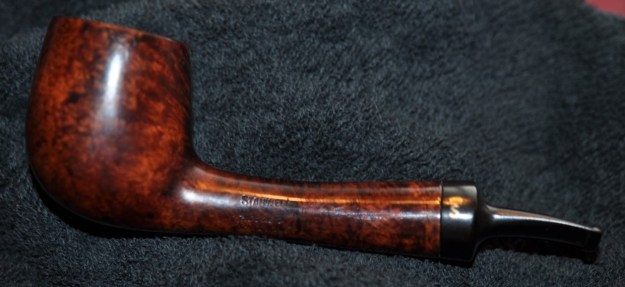
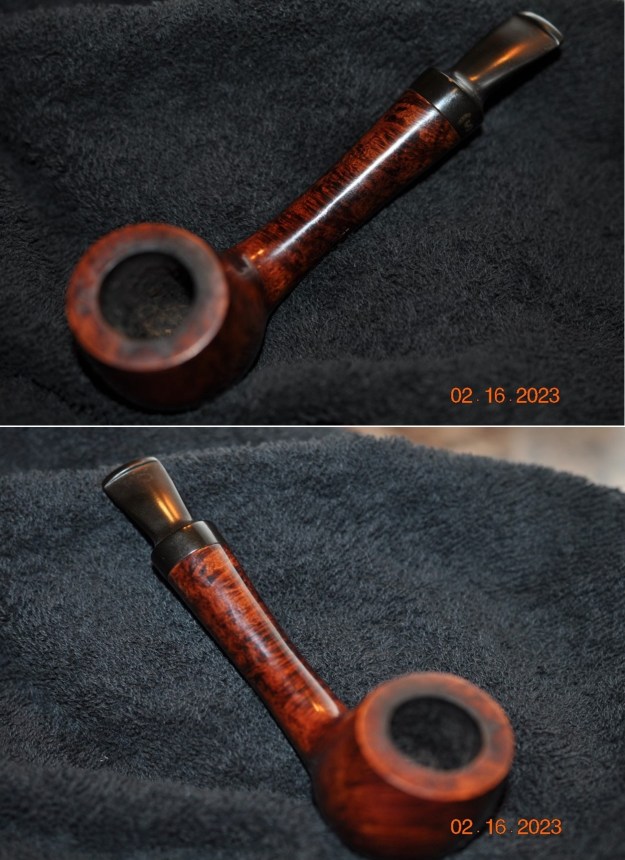
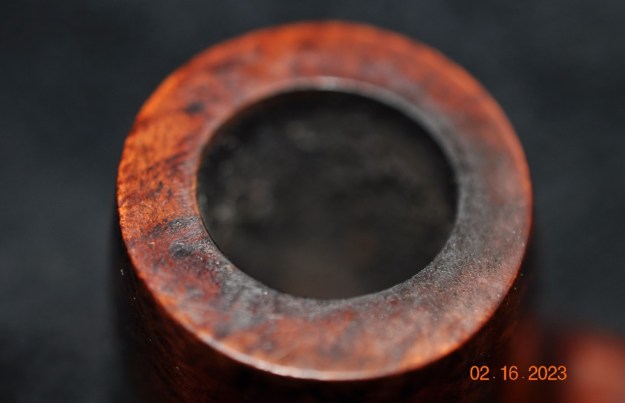
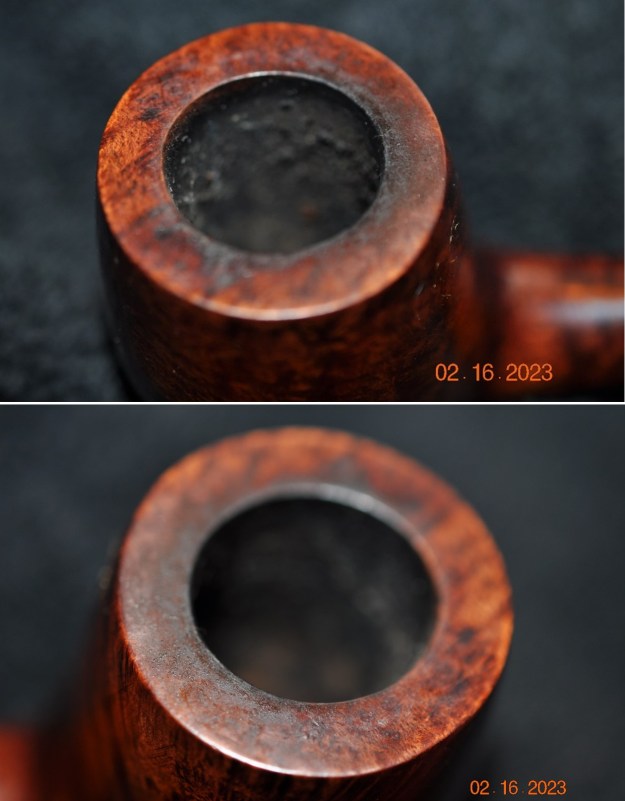
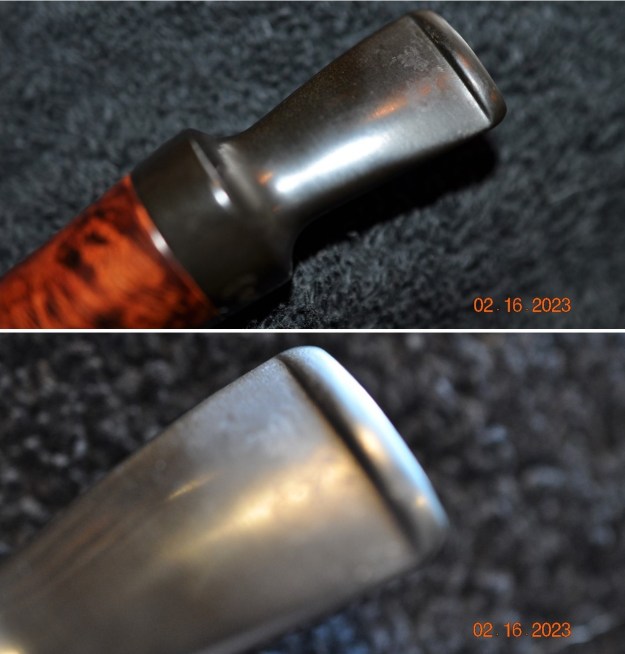
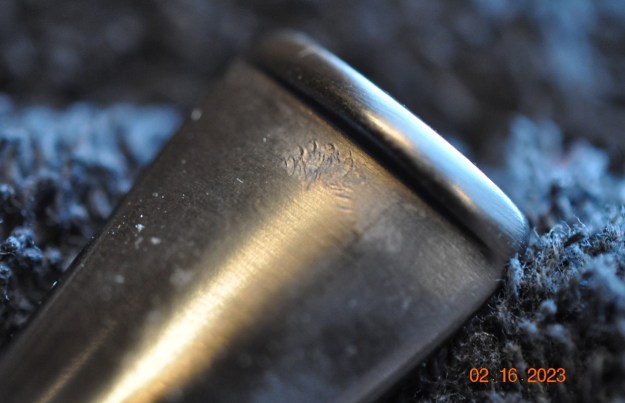
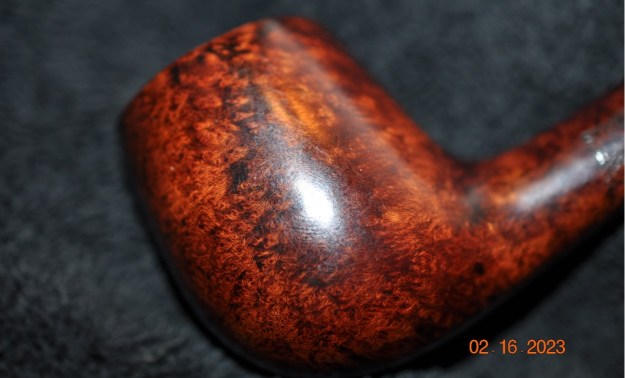
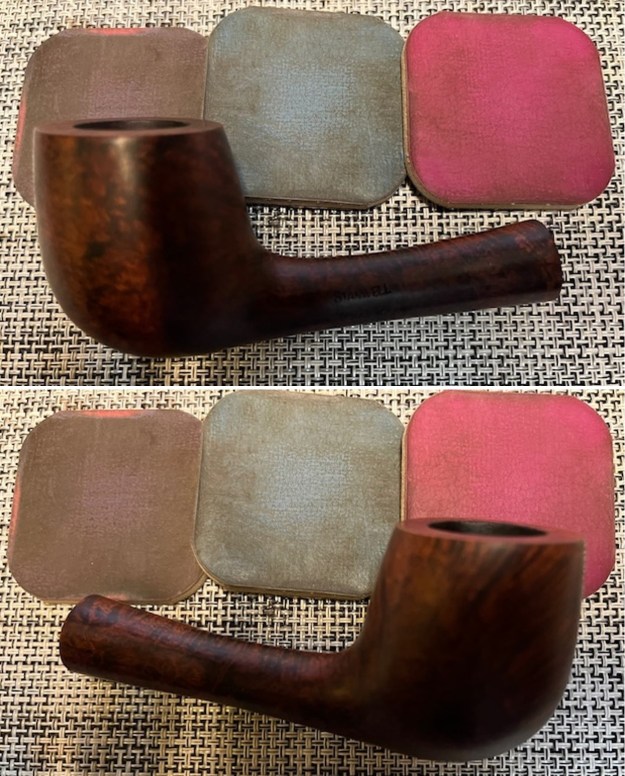
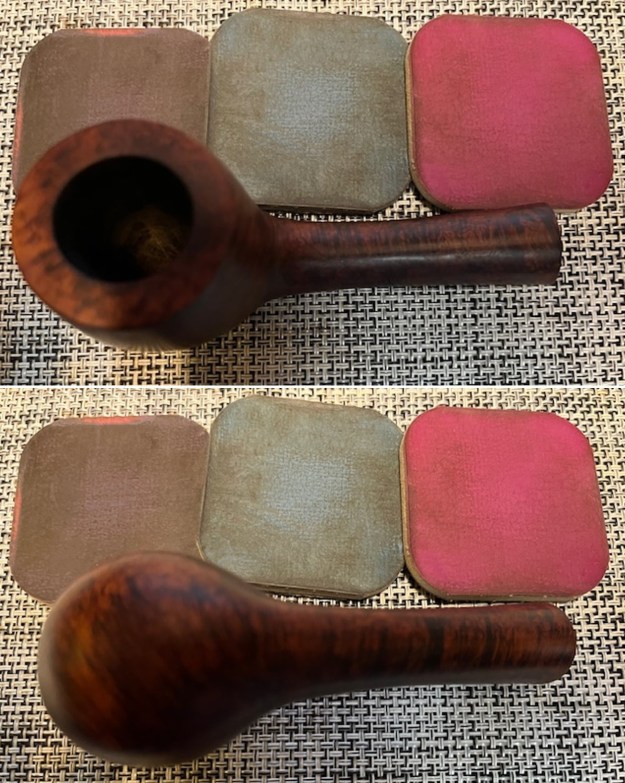
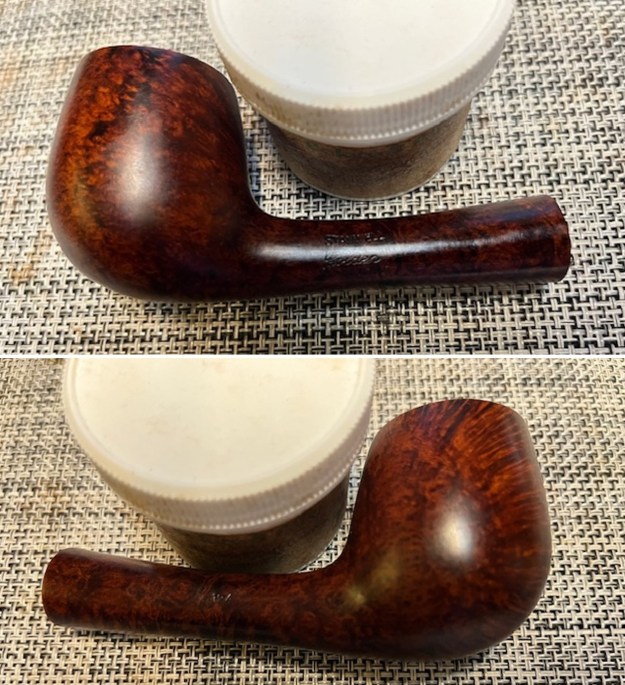
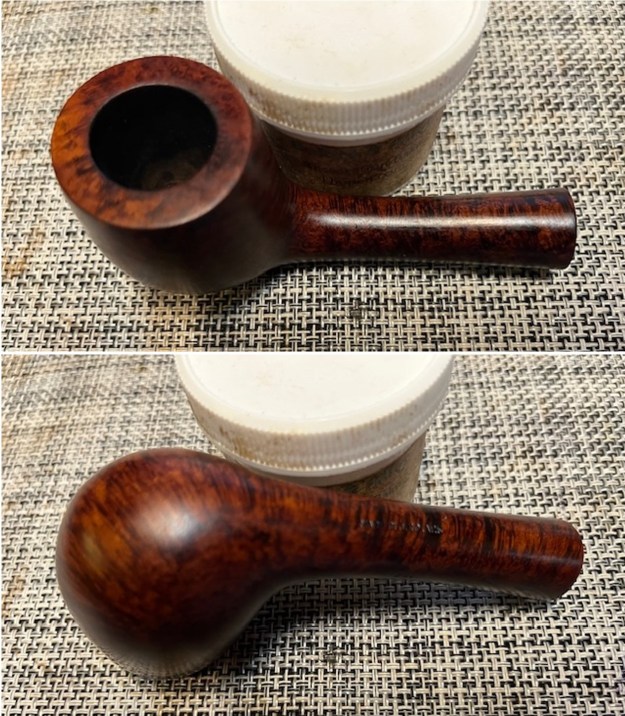
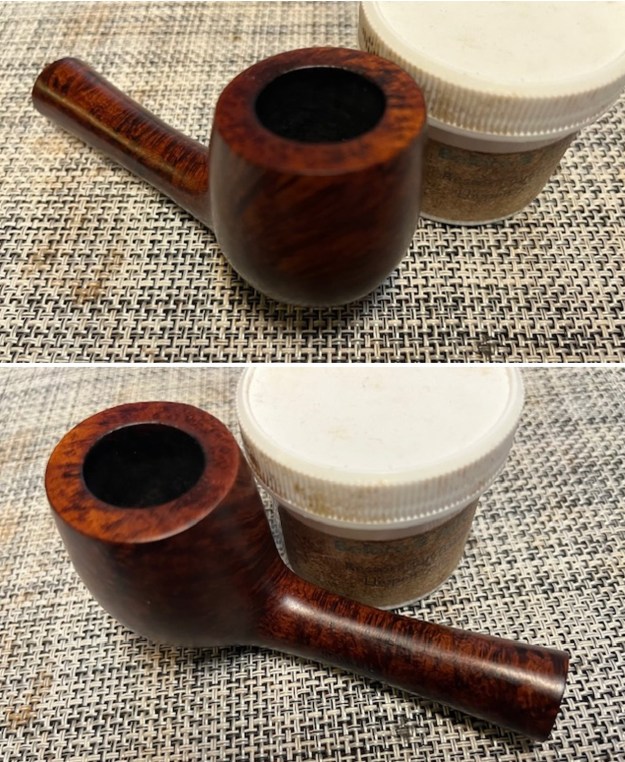
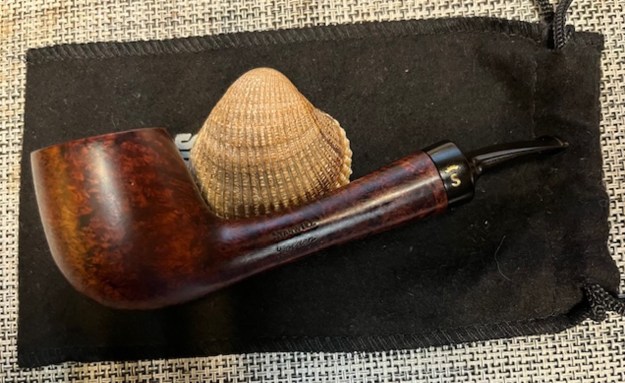
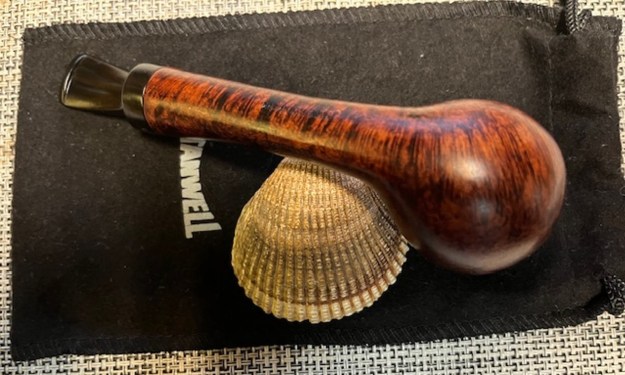
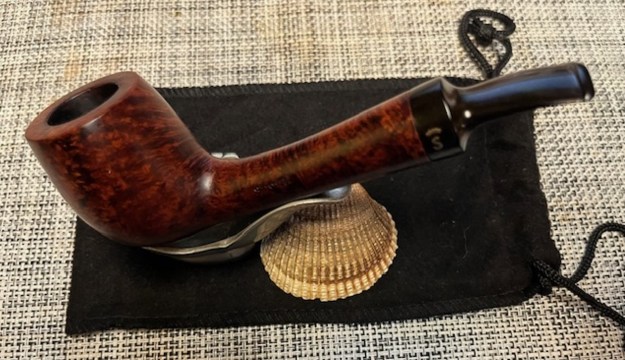
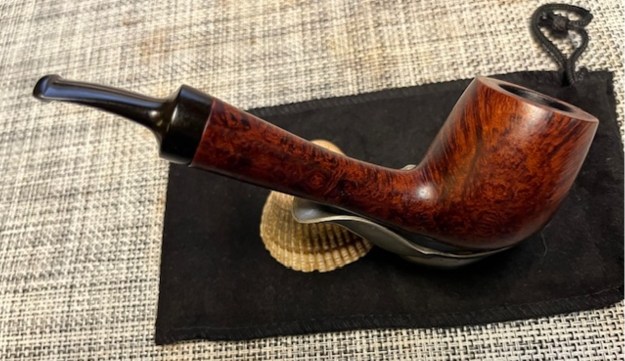
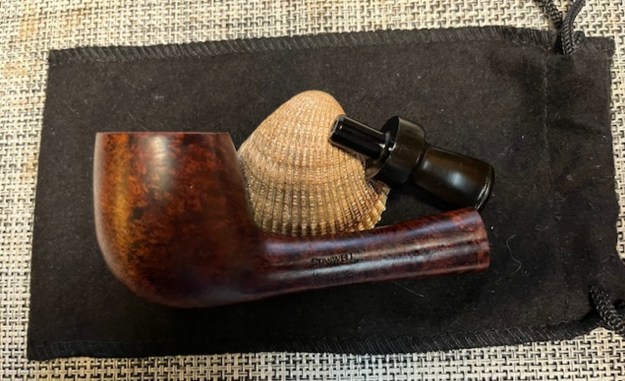
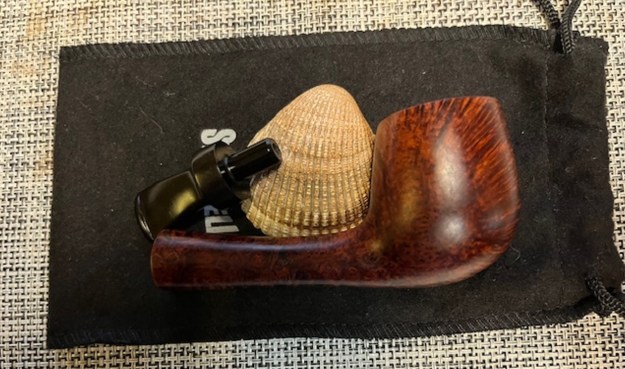
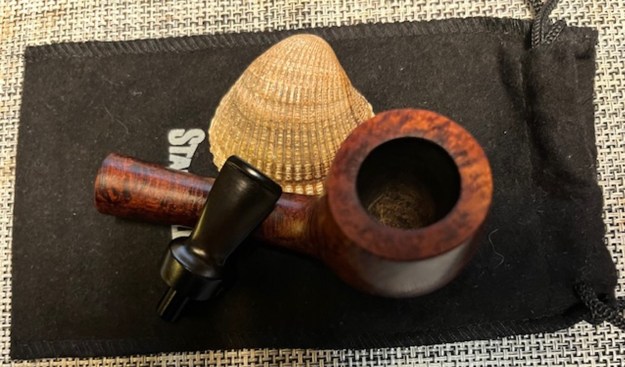
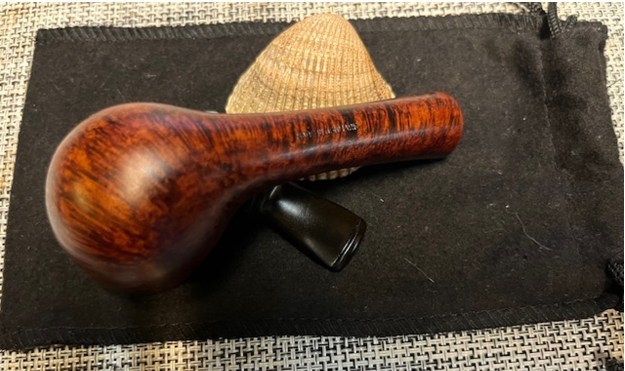
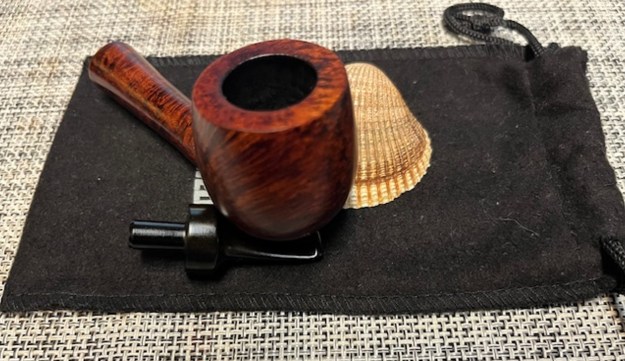
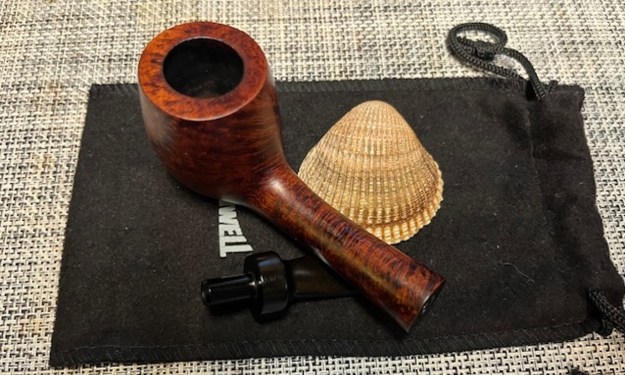
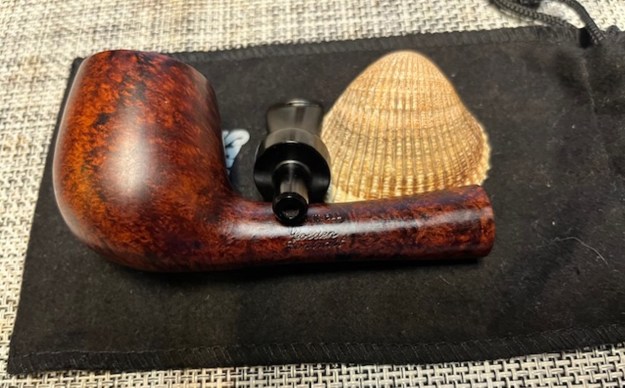
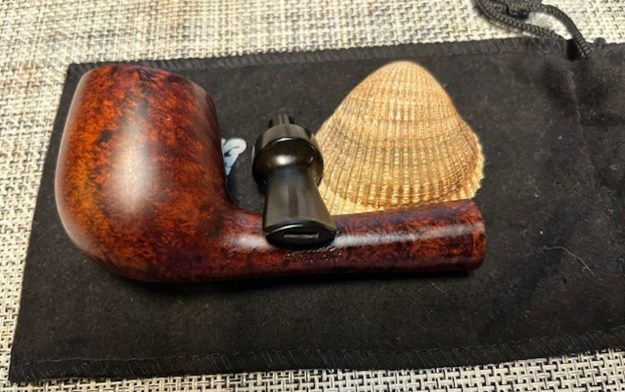
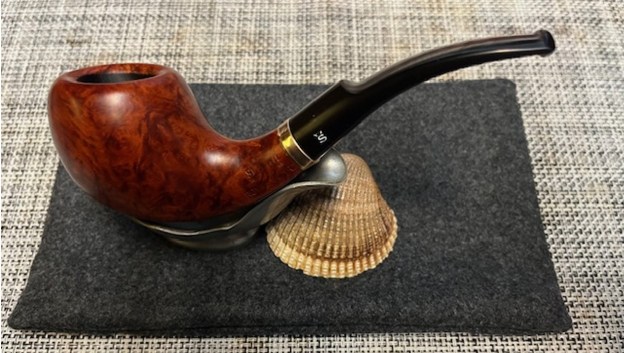
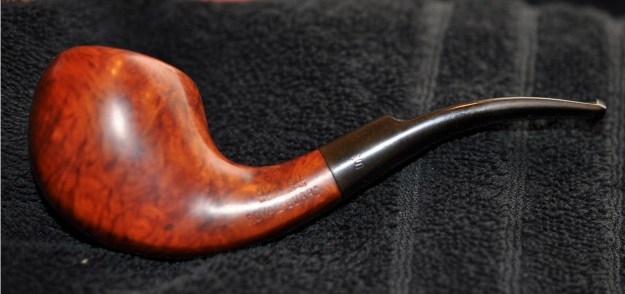
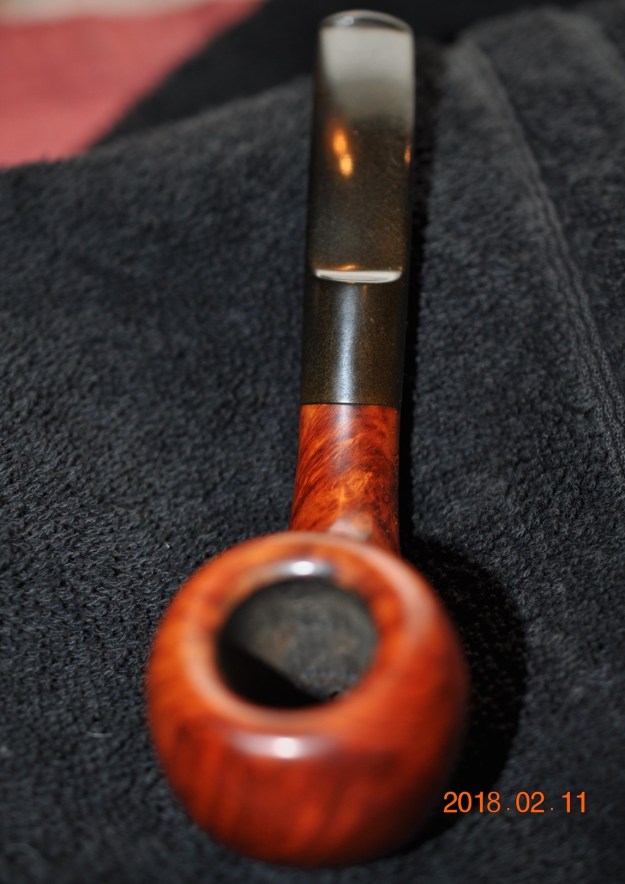
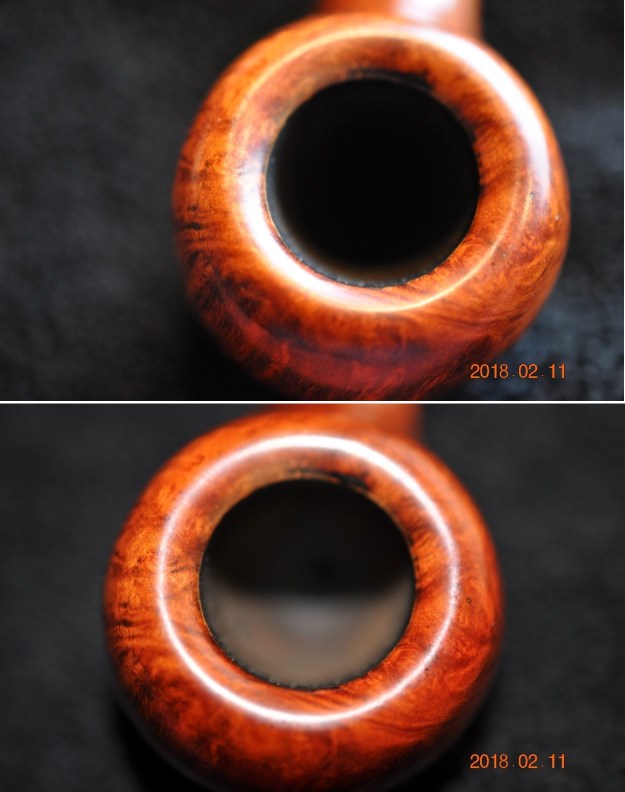
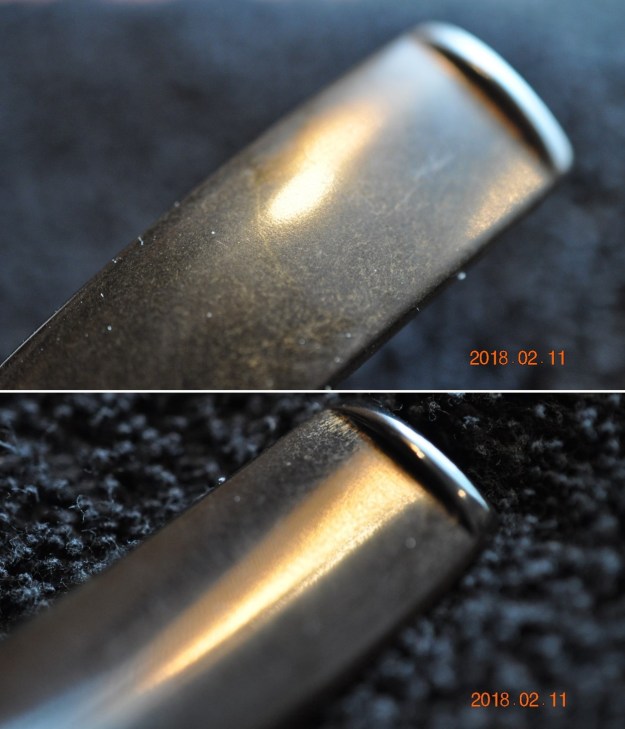
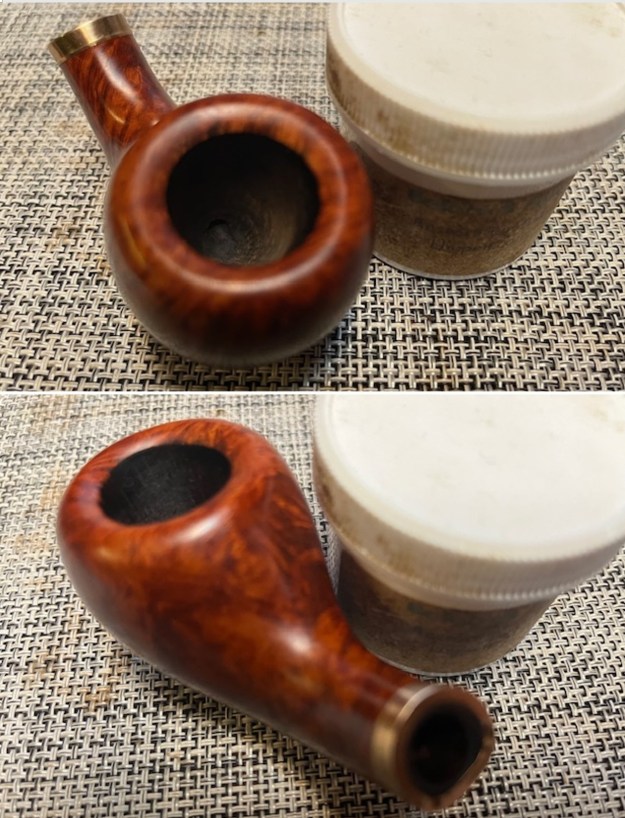
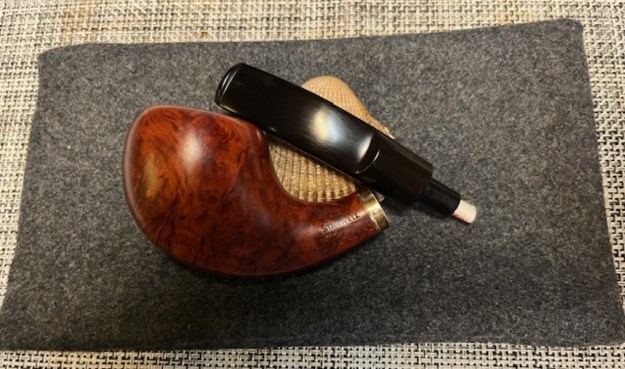
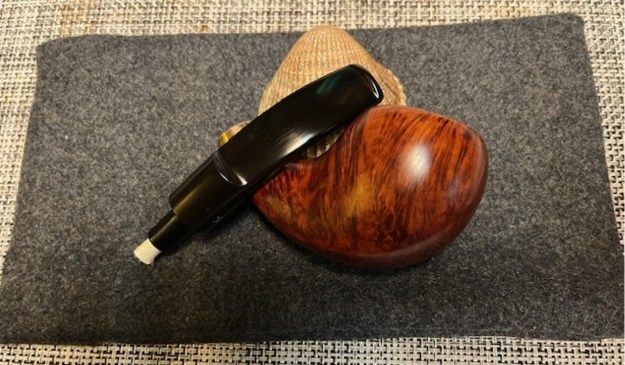
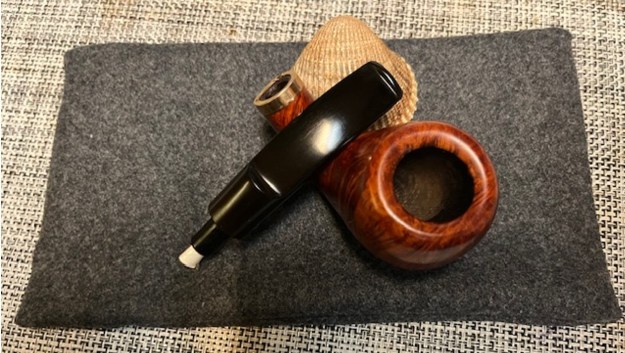
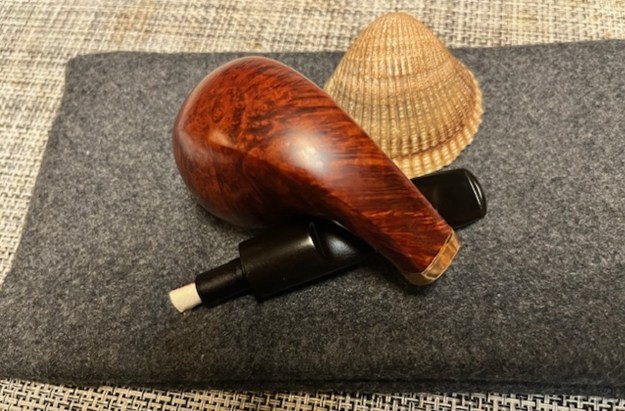
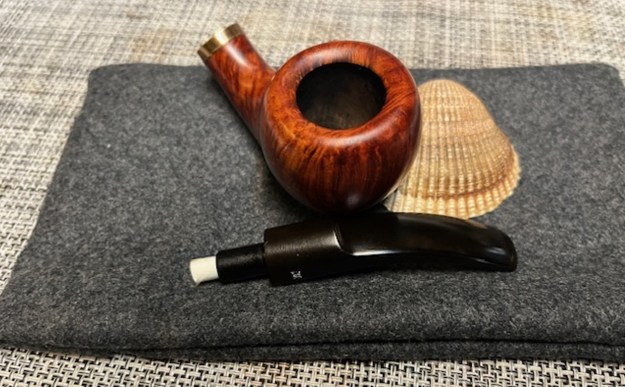
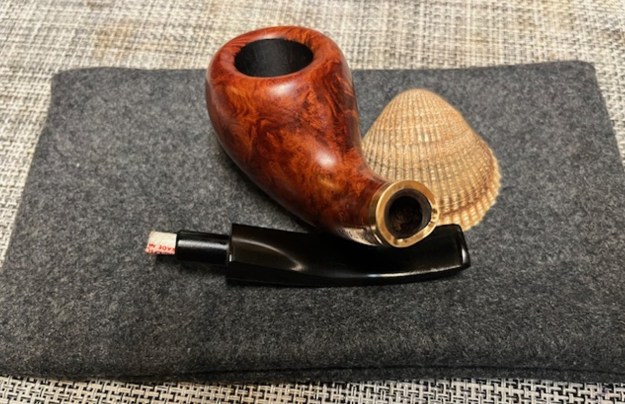
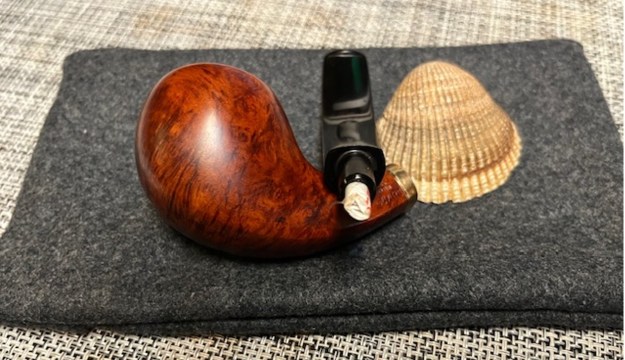
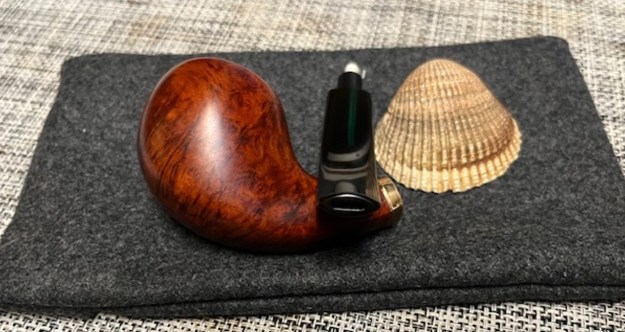
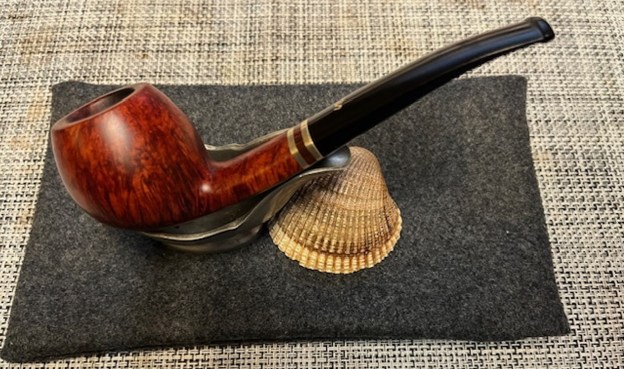
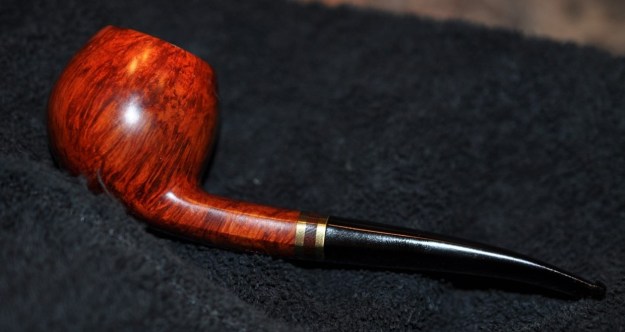
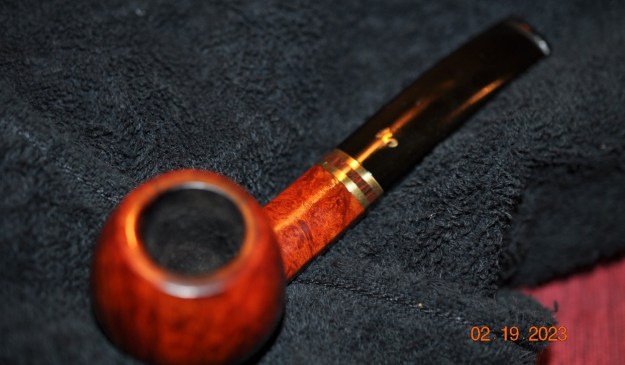
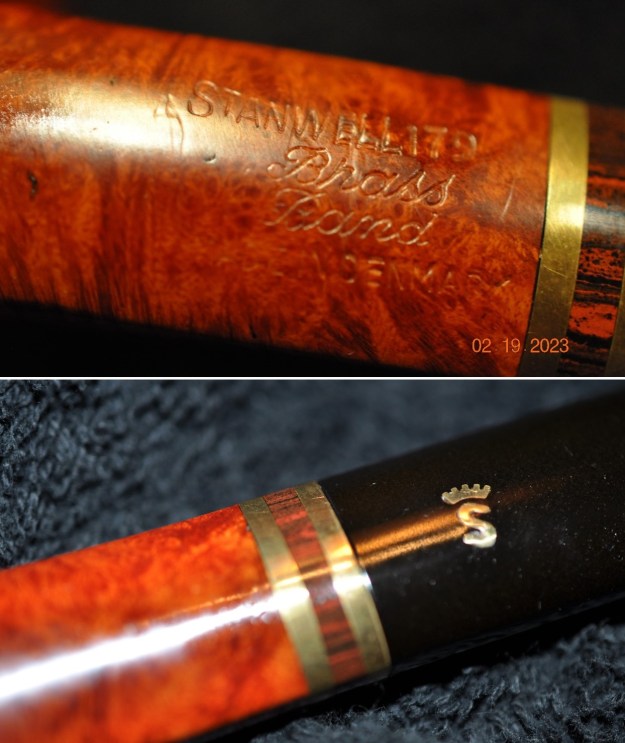
It is a cold and rainy day here in Vancouver and I am up early so I decided to work on another pipe that was purchased on 01/26/2023 in a lot of pipes that came to us from Copenhagen, Denmark. This is a classic Danish Apple with a smooth finish and a rectangular shank. It is another Made in Denmark Stanwell. The smooth finish on this pipe, around the bowl and shank has a mix of grain highlighted by the reddish brown stain. The pipe is stamped on the underside of the shank and reads STANWELL [over] Brass [over] Band [over] Made in Denmark. Next to the Stanwell stamp it has the shape number 179 stamped. The end of the shank sports twin brass bands sandwiching a Cumberland acrylic spacer. The pipe was a well used pipe when Jeff received it. There was dust and grime ground into the finish. The mixture of brown stains highlights some beautiful grain under the dirt. The bowl was moderately caked and there was a moderate overflow of lava on the smooth rim top. The inner edge looked quite good. The stem is vulcanite and was dirty, oxidized and had light tooth marks, chatter and scratches on both sides ahead of the button. There is an inlaid brass crown S logo stamped on the top side of the taper stem. Jeff took photos of the pipe before he started his clean up work on it. He took photos of the bowl and rim top to show what they looked like before his clean up. You can see the lava coat on the rim top and the cake in the bowl. The inner edge looks to be okay. He also took some of the stem to show the condition of both sides. The photos of the sides and heel of the bowl show the uniquely stained grain around the bowl and shank. The mixture of brown stains adds depth to the finish on the pipe. Even under the grime it is a real beauty. The stamping on this one was on the underside of the shank and is shown in the photo below. It is clear and readable as noted above. You can also see the brass inlaid crown S on the top of the saddle stem.Before I started my work on the pipe I wanted to see if I could find any information that would help me get a sense of the line. I turned to Pipephil to see if there was any listing on the Brass Band Line (http://pipephil.eu/logos/en/logo-stanwell.html). There was nothing listed.
I then turned to Pipedia (https://pipedia.org/wiki/Stanwell) for more information. The article is great and gives a lot of history on the brand. There was also a catalogue page courtesy of Doug Valitchka that showed the line. I have included that below.There was also a link to a shape article by Bas Stevens that I originally published on rebornpipes. I looked up the 179 shape number to see who had designed that shape (https://pipedia.org/wiki/Stanwell_Shape_Numbers_and_Designers). I quote that below and the connection between the 178 and the 179. The difference is in the bend of the stem. It is fascinating to see that design (at least of the mouthpiece) was by S. Bang.

  1. Billiard, conical bowl, oval stem with panels, full mouthpiece by Bang.
  2. Same as shape 178 but slightly bent by Bang.

Though it is listed as a Billiard I believe that is a wrong designation and should be noted as an Apple.

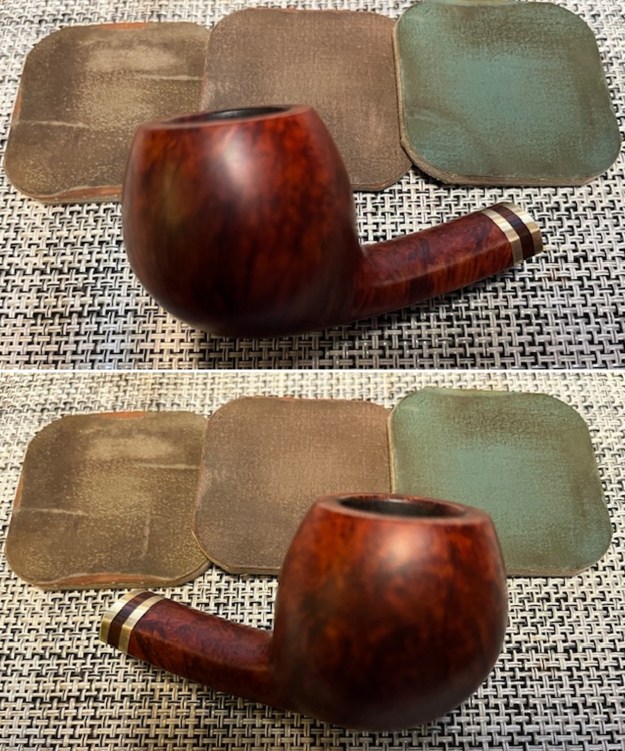
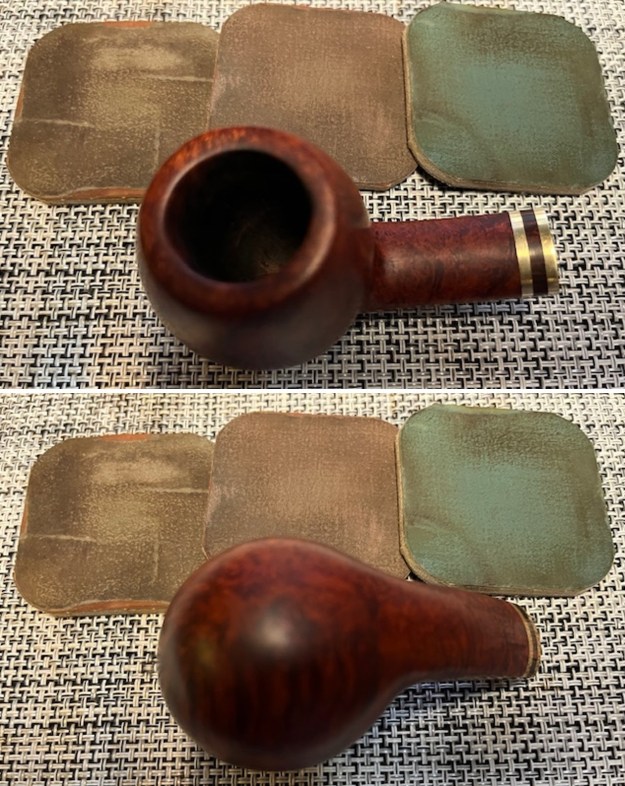
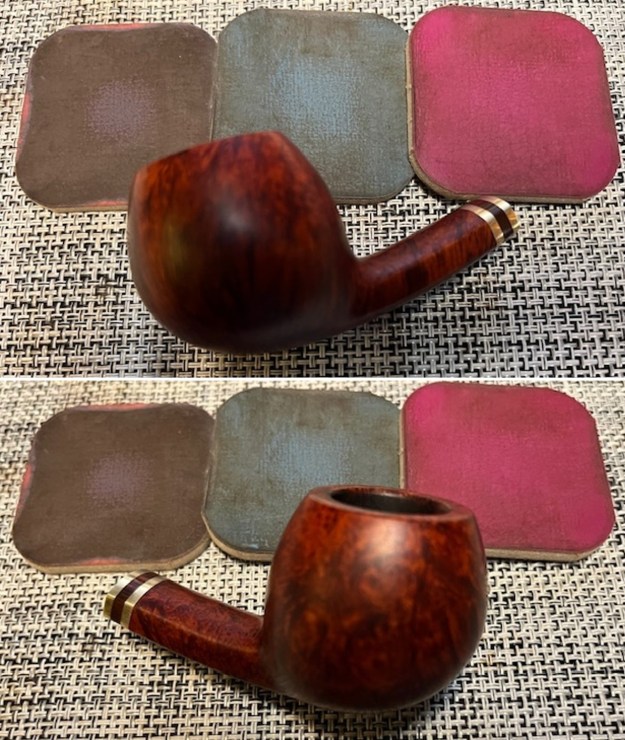
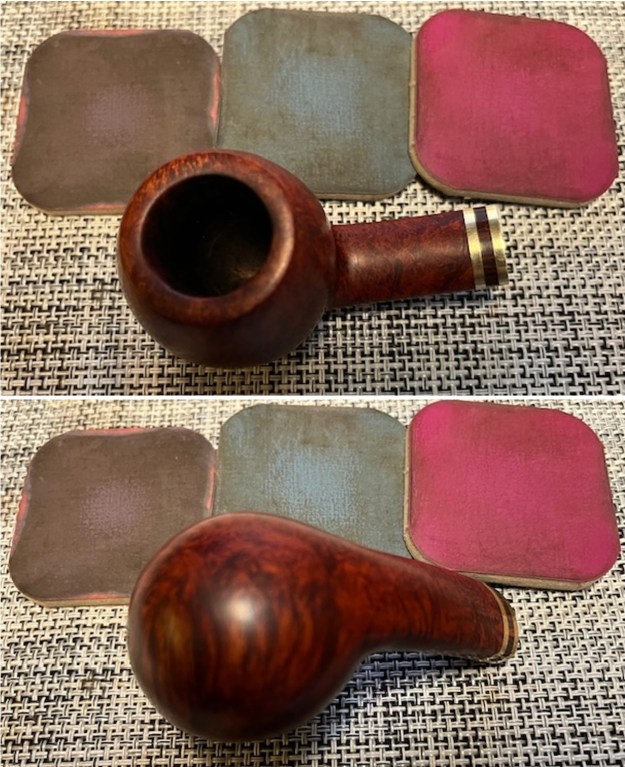
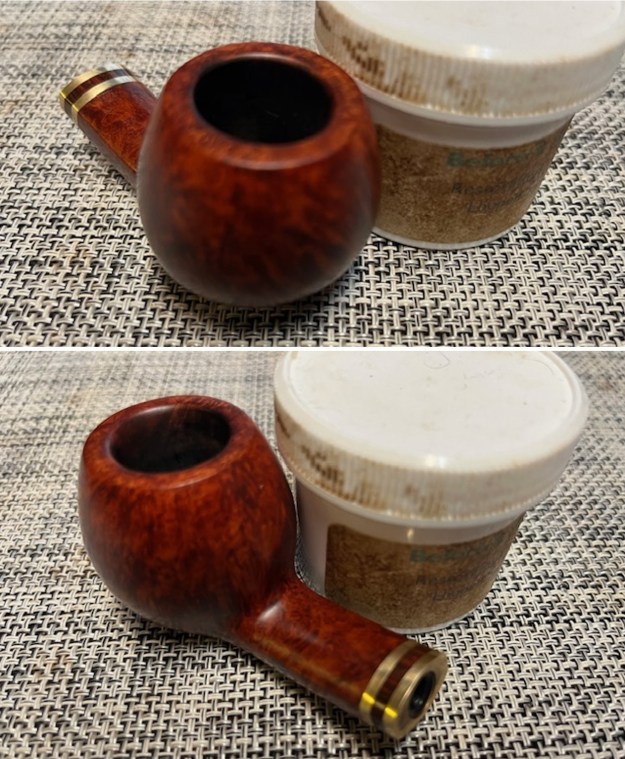
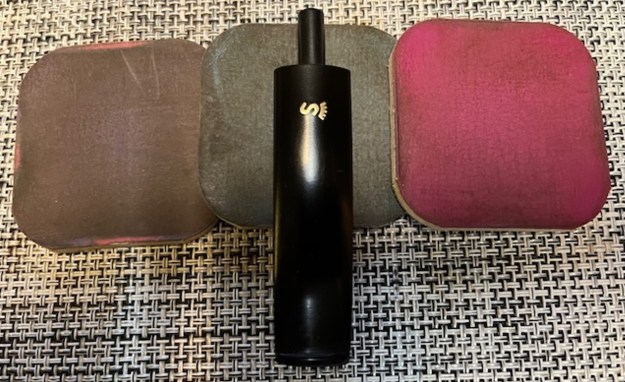
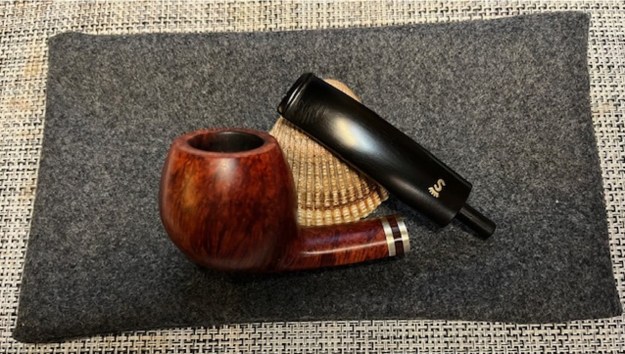
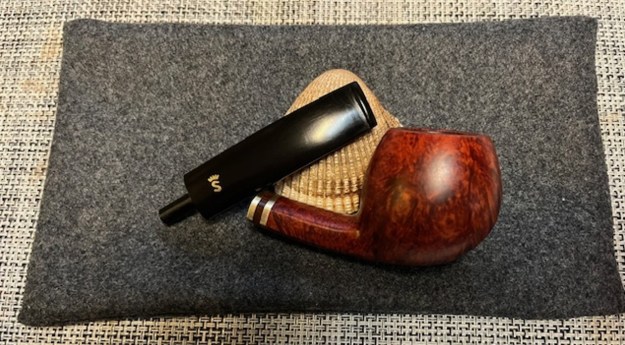
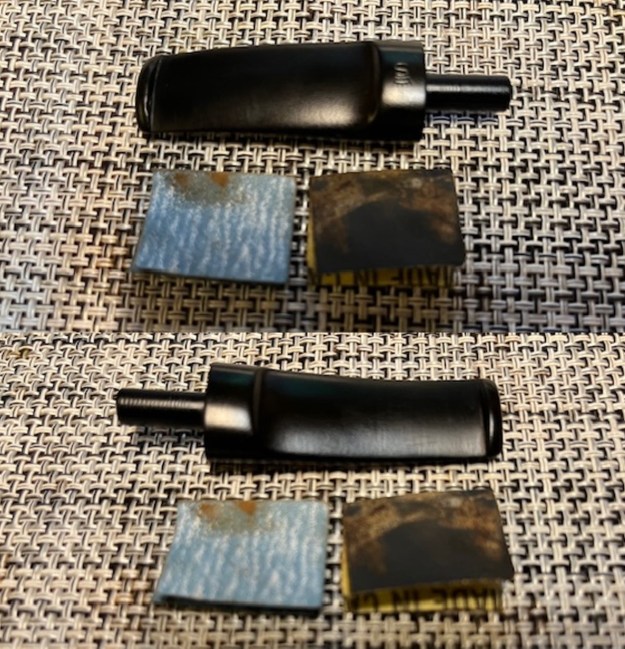
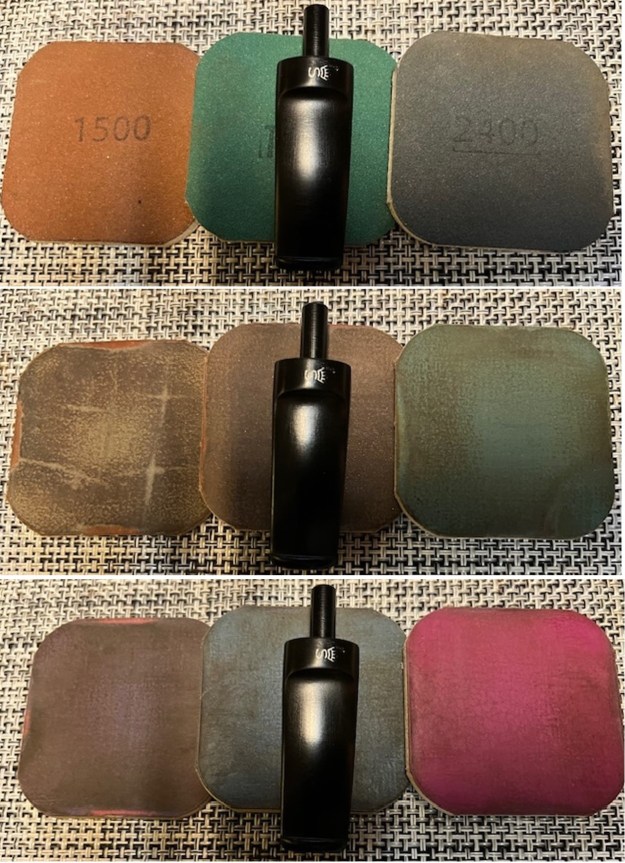
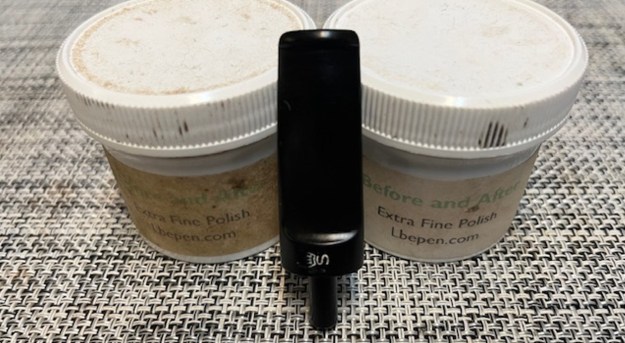
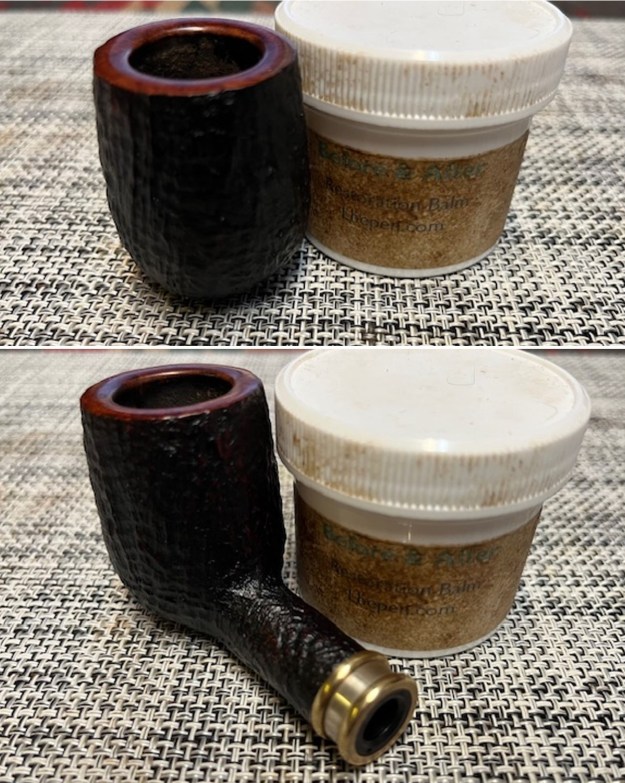
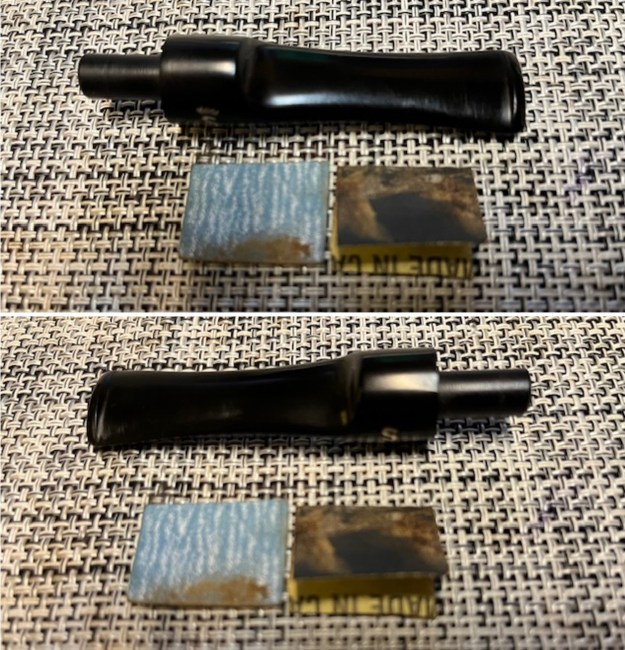
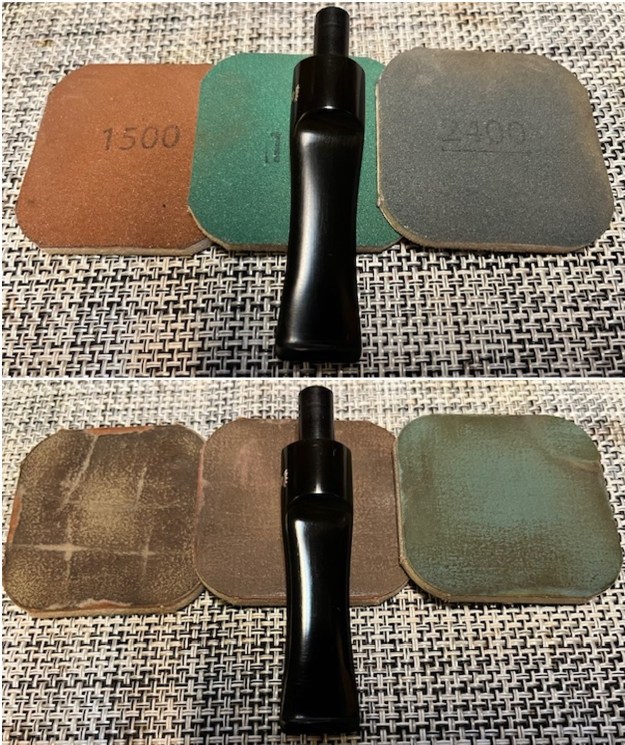
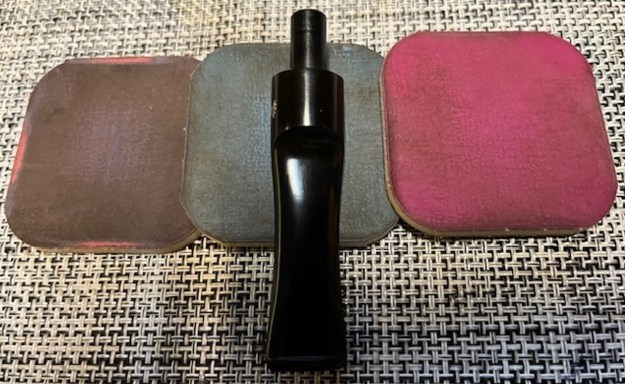
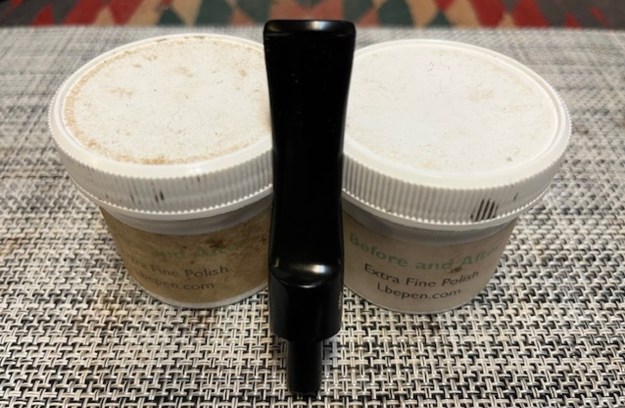
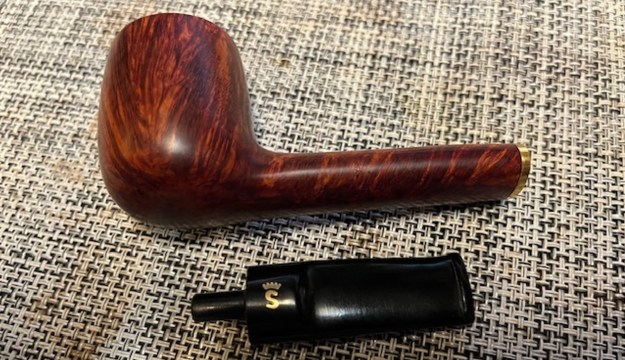
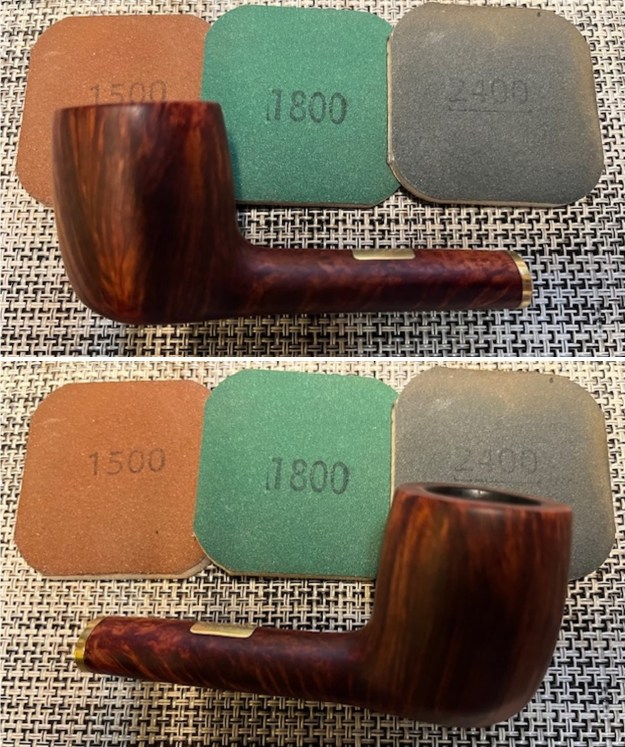
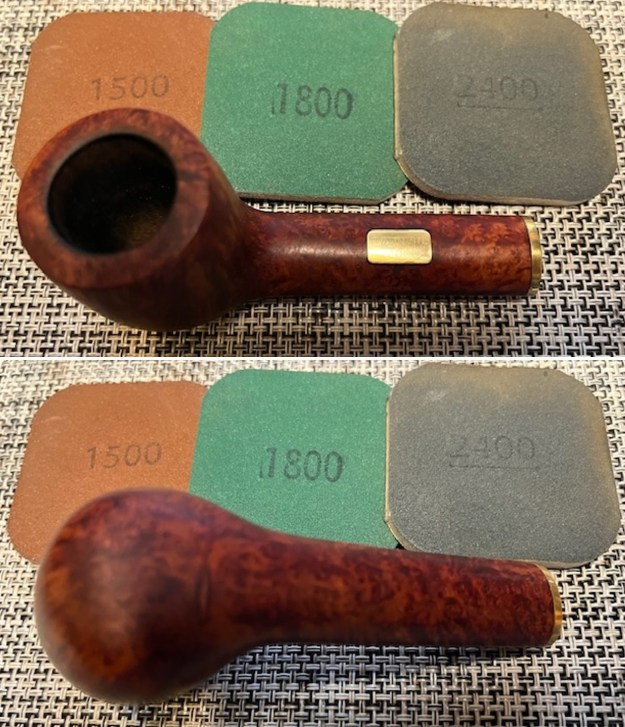
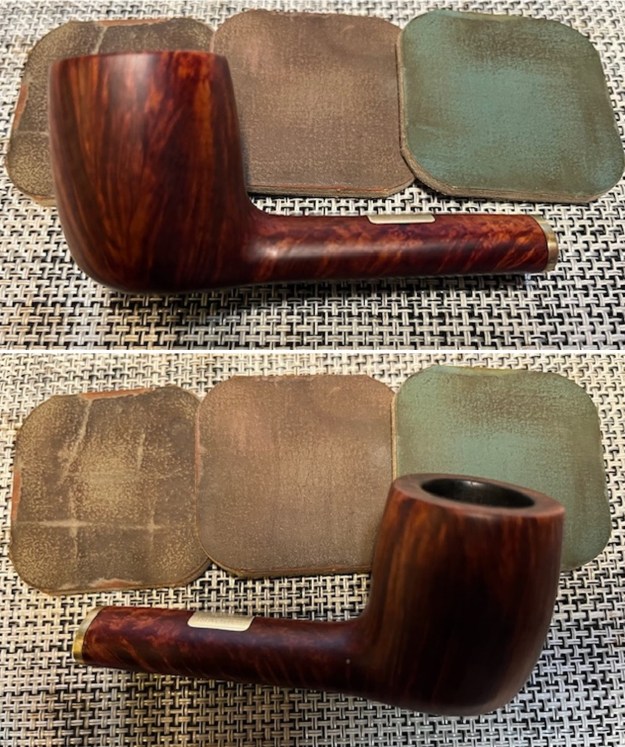
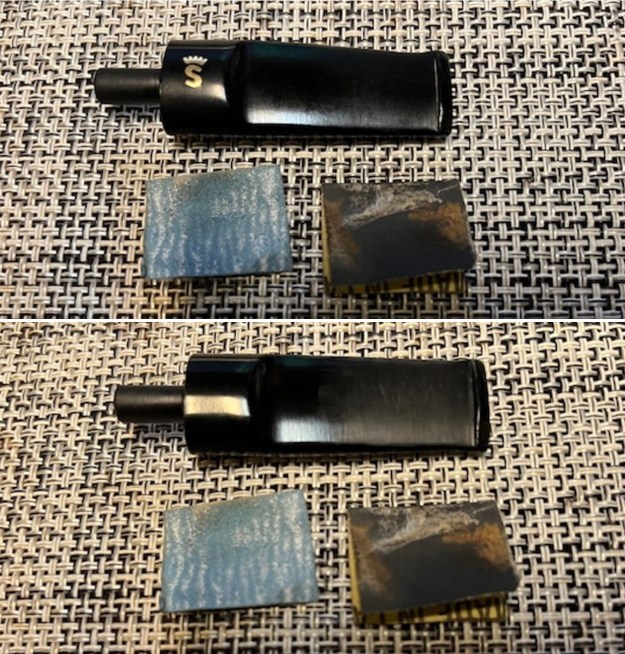
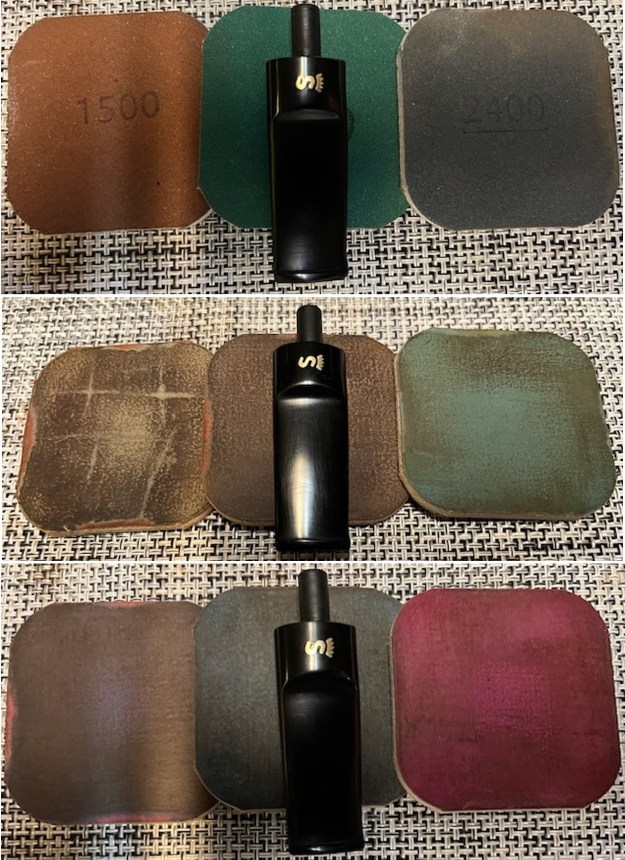
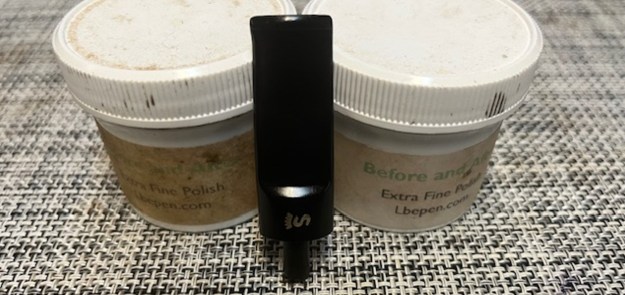
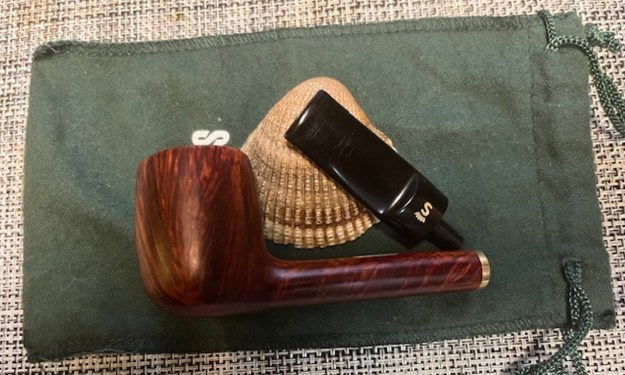
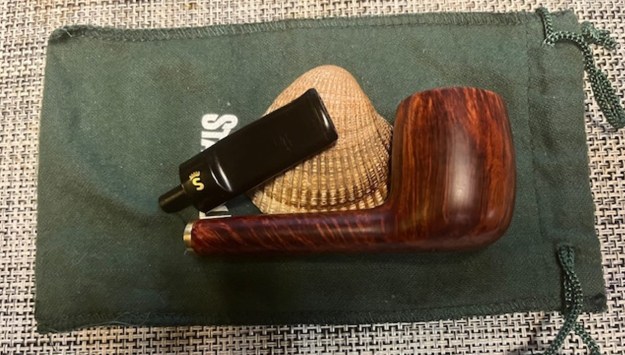
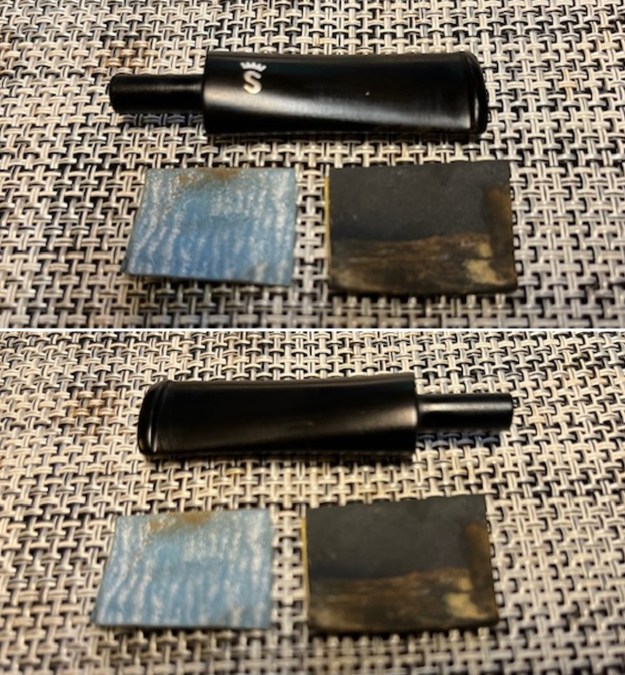
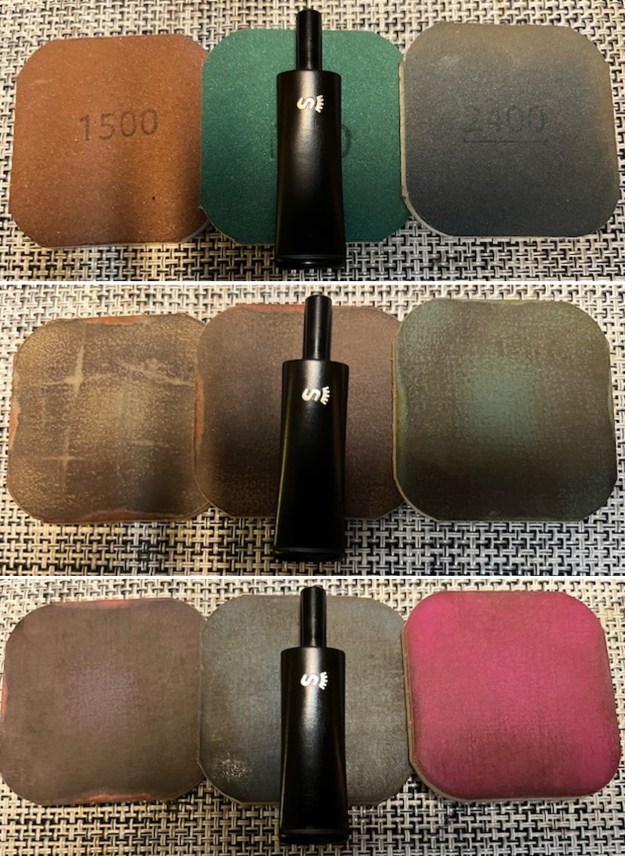
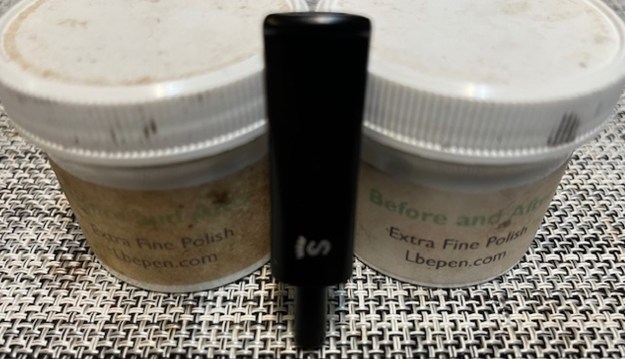
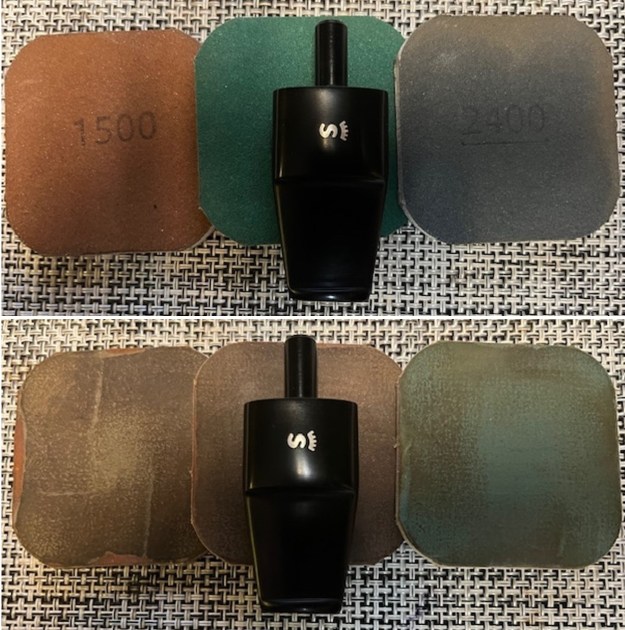
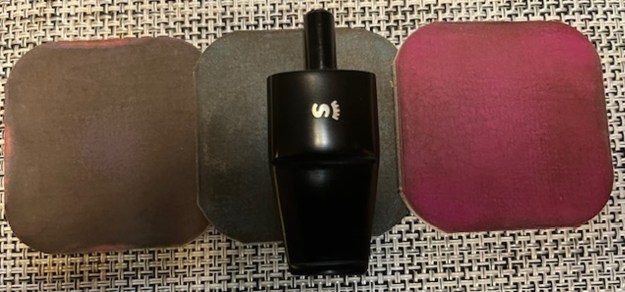
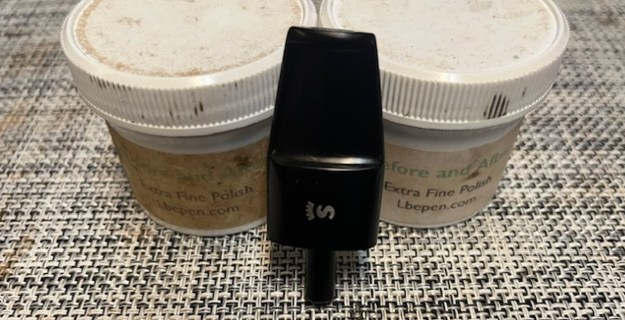
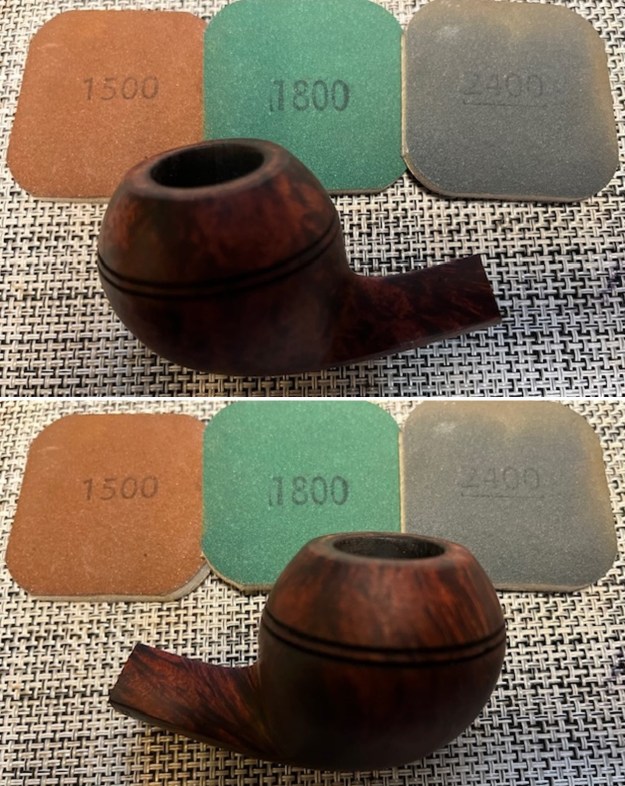
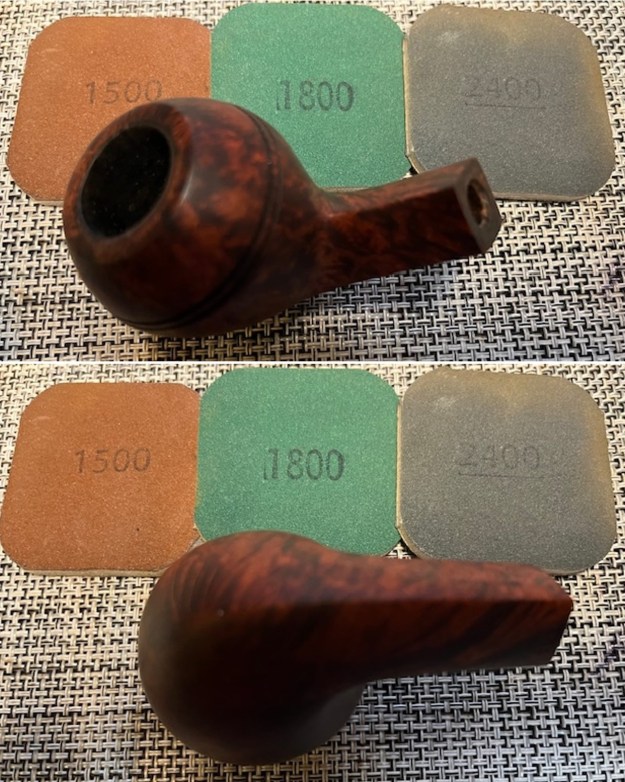
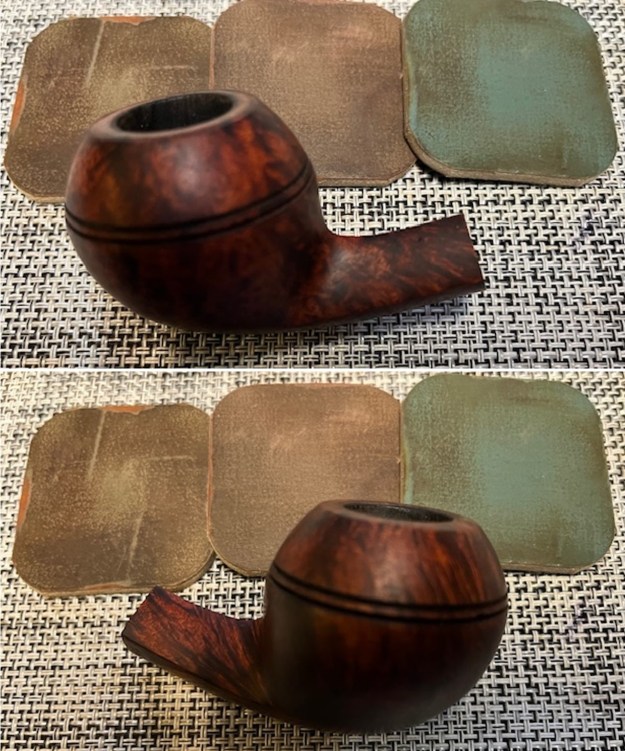
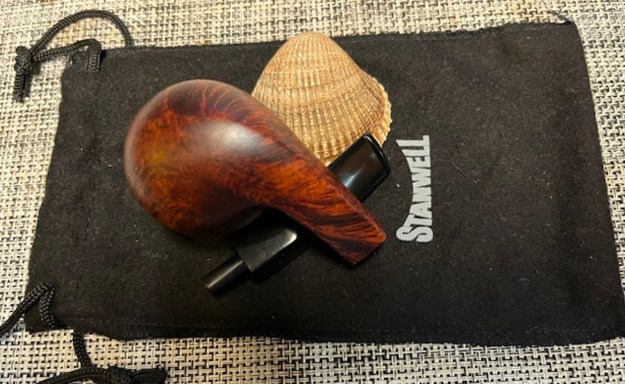
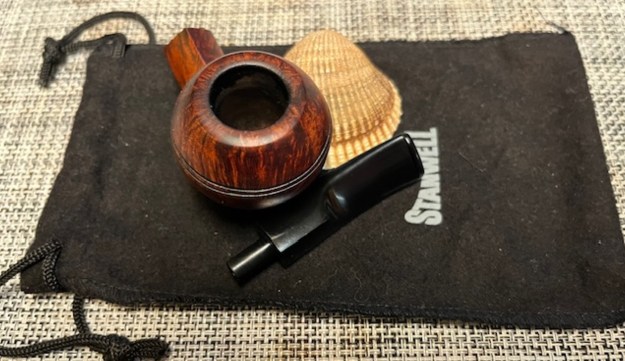
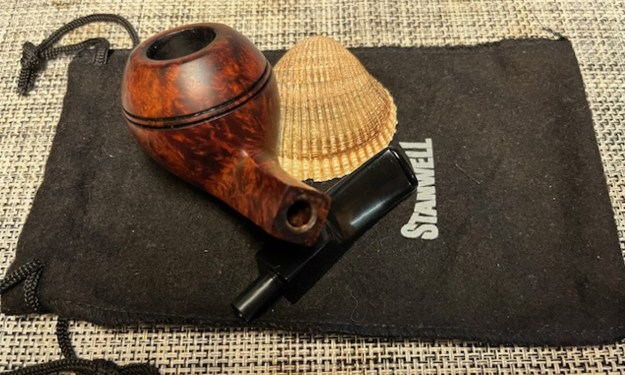
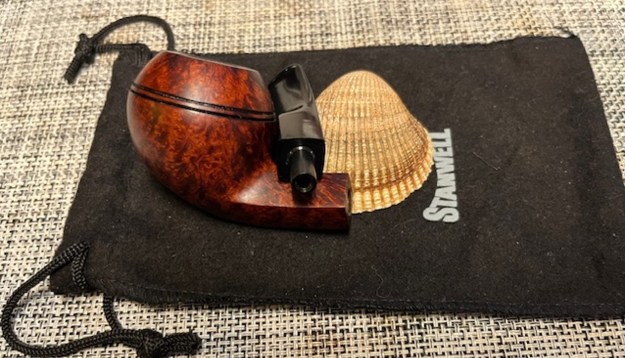
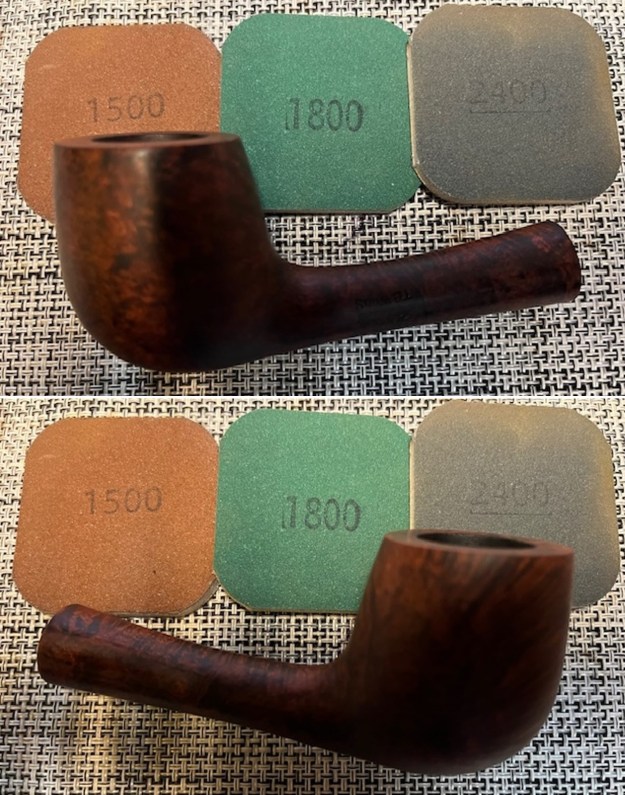
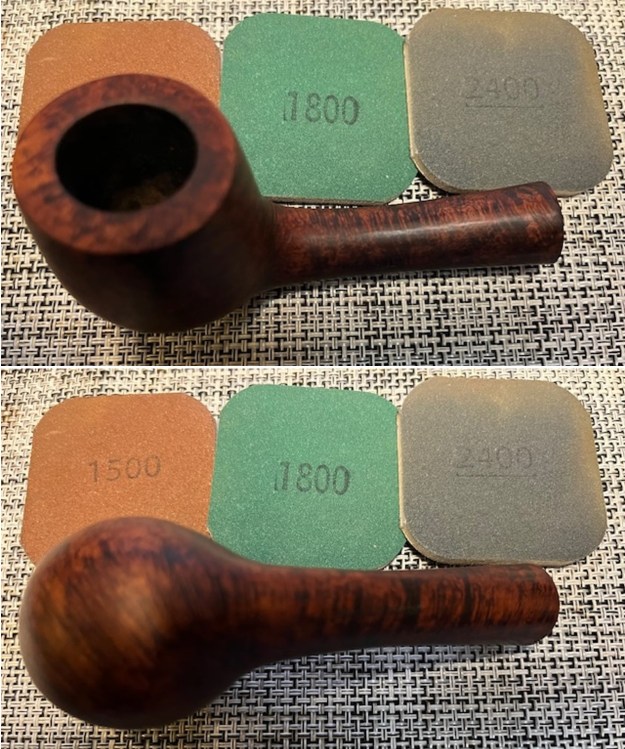
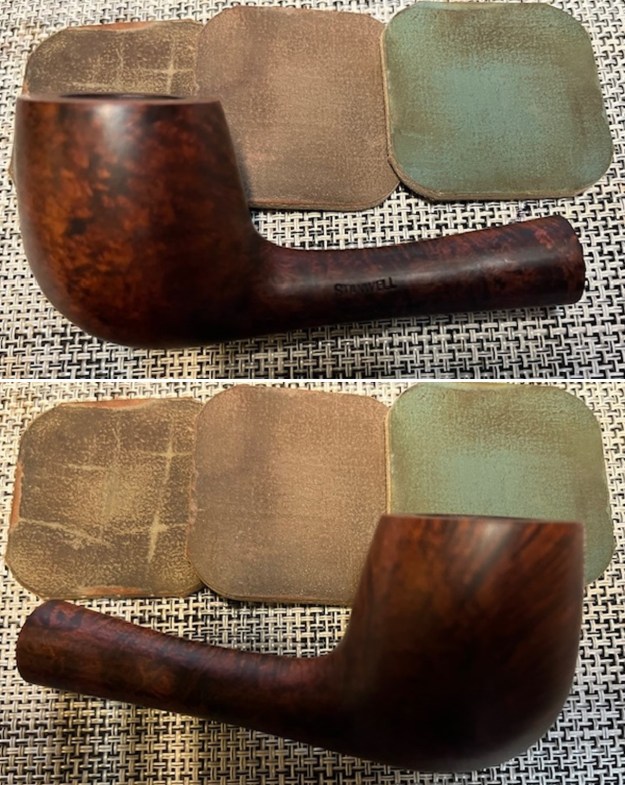
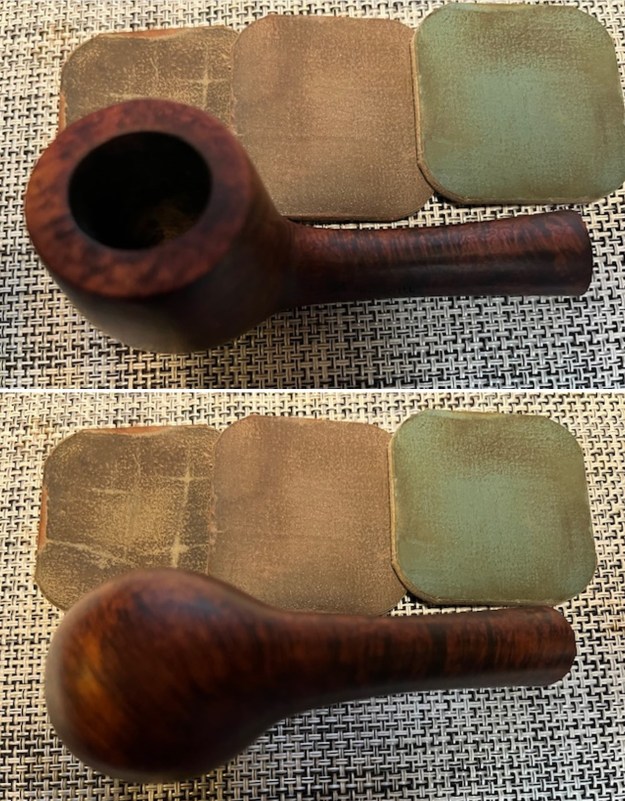
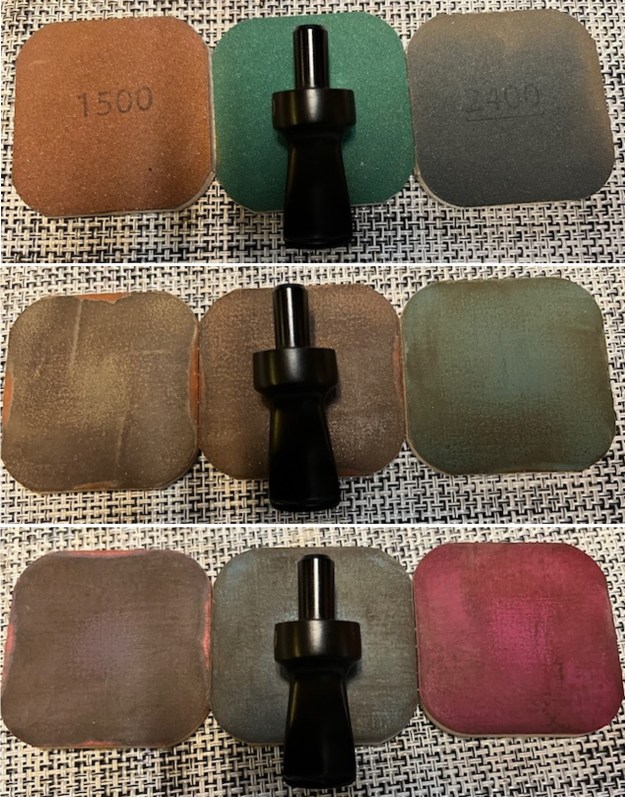
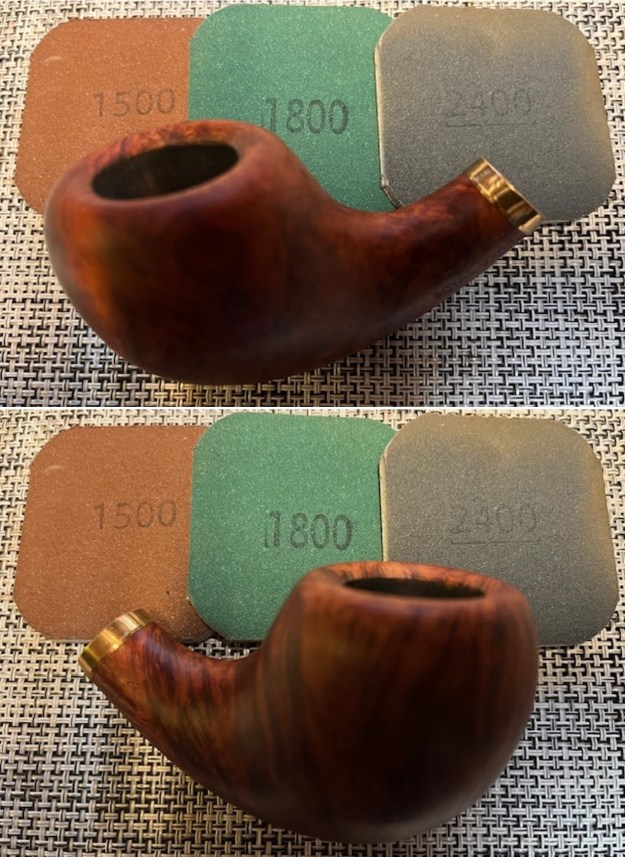
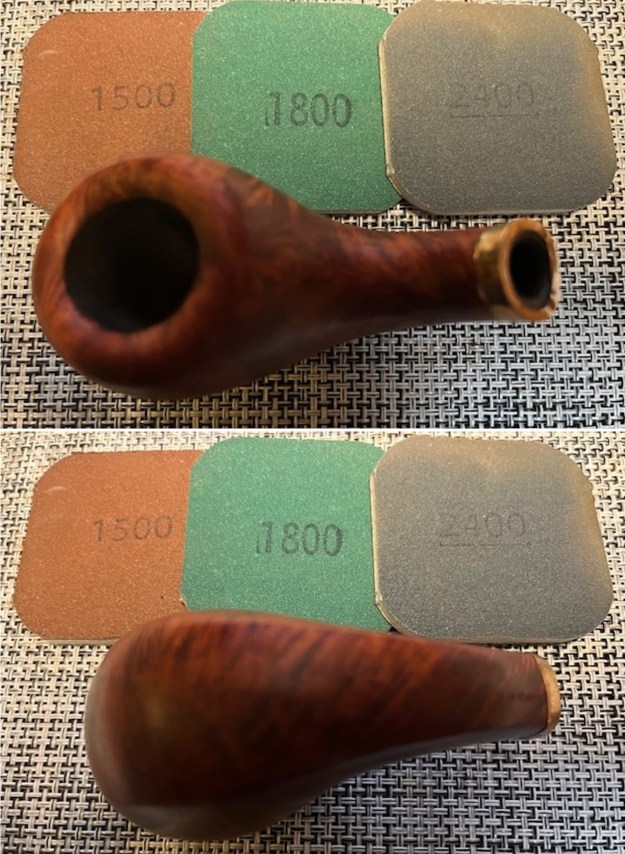
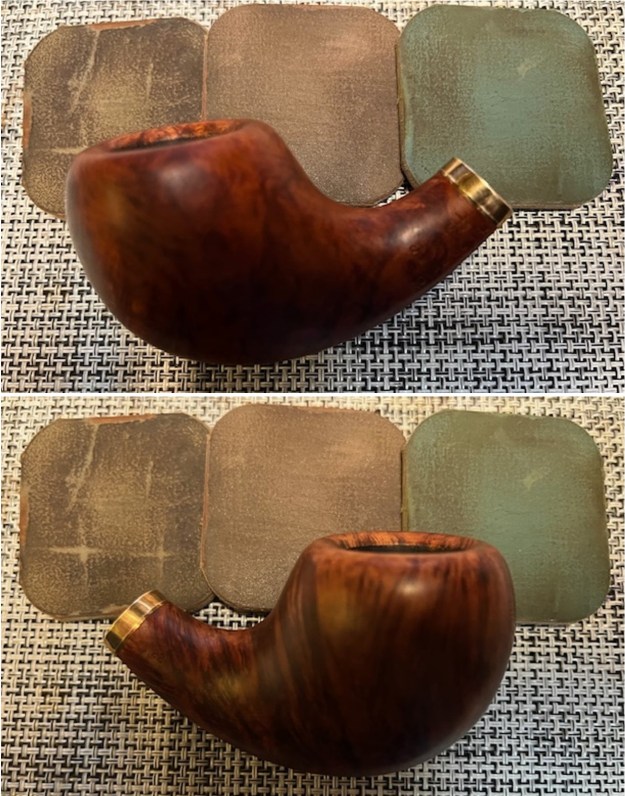
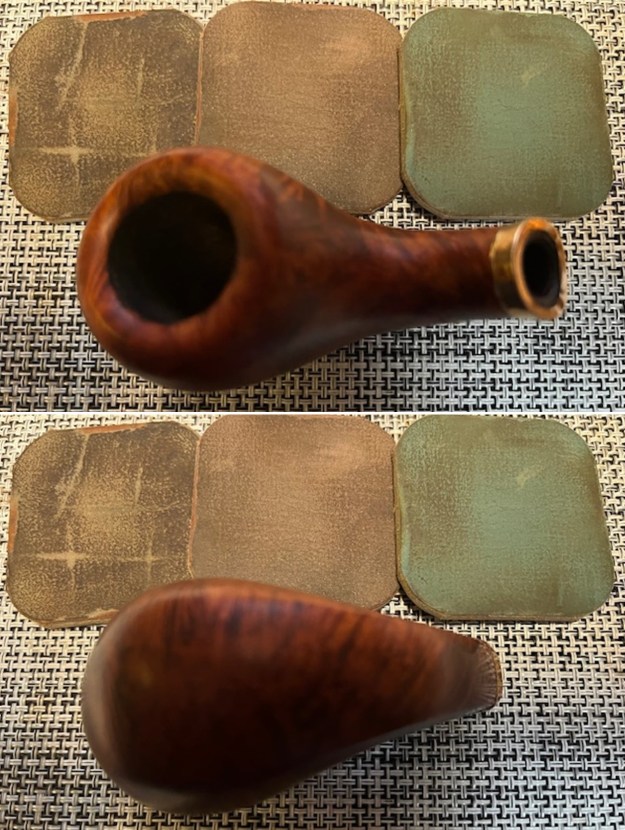
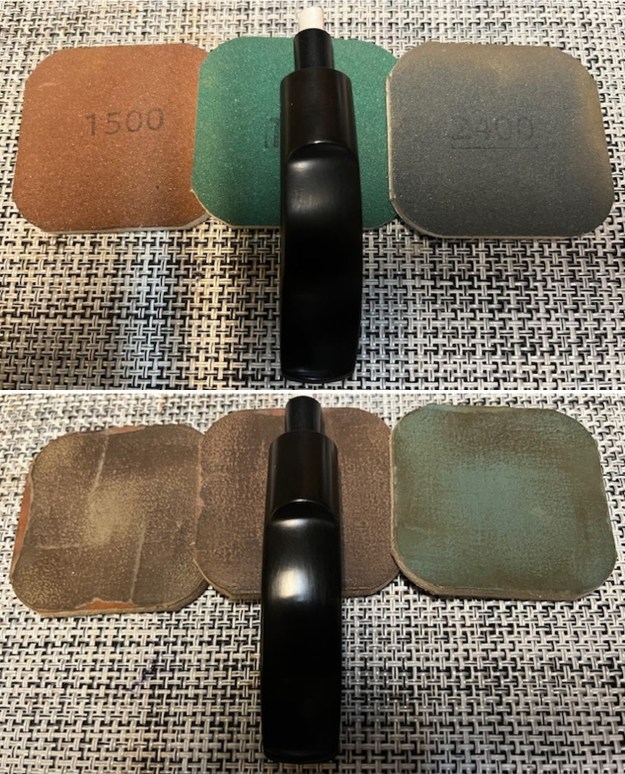
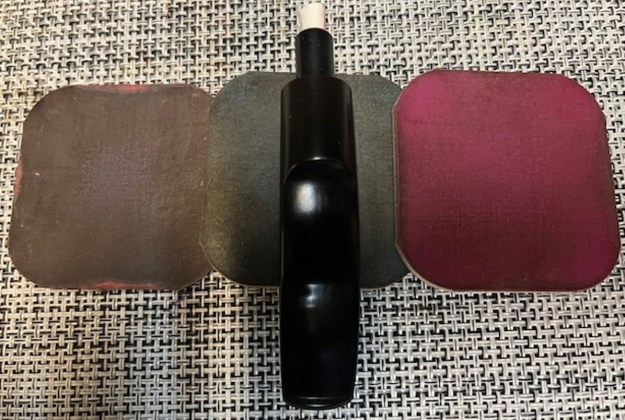
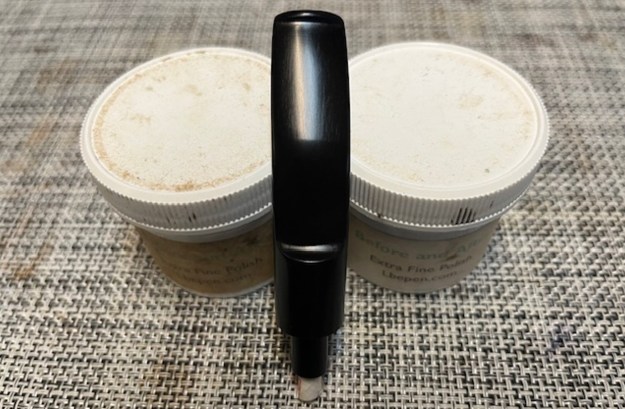
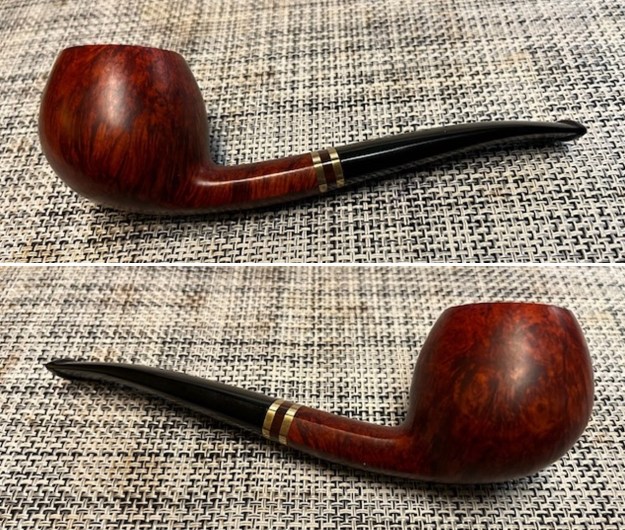
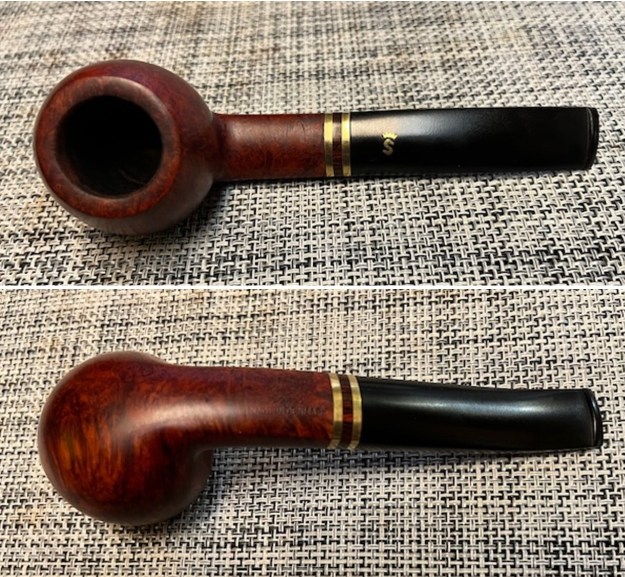
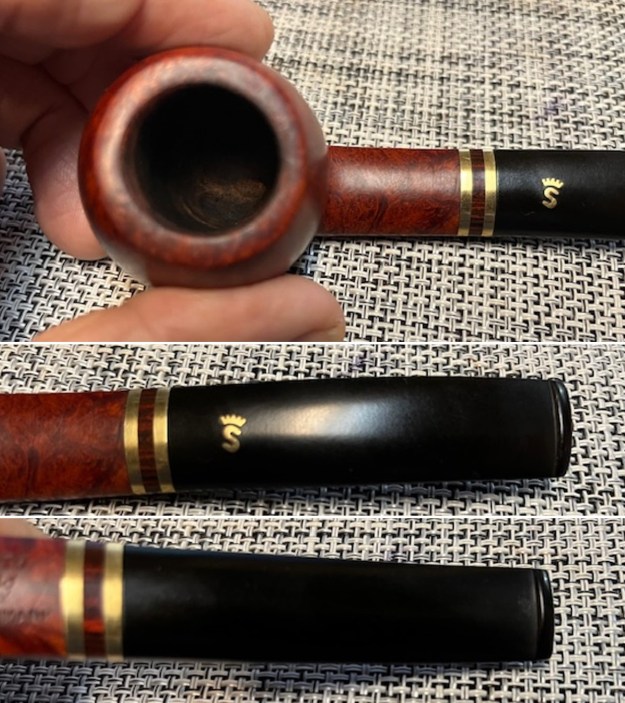
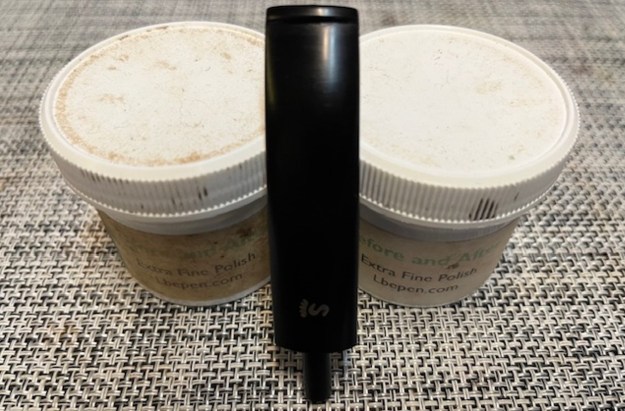
Now it was time to work on the pipe. Jeff had thoroughly cleaned up the pipe. He reamed the pipe with a PipNet Pipe Reamer and cleaned up the remnants with a Savinelli Fitsall Pipe Knife. He scrubbed the bowl with undiluted Murphy’s Oil Soap with a tooth brush. He rinsed it under running warm water to remove the soap and grime. He cleaned out the inside of the shank and the airway in the stem with alcohol, cotton swabs and pipe cleaners. He scrubbed the exterior of the stem with Soft Scrub to remove the grime and calcification. He soaked the stem in Before & After Deoxidizer and rinsed it off with warm water. The pipe looked very good when it arrived here in Vancouver. I took close up photos of the bowl, rim and the stem. The rim top cleaned up very well. There is some slight darkening on the back right side. The stem looks clean but still has light tooth marks and some chatter as noted above.I took photo of the stamping on the underside of the shank. It is faint on the left portion of the stamping but it is still readable as noted above. I removed the stem from the shank and took a photo to give a sense of the proportions of the pipe. The briar is quite beautiful and the reddish-brown stain really make it stand out.I started my work on the pipe by polishing the bowl and shank with micromesh sanding pads – dry sanding with 1500-12000 grit pads. I wiped the bowl down after each pad to remove the grit. The bowl began to take on a rich shine. It is a beauty. I rubbed the bowl down with Before & After Restoration Balm. I worked it into the briar with my finger tips. I let it sit for 10 minutes and the Balm did its magic. It enlivens, cleans and preserves the briar. It certainly brought this bowl back to life. I buffed it off with a clean cloth and took the following photos. I set the bowl aside and turned my attention to the stem. I sanded out the tooth marks on the vulcanite stem surface near the button with a piece of 220 grit sandpaper. I was able to remove them all. I started polishing the stem with 600 grit wet dry sandpaper.I polished the stem with micromesh sanding pads – 1500-12000 grit pads. I wiped it down with a damp cloth after each sanding pad. I polished it with Before & After Pipe Stem Polish – both Fine and Extra Fine. I gave it a coat of Obsidian Pipe Stem Oil. I set it aside to dry.This Stanwell Brass Band 179 Apple with a rectangular shank and a vulcanite taper stem is a great looking pipe and really looks like an S. Bang shape. The mix of stains once cleaned up really highlights the grain and the polished finish is stunning. I put the stem back on the bowl and carefully buffed the pipe with Blue Diamond on the buffing wheel. I gave the bowl and the stem multiple coats of carnauba wax on the buffing wheel and followed that by buffing the entire pipe with a clean buffing pad. I hand buffed the pipe with a microfiber cloth to deepen the shine. The finished Stanwell Brass Band Apple 179 fits nicely in the hand and feels great. Give the finished pipe a look in the photos below. The dimensions of the pipe are Length: 5 ½ inches, Height: 1 ¾ inches, Outside diameter of the bowl: 1 ½ inches, Chamber diameter: ¾ of an inch. The weight of the pipe is 48 grams /1.69 ounces. I will be adding the pipe to the Danish Pipe Makers Section of the rebornpipes store. If you are interested in purchasing this pipe send me a message or an email. Thanks for reading this blog and my reflections on the pipe while I worked on it.

As always, I encourage your questions and comments as you read the blog. Thanks to each of you who are reading this blog. Remember we are not pipe owners; we are pipe men and women who hold our pipes in trust until they pass on into the trust of those who follow us. 

Restoring a Stanwell Buffalo Made in Denmark 146 Scoop/Horn


Blog by Steve Laug

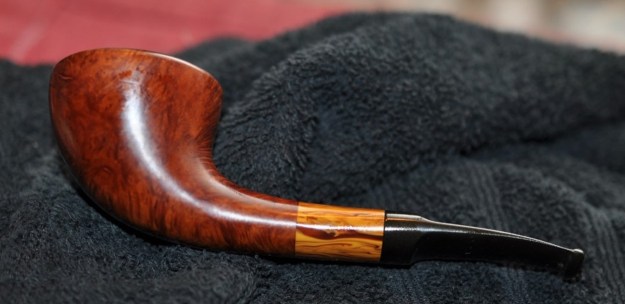
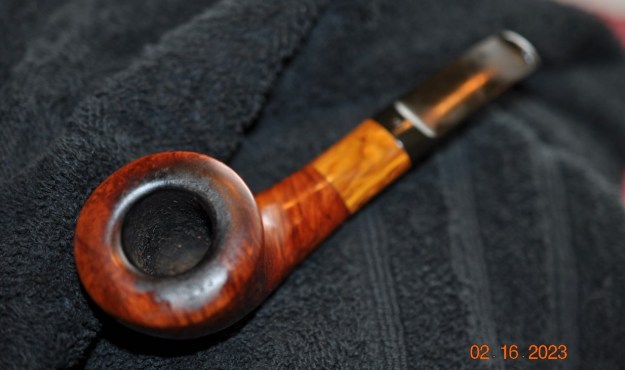
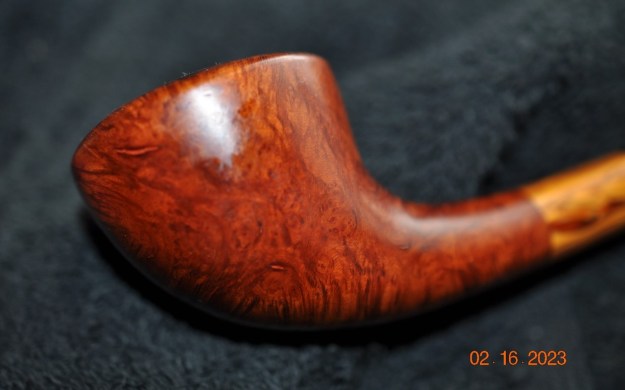
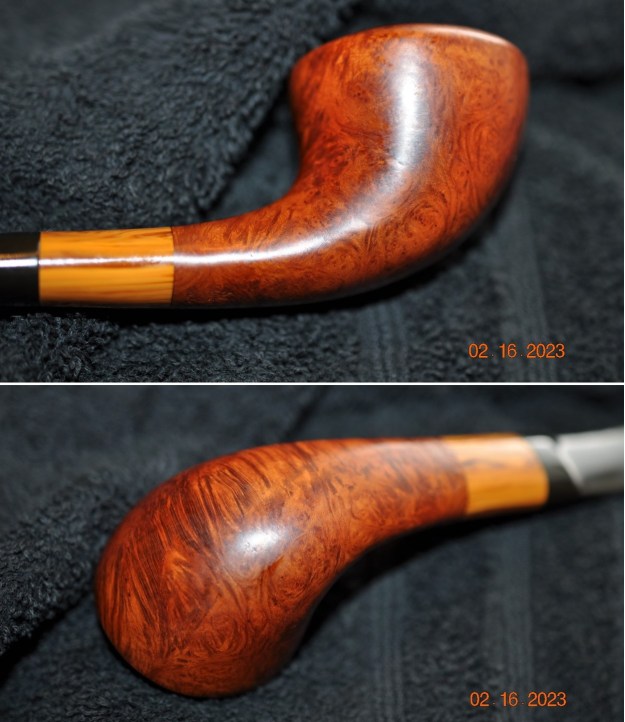
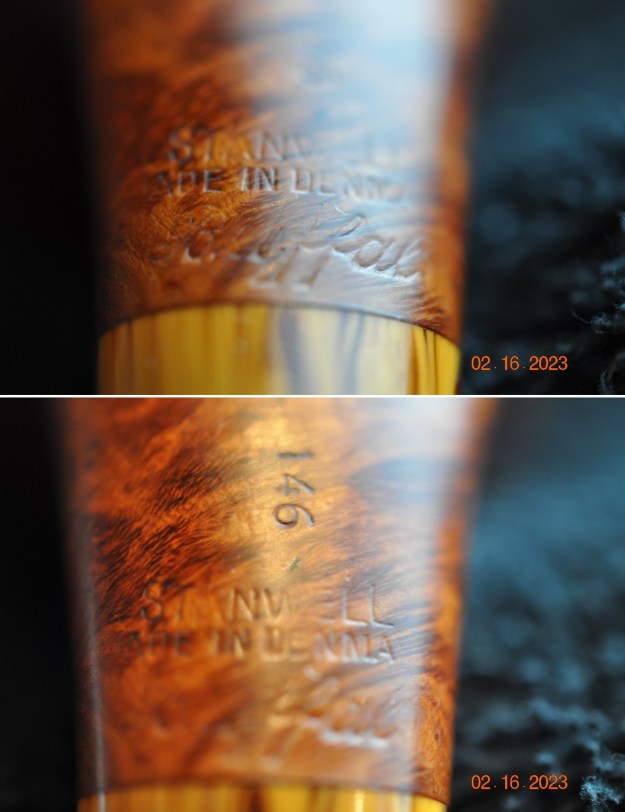
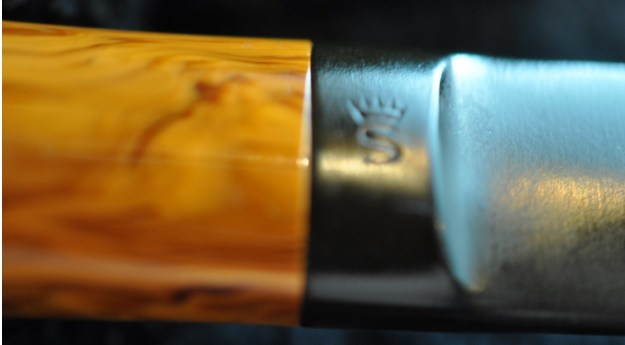
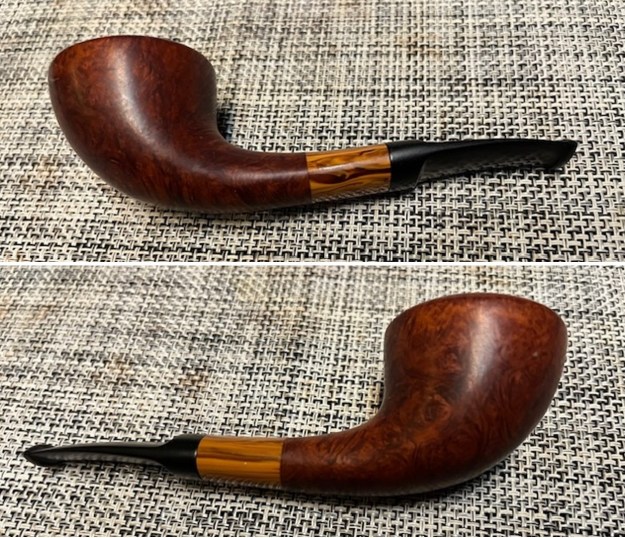
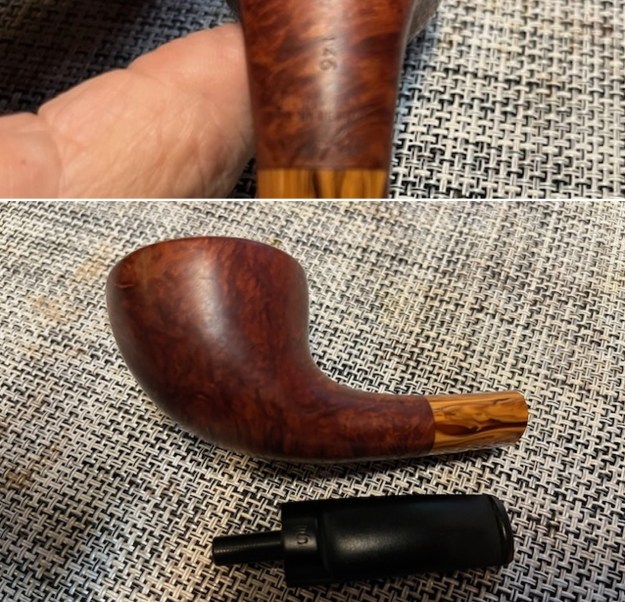
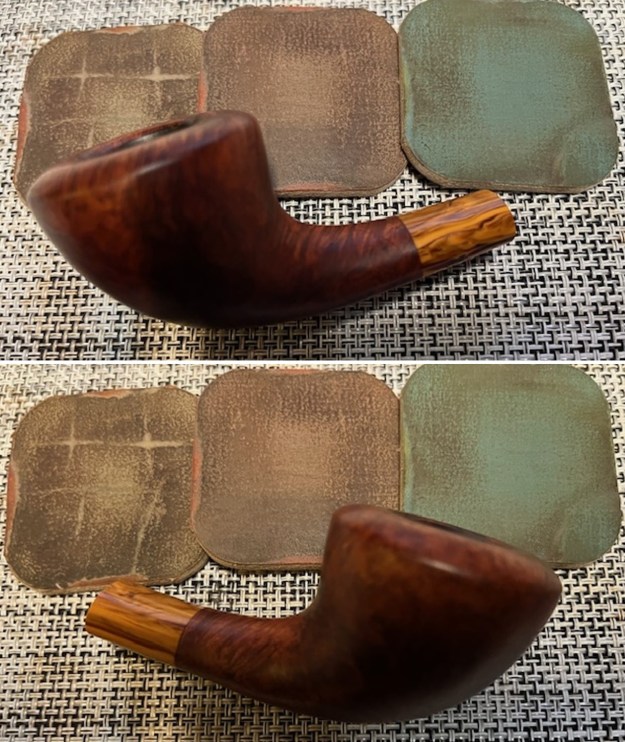
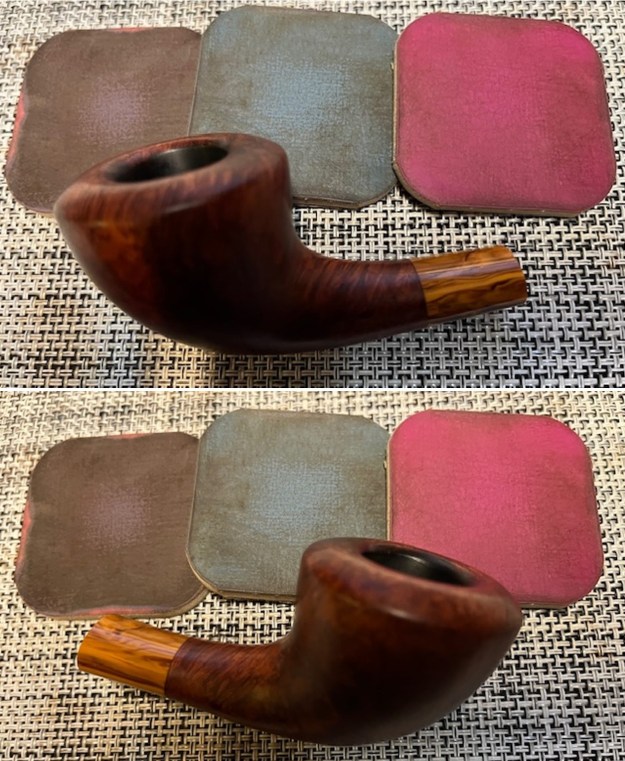
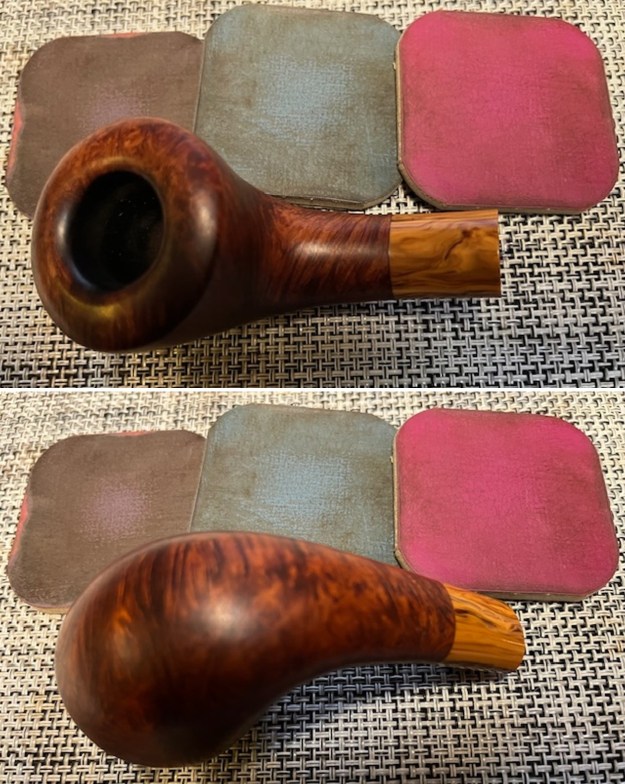
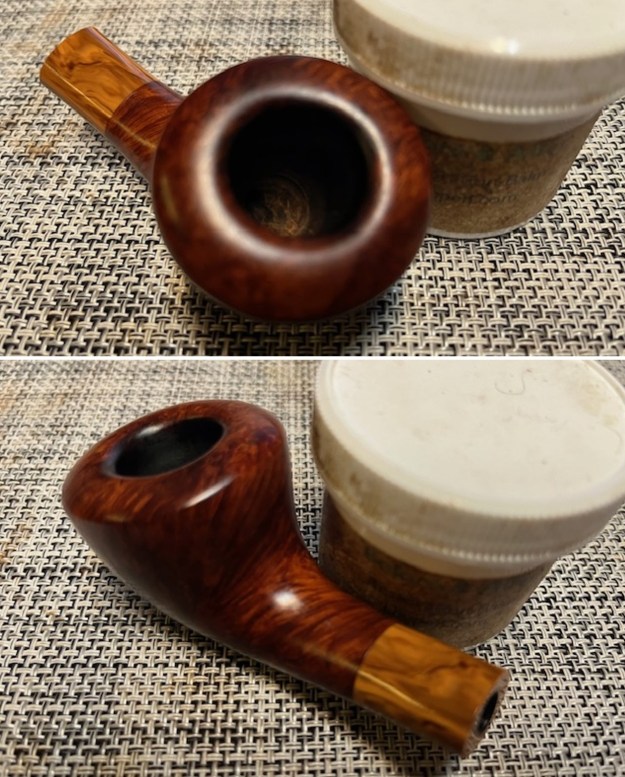
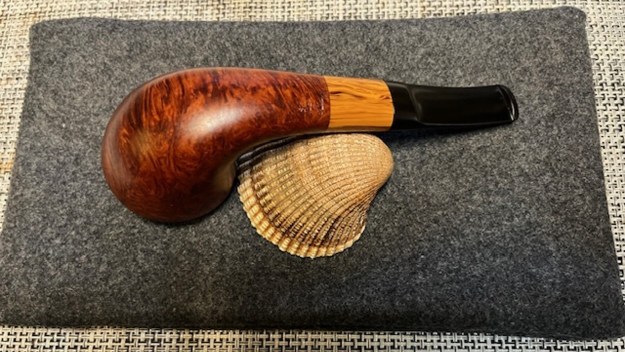
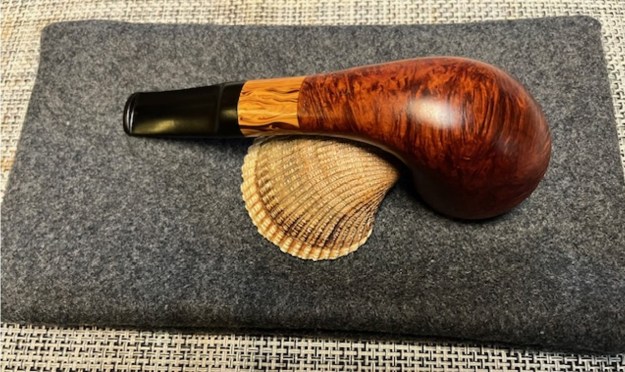
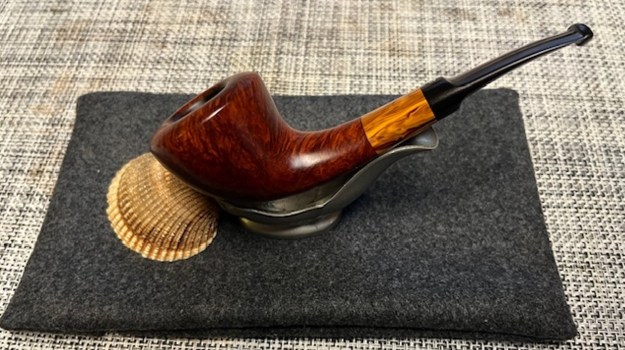
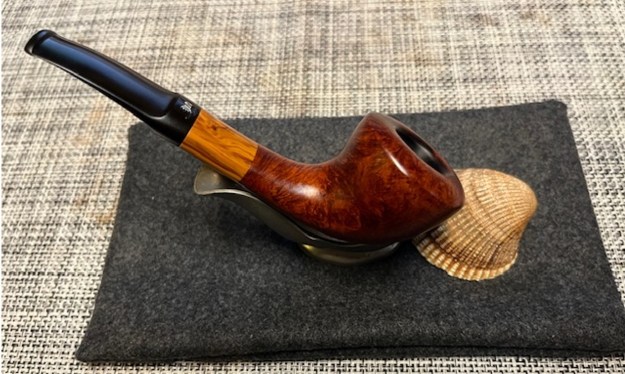
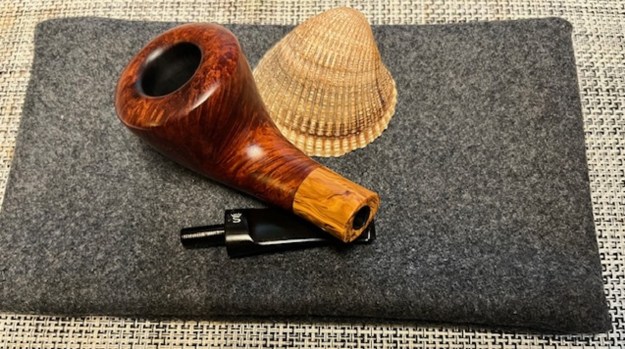
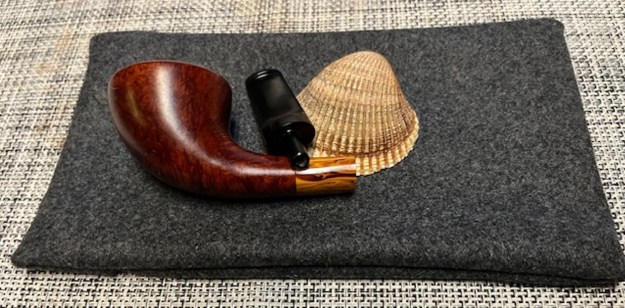
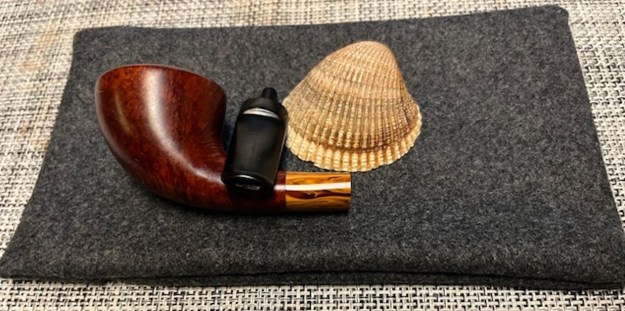
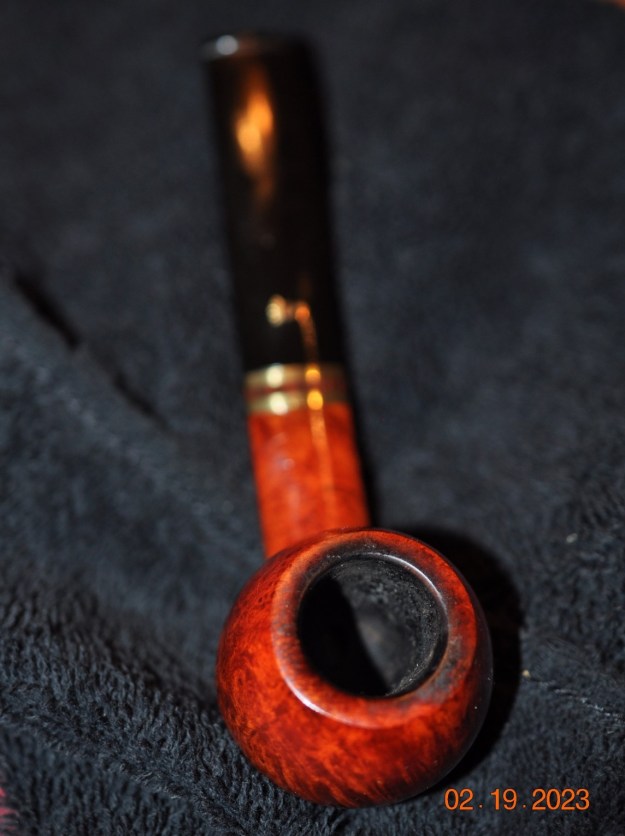
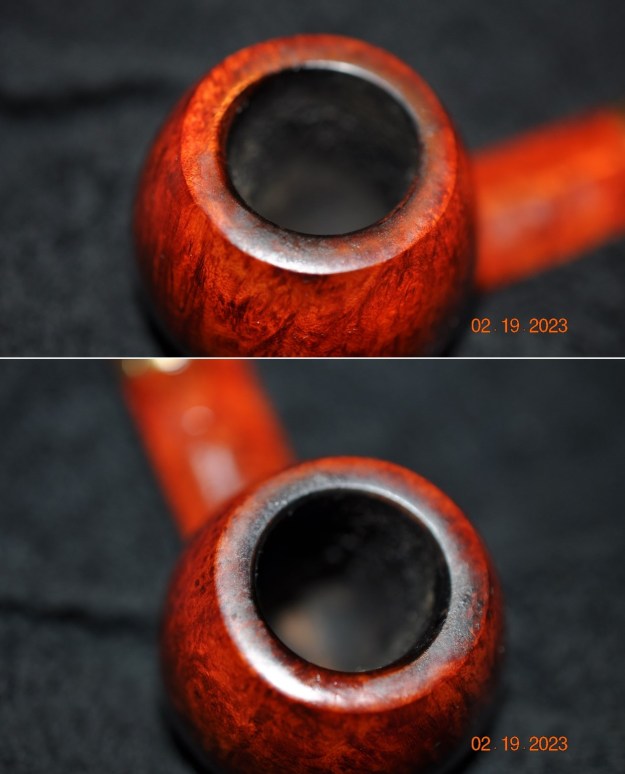
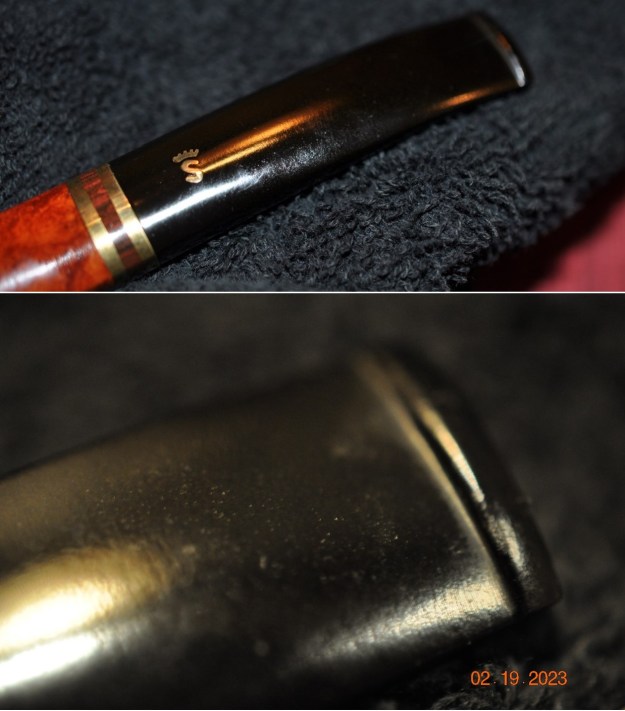
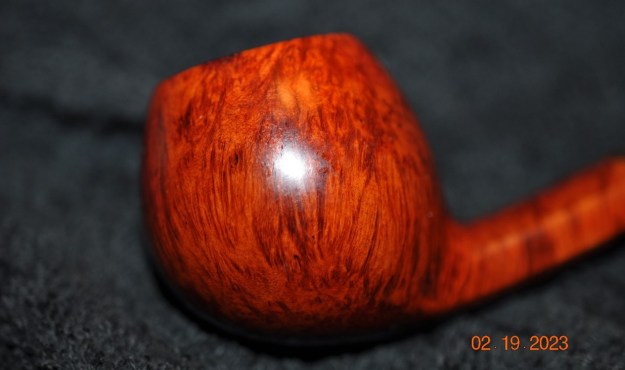
It is a cold and dreary day here in Vancouver so I decided to work on another one that was purchased on 01/26/2023 in a lot of pipes that came to us from Copenhagen, Denmark. This is a classic Danish scoop with a smooth finish and a variegated yellow/gold acrylic shank extension. It is another Made in Denmark Stanwell. The smooth finish on this pipe, around the bowl and shank has a mix of grain highlighted by the reddish brown stain. The pipe is stamped on the underside of the shank near the shank extension junction and reads STANWELL [over] Made in Denmark [over] Buffalo. Above that higher on the shank shank it has the shape number 146 stamped. The pipe was a well used pipe when Jeff received it. There was dust and grime ground into the finish. The mixture of brown stains highlights some beautiful grain under the dirt. The bowl was moderately caked and there was a heavy overflow of lava on the smooth rim top. The inner edge looked quite good. The stem is vulcanite and was dirty, oxidized and had light tooth marks, chatter and scratches on both sides ahead of the button. There is a faint white crown S logo stamped on the top side of the saddle stem. Jeff took photos of the pipe before he started his clean up work on it. He took photos of the bowl and rim top to show what they looked like before his clean up. You can see the thick lava coat on the rim top and the cake in the bowl. It is hard to know the condition of the inner edge because of the lava but it looks to be okay. He also took some of the stem to show the condition of both sides. The photos of the sides and heel of the bowl show the uniquely stained grain around the bowl and shank. The mixture of brown stains adds depth to the finish on the pipe. Even under the grime it is a real beauty. You can also see the swirls in the acrylic shank extension. The stamping on this one was around the shank horizontally and is shown in the photo below. It is clear and readable as noted above. The third photo shows the white stamped crown S on the top of the saddle stem. Before I started my work on the pipe I wanted to see if I could find any information that would help me get a sense of the line. I turned to Pipephil to see if there was any listing on the Buffalo Line (http://pipephil.eu/logos/en/logo-stanwell.html). There was nothing listed.
I then turned to Pipedia (https://pipedia.org/wiki/Stanwell) for more information. The article is great and gives a lot of history on the brand. There were also links to a shape article by Bas Stevens that I originally published on rebornpipes. I looked up the 146 shape number to see who had designed that shape (https://pipedia.org/wiki/Stanwell_Shape_Numbers_and_Designers). I quote that below.

  1. Freehand, oval stem saddle mouthpiece by Jess Chonowitsch.

I found a listing on Smokingpipes.com that had a description of the Buffalo line of pipes (https://www.smokingpipes.com/pipes/estate/denmark/moreinfo.cfm?product_id=229371). I am including part of the description below.

A rather easy to spot Stanwell series, the pipes of the Buffalo line were distinguished by swirled pattern acrylic ferrules in colors reminiscent of water buffalo horn.

Now it was time to work on the pipe.

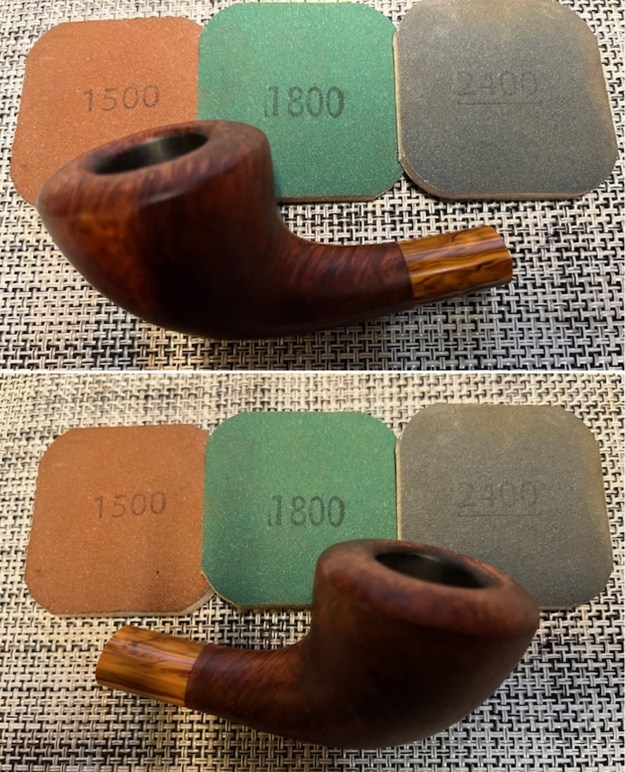
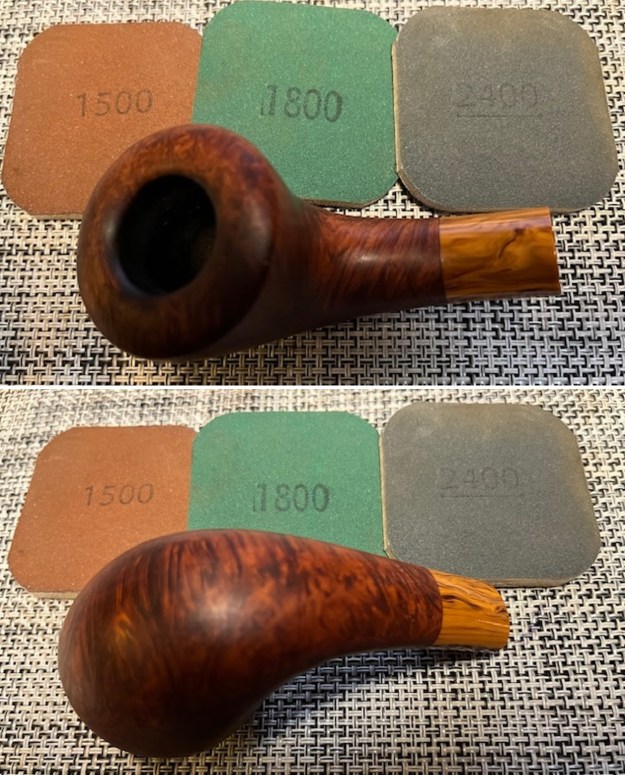
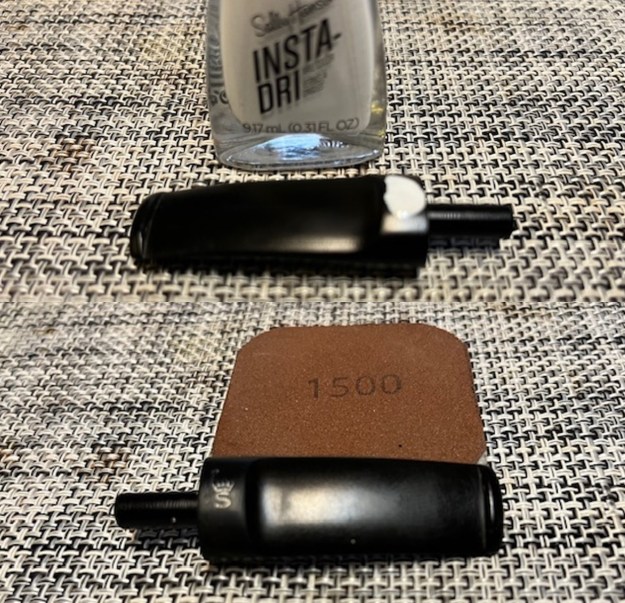
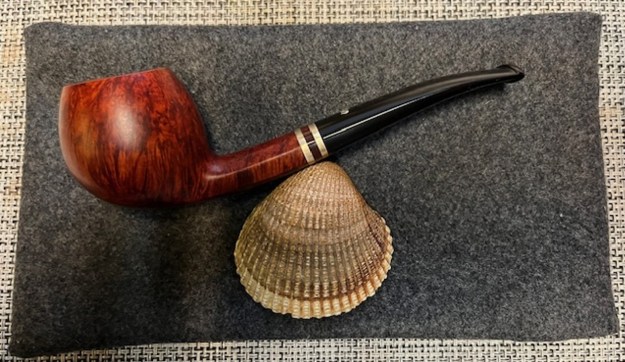
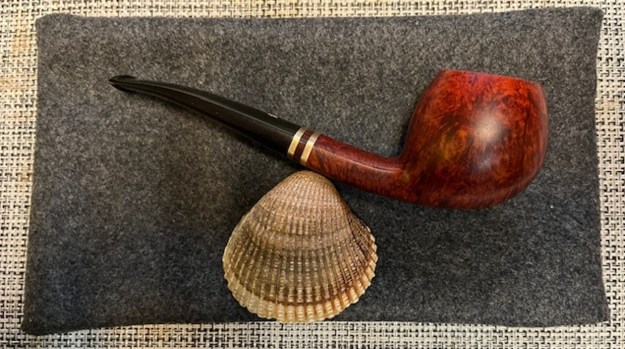
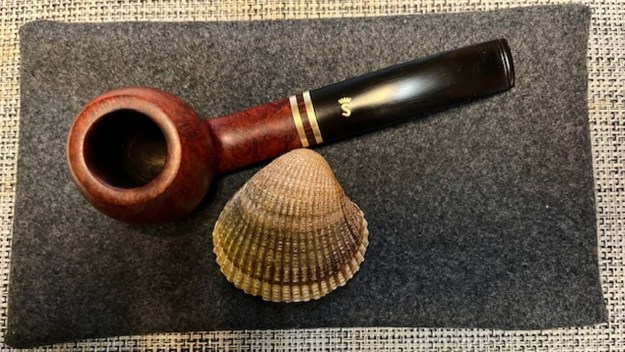
Jeff had thoroughly cleaned up the pipe. He reamed the pipe with a PipNet Pipe Reamer and cleaned up the remnants with a Savinelli Fitsall Pipe Knife. He scrubbed the bowl with undiluted Murphy’s Oil Soap with a tooth brush. He rinsed it under running warm water to remove the soap and grime. He cleaned out the inside of the shank and the airway in the stem with alcohol, cotton swabs and pipe cleaners. He scrubbed the exterior of the stem with Soft Scrub to remove the grime and calcification. He soaked the stem in Before & After Deoxidizer and rinsed it off with warm water. The pipe looked very good when it arrived here in Vancouver. I took close up photos of the bowl, rim and the stem. You can see the darkening on the rim top and inner edge. The bowl is quite clean inside with marks from a previous reaming on the bottom of the bowl. The acrylic shank extension is in good condition. The stem looks clean but still has light tooth marks and some chatter as noted above.I took photo of the stamping on the underside and right side of the shank. It is clear and readable as noted above. I removed the stem from the shank and took a photo to give a sense of the proportions of the pipe. The briar is quite beautiful and the dark and medium stains really make the grain stand out.I started my work on the pipe by polishing the bowl and shank with micromesh sanding pads – dry sanding with 1500-12000 grit pads. I wiped the bowl down after each pad to remove the grit. The bowl began to take on a rich shine. It is a beauty. I rubbed the bowl down with Before & After Restoration Balm. I worked it into the briar with my finger tips. I let it sit for 10 minutes and the Balm did its magic. It enlivens, cleans and preserves the briar. It certainly brought this bowl back to life. I buffed it off with a clean cloth and took the following photos. I set the bowl aside and turned my attention to the stem. I sanded out the tooth marks on the vulcanite stem surface near the button with a piece of 220 grit sandpaper. I was able to remove them all. I started polishing the stem with 600 grit wet dry sandpaper.I touched up the white Crown S stamp on the top of the saddle stem using white acrylic fingernail polish. I let it dry and scraped off the excess and sanded it with a 1500 grit micromesh sanding pad. It looks much better.I polished the stem with micromesh sanding pads – 1500-12000 grit pads. I wiped it down with a damp cloth after each sanding pad.I polished it with Before & After Pipe Stem Polish – both Fine and Extra Fine. I gave it a coat of Obsidian Pipe Stem Oil. I set it aside to dry. This Stanwell Buffalo 146 Scoop/Horn with a vulcanite saddle stem is a great looking pipe now that it has been restored. The mix of stains once cleaned up really highlights the grain and the polished finish is stunning. I put the stem back on the bowl and carefully buffed the pipe with Blue Diamond on the buffing wheel. I gave the bowl and the stem multiple coats of carnauba wax on the buffing wheel and followed that by buffing the entire pipe with a clean buffing pad. I hand buffed the pipe with a microfiber cloth to deepen the shine. The finished Stanwell Buffalo 146 Scoop/Horn fits nicely in the hand and feels great. Give the finished pipe a look in the photos below. The dimensions of the pipe are Length: 5 inches, Height: 1 ½ inches, Outside diameter of the bowl: 1 ½ inches, Chamber diameter: ¾ of an inch. The weight of the pipe is 43 grams /1.52 ounces. I will be adding the pipe to the Danish Pipe Makers Section of the rebornpipes store. If you are interested in purchasing this pipe send me a message or an email to slaug@uniserve.com . Thanks for reading this blog and my reflections on the pipe while I worked on it.
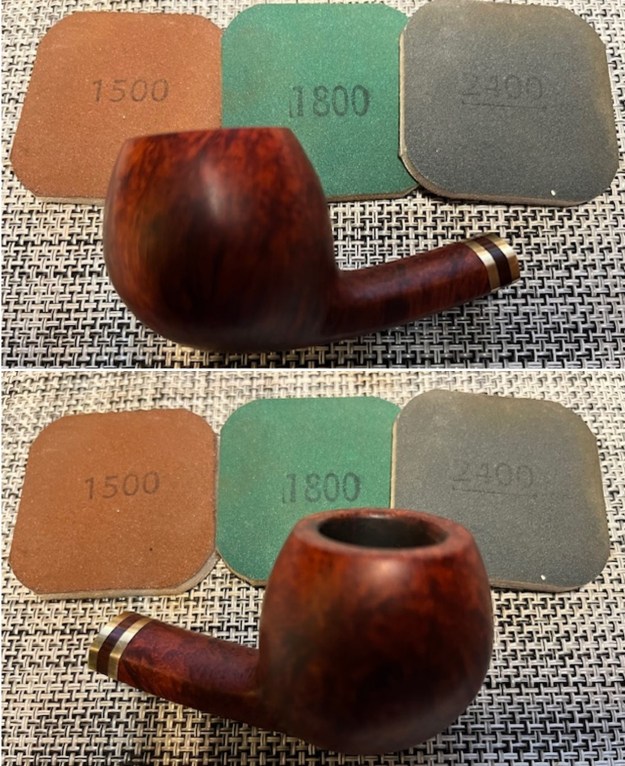
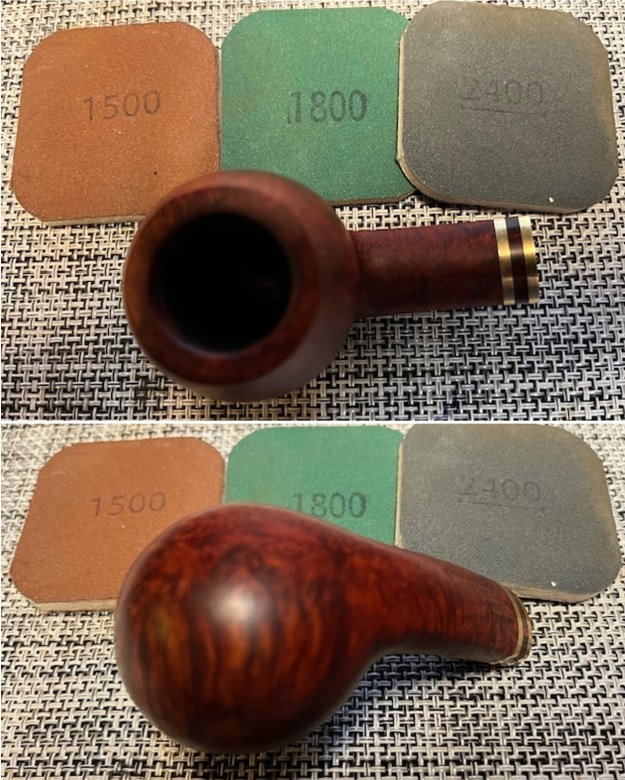
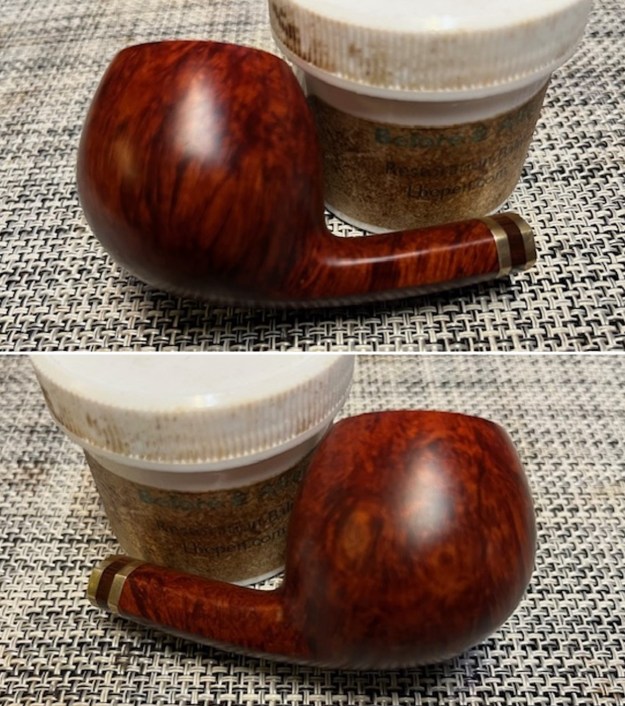
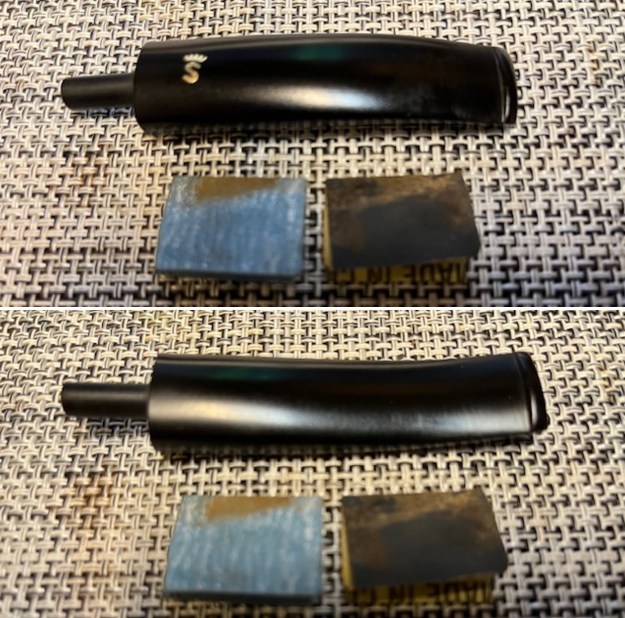
As always, I encourage your questions and comments as you read the blog. Thanks to each of you who are reading this blog. Remember we are not pipe owners; we are pipe men and women who hold our pipes in trust until they pass on into the trust of those who follow us. 
Restoring a Stunning Stanwell Made in Denmark Barok 53 Billiard


Blog by Steve Laug

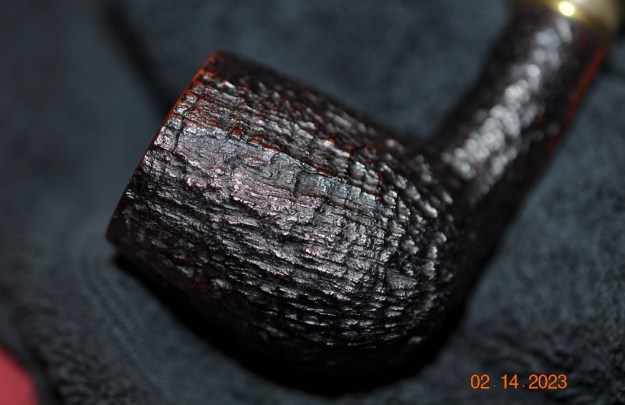
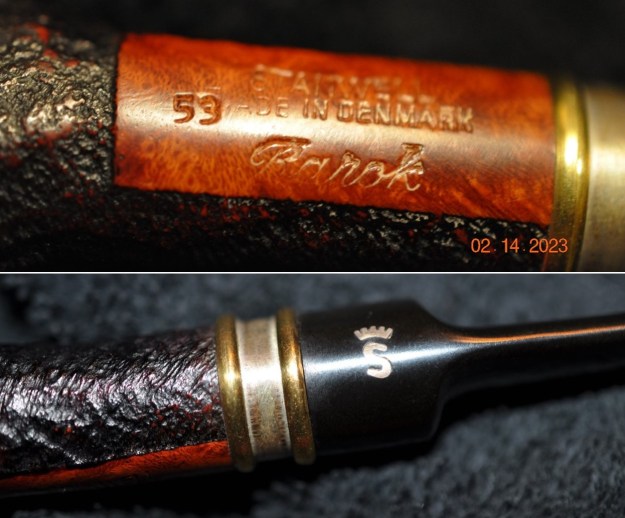
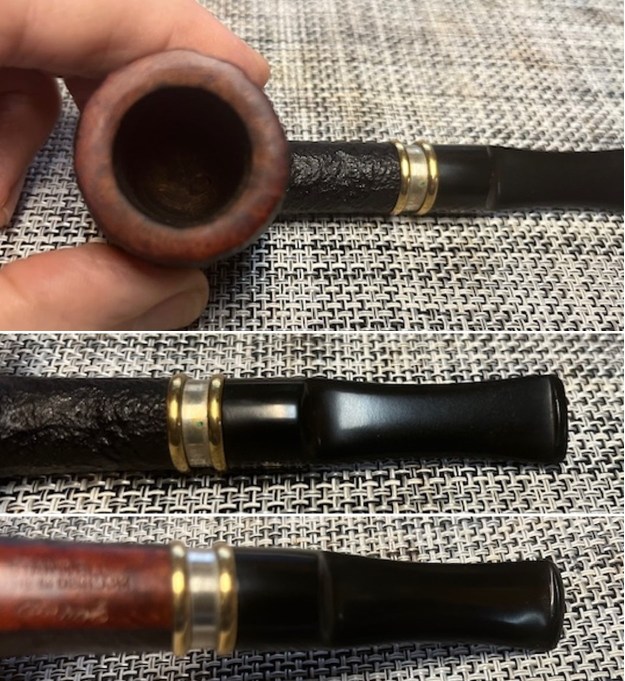
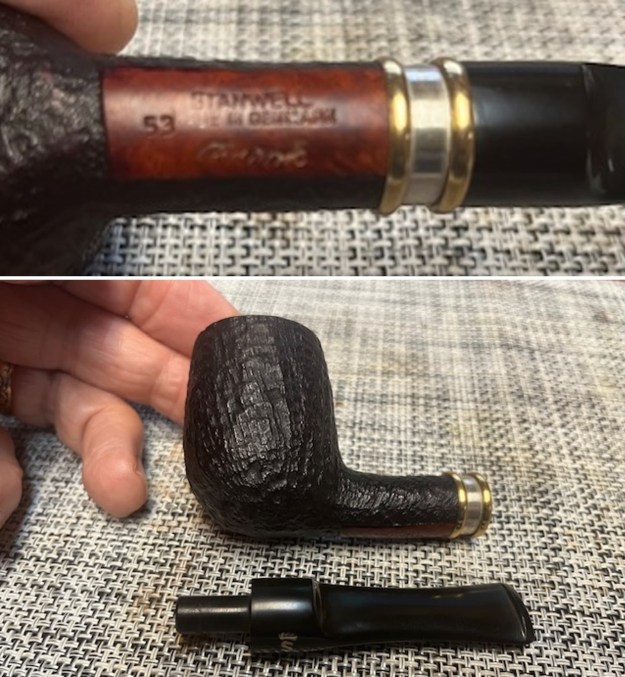
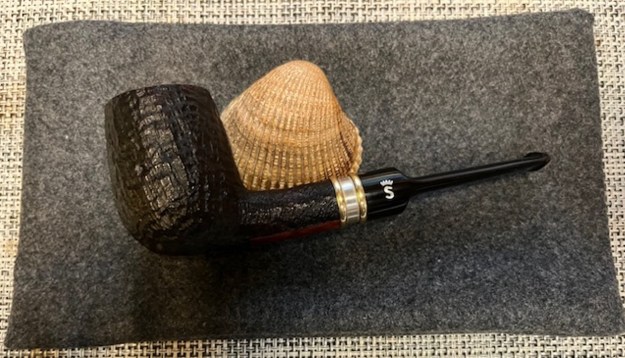
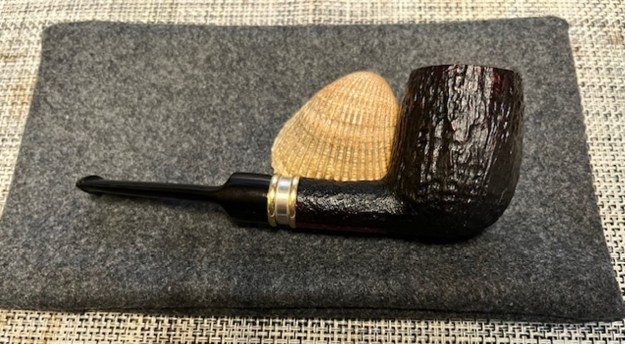
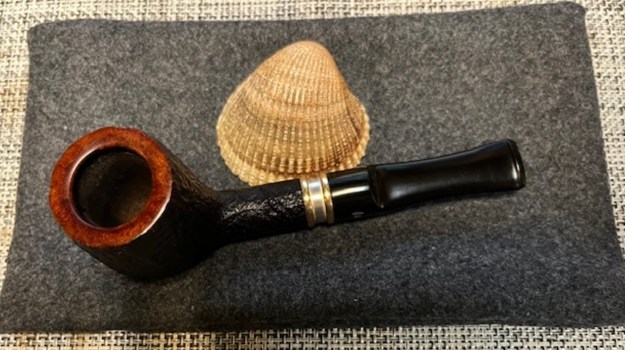
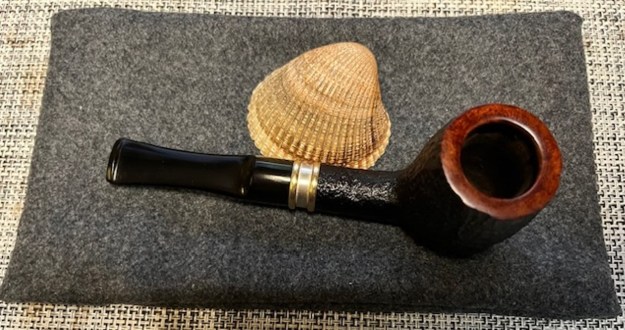
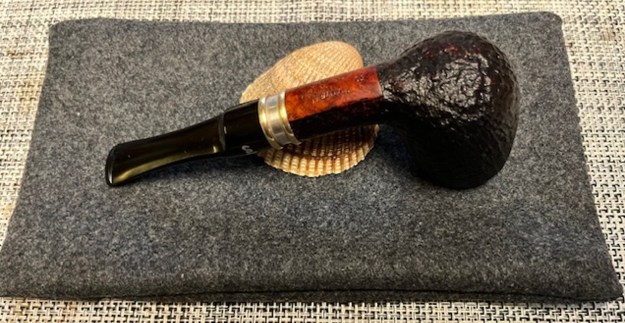
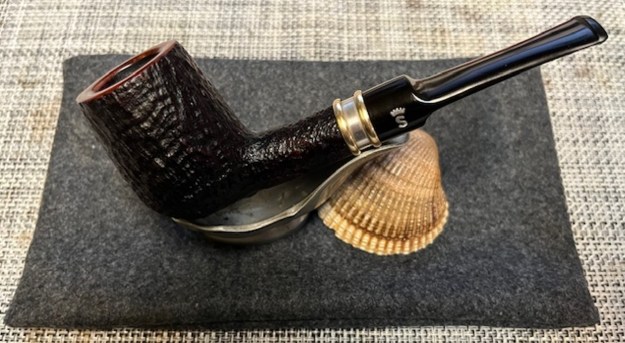
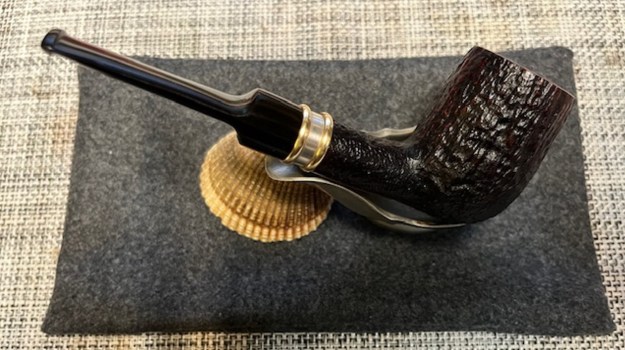
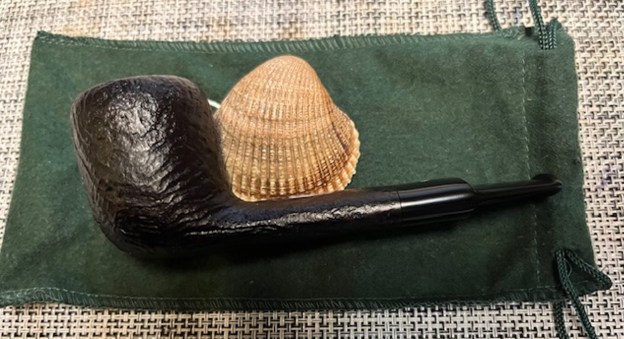
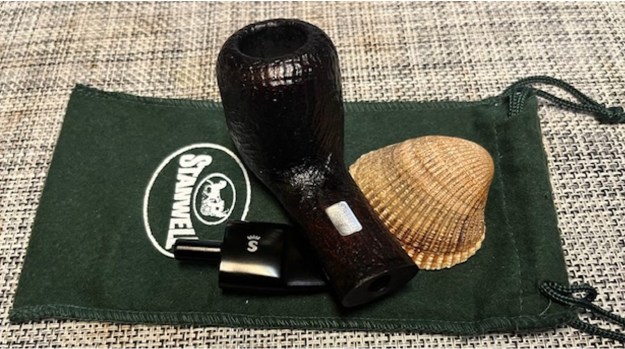
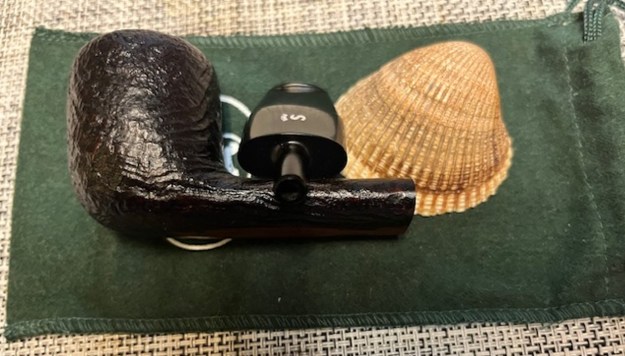
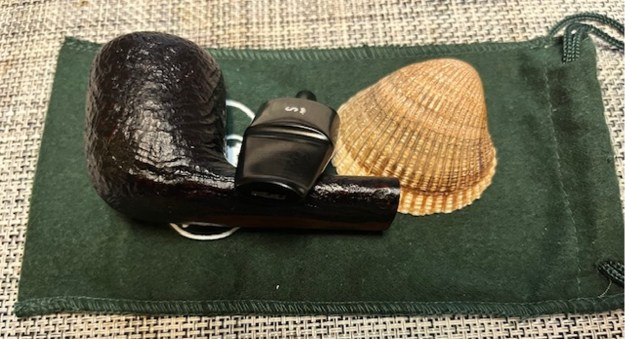
I moved on to work on another pipe. The next one I chose was another Stanwell that came to us from our connection in Copenhagen, Denmark 01/26/2023. I have had a Barok that I have been smoking for over 20 years and I love the finish and it is a great smoker. The stamping on the pipe was very clear and readable. On the underside of the shank it stamped on a smooth panel. It reads Stanwell [over] Made in Denmark [over] Barok. To the left of the stamping mentioned is the shape number 53. The shank has a silver band sandwiched between two brass rings that is tarnished. It is a standard feature on the Barok. The stem has a brass Crowned “S” Stanwell logo inlaid on left side of the saddle stem. The bowl had a moderate cake with tobacco debris on the bowl walls. There was some lava, dust and debris on the rim top and inner edges. The beautiful, rugged sandblast finish was in good condition with dust and grime ground into the briar around the bowl sides. The vulcanite saddle stem was lightly oxidized and there were light tooth marks on the top and underside next to the button. It showed a lot of promise through the grime. Jeff took photos of the pipe as he saw before his clean up. The next photos of the rim and the shank show the condition of the pipe at its arrival in Idaho. You can see the cake in the bowl and the thick lava on the rim top and inner edge. The stem looked good with light marks on the top and underside at the button edge. Jeff took photos of the rich stain highlighting the rugged sandblast on the sides and heel of the bowl and the smooth finish on the rim top. It really is a stunning piece of briar. The contrast stain really makes blast have dimension and depth. The next photo shows the stamping on the underside of the shank. It is clear and readable as noted above. Jeff also captured the Brass Crown “S” Stanwell logo on the left side of the saddle stem.I turned Pipedia for information on the shape number and potentially the designer of the shape for Stanwell (https://pipedia.org/wiki/Stanwell_Shape_Numbers_and_Designers). There was no information on the designer but the shape number 53 was listed as a medium sized Straight Billiard with a saddle mouthpiece. The description perfectly fit the pipe that I was working on.

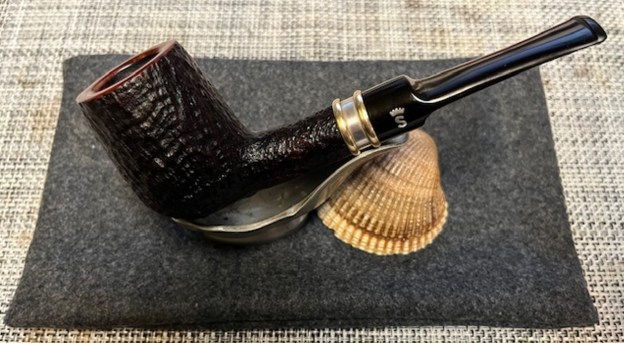
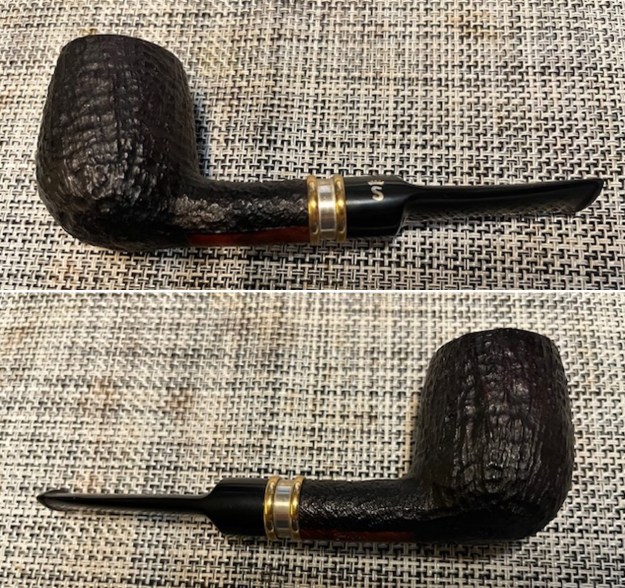
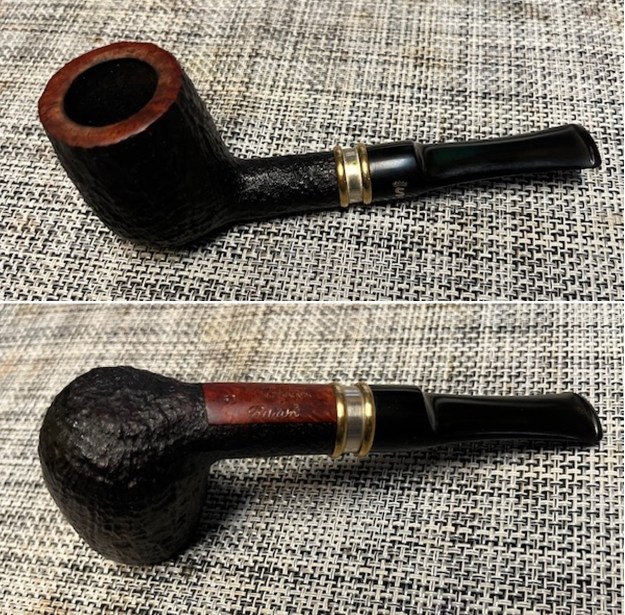
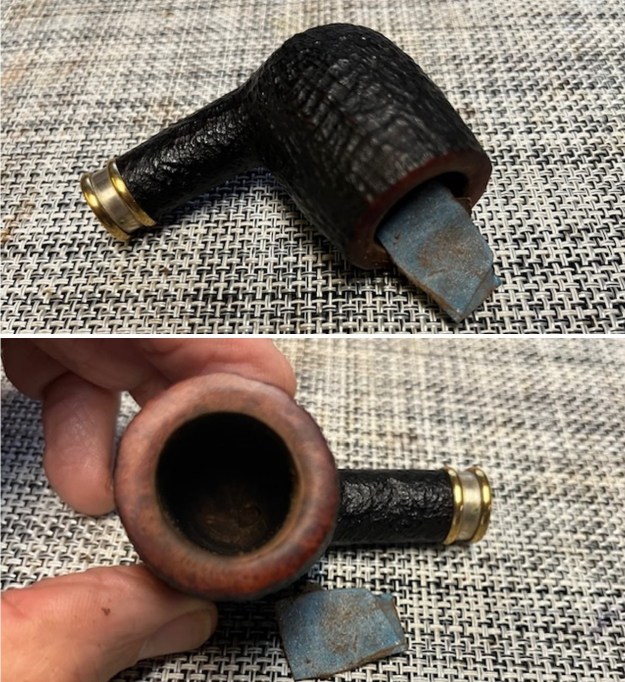
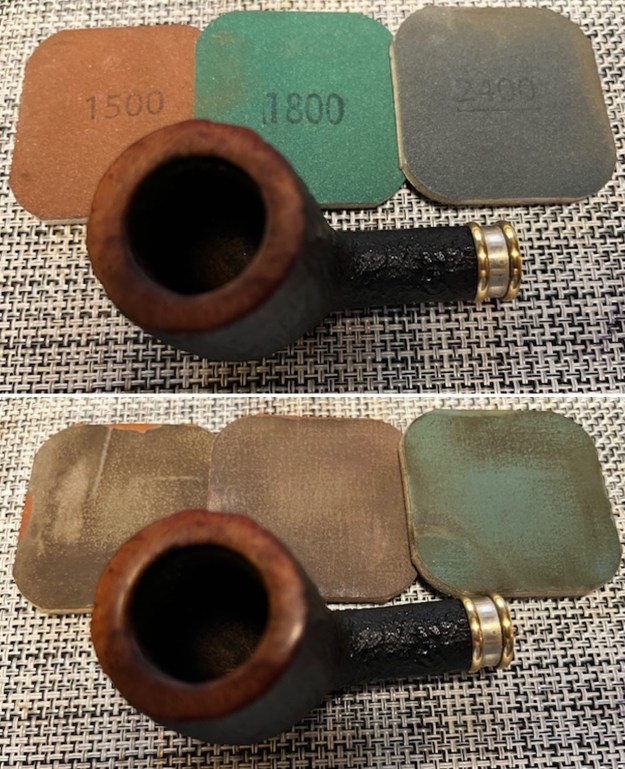
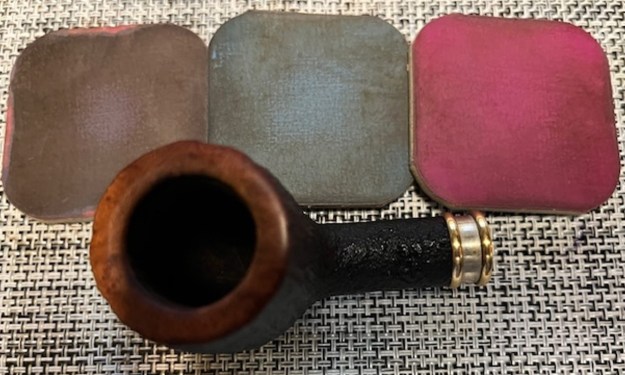
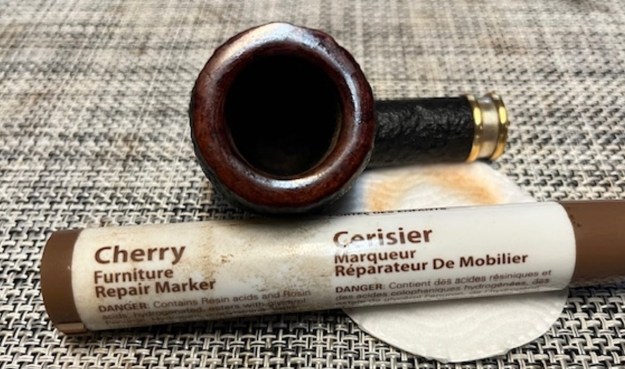
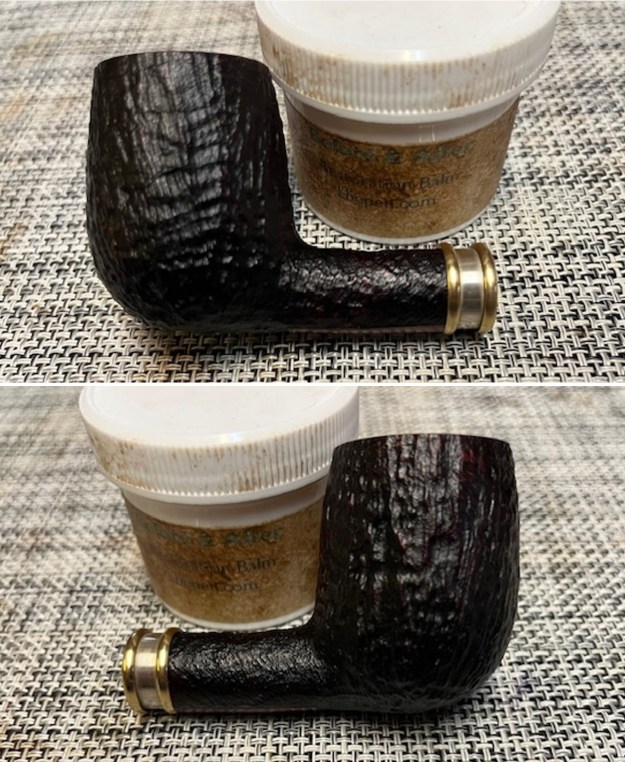
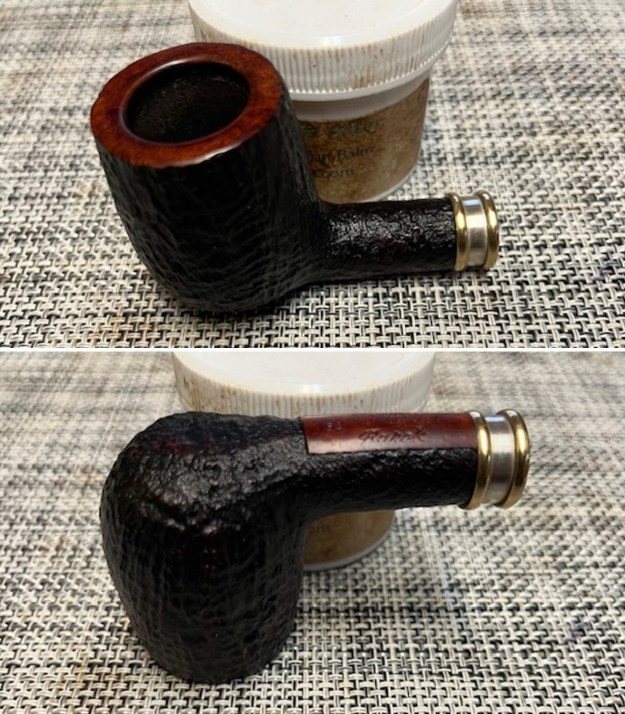
I turned to the section on Stanwell history and info. The site had some photos of a Barok that had the same bands and finish as the one I was working on. I also found a page from a catalogue courtesy of Doug Valitchka (https://pipedia.org/wiki/File:Barok13.jpg). I have included that below.Jeff had done a great job cleaning up the pipe as usual. He reamed the pipe with a PipNet reamer and cut back the cake back to the bare briar. He cleaned up the walls with a Savinelli Fitsall Pipe Knife. He scrubbed the interior of the bowl and shank with pipe cleaners, cotton swabs and alcohol to remove the tars and oils. He scrubbed the exterior of the pipe with Murphy’s Oil Soap and a tooth brush to remove the grime from the finish. He worked on the rim top lava and darkening with the soap and tooth brush. He scrubbed the inside of the stem with alcohol and pipe cleaners. He scrubbed the exterior with Soft Scrub and then soaked it in Briarville’s Pipe Stem Deoxidizer. He washed it off with warm water to remove the Deoxidizer. The pipe looked far better when it arrived. I took photos of the bowl and rim top as well as the stem to show how clean they were. You can see that rim top and edges look very good. There is some slight darkening on the rim top that should come off with polishing. The stem is clean and the tooth and chatter on both sides ahead of the button is very light.I took photo of the stamping on the underside of the shank. The stamping is clear and readable as noted above. I took the stem off the shank and took a photo to give a sense of the flow and proportion of the pipe. It is a beautiful looking pipe – a classic Billiard with a great sandblast and a saddle stem.I started my work on the pipe by cleaning up the inner edge of the bowl with a folded piece of 220 grit sandpaper. I removed the darkening that was on the inner edge of the bowl on the right side.I polished the smooth rim top with 1500-12000 grit micromesh sanding pads. I wiped the rim top down after each sanding pad with a damp cloth. I touched up the rim top and the inner edge with a Cherry stain pen and blended it in with damp cotton pad. Once I buff the pipe on the buffing wheel it should look great. I rubbed the briar down with Before & After Restoration Balm. I worked it into the briar with my fingertips and a horsehair shoe brush. The product works to clean, enliven and preserve the briar. I let it sit for 10 minutes while I worked on the stem. I let it sit for fifteen minutes then buffed it with a cotton cloth to deepen the shine. The briar really comes alive with the balm. I set the bowl aside and turned my attention to the stem. I sanded out the tooth marks on the vulcanite stem surface near the button with a piece of 220 grit sandpaper. I was able to remove them all. I started polishing the stem with 600 grit wet dry sandpaper.I polished the stem with micromesh sanding pads – dry sanding with 1500-12000 grit pads. I wiped the stem down after each sanding pad with Obsidian Oil. I polished it with Before & After Pipe Stem Polish – both Fine and Extra Fine. I gave it a coat of Obsidian Pipe Stem Oil. I set it aside to dry.I really like the Stanwell Barok Line of pipes and this 53 Billiard is no exception. I put the pipe back together and buffed it with Blue Diamond on the buffing wheel. I gave the bowl multiple coats of Conservator’s Wax and the stem multiple coats of carnauba wax. I buffed the pipe with a clean buffing pad to raise the shine and hand buffed it with microfiber cloth to deepen the shine. It is fun to see what the polished bowl looks like with the triple band on the shank and the polished vulcanite stem. The rugged sandblast on the bowl and the smooth rim top of this Stanwell Made in Denmark Barok Billiard 53 make it a beautiful pipe that feels great in my hand. It is light and well balanced. Have a look at it with the photos below. The dimensions are Length: 5 ¼ inches, Height: 1 ¾ inches, Outside diameter of the bowl: 1 ¼ inches, Chamber diameter: ¾ of an inch. The weight of the pipe is 1.62 ounces/46 grams. It is a beautiful pipe and one that I will be putting in the Danish Pipemaker Section on the rebornpipes store. Thanks for walking through the cleanup with me as I worked over this pipe.

As always, I encourage your questions and comments as you read the blog. Thanks to each of you who are reading this blog. Remember we are not pipe owners; we are pipe men and women who hold our pipes in trust until they pass on into the trust of those who follow us. 
Restoring another Stanwell City Pipe – a Rødovre 2001 Canadian 148


Blog by Steve Laug

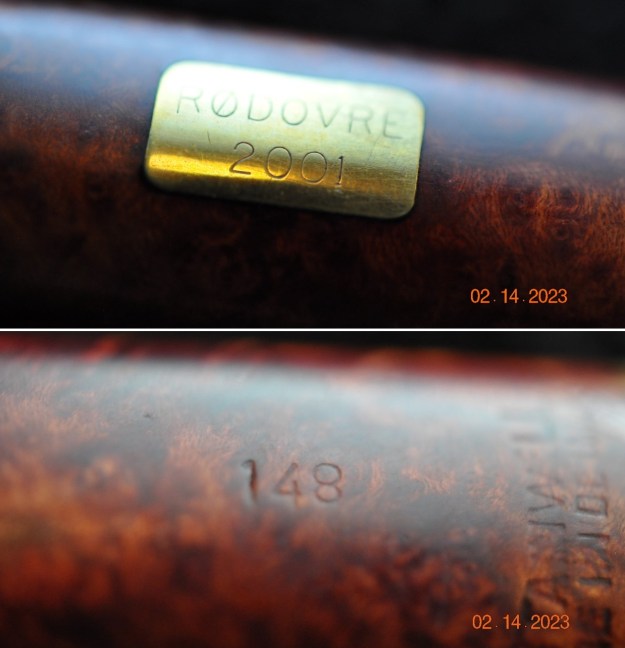
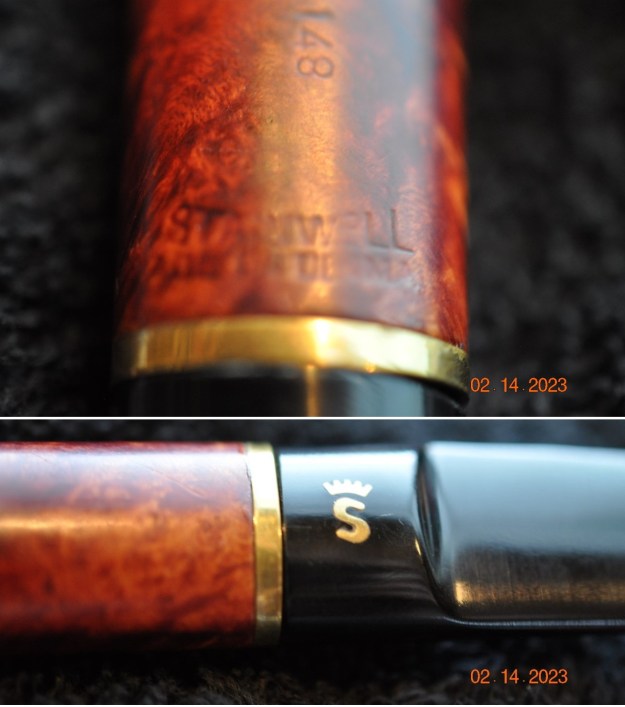
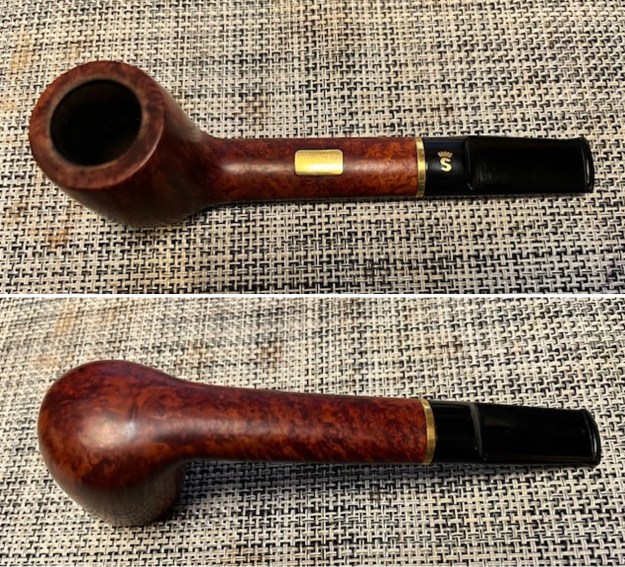
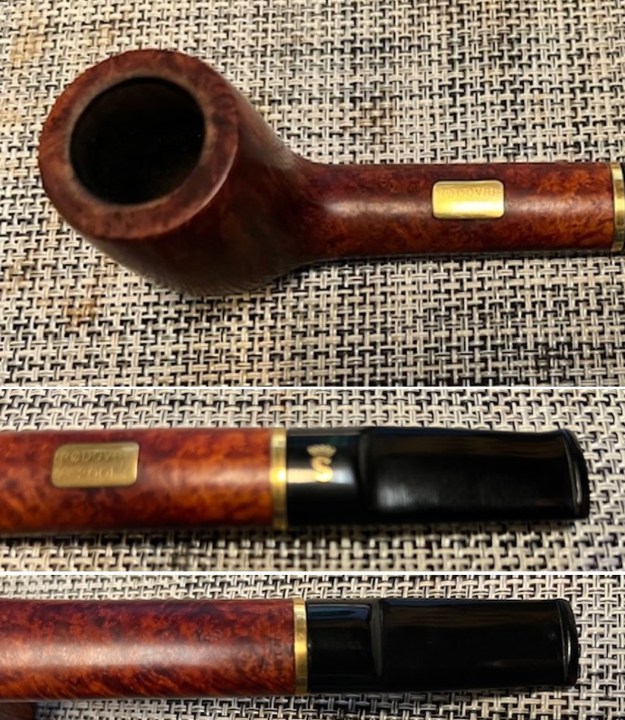
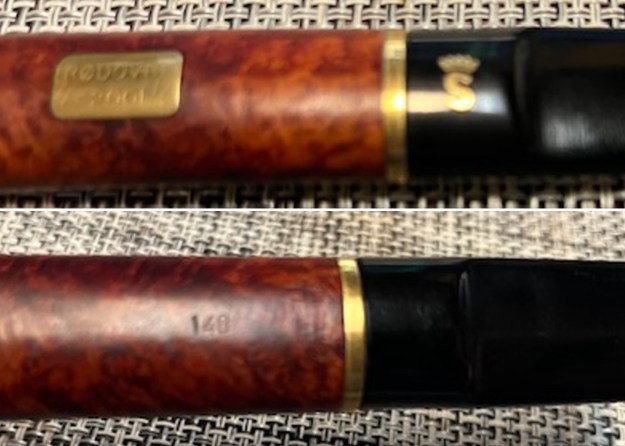
I moved on to work on another pipe. The next one I chose was another Stanwell in a Pipe Sock that came to us from our connection in Copenhagen, Denmark 01/26/2023. This is another one that might be your birth year pipe is you were born in 2001 when this Danish City Pipe was made. The stamping on the pipe was very clear and readable. On the topside of the shank is an engraved brass plate that reads Rødovre [over] 2001. On the underside of the shank it is stamped with a shape number 148 mid-shank. Next to the shank/stem joint it reads Stanwell [over] Made in Denmark. The stem had a brass Crowned “S” Stanwell logo inlaid on top of the saddle stem. The bowl had a moderate cake and there was some lava, dust and debris on the rim top and inner edges. The finish was in okay condition with oils and grime ground into the briar around the bowl sides. There is a small fill on the heel of the bowl that is blended in quite well. There is a thin brass decorative band on the shank. The saddle stem was acrylic and there were light tooth marks on the top and underside next to the button. It showed a lot of promise through the grime. Jeff took photos of the pipe as he saw it at this stage of his clean up. The next photos of the rim and the shank show the condition of the pipe at its arrival in Idaho. You can see the cake in the bowl and the thick lava on the rim top and inner edge. The stem looked good with light marks on the top and underside at the button edge. Jeff took photos of the rich stain highlighting the grain on the sides and heel of the bowl. It really is a stunning piece of briar. The contrast stain really makes it stand out clearly. In the last photo of the heel of the bowl you can see the fill. It is solid and undamaged. The next photos show the stamping on the shank top and bottom. It is clear and readable as noted above. The stamping on the brass insert is clear and readable. He also captured the Brass Crown “S” Stanwell logo on the topside of the taper stem. I had spent a fair bit of time trying to figure out the Stanwell City pipes when I was working on the Esbjerg Canadian. I did a quick check and found nothing more. The best I can find is that they were made for a pipe show or a slow smoking competition in those particular cities. I have several of them here that I have to work on. I do know that Rødovre is another city in Denmark.

Last evening, I had an idea about how to gather some information on the pipes. I thought that Jesper (a friend and blog reader) in Randers, Denmark perhaps would have information on the city pipes. I wrote him a message on FaceBook. This morning I read his reply. As usual he was extremely helpful. Thank you Jesper!

Hi Steve,

The city POY pipes were made (rather customized) for individual tobacco shows all over Denmark. The tobacconist chose a model and Stanwell would make them and do the engravings. So a Viborg 1995 might be a Bulldog while the Vejle 1995 is a Lovat.

I have no idea about how many tobacconists/cities did that but they were quite popular 20-30 years ago. When I worked at FF Pipes here in Randers around 200 we usually bought 3-4 dozens each year and they sold well for Christmas.

Cheers, Jesper

Thanks to Jesper, I now knew that the City POY pipes were customized for individual tobacco shows all over Denmark. The tobacconist would choose the model and Stanwell would to the do the engraving on them. I also learned that they were quite popular 20-30 year ago so I was dealing with a pipe at least that old.

I turned to Pipedia and looked at the Shape Numbers and Designers article to see if there were any specifics (https://pipedia.org/wiki/Stanwell_Shape_Numbers_and_Designers) that could help. This is what I found there, the 148 shape was a Canadian with a short saddle mouthpiece and was designed orginally by Jess Chonowitsch. Now it was time to work on this interesting pipe with a great designer attached and a unique and fascinating pipe history also attached.

Jeff had done a great job cleaning up the pipe as usual. He reamed the pipe with a PipNet reamer and cut back the cake back to the bare briar. He cleaned up the walls with a Savinelli Fitsall Pipe Knife. He scrubbed the interior of the bowl and shank with pipe cleaners, cotton swabs and alcohol to remove the tars and oils. He scrubbed the exterior of the pipe with Murphy’s Oil Soap and a tooth brush to remove the grime from the finish. He worked on the rim top lava and darkening with the soap and tooth brush. He scrubbed the inside of the stem with alcohol and pipe cleaners. He scrubbed the exterior with Soft Scrub and then soaked it in Briarville’s Pipe Stem Deoxidizer. He washed it off with warm water to remove the Deoxidizer. The pipe looked far better when it arrived. I took photos of the bowl and rim top as well as the stem to show how clean they were. You can see that rim top and edges look very good. There is some slight darkening on the rim top that should come off with polishing. The stem is clean and the tooth and chatter on both sides ahead of the button is very light.I took photos of the stamping on the sides of the shank and on the brass plaquette. The stamping is readable as noted above.I took the stem off the shank and took a photo to give a sense of the flow and proportion of the pipe. It is a beautiful looking pipe with a bowl Stanwell describe as Canadian even though it has a saddle stem.I started my work on the pipe by polishing the briar with 1500-12000 grit micromesh sanding pads. I wiped the bowl down after each sanding pad with a damp cloth. I polished the brass plaquette with a jewellers cloth to restore the shine and remove the tarnish. It really glows now. I rubbed the briar down with Before & After Restoration Balm. I worked it into the briar with my fingertips. The product works to clean, enliven and preserve the briar. I let it sit for 10 minutes while I worked on the stem. After the time passed I buffed it with a cotton cloth to deepen the shine. The briar really comes alive with the balm. I set the bowl aside and turned my attention to the stem. I sanded out the tooth marks on the acrylic stem surface near the button with a piece of 220 grit sandpaper. I was able to remove them all. I started polishing the stem with 600 grit wet dry sandpaper.I polished the stem with micromesh sanding pads – dry sanding with 1500-12000 grit pads. I wiped the stem down after each sanding pad with Obsidian Oil.I polished it with Before & After Pipe Stem Polish – both Fine and Extra Fine. I gave it a coat of Obsidian Pipe Stem Oil. I know that an acrylic stem does not need this but I like to use it anyway as it seems to protect the stem surface even on acrylic. I set it aside to dry. I am excited to put the finishing touches on this 2001 Stanwell City Pipe Rødovre Made in Denmark Canadian designed by Jess Chonowitsch. I put the pipe back together and buffed it with Blue Diamond on the buffing wheel. I gave the bowl and the stem multiple coats of carnauba wax. I buffed the pipe with a clean buffing pad to raise the shine and hand buffed it with microfiber cloth to deepen the shine. It is fun to see what the polished bowl looks like with the silver plaquette and the polished acrylic stem was beautiful. This Stanwell Made in Denmark Rødovre 2001 Canadian 148 is nice looking and the pipe feels great in my hand. It is light and well balanced. Have a look at it with the photos below. The dimensions are Length: 5 ½ inches, Height: 1 ½ inches, Outside diameter of the bowl: 1 ¼ inches, Chamber diameter: ¾ of an inch. The weight of the pipe is 1.34 ounces/38 grams. It is a beautiful pipe and one that I will be putting in the Danish Pipemaker Section on the rebornpipes store. Thanks for walking through the cleanup with me as I worked over this pipe.

As always, I encourage your questions and comments as you read the blog. Thanks to each of you who are reading this blog. Remember we are not pipe owners; we are pipe men and women who hold our pipes in trust until they pass on into the trust of those who follow us. 
An LHS London Royal Restoration


Love this system style pipes that are part of the search for a cooler, dry smoke. Nicely done John.

Written and photographed by John M. Young This little gem came in an eBay estate lot from Bemidji, Minnesota.  We spent several family vacations with…

An LHS London Royal Restoration

Restoring a Special Stanwell City Pipe – Esbjerg 1997 Long Shank Brandy 113


Blog by Steve Laug

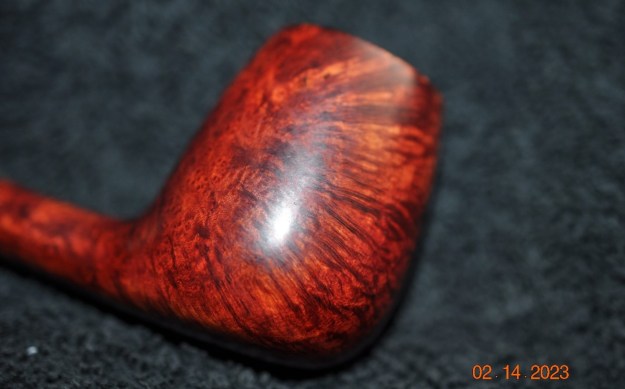
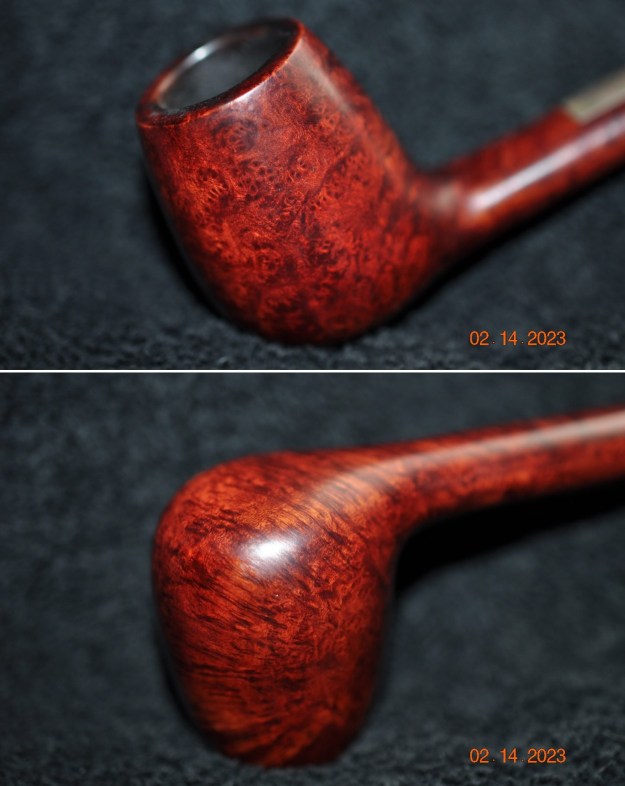
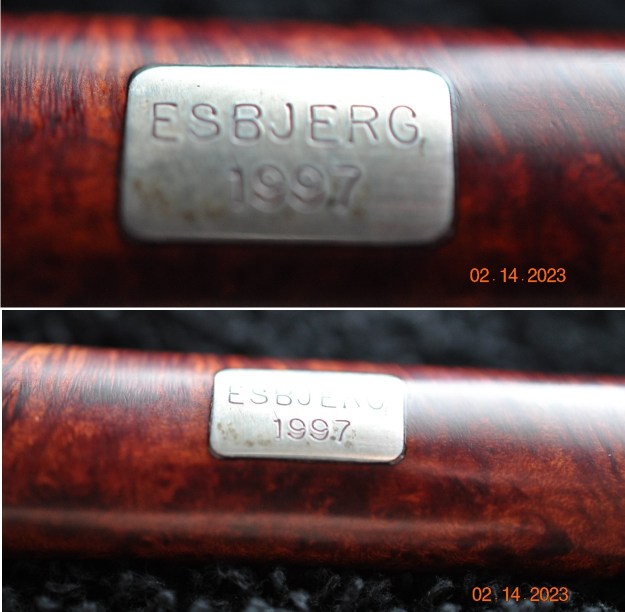
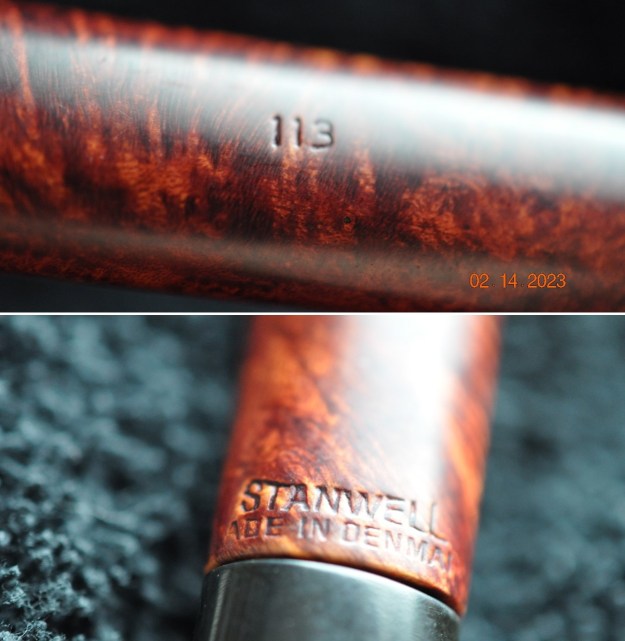
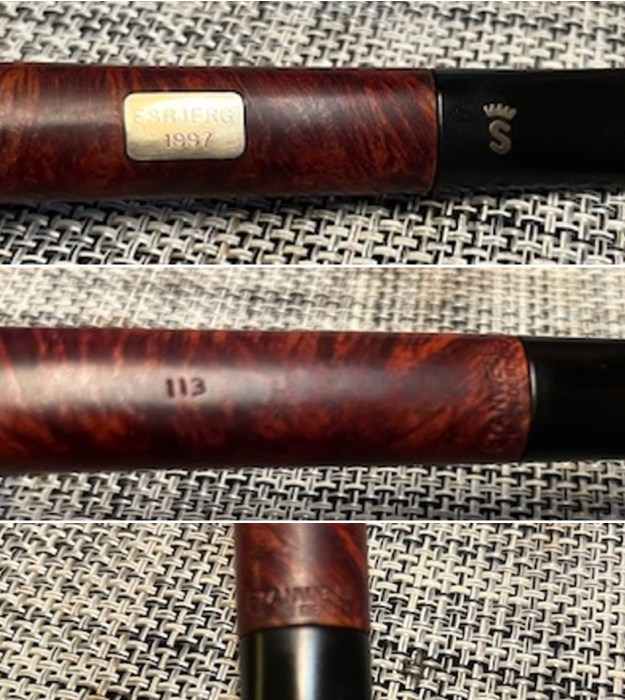
I moved on to work on another pipe. The next one I chose was another Stanwell in a Pipe Sock that came to us from our connection in Copenhagen, Denmark 01/26/2023. This is another one that might be your birth year pipe is you were born in 1997 when this Danish City Pipe was made. The stamping on the pipe was very clear and readable. On the topside of the shank is an engraved silver plate that reads Esbjerg [over] 1997. On the underside of the shank it is stamped with a shape number 113 mid-shank. Next to the shank/stem joint it reads Stanwell [over] Made in Denmark. The stem had a silver Crowned “S” Stanwell logo inlaid on top of the taper stem. The bowl had a moderate cake and there was some lava, dust and debris on the rim top and inner edges. The finish was in okay condition with oils and grime ground into the briar around the bowl sides. The taper stem was vulcanite. It had some light oxidation around the stem. There were light tooth marks on the top and underside next to the button. It showed a lot of promise through the grime. Jeff took photos of the pipe as he saw it at this stage of his clean up. The next photos of the rim and the shank show the condition of the pipe at its arrival in Idaho. You can see the cake in the bowl and the lava on the rim top and inner edge. The stem looked good with light marks on the top and underside at the button edge. Jeff took photos of the rich stain highlighting the grain on the sides and heel of the bowl. It really is a stunning piece of briar. The contrast stain really makes it stand out clearly. The next photos show the stamping on the shank top and bottom. It is clear and readable as noted above. The stamping on the silver insert is clear and readable. He also captured the Silver Crown “S” Stanwell logo on the topside of the taper stem. I spent a fair bit of time trying to figure out the Stanwell City pipes. The best I can find is that they were made for a pipe show or a slow smoking competition in those particular cities. I have several of them here that I have to work on. I do know that Esbjerg is a city in Denmark. If anyone can give me more information on these pipes that would be appreciated. Thank you.

I turned to Pipedia and looked at the Shape Numbers and Designers article to see if there were any specifics (https://pipedia.org/wiki/Stanwell_Shape_Numbers_and_Designers) that could help. This is what I found there. The shape number 113 is designated as a Canadian with conical bowl. Now it was time to work on the pipe.

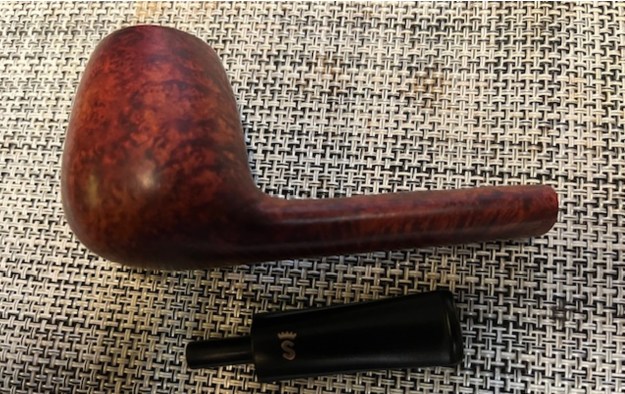
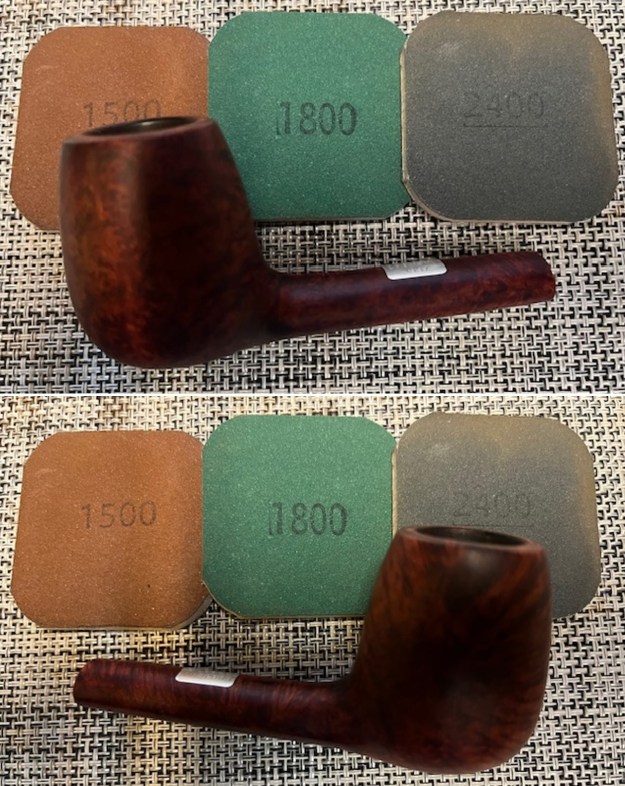
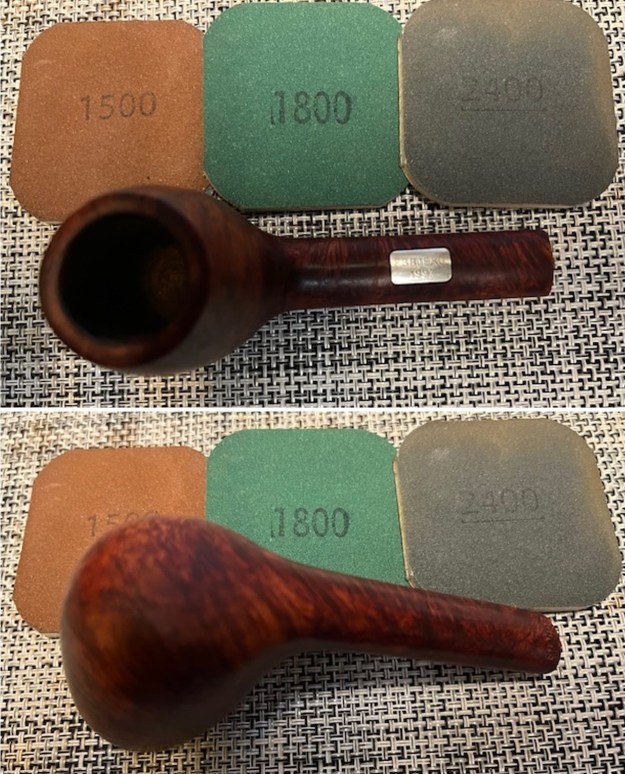
Jeff had done a great job cleaning up the pipe as usual. He reamed the pipe with a PipNet reamer and cut back the cake back to the bare briar. He cleaned up the walls with a Savinelli Fitsall Pipe Knife. He scrubbed the interior of the bowl and shank with pipe cleaners, cotton swabs and alcohol to remove the tars and oils. He scrubbed the exterior of the pipe with Murphy’s Oil Soap and a tooth brush to remove the grime from the finish. He worked on the rim top lava and darkening with the soap and tooth brush. He scrubbed the inside of the stem with alcohol and pipe cleaners. He scrubbed the exterior with Soft Scrub and then soaked it in Briarville’s Pipe Stem Deoxidizer. He washed it off with warm water to remove the Deoxidizer. The pipe looked far better when it arrived. I took photos of the bowl and rim top as well as the stem to show how clean they were. You can see that rim top and edges look very good. There is some slight darkening on the rim top that should come off with polishing. The stem is clean and the tooth and chatter on both sides ahead of the button is very light.I took photos of the stamping on the sides of the shank and on the silver plaquette. The stamping is readable as noted above. I took the stem off the shank and took a photo to give a sense of the flow and proportion of the pipe. It is a beautiful looking pipe with a bowl Stanwell describe as Conical but that I would describe as a Brandy!I started my work on the pipe by polishing the briar with 1500-12000 grit micromesh sanding pads. I wiped the bowl down after each sanding pad with a damp cloth. I polished the silver plaquette with a jewellers cloth to restore the shine and remove the tarnish. It really glows now.I rubbed the briar down with Before & After Restoration Balm. I worked it into the briar with my fingertips. The product works to clean, enliven and preserve the briar. I let it sit for 10 minutes while I worked on the stem. After the time passed I buffed it with a cotton cloth to deepen the shine. The briar really comes alive with the balm. I set the bowl aside and turned my attention to the stem. I sanded out the tooth marks on the stem surface near the button with a piece of 220 grit sandpaper. I was able to remove them all. I started polishing the stem with 600 grit wet dry sandpaper.I polished the stem with micromesh sanding pads – dry sanding with 1500-12000 grit pads. I wiped the stem down after each sanding pad with Obsidian Oil. I polished it with Before & After Pipe Stem Polish – both Fine and Extra Fine. I gave it a coat of Obsidian Pipe Stem Oil. It works to protect the stem from oxidizing. I set it aside to dry. I am excited to put the finishing touches on this 1997 Stanwell City Pipe, Esbjerg 113 Made in Denmark Canadian. I put the pipe back together and buffed it with Blue Diamond on the buffing wheel. I gave the bowl and the stem multiple coats of carnauba wax. I buffed the pipe with a clean buffing pad to raise the shine and hand buffed it with microfiber cloth to deepen the shine. It is fun to see what the polished bowl looks like with the silver plaquette and the polished vulcanite stem was beautiful. This Stanwell Made in Denmark Esbjerg 113 is nice looking and the pipe feels great in my hand. It is light and well balanced. Have a look at it with the photos below. The dimensions are Length: 5 ½ inches, Height: 1 ¾ inches, Outside diameter of the bowl: 1 inch, Chamber diameter: ¾ of an inch. The weight of the pipe is 1.31 ounces/37 grams. It is a beautiful pipe and one that I will be putting in the Danish Pipemaker Section on the rebornpipes store. Thanks for walking through the cleanup with me as I worked over this pipe.

As always, I encourage your questions and comments as you read the blog. Thanks to each of you who are reading this blog. Remember we are not pipe owners; we are pipe men and women who hold our pipes in trust until they pass on into the trust of those who follow us. 
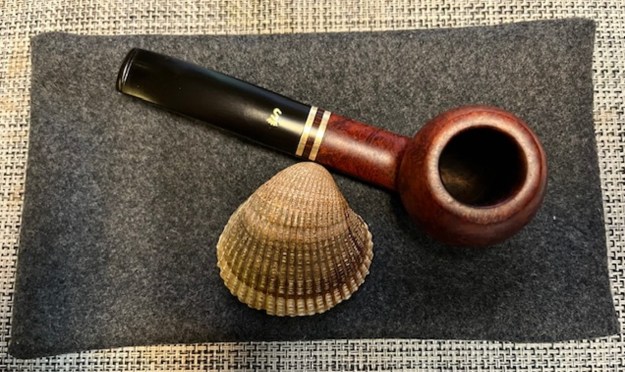
ADDENDUM: Last evening, I had an idea about how to gather some information on the pipes. I thought that Jesper (a friend and blog reader) in Randers, Denmark perhaps would have information on the city pipes. I wrote him a message on FaceBook. This morning I read his reply. As usual he was extremely helpful. Thank you Jesper!

Hi Steve,

The city POY pipes were made (rather customized) for individual tobacco shows all over Denmark. The tobacconist chose a model and Stanwell would make them and do the engravings. So a Viborg 1995 might be a Bulldog while the Vejle 1995 is a Lovat.

I have no idea about how many tobacconists/cities did that but they were quite popular 20-30 years ago. When I worked at FF Pipes here in Randers around 200 we usually bought 3-4 dozens each year and they sold well for Christmas.

Cheers, Jesper

Thanks to Jesper, I now knew that the City POY pipes were customized for individual tobacco shows all over Denmark. The tobacconist would choose the model and Stanwell would to the do the engraving on them. I also learned that they were quite popular 20-30 year ago so I was dealing with a pipe at least that old.

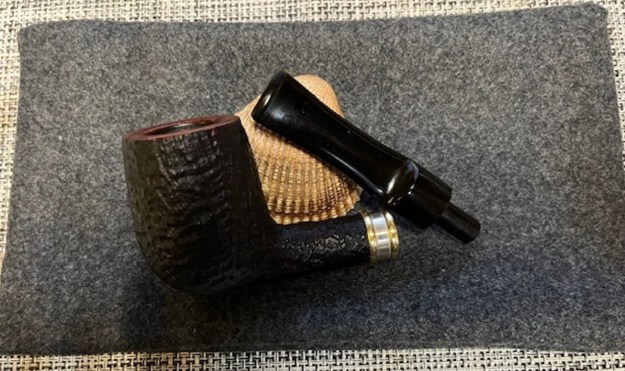
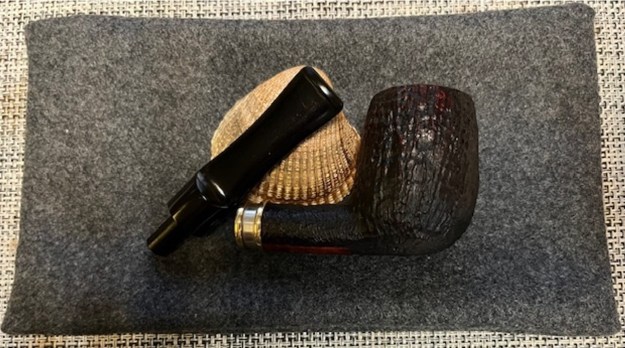
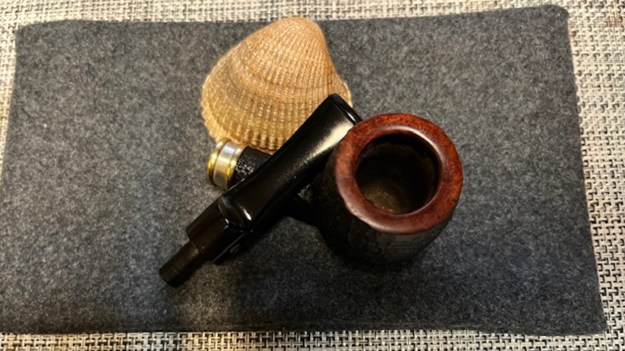
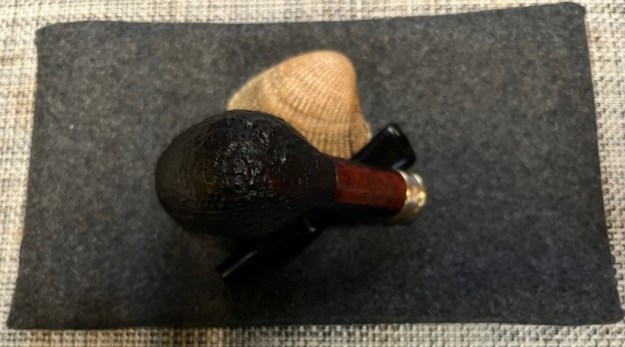
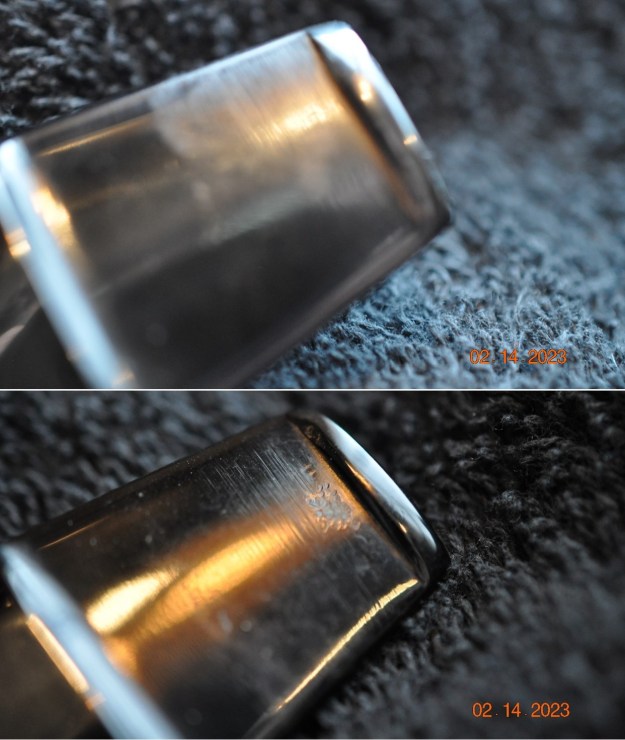
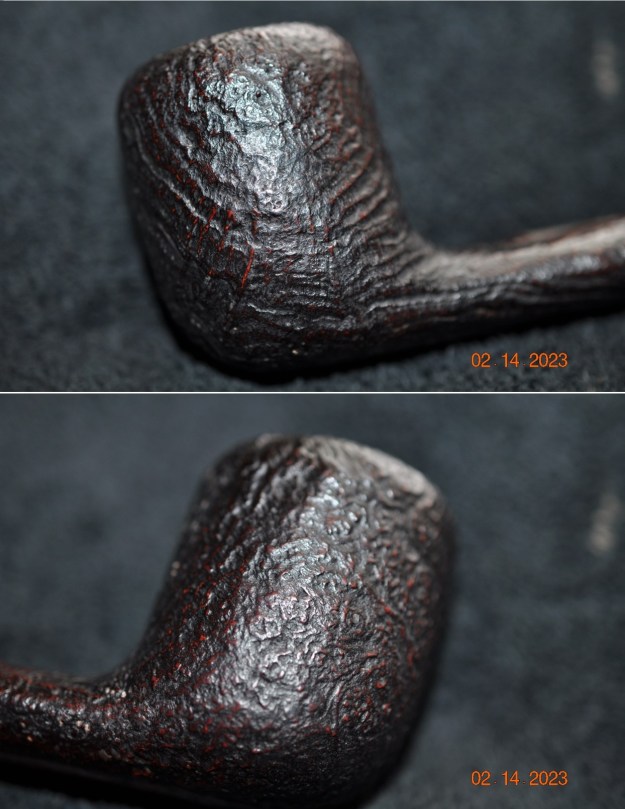
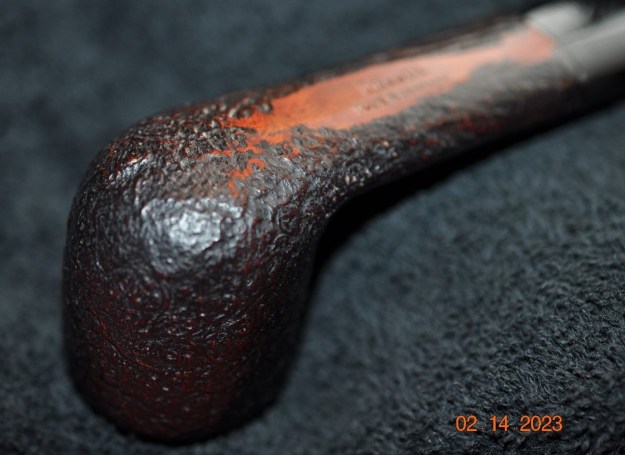
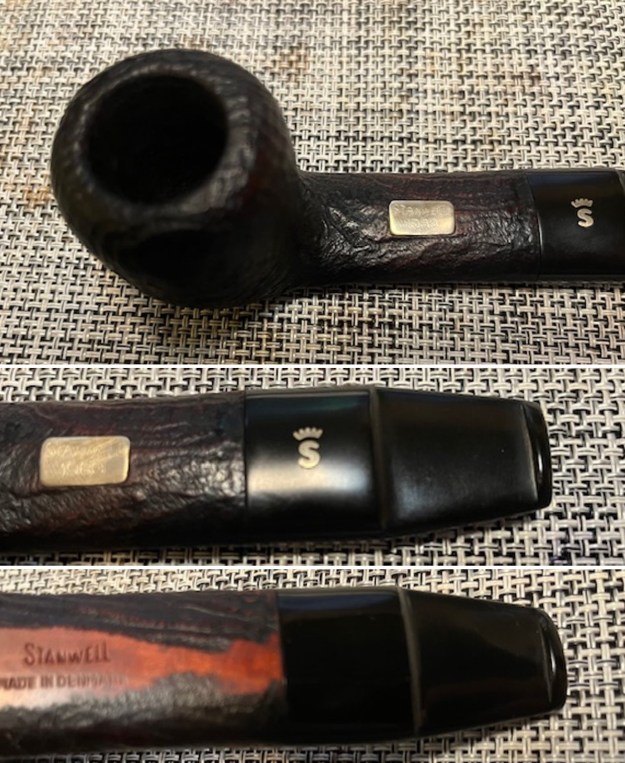
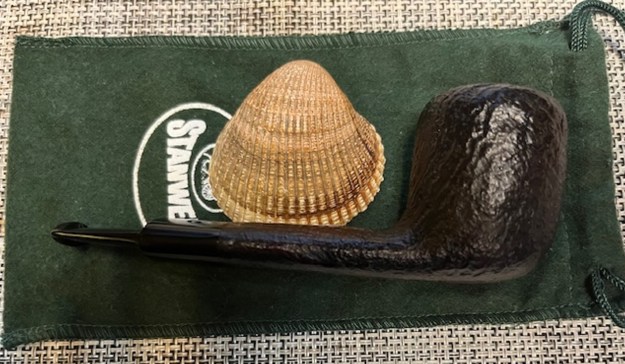
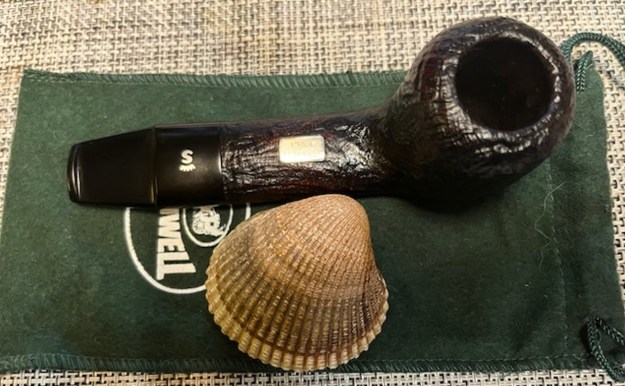
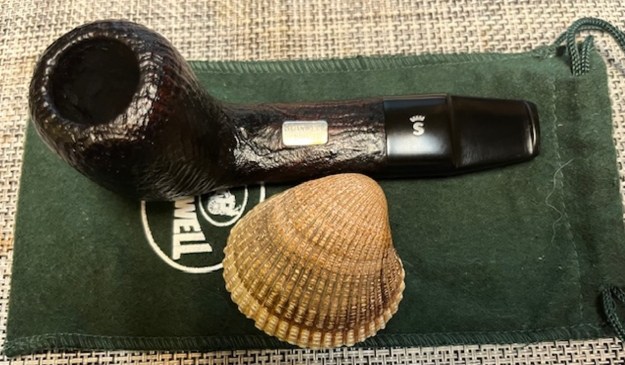
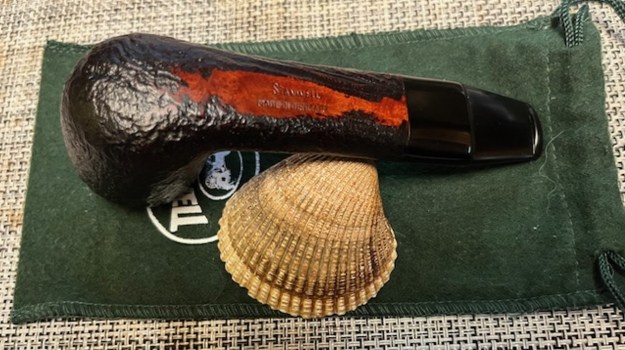
Cleaning up a Stanwell Sandblasted 1983 Pipe of the Year Made in Denmark Pear


Blog by Steve Laug

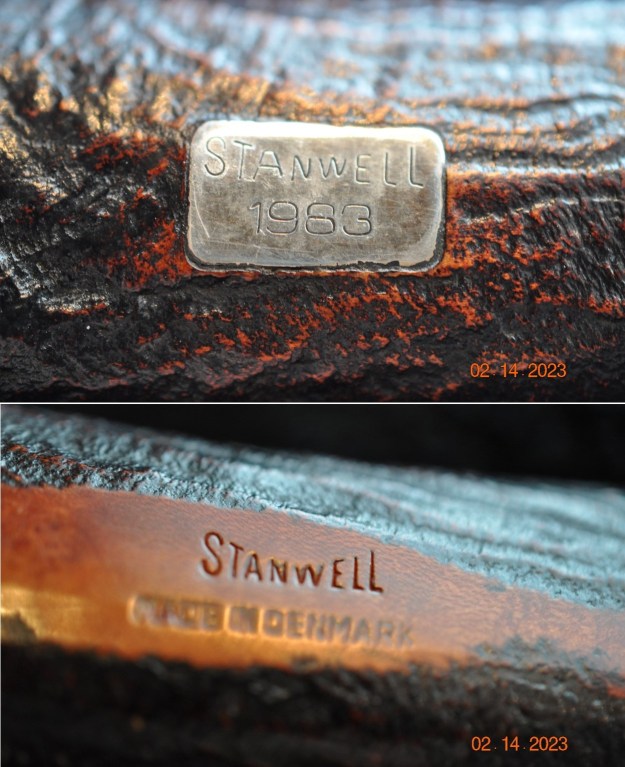
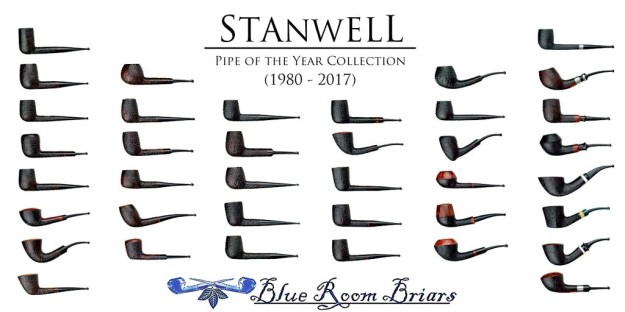
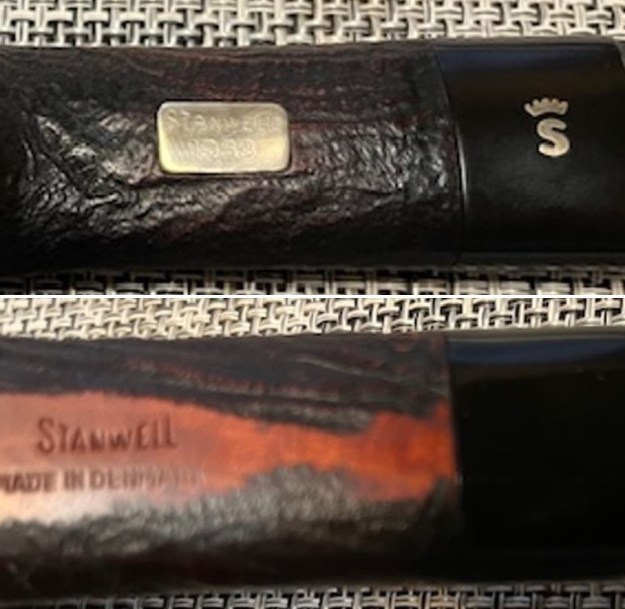
I moved on to work on another pipe. The next one I chose was another Stanwell in a Pipe Sock that came to us from our connection in Copenhagen, Denmark 01/26/2023. It has a shape that doesn’t appear on any of Stanwell’s shape charts but it is very Danish one. Some have called the shape a Pear while others call it an oval shanked Billiard. This one might be your birth year pipe is you were born in 1983 when this POY was made. The stamping on the pipe was very clear and readable. On the topside of the shank is an engraved silver plate that reads Stanwell [over] 1983. On the underside of the shank it is stamped on a smooth panel and reads Stanwell [over] Made in Denmark. The stem had a silver Crowned “S” Stanwell logo inlaid on the top of the saddle stem. The bowl had a moderate cake and there was light lava, dust and debris in the sandblast on the rim top and edges. The finish was in okay condition with dust and grime in the grooves of the sandblast around the bowl sides. The saddle stem was vulcanite. It had some oxidation around the stem/shank junction and on the saddle. There were light tooth marks on the top and underside next to the button. It showed a lot of promise through the grime. Jeff took photos of the pipe as he saw it at this stage of his clean up. The next photos of the rim and the shank show the condition of the pipe at arrival in Idaho. The sandblast grain around the rim top is quite stunning to me. You can see the cake in the bowl and the debris/dust in the grooves of the blast on the top. The sandblast finish is quite amazing as you look at the deep grooves. The stem looked good with light marks on the top and underside at the button edge. Jeff took photos of the rich sandblast on the sides and heel of the bowl. It really is a stunning piece of briar. The contrast stain really makes it stand out clearly. The next photos show the stamping on the shank sides and bottom. It is clear and readable as noted above. The stamping on the silver insert is clear and readable. He also captured the Silver Crown “S” Stanwell logo on the left side of the saddle stem. I turned to the internet to find out information about the Stanwell Pipe of the Year. I came across this interesting article and shape chart on the Blue Room Briars site where they listed a collection of the POYs (https://www.blueroombriars.com/blogs/news/the-stanwell-pipe-of-the-year-collection). I have included the shape chart and part of the article below for the information that it contains.…Recently, Blue Room Briars acquired a complete Stanwell Pipe of the Year (POY) collection spanning from 1980 – 2017. Looking at these pipes in detail reveals some interesting insights into Stanwell’s production, although it should be noted that these findings are not the final say on when a particular pipe was made, but we hope you can use it as a guide when trying to determine the era of manufacture for Stanwell pipes made after 1980. 

The first pipe of note is the 1980 POY. This pipe does not come with the engraved silver plaquette. The pipe also sports a traditional vulcanite mouthpiece.

Between 1981 and 1998, the Stanwell pipes from the POY collection have the addition of silver plaquettes denoting the year, a traditional vulcanite mouthpiece, and also have a Teflon lined mortise. This is an interesting feature that creates a very stable connection between the mortise and tenon, as well as allowing the mortise to be swabbed out easily for maintenance. It wouldn’t be unwarranted to believe that other Stanwell pipes with a Teflon sleeved mortise were probably made between the 1980s to late 1990s. This additional, and costly, feature demonstrates Stanwell’s commitment to quality manufacturing even into the last portion of the 20th century.

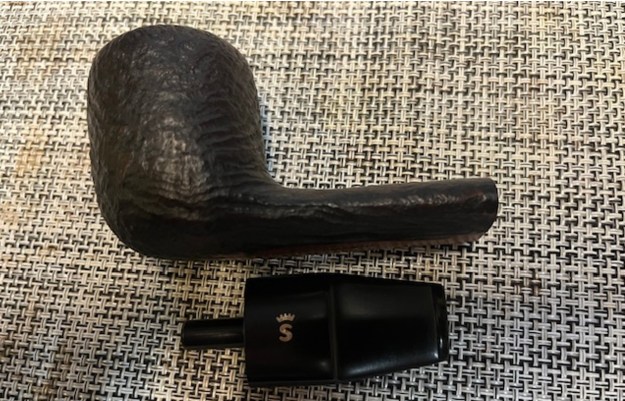
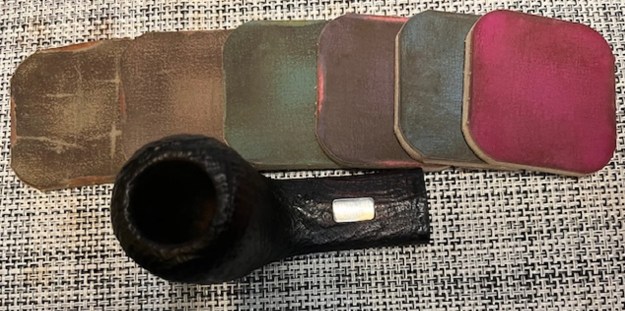
Jeff had done a great job cleaning up the pipe as usual. He reamed the pipe with a PipNet reamer and cut back the cake back to the bare briar. He cleaned up the walls with a Savinelli Fitsall Pipe Knife. He scrubbed the interior of the bowl and shank with pipe cleaners, cotton swabs and alcohol to remove the tars and oils. He scrubbed the exterior of the pipe with Murphy’s Oil Soap and a tooth brush to remove the grime from the finish. He worked on the rim top lava and darkening with the soap and tooth brush. He scrubbed the inside of the stem with alcohol and pipe cleaners. He scrubbed the exterior with Soft Scrub and then soaked it in Briarville’s Pipe Stem Deoxidizer. He washed it off with warm water to remove the Deoxidizer. The pipe looked far better when it arrived. I took photos of the bowl and rim top as well as the stem to show how clean they were. You can see that rim top and edges look very good. The stem is clean and the tooth and chatter on both sides ahead of the button is very light.I took photos of the stamping on the sides of the shank. The stamping is readable as noted above.I took the stem off the shank and took a photo to give a sense of the flow and proportion of the pipe. It is a beautiful looking pipe.I started my work on the pipe by polishing the silver plaquette on the shank top with micromesh because it was in such good condition. I polished it with 3200-12000 grit micromesh sanding pads. I wiped it down after each sanding pad with a jewellers polishing cloth.I rubbed the briar down with Before & After Restoration Balm. I worked it into the briar with my fingertips. The product works to clean, enliven and preserve the briar. I let it sit for 10 minutes while I worked on the stem. After the time passed I buffed it with a cotton cloth to deepen the shine. The briar really comes alive with the balm. I set the bowl aside and turned my attention to the stem. I sanded out the tooth marks on the stem surface near the button with a piece of 220 grit sandpaper. I was able to remove them all. I started polishing the stem with 600 grit wet dry sandpaper. I polished the stem with micromesh sanding pads – dry sanding with 1500-12000 grit pads. I wiped the stem down after each sanding pad with Obsidian Oil. I polished it with Before & After Pipe Stem Polish – both Fine and Extra Fine. I gave it a coat of Obsidian Pipe Stem Oil. It works to protect the stem from oxidizing. I set it aside to dry. I am excited to put the finishing touches on this 1983 Stanwell Pipe of the Year (POY) Sandblast Made in Denmark Pear. I put the pipe back together and buffed it with Blue Diamond on the buffing wheel. I gave the bowl and the stem multiple coats of carnauba wax. I buffed the pipe with a clean buffing pad to raise the shine and hand buffed it with microfiber cloth to deepen the shine. It is fun to see what the polished bowl looks like with the polished black, fancy turned vulcanite stem was beautiful. This Stanwell Made in Denmark POY 1983 Pear is nice looking and the pipe feels great in my hand. It is light and well balanced. Have a look at it with the photos below. The dimensions are Length: 5 inches, Height: 1 ¾ inches, Outside diameter of the bowl: 1 ¼ inches, Chamber diameter: ¾ of an inch. The weight of the pipe is 1.69 ounces/48 grams. It is a beautiful pipe and one that I will be putting in the Danish Pipemaker Section on the rebornpipes store. Thanks for walking through the cleanup with me as I worked over this pipe.

As always, I encourage your questions and comments as you read the blog. Thanks to each of you who are reading this blog. Remember we are not pipe owners; we are pipe men and women who hold our pipes in trust until they pass on into the trust of those who follow us.
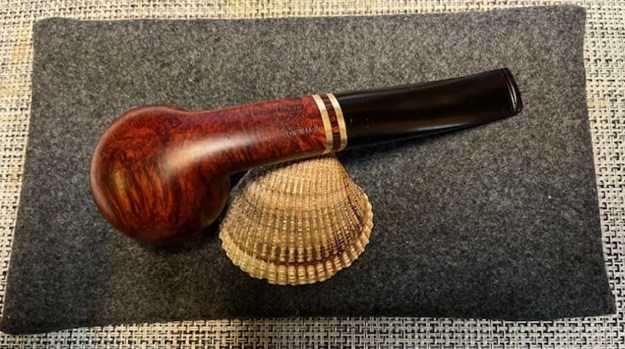
Restoring a Stanwell Danish Design de Luxe 191 Rhodesian


Blog by Steve Laug

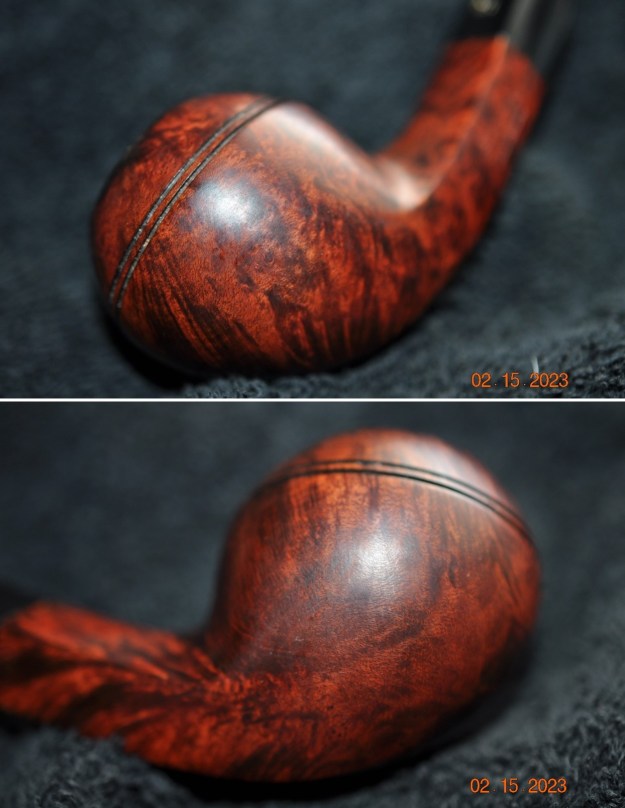
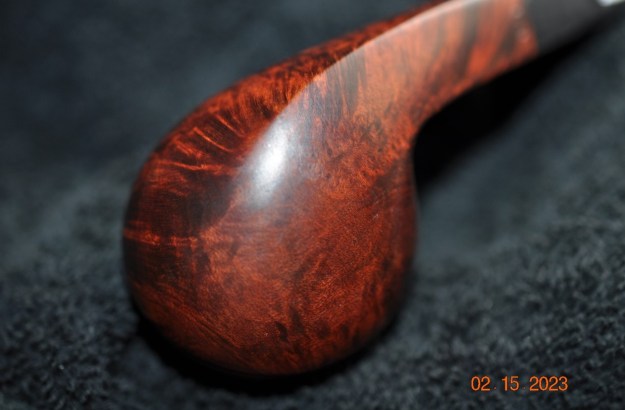
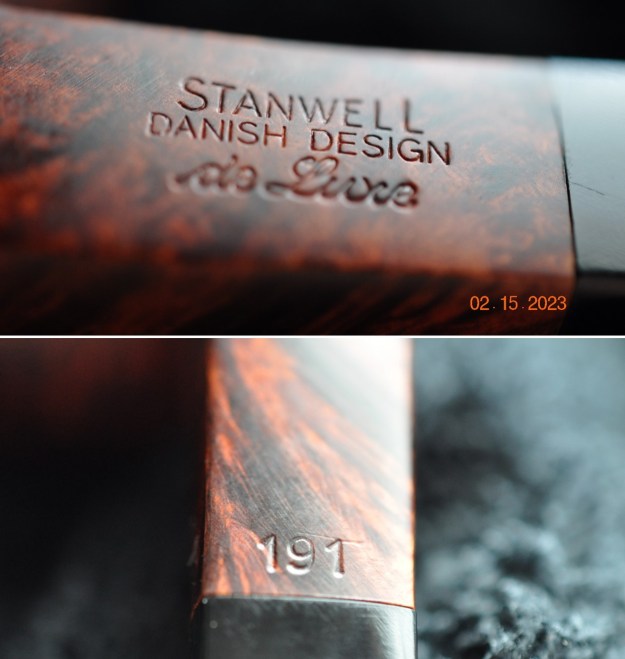
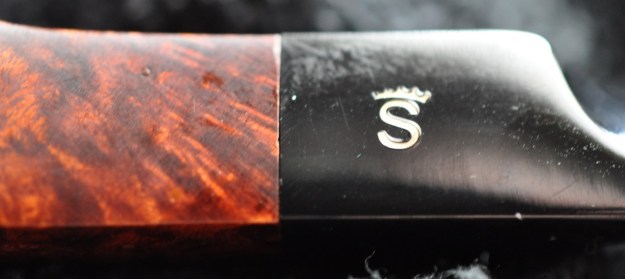
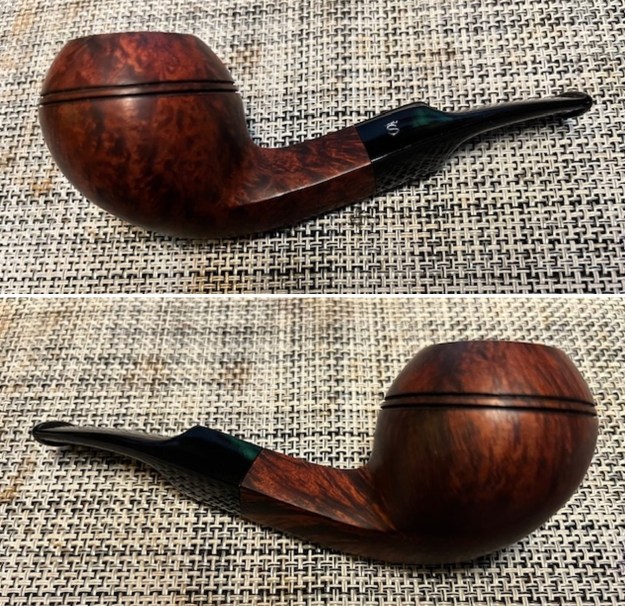
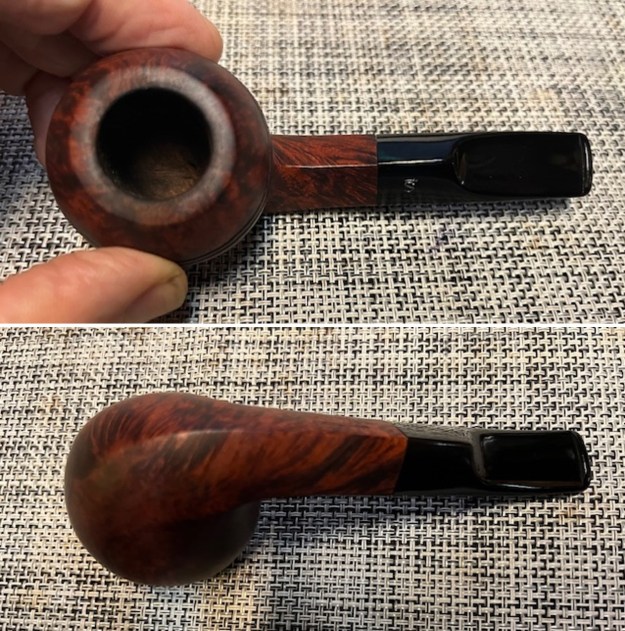
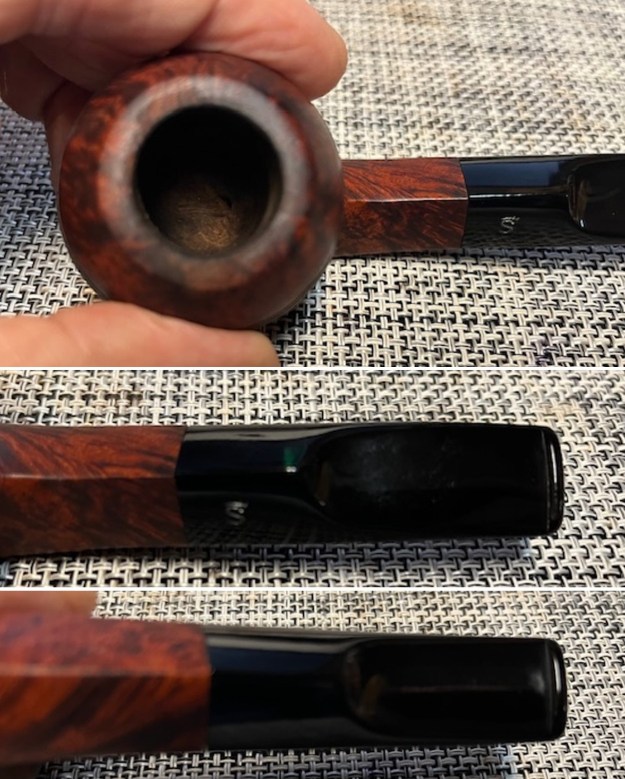
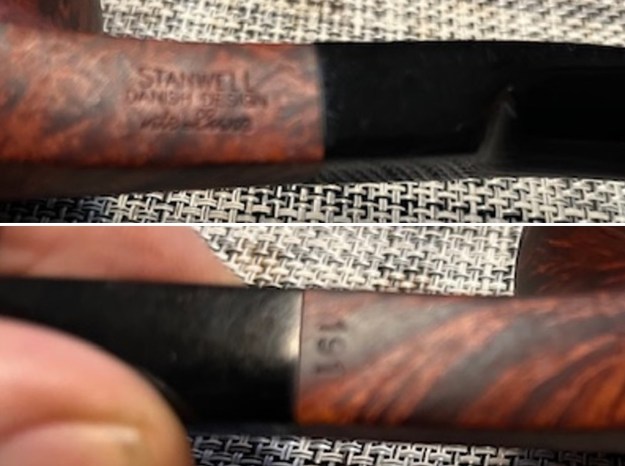
I moved on to work on another pipe. The next one I chose was another Stanwell in a Pipe Sock. The stamping on the pipe was very clear and readable. On the left underside of the diamond shank it reads Stanwell [over] Danish Design [over] de Luxe. On the right underside of the shank, next to the shank was the shape number 191. The stem had a silver Crowned “S” Stanwell logo inlaid on the left side of the saddle stem. The bowl had a thick cake that overflowed onto the rim top and edges in thick lava. There were spots where it ran down the outer edges of the bowl. The finish was in okay condition underneath grime and oils ground into the surface of the bowl. The twin rings around the bowl cap are in excellent condition. The stem was dirty acrylic with light tooth marks on the top and underside next to the button. It showed a lot of promise through the grime. The pipe was well used and was obviously someone’s favourite pipe! Jeff took photos of the pipe as he saw it at this stage of his clean up. The next photos of the rim and the shank show the condition of the pipe at arrival in Idaho. The grain around the rim top is quite stunning to me. You can see the cake in the bowl and the grime on the top. It was a mess but the stain makes the grain even show through the grime around the bowl sides and cap. The stem looked good with light marks on the top and underside at the button edge. Jeff took photos of the grain on the sides and heel of the bowl. It really is a stunning piece of briar. The contrast stain really makes it stand out clearly. The next photos show the various stamping on the shank sides and bottom. It is clear and readable as noted above. He also captured the Silver Crown “S” Stanwell logo on the left side of the saddle stem. I did some looking through the catalogues on Pipedia and the information there and did not find the line listed. I did have a look at the article on Shape Numbers and Designers there (https://pipedia.org/wiki/Stanwell_Shape_Numbers_and_Designers). From there I found that the shape 191 is a small Rhodesian that was designed originally by Tom Eltang.

Jeff had done a great job cleaning up the pipe as usual. He reamed the pipe with a PipNet reamer and cut back the cake back to the bare briar. He cleaned up the walls with a Savinelli Fitsall Pipe Knife. He scrubbed the interior of the bowl and shank with pipe cleaners, cotton swabs and alcohol to remove the tars and oils. He scrubbed the exterior of the pipe with Murphy’s Oil Soap and a tooth brush to remove the grime from the finish. He worked on the rim top lava and darkening with the soap and tooth brush. He scrubbed the inside of the stem with alcohol and pipe cleaners. He scrubbed the exterior with Soft Scrub and then soaked it in Briarville’s Pipe Stem Deoxidizer. He washed it off with warm water to remove the Deoxidizer. The pipe looked far better when it arrived. I took photos of the bowl and rim top as well as the stem to show how clean they were. You can see that rim top and edges look very good. The stem is clean and the tooth and chatter on both sides ahead of the button is very light.I took photos of the stamping on the sides of the shank. The stamping is readable as noted above.I took the stem off the shank and took a photo to give a sense of the flow and proportion of the pipe. It is a beautiful looking pipe.I started my work on the pipe by polishing the briar with micromesh because it was in such good condition. I polished it with 1500-12000 grit micromesh sanding pads. I wiped the bowl down after each sanding pad with a damp cloth. I rubbed the briar down with Before & After Restoration Balm. I worked it into the briar with my fingertips. The product works to clean, enliven and preserve the briar. I let it sit for 10 minutes while I worked on the stem. After the time passed I buffed it with a cotton cloth to deepen the shine. The briar really comes alive with the balm. I set the bowl aside and turned my attention to the stem. I sanded out the tooth marks on the stem surface near the button with a piece of 220 grit sandpaper. I was able to remove them all. I started polishing the stem with 600 grit wet dry sandpaper.I polished the stem with micromesh sanding pads – dry sanding with 1500-12000 grit pads. I wiped the stem down after each sanding pad with Obsidian Oil. I polished it with Before & After Pipe Stem Polish – both Fine and Extra Fine. I gave it a coat of Obsidian Pipe Stem Oil. It works to protect the stem from oxidizing. I set it aside to dry. I am excited to put the finishing touches on this Tom Eltang Danish Design Stanwell Deluxe 191 Rhodesian. I put the pipe back together and buffed it with Blue Diamond on the buffing wheel. I gave the bowl and the stem multiple coats of carnauba wax. I buffed the pipe with a clean buffing pad to raise the shine and hand buffed it with microfiber cloth to deepen the shine. It is fun to see what the polished bowl looks like with the polished black, fancy turned vulcanite stem was beautiful. This Stanwell Danish Design Deluxe 191 is nice looking and the pipe feels great in my hand. It is light and well balanced. Have a look at it with the photos below. The dimensions are Length: 5 inches, Height: 1 ¾ inches, Outside diameter of the bowl: 1 ¼ inches, Chamber diameter: ¾ of an inch. The weight of the pipe is 1.69 ounces/48 grams. It is a beautiful pipe and one that I will be putting in the Danish Pipemaker Section on the rebornpipes store. Thanks for walking through the cleanup with me as I worked over this pipe.

As always, I encourage your questions and comments as you read the blog. Thanks to each of you who are reading this blog. Remember we are not pipe owners; we are pipe men and women who hold our pipes in trust until they pass on into the trust of those who follow us.
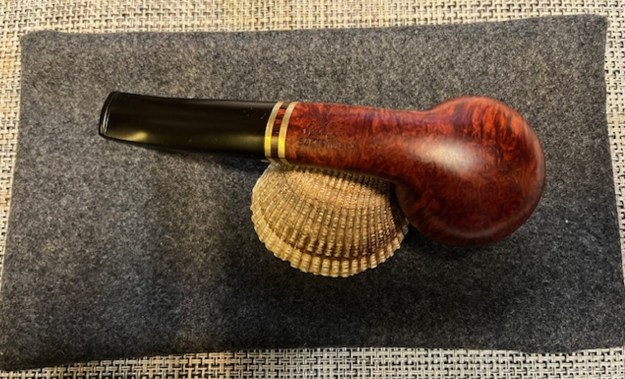
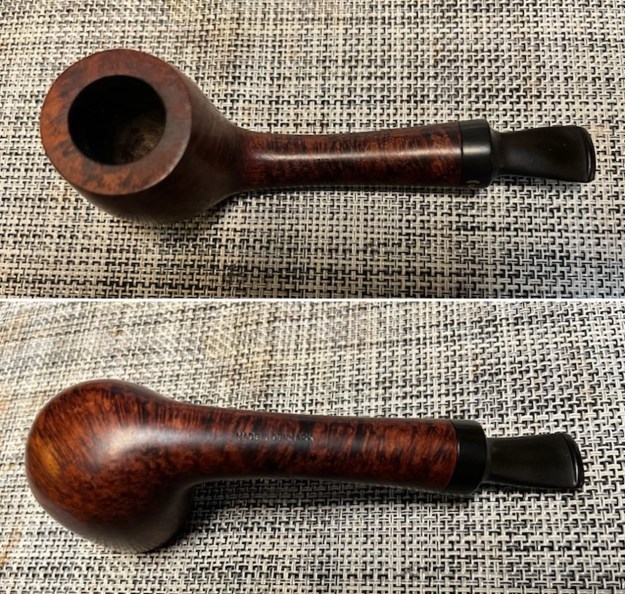
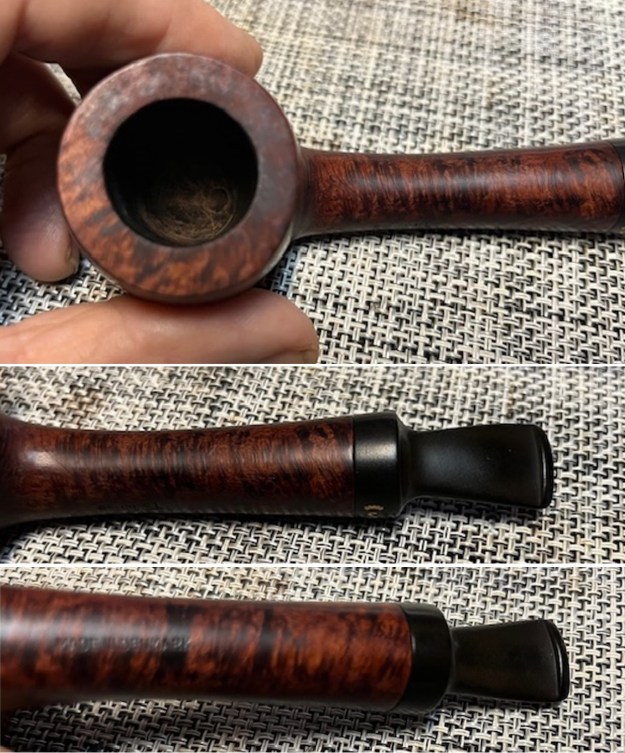
Restoring a Very Recognizable Stanwell Golden Contrast 124


Blog by Steve Laug

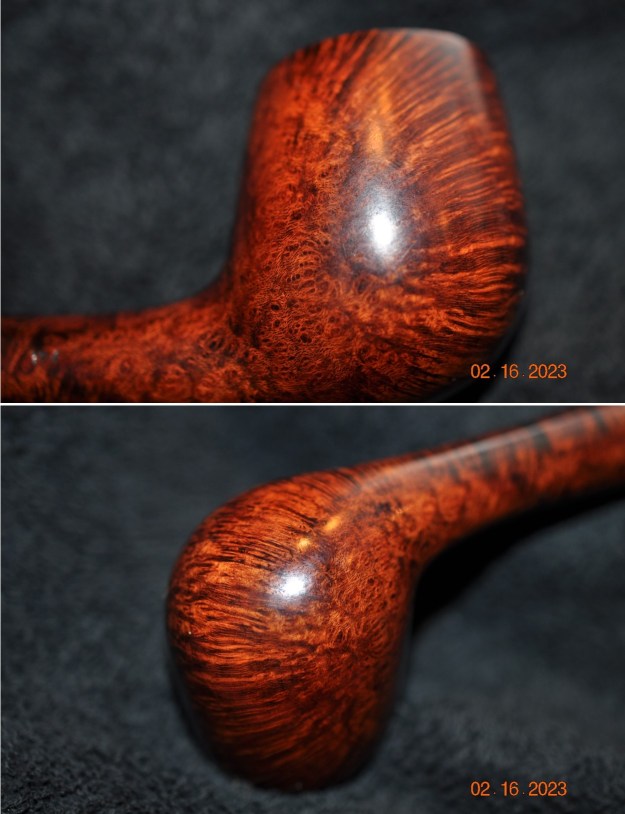
I have always been intrigued by the Stanwell Golden Contrast finish regardless of the pipes it has been applied to. The contrast of dark and light playing across the grain is beautiful. To me the lines and the elegance of the pipe are stunning and the contrast stain makes the lay of pipe with the grain gorgeous. The stain highlights the birdseye and the flame grain and makes them pop from the surface of the bowl and shank. The slight flare of the shank and the saddle on the stem to the pinch of the blade behind the saddle all pointed to a hand that I had seen before. I did a little digging because I wanted to confirm my guess/my suspicions about the designer. What I found out confirmed the direction I was thinking. This Freehand shape with a long conical shank, short saddle mouthpiece was designed by Sixten Ivarsson. For a list of various Stanwell Shape numbers and who they are attributed to you can read this list compiled by leading Stanwell Collector, the late Bas Stevens on rebornpipes at: https://rebornpipes.com/2013/09/03/stanwell-shapes-compiled-by-bas-stevens/

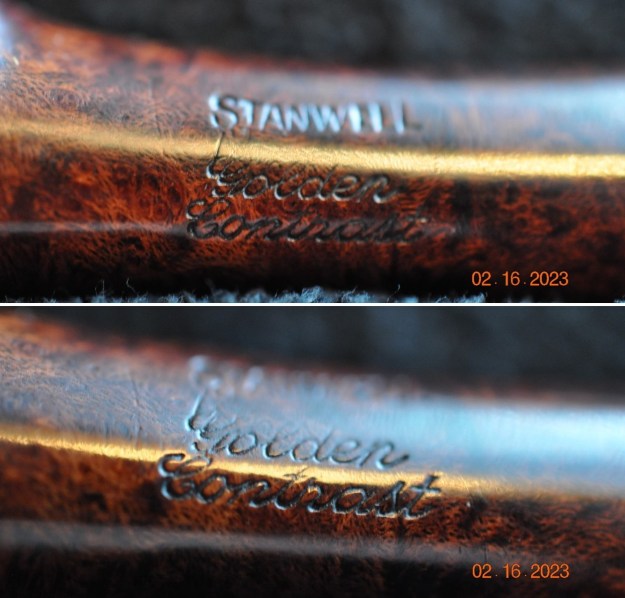
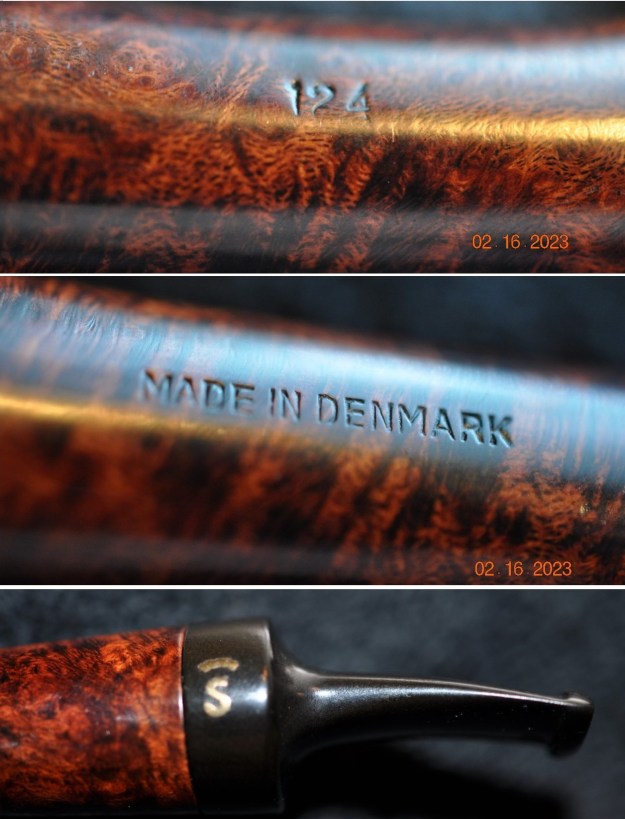
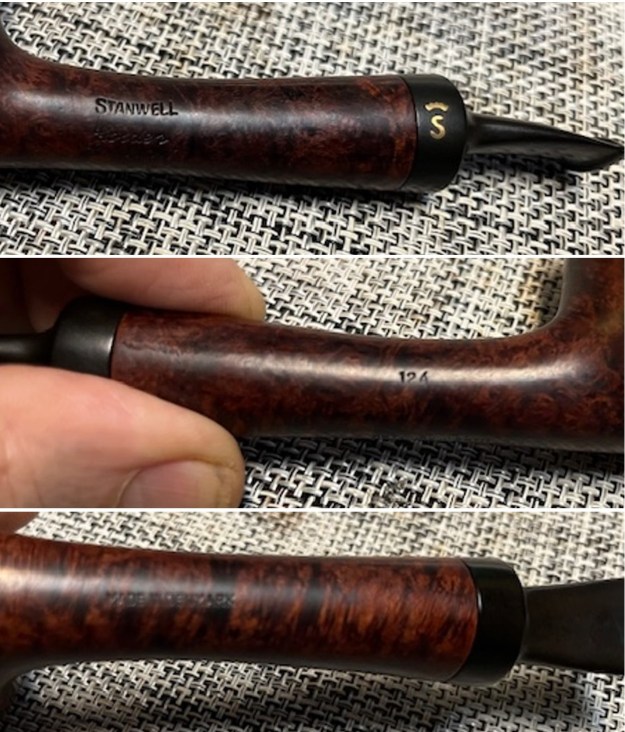
This particular pipe was another of the interesting pipes in the recent shipment of estate pipes we purchased from a fellow in Copenhagen, Denmark on 01/26/2023. We have gotten some amazing Stanwell pipes from him. This Golden Contrast was in pretty decent shape. The finish was dirty but in great shape. The rim showed some darkening and a build-up of tars and oils. There was a thick cake in the bowl with tobacco debris on the walls. The internals were dirty with tars and oils. The stem had some light oxidation and calcification on the top and bottom of the stem from the button forward. There was some tooth chatter as well but no deep tooth marks. The brass crown S on the left side of the saddle appeared to be lightly oxidized as well but would take little to make it shine. The various photos that follow are ones that my brother took before he cleaned the pipe. They show the amazing grain on this beauty. The next photos of the rim and the shank show the condition of the pipe at arrival in Idaho. The grain around the rim top is quite stunning to me. You can see the cake in the bowl and the grime on the top. It was a mess but the contrast stain makes the grain even show through the lava on the rim top. Jeff took photos of the grain on the sides and heel of the bowl. It really is a stunning piece of briar. The contrast stain really makes it stand out clearly. The next photos show the various stamping on the shank sides and bottom. The left side of the shank reads Stanwell over Golden Contrast in script. The right side of the shank is stamped with the shape number 124. The underside of the shank is stamped Made in Denmark. All the stamping is sharp and clear. He also captured the golden Crown “S” Stanwell logo on the left side of the saddle stem. I turned to Pipedia to see if I could find specific information on the Golden Contrast line of pipes (https://pipedia.org/wiki/Stanwell). There was a short note there that I have included in full below.

Golden Contrast:  An old series. The blocks are cut on the cross grain. The pipes from this series exhibit Birds Eye grain only. Brass band and brass S in the stem. The pipes have a two-tone staining which really shows the beautiful bird’s eye grain. However, this staining simply takes too much work so the series is discontinued.

With that information I now knew about the discontinued Golden Contrast line. The pipe I was working on did not have a brass band but it did have the kind of staining and colour on the grain on the pipe. It was definitely a two tone stain on the pipe. Now it was time to work on the pipe.

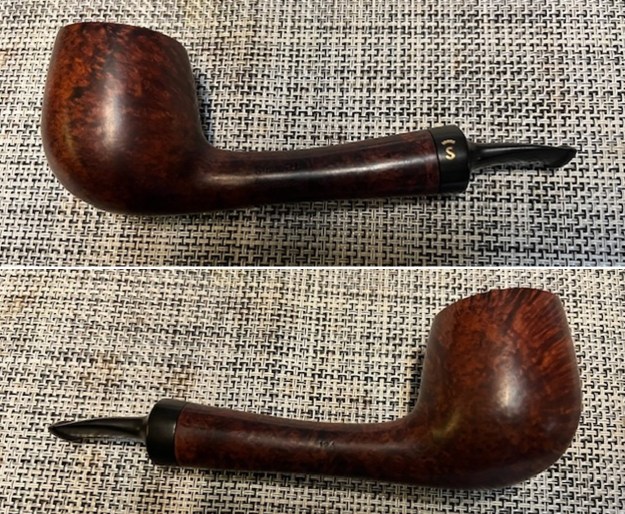
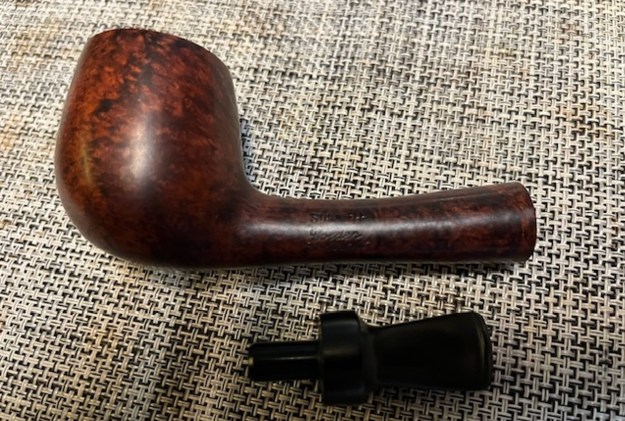
Jeff had done a great job cleaning up the pipe as usual. He reamed the pipe with a PipNet reamer and cut back the cake back to the bare briar. He cleaned up the walls with a Savinelli Fitsall Pipe Knife. He scrubbed the interior of the bowl and shank with pipe cleaners, cotton swabs and alcohol to remove the tars and oils. He scrubbed the exterior of the pipe with Murphy’s Oil Soap and a tooth brush to remove the grime from the finish. He worked on the rim top lava and darkening with the soap and tooth brush. He scrubbed the inside of the stem with alcohol and pipe cleaners. He scrubbed the exterior with Soft Scrub and then soaked it in Briarville’s Pipe Stem Deoxidizer. He washed it off with warm water to remove the Deoxidizer. The pipe looked far better when it arrived. I took photos of the bowl and rim top as well as the stem to show how clean they were. You can see that rim top and edges look very good. The stem is clean and the tooth and chatter on both sides ahead of the button is very light.I took photos of the stamping on the sides of the shank. The stamping is readable as noted above. The Gold colored Stanwell Crown S is on the left side of the saddle stem.I took the stem off the shank and took a photo to give a sense of the flow and proportion of the pipe. It is a beautiful looking pipe.I started my work on the pipe by polishing the briar with micromesh because it was in such good condition. I polished it with 1500-12000 grit micromesh sanding pads. I wiped the bowl down after each sanding pad with a damp cloth. I rubbed the briar down with Before & After Restoration Balm. I worked it into the briar with my fingertips. The product works to clean, enliven and preserve the briar. I let it sit for 10 minutes while I worked on the stem. After the time passed I buffed it with a cotton cloth to deepen the shine. The briar really comes alive with the balm. I set the bowl aside and turned my attention to the stem. I polished the stem with micromesh sanding pads – dry sanding with 1500-12000 grit pads. I wiped the stem down after each sanding pad with Obsidian Oil.I polished it with Before & After Pipe Stem Polish – both Fine and Extra Fine. I gave it a coat of Obsidian Pipe Stem Oil. It works to protect the stem from oxidizing. I set it aside to dry. This Sixten Ivarsson designed Stanwell Golden Contrast 124 Freehand with a short saddle vulcanite stem turned out very nice. The mix of brown stains highlights the grain around the bowl sides and bottom. The rim top and edges look very good. The finish on the pipe is in `excellent condition. I put the stem back on the bowl and carefully buffed the pipe with Blue Diamond on the buffing wheel. I gave the bowl and stem multiple coats of carnauba wax on the buffing wheel and followed that by buffing the entire pipe with a clean buffing pad. I hand buffed the pipe with a microfiber cloth to deepen the shine. The finished Stanwell Golden Contrast 124 is very nice and feels great in the hand. Give the finished pipe a look in the photos below. It is a nice pipe whose dimensions are Length: 5 ½ inches, Height: 2 inches, Outside diameter of the bowl: 1 ½ inches, Chamber diameter: ¾ of an inch. The weight of the pipe is 50 grams/1.76 ounces. Thanks for walking through the restoration with me as I worked over another beautiful pipe. This one will be going on the rebornpipes store, in the Danish Pipe Makers Section shortly. If you are interested in adding it to your collection let me know by message or by email to slaug@uniserve.com. Thanks for your time.

As always, I encourage your questions and comments as you read the blog. Thanks to each of you who are reading this blog. Remember we are not pipe owners; we are pipe men and women who hold our pipes in trust until they pass on into the trust of those who follow us.
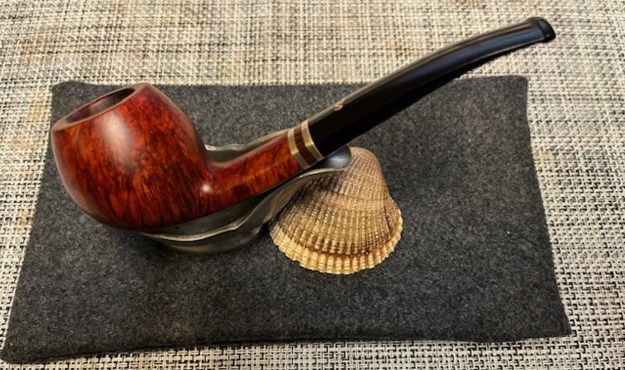
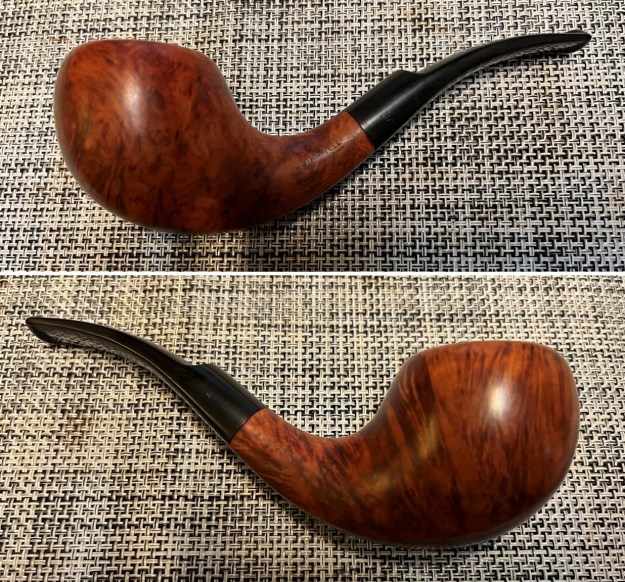
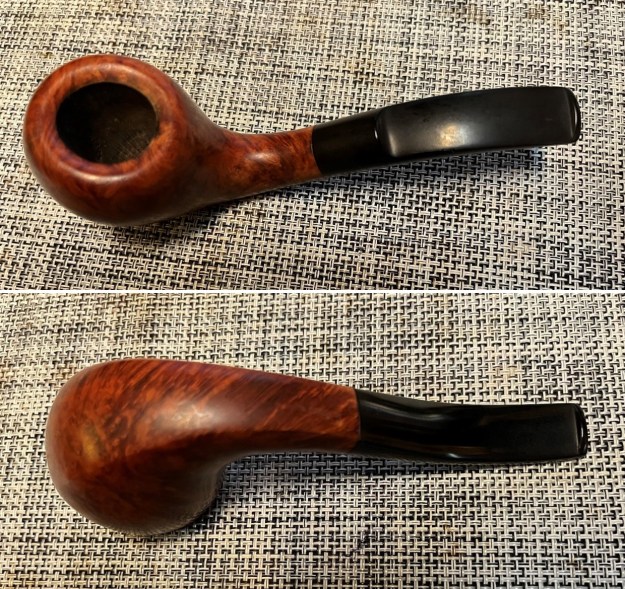
Repairing a Cracked Shank and Restoring a Stanwell Regd. No. 969-48 Royal Guard 22


Blog by Steve Laug

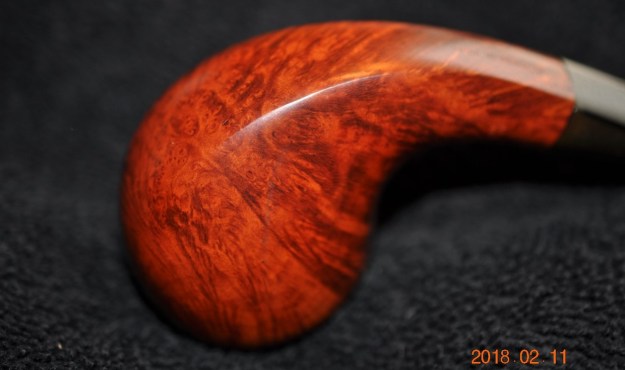
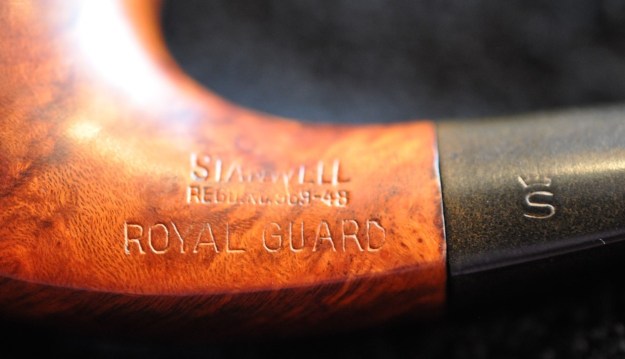
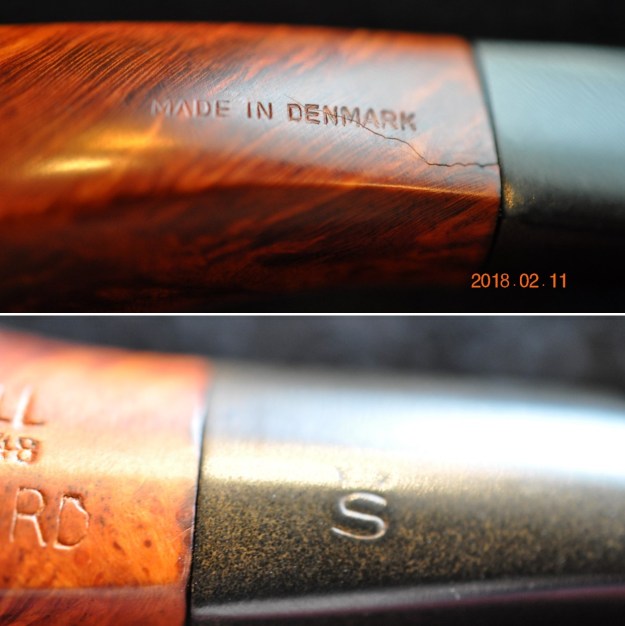
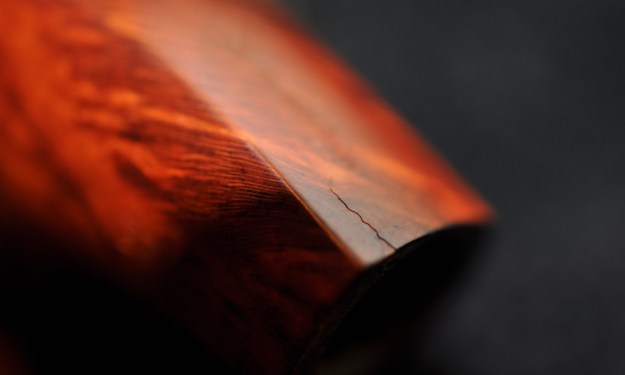
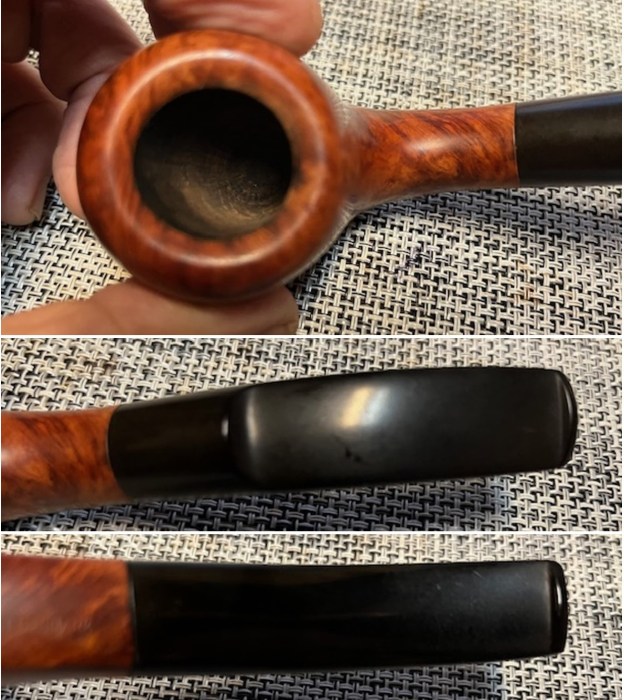
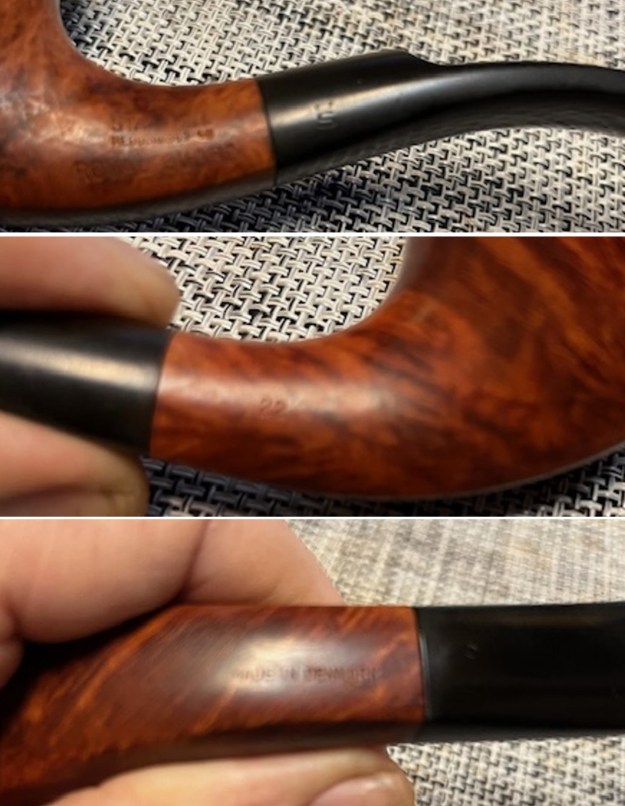
The next pipe I am working on was purchased on 01/26/18 from an eBay seller in Akron, Ohio, USA. It is stamped on the left side of the shank and reads Stanwell [over] Regd. No. 969-48 [over] Royal Guard. It is stamped on the left side with the shape number 22. On the flattened underside of the shank it is stamped Made in Denmark. There was a thick cake in the bowl, debris in the bottom and on the bowl walls and some remnants of tobacco. The airway was dirty and tarry and there was a hairline crack in the thin underside of the shank. There was a light lava overflow on the back of the crowned rim top. The crowned and inwardly beveled rim top looked to be in good condition. The outer edge actually looked quite good with no visible damage. The finish was dirty and dusty and with grime ground into the sides and heel of the bowl. The stem looked fairly good but underneath the calcification and oxidation the tooth marks and chatter looked minimal. There was a gold Stanwell S Crown on the left side of the half saddle. When the stem was removed it was clear that it was a filter pipe. Jeff took photos of the pipe before he started his cleanup work on it. Jeff took close-up photos of the bowl and rim top to show the cake in the bowl. The rim top shows some thin lava spots on the smooth finish. The inner edge of the bowl also had some lava buildup. The outer edges of the bowl look very good. He took photos of the top and underside of the stem surface and button to show its general condition. It looked very good under the spotty oxidation. Jeff took a photo of the heel of the bowl and the shank to give a sense of the grain around the bowl sides. It is gorgeous looking pipe that has grain that chases the shape of the bowl. It should clean up very well.He took photos of the stamping on the shank sides. They are clear and readable as noted above. There was no photo included of the right side of the shank and the shape number there. The Crown Stanwell Logo was clear on the left side of the half saddle stem. It was interesting that the Royal Guard had that stem logo rather than the typical RG logo. Jeff took a closer photo of the hairline crack on the shank. It started on the thin bottom side of the shank end and curved upward through the Made in Denmark stamping before it disappears. I turned to Pipedia to see if there was any clear information on the Royal Guard line of pipes (https://pipedia.org/wiki/Stanwell). I found the Royal Guard listed under the second lines of Stanwell pipes listed there.
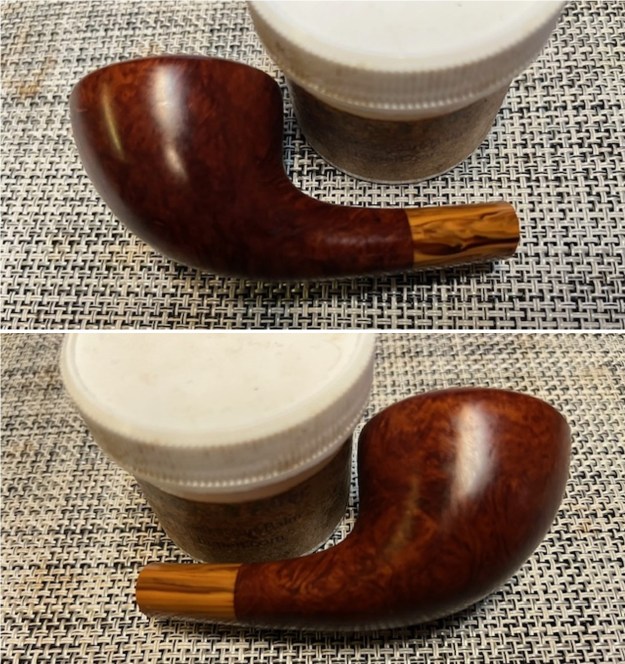
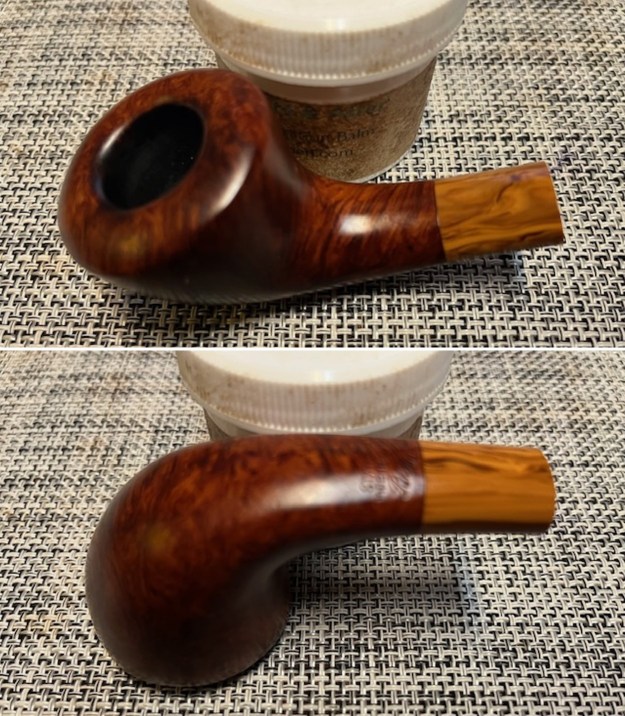
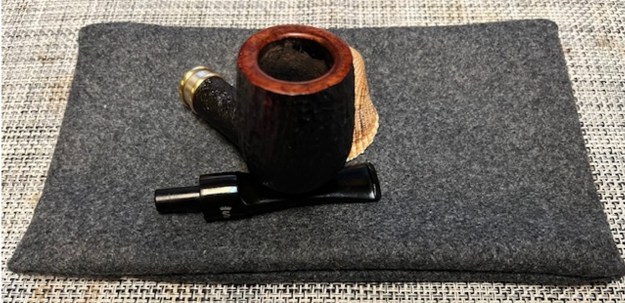
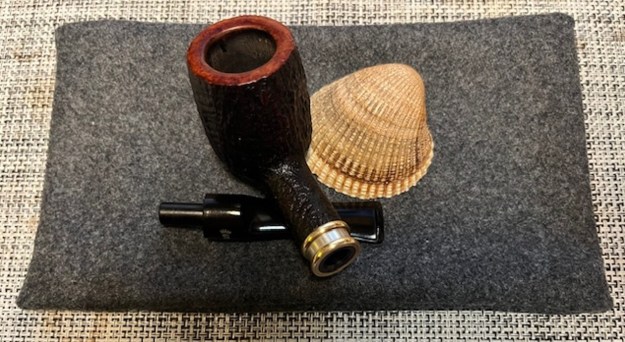
I then followed a link there (https://pipedia.org/wiki/Stanwell_Shape_Numbers_and_Designers). It took me to an article on Shape numbers and Designers. I quote from that below.

22. Two versions of this shape number:

a) Straight billiard with an oval shank and a tapered stem (early 1950s – see catalog).

b) Bent apple-horn hybrid with a half-saddle stem.

From that information I knew that I was working a 22 B – a bent apple-horn hybrid with a half-saddle stem. There was list of designers below that included the 22 in pipes designed by Sixten Ivarsson. The problem was that I did not know if it was referring to the a) or the b) design. Now it was time to work on the pipe.

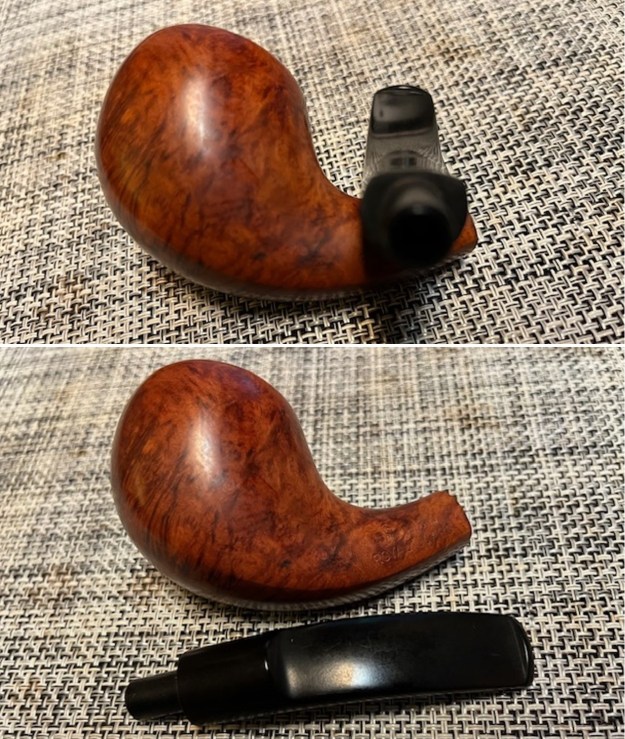
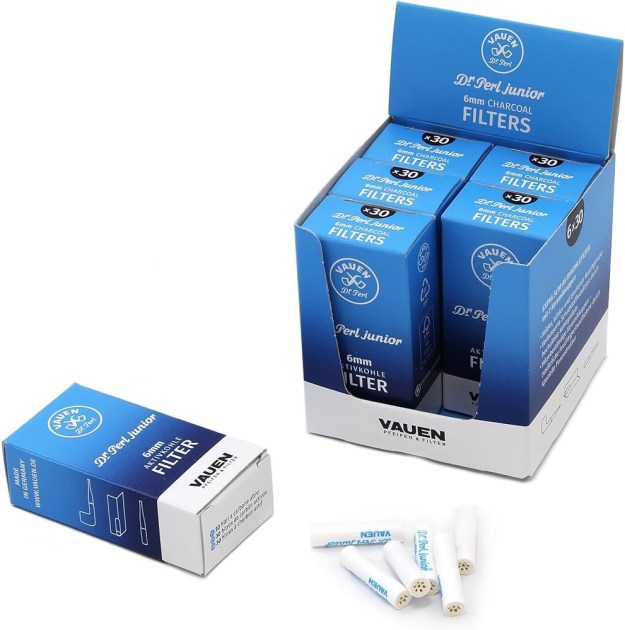
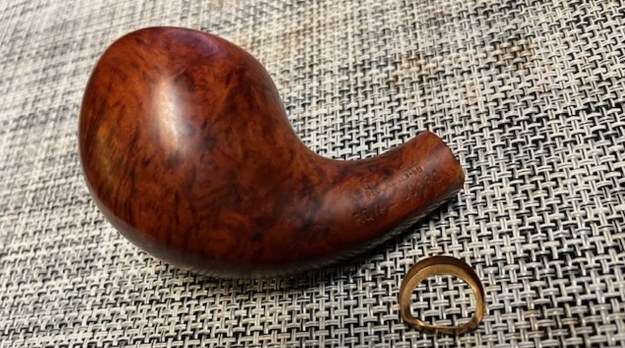
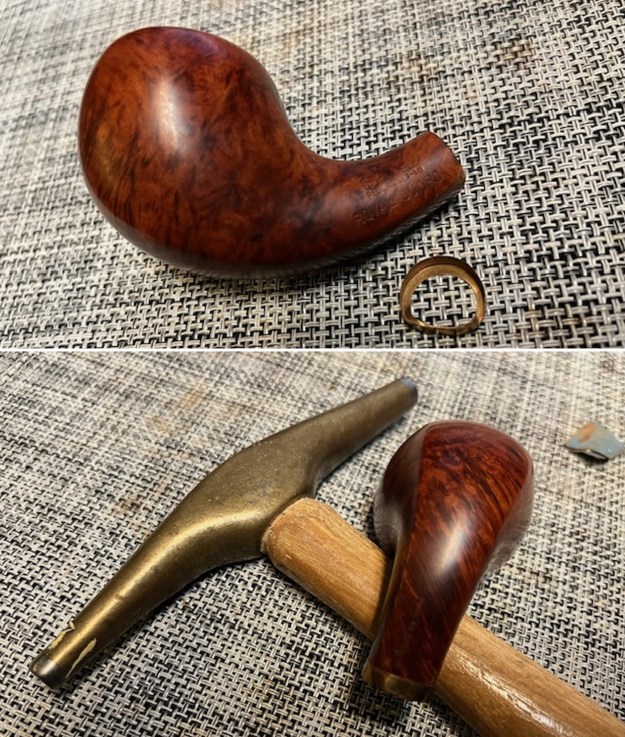
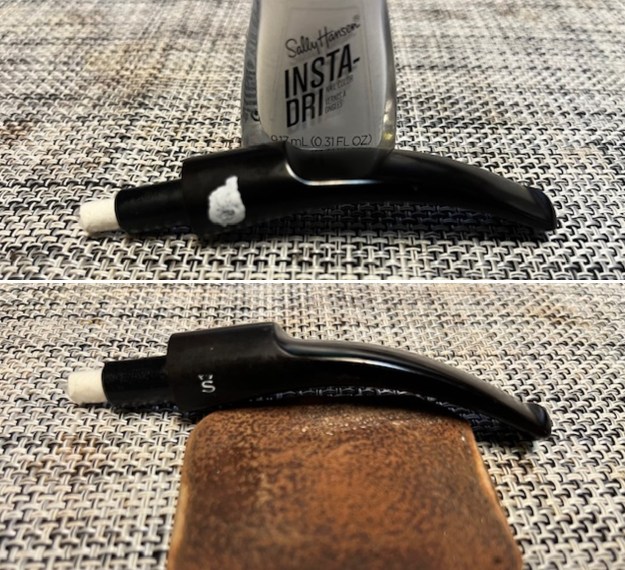
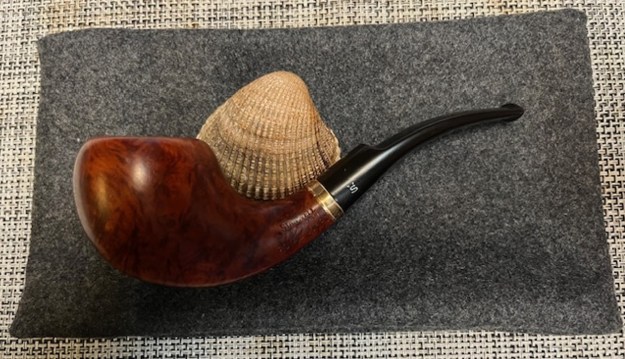
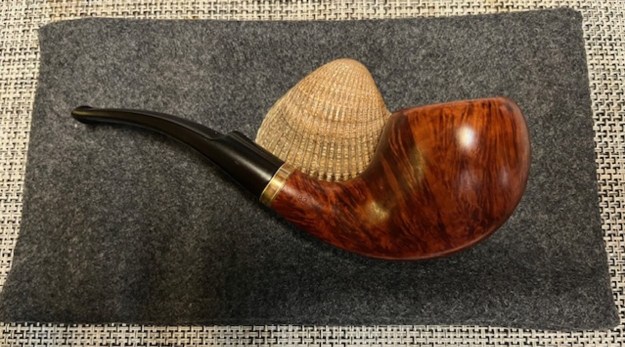
Jeff had done a great job cleaning up the pipe as usual. He reamed the pipe with a PipNet reamer and cut back the cake back to the bare briar. He cleaned up the walls with a Savinelli Fitsall Pipe Knife. He scrubbed the interior of the bowl and shank with pipe cleaners, cotton swabs and alcohol to remove the tars and oils. He scrubbed the exterior of the pipe with Murphy’s Oil Soap and a tooth brush to remove the grime from the finish. He worked on the rim top lava and darkening with the soap and tooth brush. He scrubbed the inside of the stem with alcohol and pipe cleaners. He scrubbed the exterior with Soft Scrub and then soaked it in Briarville’s Pipe Stem Deoxidizer. He washed it off with warm water to remove the Deoxidizer. The pipe looked far better when it arrived. I took photos of the bowl and rim top as well as the stem to show how clean they were. You can see that rim top and edges look very good. The stem is clean and the tooth and chatter on both sides ahead of the button is very light.I took photos of the stamping on the sides of the shank. The stamping is readable as noted above. Royal Guard was a Stanwell second and generally was not stamped Stanwell. This one was! The stem on the Royal Guard was also stamped RG and this one bears the Stanwell Crown S.I took a photo of the pipe with the stem removed to show that the tenon was drilled for a filter. I tried to fit a 9mm filter but it did not work. My guess is that it takes Vauen Dr Perl Junior 6mm size filter. I tried a Dr. Grabow 6mm filter it fit well but was too long. I would trim a Grabow filter to fit the proper length and whoever adds it to their collection will be able to use it until they are able to get some of the ones in the photo below. I also took a photo of the bowl and stem to get an overall look of stem, tenon and profile of the pipe. It really is a beautifully shaped pipe. I decided to start my work on the pipe by dealing with the cracked shank. I chose not to drill the crack end so as not to damage the stamping. Instead I put some glue on the cracked shank and held it in place until the CA glue set. I hand fit a band to the shank end. It sounds simple but it was an interesting challenge. The bottom edge of the shank was very thin which I think is why it cracked. There was no extra briar to work with. The other piece of the puzzled was that the bottom of the shank was flattened and the shape was not round any more. I went through my bands and found the one that had the proper diameter. It also had a curved edge that covered the shank end and would provide some extra thickness to the thin bottom of the shank. I gave the band a rough shaping by hand then put it on the shank and used a small furniture hammer to fit it smoothly to the shank shape. It fit nicely and it firmly held things in place.  I used a folded pipe cleaner to paint the shank end with all purpose glue and then pressed the band in place on the glue. I took photos of the newly fitted band. It looked very good at this point and the crack was pressed together tightly. I polished the briar with micromesh because it was in such good condition. I polished it with 1500-12000 grit micromesh sanding pads. I wiped the bowl down after each sanding pad with a damp cloth. I rubbed the briar down with Before & After Restoration Balm. I worked it into the briar with my fingertips. The product works to clean, enliven and preserve the briar. I let it sit for 10 minutes while I worked on the stem. After the time passed I buffed it with a cotton cloth to deepen the shine. The briar really comes alive with the balm. I set the bowl aside and turned my attention to the stem. I have a box of Dr. Grabow 6mm filters so I took one out of the box, shortened it to fit and inserted it in the tenon. The fit is perfect and fills in the tenon. I then used some White Acrylic Fingernail Polish to touch up the white that remained in the Crown S stamp on the top of the stem. The S and part of the crown looked much better. There were some light spots on the top of the crown but otherwise it looked good. I polished the stem with micromesh sanding pads – dry sanding with 1500-12000 grit pads. I wiped the stem down after each sanding pad with Obsidian Oil. I polished it with Before & After Pipe Stem Polish – both Fine and Extra Fine. I gave it a coat of Obsidian Pipe Stem Oil. It works to protect the stem from oxidizing. I set it aside to dry. This Sixten Ivarsson designed Stanwell Royal Guard 22 Bent Apple/Scoop with a half saddle vulcanite stem turned out very nice. The mix of brown stains highlights the grain around the bowl sides and bottom. The rim top and edges look very good. The finish on the pipe is in excellent condition. The thin brass band on the shank end looks good and adds strength to the shank stem fit. I put the stem back on the bowl and carefully buffed the pipe with Blue Diamond on the buffing wheel. I gave the bowl and stem multiple coats of carnauba wax on the buffing wheel and followed that by buffing the entire pipe with a clean buffing pad. I hand buffed the pipe with a microfiber cloth to deepen the shine. The finished Stanwell Royal Guard 22 is very nice and feels great in the hand and can be used as a sitter with the wide base. Give the finished pipe a look in the photos below. It is a nice pipe whose dimensions are Length: 5 ½ inches, Height: 2 inches, Outside diameter of the bowl: 1 ½ inches, Chamber diameter: ¾ of an inch. The weight of the pipe is 57 grams/2.10 ounces. Thanks for walking through the restoration with me as I worked over another beautiful pipe. This one will be going on the rebornpipes store, in the Danish Pipe Makers Section shortly. If you are interested in adding it to your collection let me know by message or by email to slaug@uniserve.com. Thanks for your time.

As always, I encourage your questions and comments as you read the blog. Thanks to each of you who are reading this blog. Remember we are not pipe owners; we are pipe men and women who hold our pipes in trust until they pass on into the trust of those who follow us.