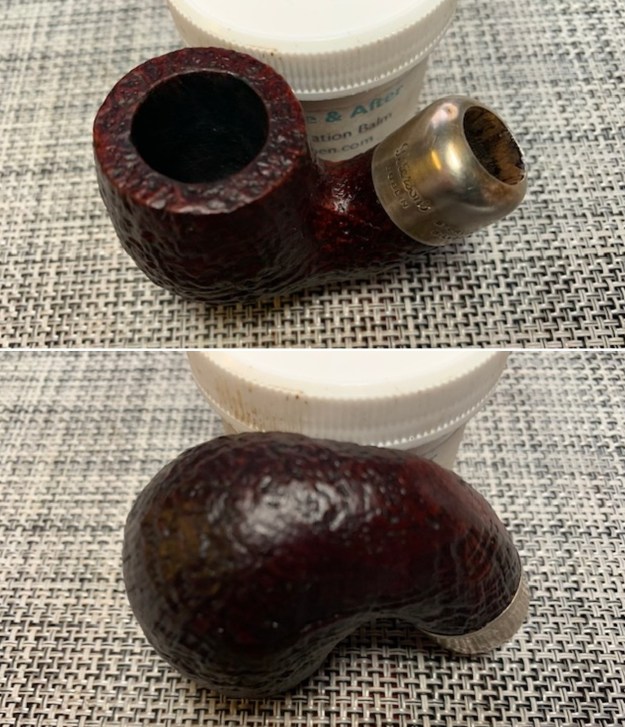
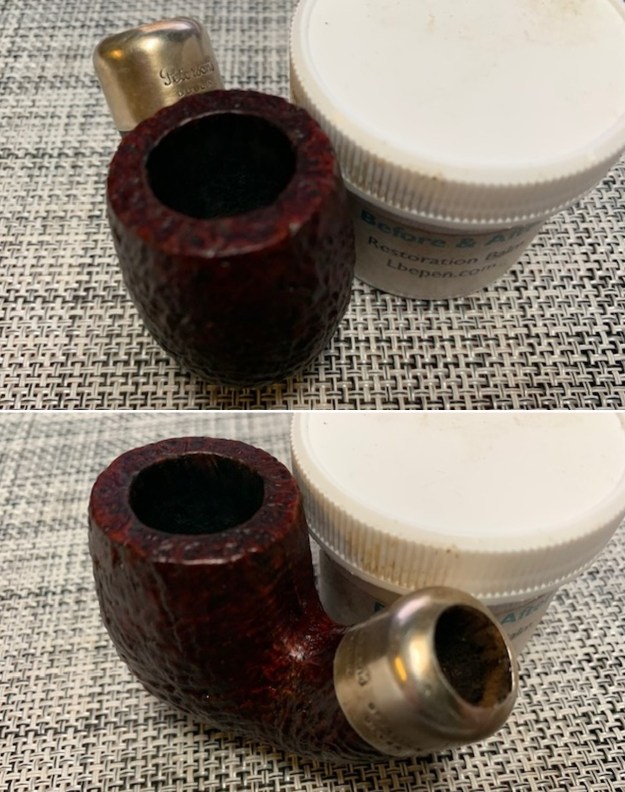
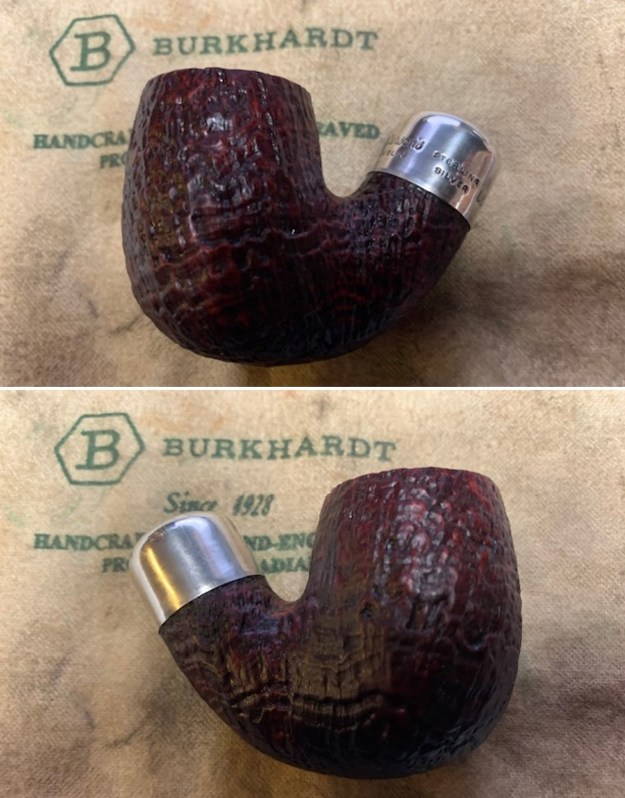
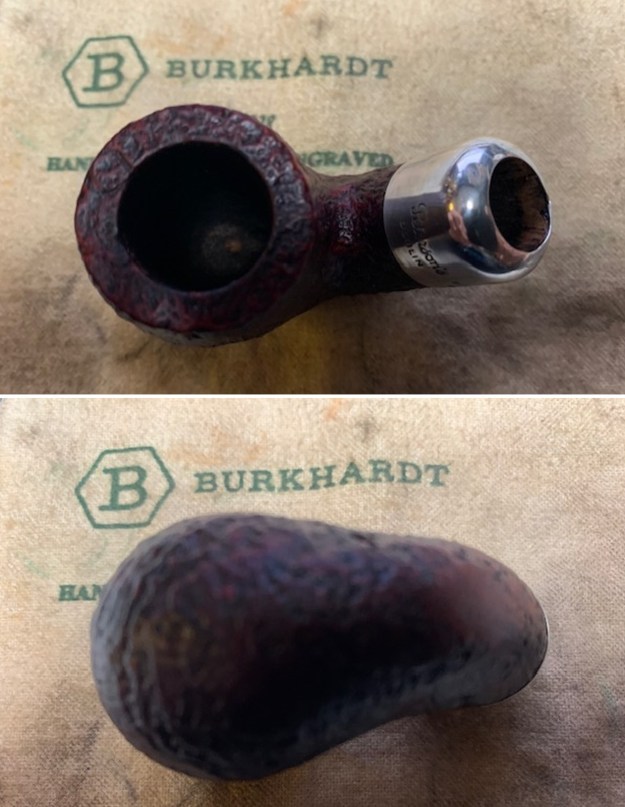
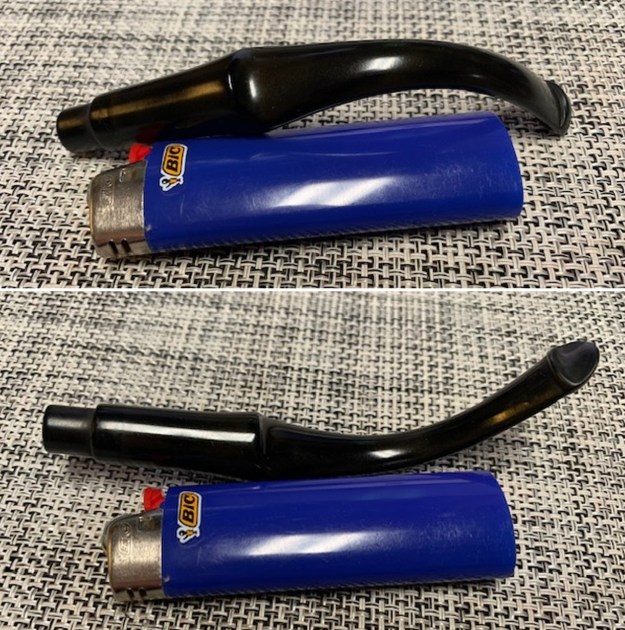
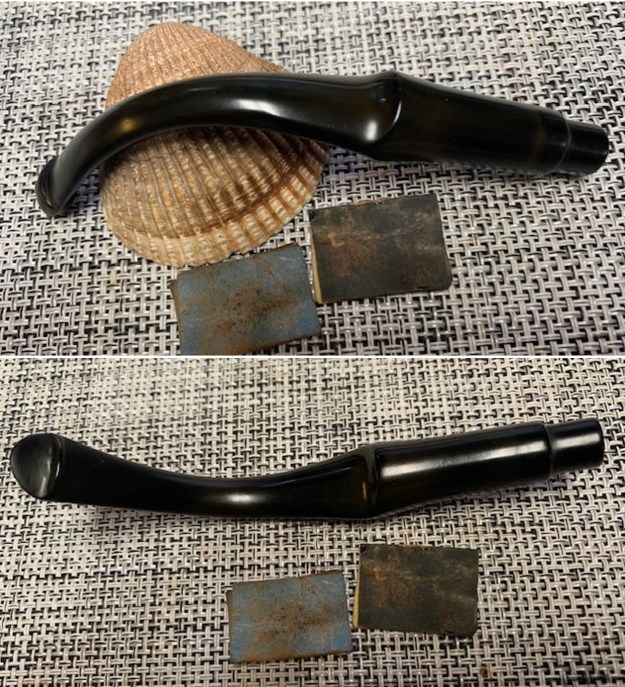
Monthly Archives: October 2023

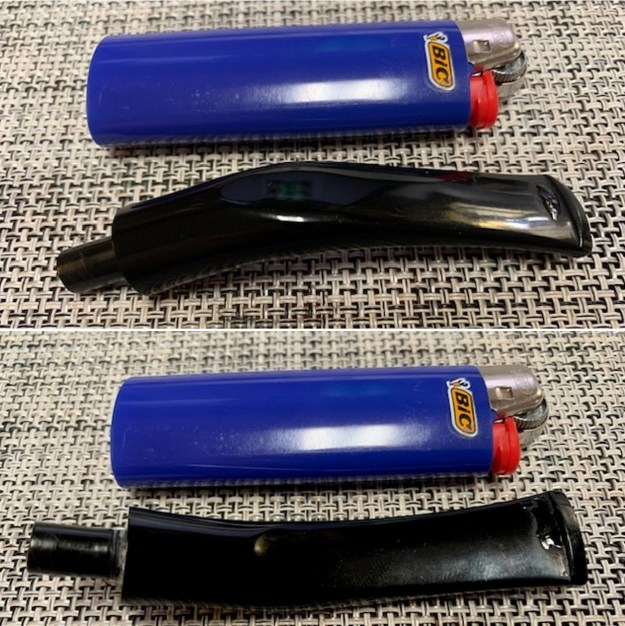
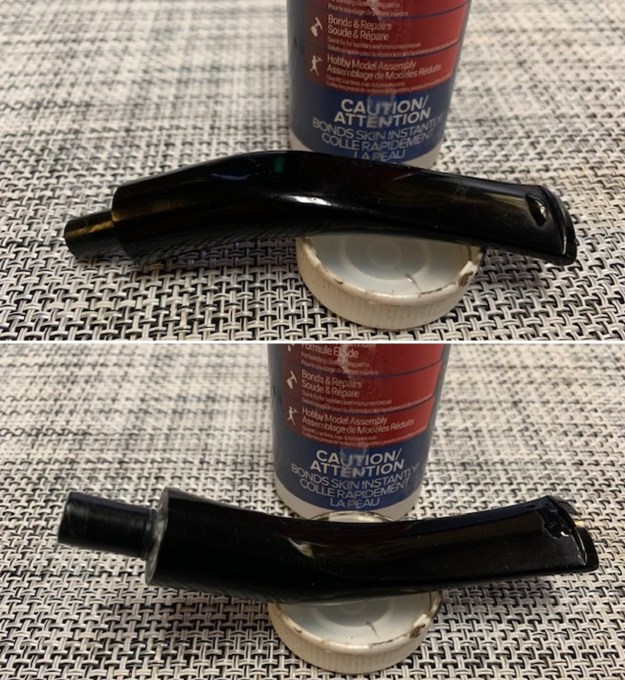
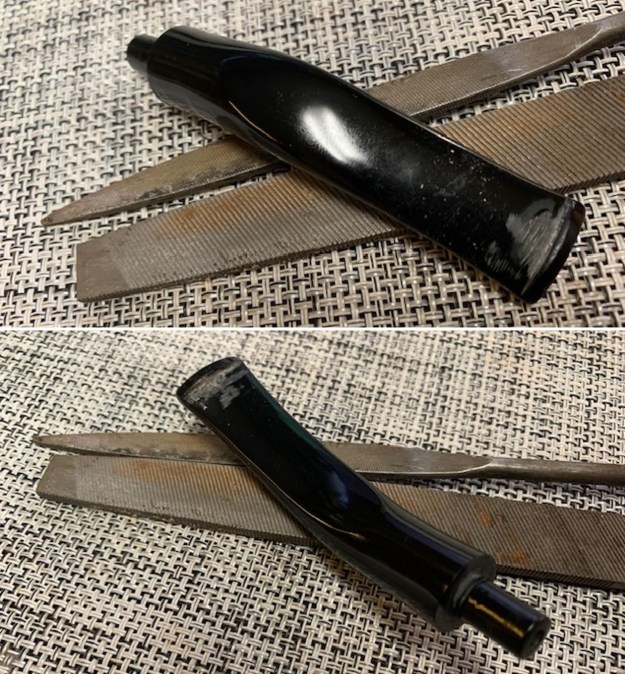
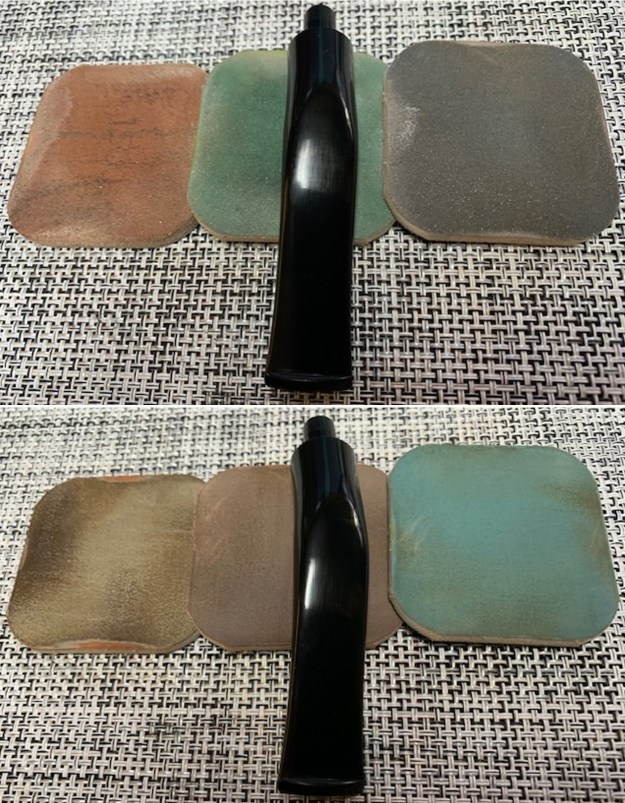
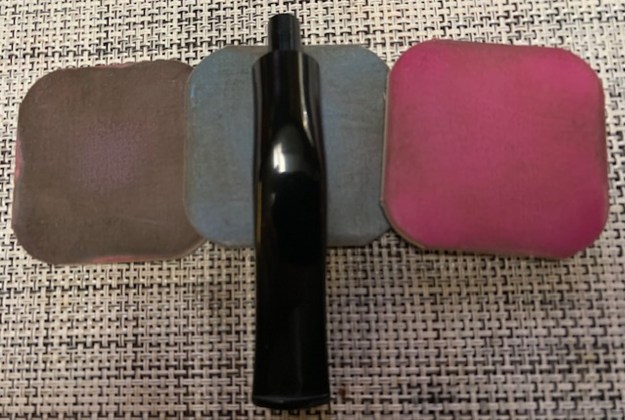
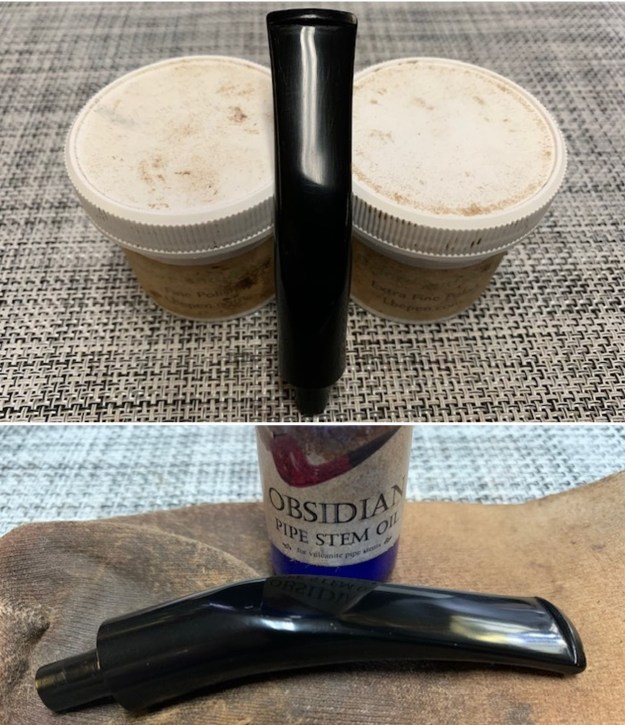
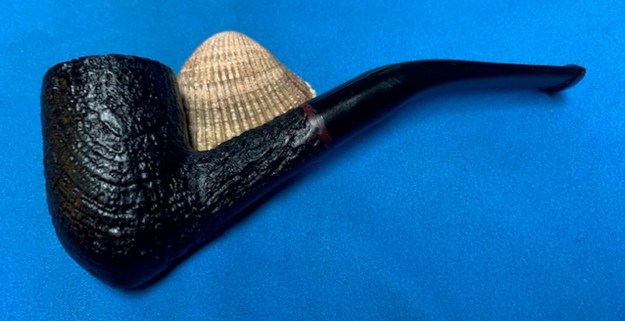
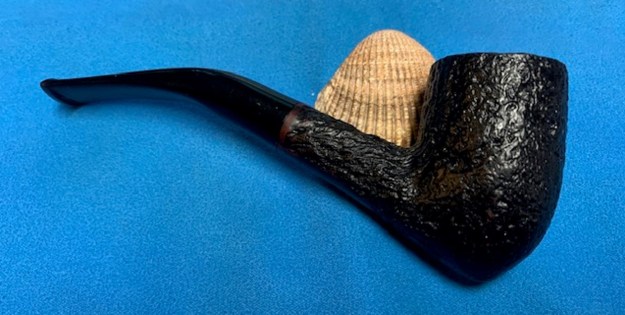
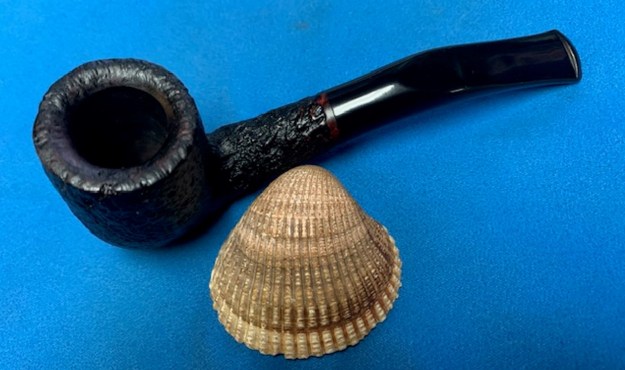
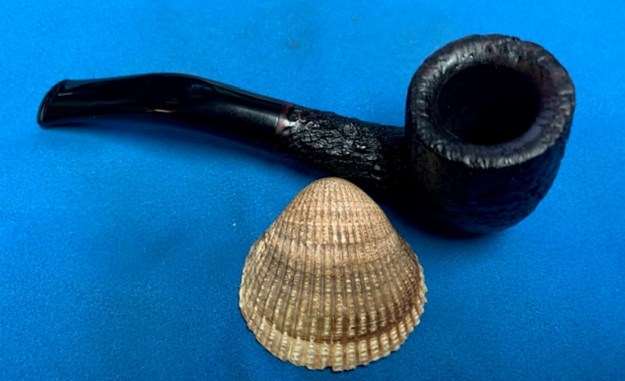
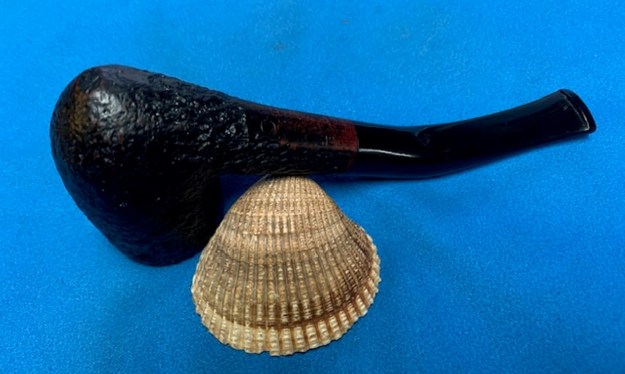
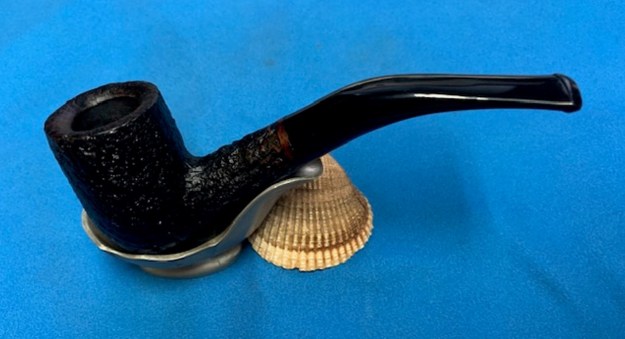
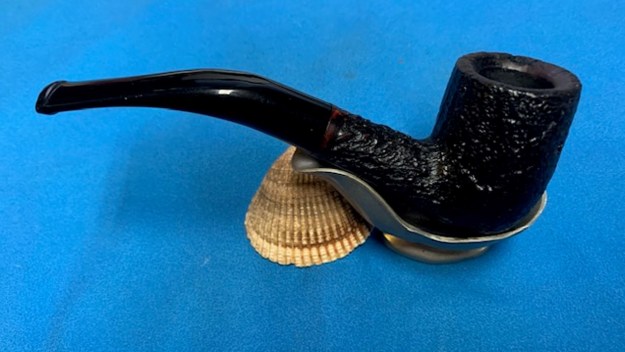
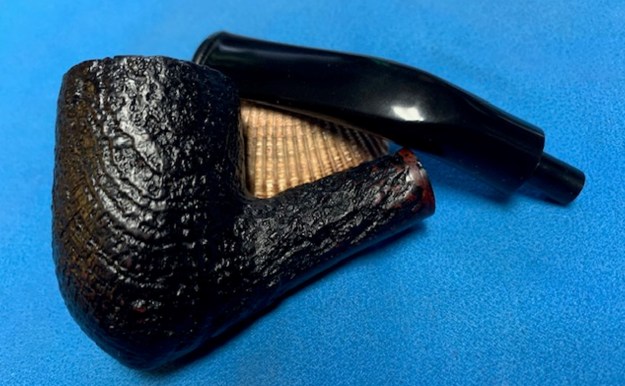
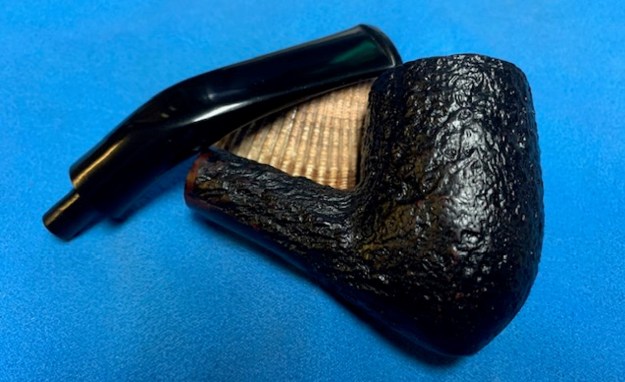
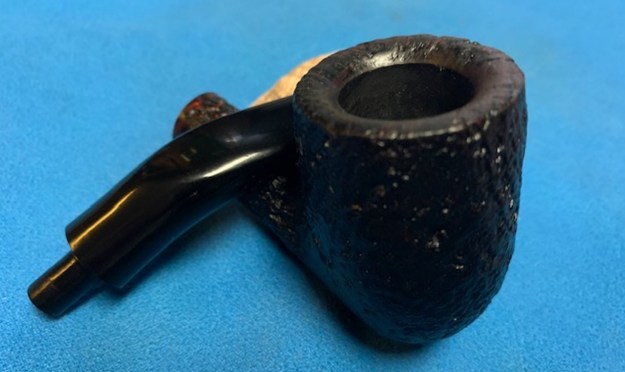
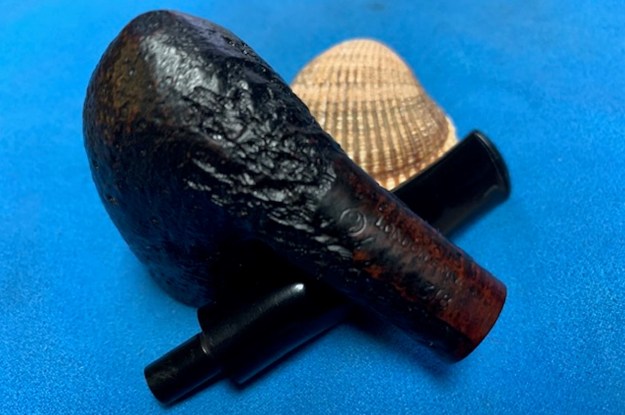
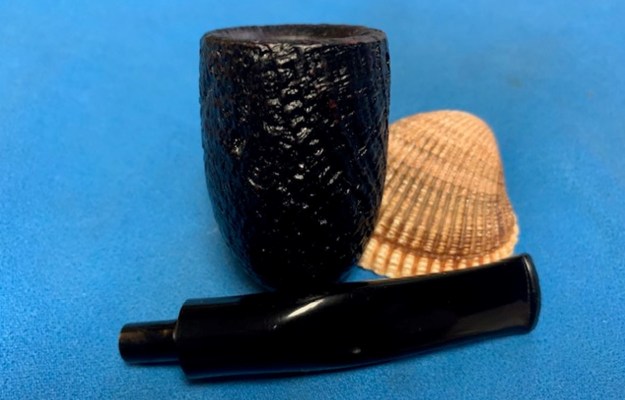
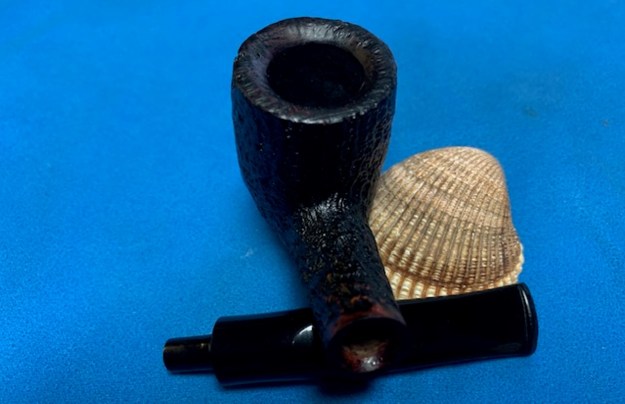
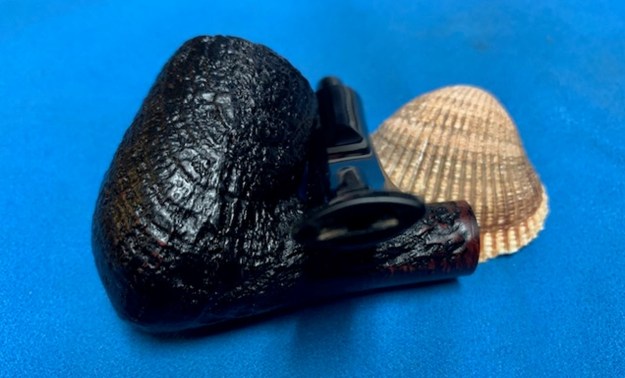
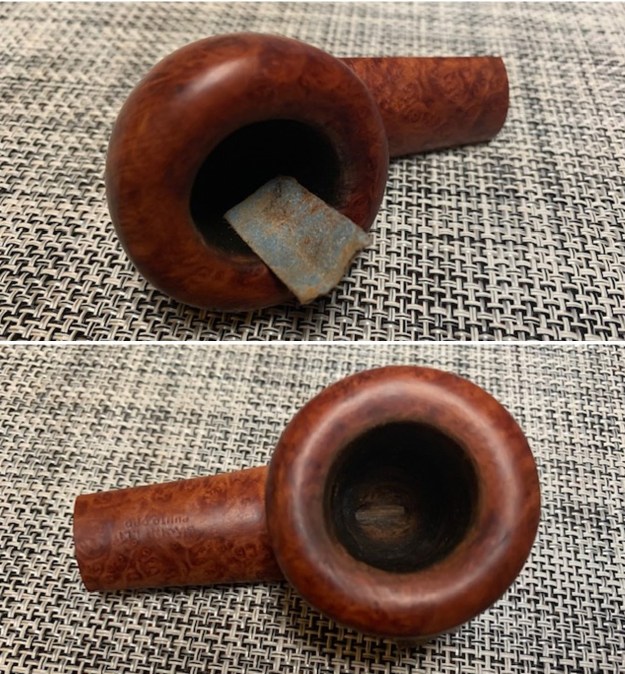
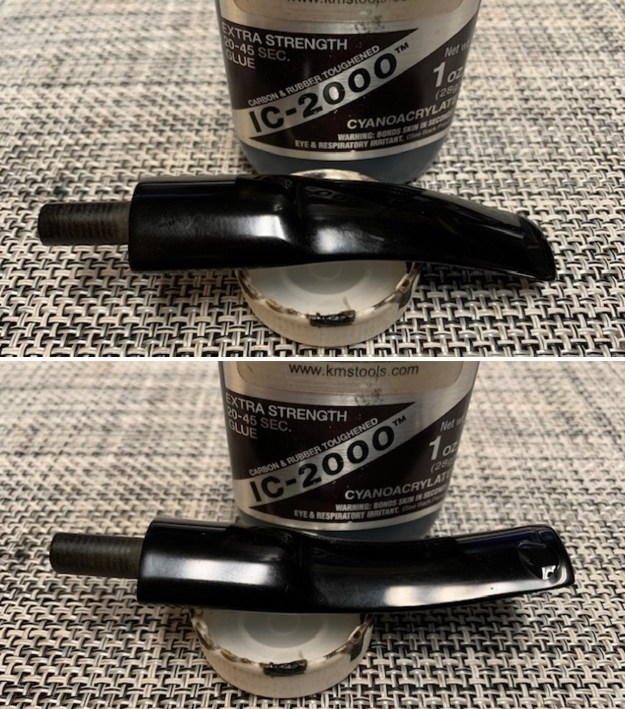
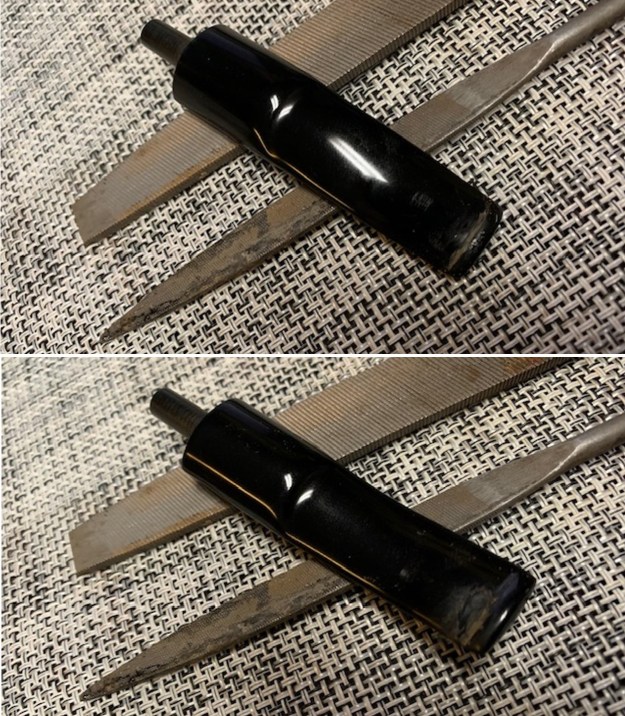
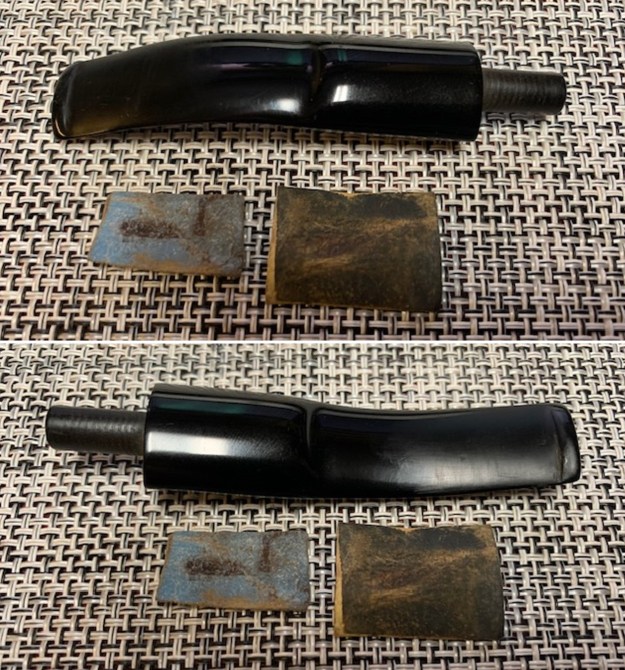
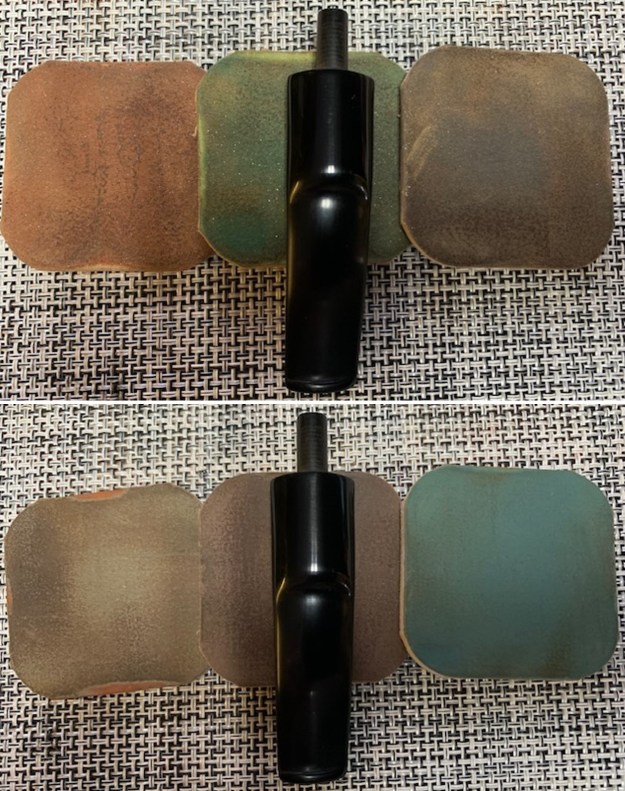
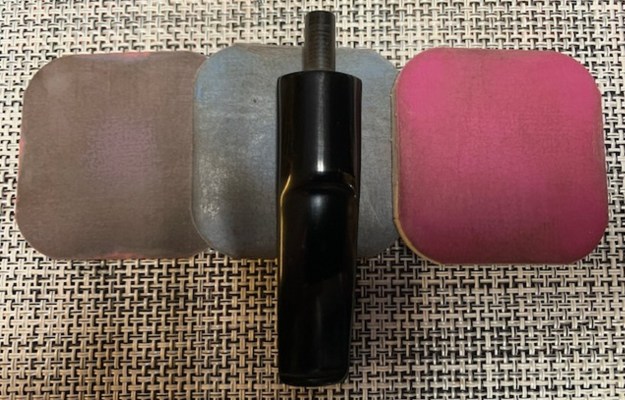
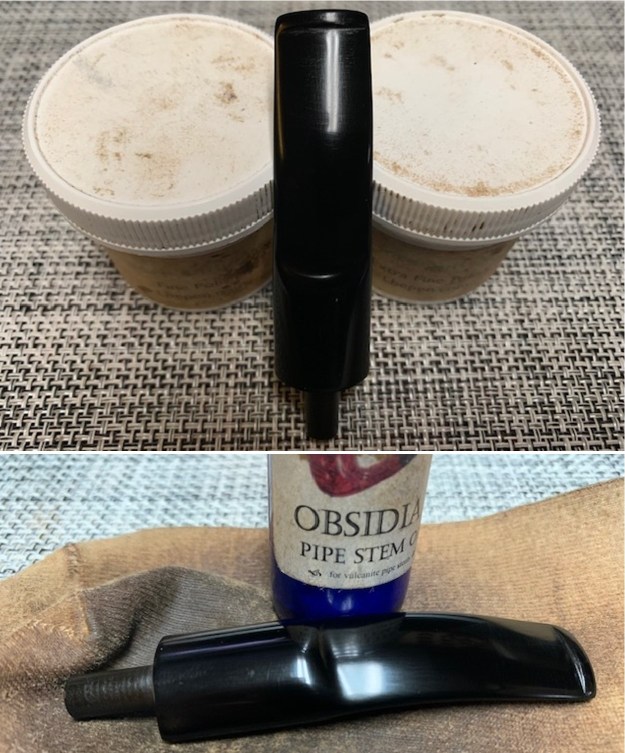
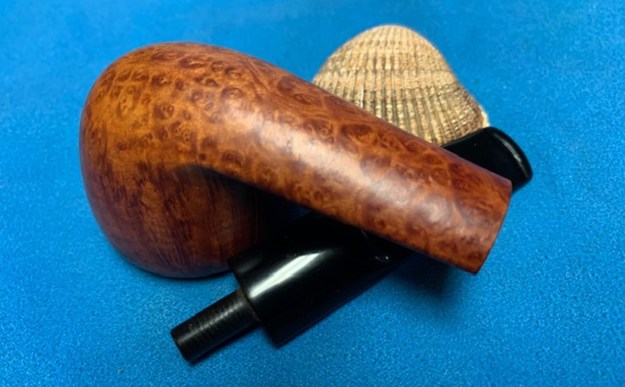
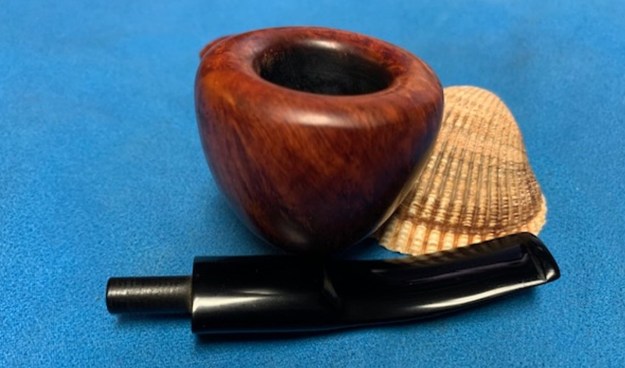
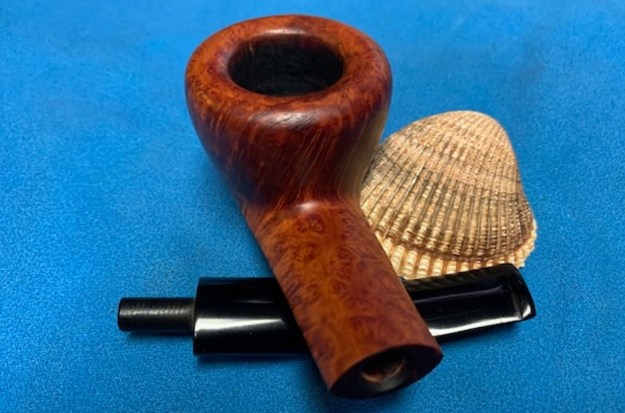
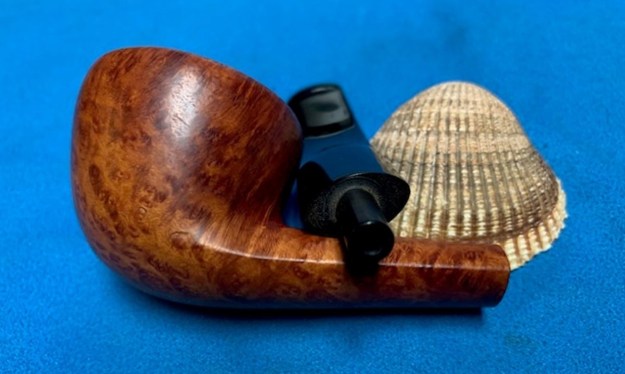
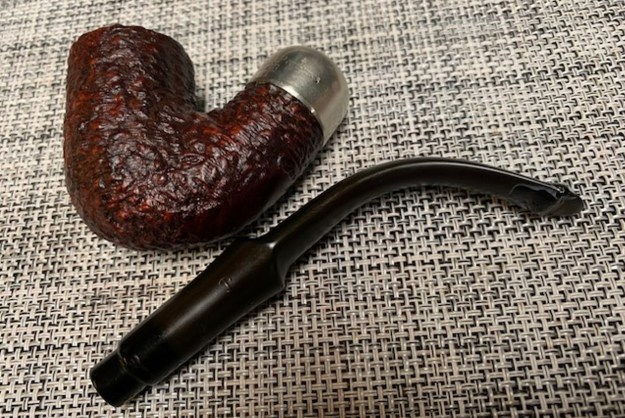
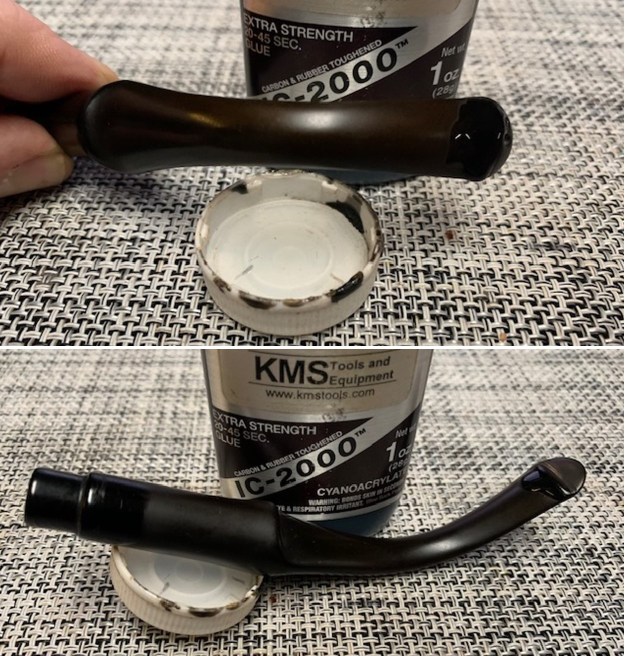
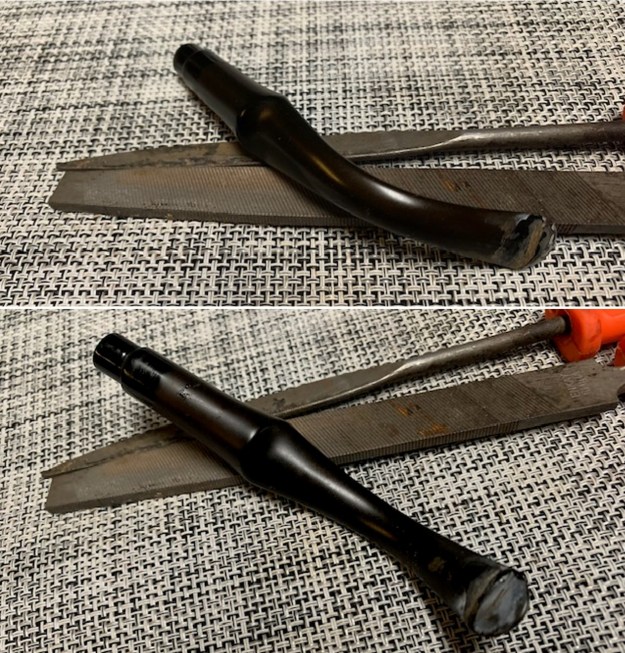
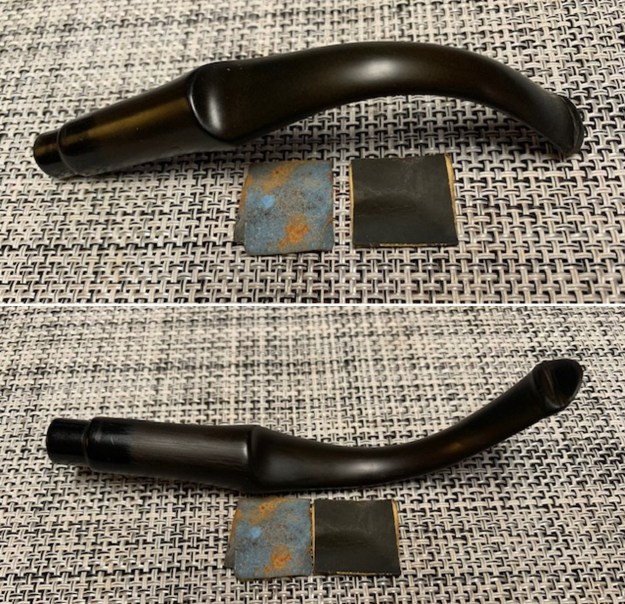
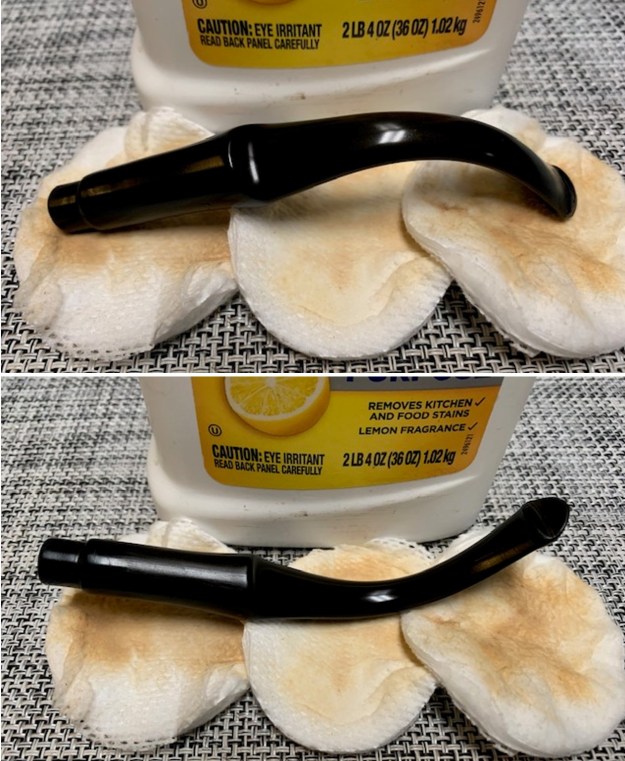
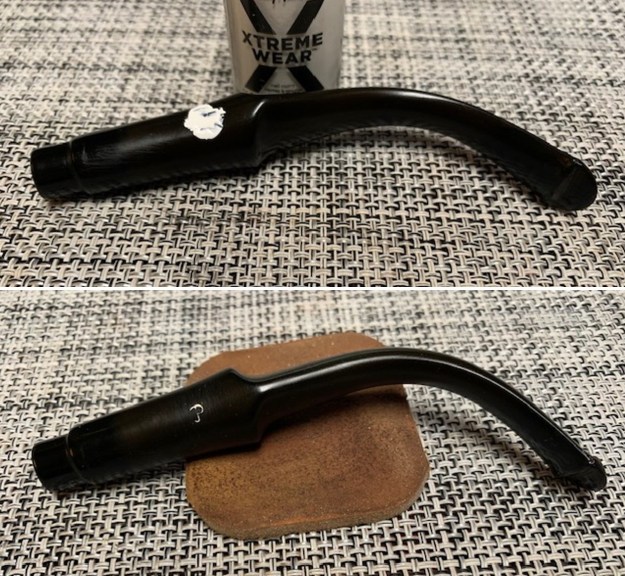
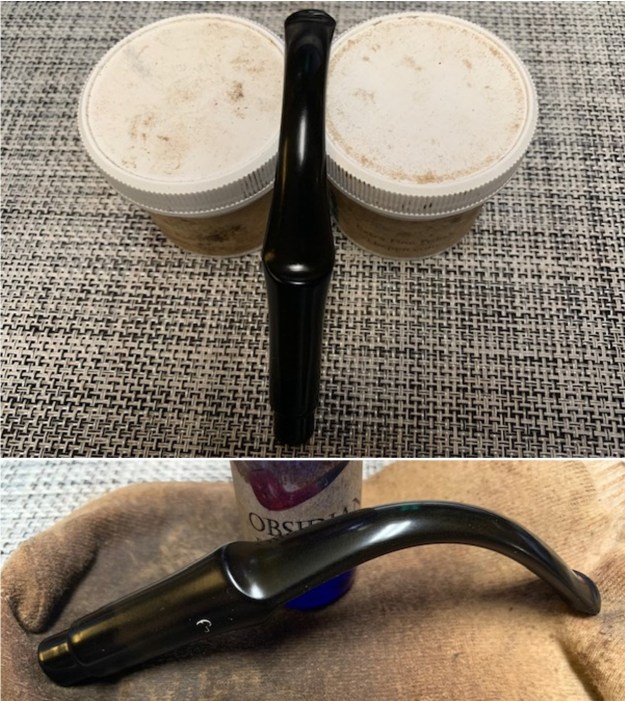
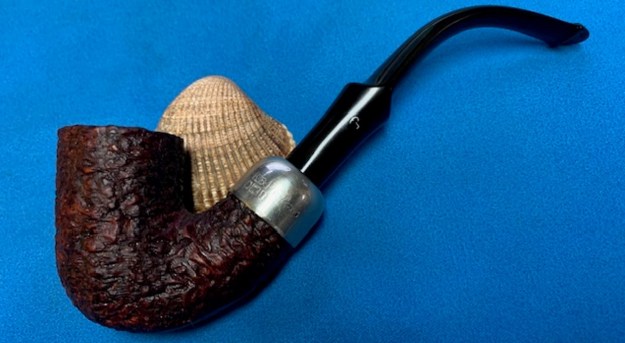
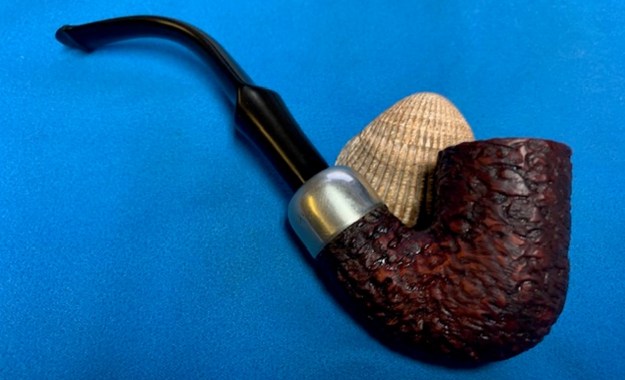
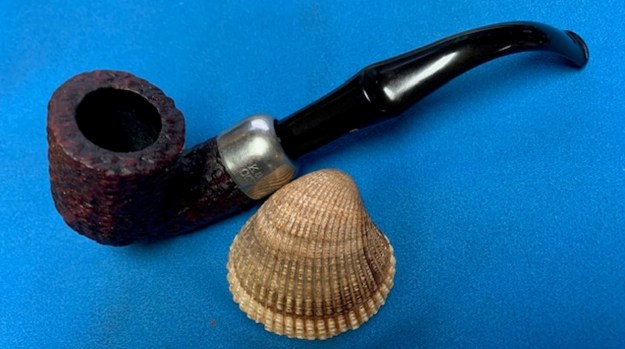
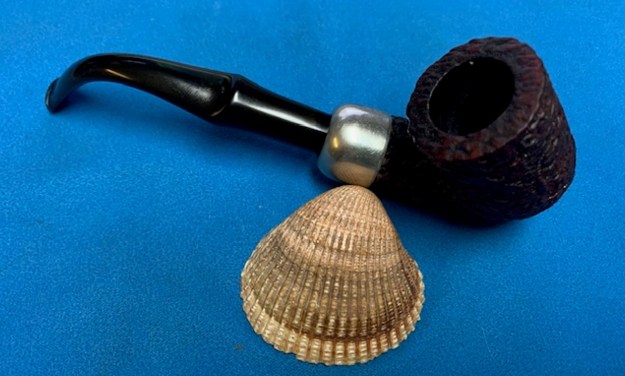
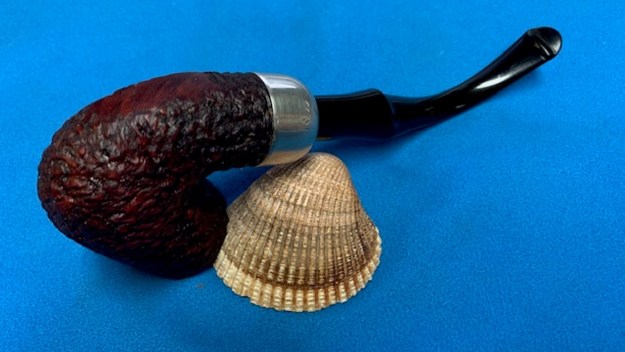
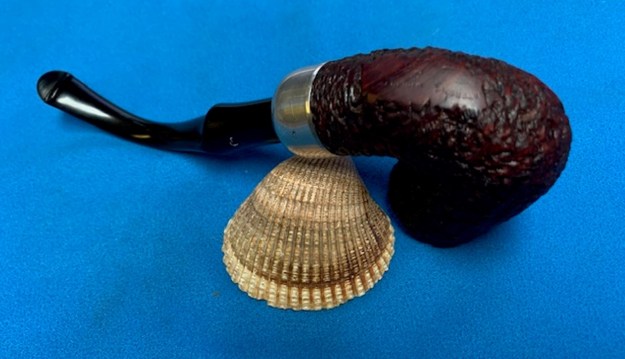
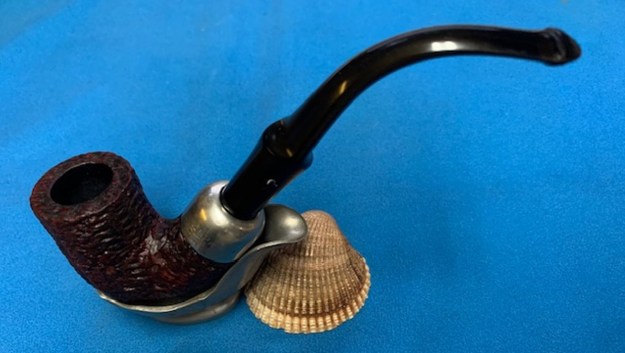
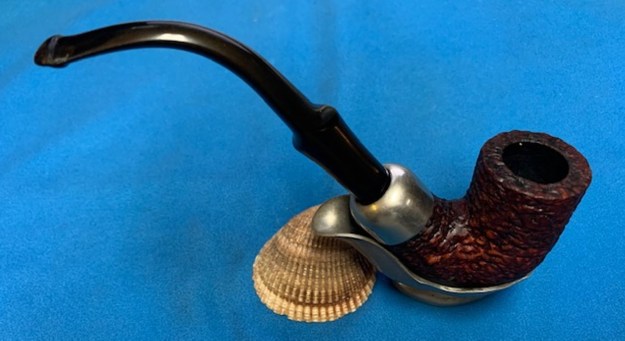
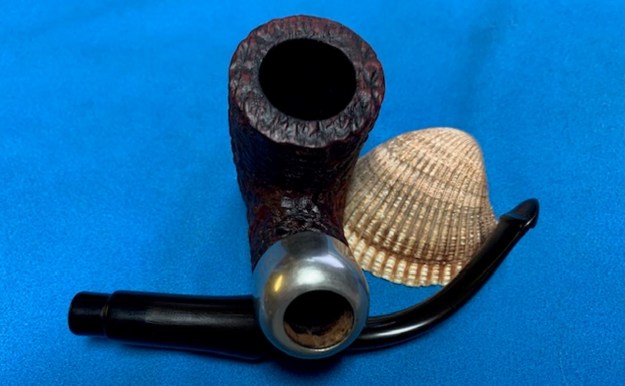
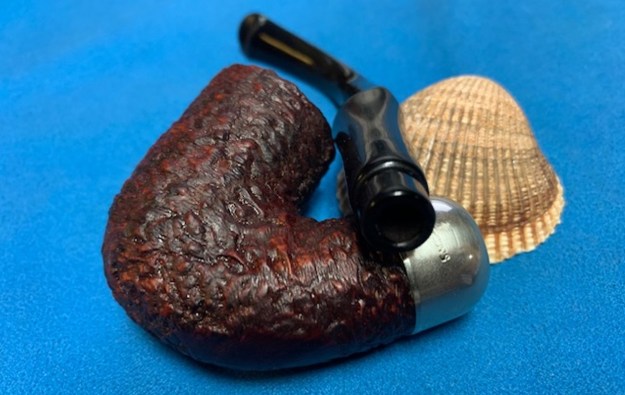
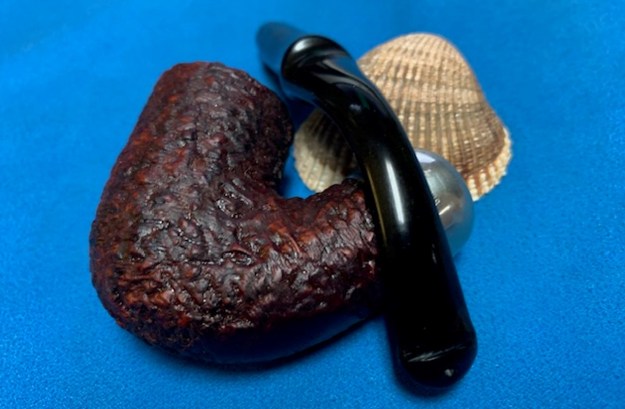
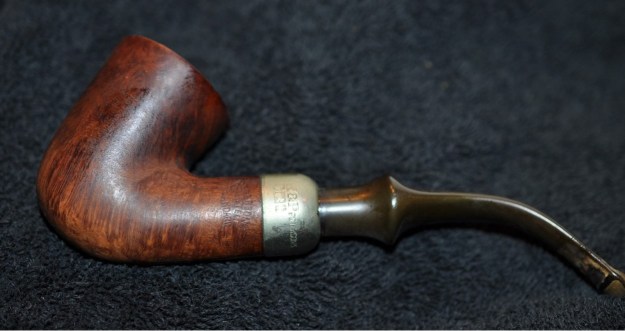
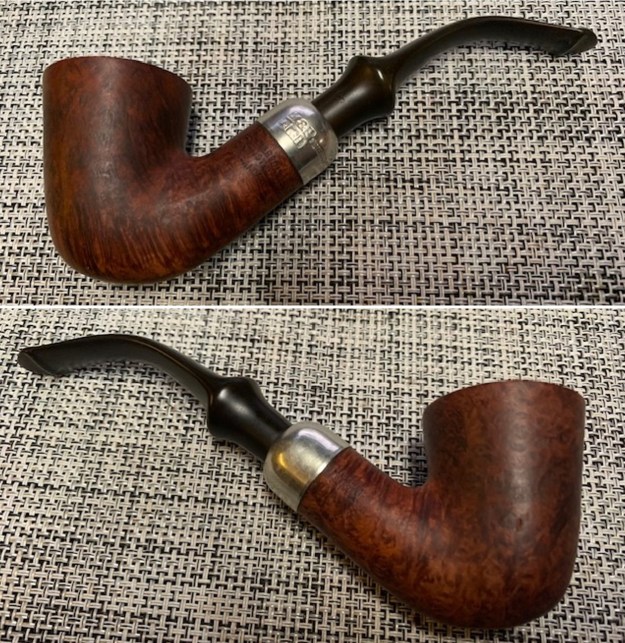
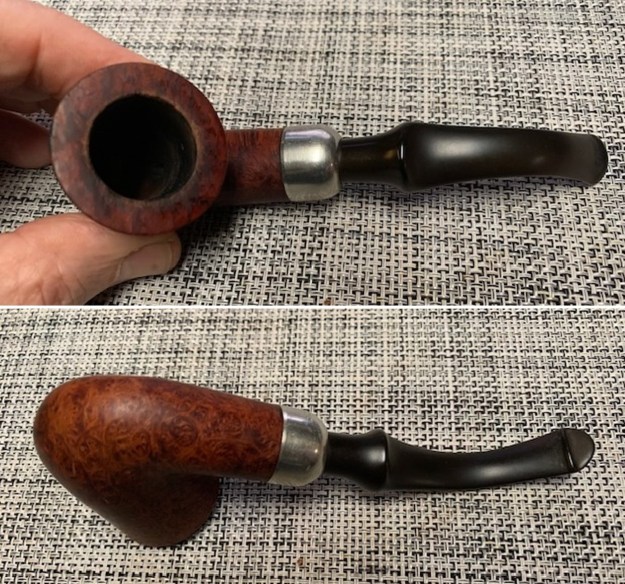
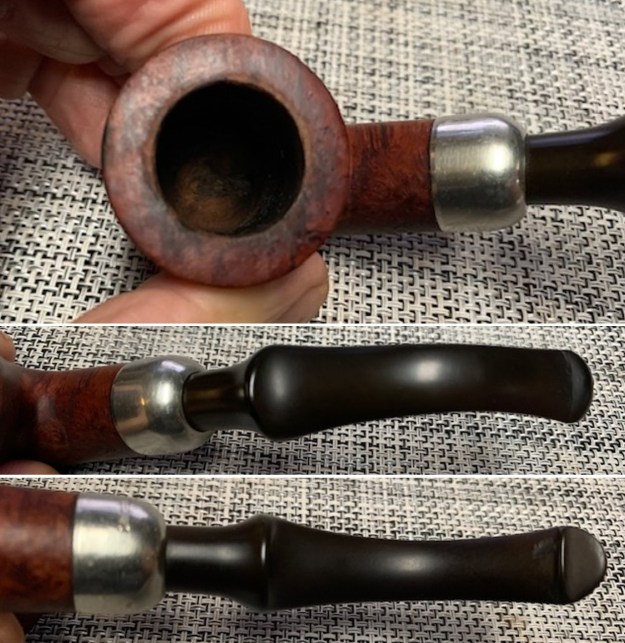
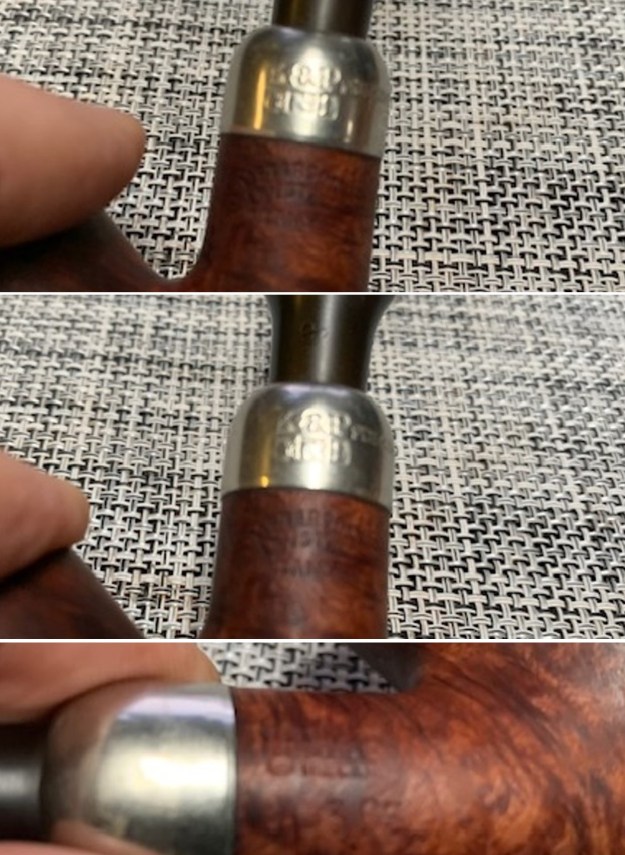
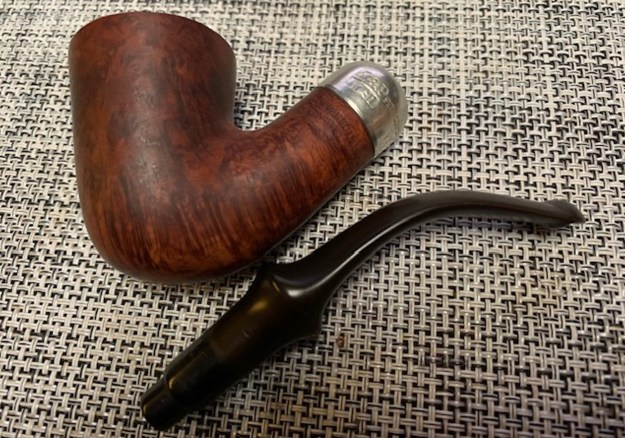
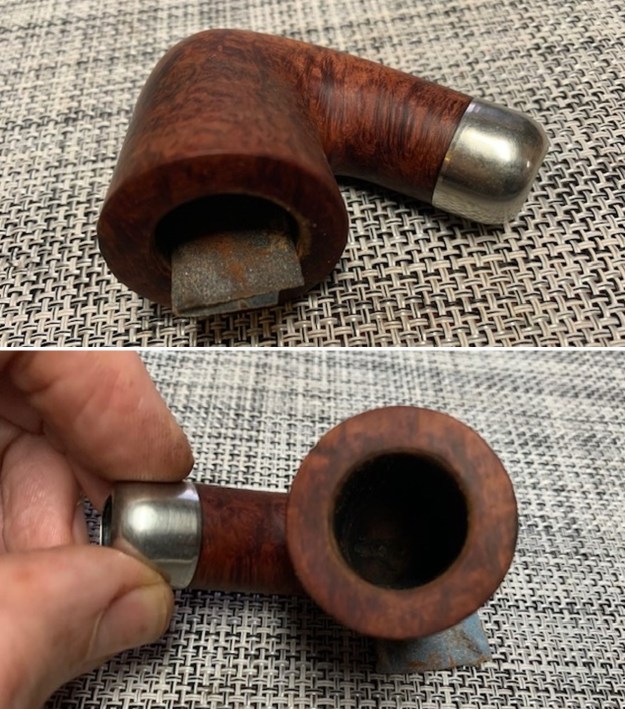
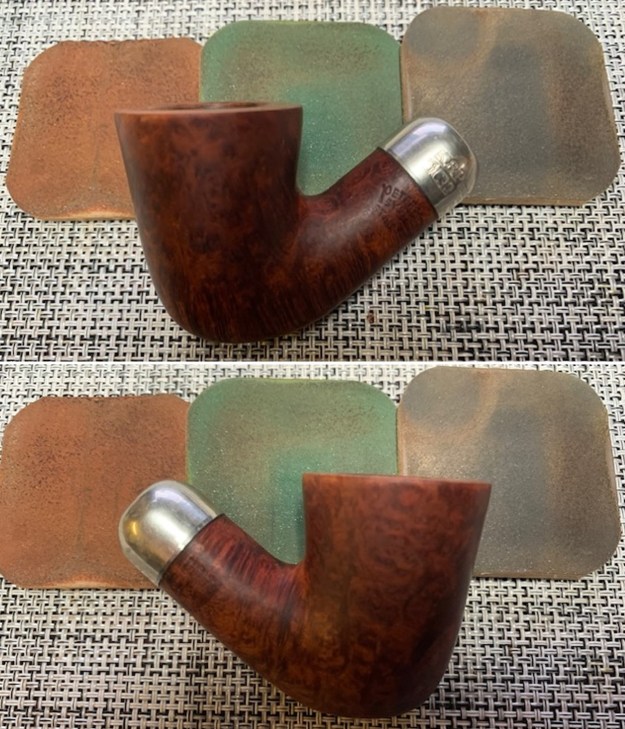
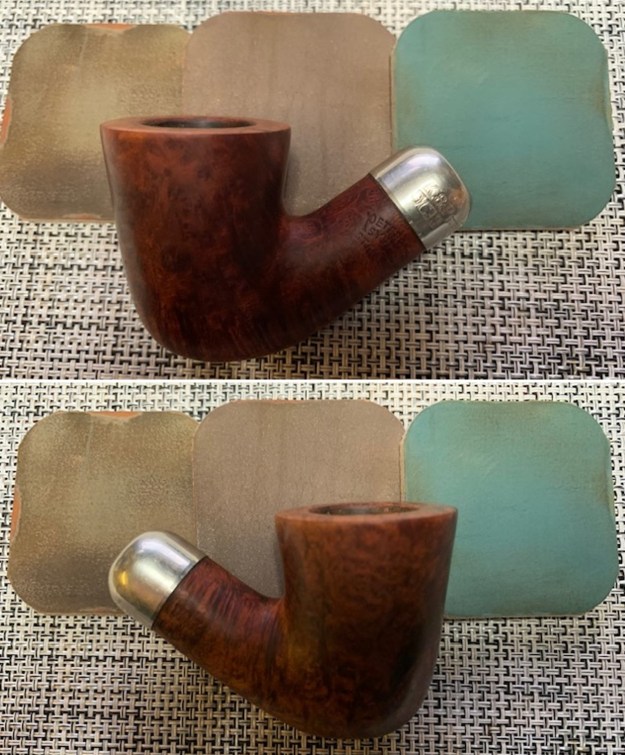
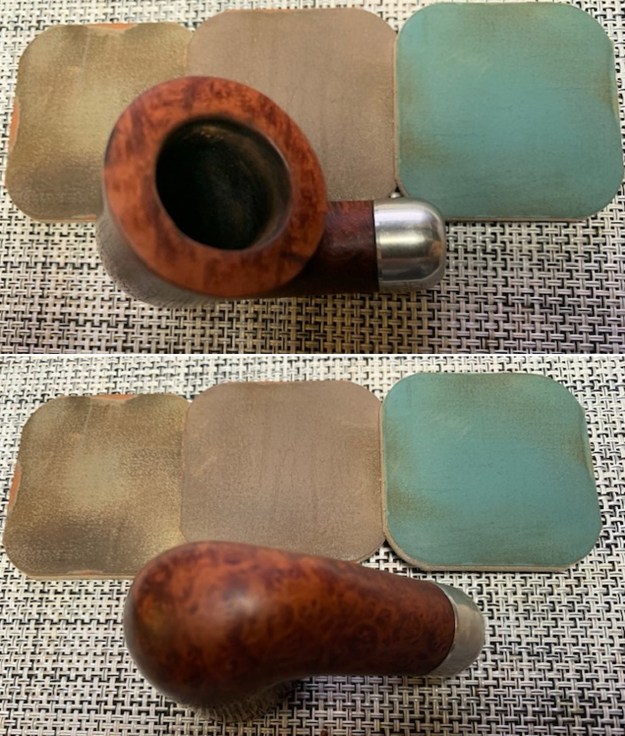
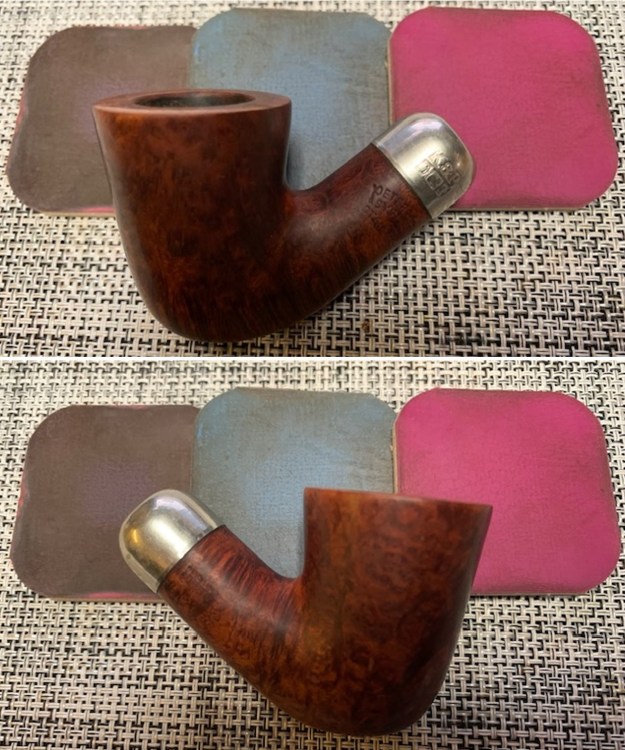
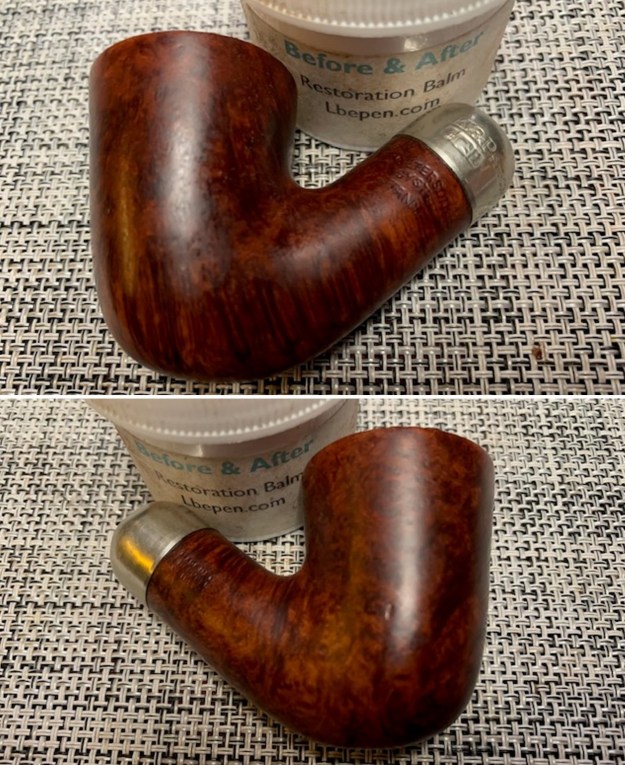
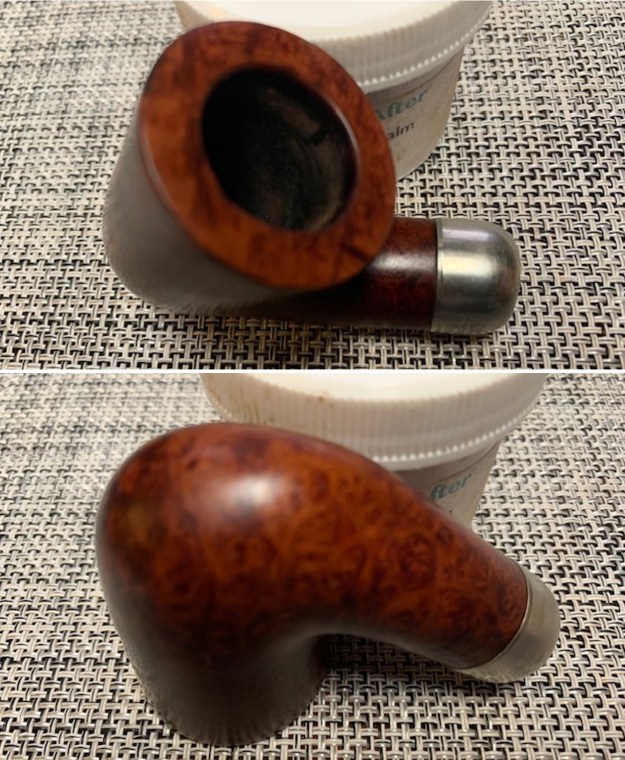
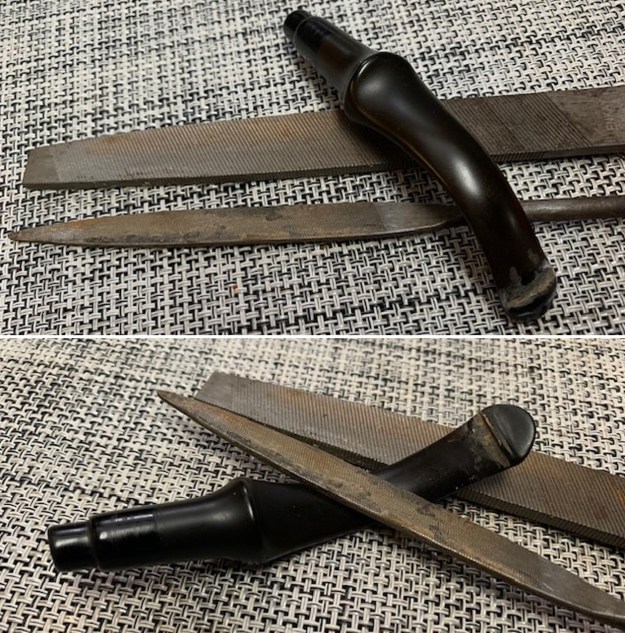
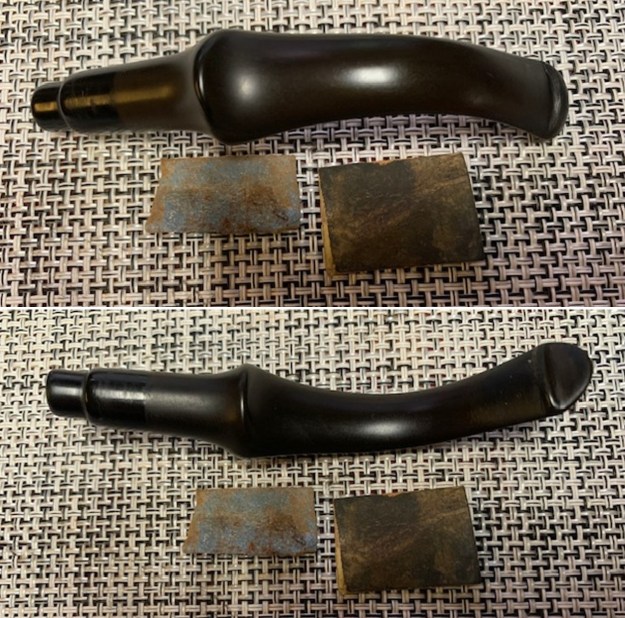
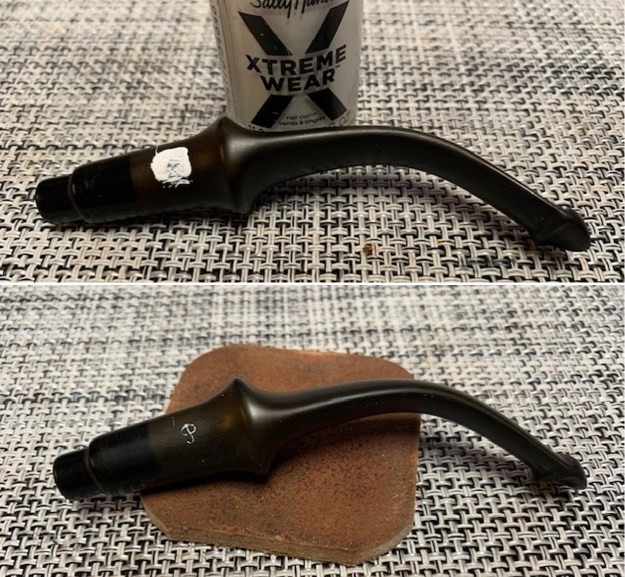
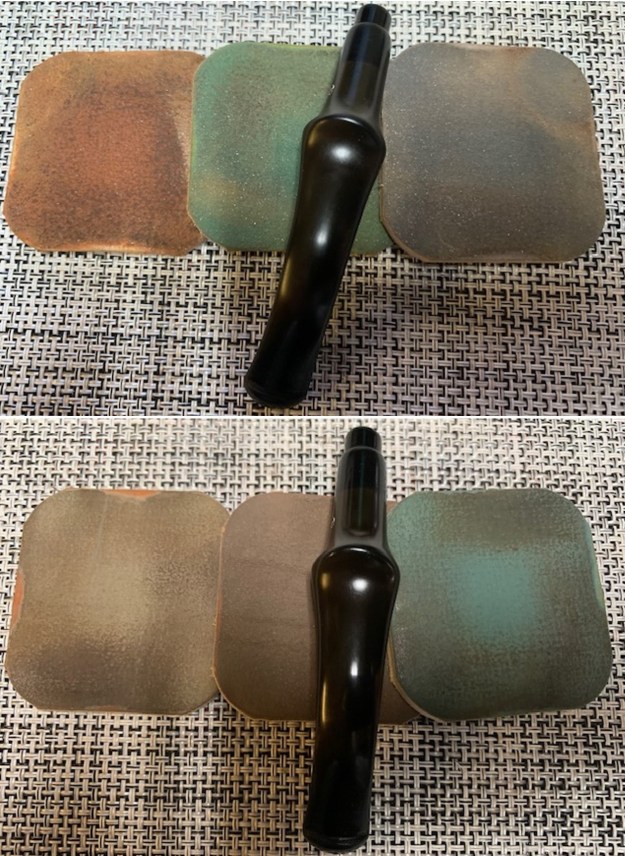
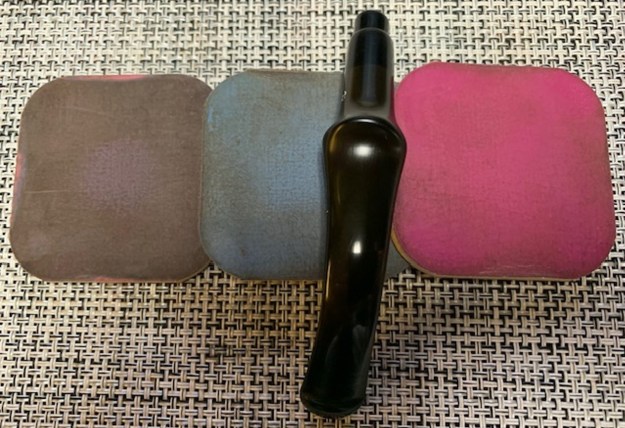
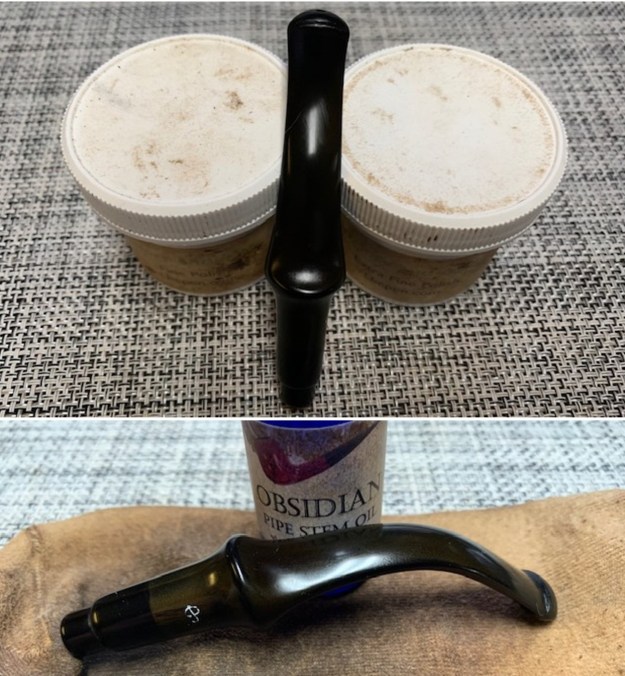
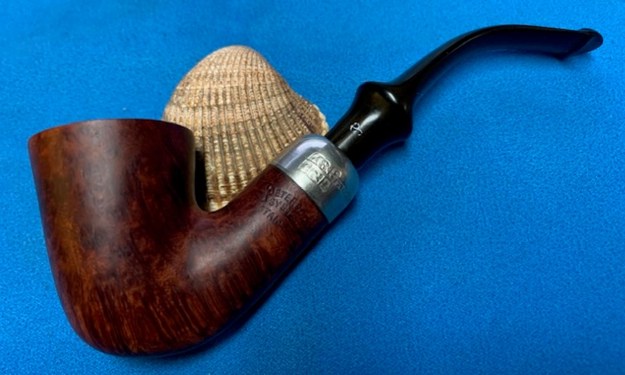
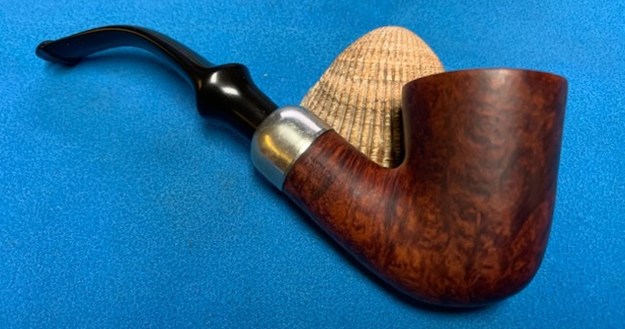
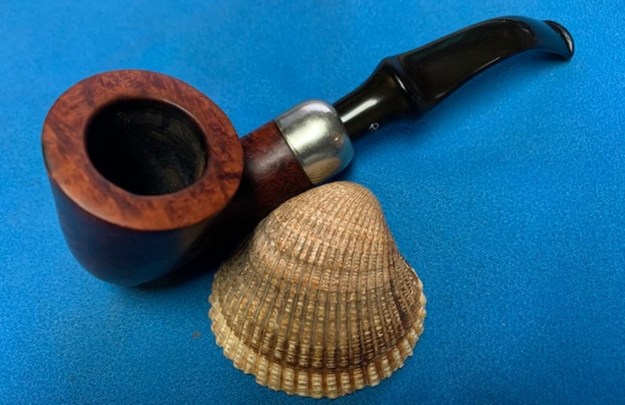
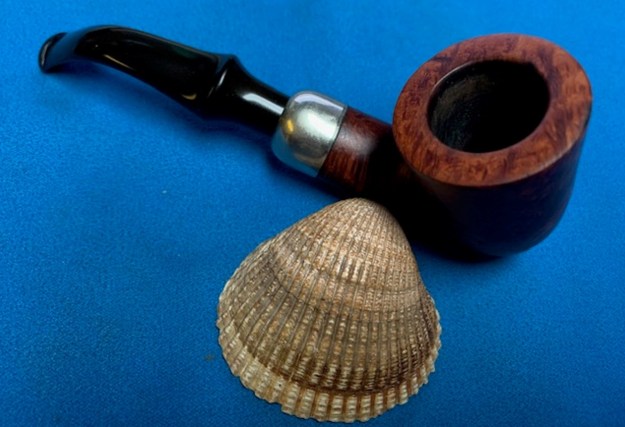
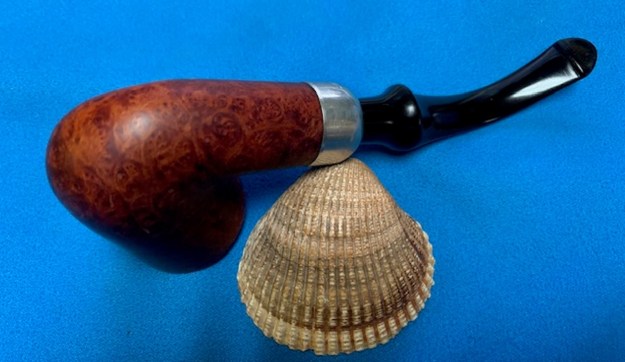
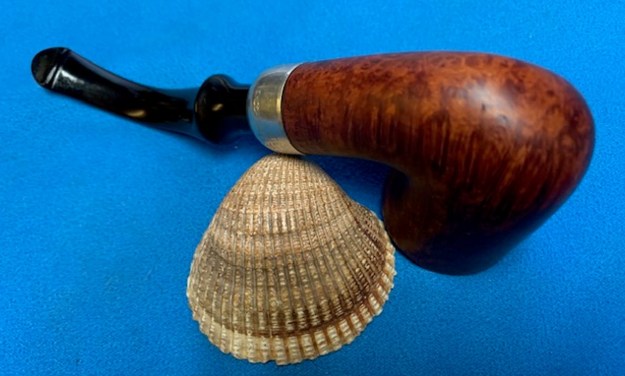
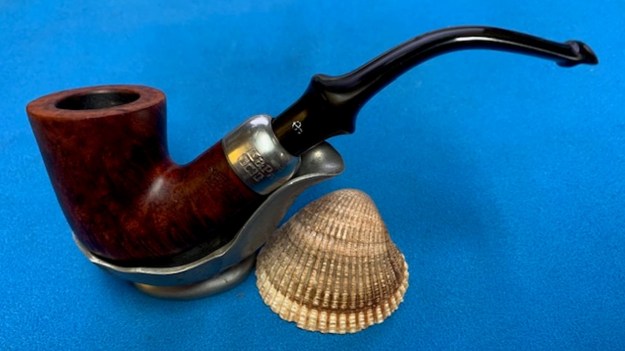
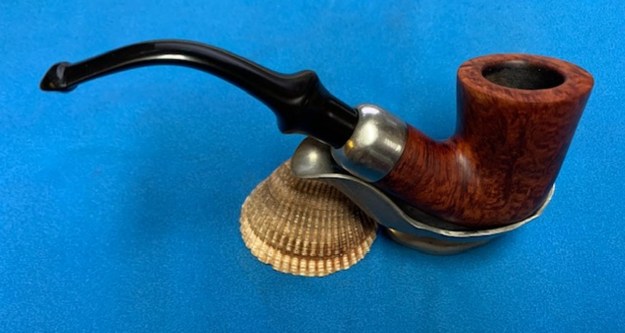
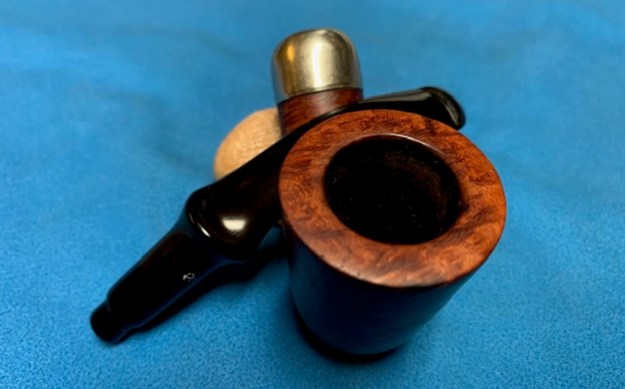
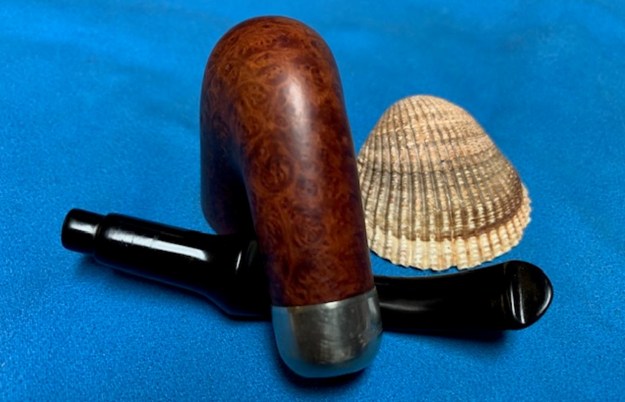
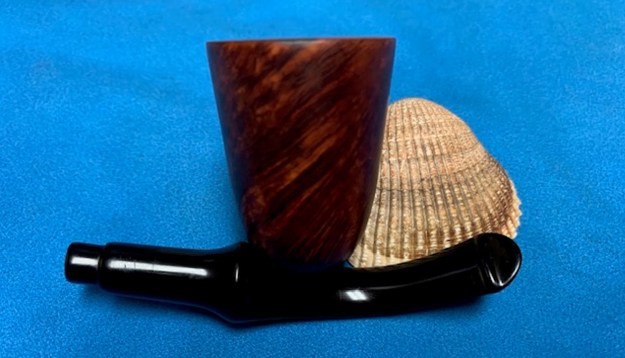
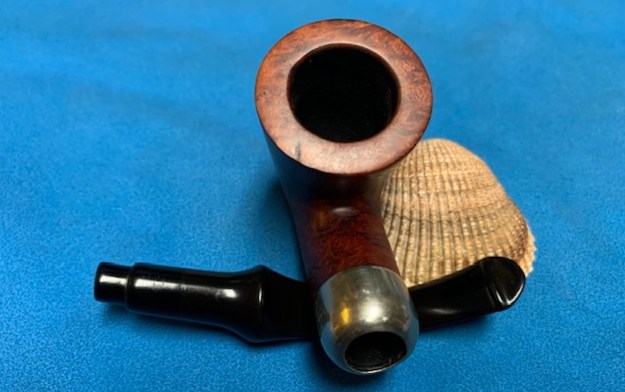
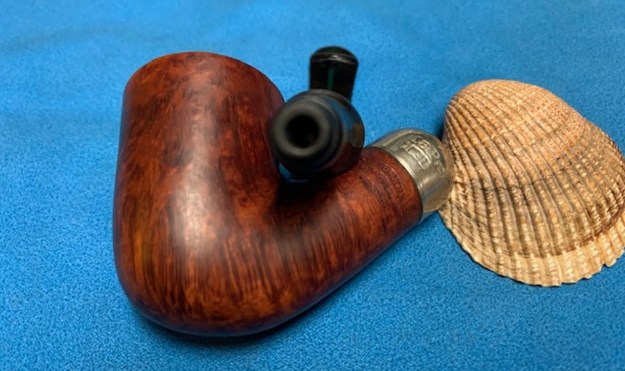
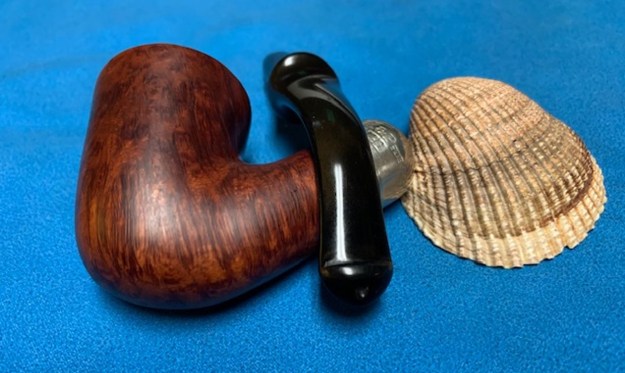
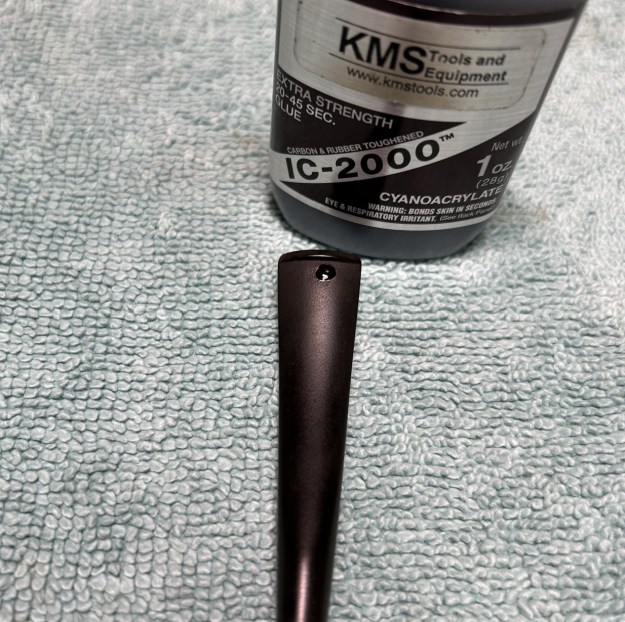
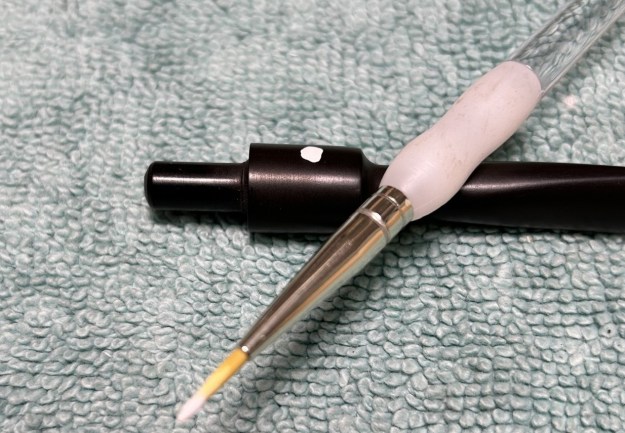
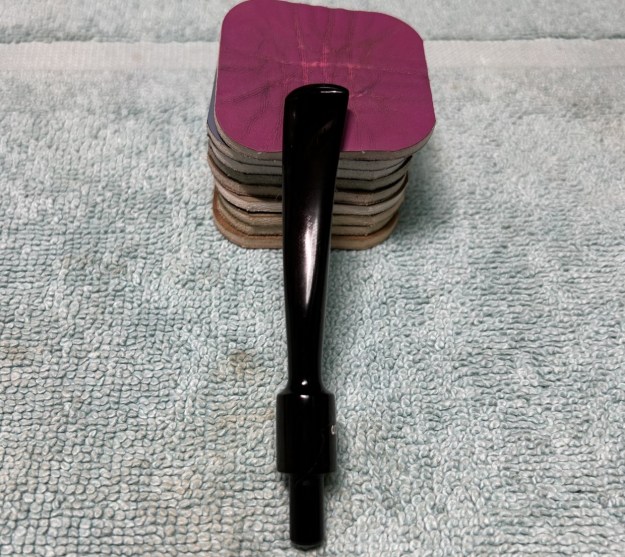
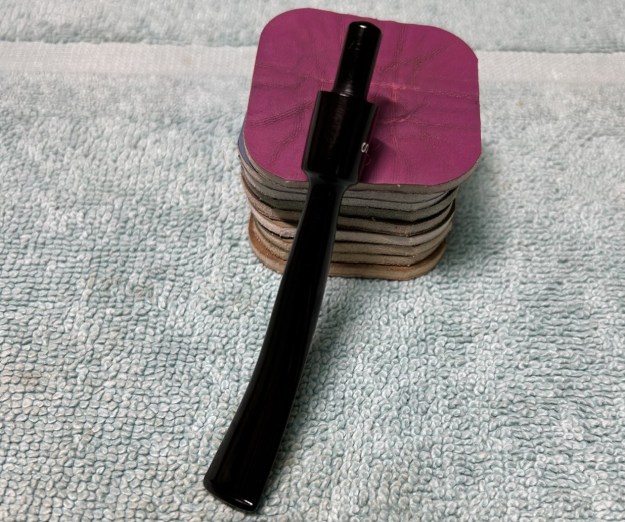
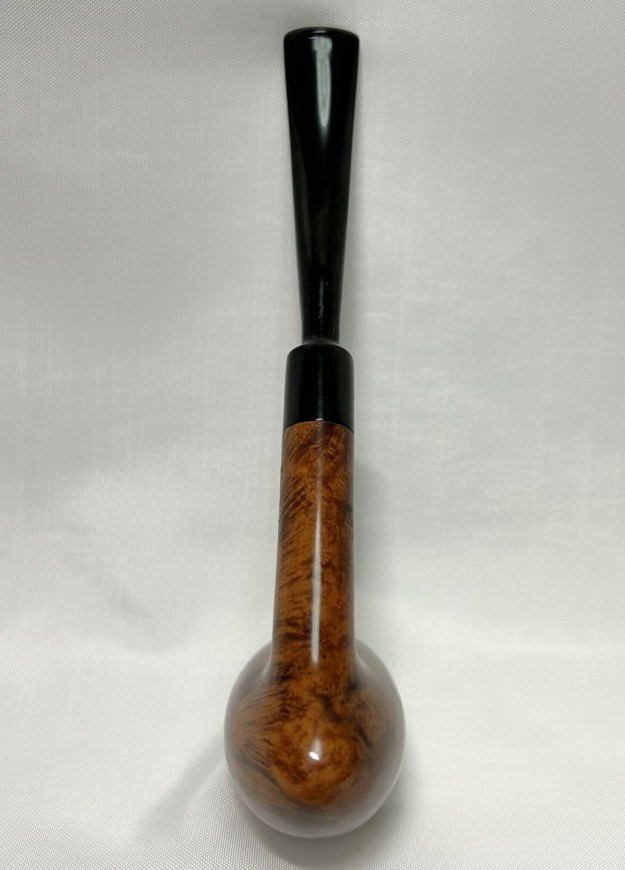
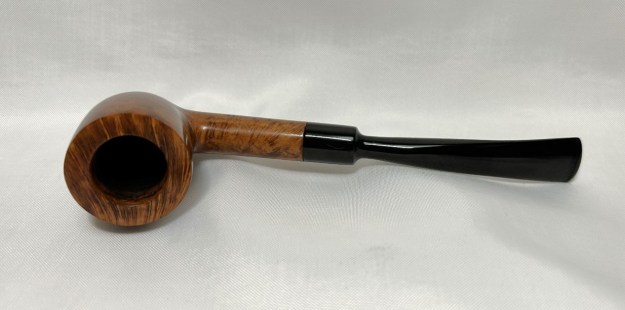
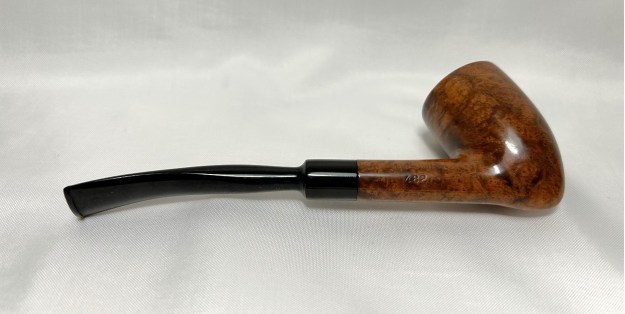
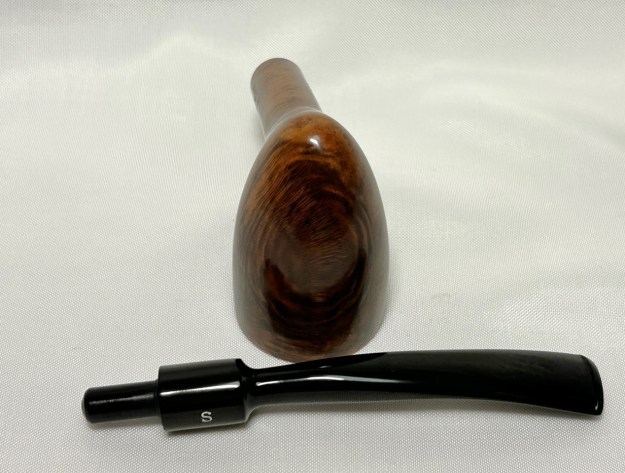
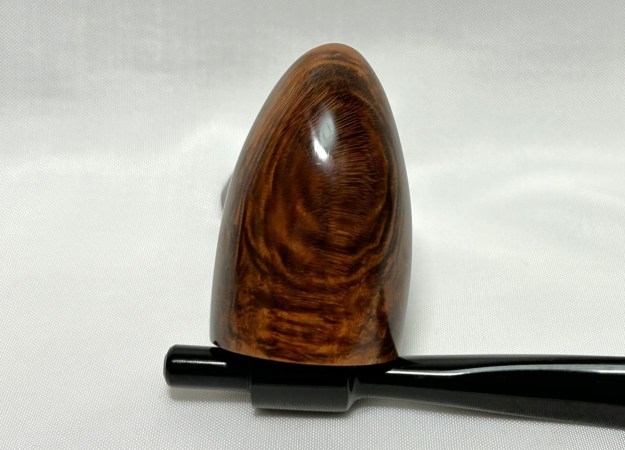
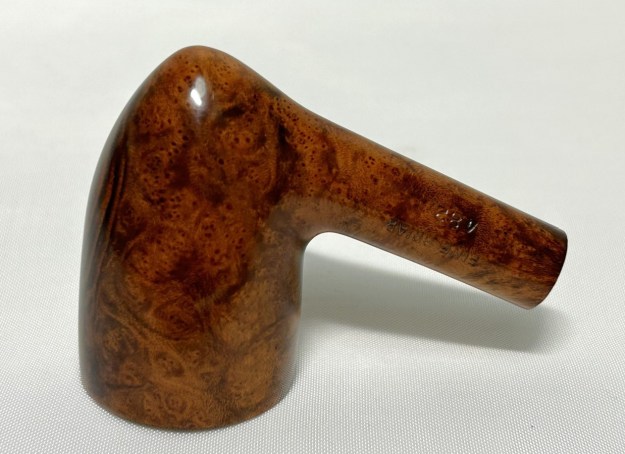
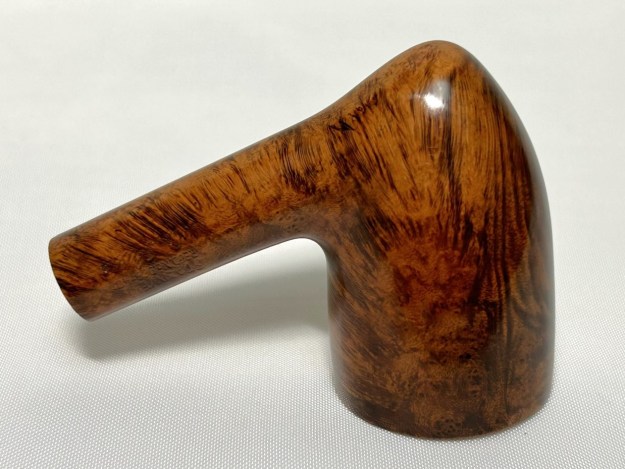
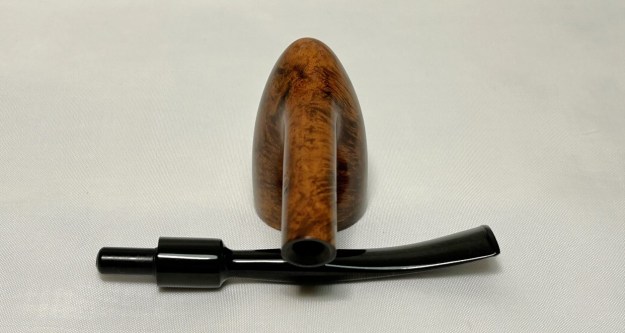
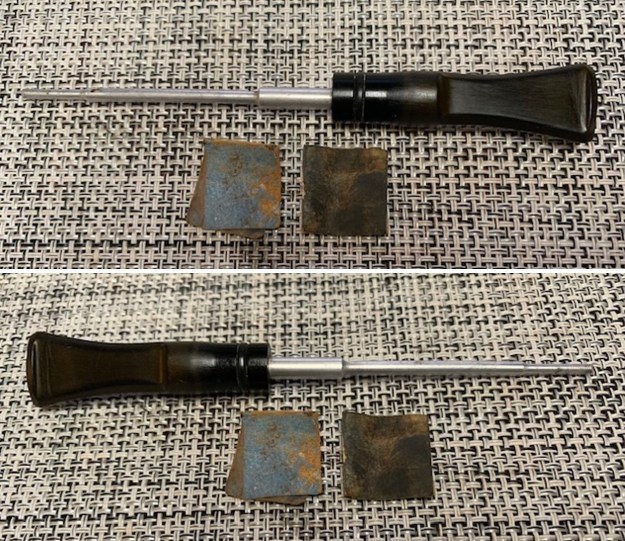
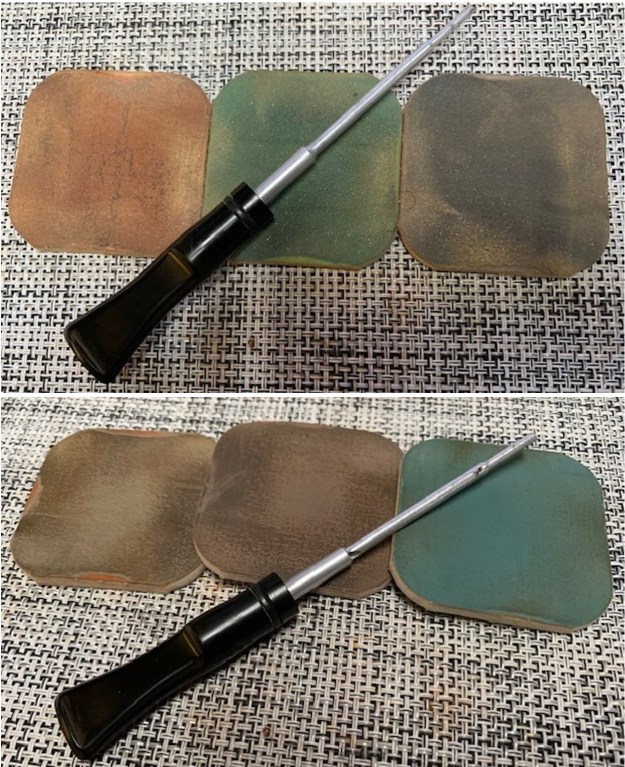
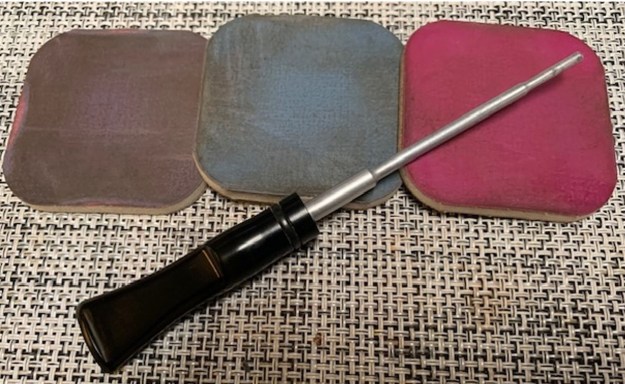
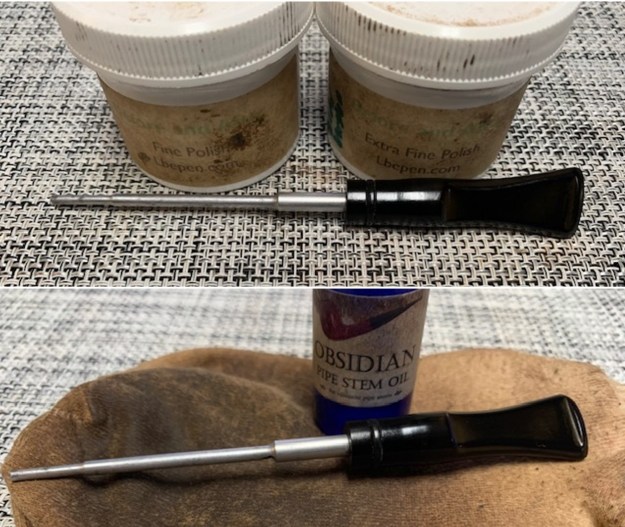
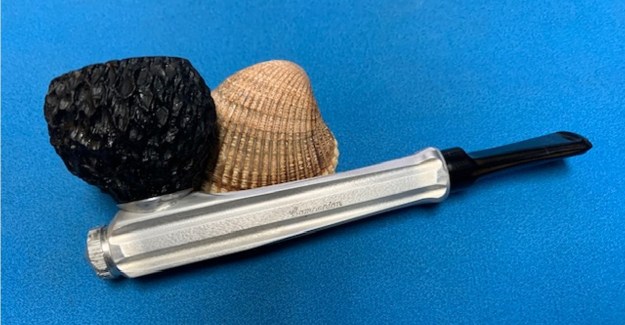
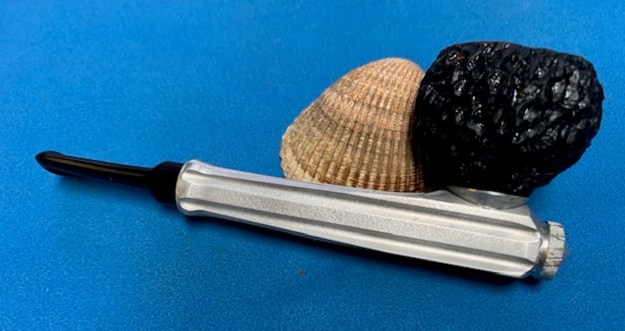
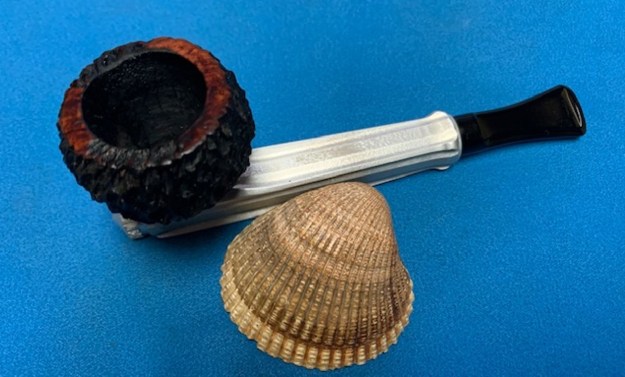
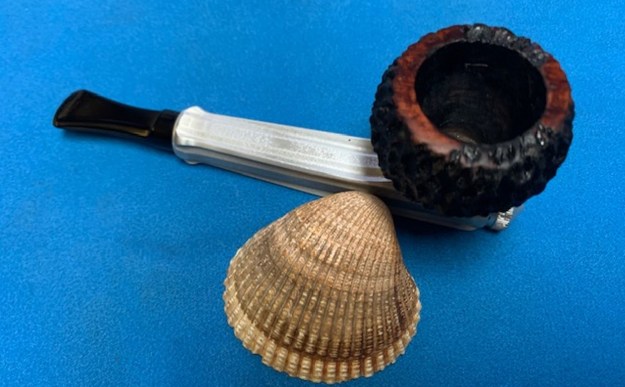
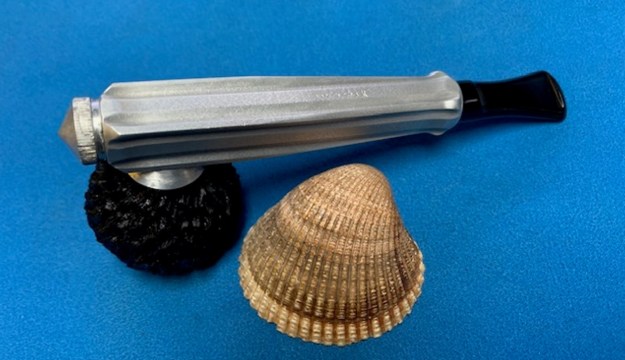
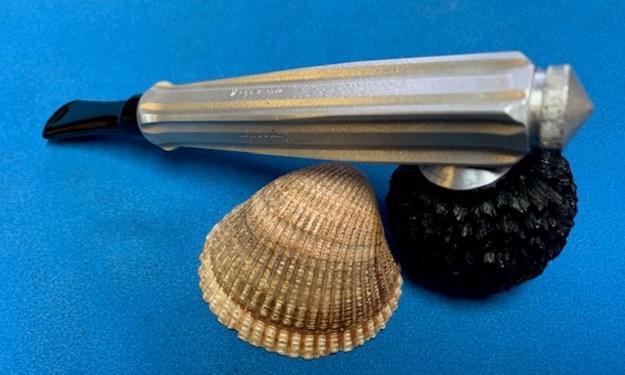
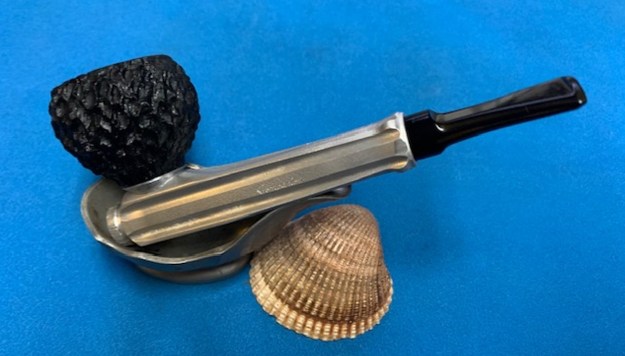
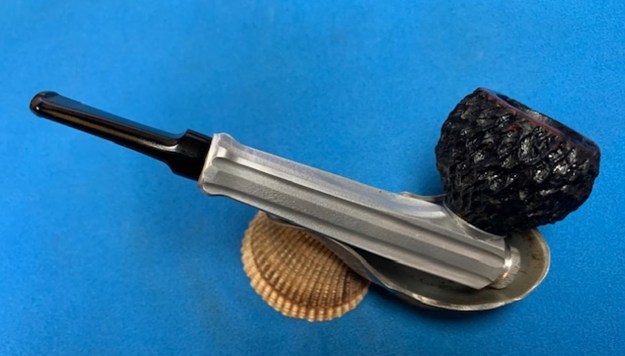
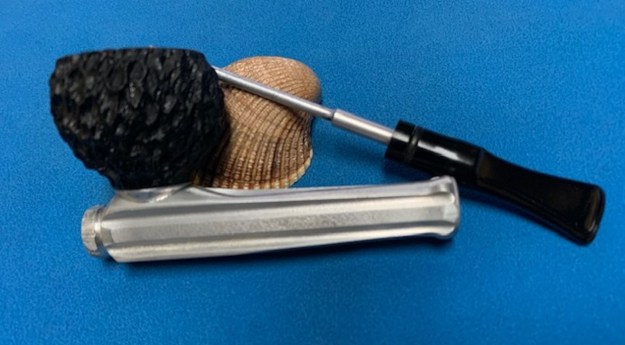
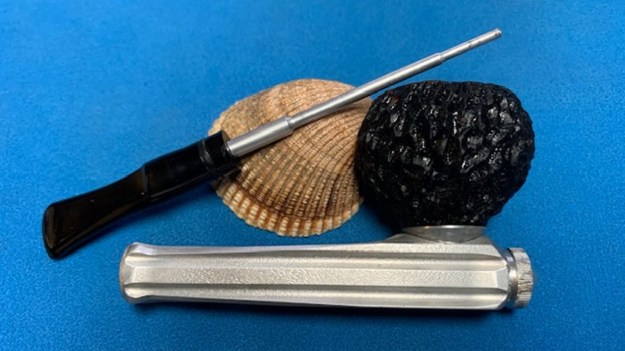
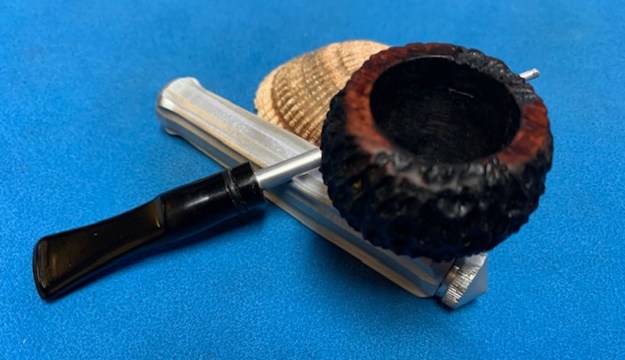
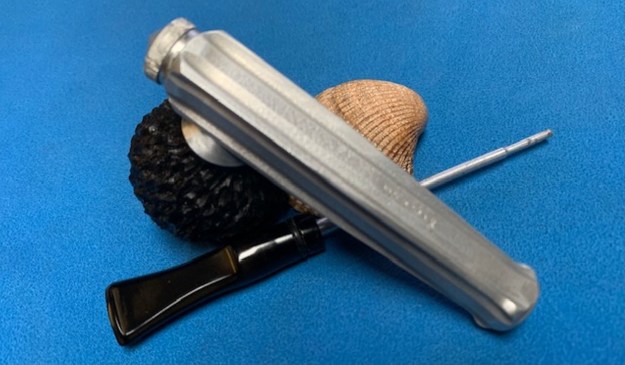
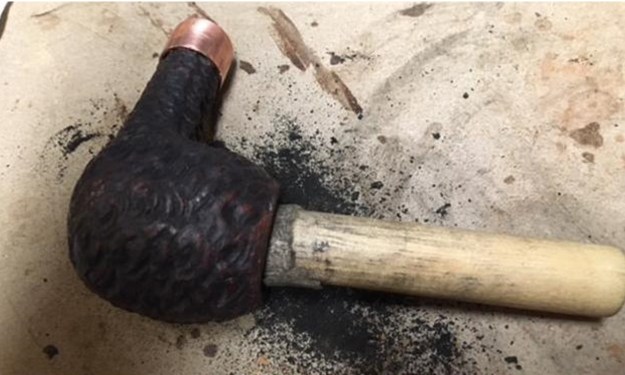
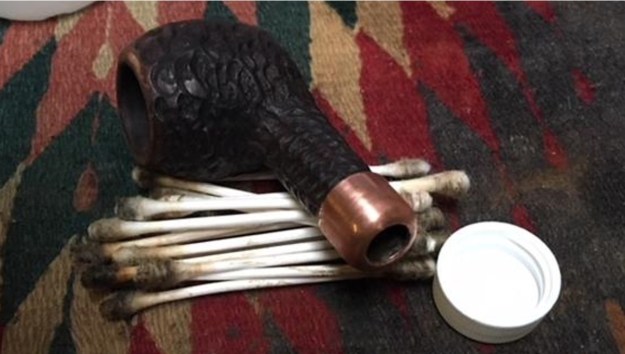
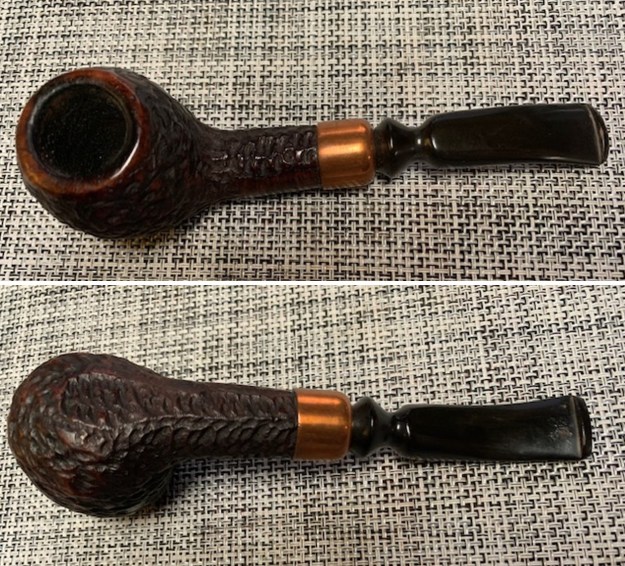
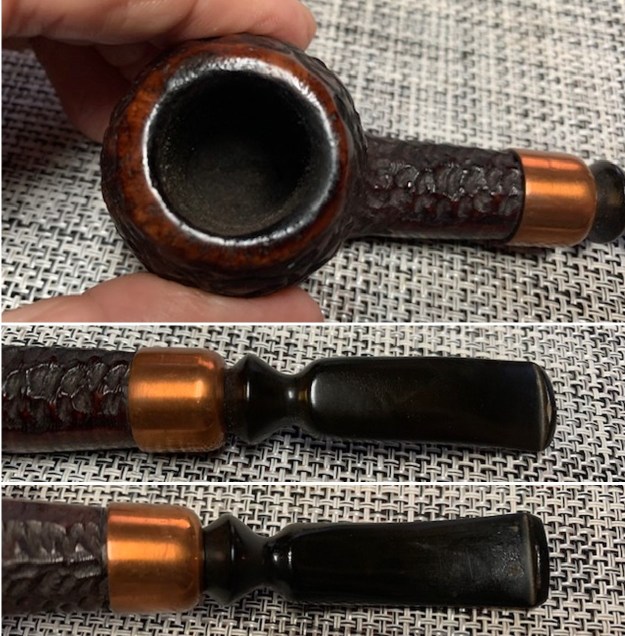
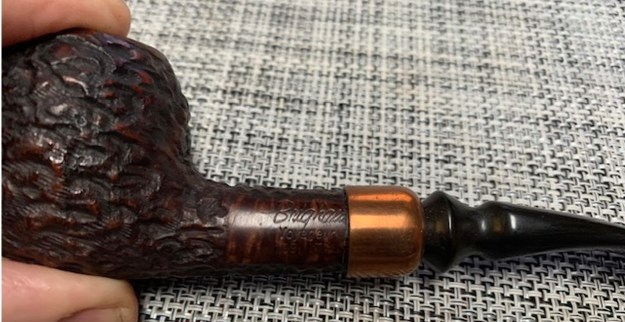
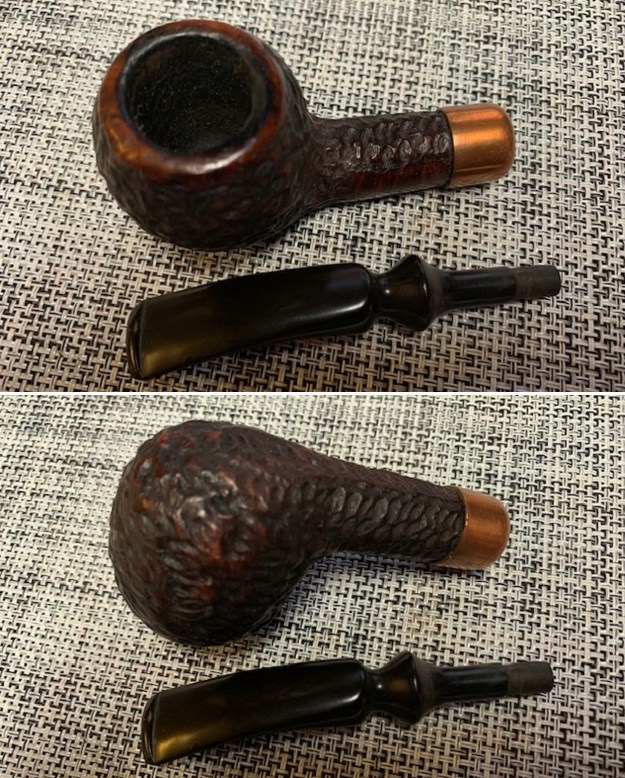
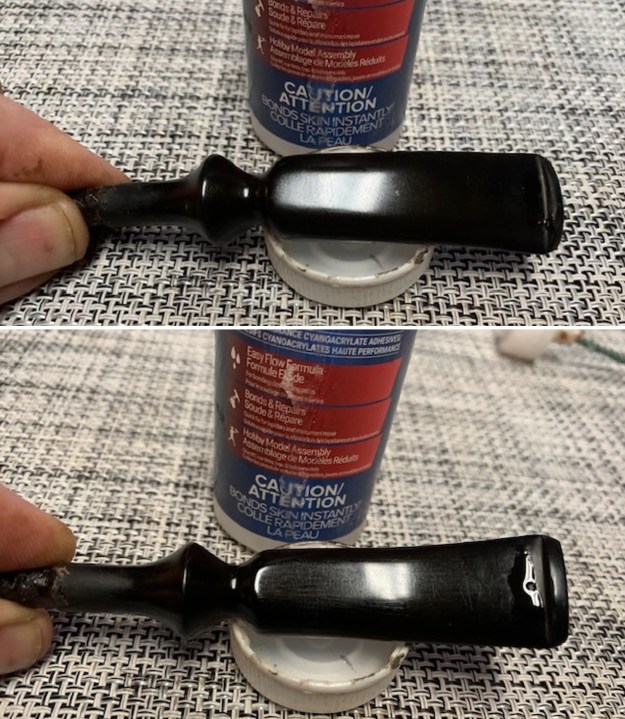
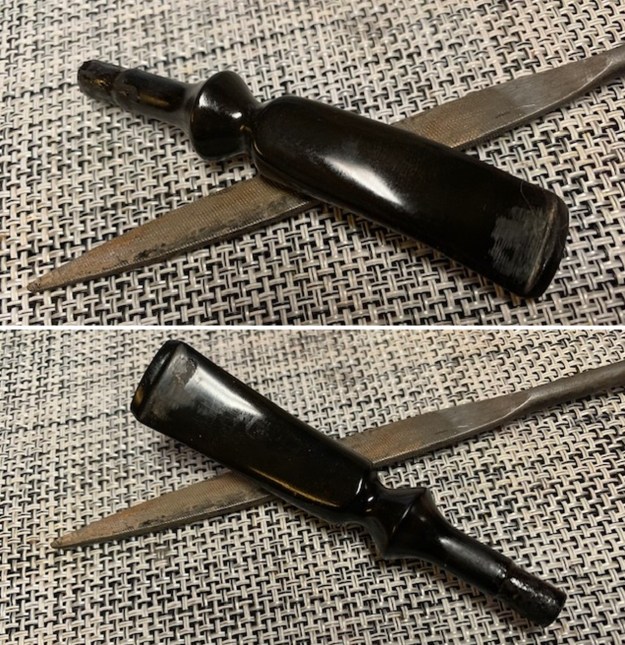
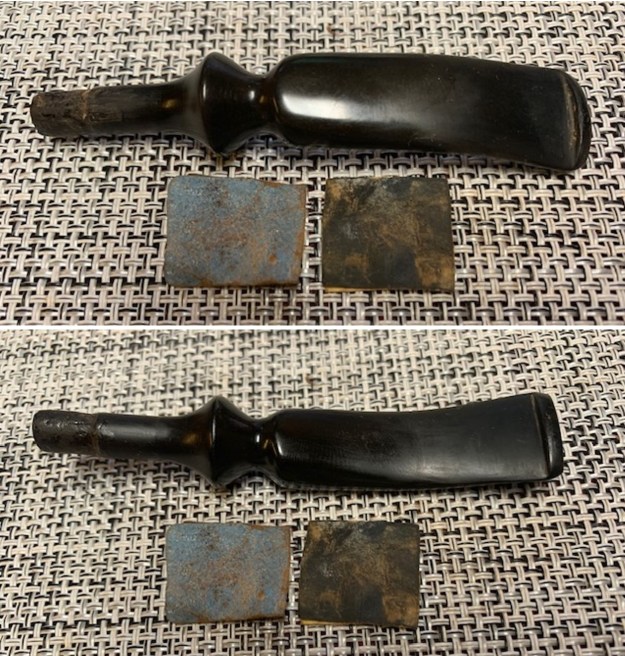
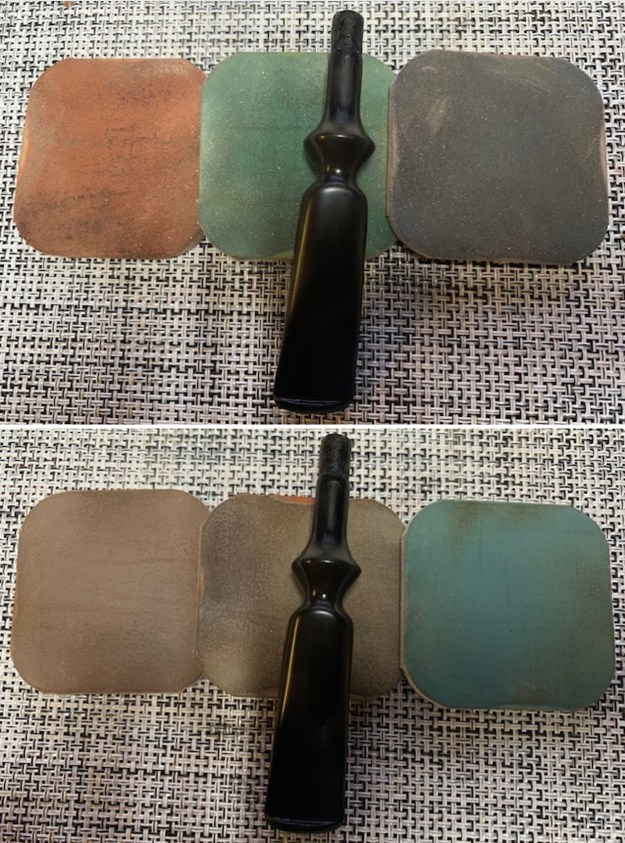
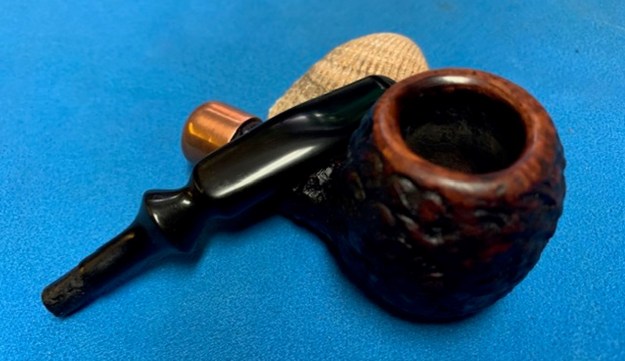
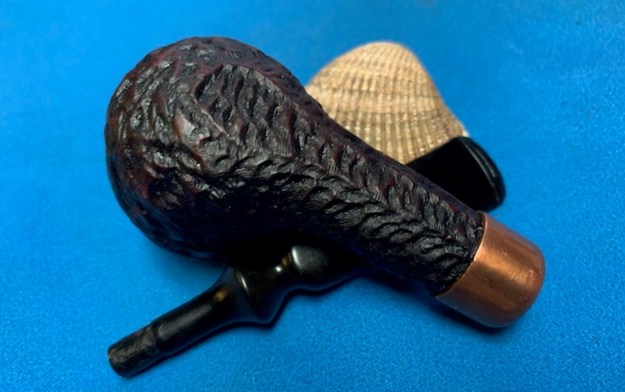
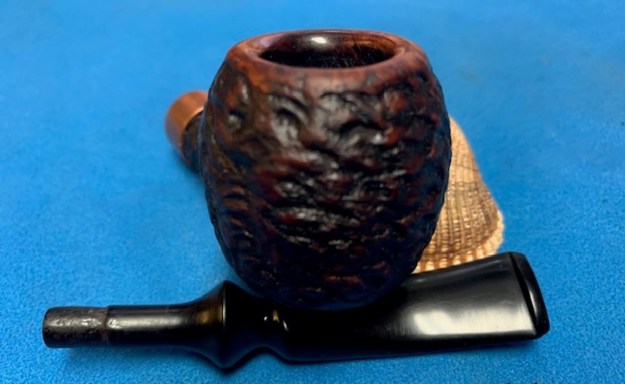
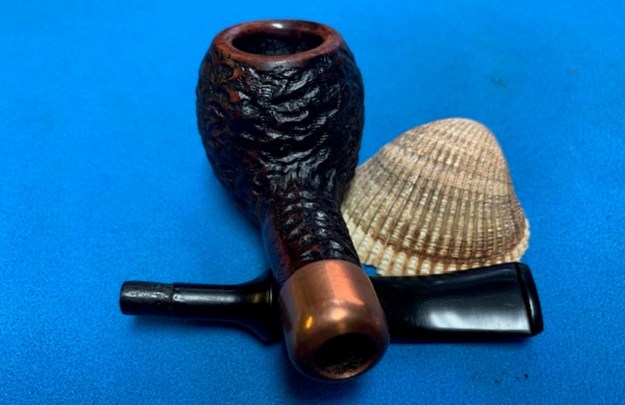
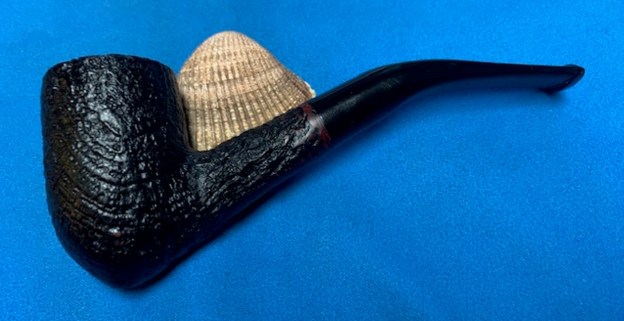
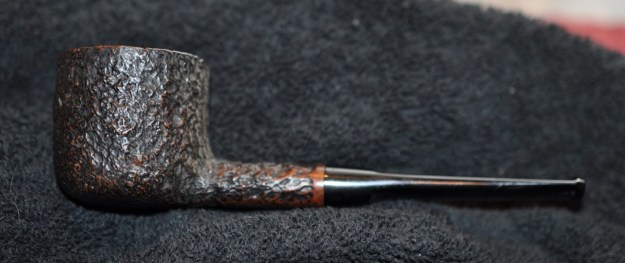
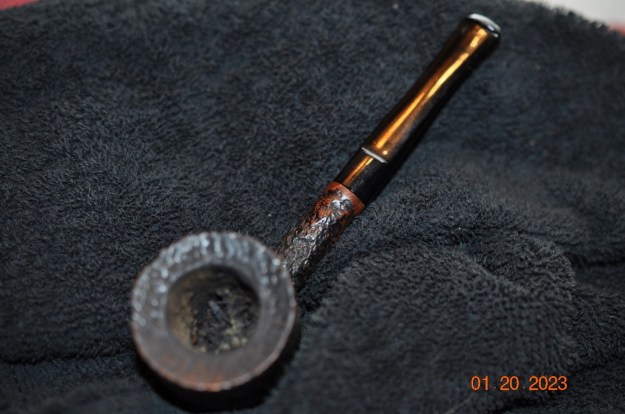
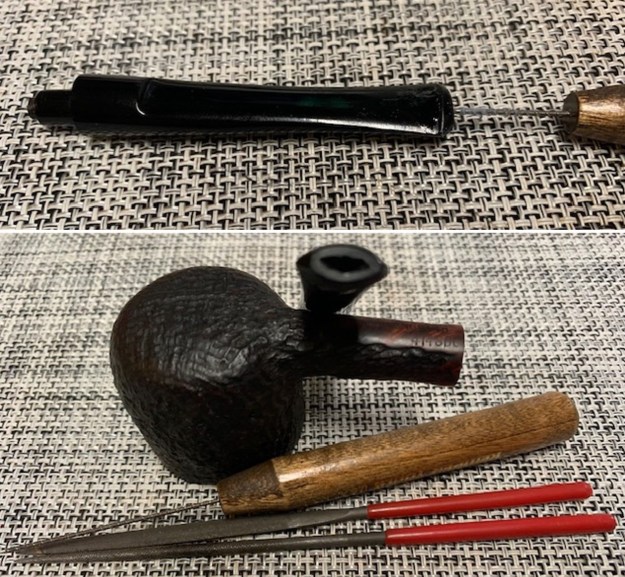
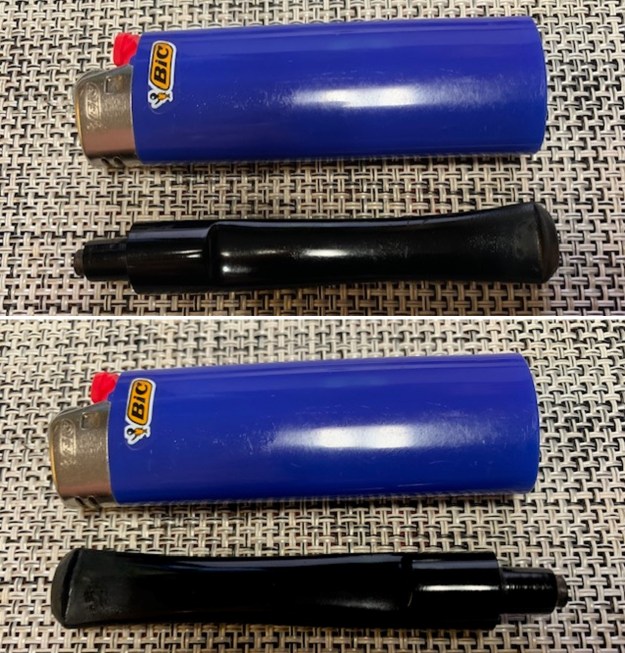
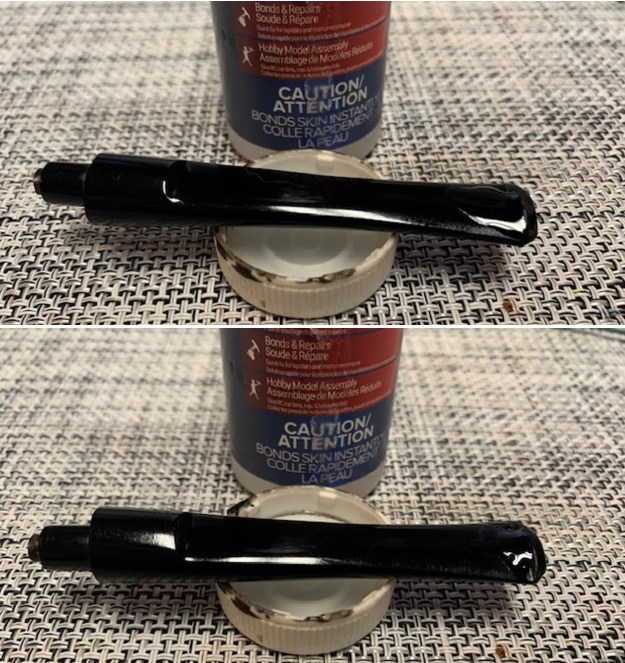
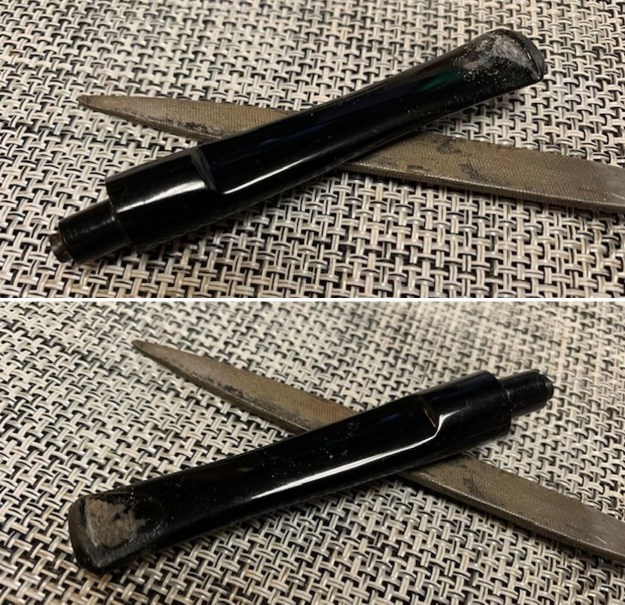
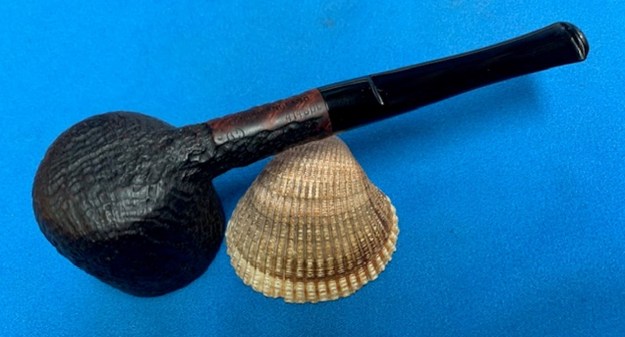
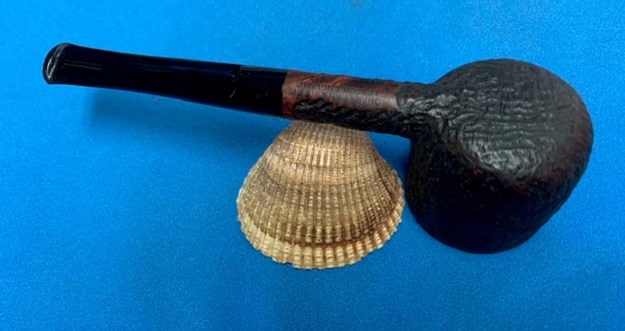
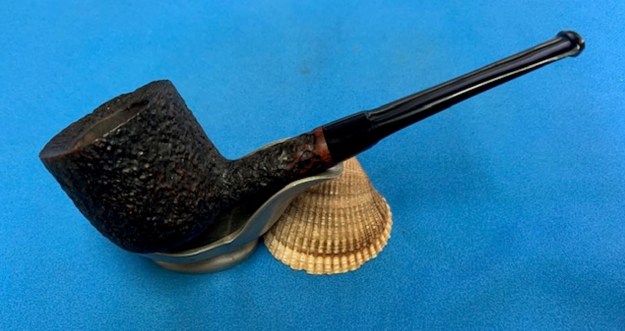
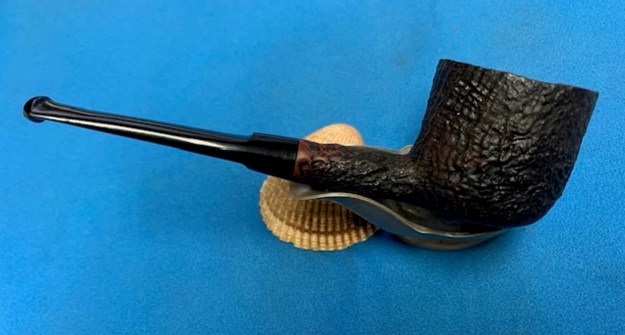
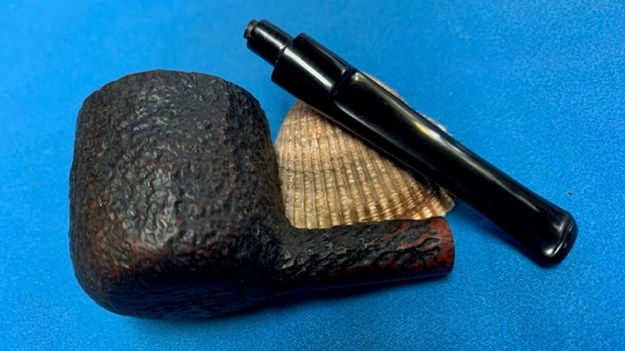
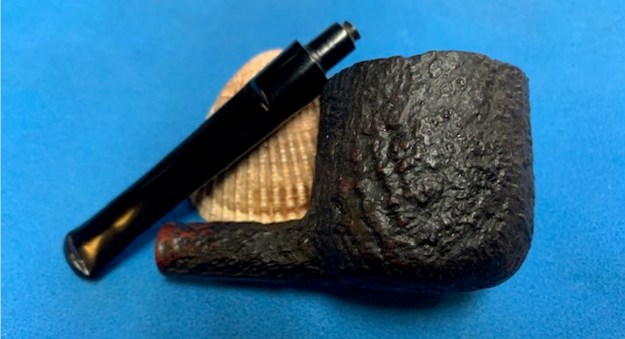
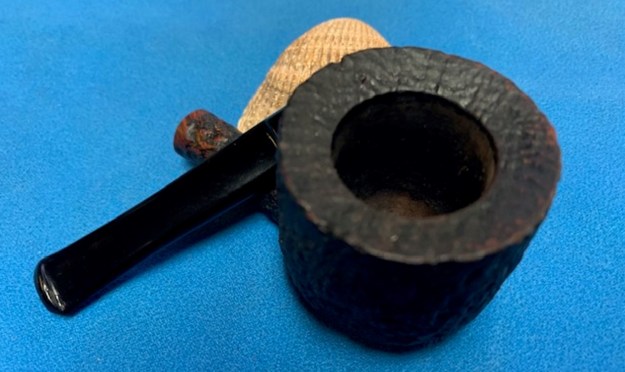
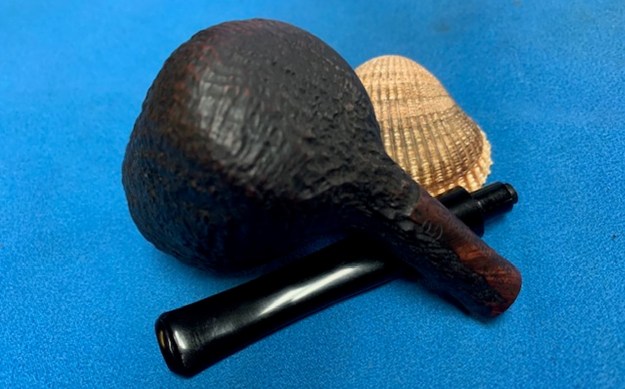
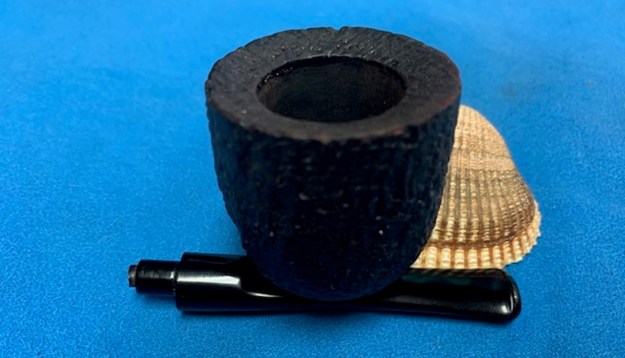
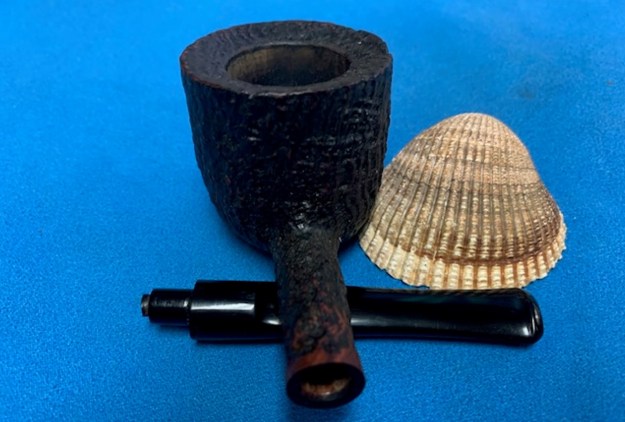
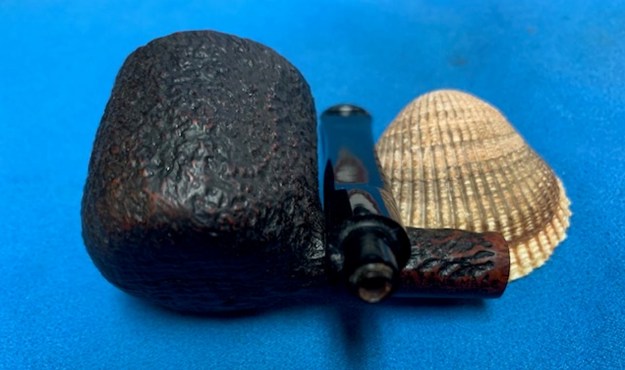
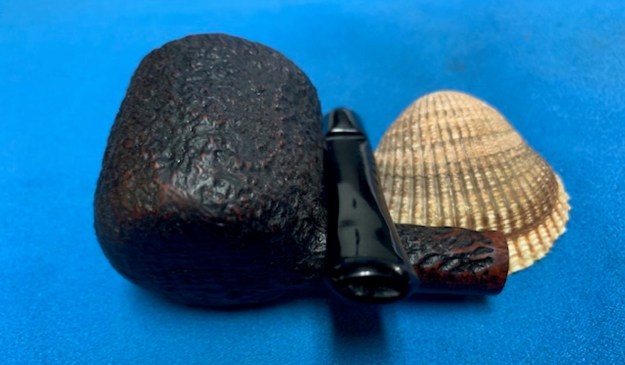
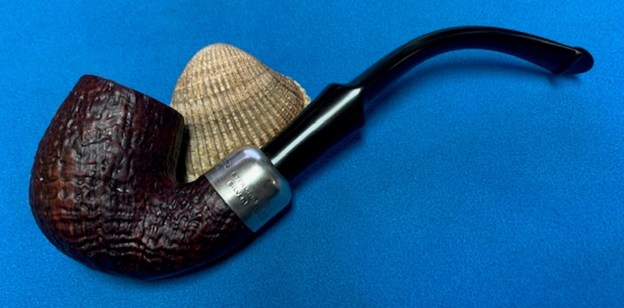
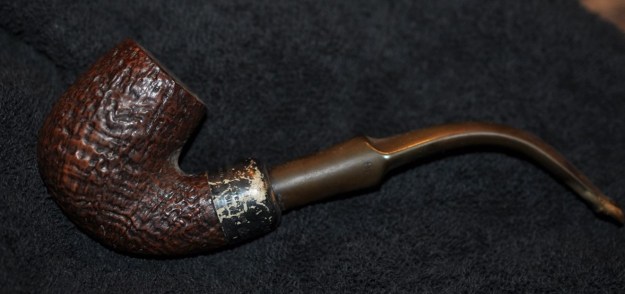
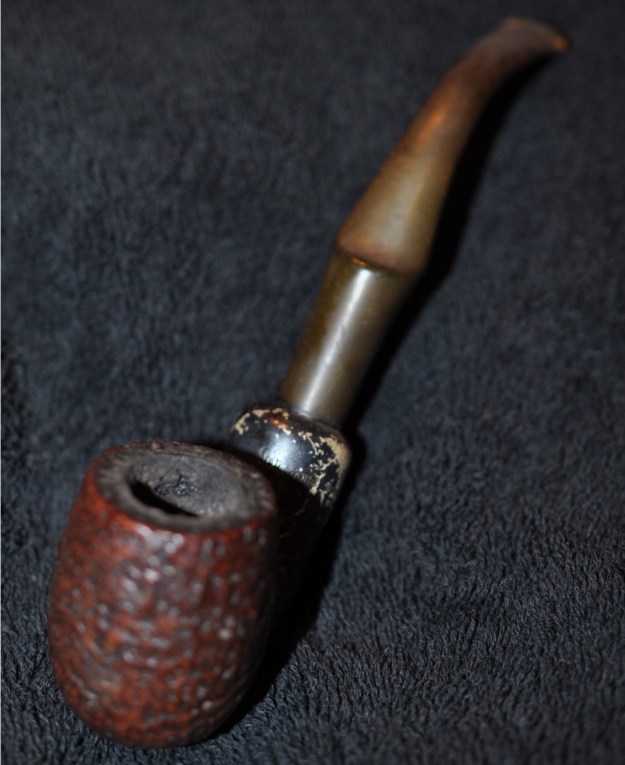
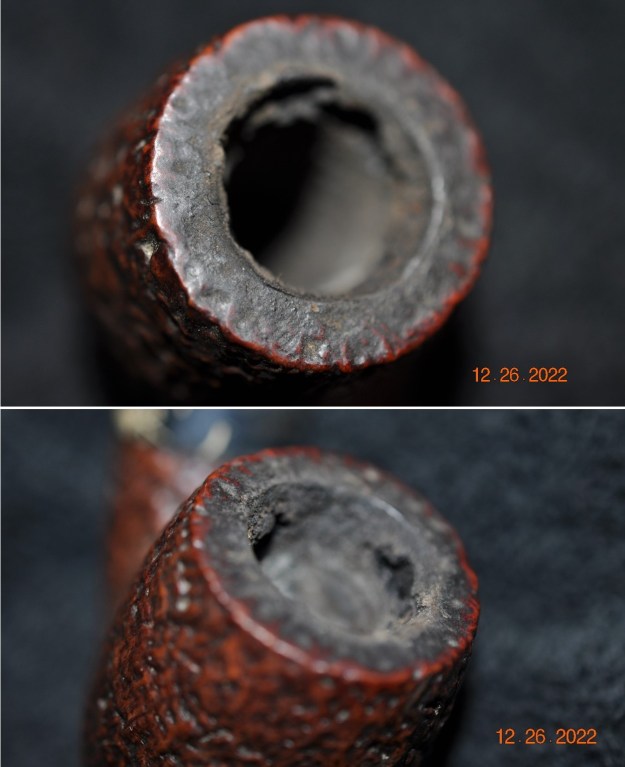
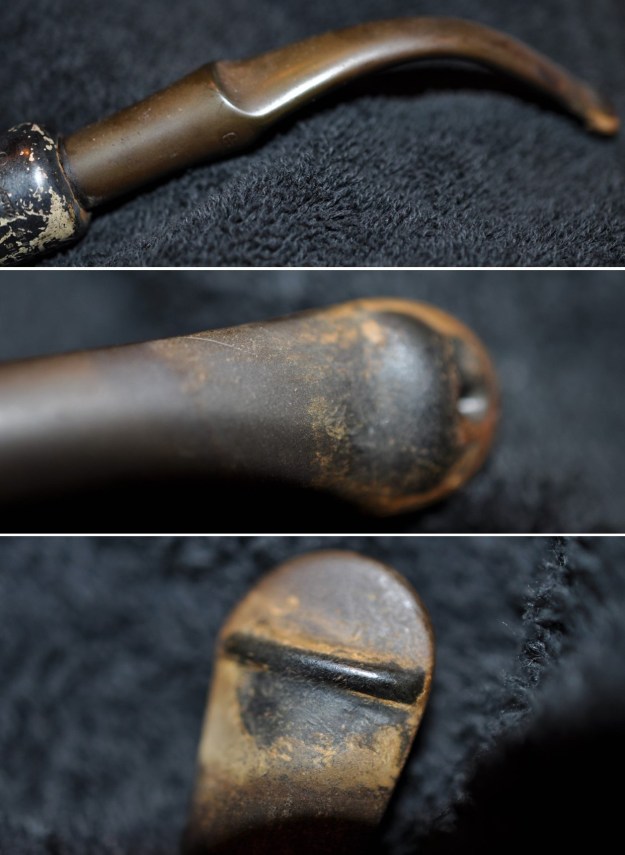
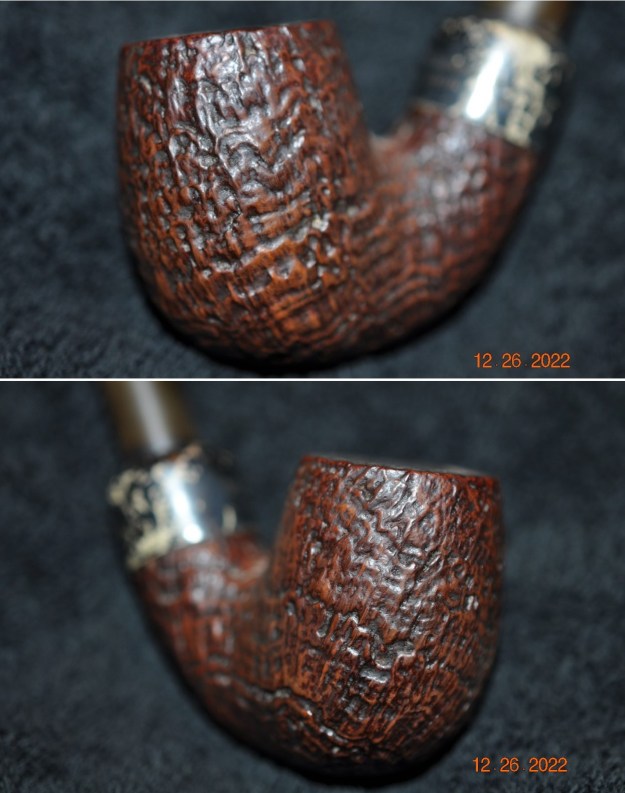
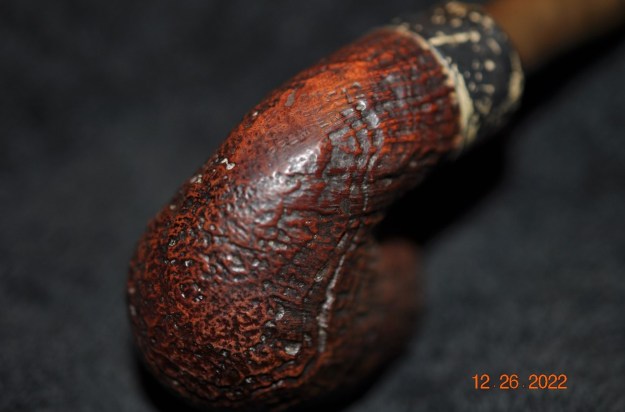
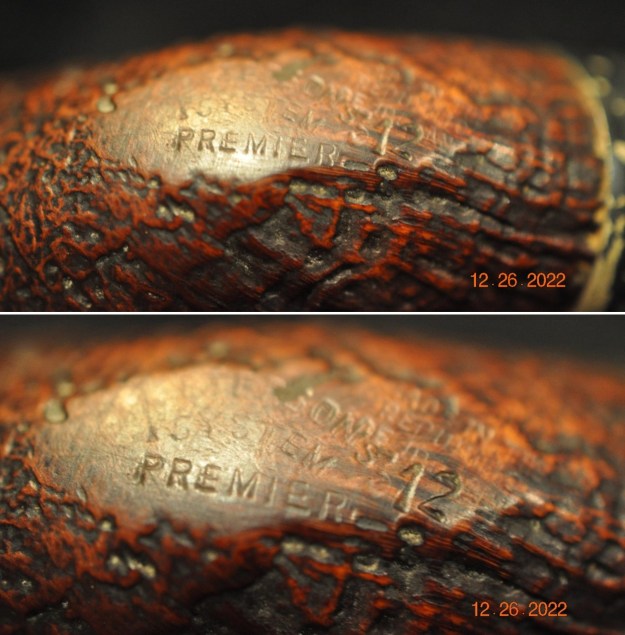
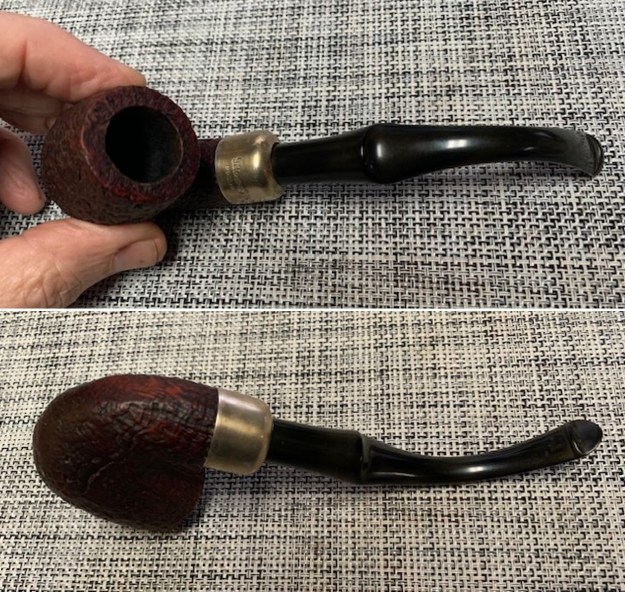
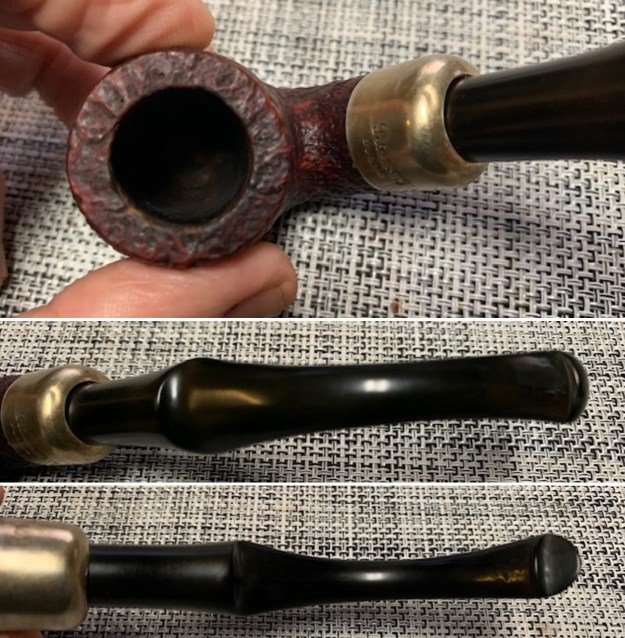
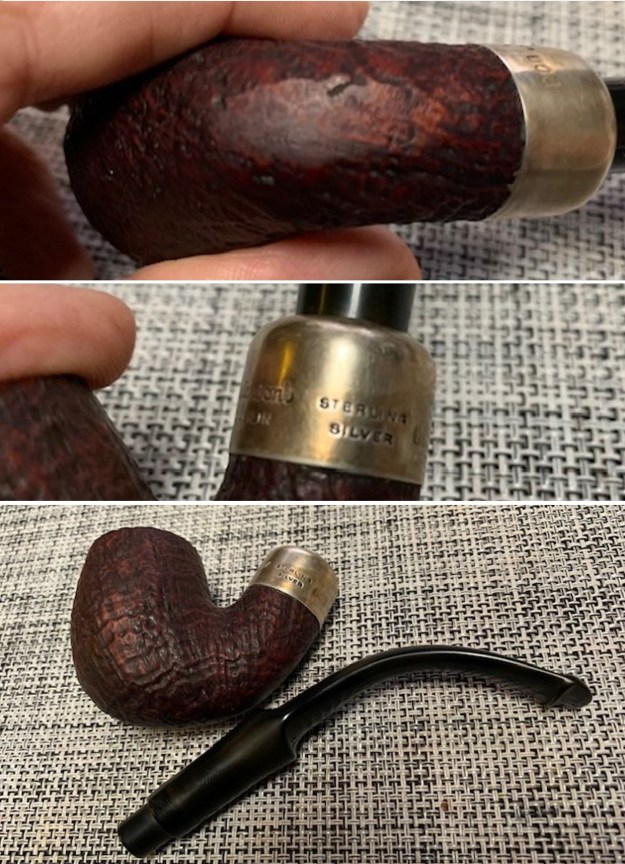
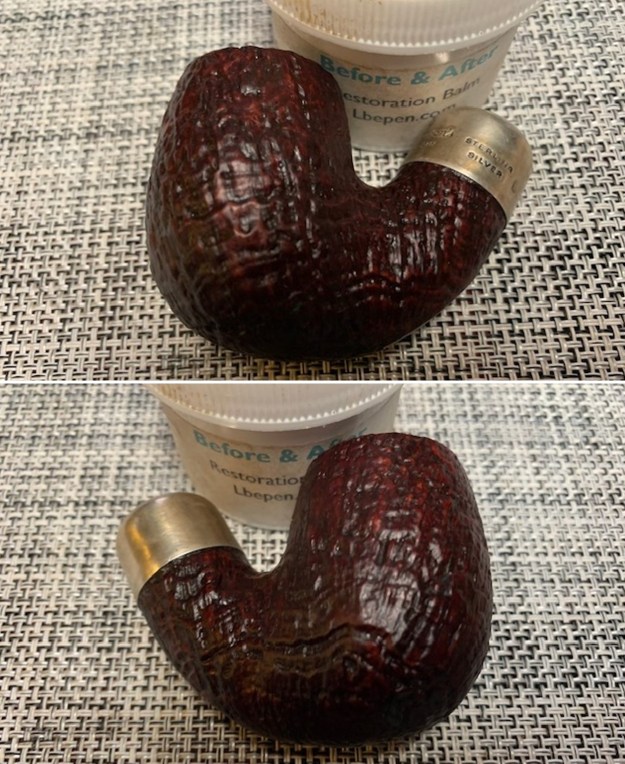
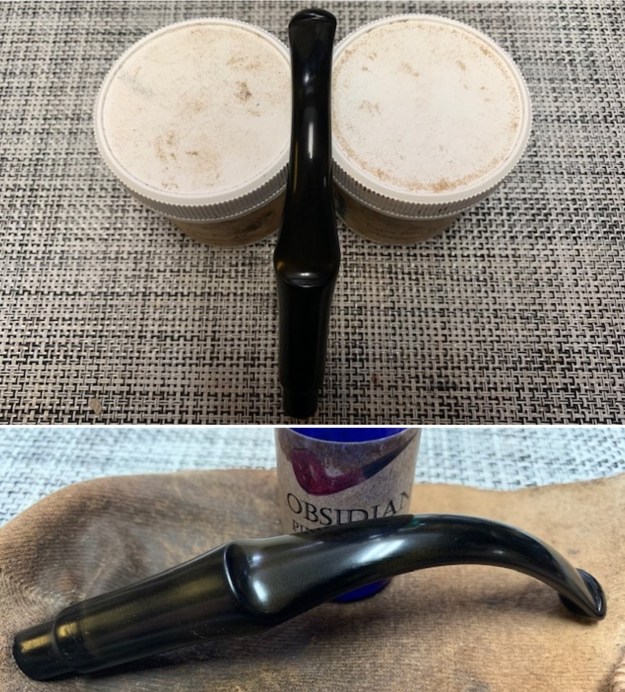
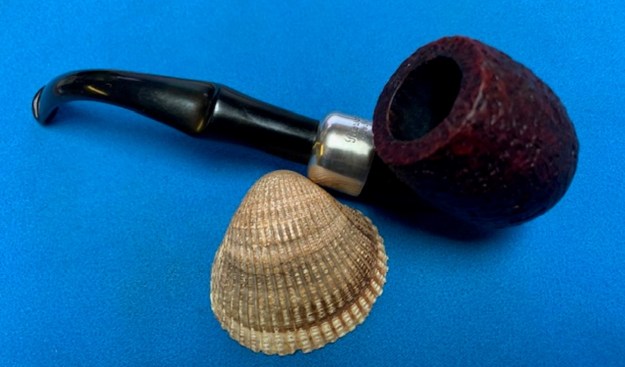
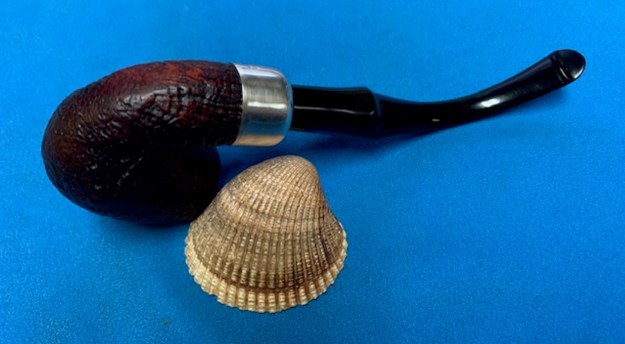
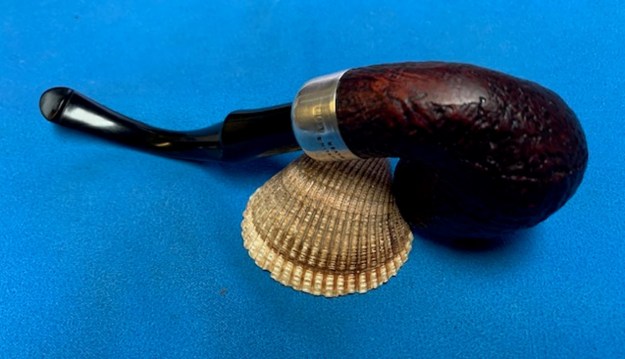
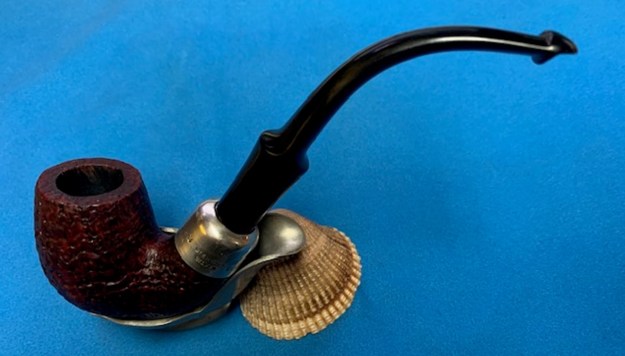
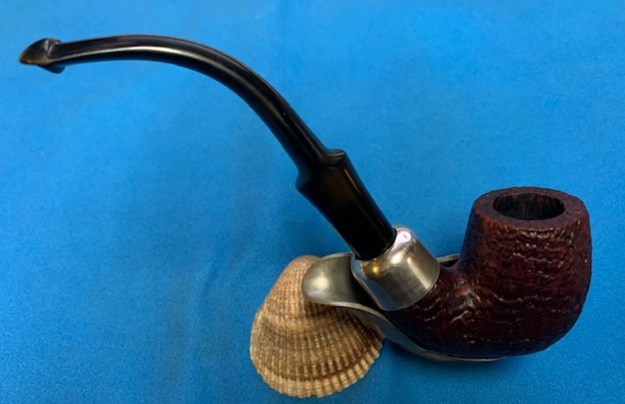
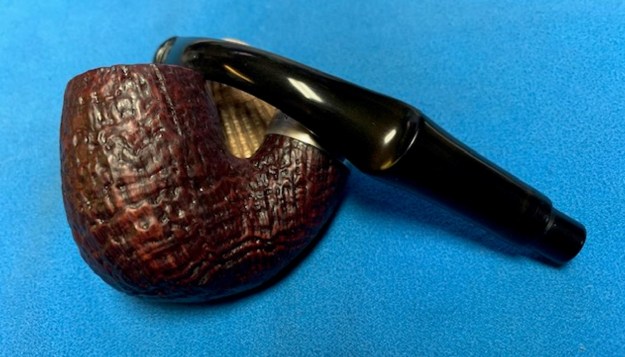
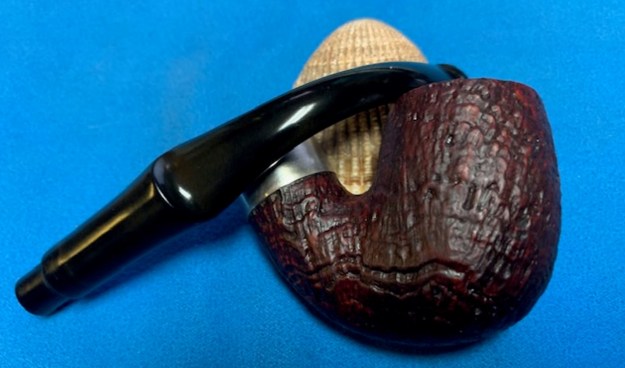
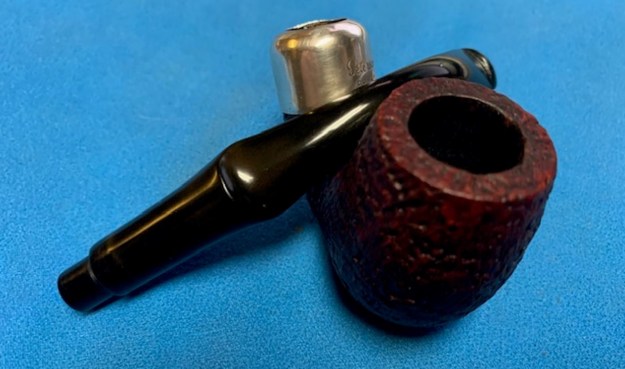
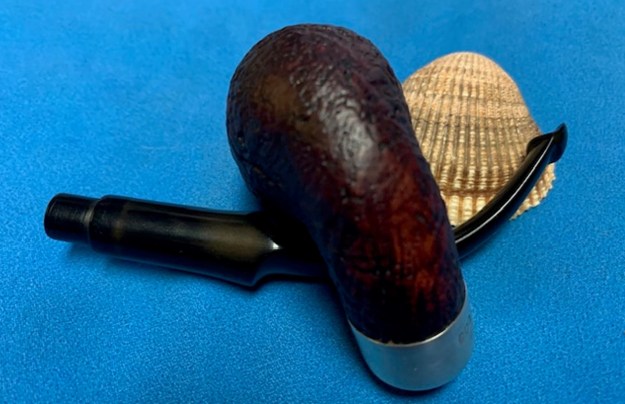
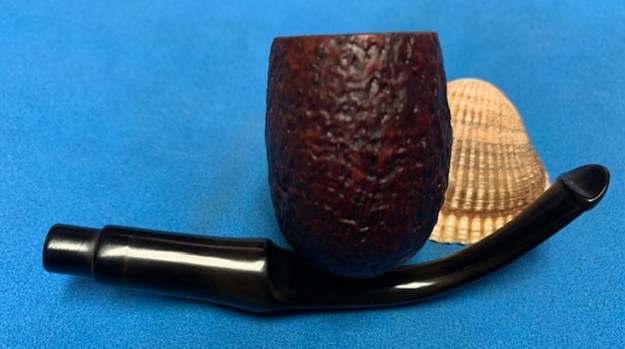
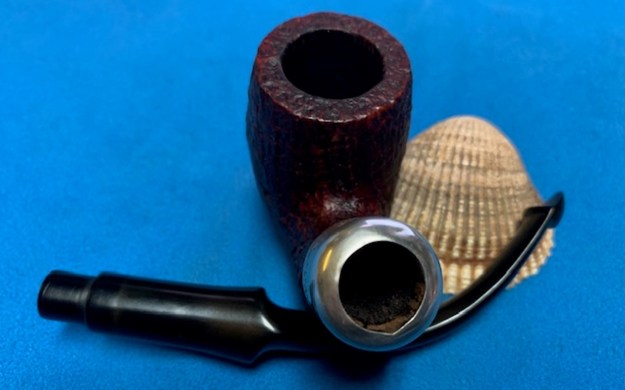
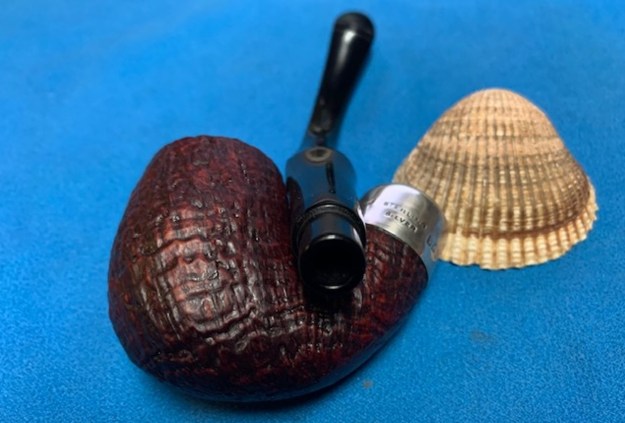
A New System Stem for an Early 1980s Brigham Norseman


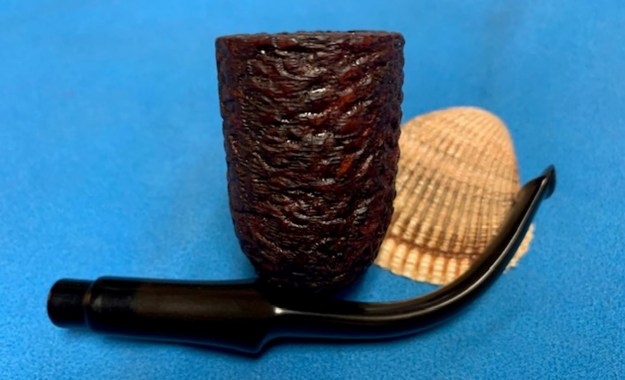
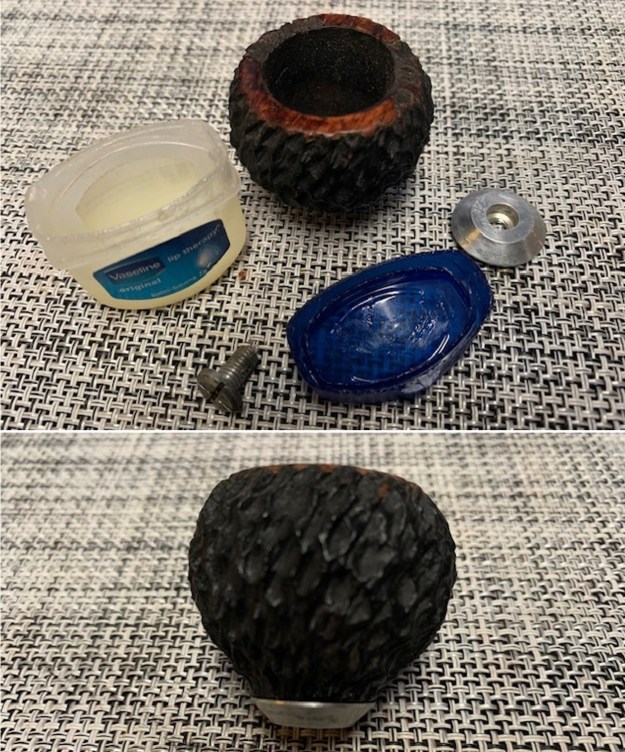
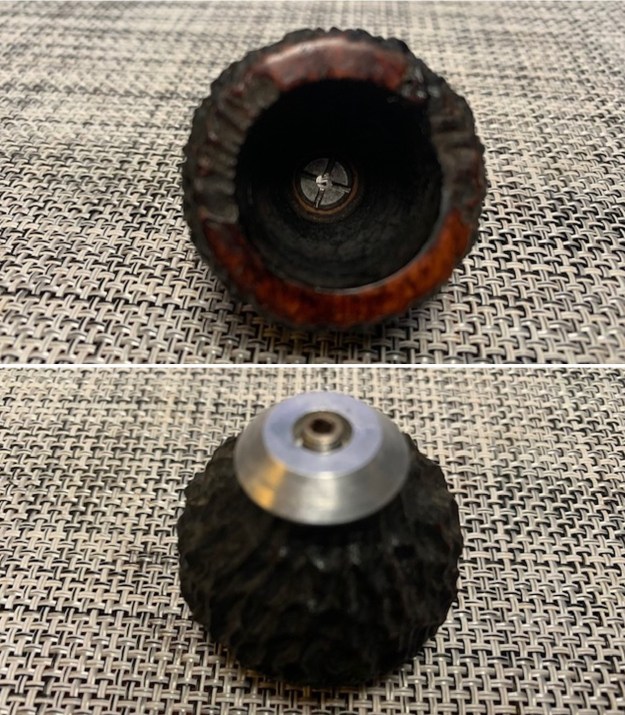
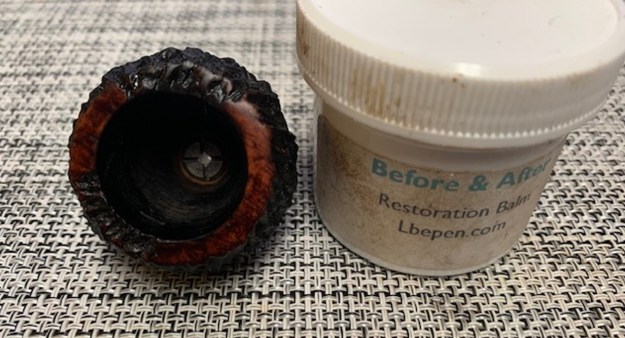
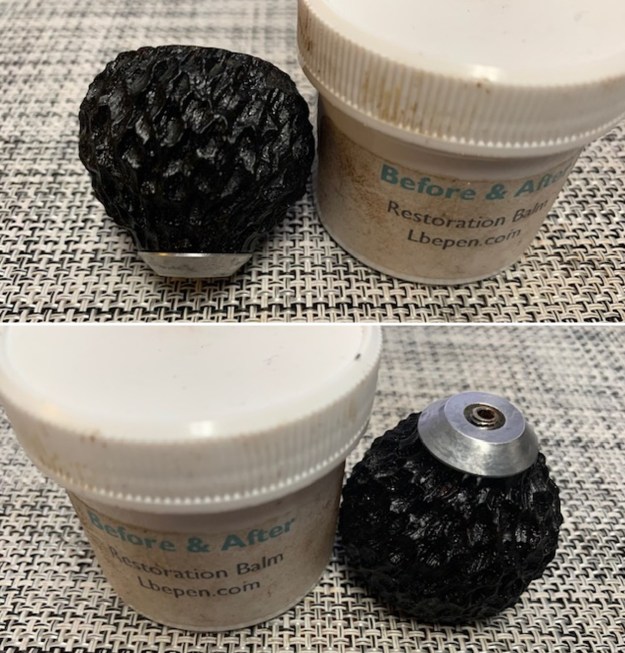
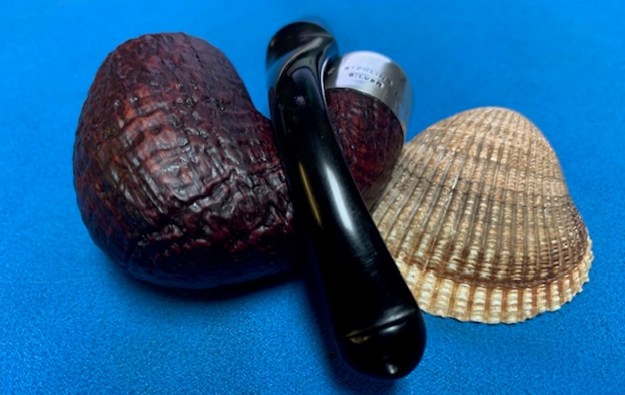
The Brigham Norseman (rusticated) and Valhalla (smooth) pipes were first introduced in the 1960s and were produced until the early 1980s when the two…

A New System Stem for an Early 1980s Brigham Norseman

Nice restem Charles. You have become very good at those Brigham tenons.

Restoring a Savinelli Punto Oro 316KS


Blog by Steve Laug

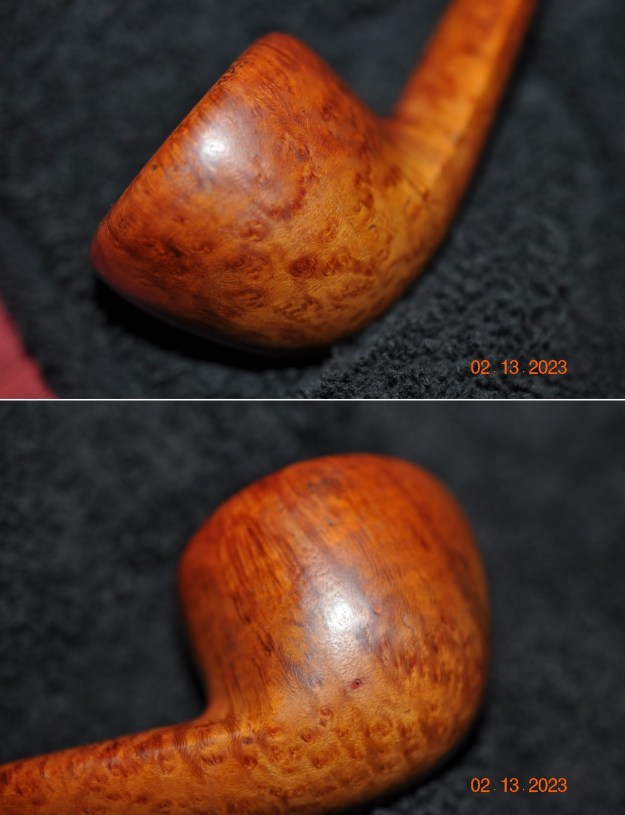
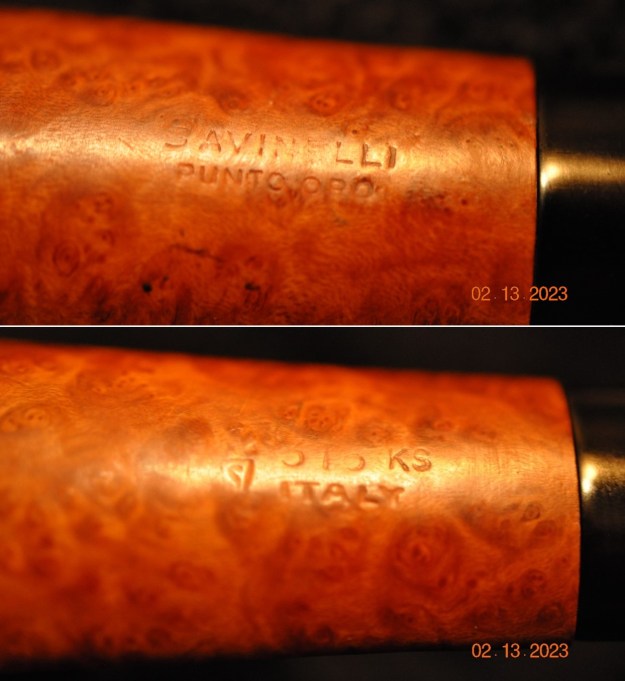
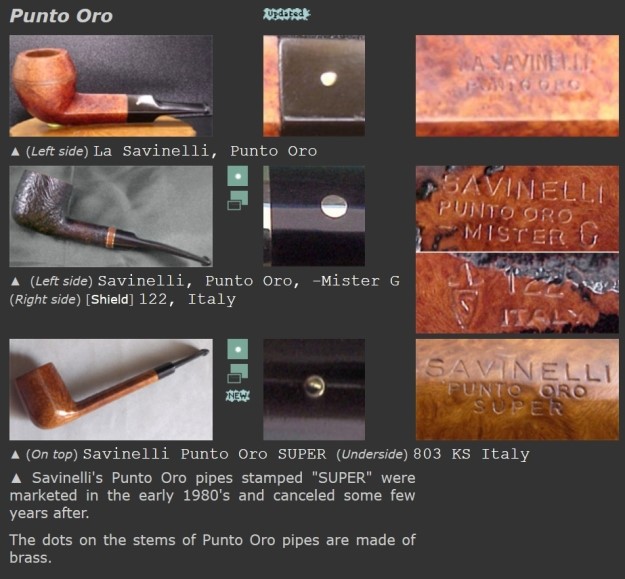
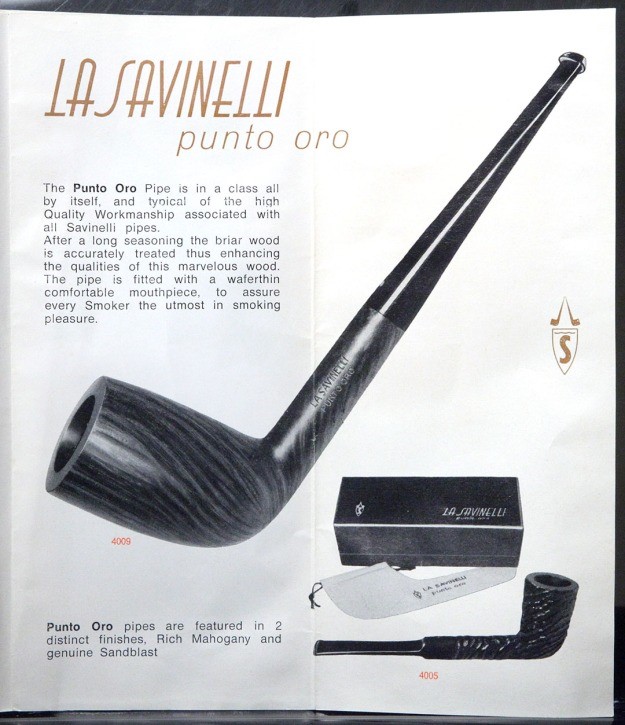
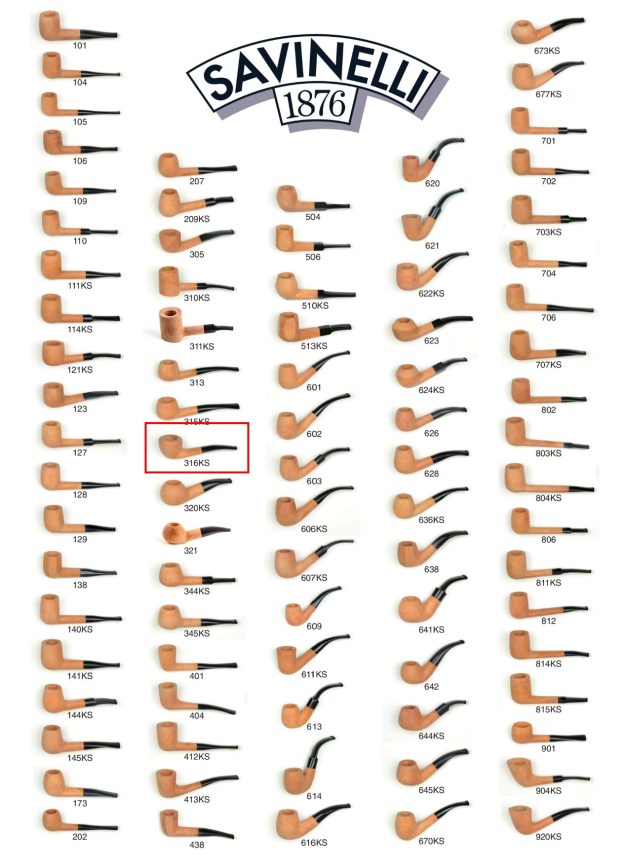
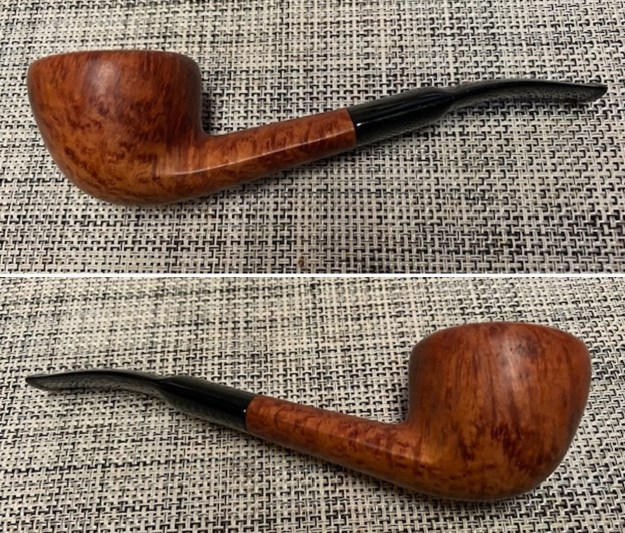
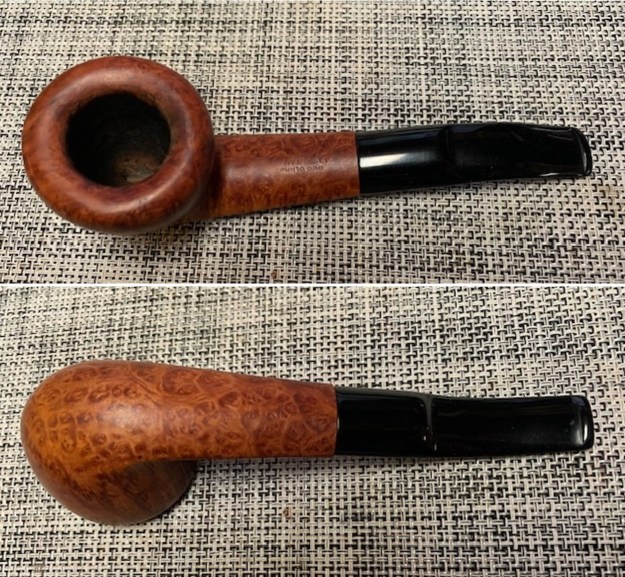
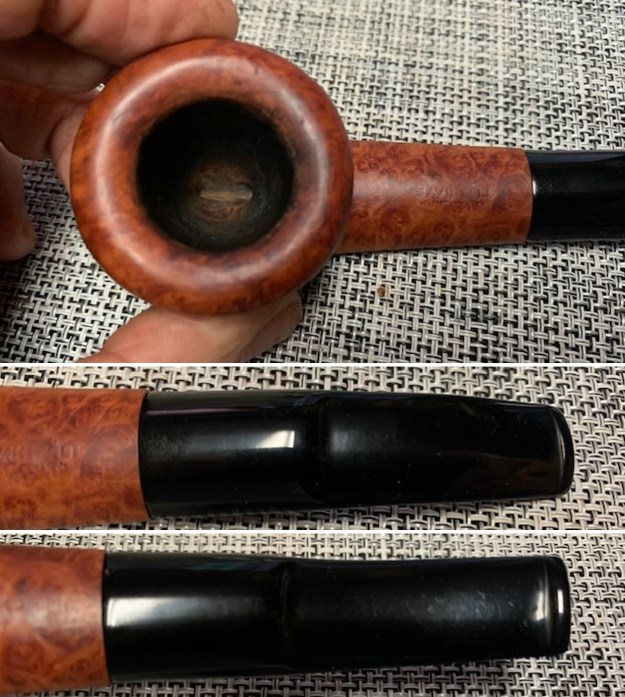
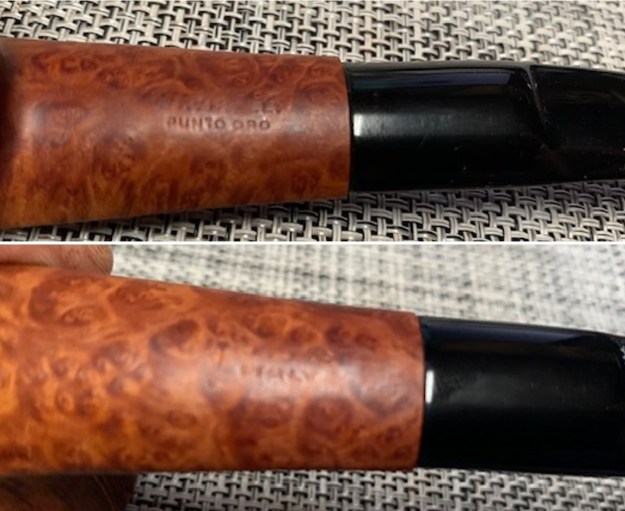
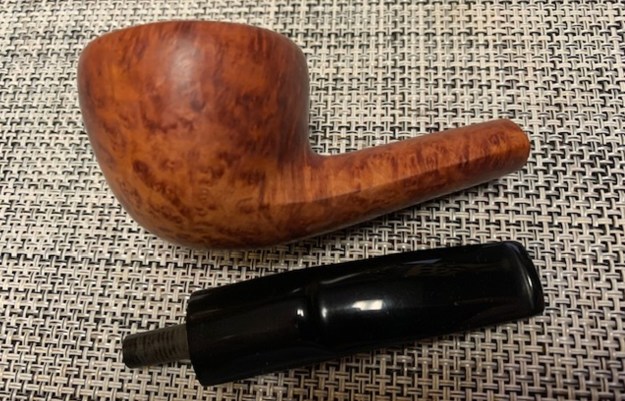
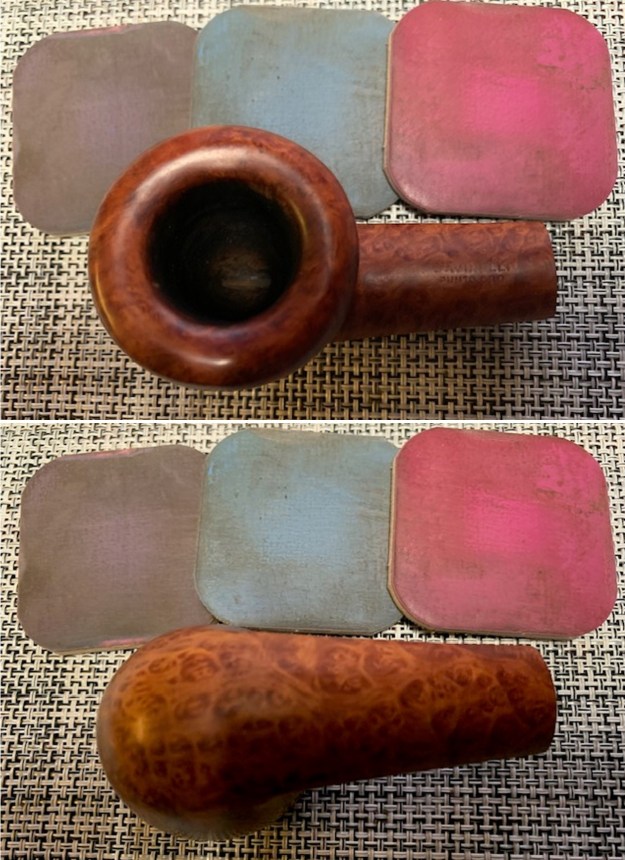
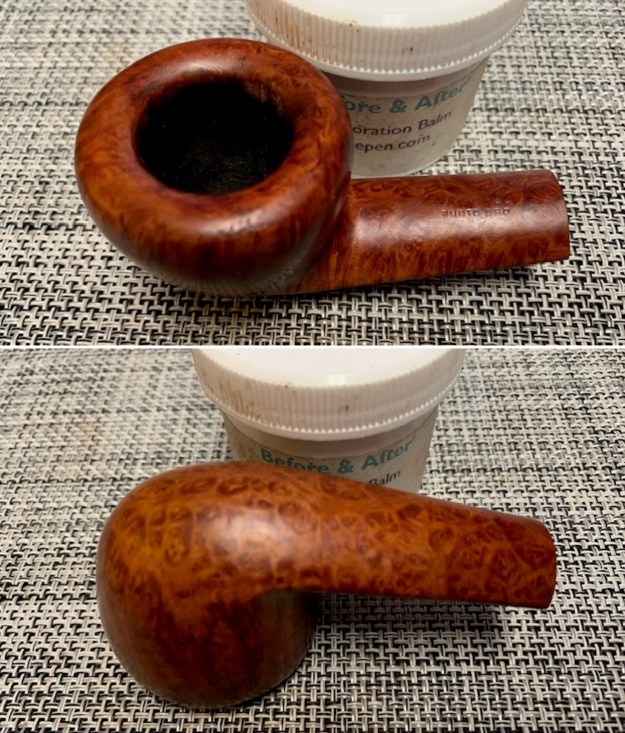
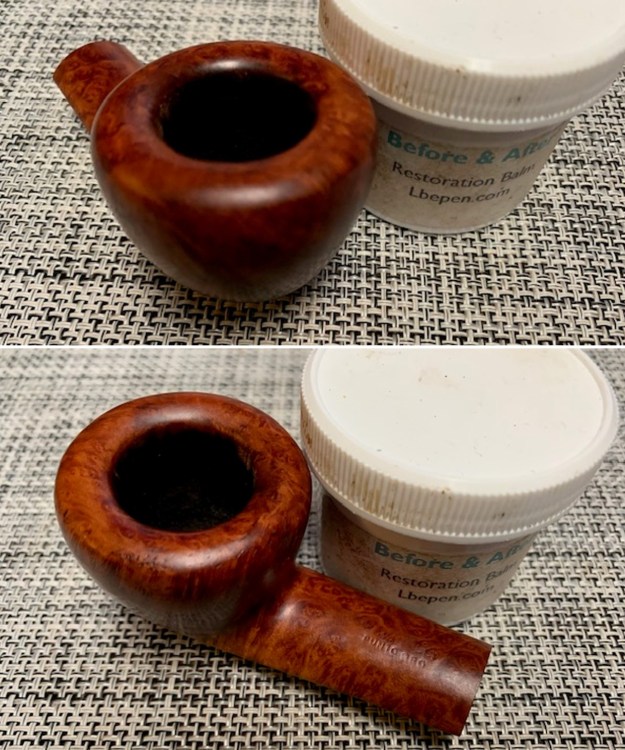
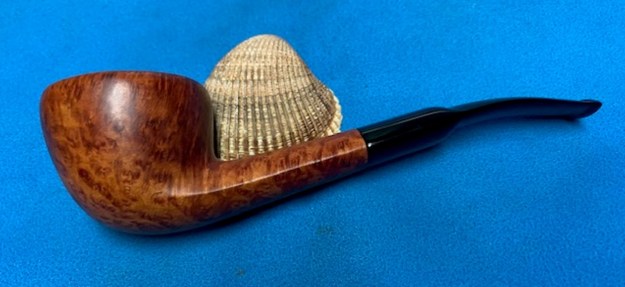
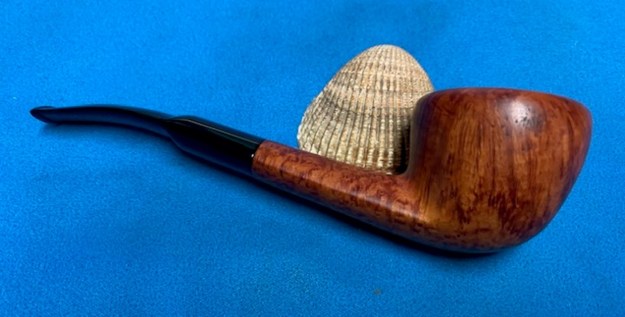
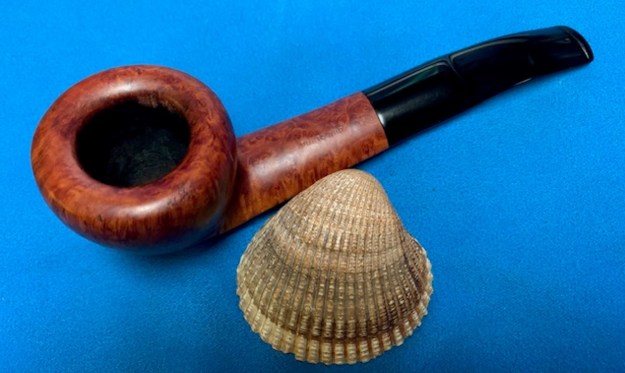
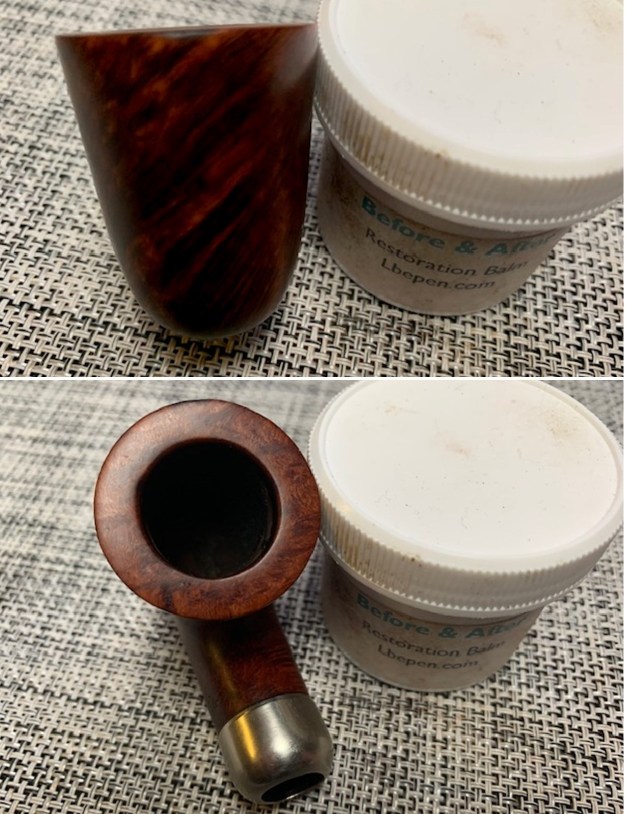
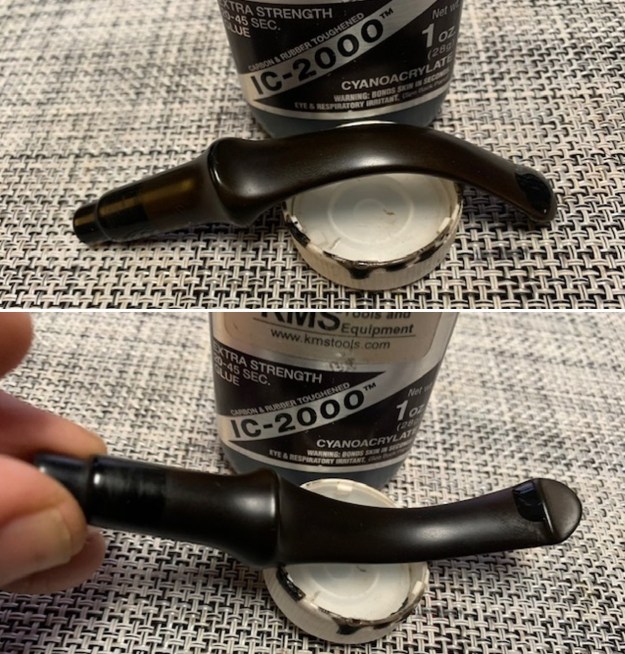
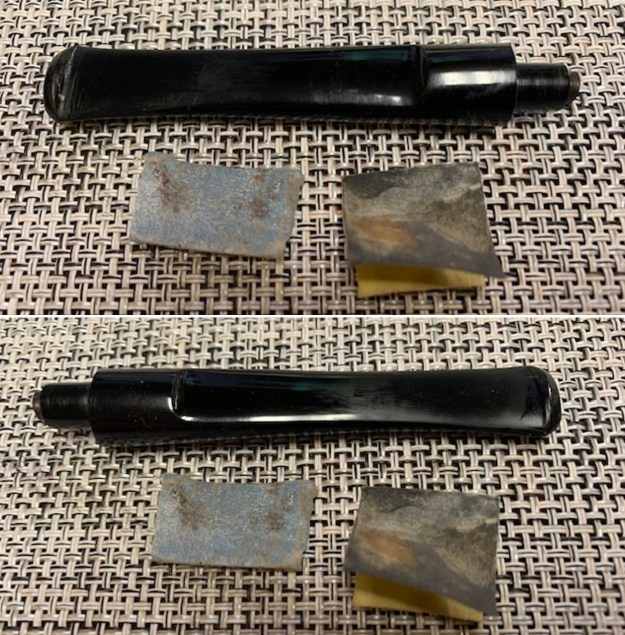
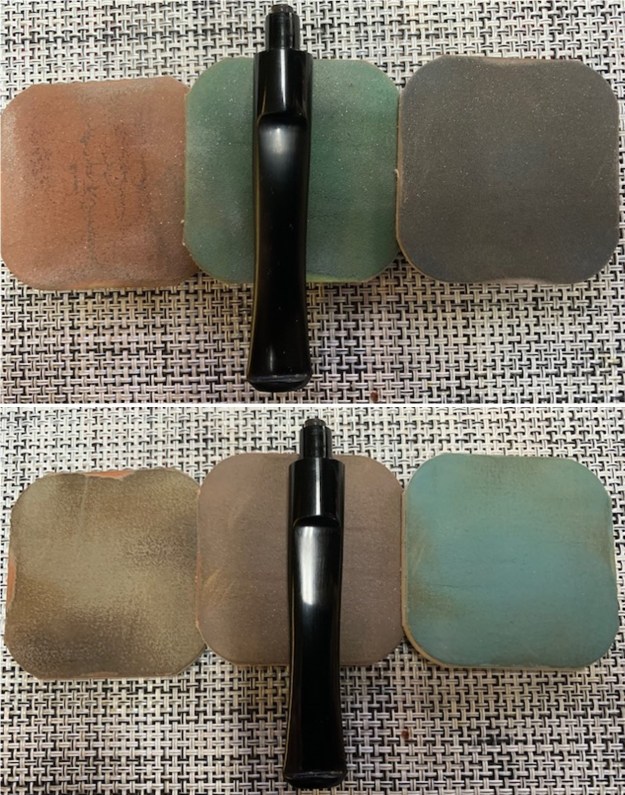
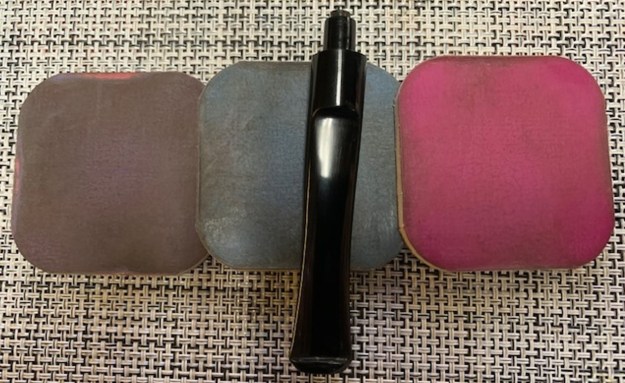
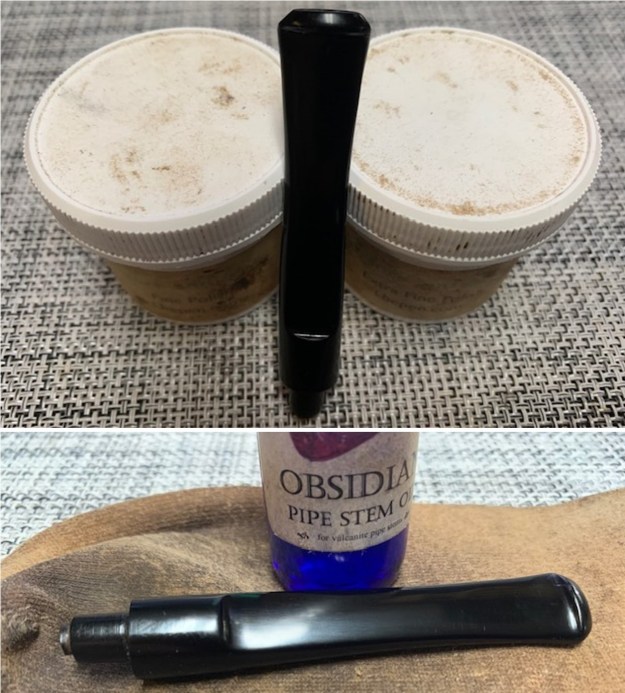
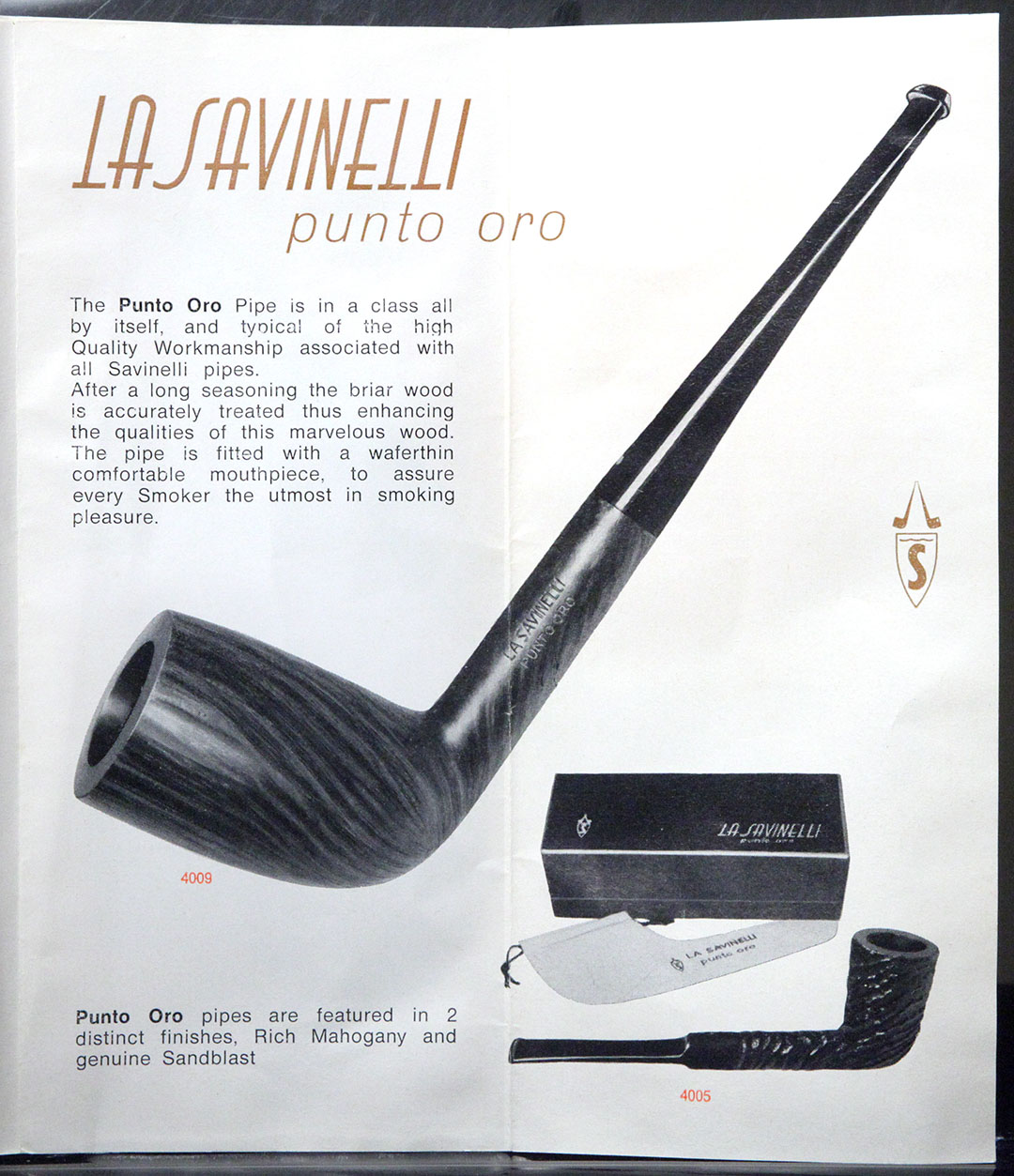
The next pipe on the work table is an interesting Diplomat shaped pipe that we obtained in a trade from a fellow in Japan 01/12/2023. It was stamped on the top side of the shank and read Savinelli [over] Punto Oro. On the underside of the shank it was stamped with a Savinelli S shield followed by the shape number 316KS [over] Italy. It has a smooth finish with beautiful grain patterns around the bowl and shank that is covered with a lot of oils, debris and grime. The bowl was quite clean and appeared to have been recently reamed and cleaned. The top and edges of the rim looked very good with some light darkening on the back inner edge of the crowned rim top. There was a very beautiful pipe underneath all of the buildup of years of use. The stem was an acrylic replacement that was not a perfect fit to the shank with a slightly smaller diameter crosswise to the shank so it would not be changed in the restoration. As it was acrylic there was no issue with oxidization or calcification on the stem. There were light tooth marks and chatter on both sides near the button. Jeff took photos of the pipe before he started his cleanup work on it. Jeff took photos of the bowl and rim top to show the condition of the bowl and the rim top. It looked very good and there was some darkening on the back inner edge of the crowned rim top. Jeff took photos of the top and underside of the stem showing the light tooth marks and chatter on both sides. Jeff took photos of the sides and heel of the bowl to show the condition of the finish. You can see the grime around the sides of the bowl and shank. Even under the dirt and debris of the years it looked very good. Jeff took photos of the stamping on the top and underside of the shank. The stamping was faint but readable as you can see from the photos. It read as noted above. I turned to Pipephil’s site to get a feel for the Punto Oro line. All of the previous Punto Oro pipes that I have worked on were smooth finish with great grain. This was a sandblast one and I do not recall working on one before. Here is the link (http://www.pipephil.eu/logos/en/logo-savinelli3.html). I have included a screen capture of the pertinent information on the line below. It appears the line came out in both smooth and sandblast finishes.I turned to Pipedia to look at what information they had on the brand. I found a catalogue page on the Punto Oro which confirmed what I had surmised about the line having both smooth and sandblast finished pipe (https://pipedia.org/images/d/db/Sav_Punto_Oro.jpg). I have included a screen capture of the page below. It says that the line was available in 2 distinct finishes – a rich Mahogany smooth finish and a genuine sandblast.The Savinelli shape number was 310KS so I turned to the Savinelli Shape Chart on Pipedia and included a screen capture (https://pipedia.org/images/4/41/Sav_Shape_Chart_2017.jpg). I have drawn a red box around the 316KS shape in the photo below. Armed with that information I turned to work on the pipe itself. Jeff had done a great job cleaning up the pipe as usual. He cleaned up the inside of the bowl with a PipNet reamer and a Savinelli Fitsall Pipe Knife. The bowl walls looked very good. He scrubbed the interior of the bowl and shank with pipe cleaners, cotton swabs and alcohol to remove the tars and oils. He scrubbed the exterior of the pipe with Murphy’s Oil Soap and a tooth brush to remove the grime from the finish. He worked on the rim top lava and darkening with the soap and tooth brush. He scrubbed the inside of the stem with alcohol and pipe cleaners. He scrubbed the exterior with Soft Scrub and then soaked it in Briarville’s Pipe Stem Deoxidizer. He washed it off with warm water to remove the deoxidizer. The pipe looked far better. I took photos of the pipe when I received it before I started working on it. I took photos of the bowl and rim top to show how clean it was. You can see the darkening on the inner edge of the rim and the top.  The stem looks clean of oxidation and the tooth marks and chatter are very clear in the photos.I took photos of the stamping on the top and the underside of the shank. The stamping is faint in spots but it is still readable. I took a photo of the pipe with the stem removed to show the overall look of stem, tenon and profile of the pipe. I decided to start my work on the pipe by cleaning up the rim top and inner edge of the bowl with a folded piece of 220 grit sandpaper. I removed the darkening and nicks on the inner edge. It looked significantly better.  I polished the briar with micromesh sanding pads – dry sanding it with 1500-12000 grit sanding pads. I wiped it down with a damp cloth after each sanding pad to remove the dust. The briar was really shining by the final pad. I rubbed the bowl and rim down with Before & After Restoration Balm. I worked it into the surface of the briar with my fingertips to clean, enliven and protect it. I let the balm sit for 10 minutes and then buffed with a cotton cloth to raise the shine. I really like watching the Balm do its magic and bring the briar alive. There are still small nicks in the briar but I have decided to leave them as part the pipe’s story. I built up the rounded edge of the button on the top side with black, rubberized CA glue. I filled in the deep marks on the stem with clear CA glue and set it aside to cure. Once it cured I used a file to flattened the repairs and redefine the button edge. I sanded the stem with 220 grit sandpaper to further blend in the repairs. I started polishing it with 600 grit wet dry sandpaper. I polished the stem with micromesh sanding pads – wet sanding with 1500-12000 grit pads. I wiped the stem down after each sanding pad with Obsidian Oil. I polished it with Before & After Pipe Stem Polish – both Fine and Extra Fine. I gave it a coat of Obsidian Pipe Stem Oil. It works to protect the stem from oxidizing. I set it aside to dry. I put the stem back on the Savinelli Punto Oro 316KS Oval Shank Dublin and buffed the pipe with Blue Diamond on the buffing wheel. I polished the briar and the vulcanite of the stem until there was a rich shine. This classic Savinelli shape and finish really highlights a proportionally well carved pipe. Once I buffed the pipe the briar came alive as the grain just popped with polishing. The black acrylic saddle stem has a rich glow. This Punto Oro 316KS fits well in the hand and sits right in the mouth. Have a look at it with the photos below. The dimensions are Length: 6 inches, Height: 1 ½ inches, Outside diameter of the bowl: 1 ¾ inches, Chamber diameter: 7/8 of and inch. The weight of the pipe is 1.66 ounces/47 grams. This beauty will be going on the rebornpipes online store in the Italian Pipemakers Section. If you are interested let me know. Thanks for walking through the restoration with me as it was a pleasure to work on.

As always, I encourage your questions and comments as you read the blog. Thanks to each of you who are reading this blog. Remember we are not pipe owners; we are pipe men and women who hold our pipes in trust until they pass on into the trust of those who follow us.

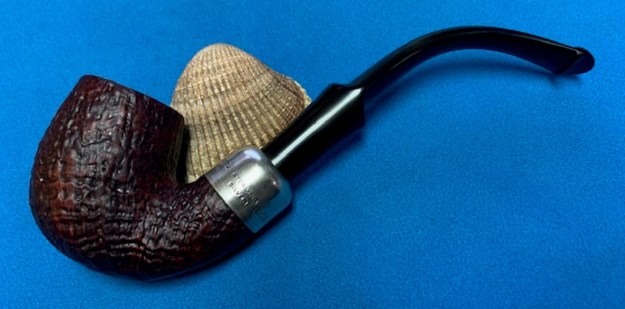
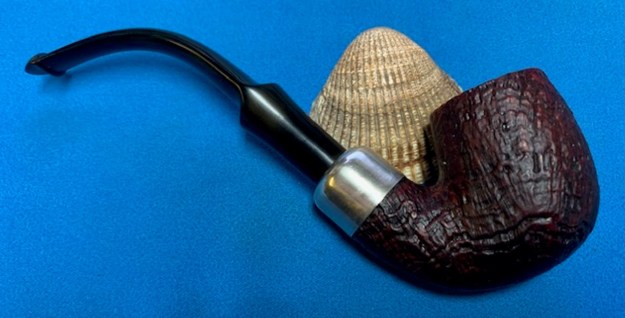
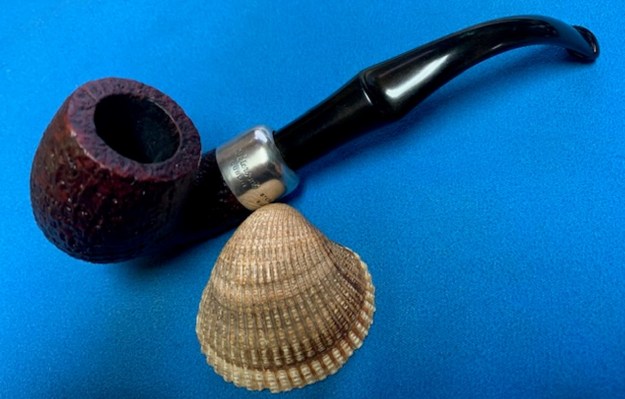
New Life for a Republic Era Rusticated System Standard 309


Blog by Steve Laug

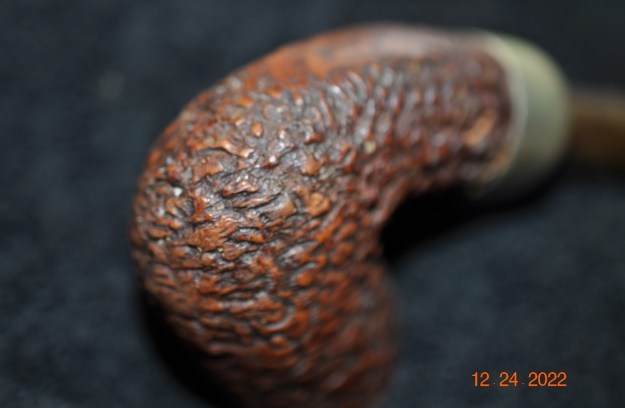
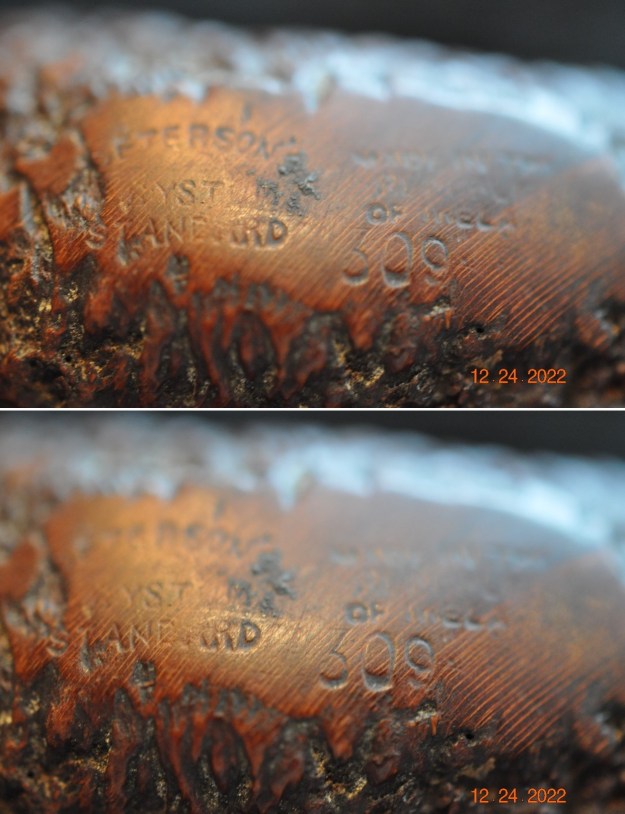
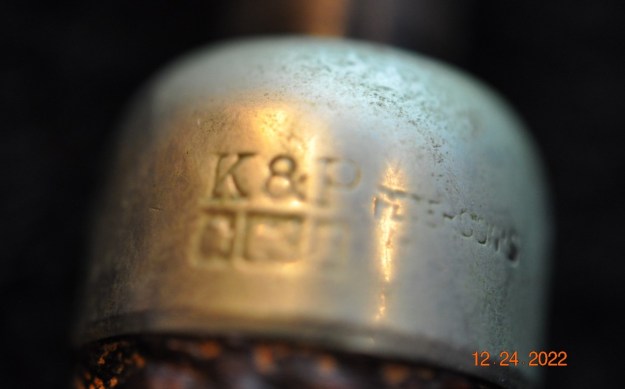
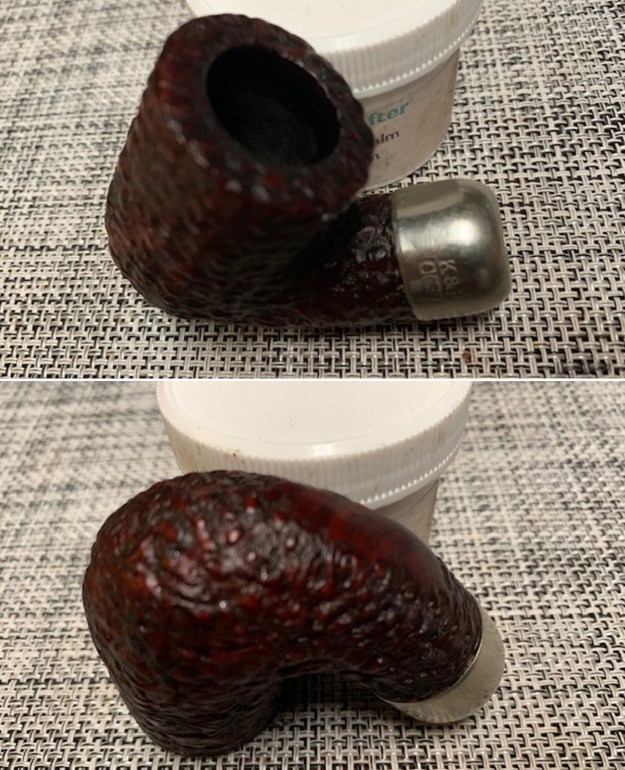
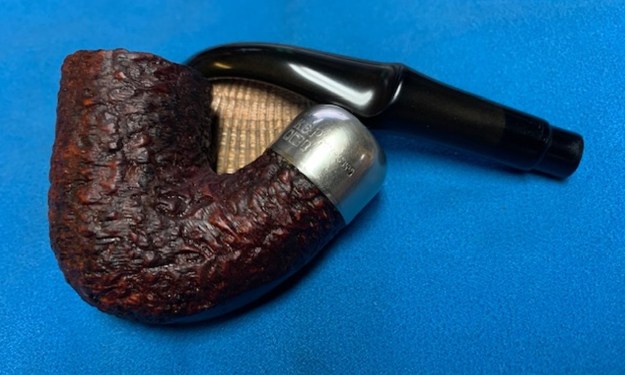
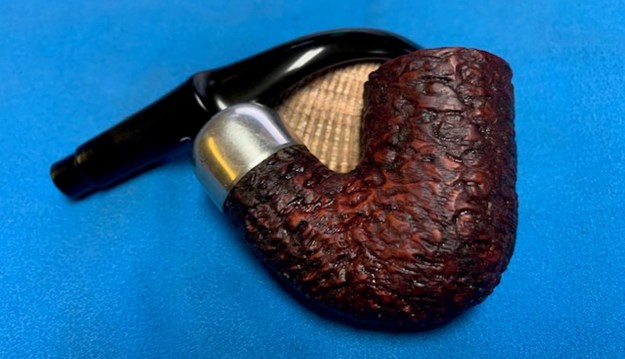
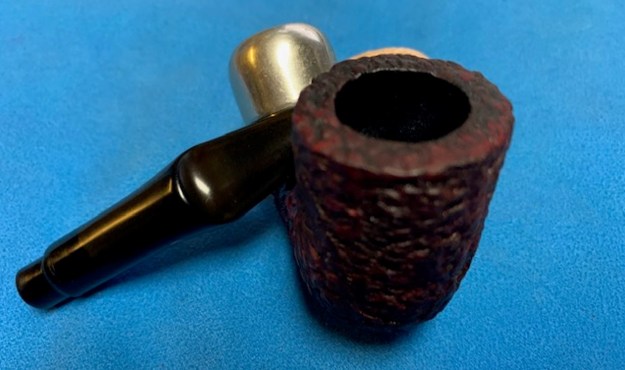
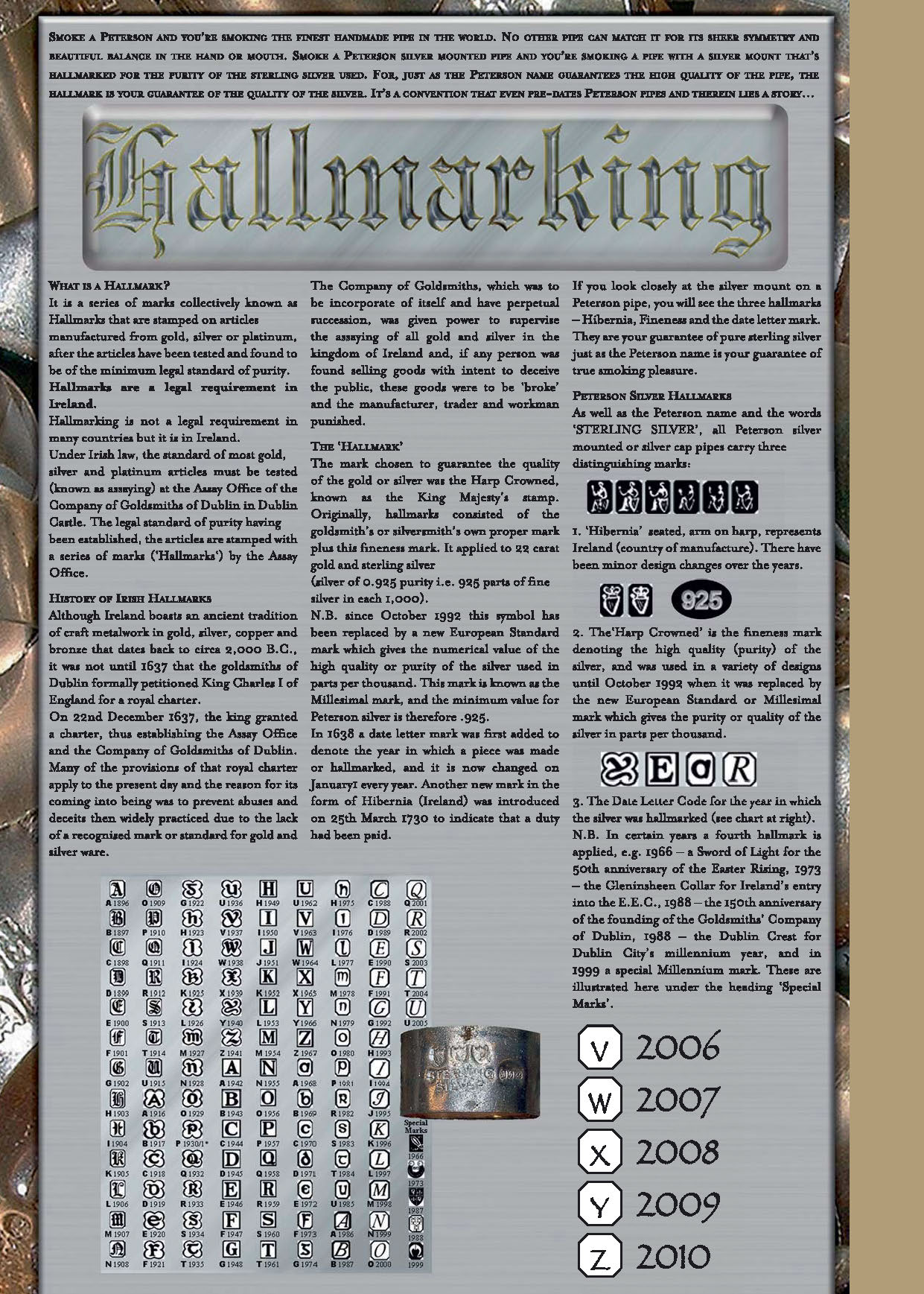
The next pipe on the work table is Peterson’s System pipe that we purchased from and estate in Plano, Texas, USA on 03/30/2022. It was stamped on the underside of the shank an read Peterson’s [over] System [over] Standard followed by Made in the Republic of Ireland (in three lines) [over] the shape number 309. The nickel ferrule on the shank end was oxidized and is stamped on the top and left side K&P Peterson’s [over] the three common hallmarks on System pipes with Nickel ferrules – a shamrock, a wolf hound, and a tower. It has a rusticated finish with unique patterns around the bowl and shank that is covered with a lot of oils, debris and grime. There was a thick cake in the bowl with remnants of tobacco stuck on the walls. There was a heavy lava overflow filling in the rustication on the rim top and edges. The top and edges of the rim were well hidden under the tars and lava. There was a very beautiful pipe underneath all of the buildup of years of use. The stem was a Peterson’s style P-Lip. It was oxidized and calcified toward the end with some tooth marks and chatter. There was wear on the top sharp edge of the button that would need to bed dealt with. Jeff took photos of the pipe before he started his cleanup work on it. Jeff took photos of the bowl and rim top to show the thick, hard cake in the bowl with remnants of tobacco stuck on the walls of the bowl. There was a lava build up on the top of the rim and the edges of the bowl. The rim top looked pretty good but it was hard to know for sure if there was damage under the thick lava. Only clean up would tell the full story. Jeff took photos of the top and underside of the stem showing the tooth chatter, calcification and oxidation on the stem surface and wear on the edges of the button. Jeff took photos of the sides and heel of the bowl to show the condition of the finish. You can see the grime around the sides of the bowl and shank. Even under the dirt and debris of the years it looked very good. Jeff took photos of the stamping on the sides of the shank. The stamping was readable as you can see from the photos. It read as noted above. The Nickle Ferrule is actually clearly stamped and readable. I am including the information from Pipedia’s article on Peterson pipes. It is a great read in terms of the history of the brand (https://pipedia.org/wiki/Peterson). I have included a bit of the pertinent history here.

1950 – 1989 The Republic Era – From 1950 to the present time, the stamp for this era is “Made in the Republic of Ireland” in a block format generally in three lines but two lines have been used with or without Republic being abbreviated.

During the 1950’s and 60’s the Kapp & Peterson company was still in the ownership of the Kapp family. However 1964 saw the retiral of the company Managing Director Frederick Henry(Harry) Kapp.

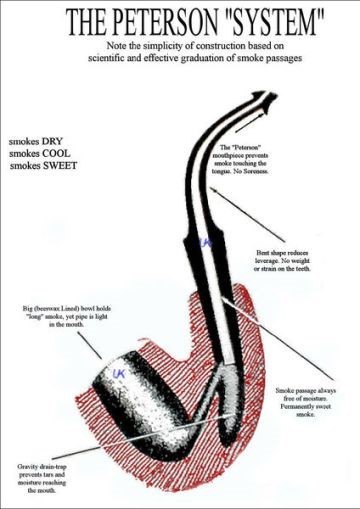
Pipedia also included a section of information on the System pipes including a diagram of the systems look (https://pipedia.org/wiki/Peterson#Republic_Era_Pipes). I quote a section of the article in part and include a link to another article on Pipedia on the System pipe.

The Peterson System pipes are the standard bearers of the Peterson pipe family, famous for the excellent smoking pleasure they provide. Often imitated but never equaled, the Peterson System smokes dry, cool and sweet, thanks to the scientific effectiveness of the original design. The heart of the System is the unique graduated bore in the mouthpiece. This makes the suction applied by the smoker 15 times weaker by the time it reaches the tobacco chamber. The result is that all the moisture flows into the reservoir and, thus cannot reach the smoker’s mouth. The Peterson Lip further enhances the effectiveness of the graduated bore by directing the flow of smoke upwards and away from the tongue. This achieves a uniquely even distribution of smoke and virtually eliminates any chance of tonguebite or bitterness. Furthermore, the shape is contoured so that the tongue rests comfortably in the depression under the opening. Each “PLip” mouthpiece is made from Vulcanite. For the Peterson System pipes to work properly, the stem/tenon has to have an extension, the tip of which will pass by the draft hole from the bowl and into the sump. Upon the smoker drawing in smoke, this extension then directs the smoke down and around the sump to dispense a lot of the moisture before the smoke enters the extension and stem. On the System Standards and other less expensive systems, this extension with be made of Vulcanite turned integrally with the stem. On the more expensive System pipes this extension will be made of metal which screws into the Vulcanite stem. This extension on the earlier pipes will be of brass and the newer pipes will be of aluminum. Most smokers not knowing this function of the metal extension, assumes that it is a condenser/stinger and will remove it as they do with the metal condensers of Kaywoodie, etc. Should you have a System pipe with this metal extension, do not remove it for it will make the System function properly and give you a dryer smoke (https://pipedia.org/wiki/A_closer_look_at_the_famous_Peterson_Standard_System_Pipe).

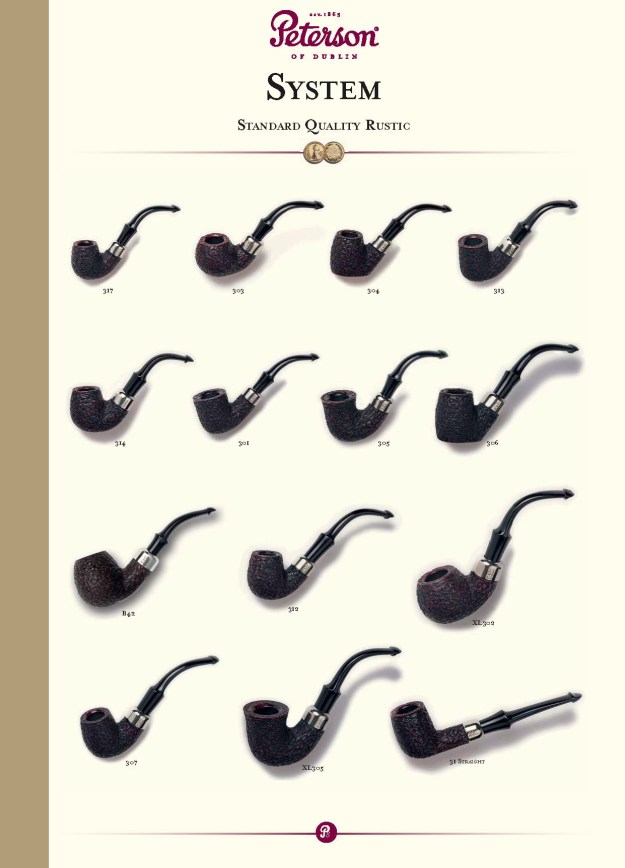
I have included the information on the shape number on this pipe that I picked up on researching the previous pipes. I have included a page from a Petersons Catalogue that I have on rebornpipes (https://rebornpipes.com/tag/peterson-hallmark-chart/). There is no shape 309 shown in the catalogue page of rusticated shaped shown below. I wonder if it is an older or a newer shape. But I am uncertain of that. I knew that I was dealing with a Republic Era pipe made between 1950-1989. It was a Rusticated Peterson’s System Standard 309 Bent Billiard with a great rustication. The bowl was stained with a combination of reddish-brown stains. Now it was time to work on the pipe.

Jeff had cleaned it thoroughly. He had reamed it with a PipNet reamer and cleaned that up with a Savinelli Fitsall Pipe Knife. He had scrubbed the exterior of the briar with undiluted Murphy’s Oil Soap. He removed the shiny coat on the briar with acetone on cotton pads. He cleaned out the interior of the shank, sump and airway in the shank and stem with alcohol, pipe cleaners and cotton swabs. He scrubbed the stem with Soft Scrub to remove the oxidation and calcification on the surface. He soaked it in Briarville’s Pipe Stem Deoxidizer to remove the oxidation. He removed it from the Deoxidizer and rinsed it off with warm water. I took some photos of the pipe before I started my part of the work (sadly I forgot to take photos until after I had rubbed the bowl down with Before & After Restoration Balm. But you can see the idea. I took some close up photos of the rim top and also of the stem surface. I wanted to show what an amazing job Jeff did in the cleanup of the rim top. The rim top was and inner edge were in good condition. There was some darkening and slight damage to the inner edge. The rim top also had some nicks and marks. I also took close up photos of the stem to show the condition of the vulcanite. It was quite clean and the tooth marks on the button and on the stem ahead of the button were very visible in the photos.One of the things I appreciate about Jeff’s cleanup is that he works to protect and preserve the nomenclature on the shank of the pipes that he works on. The stamping on this one was very faint to start with so I was worried that it would disappear altogether with the cleanup. He was not only able to preserve and maintain its condition in the process. I took some photos to show the clarity of the stamping. I have noticed that many restorers are not careful to protect the stamping in their cleaning process and often by the end of the restoration the nomenclature is almost destroyed. I would like to encourage all of us to be careful in our work to preserve this as it is a critical piece of pipe restoration! I took the stem off the shank and took a photo of the pipe. I decided to start my work on the pipe by rubbing the bowl and rim down with Before & After Restoration Balm. It was in very good shape, so I worked it into the surface of the briar with my fingertips and a horsehair shoe brush to clean, enliven and protect it. I let the balm sit for 10 minutes and then buffed with a cotton cloth to raise the shine. I really like watching the Balm do its magic and bring the briar alive. I polished the nickel ferrule with a jewellers cloth to remove the oxidation and to further protect it from further oxidation. The shine is quite nice. I built up the rounded edge of the button on the top side with black, rubberized CA glue. I filled in the deep marks on the stem with black CA glue and set it aside to cure. Once it cured I used a file to flattened the repairs and redefine the button edge. I sanded the stem with 220 grit sandpaper to further blend in the repairs. I started polishing it with 400 grit wet dry sandpaper. I scrubbed the stem surface with Soft Scrub to remove the remaining oxidation in the surface of the vulcanite. I was able to remove most of it and the stem looked significantly better at this point. The reshaped button also looks much better.I touched up the “P” logo on the left side of the saddle stem with white acrylic fingernail polish. I let it dry then I polished off the excess with a worn 1500 grit micromesh sanding pad. Once the excess was removed the stamp looked much better.I polished the stem with micromesh sanding pads – wet sanding with 1500-12000 grit pads. I wiped the stem down after each sanding pad with Obsidian Oil. I polished it with Before & After Pipe Stem Polish – both Fine and Extra Fine. I gave it a coat of Obsidian Pipe Stem Oil. It works to protect the stem from oxidizing. I set it aside to dry. Once again at this point in the restoration process I am excited to be on the homestretch. I look forward to the final look when the Rusticated Peterson System Standard 309 is put back together, polished and waxed. I put the bowl and stem back together. I lightly polished the bowl and stem with Blue Diamond to polish out the scratches in the briar and the vulcanite. I gave the bowl and the stem multiple coats of carnauba wax. I buffed the pipe with a clean buffing pad to raise the shine. I hand buffed it with a microfiber cloth to deepen the shine. The pipe polished up pretty nicely. The depths of the rustication really pop with the wax and polish. The shiny black vulcanite stem is a beautiful contrast to the browns of the bowl and thick shank and nickel ferrule. This Republic Era Peterson’s System Standard 309 Rusticated Bent Billiard was another fun pipe to work on. It really is a quite stunning piece of briar whose shape follows the flow of the briar. The pipe feels great in the hand will be better when warmed up while smoking. The finished pipe is shown in the photos below. The dimensions of the pipe are Length: 6 inches, Height: 2 inches, Outside diameter of the bowl: 1 ¼ inches, Chamber diameter: ¾ of an inch. The weight of the pipe is 1.80 ounces/51 grams. I will be putting it on the rebornpipes store in the Irish Pipemakers Section if you would like to add it to your rack and carry on the previous pipeman’s legacy. This is an interesting estate to bring back to life.

As always, I encourage your questions and comments as you read the blog. Thanks to each of you who are reading this blog. Remember we are not pipe owners; we are pipe men and women who hold our pipes in trust until they pass on into the trust of those who follow us.

Restoring a Republic Era Peterson’s System Standard 305


Blog by Steve Laug

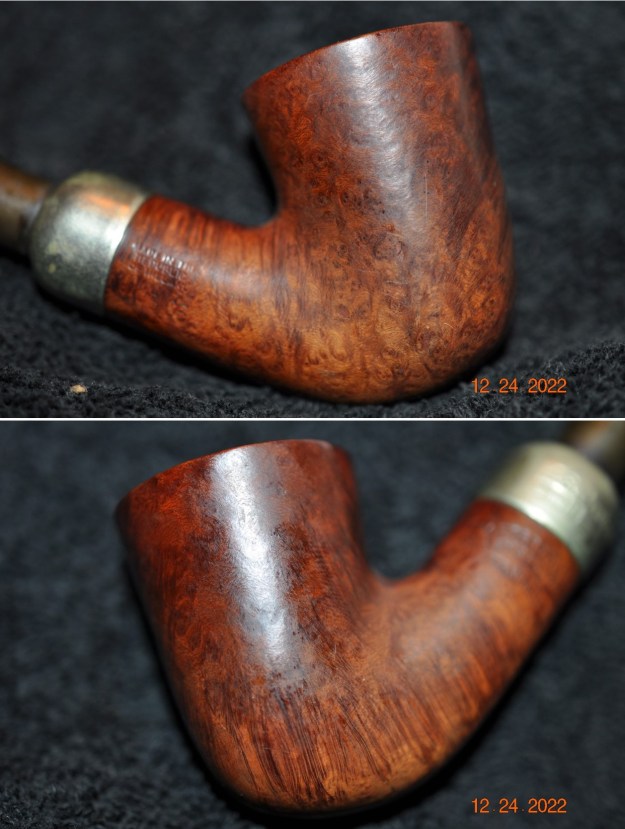
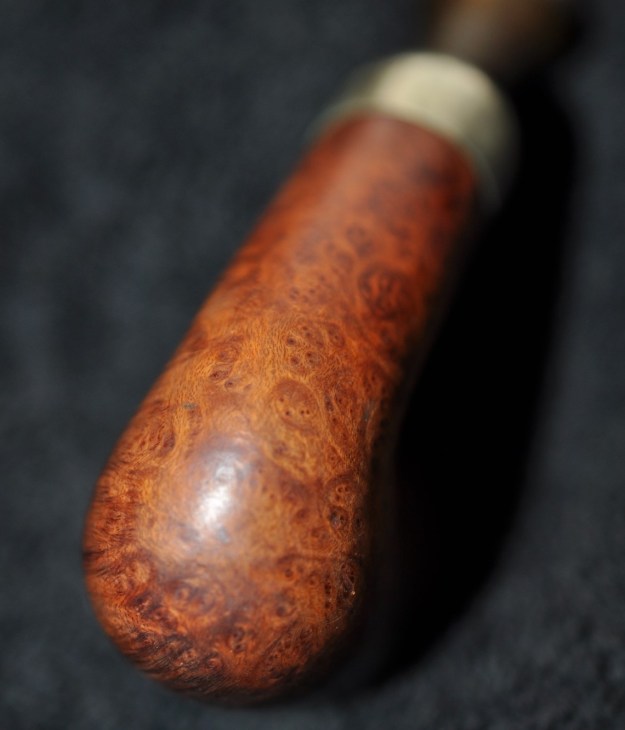
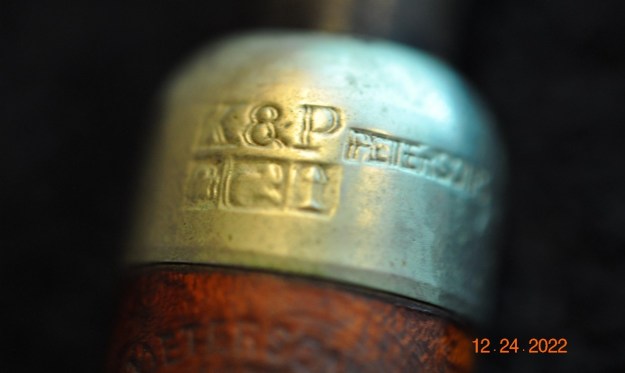
The next pipe on the work table is Peterson’s System pipe that we purchased from and estate in Plano, Texas, USA on 03/30/2022. It was stamped Peterson’s [over] System [over] Standard on the left side of the shank vertically below the nickel ferrule. On the right it is stamped Made in the Republic of Ireland (in three lines) [over] the shape number 305. The nickel ferrule on the shank end was oxidized and is stamped on the top and left side K&P Peterson’s [over] the three common hallmarks on System pipes with Nickel ferrules – a shamrock, a wolf hound, and a tower. It has a smooth finish with great grain around the bowl and shank that is covered with a lot of oils, debris and grime. There was a thick cake in the bowl with remnants of tobacco stuck on the walls. There was a heavy lava overflow on the rim top and edges. The top and edges of the rim were well hidden under the tars and lava. There was a very beautiful pipe underneath all of the buildup of years of use. The stem was a Peterson’s style P-Lip. It was oxidized and calcified toward the end with some tooth marks and chatter. There was wear on the edge of the button that would need to bed dealt with. Jeff took photos of the pipe before he started his cleanup work on it. Jeff took photos of the bowl and rim top to show the thick, hard cake in the bowl with remnants of tobacco stuck on the walls of the bowl. There was a lava build up on the top of the rim and the edges of the bowl. The rim top looked pretty good but it was hard to know for sure if there was damage under the thick lava. Only clean up would tell the full story. Jeff took photos of the top and underside of the stem showing the tooth chatter, scratching, calcification and oxidation on the stem surface and wear on the edges of the button. Jeff took photos of the sides and heel of the bowl to show the condition of the finish. You can see the grime around the sides of the bowl and shank. Even under the dirt and debris of the years it looked very good. Jeff took photos of the stamping on the sides of the shank. The stamping was readable as you can see from the photos. It read as noted above. The Nickle Ferrule is actually clearly stamped and readable. I am including the information from Pipedia’s article on Peterson pipes. It is a great read in terms of the history of the brand (https://pipedia.org/wiki/Peterson). I have included a bit of the pertinent history here.

1950 – 1989 The Republic Era – From 1950 to the present time, the stamp for this era is “Made in the Republic of Ireland” in a block format generally in three lines but two lines have been used with or without Republic being abbreviated.

During the 1950’s and 60’s the Kapp & Peterson company was still in the ownership of the Kapp family. However 1964 saw the retiral of the company Managing Director Frederick Henry(Harry) Kapp.

Pipedia also included a section of information on the System pipes including a diagram of the systems look (https://pipedia.org/wiki/Peterson#Republic_Era_Pipes). I quote a section of the article in part and include a link to another article on Pipedia on the System pipe.

The Peterson System pipes are the standard bearers of the Peterson pipe family, famous for the excellent smoking pleasure they provide. Often imitated but never equaled, the Peterson System smokes dry, cool and sweet, thanks to the scientific effectiveness of the original design. The heart of the System is the unique graduated bore in the mouthpiece. This makes the suction applied by the smoker 15 times weaker by the time it reaches the tobacco chamber. The result is that all the moisture flows into the reservoir and, thus cannot reach the smoker’s mouth. The Peterson Lip further enhances the effectiveness of the graduated bore by directing the flow of smoke upwards and away from the tongue. This achieves a uniquely even distribution of smoke and virtually eliminates any chance of tonguebite or bitterness. Furthermore, the shape is contoured so that the tongue rests comfortably in the depression under the opening. Each “PLip” mouthpiece is made from Vulcanite. For the Peterson System pipes to work properly, the stem/tenon has to have an extension, the tip of which will pass by the draft hole from the bowl and into the sump. Upon the smoker drawing in smoke, this extension then directs the smoke down and around the sump to dispense a lot of the moisture before the smoke enters the extension and stem. On the System Standards and other less expensive systems, this extension with be made of Vulcanite turned integrally with the stem. On the more expensive System pipes this extension will be made of metal which screws into the Vulcanite stem. This extension on the earlier pipes will be of brass and the newer pipes will be of aluminum. Most smokers not knowing this function of the metal extension, assumes that it is a condenser/stinger and will remove it as they do with the metal condensers of Kaywoodie, etc. Should you have a System pipe with this metal extension, do not remove it for it will make the System function properly and give you a dryer smoke (https://pipedia.org/wiki/A_closer_look_at_the_famous_Peterson_Standard_System_Pipe).

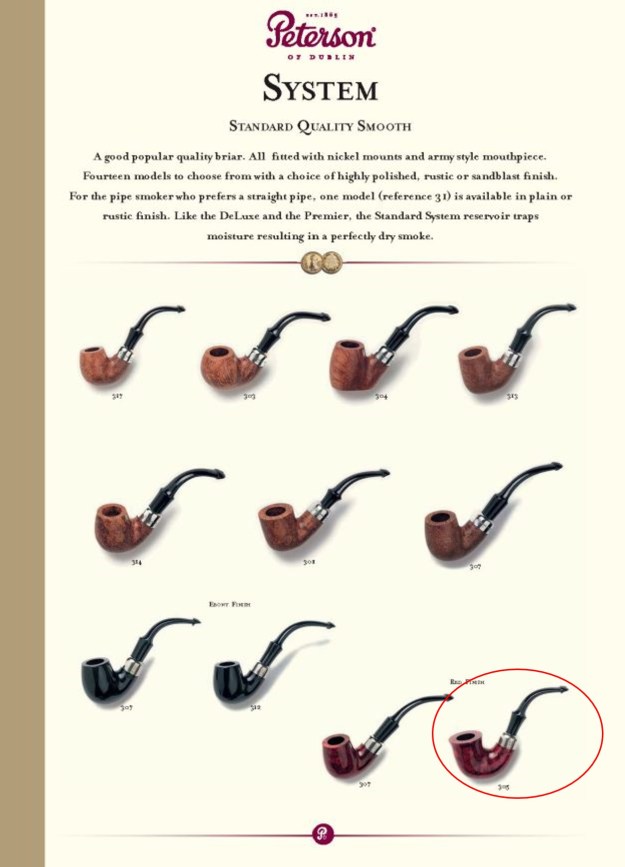
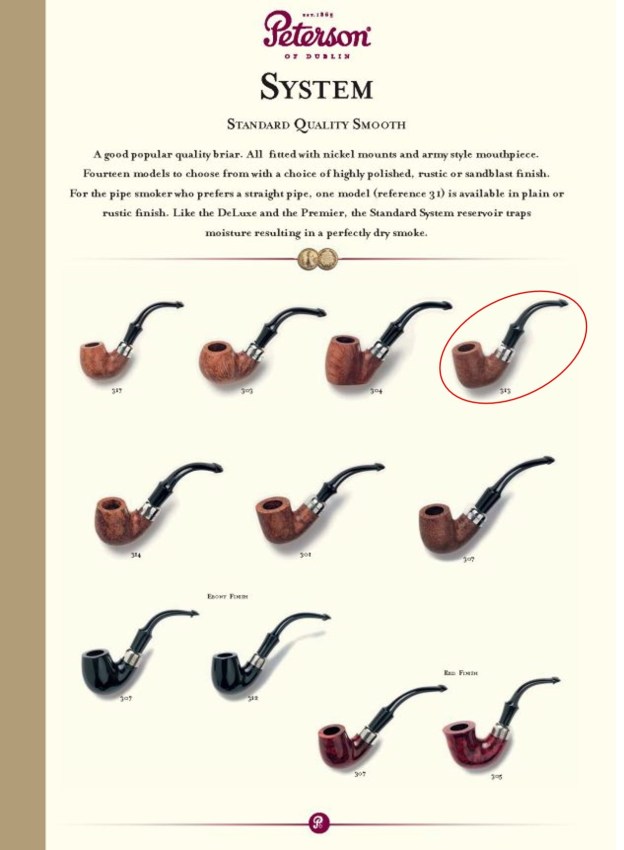
I have included the information on the shape number on this pipe that I picked up on researching the previous pipes. I have included a page from a Petersons Catalogue that I have on rebornpipes (https://rebornpipes.com/tag/peterson-hallmark-chart/). I have put a red oval around the 305 shown in the catalogue page shown below. That should give a clear picture of the size and shape of the pipe. I knew that I was dealing with a Republic Era pipe made between 1950-1989. It was a Smooth Peterson’s System Standard 305 Bent Dublin with great grain. The bowl was stained with a combination of reddish-brown stains. Now it was time to work on the pipe.

Jeff had cleaned it thoroughly. He had reamed it with a PipNet reamer and cleaned that up with a Savinelli Fitsall Pipe Knife. He had scrubbed the exterior of the briar with undiluted Murphy’s Oil Soap. He removed the shiny coat on the briar with acetone on cotton pads. He cleaned out the interior of the shank, sump and airway in the shank and stem with alcohol, pipe cleaners and cotton swabs. He scrubbed the stem with Soft Scrub to remove the oxidation and calcification on the surface. He soaked it in Briarville’s Pipe Stem Deoxidizer to remove the oxidation. He removed it from the Deoxidizer and rinsed it off with warm water. I took some photos of the pipe before I started my part of the work. I took some close up photos of the rim top and also of the stem surface. I wanted to show what an amazing job Jeff did in the cleanup of the rim top. The rim top was and inner edge were in good condition. There was some darkening and slight damage to the inner edge. The rim top also had some nicks and marks. I also took close up photos of the stem to show the condition of the vulcanite. It was quite clean and the tooth marks on the button and on the stem ahead of the button were very visible in the photos.One of the things I appreciate about Jeff’s cleanup is that he works to protect and preserve the nomenclature on the shank of the pipes that he works on. The stamping on this one was very faint to start with so I was worried that it would disappear altogether with the cleanup. He was not only able to preserve and maintain its condition in the process. I took some photos to show the clarity of the stamping. I have noticed that many restorers are not careful to protect the stamping in their cleaning process and often by the end of the restoration the nomenclature is almost destroyed. I would like to encourage all of us to be careful in our work to preserve this as it is a critical piece of pipe restoration! I took the stem off the shank and took a photo of the pipe.I decided to start my work on the pipe by cleaning up the rim top and inner edge of the bowl with a folded piece of 220 grit sandpaper. I removed the damage on the inner edge and the nicks on the rim top. It looked significantly better. I polished the briar with micromesh sanding pads – dry sanding it with 1500-12000 grit sanding pads. I wiped it down with a damp cloth after each sanding pad to remove the dust. The briar was really shining by the final pad. I rubbed the bowl and rim down with Before & After Restoration Balm. I worked it into the surface of the briar with my fingertips to clean, enliven and protect it. I let the balm sit for 10 minutes and then buffed with a cotton cloth to raise the shine. I really like watching the Balm do its magic and bring the briar alive. With briar polished with the Restoration Balm I moved onto the metal. I polished the nickel ferrule with a jewellers cloth to raise the shine and to protect it from further oxidation. I built up the rounded edge of the button on the top side with black, rubberized CA glue. I filled in the deep marks on the stem with black CA glue and set it aside to cure. Once it cured I used a file to flattened the repairs and redefine the button edge. I sanded the stem with 220 grit sandpaper to further blend in the repairs. I started polishing it with 400 grit wet dry sandpaper. I touched up the “P” logo on the left side of the saddle stem with white acrylic fingernail polish. I let it dry then I polished off the excess with a worn 1500 grit micromesh sanding pad. Once the excess was removed the stamp looked much better.I polished the stem with micromesh sanding pads – wet sanding with 1500-12000 grit pads. I wiped the stem down after each sanding pad with Obsidian Oil. I polished it with Before & After Pipe Stem Polish – both Fine and Extra Fine. I gave it a coat of Obsidian Pipe Stem Oil. It works to protect the stem from oxidizing. I set it aside to dry.  Once again at this point in the restoration process I am excited to be on the homestretch. I look forward to the final look when the Peterson System Standard 305 is put back together, polished and waxed. I put the bowl and stem back together. I lightly polished the bowl and stem with Blue Diamond to polish out the scratches in the briar and the vulcanite. I gave the bowl and the stem multiple coats of carnauba wax. I buffed the pipe with a clean buffing pad to raise the shine. I hand buffed it with a microfiber cloth to deepen the shine. The pipe polished up pretty nicely. The depths of the rustication really pop with the wax and polish. The shiny black vulcanite stem is a beautiful contrast to the browns of the bowl and thick shank and Sterling Silver ferrule. This Republic Era Peterson’s System Standard 305 Bent Dublin was another fun pipe to work on. It really is a quite stunning piece of briar whose shape follows the flow of the briar. The pipe feels great in the hand will be better when warmed up while smoking. The finished pipe is shown in the photos below. The dimensions of the pipe are Length: 5 ½ inches, Height: 2 inches, Outside diameter of the bowl: 1 3/8 inches, Chamber diameter: ¾ of an inch. The weight of the pipe is 1.45 ounces/41 grams. I will be putting it on the rebornpipes store in the Irish Pipemakers Section if you would like to add it to your rack and carry on the previous pipeman’s legacy. This is an interesting estate to bring back to life.

As always, I encourage your questions and comments as you read the blog. Thanks to each of you who are reading this blog. Remember we are not pipe owners; we are pipe men and women who hold our pipes in trust until they pass on into the trust of those who follow us.

Reviving a Lovely Stanwell Pickaxe


Blog by Kenneth Lieblich

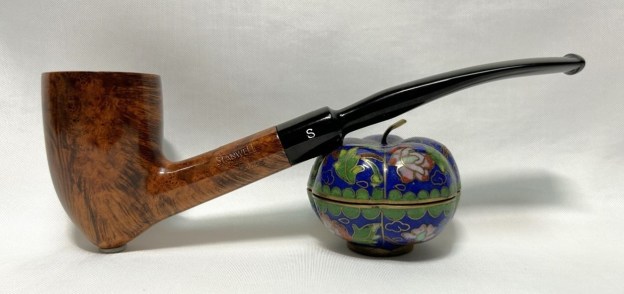
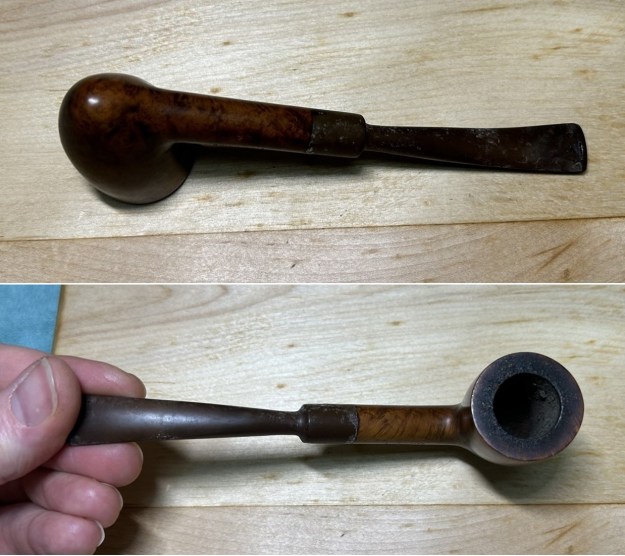
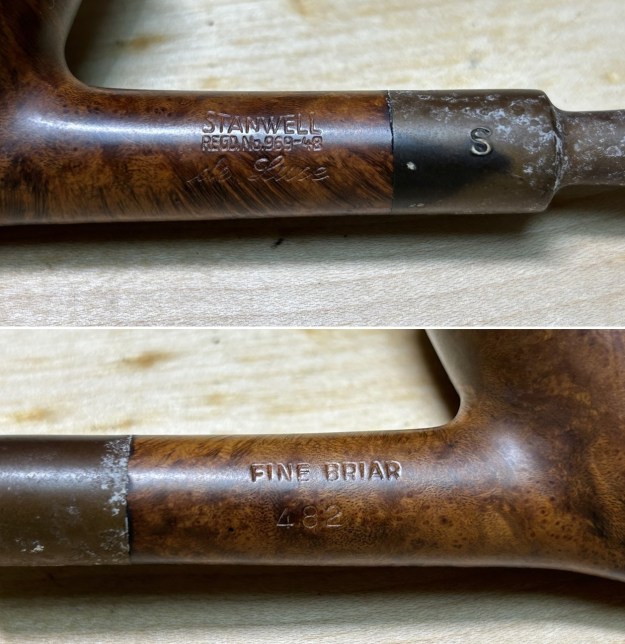
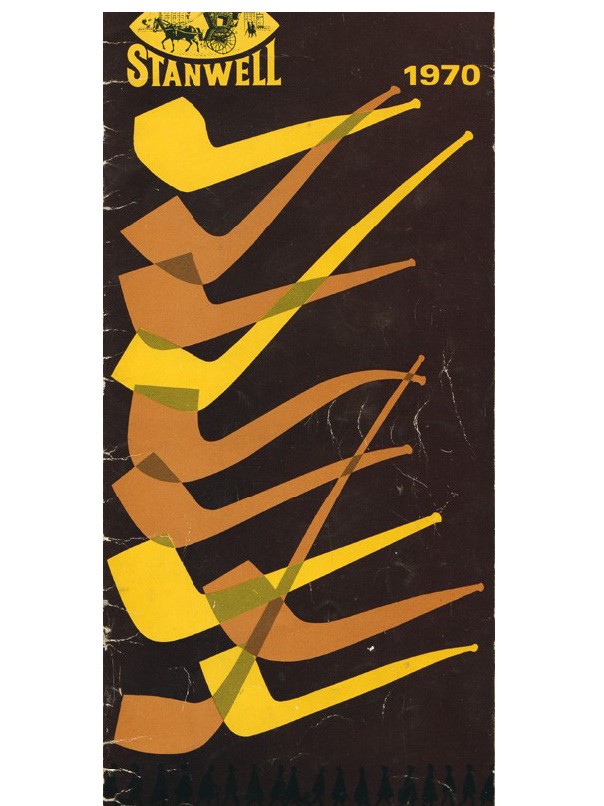
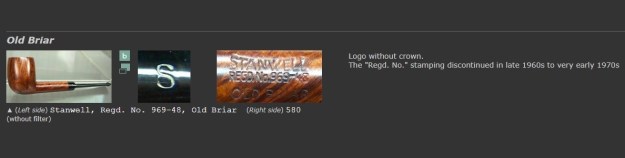
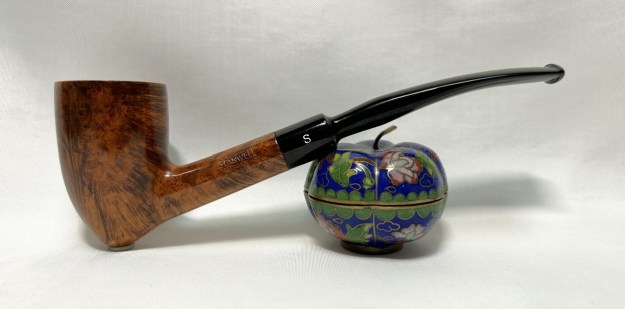
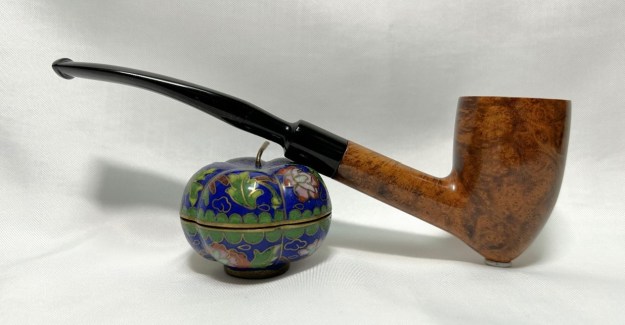
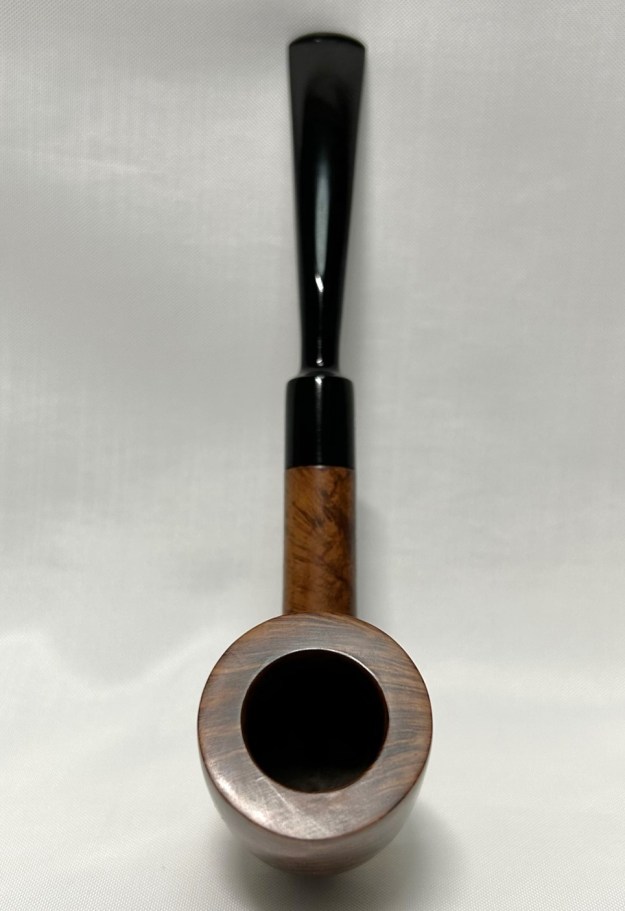
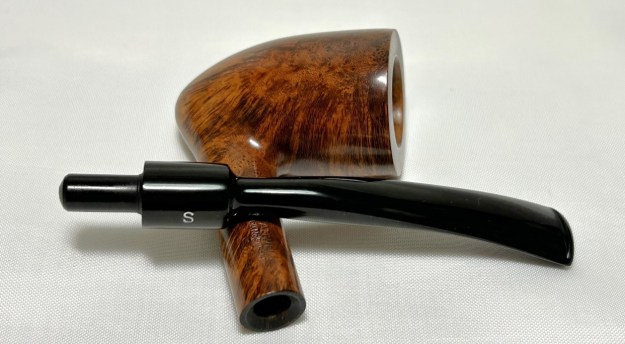
Next on the chopping block is a beautiful Danish pipe from the fine pipemaking firm, Stanwell. The shape of this pipe is a freehand pickaxe. I acquired it locally from the estate of an old fellow who kept a lovely collection of pipes. This is a Stanwell de Luxe 482 freehand pickaxe. It has lovely (albeit dirty) briar from the bowl all the way down the shank. I think this is going to be a beauty when I’m done. My cousin in Montréal asked me to clean this up for him and I was only too happy to do so. The left side of the shank reads Stanwell [over] Regd. No. 969-48 [over] de Luxe. The right side of the shank reads Fine Briar [over] 482. Finally, the stem’s left side also has the trademark S of the Stanwell company.Of course, 482 refers to the model number, and I went to check the list of Stanwell shapes here on rebornpipes. Hmm – no shape number 482. Fair enough, so I looked up shape number 48, but that was a egg-shaped bowl – definitely not this pipe. I figured it was worth looking up shape number 82 and that was blank. Drat.I went searching through some old Stanwell catalogues and, ultimately, found an image for my pipe – and with the number 82. This catalogue is from 1970 and I have included the image below: I know from information at Pipephil that the pipe I have is certainly more than 50 years old – and this corresponds to the catalogue above. Pipephil says, “The “Regd. No.” stamping discontinued in late 1960s to very early 1970s”. My pipe has both the “Regd. No.” and the S logo without a crown. The screen capture below explains that clearly. Meanwhile, Pipedia has a good amount of information on the Stanwell brand and its history. I certainly recommend looking it over: https://pipedia.org/wiki/Stanwell.Anyway, this is a great-looking pipe. No major issues to resolve – just a few minor ones. The stem was dirty, though not too beat up. There were some scratch/tooth marks on the stem, and some oxidation and calcification on the vulcanite. The rim on the stummel had some very light charring. The insides were a bit dirty and would need a little work to clean out. The stem was first on my list. I wiped down the outside of the stem with Murphy’s Oil Soap on some cotton pads. Then, I cleaned out the inside with pipe cleaners and isopropyl alcohol. It wasn’t too dirty and only required a few pipe cleaners. I then wiped down the stem with SoftScrub cleaner to remove surface oxidation. Once this process was done, the stem went for an overnight soak in the Pipe Stem Oxidation Remover. This allows me to clean the oxidation off in a couple of ways: by applying a mild cleaner to the surface and sanding the stem. The next day, I used SoftScrub again with some cotton rounds. Some of the more pronounced dents had to be dealt with, so I whipped out my black cyanoacrylate adhesive to fill those in and let them fully cure. After curing, I used some paint to restore the letter S on the stem. I painted the area carefully and let it fully set before proceeding. For sanding the adhesive, I used 220- and 400-grit sandpapers to meld seamlessly into the stem. Then I used a set of nine Micromesh pads (1,500 through 12,000 grit) which gradually erased the ravages of time and brought out the stem’s lovely black lustre. For the last five pads, I also lightly coated the stem with Obsidian Pipe Stem Oil in between each scrubbing. The restored logo came out very nicely. At last, I set the finished stem aside. Off to work on the stummel! The bowl needed a bit of reaming, so I used the Kleen Reem to scrape off the built-up cake, and I followed that with 220-grit sandpaper taped to a dowel to eliminate as much as possible. Generally, I prefer to sand the chamber down to bare briar. When restoring, it is important to ensure that there is no damage to the briar in the bowl under the cake. Fortunately, there were no hidden flaws in the briar on this pipe.I gently removed the lava on the rim with a piece of machine metal. When the rim of a pipe isn’t damaged, I prefer to use this technique rather than my topping board. The machine metal preserves the rim and doesn’t remove stain and/or patina. I then proceeded to clean out the insides of the shank with Q-tips, pipe cleaners, and lemon-infused isopropyl alcohol. I also used some more Murphy’s here. There wasn’t too much filth in this one, fortunately. I followed that up by cleaning the insides with some dish soap and tube brushes. I decided to de-ghost the pipe in order to remove any lingering smells of the past. I thrust cotton balls into the bowl and the shank and saturated them with 99% isopropyl alcohol. I let the stummel sit overnight. This caused any remaining oils, tars and smells to leach out into the cotton. The bowl was nice and clean after this.I used all nine Micromesh pads (1,500 through 12,000 grit) on the stummel to make it lovely and smooth.At this point, I rubbed some Before & After Restoration Balm into the briar and left it to sit for 15 minutes or so. I brushed it with a microfibre cloth. The B&ARB does wonderful things to the wood, and I really like the walnut colour of the briar. Finally, it was off for a trip to the bench polisher. A dose of White Diamond and a few coats of carnauba wax perfectly complemented the briar. The lovely shine made the wood look absolutely beautiful. This pipe is elegant, light, and incredibly comfortable to hold.I thoroughly enjoyed bringing this Stanwell de Luxe 482 freehand pickaxe back to life. It is a gorgeous pipe. I know that my cousin will enjoy it for many years to come. I hope you enjoyed reading the story of this pipe as much I as I did restoring it. The approximate dimensions of the pipe are as follows: length 5⅞ in. (150 mm); height 2 in. (50 mm); bowl diameter 1¼ in. (31 mm); chamber diameter ⅝ in. (18 mm). The weight of the pipe is ⅞ oz. (29 g). If you are interested in more of my work, please follow me here on Steve’s website or email me directly at kenneth@knightsofthepipe.com. Thank you very much for reading and, as always, I welcome and encourage your comments.

New Life for a Kirsten Companion K with a Rusticated Bowl


Blog by Steve Laug

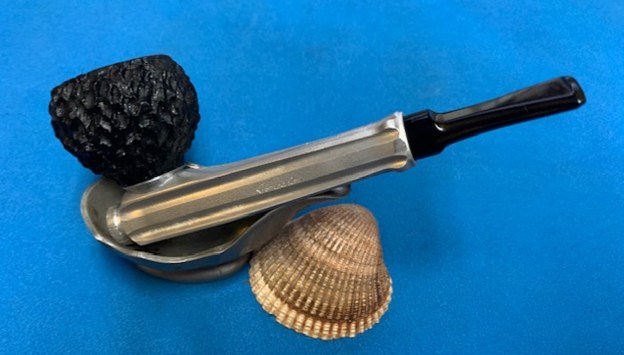
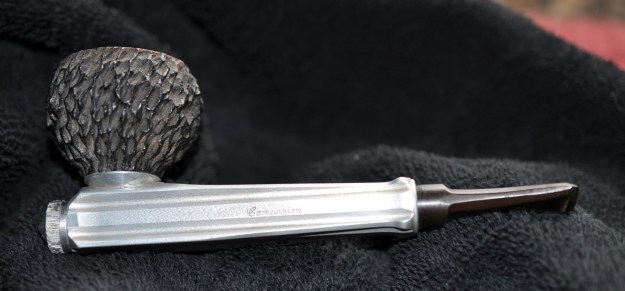
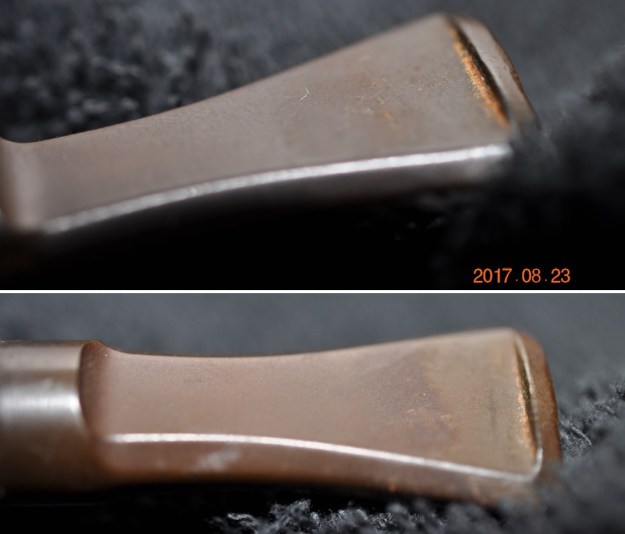
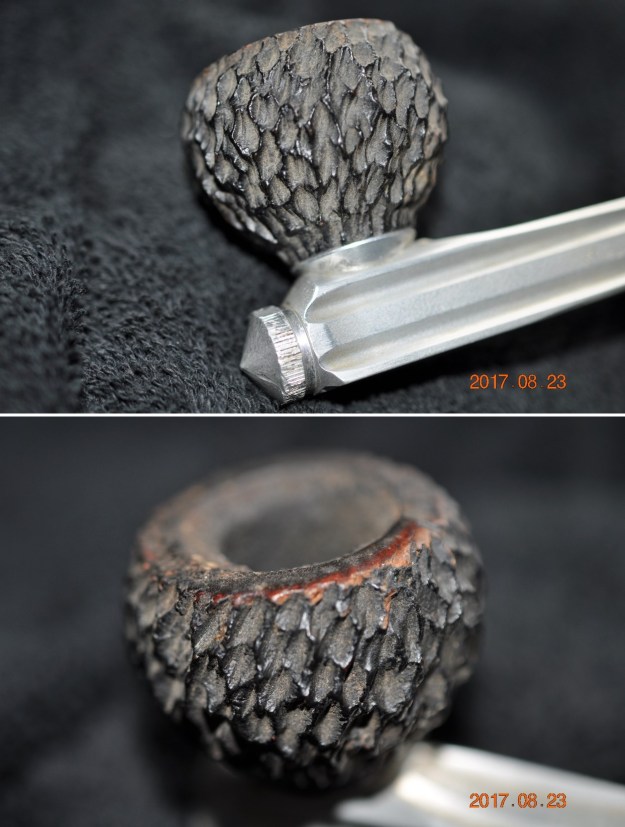
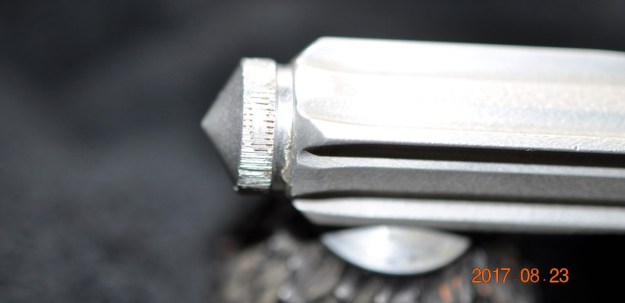
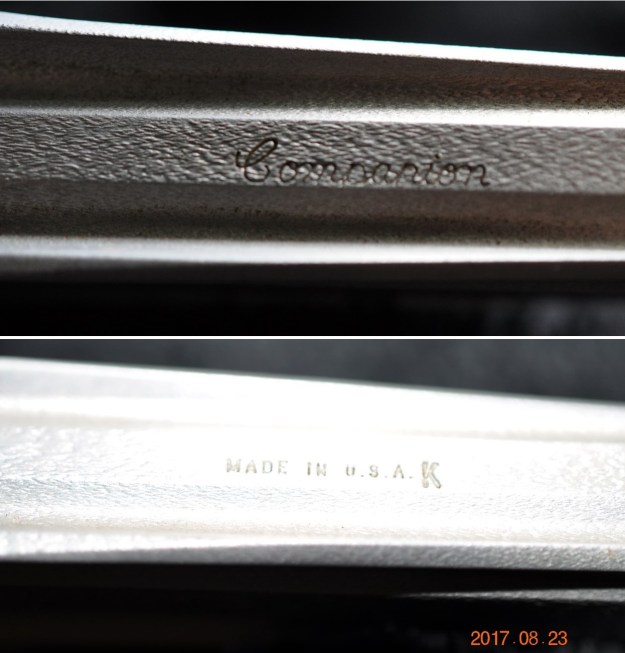
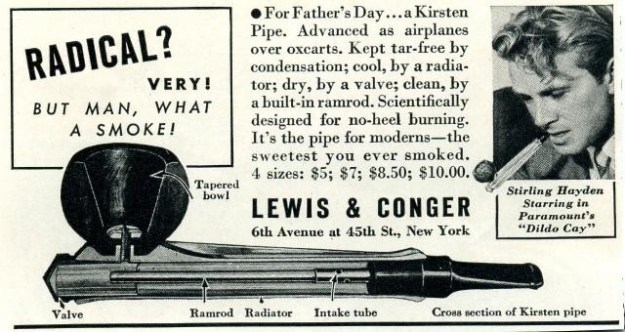
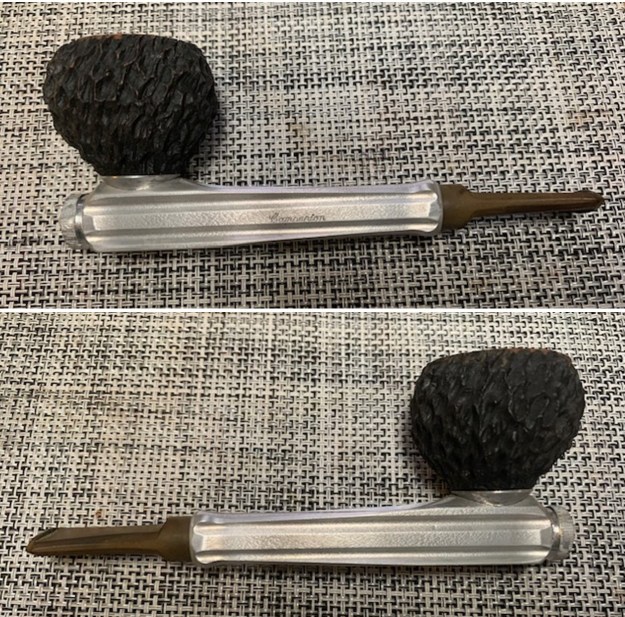
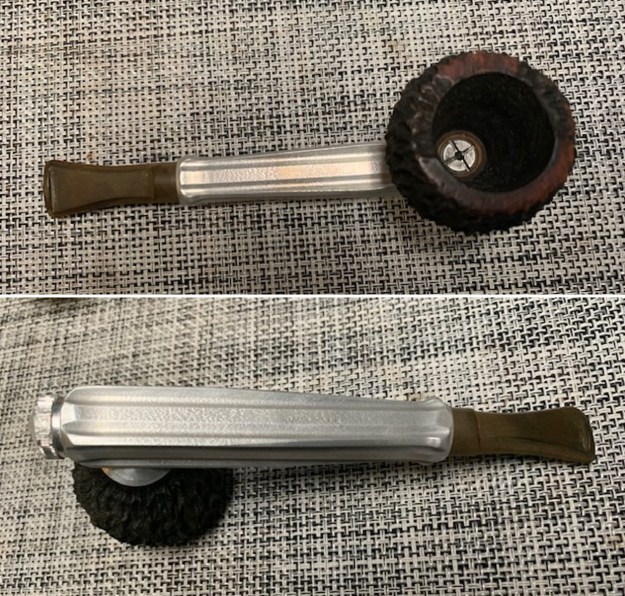
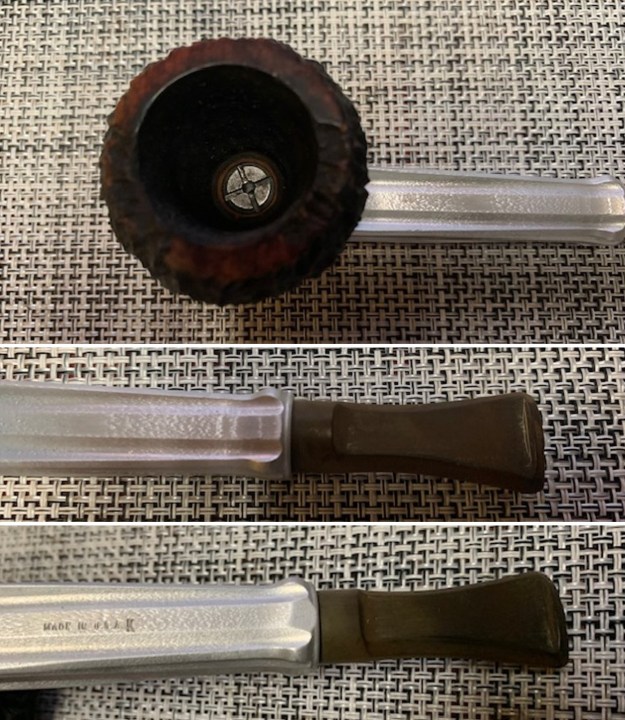
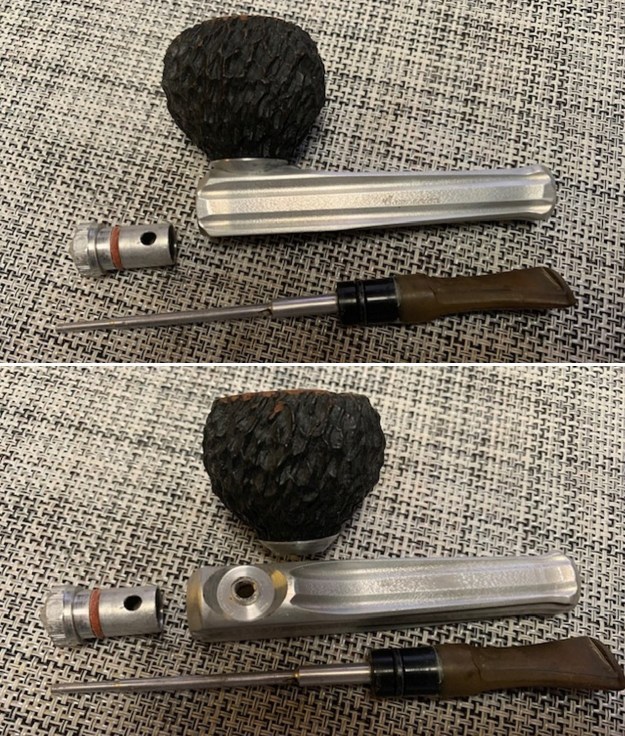
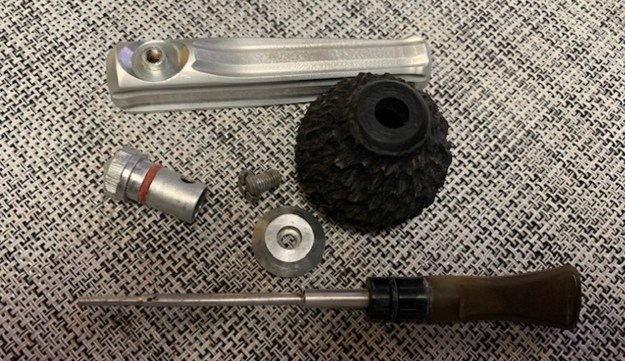
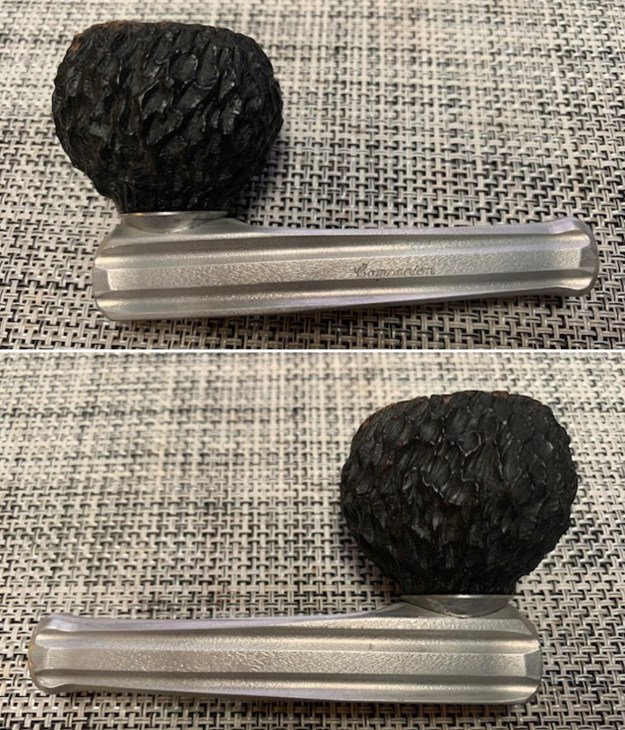
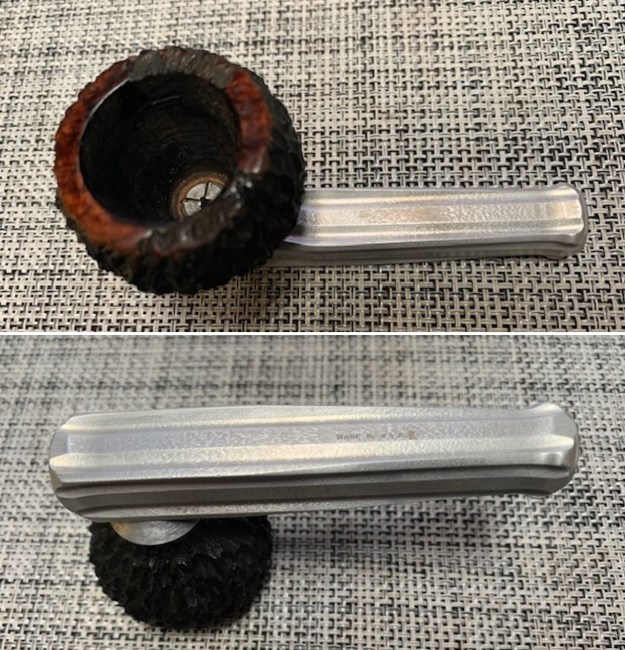
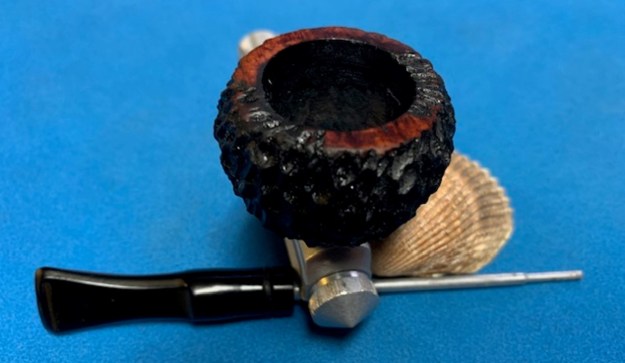
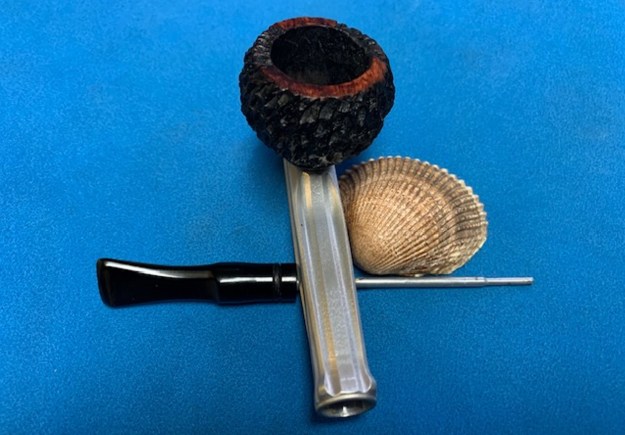
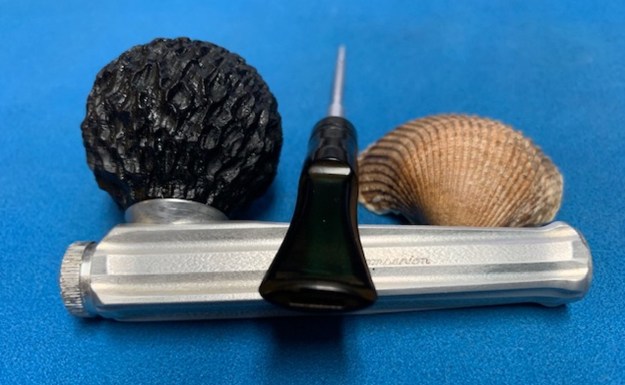
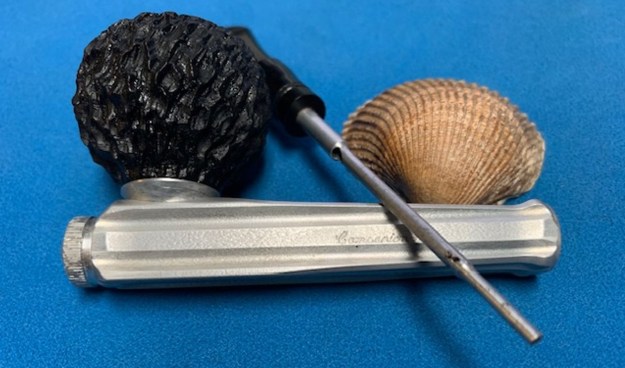
The next pipe I am working on is a nice looking was purchased from an antique store in Bozeman, Montana, USA on 07/22/17. Kirsten pipes have always been a bit of an enigma to me. The combination of briar and aluminum is unique. It is a pipe that is not really fish or fowl in terms of briar or metal. It is a pipe with an aluminum radiator with a bowl attached to it. The vulcanite stem is attached to an aluminum metal pin that extends the length of the radiator. On the end is a valve that controls the flow of air to bowl and is adjustable. In this case it is not frozen which is a blessing. On the left side of the radiator it is stamped with Companion in script. On the underside of the polished aluminum barrel it is stamped Made in U.S.A. followed by K. It is a straight pipe with large rusticated Dublin bowl. The metal base is actually in good condition. The pipe has gaskets on the valve on the front and on the stem insert. Stem is oxidized, tooth marks, chatter near the button. There was a thick cake in the bowl and heavy lava overflow on the rim top and edges. The rusticated bowl is filthy with grime and dusty ground into the bowl sides. The bowl has a metal cup on the base and a screw runs through the bowl and screws into the top of the radiator. The knurled valve has some light damage from what looks like marks left behind by pliers. The pipe is very dirty.  Jeff took photos of the pipe to show its general condition before he did his cleanup. The exterior of the pipe was very dirty – grime and grit ground in from years of use and sitting. The rim top was covered with a coat of thick lava that overflowed the thickly caked bowl. It was hard to know the condition of the rim top or edges due to the thick lava and cake. Only a clean up would make that known. The stem was dirty, oxidized, calcified and had light tooth marks and chatter on both sides ahead of the button. Jeff took a photo of the sides of the bowl to give a better feel for the condition of the bowl. You can see the heavy grime ground into the rusticated finish in the photos. It is a mess.He took a photo of the knurled valve on the radiator end. You can see the light pliers marks on the knurled edges.The next photos show the stamping on the sides of the aluminum radiator and it is very readable. It reads as noted above.I turned to Pipedia (https://pipedia.org/wiki/Kirsten_Pipe_Company) to do a bit of research on the history of this particular pipe. I have included pertinent portions of the article below.

The first and only Kirsten I had, had to be an old Companion model that came from one of the Kirsten cards you found in those days in some smoke shops. It might even have been in some small-town drugstore. If I recall correctly, it did not even have the Kirsten name on it – just “Companion”.

It would be another four decades before I ran into the Kirstens again as I began buying and restoring old pipes. I had accumulated about a half dozen Kirstens from several lots I acquired and they lay around in my work area for several months before I decided to see what I could do with them.

Old Kirstens are a problem. When bought in lots of other pipes, and many times when bought used individually, they are a mess. By the very nature of the pipe, which is made up of five basic components – mouthpiece, radiator body, valve, bowl and bowl screw (a sixth component, the bowl ring, is found in many Kirstens) – there is a lot of room for problems. For the most part, used Kirstens have set for some time, usually in an uncleaned state, and the old tobacco juices have created a sort of binder that holds them tightly together.

My experience has been that only about three or four out of every five used Kirstens I buy are completely restorable. The remainder furnish parts for those that are restored.

By the time I had completely restored my first half dozen Kirstens I came to realize there are many variations in the pipe, designed in 1936 by Professor Frederick Kirsten – the man who invented Boeing’s first wind tunnel – after he has been advised by his physician to stop smoking. Kirsten was looking for a way to trap the tars and moisture from tobacco and the Kirsten pipe was his solution.

Some Kirstens had “O” rings on the valve and mouthpiece and others had none. Some had an “O” ring on the valve and not on the stem. Some had bowl rings and others not. Some came with shiny finishes, others were a rough Parkerized-like finish called “Heritage.” Some were silver, some were gold, some were black, and yet another was a gold-tone finish with an overlay of what looked like tarnish made from “Eternalum” and referred to as Kirsten’s “Traditional” finish.

There were straight Kirstens, quarter bents and full bents. Some sat flat on their radiator body, others stood tall on a special valve with a flat plate on the bottom.

From collector’s standpoint, there were more variations than one could hope to acquire.

It dawned on me that there had to be some way to classify Kirstens. An e-mail or two to the Kirsten factory in Seattle, Wash., showed the company had not kept exacting records as to their years and types of production. So I borrowed from the Colt Peacemaker collectors and decided to try to classify Kirstens by generations, including some transitional models and some non-traditional Kirstens.

Since the pipe was invented in 1936 and some of the early pipes were stamped “PAT APPLIED FOR” it was easy to establish these as the Generation 1 pipes. But, although the basic pipe models offered in that generation – S for Standard, M for Medium and L for Large – continued to be produced after the stamping was changed to “PATS & PATS PENDING” it appeared there would be some divisions even within the generations.

It was determined that the ‘PAT APPLIED FOR” stamp was only used for a couple of years so I concluded that those pipes were probably produced in 1936 and were produced until 1938 and the ones stamped “PATS & PATS PENDING” were most probably made from around 1938 until about 1958 – a somewhat hypothetical date albeit maybe more accurate than we think when it comes to dividing the Kirstens into generations.

Lynn Kirsten, granddaughter of the founder and daughter of Gene Kirsten who ran the factory for many years, said the biggest change in models and pipemaking techniques took place around 1958 when the company was incorporated. She confirmed that clear records of year of manufacture, model types and styles, and other basic information about the Kirsten pipes had not been kept by the company.

However, she made one statement to the effect that during the transition period between what I have classified as Generation 1 anf Generation 2, Kirsten used up a lot of miscellaneous parts. Therefore, I have found many pipes that do not clearly fit the generation classifications I have developed but are clearly what I call “transition” pipes or Generation 1.5.

Altogether, there are three distinct Kirsten generations, 1, 2 and 3 by numerical order. Generation 1 runs from 1936 to roughly 1958. Generation 2 runs from 1958 to about 1985. Generation 3 runs from 1985 to the present with possibly some backward overlap. And, the pipes from the transitional period, or Generation 1.5, can be grouped in the mid-to-late ’50s.

The biggest thing that separates the Generation 1 from the Generation 2 pipes are the “O” rings, actually rubber rings on both the valve and mouthpiece that help provide a tighter seal as they are inserted into the radiator stem. Instead of “O” rings, the machining of the Generation 1 pipes was so precise the fit was exact. Hence the difficulty in dismanteling many of the older pipes because residue left in them for years has bonded the two metals.

There are, of course, exceptions to every rule. Take for instance what is referred to as the Kirsten “Thrifty,” the only pipe I have run across that actually bears the Kirsten shield logo. Most Kirstens, with the exception of some of the Companions – as noted above – bear the Kirsten stamped script logo. The “Thrifty” has not just an “O” on only the valve but a black offset valve that works in reverse of all other Kirsten valves I have run across. Traditionally the valve on a Kirsten has a flat spot on one wide of its outer rim. When the flat spot is lined up with the bowl, an opening in the inner valve tube is aligned with the air hole in the bottom of the bowl and the pipe is ready to smoke. Adversely, when the flat spot is in any other position about the pipe, the hole is closed and no trapped liquids can run back into the bowl. But the “Thrifty’s” flat spot, when lined up with the bowl, indicates the valve is closed so no trapped liquids can run back into the bowl and when it is in any other position the passageway to the bowl is open and the pipe can be smoked.

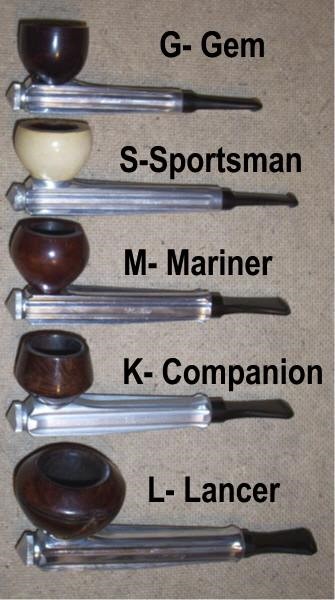
I turned to a catalogue for Kirsten pipes that I have in my files and found this pipe in the catalogue. It is shown in the photo below. The K stamp identifies it as a Companion pipe.

There is also some great history on the brand on Pipedia that is well worth a read. It gives clear information on the development of the brand (https://pipedia.org/wiki/Kirsten_Pipe_Company).

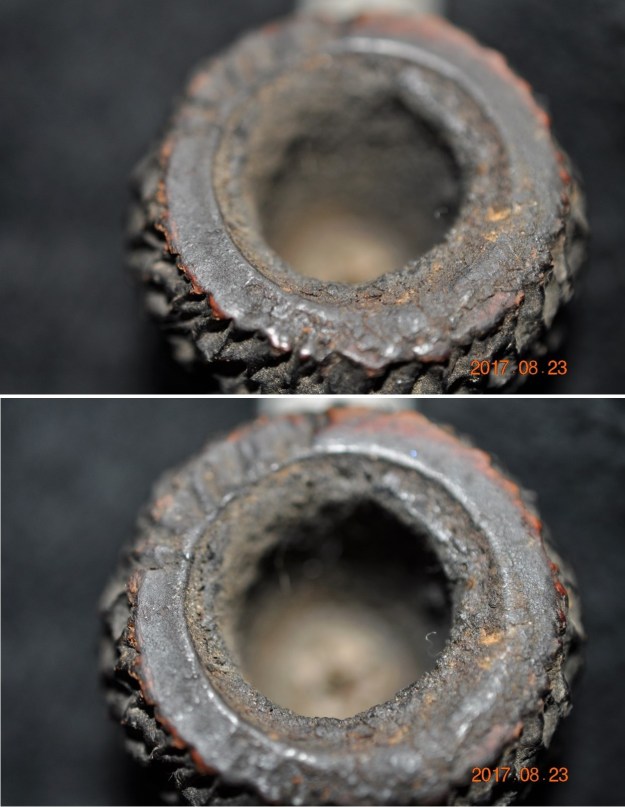
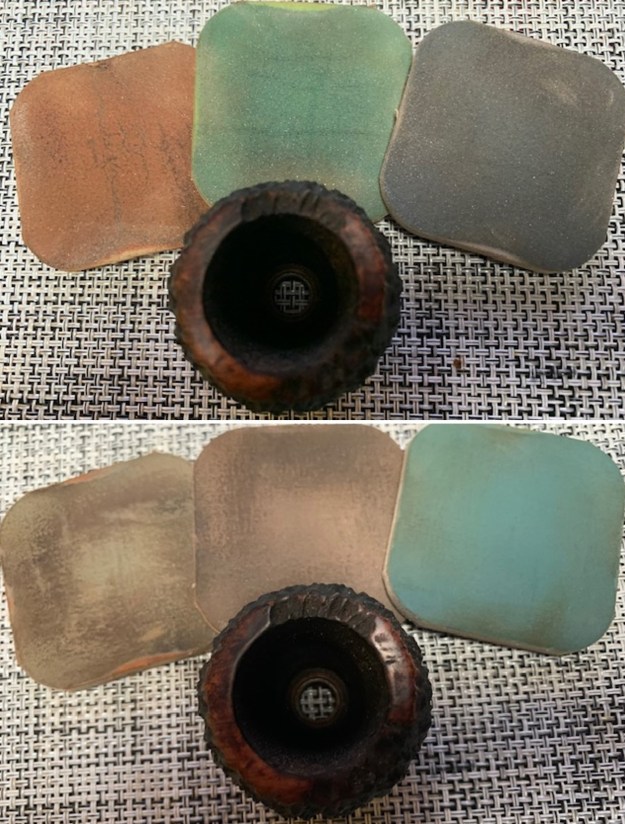
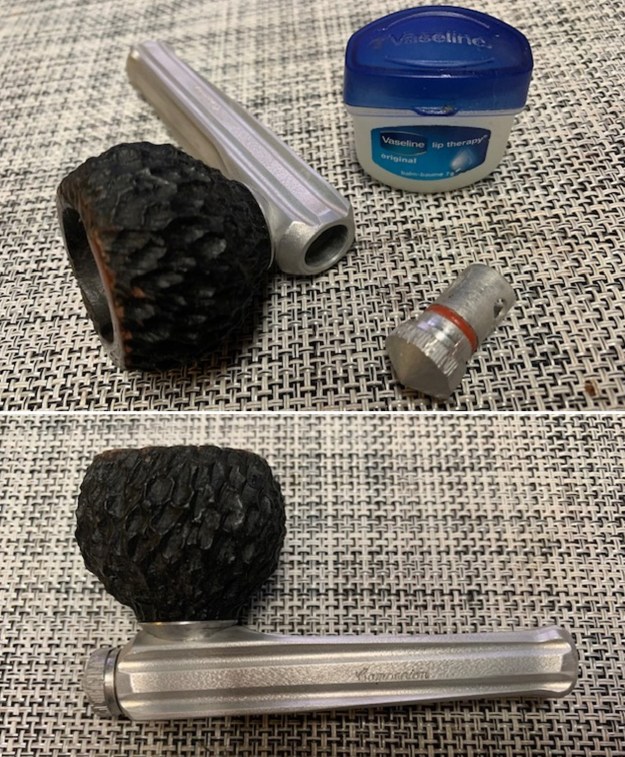
Jeff hates cleaning Kirstens probably as much as I do. However, he cleaned the pipes with his usual thoroughness that I really appreciate. He had reamed it with a PipNet pipe reamer and cleaned up the remaining cake in the bowl with a Savinelli Fitsall Pipe Knife. He scrubbed out the internals with alcohol, pipe cleaners and cotton swabs until the pipe was clean. He scrubbed the exterior of the bowl with Murphy’s Oil Soap and a tooth brush to remove the grime and grit on the briar and the lava on the rim top. The finish looks very good with good looking grain around the bowl and shank. Jeff took the pipe apart and cleaned the radiator, the adjustable valve and the stem with alcohol, pipe cleaners and cotton swabs. He scrubbed the stem with Soft Scrub and soaked it in Before & After Deoxidizer to remove the oxidation on the rubber. When the pipe arrived here in Vancouver for the second stop of its restoration tour it looked a lot better. It has been sitting in my drawer here since 2018 so the stem has taken on some more oxidation during its rest in my bin of metal pipes. I took photos before I started my part of the work. I took some close up photos of the rim top and also of the stem surface. I wanted to show what cleaned bowl and rim top looked like. The rim top and edges of the bowl looked very good. The screw in the bottom of the bowl looks very good with no damage to the slots. I also took close up photos of the stem to show the light tooth marks and the remaining oxidation on the stem.I took photos of the tamping on the radiator sides. The left side is stamped Companion in script and on the underside it is stamped with the words Made in the U.S.A. followed by the letter K.I took the pipe apart and took photos of the parts of the pipe to give a picture of what it looked like. Now, on to my part of the restoration of this Kirsten Companion K pipe. The rim top was in looked quite good. The rim top was smooth with two rusticated portions on the sides of the top. I decided to begin my work by polishing the bowl and rim top with micromesh sanding pads – dry sanding with 1500-12000 grit pads and wiping the briar down with a damp cloth after each sanding pad. With the polishing finished it was time to put the bowl back together. I greased the screw threads with Vaseline and dropped it through the hole in the bowl bottom. I screwed the base plate back on the bowl and took photos. I rubbed the bowl down with Before & After Restoration Balm. I worked it into the surface of the bark on the bowl sides and shank with my fingertips to clean, enliven and protect it. I let the balm sit for a little while and then buffed with a cotton cloth to raise the shine. I screwed the bowl back onto the radiator and took photos of the pipe as it looked at this point in the process. I rubbed down the valve and o-ring with Vaseline and then inserted it in the end of the radiator. The pipe was coming together very well at this point. I set the bowl and metal barrel aside and turned my attention to the stem. I scrubbed the oxidized stem with SoftScrub on cotton pads to break down the oxidation. Once finished it looked much better.I sanded out the stem surface with 220 grit sandpaper to remove the remaining oxidation and the light tooth marks and chatter. I started to polish it with 400 grit wet dry sandpaper.I polished the vulcanite with micromesh sanding pads – 1500-12000 grit pads. I wiped it down with a damp cloth after each sanding pad. I polished it with Before & After Pipe Stem Polish – both Fine and Extra Fine. I gave it a coat of Obsidian Pipe Stem Oil. It works to keep the stem from oxidizing as quickly. I set it aside to dry. This Kirsten Companion Made in USA K Generation 2 pipe turned out to be another great looking pipe. The finish on the pipe is in excellent condition and works well with the polished vulcanite saddle stem. I put the pipe back together and carefully buffed it with Blue Diamond on the buffing wheel. I gave the bowl and stem multiple coats of carnauba wax on the buffing wheel and followed that by buffing the entire pipe with a clean buffing pad. I hand buffed the pipe with a microfiber cloth to deepen the shine. Give the finished Kirsten Companion K pipe a look in the photos below. The dimensions of the pipe are Length: 5 ½ inches, Height: 2 inches, Outside diameter of the bowl: 1 ½ inches, Chamber diameter: 1 inch. The weight of the pipe is 1.66 ounces/47 grams. This beauty is already spoken for and it will soon be heading south to the new steward. Thanks for reading this blog and my reflections on the pipe while I worked on it. This is an interesting estate to bring back to life.

As always, I encourage your questions and comments as you read the blog. Thanks to each of you who are reading this blog. Remember we are not pipe owners; we are pipe men and women who hold our pipes in trust until they pass on into the trust of those who follow us.

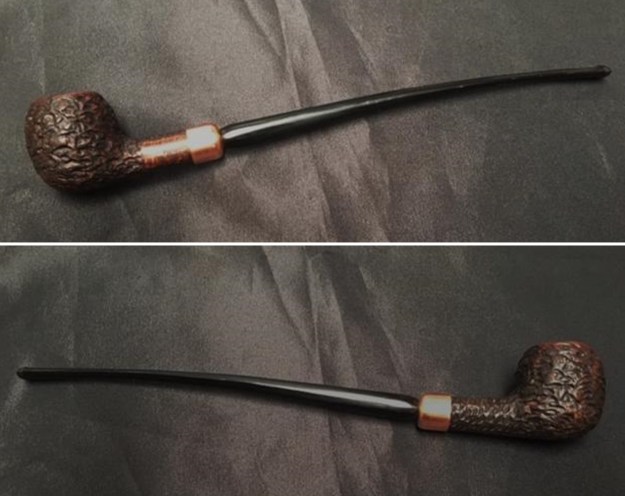
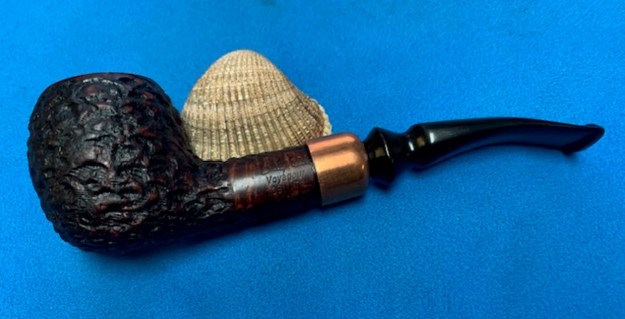
Repurposing a Brigham Voyageur 109 into a Frankenpipe


Blog by Steve Laug

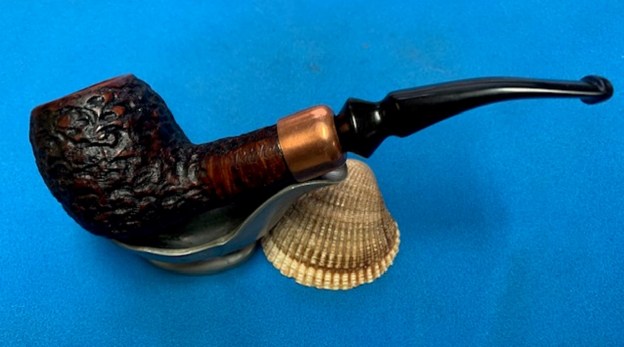
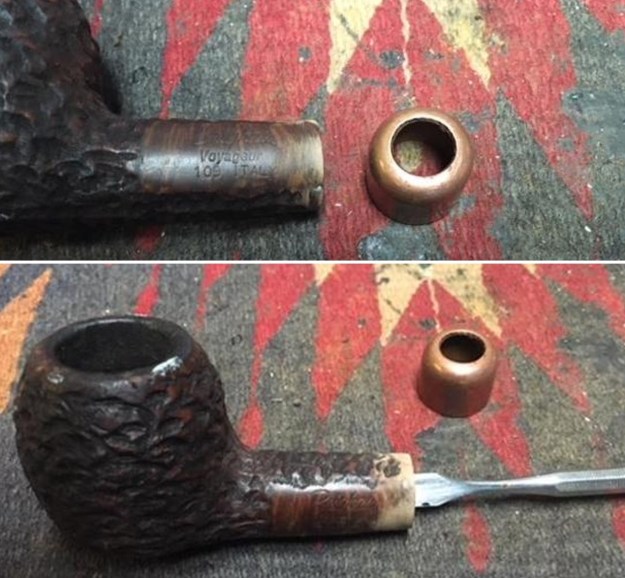
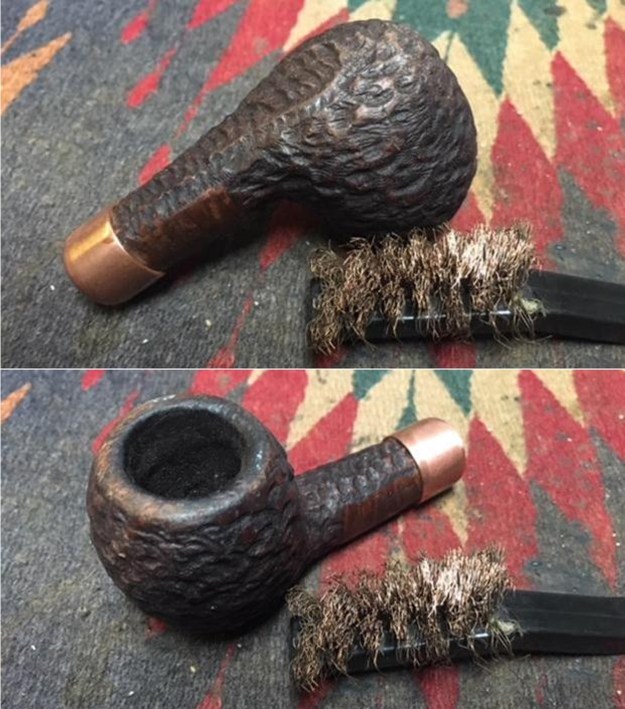
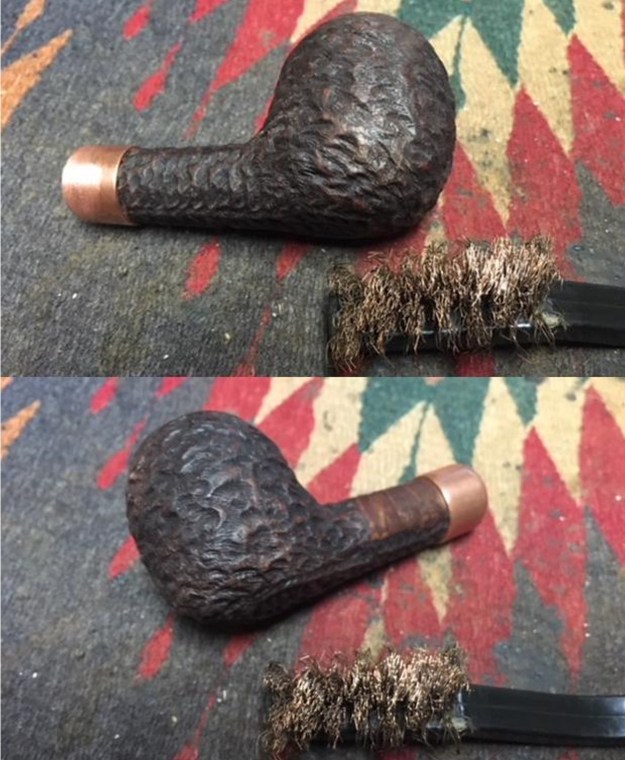
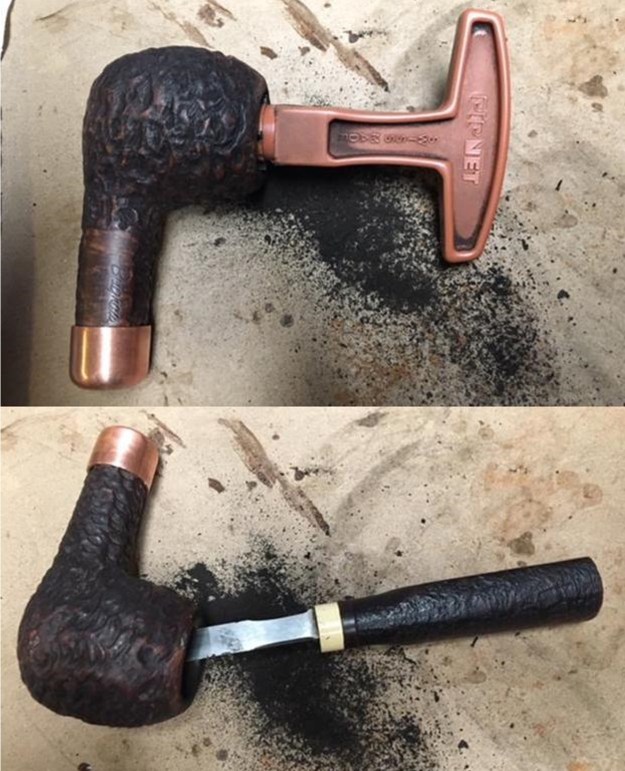
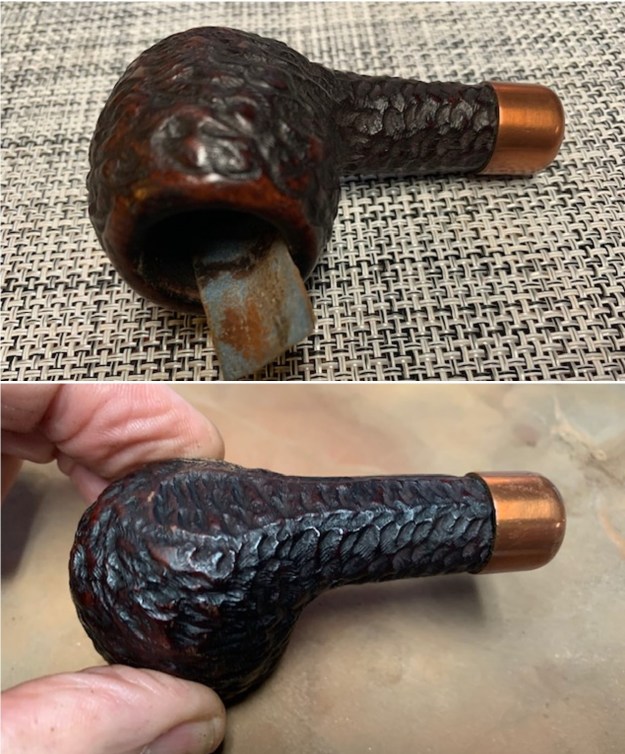
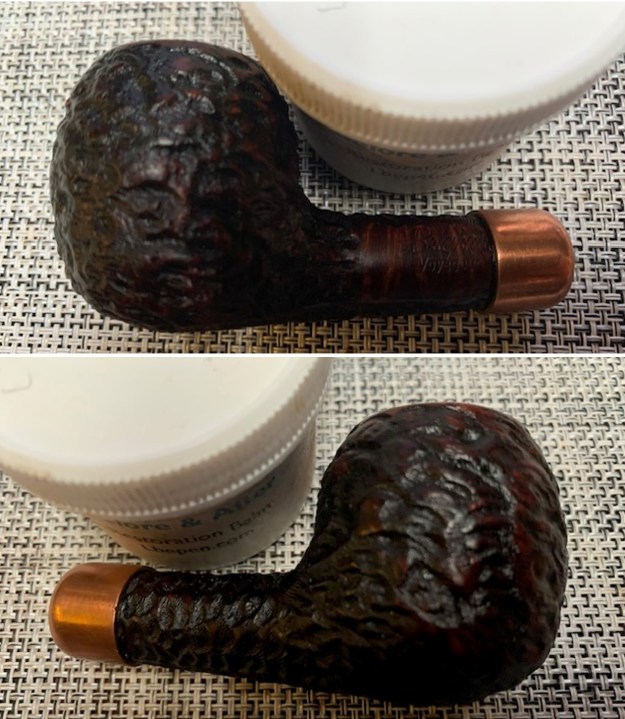
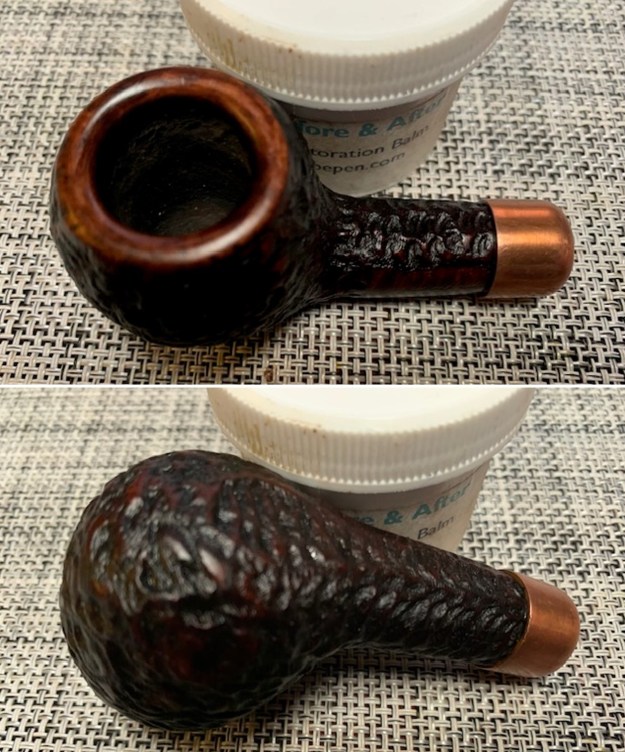
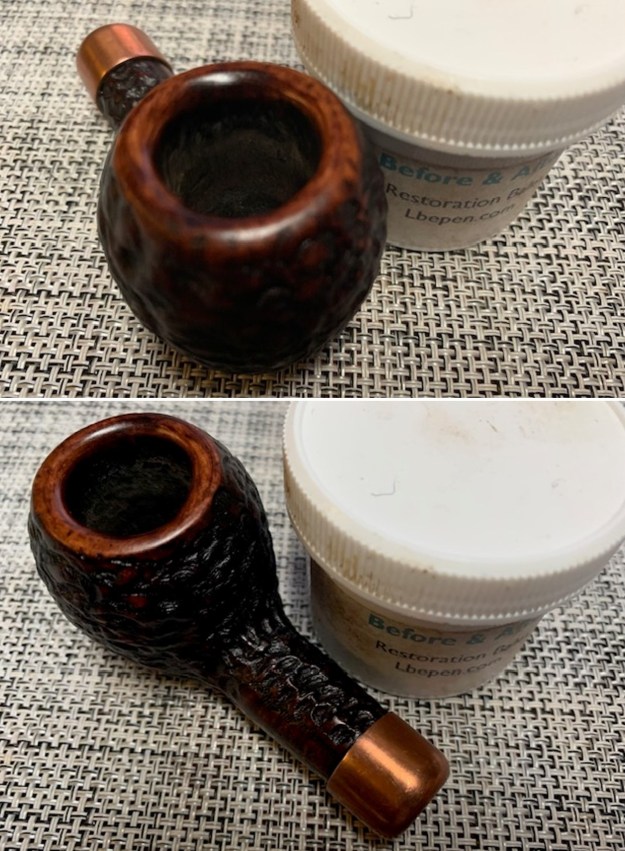
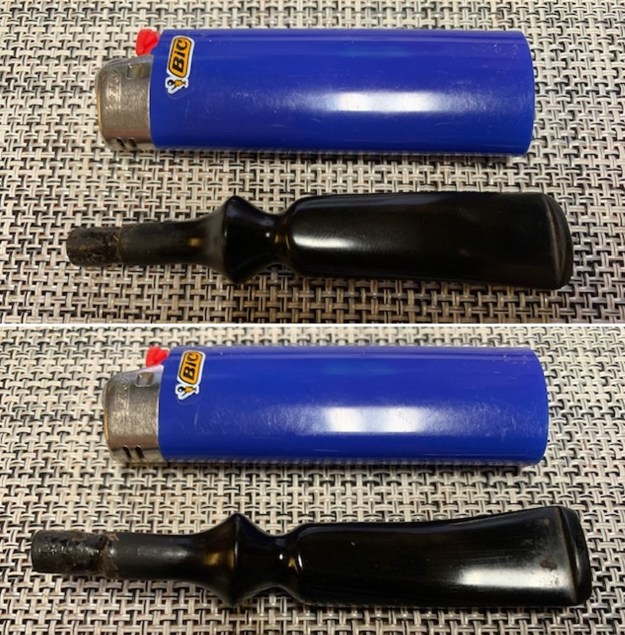
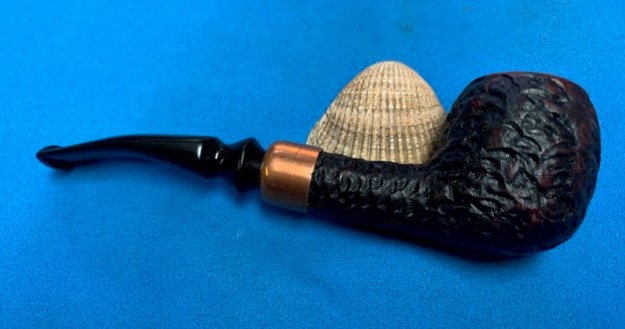
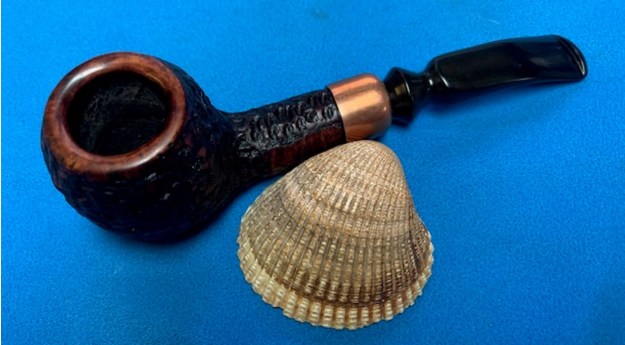
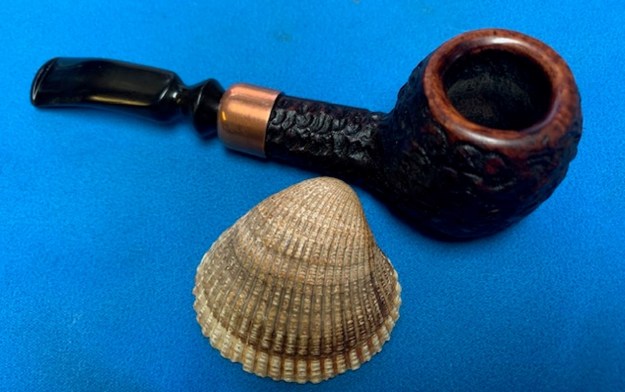
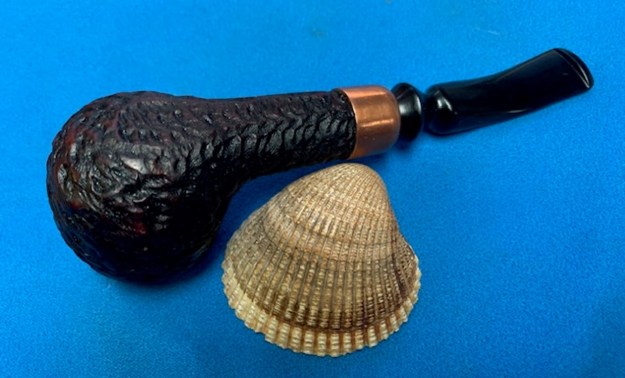
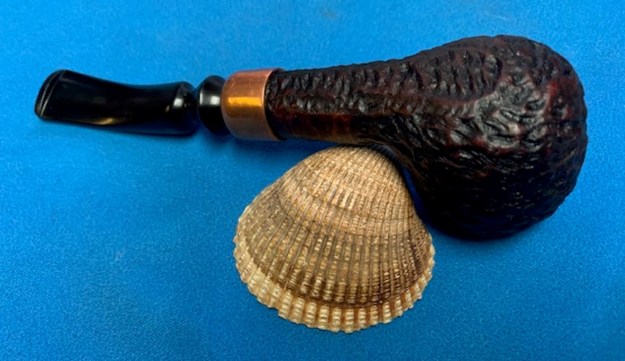
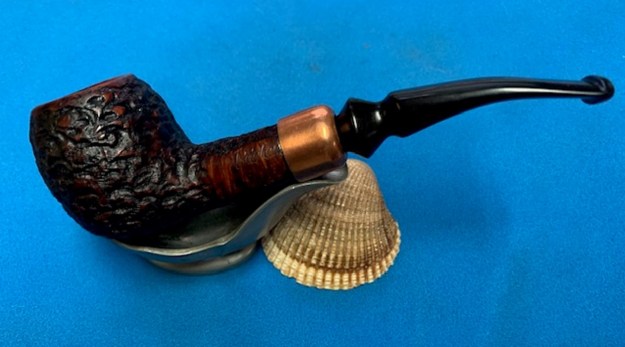
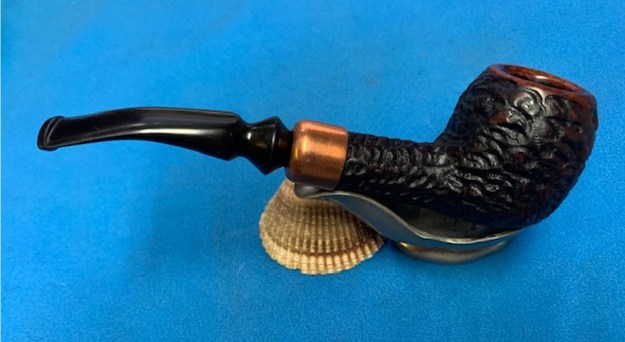
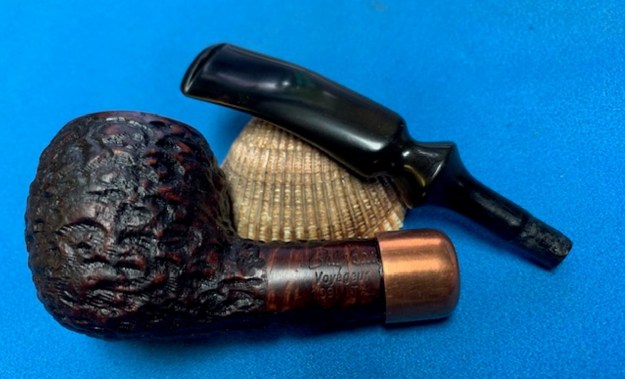
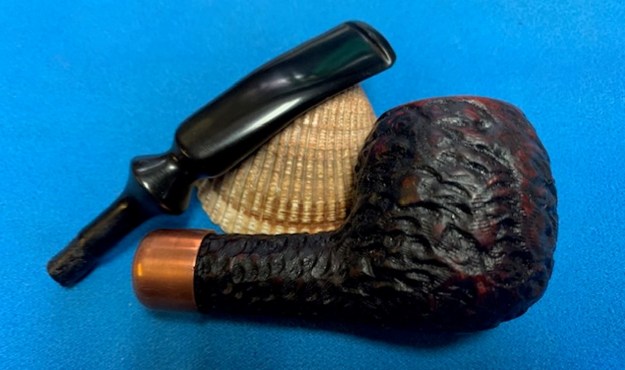
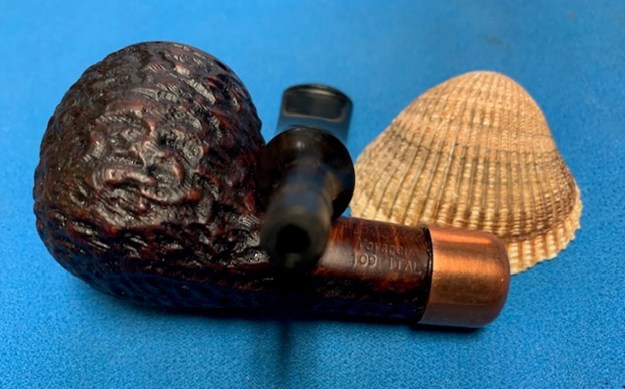
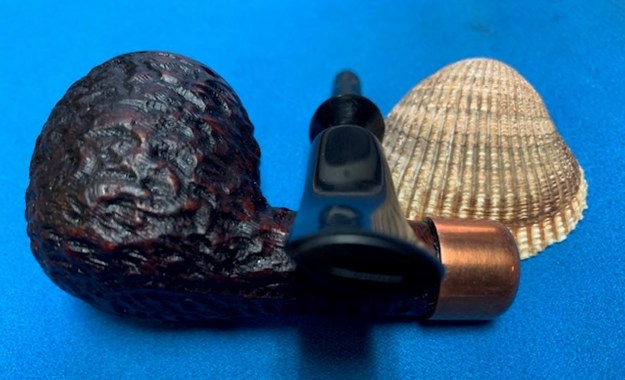
The next pipe I have chosen to work on is a bit of a Frankenpipe – one I have cobbed together from a variety of pipes. A Frankenpipe is simply a pipe composed of parts from a variety of sources. In this case it included a Brigham bowl, a Copper Plumbing fitting as a ferrule and a vulcanite freehand stem. Put together these parts create a totally unique pipe that is more than a total of its parts.

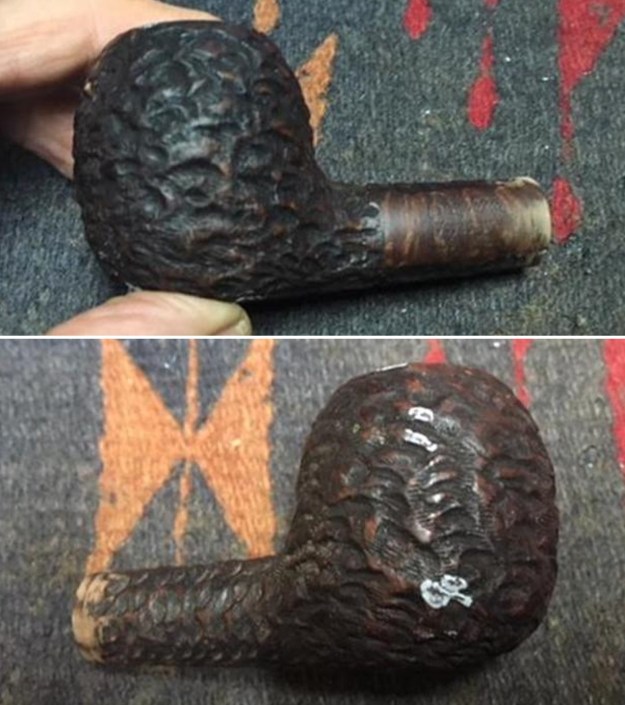
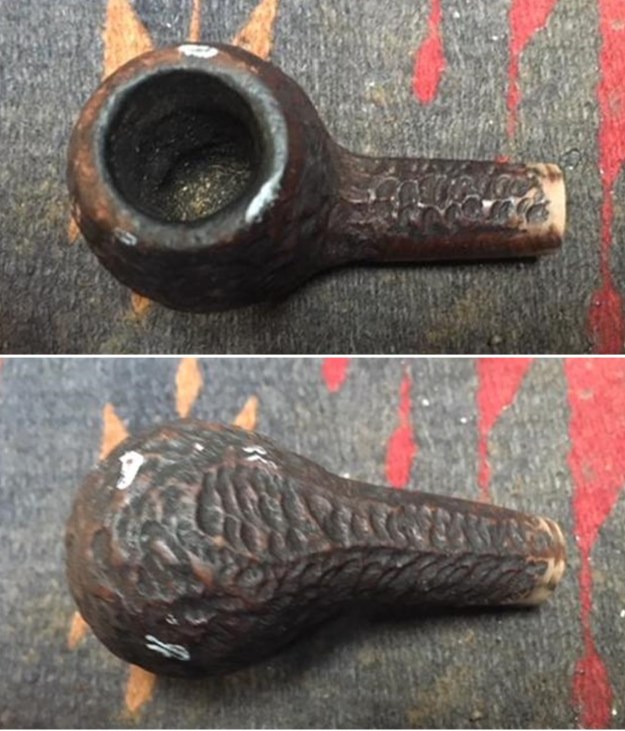
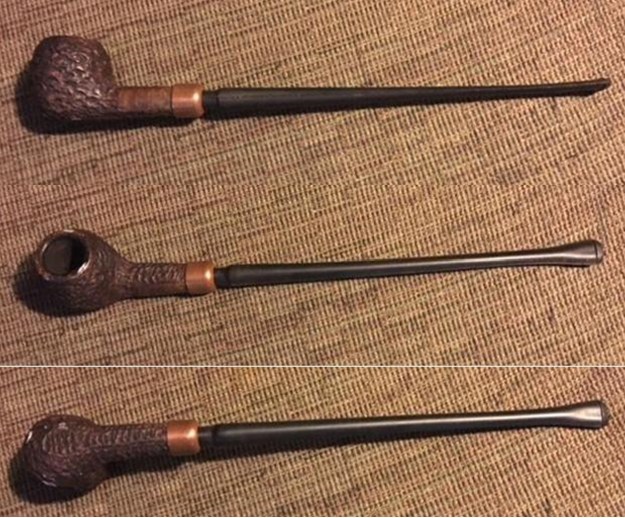
I originally received it in a lot of pipes that I worked on for a fellow here in Vancouver. It was a bowl sans stem that was in a bit of rough shape. I described it as follows when I first received it (https://rebornpipes.com/2018/08/03/converting-a-brigham-voyageur-109-into-a-churchwarden/). The pipe is an apple shaped bowl that is stamped on the left side of the shank and reads Brigham [over] Voyageur [over] 109 Italy in a smooth panel on the rusticated bowl and shank. The shank end had nicks and chips but was in fair condition. There was no stem with the bowl. The stem would have had the lighter weight nylon system tenon since the pipe is one of the Italian made Brighams. It was another one of the fellow’s pipe finds on a recent pipe hunt in Vancouver. The rusticated finish had almost a scale like rustication pattern with flecks of paint in the finish. The rim top was damaged and was darkened toward the back of the bowl. The finish was very dirty and there was a thick cake in the bowl. When I first received the bowl from the fellow we talked about replacing the missing stem with an original Brigham stem. I talked with Charles Lemon and he sent me a stem blank and an aluminum system shank for the Brigham. When it arrived, I talked with the Vancouver fellow about that and together we concluded that a churchwarden stem might look good on it. I ordered some from JH Lowe and found that they only have one diameter size stem. I ordered it and when it arrived it was significantly smaller in diameter than the shank. I had an interesting copper ferrule that I thought might work to provide a different look to the pipe and provide a way of using the smaller diameter churchwarden stem. I slipped the ferrule on the shank and put the stem partially in place in the mortise and took the following photos to send to the fellow to see what he thought. He liked it so I moved forward with the restoration of the bowl and the fitting of the stem. I am including the cleanup description of the work on the bowl as it adds to the story of the next stage of the creation of the new Frankenpipe.I slipped the ferrule off the shank and took a photo of the stamping on the left side of the shank. It is very clear and readable. I sanded the shank to smooth it out for fitting the ferrule. I cleaned out the inside of the shank with a dental spatula to remove the heavy tar buildup on the shank walls. The shank was ready for the new ferrule.I used a heat gun to heat the copper ferrule and pressed it onto the shank end. I repeated the process until it was set on the shank as far as I wanted it to be. To remove the paint flecks on the rusticated finish on the bowl I scrubbed it with a brass bristle wire brush and used a dental pick to remove the flecks. I wiped down the bowl with alcohol on a cotton pad to remove the dust and debris from the finish. I reamed the bowl with a PipNet Piper Reamer using the first two cutting heads to remove the majority of the cake. I cleaned up the remnants on the walls of the bowl with a Savinelli Fitsall Pipe Knife. I used a dowel wrapped with sandpaper to sand down the walls on the bowl. I cleaned out the airway in both the bowl and stem with alcohol (99% isopropyl), pipe cleaners and cotton swabs until they were clean on the inside.When I restored the pipe originally I polished the rim top with micromesh sanding pads – wet sanding with 1500-2400 grit pads and dry sanding with 3200-12000 grit pads. I also polished the smooth portions of the rustication with the micromesh pads at the same time. I rubbed down the briar with Before & After Restoration Balm. I worked it into the finish with my fingertips and finished working it in with a shoe brush. The balm worked to clean, preserve and enliven the surface of the finish on the small bowl. The briar was coming alive so I took some photos of the pipe at this point. I gave the bowl multiple coats of Conservator’s Wax and buffed the bowl with a shoe brush.

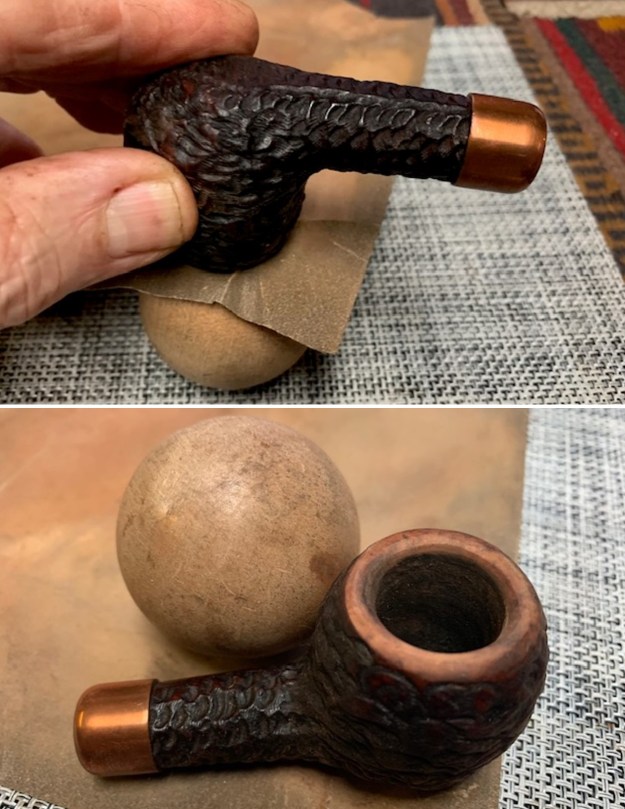
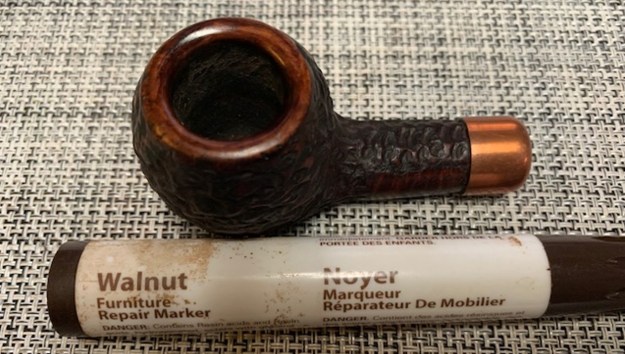
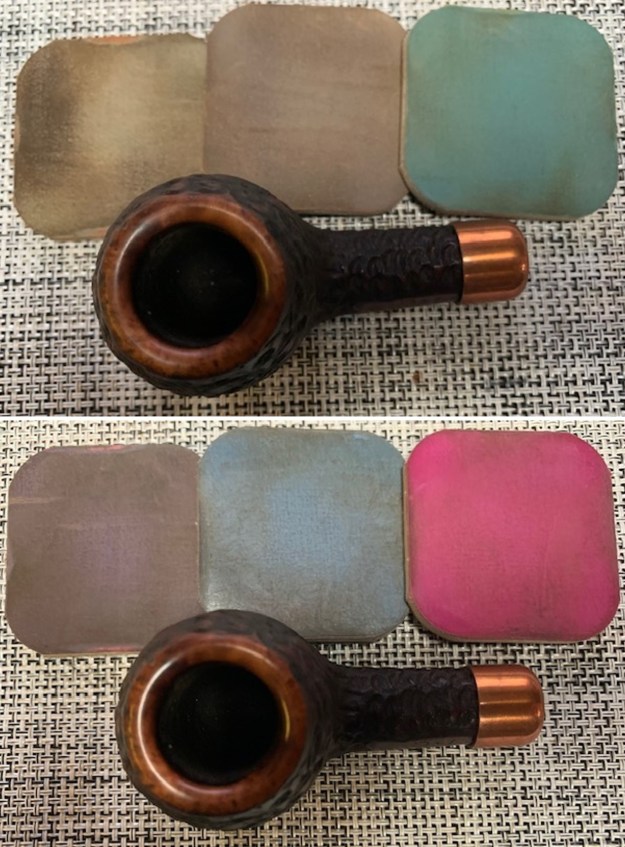
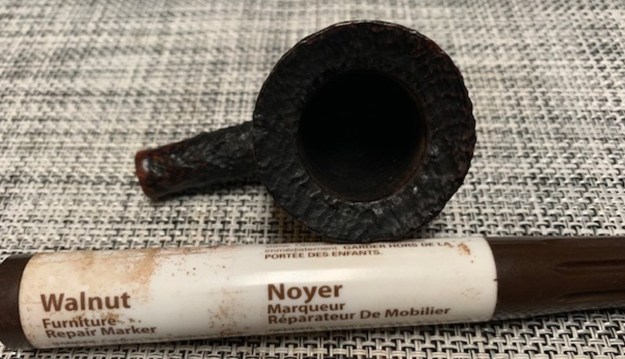
I finished the stem as well and put it in the shank of the pipe. I took photos of it to show the look of the Church Warden that we had designed.The fellow smoked the pipe and enjoyed for a while but decided the Church Warden was not for him. We tried different stems and looks but, in the end, it came back to me. It has been here in a small box on the shelf behind my desktop. I had several stems in the box along with the last stem I had fashioned for it a few years ago. Today I decided it was time to work on it again and finish crafting a new Frankenpipe. I took some photos of the pipe before I started my part of the work. I took some close up photos of the rim top and also of the stem surface. The rim top was and inner edge showed darkening and damage. The bowl was nicked and out of round. I also took close up photos of the stem to show the condition of the stem surface. There were marks and chatter on the stem ahead of the button on both sides.I took a photo of the stamping on the shank side. It read as noted above. When I had placed the copper ferrule earlier I was careful to not cover the stamping on the shank… surprising as I usually don’t worry about that when I am crafting a new pipe from a damaged bowl.I took photos of the elongated tenon on the stem that I crafted for the pipe. I wanted to not use a Brigham system filter so I worked to make a long tenon that left a small gap between the entrance of the airway into the bowl and shank end. It functioned quite well.Now it was time to rework the bowl and rim. I started by cleaning up the inner edge of the bowl with a folded piece of 220 grit sandpaper. I gently topped the bowl with 220 grit sandpaper on a topping board to remove some of the rim damage.I used a wooden ball and a piece of 220 grit sandpaper wrapped around it to give the inner edge of the bowl a bevel to help minimize the burn damage on the briar.I touched the stain on the rim top with a Walnut stain pen to blend it into the surface of the briar. I let it dry before I polished it with micromesh sanding pads.I polished the rim top with micromesh sanding pads. I dry sadded it with 1500-12000 grit pads and wiped it down between the pads with a damp cloth. With that finished the bowl was very clean and the sandblast looked great. I rubbed the bowl and rim down with Before & After Restoration Balm. I worked it into the sandblast surface of the briar with my fingertips and a horse hair shoe brush to clean, enliven and protect it. I let the balm sit for 10 minutes and then buffed with a cotton cloth to raise the shine. I really like watching the Balm do its magic and bring the briar alive. I set the bowl aside and turned my attention to the stem. I “painted” the tooth marks on both sides of the stem with the flame of a Bic lighter and as expected I was not able to lift them at all. I filled in the tooth marks with clear CA glue and let the cure. I flattened out the repairs with a small file to start blending them in. I sanded the areas smooth with 220 grit sandpaper and started polishing with 600 grit wet dry sandpaper, though I forgot to take photos of this part of the process. I polished the stem with micromesh sanding pads – wet sanding with 1500-12000 grit pads. I wiped the stem down after each sanding pad with Obsidian Oil to give the sanding pads some bite. I polished it with Before & After Pipe Stem Polish – both Fine and Extra Fine. I gave it a coat of Obsidian Pipe Stem Oil. It works to keep the stem from oxidizing as quickly. I set it aside to dry. Once again at this point in making Frankenpipes I am excited to be on the homestretch. I look forward to the final look when newly fashioned Brigham Voyageur 109 Apple is put back together, polished and waxed. I put the bowl and stem back together. I lightly polished the bowl and the replacement stem with Blue Diamond. I gave the bowl and the newly fit stem multiple coats of carnauba wax. I buffed the pipe with a clean buffing pad to raise the shine. I hand buffed it with a microfiber cloth to deepen the shine. The pipe polished up pretty nicely. The depths of the rustication come alive with the wax and polish. The shiny black vulcanite stem is a beautiful contrast to the browns of the bowl. This Frankenpipe Brigham Voyageur Frankenpipe with a copper ferrule and modified Freehand stem was fun to create. It really is a quite stunning looking creation. The pipe feels great in the hand will be better when warmed up while smoking. The finished pipe is shown in the photos below. The dimensions of the pipe are Length: 5 ¾ inches, Height: 1 ¾ inches, Outside diameter of the bowl: 1 ¼ inches, Chamber diameter: ¾ of an inch. The weight of the pipe is 1.73 ounces/49 grams. I will be putting it on the rebornpipes store in the Canadian Pipemakers Section if you would like to add it to your rack and carry on the previous pipeman’s legacy. This is an interesting estate to bring back to life.

As always, I encourage your questions and comments as you read the blog. Thanks to each of you who are reading this blog. Remember we are not pipe owners; we are pipe men and women who hold our pipes in trust until they pass on into the trust of those who follow us.

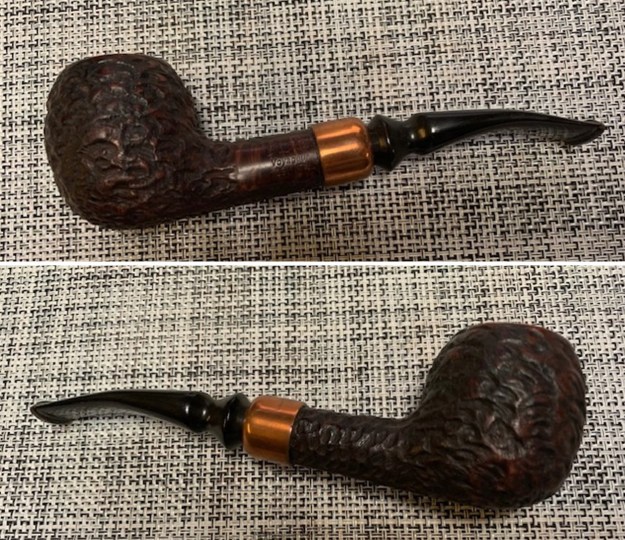
Restoring a Charatan’s Make 318 Pickaxe Shaped Pipe with a Replacement Acrylic Stem


Blog by Steve Laug

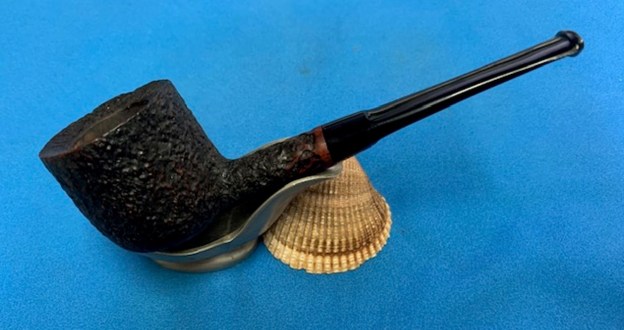
The next pipe on the work table is a nice-looking sandblast Pickaxe shaped pipe that we purchased from an estate sale from Plano, Texas, USA on 03/30/2022. It was stamped on the underside of the shank and read Charatan’s Made [over] London England [over] shape number 318. To the left and below the stamping is a circled cursive L. It has a sandblast finish around the bowl and rustication on the shank that is covered with a shiny coat of shellac it appears over a lot of oils, debris and grime. There was a thick cake in the bowl and tobacco debris stuck to the walls. There is a thick lava overflow in the sandblast on the inwardly bevelled rim top. The top and edges of the rim looked good under the tars and lava, but that would be very clear once the pipe is cleaned. There was a very beautiful pipe underneath all of the buildup of years of use. The taper stem was an acrylic replacement. It was filthy and there were some deep tooth marks and chatter on both sides ahead of the button. The button had not been shaped at all and still needed to be slotted and shaped. Jeff took photos of the pipe before he started his cleanup work on it. Jeff took photos of the bowl and rim top to show the thick cake and tobacco debris in the bowl and the heavy lava build up on the sandblast rim top and the edges of the bowl. The rim top and edges looked pretty good but a proper clean up would tell the full story. Jeff took photos of the top and underside of the stem showing the tooth marks and chatter on the stem surface. Jeff took photos of the sides and heel of the bowl to show the condition of the finish. You can see the grime around the sides of the bowl and shank under the shiny coat on the finish. It seems to fill in the grooves in the blast. Jeff took a photo of the stamping on the underside of the bowl and shank. The stamping was readable as you can see from the photos. It read as noted above. An added part of pipe restoration for me is to try to gather as much background on a brand and maker as I can find. With Charatan that is an enjoyable web to try to untangle. There is a lot of information and it can lead to understanding what era a pipe was made in. To try to figure out the era of the Charatan’s pipe I was working on I turned to the Pipephil website, Logos and Stampings (http://www.pipephil.eu/logos/en/logo-charatan.html). There is some really helpful information on each of the lines of Charatan’s Make pipes that entered the market. There was not a sandblast stamped like the one in hand. The site did give a short history of the brand. I quote the portion that is most pertinent.
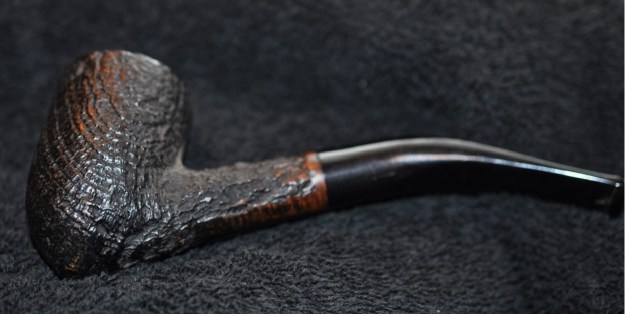
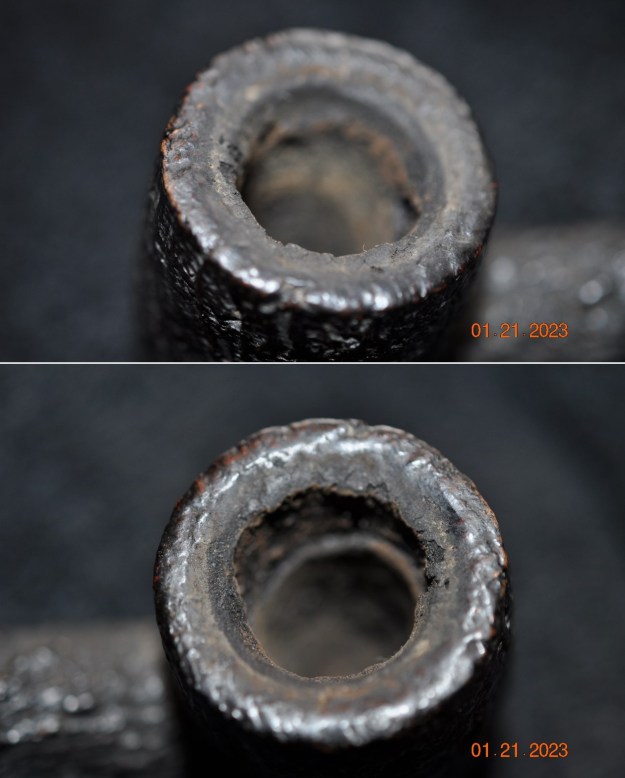
The brand was founded in 1863 by Frederik Charatan. When his father retired in 1910, Reuben Charatan took over the family business. All the pipes were handmade until 1973. The brand name has been overtaken by Dunhill in 1978 and sold in 1988 to James B. Russell Inc.(NJ, USA). During the period 1988-2002 Charatans were crafted by Butz Choquin in St Claude (France). Dunhill re-purchased Charatan brand name in 2002 and Colin Fromm (Invicta Briars, Castleford) followed up on freehand production.Next, I turned to Pipedia to see if I could find more information on the brand and possibly a link to a sandblast finished Dublin (https://pipedia.org/wiki/Charatan) but once again in the general article it was not listed. It did give a little more historical information. I quote the pertinent parts that give information on this particular pipe.

In 1950 Herman G. Lane, striving to expand his business in Great Britain, made contacts with the Charatan family. Apparently, Lane got a certain influence soon, but it was not until 1955 that Lane Ltd. became the sole distributor for Charatan’s in the United States superseding Wally Frank. This can be documented in a “biography” written for Herman G. Lane titled “Leaves from a Tobaccoman’s Log”.

Thanks to Herman G. Lane’s dedicated labor Charatan became hugely popular in the States. As reported by Ken Barnes in an interview with Rick Newcombe, Reuben Charatan passed away in 1962, and his widow sold the firm to Herman Lane 1 or 2 years after his death.[1] In the early 1960s Charatan pipes were the first to overstep the $100 Dollar line in US pipe sales. In 1978 Lane’s heirs sold the Charatan company to Dunhill. The Prescot Street factory was closed in March 1982. Thereafter the fame and quality of the make declined.

The pre-Lane period (prior to 1955) and the Lane era pipes (1955 to until sometime between 1979 – 1984) are of primary interest the collector. The Lane era is often quoted as beginning about 1950.

Charatan records are almost non-existent before Lane due to a factory fire, making it difficult to date pre-Lane pipes. Charatan used 4 basic grades prior to 1950: Supreme, Selected, Executive, and Belvedere. After 1950 Herman Lane’s influence began, and the grades started to expand. In 1955 Lane took over sole distributorship of Charatan in the US. In 1957 he introduced the Supreme S. Most of his other introductions were from the 1960s and early 1970s.

From this I am fairly certain I am dealing with a Lane pipe made after 1955. There is also a circle L script mark that is a Lane stampings on the pipe which also supports this.

I continued digging further into the dating of the pipe, but what I had found above was a good start for me. If some of you would like to try your hand at dating it more accurately as to the time period it came out you might want to check out the article on Pipedia on Dating Charatans (https://pipedia.org/wiki/Dating_of_Charatans).

I also reread the article on Pipedia by the Italian fellow who contributed some really helpful information on the brand (https://pipedia.org/wiki/Charatan_-_Milan_2014). I quote the section on the Second period: Reuben Charatan 1910 – c. 1962. I have highlighted a portion of the section on the shank in red to point out some more helpful dating information.

– In 1962 Herman Lane took over the business from the Charatan family, although he had already influenced production from the 1950s.

– The pipes were mostly larger than the previous ones and corresponded in size to Dunhill group 5. These are slightly less rare, but still difficult to find.

– Stem: Usually in ebonite, saddle shaped or tapered, bearing a fine “CP” stamp, underbore system (see below) used when necessary.

– Shank: The shape code is stamped on it together with the nomenclature “CHARATAN’S MAKE LONDON ENGLAND” arranged in two lines. From 1955 onward on the models marketed for the USA there is also a serif and circled capital “L” (but not all models bear this) which resembles the pound sterling symbol. The “L” is for Lane, the importer.

From 1958, Lane changed the nomenclature for models marketed for the US to clarify the message: “MADE BY HAND”.  In this period the underbore was introduced. Its manufacturing period ranged between 1920 and c.1930. This model was equipped with a duralumin plunger trap fitted in the stem, which served to clean the residue more easily. This particular model bore a special stamp on the stem, and also had its own catalogue…

QUALITY GRADES…The stem did not only display the stamps mentioned above. Another stamp that can help dating is the one referring to the quality of the pipe. Until Herman Lane arrived on the scene there were four quality grades. Starting with the lowest: Belvedere, Executive, Selected, and Supreme. Lane went on to add higher grades from time to time: Supreme S, Supreme S100, S150, S200, S250, S300, Coronation, Royal Achievement, Crown Achievement, and Summa Cum Laude; these last three are extremely rare and almost impossible to find. He also invented other, different grades, even changing the previous pipe classification standards. We will not go into detail here, but it means that if we find an S100 or Coronation the pipe was manufactured following Herman Lane’s acquisition. In particular, the FH mark, or Freehand pipe was commissioned to the famous Danish craftsman, Preben Holm.

Nomenclature

The Lane Trademark serif and circled L indicates the pipe is from the “Lane Era” (approx. 1955 to 1979 -1984?), however it appears that both the English factory or Lane themselves sometimes, or perhaps even often forget to stamp the L on a pipe. The Charatan factory was known for inconsistencies, especially in stampings. Therefore, although an L on the pipe definitely defines it as a Lane Era pipe, the lack of it could simply mean the pipe missed receiving the stamp from the factory. The lack of the trademark could also mean the pipe was destined for the European market.

Charatan pipes were not well distributed prior to the Lane Era, so very few pre-Lane pipes exist today. Herman Lane greatly grew the brand in the U.S., which caused corresponding growth in Europe.

Generally, when the pipe is stamped with the BLOCK letters “MADE BY HAND” it means the pipe was probably made between 1958 and 1965”

Generally, block letters “MADE BY HAND” and some of the other nomenclature in script (i.e. City of London or Extra Large next to the MADE BY HAND) means the pipe was made sometime between 1965 and the mid 1970s. The total script nomenclature “Made by Hand in City of London” evolved over this period of time, so many pipes had variants, such as Made By Hand in block letters and City of London in script, or some other variation of the terms or stampings.

It is believed the FH was used on Charatan pipes between 1957 and 1967-68. Three different sizes were used. The Charatan Logo (CP) on the pipe bit was changed over the year

Now I knew I was working on Lane Era pipe which actually means it was between 1955 and 1988 as shown by the stamping. Now it was time to work on the pipe.

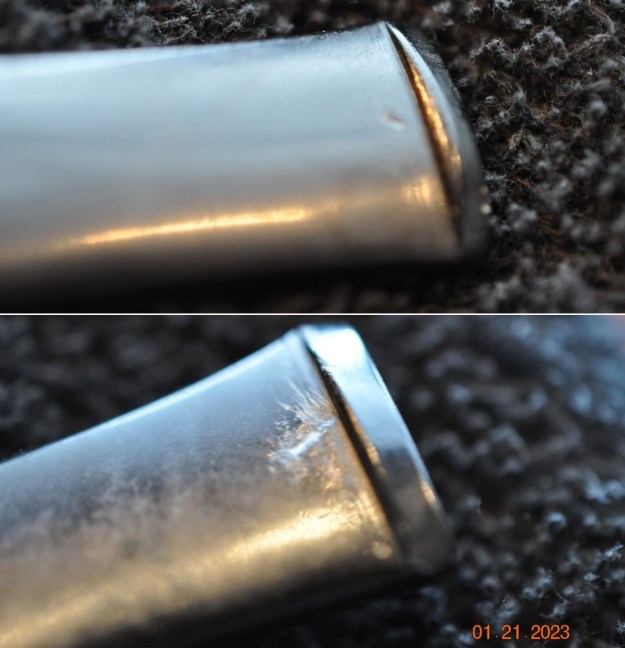
Jeff had cleaned it thoroughly. He had reamed it with a PipNet reamer and cleaned that up with a Savinelli Fitsall Pipe Knife. He had scrubbed the exterior of the briar with undiluted Murphy’s Oil Soap. He removed the shiny coat on the briar with acetone on cotton pads. He cleaned out the interior of the shank, sump and airway in the shank and stem with alcohol, pipe cleaners and cotton swabs. He scrubbed the stem with Soft Scrub to remove the oxidation and calcification on the surface. He soaked it in Before & After Deoxidizer to remove the oxidation. He removed it from the Deoxidizer and rinsed it off with warm water. I took some photos of the pipe before I started my part of the work. I took some close up photos of the rim top and also of the stem surface. I wanted to show what an amazing job Jeff did in the cleanup of the rim top. The rim top was and inner edge were in excellent condition. There were spots on the surface where the stain had lightened – both inner and outer edges. I also took close up photos of the stem to show the condition of the acrylic. It was clean but there were tooth marks and chatter on the stem ahead of the button on both sides. One of the things I appreciate about Jeff’s cleanup is that he works to protect and preserve the nomenclature on the shank of the pipes that he works on. The stamping on this one had faint spots on the edges so I was worried that it would worsen with the cleanup. I took some photos to show the clarity of the stamping. The photo is a little blurry but the stamping remains the same. I have noticed that many restorers are not careful to protect the stamping in their cleaning process and often by the end of the restoration the nomenclature is almost destroyed. I would like to encourage all of us to be careful in our work to preserve this as it is a critical piece of pipe restoration! I took the stem off the shank and took a photo of the pipe to capture the look of the pipe as a whole.I started my work on the pipe by touching up the light areas around the rim top and edges with a Walnut Stain pen. It blended well into the surrounding briar. With that finished the bowl was very clean and the sandblast looked great. I rubbed the bowl and rim down with Before & After Restoration Balm. I worked it into the sandblast surface of the briar with my fingertips and a horse hair shoe brush to clean, enliven and protect it. I let the balm sit for 10 minutes and then buffed with a cotton cloth to raise the shine. I really like watching the Balm do its magic and bring the briar alive. I set the bowl aside and turned my attention to the stem. I “painted” the tooth marks on both sides of the stem with the flame of a Bic lighter and as expected I was not able to lift them at all. I filled in the tooth marks with clear CA glue and let the cure. I flattened out the repairs with a small file to start blending them in. I sanded the areas smooth with 220 grit sandpaper and started polishing with 600 grit wet dry sandpaper, though I forgot to take photos of this part of the process. I polished the stem with micromesh sanding pads – wet sanding with 1500-12000 grit pads. I wiped the stem down after each sanding pad with Obsidian Oil to give the sanding pads some bite. I polished it with Before & After Pipe Stem Polish – both Fine and Extra Fine. I gave it a coat of Obsidian Pipe Stem Oil. I know that most think it does nothing for acrylic stems but I use it anyway as I find it works very well to deepen the shine. I set it aside to dry. Once again at this point in the restoration process I am excited to be on the homestretch. I look forward to the final look when the Charatan’s Make London England 318 Sandblast Pickaxe is put back together, polished and waxed. I put the bowl and stem back together. I lightly polished the bowl and the replacement stem with Blue Diamond. I gave the bowl and the newly fit stem multiple coats of carnauba wax. I buffed the pipe with a clean buffing pad to raise the shine. I hand buffed it with a microfiber cloth to deepen the shine. The pipe polished up pretty nicely. The depths of the sandblast really pop with the wax and polish. The shiny black acrylic stem is a beautiful contrast to the browns of the bowl. This Charatan’s Make London England 318 Sandblast Pickaxe with an acrylic replacement stem was another fun pipe to work on. It really is a quite stunning piece of briar whose shape follows the flow of the briar. The pipe feels great in the hand will be better when warmed up while smoking. The finished pipe is shown in the photos below. The dimensions of the pipe are Length: 5 ¾ inches, Height: 2 ¼ inches, Outside diameter of the bowl: 1 ¼ inches, Chamber diameter: 7/8 of an inch. The weight of the pipe is 1.66 ounces/47 grams. I will be putting it on the rebornpipes store in the British Pipemakers Section if you would like to add it to your rack and carry on the previous pipeman’s legacy. This is an interesting estate to bring back to life.

As always, I encourage your questions and comments as you read the blog. Thanks to each of you who are reading this blog. Remember we are not pipe owners; we are pipe men and women who hold our pipes in trust until they pass on into the trust of those who follow us.

Breathing Life into a Charatan’s Make 4143DC Sandblast Pot


Blog by Steve Laug

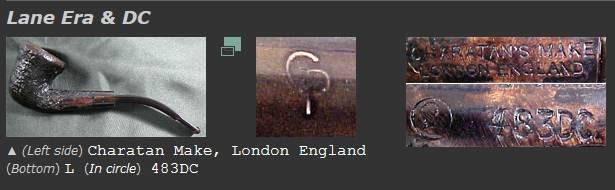
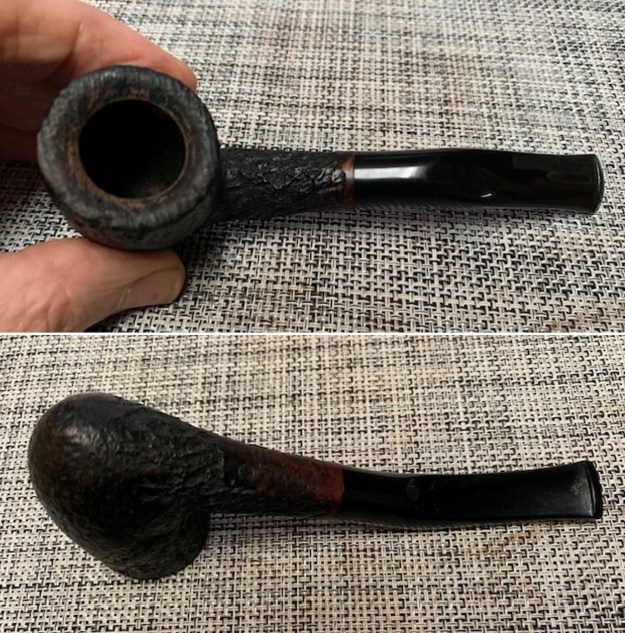
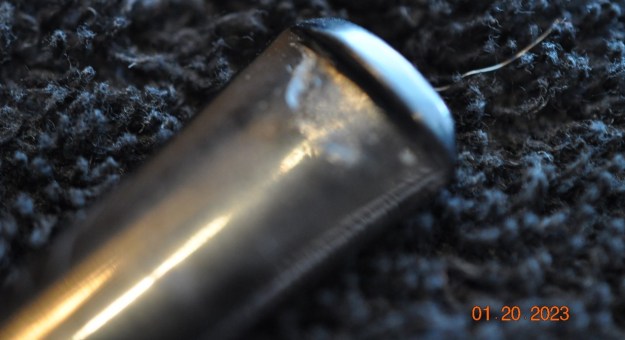
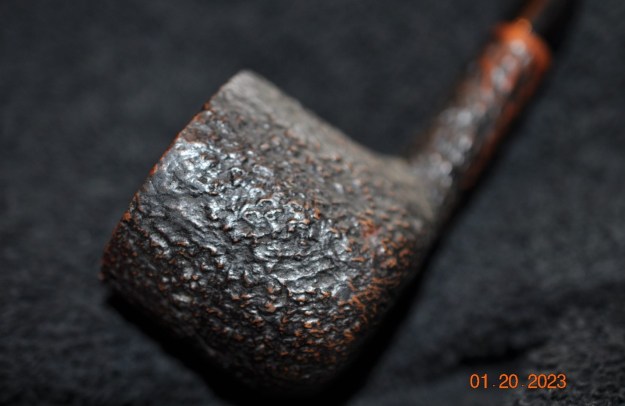
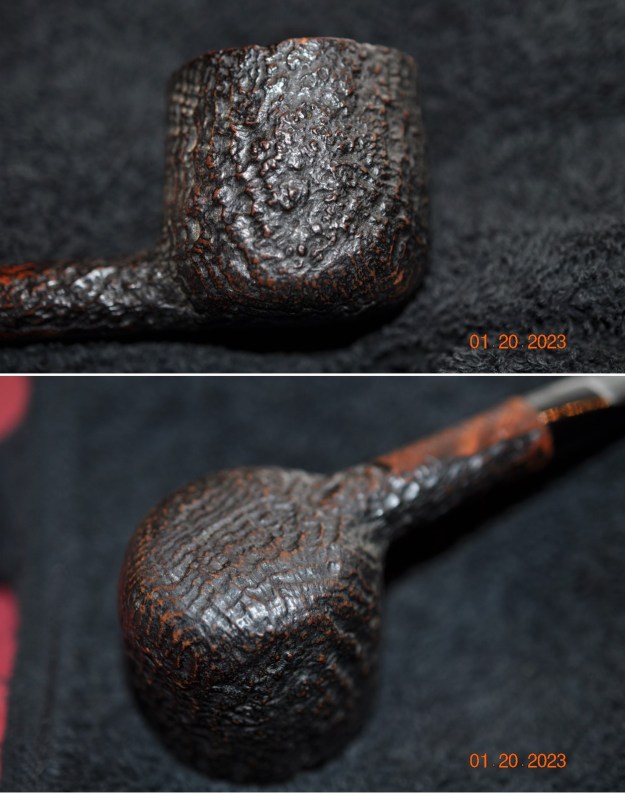
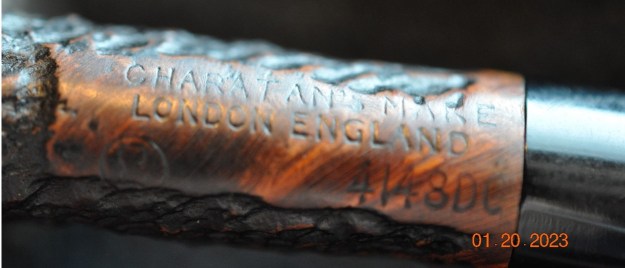
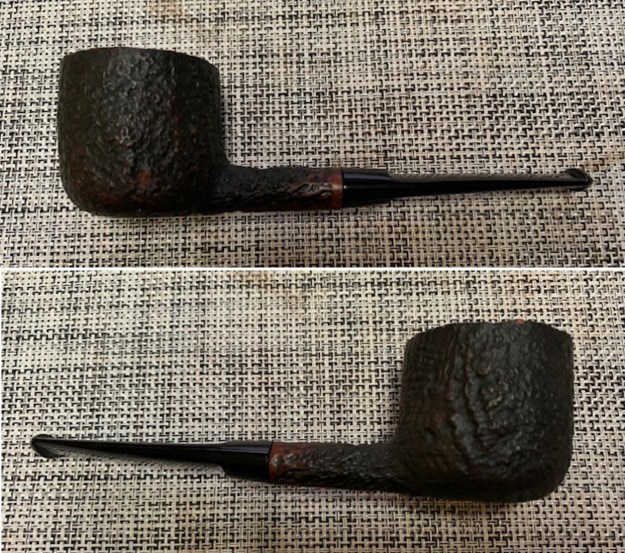
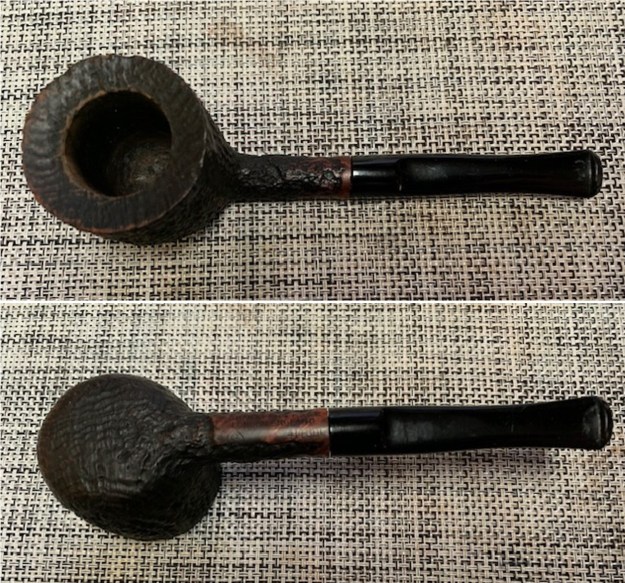
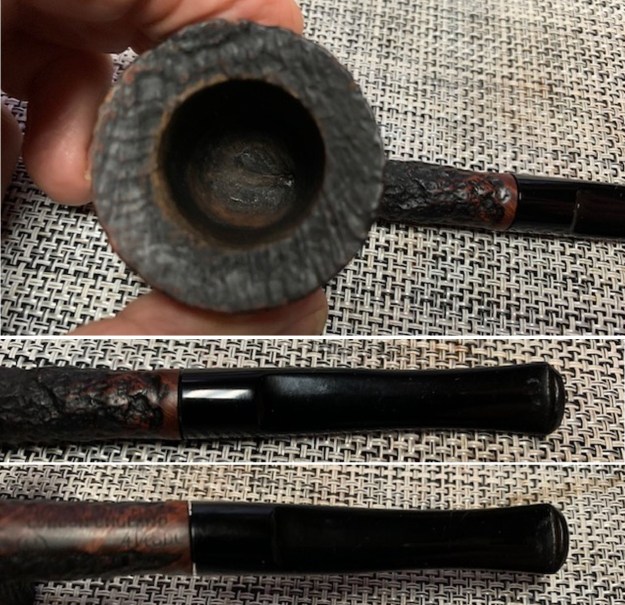
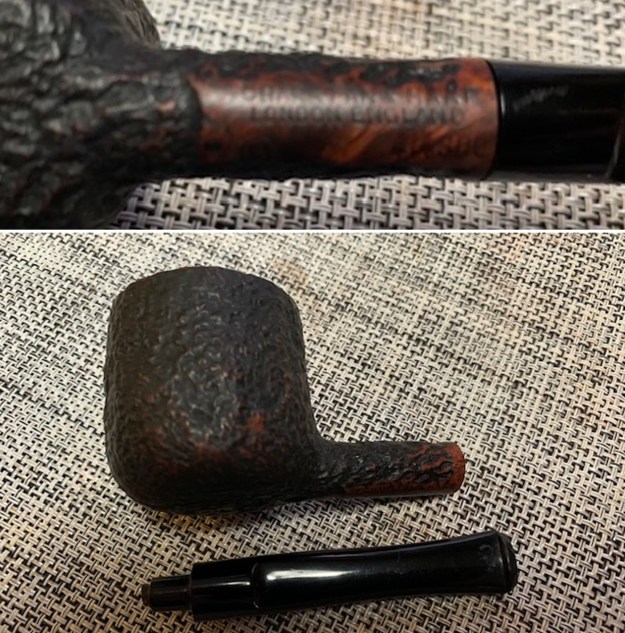
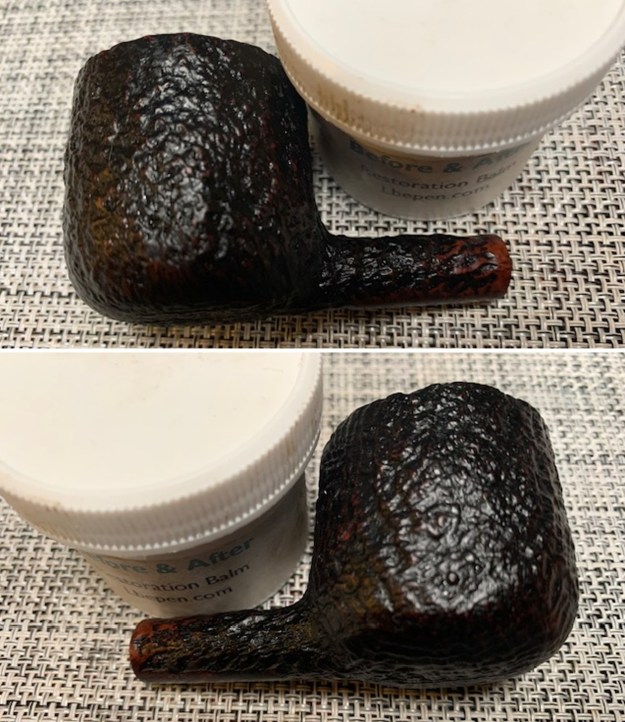
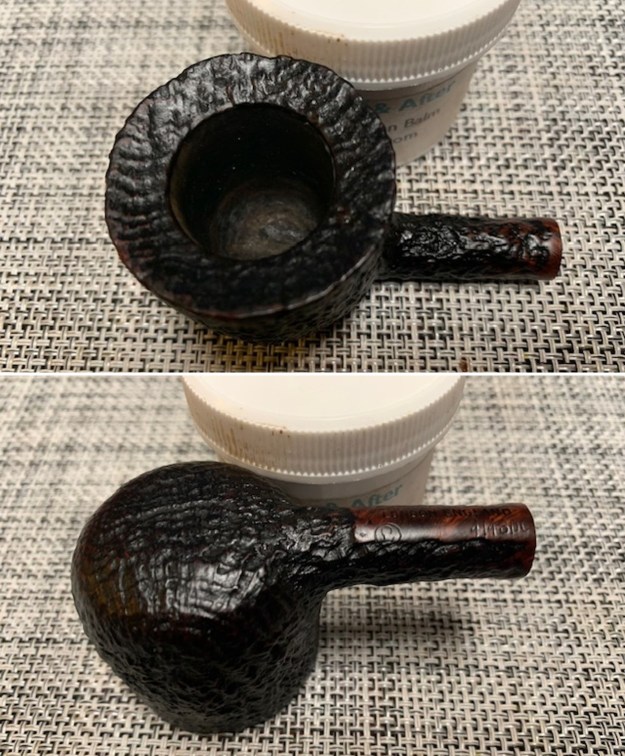
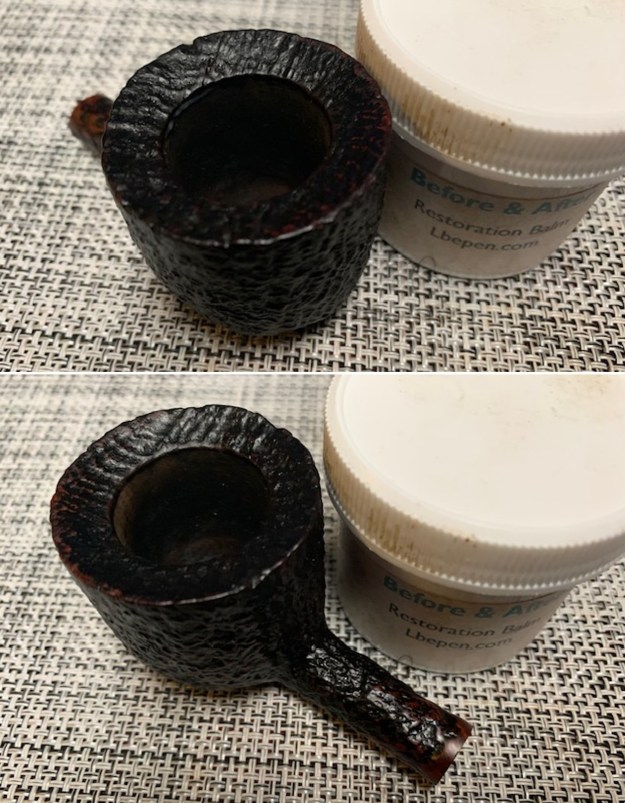
The next pipe on the work table is a nice-looking sandblast Pot shaped pipe that we purchased from an estate sale from Plano, Texas, USA on 03/30/2022. It was stamped Charatan’s Made [over] London England [over] a circled cursive L on the left toward the bowl and the shape number 4143DC toward the right toward the stem. It has a sandblast finish around the bowl and shank that is covered with a shiny coat of shellac it appears over a lot of oils, debris and grime. There was a thick cake in the bowl and tobacco debris stuck to the walls. There is a thick lava overflow in the sandblast on the inwardly bevelled rim top. The top and edges of the rim looked good under the tars and lava, but that would be very clear once the pipe is cleaned. There was a very beautiful pipe underneath all of the buildup of years of use. The saddle stem was an acrylic replacement. There were some deep tooth marks and chatter on both sides ahead of the button. The button had not been shaped at all and still needed to be slotted and shaped. Jeff took photos of the pipe before he started his cleanup work on it. Jeff took photos of the bowl and rim top to show the thick cake and tobacco debris in the bowl and the heavy lava build up on the sandblast rim top and the edges of the bowl. The rim top and edges looked pretty good but a proper clean up would tell the full story. Jeff took photos of the top and underside of the stem showing the tooth marks and chatter on the stem surface. Jeff took photos of the sides and heel of the bowl to show the condition of the finish. You can see the grime around the sides of the bowl and shank under the shiny coat on the finish. It seems to fill in the grooves in the blast. Jeff took photos of the stamping on the underside of the bowl and shank. The stamping was faint but readable as you can see from the photos. It read as noted above. An added part of pipe restoration for me is to try to gather as much background on a brand and maker as I can find. With Charatan that is an enjoyable web to try to untangle. There is a lot of information and it can lead to understanding what era a pipe was made in. To try to figure out the era of the Charatan’s pipe I was working on I turned to the Pipephil website, Logos and Stampings (http://www.pipephil.eu/logos/en/logo-charatan.html). There is some really helpful information on each of the lines of Charatan’s Make pipes that entered the market. There was not a sandblast stamped like the one in hand. The site did give a short history of the brand. I quote the portion that is most pertinent.
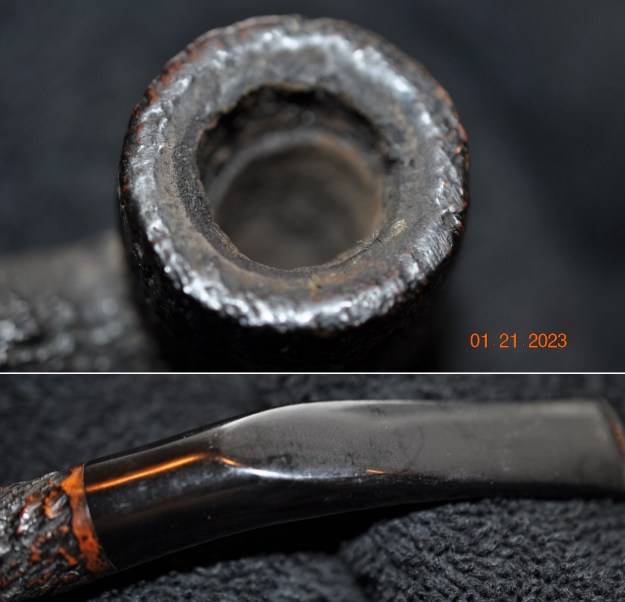
The brand was founded in 1863 by Frederik Charatan. When his father retired in 1910, Reuben Charatan took over the family business. All the pipes were handmade until 1973. The brand name has been overtaken by Dunhill in 1978 and sold in 1988 to James B. Russell Inc.(NJ, USA). During the period 1988-2002 Charatans were crafted by Butz Choquin in St Claude (France). Dunhill re-purchased Charatan brand name in 2002 and Colin Fromm (Invicta Briars, Castleford) followed up on freehand production.Next, I turned to Pipedia to see if I could find more information on the brand and possibly a link to a sandblast finished Dublin (https://pipedia.org/wiki/Charatan) but once again in the general article it was not listed. It did give a little more historical information. I quote the pertinent parts that give information on this particular pipe.

In 1950 Herman G. Lane, striving to expand his business in Great Britain, made contacts with the Charatan family. Apparently, Lane got a certain influence soon, but it was not until 1955 that Lane Ltd. became the sole distributor for Charatan’s in the United States superseding Wally Frank. This can be documented in a “biography” written for Herman G. Lane titled “Leaves from a Tobaccoman’s Log”.

Thanks to Herman G. Lane’s dedicated labor Charatan became hugely popular in the States. As reported by Ken Barnes in an interview with Rick Newcombe, Reuben Charatan passed away in 1962, and his widow sold the firm to Herman Lane 1 or 2 years after his death.[1] In the early 1960s Charatan pipes were the first to overstep the $100 Dollar line in US pipe sales. In 1978 Lane’s heirs sold the Charatan company to Dunhill. The Prescot Street factory was closed in March 1982. Thereafter the fame and quality of the make declined.

The pre-Lane period (prior to 1955) and the Lane era pipes (1955 to until sometime between 1979 – 1984) are of primary interest the collector. The Lane era is often quoted as beginning about 1950.

Charatan records are almost non-existent before Lane due to a factory fire, making it difficult to date pre-Lane pipes. Charatan used 4 basic grades prior to 1950: Supreme, Selected, Executive, and Belvedere. After 1950 Herman Lane’s influence began, and the grades started to expand. In 1955 Lane took over sole distributorship of Charatan in the US. In 1957 he introduced the Supreme S. Most of his other introductions were from the 1960s and early 1970s.

From this I am fairly certain I am dealing with a Lane pipe made after 1955. There is also a circle L script mark that is a Lane stampings on the pipe which also supports this.

I continued digging further into the dating of the pipe, but what I had found above was a good start for me. If some of you would like to try your hand at dating it more accurately as to the time period it came out you might want to check out the article on Pipedia on Dating Charatans (https://pipedia.org/wiki/Dating_of_Charatans).

I also reread the article on Pipedia by the Italian fellow who contributed some really helpful information on the brand (https://pipedia.org/wiki/Charatan_-_Milan_2014). I quote the section on the Second period: Reuben Charatan 1910 – c. 1962. I have highlighted a portion of the section on the shank in red to point out some more helpful dating information.

– In 1962 Herman Lane took over the business from the Charatan family, although he had already influenced production from the 1950s.

– The pipes were mostly larger than the previous ones and corresponded in size to Dunhill group 5. These are slightly less rare, but still difficult to find.

– Stem: Usually in ebonite, saddle shaped or tapered, bearing a fine “CP” stamp, underbore system (see below) used when necessary.

– Shank: The shape code is stamped on it together with the nomenclature “CHARATAN’S MAKE LONDON ENGLAND” arranged in two lines. From 1955 onward on the models marketed for the USA there is also a serif and circled capital “L” (but not all models bear this) which resembles the pound sterling symbol. The “L” is for Lane, the importer.

From 1958, Lane changed the nomenclature for models marketed for the US to clarify the message: “MADE BY HAND”.  In this period the underbore was introduced. Its manufacturing period ranged between 1920 and c.1930. This model was equipped with a duralumin plunger trap fitted in the stem, which served to clean the residue more easily. This particular model bore a special stamp on the stem, and also had its own catalogue…

QUALITY GRADES…The stem did not only display the stamps mentioned above. Another stamp that can help dating is the one referring to the quality of the pipe. Until Herman Lane arrived on the scene there were four quality grades. Starting with the lowest: Belvedere, Executive, Selected, and Supreme. Lane went on to add higher grades from time to time: Supreme S, Supreme S100, S150, S200, S250, S300, Coronation, Royal Achievement, Crown Achievement, and Summa Cum Laude; these last three are extremely rare and almost impossible to find. He also invented other, different grades, even changing the previous pipe classification standards. We will not go into detail here, but it means that if we find an S100 or Coronation the pipe was manufactured following Herman Lane’s acquisition. In particular, the FH mark, or Freehand pipe was commissioned to the famous Danish craftsman, Preben Holm.

Nomenclature

The Lane Trademark serif and circled L indicates the pipe is from the “Lane Era” (approx. 1955 to 1979 -1984?), however it appears that both the English factory or Lane themselves sometimes, or perhaps even often forget to stamp the L on a pipe. The Charatan factory was known for inconsistencies, especially in stampings. Therefore, although an L on the pipe definitely defines it as a Lane Era pipe, the lack of it could simply mean the pipe missed receiving the stamp from the factory. The lack of the trademark could also mean the pipe was destined for the European market.

Charatan pipes were not well distributed prior to the Lane Era, so very few pre-Lane pipes exist today. Herman Lane greatly grew the brand in the U.S., which caused corresponding growth in Europe.

Generally, when the pipe is stamped with the BLOCK letters “MADE BY HAND” it means the pipe was probably made between 1958 and 1965”

Generally, block letters “MADE BY HAND” and some of the other nomenclature in script (i.e. City of London or Extra Large next to the MADE BY HAND) means the pipe was made sometime between 1965 and the mid 1970s. The total script nomenclature “Made by Hand in City of London” evolved over this period of time, so many pipes had variants, such as Made By Hand in block letters and City of London in script, or some other variation of the terms or stampings.

It is believed the FH was used on Charatan pipes between 1957 and 1967-68. Three different sizes were used. The Charatan Logo (CP) on the pipe bit was changed over the year

Now I knew I was working on Lane Era pipe which actually means it was between 1955 and 1988 as shown by the stamping. Now it was time to work on the pipe.

Jeff had cleaned it thoroughly. He had reamed it with a PipNet reamer and cleaned that up with a Savinelli Fitsall Pipe Knife. He had scrubbed the exterior of the briar with undiluted Murphy’s Oil Soap. He removed the shiny coat on the briar with acetone on cotton pads. He cleaned out the interior of the shank, sump and airway in the shank and stem with alcohol, pipe cleaners and cotton swabs. He scrubbed the stem with Soft Scrub to remove the oxidation and calcification on the surface. He soaked it in Before & After Deoxidizer to remove the oxidation. He removed it from the Deoxidizer and rinsed it off with warm water. I took some photos of the pipe before I started my part of the work. I took some close up photos of the rim top and also of the stem surface. I wanted to show what an amazing job Jeff did in the cleanup of the rim top. The rim top was and inner edge were in excellent condition. There were spots on the surface where the stain had lightened – both inner and outer edges. I also took close up photos of the stem to show the condition of the acrylic. It was in clean but there were tooth marks and chatter on the stem ahead of the button on both sides. One of the things I appreciate about Jeff’s cleanup is that he works to protect and preserve the nomenclature on the shank of the pipes that he works on. The stamping on this one had faint spots on the edges so I was worried that it would worsen with the cleanup. I took some photos to show the clarity of the stamping. The photo is a little blurry but the stamping remains the same. I have noticed that many restorers are not careful to protect the stamping in their cleaning process and often by the end of the restoration the nomenclature is almost destroyed. I would like to encourage all of us to be careful in our work to preserve this as it is a critical piece of pipe restoration! I took the stem off the shank and took a photo of the pipe to capture the look of the pipe as a whole.I started my work on the pipe by touching up the light areas around the rim top and edges with a Walnut Stain pen. It blended well into the surrounding briar.With that finished the bowl was very clean and the sandblast looked great. I rubbed the bowl and rim down with Before & After Restoration Balm. I worked it into the sandblast surface of the briar with my fingertips and a horse hair shoe brush to clean, enliven and protect it. I let the balm sit for 10 minutes and then buffed with a cotton cloth to raise the shine. I really like watching the Balm do its magic and bring the briar alive. I set the bowl aside and turned my attention to the stem. I decided to open the single hole in the end of the button and shape a slot. I used a Kemper Tool (small pottery saw) to begin the process of shaping the slot in the button. Once it was begun I used several small needle files to further shape the slot. I sanded the edges of the slot with a folded piece of 220 grit sandpaper. Once I had finished it was open and the draw was much improved. I “painted” the tooth marks on both sides of the stem with the flame of a Bic lighter and as expected I was not able to lift them at all. I filled in the tooth marks with clear CA glue and let the cure. I flattened out the repairs with a small file to start blending them in. I sanded the areas smooth with 220 grit sandpaper and started polishing with 600 grit wet dry sandpaper. I polished the stem with micromesh sanding pads – wet sanding with 1500-12000 grit pads. I wiped the stem down after each sanding pad with Obsidian Oil to give the sanding pads some bite. I polished it with Before & After Pipe Stem Polish – both Fine and Extra Fine. I gave it a coat of Obsidian Pipe Stem Oil. I know that most think it does nothing for acrylic stems but I use it anyway as I find it works very well to deepen the shine. I set it aside to dry. Once again at this point in the restoration process I am excited to be on the homestretch. I look forward to the final look when the Charatan’s Make London England 4143 Sandblast Pot is put back together, polished and waxed. I put the bowl and stem back together. I lightly polished the bowl and the replacement stem with Blue Diamond. I gave the bowl and the newly fit stem multiple coats of carnauba wax. I buffed the pipe with a clean buffing pad to raise the shine. I hand buffed it with a microfiber cloth to deepen the shine. The pipe polished up pretty nicely. The depths of the sandblast really pop with the wax and polish. The shiny black acrylic stem is a beautiful contrast to the browns of the bowl. This Charatan’s Make London England 4143 Sandblast Pot with an acrylic replacement stem was another fun pipe to work on. It really is a quite stunning piece of briar whose shape follows the flow of the briar. The pipe feels great in the hand will be better when warmed up while smoking. The finished pipe is shown in the photos below. The dimensions of the pipe are Length: 5 ¾ inches, Height: 1 ½ inches, Outside diameter of the bowl: 1 ½ inches, Chamber diameter: 1 inch. The weight of the pipe is 1.62 ounces/46 grams. I will be putting it on the rebornpipes store in the British Pipemakers Section if you would like to add it to your rack and carry on the previous pipeman’s legacy. This is an interesting estate to bring back to life.

As always, I encourage your questions and comments as you read the blog. Thanks to each of you who are reading this blog. Remember we are not pipe owners; we are pipe men and women who hold our pipes in trust until they pass on into the trust of those who follow us.

Restoring a Republic Era Sandblast Peterson’s System Premier 312


Blog by Steve Laug

The next pipe on the work table is a sandblast Peterson’s System pipe that we purchased from an estate sale from Plano, Texas, USA on 03/30/2022. It was stamped Peterson’s [over] System [over] Premier on the underside of the shank followed by Made in the Republic of Ireland (in three lines) [over] the shape number 312. It has a sandblast finish around the bowl and shank that is covered with a shiny coat of shellac it appears over a lot of oils, debris and grime. There was a thick cake in the bowl and a thick lava overflow in the sandblast on the rim top. The top and edges of the rim looked good under the tars and lava. There was a very beautiful pipe underneath all of the buildup of years of use. The Sterling Silver ferrule on the shank end was oxidized and is stamped on the top and left side Peterson’s [over] Dublin. That is followed by Sterling [over] Silver. After that there were hallmarks – Hibernia seated, Crowned Harp for country of manufacture and a date letter in this case an upper case stylized “F”. The stem was a Peterson’s style P-Lip. It was well polished and shiny with light tooth marks and chatter. Jeff took photos of the pipe before he started his cleanup work on it. Jeff took photos of the bowl and rim top to show the thick cake in the bowl and the heavy lava build up on the sandblast rim top and the edges of the bowl. The rim top and edges looked pretty good and a proper clean up would tell the full story. Jeff took photos of the top and underside of the stem showing the tooth chatter, scratching, calcification and oxidation on the stem surface. More would be visible once Jeff cleaned it up. Jeff took photos of the sides and heel of the bowl to show the condition of the finish. You can see the grime around the sides of the bowl and shank under the shiny coat on the finish. It seems to fill in the grooves in the blast. Jeff took photos of the stamping on the underside of the bowl and shank. The stamping was faint but readable as you can see from the photos. It read as noted above. The Sterling Silver Ferrule is actually clearly stamped and readable. The hallmarks are light but readable. I am including the information from Pipedia’s article on Peterson pipes. It is a great read in terms of the history of the brand (https://pipedia.org/wiki/Peterson). I have included a bit of the pertinent history here.
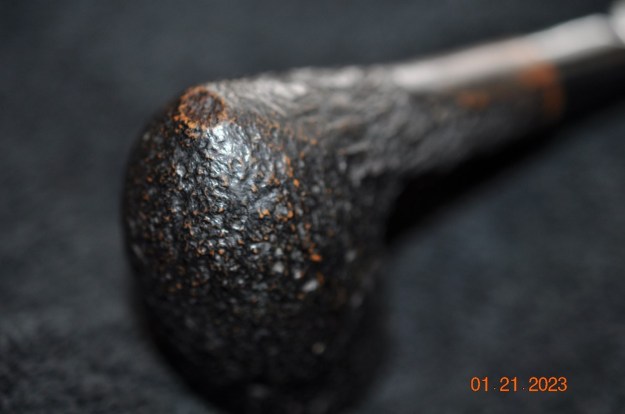
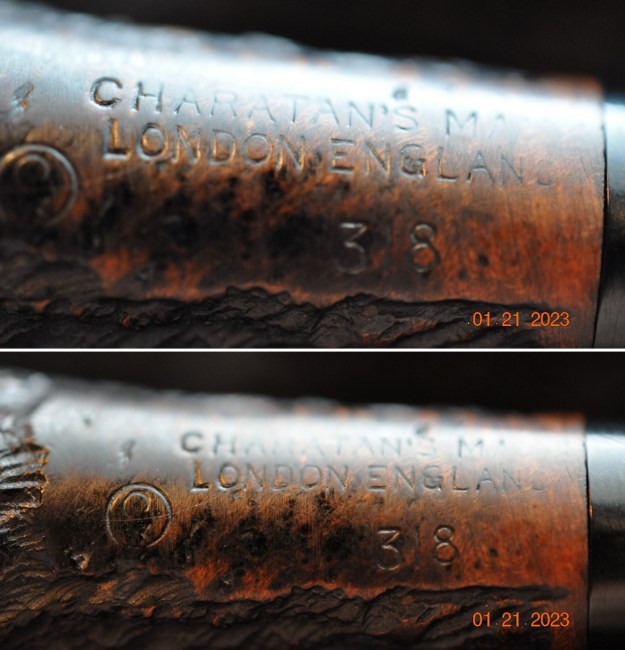
1950 – 1989 The Republic Era – From 1950 to the present time, the stamp for this era is “Made in the Republic of Ireland” in a block format generally in three lines but two lines have been used with or without Republic being abbreviated.

During the 1950’s and 60’s the Kapp & Peterson company was still in the ownership of the Kapp family. However 1964 saw the retiral of the company Managing Director Frederick Henry(Harry) Kapp.

Pipedia also included a section of information on the System pipes including a diagram of the systems look (https://pipedia.org/wiki/Peterson#Republic_Era_Pipes). I quote a section of the article in part and include a link to another article on Pipedia on the System pipe.

The Peterson System pipes are the standard bearers of the Peterson pipe family, famous for the excellent smoking pleasure they provide. Often imitated but never equaled, the Peterson System smokes dry, cool and sweet, thanks to the scientific effectiveness of the original design. The heart of the System is the unique graduated bore in the mouthpiece. This makes the suction applied by the smoker 15 times weaker by the time it reaches the tobacco chamber. The result is that all the moisture flows into the reservoir and, thus cannot reach the smoker’s mouth. The Peterson Lip further enhances the effectiveness of the graduated bore by directing the flow of smoke upwards and away from the tongue. This achieves a uniquely even distribution of smoke and virtually eliminates any chance of tonguebite or bitterness. Furthermore, the shape is contoured so that the tongue rests comfortably in the depression under the opening. Each “PLip” mouthpiece is made from Vulcanite. For the Peterson System pipes to work properly, the stem/tenon has to have an extension, the tip of which will pass by the draft hole from the bowl and into the sump. Upon the smoker drawing in smoke, this extension then directs the smoke down and around the sump to dispense a lot of the moisture before the smoke enters the extension and stem. On the System Standards and other less expensive systems, this extension with be made of Vulcanite turned integrally with the stem. On the more expensive System pipes this extension will be made of metal which screws into the Vulcanite stem. This extension on the earlier pipes will be of brass and the newer pipes will be of aluminium. Most smokers not knowing this function of the metal extension, assumes that it is a condenser/stinger and will remove it as they do with the metal condensers of Kaywoodie, etc. Should you have a System pipe with this metal extension, do not remove it for it will make the System function properly and give you a dryer smoke (https://pipedia.org/wiki/A_closer_look_at_the_famous_Peterson_Standard_System_Pipe).

I have included the information on the shape number on this pipe that I picked up on researching the previous pipes. This is the second of two Peterson’s System pipes marked with the 312 shape number that I have worked on in the past few days. I have included a page from a Petersons Catalogue that I have on rebornpipes (https://rebornpipes.com/tag/peterson-hallmark-chart/). I have put a red oval around the 312 shown in the catalogue page shown below. That should give a clear picture of the size and shape of the pipe.I knew that I was dealing with a Republic Era pipe made between 1950-1989. It was a Sandblast Peterson’s System Standard 312 Billiard with an interesting blast finish. The bowl was stained with a combination of brown stains. Now it was time to tighten down the date on the pipe from the hallmarks on the Sterling Silver ferrule.

I turned to the hallmarking chart on one of the blogs on rebornpipes to lock down the date for the pipe (https://rebornpipes.com/wp-content/uploads/2015/05/peterson-cataloguecomp_page_27.jpg). The chart defines the meaning of each hallmark. The first one of the seated woman with a harp is known as the Hibernia stamp and identifies the pipe as made in Ireland. The second stamp is a crowned harp which is a fineness mark denoting the high quality of silver that was used. The third stamp is an italic upper case “F”. I have included a larger screen capture of the chart in the lower left of the photo below.I have drawn a RED CIRCLE around the date letter below. It is a stylized “F” as seen in the circled letter below. It identifies the date of this Peterson’s pipe to 1973. I knew that I was dealing with a Republic Era pipe made between 1950 and the present. The hallmarks date the pipe to 1973. Now it was time to work on the pipe.

Jeff had cleaned it thoroughly. He had reamed it with a PipNet reamer and cleaned that up with a Savinelli Fitsall Pipe Knife. He had scrubbed the exterior of the briar with undiluted Murphy’s Oil Soap. He removed the shiny coat on the briar with acetone on cotton pads. He cleaned out the interior of the shank, sump and airway in the shank and stem with alcohol, pipe cleaners and cotton swabs. He scrubbed the stem with Soft Scrub to remove the oxidation and calcification on the surface. He soaked it in Before & After Deoxidizer to remove the oxidation. He removed it from the Deoxidizer and rinsed it off with warm water. I took some photos of the pipe before I started my part of the work. I took some close up photos of the rim top and also of the stem surface. I wanted to show what an amazing job Jeff did in the cleanup of the rim top. The rim top was and inner edge were in excellent condition. I also took close up photos of the stem to show the condition of the vulcanite. It was in excellent condition with light tooth marks and chatter on the stem ahead of the button on both sides. One of the things I appreciate about Jeff’s cleanup is that he works to protect and preserve the nomenclature on the shank of the pipes that he works on. The stamping on this one was very faint to start with so I was worried that it would disappear altogether with the cleanup. I took some photos to show the clarity of the stamping. I have noticed that many restorers are not careful to protect the stamping in their cleaning process and often by the end of the restoration the nomenclature is almost destroyed. I would like to encourage all of us to be careful in our work to preserve this as it is a critical piece of pipe restoration! I took the stem off the shank and took a photo of the pipe to capture the look of the pipe as a whole.The pipe bowl was very clean and the sandblast looked great. I rubbed the bowl and rim down with Before & After Restoration Balm. I worked it into the sandblast surface of the briar with my fingertips and a horse hair shoe brush to clean, enliven and protect it. I let the balm sit for 10 minutes and then buffed with a cotton cloth to raise the shine. I really like watching the Balm do its magic and bring the briar alive. With briar polished with the Restoration Balm I moved onto the metal. I polished the Sterling Silver ferrule with a jewellers cloth to raise the shine and to protect it from further oxidation. I set the bowl aside and turned my attention to the stem. I “painted” the tooth marks on both sides of the stem with the flame of a Bic lighter and was able to lift them all. I sanded the areas smooth with 220 grit sandpaper and started polishing with 600 grit wet dry sandpaper. I polished the stem with micromesh sanding pads – wet sanding with 1500-12000 grit pads. I wiped the stem down after each sanding pad with Obsidian Oil. I polished it with Before & After Pipe Stem Polish – both Fine and Extra Fine. I gave it a coat of Obsidian Pipe Stem Oil. It works to protect the stem from oxidizing. I set it aside to dry. Once again at this point in the restoration process I am excited to be on the homestretch. I look forward to the final look when the Republic Era Sandblast Peterson’s Premier System 312 is put back together, polished and waxed. I put the bowl and stem back together. I lightly polished the bowl and the replacement stem with Blue Diamond. I gave the bowl and the newly fit stem multiple coats of carnauba wax. I buffed the pipe with a clean buffing pad to raise the shine. I hand buffed it with a microfiber cloth to deepen the shine. The pipe polished up pretty nicely. The depths of the sandblast really pop with the wax and polish. The shiny new black vulcanite stem is a beautiful contrast to the browns of the bowl and thick shank and Nickel ferrule. This Republic Era Peterson’s Premier System 312 Bent Billiard was another fun pipe to work on. It really is a quite stunning piece of briar whose shape follows the flow of the briar. The pipe feels great in the hand will be better when warmed up while smoking. The finished pipe is shown in the photos below. The dimensions of the pipe are Length: 6 ½ inches, Height: 1 ¾ inches, Outside diameter of the bowl: 1 ¼ inches, Chamber diameter: ¾ of an inch. The weight of the pipe is 1.69 ounces/48 grams. I will be putting it on the rebornpipes store in the Irish Pipemakers Section if you would like to add it to your rack and carry on the previous pipeman’s legacy. This is an interesting estate to bring back to life.
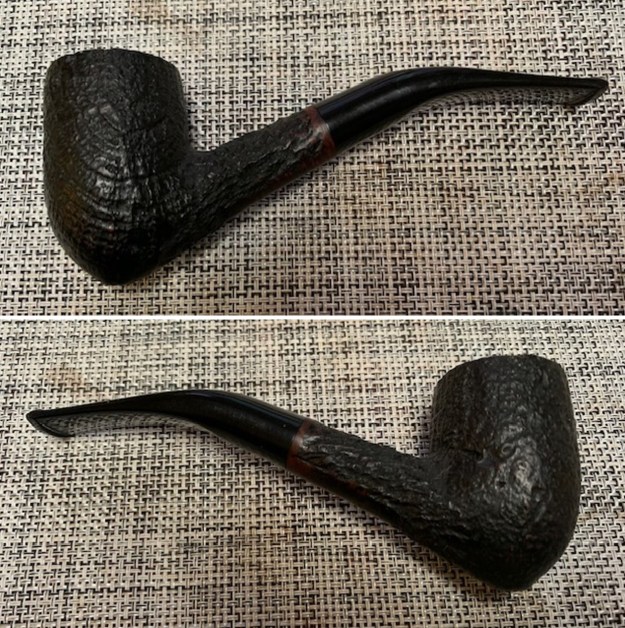
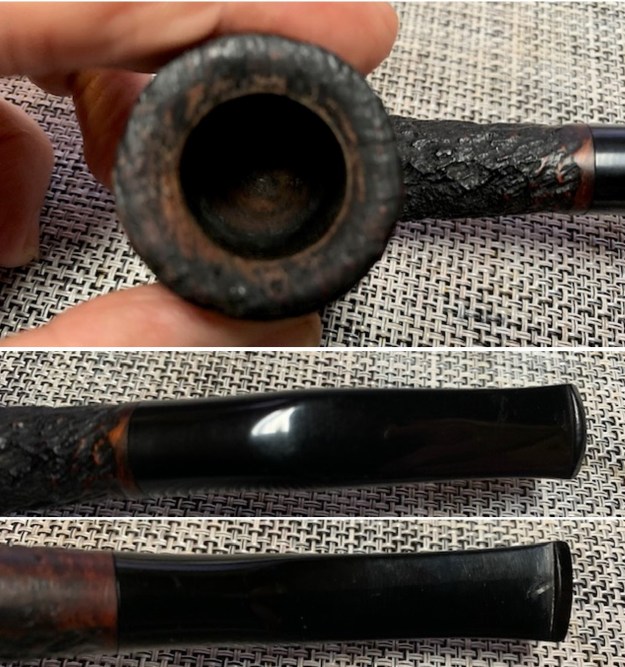
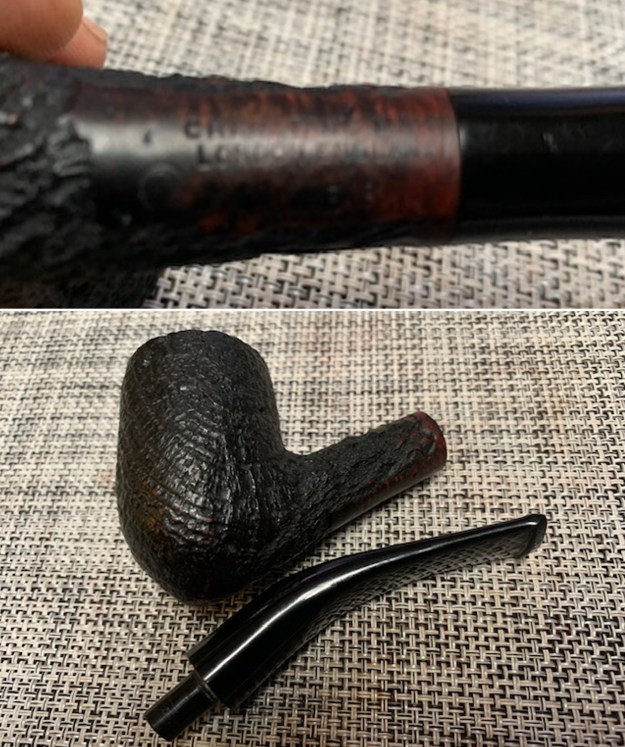
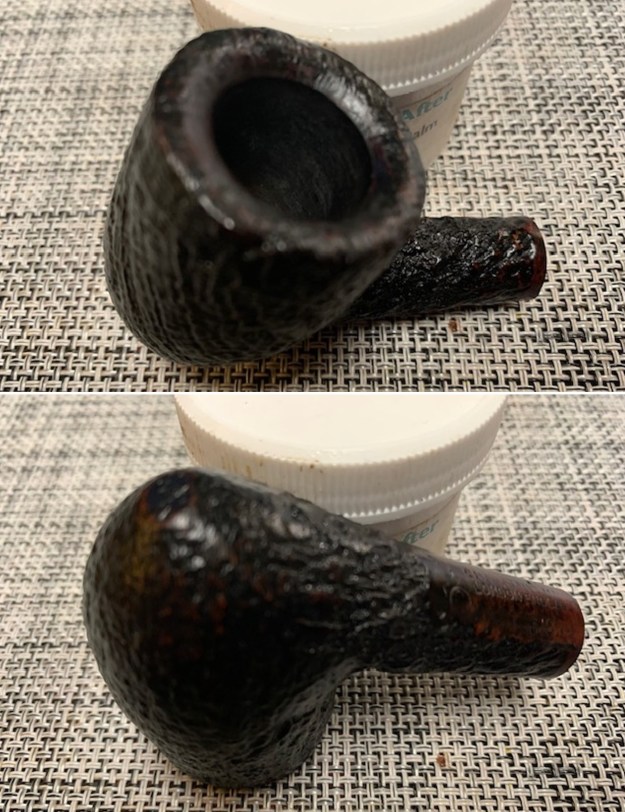
As always, I encourage your questions and comments as you read the blog. Thanks to each of you who are reading this blog. Remember we are not pipe owners; we are pipe men and women who hold our pipes in trust until they pass on into the trust of those who follow us.