Monthly Archives: October 2020

Breathing New Life into a Comoy’s Trend Bent Calabash 225


Blog by Steve Laug

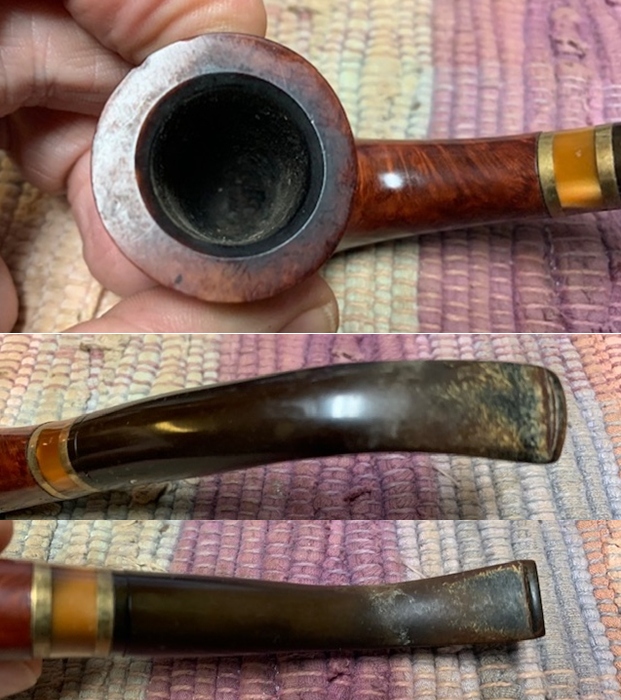
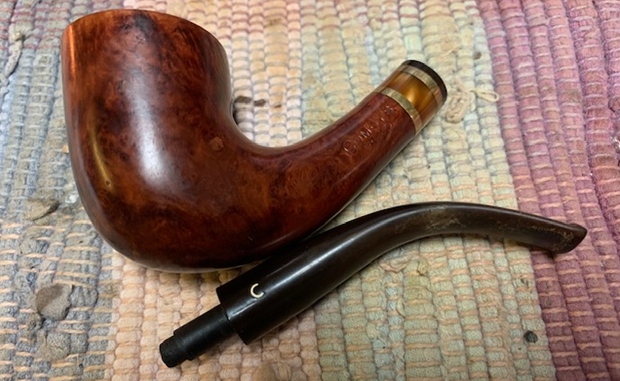
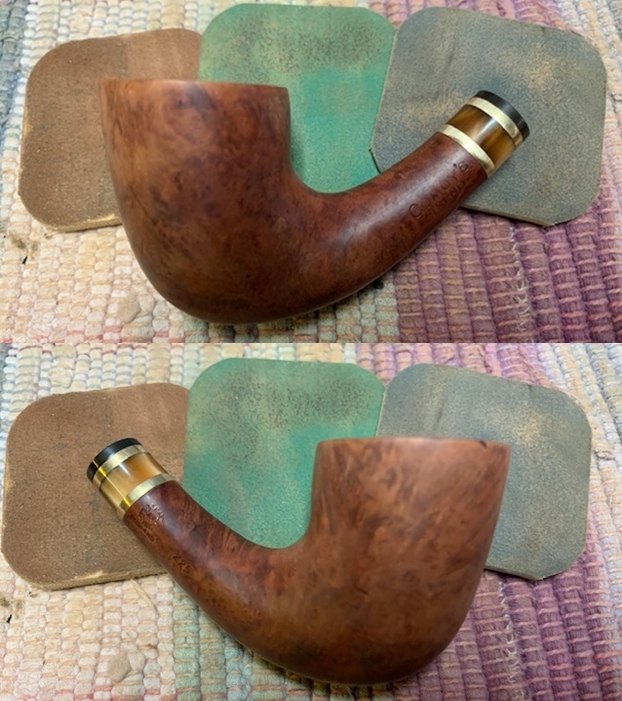
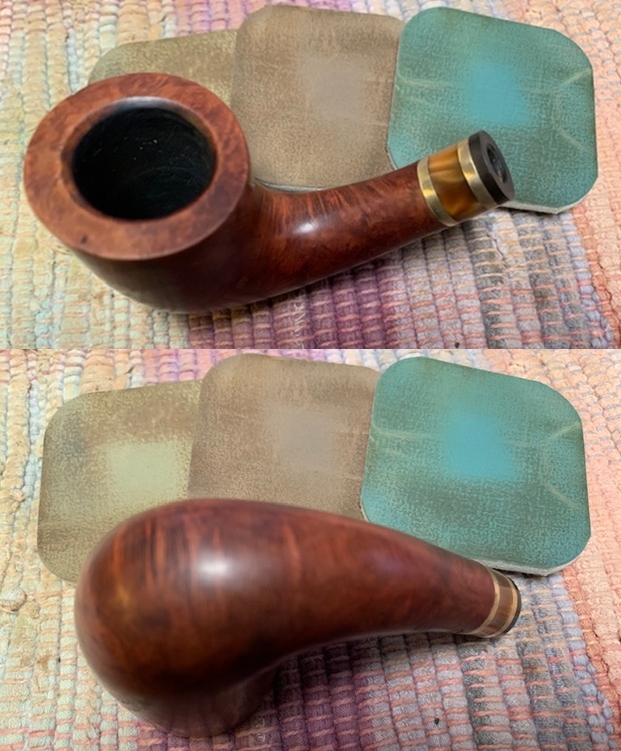
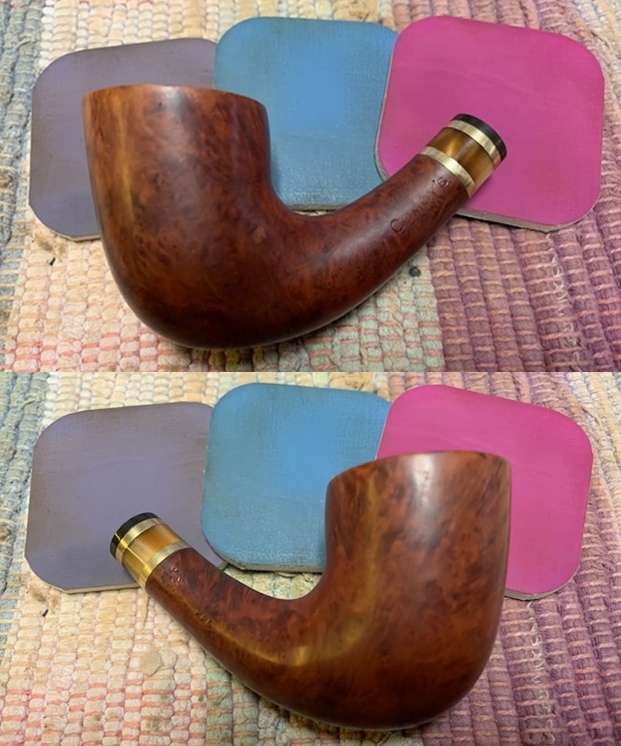
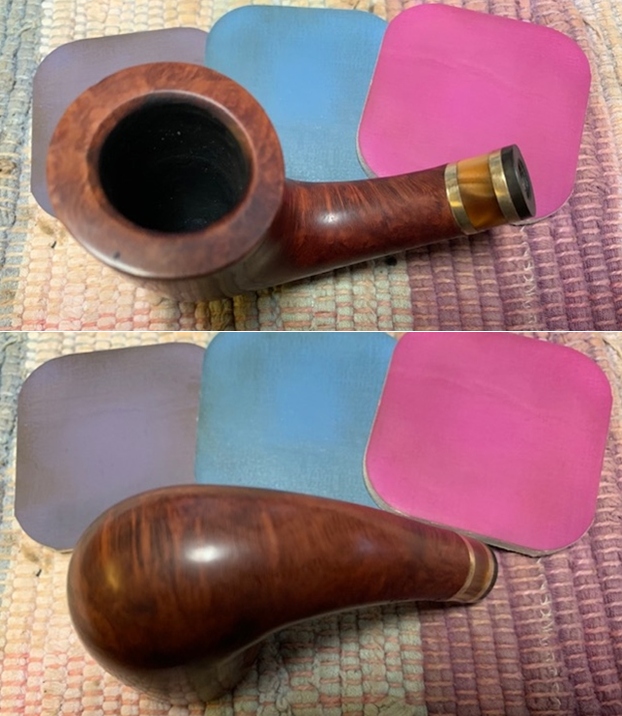
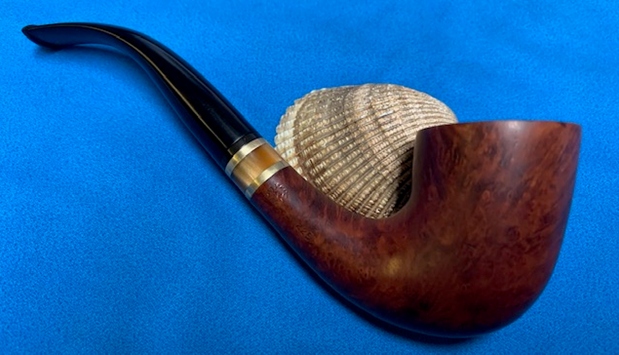
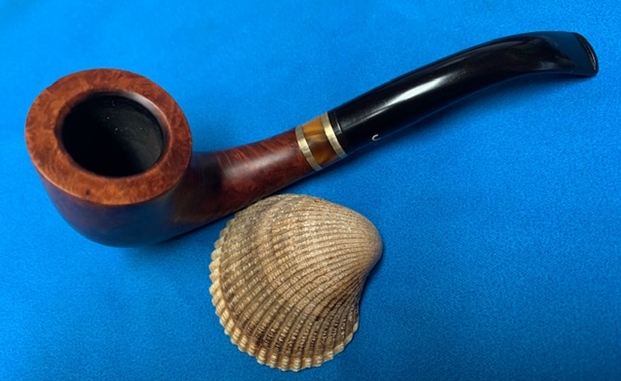
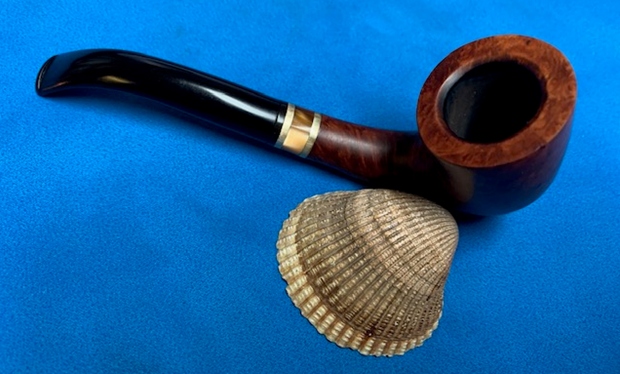
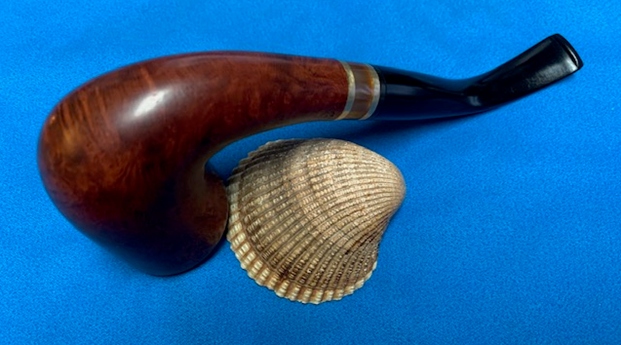
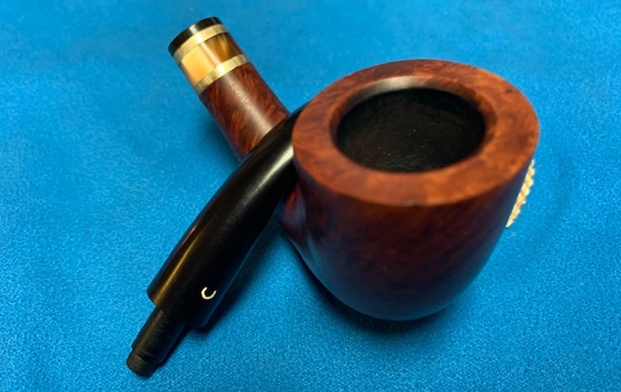
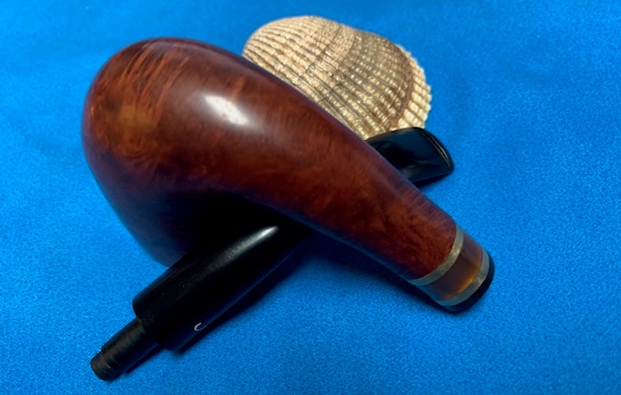
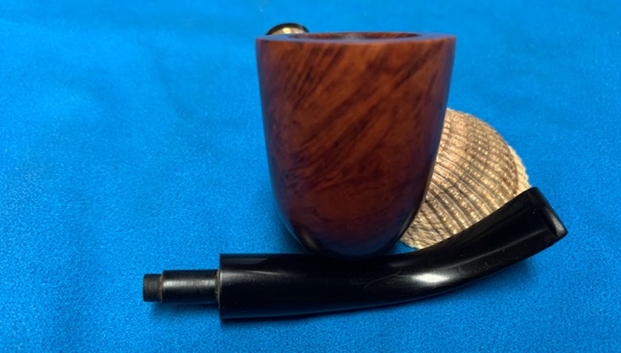
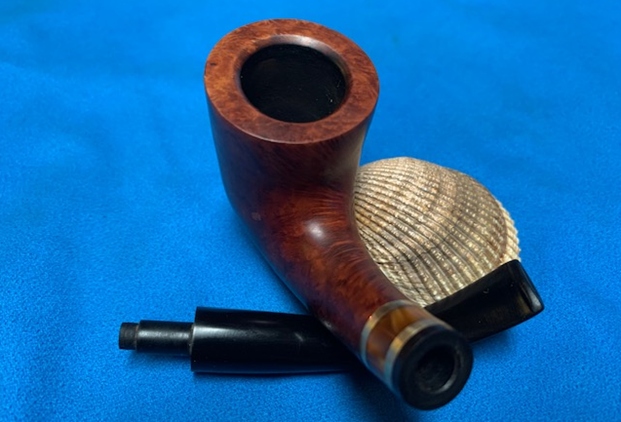
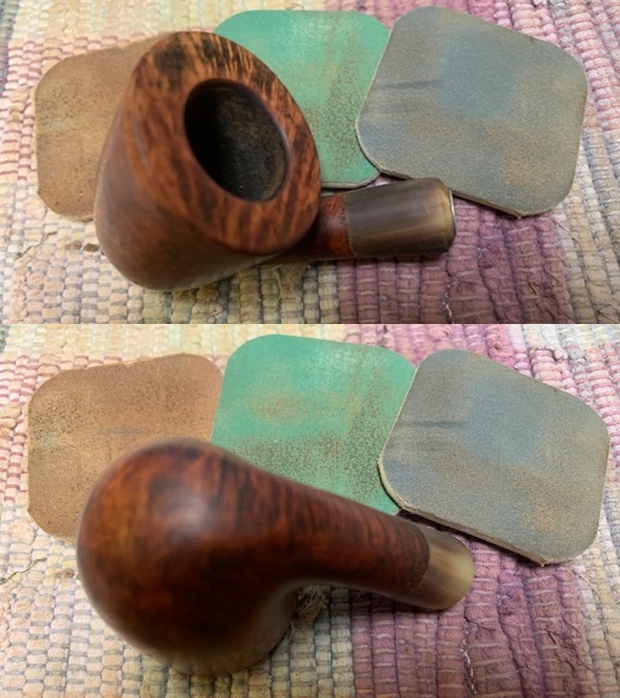
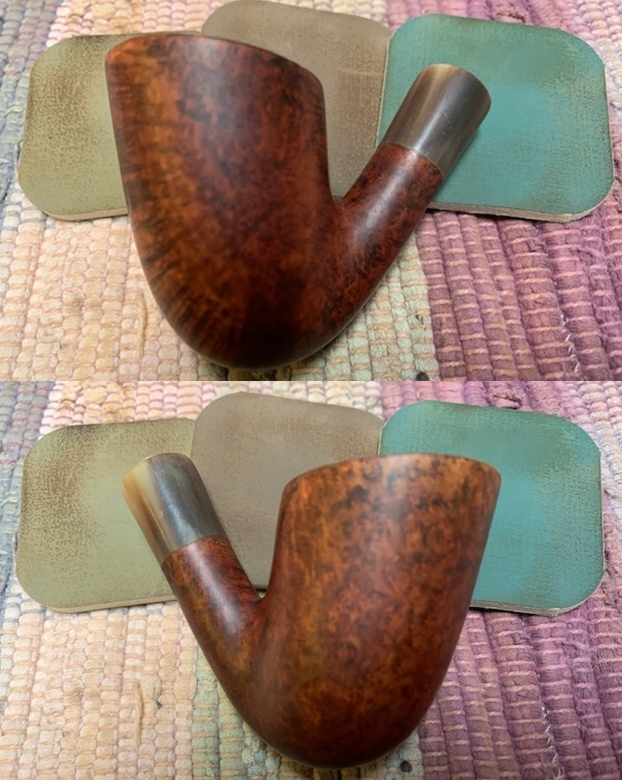
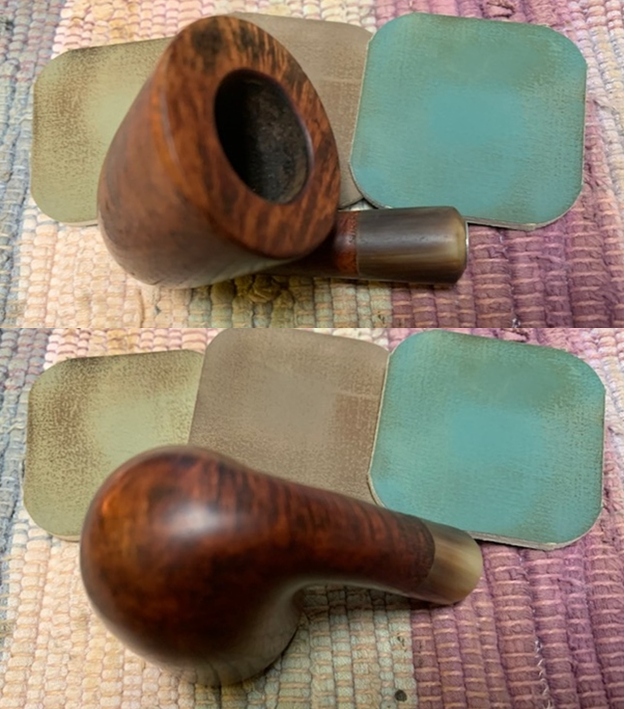
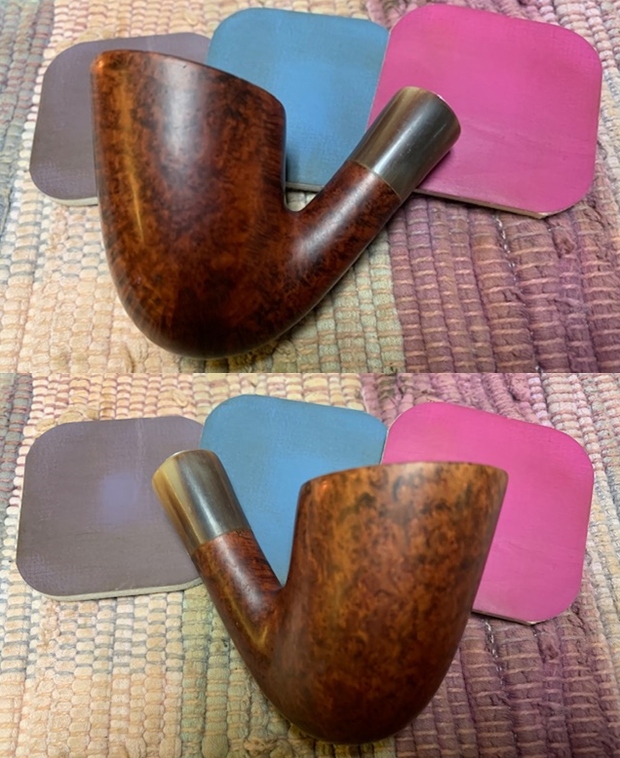
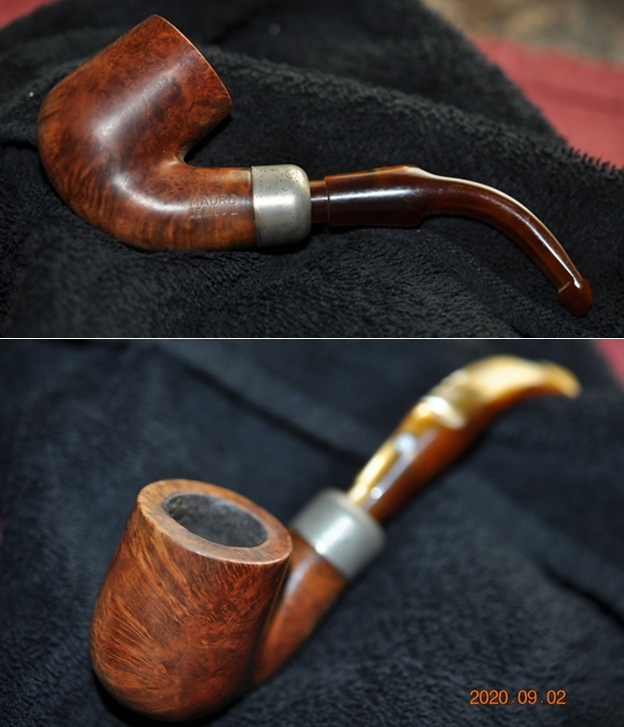
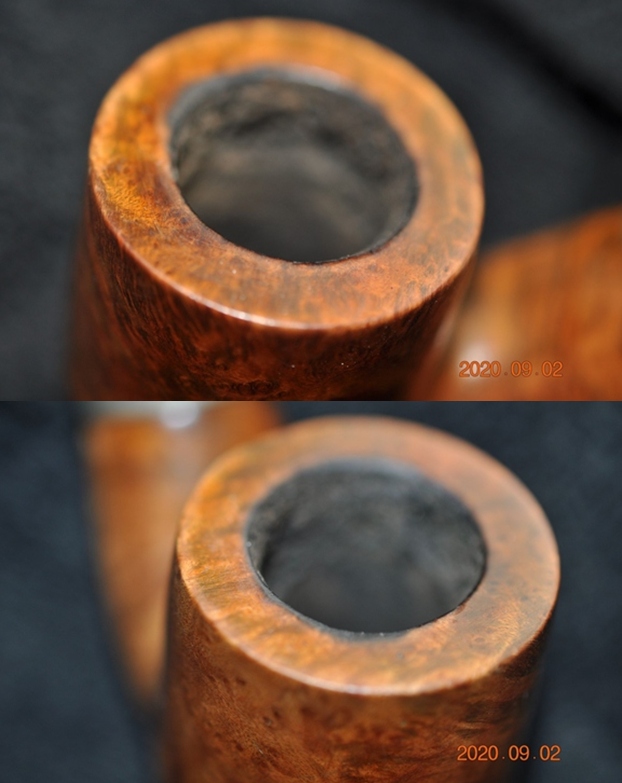
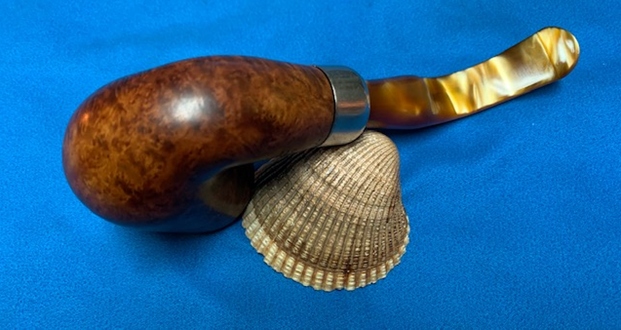
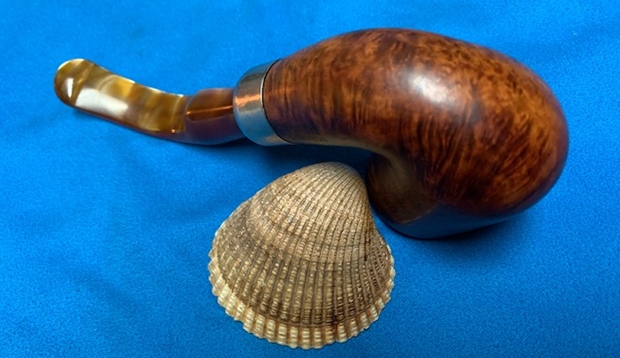
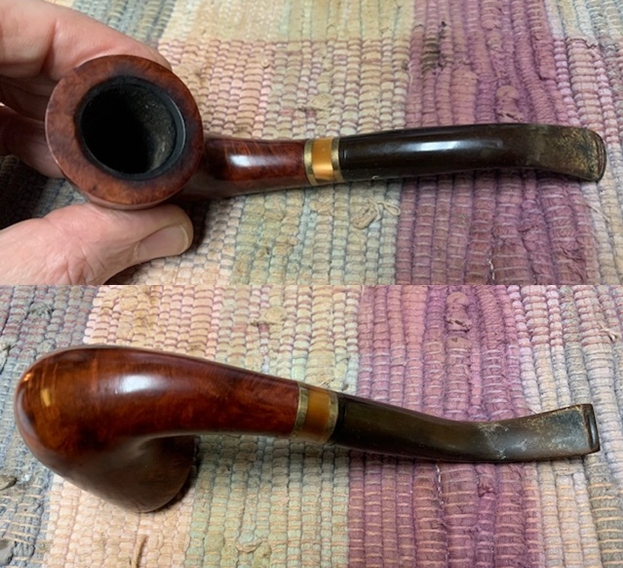
The next pipe on the work table came to me from either a trade I made (pipes for labour) or a find on one of my pipe hunts. I honestly don’t remember where it came from. It has been around for a while waiting to be worked on. It is an interesting new Comoy’s Bent Calabash that really looks quite nice. The stamping is clear and readable. It is stamped on the left side of the shank and reads Comoy’s [over] Trend. On the right side of the shank it has the shape number 225 and a COM stamp to the left of that. It read Made in London in a circle over London. The pipe had a varnish coat and a lot of grime ground into the smooth finish on the bowl and some darkening around the sides of the bowl. The bowl was heavily caked and had an overflow of thick lava on beveled inner edge of the rim top. It was hard to know what the rim top and inner edge of the bowl looked like under the grime. There was a shank adornment/band on the shank end. It was a stack of two brass rings with a golden/orange/brown acrylic spacer between the brass rings and a black spacer on the end before the stem. The stem was calcified, oxidized and had light tooth chatter and marks on the top and underside and the top surface of the button had a tooth mark. There an inset C on the left side of the taper stem. The pipe had promise but it was very dirty. I took photos of the pipe before he started his cleanup work.    I took photos of the rim top and bowl to give a clear picture of the thickness of the cake and the overflow of lava on the rim top and inner edge of the bowl. It is hard to know for sure if there is damage to the inner edge of the bowl because of the thickness of the lava coat. I also took photos of the top and underside of the stem to show the oxidation, calcification, light chatter and tooth marks.     I took a photo of the stamping on the sides of the shank. It reads as noted above and is clear and readable. There is a white C logo on the left side of the taper stem.    I removed the stem from the shank to take a photo of the pipe as a whole. It is has some nice looking grain around the bowl and the flow of the bowl and stem is elegant.I looked on Pipephil’s site (http://www.pipephil.eu/logos/en/logo-comoy.html) and Pipedia (https://pipedia.org/wiki/Comoy%27s) and read the articles on the Comoy’s brand. It is a great read and worth the time to read them. There was nothing on this newer Comoy’s Trend line.
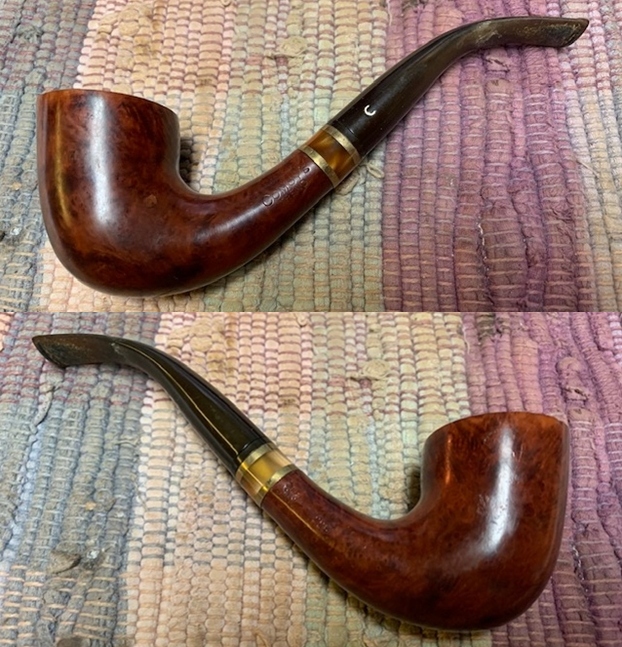
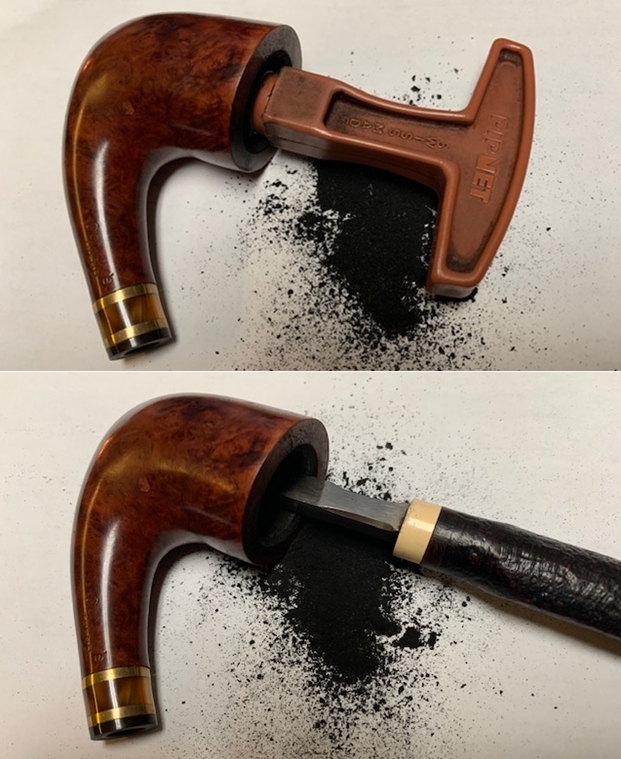
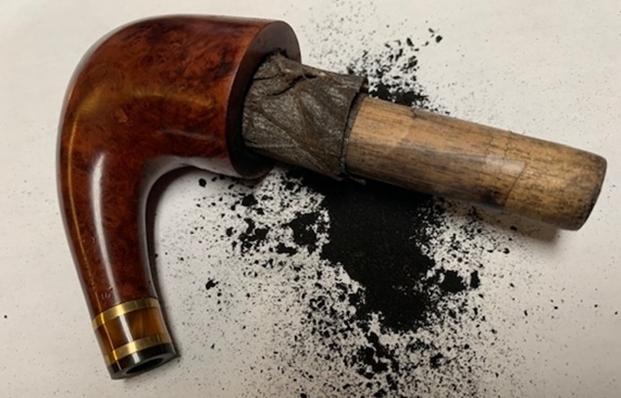
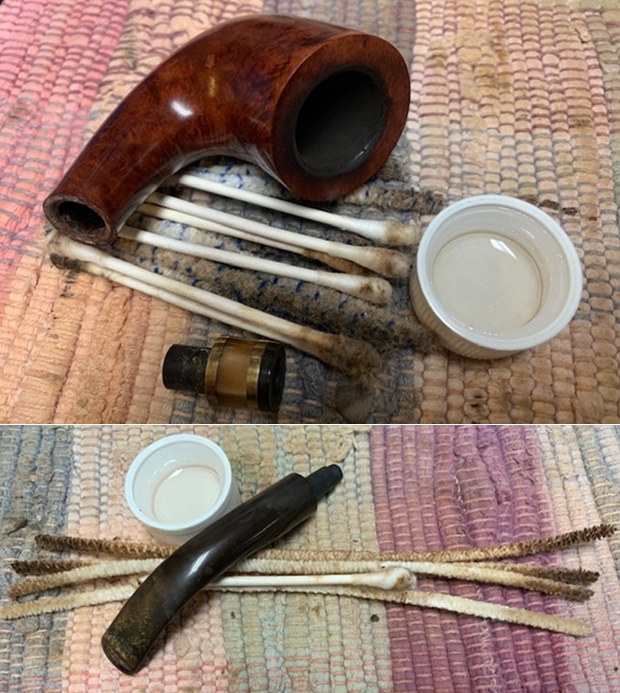
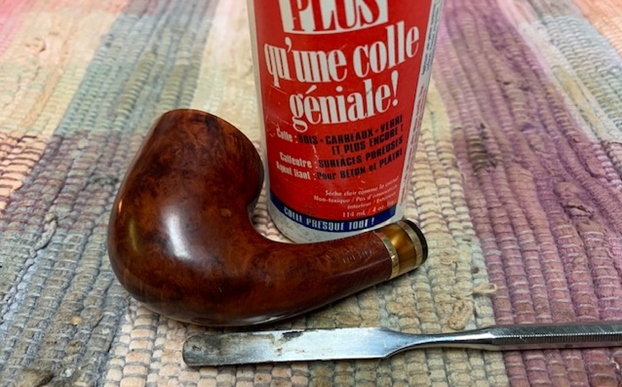
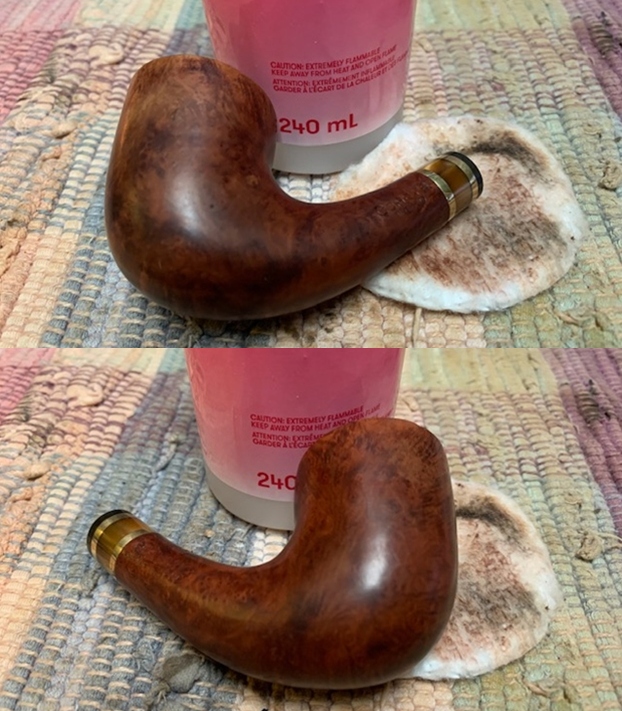
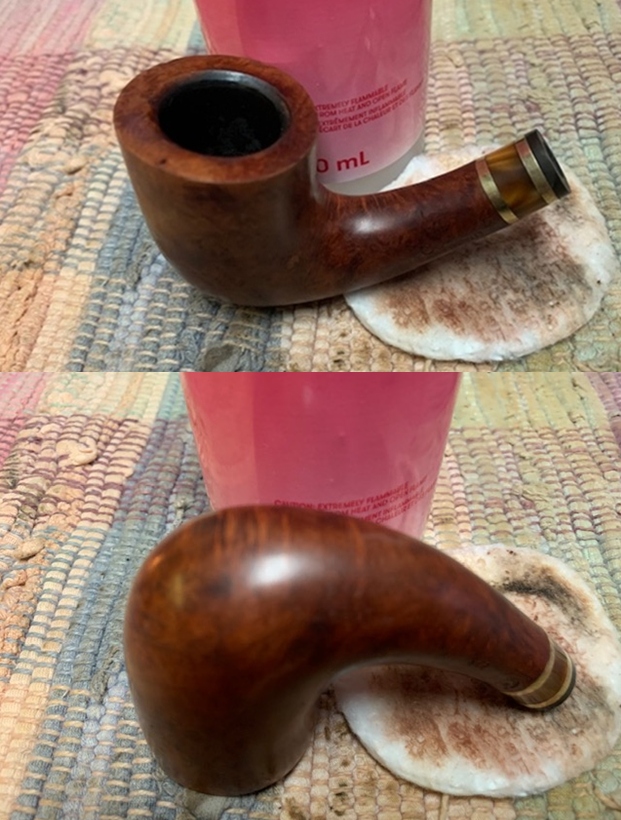
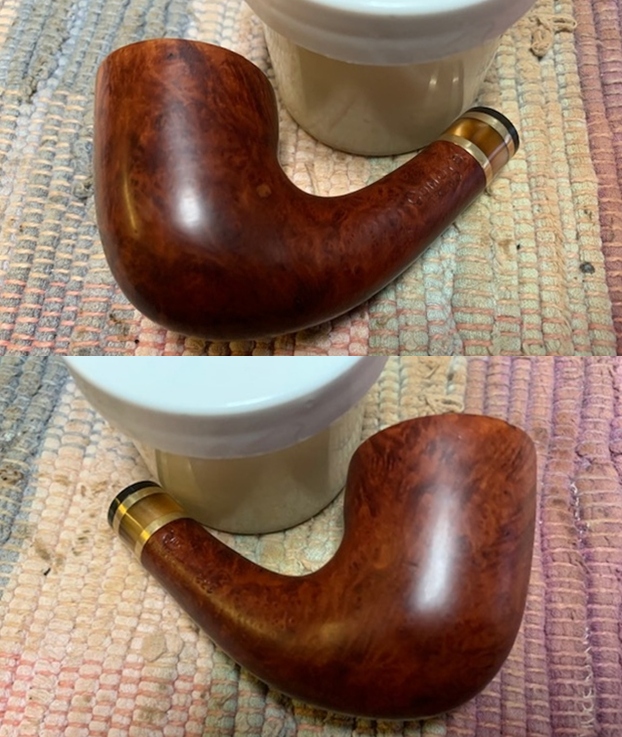
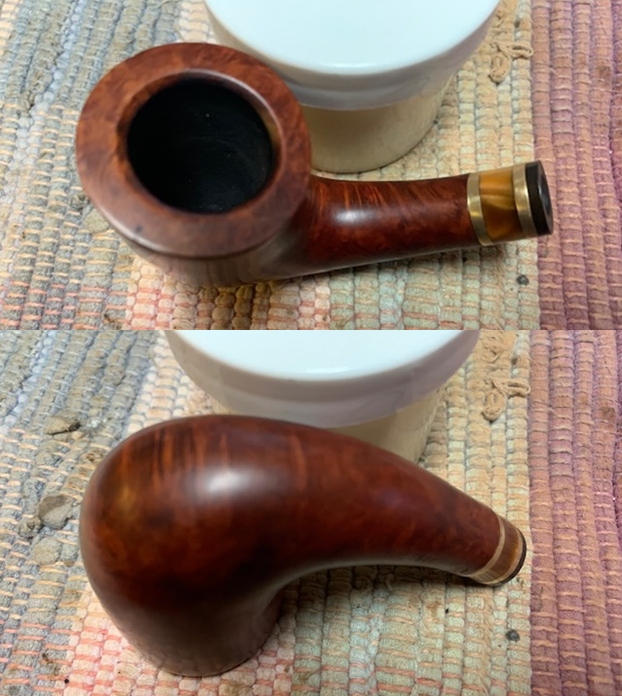
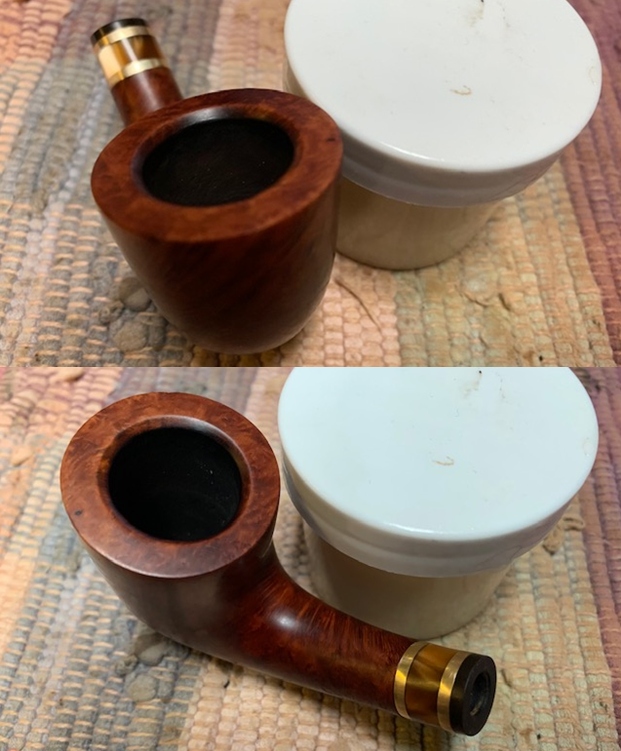
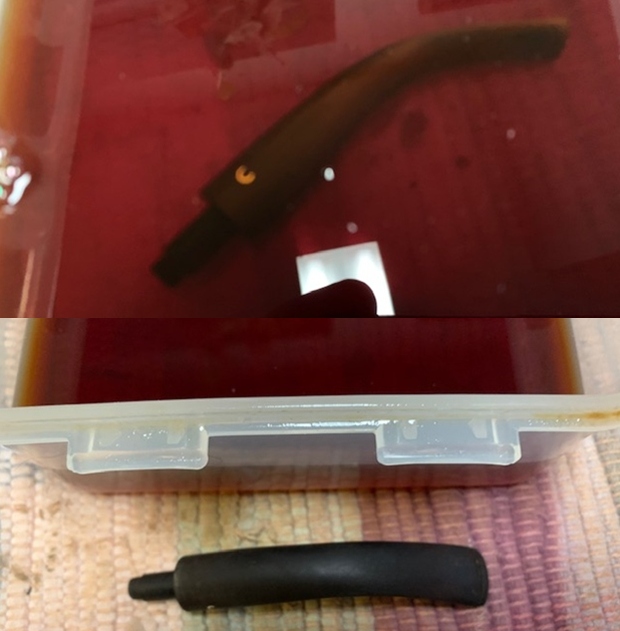
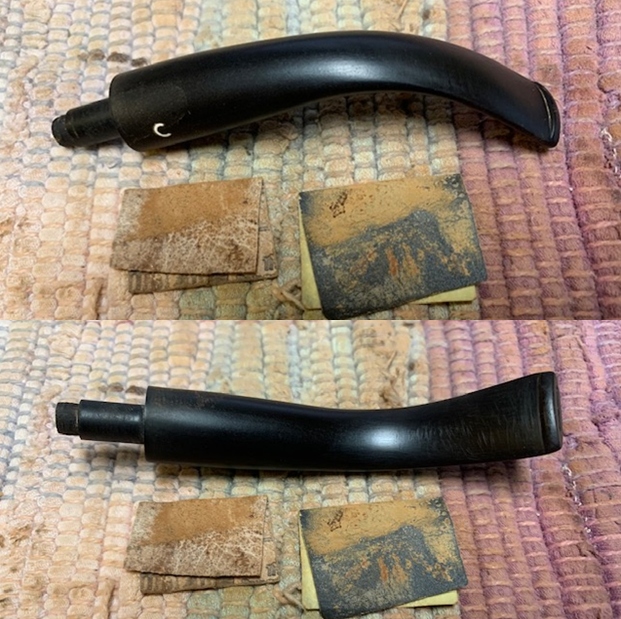
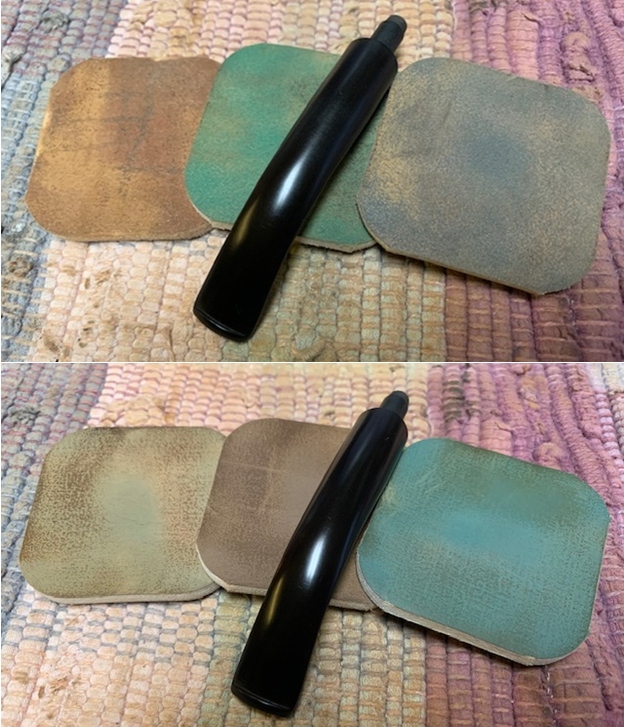
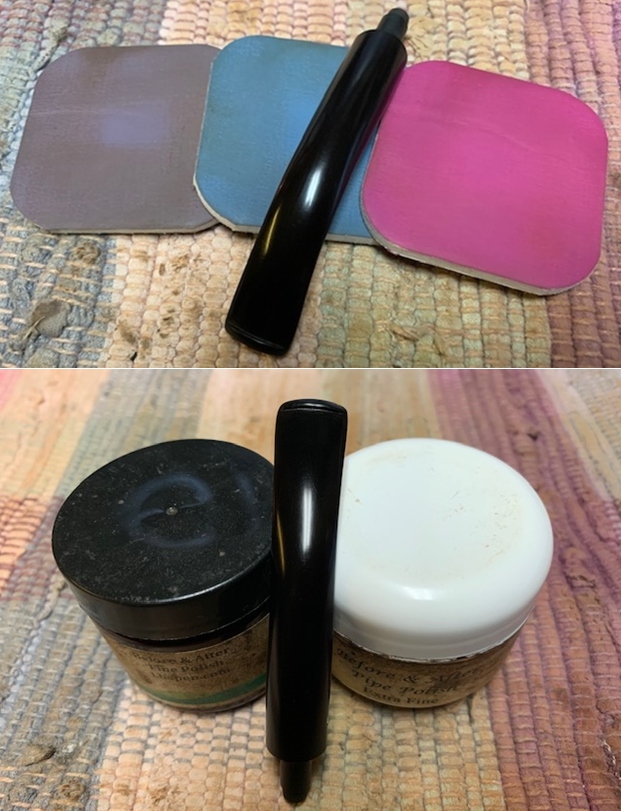
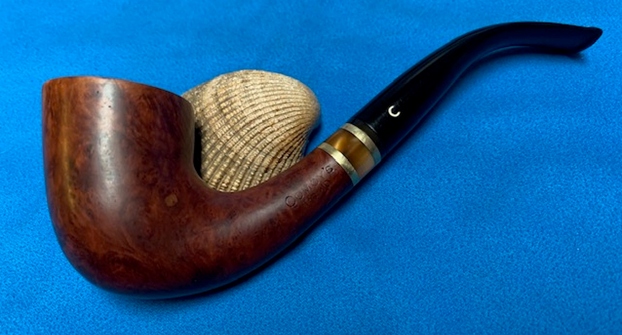
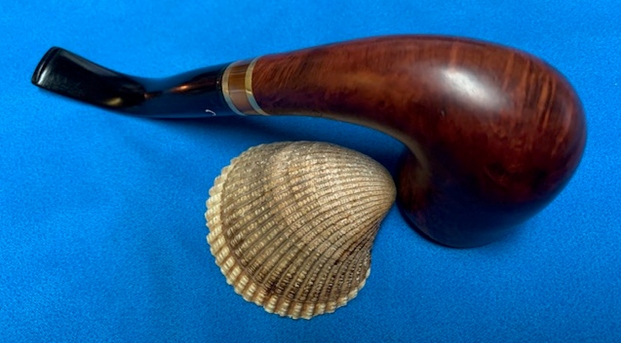
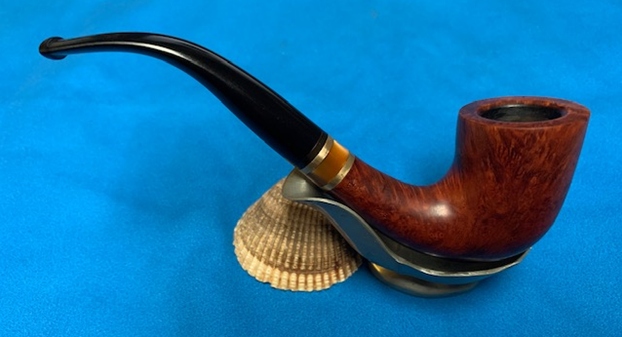
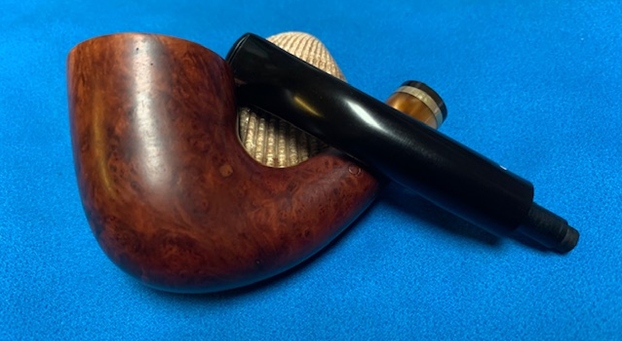
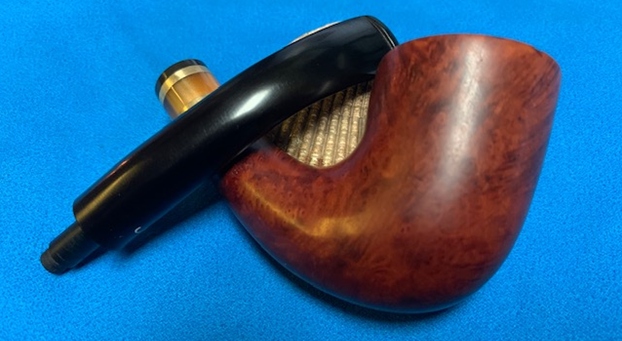
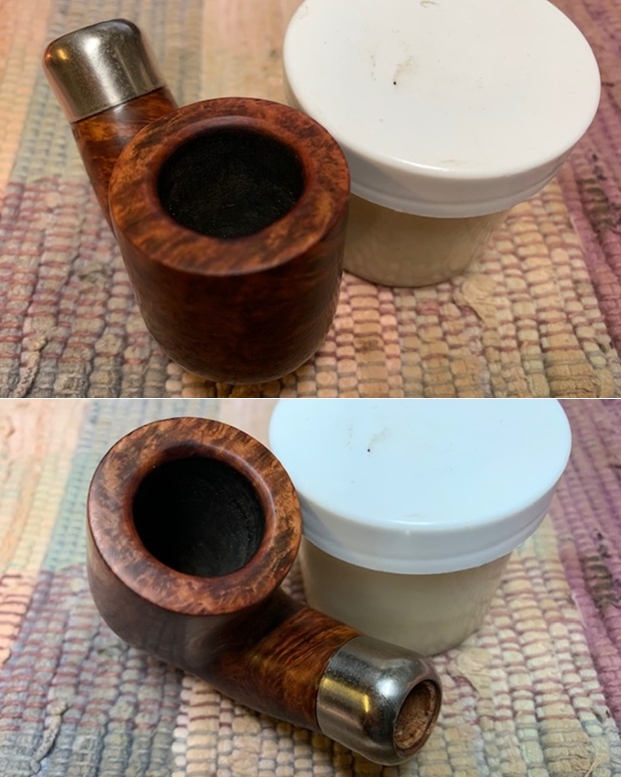
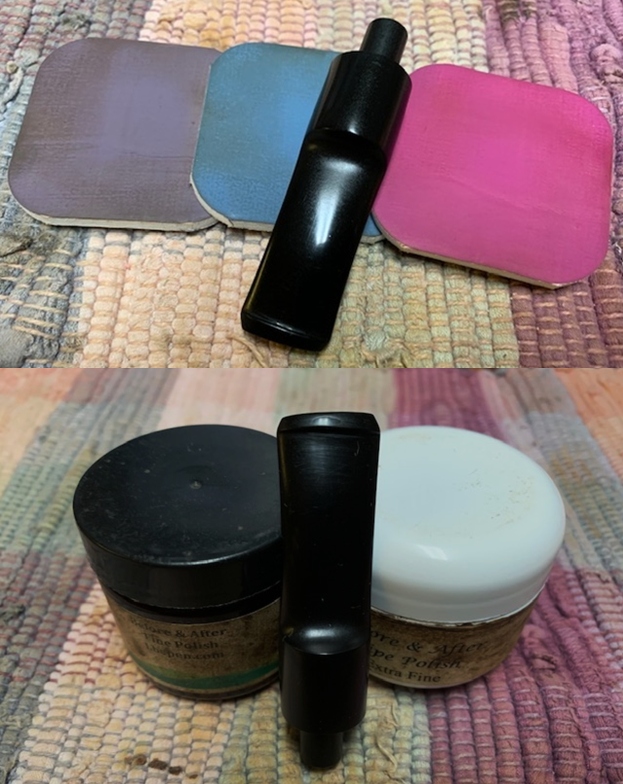
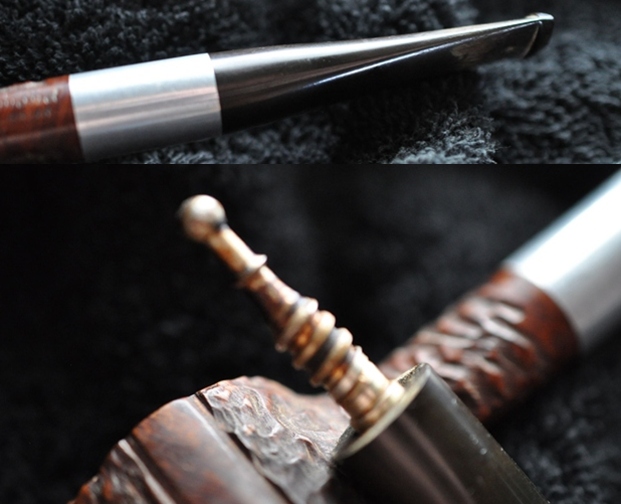
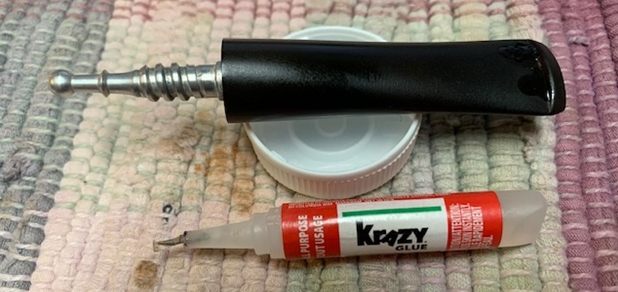
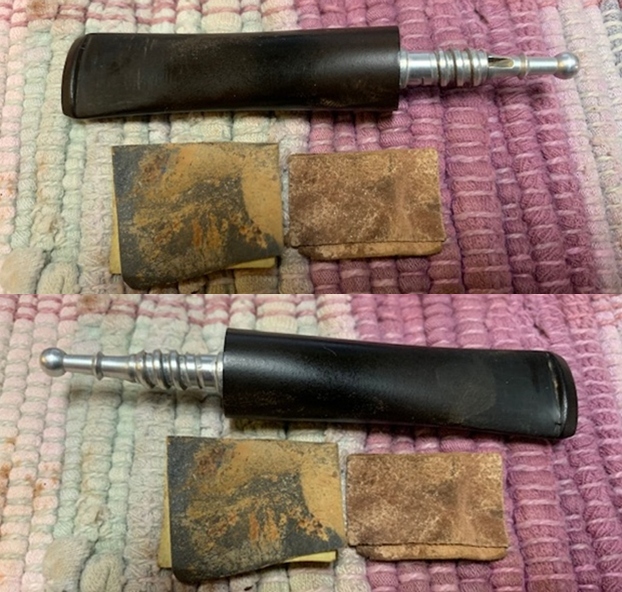
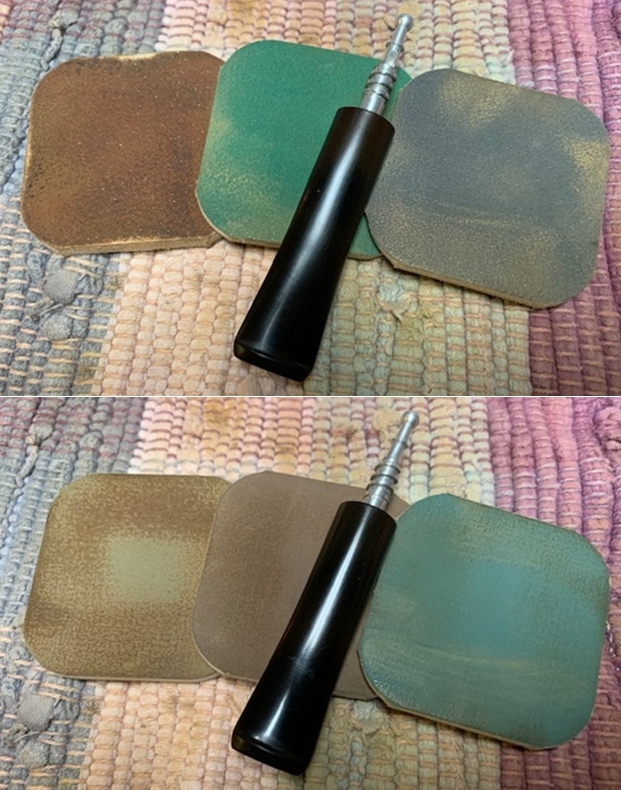
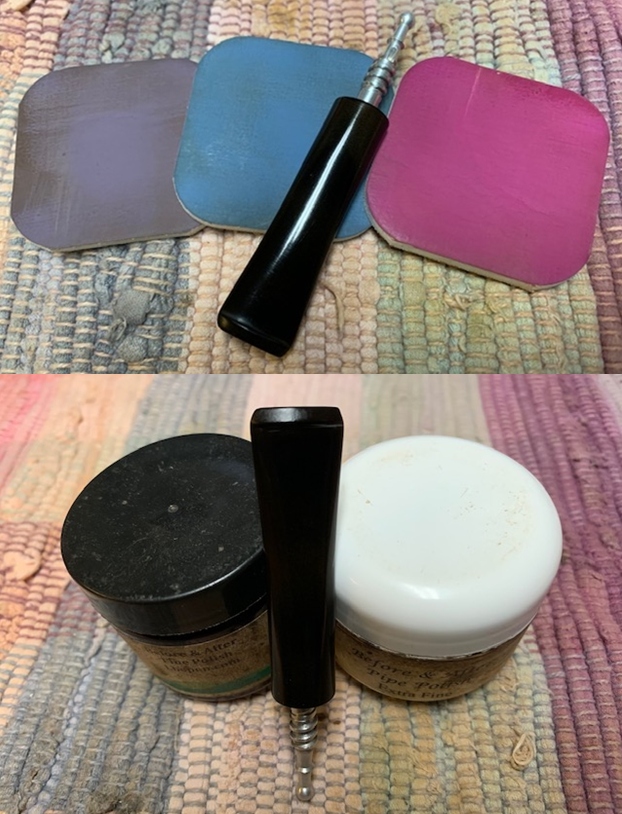
Now it was time to work on the pipe. I have to say it once again that I am really spoiled having Jeff clean up the pipes for me. Having to start with them in this condition adds time. I reamed the bowl with a PipNet pipe reamer using the first two cutting heads. I followed up by scraping the remaining cake with a Savinelli Fitsall Pipe Knife. I finished cleaning up the cake in the bowl with a piece of dowel wrapped in 220 grit sandpaper to smooth out the walls of the bowl.  I cleaned the shank with alcohol, cotton swabs and pipe cleaners until the pipe smelled and looked clean.  While the cleaning was being done on the shank the shank extension came off in my hand. The glue had dried out and when I cleaned the shank it came off in my hand. I would need to reglue it. I cleaned out the airway in the stem with alcohol and pipe cleaners.I coated the Delrin connector between the shank extension and the end of the shank with all purpose glue and twisted it into the shank and aligned the fit. I set it aside and let the glue dry.I scrubbed the exterior of the bowl and rim top with a cotton pad and acetone to remove the grime and the varnish coat on the briar. I wiped the bowl down with clean cloth to get a feel for the finish. The pipe looks far better than it did with the varnish coat.   I polished the briar with micromesh sanding pads – 1500-12000 grit pads. I wiped the bowl down after each pad with a damp cloth. Once the finish was removed the fills in the briar became very evident. I rubbed the bowl and shank down with Before & After Restoration Balm. I worked it into the surface of the bowl sides and shank with my fingertips to clean, enliven and protect the briar. I let the balm sit for a little while and then buffed with a cotton cloth to raise the shine.   While I was working on the bowl the stem was soaking in Briarville Pipe Repair’s – Pipe Stem Oxidation Remover. The stem sat in the mixture for 2 ½ -3 hours. I removed the stem from the bath, scrubbed lightly with a tooth brush and dried if off with a paper towel. I was surprised that it was quite clean. Just some light tooth marks on the button and underside of the stem near the button.   I sanded the stem with 220 grit sandpaper to smooth out the tooth chatter remove the remaining oxidation and started polishing it with 400 grit wet dry sandpaper.    I polished the vulcanite stem with micromesh sanding pads – 1500-12000 grit pads. I wiped it down with a damp cloth after each sanding pad. I used Before & After Pipe Polish – both Fine and Extra Fine to further polish the stem. This nice looking Comoy’s Trend 225 Bent Calabsh with a fancy shank extension and a taper vulcanite stem looks much better now that it has been restored. The rich browns and blacks of the contrasting stains on the bowl came alive with the polishing and waxing. I put the stem back on the bowl and carefully buffed the pipe with Blue Diamond on the buffing wheel using a light touch on the briar. I gave the bowl and the stem multiple coats of carnauba wax on the buffing wheel and followed that by buffing the entire pipe with a clean buffing pad. I hand buffed the pipe with a microfiber cloth to deepen the shine. The finished Comoy’s Trend Calabash is a beauty and fits nicely in the hand and looks very good. Give the finished pipe a look in the photos below. The dimensions of the pipe are Length: 6 inches, Height: 2 inches, Outside diameter of the bowl: 1 ½ inches, Chamber diameter: ¾ of an inch. If you are interested in adding this pipe to your collection send me a message or an email. Thanks for reading this blog and my reflections on the pipe while I worked on it. There are many more to come!

Restoring a Larsen 77 Bent Dublin Freehand


Blog by Steve Laug

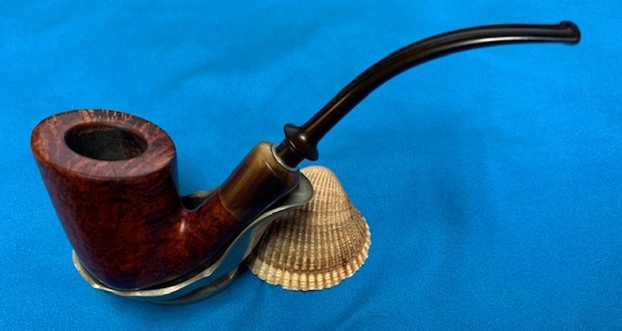
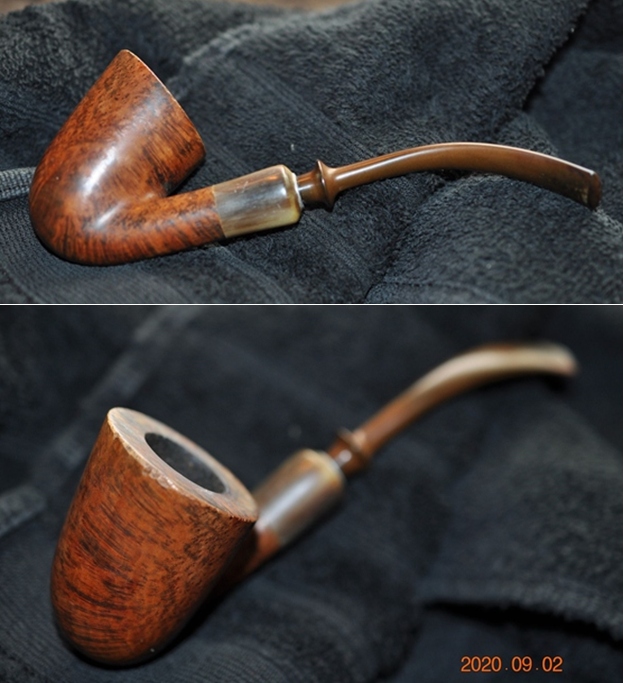
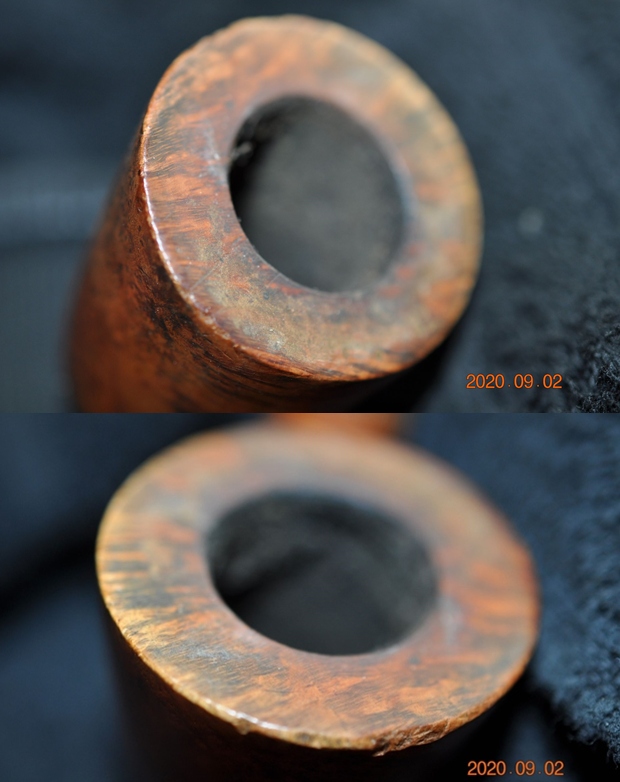
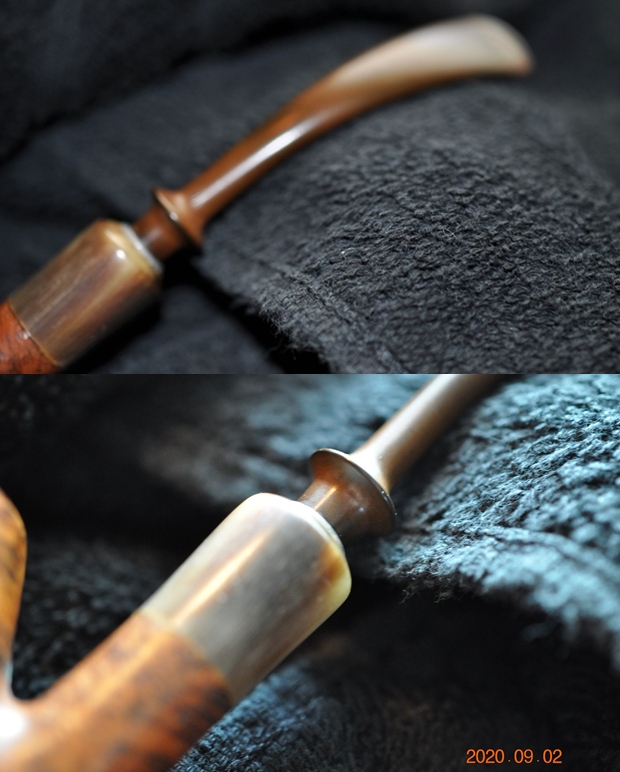
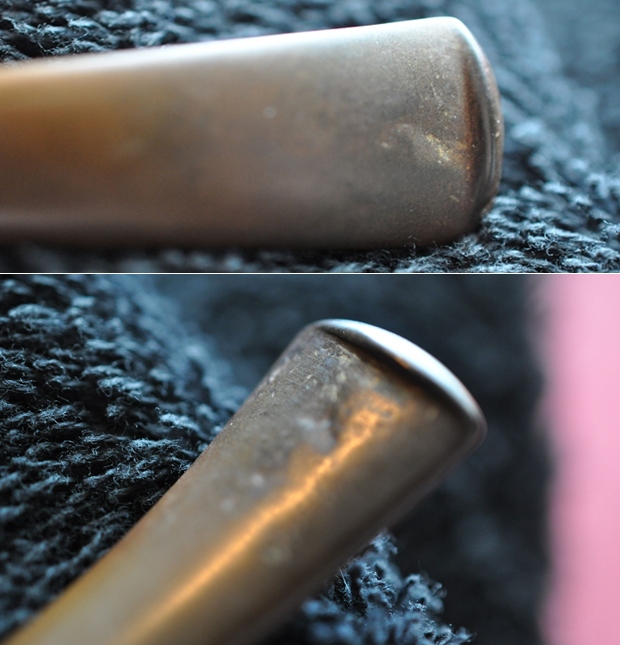
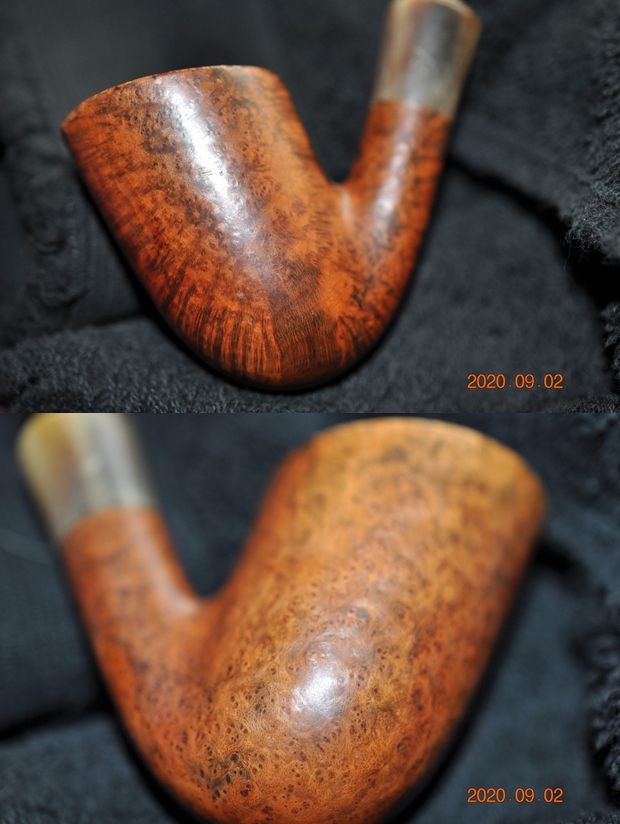
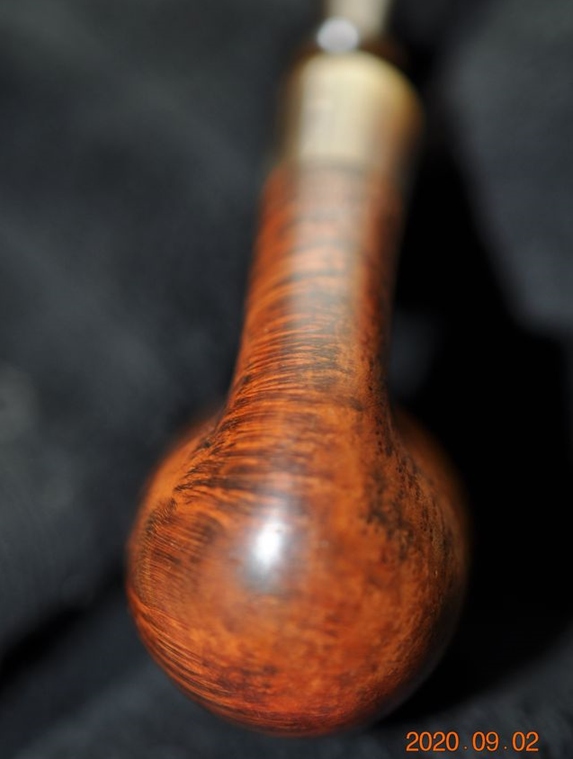
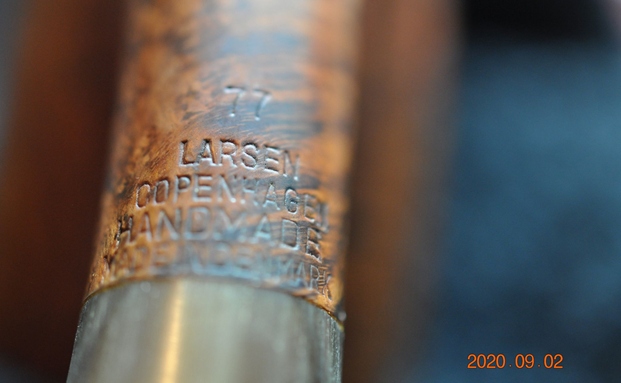
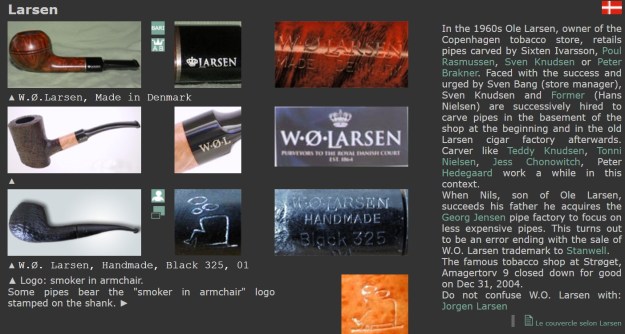
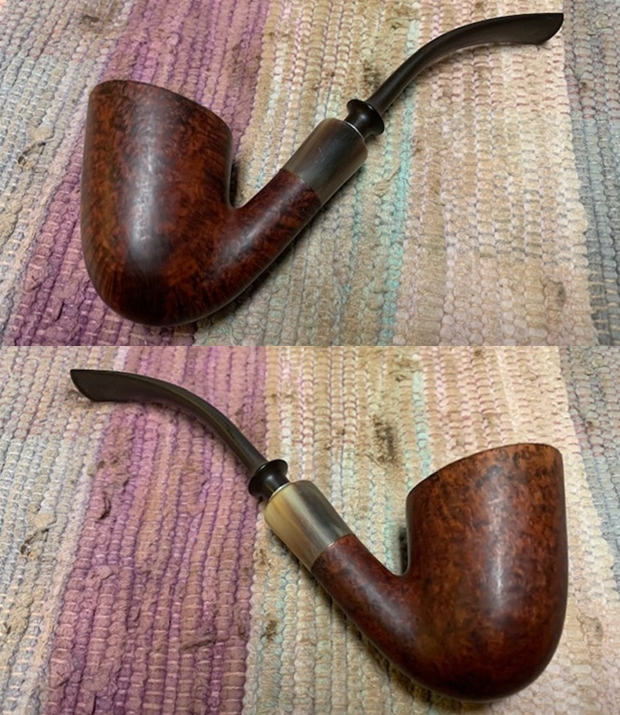
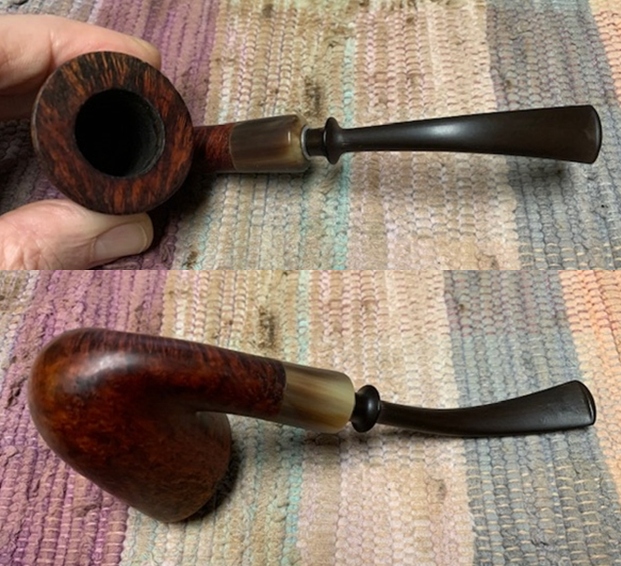
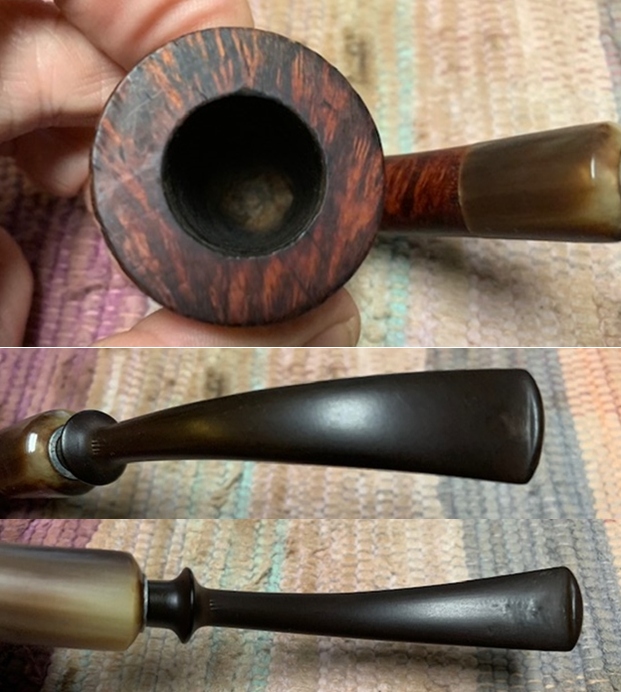
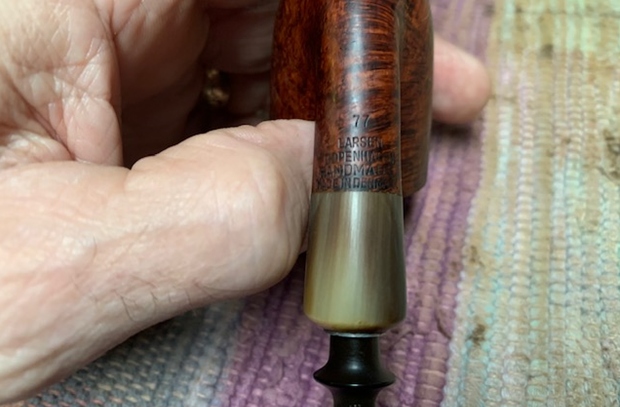
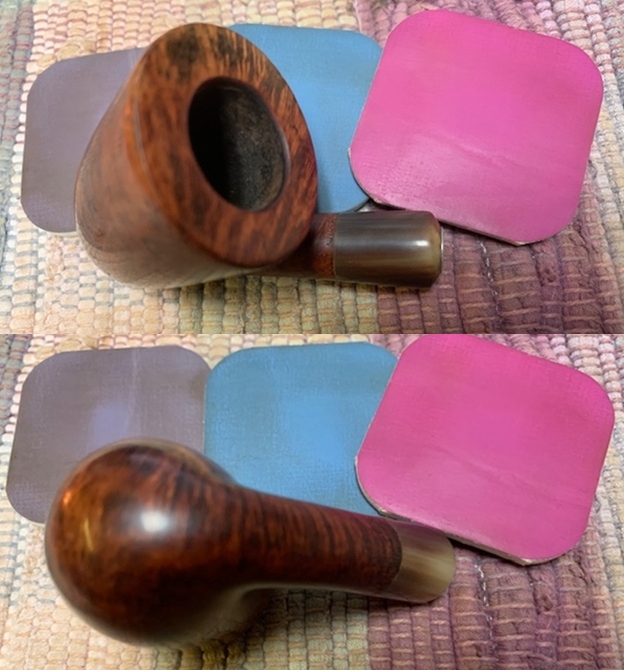
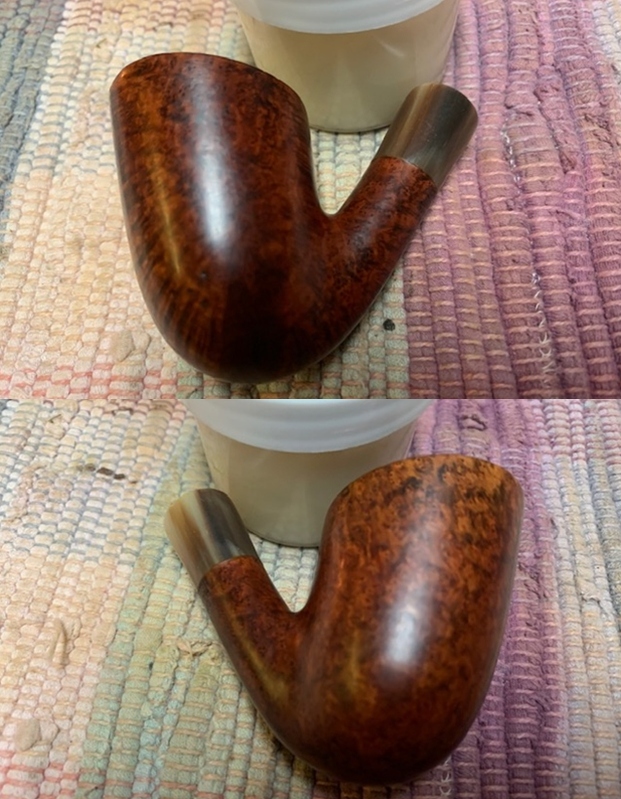
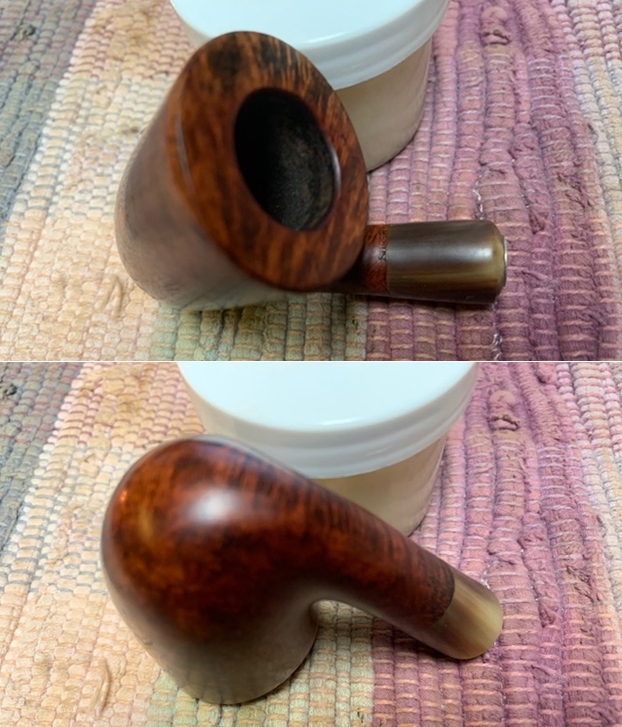
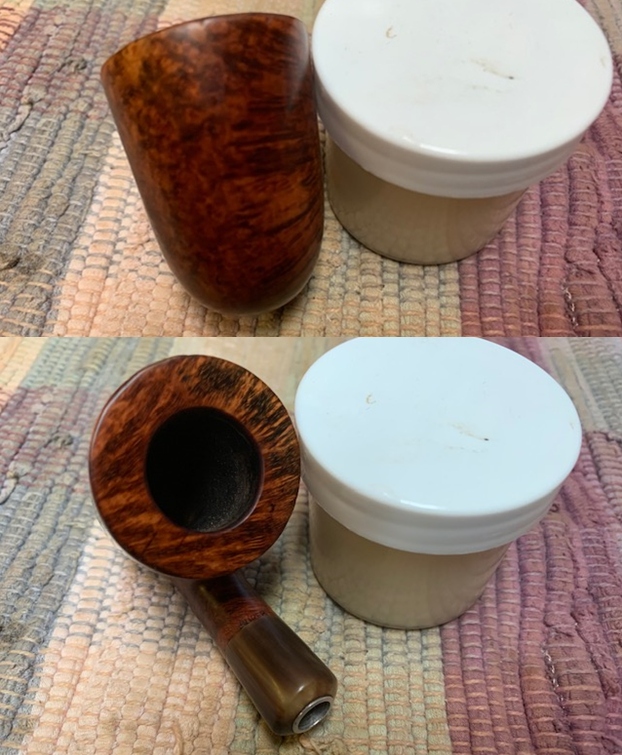
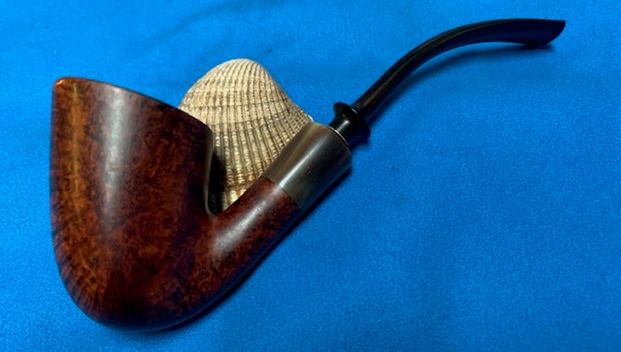
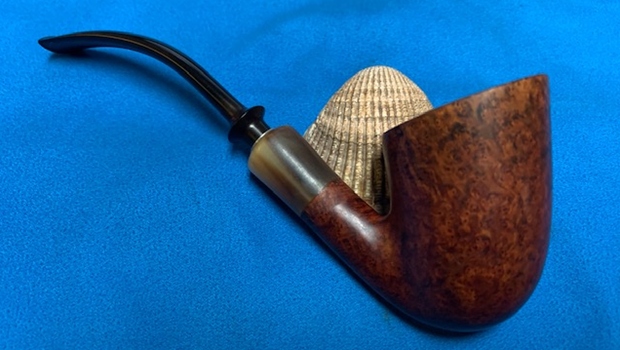
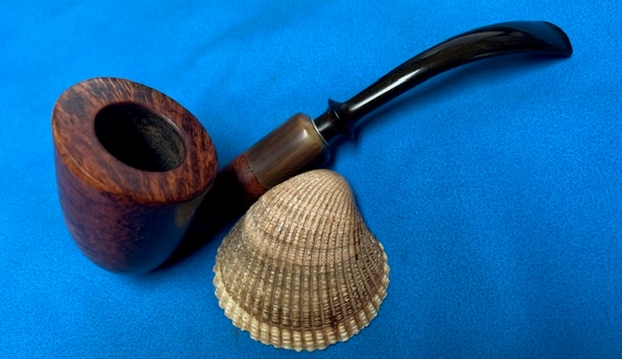
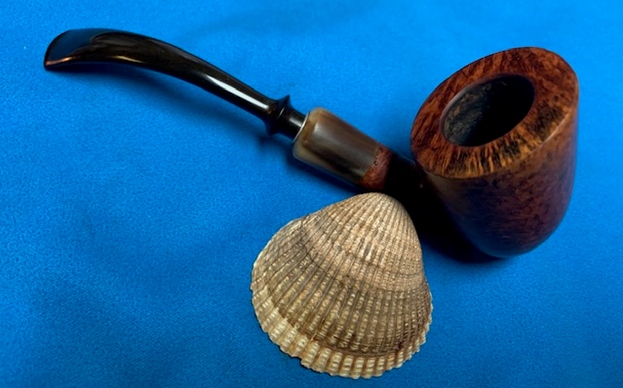
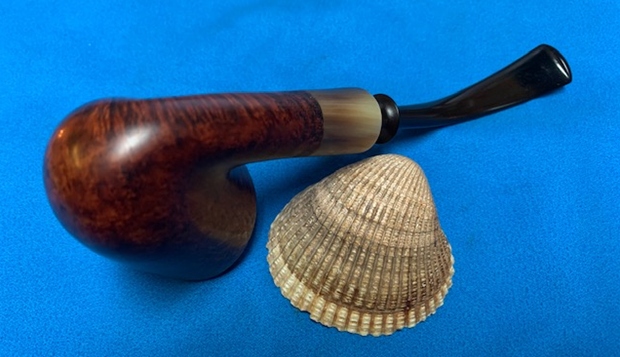
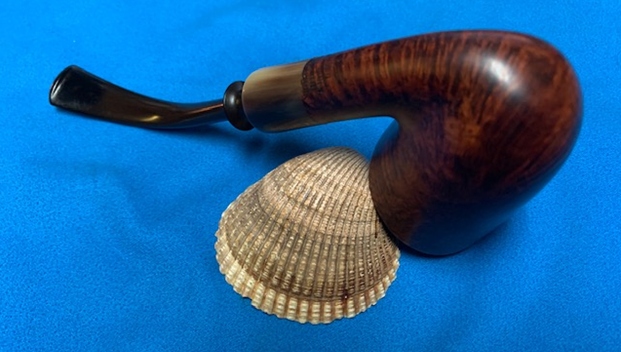
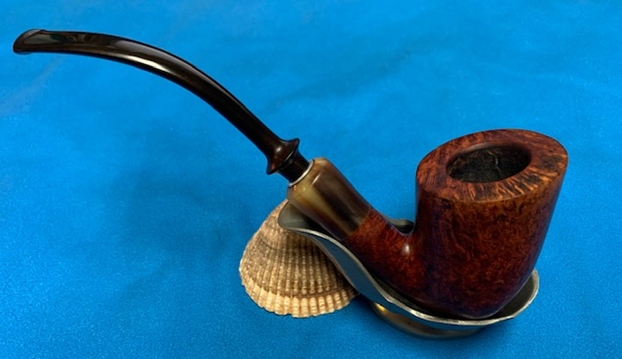
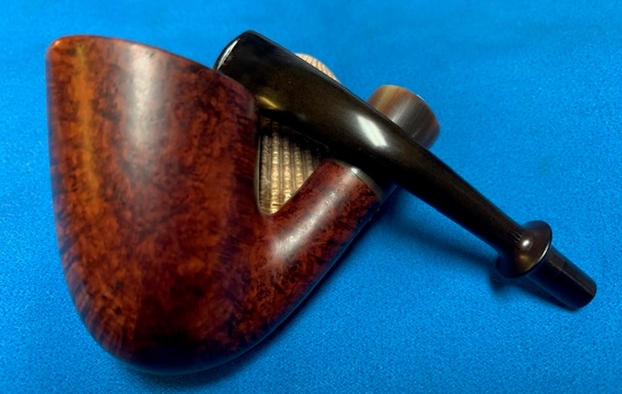
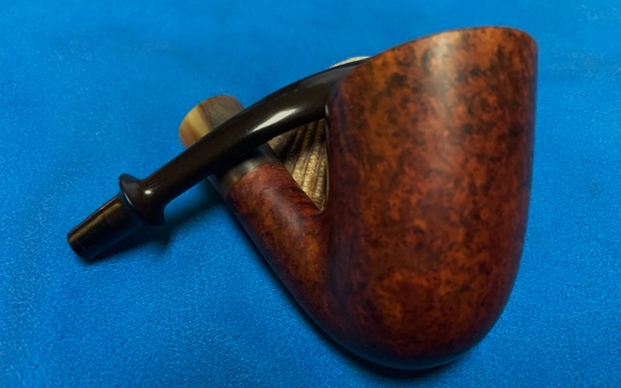
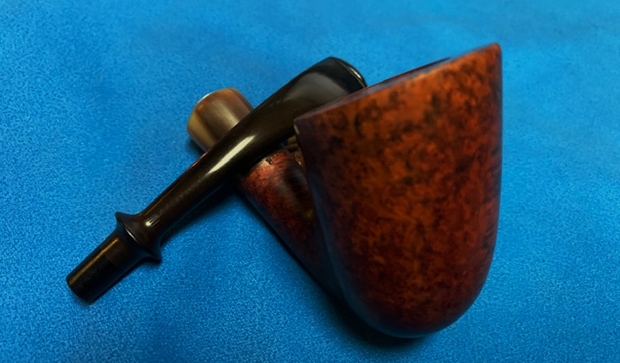
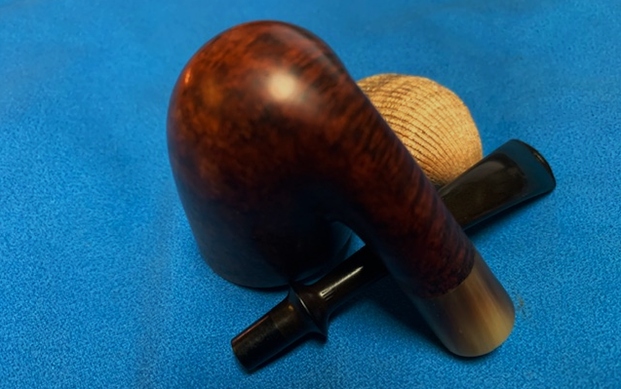
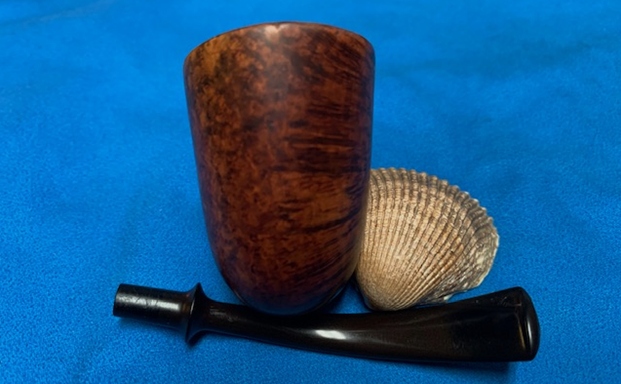
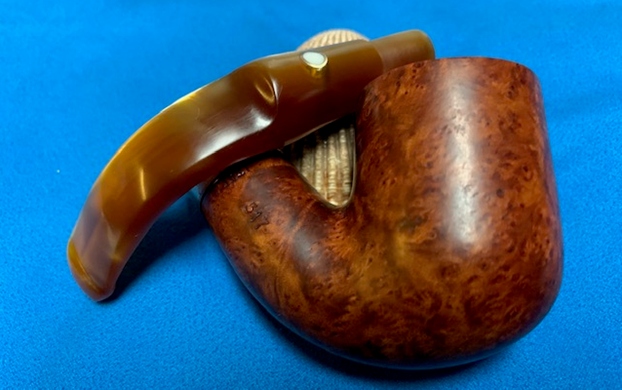
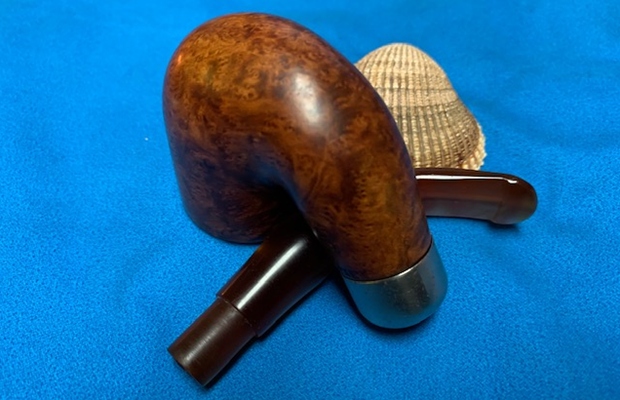
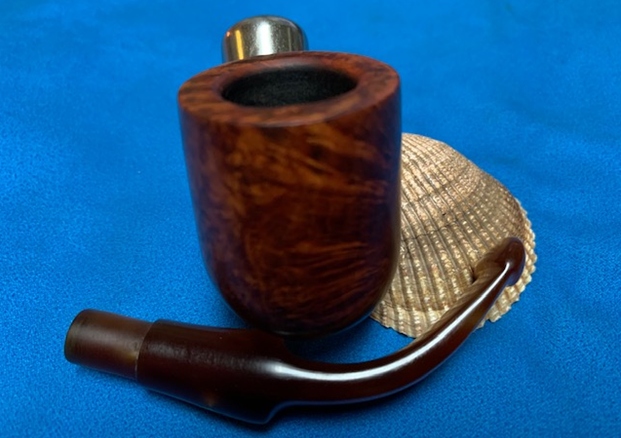
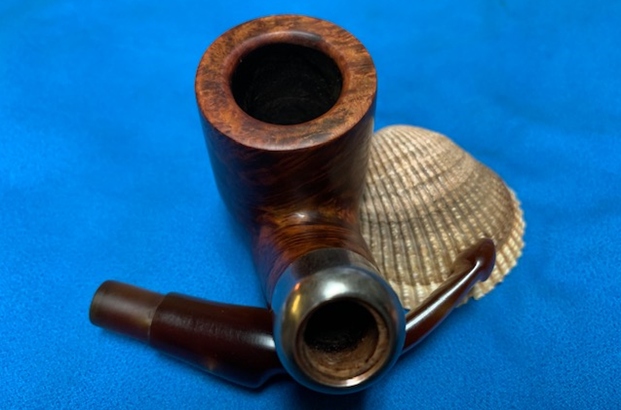
The next pipe on the work table came to us from a pipe hunt that Jeff and his wife recently did in Utah, USA. The pipe is an interesting Danish looking pipe with a horn shank extension that has a metal cup in the shank to stabilize the horn. The pipe is well shaped and has nice grain around the bowl. The pipe is stamped on the underside of the shank and reads 77 (shape number) [over] Larsen [over] Copenhagen [over] Handmade [over] Made in Denmark. There was a lot of grime ground into the smooth and finish on the briar. The bowl was heavily caked with a light overflow of lava on the top and inner edge of the rim. The inside edge looks like it may have burn damage on the front right. The outer edge has a lot of nicks and chips. The horn shank extension was lifeless looking and the metal insert seems to have lifted some from the shank. The fancy vulcanite stem had tooth chatter and marks on the top and underside near the button and on the button edge. It had promise but it was very dirty. Jeff took some photos of the pipe before he started his cleanup work. He took photos of the rim top and bowl to give a clear picture of the thickness of the cake and tobacco debris as well as the lava on the inner edge of the rim. The photos also shoe the nicks and damage on the outer edge of the bowl. He also took photos of the top and underside of the stem as well as the horn shank extension. The photos show the overall condition of the stem. Jeff took photos of the sides and heel of the bowl to give a picture of what the briar looked like. It truly has some nice grain – birdseye and cross grain around the bowl and shank. The horn shank extension is dull and lifeless looking.     The stamping on the underside of the shank is clear and readable and read as noted above. I turned to Pipephil (http://www.pipephil.eu/logos/en/logo-l2.html) to get a quick view of the brand once again. I did a screen capture of the site’s information and have included that below. From what I can figure out the pipe I am working on is a WO Larsen as it is stamped similarly to the ones in the photos though it does not have the WO in front of the Larsen. It also has the Copenhagen stamping on the shank and the Handmade stamp that is the same. Nothing definitive here but that is what I surmise.
I turned to Pipedia (https://pipedia.org/wiki/W.%C3%98._Larsen) for a quick read. The site is worth reading the history of the shop and the brand and its influence on Danish pipe carving.

I wonder if it could also be a pipe from the Larsen and Stigart pipe shop in Copeonhagen though the stamping does not include the Stigart part (https://pipedia.org/wiki/Larsen_%26_Stigart). I quote below.

Larsen & Stigart was a Copenhagen pipe shop which at point sold pipes stamped with their shop name and made by Karl Erik Ottendahl, including the Champ of Denmark line. They also employeed their own in house carvers, including Søren Eric Andersen, for approximately a decade. Among others they are said to have supplied Danish shapes to Dunhill.

What I learned from the research is that in all likelihood the pipe is a WO Larsen made pipe. I am uncertain as the stamping does not include the WO stamp. It is a beauty though.

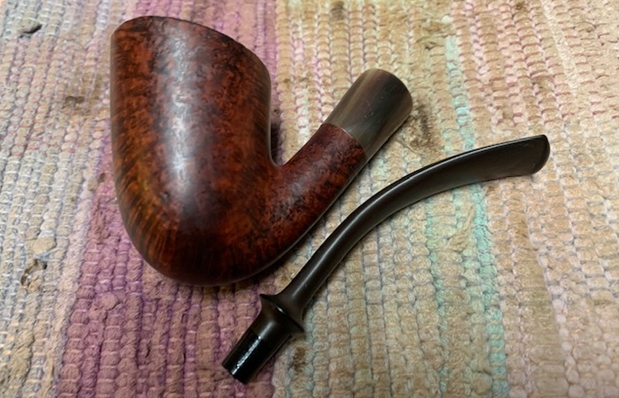
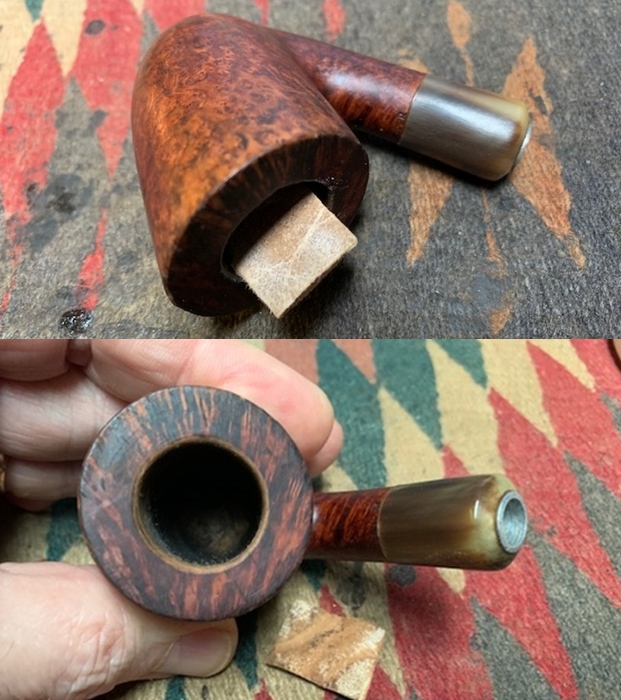
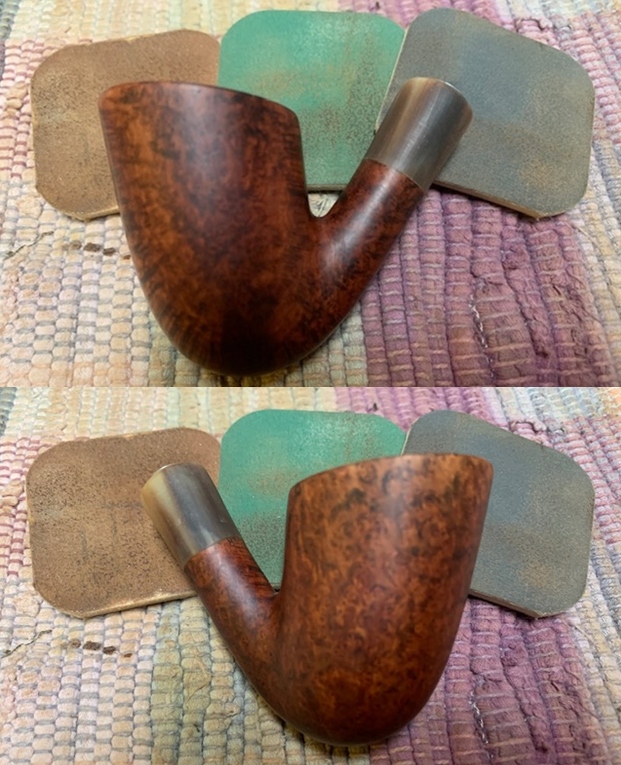
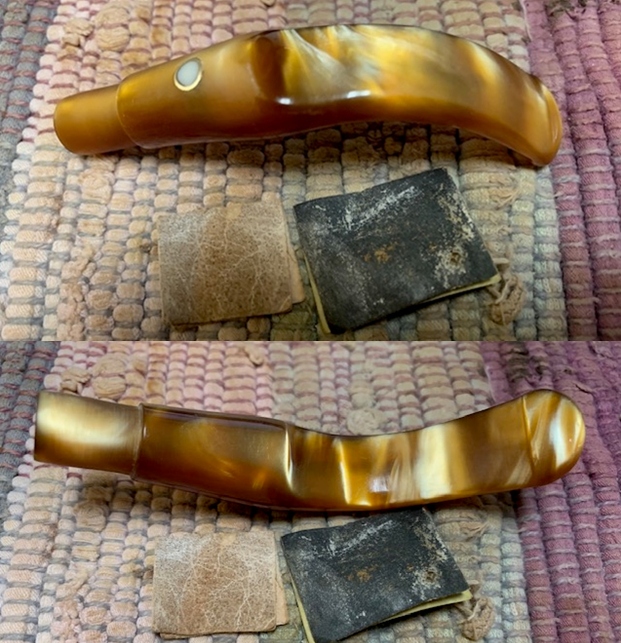
Armed with that information I turned to work on the pipe itself.  Jeff had cleaned up the pipe with his usual penchant for thoroughness. He reamed the pipe with a PipNet pipe reamer and removed the rest of it with a Savinelli Fitsall Pipe Knife.  He scrubbed the bowl with undiluted Murphy’s Oil Soap with a tooth brush. He rinsed it under running warm water to remove the soap and grime. He cleaned out the inside of the shank and the airway in the stem with alcohol, cotton swabs and pipe cleaners. He soaked the stem in a Before & After Deoxidizer bath and rinsed it off with warm water. I took photos of the pipe before I started my part of the restoration work.  The rim top cleaned up really well. The rim top, inner and outer edge of the bowl show some damage. The stem surface looked very good with a few tooth marks and chatter on both sides near the button.   The stamping on the shank sides is clear and readable. It is stamped as noted above.  I removed the stem and took a photo of the pipe to give a sense of the whole. The fancy thin saddle stem is nice and the photo gives a sense of what the pipe looks like. I turned my attention to the damage on the inner edge of the rim. I used a folded piece of 220 grit sandpaper to give the inner edge a slight bevel to minimize the burn damage.  I polished the briar and horn shank extension with micromesh sanding pads – 1500-12000 grit pads. I wiped the bowl down after each pad with a damp cloth.    I rubbed the bowl and shank down with Before & After Restoration Balm. I worked it into the surface of the bowl sides and shank with my fingertips to clean, enliven and protect the briar. I let the balm sit for about 10-15 minutes and buffed with a cotton cloth to raise the shine. The grain came alive and the fills while visible look better than when I began.     I set the bowl aside and turned to work on the stem. I “painted” the stem surface with the flame of a lighter and was able to lift out all of the tooth marks and chatter on the surface. The little that remained I sanded out with 220 grit sandpaper. I started polishing it with 400 grit wet dry sandpaper.   I polished the vulcanite stem with micromesh sanding pads – 1500-12000 grit pads. I wiped it down with Obsidian Oil after each sanding pad. I used Before & After Pipe Polish – both Fine and Extra Fine to further polish the stem.    This Larsen Handmade Danish 77 Dublin Freehand is a great looking pipe now that it has been restored. The shape is elegant and flowing with a thin turned vulcanite stem. The horn shank extension has a metal insert in the shank end to keep it from splitting. I put the stem back on the bowl and carefully buffed the pipe with Blue Diamond on the buffing wheel using a light touch on the briar. I gave the bowl and the stem multiple coats of carnauba wax on the buffing wheel and followed that by buffing the entire pipe with a clean buffing pad. I hand buffed the pipe with a microfiber cloth to deepen the shine. The finished Larsen77 Bent Dublin fits nicely in the hand and feels great. Give the finished pipe a look in the photos below. The dimensions of the pipe are Length: 6 inches, Height: 2 inches, Outside diameter of the bowl: 1 ½ inches, Chamber diameter: ¾ of an inch. I will be putting it on the rebornpipes store shortly. If you are interested in adding this pipe to your collection send me a message or an email. Thanks for reading this blog and my reflections on the pipe while I worked on it. There are many more to come!

Restoring a Mauro Series II Bent 517 System Style Pipe


Blog by Steve Laug

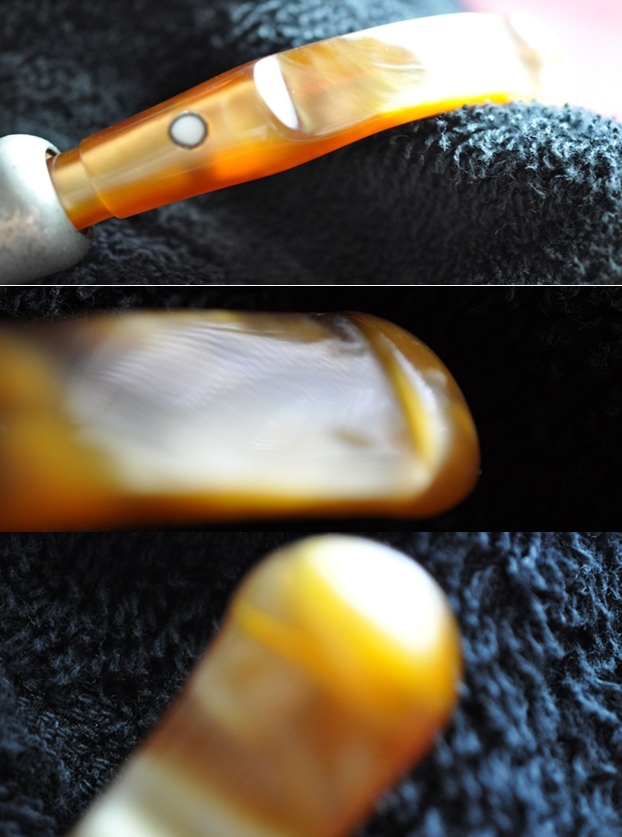
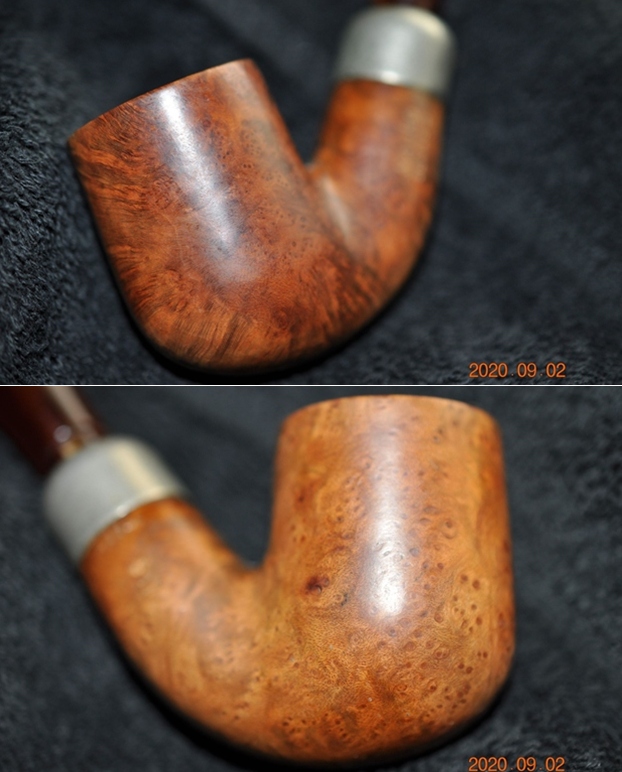
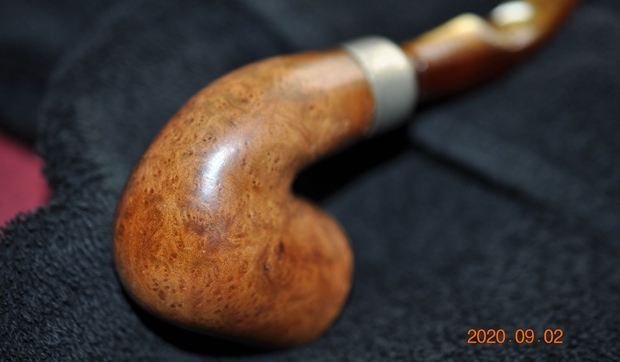
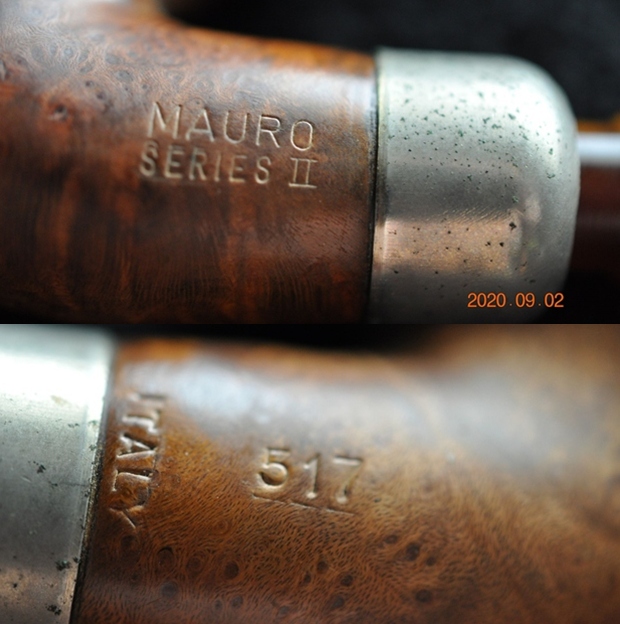
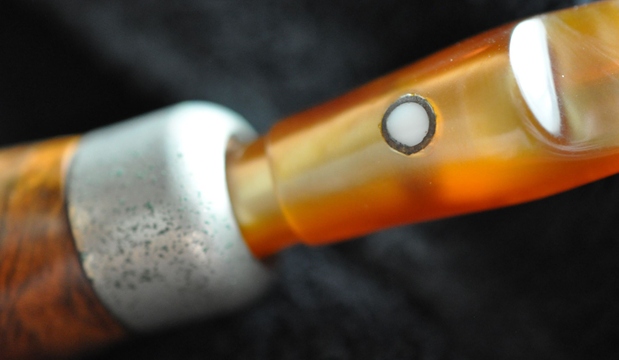
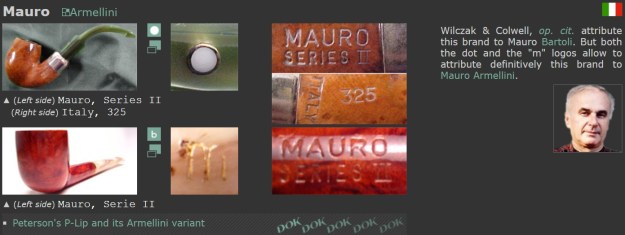
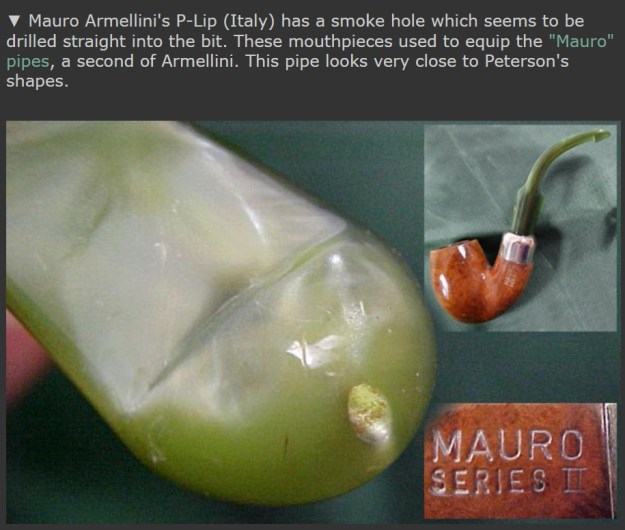
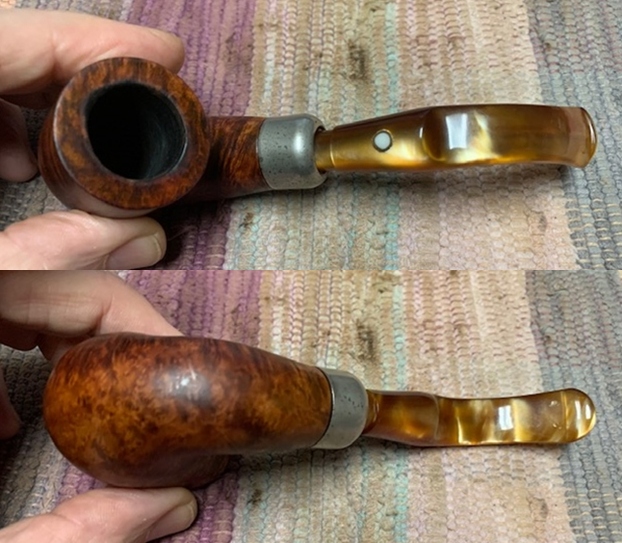
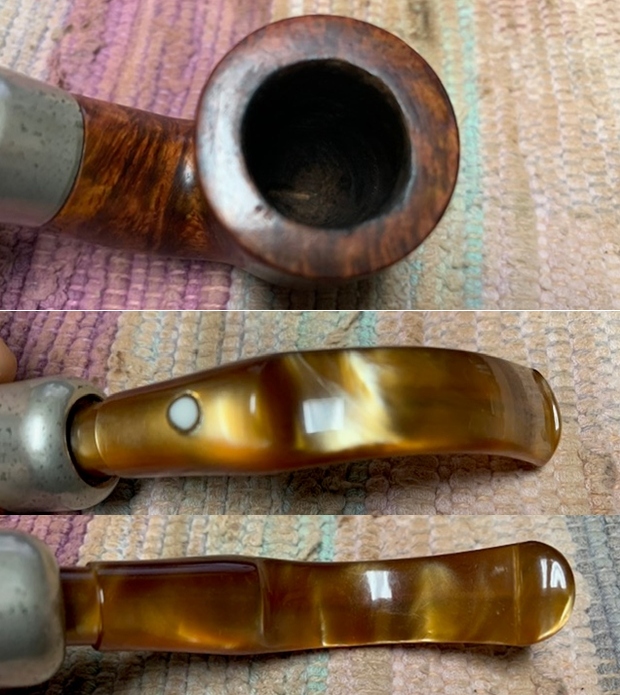
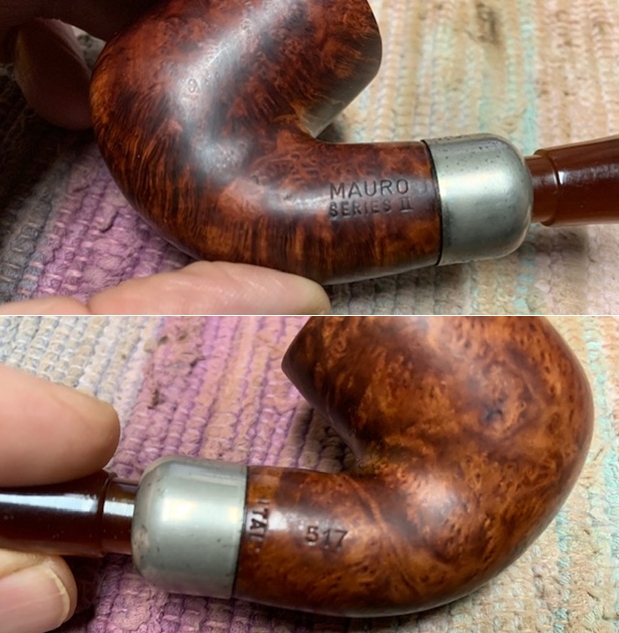
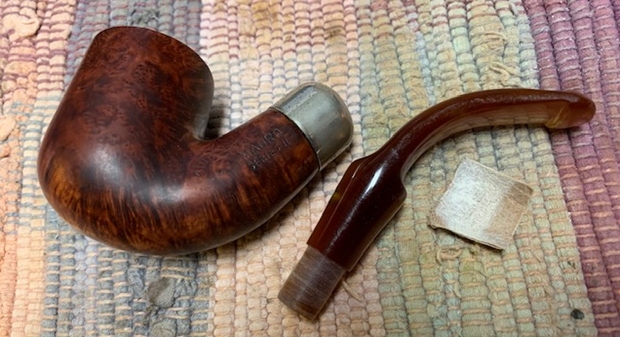
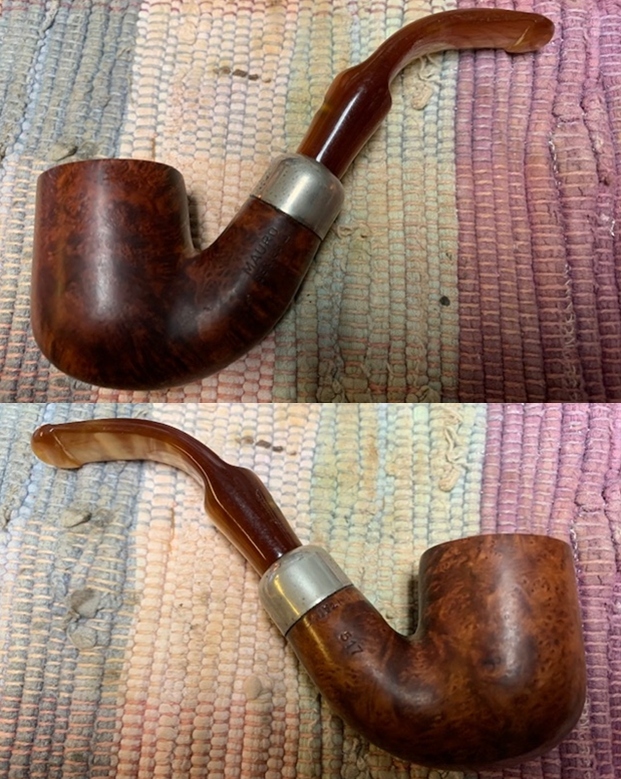
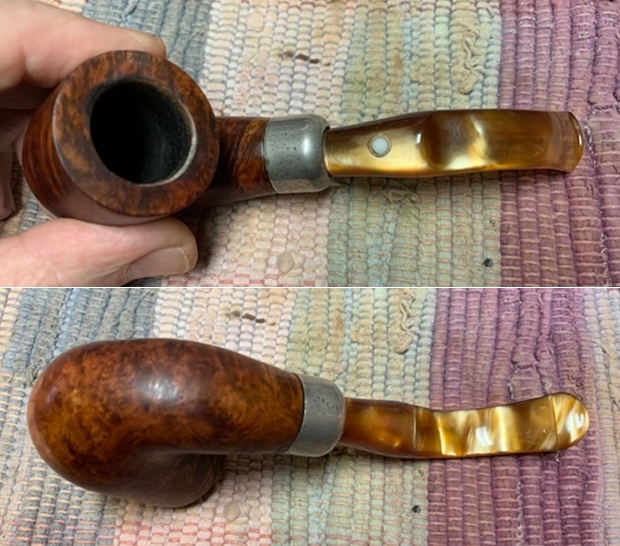
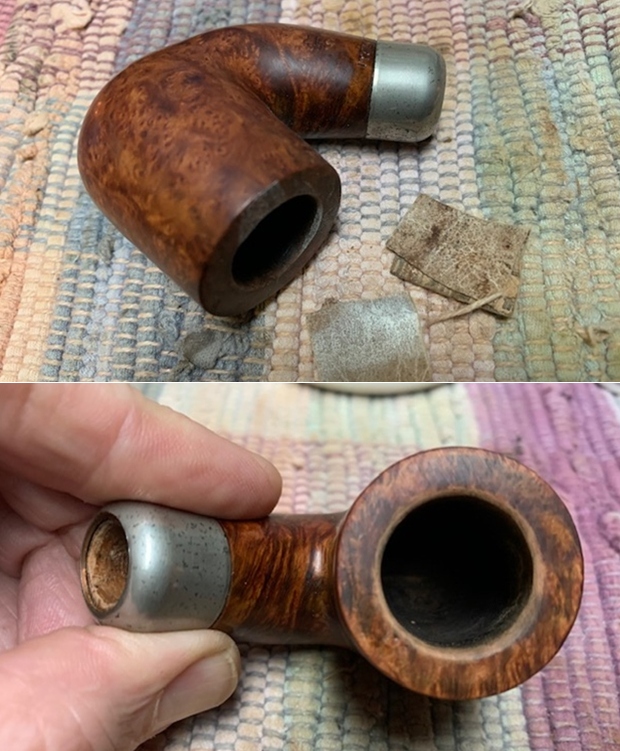
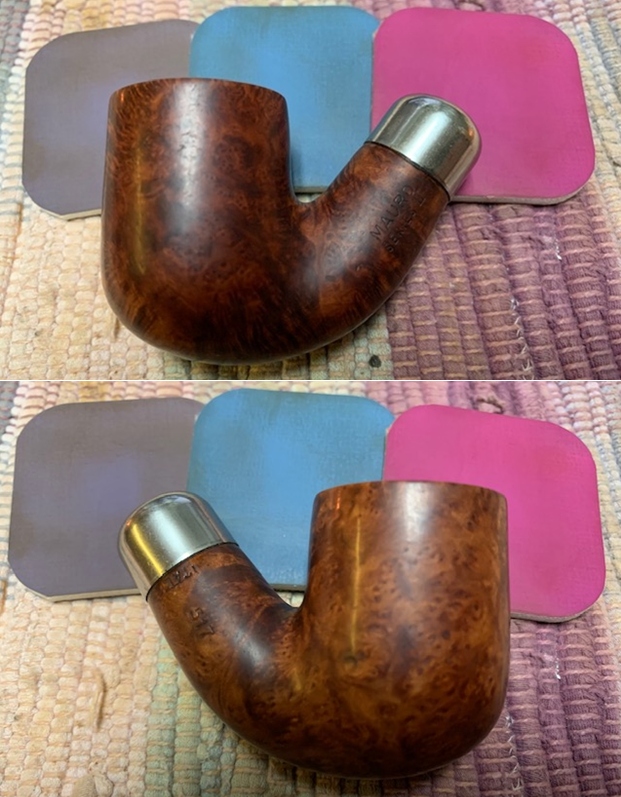
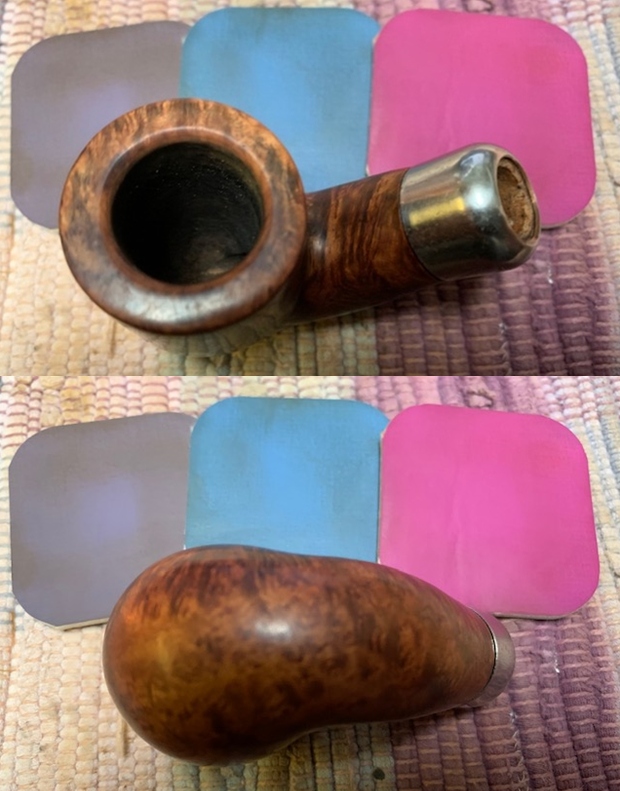
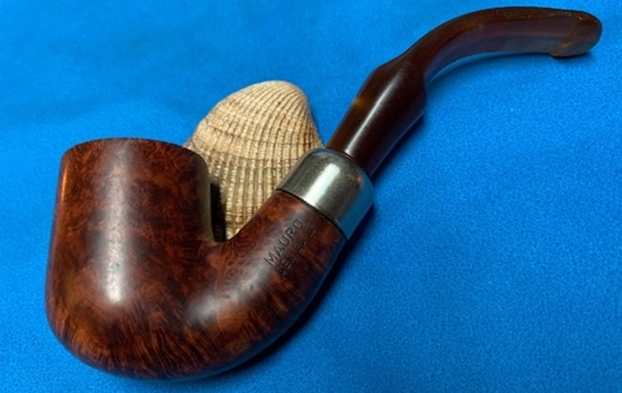
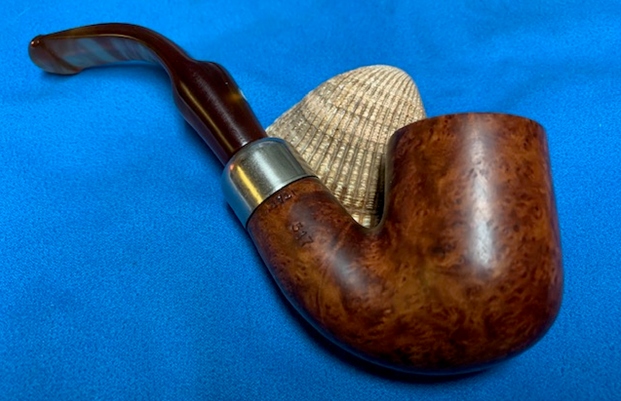
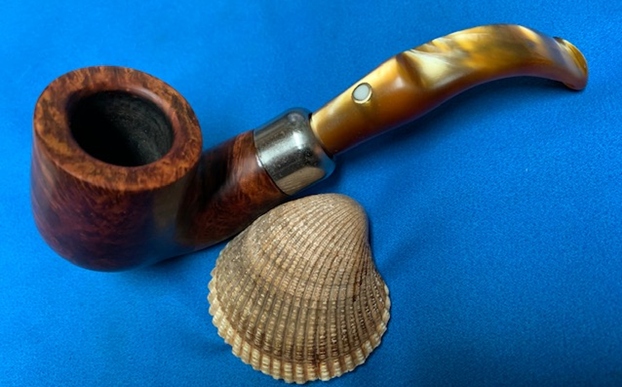
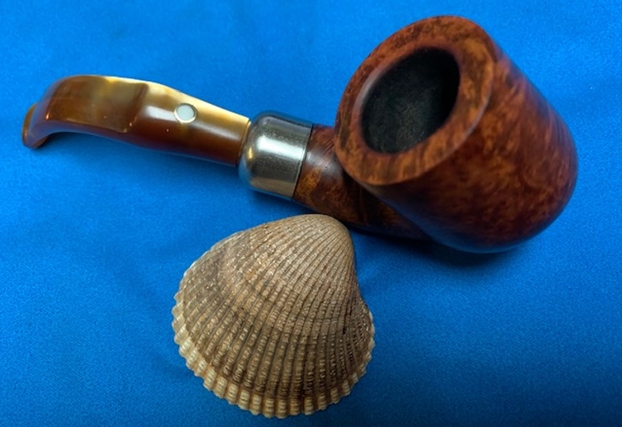
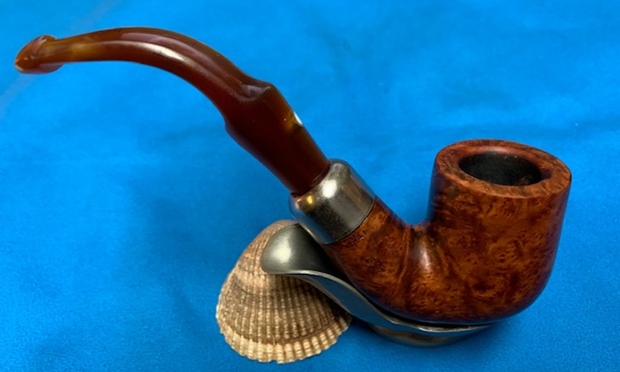
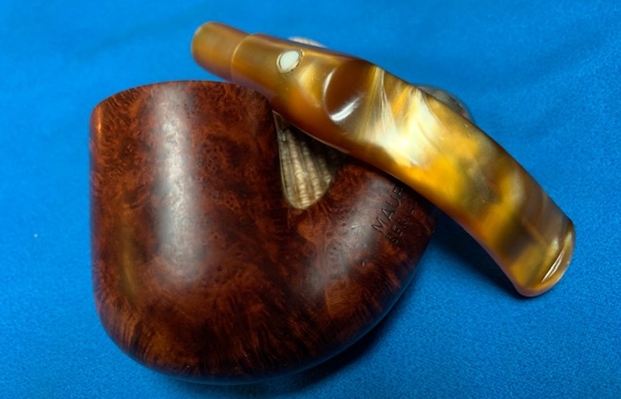
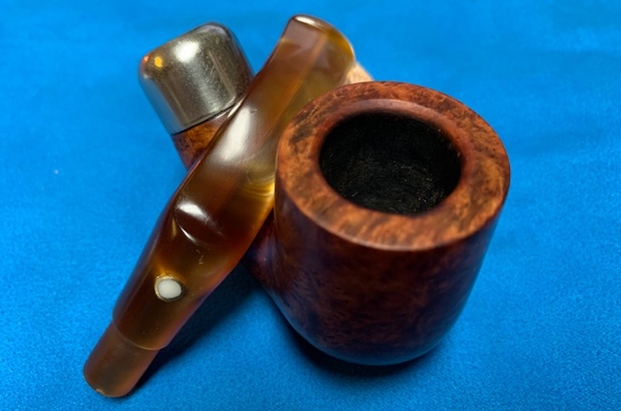
The next pipe on the work table came to us from a pipe hunt that Jeff and his wife recently did in Utah, USA. The pipe is an interesting pipe that looks like an Italian take on a Peterson’s System pipe. The pipe is well shaped and has nice grain around the bowl. The pipe is stamped on the left side of the shank and reads Mauro [over] Series II. On the right side it reads Italy along the ferrule edge and the shape number 517. There was a lot of grime ground into the smooth and finish on the briar. The bowl was heavily caked with a light overflow of lava on the top and inner edge of the rim. The inside edges looks like it may have burn damage on the front right. The variegated brown/gold/yellow acrylic stem had tooth chatter and marks on the top and underside near the button and on the button edge. There was a circle on the topside of the saddle stem that had a brass outer ring and an inner white acrylic insert. The stem did not seat all the way in the shank and would need to be addressed. It had promise but it was very dirty. Jeff took some photos of the pipe before he started his cleanup work. He took photos of the rim top and bowl to give a clear picture of the thickness of the cake and tobacco debris as well as the lava on the inner edge of the rim. He also took photos of the top and underside of the stem to show the chatter and tooth marks.   Jeff took photos of the sides and heel of the bowl to give a picture of what the briar looked like. It truly has some nice grain – birdseye and cross grain around the bowl and shank. The nickel ferrule is oxidized and dull.   The stamping on the shank sides is clear and readable and read as noted above. I turned to Pipephil (http://www.pipephil.eu/logos/en/logo-m4.html) to get a quick view of the brand once again. The site definitively links the brand to Mauro Armellini. The screen capture I included below shows a brief history of the brand. There was a link on the section to a page comparing the Peterson P-lip with its Armellini variant (http://www.pipephil.eu/logos/en/infos/p-lip-en.html). I included the section on the pipe stem below as a screen capture. It is fascinating to compare the stem to the many Peterson’s System pipes that I have worked on.I turned to Pipedia (https://pipedia.org/wiki/Armellini) for a quick read. The site referred me automatically from the Italian Makers list to Mauro Armellini. The write up is very well done and gives a great amount of history. It is worth a read.

What I learned from the research is that the Mauro pipe was Mauro Armellini’s second line and in many ways was his take on a Peterson’s System pipe.

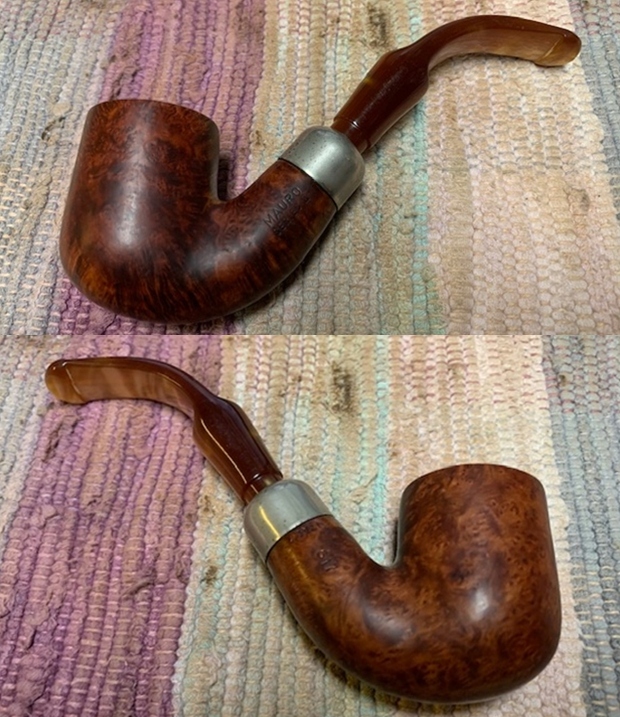
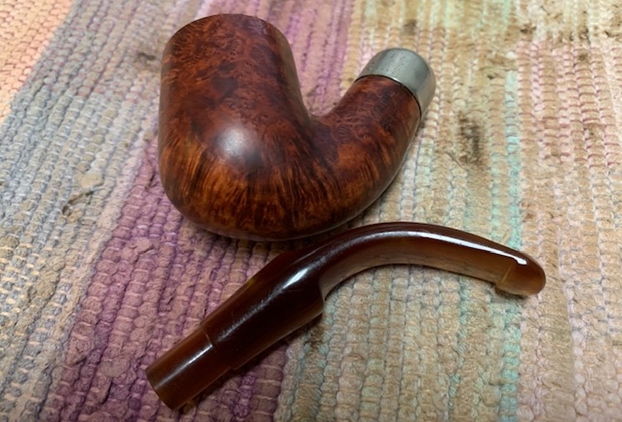
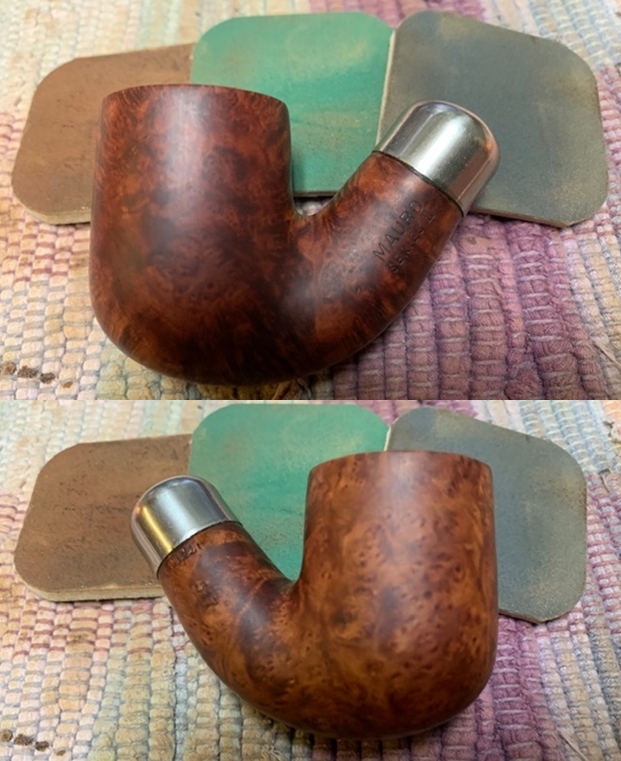
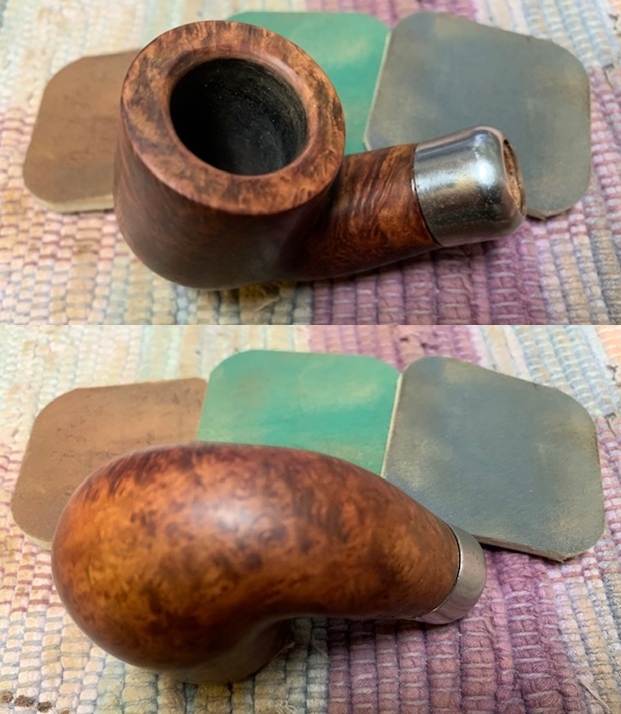
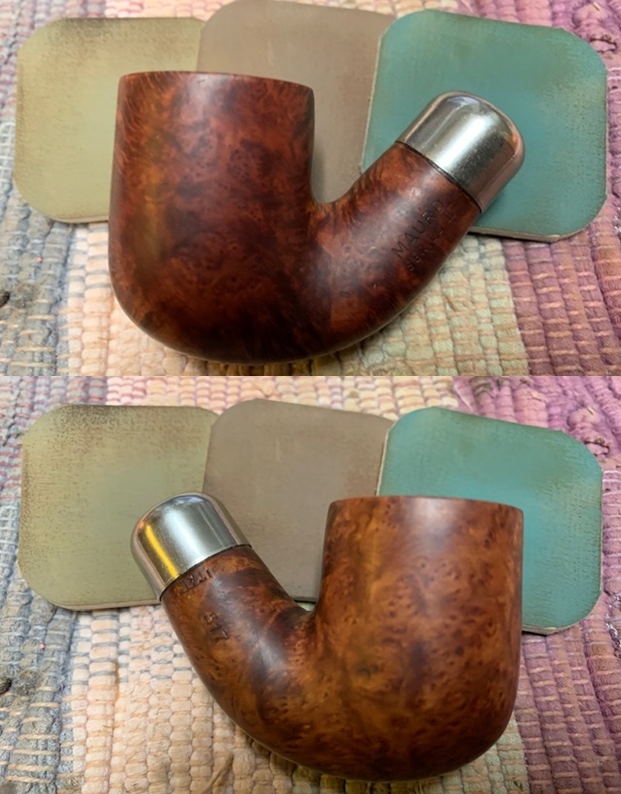
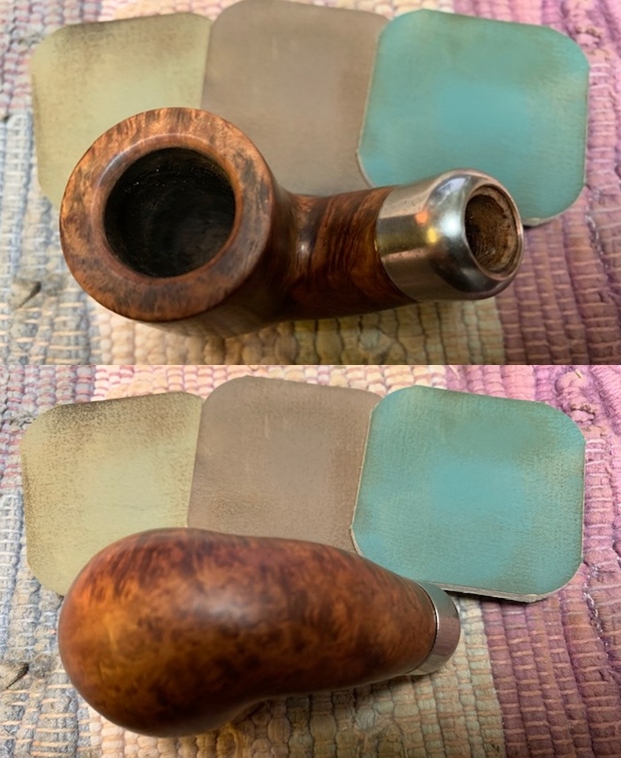
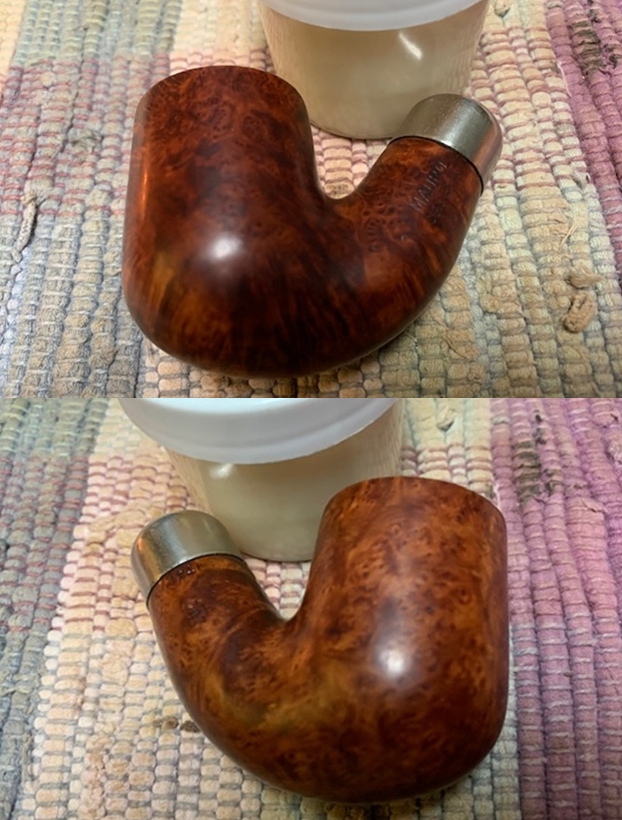
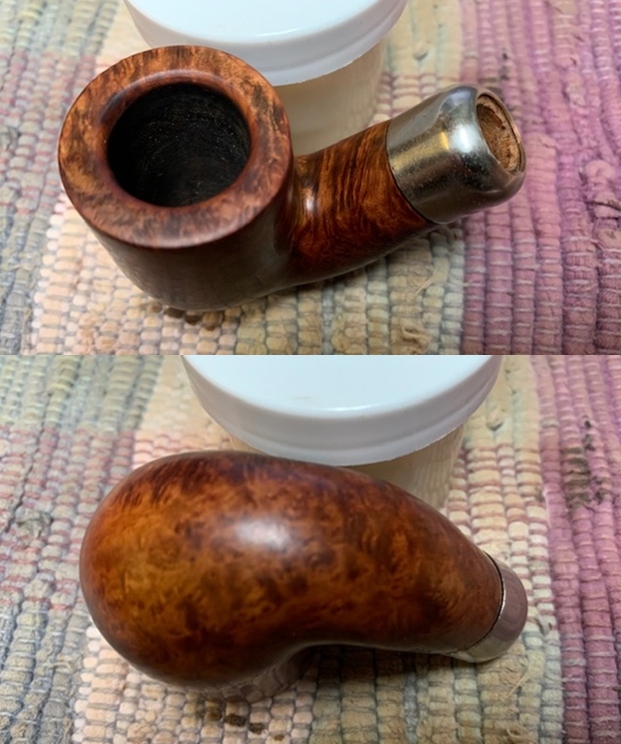
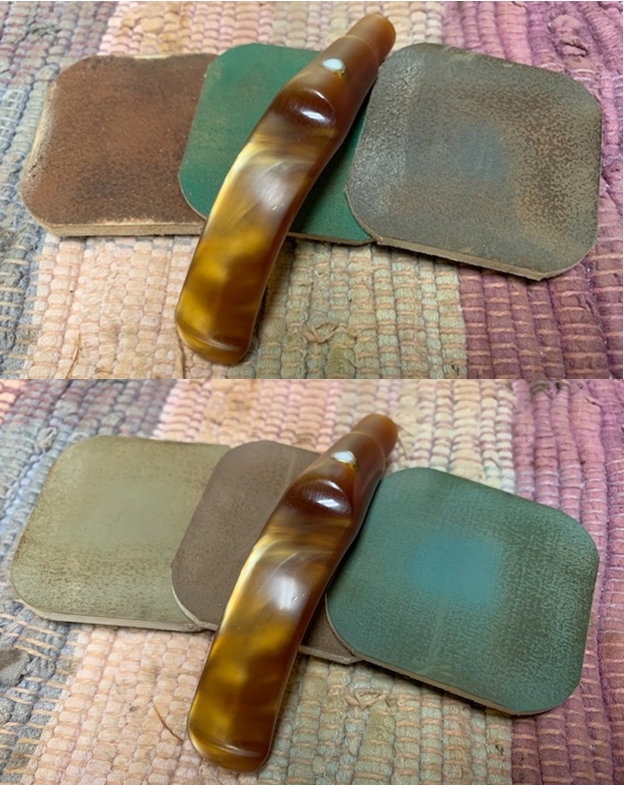
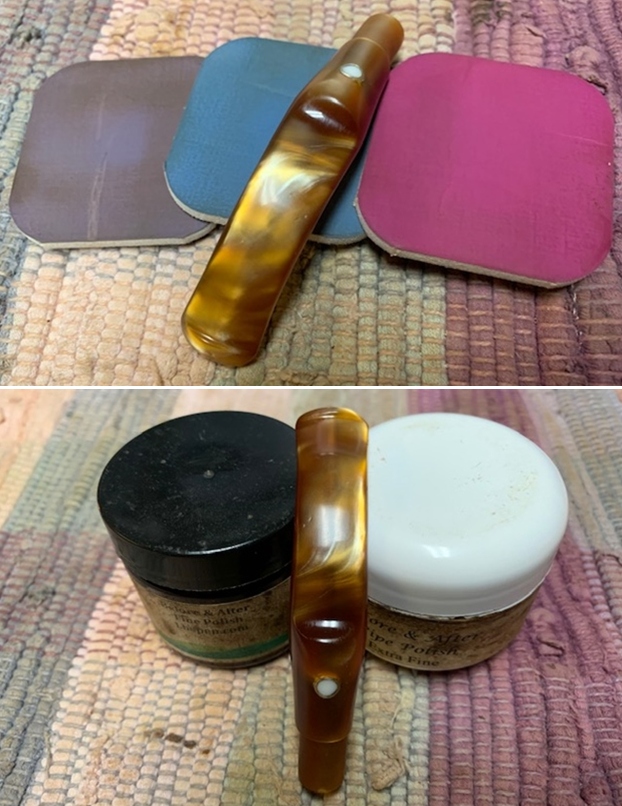
Armed with that information I turned to work on the pipe itself.  Jeff had cleaned up the pipe with his usual penchant for thoroughness. He reamed the pipe with a PipNet pipe reamer and removed the rest of it with a Savinelli Fitsall Pipe Knife.  He scrubbed the bowl with undiluted Murphy’s Oil Soap with a tooth brush. He rinsed it under running warm water to remove the soap and grime. He cleaned out the inside of the shank and the airway in the stem with alcohol, cotton swabs and pipe cleaners. He scrubbed the stem with Soft Scrub cleanser and rinsed it off with warm water. I took photos of the pipe before I started my part of the restoration work. The rim top cleaned up really well. The rim top and inner edge of the bowl show some damage. The stem surface looked very good with a few tooth marks and chatter on both sides near the button.     The stamping on the shank sides is clear and readable. It is stamped as noted above.  I removed the stem and took a photo of the pipe to give a sense of the whole. The saddle stem is nice and the photo gives a sense of what the pipe looks like. The fit of the stem in the shank was impeded by the thickness of the tenon on the stem. I used a piece of folded 220 grit sandpaper to reduce the diameter of the tenon. I polished the tenon with 400 grit wet dry sandpaper. I put the stem in the shank and took photos of the fit in the shank. Now that the stem fit I turned my attention to the damage on the inner edge of the rim. I used a folded piece of 220 grit sandpaper to give the inner edge a slight bevel to minimize the burn damage.  I polished the briar and the nickel ferrule with micromesh sanding pads – 1500-12000 grit pads. I wiped the bowl down after each pad with a damp cloth.  I rubbed the bowl and shank down with Before & After Restoration Balm. I worked it into the surface of the bowl sides and shank with my fingertips to clean, enliven and protect the briar. I let the balm sit for about 10-15 minutes and buffed with a cotton cloth to raise the shine. The grain came alive and the fills while visible look better than when I began.   I set the bowl aside and turned to work on the stem. I sanded out the tooth chatter and marks on both sides with 220 grit sandpaper. I started polishing it with 400 grit wet dry sandpaper.   I polished the acrylic stem with micromesh sanding pads – 1500-12000 grit pads. I wiped it down with Obsidian Oil after each sanding pad. I used Before & After Pipe Polish – both Fine and Extra Fine to further polish the stem.    This Mauro Series II 517 Bent System Style Billiard is a great looking pipe now that it has been restored. The shape is a lot like a Peterson’s System pipe with the nickel ferrule and the P-lip style acrylic stem. I put the stem back on the bowl and carefully buffed the pipe with Blue Diamond on the buffing wheel using a light touch on the briar. I gave the bowl and the stem multiple coats of carnauba wax on the buffing wheel and followed that by buffing the entire pipe with a clean buffing pad. I hand buffed the pipe with a microfiber cloth to deepen the shine. The finished Mauro Series II pipe fits nicely in the hand and feels great. Give the finished pipe a look in the photos below. The dimensions of the pipe are Length: 5 ½ inches, Height: 1 ¾ inches, Outside diameter of the bowl: 1 ¼ inches, Chamber diameter: ¾ of an inch. I will be putting it on the rebornpipes store shortly. If you are interested in adding this pipe to your collection send me a message or an email. Thanks for reading this blog and my reflections on the pipe while I worked on it. There are many more to come!

Breathing Life into a Custom-Bilt Imported Briar Scoop/Bullmoose


Blog by Steve Laug

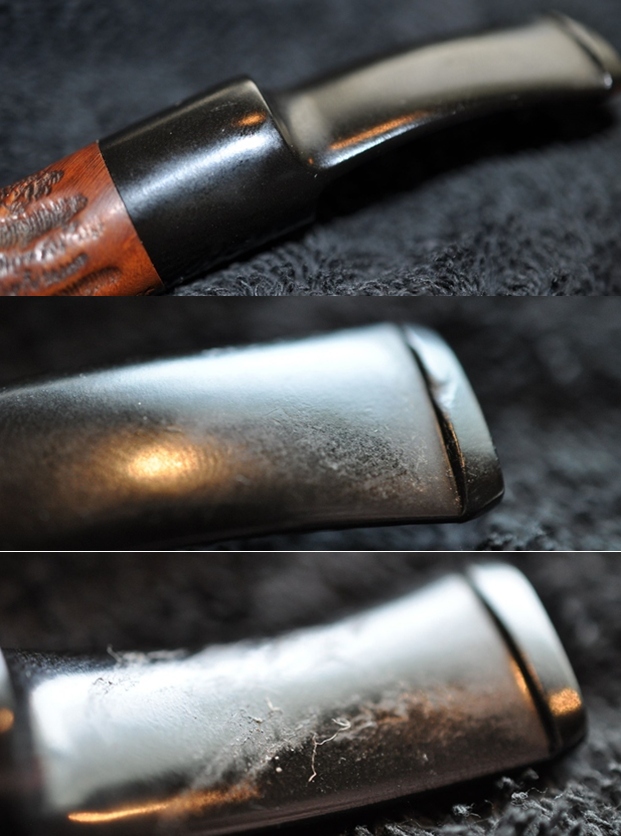
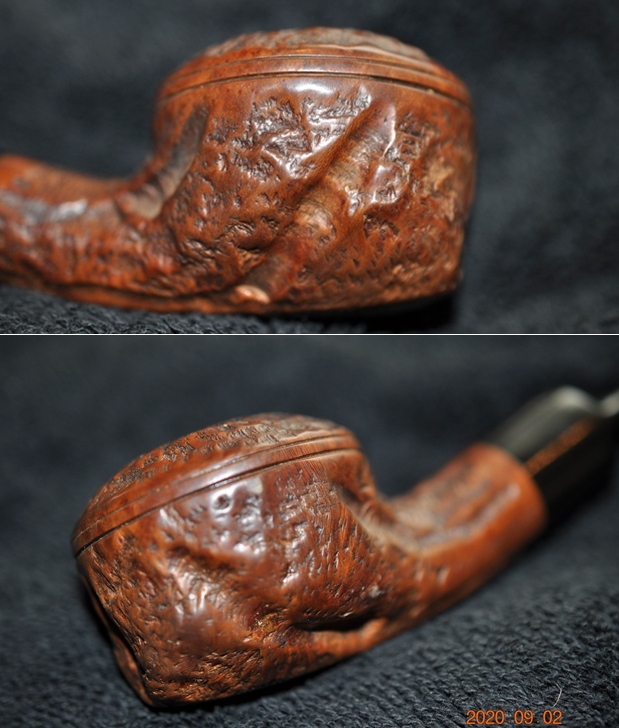
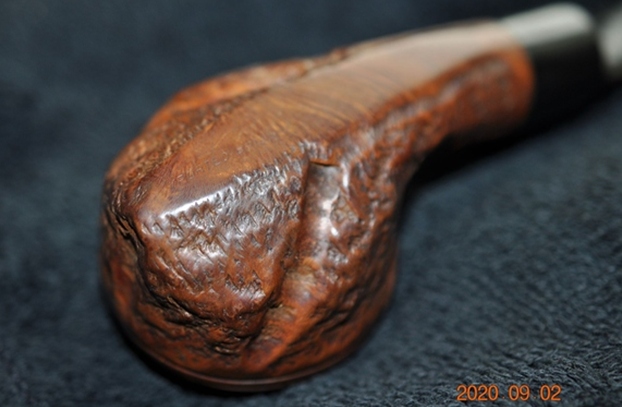
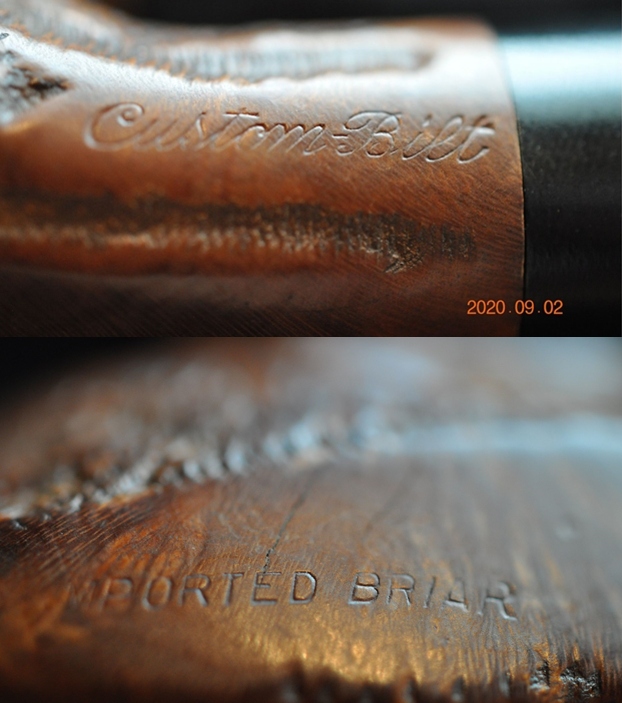
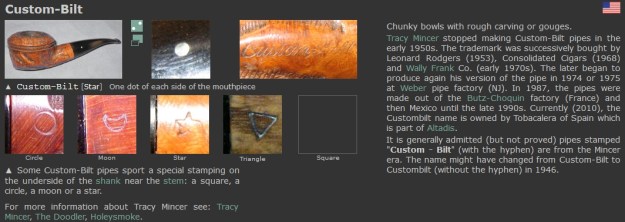
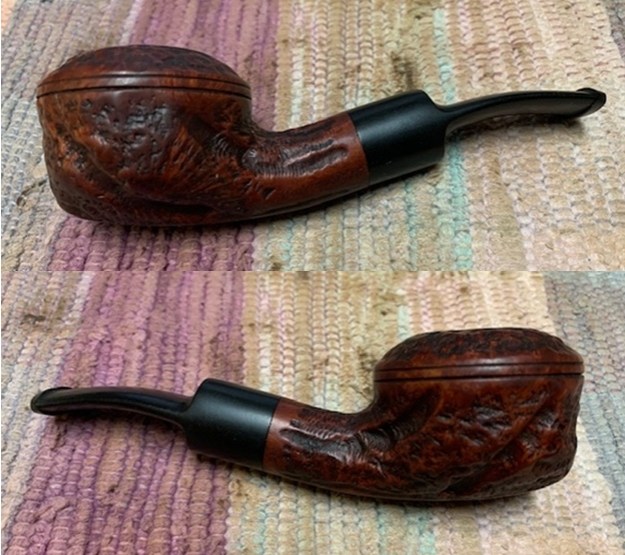
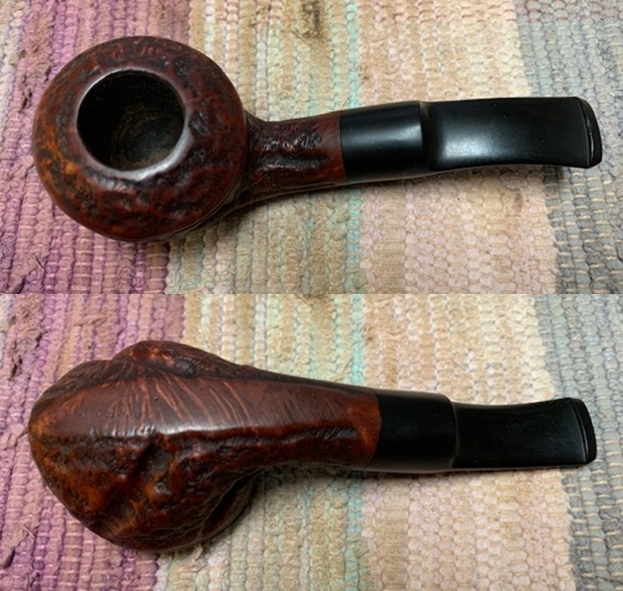
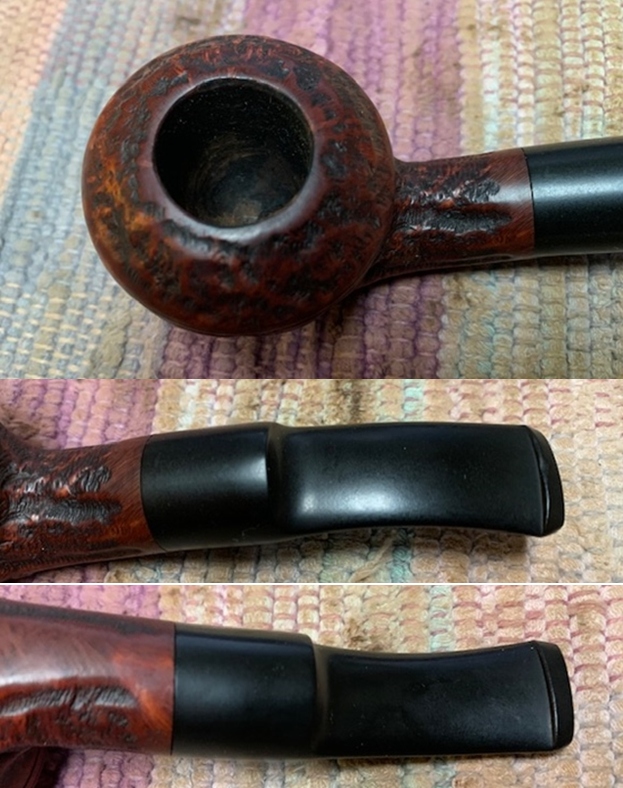
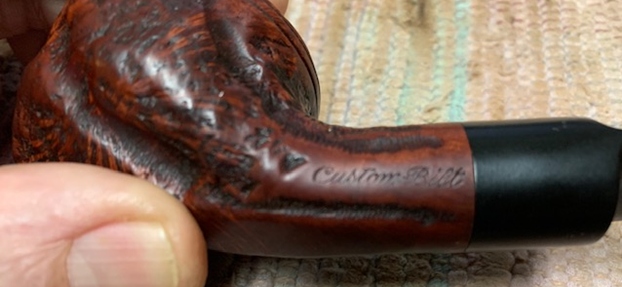
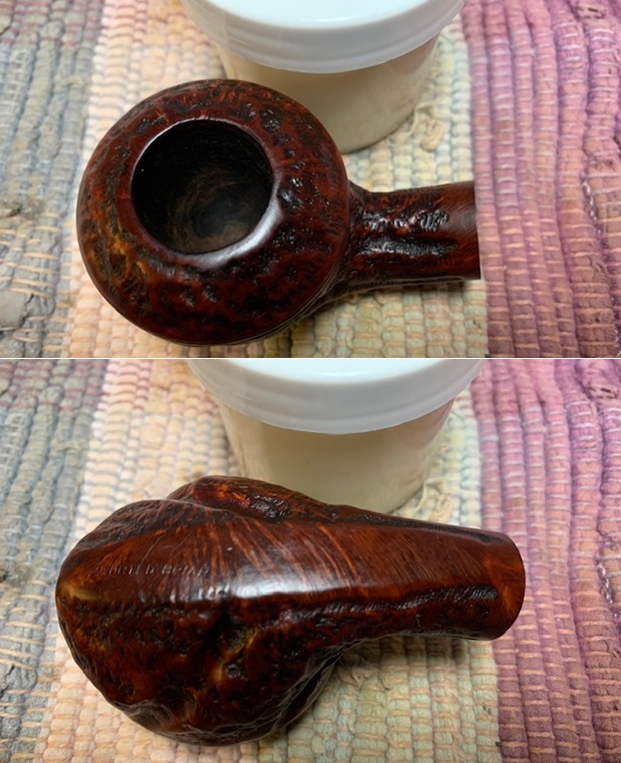
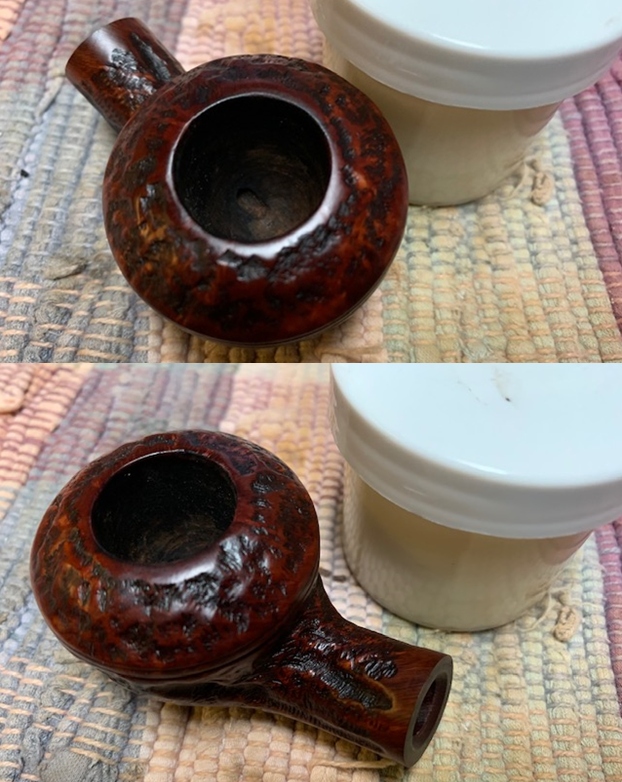
The next pipe on the work table came to us from an antique store in Chinook, Washington, USA. The pipe is a classic Custom-Bilt piece – a rusticated Scoop or Bullmoose shaped pipe with some nice grain around the bowl. The pipe is stamped on the left side of the shank and reads Custom-Bilt and on the heel of the bowl and reads Imported Briar. There was a lot of grime ground into the smooth and rusticated portions of the finish on the briar. The bowl was heavily caked with a light overflow of lava on the top and inner edge of the rim. The inside edges looked to be in good condition. The stem was lightly oxidized and had tooth chatter and marks on the top and underside near the button and on the button edge. There were not markings or a logo on the saddle stem. There was also a removable stinger in the tenon end. It had promise but it was very dirty. Jeff took some photos of the pipe before he started his cleanup work. He took photos of the rim top and bowl to give a clear picture of the thickness of the cake and tobacco debris as well as the lava on the rim top rustication. He also took photos of the top and underside of the stem to show the light oxidation and the chatter and tooth marks. Jeff took photos of the sides and heel of the bowl to give a picture of what the briar looked like. The rustication pattern around the bowl is instantly recognizable as done by Custom-Bilt.  You can also see the prominent nose or jutting chin on the bottom front of the bowl that leads me to identify it as a Bullmoose! The stamping on the left side of the shank is clear and readable and read as noted above. I turned to Pipephil (http://www.pipephil.eu/logos/en/logo-c8.html) to get a quick view of the brand once again. I knew that I was working with one of the older pipes and  probably made by Tracy Mincer himself. He stopped making the Custom-Bilt pipes in the early 1950s. The screen capture I included below shows a brief history of the brand. I turned to Pipedia (https://pipedia.org/wiki/File:CustomBilt_Stamp1.jpg) for a quick read. The majority of the information there was two book reviews of the Custom-Bilt Story by Bill Unger. The one line I culled was the following: “Tracy Mincer started the original Custom-Bilt pipes it appears in 1934”.

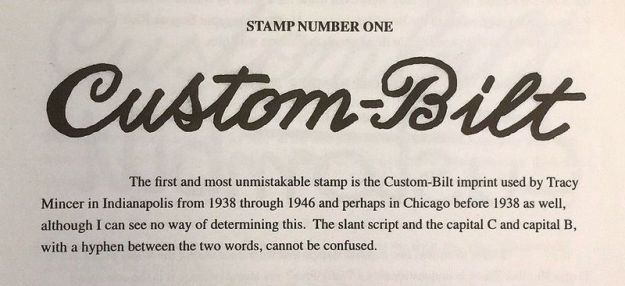
I did a screen capture of the stamping that matched the stamping on the pipe that I am working on. What I learned from that is that the stamp was used by Tracy Mincer in Indianapolis in the US from 1938-1946 and possibly in Chicago before 1938 as well. There were also some metal bits in the vulcanite and the Imported Briar stamp which made think WW2 or shortly after. So now I had a possible date for this pipe. It was an old timer and it was well worth working on.

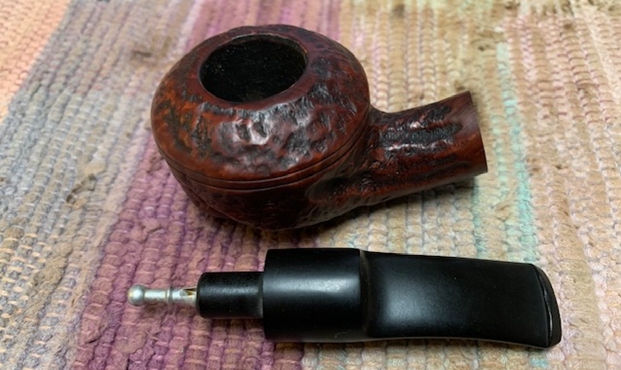
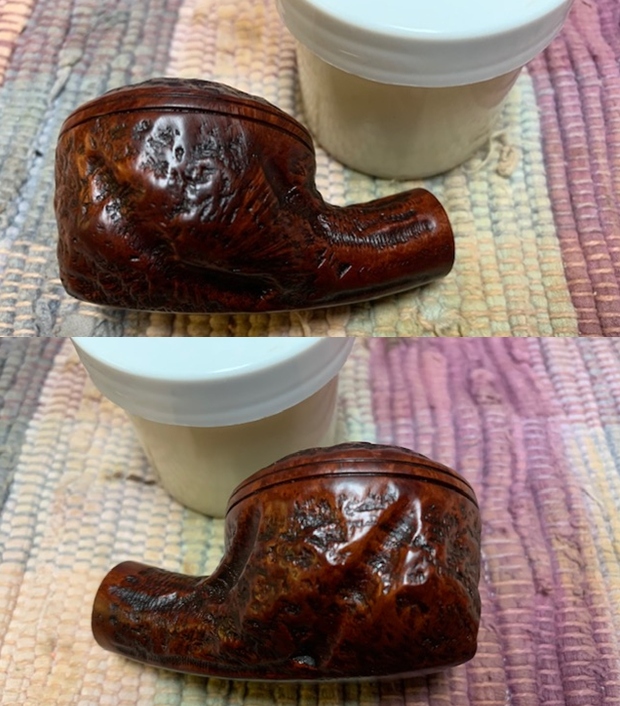
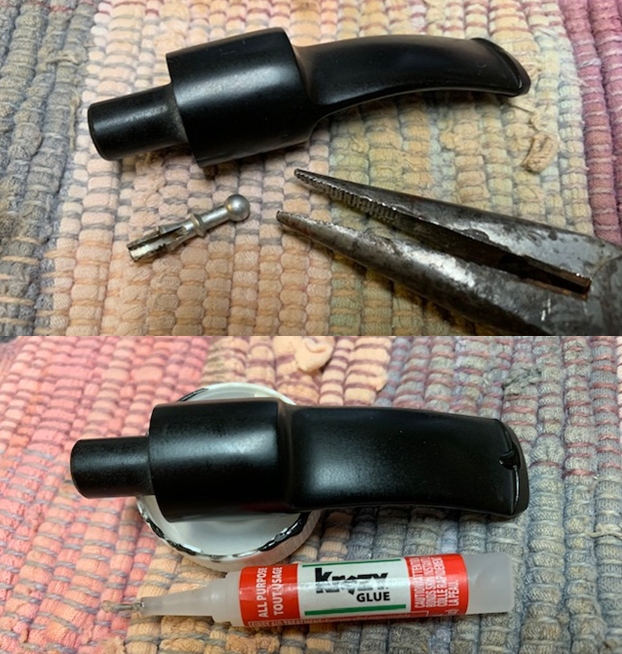
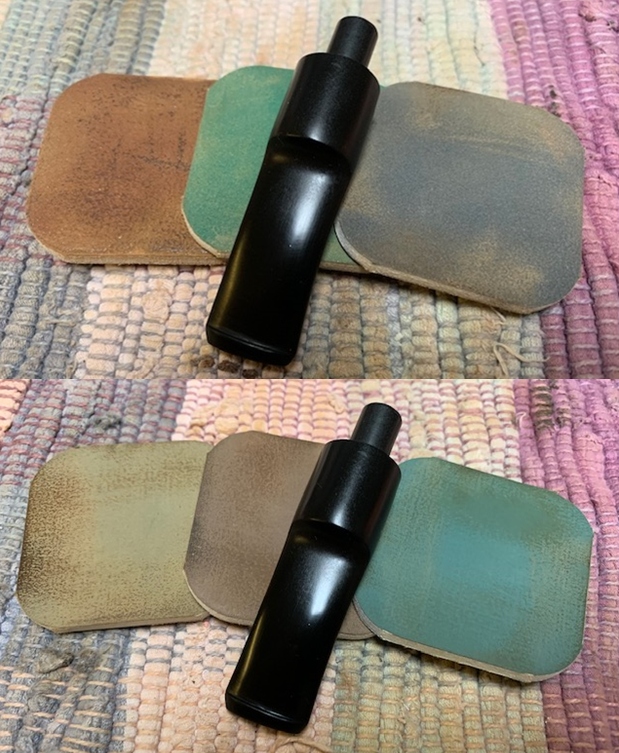
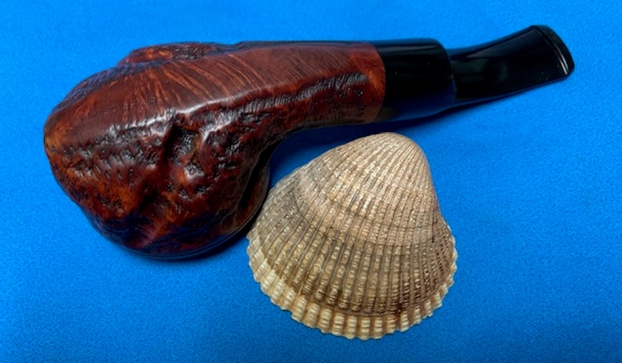
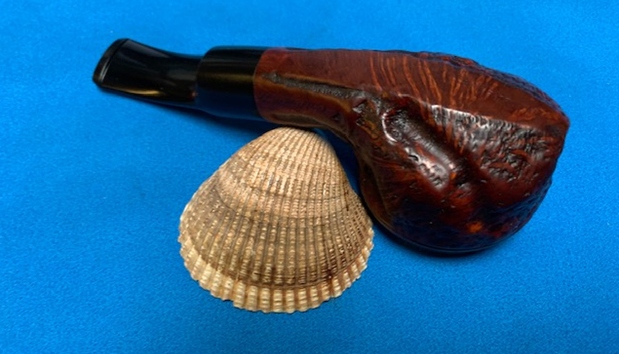
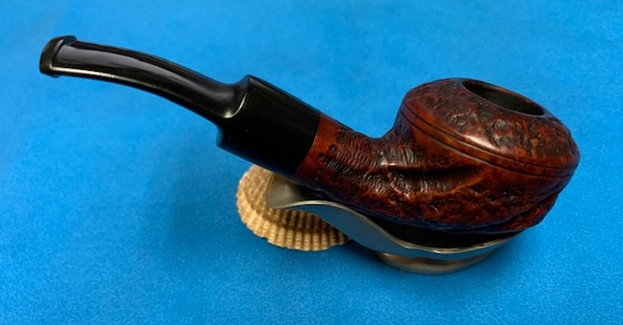
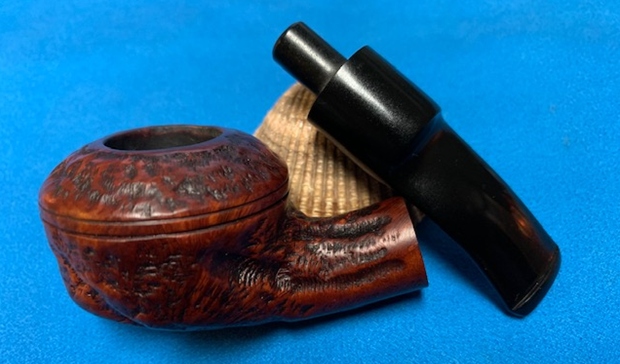
Armed with that information I turned to work on the pipe itself.  Jeff had cleaned up the pipe with his usual penchant for thoroughness. He reamed the pipe with a PipNet pipe reamer and removed the rest of it with a Savinelli Fitsall Pipe Knife.  He scrubbed the bowl with undiluted Murphy’s Oil Soap with a tooth brush. He rinsed it under running warm water to remove the soap and grime. He cleaned out the inside of the shank and the airway in the stem with alcohol, cotton swabs and pipe cleaners. He soaked the stem in Before & After Deoxidizer and rinsed it off with warm water. I took photos of the pipe before I started my part of the restoration work. The rim top cleaned up really well. The rim top and outer edge of the bowl show some damage. The stem surface looked very good with a few small tooth marks and chatter on both sides near the button. There was also a deeper tooth mark on the top button surface.    The stamping on left side of the shank is clear and readable. It is stamped as noted above.I removed the stem and took a photo of the pipe to give a sense of the whole. The saddles stem is nice and the photo shows the removable stinger. The bowl was in excellent condition so started by rubbing the bowl and shank down with Before & After Restoration Balm. I worked it into the surface of the bowl sides and shank with my fingertips and a horsehair shoe brush to clean, enliven and protect the briar. I let the balm sit for about 10-15 minutes and buffed with a cotton cloth to raise the shine. The grain came alive.  I set the bowl aside and turned to work on the stem. I removed the pressure fit stinger before working on the rest of the stem. I will include it with the pipe to the next owner but will not reinstall it. I also filled in the deep tooth mark on the topside of the button with clear superglue. Once the repair cured I sanded it smooth to blend them into the surface of the vulcanite. I also sanded out the remaining tooth chatter on both sides. I started polishing it with 400 grit wet dry sandpaper. I polished the vulcanite stem with micromesh sanding pads – 1500-12000 grit pads. I wiped it down with Obsidian Oil after each sanding pad. I used Before & After Pipe Polish – both Fine and Extra Fine to further polish the stem.   This Custom-Bilt Imported Briar Scoop/Bullmoose is a great looking pipe now that it has been restored. The style of rustication that is used around the bowl is quite beautiful and works well with both the shape and the polished vulcanite saddle stem. I put the stem back on the bowl and carefully buffed the pipe with Blue Diamond on the buffing wheel using a light touch on the briar. I gave the bowl and the stem multiple coats of carnauba wax on the buffing wheel and followed that by buffing the entire pipe with a clean buffing pad. I hand buffed the pipe with a microfiber cloth to deepen the shine. The finished Custom-Bilt fits nicely in the hand and feels great. Give the finished pipe a look in the photos below. The dimensions of the pipe are Length: 5 inches, Height: 1 ½ inches, Outside diameter of the bowl: 2 inches, Chamber diameter: ¾ of an inch. I will be putting it on the rebornpipes store shortly. If you are interested in adding this pipe to your collection send me a message or an email. Thanks for reading this blog and my reflections on the pipe while I worked on it. There are many more to come!

New Life a Drummond Imported Briar Poker


Blog by Steve Laug

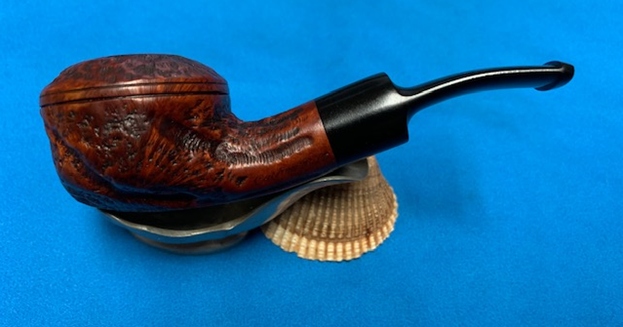
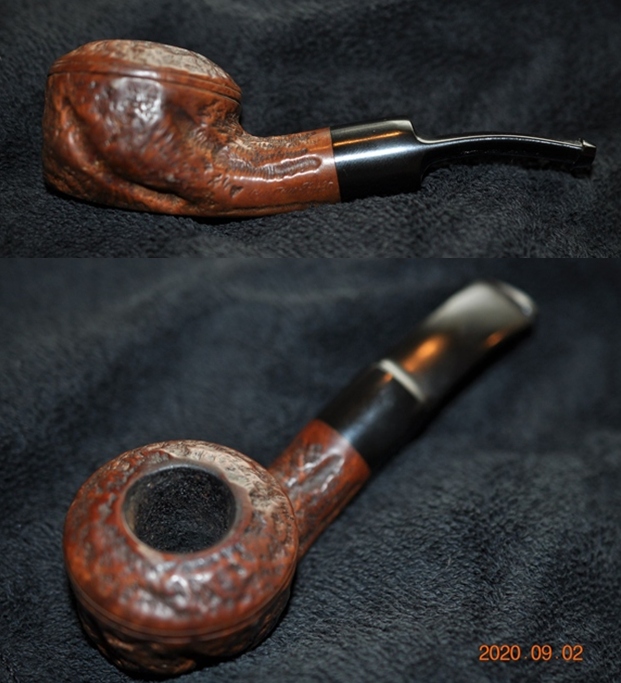
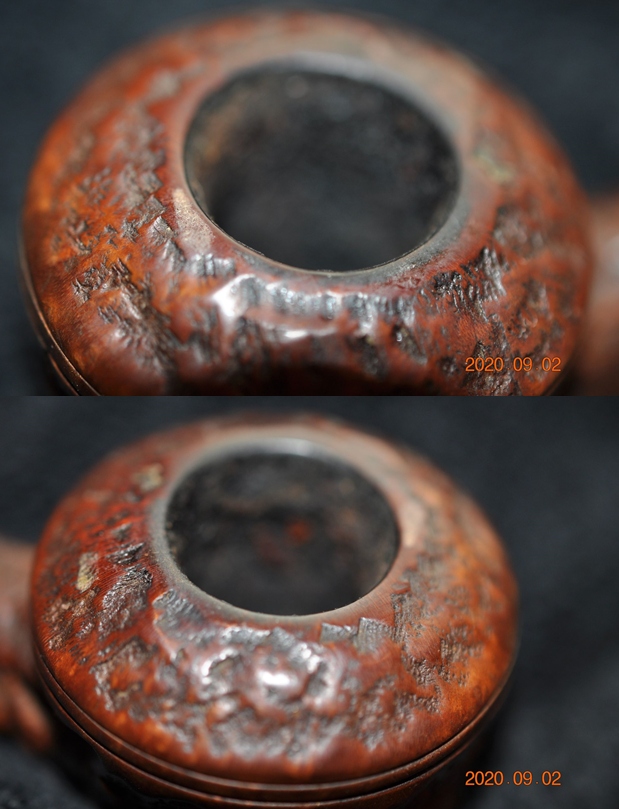
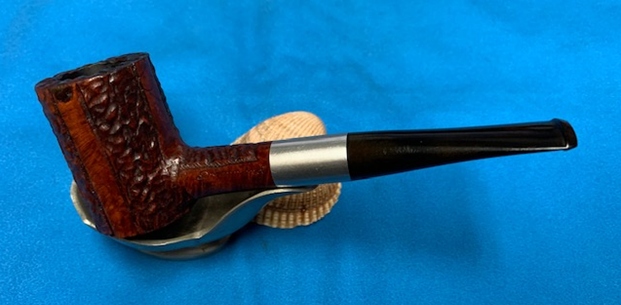
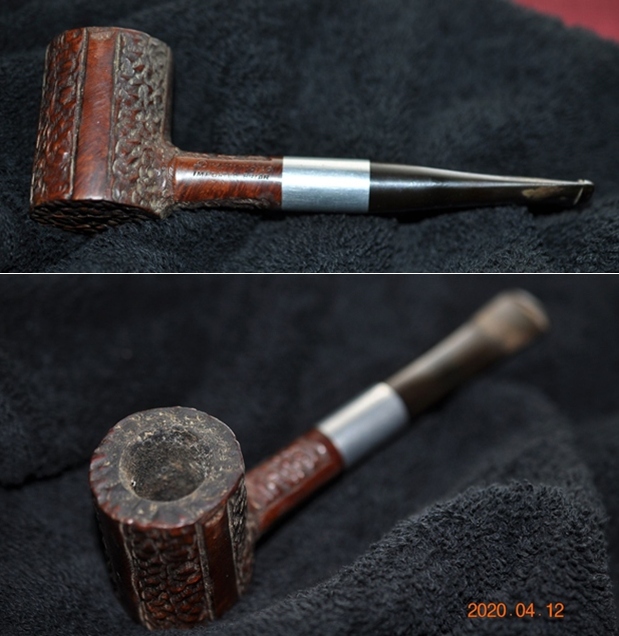
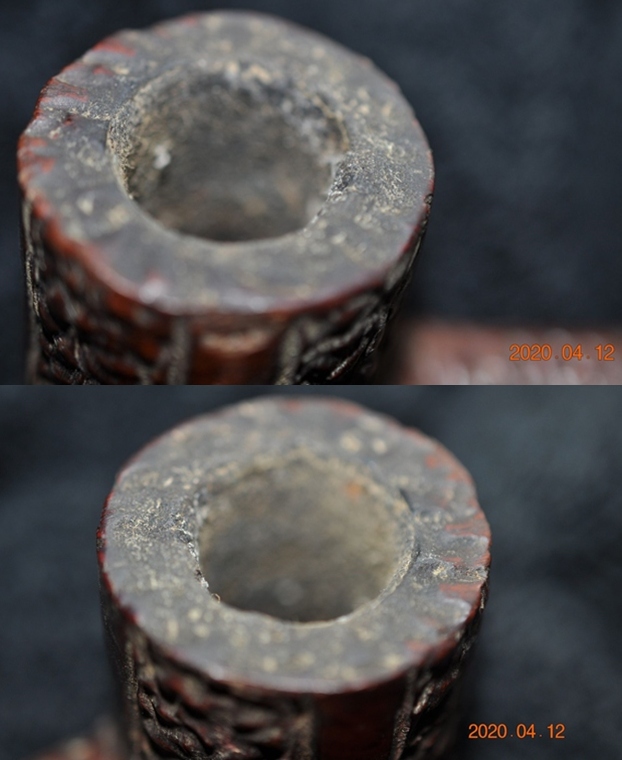
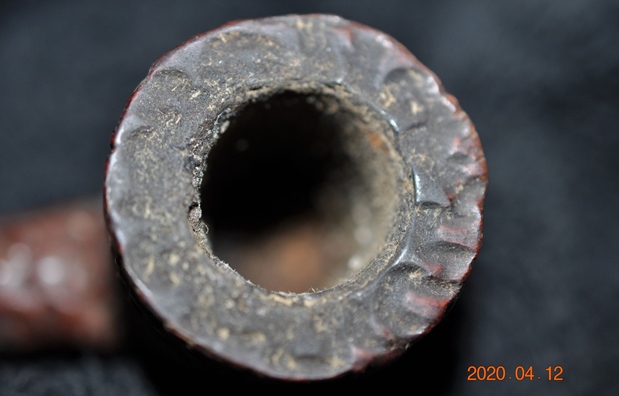
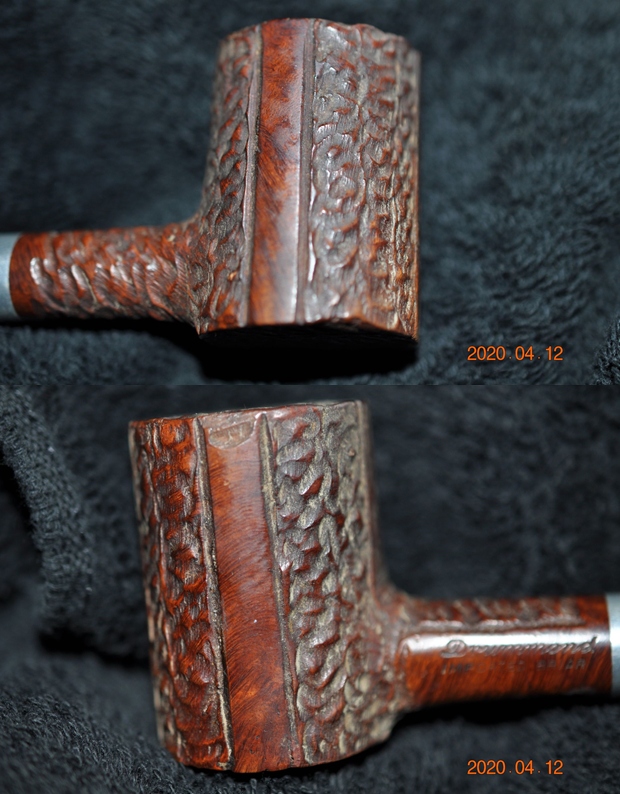
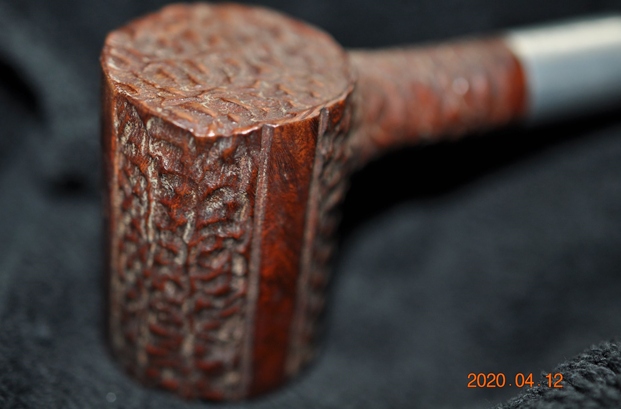
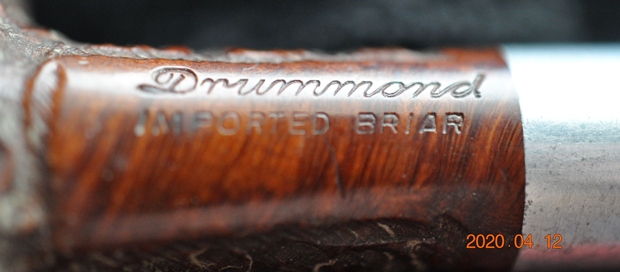
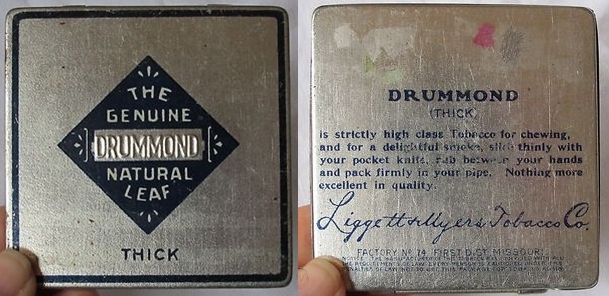
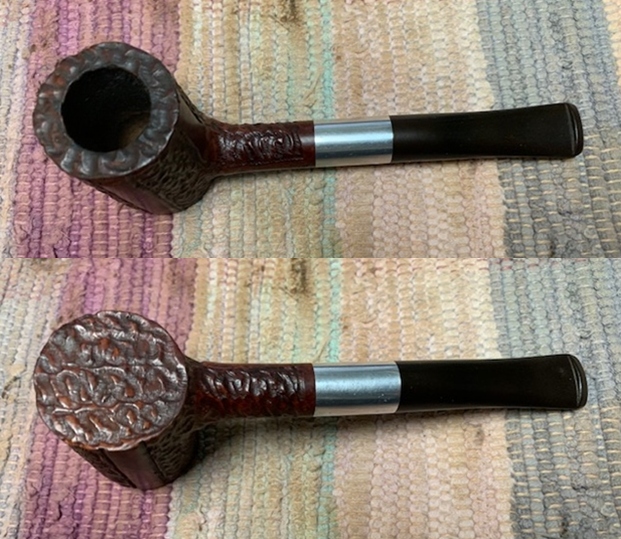
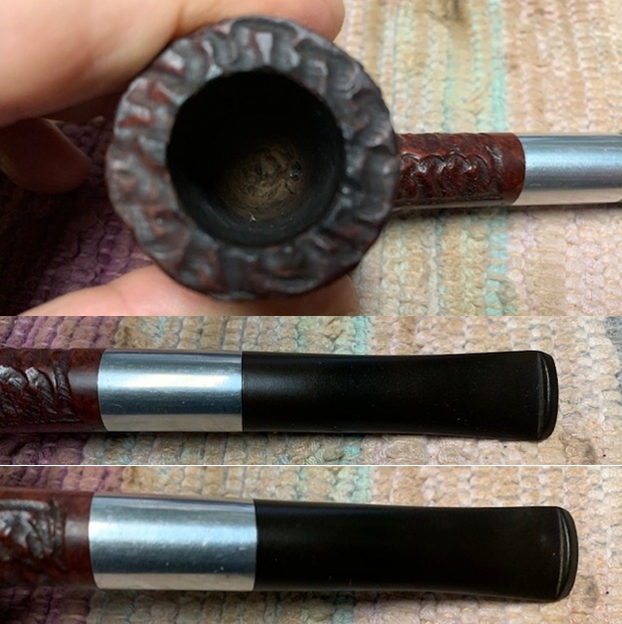
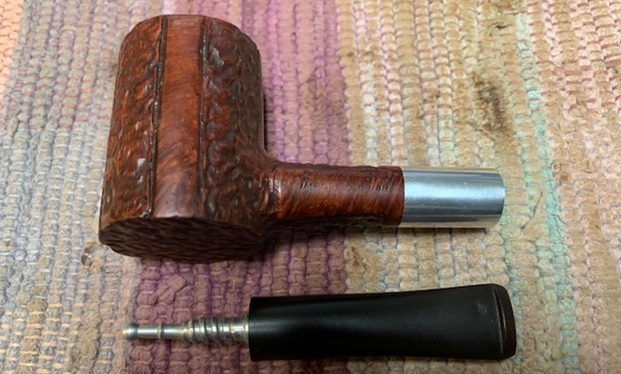
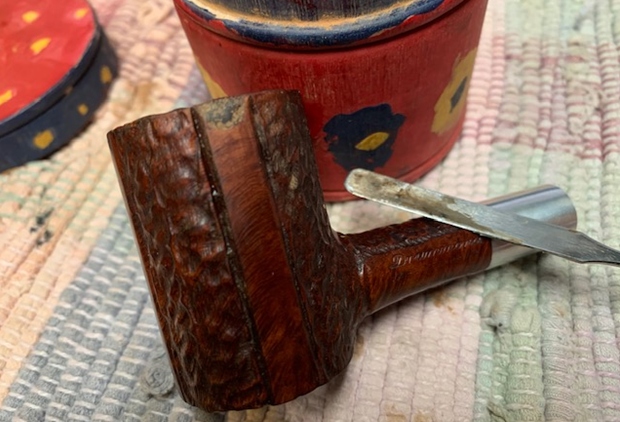
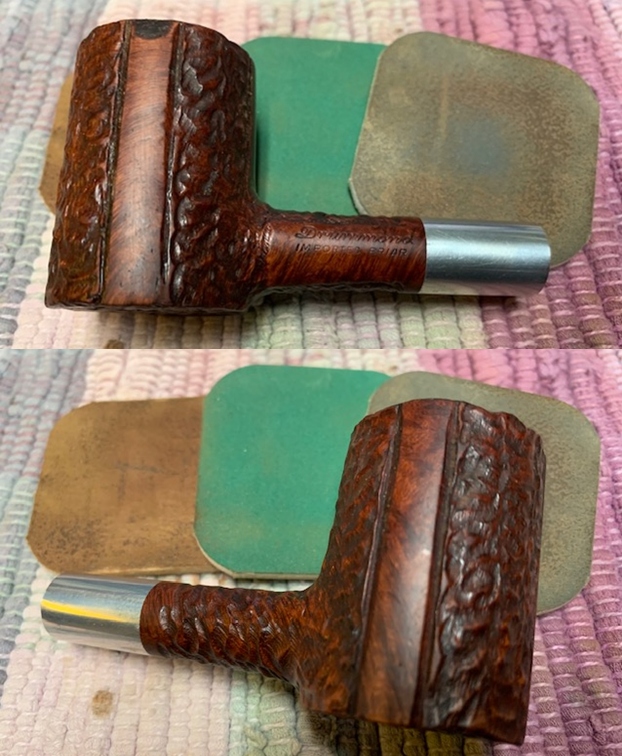
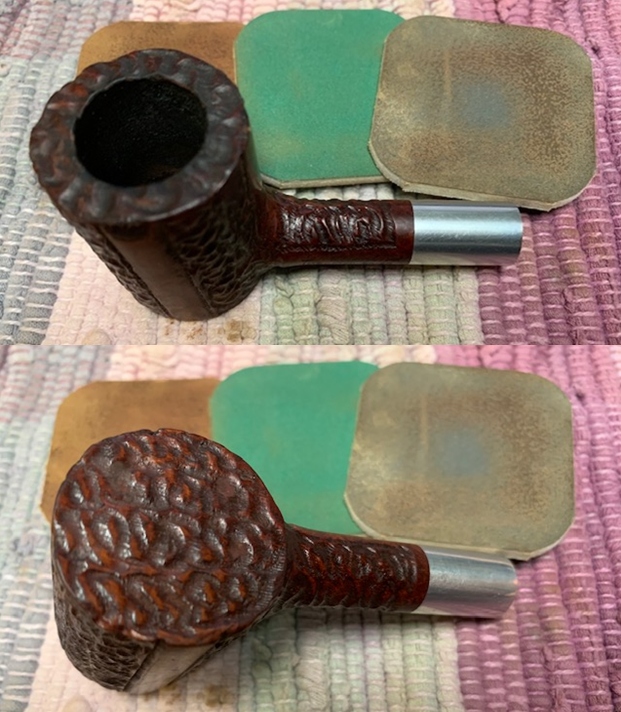
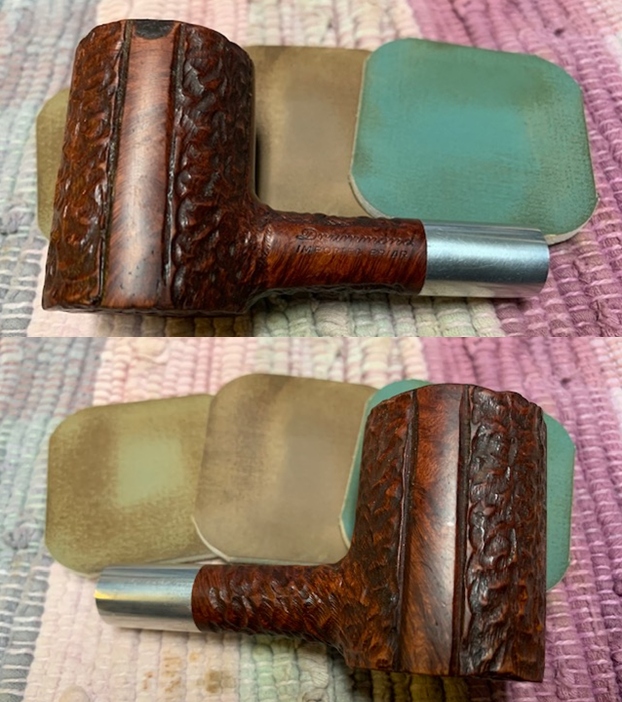
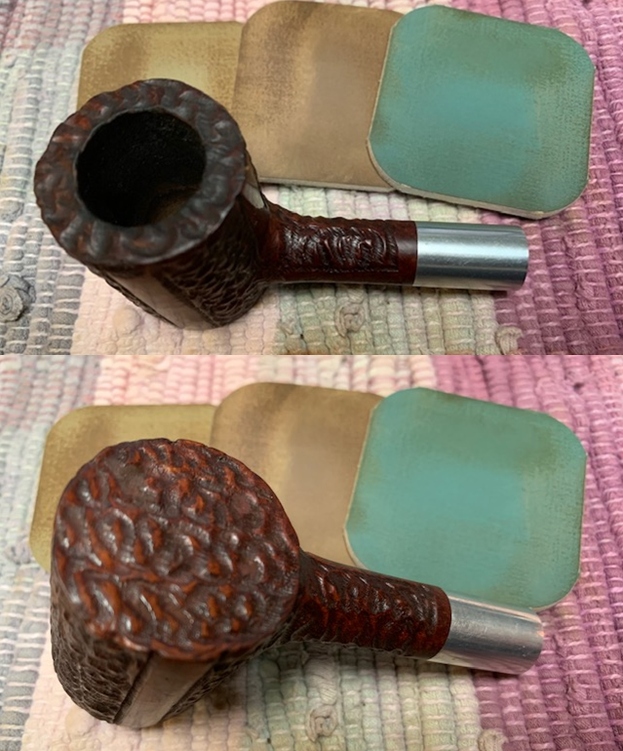
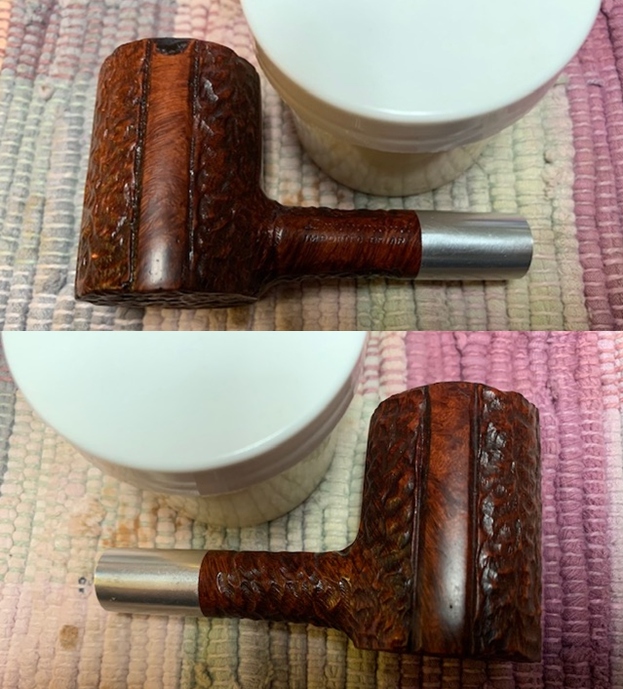
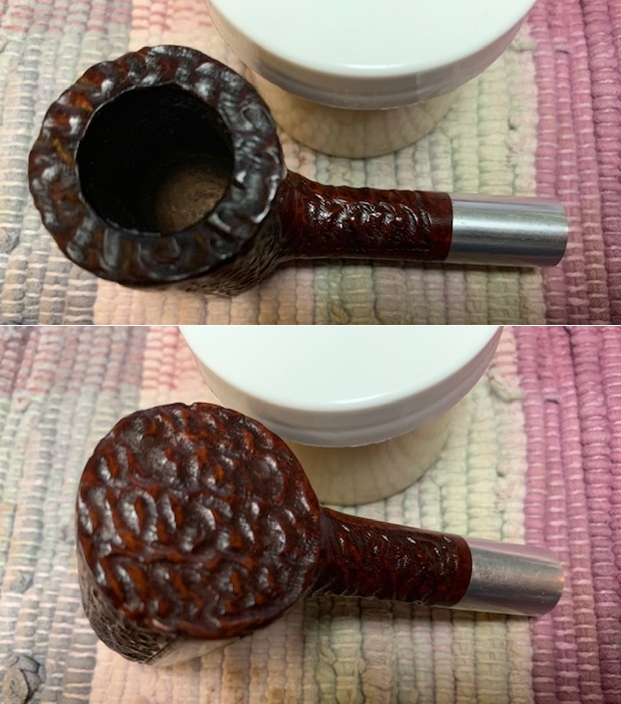
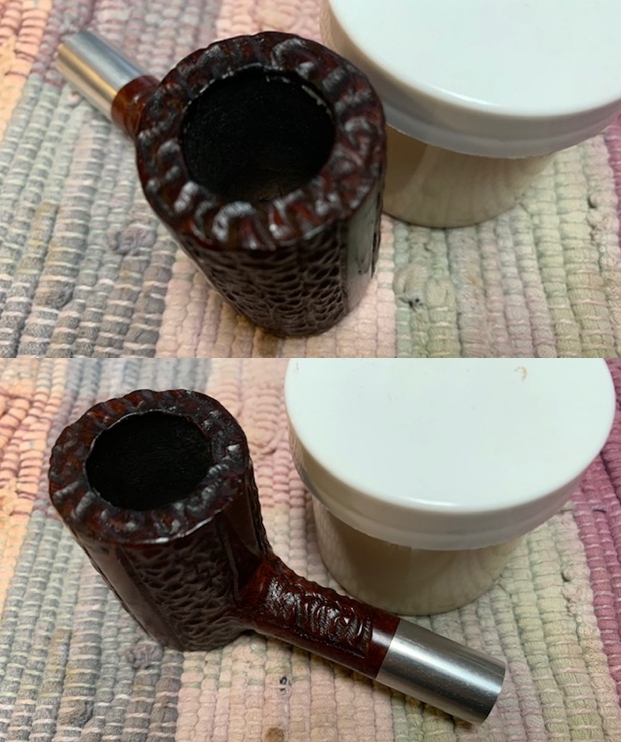
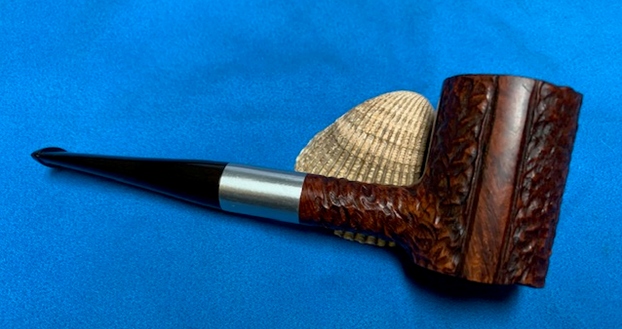
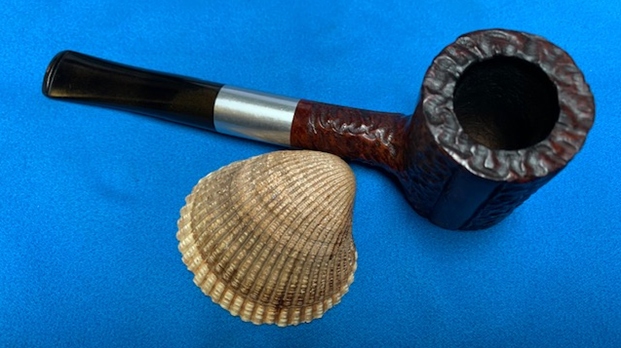
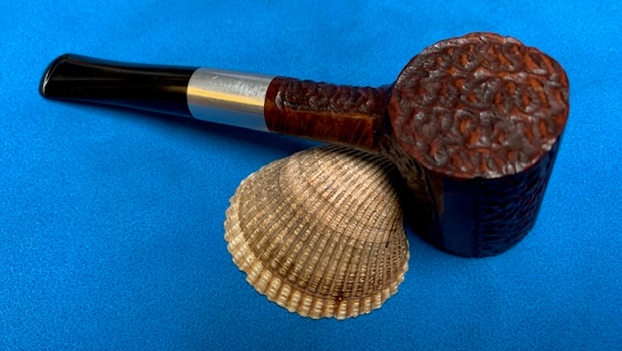
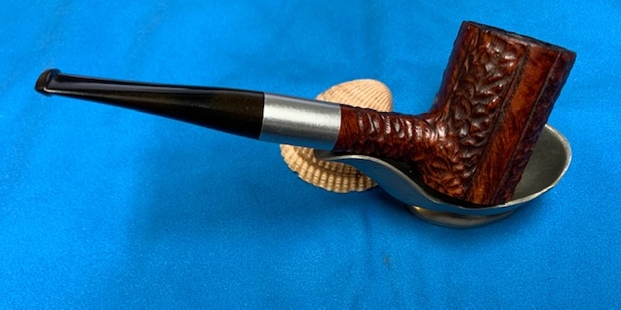
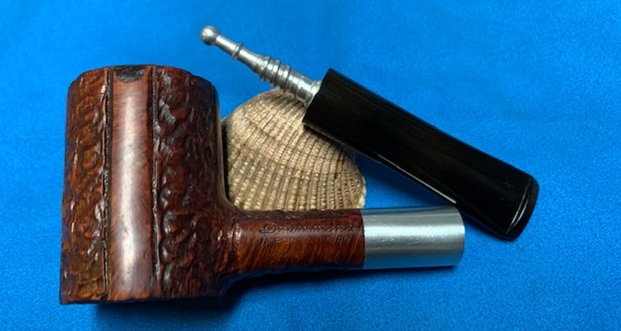
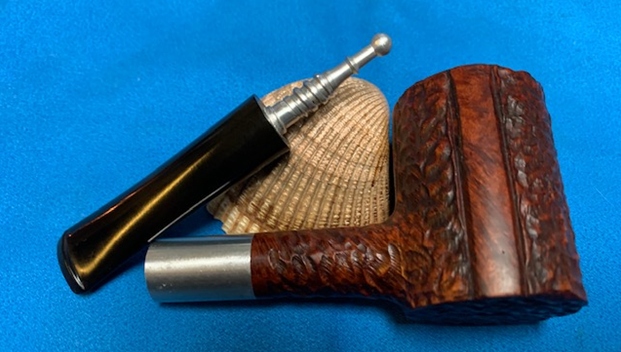
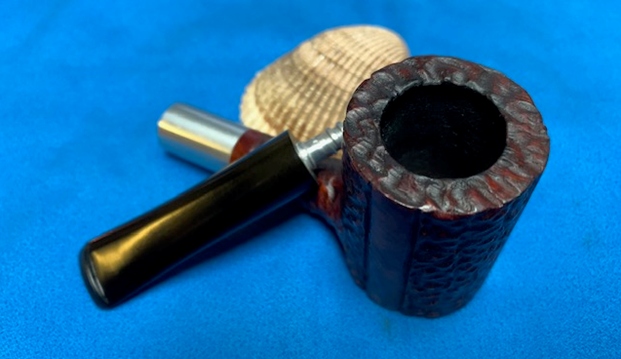
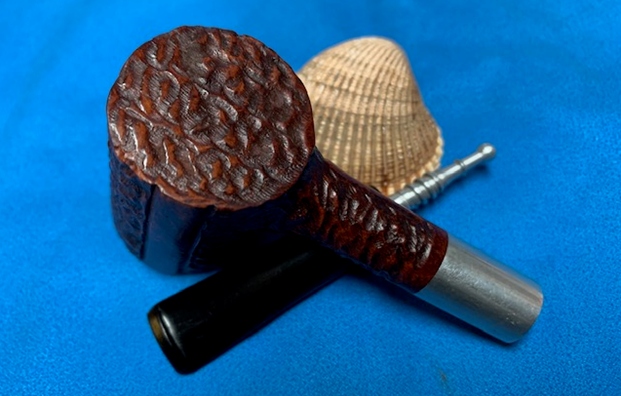
The next pipe on the work table came to us from an online auction from Columbus, Mississippi, USA. The pipe is an interesting looking piece – a mixed finish Poker shaped pipe with some nice grain around the bowl. The finish is rusticated in vertical stripes separated by smooth stripes. The pipe is stamped on the left side of the shank and reads Drummond in script [over] Imported Briar. There was a lot of grime ground into the smooth and rusticated portions of the finish on the briar. The bowl was heavily caked with an overflowing lava coat on the top of the rim. The inside edges looked to be in good condition. There was a large nick in the briar on the left side top outer edge of the rim. The metal shank end is a threaded system for the threaded tenon that is screwed into the shank. The stem was oxidized, calcified and had tooth chatter and marks on the top and underside near the button. There were not markings or a logo on the taper stem. It had promise but it was very dirty. Jeff took some photos of the pipe before he started his cleanup work. He took photos of the rim top and bowl to give a clear picture of the thickness of the cake and tobacco debris as well as the lava filling in the rustication on the rim top. He also took photos of the top and underside of the stem to show the oxidation and the chatter and tooth marks. Jeff took photos of the sides and heel of the bowl to give a picture of what the briar looked like. There is some nice grain on the smooth stripes and the rustication is unique around the sides.  The stamping on the left side of the shank is clear and readable and read as noted above. I could find nothing listed on either Pipedia or Pipephil’s site on the Drummond Brand. I did a quick search of the name and came across quite a few photos of tins of tobacco and pouches of tobacco made by Liggett & Myers. It is labeled as Antique Pipe Chewing Tobacco Tin that is called The Genuine Drummond Natural Leaf Thick. Have a look at the photos I have included below (https://www.worthpoint.com/worthopedia/antique-pipe-chewing-tobacco-tin-253303793).

Antique Pipe Chewing Tobacco Tin Genuine Drummond Natural Leaf Liggett & MyersI am pretty certain that the pipe was a Tobacco Company Coupon pipe possibly that was earned by tobacco coupons. I cannot prove that but that appears to be what is happening with this mystery brand. Now on to working on the pipe.

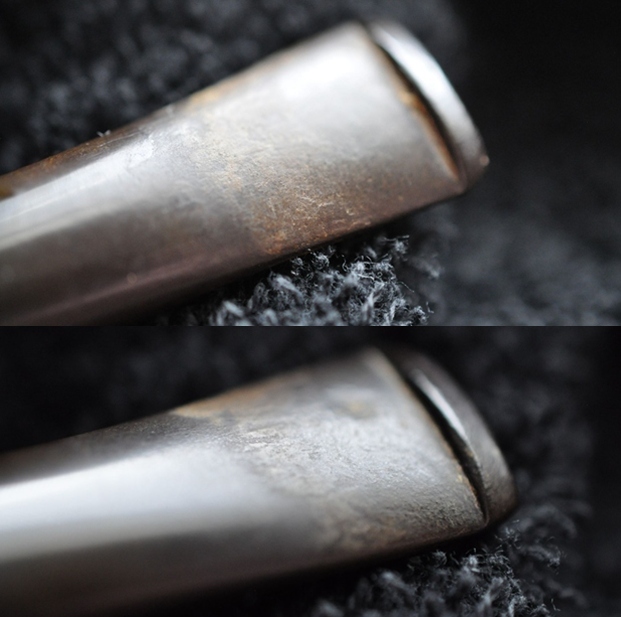
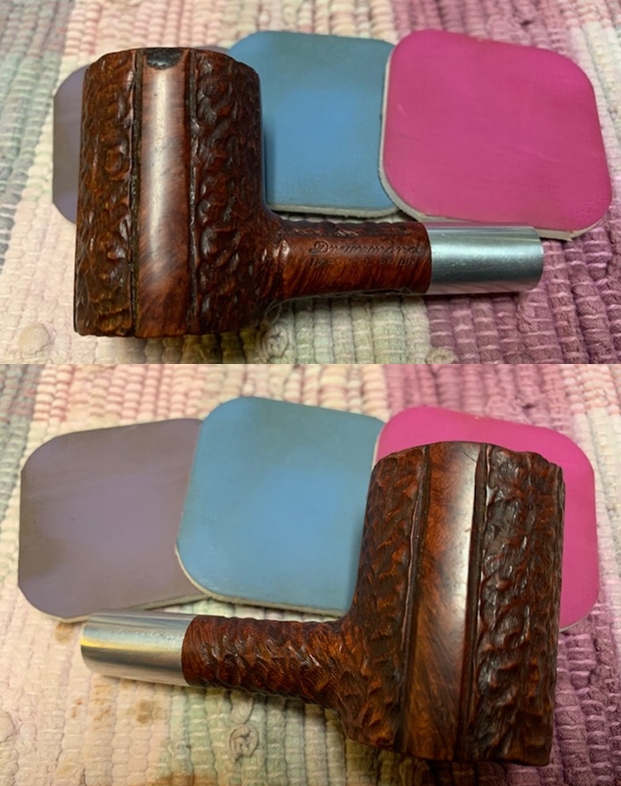
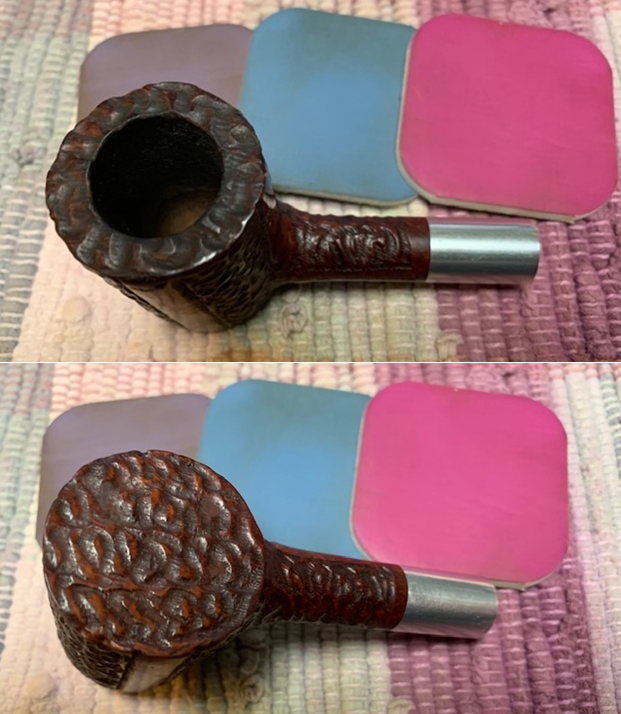
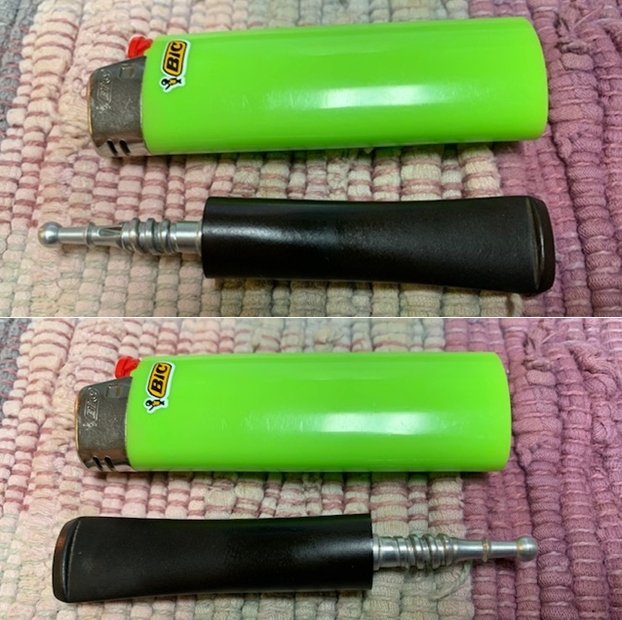
Jeff had cleaned up the pipe with his usual penchant for thoroughness. He reamed the pipe with a PipNet pipe reamer and removed the rest of it with a Savinelli Fitsall Pipe Knife.  He scrubbed the bowl with undiluted Murphy’s Oil Soap with a tooth brush. He rinsed it under running warm water to remove the soap and grime. He cleaned out the inside of the shank and the airway in the stem with alcohol, cotton swabs and pipe cleaners. He soaked the stem in Before & After Deoxidizer and rinsed it off with warm water. I took photos of the pipe once I received it.  The rim top cleaned up really well. The rim top and outer edge of the bowl show some damage. The stem surface looked very good with a few small tooth marks and chatter on both sides near the button.   The stamping on left side of the shank is clear and readable. It is stamped as noted above.    I removed the stem and took a photo of the pipe to give a sense of the whole. The stem is tapered and narrow. Now it was time to do my work on the pipe. I filled in a large chip on the top left edge of the bowl. I used super glue and briar dust to build up the chipped area. Once it cured I smoothed it out with 220 grit sandpaper until it was even with the surrounding briar.I polished the repaired area and the rest of the briar with micromesh sanding pads – wet sanding with 1500-12000 grit pads and wiping it down after each pad with a damp cloth. I rubbed the bowl and shank down with Before & After Restoration Balm. I worked it into the surface of the bowl sides and shank with my fingertips to clean, enliven and protect the briar. I let the balm sit for a little while and then buffed with a cotton cloth to raise the shine. The grain came alive and the fills while visible look better than when I began. I set the bowl aside and turned to work on the stem. I “painted” the surface on both sides of the stem with the flame of a lighter to lift the tooth marks. I was able to lift them completely on the top side of the stem. One deeper tooth mark remained on the underside.  I filled in the one remaining tooth mark on the underside of the stem. Once the repair cured I sanded them smooth to blend them into the surface of the vulcanite. I started polishing it with 400 grit wet dry sandpaper. I polished the vulcanite stem with micromesh sanding pads – 1500-12000 grit pads. I wiped it down with Obsidian Oil after each sanding pad. I used Before & After Pipe Polish – both Fine and Extra Fine to further polish the stem.  This Drummond Imported Briar Poker is a great looking pipe now that it has been restored. The mix of rusticated and smooth finishes around the bowl is quite beautiful and highlights the grain and works well with the polished vulcanite taper stem. The repaired chip on the left topside of the bowl looks much better and is smooth to touch. I put the stem back on the bowl and carefully buffed the pipe with Blue Diamond on the buffing wheel using a light touch on the briar. I gave the bowl and the stem multiple coats of carnauba wax on the buffing wheel and followed that by buffing the entire pipe with a clean buffing pad. I hand buffed the pipe with a microfiber cloth to deepen the shine. The finished Drummond Poker fits nicely in the hand and feels great. Give the finished pipe a look in the photos below. The dimensions of the pipe are Length: 5 ½ inches, Height: 1 7/8 inches, Outside diameter of the bowl: 1 ¼ inches, Chamber diameter: ¾ of an inch. I will be putting it on the rebornpipes store shortly. If you are interested in adding this pipe to your collection send me a message or an email. Thanks for reading this blog and my reflections on the pipe while I worked on it. There are many more to come!