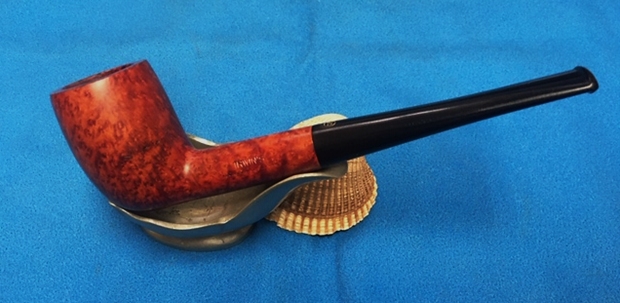
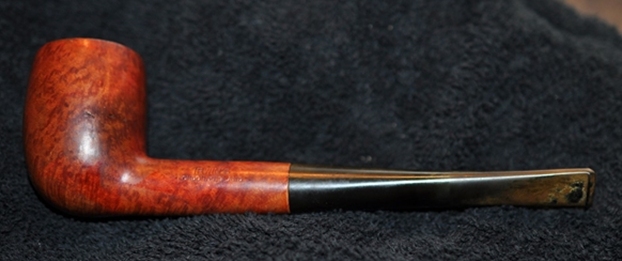
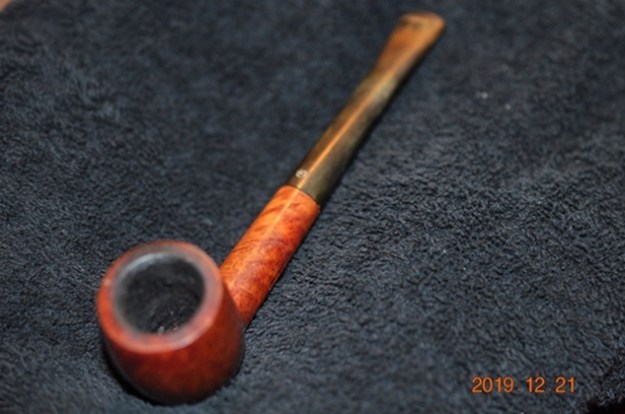
Monthly Archives: June 2020

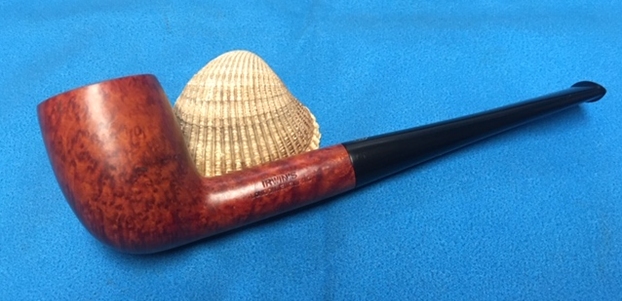
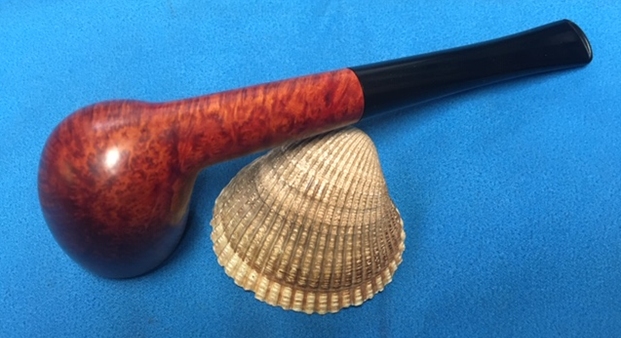
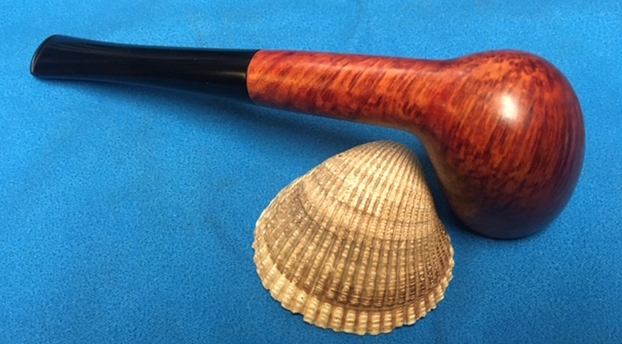
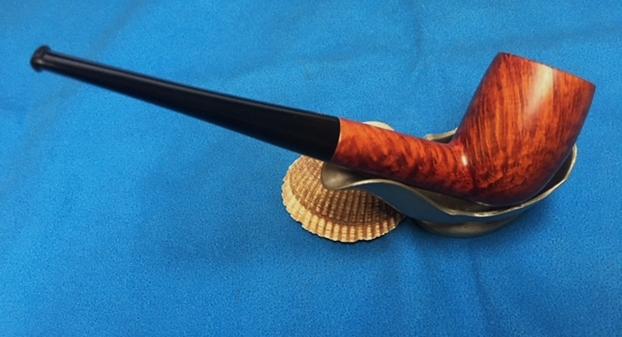
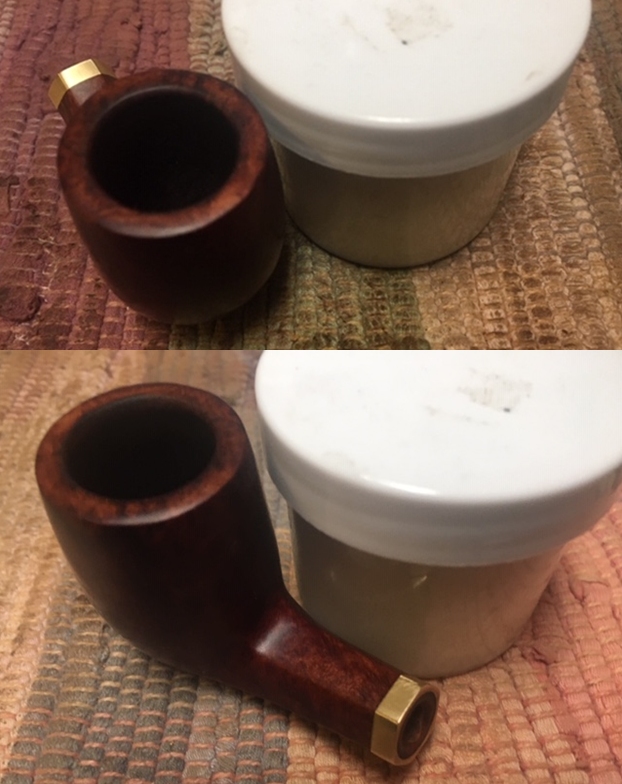
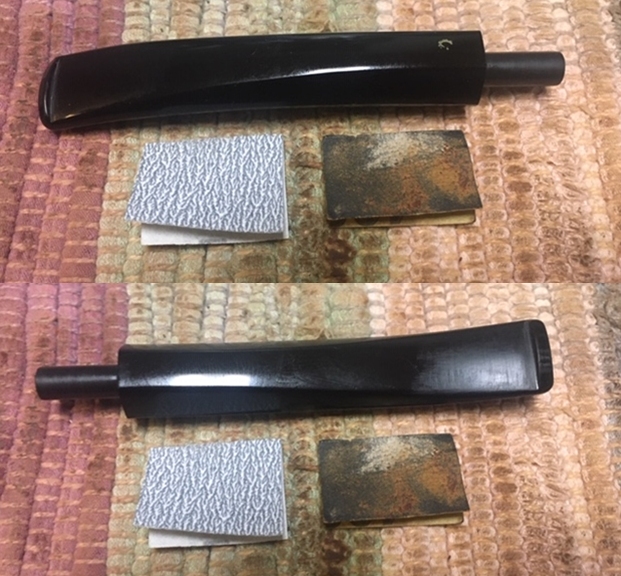
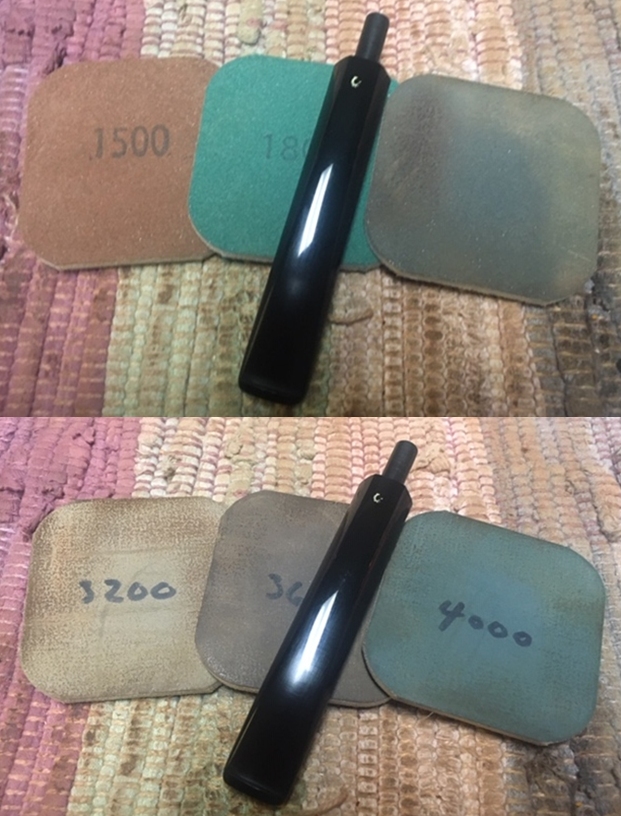
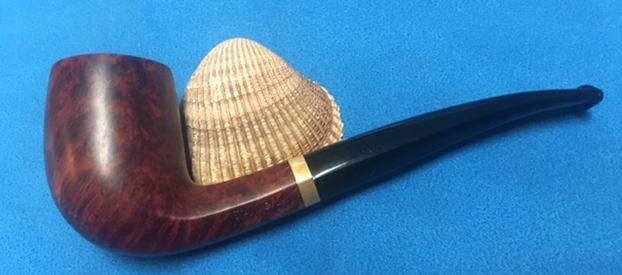
The next pipe from Bob Kerr’s Estate – an Irwin’s London England 9132 Billiard


Blog by Steve Laug

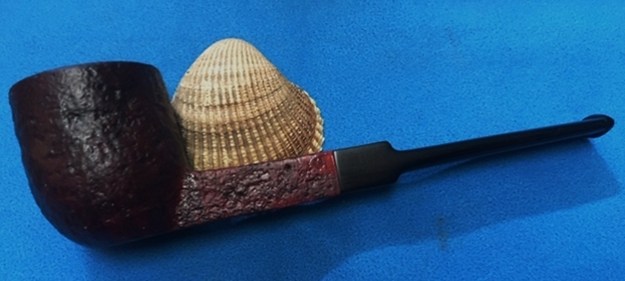
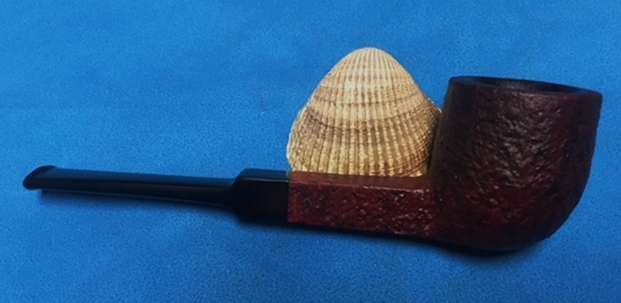
I am continuing to work on the pipes in Bob Kerr’s estate for a while. I am getting closer to finishing restoring this large estate with only about 28 more pipes to do. This is one of his two Irwin’s pipes that I am working on. I am cleaning them for the family and moving them out into the hands of pipemen and women who will carry on the trust that began with Bob and in some pipes was carried on by Bob. In the collection there were 19 Peterson’s pipes along with a bevy of Dunhills, some Comoy’s and Barlings as well as a lot of other pipes – a total of 125 pipes along with a box of parts. This is the largest estate that I have had the opportunity to work on. I put together a spread sheet of the pipes and stampings to create an invoice. I was taking on what would take me a fair amount of time to clean up. I could not pass up the opportunity to work on these pipes though. They were just too tempting. This is a nicely grained billiard and was another fun one to work on. It is a classic shaped pipe with a medium sized billiard shape. It will go on the rebornpipes store.

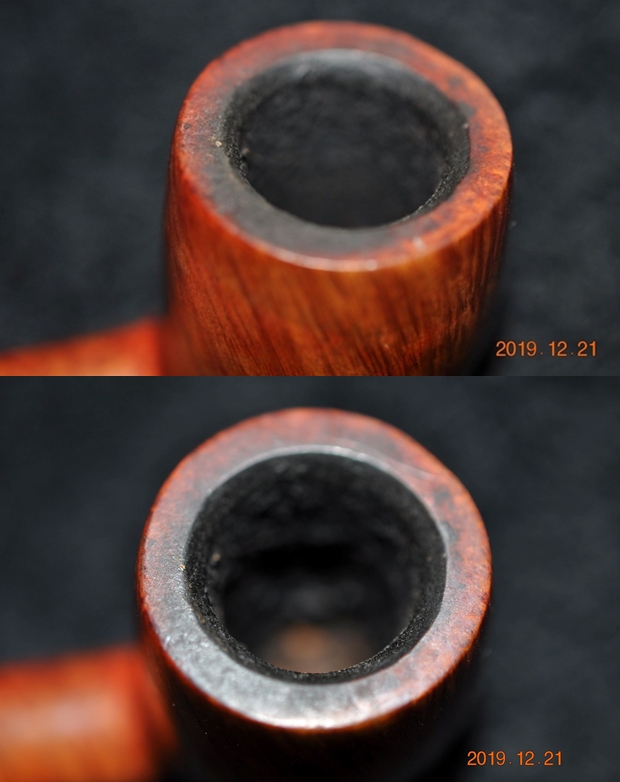
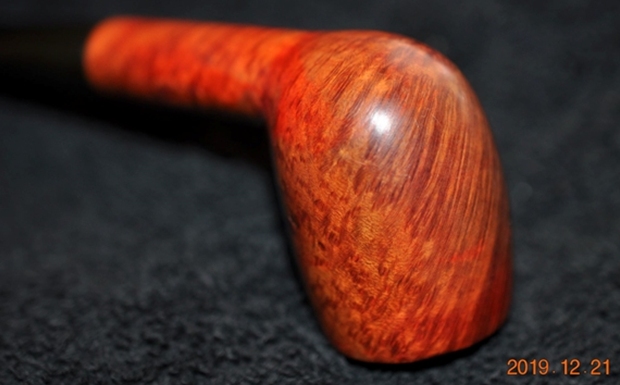
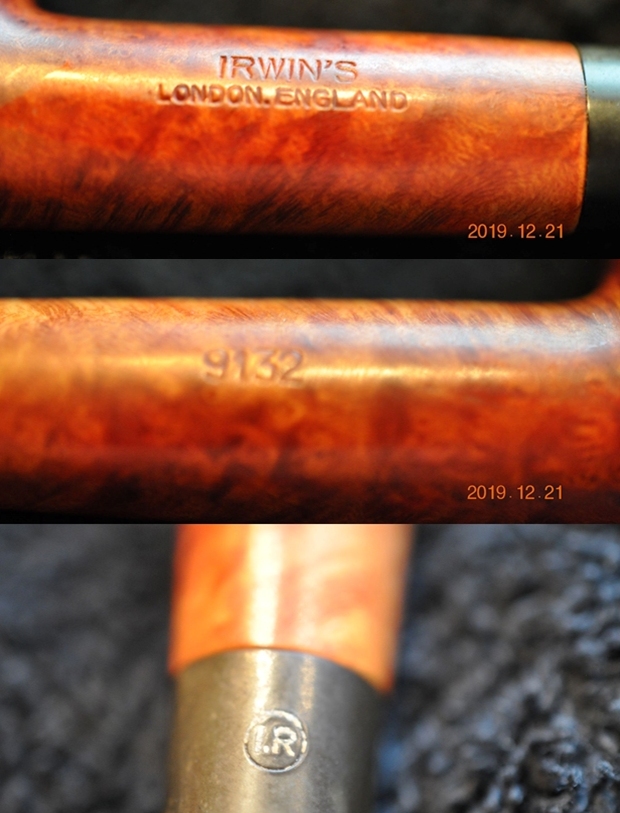
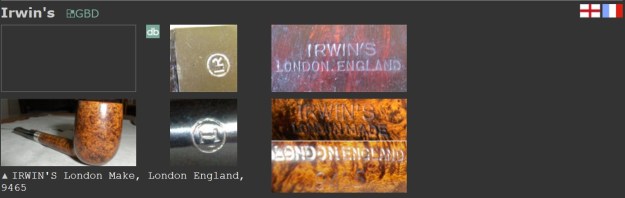
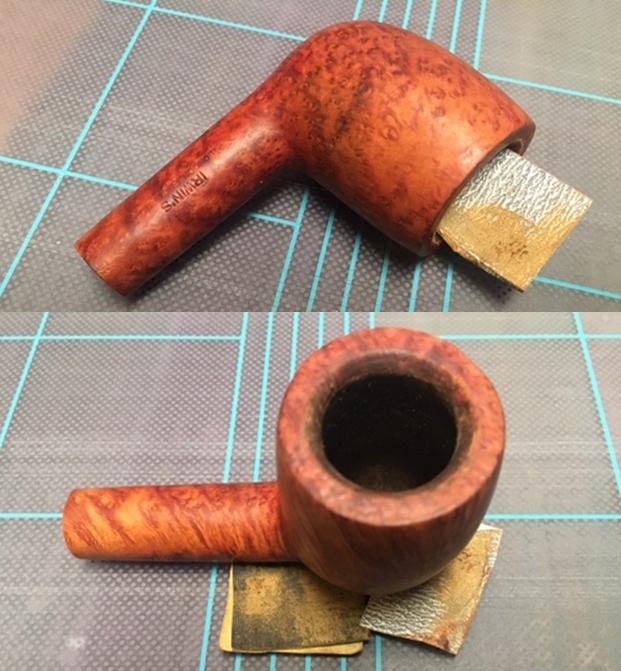
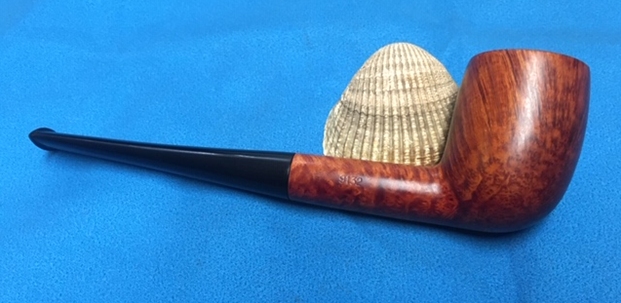
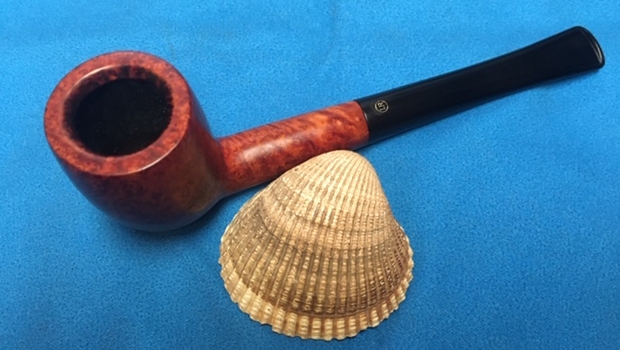
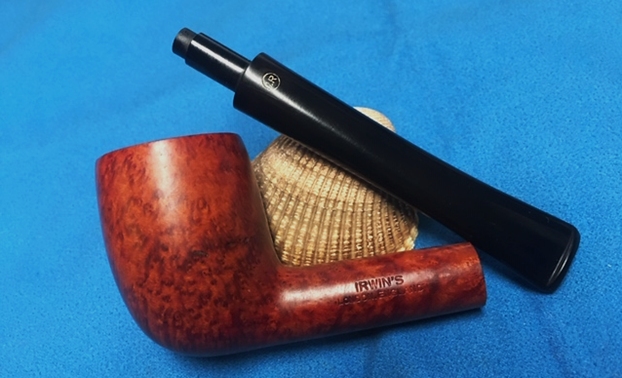
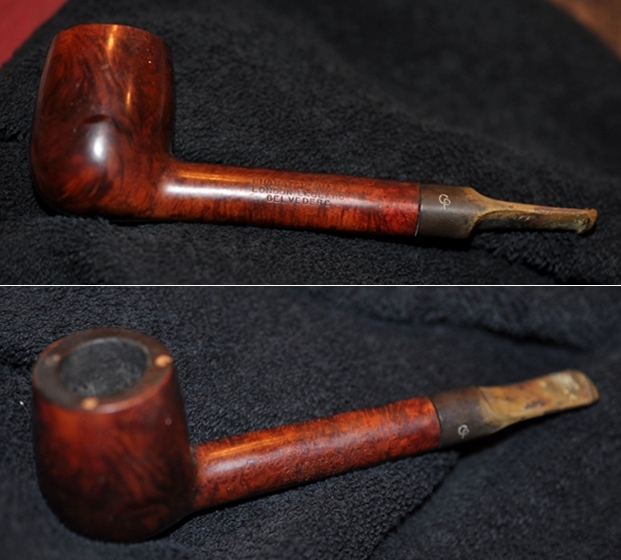
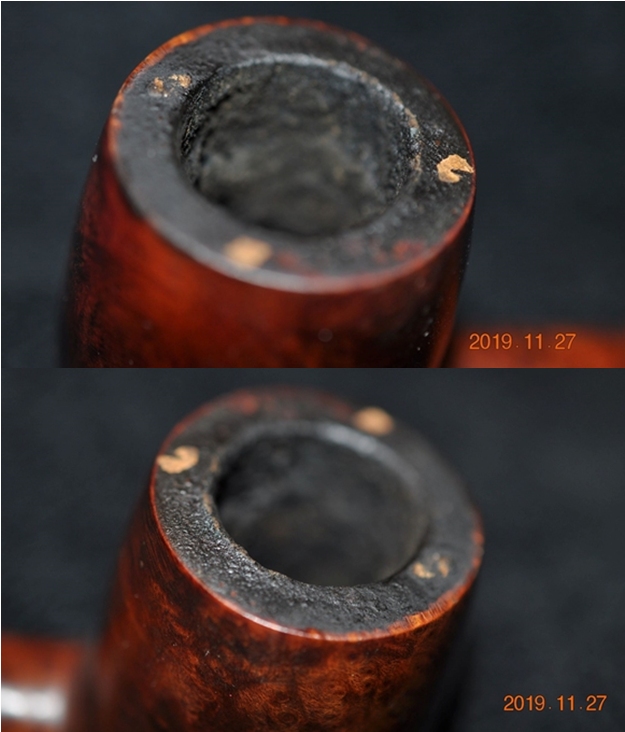
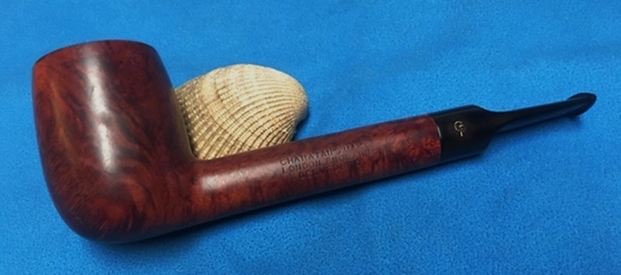
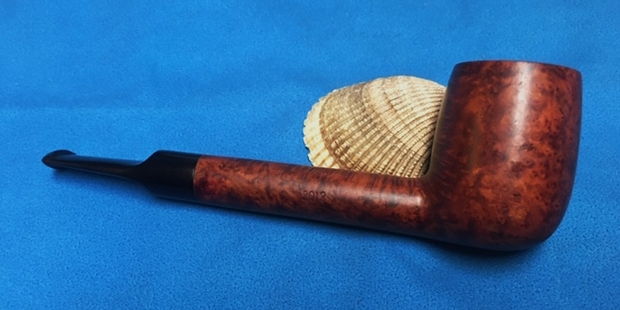
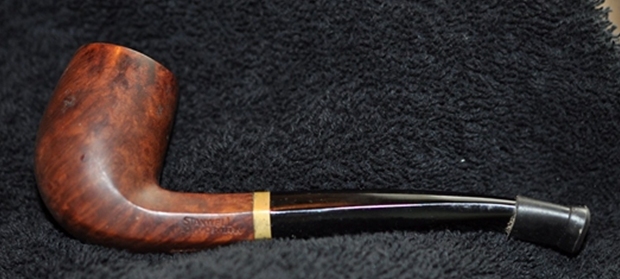
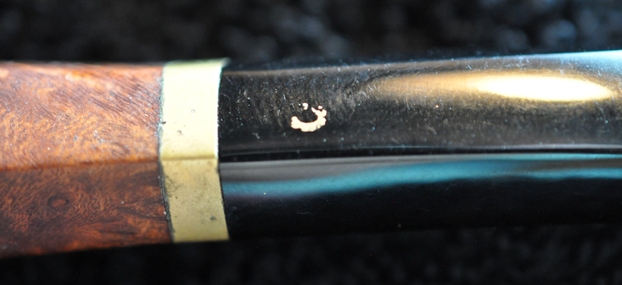
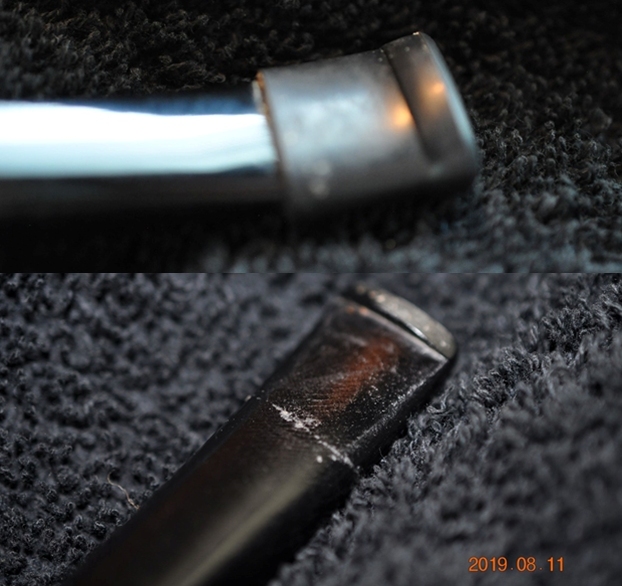
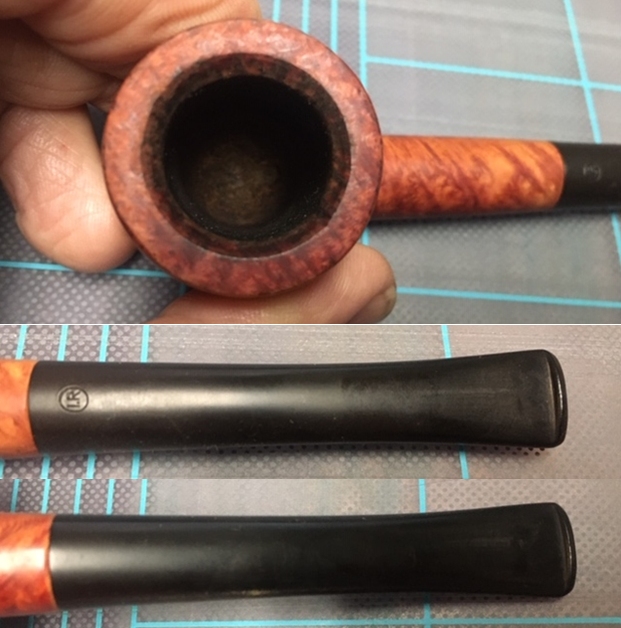
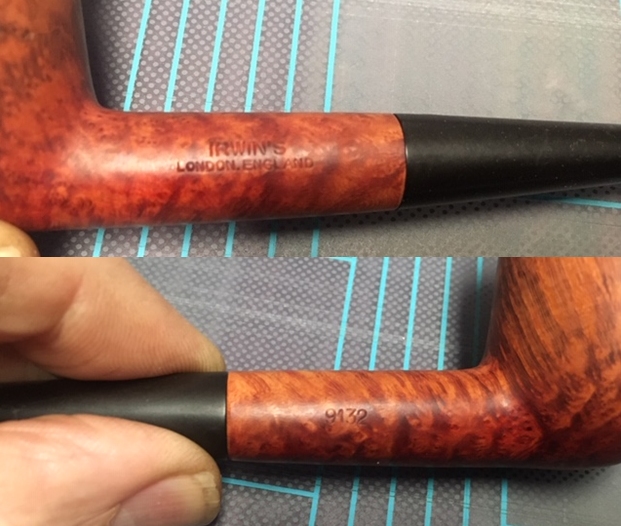
This Irwin’s London England 9132 Billiard has a smooth finish with lots variation in the grain around the briar is a beauty! The pipe is stamped on the left of the shank and reads Irwin’s over London England. On the right side it has the shape number 9132. The grain grime and dirt ground into the mixture of grain around the bowl. It had rich medium brown stain that does not look too bad. There was a thick cake in the bowl with remnants of tobacco stuck on the walls. There was a thick lava overflow sitting on the total rim top. The inner edge of the rim is dirty and may have some damage under the grime. It was a beautiful pipe that was dirty and tired looking. The stem was oxidized and calcified toward the end. It bears a circle IR stamp on the topside of the taper stem. It had the characteristic tooth marks that I have come to expect from Bob’s pipes. Jeff took photos of the pipe before he started his cleanup work on it.  He took photos of the bowl and rim top to show the cake in the bowl and the lava build up on the edges of the bowl. It was thick and hard but hopefully it had protected the rim top and edges from damage. It was hard to know for sure from the photos. Jeff took photos of the sides and heel of the bowl to show the condition of the finish. You can see the beautiful grain under the grime and grit ground into the finish. He took photos of the stamping on both sides of the shank. The stamping was readable as you can see from the photos and read as noted above. You can also see the Circle IR stamp on the topside of the taper stem.Jeff took photos of the top and underside of the stem showing the tooth chatter, scratching and oxidation on the stem surface and wear on the edges of the button.The shape 9132 Shape number on the right side of the shank pointed me to GBD as the maker of this pipe. I turned to the Pipephil website (http://www.pipephil.eu/logos/en/logo-i.html). The site had very little information but it linked the brand to GBD as I had remembered. Here is a screen capture of the section.I turned to Pipedia to see if I could find more information on Irwin’s and there was nothing listed in the article on GBD pipes. I did find a note on the Brands and Makers page connection the brand to GBD (https://pipedia.org/wiki/Pipe_Brands_/_Makers). On that page under Irwin’s I found the following information.

GBD sub-brand / second. Also known “Irwin`s Handmade in Denmark”

Other than that there was no other information.

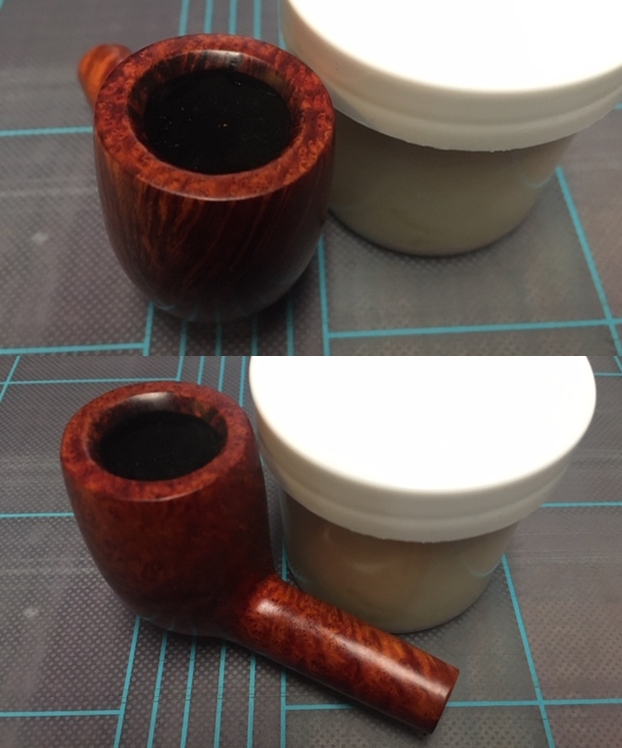
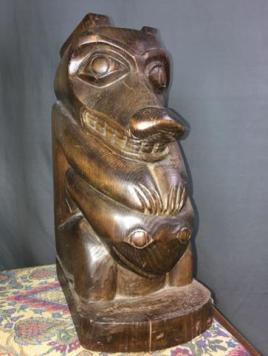
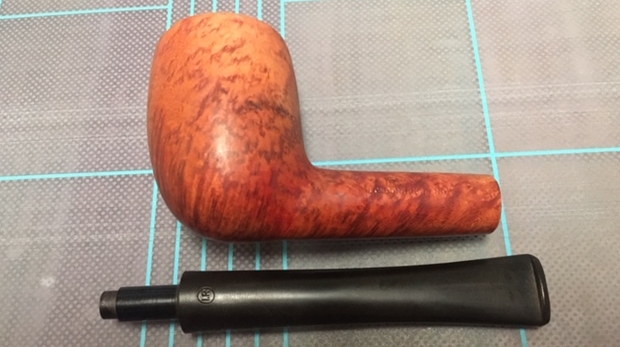
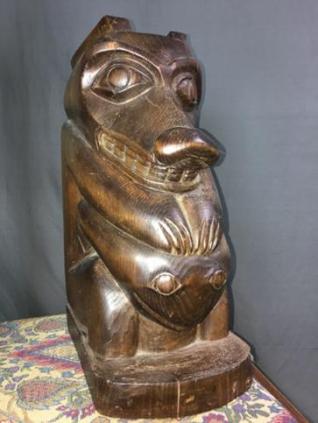
With over 125 pipes to clean from Bob’s estate I took a batch of them to the states with me when I visited and left them with Jeff so he could help me out. Jeff cleaned the pipes with his usual penchant for thoroughness that I really appreciate. Once he finished he shipped them back to me. This one was a real mess and I did not know what to expect when I unwrapped it from his box. He reamed it with a PipNet pipe reamer and cleaned up the reaming with a Savinelli Fitsall Pipe Knife. He scrubbed out the internals with alcohol, pipe cleaners and cotton swabs until the pipe was clean. He scrubbed the exterior of the bowl with Murphy’s Oil Soap and a tooth brush to remove the grime and grit on the briar and the lava on the rim top. The finish looks very good with good looking grain around the bowl and shank. Jeff scrubbed it with Soft Scrub and soaked it in Before & After Deoxidizer to remove the oxidation on the rubber. When the pipe arrived here in Vancouver for the second stop of its restoration tour it looked a lot better. The stem still had a lot of deep oxidation. I took photos before I started my part of the work. I took some close up photos of the rim top and also of the stem surface. I wanted to show what cleaned bowl and rim top looked like. The rim top good but there was some darkening on the beveled inner edge of the rim. I also took close up photos of the stem to show the light tooth marks and the remaining oxidation on the stem surface.I took photos of the stamping on the sides of the shank and it is clear and readable. It is stamped as noted above.  I took the stem off the shank and took some photos to give a clear picture of the pipe from the left side profile. It is a really pretty pipe.Since this is another pipe Bob’s estate I am sure that some of you have read at least some of the other restoration work that has been done on the previous pipes. You have also read what I have included about Bob Kerr, the pipeman who held these pipes in trust before I came to work on them (see photo to the left). Also, if you have followed the blog for long you will already know that I like to include background information on the pipeman whose pipes I am restoring. For me, when I am working on an estate I really like to have a sense of the person who held the pipes in trust before I worked on them. It gives me another dimension of the restoration work. I asked Brian if he or his wife would like to write a brief biographical tribute to her father, Bob. His daughter worked on it and I received the following short write up on him and some pictures to go along with the words including one of Bob’s carvings. Once again I thank you Brian and tell your wife thank you as well.

I am delighted to pass on these beloved pipes of my father’s. I hope each user gets many hours of contemplative pleasure as he did. I remember the aroma of tobacco in the rec room, as he put up his feet on his lazy boy. He’d be first at the paper then, no one could touch it before him. Maybe there would be a movie on with an actor smoking a pipe. He would have very definite opinions on whether the performer was a ‘real’ smoker or not, a distinction which I could never see but it would be very clear to him. He worked by day as a sales manager of a paper products company, a job he hated. What he longed for was the life of an artist, so on the weekends and sometimes mid-week evenings he would journey to his workshop and come out with wood sculptures, all of which he declared as crap but every one of them treasured by my sister and myself. Enjoy the pipes, and maybe a little of his creative spirit will enter you!

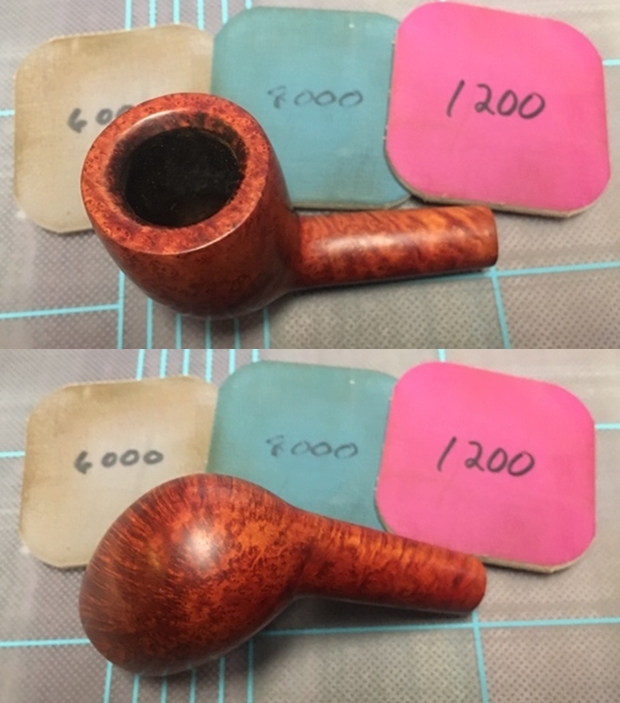
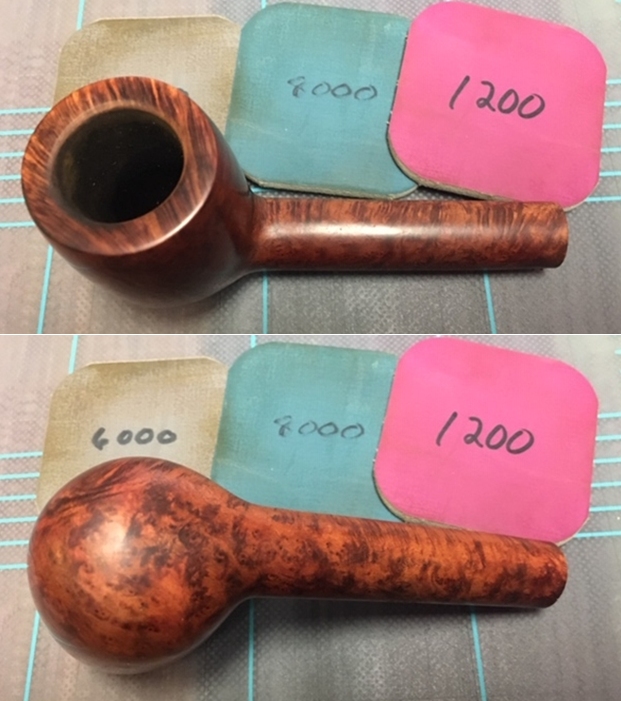
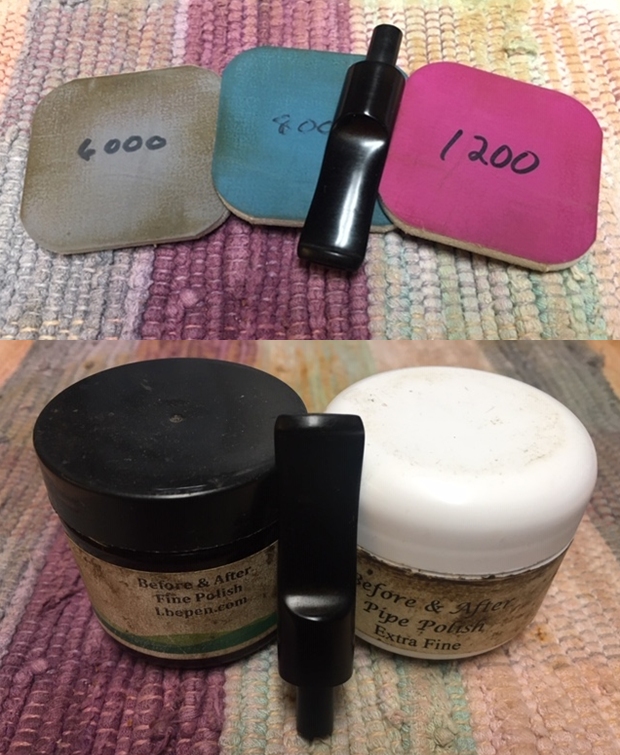
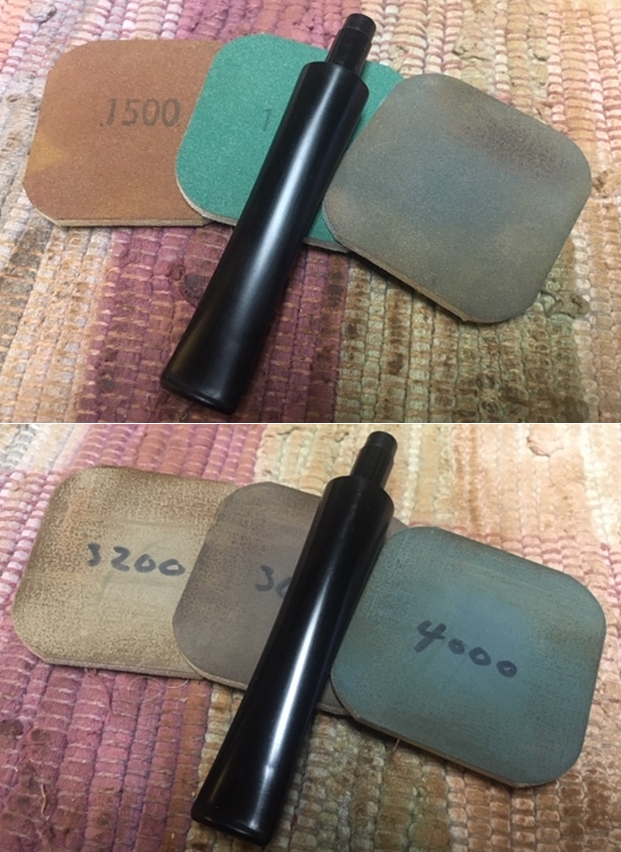
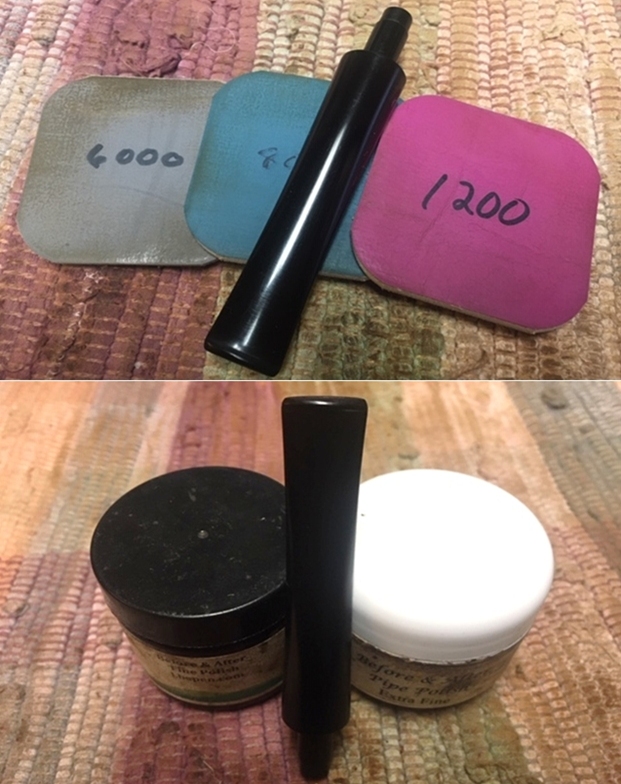
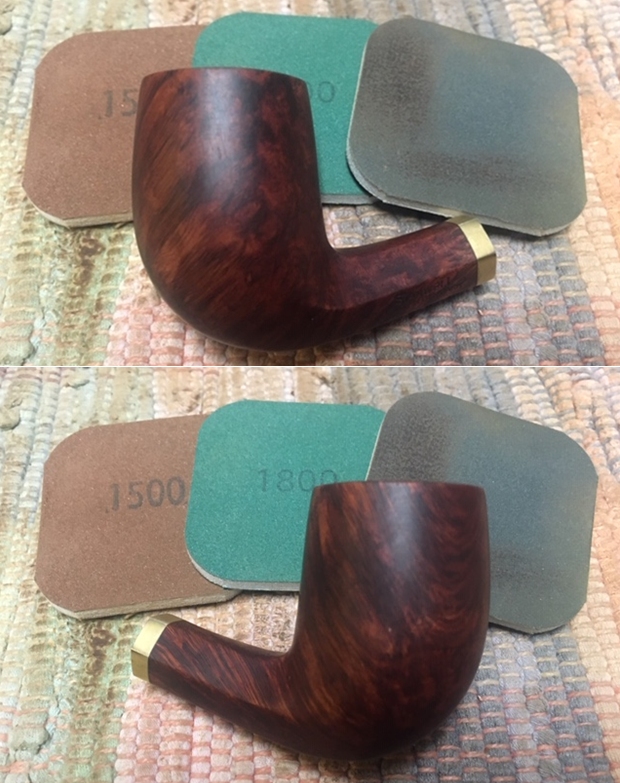
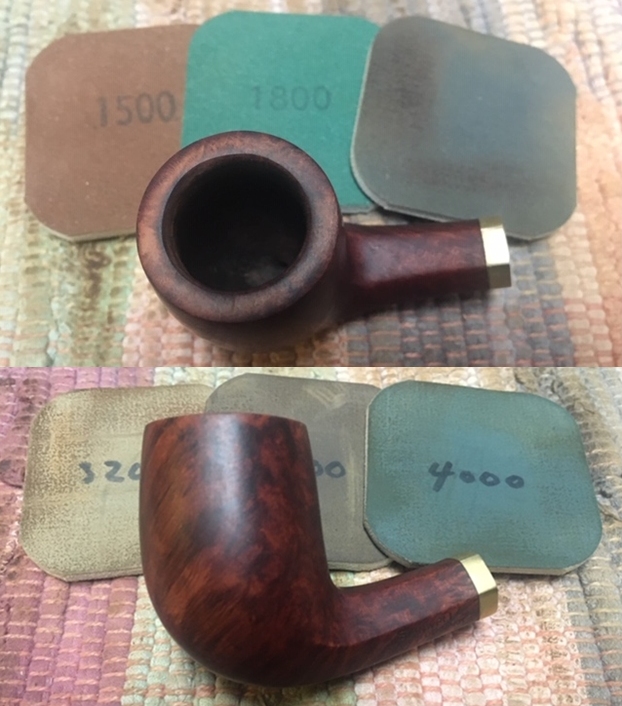
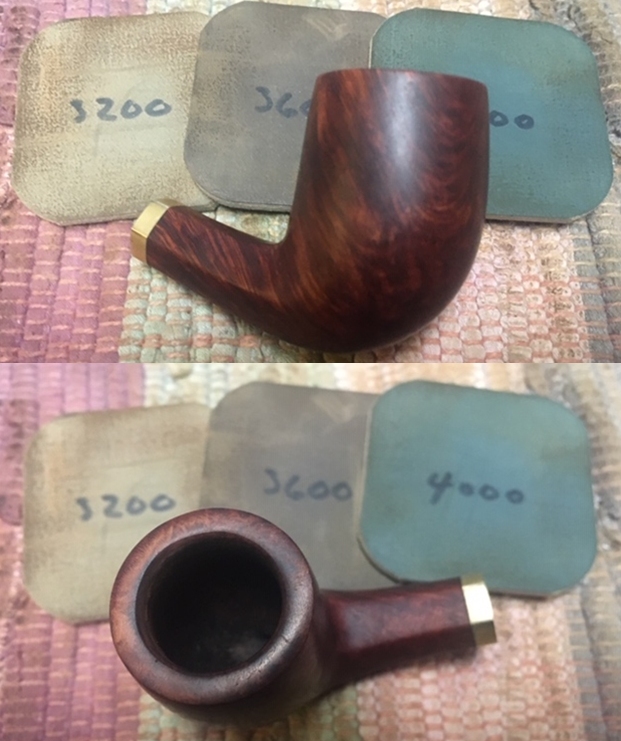
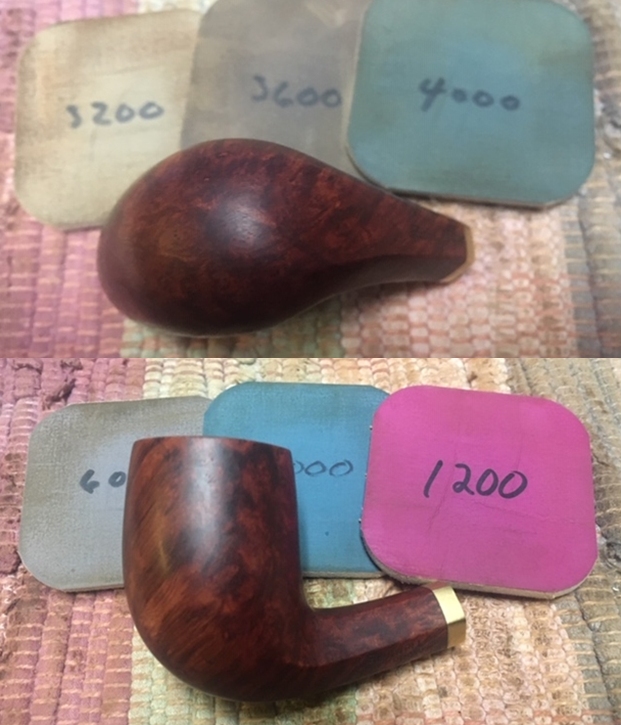
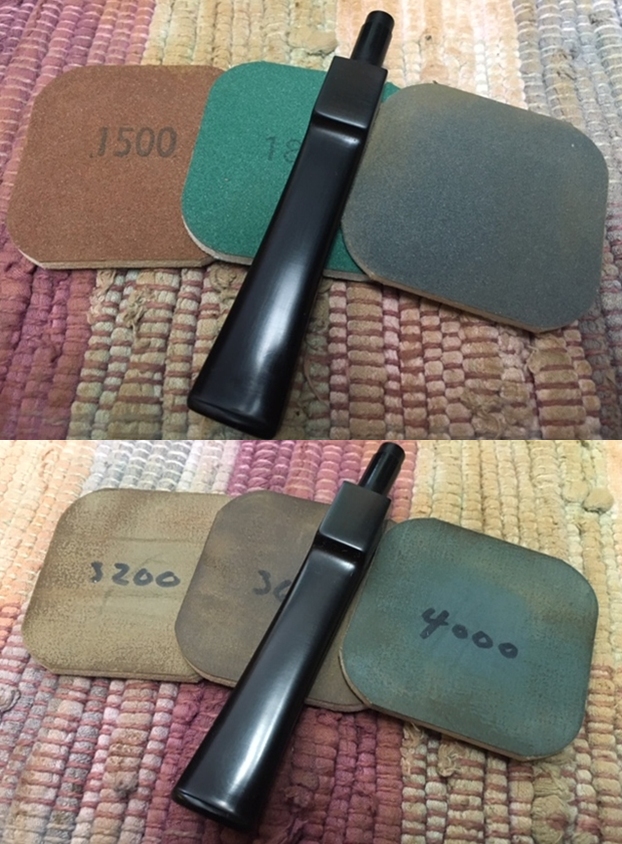
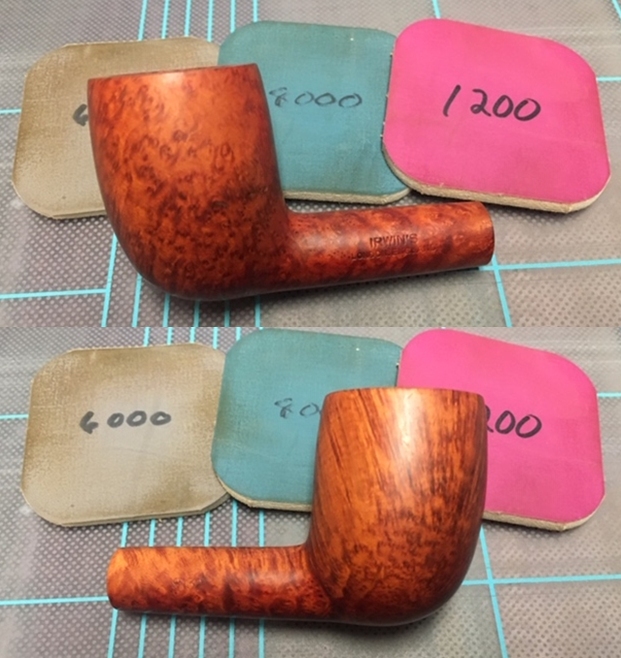
Now on to my part of the restoration of this Irwin’s London England 9132 GBD made Billiard. I decided to start by dealing with the damage to the beveled inner edge of the rim. I used a folded piece of 220 grit sandpaper to smooth out the edge and clean up the bevel to remove the darkening. I started the polishing with 400 grit wet dry sandpaper.I polished the briar with micromesh sanding pads – wet sanding with 1500-12000 grit pads and wiping the briar down with a damp cloth after each sanding pad.

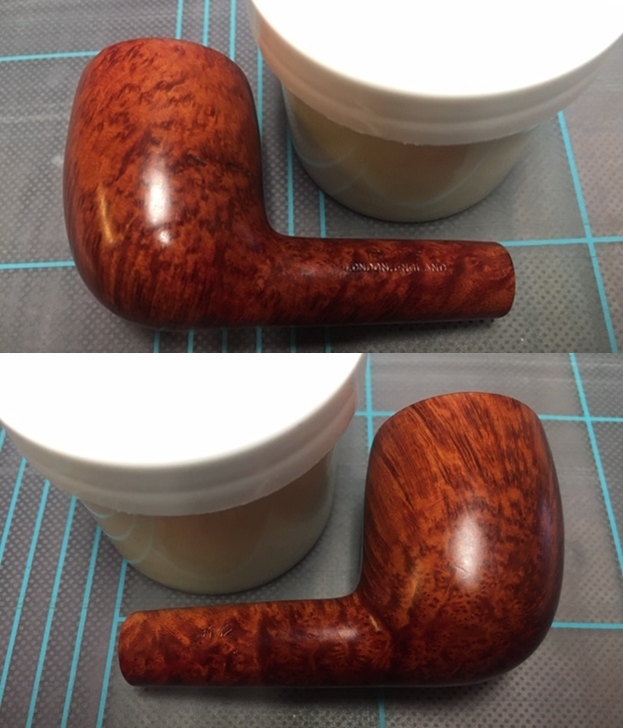
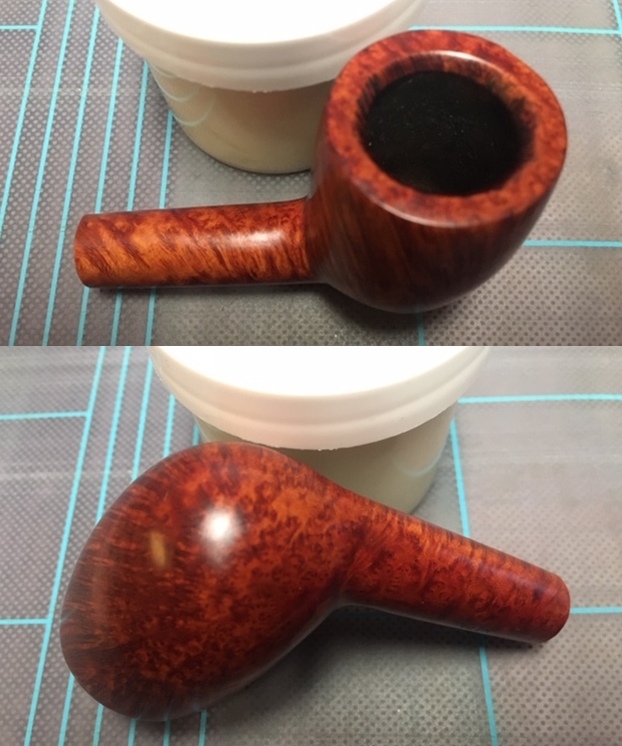
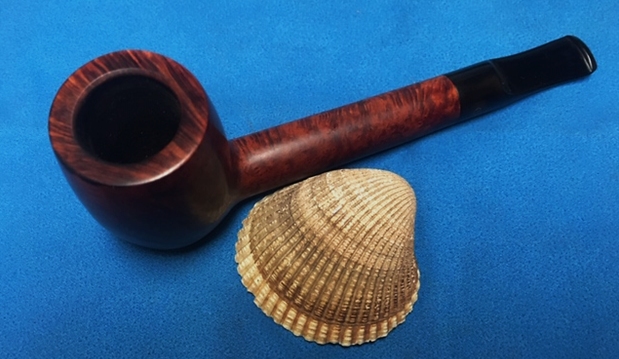
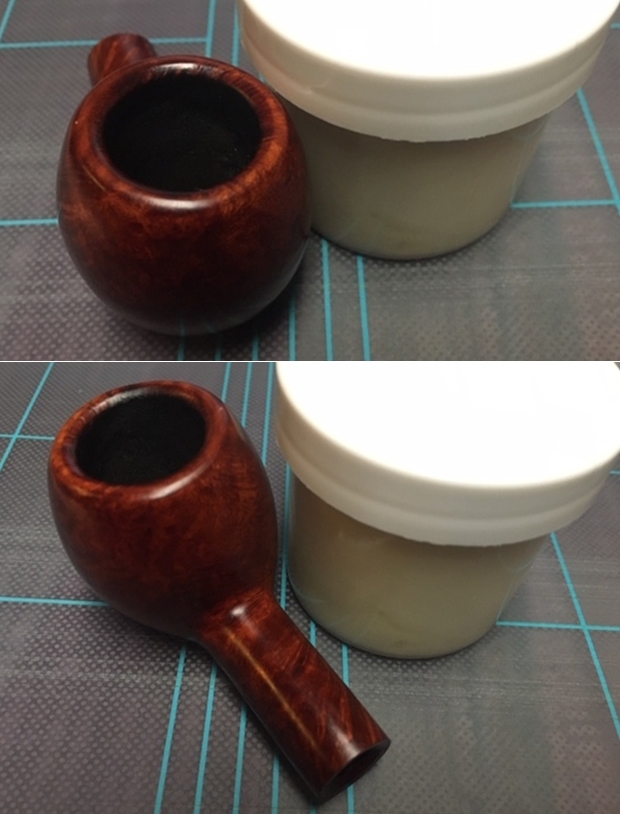
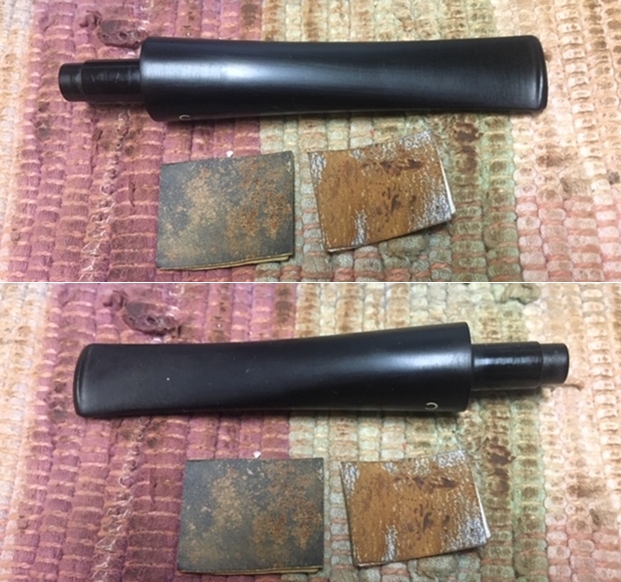
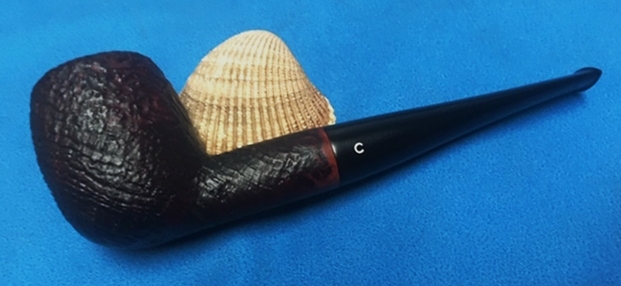
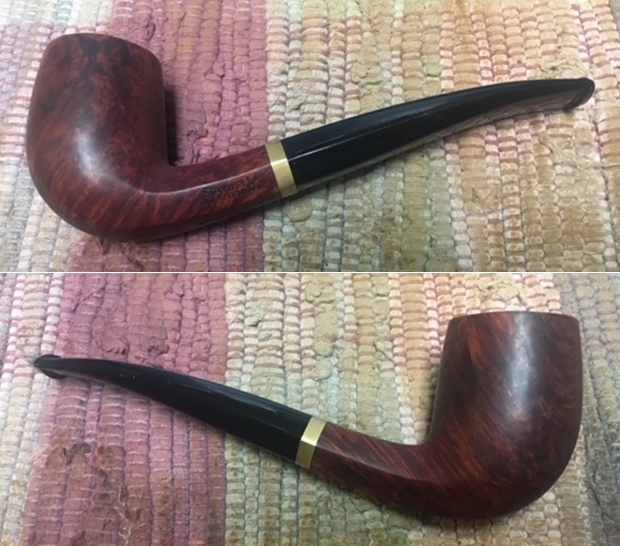
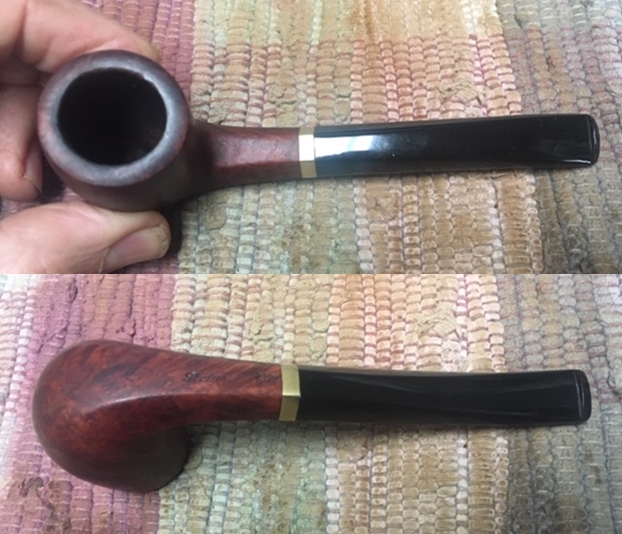
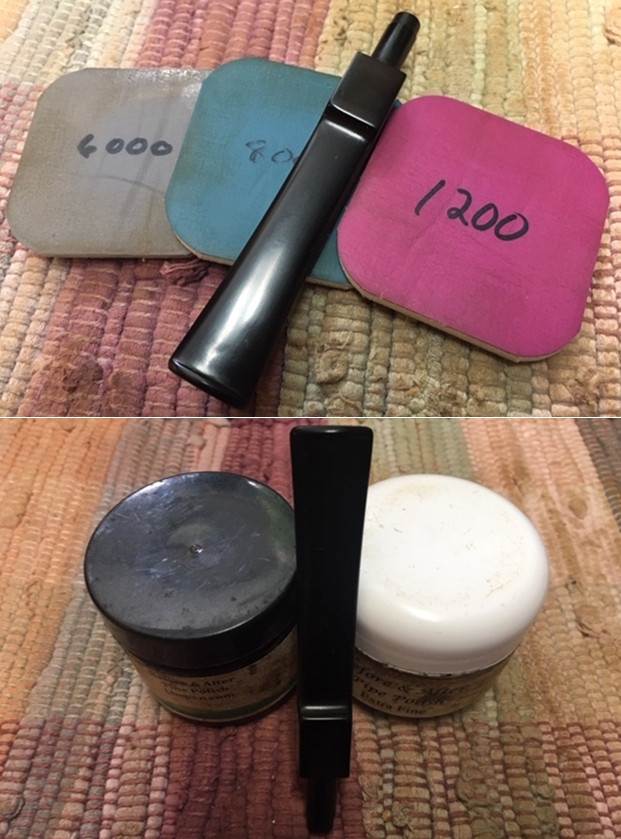
I rubbed the bowl down with Before & After Restoration Balm. I worked it into the surface of the briar with my fingertips to clean, enliven and protect it. I let the balm sit for a little while and then buffed with a cotton cloth and shoe brush to raise the shine. Mark Hoover’s Balm is a product that I have come to appreciate and one I use on every pipe I have been working on. I touched up the IR Circle stamp on the topside of the stem with some Paper Mate Liquid Paper. I worked it into the Circle IR stamp with a toothpick. When it cured I scraped off the excess on the topside of the stem.I set the bowl aside and turned my attention to the stem. The stem was in great condition with light tooth marks and oxidation. I polished the vulcanite with micromesh sanding pads – 1500-12000 grit pads. I wiped it down with a damp cloth after each sanding pad. I used Before & After Pipe Polish – both Fine and Extra Fine to further polish the stem. This Irwin’s London England 9132 Billiard made by GBD from Bob Kerr’s estate turned out to be a great looking pipe. The mix of brown stains highlights the grain around the bowl sides, top and bottom. The finish on the pipe is in excellent condition and the contrasting stains work well with the polished vulcanite saddle stem. I put the stem back on the bowl and carefully buffed the pipe with Blue Diamond on the buffing wheel using a light touch on the briar. I gave the bowl and stem multiple coats of carnauba wax on the buffing wheel and followed that by buffing the entire pipe with a clean buffing pad. I hand buffed the pipe with a microfiber cloth to deepen the shine. The finished Irwin’s 9132 Billiard fits nicely in the hand and feels great. Give the finished pipe a look in the photos below. The dimensions of the pipe are Length: 5 ¾ inches, Height: 1 ¾ inches, Outside diameter of the bowl: 1 ¼ inches, Chamber diameter: ¾ of an inch. If you are interested in carrying on Bob’s legacy with this pipe send me a message or an email. I have more to work on of various brands. Perhaps one of those will catch your attention. Thanks for reading this blog and my reflections on the pipe while I worked on it. This is an interesting estate to bring back to life.

The next pipe from Bob Kerr’s Estate – a Charatan’s Make Belvedere 2012


Blog by Steve Laug

I am continuing to work on the pipes in Bob Kerr’s estate for a while. I am getting closer to finishing restoring this large estate with only about 29 more pipes to do. This is one of his two Charatan’s pipes that I am working on. I am cleaning them for the family and moving them out into the hands of pipemen and women who will carry on the trust that began with Bob and in some pipes was carried on by Bob. In the collection there were 19 Peterson’s pipes along with a bevy of Dunhills, some Comoy’s and Barlings as well as a lot of other pipes – a total of 125 pipes along with a box of parts. This is the largest estate that I have had the opportunity to work on. I put together a spread sheet of the pipes and stampings to create an invoice. I was taking on what would take me a fair amount of time to clean up. I could not pass up the opportunity to work on these pipes though. They were just too tempting. This beautiful Charatan’s Make Lovat is a great pipe to work on. It is a classic shaped pipe with a Charatan spin on the Lovat shape. It will go on the rebornpipes store.

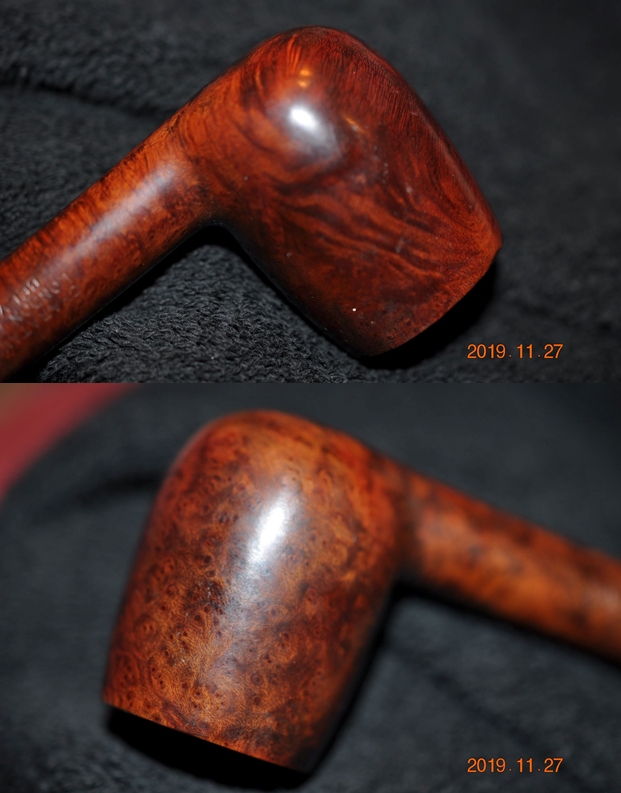
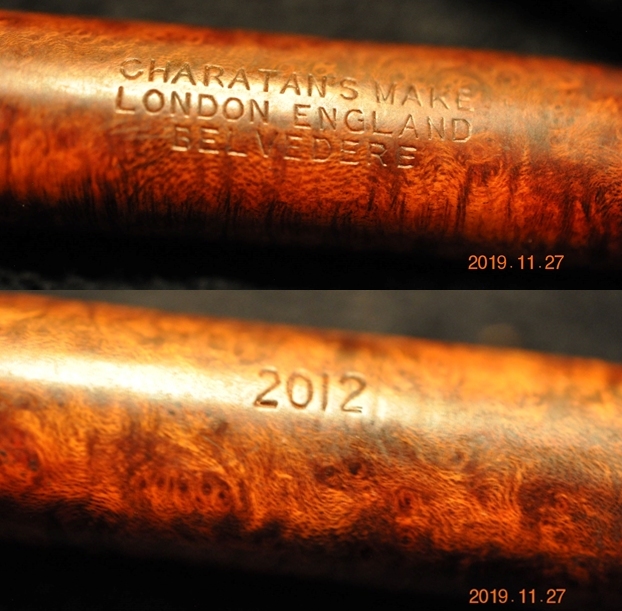
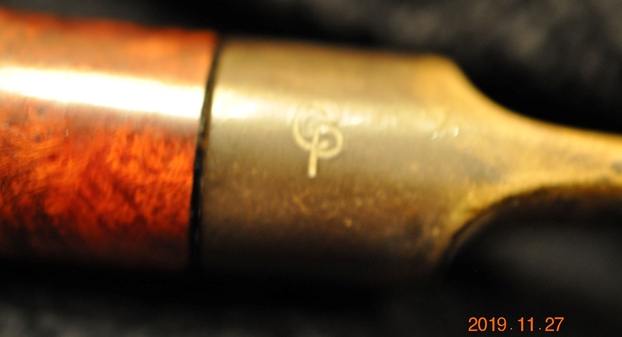
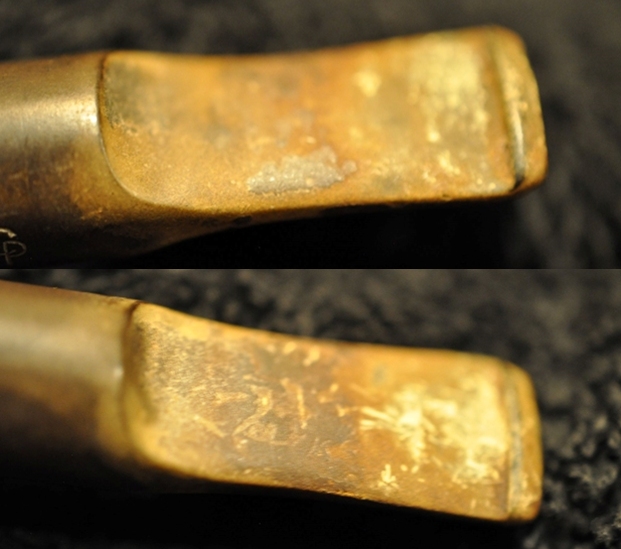
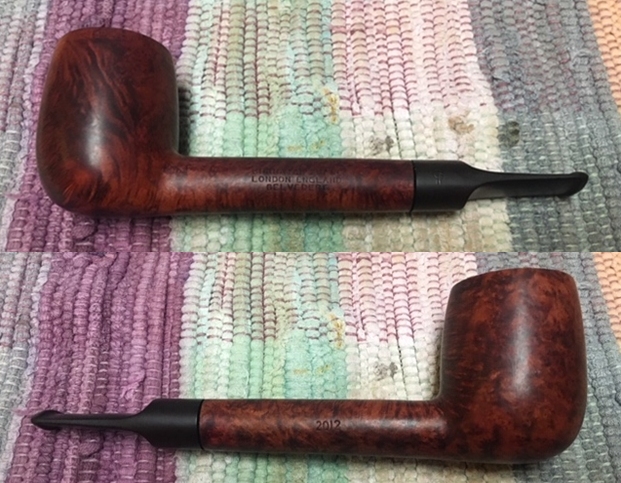
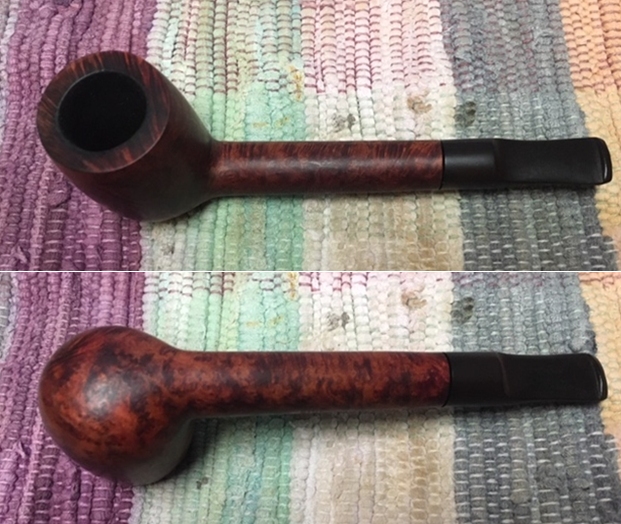
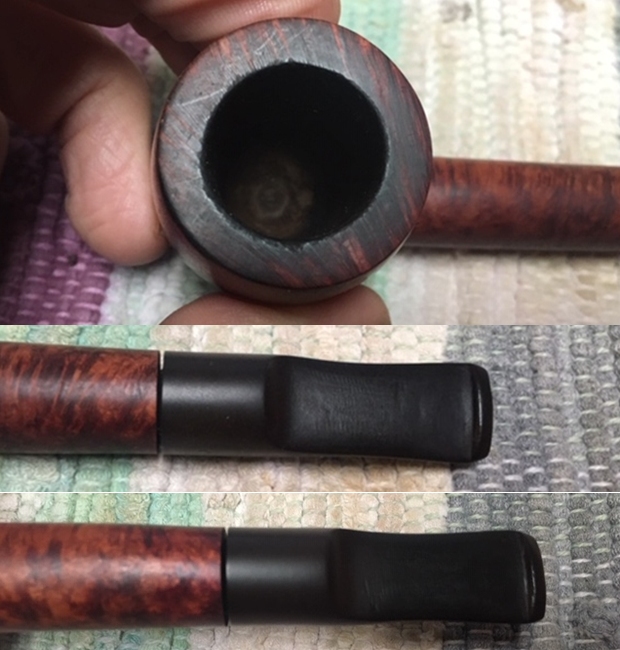
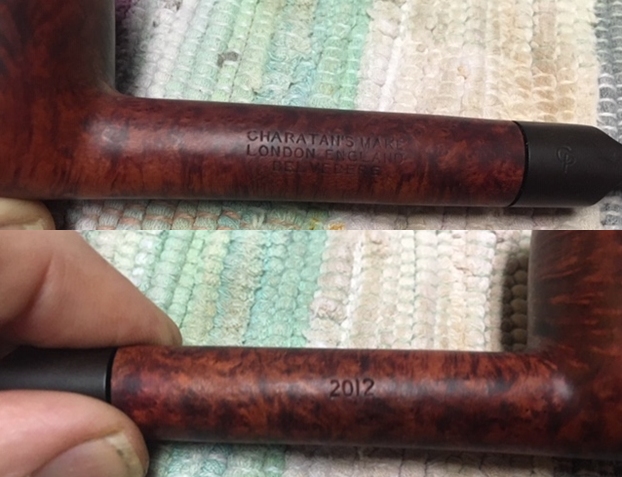
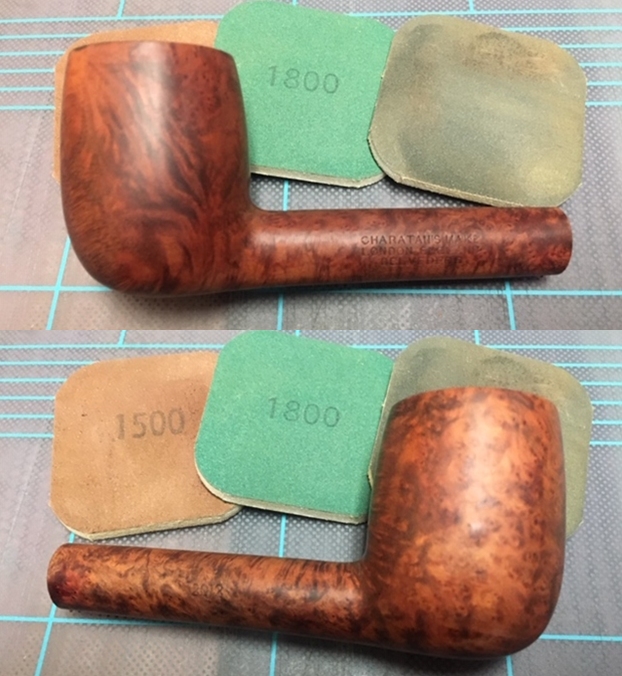
This Charatan’s Make London England Belvedere smooth finish with lots variation in the grain around the briar is a beauty! The pipe is stamped on the left of the shank and reads Charatan’s Make over London England over Belvedere. On the right side it has the shape number 2012. The grain grime and dirt ground into the mixture of grain around the bowl. It had rich dark and medium contrasting brown stains that do not look too bad. There was a thick cake in the bowl with remnants of tobacco stuck on the walls. There was a thick lava overflow sitting on the total rim top. The inner edge of the rim is dirty and may have some damage under the grime. It was a beautiful pipe that was dirty and tired looking. The stem was oxidized and calcified toward the end. It bears the CP stamp on the left side of the saddle stem. It had the characteristic tooth marks that I have come to expect from Bob’s pipes. Jeff took photos of the pipe before he started his cleanup work on it. He took photos of the bowl and rim top to show the cake in the bowl and the lava build up on the edges of the bowl. It was thick and hard but hopefully it had protected the rim top and edges from damage. It was hard to know for sure from the photos.Jeff took photos of the sides and heel of the bowl to show the condition of the finish. You can see the beautiful grain under the grime and grit ground into the finish. He took photos of the stamping on both side of the shank. The stamping was readable as you can see from the photos and read as noted above. You can also see the CP stamp on the left side of the saddle stem. Jeff took photos of the top and underside of the stem showing the tooth chatter, scratching and oxidation on the stem surface and wear on the edges of the button.To try to figure out the era of the Charatan’s pipe I was working on I turned to the Pipephil website, Logos and Stampings. There is some really helpful information on each of the lines of Charatan’s Make pipes that entered the market. Here is the link to the section of the site that I turned to (http://www.pipephil.eu/logos/en/logo-charatan.html). There is an alphabetical listing of the lines but the Belvedere they showed had a stem made for a 9mm filter while the one I have is a nonfiltered pipe. The site did give a short history of the brand. I quote the portion that is most pertinent.
The brand was founded in 1863 by Frederik Charatan. When his father retired in 1910, Reuben Charatan took over the family business. All the pipes were handmade until 1973. The brand name has been overtaken by Dunhill in 1978 and sold in 1988 to James B. Russell Inc.(NJ, USA). During the period 1988-2002 Charatans were crafted by Butz Choquin in St Claude (France). Dunhill re-purchased Charatan brand name in 2002 and Colin Fromm (Invicta Briars, Castleford) followed up on freehand production.

I turned to Pipedia to see if I could find more information on the brand and possibly a link to the Belvedere line (https://pipedia.org/wiki/Charatan) but once again in the general article it was not listed.  It did give a little more historical information. I quote the pertinent parts and have highlighted in red the sections that give information on this particular pipe.

In 1863 Frederick Charatan, a Russian/Jewish immigrant, opened a shop in Mansell Street, located in the borough of Tower Hamlets, London E1, where he began to carve Meerschaum pipes. These pipes got very popular soon, and thus Charatan moved to a bigger workshop in Prescot Street, just around the corner. Here he began to make briar pipes which should make the name famous the world over. Charatan was the first brand to make entirely hand-made briars from the rough block to the finished pipe including the stems. The nomenclature “Charatan’s Make” refers to this method of production and was meant to differ Charatan from other brands who “assembled” pipes from pre-drilled bowls and delivered mouthpieces.

Being the undisputed No. 1 in English pipemaking, Charatan was approached by Alfred Dunhill who was unsatisfied with the quality of the pipes he imported from France. During 1908 – 1910 Dunhill bought pipes from Charatan paying exorbitant prices to ensure he had some of the very best pipes for sale in England. In 1910 he lured away Joel Sasieni, one of Charatan’s best carvers, and opened his own small pipe workshop on 28 Duke Street. On the retirement of his father in 1910 Reuben Charatan took over the family business…

…The pre-Lane period (prior to 1955) and the Lane era pipes (1955 to until sometime between 1979 – 1984) are of primary interest the collector. The Lane era is often quoted as beginning about 1950… Charatan records are almost non-existent before Lane due to a factory fire, making it difficult to date pre-Lane pipes. Charatan used 4 basic grades prior to 1950: Supreme, Selected, Executive, and Belvedere. After 1950 Herman Lane’s influence began, and the grades started to expand. In 1955 Lane took over sole distributorship of Charatan in the US. In 1957 he introduced the Supreme S. Most of his other introductions were from the 60’s and early 70’s…

The section called Miscellaneous Notes had some interesting information. The pipe I was working did not have the Double Comfort (DC) bit which helps give more credence to an early pre-Lane date for this one. It also does not have the Serif L on the shank which adds to my belief of its early date.

Charatan records indicate the DC (Double Comfort) bit was introduced in the 50’s, but some report seeing them in earlier production. Still others indicate they were introduced by Lane in 1960. Regardless, the DC bit is not an accurate way to date a pipe because many Charatan’s were made with regular and saddle type bits throughout the “Lane Era”…

…The Lane Trademark serif and circled L indicates the pipe is from the “Lane Era” (approx. 1955 to 1979 -1984?), however it appears that both the English factory or Lane themselves sometimes, or perhaps even often forget to stamp the L on a pipe. The Charatan factory was known for inconsistencies, especially in stampings. Therefore, although an L on the pipe definitely defines it as a Lane Era pipe, the lack of it could simply mean the pipe missed receiving the stamp from the factory. The lack of the trademark could also mean the pipe was destined for the European market.

I continue digging further into the dating of the pipe, but what I had found was a good start for me. If some of you would like to try your hand at dating it more accurately as to the time period it came out you might want to check out the article on Pipedia on Dating Charatans (https://pipedia.org/wiki/Dating_of_Charatans).

I also reread the article on Pipedia by the Italian fellow who contributed some really helpful information on the brand (https://pipedia.org/wiki/Charatan_-_Milan_2014). I quote the section on the Second period: Reuben Charatan 1910 – c. 1962

– In 1962 Herman Lane took over the business from the Charatan family, although he had already influenced production from the 1950s.

– The pipes were mostly larger than the previous ones and corresponded in size to Dunhill group 5. These are slightly less rare, but still difficult to find.

– Stem: Usually in ebonite, saddle shaped or tapered, bearing a fine “CP” stamp, underbore system (see below) used when necessary.

– Shank: The shape code is stamped on it together with the nomenclature “CHARATAN’S MAKE LONDON ENGLAND” arranged in two lines. From 1955 onwards on the models marketed for the USA there is also a serif and circled capital “L” (but not all models bear this) which resembles the pound sterling symbol. The “L” is for Lane, the importer.

From 1958, Lane changed the nomenclature for models marketed for the US to clarify the message: “MADE BY HAND”.  In this period the underbore was introduced. Its manufacturing period ranged between 1920 and c.1930. This model was equipped with a duralumin plunger trap fitted in the stem, which served to clean the residue more easily. This particular model bore a special stamp on the stem, and also had its own catalogue…

QUALITY GRADES…The stem did not only display the stamps mentioned above. Another stamp that can help dating is the one referring to the quality of the pipe. Until Herman Lane arrived on the scene there were four quality grades. Starting with the lowest: Belvedere, Executive, Selected, and Supreme. Lane went on to add higher grades from time to time: Supreme S, Supreme S100, S150, S200, S250, S300, Coronation, Royal Achievement, Crown Achievement, and Summa Cum Laude; these last three are extremely rare and almost impossible to find. He also invented other, different grades, even changing the previous pipe classification standards. We will not go into detail here, but it means that if we find an S100 or Coronation the pipe was manufactured following Herman Lane’s acquisition. In particular, the FH mark, or Freehand pipe was commissioned to the famous Danish craftsman, Preben Holm.

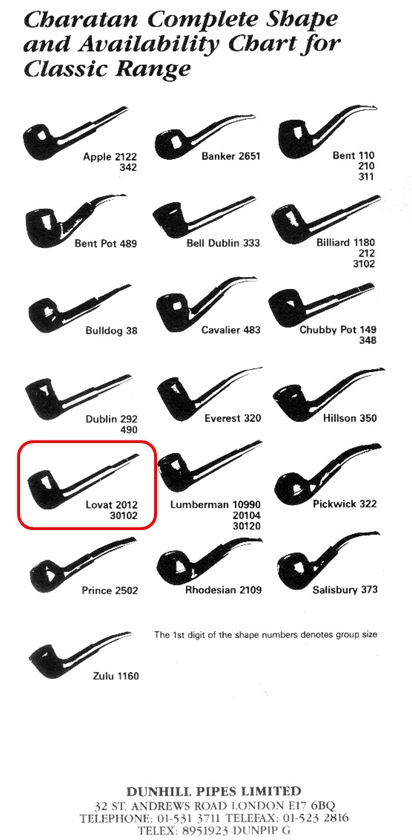
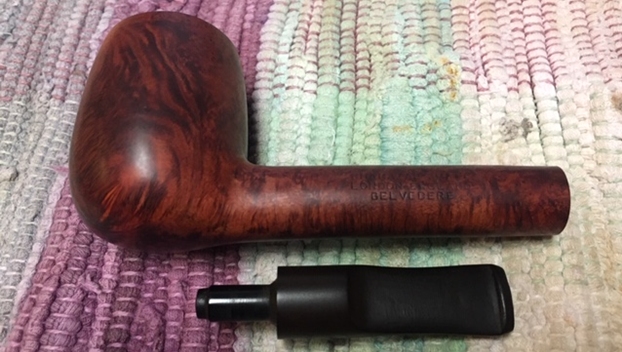
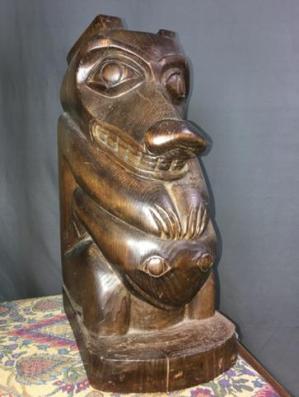
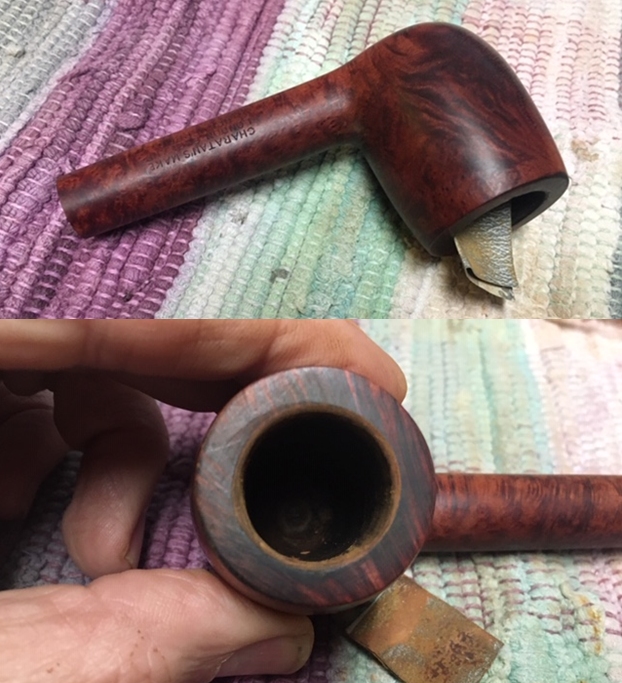
I am also including a shape chart from that site. I have drawn a red box around the 2012 Lovat shape.With over 125 pipes to clean from Bob’s estate I took a batch of them to the states with me when I visited and left them with Jeff so he could help me out. Jeff cleaned the pipes with his usual penchant for thoroughness that I really appreciate. Once he finished he shipped them back to me. This one was a real mess and I did not know what to expect when I unwrapped it from his box. He reamed it with a PipNet pipe reamer and cleaned up the reaming with a Savinelli Fitsall Pipe Knife. He scrubbed out the internals with alcohol, pipe cleaners and cotton swabs until the pipe was clean. He scrubbed the exterior of the bowl with Murphy’s Oil Soap and a tooth brush to remove the grime and grit on the briar and the lava on the rim top. The finish looks very good with good looking grain around the bowl and shank. Jeff scrubbed it with Soft Scrub and soaked it in Before & After Deoxidizer to remove the oxidation on the rubber. When the pipe arrived here in Vancouver for the second stop of its restoration tour it looked a lot better. The stem still had a lot of deep oxidation. I took photos before I started my part of the work.   I took some close up photos of the rim top and also of the stem surface. I wanted to show what cleaned bowl and rim top looked like. The rim top good but there was some damage on the inner edge with some charring on the front inner edge. I also took close up photos of the stem to show the light tooth marks and the remaining oxidation on the stem surface.I took photos of the stamping on the sides of the shank and it is clear and readable. It is stamped as noted above.   I took the stem off the shank and took some photos to give a clear picture of the pipe from the left side profile. It is a really pretty pipe.Since this is another pipe Bob’s estate I am sure that some of you have read at least some of the other restoration work that has been done on the previous pipes. You have also read what I have included about Bob Kerr, the pipeman who held these pipes in trust before I came to work on them (see photo to the left). Also, if you have followed the blog for long you will already know that I like to include background information on the pipeman whose pipes I am restoring. For me, when I am working on an estate I really like to have a sense of the person who held the pipes in trust before I worked on them. It gives me another dimension of the restoration work. I asked Brian if he or his wife would like to write a brief biographical tribute to her father, Bob. His daughter worked on it and I received the following short write up on him and some pictures to go along with the words including one of Bob’s carvings. Once again I thank you Brian and tell your wife thank you as well.

I am delighted to pass on these beloved pipes of my father’s. I hope each user gets many hours of contemplative pleasure as he did. I remember the aroma of tobacco in the rec room, as he put up his feet on his lazy boy. He’d be first at the paper then, no one could touch it before him. Maybe there would be a movie on with an actor smoking a pipe. He would have very definite opinions on whether the performer was a ‘real’ smoker or not, a distinction which I could never see but it would be very clear to him. He worked by day as a sales manager of a paper products company, a job he hated. What he longed for was the life of an artist, so on the weekends and sometimes mid-week evenings he would journey to his workshop and come out with wood sculptures, all of which he declared as crap but every one of them treasured by my sister and myself. Enjoy the pipes, and maybe a little of his creative spirit will enter you!

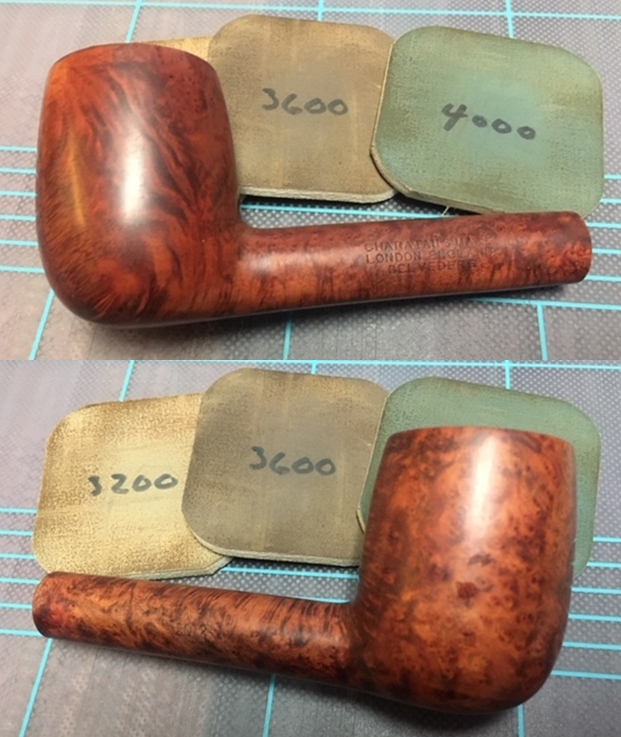
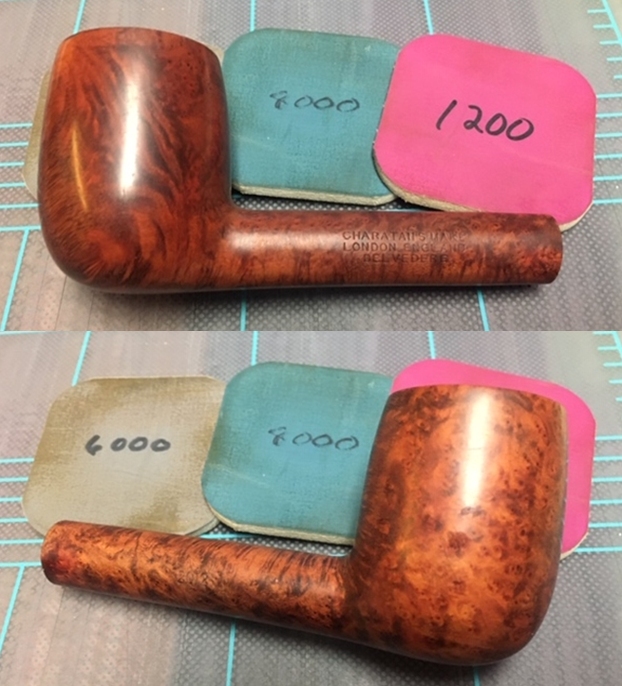
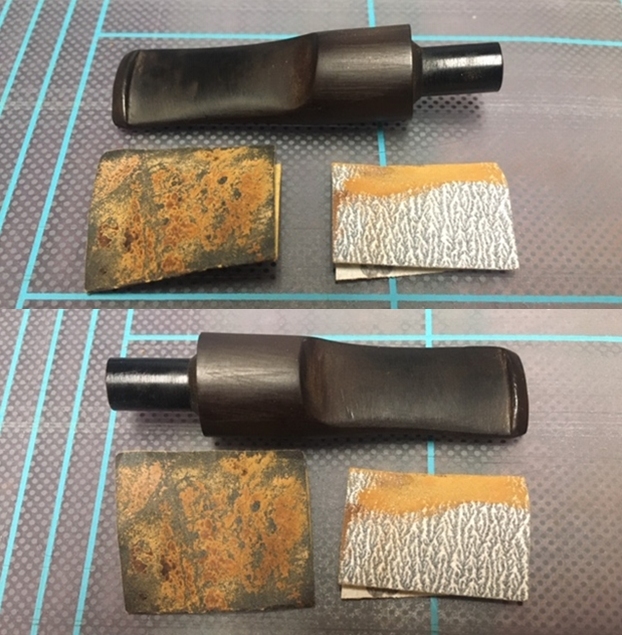
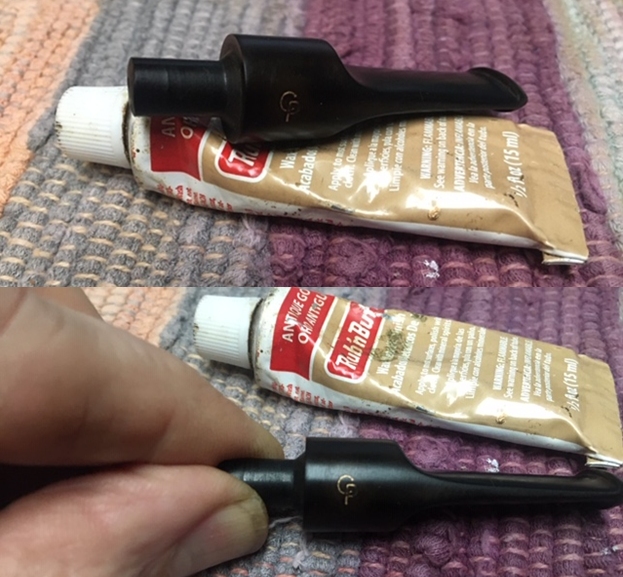
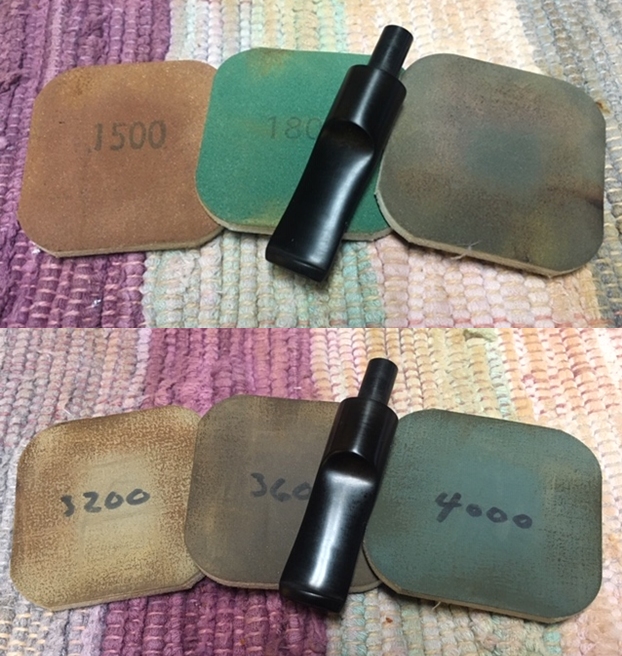
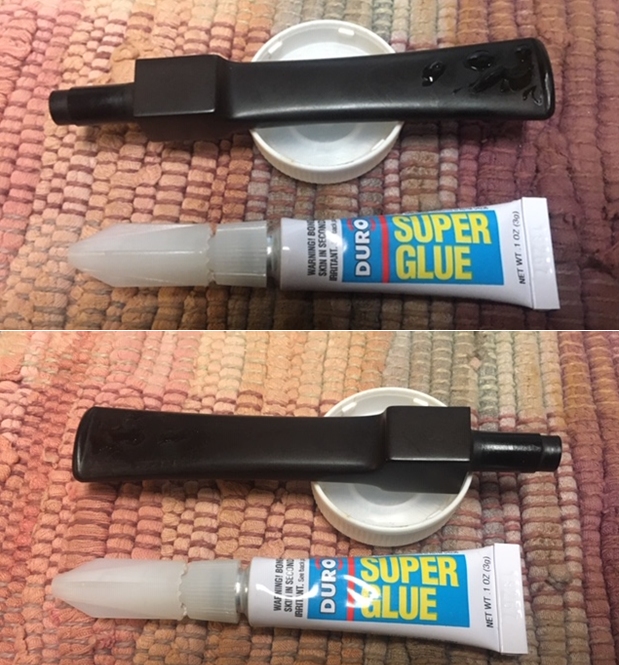
Now on to my part of the restoration of this Charatan’s Make 2012 Lovat. I decided to start by dealing with the damage to the inner edge of the rim. I used a folded piece of 220 grit sandpaper to smooth out the edge and give it a slight bevel to remove the damaged area and bring the bowl back into round.Sometimes the pipe does not come with enough work on it! Today I took the pipe to my old office to work on it while I waited for movers to come for our Canon Copier and some of the desks, computers and equipment. I was carrying it from my car to the office and it fell out of my hand and bounced off the asphalt parking lot. It left some nice road rash on the right side of the bowl. I tell you when that happens I want to cry!! This evening when I got home I filled in the divots of the rash with some clear super glue. Once it cured I sanded them smooth with micromesh and blended them into the surrounding briar.I polished the briar with micromesh sanding pads – wet sanding with 1500-12000 grit pads and wiping the briar down with a damp cloth after each sanding pad. I rubbed the bowl down with Before & After Restoration Balm. I worked it into the surface of the briar with my fingertips to clean, enliven and protect it. I let the balm sit for a little while and then buffed with a cotton cloth and shoe brush to raise the shine. Mark Hoover’s Balm is a product that I have come to appreciate and one I use on every pipe I have been working on. I set the bowl aside and turned my attention to the stem. It did not seat against the shank end when it arrived as could be seen from the photos at the beginning. Someone had trimmed the step down tenon slightly and done it crooked. To smooth that out and facilitate a snug fit against the shank end I cleaned up the tenon. I topped the tenon on the topping board with 220 grit sandpaper and straightened out the tenon end. It did not take too much work to get the fit right.I worked over the rest of the remaining oxidation and the tooth marks with 220 grit sandpaper. I started polishing the stem with 400 grit wet dry sandpaper. At this point it is starting to look much better.  I touched up the CP stamp on the left side of the saddle stem with some Rub’N Buff Antique gold. I tried some Liquid Paper but it did not stick. The Rub’N Buff worked well and highlights the fine stamping of the entwined CP on the left side of the saddle.I polished the vulcanite with micromesh sanding pads – 1500-12000 grit pads. I wiped it down with a damp cloth after each sanding pad. I used Before & After Pipe Polish – both Fine and Extra Fine to further polish the stem. This Charatan’s Make Belvedere Lovat from Bob Kerr’s estate turned out to be a great looking pipe. The mix of brown stains highlights the grain around the bowl sides, top and bottom. The finish on the pipe is in excellent condition and the contrasting stains work well with the polished vulcanite saddle stem. I put the stem back on the bowl and carefully buffed the pipe with Blue Diamond on the buffing wheel using a light touch on the briar. I gave the bowl and stem multiple coats of carnauba wax on the buffing wheel and followed that by buffing the entire pipe with a clean buffing pad. I hand buffed the pipe with a microfiber cloth to deepen the shine. The finished Charatan’s Make Belvedere Lovat fits nicely in the hand and feels great. Give the finished pipe a look in the photos below. The dimensions of the pipe are Length: 5 ¾ inches, Height: 2 inches, Outside diameter of the bowl: 1 ¼ inches, Chamber diameter: ¾ of an inch. If you are interested in carrying on Bob’s legacy with this pipe send me a message or an email. I have more to work on of various brands. Perhaps one of those will catch your attention. Thanks for reading this blog and my reflections on the pipe while I worked on it. This is an interesting estate to bring back to life.

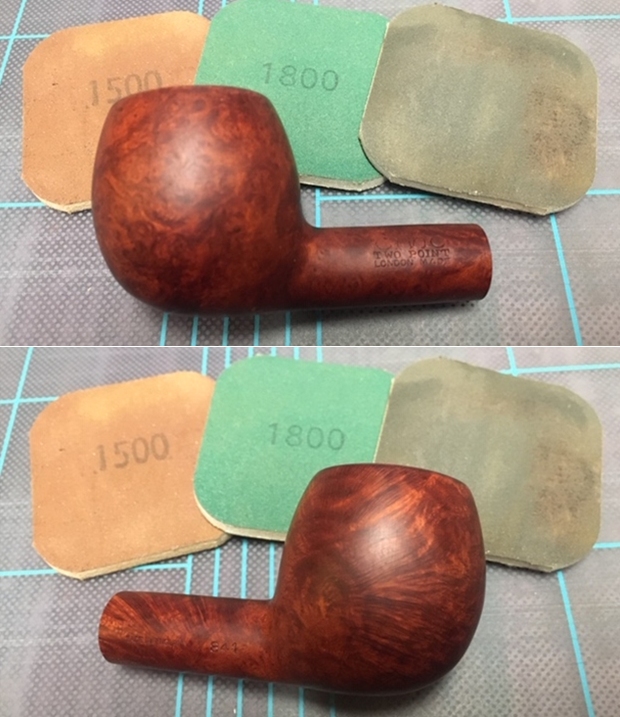
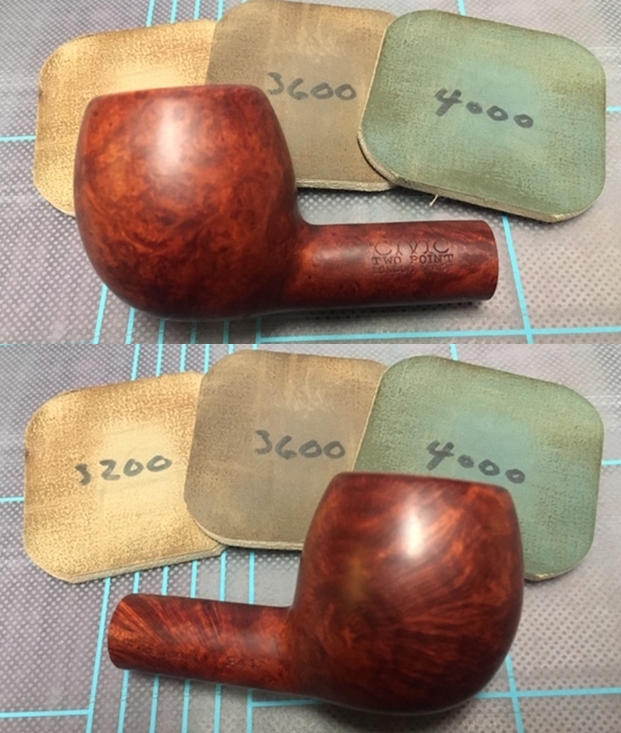
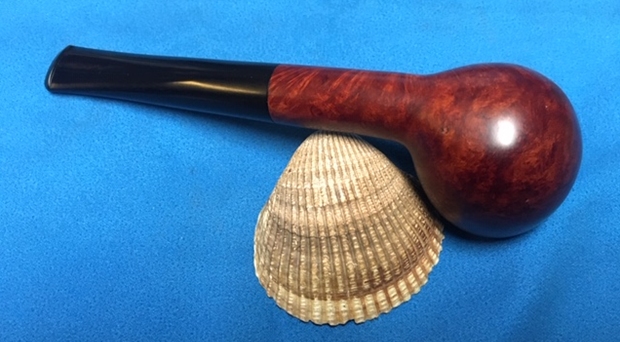
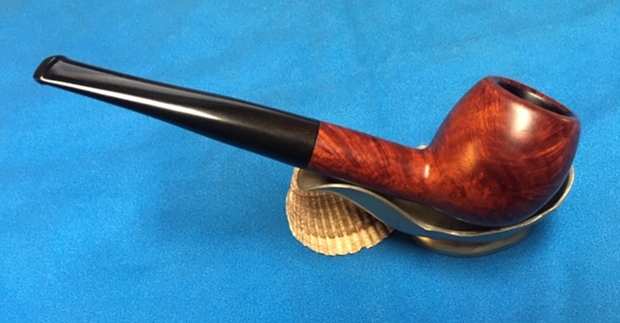
The next pipe from Bob Kerr’s Estate – a Civic Two Point 841 Apple


Blog by Steve Laug

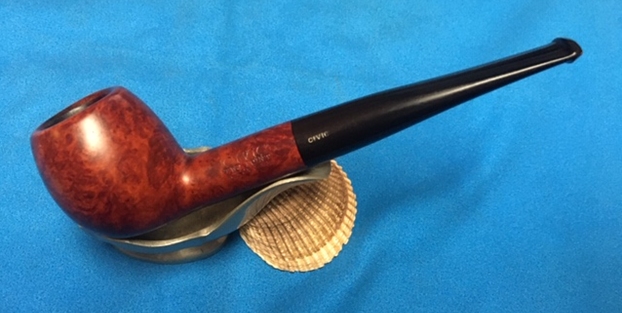
I am continuing to work on the pipes in Bob Kerr’s estate for a while. I am getting closer to finishing restoring this large estate with only about 31 more pipes to do. This one is the only Civic pipe in his collection. I am cleaning them for the family and moving them out into the hands of pipemen and women who will carry on the trust that began with Bob and in some pipes was carried on by Bob. In the collection there were 19 Peterson’s pipes along with a bevy of Dunhills, some Comoy’s and Barlings as well as a lot of other pipes – a total of 125 pipes along with a box of parts. This is the largest estate that I have had the opportunity to work on. I put together a spread sheet of the pipes and stampings to create an invoice. I was taking on what would take me a fair amount of time to clean up. I could not pass up the opportunity to work on these pipes though. They were just too tempting. This beautiful Civic Two Point 841 Apple is a great pipe to work on. It is a classic shaped pipe with some nice grain under the grime. It will go on the rebornpipes store.

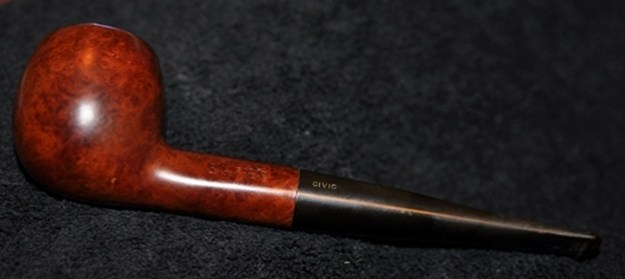
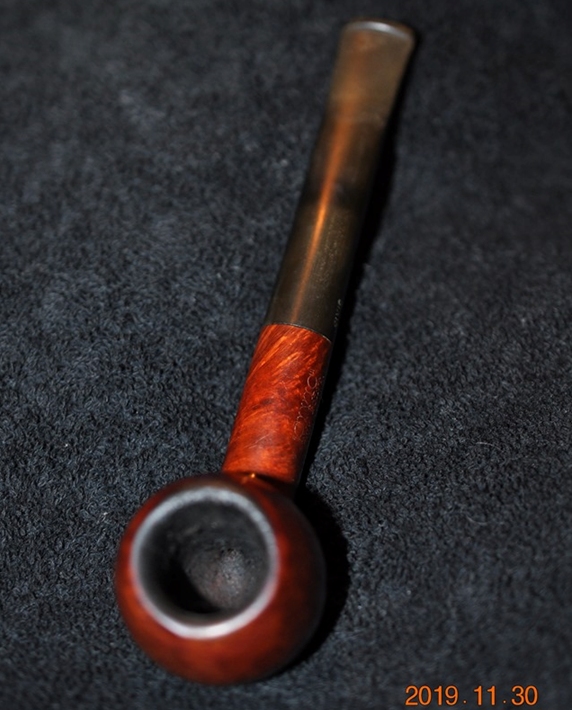
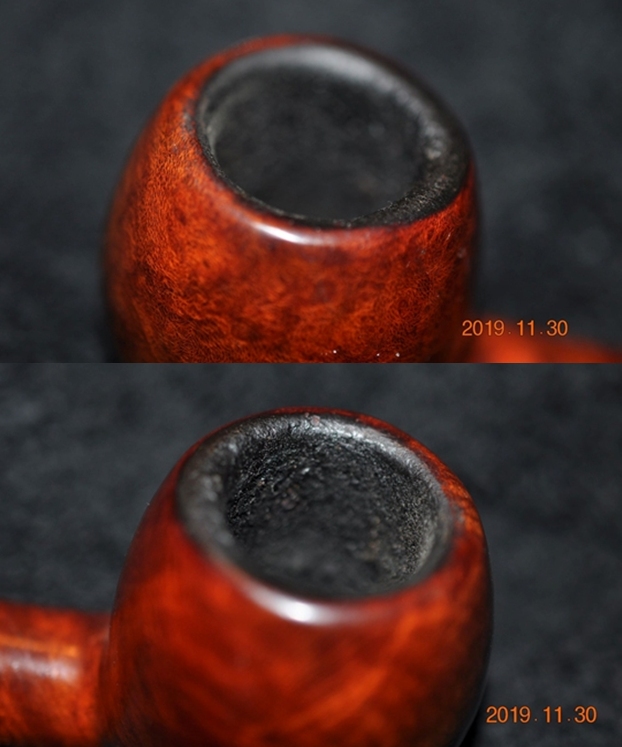
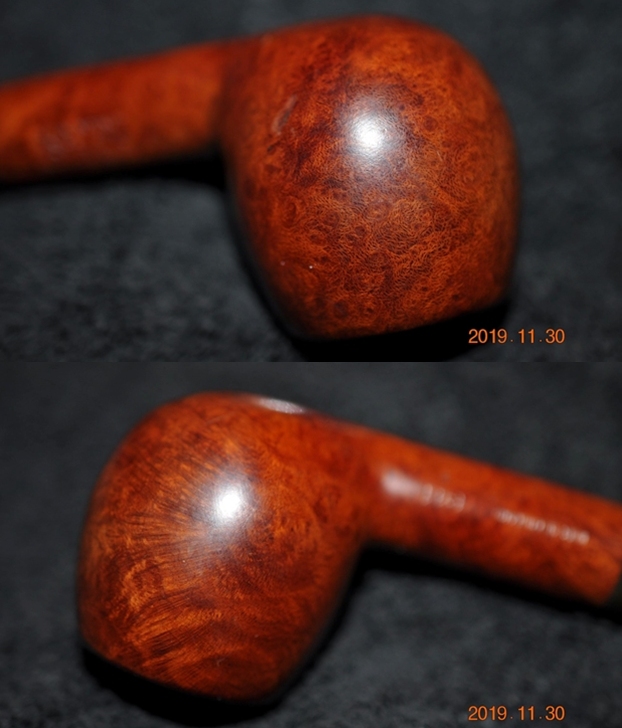
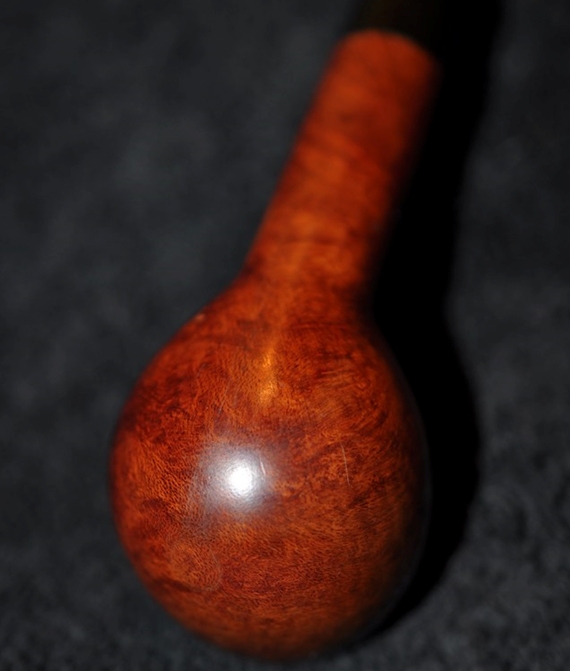
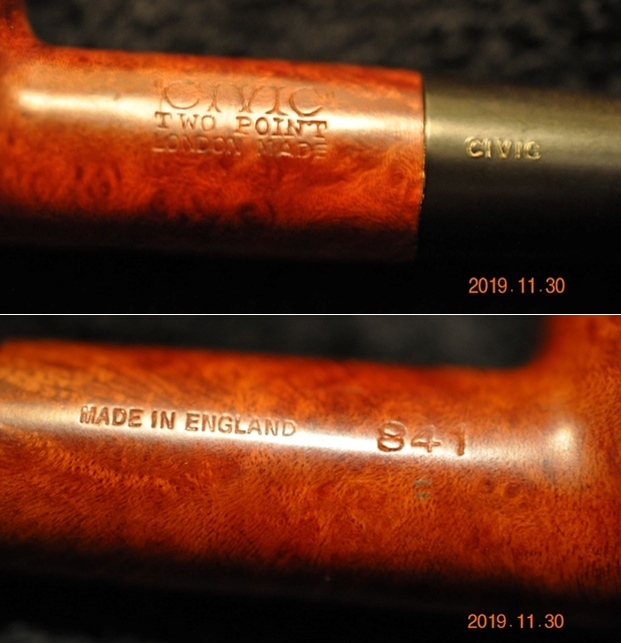
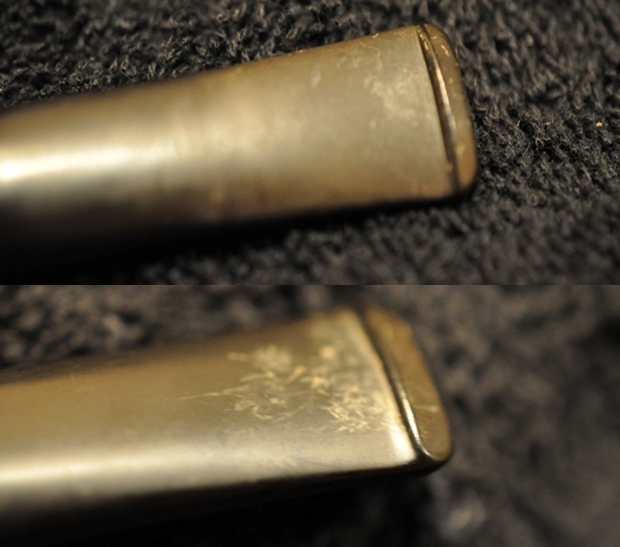
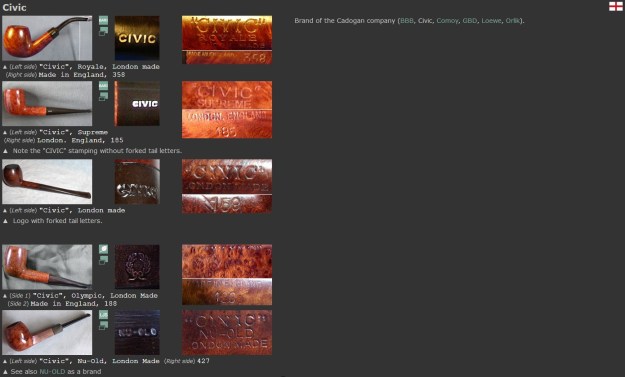
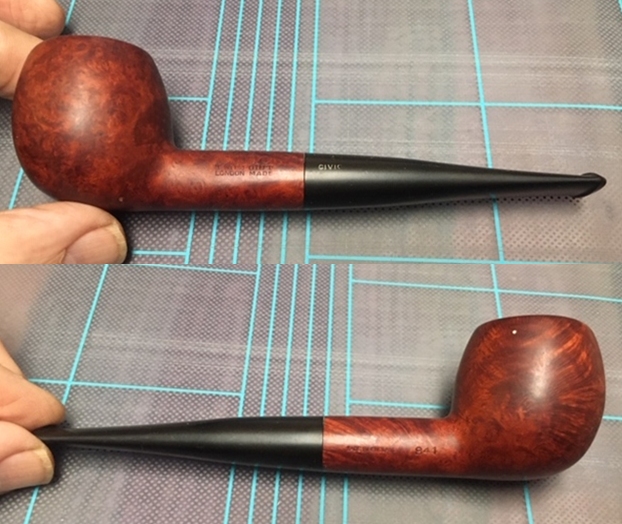
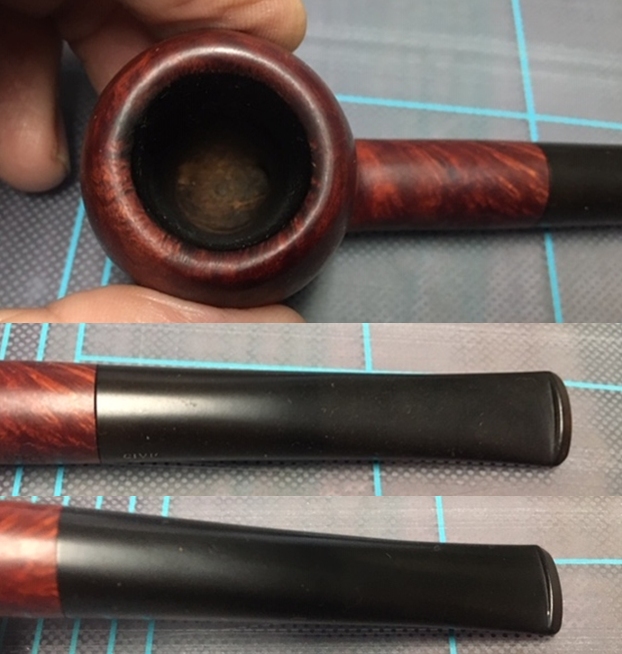
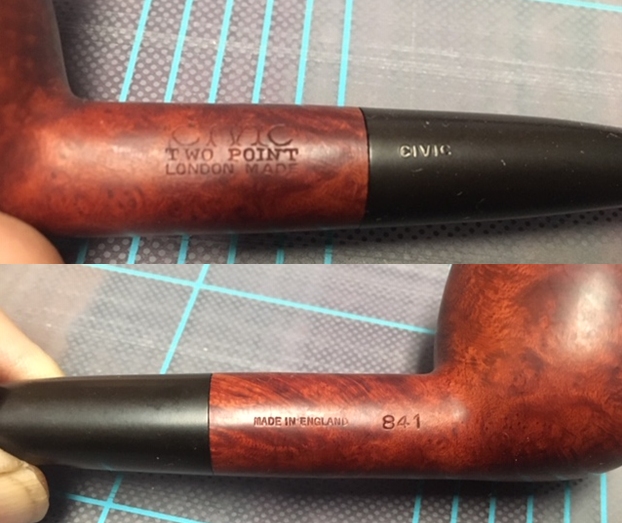
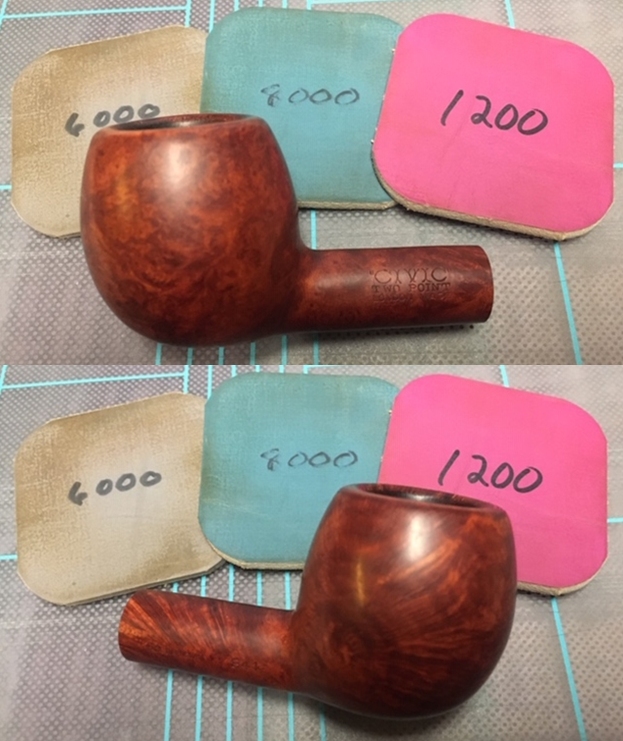
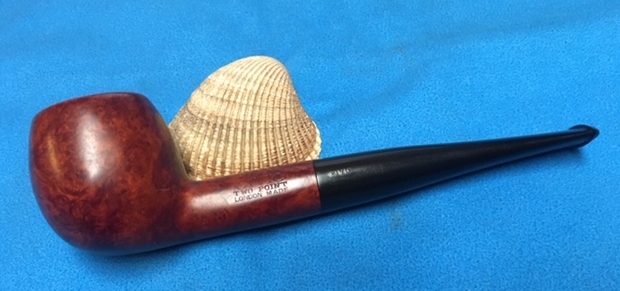
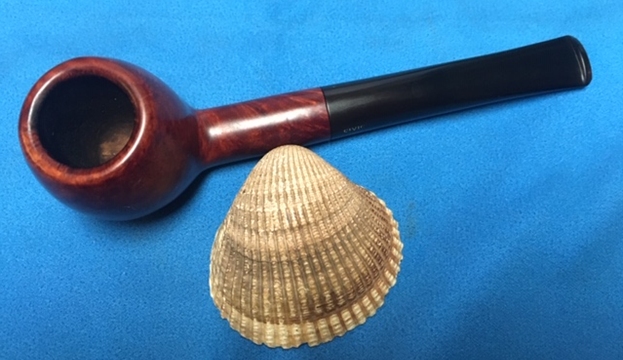
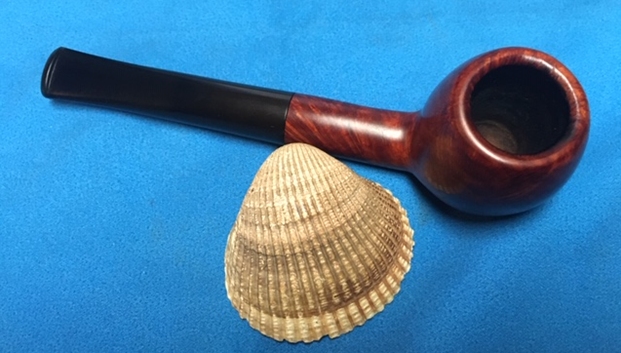
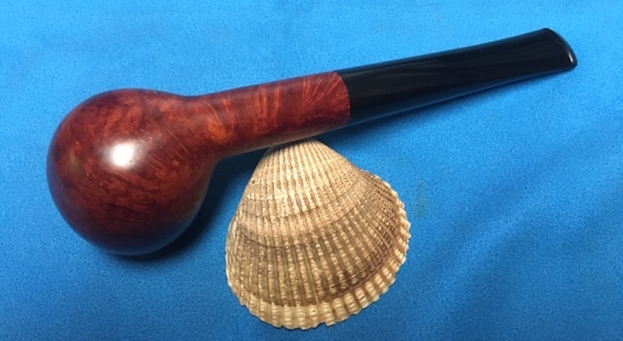
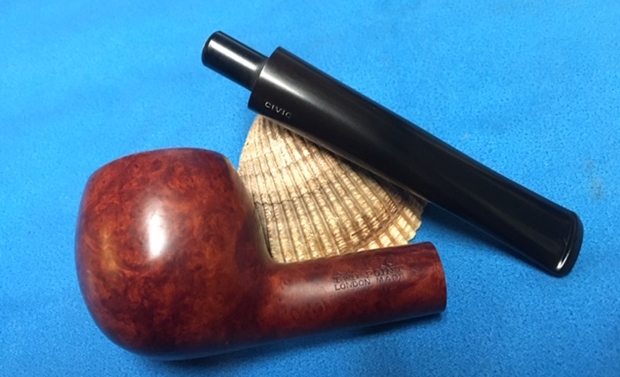
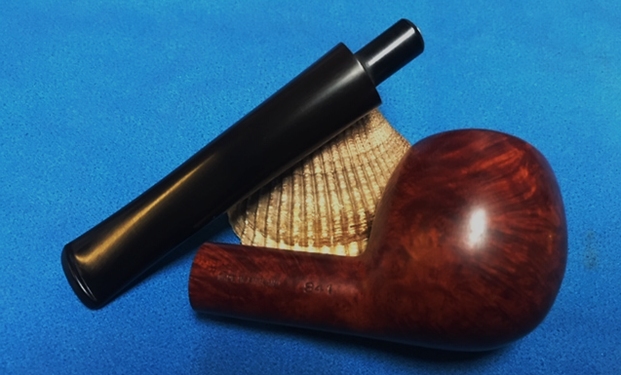
This CIVIC Two Point smooth finish with lots variation in the grain around the briar is a beauty! The pipe is stamped on the left of the shank and reads CIVIC over Two Point over London Made. On the right side it reads Made in England and the shape number 841. There is grime and dirt ground into the mixture of grain around the bowl. It had rich dark and medium contrasting brown stains that do not look too bad. There was a thick cake in the bowl with remnants of tobacco stuck on the walls. There was a thick lava overflow sitting on the total rim top. The inner edge of the rim is dirty and may have some damage under the grime. It was a beautiful pipe that was dirty and tired looking. The stem was oxidized and calcified toward the end. It bears the CIVIC stamp on the left side of the taper stem. It had the characteristic tooth marks that I have come to expect from Bob’s pipes. Jeff took photos of the pipe before he started his cleanup work on it.  He took photos of the bowl and rim top to show the cake in the bowl and the lava build up on the edges of the bowl. It was thick and hard but hopefully it had protected the rim top and edges from damage. It was hard to know for sure from the photos.Jeff took photos of the sides and heel of the bowl to show the condition of the finish. You can see the beautiful grain under the grime and grit ground into the finish.  He took photos of the stamping on both side of the shank. The stamping was readable as you can see from the photos and read as noted above. You can also see the CIVIC stamp on the left side of the stem.Jeff took photos of the top and underside of the stem showing the tooth chatter, scratching and oxidation on the stem surface and wear on the edges of the button.I turned to the Pipephil website, Logos and Stampings to see what I could find out about the brand (http://www.pipephil.eu/logos/en/logo-c5.html). There was not a lot of information about the brand on the site but there was a nice selection to show the stamping on the shank and the stem. There was a note there linking the brand to Cadogan.I turned to Pipedia to see if I could find more information on the brand and possibly a link to the Two Point line (https://pipedia.org/wiki/Civic) but once again in the general article it was not listed.  It did give a little more historical information. I quote the article below.
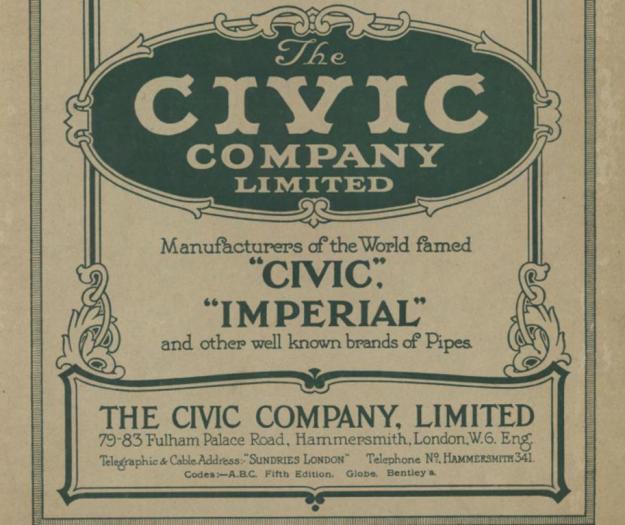
The Civic Company Ltd of London was formed in 1921 out of the Imperial Tobacco Co. (Fancy Goods Department) Ltd which was located in Fulham Palace Road Hammersmith. The Imperial

Company itself was formed in 1901 in response to an aggressive take over raid in Britain by American Tobacco and involved the pooling of tobacco retail outlets including closely related items such as briar pipes. In 1902 Imperial purchased the Salmon & Gluckstein retail empire, which included a section that finished briar pipes, originally made in France, for sale in Britain. It is this unit that became the fancy goods department within Imperial and, ultimately in 1921, the Civic Company. In 1928 Civic formed a key element in the merger with other producers and retailers that formed Cadogan Investments which still trades today.

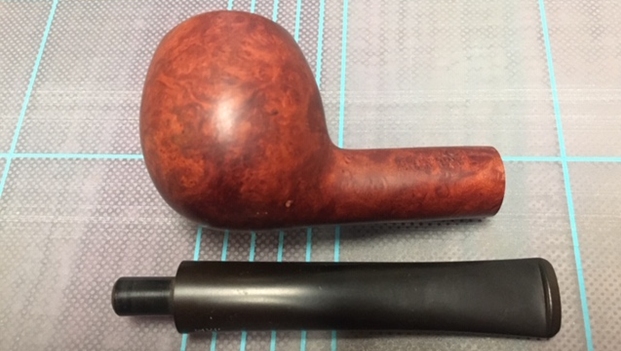
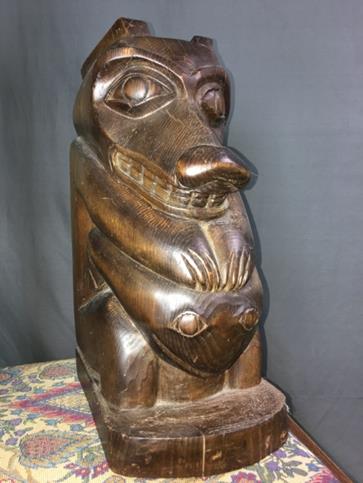
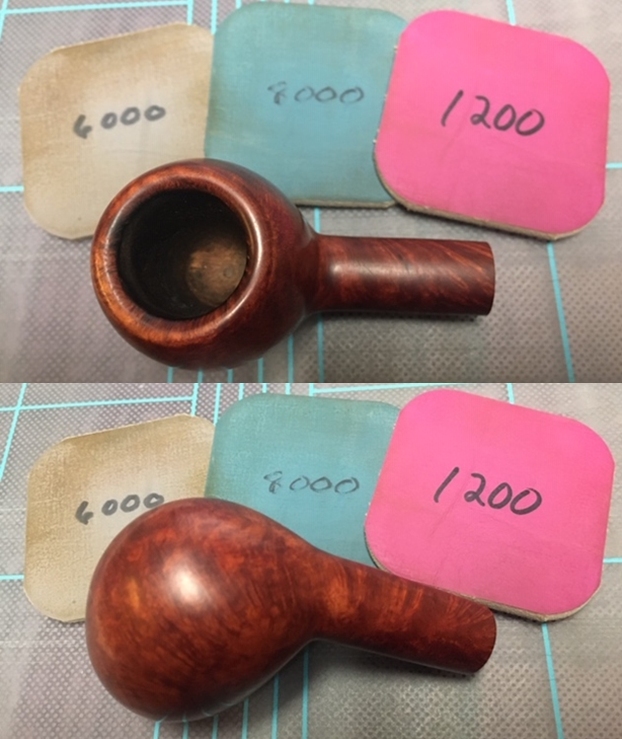
I am also including a photo from the Civic Company that is an interesting piece.With over 125 pipes to clean from Bob’s estate I took a batch of them to the states with me when I visited and left them with Jeff so he could help me out. Jeff cleaned the pipes with his usual penchant for thoroughness that I really appreciate. Once he finished he shipped them back to me. This one was a real mess and I did not know what to expect when I unwrapped it from his box. He reamed it with a PipNet pipe reamer and cleaned up the reaming with a Savinelli Fitsall Pipe Knife. He scrubbed out the internals with alcohol, pipe cleaners and cotton swabs until the pipe was clean. He scrubbed the exterior of the bowl with Murphy’s Oil Soap and a tooth brush to remove the grime and grit on the briar and the lava on the rim top. The finish looks very good with good looking grain around the bowl and shank. Jeff scrubbed it with Soft Scrub and soaked it in Before & After Deoxidizer to remove the oxidation on the rubber. When the pipe arrived here in Vancouver for the second stop of its restoration tour it looked a lot better. The stem still had a lot of deep oxidation. I took photos before I started my part of the work.  I took some close up photos of the rim top and also of the stem surface. I wanted to show what cleaned bowl and rim top looked like. The rim top good but there was some slight darkening on the inner edge. I also took close up photos of the stem to show the light tooth marks and the remaining oxidation on the stem surface.I took photos of the stamping on the sides of the shank and it is clear and readable. It is stamped as noted above.  I took the stem off the shank and took some photos to give a clear picture of the pipe from the left side profile. It is a really pretty pipe.Since this is another pipe Bob’s estate I am sure that some of you have read at least some of the other restoration work that has been done on the previous pipes. You have also read what I have included about Bob Kerr, the pipeman who held these pipes in trust before I came to work on them (see photo to the left). Also, if you have followed the blog for long you will already know that I like to include background information on the pipeman whose pipes I am restoring. For me, when I am working on an estate I really like to have a sense of the person who held the pipes in trust before I worked on them. It gives me another dimension of the restoration work. I asked Brian if he or his wife would like to write a brief biographical tribute to her father, Bob. His daughter worked on it and I received the following short write up on him and some pictures to go along with the words including one of Bob’s carvings. Once again I thank you Brian and tell your wife thank you as well.
I am delighted to pass on these beloved pipes of my father’s. I hope each user gets many hours of contemplative pleasure as he did. I remember the aroma of tobacco in the rec room, as he put up his feet on his lazy boy. He’d be first at the paper then, no one could touch it before him. Maybe there would be a movie on with an actor smoking a pipe. He would have very definite opinions on whether the performer was a ‘real’ smoker or not, a distinction which I could never see but it would be very clear to him. He worked by day as a sales manager of a paper products company, a job he hated. What he longed for was the life of an artist, so on the weekends and sometimes mid-week evenings he would journey to his workshop and come out with wood sculptures, all of which he declared as crap but every one of them treasured by my sister and myself. Enjoy the pipes, and maybe a little of his creative spirit will enter you!
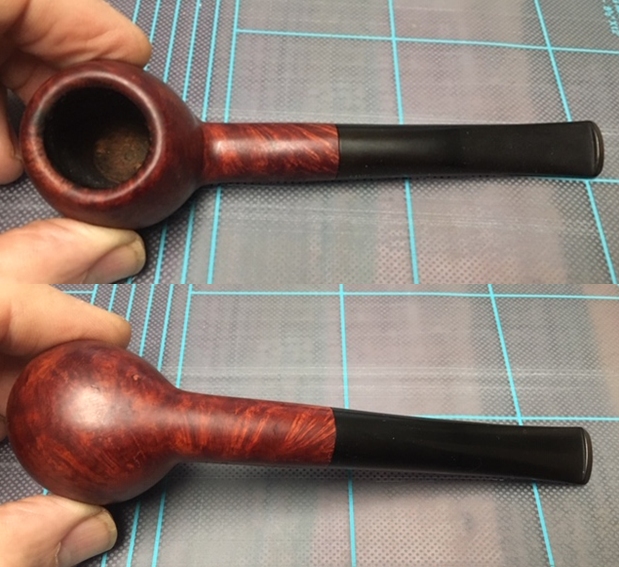
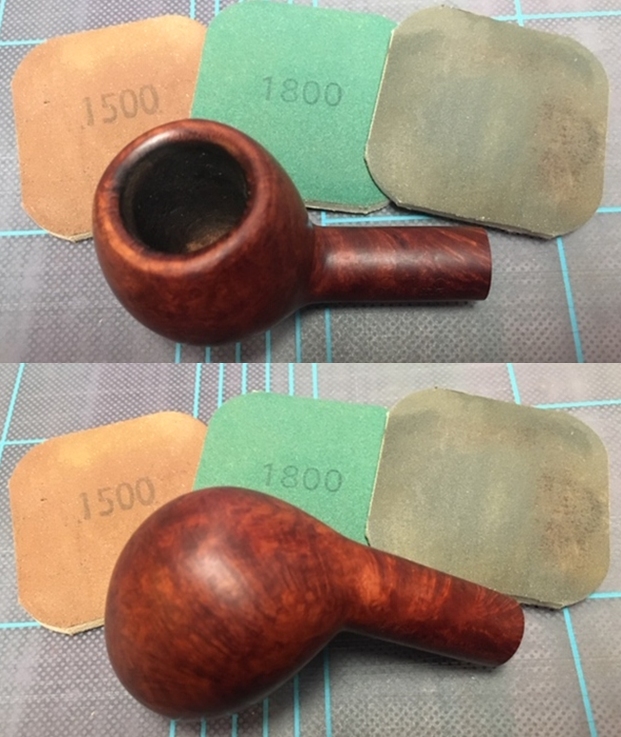
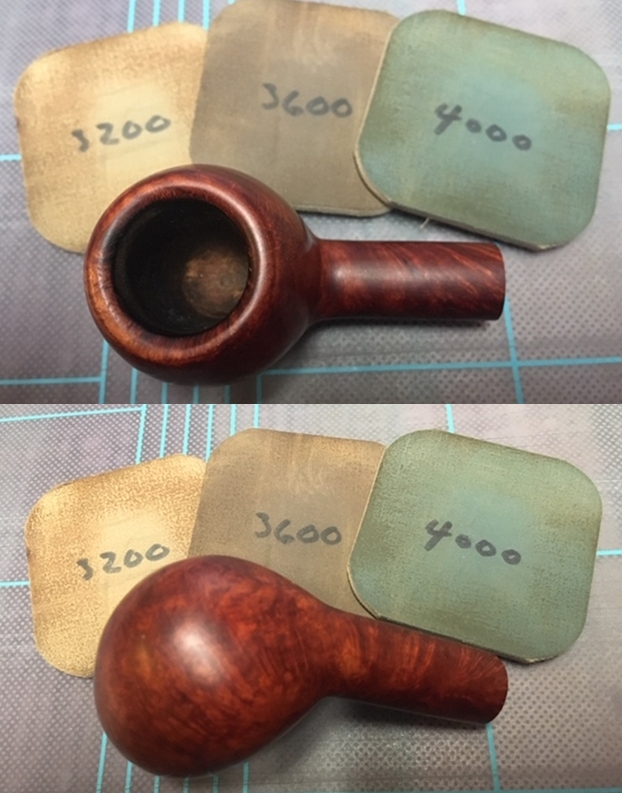
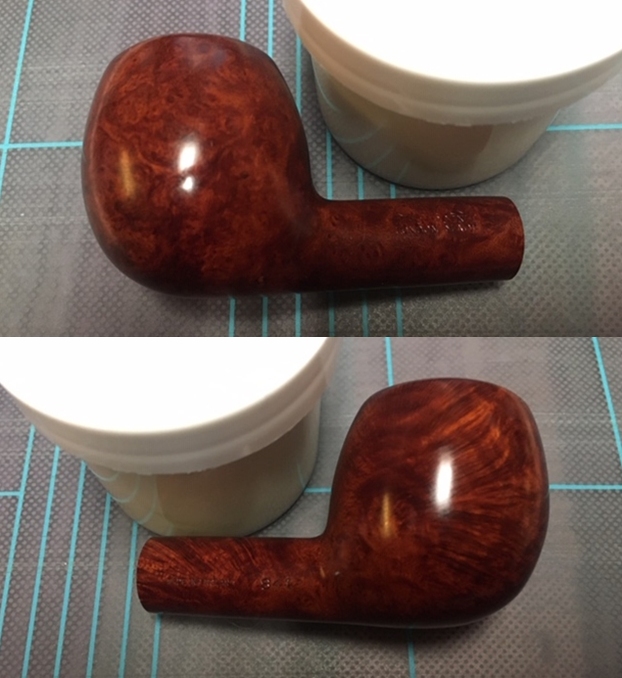
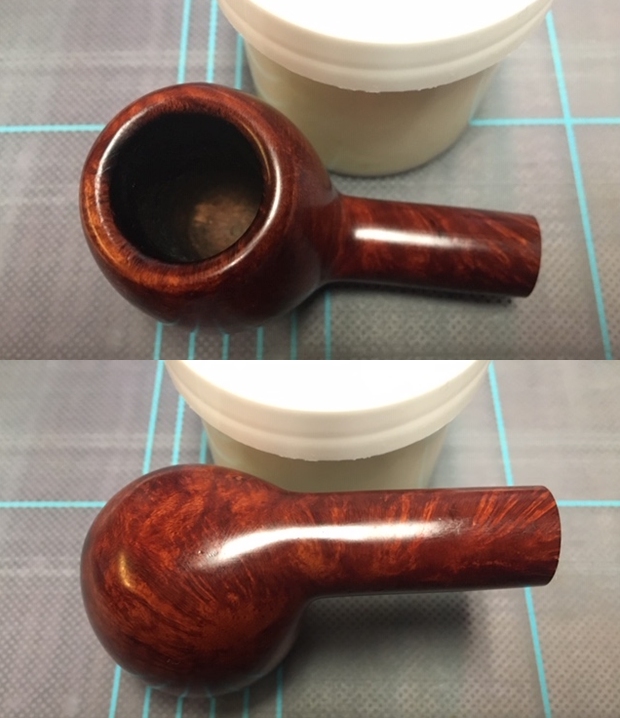
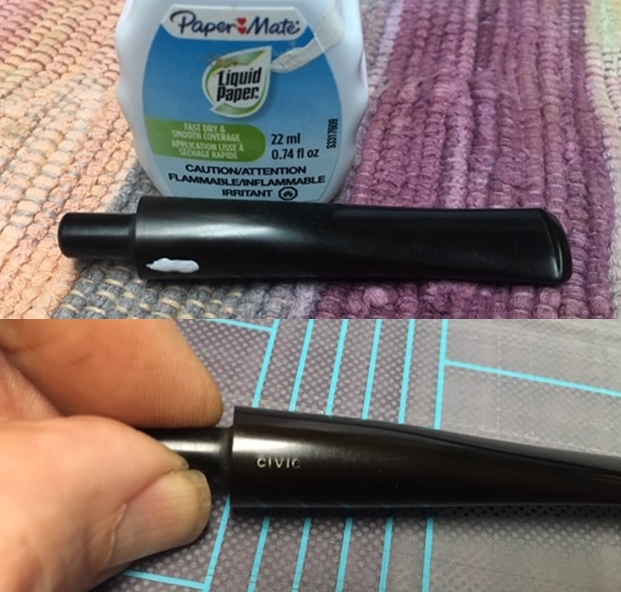
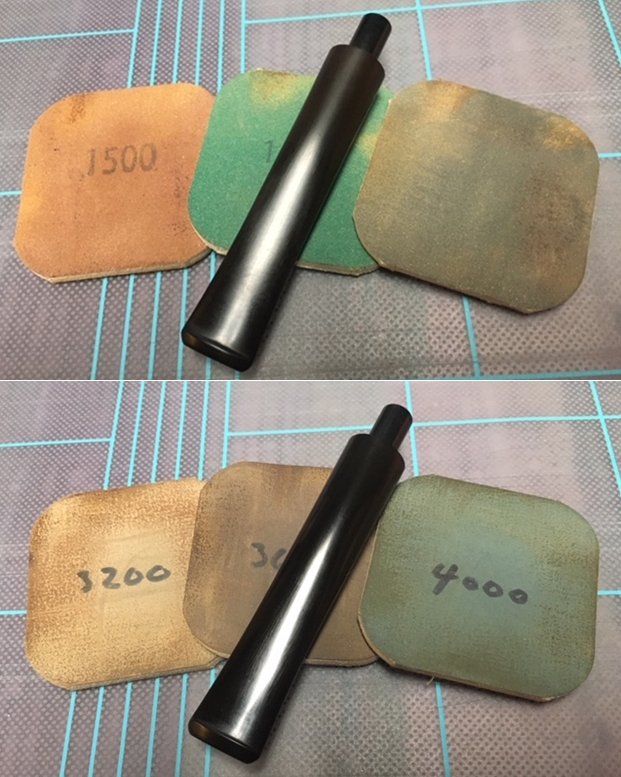
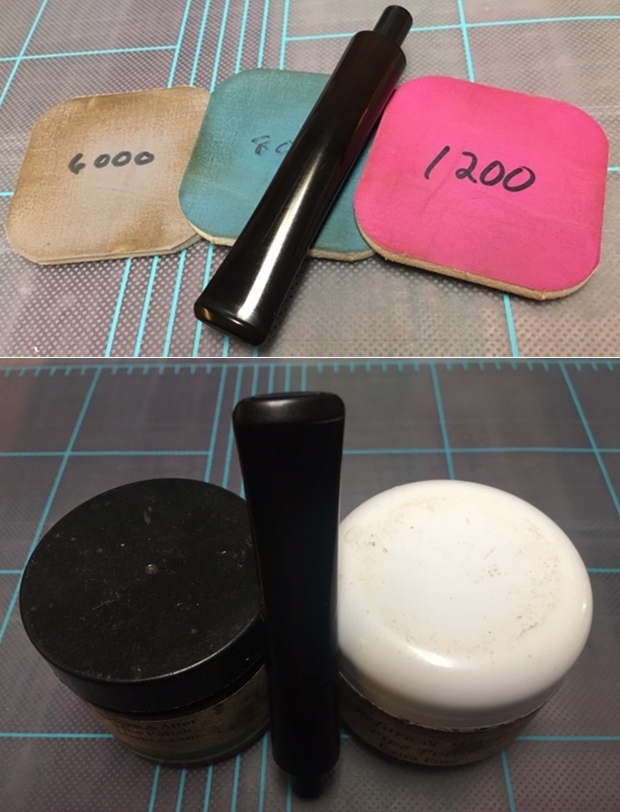
Now on to my part of the restoration of this Civic Two Point 841 Straight Apple. The pipe had cleaned up really well and I did not need to do any extra work on the rim top or bowl. I could go straight to polishing the briar with micromesh sanding pads. I wet sanded with 1500-12000 grit pads and wiped the briar down with a damp cloth after each sanding pad. I rubbed the bowl down with Before & After Restoration Balm. I worked it into the surface of the briar with my fingertips to clean, enliven and protect it. I let the balm sit for a little while and then buffed with a cotton cloth and shoe brush to raise the shine. Mark Hoover’s Balm is a product that I have come to appreciate and one I use on every pipe I have been working on. I set the bowl aside and turned my attention to the stem. I touched up the CIVIC stamp on the left side of the taper stem with Liquid Paper.I polished the vulcanite with micromesh sanding pads – 1500-12000 grit pads. I wiped it down with a damp cloth after each sanding pad. I used Before & After Pipe Polish – both Fine and Extra Fine to further polish the stem. This CIVIC Two Point 841 Apple from Bob Kerr’s estate turned out to be another great looking pipe. The mix of brown stains highlights the grain around the bowl sides, top and bottom. The finish on the pipe is in excellent condition and the contrasting stains work well with the polished vulcanite taper stem. I put the stem back on the bowl and carefully buffed the pipe with Blue Diamond on the buffing wheel using a light touch on the briar. I gave the bowl and stem multiple coats of carnauba wax on the buffing wheel and followed that by buffing the entire pipe with a clean buffing pad. I hand buffed the pipe with a microfiber cloth to deepen the shine. The finished CIVIC Two Point Apple fits nicely in the hand and feels great. Give the finished pipe a look in the photos below. The dimensions of the pipe are Length: 5 ¾ inches, Height: 1 ¾ inches, Outside diameter of the bowl: 1 ¼ inches, Chamber diameter: ¾ of an inch. If you are interested in carrying on Bob’s legacy with this pipe send me a message or an email. I have more to work on of various brands. Perhaps one of those will catch your attention. Thanks for reading this blog and my reflections on the pipe while I worked on it. This is an interesting estate to bring back to life.
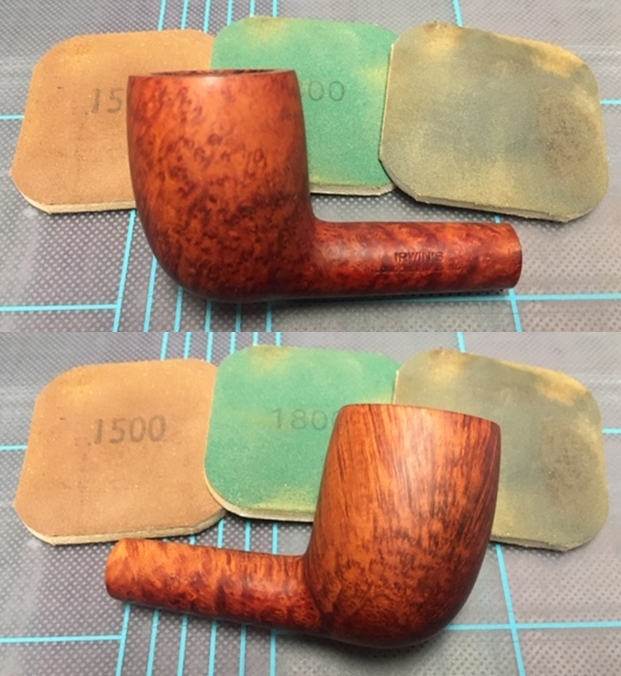
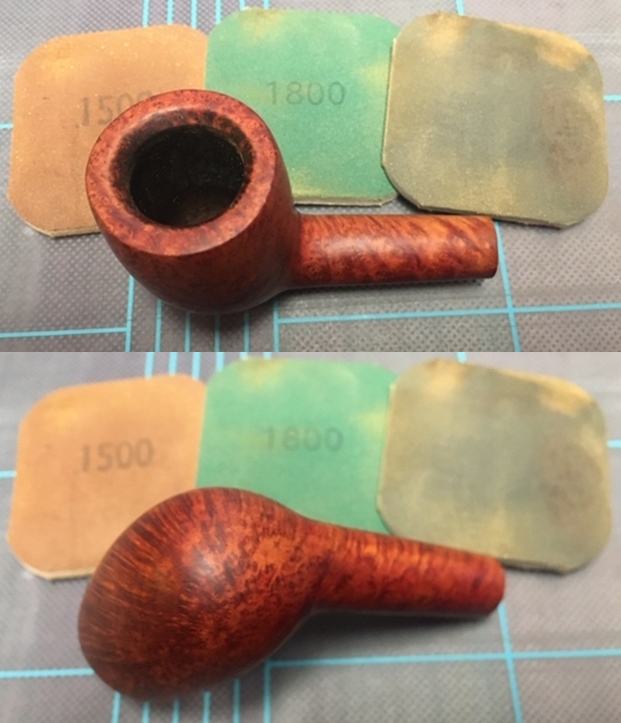
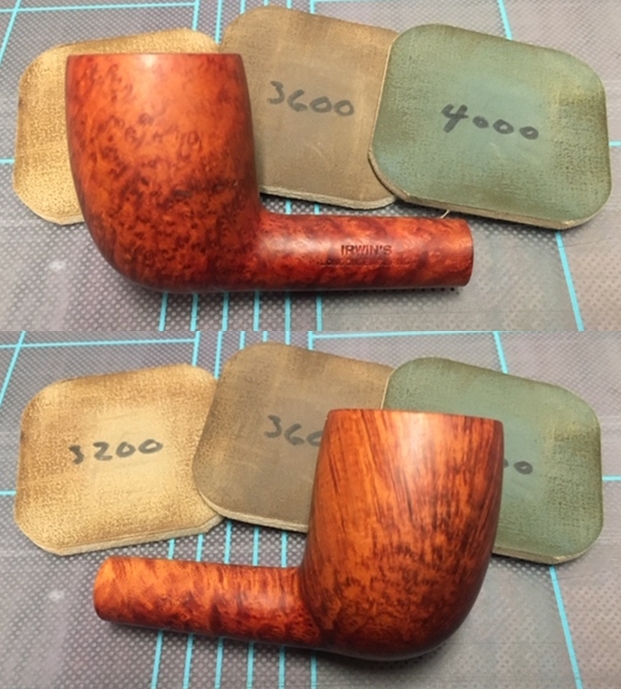
The next pipe from Bob Kerr’s Estate – a Savinelli Punto Oro 614 Full Bent


Blog by Steve Laug

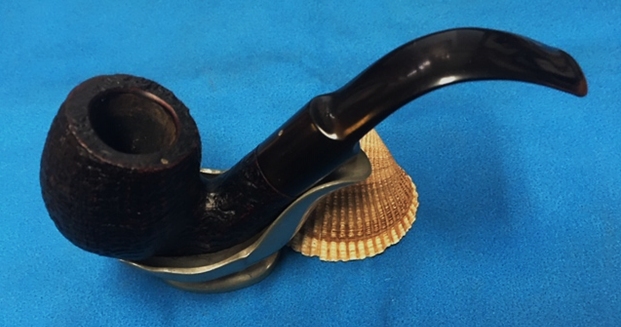
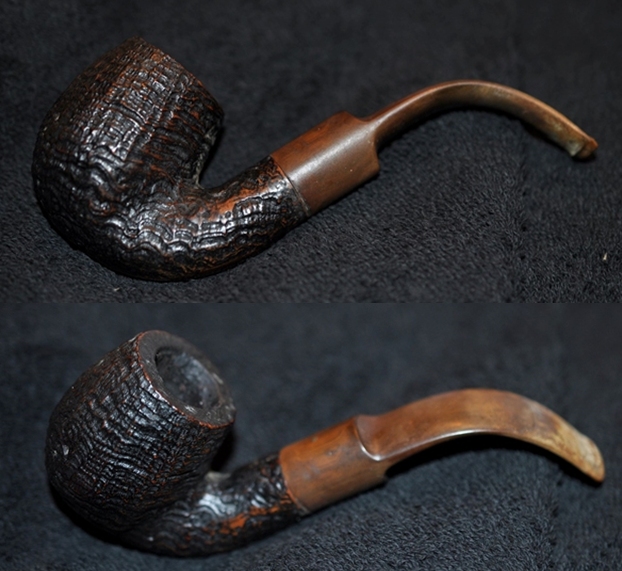
I am continuing to work on the pipes in Bob Kerr’s estate for a while. I am getting closer to finishing restoring this large estate with only about 33 more pipes to do. This is one of his two Savinelli pipes that I am working on. I am cleaning them for the family and moving them out into the hands of pipemen and women who will carry on the trust that began with Bob and in some pipes was carried on by Bob. In the collection there were 19 Peterson’s pipes along with a bevy of Dunhills, some Comoy’s and Barlings as well as a lot of other pipes – a total of 125 pipes along with a box of parts. This is the largest estate that I have had the opportunity to work on. I put together a spread sheet of the pipes and stampings to create an invoice. I was taking on what would take me a fair amount of time to clean up. I could not pass up the opportunity to work on these pipes though. They were just too tempting. This rugged sandblasted Savinelli Punto Oro is a great pipe to work on. It is a shape that is interesting and unique. It will go on the rebornpipes store.

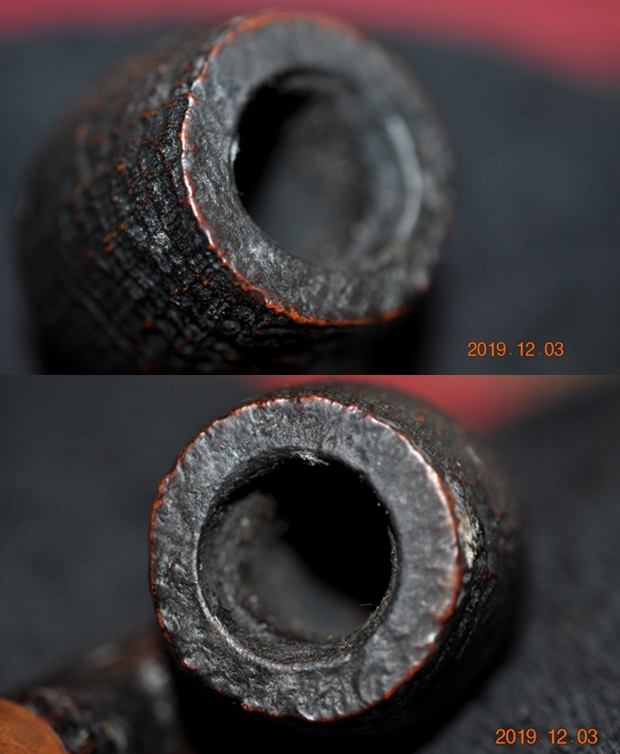
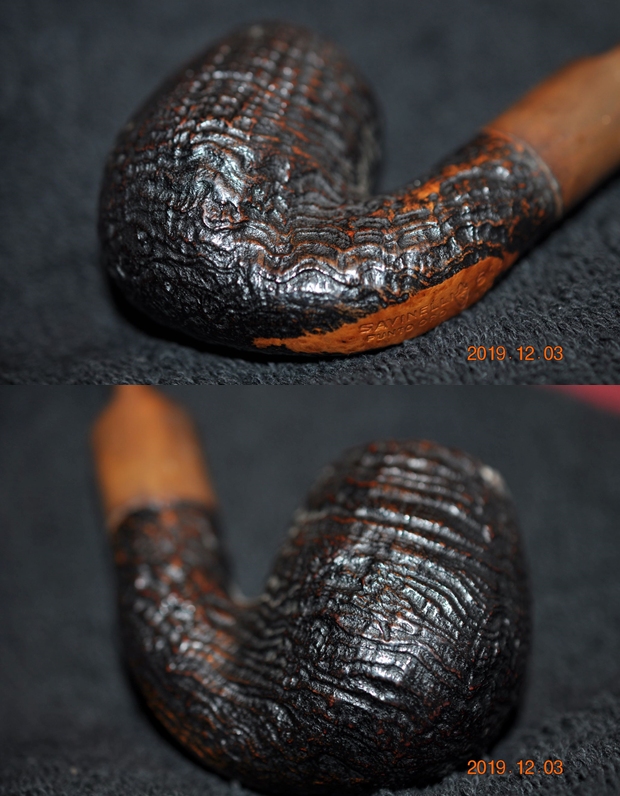
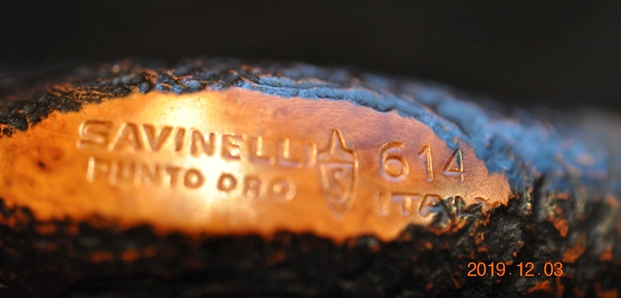
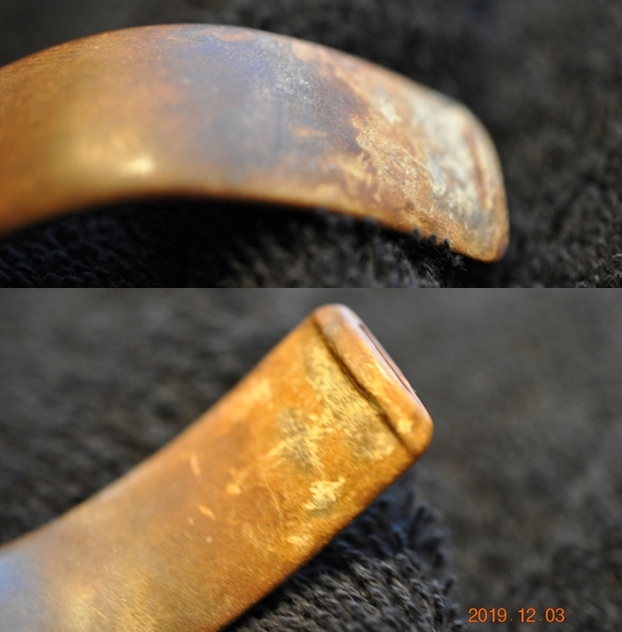
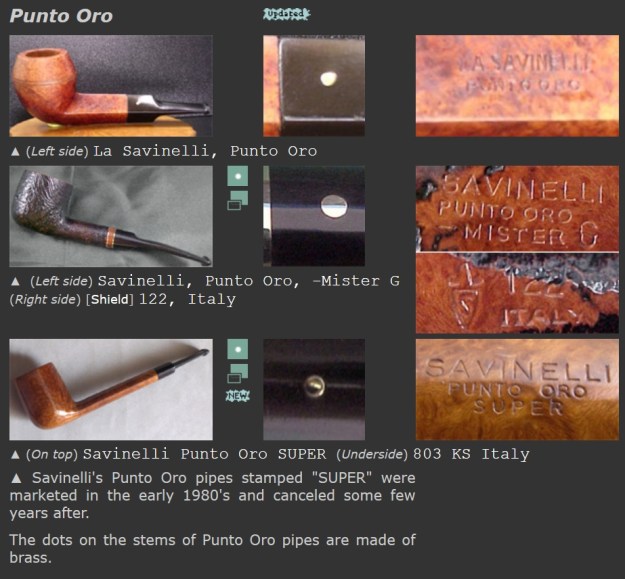
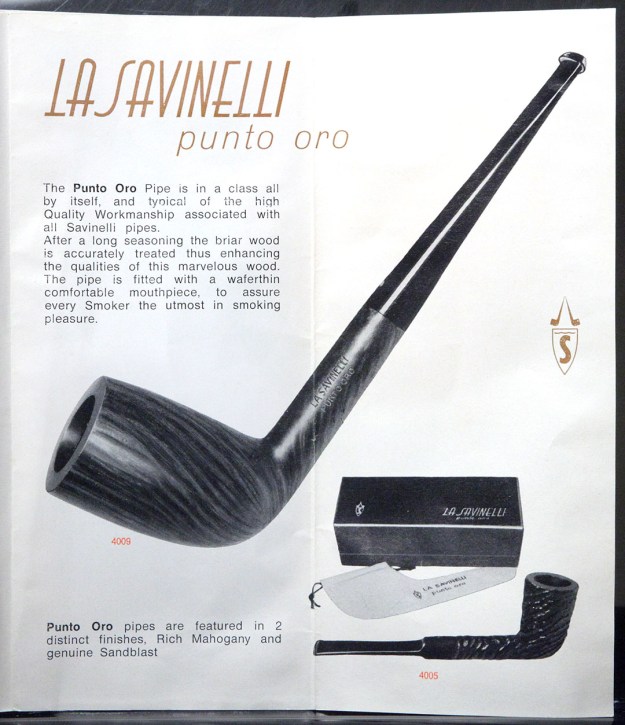
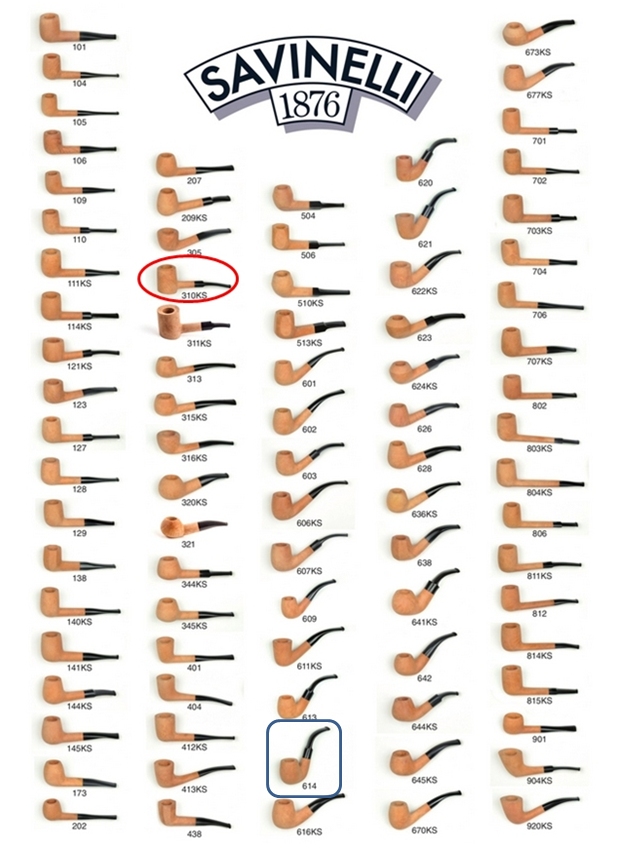
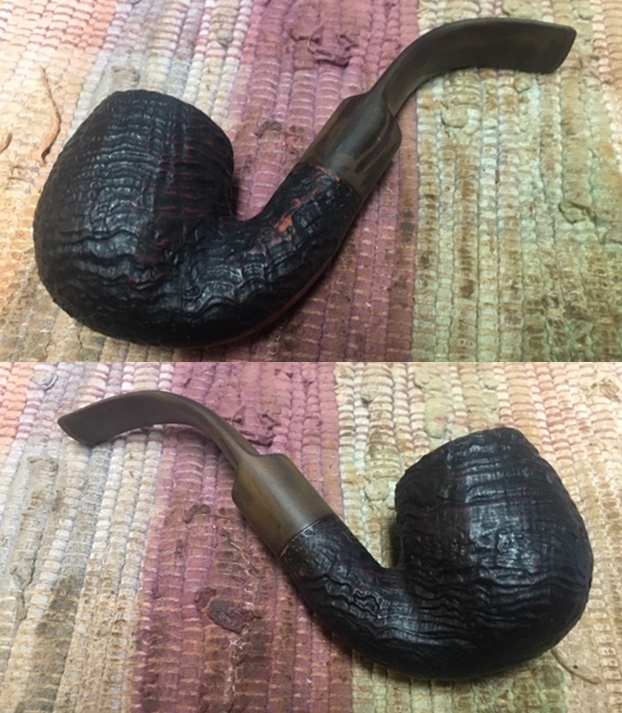
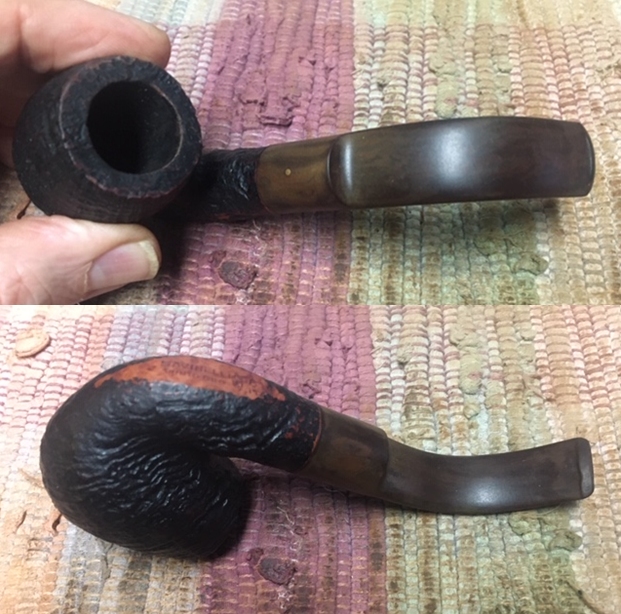
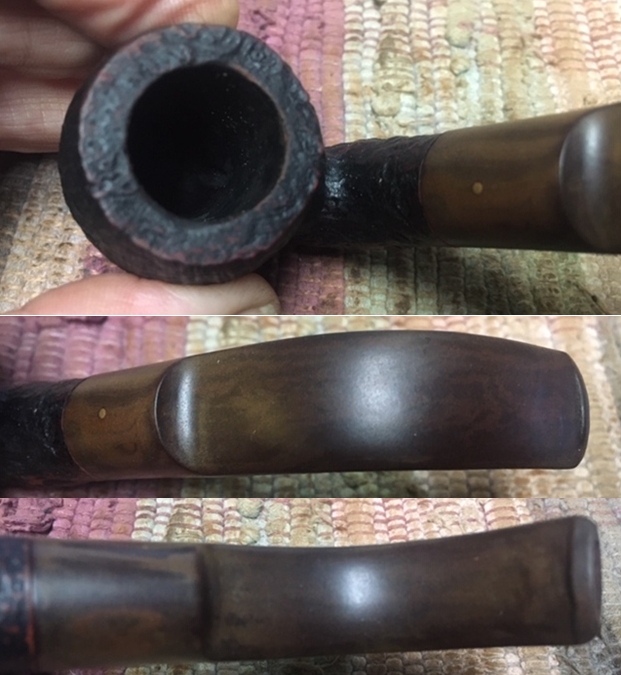
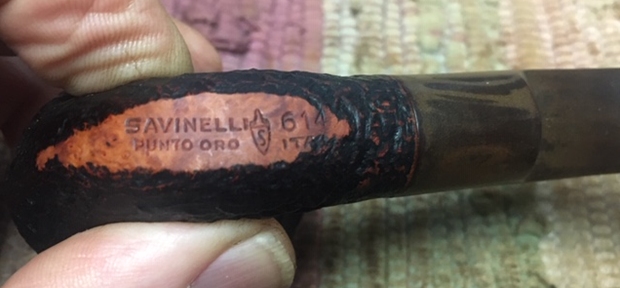
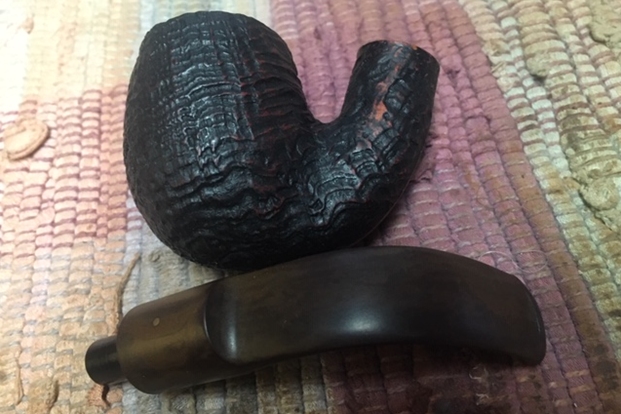
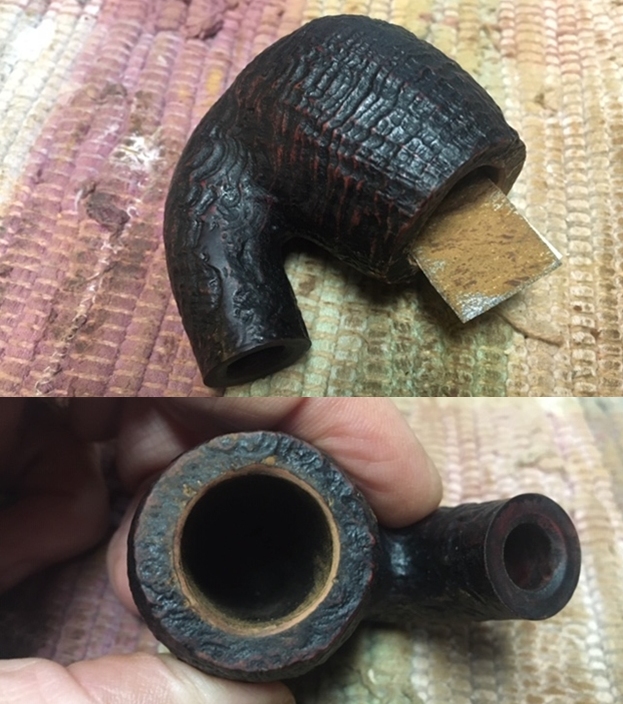
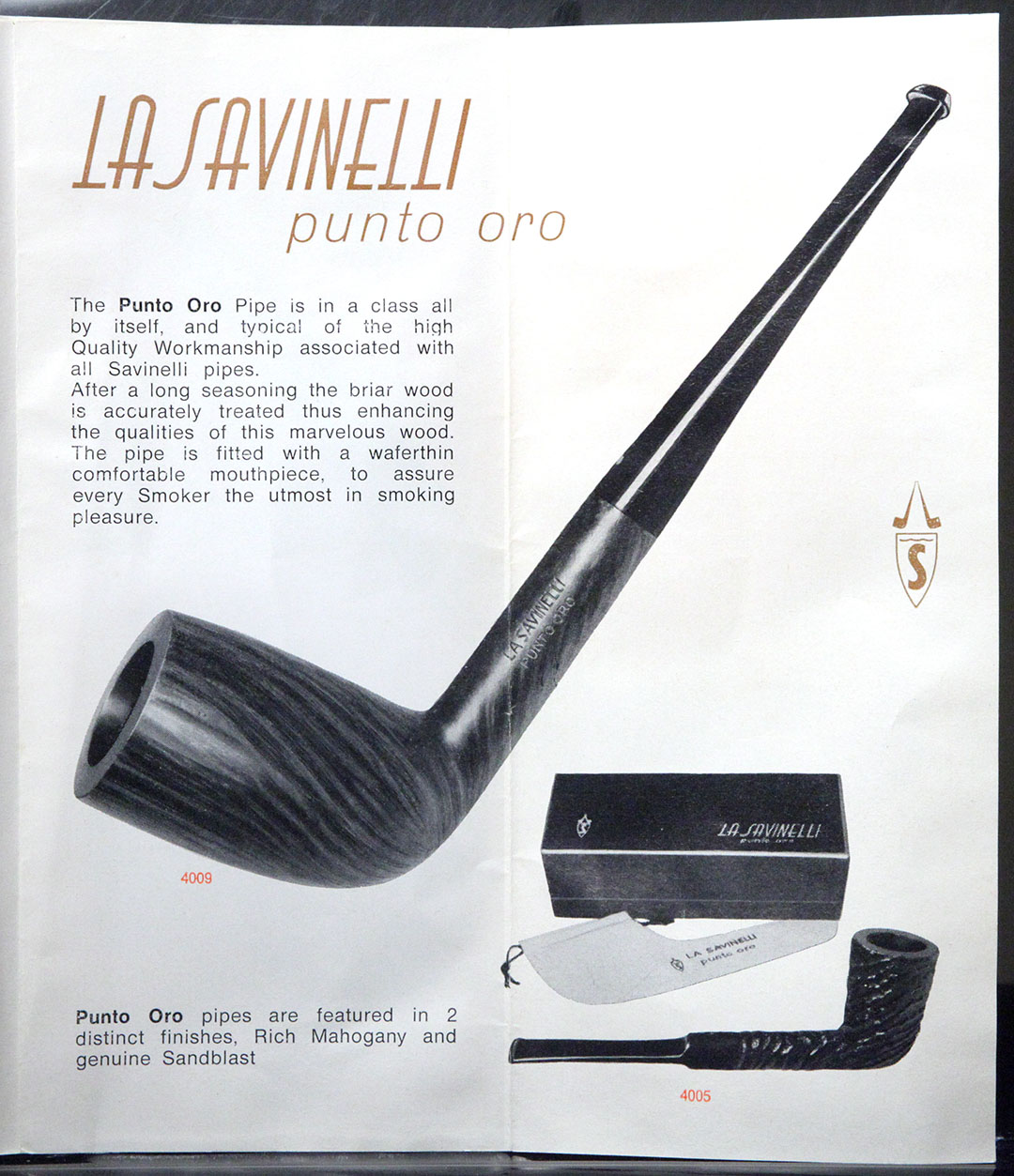
This Savinelli Full Bent Punto Oro 614 has a rugged, swirling sandblast finish with lots of nooks and crannies in the briar. It is a beauty! The pipe is stamped on a smooth panel on the underside of the heel and shank and reads Savinelli over Punto Oro. That is followed by the Savinelli logo Shield S and the shape number 614 over Italy. The valleys and ridges of the sandblasted grain showing through the grime and dirt are a mixture that leaves a rich texture. It had rich dark and medium contrasting brown stains that do not look too bad. There was a thick cake in the bowl with remnants of tobacco stuck on the walls. There was a fair lava overflow filling in the blast on the rim. The inner edge of the rim are dirty and may have some damage under the grime. It was a beautiful pipe that was dirty and tired looking. The stem was oxidized and calcified toward the end. This one had the characteristic tooth marks that I have come to expect from Bob’s pipes. Jeff took photos of the pipe before he started his cleanup work on it. He took photos of the bowl and rim top to show the cake in the bowl and the lava build up on the edges of the bowl. It was thick and hard but hopefully it had protected the rim and edges from damage. It was hard to know for sure from the photos.Jeff took photos of the sides and heel of the bowl to show the condition of the finish. You can see the beautiful swirls of the sandblast. There is a lot of dust and grime filling in the valleys. He took a photo of the stamping on the smooth panel on the underside of the bowl and shank. The stamping was readable as you can see from the photos and read as noted above.Jeff took photos of the top and underside of the stem showing the tooth chatter, scratching and oxidation on the stem surface and wear on the edges of the button. I turned to Pipephil’s site to get a feel for the Punto Oro line. I have worked on both smooth and sandblast finish Punto Oro pipes in the past. This was another sandblast one – this time a dark one rather than natural. Here is the link (http://www.pipephil.eu/logos/en/logo-savinelli3.html). I have included a screen capture of the pertinent information on the line below. It appears the line came out in both smooth and sandblast finishes. I turned to Pipedia to look at what information they had on the brand. I found a catalogue page on the Punto Oro which confirmed what I had surmised about the line having both smooth and sandblast finished pipe (https://pipedia.org/images/d/db/Sav_Punto_Oro.jpg). I have included a screen capture of the page below. It says that the line was available in 2 distinct finishes – a rich Mahogany smooth finish and a genuine sandblast.The Savinelli shape number was 614 so I turned to the Savinelli Shape Chart on Pipedia and included a screen capture (https://pipedia.org/images/4/41/Sav_Shape_Chart_2017.jpg). I have drawn a blue box around the 614 shape in the photo below.With over 125 pipes to clean from Bob’s estate I took a batch of them to the states with me when I visited and left them with Jeff so he could help me out. Jeff cleaned the pipe with his usual penchant for thoroughness that I really appreciate. This one was a real mess and I did not know what to expect when I unwrapped it from his box. He reamed it with a PipNet pipe reamer and cleaned up the reaming with a Savinelli Fitsall Pipe Knife. He scrubbed out the internals with alcohol, pipe cleaners and cotton swabs until the pipe was clean. He scrubbed the exterior of the bowl with Murphy’s Oil Soap and a tooth brush to remove the grime and grit on the briar and the lava on the rim top. The finish looks very good with good looking grain around the bowl and shank. Jeff scrubbed it with Soft Scrub and soaked it in Before & After Deoxidizer to remove the oxidation on the rubber. When the pipe arrived here in Vancouver for the second stop of its restoration tour it looked a lot better. The stem still had a lot of deep oxidation. I took photos before I started my part of the work.  I took some close up photos of the rim top and also of the stem surface. I wanted to show what cleaned bowl and rim top looked like. The rim top good but there was some damage on the left front inner edge. The sandblast finish is very nice. I also took close up photos of the stem to show the light tooth marks and the remaining oxidation on the stem surface.I took a photo of the stamping on the underside of the shank and it is clear and readable. It is stamped as noted above.I took the stem off the shank and took some photos to give a clear picture of the pipe from the left side profile and the top looking down. It is a really pretty pipe.Since this is another pipe Bob’s estate I am sure that some of you have read at least some of the other restoration work that has been done on the previous pipes. You have also read what I have included about Bob Kerr, the pipeman who held these pipes in trust before I came to work on them (see photo to the left). Also, if you have followed the blog for long you will already know that I like to include background information on the pipeman whose pipes I am restoring. For me, when I am working on an estate I really like to have a sense of the person who held the pipes in trust before I worked on them. It gives me another dimension of the restoration work. I asked Brian if he or his wife would like to write a brief biographical tribute to her father, Bob. His daughter worked on it and I received the following short write up on him and some pictures to go along with the words including one of Bob’s carvings. Once again I thank you Brian and tell your wife thank you as well.

I am delighted to pass on these beloved pipes of my father’s. I hope each user gets many hours of contemplative pleasure as he did. I remember the aroma of tobacco in the rec room, as he put up his feet on his lazy boy. He’d be first at the paper then, no one could touch it before him. Maybe there would be a movie on with an actor smoking a pipe. He would have very definite opinions on whether the performer was a ‘real’ smoker or not, a distinction which I could never see but it would be very clear to him. He worked by day as a sales manager of a paper products company, a job he hated. What he longed for was the life of an artist, so on the weekends and sometimes mid-week evenings he would journey to his workshop and come out with wood sculptures, all of which he declared as crap but every one of them treasured by my sister and myself. Enjoy the pipes, and maybe a little of his creative spirit will enter you!

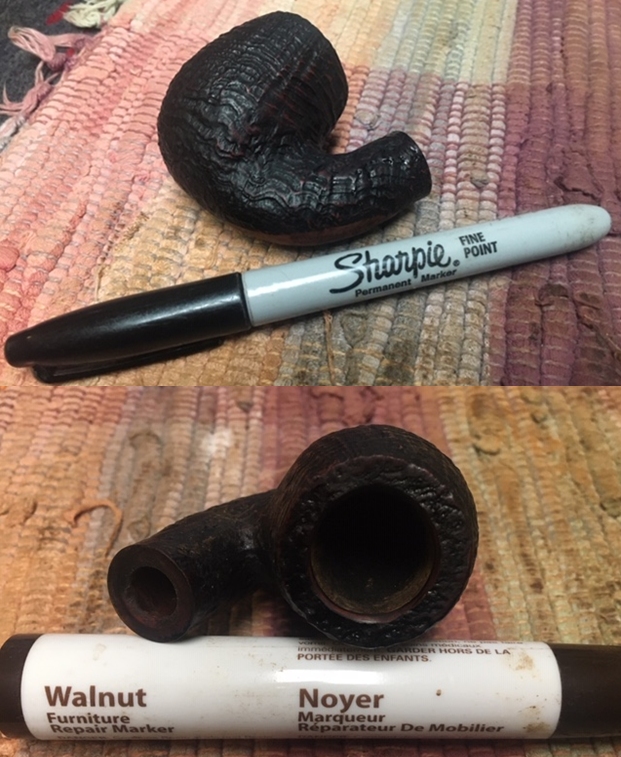
Now on to my part of the restoration of this Savinelli Punto Oro Full Bent. I decided to start by dealing with the damage to the inner edge of the rim. I used a folded piece of 220 grit sandpaper to smooth out the edge and give it a slight bevel to remove the damaged area and bring the bowl back into round.I used a black Sharpie Pen to touch up the washed out area on the left side of the shank. It did not take too much to blend that area into the browns and blacks of the surrounding sandblast. I used a Walnut stain pen on the newly beveled inner edge and on the rim top to blend in the repairs.I rubbed the bowl down with Before & After Restoration Balm. I worked it into the surface of the briar with my fingertips and a horsehair shoe brush to clean, enliven and protect it. I let the balm sit for a little while and then buffed with a cotton cloth and shoe brush to raise the shine. Mark Hoover’s Balm is a product that I have come to appreciate and one I use on every pipe I have been working on. I set the bowl aside and turned my attention to the still oxidized stem. I used a lot of elbow grease and scrubbed the stem with Soft Scrub and cotton pads. It took some time to work out much of the oxidation but it was definitely looking better.I worked over the rest of the remaining oxidation and the tooth marks with 220 grit sandpaper. I started polishing the stem with 400 grit wet dry sandpaper. At this point it is starting to look much better.  I polished the vulcanite with micromesh sanding pads – 1500-12000 grit pads. I wiped it down with a damp cloth after each sanding pad. I used Before & After Pipe Polish – both Fine and Extra Fine to further polish the stem. This Savinelli Punt Oro 614 from Bob Kerr’s estate turned out to be a great looking pipe. The mix of brown stains highlights the sandblasted grain around the bowl sides, top and bottom. The lighter brown stain on the flat bottom of the heel and underside of the shank is a great contrast. The finish on the pipe is in excellent condition and the contrasting stains work well with the polished vulcanite saddle stem. I put the stem back on the bowl and carefully buffed the pipe with Blue Diamond on the buffing wheel using a light touch on the briar. I gave the bowl and stem multiple coats of carnauba wax on the buffing wheel and followed that by buffing the entire pipe with a clean buffing pad. I hand buffed the pipe with a microfiber cloth to deepen the shine. The finished full bent Savinell Punto Oro fits nicely in the hand and feels great. Give the finished pipe a look in the photos below. The dimensions of the pipe are Length: 5 ½ inches, Height: 1 ¾ inches, Outside diameter of the bowl: 1 ¼ inches, Chamber diameter: ¾ of an inch. If you are interested in carrying on Bob’s legacy with this pipe send me a message or an email. I have more to work on of various brands. Perhaps one of those will catch your attention. Thanks for reading this blog and my reflections on the pipe while I worked on it. This is an interesting estate to bring back to life.
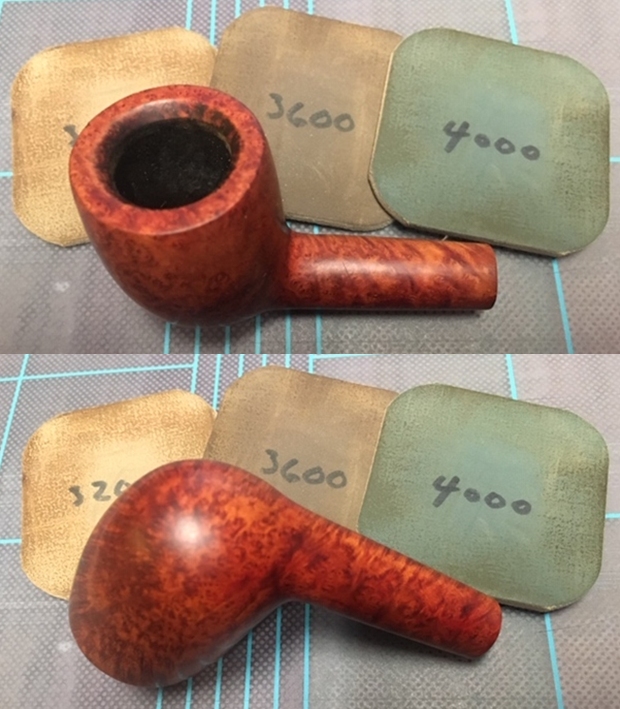
Renewing another pipe from Bob Kerr’s Estate – a Comoy’s Sandblast Apple 334


Blog by Steve Laug

I am changing up my work and turning back to Bob Kerr’s estate for a while. I am getting closer to finishing restoring this large estate with only about 35 more pipes to do. This is one of his Comoy’s pipes that I am working on. I am cleaning them for the family and moving them out into the hands of pipemen and women who will carry on the trust that began with Bob and in some pipes was carried on by Bob. In the collection there were 19 Peterson’s pipes along with a bevy of Dunhills, some Comoy’s and Barlings as well as a lot of other pipes – a total of 125 pipes along with a box of parts. This is the largest estate that I have had the opportunity to work on. I put together a spread sheet of the pipes and stampings to create an invoice. I was taking on what would take me a fair amount of time to clean up. I could not pass up the opportunity to work on these pipes though. They were just too tempting. This Comoy’s Sandblast is a great pipe to work on. It is a shape that is interesting and unique. It will go on the rebornpipes store.

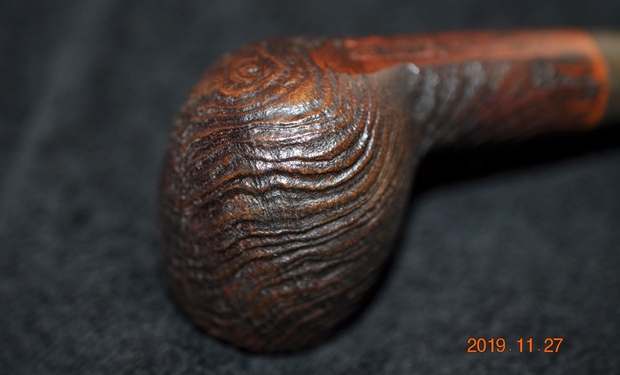
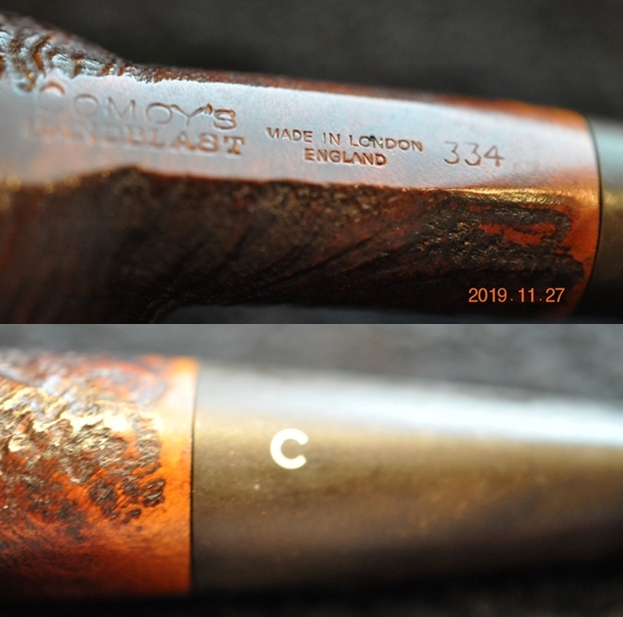
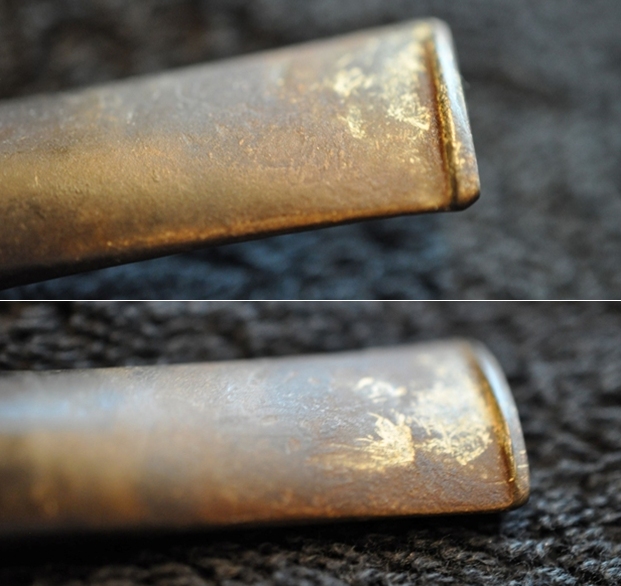
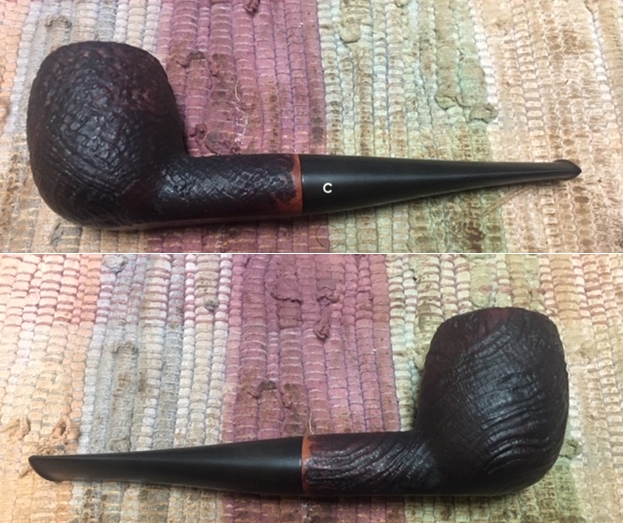
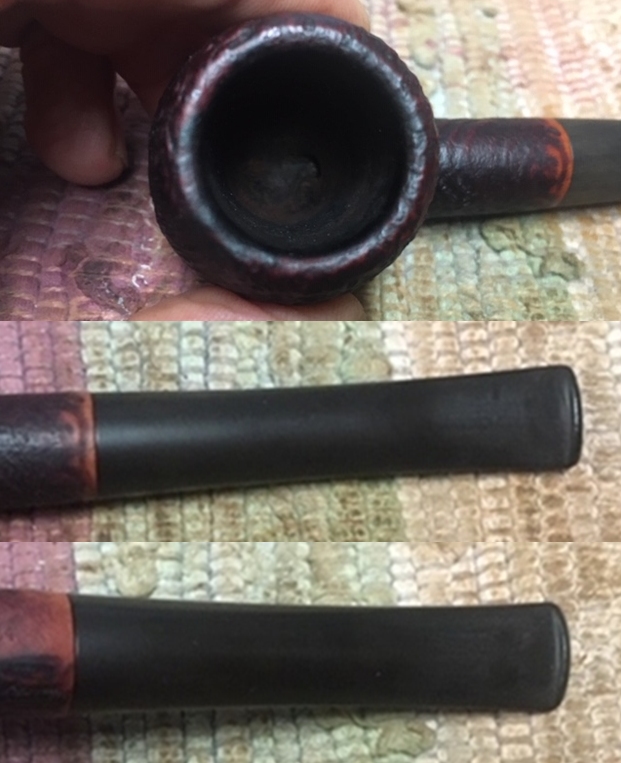
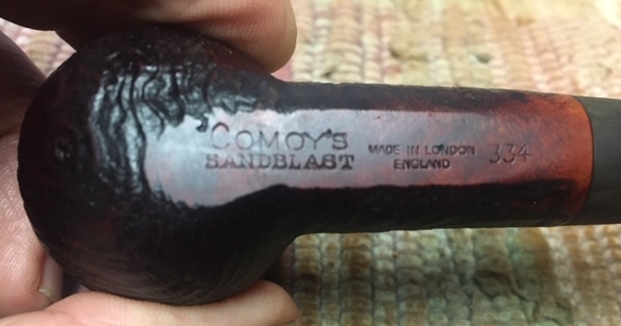
This Comoy’s Sandblast has a rugged, swirling sandblast finish with lots of nooks and crannies in the briar. It is a beauty! The pipe is stamped on a smooth panel on the underside of the heel and shank and reads Comoy’s Sandblast. That is followed by Made in London England and the shape number 334. The valleys and ridges of the sandblasted grain showing through the grime and dirt are a mixture that leaves a rich texture. It had a rich dark and medium contrasting brown stain that does not look too bad. There was a thick cake in the bowl with remnants of tobacco stuck on the walls. There was a fair lava overflow filling in the blast on the rim. The edges of the rim and top are dirty but look pretty pristine under the grime. It was a beautiful pipe that was dirty and tired looking. The stem was oxidized and calcified toward the end. Again, surprisingly it did not have the tooth marks that I have come to expect from Bob’s pipes. Jeff took photos of the pipe before he started his cleanup work on it. Jeff took photos of the bowl and rim top to show the cake in the bowl and the lava build up on the edges of the bowl. It was thick and hard but hopefully it had protected the rim and edges from damage. The edges look pretty good.Jeff took photos of the sides and heel of the bowl to show the condition of the finish. You can see the beautiful swirls of the sandblast. There is a lot of dust and grime filling in the valleys. He took a photo of the stamping on the smooth panel on the underside of the bowl and shank. The stamping was readable as you can see from the photos. It read Comoy’s Sandblast followed by Made in London England and the shape number 334.  The second photo shows the C logo on the left side of the taper stem is formed by three circles working to make the C. Jeff took photos of the top and underside of the stem showing the tooth chatter, scratching and oxidation on the stem surface and wear on the edges of the button.Before my work on the pipe began, I wanted to see where it fit in the Comoy’s timeline. I looked on Pipedia to pin down a date for the pipe. Since the pipe is stamped Made in London England I decided to use that to see what I could find. Pipedia has a great article on dating these pipes (https://pipedia.org/index.php?title=Comoy%27s_Dating_Guide#Made_in_London_England). I found the information below. I have highlighted the pertinent portion in red in the paragraph below. The stamping matches the pipe I am working on.

Appears in two versions. This is again stamped in a circle with “MADE” at the top, “IN” in the middle, and “LONDON” at the bottom, with “ENGLAND” in a straight line beneath. It can be assumed that this stamp was first used in the export drive in the early 1950s. On a Bulldog Sandblast from the early 50s the Comoy name no. 2 above [I insert number 2 here. A return to the slightly more fancy block letters with serifs and the apostrophe. (It seems that some grades carried different stamps, or at least that the stamping changed in different years for some grades.)] was used together with “MADE IN LONDON” over “ENGLAND”. There are no known examples of pre-WW II Comoy’s stamped in this way. The second version is the same as above but in a “rugby ball” shape. This shape is verified on Comoy´s “Extraordinaire” pipes.

From that I knew that I was working a Comoy’s Sandblast from the early 1950’s which fit very well into the timeframe of Bob’s other pipes.

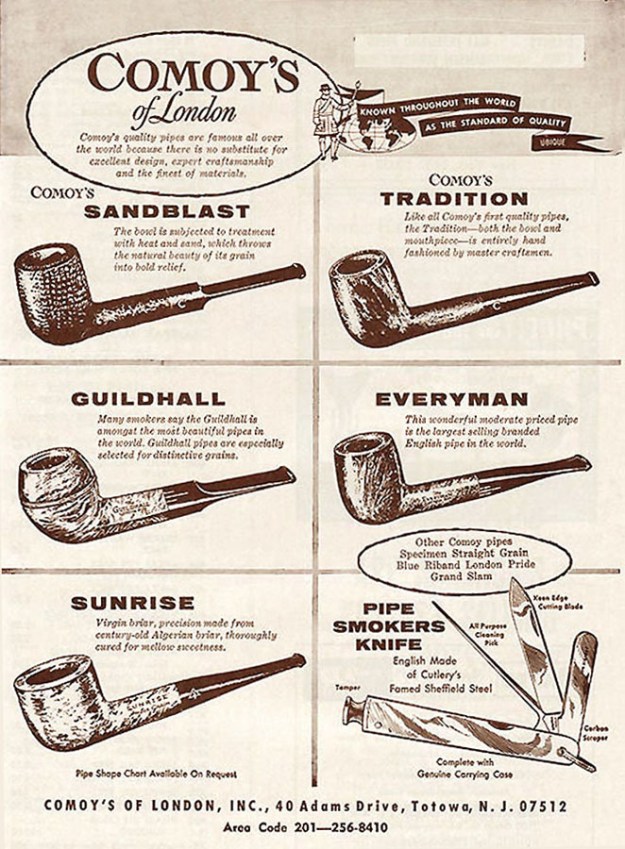
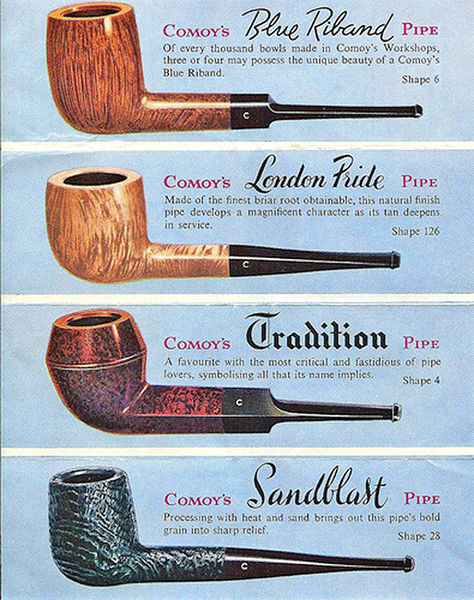
I have also included two catalogue pages from Pipedia as well to show the line for sale at several time periods in Comoy’s history (https://pipedia.org/wiki/Comoy%27s). The first page is from the 1922 Catalogue and the second one is from a later date. Read the description that highlights how they did their sandblasting combining heat and sand to bring out the grain. With over 125 pipes to clean from Bob’s estate I took a batch of them to the states with me when I visited and left them with Jeff so he could help me out. Jeff cleaned the pipe with his usual penchant for thoroughness that I really appreciate. This one was a real mess and I did not know what to expect when I unwrapped it from his box. He reamed it with a PipNet pipe reamer and cleaned up the reaming with a Savinelli Fitsall Pipe Knife. He scrubbed out the internals with alcohol, pipe cleaners and cotton swabs until the pipe was clean. He scrubbed the exterior of the bowl with Murphy’s Oil Soap and a tooth brush to remove the grime and grit on the briar and the lava on the rim top. The finish looks very good with good looking grain around the bowl and shank. Jeff scrubbed the stem down with Soft Scrub and then soaked it in Before & After Deoxidizer to remove the oxidation on the rubber. When the pipe arrived here in Vancouver for the second stop of its restoration tour it looked very good. I took photos before I started my part of the work.   I took some close up photos of the rim top and also of the stem surface. I wanted to show what cleaned bowl and rim top looked like. The rim top looks excellent and the edges and surface are undamaged. The sandblast finish is very nice. I also took close up photos of the stem to show the light tooth marks and the remaining oxidation on the stem surface.I took a photo of the stamping on the underside of the shank and it is clear and readable. It is stamped as noted above.I took the stem off the shank and took some photos to give a clear picture of the pipe from the left side profile and the top looking down. It is a really pretty pipe.Since this is another pipe Bob’s estate I am sure that some of you have read at least some of the other restoration work that has been done on the previous pipes. You have also read what I have included about Bob Kerr, the pipeman who held these pipes in trust before I came to work on them (see photo to the left). Also, if you have followed the blog for long you will already know that I like to include background information on the pipeman whose pipes I am restoring. For me, when I am working on an estate I really like to have a sense of the person who held the pipes in trust before I worked on them. It gives me another dimension of the restoration work. I asked Brian if he or his wife would like to write a brief biographical tribute to her father, Bob. His daughter worked on it and I received the following short write up on him and some pictures to go along with the words including one of Bob’s carvings. Once again I thank you Brian and tell your wife thank you as well.

I am delighted to pass on these beloved pipes of my father’s. I hope each user gets many hours of contemplative pleasure as he did. I remember the aroma of tobacco in the rec room, as he put up his feet on his lazy boy. He’d be first at the paper then, no one could touch it before him. Maybe there would be a movie on with an actor smoking a pipe. He would have very definite opinions on whether the performer was a ‘real’ smoker or not, a distinction which I could never see but it would be very clear to him. He worked by day as a sales manager of a paper products company, a job he hated. What he longed for was the life of an artist, so on the weekends and sometimes mid-week evenings he would journey to his workshop and come out with wood sculptures, all of which he declared as crap but every one of them treasured by my sister and myself. Enjoy the pipes, and maybe a little of his creative spirit will enter you!

Now on to my part of the restoration of this Comoy’s Apple. The bowl and rim top were in great condition so this part of the restoration was very easy for me. I only had to rub the bowl down with Before & After Restoration Balm. I worked it into the surface of the briar with my fingertips and a horsehair shoe brush to clean, enliven and protect it. I let the balm sit for a little while and then buffed with a cotton cloth and shoe brush to raise the shine. Mark Hoover’s Balm is a product that I have come to appreciate and one I use on every pipe I have been working on. I set the bowl aside and turned my attention to the stem. I worked over the light tooth marks and blended them into the stem surface with 220 grit sandpaper. I started polishing the stem with 400 grit wet dry sandpaper. At this point it is starting to look much better.  I polished the vulcanite with micromesh sanding pads – 1500-12000 grit pads. I wiped it down with a damp cloth after each sanding pad. I used Before & After Pipe Polish – both Fine and Extra Fine to further polish the stem. This Comoy’s Sandblast 334 Apple turned out to be a great looking pipe. The mix of brown stains highlights the sandblasted grain around the bowl sides, top and bottom. The lighter brown stain on the flat bottom of the heel and shank as well forming a band around the shank end is a great contrast. The finish on the pipe is in excellent condition and the contrasting stains work well with the polished vulcanite taper stem. I put the stem back on the bowl and carefully buffed the pipe with Blue Diamond on the buffing wheel using a light touch on the briar. I gave the bowl and stem multiple coats of carnauba wax on the buffing wheel and followed that by buffing the entire pipe with a clean buffing pad. I hand buffed the pipe with a microfiber cloth to deepen the shine. The finished Comoy’s Sandblast Apple fits nicely in the hand and feels great. Give the finished pipe a look in the photos below. The dimensions of the pipe are Length: 5 ½ inches, Height: 1 ¾ inches, Outside diameter of the bowl: 1 ¼ inches, Chamber diameter: ¾ of an inch. If you are interested in carrying on Bob’s legacy with this pipe send me a message or an email. I have a lot more to work on of various brands. Perhaps one of those will catch your attention. Thanks for reading this blog and my reflections on the pipe while I worked on it. This is an interesting estate to bring back to life.
A Stanwell Sixtus 212 Tom Eltang Designed Hex Shank Billiard


Blog by Steve Laug

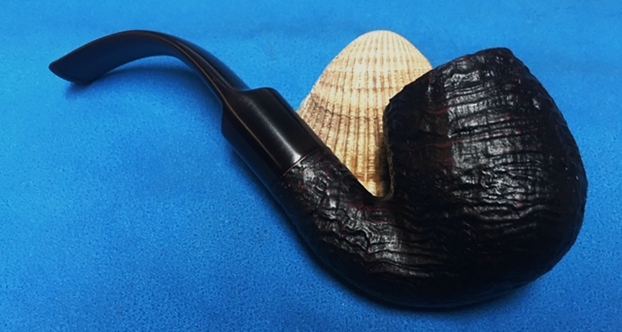
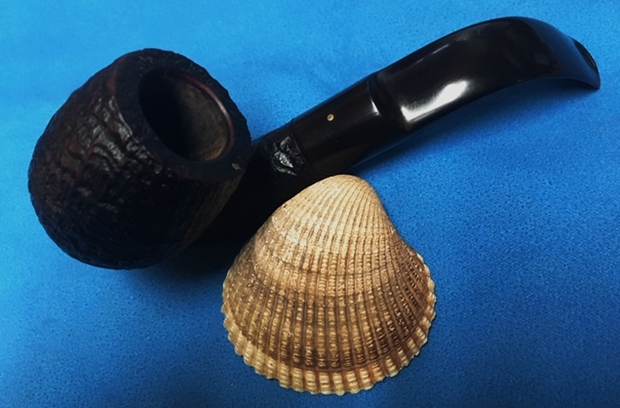
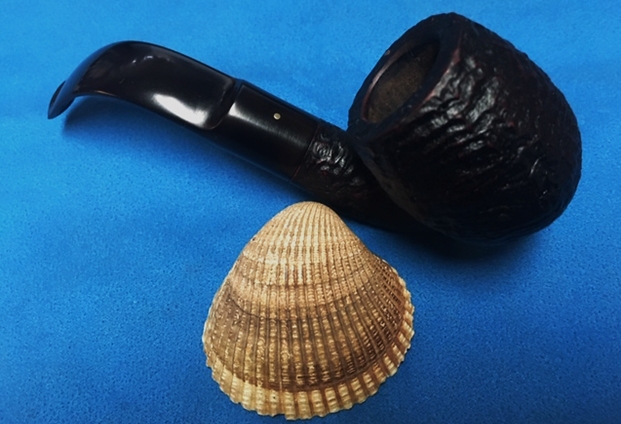
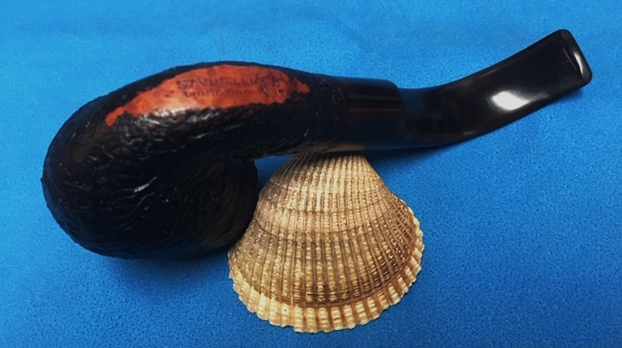
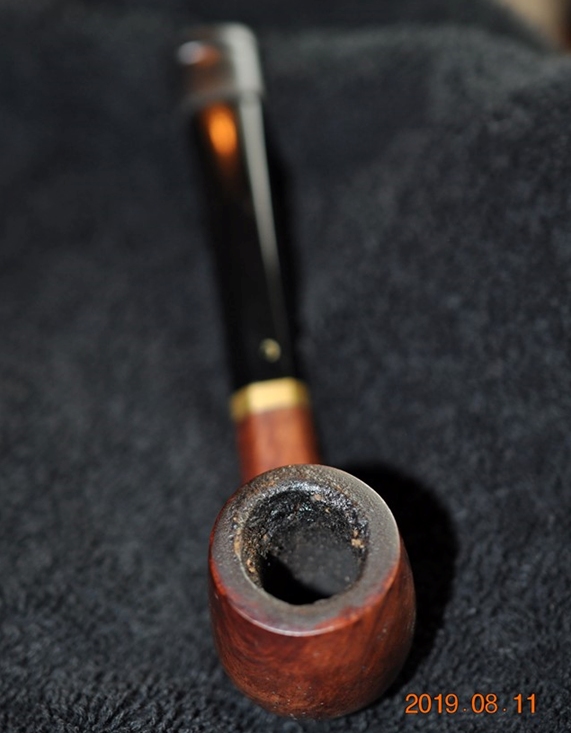
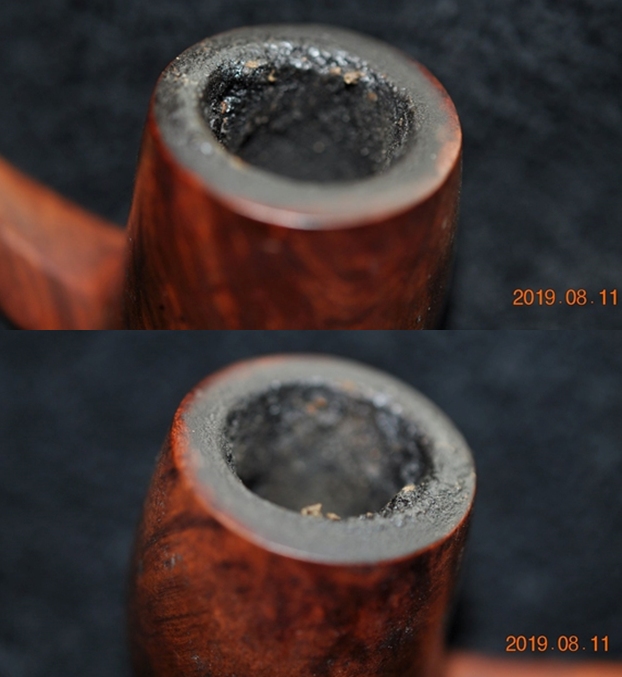
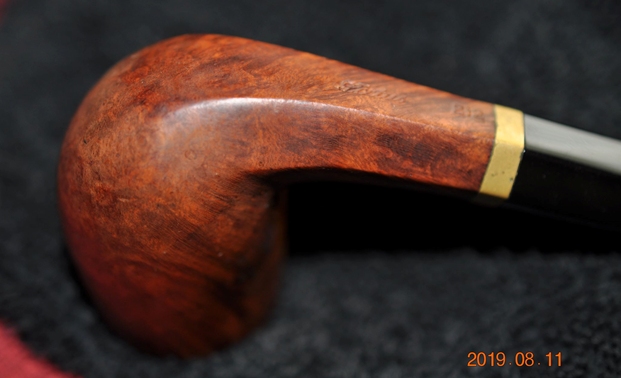
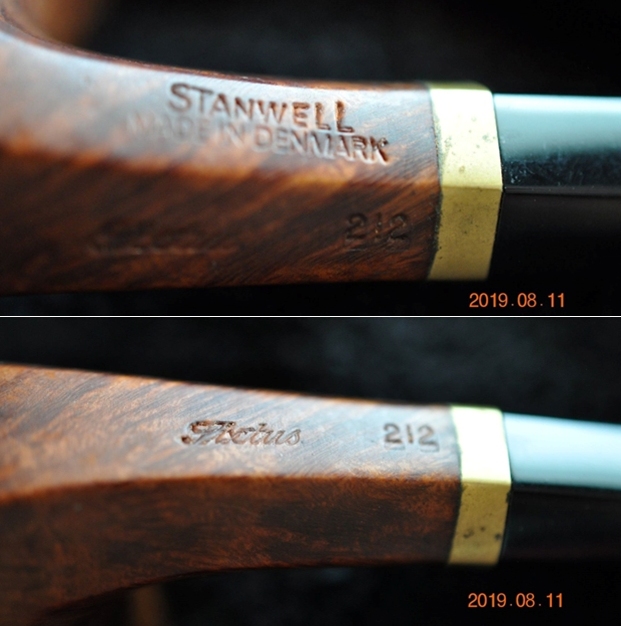
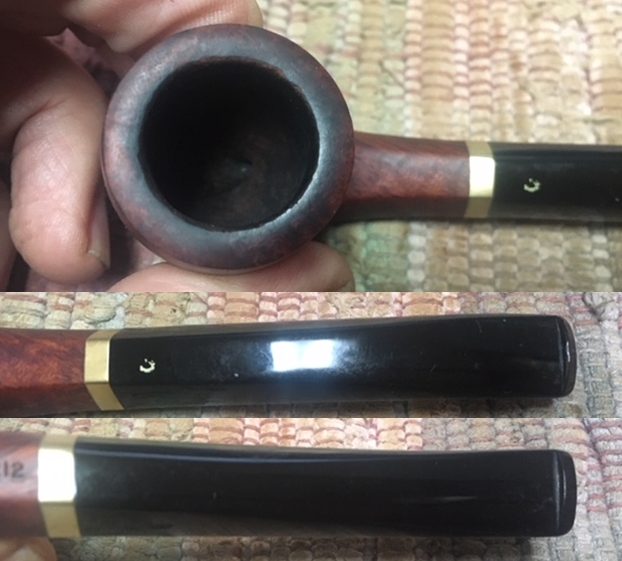
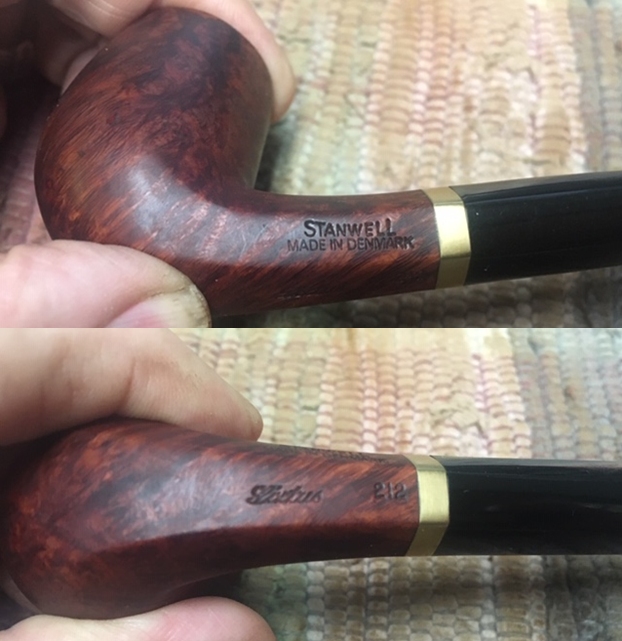
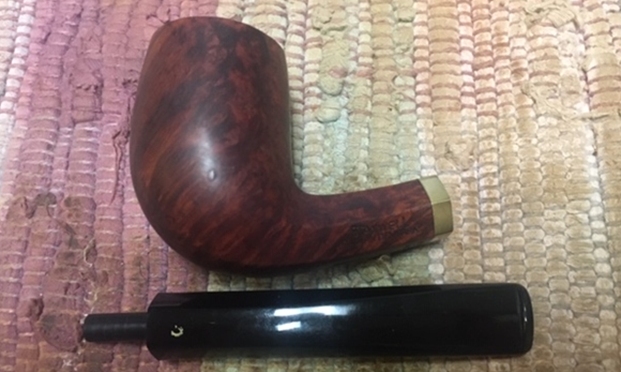
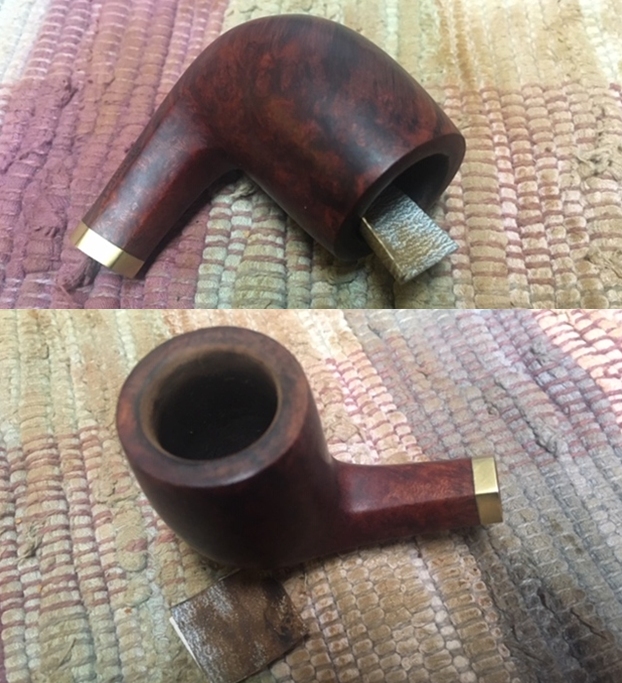
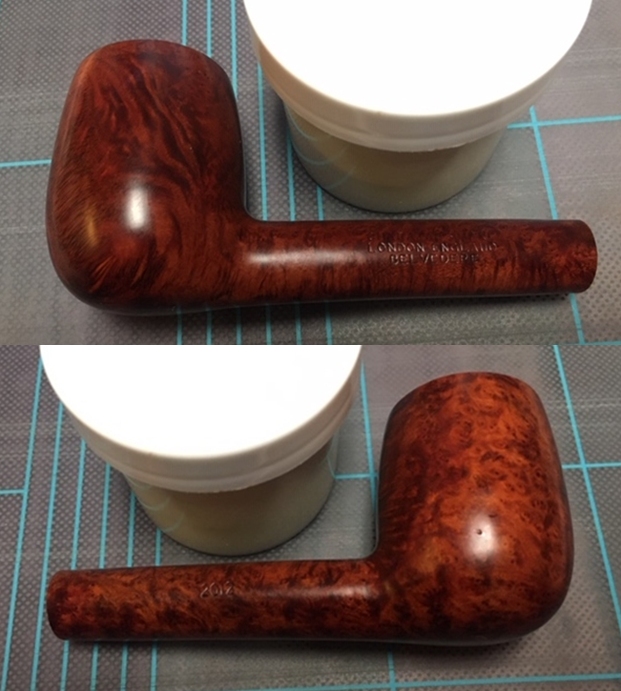
The next pipe on the table is from the next box of pipes I am working through. It is another Stanwell pipe. This time it is a nicely grained bent billiard. It is a Stanwell Sixtus shape 212 ¼ bent billiard with a hexagonal shank and stem. The Billiard shaped bowl, hexagonal shank and black acrylic hexagonal stem combine to make this Stanwell Sixtus a beauty. To me this is another classic Stanwell shape and it instantly recognizable. The finish is a smooth well grained piece of briar stained with a mix of stains to highlight the grain. The top of the bowl is smooth. It was stamped on the second panel and third panel of left side and reads Stanwell Made in Denmark followed by the line Sixtus and the shape number 212. The finish was very dirty with a heavy coat of grime ground into the bowl and rim top as can be seen in the photos. The bowl had a thick cake with a lava overflow onto the plateau rim top and the inner edge of the bowl. The acrylic stem was dirty and there was a Softee bit that was made to protect the surface of both sides and on the top and bottom edges of the button. I would not know if it worked until we removed it during the cleanup. Originally the Stanwell Crown S on the top of the hexagonal stem was a gold decal. Jeff took photos of the pipe before he cleaned it up so you could see what we saw. Jeff took a photo of the rim top to show lava build up in the plateau rim top, the edges and cake in the bowl. This one was obviously someone’s favourite pipe and it was a mess.     Jeff took some photos of the bowl sides and heel to show the absolutely dirty finish ground into the briar. It was a dirty pipe but I think it will be a beautiful one once we are finished.     The stamping on the underside of the shank is shown in the photo below. It is clear and read as noted above. There was a Stanwell Crown S logo decal on the top of the stem that was damaged and missing parts. The acrylic stem was dirty and had debris stuck to the surface. In the first photo of each pair below you can see the rubber Softee bit on the stem and in the second photo of each pair it is removed. The bit did a good job of protecting the stem surface from the majority of tooth damage but even so there are light spots on the surface that will need to be removed. I checked my usual sources for information on the Sixtus line but there was nothing specific on either Pipedia or Pipephil’s site. I also checked on the Pipedia site in the article there on shape number and shape designers(https://pipedia.org/wiki/Stanwell_Shape_Numbers_and_Designers). From there I found that the shape number 212 was designed by Tom Eltang and was a Freehand with and acrylic stem. I did a screen capture of the listing and have included it below.It looks like I am dealing with a pipe designed for Stanwell by Tom Eltang. Now it was my turn to work on the pipe. Jeff had done his usual thorough cleanup of the pipe. He had reamed the pipe with a Pipnet piper reamer and taken the cake back to bare briar. He cleaned up the remaining cake with a Savinelli Fitsall Pipe Knife. He scrubbed the interior of the bowl and shank with pipe cleaners, cotton swabs and alcohol to remove the tars and oils. He scrubbed the exterior of the pipe with Murphy’s Oil Soap and a tooth brush to remove the grime from the finish. He worked on the rim top lava and darkening with the soap and tooth brush. He scrubbed the inside of the stem with alcohol and pipe cleaners. He scrubbed the exterior with Soft Scrub and then soaked it in Before & After Deoxidizer. He washed the stem off with warm water to remove the Deoxidizer. The pipe looked far better. I took photos of the pipe when I received it before I started working on it. I took photos of the bowl and rim top as well as the stem to show how clean they were. The inner edge of the rim had some damage and was slightly out of round. The rim top had some darkening and light nicks. The stem is clean and the minimal damage on the button top and bottom edges is not too bad.     I took a photo of the stamping on the hexagonal patterns of the shank. The stamping is readable as noted above.     I took the stem off the bowl and took a photo of the pipe showing the overall look of the design.I decided to address the issues of the damage to the inner edge and rim top first. I used a folded piece of 220 grit sandpaper to smooth out edge and reshape it. I also smoothed out the damage on the rim top and darkening at the same time. It looked a lot better once I had finished.  I polished the briar with micromesh – wet sanding with 1500-12000 grit micromesh sanding pads. I wiped the bowl down after each sanding pad with a damp cloth.      I rubbed the briar down with Before & After Restoration Balm. I worked it into the briar with my fingertips. The product works to clean, enliven and preserve the briar. I let it sit for 10 minutes while I worked on the stem. After the time passed I buffed it with a cotton cloth to deepen the shine. The briar really comes alive with the balm.   I sanded the stem with 220 grit sandpaper to remove the small tooth chatter and marks near the button. I started polishing the stem with 400 grit wet dry sandpaper. I wiped the stem down with Obsidian Oil before further polishing it.        I polished the vulcanite with micromesh sanding pads – 1500-12000 grit pads. I wiped it down with Obsidian Oil after each sanding pad. I used Before & After Pipe Polish – both Fine and Extra Fine to further polish the stem. This Stanwell Sixtus 212 Tom Eltang Designed Billiard with hexagonal shank and stem turned out very nice. The mix of brown stains highlights the grain around the bowl sides and bottom. The rim top and edges look very good. The finish on the pipe is in excellent condition. I put the stem back on the bowl and carefully buffed the pipe with Blue Diamond on the buffing wheel. I gave the bowl and stem multiple coats of carnauba wax on the buffing wheel and followed that by buffing the entire pipe with a clean buffing pad. I hand buffed the pipe with a microfiber cloth to deepen the shine. The finished Bent Billiard is very nice and feels great in the hand. Give the finished pipe a look in the photos below. It is a nice pipe whose dimensions are Length: 5 ½ inches, Height: 2 inches, Outside diameter of the bowl: 1 ¼ inches, Chamber diameter: ¾ of an inch. Thanks for walking through the restoration with me as I worked over another beautiful pipe. This Stanwell Sixtus 212 Bent Billiard designed by Tom Eltang will be going on the rebornpipes store shortly. If you are interesting in adding it to your collection let me know! Thanks for your time.
Restoring a Stanwell Antique 144 Chonowitsch Designed Calabash


Blog by Steve Laug

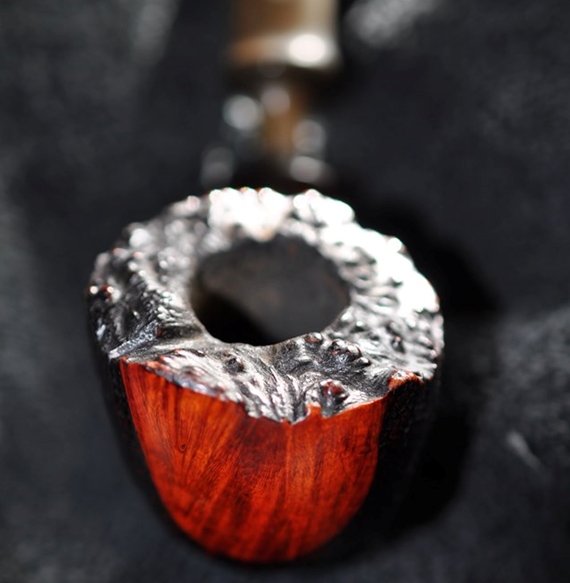
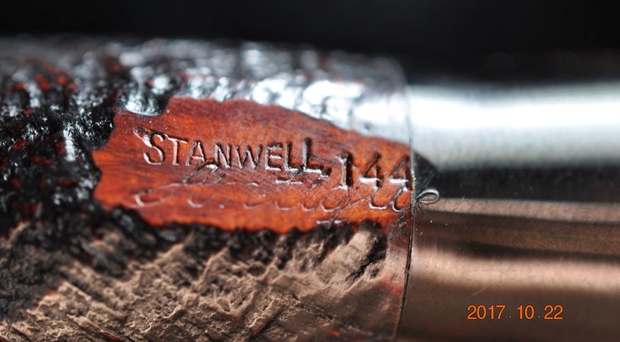
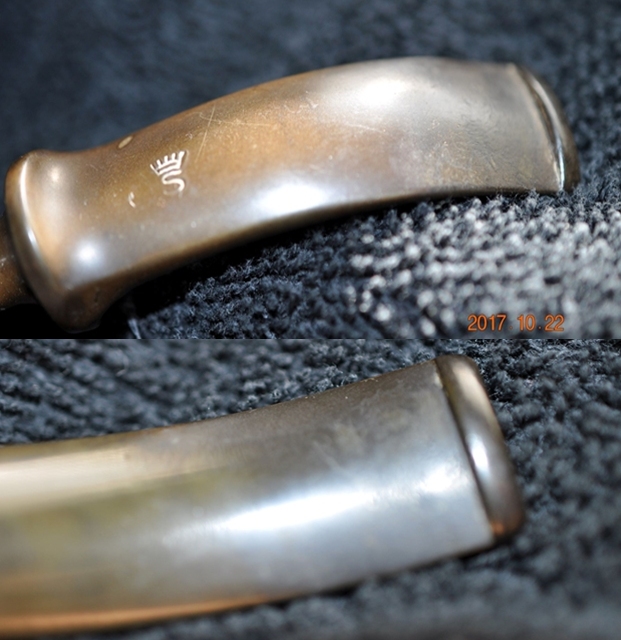
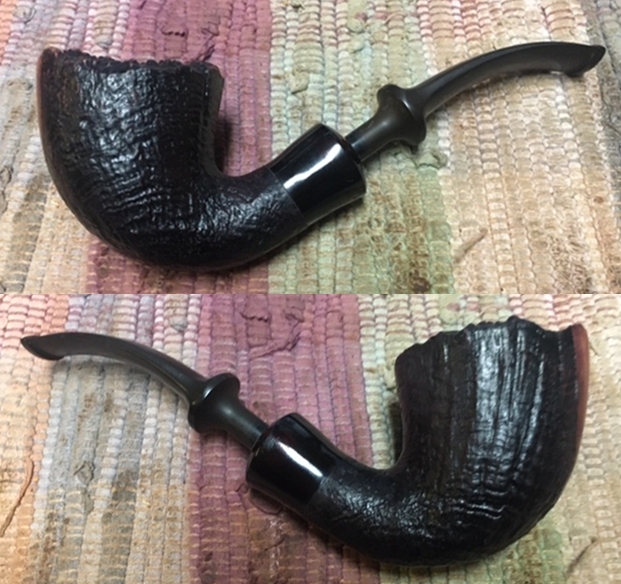
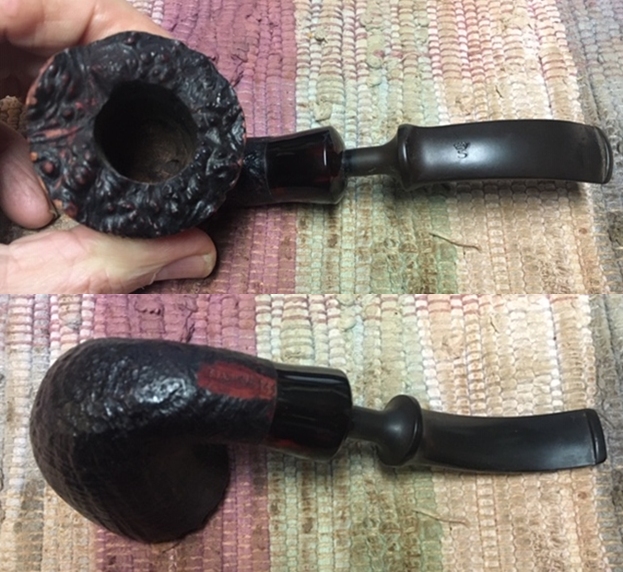
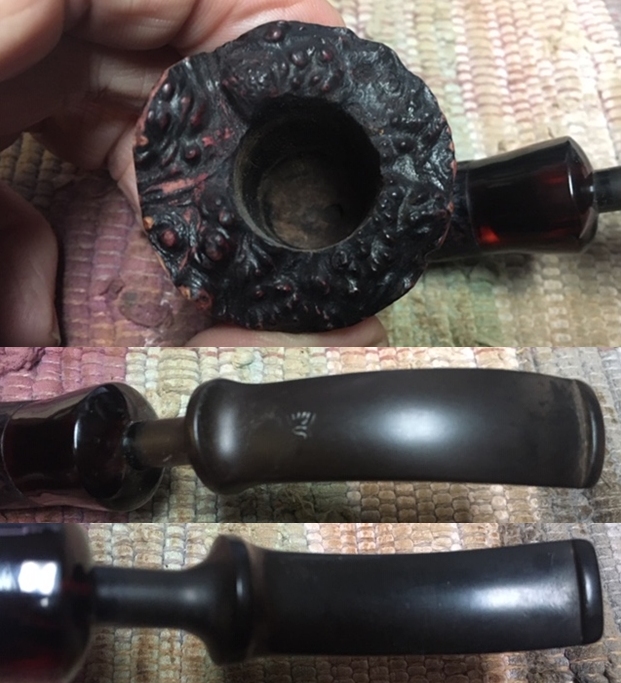
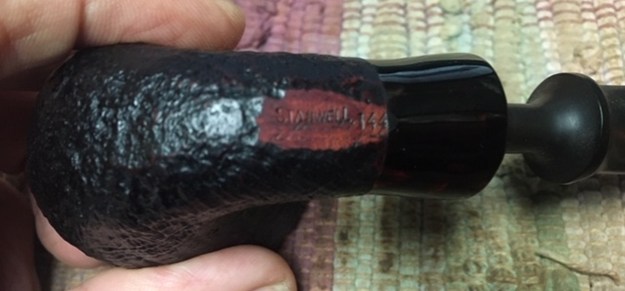
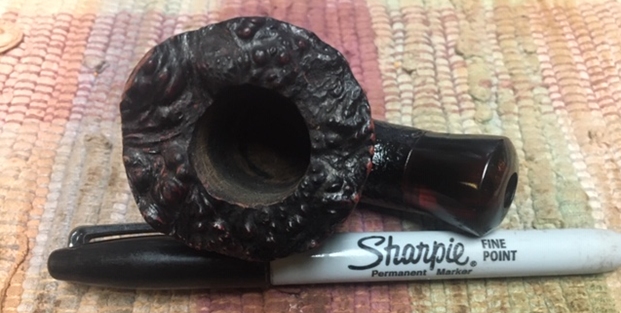
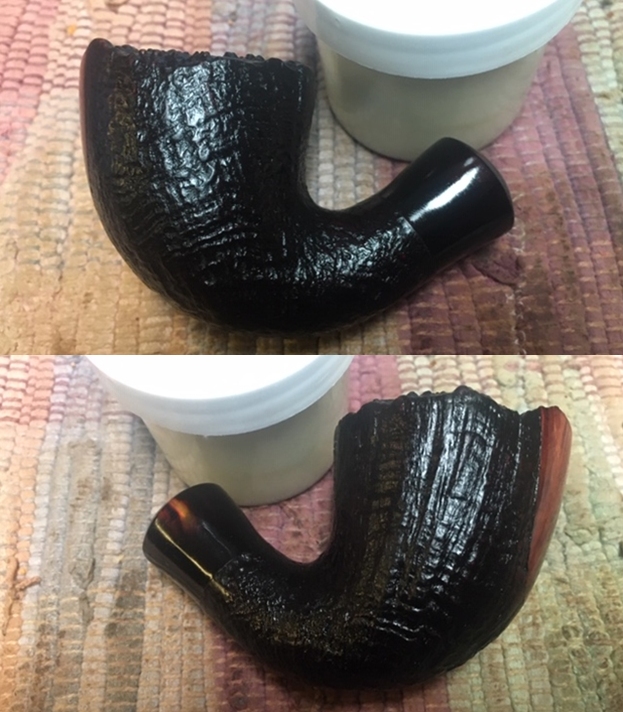
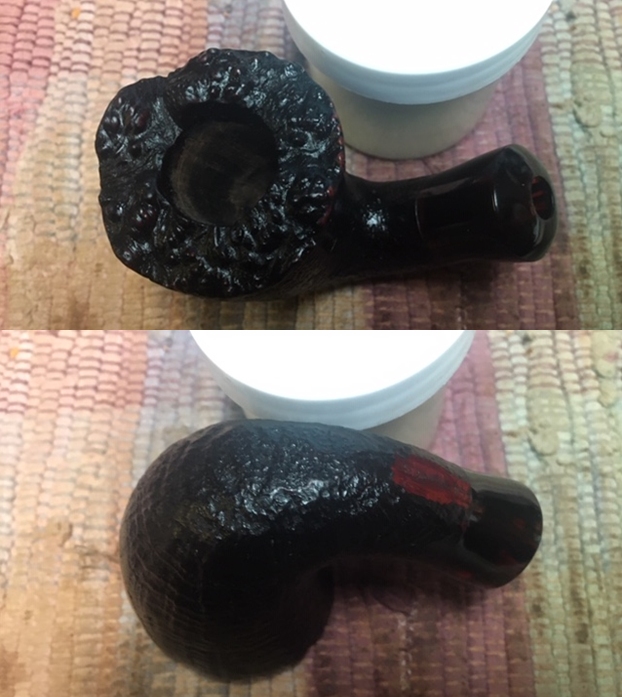
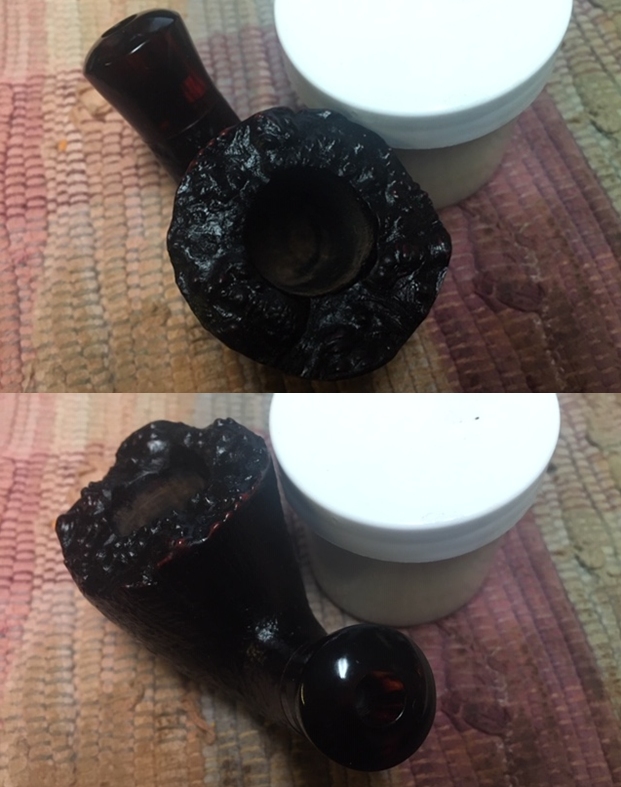
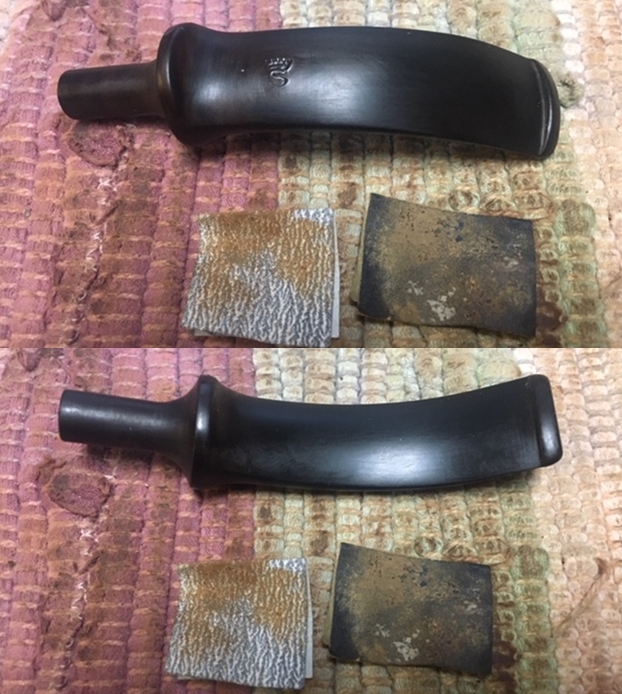
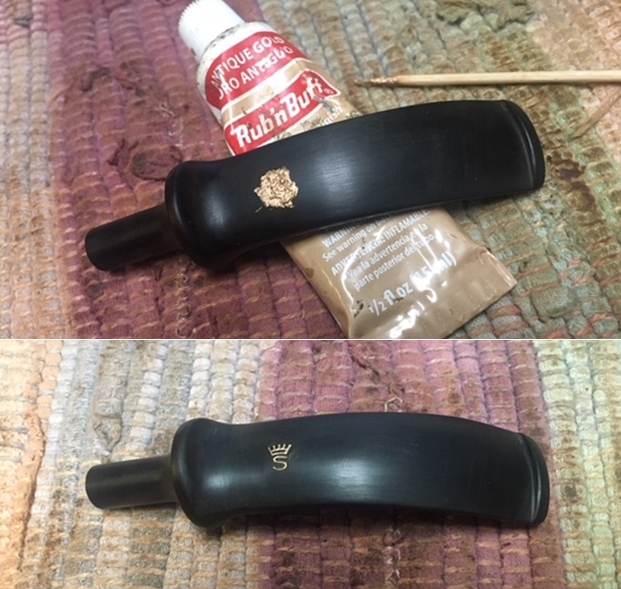
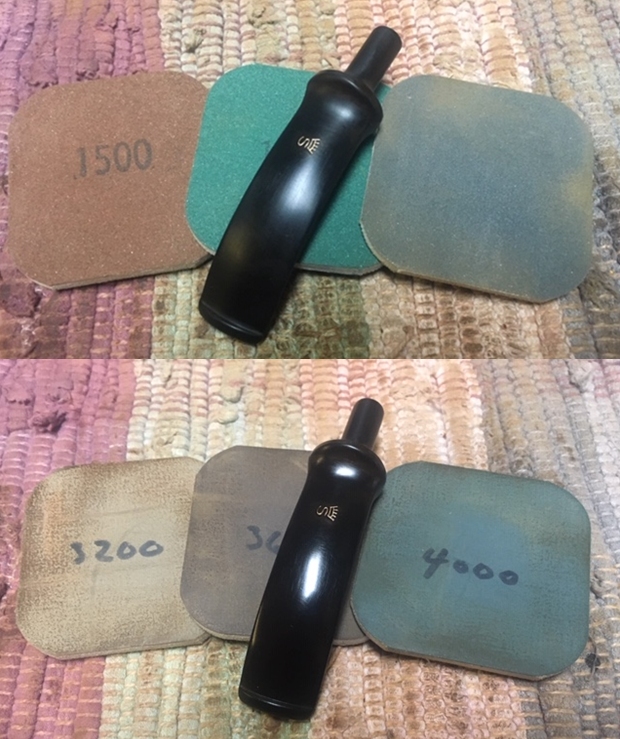
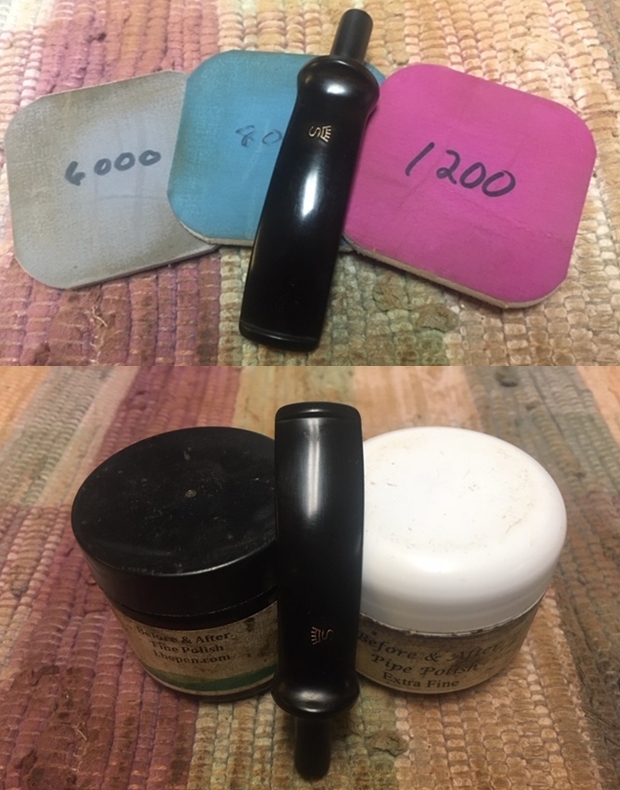
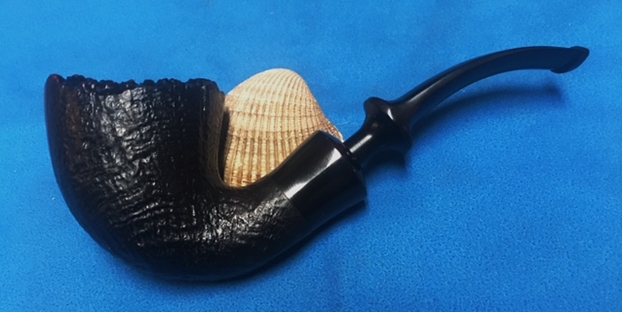
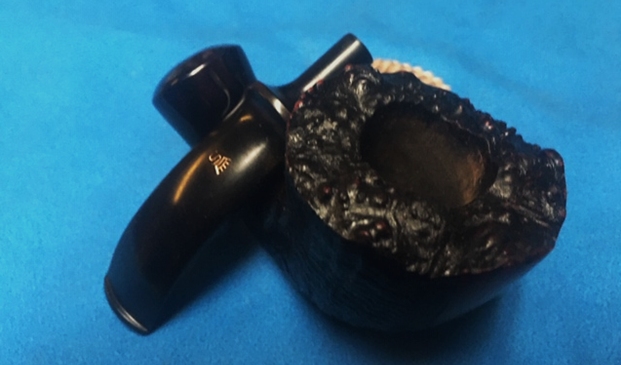
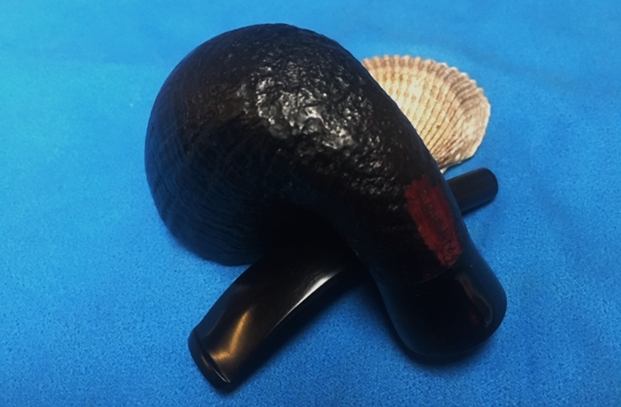
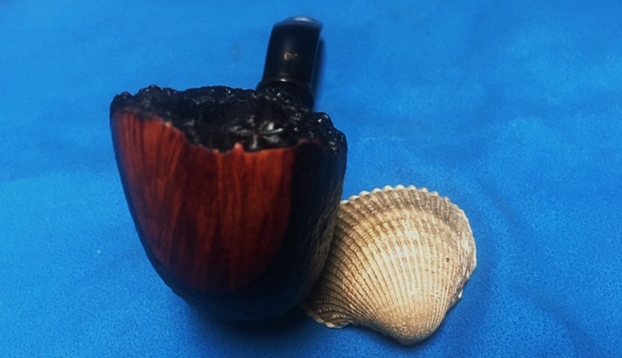
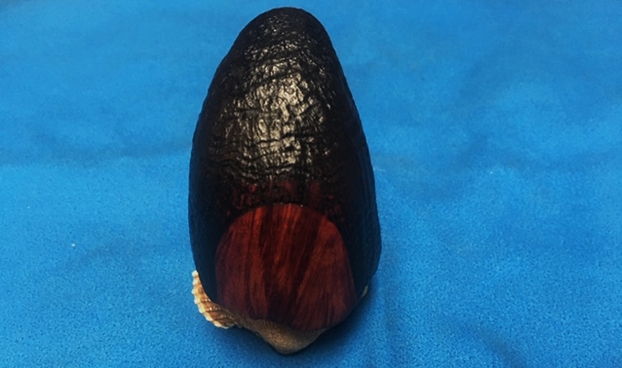
The next pipe on the table is from the next box of pipes I am working through. It is a Stanwell Antique 144 Calabash. The Calabash shaped bowl with a plateau rim top, round shank and red acrylic shank extension combine to make this Stanwell Antique a beauty. To me this is a classic Stanwell shape and it instantly recognizable. The finish combines a smooth natural patch with great grain on the front of the bowl with the rest of the bowl a dark brown finished rugged sandblast. The top of the bowl is plateau. The pipe was stamped on the underside of the shank on a smooth patch and read Stanwell over Antique followed by the shape number 144. The Antique stamp continues into the red acrylic shank extension. The finish was very dirty with a heavy coat of grime ground into the bowl and rim top as can be seen in the photos. The bowl had a thick cake with a lava overflow onto the plateau rim top and the inner edge of the bowl. The stem was heavily oxidized and there were tooth marks and chatter on both sides and on the top and bottom edges of the button. It was also stamped with a Stanwell Crown S on the top of the saddle stem. Jeff took photos of the pipe before he cleaned it up so you could see what we saw. Jeff took a photo of the rim top to show lava build up in the plateau rim top, the edges and cake in the bowl. This one was obviously someone’s favourite pipe and it was a mess.Jeff took some photos of the bowl sides and heel to show the absolutely dirty finish ground into the briar. It was a dirty pipe but I think it will be a beautiful one once we are finished. The stamping on the underside of the shank is shown in the photo below. It is clear and read as noted above. The stem was oxidized, calcified and had debris stuck to the surface of the vulcanite. It also shows the tooth chatter and marks on the stem and on the button surface.  There was a Stanwell Crown S logo stamped on the top of the stem. I checked my usual sources for information on the Antique line but there was nothing specific on either Pipedia or Pipephil’s site. I also checked on the Pipedia site in the article there on shape number and shape designers(https://pipedia.org/wiki/Stanwell_Shape_Numbers_and_Designers). From there I found that the shape number 144 was designed by Jess Chonowitsch and was a large pipe (Freehand) with plateau top and a saddle stem. I did a screen capture of the listing and have included it below.It looks like I am dealing with a pipe designed for Stanwell by Jess Chonowitsch. Now it was my turn to work on the pipe. Jeff had done his usual thorough cleanup of the pipe. He had reamed the pipe with a Pipnet piper reamer and taken the cake back to bare briar. He cleaned up the remaining cake with a Savinelli Fitsall Pipe Knife. He scrubbed the interior of the bowl and shank with pipe cleaners, cotton swabs and alcohol to remove the tars and oils. He scrubbed the exterior of the pipe with Murphy’s Oil Soap and a tooth brush to remove the grime from the finish. He worked on the rim top lava and darkening with the soap and tooth brush. He scrubbed the inside of the stem with alcohol and pipe cleaners. He scrubbed the exterior with Soft Scrub and then soaked it in Before & After Deoxidizer. He washed the stem off with warm water to remove the Deoxidizer. The pipe looked far better. I took photos of the pipe when I received it before I started working on it. I took photos of the bowl and rim top as well as the stem to show how clean they were. The edges of the rim look very good. Some of the black colour on the plateau is washed out and missing but otherwise it is clean. The stem is clean and there is some residual darkening. The tooth damage on the button top and bottom edges is minimal. I took a photo of the stamping on the underside of the shank. The stamping is readable as noted above.   I used a Black Sharpie to touch up the black areas on the rim top. I would look better after buffing.I rubbed the briar down with Before & After Restoration Balm. I worked it into the briar with my fingertips and a horse hair shoe brush. The product works to clean, enliven and preserve the briar. I let it sit for 10 minutes while I worked on the stem. After the time passed I buffed it with a cotton cloth to deepen the shine. The briar really comes alive with the balm.   I sanded the stem with 220 grit sandpaper to finish the shaping and to remove the remaining oxidation. I started polishing the stem with 400 grit wet dry sandpaper. I wiped the stem down with Obsidian Oil before further polishing it.I used some Rub’N Buff Antique Gold to touch up the Stanwell Crown S stamp on the topside of the stem.  I polished the vulcanite with micromesh sanding pads – 1500-12000 grit pads. I wiped it down with Obsidian Oil after each sanding pad. I used Before & After Pipe Polish – both Fine and Extra Fine to further polish the stem.  This Stanwell Antique 144 Calabash with a saddle vulcanite stem turned out very nice. The mix of brown stains highlights the sandblasted grain around the bowl sides and bottom. The plateau rim top and edges look very good. The finish on the pipe is in excellent condition. I put the stem back on the bowl and carefully buffed the pipe with Blue Diamond on the buffing wheel. I gave the bowl and stem multiple coats of carnauba wax on the buffing wheel and followed that by buffing the entire pipe with a clean buffing pad. I hand buffed the pipe with a microfiber cloth to deepen the shine. The finished Calabash is very nice and feels great in the hand. Give the finished pipe a look in the photos below. It is a nice pipe whose dimensions are Length: 5 ½ inches, Height: 2 inches, Outside diameter of the bowl: 2 inches, Chamber diameter: ¾ of an inch. Thanks for walking through the restoration with me as I worked over another beautiful pipe. This Stanwell Antique Calabash designed by Jess Chonowitsch will be going on the rebornpipes store shortly. If you are interesting in adding it to your collection let me know! Thanks for your time.
Bringing a Square Shank  Benaderet’s Coral Pot Back to Life


Blog by Steve Laug

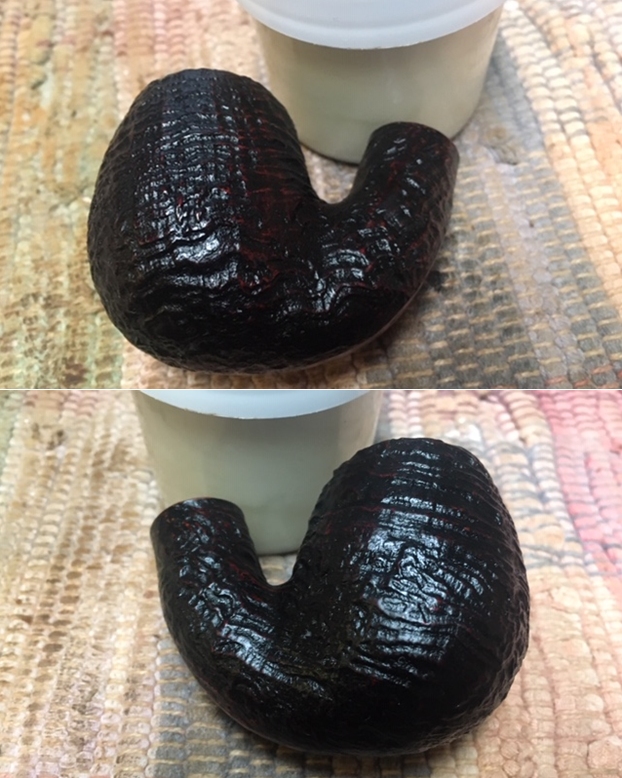
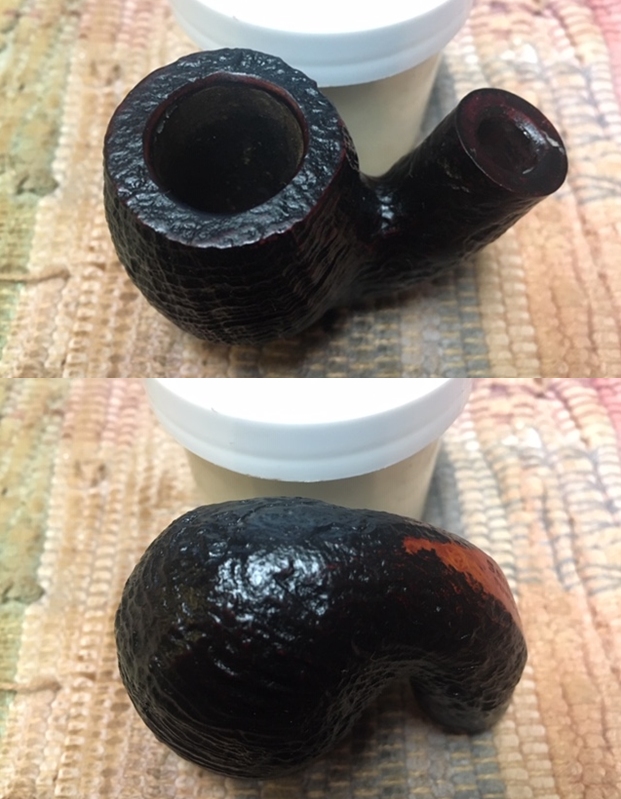
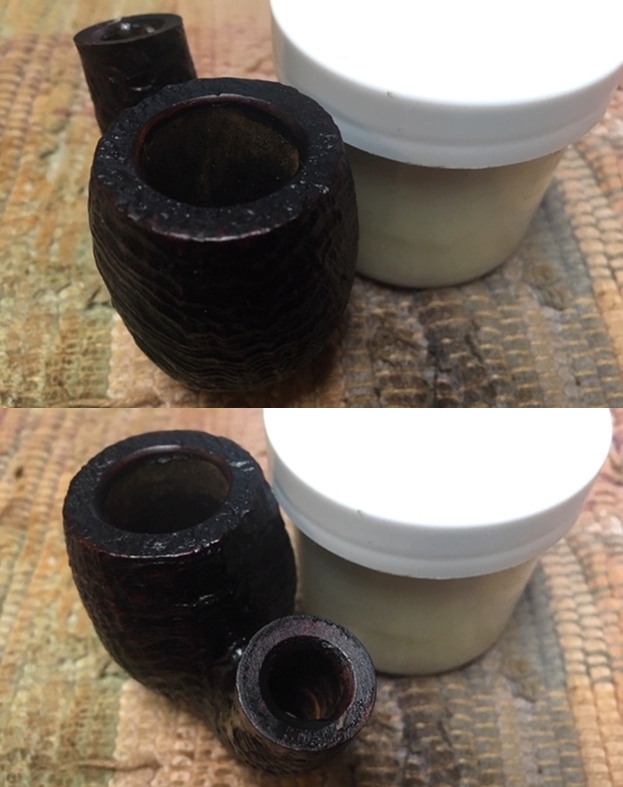
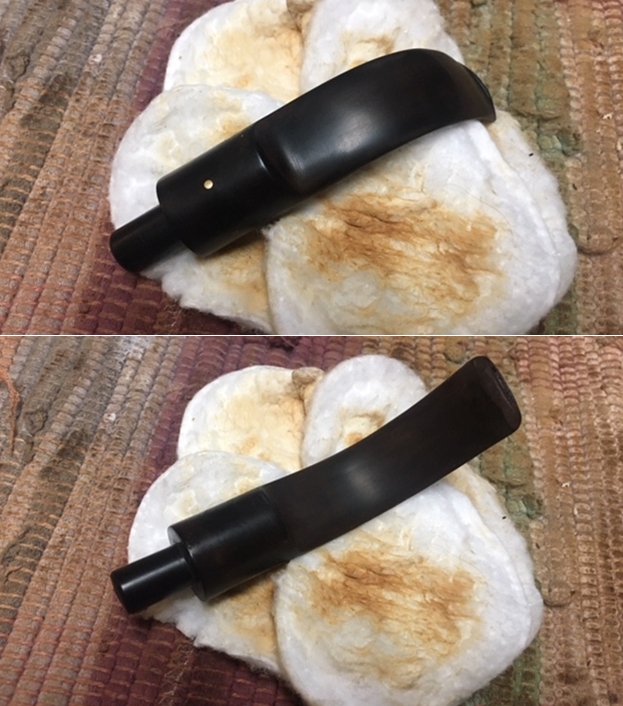
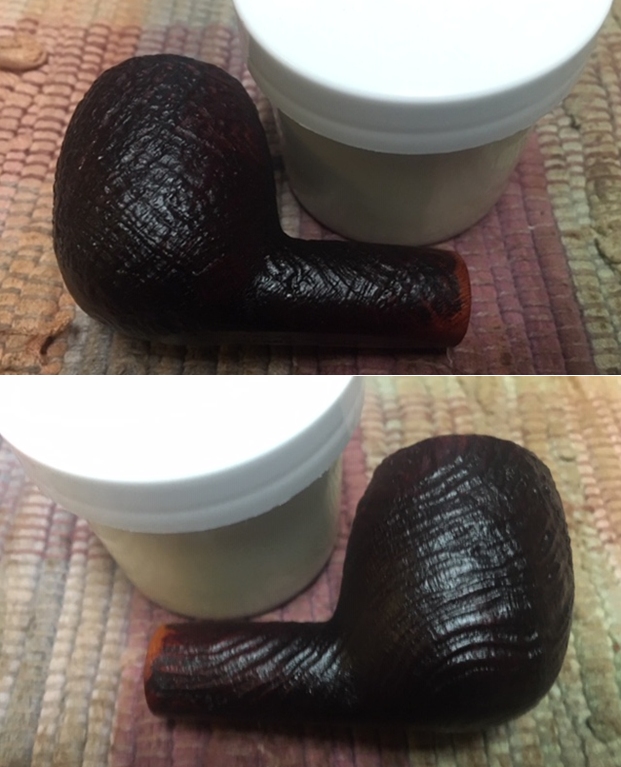
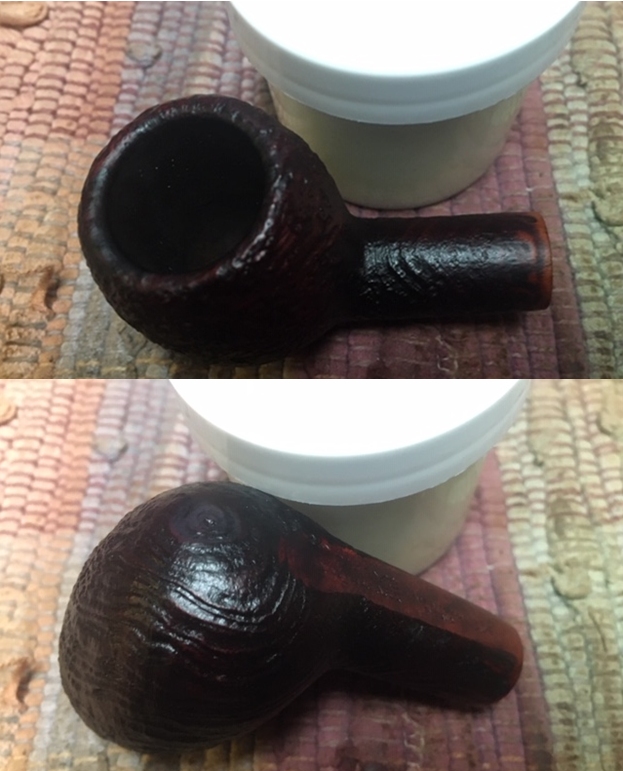
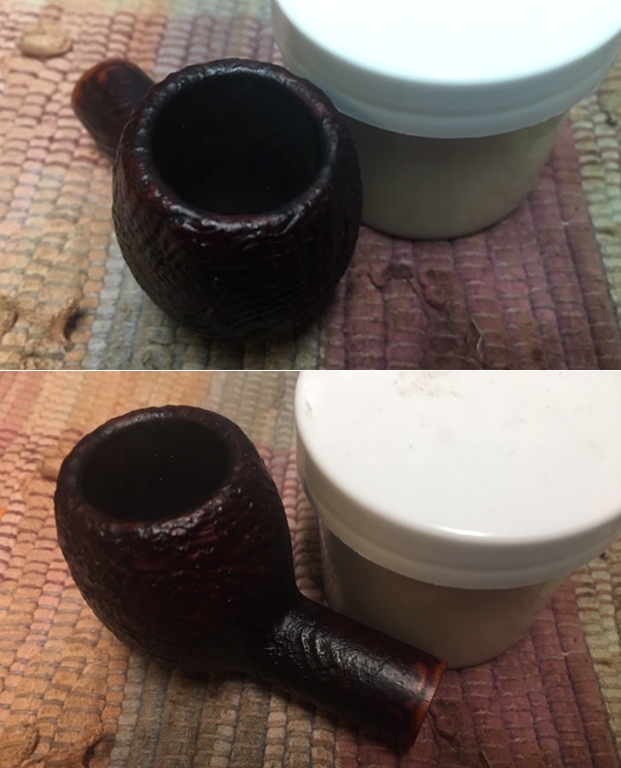
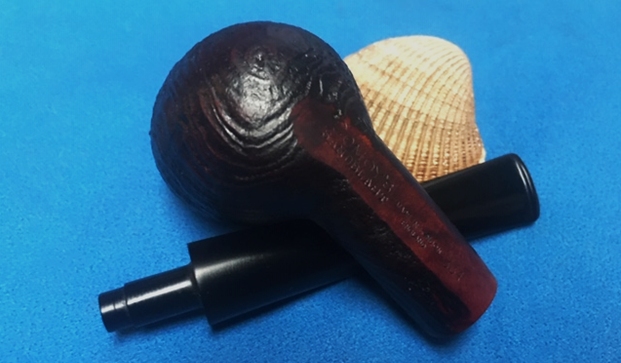
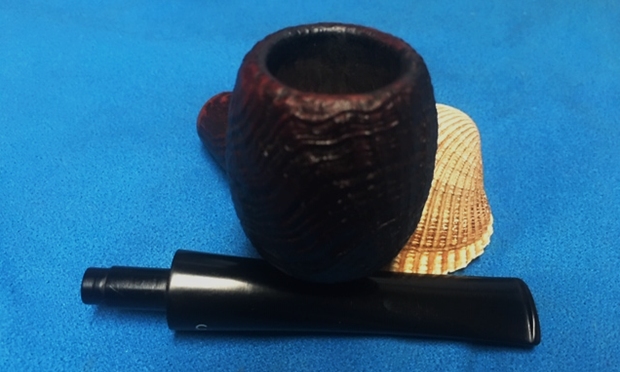
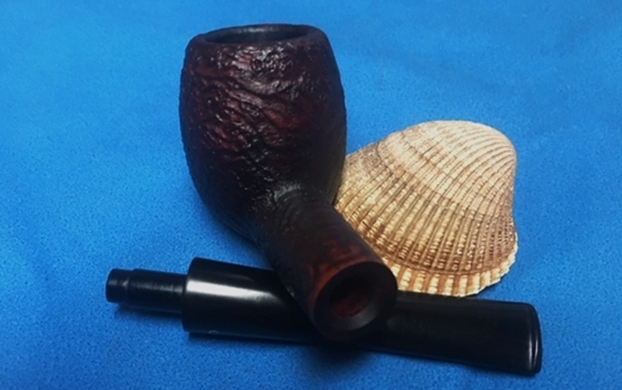
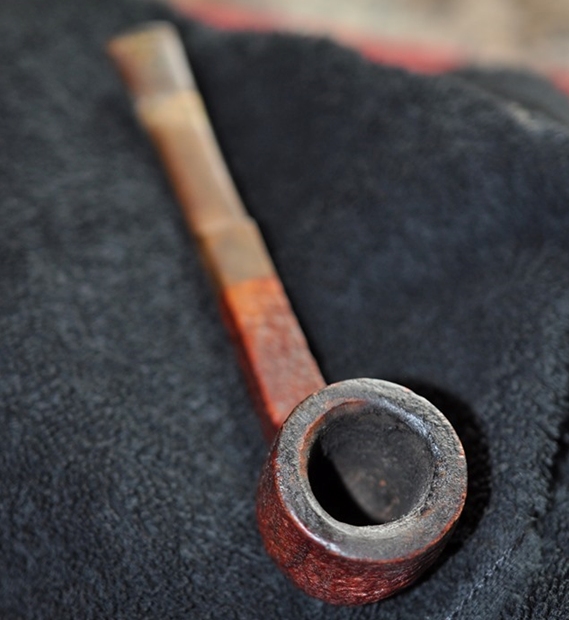
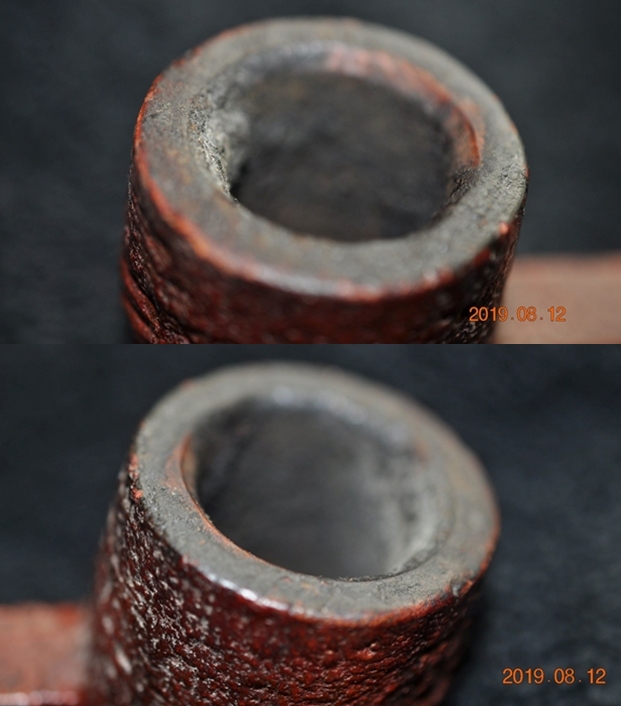
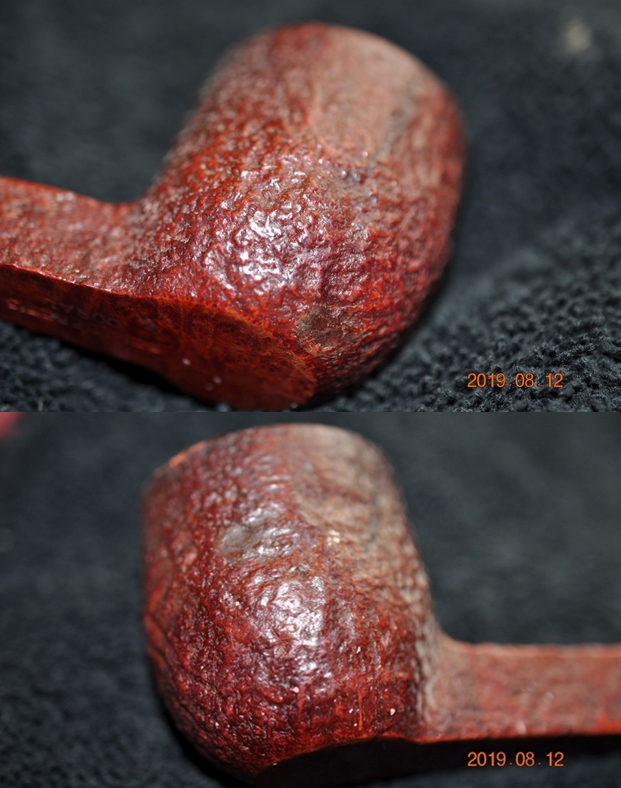
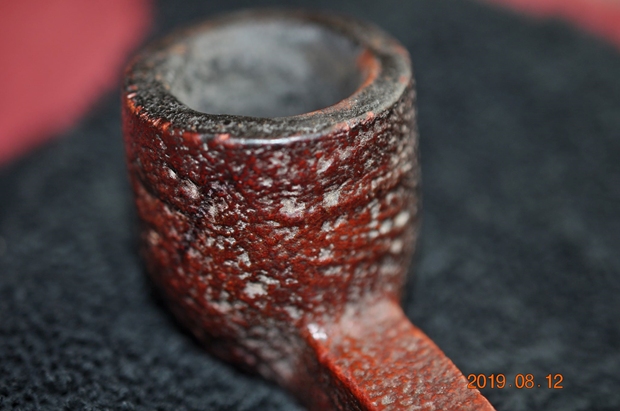
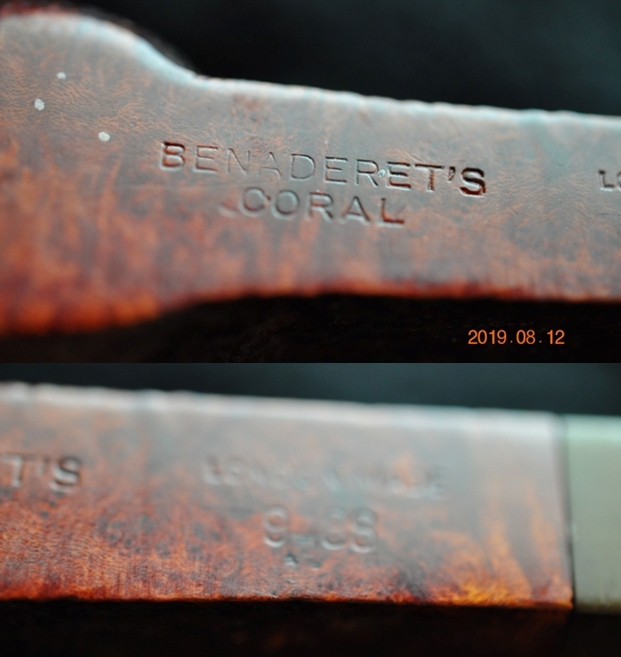
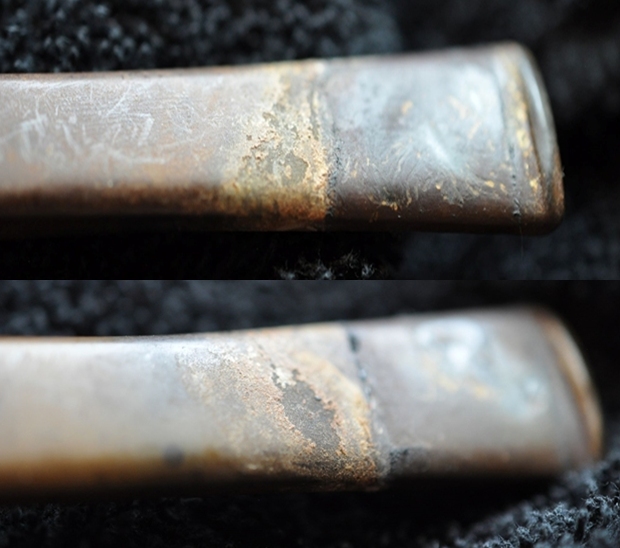
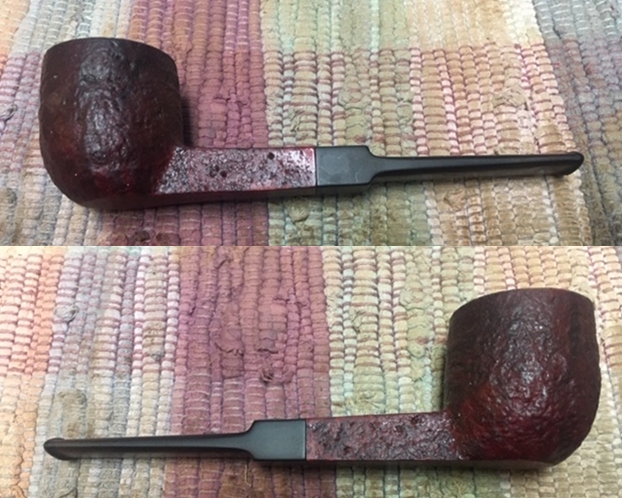
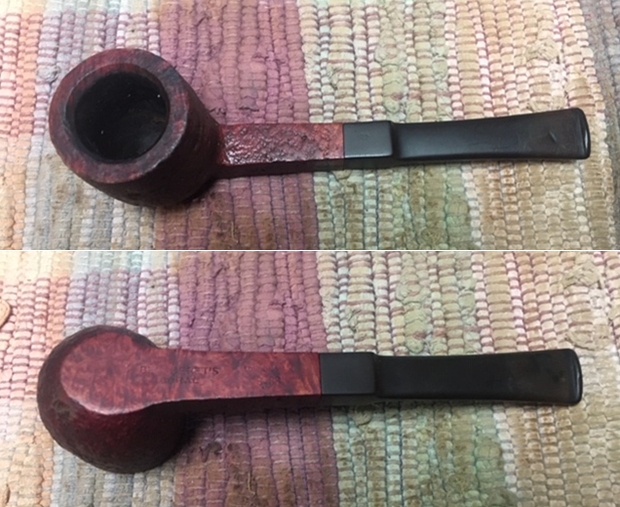
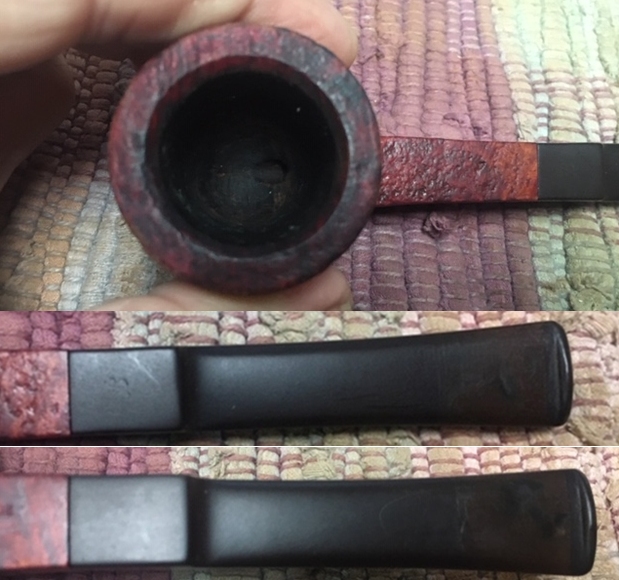
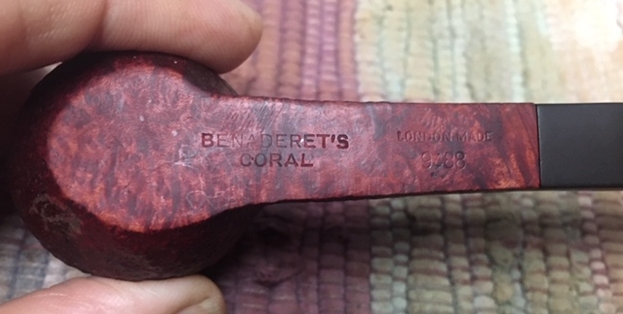
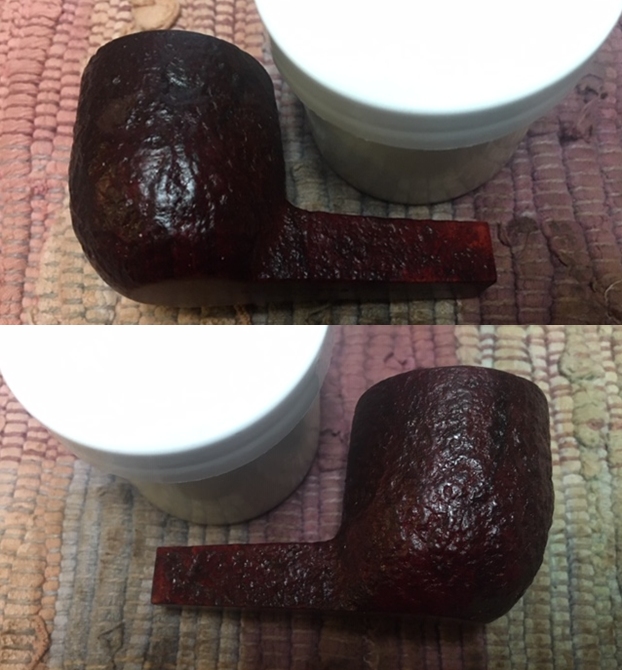
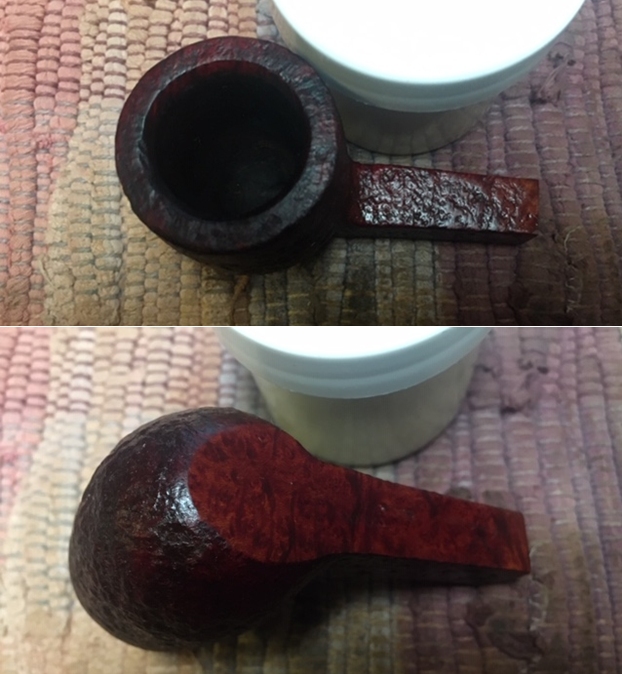
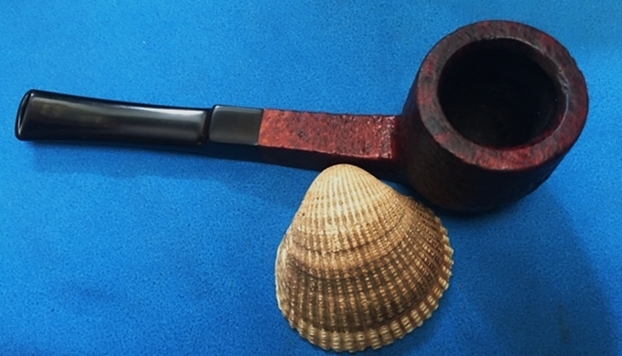
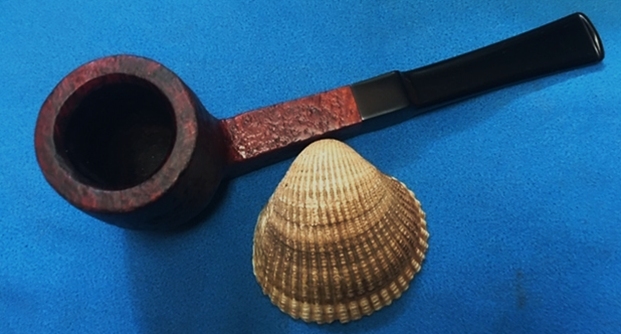
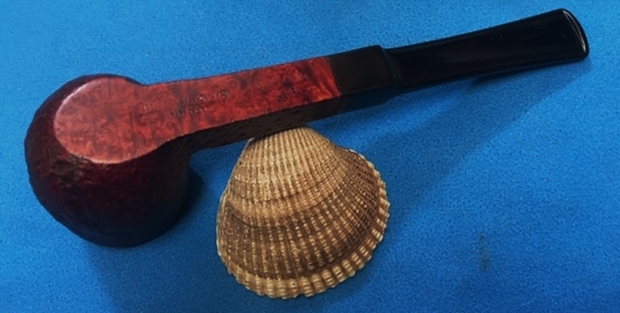
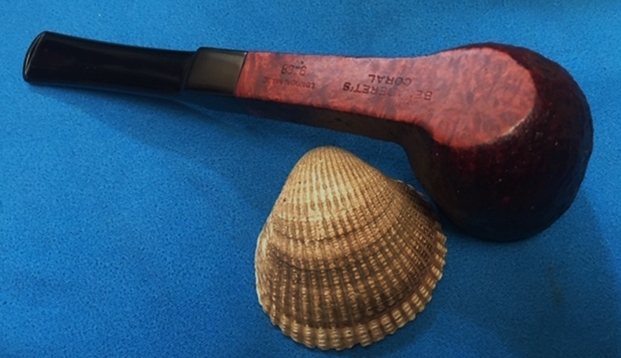
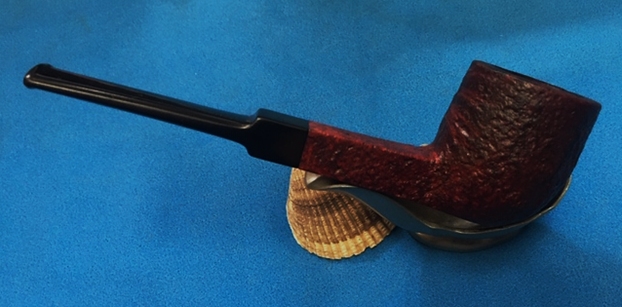
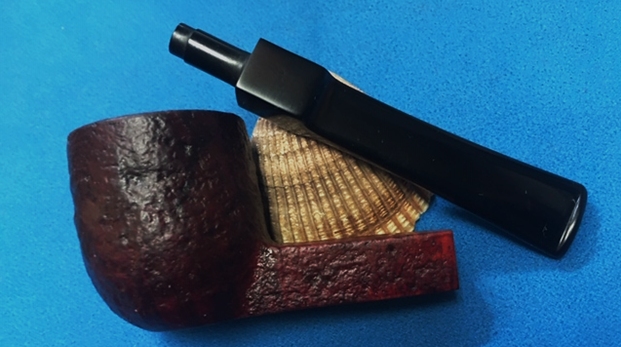
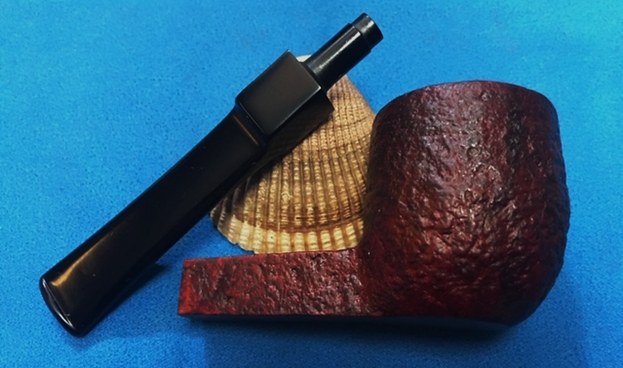
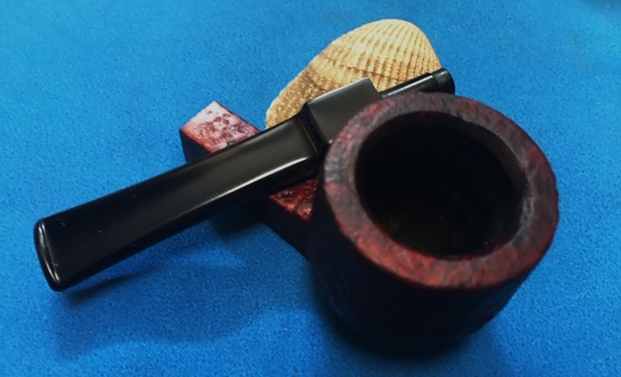
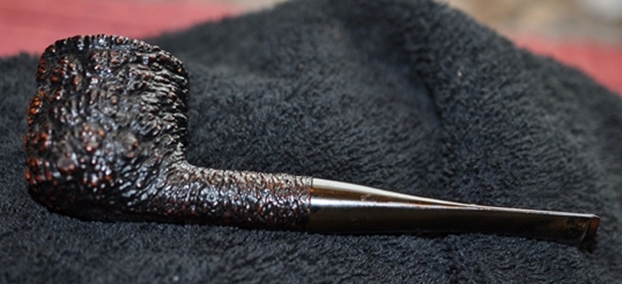
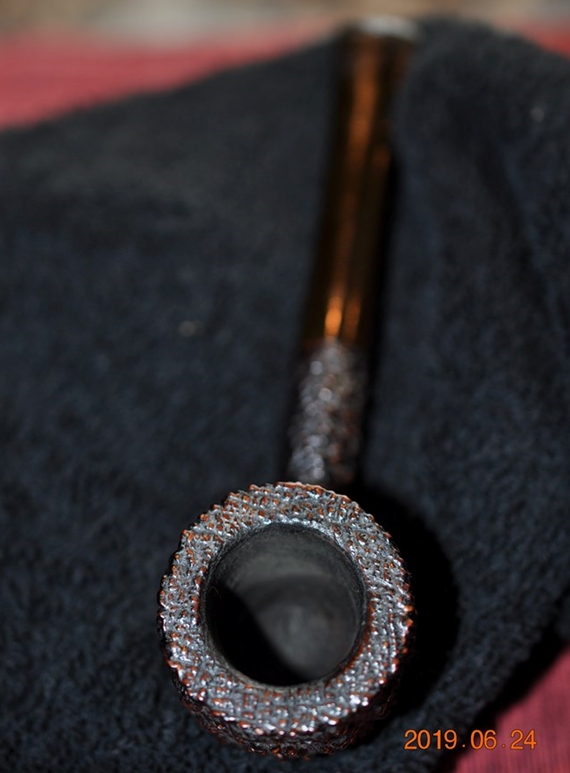
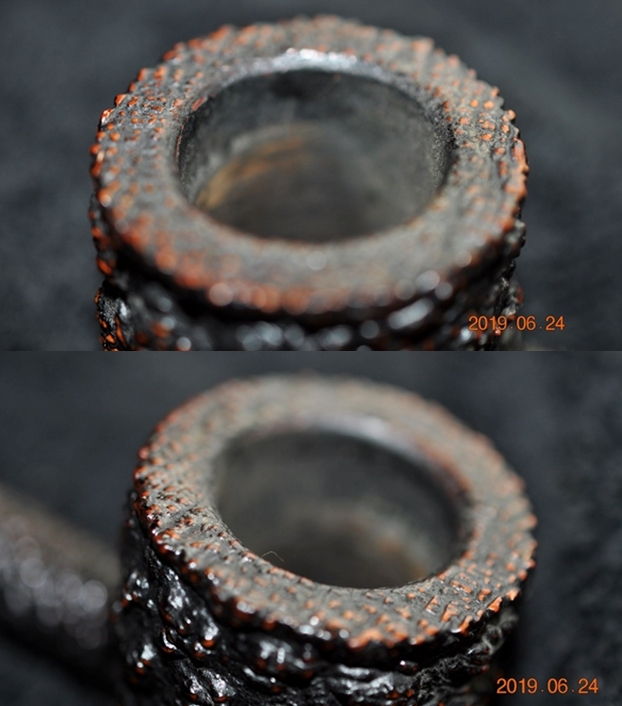
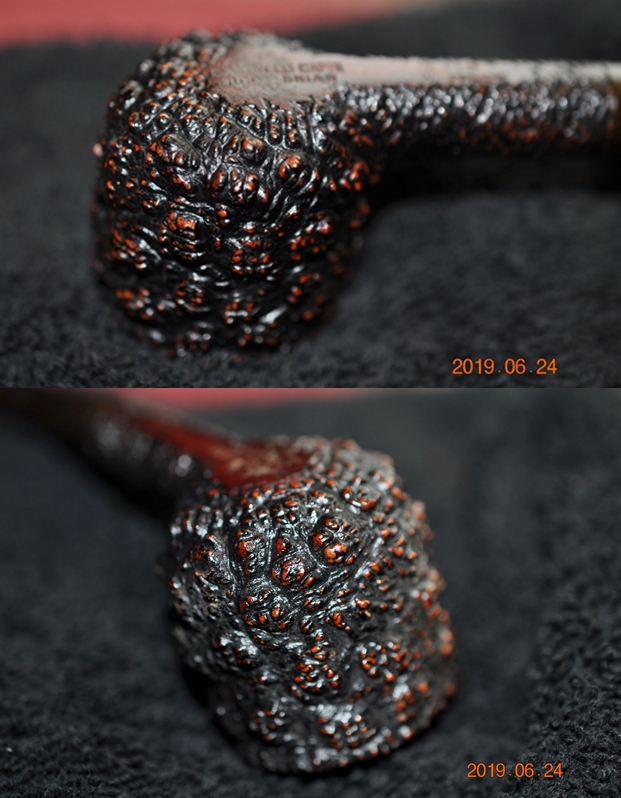
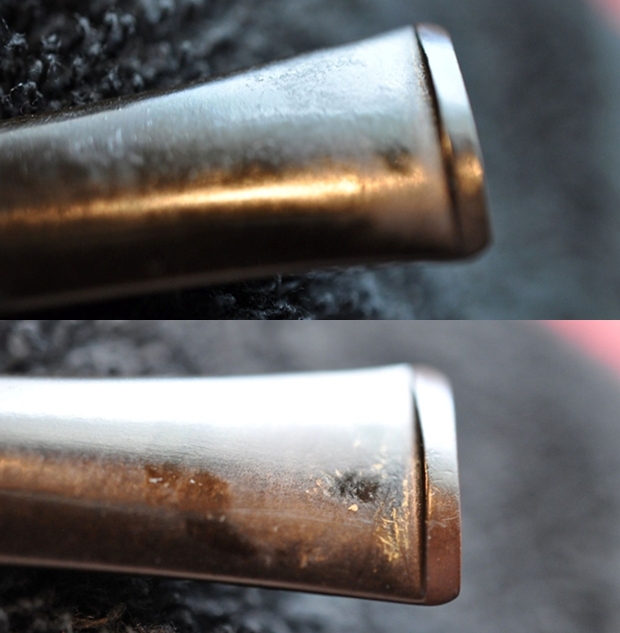
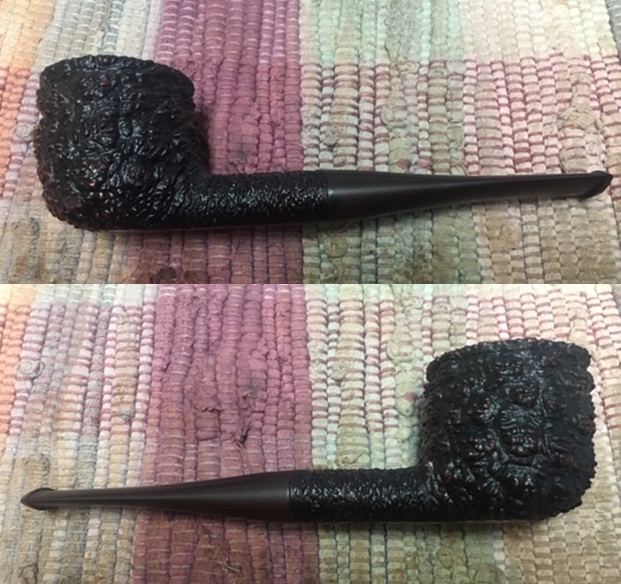
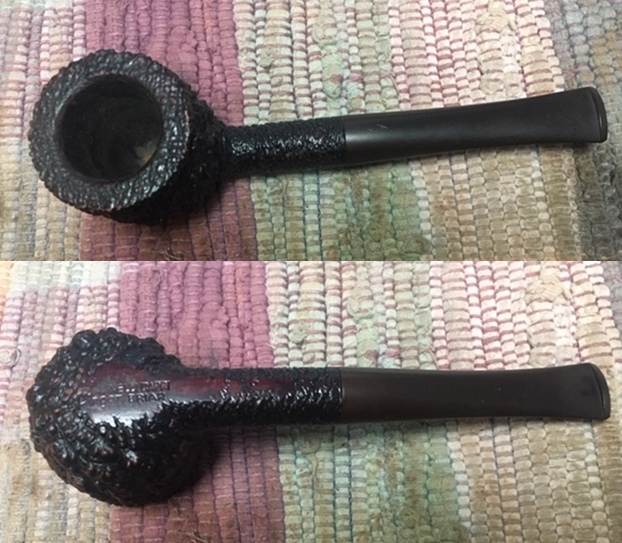
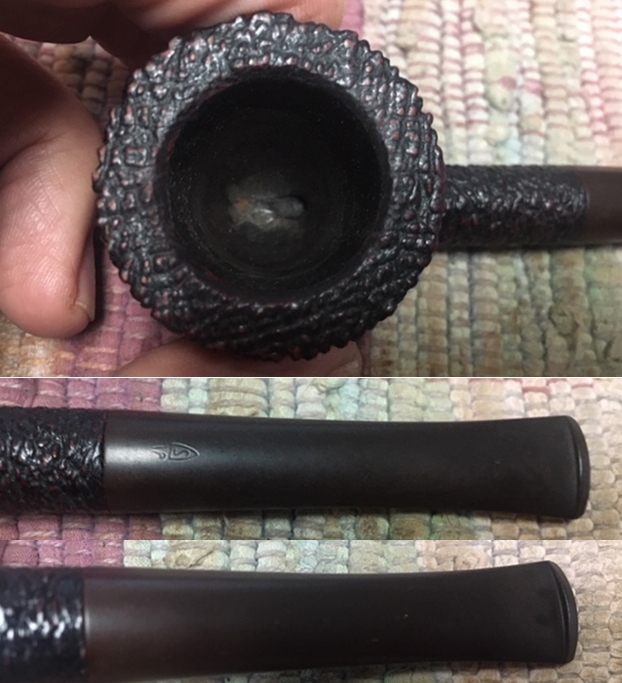
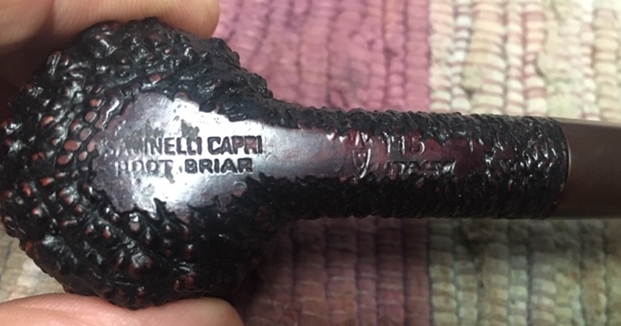
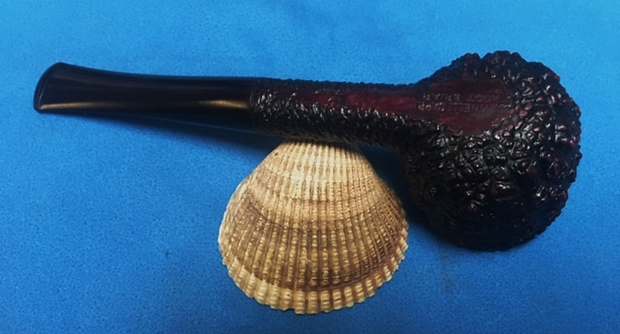
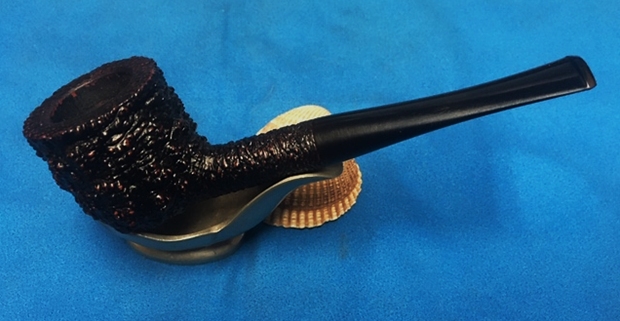
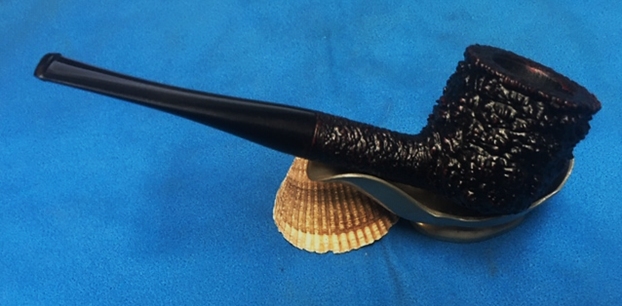
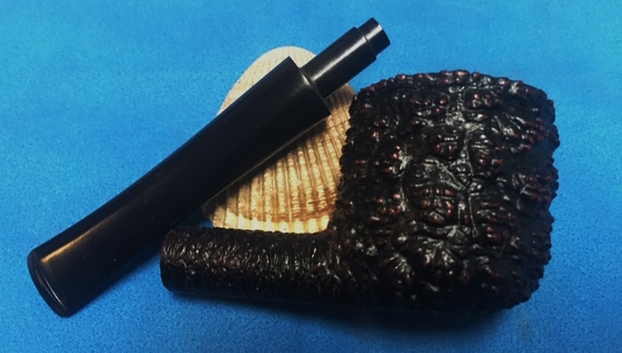
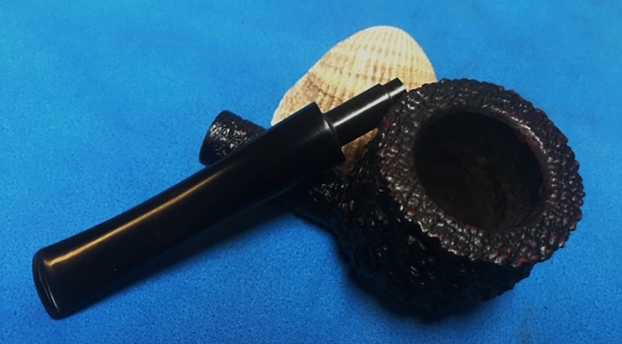
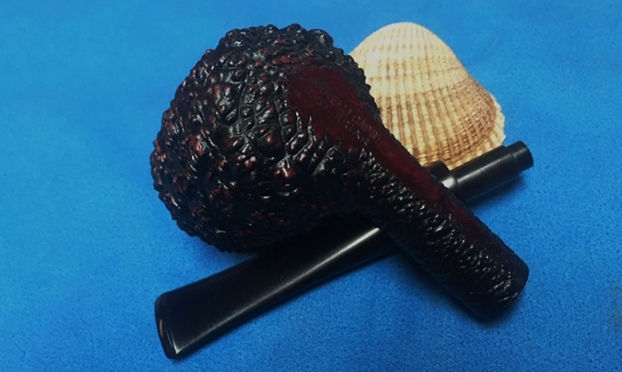
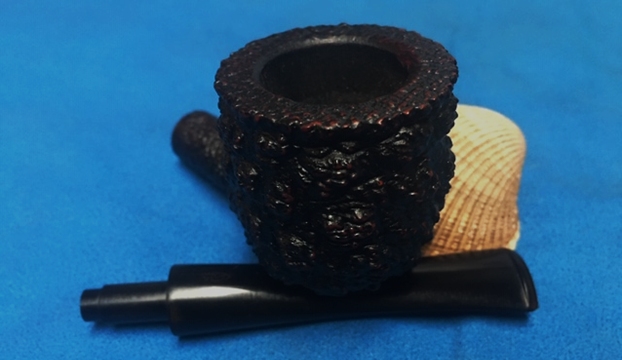
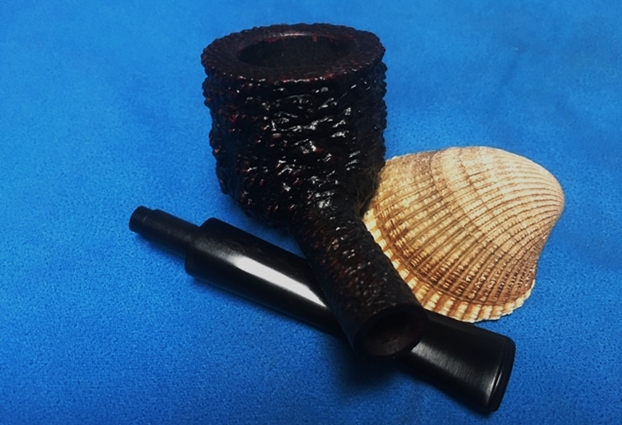
The next pipe on the table is a sandblasted square shank pot. The pipe is a real mess with dust and grime in all of the valleys of the sandblast and the rim top is covered in lava. The inner edge of the bowl is very dirty and darkened and there is a thick cake in the bowl. The cake was so thick in parts of the bowl that it was hard to guess the condition of the rim edge. The finish appears to be a reddish brown or oxblood colour with dark highlights underneath. On the heel of the bowl and shank it is stamped Benaderet’s Coral followed by London Made and the shape number 9488. The stem was oxidized, calcified and there were tooth marks and chatter on both sides just ahead of the button. There was not any stamping on the stem so it did not have any identifying marks. Jeff took photos of the pipe before he started working on it. I include those below. Jeff took photos of the bowl and rim top to show the cake in the bowl and the lava build up on the rim top and dust and grime in the rustication. It was thick and hard and heavier toward the front of the bowl. Hopefully it had protected the rim and edges from damage. The lava is deep in the rustication and there is a buildup on the inner edge of the bowl. Jeff took a photo of the sides and heel of the bowl to show the condition of the finish – the grime and grit all over the sides and bottom of the bowl. The grooves in the sandblast are full of grime but it is interesting. This is a very tactile finish and one that I enjoy.      Jeff took two photos of the stamping on the underside of the shank to capture all of it. It is very clear and readable other than the edge of the shank where the London Made and 9488 number are stamped.   Jeff took photos of the top and underside of the stem showing the scratching, oxidation, calcification and tooth marks on the stem surface and button. Some of the tooth marks are quite deep on both sides of the stem. From the shape number on the shank I was pretty certain I was dealing with a GBD pipe. The stamping Benaderet’s Coral was a dead end but the shape number hit the mark. I turned to Pipedia’s shape number listing and found it (https://pipedia.org/wiki/GBD_Shapes/Numbers). I have included a screen capture of the listing below.I did a quick google search for a Benaderet’s Pipe Shop and came on two good links. The first is from a post on reddit that included a quick bit of information on the shop being located in San Franscisco, California that closed in the 1970s. (https://www.reddit.com/r/PipeTobacco/comments/dzg3y8/any_info_on_a_benaderet_pipe_year_etc/ ). I quote:

Benaderet’s was a pipe shop in San Francisco that closed in the 70’s. Their house pipes were made by comoys or sasieni although smokingpipes had one made by gbd once. Good find.

The other link was to a blog (http://theothersideofthelizard.blogspot.com/2018/11/benaderets-pipe-shop.html). That blog gave the original address of the shop in San Francisco and the names of the owners of the shop.

Benaderet’s Cigarette, Pipe and Tobacco Shop

215 Sutter Street [Formerly at 566 California Street],San Francisco.

Owners: Robert and Edith Rashaw (Robert Rashaw: born 1916. Edith Edna Rashaw: born 1916.)

Store still extant in the late seventies. No longer there by the eighties.

At one point, they had Egyptian cigarettes made for them.

Their house pipes were usually by Comoys. There are also Benaderet Sasienis. More research required.

Quote: “Benaderet’s Inc., was California’s oldest pipe and tobacco store when it went out of business in 1980. Sam Benaderet was a tobacconist from New York City who came to San Francisco in 1915 to work at the Panama Pacific International Exposition. An immigrant to the United States from Turkey, Mr. Benaderet decided that he liked the West Coast’s Mediterranean like climate. After the Exposition closed, he stayed to open his own tobacco business. This new firm produced custom private-label cigarettes for men’s clubs. A lavish retail store was opened in the late 1920’s that quickly became a mecca for tobacco connoisseurs.”

So what I could find out about the pipe is that it is a pipe made by GBD (Shape number confirms this). It turns out that the pipe was a GBD pipe made for Benadert’s Cigarette, Pipe and Tobacco Shop in San Francisco, California. Since the shop went out of business in 1980 I now knew that the pipe was made before that time. Now it was time to work on the pipe.

This pipe was a real mess like many of the pipes we work on. I was curious to see what it would look like when I unpacked it. I was surprised at how good it looked. Jeff reamed it with a PipNet pipe reamer and cleaned up the reaming with a Savinelli Fitsall Pipe Knife. He scrubbed out the internals with alcohol, pipe cleaners and cotton swabs until the pipe was clean. He scrubbed the exterior of the bowl with Murphy’s Oil Soap and a tooth brush to remove the grime and grit on the briar and the lava on the rim top. The finish on the bowl looked really good when I got it. The rim top looked much better and the inner and outer edges were looking good. He had cleaned the internals and scrubbed the exterior of the stem and soaked them in Before & After Deoxidizer bath to remove the oxidation. The stem looked very good other than the tooth marks and chatter in the surface. When the pipe arrived here in Vancouver for the second stop of its restoration tour it looked very good. I took photos of the pipe before I started my work on it.   I took photos of the condition of the rim top and stem before I started working. The rim top looks very good. The crevices and valleys of the sandblast and the beveled inner edge of the rim are clean and look great. The bowl is spotless. The stem is lightly oxidized and has some tooth marks and tooth chatter.   I took a photo of the stamping on the underside of the heel and the shank. It is clear and readable as noted above.I worked some Before & After Restoration Balm into the finish of the bowl and the rim top and shank with my fingertips and a horsehair shoe brush to clean, enliven and protect it. I find that the balm really makes the briar come alive again. The contrasts in the layers of stain and the separate finishes really made the grain stand out. I let the balm sit for a little while and then buffed with a cotton cloth to raise the shine. The bowl really looks good at this point. I tried to lift the tooth marks with a flame but they did not come up. I filled in the deeper ones on each side with clear super glue. Once the repairs cured I used a needle file to flatten the filed in areas in preparation for sanding.    I sanded the stem to remove the oxidation that was on the surface and to smooth out the repaired areas. I used a folded piece of 220 grit sandpaper and a piece of 400 grit wet dry sandpaper. At this point the stem is looking better and the tooth marks are gone.  I polished the stem with micromesh sanding pads – wet sanding it with 1500-12000 grit pads. I polished it further with Before & After Pipe Stem Polish – both fine and extra fine.    Once again I am the part of the restoration that I always look forward to – the moment when all the pieces are put back together. I put the Benaderet’s Coral 9488 pipe back together and lightly buffed the bowl with Blue Diamond. I buffed the stem with a heavier touch with Blue Diamond on the buffing wheel. I gave the bowl multiple coats of Conservator’s Wax and the stem multiple coats of carnauba wax. I buffed the pipe with a clean buffing pad to raise the shine. I hand buffed it with a microfiber cloth to deepen the shine. It is fun to see what the polished bowl looks like with the combination of rustication and smooth finishes. The black vulcanite stem stands out as a shiny black contrast to the colours of the bowl. The reddish brown stain on the Benaderet’s Coral Pot looks absolutely great. It is nice to know that it has a west coast tie to the San Francisco area and a long gone pipe shop. It must have been a fine smoking pipe judging from the condition it was when we received it. Have a look at it in the photos below. The dimensions are Length: 6 inches, Height: 1 ¾ inches, Outside diameter of the bowl: 1 ½ inches, Chamber diameter: 7/8 of an inch. This is one that will go on the British Pipemakers section of the rebornpipes online store shortly. Thanks to each of you who are reading this blog. Remember we are not pipe owners; we are pipemen and women who hold our pipes in trust until they pass on into the trust of the next generation.
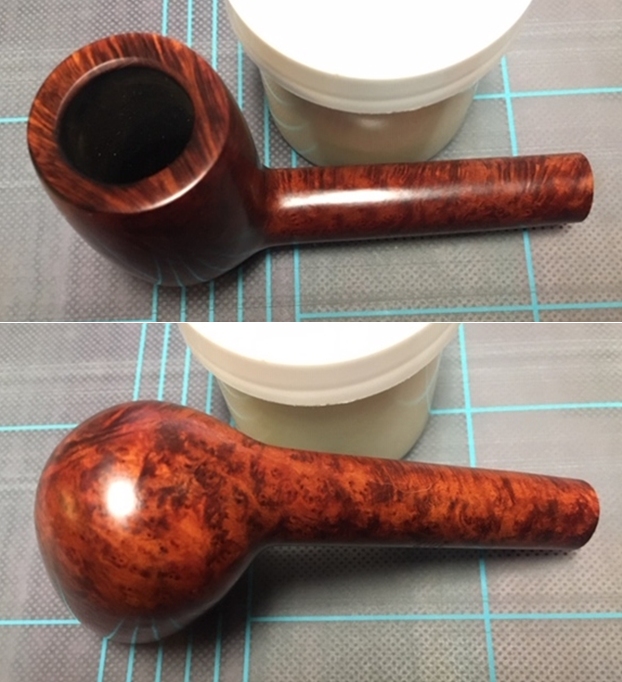
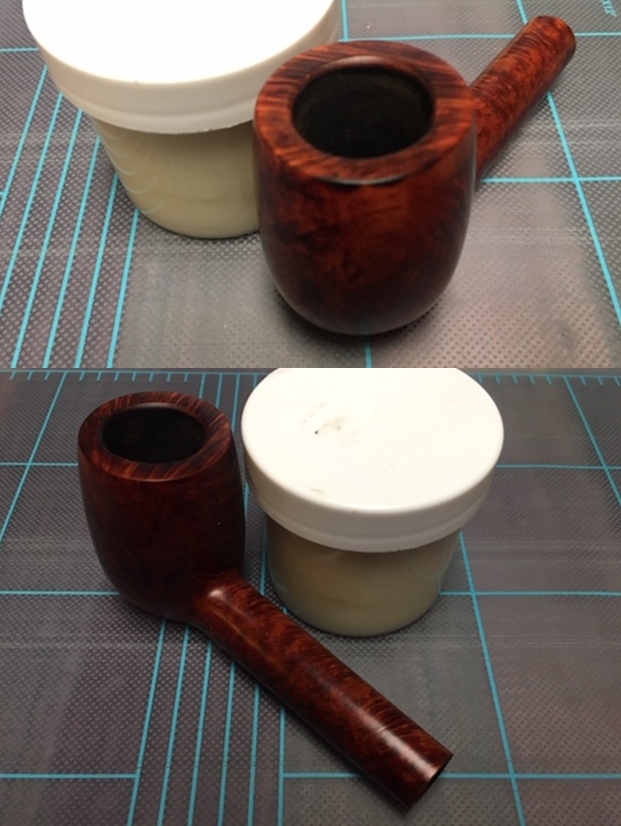
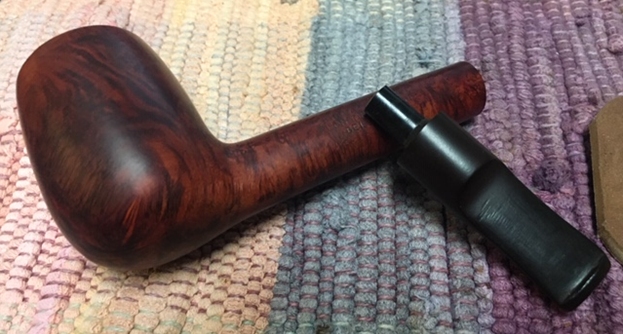
Renewed Life for a Savinelli Capri Root Briar 115 Pot


Blog by Steve Laug

The next pipe on the table is a nice rusticated looking pot shaped pipe. The rim top and bowl are clean with variations of brown and black stains. On the heel of the bowl it is stamped Savinelli Capri over Root Briar. That is followed by The Savinelli “S” shield and Italy and the shape number 115. The pipe has a Sea Rock or coral style rustication that I really like. The finish was very dirty with dust in all of the rustication, making it hard to see beyond that to the finish underneath that. There was a medium cake in the bowl and it had overflowed with lava onto the rim top. It was hard to know at this point the condition of the rim edges. The stem was oxidized and there were tooth marks and chatter on both sides just ahead of the button. The Savinelli S shield logo on the top of the stem is worn and lightly stamped. Jeff took photos of the pipe before he started working on it. I include those below. Jeff took photos of the bowl and rim top to show the cake in the bowl and the lava build up on the rim top and dust and grime in the rustication. It was thick and hard but hopefully it had protected the rim and edges from damage. The lava is deep in the rustication and there is a buildup on the inner edge of the bowl. Jeff took a photo of the sides and heel of the bowl to show the condition of the finish – the grime and grit all over the sides and bottom of the bowl. The rustication is deep and dirty but it is interesting. This is a very tactile finish and one that I enjoy.    Jeff took two photos of the stamping on the underside of the shank to capture all of it. It is very clear and readable other than the shape number 115. Jeff took photos of the top and underside of the stem showing the scratching, oxidation and tooth marks on the stem surface and button. The tooth marks are quite deep on both sides of the stem.  This pipe was a real mess like many of the pipes we work on. I was curious to see what it would look like when I unpacked it. I was surprised at how good it looked. Jeff reamed it with a PipNet pipe reamer and cleaned up the reaming with a Savinelli Fitsall Pipe Knife. He scrubbed out the internals with alcohol, pipe cleaners and cotton swabs until the pipe was clean. He scrubbed the exterior of the bowl with Murphy’s Oil Soap and a tooth brush to remove the grime and grit on the briar and the lava on the rim top. The finish on the bowl looked really good when I got it. The rim top looked much better and the inner and outer edges were looking good. He had cleaned the internals and scrubbed the exterior of the stem and soaked them in Before & After Deoxidizer bath to remove the oxidation. The stem looked very good other than the tooth marks and chatter in the surface. When the pipe arrived here in Vancouver for the second stop of its restoration tour it looked very good. I took photos of the pipe before I started my work on it.    I took photos of the condition of the rim top and stem before I started working. The rim top looks very good. The crevices and valleys of the rustication are clean and look great. The bowl is spotless. The stem is lightly oxidized and has some tooth marks and tooth chatter. The Savinelli S shield on the top of the stem is worn and very shallow. It will be hard to save in the clean up work.   I took a photo of the stamping on the underside of the heel and the shank. It is clear and readable as noted above.I took the bowl and stem apart and took a photo of the pipe to show the look of the pipe.I worked some Before & After Restoration Balm into the finish of the bowl and the rim top and shank with my fingertips and a horsehair shoe brush to clean, enliven and protect it. I find that the balm really makes the briar come alive again. The contrasts in the layers of stain and the separate finishes really made the grain stand out. I let the balm sit for a little while and then buffed with a cotton cloth to raise the shine. The bowl really looks good at this point. I sanded the stem to remove the oxidation that was on the surface and to smooth out the repaired areas. I used a folded piece of 220 grit sandpaper and a piece of 400 grit wet dry sandpaper. At this point the stem is looking better and the tooth marks are gone.     I polished the stem with micromesh sanding pads – wet sanding it with 1500-12000 grit pads. I polished it further with Before & After Pipe Stem Polish – both fine and extra fine. Once again I am the part of the restoration that I always look forward to – the moment when all the pieces are put back together. I put the pipe back together and lightly buffed the bowl with Blue Diamond. I buffed the stem with a heavier touch with Blue Diamond on the buffing wheel. I gave the bowl multiple coats of Conservator’s Wax and the stem multiple coats of carnauba wax. I buffed the pipe with a clean buffing pad to raise the shine. I hand buffed it with a microfiber cloth to deepen the shine. It is fun to see what the polished bowl looks like with the combination of rustication and smooth finishes. The black vulcanite stem stands out as a shiny black contrast to the colours of the bowl. This dark stained Savinelli Capri Pot 115 must have been a fine smoking pipe judging from the condition it was when we received it. Have a look at it in the photos below. The dimensions are Length: 5 ¾ inches, Height: 1 ¾ inches, Outside diameter of the bowl: 1 ½ inches, Chamber diameter: 1 inch. This is one that will go on the Italian Pipemakers section of the rebornpipes online store shortly. Thanks to each of you who are reading this blog. Remember we are not pipe owners; we are pipemen and women who hold our pipes in trust until they pass on into the trust of the next generation.