Monthly Archives: September 2018

Restoring an Old-Vic 8523


Blog by Paresh Deshpande

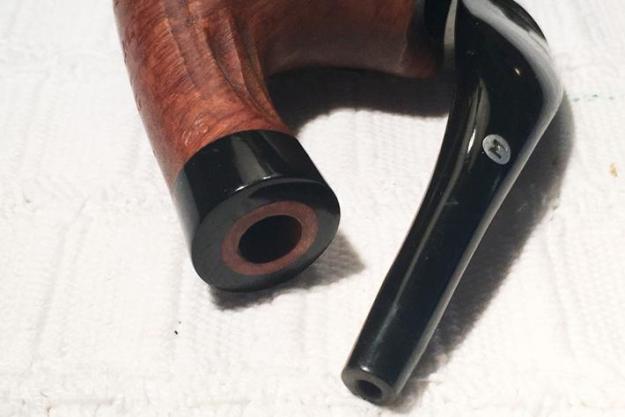
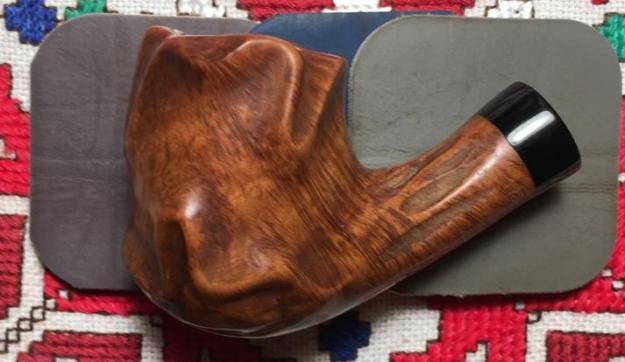
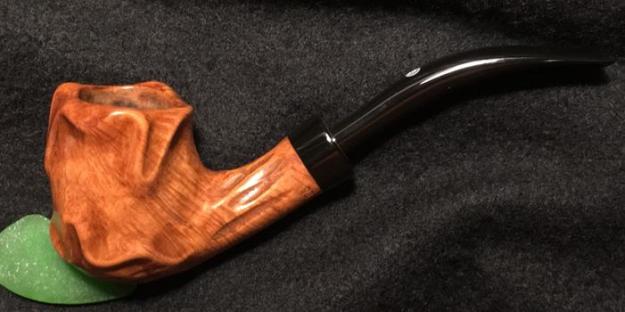
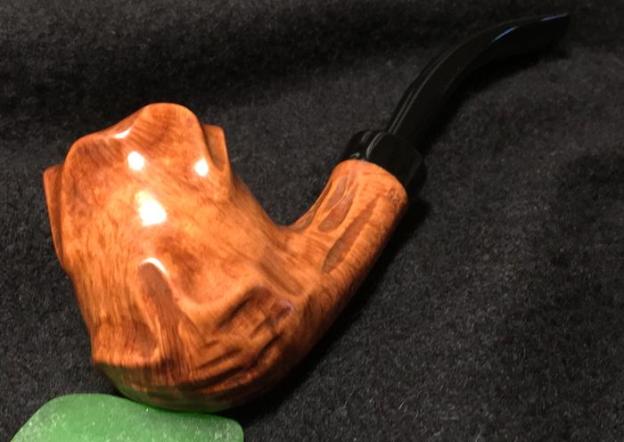
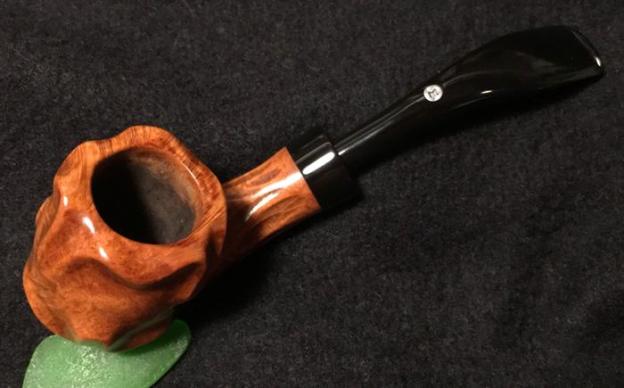
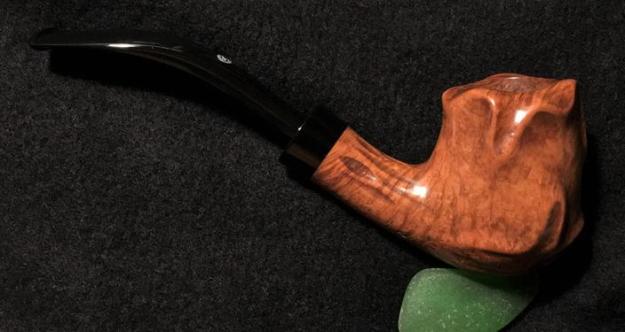
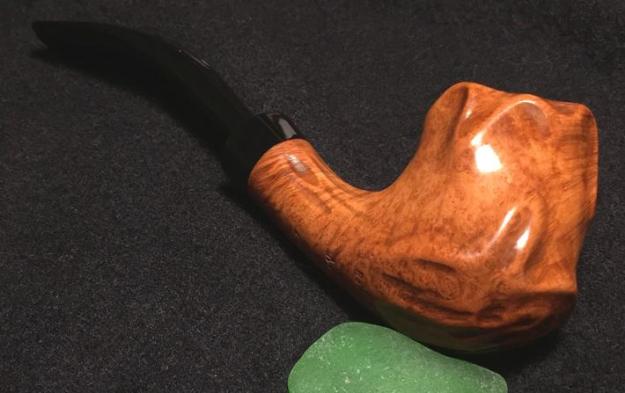
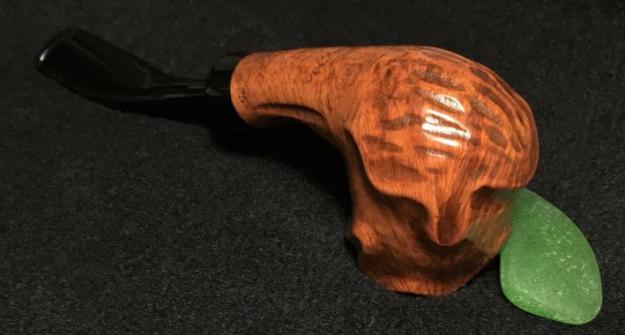
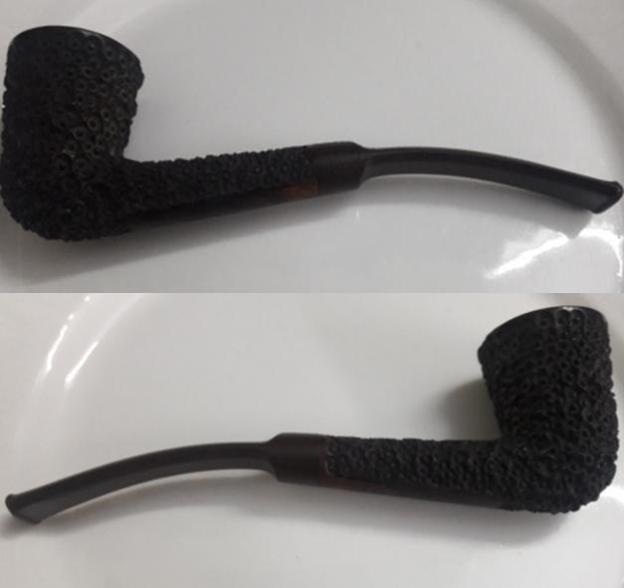
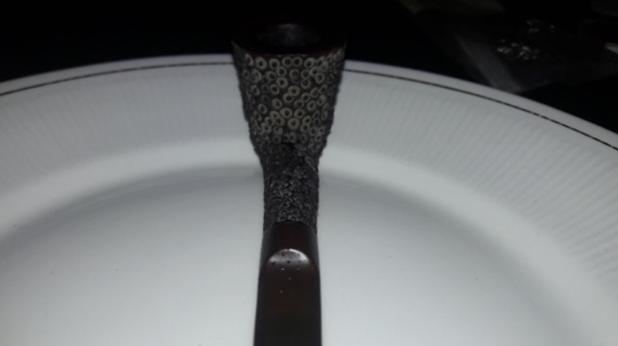
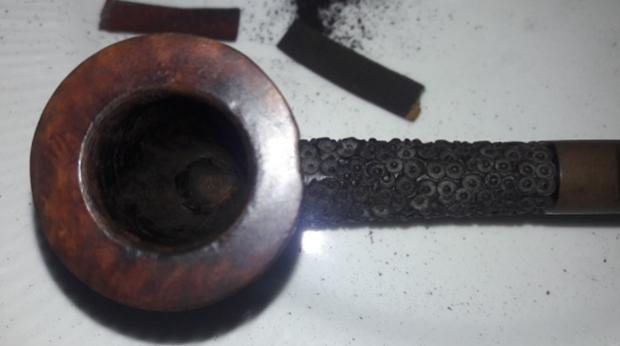
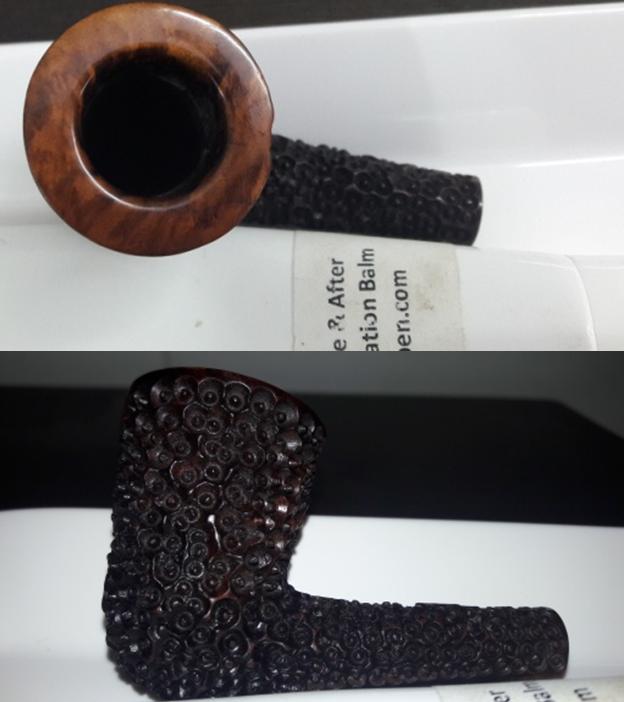
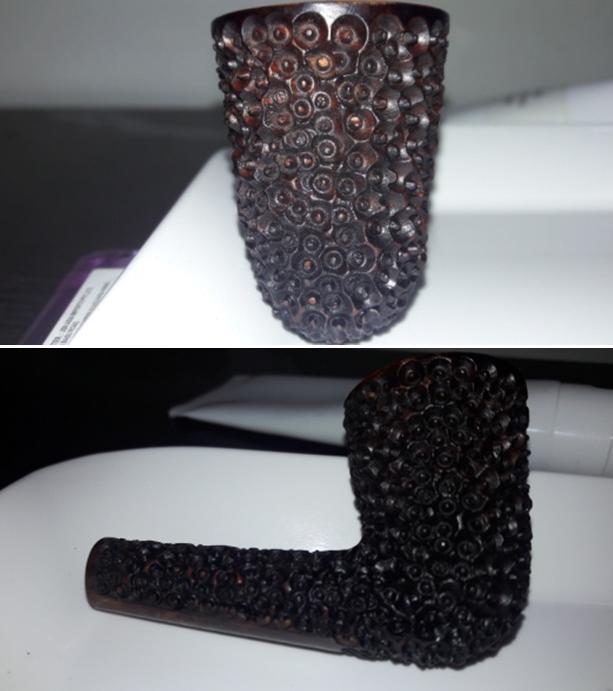
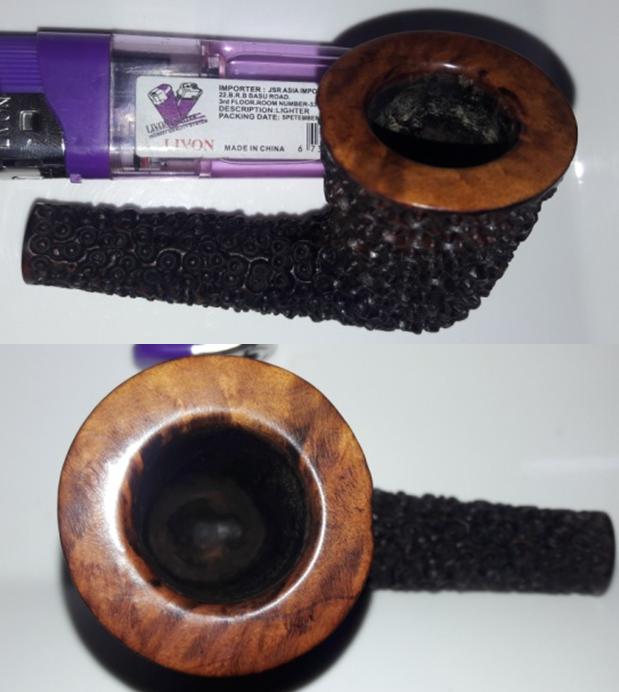
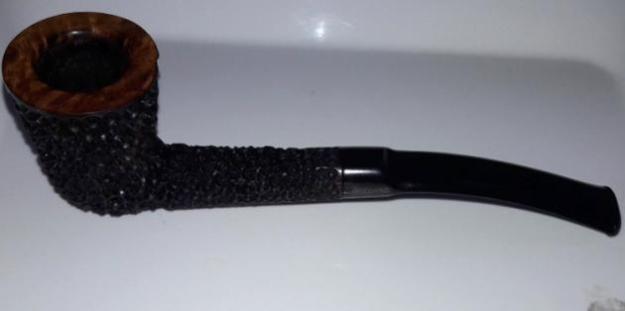
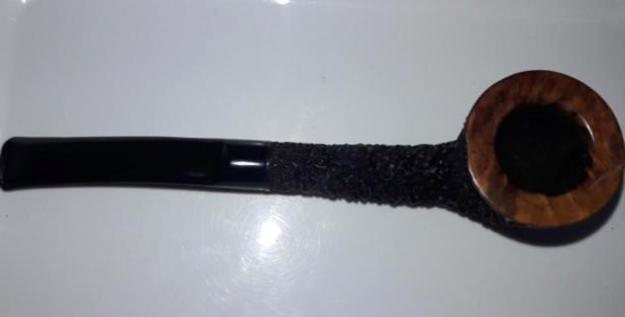
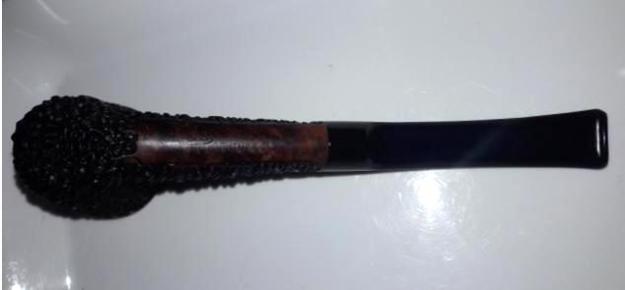
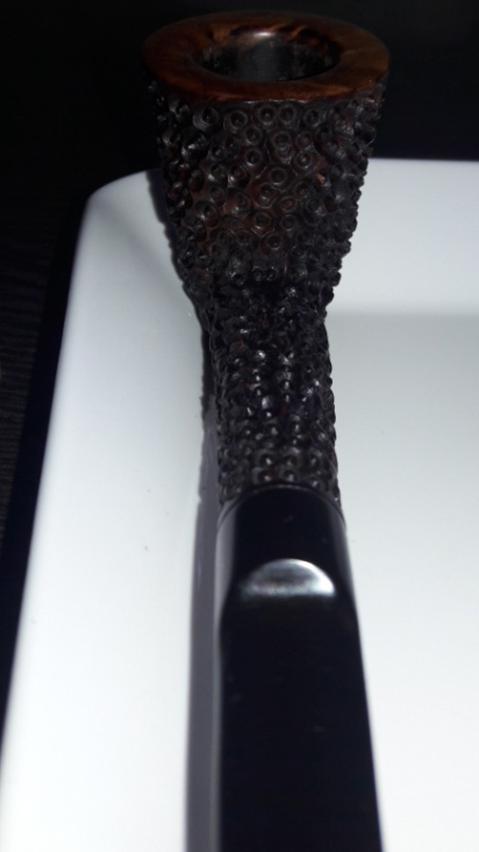
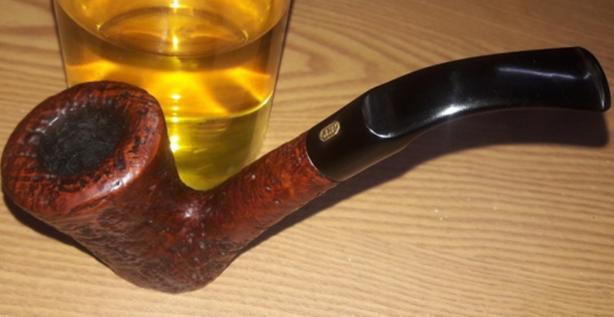
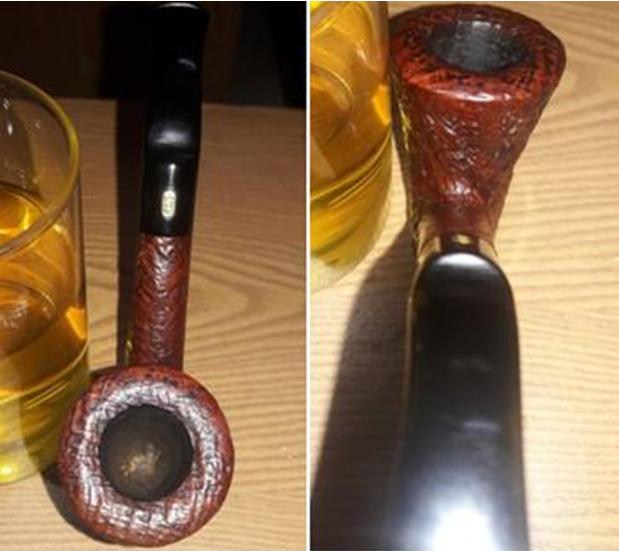
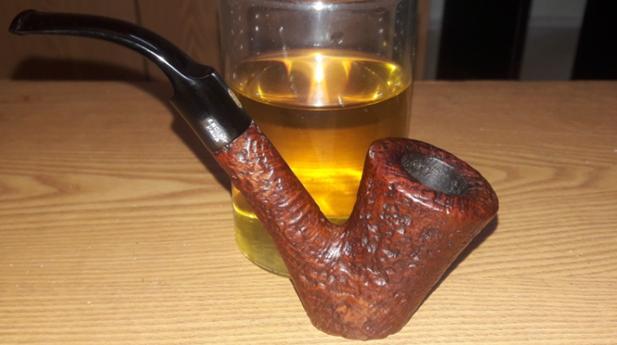
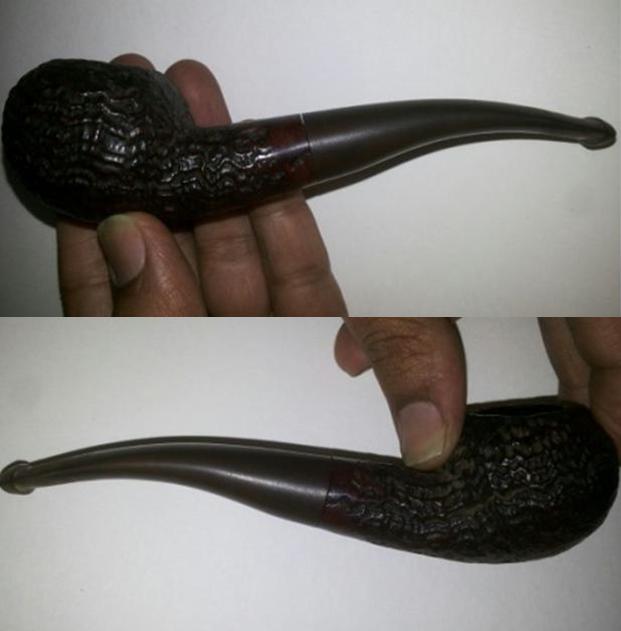
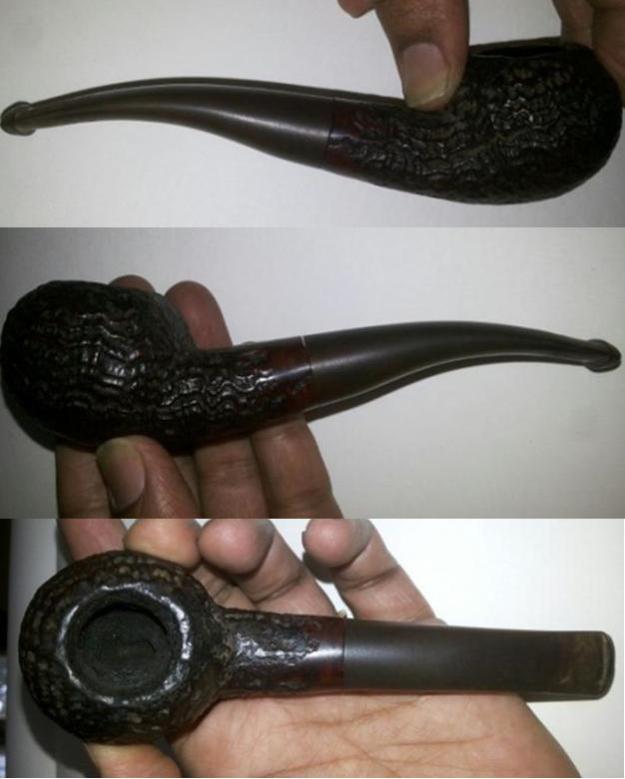
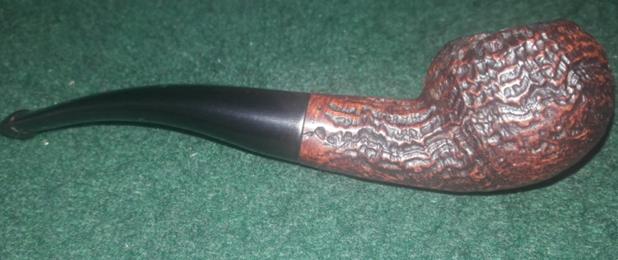
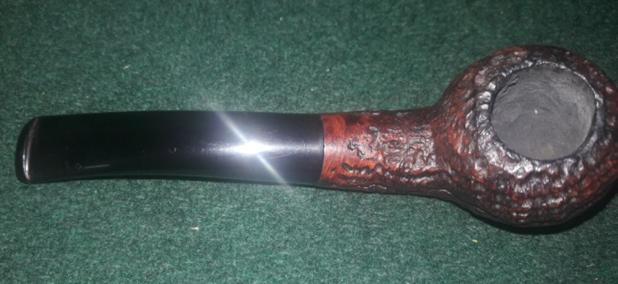
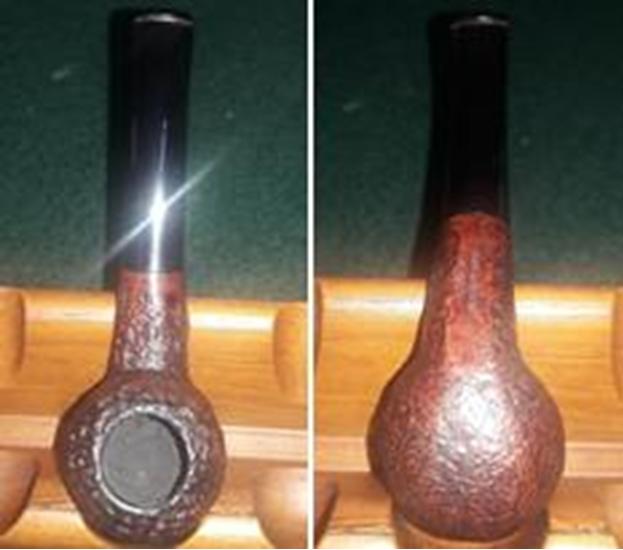
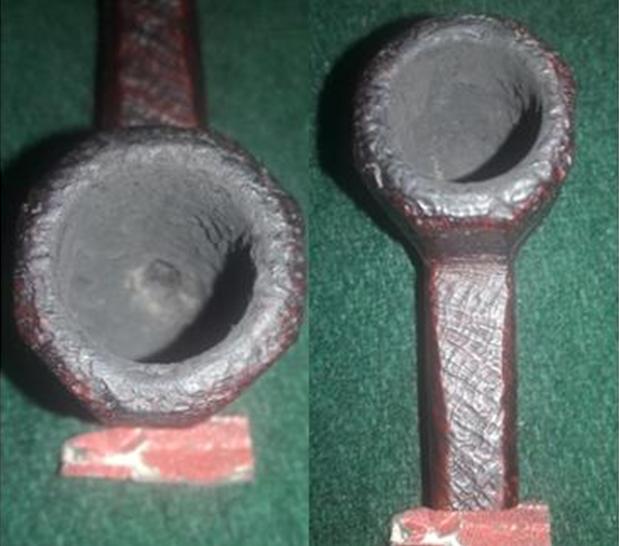
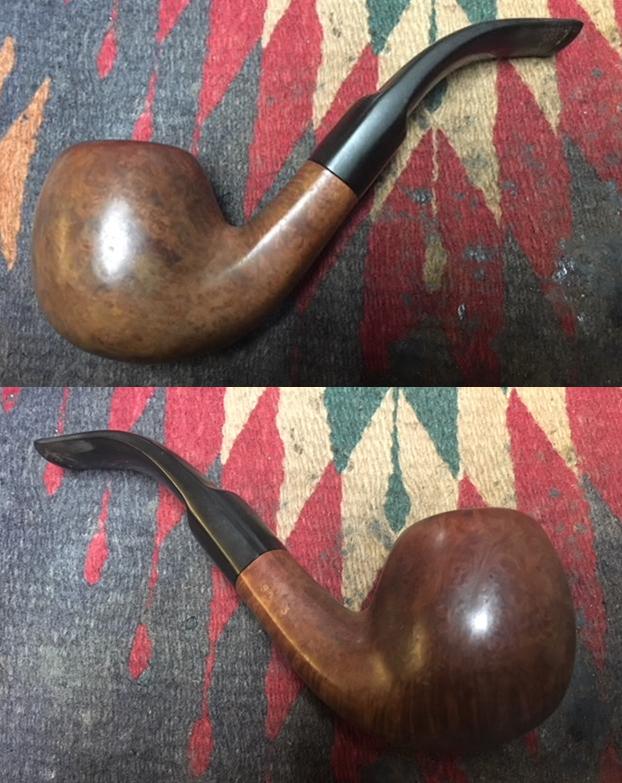
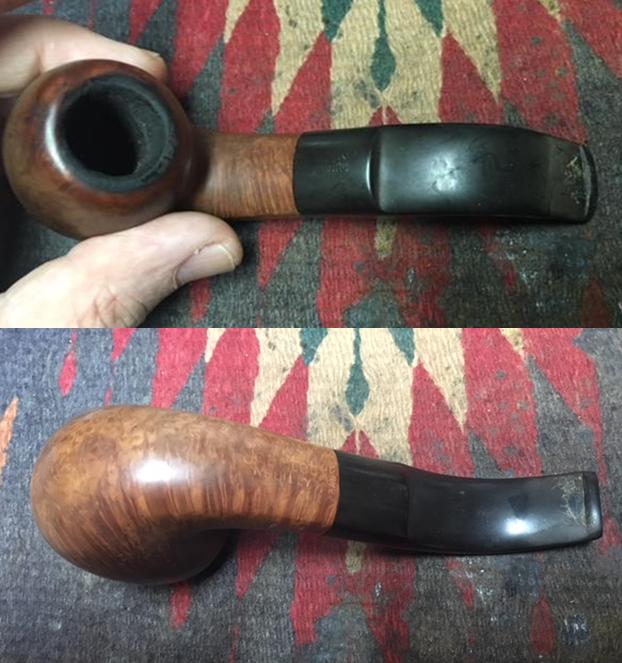
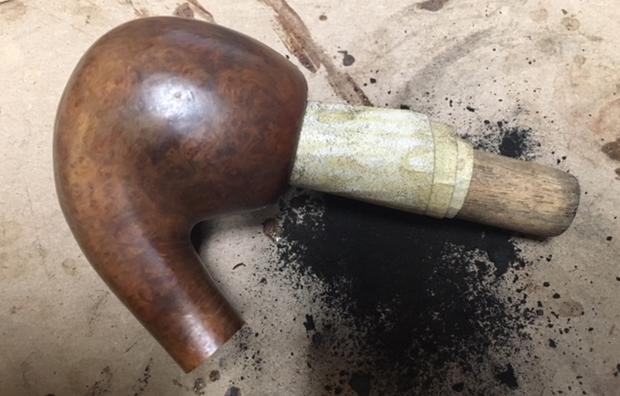
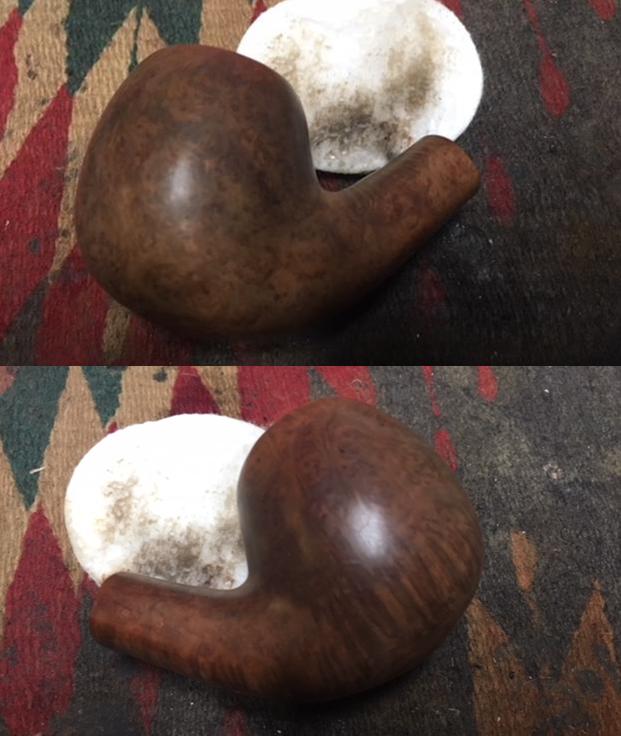
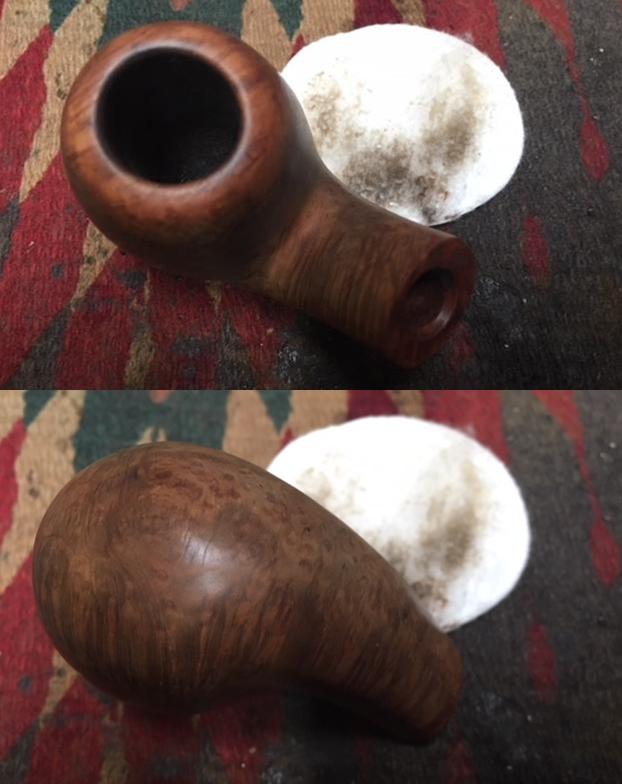
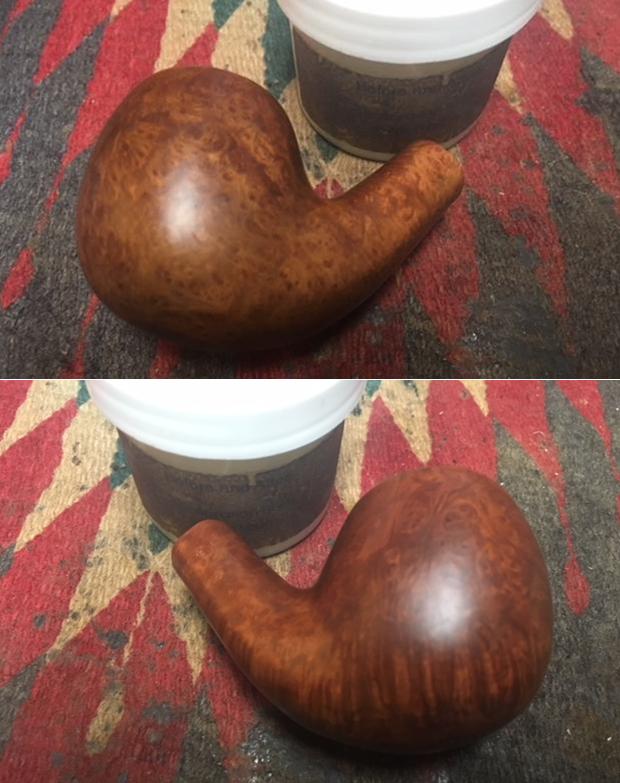
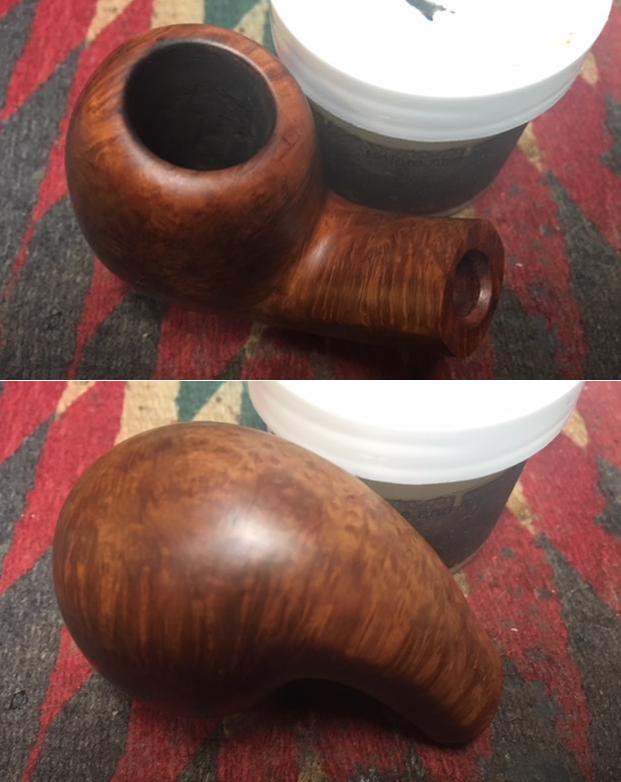
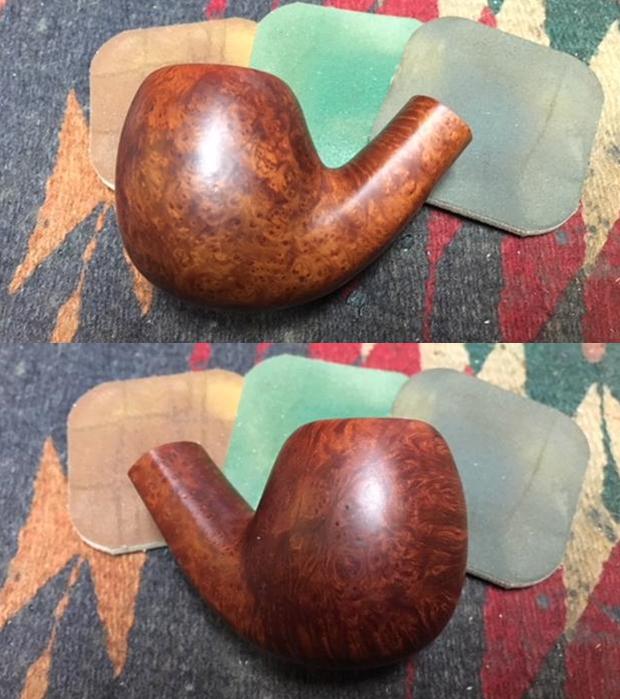
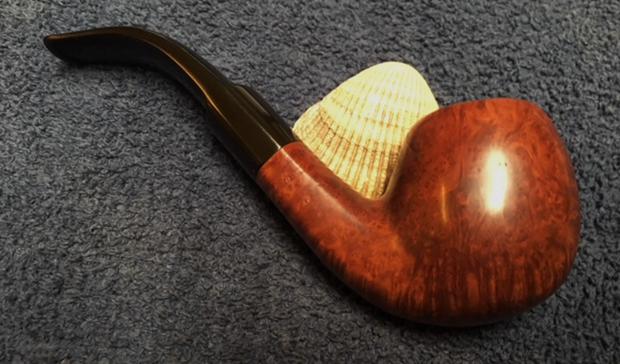
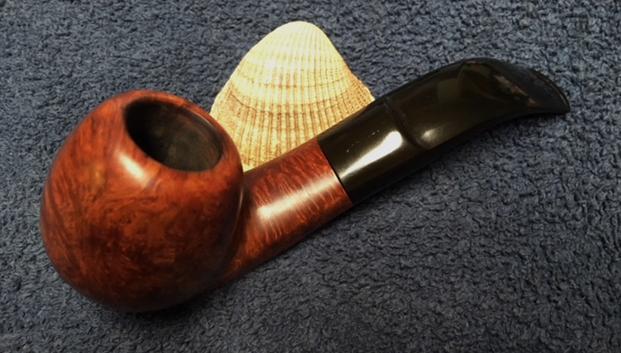
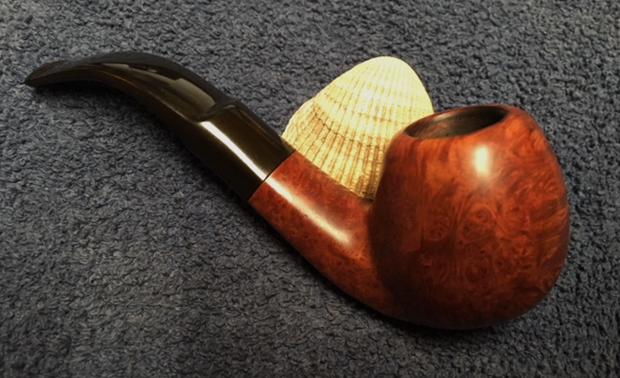
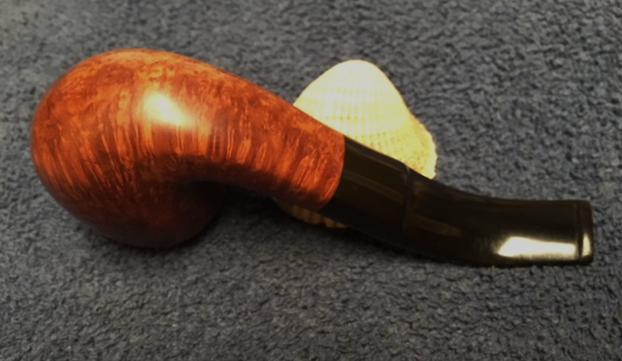
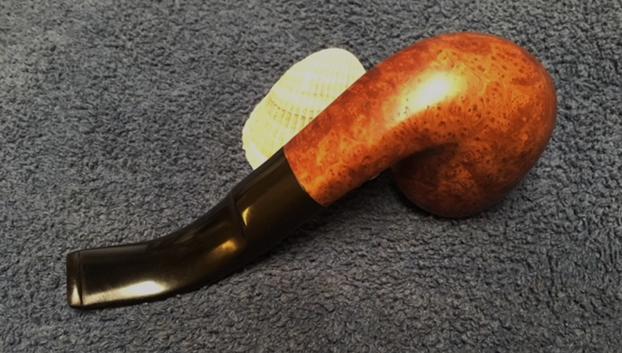
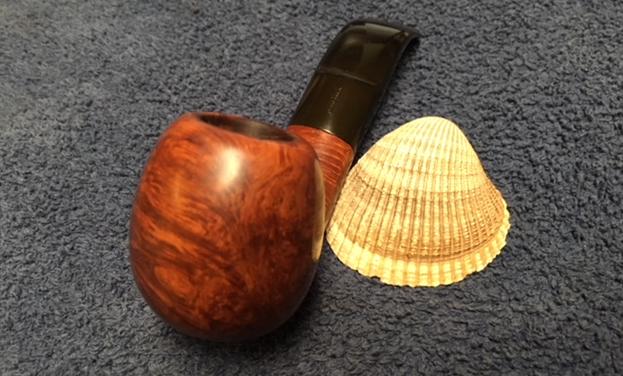
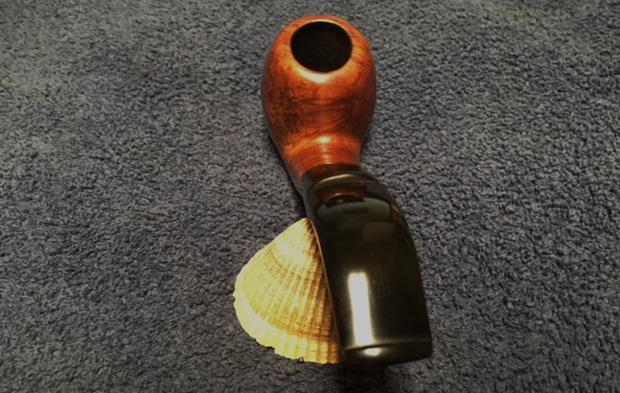
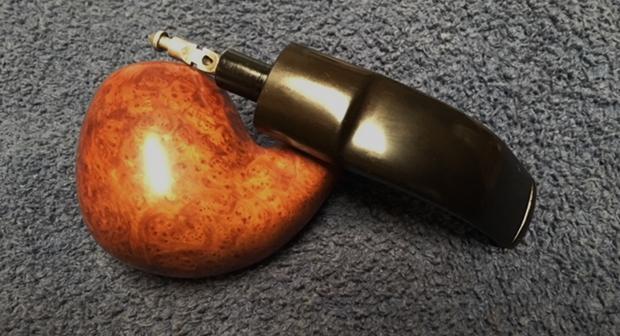
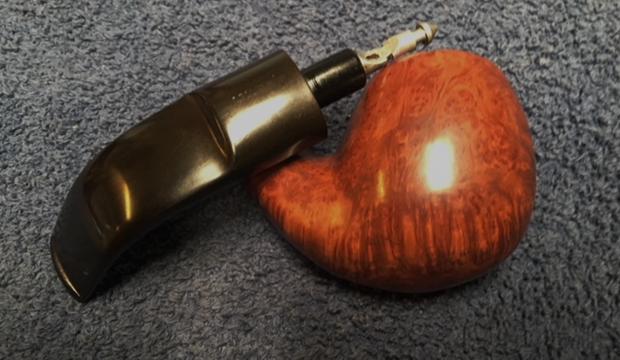
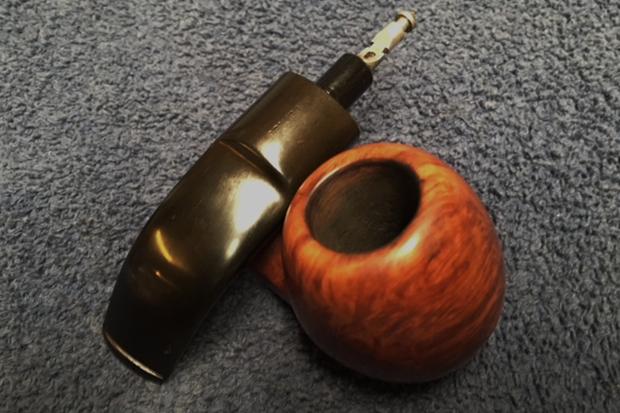
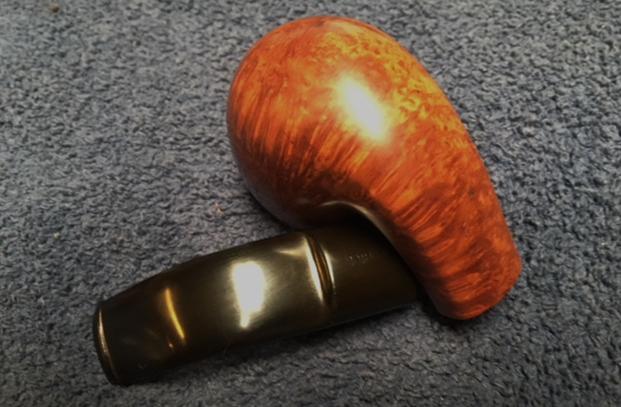
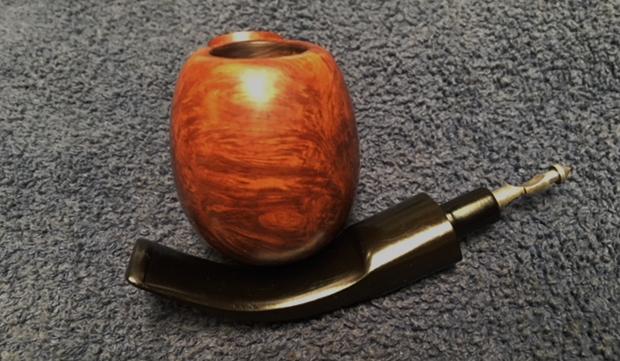
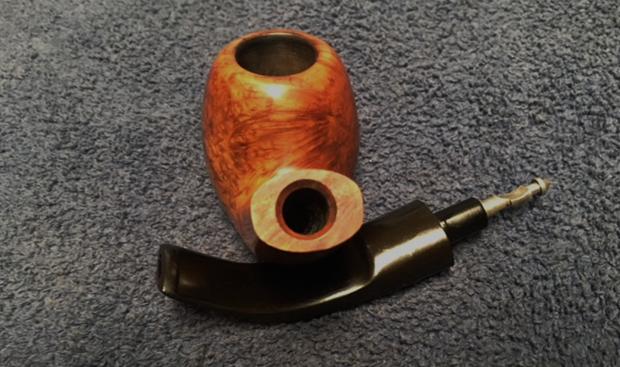
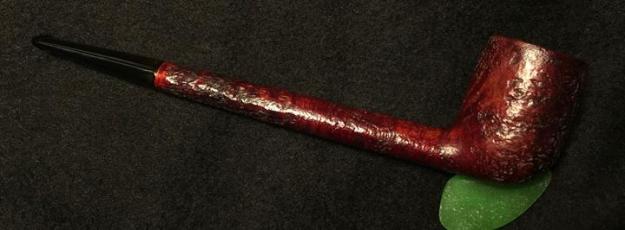
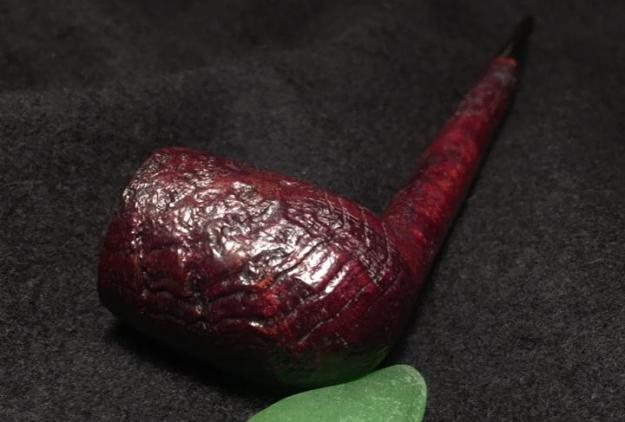
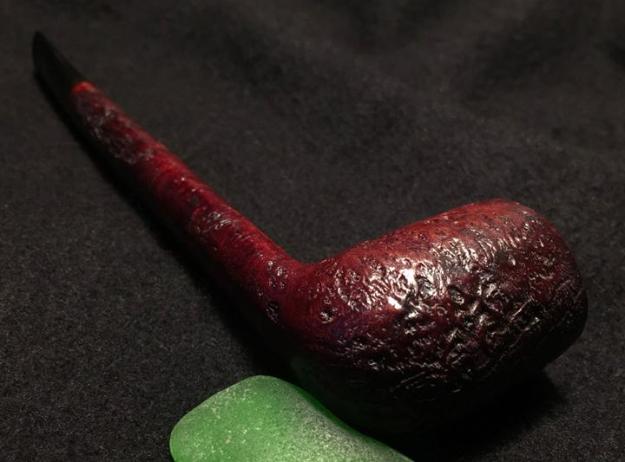
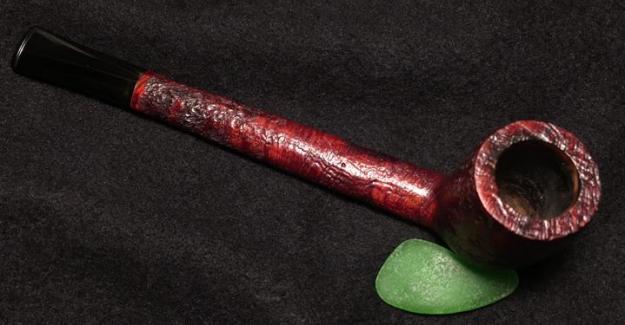
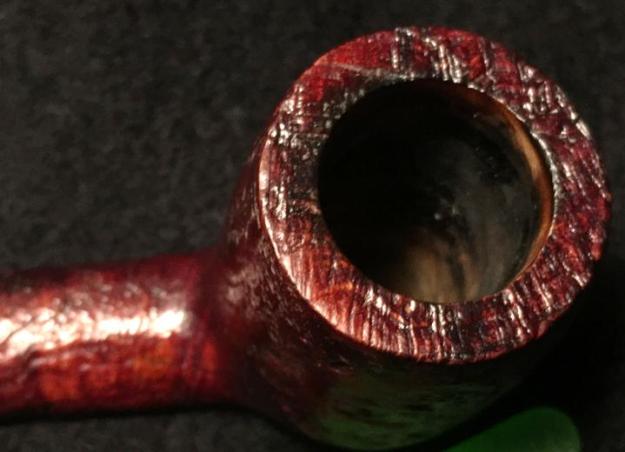
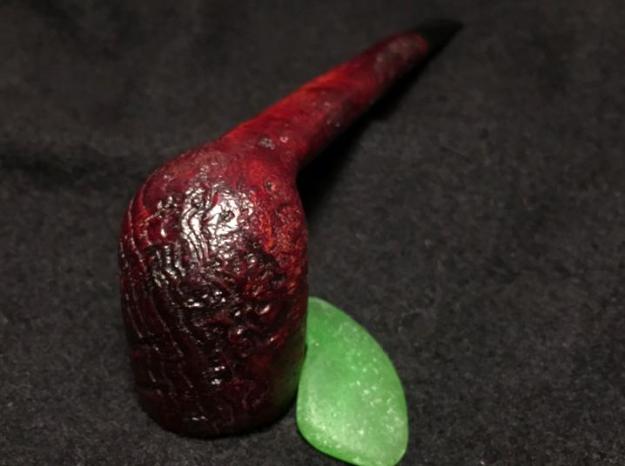
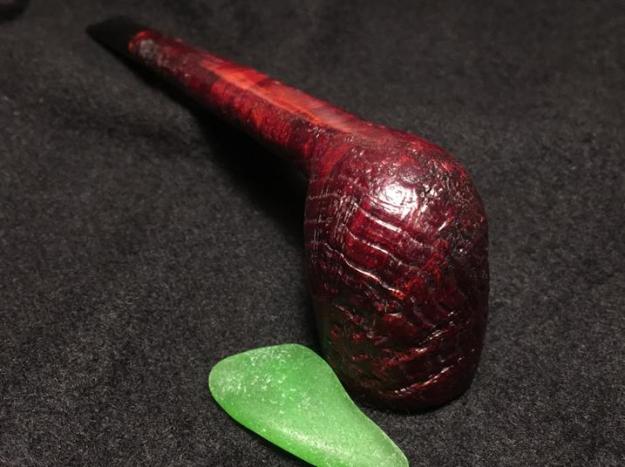
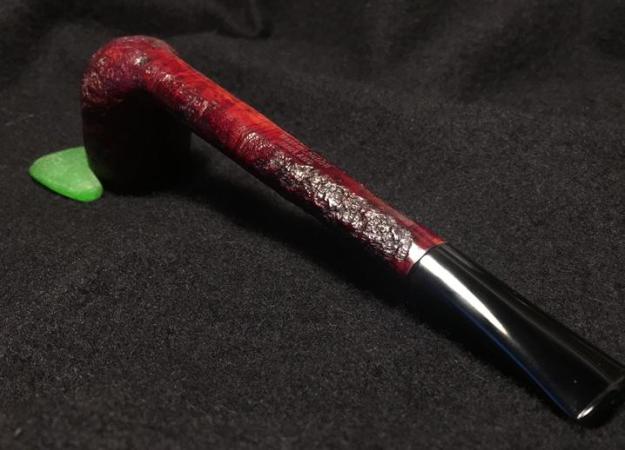
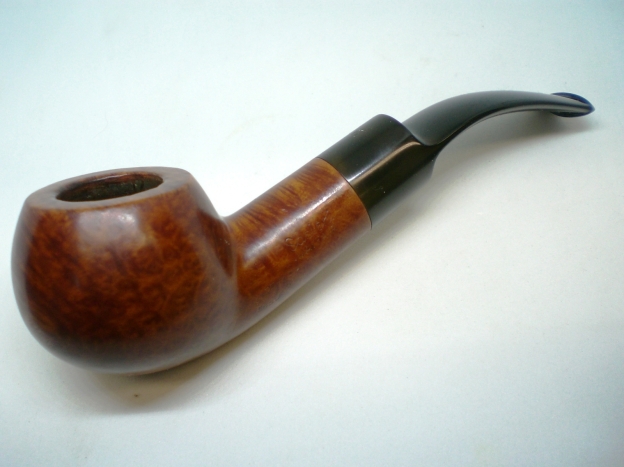
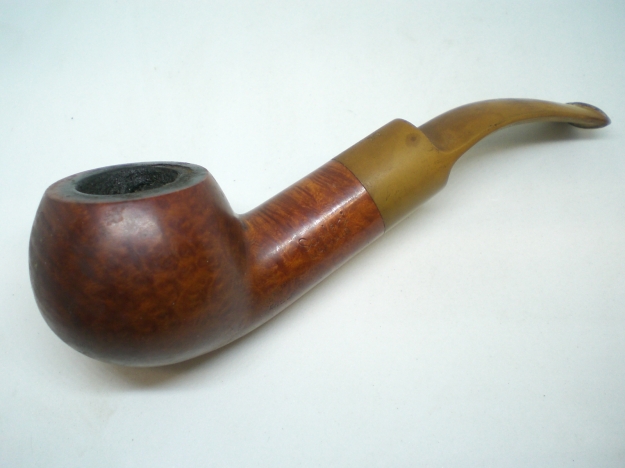
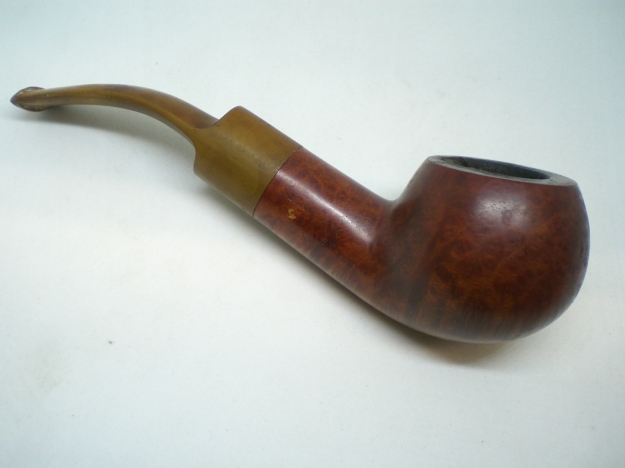
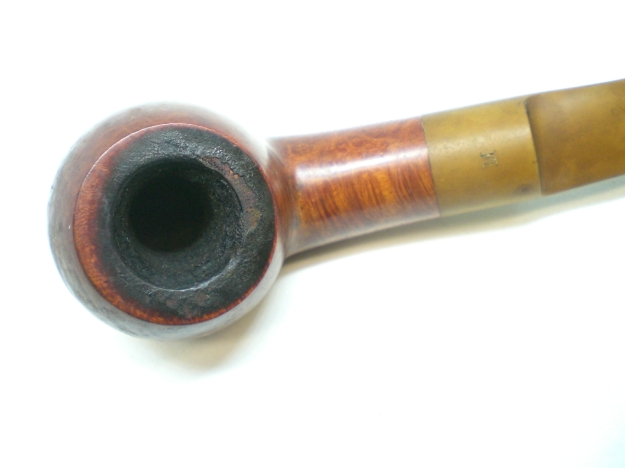
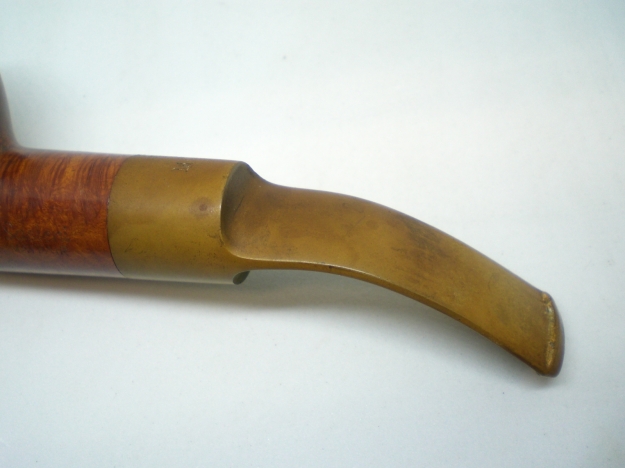
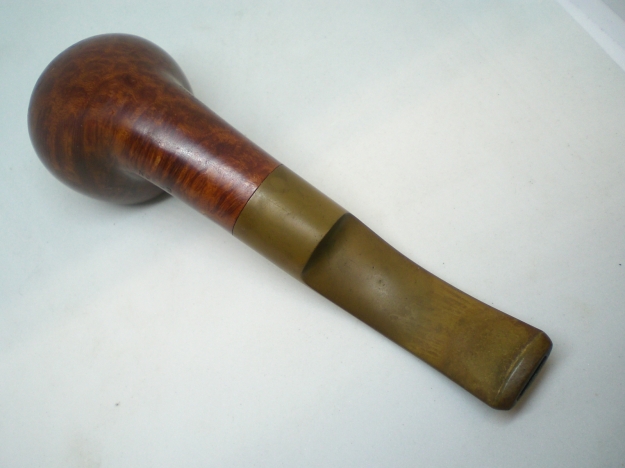
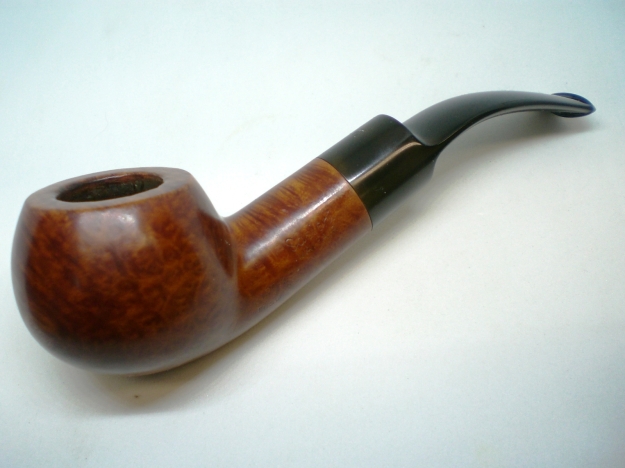
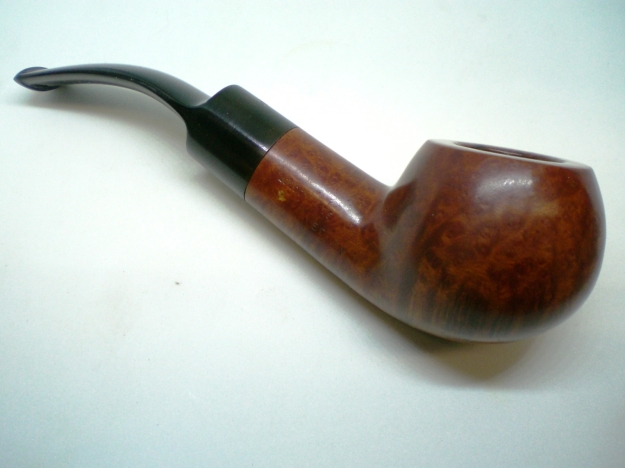
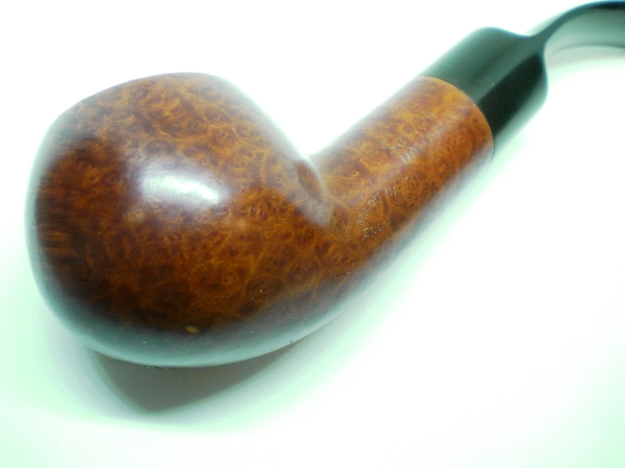
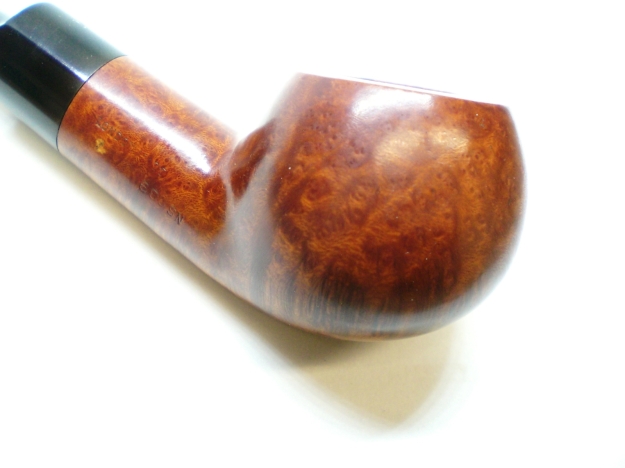
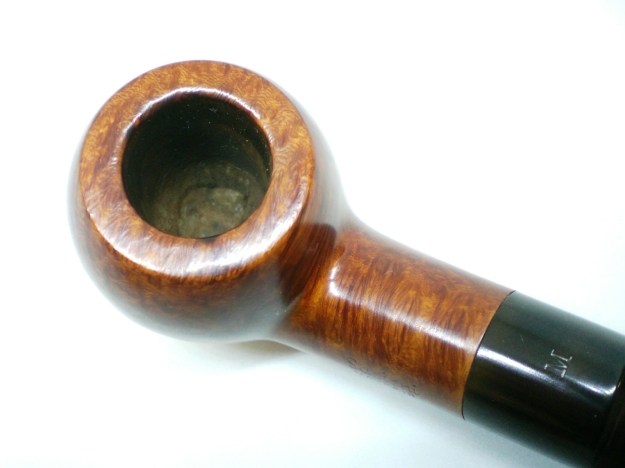
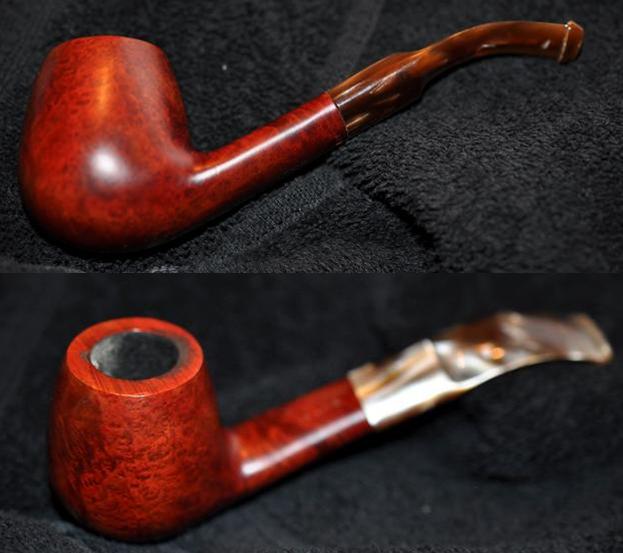
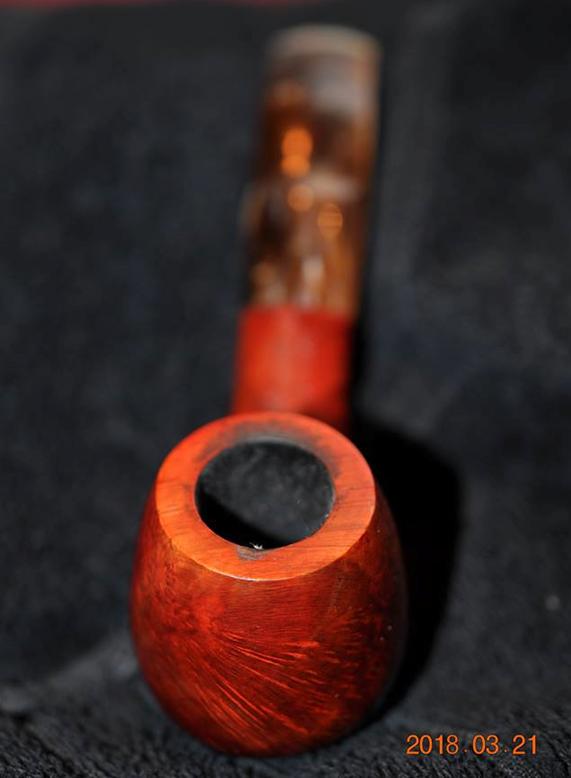
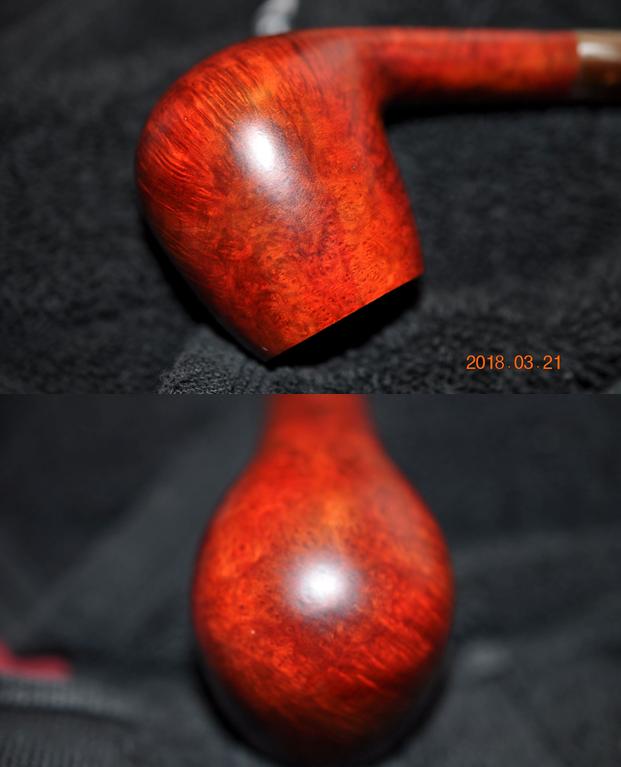
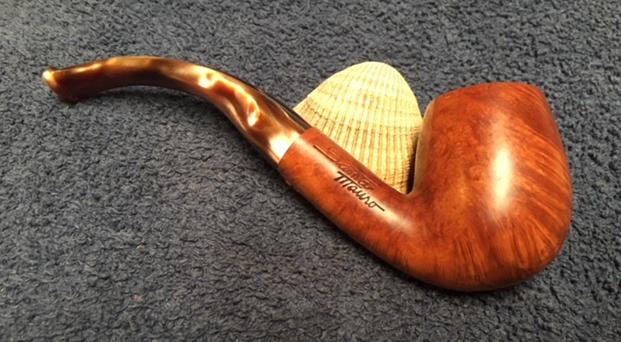
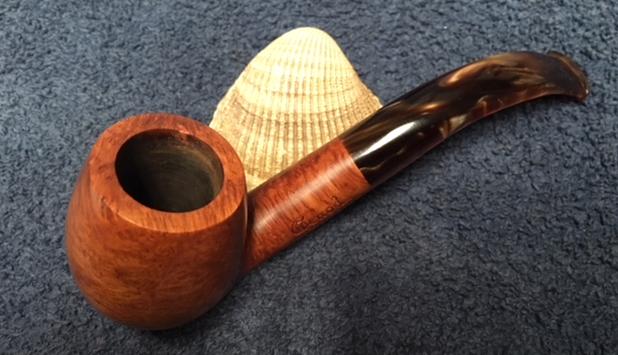
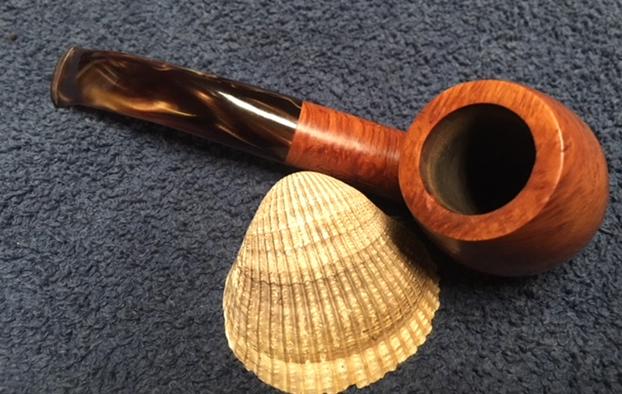
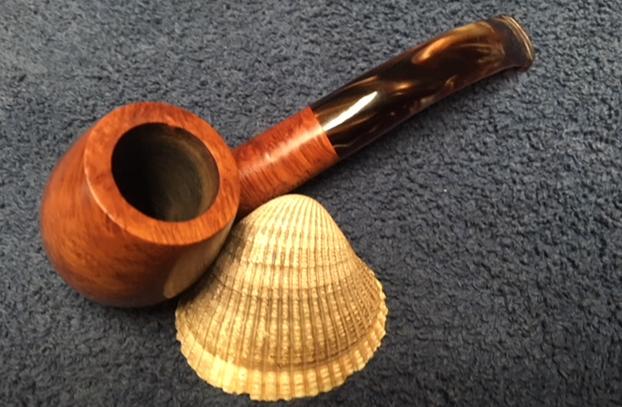
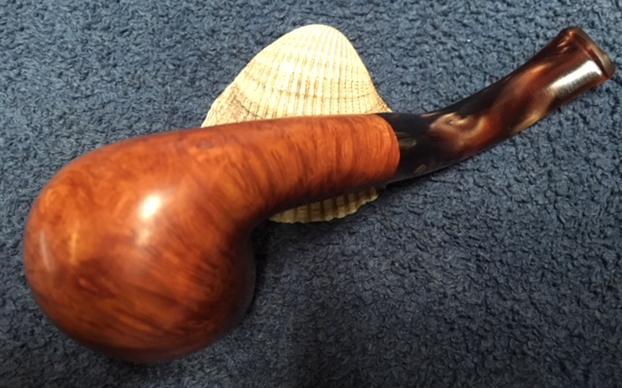
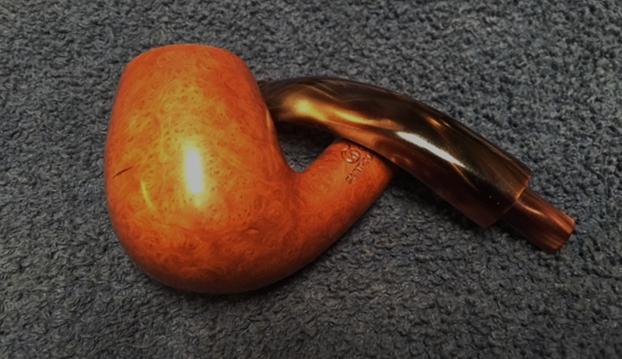
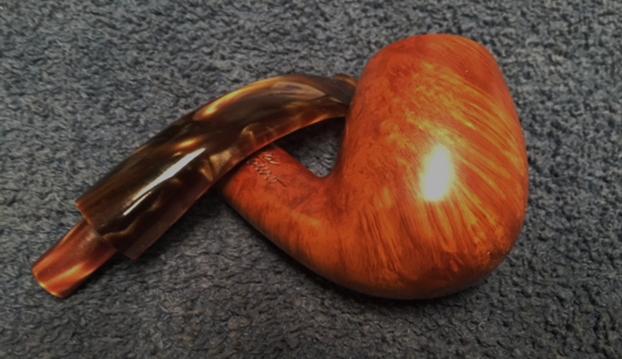
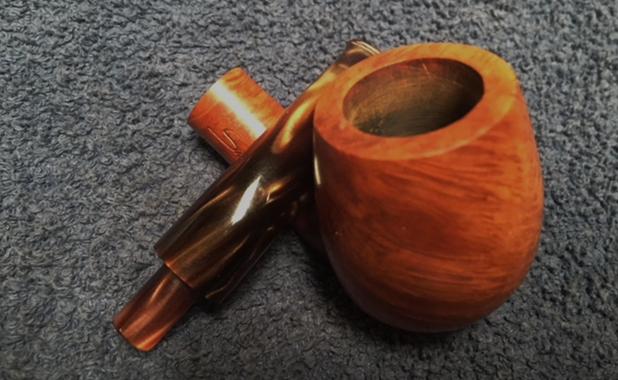
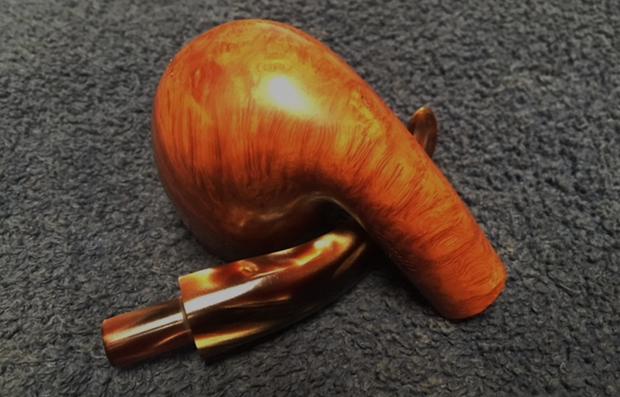
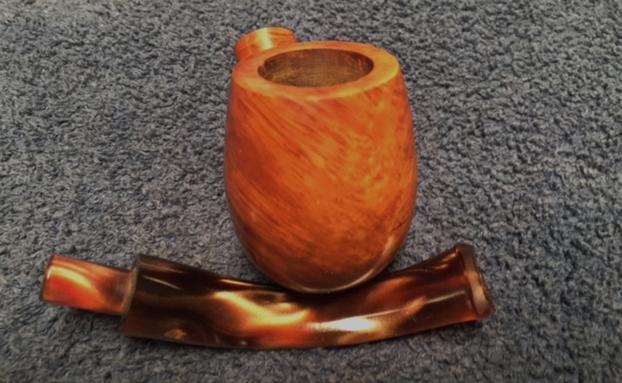
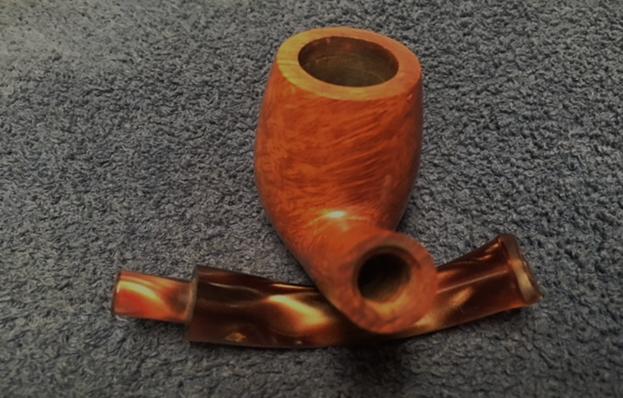
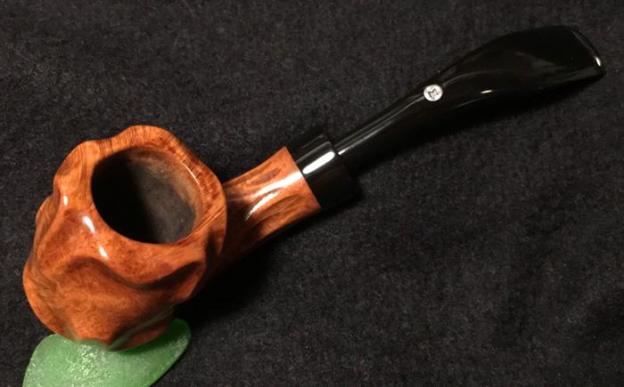
The next pipe that I decided to work on is a smallish beautiful bent Dublin shape with unique hexagonal  giving the appearance of a honey collection cell in a beehive. These are definitely not hand crafted rustication as the perfect geometry, details and alignment of these tiny hexagons is difficult to achieve by hand. But, nevertheless, it is one handsome looking pipe!!!!

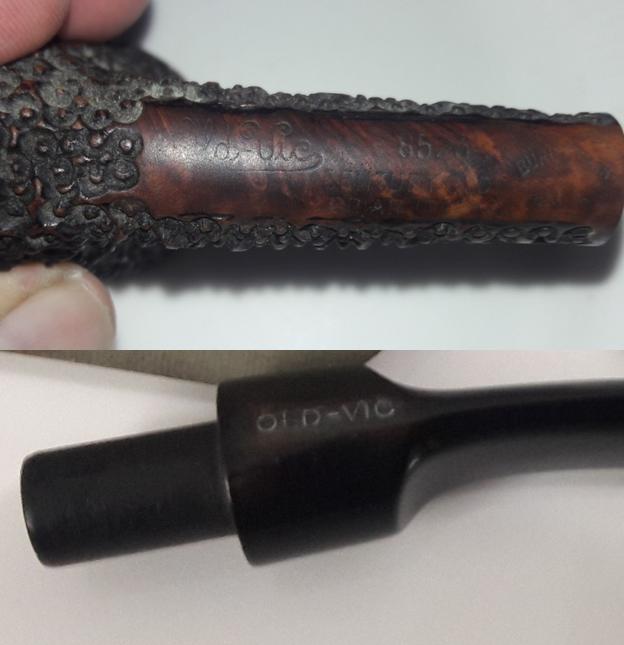
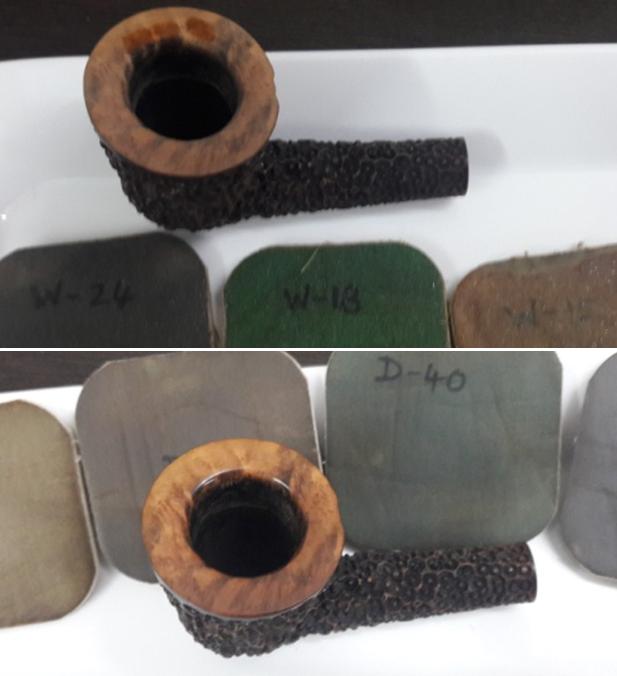
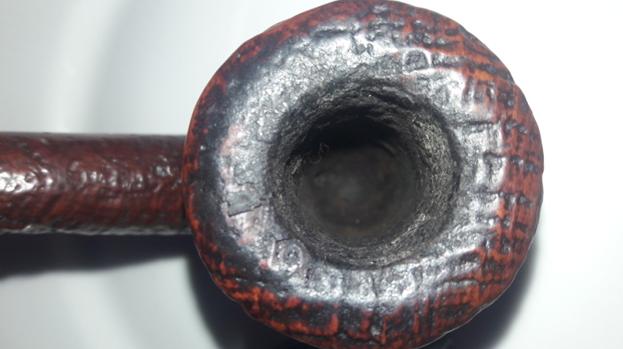
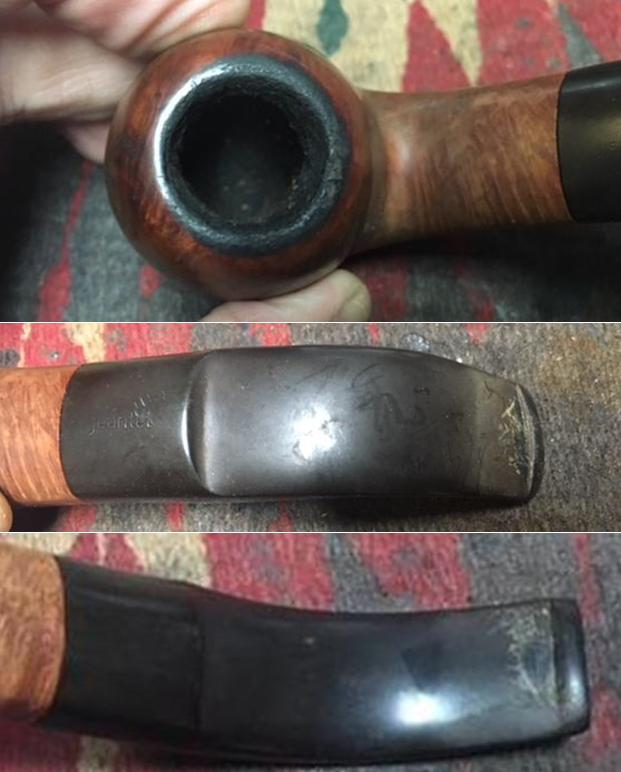
As described above, this dude has these rustication all over the stummel and over the round shank, save for a smooth portion on the bottom of the shank which bears all the identification marks of this pipe and the rim top which looks amazing. It is stamped on the left corner of the shank with “Old-Vic” in with old style curls. The end of the letter “c” curves back in a linear fashion and underlines up to the letter “d” in the name Old , before fading off gradually. Old-Vic is followed by “# 8523”. Just below the number and starting from the end of the letter “c” in Old-Vic, it is stamped as “CENTURY OLD” over “BRIAR ITALY”. Towards the right end of the shank and mid way, it bears the stamp “BURL GRAIN” in an arch over a very faint stamp which I could not make out. The vulcanite saddle stem is of high quality and is stamped on the left side of the saddle with “OLD-VIC”.Not much is known about this brand other than that these were made by LORENZO and hence the Italian connection. I have to concede that Italian pipes are very desirable looking with perfect proportions and beautifully crafted. I had even made an attempt to know more about this line of Lorenzo pipes by emailing Lorenzo’s American distributors, but have no response from them since last 15 days. Mr. Dal Stanton, if you are reading this piece, please enlighten me with your MANTRA for making these guys respond!!!!!!!!!!!

INITIAL VISUAL INSPECTION
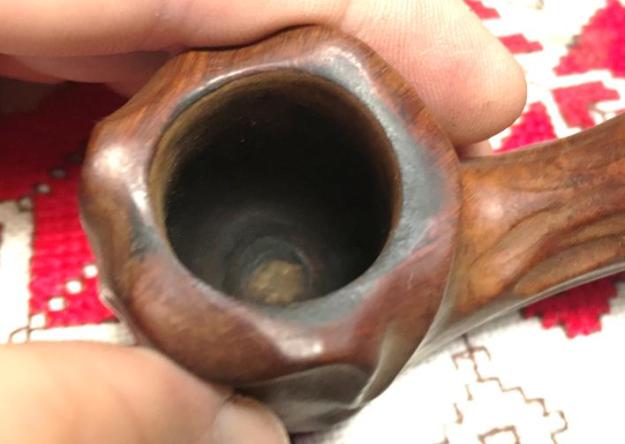
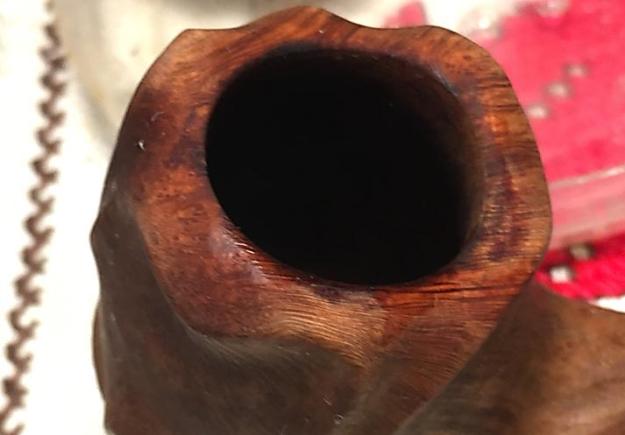
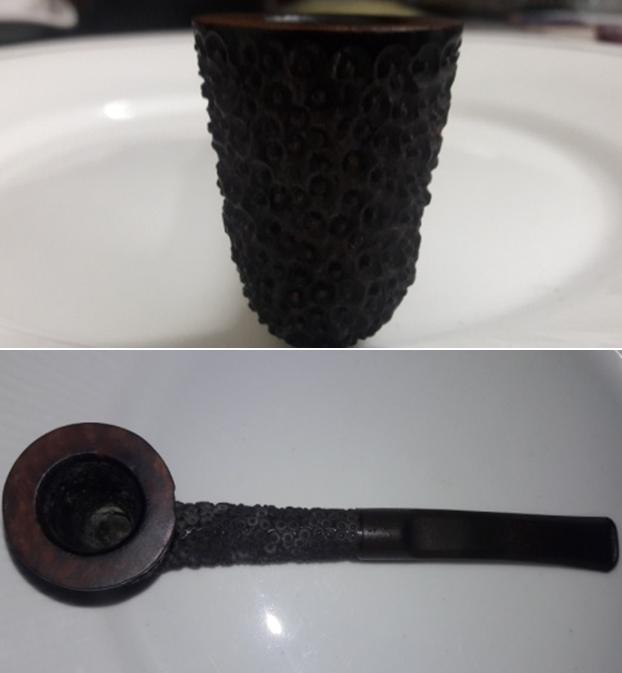
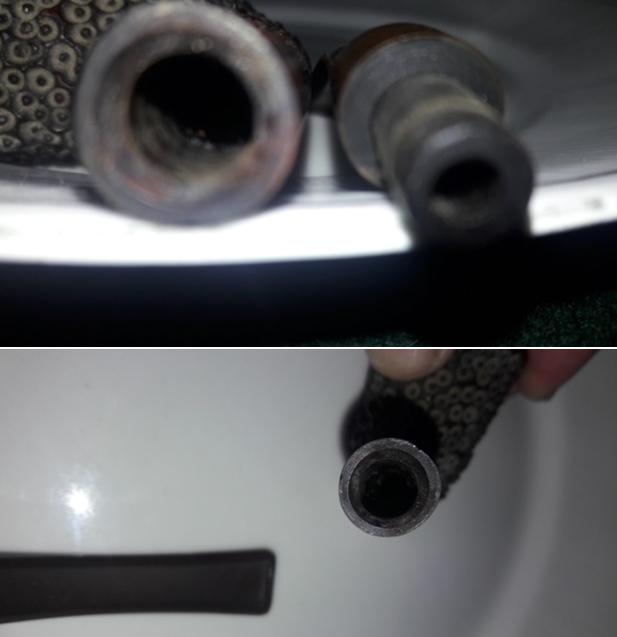
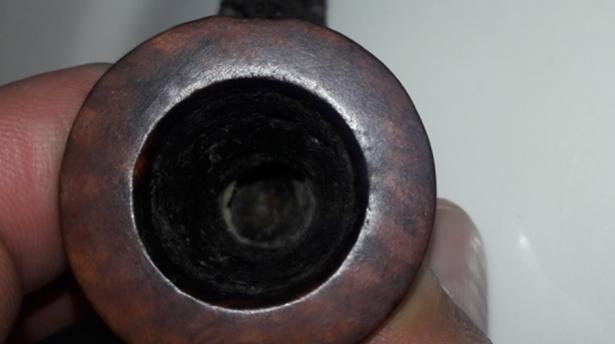
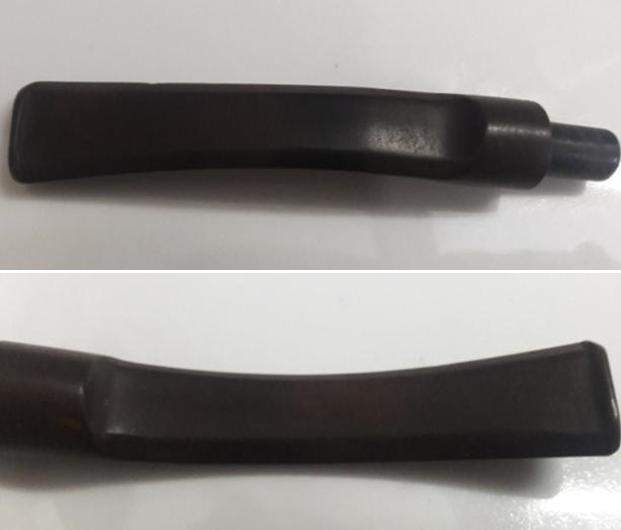
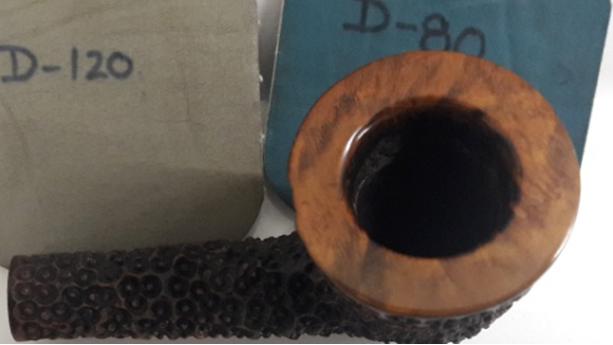
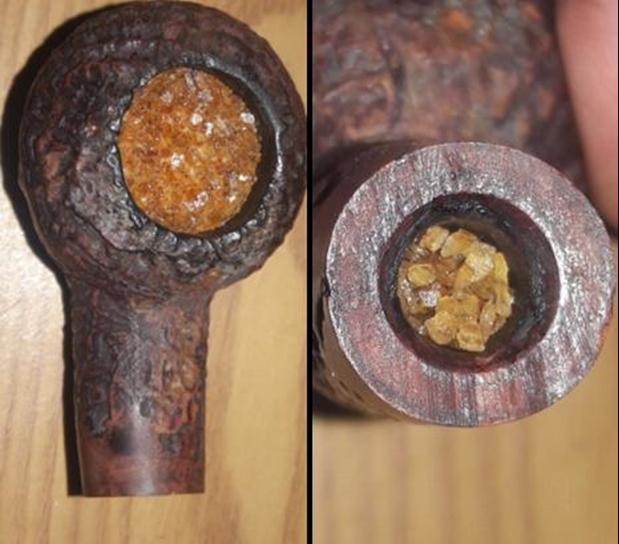
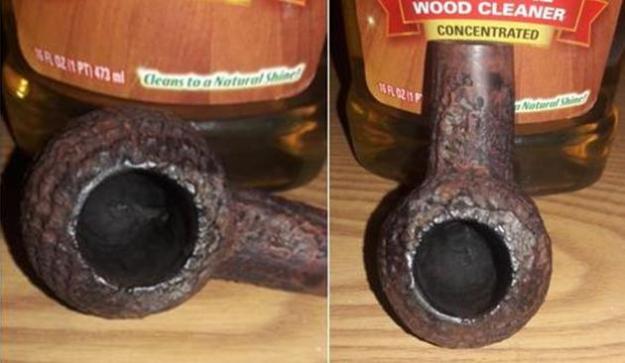
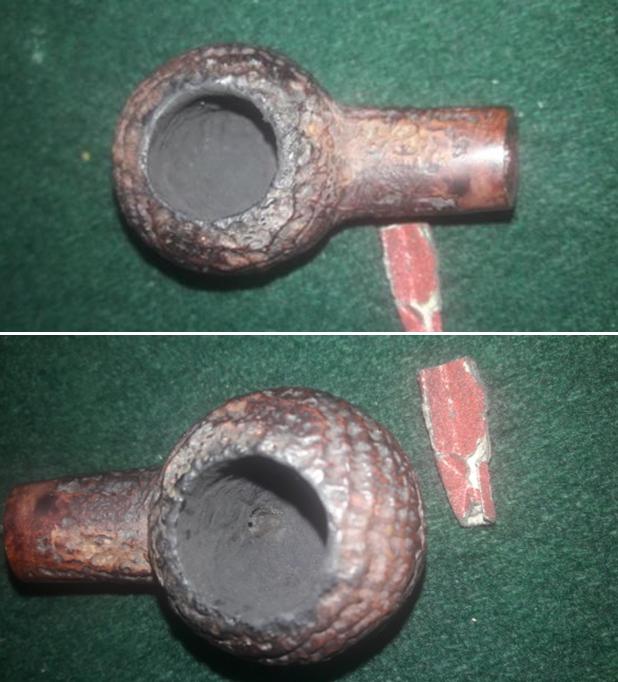
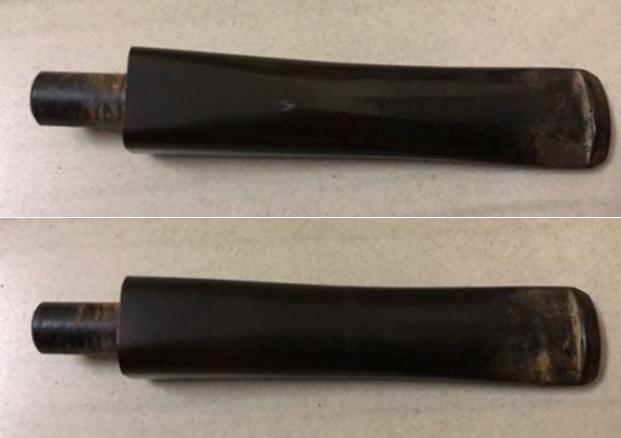
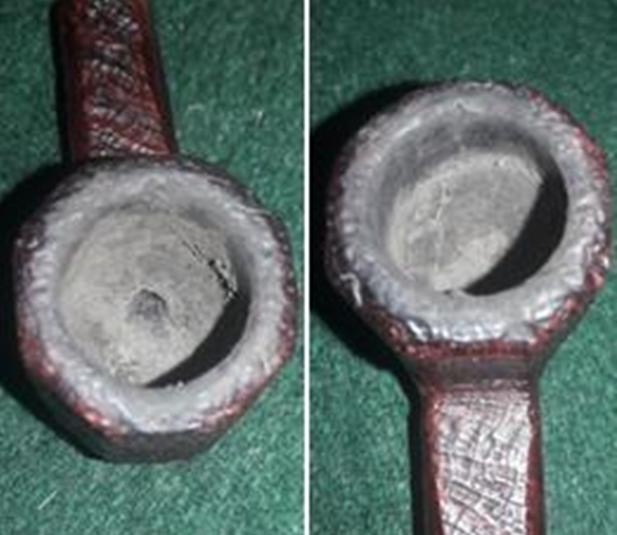
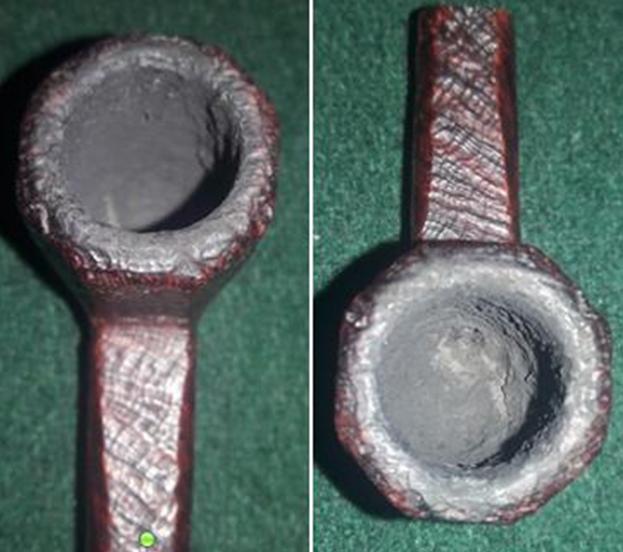
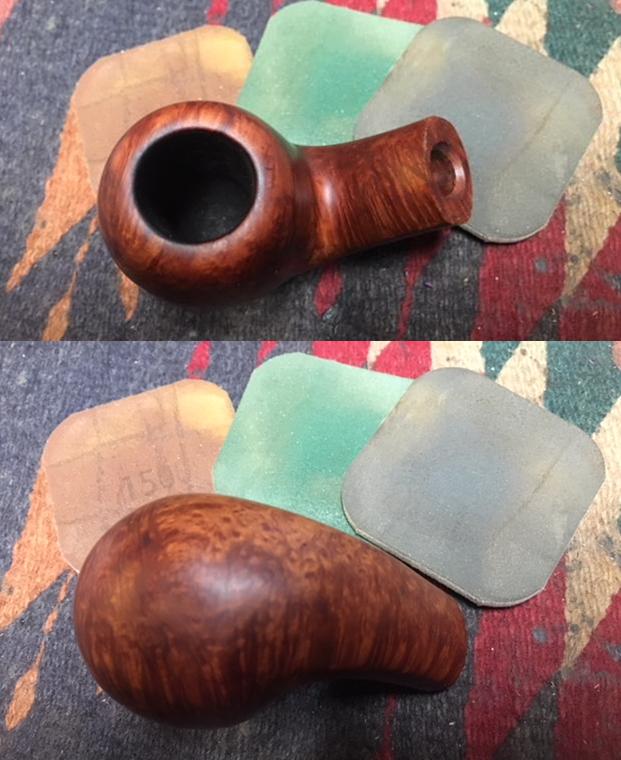
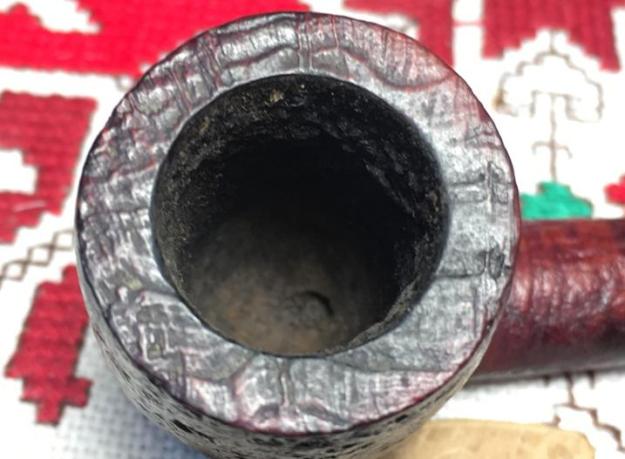
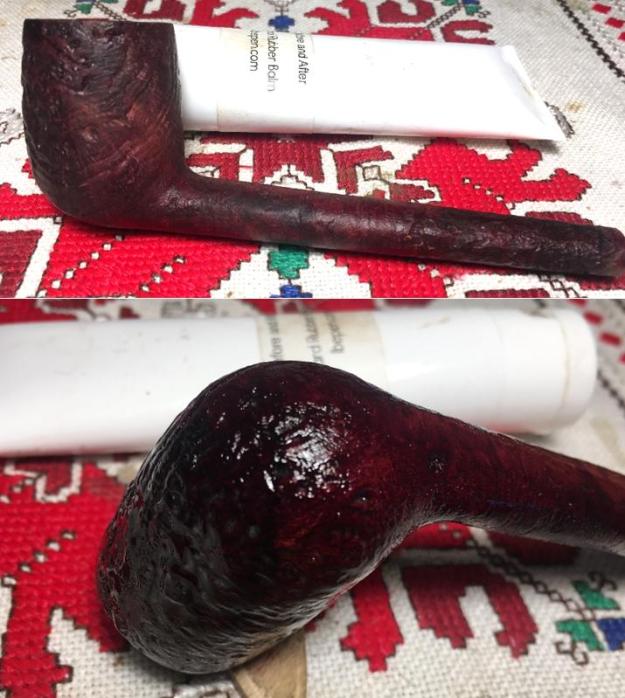
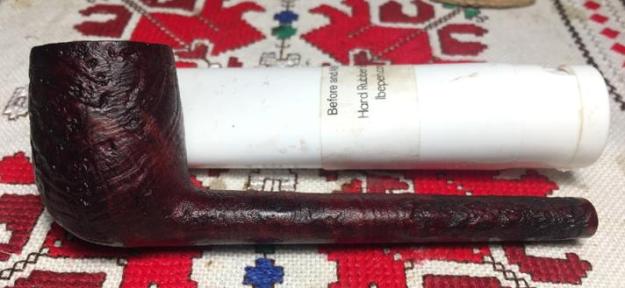
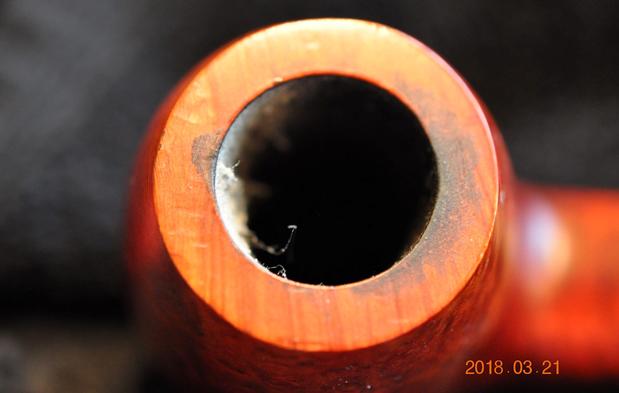
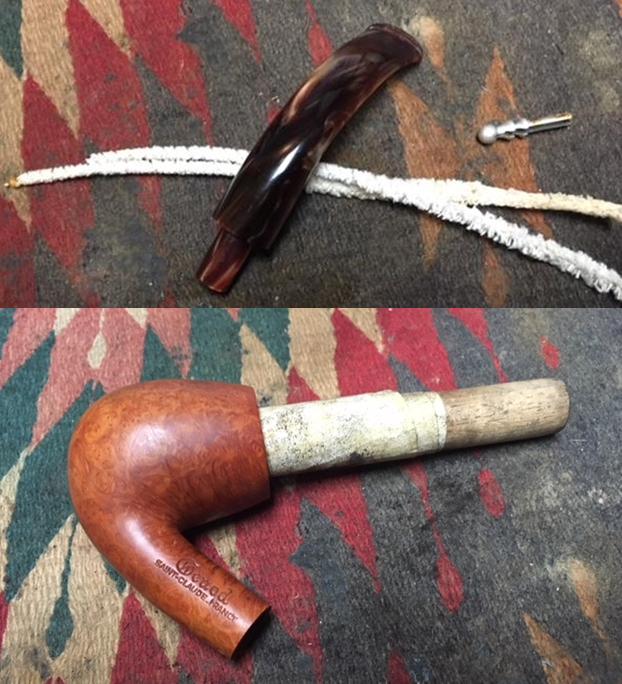
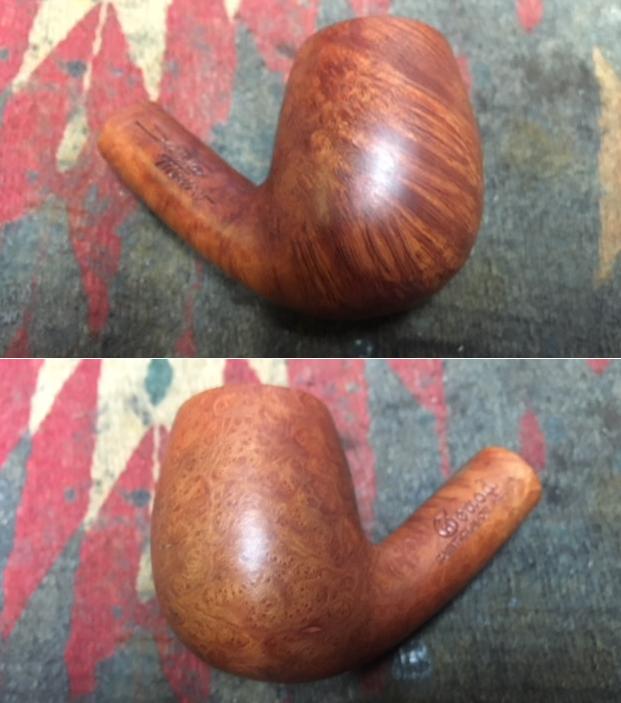
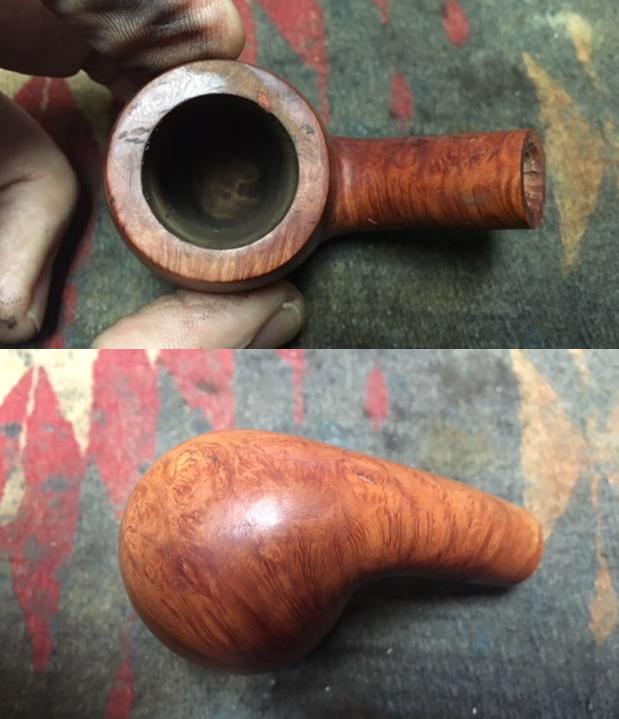
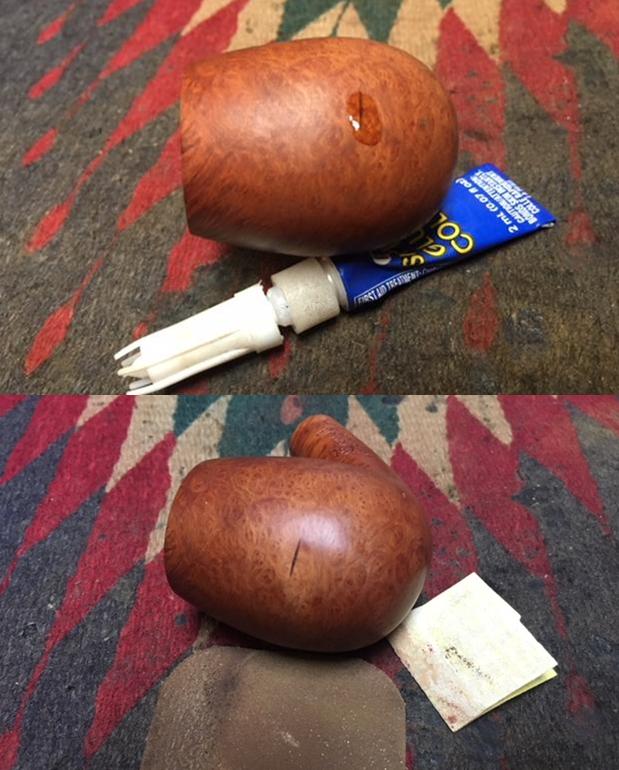
As is commonly seen on rusticated or sandblasted pipes with some serious age on them, the crevices in these are always filled with dust, dirt, oils, tars and grime from all the years of smoking and storage. This Old-Vic is no exception to this observation. The small hexagonal pockets are filled with dust while the smooth bottom of the shank is covered in dust and sticky grime. The fact that the hexagonal patterns are dirty and filled with dirt is accentuated more due to a very dark reddish brown stain on the stummel and the shank. The briar is looking lifeless and bone dry and has taken black hues. The bowl is narrow and tapers down towards the draught hole. The chamber is so filled with cake that I am unable to reach the bottom of the bowl with my little finger. The build-up of the cake is more heavy in the bottom half of the bowl. The mortise is full of oils and gunk and air flow is restricted. The rim top is smooth and the grains are accentuated with a lighter stain, which can be seen through the overflowing lava. The inner and outer edge of the rim is in pristine condition with no dings or dents. The vulcanite stem is so heavily oxidized that it appears brown in color!!!! Some light tooth chatter is seen on both surfaces of the stem towards the lip. This issue should not be a major headache to address. The lip edge on both side is crisp and without any damage. The quality of vulcanite is good. THE PROCESS
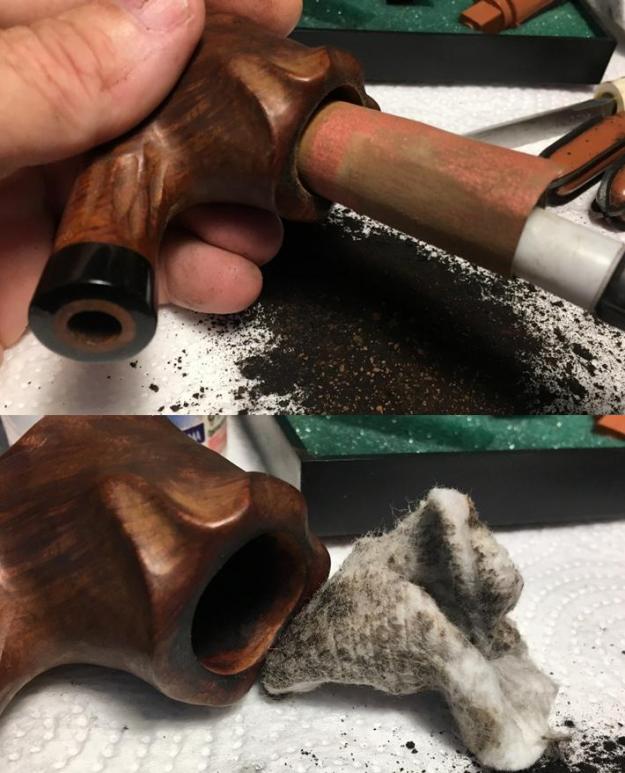
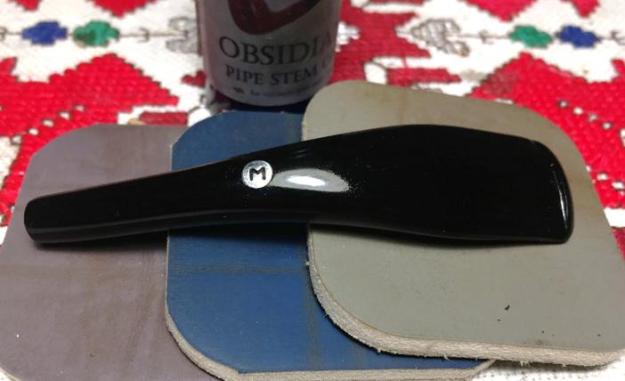
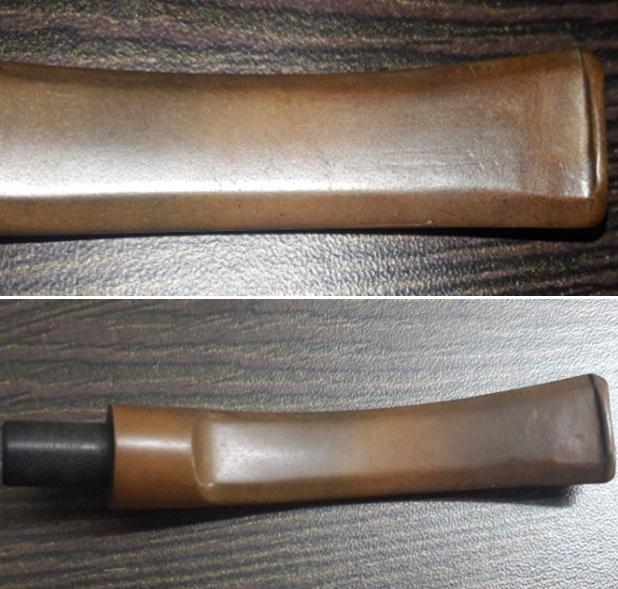
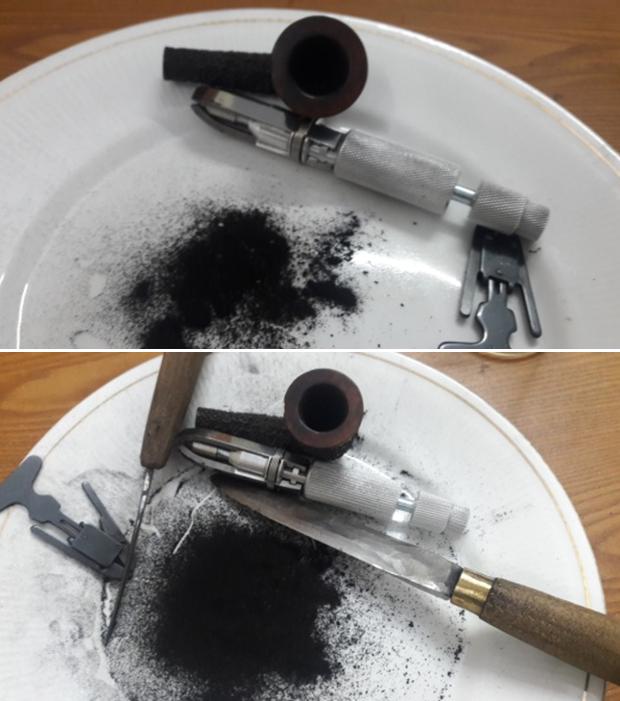
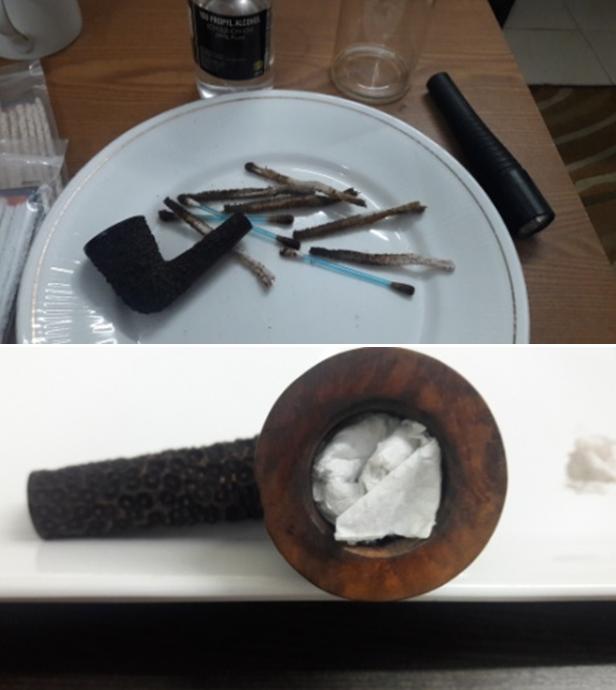
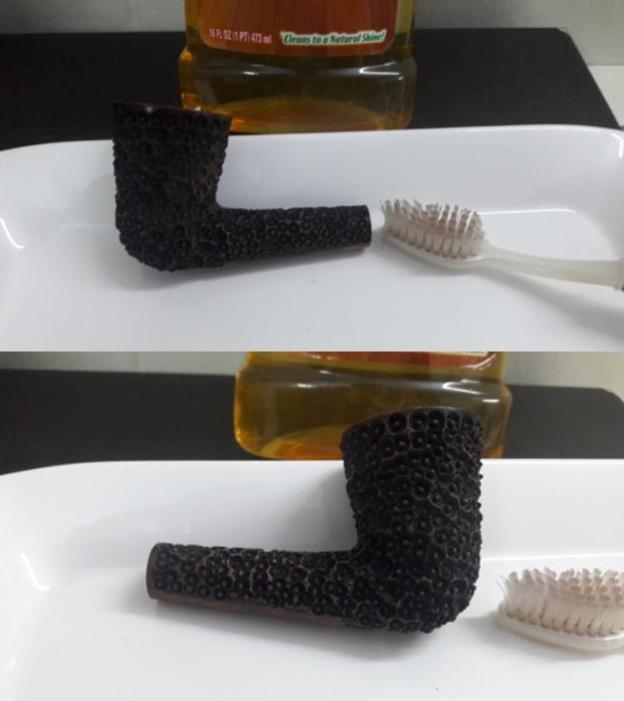
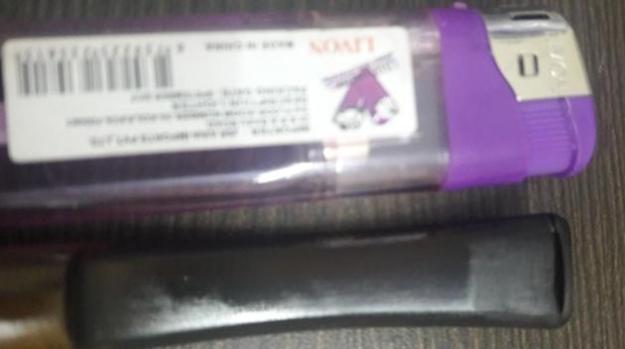
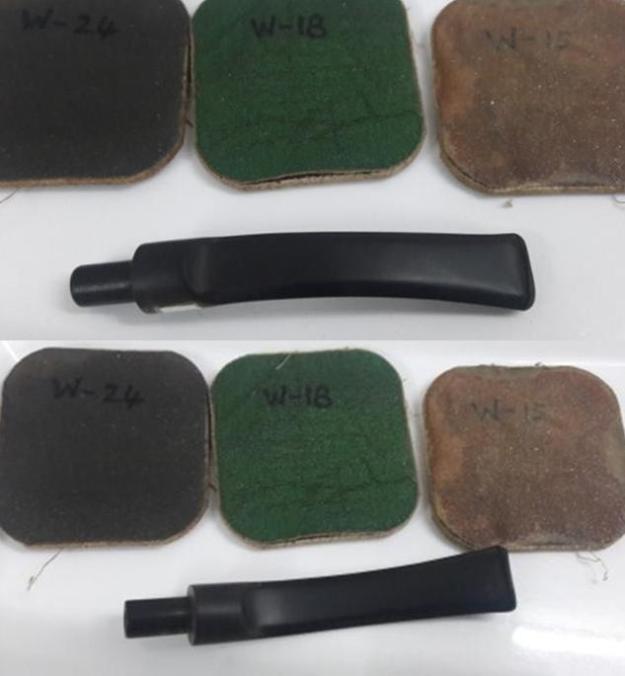
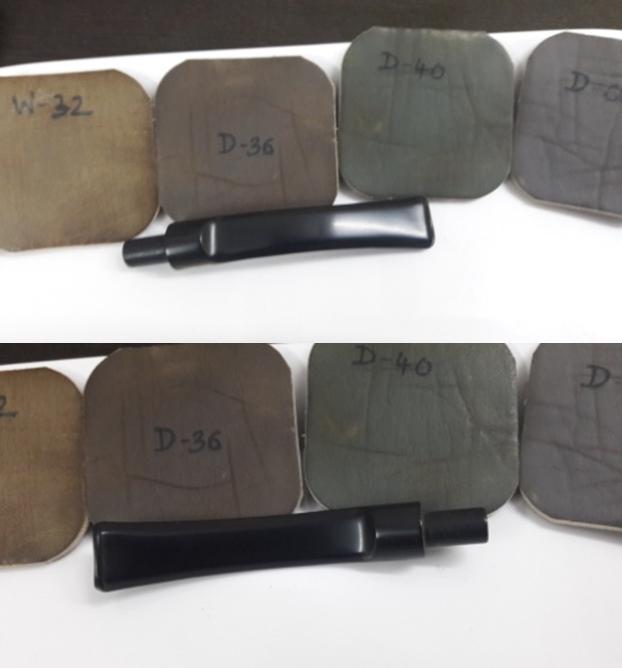
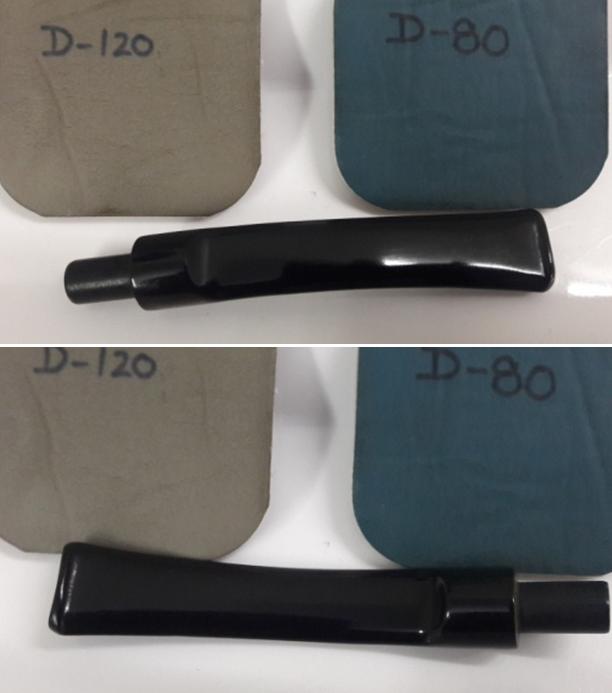
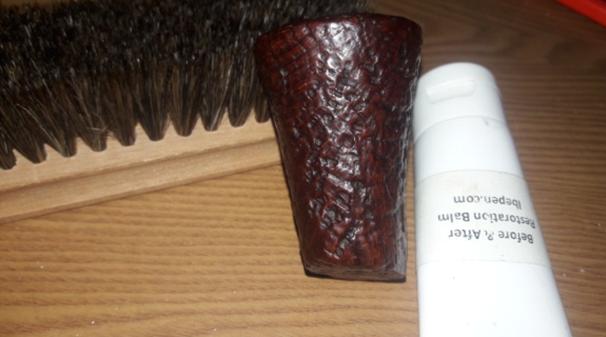
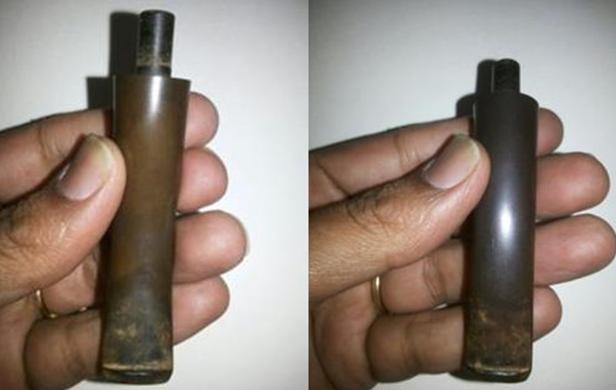
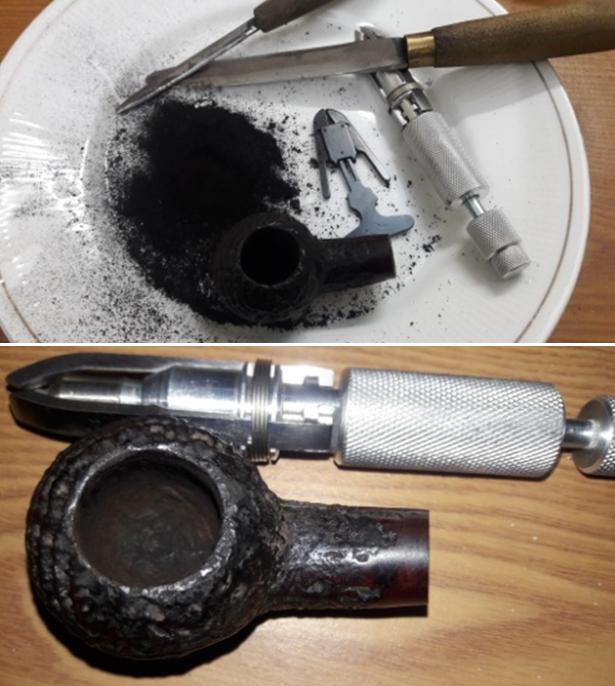
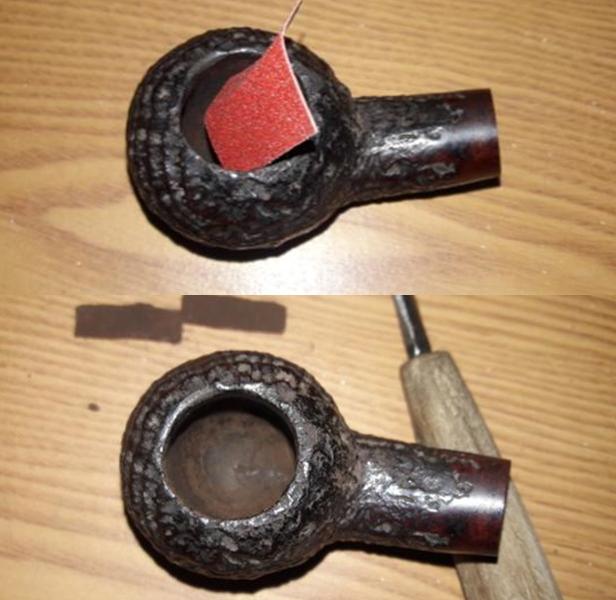
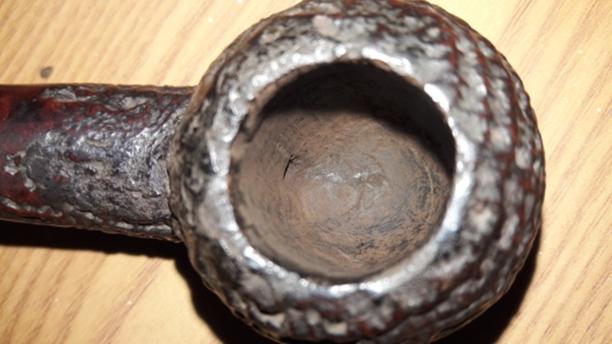
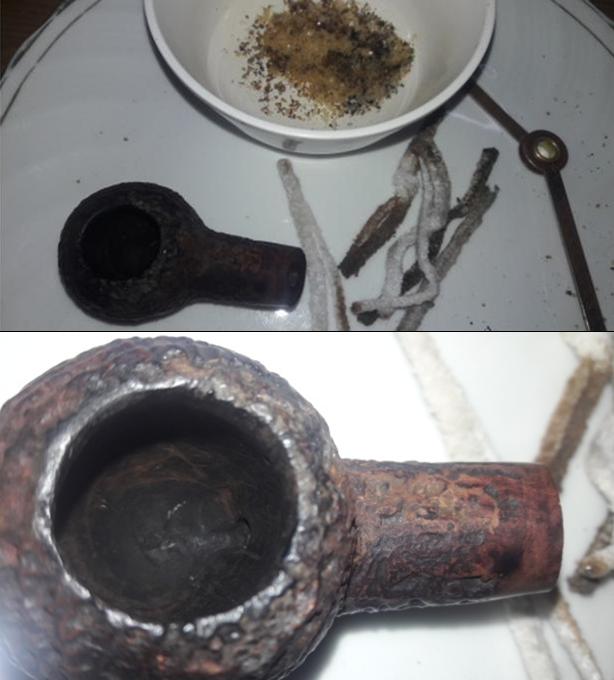
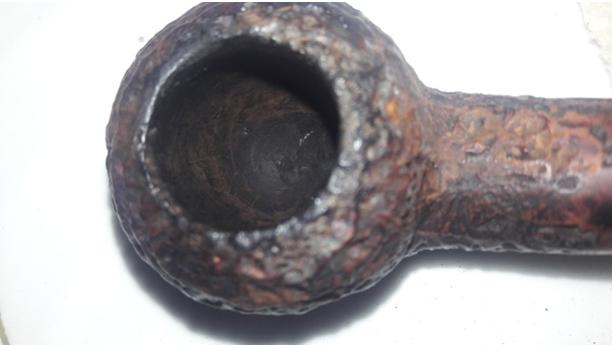
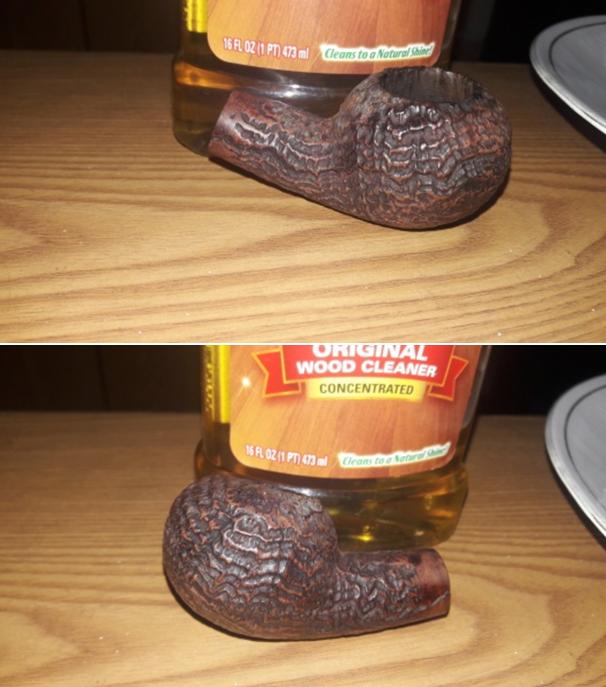
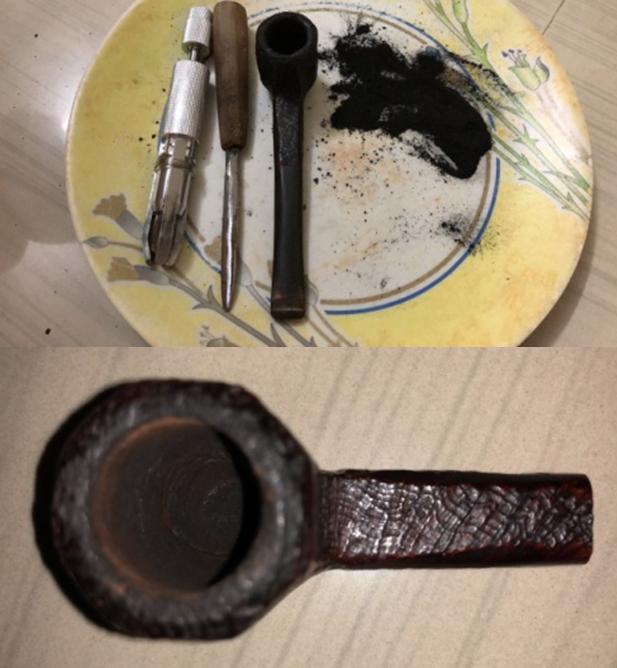
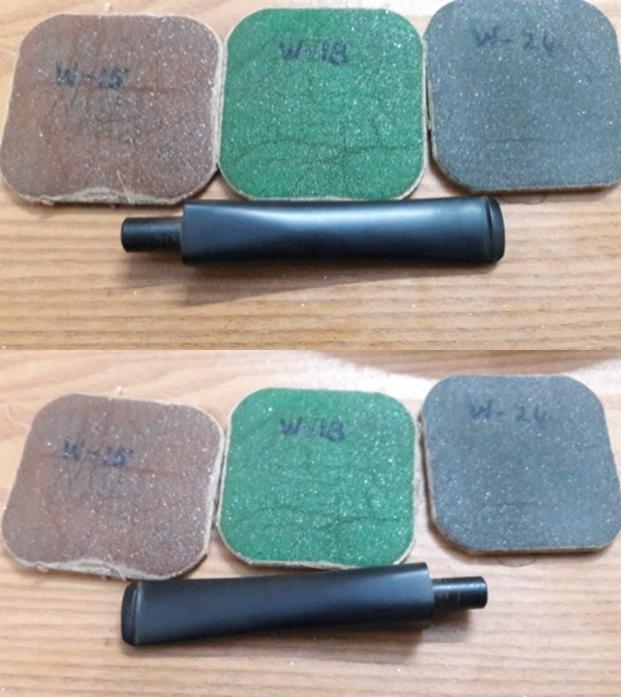
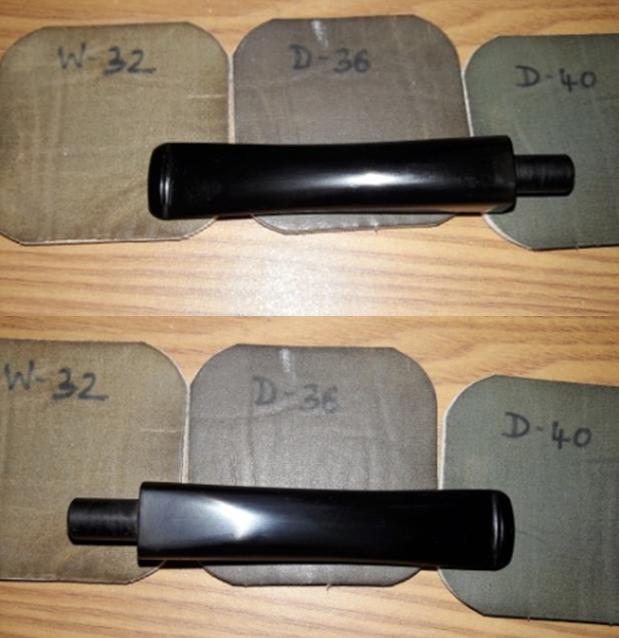
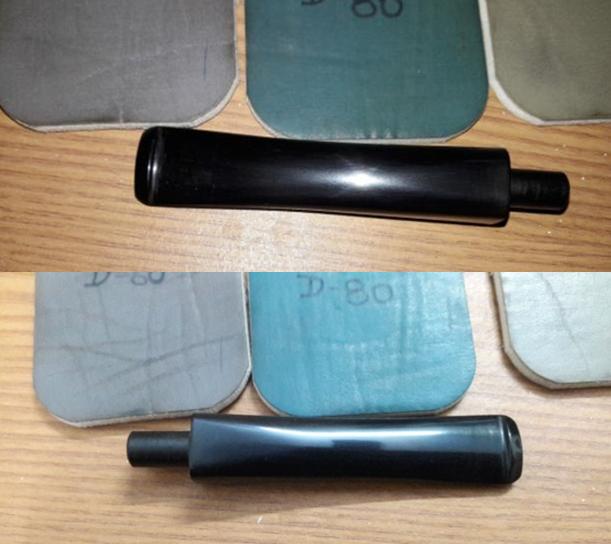
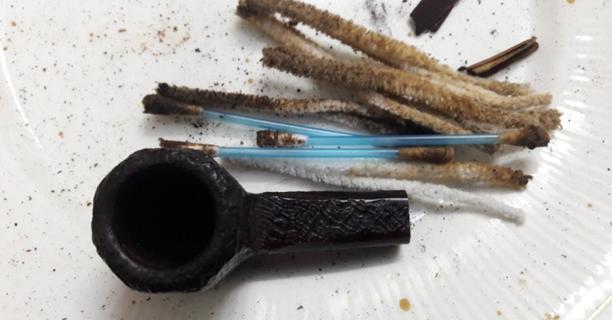
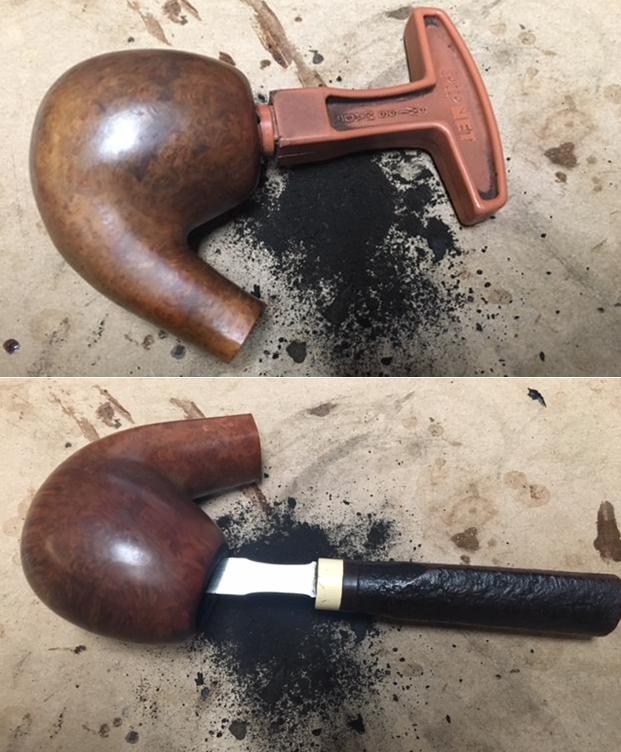
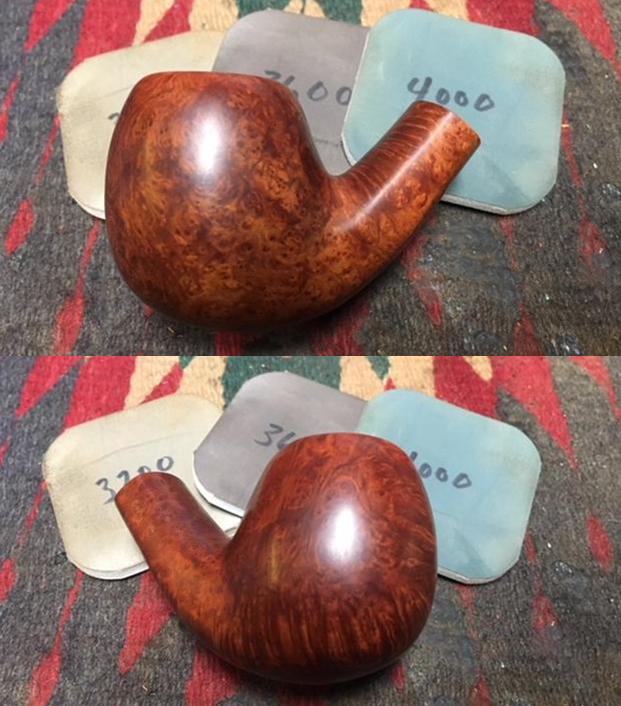
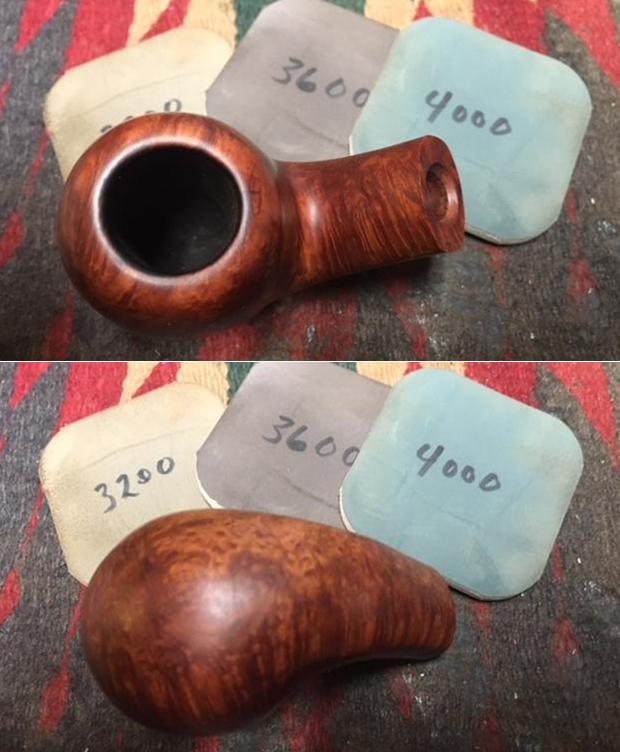
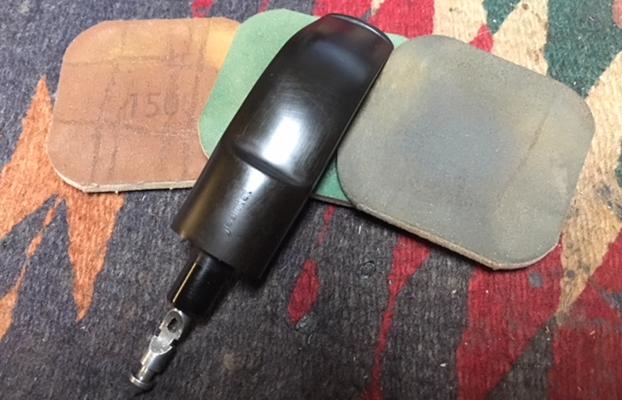
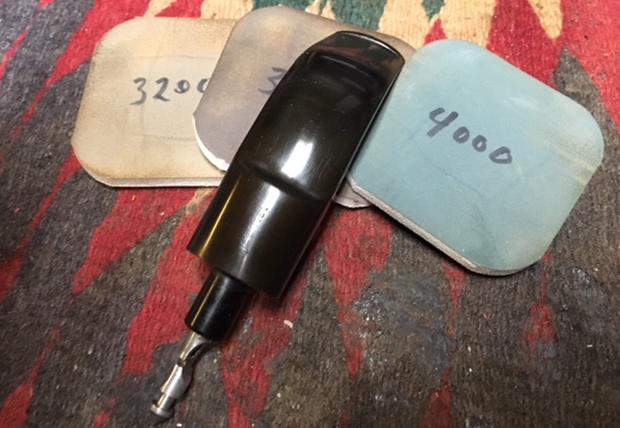
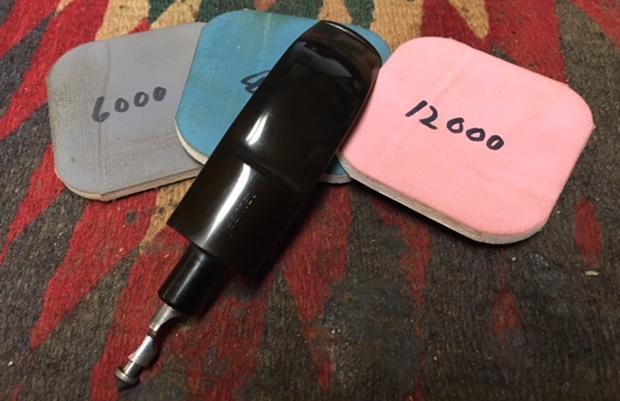
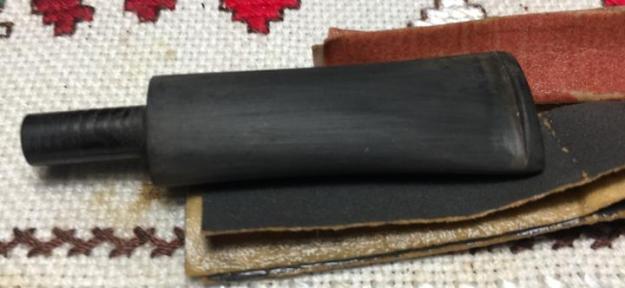
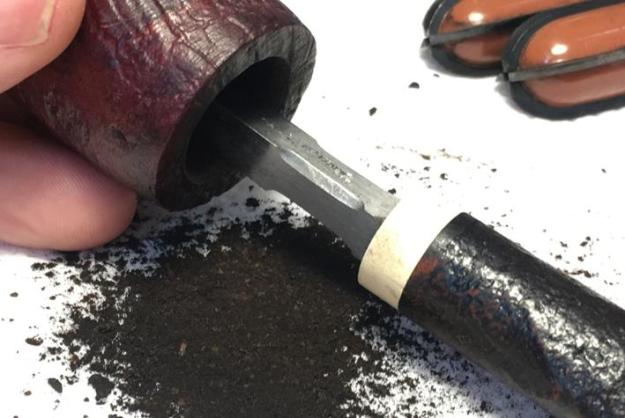
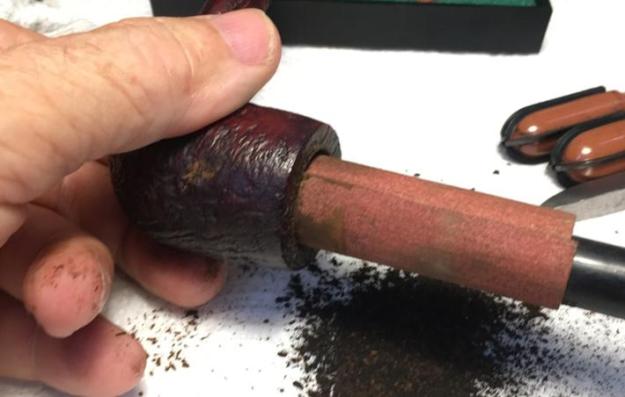
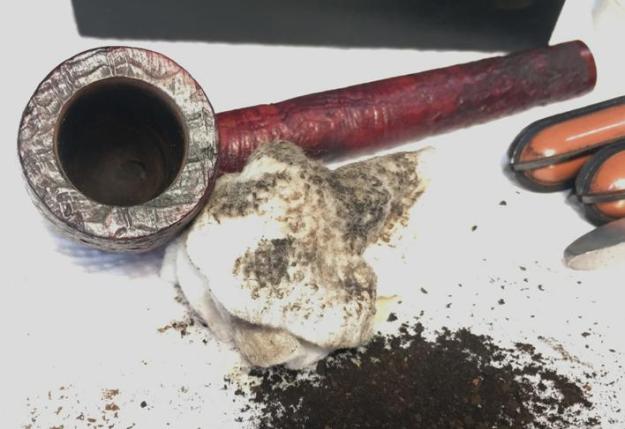
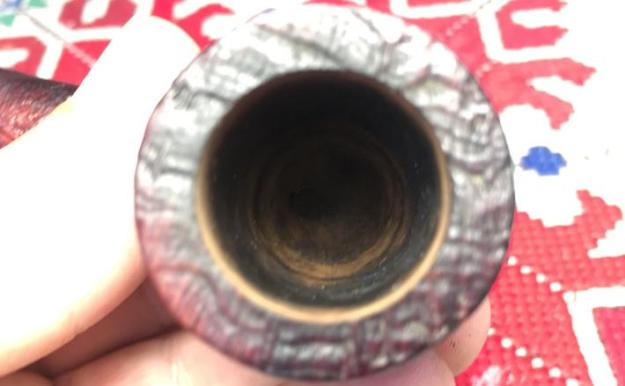
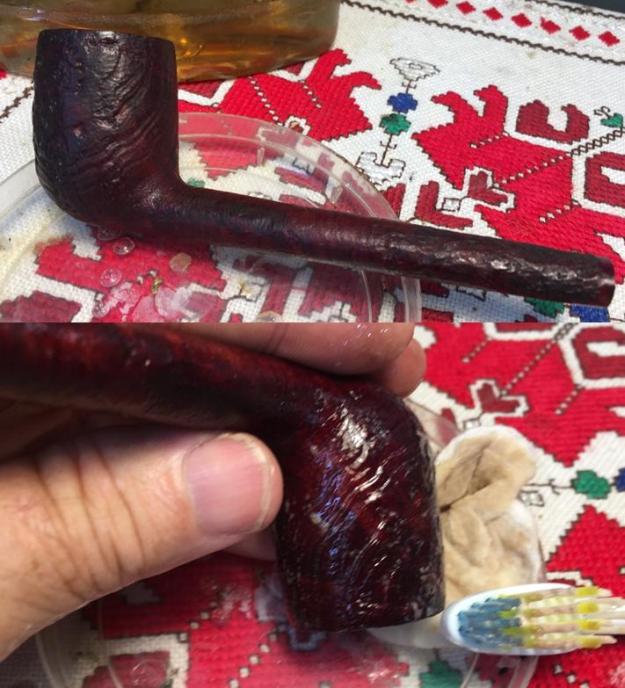
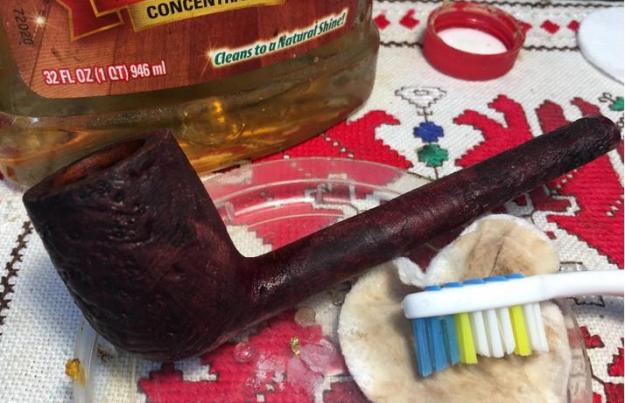
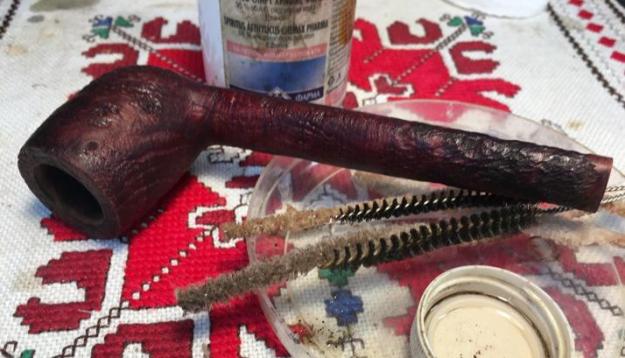
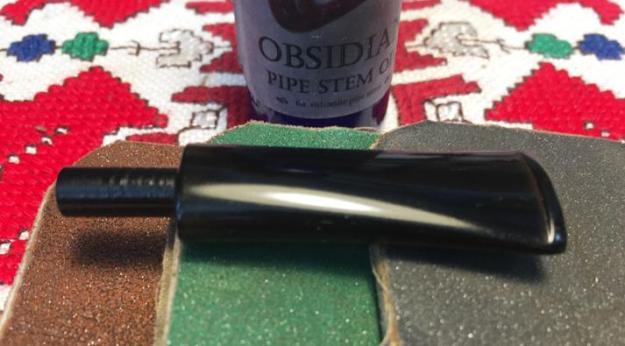
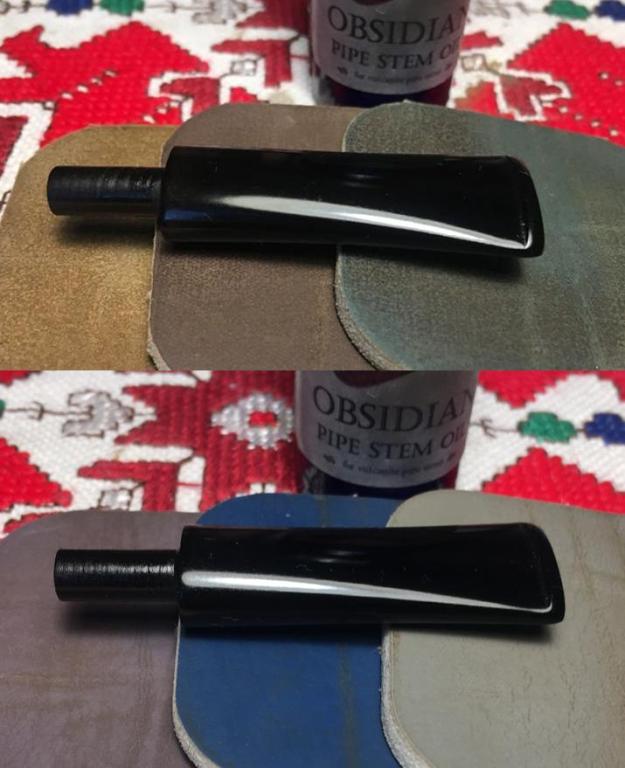
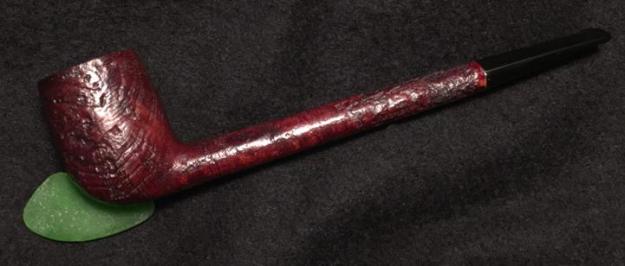
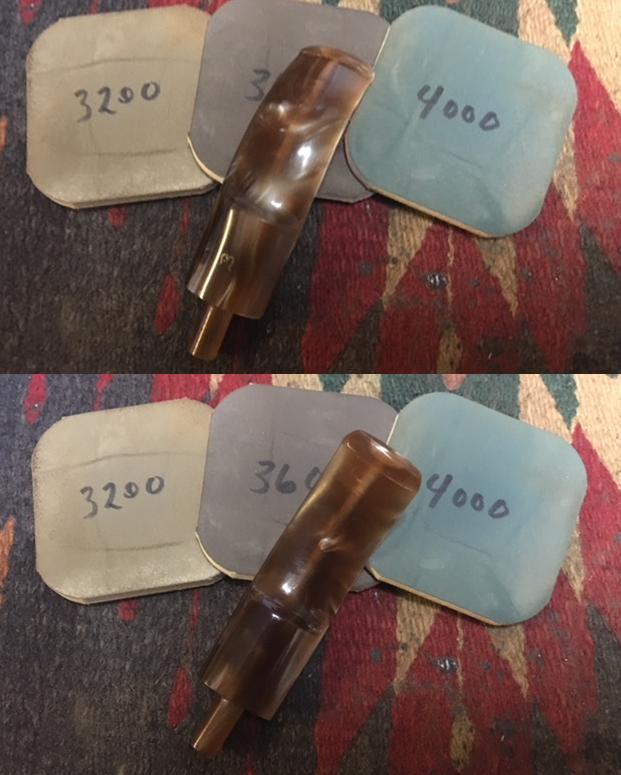
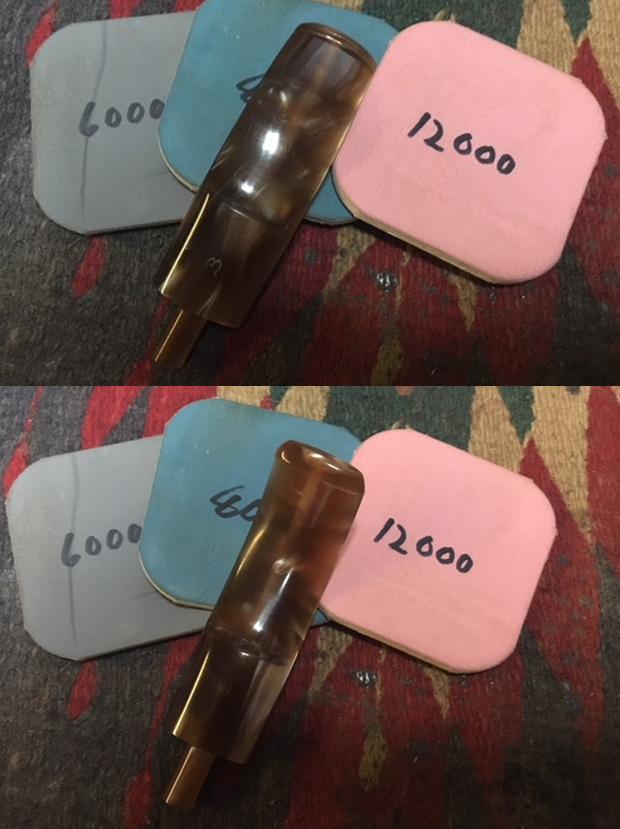
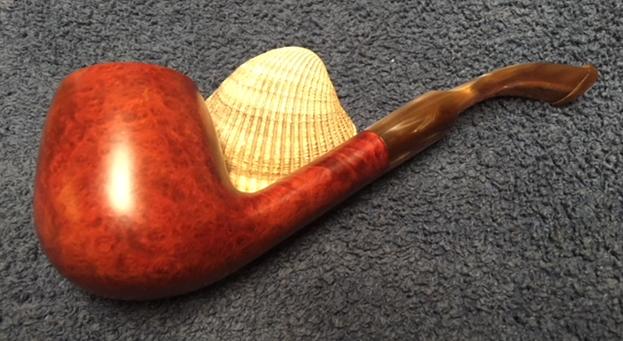
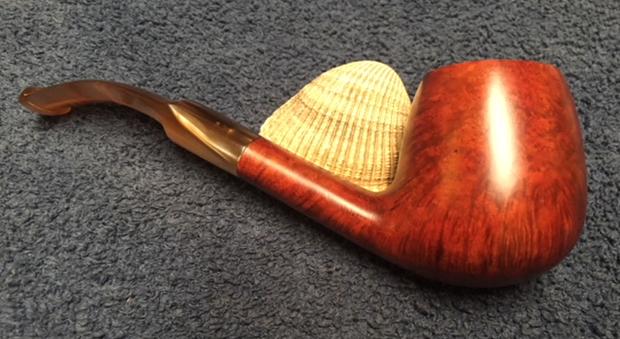
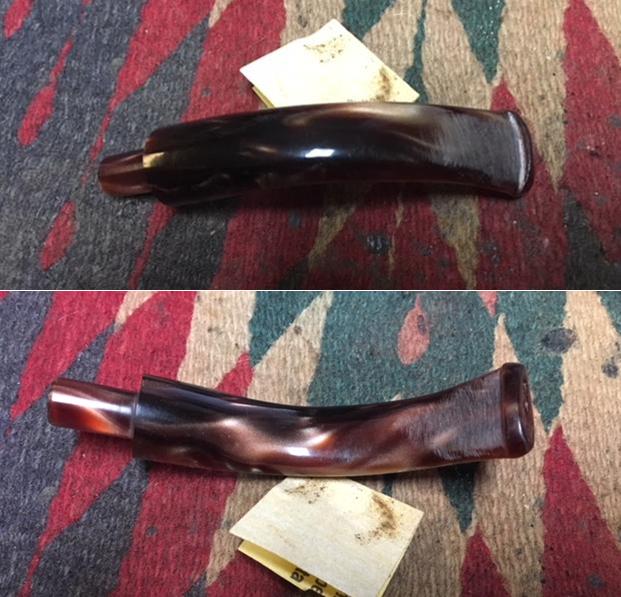
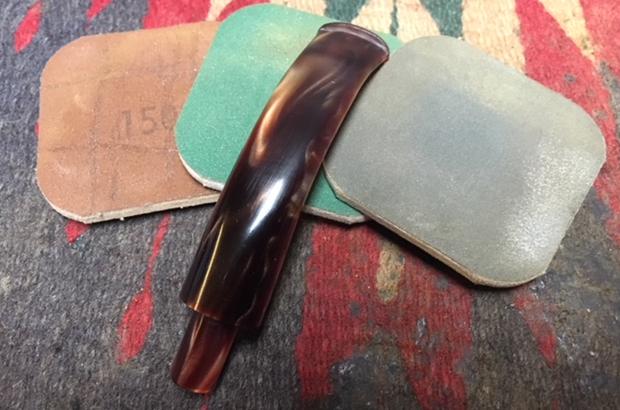
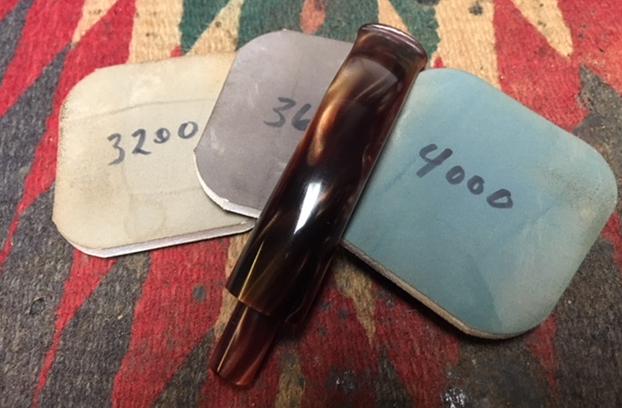
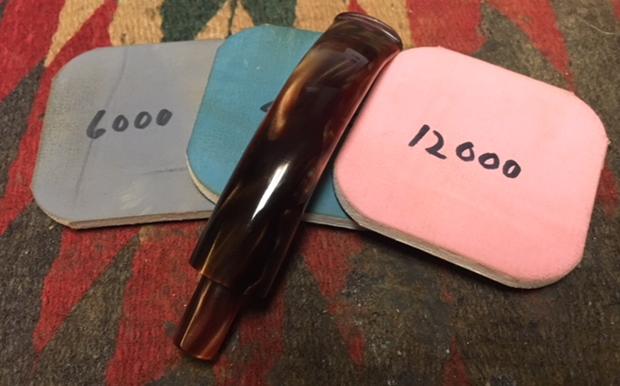
I started this project by removing the cake from the chamber and cleaning it. However, no sooner did I start, I realized that my Kleen Reem pipe reamer would not fit in the chamber. The cake was so densely packed and thick that my British Buttner reamer could get damaged. So, the only option left was my fabricated knife!!!!  It was laborious, but the task was accomplished. I found the chamber to be solid and without any heat fissures or cracks. To finish the chamber, I used a folded piece of 150 grit sand paper to sand the inner walls. This was followed by 220 and 400 grit sand paper and now we have a smooth and even surface on the walls of the chamber, ready for taking on a fresh layering of carbon cake!!!!! I wiped the rim top with a cotton pad dipped in isopropyl alcohol. This helped me to get rid of all the overflow of lava as well as the dirt and dust that had accumulated on the rim surface. This was followed by cleaning the mortise with cue tips, pipe cleaners and shank brush dipped in isopropyl alcohol. This further eliminated all the traces of old smells from previous usage. Now, it was the turn of the stummel to get cleaned up. Using a hard bristled tooth brush dipped in undiluted Murphy’s oil soap, I very deliberately scrubbed through all the hexagonal patterns, cleaning them thoroughly. I cleaned the rim too. The stummel and rim top was dried using paper napkins and soft cotton cloth. I set the stummel aside to dry out naturally.While the stummel was drying, I worked the stem. In order to address the minor tooth chatters, I flame the surfaces of the stem with a Bic lighter. This brings most of the tooth chatter to the surface. For a better blending, I further sanded the entire stem with 220 followed by 400 and 800 grit sand paper. This helps to reduce the sanding marks left behind by the more abrasive 220 grit paper. To bring a deep shine to the vulcanite stem, I went through the complete set of micromesh pads, wet sanding with 1500 to 2400 grit pads and dry sanding with 3200 to 12000 grit pads. I wiped the stem with alcohol after each pad and rubbed it down with Extra Virgin Olive oil. The internals of the stem was cleaned out using alcohol and pipe cleaners. The finished stem is shown below. I wanted to highlight the grains on the rim top as well as enhance the contrast with the rest of the pipe. To achieve this aim, I sand down the rim top using micromesh pads, wet sanding with 1500 to 2400 grit pads and dry sanding with 3200 to 12000 grit pads. The rim top now has a deep shine with grains popping out and now with a magnificent contrast with rest of the stummel. Once I was satisfied with the stem and rim top restoration, I started work on the stummel which has dried by now. I rub a small quantity of “Before and After Restoration Balm” in to briar and let it rest for a few minutes. The balm almost immediately works its magic and the briar now has a nice vibrant appearance. I further buff it with a horse hair shoe brush. To finish, using a cotton cloth and brute muscle power, I gave it a final polish. I re-attach the stem with the stummel. The completed pipe looks lovely, fresh and vibrant; the photographs speak for themselves. Thank you for having the patience to reach this far while reading the write up.

Jobey Original T1


Blog by Paresh Deshpande

I had started work on a Somerset Paneled Billiard when, after reaming the chamber, a few cracks had revealed themselves. This is one issue that I always wish is not seen on any pipe in my hand. But there it was, and here I am, addressing it. The process is quite time consuming and requires a lot of curing time. Thus, while the billiard was curing, I started work on its far more beautiful (and my favorite!!!) sibling, the Somerset Rhodesian. And lo and behold!!!!!!!! Cracks were seen on the bottom and above the draught hole in more or less the same place as the billiard. Thus, I am now dealing with two pipes with cracked chamber. I was so put off with this that for next two days I did not touch any other project. The next few days, I was very busy with some important assignment and was away from my pipes.

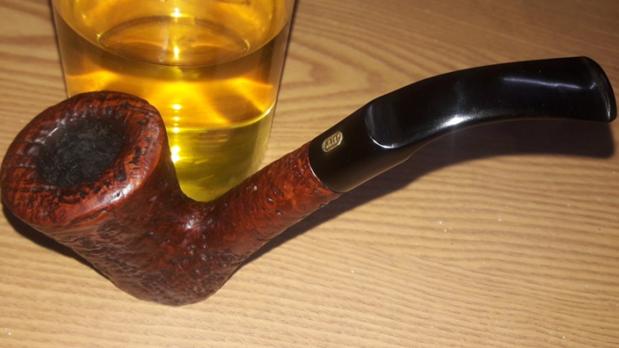
Well, returned back and went through my pipes for restoration. I picked up this Jobey for its unique shape and the size of the bowl. I was thinking this to be an Oom Paul when Mr. Steve, very gently reminded me that the bowl is more of a Dublin and that he would rather call it as a “Bent Dublin Sitter”. He does have a unique way of mentoring, I must say. And so, working on this Jobey Original bent Dublin sitter!!!!!!!!!

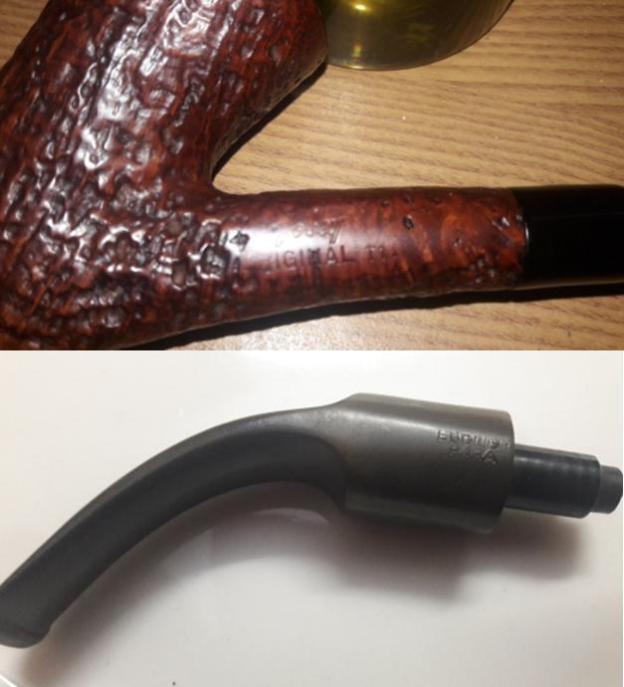
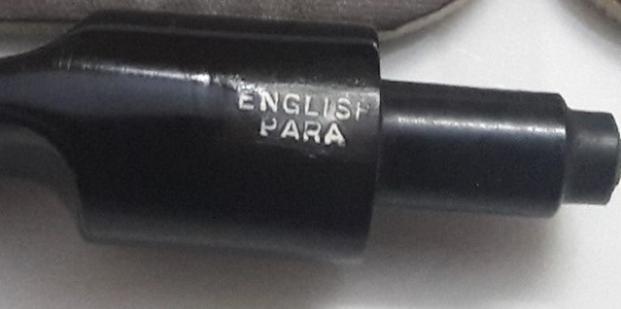
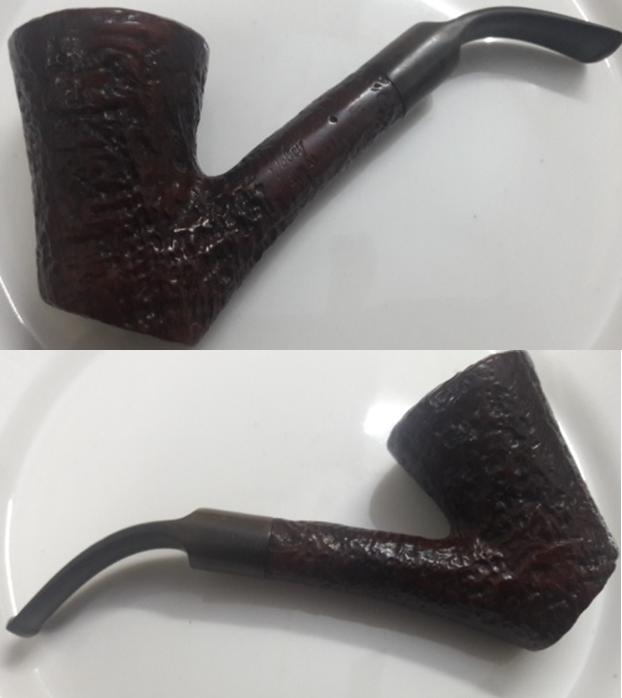
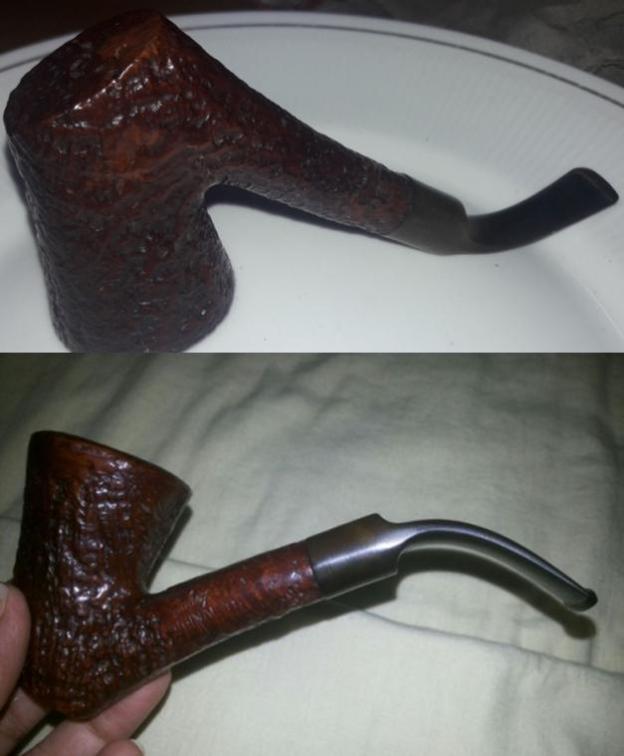
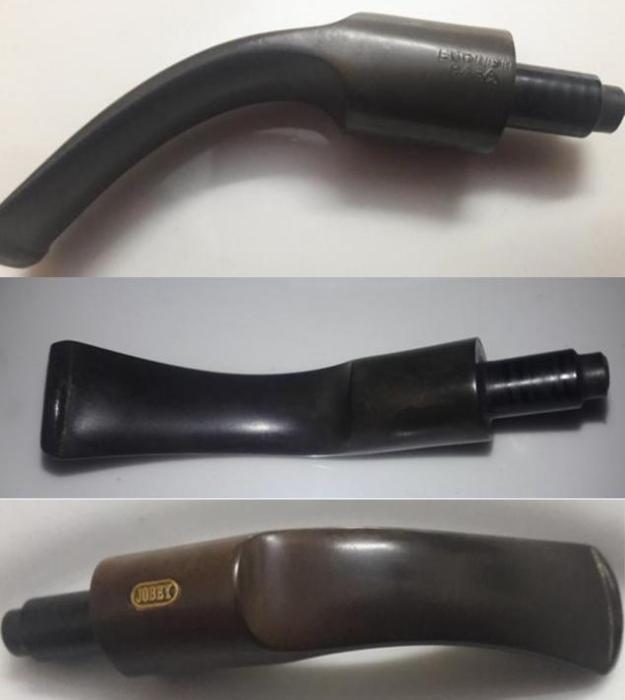
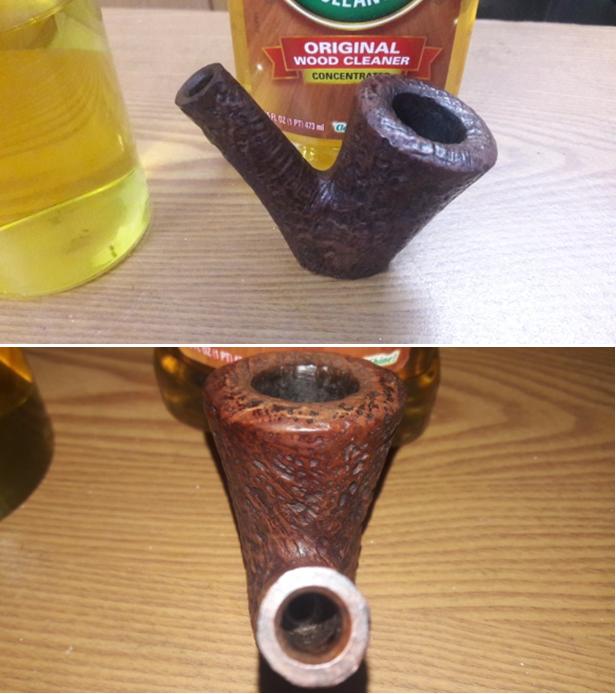
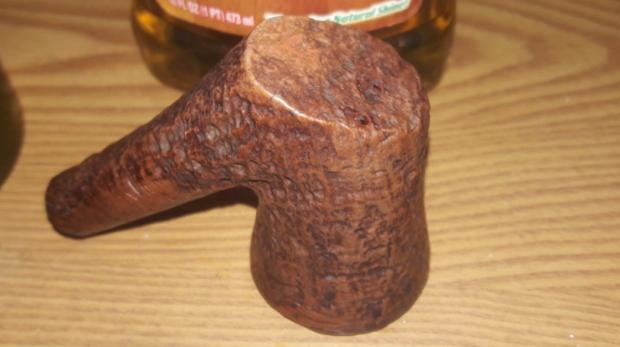
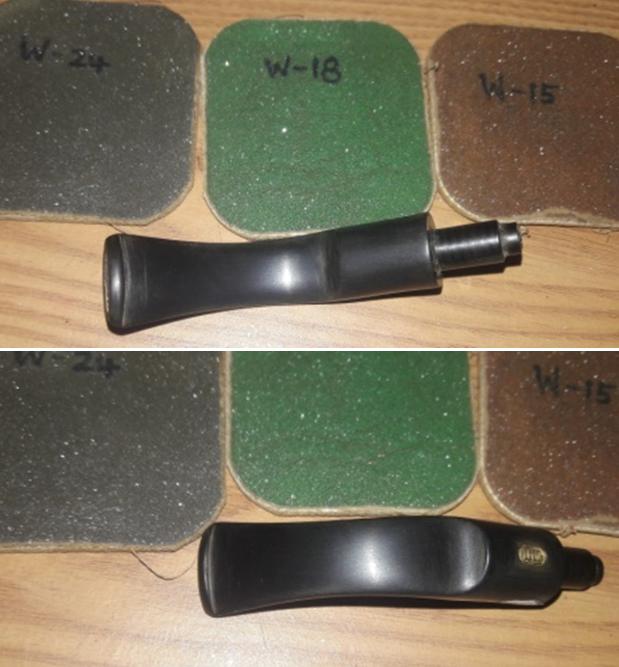
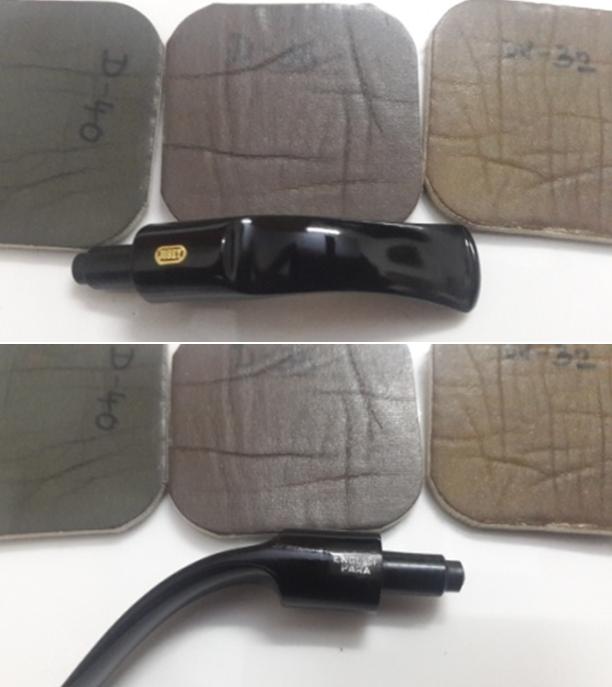
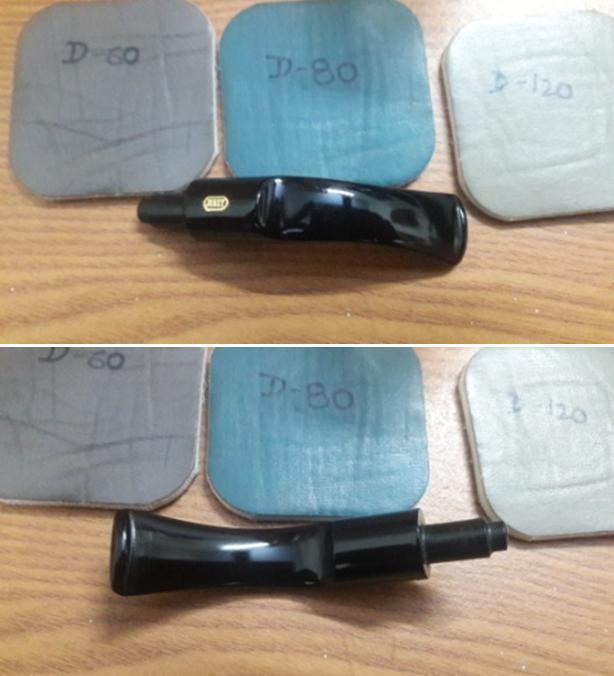
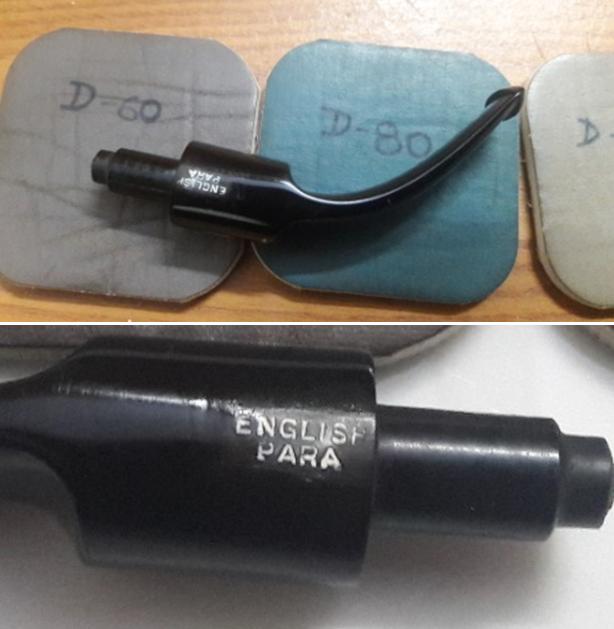
This sandblasted Jobey has a nice deep bowl with a steeply raking shank and a flat bottom, making it a perfect sitter. For its size, it is pretty light weighing at less than 50 grams and easy to dangle, making it a nice clincher. It is stamped on the left side of the shank, on a plain surface as “Jobey” over “ORIGINAL” followed by “T 1”. The saddle stem has the brass roundel with “JOBEY” in block capital letters on the top surface of the saddle while the right side is stamped on the stem saddle with “ENGLISH” over “PARA”. This stamping is something which I have not seen before on any Jobey pipes!!!! Does it have any significance, I could not find out. So all the learned readers, may I request you to fill in the details on this stamping and benefit us all. All the stampings are clear, robust and easily readable.From the information gleaned from the rebornpipes, Pipedia and pipephil and various other sites, the only relevant facts that emerged were:-

(a) This shape is not mentioned anywhere or seen in any catalogue.

(b) “ORIGINAL T 1” stamp has not been mentioned anywhere.

(c) This does not have the famed “Jobey Link” – the tenon system that is popular for its ease of cleaning and replacing.

(d) The stem is stamped, in addition to its TM Jobey in a brass roundel, as “ENGLISH PARA” which does not find any mention.

Thus, either this pipe is ultra rare or it’s a GHOST!!!!!! CAN ANYONE HELP?

INITIAL VISUAL INSPECTION
The Jobey Original, now on the worktable is in good shape. The stummel is covered in a thick layer of dust and grime. I wouldn’t call the sandblast seen on this pipe as beautiful, but rather different in that no definite grain pattern discernible and this is what makes it worthy of admiration. The dark reddish/ maroon stained finish is dull and lackluster. I only hope that there isn’t an acrylic finish which is a bear to remove (Dr. Grabow Omega being fresh in my mind!!).  This restoration may be more of a refresher if the finish isn’t a problem. The bowl is heavily caked with a thick overflow of lava on the rim top. The round inner and outer edges of the rim appear to be intact with no signs of damage. The deep and tapering down chamber will pose difficulties during the reaming process. The pipe chamber has a strong and spicy smell to it which will have to be addressed. Removing the dust, oils, tars and grime from the rim top will be time consuming. I only hope and pray that the inner walls of the chamber are without any surprises. It will be too much of a coincidence to have three pipes in a row to have beginnings of a burn out or a through crack.The stem is heavily oxidized but with minimal of tooth chatter and no bite marks on either surfaces. The brass roundel is dull looking and will need to be polished. It appears that this stem had a stinger attached to it, which either had accidentally broken or could be that while attempting to remove, it was broken. The jagged remnants of the aluminum can be distinctly seen. The mortise is clogged and blowing air through it is very laborious. THE PROCESS
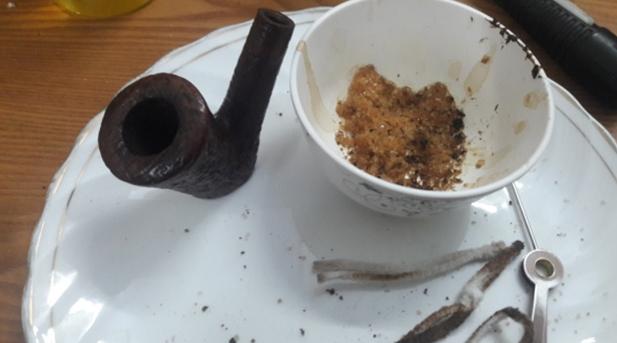
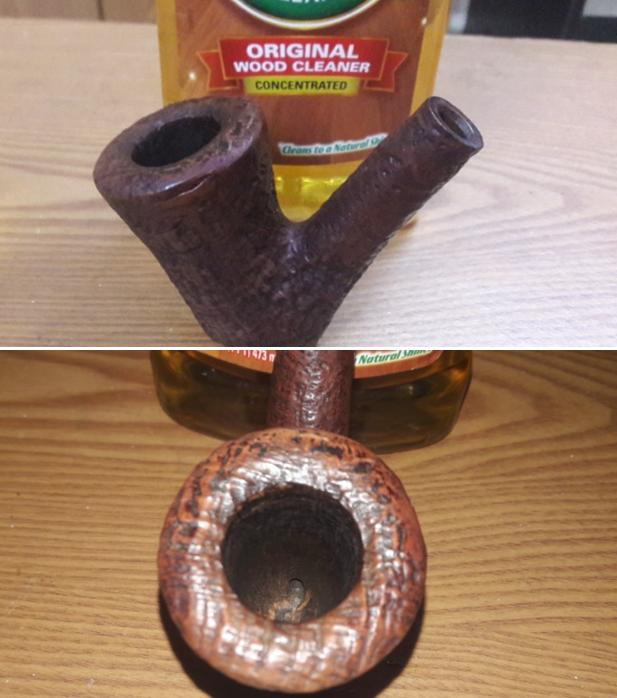
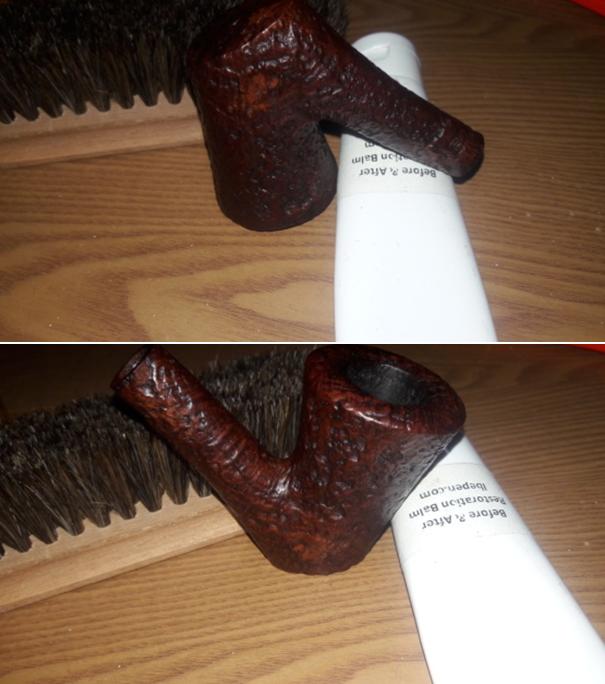
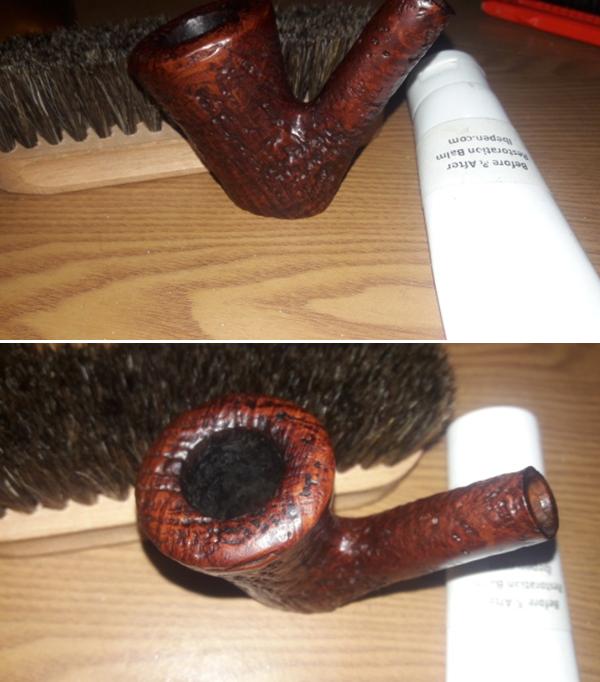
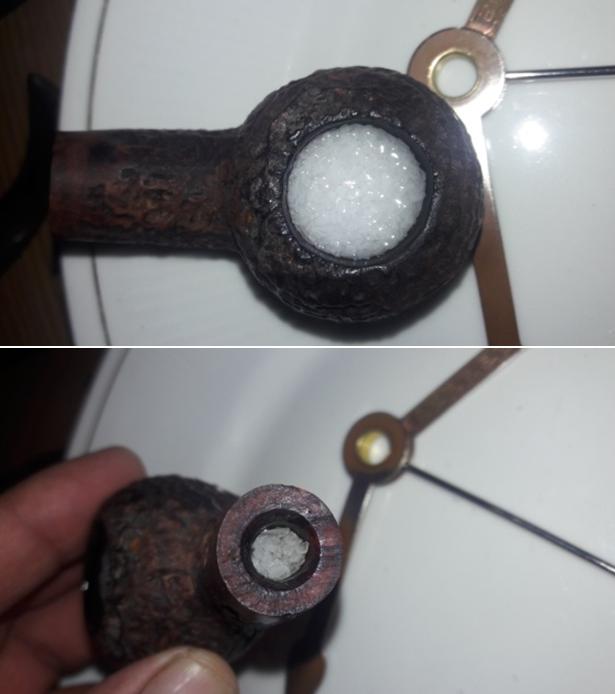
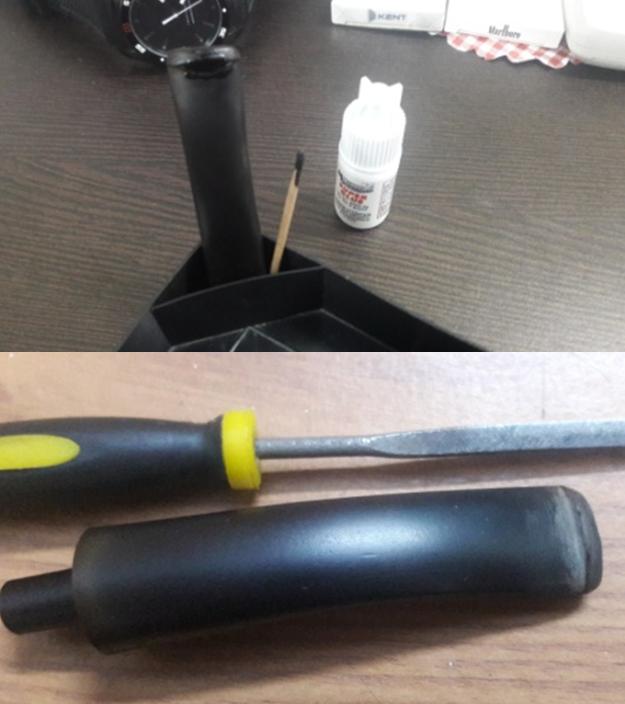
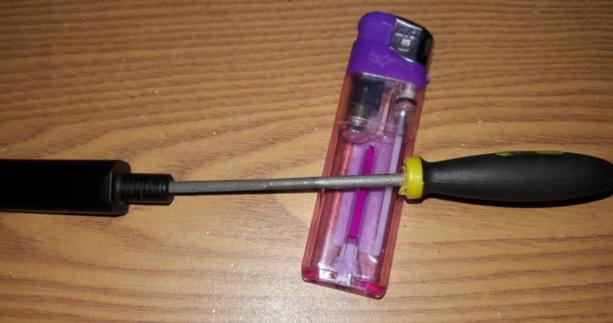
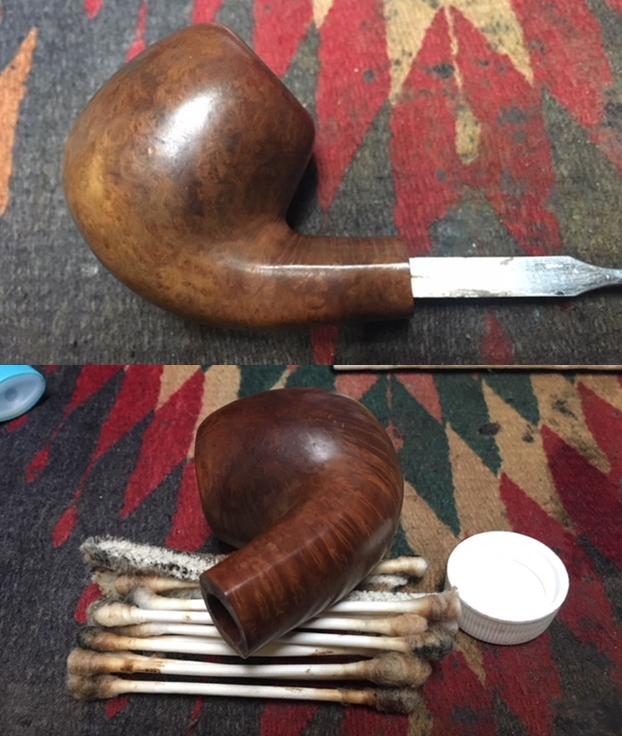
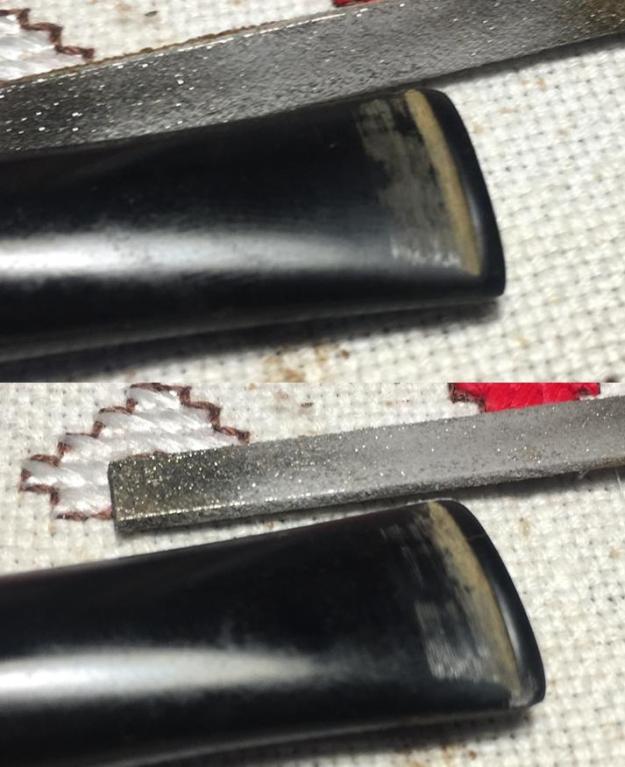
I always start my pipe restorations by getting rid of all the cake in the stummel. This provides me with a map of any other issues which may have to be addressed subsequently. Usually these processes is undertaken by my wife and believe you me, she has achieved expertise in this process!!!!!! But now that I have joined my duty station and she having to stay behind for children’s education, this is being done by yours truly!!!! I start the reaming process with a Kleen Reem pipe reamer followed by scrapping with my trusted fabricated knife till I have managed to take the cake back to the bare briar. The crusted lava overflow was gently scrapped off from the rim top with the knife. I finish this stage by sanding the inner walls of the chamber with a folded 220 grit sand paper. This helps to remove any remnants of the cake and smooth the walls of the chamber. I wiped the chamber with cotton pads dipped in alcohol to remove any cake dust. I further cleaned the shank with hard bristled, regular pipe cleaners and isopropyl alcohol. Oh my….  The grunge continues unabated!  This is one of the nastiest pipes I’ve tackled!Usually, deep cleaning of the chamber also rids the pipe of any old smells, but in this instance, that was not the case. The strong spicy sweet smell was still prevalent. To get rid of this smell, and clean the mortise, I decided to give it a salt and alcohol treatment. I filled the bowl and shank with kosher salt keeping it slightly below the rim level. I filled it with isopropyl alcohol and left it overnight to do its magic. I usually seal the shank end with a plastic sheet tightly wrapped around a cue tip to avoid the alcohol from oozing out, but in this case since the shank is upturned, there was no need to do so. By next morning the salt is dark colored, more so the salt in the shank. I removed all the salt and with a pipe cleaner cleaned the bowl and shank of any residual salts. I blew through the draught hole to dislodge the trapped salts. I wiped the bowl clean and dried the shank and bowl with paper napkins and pipe cleaners and set it aside to dry for an entire day. By evening, the pipe chamber was nice and dry and all the smells were history. Now that the internals were addressed, it was time to clean the externals. I cleaned the exteriors of the stummel and the rim top with undiluted Murphy’s oil soap and a hard bristled tooth brush. With a 000 grade steel wool, I scrubbed the rim top to remove the stubborn overflow of lava. I dried the stummel with paper towels and a soft, absorbent cotton cloth and set it aside to dry naturally. I was elated when I realized that there is no acrylic finish applied to the stummel as can be seen from the following pictures!!!! While the stummel was drying, I decided to clean up the stem. I started by flaming the surface of the stem with a Bic lighter. This helps to raise the minor tooth chatter marks to the surface to a great extent. I followed it up with sanding it down with a 220 grit sand paper. I took special care and efforts to enhance the lip and lip edges on both surfaces with the folded sand paper. I had applied a smear of whitener to the stamping of ENGLISH PARA to enhance it and also to demarcate it during the sanding process. To finish the stem restoration, I sand it with micromesh pads, wet sanding with 1500 to 2400 pads and dry sanding it with 3200 to 12000 grit pads. I wiped it down with Extra Virgin Olive oil in between the pads. The stem is now nice, shining and glossy black. After cleaning the internals of the stem with pipe cleaners dipped in isopropyl alcohol, I applied a final rub of Extra Virgin Olive oil to the stem and set it aside to be absorbed. Returning to the stummel refurbishing, I rubbed some “Before and After Restoration” balm in to the surface. The transformation is almost immediate. The bowl now has a nice lively sheen to it. I left it to rest for a few moments and then buffed it with a horse hair shoe brush to ensure that the balm cleans and protects within the sandblast. To finish, I polished it with a soft cotton cloth. To finish, I rubbed a small quantity of HALCYON II WAX in to the stummel and polished it by hand using a soft cotton cloth and reattached the stem. It was while reattaching the stem that I realized that I had not addressed the issue of broken stinger protruding from the tenon!!!!! Using a rounded needle file, I sanded the jagged edges inside the tenon and thereafter with a flat head needle file; I matched the broken edges of the stinger with that of the tenon surface. That was all I could do as I was not sure of the extent to which the stinger was embedded into the airway of the stem. The finished pipe is shown below. I hope this pipe appeals to you as much as it did to me. And, as I always mean and request, your comments are a great source of encouragement and learning for me. Thank you for being an important companion on my journey in to the beautiful, challenging and SATISFYING world of pipers.


Tale of Two Somerset Brothers – Part 2


BENT RHODESIAN

Blog by Paresh Deshpande

I had finished the work on Somerset 8 Paneled Billiard and I was very pleased with the way it turned out. I have smoked this pipe and have to concede that it was one of the better smoking pipes in my current rotation, the draw is open and full and very smooth right up to the last morsel of tobacco. This is due to the perfect alignment of the draught hole, mortise and stem tenon. Very happy with this one, I must say!!!!!!

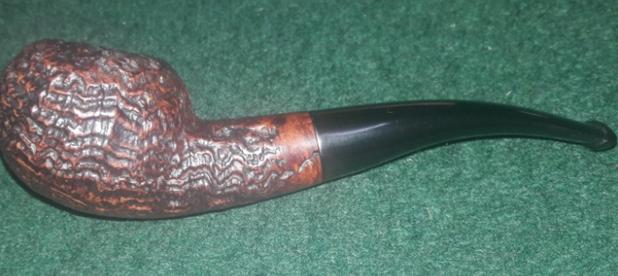
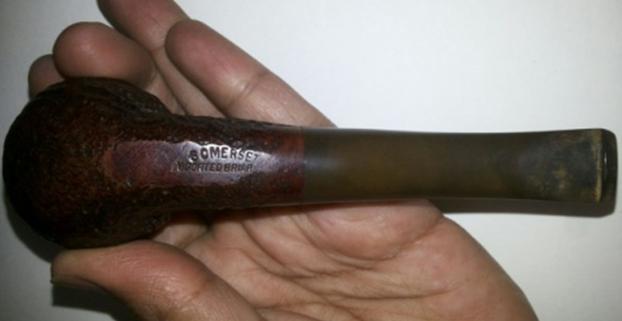
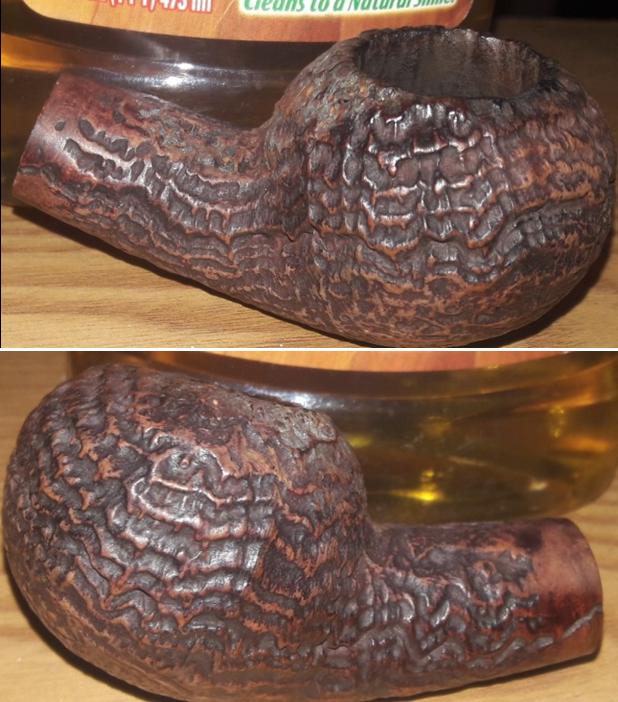
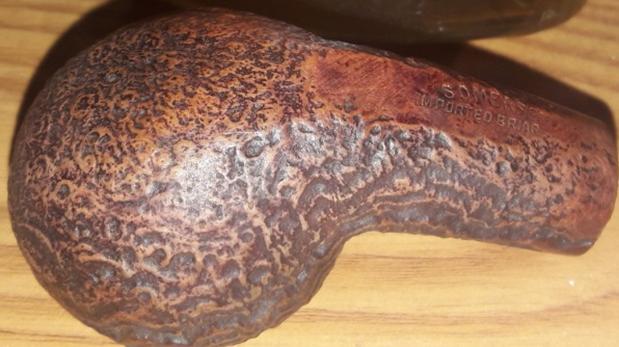
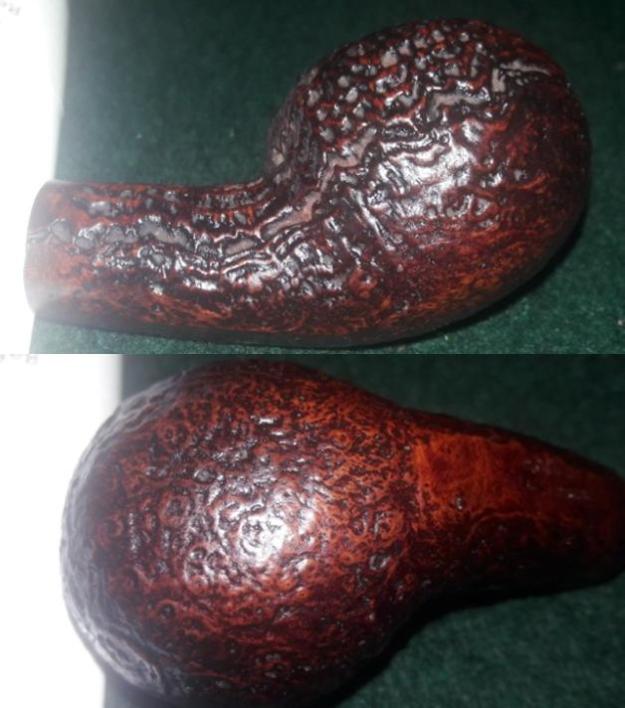
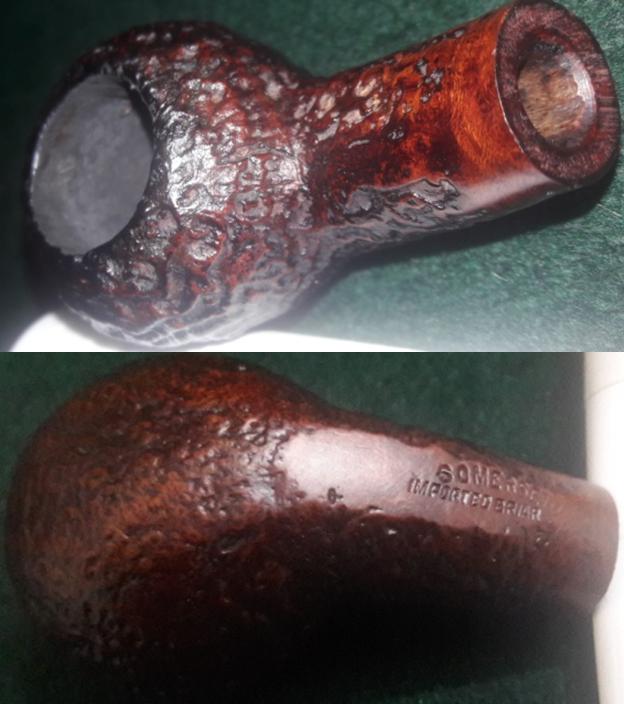
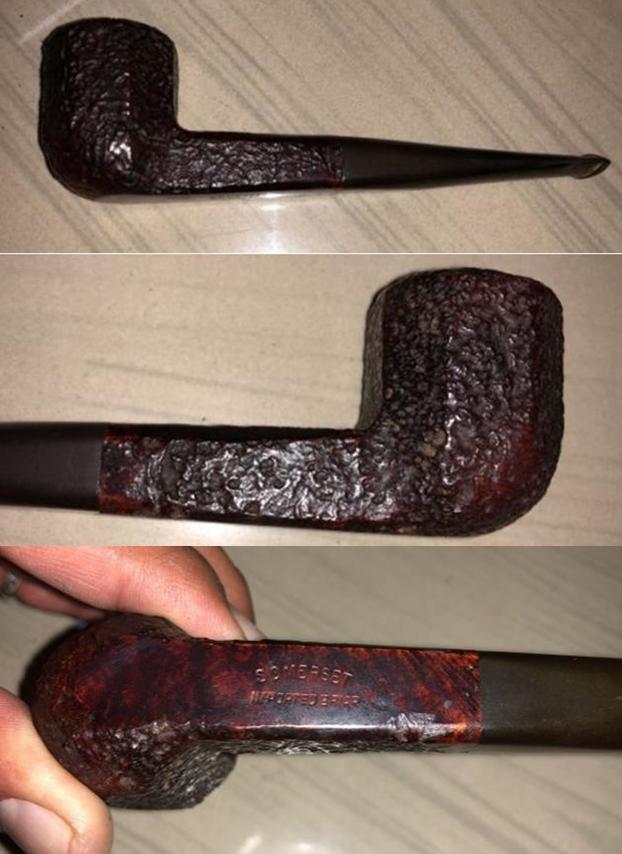
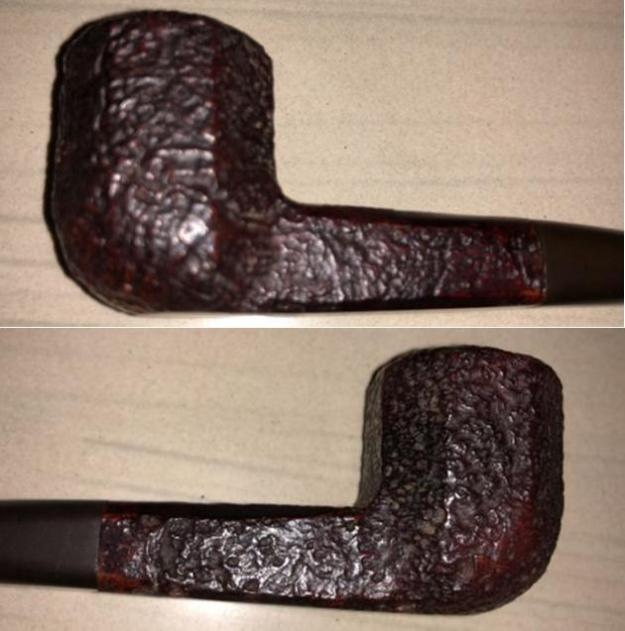
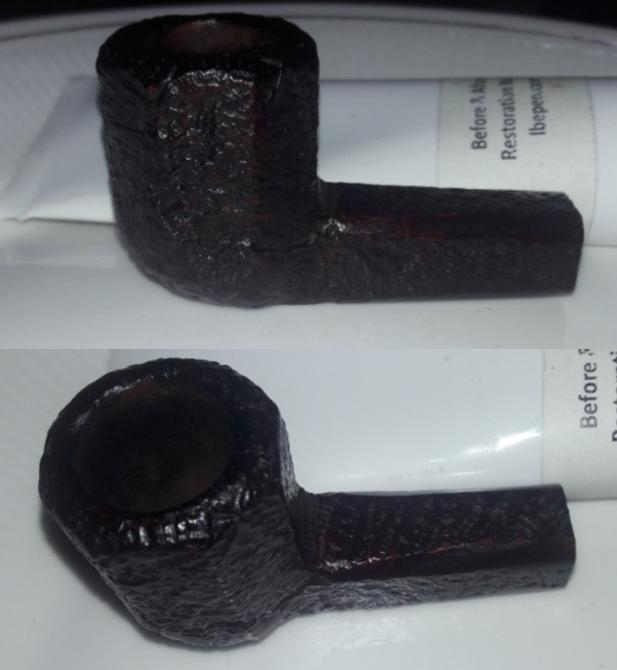
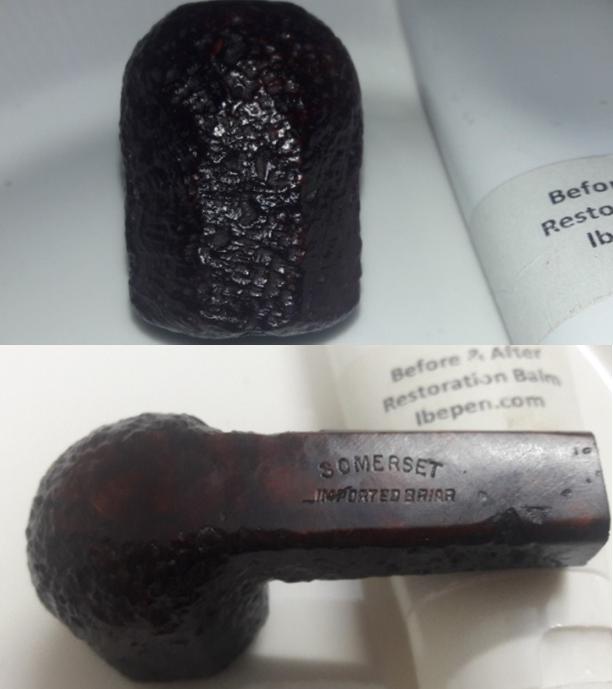
The sibling of the first Somerset Brother, now in my hand, is the Bent Rhodesian, and my favorite shape. The upper half of the bowl has beautiful wavy circular sandblast all round which extend to the round shank, while the bottom of the bowl has densely packed birdseye which is seen in the sandblast. Overall, this is one pipe with a beautiful sandblast patterns and as I have come to expect, the quality of the finish and vulcanite stem is par excellence. Like its paneled billiard sibling, this pipe too has a smooth and flat bottom surface and bears the only stampings seen on the pipe. It is stamped on the bottom as “SOMERSET” in a mild arch over “IMPORTED BRIAR” in straight line, all in capital letters. There is no other stamp on either shank or on the stem. The stummel and shank is stained with a very dark reddish/ maroon hue. The stem is high quality vulcanite without any stampings. As conceded in my write up on the Somerset Paneled Billiard, I have been unsuccessful in unearthing information about this brand and still remain a blind spot in my quest for knowledge on pipes. I sincerely request you to share any information you may have on this pipe.

INITIAL VISUAL INSPECTION
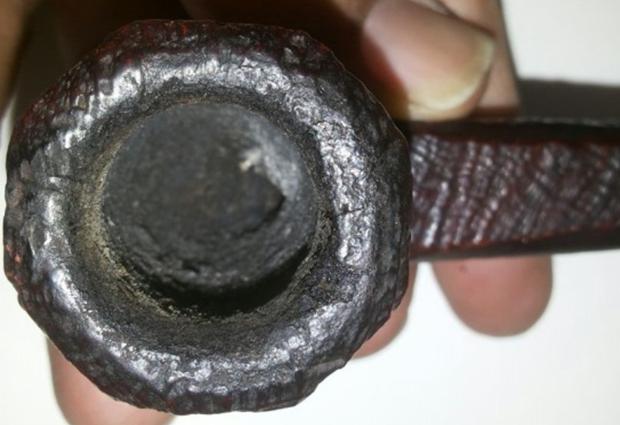
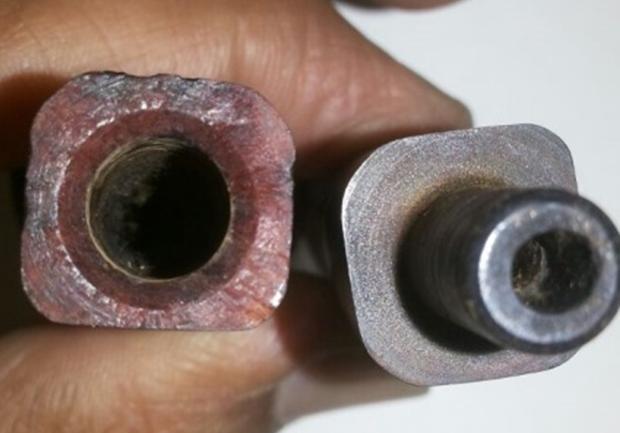
The sandblast on this pipe is covered in dirt, dust and grime and appears dull and lackluster. The bowl is heavily caked and there is overflow of lava on to the rim. This will have to be removed in order to ascertain the condition of the chamber walls. From my experience working on the paneled billiard, I won’t be surprised to find cracks and heat fissures on the walls of the chamber. There is a very strong sweet smell to the cake, which perhaps may vanish after the chamber has been cleaned.The mortise is filled with oils and tars and appears to be clogged. There is no free flow of air through the mortise. This will have to be cleaned. There is also a slight gap in the fitting between the stem and the shank. Maybe this will be resolved after a good cleaning of the mortise. The fitting of the stem in to the shank is very loose and just drops of when turned upside down.The stem is heavily oxidized and the edge of the lip on the top surface has been bitten out of shape. There is a bite mark close to the disfigured edge of the lip. These issues will have to be addressed.THE PROCESS
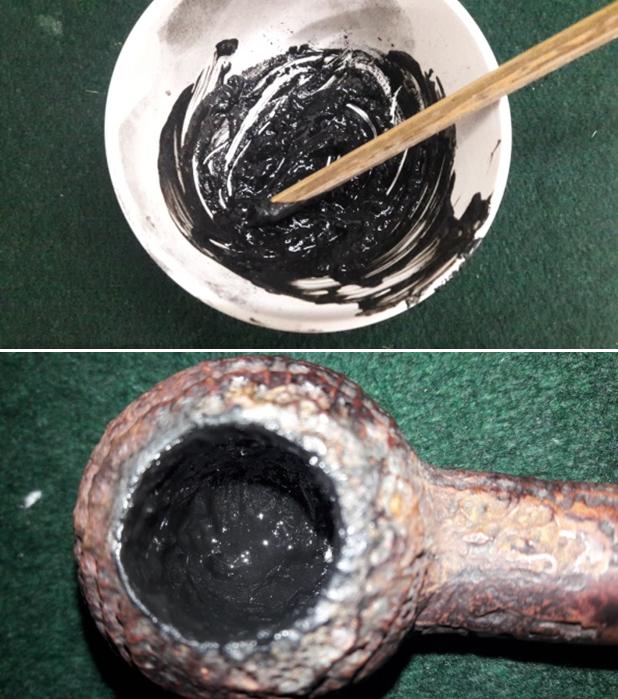
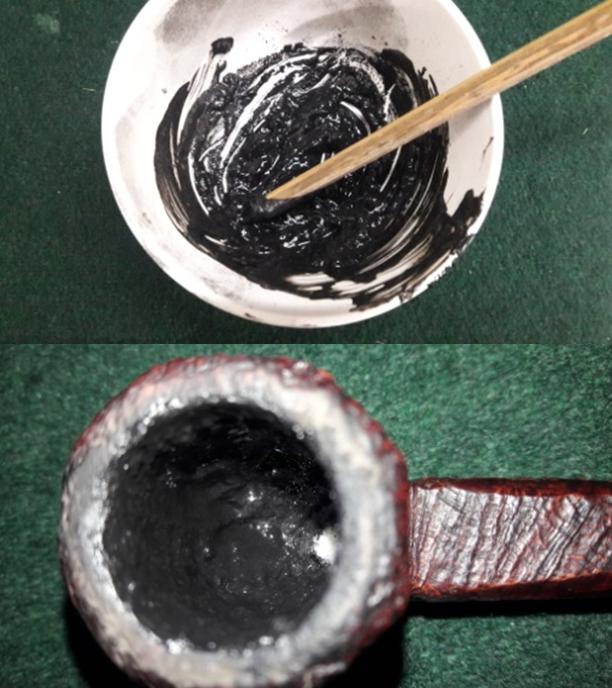
I reamed the bowl with a Kleen Reem pipe tool and with a knife; I further took the cake down to the briar. I have realized that the knife is best suited to remove the cake from the bottom of the chamber. As anticipated, the chamber walls did show the beginnings of a burn out!!!! With a 150 grit sand paper, the walls of the chamber were rid of all the remnants of the cake, presenting a clear picture of the extent of the damage. This pipe too had cracks at exactly same location as its sibling, though not as alarming. Since the pipe ash was still being collected, I cleaned the internals of this pipe with bristled and regular pipe cleaners dipped in isopropyl alcohol. Since the strong sweet smell did not diminish even after the cake had been removed, I decided to give it a salt and alcohol bath. I filled the bowl and shank with kosher salt up to just below the rim top and end of the shank respectively. I filled it up with isopropyl alcohol and set it aside over night to allow it to extract all the residual oils from the chamber and the shank. Next day, the salt and alcohol had done its job. I remove the darkened salts and clean the mortise with bristled pipe cleaners. I set it aside to dry. Once the internals were cleaned, I scrubbed the externals of the bowl with undiluted Murphy’s oil soap and dried it using paper towels and soft cotton cloth. I set it aside to dry. I cleaned the walls of the chamber with cotton pads dipped in isopropyl alcohol (since I was simultaneously working on the repair to the chamber of the Paneled Billiard, there is inescapable repetition of the process). Once cleaned, I inserted a folded pipe cleaner into the shank and up to the draught hole to prevent it from clogging. I made putty like paste of pipe ash and water. This paste was evenly applied to the entire inner surface of the chamber with a thin bamboo frond with shaved end to form a spatula, a bigger one at that, as compared to a regular one. I set it aside to dry out. The climate here being very wet and humid, it will take a long time to dry out.

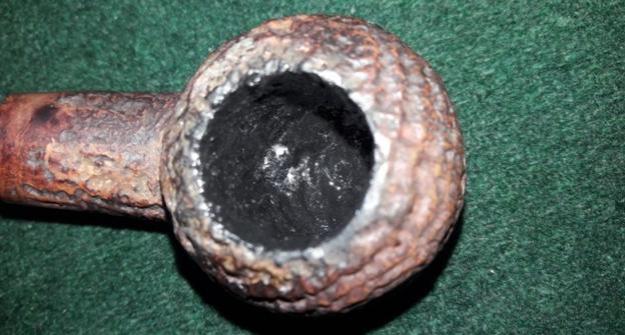
The coating dried completely after about a week and I just gently scrapped the chamber with very light hands to check the layer. Alas, the complete coating just crumbled out leaving a very dry coat of ash through which all the cracks were easily discernible.

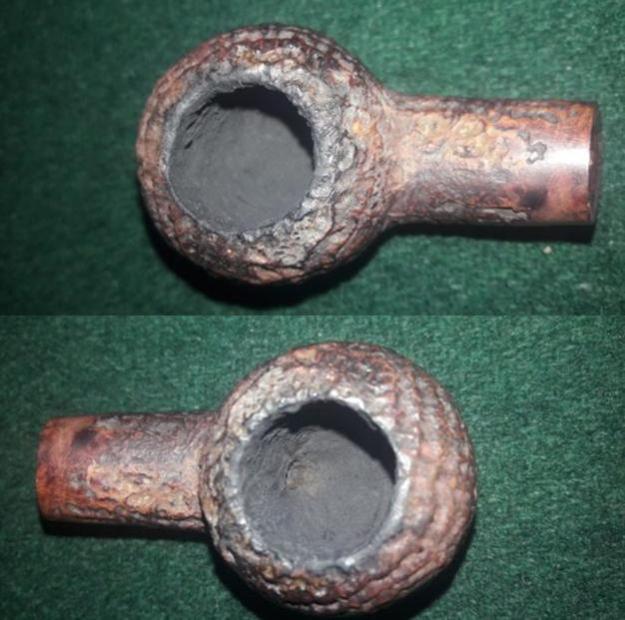
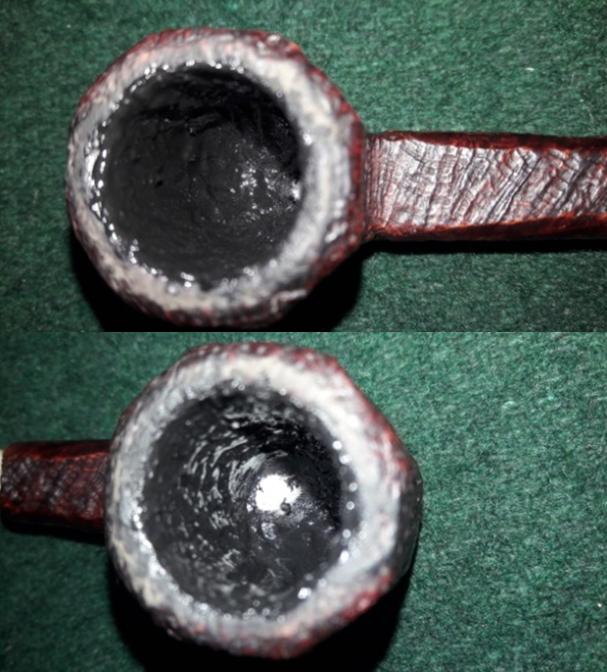
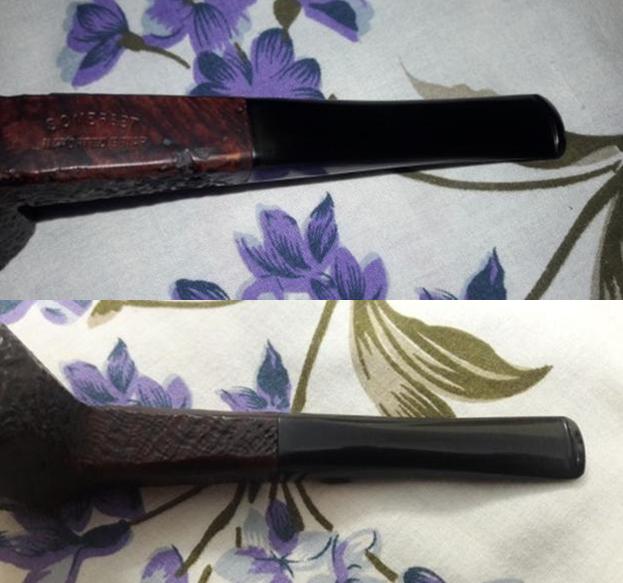
Fortunately, I had started collecting pipe ash and mixed it with yogurt. Using the same earlier method, I applied an even coat of pipe ash, yogurt and also added two capsules of activated charcoal. I set it aside to dry out, praying that the mixture bonds well and sticks to the walls of the chamber. A few days later, the mixture had completely cured and it did not crumble. The bonding appeared to be strong and durable. With a 400 grit sand paper, I sanded the inner walls very lightly to smooth the walls. Now the internal walls are looking solid and ready for duty again!!!! Once the issue of cracked chamber wall was addressed, I turned my attention back to the exterior of the stummel. I rubbed a small quantity of “Before and After Restoration Balm” in to briar and let it rest for a few minutes. The balm almost immediately works its magic and the briar now has a nice vibrant appearance. I further buff it with a horse hair shoe brush. Working the stem, with a Bic lighter, I flamed the surfaces of the stem to raise the tooth chatter and minor bite marks. To address the bite mark and repair the edge of the lip, I spot apply a drop of CA superglue and leave it over night to cure. The next evening, I shape the fill using flat head needle file and carve a crisp edge. To further blend in the fill, I sand the stem with a 220 grit sand paper. I sanded it down with 220, 400 and 800 grit sand paper. I wiped the stem with cotton pad dipped in alcohol to remove the resultant dust. I rubbed some extra virgin olive oil in to the stem and set it aside to be absorbed in to stem. I polished the stem with micromesh pads, wet sanding with 1500 to 2400 grit pads and dry sanding with 3200 to 12000. I rub a little extra virgin olive oil in to the stem after every three pads. I finish the polishing of the stem by rubbing a small quantity of Paragon wax and giving it a final polish with a soft cotton cloth. The stem is now nice, smooth and shiny. I cleaned the airway in the stem with pipe cleaners and alcohol. Here, I realized that the issue of loose stem was yet to be addressed. This issue was addressed by heating the tenon with a Bic lighter, constantly rotating the stem, till the tenon was slightly pliable. I gently pushed a rounded needle file in to the tenon to enlarge it and set it aside to cool down. Once cooled down, I wiped it clean with a cotton cloth soaked in cold water. I tried the fit, and the stem sat in the shank snugly, making all the right kind of noises. I was very pleased with the fit.To finish the pipe, I rubbed a small quantity of HALCYON II wax which is used for rusticated/ sandblasted surfaces and set it aside for a few moments. Thereafter I polished it with a horse hair shoe brush and a soft cotton cloth. These Somerset pipe are very well made and smoke fantastic. The quality of the vulcanite is high grade and feels good to clench. The finished pipe is shown below. Since the completion of this restoration, I have smoked this pipe and included it in my rotation. Believe you me, this pipe, like its sibling, smokes perfect with a nice, smooth draw right to the end. This leads me to think, is it only necessary to have Dunhill, Barling, Comoy’s etc, as fantastic smokers? Well, my personal experience with these two Somersets, is that while the above mentioned brands are excellent pipes, the lesser known ones do need to be looked at and not discarded outright!!!!!!!!!! Thanks for your patience and looking forward to inputs about this brand and the write up. Cheers…………


Tale of Two Somerset Brothers – Part 1


PANELED BILLIARD

Blog by Paresh Deshpande

There are two SOMERSET pipes in my inherited pipe collection; one is a Paneled Billiards and other is a Rhodesian (which is my favorite shape). If there was a pipe/ pipes amongst the large number of inherited pipes that I am not attracted to, this Paneled Billiard ranks right there at the top. The reason for this lack of attraction is primarily two fold; firstly, this eight paneled billiard is a shape which I do not like. I prefer pipes with an even shape either smooth or rusticated or sandblasted, but panels, definitely not my taste. Secondly, the SOMERSET brand, which I had never heard of and neither had I bothered to know more about due to shape!!!!! However, once while discussing pipes on a video call with Mr. Steve, I showed him this pipe and suggested that I would like to discard it as I did not like the shape and also it’s an unknown brand. Mr. Steve, in his wisdom and experience suggested that I should reconsider as SOMERSET is quite possibly a brand of Comoy’s seconds!!!!!! With this suggestion, I decide to work on this pipe.

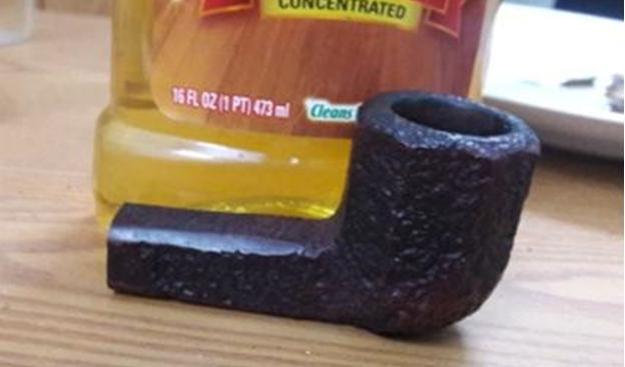
This square shank, eight paneled billiard has a smallish bowl size with a chamber depth of about 1.1 inches with somewhat thin walls. Beautiful sandblast is seen on the bowl, rim and on three sides of the shank. The bottom surface is smooth, flat without any sandblast and bears the only stampings seen on the pipe. It is stamped on the bottom as “SOMERSET” in a mild arch over “IMPORTED BRIAR” in straight line, all in capital letters. There is no other stamp on either stummel or on the stem. The stummel and shank is stained with a very dark reddish/ maroon hue. The stem is high quality vulcanite without any stampings.I have tried in vain to unearth information on this brand in general and this pipe in particular. Alas!!! I haven’t been able to garner any information from the internet, apart for the input provided by Mr. Steve!!!!! I would love to receive any information that may be available with you on this pipe.

INITIAL VISUAL INSPECTION
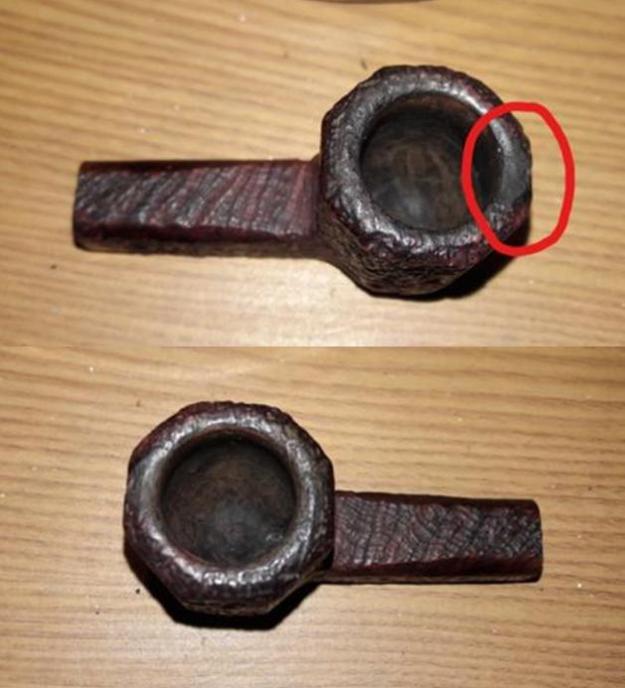
This pipe has been well used (and subsequently, I realized ABUSED!!!!!!!) as is evident from the thick cake in the chamber and damage to the inner edge of the rim in 12 ‘O’ clock direction. The sandblast is deeply filled with dust, tars and grime of all the yesteryears of smoking and subsequent disuse for last 35-40 years. The rim top is also sandblasted and there is overflow of lava on to the rim top. As mentioned above, there appears some minor charring to the inner edge of the rim. This needs to be looked into after the bowl has been reamed of all the cake.

The mortise is clogged and air does not flow through it. This condition is consistent with that I have seen on my grand old man’s other pipes!!!! The mortise had clogged, adversely affecting the performance of the pipe and hence had been conveniently set aside and replaced by another one. Such was his habit, it appears.The stem is oxidized but more heavily towards the lips. There is minor tooth chatter with a couple of slightly deeper bite marks on both surfaces of the stem. The fitting of the tenon in to the mortise is very loose and will have to be addressed.THE PROCESS
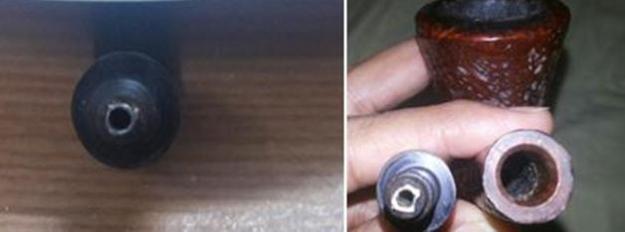
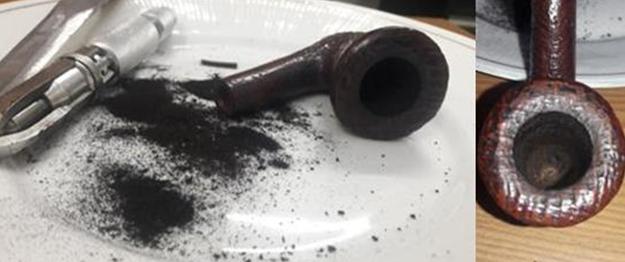
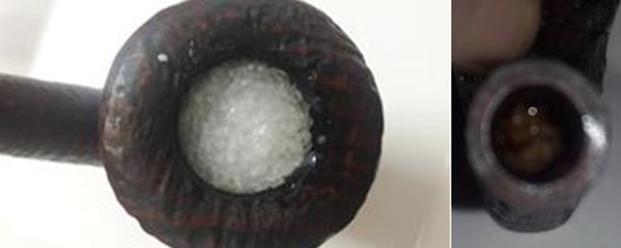
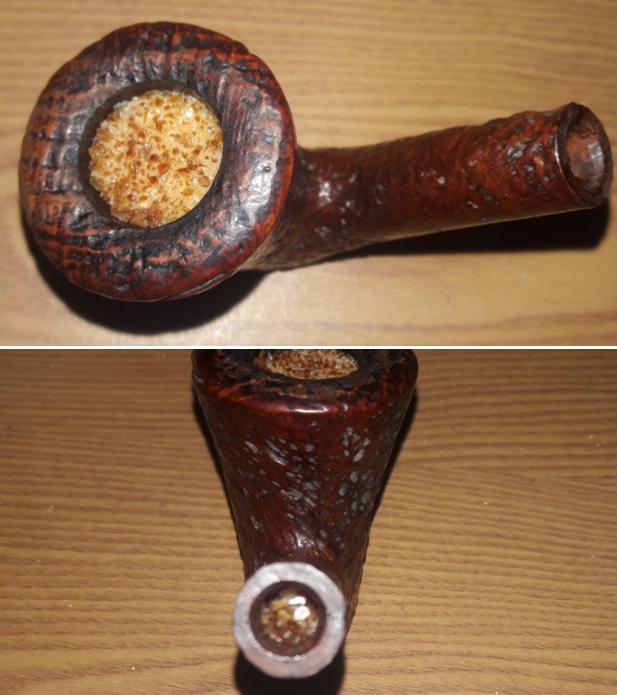
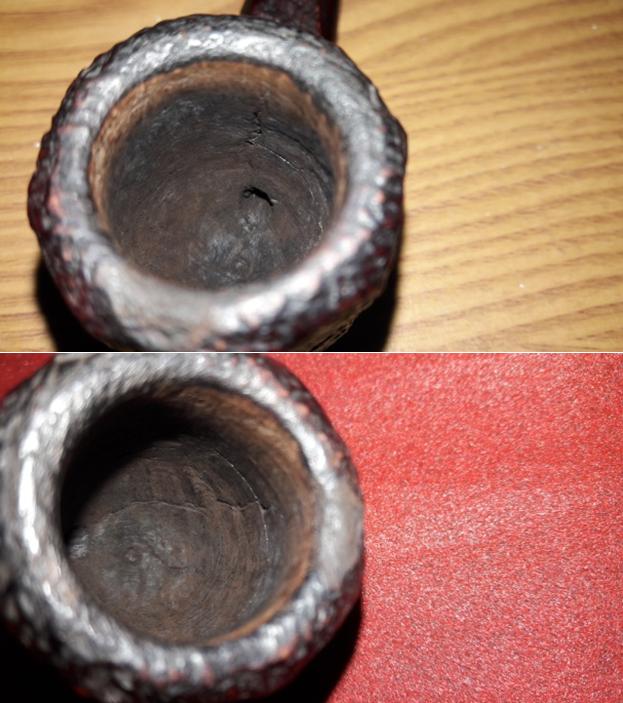
I start the restoration process by reaming the chamber to get rid of all the cake, using a Kleen Reem pipe tool. I further scrapped the walls of the chamber with a fabricated knife and took the cake down to the bare briar. This is the time when I observed a damage which every restorer of pipes fears the most. With a cringe, I observed a distinct line emanating from a point about mid way of the chamber, above the draught hole extending upwards and downwards. To explore further and also to smooth and remove the last remnants of the cake, I sand the walls of the chamber with a folded piece of 150 followed by a 220 grit sand paper. To my horror, I observed that from the point where I had first observed the crack, there were other cracks which extended around the walls in a circular pattern along the middle of the bowl. I checked the exterior of the stummel and was relieved to find it was solid and that the crack did not extend to the outer surface. Here are the pictures of the process and the damage observed. I was wondering as to how I should address this issue as I did not have J B Weld, when I remembered that Mr. Steve had repaired my inherited Barling Ye Olde Wood by coating the chamber with a mixture of sour cream and activated charcoal. I searched my tool and material box and realized that I was only carrying a few capsules of activated charcoal. The jar of activated charcoal, along with bulk of my pipes, was left behind when I moved to my place of work. I shared the pictures of the damage and predicament with Mr. Steve. He confirmed that this appeared like the beginning of a “burn through” or a “crack”. He also suggested an easier and practical solution; a coating of pipe mud made using pipe ash and water!!! Only a person of his knowledge and experience can share such simple and easy-to-do solutions to complex problems. Thanks again, Sir. The next couple of days were spent in collecting pipe ash!!! Lol…… All readers and first time restorers are advised to collect and keep a jar of pipe ash handy!!!!! Or collect Cigar ash which works just fine.

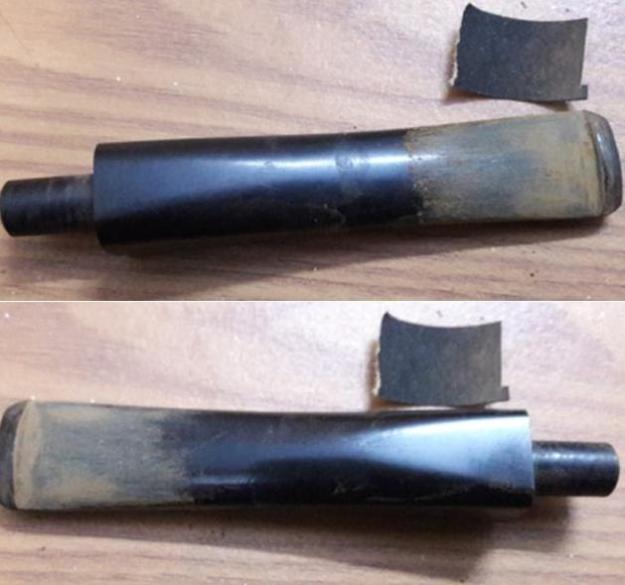
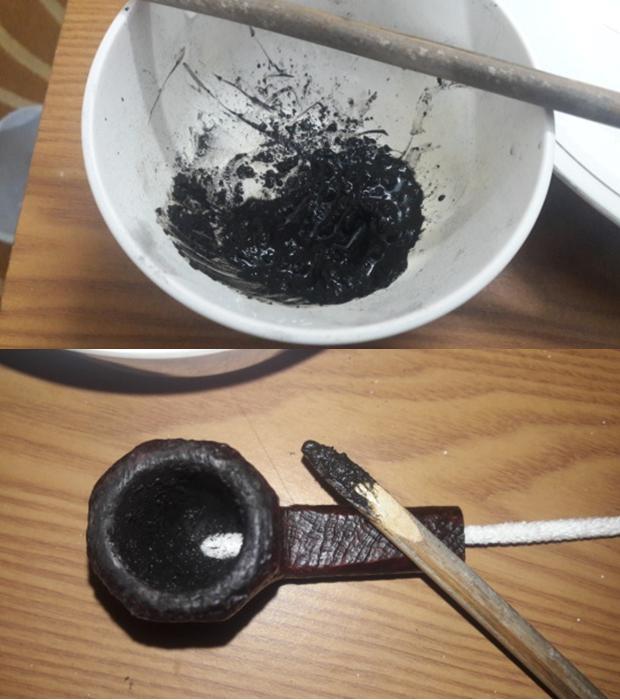
While collecting ash over the last couple of days, I undertook the restoration of the Somerset Rhodesian and soon realized that this one too had cracks in the bowl. Thus I was now tackling this issue on two pipes simultaneously!!!!! More detailed write up on the Rhodesian will be posted separately. Meanwhile I addressed the stem of the Paneled Billiard. Using a Bic lighter, I flamed the surfaces of the stem to raise the tooth chatter and minor bite marks. I was surprised to find that this process had raised all the bite marks and tooth chatter to the surface. All I was left to do was sand the surfaces with sand paper followed by the micromesh pads. I sanded it with 220, 400 and 800 grit sand paper. I wiped the stem with cotton pad dipped in alcohol to remove the resultant dust. I rubbed some extra virgin olive oil in to the stem and set it aside to be absorbed in to stem. I polished the stem with micromesh pads, wet sanding with 1500 to 2400 grit pads and dry sanding with 3200 to 12000. I rub a little extra virgin olive oil in to the stem after every three pads. I finish the polishing of the stem by rubbing a small quantity of Paragon wax and giving it a final polish with a soft cotton cloth. The stem is now nice, smooth and shiny. I cleaned the airway in the stem with pipe cleaners and alcohol. The issue of a loose-fit between tenon and mortise was addressed by heating the tenon with a Bic lighter, constantly rotating the stem, till the tenon was slightly pliable. I gently pushed a rounded needle file in to the tenon to enlarge it and set it aside to cool down. Once cooled down, I wiped it clean with a cotton cloth soaked in cold water. I tried the fit, and the stem sat in the shank snugly, making all the right kind of noises. I was very pleased with the fit.I cleaned the internals of the mortise and the airway with hard bristled and regular pipe cleaners and isopropyl alcohol. I scrubbed the mortise with shank brush dipped in alcohol. The internals of the shank are now clean and the pipe smells fresh and new. There are no traces of ghost smells from the stummel.Having addressed the internals, I turn to address the exteriors. I gently scrapped the charred rim down to the bare solid briar. Though this has resulted in a slight undulation to the rim surface, it is very minor and hence, I left it alone. Another reason to let it be was that if I had a Dremel machine, I would have topped the bowl and then carved out very small rustications to match the sandblasted stummel. But I do not have a Dremel machine!!!! That issue settled, I wash the dirty stummel with Murphy’s oil soap and a tooth brush. I thoroughly scrub the sandblast with the hard bristled toothbrush to remove the oils, tars, dirt and grime lodged in the surface. I rinse it under tap water, dried it with paper towels and set it aside to completely dry out. Having collected sufficient quantity of pipe ash, I decided to address the chamber cracks. I cleaned the interiors of the chamber with a cotton ball dipped in isopropyl alcohol. Once cleaned, I inserted a folded pipe cleaner into the shank and up to the draught hole to prevent it from clogging. I made putty like paste of pipe ash and water. This paste was evenly applied to the entire inner surface of the chamber with a thin bamboo frond with shaved end to form a spatula, a bigger one at that, as compared to a regular one. I set it aside to dry out. The climate here being very wet and humid, it will take a long time to dry out.The coating dried completely after about a week and I just gently scrapped the chamber with very light hands to check the layer. Alas, the complete coating just crumbled out leaving a very dry coat of ash through which all the cracks were easily discernible.So, it’s back to square one and all the efforts and waiting has come to a naught!!!! I shared the above pictures with Mr. Steve with a suggestion of using HONEY as a bonding agent rather than water. When he replied that he had never used honey but, uses YOGURT if water mix fails, I dropped the idea and decided to go ahead with yogurt!!!!Fortunately, I had started collecting pipe ash and mixed it with yogurt. Using the same earlier method, I applied an even coat of pipe ash, yogurt and also added two capsules of activated charcoal. I set it aside to dry out, praying that the mixture bonds well and sticks to the walls of the chamber. A few days later, the mixture had completely cured and it did not crumble. The bonding appeared to be strong and durable. With a 400 grit sand paper, I sanded the inner walls very lightly to a smooth surface. Now the internal walls are looking solid and I can’t wait to load my King of England tobacco and enjoy my fruits of labor. Once the stummel had dried out completely, I rubbed a small quantity of “Before and After Restoration Balm” in to the briar and let it rest for a few minutes. The balm almost immediately works its magic and the briar now has a nice vibrant appearance. I further buff it with a horse hair shoe brush. To finish the pipe, I rubbed a small quantity of HALCYON II wax which is used for rusticated/ sandblasted surfaces and set it aside for a few moments. Thereafter I polish it with a horse hair shoe brush and a soft cotton cloth. Though, the pipe feels small in my hands, the chamber is decent sized. Notwithstanding the size, this is a beautiful looking pipe with some great sandblast patterns. The pipe is very well made and of high quality craftsmanship as evidenced by the perfectly aligned and matching edges of the stem and shank as well as the quality of the vulcanite stem. The finished pipe is shown below.

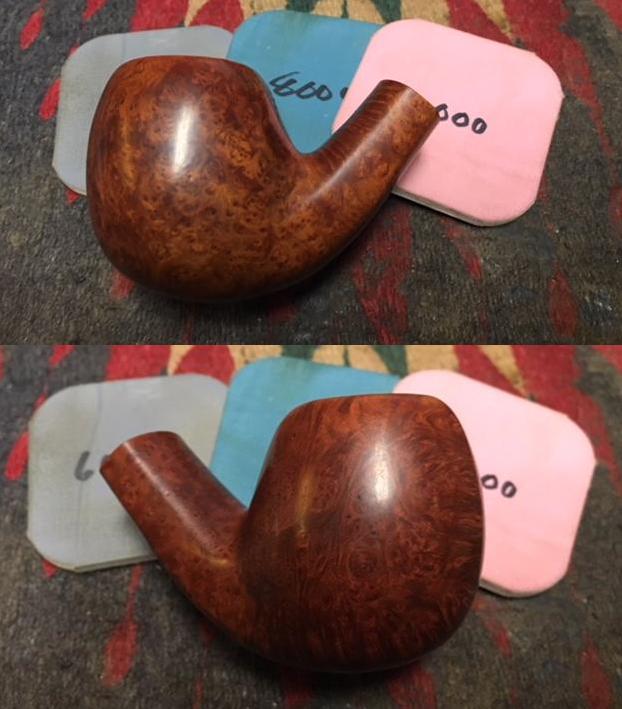
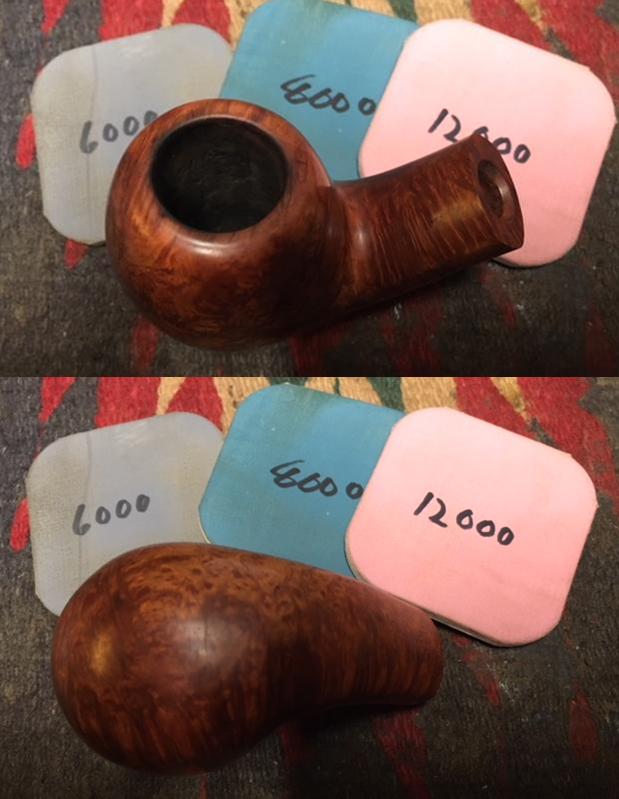
New Life for a Jeantet Neuilly ¾ Bent Apple


Blog by Steve Laug

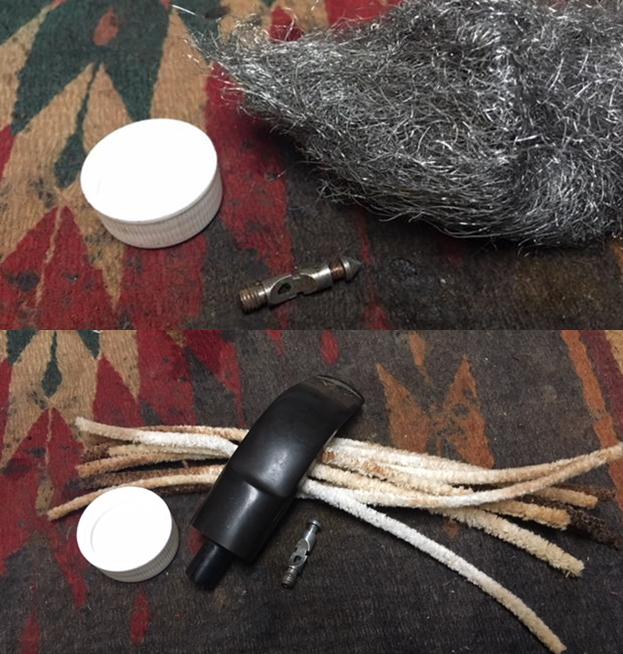
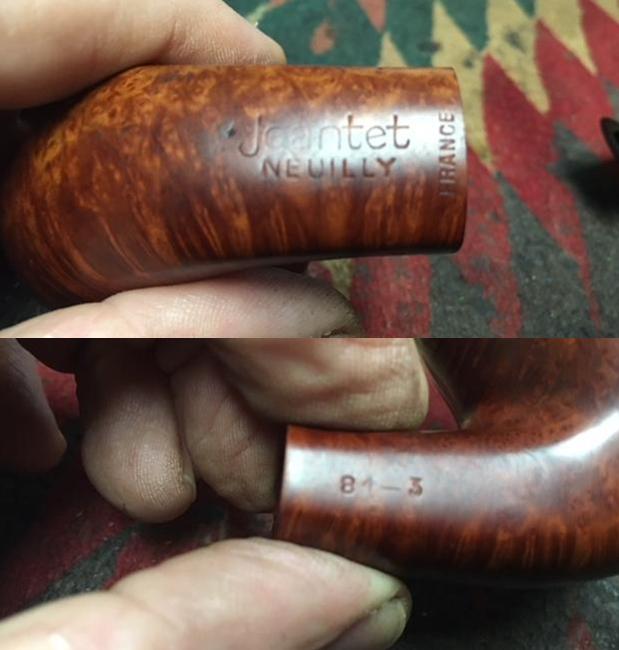
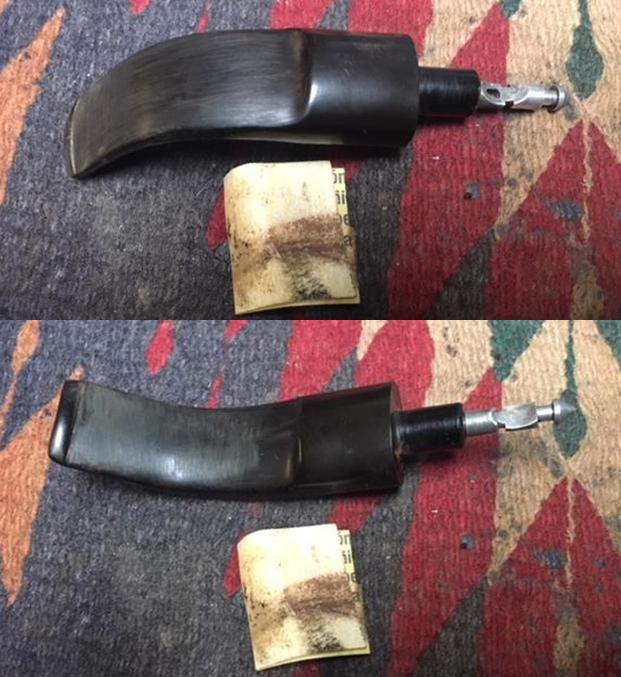
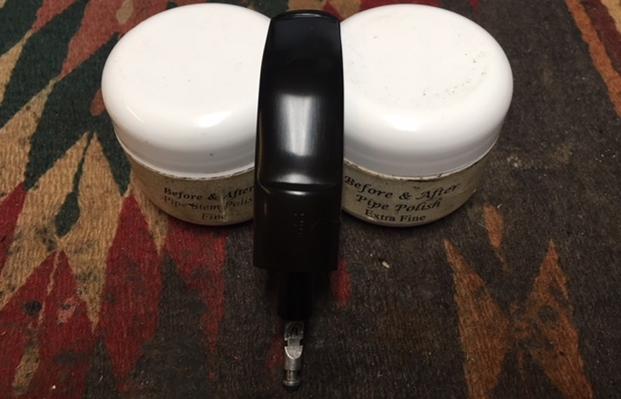
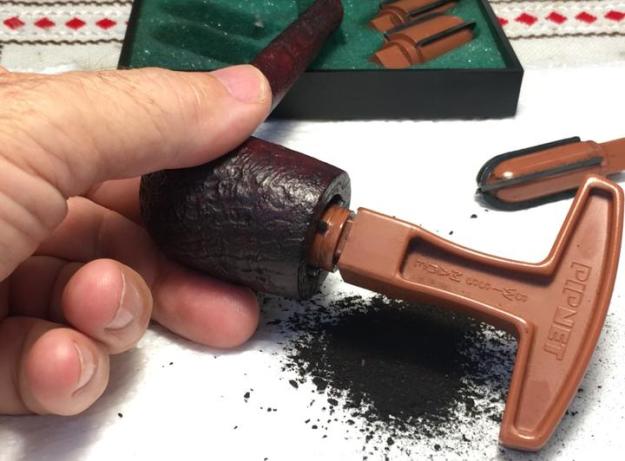
The next pipe on the work table is a pipe I picked up recently at St. Vincent de Paul thrift shop. I caught the bus to meet my daughter for lunch and while I waited for her to get off work I walked over to the nearby shop. I went through the display cupboards and found an interesting looking pipe. It was a ¾ bent pipe with a rounded edge rectangular shank pipe. It was priced pretty high for a used pipe but I struck a deal with the clerk and got it for a reasonable price. I took the pipe over to the coffee shop where my daughter works and took some photos. I took the pipe home and finally got around to working on it today. I took some photos of the pipe before I started to clean it up. It is stamped on the underside of the shank Jeantet over Neuilly and next to the shank/stem junction it is stamped France. It is also stamped on the right side of the shank with the numbers 81-3 It is a three-quarter bent apple-shaped pipe with a natural finish. The finish was dirty and stained from the grime of long handling without cleaning. The rim top had an overflow of lava from the thick cake in the bowl. It was dirty and hard to tell if the finish was nicked or damaged under the grime. The outer edge of the bowl is rounded over to the sides of the bowl. The stem was black vulcanite and had tooth chatter and some calcification on the top and underside near the button. It was stamped JEANTET on the top of the saddle stem. I took a closeup photo of the rim top to show the lava overflow from the thick cake in the bowl. The rounded outer edge of the rim carried down into the bowl. The inner and outer edges of the bowl look very good underneath the lava overflow. There is a thick cake in the bowl. The stem was in good condition. There was some tooth chatter and scratches on the top and underside near the button. There was some light oxidation on the top and underside of the stem. I reamed the bowl with a PipNet Pipe reamer to remove the majority of the cake in the bowl. I cleaned up the remnants of cake with a Savinelli Fitsall Pipe Knife. To finish the cleanup of the bowl I wrapped 220 grit sandpaper around a piece of dowel and sanded the walls of the bowl. I used a dental spatula to scrape the buildup of tars on oils on the walls of the mortise. I scrubbed the mortise and the airway in the shank with alcohol, cotton swabs and pipe cleaners. I took some photos of the pipe to show the condition at this point in the process.Before I could clean out the airway in the stem I needed to remove the caked and dirty stinger apparatus in the tenon. I used a pair of needle nose pliers to twist the stinger out of the tenon. I took a chance that it was threaded and it was not long before I had it free of the tenon.I cleaned up the aluminum tenon with 000 steel wool. I cleaned out the inside of the stinger and the airway in the stem with pipe cleaners, cotton swabs and alcohol.I scrubbed the top of the rim and the exterior of the bowl with isopropyl alcohol and cotton pads to remove the buildup of lava and grime on the bowl. I rubbed down the briar with Before & After Restoration Balm. I worked it into the smooth surface of the briar with my fingertips to clean, enliven and protect it. I let the balm sit for a little while and then buffed the bowl with a cotton cloth to raise the shine. The following photos show the bowl at this point in the restoration process. The grain is really starting to stand out. I polished the briar bowl and shank with micromesh sanding pads – wet sanding with 1500-2400 grit pads and dry sanding with 3200-12000 grit pads. I wiped the rim off after each sanding pad to remove the dust. The pipe really shone once it was polished. I took a photo of the stamping on the underside of the shank. It read Jeantet over Neuilly. Along the shank/stem junction it was stamped France. On the right side of the shank it read 81-3.I set the bowl aside and turned my attention to the stem. I used a folded piece of 220 grit sandpaper to sand out the tooth chatter and marks on both sides of the stem just ahead of the button. They were not deep so it did not take too much to remove them.The Jeantet stamp on the top of the stem is quite worn. There is not enough to recolour with white paint but enough that in the right light it is readable. I polished the stem with micromesh sanding pads – wet sanding with 1500-2400 grit pads and dry sanding with 3200-12000 grit pads. I wiped the stem down after each pad with Obsidian Oil to remove the sanding dust on the vulcanite. I finished polishing it with Before & After Pipe Stem Polish – both Fine and Extra Fine. When I finished with that I wiped it down with a final coat of Obsidian Oil and set it aside to dry. I polished stem and bowl with Blue Diamond to polish out the remaining small scratches. I gave the bowl and the stem multiple coats of carnauba wax. I buffed the pipe with a clean buffing pad to raise the shine. I hand buffed it with a microfiber cloth to deepen the shine. The pipe polished up pretty nicely. The natural oil finish works well when polished to really highlight the variety of grains around the bowl and shank. It has birdseye on the sides of the bowl and cross grain on the front (toward the right) and back of the bowl and on the shank both top and bottom. The polished black vulcanite stem works together with the beautiful grain in the briar to give the pipe a rich look. The finished pipe is shown in the photos below. The pipe is ready for a new home. The shape, finish and flow of the pipe and stem are very well done. The dimensions are Length: 5 1/2 inches, Height: 2 inches, Outside diameter of the bowl: 1 1/4 inches, Chamber diameter: 3/4 inches. I will be listing this one on the rebornpipes store shortly. Thanks for walking through the restoration with me as I worked over this beautiful little Jeantet Neuilly. 

Recommissioning a Sand Blasted Canadian – Made in London England


Blog by Dal Stanton

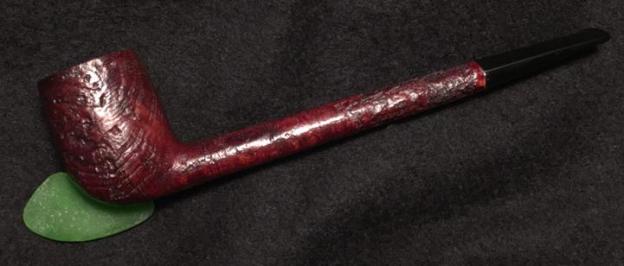
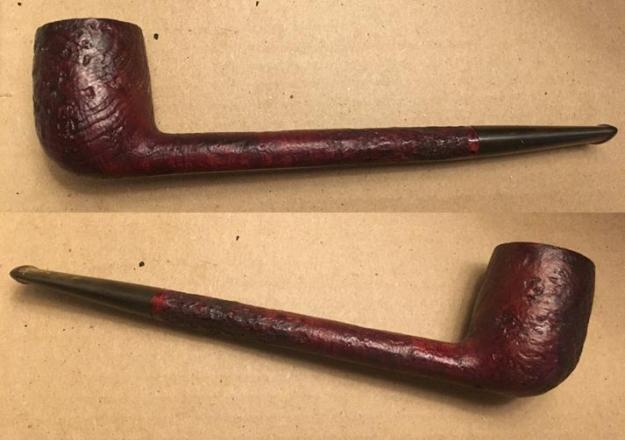
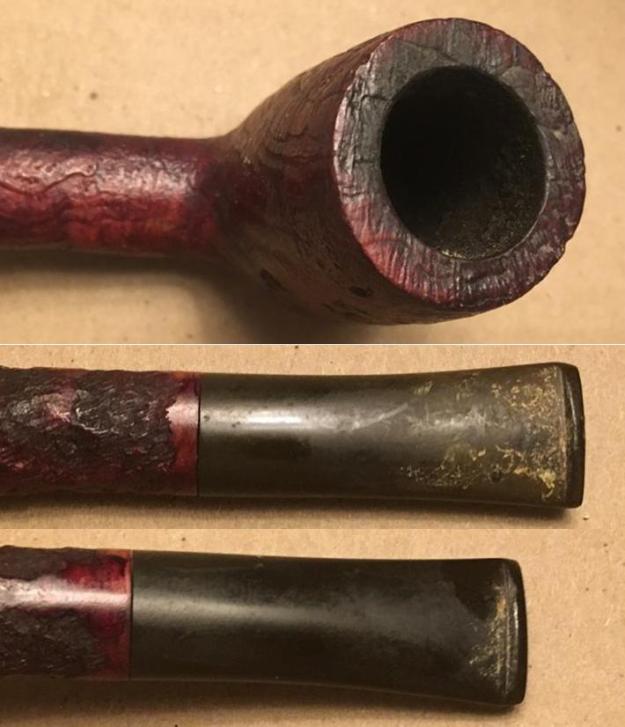
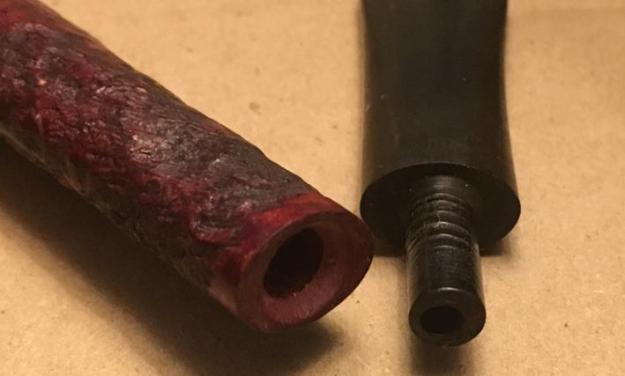
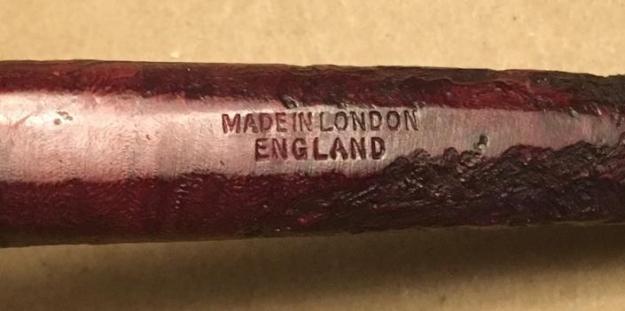
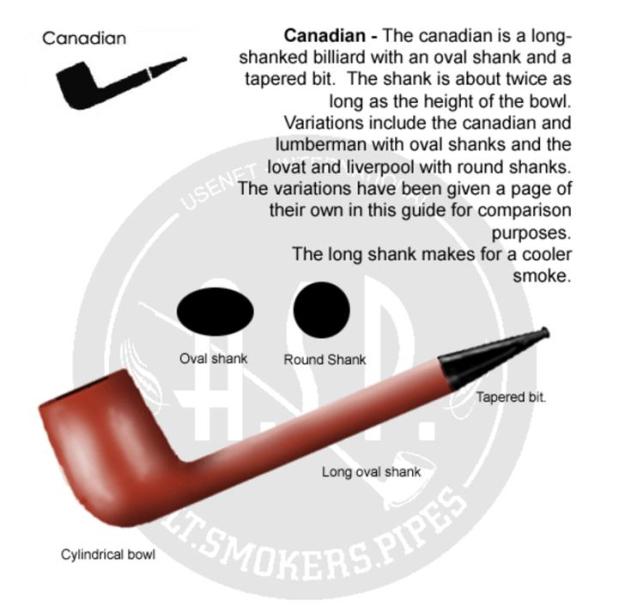
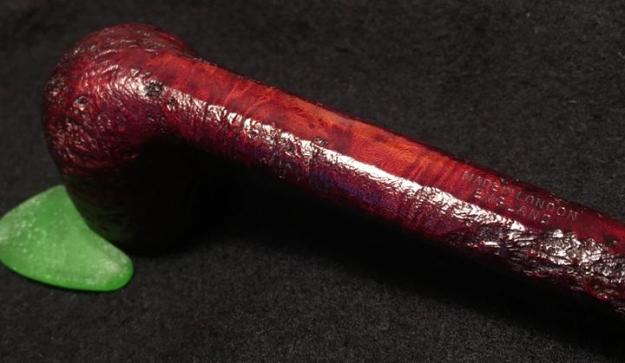
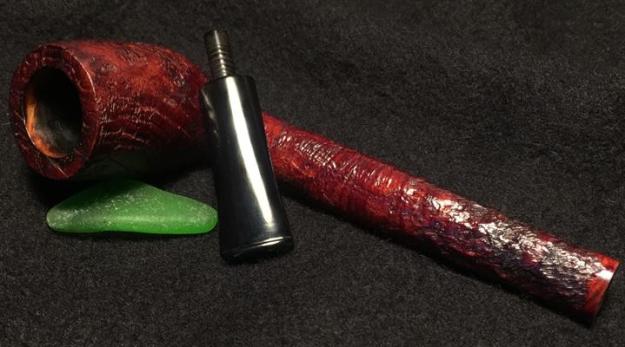
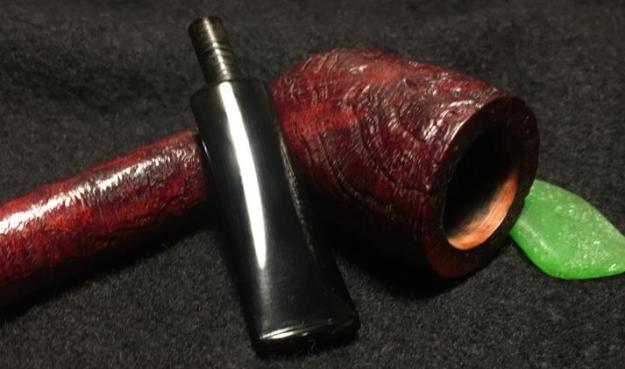
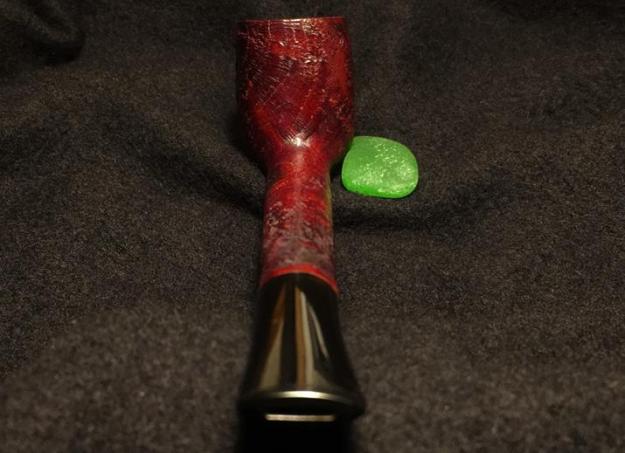
The Lot of 66 that I acquired last year continues to yield pipes to my worktable that are very collectible.  Robert fares from the US state of North Carolina and he has seen many of my online posts on Facebook Groups – The Gentlemen’s Pipe Smoking Society and The Elite Pipes & Tobacco Groups. This is the fellowship and camaraderie I have discovered in these groups among other pipe men and women which many find to be very rewarding.  With the internet being world-wide, the fellowship and relationships cross geopolitical borders and often the ‘Fellowship of the Pipe’ breaks down walls that are created because we live in a broken world.  I’ve commissioned pipes from “For ‘Pipe Dreamers’ Only!” that have gone all over the world and it’s been enjoyable to correspond with those who have received pipes from my worktable.  Robert saw an eye-catching Canadian and commissioned it and this unbranded, Made in London England is now on the worktable.  Here are the pictures Robert saw. Unfortunately, this Canadian has no identifying nomenclature other than MADE IN LONDON [over] ENGLAND.  Yet, the ‘flavor’ of the pipe has a quality classic feel to it.  The blasted surface is eye catching showing very distinctive grain in 3-D. This is not a poorly crafted pipe.Along with the attractive blasted finish, another reason this Canadian got Robert’s attention was the size: Length: 7 inches, Height: 1 3/4 inches, Bowl width 1 3/16, Chamber width: 3/4 inches, Chamber depth: 1 9/16 inches.  It’s a long Canadian of 7 inches which is what everyone wants in this shape family.  Working on a Canadian, I always find helpful Bill Burney’s Shapes Guide Pipedia article to understand the differences among the Canadian cousins.  The oval shank and tapered bit identify the Made in London England as a straight up Canadian.Looking at his condition, the chamber has a light layer of cake but the rim along with the entire external surface look great – but a good cleaning will refresh the blasted surface.  The stem has some oxidation and tooth chatter to address.  For all that I see, this restoration should be straight forward.

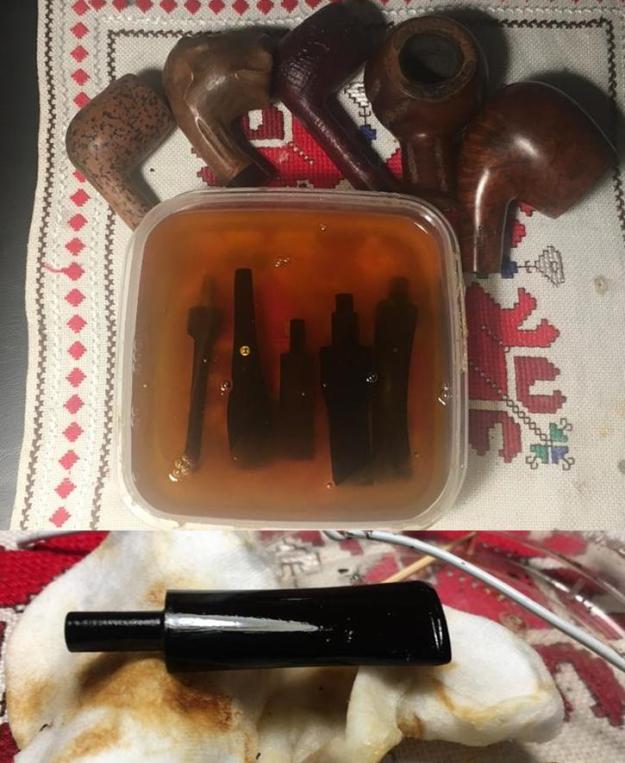
I begin by adding the Canadian tapered stem to a soak of Before & After Deoxidizer with other pipes’ stems that are in queue for restoration.  Before doing so, I use a pipe cleaner dipped in isopropyl 95% to clean the airway of the stem not only to clean the stem but also to keep the Deoxidizer from being contaminated. After soaking for some hours, I drain off the Canadian stem and wipe off the raised oxidation using a cotton pad wetted with light paraffin oil – Bulgaria’s version of mineral oil.  The Deoxidizer does a good job of raising the oxidation.After cleaning the stem of the Deoxidizer, I still detect some deep oxidation.  To deal with this I sand the stem first with 240 grit paper, also sanding out tooth chatter on the bit and button.  I follow by wet sanding with 600 grit paper to erase the 240 grit scratches.  I believe the oxidation has been removed.I put the stem aside for now and pick up the long, lanky Canadian stummel and begin by removing the light cake in the chamber.  I put down paper towel to help in cleaning. Using the Pipnet Reaming Kit, starting with the smallest blade head and moving to the larger using 2 of the 4 blades available in the Kit.  I follow this by using the Savinelli Fitsall Pipe Tool to scrape the chamber wall and to reach down into the chamber getting the harder to reach angles.  Finally, to bring out fresh briar in the chamber, I complete the reaming by sanding the chamber wall with 240 grit paper wrapped around a Sharpie Pen which gives some leverage.  To clean the carbon dust left behind I wet cotton pads with isopropyl 95% and wipe the chamber.  With a clean chamber, I’m able to inspect its condition and I see no crack or heat fissures.  It looks good! Next, I turn to the external blasted briar surface and clean using undiluted Murphy’s Oil Soap and cotton pads.  I also use a bristled tooth brush to scrub the textured surface.  There isn’t a lot of grime.  The pictures show the progress. Turning now to the internals of the Canadian stummel, my main arsenal are shank brushes to reach through the long shank.  I dip the shank brushes as well as pipe cleaners and cotton buds into isopropyl 95% to clean the airway.  It doesn’t take too long.With the stummel clean, I now continue work on the stem.  I begin by wet sanding using micromesh pads 1500 to 2400, following with dry sanding using pads 3200 to 4000 and then 6000 to 12000.  Between each set of 3 pads I apply a nice coat of Obsidian Oil to revitalize the vulcanite stem.  In the interest of full disclosure, after the completion of the first set of 3 micromesh pads, I detected oxidation at both upper and lower right-angle mergers of the stem and button.  I backtracked and used a flat needle file to sharpen the button lips – upper and lower and removed the residual oxidation.  I’m sparing you of the pictures that repeated the 240, 600 grit papers, 0000 steel wool and repeat of pads 1500 to 2400.  On we go! Turning back to the Canadian stummel, next I apply Before & After Restoration Balm to the blasted briar surface to recondition and revitalize it.  I like the Restoration Balm because it takes the briar where it is and deepens it – the change is subtle but noticeable.  I’m anxious to see what the Restoration Balm does with a blasted surface.  Most of my experience using it has been with smooth briar.  I squeeze some Balm on my finger and work it into the briar surface.  I make sure to work the balm into the nooks and crannies of the textured blasted surface.  With the amount of briar real estate of this Canadian it takes 3 ‘squeezes’ of Balm to cover the surface adequately.  After applying the Balm, I let the stummel rest for 10 minutes allowing the Balm to do whatever it does!  I take a picture before application, during the 10-minute rest and after.  You be the judge! After rejoining the Canadian stem and stummel, I mount a cotton cloth buffing wheel on the Dremel, set the speed at 40% of full power and apply Blue Diamond compound to both stem and stummel.  Since I live in an apartment on the 10th floor of a former Communist blok apartment building and have limited space, one of the advantages I’ve discovered by using a Dremel as my main workhorse tool for buffing and drilling is that the buffing wheels are very small – about an inch in diameter. This allows me to surgically apply compounds and wax.  This is especially helpful for a blasted or rustified surfaces like I’m working on now.  I’m able to pivot the buffing wheels orientation to move along with the grain and not against it.  This helps in spreading wax without it getting bogged up on the rougher surface.  After completing the application of Blue Diamond compound, I buff the pipe well with a felt cloth to remove the compound dust before waxing. Next, I mount another cotton cloth buffing wheel onto the Dremel, maintain 40% full power speed, and I apply several coats of carnauba wax to the blasted Canadian briar surface and vulcanite stem.  I finish the restoration by giving the pipe a hearty hand buffing using a microfiber cloth.

The grain on this blasted Canadian Made in London England is exceptional.  Though it has no branding, I’m guessing it was produced in a factory producing other classic English pipes like GBD or BBB.  This pipe demonstrates the classic long lines of a Canadian and therefore it is most definitely a keeper and will be a great addition to one’s collection.  Robert commissioned this Canadian from For ‘Pipe Dreamers’ Only! and will have first opportunity to acquire it in The Pipe Steward Store.  This Canadian benefits our work here in Bulgaria with the Daughters of Bulgaria – helping women and girls who have been trafficked and sexually exploited.  Thanks for joining me!

Sasieni Mayfair 688 (Ashford) Restoration


By Al Jones

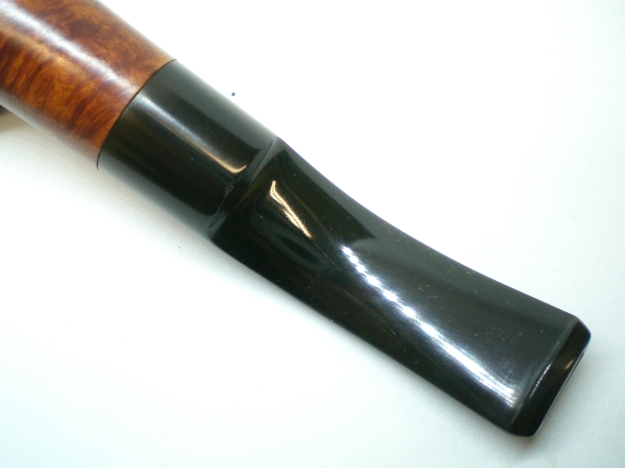
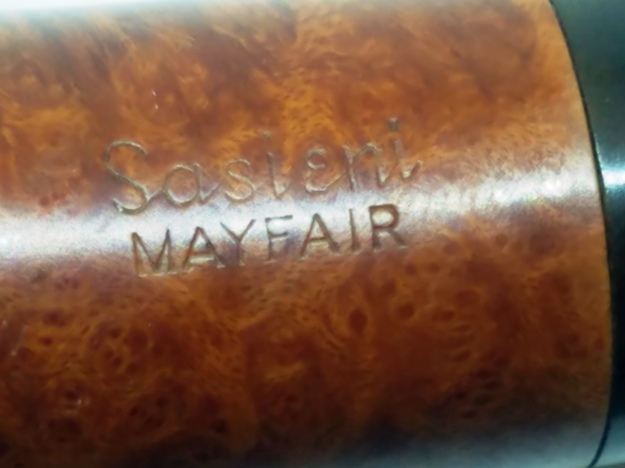
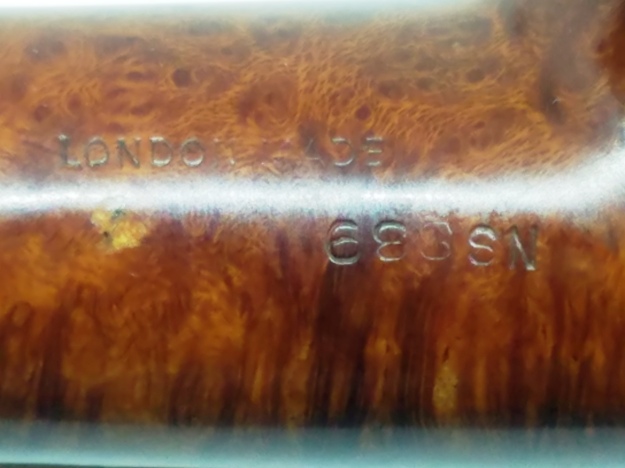
The Sasieni Ashford, aka Shape 88 is one of my favorite shapes, and I can’t resist the 2nd line offerings when they pop up on Ebay. The wide variations of the thru their first and 2nd line offerings is pretty amazing. Four Dot pipes were either stamped with the shape number 88 or Ashford during the town name era. This Mayfair grade is stamped 688SN. I assume the SN is to denote the saddle stem.

Update:  My PipesMagazine buddy Dave, aka Hallmark expert tells me,SN denotes:

S (Saddle) N (Natural Finish)

Sasieni second line pipes typically have very good stem work and are a step ahead of many of the other British second lines for Comoy’s, GBD, etc.

During the restoration process, I discovered that the tenon has threads inside, so when new, it had a screwed in stinger, similar to the Patent era pipes. So, I suspect this pipe is from early in the Family era.

The pipe was delivered in an envelope with a thin piece of bubble wrap, stem mounted. I’m always amazed at how this type of packaging survives the USPS handling. The pipe had a heavily oxidized stem and some bowl top build-up. There was mild cake in the bowl. Below is the pipe as delivered.

I removed the build-up on the bowl top with a worn piece of scotchbrite, followed by some micromesh (8000). The top was in very good shape under that buildup. The bowl was reamed and the interior of the bowl was also in fantastic shape. The bowl was then soaked in sea salt and alcohol. While that was soaking, the stem was soaked in a mild Oxy-Clean solution.

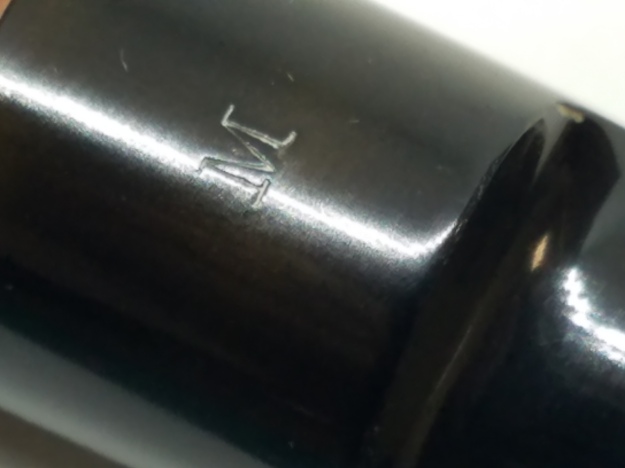
Following the soak the shank was cleaned with some bristle brushes and scrunched up paper towels. The stem was mounted and oxidation removed first with 400 and then 800 grit wet paper. I used a Magic Eraser pad around the lightly stamped “M” stem logo. Next up was 800, 1000, 1500 and 2000 grade wet papers, followed by 8,000 and 12,000 grade micromesh sheets. During the final steps, I discovered an issue with the otherwise mint stem – there was a small hairline crack on top of the button. Using a needle file, I was able to get some black superglue into the crack, and then sprayed on the accelerator speed the process. I sanded that smooth with 800 again, and then up thru the progression of paper grades. The stem was then buffed with White Diamond and Meguiars Plastic polish. I was very pleased with the stem repair, which should be as sturdy as new and is nearly invisible.

The briar was buffed with White Diamond and several coats of carnuba wax.

Below is the finished pipe, which will be sold shortly via the PipesMagazine.com forum.

?

?

Kathy’s Dad’s Pipes – Restoring a Barontini De Luxe Brandy


Blog by Steve Laug

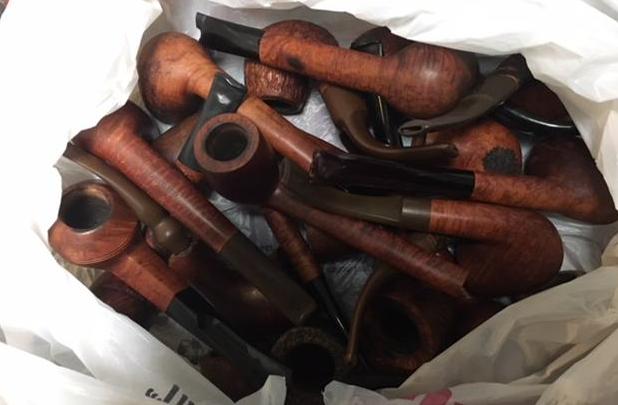
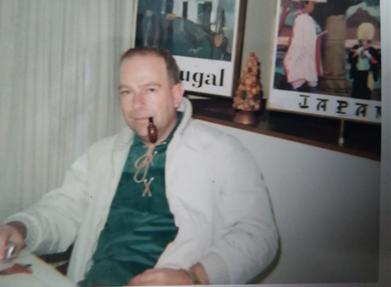
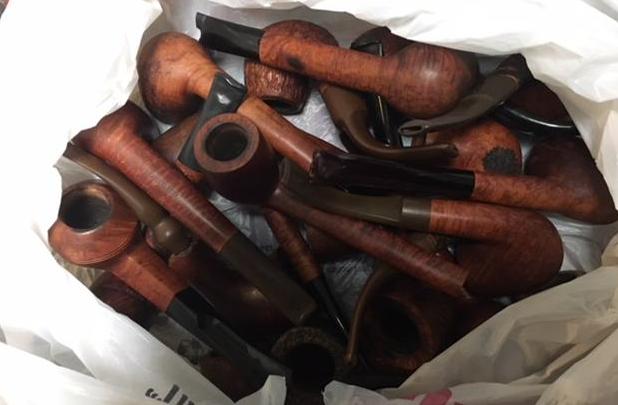
The next pipe on the work table is also from George Koch’s estate. It is a Barontini De Luxe Brandy shaped pipe with a quarter bend. The pipe was one of many that came to my brother and me in several shipments of pipes from George’s daughter Kathy. When Jeff got each box the pipes were well wrapped and packed. Jeff unwrapped them and took the following photo to give an idea of the volume of the pipes that we purchased. The Barontini came in mixed in a box of pipes much like the one below.In each of the previous blogs that I have written on the restoration of George’s pipes I have told his story. To me it is important to keep the story attached to the pipes that came from his collection. Each pipe I work on I remind myself of the man and in the work give a remembrance to the pipeman who owned these pipes. Having held a large number of his pipes in my hand and having a pretty good feel for the shapes, colour and stems that he liked, I can almost imagine George picking out each pipe in his collection at the Malaga shop in Michigan. I am including Kathy’s brief bio of her father and a photo of her Dad enjoying his “Malagas”. Here is George’s bio written by his daughter.

Dad was born in 1926 and lived almost all his life in Springfield, Illinois. He was the youngest son of German immigrants and started grade school knowing no English. His father was a coal miner who died when Dad was about seven and his sixteen year old brother quit school to go to work to support the family. There was not much money, but that doesn’t ruin a good childhood, and dad had a good one, working many odd jobs, as a newspaper carrier, at a dairy, and at the newspaper printing press among others.

He learned to fly even before he got his automobile driver’s license and carried his love of flying with him through life, recertifying his license in retirement and getting his instrumental license in his seventies and flying until he was grounded by the FAA in his early eighties due to their strict health requirements. (He was never happy with them about that.) He was in the Army Air Corps during World War II, trained to be a bomber, but the war ended before he was sent overseas. He ended service with them as a photographer and then earned his engineering degree from University of Illinois. He worked for Allis Chalmers manufacturing in Springfield until the early sixties, when he took a job at Massey Ferguson in Detroit, Michigan.

We lived in Livonia, and that’s where his love for Malaga pipes began. After a few years he returned to Allis Chalmers and we moved back to Springfield. I remember that when we went back to Michigan to visit friends, Dad had to go to the Malaga store and acquire a few new pipes. Many a year I wrote to Malaga and they picked out a pipe for me to purchase that I could give Dad for a Christmas or birthday present. He was always pleased. His favorites were the straight stemmed medium sized bowl pipes, but he liked them all. 

He had some other pipes, but the Malagas were his favorites. I remember him smoking them sitting in his easy chair after work, with feet up on the ledge by the fire burning in the fireplace.  Growing up it was my job to clean them and he liked the inner bowl and stem coated with Watkins vanilla, leaving a little of that liquid in the bowl to soak in when I put them back on the rack. Dad quit smoking later in life and so they’ve sat on the racks for many years unattended, a part of his area by his easy chair and fireplace. Dad passed when he was 89 years old and it finally is time for the pipes to move on. I’m very happy they are being restored by you and your brother and hope they find homes who enjoy them as much as Dad did. Thank-you for your care and interest. — Kathy, the oldest daughter

Each blog I have posted I thank Kathy for providing this beautiful tribute to her Dad. Jeff and I appreciate your trust in allowing us to clean and restore these pipes. We are also trusting that those of you who are reading this might carry on the legacy of her Dad’s pipes as they will be added to the rebornpipes store once they are finished.

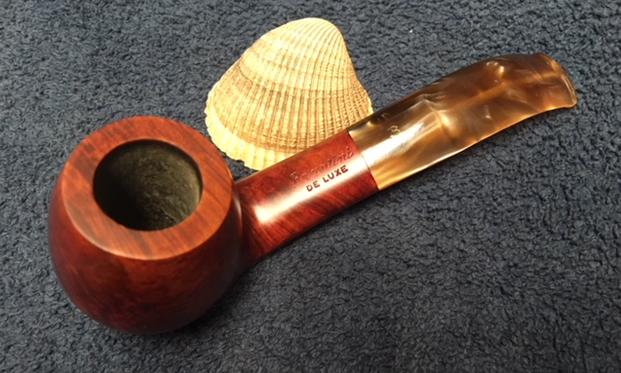
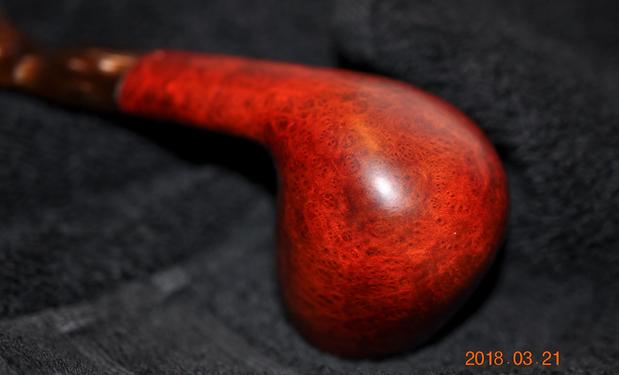
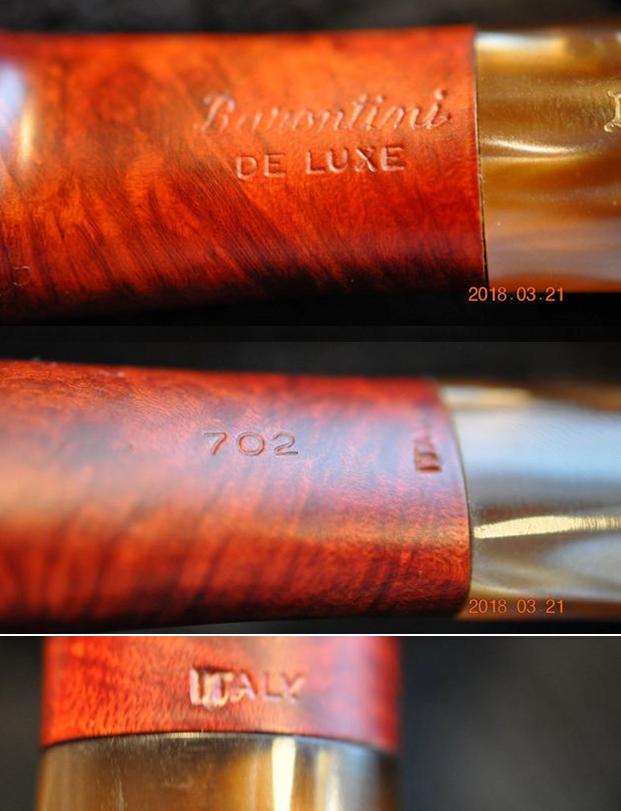
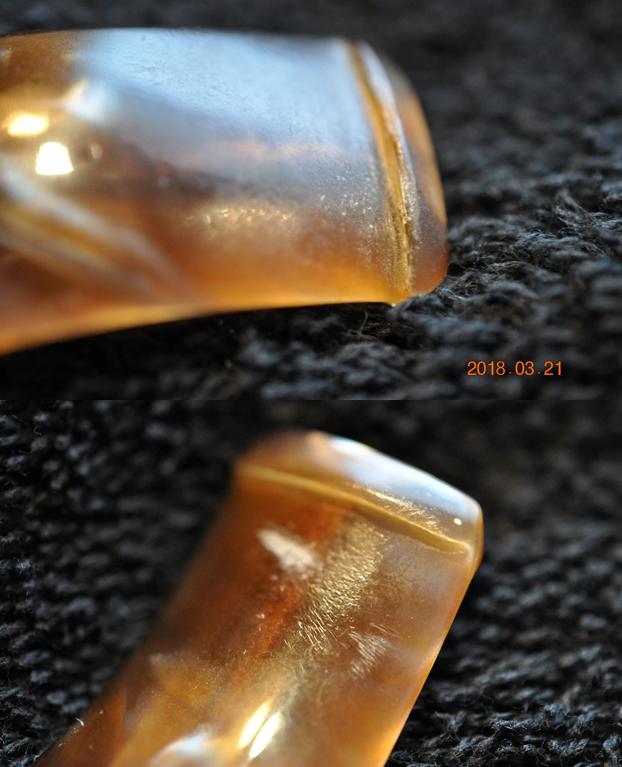
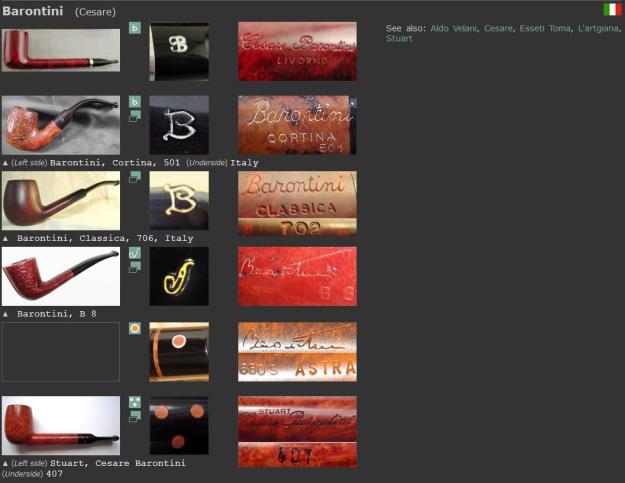
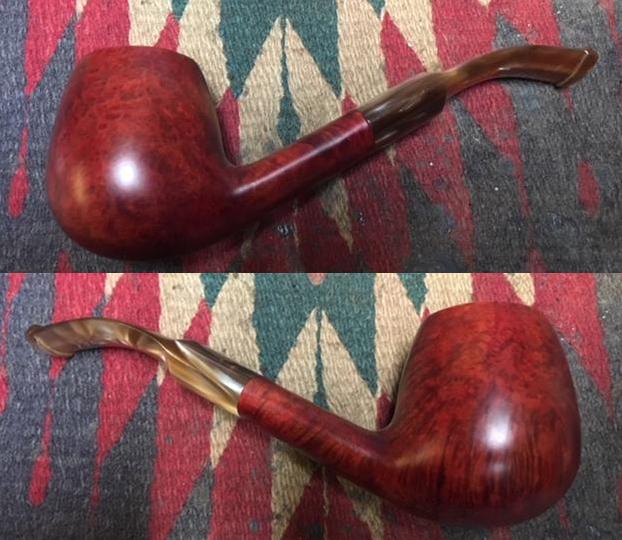
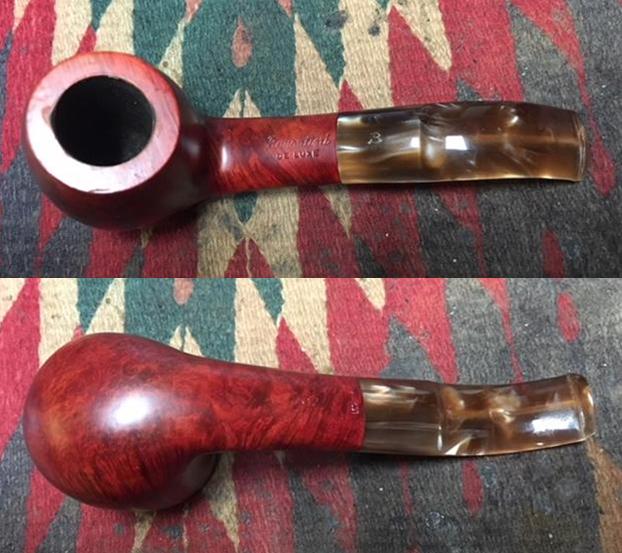
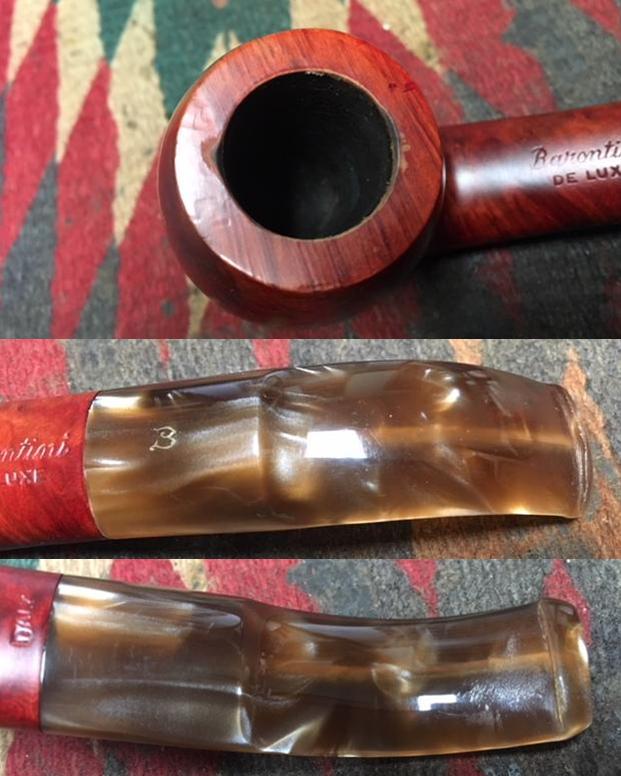
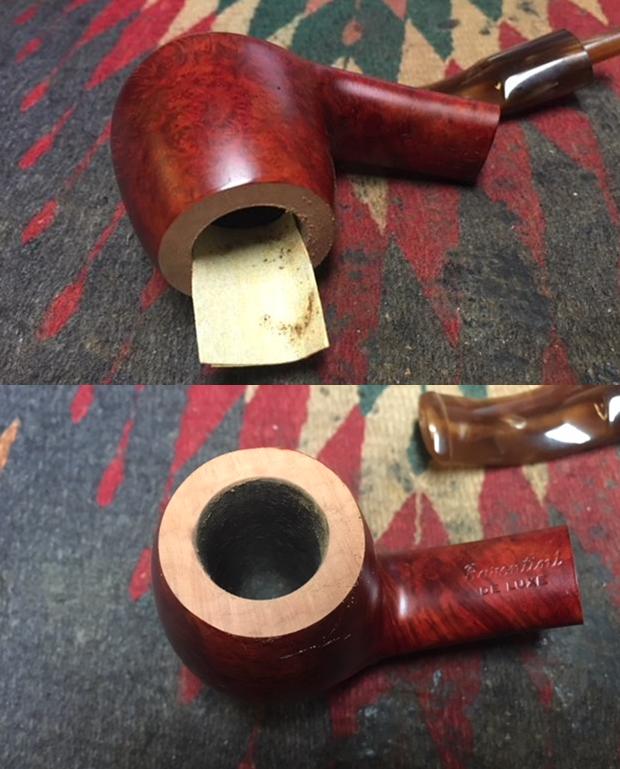
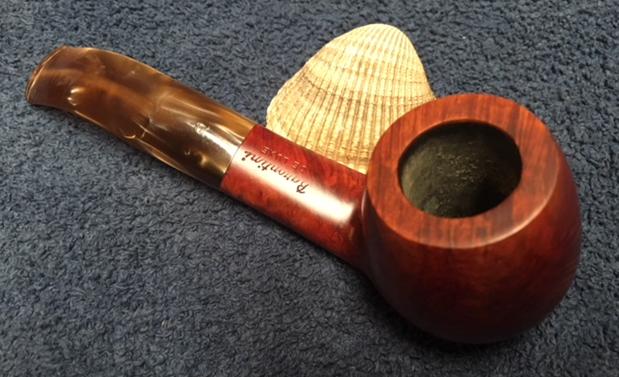
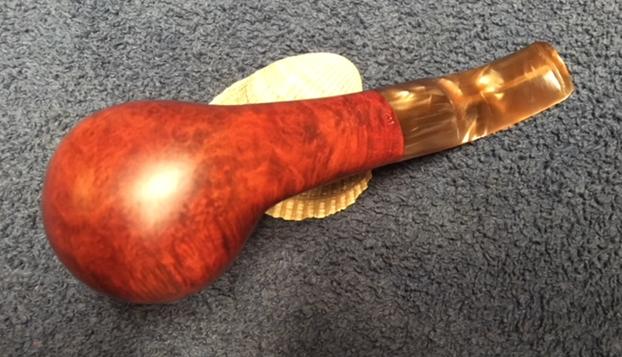
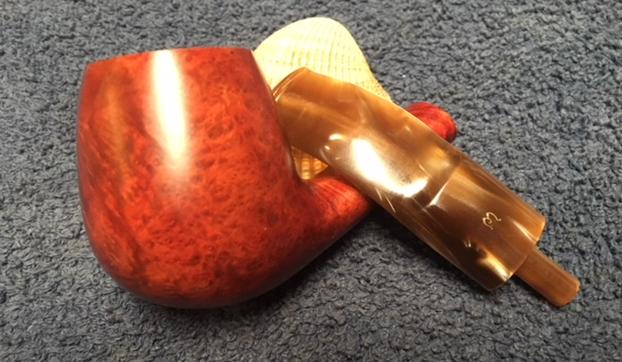
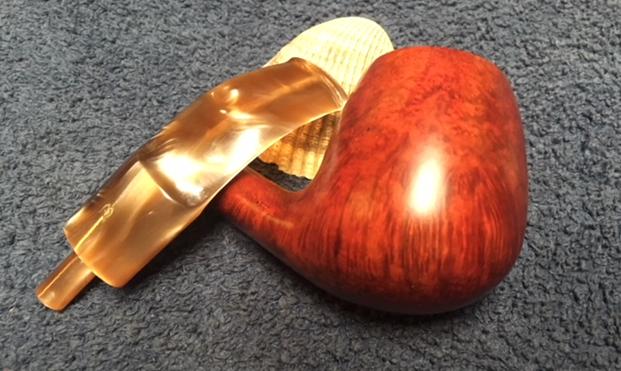
The next the pipe is a nicely shaped Barontini Brandy with an acrylic stem. It has beautiful grain all around the bowl – straight, flame and birdseye that is highlighted by the rich reddish brown stain. The top of the bowl is had some burn marks and some damage. The stamping on the top side of the shank read Barontini over De Luxe. On the underside it has the shape number 702 and Italy at the shank/stem junction. The gold and brown, swirled, pearlized Lucite stem had light tooth dents and chatter on the top and the underside of the stem. The interior of the pipe was caked and had cobwebs. Jeff took these photos before he started the cleanup work on the pipe. Jeff took a close up photo of the bowl and rim to show the condition of the pipe before he started his cleanup work. The rim top had some light lava overflow and some darkening. There appeared to be some rim damage on the inner edge toward the front of the bowl. You can see the wear on the rim top, the cake and remnants of tobacco in the bowl. It also looks like there are some cobwebs in the bowl. The pipe is dirty but in good condition.  He also took photos of the sides and bottom of the bowl and shank from the side to show the grain on this pipe. The finish is very dirty but this is a beautiful pipe. Jeff took some photos to capture the stamping on the top and underside of the shank. The first photo shows the top side of the shank with the stamping Barontini De Luxe and the second shows the shape number 702 on the underside. The third photo shows the ITALY stamping on the underside near the stem. There is also a B stamped on the acrylic stem.The next two photos show the stem surface. There are tooth marks and chatter on both sides near the button. There is also some wear on the sharp edge of the button.I looked up some information on the brand on the Pipephil website to get a quick overview of the history (http://www.pipephil.eu/logos/en/logo-b2.html). I did a screen capture of the listing for the brand. The fascinating thing that I learned in this quick overview was the connection to the entire Barontini family and to other companies like Aldo Velani. It is interesting to see the breadth of the brand in the following screen capture. The  pipe I am working on it stamped like the third photo down – the Classica and the B on the stem is identical to that pipe’s stamping.Pipedia gives further history of the brand (https://pipedia.org/wiki/Barontini,_Ilio) under the listing for Ilio Barontini. I quote that article in full as it has the connection to the De Luxe pipe that I am working on.

Cesare Barontini, who was in charge of the Barontini company since 1955, helped his cousin Ilio Barontini to establish a pipe production of his own.

Ilio started to produce machine-made series pipes of the lower to the middle price categories. Fatly 80% of the pipes went to foreign countries, the bulk being produced for various private label brands. Some of the own lines like “de Luxe”, “Etna” or “Vesuvio” gained a certain popularity. Citation: “Next to excellent craftsmanship Ilio Barontini pipes offer a wood quality, that is almost unrivalled in this price category!”.

The pipes being around still there were some unconfirmed utterances that Ilio Barontini brand has been absorbed by Cesare Barontini or even Savinelli. Who knows?

Now I had some idea of the maker of this Barontini. It appears to be one of the machine made Barontinis in the De Luxe line. Fueled by that information it was time to get working on the pipe itself and see what I had to do with it.

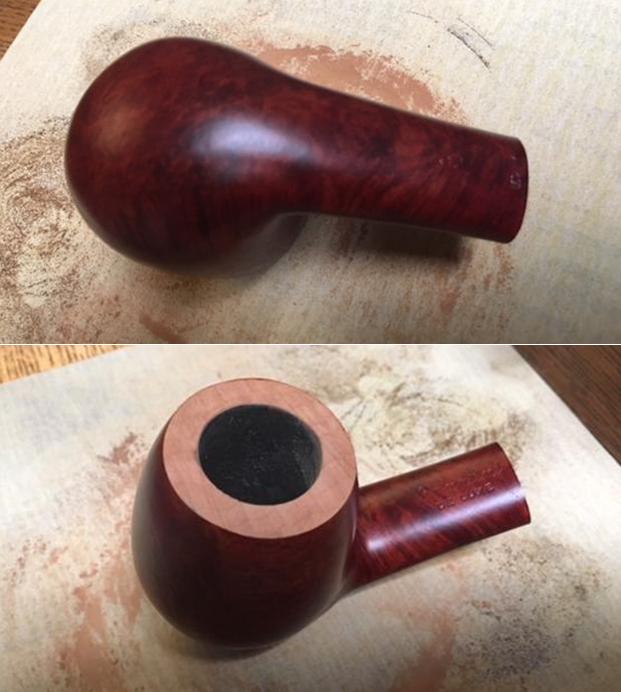
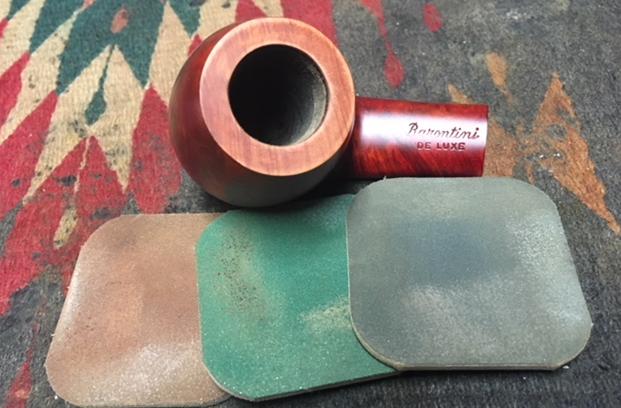
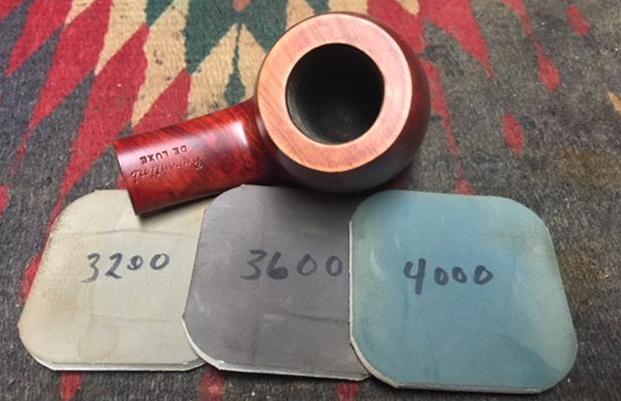
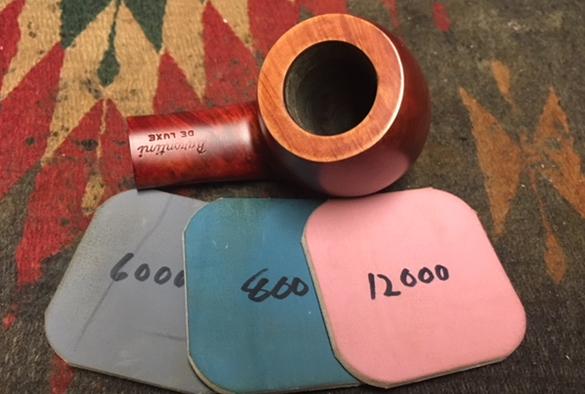
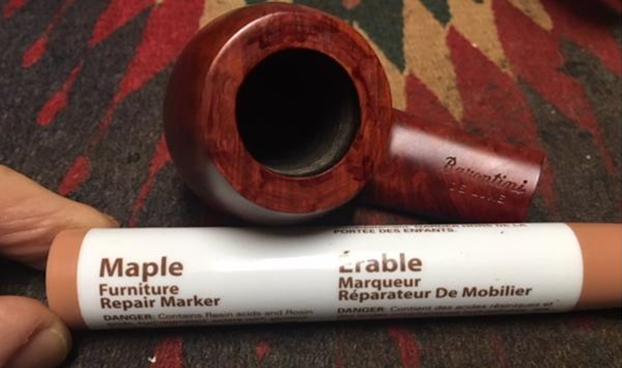
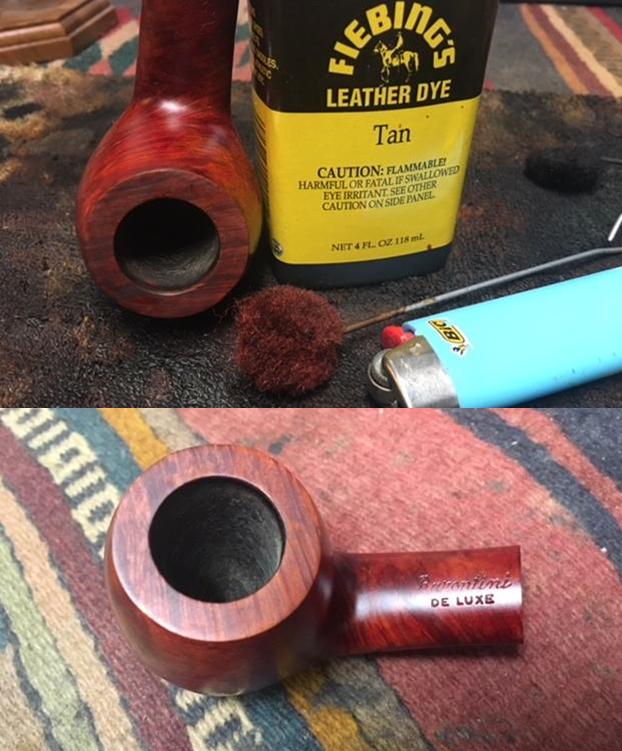
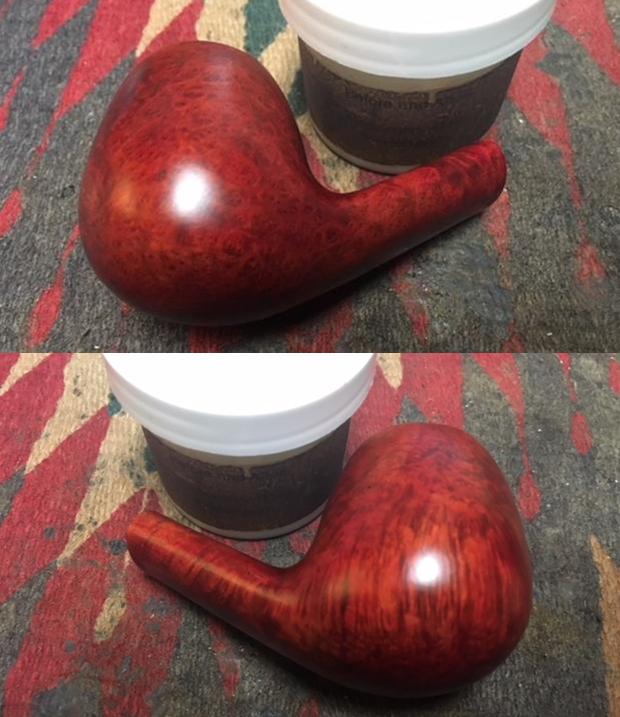
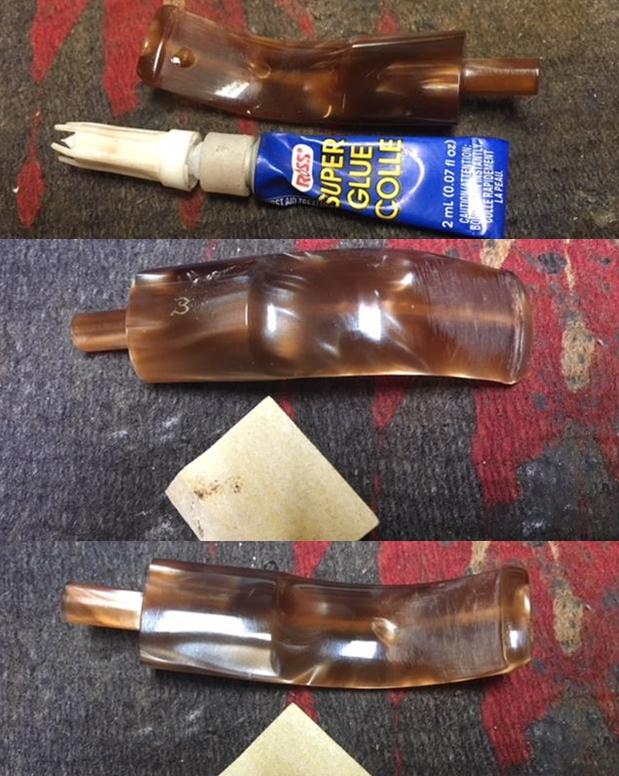
Jeff had reamed the bowl with a PipNet pipe reamer and followed up with a Savinelli Fitsall pipe knife to remove the cake. He scrubbed out the mortise and the airway in the shank and the stem with alcohol, cotton swabs and pipe cleaners. He scrubbed the exterior of the bowl, rim, shank and stem with a tooth brush and Murphy’s Oil Soap to remove the oils and tars on the rim and the grime on the finish of the bowl. He rinsed it under running water. He dried it off with a soft cloth. The rim was thoroughly cleaned and the damaged areas were obvious. Without the grime the finish looked really good. The Lucite stem would need to be worked on but I really like the profile it cast. I took photos of the pipe to show its condition before I started my work on it.   I took close up photos of the bowl and rim top as well as the stem. You can see the condition of the rim top and bowl in the first photo. Jeff was able to remove all of the tar and oils but you can now see the damaged areas on the surface clearly. There are damaged spots on the front inner edge and the back inner edge. There are also some deep dents and nicks in the flat surface of the rim. The acrylic/Lucite stem had tooth chatter and some light tooth marks on the top and underside of the stem just ahead of the button. There was one deeper tooth mark on the underside near the button.I decided to address the damage to the rim top first. I topped the bowl on a topping board using 220 grit sandpaper. I removed the damaged surface of the rim and made it smooth once again.I used a folded piece of 220 grit sandpaper to smooth out the inner edge of the rim. The rim top is looking far better at this point.I polished the rim top with micromesh sanding pads – wet sanding with 1500-2400 grit pads and dry sanding with 3200-12000 grit pads. I wiped the rim off after each sanding pad to remove the dust. The rim really shone once it was polished. Once it was polished the rim was ready to be stained. I started by using stain pens. I used a Maple stain pen to match the colour of the bowl. It was the closest I could get to matching the bowl. Once it cured it was streaked and not quite a match. The first photo below shows the rim after the stain pen.I carefully wiped the rim down with some isopropyl alcohol to smooth out the stain. Once it was smooth I restained it with some Fiebing’s aniline stain. I used a tan coloured stain and flamed it once I had stained the rim. I repeated staining and flaming until the coverage on the rim matched the bowl sides. The second photo below shows the look of the rim after this staining. I rubbed down the briar with Before & After Restoration Balm. I worked it into the smooth surface of the briar with my fingertips to clean, enliven and protect it. I let the balm sit for a little wall and then buffed with a cotton cloth to raise the shine. The following photos show the bowl at this point in the restoration process. The rim matches well but still needs to be polished and buffed to raise a shine on it. There were some tooth marks and chatter on the top and more chatter and a deeper tooth mark on the underside of the acrylic stem at the button. I cleaned off the surface of the stem with alcohol and filled in the deep tooth mark with clear super glue. Once it cured, I sanded both sides smooth with 220 grit sandpaper to blend the tooth chatter and the repair into the surface of the stem. It did not take too much sanding to remove the marks and smooth out the stem surface. When it was sanded it was smooth and the marks were gone. I polished the acrylic stem with micromesh sanding pads – wet sanding with 1500-2400 grit sanding pads and dry sanding it with 3200-12000 grit sanding pads. I wiped it down after each sanding pad with a damp cloth. I the polished stem and bowl with Blue Diamond to polish out the remaining small scratches and raise the shine. I gave the bowl and the stem several coats of carnauba wax and buffed the pipe with a clean buffing pad to raise the shine. I hand buffed it with a microfiber cloth to deepen the shine. The pipe polished up pretty nicely. This turned out to be a beautiful pipe in terms of shape and finish. This is the thirteenth pipe that I am restoring from Kathy’s Dad’s collection. I am looking forward once again to hearing what Kathy thinks once she sees the finished pipe on the blog. The finished pipe is shown in the photos below. The dimensions are Length: 6 inches, Height: 2 inches, Outside diameter of the bowl: 1 3/8 inches, Chamber diameter: ¾ of an inch. Thanks for walking through the restoration with me as I worked over this Barontini Brandy from George’s estate. More will follow in a variety of brands, shapes and sizes. I will be adding it to the rebornpipes store shortly so if you are interested in adding it to your collection and carrying on the trust from her father send me an email or a message on Facebook. Thanks for looking.

Kathy’s Dad’s Pipes – Restoring a Lovely Genod Santa Mauro Bent Billiard


Blog by Steve Laug

Some of you will remember the box of pipes that I received from George Koch’s estate from his daughter Kathy. There are many pipes to go through but with this blog I worked on another of the pipes from the estate. It has been a while since I have worked on them so I thought a reminder was in order about the estate. In the fall of 2017 I received a contact email on rebornpipes from Kathy asking if I would be interested in purchasing her late Father, George Koch’s estate pipes. He was a pipeman who had many “Malaga” and other brands of pipes and she was tasked with moving them out as she cleaned up the estate. We emailed back and forth and I had my brother Jeff follow up with her as he also lives in the US and would make it simpler to carry out this transaction. The long and short of it is that we purchased her Dad’s pipes – all of them (I am not even sure of the numbers at this point as they came in three installments). There are some beautiful pipes in that lot. Their condition varied from pristine to gnawed and damaged stems that will need to be replaced. These were some well used and obviously well-loved pipes. Cleaning and restoring them would be a tribute to this pipeman. I have told the story of George Koch in previous blogs about these pipes but I think it is important to keep the story attached to the pipes that came from his collection. It gives a remembrance to the man as I work on his pipes. I can almost imagine George picking out each pipe in his collection (both Malaga and otherwise) at the Malaga shop in Michigan. Kathy graciously wrote a brief bio of her father and sent it along with a photo of her Dad enjoying his “Malagas”. Here is George’s bio written by his daughter.

Dad was born in 1926 and lived almost all his life in Springfield, Illinois. He was the youngest son of German immigrants and started grade school knowing no English. His father was a coal miner who died when Dad was about seven and his sixteen year old brother quit school to go to work to support the family. There was not much money, but that doesn’t ruin a good childhood, and dad had a good one, working many odd jobs, as a newspaper carrier, at a dairy, and at the newspaper printing press among others.

He learned to fly even before he got his automobile driver’s license and carried his love of flying with him through life, recertifying his license in retirement and getting his instrumental license in his seventies and flying until he was grounded by the FAA in his early eighties due to their strict health requirements. (He was never happy with them about that.) He was in the Army Air Corps during World War II, trained to be a bomber, but the war ended before he was sent overseas. He ended service with them as a photographer and then earned his engineering degree from University of Illinois. He worked for Allis Chalmers manufacturing in Springfield until the early sixties, when he took a job at Massey Ferguson in Detroit, Michigan.

We lived in Livonia, and that’s where his love for Malaga pipes began. After a few years he returned to Allis Chalmers and we moved back to Springfield. I remember that when we went back to Michigan to visit friends, Dad had to go to the Malaga store and acquire a few new pipes. Many a year I wrote to Malaga and they picked out a pipe for me to purchase that I could give Dad for a Christmas or birthday present. He was always pleased. His favorites were the straight stemmed medium sized bowl pipes, but he liked them all. 

He had some other pipes, but the Malagas were his favorites. I remember him smoking them sitting in his easy chair after work, with feet up on the ledge by the fire burning in the fireplace.  Growing up it was my job to clean them and he liked the inner bowl and stem coated with Watkins vanilla, leaving a little of that liquid in the bowl to soak in when I put them back on the rack. Dad quit smoking later in life and so they’ve sat on the racks for many years unattended, a part of his area by his easy chair and fireplace. Dad passed when he was 89 years old and it finally is time for the pipes to move on. I’m very happy they are being restored by you and your brother and hope they find homes who enjoy them as much as Dad did. Thank-you for your care and interest. — Kathy, the oldest daughter

Kathy, once again I thank you for providing this beautiful tribute to your Dad. We will appreciate your trust in allowing us to clean and restore these pipes. I am also trusting that those of you who are reading this might carry on the legacy of her Dad’s pipes as they will be added to the rebornpipes store once they are finished.

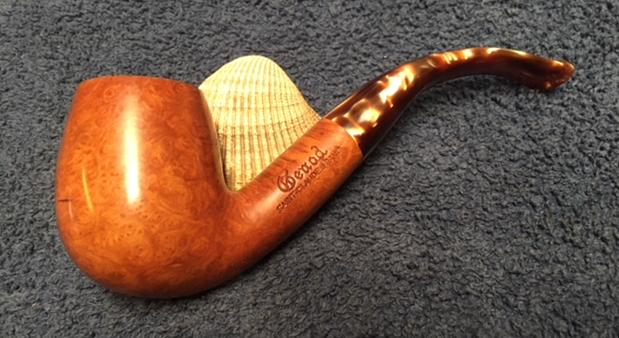
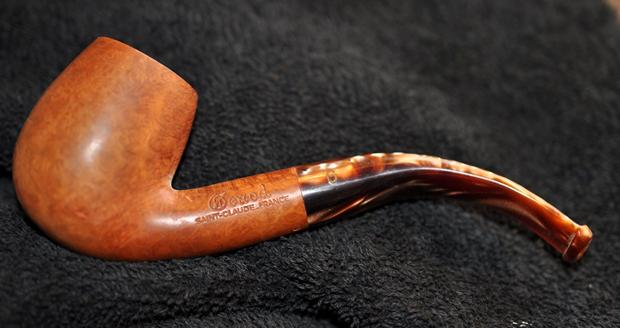
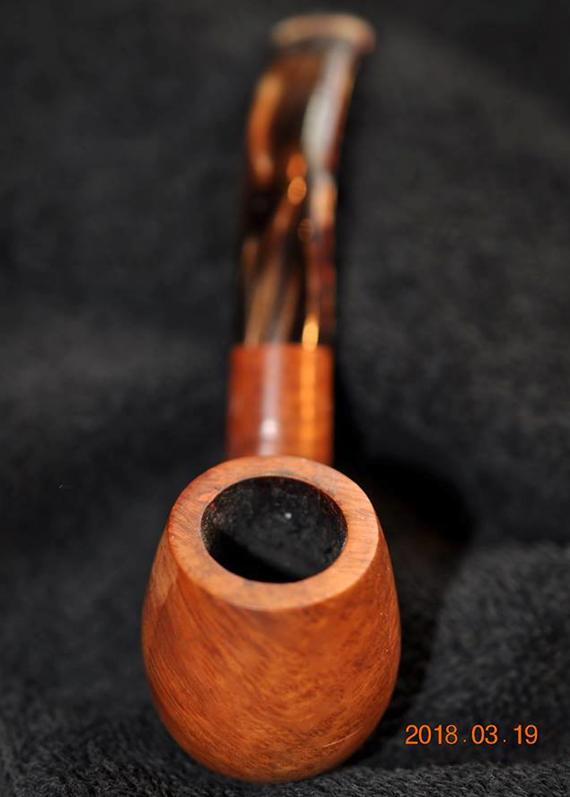
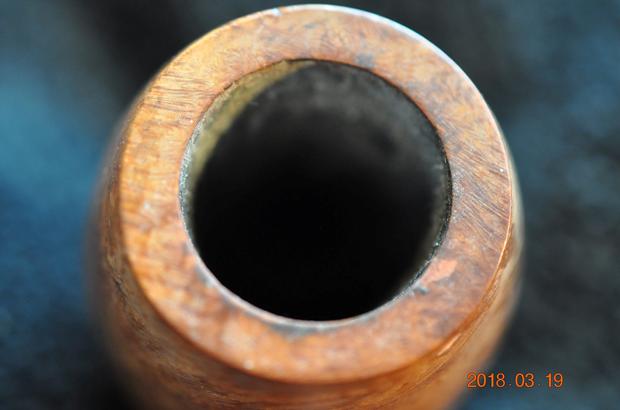
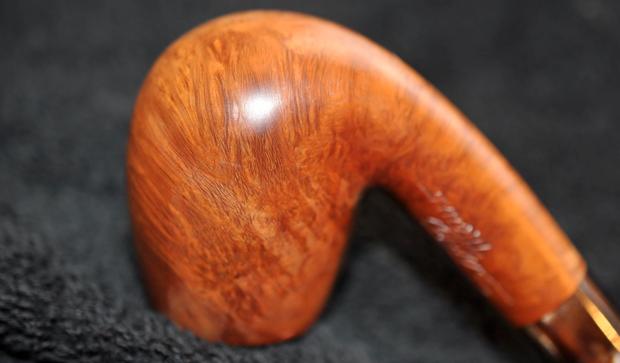
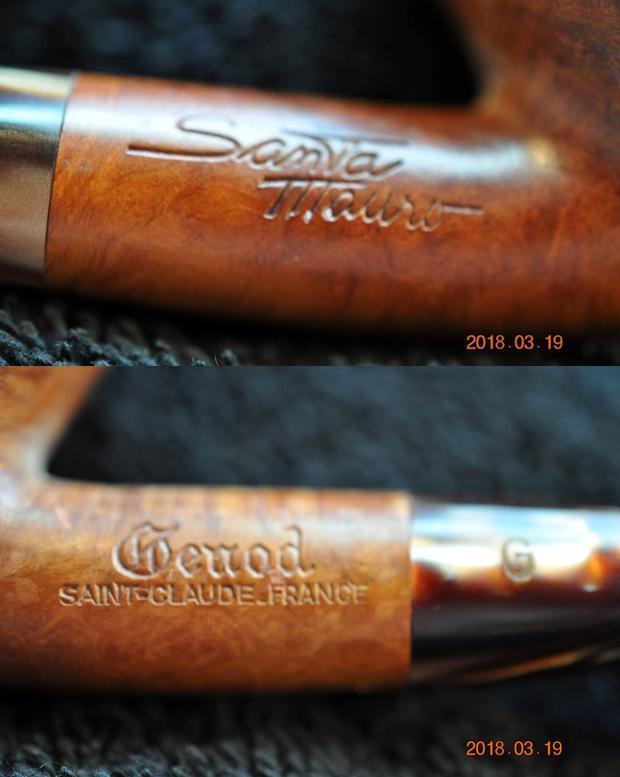
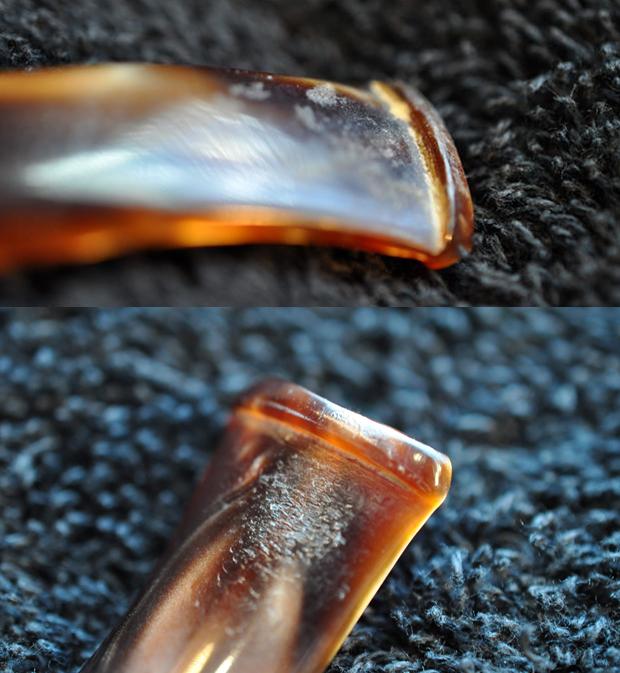
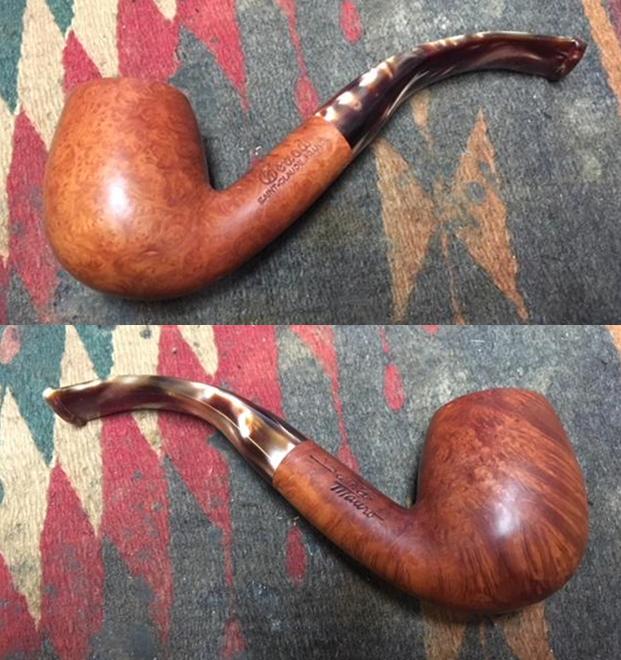
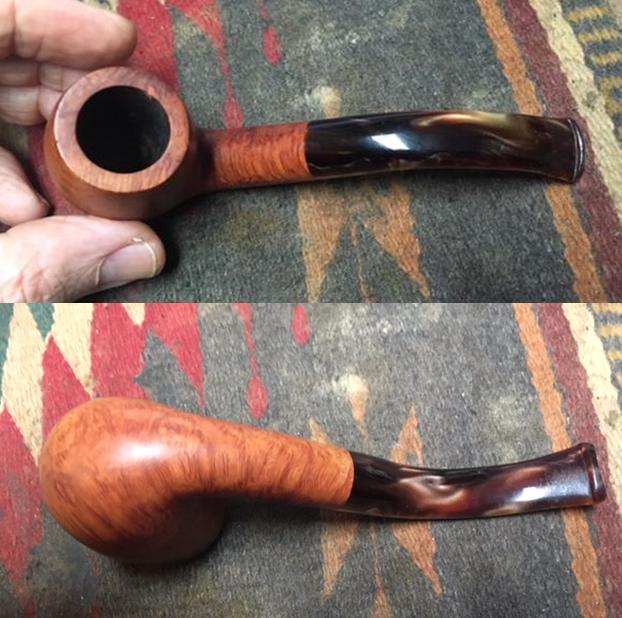
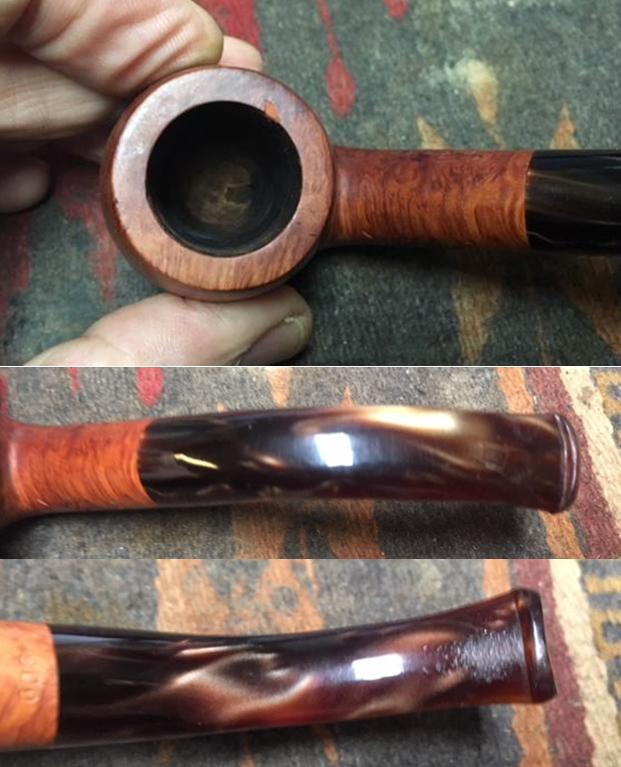
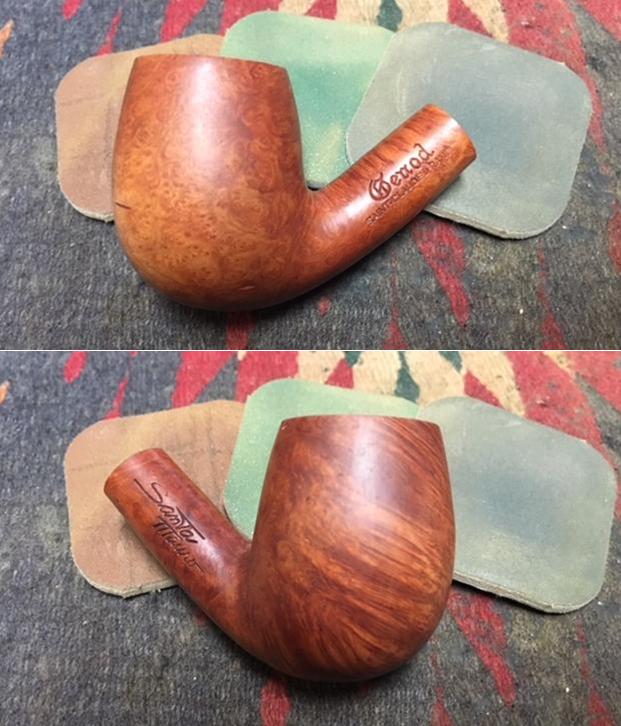
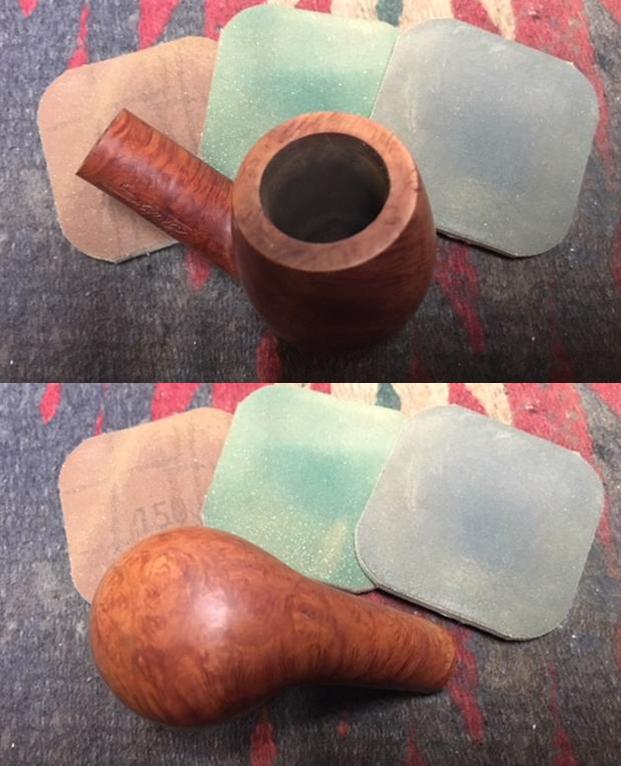
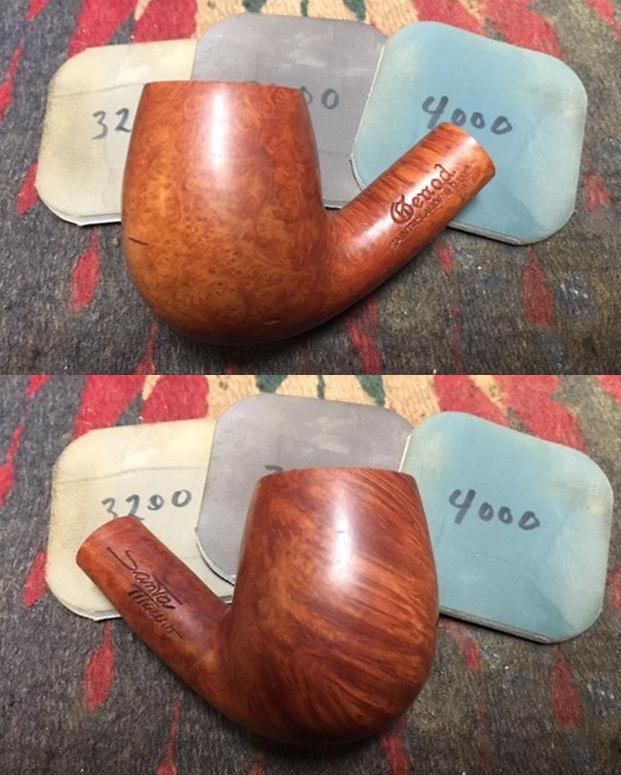
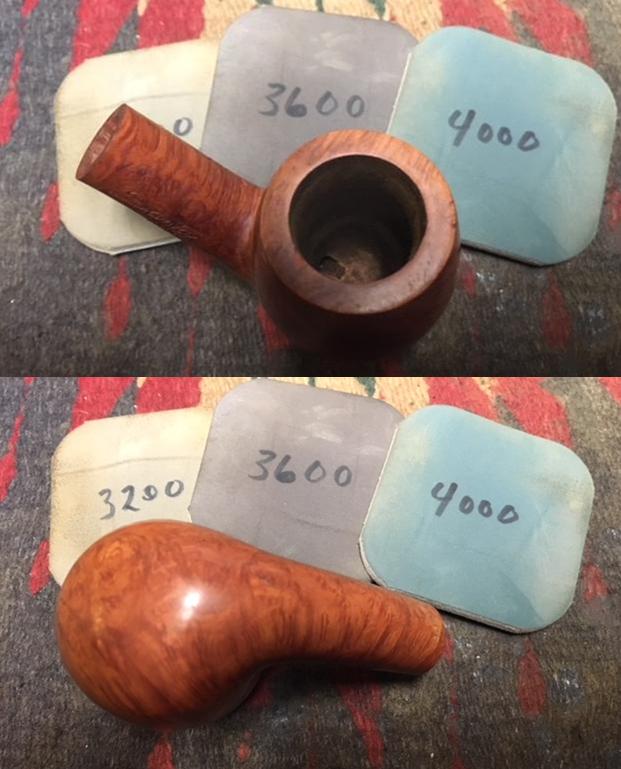
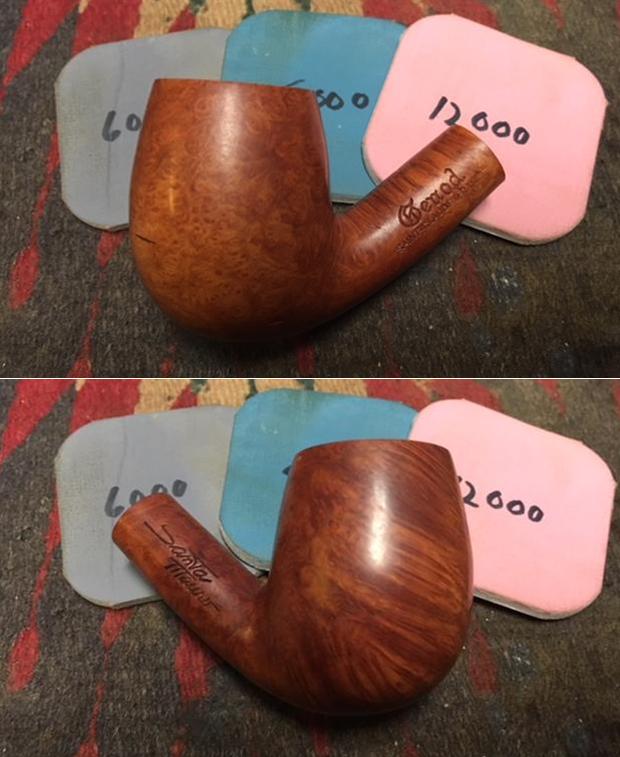
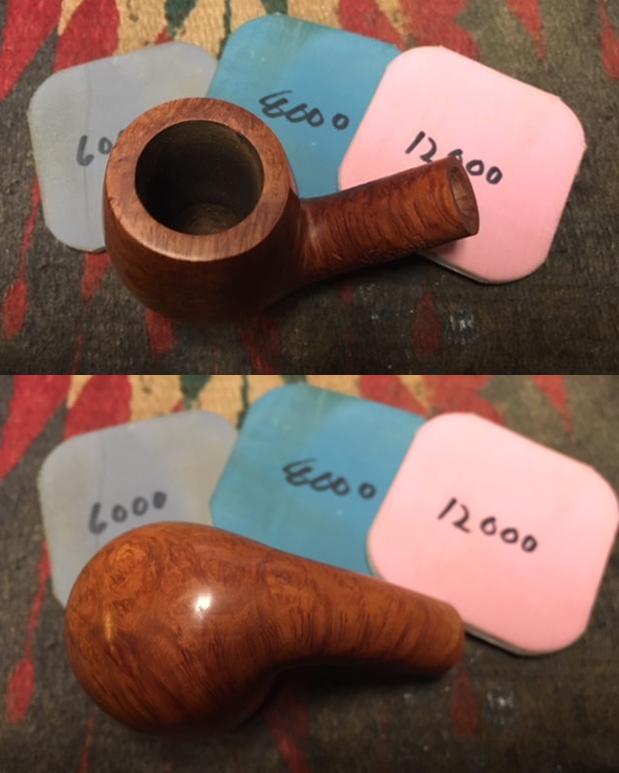
The next the pipe that I chose to work on is not a “Malaga” but a well-made Genod Bent Billiard with an acrylic stem. It has beautiful grain all around the bowl – straight, flame and birdseye. The top of the bowl is in good condition with nice grain. It has a small fill on the outer edge of the right side of the rim top. The stamping on the left side of the shank read GENOD over St. Claude, France. On the left side it reads Santa Mauro. On the underside of the shank it is stamped 909 or 606 and it is hard to tell which is right side up. The brown, swirled, pearlized Lucite stem had light tooth dents and chatter on the top and the underside of the stem. The interior of the pipe was dirty. I think that George had not smoked this one much. Jeff took these photos before he started the cleanup work on the pipe. Jeff took a close up photo of the bowl and rim to show the condition of the pipe before he started to work his magic on it. The exterior of the bowl and shank were dirty. You can see the wear on the rim top, the light lava on the surface and the cake and remnants of tobacco in the bowl. There also appears to be a small fill on the rim top on the right side. The pipe is dirty but in good condition.  He took a photo of the side of the bowl and shank from the side to show the grain on this pipe. The left side was covered in beautiful birdseye. It is a beautiful pipe. Jeff took some photos to capture the stamping on the right and left side of the shank. The first photo shows the right side of the shank with the stamping Santa Mauro and the second shows the Genod brand name over Saint-Claude, France. There is also a G stamped on the acrylic stem.The next two photos show the stem surface. There are tooth marks and chatter on both sides near the button. On the second photo below shows the tooth chatter and some faint marks.Jeff cleaned this one up before he sent it my way. He is really good at the cleanup work. He had reamed the bowl with a PipNet pipe reamer and followed up with a Savinelli Fitsall pipe knife to remove the cake. He scrubbed out the mortise and the airway in the shank and the stem with alcohol, cotton swabs and pipe cleaners. He scrubbed the exterior of the bowl, rim, shank and stem with a tooth brush and Murphy’s Oil Soap to remove the oils and tars on the bowl, plateau rim and shank. He rinsed it under running water. He dried it off with a soft cloth. The rim was thoroughly cleaned and the finish looked good. Without the grime the finish looked really good. The Lucite stem would need to be worked on but I really like the thin profile it cast. I took photos of the pipe to show its condition before I started my work on it.   I took close up photos of the bowl and rim top as well as the stem. You can see the condition of the rim top and bowl in the first photo. The top was in excellent condition and Jeff was able to remove all of the tar and oils. There was one small fill on the right topside of the bowl. He had scrubbed the bowl with a tooth brush and Murphy’s Oil Soap and it looked really good. The acrylic/Lucite stem had tooth chatter and some light tooth marks on the top and underside of the stem just ahead of the button.I looked up some information on the brand on the Pipephil website to get a quick overview of the history (http://www.pipephil.eu/logos/en/logo-g2.html). I did a screen capture of the listing for the brand. There was also a link to a well written historical timeline of the brand. You can read it at this link (http://www.pipephil.eu/logos/en/infos/genod-en.html).Pipedia gives further history of the brand (https://pipedia.org/wiki/Genod). The information is helpful and gives a sense of the history of the brand in St. Claude region of France. With the background information in hand I turned to the restoration of the pipe.

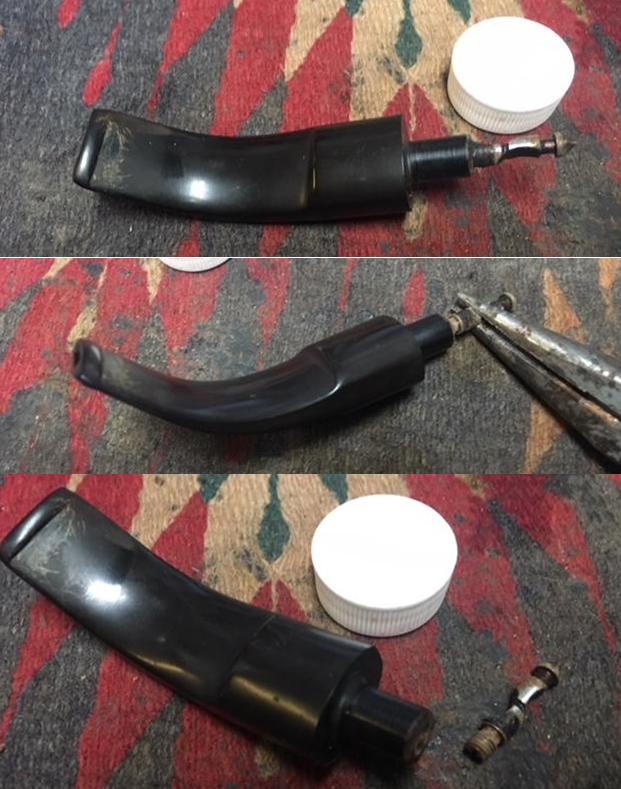
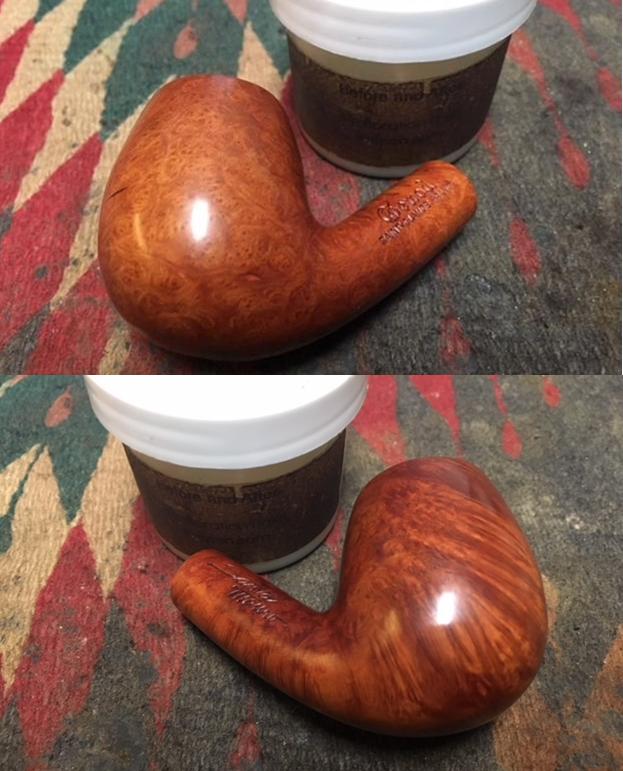
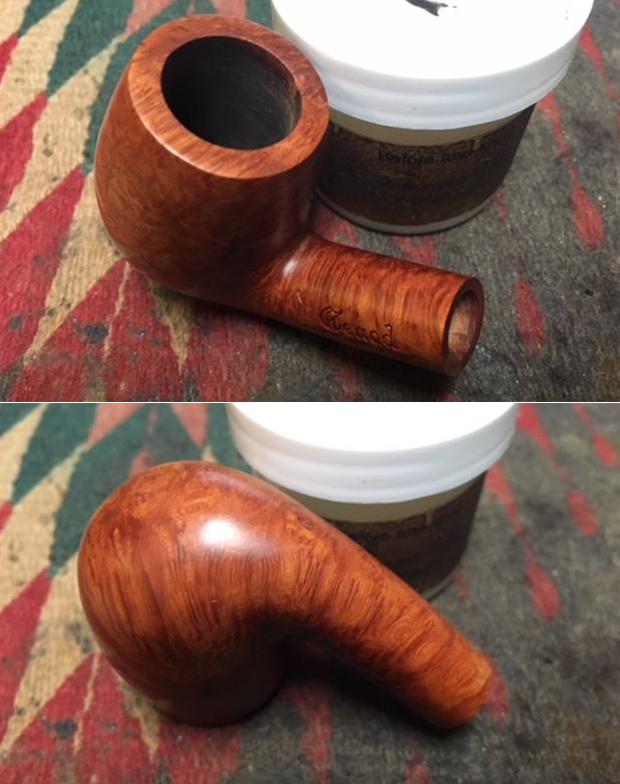
I removed the stem from the shank and there was a small stinger in the tenon. It was pressure fit and I was able to wiggle it free. I have found that these stingers really constrict the draught of the pipe. I ran some pipe cleaners and alcohol through the airway in the stem to remove any grime that was behind the stinger. I wrapped some 220 grit sandpaper around a piece of dowel to sand out the walls of the bowl. I ran pipe cleaners through the airway and a qtip through the mortise and the pipe was clean. I wiped off the dust from the bowl surface and took some photos of the pipe at this point in the process (but evidently not off my fingers as the photos show). The finish is decent. There was some wear around the right side of the top of the rim and there was a knife mark on the left of the bowl toward the front. I repaired the knife cut in the left front of the bowl with clear super glue. I pressed it into the cut mark. Once it cured I sanded it smooth with 220 grit sandpaper and smoothed it out with 1500 grit sandpaper.I polished the briar with micromesh sanding pads. I wet sanded the briar with 1500-2400 grit pads and wiped the bowl down with a damp cloth after each pad. I dry sanded it with 3200-12000 grit pads and repeated the wipe down to leave the briar clean. I rubbed down the briar with Before & After Restoration Balm. I worked it into the smooth surface of the briar with my fingertips to clean, enliven and protect it. I let the balm sit for a little wall and then buffed with a cotton cloth to raise the shine. The following photos show the bowl at this point in the restoration process. There were some tooth marks and chatter on the top and more chatter and a deeper tooth mark on the underside of the acrylic stem at the button. I cleaned off the surface of the stem with alcohol and filled in the deep tooth mark with clear super glue. Once it cured, I sanded both sides smooth with 220 grit sandpaper to blend the tooth chatter and the repair into the surface of the stem. It did not take too much sanding to remove the marks and smooth out the stem surface. When it was sanded it was smooth and the marks were gone. I polished the acrylic stem with micromesh sanding pads – wet sanding with 1500-2400 grit sanding pads and dry sanding it with 3200-12000 grit sanding pads. I wiped it down after each sanding pad with a damp cloth. I the polished stem and bowl with Blue Diamond to polish out the remaining small scratches and raise the shine. I gave the bowl and the stem several coats of carnauba wax and buffed the pipe with a clean buffing pad to raise the shine. I hand buffed it with a microfiber cloth to deepen the shine. The pipe polished up pretty nicely. This turned out to be a beautiful pipe in terms of shape and finish. This is the twelfth pipe that I am restoring from Kathy’s Dad’s collection. I am looking forward once again to hearing what Kathy thinks once she sees the finished pipe on the blog. The finished pipe is shown in the photos below. The dimensions are Length: 5 1/2 inches, Height: 2 inches, Outside diameter of the bowl: 1 1/4 inches, Chamber diameter: ¾ of an inch. Thanks for walking through the restoration with me as I worked over this Genod from George’s estate. More will follow in a variety of brands, shapes and sizes. I will be adding it to the rebornpipes store shortly so if you are interested in adding it to your collection and carrying on the trust from her father send me an email or a message on Facebook. Thanks for looking. 

Refreshing an Italian Gasparini M.G.M. Rock Briar 1912 with an Unexpected Encounter


Blog by Dal Stanton

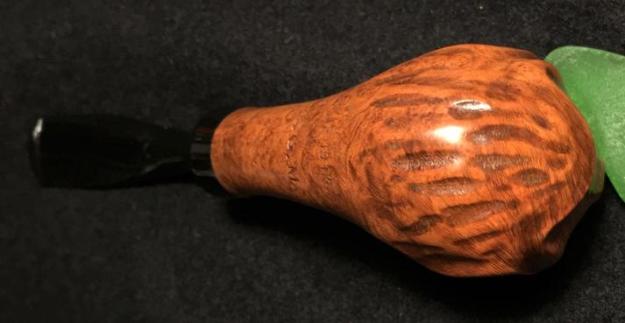
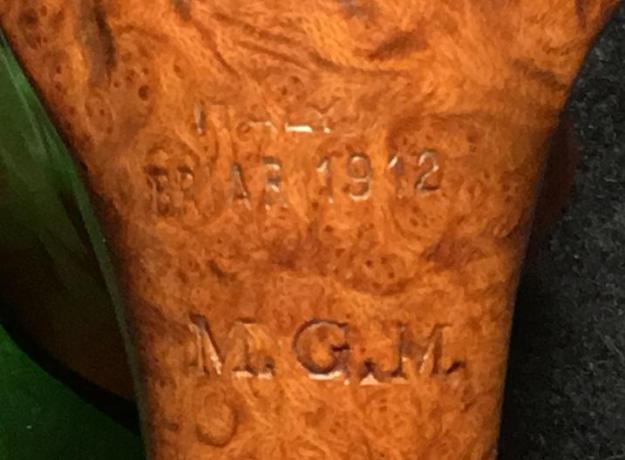
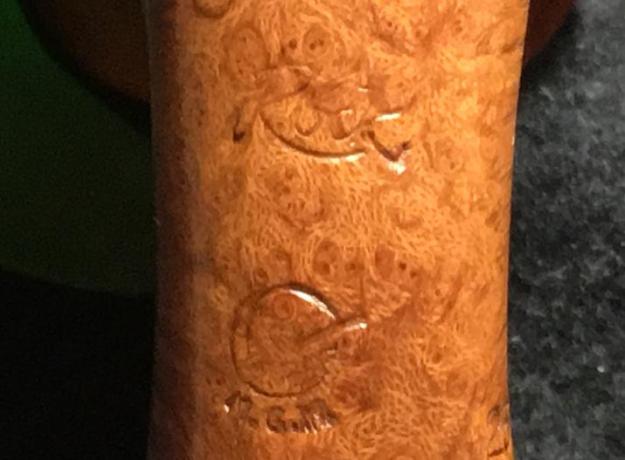
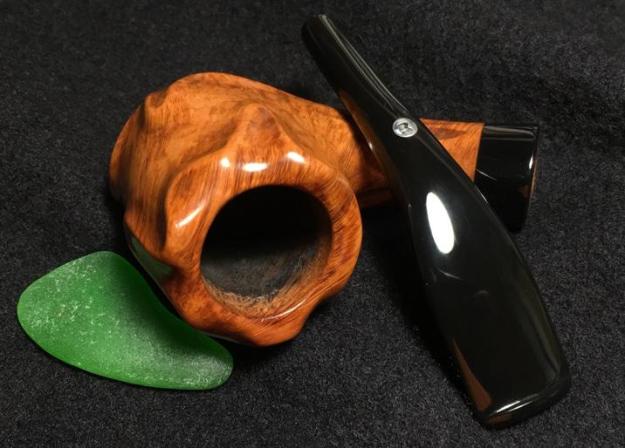
Idian lives in Indonesia and sent me an email after trolling through The Pipe Steward electronic “Help me!” basket which I call, “For ‘Pipe Dreamers’ Only!” He inquired about commissioning two pipes, a Peterson and the Italian, Gasparini M.G.M. Rock Briar 1912.  He settled on the Gasparini and assured me that he was a patient man as I put his commissioned pipe in the queue behind quite a few other commissioned pipes.  I found this pipe along with 65 others in a Lot of 66 which has provided several pipes for my work table which have benefited our work with the Daughters of Bulgaria, helping women and girls who have been trafficked and sexually exploited.  This M.G.M. Rock Briar stood out to Idian and it also stood out to me not only because it’s a unique Freehand shape but also because the shank is chocked full of nomenclature information that I’ve looked forward to researching.  Here are the pictures that Idian saw. The heel of the shank is stamped with ITALY [over] BRIAR 1912 [over] M.G.M. [over] Rock in cursive script.  Below this is a stamp – a pipe partially ensconced in a circle with M.G.M. repeated under the circle. To the right of this, hugging the briar’s edge transitioning to the vulcanite ferrule is the number 25, which I’m assuming is a shape number.  The pictures above show the rondel with the pressed M for Mario, the patriarch of the Gasparini family. Much of Pipedia’s article about the Gasparini name came from the current Gasparini website, http://www.mgasparini.it/en/.  When reading the information, one gets the impression of the enterprise having deep family roots which continue today.  From the Pipedia article:
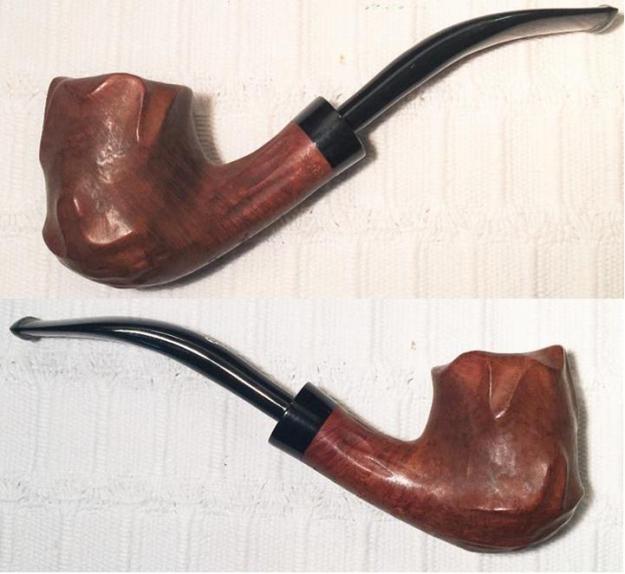
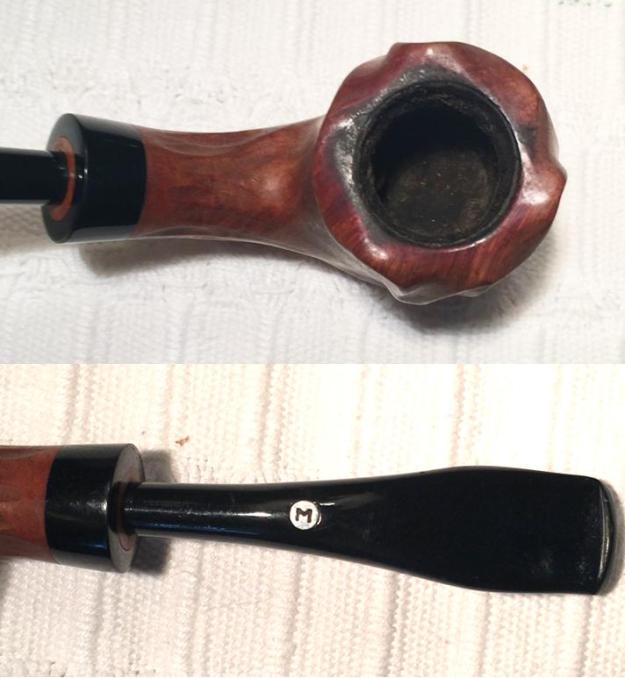
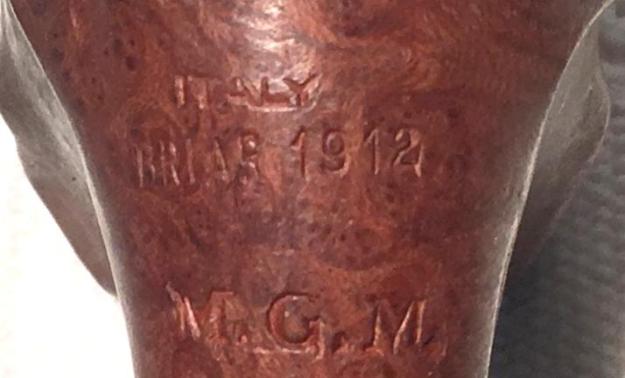
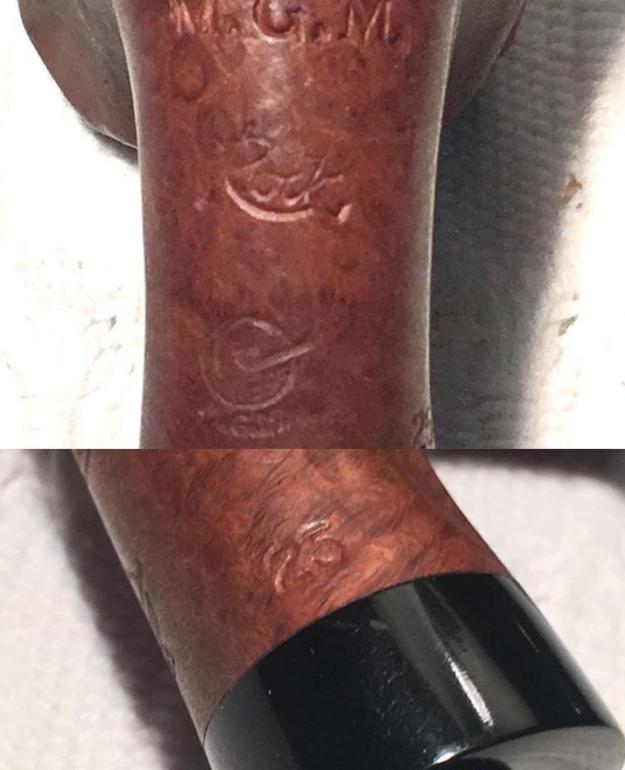
In 1938 Mario Gasparini, with his wife Ida, took his first steps into the world of the pipe. Today his daughter, Marisa Gasparini, sits at his desk; since 1977 Marisa and her husband, and now her daughter, carry on the tradition of her family. At the beginning of 1950’s, the building, that still today hosts the production department, was enlarged. In 1971 the offices and the warehouse were moved from Milan (where they were situated for marketing purposes) to Luvinate.

During those years the skilled workers and our direct partners have always followed the history of the Gasparini factory, becoming very fond of it and devoting themselves, with care and love, to the making of each pipe, with the personal fantasy and skills of the artist. We would like to take this opportunity to thank those artisans who, with their creativity, gave, and continue to give, life to the Gasparini Pipe factory.

The article also describes the Gasparini series, M.G.M. coming on-line in 1965 as a classical line with the initials standing for the founder’s name – Mario Gasparini Milano.  Pressing the research, the Pipephil.eu site offered more information.Of interest in the Pipephil information was the reference connecting the M.G.M. “Collectionist” series (marked by the circle/pipe stamp) with a comparison to ‘wax-drip pipes’.  I looked at that link and got a clue of what might be the considered shape of the M.G.M. Rock on my work desk: stummels fashioned to look like the ends of used candles.  Here is a clipping of three ‘high-end’ examples of this interesting shape:With these examples before me, I take another look at the M.G.M. Rock Collector on the table and it I believe that its possible it was fashioned in the ‘wax-drip’ manner with the ripples of melted wax shaped on the rim flowing down.Pipedia’s article included an older Gasparini brochure (courtesy of Doug Valitchka) – unfortunately no dating was given for the brochure, showing three pipes in the ‘Collector’ series.  The middle example is obviously the same shape style and stem as the pipe on my work table but with a squatter bowl – very much reminiscent of a ‘wax drip’ shape.  My guess is that the brochure is from the 60’s because it’s black and white and I would imagine that the stated pricing at that time would not be for a corner drug store pipe!  Unfortunately, this was the only page shown – I would love to have read the description for the ‘b.’ pipe!One more question dogged me in my research of the M.G.M. Rock – ‘Briar 1912’.  Briar 1912 was stamped on several examples I saw of Gasparini pipes on Pipedia and Pipephil.eu.  What did it refer to?  As I’ve done before with much success, I decide to go to the front door of the Gasparini house and knock and introduce myself.  On the ‘Contact’ page of the Gasparini website I find contact information and send an email with the 1912 question as well as a few other questions to confirm the shape number and dating.  We’ll see if they respond!  The description in the brochure gives a clue that I didn’t recognize until later – it states that the briar had been aged over 50 years!  If one does the math, if 1912 is when the aging process began – plus 50 years, lands us in the year 1962 – the decade the M.G.M. series was introduced and perhaps the ‘Collector’ series as well. It was only after discovering an August 2013 thread in Pipes Magazine Forum (LINK) concerning Gasparini pipes that I tied the 1912 with the aging of the briar – I know, I’m slow!  This clip from Doc Watson speaks very positively of the Gasparini named pipes:
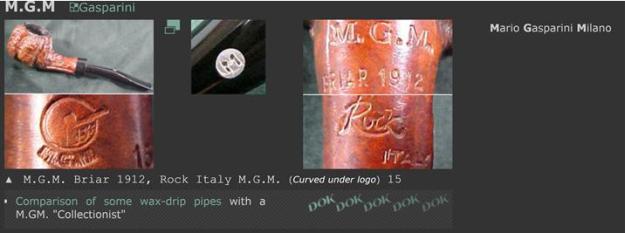
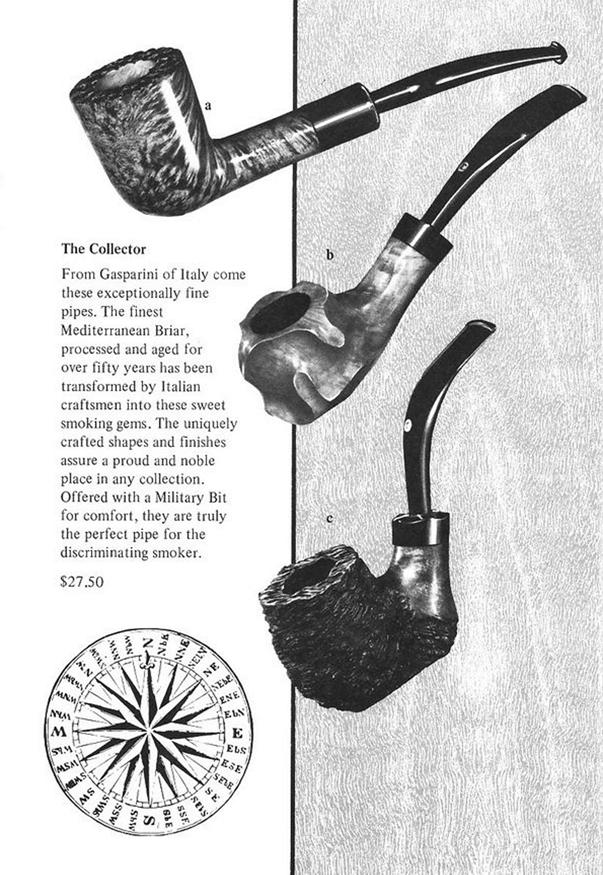
I have a few Gasparini pipes. They are real sleepers IMO and are seldom talked about by collectors but believe me there are some magnificent Gasparini pipes out there. Here’s a photo of one that came from the late Jack Ehrmantrout (owner of Pipe Collectors International PCI) collection. It was one of his favorites that he never smoked. Some are stamped 1912 briar, which is indeed some old root. As most pipe companies/makers they make different lines, some higher grades than others but IMO if you find one you like, go for it. (Note from me: IMO = in my opinion)I love ‘Sherlocking’ the provenance of pipes not only to learn about the names of historic lines, but to more fully appreciate the value of what I’m handling and seeking to restore.  The picture above, along with several examples in the Pipedia article courtesy of Doug Valitchka, give me a good idea of the natural briar hue Gasparini used and I will shoot for this with the M.G.M. Rock on my table.
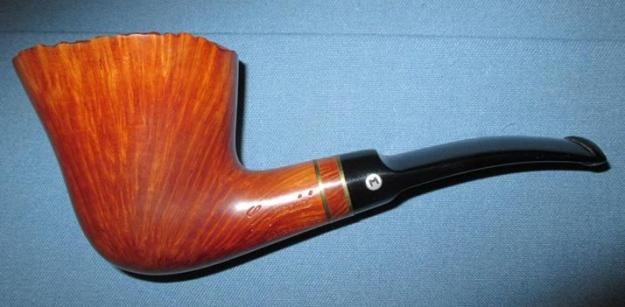
Well, my cup runs over!  I received a reply from M. Gasparini Pipes in Luvinate, Italy, but not from a desk employee.  Marissa Gasparini (picture from previously cited Pipedia article) responded to my questions, the daughter of Mario Gasparini, the founder of the Gasparini Pipe house in 1948.  She assumed control of the Gasparini Pipe interests in 1977 and I assume she continues in that role today.  I was honored that she wrote to me.  Here is her letter, switching to my native tongue and responding to my questions:
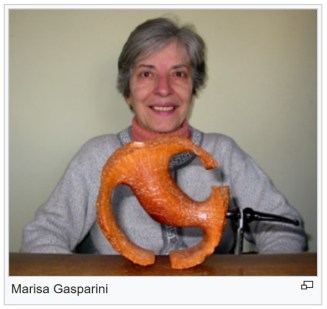
Dear Dal,
1) the 1912 is the year in which was born the briar that we used for making that serie of pipes so particular.
2) The circle with pipe in it was used only for some special  fancy serie like the Rock.
3) We begin to produce thise serie in the 1960 and finish in the 1965, and now we have left only few pieces, and you are lucky to have one.
4) The number 25 is the number of the shape and the pipe was waxed.
We hope  that our informations are o.k. for you and we thank you  and remain at your complete disposal,
with best regards,
Marisa Gasparini

Wow!  I love restoring pipes!  With Marisa’s letter as confirmation, the briar root aging process used for this M.G.M. Rock began in 1912, 106 years ago.  The Collector stamp was only used for special, fancy lines, which applies to this Rock.  This M.G.M. Rock was produced between 1960 and 1965 – which gives it an age ranging from 58 to 53 years.  The shape number perhaps points to the wax candle shape that I was guessing might be the case or the shape may simply be a freehand Rock.  She also said that I was ‘lucky’ to have one of these special collector series in my possession – I would call it blessed.  I responded to her gracious letter and ventured another question – to ask about the significance of the third letter, ‘M’ in M.G.M. moniker?  The first two letters are clear – the initials of her father.  The third letter, ‘M’ stands for Milano.  I asked her the significance of ‘Milano’?

A few hours later her reply arrived.  The M.G.M. – Milano was where the Gasparini family lived and produced their pipes 45 years ago – a special place in their memories.

This is a nice-looking pipe and I’m happy to call this a “Refresh” on the title of the blog. With a very quick cursory look at the chamber, stummel and stem I see no challenging issues.  There is a light cake in the chamber, the rim has minor discoloration from grime and oils, and the stummel surface appears to be in good shape.  The surface of the stummel has darkened and has become tired and needs some cleaning and spiffing up a bit.  The Military stem shows no perceptible oxidation and only minor scratches – no tooth chatter.  Maybe an easy restoration!

I begin the restoration by placing the stem in a soak of Before & After Deoxidizer along with other stems of pipes in queue for restoration.  Even though I see no oxidation, I’ll give it a soak to make sure.  Before putting the stem in the soak, I run a pipe cleaner dipped in isopropyl 95% through the airway to clean it first.  After soaking for several hours, I fish the stem out, drain it and wipe it down with a cotton pad wetted with mineral oil (light paraffin oil here in Bulgaria).  As I thought, very little oxidation was raised during the soak.Looking now to the M.G.M. Rock stummel, I begin by reaming the chamber to remove the moderate collection of carbon cake to provide a fresh start for the 106 year aged briar.  After putting down paper towel for easier clean-up, from smaller to larger, I use 3 of the 4 blade heads available to me in the Pipnet Reaming Kit.  After this, I employ the Savinelli Fitsall Pipe Tool to fine tune the reaming by reaching the more difficult angles at the floor of the chamber and by scraping the walls.  Finally, I wrap a piece of 240 grit paper around a Sharpie Pen and sand the chamber walls.  I then wipe the chamber with a cotton pad wetted with isopropyl 95% to clean the carbon dust left behind.  An inspection reveals a healthy chamber with no cracks or heat fissures.   The pictures show the process. Now, turning to the external surface cleaning, I use undiluted Murphy’s Oil Soap with cotton pads and a bristled tooth brush to reach into the rolls of the briar shaping.  I also use a brass wire brush on the small plateau to loosen the scorching around parts of the internal lip.  Following this, I gently scrape the scorching with a Winchester pocket knife edge to remove more of the damaged briar.  The cleaning and brushing made good progress. Preferring to work on a cleaned pipe, I now switch to the internals of the stummel by cleaning the mortise and airway with pipe cleaners and cotton buds dipped in isopropyl 95%. I also utilize different sized dental spatulas and scoops to excavate tars and oils by scraping the mortise walls and digging around the draft hole drilling deeper in the mortise.  I have learned over time that it shortens the clean up by excavating what you can and following with the cotton buds.  Last time I was in the US, I went to the US 1 Flea Market in Stuart, Florida, looking for pipes, of course.  I found a shop in the Flea Market that had absolutely everything and found an assortment pack of about 8 different dental tool accessories – sharp, flat and scooped.  These tools are very helpful in different phases of the pipe restoration process.  A good investment!  After excavating and swabbing, the internals are clean.  I move on!Back to the Military stem – it is in good shape with respect to the oxidation, but it has scratches and roughness around the bit that one expects to find through normal use.  The button also has compression marks to address. I first wet sand using 600 grade paper to find out if a mid-range grit is invasive enough to address the issues I see.  It does well, but it uncovers small tooth dents that I didn’t see before as well as the button being a bit compressed. I backtrack and use a flat needle file to give the button refreshed definition.  I then use 240 grit paper only in the bit area to remove the tooth dent and work on the button.To erase the 240 grit scratches, I again sand using 600 grit paper followed by sand/buffing the entire stem with 0000 grade steel wool.  I think the Military stem is looking pretty good.Pressing forward with the stem sanding, I wet sand using micromesh pads 1500 to 2400 followed by dry sanding with pad 3200 to 4000 then pads 6000 to 12000.  After each set of 3 pads, I apply a rich coat of Obsidian Oil which rejuvenates the vulcanite.  The stem’s looking great – I love the pop! I’ve been thinking as I’ve been working how I should approach the sanding/finishing of the ‘Wax Drip’ Rock shape?  As the tired finish is now, the pipe to me is one dimensional.  The darkened finish is uniformly non-expressive.  I look at it and I see the beautiful, unique shape, but I don’t see the beauty of 106-year-old briar grain standing on center stage of this presentation.  The great thing about micromesh pads is that they are flexible and hug the surface which I believe will aid me in adding some depth and contrast of shades in the briar’s presentation.  While sanding with the micromesh pads, there will be natural and unavoidable changes in the pressure and impact of the pads because of the contouring of the Wax Drip Rock shaped briar.  High points will naturally be lighter and lower points will be darker, providing (at least theoretically at this point!) contrast and shading through the briar landscape.  Ok, that’s the theory and the plan.  Time to march!  Using pads 1500 to 2400, I wet sand the stummel and vulcanite ferrule.  Following this, I dry sand using pads 3200 to 4000 then 6000 to 12000.  The pictures show the progress and I like what I see – theory becoming reality. Next, I mount the Dremel with a cotton cloth buffing wheel set at 40% full power and I apply Tripoli compound to the briar surface.  I’m able to reach more directly into the carved areas of the briar with this more abrasive compound.  After the Tripoli compound, I change to another cotton cloth buffing wheel, maintain the same speed and apply Blue Diamond compound to both stummel and military stem.  To remove compound dust from the pipe, I buff the pipe with a felt cloth. Before applying carnauba wax to the stummel, I apply Before & After Restoration Balm. I like using the Restoration Balm because it deepens and enriches the natural briar hues.  After squeezing some Balm on my finger, I apply it to the briar with my fingers working the Balm into the surface – making sure I work it into the carved areas.  As I work the Balm into the briar, it begins with a light oil consistency but thickens during the application to a wax-like ointment – the picture below shows this stage.  After letting the Balm settle for about 10 minutes, I wipe/buff off the Balm with a clean cloth. The final stage is to apply carnauba wax to the stem and stummel.  I mount another cotton cloth wheel to the Dremel, maintain the same 40% of full power, and apply a few coats of carnauba wax.  When I complete the waxing cycles, I give the pipe a rigorous hand buffing with a microfiber cloth to raise the shine even more.
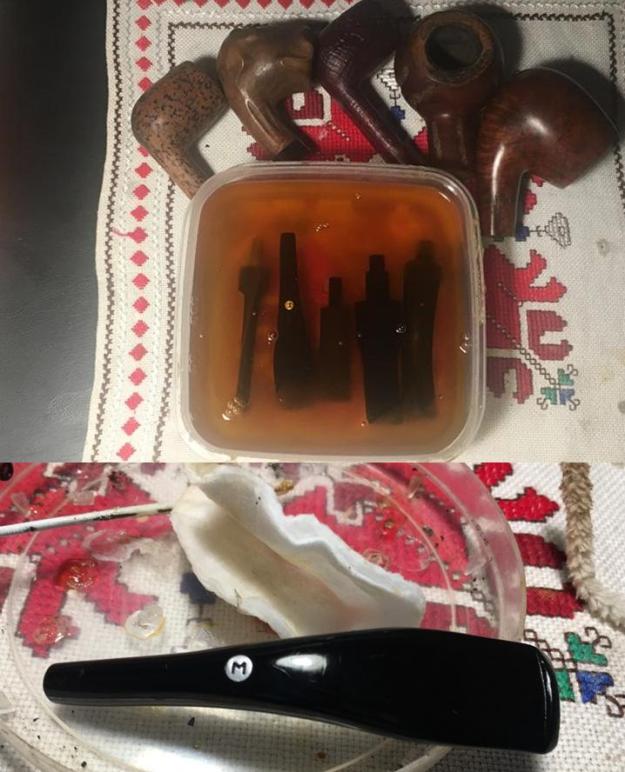
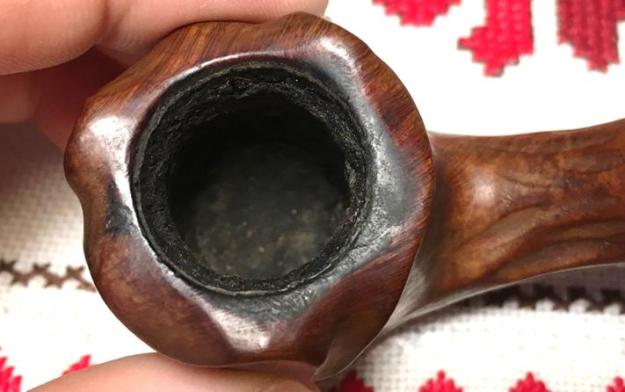
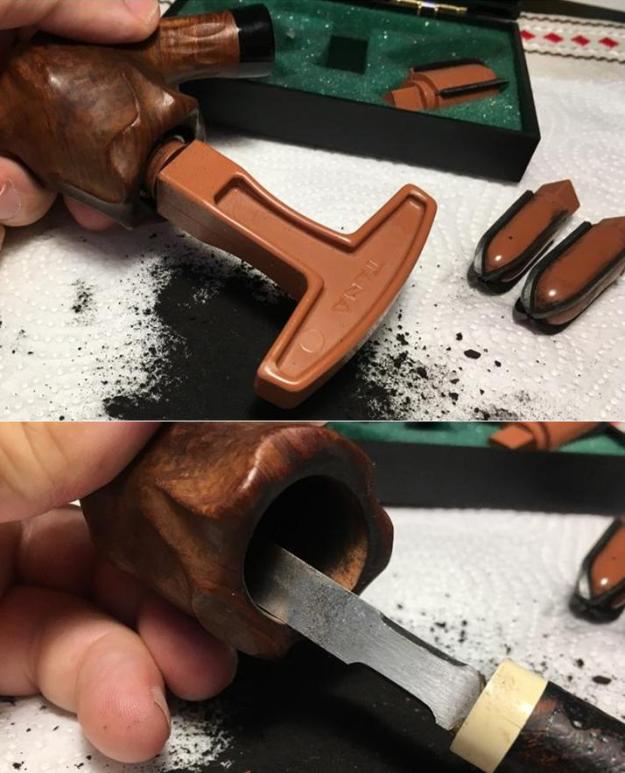
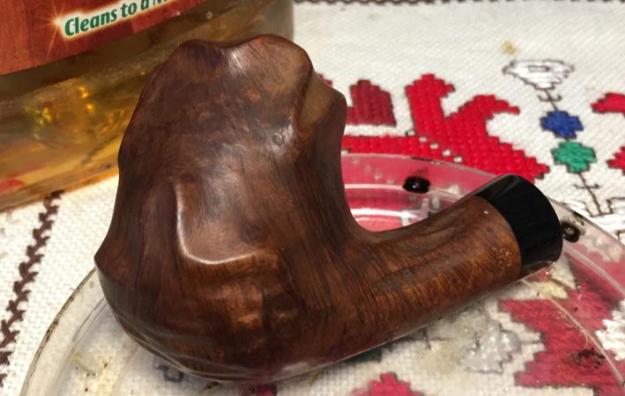
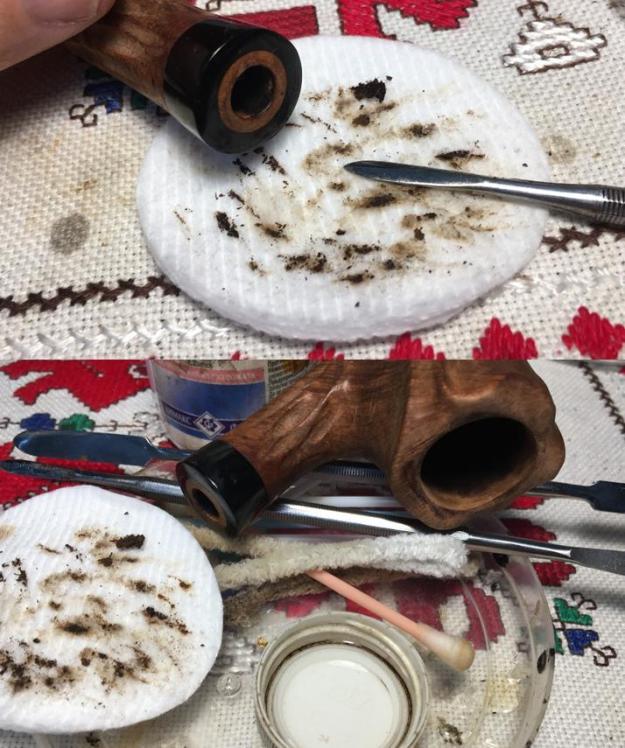
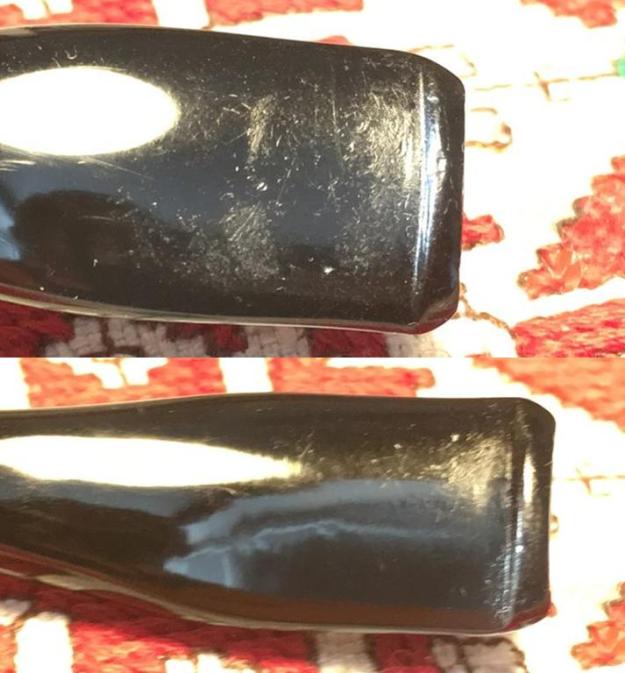
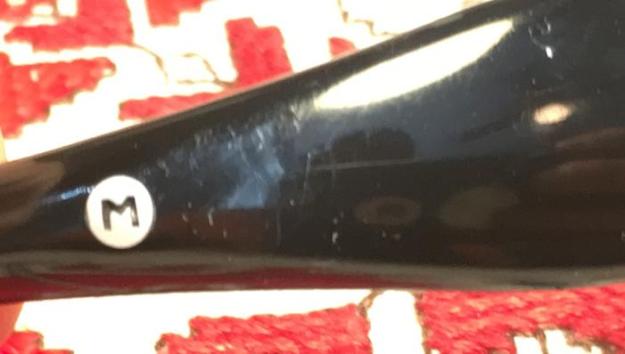
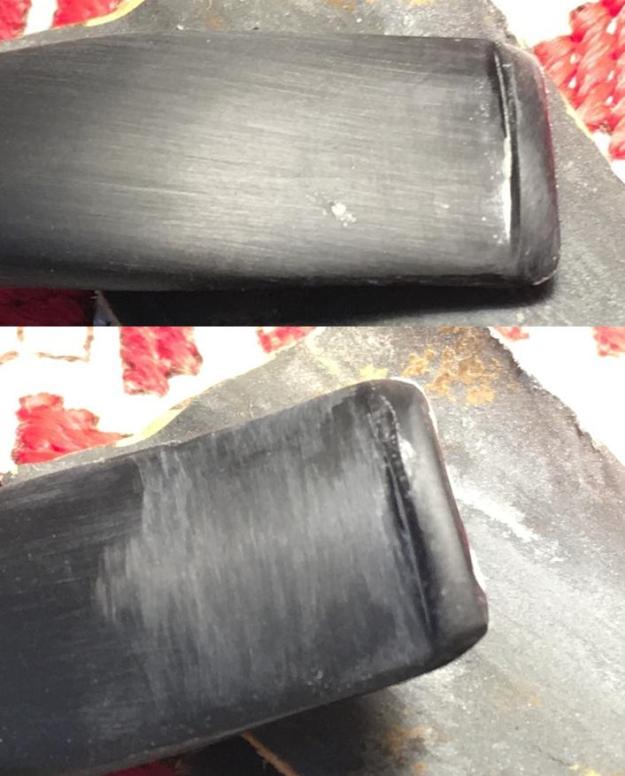
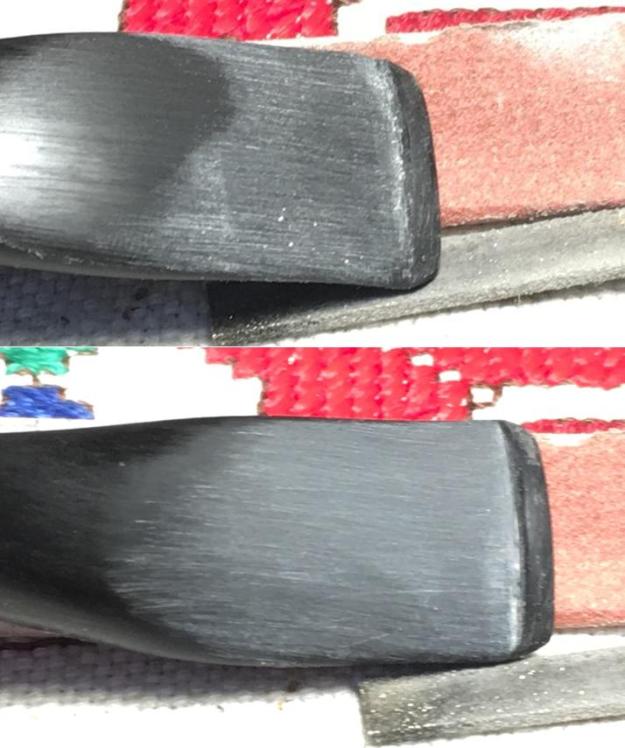
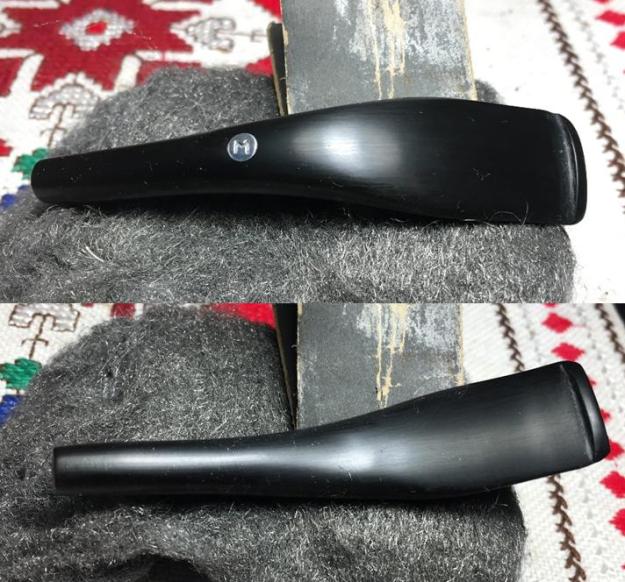
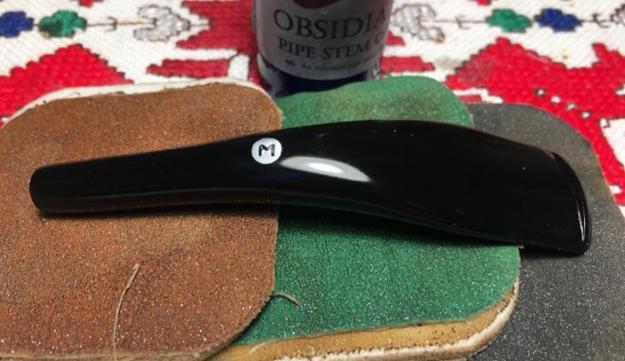
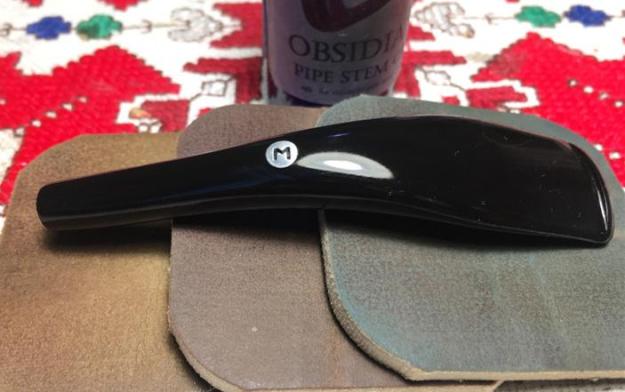
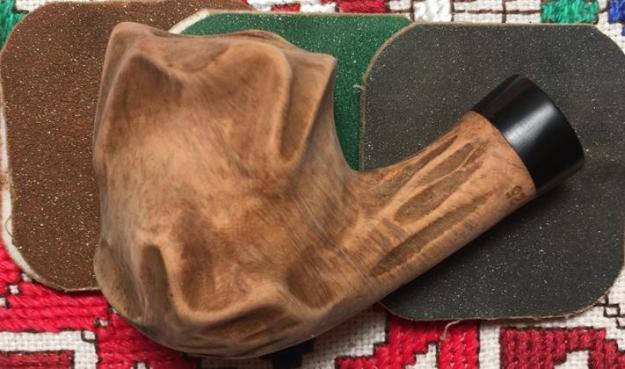
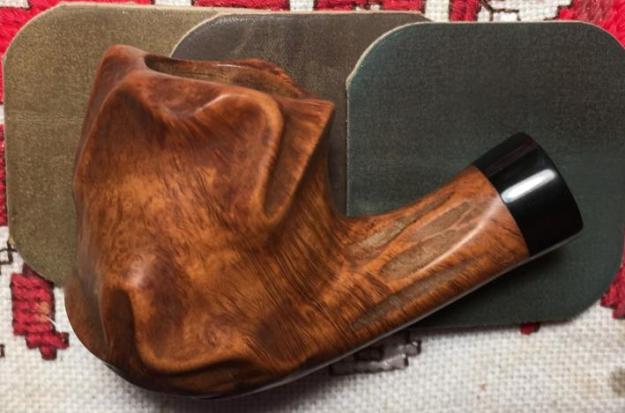
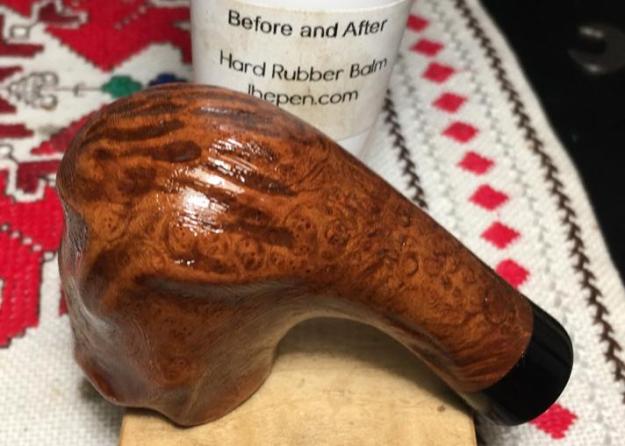
Restoring this Gasparini M.G.M. Rock exceeded my expectations in important ways. The pipe was beautiful before I started.  Now, it’s a show stopper as the 106-year aged briar has retaken center stage and the Freehand shape with the dips, curves and swirls are a stellar supporting cast.  I can easily see the Wax Drip shape, but it could also be petals on a flower.  The Military style stem looks classy but unassuming as it joins the vulcanite ferrule with a contrasting ring of briar between ferrule and stem.  Another exceeded expectation was to understand better the Gasparini name and the value of family. My appreciation brimmed for Marisa Gasparini as she took the time to answer my questions – this was an honor.  This simple act revealed her pride in the Mario Gasparini heritage and her willingness to answer questions shows her concern for each pipe bearing the Gasparini name.

Idian commissioned this pipe with the understanding that the final valuing of the pipe would be after I researched and restored the pipe and published the write-up.  Then, as is the understanding for all the pipes that are commissioned, the commissioner of the pipe has the first opportunity to acquire the pipe in The Pipe Steward Store with the value determined.  If the price is not agreeable, he may pass, and I leave the pipe in the store for another steward to eventually add to his collection.  However, for this restoration, for this Gasparini M.G.M. Rock, the value for me is ‘priceless’.  I’ve invited him to join my collection and start pulling his own weight in the rotation – my first Gasparini, we’re happy.  I’m thankful to Idian for his understanding after letting him know – he was a bit disappointed but happy that the M.G.M. Rock was restored and continued in good hands.  Thanks for joining me!