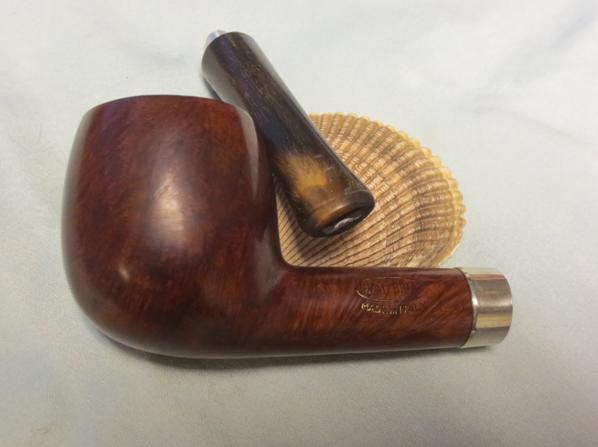
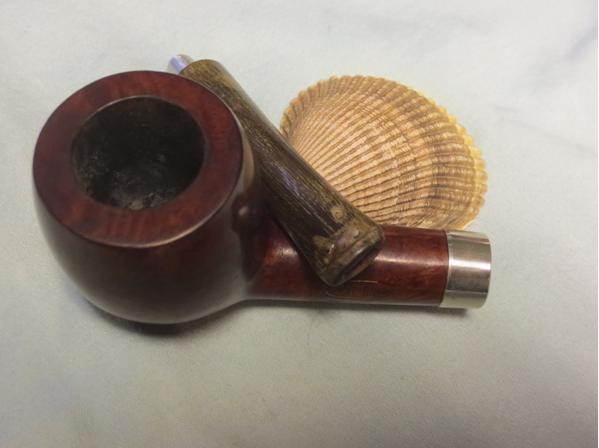
Monthly Archives: February 2016

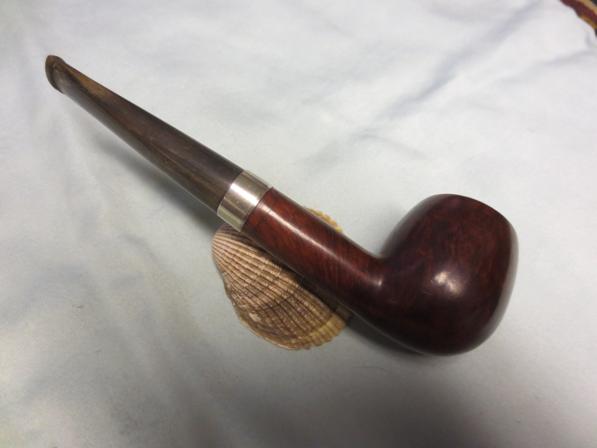
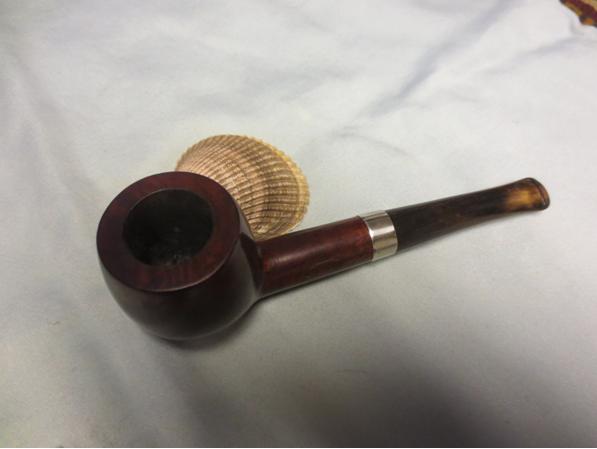
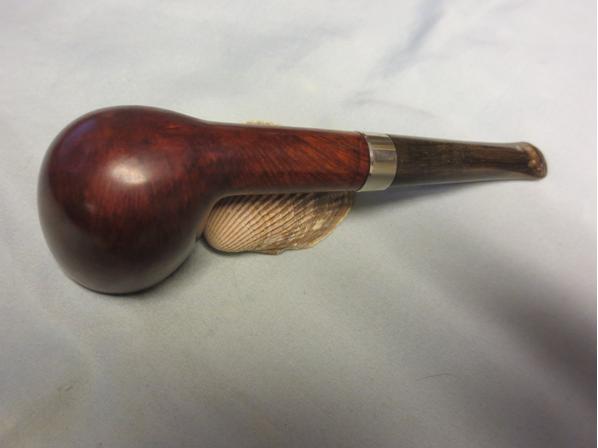
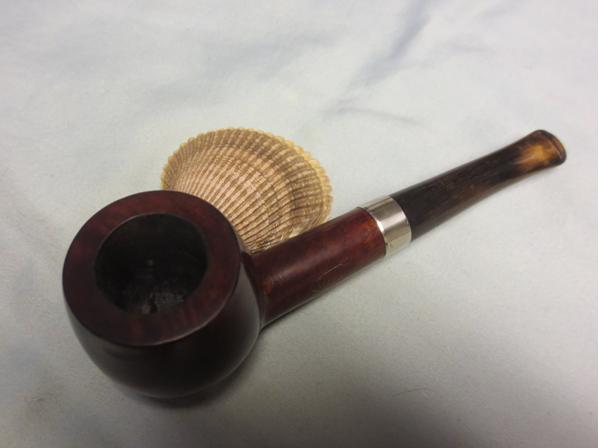
Easy Restoration of a 3-Star Pipes by Lee Rhodesian


Blog by Aaron Henson – 2/20/16
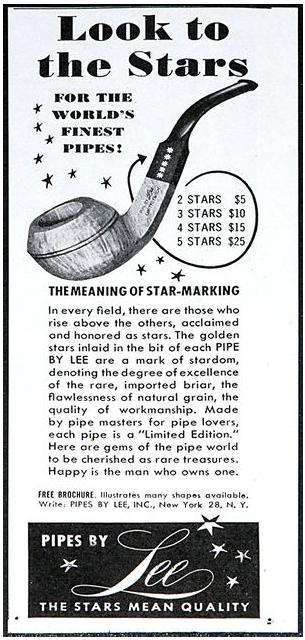
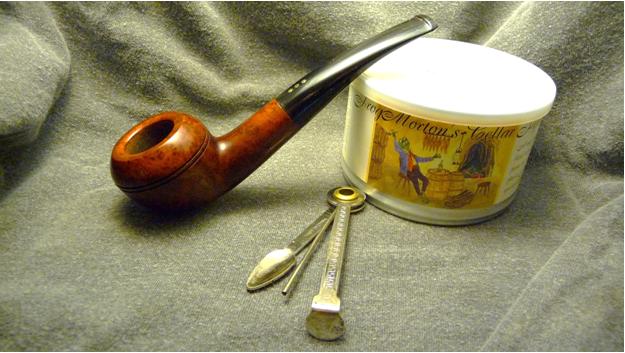
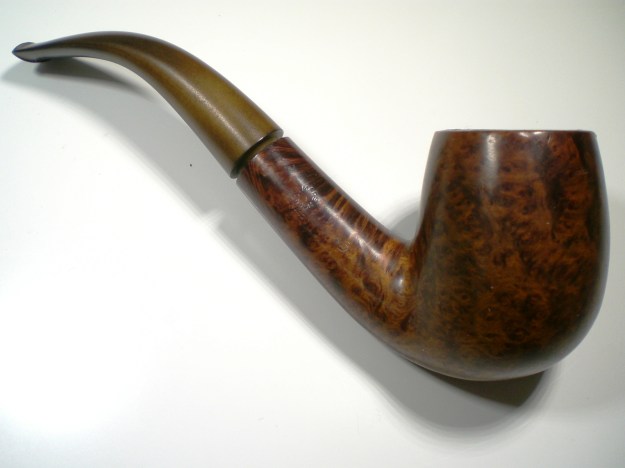
Aaron1I have found that writing up my pipe restorations is handicapped by my in-ability to remember to take pictures as I am working. On this Pipes by Lee Rhodesian I did a little better job at taking pictures. Although this was a simple restoration I thought I would take the opportunity to share my experience.

I found this 3-star Lee with two other pipes (a Mastercraft and a Grabow) in a lot at a local antique shop. I wanted to know more about the Lee brand but I found there is not much out there. But here is what I found:

The Pipes by Lee brand was distributed by Stewart-Allen Co, Inc., NY. The pipes were graded by stars: 1 to 5 stars (5 being the high end). Early pipes have seven pointed stars; the middle run have five pointed stars and later pipes are stamped with colored gold stars. (the preceding content from the “Pipes: Logos & Markings” website and the 1947 Ad, courtesy Doug Valitchka).

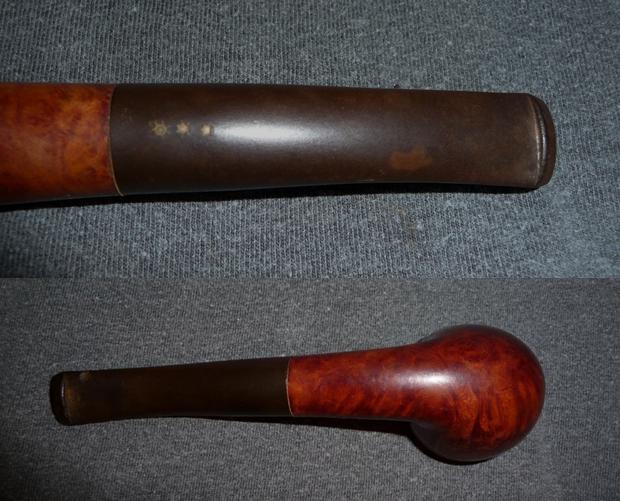
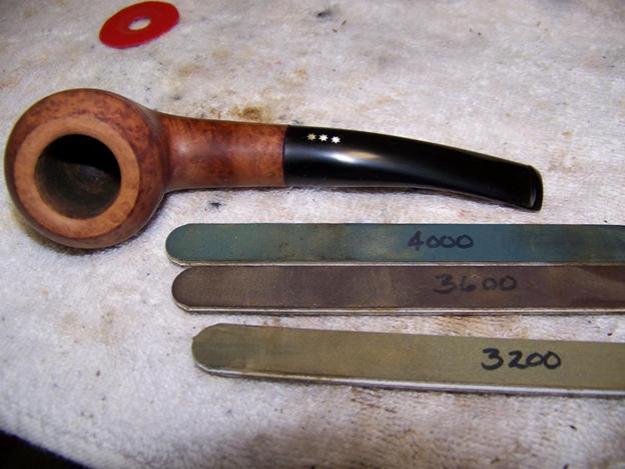
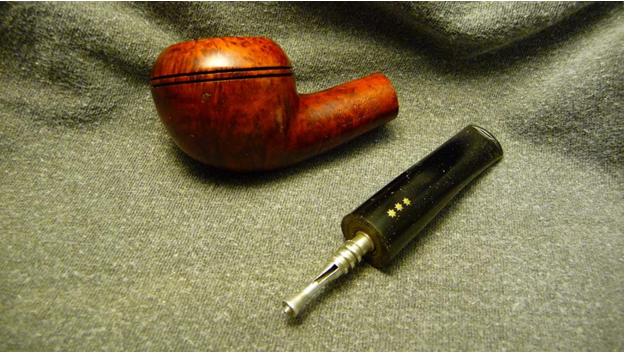
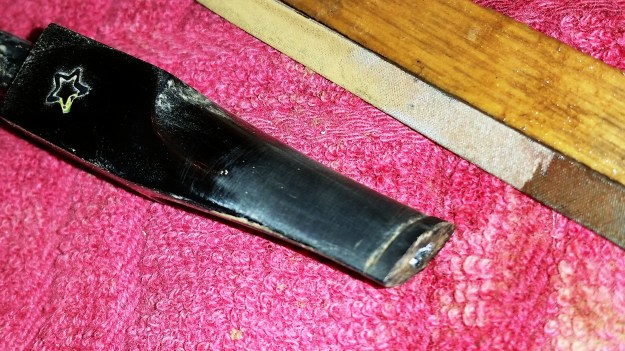
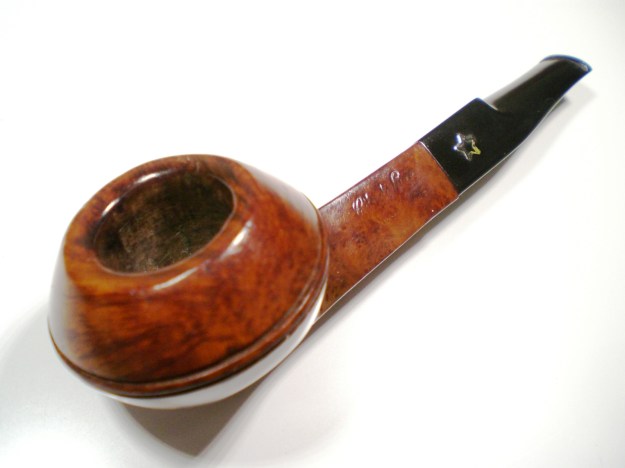
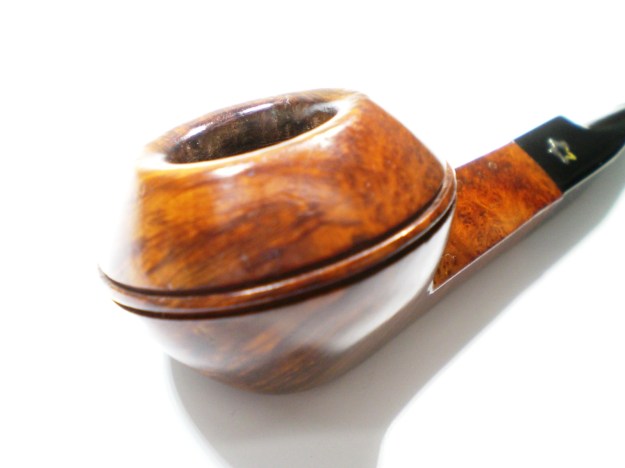
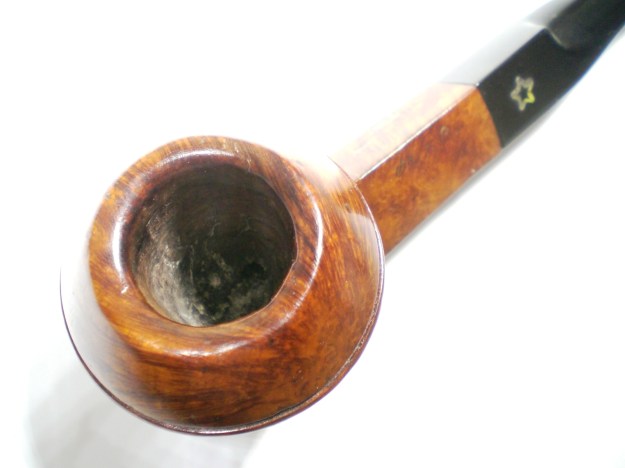
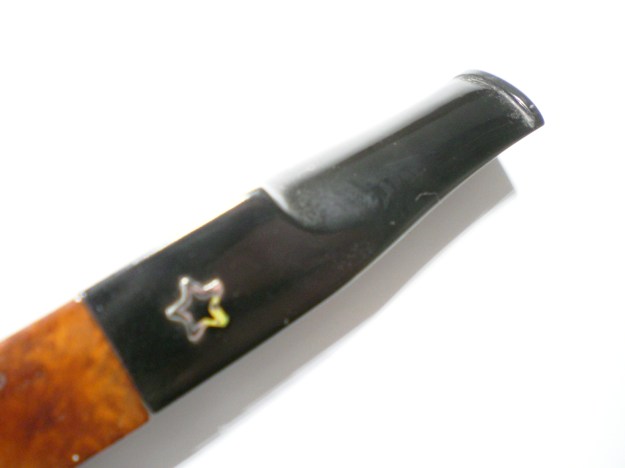
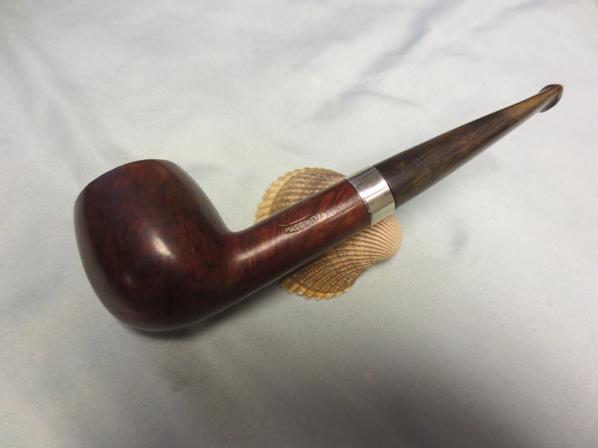
This pipe has three 7-point gold/brass stars set in a line in the top of the stem. I could not find the dates of the different runs/eras mention above but based on the ad I would have to guess my pipe dates to the late 1940’s to 1950’s.

The Pipe
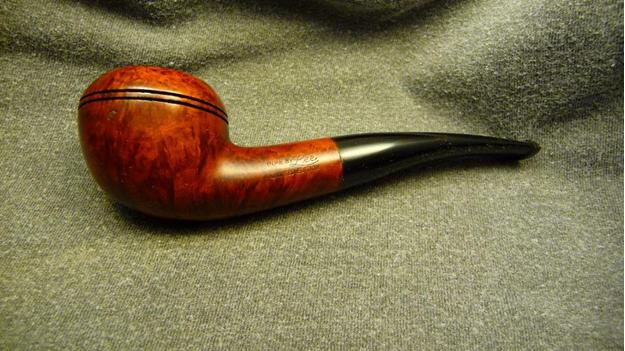
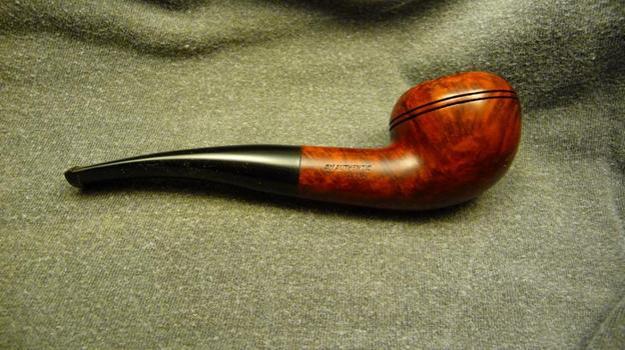
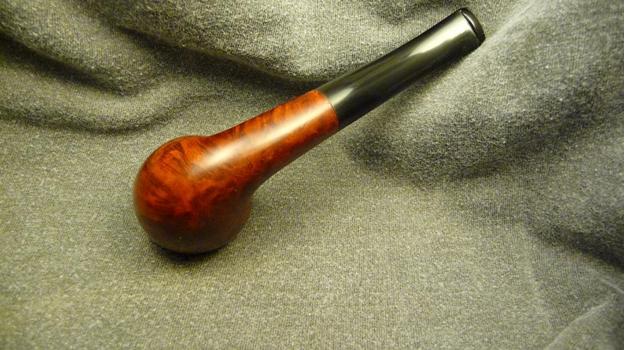
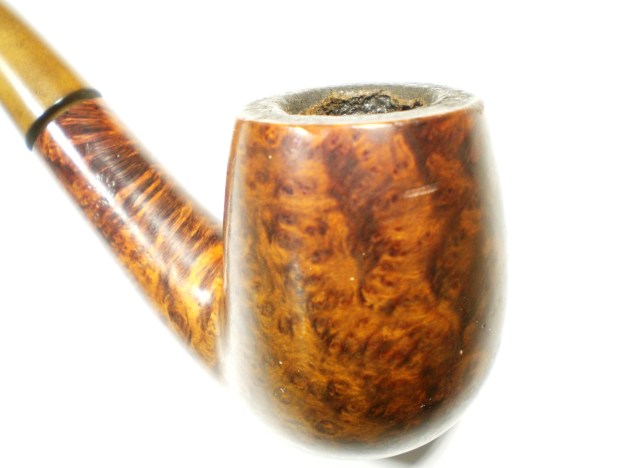
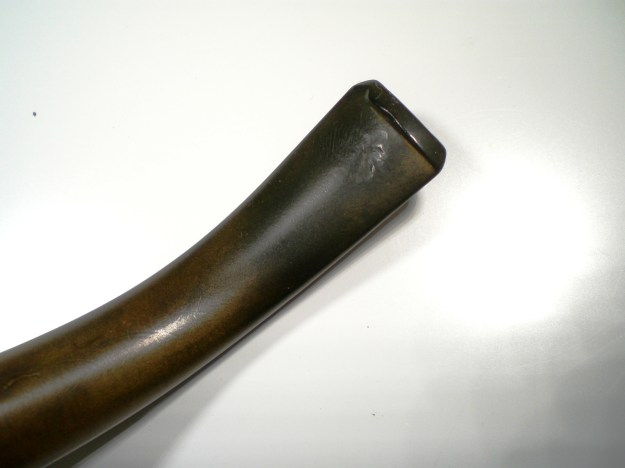
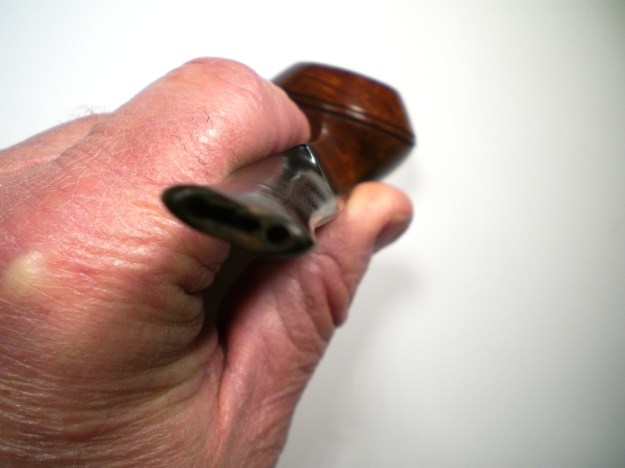
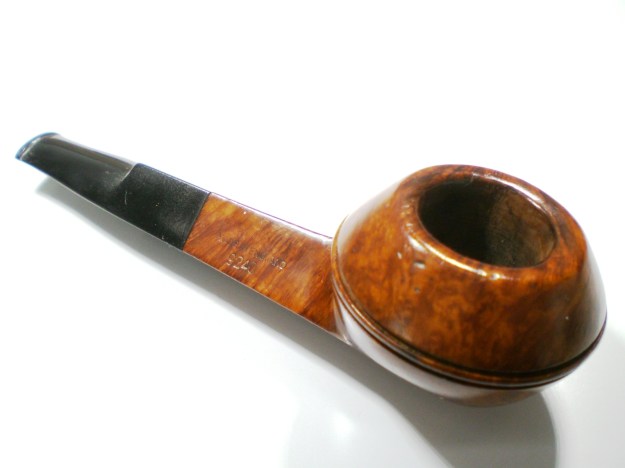
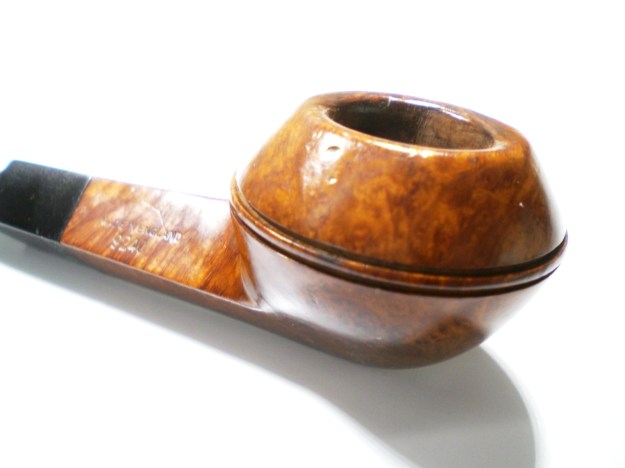
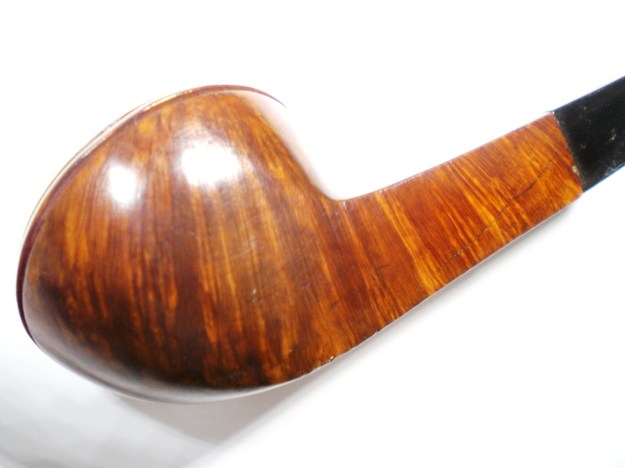
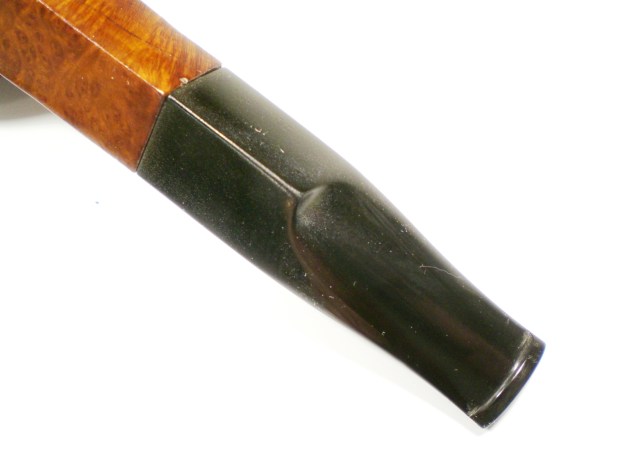
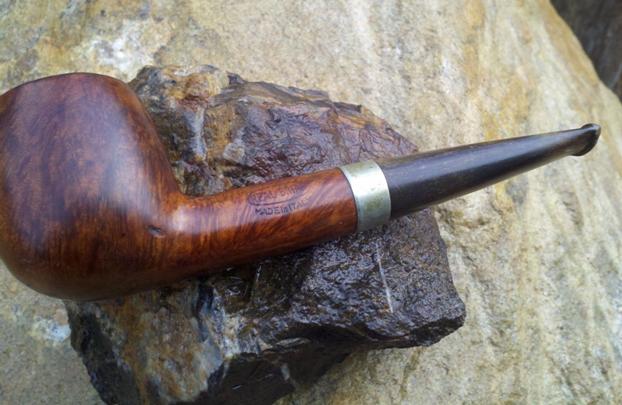
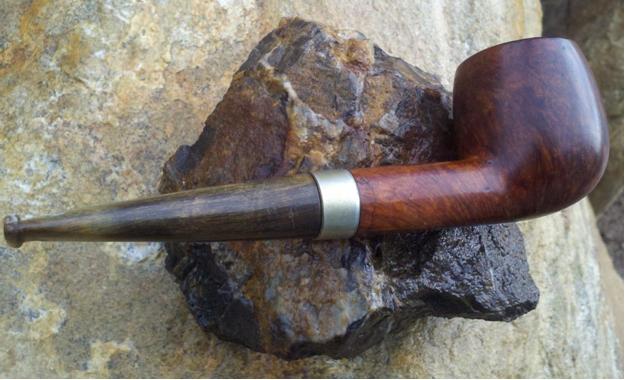
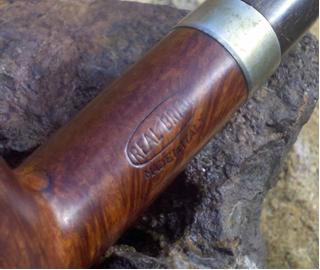
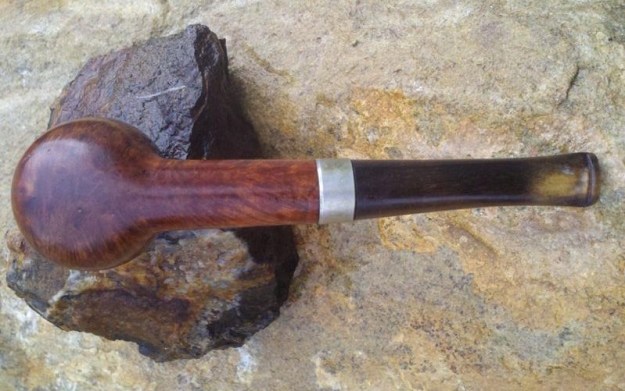
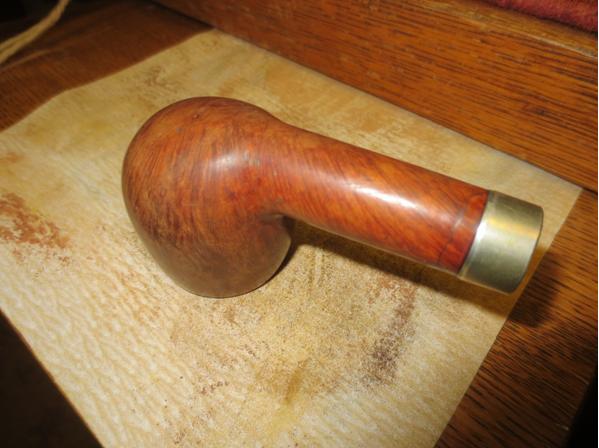
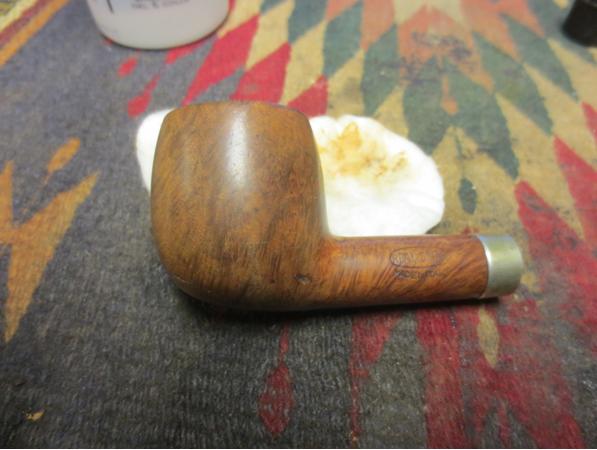
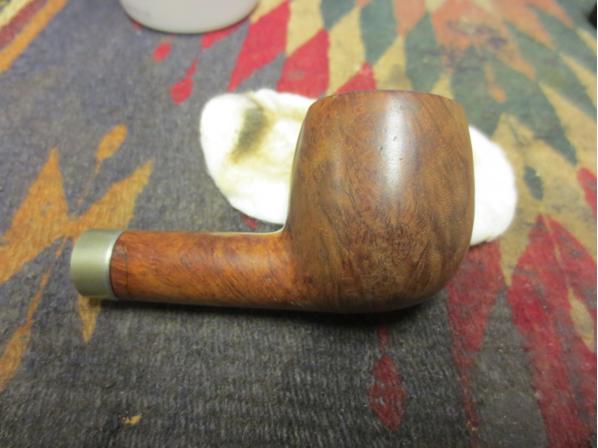
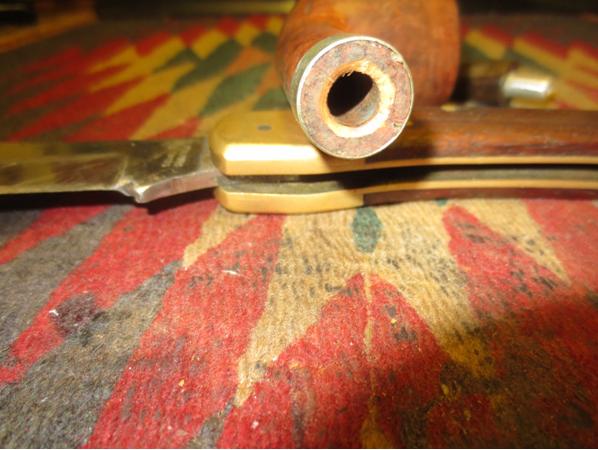
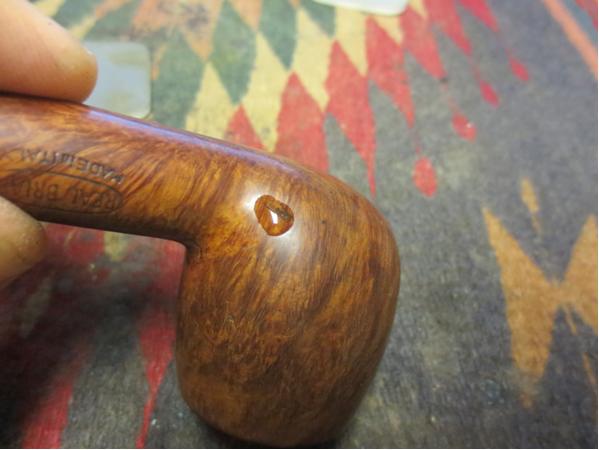
The outside of the pipe was in very good condition. The briar was clean and the stem was moderately oxidized. The stamps on the shank were very clear: left side read ‘Pipe by Lee’ over ‘Limited Edition’. The right side of the shank is stamped ‘An Authentic’ over ‘Imported Briar’.Aaron2 Aaron3The stem was slightly over-clocked and the previous owner had placed a couple of sheets of paper between the stem and shank to act as a spacer. There was one divot in the bottom stem near the button but otherwise was free from tooth chatter.
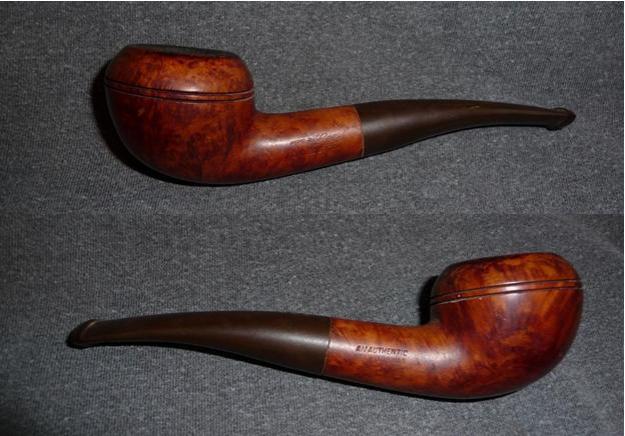
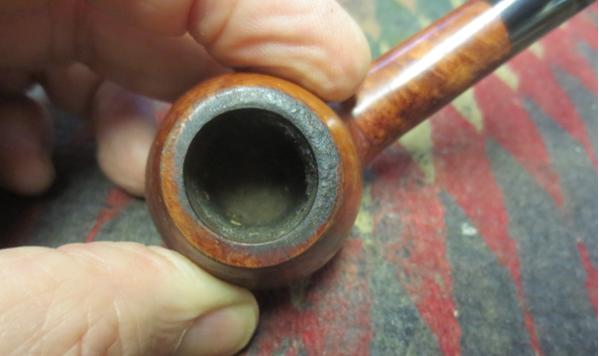
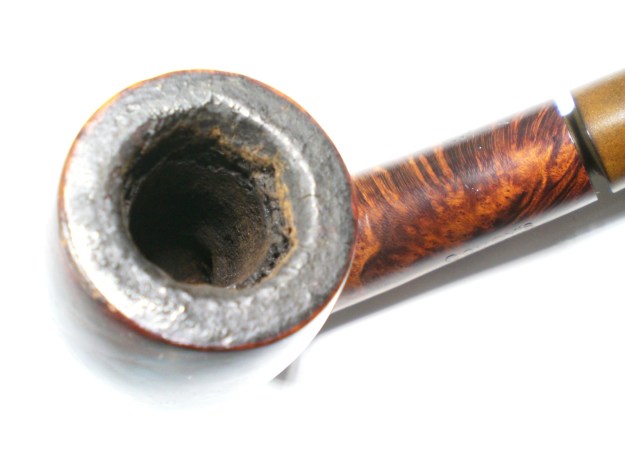
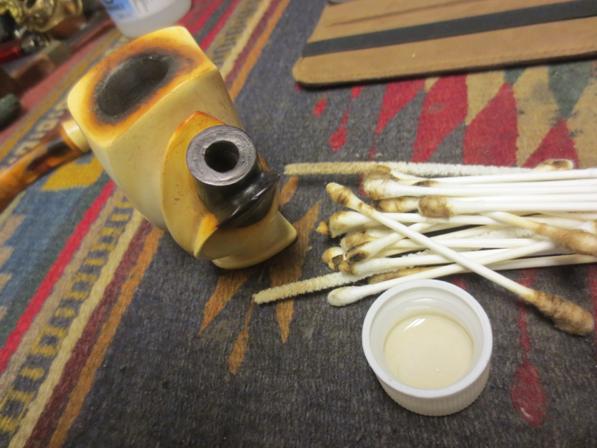
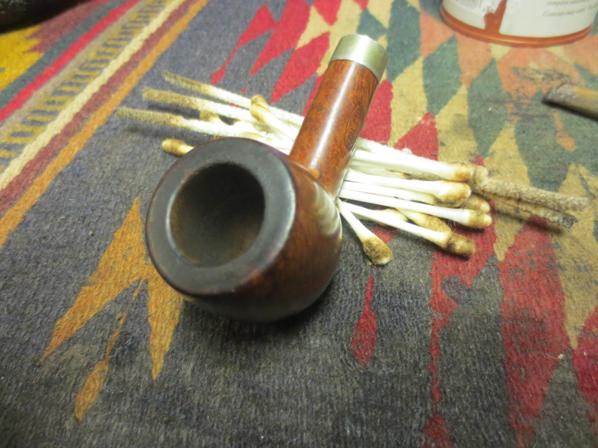
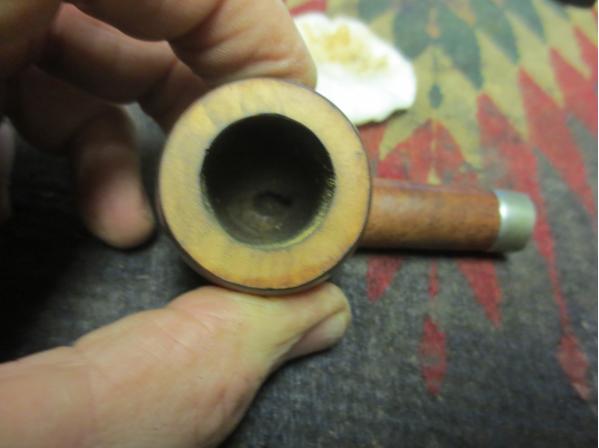
The internals were a different story; the chamber had a healthy cake buildup and good amount of tar on the rim. The shank was full of tar and the stinger was coated in dried tar. The internals of the stem itself were not as bad as the shank and I will attribute this to the removable filter/stinger. Aaron4I began the restoration by cleaning the rim. I moistened a little powdered Oxyclean and placed it on a damp green-pad. I laid the pad on a flat surface and worked the bowl much like I was topping it. I don’t have a picture of the result but this worked very well.
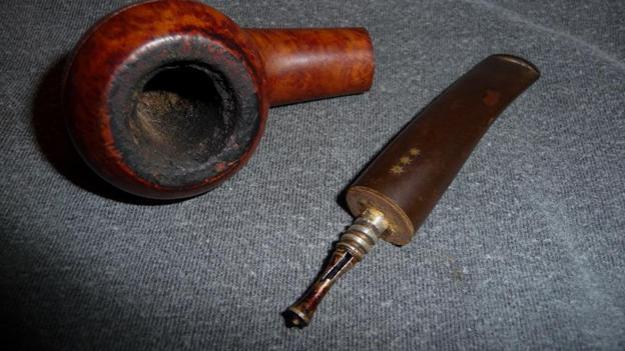
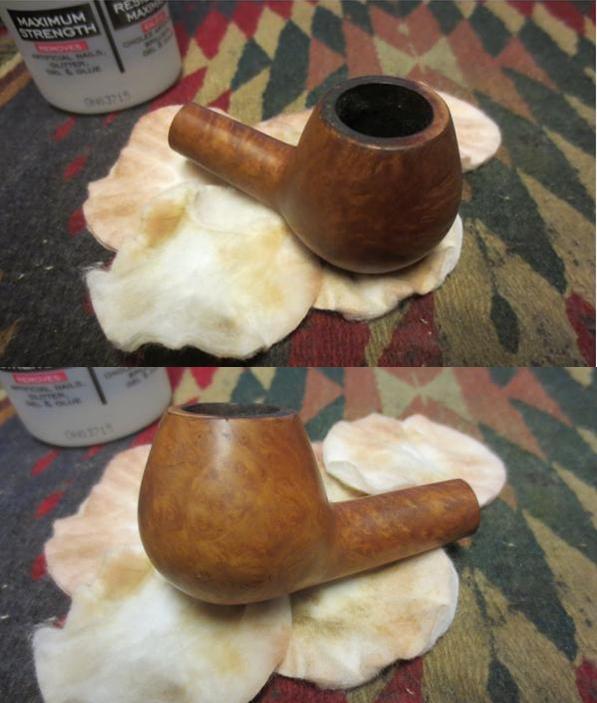
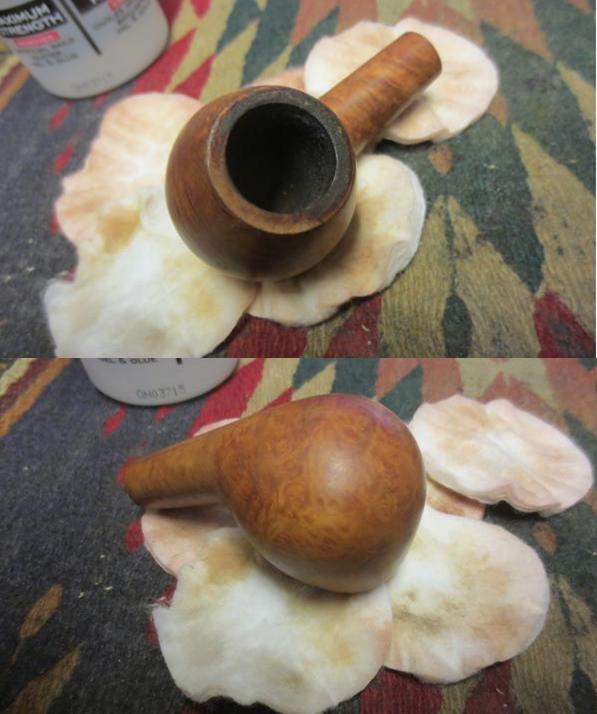
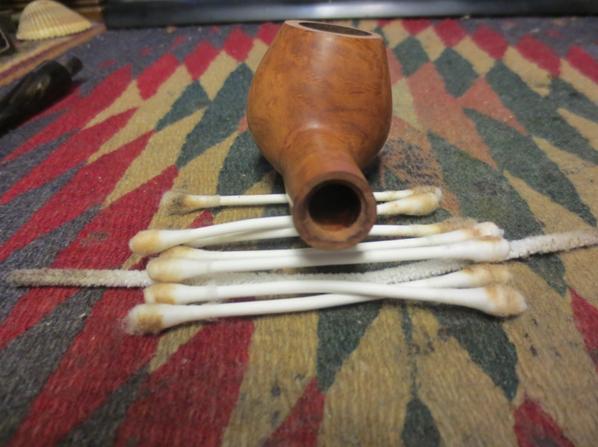
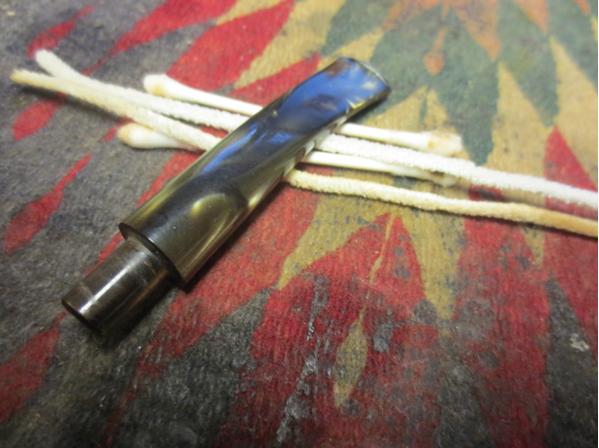
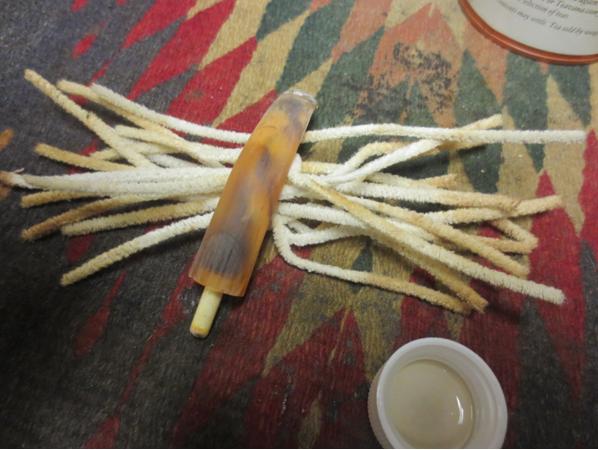
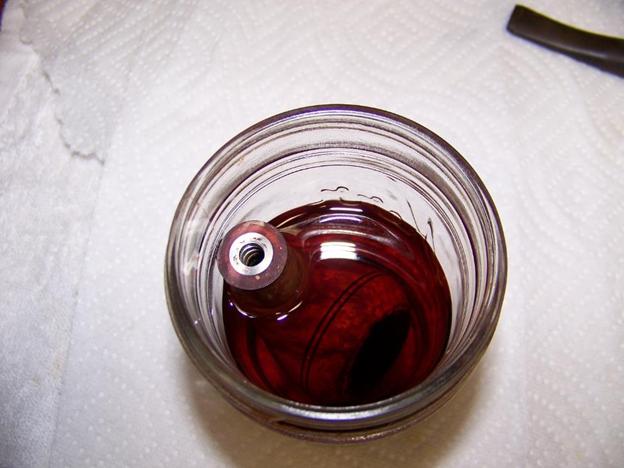
The cake was very hard and resisted my attempts with the reamer so set the bowl to soak in alcohol overnight. I also set the stem to soak in an Oxyclean bath using a pipe cleaner to hold the stinger out of the solution.Aaron5With the cake nice and soft, I reamed the bowl back to bare wood with little difficulty. An inspection of the inside of the chamber showed that the briar to be sound and without burnouts or cracks. The airway was clear and located precisely at the bottom center of the chamber. The alcohol soak also removed much of the stain and revealed three small pink fills that would have to be addressed.Aaron6I finished up the internals by cleaning the shank with cotton swabs and pipe cleaners until they came out as clean as they went in.
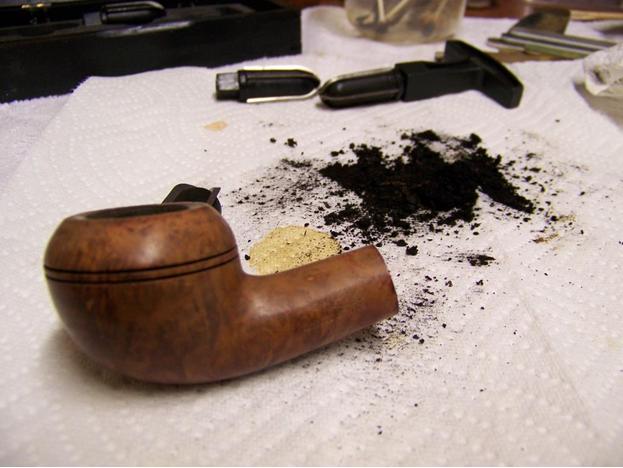
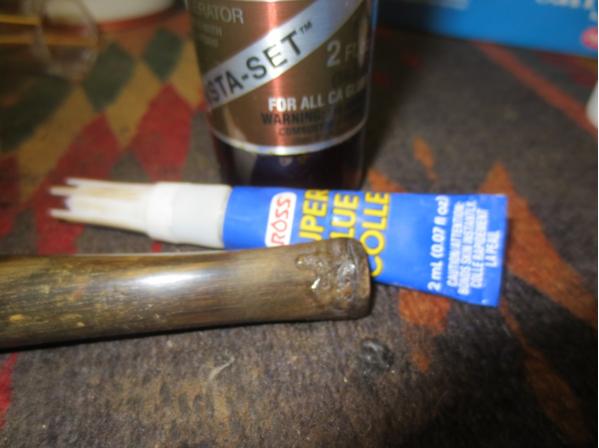
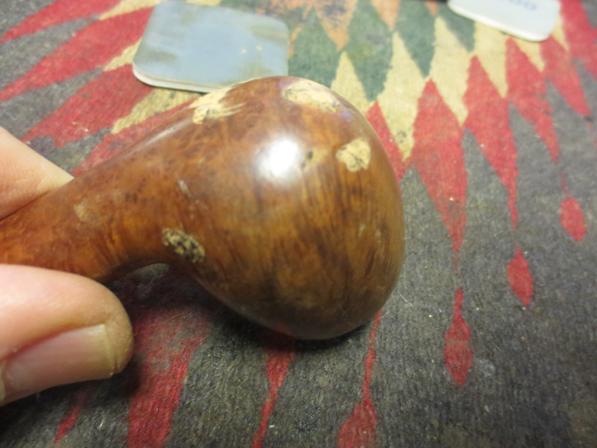
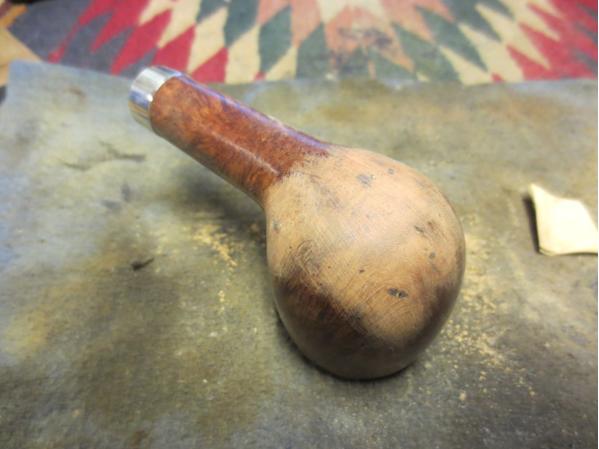
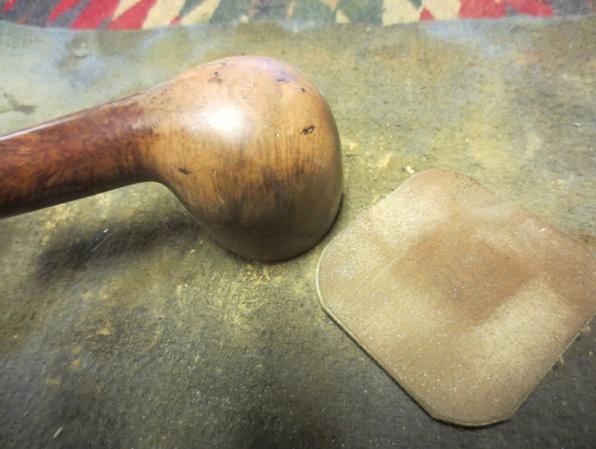
I neglected the pictures during this next part but in summary I used a dental pick to remove fills and packed the voids with briar dust. A dab of clear CA (cyanoacrylate) glue set the dust in place. After drying, the fills were sanded smooth. I also sanded the entire bowl (except around the stamps) with 1500-3200 micromesh pads.

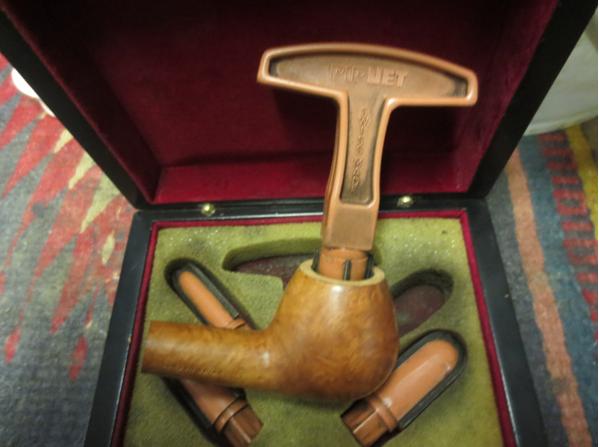
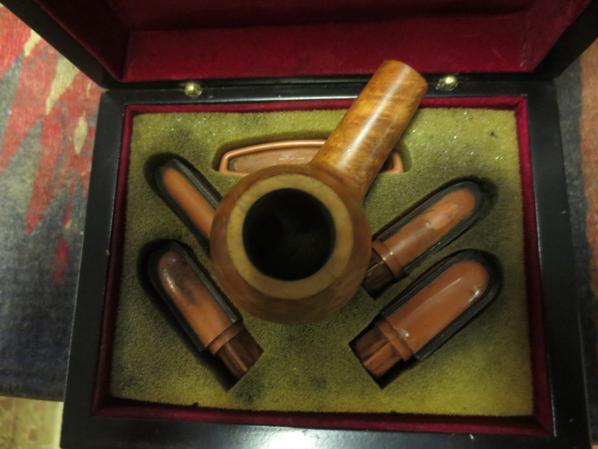
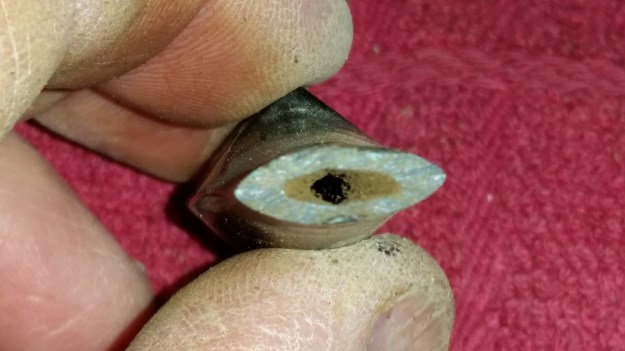
Returning to the stem, I removed the aluminum ‘filter’ and cleaned it and the threads with 0000 steel wool and alcohol. Then I tried to raise the divot out of the stem with flame from a lighter. I didn’t expect to completely eliminate the divot but wanted to reduce it as much as possible before filling it. The fill was made with black CA glue and charcoal powder then sanded smooth when cured.

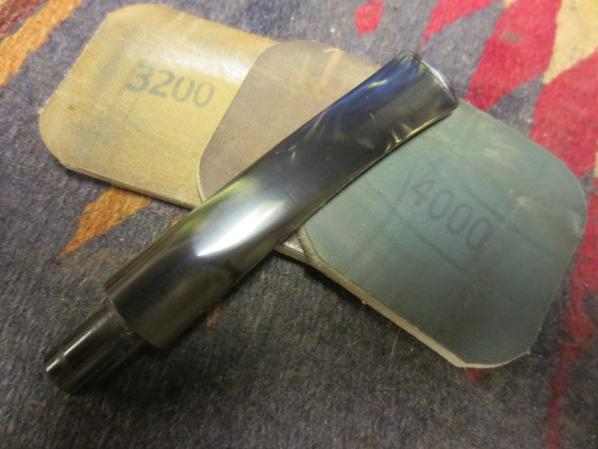
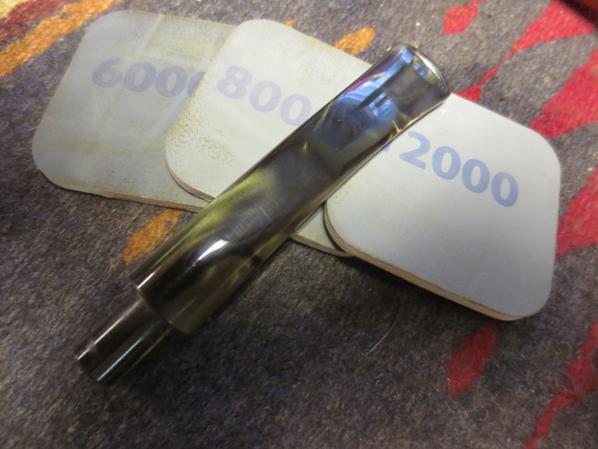
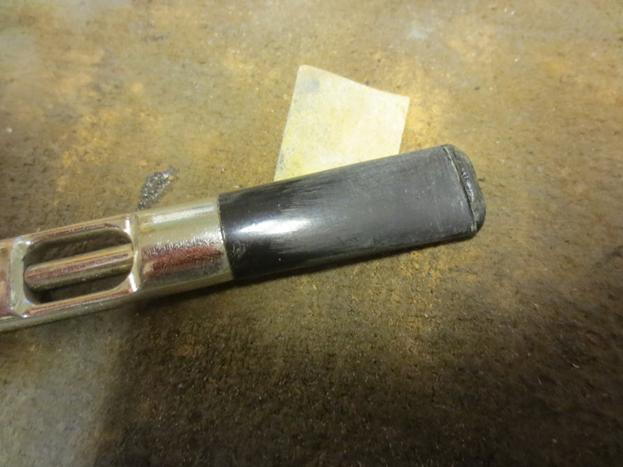
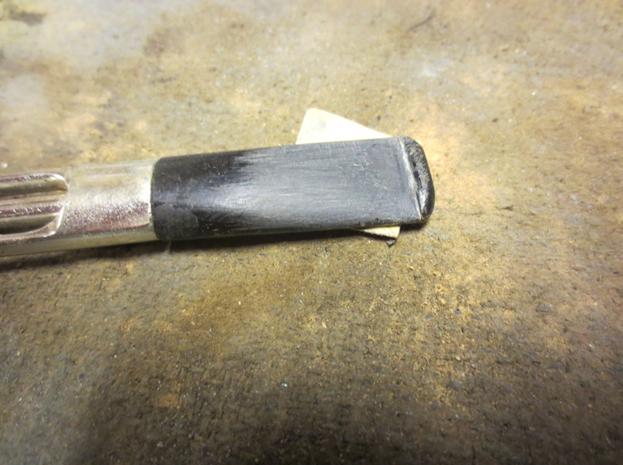
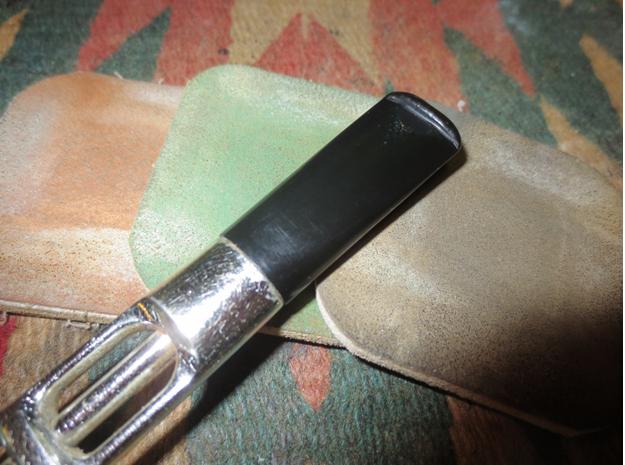
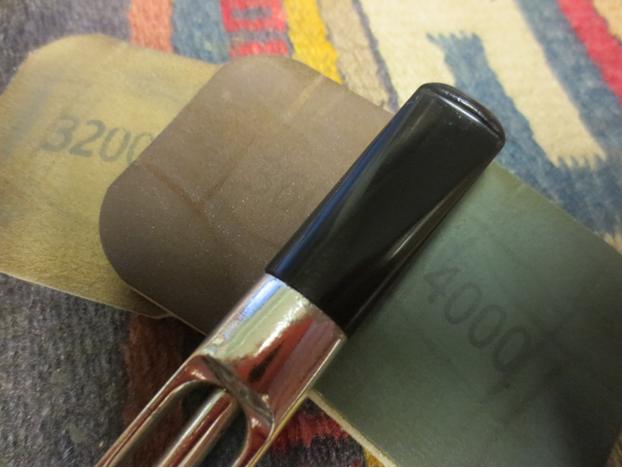
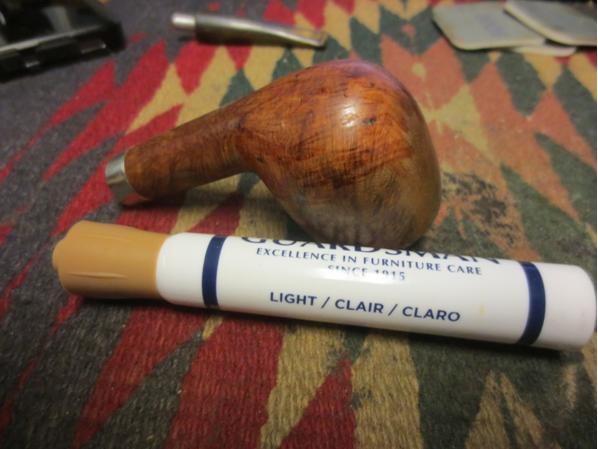
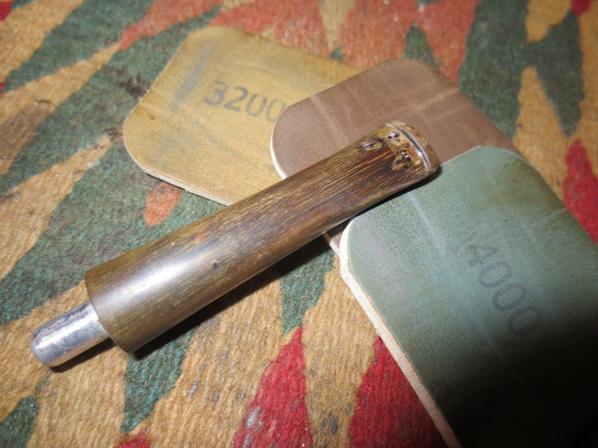
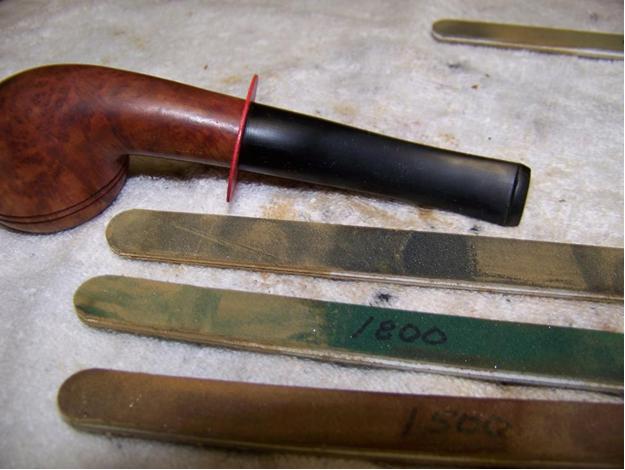
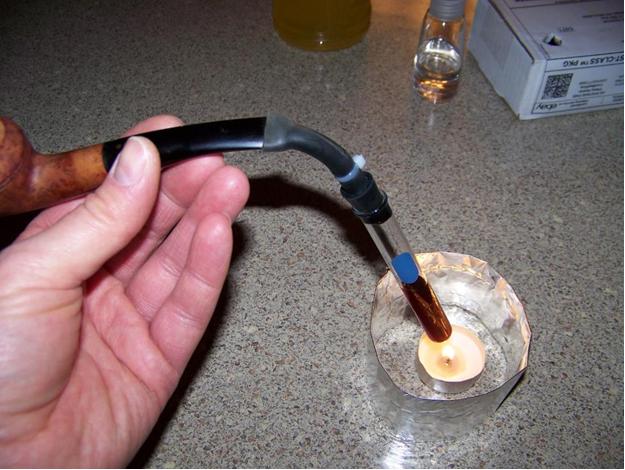
I polished the stem by wet sanding with 1500-4000 micromesh pads, rubbing down with mineral oil after each group of the three pads. A plastic washer was placed between the stem and the stummel at this stage to prevent damaging the wood and to keep from rounding the shoulder of the stem.Aaron7 Aaron8At this point I set up the alcohol retort. It took three test tubes until the alcohol was clean; note that I left the filter off during the retort. I won’t describe the retort process because that can be found in other posts but I do want to comment on one point. I have found that heating the alcohol often time lead to an explosive boiling – not a very controlled process. The smooth surface of the test tube and purity of the alcohol does not provide a surface for bubble to form on. However, if I add a small foreign object to the bottom of the tube the boil is much more controlled. I small piece of cake or charred candle wick gives the bubbles a place to form and eliminate the possibility of super-heating the alcohol.Aaron9Now that the pipe was cleaned and sanitized I finished the stummel by applying two coats of Feibing’s light brown aniline stain. I flamed the stain to set it and then wiped off the excess with a cotton pad and alcohol. While reassembling the pipe I heated the threaded tenon and re-align the stem. Then I coated the entire pipe with mineral oil and set it aside to soak in before applying three coats of carnauba wax.
Thanks for reading and please let me know what you think.Aaron10 Aaron11 Aaron12 Aaron13 Aaron14 Aaron15
Didn’t Break a Sweat Cleaning this London Briar Brandy


Blog by Steve Laug

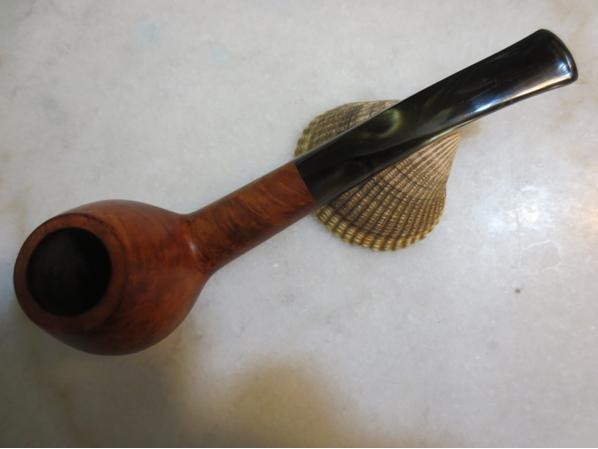
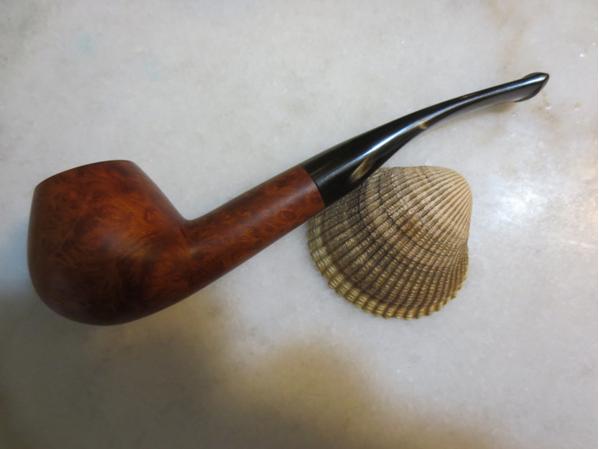
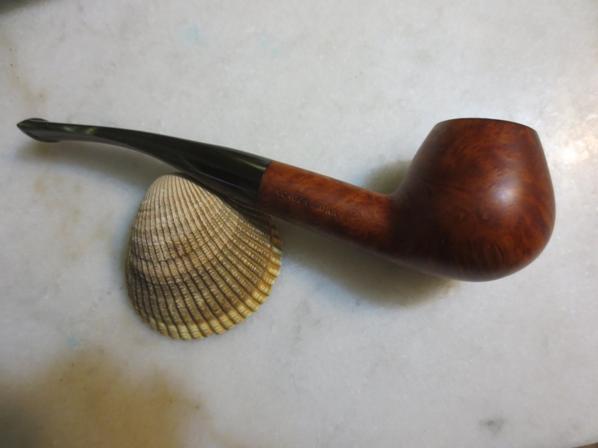
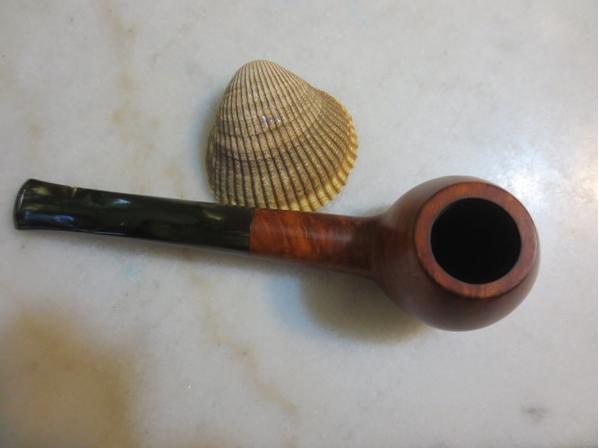
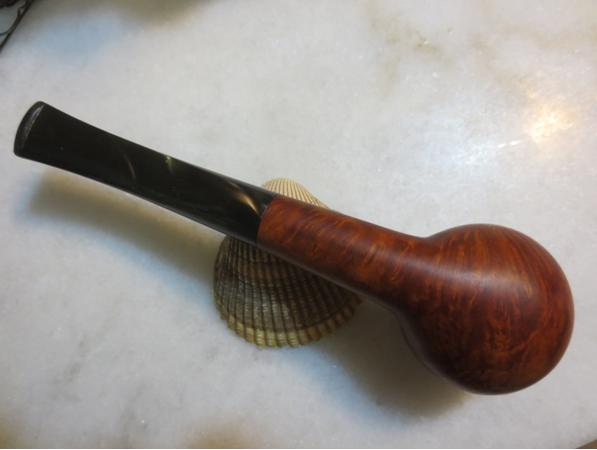
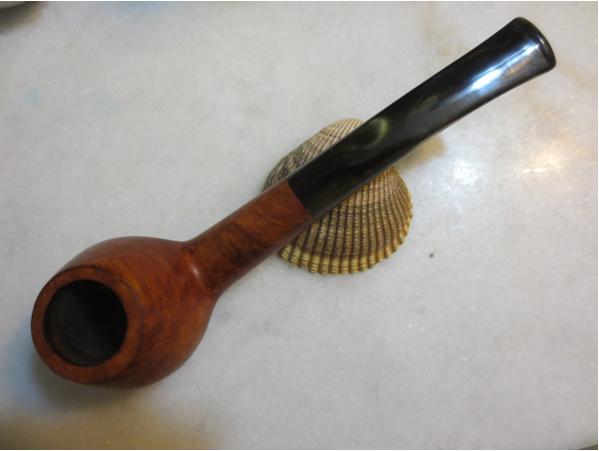
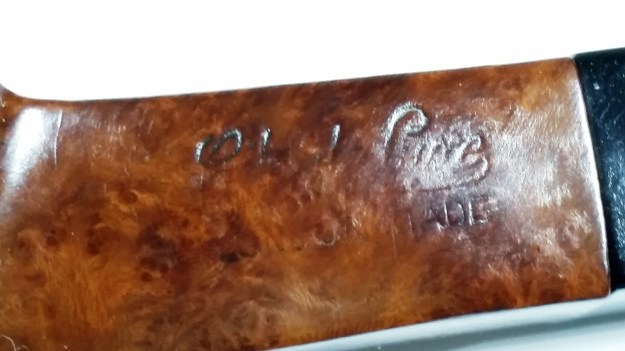
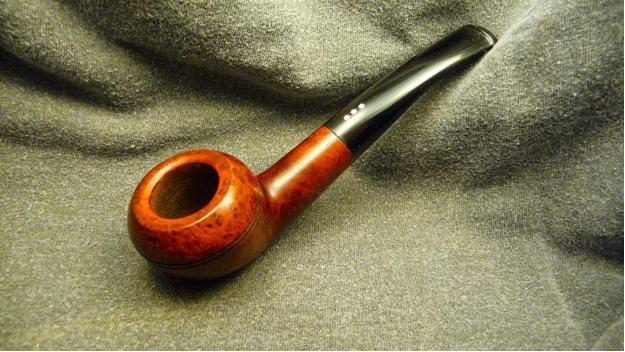
My brother sent me this nice brandy shaped pipe. It has a Lucite stem that is a swirled black and olive or brown depending on the light. The bowl was in good shape with a light cake and some rim lava. There was a scratch on the left top of the rim top. The finish had a coat of varnish over the briar and it was cloudy and dirty. The stem had some tooth chatter and was dull. Otherwise the pipe was in very good shape. The only stamping on it is LONDON BRIAR on the right side of the shank.
I had not seen the stamping London Briars before so I did some hunting on the web for the brand and found that the brand was made by/for Gauntleys of Nottingham. They sold new for £31.95 Here is the link to their site: https://cigars.gauntleys.com/uk/offer/gauntleys-london-briar-pipes

I quote directly from the site:
Gauntleys London Briar Pipes – Our London Briar pipes have become very popular since we introduced them just a few months ago. Each is made from selected second briar blocks from one of the country’s largest and most respected pipe makers.

If the briar was flawless these pipes would sell for over £250. These are from briar with small flaws in the grain or needing small amounts of filler so are great value. The briar is some of the finest in the world and can be up to 80 years old.

Each pipe is hand made in a range of classic English shapes and comes in a number of finishes from Smooth Brown to Black (Shell Briar) Sandblasted.

If you are looking for a first pipe or something to use around the house or garden the Gauntleys London Briars are very affordable and smoke like an entry level premium briar. Each pipe comes boxed with a silk bag.

Here is the state of the pipe when I brought it to the worktable today. There is not a fill or a flaw that I can find in the briar. It is a light weight and clean pipe.Gaunt1 I took a close up photo of the rim top to show the build up and scratches.Gaunt2 I scrubbed the bowl with acetone on cotton pads to remove the varnish coat. There was some nice grain under the varnish coat.Gaunt3

Gaunt4 I lightly topped the bowl to remove the scratches and the lava.Gaunt5 The cake was uneven so I reamed it back to the briar to facilitate the building of an even cake.Gaunt6

Gaunt7 I cleaned out the shank, mortise and airway with alcohol, pipe cleaners and cotton swabs until the pipe cleaners and cotton swabs came out clean. I scrubbed out the airway and the slot in the stem at the same time.Gaunt8

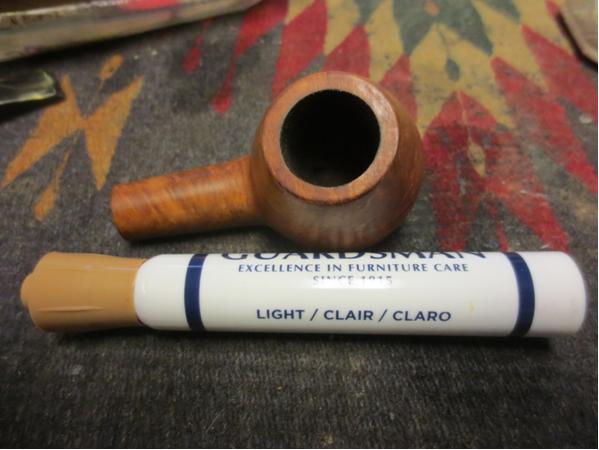
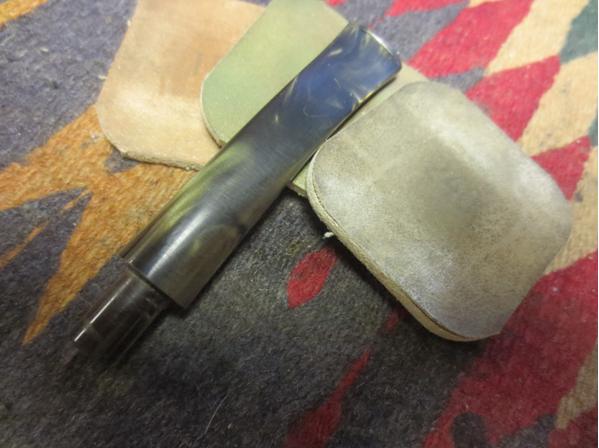
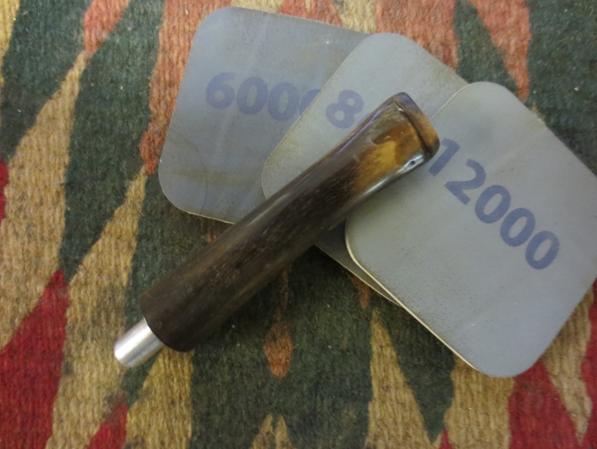
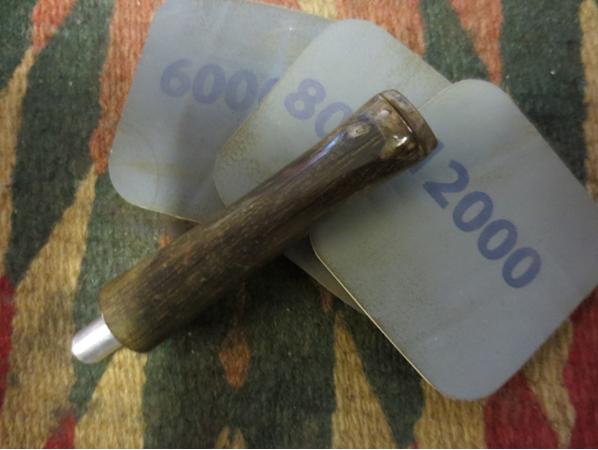
Gaunt9 I used a light brown stain pen to stain the rim to match the bowl.Gaunt10 I sanded the stem with 1500-2400 grit micromesh sanding pads and then wiped it down. I continued to sand it with 3200-12000 grit micromesh to polish it.Gaunt11

Gaunt12

Gaunt13 I buffed the pipe and stem with Blue Diamond on the wheel and then gave them multiple coats of carnauba wax. I buffed it with a clean flannel buff and then hand buffed it with a microfiber cloth. The finished pipe is shown in the photos below.Gaunt14

Gaunt15

Gaunt16

Gaunt17

Gaunt18

Gaunt19

Gaunt20

Gaunt21

Comoy’s Shape 43 Tradition Restoration


Blog entry by Al Jones

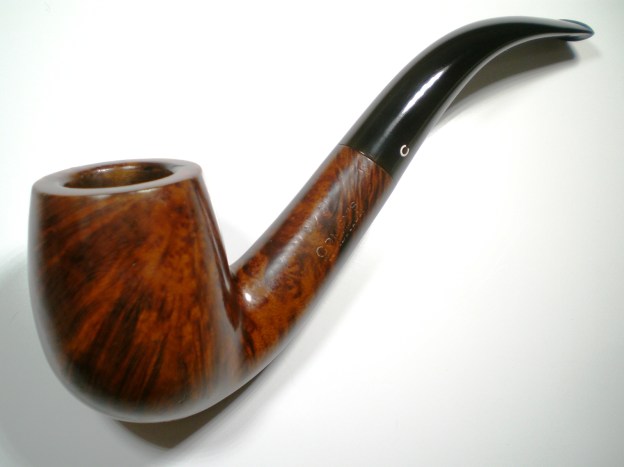
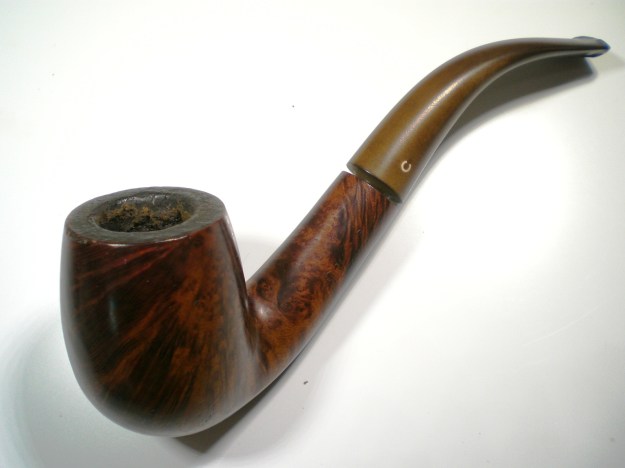
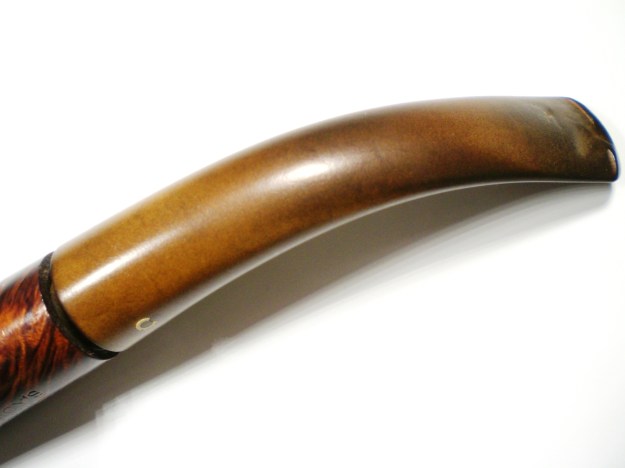
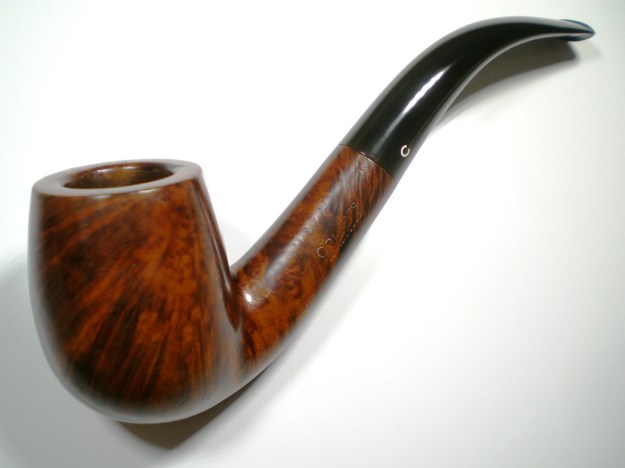
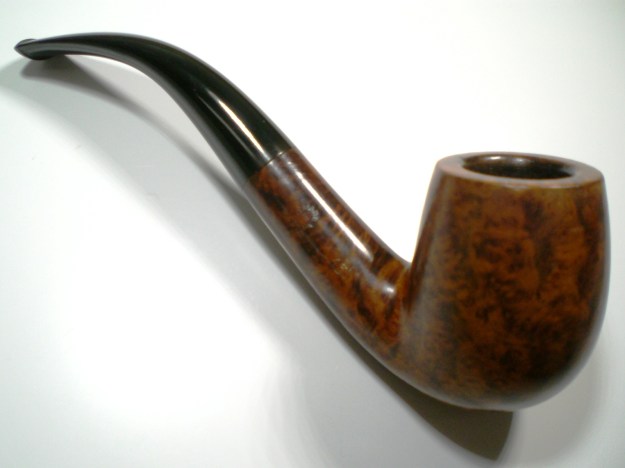
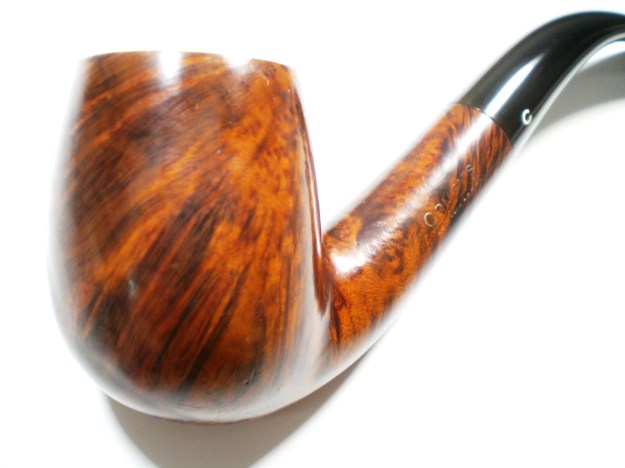
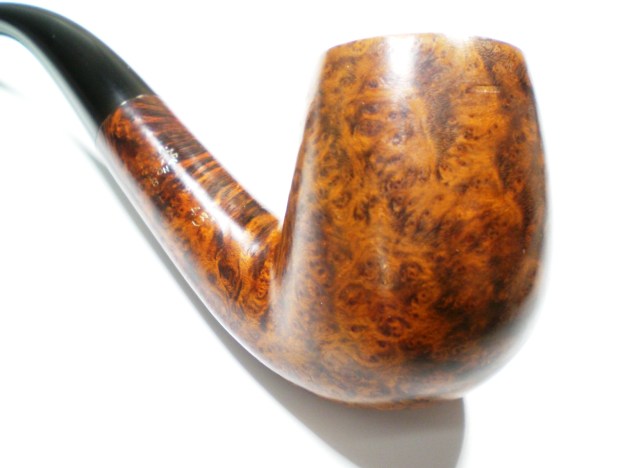
I can’t resist pre-Cadogan, Comoys Tradition grade pipes. They are readily available and decent examples needing restoration don’t sell for exorbitant prices. This Shape 43, Large Bent Billiard was well loved, but showed promise. I’ve worked on a few Shape 42 Medium Bent Billiards, but this is the first Shape 43 that I’ve encountered. Curiously, this shape is not on any of the on-line Comoy’s shape charts (pipepages, etc.). It is on the shape number list on the Pipepedia site.

The stem was heavily oxidized, but the drilled, 3 piece “C” logo was readily identifiable. The stem had some teeth marks on both sides of the stem and some small sections of button were worn. Tars in the shank kept the stem from being inserted all the way. The bowl had a heavy layer of tar on top.

“Before” Pictures

Comoys_43_Tradition_Before (1)

Comoys_43_Tradition_Before (3)

Comoys_43_Tradition_Before (5)

Comoys_43_Tradition_Before (4)

Comoys_43_Tradition_Before (6)

Comoys_43_Tradition_Before (2)

I used some 800 grit wet paper to carefuly remove the thickest coating of tars from the bowl top. Then, 1000 grit and finally a wet cloth with oxy-clean water. The tars came off completely and showed no scorched briar. The Comoys trade-mark beveled bowl top was worn but intact. There was one dent in the bowl top and one small crease on the front of the bowl. Using an iron set on “High” and a wet cloth, I was able to steam most of the bowl top dent out and raise the crease as well.

The bowl was soaked with isopropyl alcohol and sea salt. After the soak, I used a series of bristle brushes and alcohol to clean the interior of the shank.
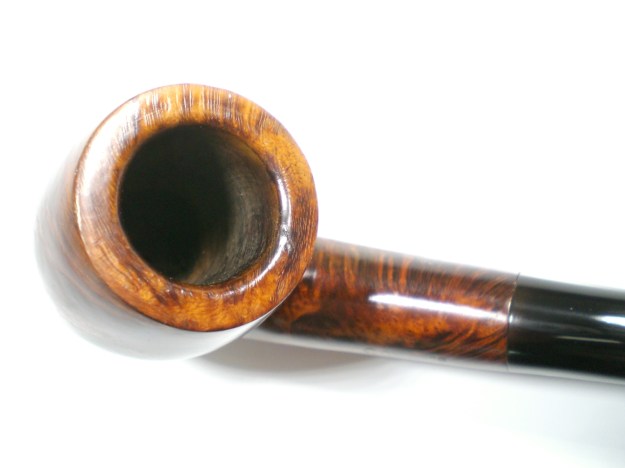
The stem was soaked for several hours in a mild Oxy-Clean solution. I use a lighter to lift out the dents on the top and bottom of the stem. There was one tooth prick that was repaired with Black Superglue. I used the Black Superglue to rebuild the worn sections of the button. I blended the button in using 800 grit paper. The oxidation was removed starting with 800 grit paper, then 1500 and 1000 grades. This was followed with 8000 and 12000 grade micromesh. The stem was then buffed with White Diamond rouge and auto plastic polish. I’m very pleased with the condition of the stem.
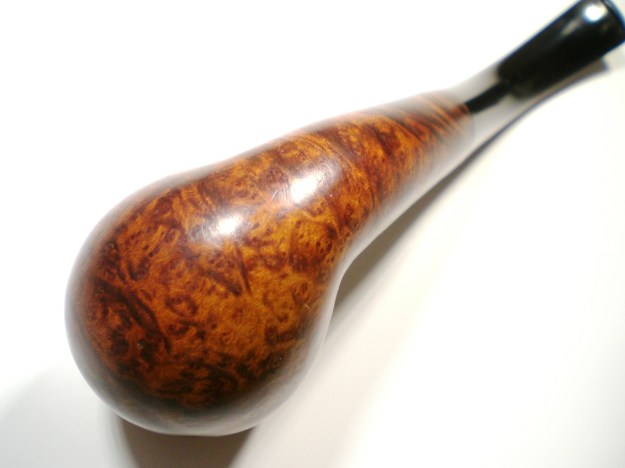
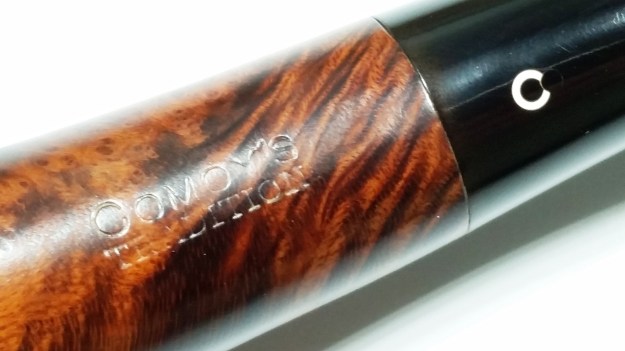
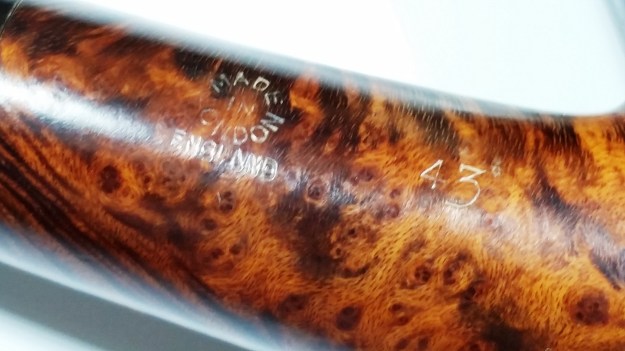
The bowl was buffed lightly with White Diamond and several coats of Carnuba Wax. The excellent nomenclature was buffed by hand.

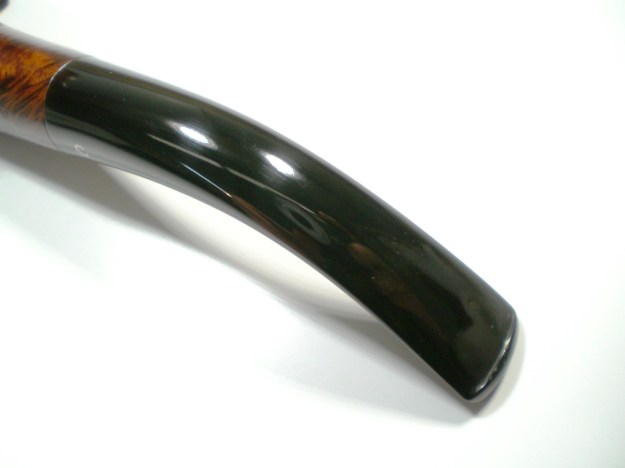
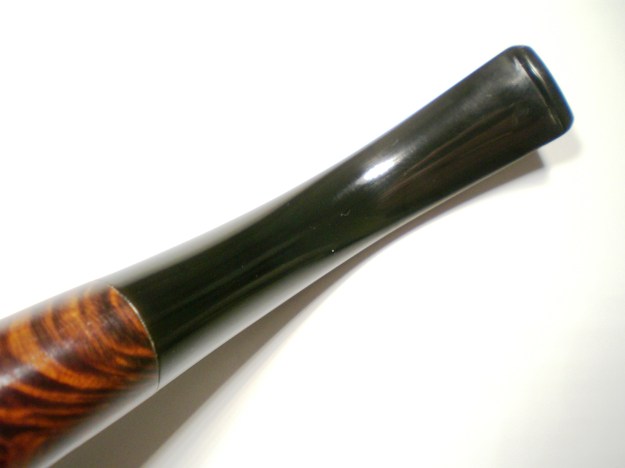
Below is the finished pipe.

Comoys_43_Tradition_Finish (1)

Comoys_43_Tradition_Finish (4)

Comoys_43_Tradition_Finish (2)

Comoys_43_Tradition_Finish (5)

Comoys_43_Tradition_Finish (6)

Comoys_43_Tradition_Finish (8)

Comoys_43_Tradition_Finish (3)

Comoys_43_Tradition_Finish (7)

?

?

?

?

Comoys_43_Tradition_Finish (1)

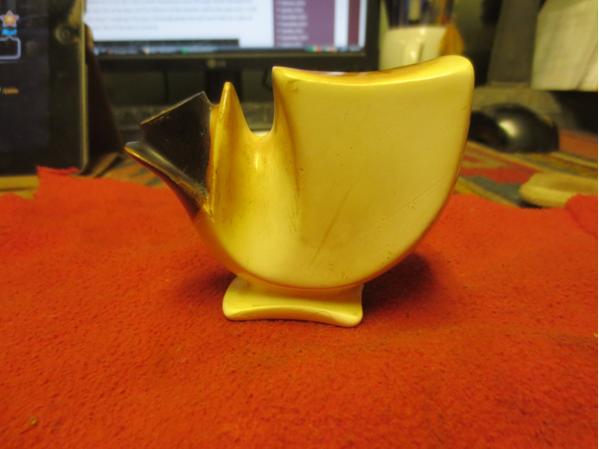
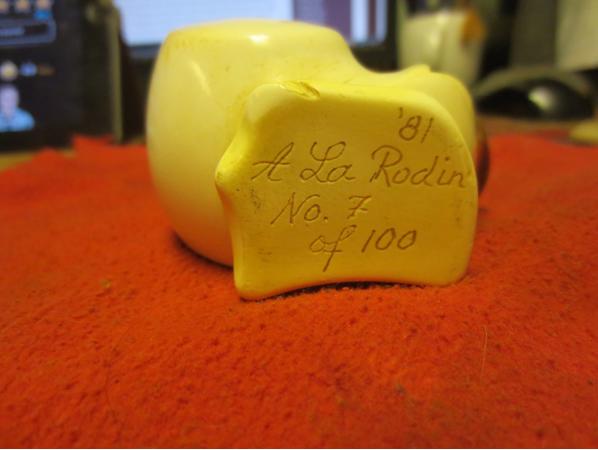
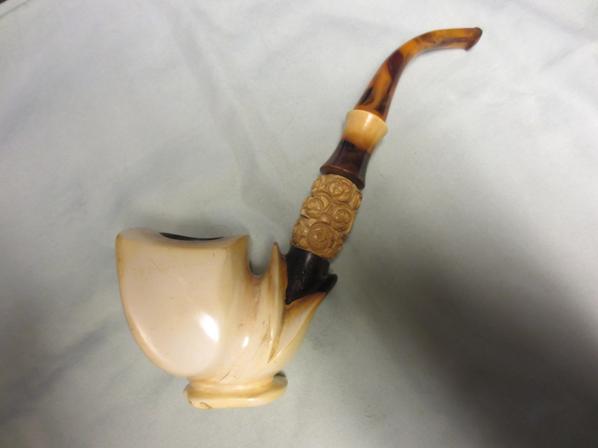
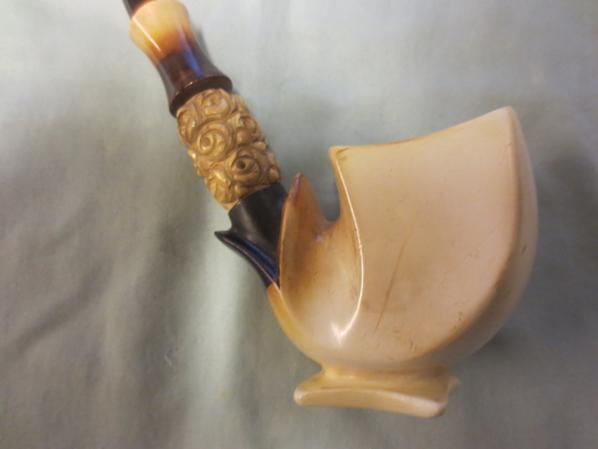
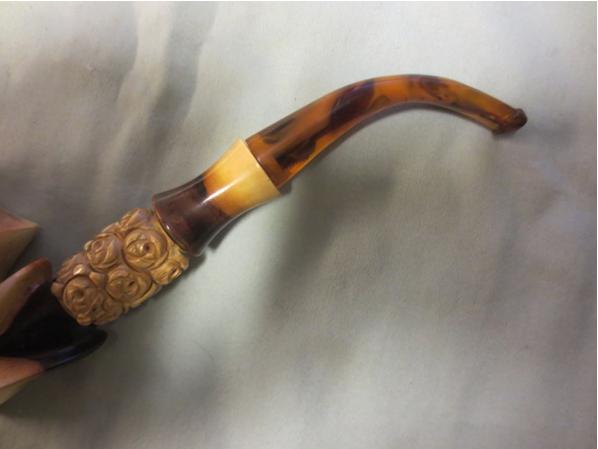
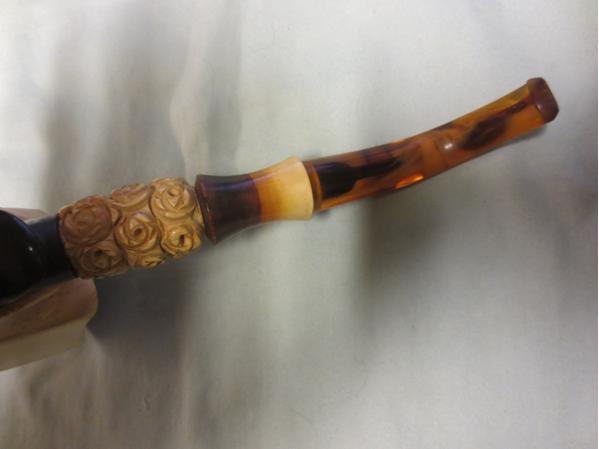
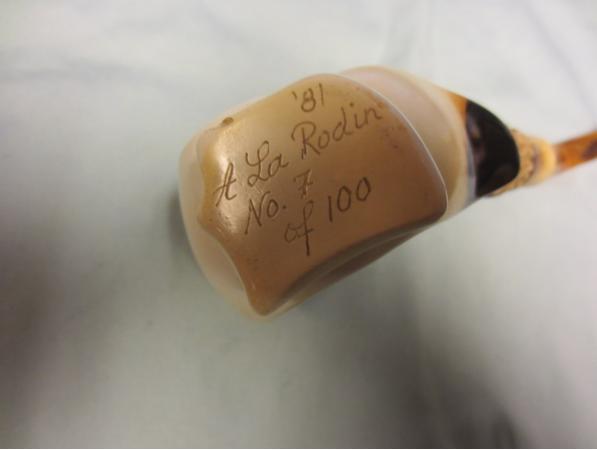
This one was a challenge for me – a 1981 CAO Bekler A La Rodin No. 7 of 100


Blog by Steve Laug

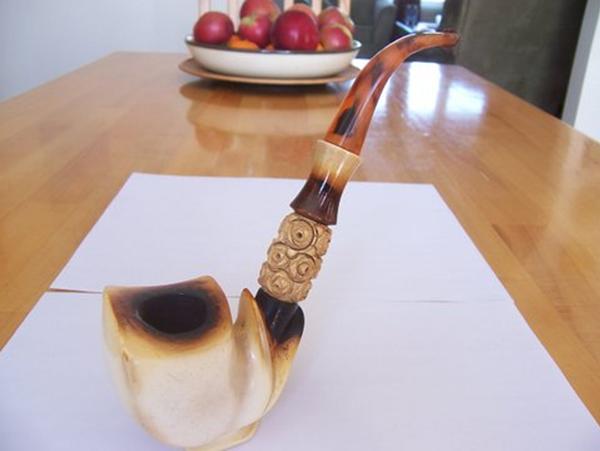
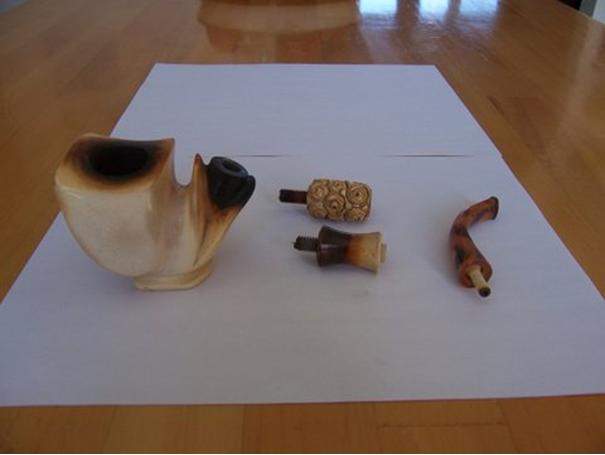
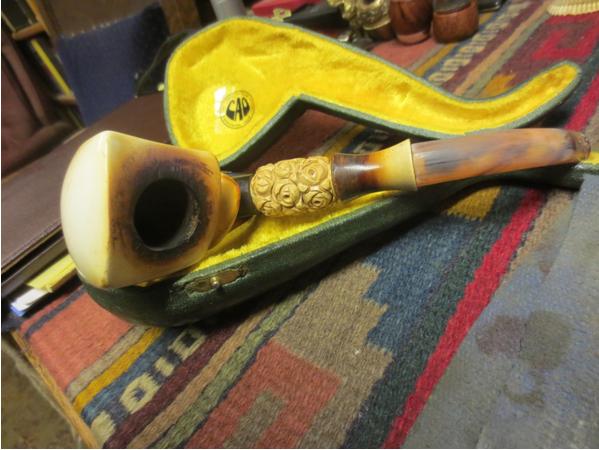
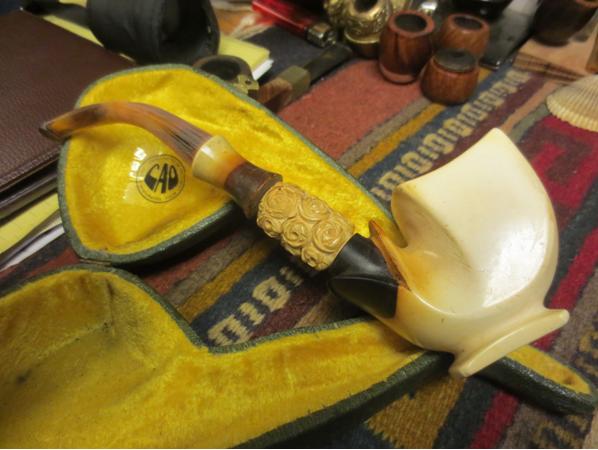
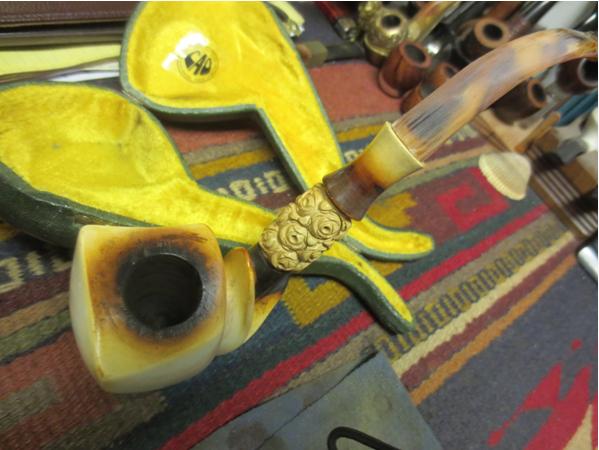
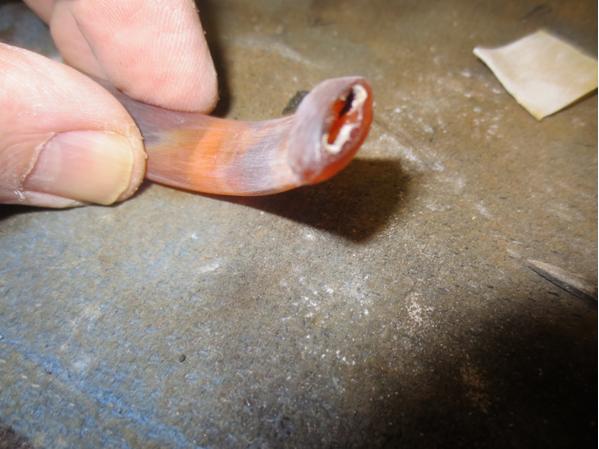
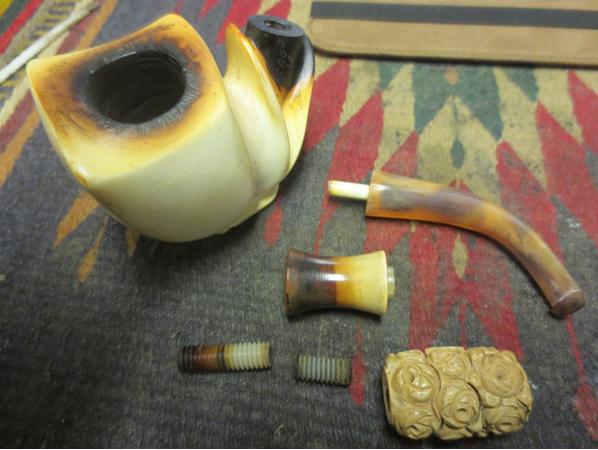
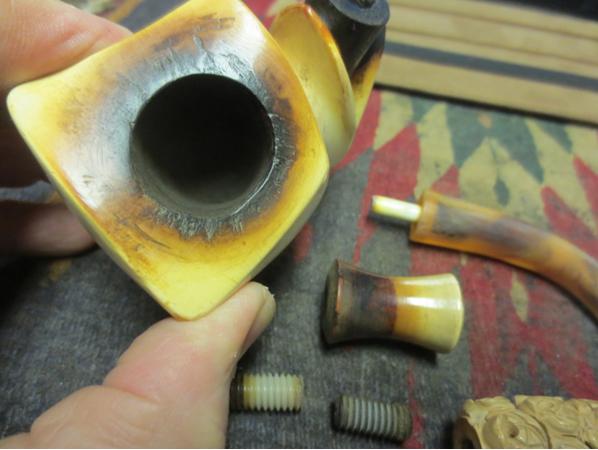
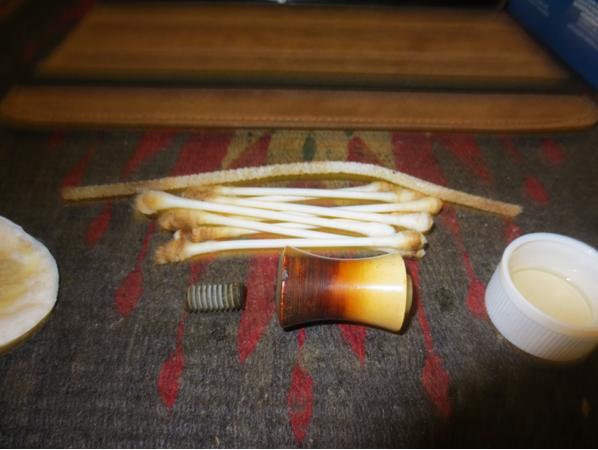
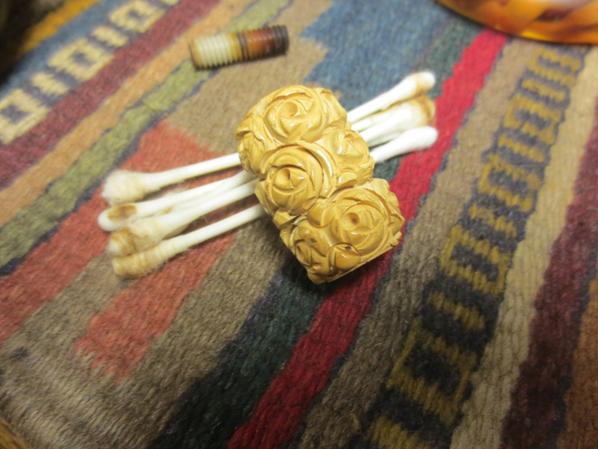
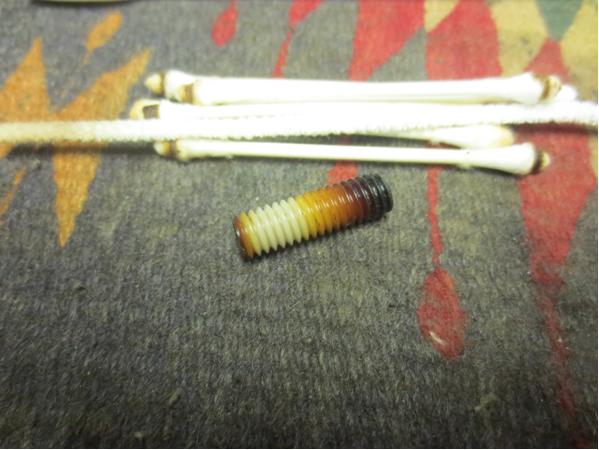
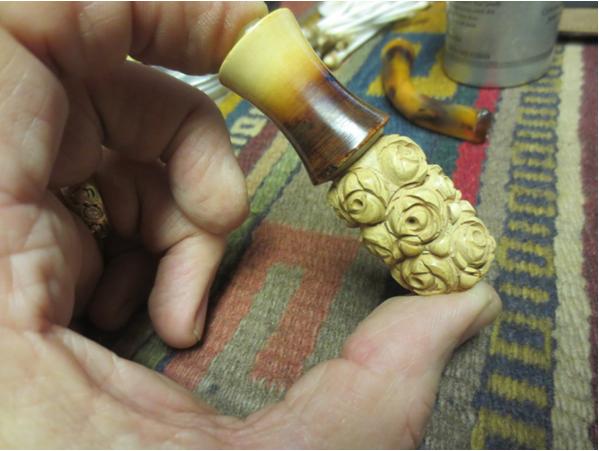
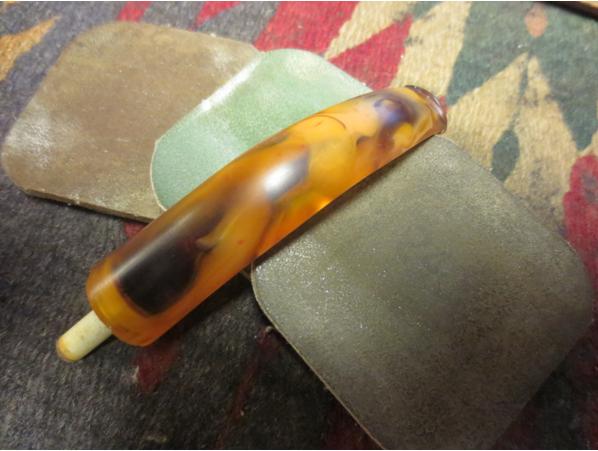
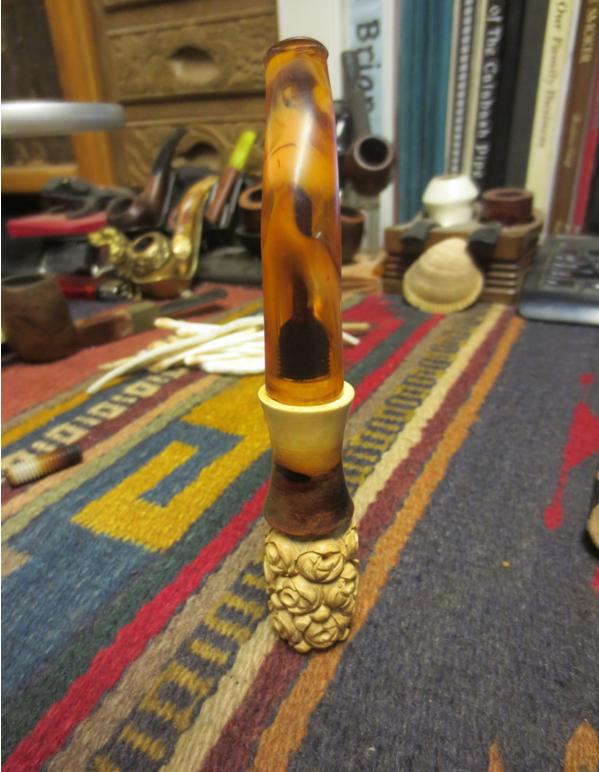
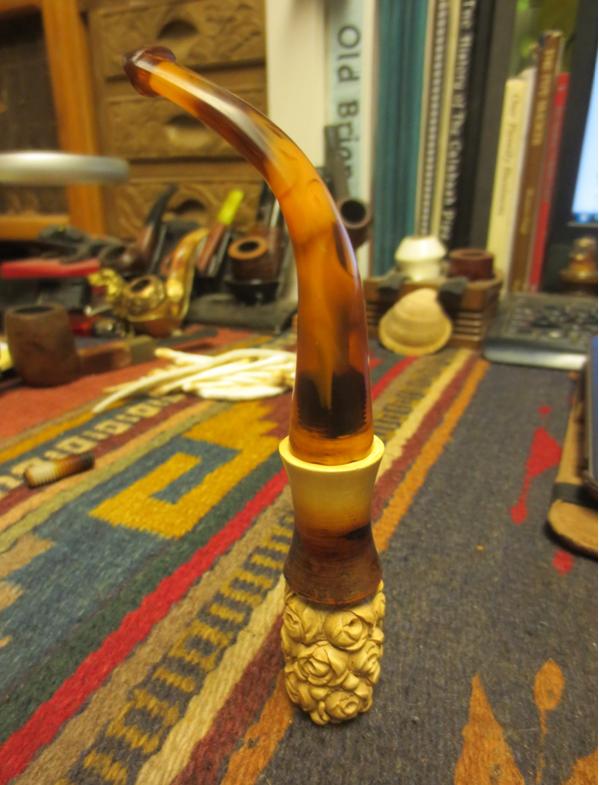
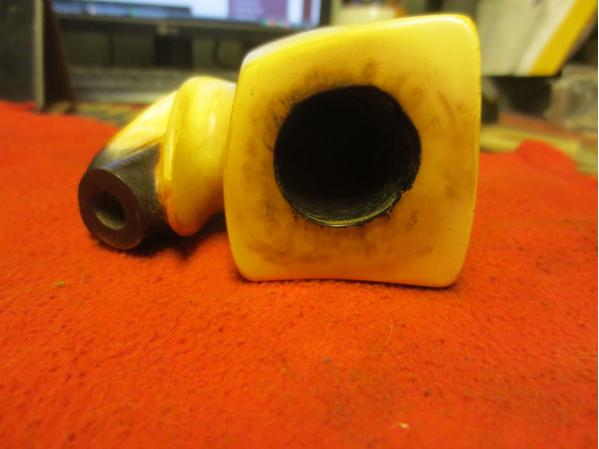
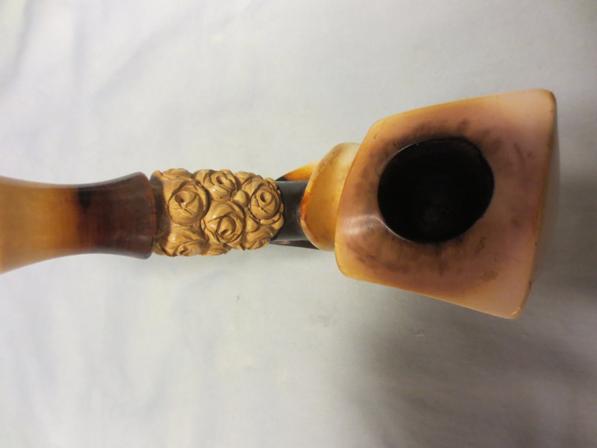
A fellow Canadian contacted me about working on a Bekler that he had picked up. He said it was pretty rough. He sent me these photos for a quick look. I loved the look of this pipe. It is stamped CAO Bekler on the darkened shank. On the foot it is stamped ’81 over A La Rodin no. 7 of 100. Above the darkened shank is an insert of carved roses. Above that is a bi-colour spool. The stem was pushed into the spool. There are threaded connectors between each piece of the shank. Bekler1 Bekler2When the pipe arrived it was in worse shape than I had expected. Joe had said that the stem needed work but I did not expect the mess that came. Someone had hacked the stem with files and left behind an uneven surface with many deep file marks and scratches. Some of the flaws were raised and some were indents. It looked as if they had tried to thin the mouthpiece down and narrow the width of the stem. The button was intact but had file marks. The file marks went every direction across the stem. The slot in the end of the stem was off centre with the drilling in the slot slightly to the left. The stem itself was twisted to the left as well. The inside of the stem had a dark sludge in it that pretty well hid the tortoise shell look of the Lucite. The bowl and shank were badly scratched and the rim was a mess. The bowl was out of round and the same person had used the file on the rim leaving behind deep gouges in the top of the rim. On top of the scratches there was a thick coat of lava that covered the top from the inner edge out to about the middle of the top. The foot had some nicks out of it. This would take some tedious work to clean up.
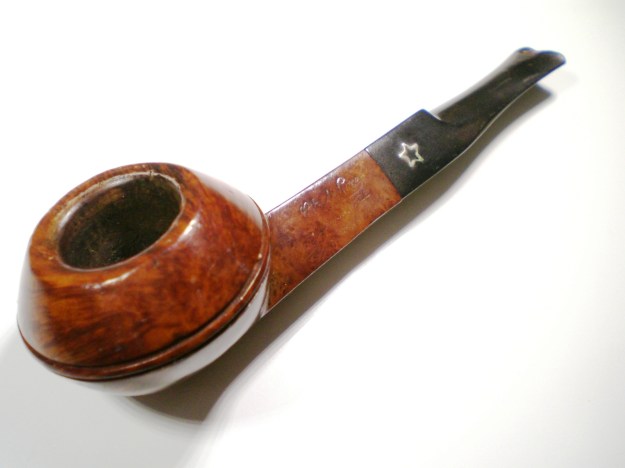
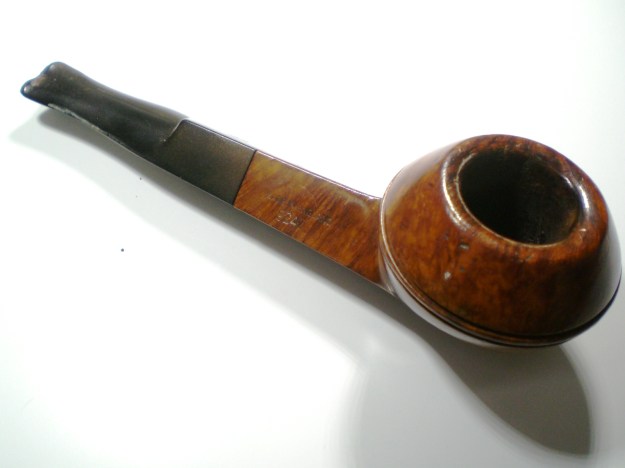
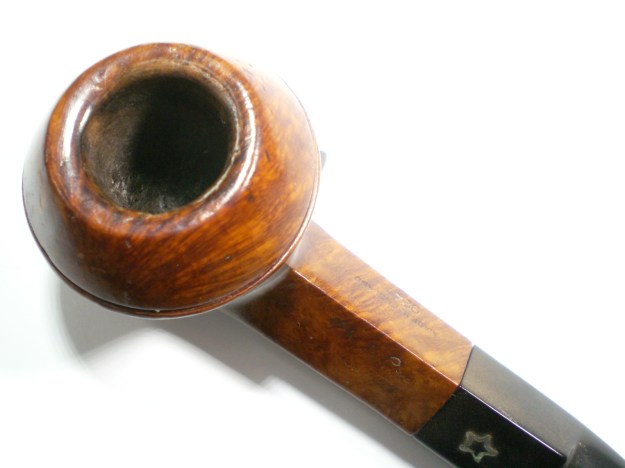
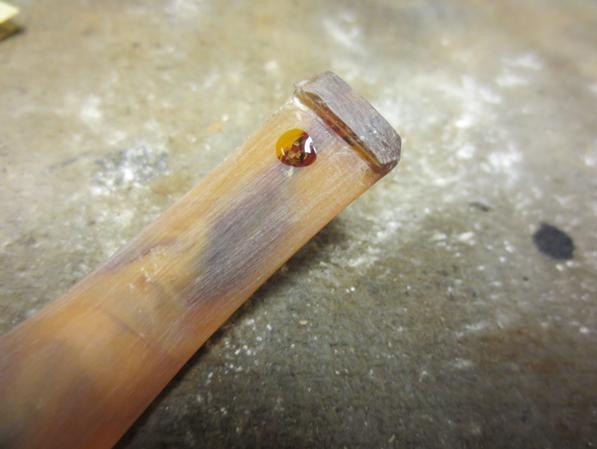
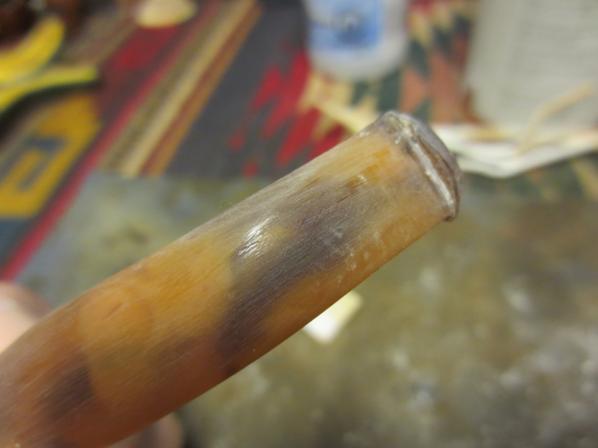
I took some photos after I initially sanded the stem. I wanted to document the condition of the pipe.Bekler3 Bekler4 Bekler5 Bekler6 Bekler7 I sanded the stem with 220 grit sandpaper to smooth out all of the cuts and file marks. It took a lot of sanding and shaping to smooth out the stem surface. I found that under the file marks there were some tooth marks in the underside of the stem. I sanded that surface smooth and wiped it clean. I used a clear super glue to fill in the divots.Bekler8 Once the glue dried I sanded the entire stem once again and blended the patch into the surface of the Lucite. I reshaped the button and the edge with the sandpaper and cleaned up the slot with needle files.Bekler9

Bekler10 Once the surface was smooth I cleaned out the inside of the stem with pipe cleaners and alcohol. I scrubbed the interior with both smooth and bristled pipe cleaners. I was able to clear out the darkening and tar in the airway.Bekler11 With the stem cleaned up and the surface smooth I took a picture of all of the parts on this pipe. The connectors look rough but upon examination I found that they were solid and needed to be cleaned up. You can also see the file marks on the top of the rim and the tars and lava that filled them.Bekler12

Bekler13 I scrubbed the spool insert with Murphy’s Oil Soap and then rinsed it off with water.Bekler14 I cleaned out the inside of the spool and the threaded connector with alcohol, cotton swabs and pipe cleaners. I used a topping board to clean up the ends of the connector as it was poorly done. It looked like someone had shortened it with a pair of cutters and left the residual chips and flakes on the connector. The tars had caught on them giving the end a rough look. The threads were also caked with tars and oils.Bekler15 I scrubbed the next shank insert, the carved rose piece with the Oil Soap and a tooth brush and rinsed it with water. I cleaned out the interior with pipe cleaners, cotton swabs and alcohol. I also cleaned the longer connector inside and out. I used a dental pick to clean out the threads. I also used the topping board to smooth out the ends.Bekler16

Bekler17 The next photo shows the two shank inserts joined together with the smaller of the two connectors. I gave them a light coat of Conservator’s Wax and buffed them with a shoe brush to raise a shine.Bekler18 I decided to work on the stem with the micromesh pads to see what the surface looked like with some shine. I find that the first three grits of micromesh pads – 1500-2400 – tell a lot. I could see the spots that I needed to still work on but I could also see the lovely tortoise shell Lucite beginning to show its colours.Bekler19 I put the stem on the two inserts to get a feel for the look of this part of the pipe. I took the next two photos to show the progress. The stem was getting there. I still needed to heat it and straighten out the twist in the bend and bend it slightly more as it did not fit snugly in the case. Before I heated the stem I examined it carefully. There was a small flaw in the swirls of the material on the top surface of the stem at the bend so I would need to be careful in the heating and bending. Fortunately the flaw did not go too deeply into the stem material but sat on the surface. I heated the tip of the stem and straightened out the twist in it as I bent it slightly to match the case. I repaired the flaw with super glue and sanded it with 20 grit sandpaper to smooth out the repair.Bekler20

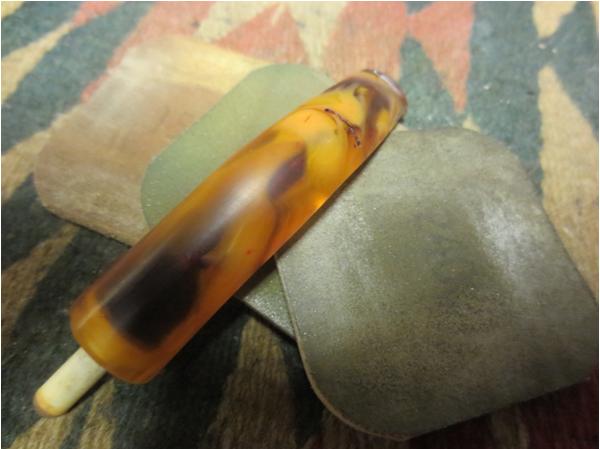
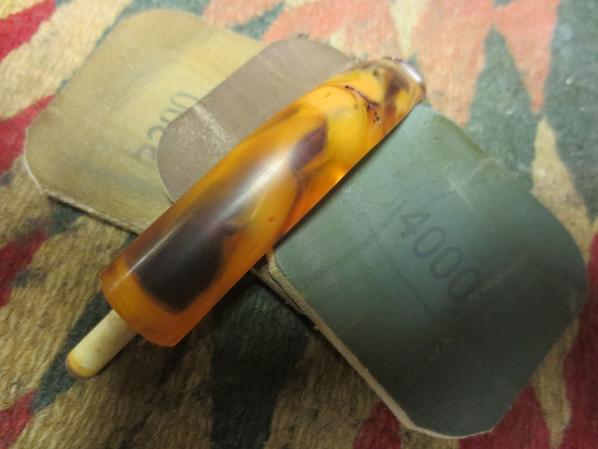
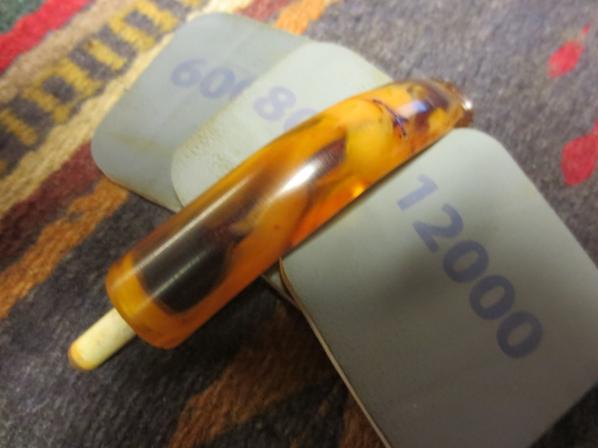
Bekler21 I cleaned the interior of the bowl and shank with pipe cleaners, cotton swabs and alcohol.Bekler22 I set the bowl aside to dry out and I sanded the stem with micromesh sanding pads. I wet sanded with 1500-2400 grit pads and rubbed the stem down with Obsidian Oil. I dry sanded it with 3200-4000 grit pads and gave it another coat of oil. I finished with dry sanding it with 600-12000 grit pads and gave it one last coat of oil.Bekler23

Bekler24

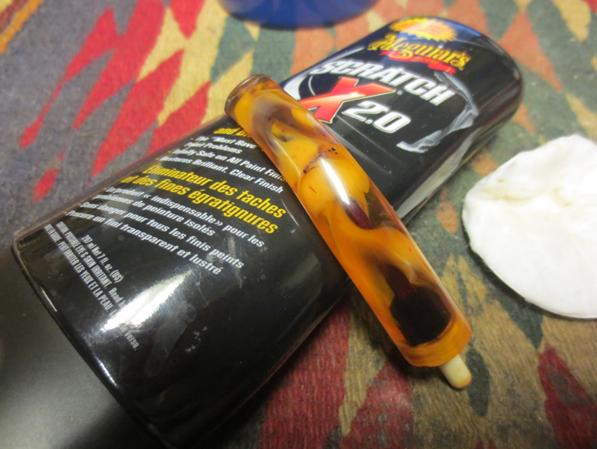
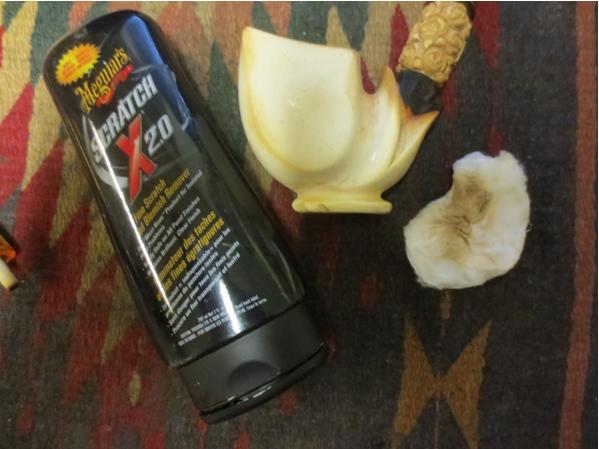
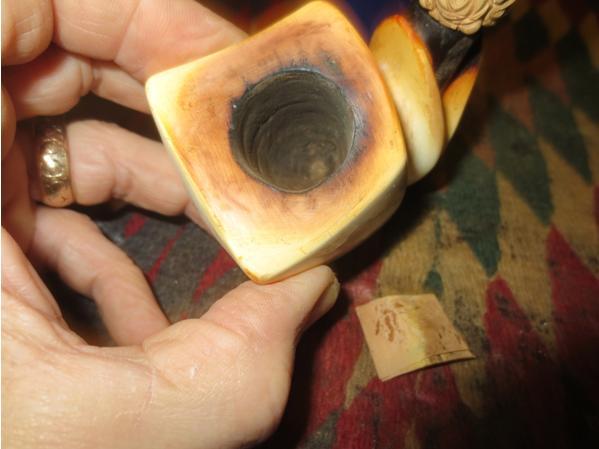
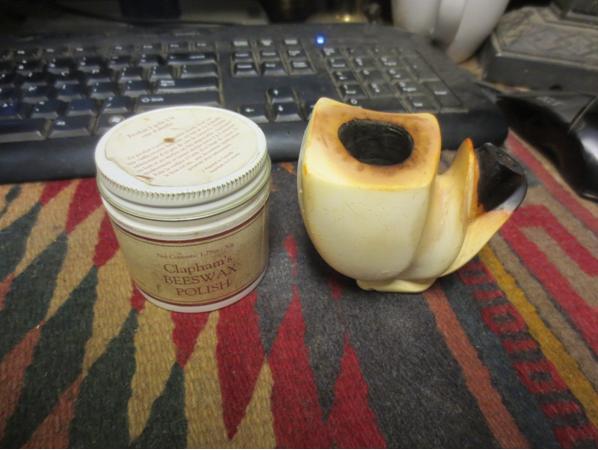
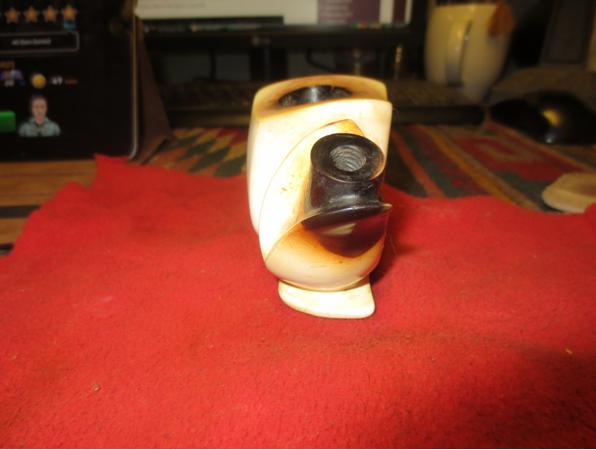
Bekler25 I polished the stem with Meguiars Scratch X2.0 and then gave it several coats of wax.Bekler26 I scrubbed the surface of the bowl with the Scratch X2.0 and hand buffed it with a cloth.Bekler27 I sanded the file marks on the rim to bring it back to smooth. The deep gouges were blackened and took quite a bit of sanding to remove them. I started sanding with 220 grit sandpaper and worked on the surface of the rim. I was careful to not change the profile of the bowl or the angles of the rim.Bekler28 I sanded the rim with micromesh pads from 1500-12000 grit to smooth out the surface and give it a shine. I gave the bowl several coats of Clapham’s Beeswax Polish and buffed it by hand with a cloth.Bekler29

Bekler30

Bekler31

Bekler32 With the buffing the bowl began to shine. The carving on the foot of the bowl stood out clearly. The rim surface looked far better than when I began.Bekler33

Bekler34 I lightly buffed the bowl with Blue Diamond on the wheel being careful around the blackened shank. The shine rose in the meerschaum and the pipe looked good. Though there were still nicks and scratches they now looked like marks of honour and age rather than abuse. To me it is always a fine balance between restoring a pipe and reworking a pipe. On a beautiful pipe like this one I opted to work on the big issues and leave some of the war wounds on the sides of the bowl. To me the pipe has been around long enough to earn those marks. I want a pipe that is finished to look better than when I started but I am not aiming at making a 35+ year old pipe look new. I want it to look cared for and well smoked. The finished pipe is shown in the photos below.Bekler35

Bekler36

Bekler37

Bekler38

Bekler39

Bekler40

Bekler41

Bekler42

Bekler43

Bekler44

Bekler45

Bekler46

Bekler47

The English Patient – Repair & Restoration of a 1918-1921 Dunhill Shell Briar


Charles just posted his work on this one on his blog. It is an old early Dunhill Shell. Some innovative techniques and some patient fussing brought an old wreck back to life. Well done.

Charles Lemon's avatar

An email pinged into my inbox a few weeks ago, sent by a fellow member of the Briars & Bull Pipe Club here in Kitchener. He had, he said, an old Dunhill pipe he’d like to have cleaned up, and would I be interested in tackling the project for him?

I said yes, of course, and soon after I had the patient in hand. The owner was right – it was an OLD Dunhill, though exaclty how old would take a bit of research. At first glance, the pipe looked good, but in the way that an old, well-worn tuxedo looks good – far from pristine, a bit thin at collar and cuffs, but still a great suit. Someone had given this old suit – er, I mean pipe – a brushing up. The stummel had been polished up, and the replacement stem showed a few tooth dents but fit well…

View original post 1,917 more words

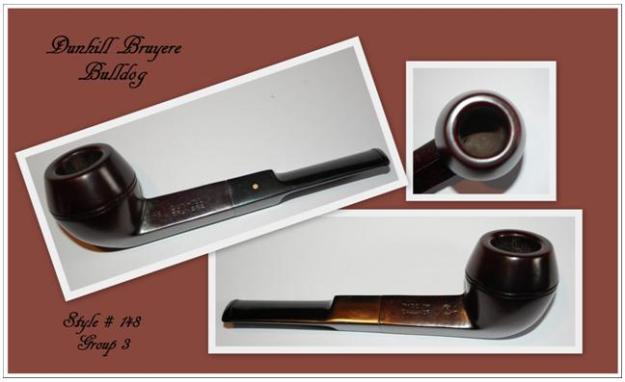
Dunhill Bulldog Gets a Facelift


Blog by Dutch Holland

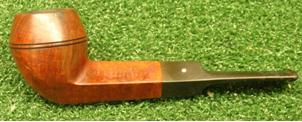
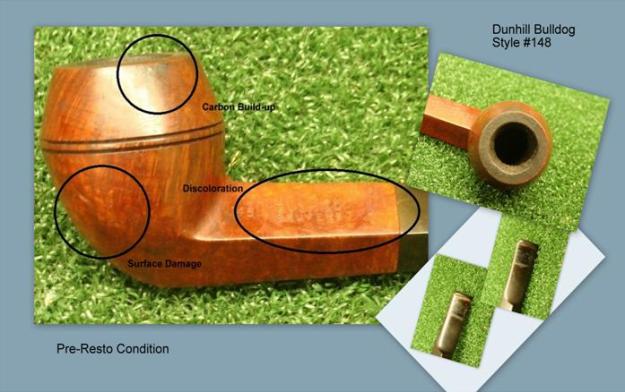
I had been looking for a small Dunhill Bulldog and recently found this one. It’s a 1962, style 148, Bruyere, Group 3 in need of some TLC. It’s quite petite, almost delicate compared to thDun1e GBD Rhodies I’m usually drawn to but the price was right so I pulled the trigger and several days later it arrived. Although not in really bad shape, it had some issues that would need attention. The bowl top hadn’t seen a cleaning in some time, carbon build-up had migrated onto the upper outside of the bowl and the tobacco chamber had a significant build-up of cake. At some point the pipe had apparently been dropped because there was a nasty crease and some dents surrounding it on the front. The shank had several tones of color, the cause is uncertain. After cleaning the rim area I discovered a number of edge scars and some charring on one side that made the inner edge look out of round. There would be no saving the finish, a stripping would be necessary. The nomenclature was clear and strong so attention to method would be important to preserve it. Dave G’s stripping formula worked out exceptionally well but who would expect anything less? Dun2I slightly topped the rim after beveling the inner edge to minimize the amount that needed removal. Topping was done with 1000 grit sandpaper on a flat surface following the application of some steam. The steam had all but eliminated the edge scars and a little softening of the outer edge did the rest. Treating the inner edge with a slight bevel took out the majority of the scorch so almost nothing needed to be removed. Preserving that classic profile was important. That came at the expense of giving the top a somewhat different look. One that seems to better compliment the delicate style of this pipe but that’s just a personal opinion.

The crease and dents on the front were steamed out and the entire pipe stripped of wax and stain. I really wanted something darker than the original stain so I mixed 2 parts of medium brown with 1 part oxblood and applied it. After the color set I buffed it to a rich dark mahogany and then applied four coats of carnauba wax, giving each a chance to harden in between. The stem was worked with Micro-Mesh and then a final buff with white diamond to bring up the gloss. Dun3There are some who would consider changing the color of a Dunhill to be heretical but I’m not so constrained. This one’s for my pleasure, the next guy can restore it for authenticity. I really like the color and overall the pipe looks better than it did at the start so I don’t feel the slightest bit guilty. Burn me at the stake if you like, I’m unrepentant.

City deLuxe 9240 Restoration


Blog entry by Al Jones

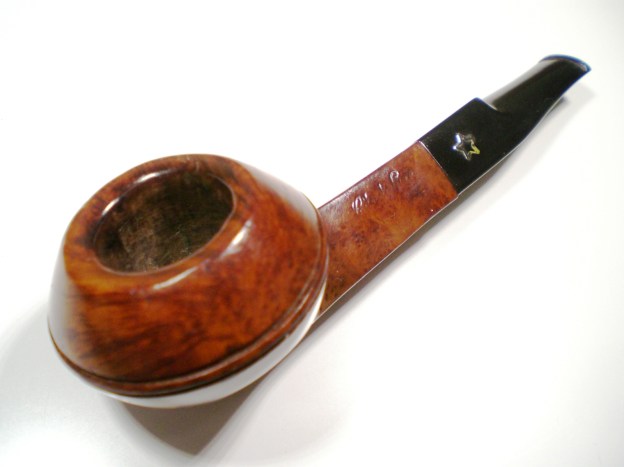
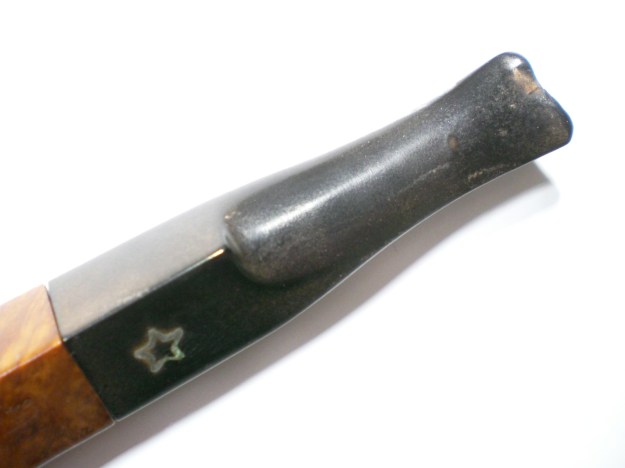
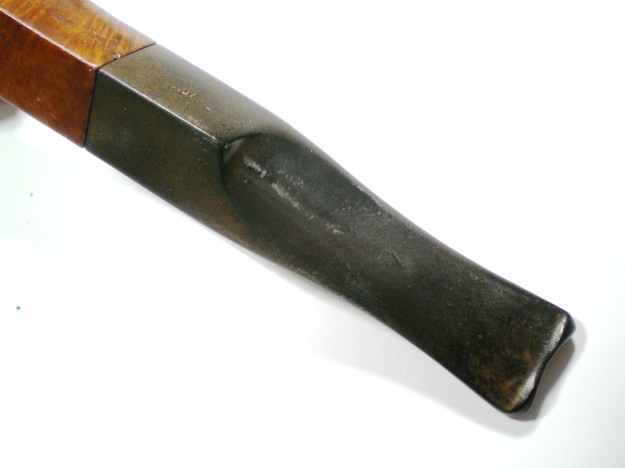
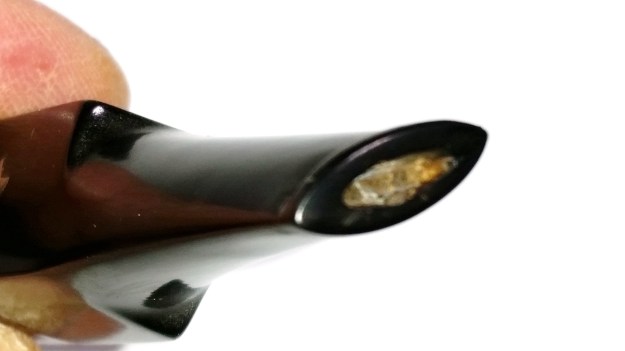
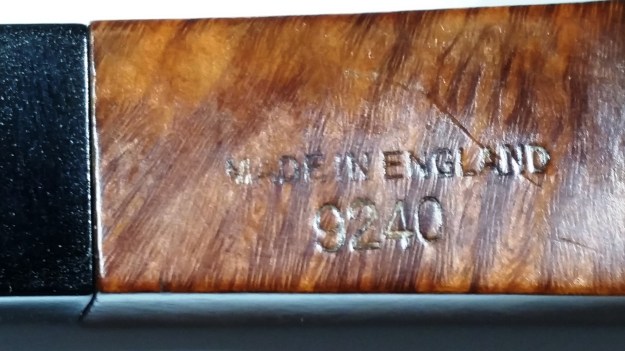
This City deLuxe short, shape 9240, squat bulldog came in a group of pipes I found on Ebay. I thought it had the most promise of the trio. As with most City deLuxe pipes, this one came with a twin-bore stem, they called the “Tuscan Lip”. Unfortunately the pictures didn’t disclose the damage to the button end. The white plastic fill bit was missing and one of the bore holes was cracked thru to the fill inset.

City_deLuxe_9240_Before (1)

City_deLuxe_9240_Before (4)

City_deLuxe_9240_Before (2)

City_deLuxe_9240_Before (3)

City_deLuxe_9240_Before (5)

City_deLuxe_9240_Before (6)

My first attempt to the repair the button was to completely fill in the button holes. My plan was to re-drill the draft hole. After numerous attempts with the black superglue, I was unsuccessful. When I attempted to re-drill the draft hole, using a 1/16″ drill but, the repair portions kept flaking off.

I finally gave up and decided to cut off the broken button and shape a new button. I used a fine-tooth hobby saw to make a clean cut. I cut in a new button using a flat needle file. With 400 grit paper wrapped around the needle file, I tapered the stem up to the new button. That was finished with 800, 1500 and 2000 grit paper. At this time, I removed the oxidation from the rest of the stem. The brass star logo was in great shape. I used another needle file to funnel the draft hole. The stem was mounted and buffed with White diamond rouge and Meguiars Plastic Polish. Below are two shot taken as the new button was shaped.

?

?

City_deLuxe_9240_Before (8)

The bowl was reamed and then soaked with alcohol and sea salt. I scrubbed the shank with a bristle brush dipped in alcohol. There were some dents on the briar. I used an electric iron set on high and a wet cloth to stem them out. Not all of them were removed, but I don’t mind a little patina on my pipes, those marks were all earned. The bowl was then buffed with White Diamond and several coats of Carnuba wax.

Below is the finished pipe.

City_deLuxe_9240_Finish (1)

City_deLuxe_9240_Finish (4)

City_deLuxe_9240_Finish (6)

City_deLuxe_9240_Finish (5)

City_deLuxe_9240_Finish (2)

City_deLuxe_9240_Finish (7)

City_deLuxe_9240_Finish (3)

City_deLuxe_9240_Finish (8)

?

?

?

?

?

?

City_deLuxe_9240_Finish (1)

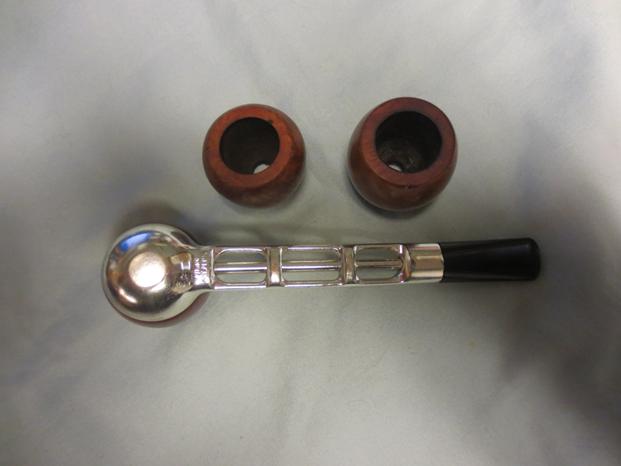
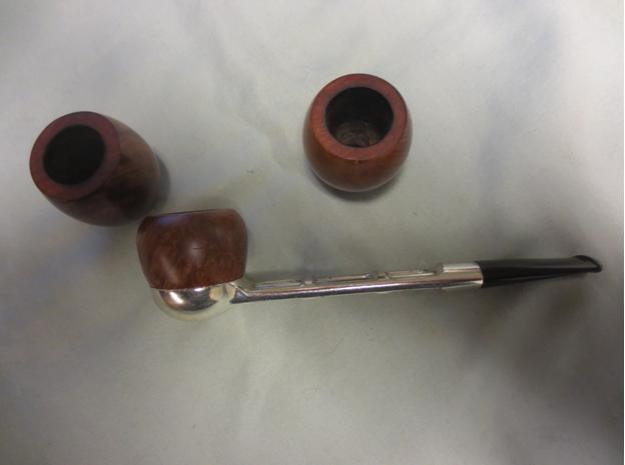
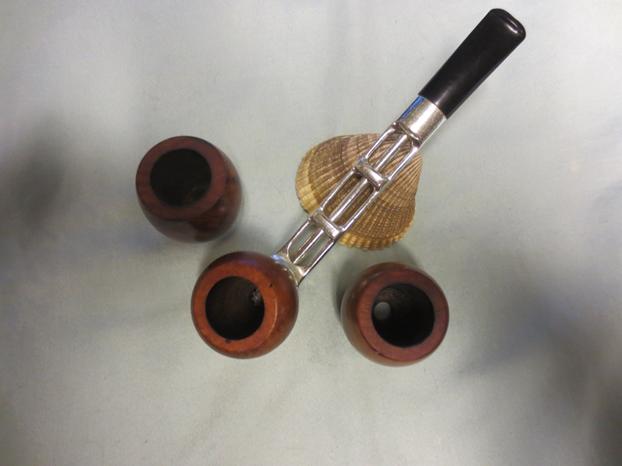
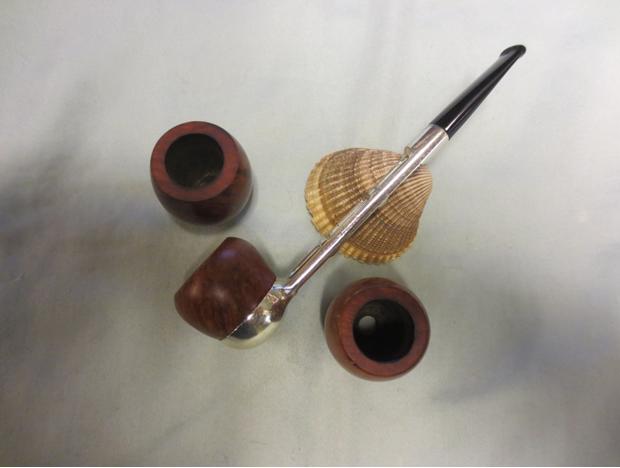
A Sparkling Metallic Dr. Grabow Viking with Three Bowls


Blog by Steve Laug

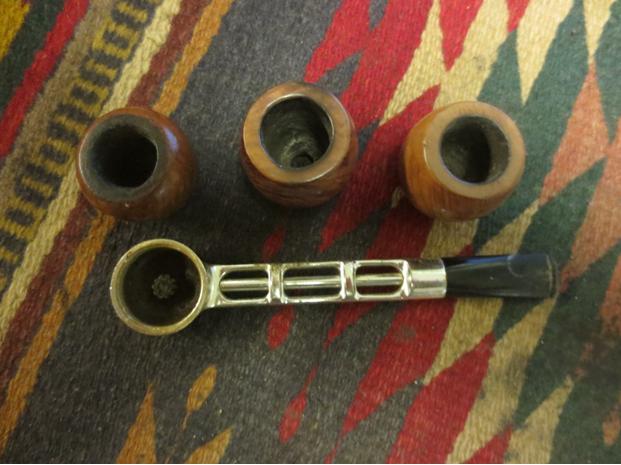
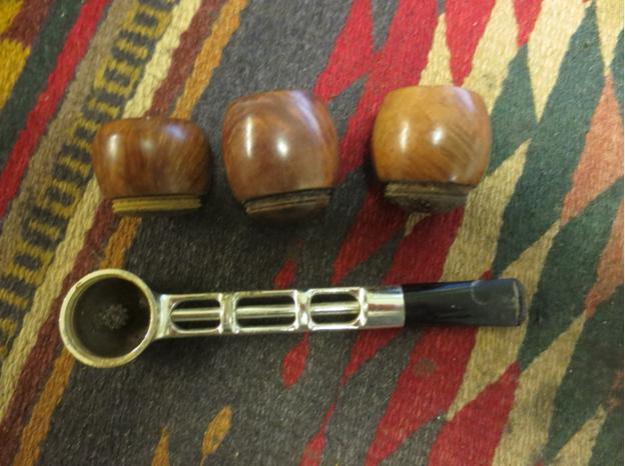
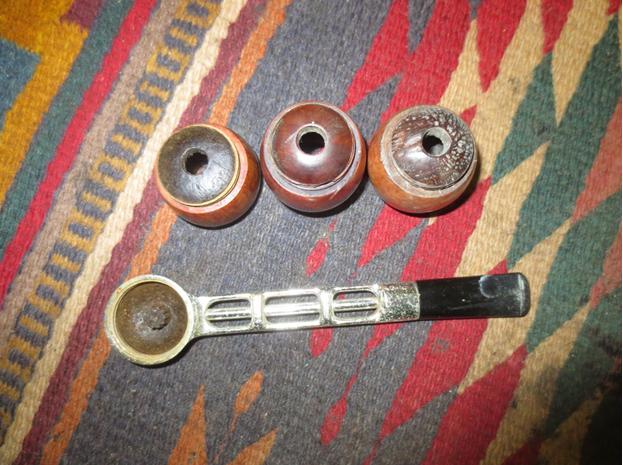
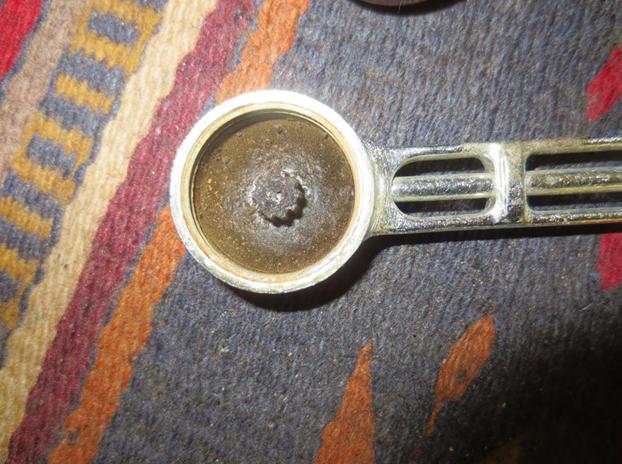
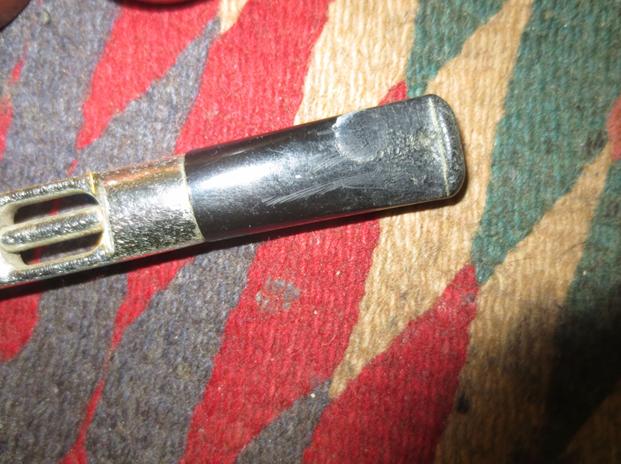
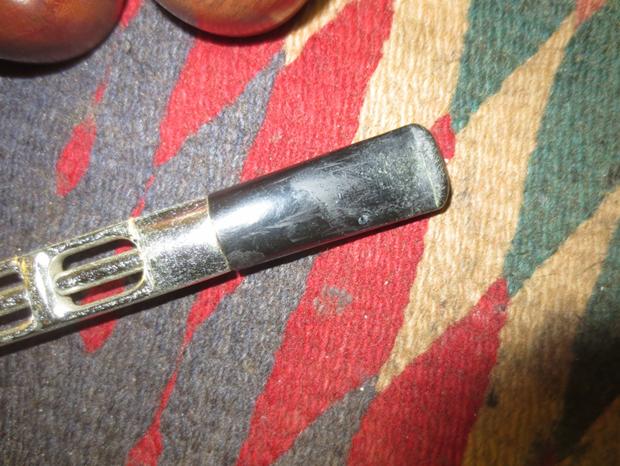
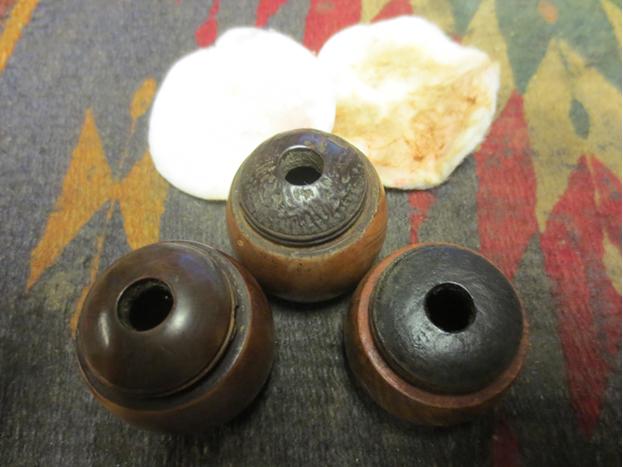
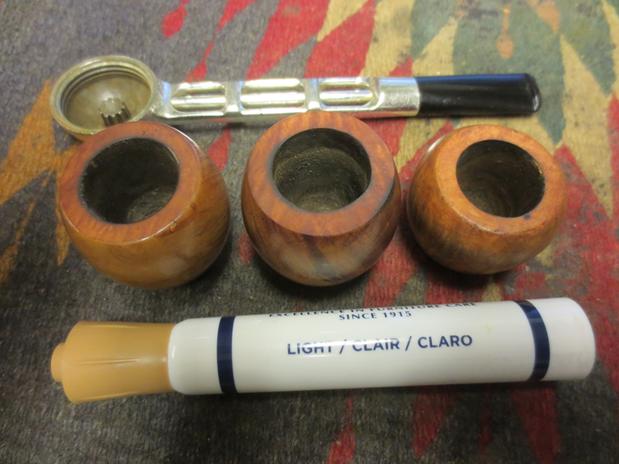
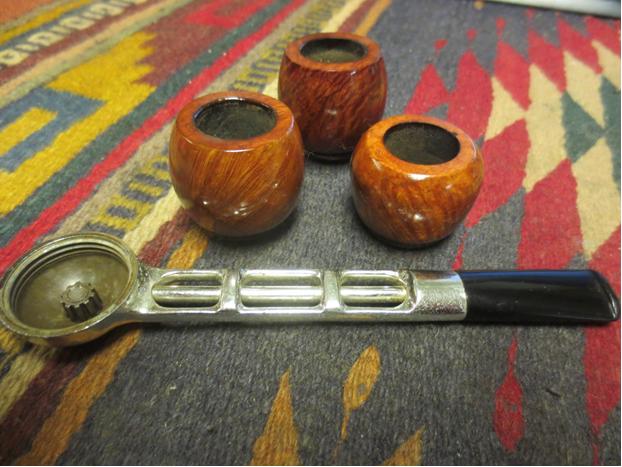
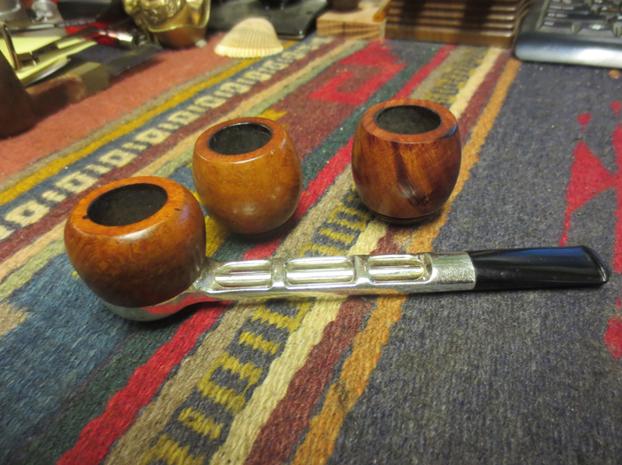
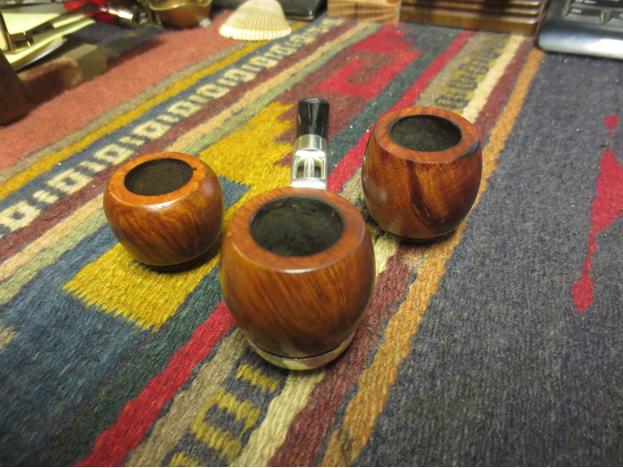
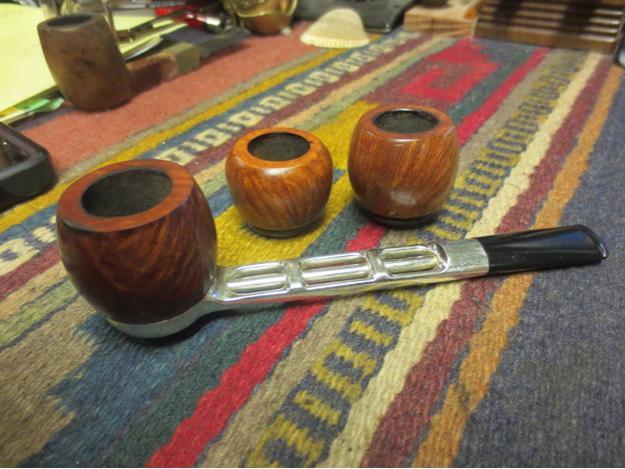
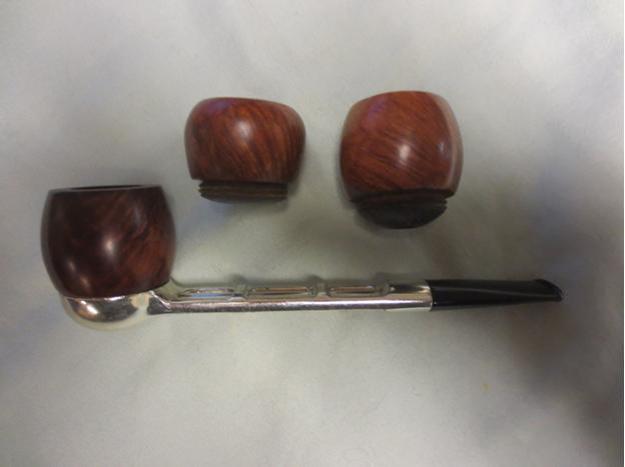
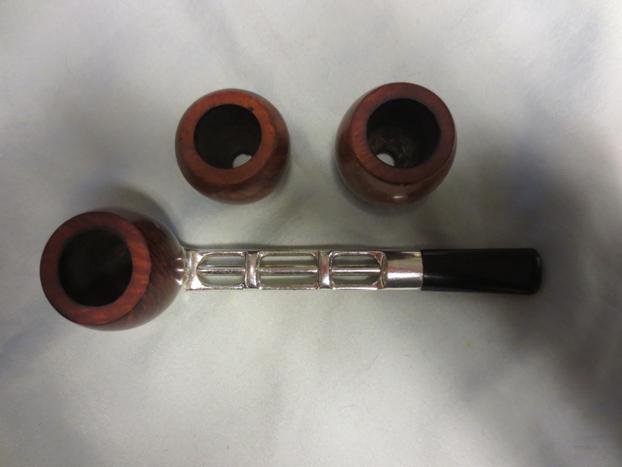
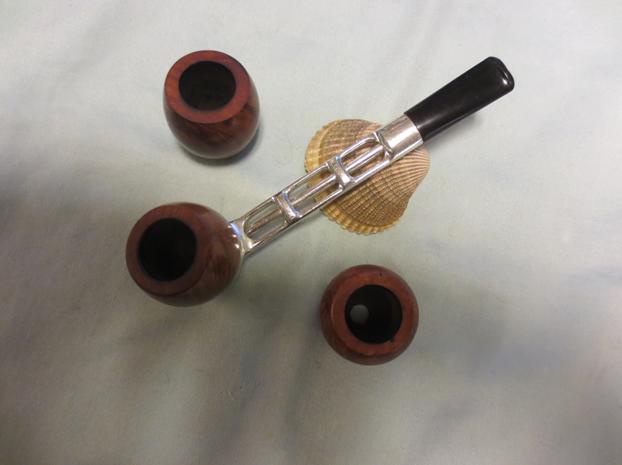
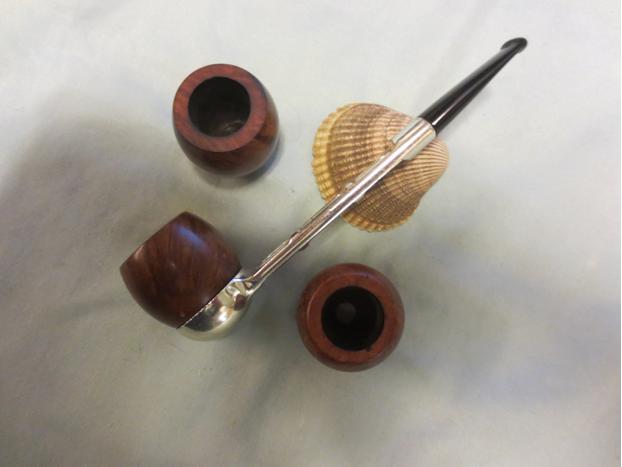
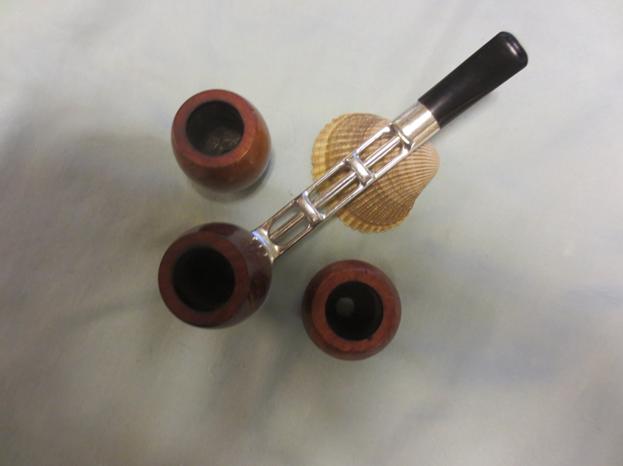
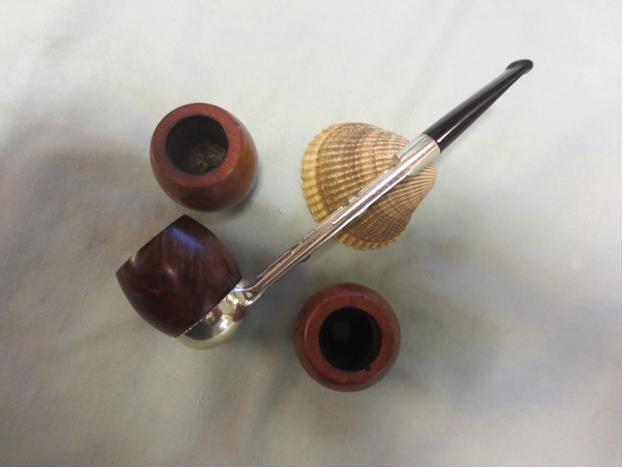
This older Dr. Grabow Viking came to me as a gift from a Facebook friend. He gave it to me along with some other pipes for me to enjoy restoring. This one is stamped next to the heel of the metal base – Viking Pat. Pend. The metal is sparkling metallic silver. It has flecks throughout the paint that make it sparkle and shine. When it came it was together in a plastic sandwich bag. The base unit was tired and dirty. The bowl on the base was caked with an over flow of lava onto the rim. The other two bowls had been reamed and cleaned. The finishes on all three were dirty and dull. The rims on all three bowls show damage from burns or being knocked out on a hard surface. When I removed the bowl the interior of the base was caked with the thick lacquer of the juices of tobacco as it burns. It looked to me like it had not been cleaned in a long time and the black thick oils had hardened like rock in the base. The airway was clogged with debris. The stem had collapsed from being bitten on. The tooth marks were deep but did not go through into the airway. The sharp edge of the button was worn almost smooth. I was not able to push a pipe cleaner through the airway from the button or from the airway in the bottom of the base.

G1G2G3

I took a few close-up photos. The first shows the inside of the base and the build up there. The second and third show the bite marks on the stem. The second photo shows the top of the stem and the bite mark on that surface, though not looking bad in the photo, collapsed the airway and made it impossible for a pipe cleaner to pass through. The fourth photo below shows the stamping on the bottom of the base.G4G5G6G7

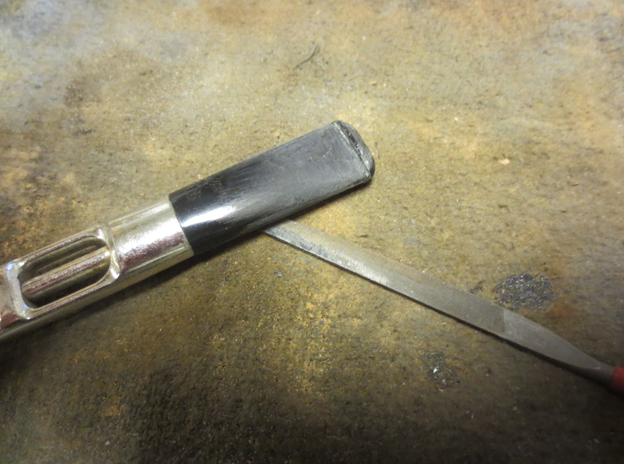
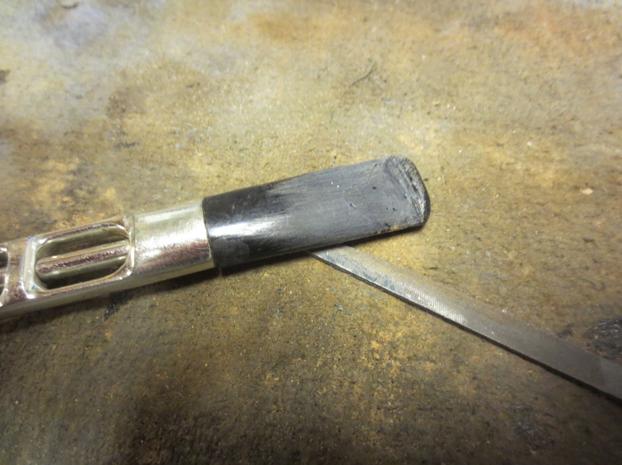
I scrubbed out the inside of the base with pipe cleaners, cotton swabs and alcohol. I also used a brass bristle brush. I opened the slot and airway in the stem with a flat needle file. I inserted the needle file and pushed the indentation on the top of the stem upward to clear the airway. It took a lot of fiddling with the file to open the slot completely. I cleaned the airway and stem with pipe cleaners and alcohol.

G8

I repaired the tooth marks with black super glue and set the pipe aside for the evening to allow the glue to cure. I have not had good luck with this kind of fill using the accelerator as it tends to cause air bubbles in the dried glue.

G9G10

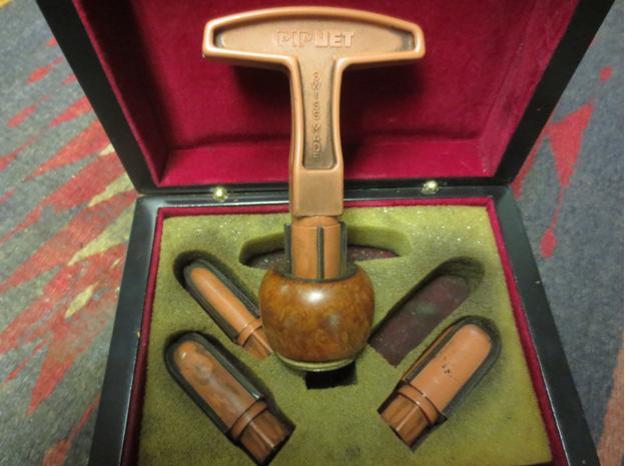
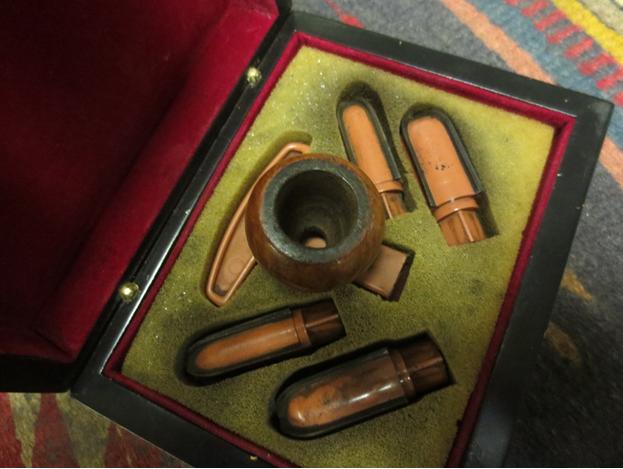
I reamed the cake in the one bowl with a Pipnet reamer and took the cake back to bare briar.

G11G12

In the morning I sanded the repairs on the stem with 220 grit sandpaper to smooth the surface of the repair and blend it with the stem. I used a needle file to sharpen the edges on the button.

G13G14G15G17

Once I had the surface smooth I sanded the stem with micromesh sanding pads. I wet sanded the stem with 1500-2400 grit pads and then rubbed it down with Obsidian Oil. I dry sanded the stem with 3200-4000 grit pads and gave it another coat of oil. I finished dry sanding it with 6000-12000 grit pads and gave it a final coat of Obsidian Oil. I set it aside to dry.

G18G19G20

With the base finished I set it aside and turned my attention to the bowls. I topped all three bowls on the topping board. The short bowl that I reamed had some dents and rim damage. The other two had burn marks and rounded edges that needed to be cleaned up.

G21G22

I wiped the bowls down with acetone on cotton pads to remove the finish and the grime.

G23G24

I stained all three rims with the light brown stain pen for the first coat. I then gave all three bowls several coats of Cherry stain Danish Oil and buffed them to a shine.

G25G26G27G28G29

I finished the restoration by buffing the bowls with Blue Diamond and then giving the bowls and the stem several coats of carnauba wax. I buffed the whole pipe with a clean buff and then with a microfibre cloth to raise the shine. The finished pipe is shown in the photos below. Each photo shows a different angle and includes the base with all of the bowls in place.

G30G31G32G33G34G35G36G37G38G39

More Work than I thought – A Real Briar Billiard with a horn stem


Blog by Steve Laug

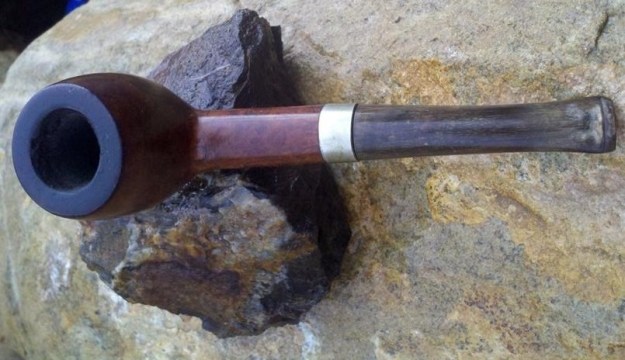
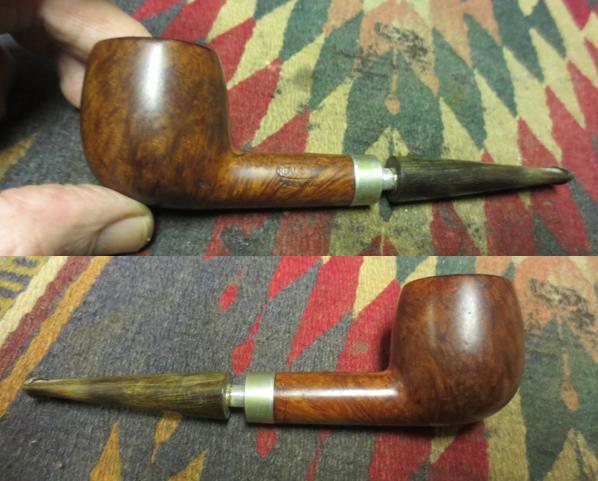
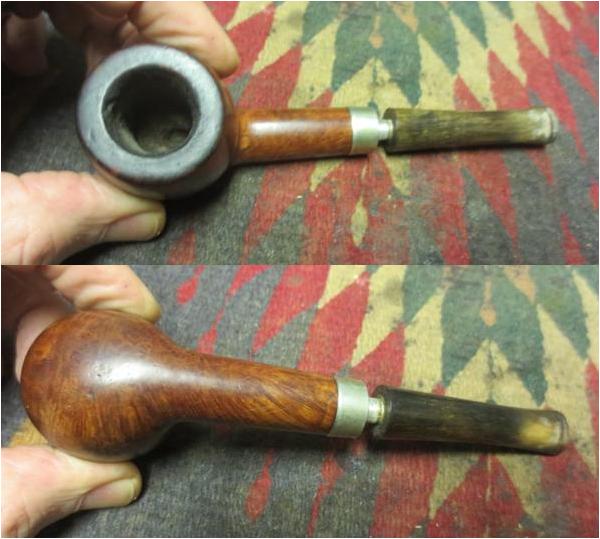
When I saw this pipe on eBay when my brother and I were searching for pipes in the estate pipe area I thought it would be a simple restoration. The briar appeared to be in decent shape and the finish looked very good. The rim was dirty but looked undamaged under the grime and tars. The horn stem did not look too damaged and should also be an easy repair. When the pipe arrived at my brother’s home he took the following photos and sent them to me to have a look at the pipe. It still looked pretty straight forward to me.RB1

RB2

RB3

RB4

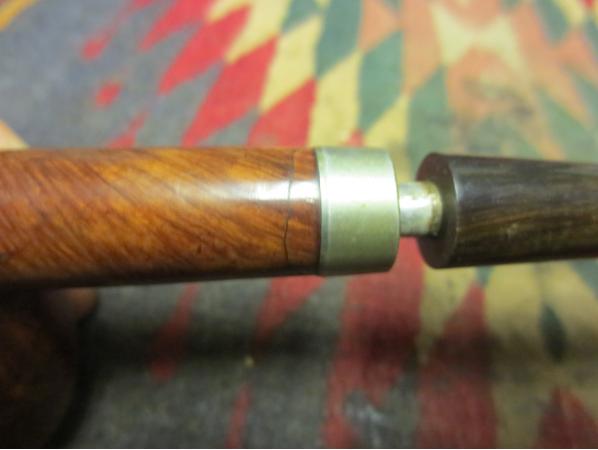
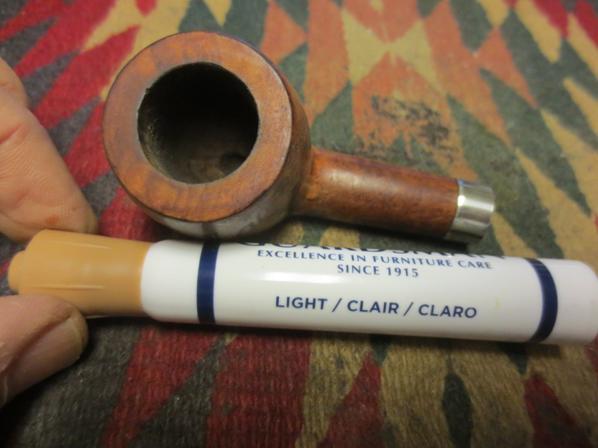
RB5 When the pipe arrived here in Canada I was in for a surprise. It definitely looked good but the more I dug deeper the more issues that I found. The rim was tarred and covered with lava and underneath the outer edges were rounded over. The bowl had a light cake at the top and half way down and a deep groove had been cut in the bottom of the bowl by aggressive insertion of the pipe cleaner. The groove or pit was below the airhole entry to the bowl. The shank had been repaired and the crack that I noted in the pictures had been well repaired and the band put in place to strengthen the shank. It would not take much to clean it up. The finish which at first glance looked good had deep gouges in the bottom of the bowl and on the left side of the bowl near the shank union. These were sharp cuts and could not be steamed out. There was a large fill on top of the shank where it met the bowl. It appeared to be pink putty but it was solid and tight. The stem was also nicked quite a bit on the top mid stem and on the left side near the band. The top and bottom sides had some deep tooth marks on them that I could not see from the photos. The stem was very tight in the shank and took some persuasion to remove.RB6

RB7 The next two photos show the repair work on the underside of the shank. It was very well done and would not need to be further dealt with. The third photo shows the rim with the rounded outer edge.RB8

RB9

RB10 I removed the stem from the shank with a bit of pulling and found that the metal tenon was covered with tar and had been stuck in the shank by the tars.RB11 I reamed the bowl back to bare wood to bring the rest of the bowl in line with the bottom half. I used a PipNet reamer with the second cutting head. In the second photo you can see the deep pit in the bottom of the bowl.RB12

RB13 I cleaned out the stem and the tenon with alcohol, cotton swabs and pipe cleaners.RB14 The next two photos show the tooth marks on both sides of the stem. They are quite deep and they will need to be repaired.RB15

RB16 I wiped down the stem with a cotton pad and alcohol and then put drops of super glue in the tooth marks. I sprayed them with accelerator.RB17

RB18 I scrubbed out the mortise, shank and bowl with alcohol, pipe cleaners and cotton swabs. I scrubbed until the pipe cleaners and cotton swabs came out clean.RB19 I topped the bowl to remove the damage to the bowl top and to clean up the round outer edge of the rim. Once again, note the deep pit in the bottom of the bowl that is visible in the second photo.RB20

RB21 I scrubbed the exterior of the bowl with cotton pads and acetone to remove the finish and the grime that was ground into the briar. I was going to need to do some work on the gouges on the bowl sides and bottom so I wanted it clean.RB22

RB23 The stem never sat completely tight against the shank so I beveled the inner edge of the mortise to accommodate the tenon/stem junction.RB24 With the externals cleaned I decided to do the repairs on the gouges on the bowl side and bottom. I put a drop of clear super glue in the divot and then pressed briar dust into the hole with a dental spatula. I pressed the dust deep into the glue to get a good fill. The second photo below shows the bowl side and bottom with what looks like a pox. The briar dust and glue fills are dry at this point and ready to sand. I sanded them with 220 grit sandpaper and then with 1500-2400 grit micromesh sanding pads.RB25

RB26

RB27

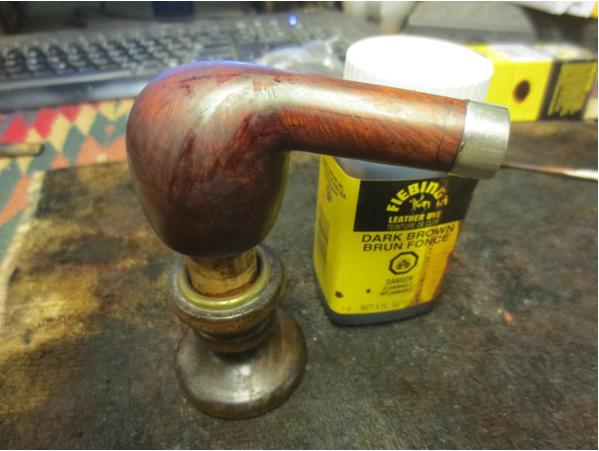
RB28 I used a light brown stain pen to give the fresh sanded briar on the bowl bottom and the rim an initial coat. I then stained the entire bowl with a dark brown aniline stain, flamed it and repeated the process. I set it aside to dry for about 30 minutes before buffing with Blue Diamond on the wheel.RB29

RB30

RB31

RB32 I mixed a batch of pipe mud (cigar ash and water) to fill the pit in the bottom of the bowl. I put a pipe cleaner in the airway with just the tip extending into the bowl. I used the spatula to put the mud in the bottom of the bowl and pressed it into the pit with the hand of the spatula. I added the pipe mud until the bowl bottom was level.RB33 I set the bowl aside to so that the pipe mud would cure and worked on the stem. I sanded the stem with 220 grit sandpaper to smooth out all of the nicks and scratches as well as blend in the super glue fills. It took a lot of sanding to smooth out the stem surface and remove as many of the scratches and dents as I could and still keep the profile. The super glue dried hard and the clear glue looks shiny and raises colour in the horn so it is very visible at this point.RB34

RB35 When I had smoothed out the surface of as many flaws as possible I worked on it with micromesh sanding pads. I wet sanded it with 1500-2400 grit pads. The repairs are starting to blend in. They will never be invisible but they are smooth. I rubbed the stem down with Obsidian Oil before continuing.RB36

RB37 I wet sanded the stem with 3200-4000 grit micromesh and then dry sanded with the same grit pads. I gave it another coat of the oil.RB38

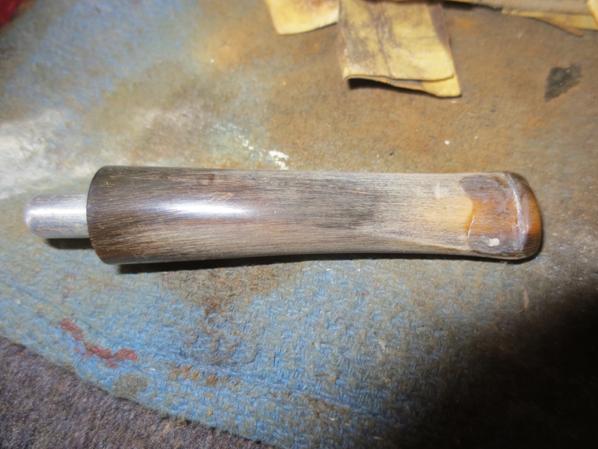
RB39 I finished by dry sanding the stem with 6000-12000 grit micromesh sanding pads and then buffing the stem with Blue Diamond on the wheel. I gave it a final coat of Obsidian Oil and set it aside to dry.RB40

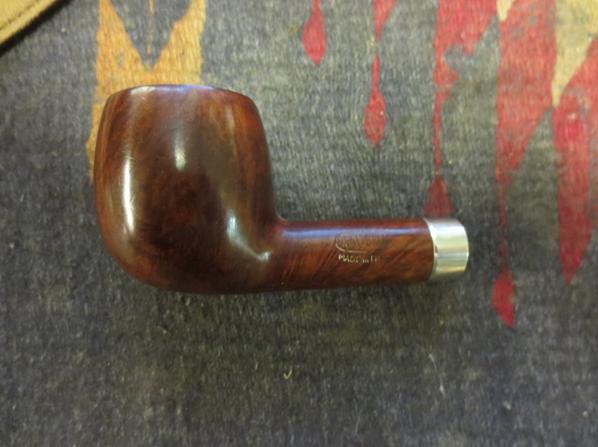
RB41 I polished the silver band with silver polish and brought the parts together. I gave the pipe a final buff on the wheel and gave it multiple coats of carnauba wax. I buffed it with a clean buff and the with a microfibre cloth to raise the final shine. The finished pipe is shown in the photos below. While the patches in the stem still show they are shiny and smooth to the touch and will give protection to the stem. The repairs to the cuts and gouges in the bowl look really good and virtually disappear under the stain and the polish. The pipe should live through at least another life time before it needs this kind of attention again.RB42

RB43

RB44

RB45

RB46

RB47

RB48

RB49

RB50