
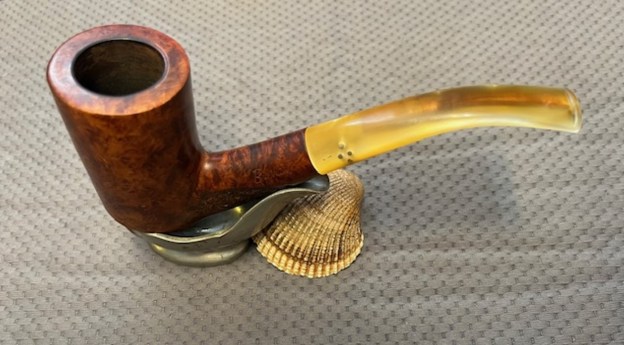
by Steve Laug
Early this month I was contacted by Donna to see if I knew anyone interested in purchasing her father’s pipes. She wrote as follows: “I am wondering if you would be interested in my father’s collection of Brighams.” She further spelled out what he had in the collection. He had 1 – 2 dot pipe, 3 – 3 dot pipes, 2 – 4 dot pipes and 4 – 5 dot pipes. There was a total of 10 pipes. I asked for a photo of the pipes and she sent the photo below. I was very interested.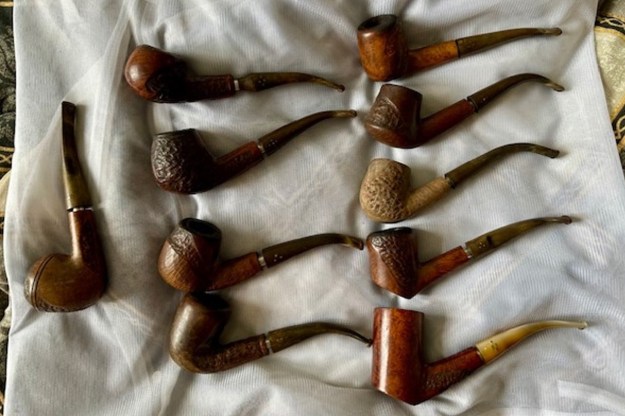 We emailed back and forth and the short story is that I paid for the collection and she shipped the pipes to me. On Tuesday after Easter the box arrived and I was happy to be able to see them up close. They were obviously well-loved pipes and in varying degrees of needing work. I wrote her and told I received them and that I was pleased with the lot. I was looking forward to working on them. She aske me to send her photos along the way as I finished the pipes. I will be sending her the links to the blog so she can see the work and the process of bringing them back to a semblance of their original beauty. Thanks Donna for the opportunity to work on your Dad’s pipes.
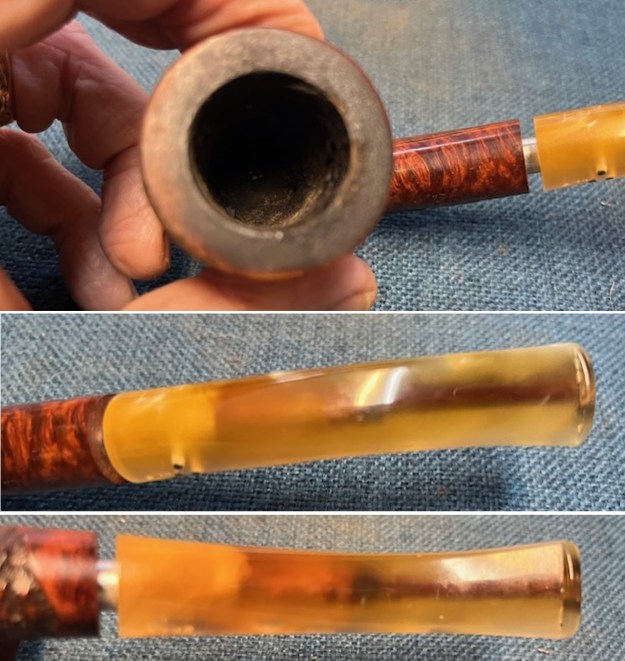
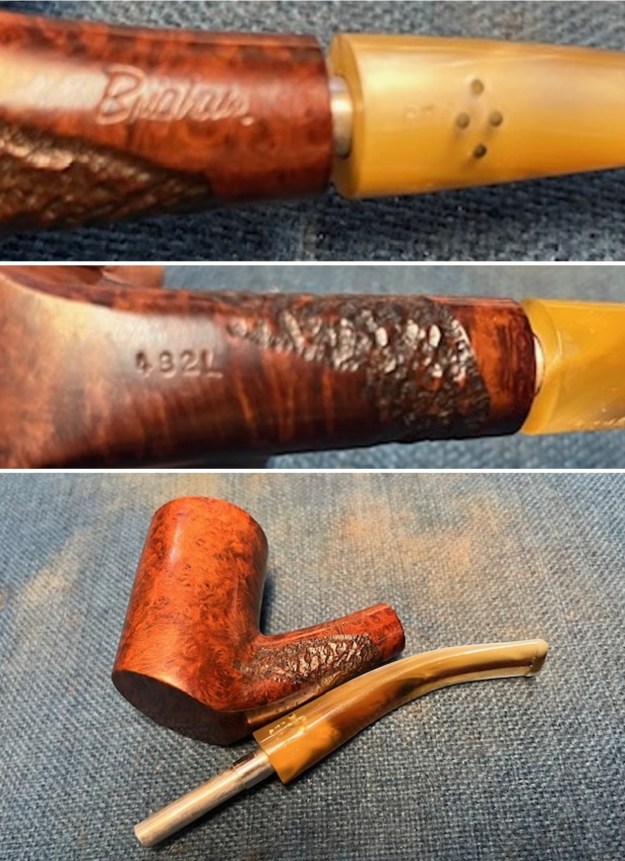
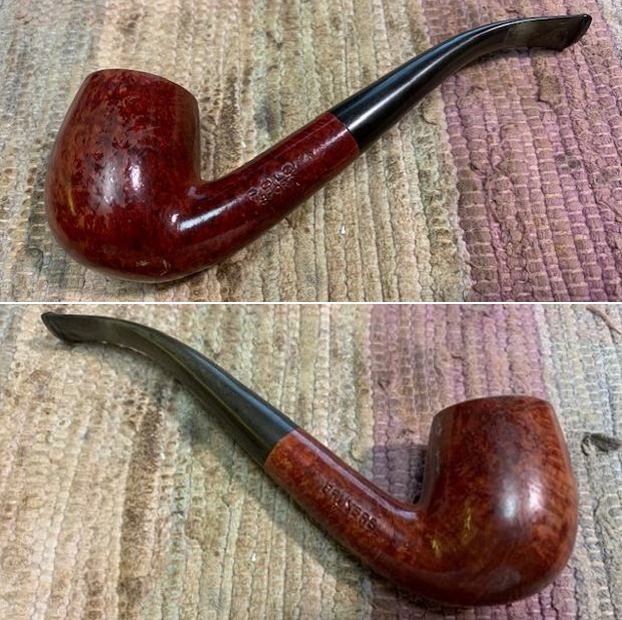
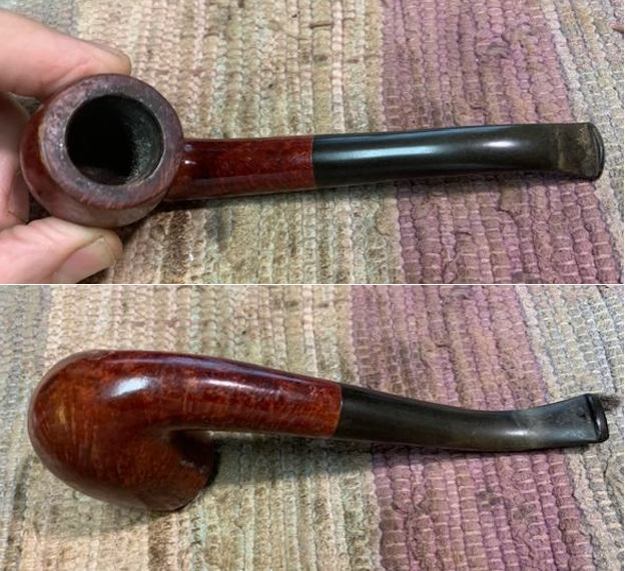
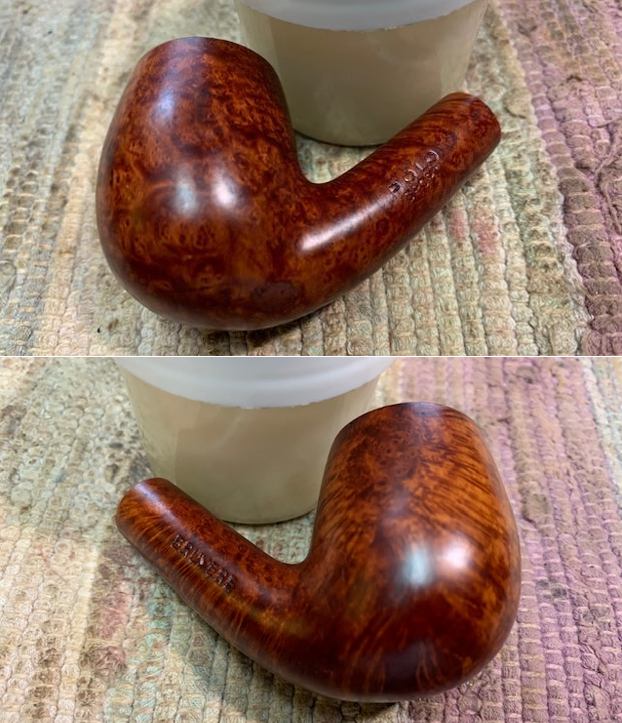
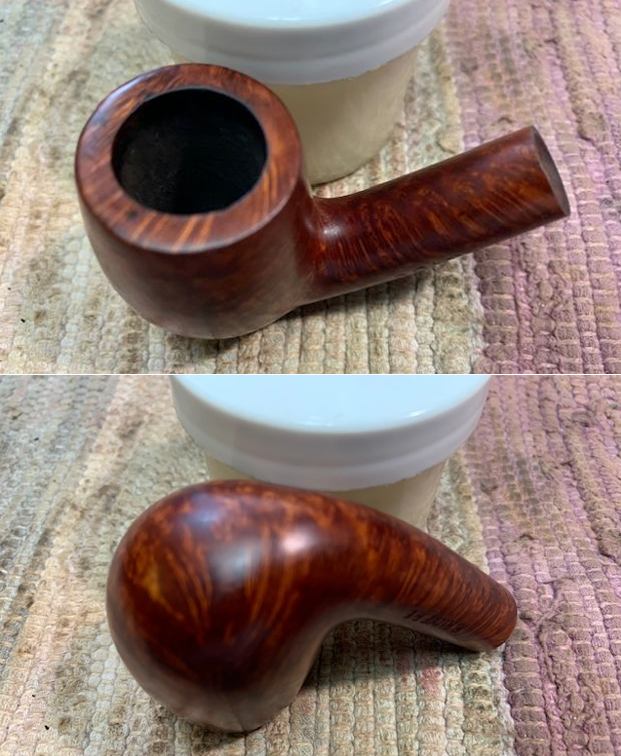
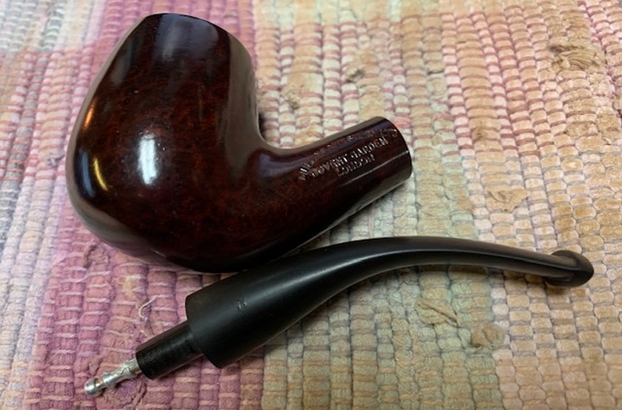
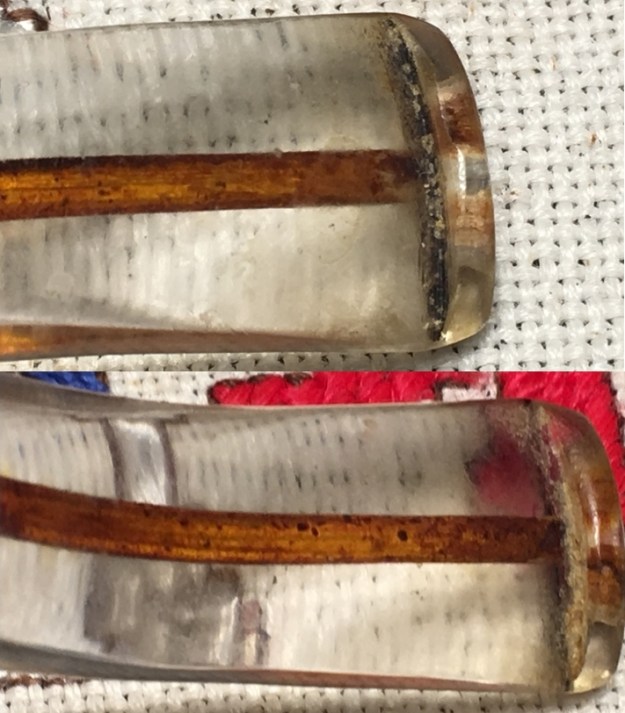
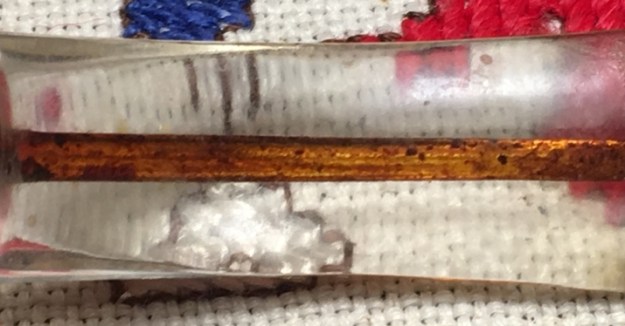
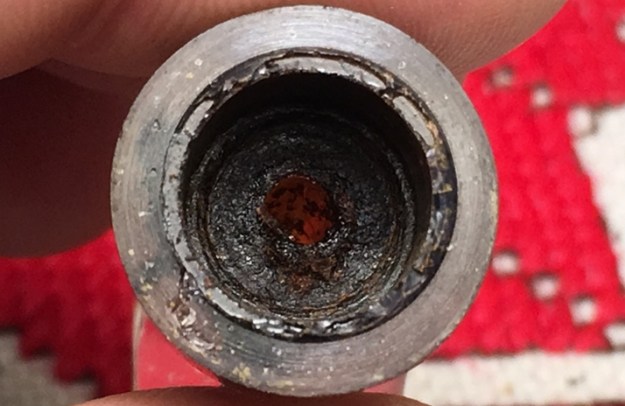
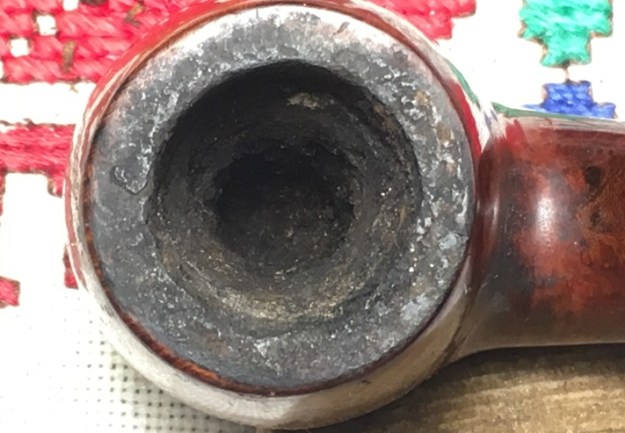
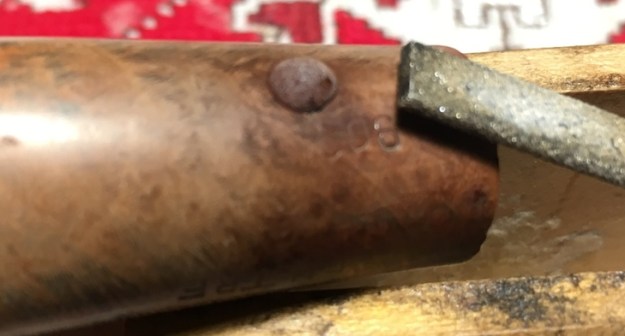
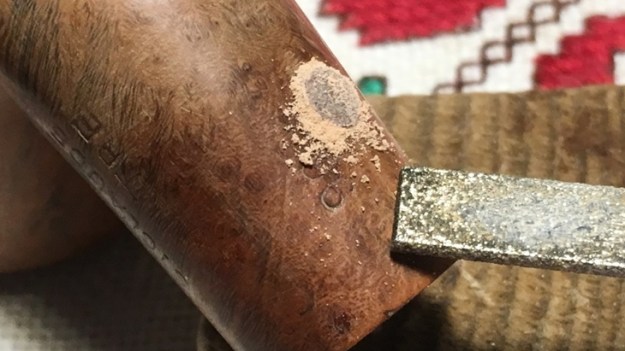
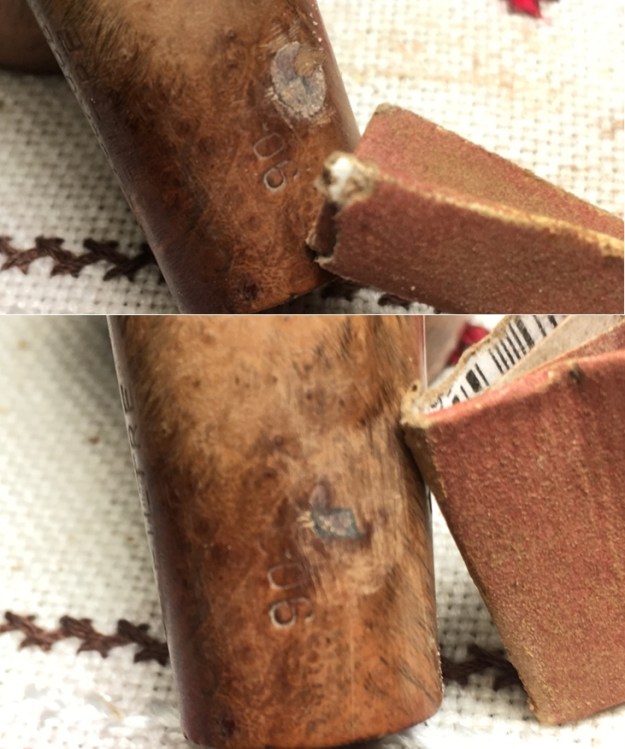
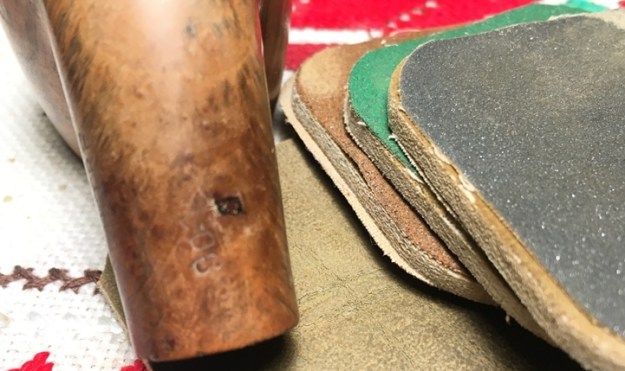
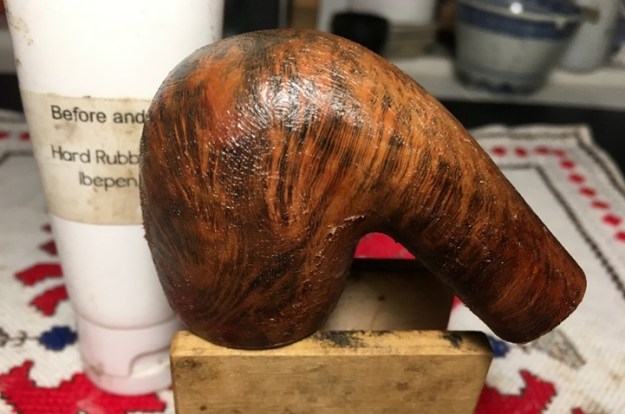
The second of the pipes I have chosen to work on from the lot was the last one at the bottom of the right column in the photo above. I would call the pipe a Poker/Cherrywood Sitter pipe with an amber acrylic stem. It is stamped on the left side of the shank and reads Brigham in script. On the under of the shank near the flat heel of the bowl it has the shape number 482L. The stamping will help me date the pipe. From the cake in the bowl and the other pipes I could tell her Dad love aromatic tobaccos. This pipe was heavily caked with an overflow of lava on the rim top and on the inner and outer edges of the bowl. The shank end even that had a coating of tar build up. The stem did not sit all the way in the shank so I assumed it was very dirty in the shank. I removed the stem and found that the Hard Rock Maple Distillator was missing from the aluminum tenon. The shank was black, tarry and oily. The stem was dirty and dull with thick oil and tar in the airway from the tenon to the button. There were light tooth marks and chatter on both sides ahead of the button. The left side of the taper stem bore four brass pins in a triangle format. That would also help with identifying the pipe. I took some photos of the pipe before I started my work on it.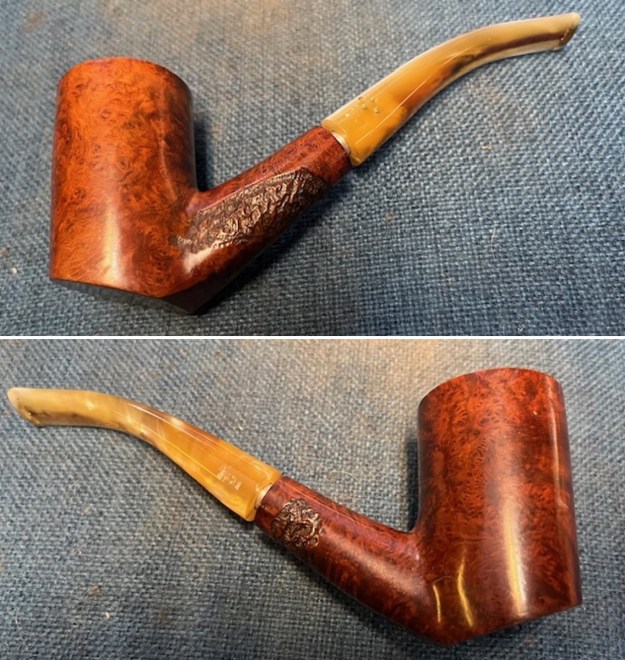
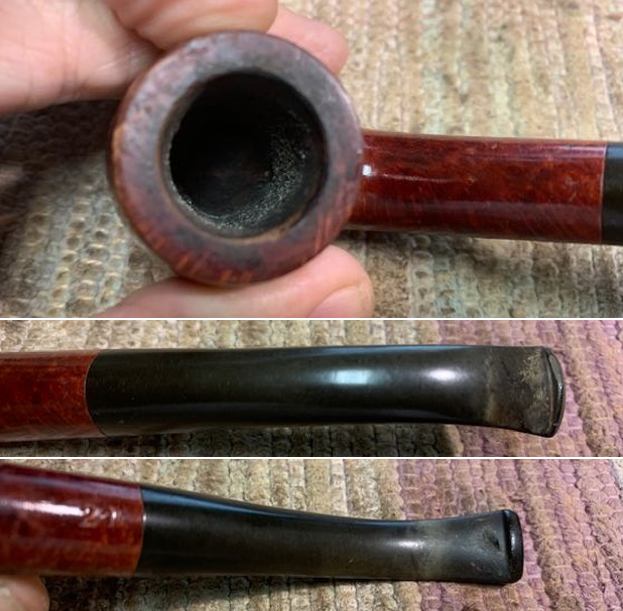
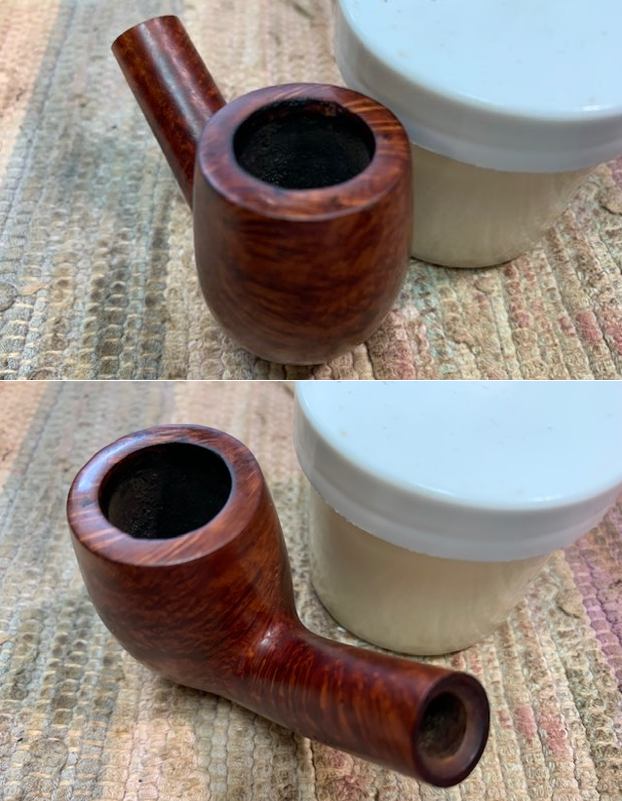
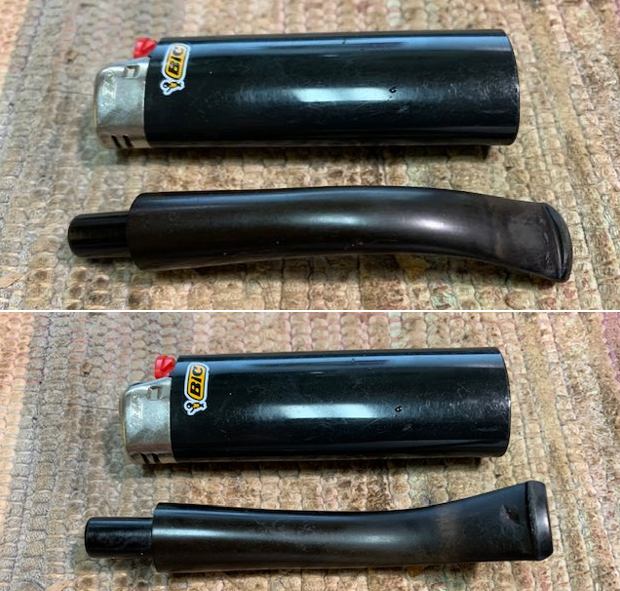
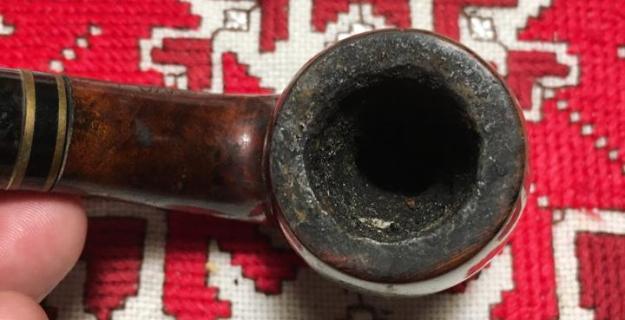
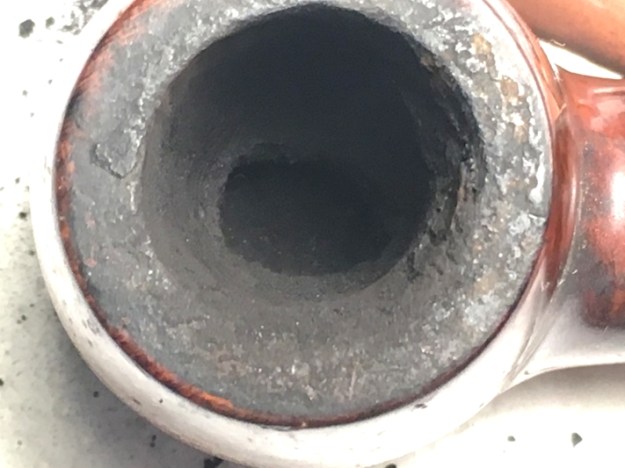
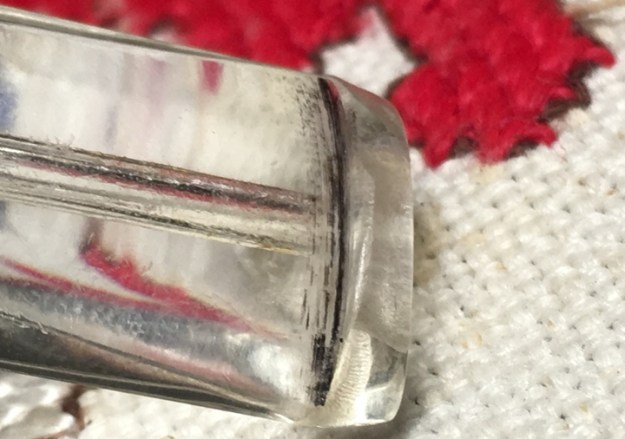
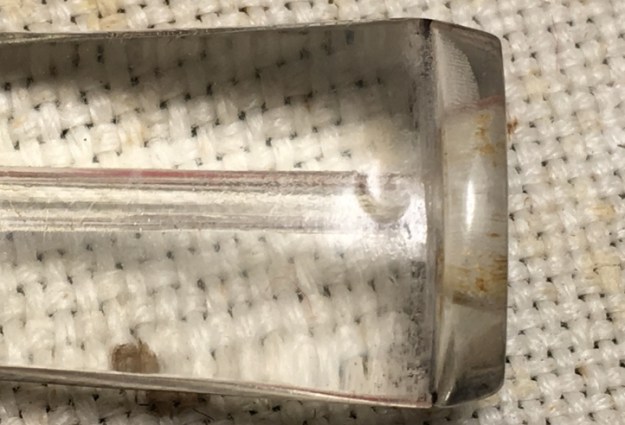
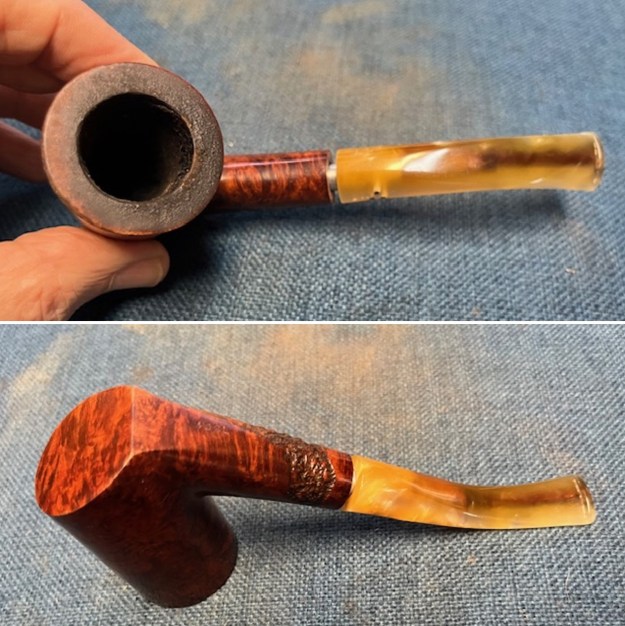 I took a photo of the bowl and rim top to show the cake in the bowl. The rim top looked to have a coat of lava overflowing down the crown with some possible damage around the inner edge. I took photos of the top and underside of the stem showing the light tooth chatter on the acrylic stem surface. The airway in the stem is also heavily stained with tars and oils.
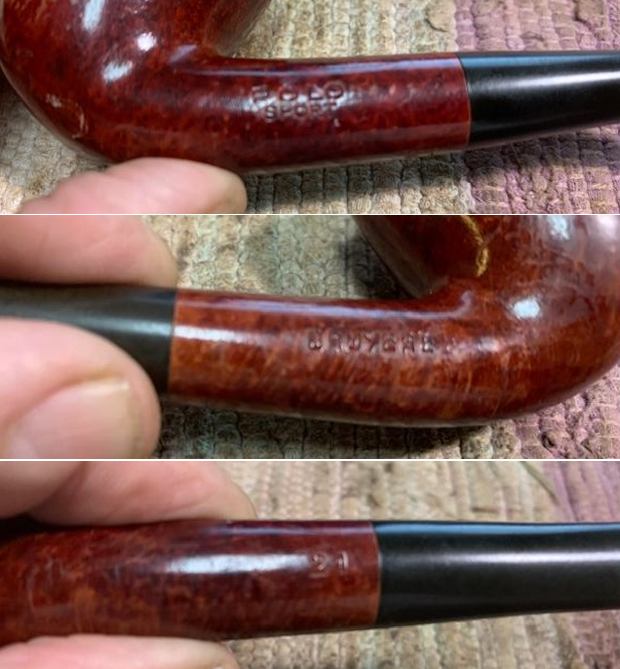
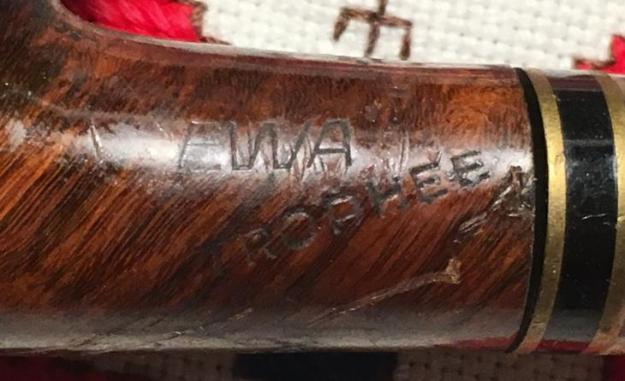
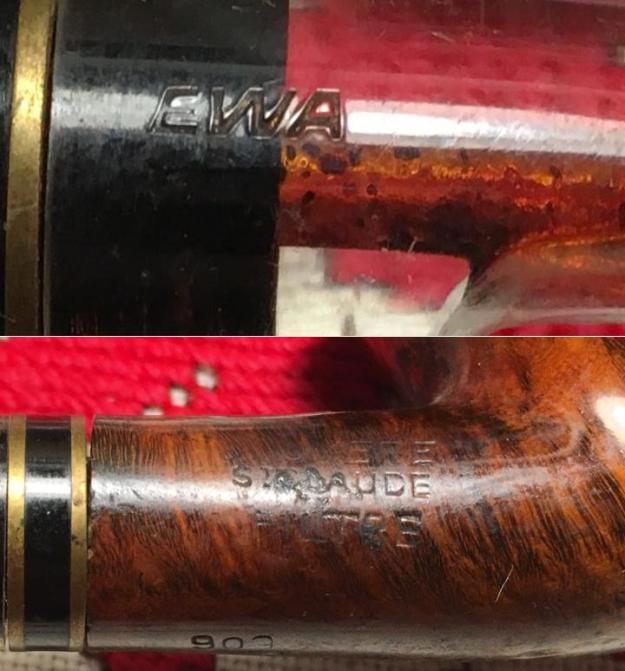
 The stamping is very clear and it reads as noted above. I removed the stem from the shank and took a photo of the parts to show the look of the pipe. I have captured the pattern of the four brass dots on the stem.
  For the needed background I am including the information from Pipedia on Brigham pipes. It is a great read in terms of the history of the brand (https://pipedia.org/wiki/Brigham_Pipes). Charles Lemon (Dadspipes) has written book on the history of the brand. This article is a good summary. I have included it below.
Roy Brigham, after serving an apprenticeship under an Austrian pipesmith, started his own pipe repair shop in Toronto, in 1906. By 1918 the business had grown to include five other craftsmen and had developed a reputation across Canada for the high quality of workmanship. After repairing many different brands of pipes over the years, Roy noted certain recurring complaints by pipe smokers, the most common referred to as “tongue bite”. Tongue bite is a burning sensation on the smoker’s tongue, previously thought to be due to the heat of the smoke (i.e. a “hot smoking pipe”).
He soon began manufacturing his own pipes, which were lightweight, yet featured a more rugged construction, strengthening the weak points observed in other pipes. The problem of tongue bite intrigued him, and he decided to make overcoming it a future goal.
About 1938, Roy’s son Herb joined him to assist in the business. The business barely survived the great depression because pipes were considered to be a luxury, not a necessity, and selling pipes was difficult indeed. In approximately 1937 [1], after some experimentation, Roy and Herb discovered that tongue bite was in fact a form of mild chemical burn to the tongue, caused by tars and acids in the smoke. They found that by filtering the smoke, it was possible to retain the flavour of the tobacco and yet remove these impurities and thereby stop the tongue bite.
Just as Thomas Edison had searched far and wide for the perfect material from which to make the first electric light bulb filaments, Roy & Herb began experimenting with many materials, both common and exotic, in the quest for the perfect pipe filter. Results varied wildly. Most of the materials didn’t work at all and some actually imparted their own flavour into the smoke. They eventually found just two materials that were satisfactory in pipes: bamboo and rock maple. As bamboo was obviously not as readily available, rock maple then became the logical choice.
They were able to manufacture a replaceable hollow wooden tube made from rock maple dowelling, which when inserted into a specially made pipe, caused absolutely no restriction to the draw of the pipe, yet extracted many of the impurities which had caused tongue bite. The result was indeed a truly better smoking pipe…
I then turned to a second article by Charles Lemon called, “A Closer Look at the Dots, Dates, and Markings of Brigham Pipes” to be able to pin down the time frame that the pipe was made in and to help interpret the stampings and shape number on the pipe. Here is the link to his article (https://pipedia.org/wiki/Brigham_Pipes_%E2%80%93_A_Closer_Look_at_Dots,_Dates_and_Markings).
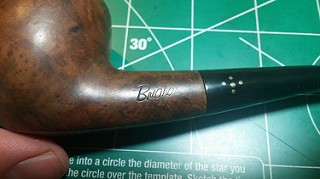 I have dubbed the decades between 1980 and 2000 the Late Canadian Era, a period that saw several changes at Brigham that are of note to the collector. First, the traditional 8-grade pinning system (the famous Brigham “Dots” which denoted the quality of the pipe) was changed to a 7-grade system to simplify pinning (more on this below), and the Norsemen and Valhalla series were merged to form the President Series, which represented the very finest pipes coming out of the Toronto factory. Early pipes from this era (left, below) are stamped with a shape number and “Brigham” over “Canada”; later pipes (late 1980s+, on right below) are stamped simply with a shape number and the Brigham logo.
I read further in the article to the section entitled Revised Dot System 1980. I quote from that below.
Brigham changed the Dot system in 1980, adding a 7 Dot at the top of the line, dropping the names of each series and eliminating the confusing vertical and horizontal 3 Dot configurations. The Norsemen and Valhalla series were combined to form the President series of freehand pipes, which adopted a 3 Dot pattern with a larger dot on the right as shown below. The 7- grade pinning system stayed in place from 1980 to 2001.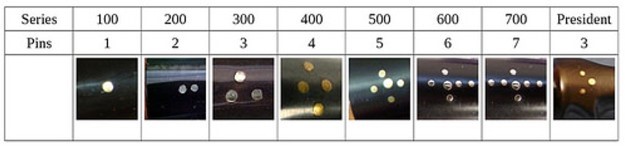
With the information from article and the chart above I knew what I was dealing with in terms of the stamping and the age of this pipe. I learned that this Late Canadian Era was made between 1980-2000. The pipe is a Brigham (4-Dot) 482L, a Poker Sitter to my mind. The Canada stamping pins it down to the period between 1990-2001 when the aluminum tenon was replaced.
I wrote to Charles Lemon to see if he could help to narrow down the date a bit more. I also wanted to know about the acrylic stem and the shape. He wrote me back with this answer:
Brigham put out a limited run of System pipes with Acrylic stems in the early 1990s. Available stem colours were yellow, green and chocolate swirl. There is a short paragraph on Page 54 of the book on this limited run, but there’s not a great deal of information available.
I paused reading the email and turned to Charles’ book, Brigham Pipes, A Century of Canadian Briar, page 54 as noted above and quote:
In the early 1990s a small number of Brigham pipes were made with acrylic stems instead of the traditional rubber stems. These were available in several colours – yellow, green and chocolate swirl. Due to the short production runs, these acrylic-stemmed pipes are quite rare on the estate market.
I went back to the email – Charles further wrote about the shape number.
In the Shape Chart, I’ve identified Shape 82 (b) as a “1/4 Bent Pot Sitter”. The “L” in the shape code refers back to bowl size options available in the mid to late 1960s, where any standard pipe shape could be ordered in S, M, ML, L, XL sizes. I suspect your early 1990s pipe was made using a New Old Stock stummel originally produced some 20 years earlier.
Hope that helps. It’s a lovely pipe! – Charles
I now knew that I was dealing with a pipe made only in the early 1990s in a short production run and was quite rare on the estate market. The shape number 82 was for a bent Pot Sitter. The 4 preceding the 82 referred to the 4 Dot mark of the pipe. What was interesting to me is Charles’ comment that it could have been New Old Stock Stummel produced 20 years earlier.
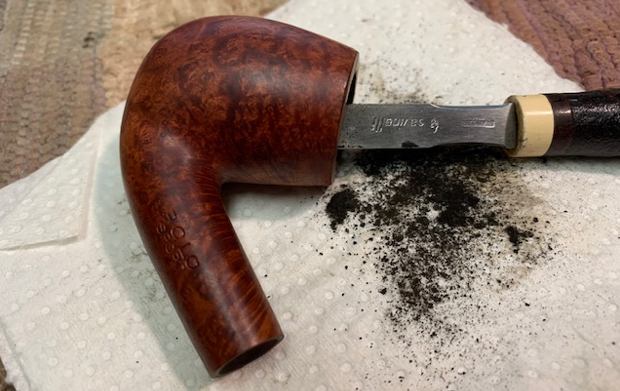
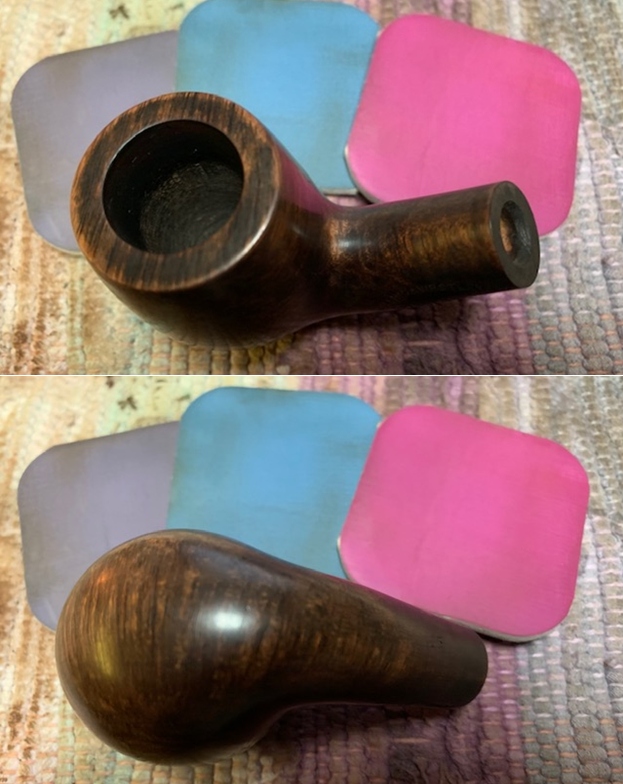
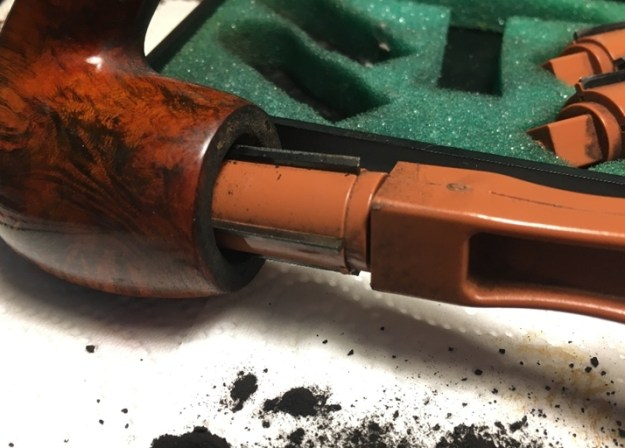
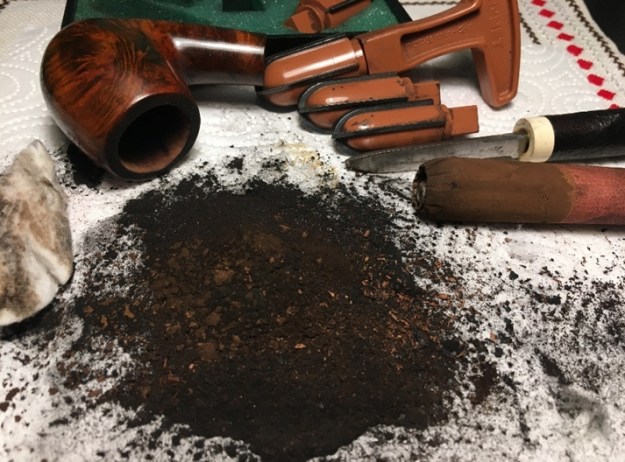
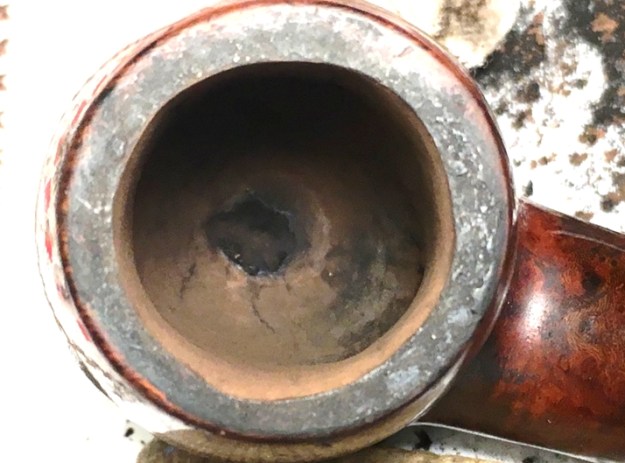
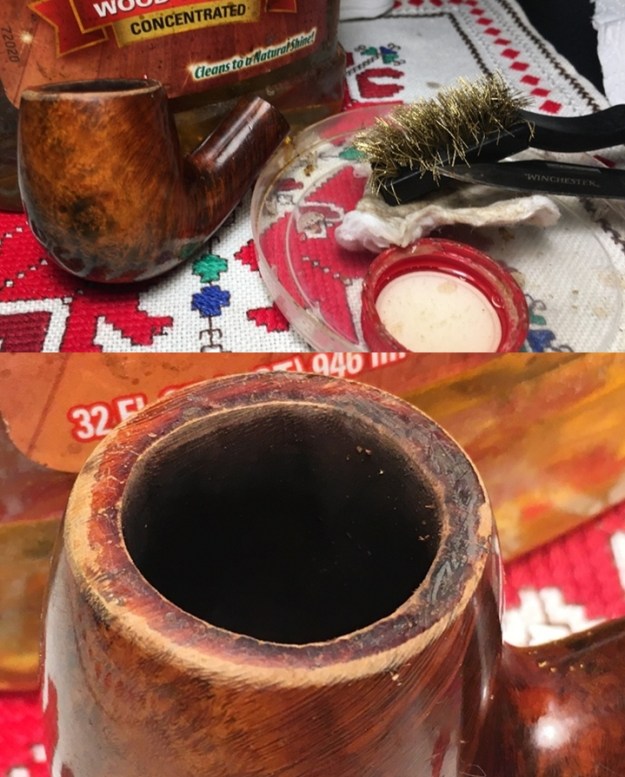
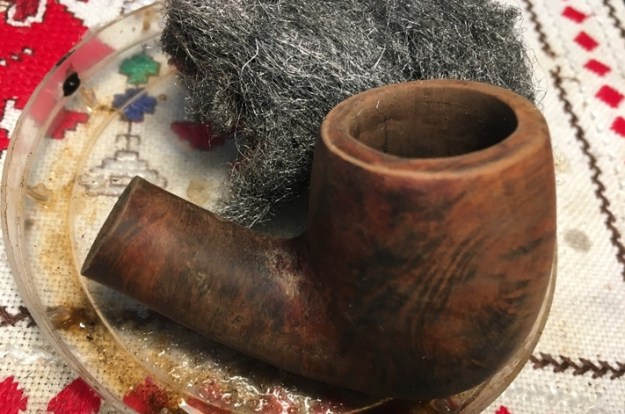
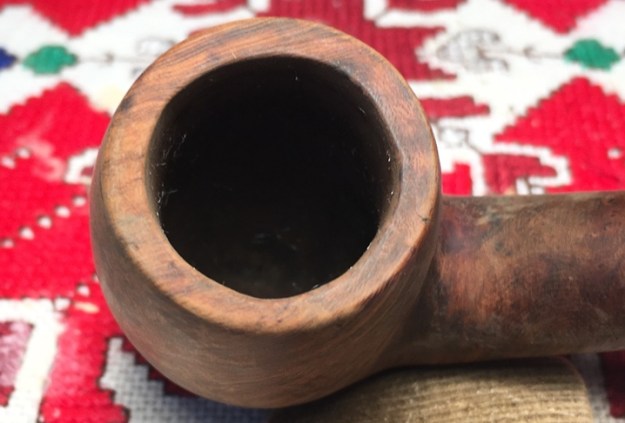
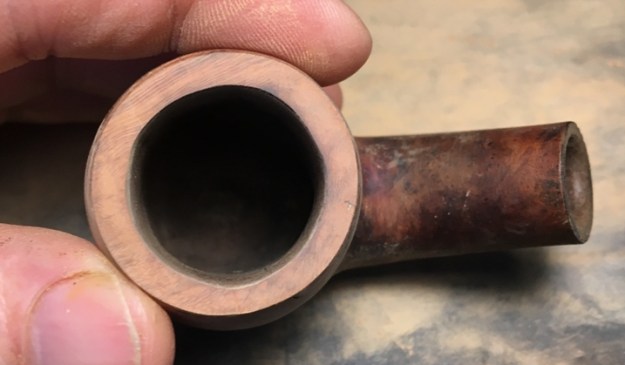
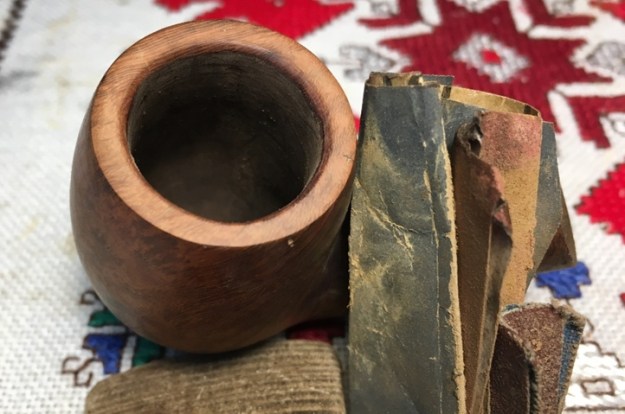
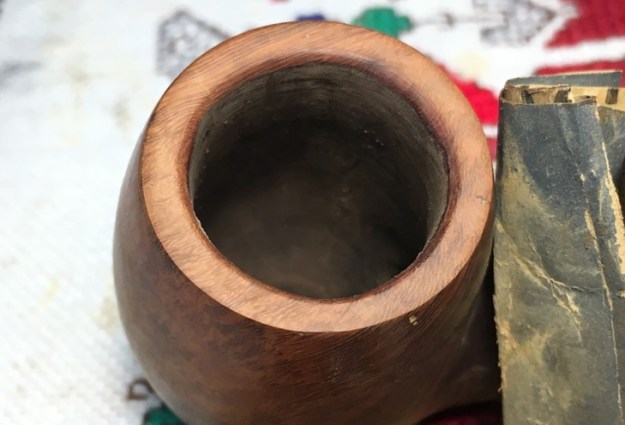
I started my work on the pipe by reaming the bowl with a PipNet reamer. I used the first and second cutting heads and took the cake back to bare briar. I cleaned up the reaming with a Savinelli Fitsall Pipe Knife and removed all the remnants of the cake. I sanded the walls of the bowl with a piece of dowel wrapped in 220 grit sandpaper. The walls look very good at this point in the process.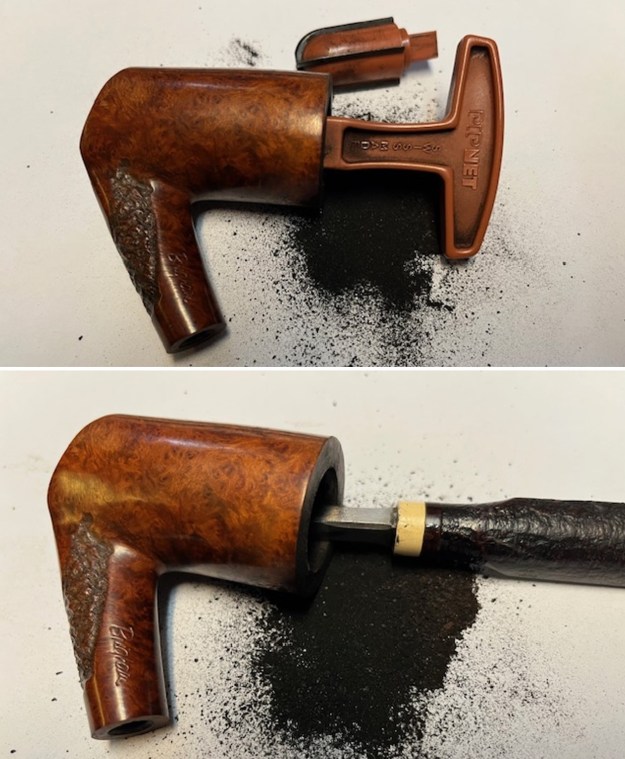
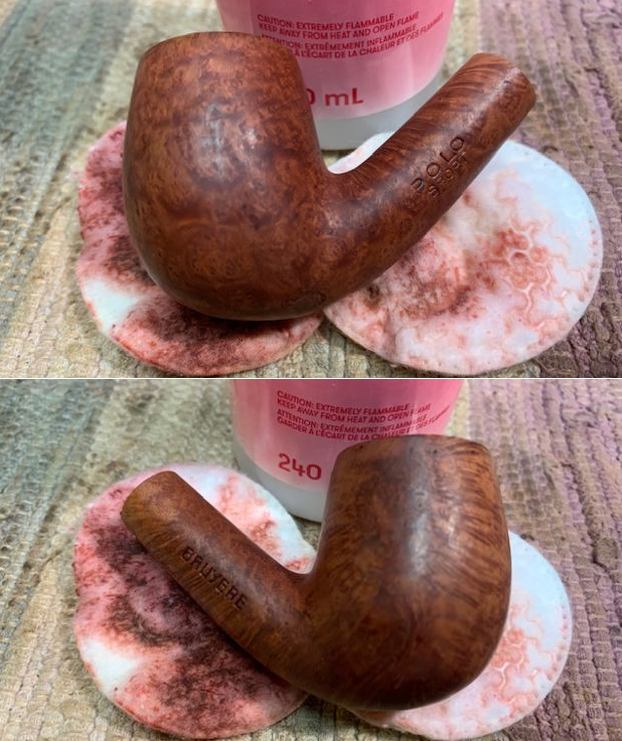
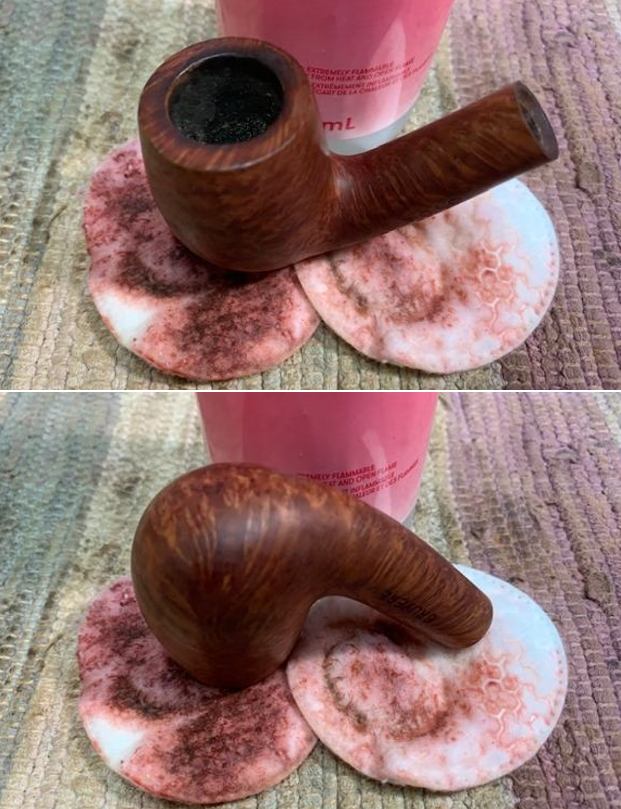
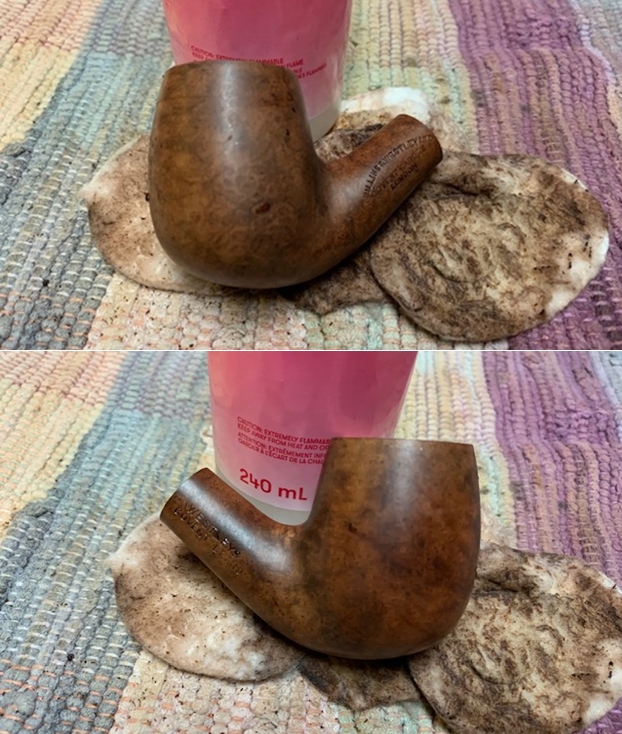
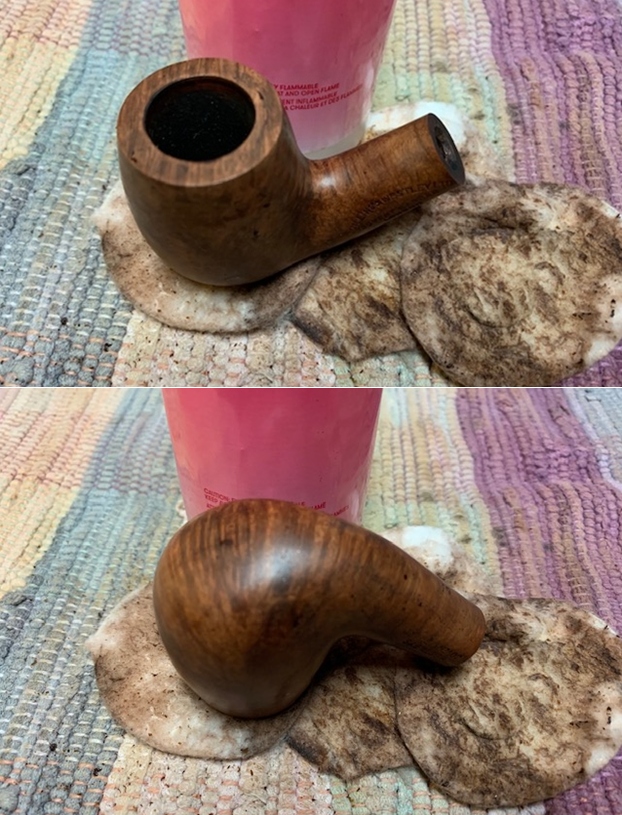
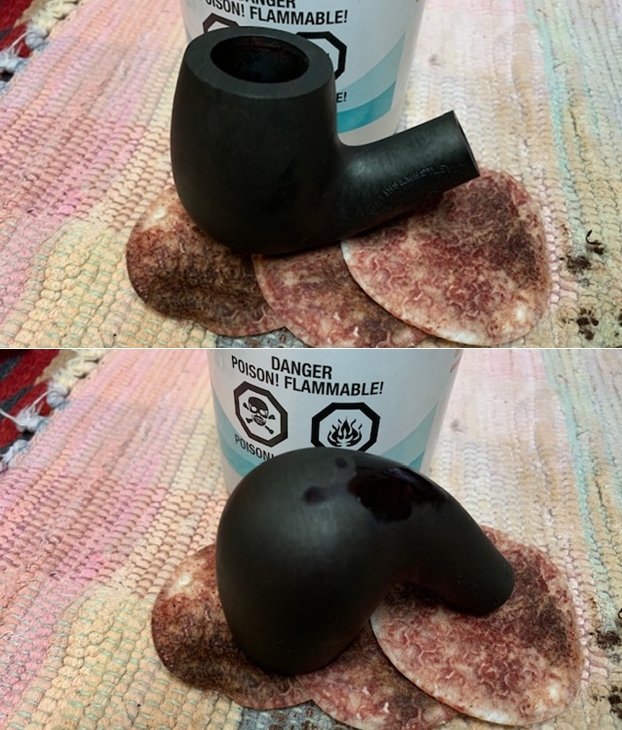
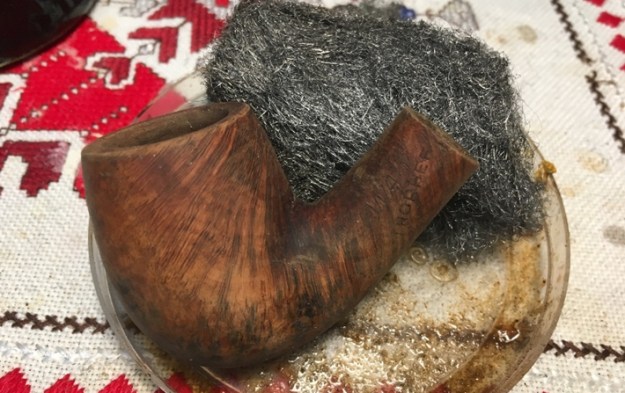
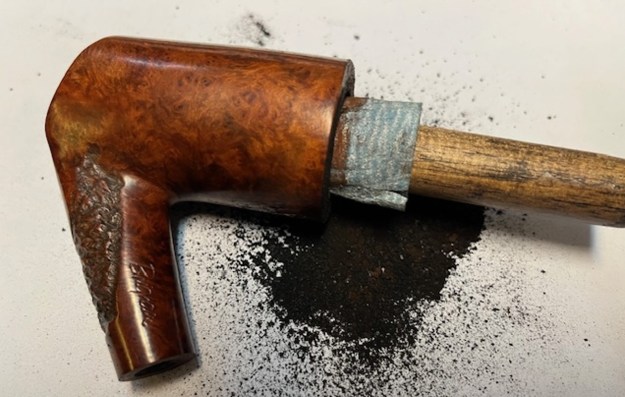 I scrubbed off the surface of the bowl and shank with acetone and cotton pads. The surface was coated with a shiny varnish coat. I wanted it to be gone so that I could see the briar underneath. It looked very good once the varnish coat was gone.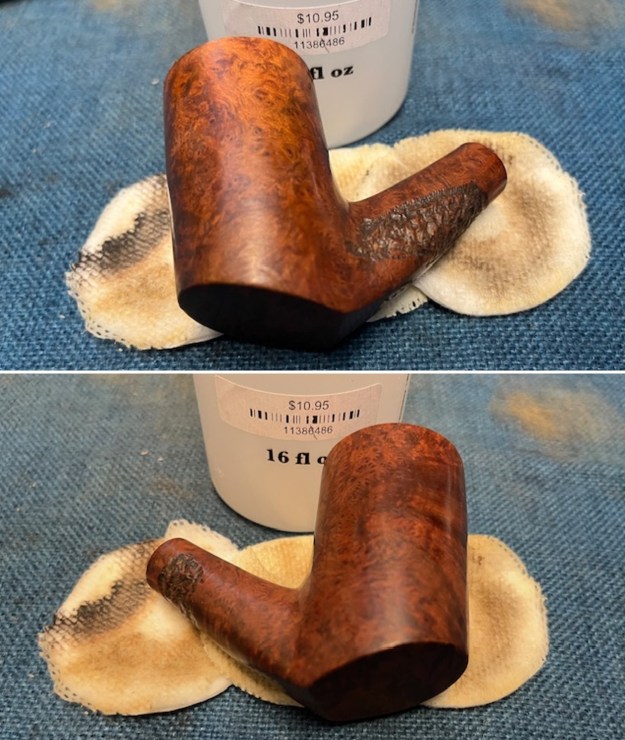
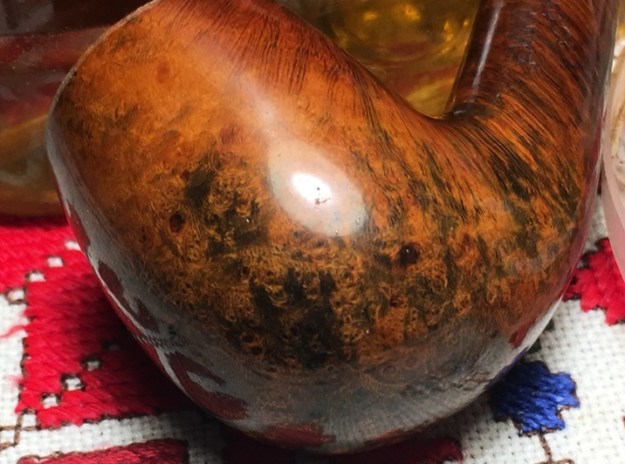
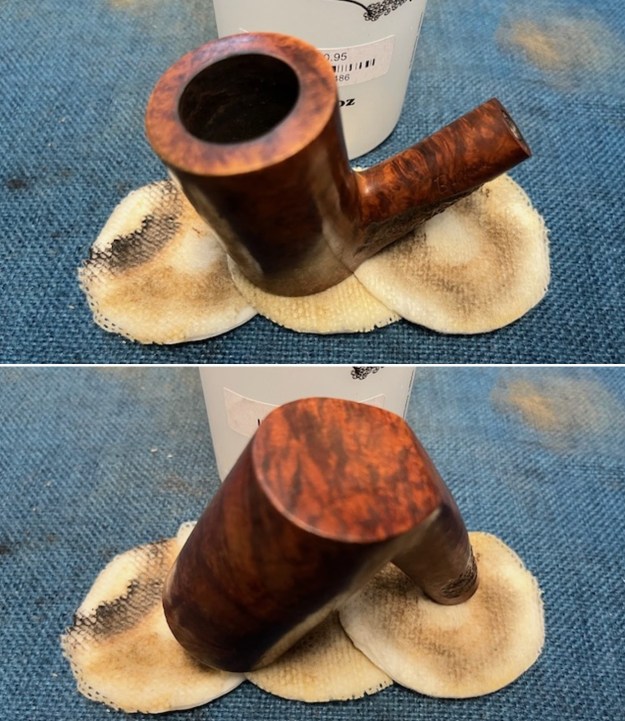 I scrubbed the exterior of the bowl and shank with a tooth brush and undiluted Murphy’s Oil Soap. I scrubbed the lava on the rim top and overflow on the outside of the bowl with the soap. I rinsed the briar with warm water to remove the grime and debris of the scrubbing. It looked significantly better after the scrubbing.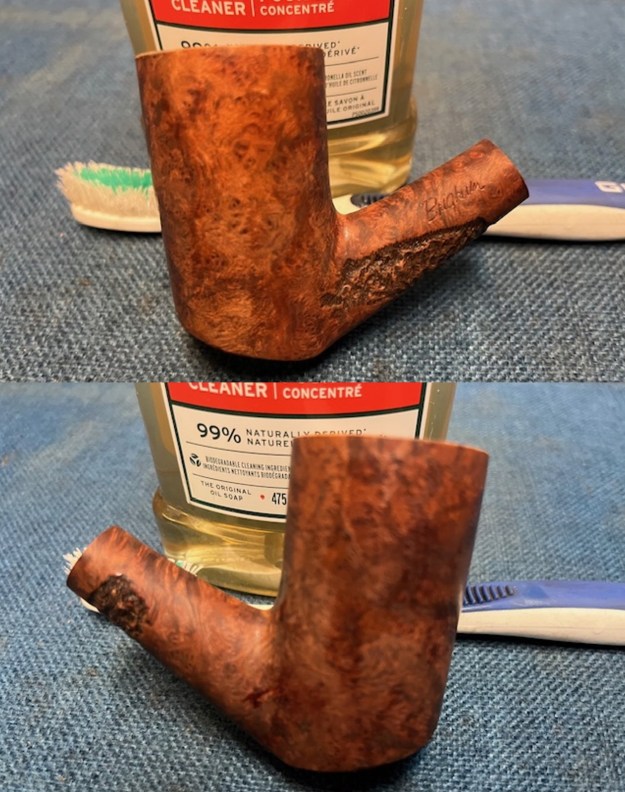
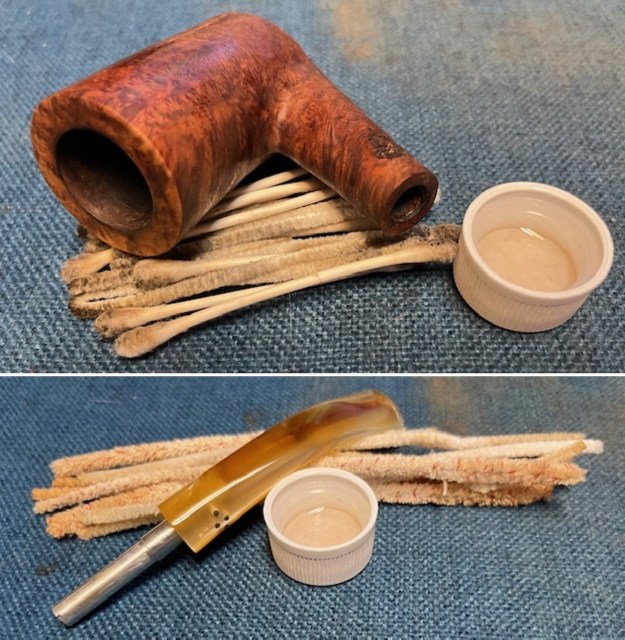
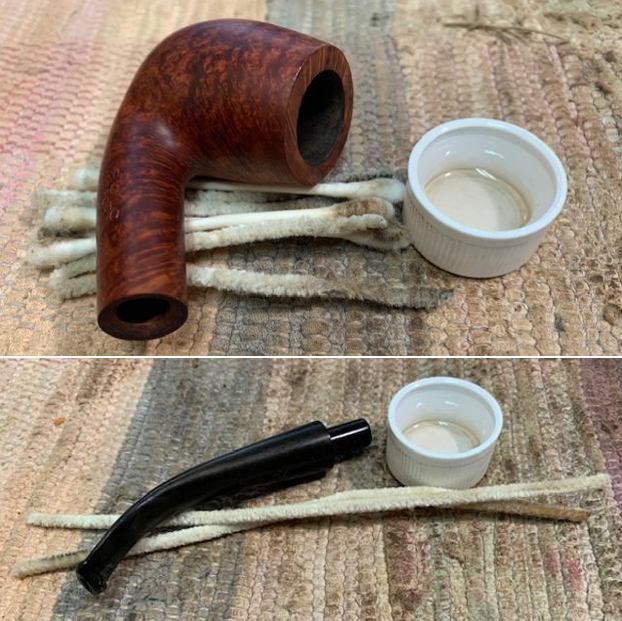
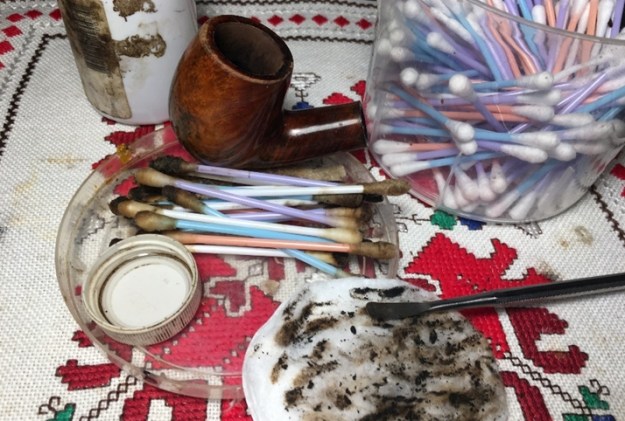
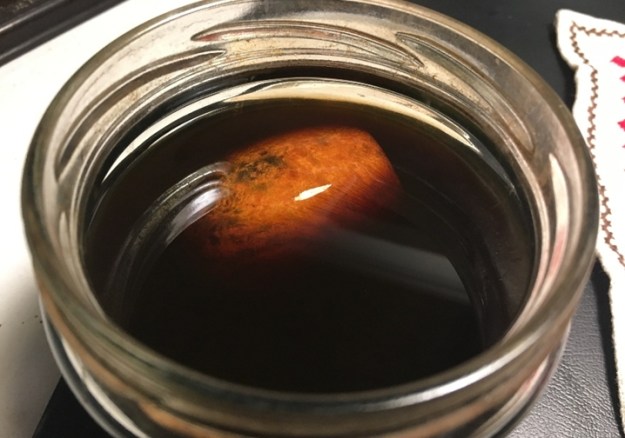
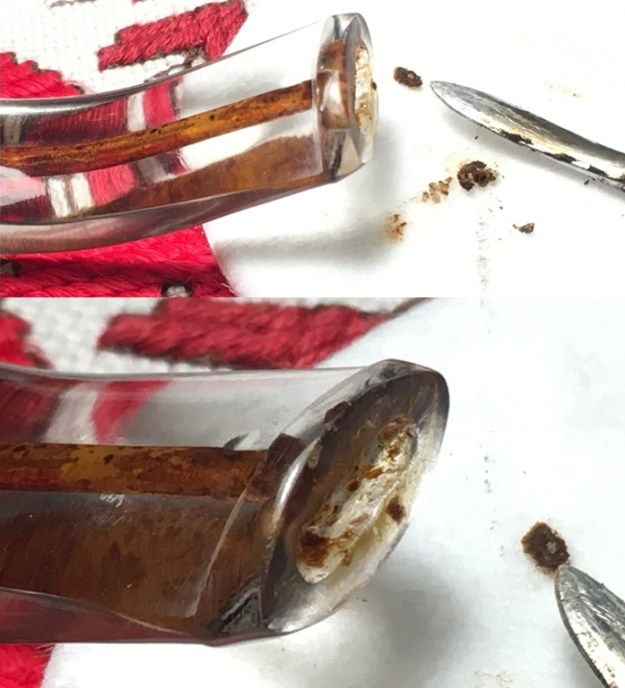
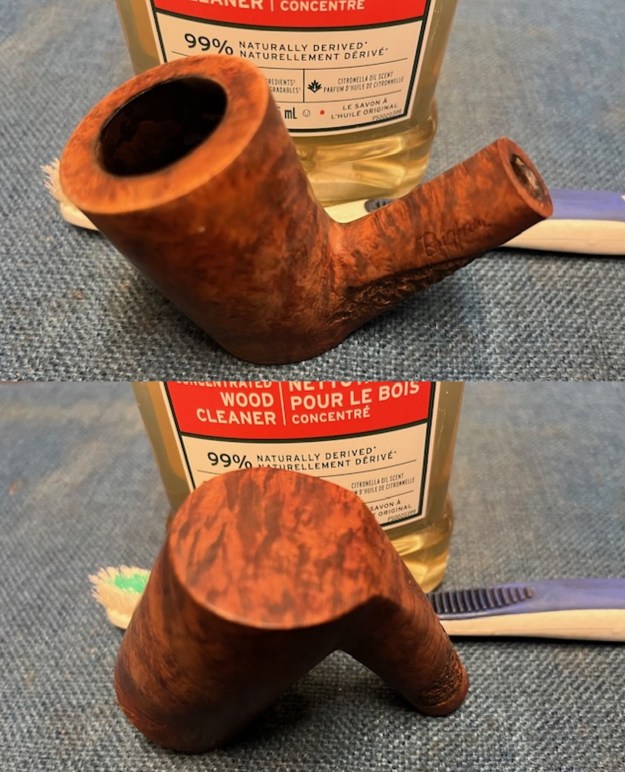 I cleaned out the shank, the airway and the deep mortise with alcohol, cotton swabs, hard bristle and soft bristle pipe cleaners. It was a very dirty pipe which just meant that Donna’s Dad had really enjoyed and used this pipe. I cleaned the inside of the aluminum tenon and the airway in the stem with alcohol, cotton swabs and pipe cleaners in the same way as I did the shank. It also was very dirty.
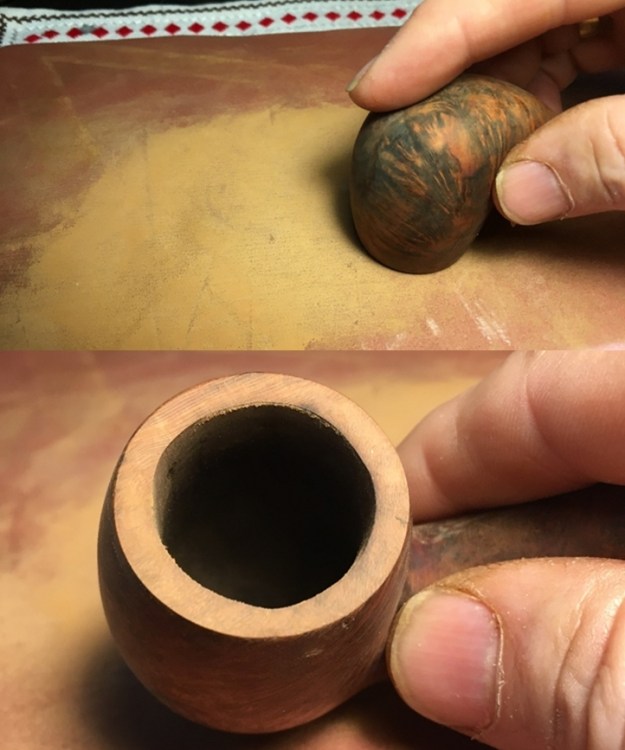
  I sanded the smooth portions of the bowl and rim with 320-3500 grit sanding pads to remove the marks, scratches and darkening on the rim top.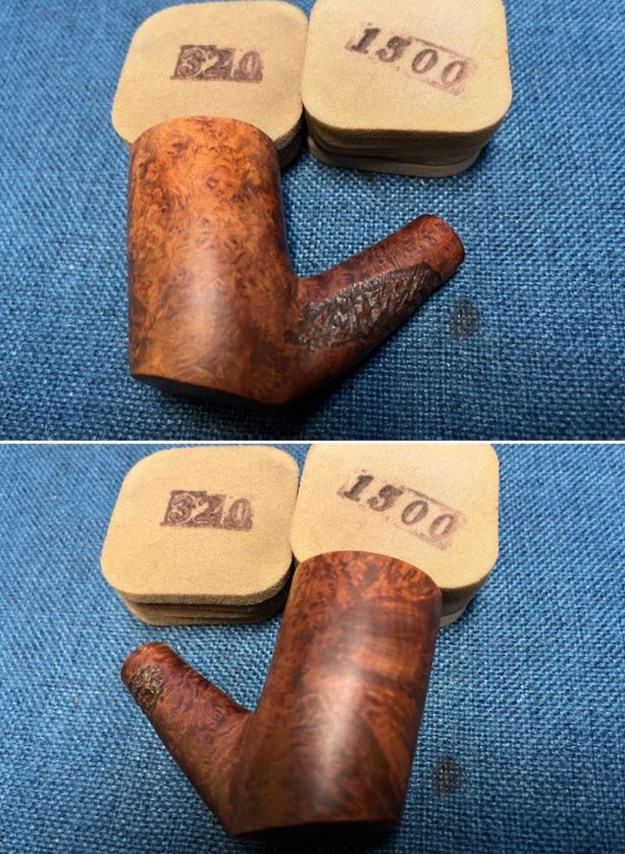
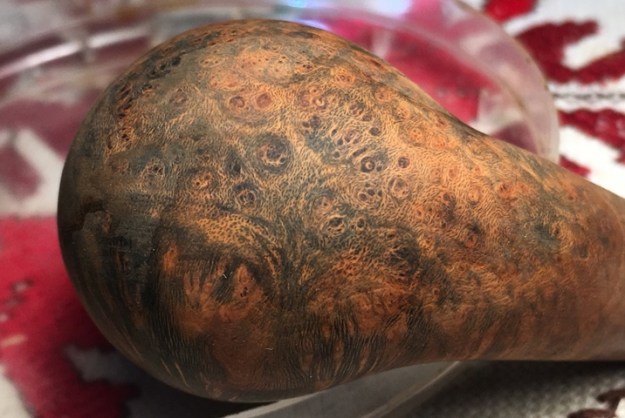
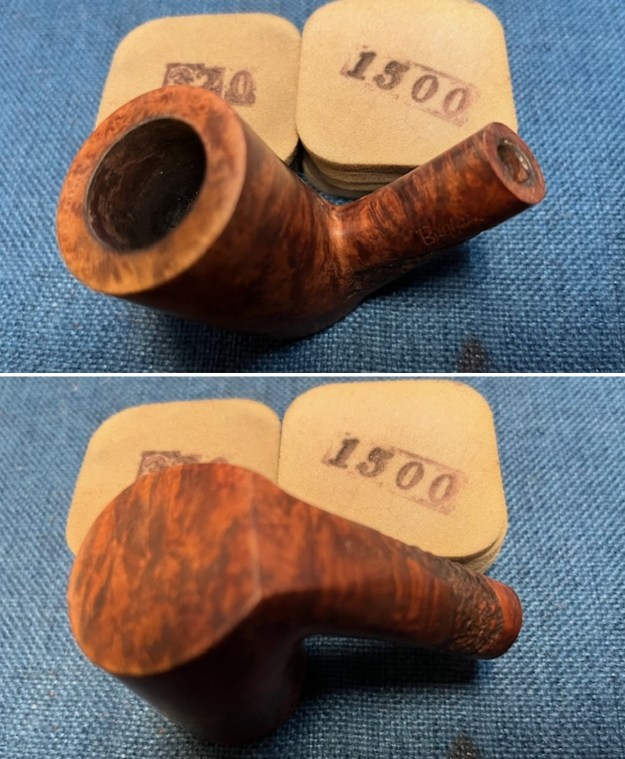 I polished it with micromesh sanding pads – dry sanding it with 1200-15000 grit pads. I wiped the bowl down with a damp cloth after each sanding pad. The grain really started to rise to the surface as I polished it.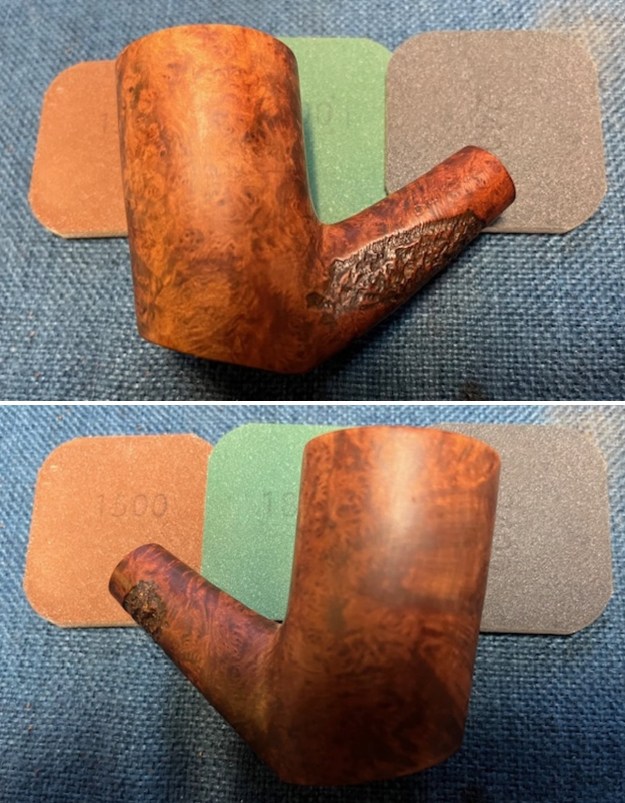
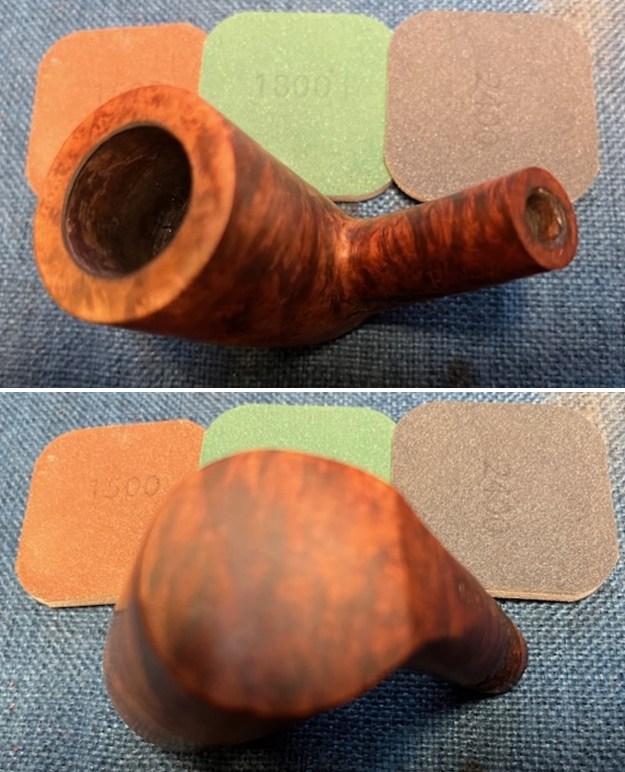
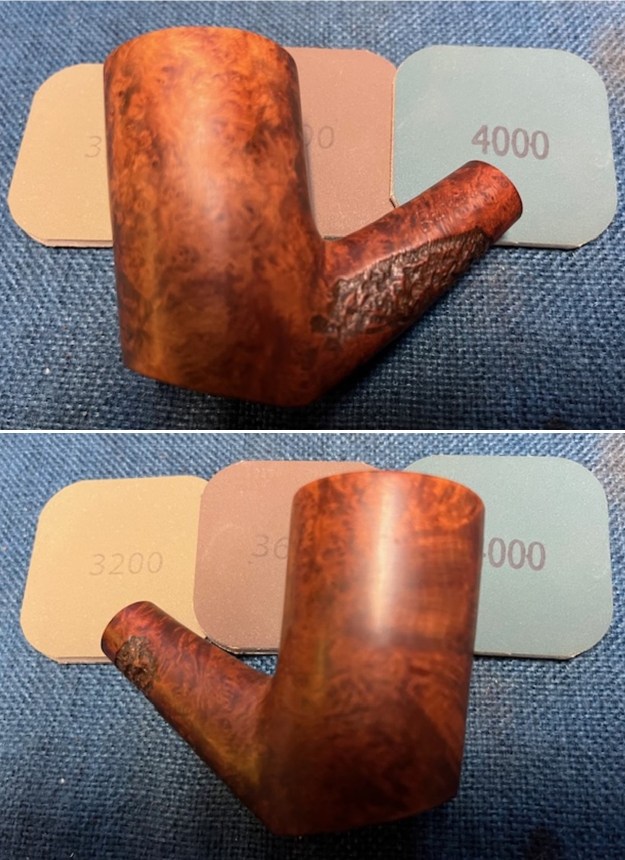
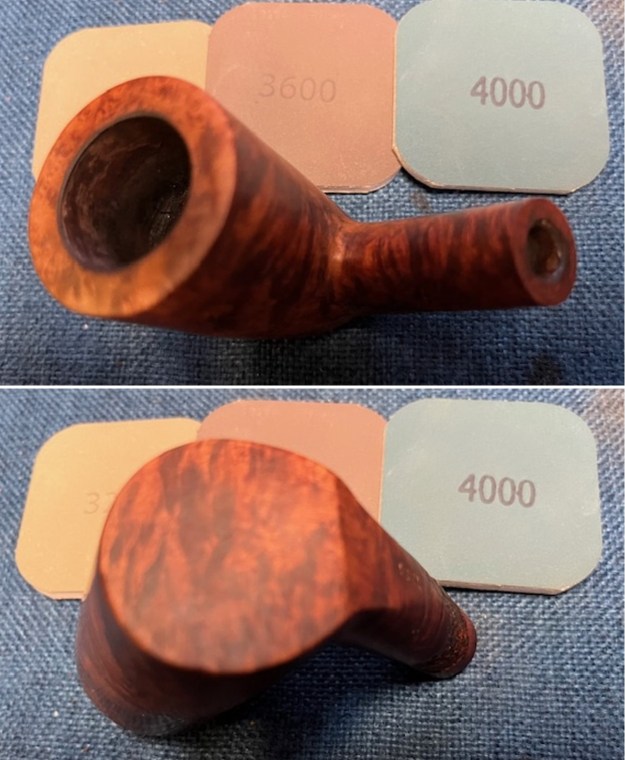
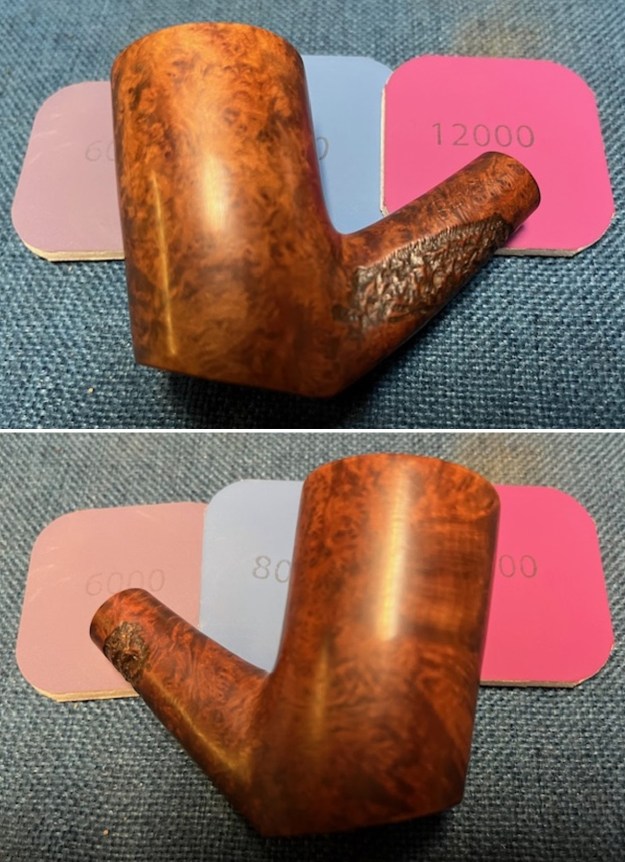
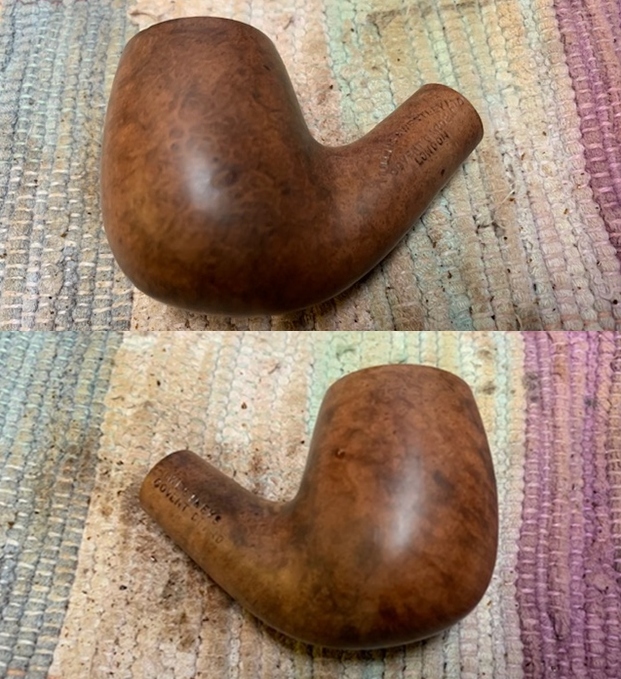
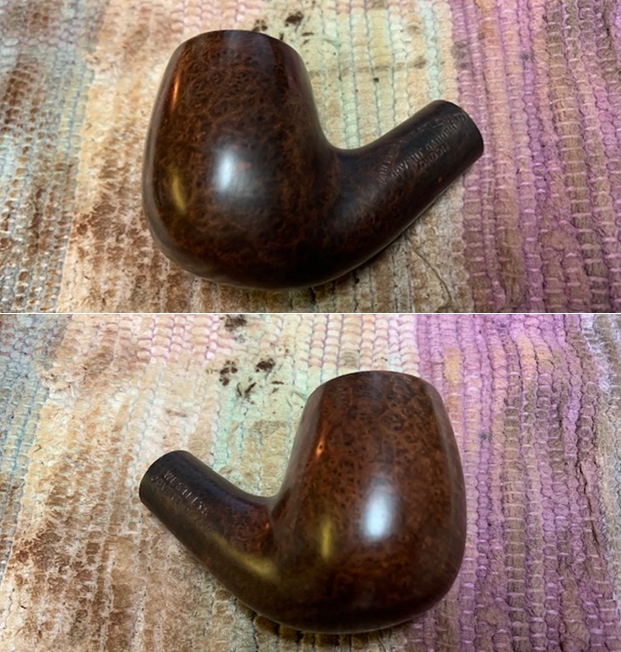
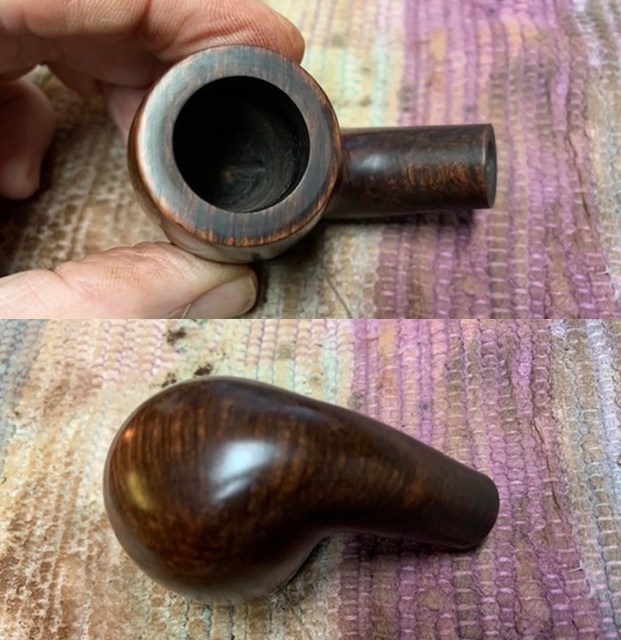
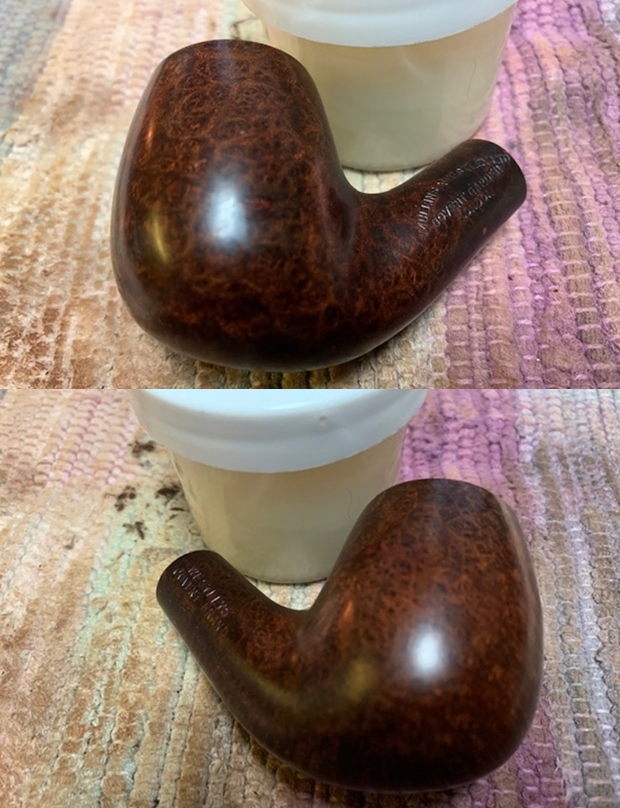
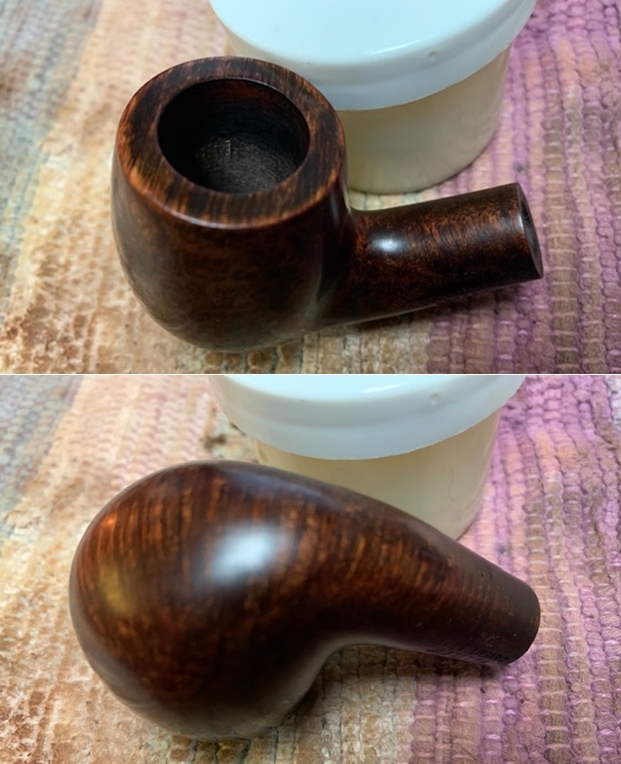
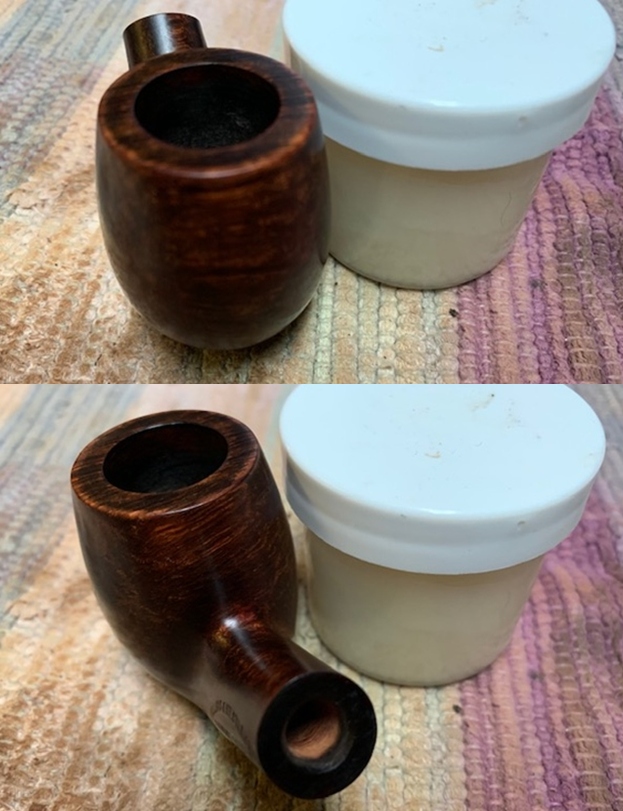
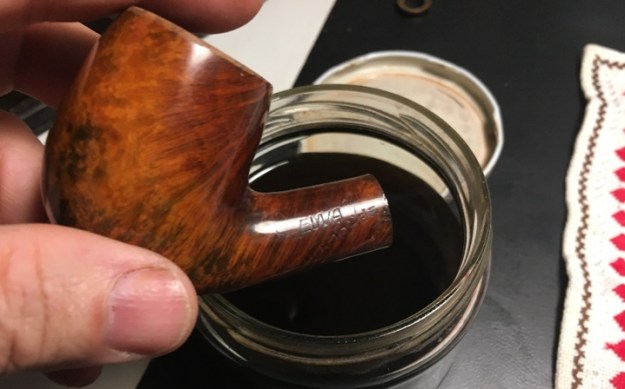
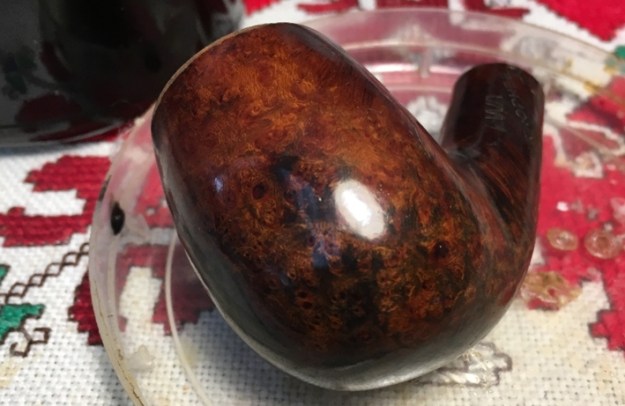
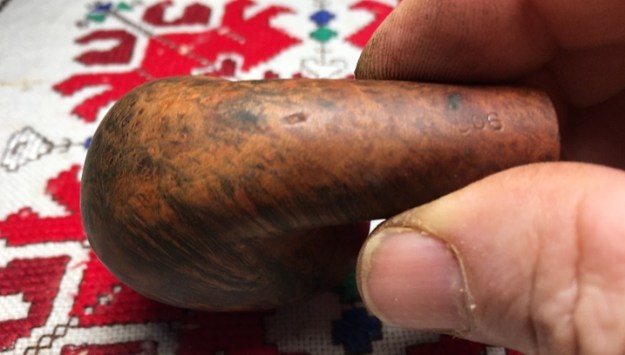
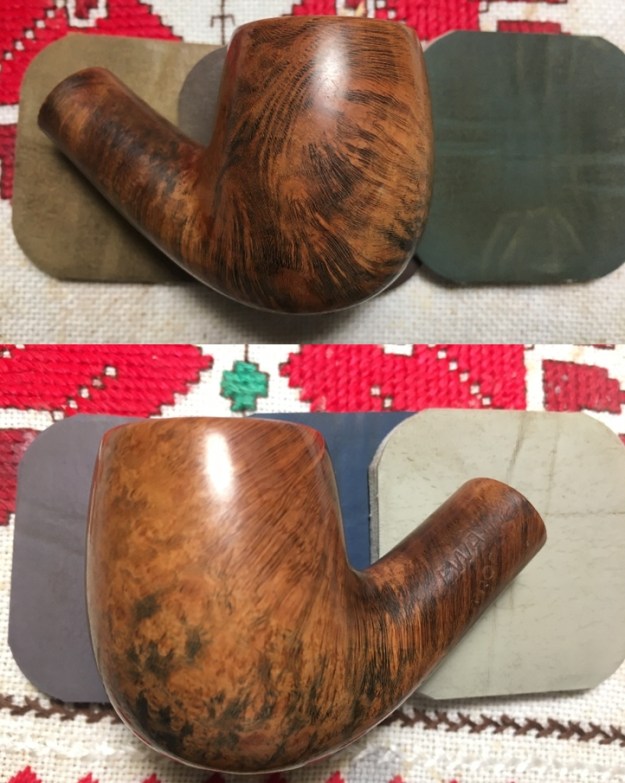
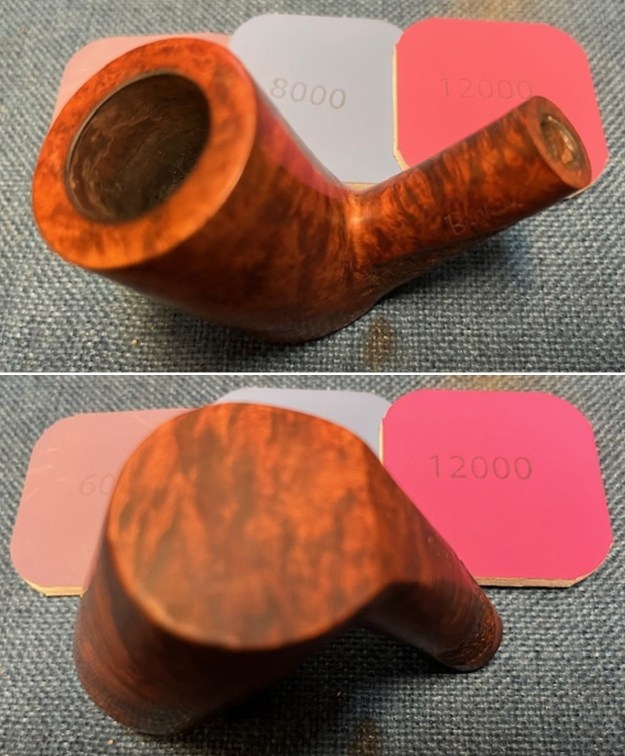 I rubbed the bowl and shank down with Before & After Restoration Balm to deep clean the finish on the bowl and shank. The product works to clean, enliven and protect the briar. I worked it in with my fingers to get it into the briar. I used a horsehair shoe brush to work it into the sand blast. I let it sit for 10 minutes then I wiped it off and buffed it with a soft cloth. The briar really began to have a rich shine. I took some photos of the bowl at this point to mark the progress in the restoration. It is a beautiful bowl.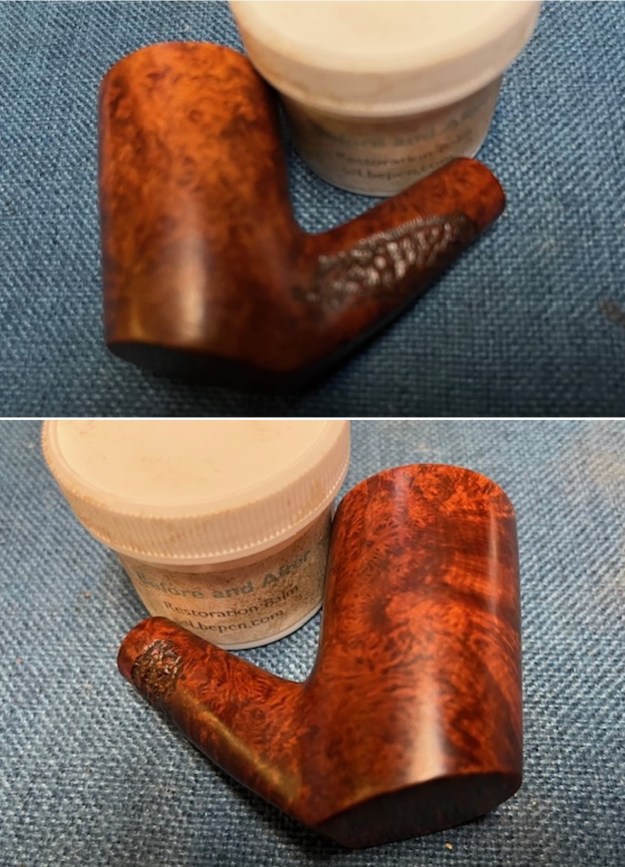
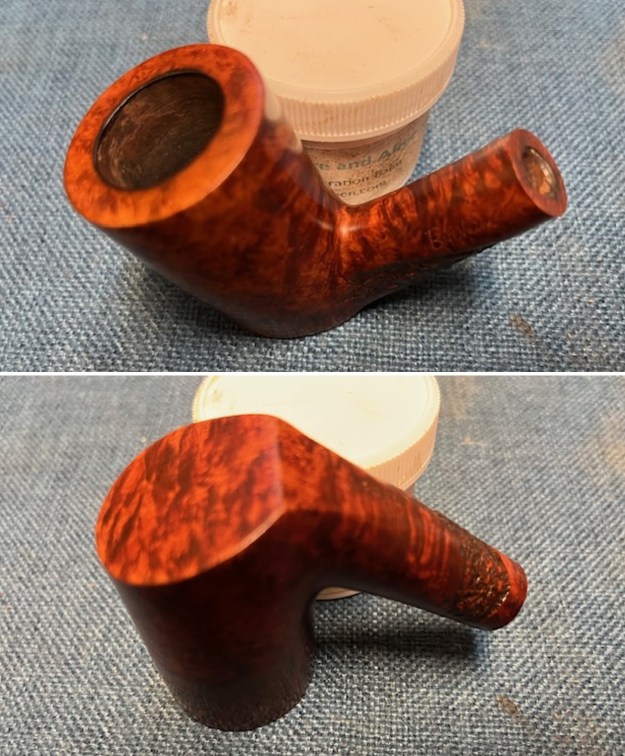
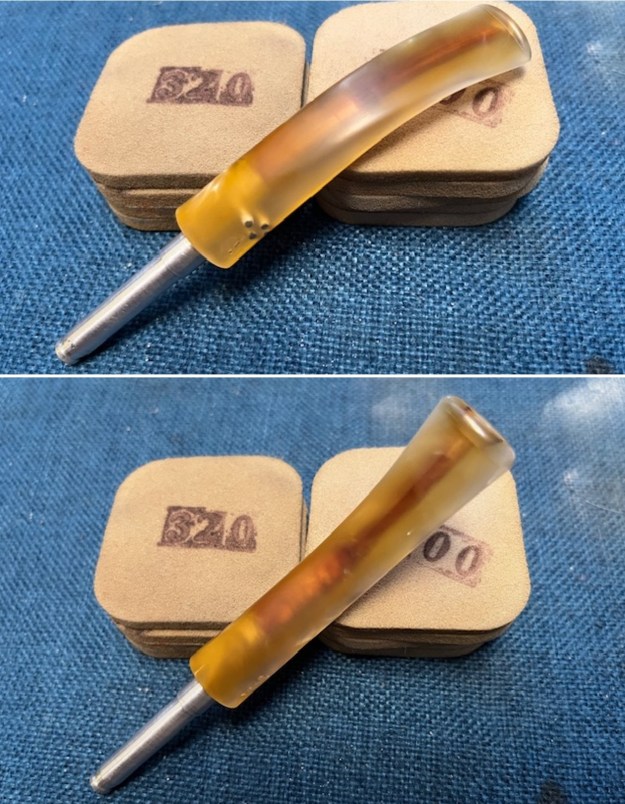
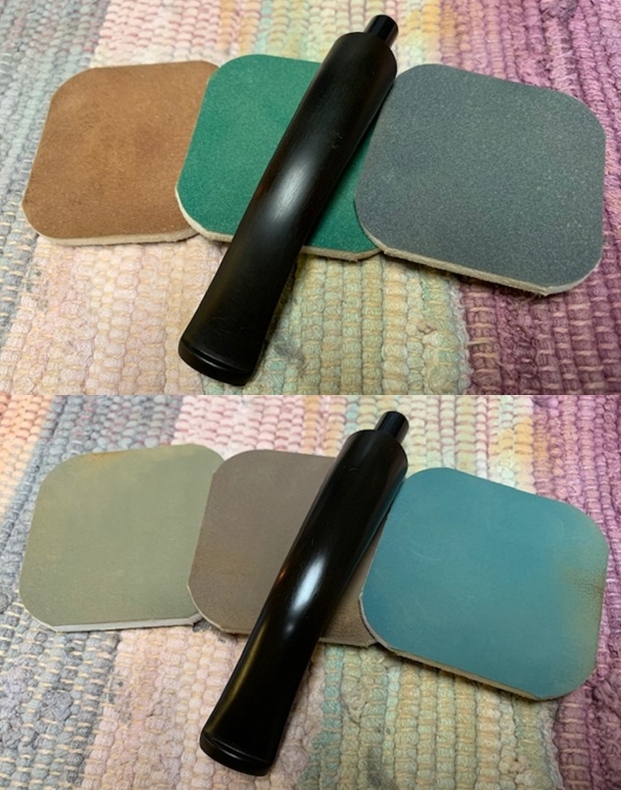
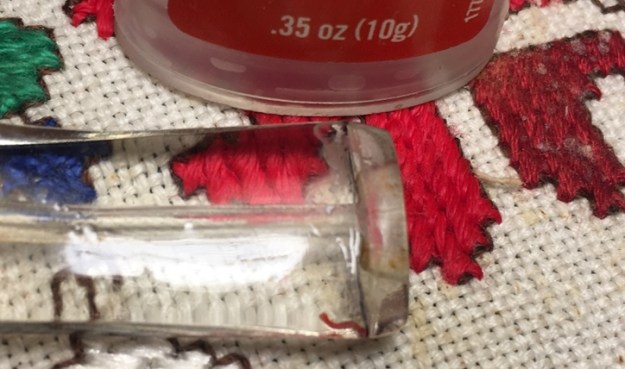
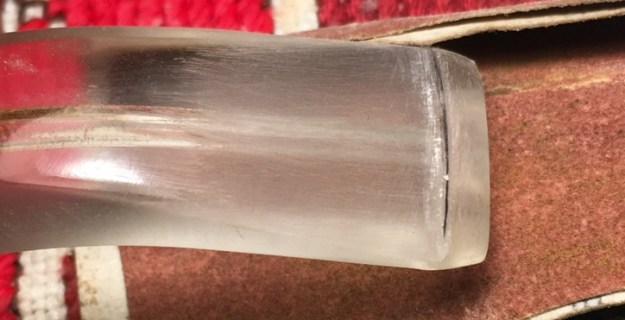
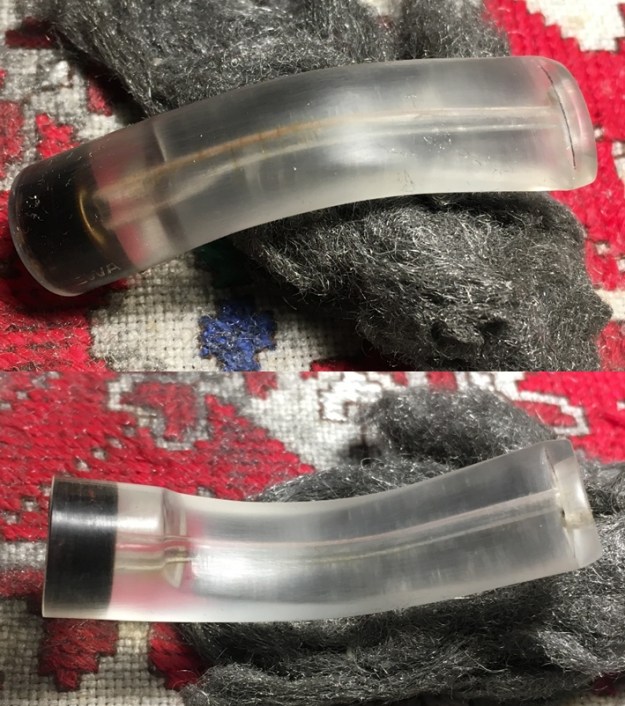
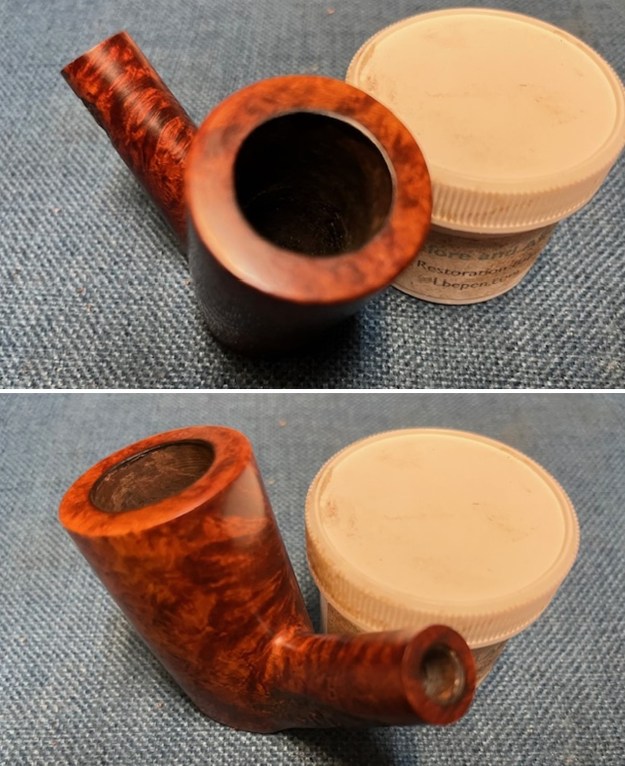 I set the bowl aside and turned my attention to the stem. I sanded the surface of the acrylic with the 2 inch sanding pads – 320-3500 grit pads. I dry sanded the surface until I have removed all of the oxidation and the stem started to really shine.
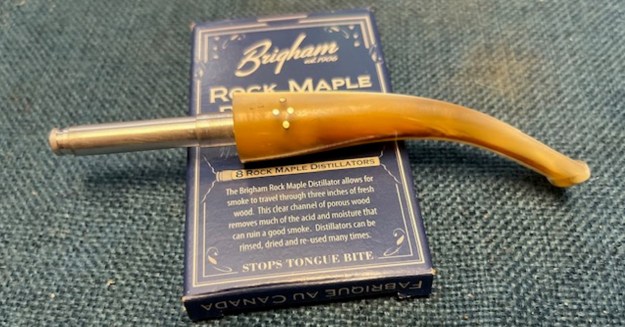
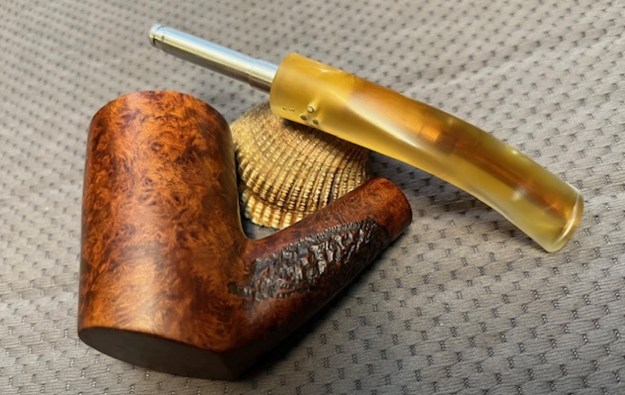
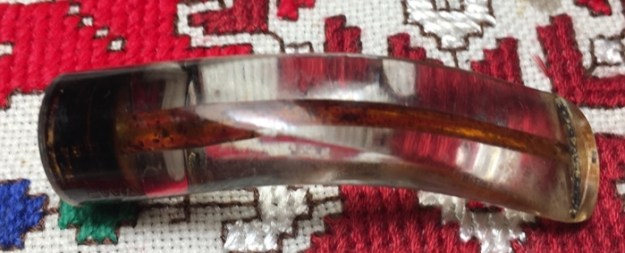
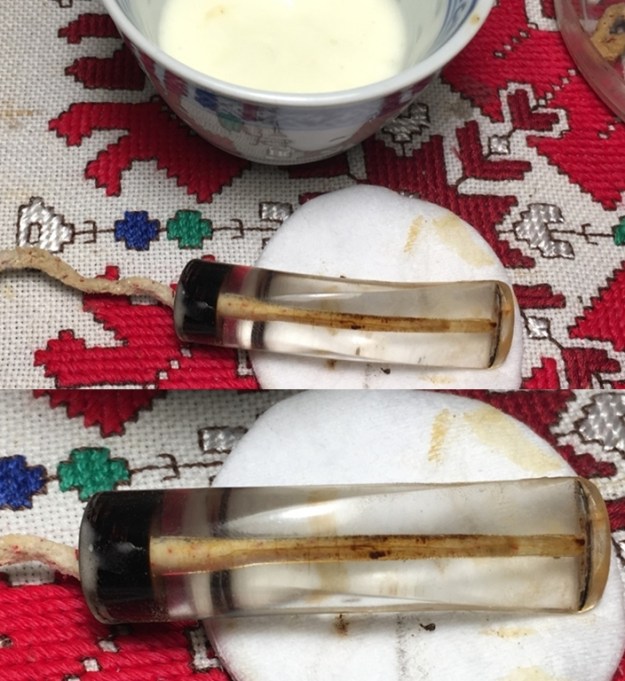
 I refit the aluminum tenon with the Brigham Rock Maple Distillator. It is a unique and cool smoking experience.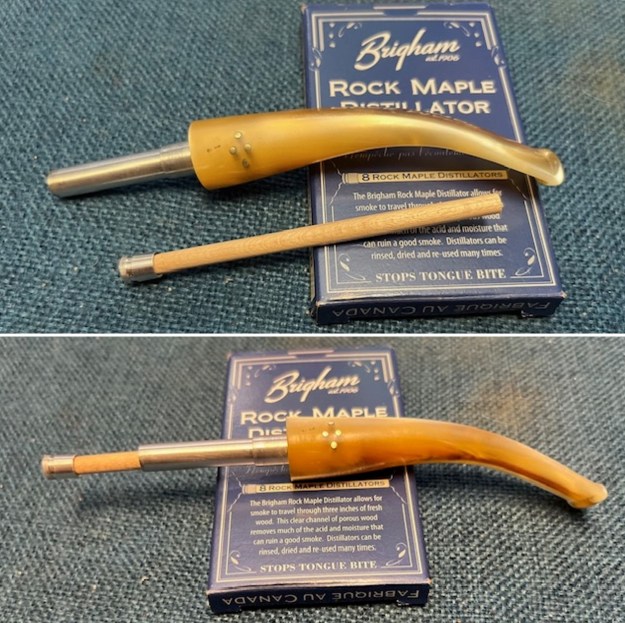
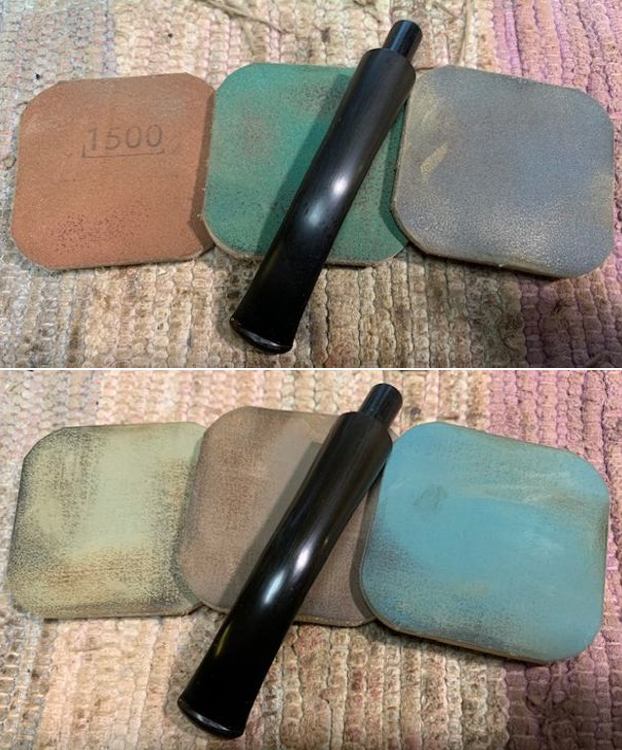
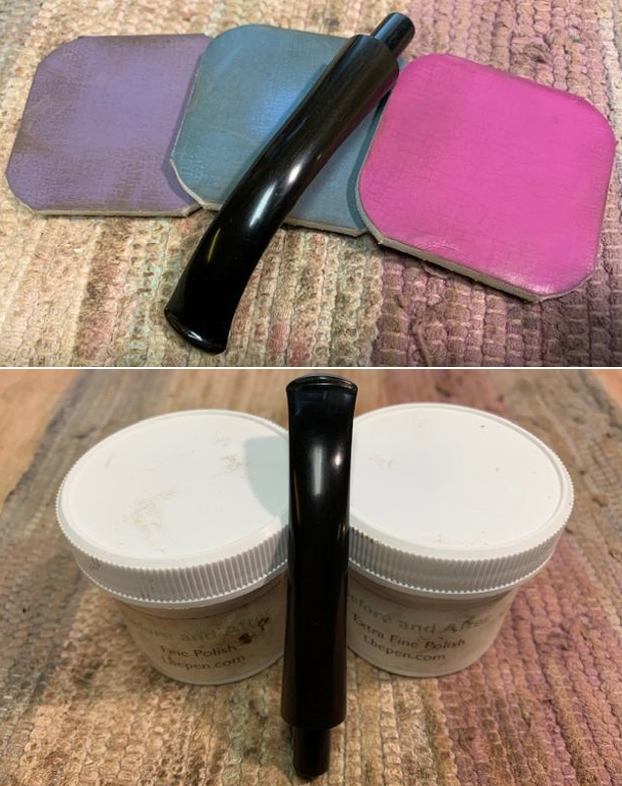
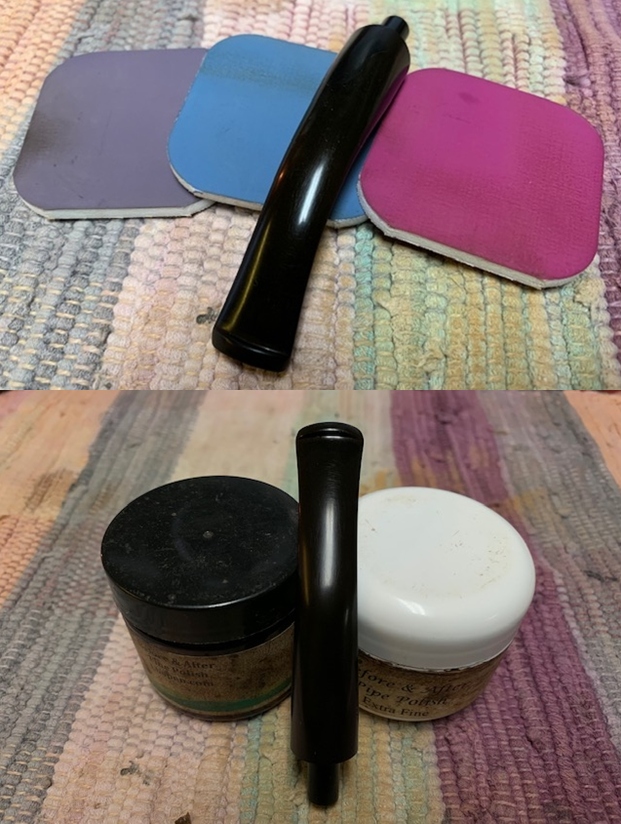
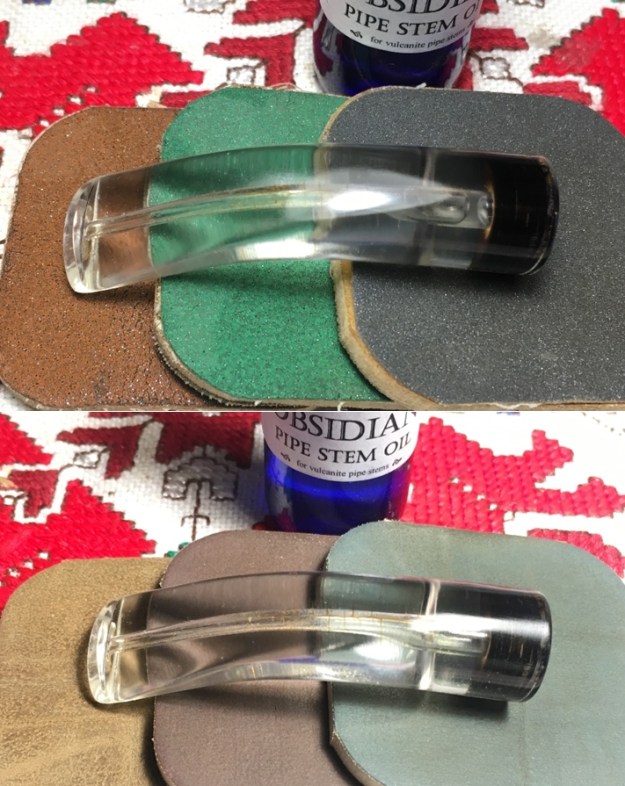
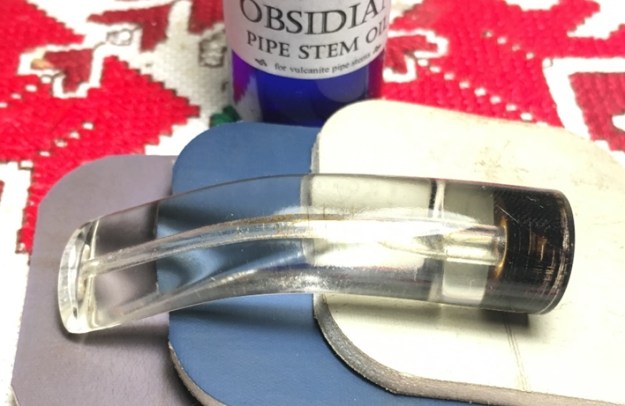
 I polished the stem with micromesh sanding pads – dry sanding with 1500-12000 grit pads. I wiped the stem down after each sanding pad with Obsidian Oil. I polished the stem with Before & After Pipe Stem Polish – both Fine and Extra Fine. I gave it a coat of Obsidian Pipe Stem Oil. It works to protect the stem from oxidizing. I set it aside to dry.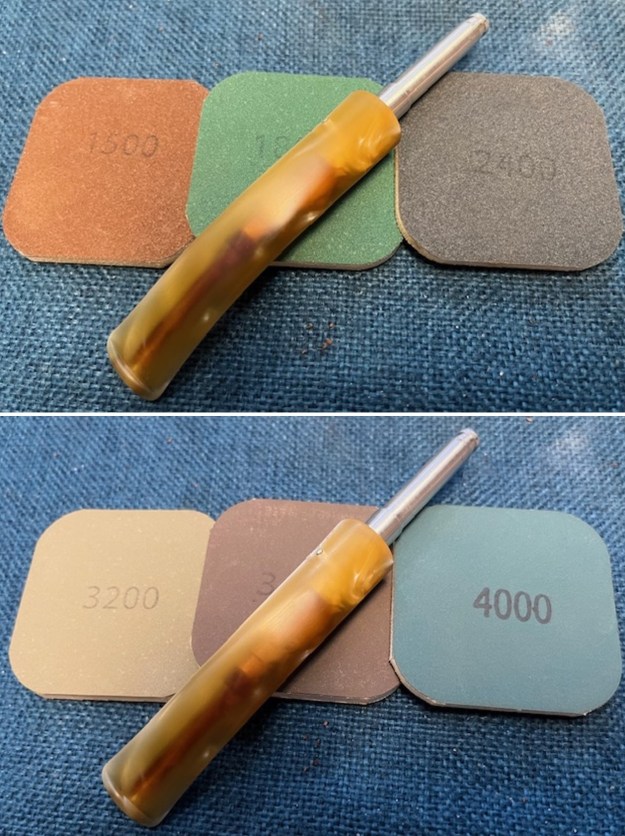
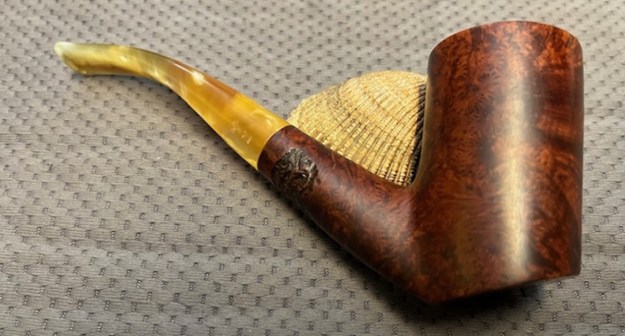
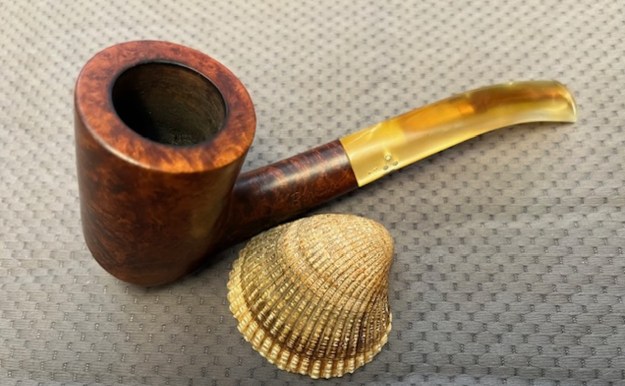
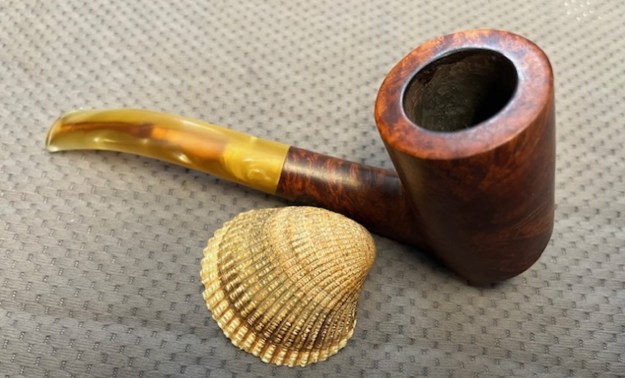
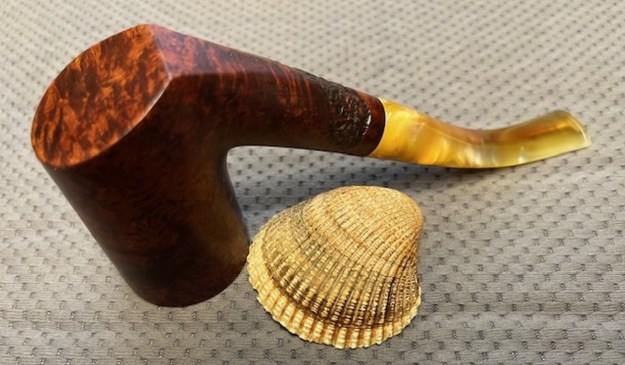
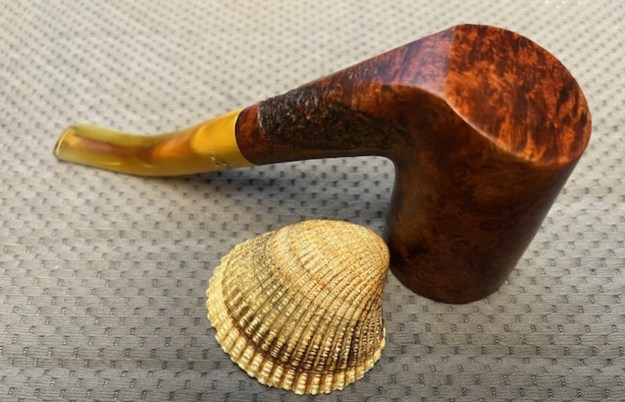
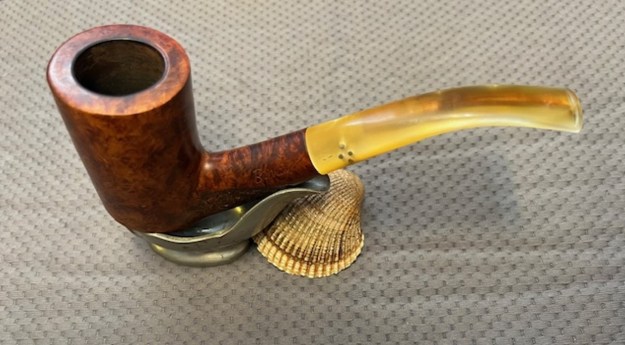
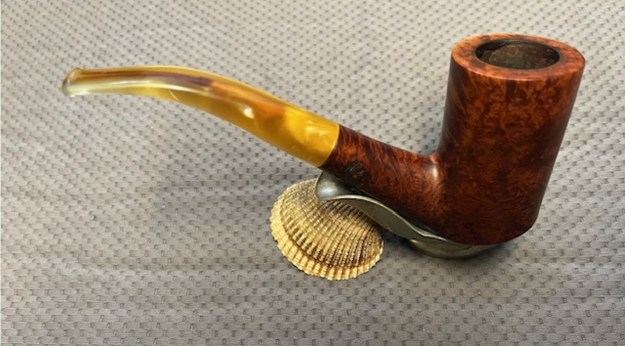
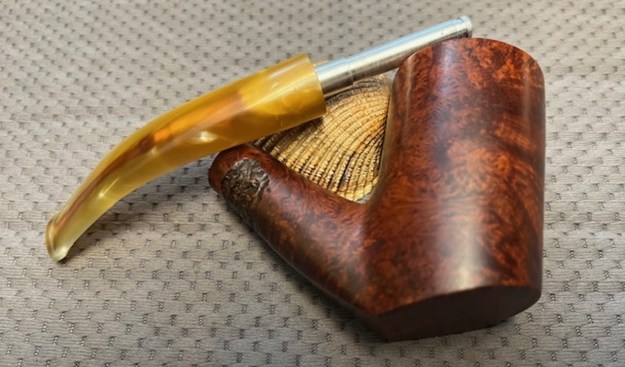
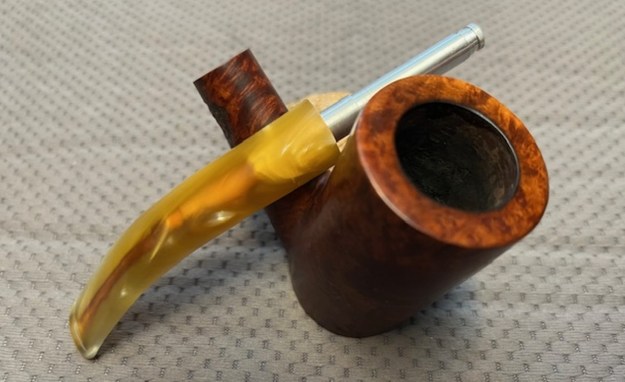
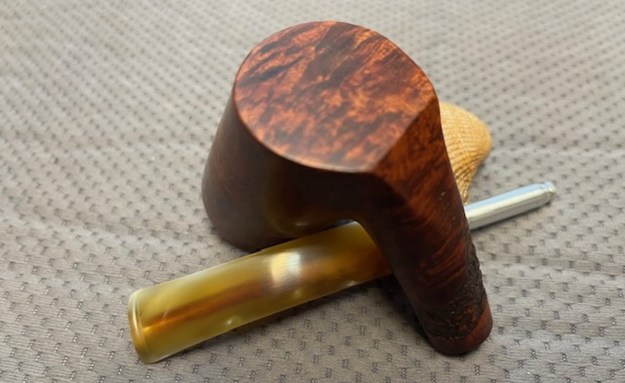
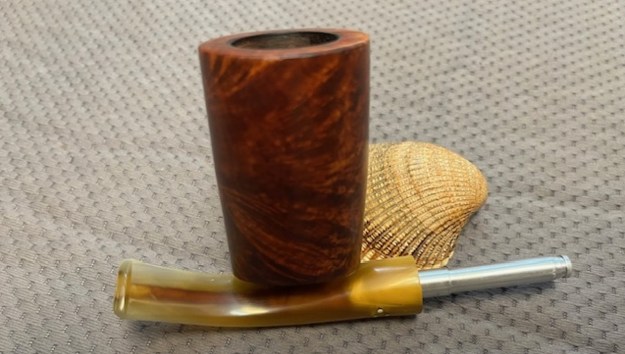
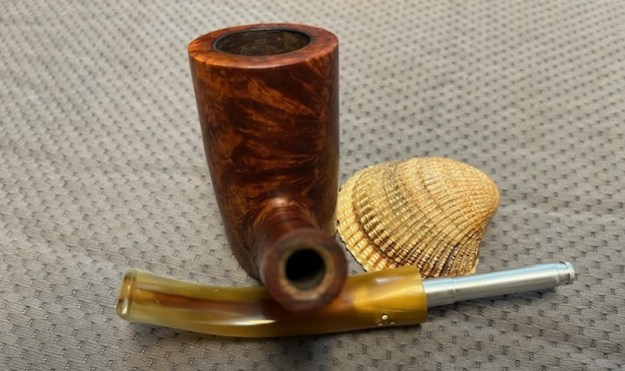
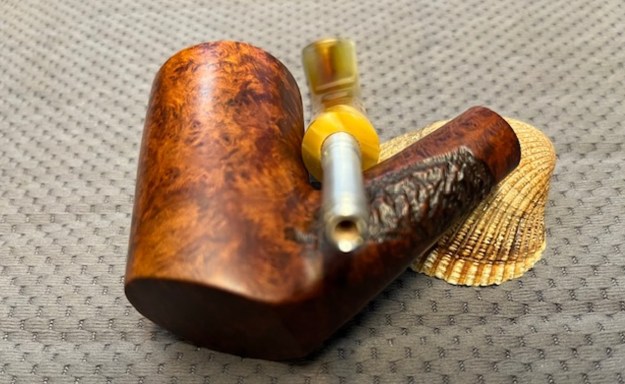
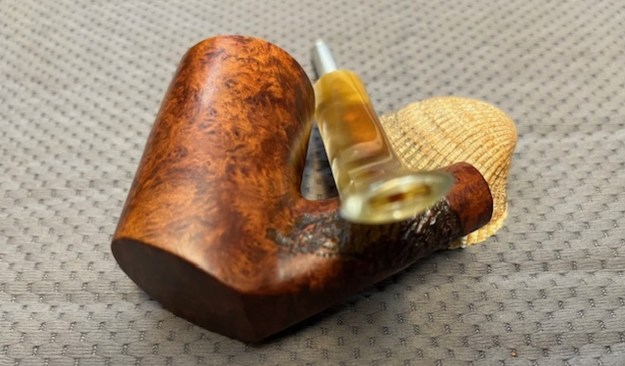
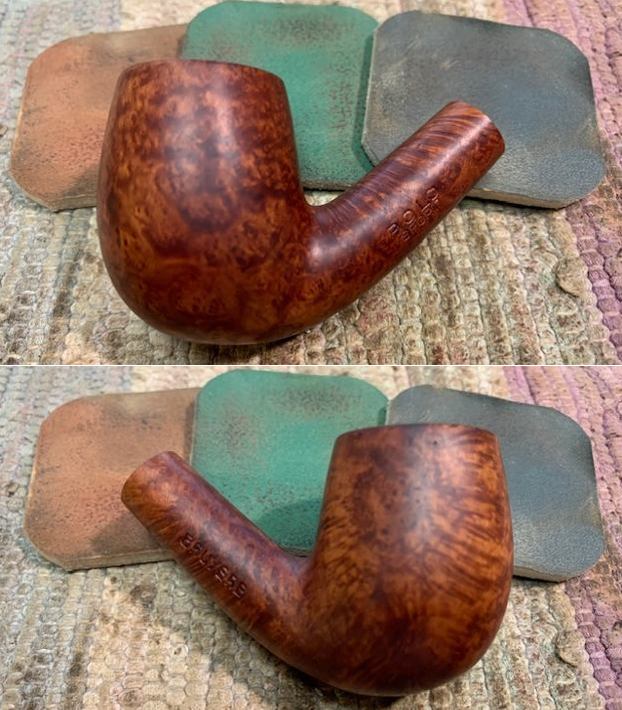
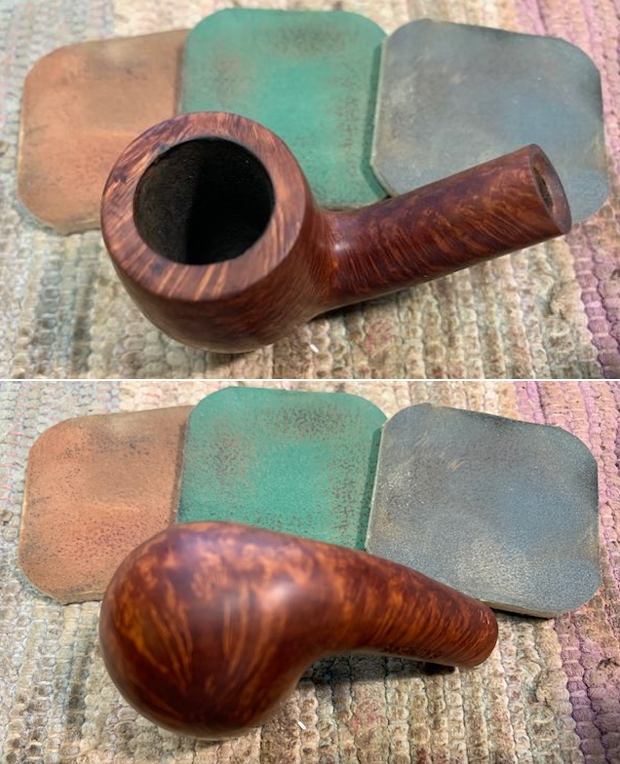
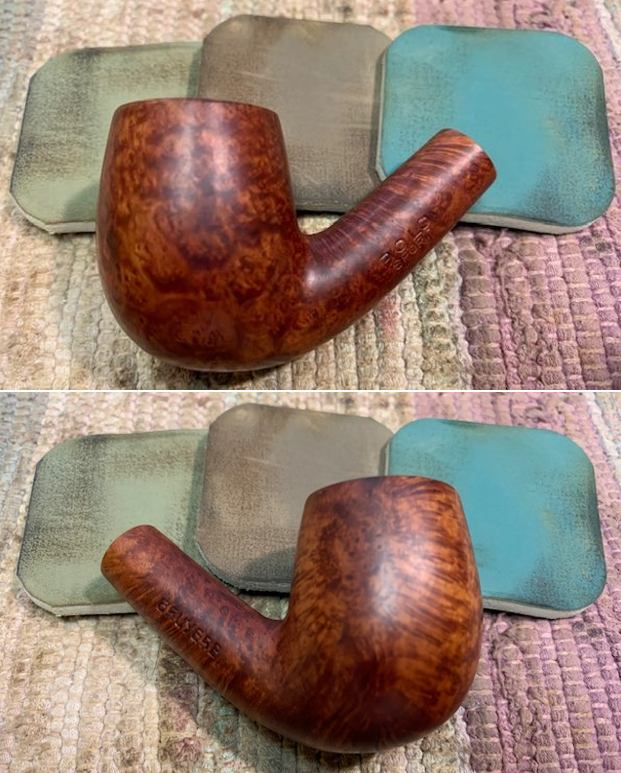
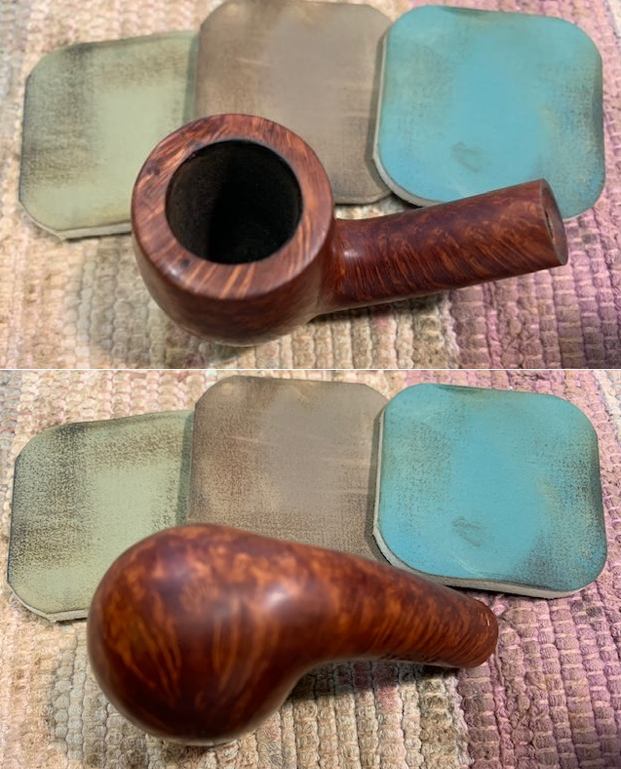
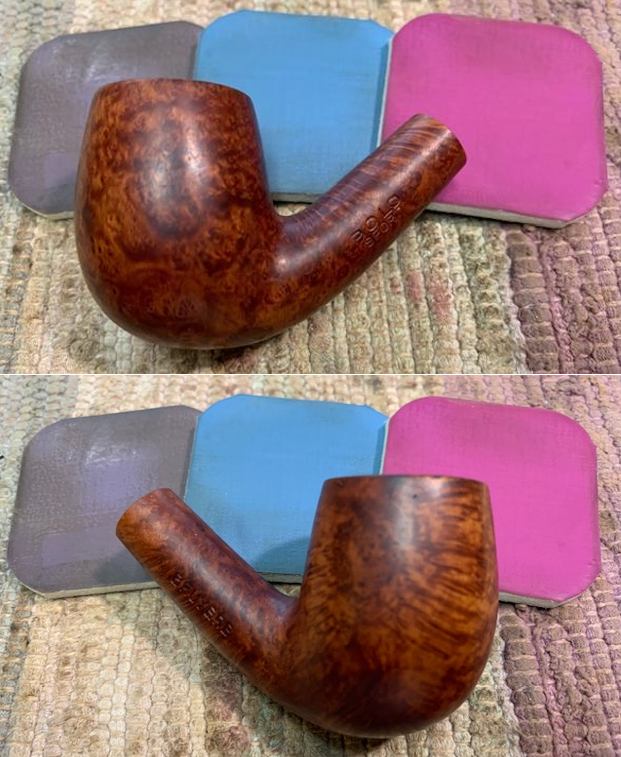
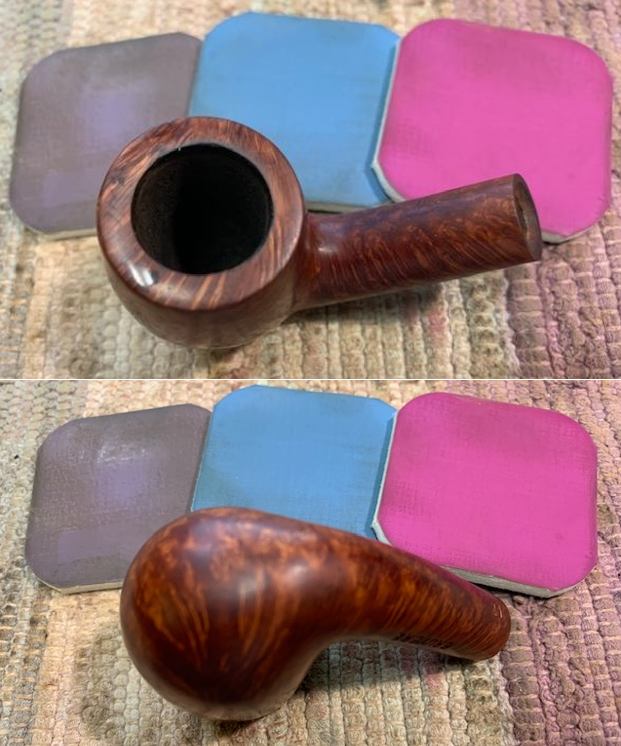
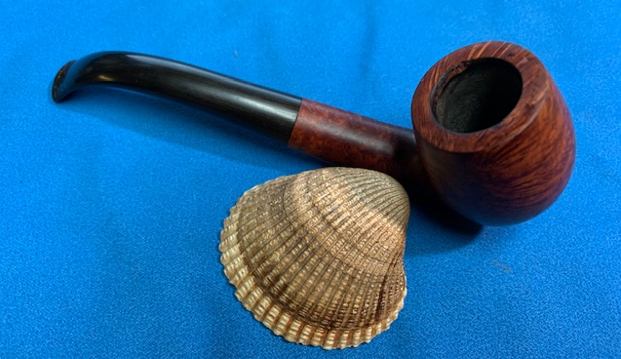
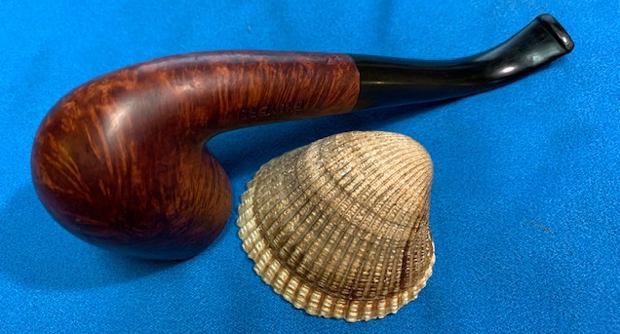
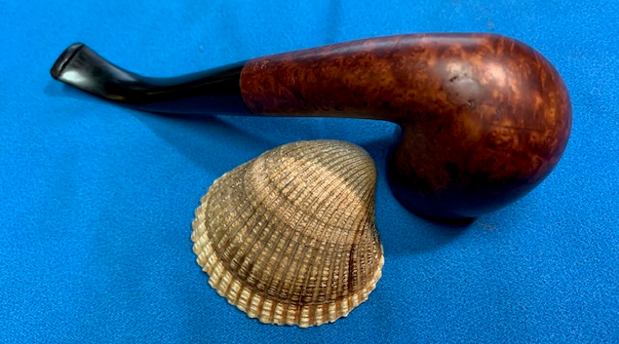
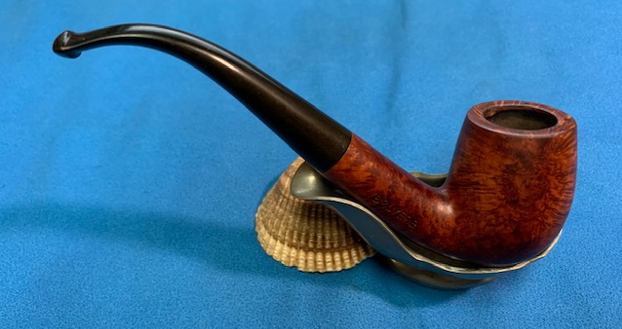
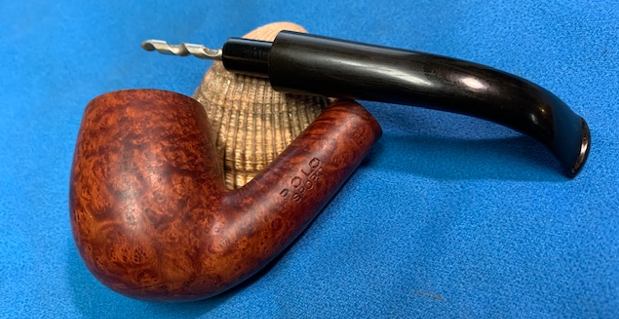
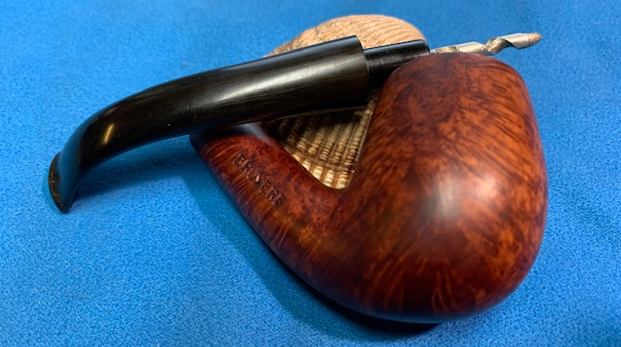
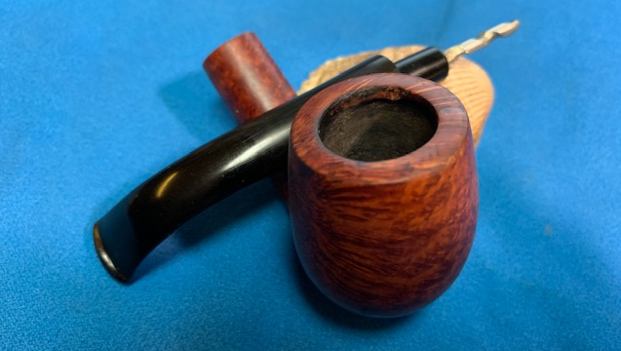
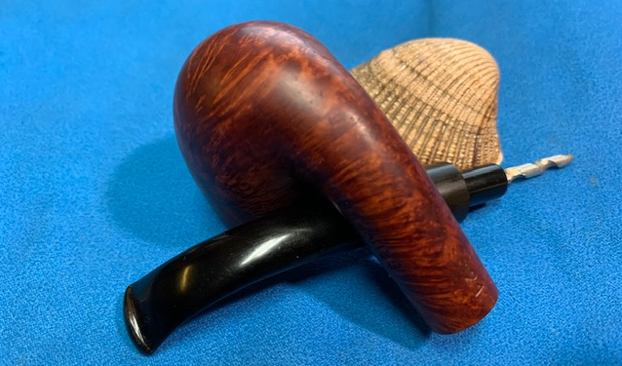
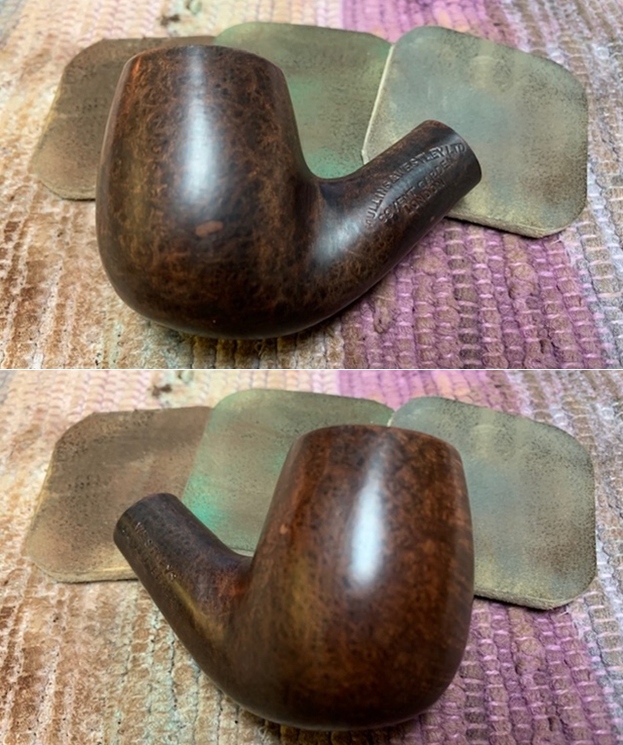
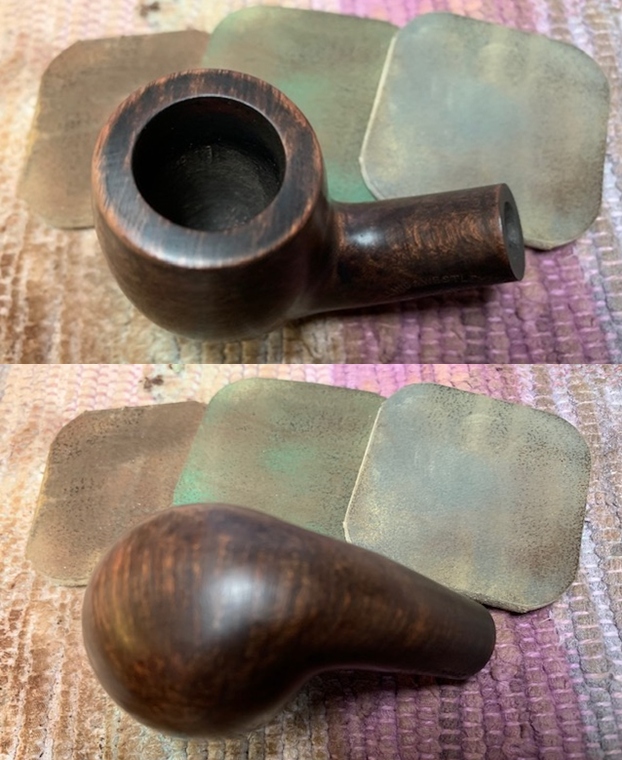
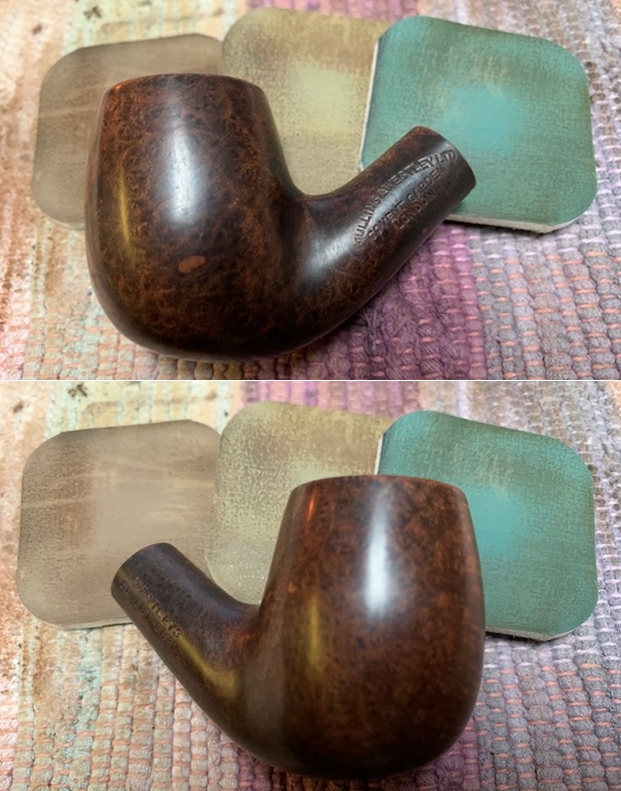
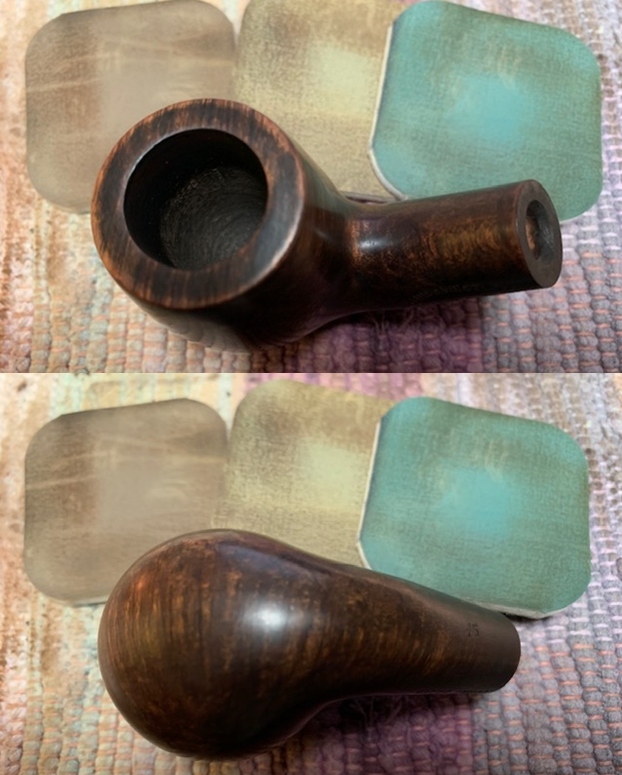
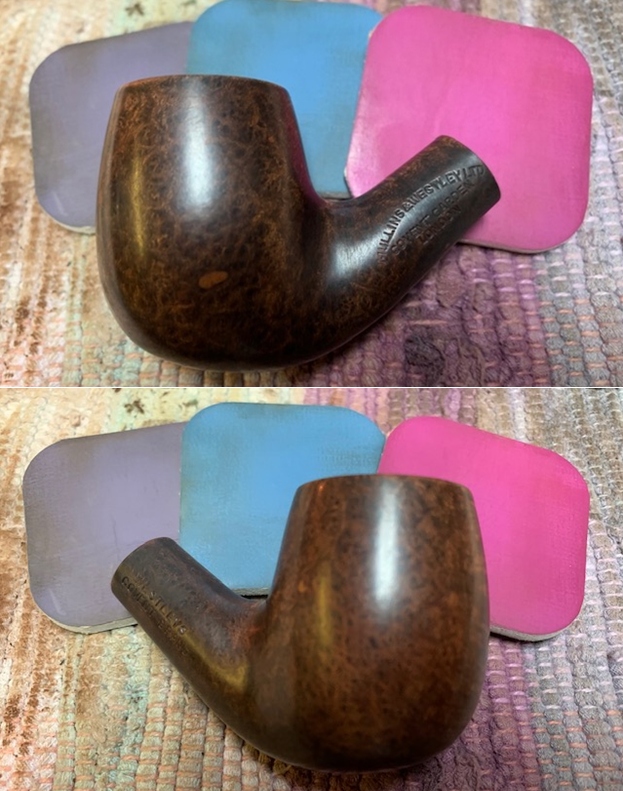
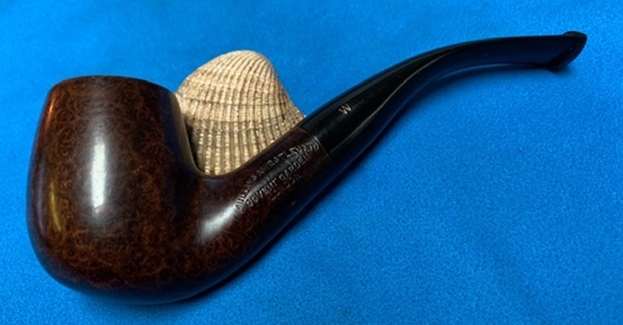
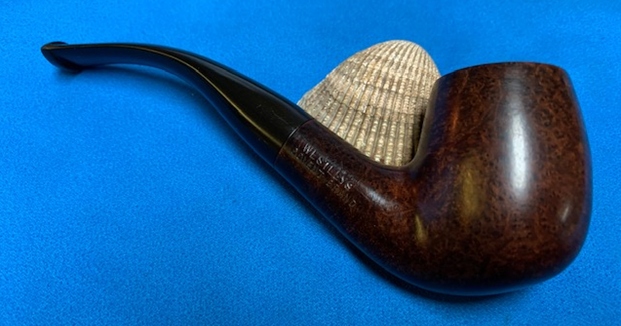
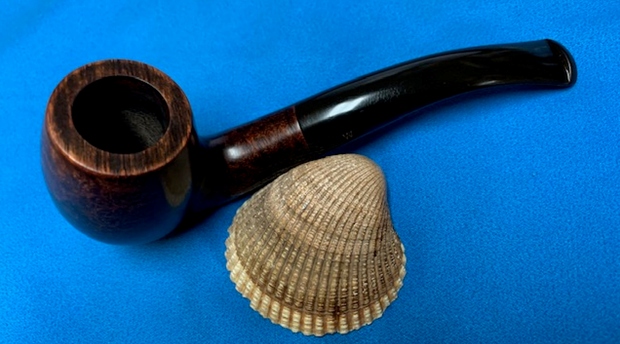
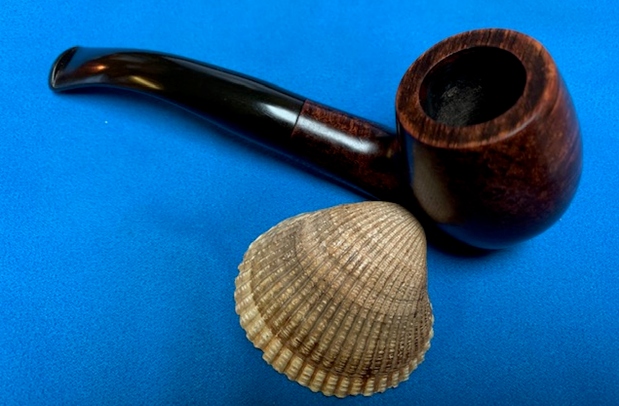
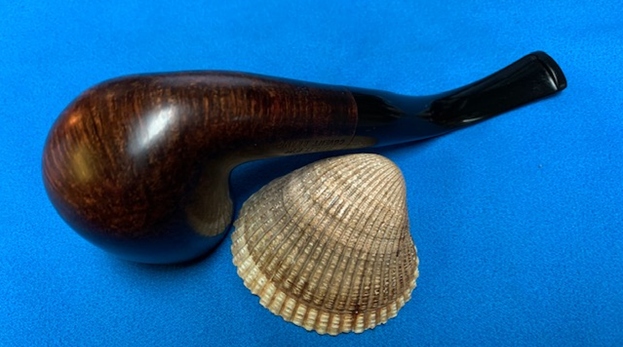
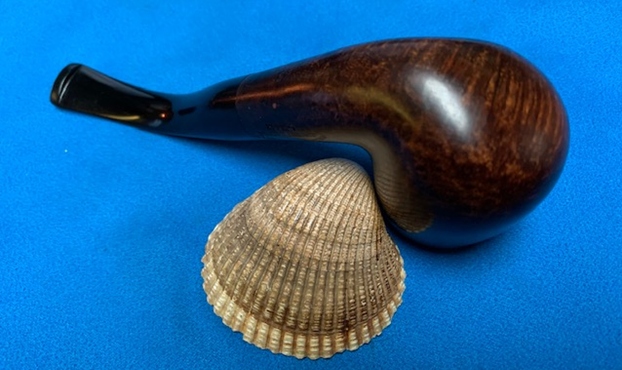
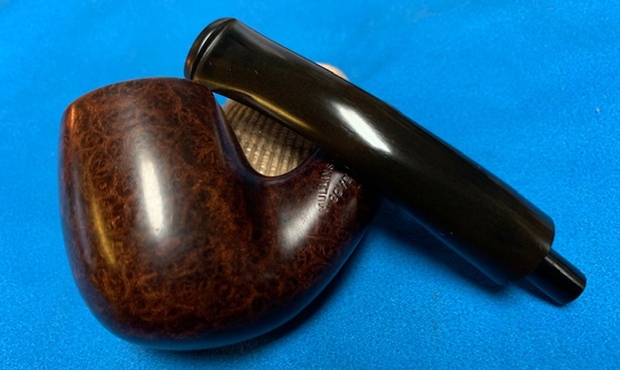
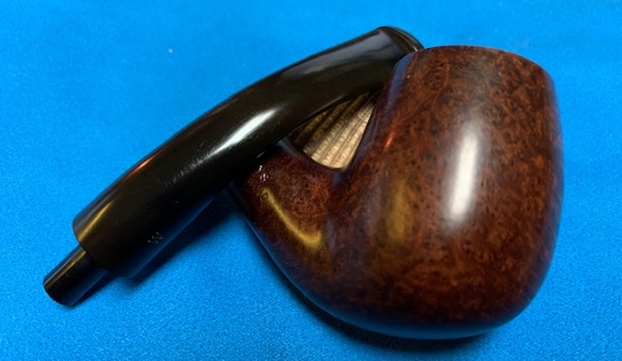
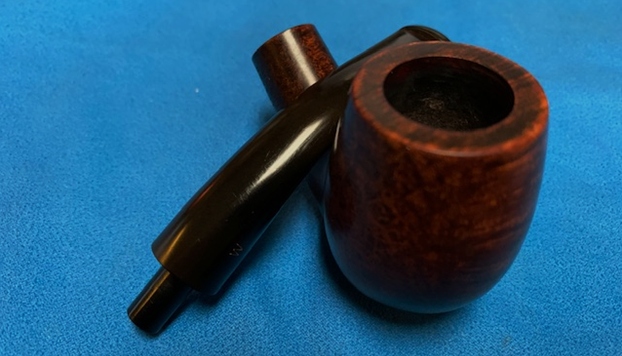
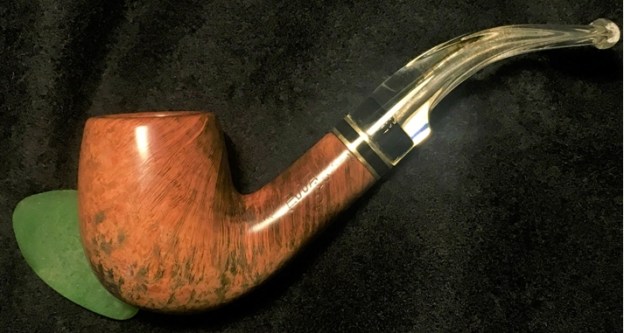
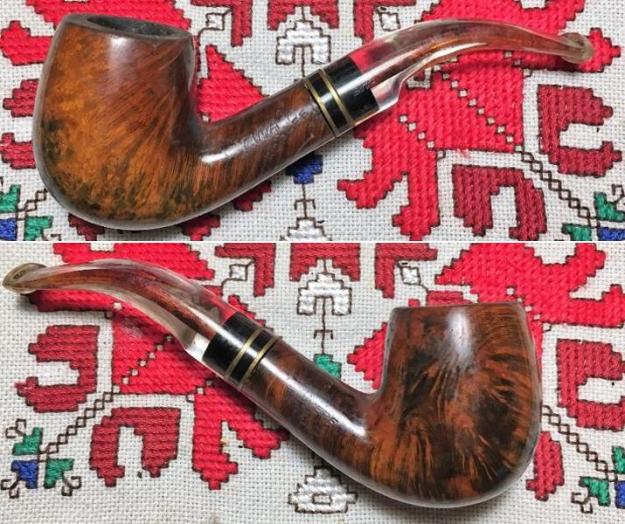
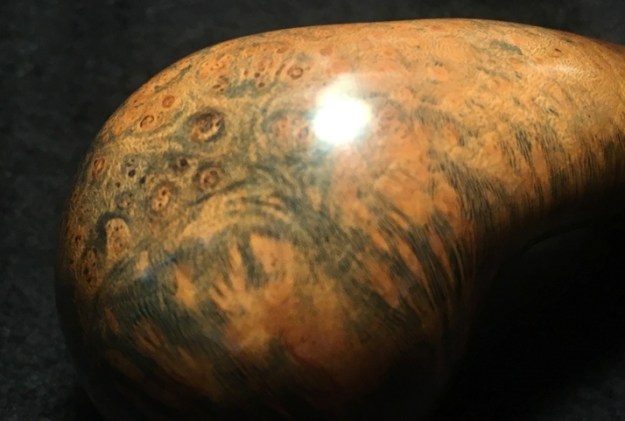
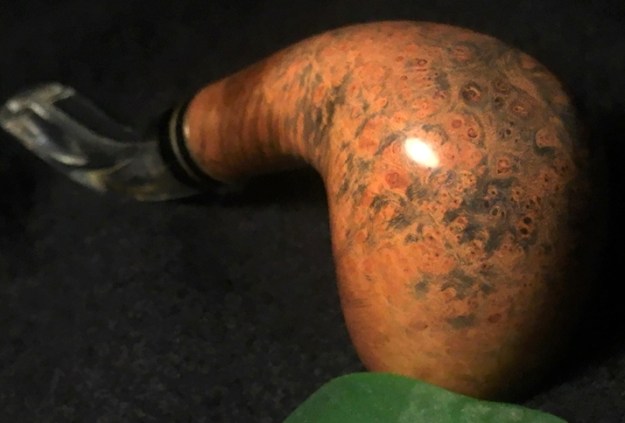
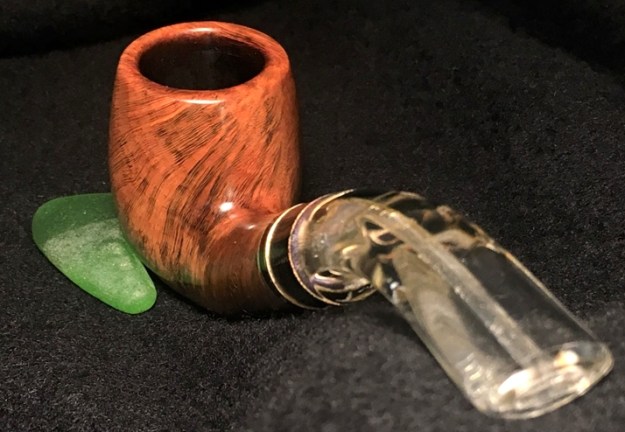
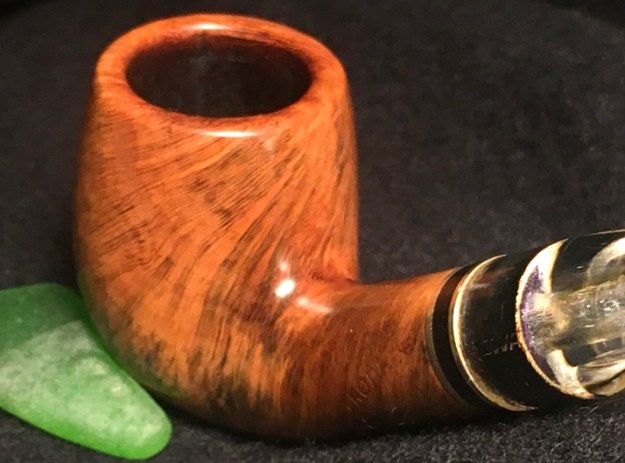
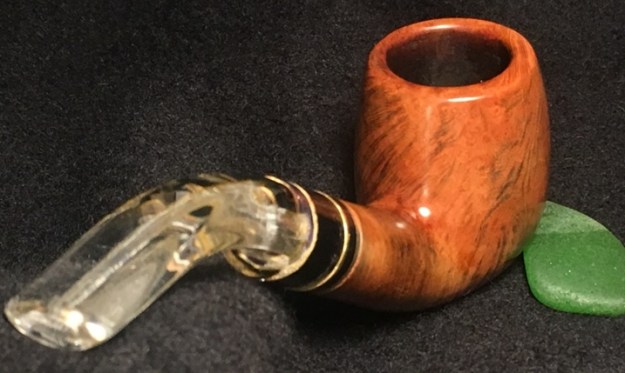
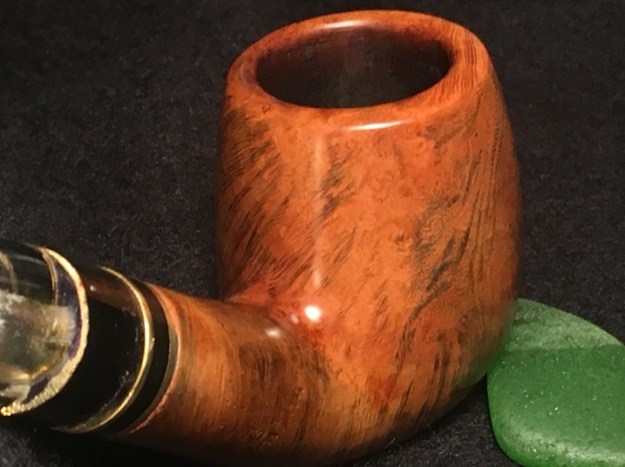
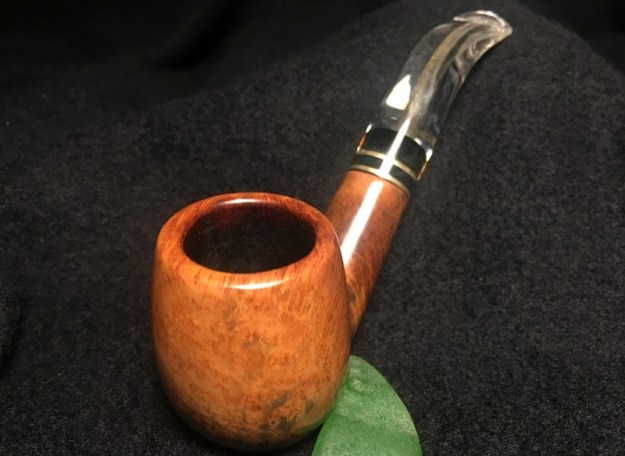
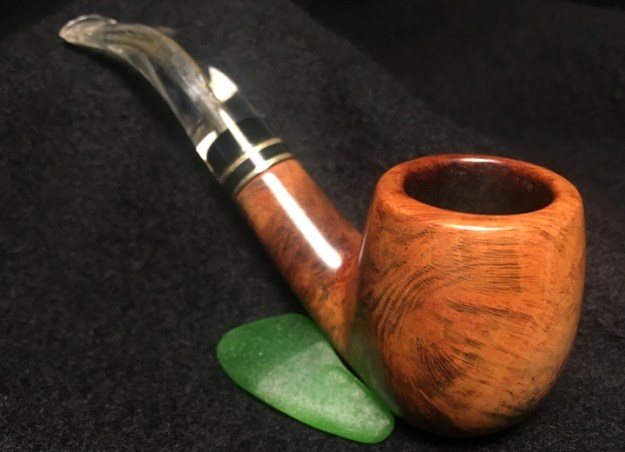
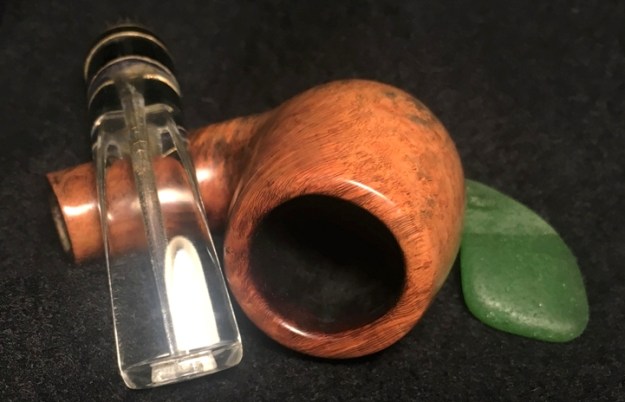
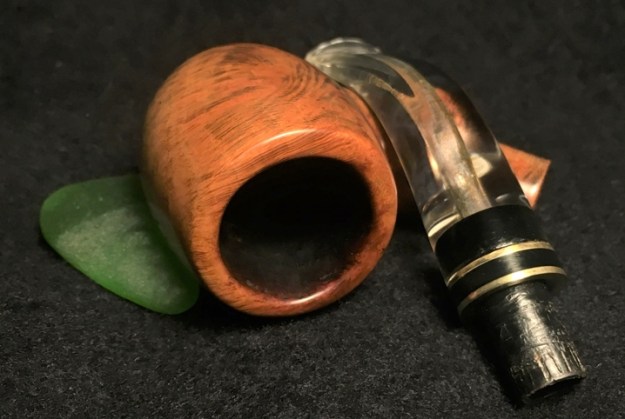
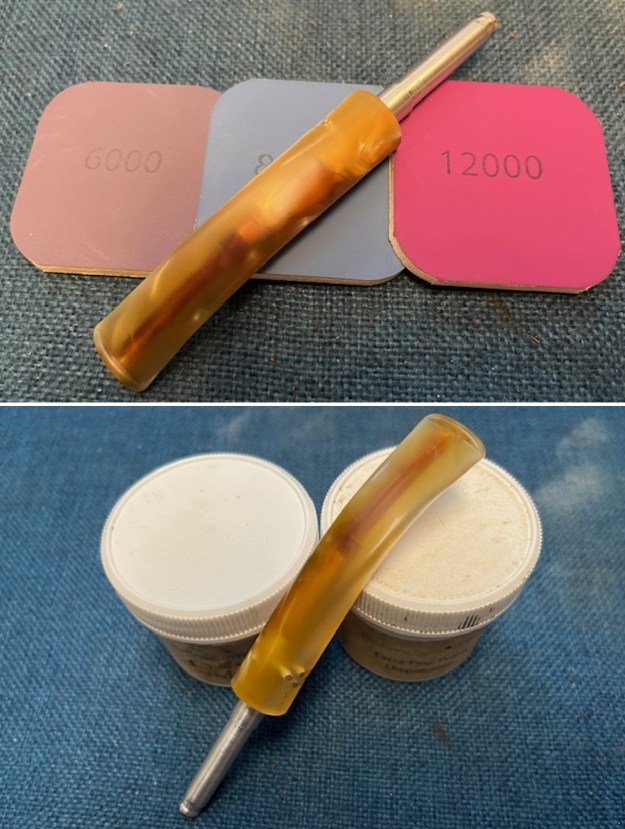 The final steps in my process involve using the buffer. I buffed the bowl and stem with Blue Diamond to polish out the light scratches in the briar and the vulcanite. I gave the bowl and the stem multiple coats of carnauba wax. I have found that I can get a deeper shine if I follow up the wax buff with a buff with a clean buffing pad. It works to raise the shine and then I hand buff with a microfiber cloth to deepen the shine. It is always fun for me to see what the polished bowl looks like with the polished stem. It really is a nice pipe. The smooth tall bowl sides and the rusticated blaze on the left shank side looks great with the yellow acrylic stem. The Rare Brigham 482L Poker/Sitter with an acrylic stem feels great in my hand. It is a well balanced pipe. Have a look at it with the photos below. The dimensions are Length: 6 inches, Height: 2 ½ inches, Outside diameter of the bowl: 1 ½ inches, Chamber diameter: 7/8 of an inch. The weight of the pipe is 2.29 ounces/65 grams. It is a beautiful pipe that I will soon be adding to the rebornpipes store in the Canadian Pipemakers Section. If you would like to add it to your collection let me know. It should be a great smoking pipe.
As always, I encourage your questions and comments as you read the blog. Thanks to each of you who are reading this blog. Remember we are not pipe owners; we are pipe men and women who hold our pipes in trust until they pass on into the trust of those who follow us.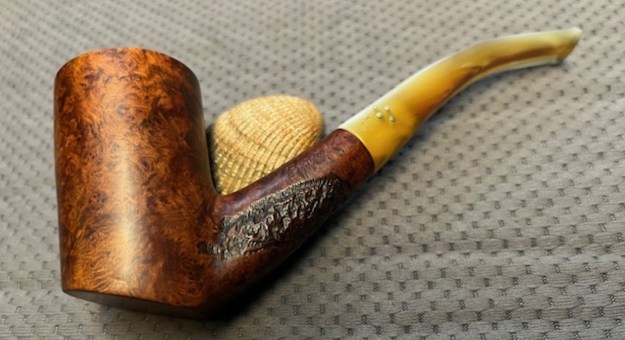










 rebornpipes
.#)