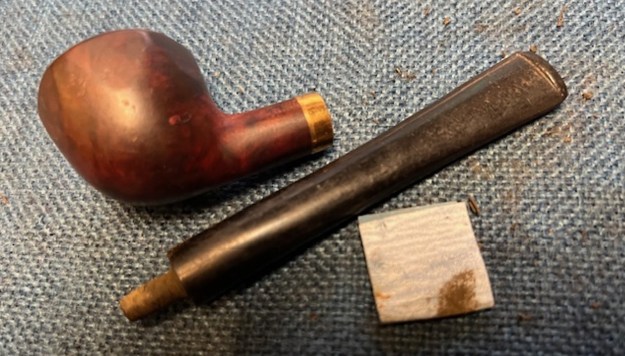
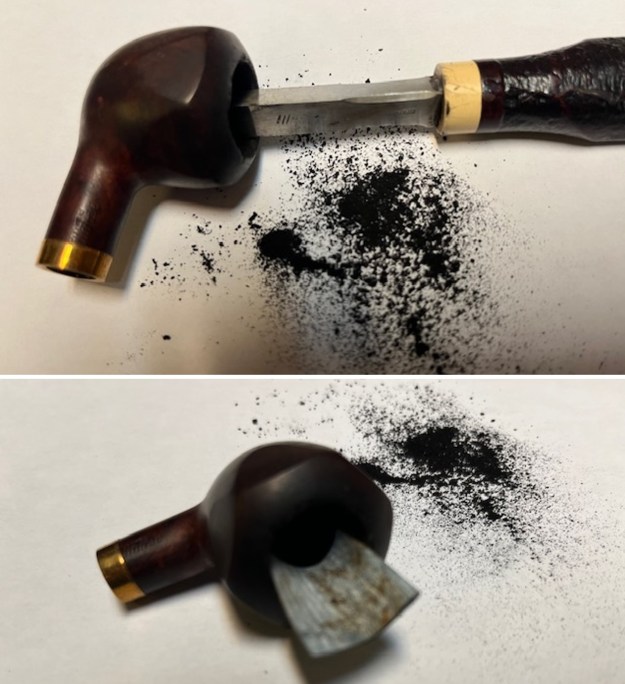
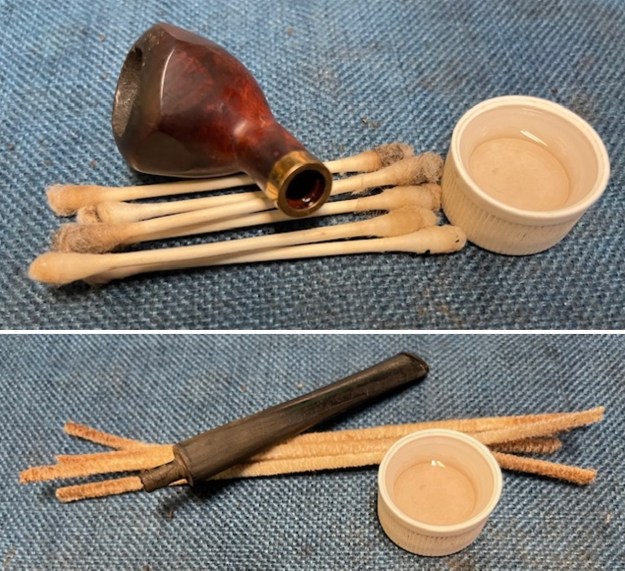
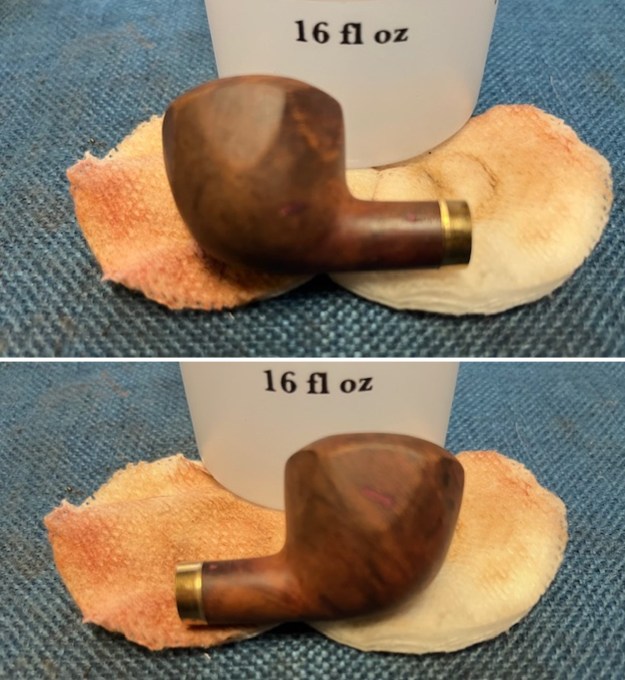
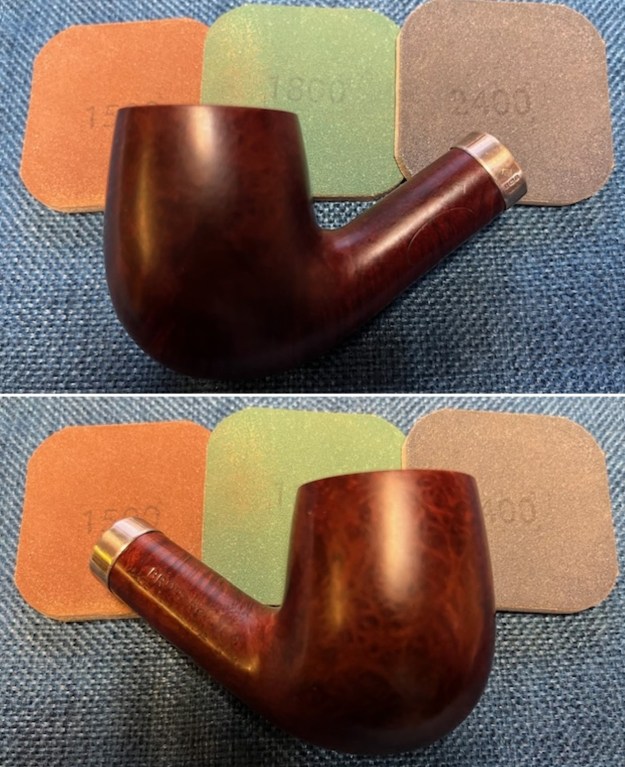
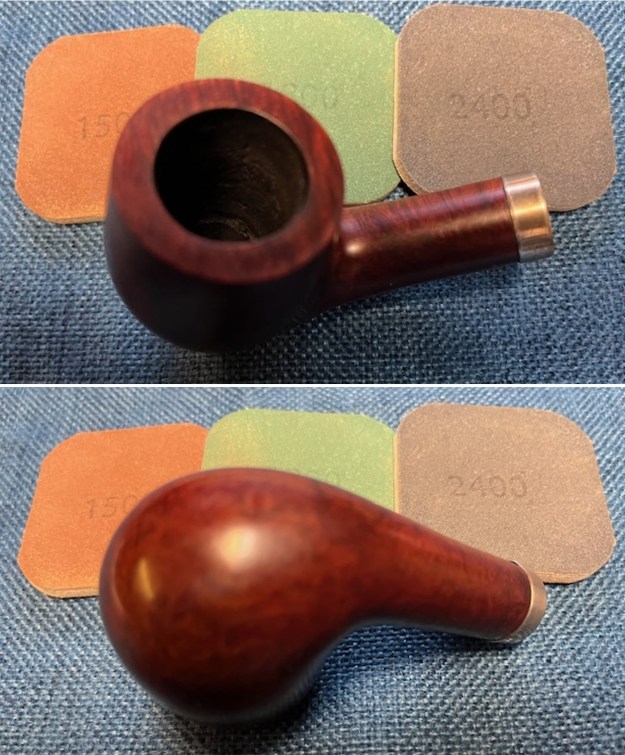
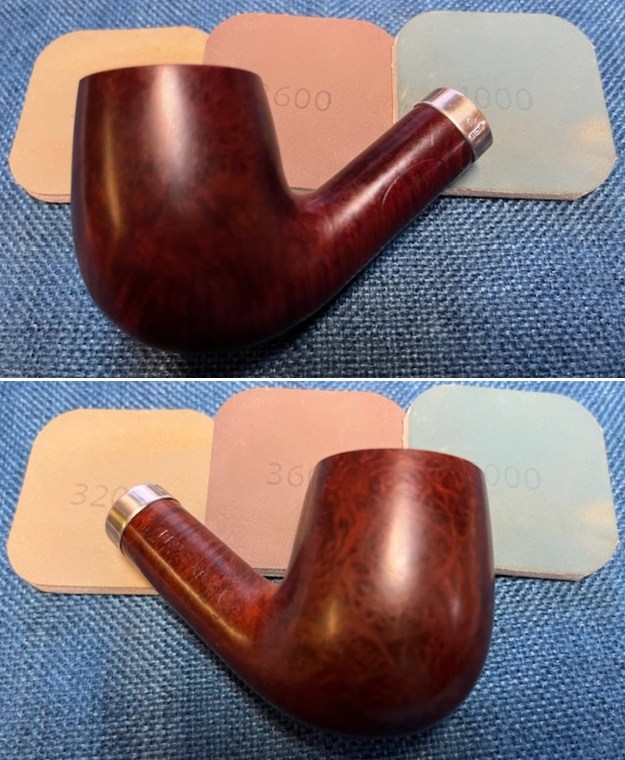
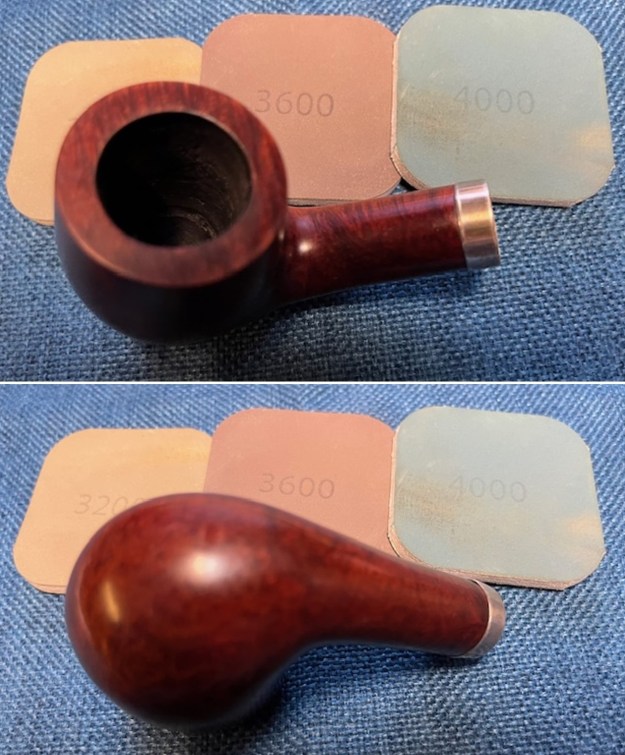
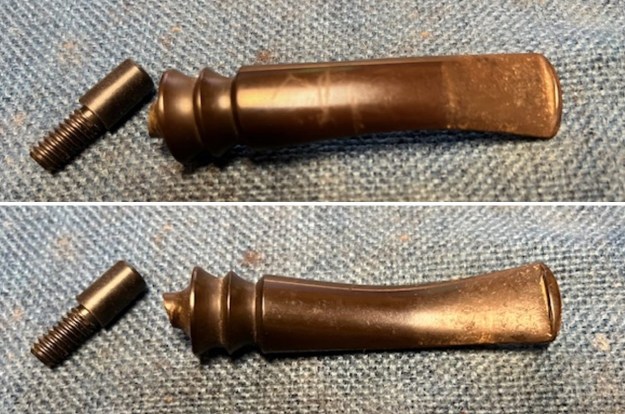
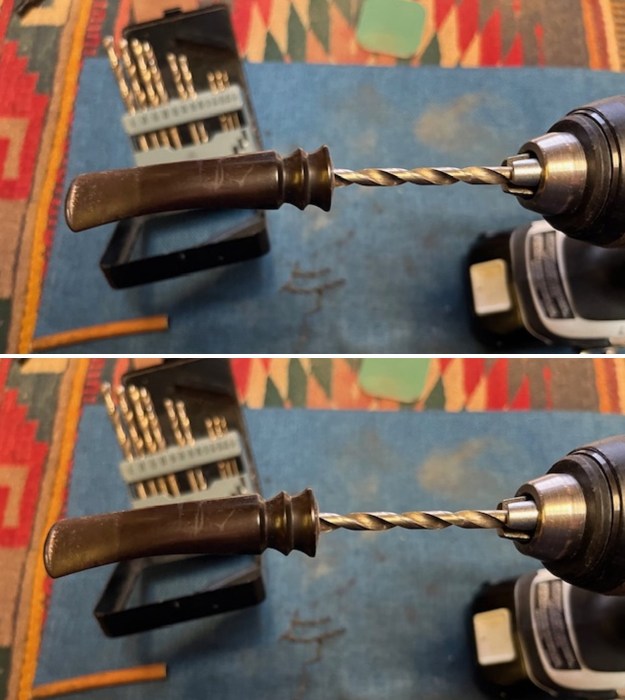
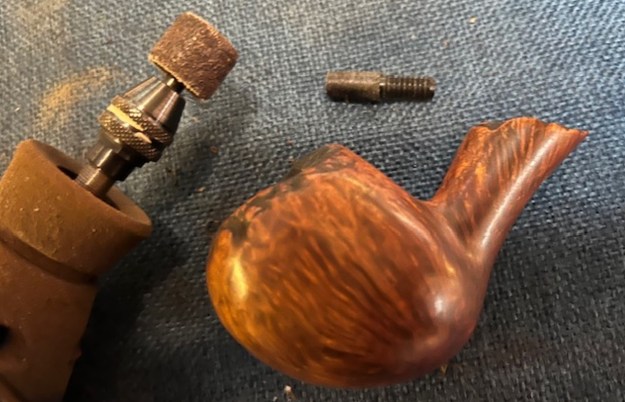
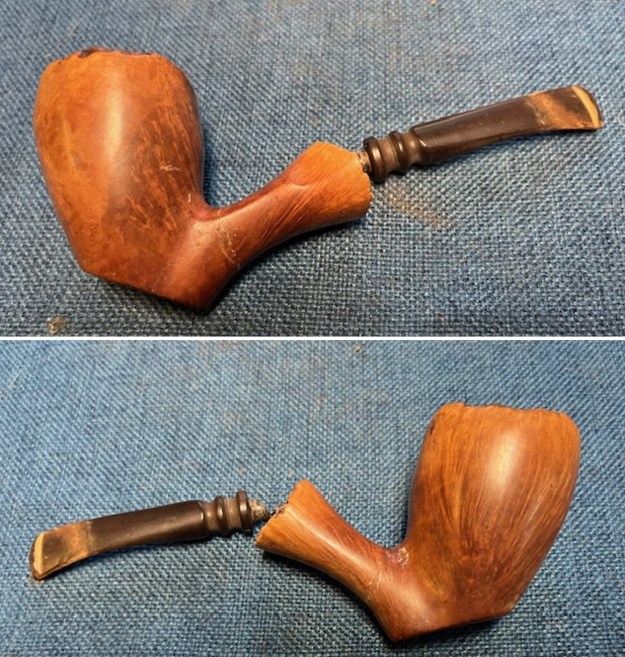
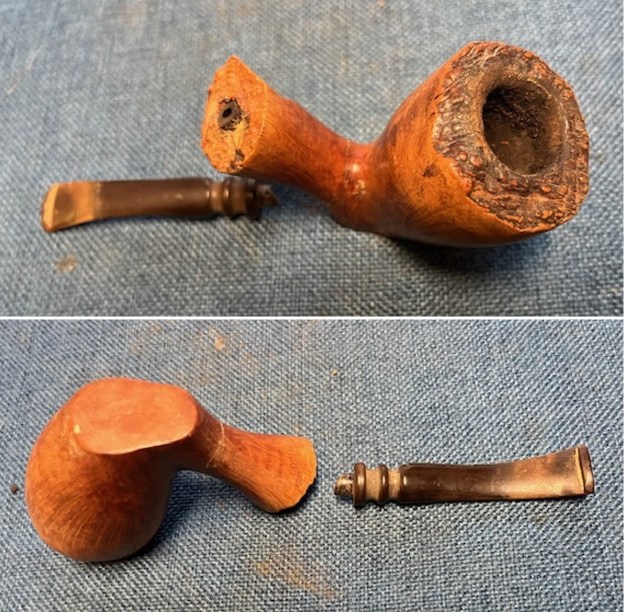
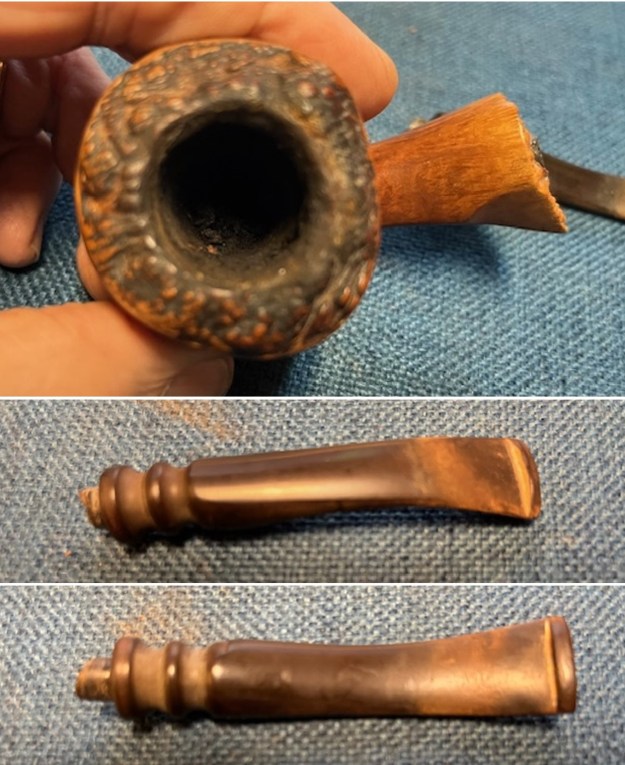
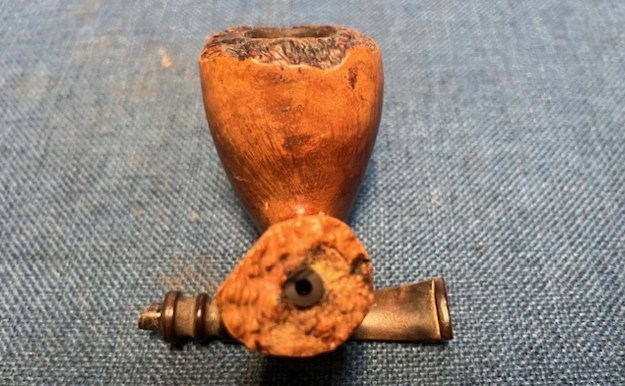
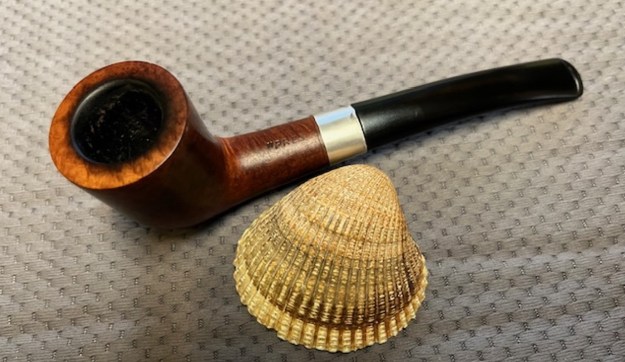
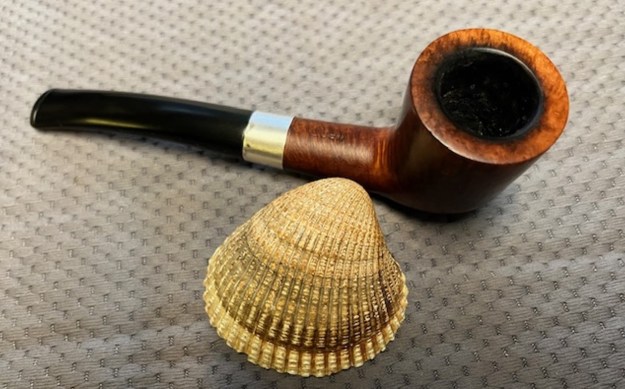
Tag Archives: stem work

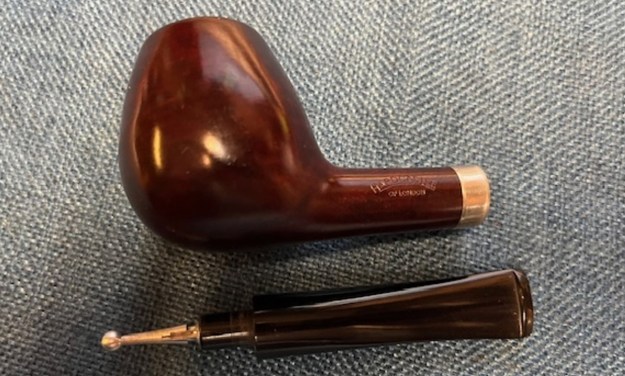
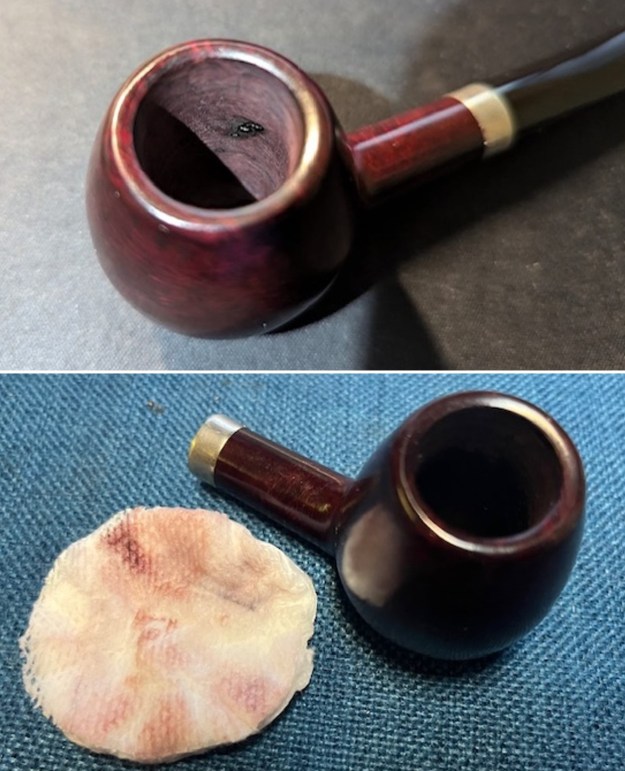
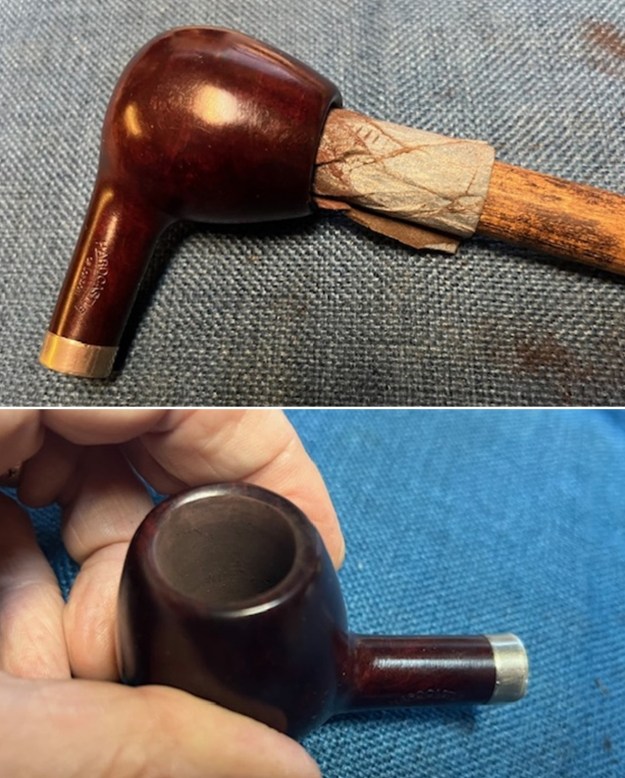
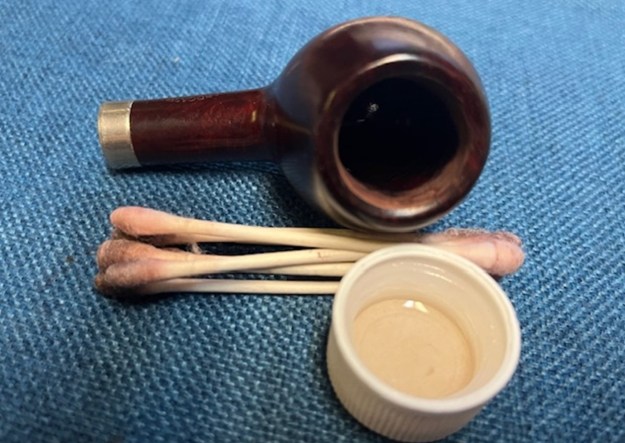
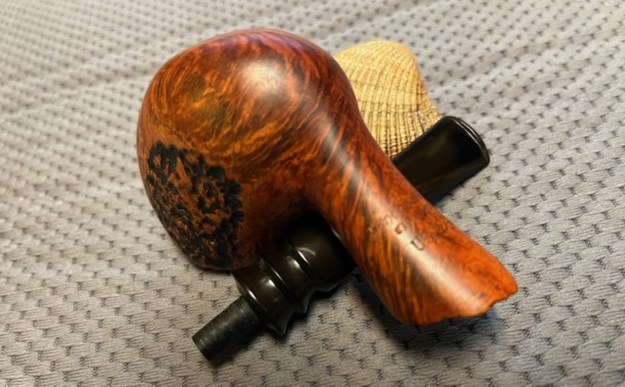
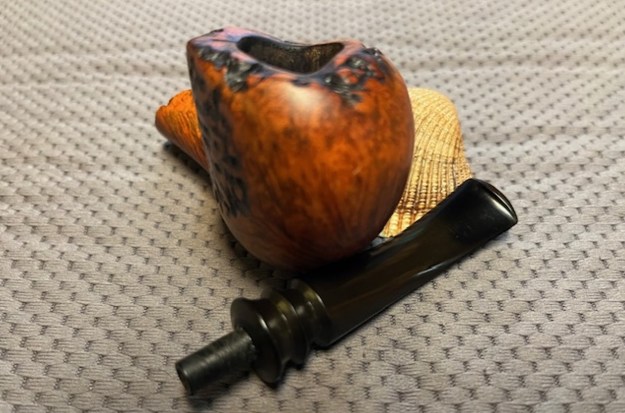
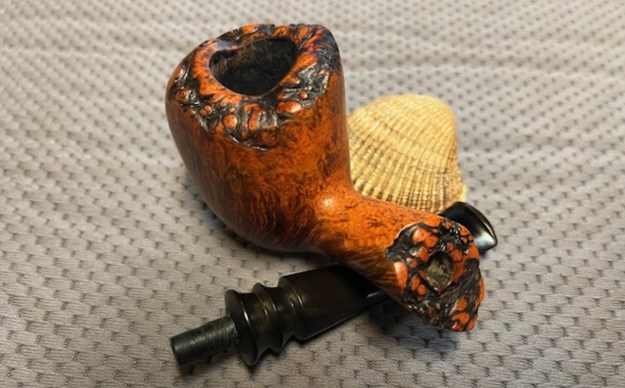
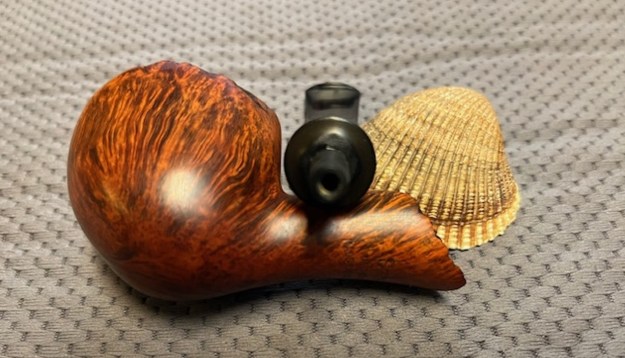
Cleaning up a Vertically Challenged Dunmoor Imported Briar Squashed Tomato


by Steve Laug

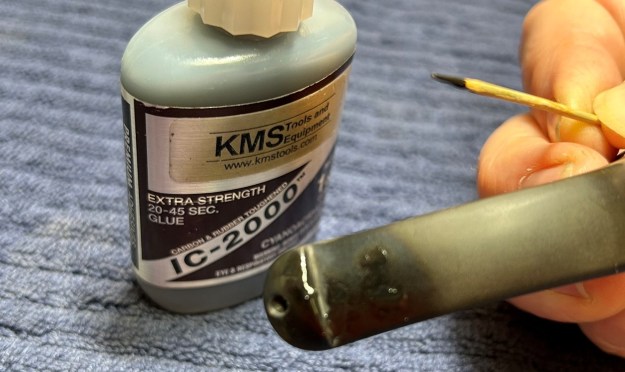
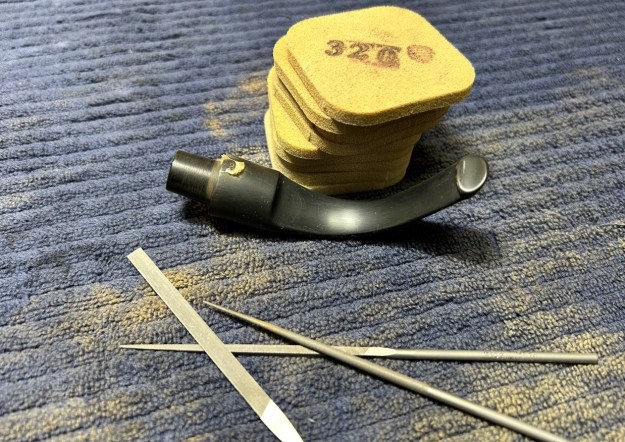
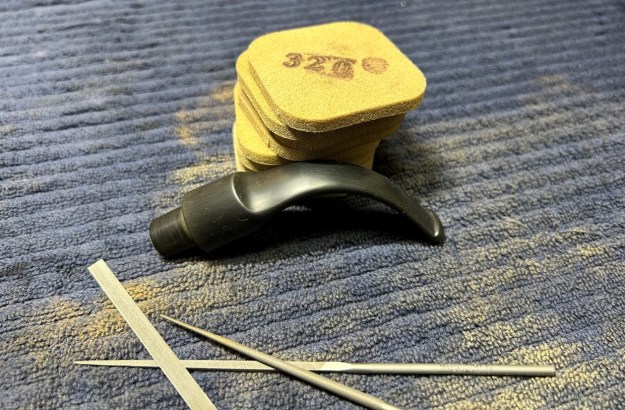
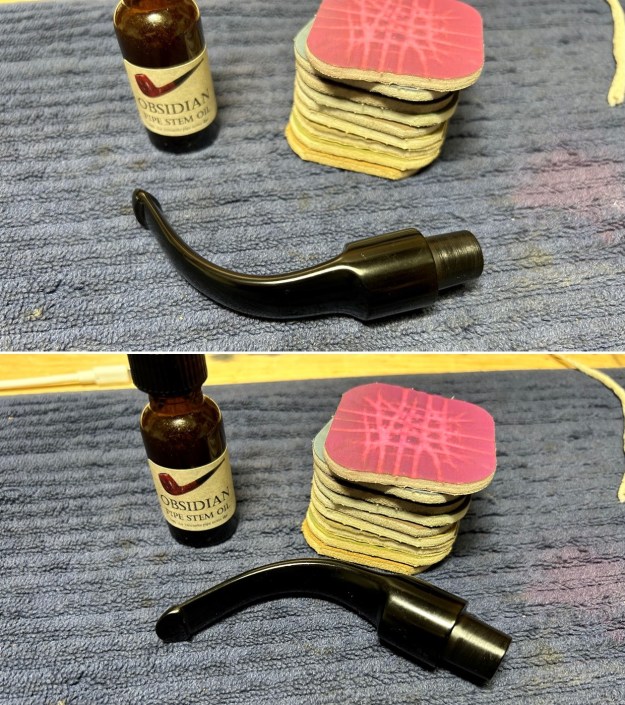
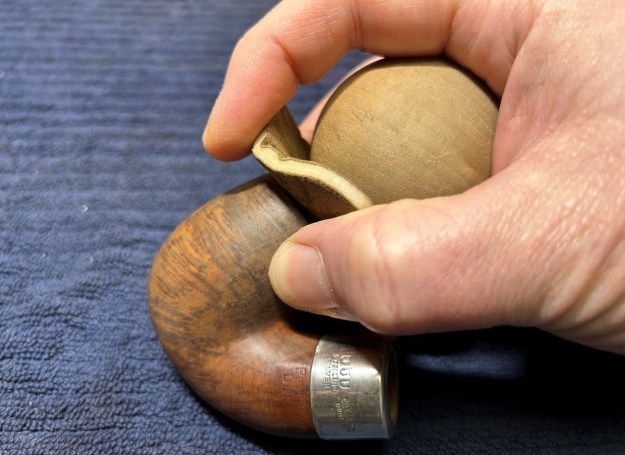
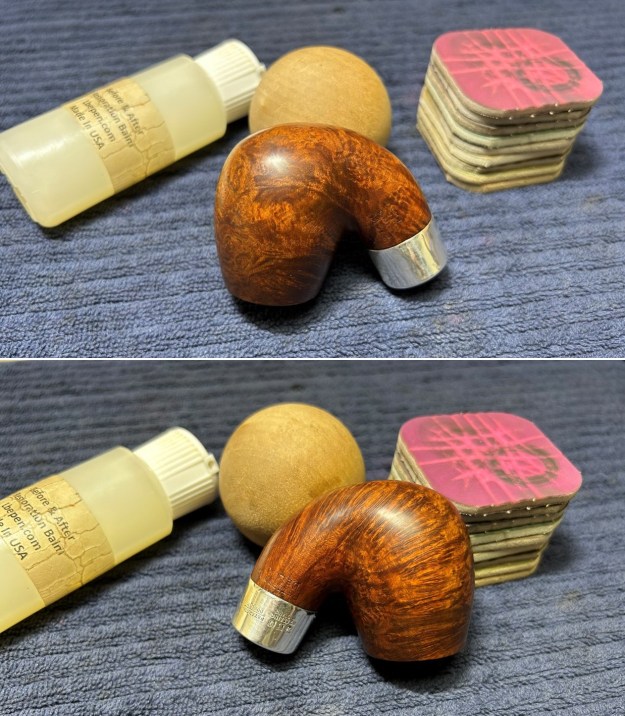
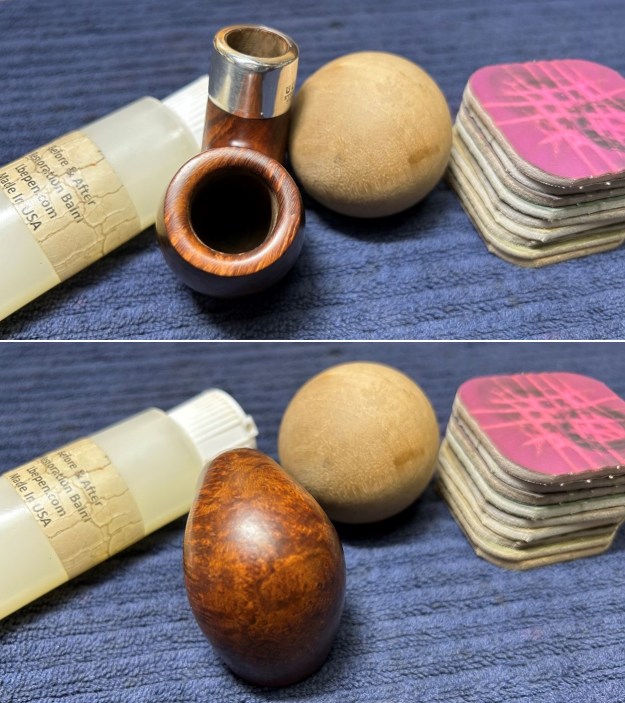
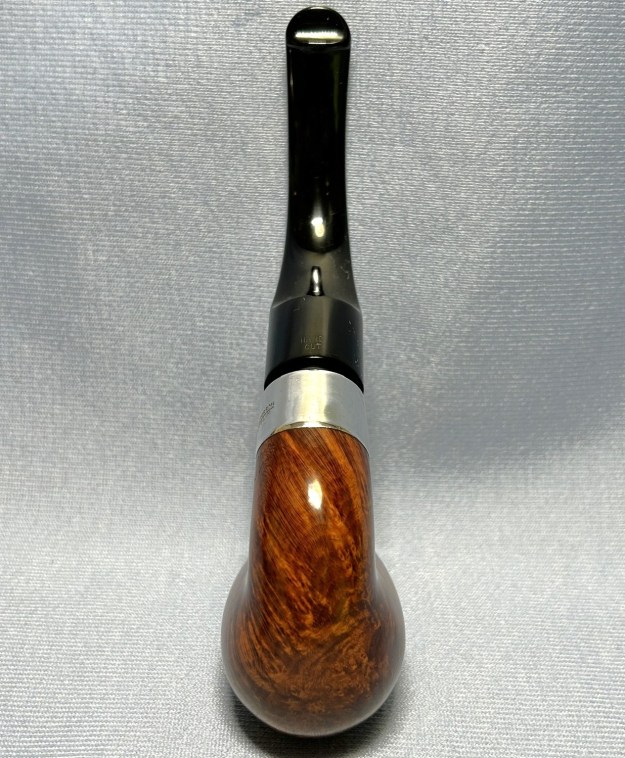
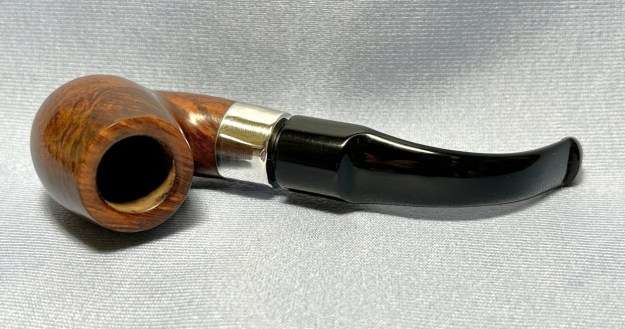
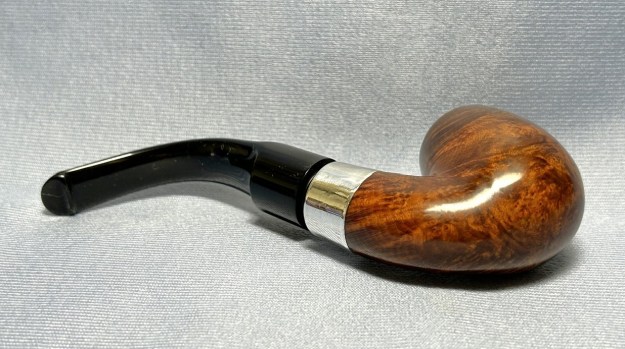
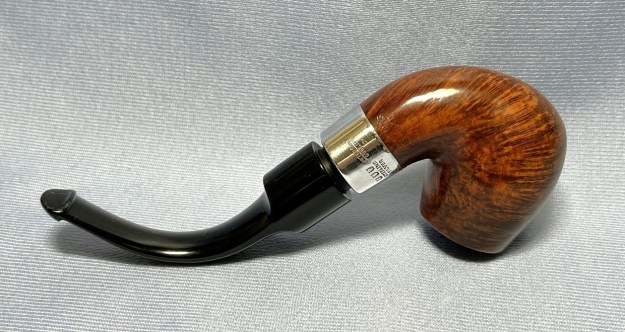
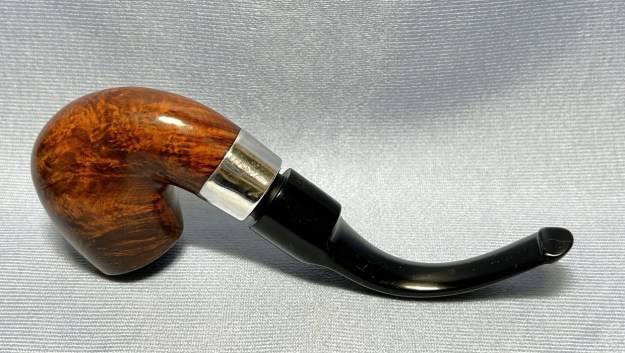
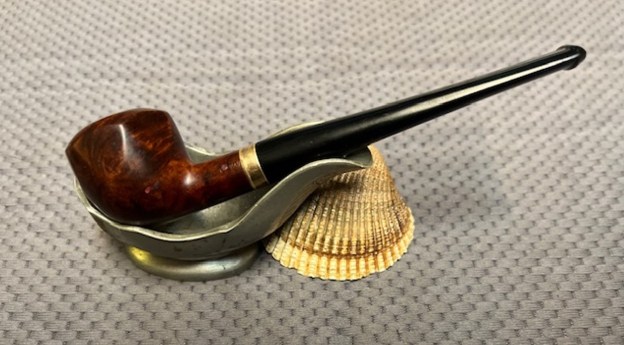
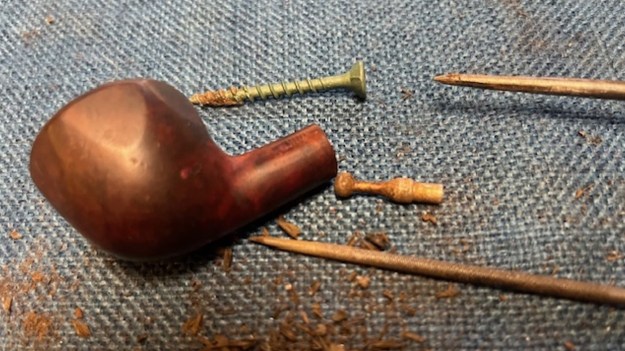
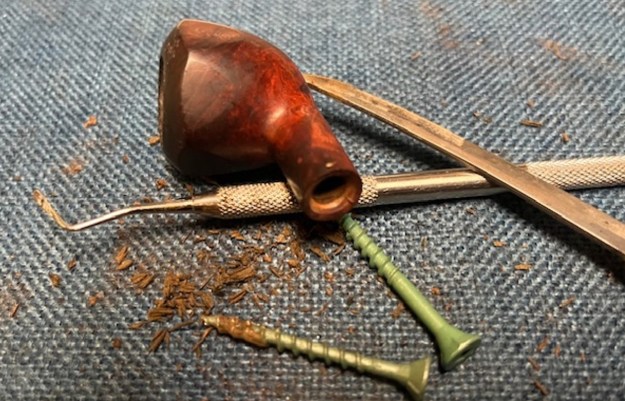
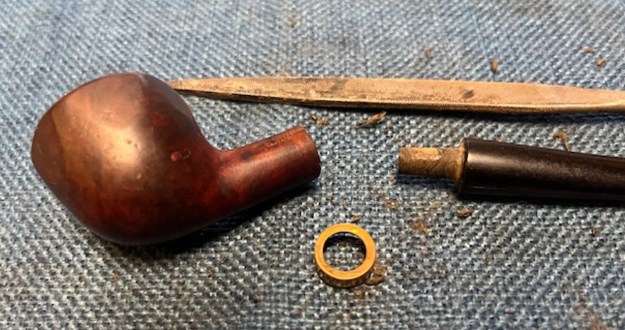
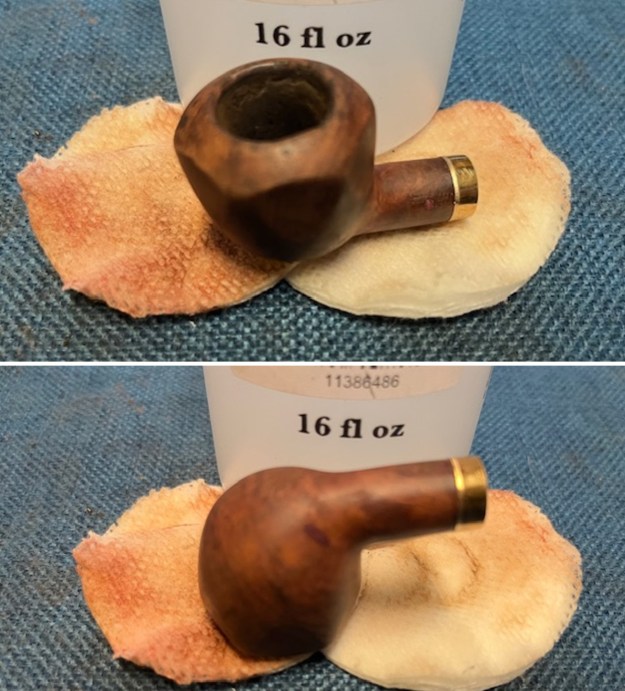
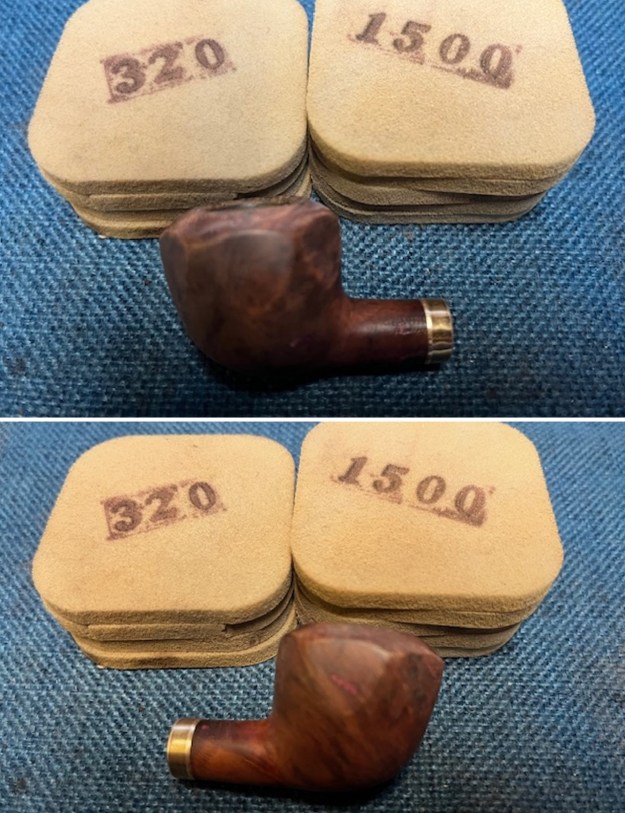
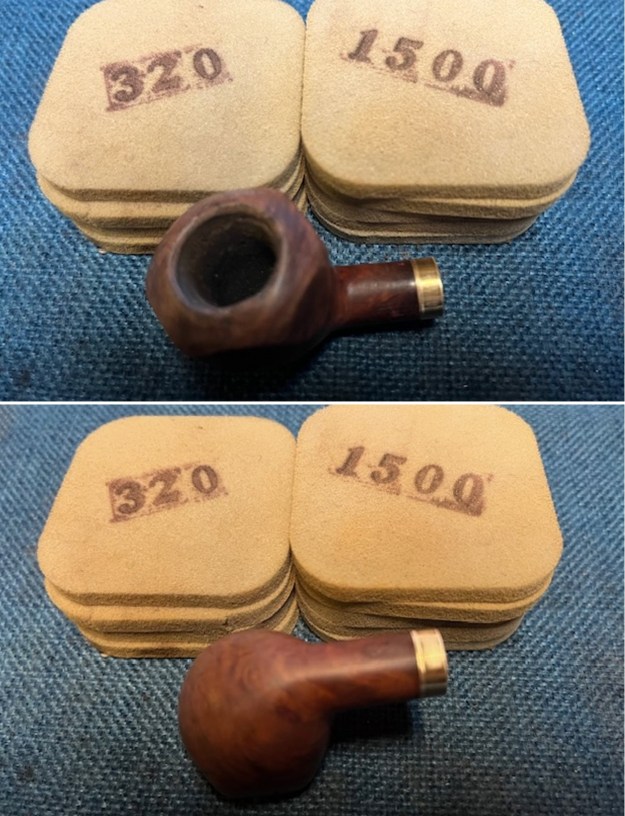
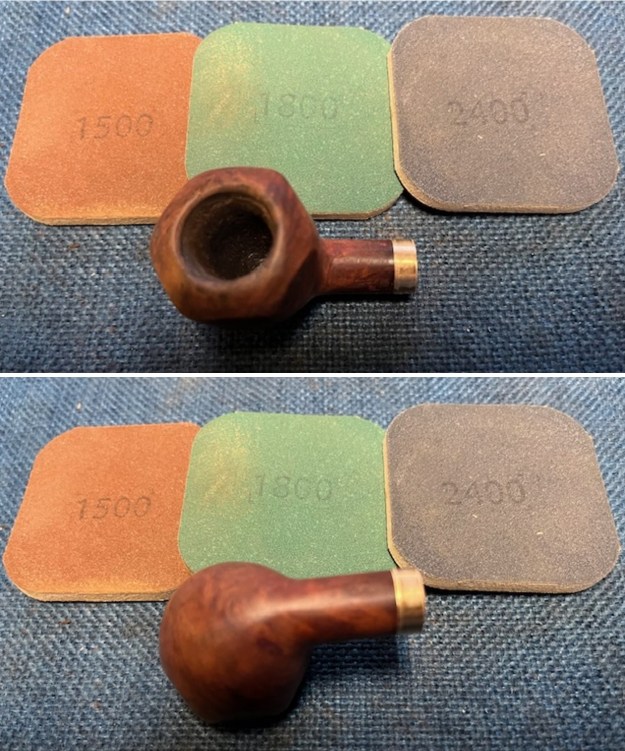
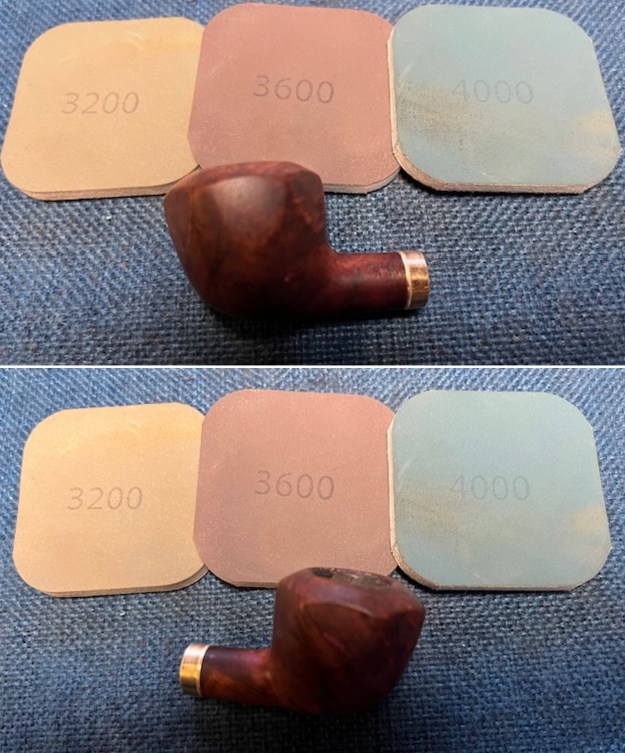
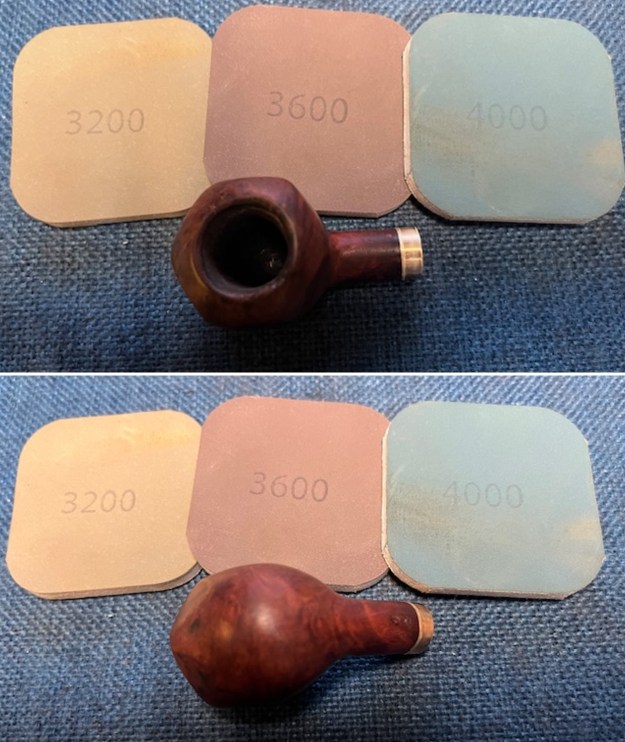
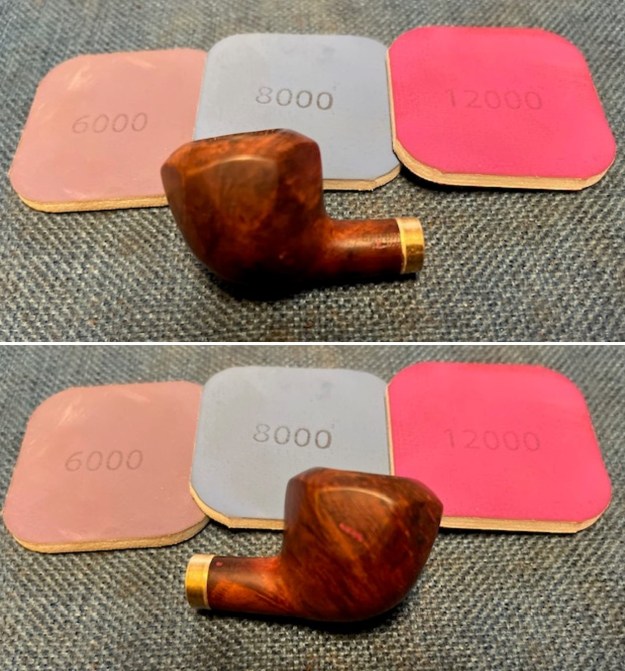
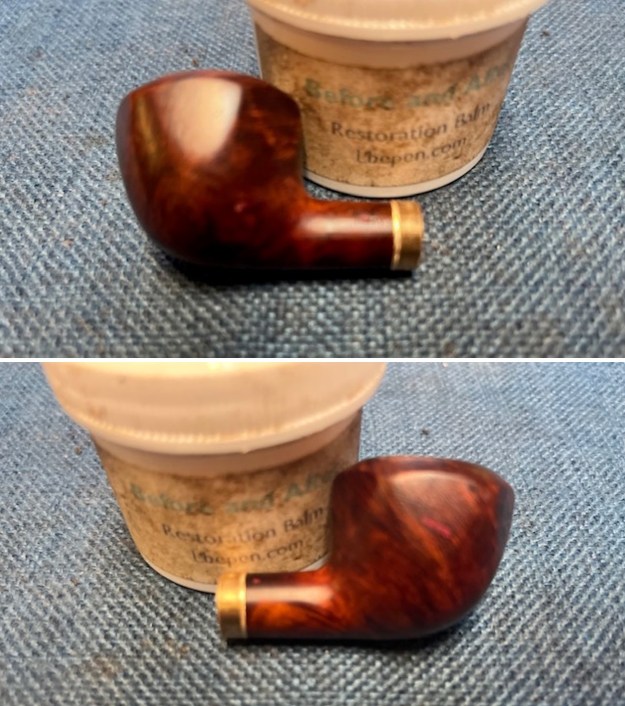
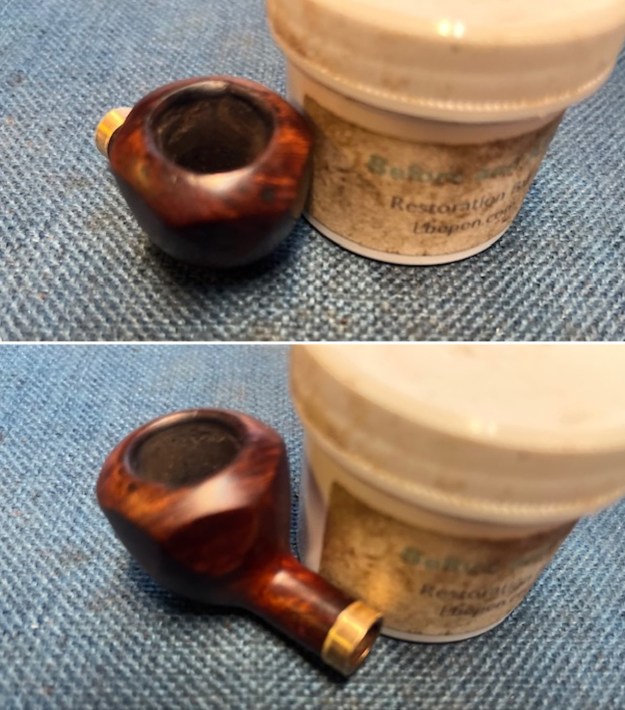
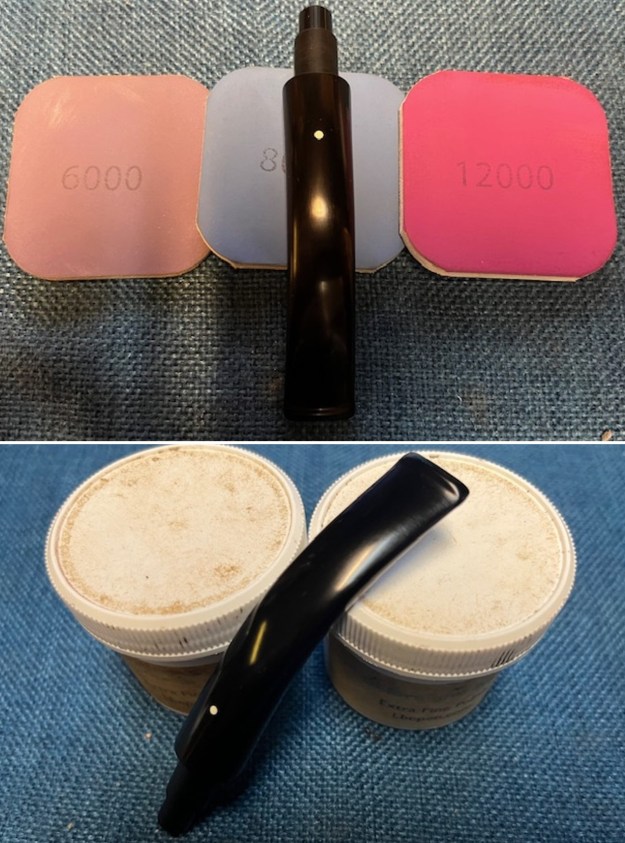
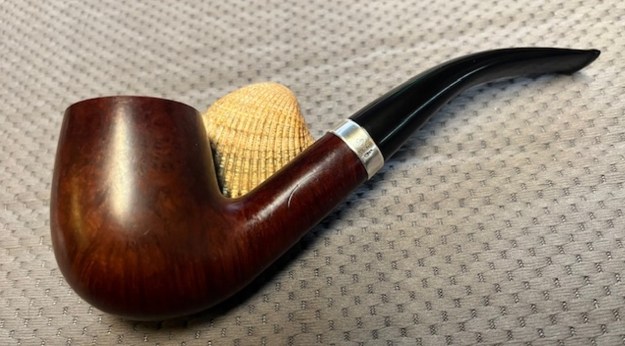
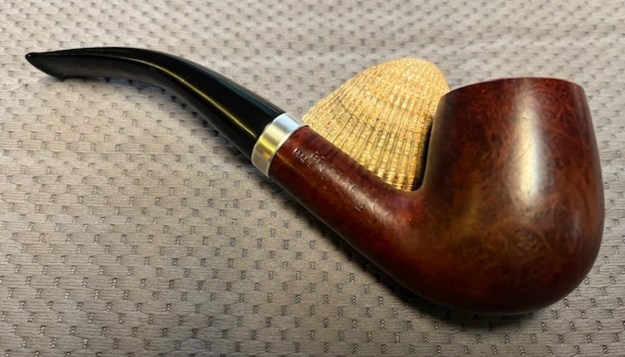
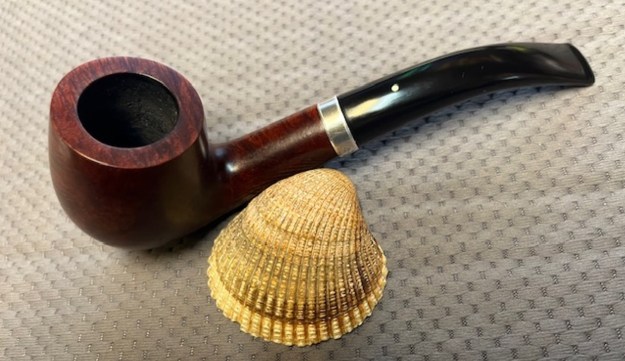
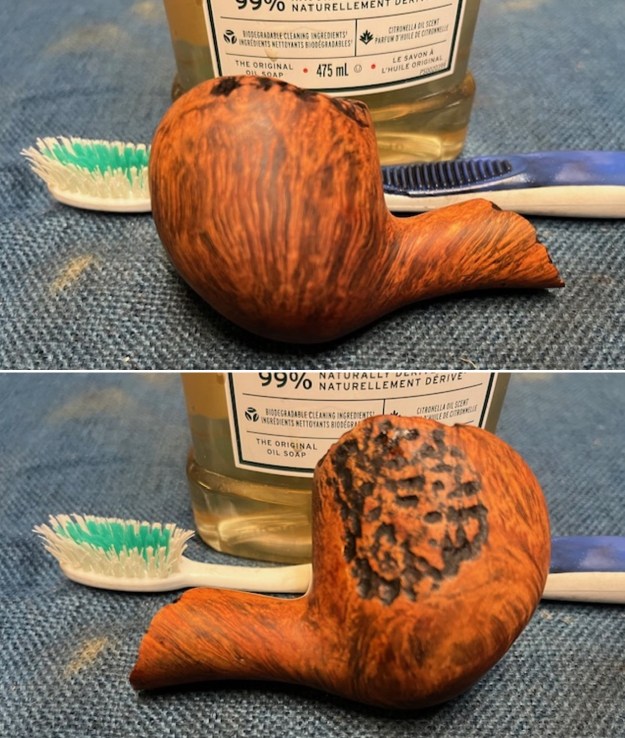
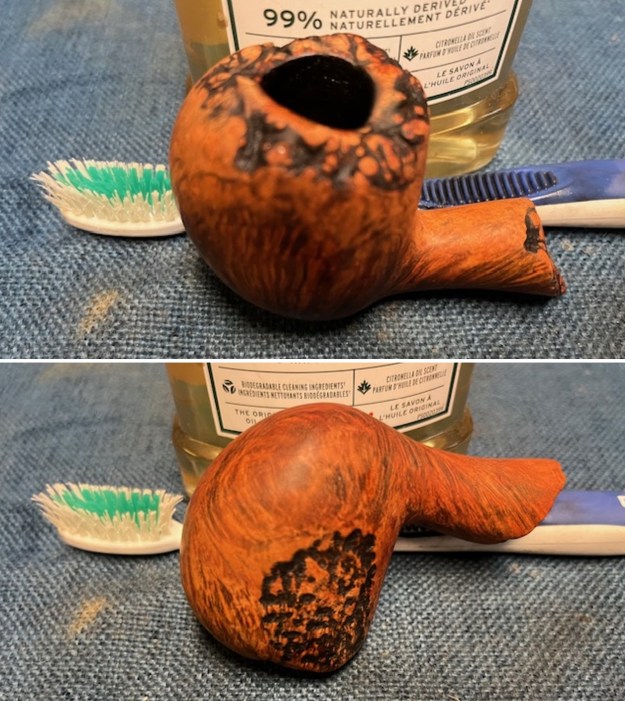
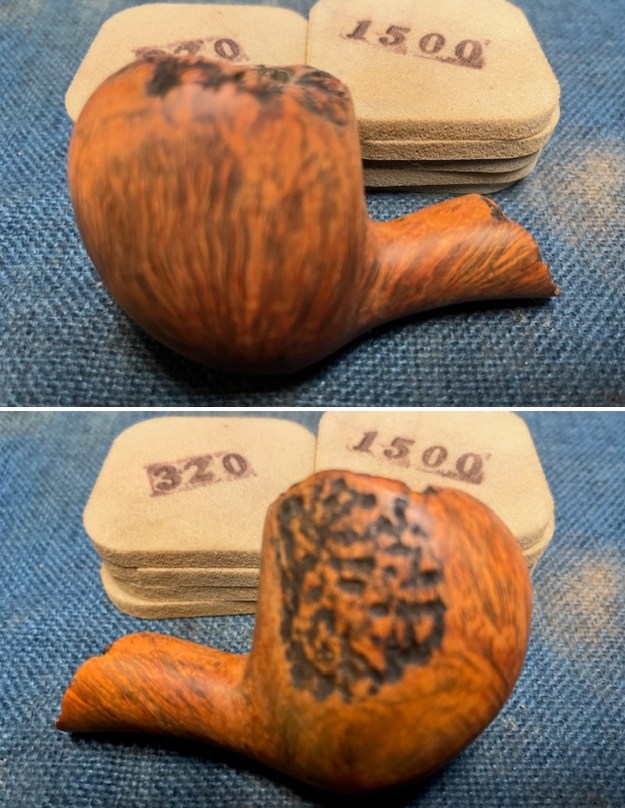
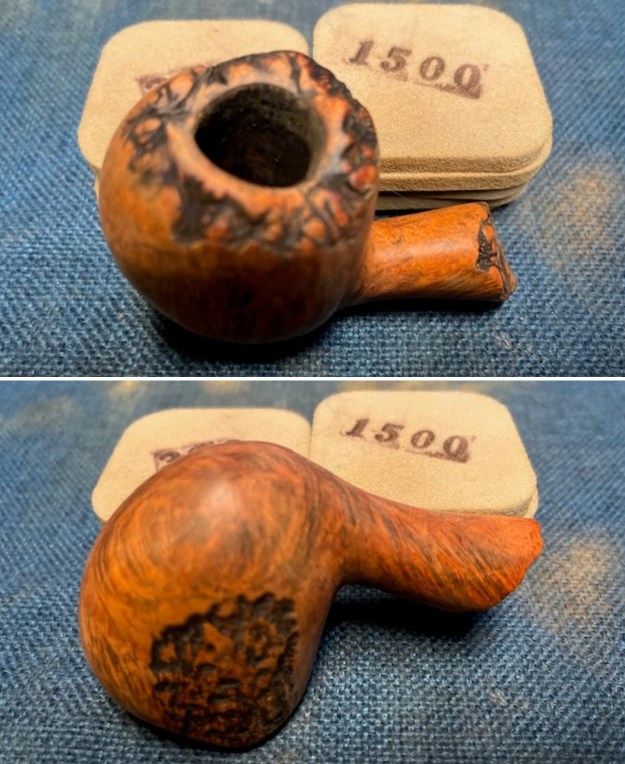
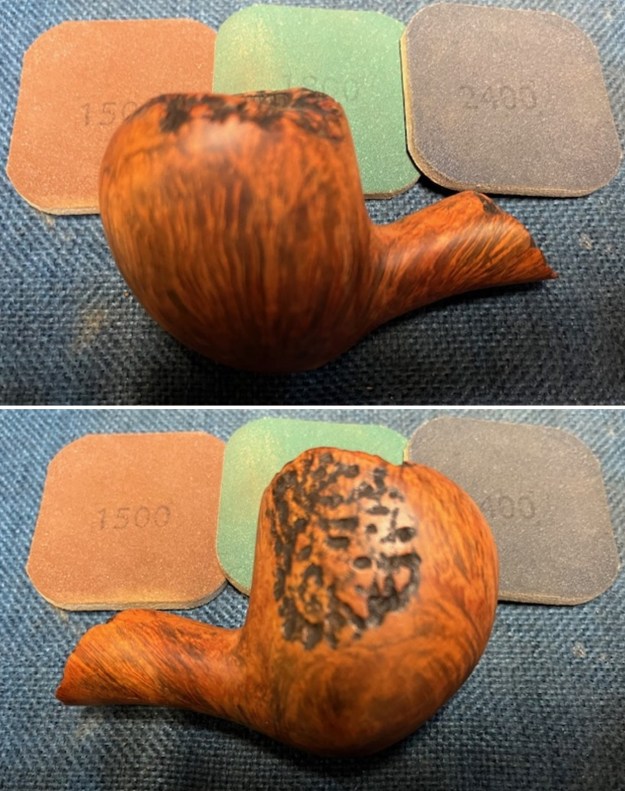
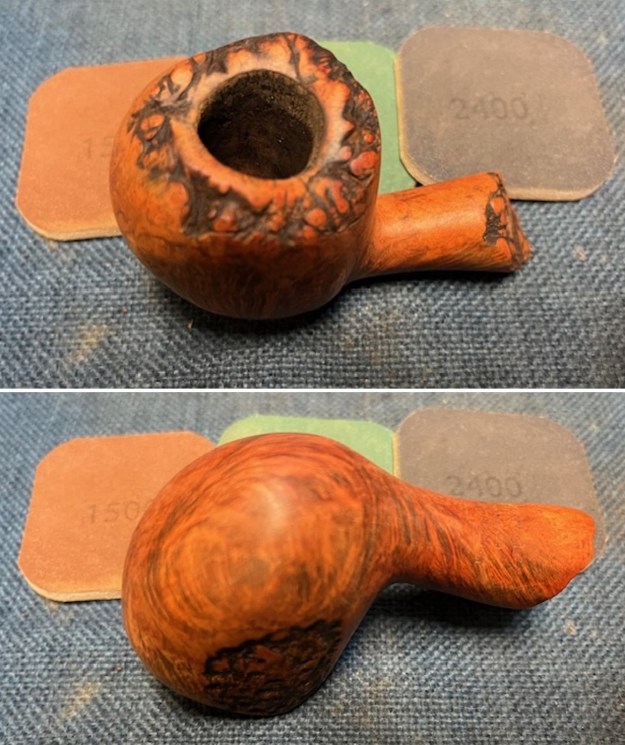
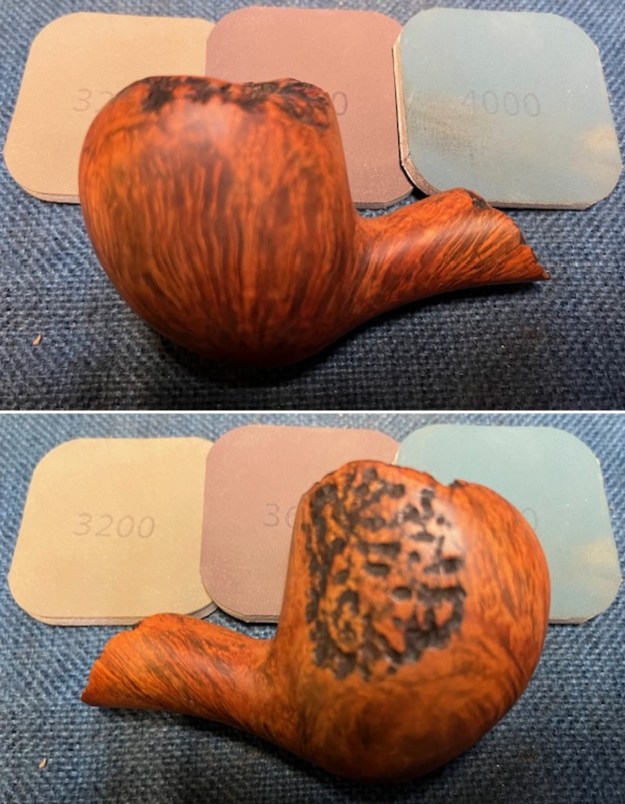
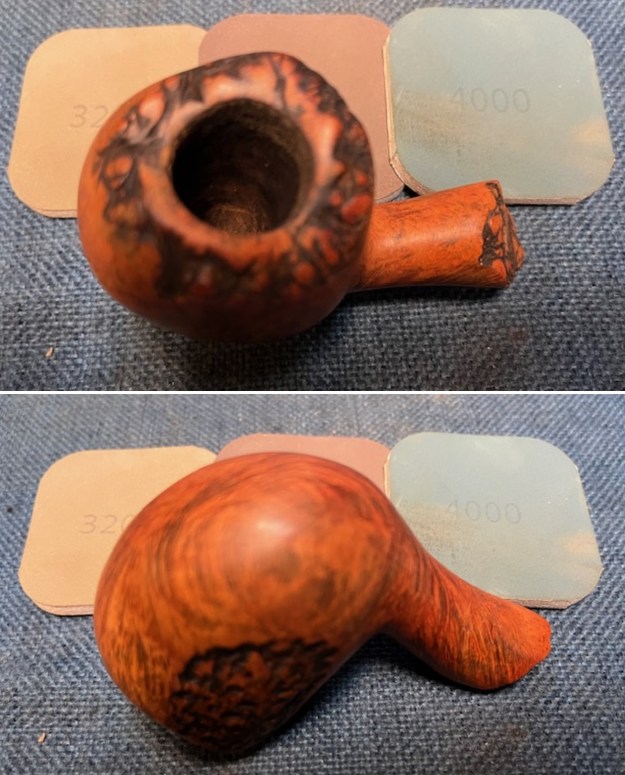
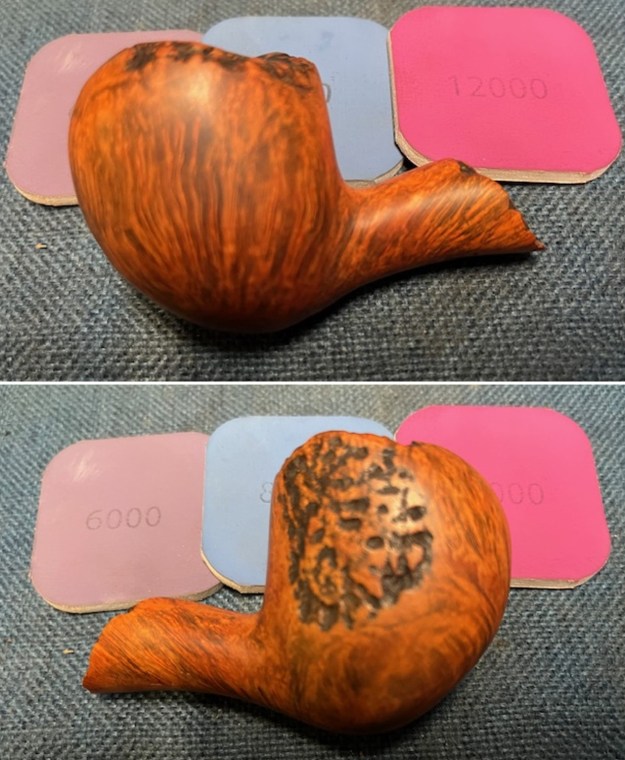
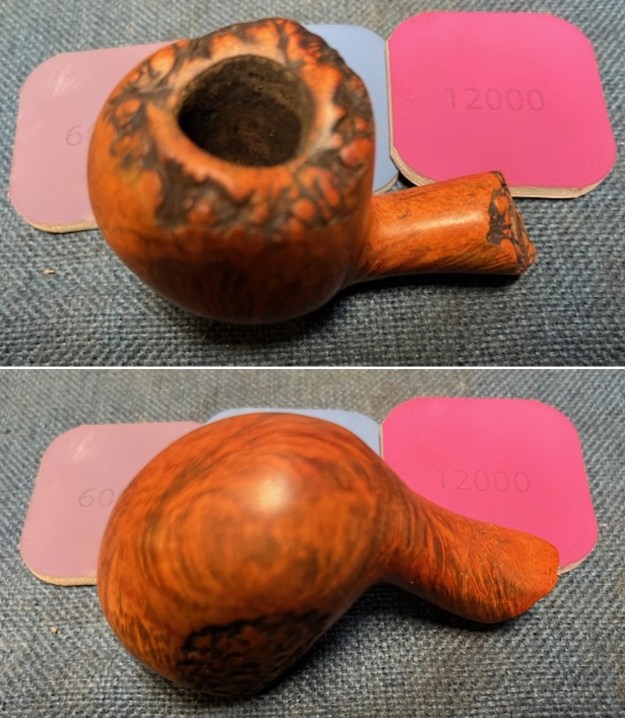
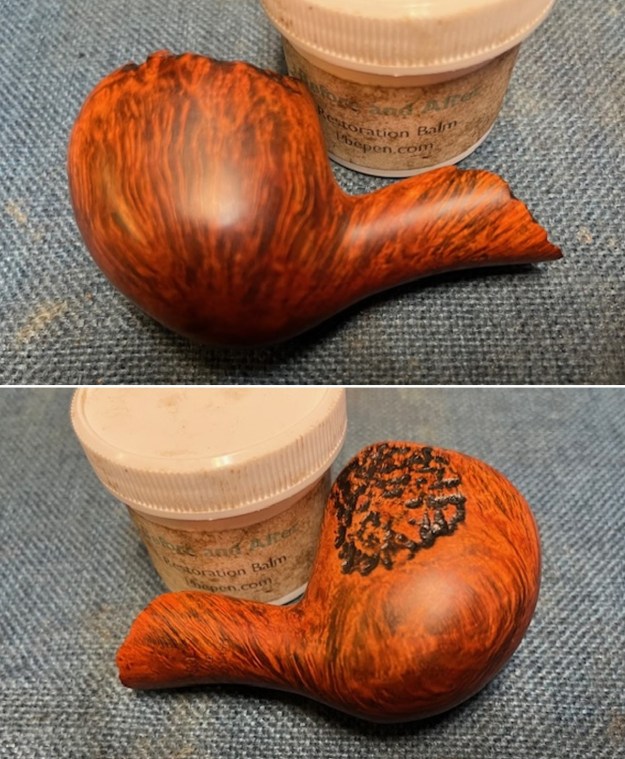
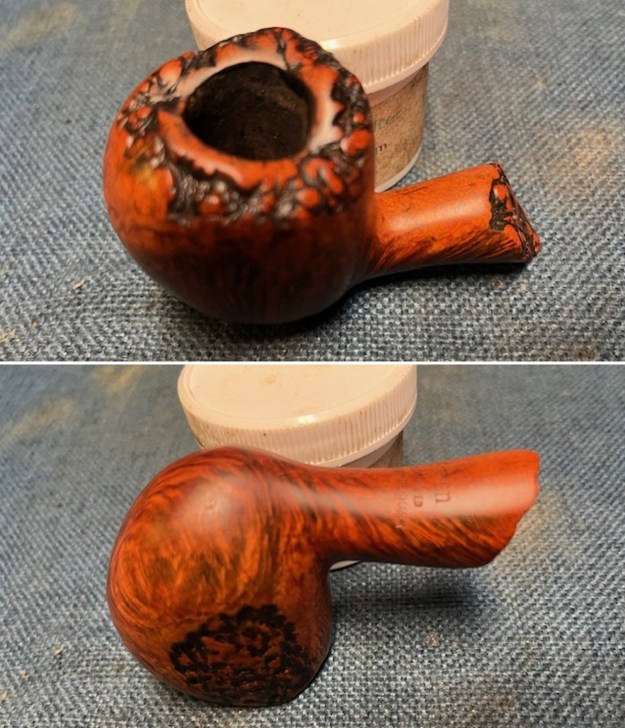
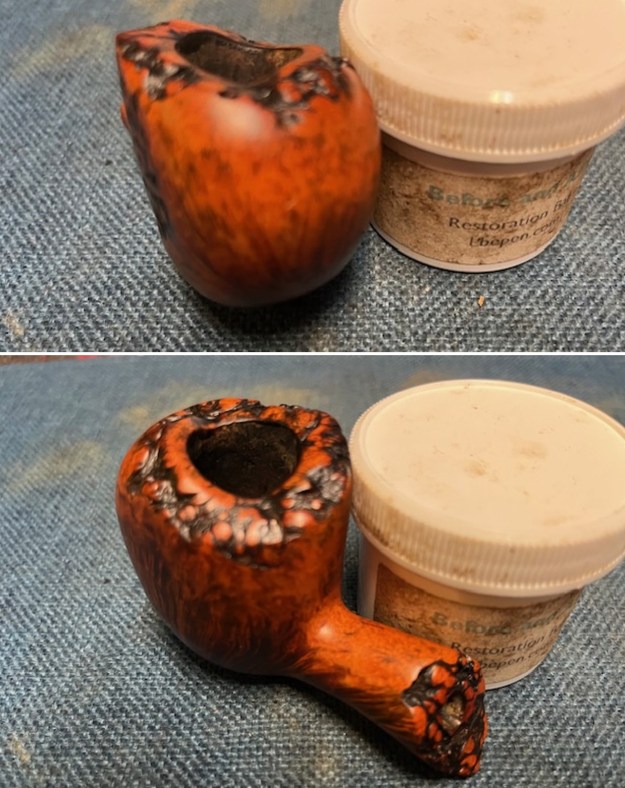
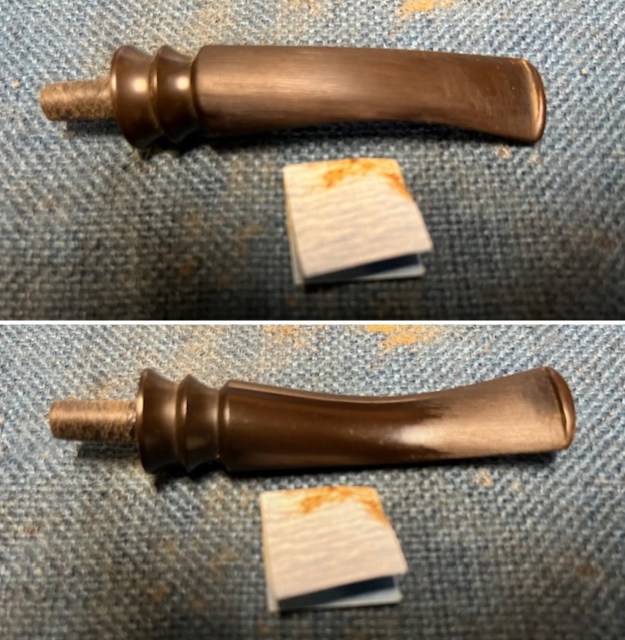
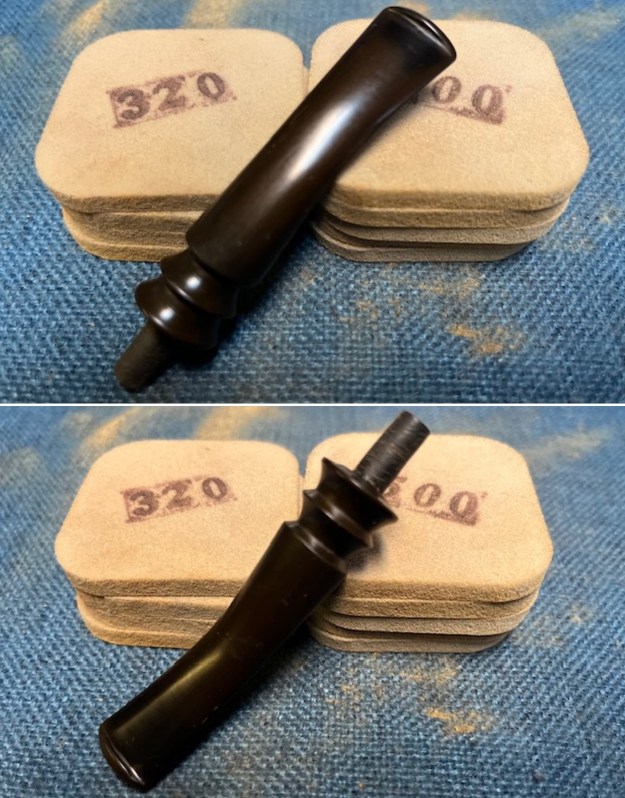
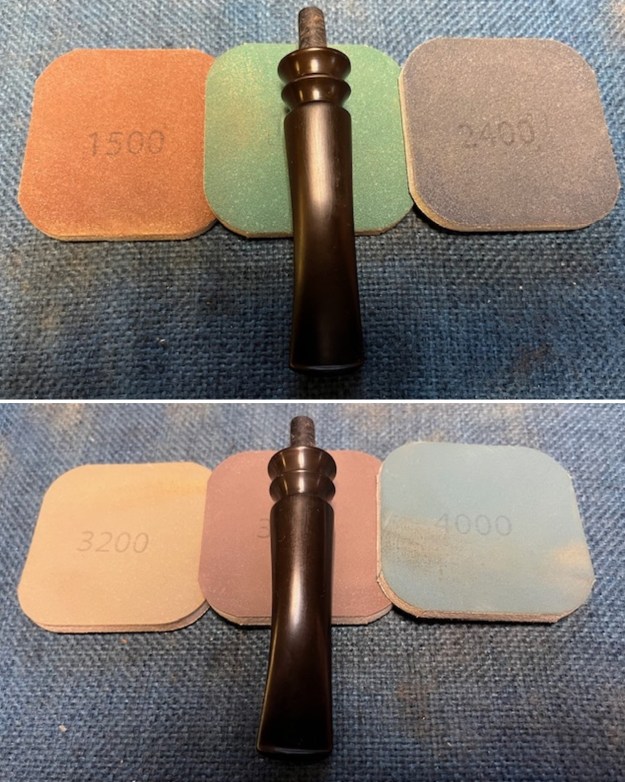
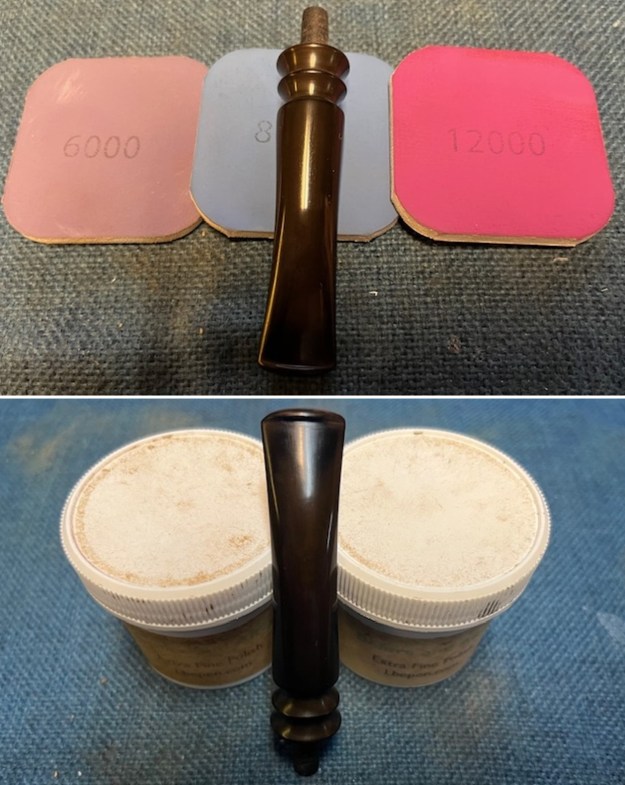
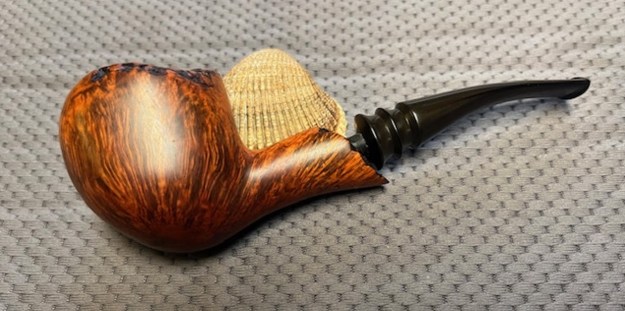
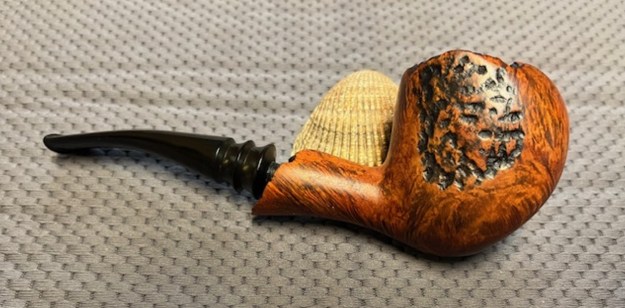
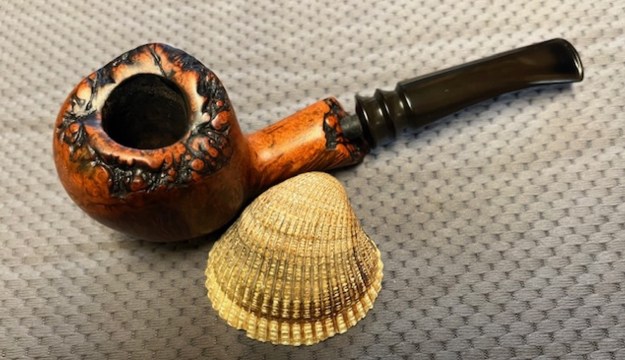
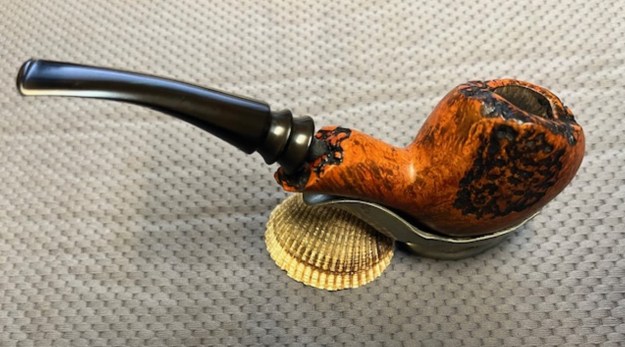
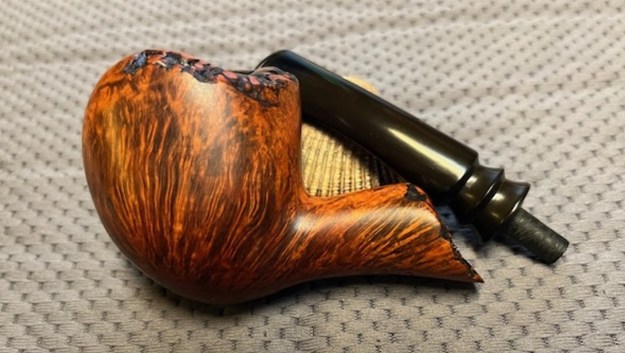
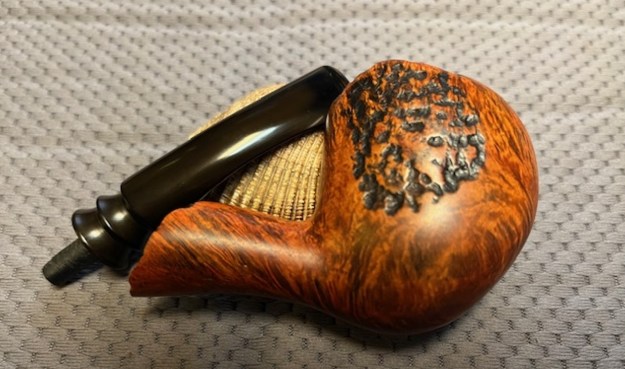
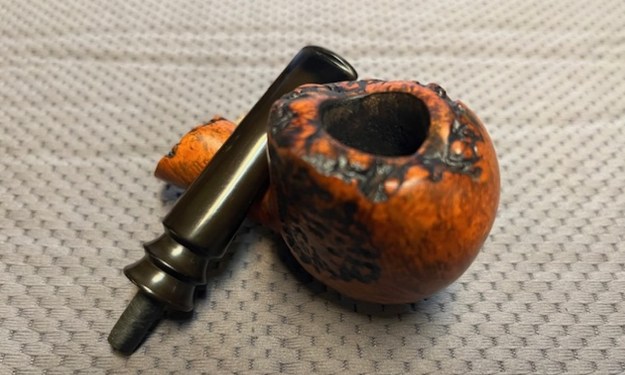
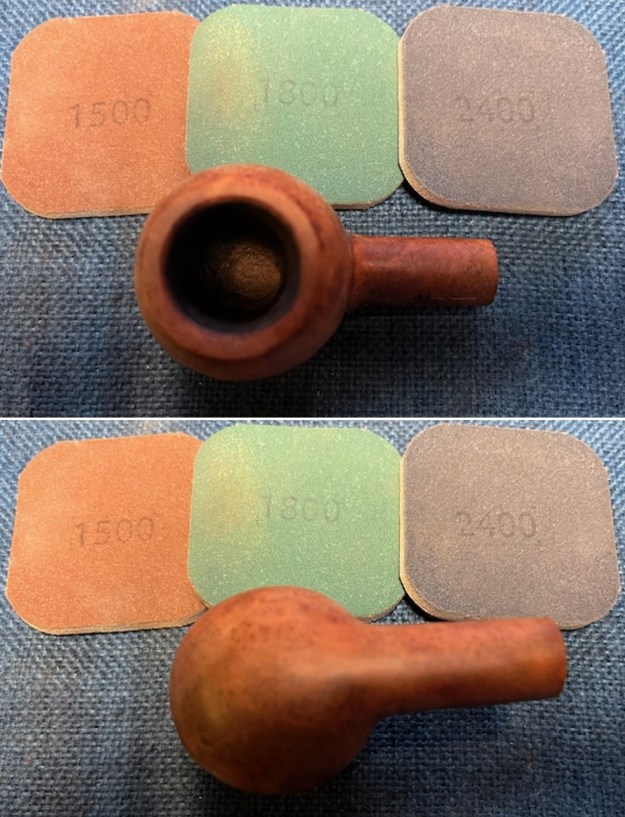
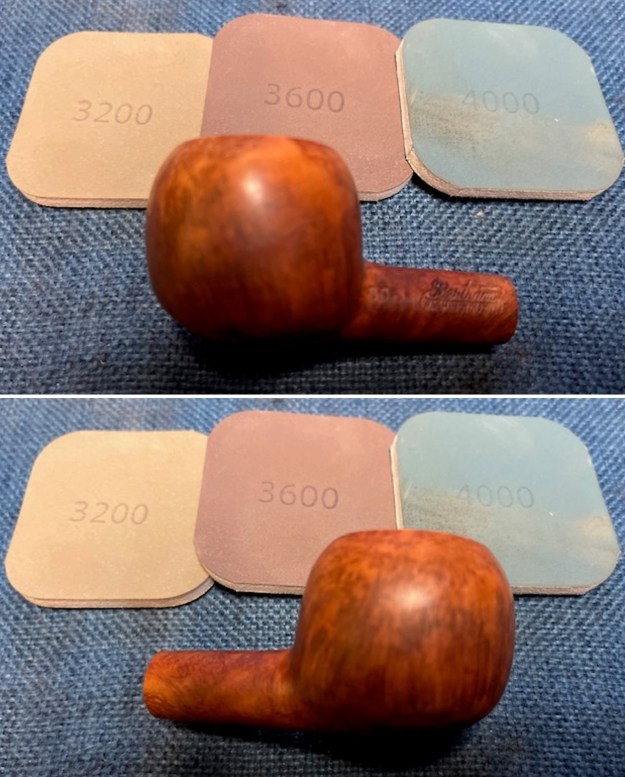
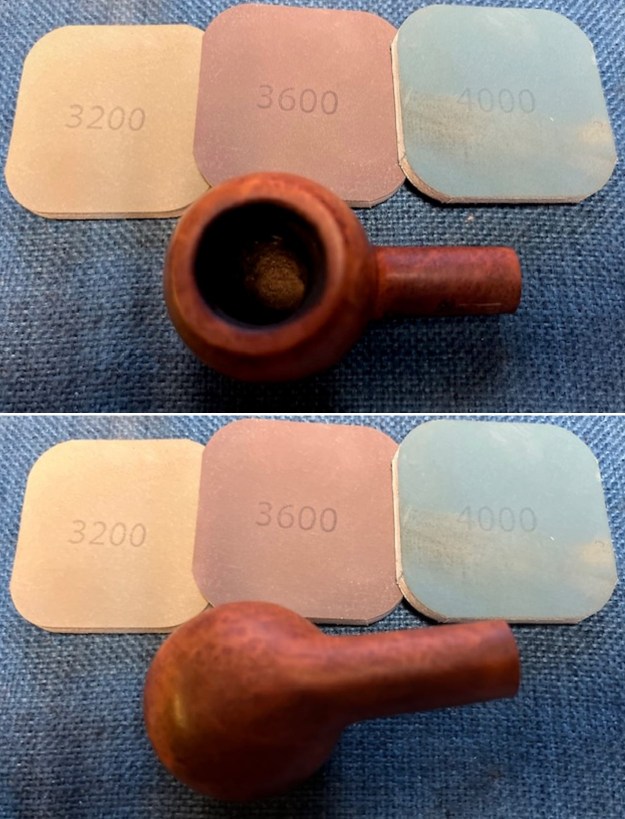
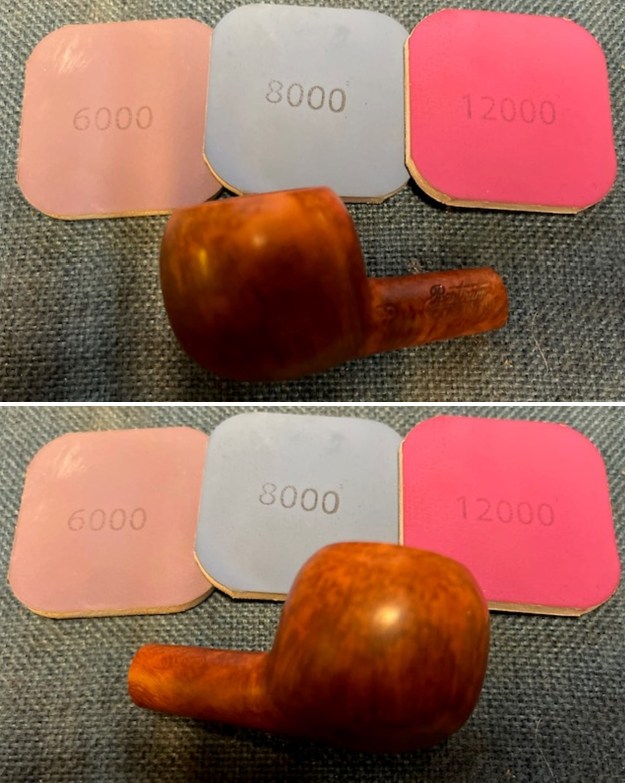
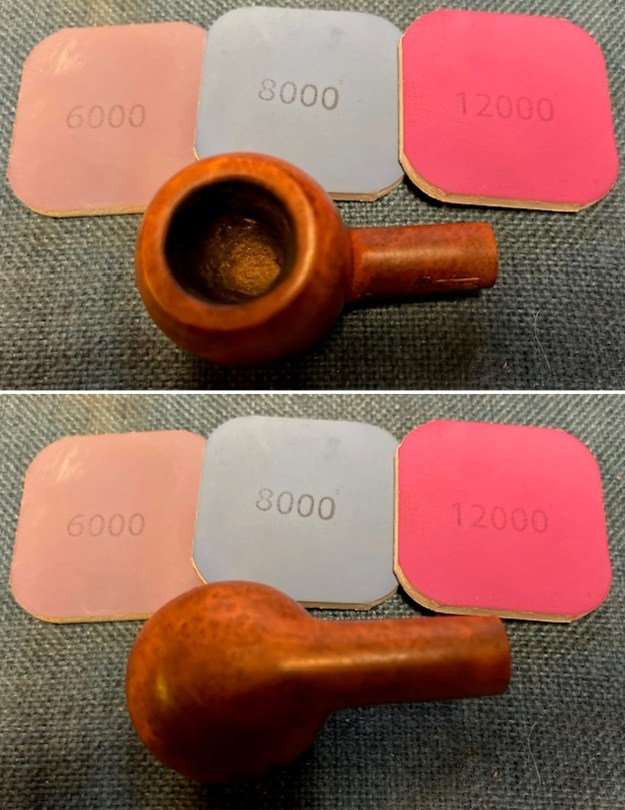
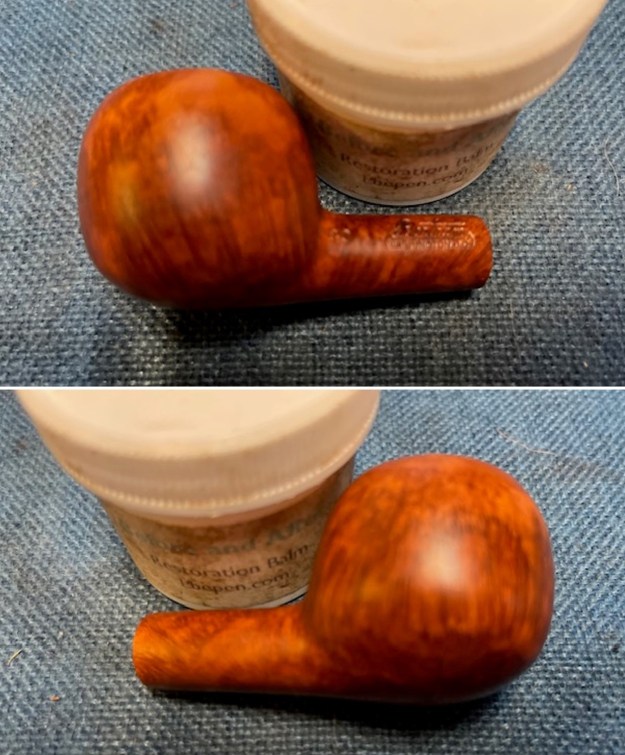
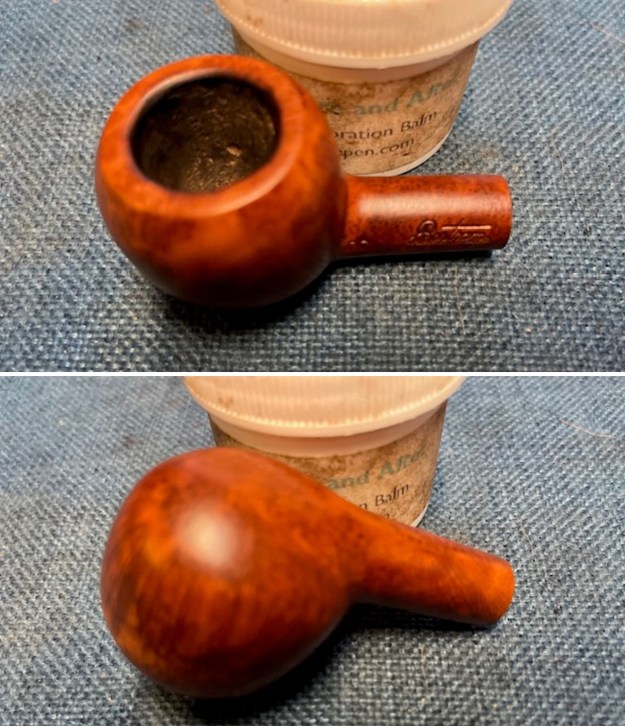
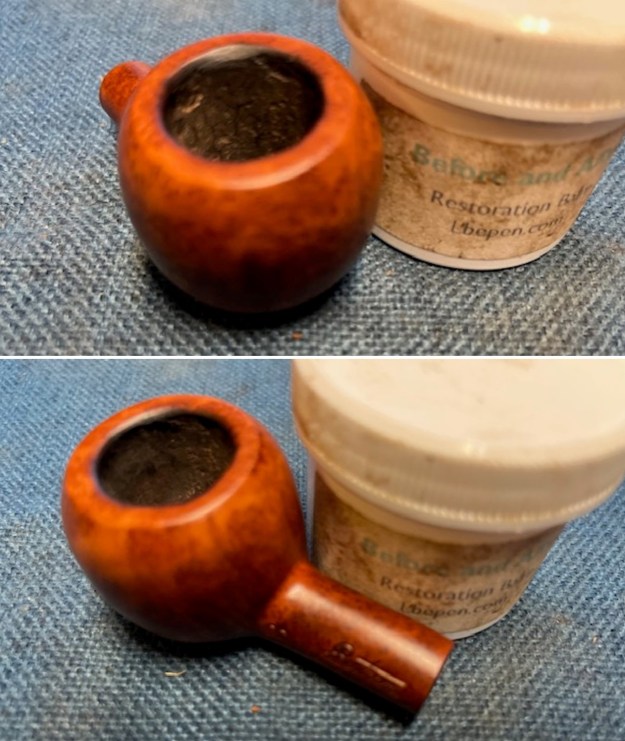
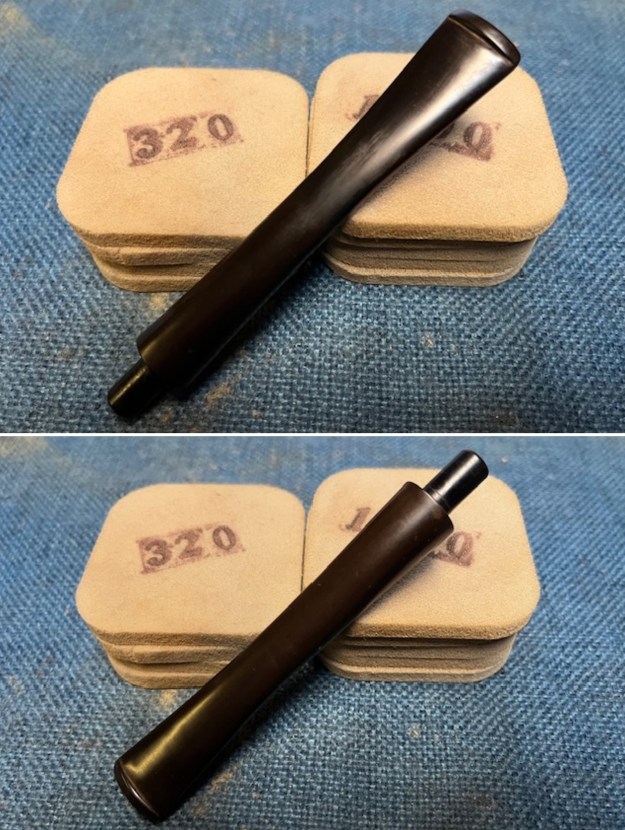
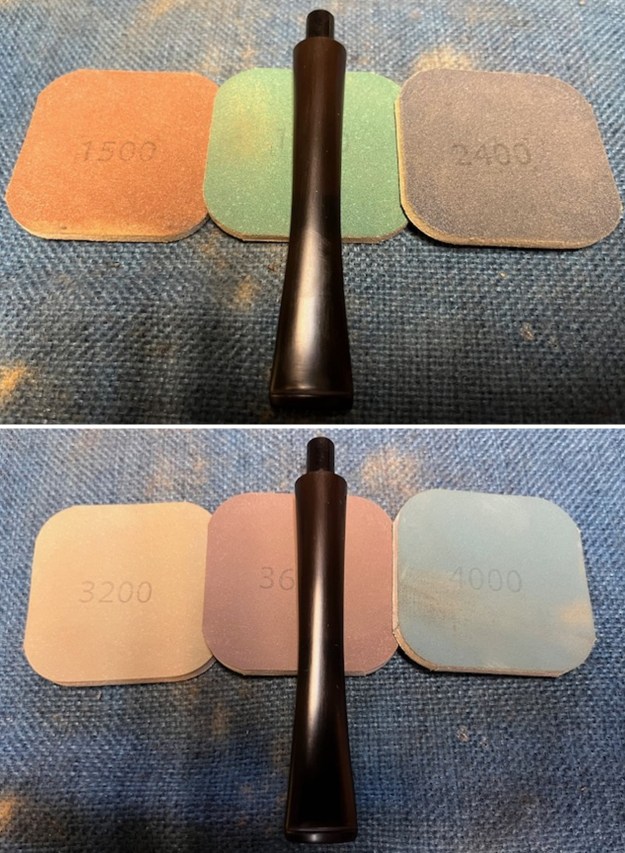
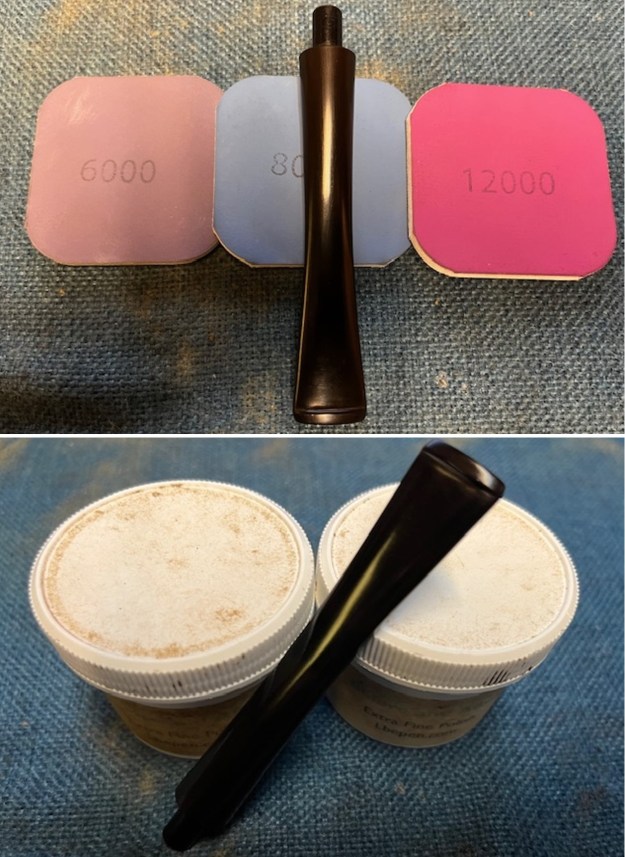
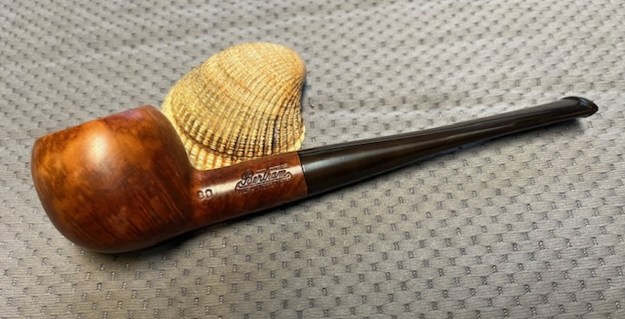
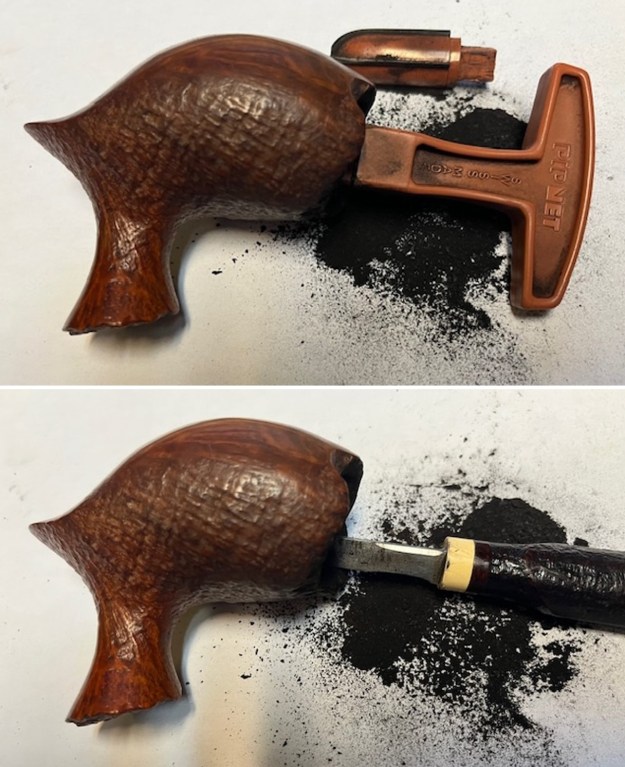
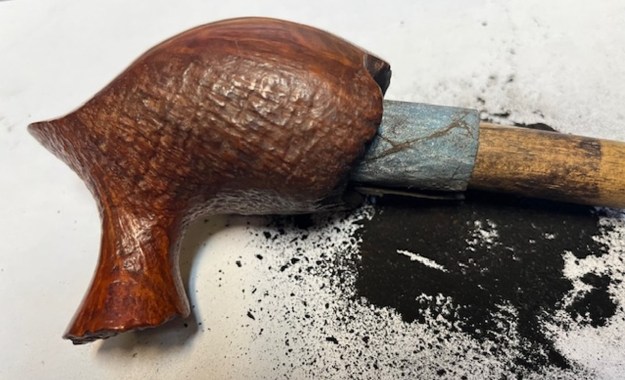
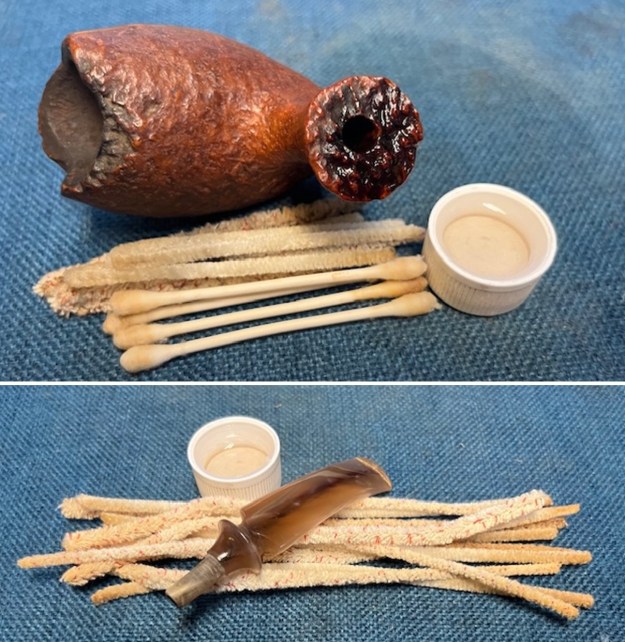
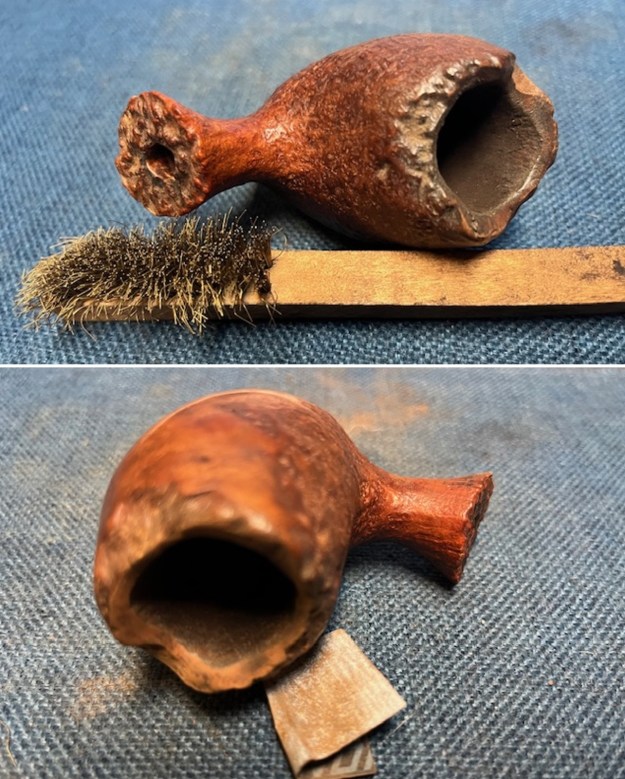
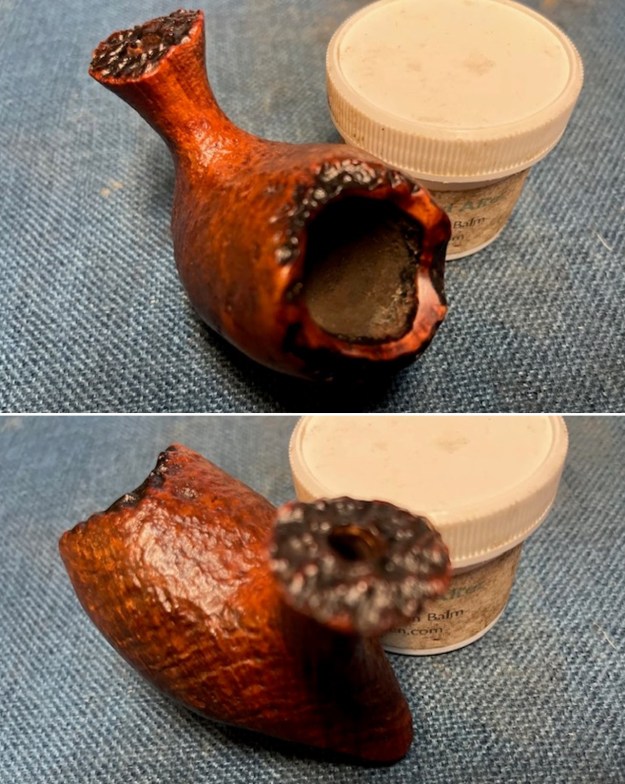
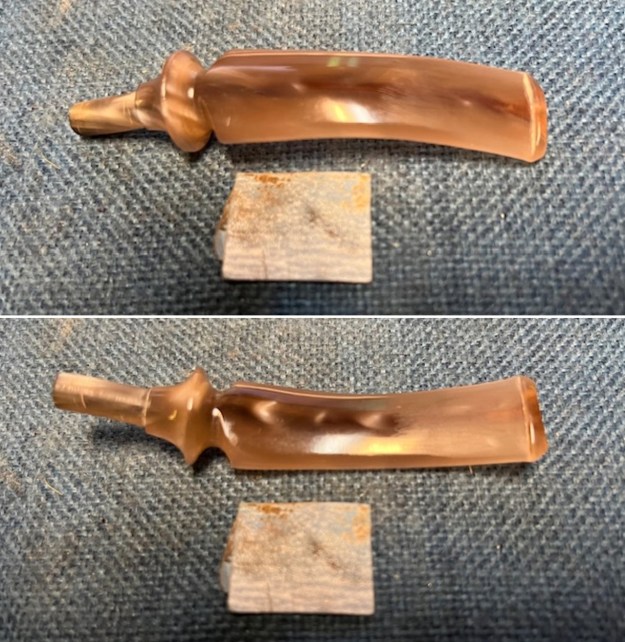
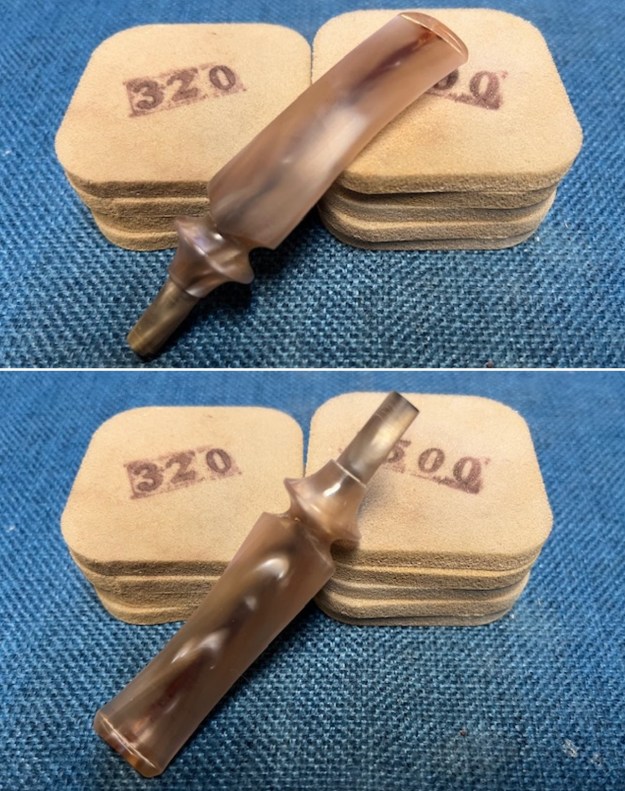
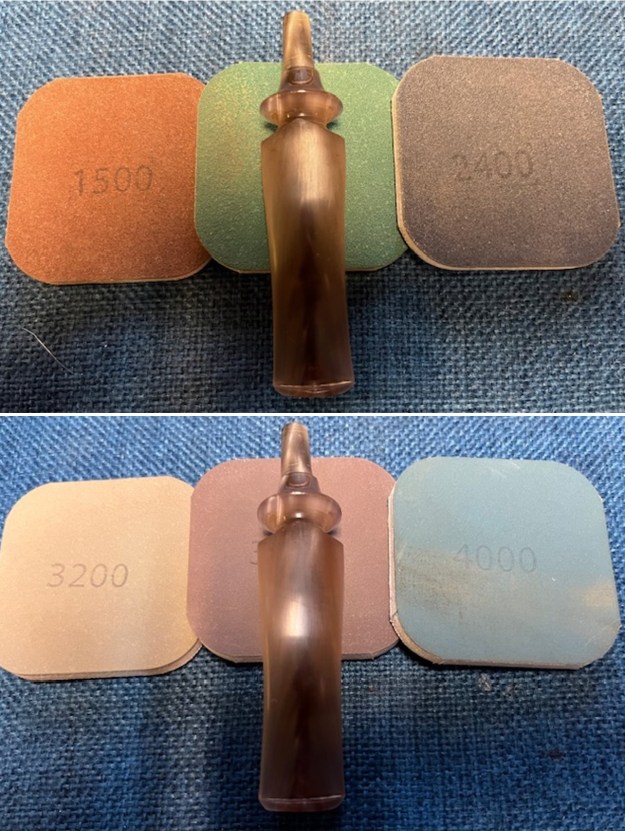
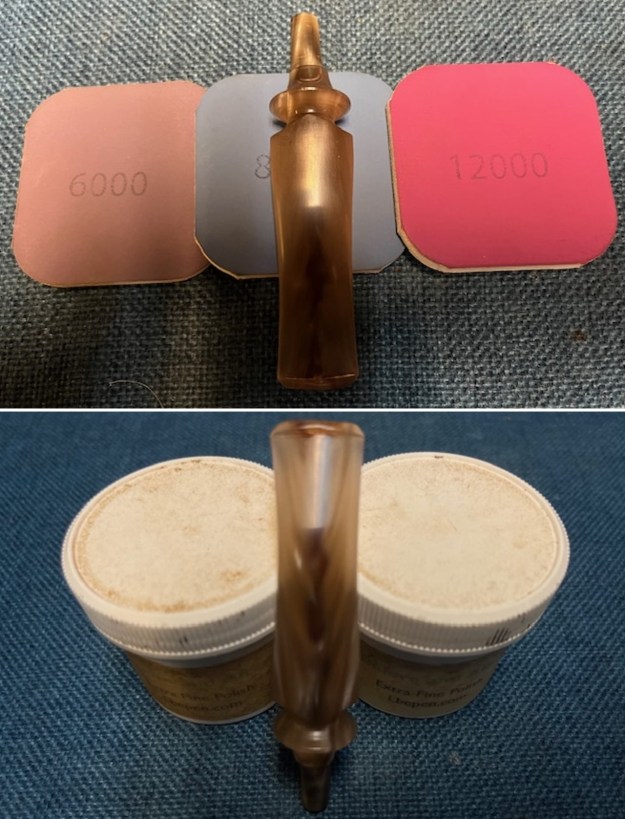
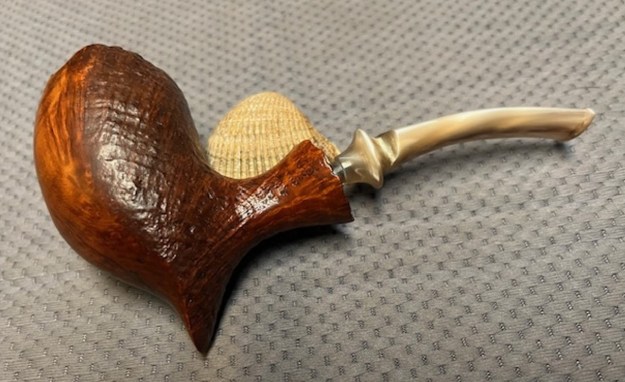
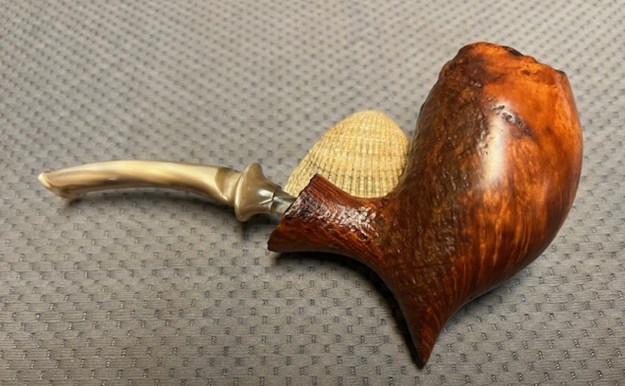
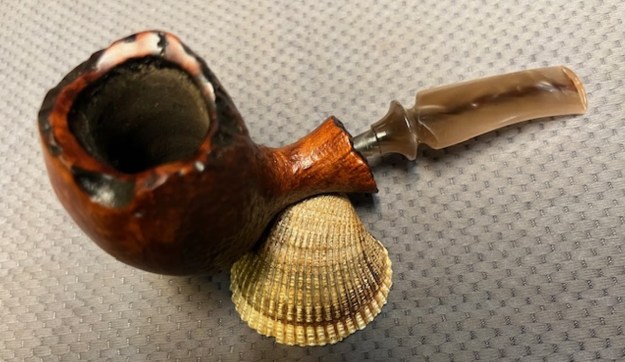
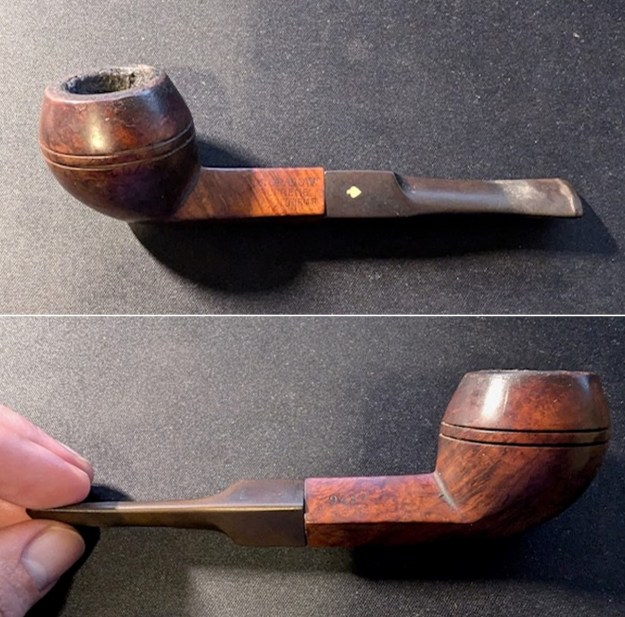
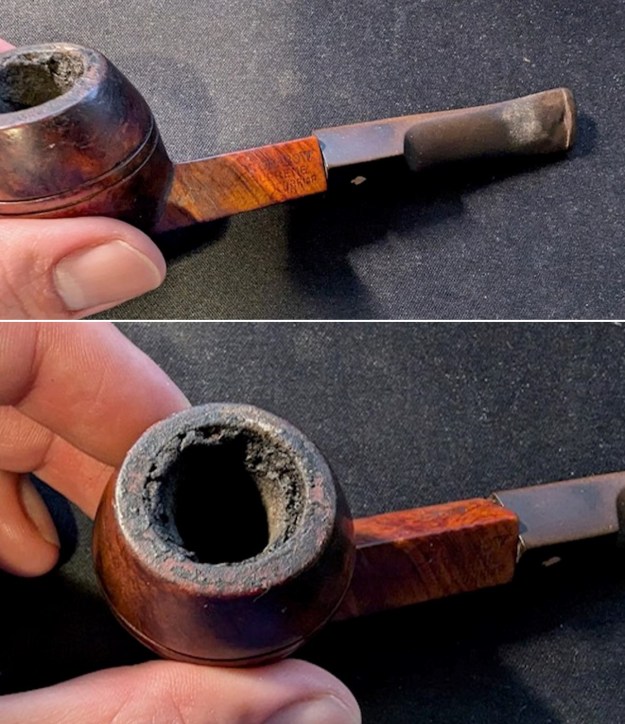
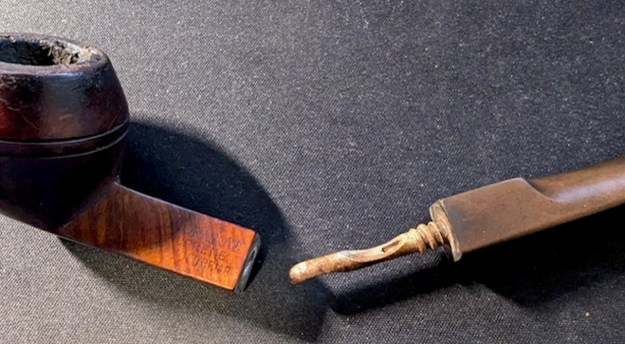
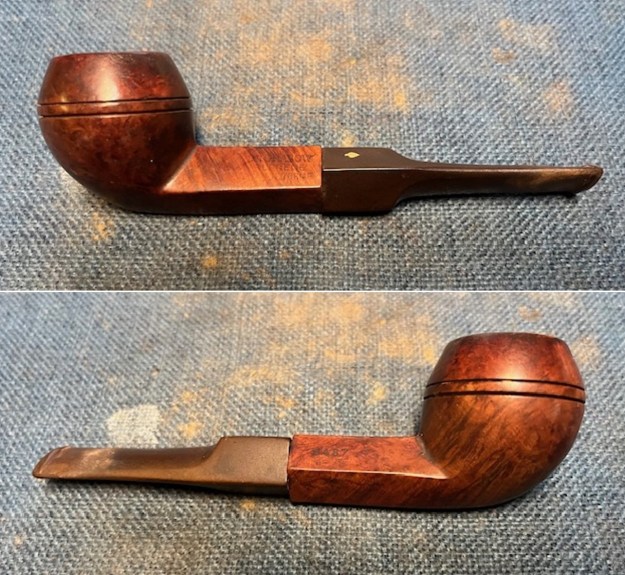
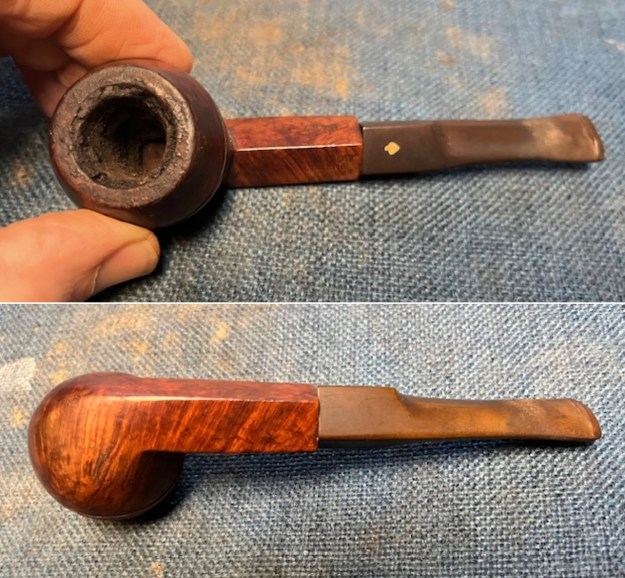
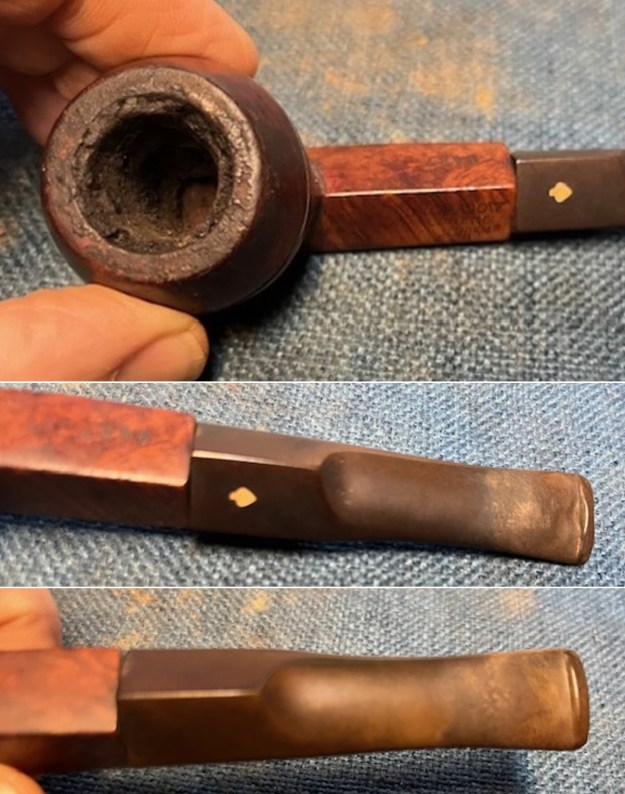
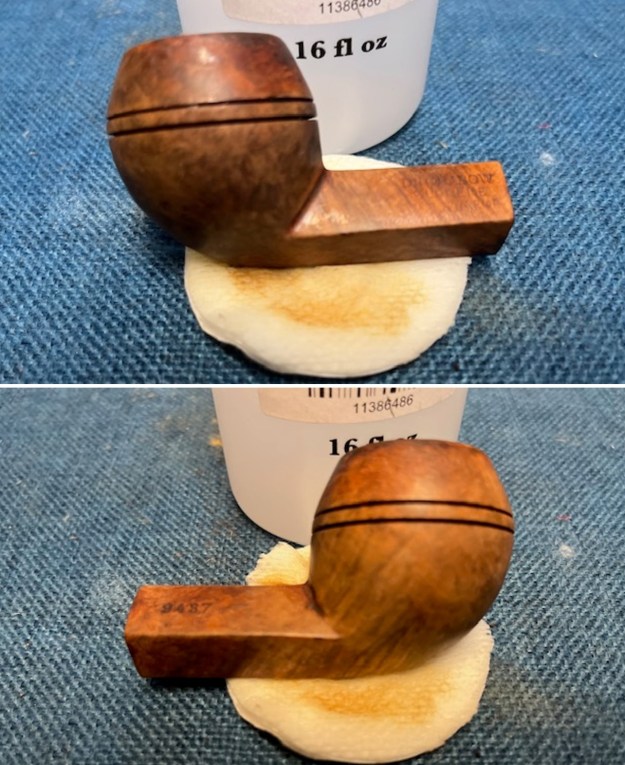
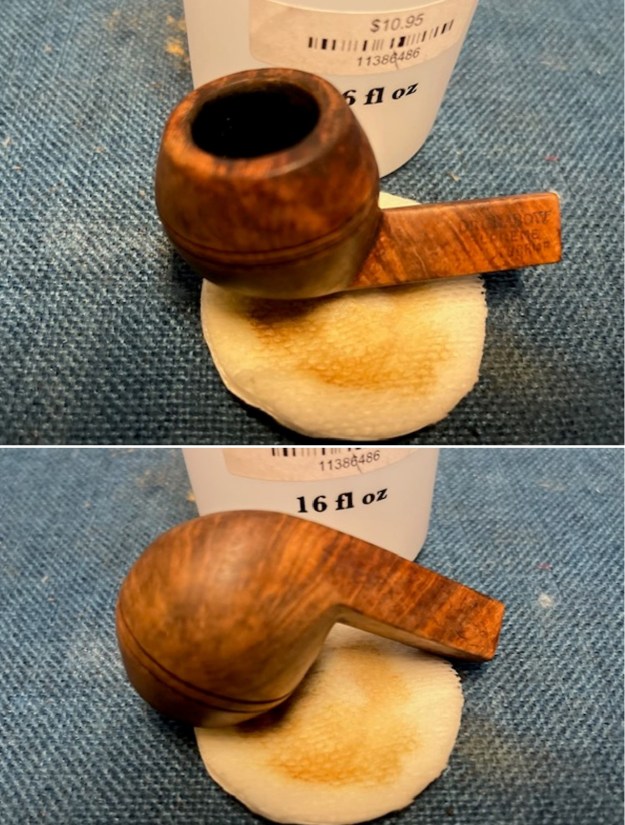
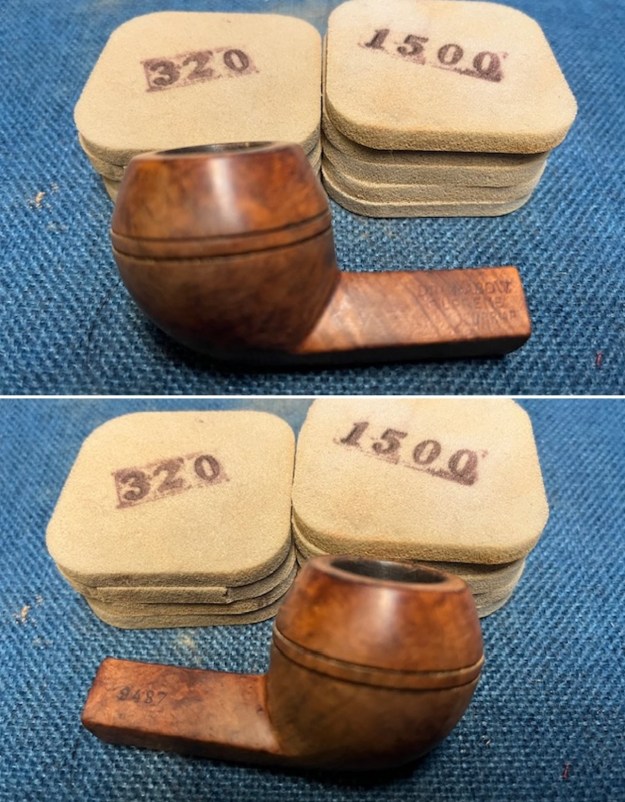
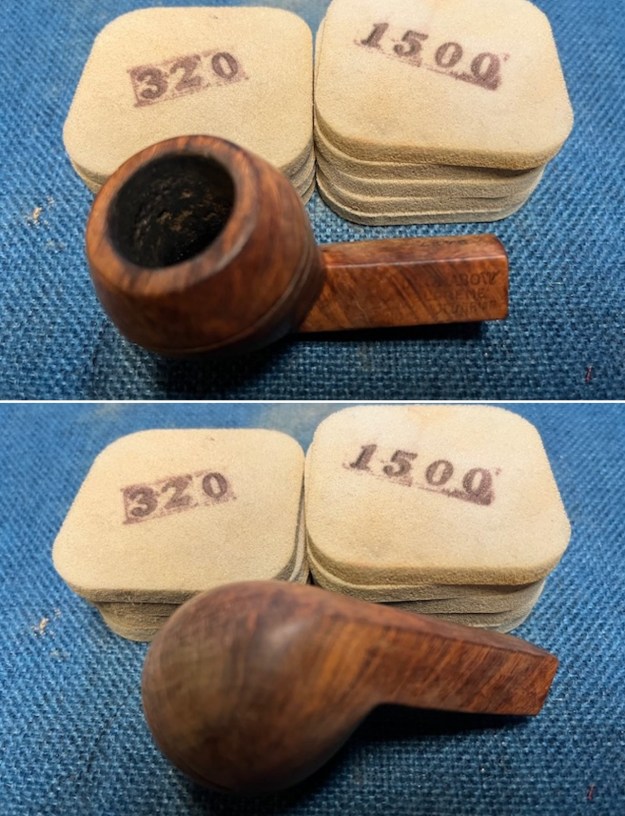
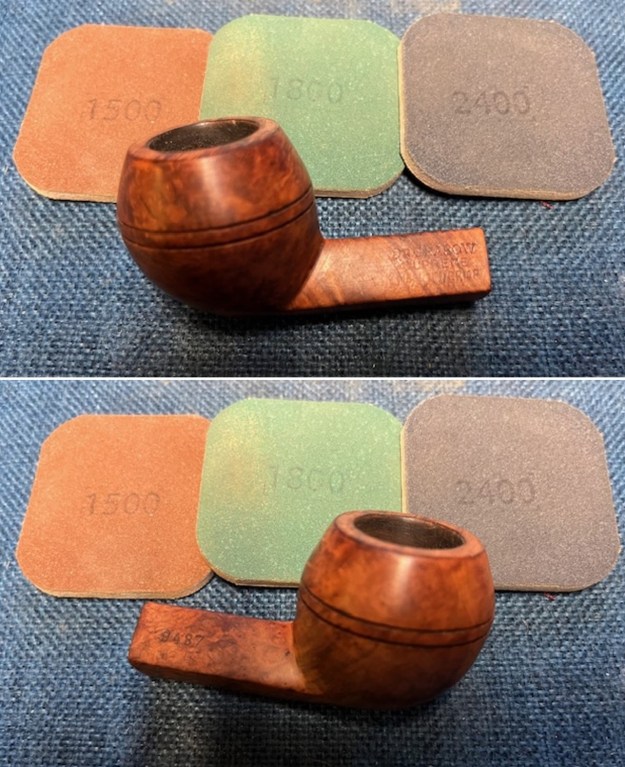
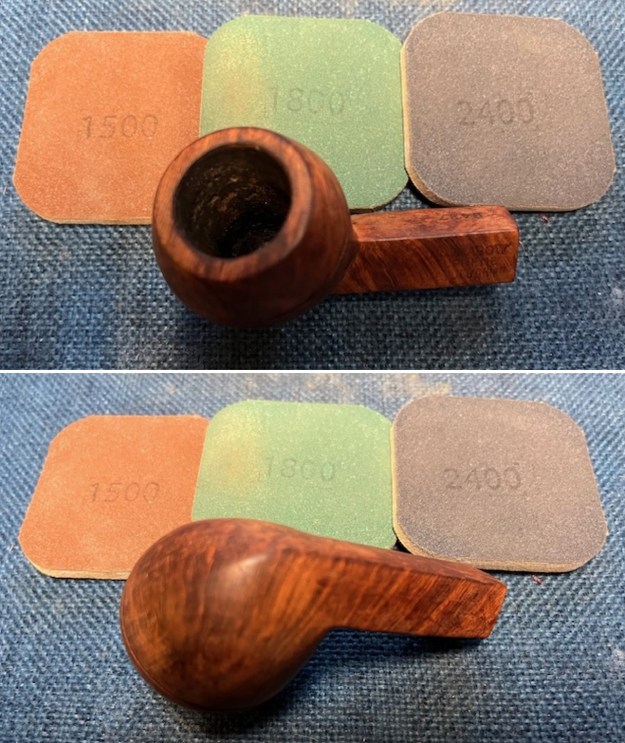
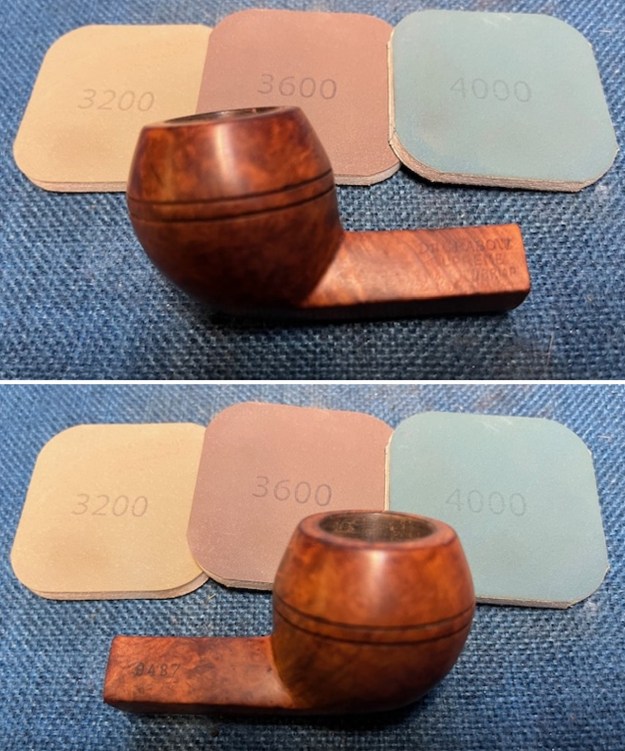
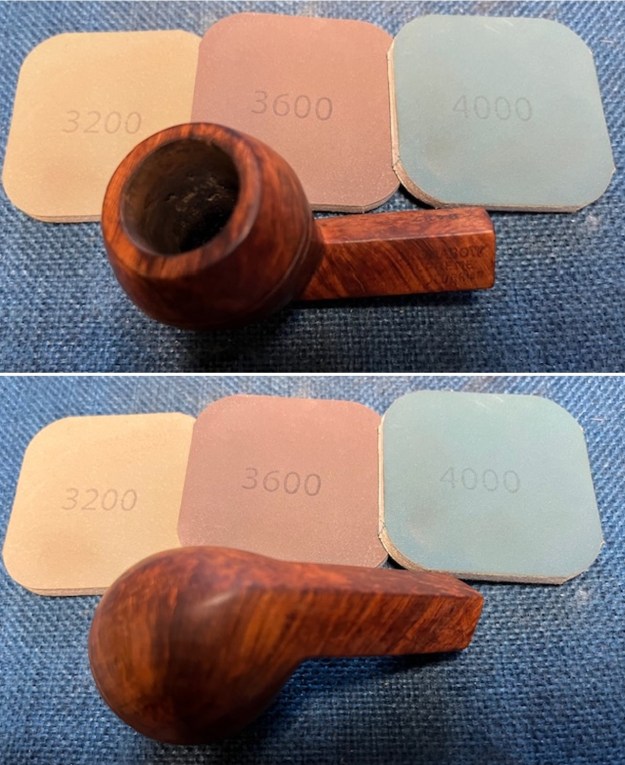
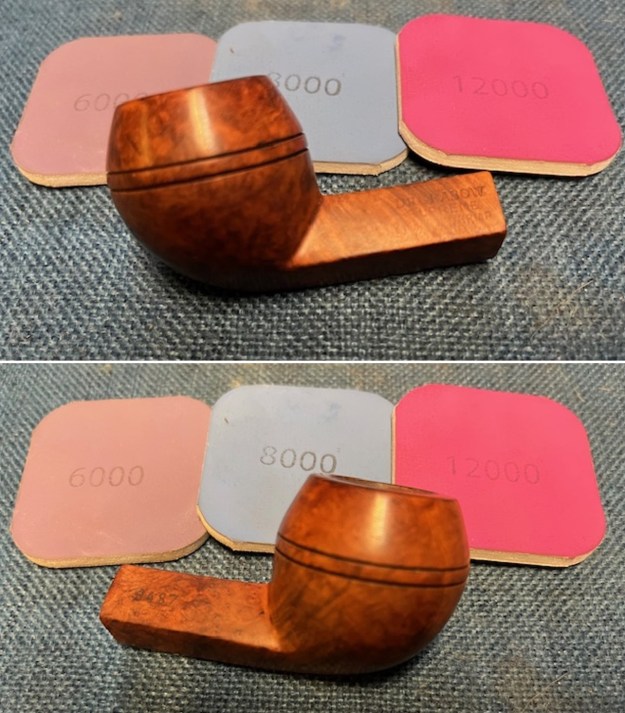
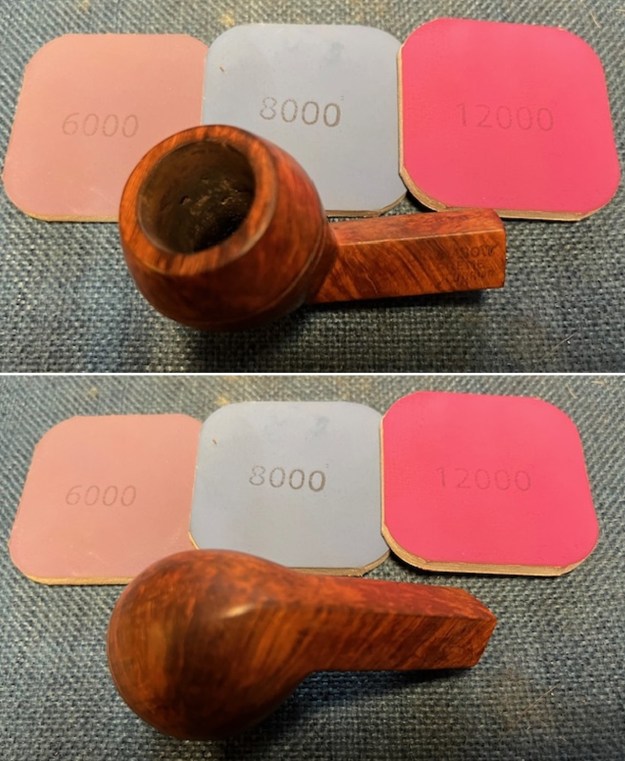
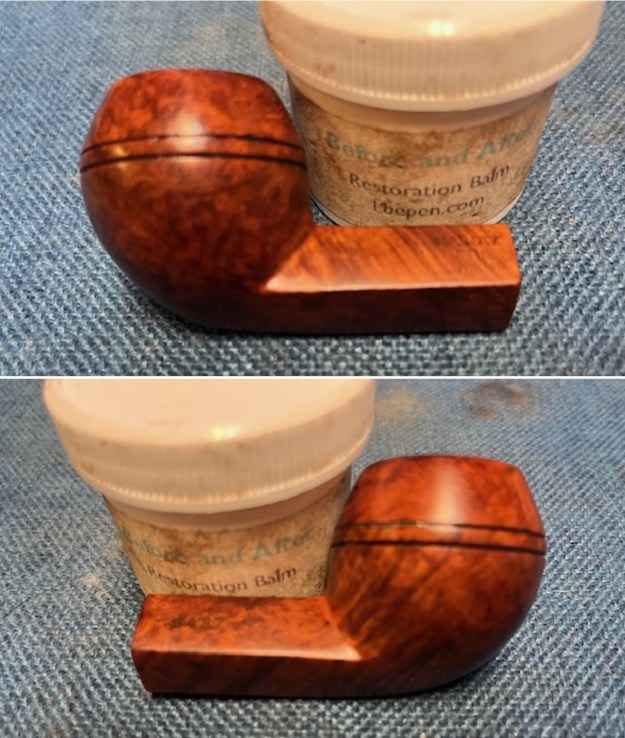
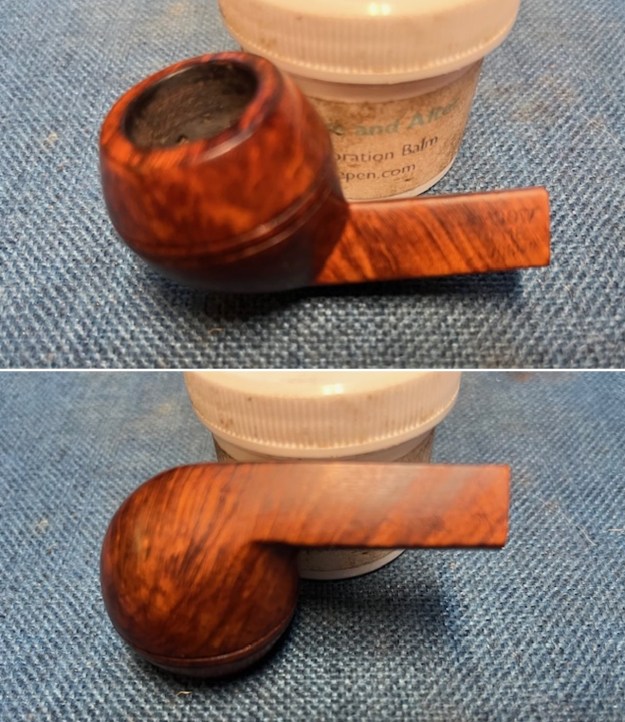
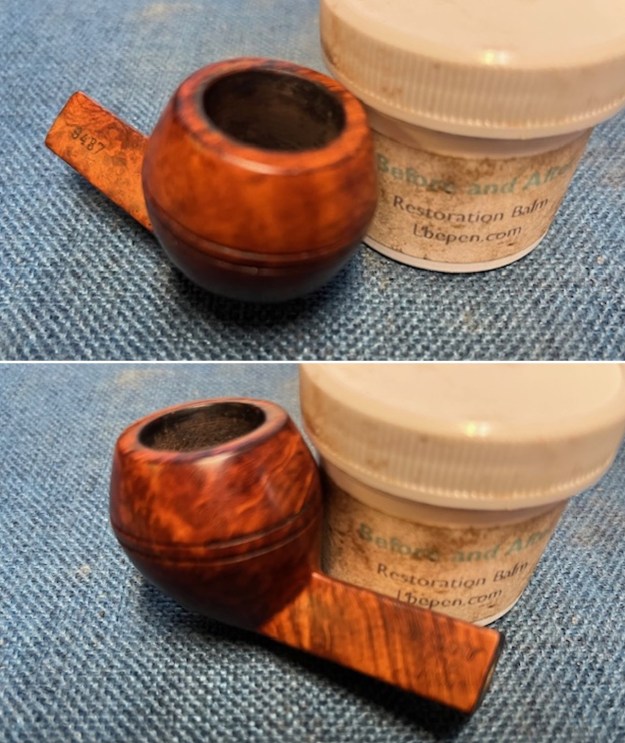
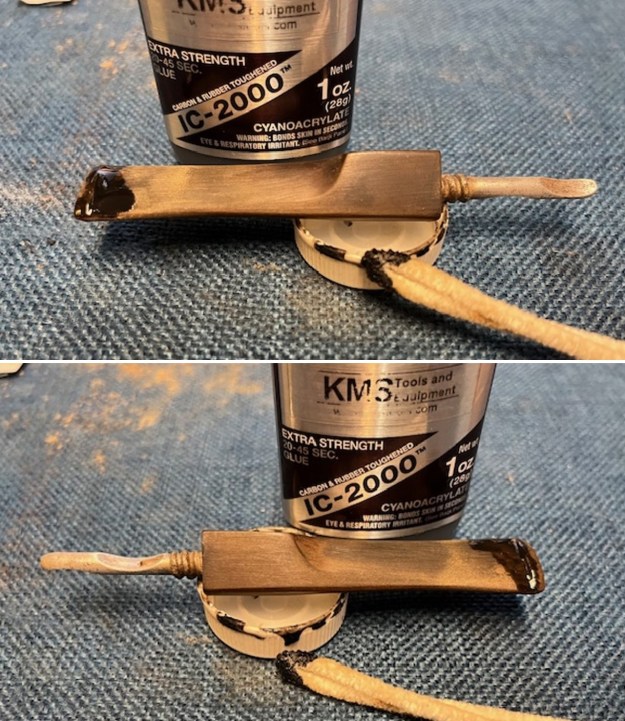
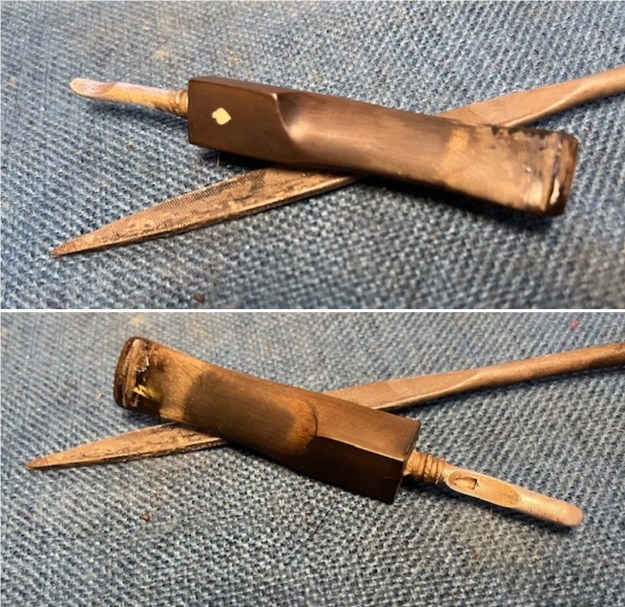
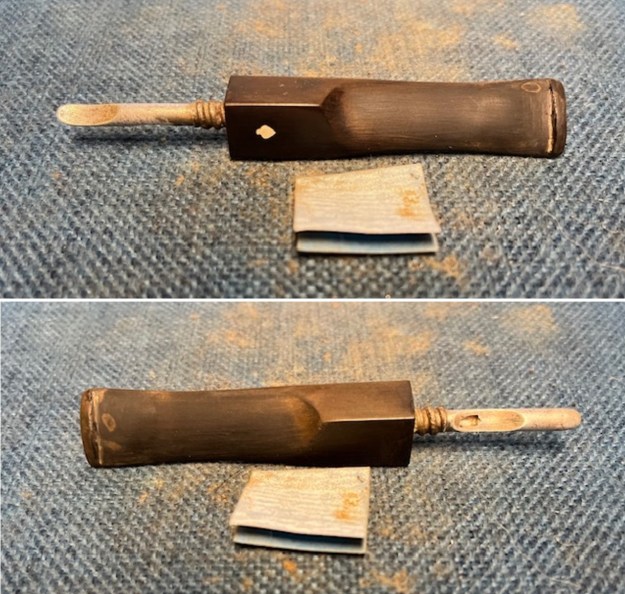
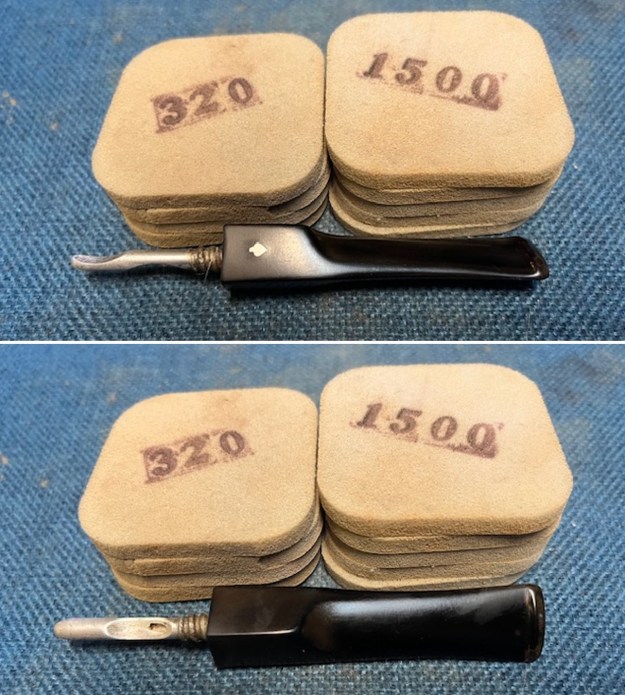
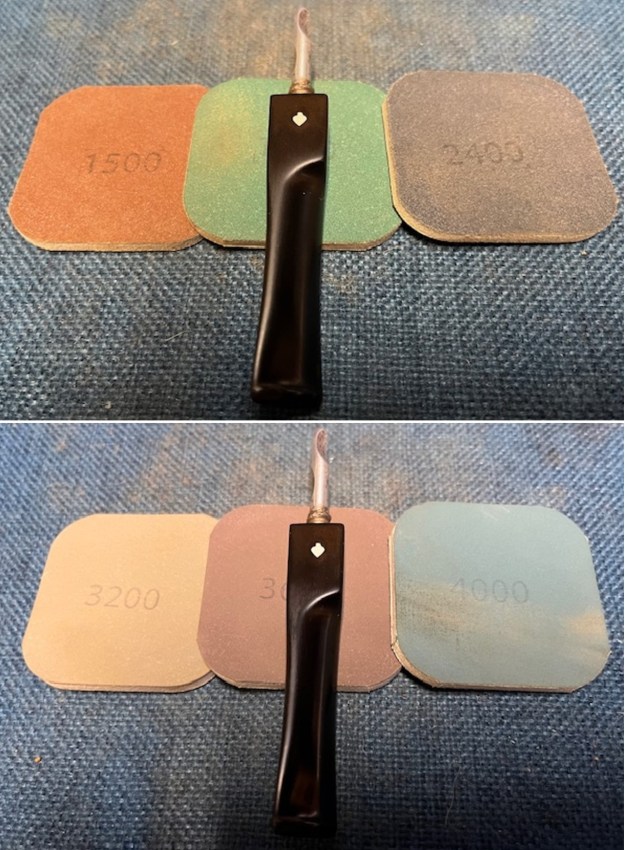
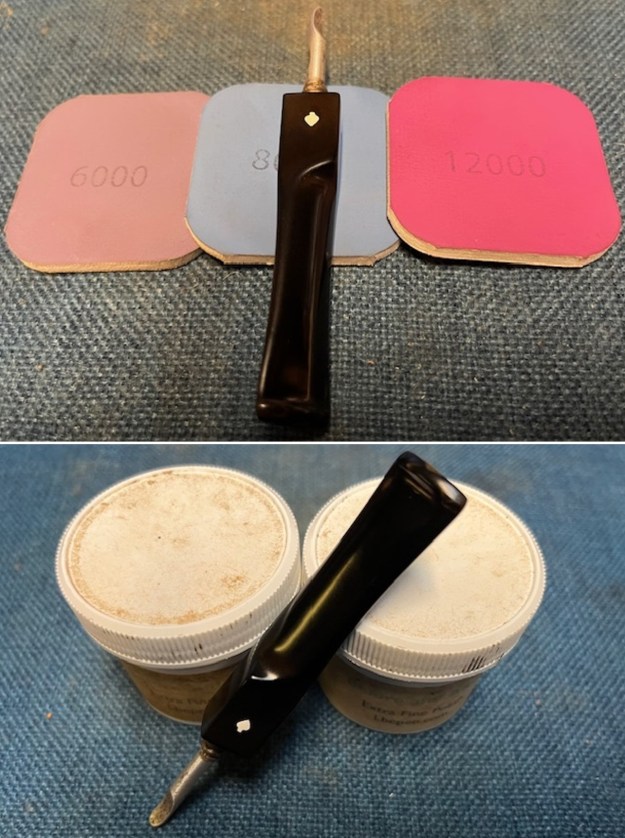
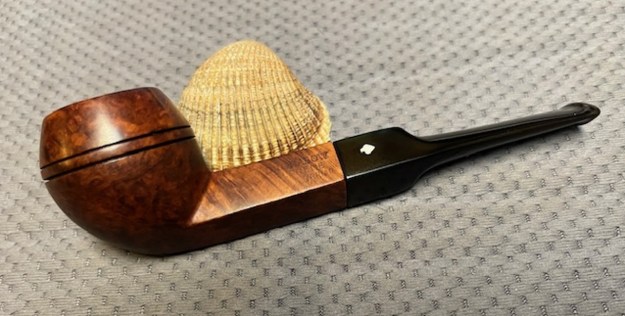
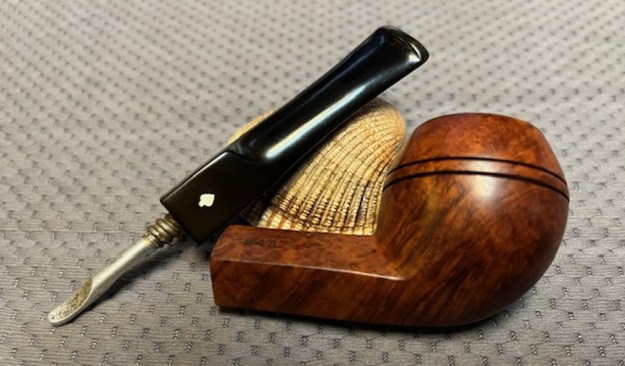
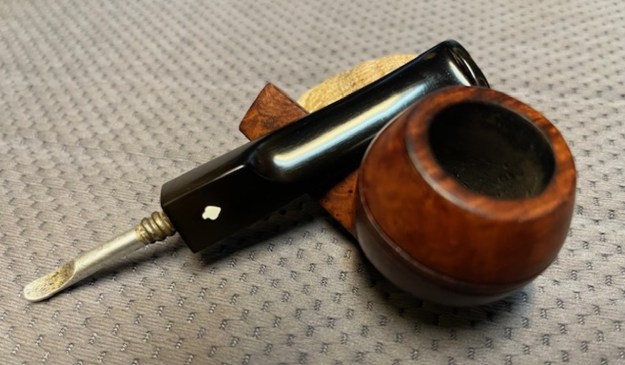
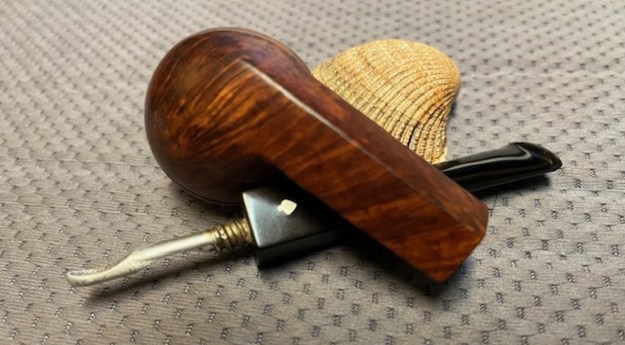
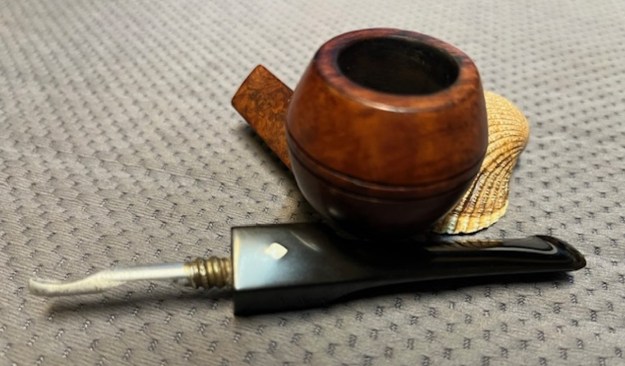
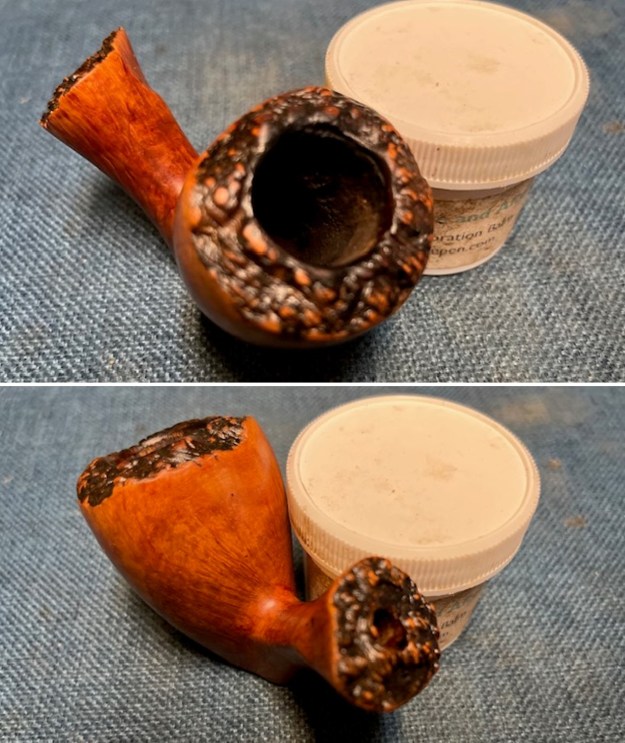
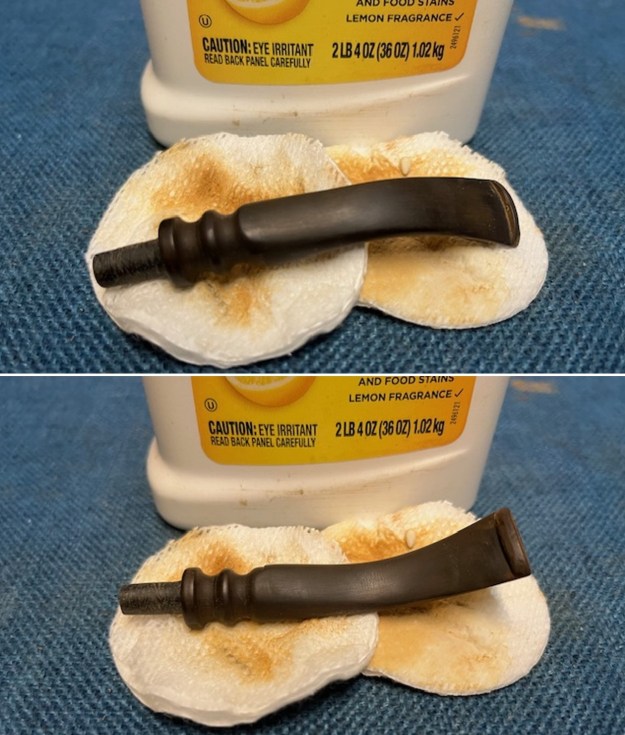
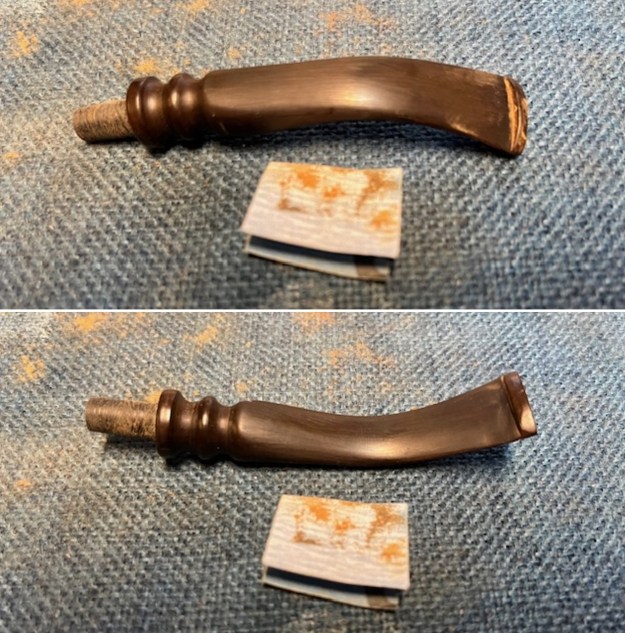
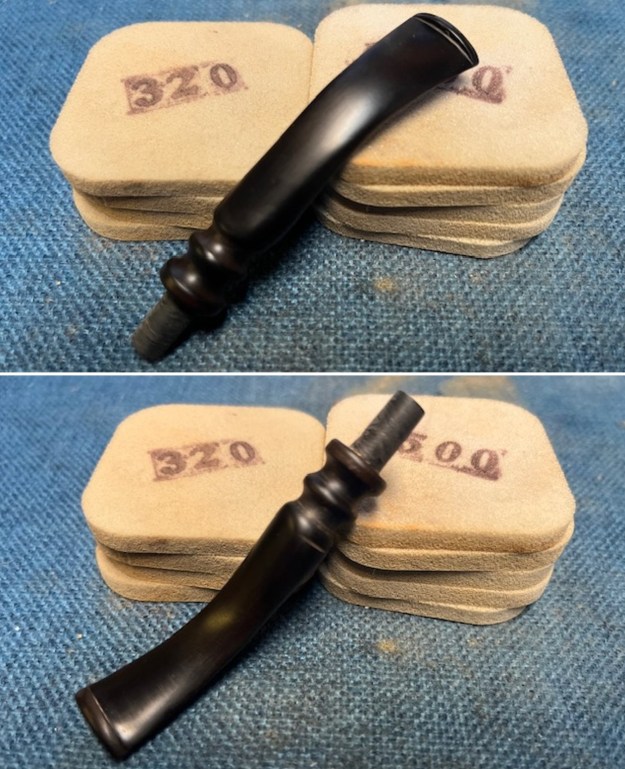
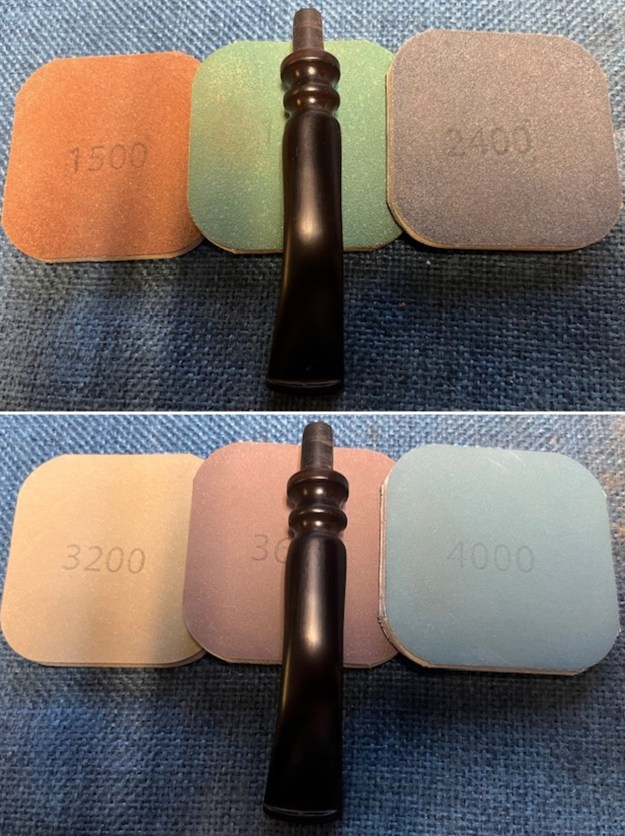
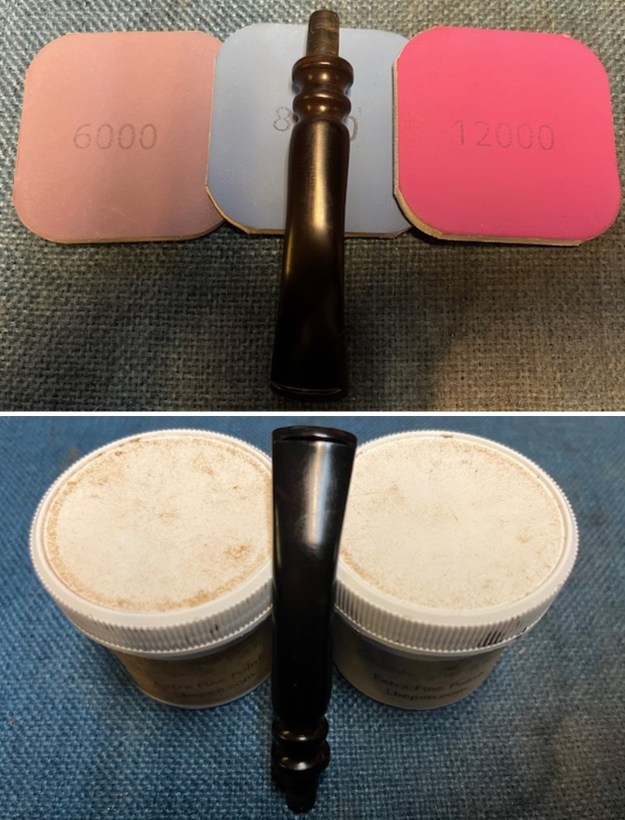
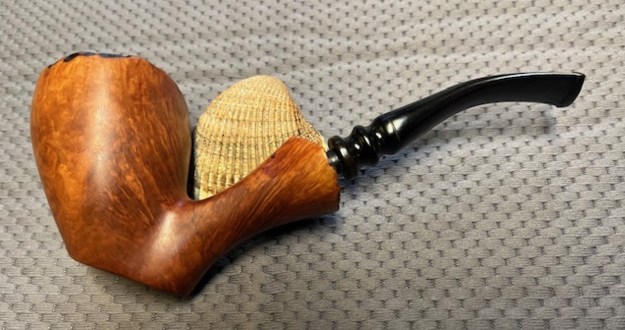
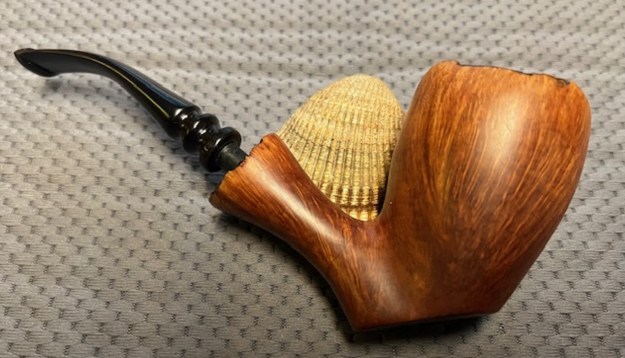
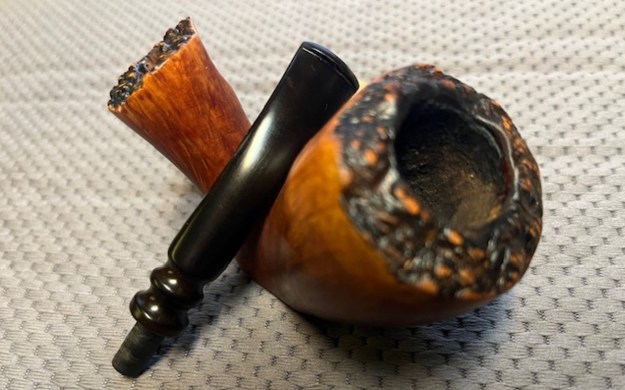
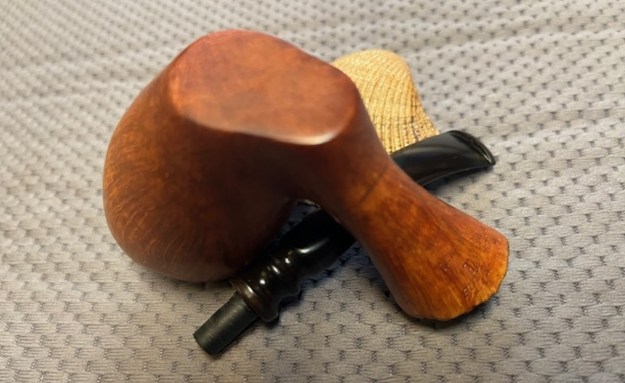
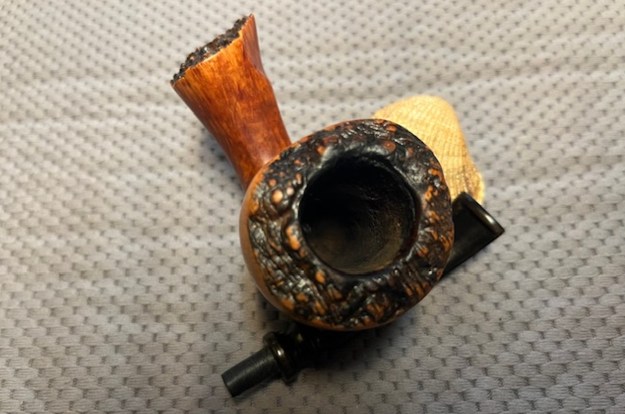
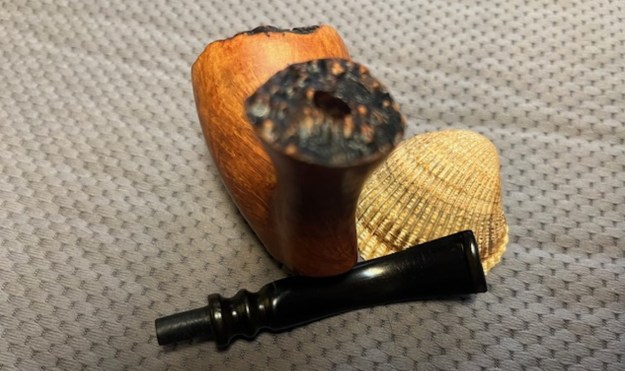
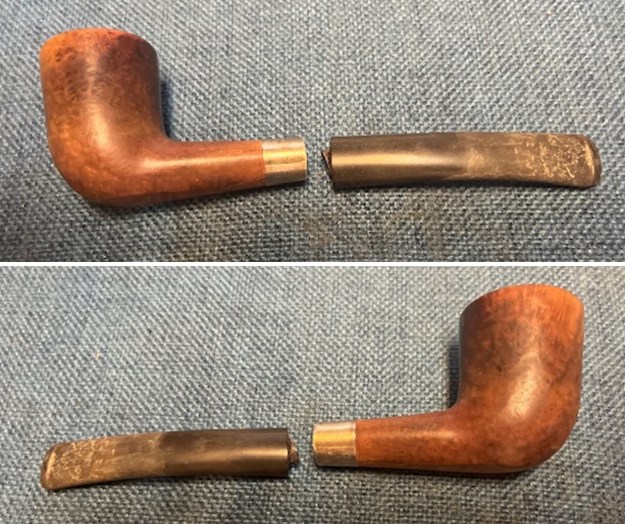
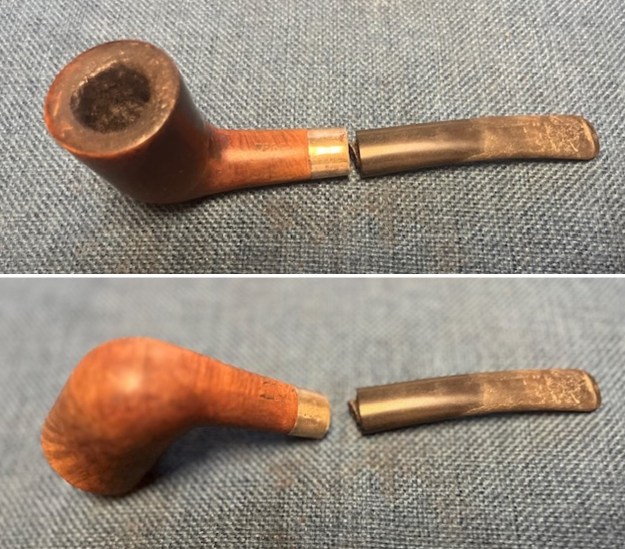
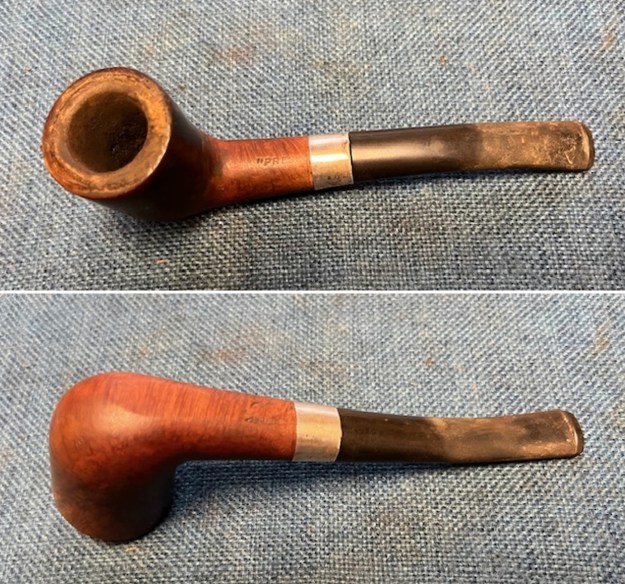
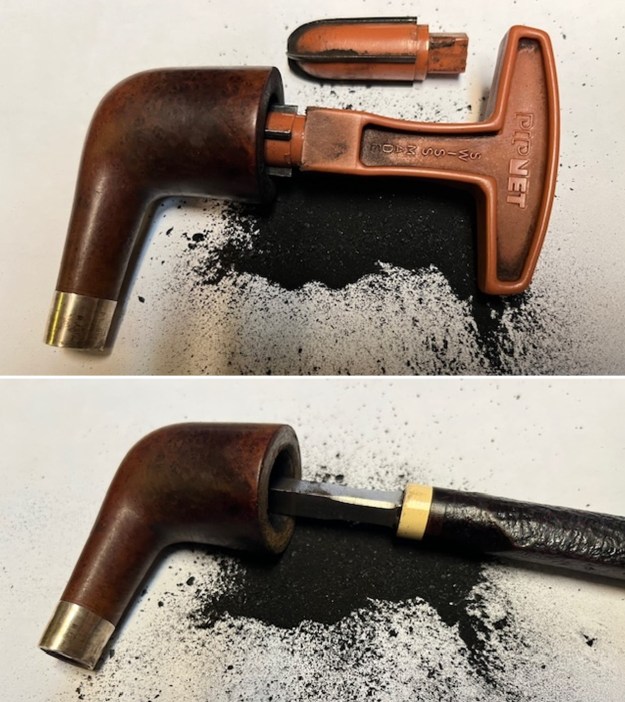
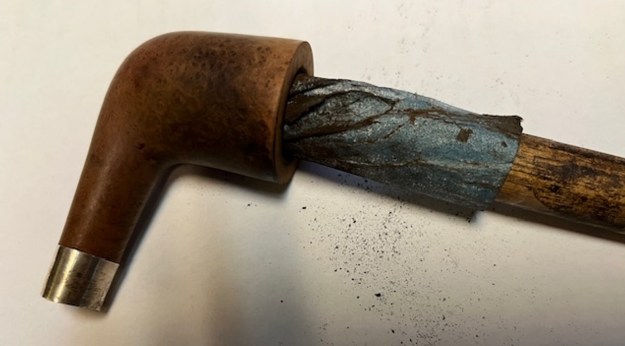
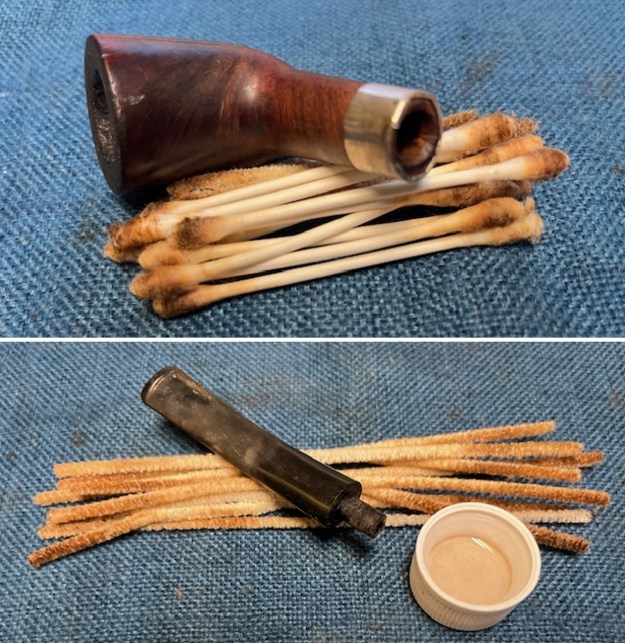
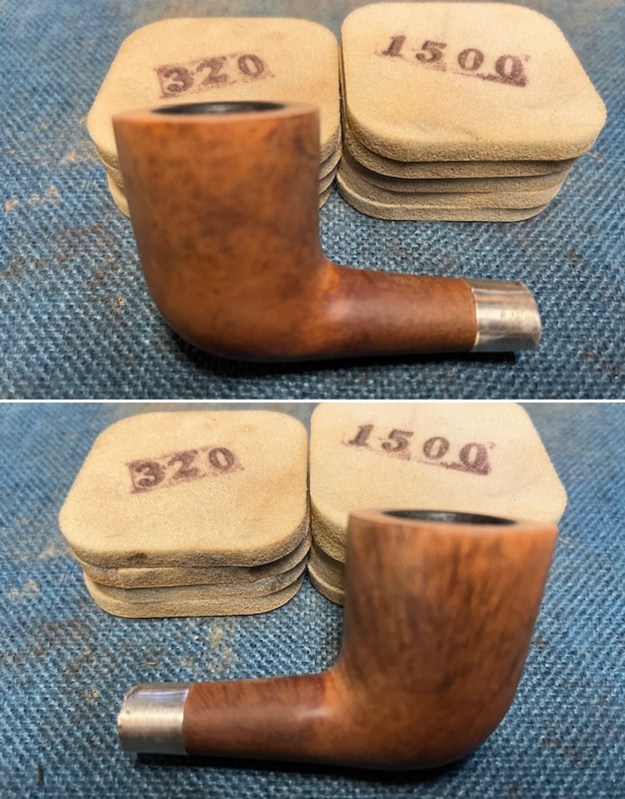
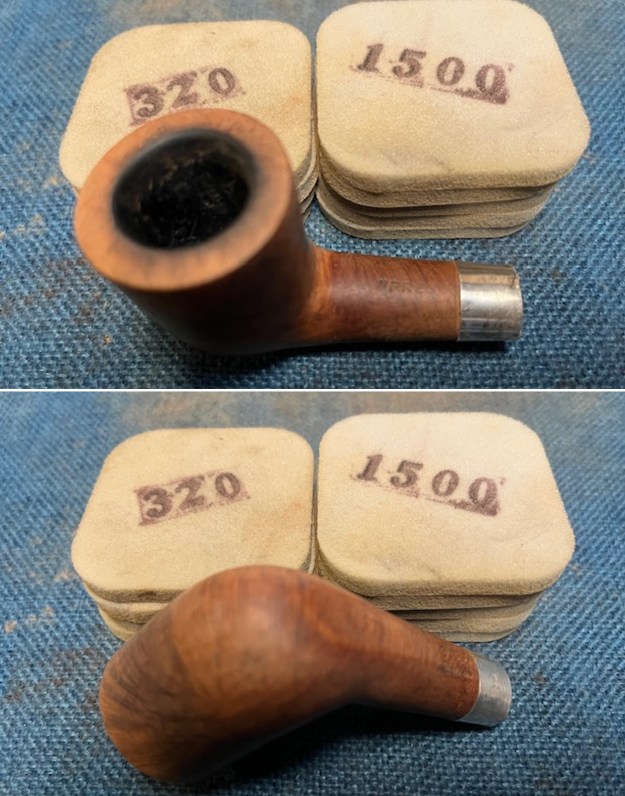
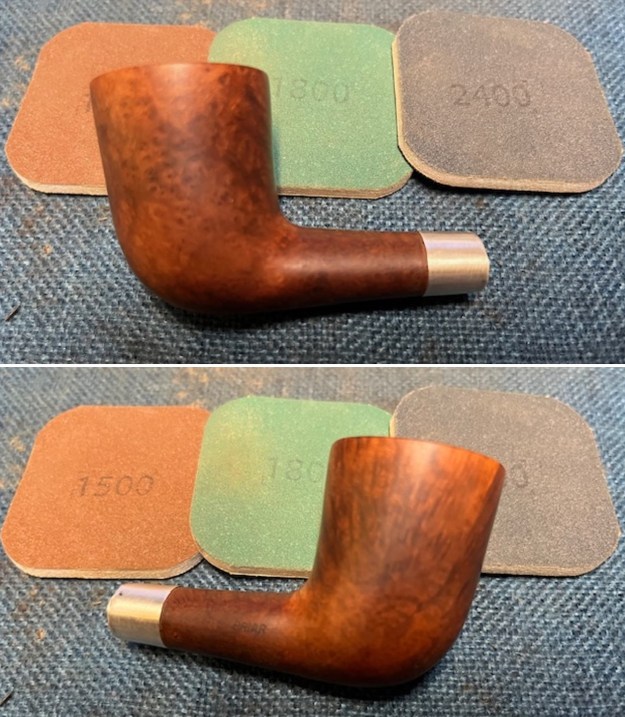
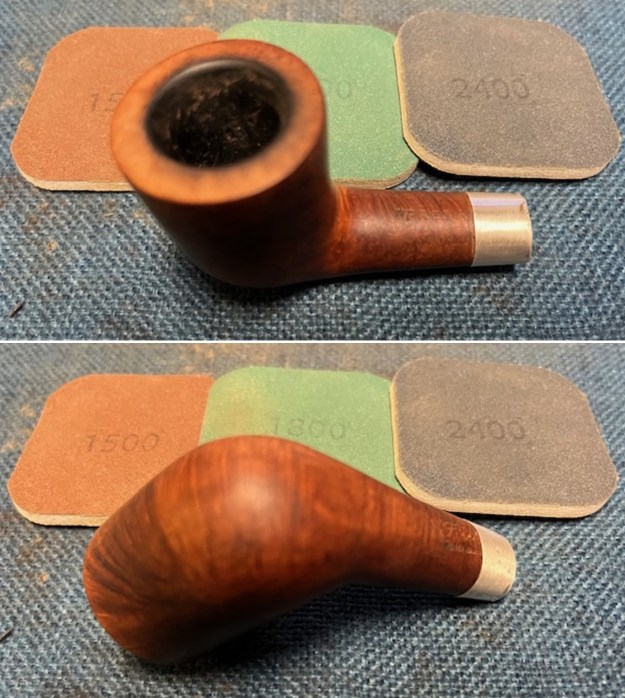
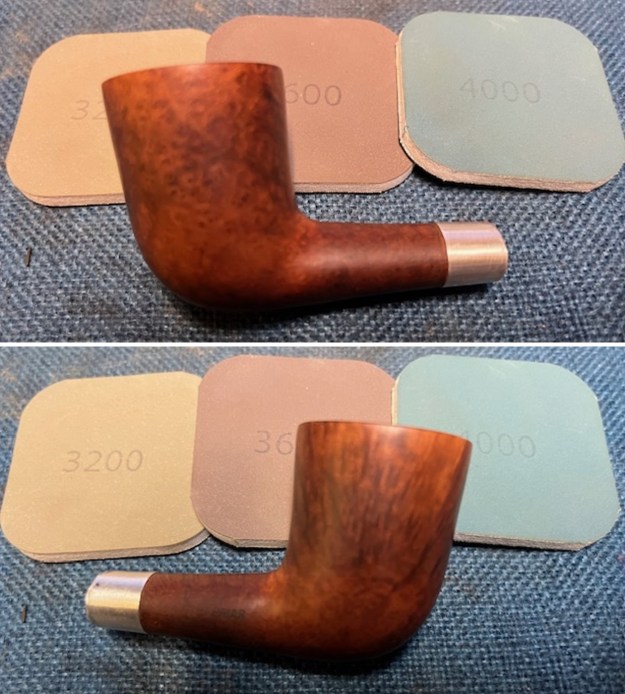
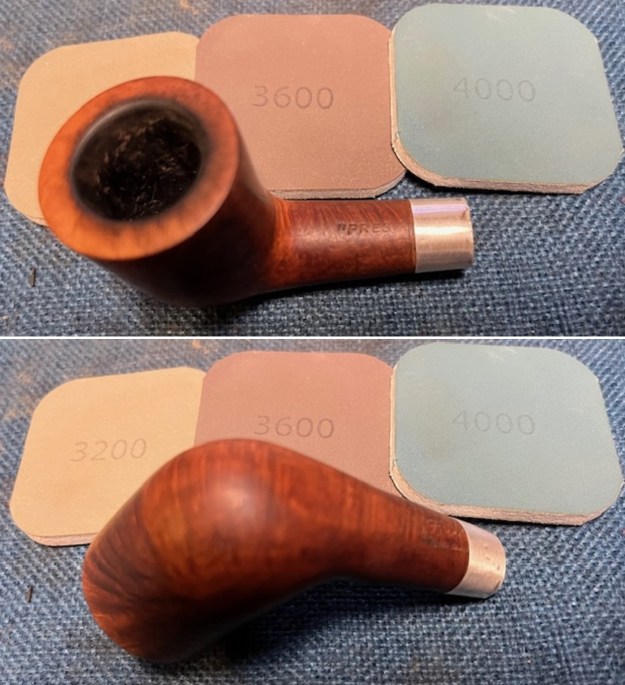
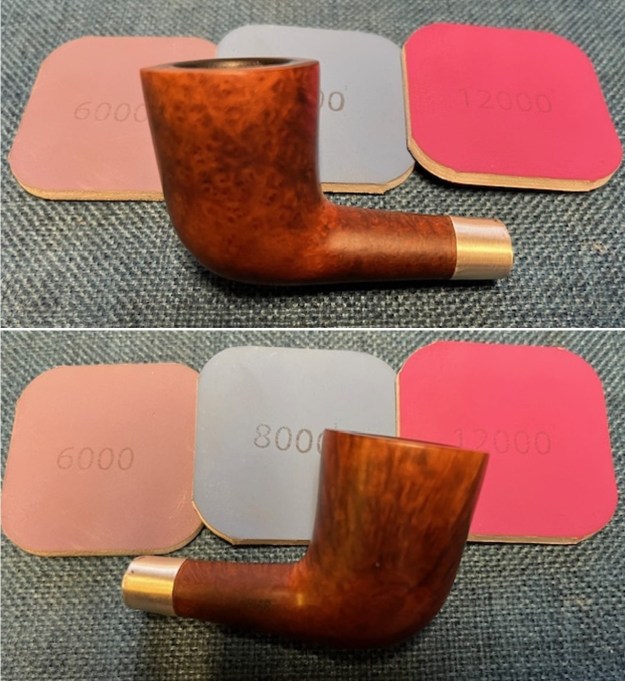
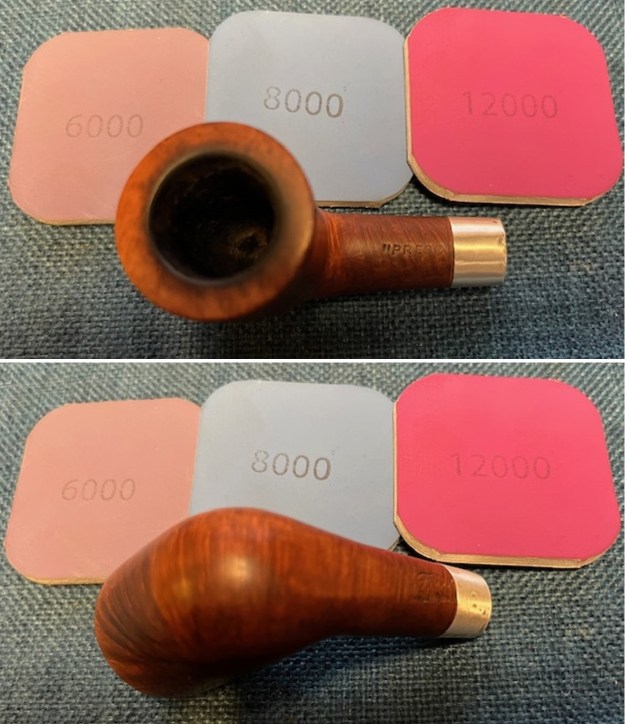
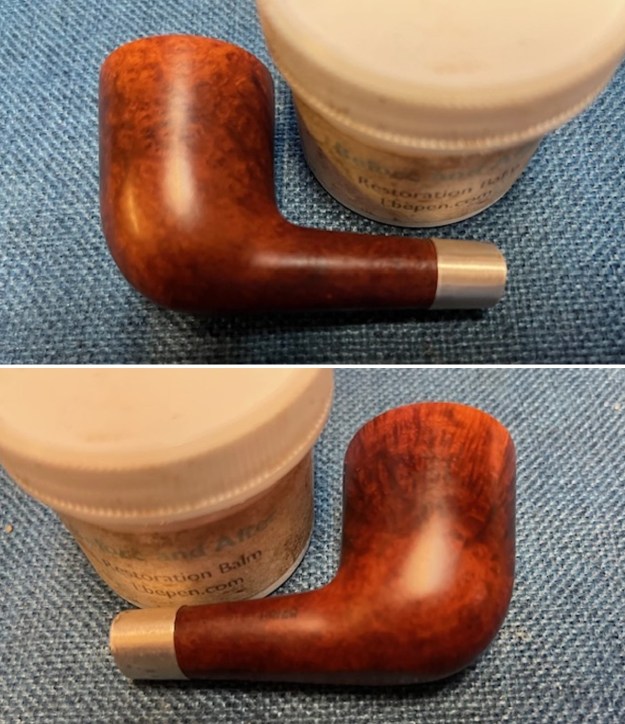
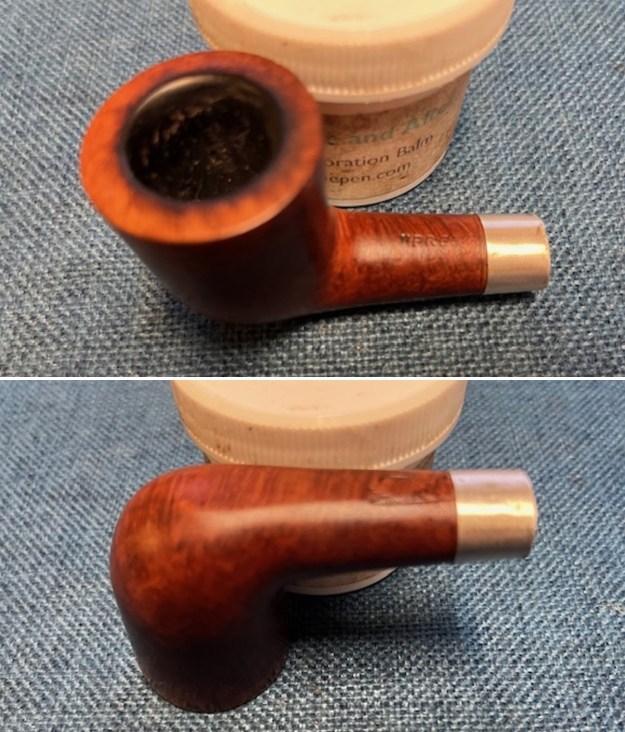
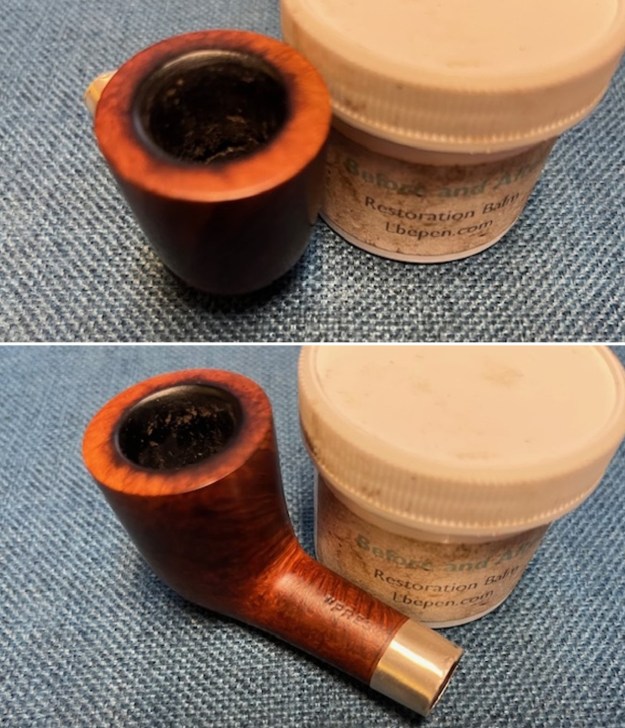
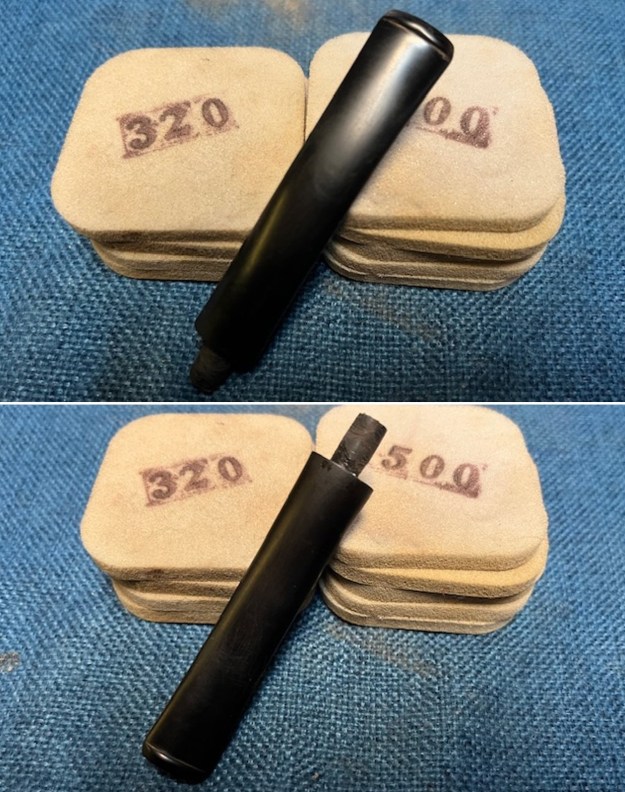
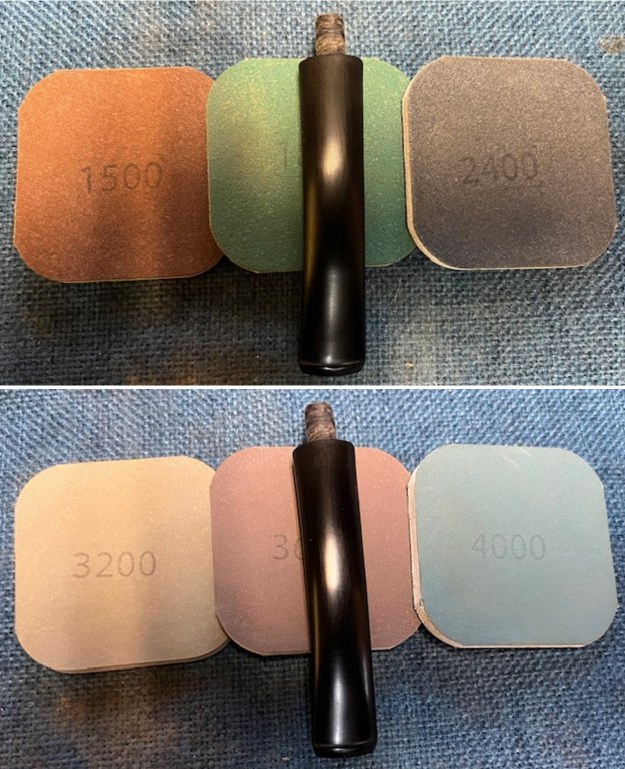
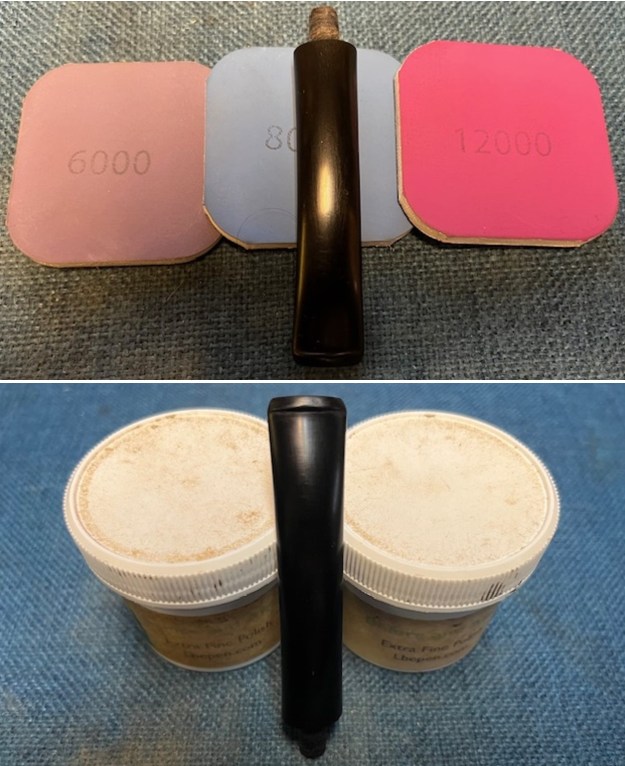
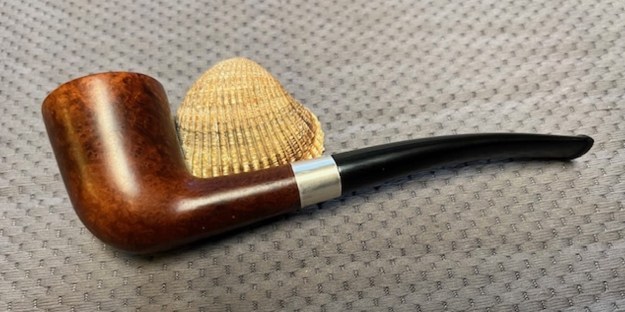
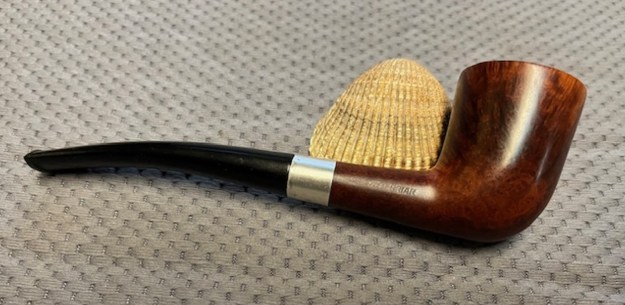
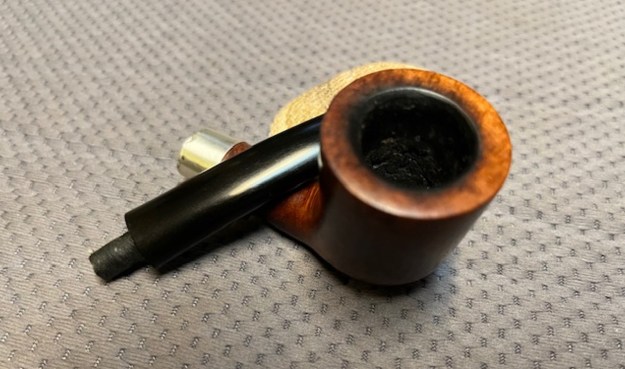
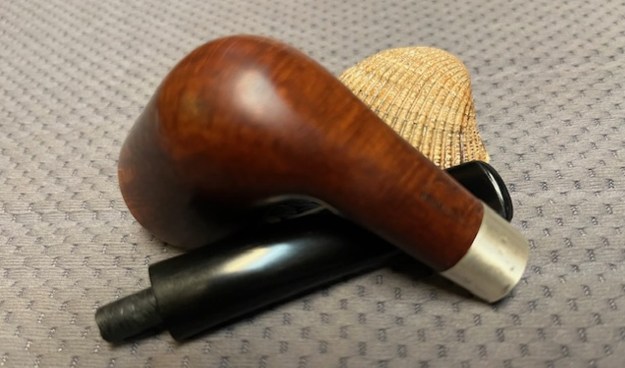
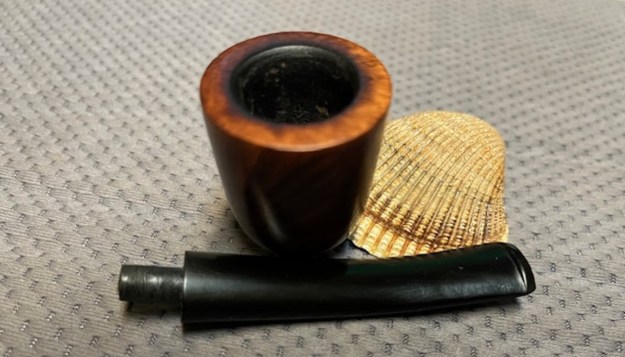
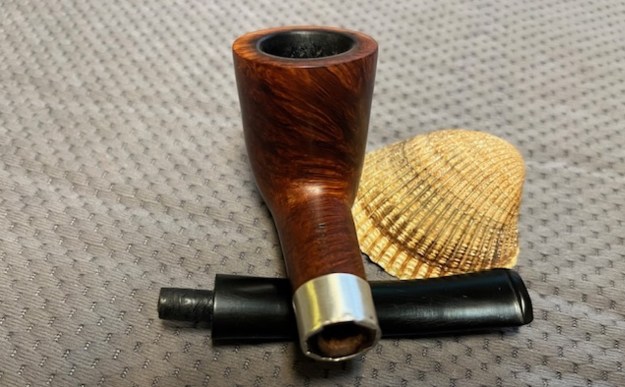
A few weeks ago, I visited my Dad and family in Idaho Falls, Idaho. My brother Jeff and I went through quite a few of our pipes and I pulled out some unique ones that I was interested in working on. I packed them and took them home with me. The next pipe is one we purchased on 05/09/2024 from an antique store in Vernonia, Oregon, USA. The pipe has a rusticated finish with a smooth panel on the left side of the shank and around the rim top. The stamping was on the left side of the shank in a panel. It read Dunmoor [over] Imported Briar. There was no shape number or other hints to the manufacture on the pipe. The bowl had a light cake in it and the rim top had some lava built up. The stem had an inserted silver O on the topside of the taper. The insert in the centre was missing. The stem was lightly oxidized and there were tooth marks on the top and underside ahead of the button. I took a few photos of the pipe in the car on the way home and have included them below. I took a photo of the rim top and bowl to show the condition of both of them. The bowl itself had a light cake on the walls and bowl bottom. The rim top showed some light lava and the inner edge was rough from being reamed with a knife and would need to be cleaned up. The photos of the stem show the light oxidation and tooth marks/chatter on both sides ahead of the button. You can also see the open hole in the centre of the stem logo.I took a photo of the stamping on the side of the shank. The stamping was clear and readable as noted above. I removed the stem from the shank and took a photo to show the proportions of the pipe.There was little information on the Dunmoor brand online. I checked all the standard sites and books of brands I have available to me. There were other Dunmoor pipes for sale all listed as US made pipes but no links to a maker. I did a final check on Pipephil’s site using the logo on the top of the stem to direct my search. There I found a US Made pipe with the same silver O on the stem surface. It appeared that the center was black. Here is the link to what is known as a Medico Cavalier (http://www.pipephil.eu/logos/en/motifs/mo-ring.html#medico). The logo seems identical. It is similar enough for me to link the two pipes. I checked my stem and found that the center of the O was missing and I could blow air through it. That would need to be fixed. I have included a screen capture of the information on the site below.Now it was time to work on the pipe. I used a Savinelli Fitsall Pipe Knife to clean up the cake in the shallow bowl and to scrape off the lava on the rim top. I used a dowel wrapped with 220 grit sandpaper to smooth out the walls of the bowl. I checked for damage on the bowl walls and it was in good condition.I scrubbed out the inside of the shank, mortise and the airway in both the stem and the shank. I used pipe cleaners, cotton swabs and isopropyl alcohol. It cleaned up very well.I used a folded piece of 220 grit sandpaper to clean up the damage around the bowl edge and the lava build up on the rim top. I polished it with 1500-3000 sanding pads. It is looking much better at this point in the process.I rubbed the bowl down with Before & After Restoration Balm. It is a paste/balm that works to deep clean the finish, enliven and protect the briar. I worked it into the briar with my finger tips and a shoe brush to make sure that it covers every square inch of the pipe. I set it aside for 10 minutes to let it do its work. I wiped it off with a soft cloth then buffed it with a cotton cloth. The briar really began to have a deep shine. The photos I took of the bowl at this point mark the progress in the restoration. You see the shine that the briar has taken on and the way rustication has depth. I set the bowl aside and turned my attention to the stem. I decided to start with the missing centre dot on the logo. The issue was that without the centre dot it was wide open and air was drawn through easily diverting the airflow from the button. I cleaned out the hole in the logo with a pipe cleaner. I greased a pipe cleaner with Vaseline and inserted it in the stem from the tenon end so that it was directly below the hole. I filled in the hole with black CA glue and used some accelerator on it to cure it quickly. I removed the pipe cleaner and sanded the repair smooth with the surface of the stem. I sanded the stem with 320-3500 grit sanding pads to break up the remaining oxidation. I wiped it down after each sanding pad with an Obsidian Oil impregnated cloth. It began to look good.I polished the stem with micromesh sanding pads – dry sanding with 1500-12000 grit pads. I wiped the stem down after each sanding pad with Obsidian Oil. I polished it with Before & After Pipe Stem Polish – both Fine and Extra Fine. Once I had finished the polishing I gave it final coat of Obsidian Oil and set it aside to dry. More than usual at this point in the restoration process I am excited to be on the homestretch. I really am looking forward to the final look when I put a pipe back together, polished and waxed. I polished the bowl and stem with Blue Diamond to polish out the scratches in the briar and the vulcanite. I gave the bowl multiple coats of Conservator’s Wax and the stem multiple coats of carnauba wax. I buffed the pipe with a clean buffing pad to raise the shine. I hand buffed it with a microfiber cloth to deepen the shine. The pipe polished up pretty nicely. The finish pops with the wax and polish. The shiny black vulcanite stem is a beautiful contrast to the browns of the bowl and shank. This Dunmoor Imported Briar Squashed Tomato was another fun pipe to work on. The pipe is comfortable pipe to hold in the hand. The finished pipe is shown in the photos below. The dimensions of the pipe are Length: 6 inches, Height: 1 inch, Outside diameter of the bowl: 2 inches, Chamber diameter: ¾ of an inch. The weight of the pipe is 1.13 ounces/32 grams. I will be adding it to the rebornpipes store in the American Pipemakers Section very soon. Thanks for reading this blog and my reflections on the pipe while I working on it. As always, I encourage your questions and comments as you read the blog. Thanks to each of you who are reading this blog. Remember we are not pipe owners; we are pipemen and women who hold our pipes in trust until they pass on into the trust of those who follow us.

Cleaning up a Pipe Hunt Find from Idaho


by Steve Laug

A few weeks ago, I visited my Dad and family in Idaho Falls, Idaho. While there my Brother Jeff and I did a bit of pipe hunting. We did not find much but we did find an interesting Banker shaped pipe in an Antique Mall. The price was right ($35USD) so we picked it up and brought it home to Jeff’s house. The surface of the briar has been roughened, perhaps by steel wool or a wire brush. The finish was rough to the touch but it looked like there might be some nice grain underneath. With the use of a lens I could read the stamping on the topside. It read House of Lords [over] Made in England. There was the remnant of the shape number on the right side of the shank next to the bowl. It could be a 52S shape. The bowl had a cake in it and the rim top had a thick coat of lava built up. The stem had a crown stamp on the topside of the saddle. The stem was lightly oxidized and there were tooth marks on the top and underside ahead of the button. I took a few photos of the pipe in the car on the way home and have included them below. I reamed the pipe while I was staying with Jeff. I forgot to take photos of the pipe before I reamed it. I brought it home to finish my work on it. I took photos of the pipe when I took it out of the box this afternoon. Jeff had scraped the lava off the rim top and we cleaned up the outside of the bowl. You can see the damage to the finish in the photos below. Whoever had done the work on it had made a mess of it. This was going to be a fun one to bring back to life. I took a photo of the rim top and bowl to show the condition of both of them. The bowl itself looked quite clean after our reaming. The rim top showed some darkening on the top and down the outside edges where it had run over the rim top. The inner edge was rough from being reamed with a knife and would need to be cleaned up. The photos of the stem show the light oxidation and tooth marks/chatter on both sides ahead of the button.I took a photo of the stamping on the side of the shank. The stamping was clear and readable as noted above. I removed the stem from the shank and took a photo to show the proportions of the pipe. I turned to Pipephil’s site (www.pipephil.eu/logos/en/logo-h3.html#houseoflords). I did a screen capture of the section on the site. It shows the stamping on the left side of the shank that matches the stamping on the topside of the pipe I am working on. The crown stamp shown on the stem I have is a lot like stamping on the stem I have. I am including the information from the side bar that says that House of Lords is a brand from Samuel Gordon and possibly a Sasieni second (J.M. Lopes, op. cit.). I further followed the link to “Gordon” and learned that Samuel Gordon had founded the brand “GORDON” in 1910-20 eras. This is the link for Gordon brand of pipes; www.pipephil.eu/logos/en/logo-g4.html#gordon

From there I turned to the Sasieni listing on Pipedia and scrolled down to the list of seconds that was given there (https://pipedia.org/wiki/Sasieni#Sasieni_Seconds). From that information I learned that the pipe was definitely linked to Sasieni. The fourth listing in the screen capture Now I knew I was dealing with a Sasieni made pipe which helps explain the stamping on the pipe including the Made in England on the topside of the shank. I did a quick search of rebornpipes and found an article on a pipe I had restored that was the same shape as this one. I have included the link (https://rebornpipes.com/2015/10/25/cleaning-up-a-london-made-charleston-banker/). Have a look at the blog and you will see the shape I am referring to. I am also including some photos of the pipe that show the parallels to the one that I am working on now. I turned to work on the pipe next. Since it had been reamed and cleaned a bit I could forgo that part of the process. I used a 320 grit sanding pad to remove the darkening from the rim top. There was some burn damage on the back inside edge and the front inside and outside edge. I Then used a piece of 220 grit sandpaper and a wooden ball to give the top an inward bevel that took care of the damage to the inner edge and cleaned up the rim top. The pipe was beginning to look much better. I still needed to sand the rough finish but I liked the rim top at this point. I sanded the bowl with 320-3500 grit sanding pads to smooth out the roughened finish. I wiped it down after each sanding pad to get a sense of the progress on the finish. It was looking better with each pad I used. I wiped the bowl and shank down with alcohol on a cotton pad to remove the sanding dust and get a sense of the grain around the bowl sides. I am very happy with how it is looking at this point. I polished the bowl with micromesh sanding pads – dry sanding with 1500-12000 grit pads. I wiped it down with a cotton pad and a drop of olive oil after each sanding pad. The briar really took on a patina that began to look better with the polishing. I rubbed the bowl down with Before & After Restoration Balm. It is a paste/balm that works to deep clean the finish, enliven and protect the briar. I work it into the briar with my finger tips to make sure that it covers every square inch of the pipe. I set it aside for 10 minutes to let it do its work. I wiped it off with a soft cloth then buffed it with a cotton cloth. The briar really began to have a deep shine. The photos I took of the bowl at this point mark the progress in the restoration. You see the shine that the briar has taken on and the way sandblast has depth. I set the bowl aside and turned my attention to the stem. I sanded the stem with 320-3500 grit sanding pads to break up the remaining oxidation. I wiped it down after each sanding pad with an Obsidian Oil impregnated cloth. It began to look good.I polished the stem with micromesh sanding pads – dry sanding with 1500-12000 grit pads. I wiped the stem down after each sanding pad with Obsidian Oil. I polished it with Before & After Pipe Stem Polish – both Fine and Extra Fine. Once I had finished the polishing I gave it final coat of Obsidian Oil and set it aside to dry. More than usual at this point in the restoration process I am excited to be on the homestretch. I really am looking forward to the final look when I put a pipe back together, polished and waxed. I polished the bowl and stem with Blue Diamond to polish out the scratches in the briar and the vulcanite. I gave the bowl and the stem multiple coats of carnauba wax. I buffed the pipe with a clean buffing pad to raise the shine. I hand buffed it with a microfiber cloth to deepen the shine. The pipe polished up pretty nicely. The grain pops with the wax and polish. The shiny black vulcanite stem is a beautiful contrast to the browns of the bowl and shank. This House of Lords Banker was another fun pipe to work on. The pipe is comfortable pipe to hold in the hand. The finished pipe is shown in the photos below. The dimensions of the pipe are Length: 5 ½ inches, Height: 1 ½ inches, Outside diameter of the bowl: 1 ¼ inches, Chamber diameter: ¾ of an inch. The weight of the pipe is 2.08 ounces/59 grams. The pipe will be on the rebornpipes store shortly in the British pipe makers section. If you are interested in adding it to your collection let me know. Thanks for reading this blog and my reflections on the pipe while I working on it. As always, I encourage your questions and comments as you read the blog. Thanks to each of you who are reading this blog. Remember we are not pipe owners; we are pipemen and women who hold our pipes in trust until they pass on into the trust of those who follow us.

Cleaning Up a Bewlay Popular 510 Billiard


by Kenneth Lieblich

Next up is a handsome and modest Bewlay Popular 510 billiard. It is a simple, salt-of-the-earth type of pipe that I love. No muss, no fuss – just a solid, classic pipe. I acquired it from a local gentleman who had smoked a pipe once upon a time, but was finally divesting himself of his smoking paraphernalia. As some of the photos show, this one still has its original pipe sock to go along with it. The pipe is from The House of Bewlay – a chain of pipe stores and not a manufacturer itself – and is a classic billiard shape. The pipe’s markings on the left side of the shank read Bewlay [over] Popular. The right side of the pipe shows London Made [over] 510 (the shape number). Next to that is either a letter O or a number 0 (or maybe even a U) – it’s hard to know which, since it doesn’t look either like an O from the word “London”, nor like the 0 in the number “510”. Finally, there is a letter B on the left side of the stem.The shape number corresponds perfectly with a Bewlay catalogue from the late 60s, as you can see in the photo below. I do not know the exact date of the pipe, but it is likely from the 1960s or 70s.Let us read a bit more about Bewlay from the Pipedia article:

The English brand of Bewlay & Co. Ltd. (formerly Salmon & Gluckstein Ltd.), was in business from the early 20th century until the 1950s. The brand ended up being sold and taken over by Imperial Tobacco Co. The shop chain closed in the 1980s but there seems to be one shop still in business on Carr Lane in the city of Hull. Bewlay pipes were made by prestigious firms. Notably Barling, Charatan, Loewe & Co., Sasieni, Huybrecht, and Orlik. So understandably, the English considered a Bewlay pipe a quality pipe.

The website, Very Keen on Pipes, also includes the following information about Bewlay. I don’t know what the source of his information is, but I will reproduce here nonetheless:

One of the most famous English tobacco shops, Bewlay & Co. Ltd, was founded in 1870 at 49 W. Strand in London by the Jewish Elkan family, who immigrated from the Netherlands. At the initial stage, the business was positioned as retail trade in tobacco products; Bewley was one of the first to sell cigars. Of course, in the early 20th century, briar pipes became very popular, and Bewlay’s offered a range of Barling, Charatan’s, Loewe, Sasieni, and Orlik models. Bewlay’s was one of the first companies to export pipes to the United States. Some fans claim that Bewlay’s was the start of Joel Sasieni (Sassieni’s family were also Jewish immigrants, lived in the same area, and appear to have attended the same synagogue). In 1937, the family business was sold to Salmon & Gluckstein, which was already controlled by Imperial Tobacco. The chain of stores closed in the 1980s.

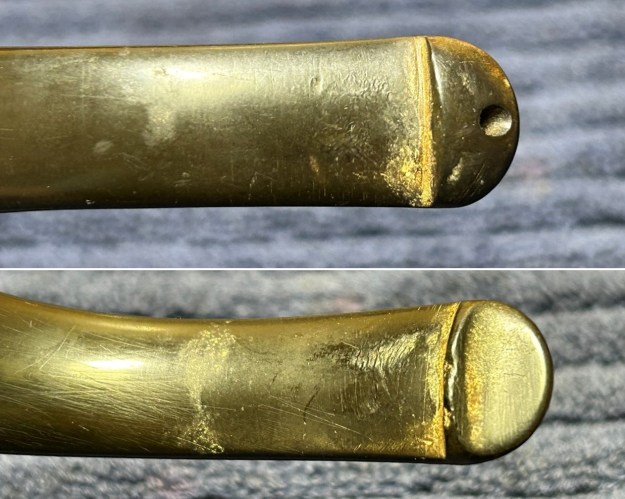
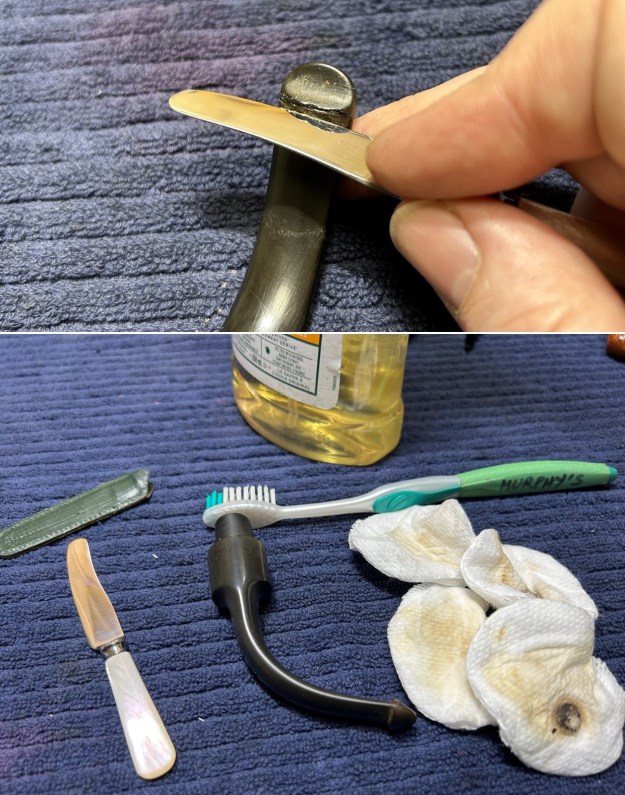
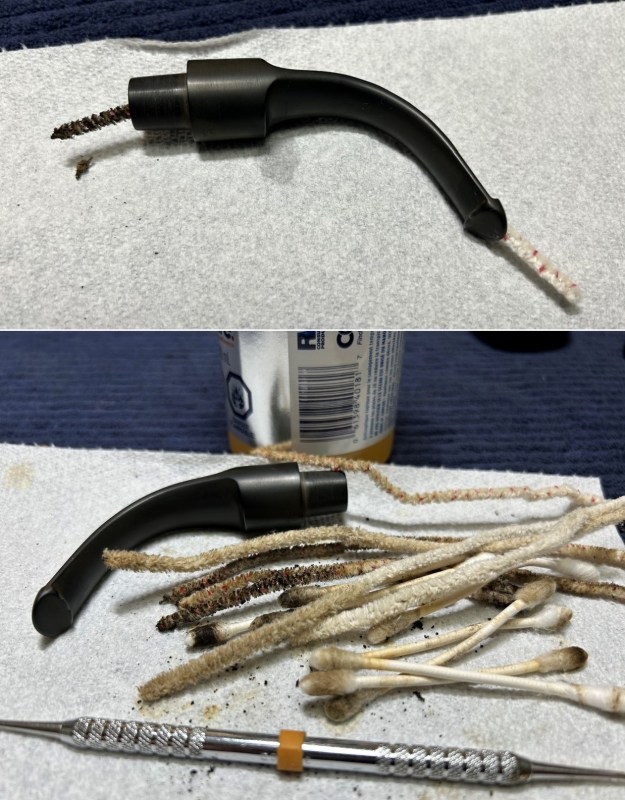
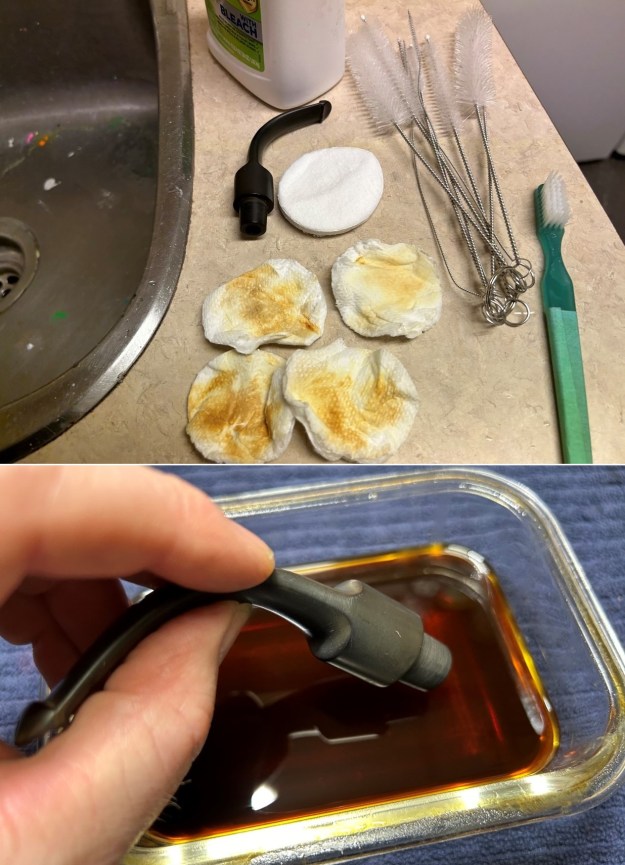
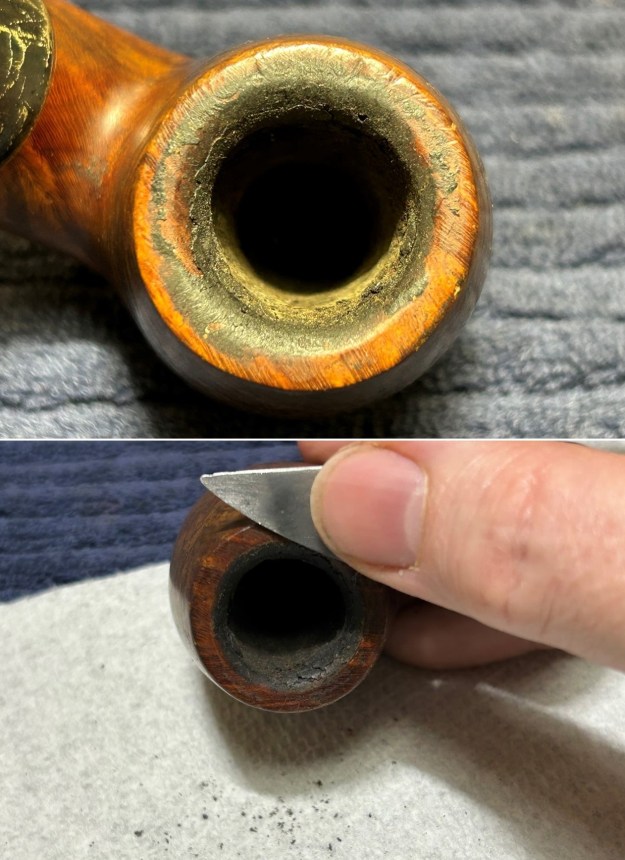
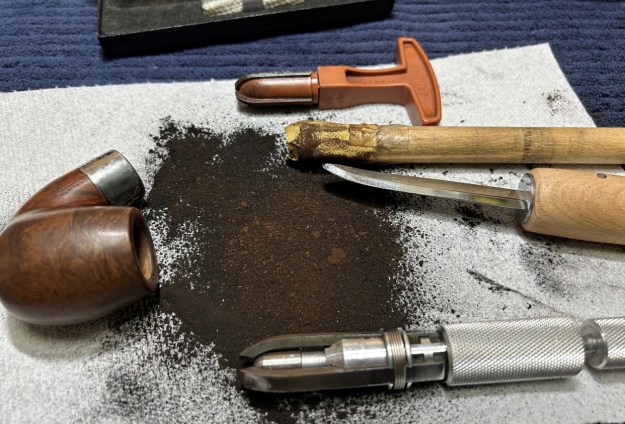
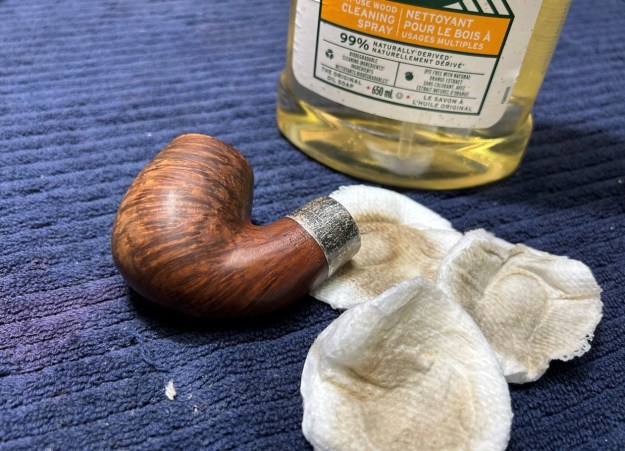
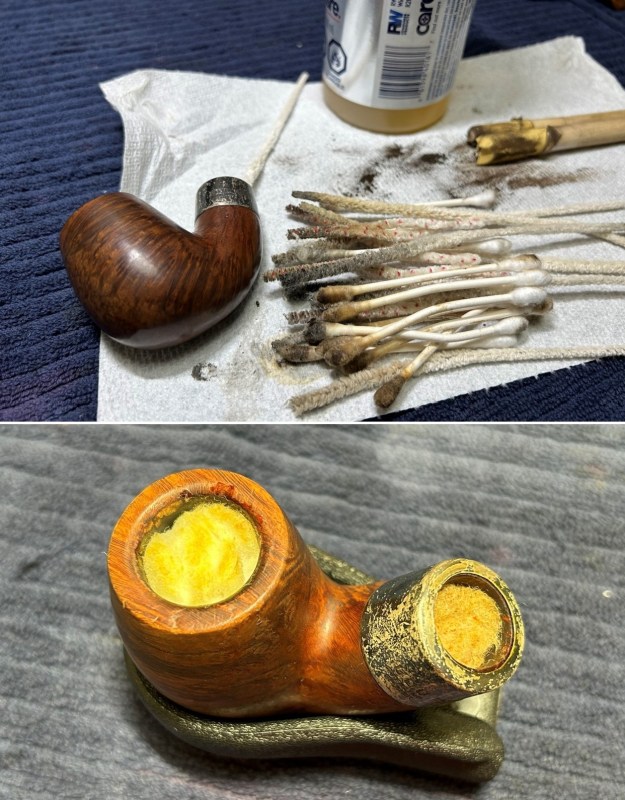
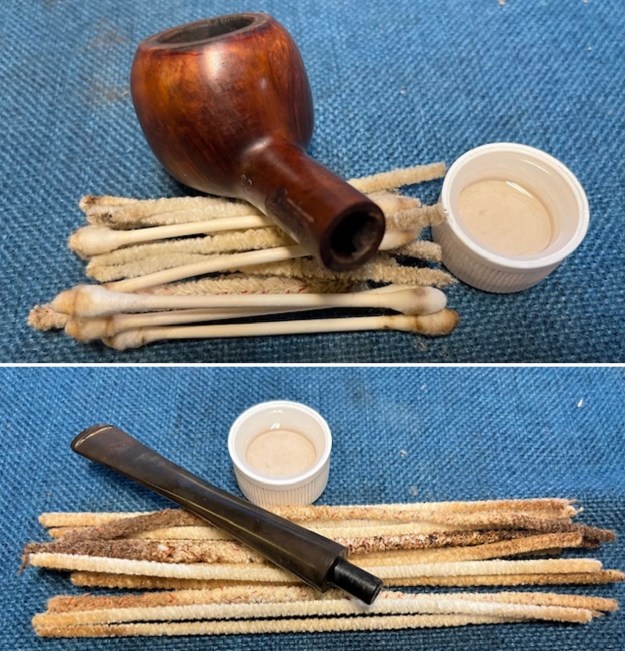
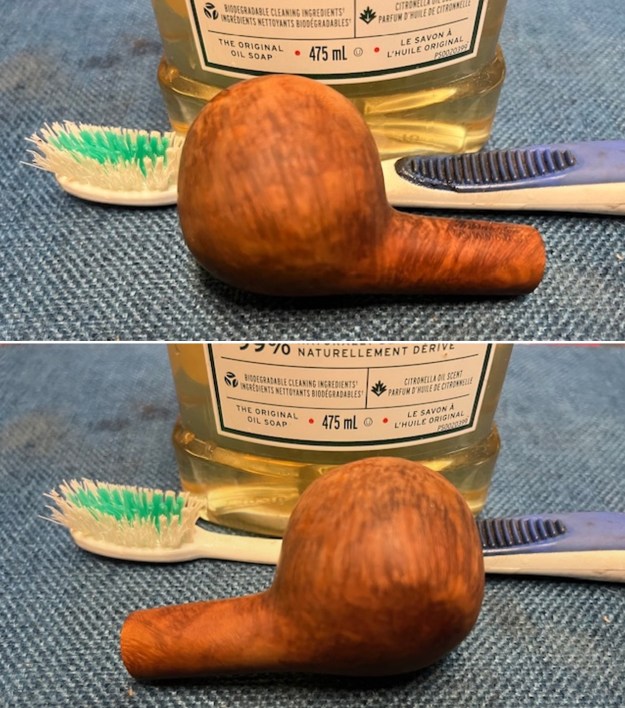
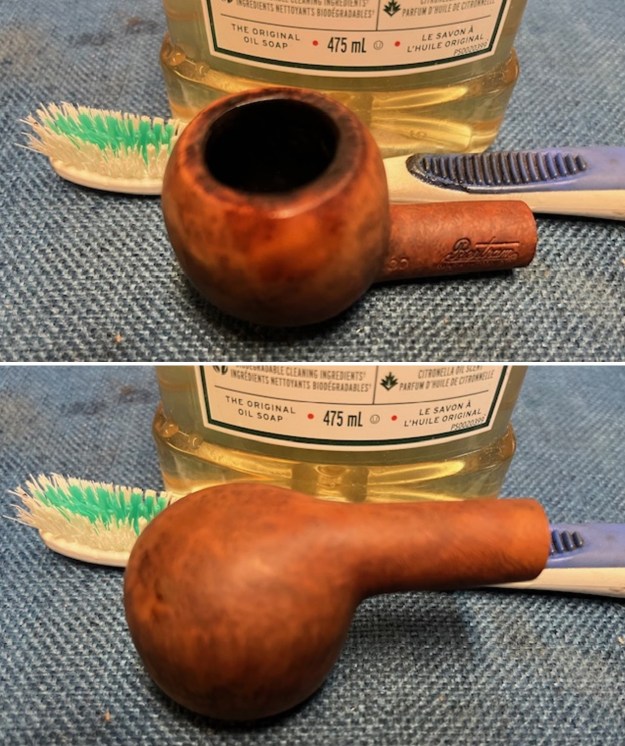
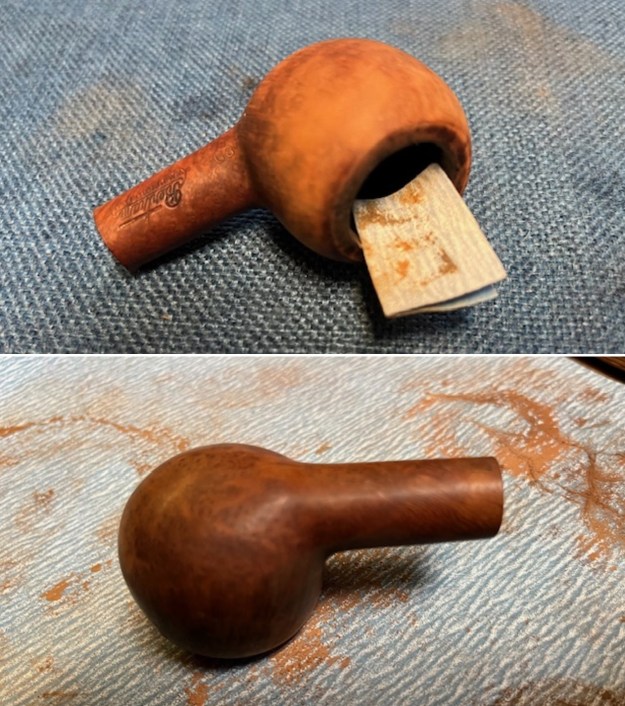
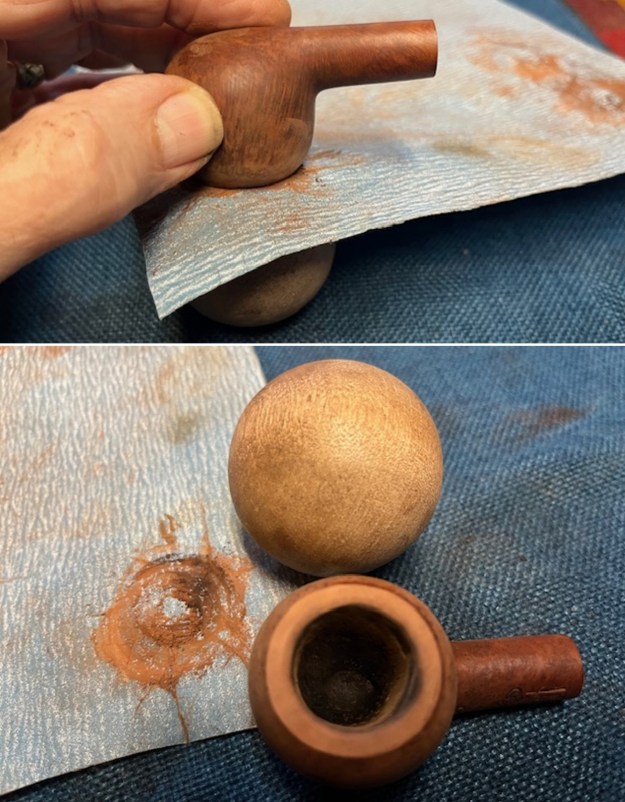
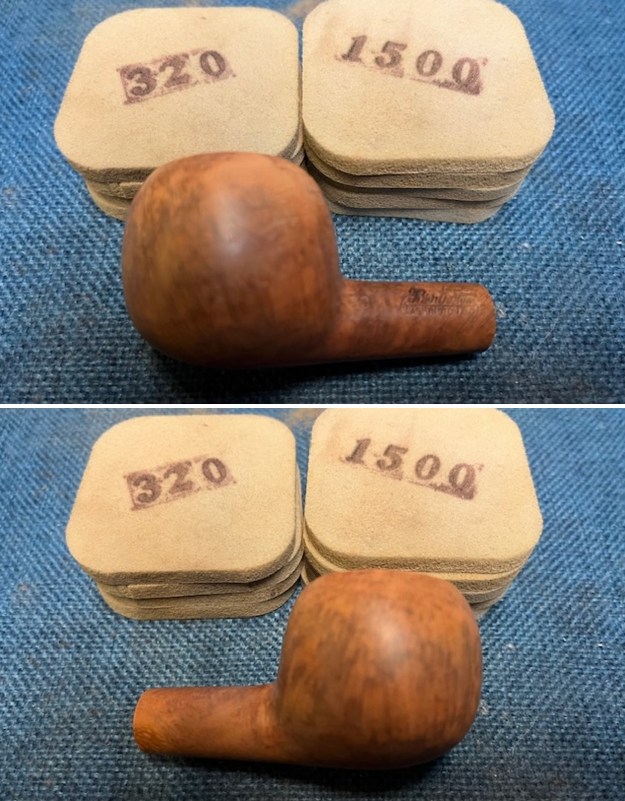
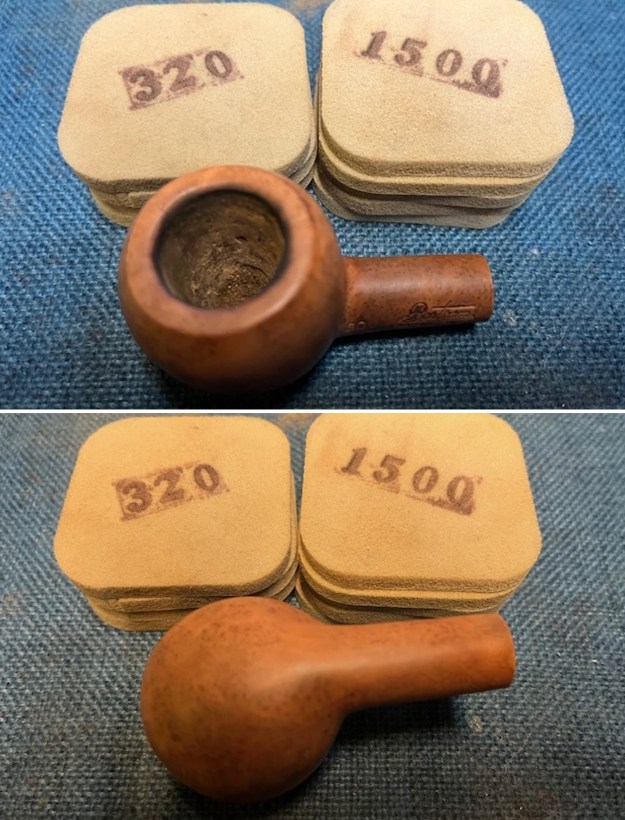
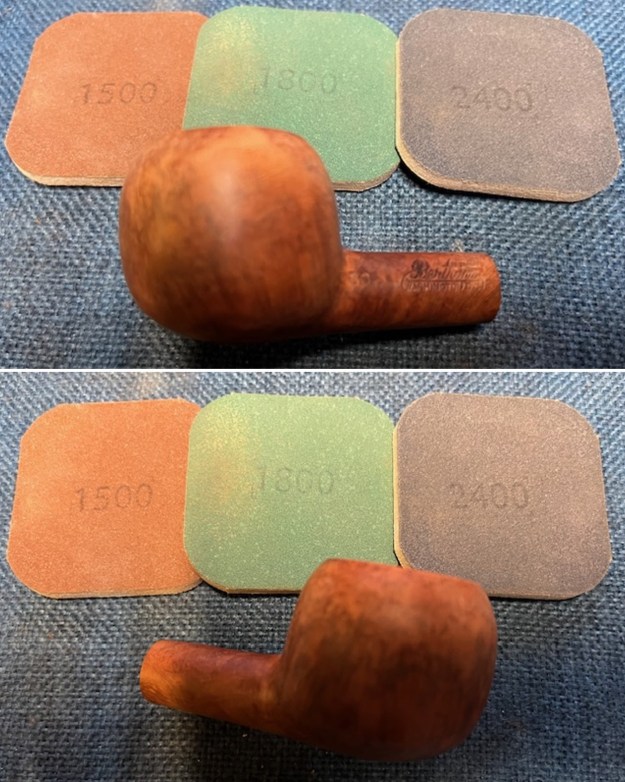
There is a long-standing confusion over determining who made which Bewlay pipes when. Bewlay used a several different fonts for the B of their logo. Equally, the pipes are marked with variations of “Made in England”, “London, England” and “London Made” (as this one is). The photo below is from Pipephil and the middle pipe is very similar to this one, in terms of markings. There is a multi-page thread in the forums of PipesMagazine.com on this topic and, if you’re interested, you can find it here. I’m not sure which of those companies might have made this pipe, but I would certainly welcome any information from someone who does know.The pipe is in very nice shape and was well-loved. The stem had some tooth scratches and dents, plus it was coated with a lot of oxidation and calcification. The previous owner must have treated this one like a lollipop. There were no significant issues with the stummel, although it did have some lava on the lovely rim. I started out by gently and carefully scraping off some of the thick layer of calcification on the stem with a butter knife. You can see in the photos that this created quite a bit of debris.I then cleaned the inside of the stem with 99% isopropyl alcohol and some pipe cleaners. It was dirty, but not too bad. I also cleaned the stem with some Murphy’s on some cotton rounds. As you can see, the stem was pretty dirty, and will need a good soaking. In fact, it had a funny pattern of tiger stripes on the stem.After all that, the stem went for a dip in the stem oxidation remover. I let it sit overnight, to allow all the oxidation to rise to the surface of the stem. The next day, I cleaned up the stem with some cleanser on some cotton pads. This took some considerable elbow grease, but, in the end, worked very nicely. Forgot to take a photo though.I then renewed the colour on the stem’s “B” by painting some nail polish there and letting it set. After that, I took my nine Micromesh pads and sanded the whole stem until it was shining like new. I also used my pipe stem oil in between the pads (from 3600 on) to bring out some extra lustre. Beauty.Onto the stummel. In order to clean out the cake in the bowl, I used the KleenReem and followed that up with a piece of sandpaper taped to a wooden dowel. I sanded down the cake until I hit the briar walls, so that I could inspect them for potential damage. Everything looked good on the inside, which is great news.I proceeded to clean out the inside of the shank with 99% isopropyl alcohol and pipe cleaners and cotton swabs. It was surprisingly dirty in there! But I got it clean in the end.When that was done, I set up to de-ghost the pipe. I put some cotton balls into the bowl and the shank and soaked them with 99% isopropyl alcohol. I let that sit overnight so that any remaining smells and/or filth would leach out into the cotton. I also scrubbed the insides with some soap and tube brushes. It was beautifully clean after that!The stummel was in very nice shape, although the rim did have some lava on it, as previously mentioned. I used a piece of machine metal to ever-so-gently scrape off as much of this as I could so as to avoid damaging the rim. This worked perfectly. A good amount of debris came off, which was nice to see.

I then used some lightly diluted Murphy’s to clean the whole stummel. This removed any external dirt and oils, and it was much improved.I then took my restoration balm, rubbed it in the wood and let it sit for about 20 minutes. This balm is fantastic stuff and does wonderful things to nourish the wood. After letting it sit, I used a microfibre cloth and buffed it. Off to the bench polisher to put the final touches on this pipe. I first gave it a thorough (but light-handed) going-over with White Diamond compound. Following that, several coats of carnauba wax created a beautiful, glossy seal on the pipe.

All done! This Bewlay Popular 510 billiard looks fantastic and is ready to be enjoyed again by the next owner. I am pleased to announce that this pipe is for sale! As I mentioned before, it comes with its original branded pipe sock. If you are interested in acquiring it for your collection, please have a look in the “British” section of the store here on Steve’s website. You can also email me directly at kenneth@knightsofthepipe.com. The approximate dimensions of the pipe are as follows: length 5⅔ in. (143 mm); height 1¾ in. (45 mm); bowl diameter 1¼ in. (32 mm); chamber diameter ⅔ in. (18 mm). The weight of the pipe is 1 oz. (30 g). I hope you enjoyed reading the story of this pipe’s restoration as much as I did restoring it. If you are interested in more of my work, please follow me here on Steve’s website or send me an email. Thank you very much for reading and, as always, I welcome and encourage your comments.
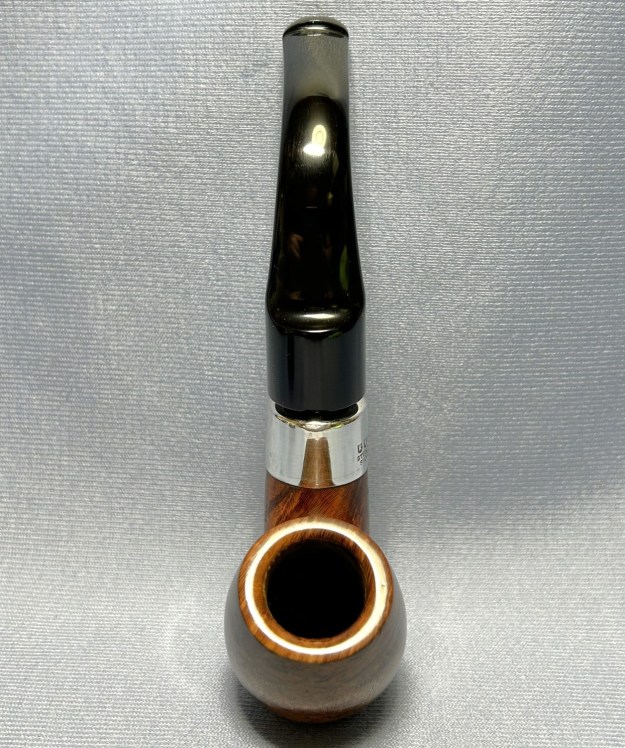
The Final Pipe from Salmon Arm for Restoration – A Parade News Briar Shop Oom Paul


by Steve Laug

A few weeks ago, I received an email from a friend, Sonny in Salmon Arm, BC. We have worked together on pipes over the past few years either ones that I have sold to him or those he has picked up on auctions or sales that I have restored. He wrote that he had some pipes that needed restoration.

I also have some of those old estates I still need to send to you for restoration. Hopefully I will be able to pack them up and get them off to you this week. Thank you again, Steve! – Sonny

He followed that up with another email regarding what he wanted done on the various pipes. I have included it below. 

I would like the Vauen bent ball shape to have no band on it. It looks like it may have had a band there at one time and I’m not sure why. And if any of them needs to be stained again, I would like them to be black, especially the Peterson 309 and that ball Vauen. Let me know what you think.

I took a photo of the box of six pipes once I unwrapped them. There were 6 interesting pipes – a Vauen Luxus Bent Ball, a Vauen Dr. Perl Billiard, a Sand Blast Vauen Dr. Perl Pot, a Parade News Briar Shop Oom Paul, a Bari Pearl Bamboo shank Ball and Peterson’s System Premier 309 Bent Billiard. All were in need of various degrees of restoration.The last pipe left to work on was a sandblast Oom Paul with a saddle stem. It is stamped on a smooth panel on the right side and reads Parade News [over] Briar Shop [over] Imported Briar. The sandblast finish was in excellent condition and was quite clean. The was no cake in the bowl and no lava rim top and some darkening. The pipe had been reamed and cleaned somewhere along its journey. The stem had straightened slightly and there was lightly oxidized and there was tooth marks and chatter ahead of the button. I took these photos before I started my work on the pipe. I took a photo of the rim top and bowl to show the condition of both of them. There is a light cake in the bowl and the rim top is in excellent condition. I would say that the pipe has been lightly smoked. The photos of the stem show the oxidation and tooth marks/chatter on both sides ahead of the button. It also will need to be re-bent correctly.I took a photo of the stamping on the side of the shank. The stamping was clear and readable as noted above. I removed the stem from the shank and took a photo to show the proportions of the pipe.There was no information to be found on the brand so I turned my attention to cleaning up the pipe. I reamed the bowl with a PipNet reamer using the second and third cutting head to remove the cake. I cleaned up what remained of the cake with a Savinelli Fitsall Pipe Knife. I sanded the walls of the bowl to remove any remnants with 220 grit sandpaper wrapped around a piece of dowel. Once finished the inside of the bowl was smooth and the briar was bare.Once the pipe was reamed I worked on the internals – the mortise, sump and airway in the shank and airway in the stem. I scraped the shank walls with a pen knife to remove the tars and thick carbon. It appeared that the pipe has been lightly smoked in terms of the cake but the shank and sump seem to have never been cleaned. The stem was more of the same. I cleaned them all with pipe cleaners, cotton swabs and alcohol. It used a lot of them but the results are very good. Because the bowl was in such good condition I did not have to scrub the externals. I went immediately to Before & After Restoration Balm. It is a paste/balm that works to deep clean the finish, enliven and protect the briar. I work it into the briar with my finger tips and a shoe brush to make sure that it covers every square inch of the pipe. I set it aside for 10 minutes to let it do its work. Once the time has passed I wiped it off with a soft cloth then buffed it with a cotton cloth. The briar really began to have a deep shine. The photos I took of the bowl at this point mark the progress in the restoration. You see the shine that the briar has taken on and the way sandblast has depth. I set the bowl aside and turned my attention to the stem. The stem needed to be bent to match the curve of the bowl. I heated it with the flame of a Bic lighter to soften the vulcanite and then bent it to the right curve. I held it in place until the bent was set in place.I sanded the stem surface with 220 grit sandpaper to smooth out the tooth chatter and the oxidation on the top and underside. I was able to remove all of the marks in the stem surface. It looked much better.I sanded the stem with 320-3500 grit sanding pads to break up the remaining oxidation. I wiped it down after each sanding pad with an Obsidian Oil impregnated cloth. It began to look good.I polished the stem with micromesh sanding pads – dry sanding with 1500-12000 grit pads. I wiped the stem down after each sanding pad with Obsidian Oil. I polished it with Before & After Pipe Stem Polish – both Fine and Extra Fine. Once I had finished the polishing I gave it final coat of Obsidian Oil and set it aside to dry. As usual at this point in the restoration process I am excited to be on the homestretch. I look forward to the final look when I put a pipe back together, polished and waxed. I polished the bowl and stem with Blue Diamond to polish out the scratches in the briar and the vulcanite. I gave the bowl multiple coats of Conservator’s Wax and the stem multiple coats of carnauba wax. I buffed the pipe with a clean buffing pad to raise the shine. I hand buffed it with a microfiber cloth to deepen the shine. The pipe polished up pretty nicely. The sandblast pops with the wax and polish. The shiny black vulcanite stem is a beautiful contrast to the dark browns of the bowl and shank. This Parade News Briar Shop Oom Paul was another fun pipe to work on. The pipe is comfortable pipe to hold in the hand. The finished pipe is shown in the photos below. The dimensions of the pipe are Length: 5 ½ inches, Height: 2 inches, Outside diameter of the bowl: 1 ¼ inches, Chamber diameter: ¾ of an inch. The weight of the pipe is 1.87 ounces/52 grams. It is the last of Sonny’s pipes and soon I will send them all back to him. Thanks for reading this blog and my reflections on the pipe while I working on it. As always, I encourage your questions and comments as you read the blog. Thanks to each of you who are reading this blog. Remember we are not pipe owners; we are pipemen and women who hold our pipes in trust until they pass on into the trust of those who follow us.

The Fifth of Six Pipes from Salmon Arm for Restoration –A Vauen Dr. Perl 3288 Billiard


Blog by Steve Laug

A few weeks ago, I received an email from a friend, Sonny in Salmon Arm, BC. We have worked together on pipes over the past few years either ones that I have sold to him or those he has picked up on auctions or sales that I have restored. He wrote that he had some pipes that needed restoration.

I also have some of those old estates I still need to send to you for restoration. Hopefully I will be able to pack them up and get them off to you this week. Thank you again, Steve! – Sonny

He followed that up with another email regarding what he wanted done on the various pipes. I have included it below.

I would like the Vauen bent ball shape to have no band on it. It looks like it may have had a band there at one time and I’m not sure why. And if any of them needs to be stained again, I would like them to be black, especially the Peterson 309 and that ball Vauen. Let me know what you think.

I took a photo of the box of six pipes once I unwrapped them. There were 6 interesting pipes – a Vauen Luxus Bent Ball, a Vauen Dr. Perl Billiard, a Sand Blast Vauen Dr. Perl Pot, a Parade News Briar Shop Oom Paul, a Bari Pearl Bamboo shank Ball and Peterson’s System Premier 309 Bent Billiard. All were in need of various degrees of restoration.The fifth pipe I chose to work on was another Vauen Dr. Perl but this time a saddle stem Billiard. It is stamped on the left side and reads Vauen [over] Dr. Perl. On the underside it is stamped with the shape number 3288 followed by a pair of crossed bent pipes. The finish was dull with grime on the surface of the sides of the bowl. The was a moderate cake in the bowl – heavier in the bottom half. There was some light lava on the rim top and some darkening. The filter stem was lightly oxidized and there was tooth marks and chatter ahead of the button. I took these photos before I started my work on the pipe. I took a photo of the rim top and bowl to show the condition of both of them. There is a moderate cake in the bowl and some lava and rim darkening on the top and inner edge. The photos of the stem show the oxidation and tooth marks/chatter on both sides ahead of the button.I took photos of the stamping on the sides of the shank. The stamping was very clear and readable as noted above. I removed the stem from the shank and took a photo to show the proportions of the pipe. I am including the background on the Vauen brand that I have used before. I always read over it before I start my work on a pipe. It is an important part of the restoration to me as it adds colour to the pipe I am working on. I turned to Pipephil’s site (http://pipephil.eu/logos/en/logo-v1.html). I did a screen capture of the information on the site. There was a great sidebar that gave some history of the brand. I include both of them below. In 1848, Karl Ellenberger and his partner Carl August Ziener establish a pipe factory in Nuremberg. In 1901 they merge with Gebhard Ott an other factory in town and they create a firm named Vereinigten Pfeifenfabriken Nürnberg (abbreviated : VPFN*). Shortly after Ernst Eckert, a member of the Ott family became manager of the society. During the 20th century Adolf, Ernst (jr) and Alexander Eckert (CEO in 2012) followed one another at Vauen’s head.* VPFN : “V” is said VAU in German (pronounce faou) and “N” becomes EN. Hence VAUEN.

Dal Stanton (Pipesteward.com) wrote a great piece on the history of the brand on a Vauen pipe that he worked on. I reread that and quote a section from the blog below that gives a great sense of the history of the German brand and some photos from the website (https://rebornpipes.com/2021/04/27/breathing-new-life-into-a-german-vauen-6294-p-lip-saddle-billiard-for-a-special-young-lady/).

… I turn to the question of the history of the VAUEN name? I look to the History section of the VAUEN website and again, I am impressed with the presentation. Whenever I work on a pipe, and especially when a pipe name is new to me, I enjoy looking at its history to appreciate the pipe more fully now on my worktable. From VAUEN’s website:Quality and a wealth of ideas have a long tradition at VAUEN. 160 years of VAUEN: that means 160 years of skilled workmanship and modern technology and 160 years of experience in fulfilling the individual wishes of today’s pipe lovers, and those of tomorrow.

In Nuremberg in 1848, Karl Ellenberger and his partner Carl August Ziener turned an idea into reality: Germany’s first pipe manufacturer produced tobacco pipes for connoisseurs around the world using a selection of the best wood. In an amalgamation with the Gebhard Ott pipe factory, which was founded in 1866 in Nuremberg, the Vereinigten Pfeifenfabriken Nuremberg (United Pipe Factories Nuremberg, or VPFN) was born in 1901.  Under the management of Ernst Eckert, a descendent of the founding Ott family, a company was born whose products and services would shape the tobacco and smoking culture in Europe and overseas for the next 160 years and counting.

The question about the name, VAUEN, not being a name of a person and why it is capitalized throughout is explained:

In his search for a name that would be easily remembered by all pipe lovers, Ernst Eckert’s son, Adolf Eckert, coined a new name for the company in 1909: VAUEN – a composition of the first letters V (pronounced vow) of Vereinigte Pfeifenfabriken and N (pronounced en) of Nuremberg. A brand for the future was born.

Armed with that information I turned my attention to the pipe itself. I reamed the bowl with a PipNet reamer using the second and third cutting head to remove the cake. I cleaned up what remained of the cake with a Savinelli Fitsall Pipe Knife. I sanded the walls of the bowl to remove any remnants with 220 grit sandpaper wrapped around a piece of dowel. Once finished the inside of the bowl was smooth and the briar was bare. I cleaned up the rim top to remove the darkening and the lava. I used a Savinelli Fitsall knife to scrape off the lava. I sanded the top with a 320 grit sanding pad. It looked much better. I cleaned up the rim top to remove the darkening and the lava. I used a Savinelli Fitsall knife to scrape off the lava. I sanded the top with a 320 grit sanding pad. It looked much better.I touched up the rim top and edge with a Cherry Stain pen to match the rest of the surrounding briar.Once the pipe was reamed and the rim top cleaned I worked on the internals – the mortise and airway in the shank and airway in the stem. I scraped the shank with a pen knife to scrape off the tars and thick carbon. It appeared that the pipe has been heavily smoked without the filter and the inside of the shank was a mess. The stem was more of the same. I cleaned them all with pipe cleaners, cotton swabs and alcohol. It used a lot of them but the results are very good. I scrubbed the externals of the bowl with Before & After Briar Cleaner and a tooth brush. I rinsed off the grime and grit from the cleaning with warm water and dried it with a soft cloth. I polished the briar by dry sanding with 1500-12000 grit micromesh sanding pads. I wiped the briar down with a damp cloth after each sanding pad. By the last three pads the briar really took on a rich shine. When I get the bowl to this point in the process I use Before & After Restoration Balm. It is a paste/balm that works to deep clean the finish, enliven and protect the briar. I work it into the briar with my finger tips to make sure that it covers every square inch of the pipe. I set it aside for 10 minutes to let it do its work. Once the time has passed I wiped it off with a soft cloth then buffed it with a cotton cloth. The briar really began to have a deep shine. The photos I took of the bowl at this point mark the progress in the restoration. You see the shine that the briar has taken on and the way sandblast has depth. I set the bowl aside and turned my attention to the stem. I “painted” the stem surface with the flame of a Bic lighter to lift the tooth marks and chatter on the stem surface. I was able to lift all of the marks significantly and then sanded them out with 220 grit sandpaper. I sanded the stem with 320-3500 grit sanding pads to break up the remaining oxidation. I wiped it down after each sanding pad with an Obsidian Oil impregnated cloth. It began to look good.I took out my box of Vauen 9mm filters and put a new filter in the tenon of the stem. It fit perfectly and sat in the stem and shank as expected. I polished the stem with micromesh sanding pads – dry sanding with 1500-12000 grit pads. I wiped the stem down after each sanding pad with Obsidian Oil. I polished it with Before & After Pipe Stem Polish – both Fine and Extra Fine. Once I had finished the polishing I gave it final coat of Obsidian Oil and set it aside to dry. As usual at this point in the restoration process I am excited to be on the homestretch. I look forward to the final look when I put a pipe back together, polished and waxed. I polished the bowl and stem with Blue Diamond to polish out the scratches in the briar and the vulcanite. I gave the bowl and the stem multiple coats of carnauba wax. I buffed the pipe with a clean buffing pad to raise the shine. I hand buffed it with a microfiber cloth to deepen the shine. The pipe polished up pretty nicely. The grain really pops with the wax and polish. The shiny black vulcanite stem is a beautiful contrast to the  browns of the bowl and shank. This Vauen Dr. Perl 3288 Saddle Stem Billiard was another fun pipe to work on. The pipe is comfortable pipe to hold in the hand. The finished pipe is shown in the photos below. The dimensions of the pipe are Length: 6 inches, Height: 2 inches, Outside diameter of the bowl: 1 ¼ inches, Chamber diameter: ¾ of an inch. The weight of the pipe is 1.45 ounces/41 grams. Just one more of Sonny’s pipes to work on before I send them all back to him. Thanks for reading this blog and my reflections on the pipe while I working on it. As always, I encourage your questions and comments as you read the blog. Thanks to each of you who are reading this blog. Remember we are not pipe owners; we are pipemen and women who hold our pipes in trust until they pass on into the trust of those who follow us.

The Fourth of Six Pipes from Salmon Arm for Restoration –A Vauen Dr. Perl 103 Sandblast Pot


by Steve Laug

A few weeks ago, I received an email from a friend, Sonny in Salmon Arm, BC. We have worked together on pipes over the past few years either ones that I have sold to him or those he has picked up on auctions or sales that I have restored. He wrote that he had some pipes that needed restoration.

I also have some of those old estates I still need to send to you for restoration. Hopefully I will be able to pack them up and get them off to you this week. Thank you again, Steve! – Sonny

He followed that up with another email regarding what he wanted done on the various pipes. I have included it below.

 I would like the Vauen bent ball shape to have no band on it. It looks like it may have had a band there at one time and I’m not sure why. And if any of them needs to be stained again, I would like them to be black, especially the Peterson 309 and that ball Vauen. Let me know what you think.

I took a photo of the box of six pipes once I unwrapped them. There were 6 interesting pipes – a Vauen Luxus Bent Ball, a Vauen Dr. Perl Billiard, a Sand Blast Vauen Dr. Perl Pot, a Parade News Briar Shop Oom Paul, a Bari Pearl Bamboo shank Ball and Peterson’s System Premier 309 Bent Billiard. All were in need of various degrees of restoration.The fourth pipe I chose to work on was the Vauen Dr. Perl Pot. It is stamped on the underside and reads Vauen [over] Dr. Perl. To the right of that it is stamped with the shape number 103 followed by a pair of crossed bent pipes. The finish was quite clean with light dust in the sandblast grooves. This bowl was an odd one. It was quite clean but when I took it out of the box there were a couple chunks that fell out in my hand. I examined the bowl with a lens and found that the bowl had been given a thick bowl coating that was cracked and chipping. As I examined it I hit a few spots with my fingernail and the coating chipped off. There was no cake in the bowl as it appeared to have been cleaned before the bowl coating had been applied. The coating was very thick and very brittle and I figured it would all come out quite simply. The stem was lightly oxidized but otherwise clean. There was a paper filter in the filter mortise. That filter was in decent condition with some yellowing on the paper. There did not appear to be anything other than tooth chatter ahead of the button. I took these photos before I started my work on the pipe. I took a photo of the rim top and bowl to show the condition of both of them. There is something on the walls of the bowl but the cake is gone. It appears to be a bowl coating of some sort but it is in rough condition. Otherwise the bowl is clean and in good condition. The photos of the stem show the heavy oxidation and tooth marks/chatter on both sides ahead of the button.I took photos of the stamping on the underside of the shank. The stamping was clear and readable as noted above. It is much clearer in person but is hard to capture on the curve of the shank. I removed the stem from the shank and took a photo to show the proportions of the pipe. I removed the filter from the shank. It is a bit of a unique filter made by Vauen that I have not seen before. I am including the background on the Vauen brand that I have used before. I always read over it before I start my work on a pipe. It is an important part of the restoration to me as it adds colour to the pipe I am working on. I turned to Pipephil’s site (http://pipephil.eu/logos/en/logo-v1.html). I did a screen capture of the information on the site. There was a great sidebar that gave some history of the brand. I include both of them below.In 1848, Karl Ellenberger and his partner Carl August Ziener establish a pipe factory in Nuremberg. In 1901 they merge with Gebhard Ott an other factory in town and they create a firm named Vereinigten Pfeifenfabriken Nürnberg (abbreviated : VPFN*). Shortly after Ernst Eckert, a member of the Ott family became manager of the society. During the 20th century Adolf, Ernst (jr) and Alexander Eckert (CEO in 2012) followed one another at Vauen’s head.* VPFN : “V” is said VAU in German (pronounce faou) and “N” becomes EN. Hence VAUEN.

Dal Stanton (Pipesteward.com) wrote a great piece on the history of the brand on a Vauen pipe that he worked on. I reread that and quote a section from the blog below that gives a great sense of the history of the German brand and some photos from the website (https://rebornpipes.com/2021/04/27/breathing-new-life-into-a-german-vauen-6294-p-lip-saddle-billiard-for-a-special-young-lady/).

… I turn to the question of the history of the VAUEN name? I look to the History section of the VAUEN website and again, I am impressed with the presentation. Whenever I work on a pipe, and especially when a pipe name is new to me, I enjoy looking at its history to appreciate the pipe more fully now on my worktable. From VAUEN’s website:Quality and a wealth of ideas have a long tradition at VAUEN. 160 years of VAUEN: that means 160 years of skilled workmanship and modern technology and 160 years of experience in fulfilling the individual wishes of today’s pipe lovers, and those of tomorrow.

In Nuremberg in 1848, Karl Ellenberger and his partner Carl August Ziener turned an idea into reality: Germany’s first pipe manufacturer produced tobacco pipes for connoisseurs around the world using a selection of the best wood. In an amalgamation with the Gebhard Ott pipe factory, which was founded in 1866 in Nuremberg, the Vereinigten Pfeifenfabriken Nuremberg (United Pipe Factories Nuremberg, or VPFN) was born in 1901.  Under the management of Ernst Eckert, a descendent of the founding Ott family, a company was born whose products and services would shape the tobacco and smoking culture in Europe and overseas for the next 160 years and counting.

The question about the name, VAUEN, not being a name of a person and why it is capitalized throughout is explained:

In his search for a name that would be easily remembered by all pipe lovers, Ernst Eckert’s son, Adolf Eckert, coined a new name for the company in 1909: VAUEN – a composition of the first letters V (pronounced vow) of Vereinigte Pfeifenfabriken and N (pronounced en) of Nuremberg. A brand for the future was born.

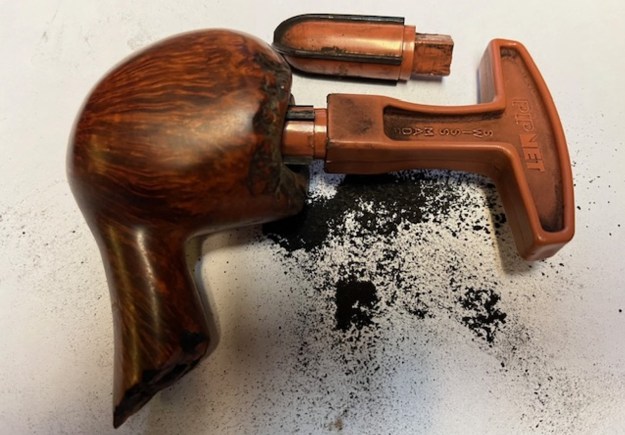
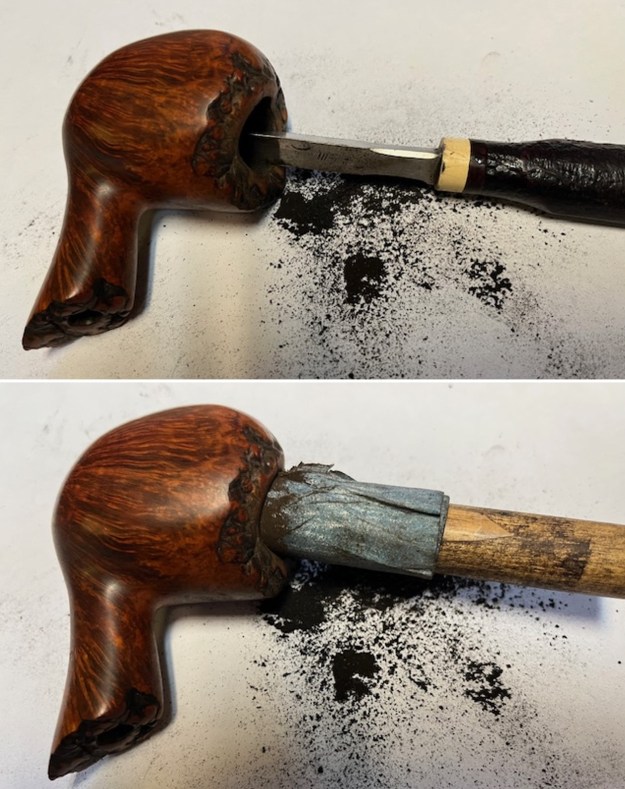
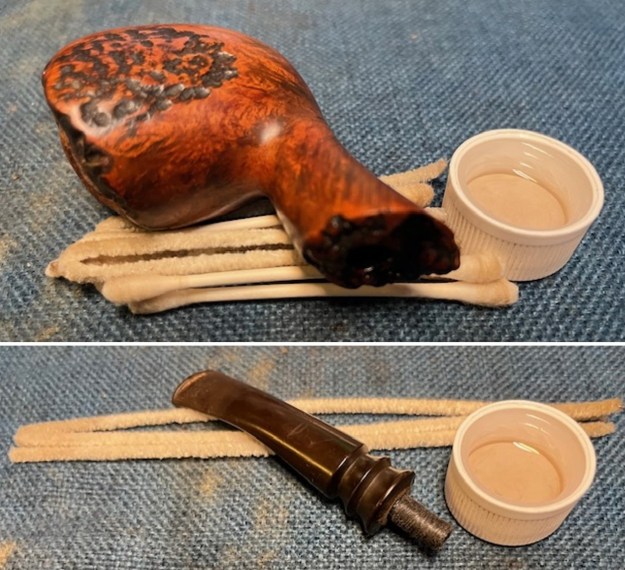
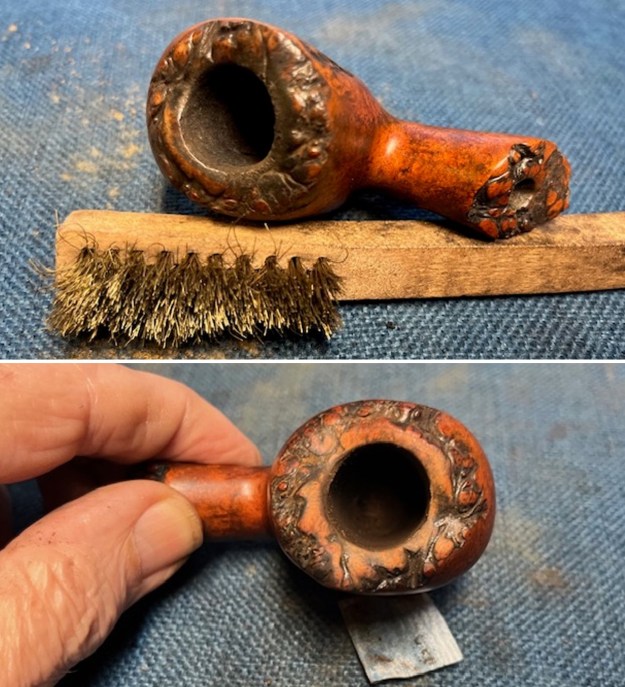
Armed with that information I turned my attention to the pipe itself. I reamed the bowl with a PipNet reamer to remove the brittle and crumbling bowl coating. It was very strange stuff and little fell apart as I touched it. I cleaned up what remained of the coating with a Savinelli Fitsall Pipe Knife. I sanded the walls of the bowl to remove any remnants with 220 grit sandpaper wrapped around a piece of dowel. Once finished the inside of the bowl was smooth and the briar was bare of the coating. Once the pipe was reamed, cleaned I worked on the internals – the mortise and airway in the shank and airway in the stem with pipe cleaners, cotton swabs and alcohol. The shank was quite clean other than the dust from my work on the bowl. The stem was also very clean.When I get the bowl to this point in the process I use Before & After Restoration Balm. It is a paste/balm that works to deep clean the finish, enliven and protect the briar. I work it into the briar with my finger tips to make sure that it covers every square inch of the pipe. I set it aside for 10 minutes to let it do its work. Once the time has passed I wiped it off with a soft cloth then buffed it with a cotton cloth. The briar really began to have a deep shine. The photos I took of the bowl at this point mark the progress in the restoration. You see the shine that the briar has taken on and the way sandblast has depth. I set the bowl aside and turned my attention to the stem. I worked over the stem with Soft Scrub cleanser and cotton pads to further remove the oxidation in the surface of the vulcanite.I sanded the stem with 320-3500 grit sanding pads to break up the remaining oxidation. I wiped it down after each sanding pad with an Obsidian Oil impregnated cloth. It began to look good.Since I did not have any filters for the Vauen like the one that was in place I used it again. It was discoloured from time but had not been used so it was clean.I polished the stem with micromesh sanding pads – dry sanding with 1500-12000 grit pads. I wiped the stem down after each sanding pad with Obsidian Oil. I polished it with Before & After Pipe Stem Polish – both Fine and Extra Fine. Once I had finished the polishing I gave it final coat of Obsidian Oil and set it aside to dry. As usual at this point in the restoration process I am excited to be on the homestretch. I look forward to the final look when I put a pipe back together, polished and waxed. I polished the bowl and stem with Blue Diamond to polish out the scratches in the briar and the vulcanite. I gave the bowl multiple coats of Conservator’s Wax and the stem multiple coats of carnauba wax. I buffed the pipe with a clean buffing pad to raise the shine. I hand buffed it with a microfiber cloth to deepen the shine. The pipe polished up pretty nicely. The sandblast finish really pops with the wax and polish. The shiny black vulcanite stem is a beautiful contrast to the dark browns of the bowl and shank. This Vauen Dr. Perl 103 Pot was another fun pipe to work on. The pipe is comfortable pipe to hold in the hand. The finished pipe is shown in the photos below. The dimensions of the pipe are Length: 5 ½ inches, Height: 1 ½ inches, Outside diameter of the bowl: 1 ½ inches, Chamber diameter: 7/8 of an inch. The weight of the pipe is 1.20 ounces/33 grams. Just two more of Sonny’s pipes to work on before I send them all back to him. Thanks for reading this blog and my reflections on the pipe while I working on it. As always, I encourage your questions and comments as you read the blog. Thanks to each of you who are reading this blog. Remember we are not pipe owners; we are pipemen and women who hold our pipes in trust until they pass on into the trust of those who follow us.

The Third of Six Pipes from Salmon Arm for Restoration –A Peterson’s System Premier 309


Blog by Steve Laug

A few weeks ago, I received an email from a friend, Sonny in Salmon Arm, BC. We have worked together on pipes over the past few years either ones that I have sold to him or those he has picked up on auctions or sales that I have restored. He wrote that he had some pipes that needed restoration.

I also have some of those old estates I still need to send to you for restoration. Hopefully I will be able to pack them up and get them off to you this week. Thank you again, Steve! – Sonny

He followed that up with another email regarding what he wanted done on the various pipes. I have included it below.

I would like the Vauen bent ball shape to have no band on it. It looks like it may have had a band there at one time and I’m not sure why. And if any of them needs to be stained again, I would like them to be black, especially the Peterson 309 and that ball Vauen. Let me know what you think.

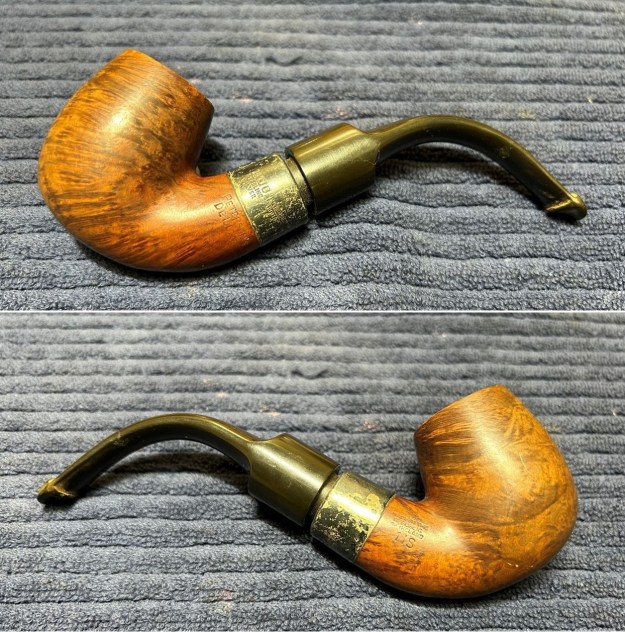
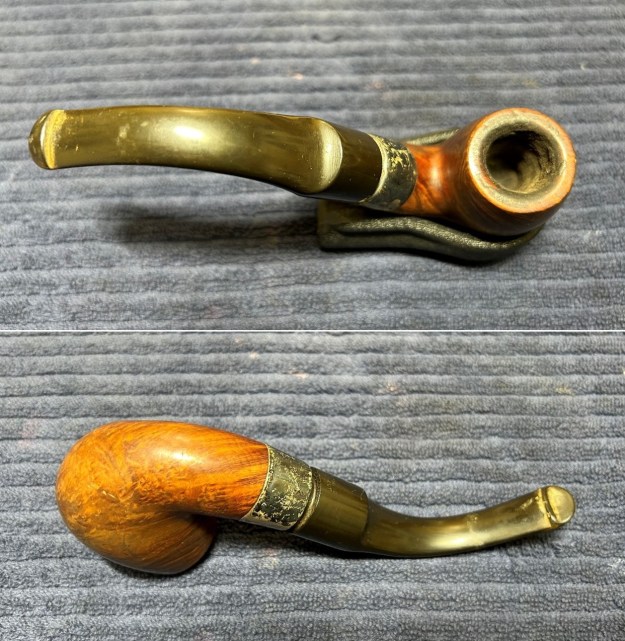
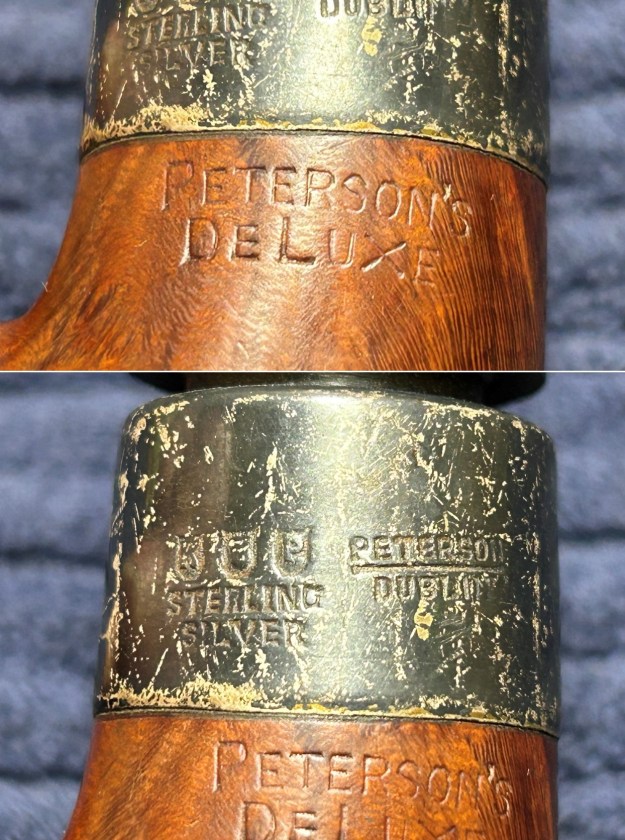
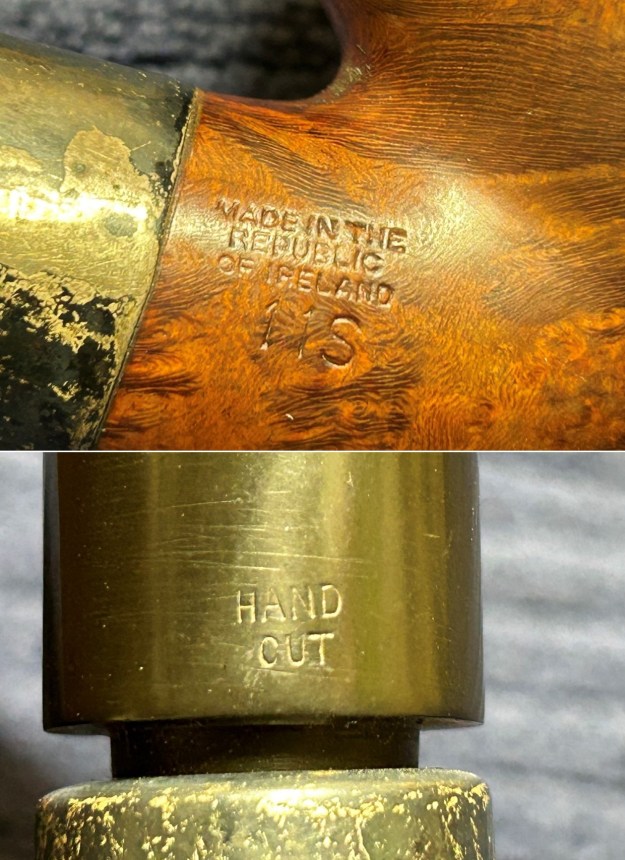
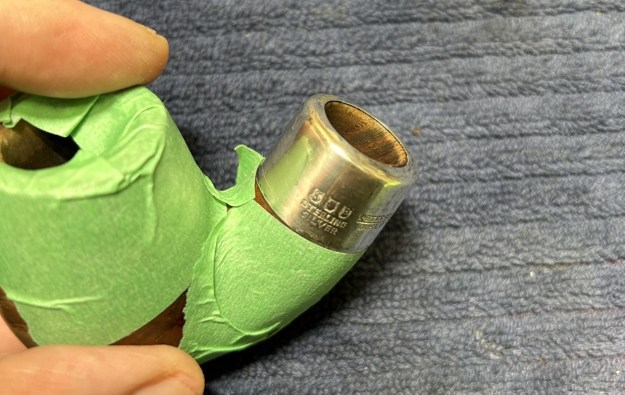
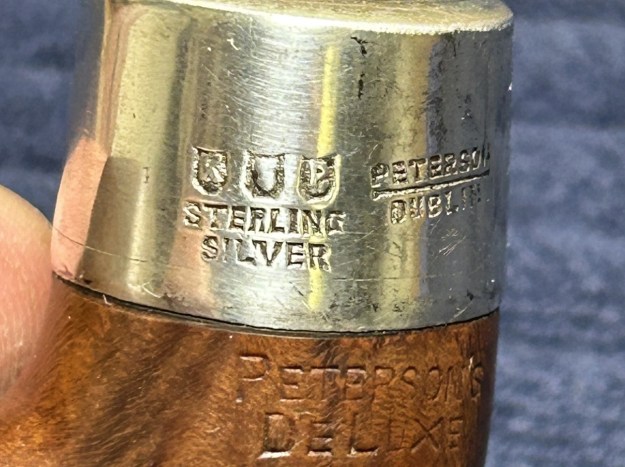
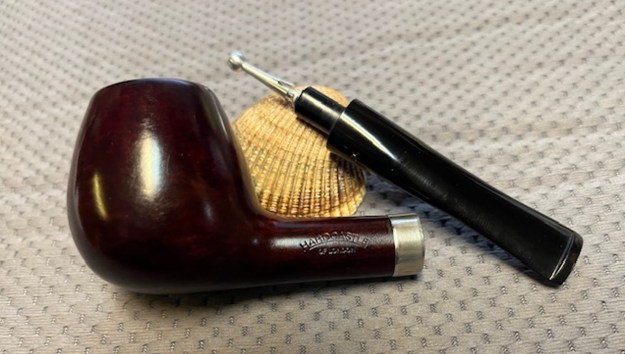
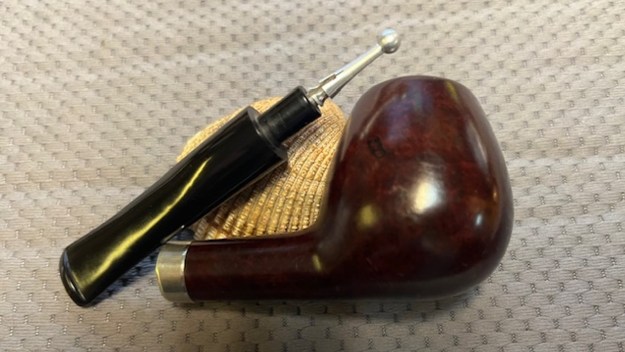
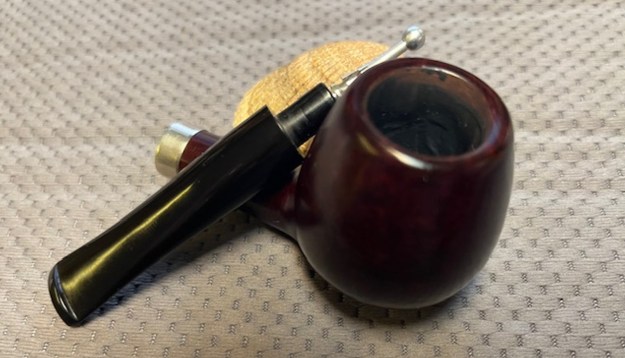
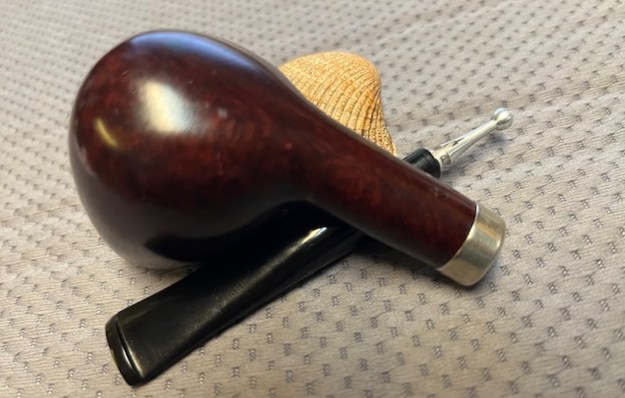
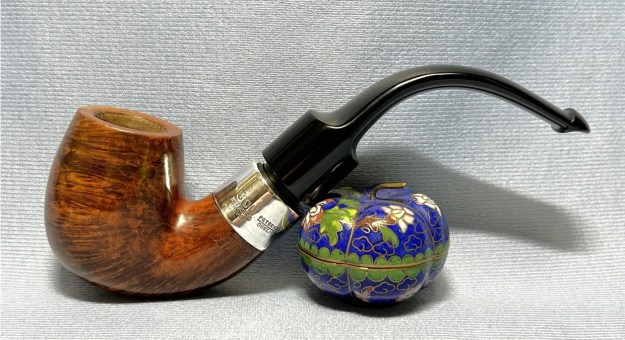
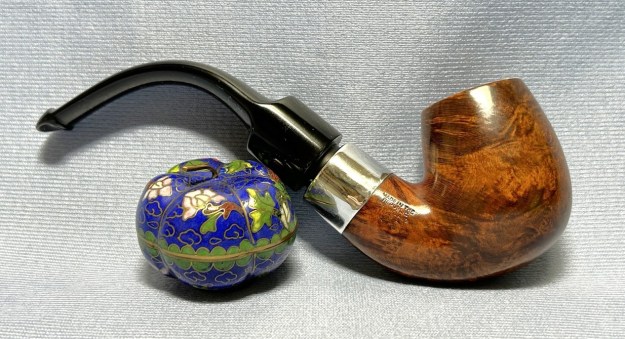
I took a photo of the box of six pipes once I unwrapped them. There were 6 interesting pipes – a Vauen Luxus Bent Ball, a Vauen Dr. Perl Billiard, a Sand Blast Vauen Dr. Perl Pot, a Parade News Briar Shop Oom Paul, a Bari Pearl Bamboo shank Ball and Peterson’s System Premier 309 Bent Billiard. All were in need of various degrees of restoration.The third pipe I chose to work on was the Peterson’s System Premier. It is stamped on the underside and reads Peterson’s [arched over] System [over] Premier. To the right of that it is stamped with the shape number 309 [over] Made in the [over] Republic [over] of Ireland. The pipe was dirty and there were white spots of paint in the sandblast finish. There was a silver ferrule on the shank end. It is stamped Peterson’s [over] Dublin followed by Sterling [over] Silver. That is followed three silver hallmarks: Hibernia seated arm on a harp for the country of manufacture; the crowned Harp designating sterling quality and the date letter marks which in this case was the letter I. The bowl has a thick cake in it and some lava in the sandblast on the rim top. The stem is a system stem with a metal chimney. It was very dirty with heavy oxidation and light tooth marks and chatter on both sides ahead of the button. I took these photos before I started my work on the pipe. I took a photo of the rim top and bowl to show the condition of both of them. There is a moderate cake in the bowl and some lava on the thin rim top. There is also debris in the bowl. The photos of the stem show the heavy oxidation and tooth marks/chatter on both sides ahead of the button.I took photos of the stamping on the underside of the shank. The stamping was clear and readable as noted above. It is much clearer in person but is hard to capture on the curve of the shank. I also tried to capture the stamping on the silver ferrule. I removed the stem from the shank and took a photo to show the proportions of the pipe. The first of those photos shows it with the chimney in place and the second shows it unscrewed. Before I started working on the pipe I wanted to dig into the detail on the stamping on the pipe. I knew what some of the stamping meant regarding the rough age of the pipe.

 Because the pipe was stamped Made in the Republic of Ireland I knew that I was dealing with a Republic Era pipe made between 1950-1989. It was a Sandblast Peterson’s System Premier 309 Billiard with an interesting blast finish. The stain on the bowl was a mess with fading and paint in the blast. Originally it looked like the bowl had been stained with a combination of brown stains. Now it was time to tighten down the date on the pipe from the hallmarks on the Sterling Silver ferrule.

I turned to the hallmarking chart on one of the blogs on rebornpipes to lock down the date for the pipe (https://rebornpipes.com/wp-content/uploads/2015/05/peterson-cataloguecomp_page_27.jpg). The chart defines the meaning of each hallmark. The first one of the seated woman with a harp is known as the Hibernia stamp and identifies the pipe as made in Ireland. The second stamp is a crowned harp which is a fineness mark denoting the high quality of silver that was used. The third stamp is an italic lower case “i”. I have included a larger screen capture of the chart in the lower left of the photo below. I have drawn a RED CIRCLE around the date letter below. It is a lower case “i” as seen in the circled letter below. It identifies the date of this Peterson’s pipe to 1976. I knew that I was dealing with a Republic Era pipe made between 1950 and the present. The hallmarks date the pipe to 1976. Now it was time to work on the pipe.

Armed with that information I turned my attention to the pipe itself. I reamed the bowl with a PipNet reamer to remove the cake. I cleaned up what remained with a Savinelli Fitsall Pipe Knife. I sanded the walls of the bowl to remove any remnants of cake with 220 grit sandpaper wrapped around a piece of dowel. Once finished the inside of the bowl was smooth. I scrubbed the exterior of the bowl with undiluted Murphy’s Oil Soap and a tooth brush. I also worked over the interior of the shank and bowl with brushes and soap at the same time. I rinsed the pipe off with warm running water and dried if off with a soft towel. The pipe is certainly cleaner. In speaking with Sonny I knew that he wanted the bowl stained black as he preferred that colour. So, this morning early I obliged him and stained the pipe with a black aniline stain. I applied it with the wool dauber and then flamed it to set the stain. I repeated the process until the coverage was even around the bowl.Once the stain dried I buffed it with a coarse cloth to remove any excess stain and to blend it into the surrounding surface smoothly. It looks good with the black stain. I sent photos to Sonny and he approves! Before I cleaned the inside of the shank and the stem I took the stem out of the Briarville’s Pipe Stem deoxidizer where it had been sitting over night and rubbed it briskly with a coarse cotton cloth to remove the oxidation on the surface and dry off the remaining deoxidizer on the stem. I am pleased with how well the product worked even after I have used this batch for over a year. Once the pipe was reamed, cleaned and stained and the stem was deoxidized I worked on the internals – the mortise, sump and airway in the shank and airway in the stem. I cleaned out the airway to the bowl, the mortise, sump and the airway in the stem with pipe cleaners, cotton swabs and alcohol. I also worked over the aluminum chimney that screwed into the tenon on the stem.When I get the bowl to this point in the process I use Before & After Restoration Balm. It is a paste/balm that works to deep clean the finish, enliven and protect the briar. I work it into the briar and the bamboo with my finger tips to make sure that it covers every square inch of the pipe. I set it aside for 10 minutes to let it do its work. Once the time has passed I wiped it off with a soft cloth then buffed it with a cotton cloth. The briar really began to have a deep shine. The photos I took of the bowl at this point mark the progress in the restoration. You see the shine that the briar has taken on and the way rustication has depth. The black stain works on the pipe and it is a beauty. I set the bowl aside and turned my attention to the stem. I wiped the stem down with Soft Scrub cleanser and cotton pads to further remove the remnants of oxidation in the surface of the vulcanite.I sanded the stem with 320-3500 grit sanding pads to break up the remaining oxidation. I wiped it down after each sanding pad with an Obsidian Oil impregnated cloth. It began to look good.Once finished that I screwed the aluminum chimney back into the tenon on the stem. The fit and look is very good. I polished the stem with micromesh sanding pads – dry sanding with 1500-12000 grit pads. I wiped the stem down after each sanding pad with Obsidian Oil. I polished it with Before & After Pipe Stem Polish – both Fine and Extra Fine. Once I had finished the polishing I gave it final coat of Obsidian Oil and set it aside to dry. I polished the silver ferrule with a jeweller’s cloth and the silver took on a deep shine. It is a pretty pipe with the shinning silver and the black stain on the bowl. I am excited to finish restoration and reworking of this Republic Era Peterson’s System Premier 309. I put the pipe back together and buffed it lightly with Blue Diamond on the buffing wheel. I gave the bowl multiple coats of Conservator’s Wax and the stem multiple coats of carnauba wax. I hand buffed the pipe with a clean buffing pad to raise the shine. It is fun to see what the polished bowl looks like with beautiful mixed grain all around it. The polished sandblast on bowl along with the silver ferrule look great with the black vulcanite stem. This sandblast Peterson’s System Premier 309 Bent Billiard is great looking and the pipe feels great in my hand. It is light and well balanced. Have a look at it with the photos below. The dimensions are Length: 6 inches, Height: 2 inches, Outside diameter of the bowl: 1 ¼ inches, Chamber diameter: ¾ of an inch. The weight of the pipe is 49 grams/ 1.73 ounces. It is a beautiful pipe that I will be sending back to Sonny once finish the remaining three pipes of the six he sent to me for restoration. I look forward to hearing what he thinks of it. As always, I encourage your questions and comments as you read the blog. Thanks to each of you who are reading this blog. Remember we are not pipe owners; we are pipemen and women who hold our pipes in trust until they pass on into the trust of those who follow us.
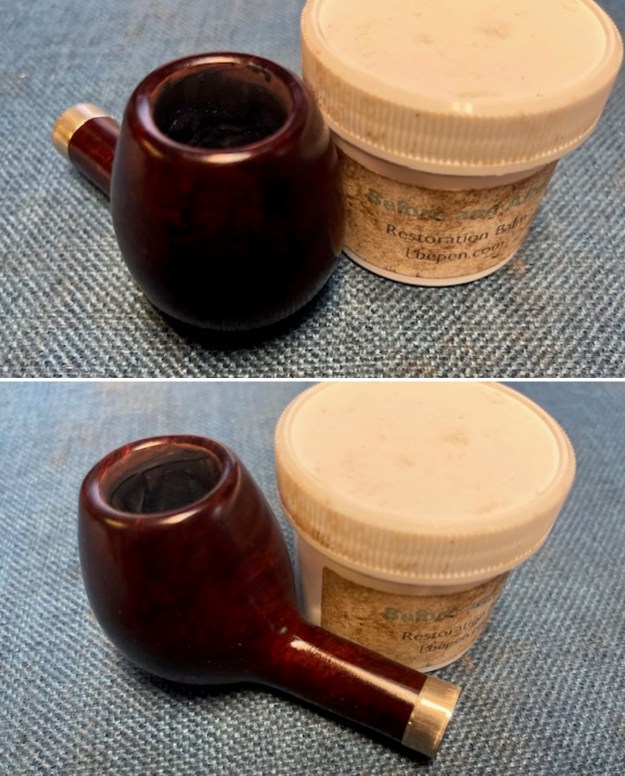
The Second of Six Pipes from Salmon Arm for Restoration –A Bari Pearl Bamboo Shank Apple


by Steve Laug

A few weeks ago, I received an email from a friend in Salmon Arm, BC. We have worked together on pipes over the past few years either ones that I have sold to him or those he has picked up on auctions or sales that I have restored. He wrote that he had some pipes that needed restoration.

I also have some of those old estates I still need to send to you for restoration. Hopefully I will be able to pack them up and get them off to you this week. Thank you again, Steve! – Sonny

He followed that up with another email regarding what he wanted done on the various pipes. I have included it below.

I would like the Vauen bent ball shape to have no band on it. It looks like it may have had a band there at one time and I’m not sure why. And if any of them needs to be stained again, I would like them to be black, especially the Peterson 309 and that ball Vauen. Let me know what you think.

I took a photo of the box of six pipes once I unwrapped them. There were 6 interesting pipes – a Vauen Luxus Bent Ball, a Vauen Dr. Perl Billiard, a Sand Blast Vauen Dr. Perl Pot, a Parade News Briar Shop Oom Paul, a Bari Pearl Bamboo shank Ball and Peterson’s System Premier 309 Bent Billiard. All were in need of various degrees of restoration.The second pipe I chose to work on was the Bari Pearl 7080 Bamboo Apple. It is stamped on the left side and reads Bari [over] Pearl. On the right side is stamped Made in [over] Denmark [over] the shape number 7080. The taper stem is stamped Bari on the left side of the taper. The pipe was dirty but the bamboo shank has some nice patina. The vulcanite ahead of and following the Bamboo shank is oxidized and almost brown. The finish was shiny but very dirty with lots of grime ground into the surface of the briar. The bowl had a moderate cake and debris in it and there was some lava on the rim top. The stem was very dirty with oxidation, calcification on the surface and light tooth marks and chatter on both sides ahead of the button. I took these photos before I started my work on the pipe. I took a photo of the rim top and bowl to show the condition of both of them. There is a moderate cake in the bowl and some lava on the thin rim top. There is also debris in the bowl. The photos of the stem show the oxidation, calcification and tooth marks/chatter on both sides ahead of the button.I took photos of the stamping on the left side and the right side of the shank. The stamping was clear and readable as noted above. It is much clearer in person but is hard to capture on the curve of the shank. I removed the stem from the shank and took a photo to show the proportions of the pipe. I turned to Pipephil to see if I could find information on the Pearl model but there was nothing there on the model (http://pipephil.eu/logos/en/logo-b1.html). I quote from the sidebar below and also have included a screen capture of the information.

Brand founded by Viggo Nielsen in 1950 and sold to Van Eicken Tobaccos in 1978. At this time Age Bogelund managed Bari’s production. The company has been bought in 1993 by Helmer Thomsen. Bari’s second: Don, Proctus.I then turned to Pipedia for some history of the brand and also to see if there as information on the Pearl model (https://pipedia.org/wiki/Bari). I have included the history below. There was also a photo that was done by Smoking Pipes.com and had a copy right so I did not include it. It did help me determine the kind of stem to use on the pipe.

Bari Piber was founded by Viggo Nielsen in Kolding around the turn of 1950/51. Viggo’s sons Kai Nielsen and Jørgen Nielsen both grew into their father’s business from a very young age and worked there till 1975.

Bari had very successfully adapted the new Danish Design that had been started mainly by Stanwell for it’s own models. When Viggo Nielsen sold Bari in 1978 to Joh. Wilh. von Eicken GmbH in Hamburg Bari counted 33 employees.

From 1978 to 1993 Åge Bogelund and Helmer Thomsen headed Bari’s pipe production. Thomson bought the company in 1993 re-naming it to Bari Piber Helmer Thomsen. The workshop moved to more convenient buildings in Vejen. Bogelund, who created very respectable freehands of his own during the time at Bari got lost somehow after 1993.

Bari’s basic conception fundamentally stayed the same for decades: series pipes pre-worked by machines and carefully finished by hand. Thus no spectacular highgrades but solid, reliable every day’s companions.

The most famous series are the smooth “Classic Diamond” and the blasted “Wiking”.

I did a quick Google search for the Bari Pearl pipe and found that Smokingpipes.com had quite a few different shapes of the model. It was interesting that all of them had a single knuckle like the one that I was working on and that the bamboo had been shaped and tapered on the front toward the bowl and toward the shank end. All of them had a vulcanite space on both ends of the bamboo. They were pretty pipes.

I then turned to Pipedia for some history of the brand and also to see if there as information on the Pearl model (https://pipedia.org/wiki/Bari). I have included the history below. There was also a photo that was done by Smoking Pipes.com and had a copy right so I did not include it.

Bari Piber was founded by Viggo Nielsen in Kolding around the turn of 1950/51. Viggo’s sons Kai Nielsen and Jørgen Nielsen both grew into their father’s business from a very young age and worked there till 1975.

Bari had very successfully adapted the new Danish Design that had been started mainly by Stanwell for it’s own models. When Viggo Nielsen sold Bari in 1978 to Joh. Wilh. von Eicken GmbH in Hamburg Bari counted 33 employees.

From 1978 to 1993 Åge Bogelund and Helmer Thomsen headed Bari’s pipe production. Thomson bought the company in 1993 re-naming it to Bari Piber Helmer Thomsen. The workshop moved to more convenient buildings in Vejen. Bogelund, who created very respectable freehands of his own during the time at Bari got lost somehow after 1993.

Bari’s basic conception fundamentally stayed the same for decades: series pipes pre-worked by machines and carefully finished by hand. Thus, no spectacular highgrades but solid, reliable every day’s companions.

The most famous series are the smooth “Classic Diamond” and the blasted “Wiking”.

Armed with that information I turned my attention to the pipe itself. I reamed the bowl with a PipNet reamer to remove the cake. I cleaned up what remained with a Savinelli Fitsall Pipe Knife. I sanded the walls of the bowl to remove any remnants of cake with 220 grit sandpaper wrapped around a piece of dowel. Once finished the inside of the bowl was smooth. I cleaned up the inner edge and top o f the bowl with a folded piece of 220 grit sandpaper to remove the lava coat and the darkening. It looked much better.Once the pipe was reamed and clean I took the opportunity to work on the internals – the mortise and airway in the shank and stem. I cleaned out the airway to the bowl, the mortise and the airway in the stem with pipe cleaners, cotton swabs and alcohol. I worked on the vulcanite spacers on both ends of the bamboo shank. I scrubbed them with Soft Scrub and cotton pads. While it is still lightly oxidized it is looking better. I sanded the bowl and the vulcanite shank spacers with 2 x 2 inch sanding pads using grits 320-3500 to remove oxidation on the shank spacers and the remaining finish on the bowl. It worked well and the pipe and shank look much better at this point in the process. I sanded the bowl with the micromesh sanding pads 1500-12000 grit to smooth out the finish and to allow the grain to stand out clearly. I dry sanded the briar rather than wet sand it. I prefer to use the pads dry and find they work very well on the briar. I sand with each pad (9 in total) and group them by threes for ease of reference. I wipe the bowl down with a damp cloth after each pad to remove the sanding debris and check the briar. I love seeing the developing shine on the briar as I move through the pads. I include many photos of the bowl so you can see the change. Pay attention to the changes in the briar in these photos as you work through them.  When I get the bowl to this point in the process I use Before & After Restoration Balm. It is a paste/balm that works to deep clean the finish, enliven and protect the briar. I work it into the briar and the bamboo with my finger tips to make sure that it covers every square inch of the pipe. I set it aside for 10 minutes to let it do its work. Once the time has passed I wiped it off with a soft cloth then buff it with a cotton cloth. The briar really began to have a deep shine. The photos I took of the bowl at this point mark the progress in the restoration. You see the shine that the briar has taken on and the way the grain just pops. It is a gorgeous pipe. I set the bowl aside and turned my attention to the stem. I pained the stem with the flame of a lighter to lift the tooth marks and was able to lift them all. I sanded out those that remained along with the oxidation and calcification with a folded piece of 220 grit sandpaper. I touched up the faint Bari stamp with some white acrylic fingernail polish to see if I good get it a bit more legible. Once it dried I scraped the excess off and sanded it with a worn 400 grit sanding pad. It was better, but still a little faint.I sanded the stem with 320-3500 grit sanding pads to break up the remaining oxidation. I wiped it down after each sanding pad with a soft cloth. It began to look good. I polished the stem with micromesh sanding pads – dry sanding with 1500-12000 grit pads. I wiped the stem down after each sanding pad with Obsidian Oil. I polished it with Before & After Pipe Stem Polish – both Fine and Extra Fine. Once I had finished the polishing I gave it final coat of Obsidian Oil and set it aside to dry. I am excited to finish restoration of this Bari Pearl 7080 Bamboo Shank Apple. I put the pipe back together and buffed it with Blue Diamond on the buffing wheel. I gave the bowl and the stem multiple coats of carnauba wax. I hand buffed the pipe with a clean buffing pad to raise the shine. It is fun to see what the polished bowl looks like with beautiful mixed grain all around it. The polished grain on the pipe looks great with the black vulcanite stem. This smooth Bari Pearl Bamboo Shank Apple is great looking and the pipe feels great in my hand. It is light and well balanced. Have a look at it with the photos below. The dimensions are Length: 5 ½ inches, Height: 1 ½ inches, Outside diameter of the bowl: 1 ¼ inches, Chamber diameter: ¾ of an inch. The weight of the pipe is 45 grams/ 1.59 ounces. It is a beautiful pipe that I will be sending to a friend of mine who included this pipe among the six he sent to me for restoration. I look forward to hearing what he thinks of it. As always, I encourage your questions and comments as you read the blog. Thanks to each of you who are reading this blog. Remember we are not pipe owners; we are pipemen and women who hold our pipes in trust until they pass on into the trust of those who follow us.

The First of Six Pipes from Salmon Arm for Restoration –A Vauen Bent Ball Filter Pipe


Blog by Steve Laug

A few weeks ago, I received an email from a friend in Salmon Arm, BC. We have worked together on pipes over the past few years either ones that I have sold to him or those he has picked up on auctions or sales that I have restored. He wrote that he had some pipes that needed restoration.

I also have some of those old estates I still need to send to you for restoration. Hopefully I will be able to pack them up and get them off to you this week. Thank you again, Steve! – Sonny

He followed that up with another email regarding what he wanted done on the various pipes. I have included it below.

 I would like the Vauen bent ball shape to have no band on it. It looks like it may have had a band there at one time and I’m not sure why. And if any of them needs to be stained again, I would like them to be black, especially the Peterson 309 and that ball Vauen. Let me know what you think.

I took a photo of the box of six pipes once I unwrapped them. There were 6 interesting pipes – a Vauen Luxus Bent Ball, a Vauen Dr. Perl Billiard, a Sand Blast Vauen Dr. Perl Pot, a Parade News Briar Shop Oom Paul, a Bari Pearl Bamboo shank Ball and Peterson’s System Premier 309 Bent Billiard. All were in need of various degrees of restoration.The first pipe I chose to work on was the Vauen Bent Ball. It is stamped on the left side and reads Vauen [over] Luxus. On the underside is the shape number 3083. The pipe was dirty and the shank appeared to have had band on it at one time. There were no cracks or damages on the shank end or sides so it was cosmetic. Where the band had been there was some dried glue and debris on the shank. The finish was very dirty with lots of grime ground into the surface of the briar. The bowl had a thick cake in it and there was some lava on the rim top. The stem was a 9mm filter stem and it was very dirty in the tenon and the airway in the stem was plugged. The airway in the shank was heavily tarred and there were light tooth marks and chatter on both sides ahead of the button. I took these photos before I started my work on the pipe. I took a photo of the rim top and bowl to show the condition of both of them. You can also see the debris where the shank band had been. The photos of the stem show the oxidation and tooth marks/chatter on both sides ahead of the button.I took photos of the stamping on the left side and underside of the shank. The stamping was clear and readable as noted above.As usual I do some background reading to remind myself of the background on the Vauen brand before I started my work on the pipe. It is an important part of the restoration to me as it adds colour to the pipe I am working on. I turned to Pipephil’s site (http://pipephil.eu/logos/en/logo-v1.html). I did a screen capture of the information on the site. There was a great sidebar that gave some history of the brand. I include both of them below.In 1848, Karl Ellenberger and his partner Carl August Ziener establish a pipe factory in Nuremberg. In 1901 they merge with Gebhard Ott an other factory in town and they create a firm named Vereinigten Pfeifenfabriken Nürnberg (abbreviated : VPFN*). Shortly after Ernst Eckert, a member of the Ott family became manager of the society. During the 20th century Adolf, Ernst (jr) and Alexander Eckert (CEO in 2012) followed one another at Vauen’s head.* VPFN : “V” is said VAU in German (pronounce faou) and “N” becomes EN. Hence VAUEN.
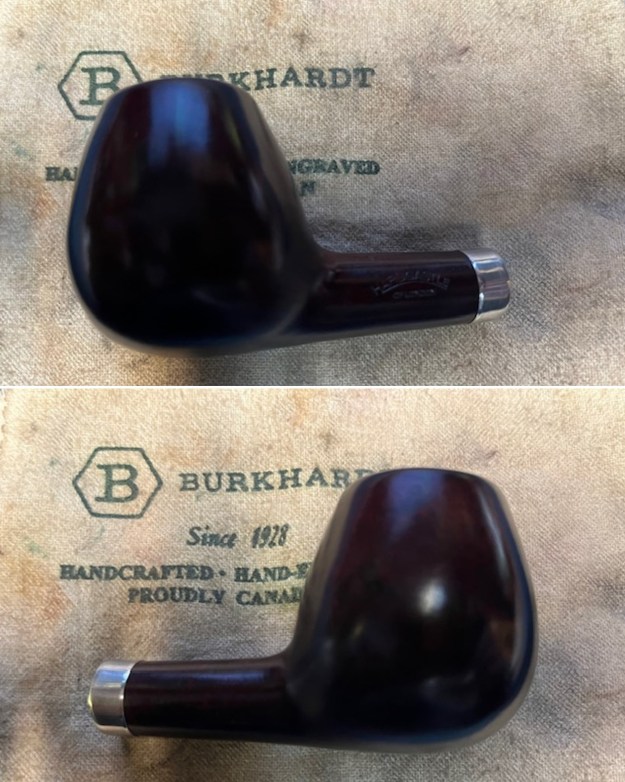
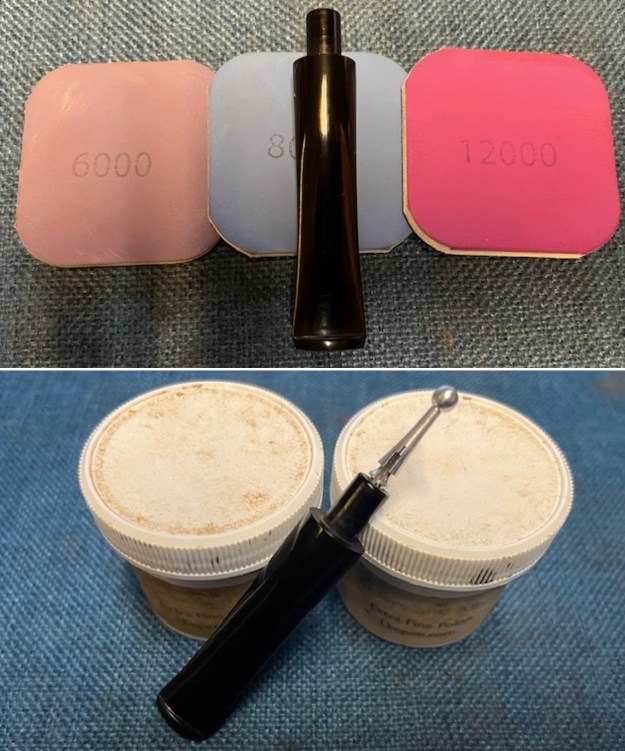
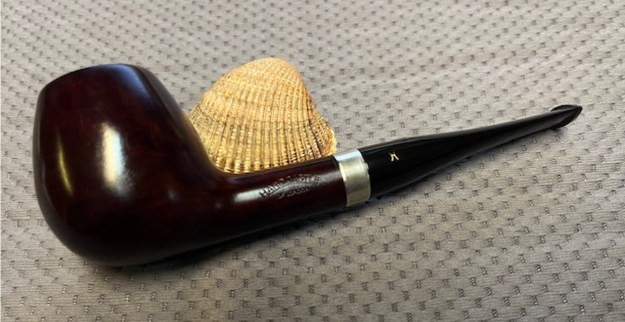
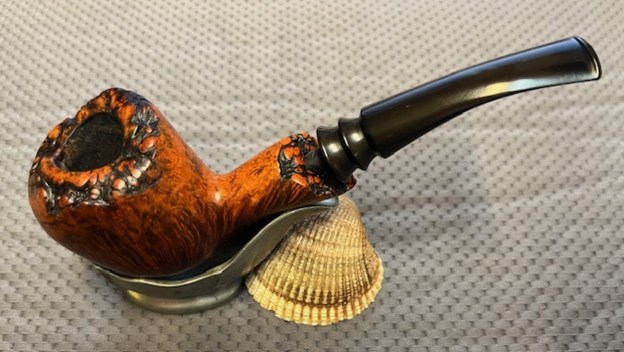
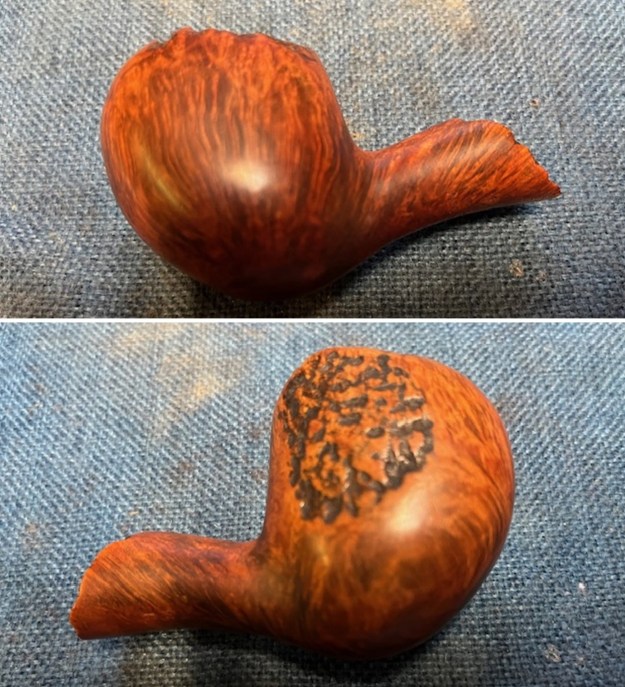
Dal Stanton (Pipesteward.com) wrote a great piece on the history of the brand on a Vauen pipe that he worked on. I reread that and quote a section from the blog below that gives a great sense of the history of the German brand and some photos from the website (https://rebornpipes.com/2021/04/27/breathing-new-life-into-a-german-vauen-6294-p-lip-saddle-billiard-for-a-special-young-lady/).

… I turn to the question of the history of the VAUEN name? I look to the History section of the VAUEN website and again, I am impressed with the presentation. Whenever I work on a pipe, and especially when a pipe name is new to me, I enjoy looking at its history to appreciate the pipe more fully now on my worktable. From VAUEN’s website:Quality and a wealth of ideas have a long tradition at VAUEN. 160 years of VAUEN: that means 160 years of skilled workmanship and modern technology and 160 years of experience in fulfilling the individual wishes of today’s pipe lovers, and those of tomorrow.

In Nuremberg in 1848, Karl Ellenberger and his partner Carl August Ziener turned an idea into reality: Germany’s first pipe manufacturer produced tobacco pipes for connoisseurs around the world using a selection of the best wood. In an amalgamation with the Gebhard Ott pipe factory, which was founded in 1866 in Nuremberg, the Vereinigten Pfeifenfabriken Nuremberg (United Pipe Factories Nuremberg, or VPFN) was born in 1901.  Under the management of Ernst Eckert, a descendent of the founding Ott family, a company was born whose products and services would shape the tobacco and smoking culture in Europe and overseas for the next 160 years and counting.

The question about the name, VAUEN, not being a name of a person and why it is capitalized throughout is explained:

In his search for a name that would be easily remembered by all pipe lovers, Ernst Eckert’s son, Adolf Eckert, coined a new name for the company in 1909: VAUEN – a composition of the first letters V (pronounced vow) of Vereinigte Pfeifenfabriken and N (pronounced en) of Nuremberg. A brand for the future was born.

Armed with that information I turned my attention to the pipe itself. To clean up the hardened glue and debris on the shank end I washed it off with acetone on a cotton pad. I was able to remove the debris and glue as well the shiny varnish coat on the bowl. It looked much better than when I started. I reamed the bowl with a PipNet reamer to remove the cake. I cleaned up what remained with a Savinelli Fitsall Pipe Knife. I sanded the walls of the bowl to remove any remnants of cake with 220 grit sandpaper wrapped around a piece of dowel. Once finished the inside of the bowl was smooth. Once the pipe was reamed and clean I took the opportunity to work on the internals – the mortise and airway in the shank and stem. I cleaned out the airway to the bowl, the mortise and the airway in the stem with pipe cleaners, cotton swabs and alcohol.I sanded the bowl with 2 inch sanding pads using grits 320-3500 to remove the lava on the rim top and the remaining finish on the bowl. All of it was done to prepare the bowl for a restaining. Sonny had asked that once the pipe was cleaned up if I would stain it black for him. He also did not want the and in place on it. I stained it with a black aniline stain – Feibing’s Black Shoe Dye. I applied it with a dauber and flamed it with a Bic lighter to set the stain in the briar. I set it aside to dry.I set the bowl aside to let the stain cure. I turned my attention to the stem. I worked it over with cotton pads and Soft Scrub cleanser. I was able to remove the oxidation and the stem began to look very good at this point.I sanded the stem with 320-3500 grit sanding pads to break up the remaining oxidation. I wiped it down after each sanding pad with a soft cloth. It began to look good. I polished the stem with micromesh sanding pads – dry sanding with 1500-12000 grit pads. I wiped the stem down after each sanding pad with Obsidian Oil. I polished it with Before & After Pipe Stem Polish – both Fine and Extra Fine. Once I had finished the polishing I gave it final coat of Obsidian Oil and set it aside to dry. Once I finished the stem, I fit it with a clean 9mm filter. I have a small box of Vauen Dr. Perl Junior filters that I have here and they fit the stem perfectly.From there I moved to polishing the briar with micromesh sanding pads. Before I sanded the bowl, I wiped it down with isopropyl alcohol on a cotton pad to make the stain a bit more transparent. Then it was ready for sanding. I sanded the newly stained bowl to allow the grain to stand out clearly. I dry sanded the briar rather than wet sand it. Again, it is a matter of personal preference. I prefer to use the pads dry and find they work very well on the briar. I sand with each pad (9 in total) and group them by threes for ease of reference. I wipe the bowl down with a damp cloth after each pad to remove the sanding debris and check the briar. I love seeing the developing shine on the briar as I move through the pads. I include the many photos of various angles of the bowl so you can see the change. Pay attention to the changes in the briar in these photos as you work through them. When I get the bowl to this point in the process I use Before & After Restoration Balm. It is a paste/balm that works to deep clean the finish, enliven and protect the briar. I work it into the briar with my finger tips to make sure that it covers every square inch of the pipe. I set it aside for 10 minutes to let it do its work. Once the time has passed I wiped it off with a soft cloth then buff it with a cotton cloth. The briar really began to have a deep shine. The photos I took of the bowl at this point mark the progress in the restoration. You see the shine that the briar has taken on and the way the grain just pops. It is a gorgeous pipe. I finished with the Blue Diamond and moved on to buffing with carnauba wax. Once I have a good shine in the briar and stem I always give the bowl and the stem multiple coats of carnauba wax. I have found that I can get a deeper shine if I following up the wax buff with a clean buffing pad. It works to raise the shine and then I follow that up with a hand buff with a microfiber cloth to deepen the shine. It is always fun for me to see what the polished bowl looks like with the polished stem. It really is a beautiful pipe. The smooth finish around the bowl sides and shank show the grain shining through the polished black stains on this Vauen Luxus 3083 Filter Ball and the polished stem is a great addition. The finished pipe feels great in my hand. It is light and well balanced. Have a look at it with the photos below. The dimensions are Length: 5 ¾ inches, Height: 1 ¾ inches, Outside diameter of the bowl: 1 ¼ inches, Chamber diameter: 7/8 of an inch. The weight of the pipe is 1.20 ounces/34 grams. It is a beautiful pipe that I will be sending to a friend of mine who is collecting older Vauen pipes. I look forward to hearing what he thinks of it. As always I encourage your questions and comments as you read the blog. Thanks to each of you who are reading this blog. Remember we are not pipe owners; we are pipemen and women who hold our pipes in trust until they pass on into the trust of those who follow us.

Cleaning up a Pineapple Style Rusticated Peterson’s of Dublin System Standard 312


by Steve Laug

I finally finished the heavy group of pipes that I was working on for the wife of an old pipe man in Ontario. There were some amazing pipes there and with the restoration they came out looking very good. I will be mailing them out to him early in the week ahead. Now it was time to work on other pipes awaiting restoration. The first of those on the table is a Peterson’s of Dublin System Standard 312 with a pineapple style rustication and an acrylic fishtail stem. I received an email before my trip to Idaho to visit my father. In it a friend Matthew wrote about a pipe he had picked up that needed my attention. I have included the email below.

Steve, The Peterson is heading your way.  I probably would not have even purchased the Pete, except it is an example of the “pineapple” rustication that Peterson used to employ.  They’re getting hard to find and I do not know if it from rarity (not many made) or that Peterson did not sell many because the rustication did not appeal to pipe smokers. Please examine the Pete and give me your diagnosis. Thank you. Matthew

This afternoon I opened the box Matthew shipped the pipe in and found a nice looking green Peterson’s box inside. I opened the box and found a Peterson’s 312 inside and the original green pipe sock it came in. It was a great looking pipe. The smell in the box was a heavy English/Latakia smell that filled the room when I opened the box. The finish on the pipe was quite clean with just some dust in the rustication grooves. The polished nickel ferrule was in excellent condition with no dents or tarnish. The bowl had a thick cake on the walls of the bowl and the shank had a lot of tar and oil sludge filling the sump, the mortise and the airway in the shank and the stem. The stem was acrylic and was a fishtail style stem. I believe it is a Peterson’s made fishtail stem that came with the pipe but I am not sure. The fir in the shank is perfect which seems to point this direction. There is no P stamp on the saddle portion of the stem but that is not abnormal as many of their stems did not have the stamp. Overall it is a beautiful pipe with a unique finish. I am looking forward to working on it. I took photos of the pipe before I started. I took a close-up photo of the bowl and rim top to show its condition. The inside of the bowl was heavily caked with debris in the bottom of the bowl. The rim top looked very good with just some grime in the rustication. There was a polished nickel ferrule on the shank end that was in decent condition with no nicks. The acrylic stem was dirty and had some light tooth marks and chatter on the top and underside ahead of the button.I took photos of the stamping on the smooth panel on the underside of the shank. It is faint but readable as noted above. I also took a photo of the stamping on the left side of the nickel ferrule and it is also very clear. I also removed the stem from the shank and took a photo of the pipe. I reamed the bowl with a PipNet reamer to remove the cake. I cleaned up what remained with a Savinelli Fitsall Pipe Knife. I sanded the walls of the bowl to remove any remnants of cake with 220 grit sandpaper wrapped around a piece of dowel. Once finished the inside of the bowl was smooth. Once the pipe was reamed and clean I took the opportunity to work on the internals – the sump, mortise and airway in the shank and stem. I cleaned out the airway to the bowl, the mortise and the airway in the stem with pipe cleaners, cotton swabs and alcohol. The stink in the pipe was still strong so I decided to exorcise the stink. I stuffed the bowl with cotton bolls and twisted a cotton boll and stuffed it in the sump and mortise. I used an ear syringe to fill the bowl with 99% isopropyl alcohol and set the bowl aside to let the oils wick out of the briar. I let the pipe sit overnight. In the morning the second and third photos show what I found. The shank plug cotton had wicked out tars, oils and some stain! It smells far better than when I started the process. I will let it dry out and check it again to see if I need to repeat the process. I cleaned up the rim top a bit with some Before & After Briar Cleaner. I worked it into the rim top surface with a tooth brush and then buffed it off with a cotton pad. It looked much better at this point in the process. I rubbed the bowl down with Before & After Restoration Balm. I worked it into the surface of the briar with my fingertips and a shoe brush to clean, enliven and protect it. I let the balm sit for ten minutes then buffed with a cotton cloth to raise the shine. Mark Hoover’s Balm is a product that I have come to appreciate and one I use on every pipe I have been working on. I sanded the stem with 320-3500 grit sanding pads to break up the remaining oxidation. I wiped it down after each sanding pad with a soft cloth. It began to look good. I polished the stem with micromesh sanding pads – dry sanding with 1500-12000 grit pads. I wiped the stem down after each sanding pad with Obsidian Oil. I polished it with Before & After Pipe Stem Polish – both Fine and Extra Fine. Once I had finished the polishing I gave it final coat of Obsidian Oil and set it aside to dry. Matthew’s beautifully shaped K&P Peterson’s of Dublin System Standard 312 was a fun one to work on. It has unique Pineapple Rustication beauty that the Peterson’s System Pipes have ceased to use. I put the bowl and stem back together. I polished the bowl and stem with Blue Diamond to blend in the stain and to polish out the scratches in the briar and the vulcanite. I gave the bowl multiple coats of Conservator’s Wax and the stem multiple coats of carnauba wax. I buffed the pipe with a clean buffing pad to raise the shine. I hand buffed it with a microfiber cloth to deepen the shine. The pipe polished up pretty nicely. The rusticated finish is well done and the polished smooth finish on the shank end and rim top look really good with the black vulcanite stem. This Peterson’s of Dublin System Standard 312 was a fun pipe to clean up. It is a comfortable pipe to hold in the hand. The finished pipe is shown in the photos below. The dimensions of the pipe are Length: 5 ½ inches, Height: 2 inches, Outside diameter of the bowl: 1 ¼ inches, Chamber diameter: ¾ of an inch. The weight of the pipe is 51 grams/1.80 ounces. Thanks for reading this blog and my reflections on the pipe while I worked on it. This interesting Peterson will be going back to Matthew to fire up and enjoy! Thanks for reading this blog and walking through the restoration with me.