Tag Archives: stem work

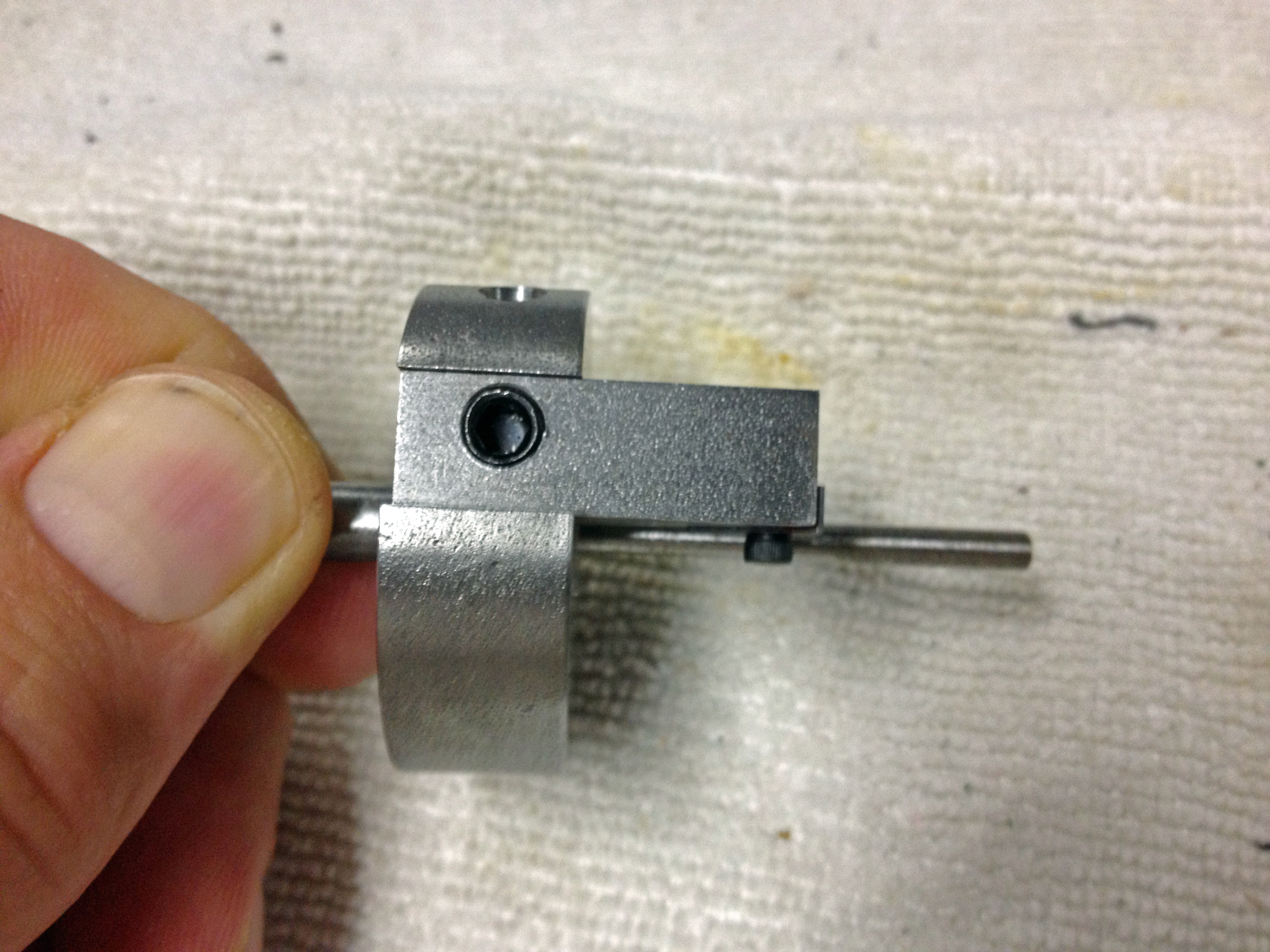
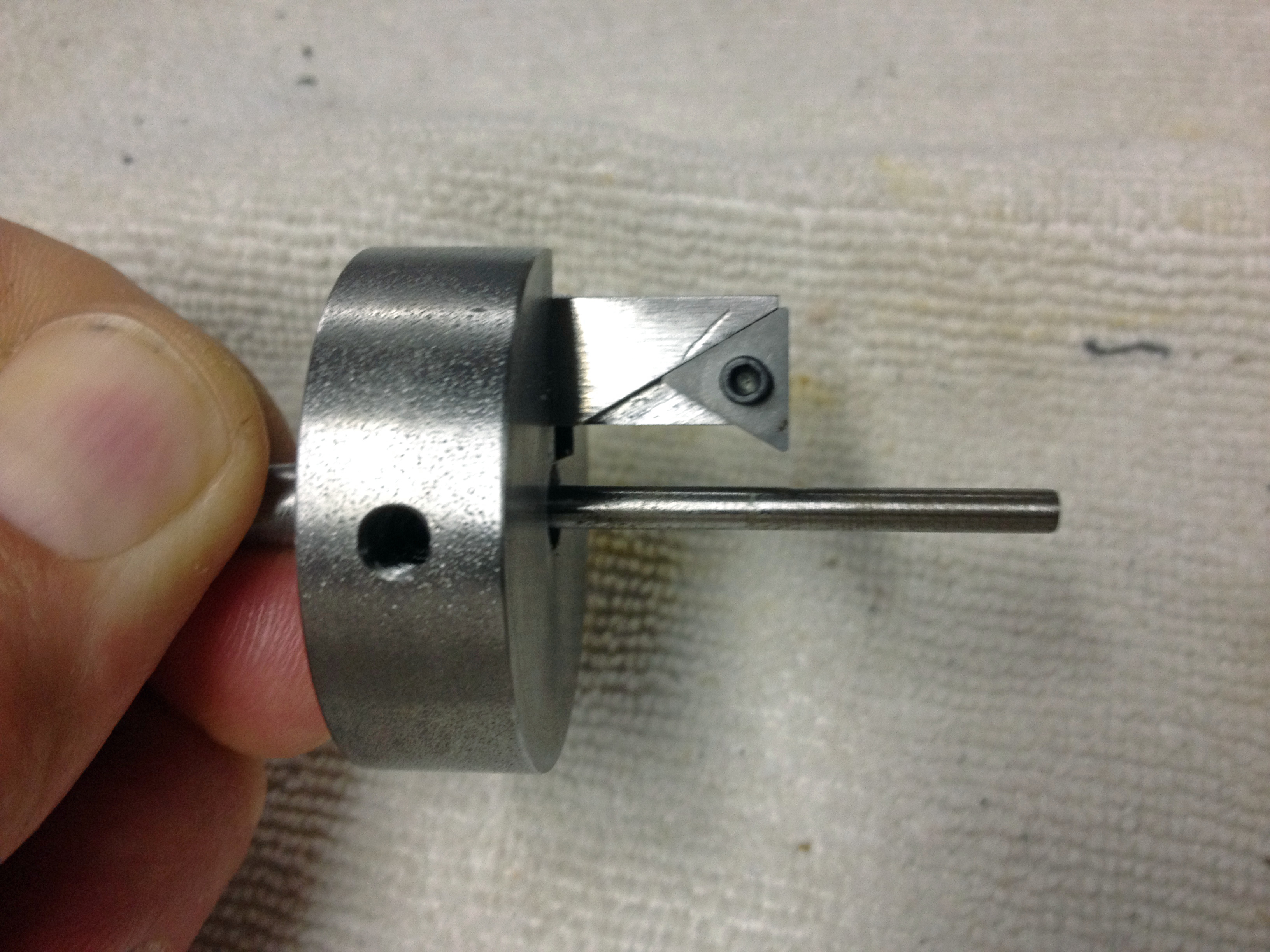
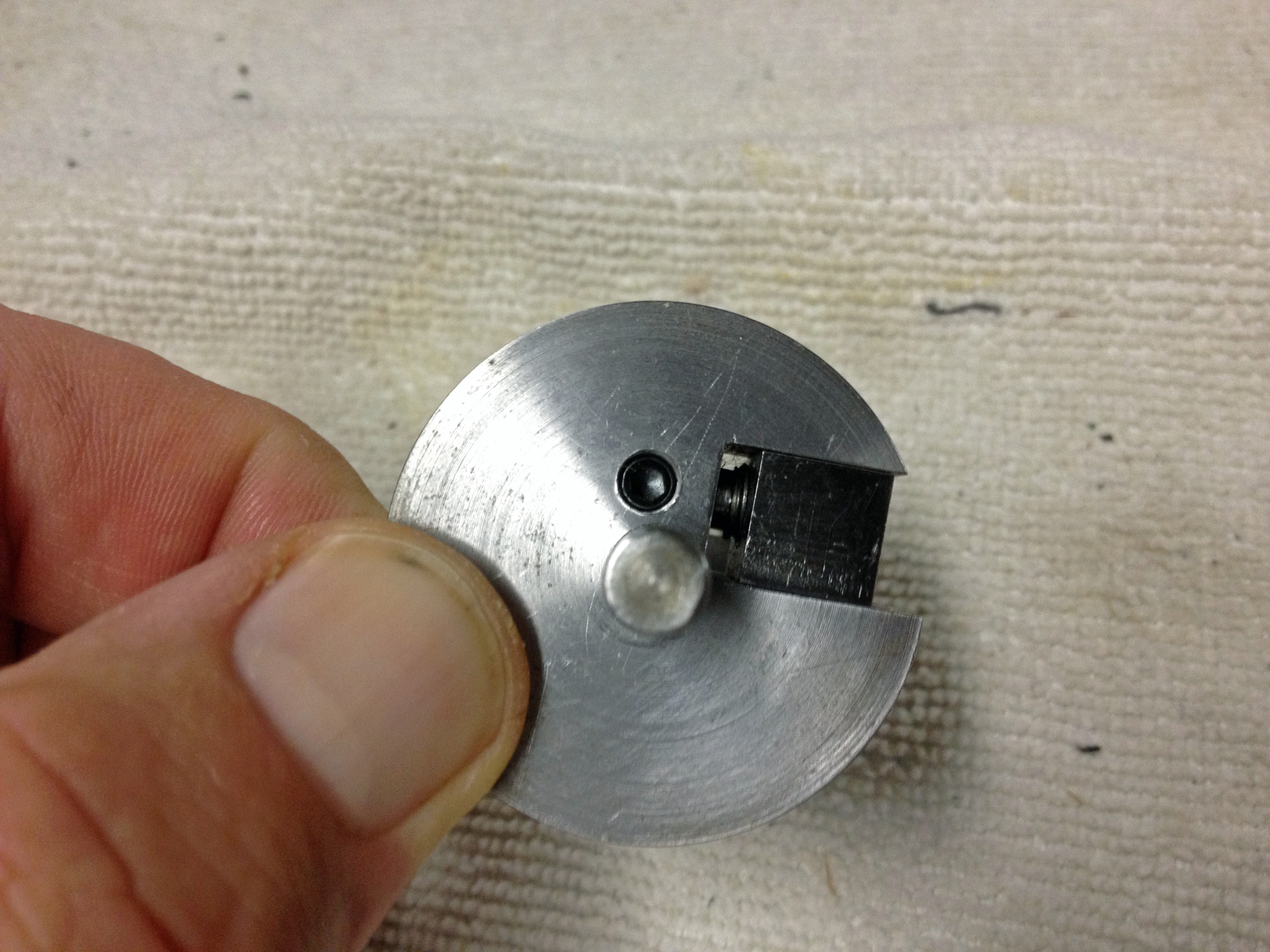
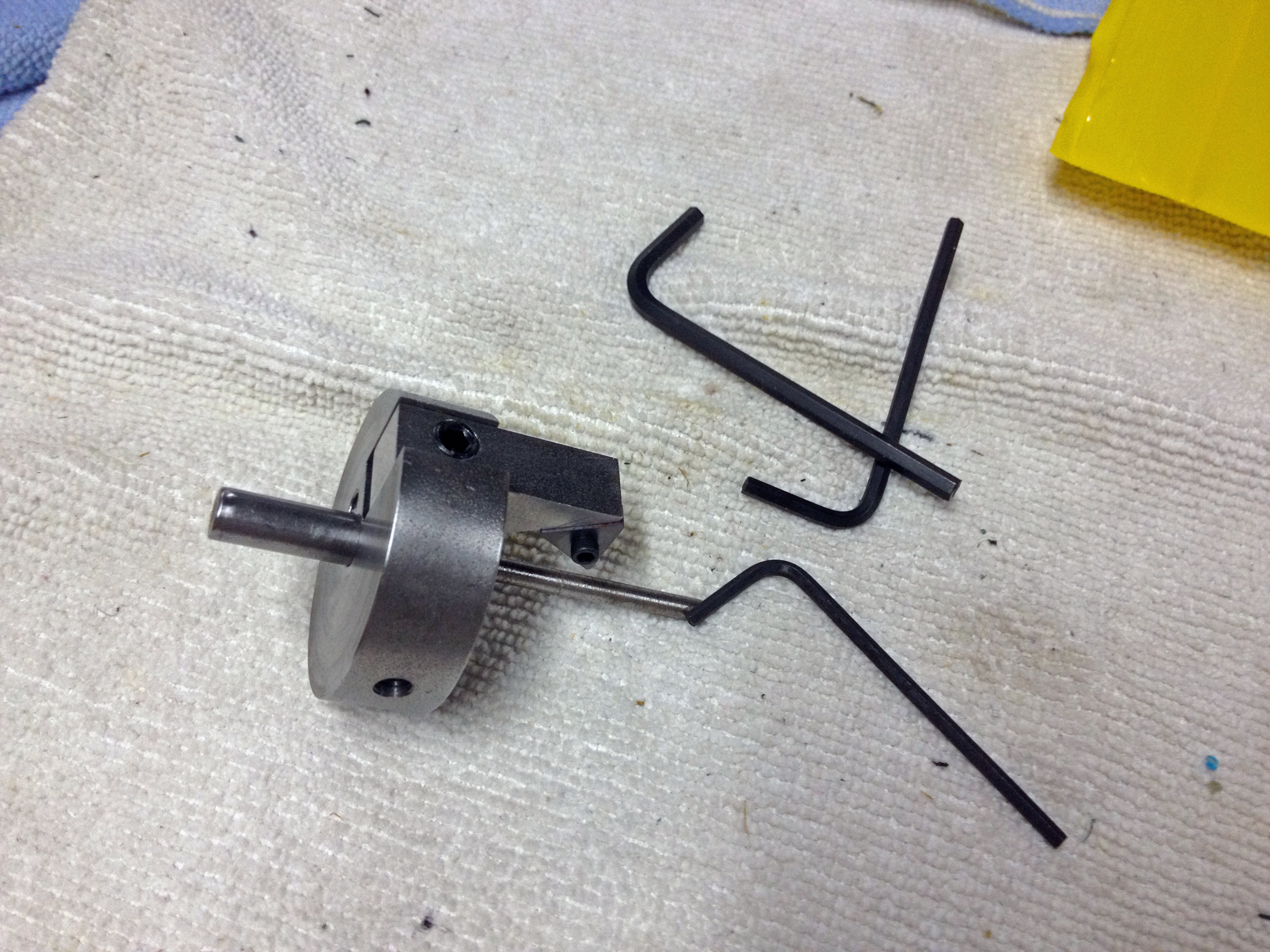
Pipe Maker’s Emporium Tenon Turning Tool


Blog by Greg Wolford

Several weeks ago I obtained a tenon turning tool from Pipe Maker’s Emporium (PME). I have been planning on writing my “review” of this tool since I mentioned it in the Big-Ben post but have put it off due to time and wanting to get better acquainted with the tool. Well, I think I am ready so here we go!

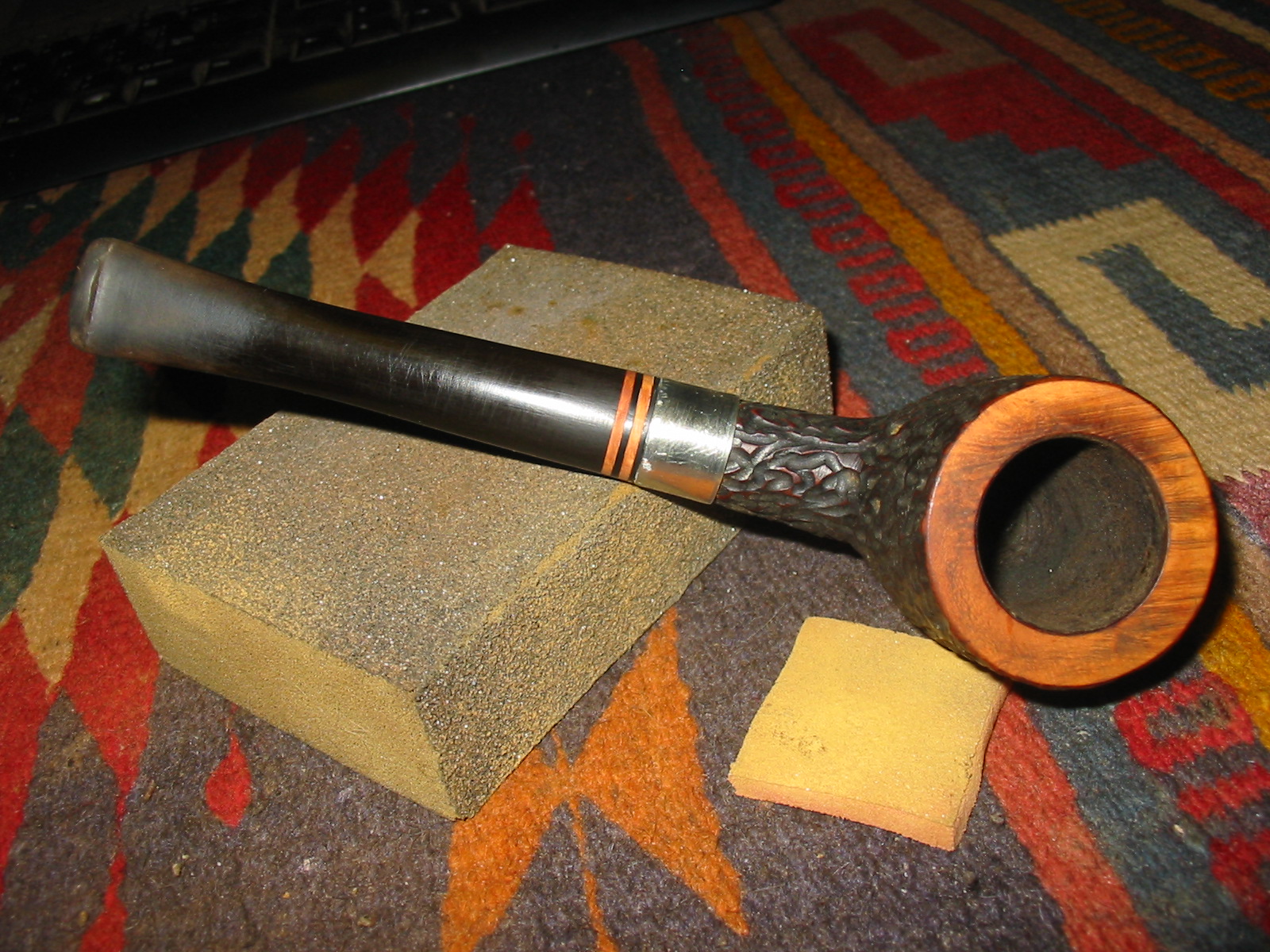
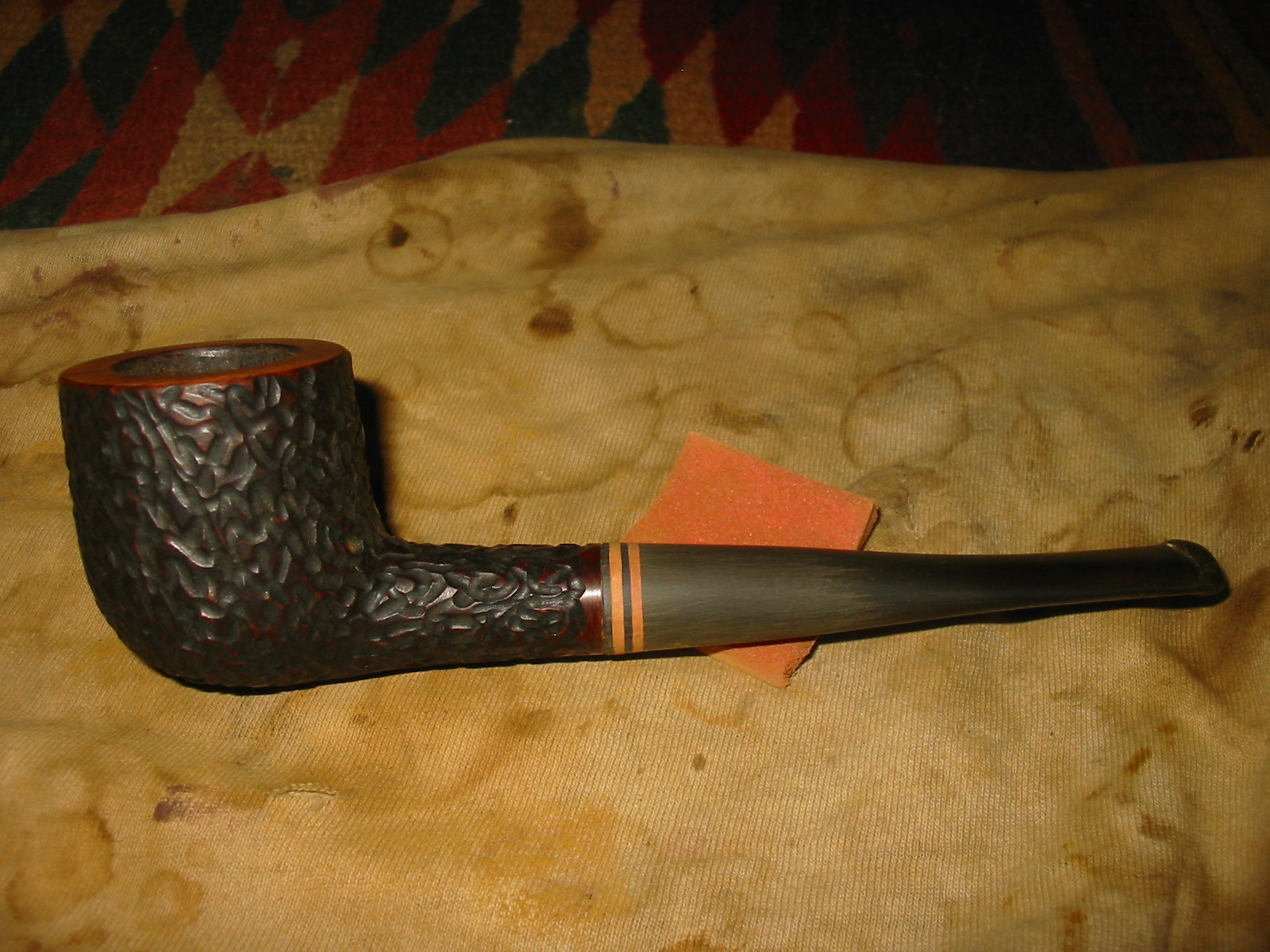
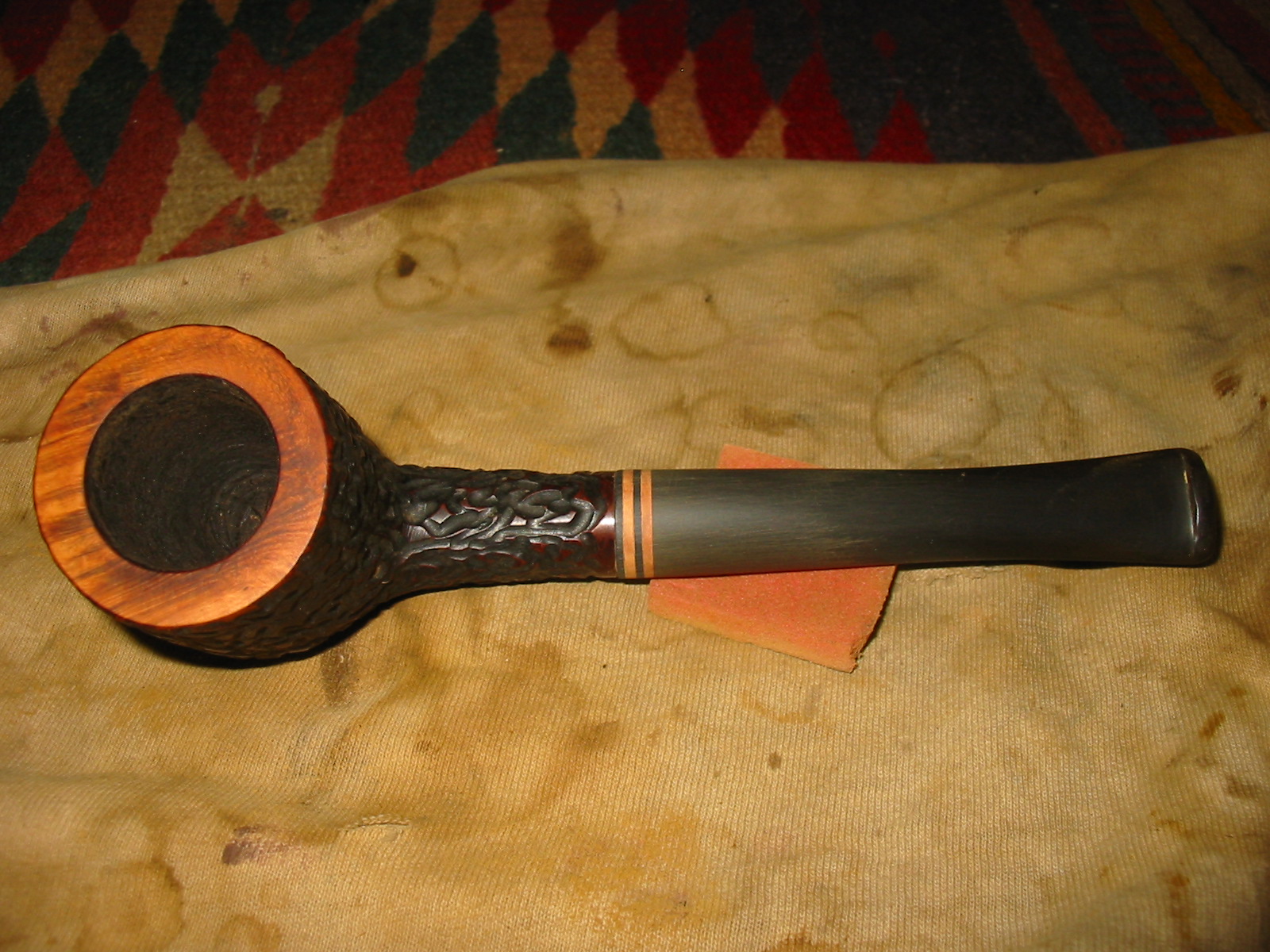
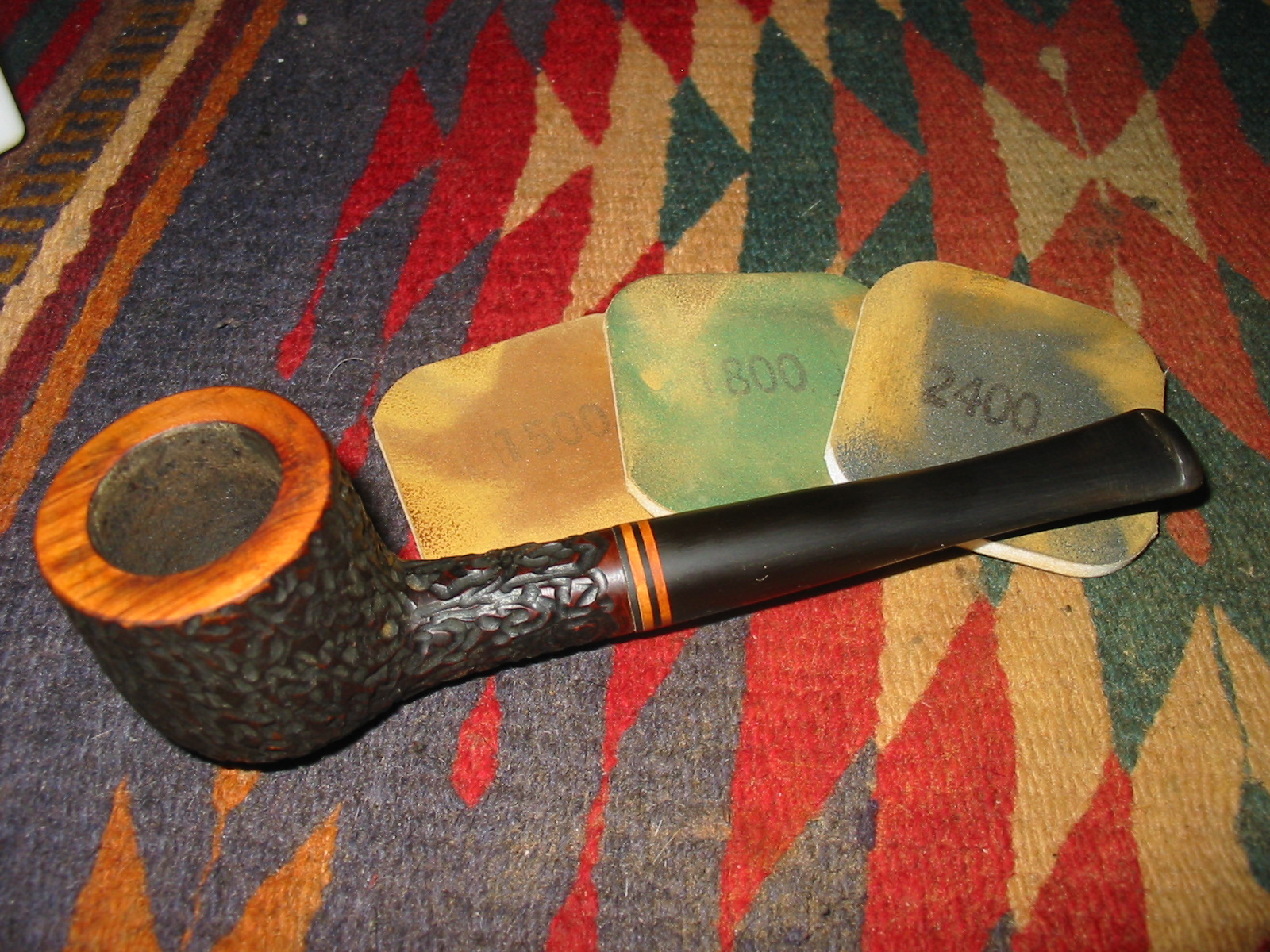
IMG_7086_edited-1 IMG_7087_edited-1 IMG_7088_edited-1 IMG_7089_edited-1 IMG_7090_edited-1

The tool can be purchased from PME here and is, essentially, the same tool that PIMO sells and Steve has and uses. There is at least two differences that I can see: An extra adjusting screw )which is rarely used) and the price of the PME tool is about $9 less. (Having bought from both sources, I have a personal preference for PME: their S/H costs are a bit less and speed and service are better, again in my opinion; I have no affiliation with either company other than being a customer.) Both tools are used in the same way and they both have similar limitations on size. They also both lack precision measurements/adjustment mark, requiring one to go slowly and check often the tenon size so as to not over-turn it.

Steve describes the use and adjustment very well in an article he wrote nut I can’t find at the moment. He also compared the PME and PIMO tools in this article so I won’t go into a lof ground he has already covered, but try to add my impression of the PME tool,

I found the tool relatively easy to use overall. I experimented on a few old stems before re-stemming Big-Ben and have since turned several other stems for different stummels and corn cob pipes. I have had mostly good results but there have been a few massive failures, too.

As Steve has pointed out, the best use of this tool is gotten by turning the tenon very close to size and then finishing the job by hand sanding. I have also learned that the tool not only has no markings to gauge the amount of material to be removed by a single adjustment (you have to look at the cutter head relative to the tenon) but one cannot gauge the amount consistently by using a “formula” such as 1/4 turn of the adjusting screw has been giving me .5′ decrease in diameter so each 1/4 turn will continue to do so – I have over-turned two stems using that type of “formula”!

PME doesn’t sell the right size drill bit for the guide pin (a size #30 or .128″) so you will have to obtain it from another source (PIMO does sell it for $2.50) or make due with another size. At first I used an 1/8″ bit on the vulcanite stems which, while tight, worked okay. However, I had to move up to a 5/32″ bit for Lucite/acrylic and be careful to not get it out of round. I have since ordered the .128″ bit from PIMO and am happy with that.

The extra set screw on the PME tool is really not used except for turning multiple tenons of the same style to the same size: For instance if you needed to slightly turn several tenons for corn cob pipes you would use it. This second locking screw just really sets the cutter head to zero movement but the main locking screw is the one that is generally used since you will mostly be taking more and more material off of a tenon.

I find that using the tool at different speeds helps to get a nice, smooth tenon. I like to start out fairly slow and make my first pass, then increase the speed on subsequent passes. The final passes I will be at full speed and will slowly rotate the stem as I make the pass up then back down the tenon. Generally, this gives me a nice smooth tenon, without a lot of turning marks/lines.

As I mentioned above, the adjustments are not always equal so one has to watch carefully how much the cutter head advances with each movement of the adjusting screw. And in order to get a good, even result it is very important to lock the locking screw with each adjustment. I have found that my digital micrometer (bought very cheaply from Harbour Freight) is a good help in getting the size of the tenon down to where it needs to be. But due to the lack of real precision with the tool, I don’t think one can rely solely on the micrometer; when it is getting close I begin checking the tenon to mortise fit after every pass.

My analysis, then, would be something like this: If you wish to re-stem pipes you have to have one of these toolsI think that either the PME or PIMO tool would work as well as the other and which one you should purchase is simply a matter of preference or economics; the PME is cheaper but if you are ordering from one company or the other buying it with your order will save you on S/H costs. My personal recommendation would be (if you don’t already have some stems to experiment with) buy the tool from PME and order a dozen or two of whatever Carolyn has on sale that week to practice on (usually there are 2-3 styles of vulcanite stems on special for $4-$5) and maybe a couple of closeout acrylic ones, too, to get a feel for the difference (which is big!) in the two materials. The learning curve isn’t huge but it is there. But, if you are like me, learning a new skill to add to your arsenal of restoring these wonderful old pieces is a lot if fun and a big part of the draw of the hobby.

So what are you waiting for? Place your order and step into the next phase of the art of restoration.

’63 Dunhill 552 Restoration


Blog by Al Jones

I found this 1963 Dunhill shape 552 on Ebay last week. The auction ended early in the week at an odd time and it went largely unnoticed. It looked to be in pretty decent shape, but with some bite marks on the bottom of the stem. It is a Group 4 pipe in Bruyere finish (A = Bruyere) At first, I thought it was a Rhodesian, then later thought it looked more like a tomato. Neill Archer Roan commented that it had some Diplomat DNA.

The pipe was delivered today. It was pretty much as pictured, but I also discovered it is a 6 mm filter pipe. The briar was in great shape, with a little tar and rim darkening. There were no dings or bruises to deal with. The stem was also in decent shape and only lightly oxidized. There were a few light teeth marks on both sides of the stem, and all but one lifted out with some heat from a lighter flame.

Dunhill_522_Before (1)

Dunhill_522_Before (3)

Dunhill_522_Before

dunhill_rhodesian-5dunhill_rhodesian-4Dunhill_522_Before (2)

The bowl had a fairly thick cake and I reamed it with my Castleford bit set. The bowl was then soaked with Everclear and sea salt.

I polished the stem with some 800 grit wet paper, followed by 1500 and 2000 grade. Then I moved to the micromesh, 8000 and 12000 grades were used. I gave the stem a light buff (mounted to the briar) with some White Diamond. I have a bar of jewelers “Red” rouge on order and I’m curious to see how it compares to the White Diamond for finish work. The stem has some odd marks in the vulcanite, almost like an imperfection. I could not remove them by sanding or buffing.

I polished briar lightly with some 8000 grade micromesh, keeping away from the weak nomenclature. I then buffed the bowl, again lightly with White diamond and then several coats of carnuba wax.

After searching online for several days, I couldn’t find out much about this shape. I found only one other shape 552, a shell finish pipe sold at an Ebay auction in 2007. The 552 is also not on any Dunhill shape chart (Loring, etc.). On the SmokersForums.uk in the “Streets of London” social group, one member there, dmcmtk (Dave) said he has a shape 556 from 1963. He had heard Dunhill was experimenting with shape variations at this time and perhaps my 552 was part of that experimentation. I have emails out to several Dunhill collectors, but haven’t yet received a reply. If you know anything about this shape number, please comment.

Here’s the finished pipe.

Dunhill_522_Finished_Gallery

Dunhill_522_Finished (3)

Dunhill_522_Finished (4)

Dunhill_522_Finished (5)

Dunhill_522_Finished (1)

Dunhill_522_Finished (2)

Adjusting a Misaligned Tenon


On the old Churchill’s bent pot I picked up on Ebay and wrote about in a previous article I spoke of adjusting a misaligned tenon to tighten up the gap between the shank and the stem. Al Jones commented in his reply to that blog post that he would like to hear more about the procedure I used to achieve the correction. I have written this article in response to Al’s question.

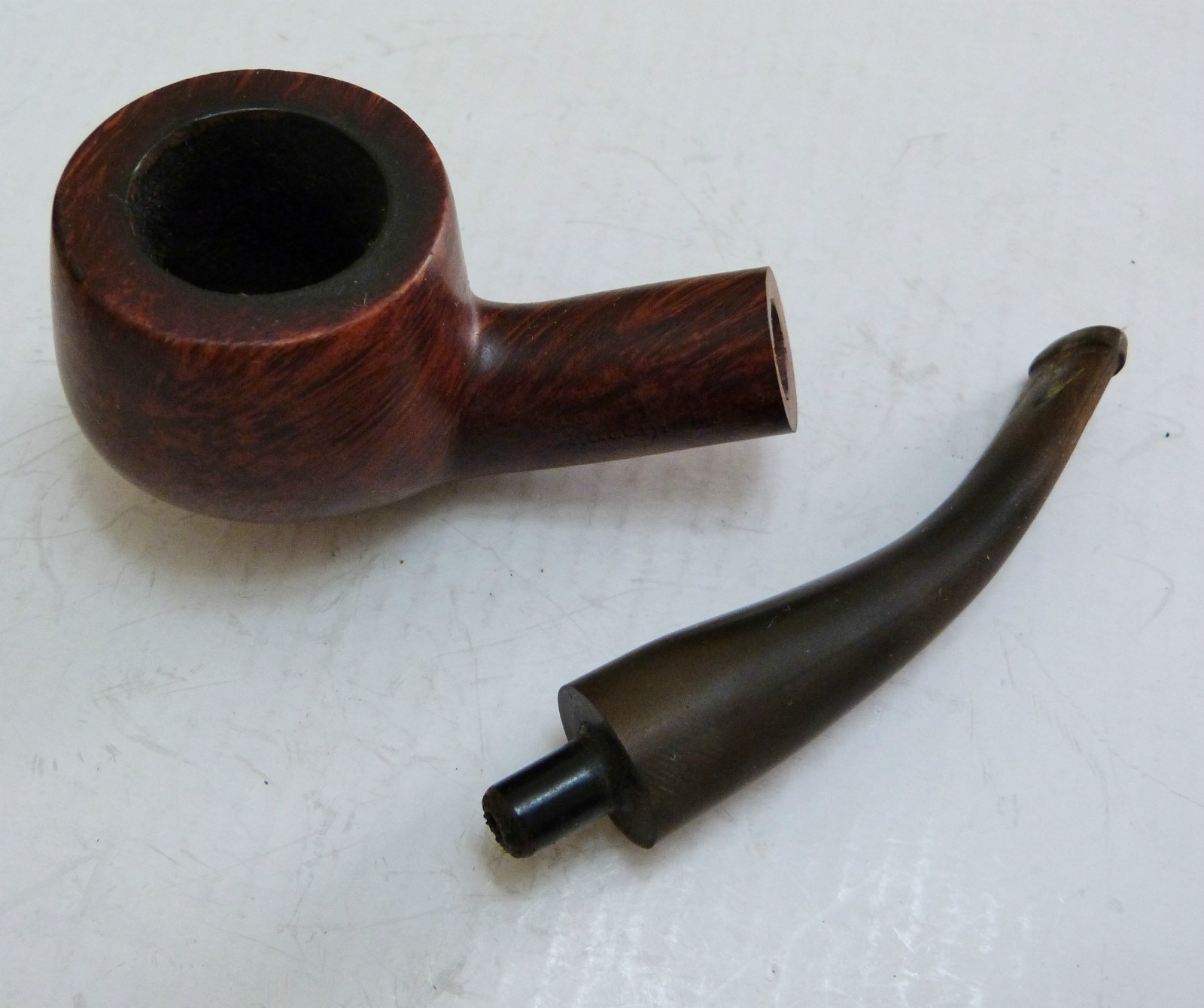
The Churchill’s pipe had a slight cant to the tenon. It did not allow the stem to line up correctly. It had a gap at either the top of the bottom of the shank and no matter how it was inserted you could see light in the gap. I have seen the mishaps, and experienced some firsthand, when the tenon is pressed after heating to try to expand it. The misalignment is often dramatic and hard to repair. In the past I have had to just start over with a different stem. I decided to experiment with a different fix on this old Churchill’s.

Churchill 2

Churchill 3

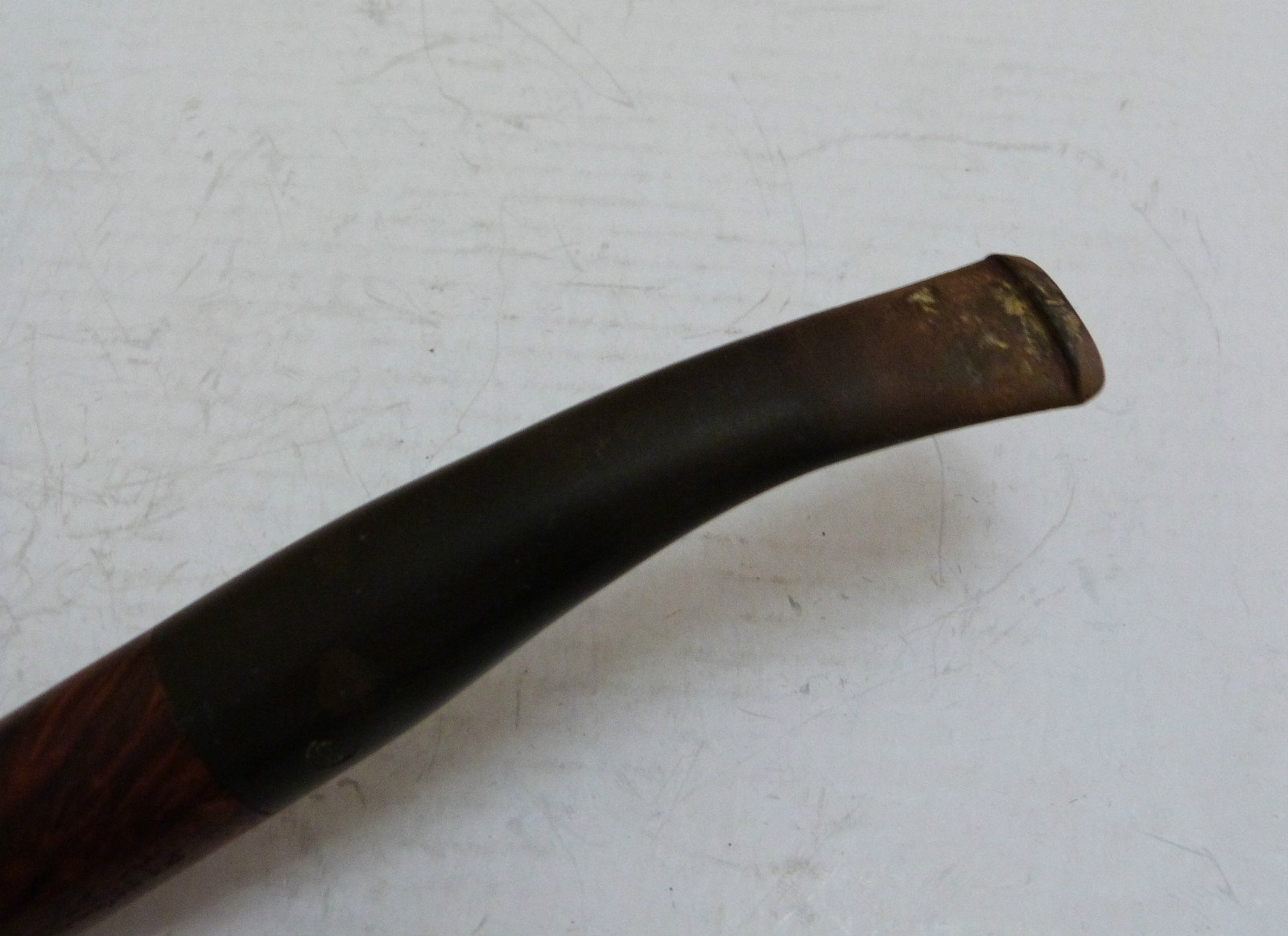
My first attempt at heating the tenon involved the boiling water method that is used to bend stems. I set a bowl of water in the microwave and heated it for two minutes and then dipped the pipe stem, tenon first, into the water to heat it. I repeated that several times until the tenon was pliable and then dried it and inserted into the mortise. I pressed it into place carefully and held it while I cooled it. The results of the first attempt are below – still a gap and the addition of an oxidized stem to remedy. As I thought about the process and the desired end I concluded that a possible issue was that I had not heated the tenon enough to truly get a flexible bend to it. The caution is to proceed very slowly in the process so that you do not snap the tenon and necessitate a different fix.

IMG_1740

IMG_1741

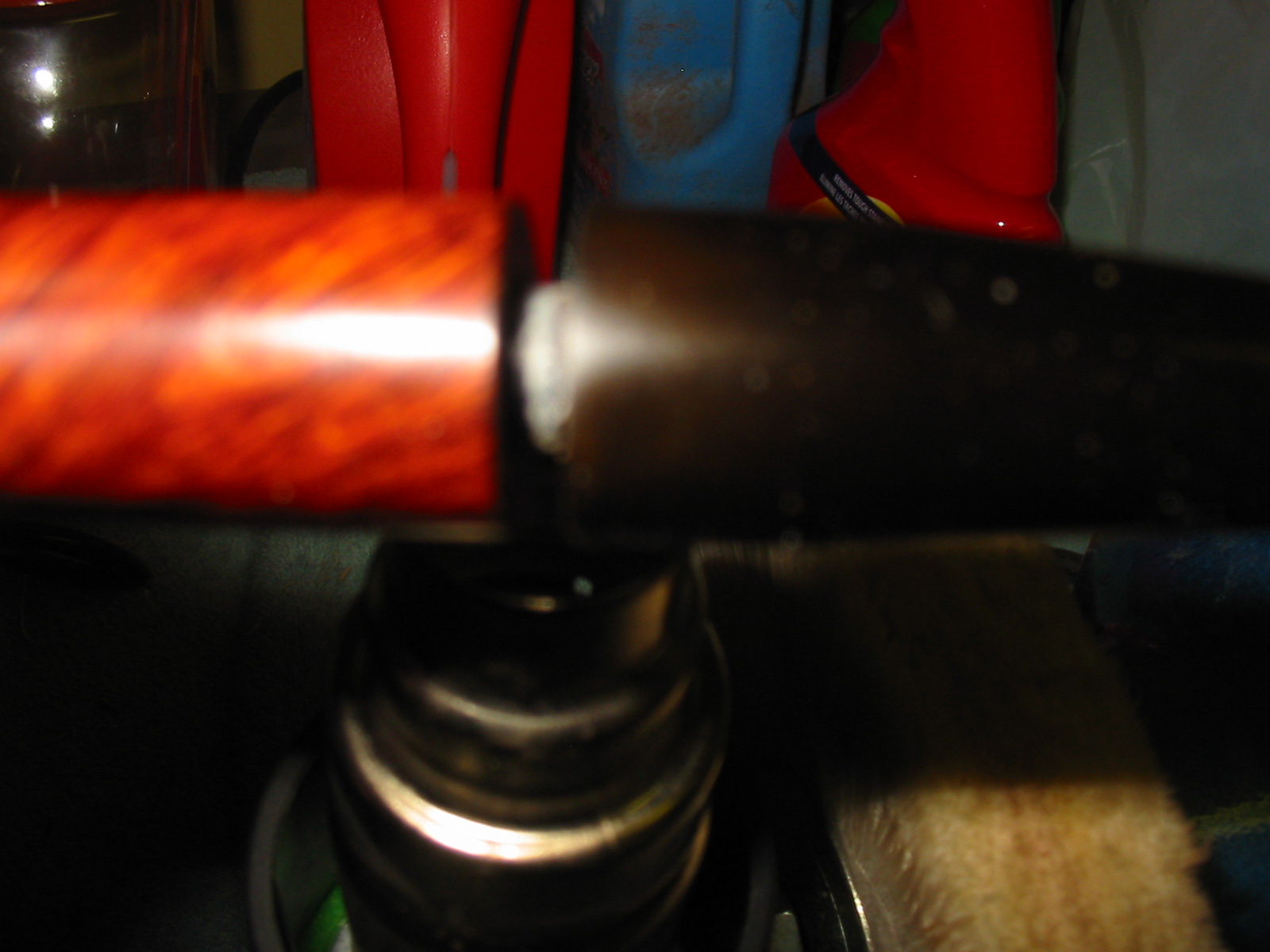
I put the tenon in the shank and left a gap of approximately a ¼ to a ½ inch. I then used heat gun with a tip that reduced the area of the heat to about an inch diameter circle. I held the pipe above the heat and rotated it quickly to evenly heat the gap, and thus heat the tenon. I apologize for the blurriness of the photos but the general set up is clear. Hold the pipe above the heat about three or four inches, rotate it quickly as you do not want to burn the vulcanite.

IMG_1776

IMG_1777

IMG_1778

Once the stem was warm I carefully pushed it into the shank. You want the stem warm enough that the tenon is flexible and not stiff or it will break off as you work it. The tricky part is to slowly and evenly push the stem into place. A variation in the push to either side will only make the problem worse. Once it is tightly against the shank I gently moved it until the fit was tight between the shank and stem. I held it tightly in place with my thumb and fingers as I cooled the stem and shank under cold water to set the new adjustment. It took several attempts to get it to sit properly.

IMG_1780

IMG_1781

Once the cooling was done I held the stem in place for a few minutes as I walked back to my work table. The finished fit was snug and no light shone through the stem shank union as it had previously. I have included the last three pictures below to show the finished fit of the stem to the shank. You can read about the restoration of the pipe in another blog post on the Churchill Bent Pot. https://rebornpipes.wordpress.com/2013/09/08/churchills-bent-pot/

IMG_1772

IMG_1771

IMG_1770

Churchill’s Bent Pot


Blog by Steve Laug

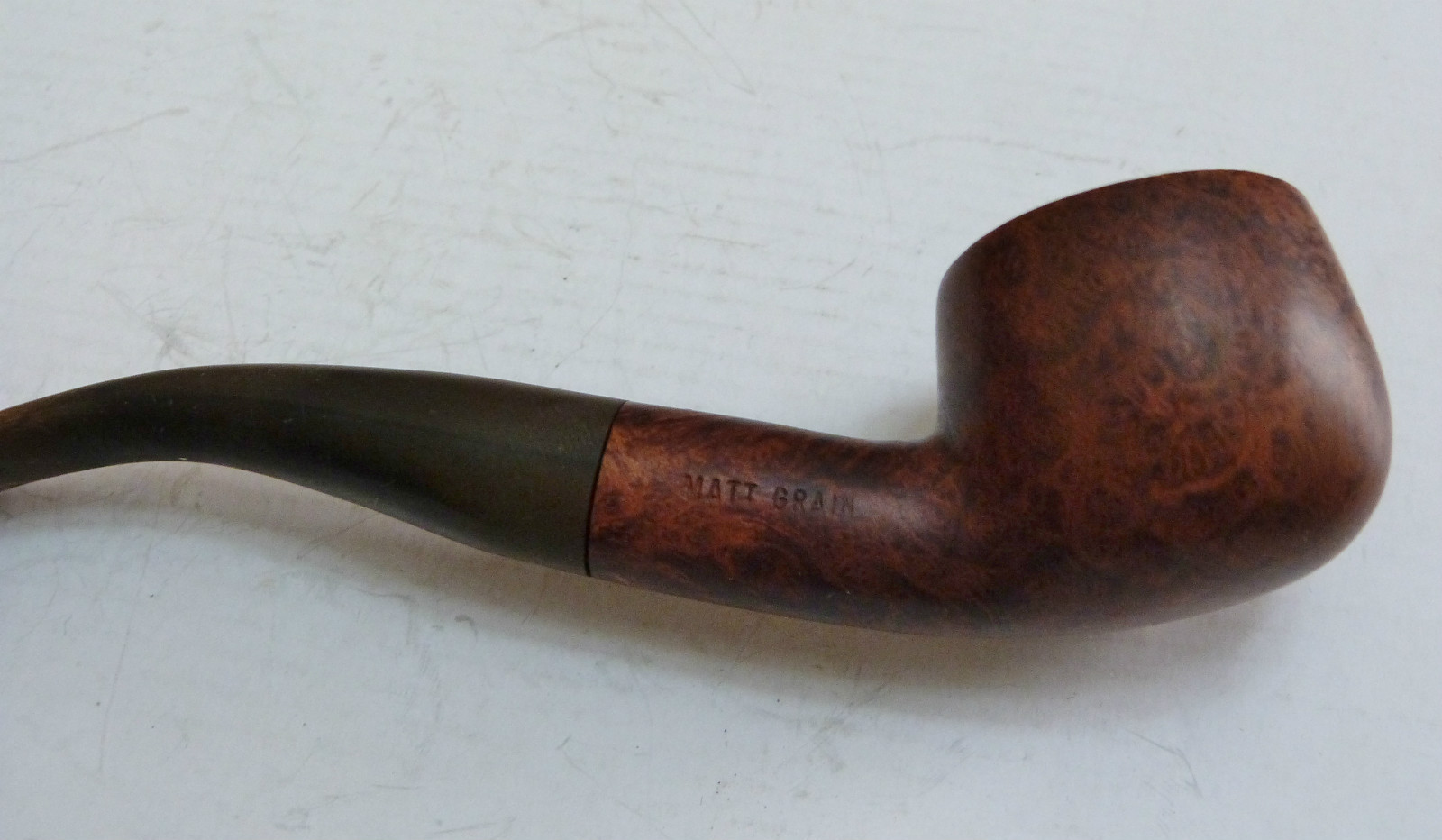
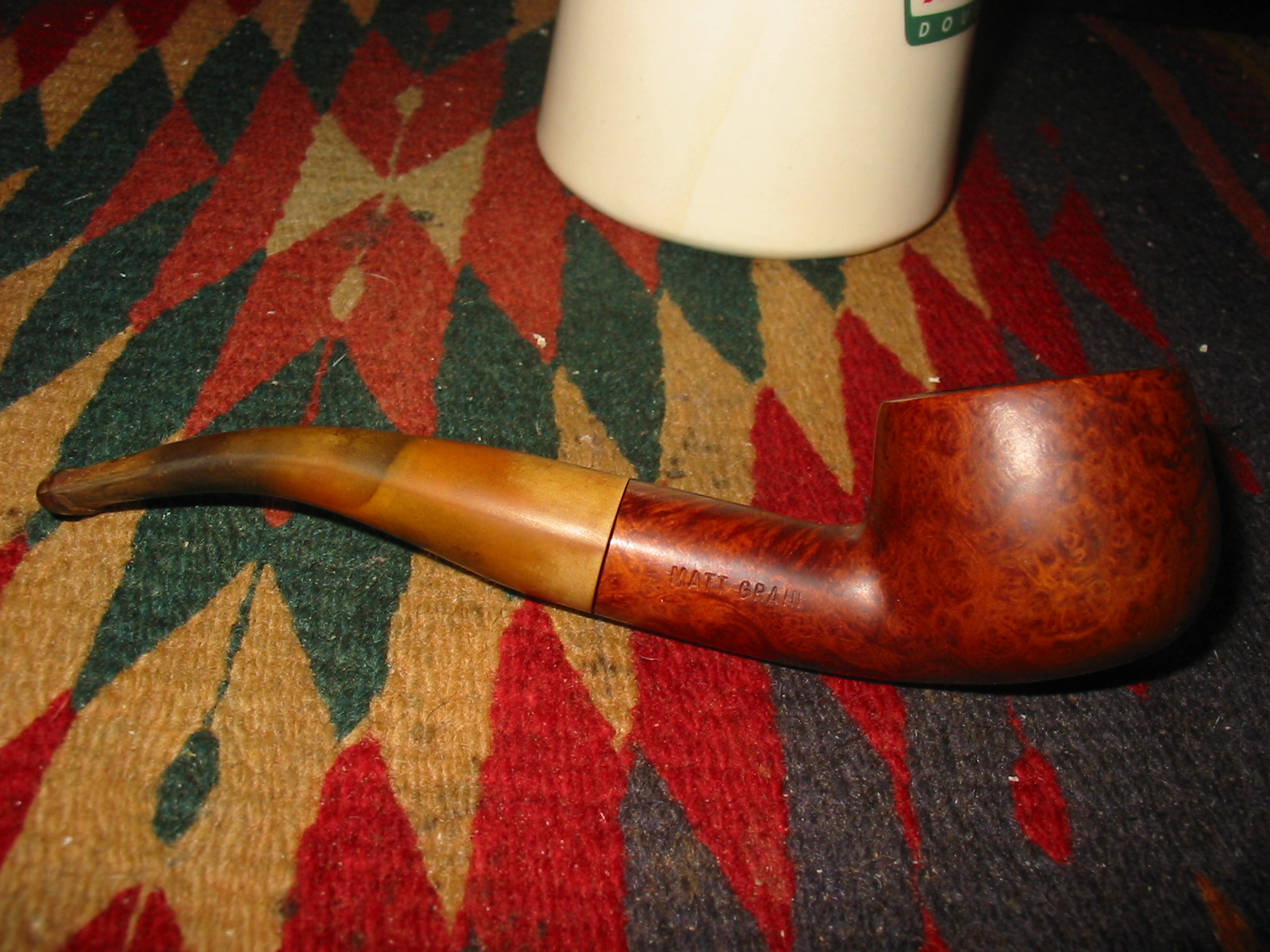
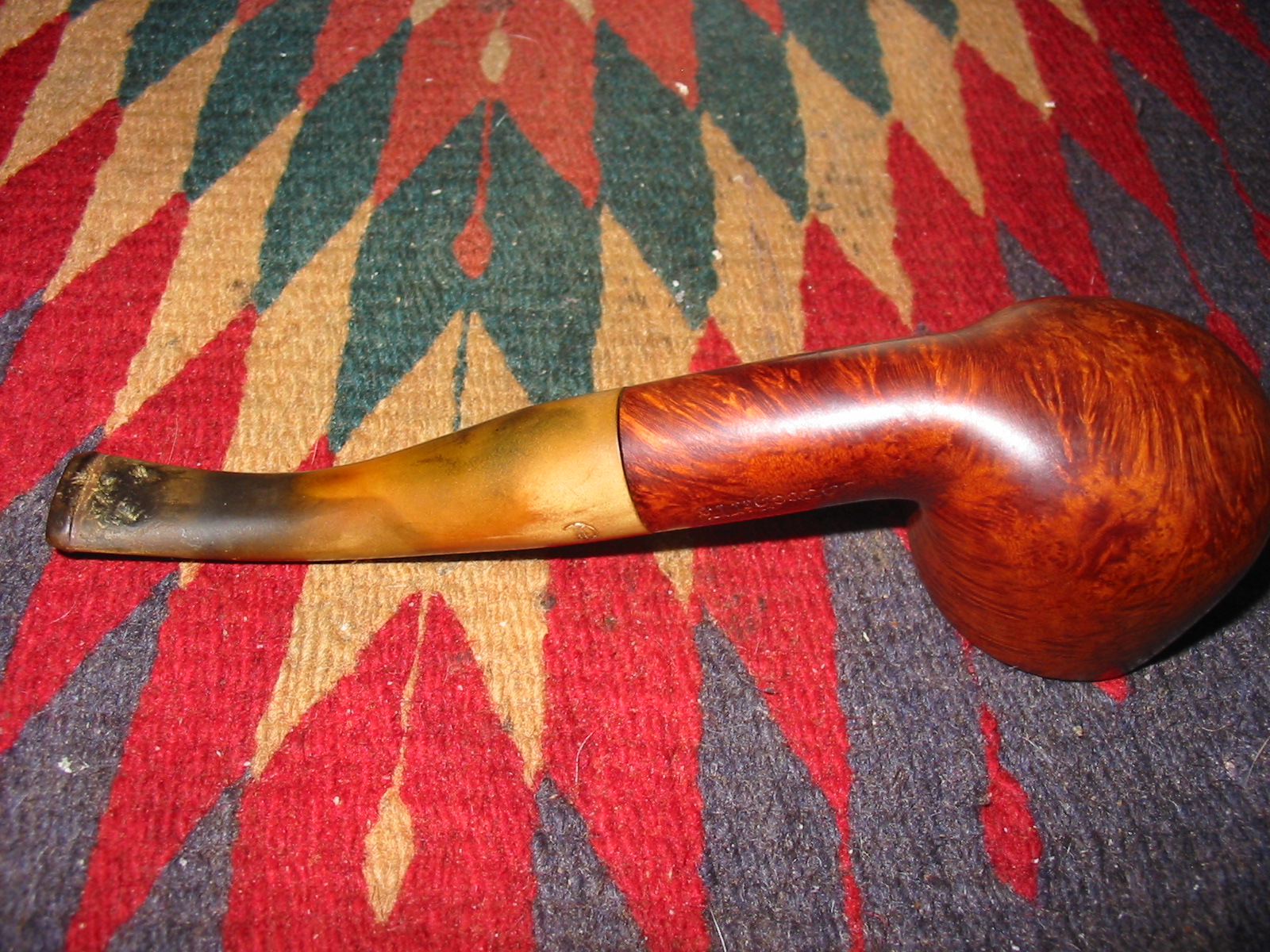
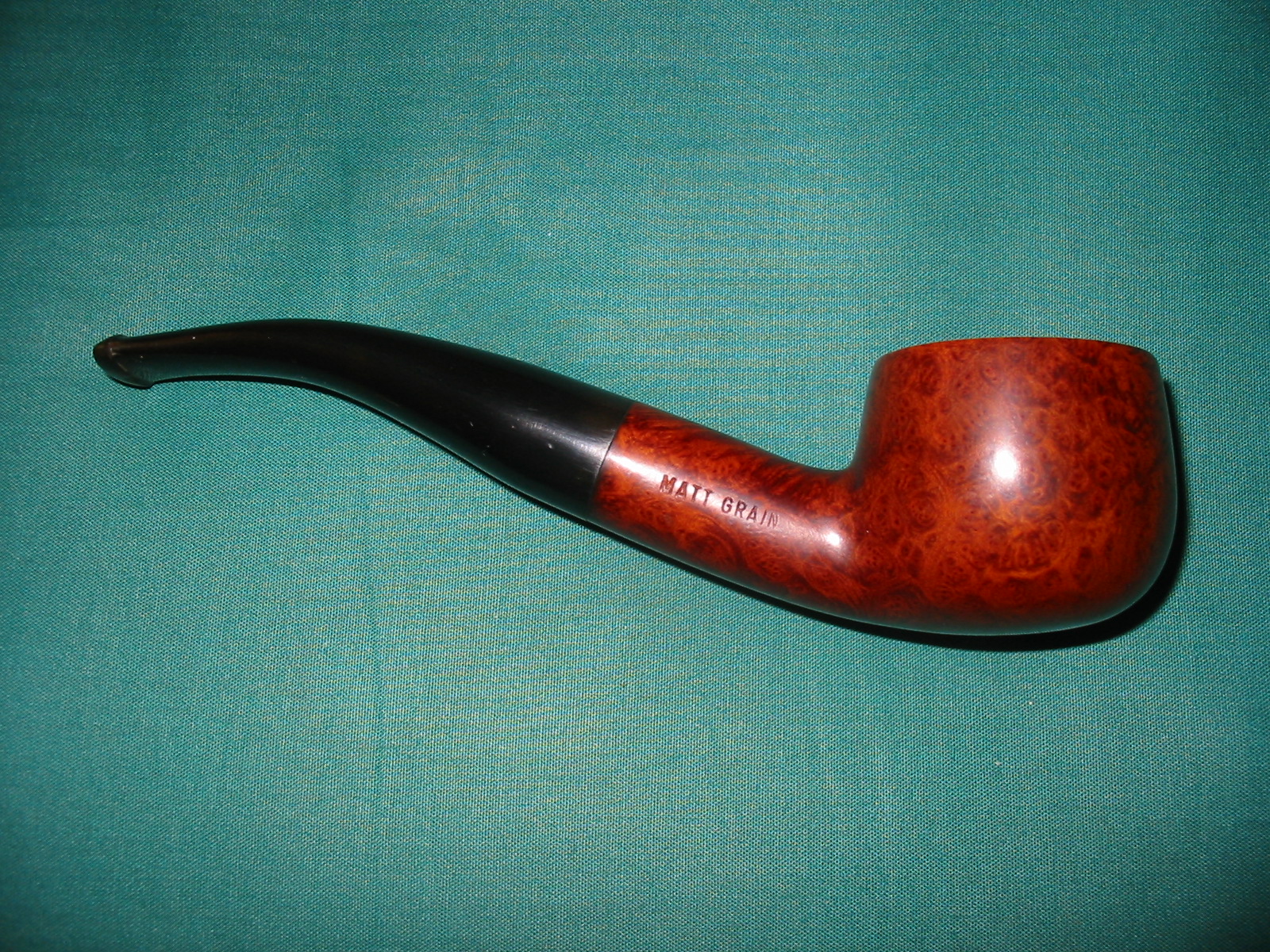
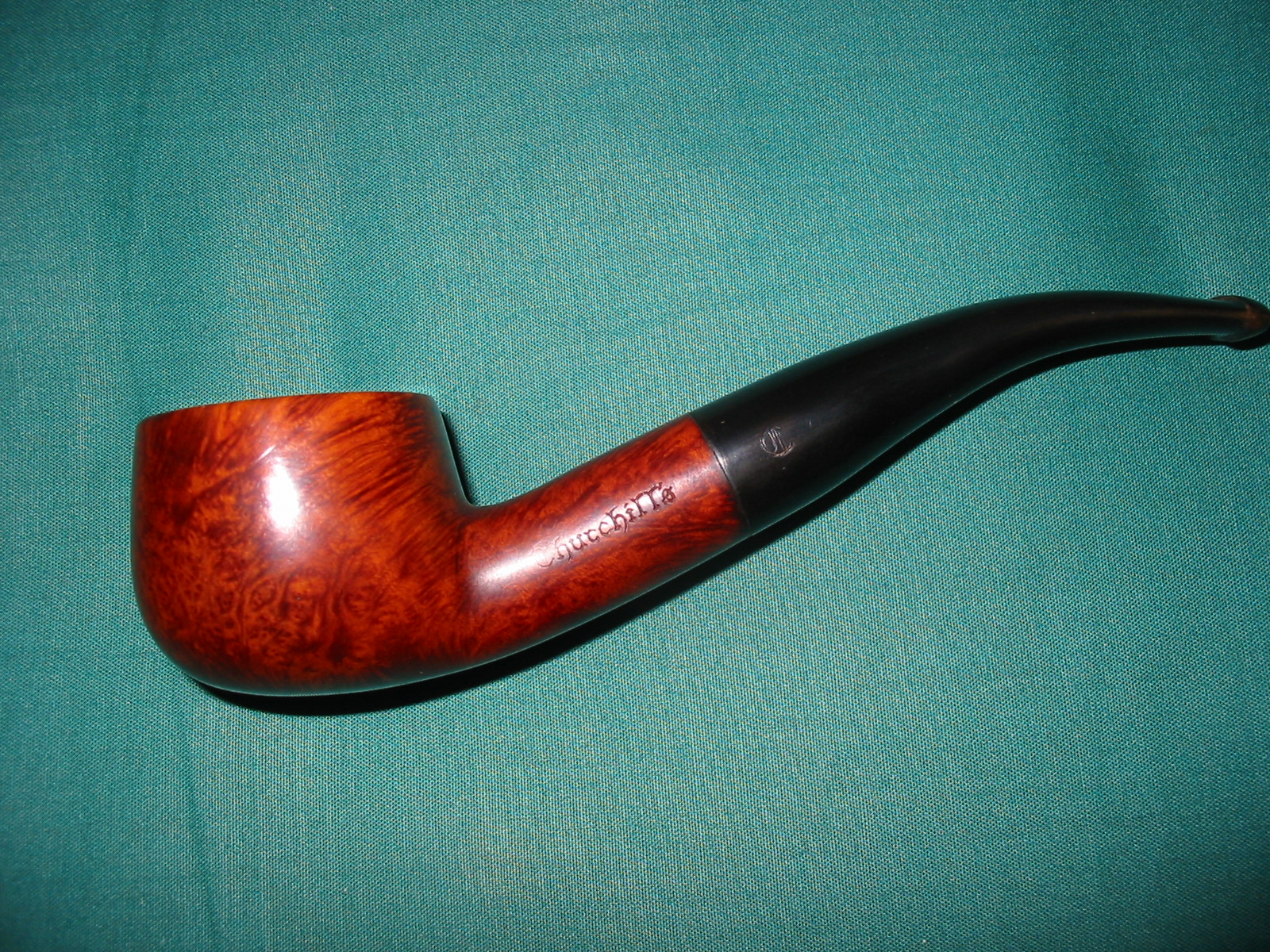
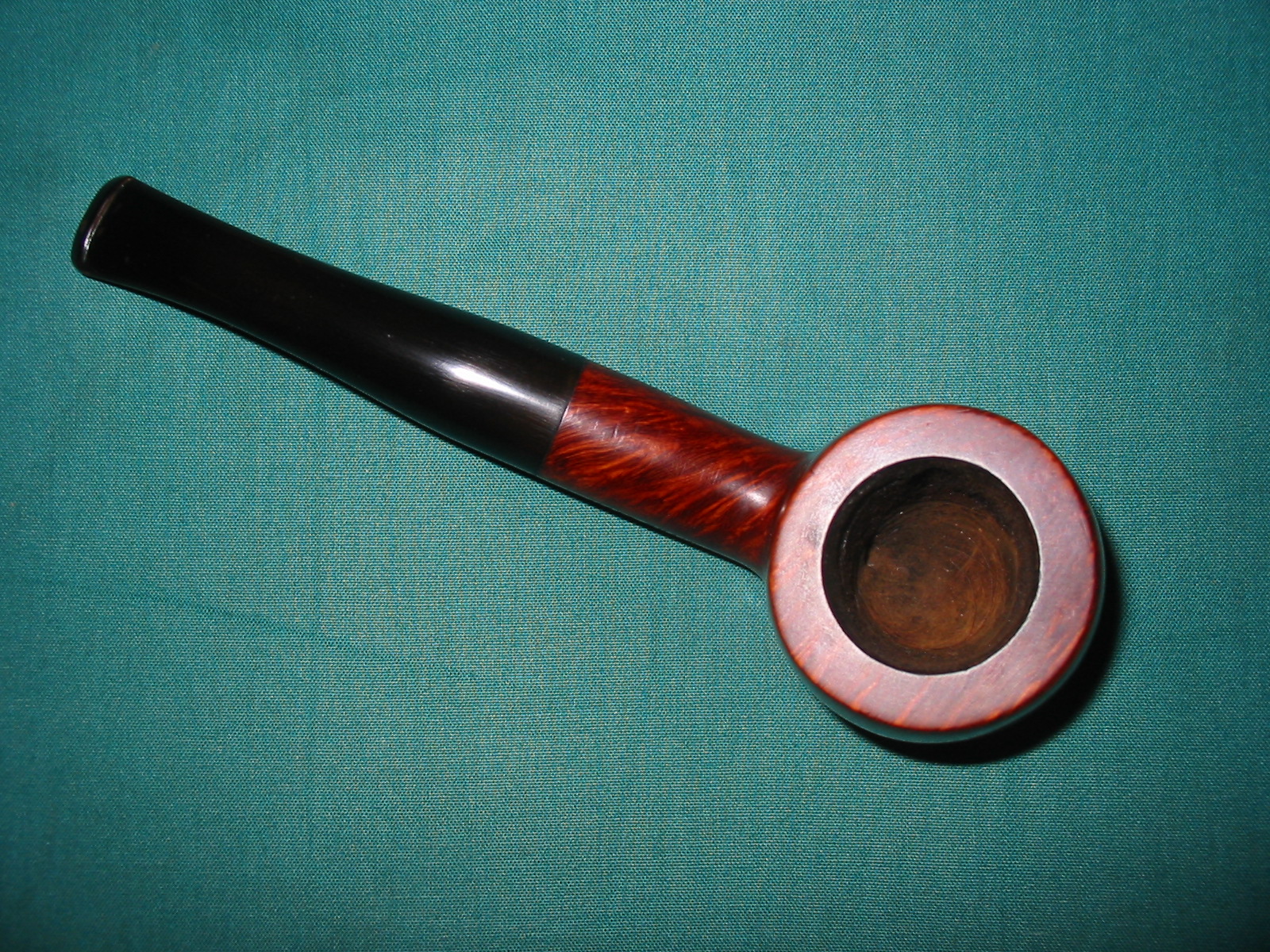
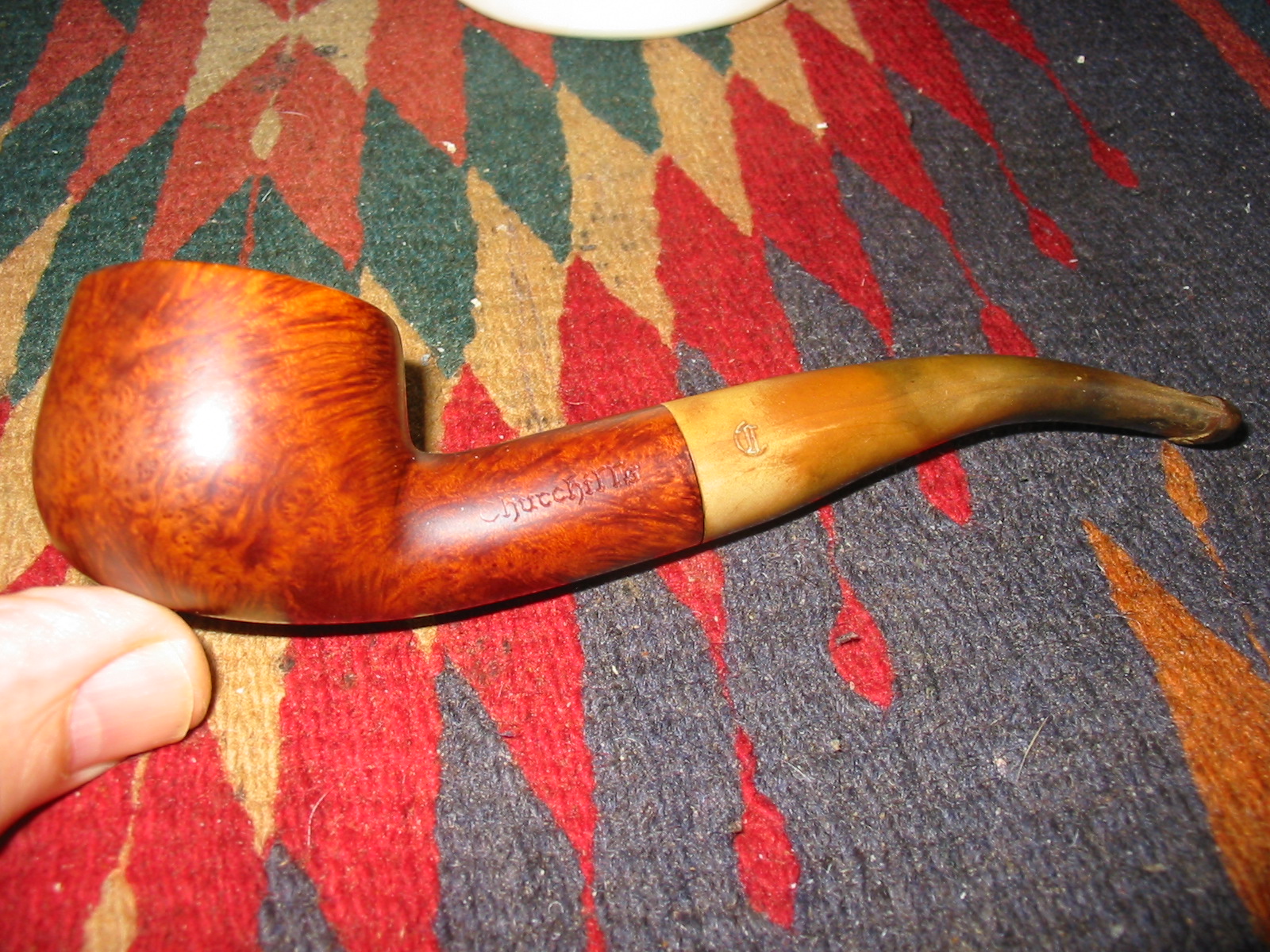
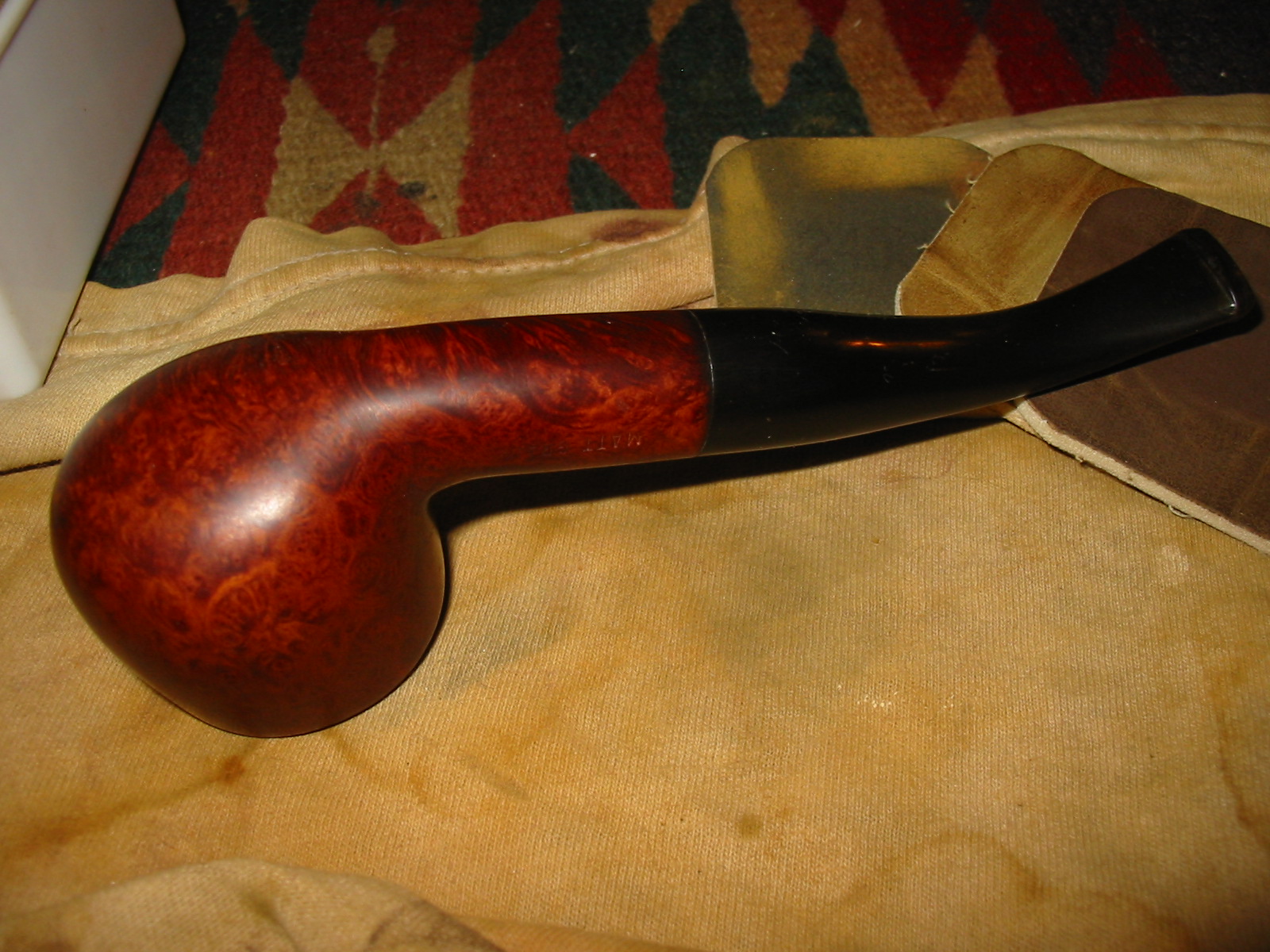
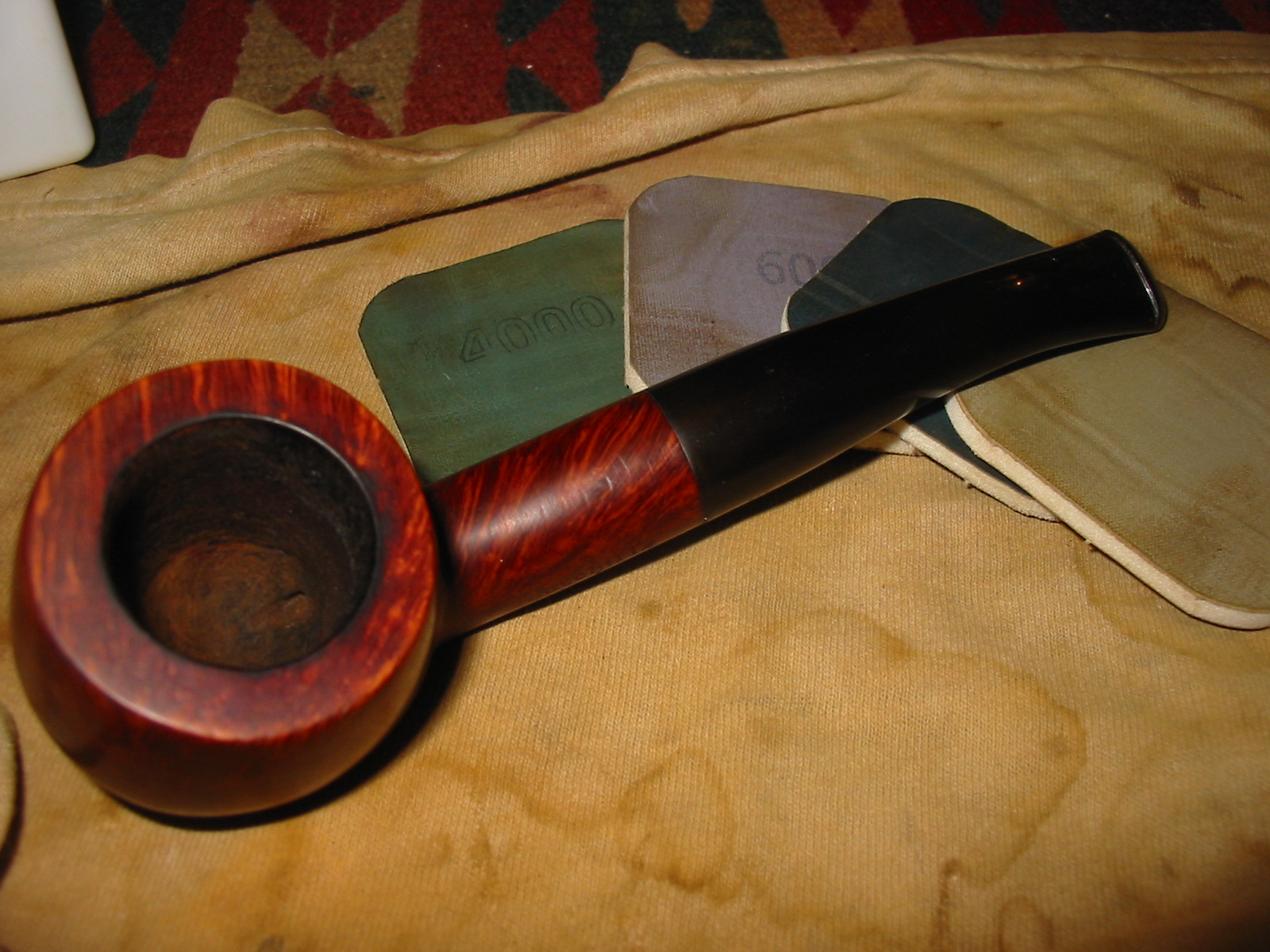
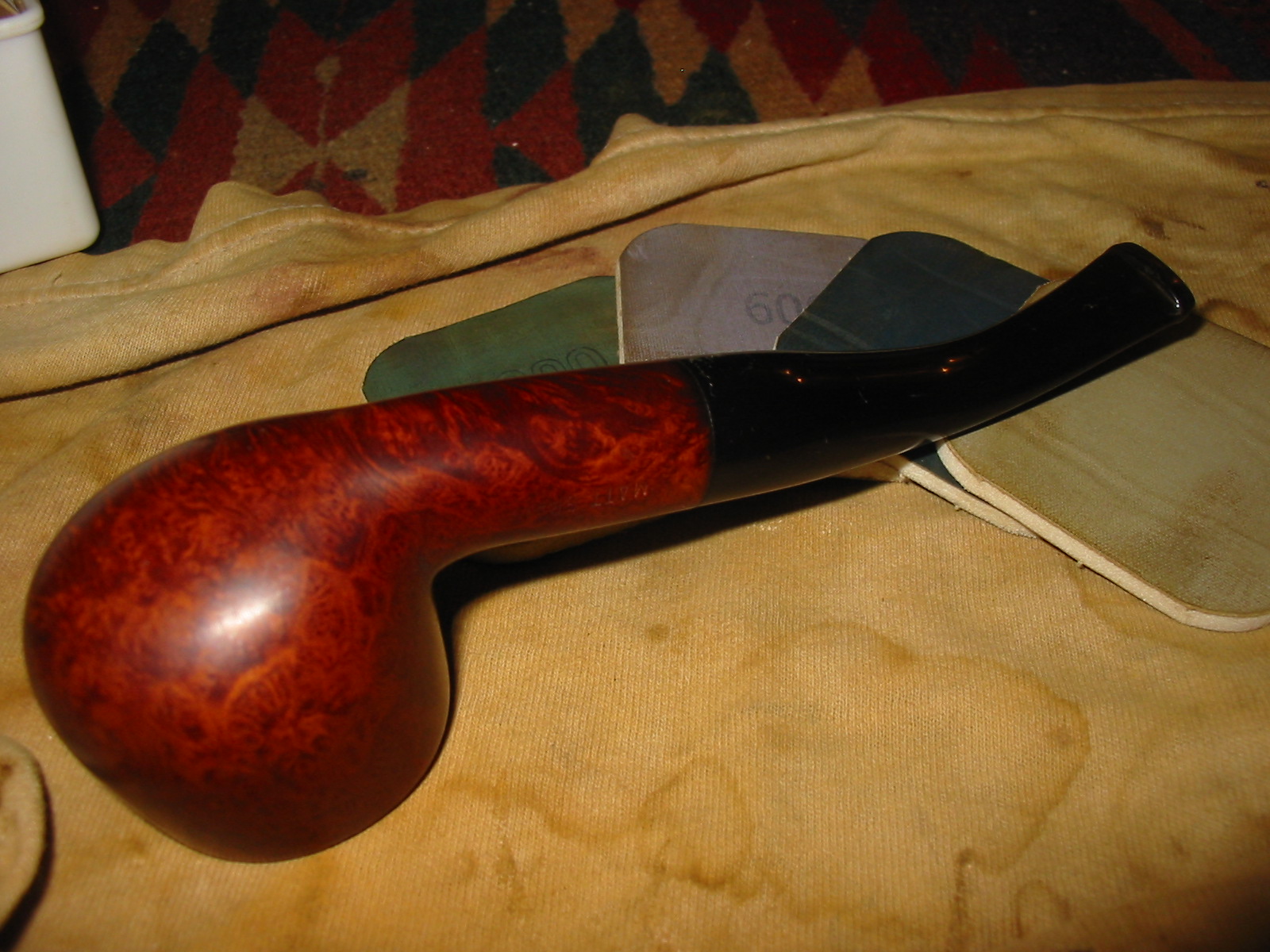
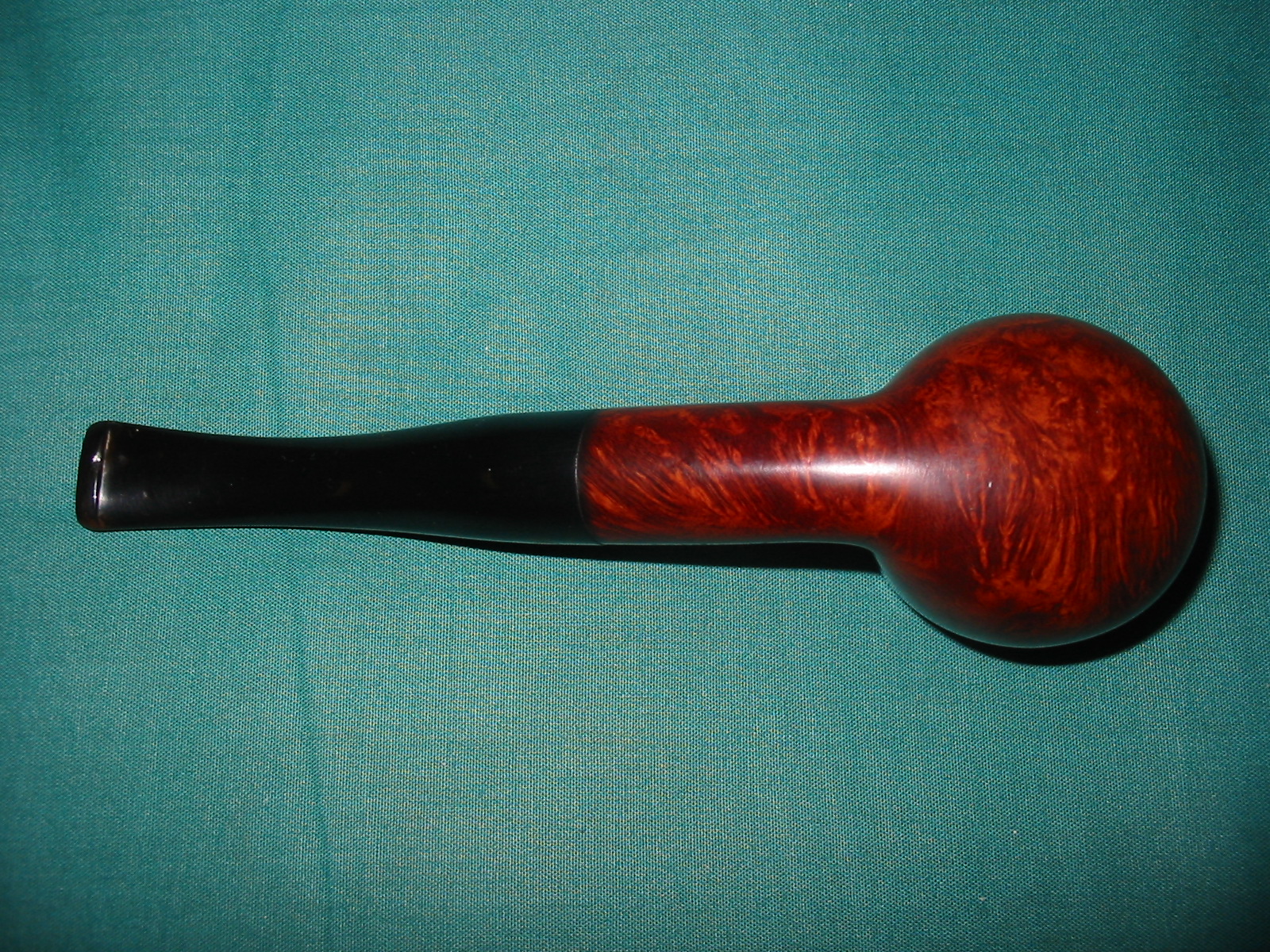
I saw this pipe come up on Ebay and love the shape. Some have called it a bent pot but I am not sure that the name captures the shape but I will call it that nonetheless. Churchill’s was not a brand I was familiar with but it looked very good. The stamping on the pipe is very simple on the left side of the shank it is stamped Churchill’s and on the right side it is stamped Matt Grain. The bowl had been reamed back by the seller before shipping and was well done. No damage to the roundness of the bowl. The inside of the shank was filled with chips of carbon from the reaming and they were stuck in the tar in the shank. The buildup was enough that the stem did not seat in the mortise and there was a gap in the fit of the stem and shank. The rim had some tarry buildup. The stem sat at an angle to the shank as if the tenon was bent slightly. There were three deep tooth marks on the top and the bottom of the stem near the button. The oxidation was present but not heavy at this point. The stem was also plugged with tars and the airflow was very constricted. There was an old English style C stamped on the stem. The first nine photos below were provided by the Ebay seller.

Churchill 1

Churchill 2

Churchill 3

Churchill 4

Churchill 5

Churchill 6

Churchill 7

Churchill 8

Churchill 10

Logo NEW Logo 2012 Small

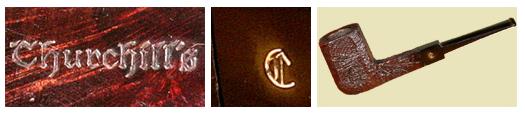
I am fairly certain that the pipe came from Churchill’s Tobacco Shop in Norwich, England. I found the following information on the Pipes and Logos website http://pipephil.eu/logos/en/logo-c4.html On the site there is a small paragraph which I have copied as follows: “Churchill’s Tobacco shop is situated in St Andrew’s Street at the corner of Bridewell Alley in Norwich, England. The shop was next to a church and at the bottom of two hills, and that’s how it became “Churchill’s”. Former manager: John Elvin (retired on May, 31 2008). Current owner (2008): Keith Garrard.” I have included these pictures from that website as they show the stamping on both the shank and stem that is identical to the pipe that I have just refurbished.

Church

According to the Churchill’s website it is the last remaining specialist tobacconist in Norwich, originally standing at 32 St Andrews Street for over 23 years. http://www.churchillsofnorwich.com/index.php?_a=viewDoc&docId=1 The site also notifies the shop’s clients that Keith Garrard, who had a wealth of knowledge and was an avid pipe and cigar smoker himself, passed away on 23rd March 2012. His wife Coral continues to maintain the business in his honor.

I decided to try to remedy the bent tenon on the pipe to begin with. I heated it in a cup of boiling water to try to adjust it and tighten the fit in the mortise. I was able to adjust the fit and get a good tight seat with no gap between the shank and the stem. However, in the process the water oxidized the stem badly. The four photos below show the adjusted fit of the stem and also clearly show the bite marks on the stem – top and bottom near the button.

IMG_1738

IMG_1739

IMG_1740

IMG_1741

I scrubbed the inside of the shank with Everclear and cotton swabs. I cleaned the airway with bristle pipe cleaners and then fluffy pipe cleaners. I continued to scrub it until the pipe cleaners and cotton swabs came out clean. I cleaned the rim of the bowl with saliva and a cotton pad until the grime was gone. It took a bit more than a cotton pad and saliva so I also used a very fine grit sanding block to knock off the remaining tar, being careful to not break the finish.IMG_1743

IMG_1744

IMG_1745

The stem took a bit of work as it was plugged with grit and tar. I used a dental pick to clean out the slot. To the right of the stem in the photo is some of tar and grit I picked out of the slot. I used a straightened end of the pick to clean deeply in the slot. I then used pipe cleaners soaked in Everclear and pushed them through the blockage. I also opened the slot with needle files to facilitate easy access with pipe cleaners. The slot was very narrow which also made the blockage hard to get at.

IMG_1746

I sanded the stem with 220 grit sandpaper to clean up the surface around the bite marks. In the next three photos the bite marks are visible. I heated them to lift them as much as possible. The bite marks on the top were less troublesome than the ones on the underside. Fortunately the stem was quite thick so that the tooth marks did not go all the way through the vulcanite.

IMG_1747

IMG_1748

IMG_1749

I picked the tooth marks clean with a dental pick and then used black super glue to patch the deep marks that remained. Once the glue had cured and was hard I sanded the patches with 220 grit sandpaper and then a medium grit sanding sponge to smooth out the surface and blend in the patch. The next three photos show the patch after it had been applied and after sanding.

IMG_1750

IMG_1752

IMG_1753

I sanded the stem with micromesh sanding pads from 1500-12,000 grit to finish removing the oxidation and the scratches left behind by the various sandpapers I used. The next series of photos show the progress of the shine after each group of sanding pads.

IMG_1755

IMG_1756

IMG_1757

IMG_1758

IMG_1761

IMG_1762

I wiped the stem down with Obsidian Oil and rubbed it into the surface of the stem. Once it had dried I rubbed it and polished it with a shoe brush before taking the pipe to the buffer. I buffed it with White Diamond and then carnauba wax. I gave it a polish with a clean flannel buffing wheel. The next four photos show the finished pipe. I really like the way the matte finish came alive. The grain really pops. This was an easy refurbish as the finish was in very good shape under the top layer of grime.

IMG_1770

IMG_1771

IMG_1772

IMG_1773

Stem Repair Failure – by Mark Domingues


This is an interesting piece that Mark wrote on a stem repair that not even I would have undertaken. To me this stem was a goner. The hole and missing vulcanite would make a patch virtually impossible in my opinion. But my hat’s off to Mark for giving it a go. He writes up the repair and the failure of the repair in a clear and concise way. Thanks Mark for blazing the trail on this and letting know about one that did not work.

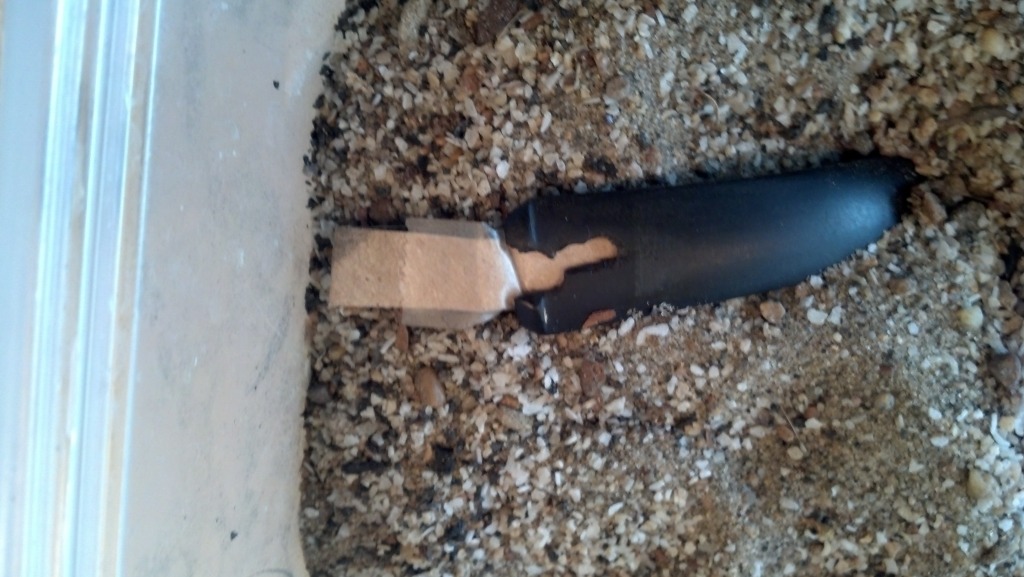
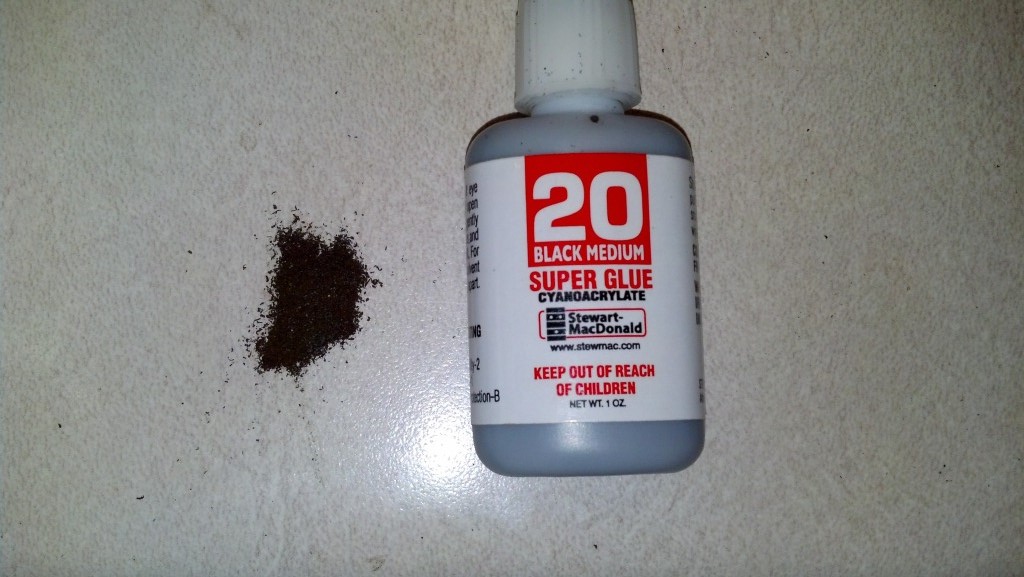
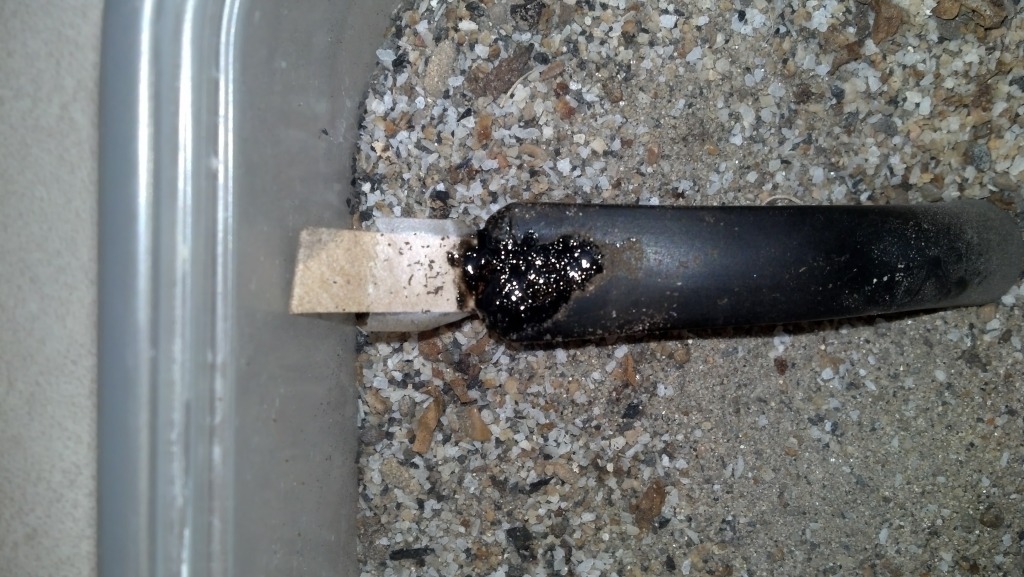
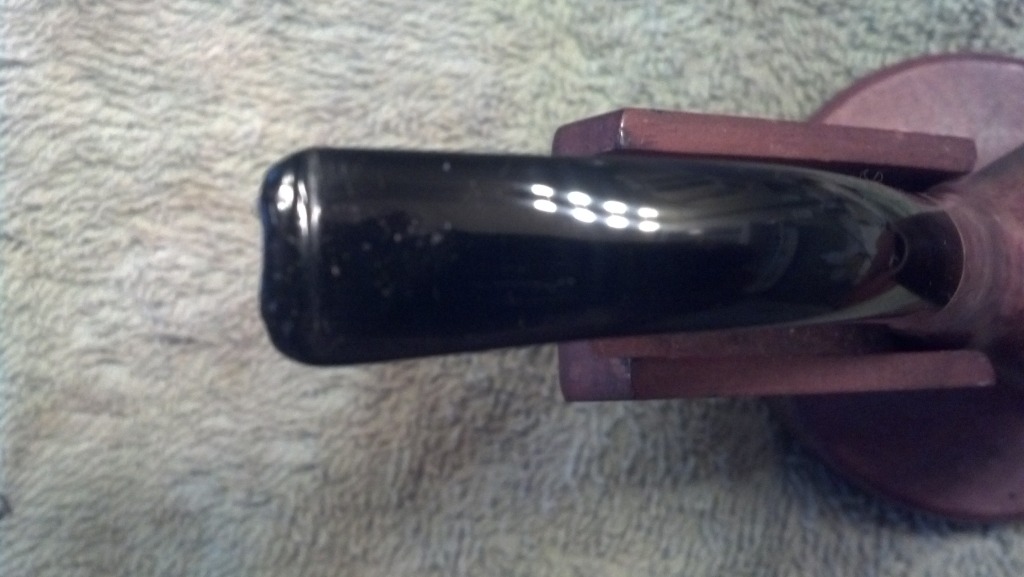
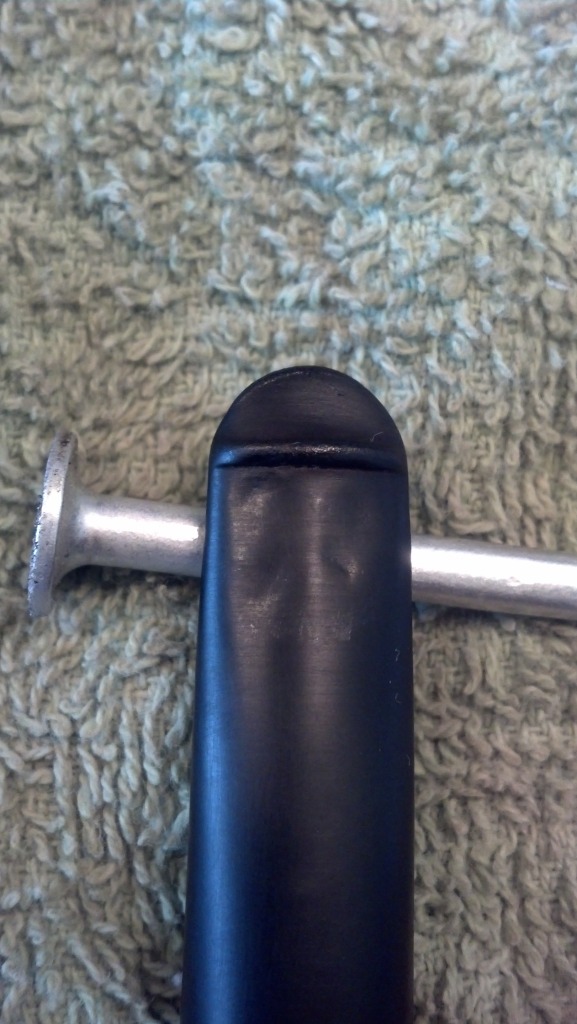
I got a Peterson Shamrock off Ebay with a chunk missing from the stem near the bit. I figured I would try to shape a repair using black super glue and vulcanite dust from an old stem. Instead of using the Oxyclean soak, I “painted” the stem with a bic lighter to remove the oxidation. I put a piece of cardboard wrapped with scotch tape and smeared with Vaseline in the bit end. Then put some glue on the cardboard, sprinkled dust and dripped more glue to make a patch. Since it was a curved stem, I placed it in my bowl of sand I use to do the alcohol and cotton ball treatment. I used to do the alcohol/salt but this is far easier and has the same effectiveness IMHO.

stem1

stem2

stem3

stem4

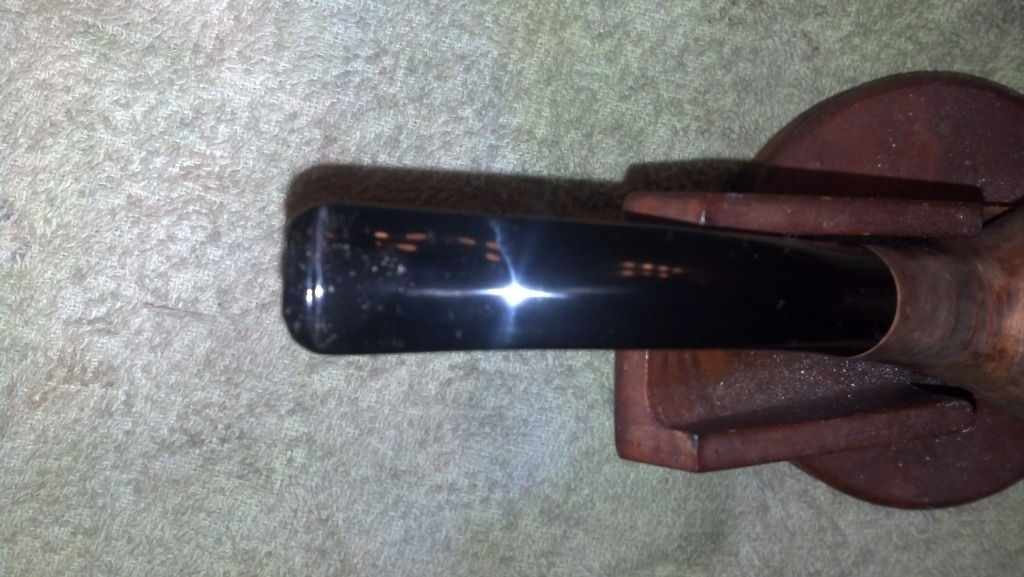
After drying, I used files and wet/dry paper moving from 320 up to 2000 to get the stem shaped. I used a needle file to reshape the bit, and then took it to my buffer wheels to really shine it. I think it came out great. The camera has some white spots that aren’t on the stem. It looks like a new stem!

stem5

stem6

Well, the repair LOOKED beautiful but didn’t hold!! Running a pipe cleaner through it a week later, it cracked and just crumbled away back to the original picture. I’m wondering about the ratio of glue to vulcanite dust, or like someone said on a pipe forum, the 2 different materials will not hold due to expansion and contraction when heated. Maybe I will try again with more glue, less dust.

Peterson Pre-Republic Shamrock – by Mark Domingues


Mark has been following the blog for awhile now and posting his work on Pipe Smokers Unleashed pipe forum. I have been reading about his work for awhile now and invited him to write about his refurbs for the blog. I am hoping this is the first of many posts that he will do for us on his restorations.

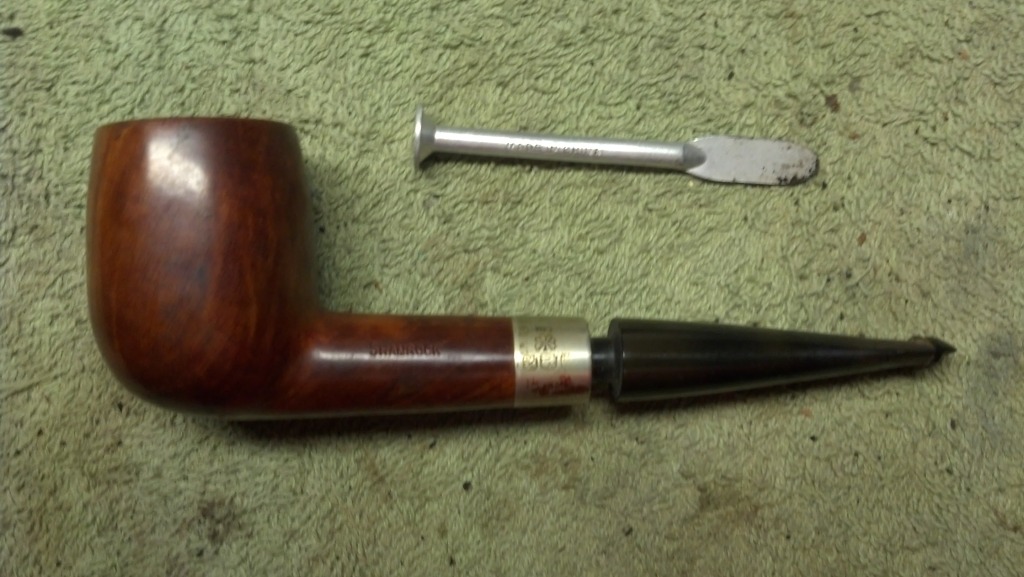
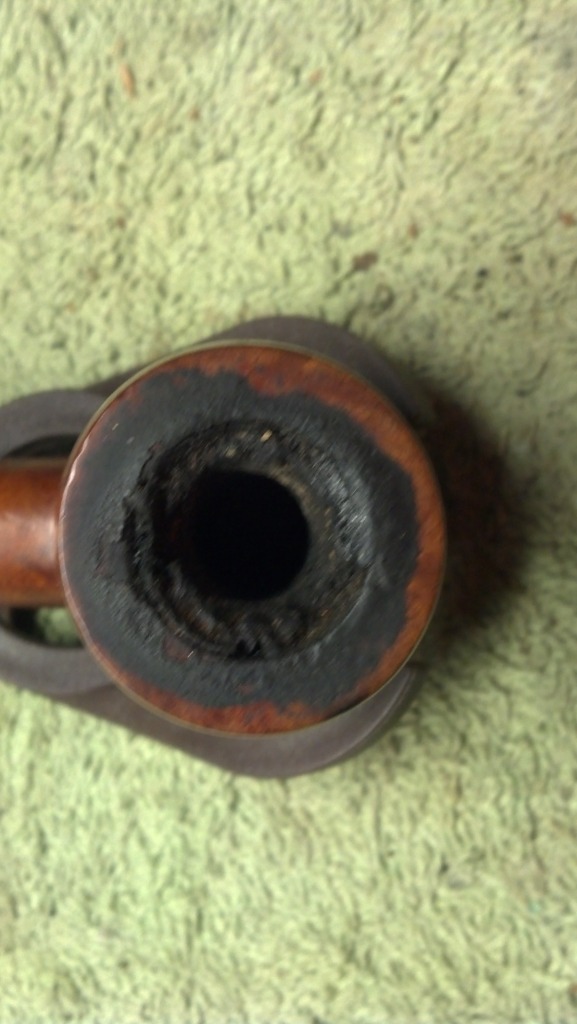
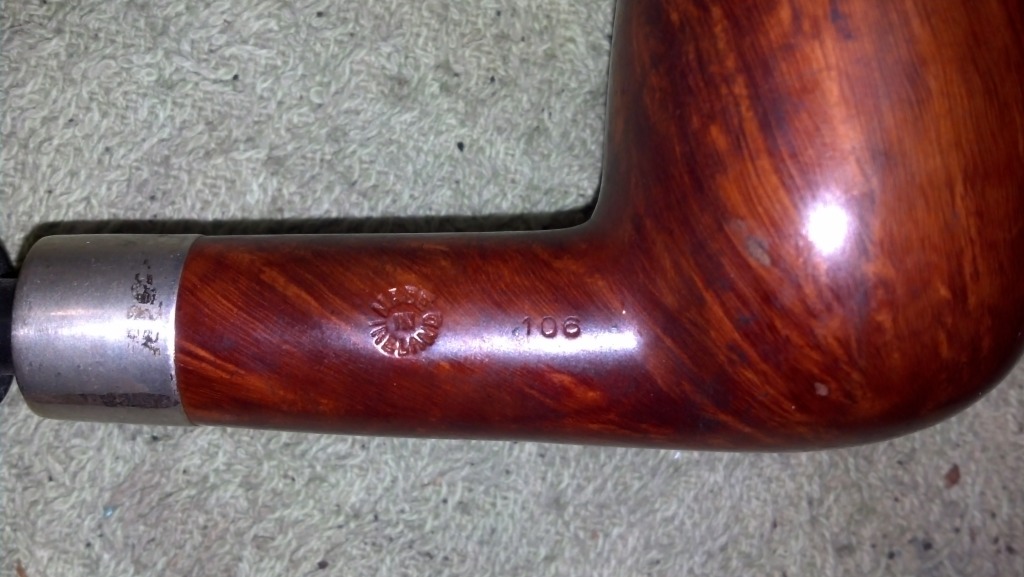
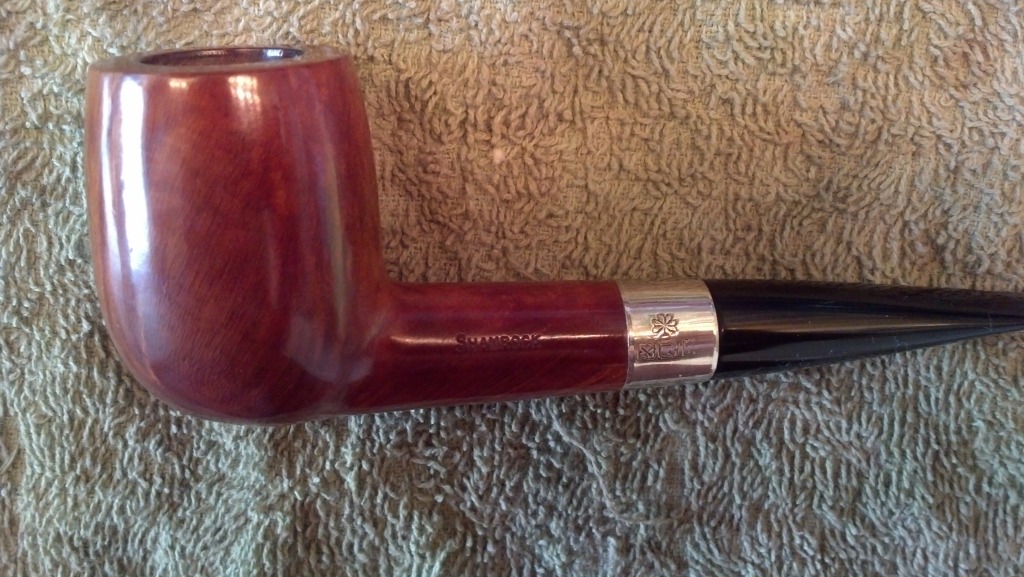
This is my first full writeup on a pipe. I got this Pre-Republic Shamrock shape 106 billiard on eBay. It has the circle COM dating it between 1947-49. The pics from eBay were enough to scare away the casual smoker. The bowl was heavily caked and had severe lava flow on the rim. The calcified stem didn’t fit all the way into the shank, in fact it was stuck. But the nomenclature was crisp and when I saw the “Made in Ireland” circle format, I knew I had to have it!

Pete1

When I got the pipe in, it was just as shown. The cake was so thick I couldn’t get my pinkie into the bowl very far. The stem had a tooth mark divot on the p-lip opening and was frozen into the shank upside down.

Pete2

Pete3

Pete4

First thing I did was use a cotton pad to wipe the outside of the bowl to get rid of 65+ years of grime. The bowl stain was still in excellent condition. Put the pipe in the freezer for 30 minutes then was able to free the stem. I soaked the bowl with the alcohol/cotton ball routine overnight. The next day I reamed the bowl, worked an alcohol soaked shank brush into the shank until the buildup was gone. When dry, the stem fit perfectly!
Here is the stem after “painting” it with a bic lighter to remove oxidation and raise up tooth depressions. Note the large divot in the airhole.

Pete5

Pete6

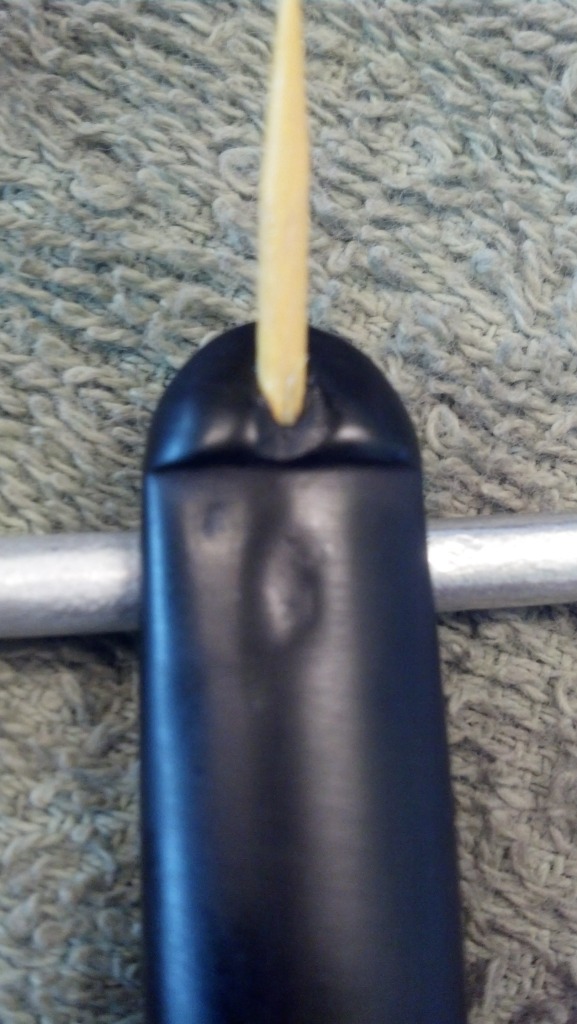
I put a Vaseline coated toothpick in the opening and used the StewMac black superglue to close up the opening to a more normal size, filling in the divot over several days.

Pete7

Using 320 grit wet/dry sandpaper on up to 1200 grit, I reshaped the stem where the glue was built up. Then moving to the Beall 3 wheel buffing system I hit the pipe with Tripoli, white diamond and carnauba wax. Each wheel is dedicated to each compound and is attached to a ½ hp motor on an old barstool in my garage (mancave). I put an old quilt under the buffer because occasionally the pipe or stem I am working on will jump out and hit the concrete. This gives it a soft cushion should it happen. Here is the finished pipe, one of my new favorites!

Pete8

Pete9

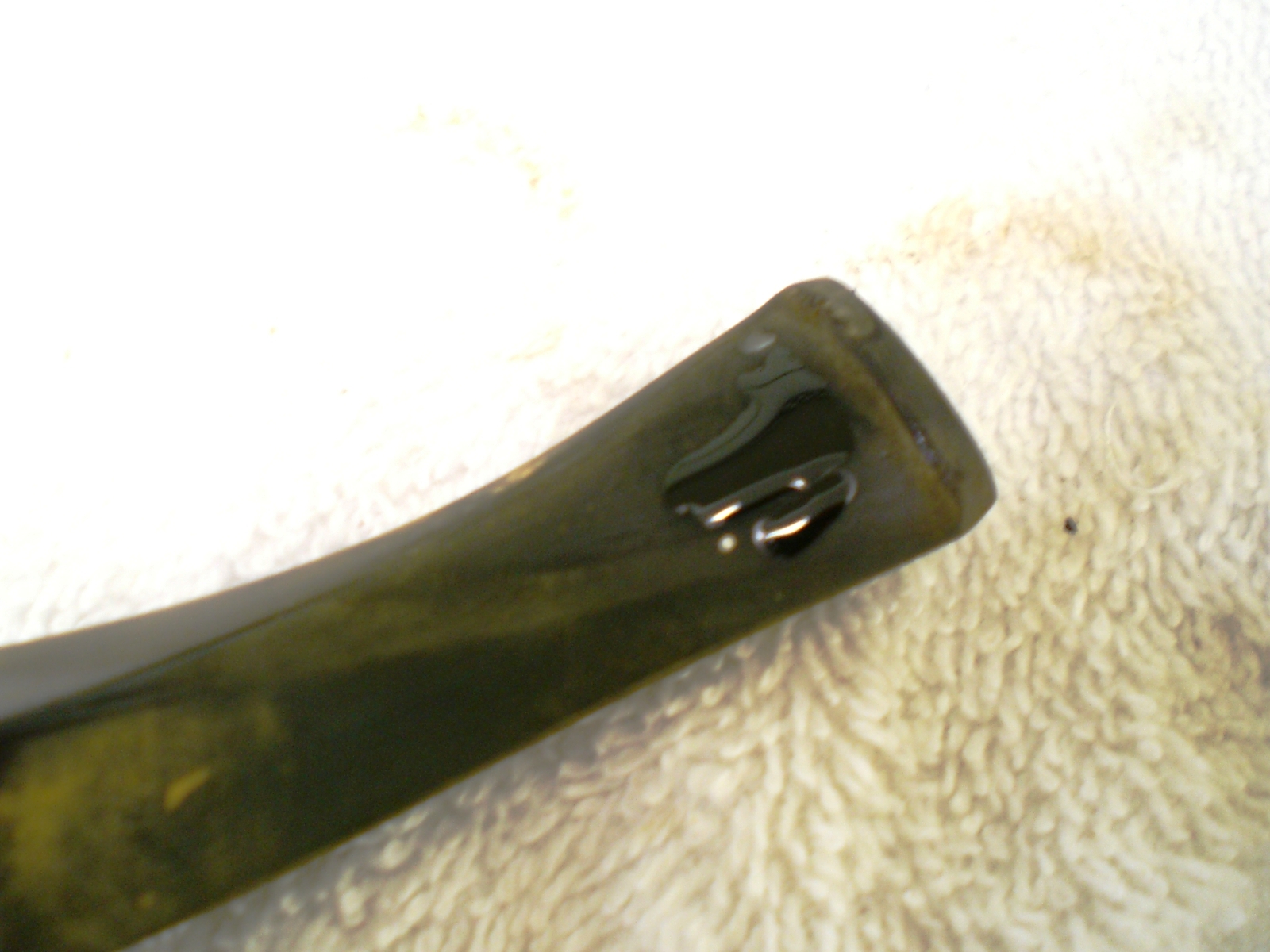
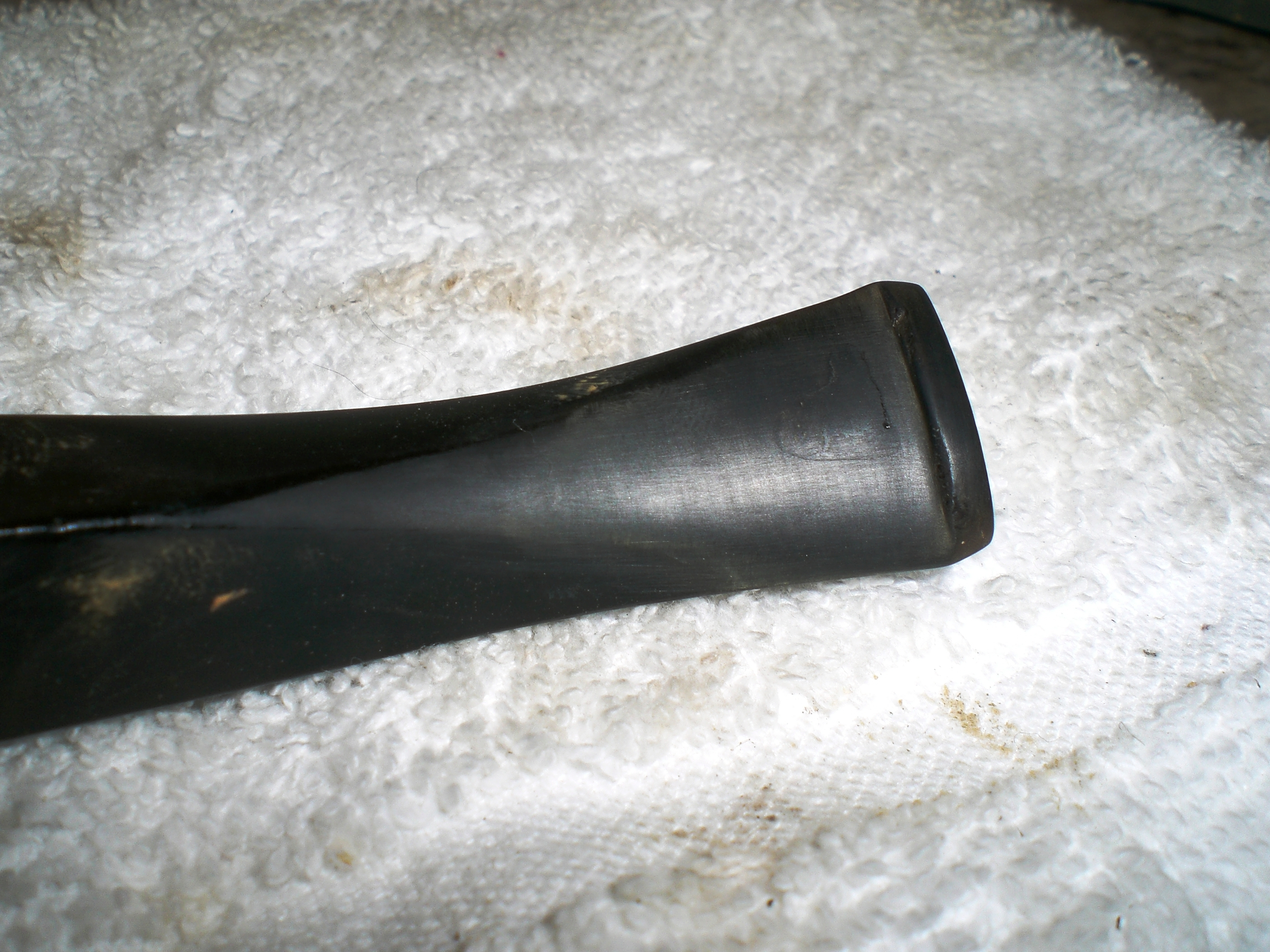
Charatan’s Make 109 Rhodesian Restoration


Blog by Al Jones

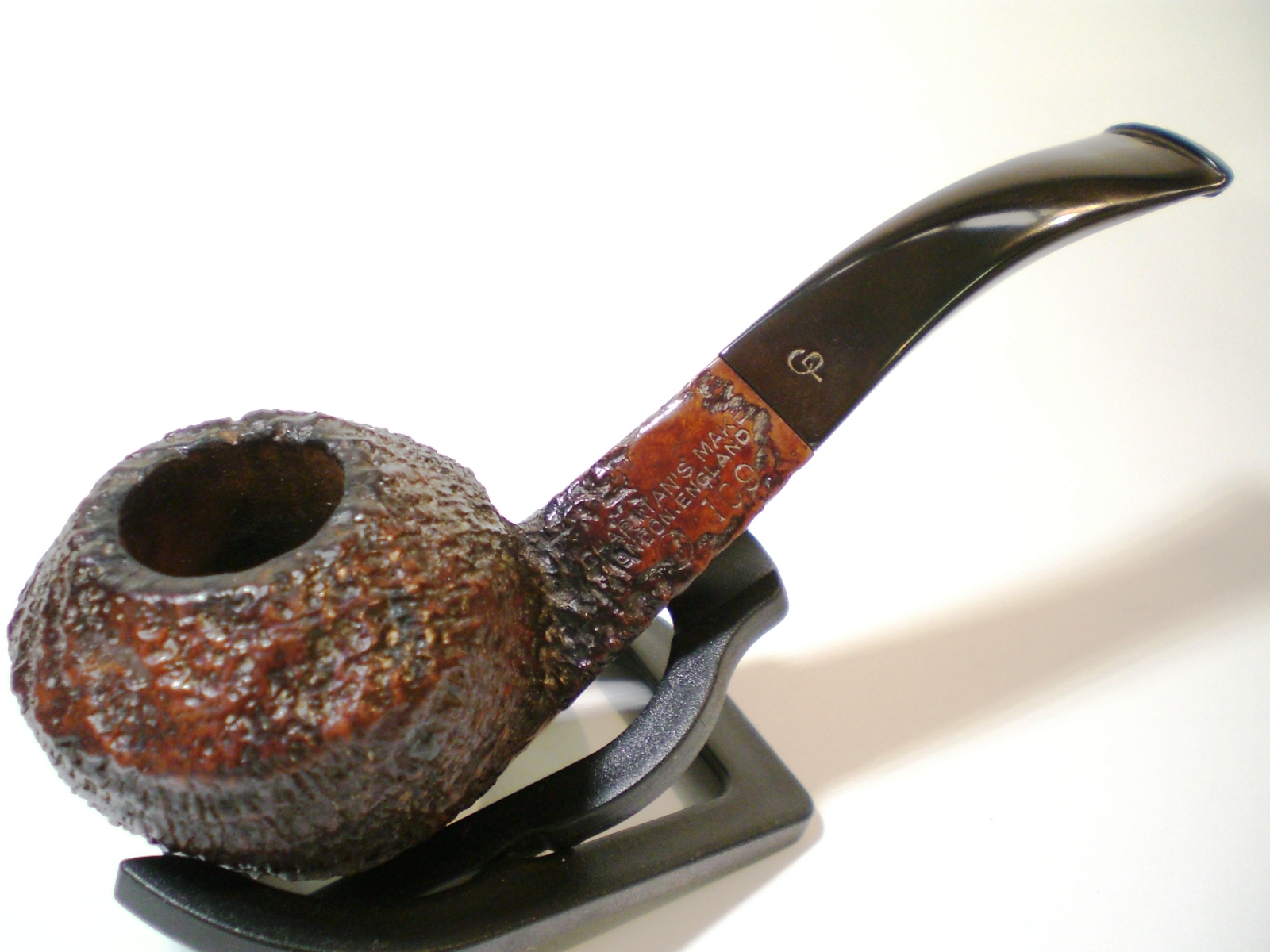
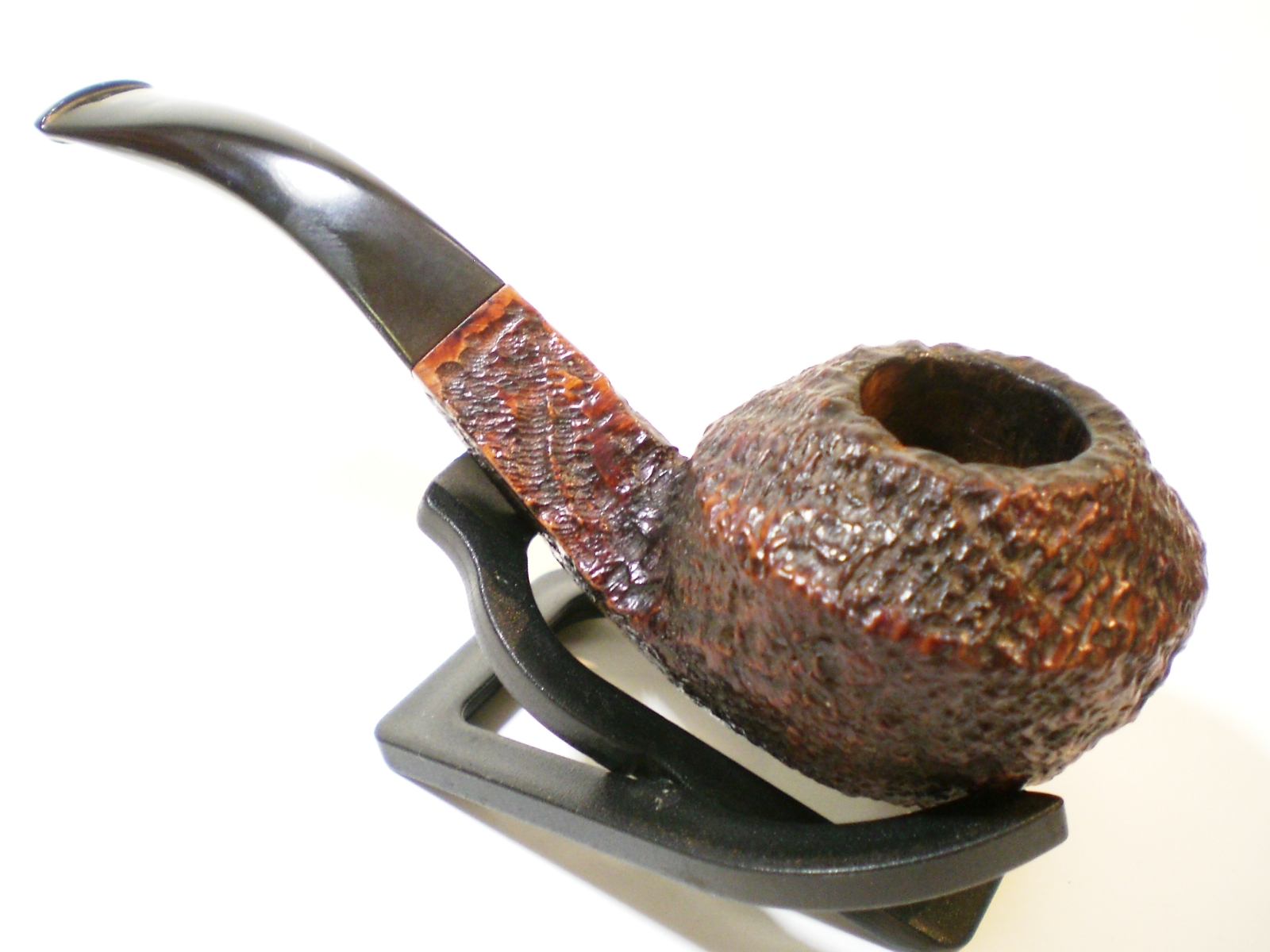
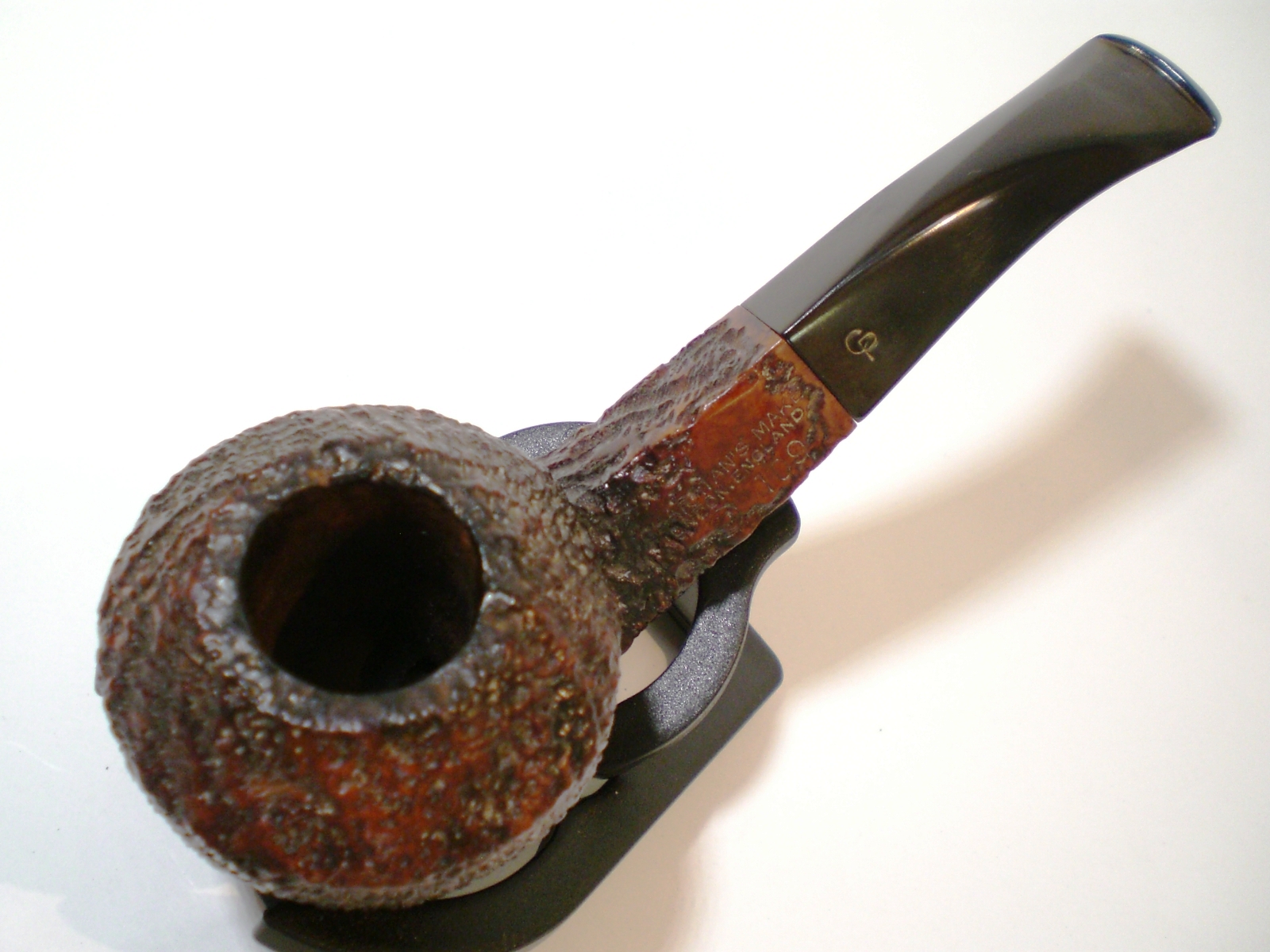
I have been a fan of the Charatan Shape 109, but rarely see them become available. This one was recently posted on Ebay. It is a Lane era pipe, with the L stamp, but it has a tapered stem versus the more common Double Comfort. I think the Double Comfort stem on Chartan Bulldog or Rhodesian stems look a little ungainly, so this one was very appealing. The pipes small size was a definite appeal. It is similar to a Group 4 Dunhill or XX Ashton. The pipe weighs approximately 45 grams, which is my right in my sweet spot.

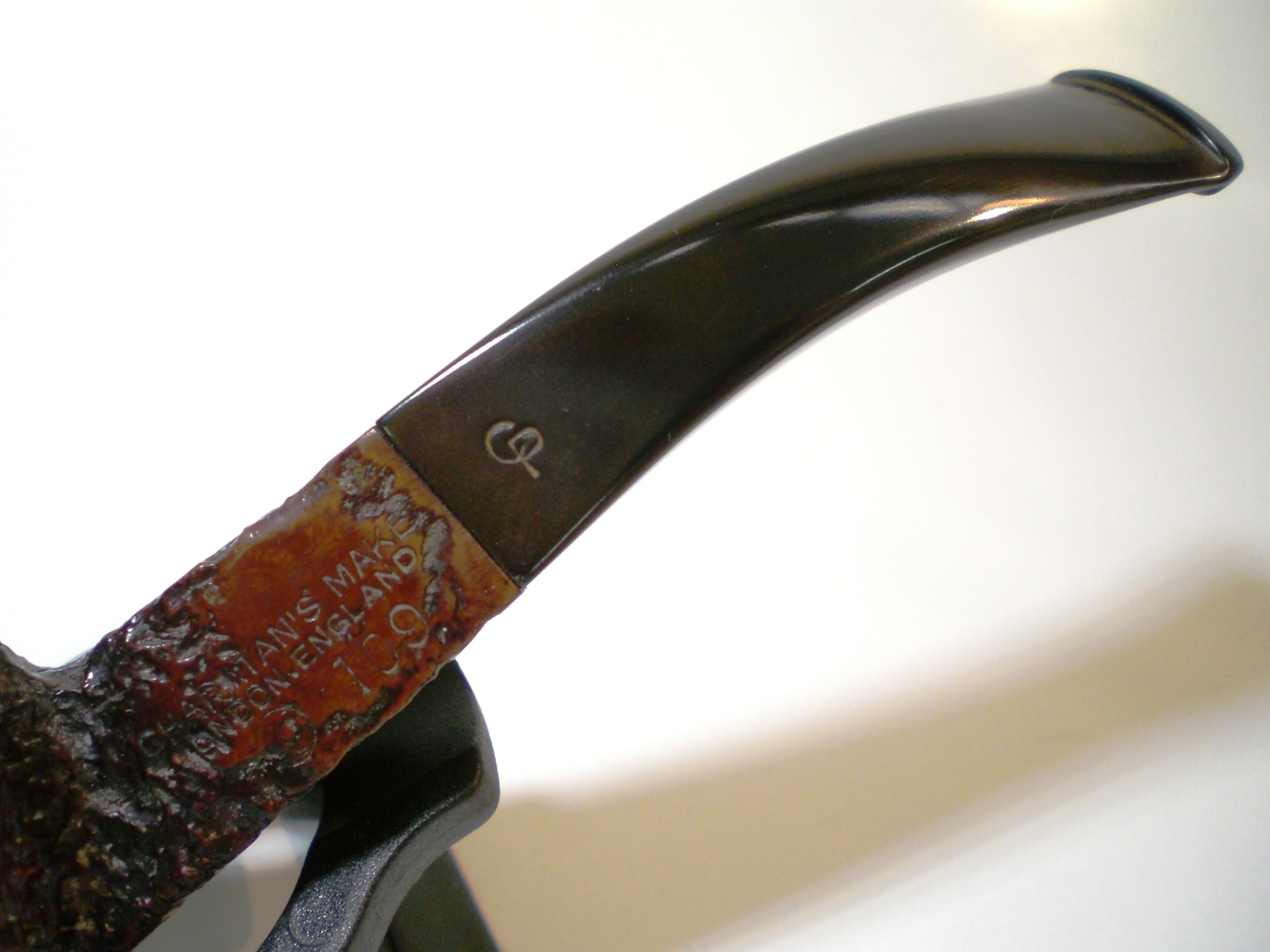
The Ebay pictures for the pipe weren’t very detailed and there were some pretty deep teeth marks on the bottom of the stem. The pips is stamped:
Charatan’s Make
London England
109 and the L stamp

I’ve learned that Charatan pipes stamped in this manner were known as having the “Rough” grade. From a somewhat controversial web article by Ivy Ryan, I’ve learned that:
“Sandblasted pipes stamped Charatan’s Make over London England and a number are one version of the famous “Rough” grade. These were apprentice pipes that didn’t come out well
enough to be graded but were still eminently smokable. To save the wood and give the
less-well-off a quality smoke, Charatan would first hand rusticate the pipe gently, then sandblast
it. (Due to Dunhill’s patent, they couldn’t simply blast the pipe, and the rustication made for a very
different blast.)”

The “L” in circle stamp denotes a pipe imported into USA by Lane Ltd between 1955 and 1988. If anyone has information to narrow down that range, please chime in.

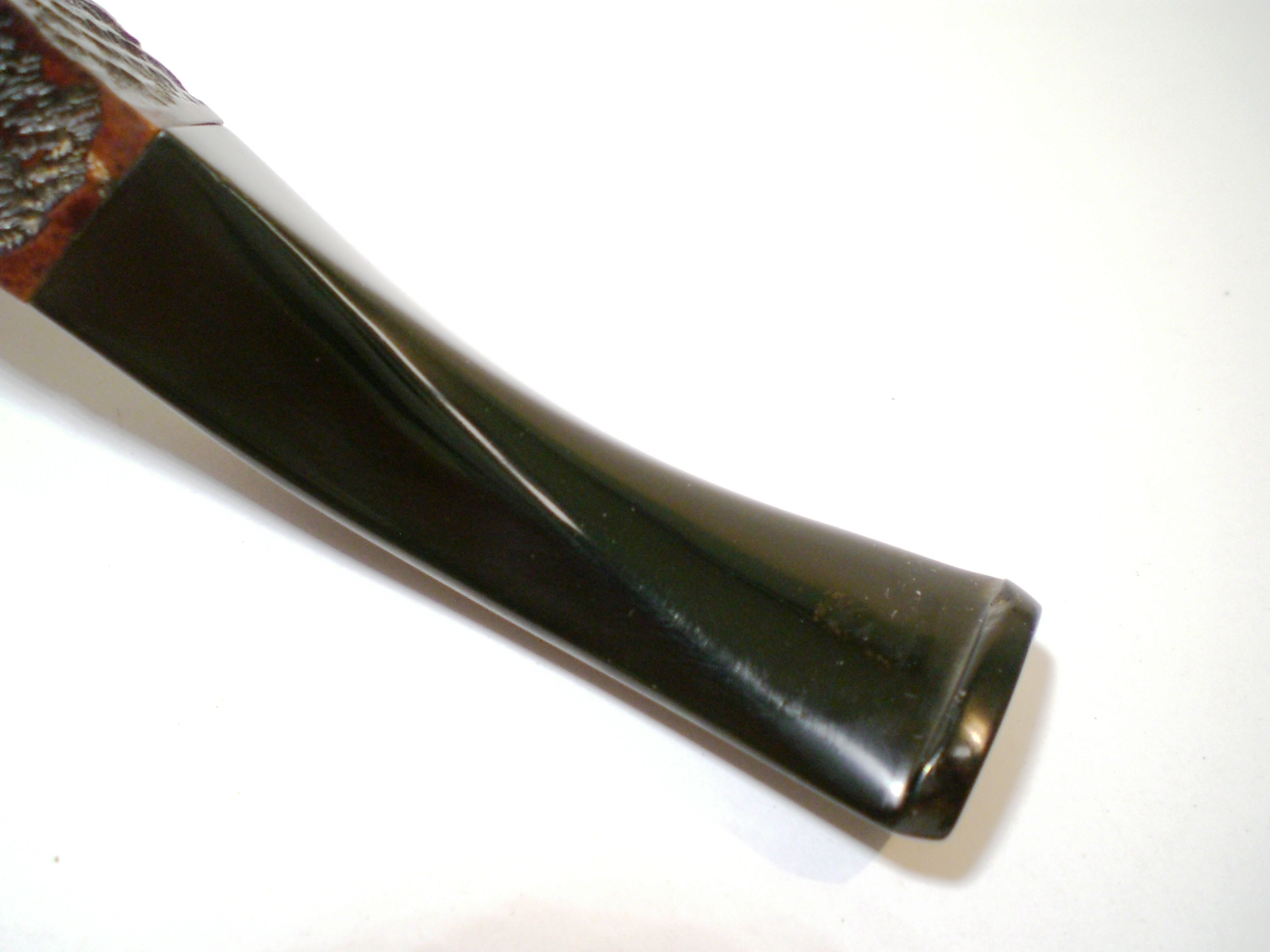
Here is the pipe as it was delivered. The nomenclature on the stem was in decent shape but it had some heavy tooth waves on top and heavy indention’s underneath.

Charatan_109_Before

Charatan_109_Before (1)

Charatan_109_Before (2)

Charatan_109_Before (3)

Once again, I employed the Stew-Mac black superglue to repair the teeth marks on the bottom of stem. The first photo shows the application of the superglue and the second shows it sanded smooth with 800 grit sandpaper.

Charatan_109_Stem

Charatan_109_Stem (1)

I reamed the bowl and soaked it with alcohol and sea salt. There was some tar build up on the bowl top, but that was removed with a very mild oxy-clean solution and a cloth.

I removed the oxidation on the stem with 800 grit wet sandpaper, then progressed thru the 1500 and 2000 grade paper. Most of the waves came off the top of the stem and the marks underneath blended in nicely with the superglue. The button was in good shape. I stayed away from the CP stem logo. The stem was then buffed lightly with white diamond rouge.

I finished the bowl with some Halycon wax, worked into the bowl with an old toothbrush polished by hand

Here is the finished pipe.

Charatan_109_Gallery
Charatan_109_Finished (5)
Charatan_109_Finished (8)
Charatan_109_Finished (3)

Charatan_109_Finished (1)

Another Loose Stem Fix


Blog by Greg Wolford

As I undertook this project I had no idea that Steve was writing and posting an article on tightening a loose stem. But when I saw it I figured that since this was a little different fix, and the pipe was already blogged about here, I would go ahead with the article.

If you have read the story of Big-Ben then you know I had to restem it. It was the first time I’d done this and the first use of my new tenon turning tool, too. So, in my haste and excitement I made a goof, one that Ric Farrah was kind enough to comment on: I had not cleaned the shank out real well before fitting the stem, leading to a loose new stem.

I tried beeswax and “smoking it in” but neither of these worked on this particular problem; as Steve noted often an application of beeswax and use will tighten up an estate pipe stem. But I suppose since this was just a goof on my part and the stem had not been for properly these solutions weren’t going to work.

I was aware of the tools sold for stretching a tenon, the pluses and minuses that Steve mentioned. But I wasn’t really inclined to buy one at this point, especially since I had another idea on what might work: a drill bit! So, since the two easy fixes failed I went down to the shop to try out this new-to-me idea.

I removed the stem from the pipe and checked the size of the air-hole against my set of drill bits. I thought I had drilled it out to 5/32 so this is where I started. However, I soon realized that I had drilled it at 9/64 so I took both of these sizes and the stem to the heat gun set up.

I almost always use leather gloves when I use my heat gun; things can get real hot, real quick. And since I was using steel drill bits I definitely wanted the hand protection. So, I donned the gloves and turned the heat gun on low to start stretching!

Now, the first thing I need to say here is when doing this you are inserting the blunt end of the bit that normally gets chucked into the tenon. The sharp end is the turning end, in your hand for this procedure. This part is very important.

I began to heat the tenon slowly, checking every several seconds on the progress; I only wanted it warmed enough to be slightly softened, not so soft that it could easily be deformed or badly bent. Keeping the tenon moving, I would take the smaller bit and try to insert it in the air hole until it went in. At this point I worked very gently to get the bit inside the tenon the entire length of the tenon, removing the bit/tenon from the heat. I kept the bit turning slightly while it was inside the hole so it wouldn’t stick. After about a minute I gently removed the bit and allowed the tenon to cool a few minutes before checking the fit, which ended up being too loose still. So, I picked up the larger bit and began the whole process over, this time resulting in a perfect fit: good and snug with no “play” or slipping but not too tight either. Finally, the new stem was fit properly!

I left of overnight and loaded it up the next morning, checking the for again; it was still perfect, like it had been made for it (a little humor there)! The pipe smoked good before the adjustment but it now smokes very well with a good fit on the stem, part of which I’m sure is in my head, not fussing or worrying about the bowl falling off.

I found this fix very simple and expect to use it again in the future: it was done with tools/items I had on hand and only required a bit of patience and slow going to do right. Of course if I’d applied that idea to turning the tenon to start with I wouldn’t have had to refit the the stem. But then I’d not have had the opportunity to try out this fix if I had done it right to start with either: I suppose that is the silver lining in this cloud of errors!

20130822-211846.jpg

Tightening a Loose Stem


Blog by Steve Laug

Over the years I have read quite a few posts on various forums about tightening loose stems on pipes. I have read everything from “smoke ‘em ‘til they are tight again” to heat and pressure to expand them. Others have said to use beeswax to coat the tenon on the stem and as it smokes it will tighten. Yet others have suggested coating the tenon with various things such as clear nail polish or clear super glue. Over the years I have experimented with all of the various methods suggested and a few others and have written this article to talk about each of them and look at the positives and negatives of each. I will start with the least invasive methods and move to some of the repairs that can be done to expand the tenon permanently or build it up for a tight fit in the shank. The choice is ultimately yours as you address this issue in your own pipes. Personally I start with the first method – smoking them to see if they tighten and if it does not work then move on to the methods that build up the tenon. I rarely, if ever, use the tenon expander any longer. The “smoke ‘em til they are tight again” method is obvious so I begin below with Beeswax.

BEESWAX
The first method that I will address is one I commonly read on various pipe forums and publications. It is a simple one – the application of beeswax to the tenon of the pipe to tighten it up. Beeswax is readily available online or at most stores and is reasonable in cost so it is a very good first step in addressing a loose stem issue. Application is a simple process of rubbing the block/cake of wax or candle on the tenon to build up the diameter of the tenon. Once it is built up with wax the stem is reinserted into the pipe. After that load a bowl of tobacco and smoke it. The idea is that the wax will hold the stem tightly in place while you are smoking your pipe and that as you smoke the pipe, the shank and tenon will warm/heat up and things will expand and the fit will return to normal. It sounds good and it does work – some of the time!
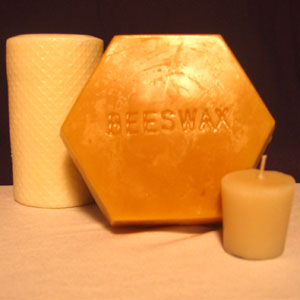
beeswax1lbblock

The positives –
1. The beeswax is non-toxic and will not harm you or the pipe in the process.
2. It is easy to apply on the tenon and is also easy to remove.
3. It is a good short-term fix.

The negatives –
1. The method works some of the time but not all of the time. If it is the only tool in the kit there will be some significant disappointments.
2. It does not take into consideration that the problem may well be a matter of humidity in the place the pipe is stored. I have found that often a pipe shipped with the stem will arrive with a very tight stem. I have also found that one with the stem removed will be loose when it arrives. As the pipe adjusts to the humidity and is smoked the balance that was there when it was made returns.
3. The beeswax as heated during the smoking of the pipe melts and can gum up the inside of the mortise. I have cleaned out a lot of pipes that had this method applied repeatedly and had to remove much waxy build up in the shank/mortise.

HEAT AND PRESSURE ON THE TENON
Heat and pressure on the tenon was the second method that heard much ado about. On several of the online forums when I asked about tightening the tenon this is the method that was suggested immediately after the beeswax suggestion. The concept is simple. The tenon is heated on a flame or with a heat gun. When it is warm and soft the tenon is stood flat against a hard surface and pressure is applied downward to compress the tenon and thicken the tenon it for a tighter fit in the shank. The key is that the stem is held absolutely straight up and down and the pressure applied evenly so that the tenon does not tip one side or the other. If it tips it is virtually impossible to adjust back to straight. Once it is pressed down it is cooled by dipping the end in water to set the vulcanite.

The positives –
1. The method is very simple and the logic behind it is quite accurate. Heat the vulcanite tenon and it softens. Press against a hard surface and it compresses. When it is compressed it thickens and the fit is tighter.
2. There is nothing being added to the tenon to make the adjustment. No materials used that may have an unknown toxicity or danger. It is just heat.
3. It is a fix that when done can be forgotten and that will not need to be repeated.

The negatives –
1. The heating of the tenon and pressure can end up tilting bending the tenon to one side or the other. When that is done, even to a minute degree, the stem/shank union will no longer align and there will be a gap in the shank. It is almost impossible to see if the tenon has been tilted unless the tilt is drastic.
2. Too much heat can burn and weaken the vulcanite and it can become brittle and break. When that happens the stem is broken and the tenon needs to be replaced.
3. Too much pressure can cause the tenon to be too compressed and the fit is now too tight. The only repair is either to reheat and expand or to sand the tenon until it fits.

TENON EXPANDER AND HEAT
I wrote about the tenon expander almost a year ago now and posted it on the blog – https://rebornpipes.wordpress.com/2012/12/07/positives-and-negatives-of-the-pme-tenon-expander/
Below is a summary of the article that I posted:

After reading about it online, I picked up a tenon expander from the Pipe Makers Emporium several years ago. It can be ordered online at http://www.pipemakers.org/tools02.htmlThe website describes it as follows: Tenon Expander: (Three sizes-in-one: 1/25, 1/50, 1/60) “An absolute must for pipe repair! One tool that will do 99 percent of all loose tenons. Throw away that ice pick because this will do a much better job. Heat the Tenon with an alcohol lamp until it is soft. Insert the Expander to the next size. Place Tenon and Expander into cold water to set the Tenon to its new size. Remove the Expander and your Tenon will maintain its new size.” They sell for $29.00 each.

The concept of the tool is actually quite simple – heat the tenon with a heat gun/ hot water or heat the tenon expander tool with a flame or heat source. Once it is heated, push the expander into the tenon and twist it until the tenon expands. Cool the tenon under clean or cool water to set the expansion and then remove the tool. You will notice in the picture below that the tip is tapered and gets larger in diameter the farther you move up the tip toward the handle. By pushing the tool into the tenon you can expand it for a tighter fit in the shank. In my use of the tool I would heat and expand, then cool the tenon in water, remove the tool and try the stem on the pipe for a fit. If it needed more expansion I repeated the process until the fit was snug. The graduated slope on the tenon expander gives you a broad range of possibilities in accomplishing that task. After I had used it for a while I decided to evaluate the tool in terms of its positives and negatives. What about the tool did I like and what were its deficiencies?
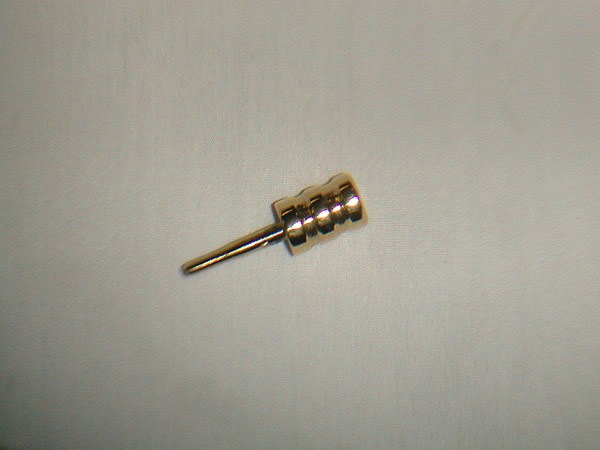
ten_expan

The positives –
In thinking through the positives the obvious ones were those advertised on the PME website.
1. The ease of use is the first thing that stood out with the tenon expander. It is very simple to use even though it came with no instructions. It was not hard to figure out how to use it correctly.
2. The tapered end is also billed as a positive feature of at first glance as it works to open the tenon to varying degrees and you can repeat the fit until the stem is snug. I will explain in the negatives why I have come to believe that the tapered end is not as great a feature as it initially appears to be when you begin.
3. The grooves on the handle of the tool are cut to make it easy to hold on to as you work with it.

The negatives –
Over time and experience working with the tool I have found some of the features that I first thought were helpful have grown to irritate me and work as limitations of the tool.
1. The first thing I have learned is that the taper on the end of the expander, while being helpful, is also a negative feature. The expander does not expand the entire tenon but rather the end of the tenon. With use the tenon thus is no longer cylindrical but can flare at the end. The snug fit is thus only for the first 1/8 inch of the tenon. The rest of the tenon is not touching the walls of the mortise.
2. Heating the tenon to insert the expander makes the tenon very pliable and if you are not careful the tenon can be bent at an angle thus ruining the fit at the shank. I have found that if I heat the expander instead then the tenon does not soften as much and I avoid the potential of tilting the tenon.
3. A final negative for me is the handle of the expander. I use a pair of heat mitts to hold it as I heat it but if I were going to continue to use it regularly I would make a wooden handle and epoxy the expander into it. In my opinion it would make it more usable.

As I pushed the limitations of the tenon expander that I purchased I decided to look and see if I could find other tools that would address the negatives that I have spelled out above.

ICE PICK OR AWL AND HEAT
In that article I wrote “I have been experimenting with various sizes of ice picks and awls to use for tenon expansion as they have a longer shank and less taper. This allows me to expand the tenon the entire length of the tenon rather than just the tip. So far they have worked very well. I can easily heat the shaft of the awl or ice pick while holding the wooden handle. They slide into the tenon and are easily twisted slowly to expand the tenon. The final verdict is still out on them as I continue to look for picks and awls with a variety of diameter shafts.”

A year has gone by since then and I have used an awl with some success. I looked for one that had a sharp point and a quick taper. I wanted to improve upon the taper of the tenon expanding tool pictured above. To my mind an awl that kept the same diameter its entire length was what I was looking for. I found an old-timer in an antique shop and added it to my collection of tools that I use for refurbishing. It is picture below and you can see the long straight length of the blade on it. It works quite well. Again the method is a matter of heating the awl blade not the tenon. With the blade heated it is inserted into the tenon and twisted until the tenon opens. It is quickly cooled to set the enlarged tenon by cool water. Then the awl is removed.
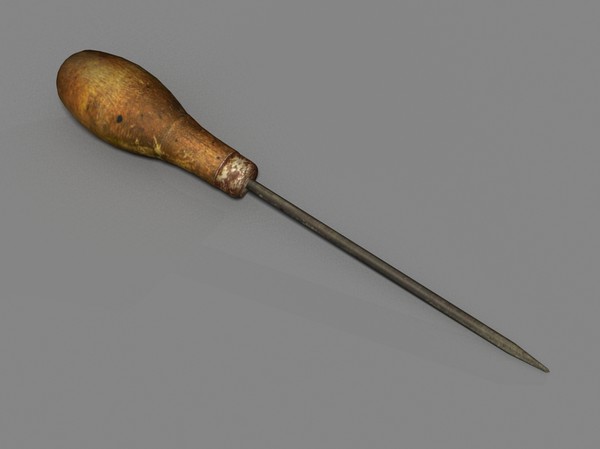
Awl

The positives –
1. The handle on the awl makes the tool very easy to use when it is hot. It can be manipulated easily over the heat and in the tenon.
2. The straight blade makes it easier to open the tenon the entire length and not just on the end – it thus keeps the tenon equal diameter the entire length.
3. The blade diameter is perfect for most tenons, but there are various sizes of awls available that can be purchased.

The negatives –
The minuses with the awl/ice pick are less than those with the tenon expanding tool but in many regards there are similarities.
1. The awl needs to be turned into the stem and if left can become stuck in the airway. Care must be exercised to keep the tool moving and not let it stand in the shank too long.
2. Again heating the tenon and inserting the awl can cause the tenon to move and again ruin the fit against the shank. I have found that heating the blade works far better and minimizes this problem.

NAIL POLISH
Clear nail polish works very well on the outside of the tenon to add diameter. It comes with a brush applicator and can be painted on. It must thoroughly dry before putting the stem back in place or the nail polish makes a mess of the inside of the tenon. However once it is dry it is a solid repair. If too much polish has been applied it can be sanded with sandpaper to a correct fit very easily. I used this method on pipes that the beeswax did not provide a permanent fix. I have had it on pipes for years now and there is no foul after taste from the tenon, once dry. I also am very careful in applying it to avoid the end of the tenon or airway on the tenon. I just coat the outer diameter of the tenon. Because it sits against the inside of the mortise with a pressure fit I do not find any of the polish taste leaching into the smoke itself.
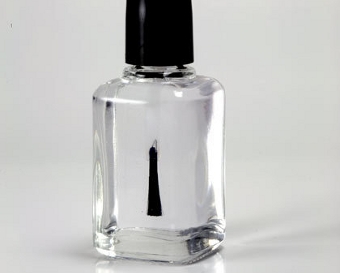
clear_nail_polish

The positives –
1. The clear nail polish is virtually invisible on the tenon and can be applied and adjusted as necessary with very little effort.
2. It is a more permanent fix than the beeswax on the tenon and it is also easy to remove should you choose to do so. If the tenon becomes too snug you can sand a little of the polish off and the fit is restored to a proper fit.
3. It is a fix that when done can be forgotten and will not need to be repeated.

The negatives –
1. The polish is toxic and should not be breathed or put in the mouth. Because of this extreme care should be exercised when applying it to be in a well-ventilated room and to also let it dry before reassembling the pipe. Once it is place and dry there is no smell or taste. I am careful to avoid the end of the tenon and airway in the application.
2. The stem can become too tight if the humidity varies greatly in the house or office where the pipe is used. If it becomes too tight it is not hard to loosen the fit with a small piece of sandpaper.

SUPER GLUE
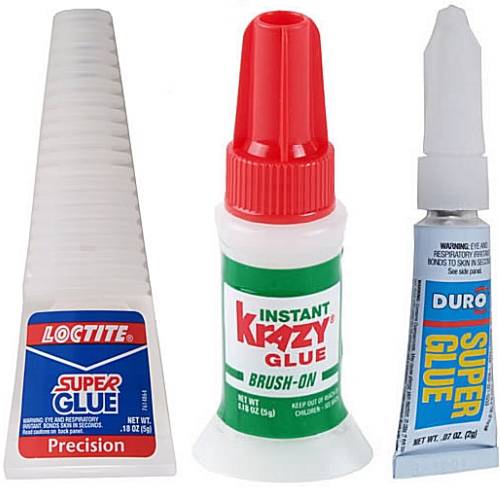
Super glue or Cyanoacrylate glue can be used to build up the tenon in much the same way as clear nail polish. It dries harder than nail polish and is more permanent. Cyanoacrylate glue is used by medics on battle fields and trainers in sports to bind together wounds on the human body so it seems to me that the toxicity is a non issue. It dries very hard and is impermeable so I have found that it does not leach or bleed flavours into the smoke. I drip it on the tenon and turn the tenon as it drips. The glue encircles the tenon and dries very quickly. Once hardened it can be sanded or built up as case may be to provide a snug fit on the tenon. I have been using it on tenons for about a year and have found no ill effects from its use. Once dry it is odourless and tasteless. I find that it does not deteriorate over the year and pipes that I smoke often that I have used it on are like the day I put the glue on the tenon. The lack of breaking down speaks well of the glue.
ct2-16_superglue

The positives –
1. The glue is easy to apply to the tenon and flows easily around the diameter of the tenon. It is a clean fix to the stem.
2. It dries very quickly so that it can be adjusted with multiple layers or by sanding to make the fit snug. If during use the tenon becomes too snug, it is easily sanded down to accommodate change in fit.
3. It appears to be a good long term fix. I have been using it on some of my loose stems throughout the past year and a bit with no break down to the product and no need to reapply or adjust.
4. It is easily adjusted with sandpaper and then polishes to a clean shine.

The negatives –
1. Some will find the toxicity of the glue an apparent problem. I say apparent as it is used to repair cuts and surgeries of the human body so I think that is a non-issue
2. The long term effects of use on the human body have not been studied. This becomes less significant when you realize that the repairs tenon is not something that is touched by the mouth or tongue.
3. The glue dries very quickly and it is easy to overdue the repair. It dries very hard so it takes some work to remove the excess.
4. The glue can bond skin together so care must be exercised when applying it to the tenon to not get it on the hands. It is hard to remove from the skin. It is water proof and also is not removed by alcohol or acetone.

That is the list of the various methods that I have read of and tried in the work of tightening a loose stem. I always start with the least invasive method and work towards the last methods listed. I rarely use the tenon expander or the awl any longer due to the negatives of using both of them. I invite any of you who have used these methods or have other creative suggestions for tightening a stem to reply. Just post your replies in the comment box below. Thank you.

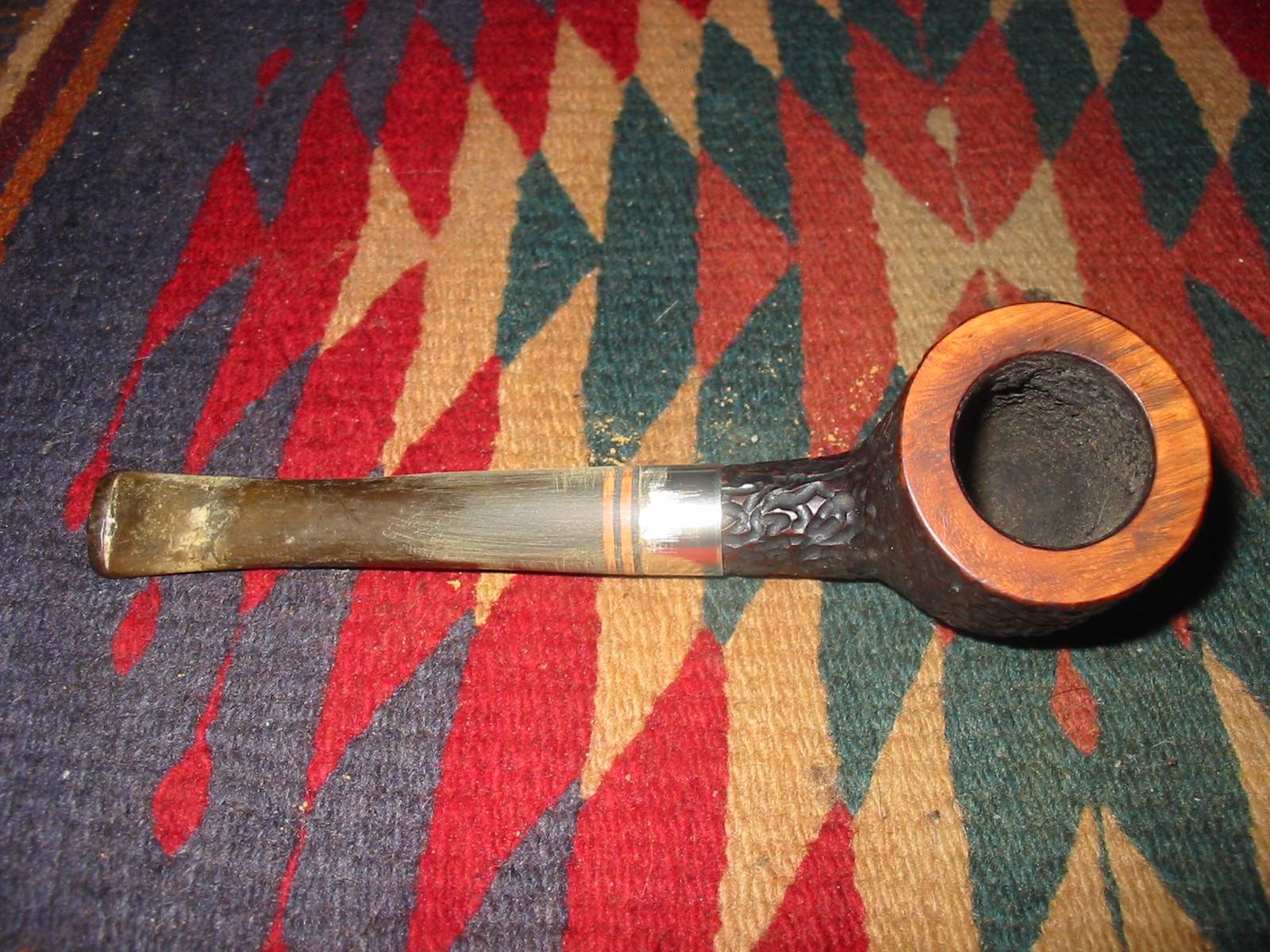
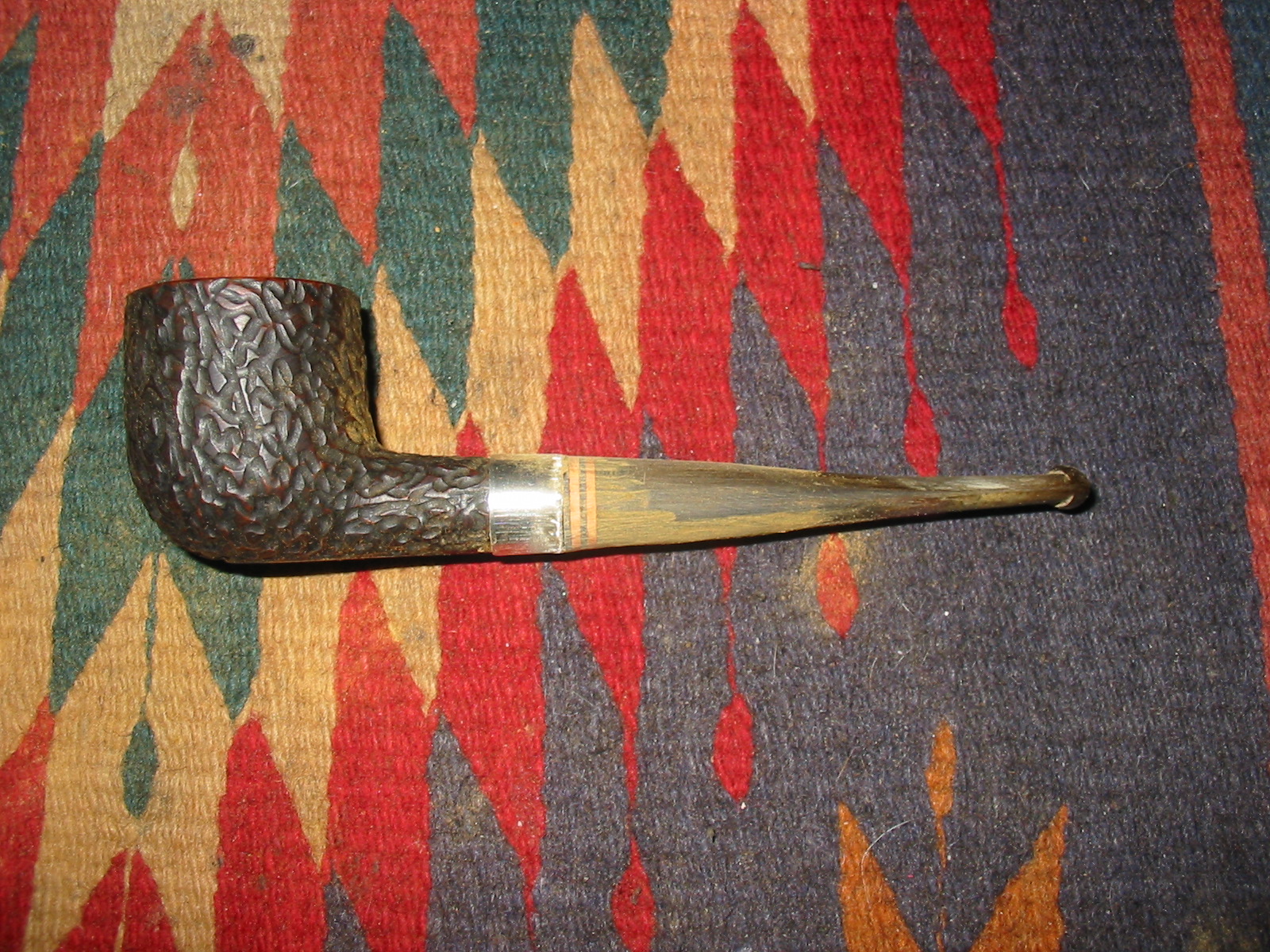
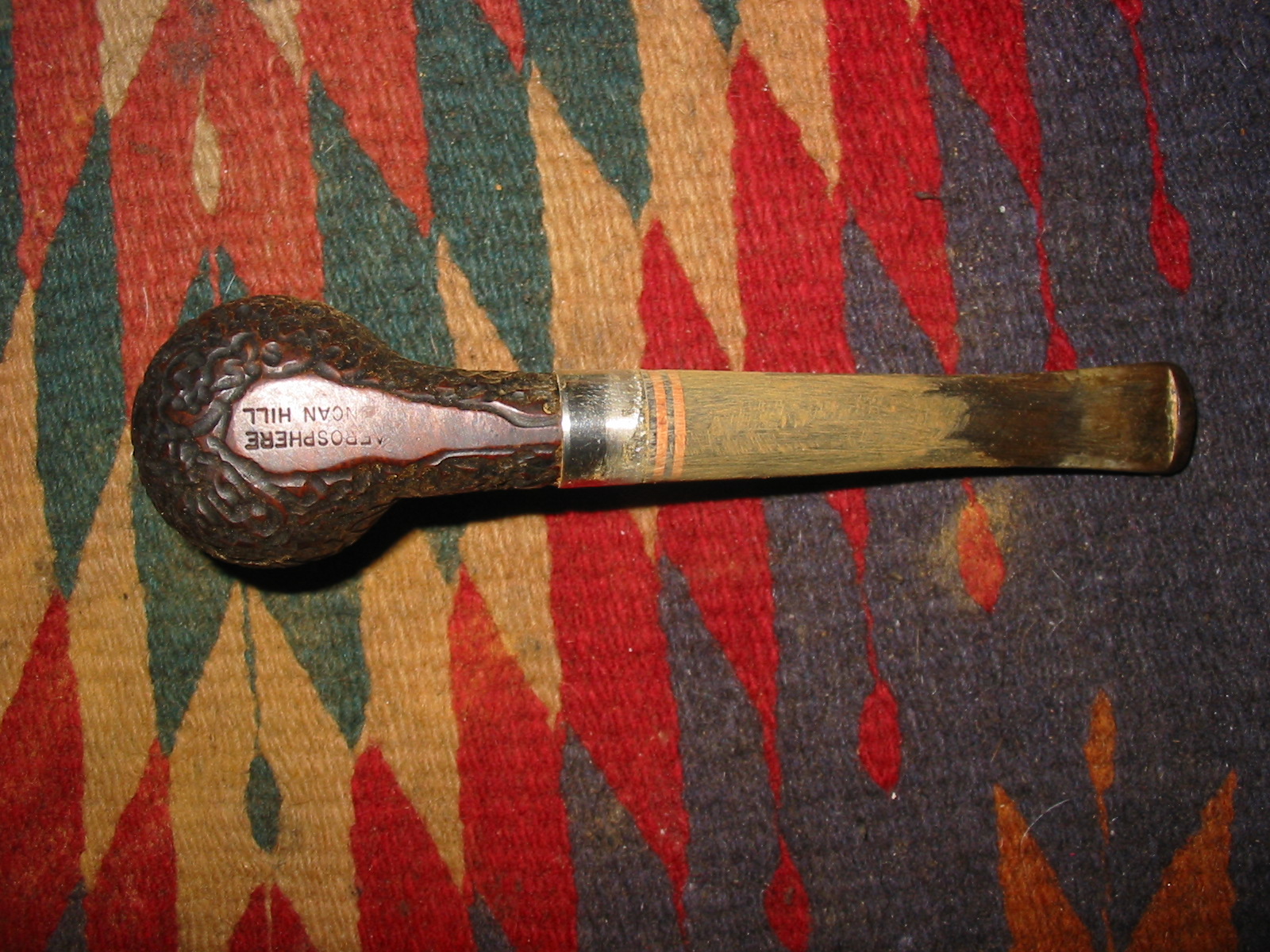
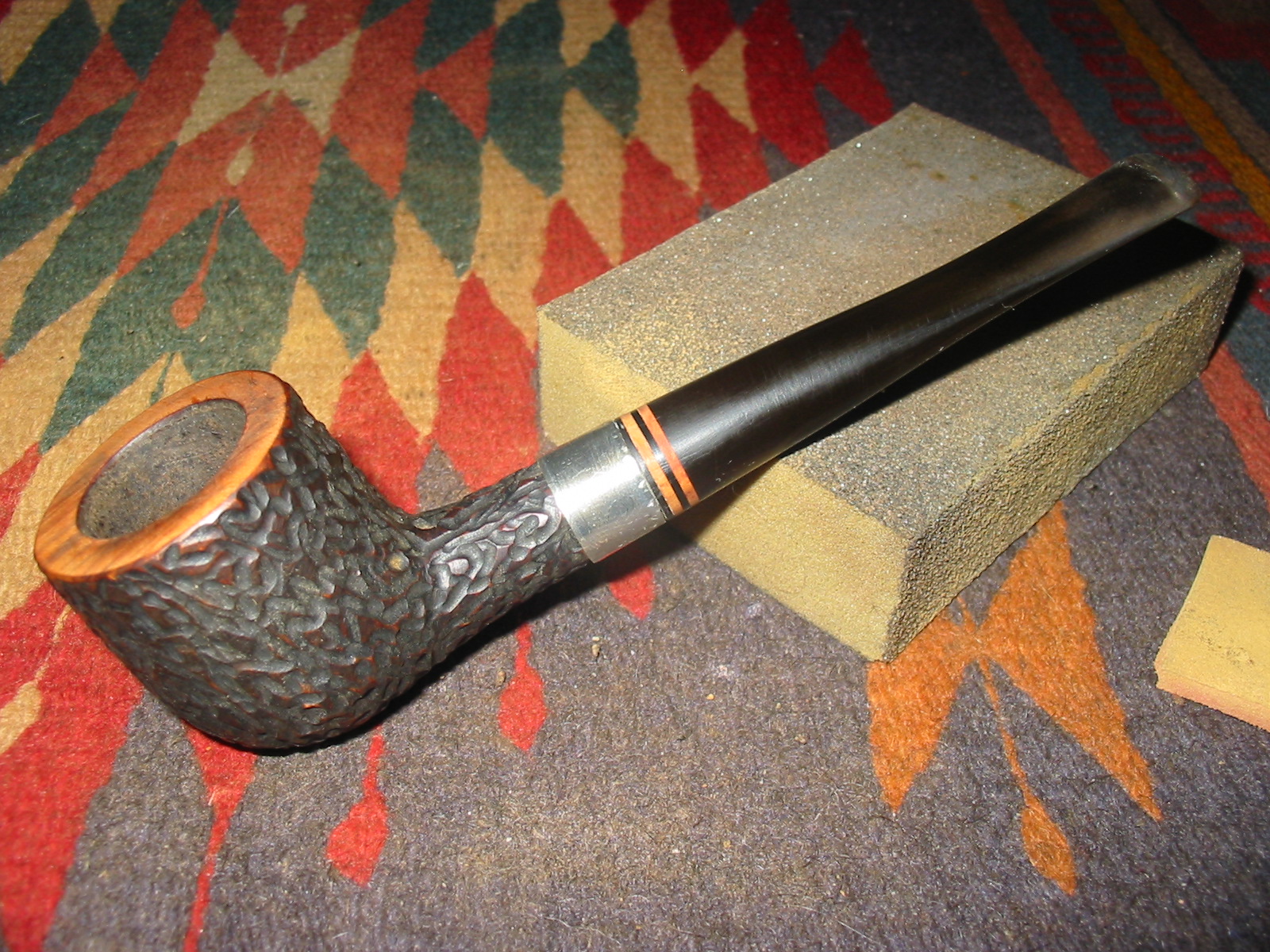
A New Look for a Duncan Hill Aerosphere


Blog by Steve Laug

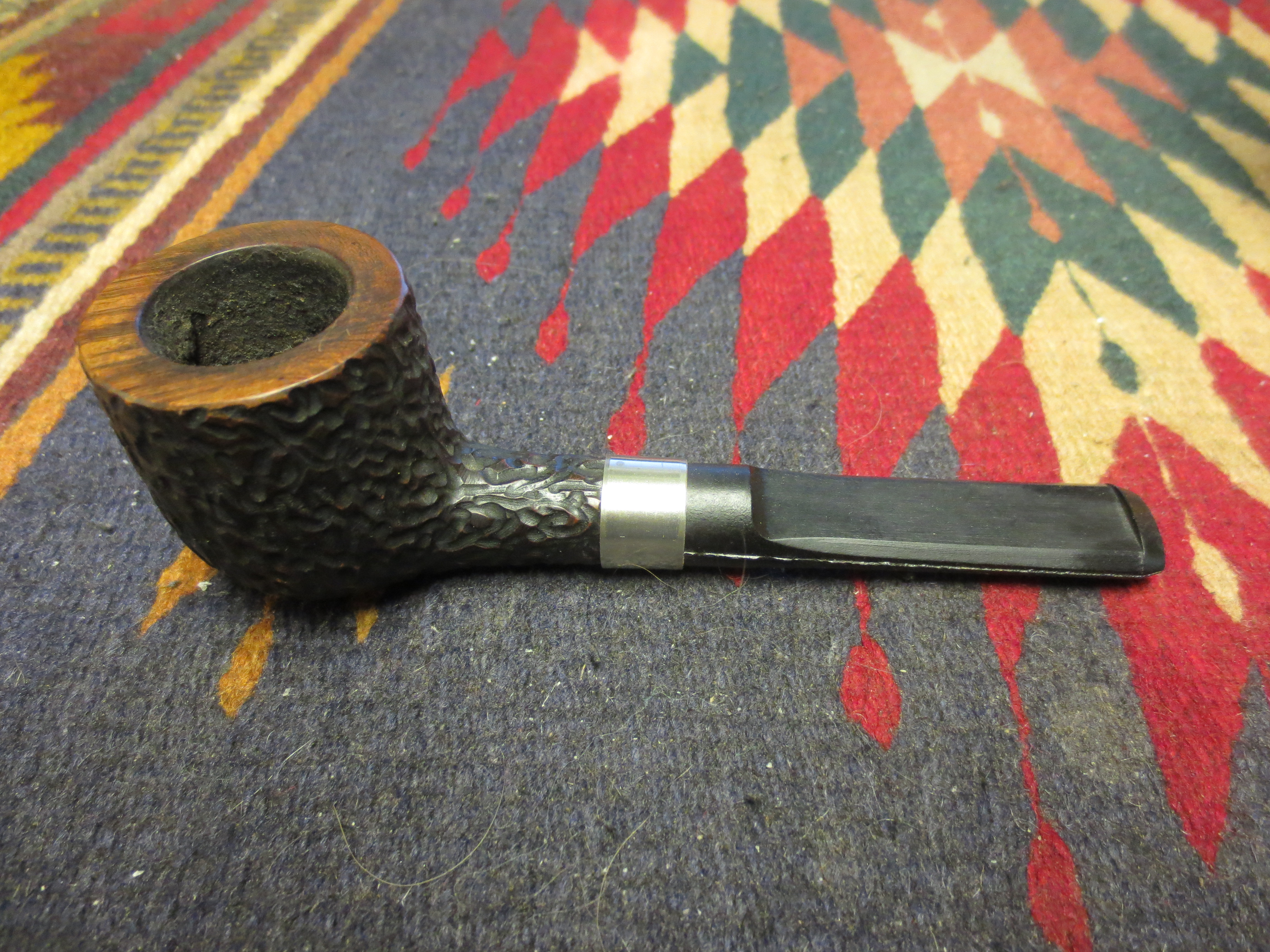
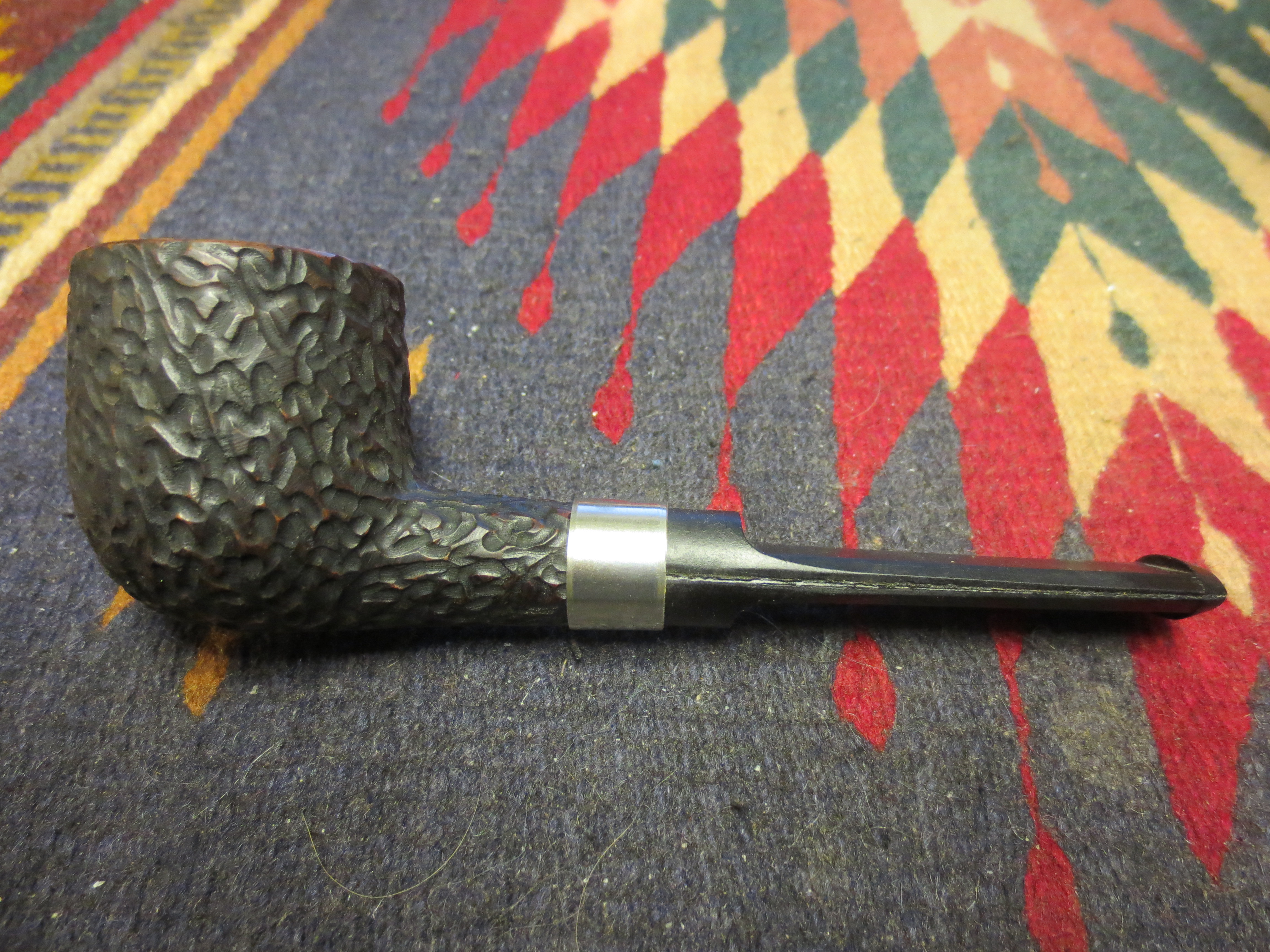
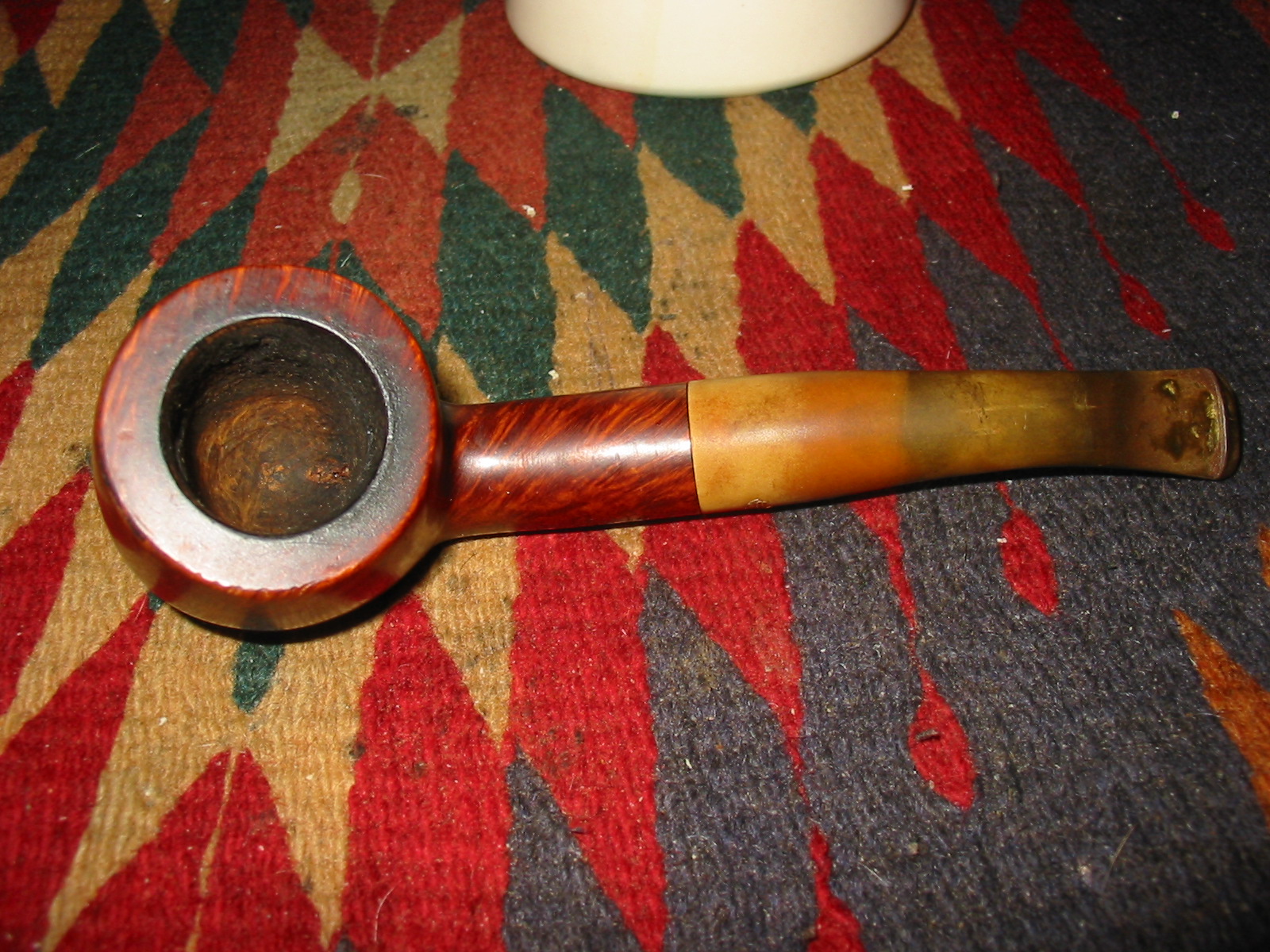
Over the years I have owned and sold several Duncan Hill Aerosphere pipes. The system on the pipes and the thinness of the bit always made the airway too tight for me and the draught sluggish at best. I have repaired several of them over the years as well and never found one that really worked well for me. Then in one of the lots I picked up on Ebay that needed new stems there was a Duncan Hill Aerosphere bowl without a stem. It had a wide open airway and was in decent shape. The bowl had a light cake and the rim was tarred but not damage. The bowl was still round and obviously the pipe had not been smoked very much. I figured it was an opportunity to restem it with a standard stem and see what I could get from it.
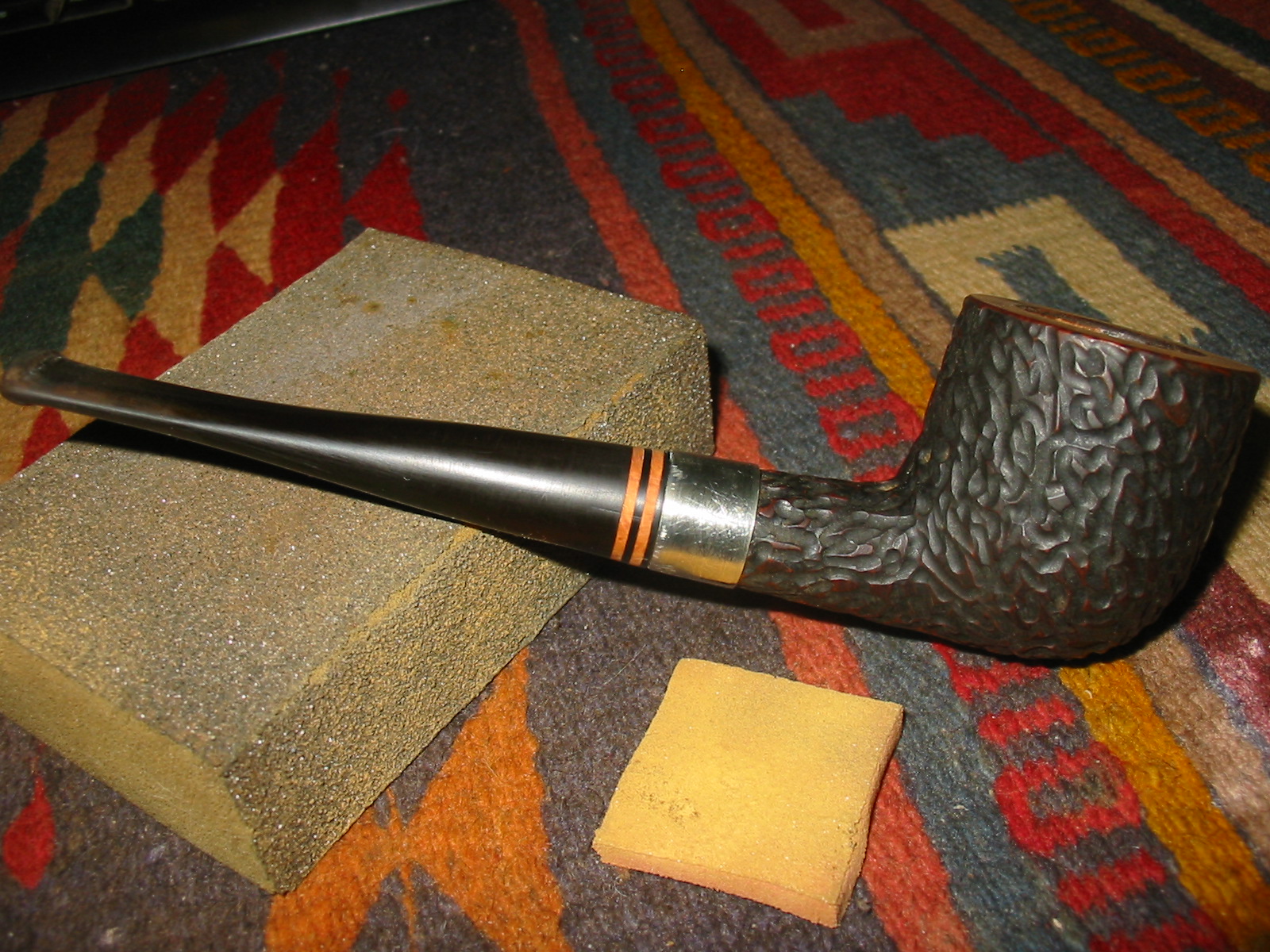
I tried two different stems on the pipe. The first was a flat blade saddle stem blank. I turned the tenon with a PIMO tenon turning tool and fit it to the pipe. I decided to put a nickel band on the shank for cosmetic purposes as I thought it would look good with the saddle stem. There were two problems with this fitting. The rustication pattern on the Duncan Hill made a smooth fit of the band virtually impossible and the gap around the shank did not work for me. The second issue was that the stem itself was just a few millimeters’ smaller in diameter than the shank. It was not noticeable except with the band it was accentuated. I removed the band and tried the stem without the band and it did not work well. I abandoned that option and went back to my can of stems to see what else I could find that might work in terms of both diameter and length.

IMG_0730

IMG_0731

IMG_0732

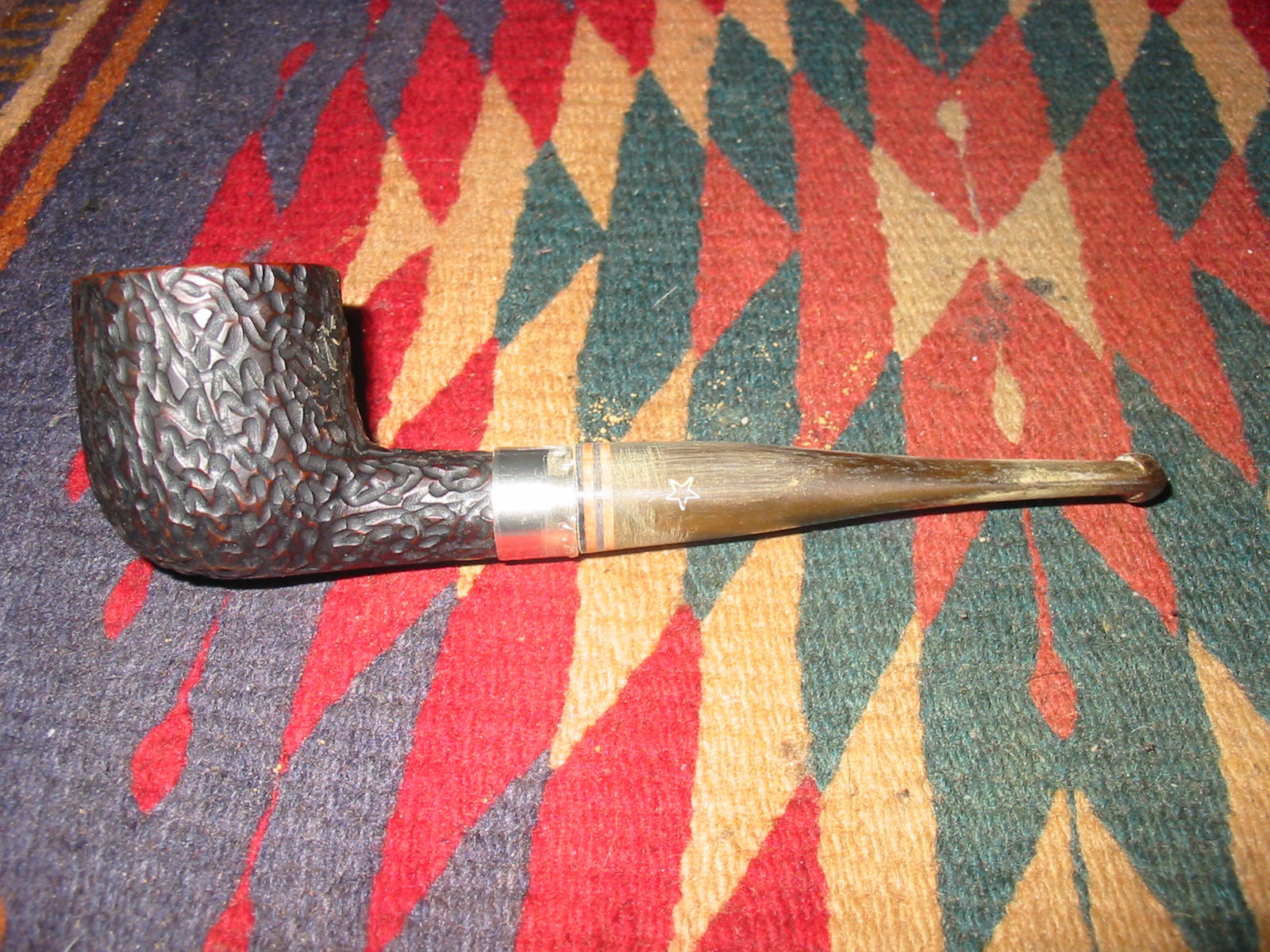
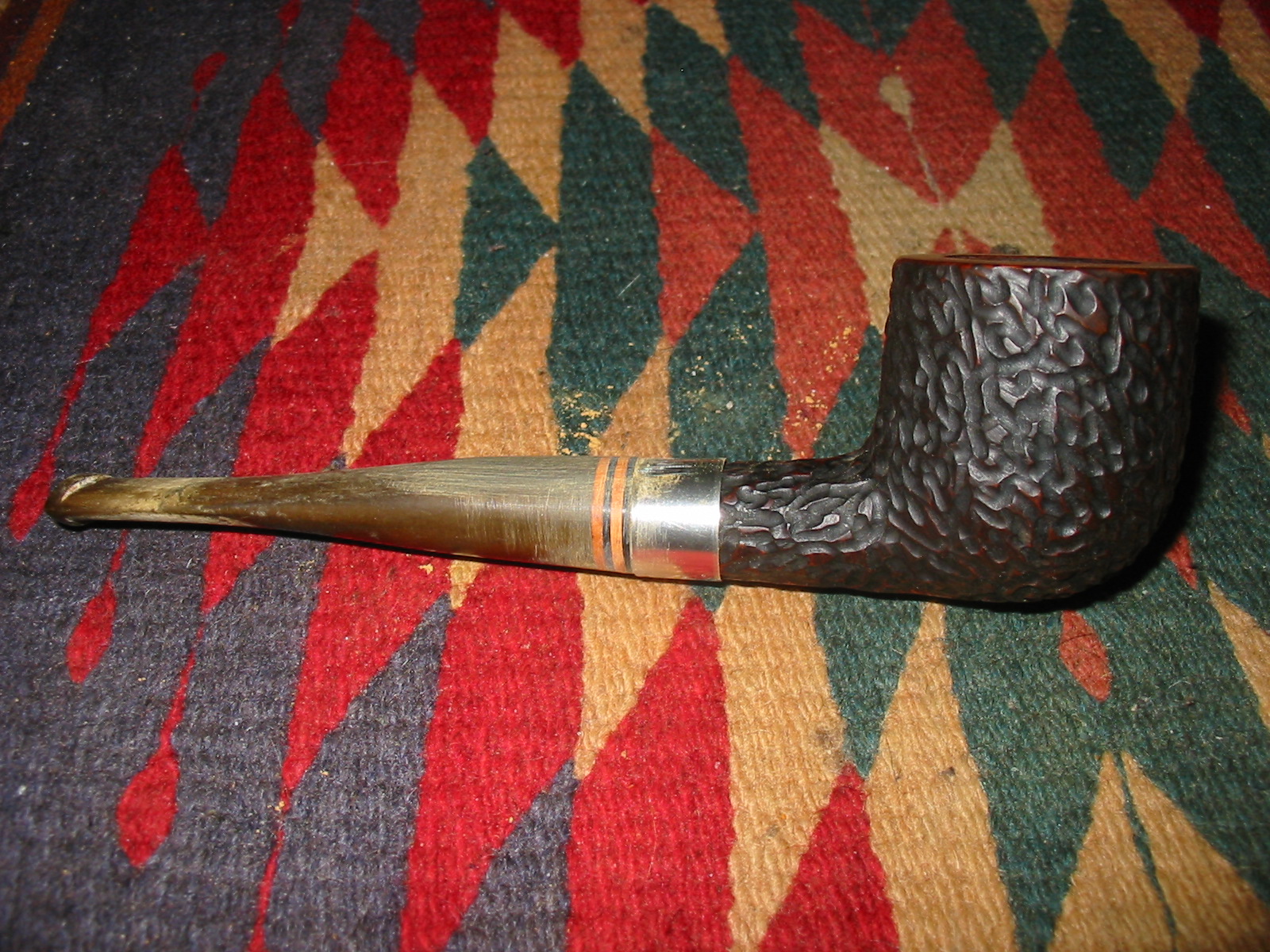
For the second stem I found an older “pre-used” stem that worked in terms of length and diameter. I cleaned up the tenon and shortened it slightly and the fit was quite good. I left the band in place and tried to rusticate the band to match the bowl rustication. I heated it and used a scribing tool to carve it up to get the bowl finish look. I stopped that rustication process and worked on the stem fit. For some reason the stem taper on top and bottom did not match. With the fitting on the Duncan Hill bowl the angles at the top did not match the bottom. Reversing the stem made the stem fit even worse. The diameter needed slight adjustments to repair the taper and fit it well against the band.

IMG_1690

IMG_1691

IMG_1692

I used a Dremel to take off material on the stem to adjust the taper to match on both the top and the bottom. I also used the Dremel to clean up the fit at the shank/band. I tried to mark the band with the Dremel in the process as well. I used a scribing tip and still did not get much more of finish than I had with the hand scribing tip. I did not like the look so I took the stem back to the worktable and sanded it to remove the scratches left behind by the sanding drum.

IMG_1693

IMG_1694

IMG_1695

I sanded the stem with 220 grit sandpaper, a medium grit sanding sponge and a fine grit sanding block to clean up the fit and also remove the scratches. The more I looked at it the less I liked the band. The area around the stem shank union looked terrible and the scribing merely looked like scratches. It was awful looking. I decided at this point to remove the band from the shank. I heated the band and slipped it off the shank. I cleaned up the light marks left by the band on the shank with micromesh sanding pads.

IMG_1696

IMG_1697

IMG_1698

With the band off the pipe the tenon was too long for the stem to seat properly. This was not visible to me with the band in place. It felt tight but without the band there was a gap at the junction. I measured the tenon and found that I needed to remove some of the length on the tenon and also needed to countersink the mortise slightly. The countersink on the mortise is a slight bevel inward. I used a knife to bevel the inner edge of the mortise. Once the mortise was prepared and the tenon shortened to measure the stem fit tightly against the shank. I used 220 grit sandpaper and a medium grit sanding sponge to remove a little more of the diameter of the stem to clean up the junction. The two bands on the stem appear to be briar but are actually Cumberland/brindle inserts. I sanded the top of the bowl/rim and the colour matched the twin bands on the stem.

IMG_1699

IMG_1700

I sanded the stem with micromesh sanding pads from 1500-12,000 grit to remove the scratches on the vulcanite and polish the stem. I wet sanded with 1500-2400 grit micromesh pads and dry sanded with the remaining grits. Between 3600 and 4000 grit pads I polished the stem with Maguiars Scratch X2.0. It polished the stem considerably. I then finished sanding with the micromesh pads. While I sanded the stem with the micromesh I also sanded the rim to polish it. With each successive change of grit the rim and the twin bands on the stem began to truly match. The combination looked like it was factory designed to be a combination. I wiped the stem down with Obsidian Oil and set it aside for the evening. In the morning I rubbed the stem down and then waxed it with carnauba.

IMG_1701

IMG_1702

IMG_1703

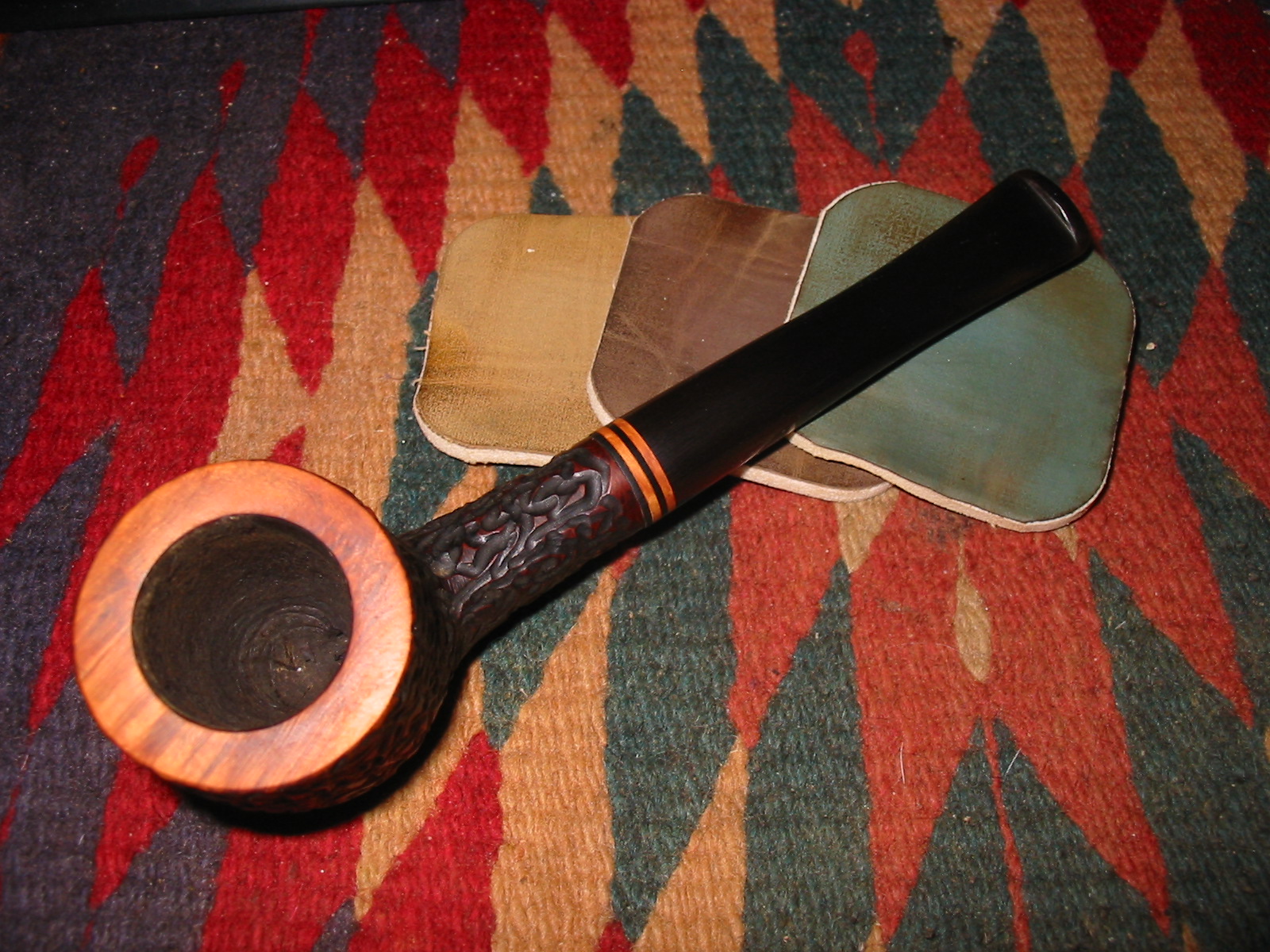
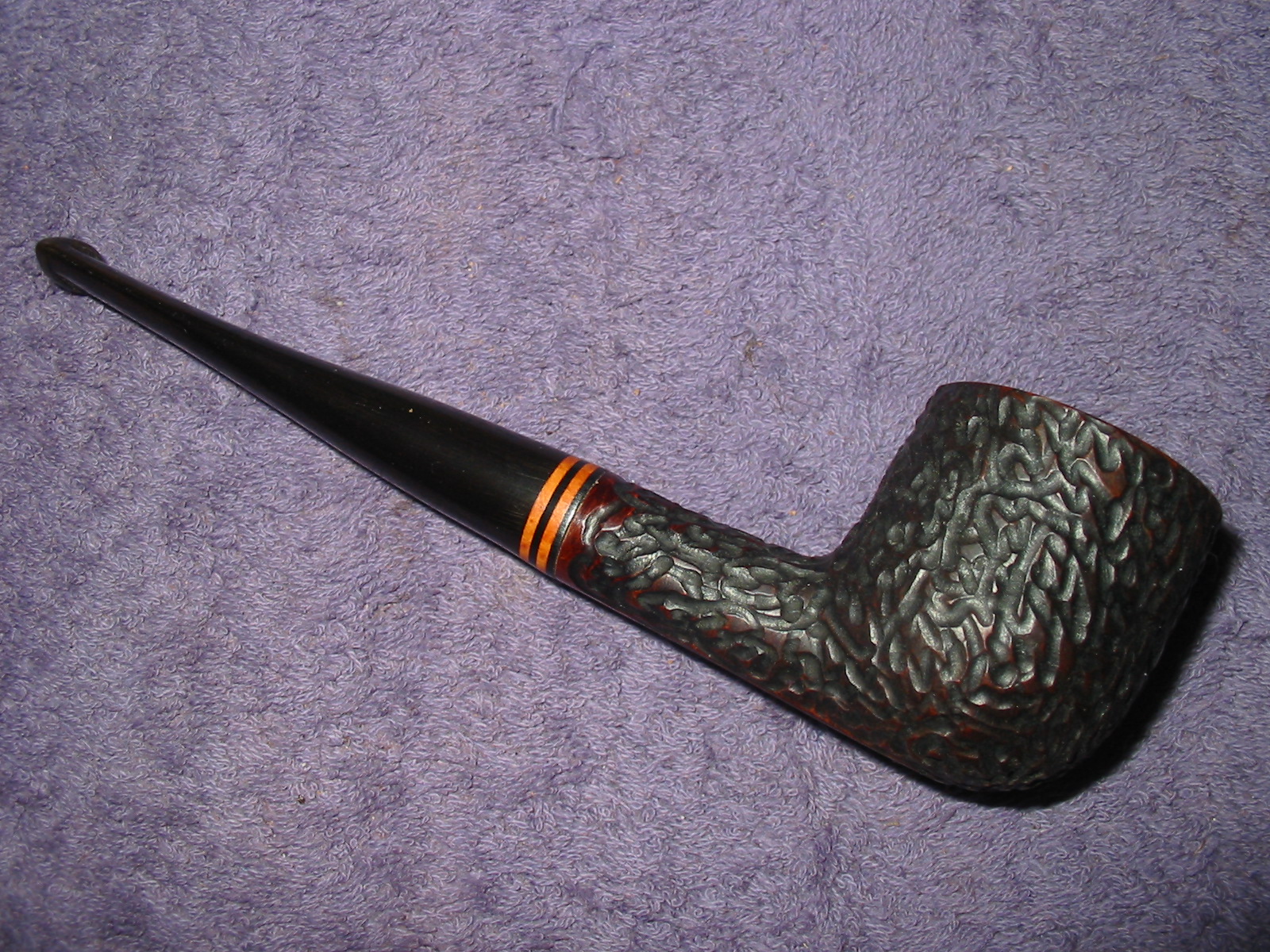
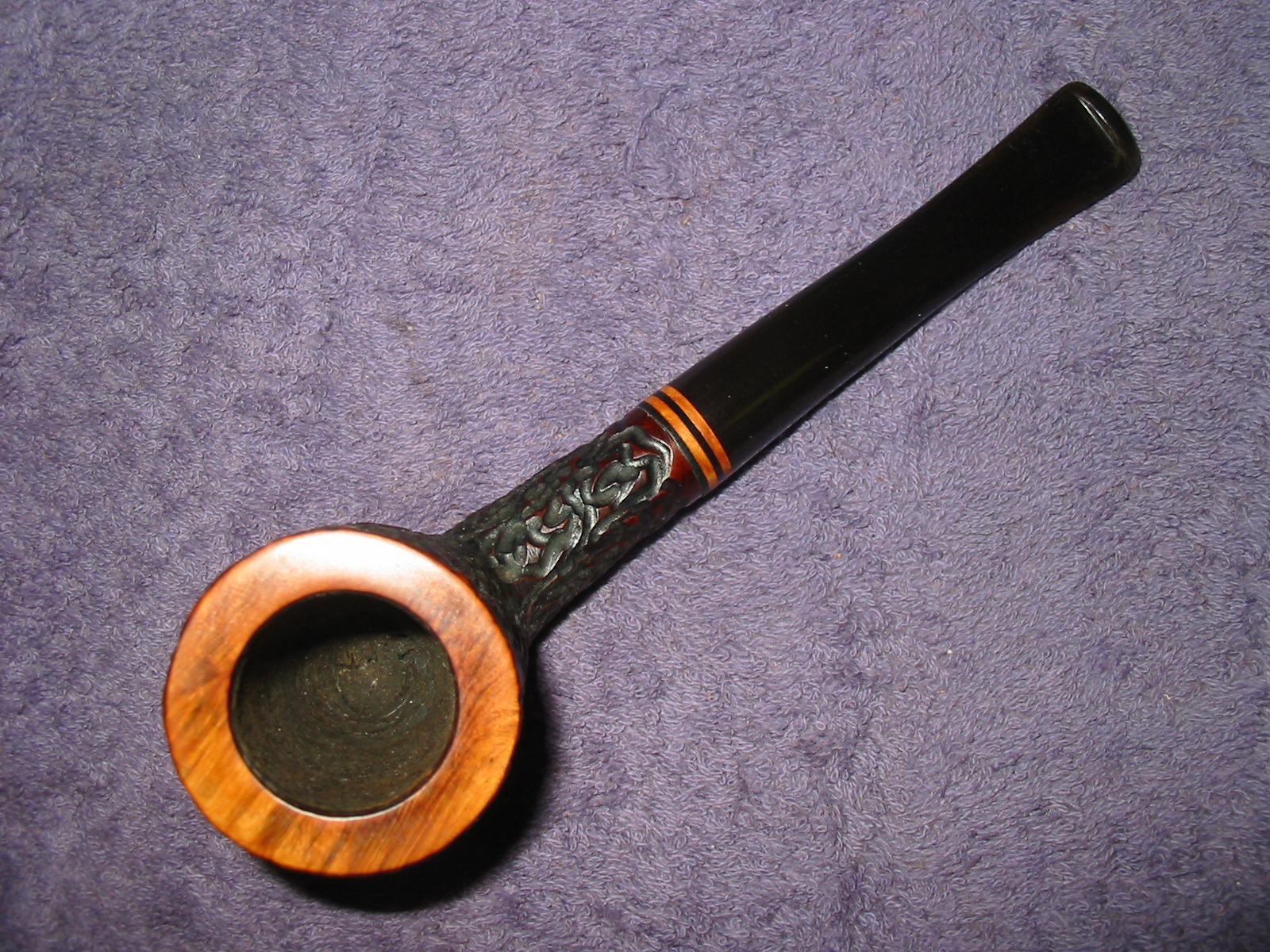
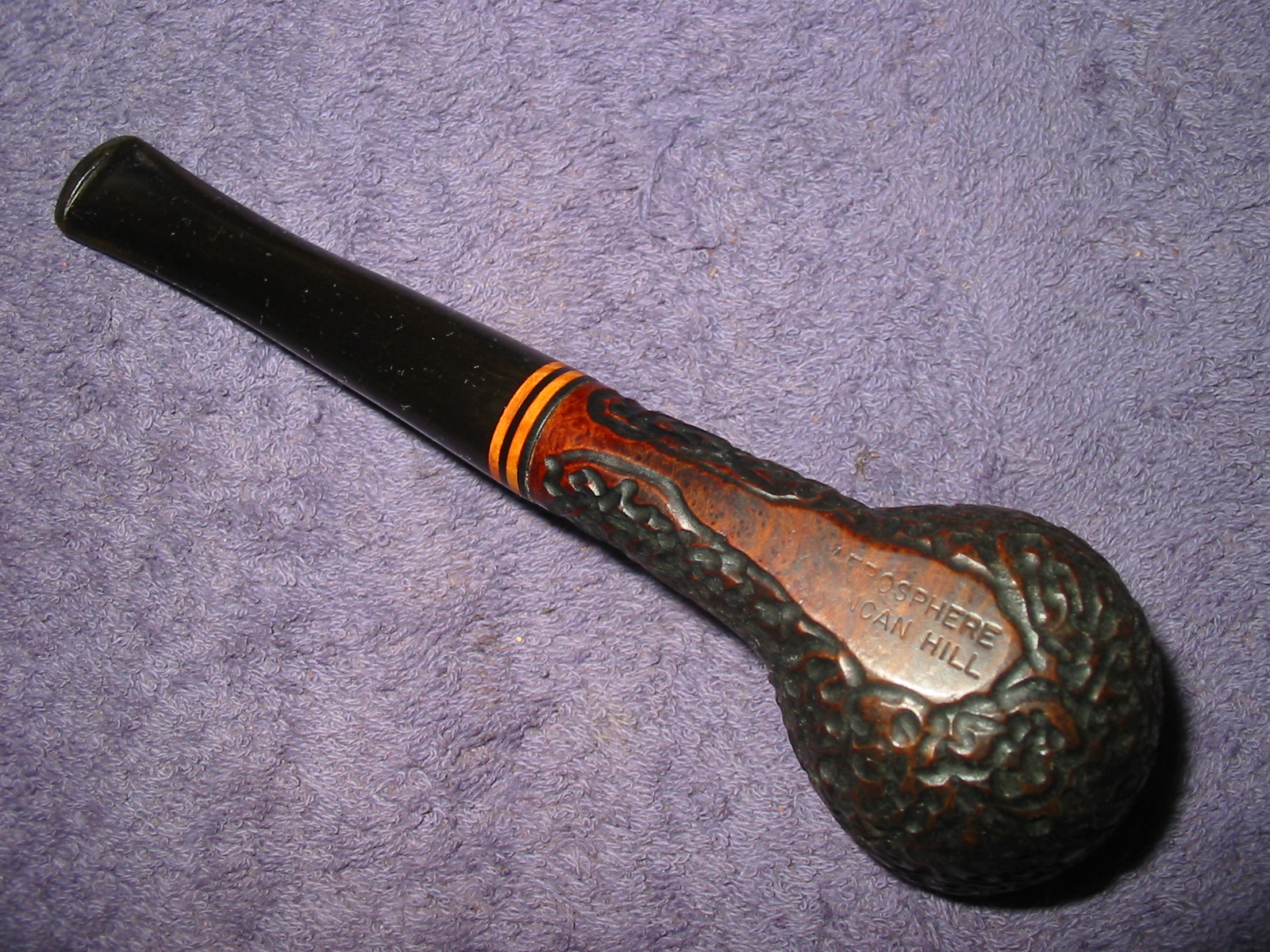
I gave the bowl a several coats of Halcyon II wax and buffed it with a shoe brush to raise the shine. I buffed the stem with carnauba several time to raise the shine as well. I then buffed the pipe with a soft flannel buffing pad. The finished pipe is pictured below. The look of the Duncan Hill with the banded stem that matches the rim is a great combination. The improved draught of the pipe is exactly what I was aiming for. The Duncan Hill Aerosphere pipe re-enters life with a new level of service to the pipeman who ends up with it in their collection.

IMG_1708

IMG_1709

IMG_1710

IMG_1711