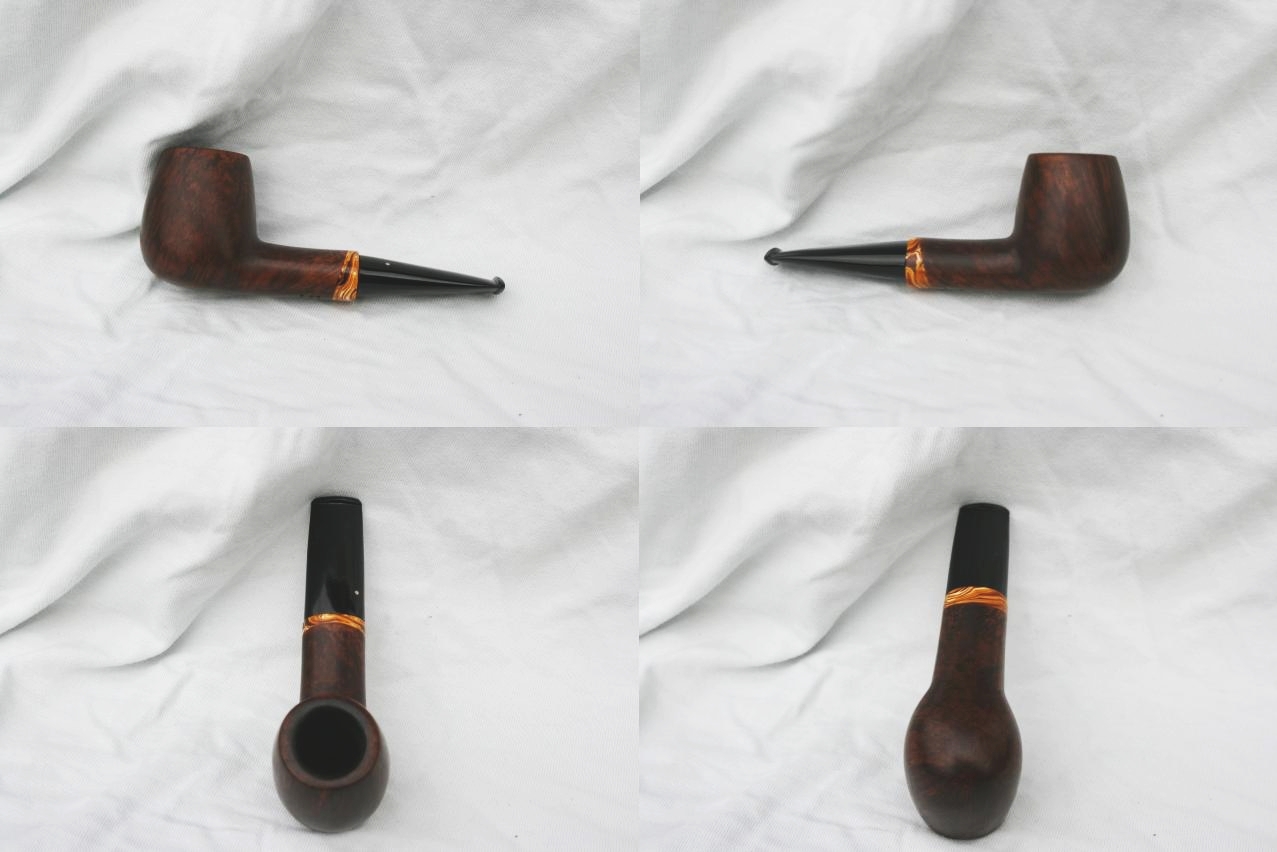
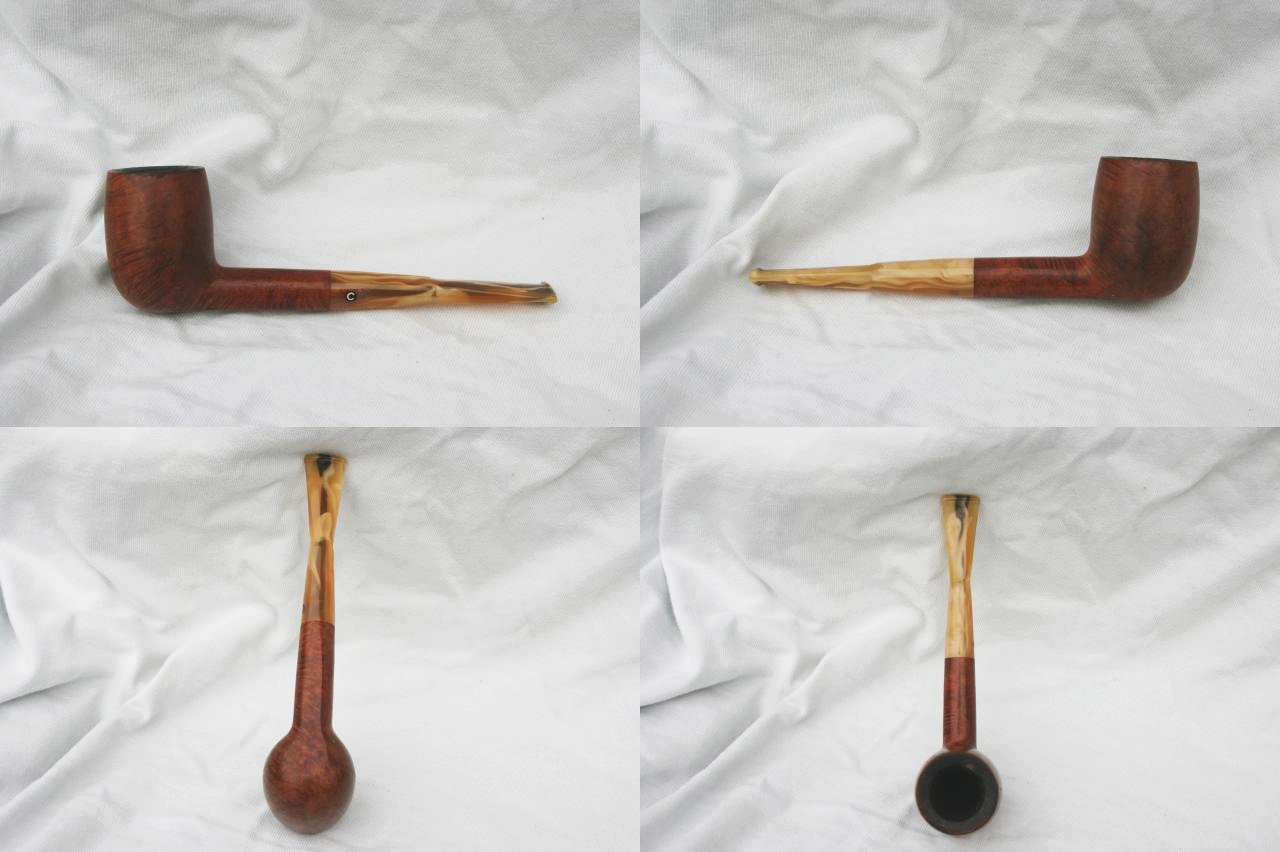
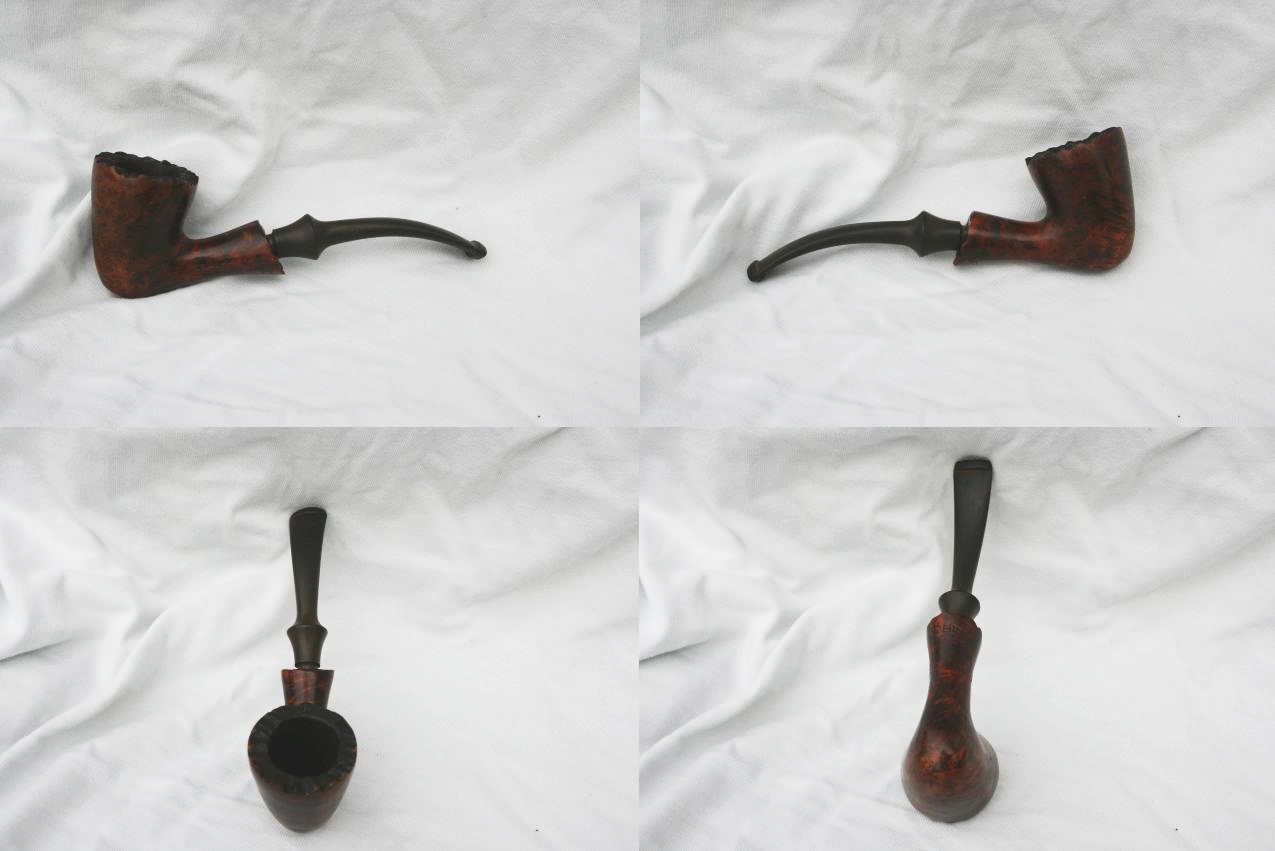
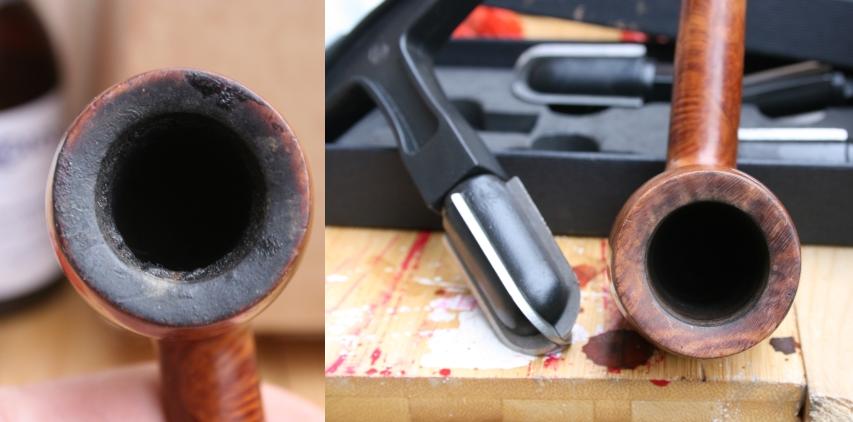
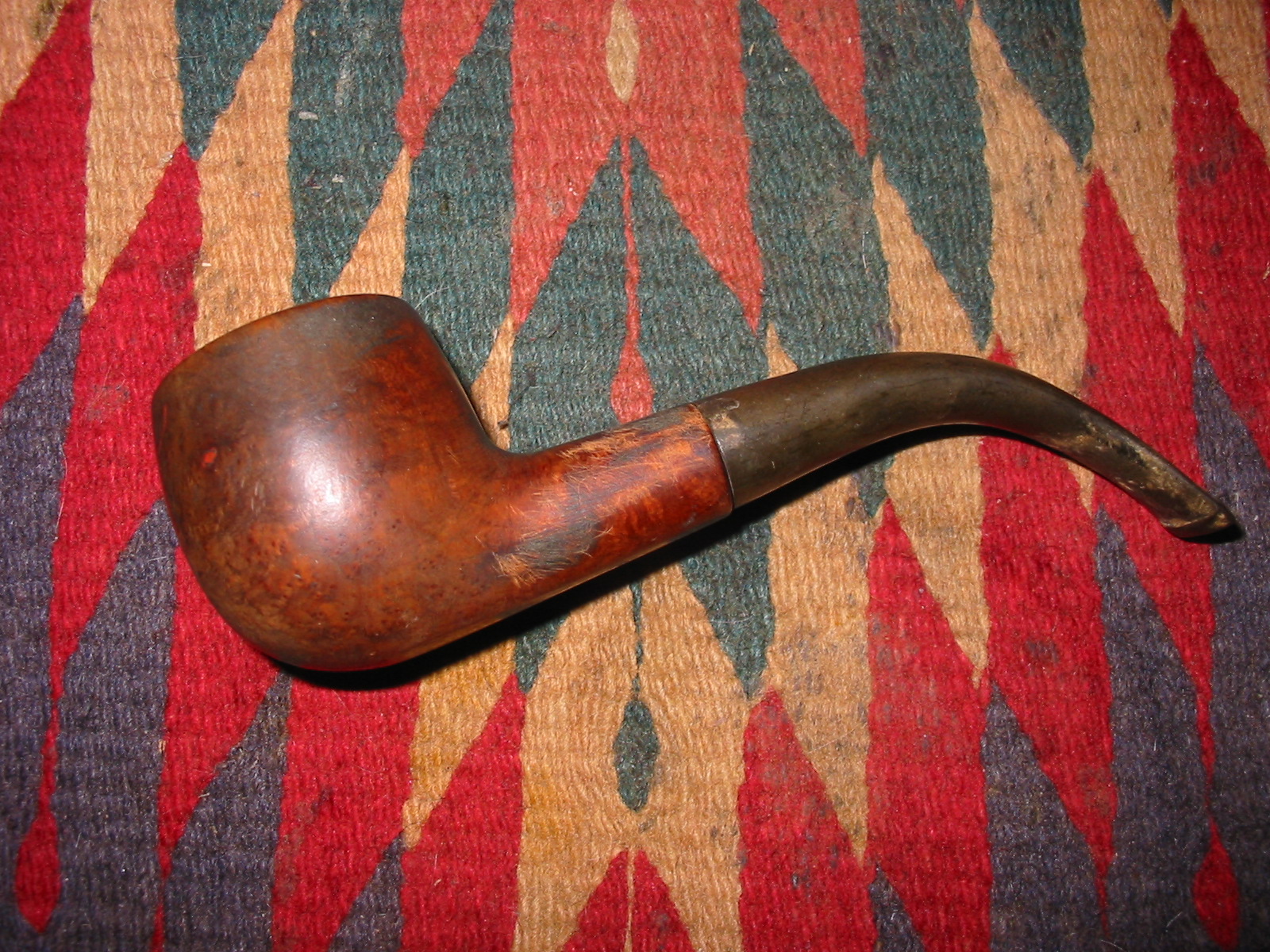
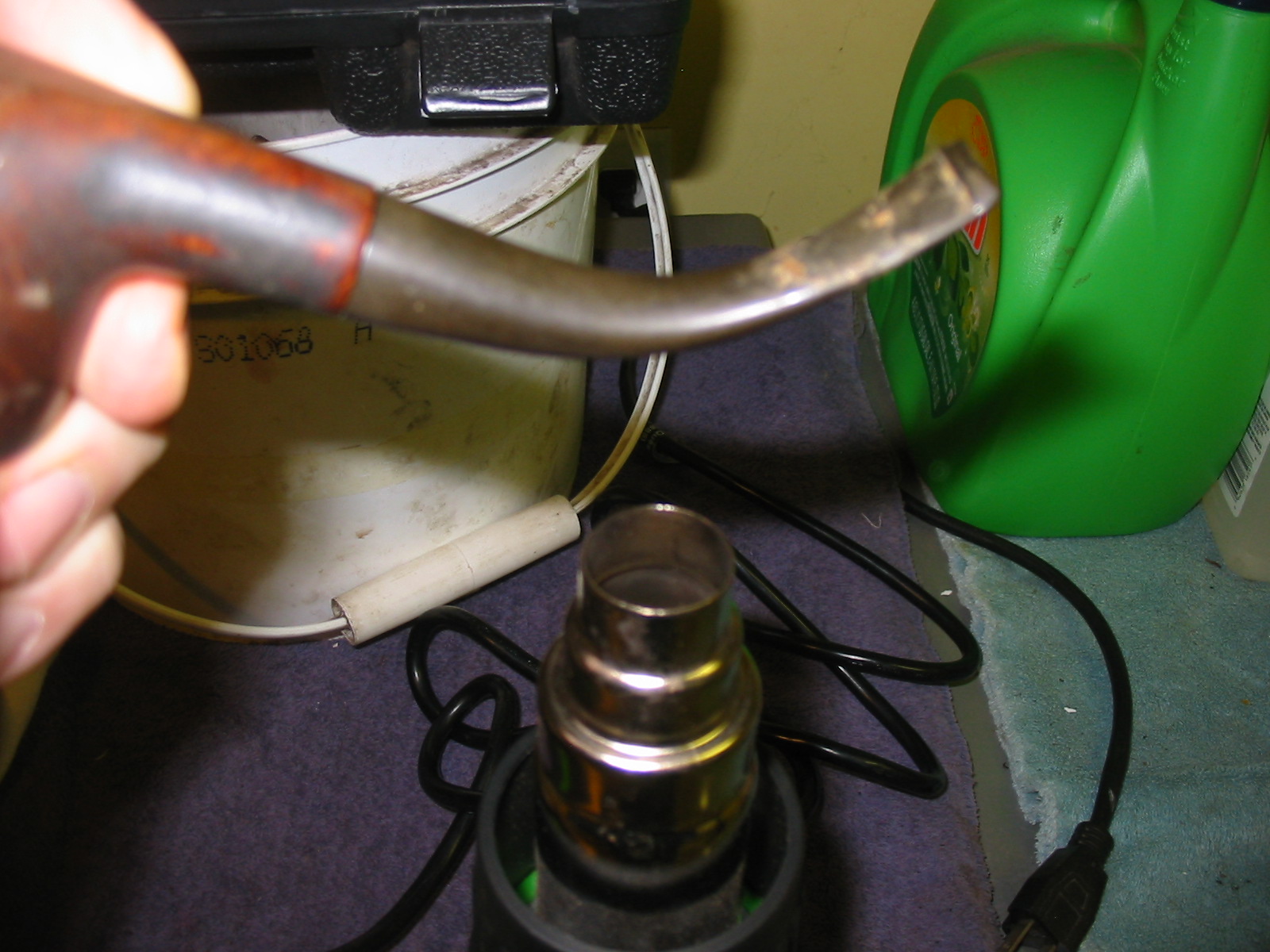
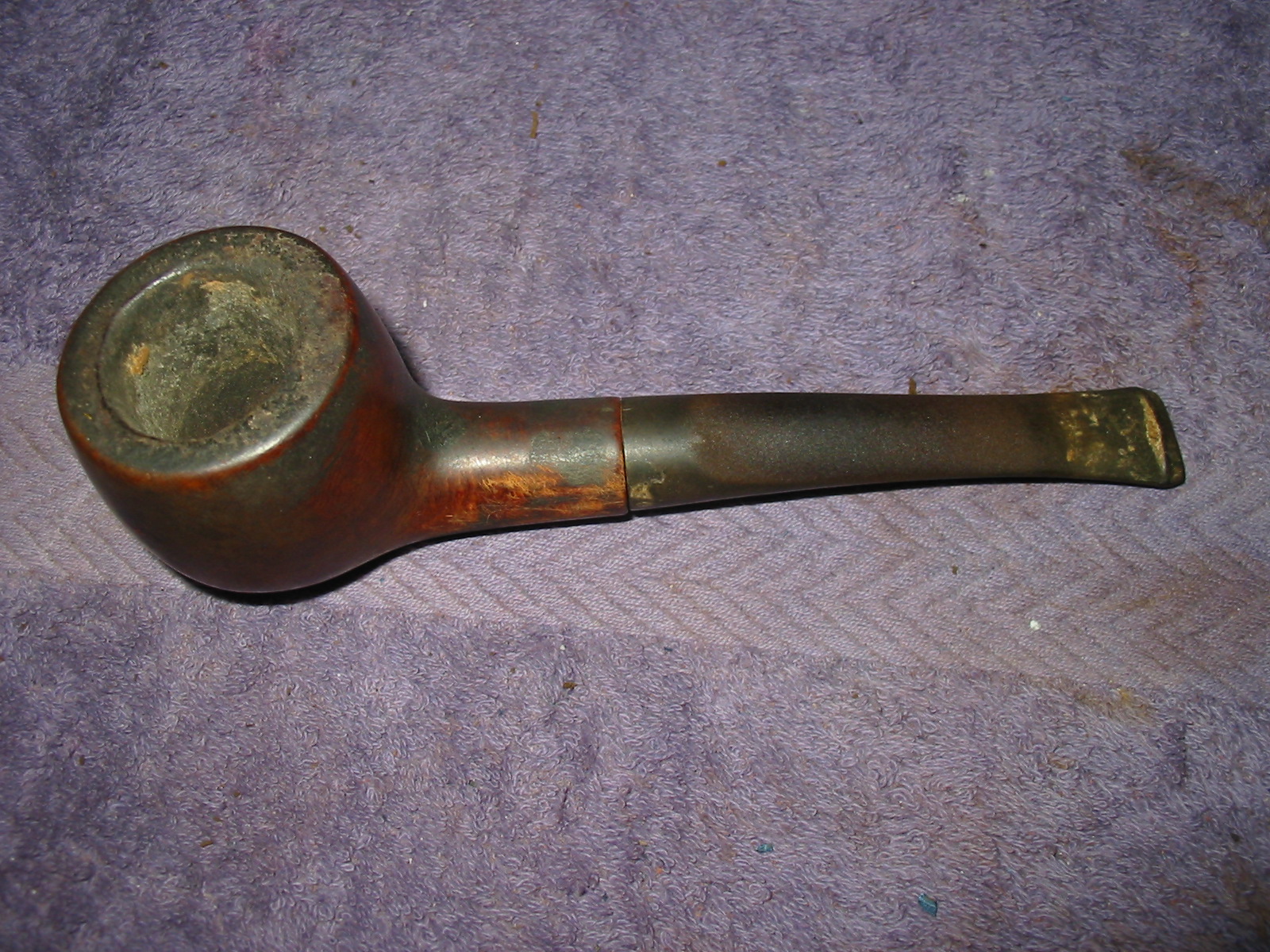
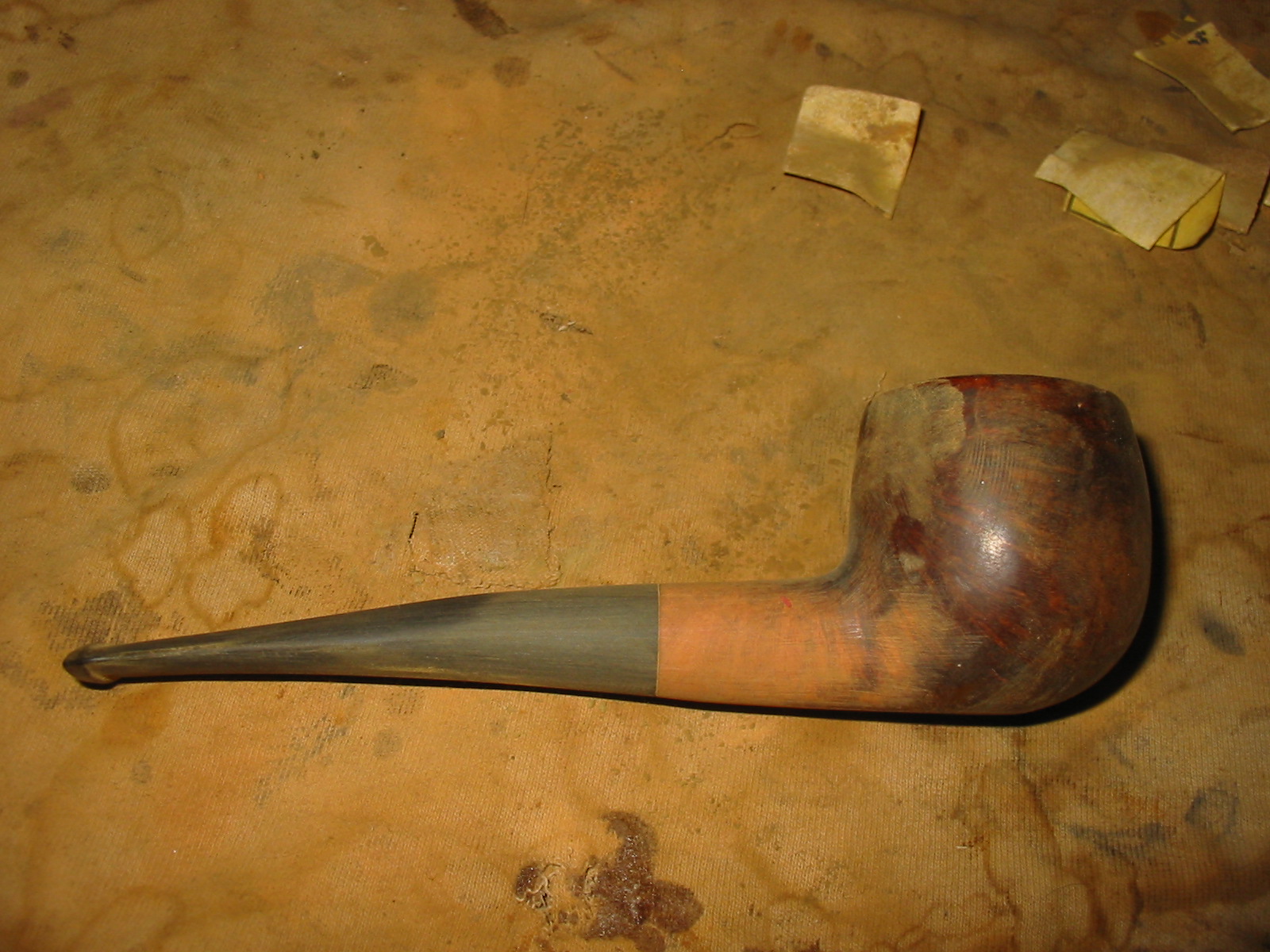
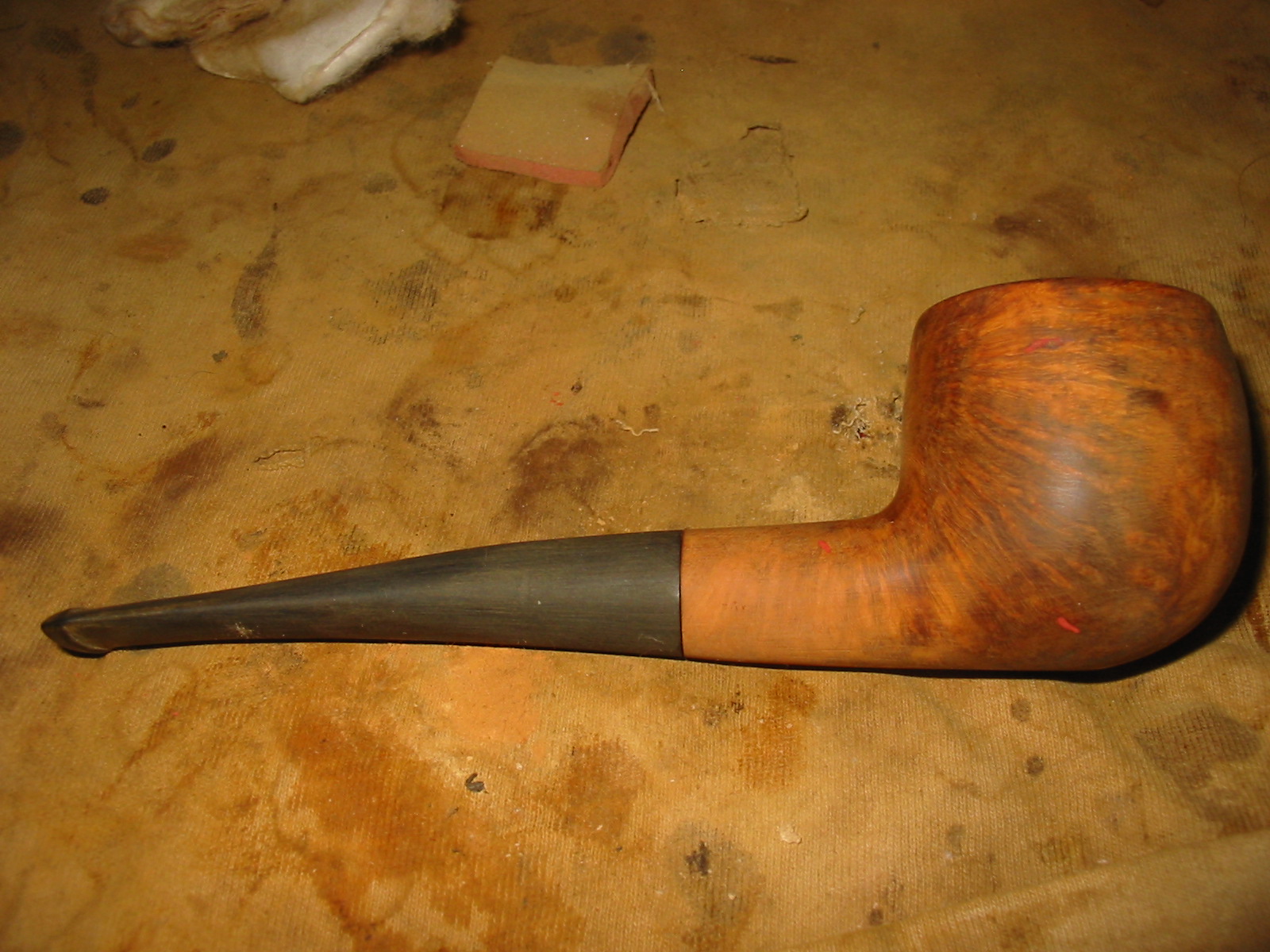
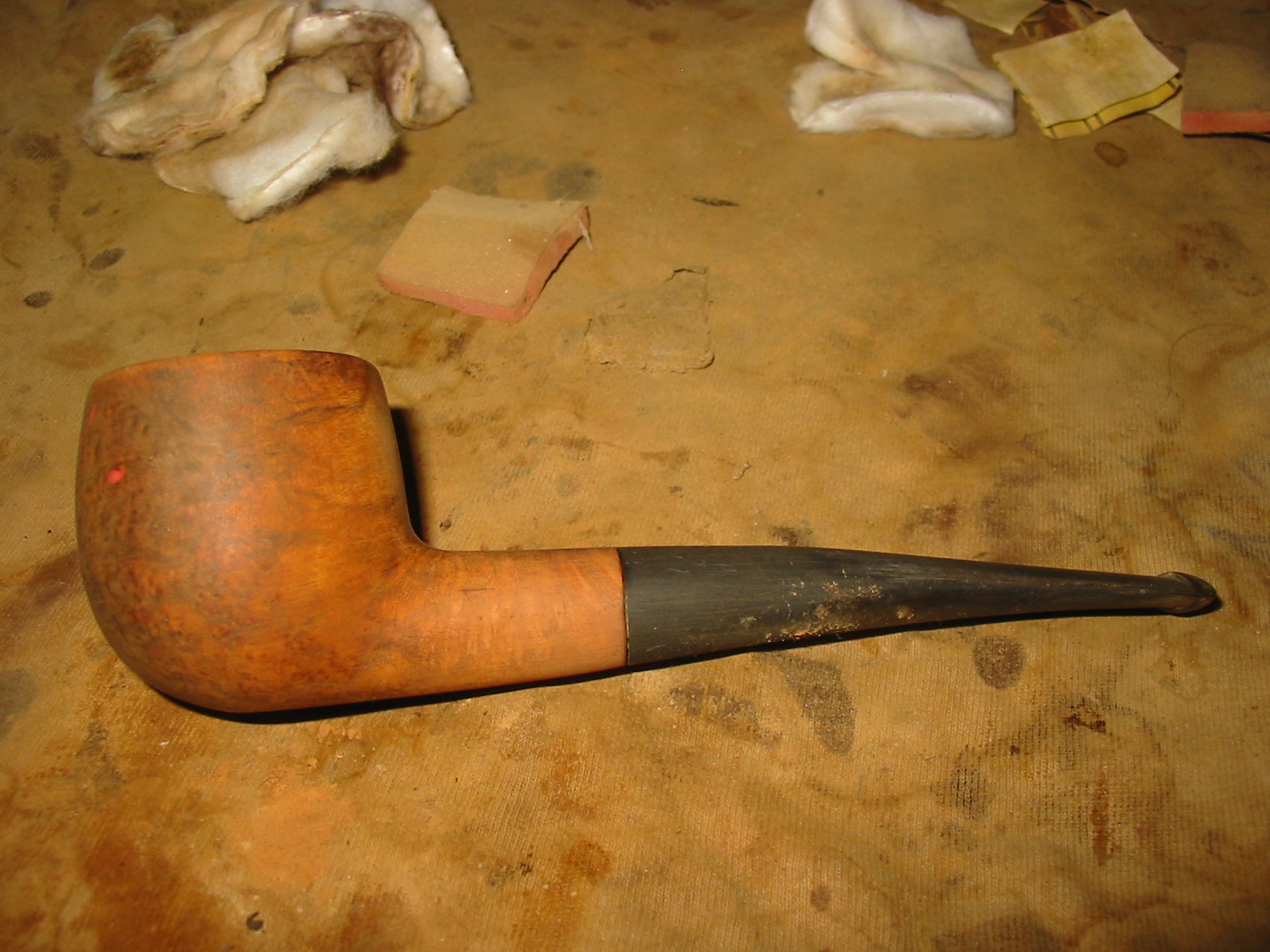
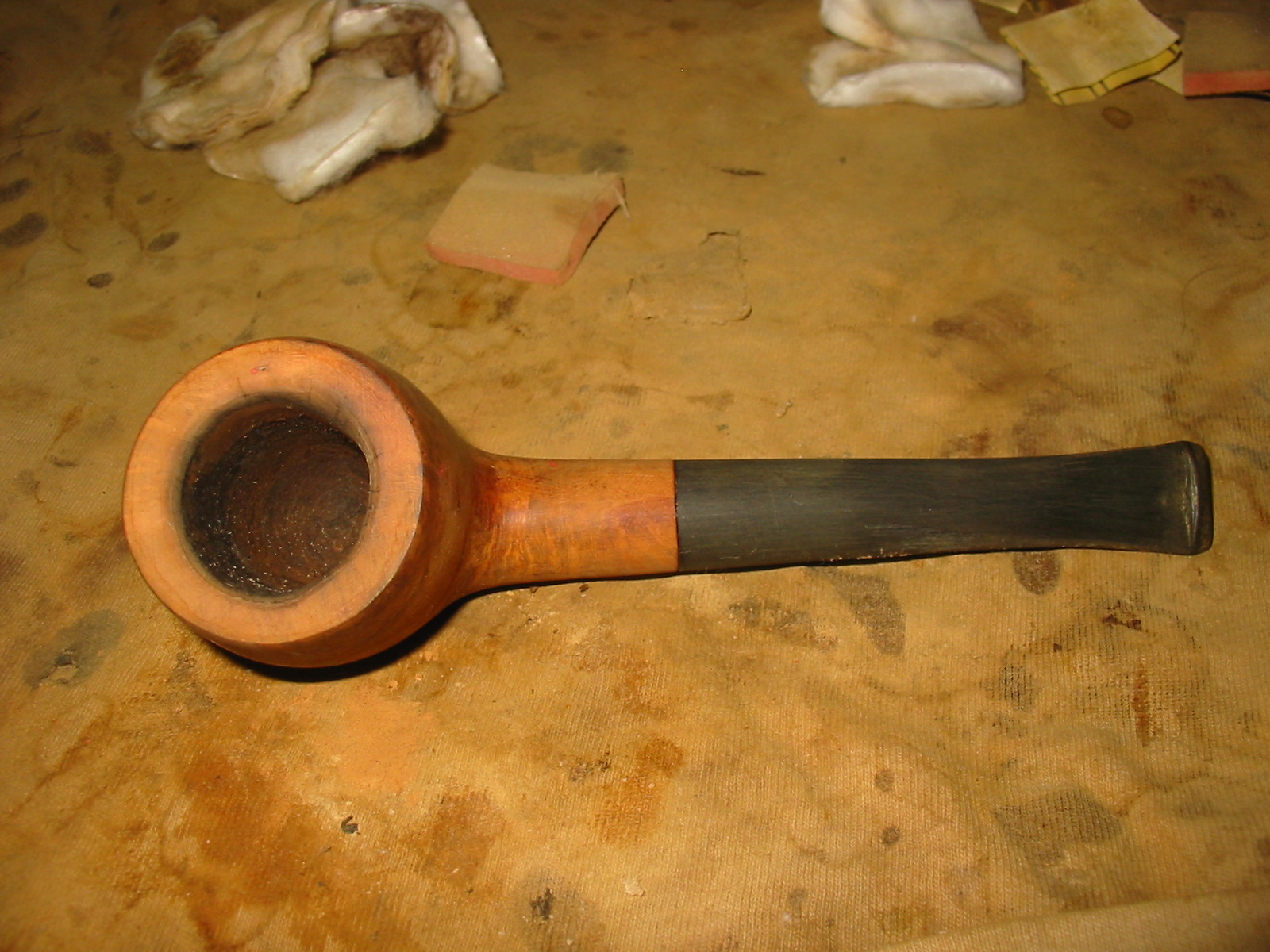
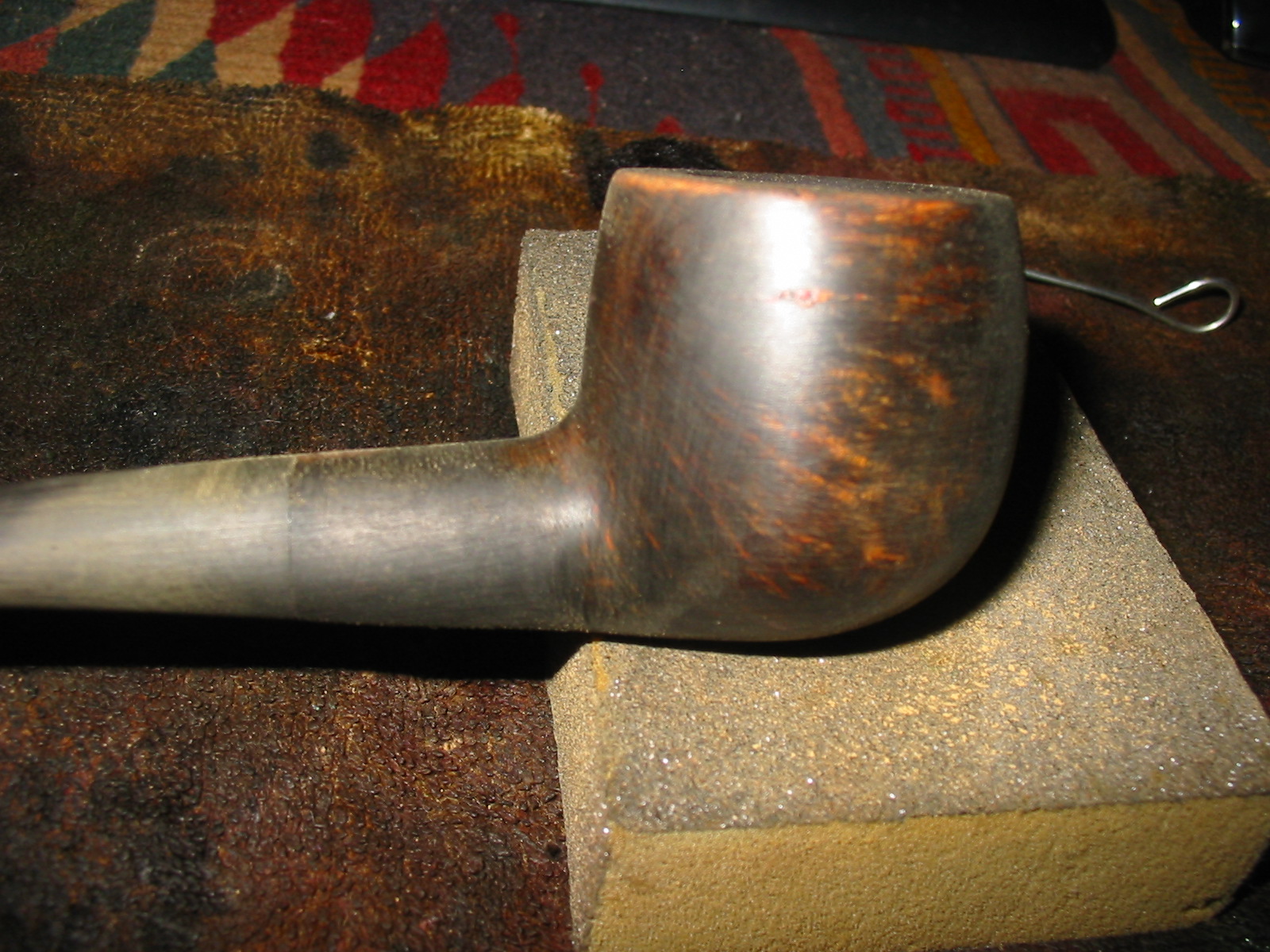
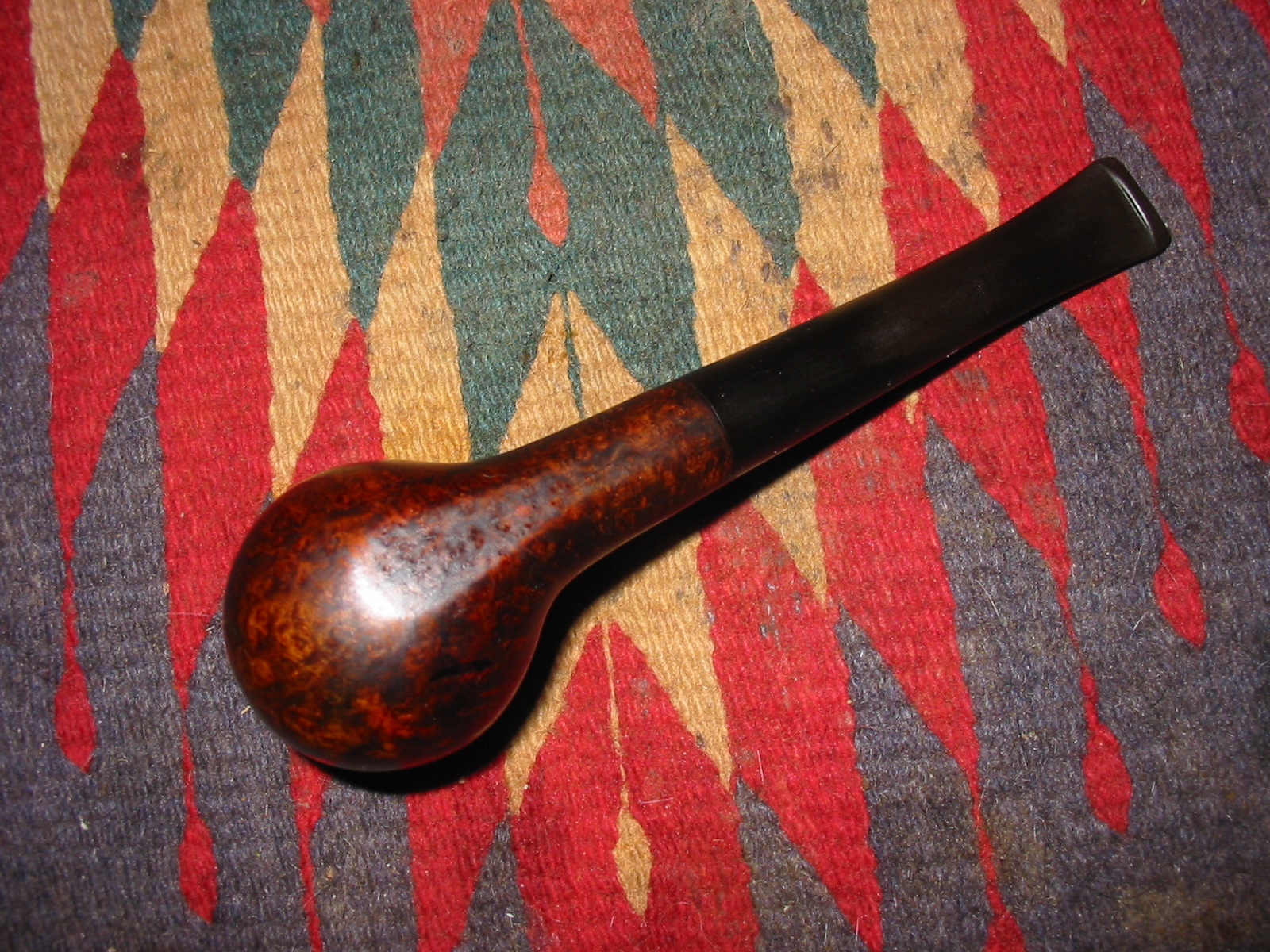
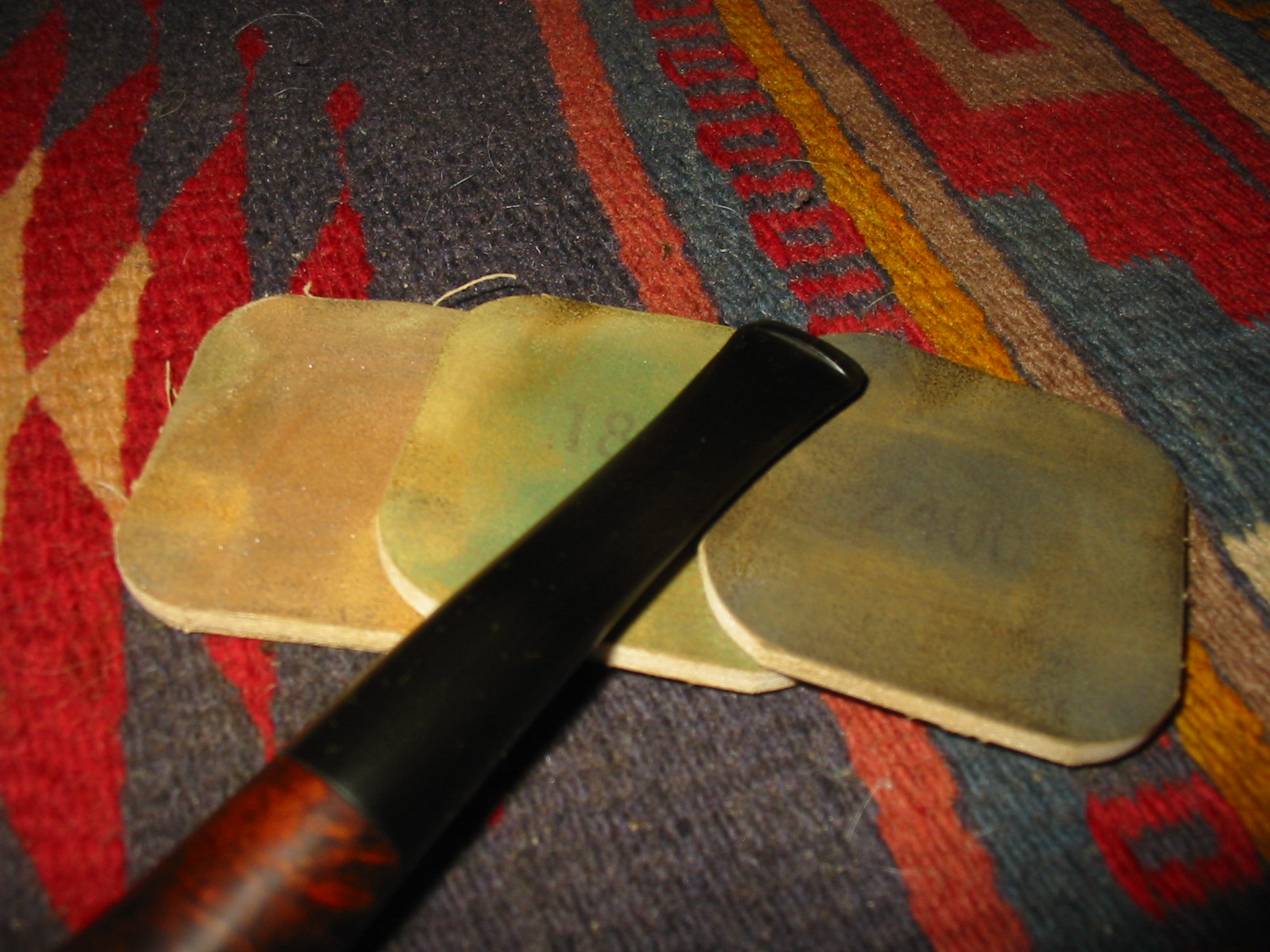
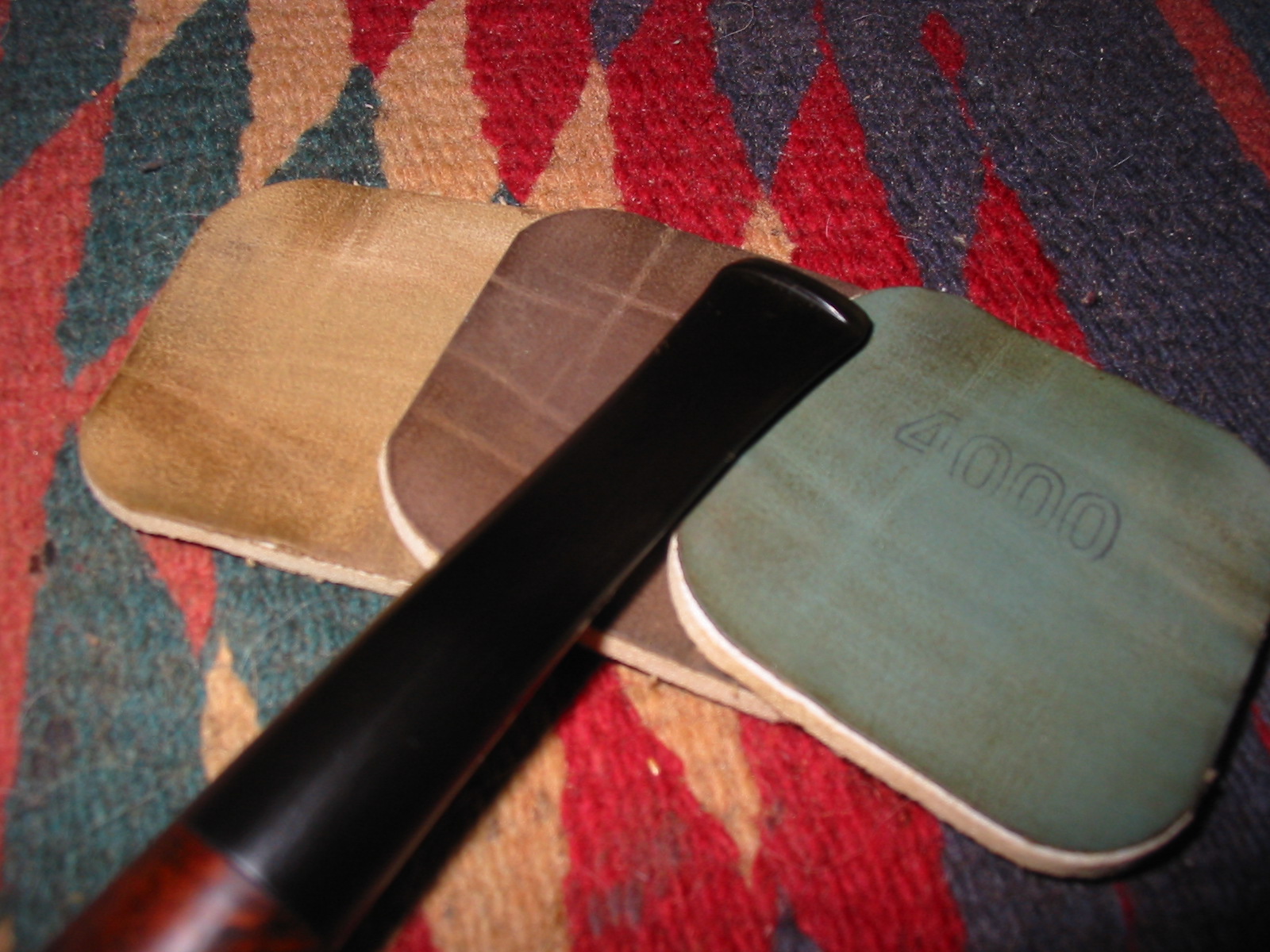
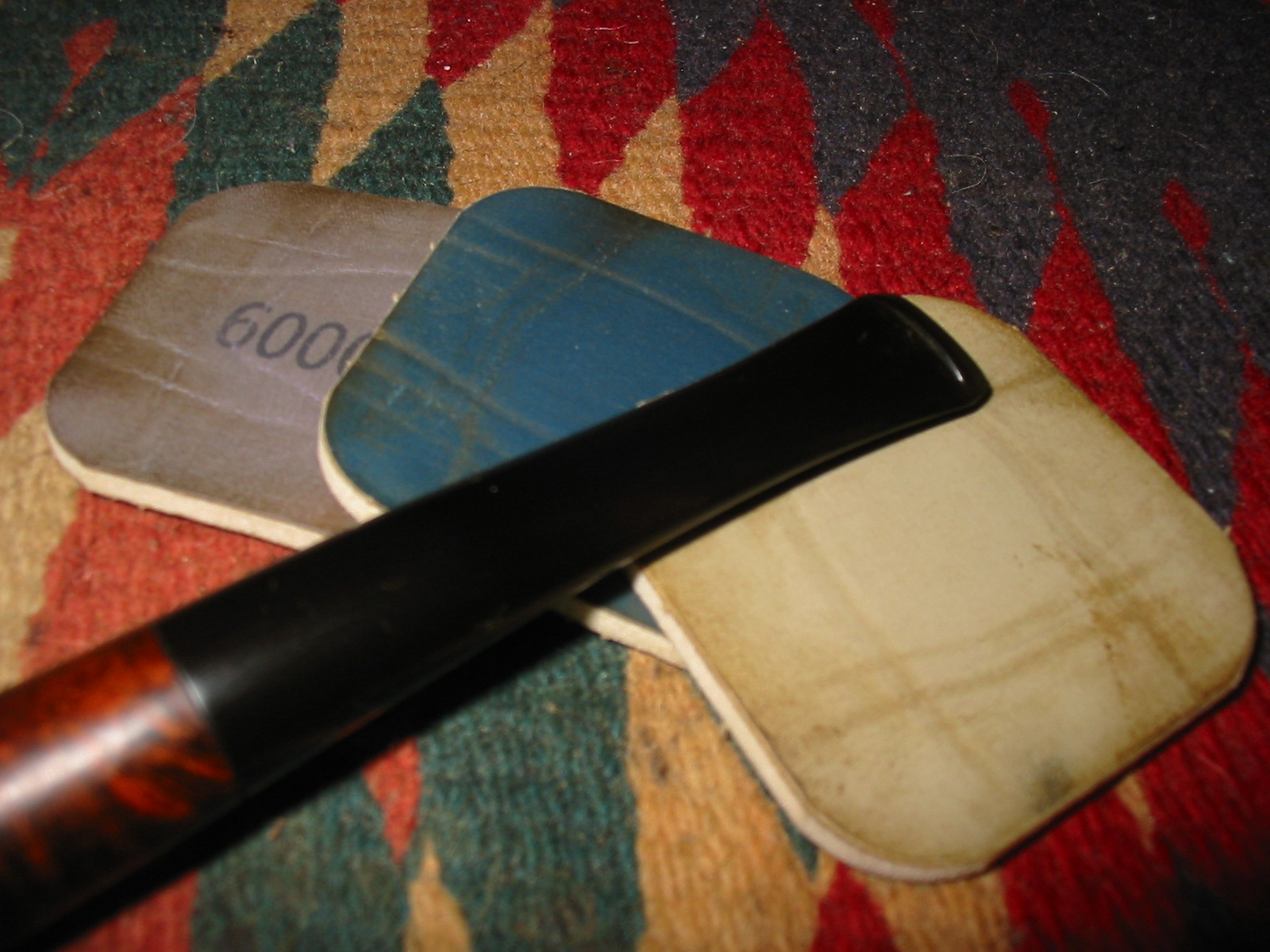
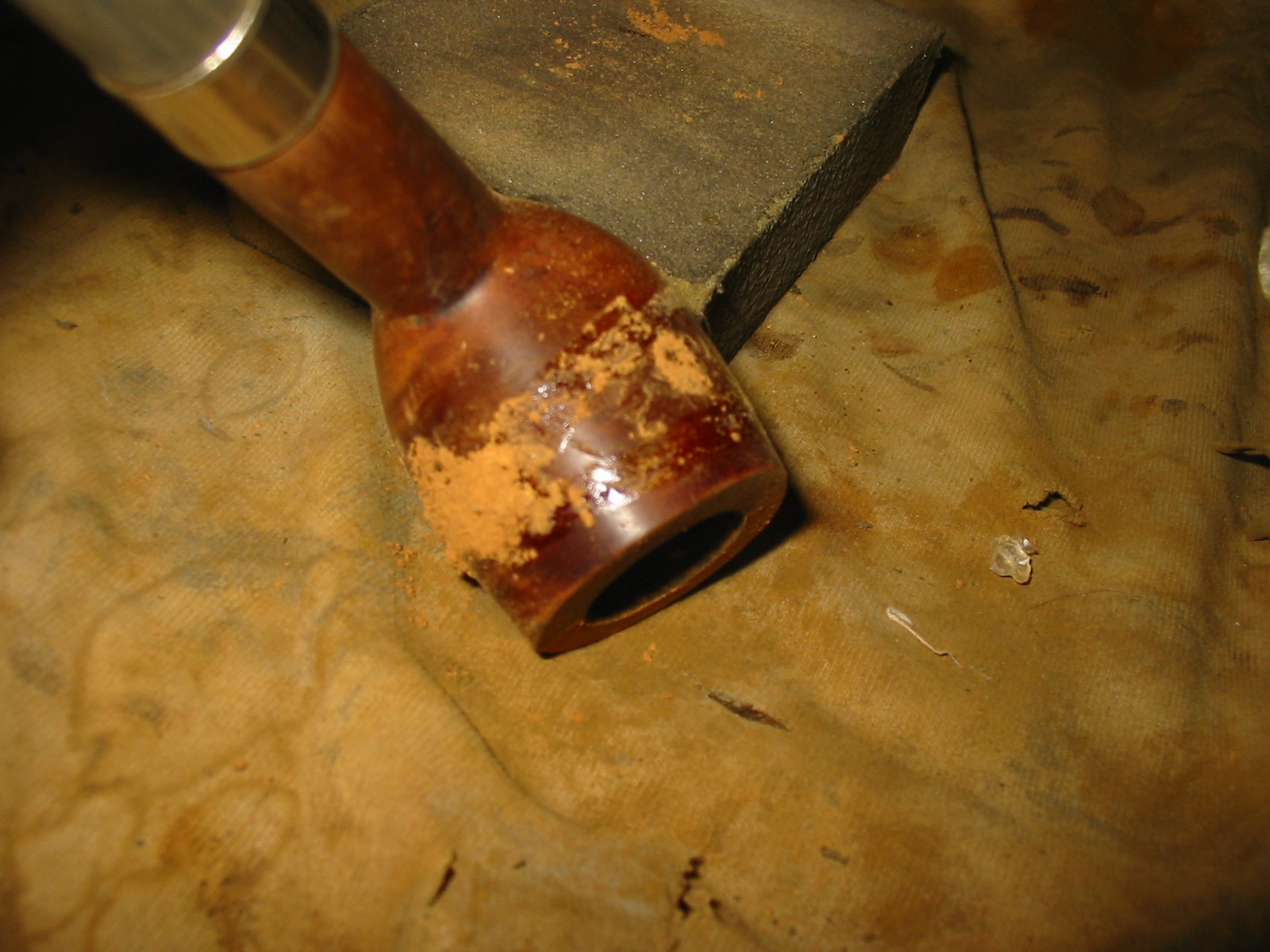
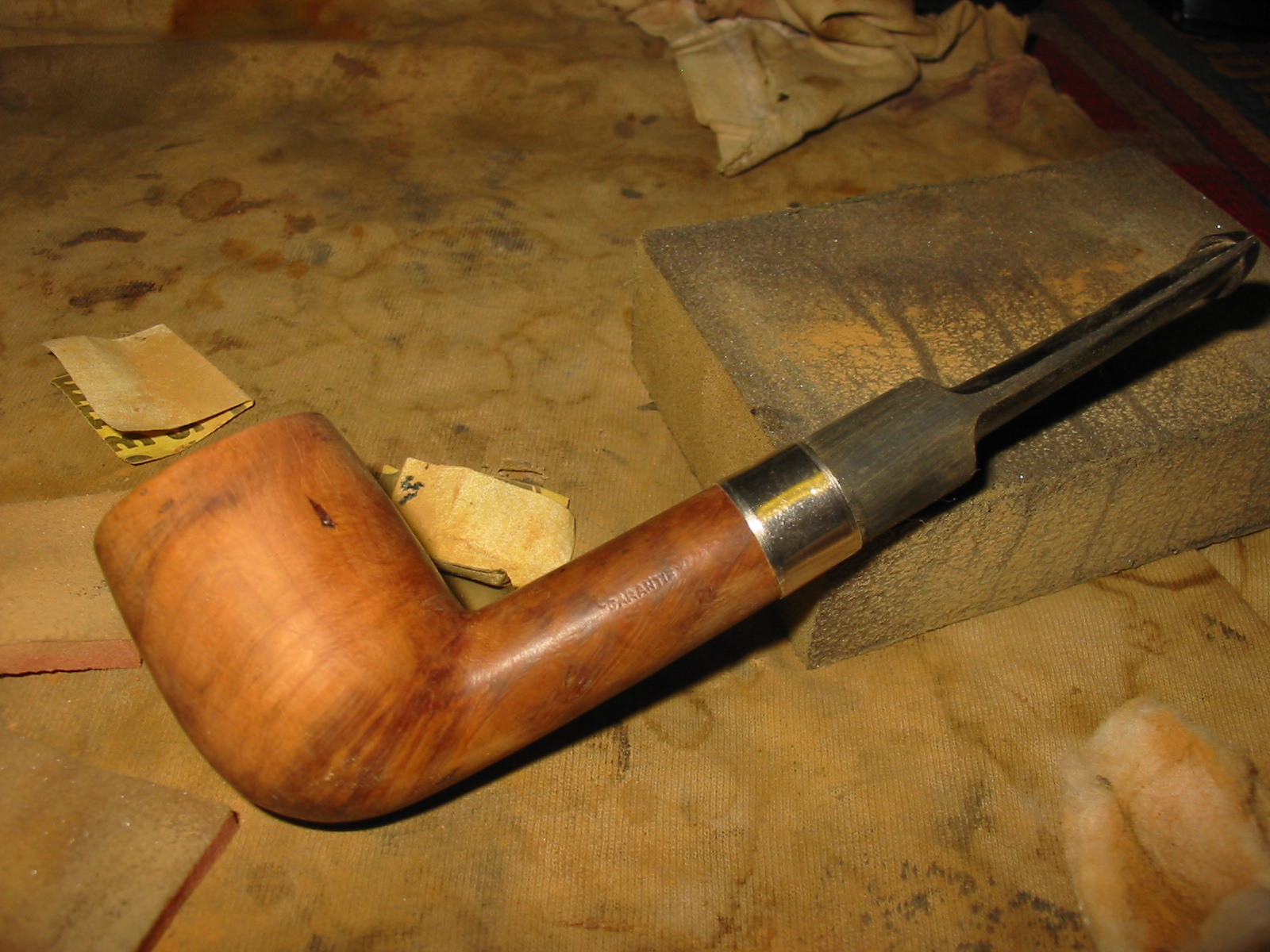
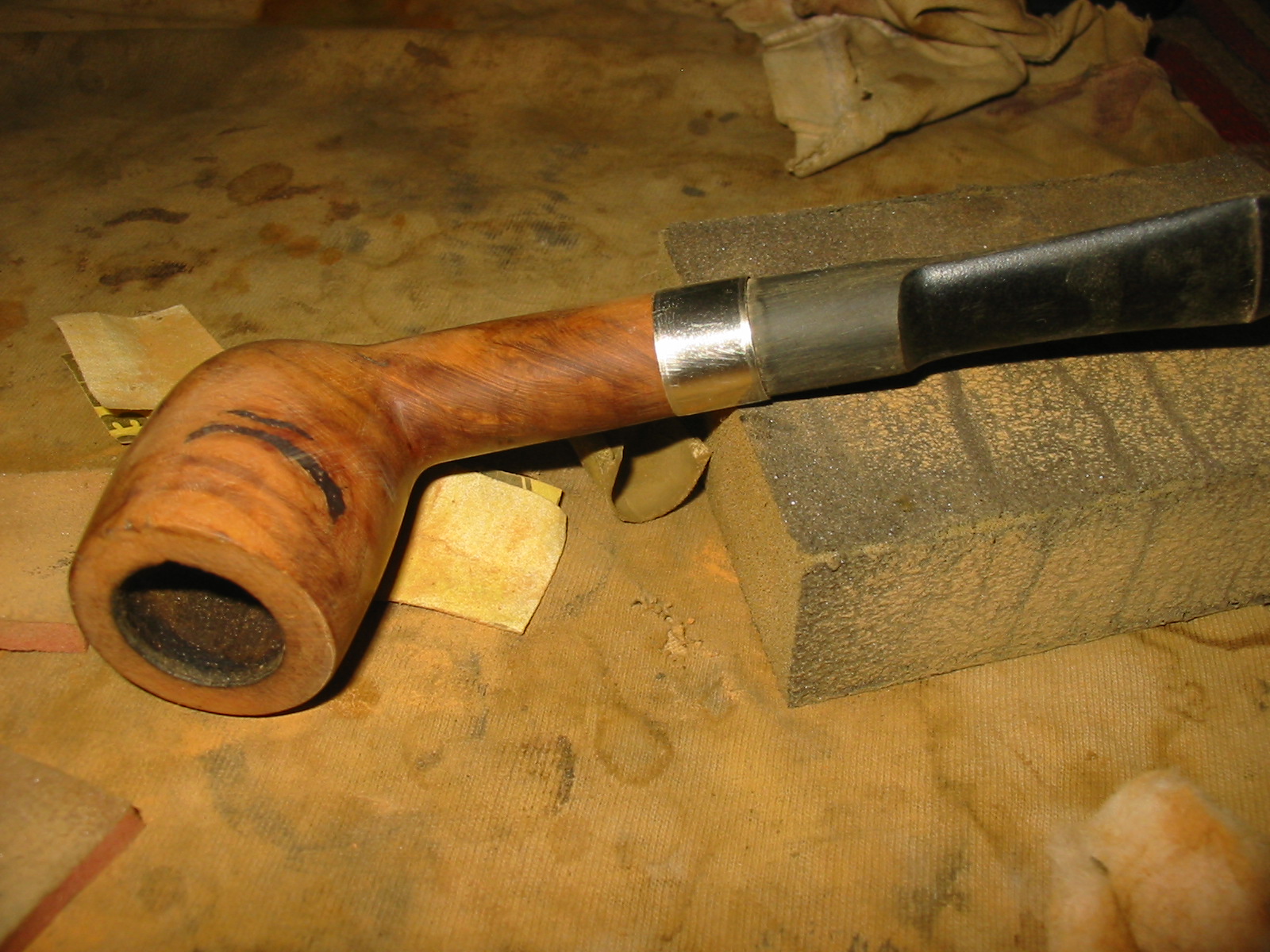
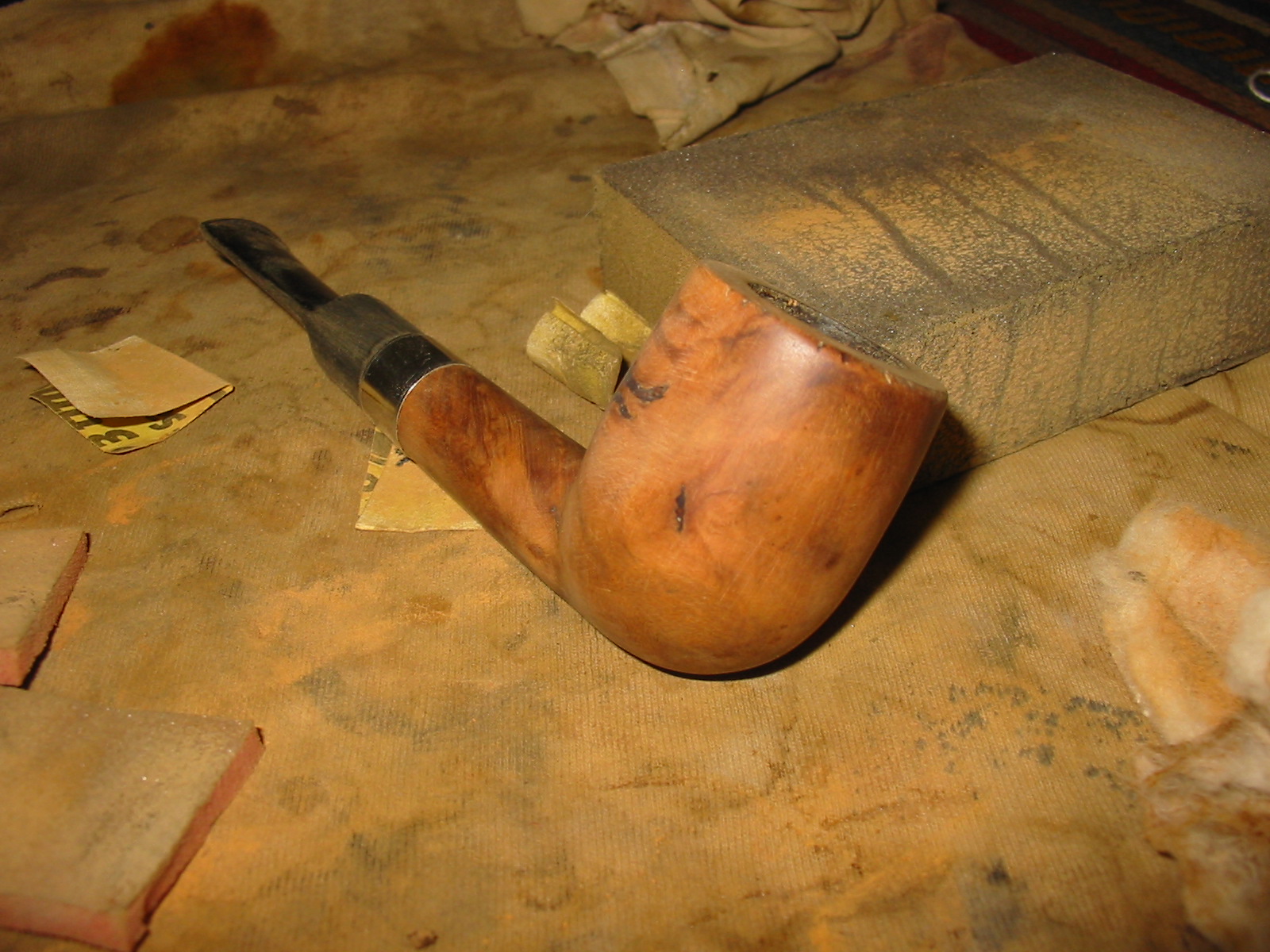
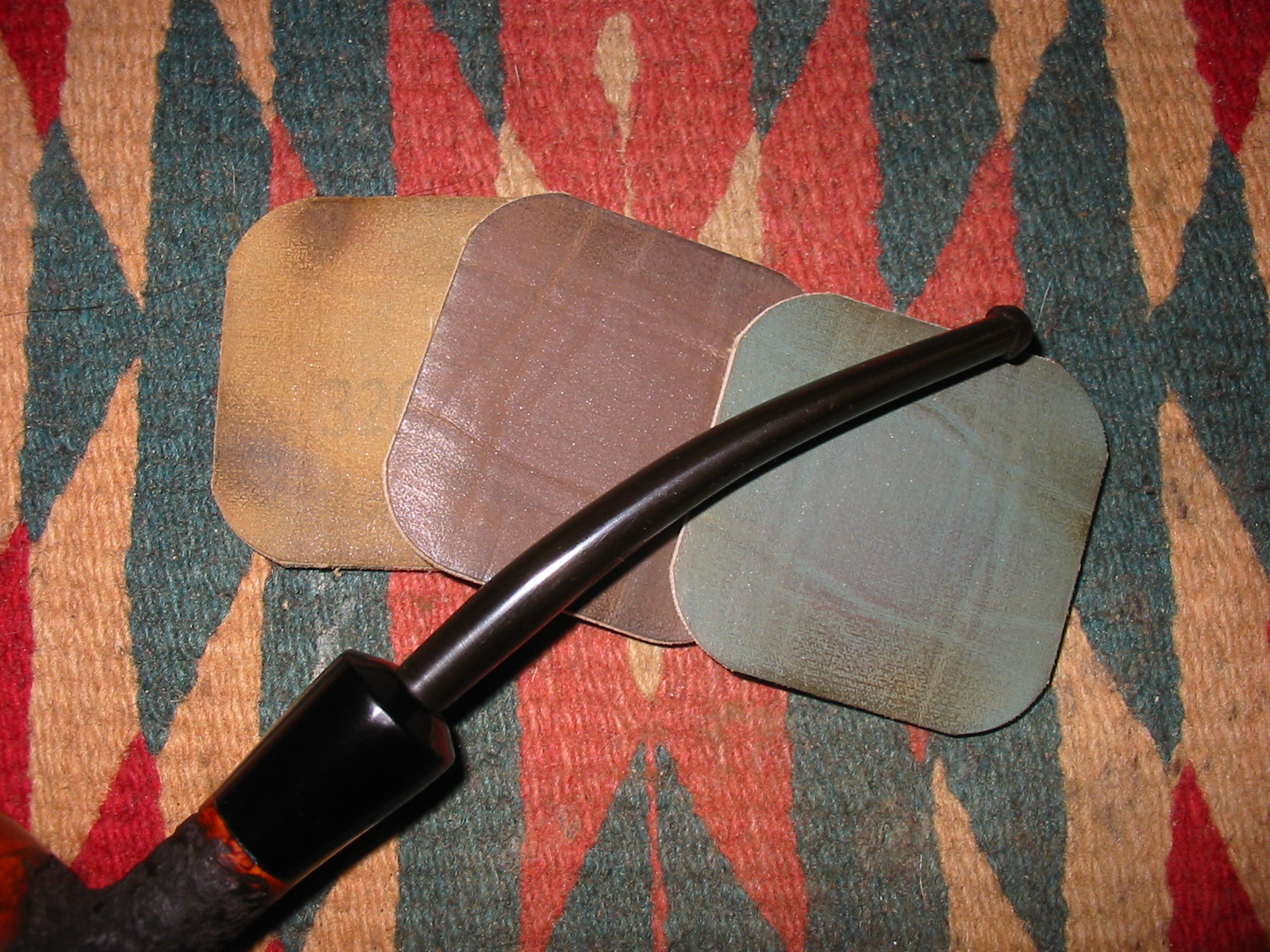
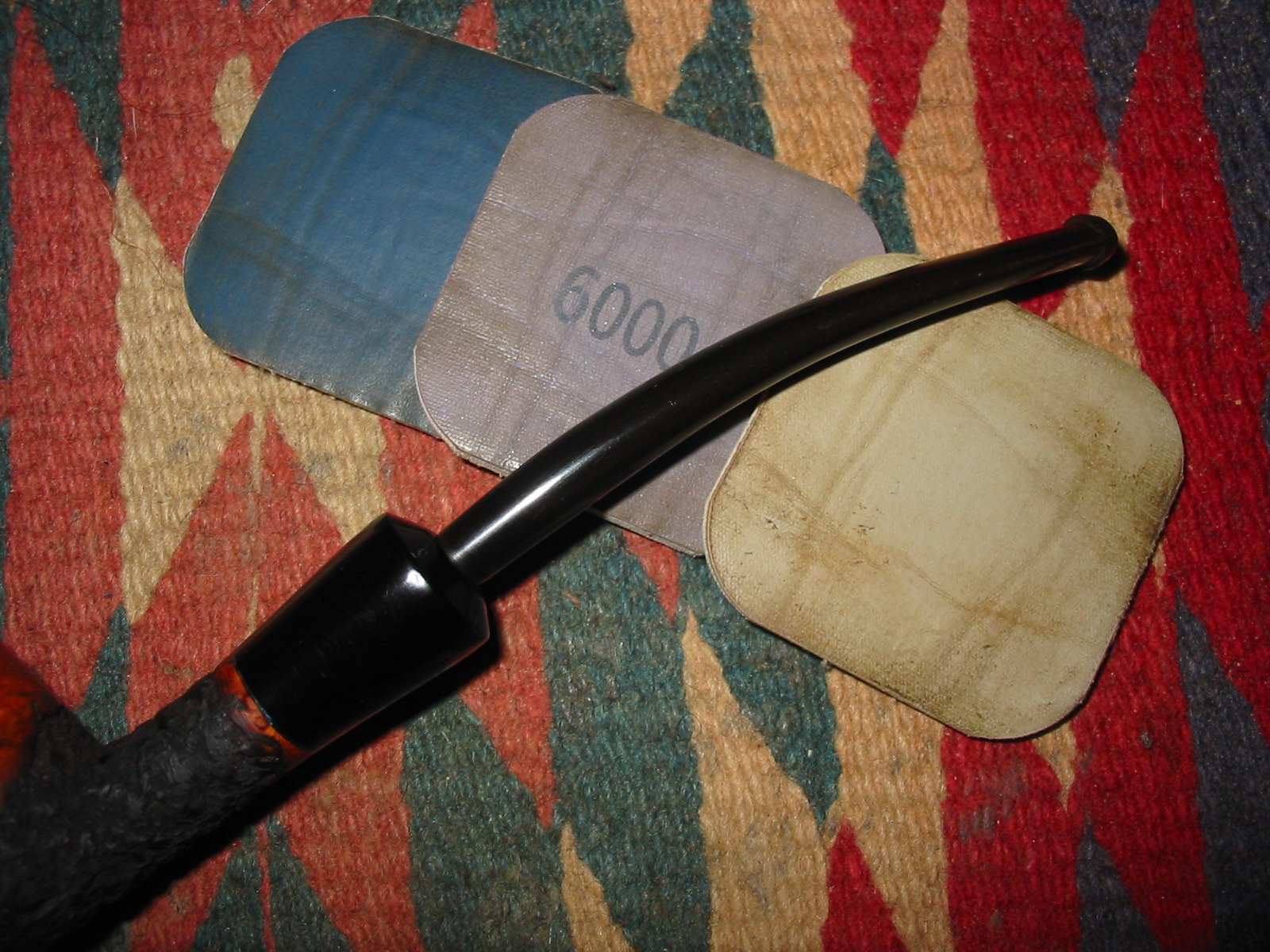
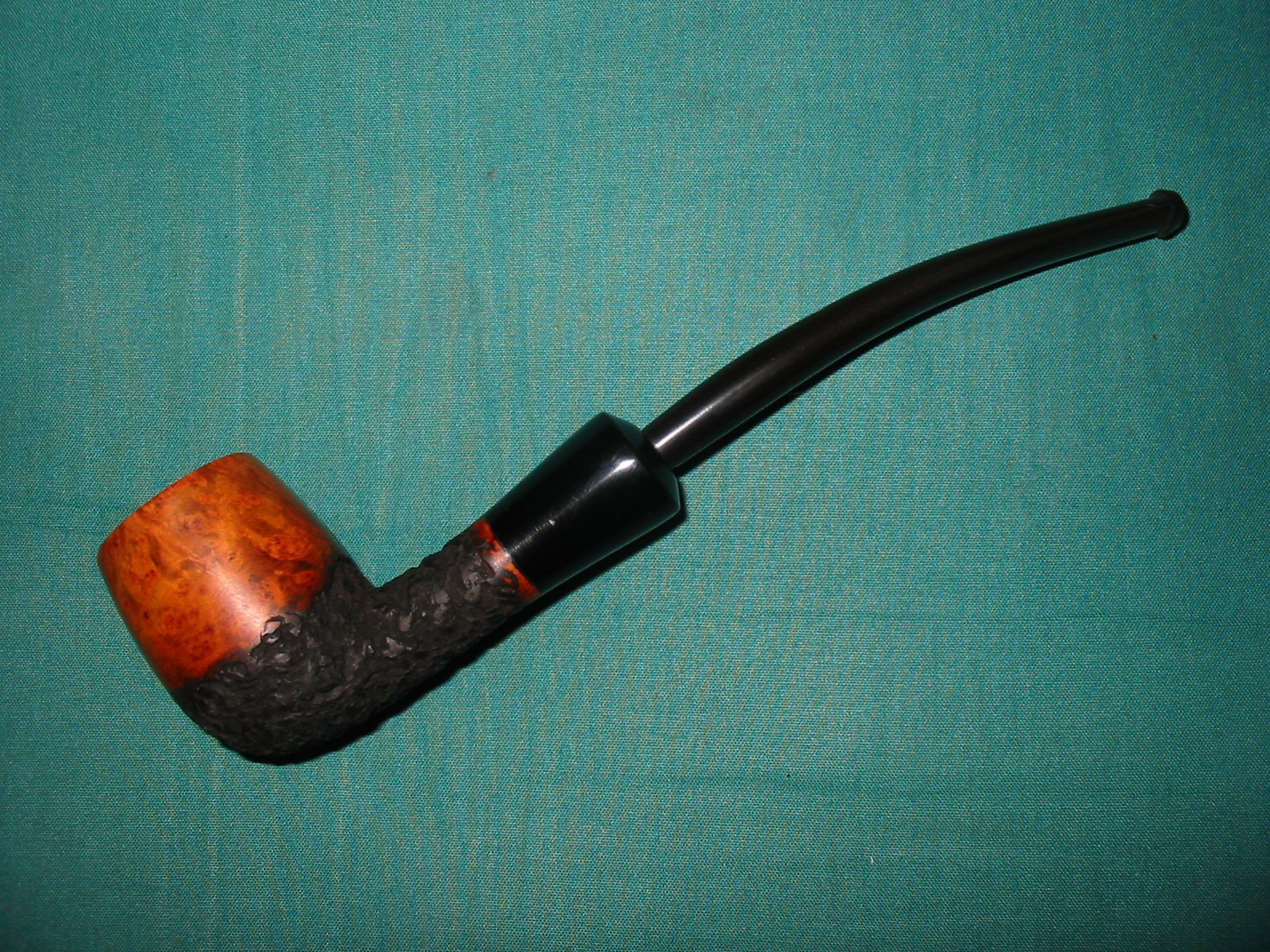
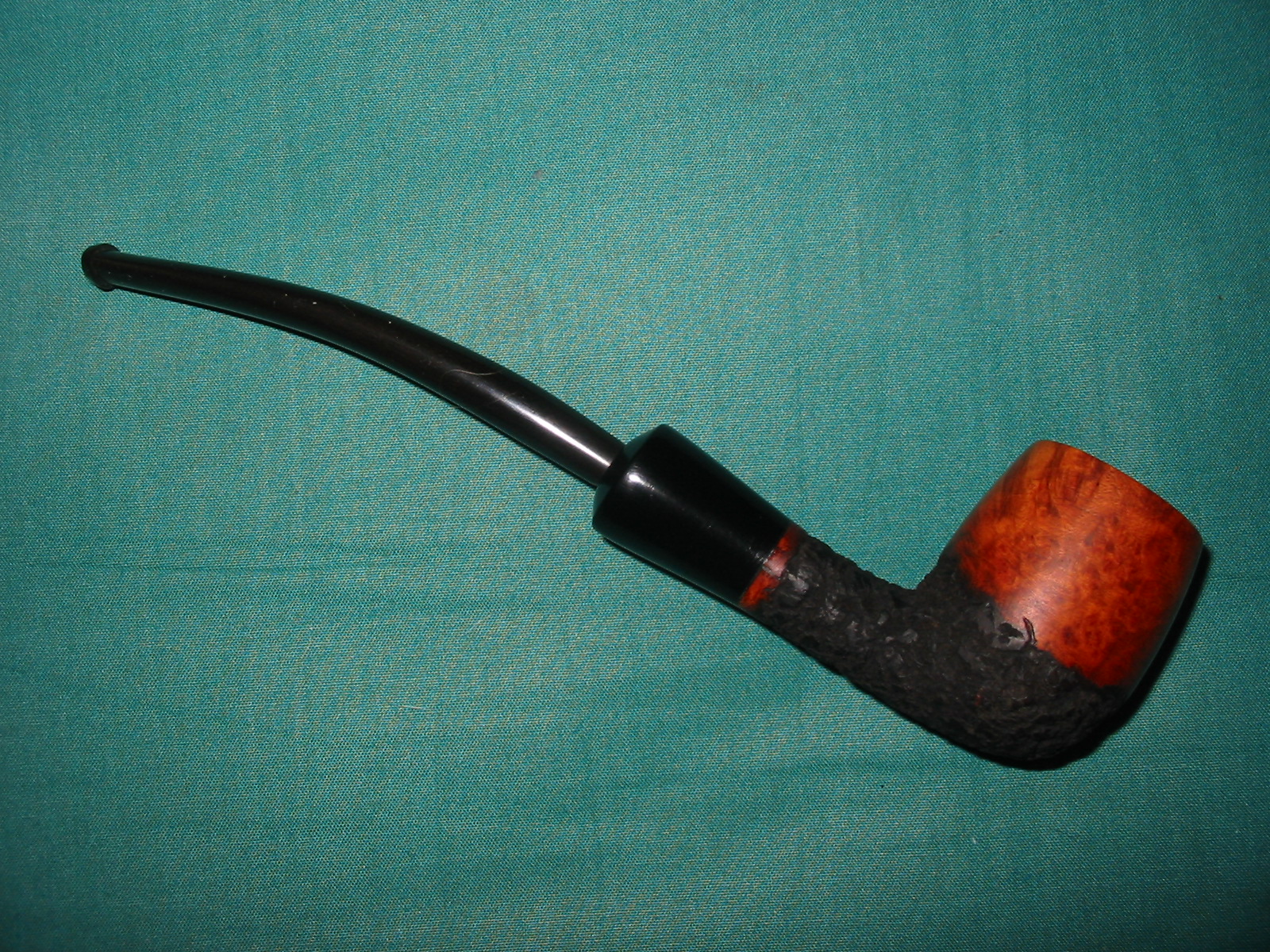
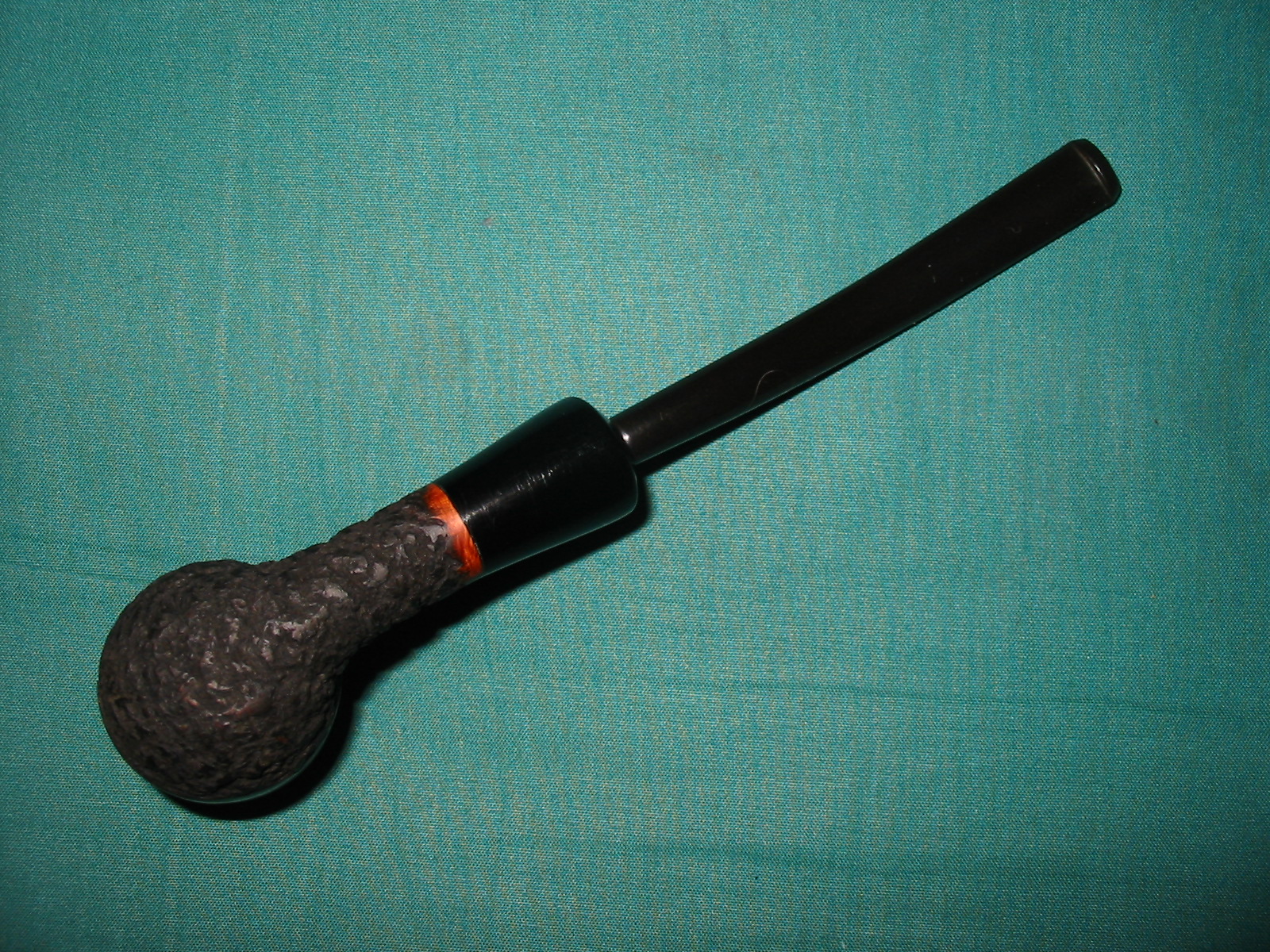
Tag Archives: stem work

Walt Disney pipe –AJ Verstraten (aka Bananabox-Ninja)


I am happy to see AJ back at his refurbishing work and writing about what he is working on. This pipe is particularly interesting in that it is a Disney Pipe. I have not seen much about these pipes and have enjoyed AJ’s work and write up. Thanks AJ for doing this and allowing us the pleasure of seeing the Disney pipe.

Greetings. When I first joined the PRF, a little over 18 months ago, there was a subject on the forum in which members could share with the other members what they thought was their dream pipe.

I was still rather green behind the ears when it came to brands, shapes and sizes so I didn’t reply in it at first. However, after a few months I found this article on Pipesmagazine.com:
http://pipesmagazine.com/blog/pipe-smokers-of-the-past/walt-disney-american-icon-inventor-of-pop-culture-pipe-smoker/ It was an interview with Brian Levine who explained about the fact that the Walt Disney Company sold pipes and pipe tobacco in the parks up until 1991/93.
This tickled me; the fact that the ‘wholesome WD Company’ sold tobacco and especially pipes with their logo on it was too good to be true. It was then that I decided a Walt Disney pipe would be my dream pipe.

So I shared this with my fellow Dutch pipe smokers on the PRF and explained that since I live in the Netherlands it would be an interesting challenge to try to acquire on for a reasonable price.

Thus my quest started and ended a mere three weeks later when I was not out bid on this eBay lot:
000

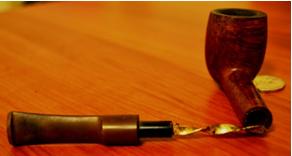
A tobacco pot with two pipes, the one on the left being a Disney pipe. The closing bid was $19.53 for the whole lot though my mood was a bit adjusted when I found out the shipping cost would be $42,-. Still, corrected to Euros it was a nice price for something so rare for a European.

When the pipe came it was very well packed and had survived the transit wonderfully. The other pipe was a Kaywoodie which I will write about in the future.

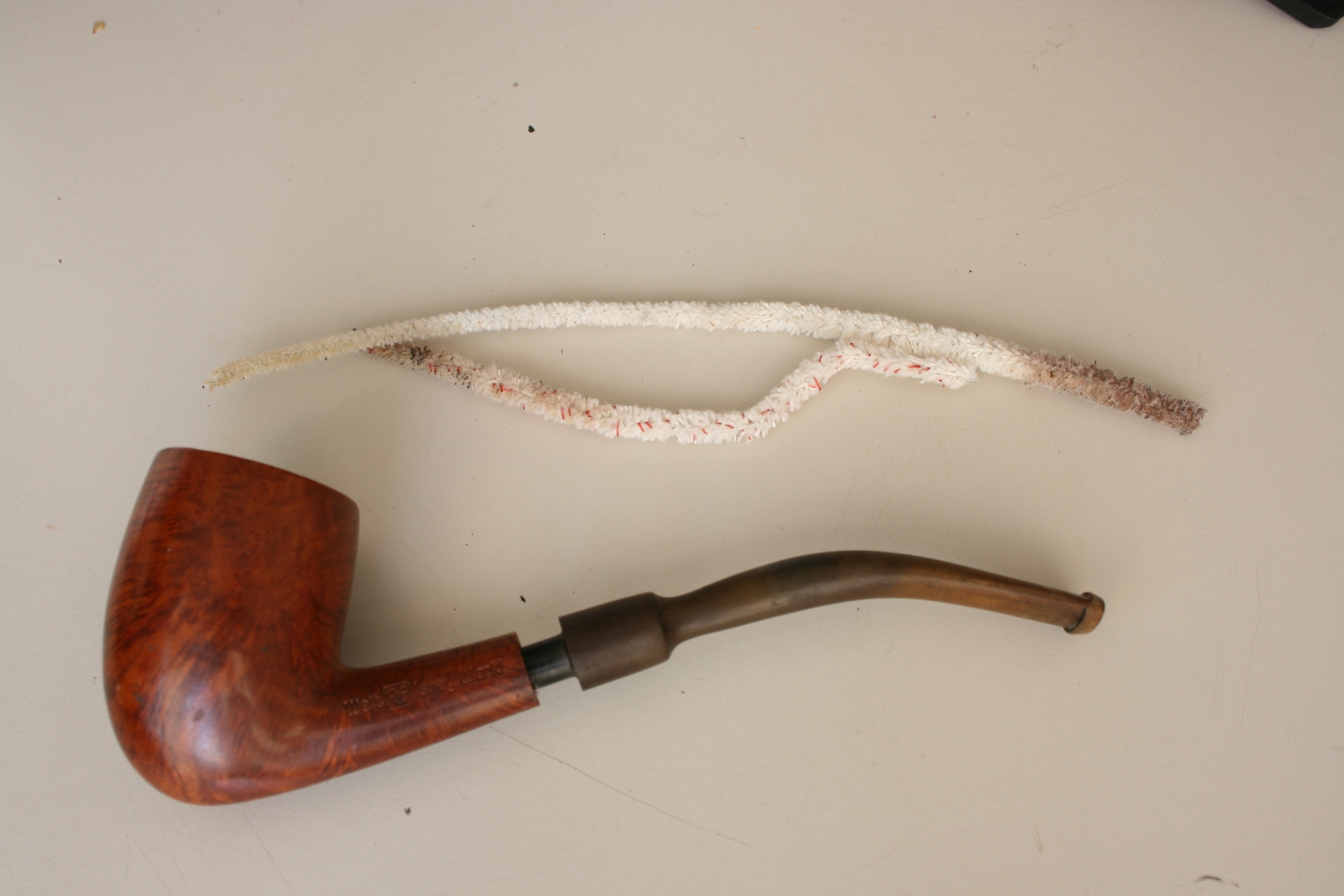
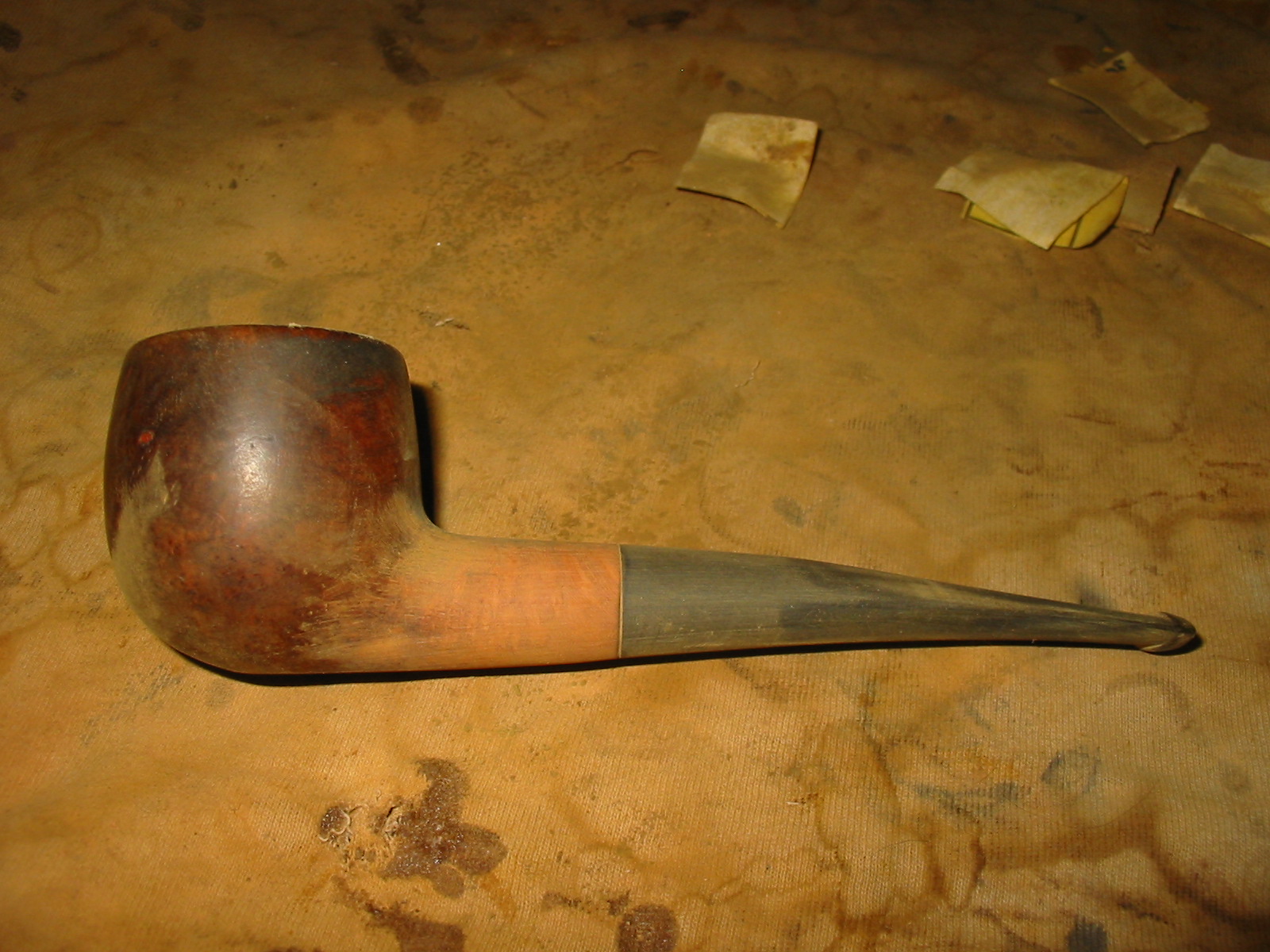
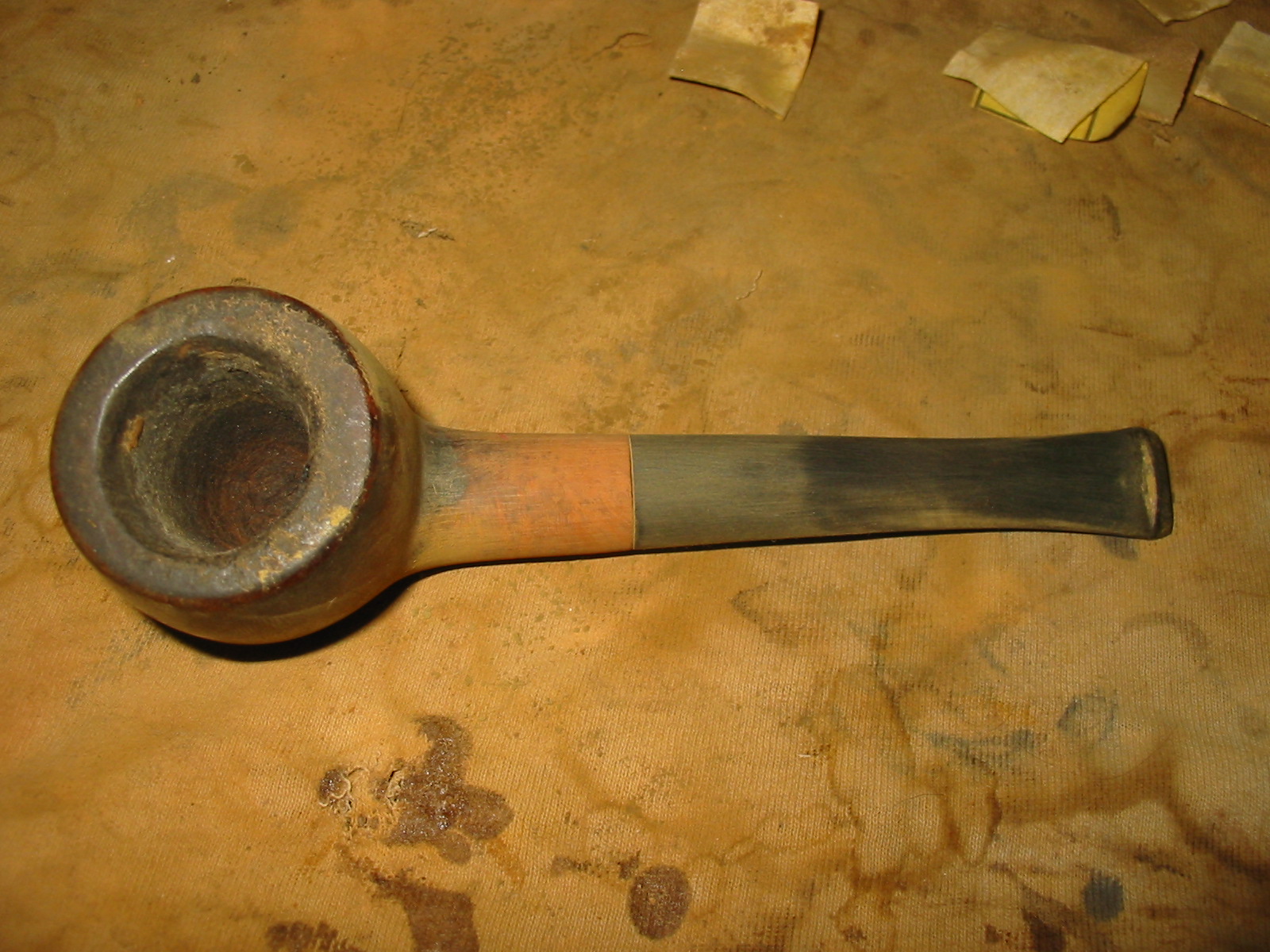
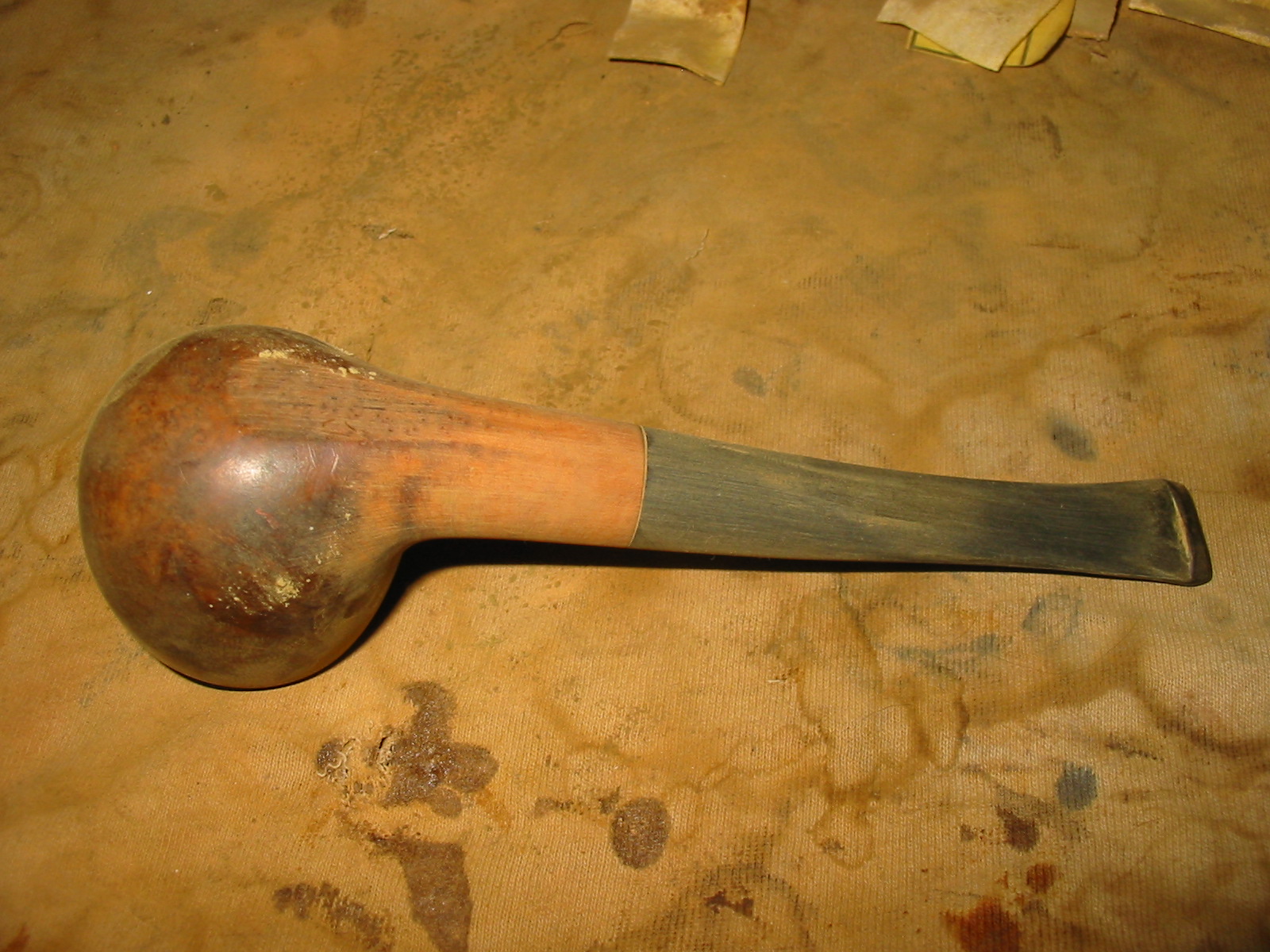
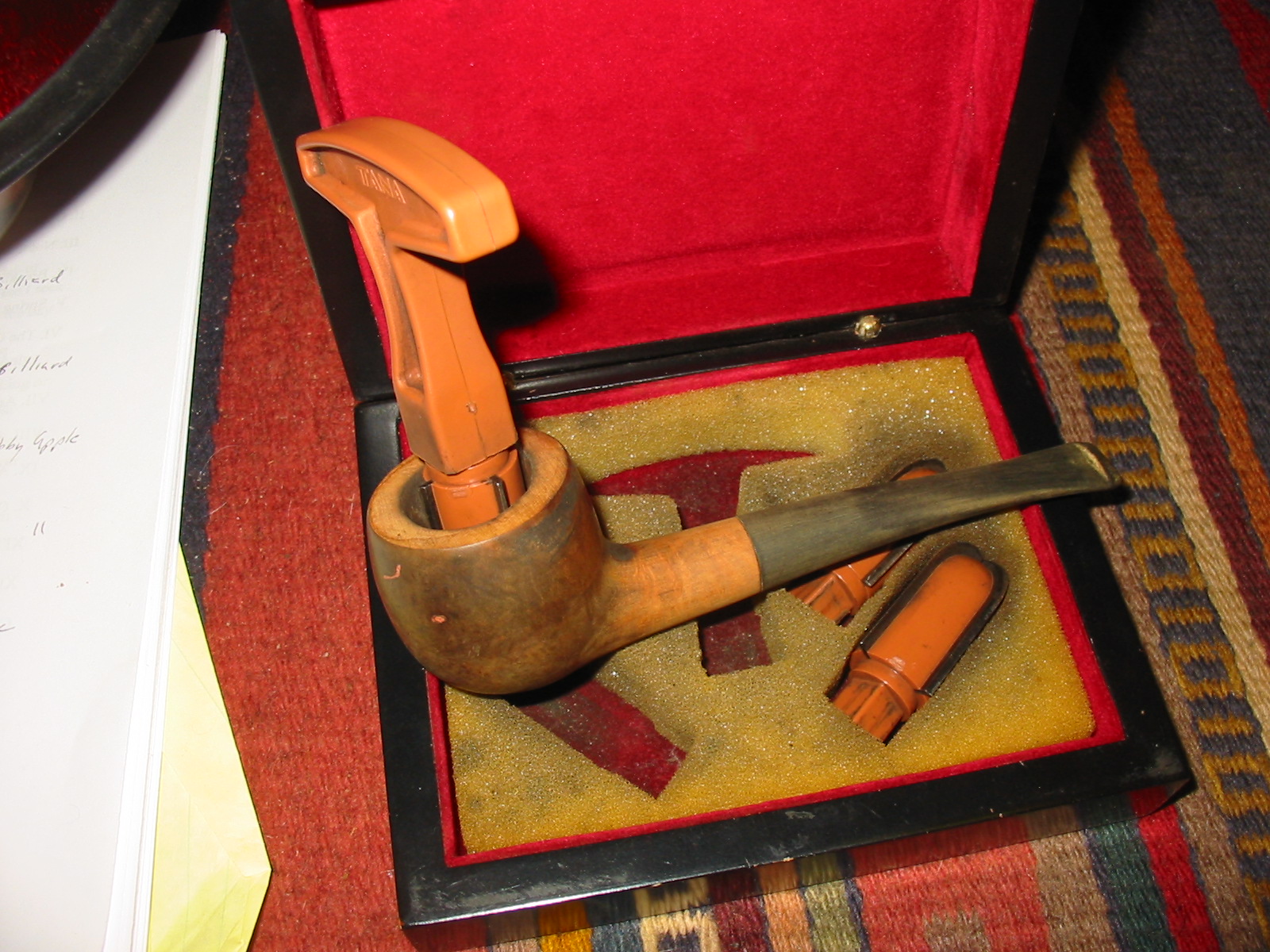
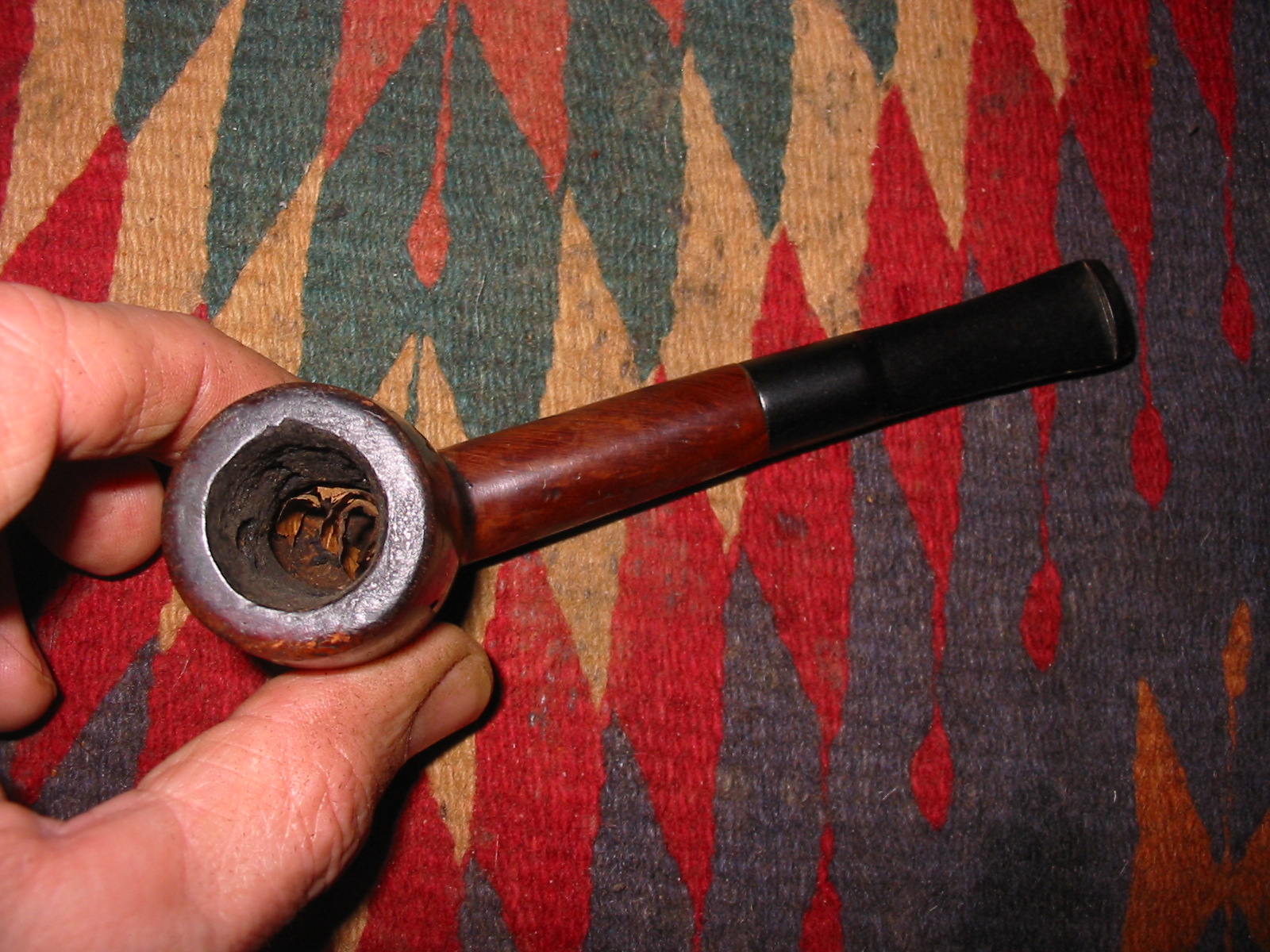
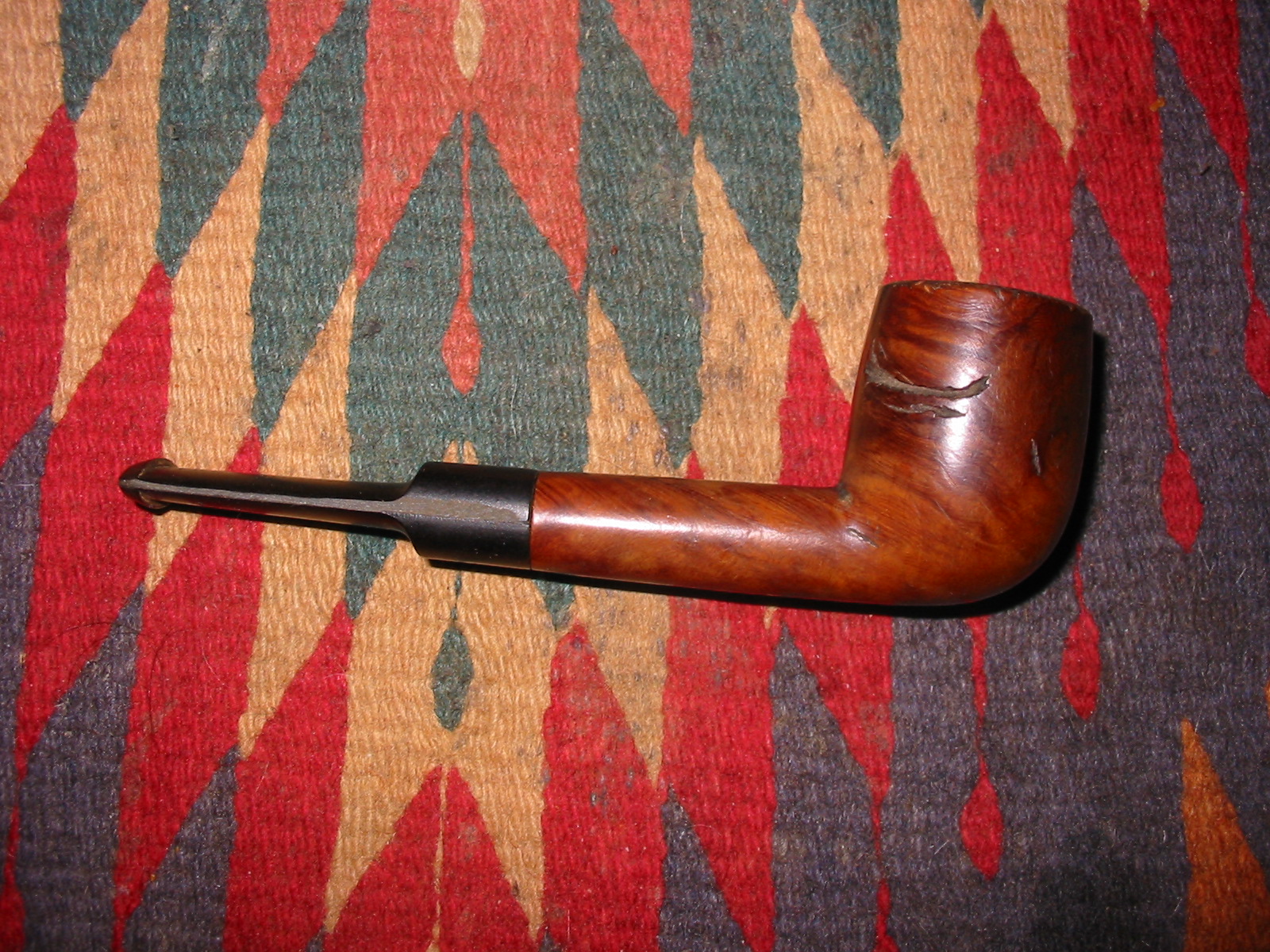
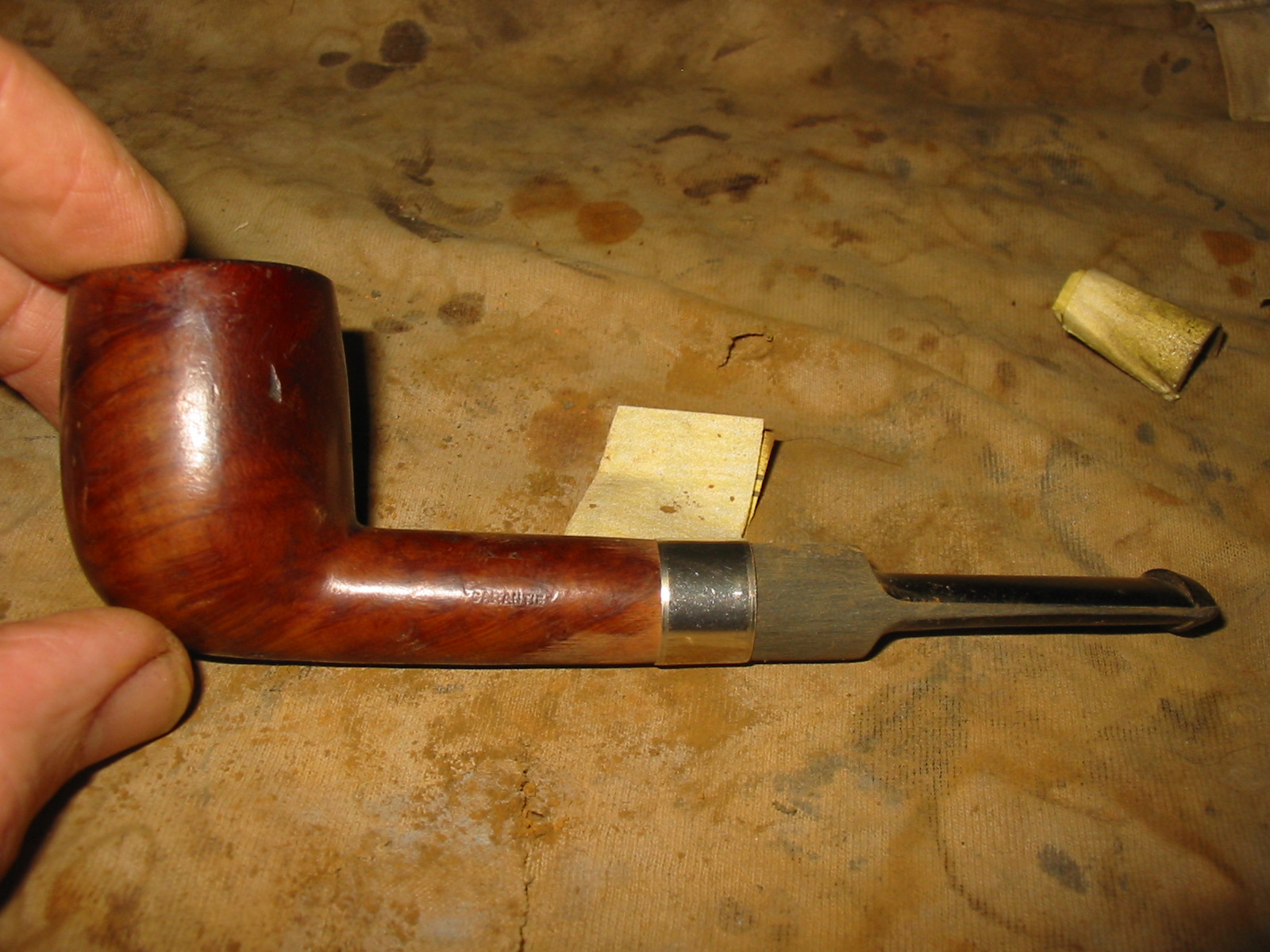
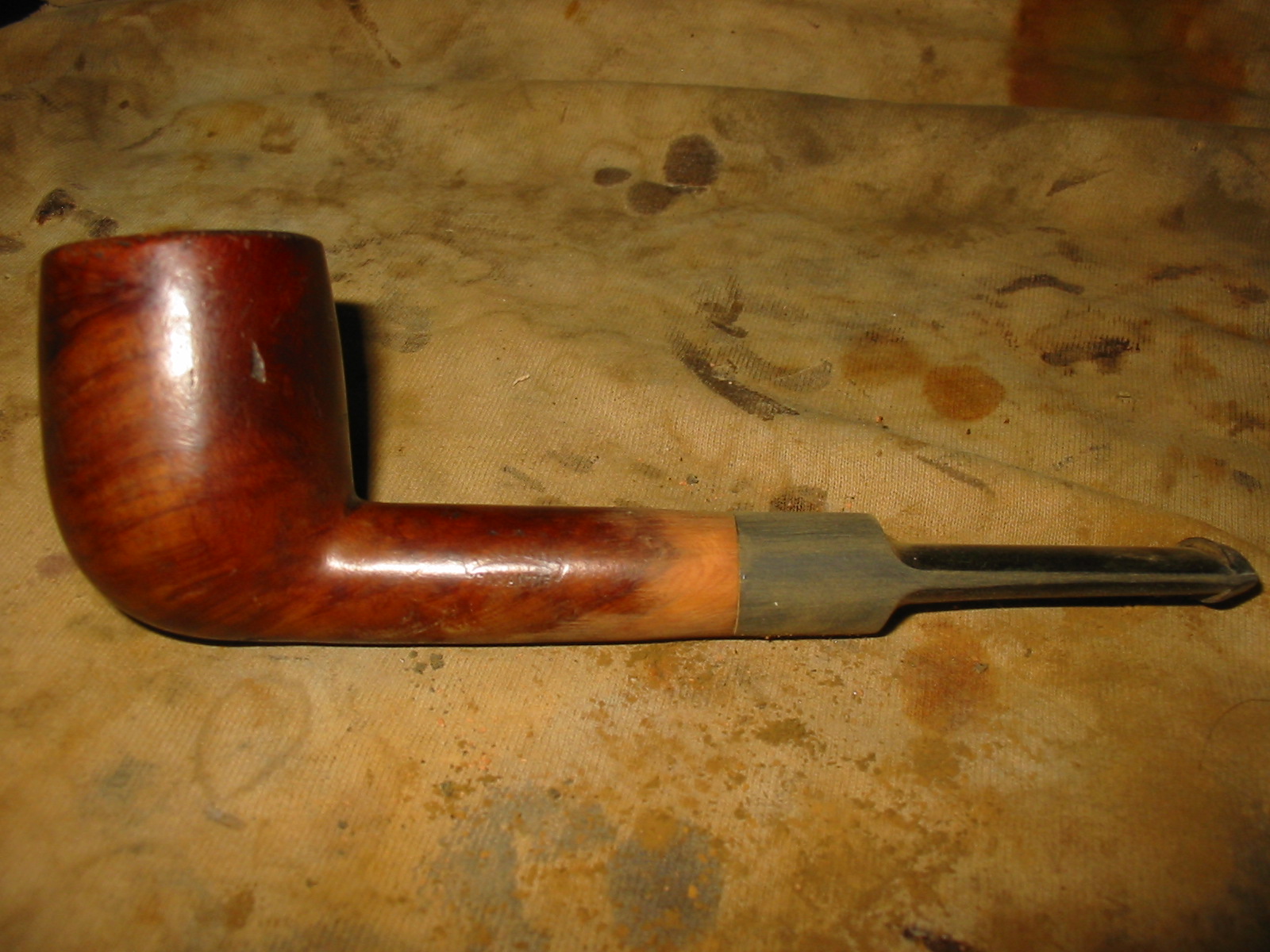
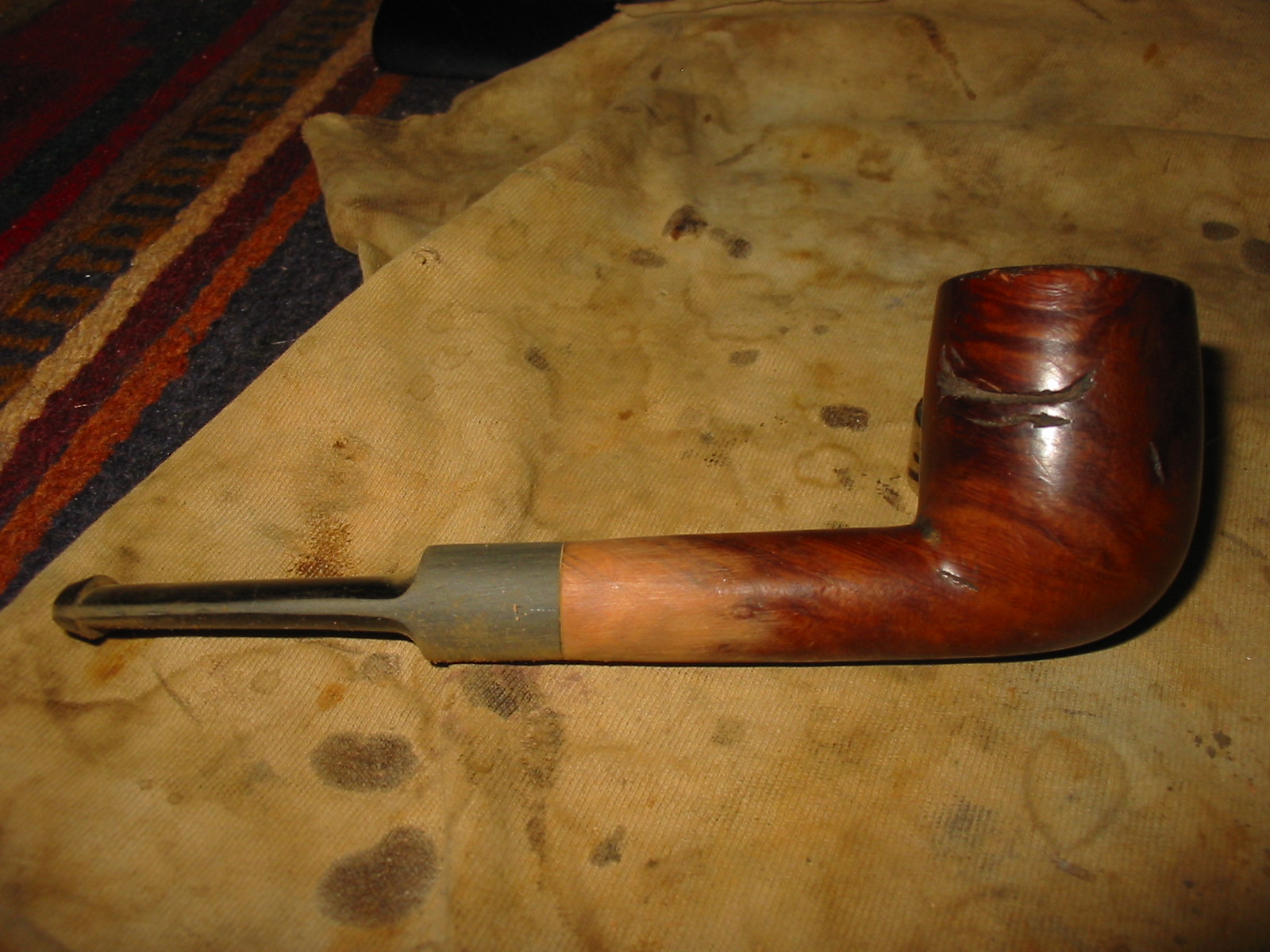
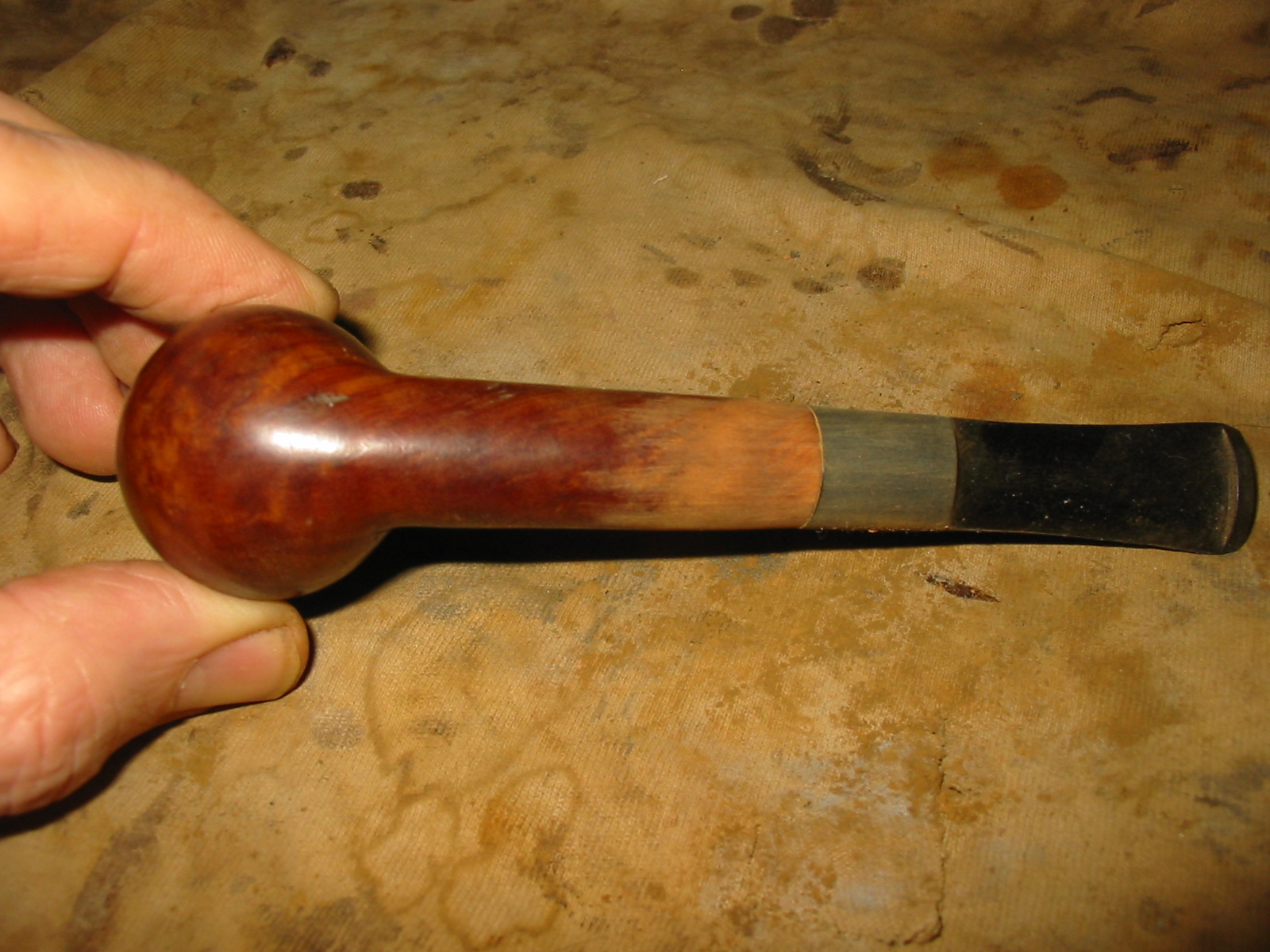
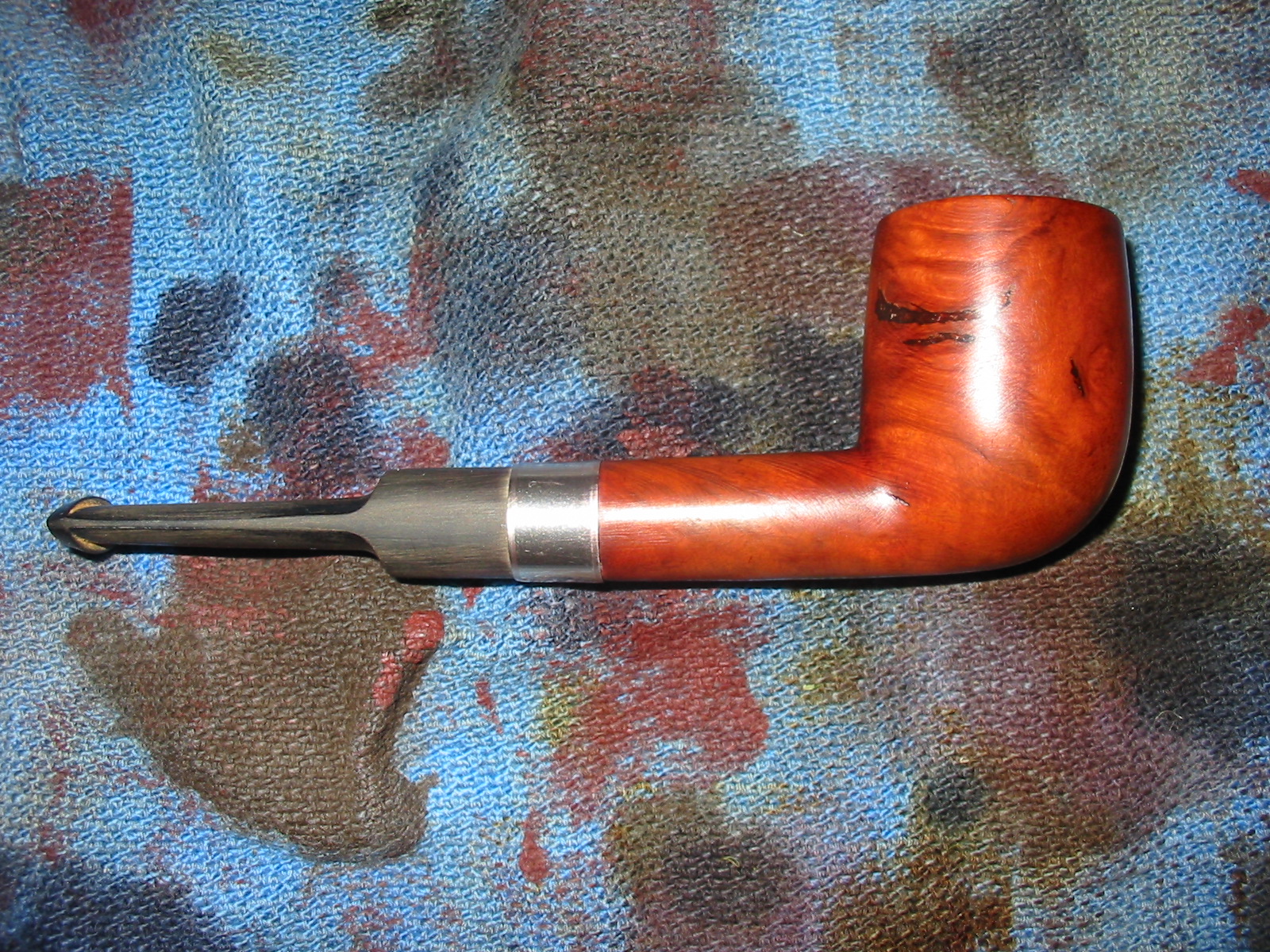
The first thing that struck me was that the pipe seemed to be only smoked a few times. The mouthpiece was oxidized through time and air but on the whole it was in good condition.
001
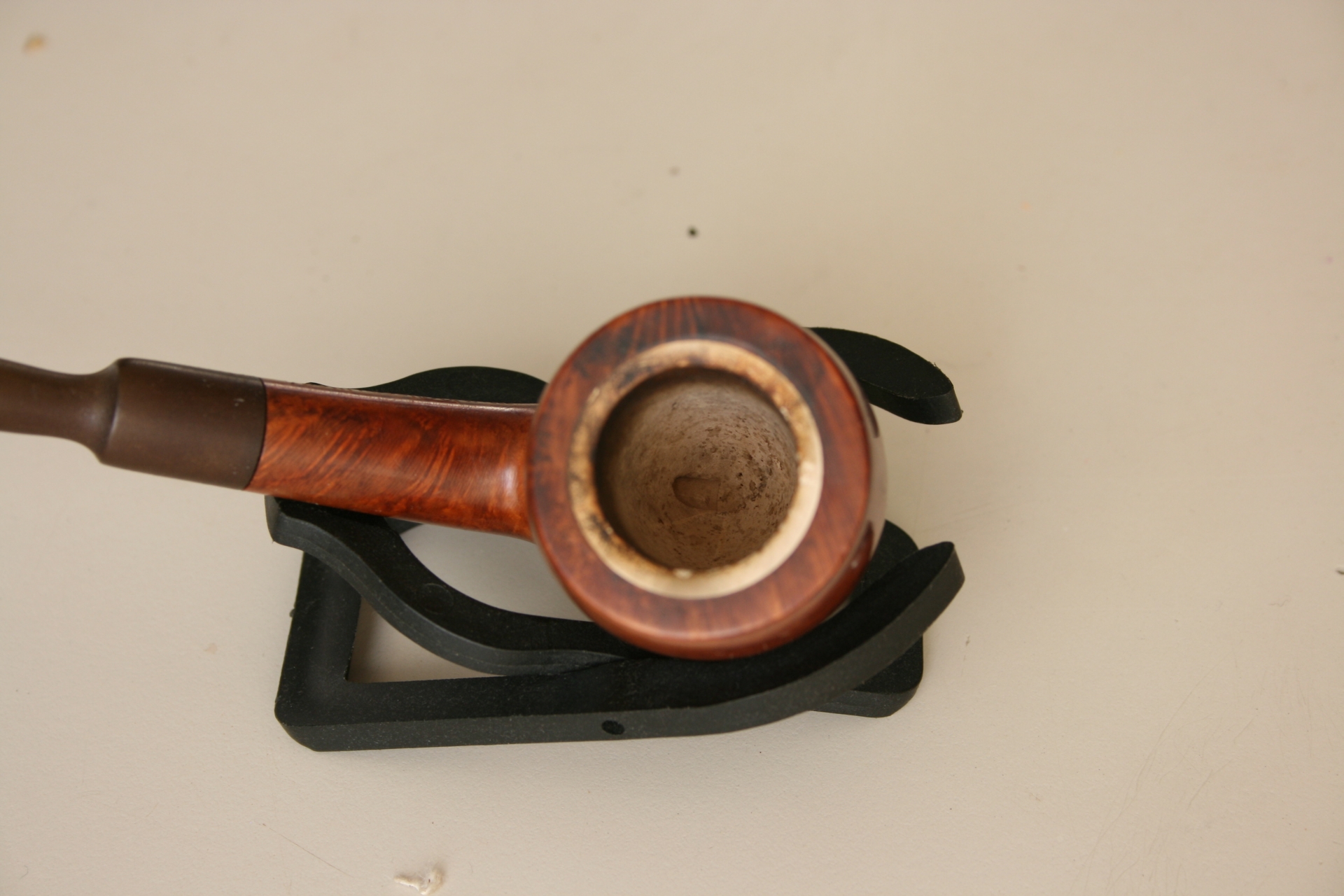
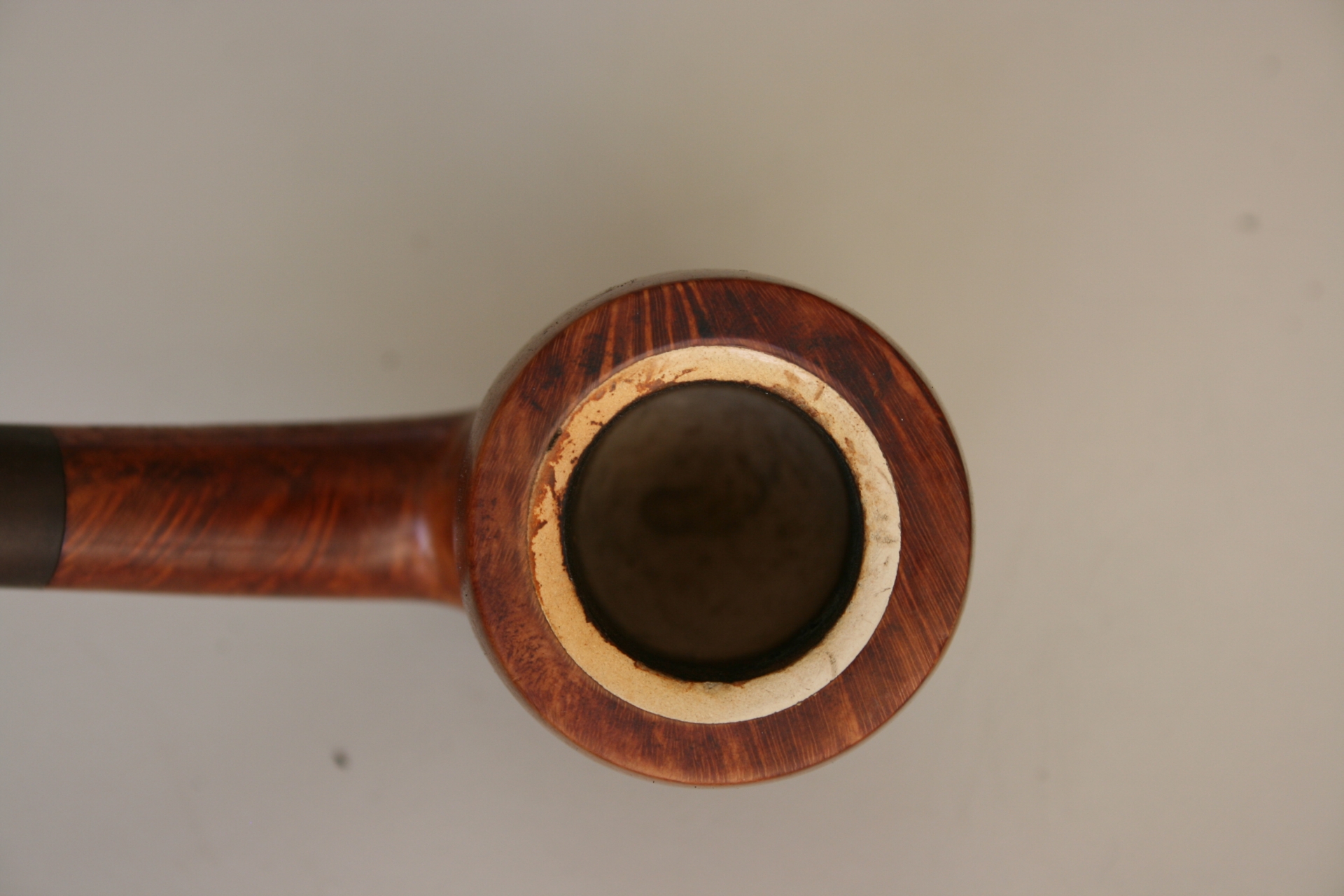
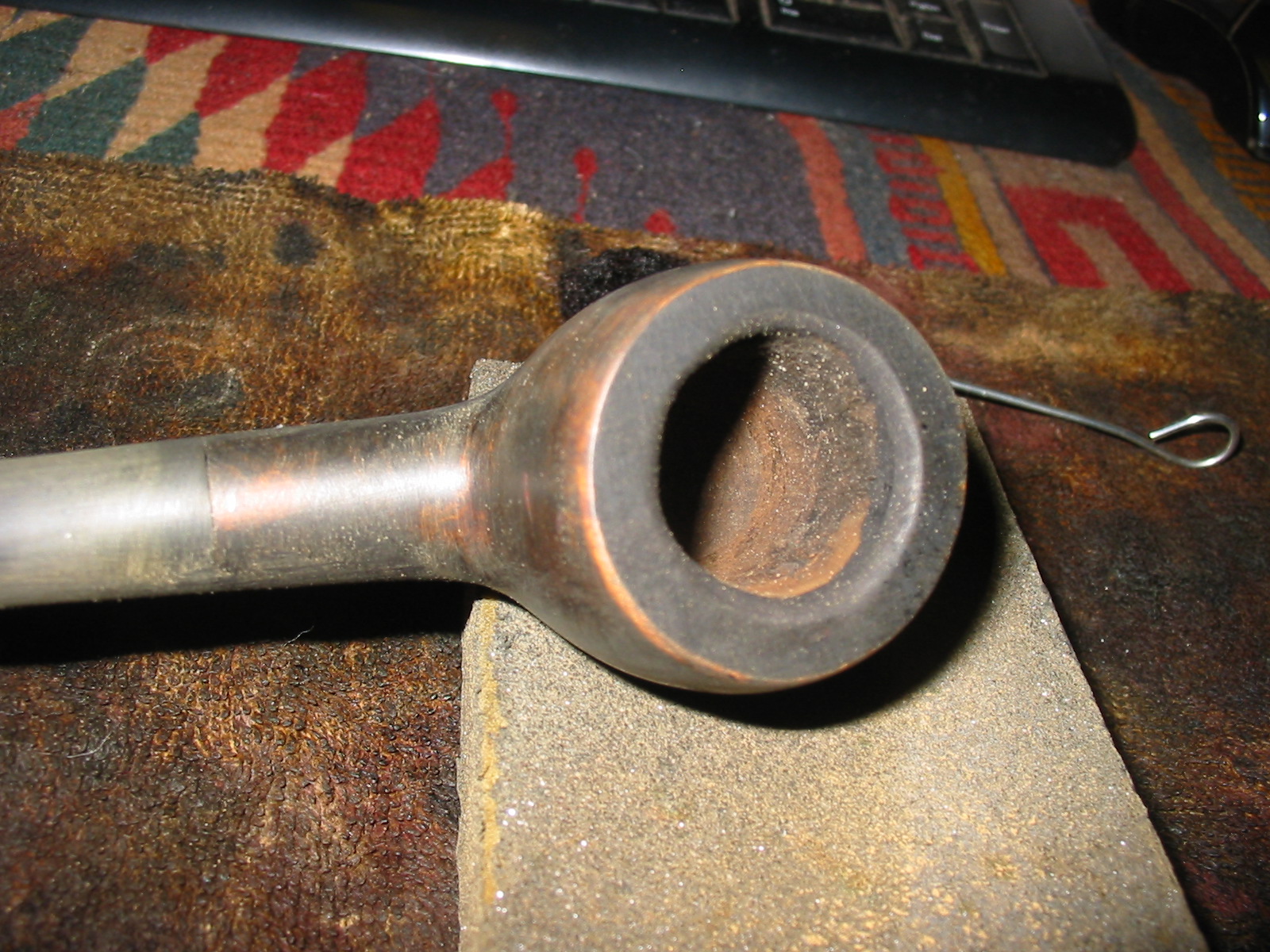
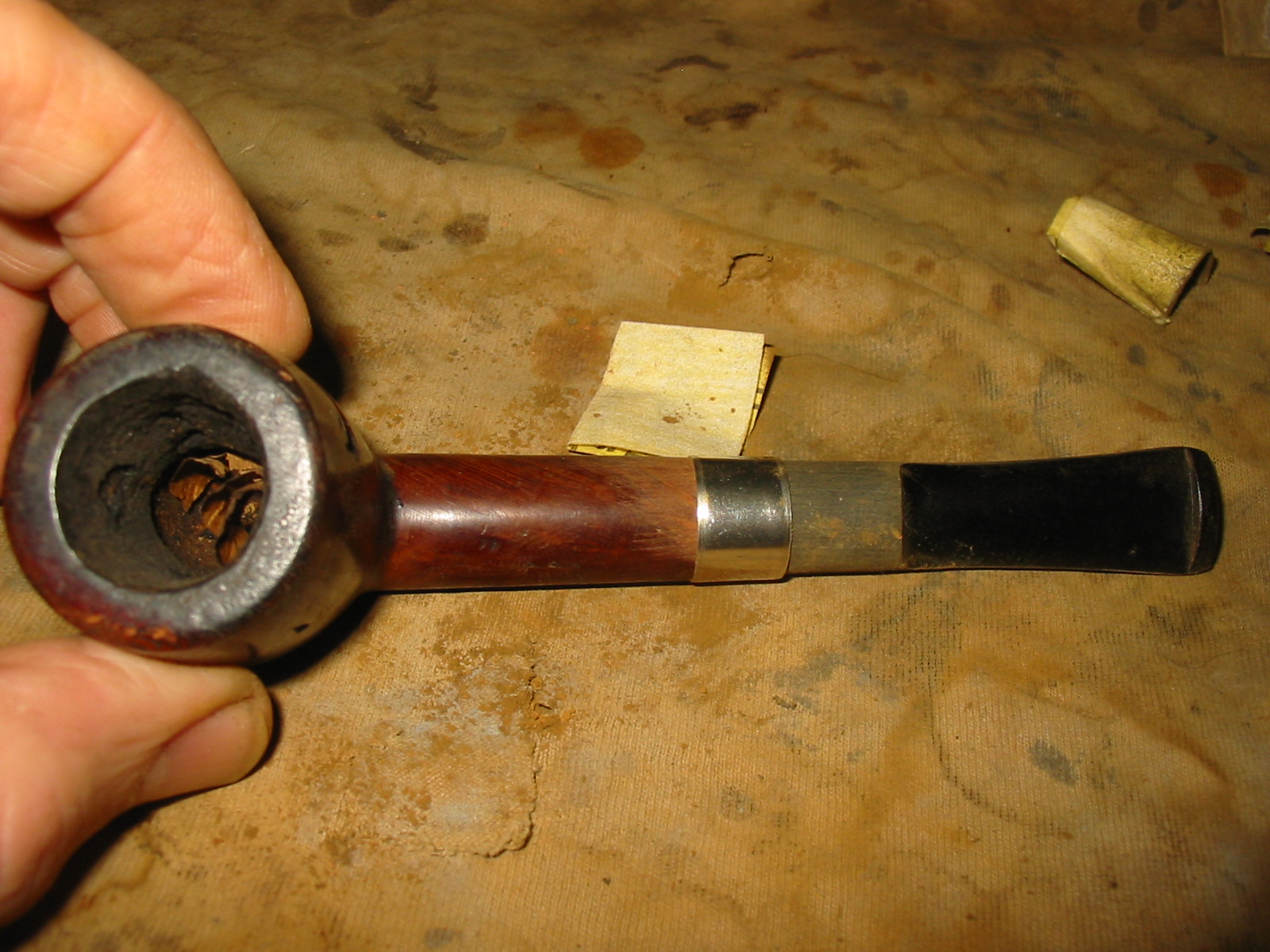
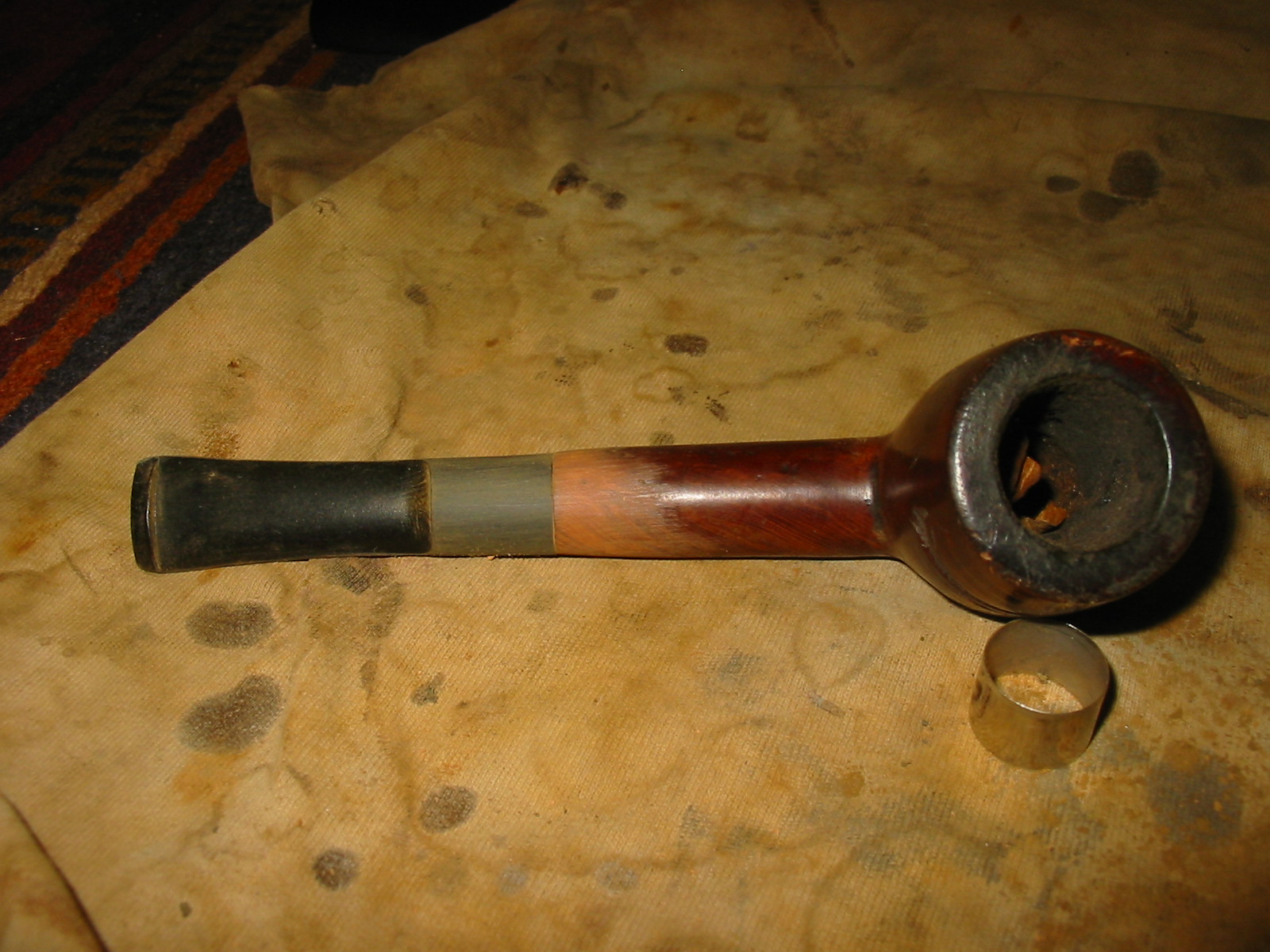
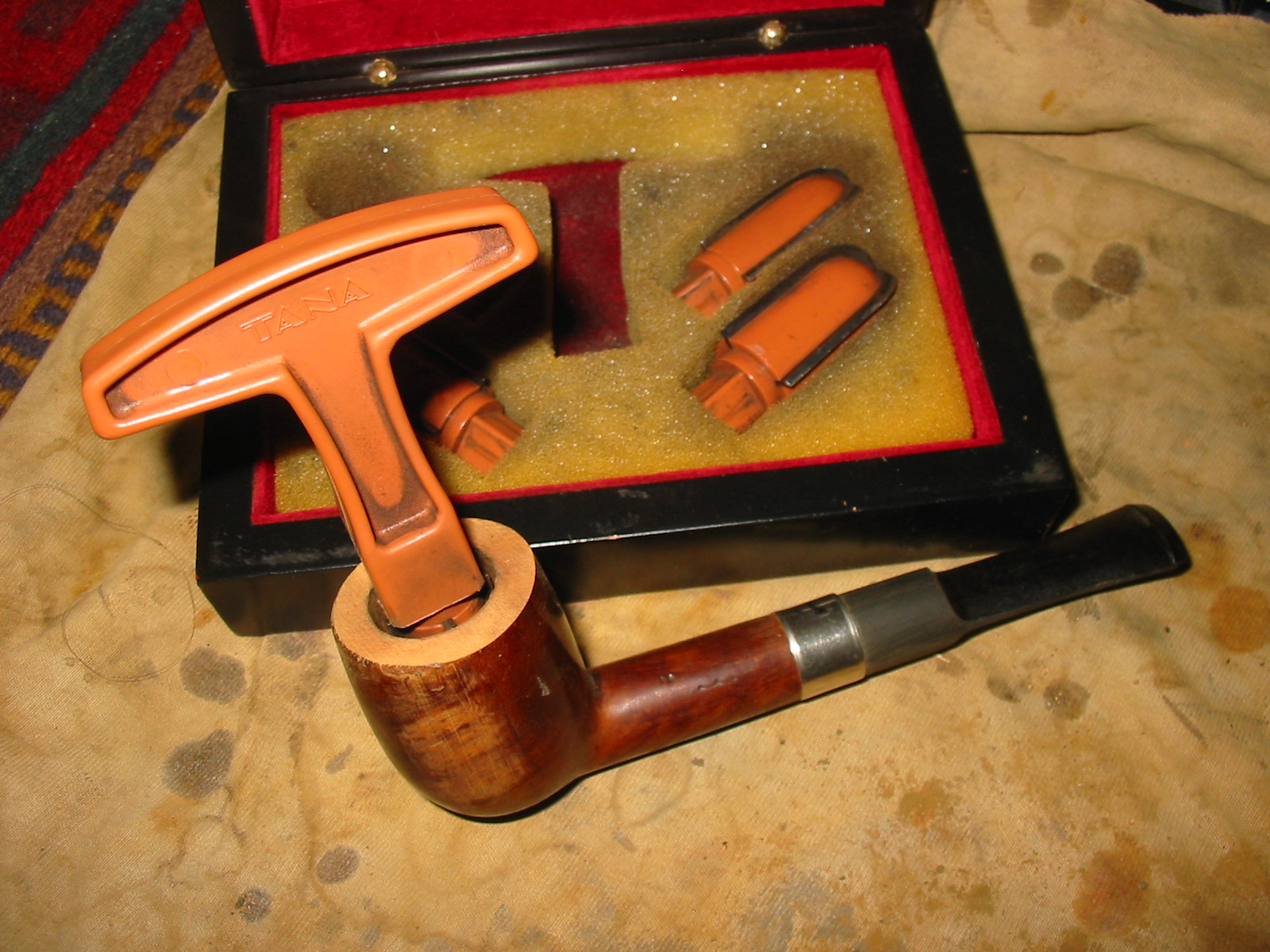
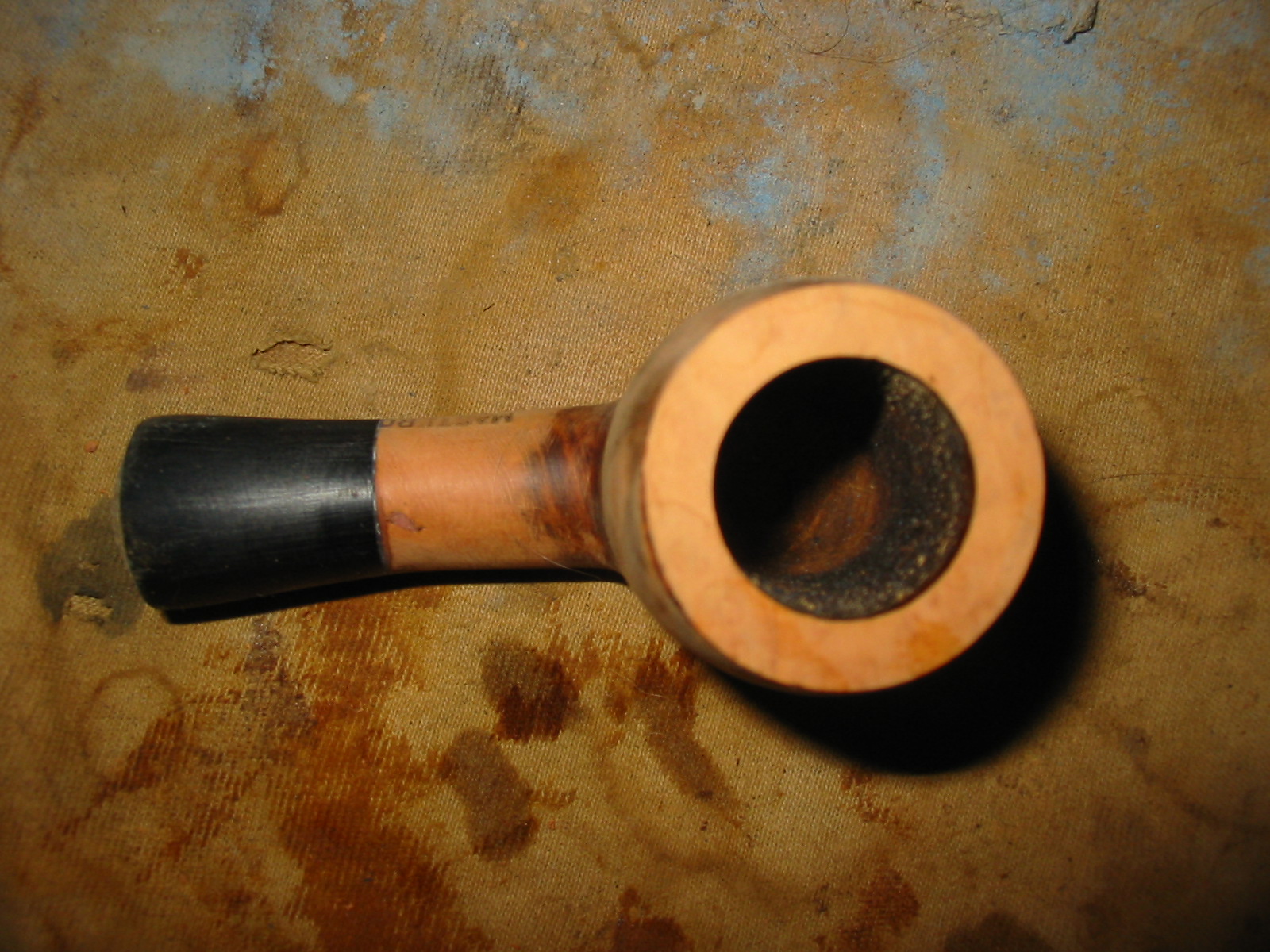
The inside of the bowl was lined with meerschaum, wetting a finger with spit and pressing it against the meerschaum I concluded it to be pressed – meerschaum instead of block meerschaum.
002
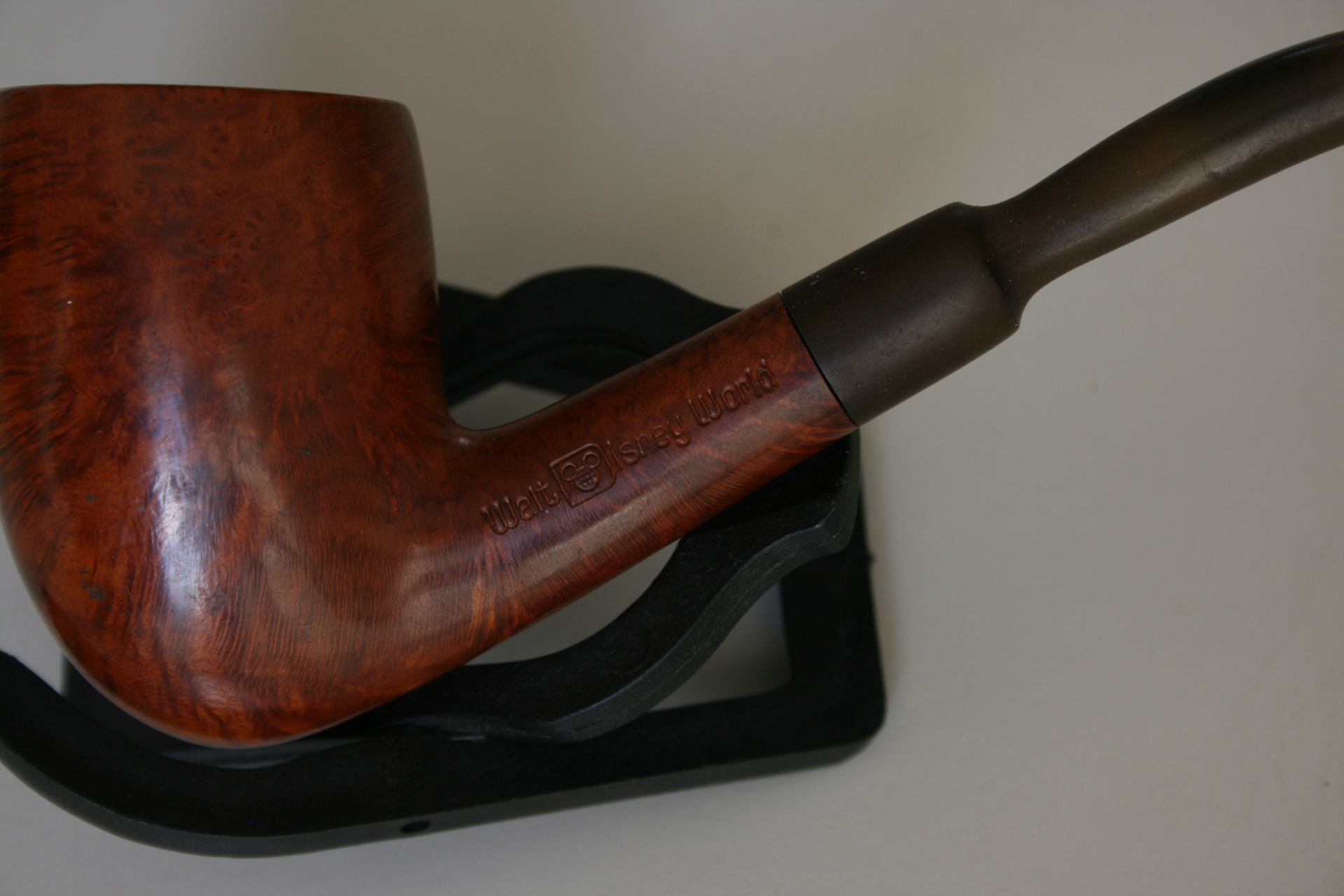
A rule of thumb (no pun intended :-)) is that when your wet finger sticks to the meerschaum it has a higher absorption rate and is thus most likely to be block-meerschaum. The pipe also confirmed the story from Levine that most of these pipes were basket-pipes stamped with the WD logo, though this one was of better quality than I expected.
003
First I cleaned the inside with 96% alcohol and pipe cleaners. They came out rather clean on the first go.
004
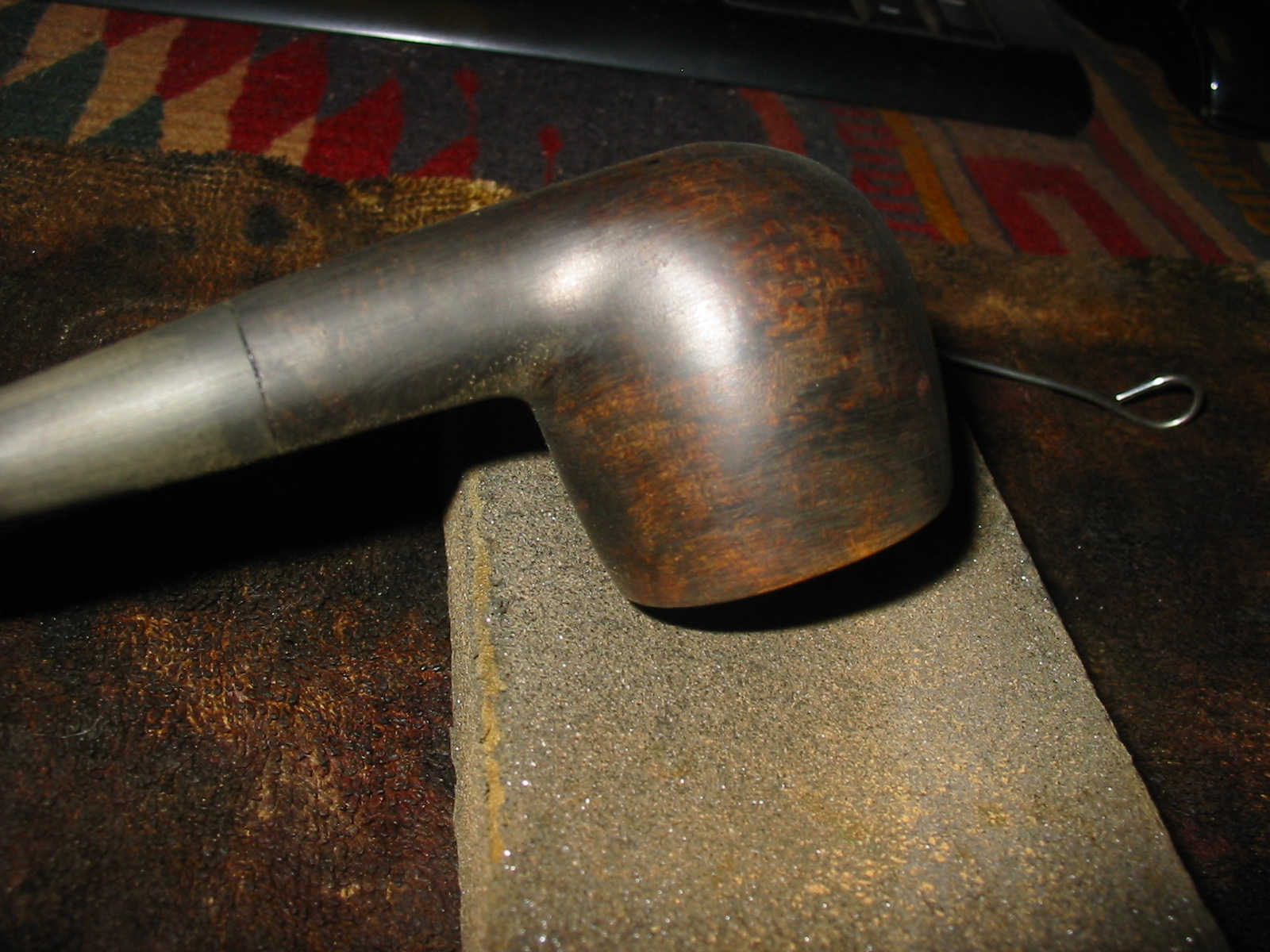
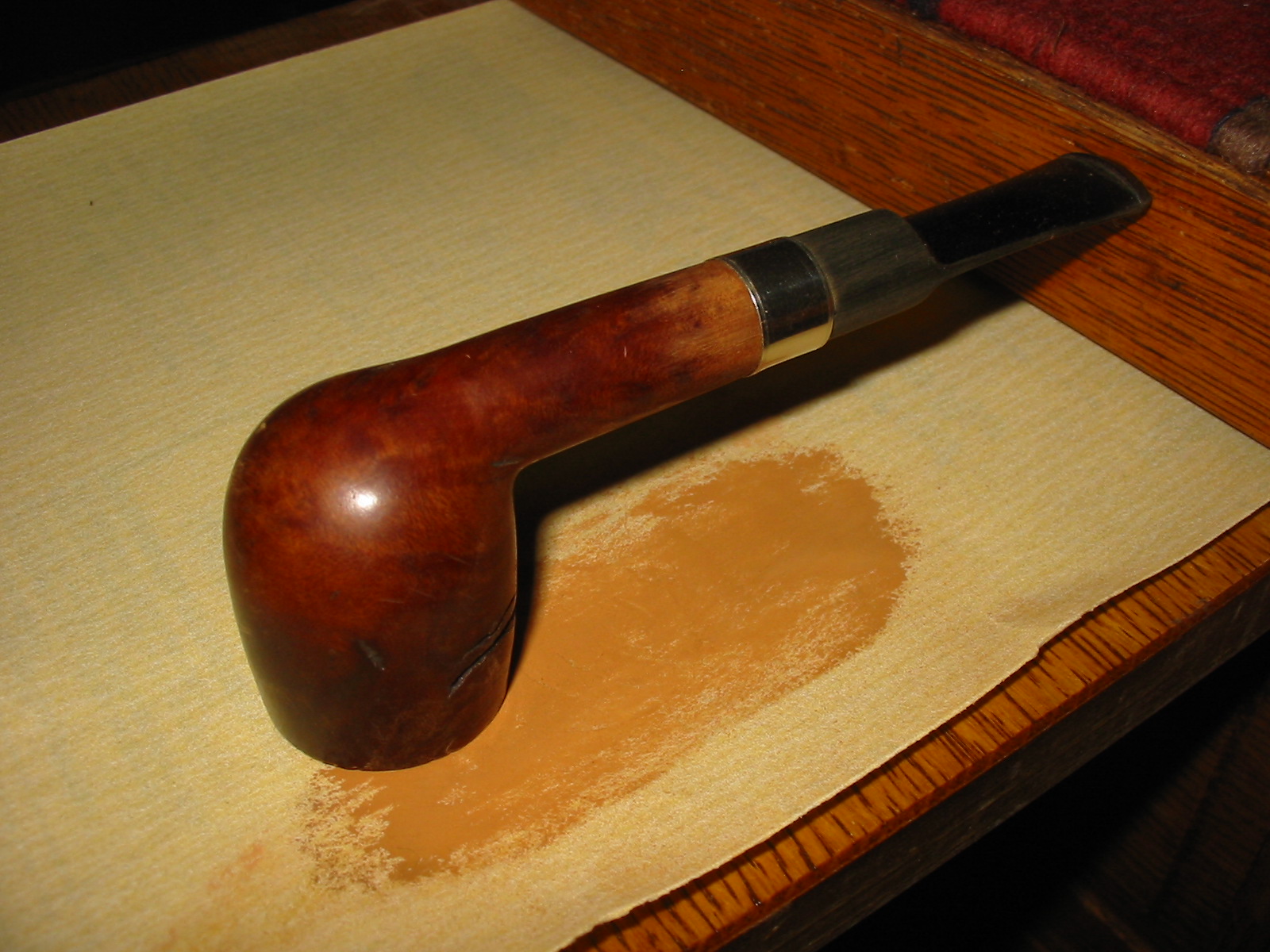
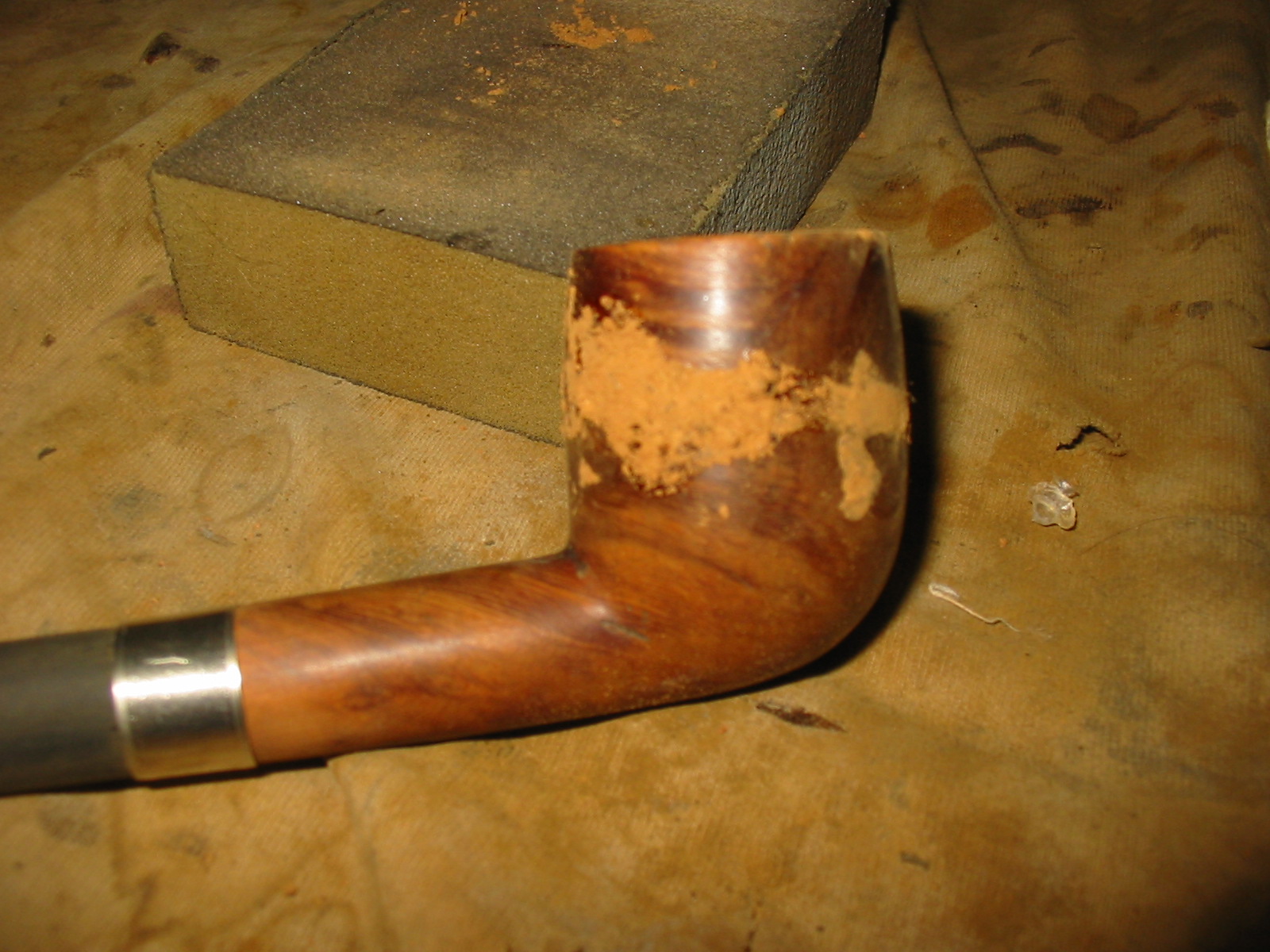
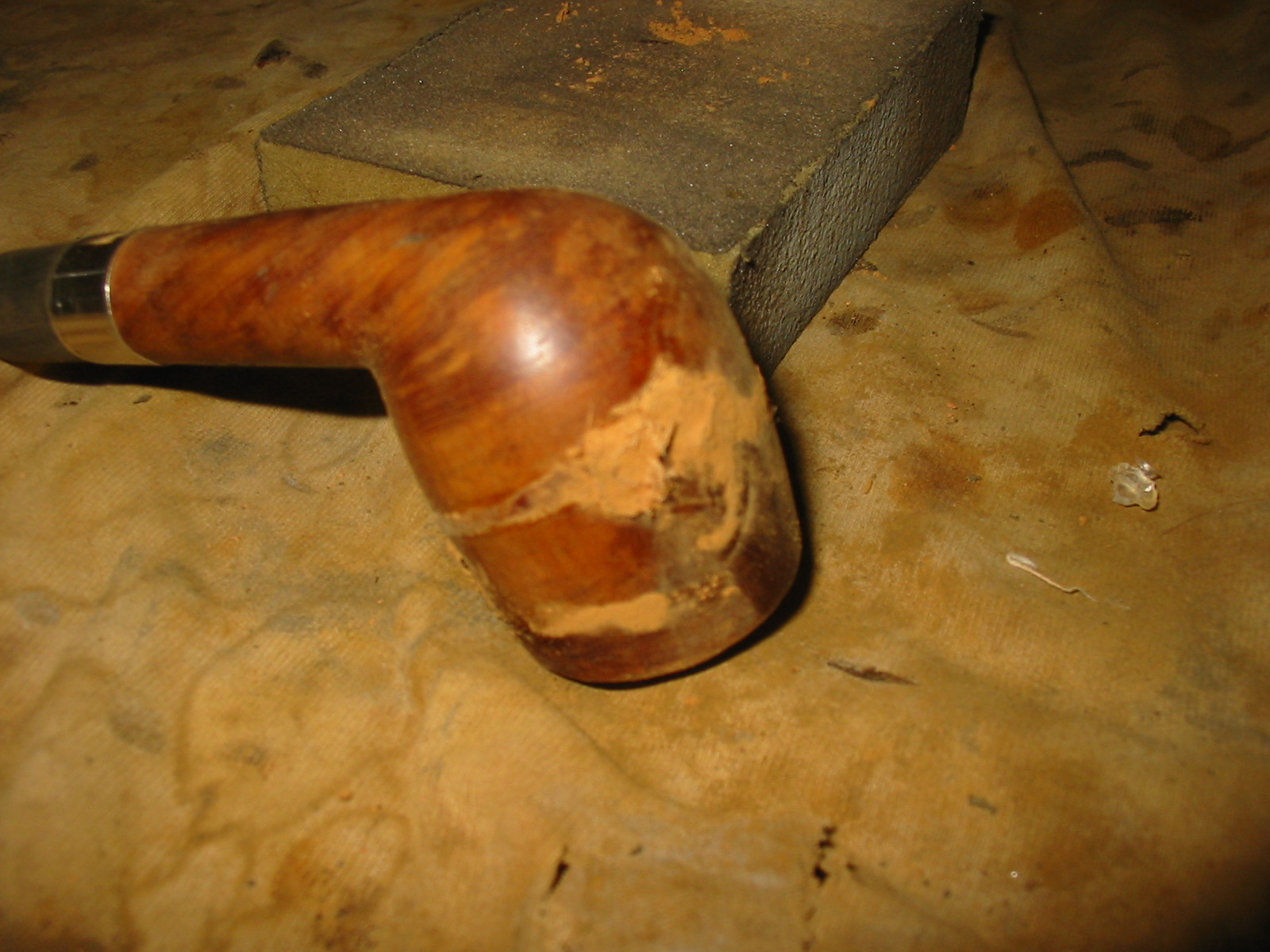
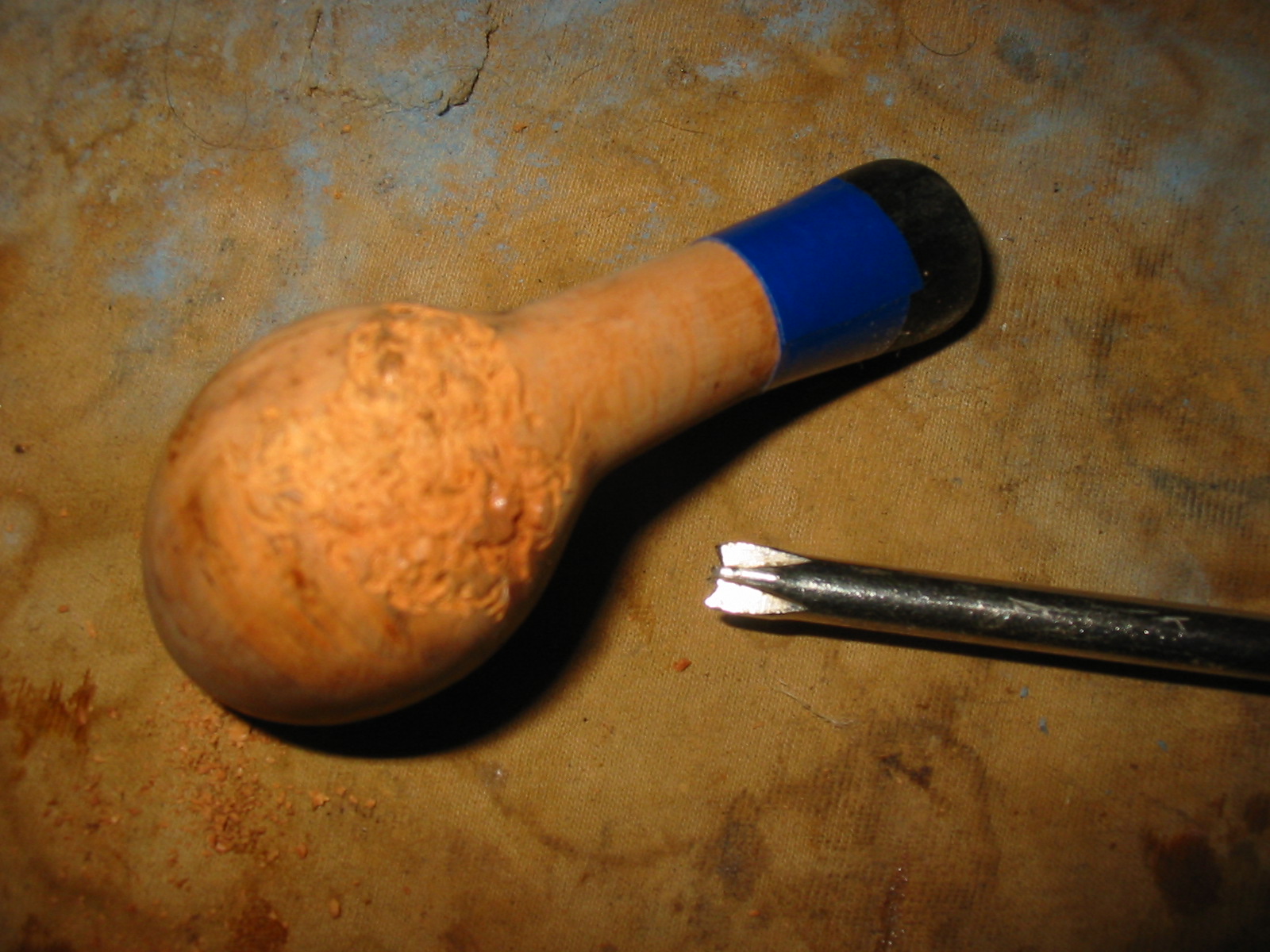
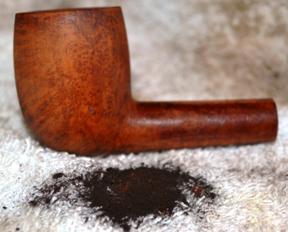
The soot and coal on the rim were rubbed off easily with a little spit and an old sock. And with 1500 grit sandpaper I smoothed the bowl a little, I decided to leave the brown spots on the meerschaum as I didn’t want to ruin the look of the pipe should the spots run deeper than I anticipated.
005
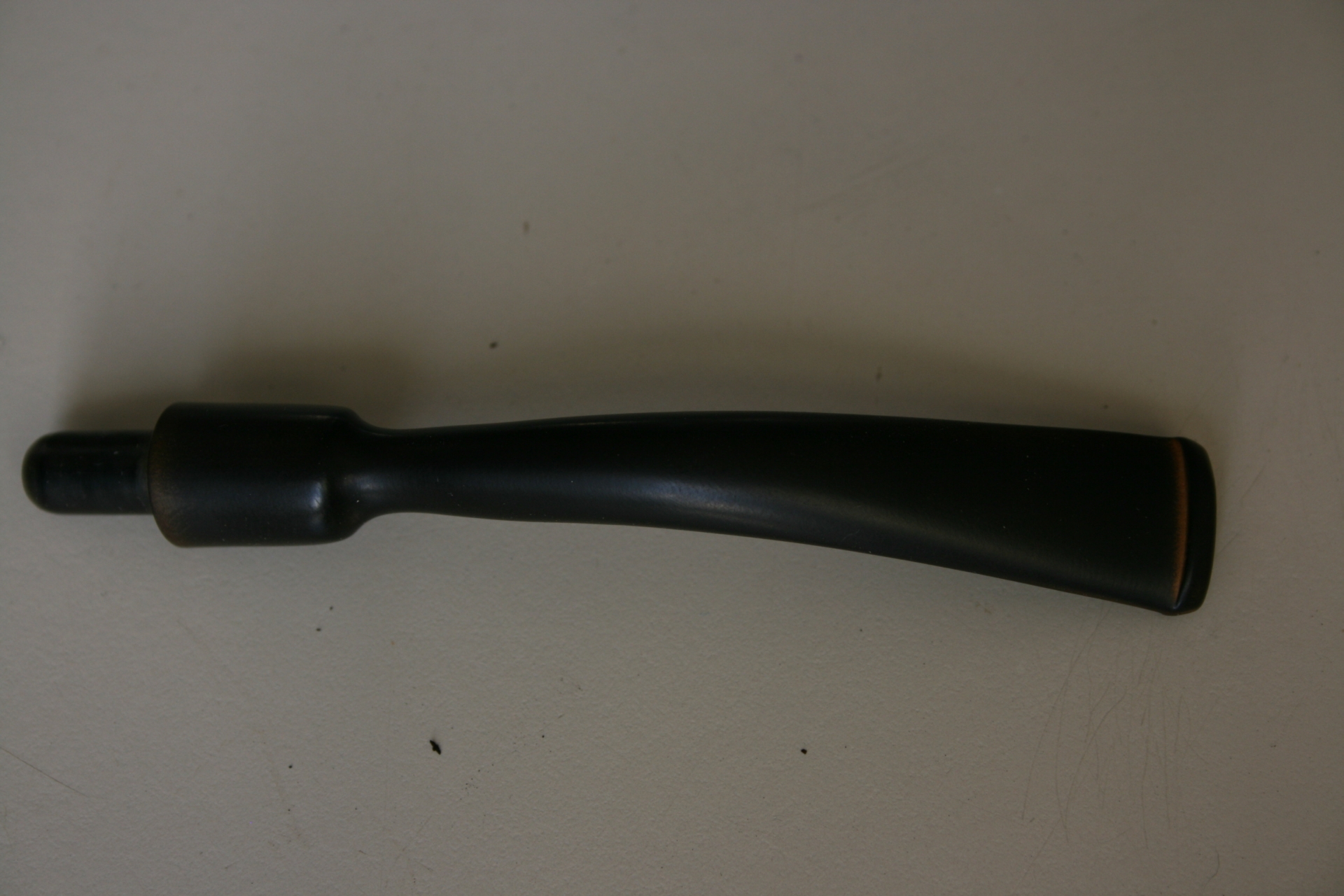
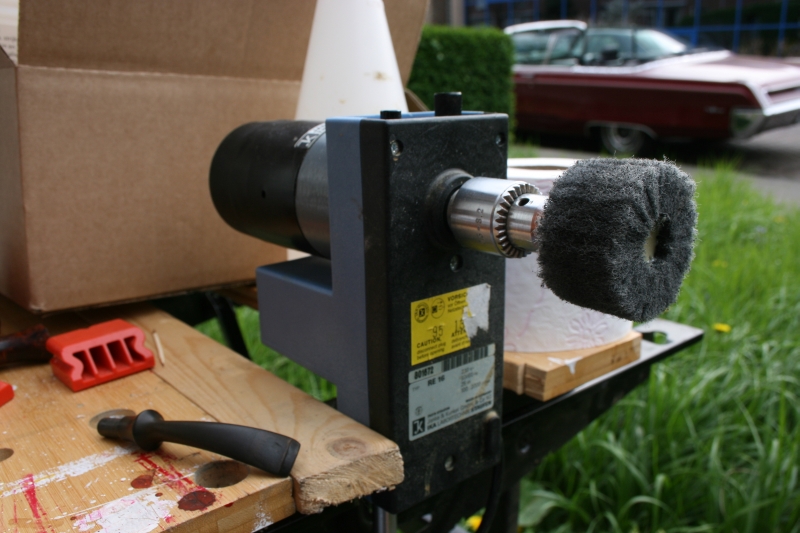
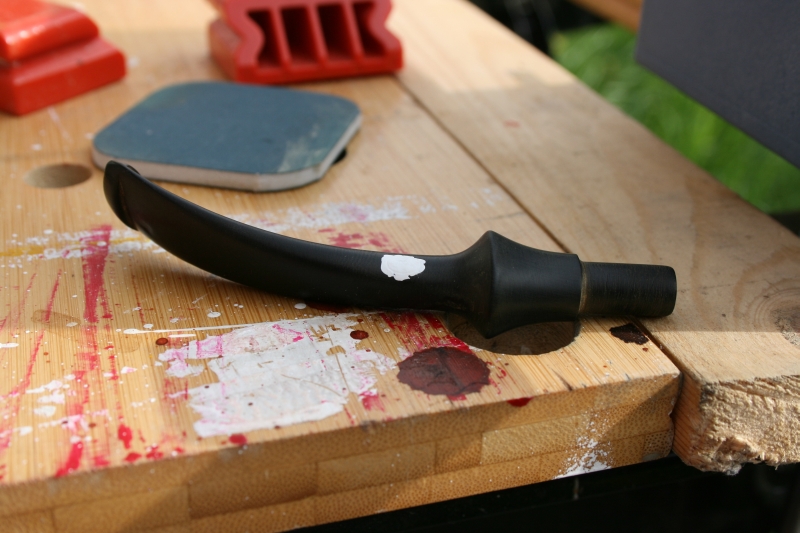
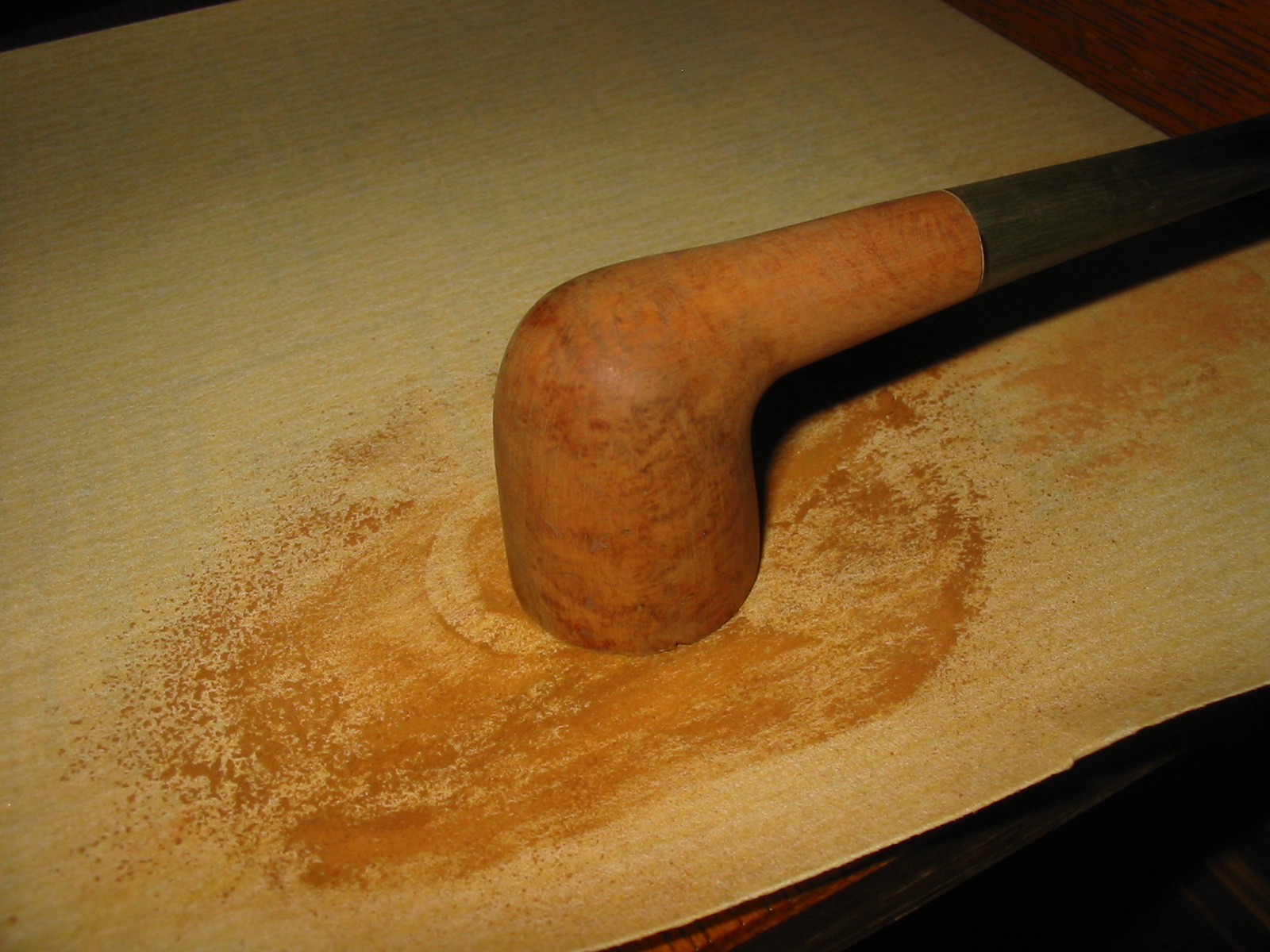
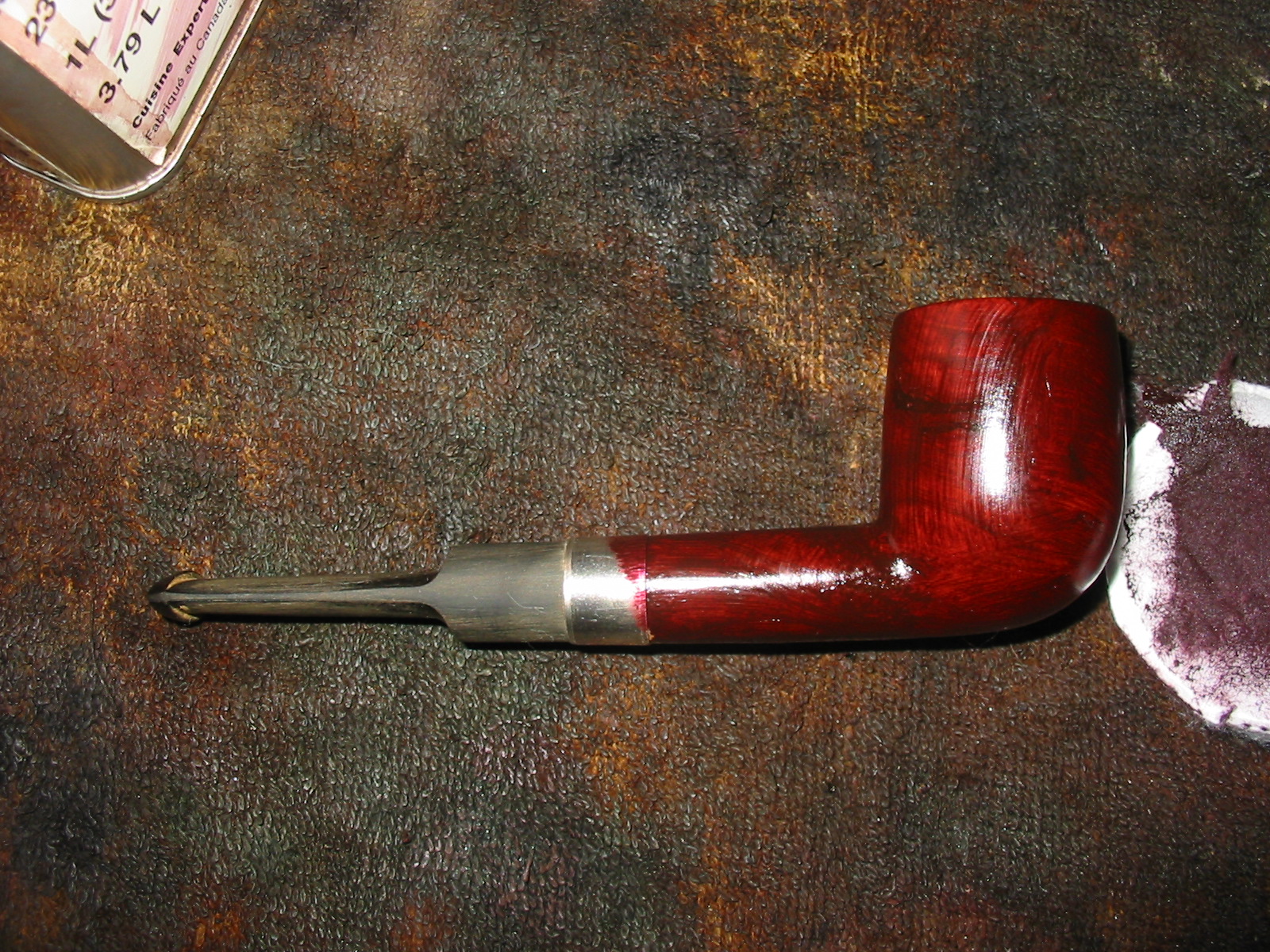
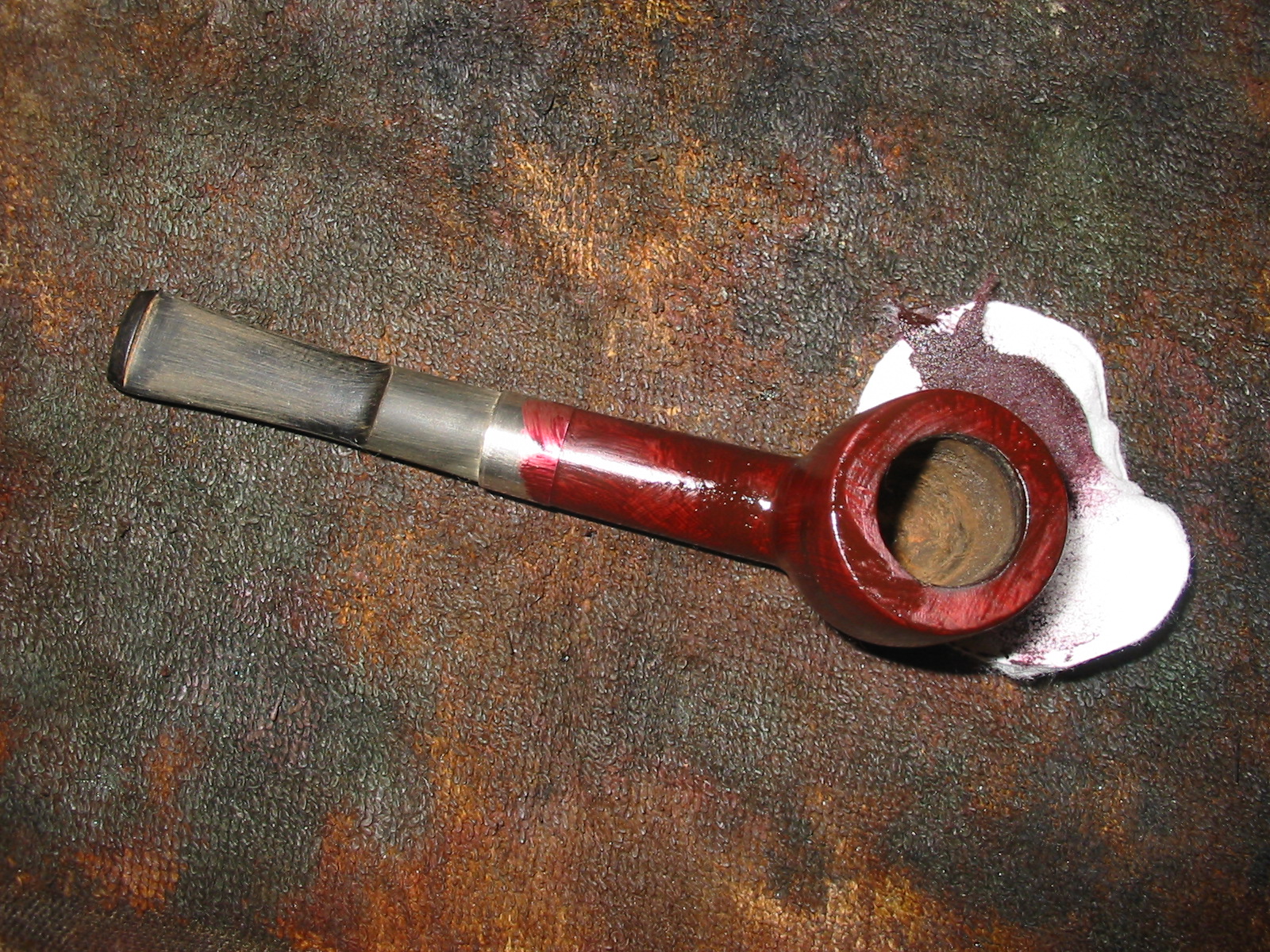
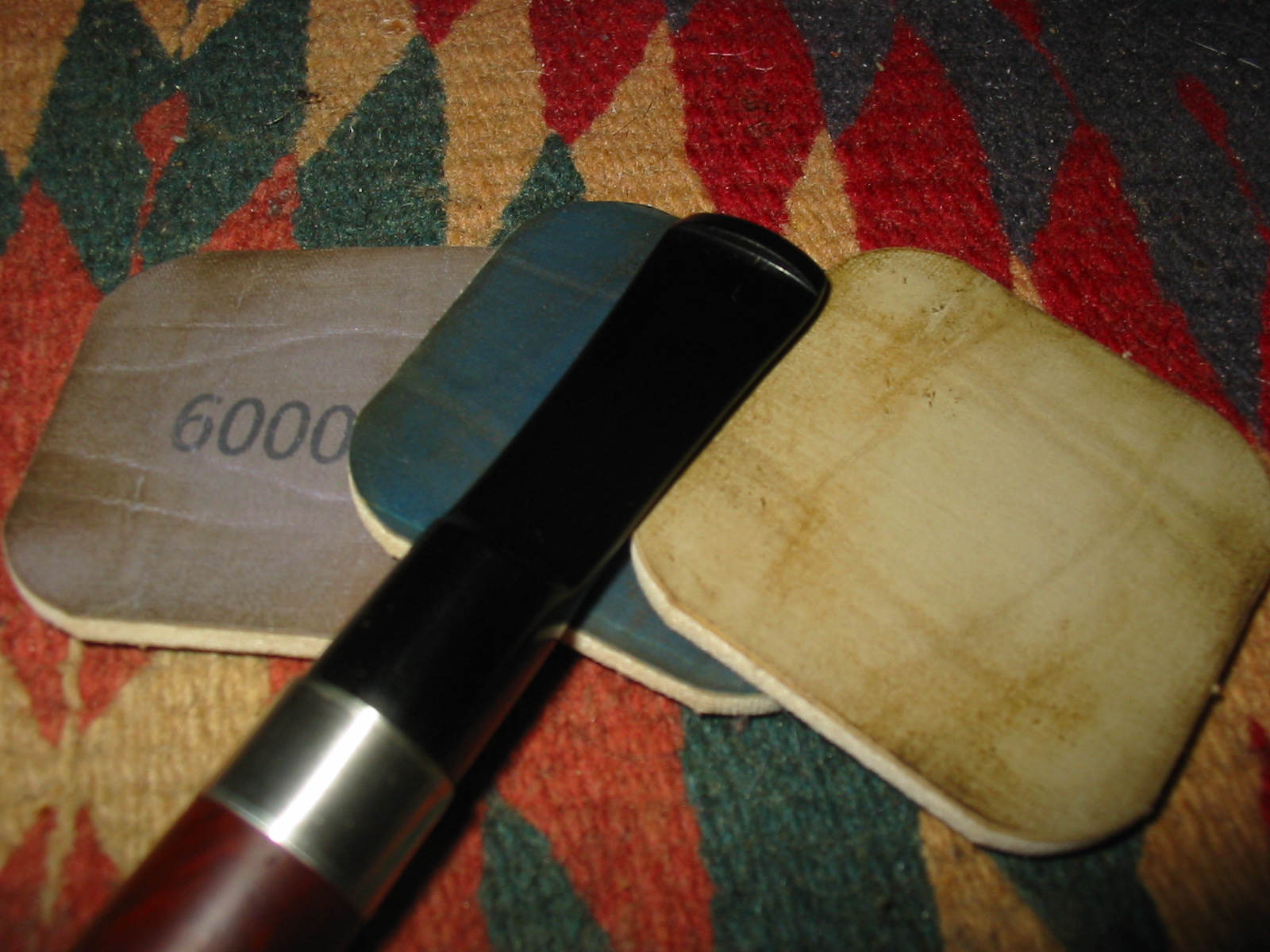
Then using the motor and abrasive wheels I removed the oxidation on the mouthpiece.
And with a needle file the hard to get oxidation near the tip. The picture is made just after the abrasive wheels.
006

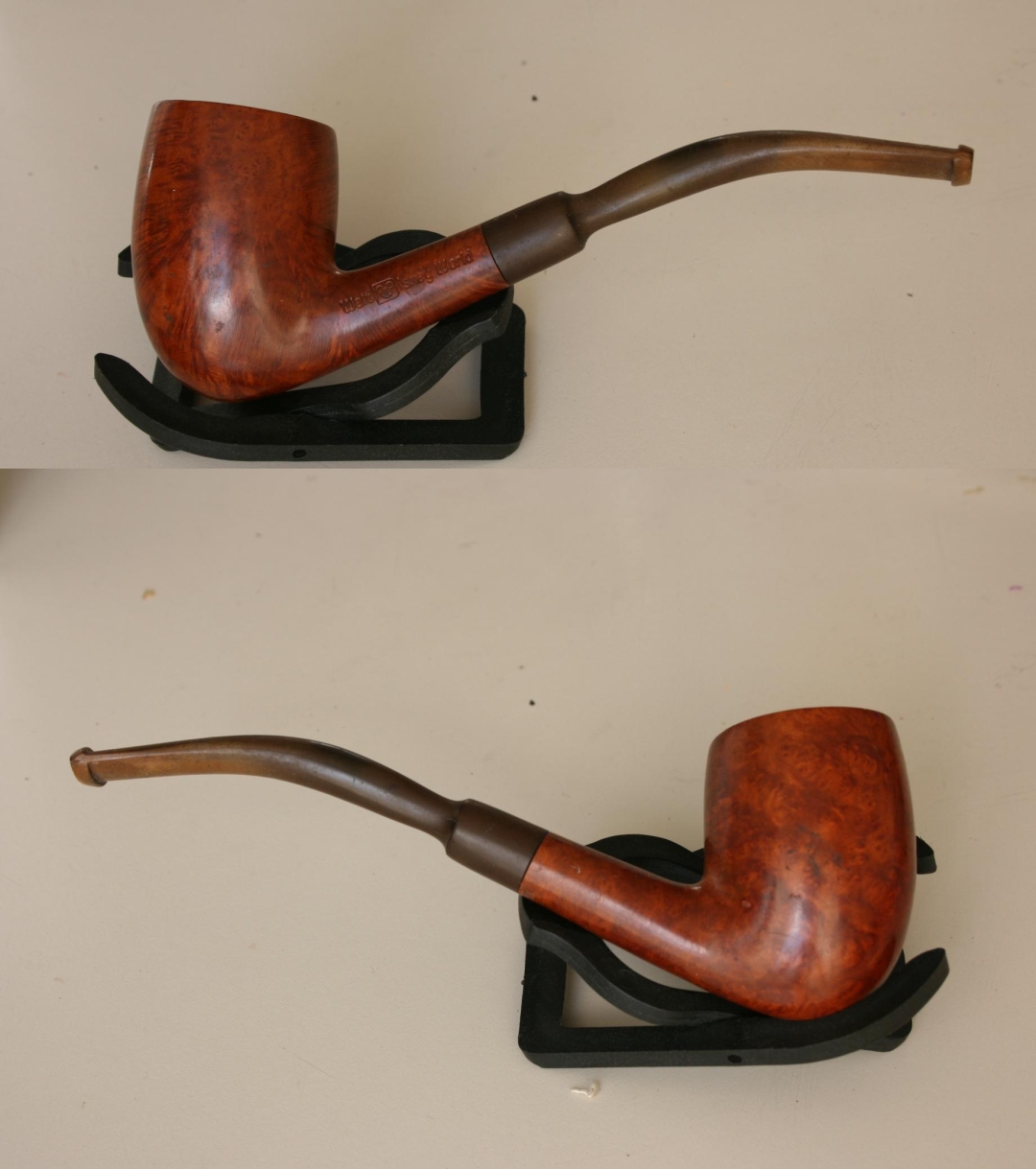
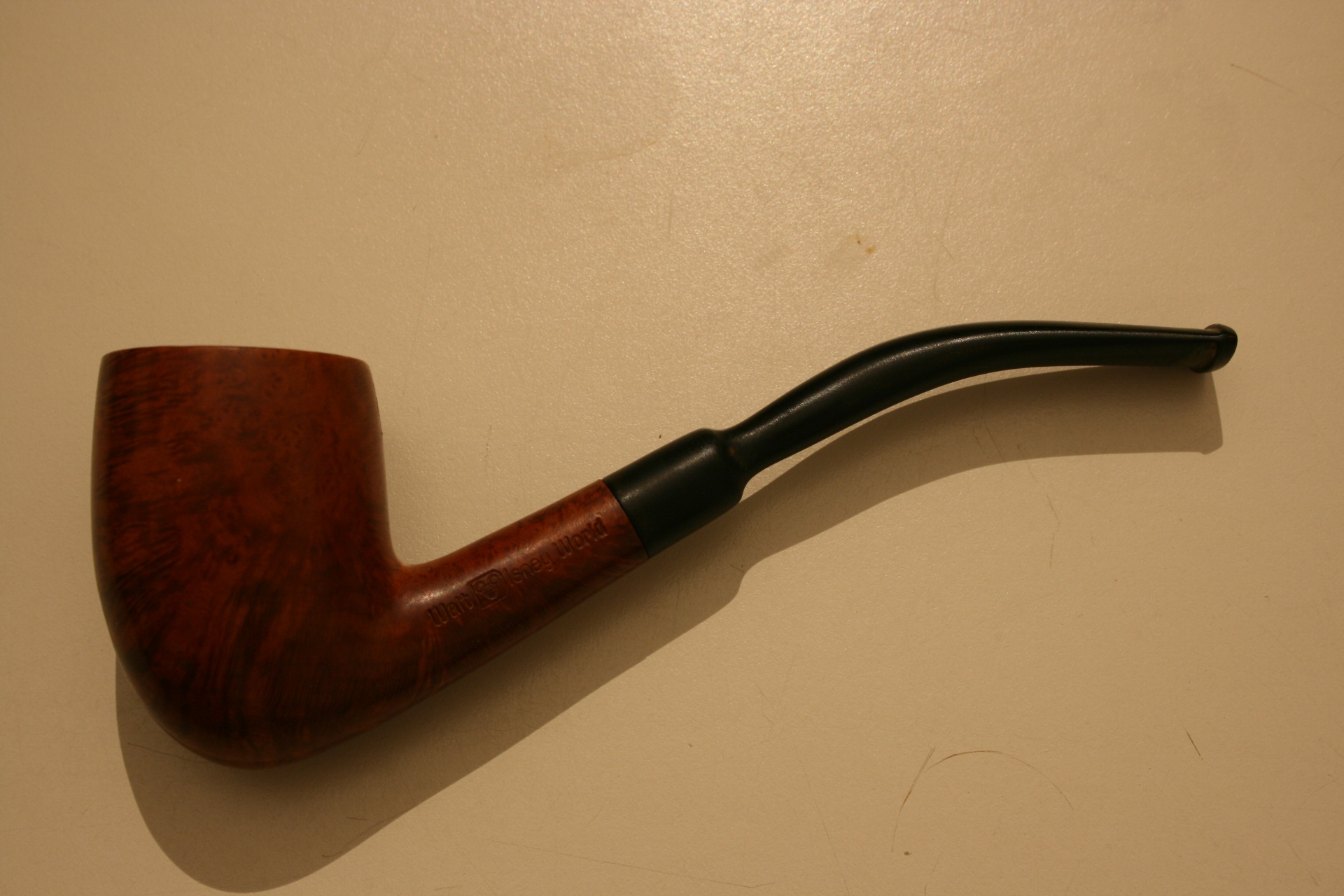
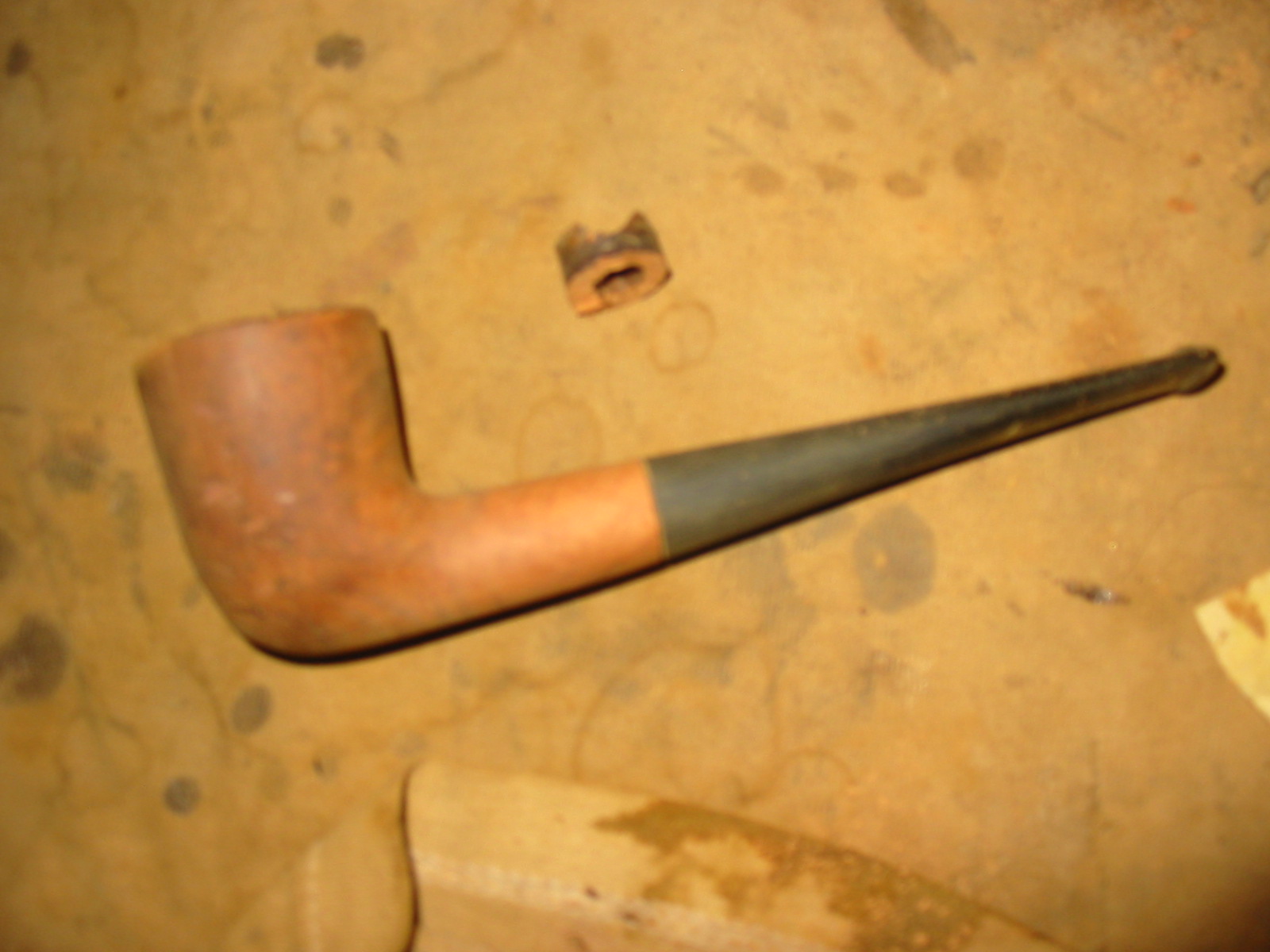
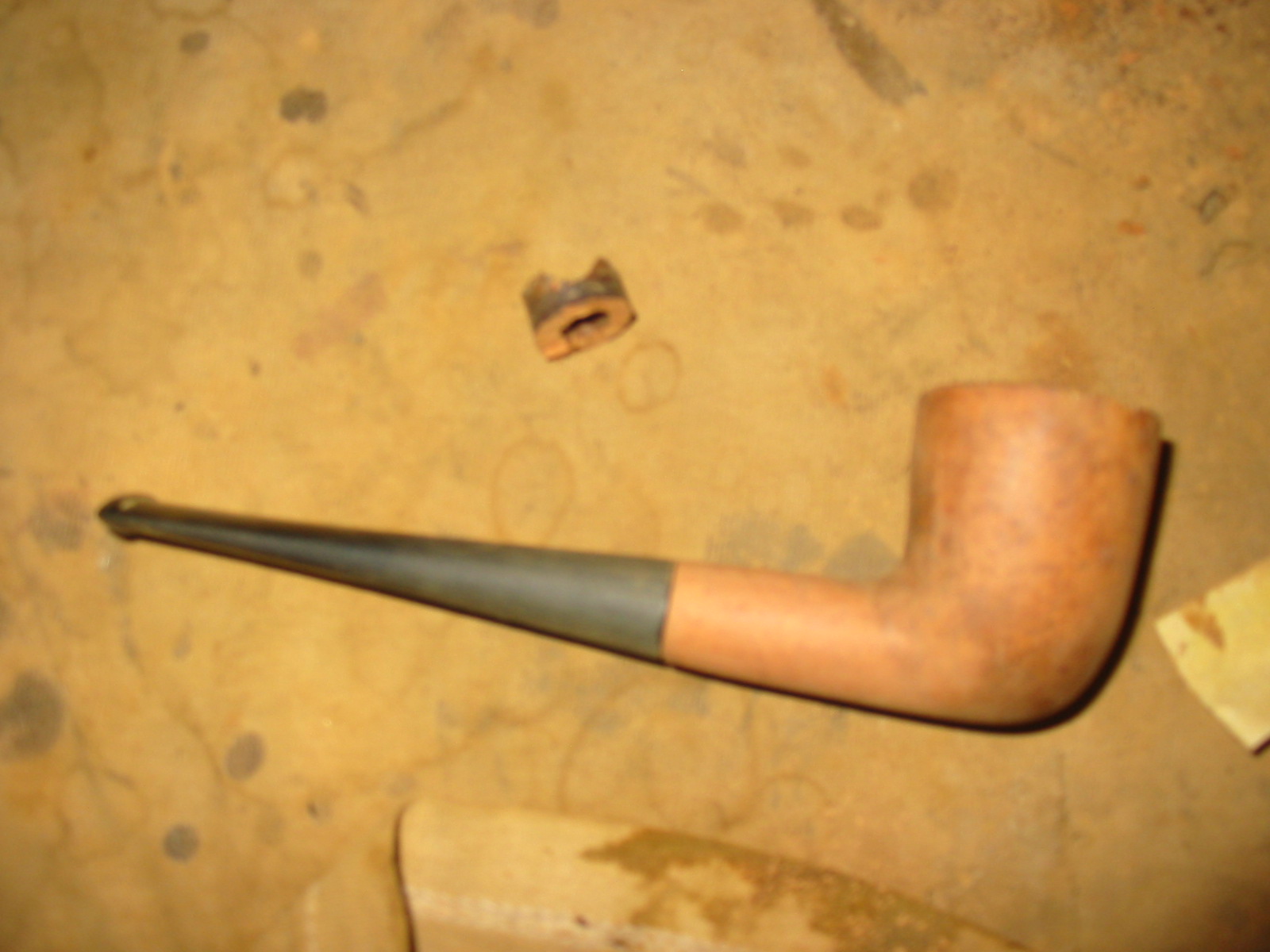
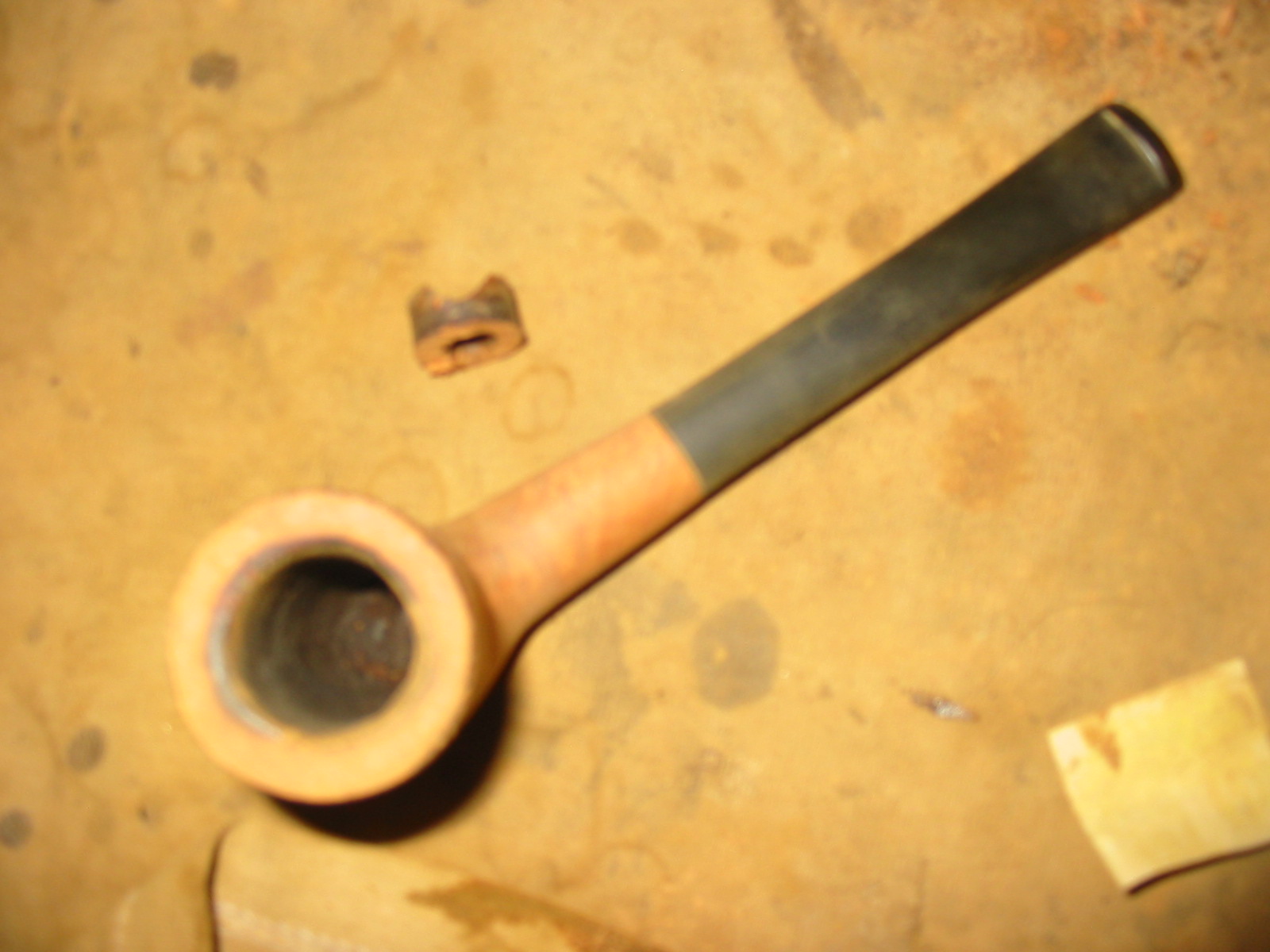
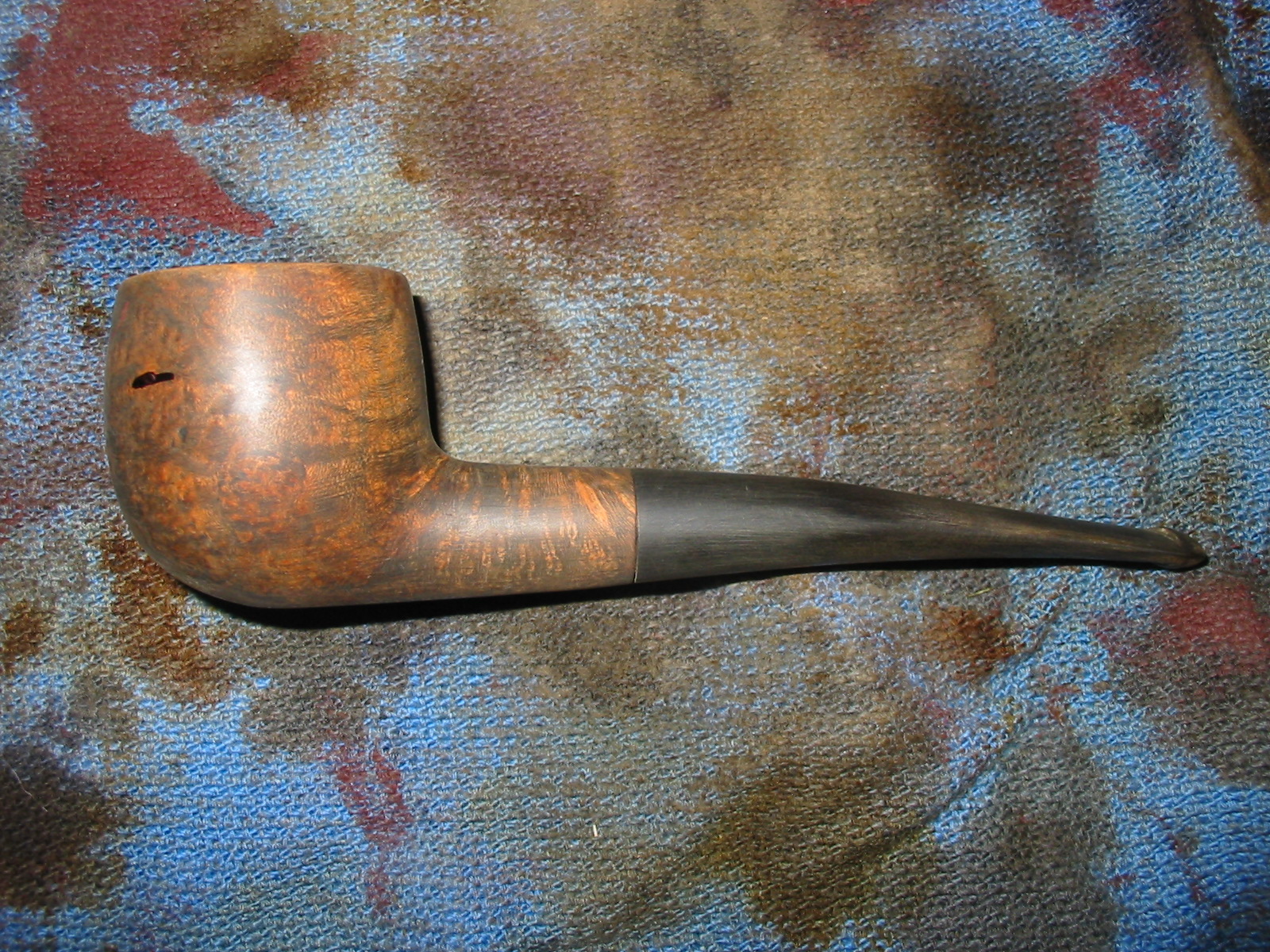
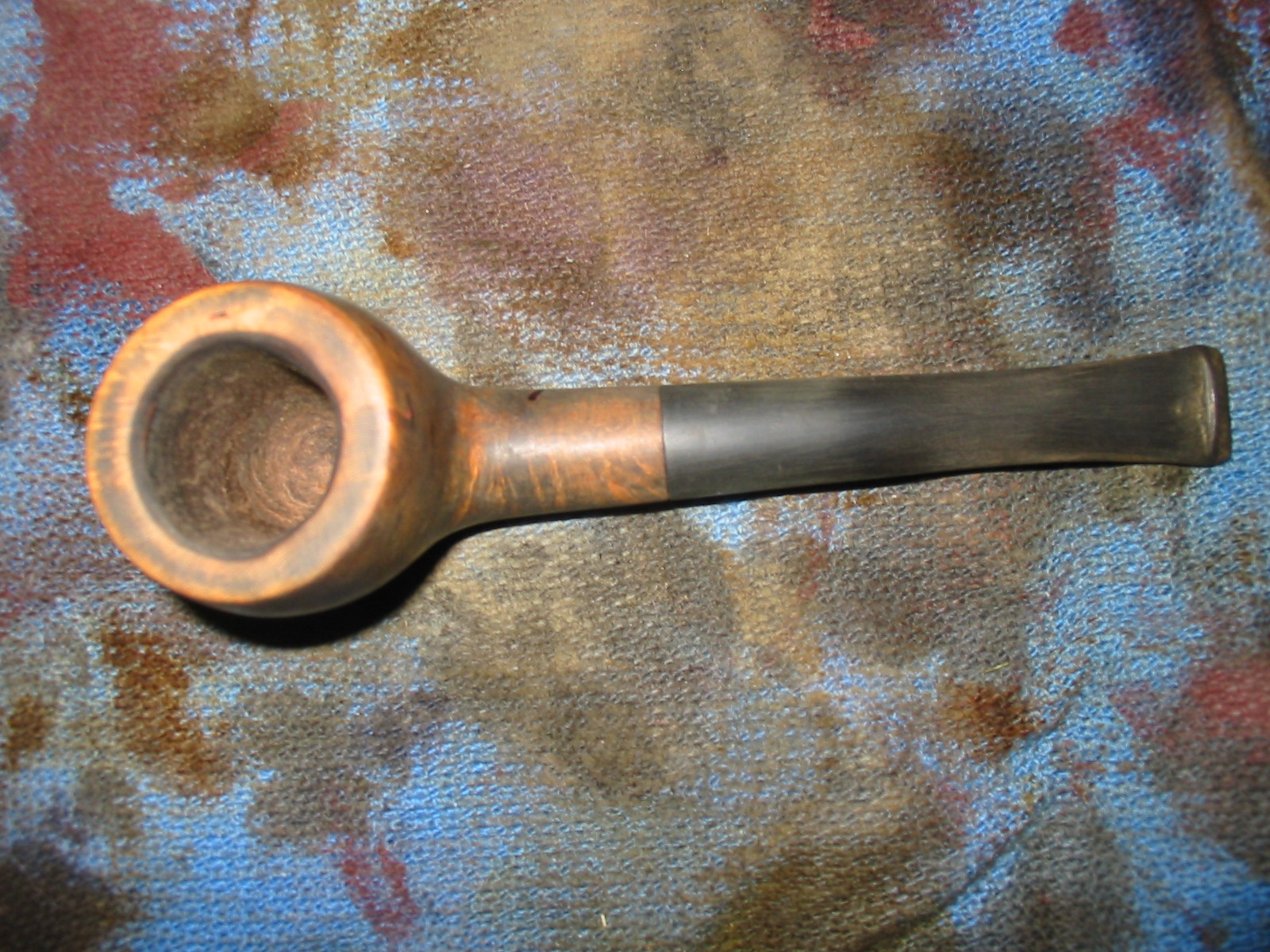
The pipe before buffing

The pipe before buffing


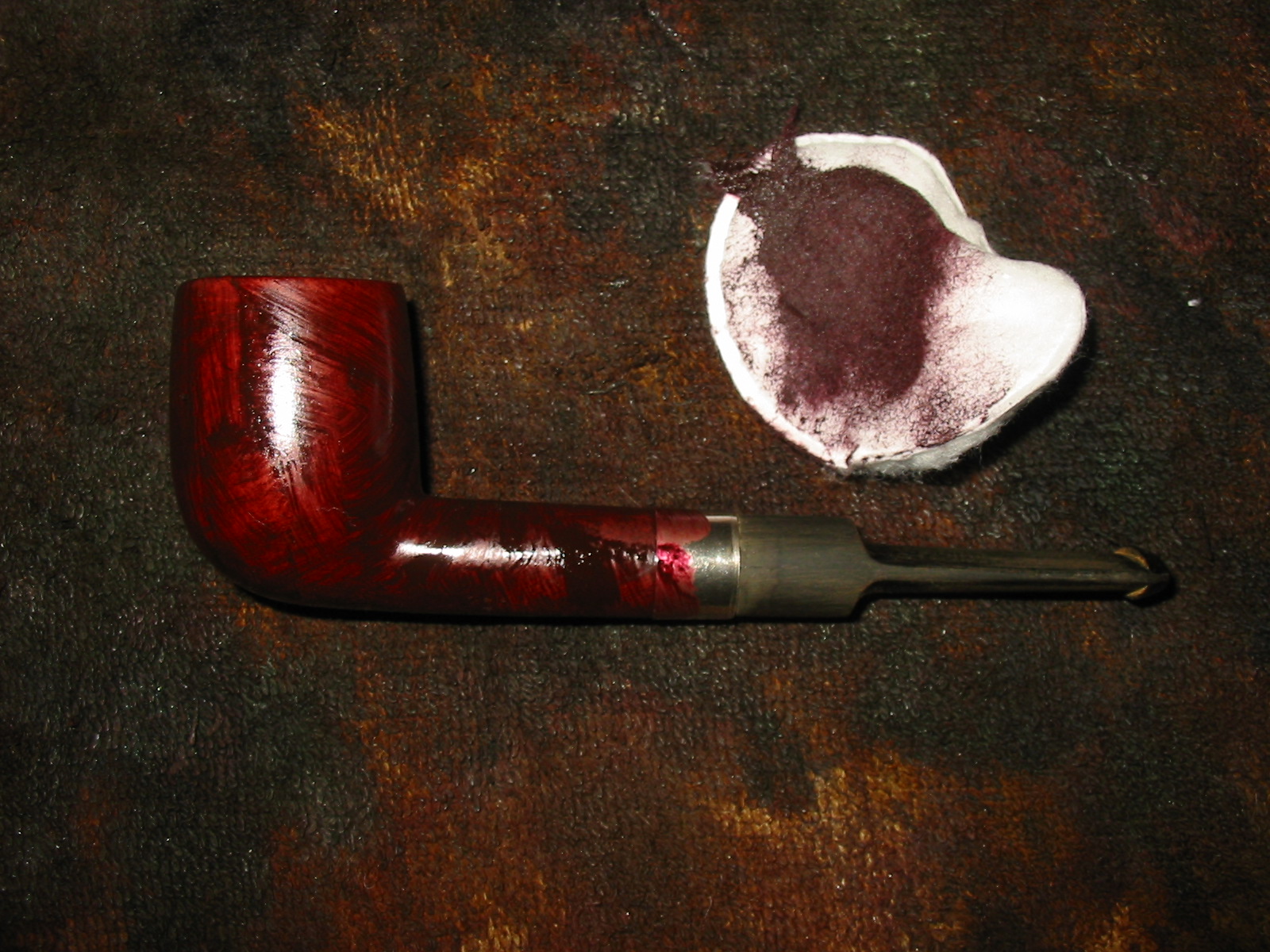
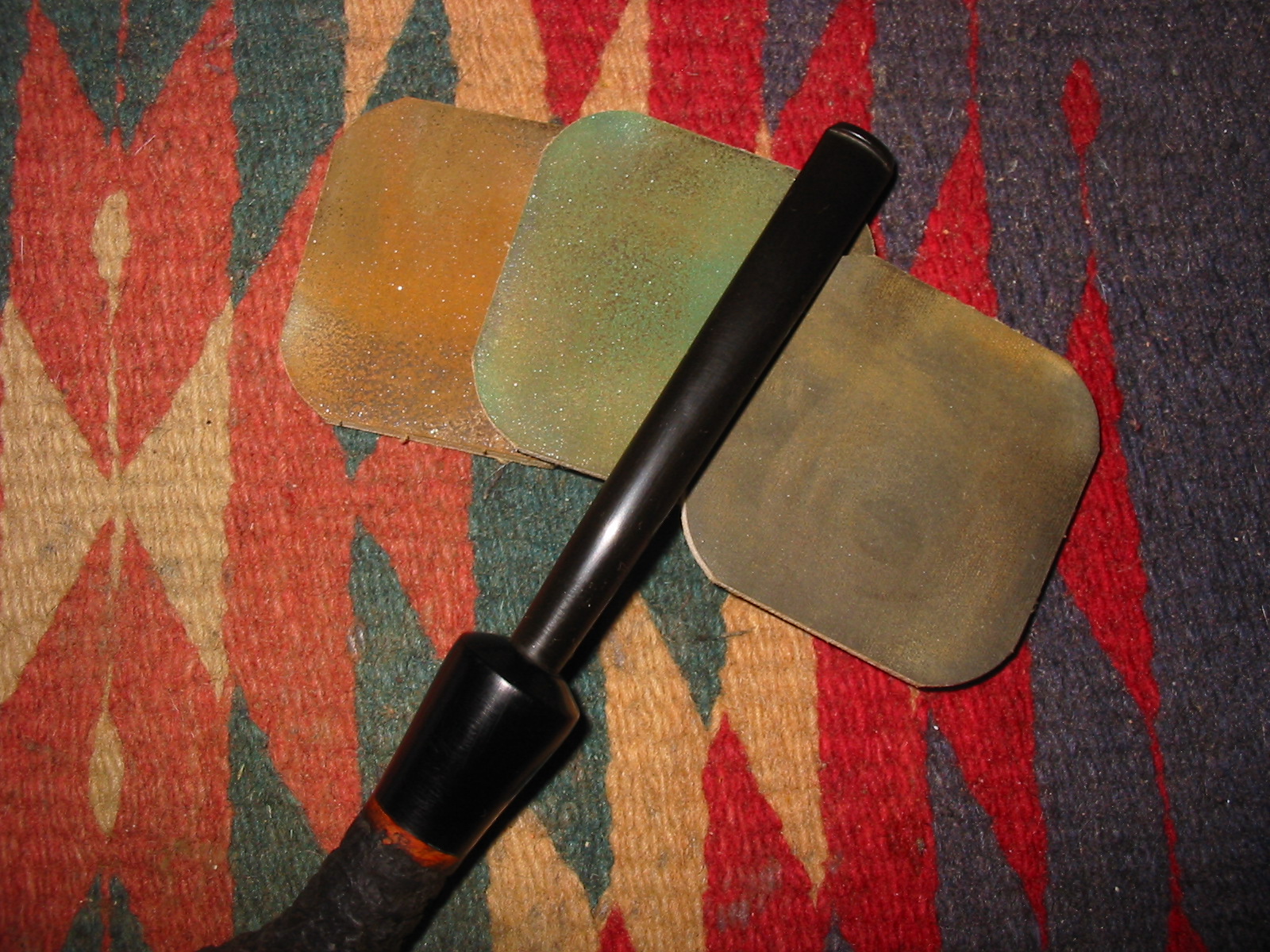
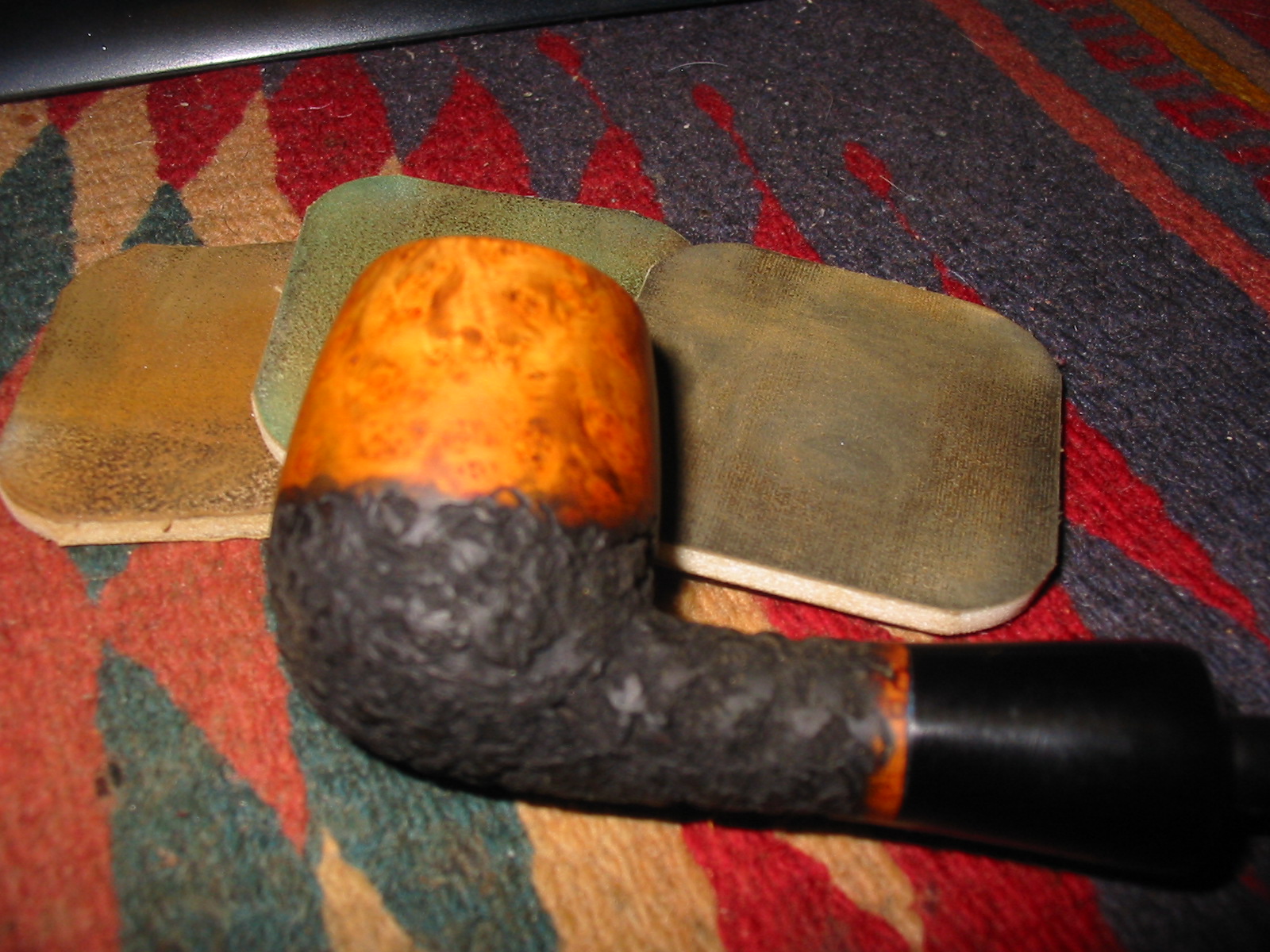
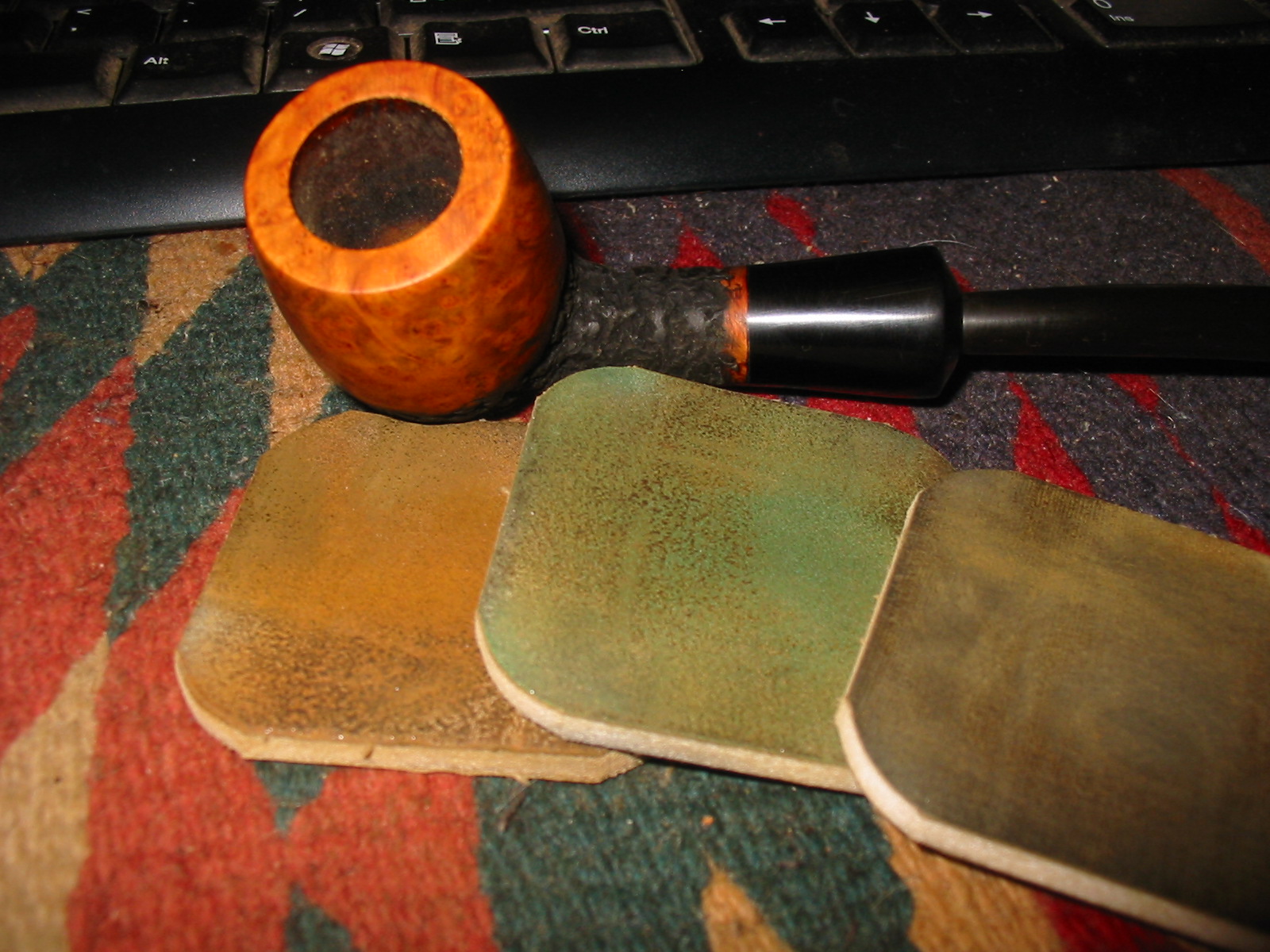
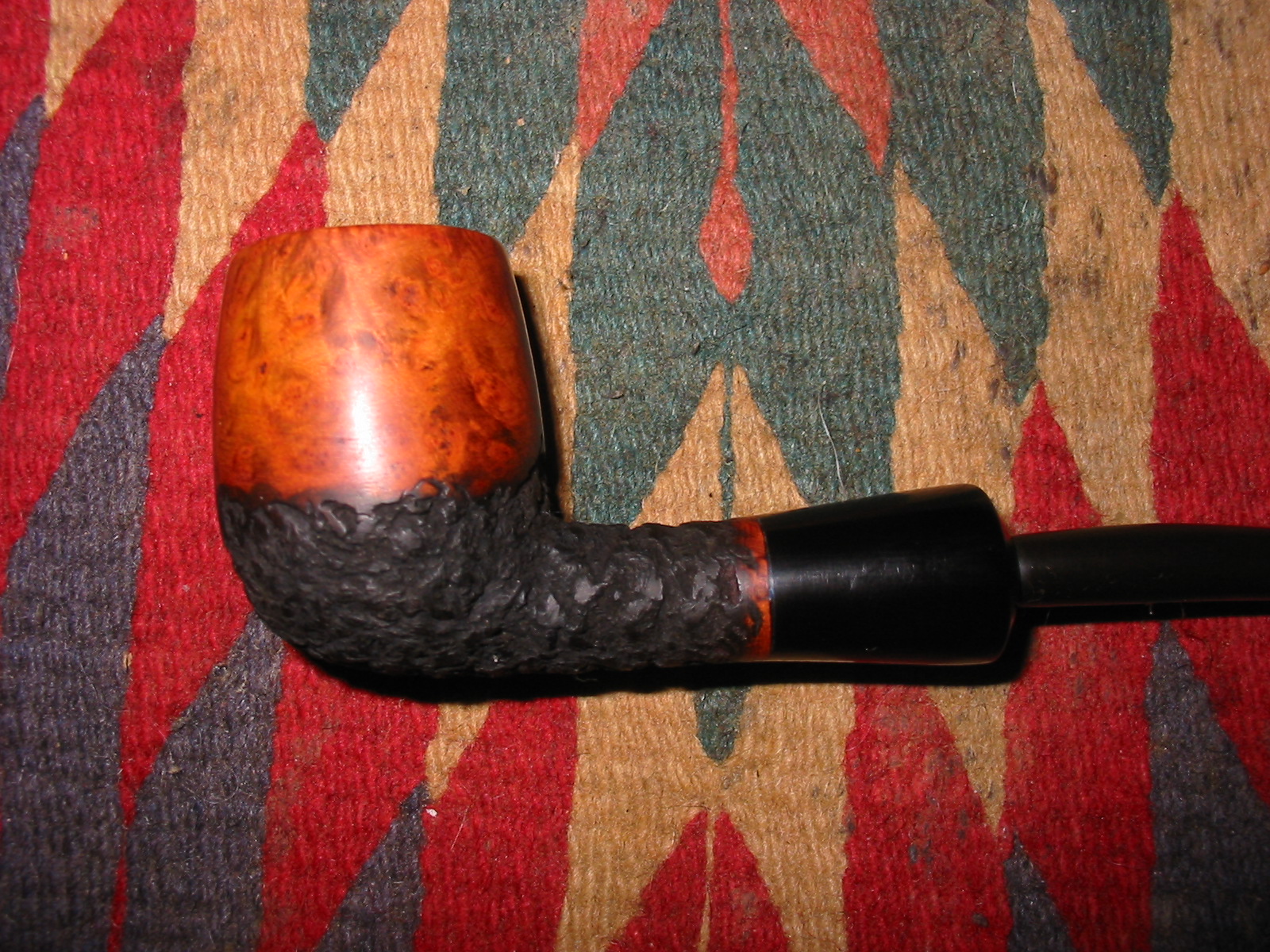
The buffing was done with brown paste, followed by white, carnauba wax and a buffing on the fluffy wheel.
008

Bewlay Beauty and the Playboy Meer Beast – Robert M. Boughton


It is once again my pleasure to present an article by Robert Boughton. Robert has written several pieces on his work in refurbishing pipes. He always has a great way of not only describing the process he uses in the work but also does very thorough research into the background of the pipe brands he works on. This article covers his work on two pipes that recently joined his rack – a Bewlay and Playboy meerschaum. Thank you Robert for your willingness to share your work with us.

Bewlay Beauty and the Playboy Meer Beast Guest Blog by Robert M. Boughton
http://about.me/boughtonrobert Photos © the Author
Rob1
“Destiny has two ways of crushing us – by refusing our wishes and by fulfilling them.” – Henri Frederic Amiel, Swiss philosopher, poet and critic

INTRODUCTION
As I admitted in a thread on the Smoker’s Forums, I am the first person to acknowledge that I suffer from a severe case of Pipe Acquisition Disorder (P.A.D.), and so I take both of the above admonitory notes with all due respect, even though I made up one and have no intention of troubling myself with the other. With that in mind, during the past two months my pipe acquisitions have reached epic proportions, at least for me, at 16 additions and one more (a 1980s series Peterson Mark Twain) I am committed to buy on Friday. I really have no choice about that last one, you see, as my word is as good as the metal of the band in my Peterson Gold Spigot Bent System natural grain.And to further my own defense, I should add that I received a nice tax refund and pay raise.Besides, there are far worse things on which to spend ones money, and I have no other serious vices, even having given up alcohol 26 years ago for reasons obvious to everyone who knew me back in the day. Really, when you look at the situation from all sides, it’s more of a quirk than a disorder. Right? I say the habit should be called Pipe Acquisition Quirk, or P.A.Q., to downplay the association of the condition from that of a mental disease.At any rate, that is quite enough of that.

My goal here, as I have already tried to begin making clear, is to have some fun describing the excitement of the hunt for little gems of pipes that can be found in odd locations, such as second-hand stores and antique shops, and the special thrill when it is apparent that the rewards located need some attention and care to restore them to their rightful glory. The latter aspect of the overall adventure is the best part for me, anyway. That is why I was almost disappointed to find that the Knickerbocker and Winston pipes I picked up on Tuesday are in pristine condition and have never even been smoked. If you ask me, I have to say that response to buying pipes is more twisted than being in the habit of acquiring one at every turn.

But as I already suggested, there is nothing like the clandestine hunt for the prized pipe, not online or in the regular haunts but in the wild, so to speak – lurking out there in a dark corner of the jungle where everything from the lowest to the highest example of the art of pipe craft might be found by the crafty hunter, just waiting for the right person to place in his sights and liberate the artifact from its unwitting seller for restoration and lifelong appreciation.

Such was the case this Friday past, while I was driving to my weekly pipe meeting earlier than usual and the notion hit me to veer from my regular course for a stop at an unassuming and poorly situated antique arcade on the east side of town, whence I had heard from a fellow pipe club member of incredible deals on excellent pipes. However, by the time I arrived at the scene, my friend, who seems to have a touch of the old P.A.D. himself, had pretty well cleared out the available stock and was remembered with cloying fondness by all of the vendors. Still, there were five left – the two I bought last Friday, which are the subjects of this blog, the other pair I purchased on Tuesday and one I let someone else have. Note I do not call it the one that got away because had it been a fish I caught I would have thrown it back in the water.

THE RESTORATIONS

I.The Bewlay London Made Hand Cut Spiral
Rob2 Bewlay & Co., Ltd. was an English chain of pipe shops for about the first half of the 20th century until it was sold. [See Steve’s excellent recap of everything I found in my own research and more at https://rebornpipes.wordpress.com/2014/03/07/house-of-bewlay-pipes-tobacco-leaflets/.%5D The general consensus is that Bewlay sold only Barlings, Charatans and Loewes with the Bewlay name and mark on the pipes. Another source included Orlik in the list. But regardless of the total roster of pipe crafters that supplied Bewlay, everything they offered was considered to be of high quality.

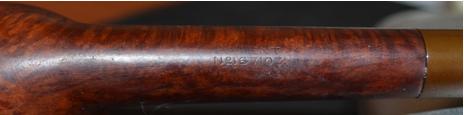
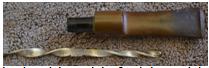
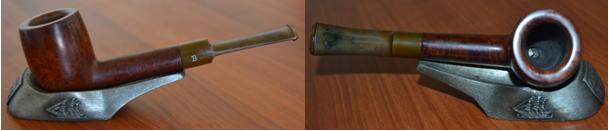
Such is the case with my little beauty of a Bewlay small billiard (1-½” x 5”). I have had a difficult time trying to match this pipe with its maker. Even after viewing many samples of all of the above pipe crafters’ works, it is with uncertainty but sufficient confidence that I attribute the pipe’s origin as Barling.rob3Most of my pipe friends to whom I have shown the Bewlay commented right away that it looks like a Barling. My only serious doubt arose from the little billiard’s bizarre, if I may be so bold as to describe it, tenon bit. Here indeed is a bit fashioned by an evil dentist tossed out of the profession and turned stem-maker. My friend and mentor, Chuck Richards, calls it a “funky screw,” but I prefer corkscrew or even drill bit. The thin half of the screwy bit, which bears the same Patent number found on the bottom of the shank – № 167103 – as shown above separate from the bit, fits snugly through a thin horizontal slot in the front of the tenon. The wider half slips into the mortise. Whatever this bit’s real name (and I would very much appreciate a message from anyone who knows the answer), it is removable for cleaning and perhaps replacement if necessary, which is not unimaginable given its frailty. To tell the truth, in fact, I bent mine with almost no force applied when I first discovered its presence and just had to probe to see what I could discover. Well, I soon found that the odd bit is at least like aluminum and can be removed intentionally or not, and bends with alarming ease, but then again bends right back just as handily.
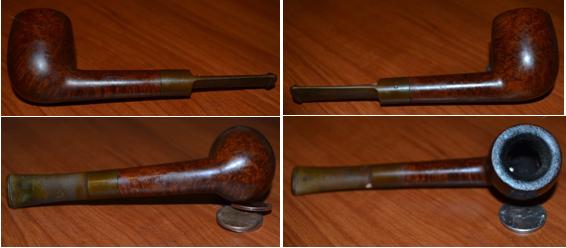
The Bewlay/Barling Spiral billiard was in pretty good shape when I bought it, other than the scorched rim, cake build-up in the bowl, some scratches on the pipe, bite marks and discoloration of the originally brown stem and general dirtiness inside.
rob4

rob7
My first line of attack was to ream the bowl carefully, then sand it with 400-grit paper torn off into a piece that wrapped around my ring finger. Then I soaked it for some time in alcohol, removing most of the old coating which I finished off with some 1000-grit micro-mesh, careful to leave the areas around all of the nomenclature untouched.
Pleased with the results so far, I applied Lincoln light brown alcohol-based boot stain to the entire outside of the pipe bowl and shank, and flamed it all around just enough to see the whoosh of blue light as the alcohol burned off and left a light layer of black soot. The soot I easily removed with the finest micro-mesh
rob8

rob9

rob10

rob11
The only task remaining for the bowl and shank were to buff them with my cheap high-speed dual buffer: once all over with white Tripoli, then again with carnauba. At last I think I’m getting the hang of using a light touch on the single high-speed buffers so as to avoid flying objects that can break easily and to achieve the desired polished effect evenly and without streaks.

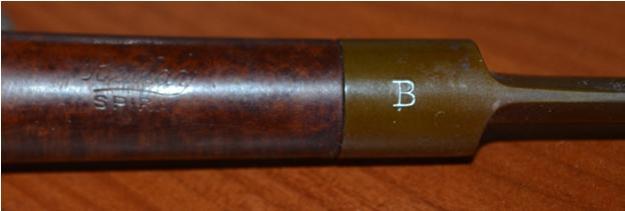
I micro-meshed the stem with #600 paper, getting rid of all the discoloration that was not inside the stem itself, and buffed it with white Tripoli. To finish it off, I used a white crayon marker to fill in the Bewlay “B.”
rob12

rob13

rob14

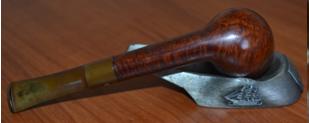
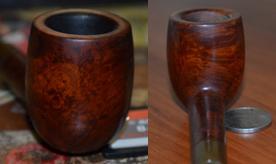
Bewlay Spiral

Bewlay Spiral

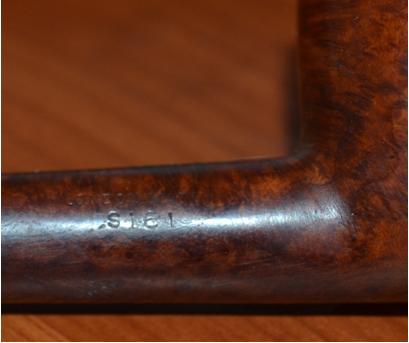
London Made S101

London Made S101

Patent № 167103

Patent № 167103

II. THE PLAYBOY MEERSCHAUM BEAST
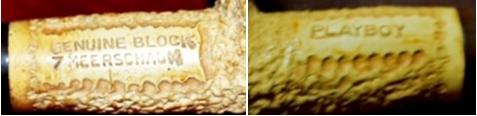
I already owned one Laxley African Meer…
rob18
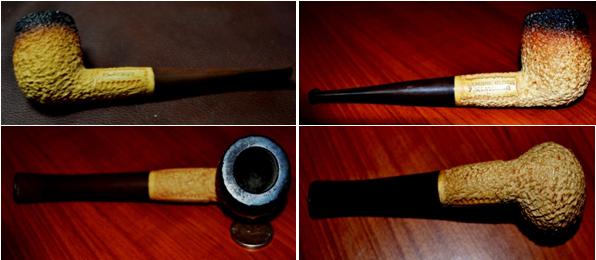
…and as soon as I saw the Playboy, I knew it had to be a Laxley also.
rob19

rob20

Rob21
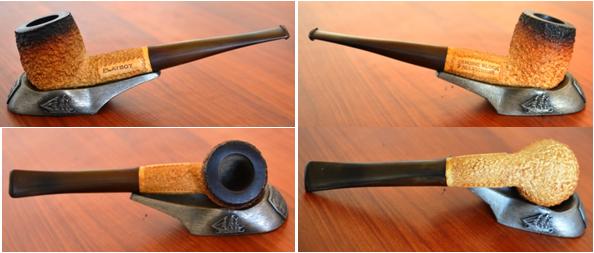
With Chuck’s concurrence, I am satisfied it’s a Laxley Playboy club edition.
This rugged African pebbled Meer was easy to clean up and make it look almost new again, despite the heavy, crystallized burning all around the rim. I began by taking some small cotton gun cleaning cloths and applying a little purified water to each, then lightly cleaning off the outside of the bowl and shank.

I had to sand off the bright black crystallized burn around the rim with patient use of 400-grit paper until I began to see the light brown of the Meerschaum show through. Then I switched to micro-mesh and decided to go all the way past the black stain from the original. Not having any stain of that color, I bought some Lincoln for $6.95 and daubed it around the rim with care not to let it run down the top, which was fine the way it was. Next, of course, I flamed it and micro-meshed the ash away to a very smooth finish.

The screw on brown stem was a mess, so I fixed it up with micro-mesh #600 micro-mesh and buffed it evenly with white Tripoli only.
rob22

rob23

rob24
That, my friends, is how beauty met the beast. And as I intend to keep both of these for my ever growing, P.A.D.-fueled collection, I expect they shall live happily ever after.

Getting back in the saddle – AJ Verstraten


It is a pleasure to post another article by AJ Verstraten aka Bananabox-Ninja. It has been a while since he has been able to do any refurbs do to some health issues he had to deal with. It is great to know he is back and feeling much better. Glad to hear from you AJ and glad to hear you are healing. Thank you for taking the time to record your work for us to read and enjoy.
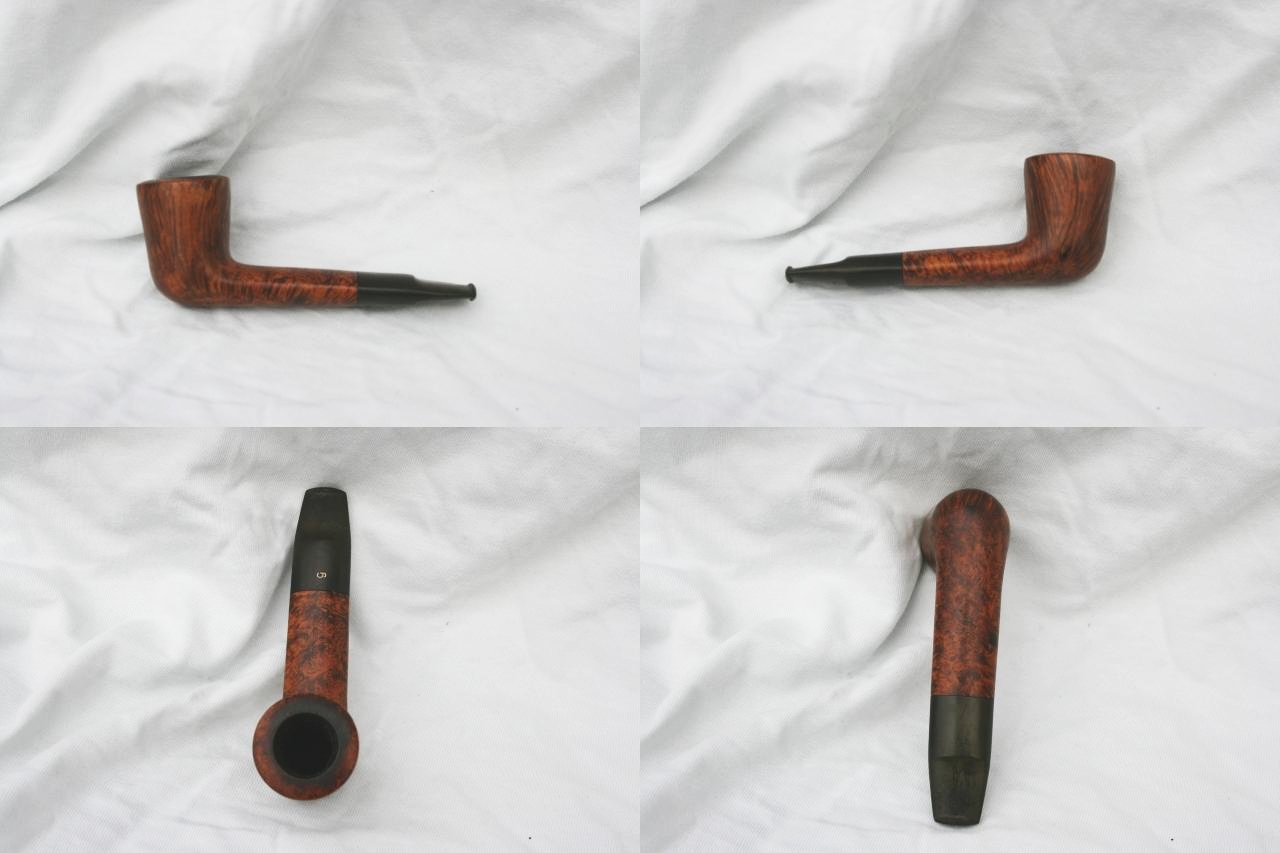
Greetings, it’s been a while since I was able to get behind my workstation and get some work done on the huge lot of pipes that are patiently waiting for a fix.
Some of you might remember my earlier piece in which I explained that I was home bound due to a motorcycle accident. Turns out I needed an operation to fix my cruciate ligament in my knee, this left me with a long recovery time but last week I was able to sit down and do four pipes that only needed some minor work to ‘flex my muscles’ so to speak.

A note about the pictures, as I did it outside in the nice spring weather there were still a lot of clouds and this makes some of the pictures quite dark.

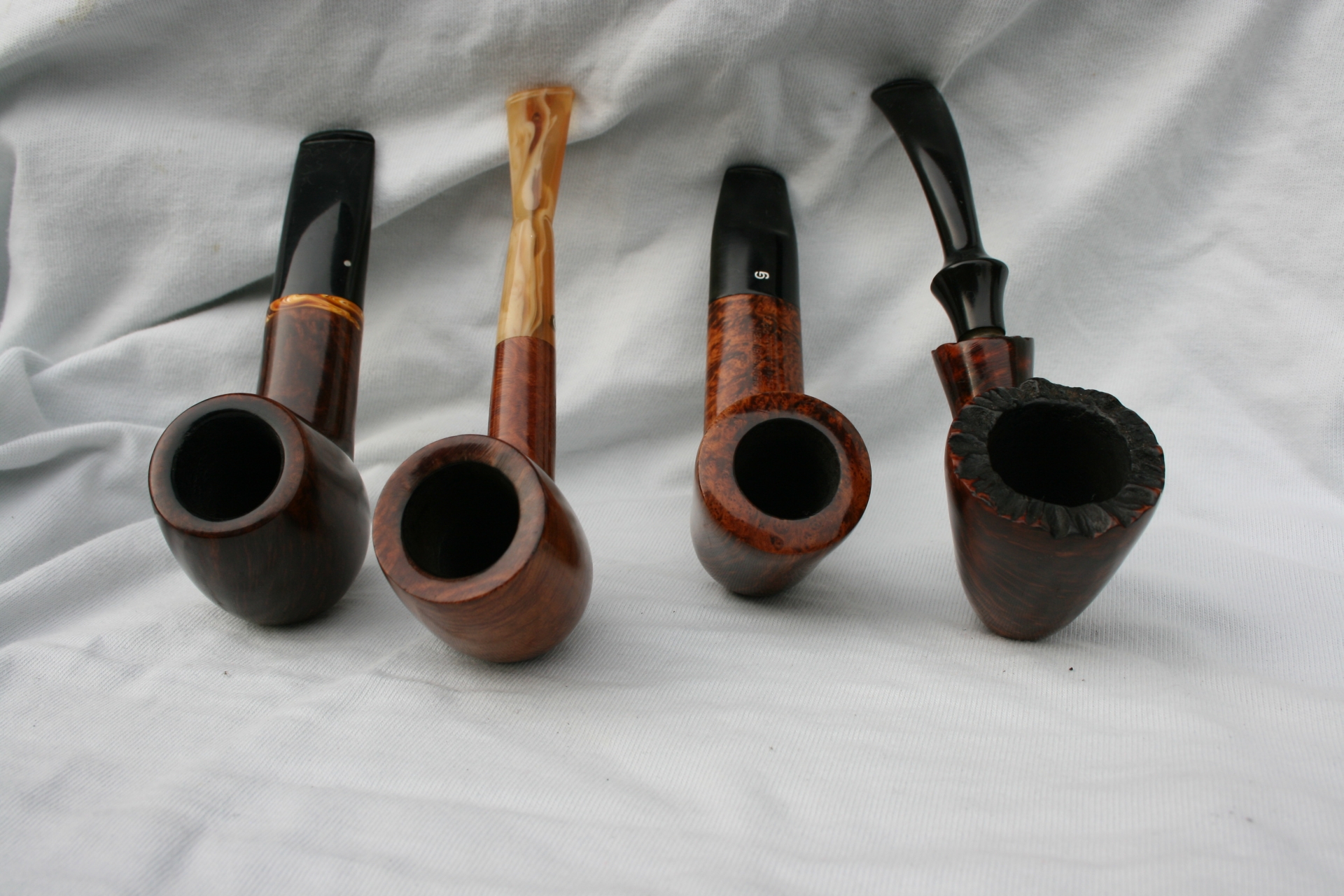
These are the pipes I chose for cleaning:

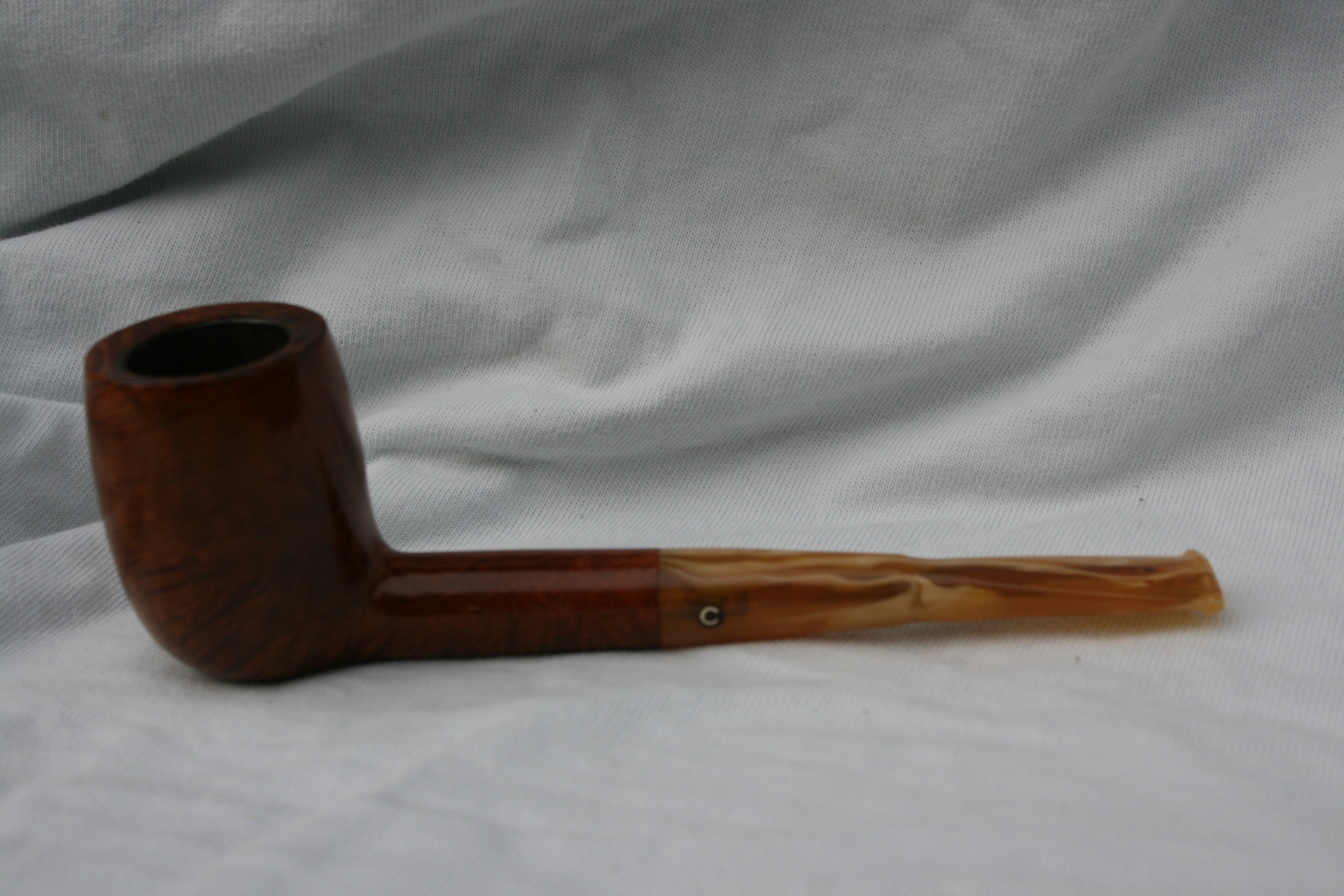
Winsløw Grade E bought on ‘Marktplaats’ the Dutch version of Ebay
001 Winslow E group a
Chacom Silhouette a gift from a family friend who quit smoking years ago.
002 Chacom Silhouette a
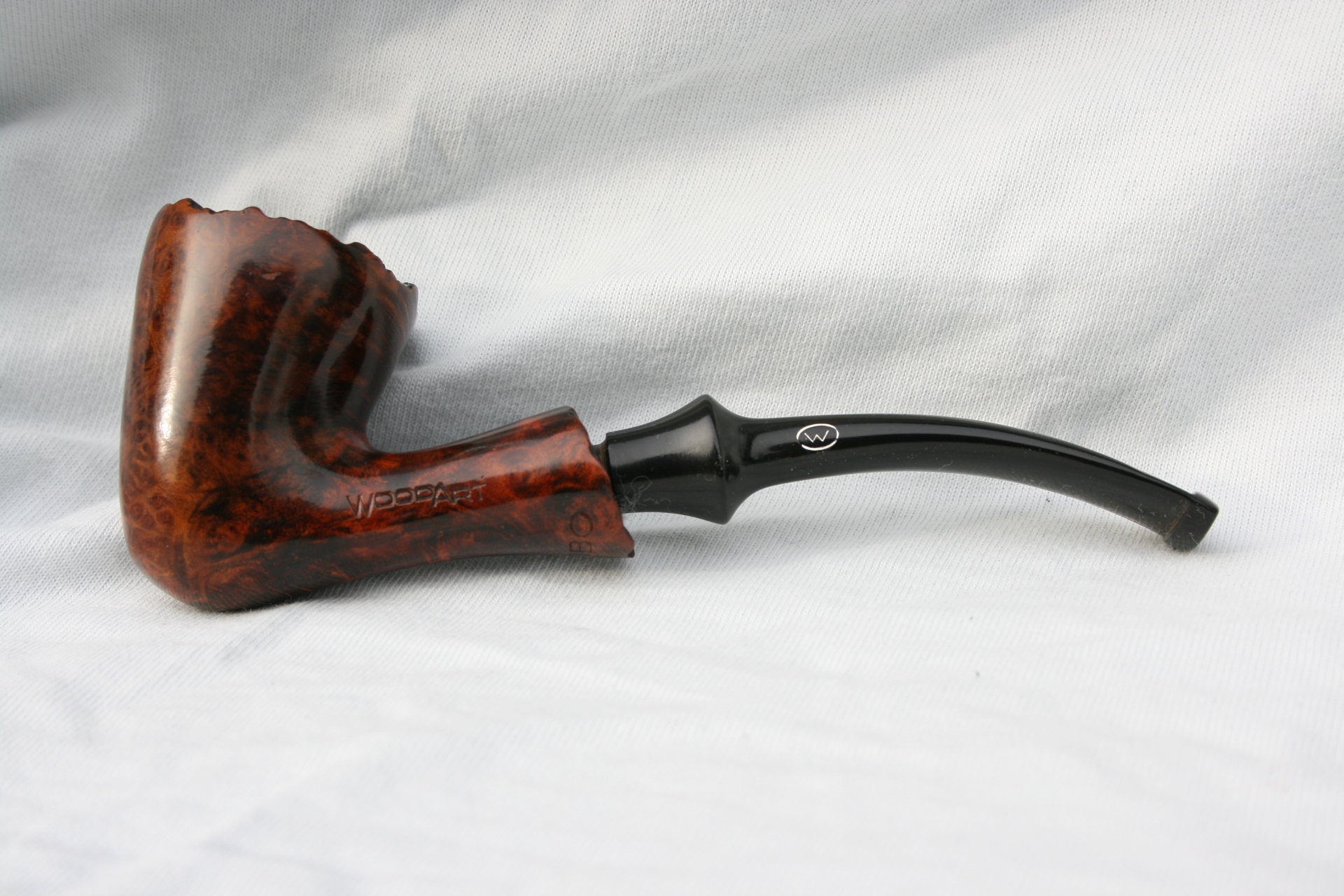
Vibro Woodart acquired from a fellow forum-goer at the PRF.
003 Vibro Woodart a
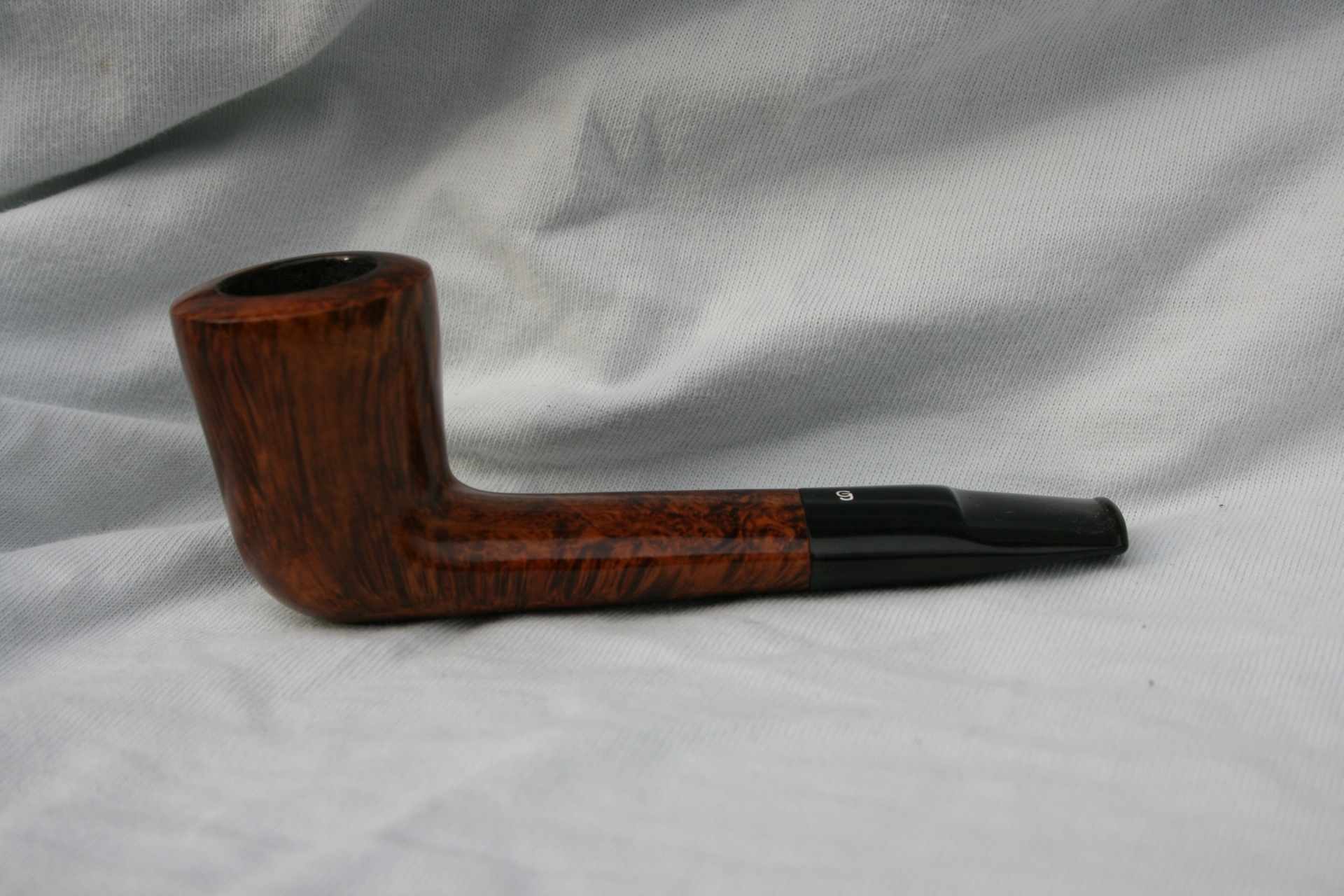
Georg Jensen straight grain from the same friend as the Chacom.
004 Georg Jensen a
The procedure for all was the same.
Firstly I used hard bristled pipe cleaners dipped in 96%-proof alcohol. Afterwards the kettle would be inspected and cleared if necessary. After this I would set them aside and buff them one after the other.
The Winsløw is remarkable as it has only one dot on its mouthpiece instead of the two, I reached out to the Winsløw company about this but they didn’t reply. The pipe rather dull to clean as it was very well kept. I only cleaned the inside with the alcohol and that was it, the rest was nice and clean so I set it aside.
005 Winslow
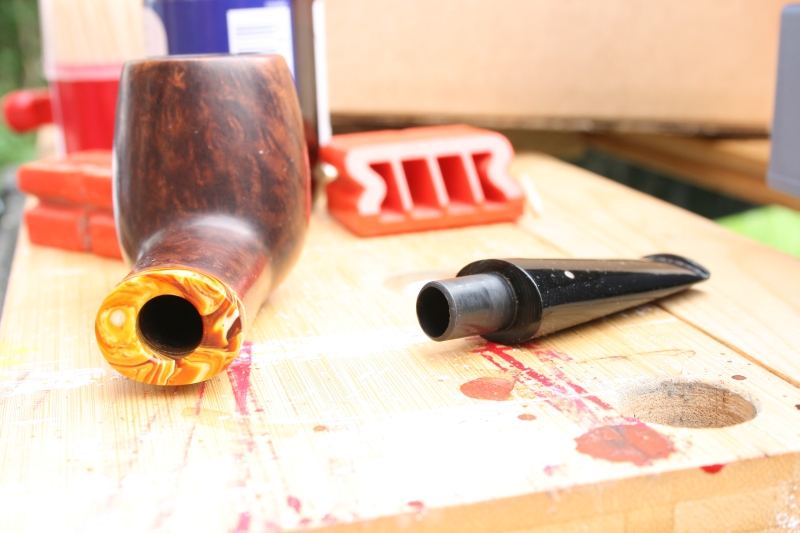
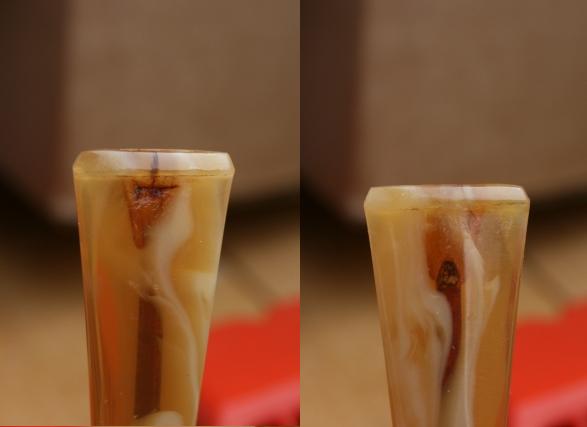
The Chacom Silhouette was heavily used as was evident from the mouthpiece. It is made from swirling acrylic and you can see through it as they used clear acrylic in it. The black tar buildup took a lot of cleaners and the use of a new tool I acquired at a flea market.
006 Cleaning
The brown of the tar build up sits in the small cracks on the inside of the acrylic. These were formed by the precious owner who bit rather hard on his mouthpieces. I tried the ultrasonic cleaner but it wouldn’t budge. So I decided to keep it as is. (If anyone has a tip for me on that one I would be much obliged.)
007 Mouthpiece
Then it was time for the bowl, it had seen better days but there was no damage on the wood itself. So with the help of spit, a sock and the tool as shown earlier the coal layer was removed and the bowl was reamed with the reamer tool.
008 CS bowl
The Vibro Woodart pipe was the first one with an ebonite mouthpiece, so I set up the motor and abrasive wheel and let loose. It came out nice and black in the end.
009 Mouthpiece and motor
I noticed the mark in the mouthpiece was still visible so I used a correction fluid pen to fill it up and used the abrasive pads (8000 grit) to remove it gently.
010 colouring the letter
(The end result will follow)

I don’t have any pictures of the Jensen pipe as the pictures were all too dark. But I did the same as the Vibro pipe. Using the abrasive wheel and the correction fluid pen to get the logo back out again.

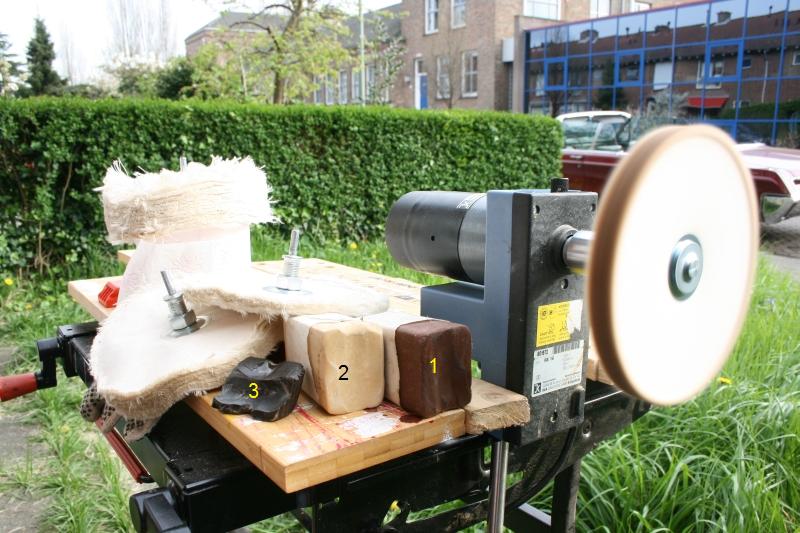
Then it was time for the buffing. Buffing with brown (1), white (2) and then with carnauba wax (3).
011 Buffing
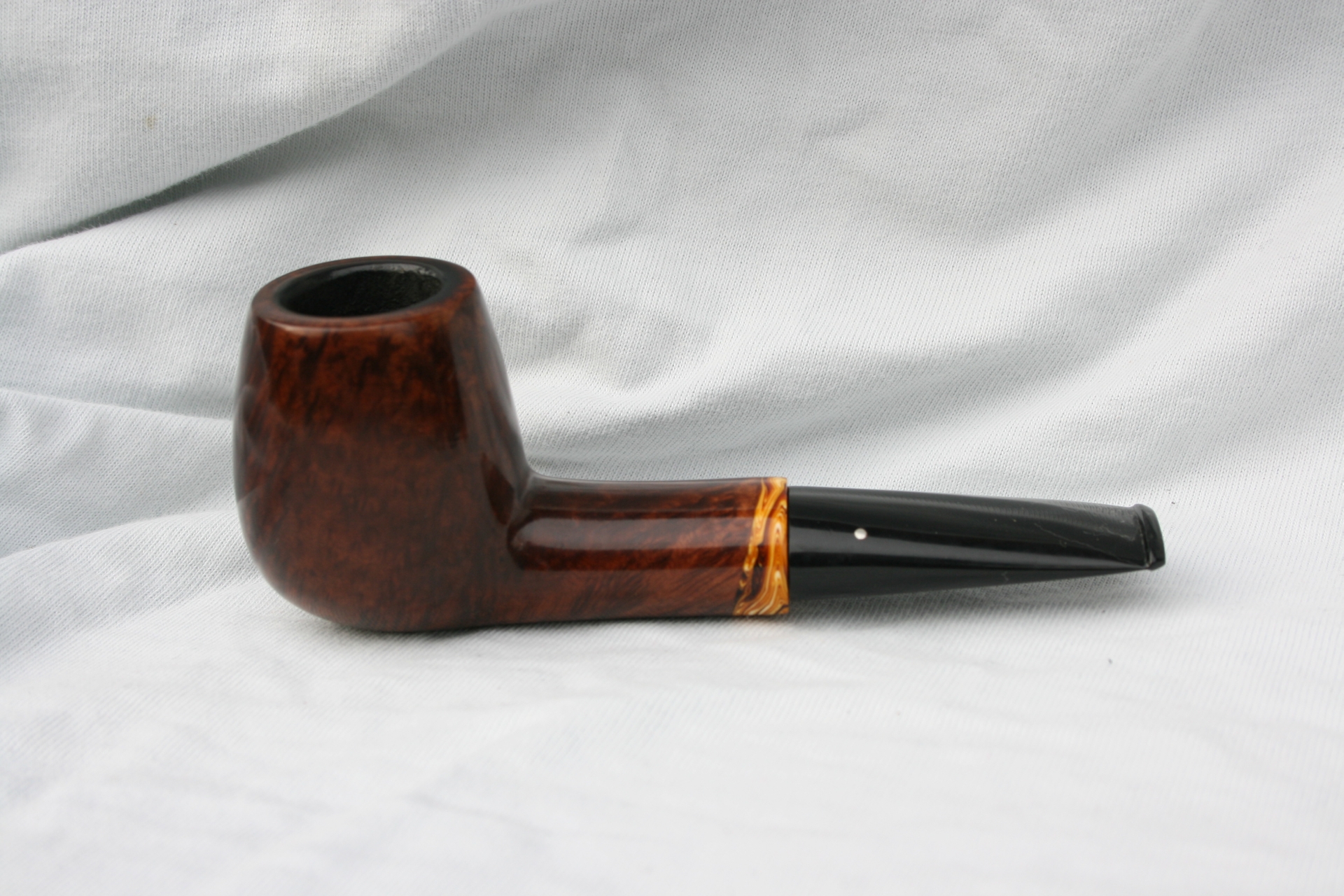
Here are the final results, you can see the W on the Vibro pipe quite clearly and on the group shot the result on the Jensen.
012

013

014

015

016
In the end it was good to sit in the sun and once again get my hands into cleaning a nice pipe.
I always feel quite happy when a dull pipe with a heavily caked bowl turns into a nice shiny one that can be once again hopefully be used for many years to come.

A Pair of Barling Canadians – The Trust Continues


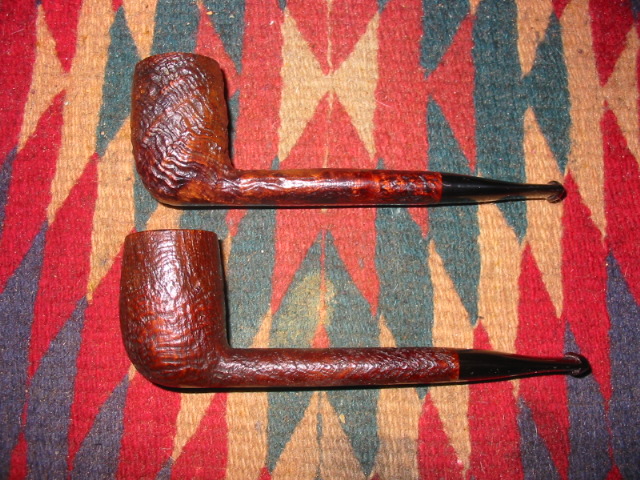
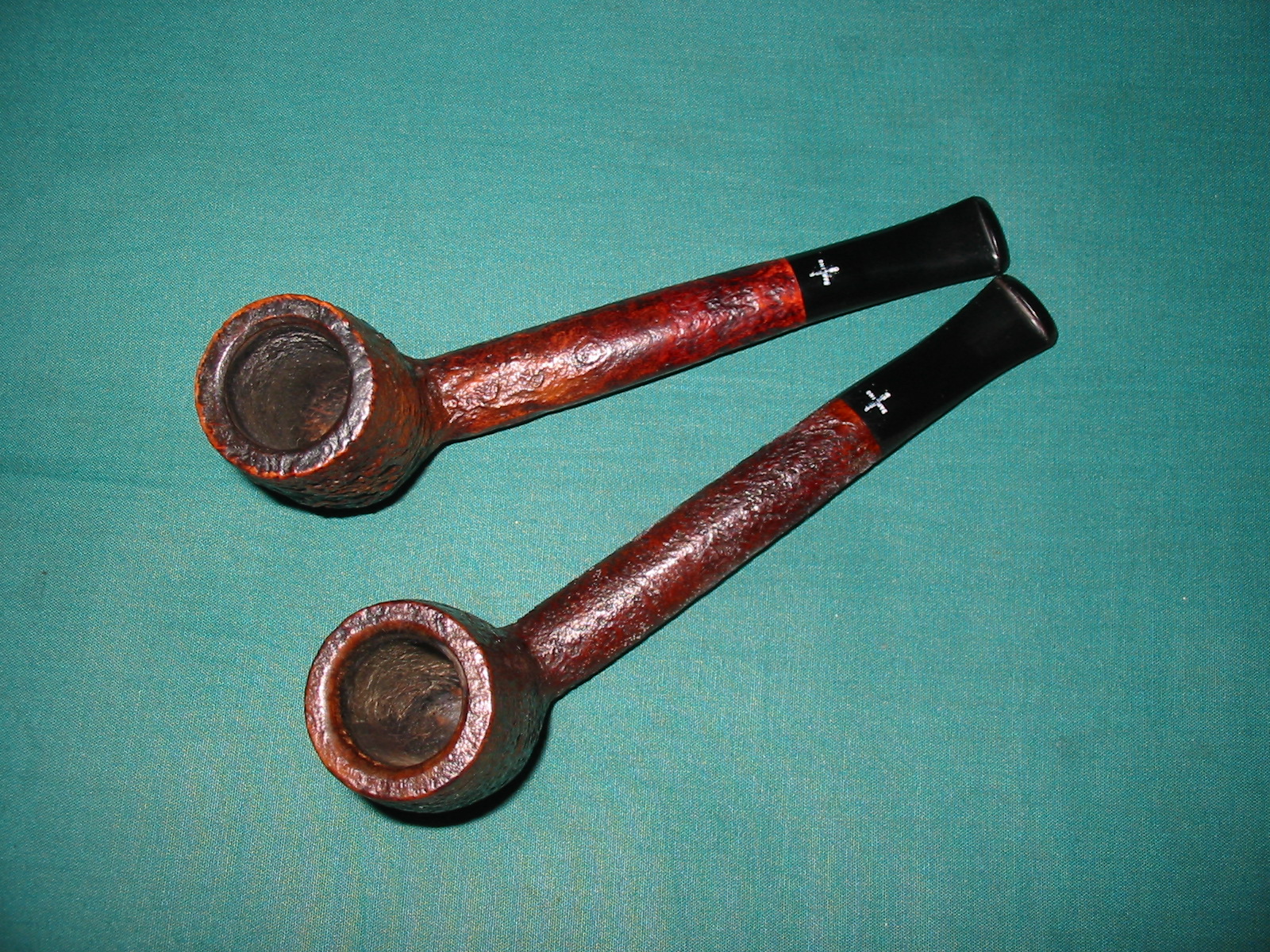
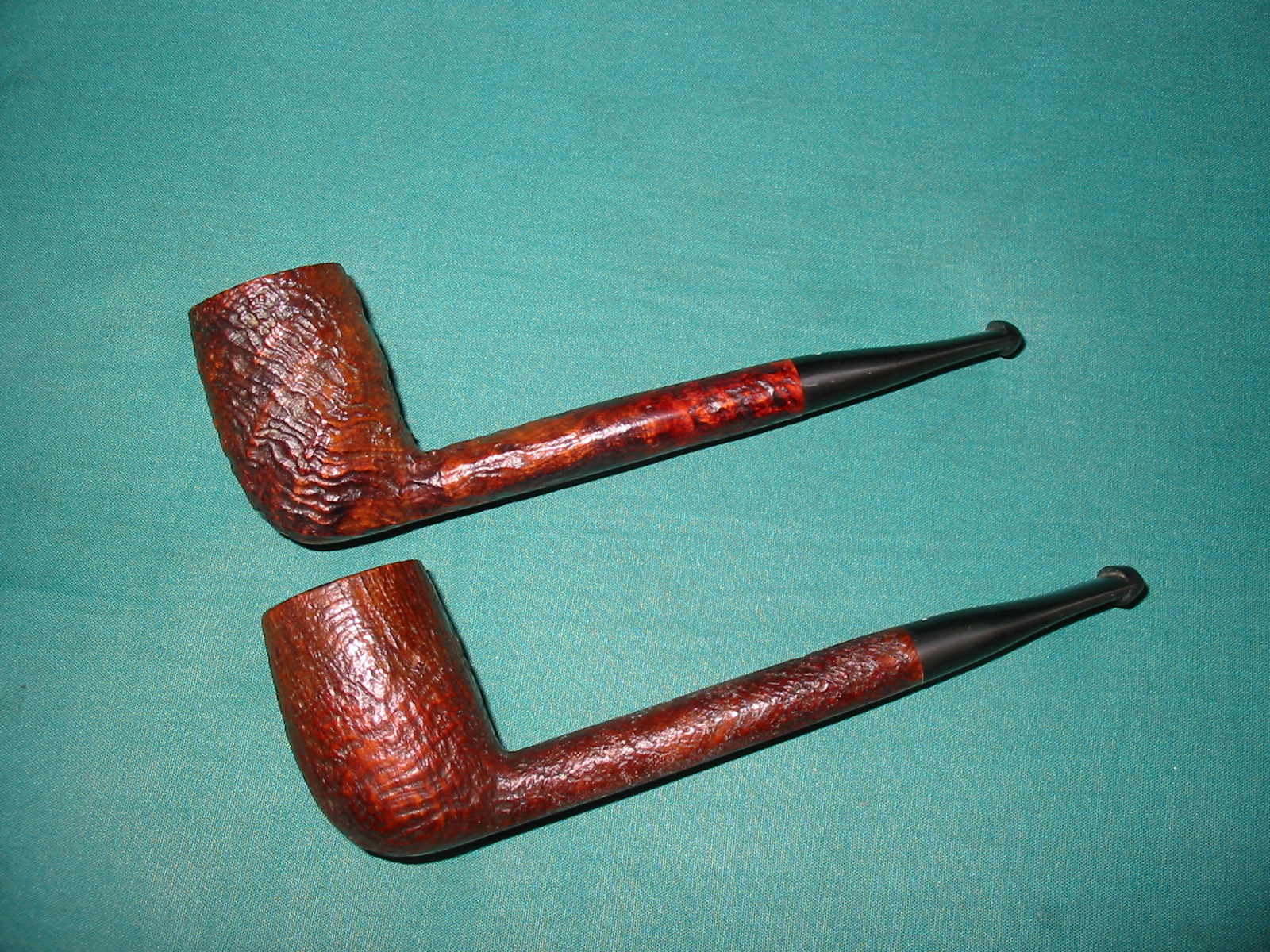
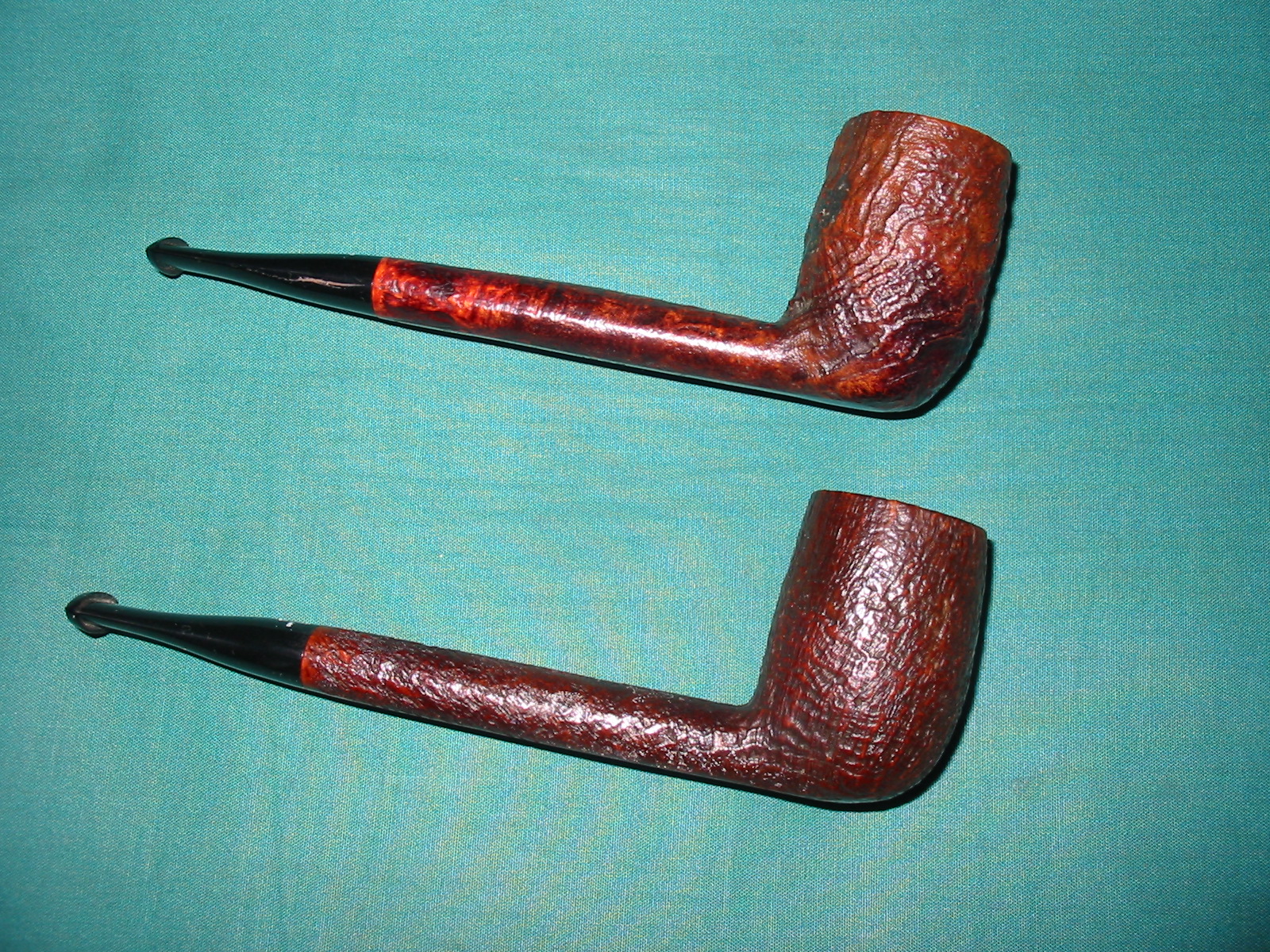
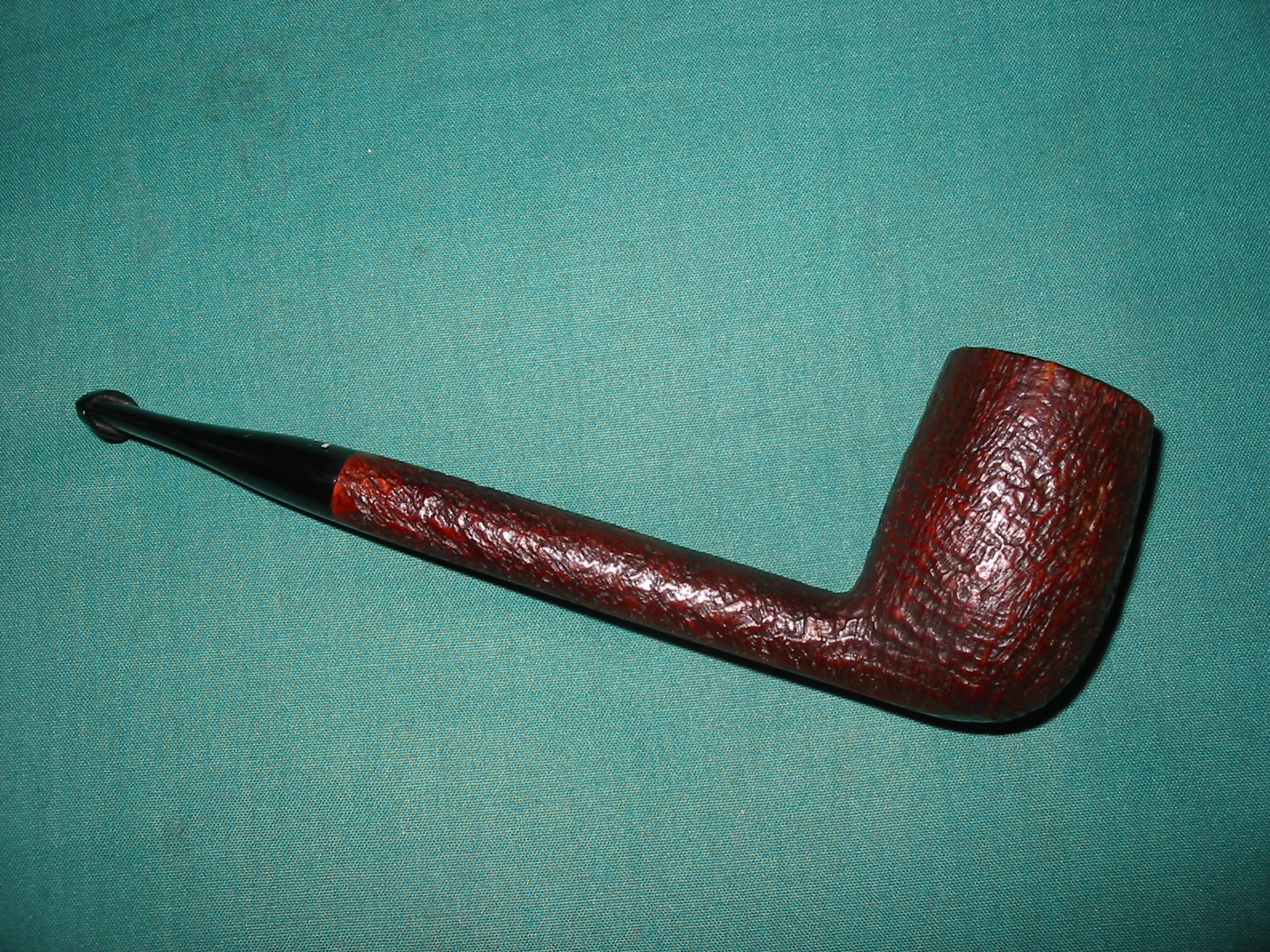
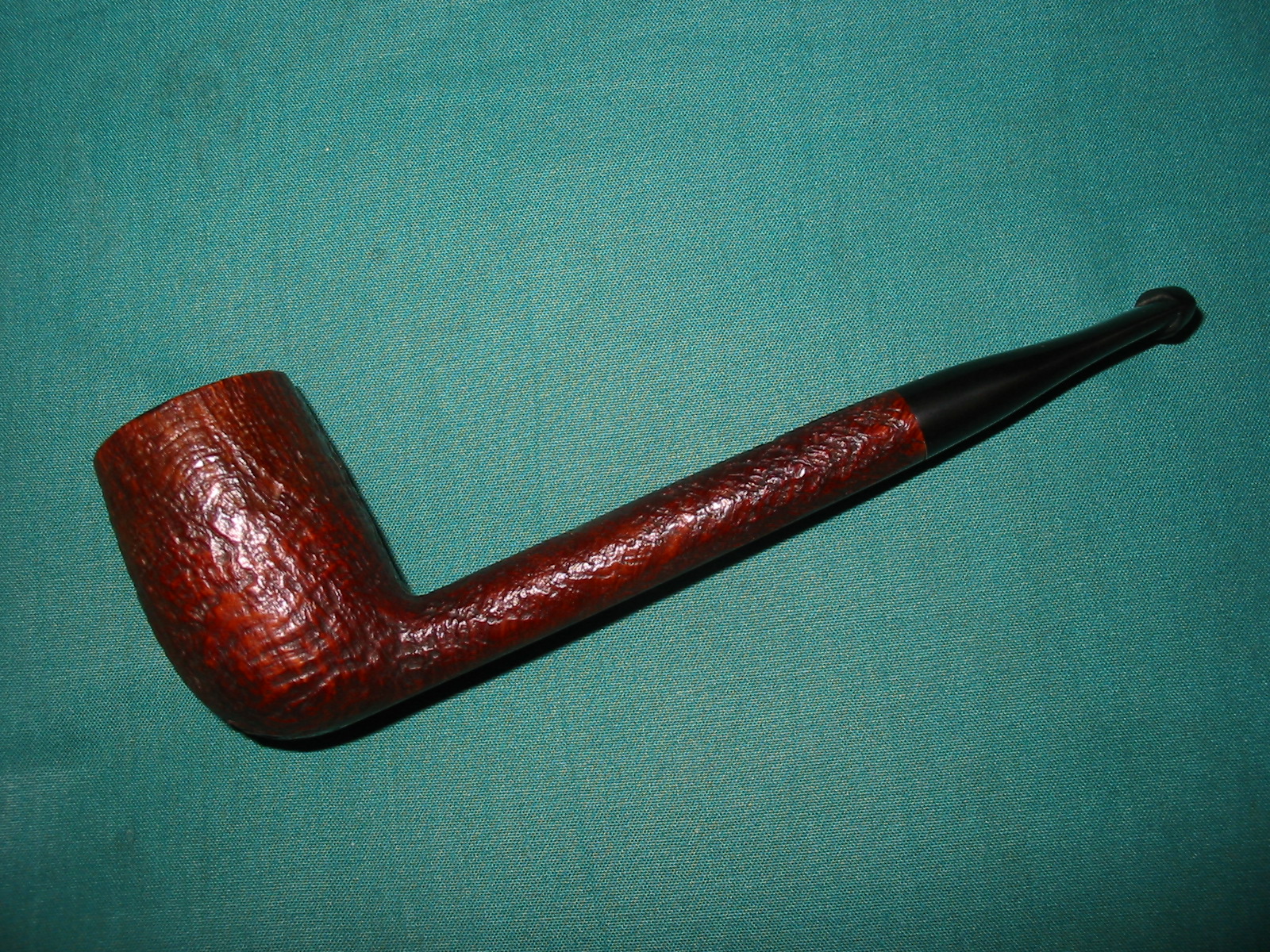
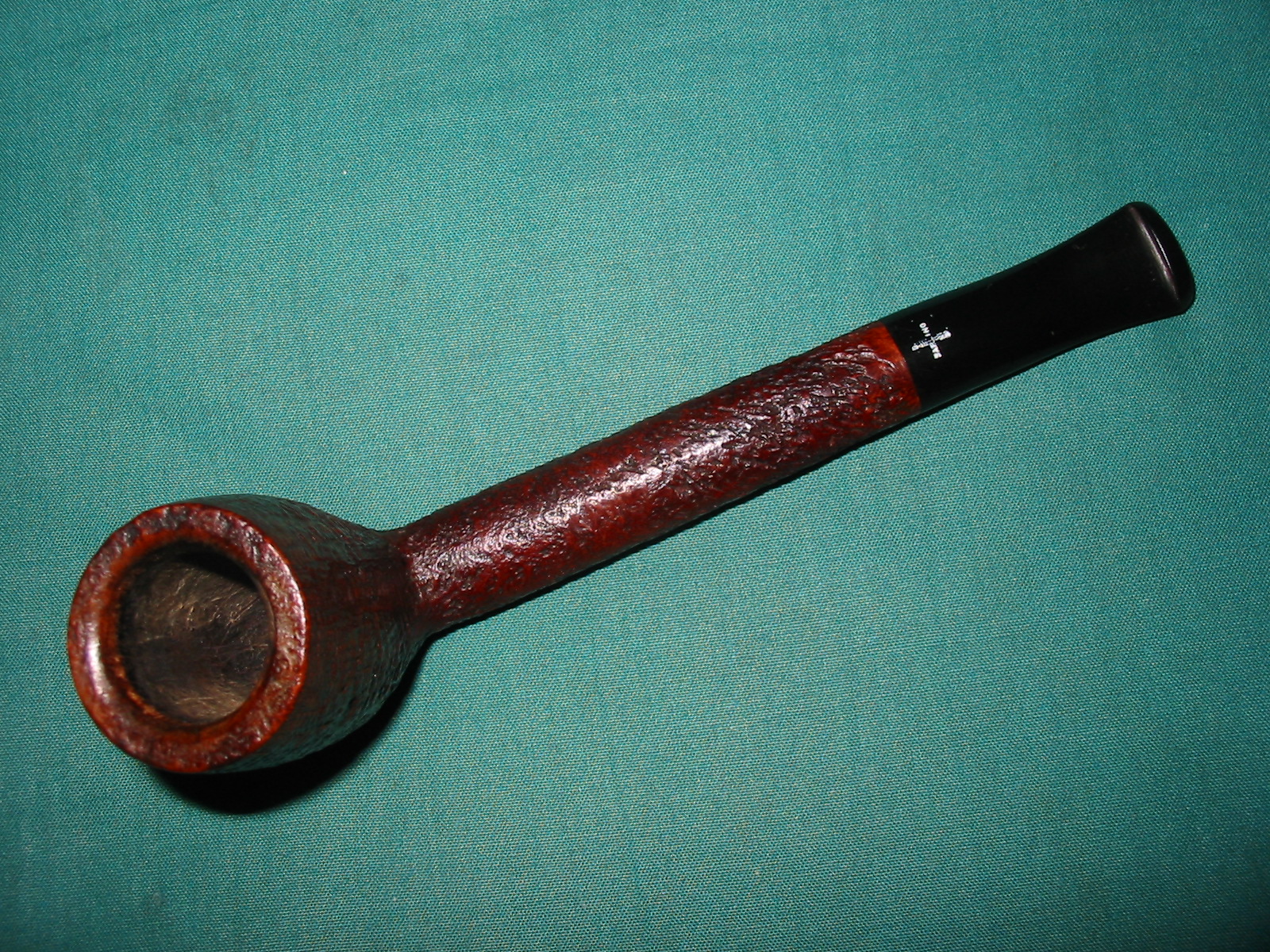
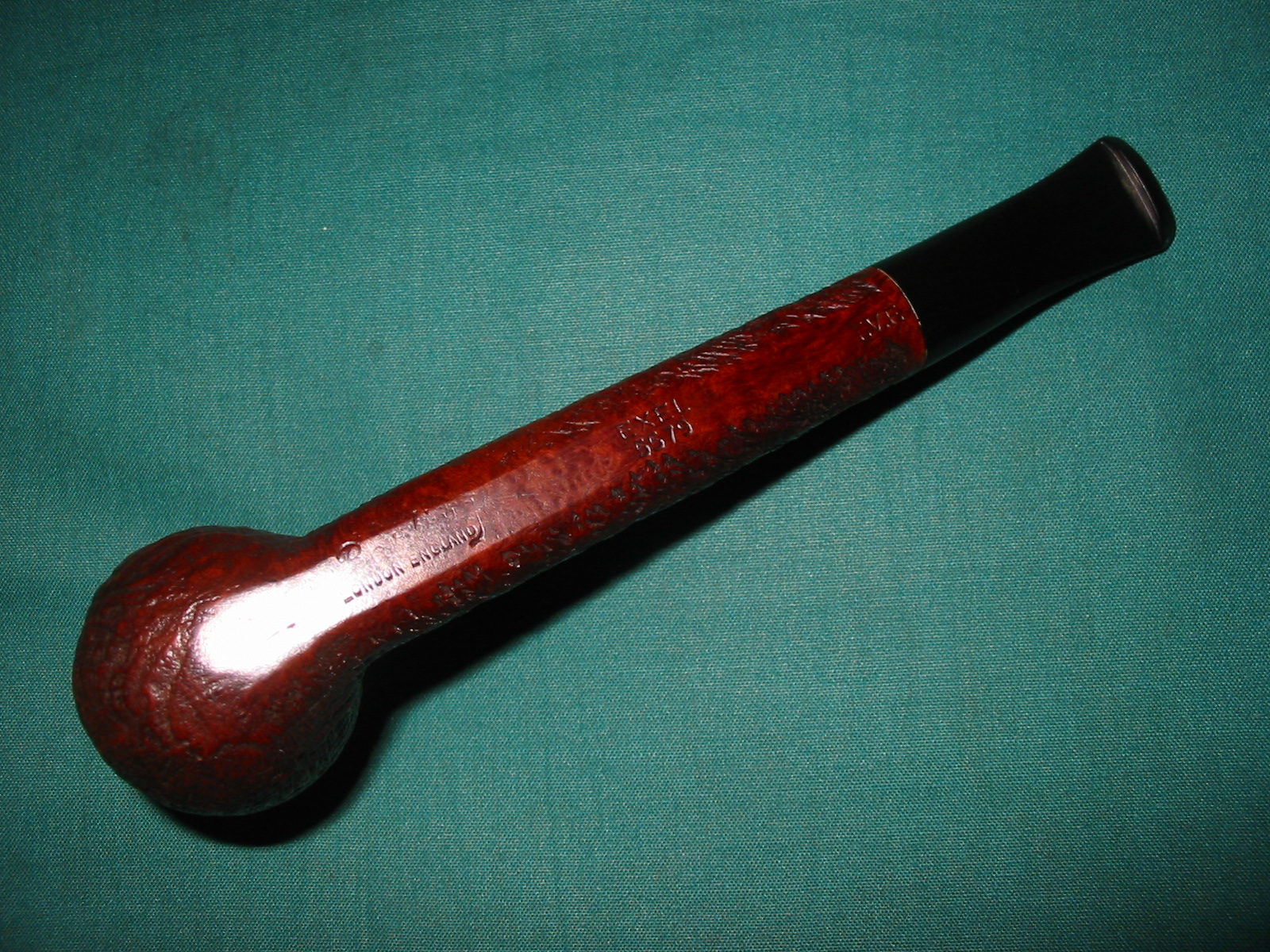
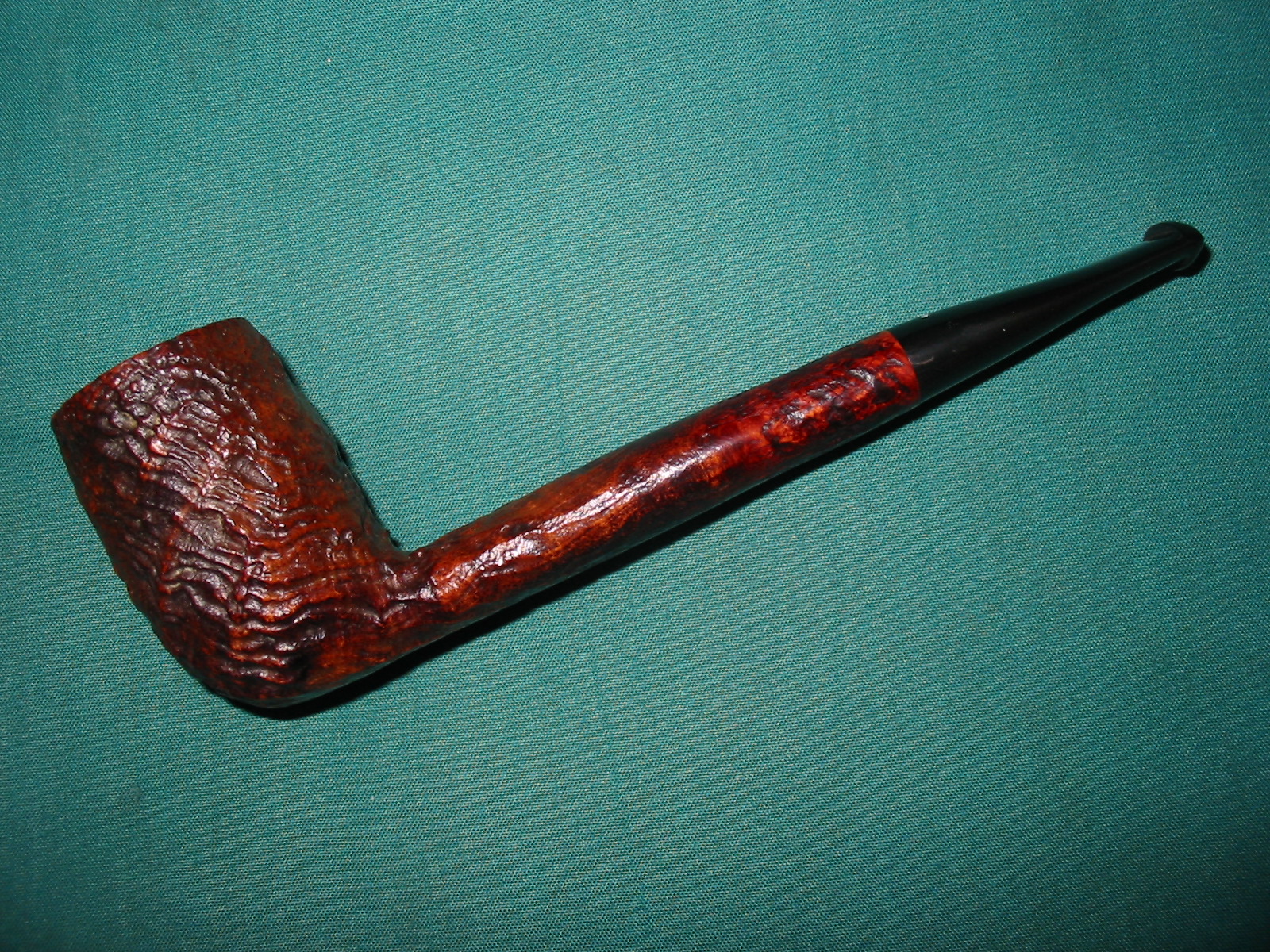
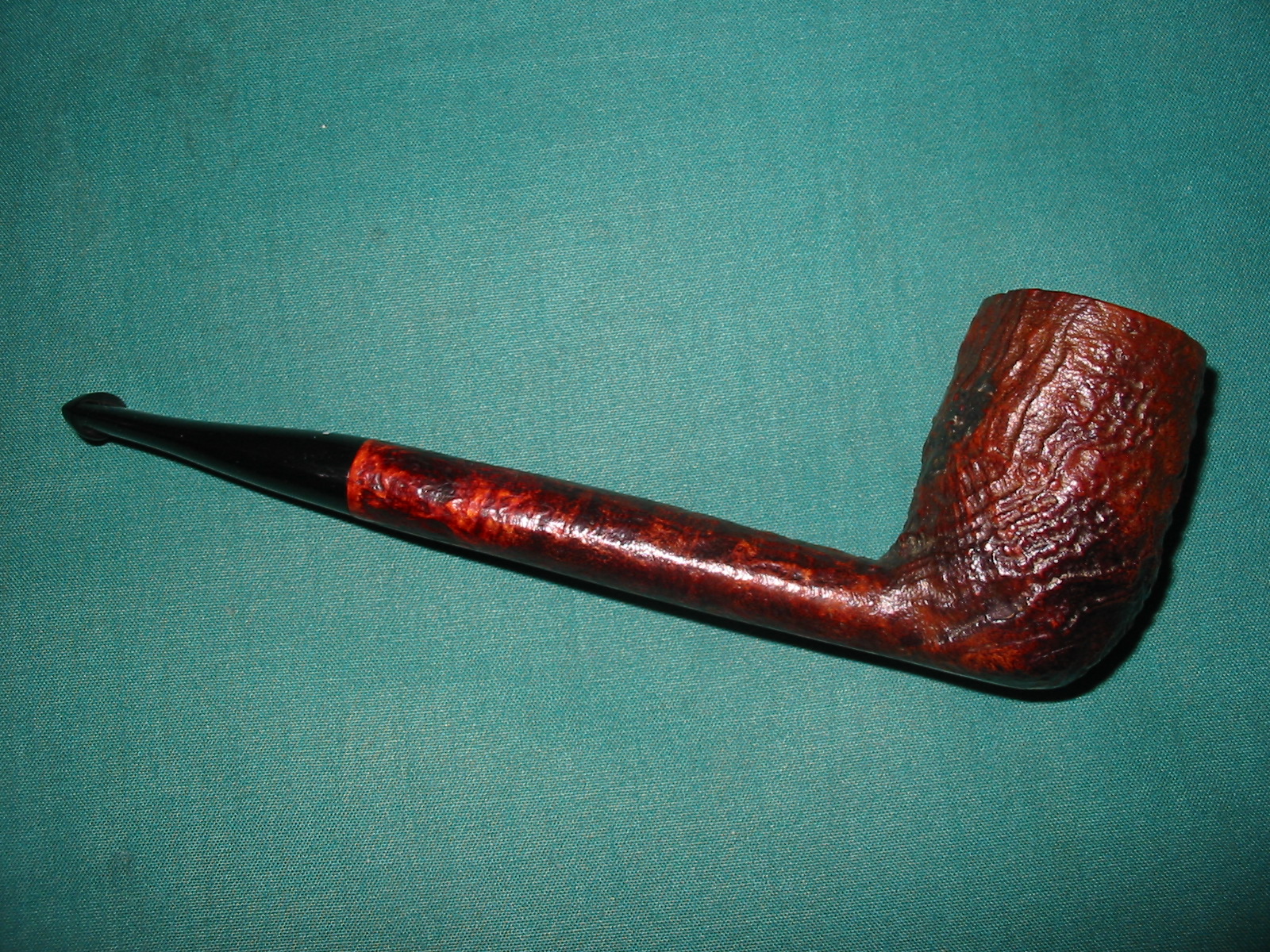
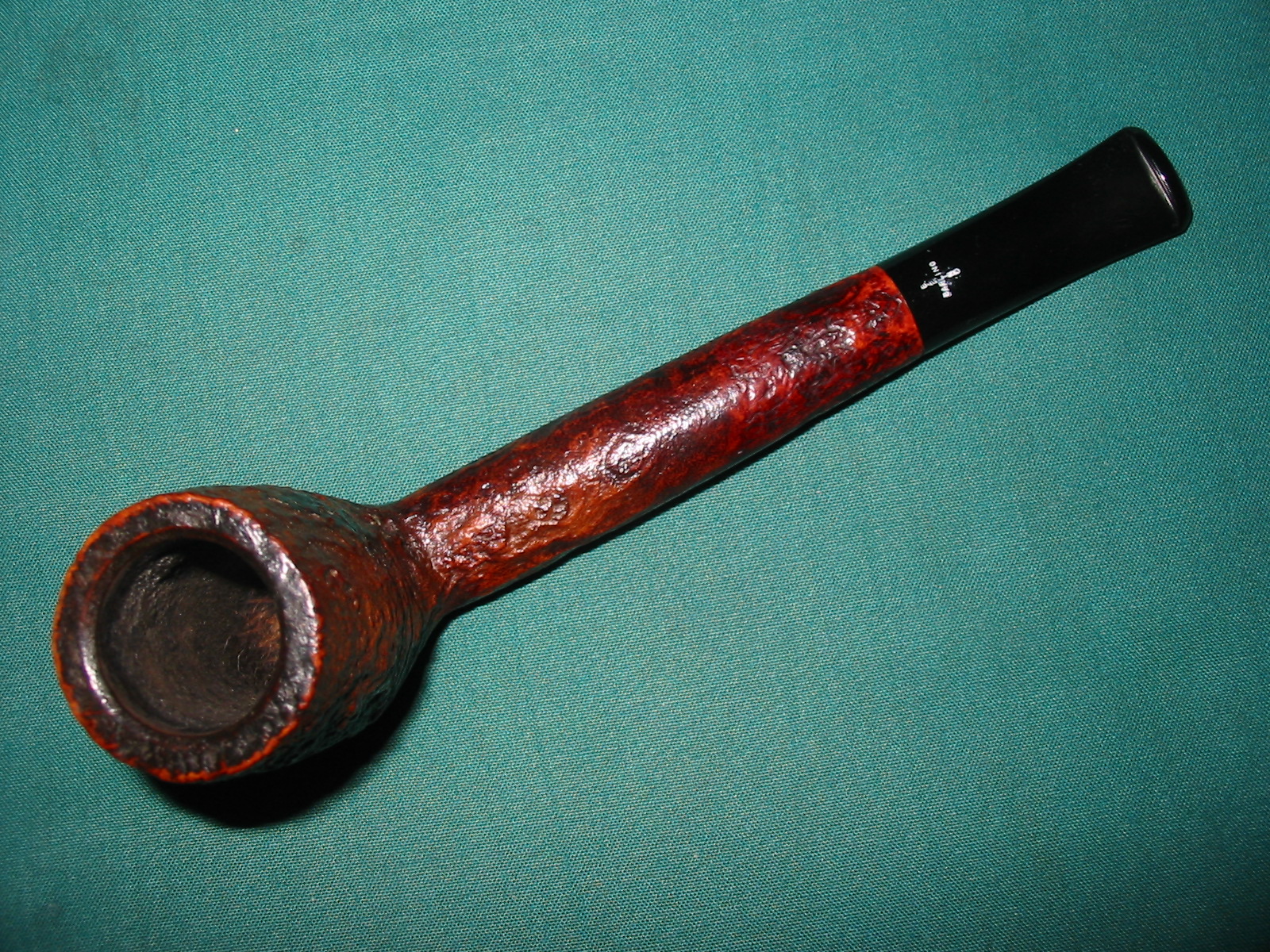
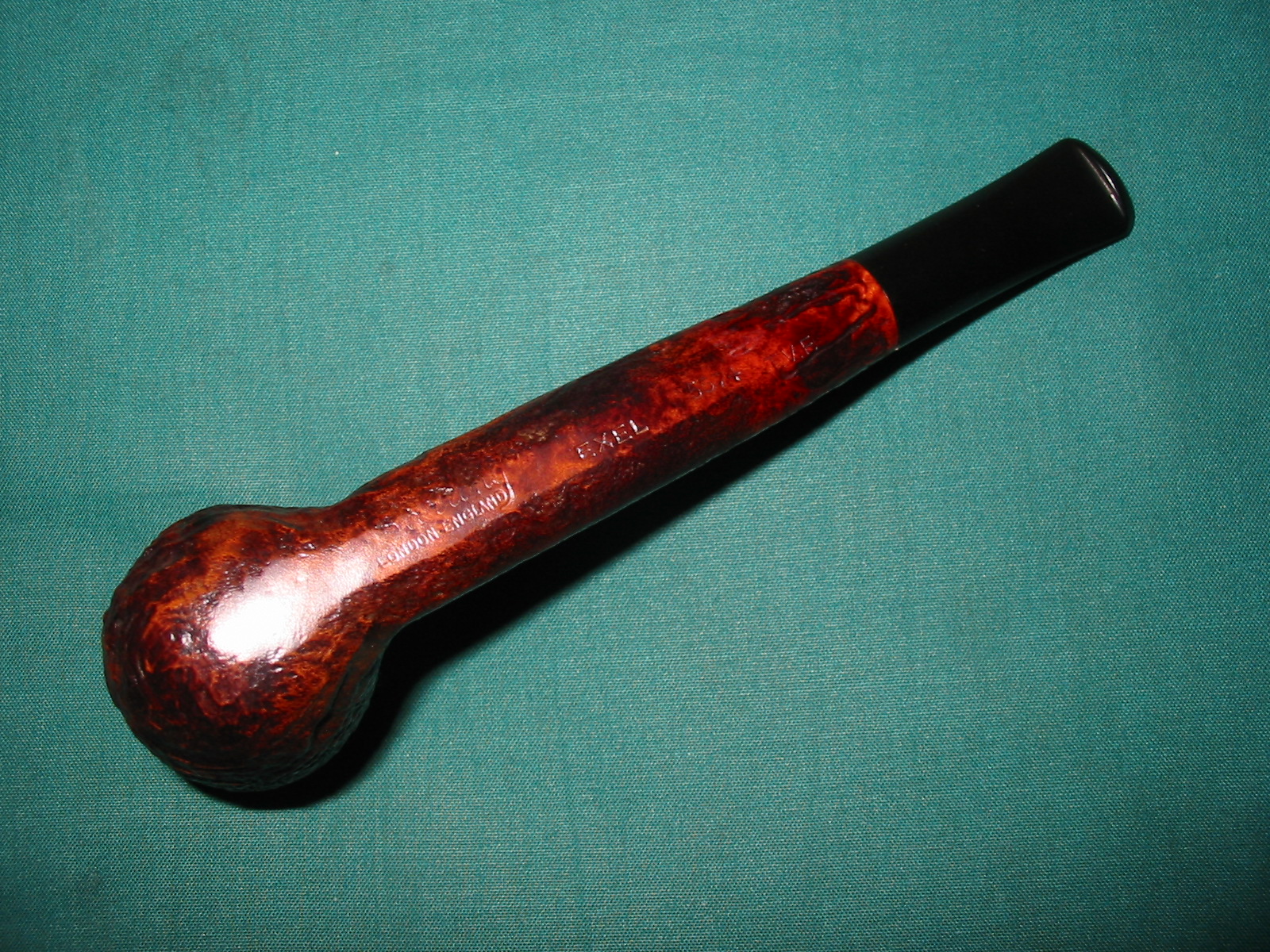
Quite a few years ago I received a pair of Barlings Canadian bowls from the late Mike Leverette. We had exchanged quite a few pipes and tobaccos over the years and one day I received an email from him saying that he had sent me a pair of Canadians that needed stems but were otherwise in great shape. They were clean and ready except for a lack of stems. When they arrived they were beautiful the top on had a stunning sandblast – deep and rugged. The other had a good sandblast but not nearly as rugged. The two were oval shank pipes but one was slightly smaller and shorter than the other. The stamping on them was also different. The top pipe (below) is stamped in a line across the underside of the shank, Barling in script over London England, EXEL 5574 T.V.F. The bottom pipe is stamped slightly different. It begins with Barling in script over London England. That is followed by EXEL over 5579 and then it is followed by T.V.F.
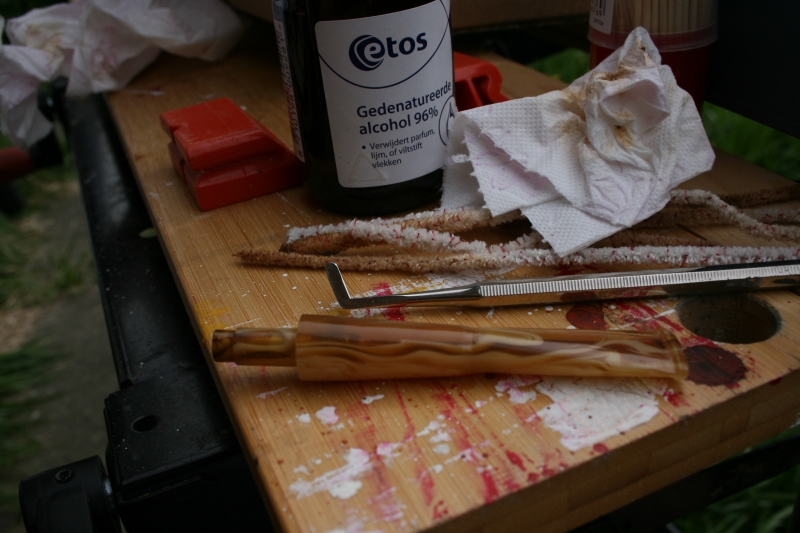
I cleaned them and gave them a polish and sent them to Dave Wolf at Walker Briar Works for restemming. I wanted replacement stems that had the Barling cross stamp on them and new that Dave had the stamps to do that. Once I sent them to him the wait was not very long and they came back polished and stemmed. The photo below shows the pipes as they looked when they arrived and I took them out of the package.
Barlings 001
I took them out of the pipe cupboard the other evening to polish them and remind myself of the story behind them. For me, part of the joy of being a pipe man is to remember/know the stories attached to my pipes. Some of them the stories begin with me as I can find no information on them. Others come to me with a long history that makes them very interesting. This pair comes with that history. Mike bought them in a lot on EBay and figured I would enjoy them. He took the time to ream and clean them before he sent them my way. My story with the pipes is at least 12 years old if not more. Add to that Mike’s history with them and I can trace their story back 15 or more years. I enjoy that kind of thing. The only thing that would make it even better is to be able to know a bit more of the back story. Ah well, as I smoke them I raise a bowl in memory of Mike. I took the next three photos this evening to show the pair as they look now. Both have a few more years and smokes on them but they remain in great shape and have many more years left in them.
IMG_5971

IMG_5972

IMG_5974
I also decided to take a few pictures of each of the pipes separately to give you a better picture of their individual characteristics. The next series of four photos show the 5579, the bottom pipe in the photos above. It has a lighter blast and the stain took to the briar in a different way than it did on the deeper blasted 5574. Interestingly it is the same colour stain on both pipes – the variation is caused by the briar.
IMG_5982
There is gracefulness to this Canadian shape. Barling makes the shape like no one else does and I think it epitomizes the English version of the shape. The blast is well done showing both the ring grain and the vertical lines on both the shank and the bowl. The taper from bowl to button on the stems is very graceful as well. Dave was able to capture the look of the original stem very well.
IMG_5983
The blast carries on to the rim as well and ends as the inner edge of the rim bevels inward toward the bowl. The bevel is smooth as is the strip on the bottom of the shank where the stamping is located. There is also a smooth band at the stem shank union.
IMG_5984
The stamping is clear but faint on the Barling portion. The T.V.F. stamp is tight against the end of the shank.
IMG_5985
The second pipe, the 5574 is a different pipe. The look of the shape is not nearly as refined as the first pipe. The craggy blast and the shape of the bowl make the look more rugged and not nearly as elegant looking. The tactile nature of the blast though is amazing as bowl heats up during a smoke. The stain is also variegated on the pipe. It gives the pipe a mottled look that is even clearer in person. I like the look of the mottled appearance as combined with the texture it makes a very interesting pipe to look at and observe while I am smoking it. There are times when I am holding this pipe that I find myself drawn to just sit and examine it, turning it from side to side to look at the texture and finish.
IMG_5986
The craggy texture of the blast is carried through on both sides of the bowl while the shank is much more reserved and smoother. I am not sure whether it came this way originally or is that way from wear. I tend to think it was originally not as blasted as the bowl as the stamping in quite sharp on the bottom of the shank. I have found that a blast does not take as well on hard portions of the briar.
IMG_5987
The blast carries through to the top of the bowl and to the inner bevel on the rim. The bevel is smooth like the previous pipe as is the bottom of the shank and a small band at the stem shank union. I find that the taper on the shank to the stem is more dramatic than the previous pipe. If the blast was not unharmed I would attribute that to the restemming. It appears to have been like this when it left the Barling factory unless somewhere in its history it was previously restemmed and then repaired to look original.
IMG_5988
The stamping on this is very sharp from mid shank back toward the stem. The Barling script and London England stamping is not as sharp, though still very readable.
IMG_5991
I am pleased to have these two old pipes in my collection. Perhaps one of you who read this article can explain the difference in the shape numbers – 5574 and 5579 as I am unable to find any information online. It would be great to add that to the story. I will maintain the trust with them until the day comes that they pass into the hands of the next pipeman. They will then pass from my companioning to another’s and my story will be added to that of Mike’s. That is the thing I love about this hobby – the adding to the story of a pipe that occurs with each successive pipeman’s receipt of the trust. Until that day I will continue to fire them up and enjoy the great smoke that they deliver.

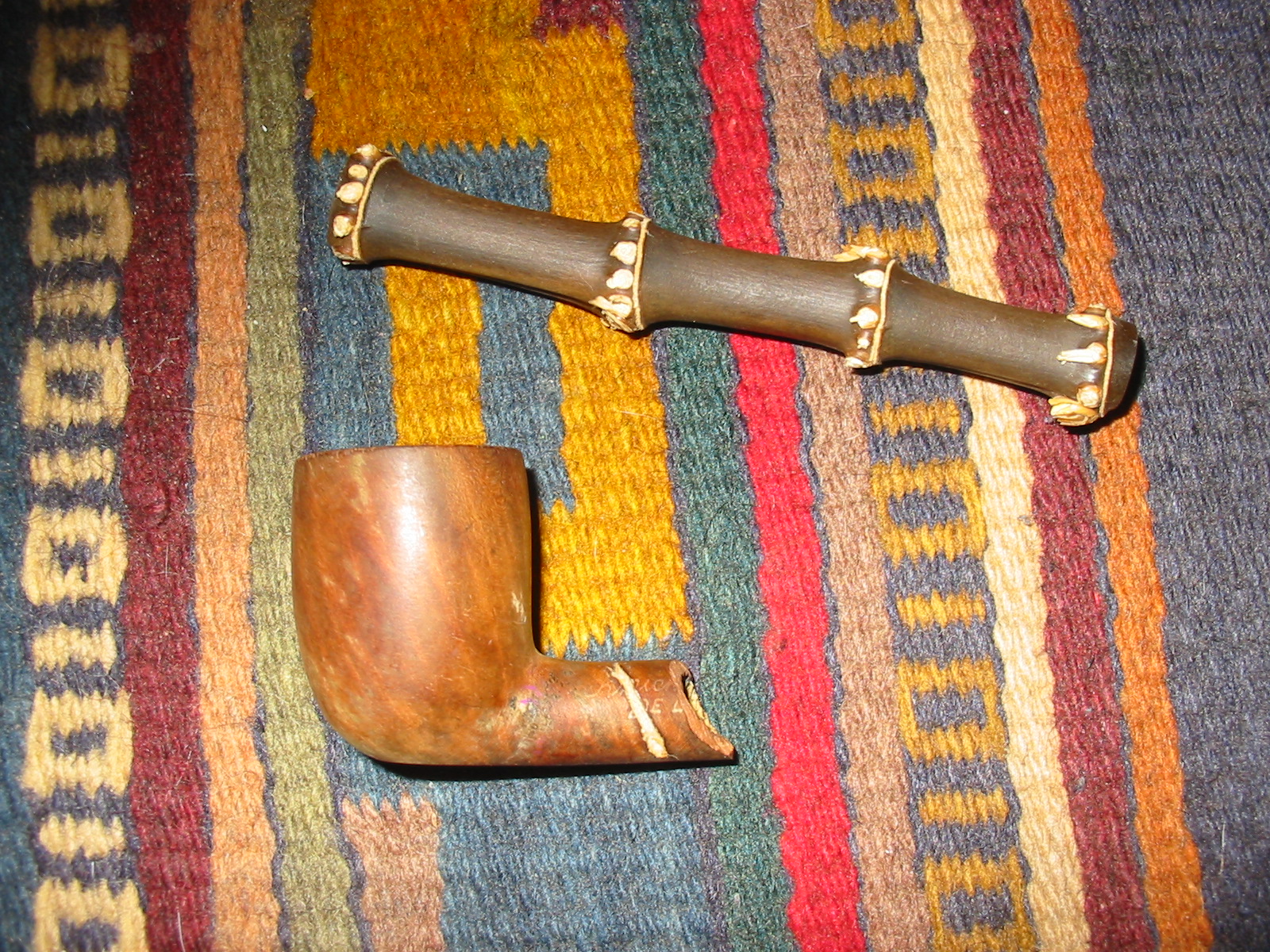
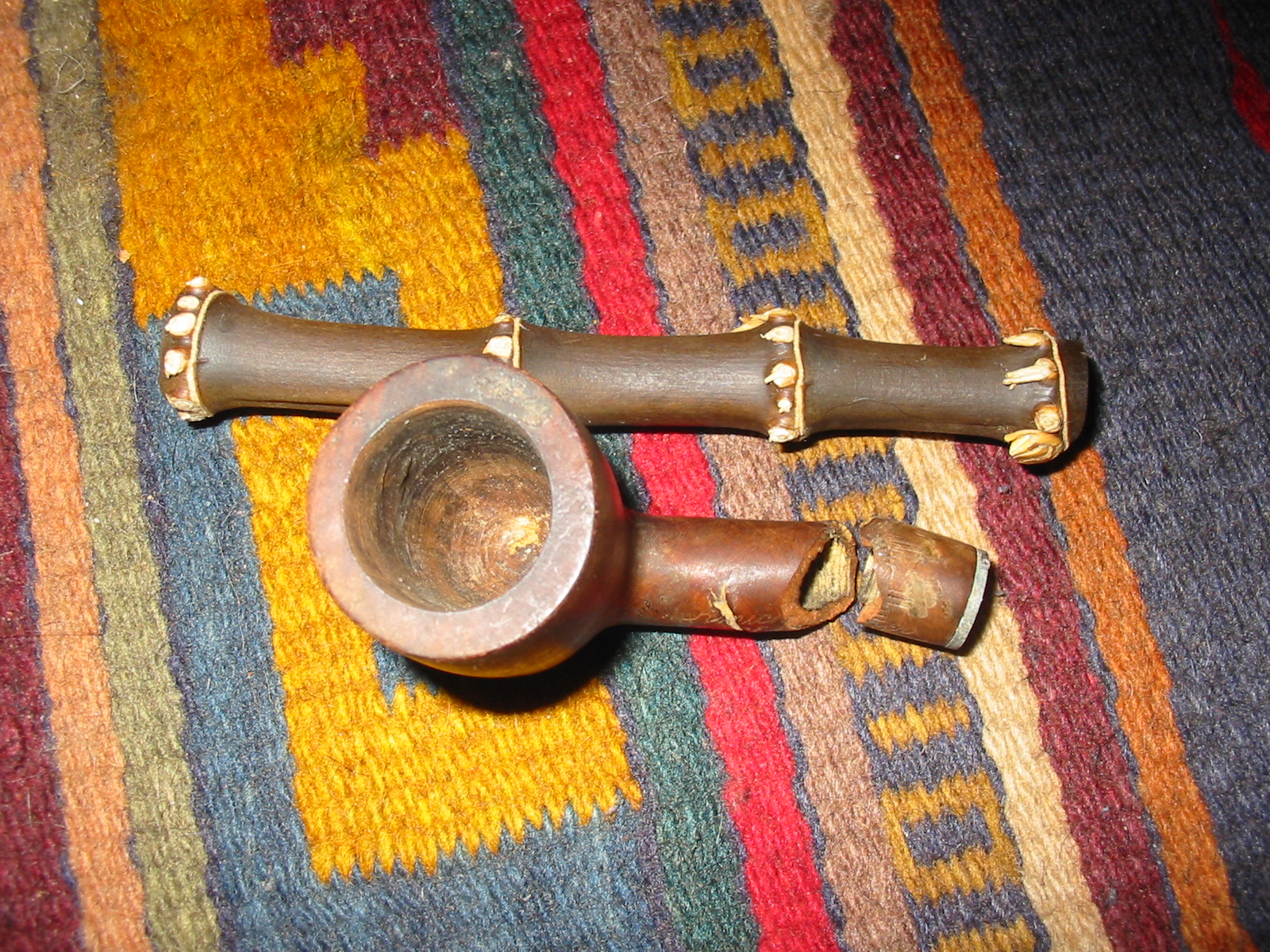
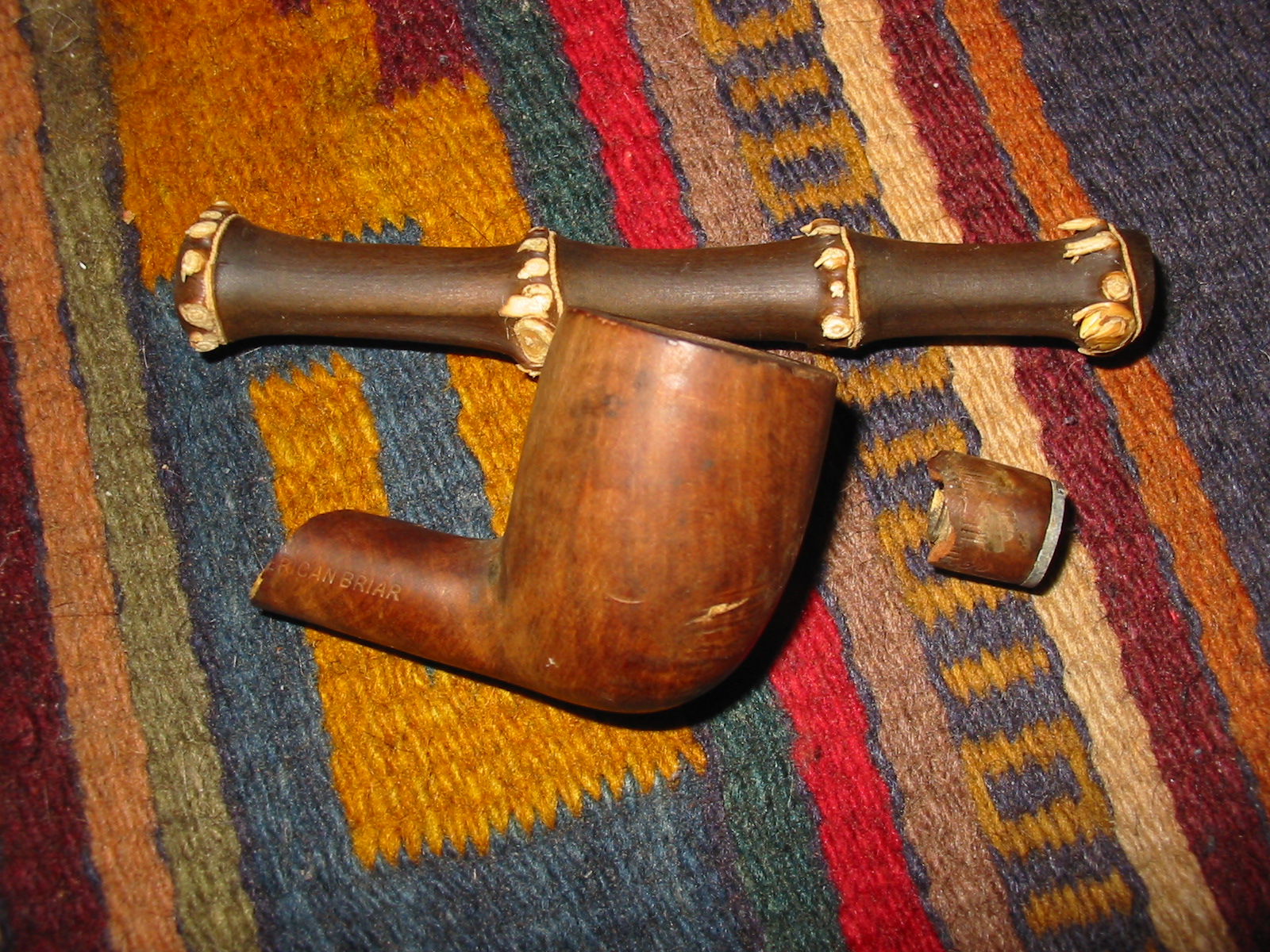
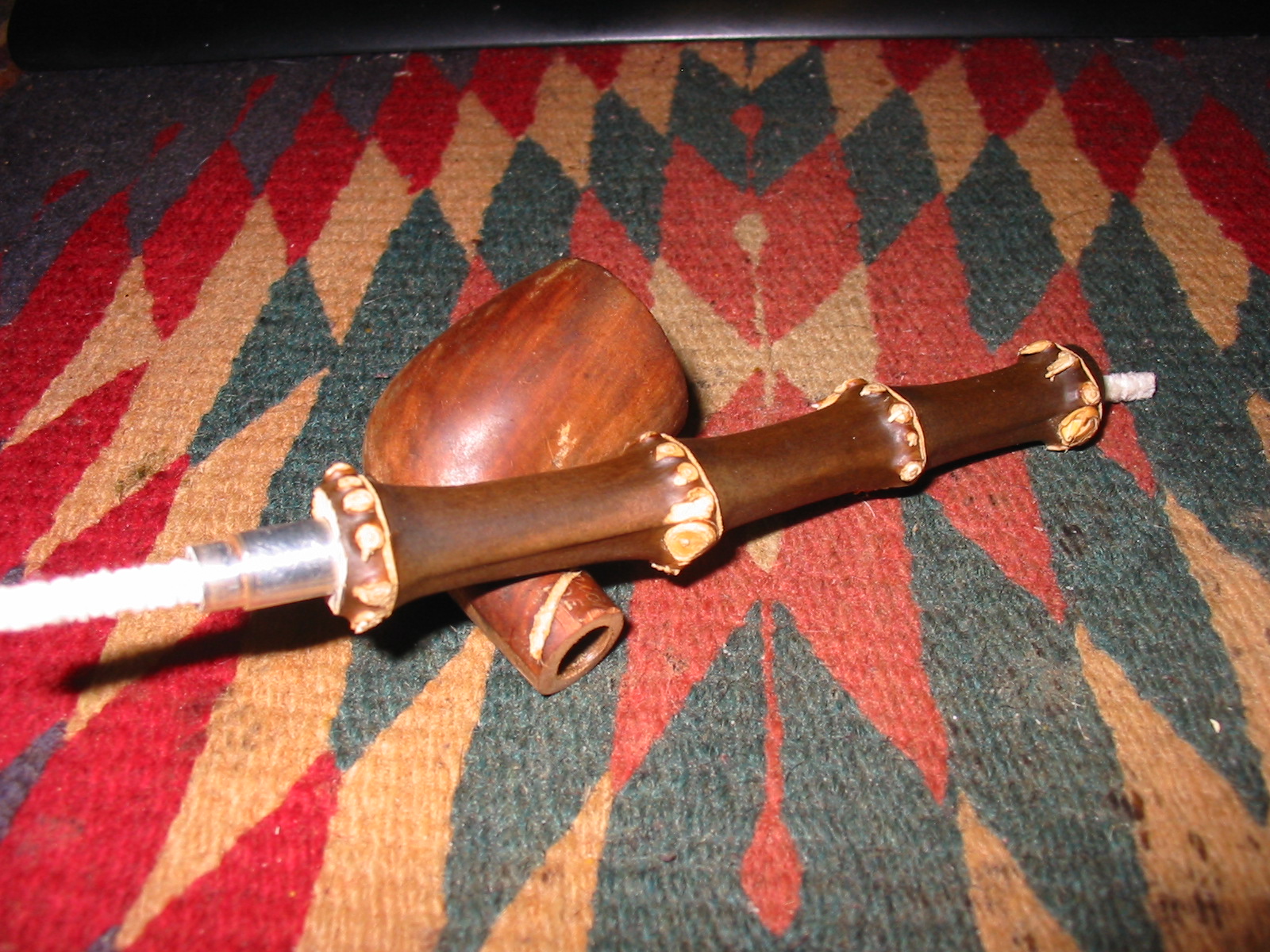
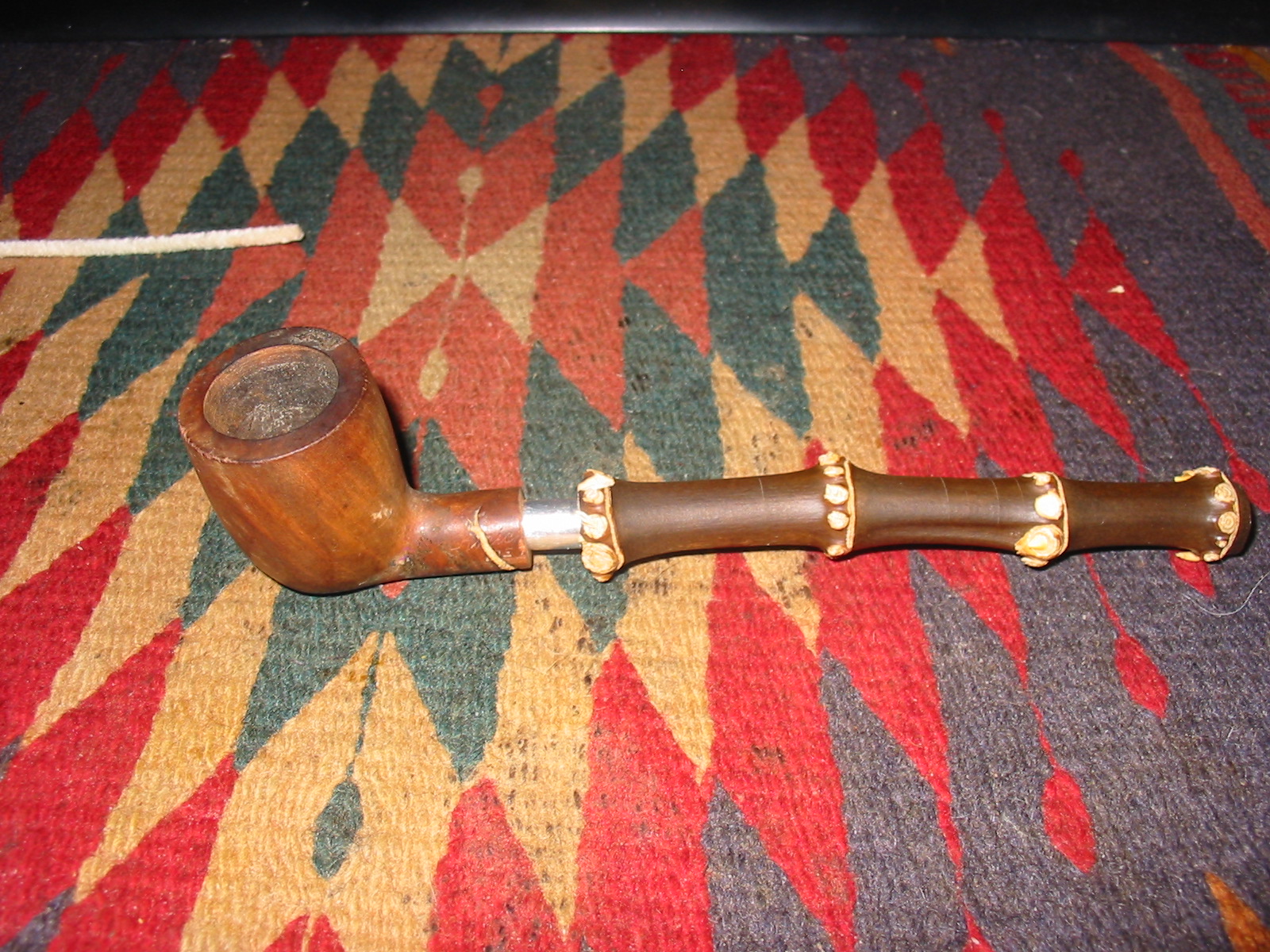
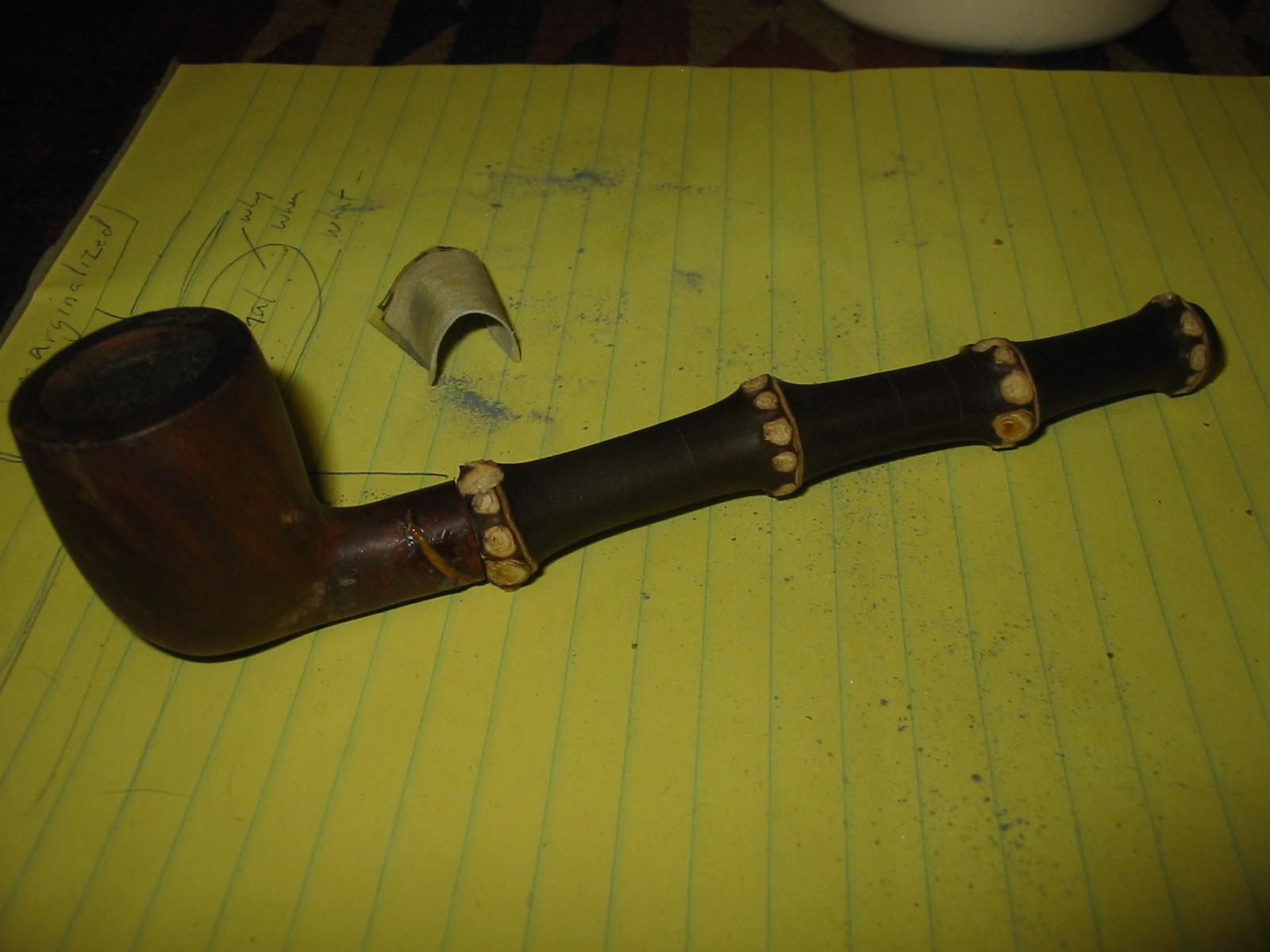
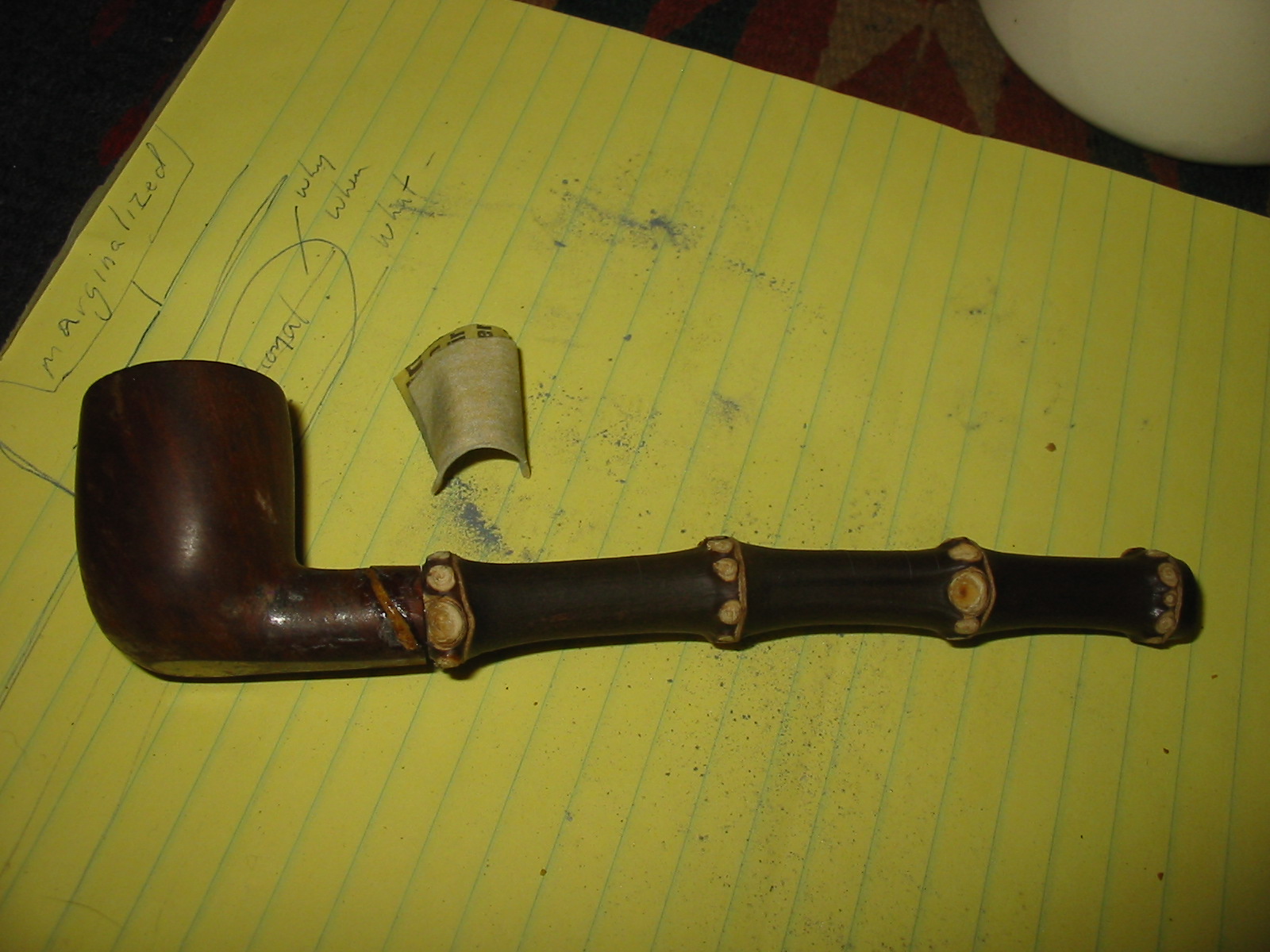
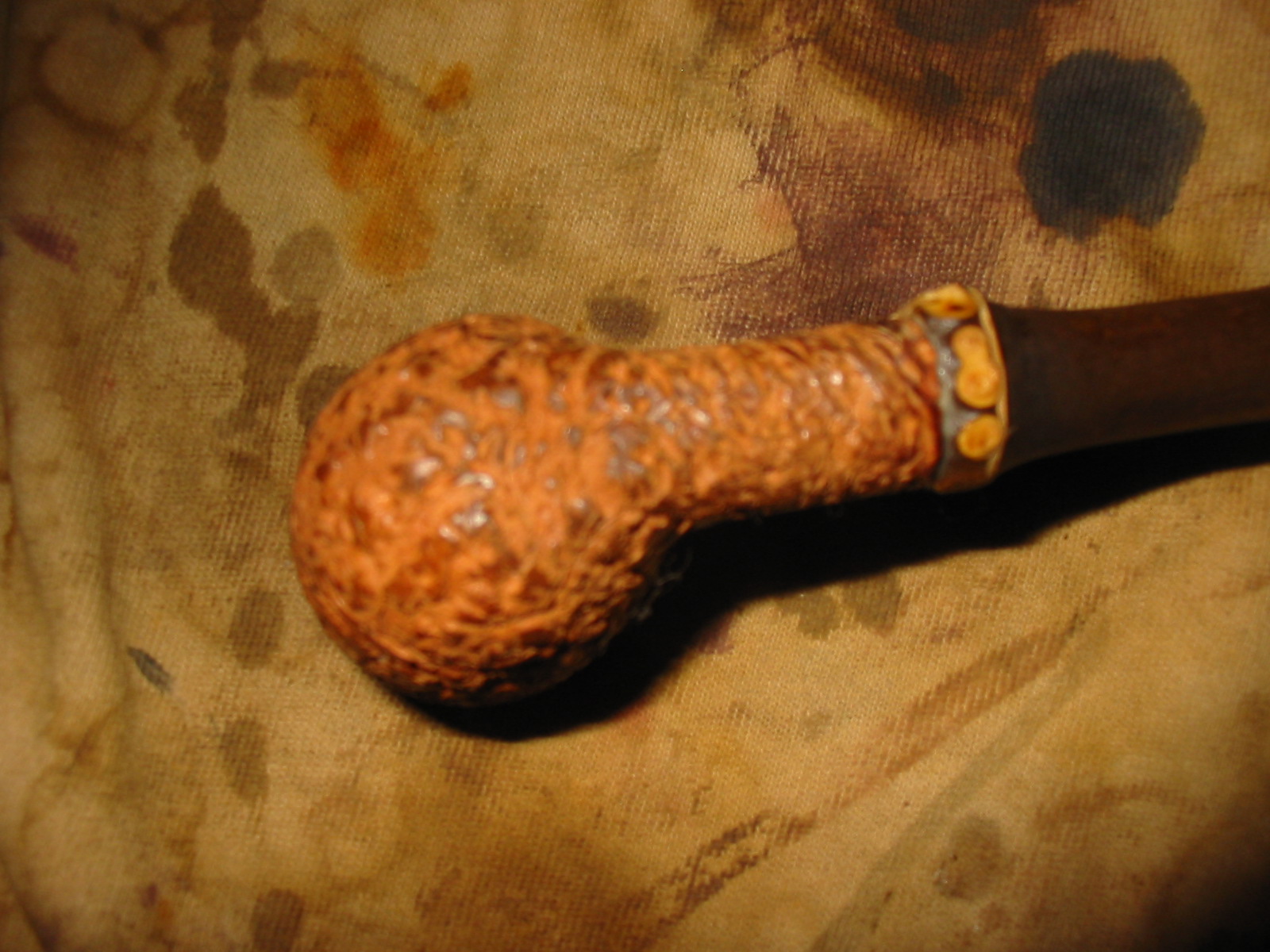
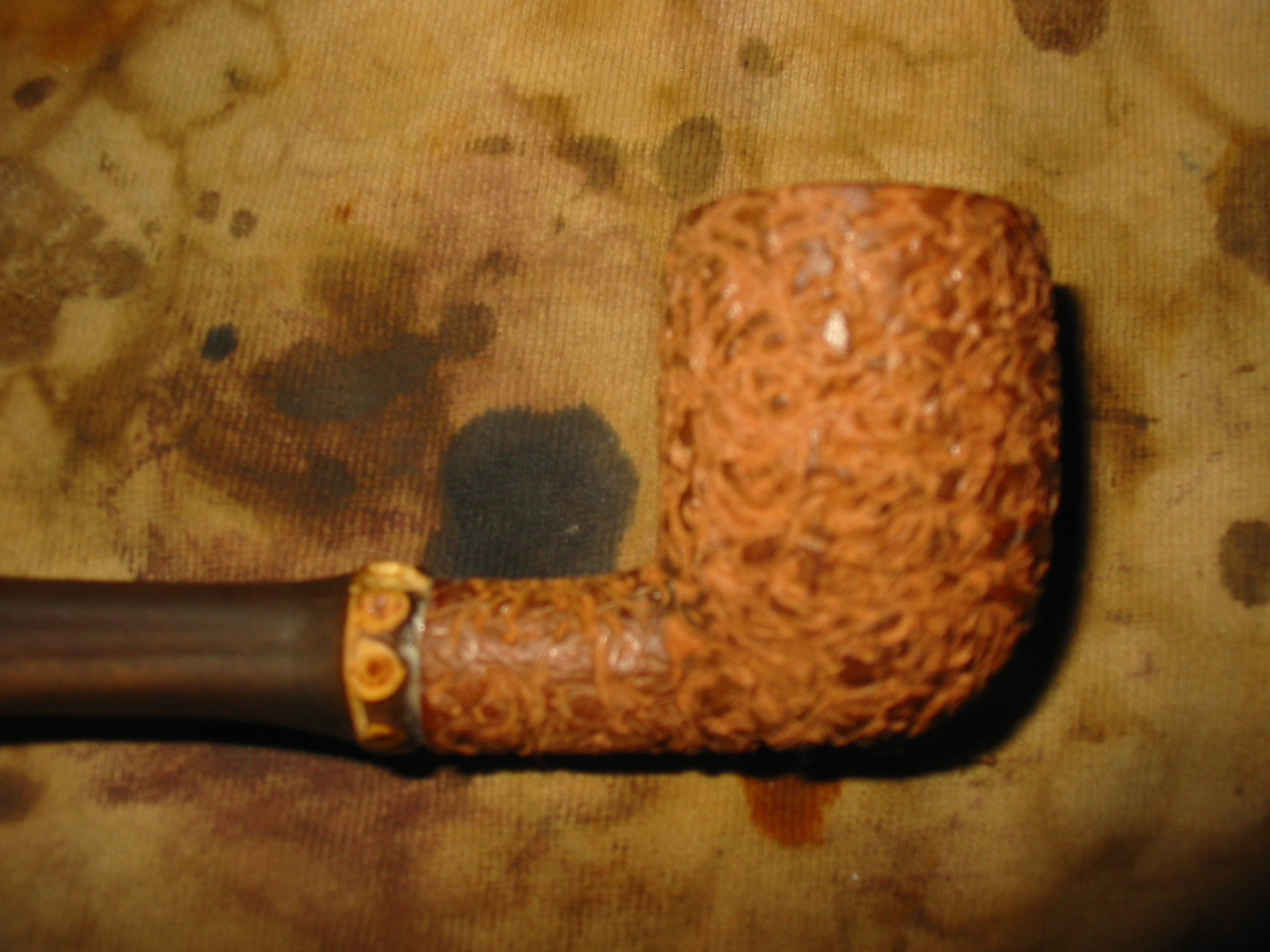
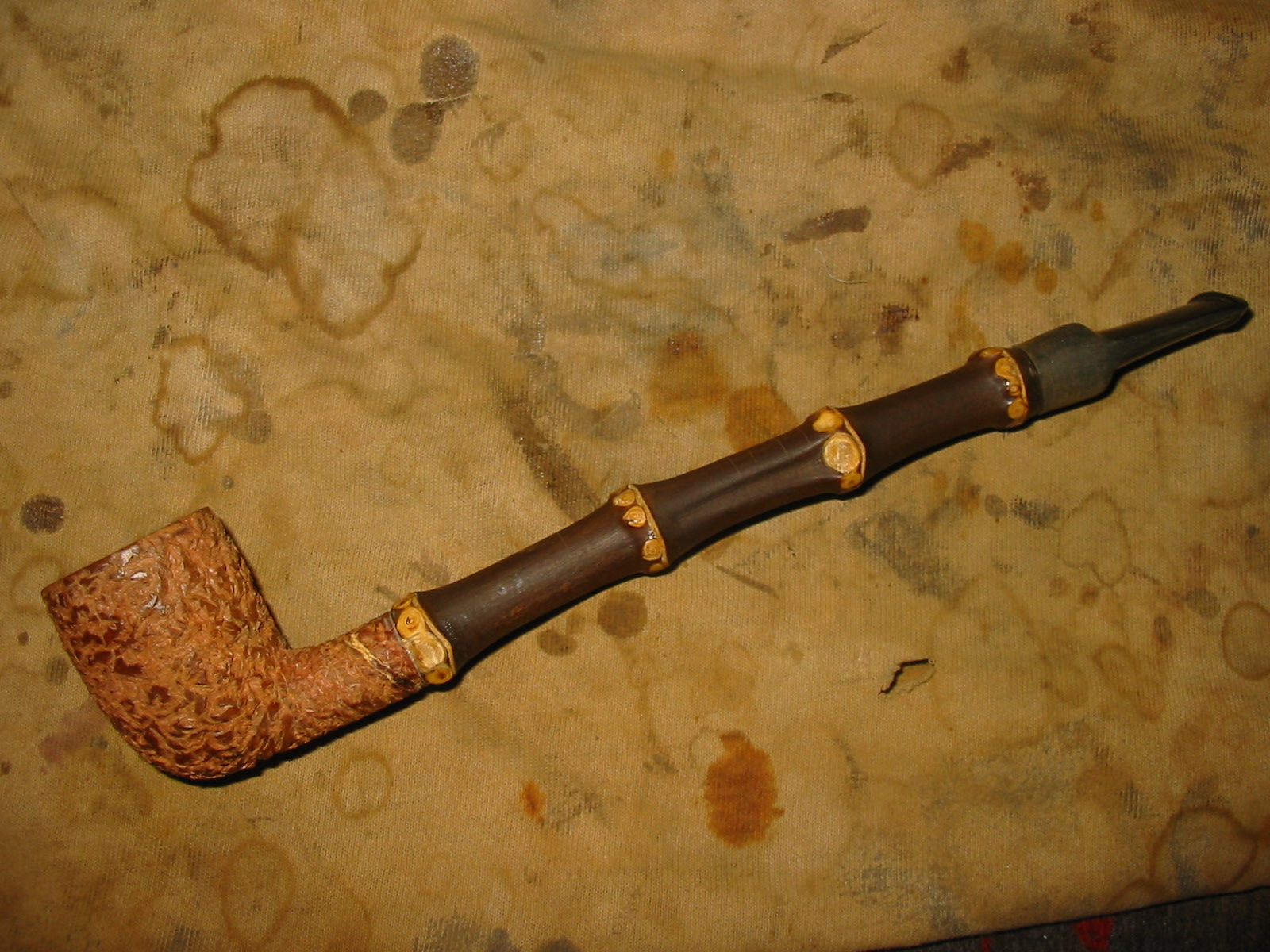
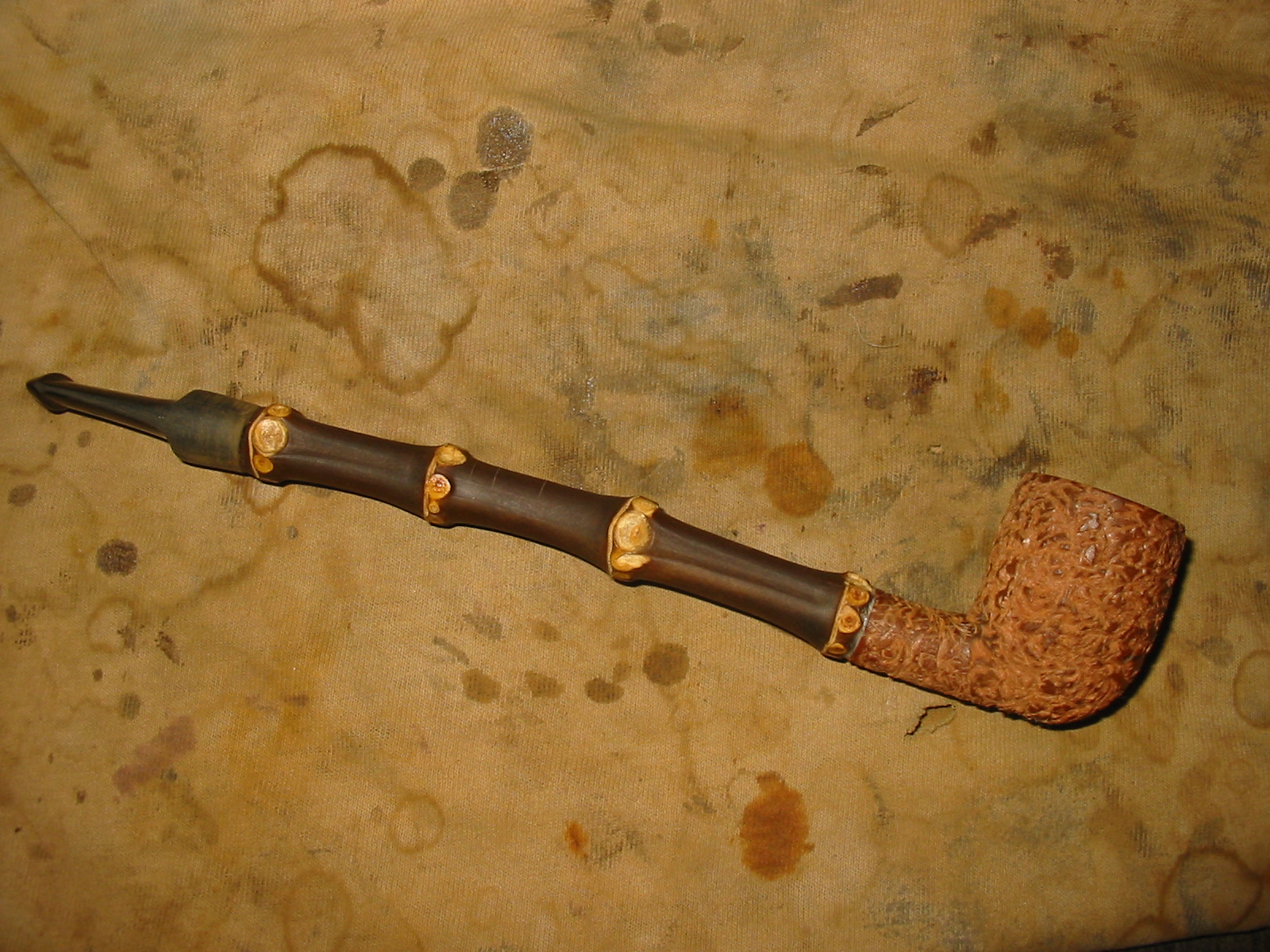
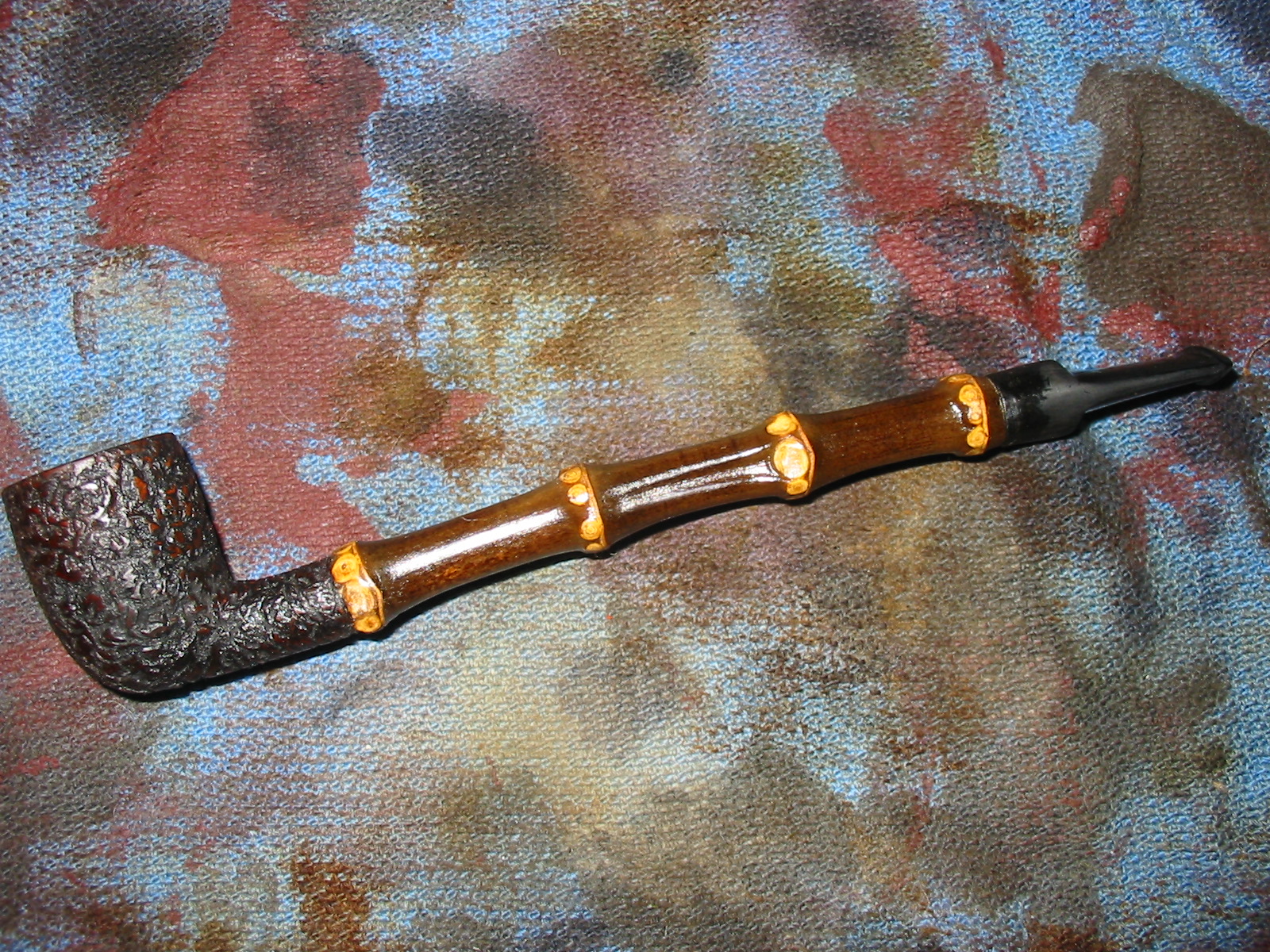
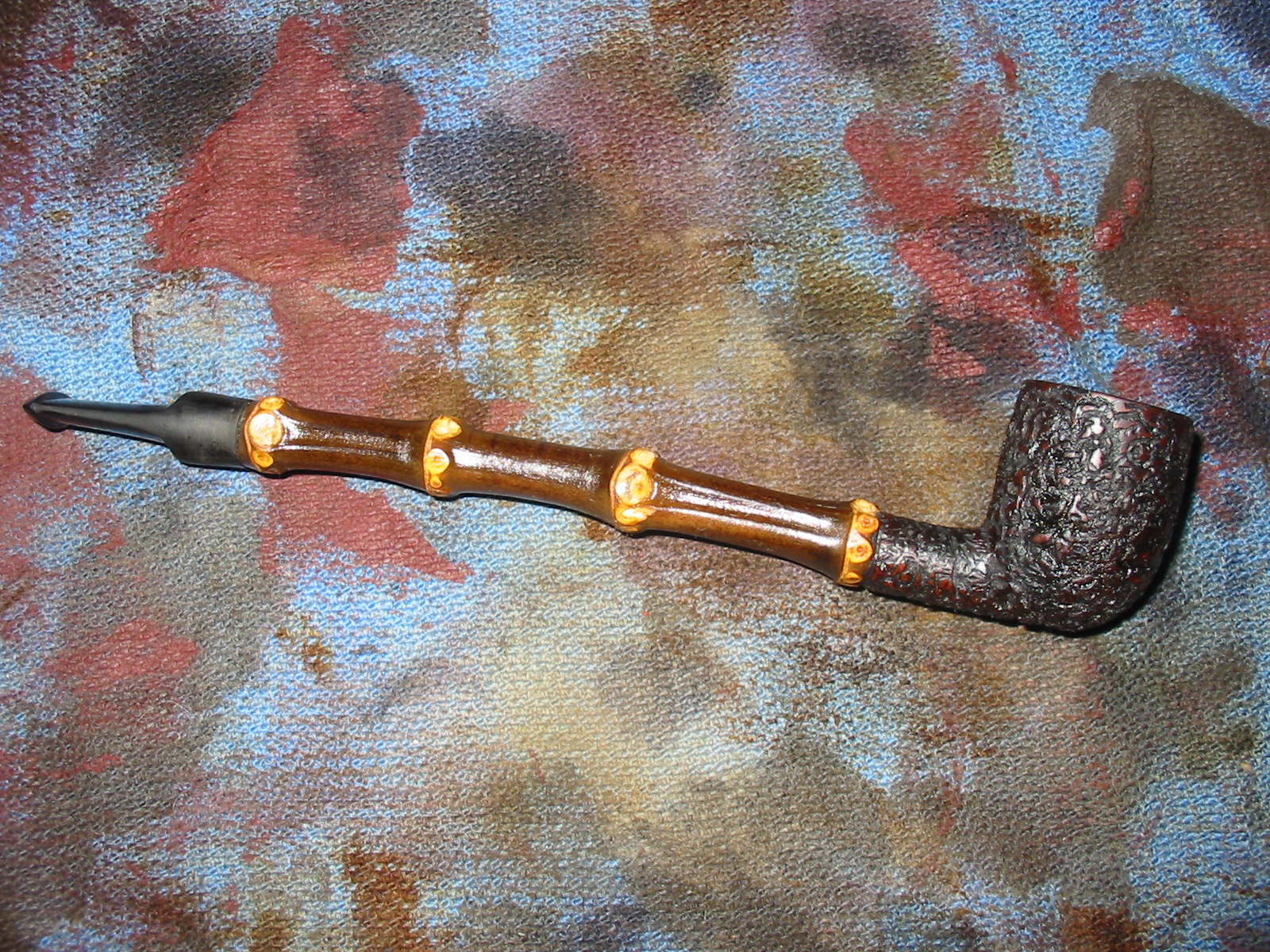
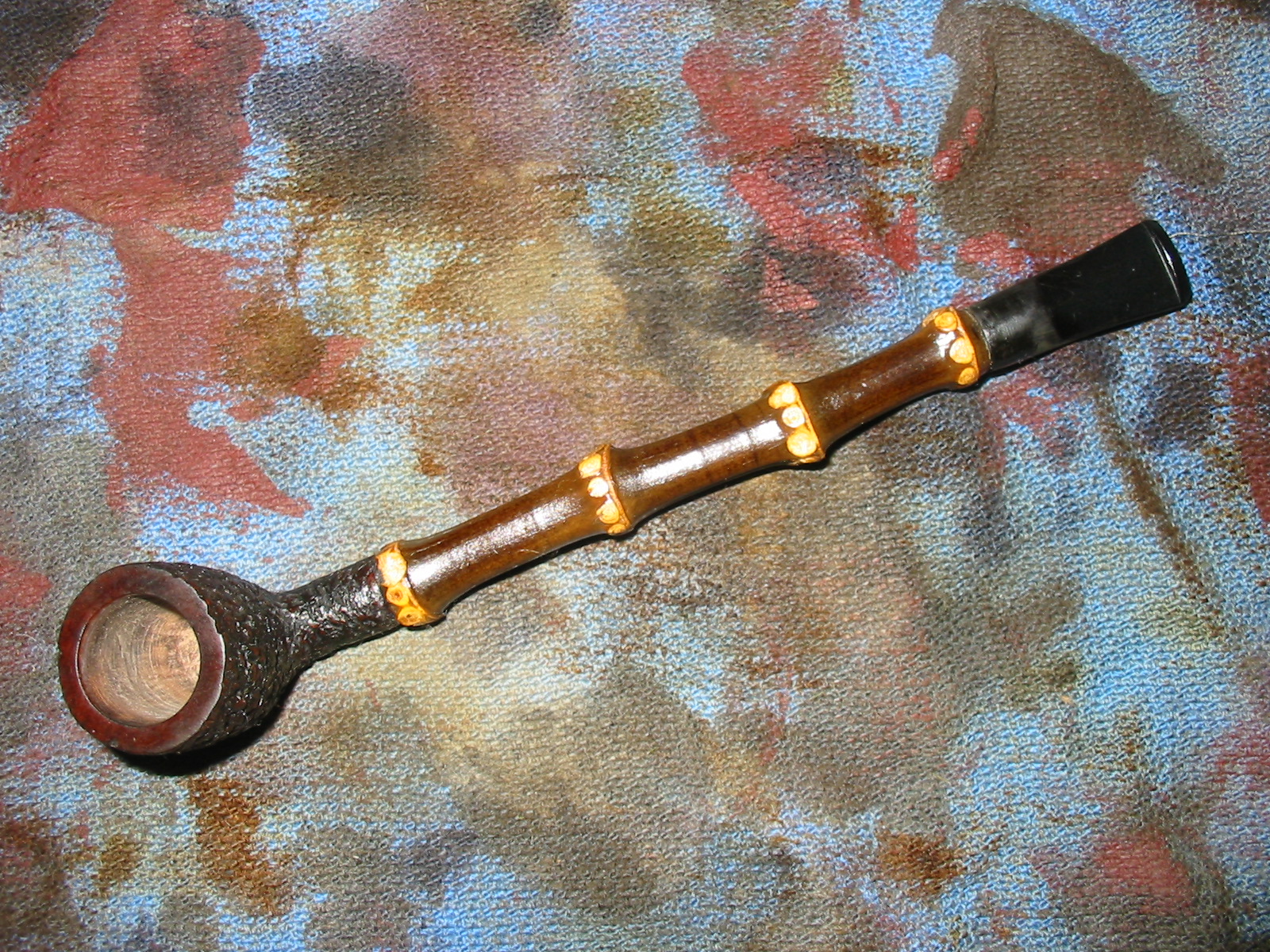
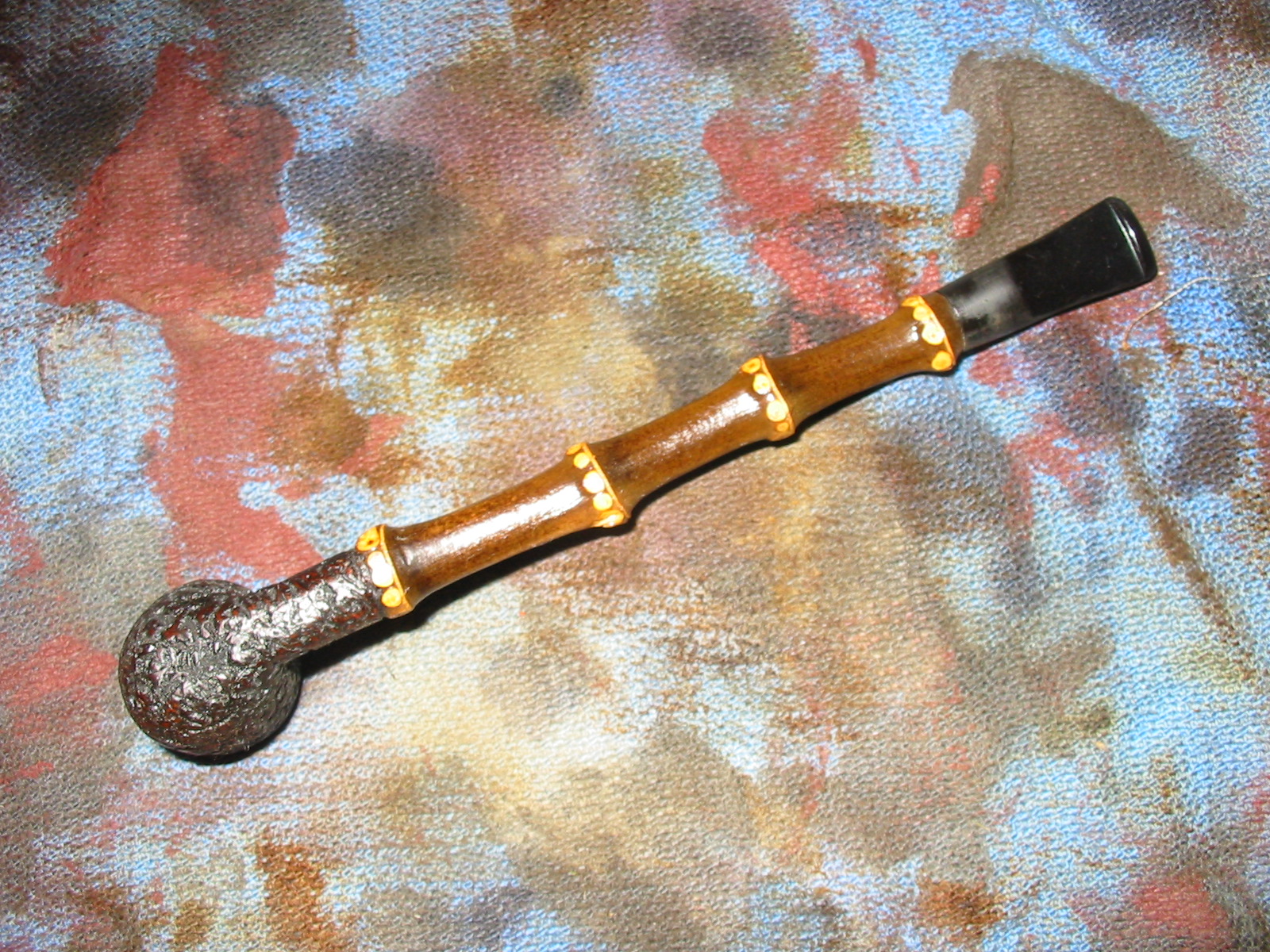
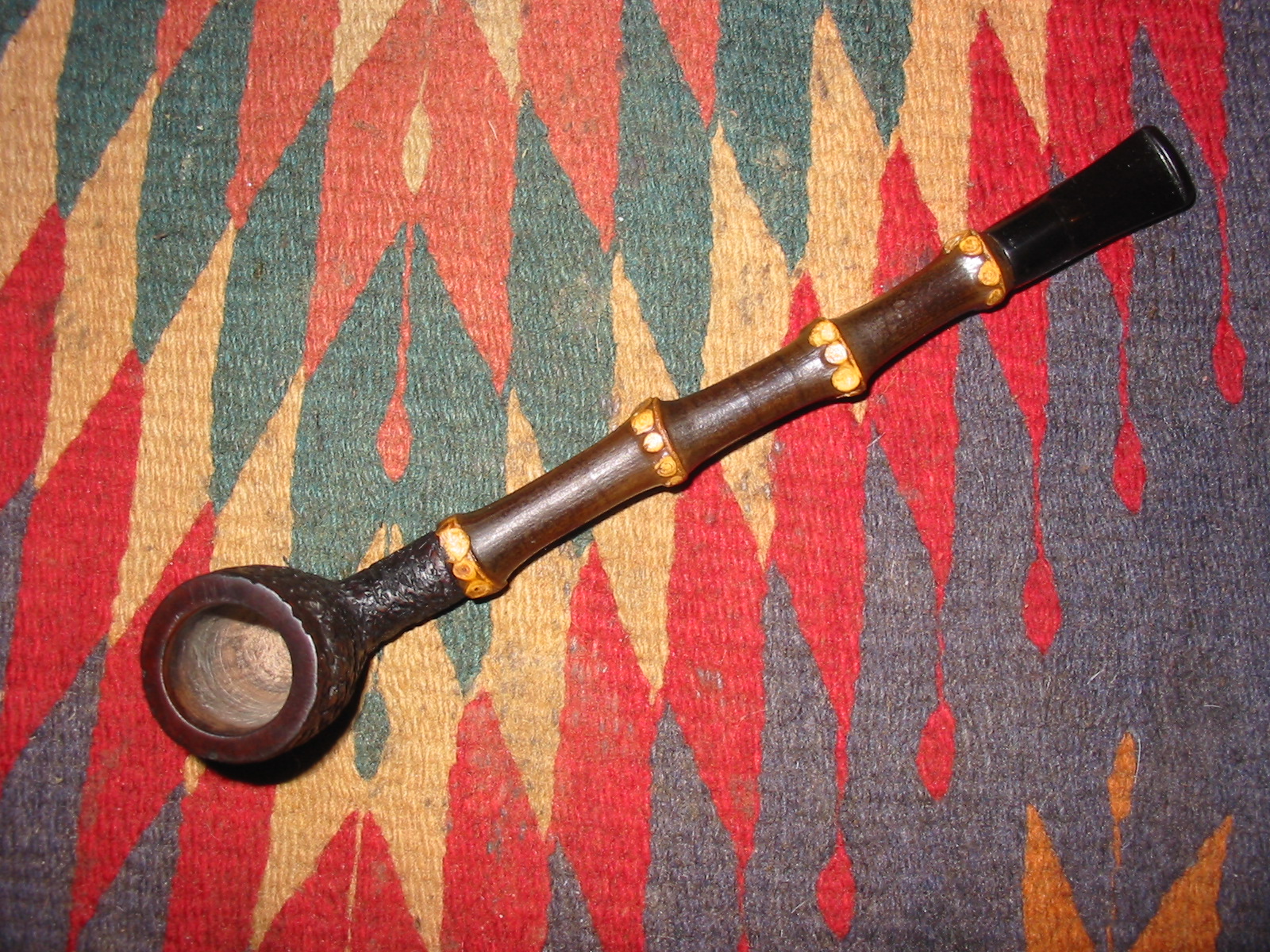
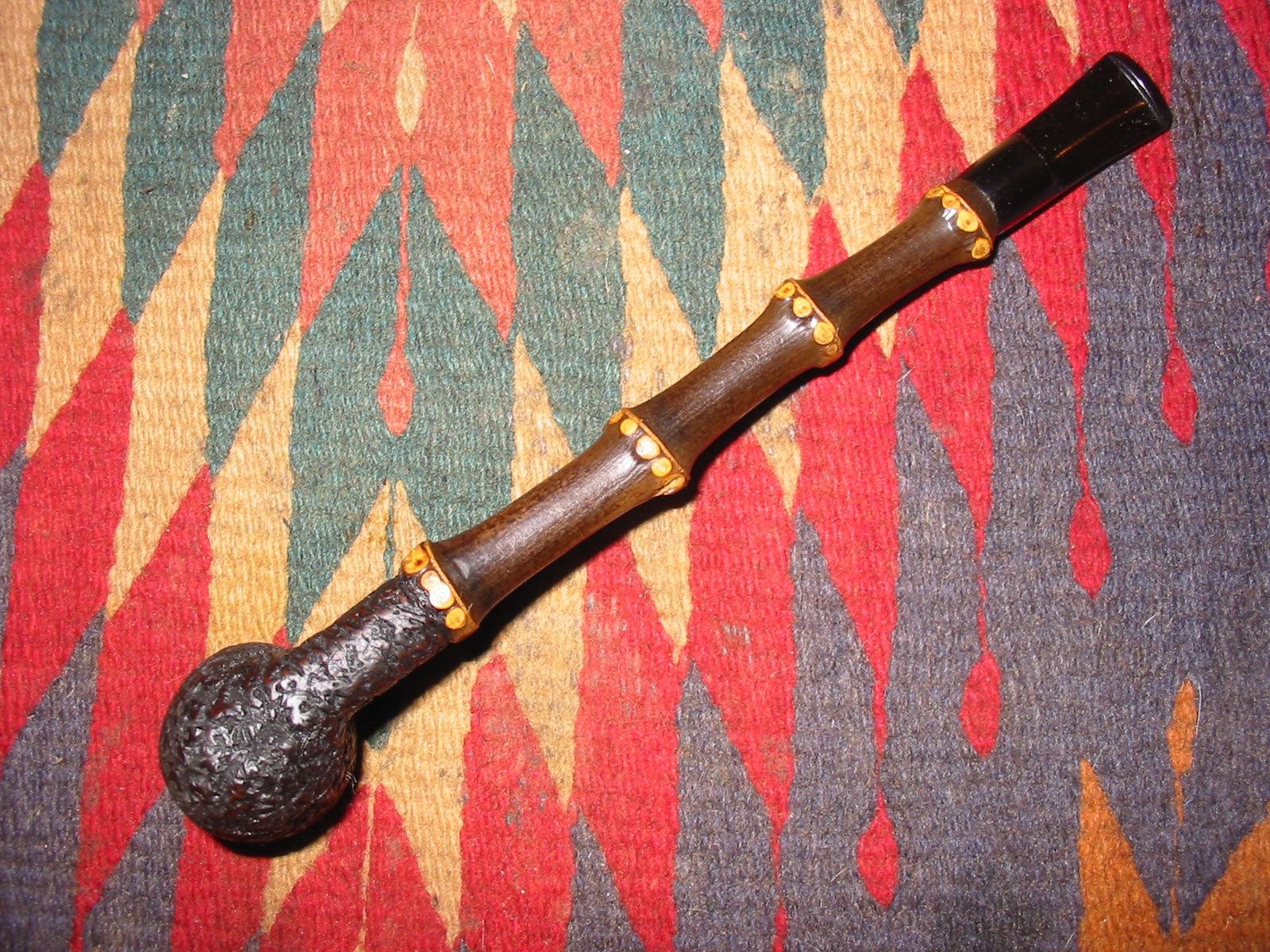
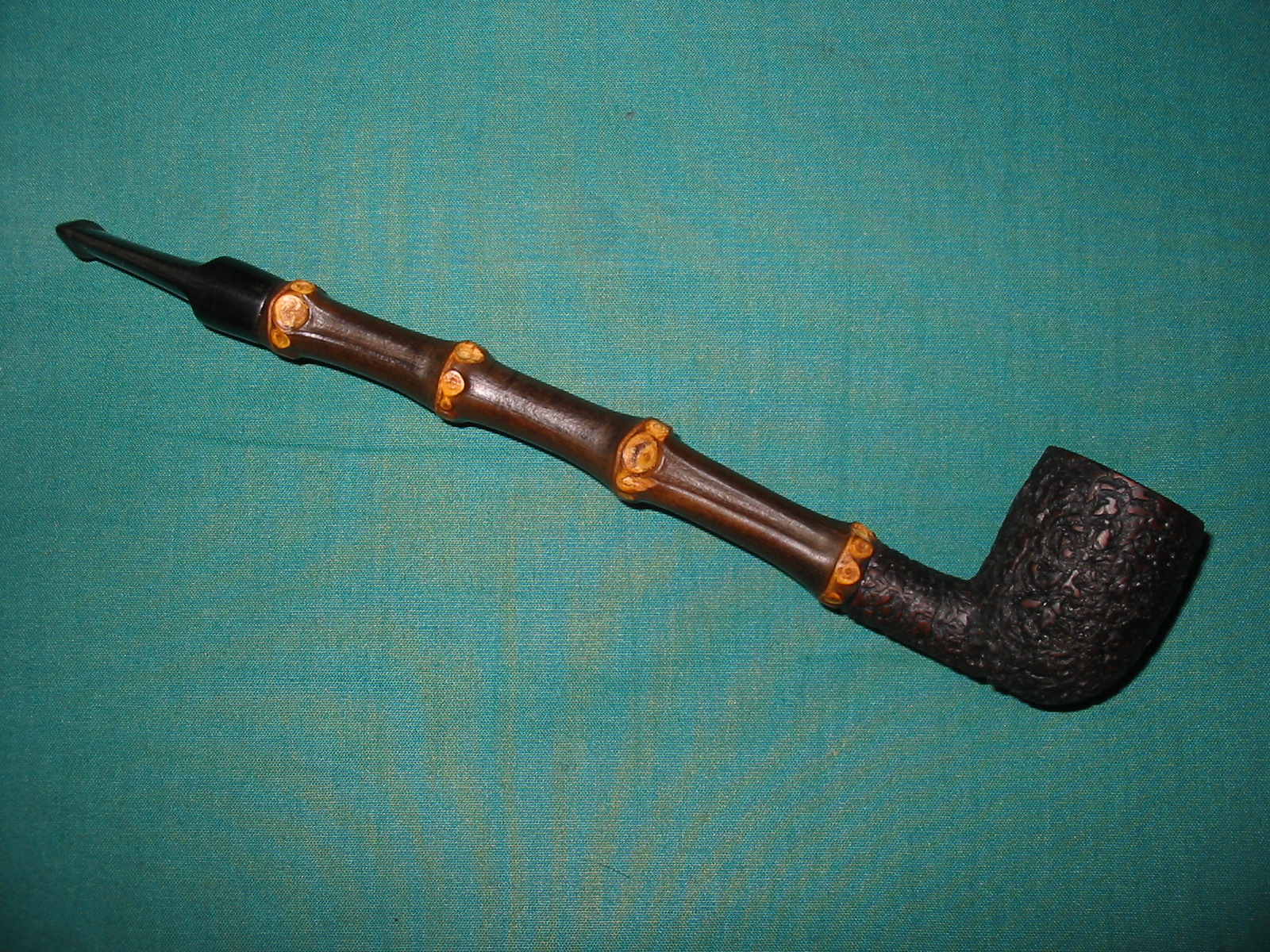
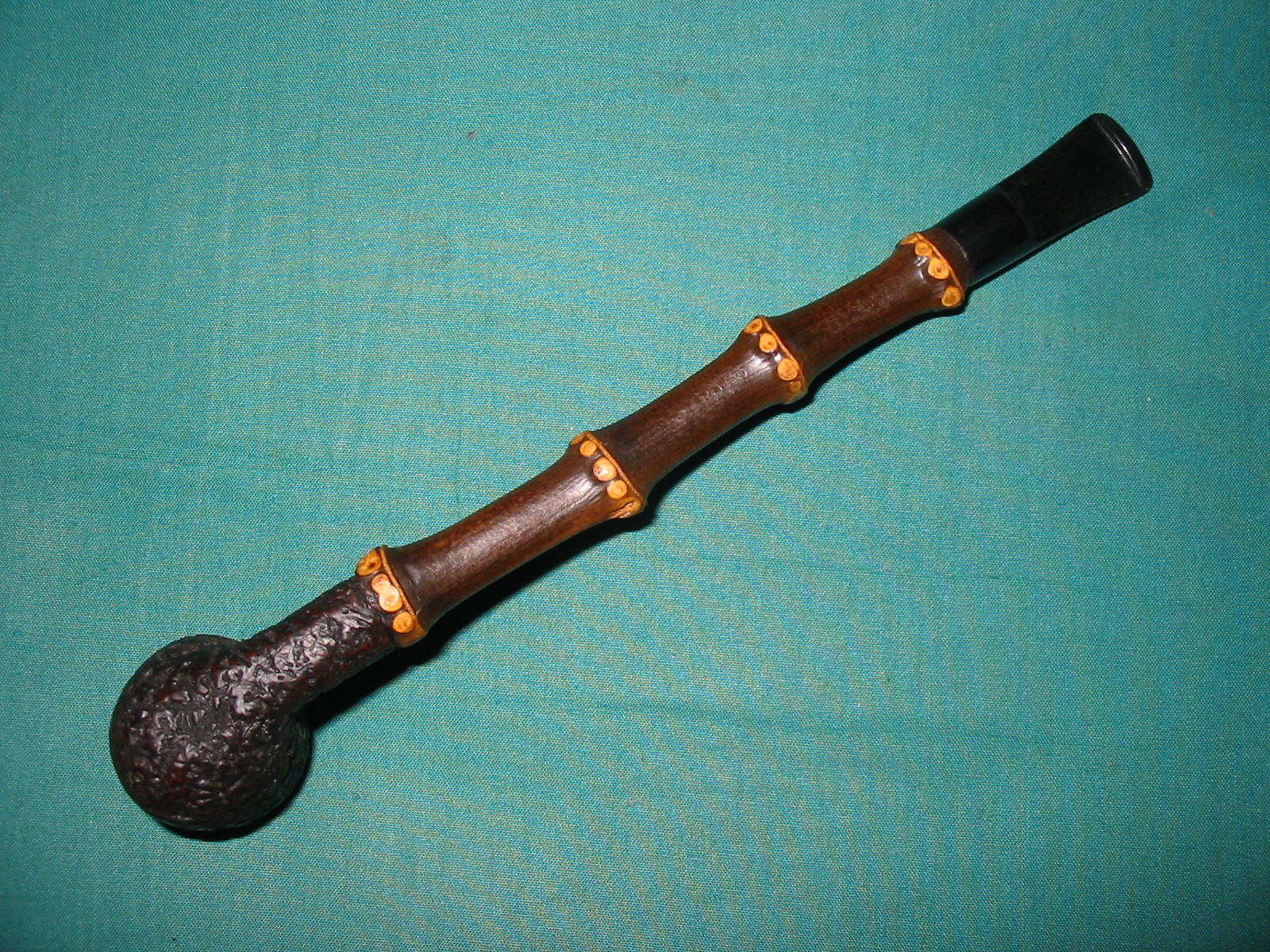
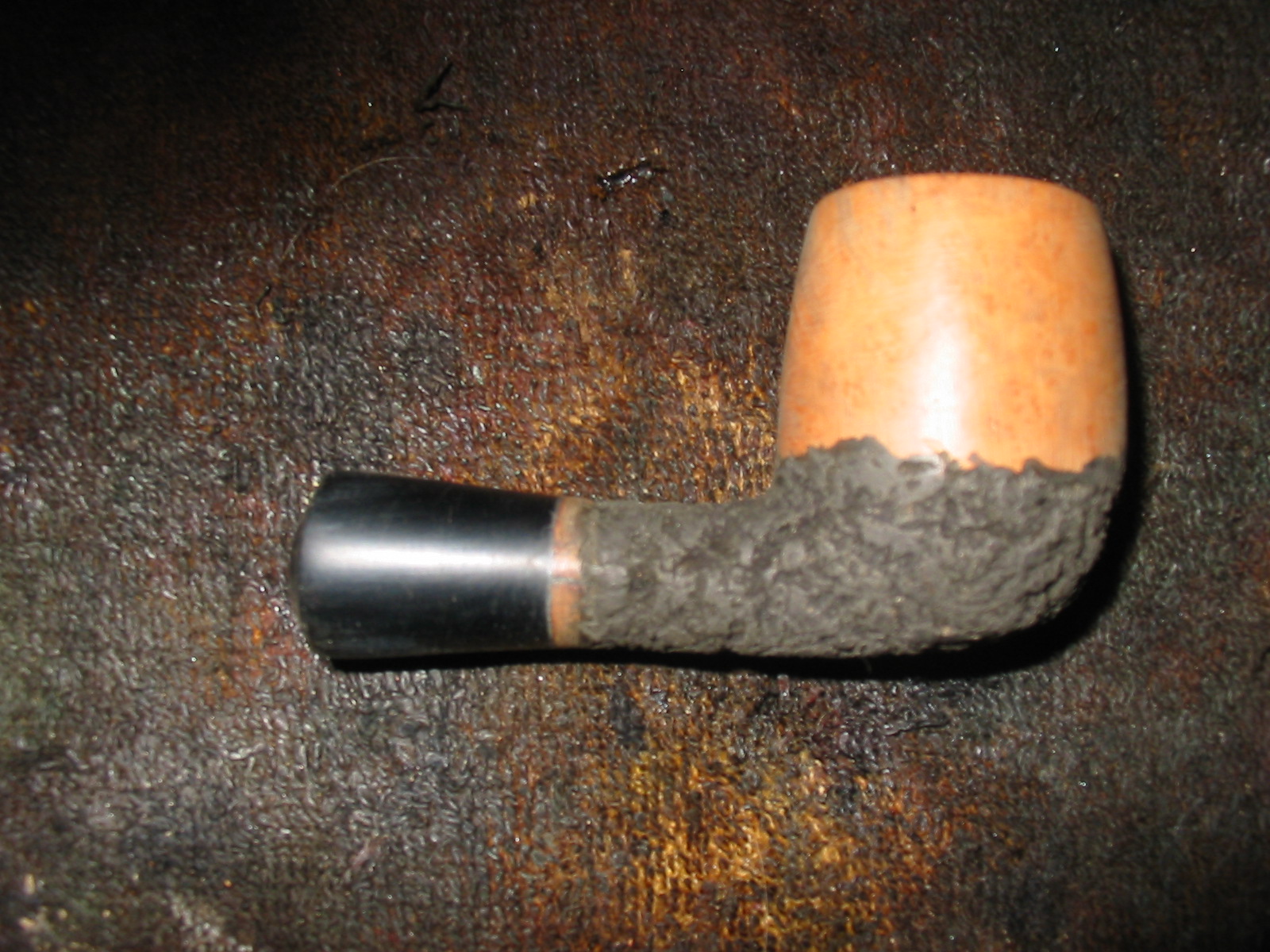
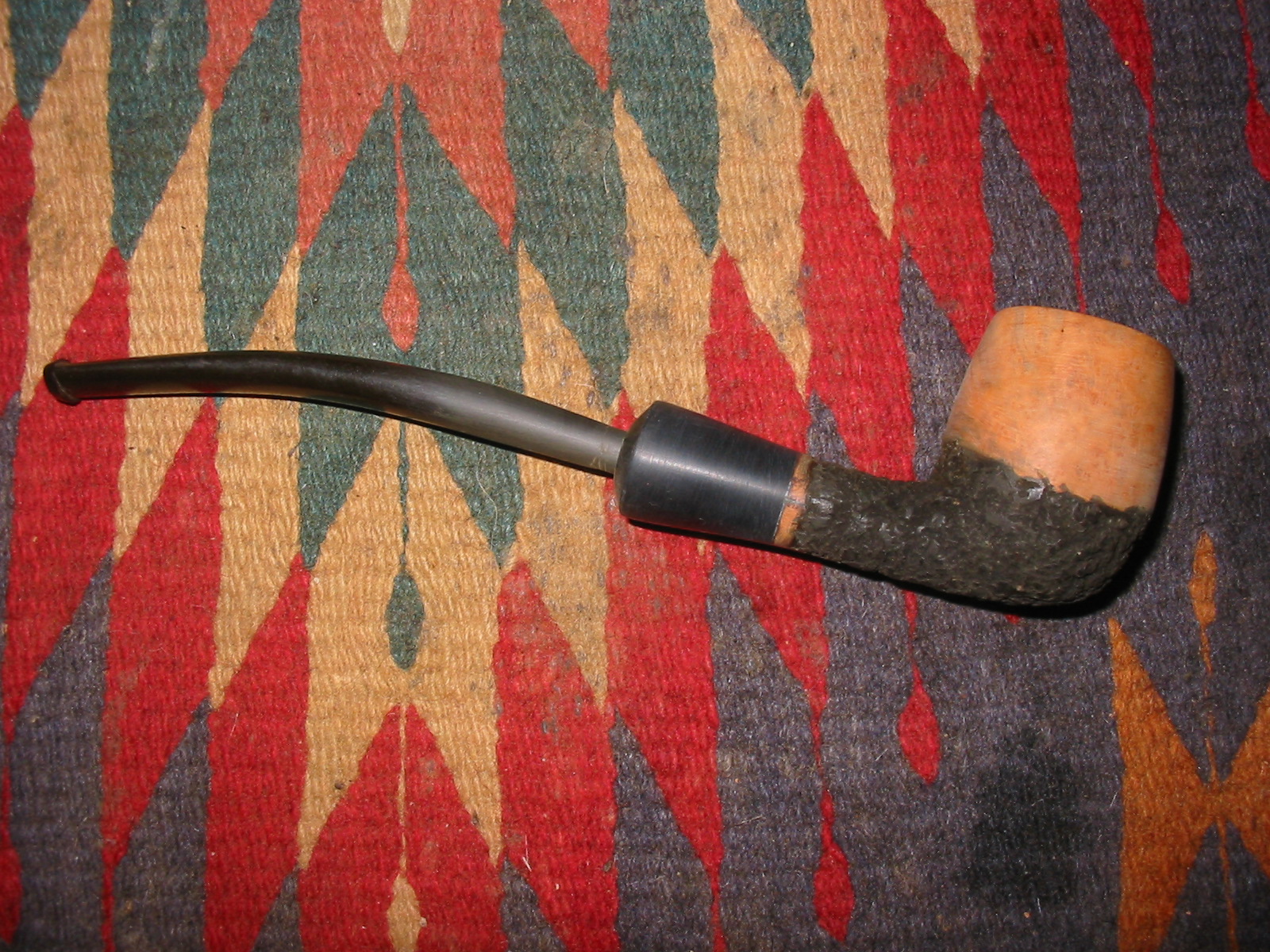
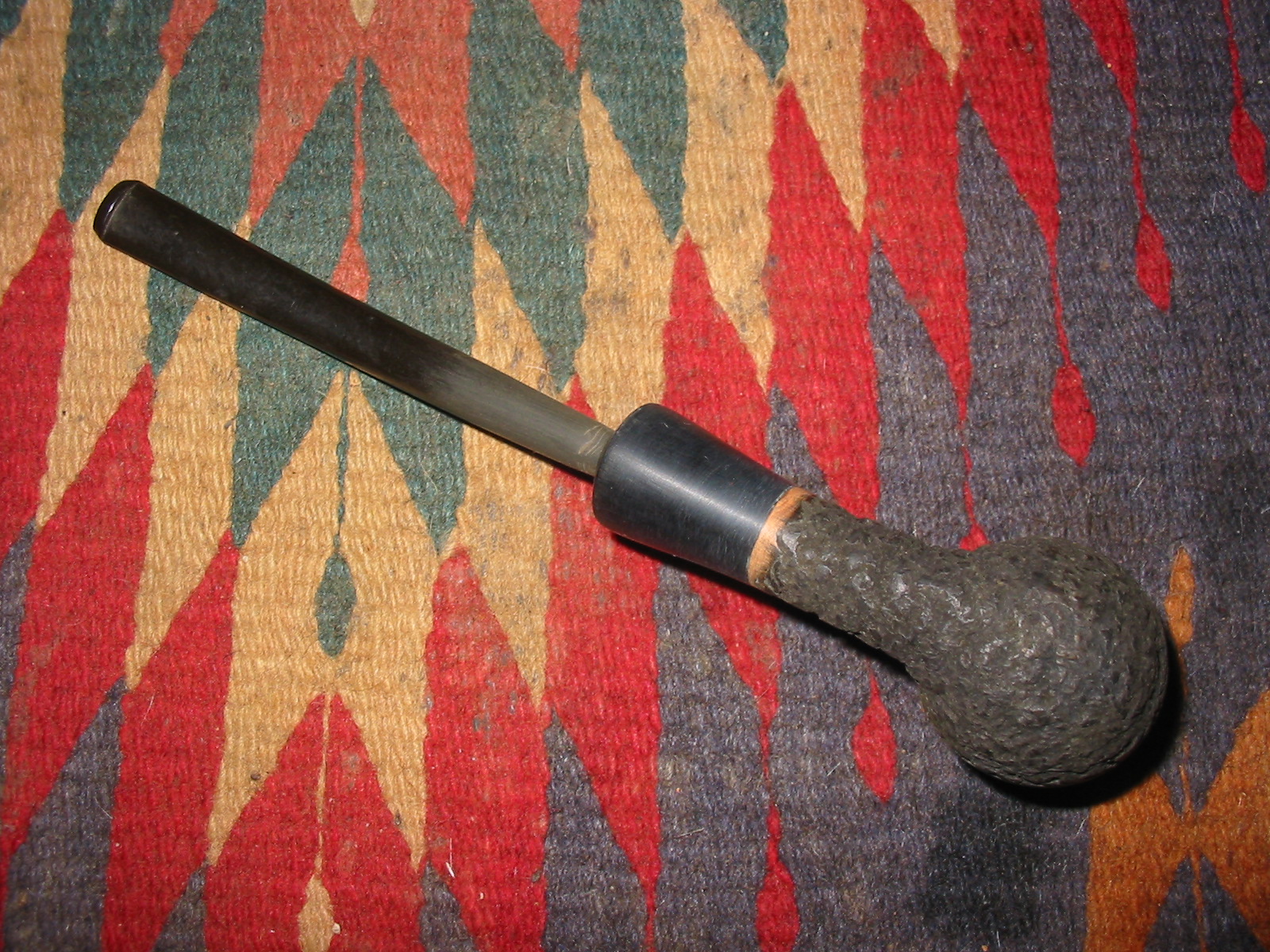
Crafting a Bamboo Shank Briar Mini Churchwarden


Blog by Steve Laug

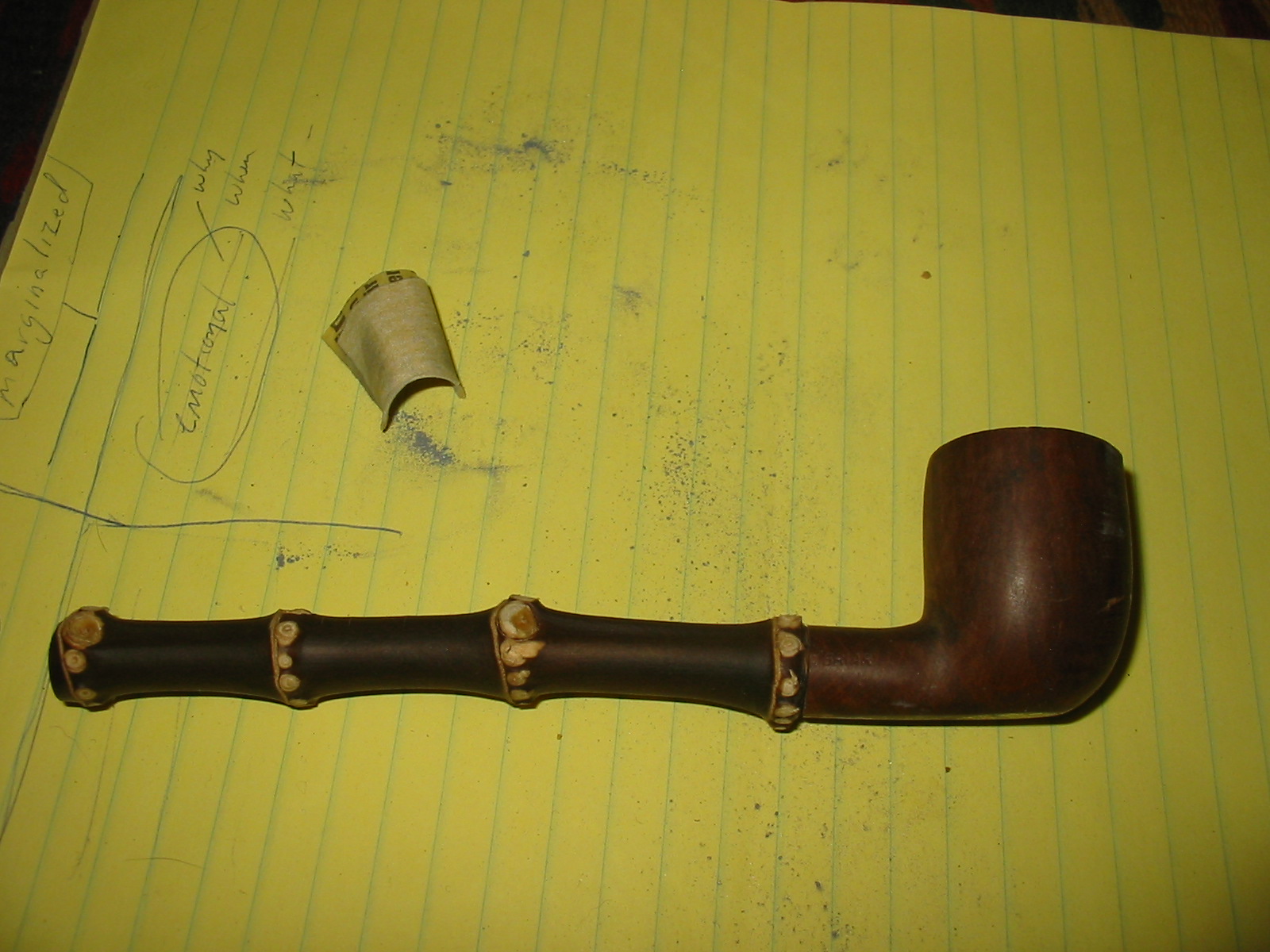
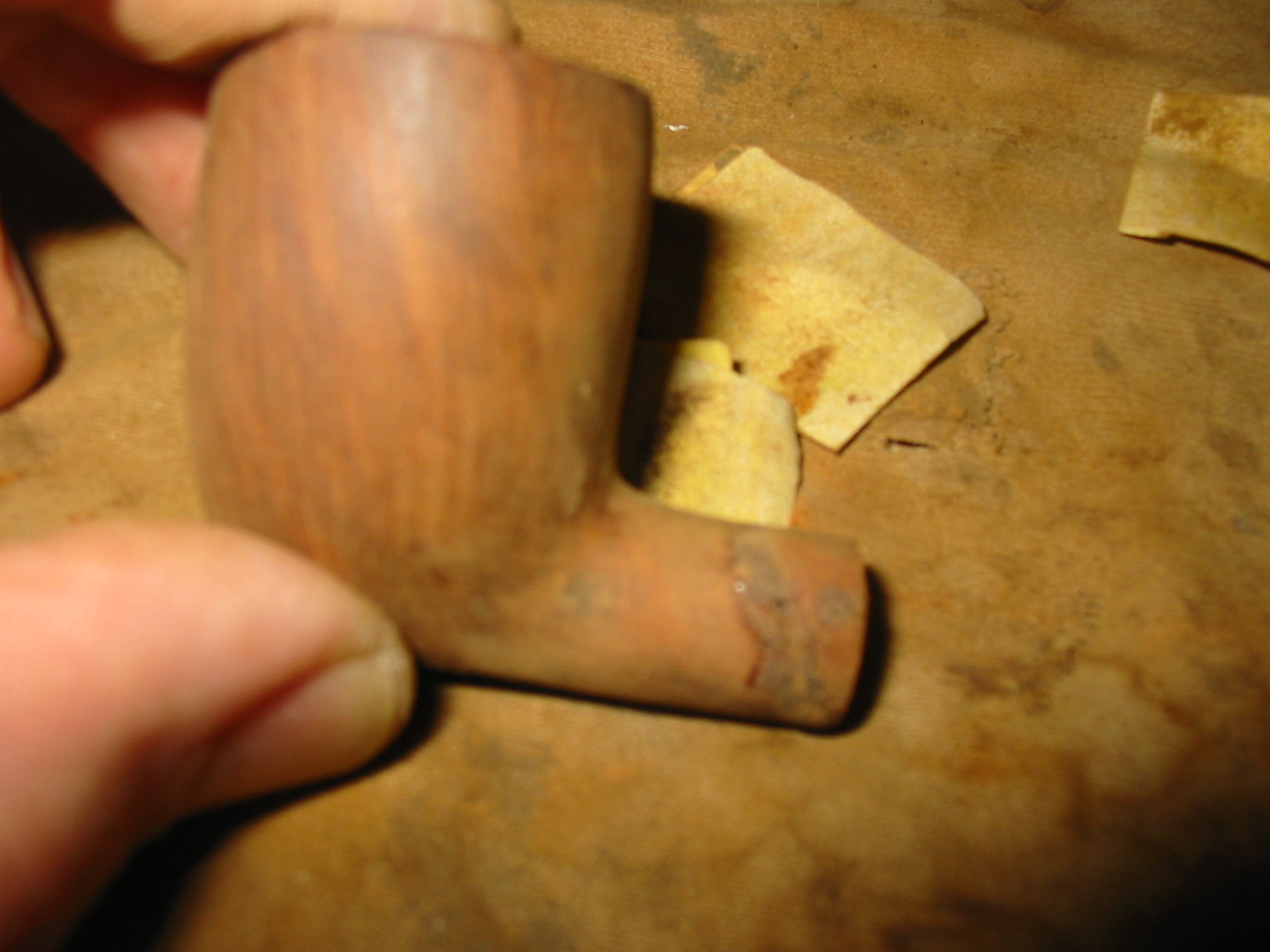
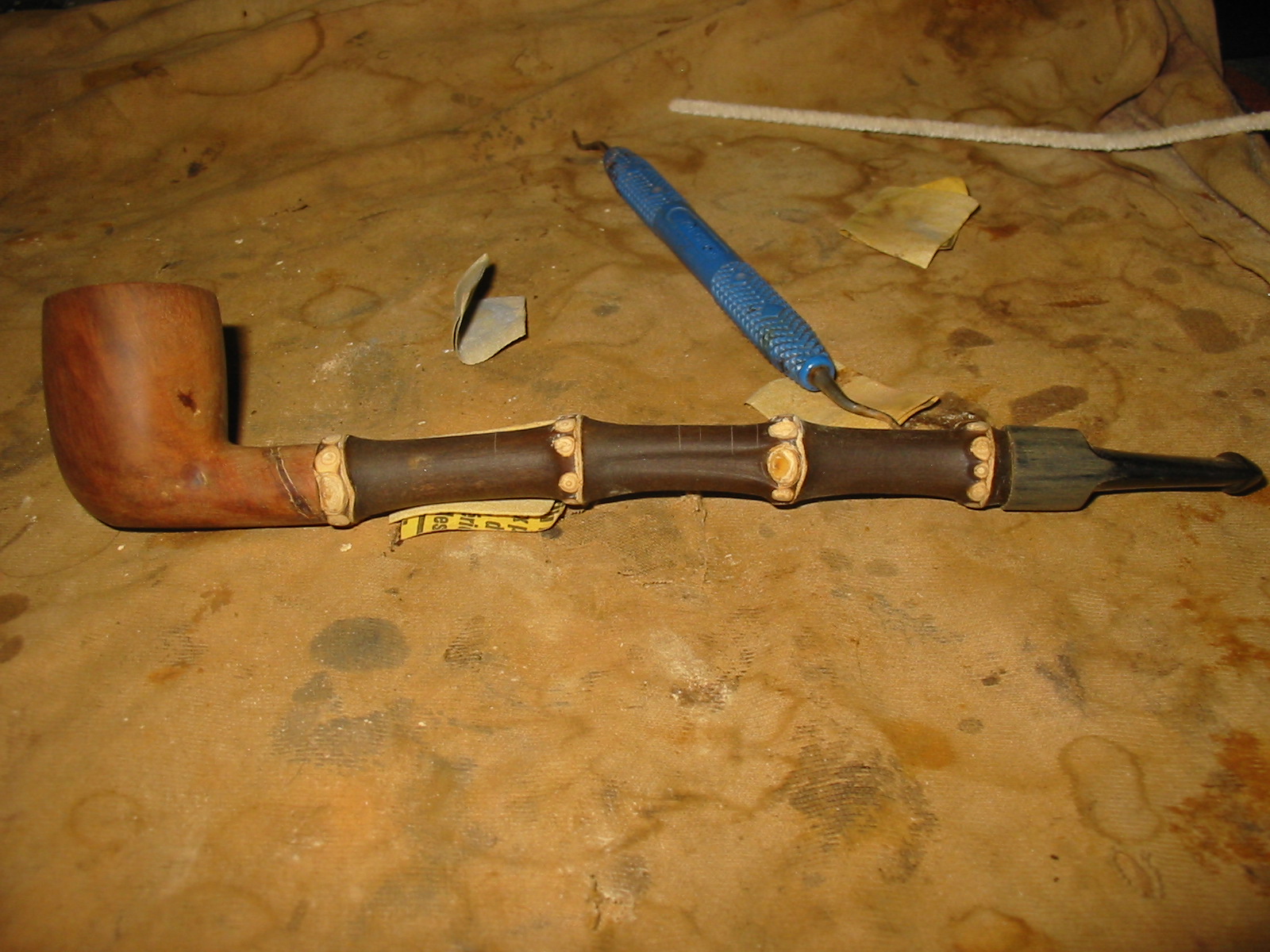
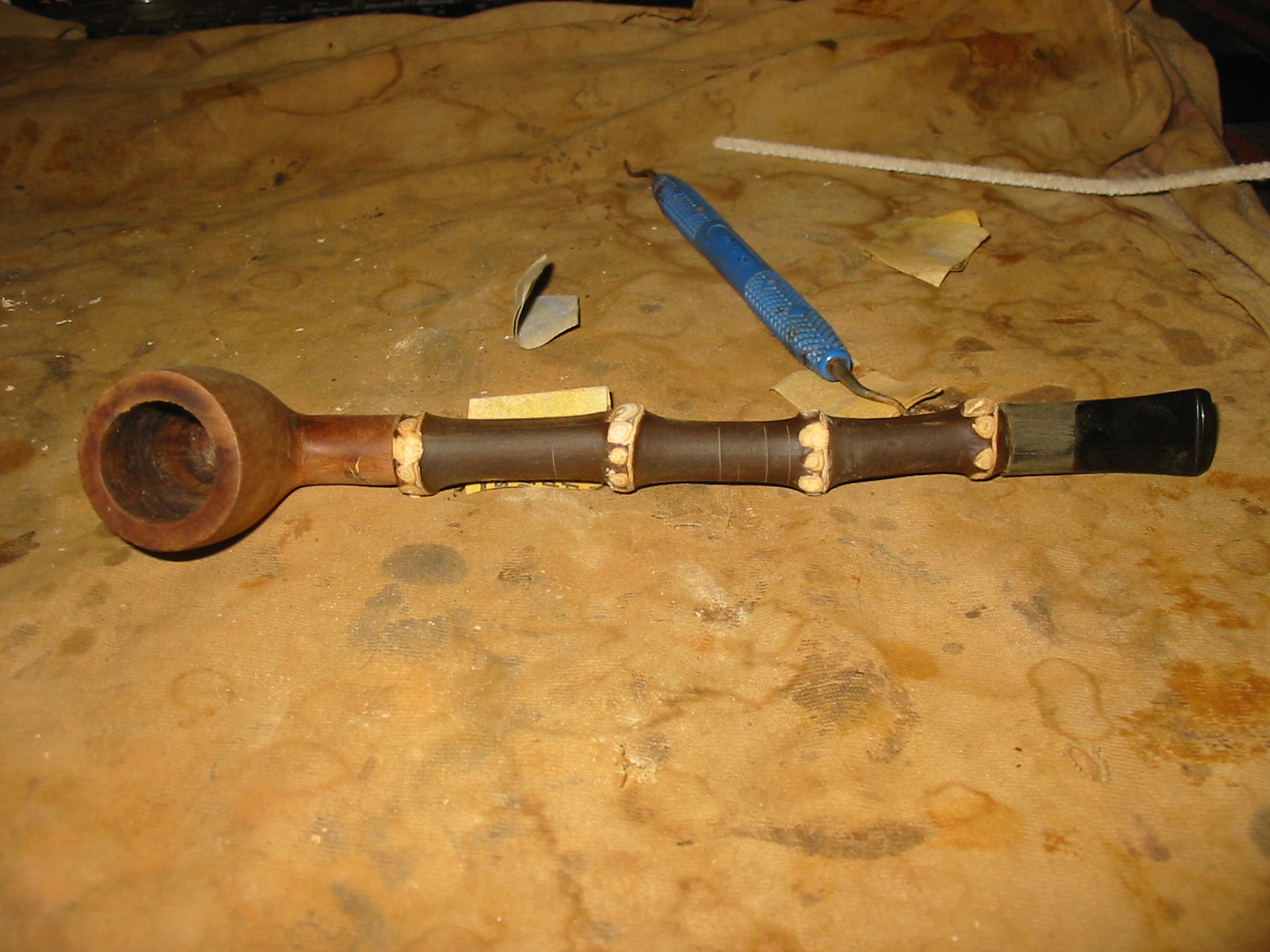
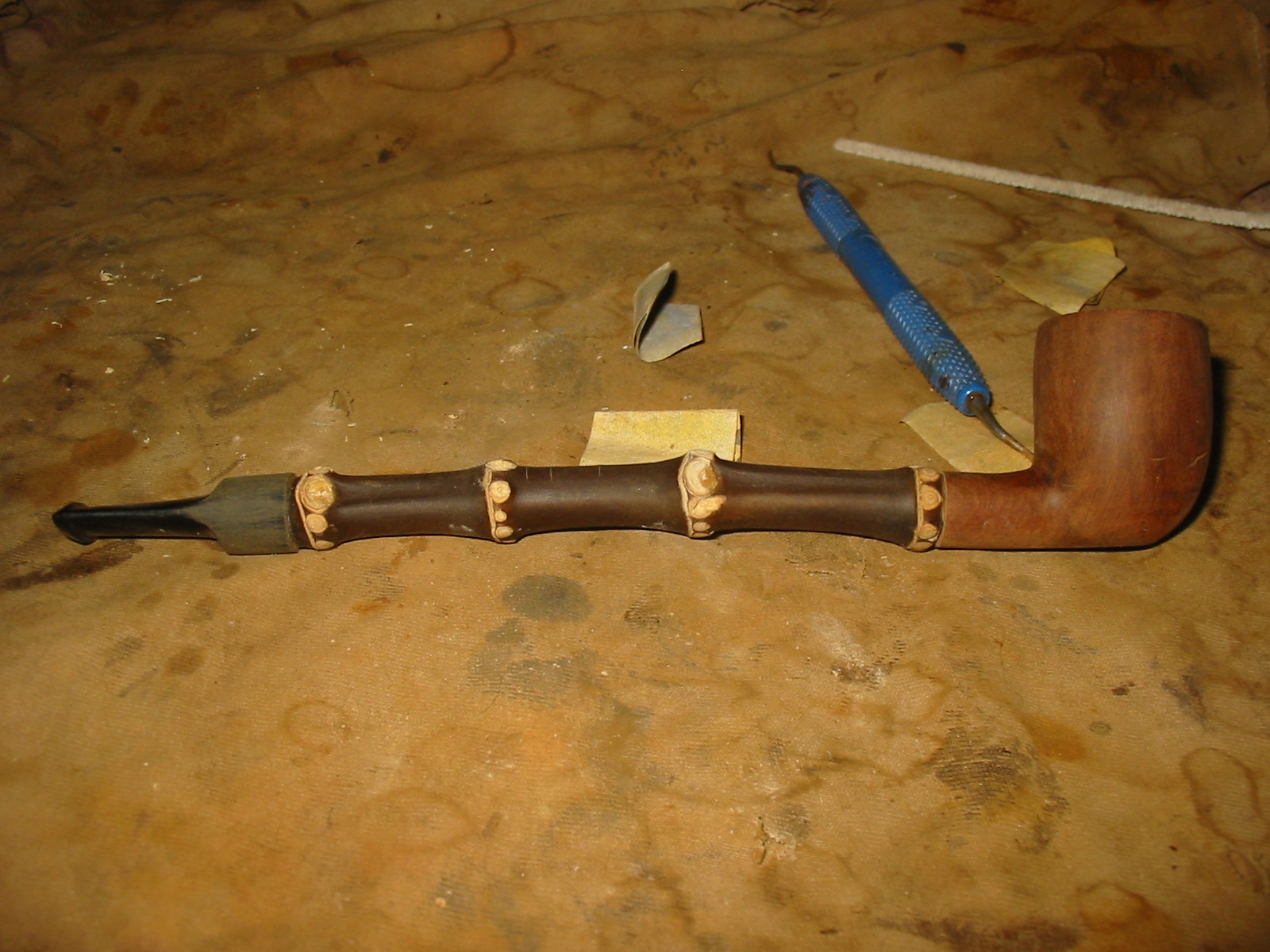
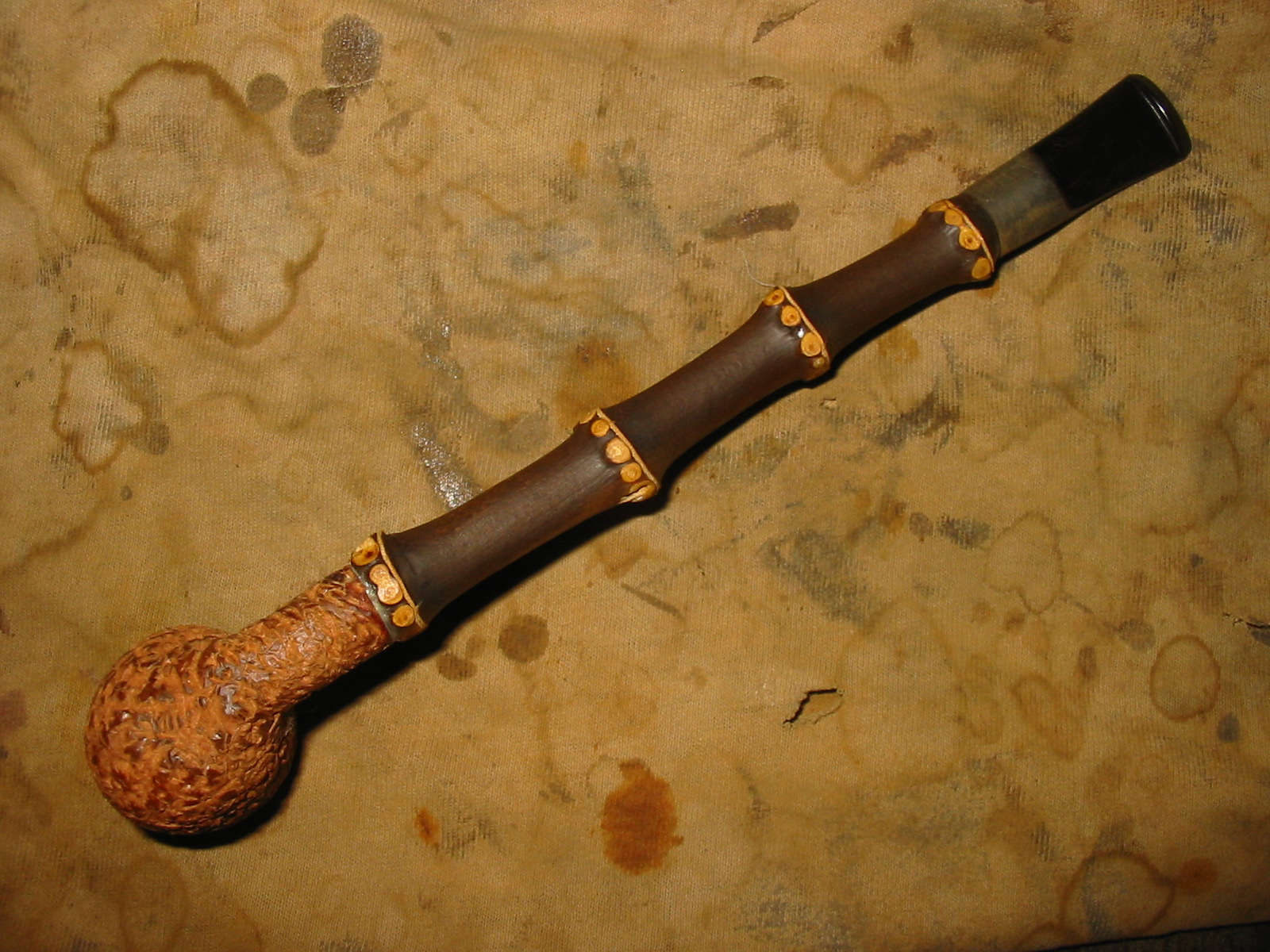
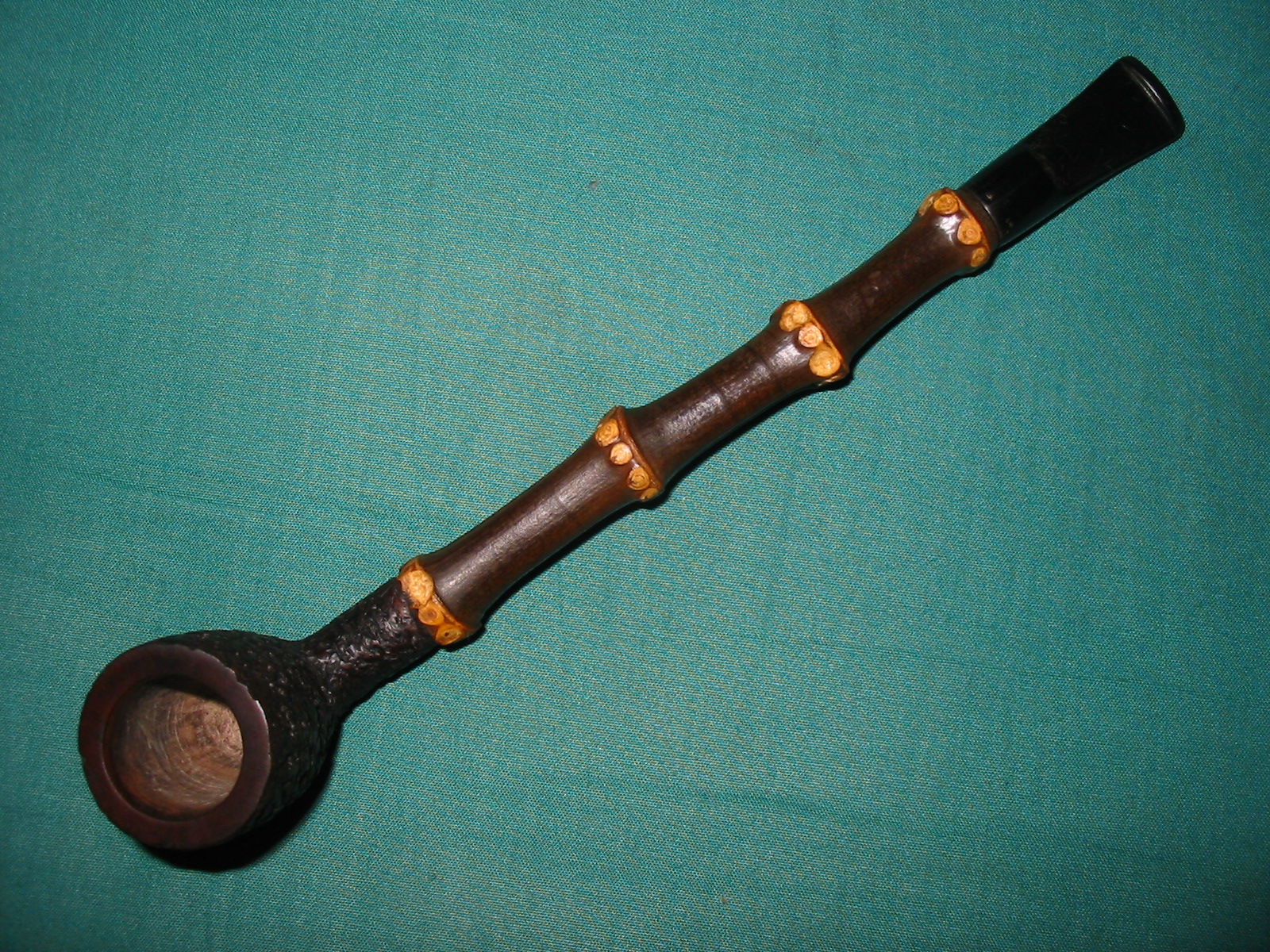
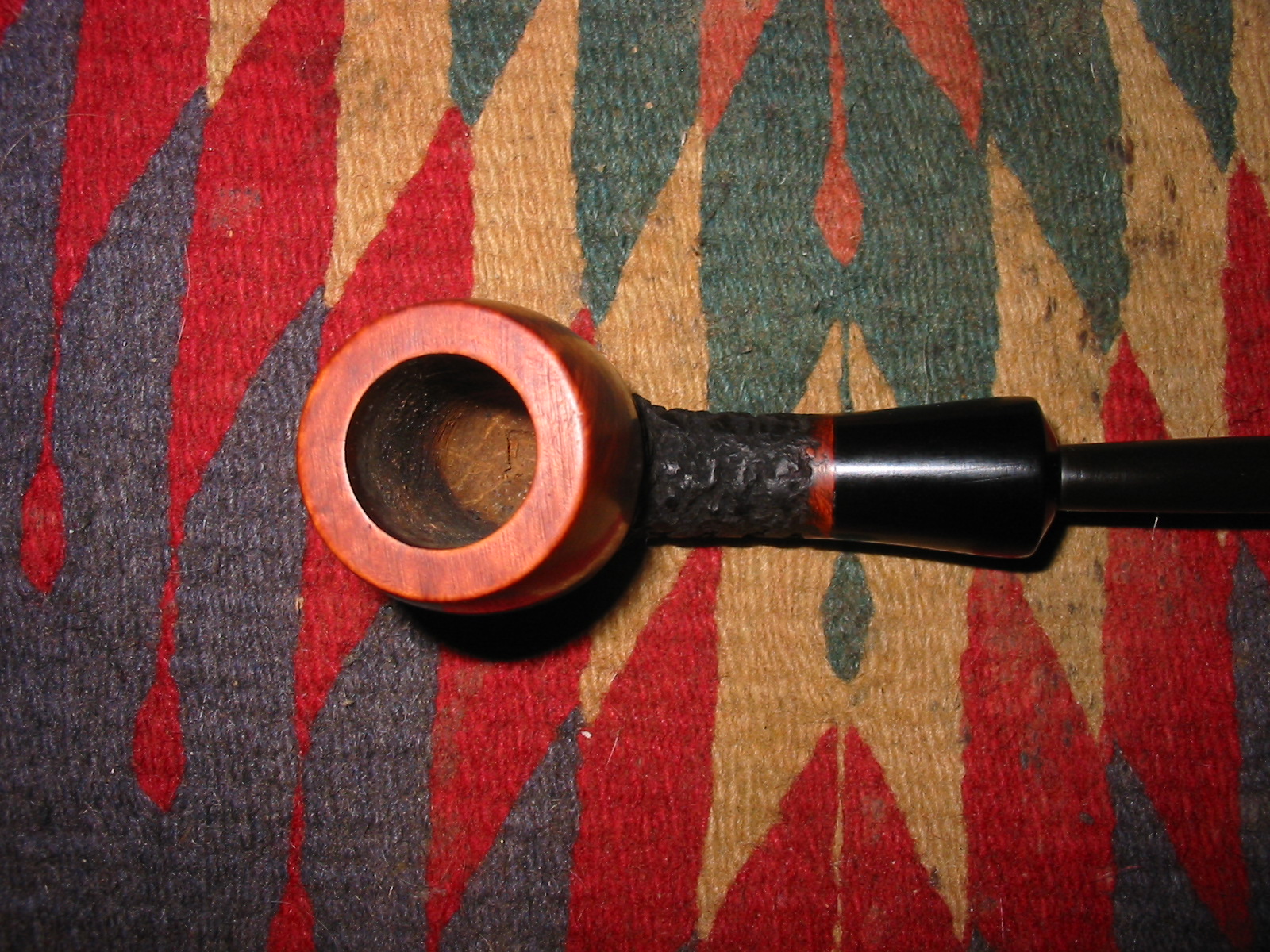
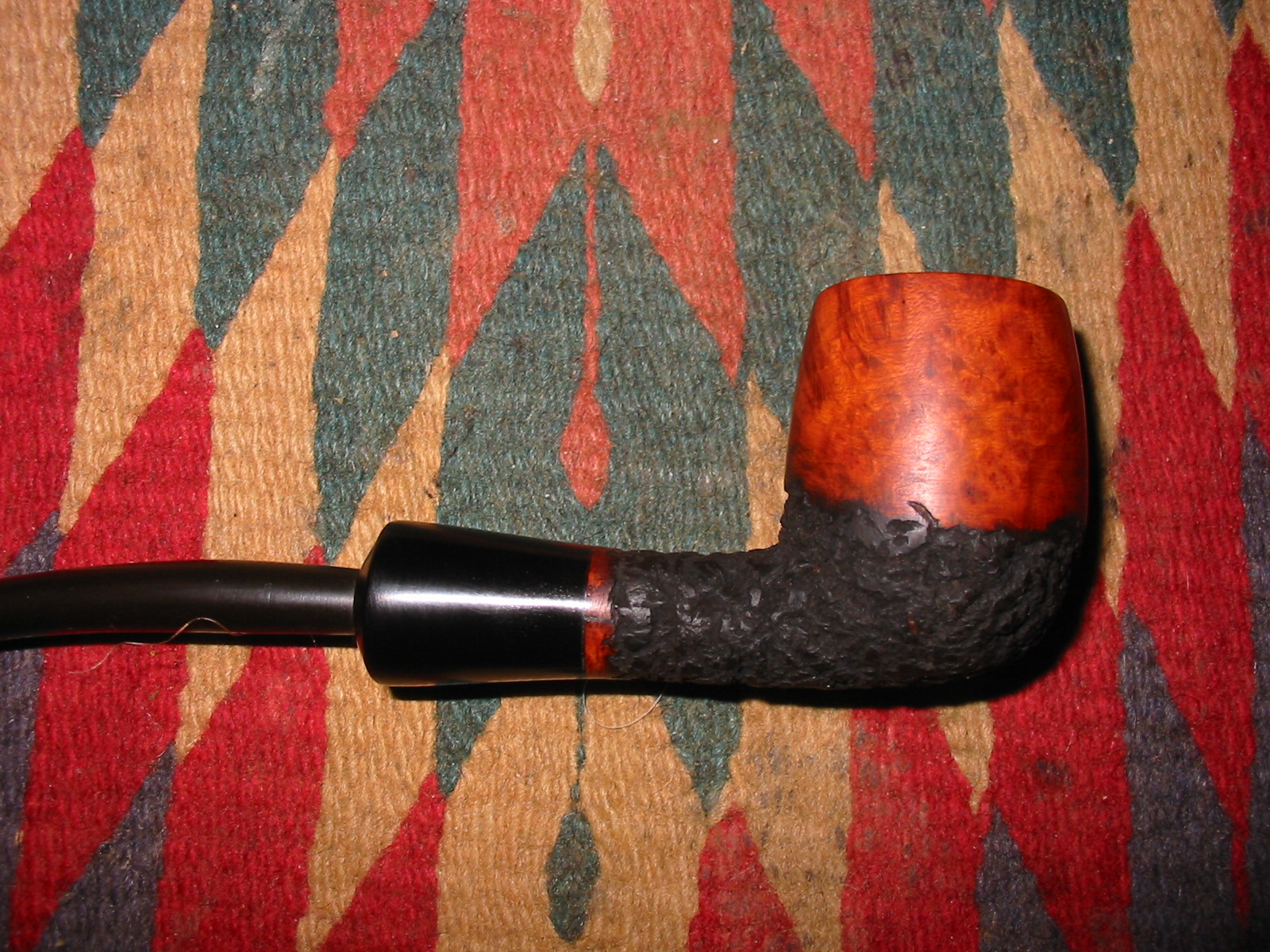
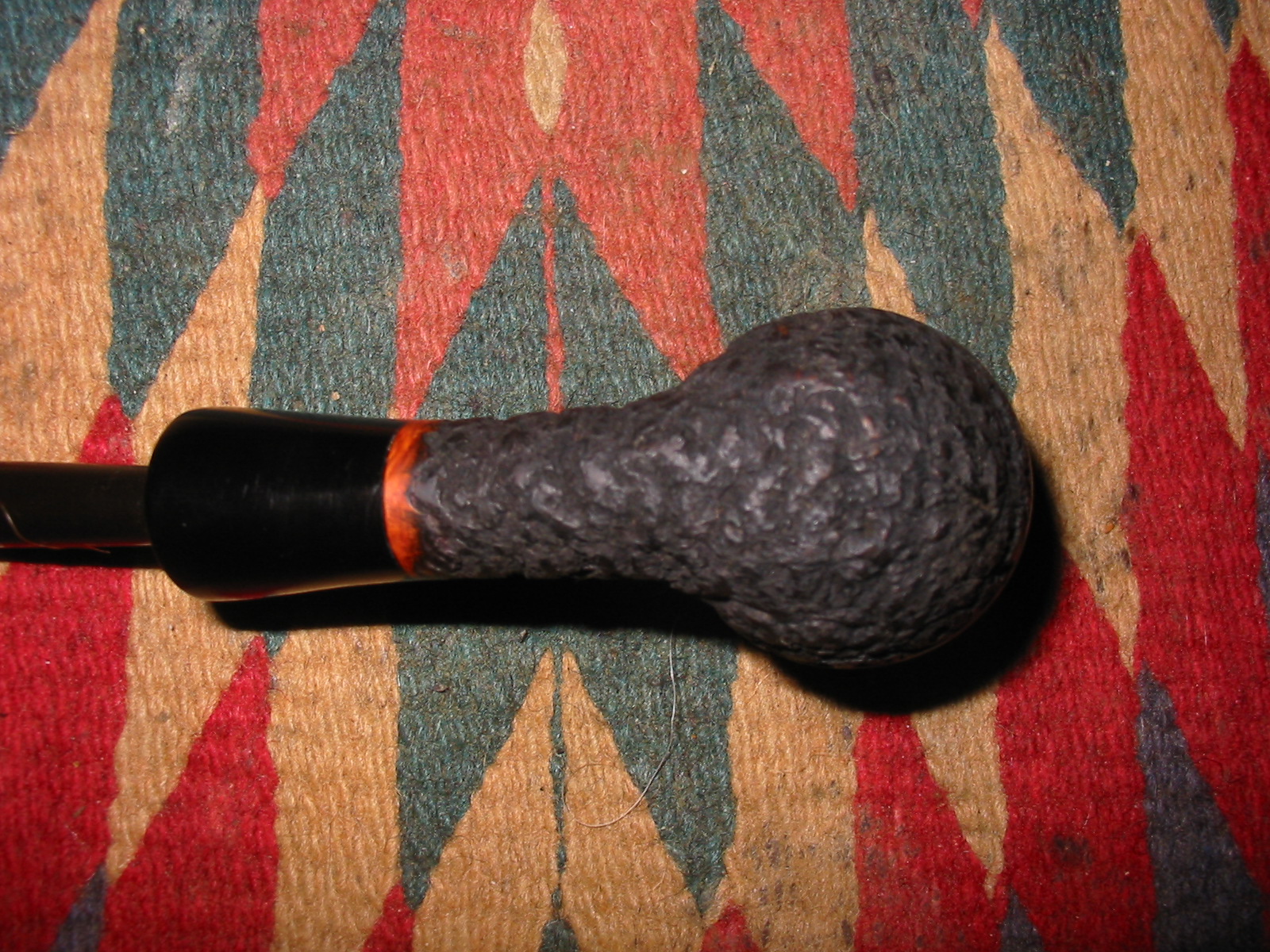
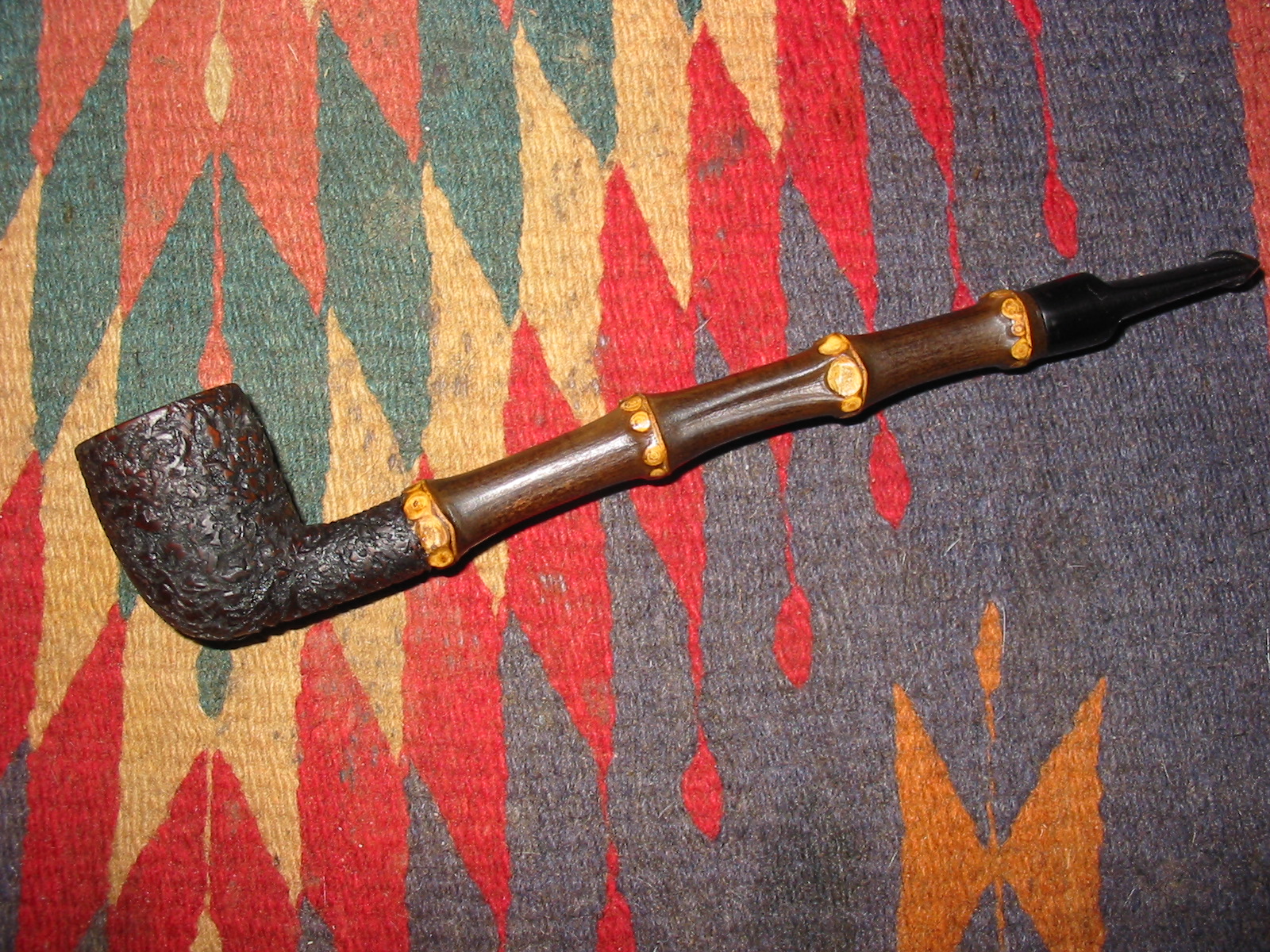
I had all the parts to do a bit of an experiment. I had a broken shank briar pipe, a long piece of black bamboo and an assortment of stems to choose from to see if I could connect all the pieces and make a workable smoking pipe. Putting together the pieces is reminds me of playing with my old Erector Set when I was a kid. The only limit to what can be put together is your imagination. The bowl came to me with two large gashes in the shank. They were both quite deep and both had been repaired by fills. There was a metal threaded mortise in the shank for a threaded tenon. While I was cleaning up the bowl the shank fell off in my hands. I put it in the cupboard as I expected I could scavenge some briar for repairing burn outs in the future. It sat there for more than a week before I began to wonder if I couldn’t do something with it. I went through my parts drawer and found the piece of black bamboo that had been sitting for quite a few years waiting for the right moment. I brought the bowl out and put the two pieces side by side and kind of liked what I saw. The end product would be a four knuckle bamboo mini Churchwarden pipe. It would be extremely lightweight and might actually end up looking quite nice. Now it was time to start working.
IMG_5869

IMG_5870

IMG_5871
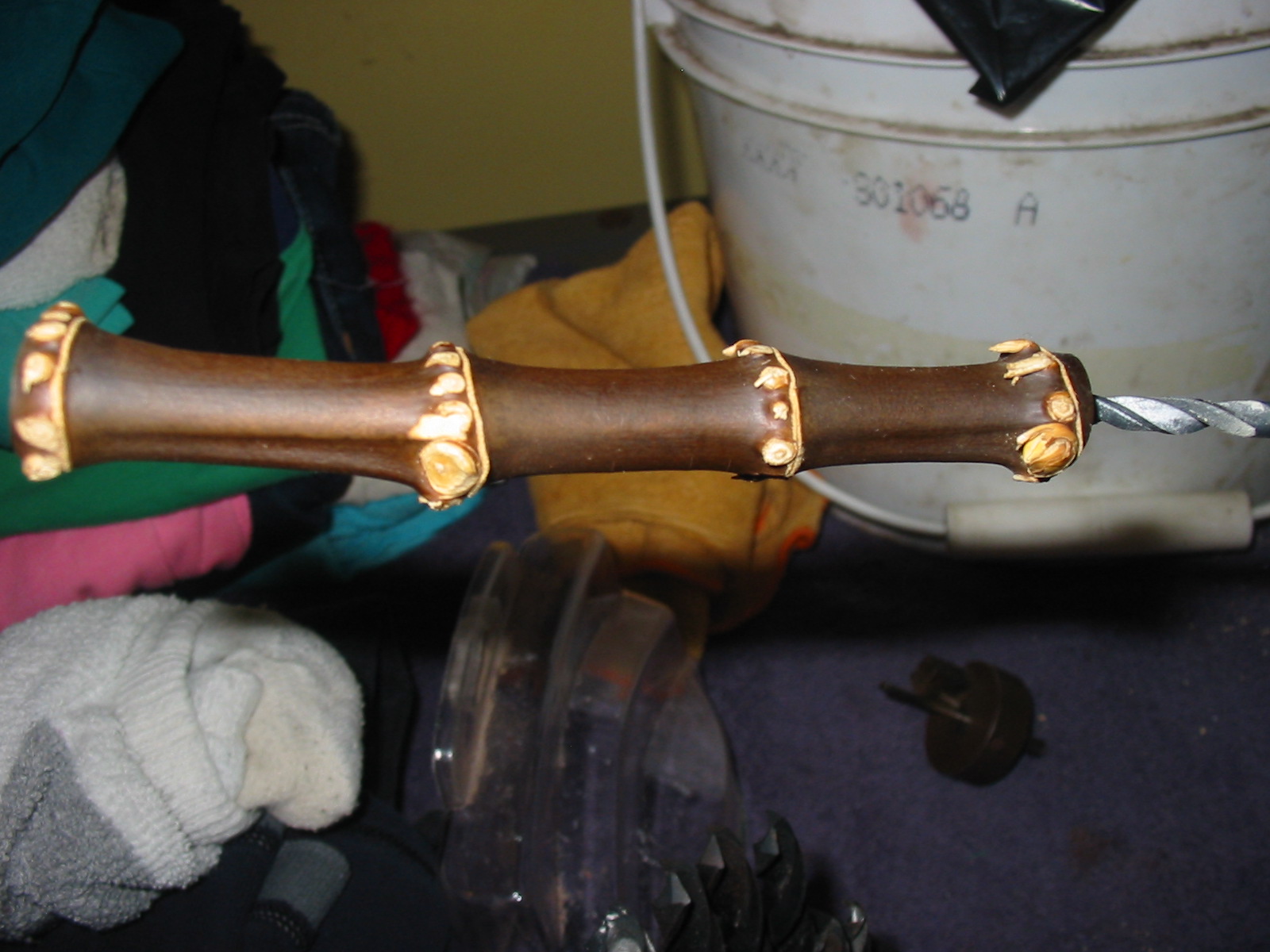
I drilled out the inside of the bamboo with an 11/64 inch drill bit. I then drilled out the end that would meet the bowl with a ¼ inch and then a 3/8 inch bit so that I could use a metal tenon I had saved from a previous pipe. Once the drilling was done the tenon fit the newly drilled bamboo mortise very well. I faced the end of the broken shank so that the bamboo would fit against it smoothly.
IMG_5872

IMG_5873
The metal tenon also fit in the shank of the bowl well. The length was perfect as it fit against the airway in the end of the shank next to the bowl bottom. There was no gap between the two so the smoked would flow smoothly down the shank of the pipe. I cleaned out the bamboo airway with pipe cleaners and isopropyl alcohol and then put the pipe together and checked the draw. It was open and was an effortless draw.
IMG_5874
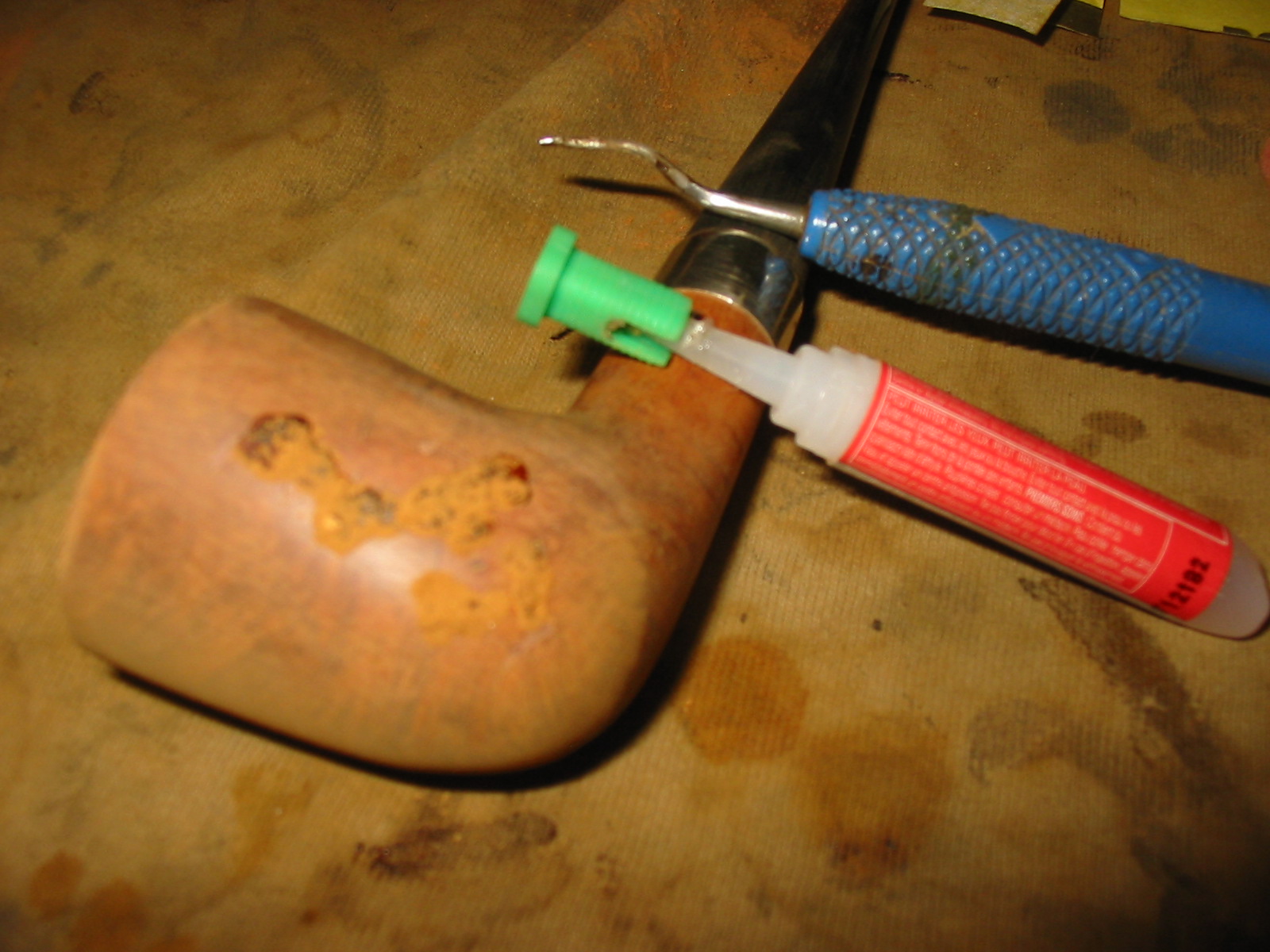
I repaired the fill on the side of the shank as it was not even with the surface of the shank. I used a superglue and briar dust patch on it. Some might wonder why I did not cut back the shank and eliminate the damaged area. I chose not to do that as I wanted the shank to have some length to it in contrast to the long bamboo section. I also planned on rusticating the entire bowl so the damage would be covered. The insert of the metal tenon would stabilize the area as well and the shank repair would be solid.
IMG_5875

IMG_5876

IMG_5877
I took the bamboo shank off the bowl and sanded the bowl with 220 grit sandpaper to smooth out the finish. I repaired several of the gouges on the bowl surface with superglue and briar dust. I wanted a smooth canvas to work on when I rusticated the bowl. I then sanded the bowl with a medium grit sanding sponge. The top of the bowl had a slight buildup of tars so I cleaned that with the medium and fine grit sanding sponge. I wiped down the bowl with acetone on cotton pads. I sanded the knuckles on the bamboo to remove the fibers that were still attached and to smooth out the nodules. More work would need to be done on the shank but at least at this point it would be smooth in my hand while I worked on the bowl.
IMG_5878
I set the bowl aside and went through my can of stems to find a nice saddle bit that would look good proportionally with the pipe. I drilled out the stem end of the bamboo with a ¼ inch bit to serve as a mortise for the stem. I turned the tenon on a PIMO tenon turning tool and then hand sanded it. I pushed the stem in place and starting sanding the saddle portion of the stem to get the diameter of the stem and shank to match. I mixed some two part epoxy and glued the metal tenon in place in the bamboo. When it was dry I put the pipe together. I did not epoxy the bowl to the shank at this point as I wanted to be able to remove it work on the rustication. The next three photos show the pipe with all parts in place.
IMG_5879

IMG_5880

IMG_5881
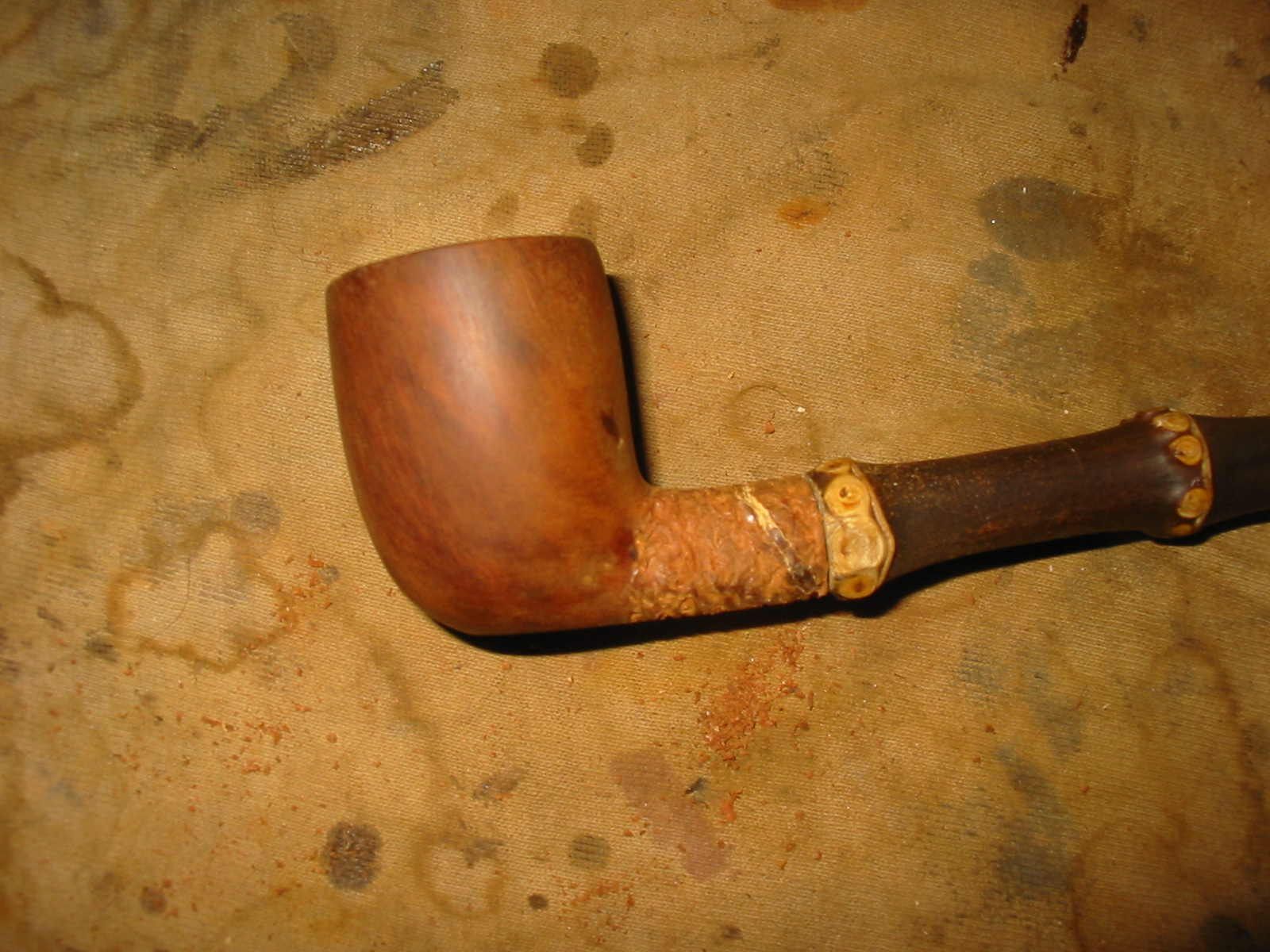
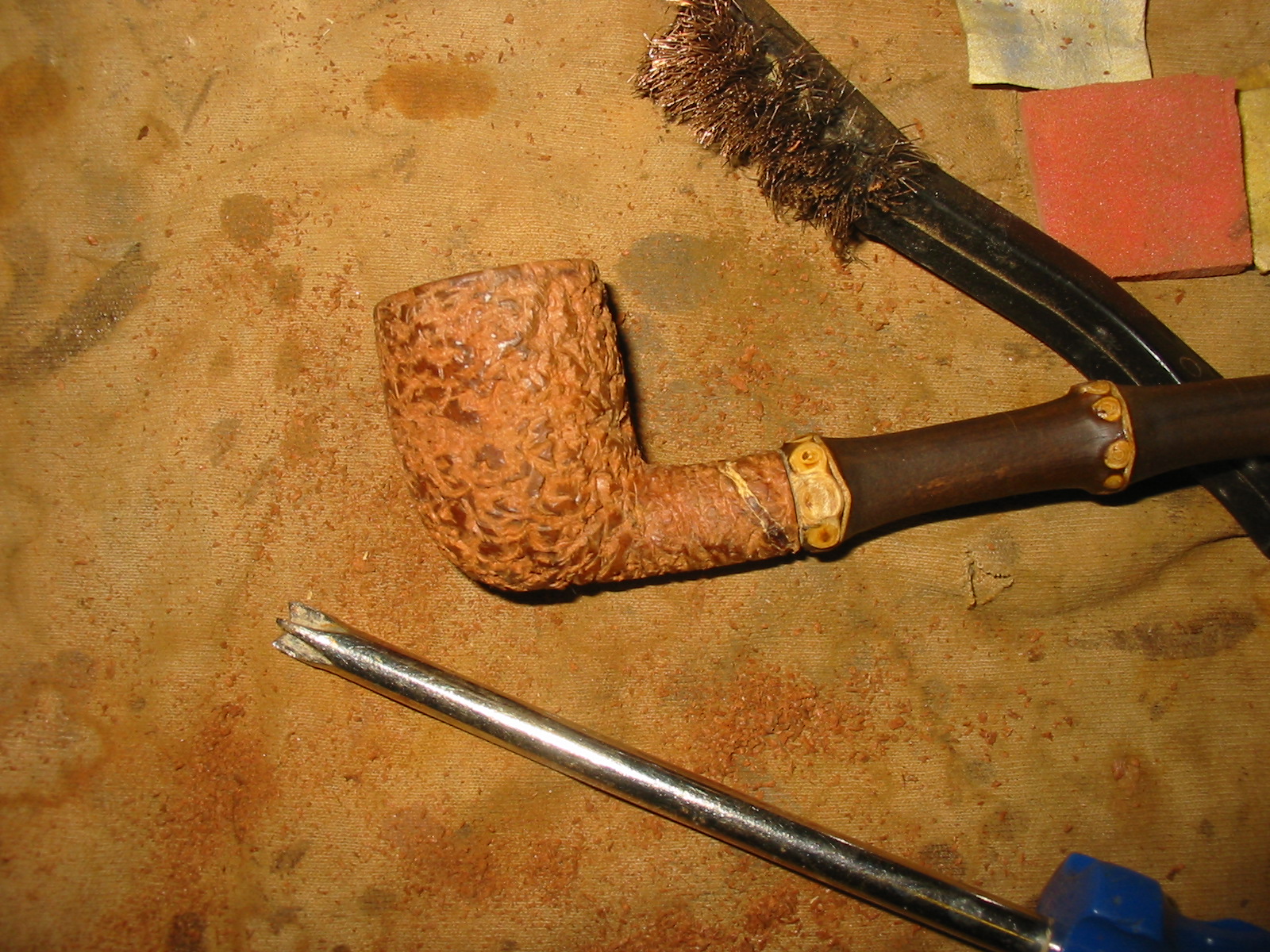
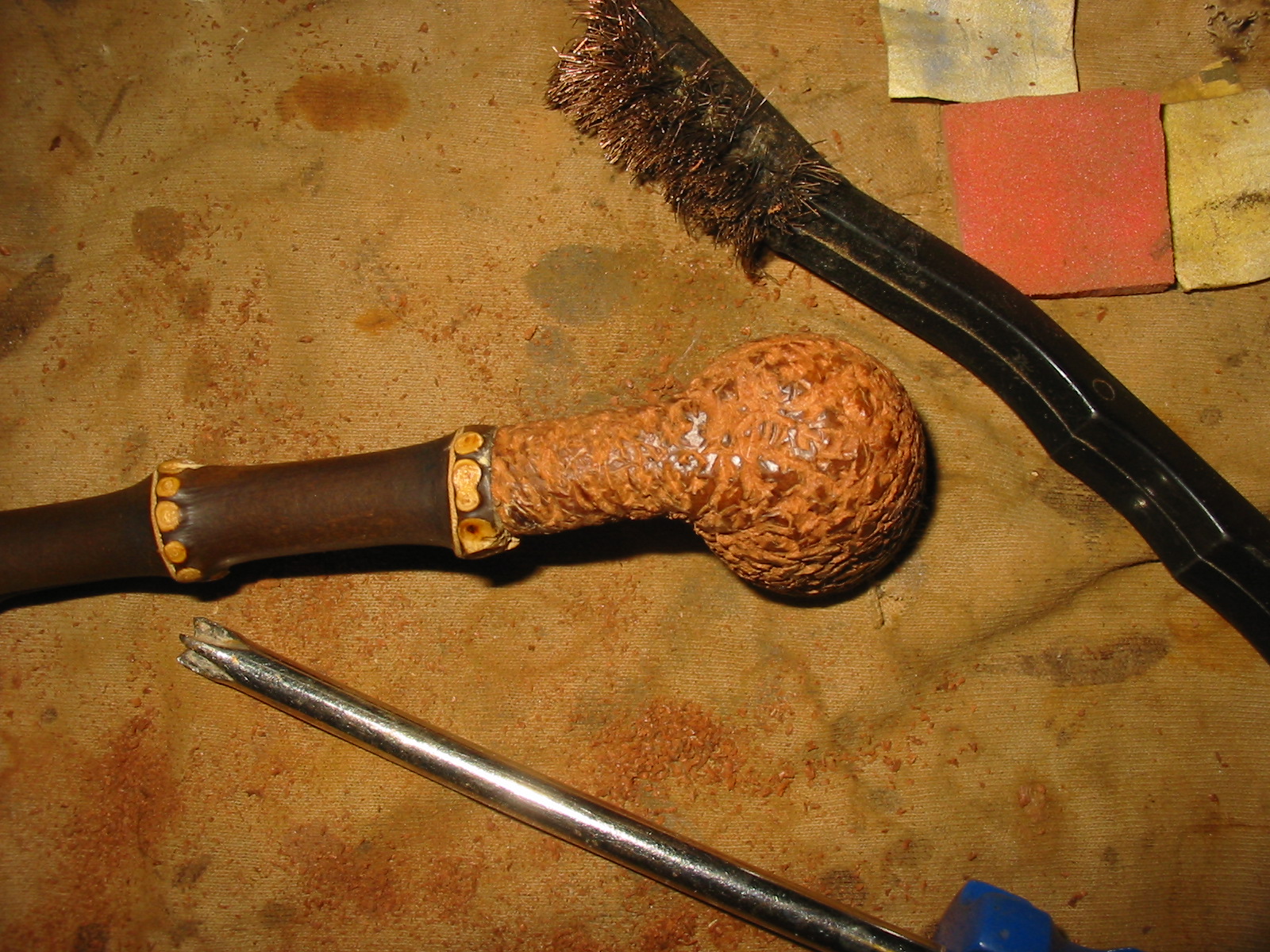
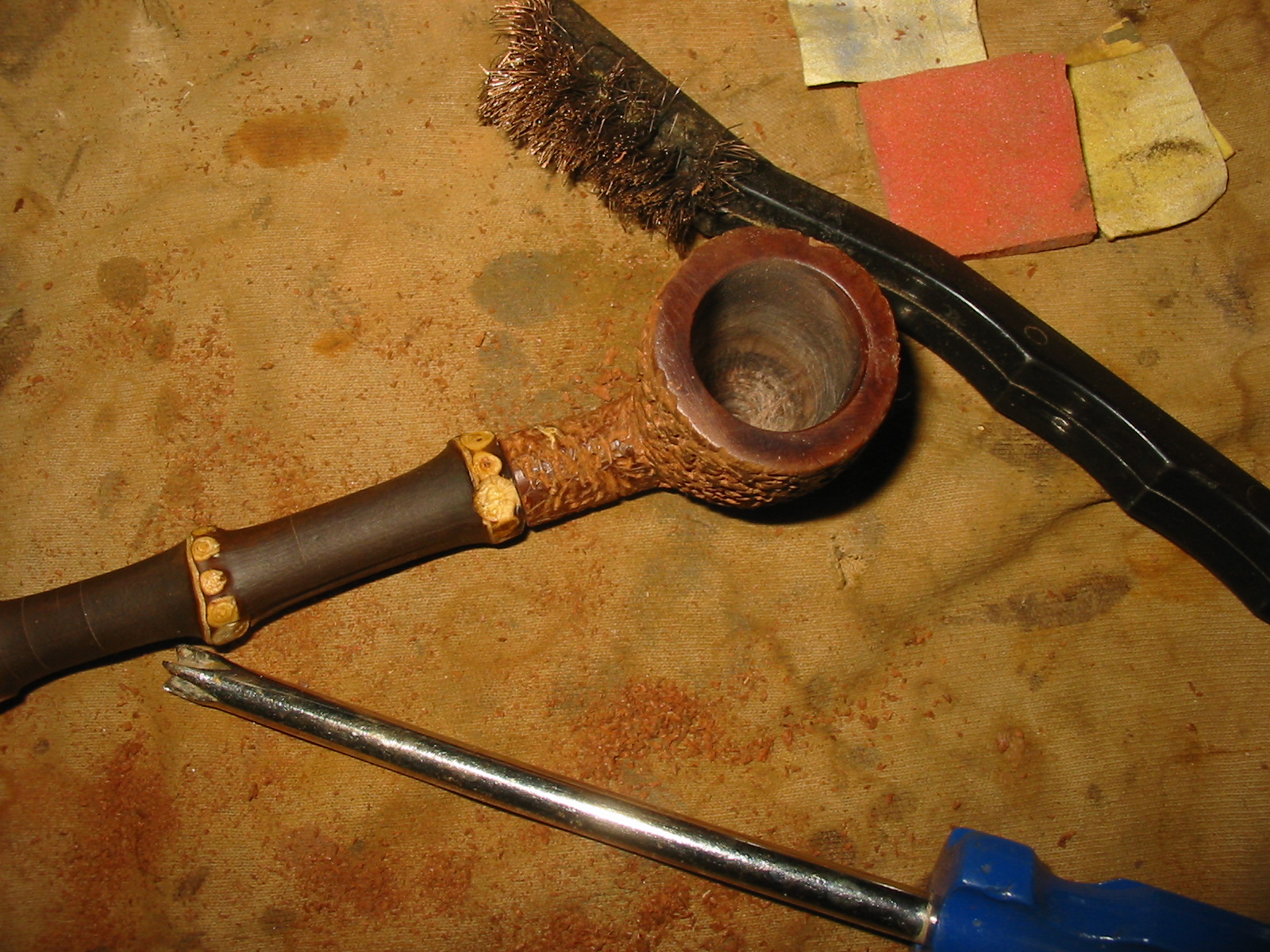
I used a Dremel with a cone shape cutting head to pre-rusticate the shank and then followed that up with the modified Philips screwdriver. I rusticated the briar shank with it attached to the bamboo so that I could rusticate it up to the joint of the two shank materials. Once I had the shank finished I removed the bowl and worked on it with the Philips screwdriver. I find it easier to manipulate the bowl when it is not attached to the shank. When the bowl was completely rusticated I used a brass bristle wire brush to knock of the rough edges and give the bowl the texture that I wanted. I left the rim smooth to contrast with the finish on the bowl.
IMG_5882

IMG_5883
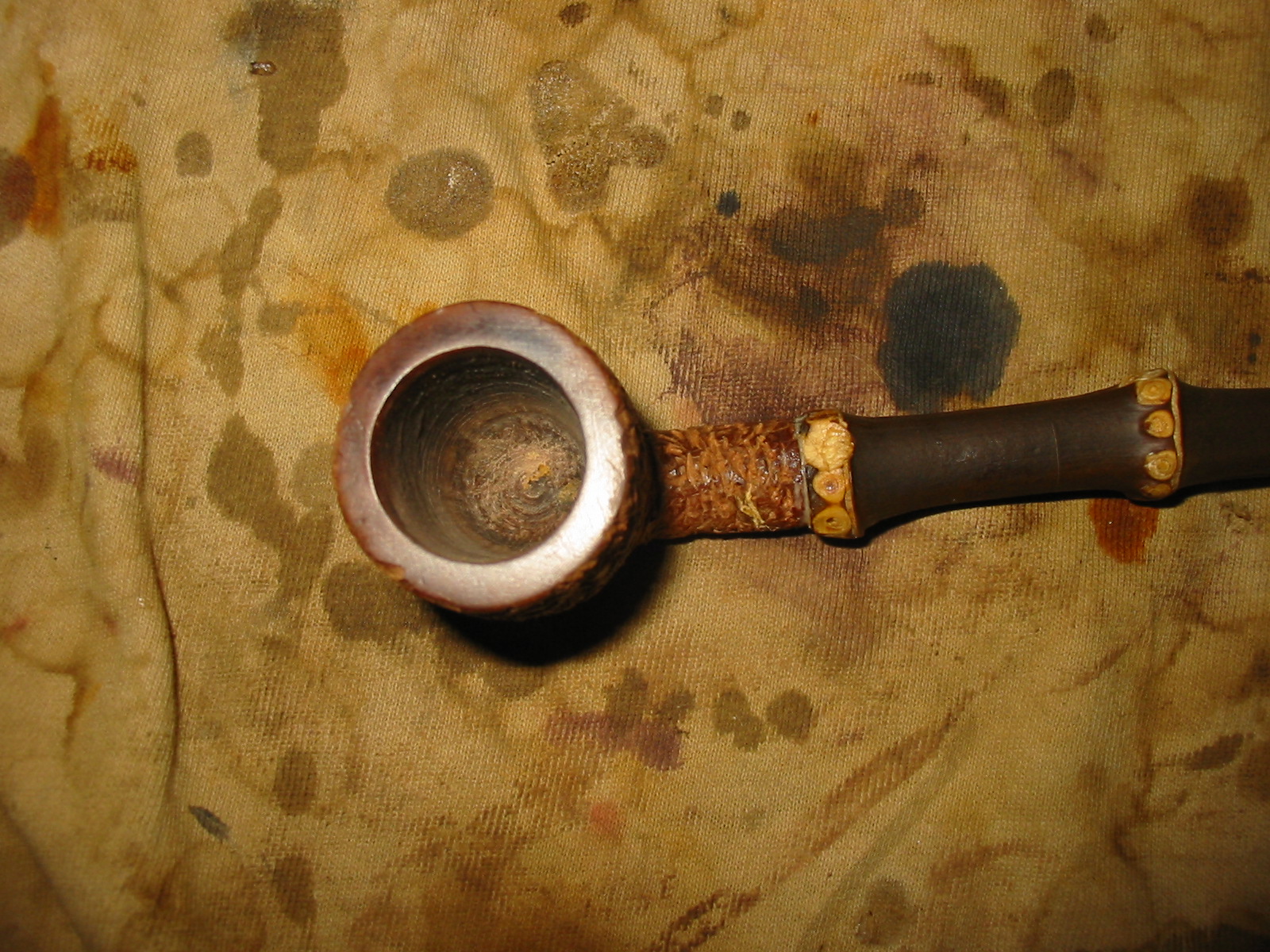
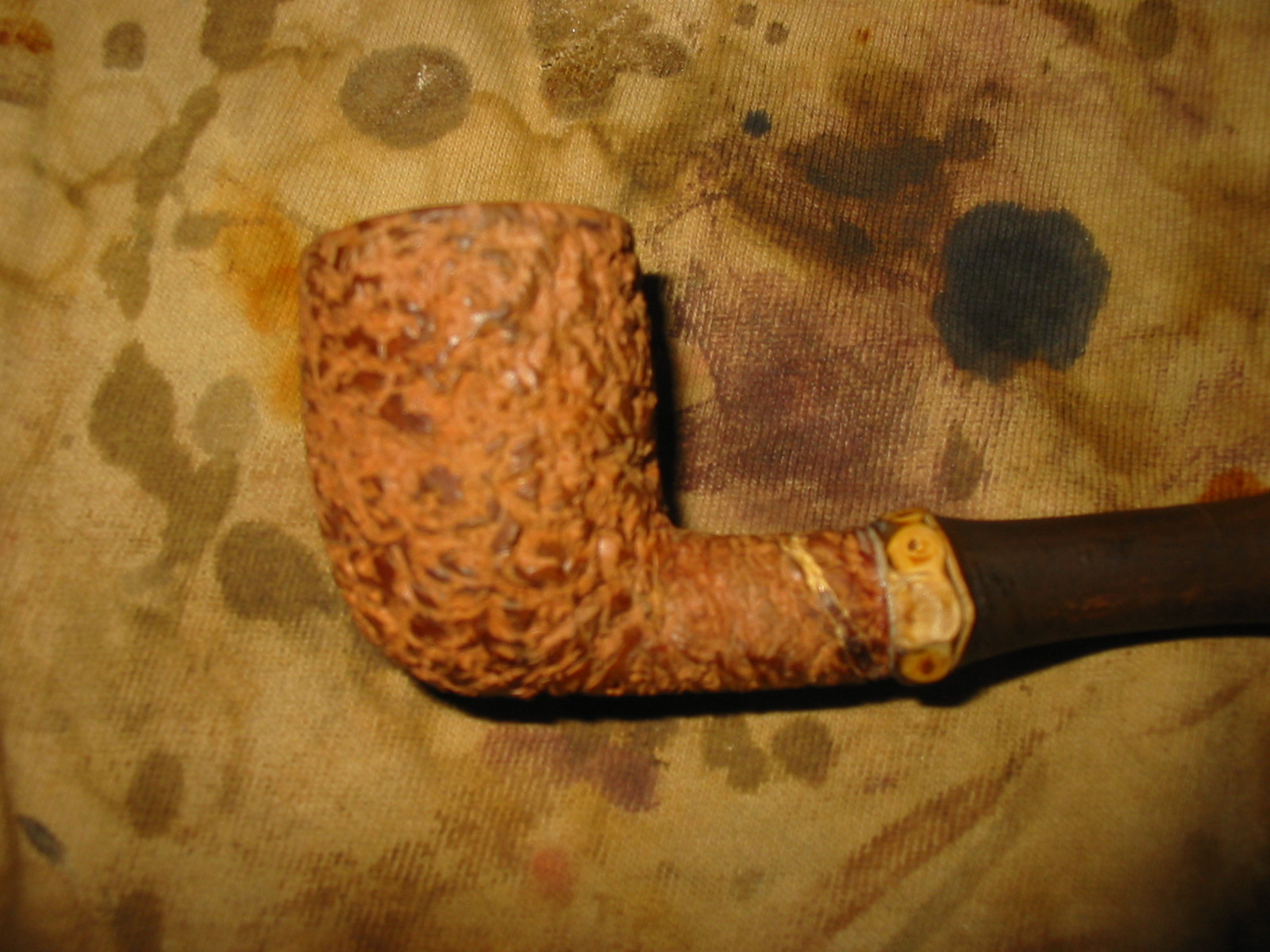
I put the pipe back together to have a look at the finished rustication and the contrast with the finish on the bamboo. I liked the overall look of the pipe at this stage. I did a bit more rustication on the bowl and shank and wire brushed them until I was happy with the end result.
IMG_5884

IMG_5885

IMG_5886

IMG_5887
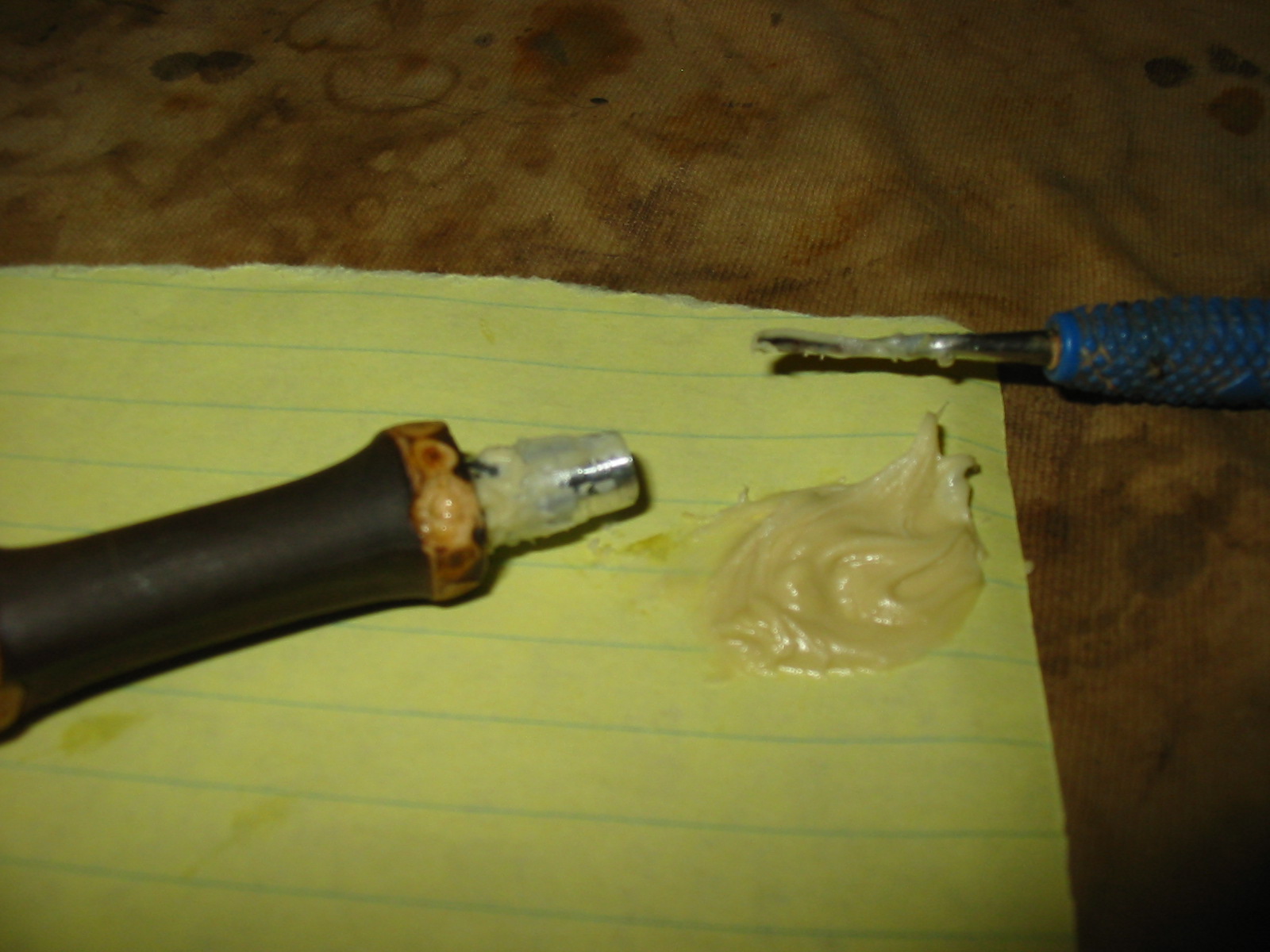
At this point I was ready to attach the shank to the bowl permanently. I scored the metal shank to give the surface something to bond with in the briar shank. I mixed the two part epoxy and applied it to the metal shank with a dental pick. I pressed the two parts together and used the dental pick to trim off the excess glue and wiped it down with a soft cloth. I clamped the parts together while the epoxy set.
IMG_5888

IMG_5889

IMG_5890

IMG_5891

IMG_5892
While the glue was drying I worked on the stem to taper it to fit the diameter of the bamboo shank. I sanded it with a Dremel to take off the majority of the excess vulcanite and then hand sanded it with 220 grit sandpaper. Once the epoxy had set, late last evening I inserted the stem and took the photos below.
IMG_5893

IMG_5894

IMG_5895

IMG_5896
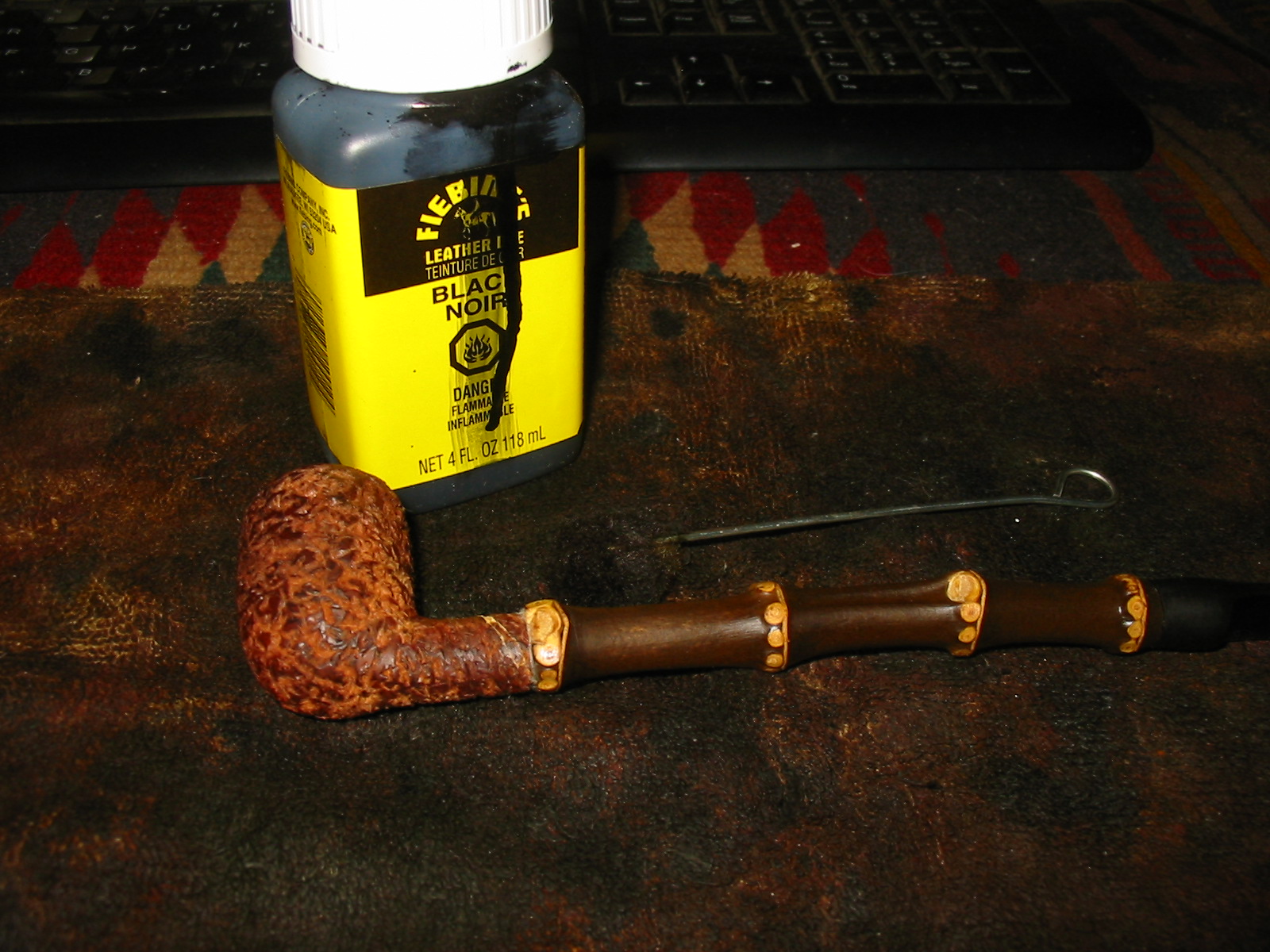
This morning I got up early and stained the bowl with a black aniline stain. My plan is to use the black stain as an undercoat on the bowl. Once the pipe is dry I will buff it with red Tripoli to remove the black from the high spots on the rustication and then stain the bowl with a brown topcoat to give it depth and contrast.
IMG_5897

IMG_5898

IMG_5899
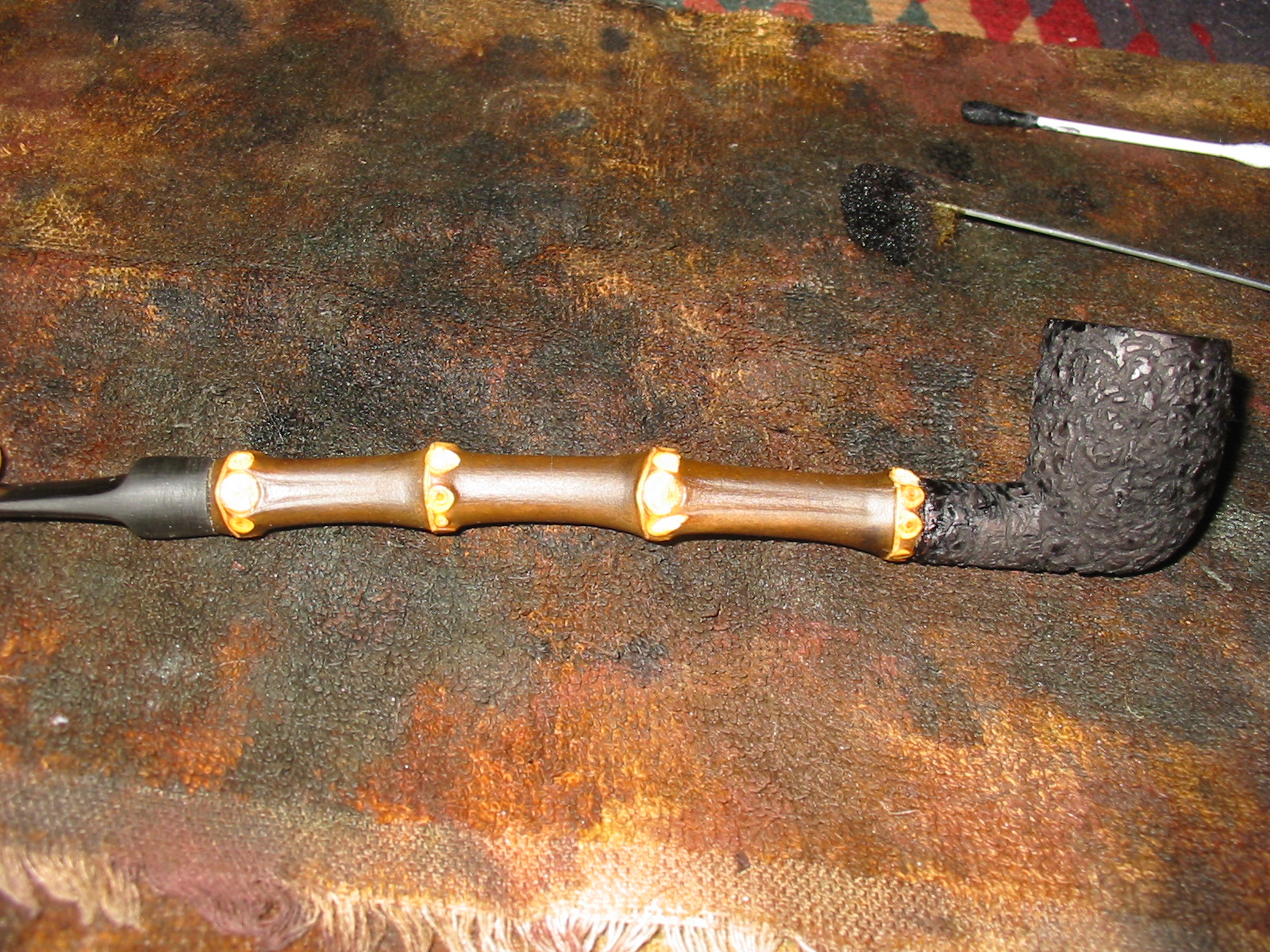
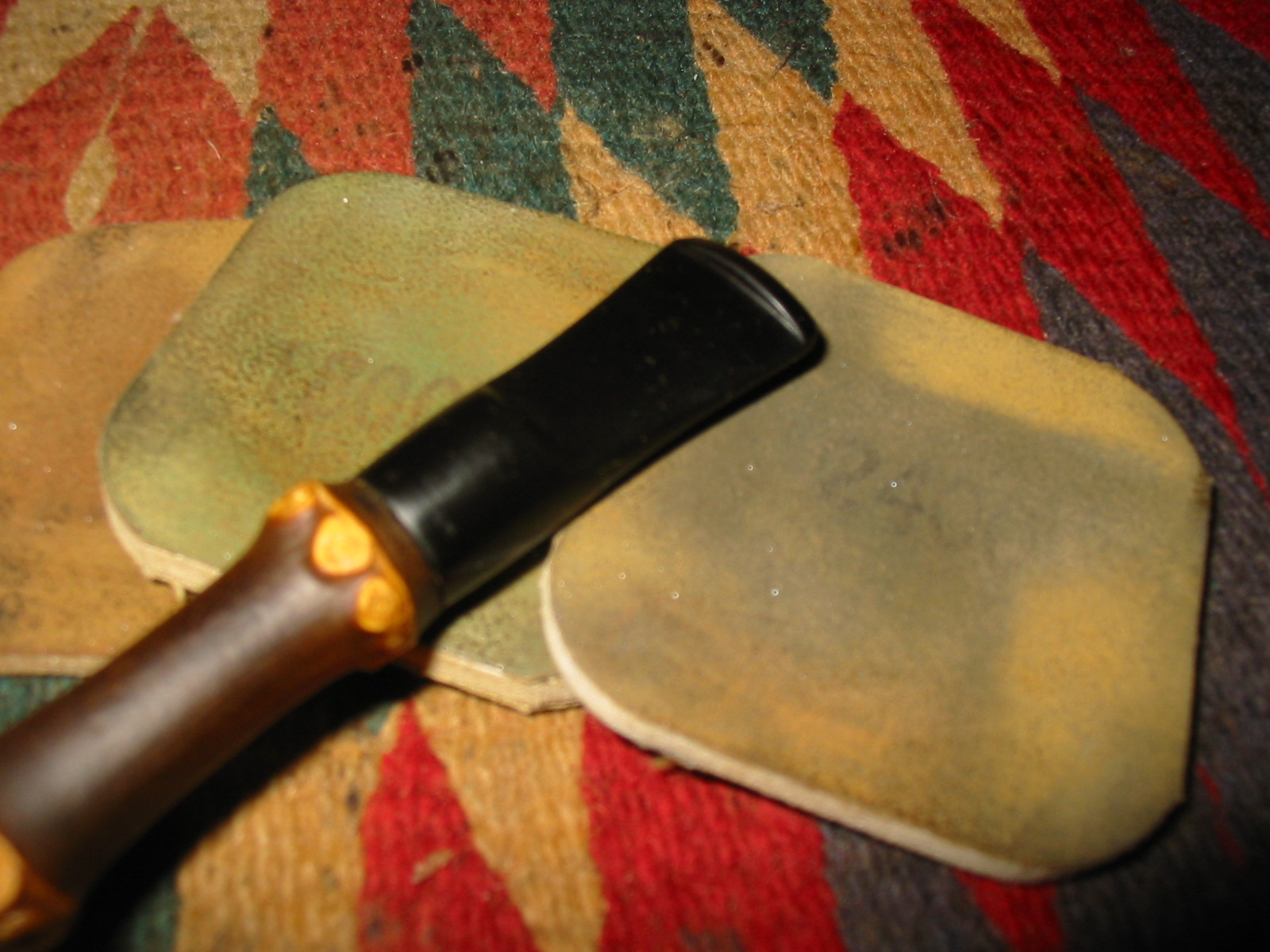
I buffed the bowl with the Tripoli and then used isopropyl alcohol on cotton pads to dab off the stain on the high spots. The finish is rough so to scrub it with the pads leaves behind a lot of cotton bits. I sanded the surface of the bowl with a fine grit sanding sponge to remove more of the black stain from the high spots and to soften the rustication. I stained the bowl and shank with a coat of walnut stain to give some depth and highlights to the bowl. I had asked online how to finish bamboo and received a step by step response from James of JSEC pipes. He said to stabilize the cracks in the bamboo with superglue and then to sand the bamboo with 600 grit wet dry sandpaper and follow that with 1500 grit sandpaper. I followed that process to the letter. The change in the surface of the bamboo was noticeable. It was smooth and had a developing patina on the surface. I then took the next steps in the process and rubbed the shank down with Danish Oil. James said the he generally gave multiple coats of Danish Oil over several days. The photo below was taken after the bowl had been stained with the walnut and the shank sanded as described above. It also shows the first coat of Danish Oil on the stem. After about one hour the oil had dried to a matte finish on the bamboo.
IMG_5900

IMG_5901

IMG_5902

IMG_5903
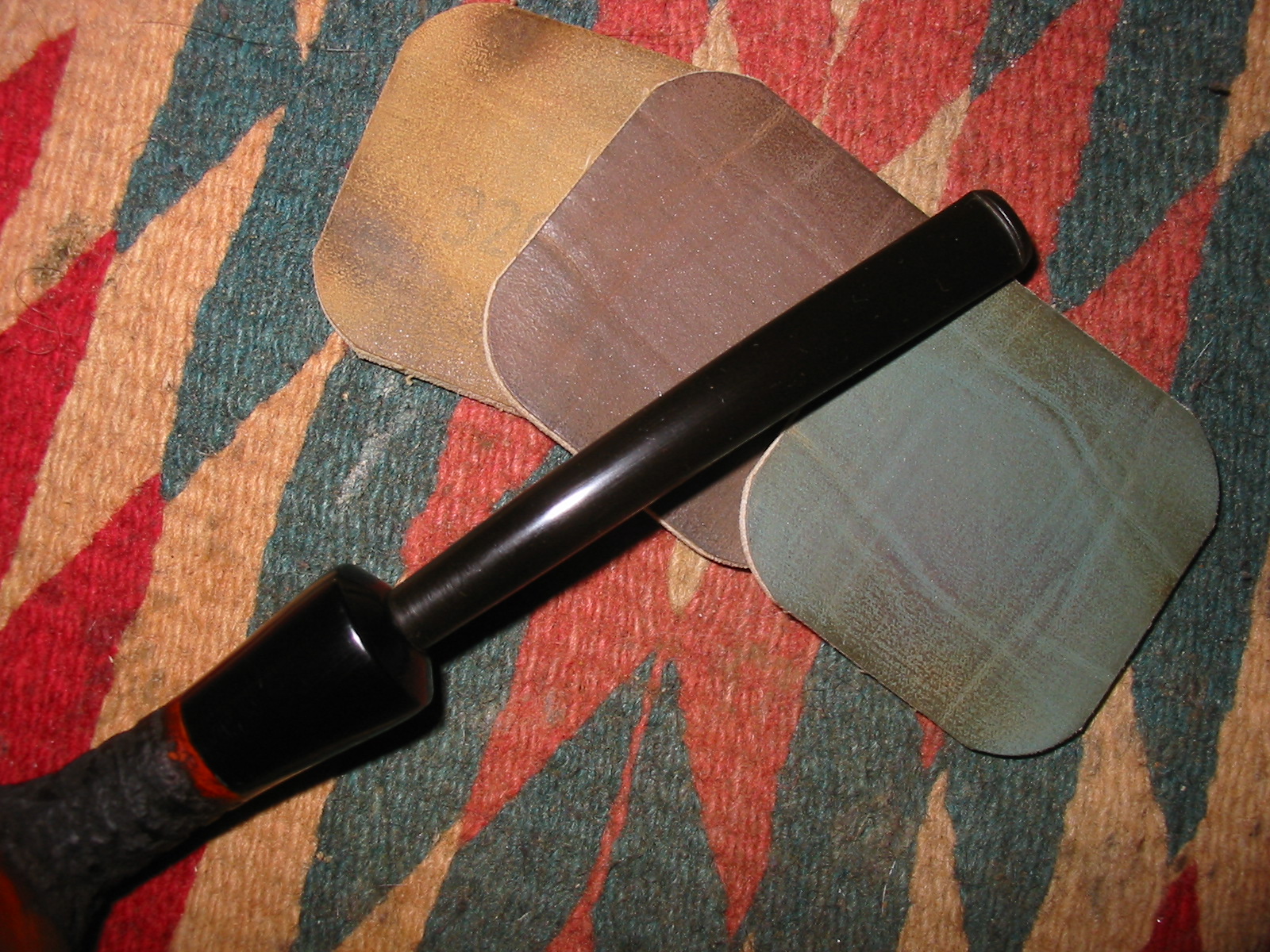
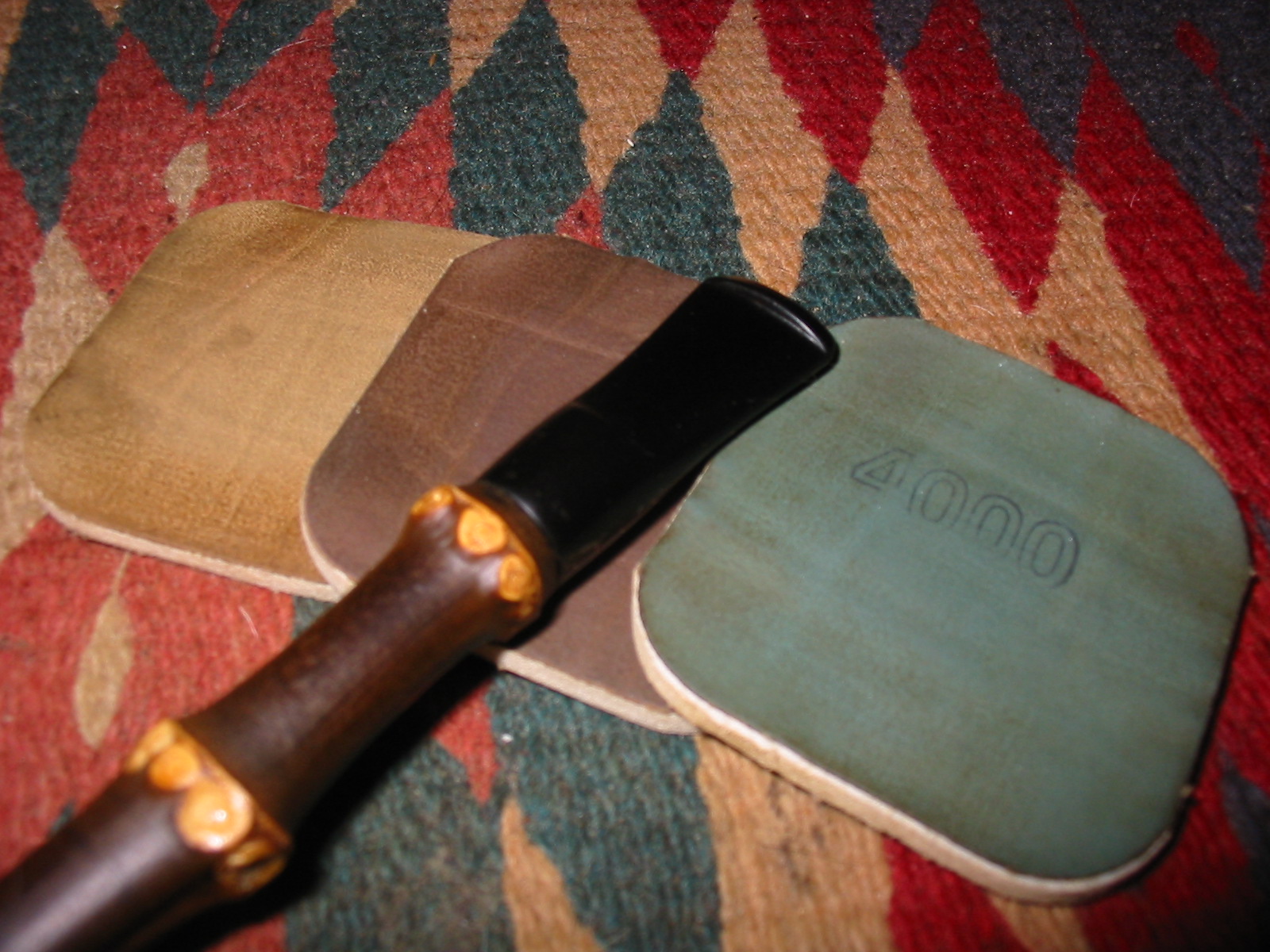
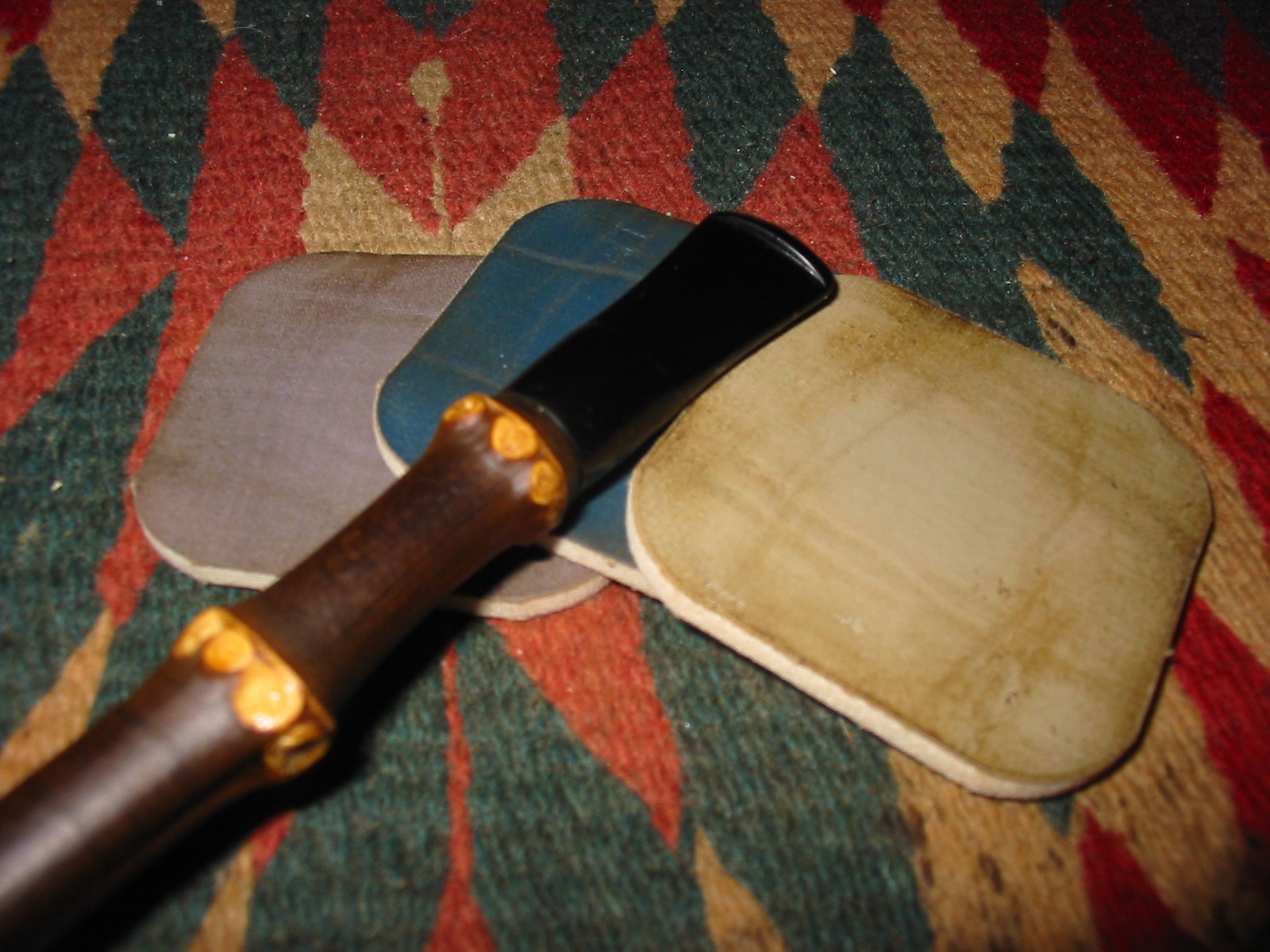
While the Danish Oil was drying on the bamboo I worked on the stem. I sanded it with 220 grit sandpaper to reduce the diameter of the saddle to match the shank diameter. I then used a medium grit sanding sponge and 600 grit sandpaper. I then sanded the stem with my usual array of micromesh sanding pads. I wet sanded with 1500-2400 grit pads and dry sanded with 3200-12,000 grit pads. I rubbed the stem down with Obsidian Oil and let it soak into the vulcanite.
IMG_5905

IMG_5906

IMG_5907
When the bamboo had dried I buffed it with White Diamond on the buffing wheel. I buffed bowl and stem as well. I took the next series of four photos before I gave the bamboo a second coat of the Danish Oil. The pipe is beginning to look finished. I like the look of the black bamboo with this treatment – there is a rich patina beginning to show up on the shank now.
IMG_5908

IMG_5909

IMG_5910

IMG_5911
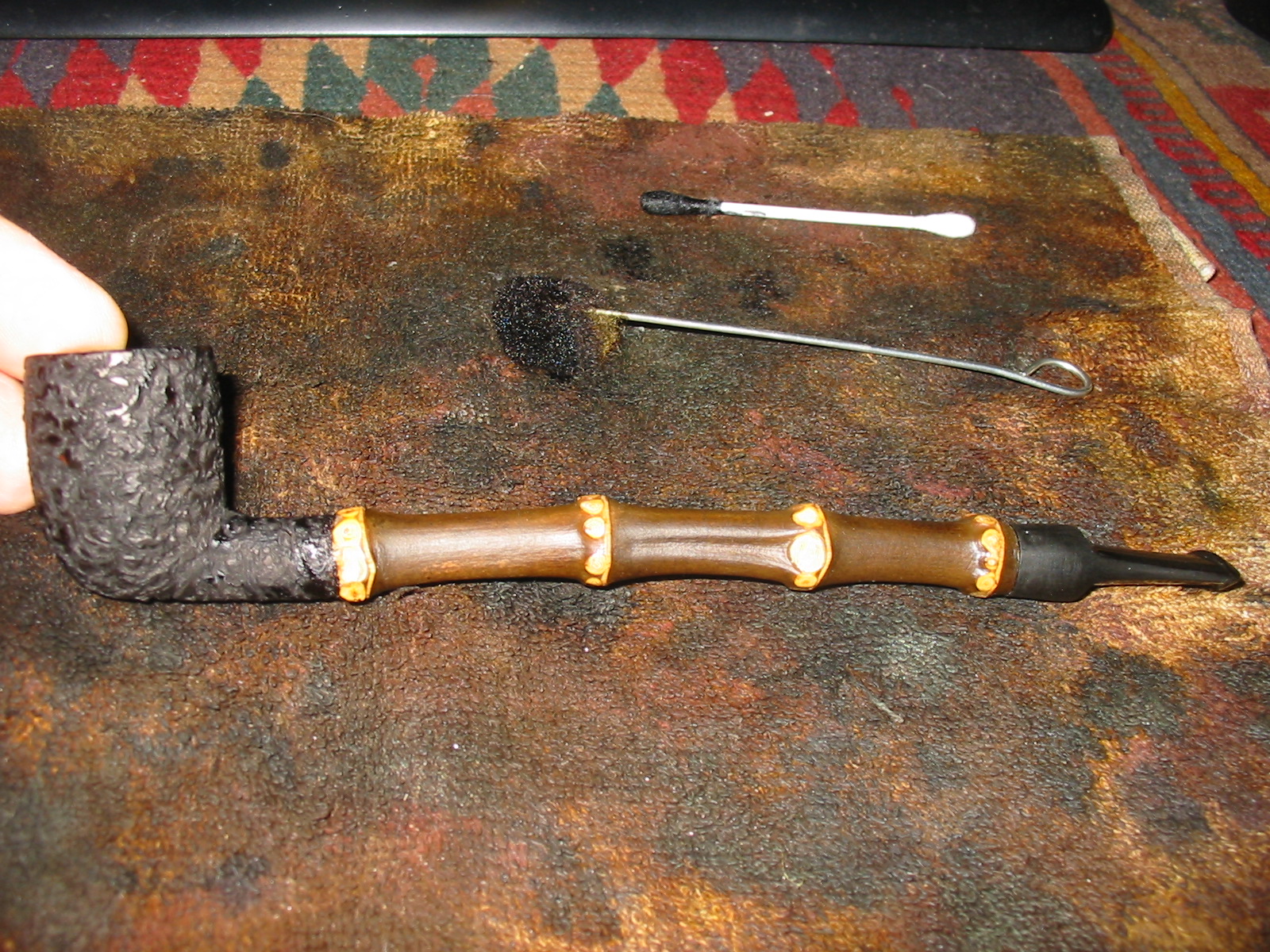
I gave it a second and third coat of Danish Oil and then buffed the bamboo with White Diamond. I gave the stem and the bowl a light buff as well. The bamboo is looking really nice. I like the developing patina that is coming from the finishing. I gave the shank and stem multiple coats of carnauba wax and then buffed to a shine with a clean flannel buff. The finished pipe is picture below. This weekend I hope to take it on its inaugural smoke!
IMG_5912

IMG_5913

IMG_5915

IMG_5916

An Earl of Essex Apple Reborn


This Earl of Essex pipe bowl was in bad shape. I had received the bowl without a stem so I would need to restem it if I was going to refurbish it. The bowl rim was angled down toward the front and was worn and rough. It appeared to be thinner in the front than the back of the bowl and had burn marks and rough patches on the front. The finish was shot and the aluminum insert in the shank was oxidized. The bowl had an uneven cake and was crumbling. There were several red spots on the surface of the rustication. What interested me in this old bowl was the rustication. The top of the bowl had almost a wax drip look to it with rustication between the drips of “wax”. The drip pattern is smooth briar as was the rim at one time. The end of the shank and the high spots on the shank were also smooth.
IMG_5827

IMG_5828

IMG_5829

IMG_5830
The aluminum inset mortise took a screw in tenon and I did not have any metal screw in tenon stems. I would have to drill it out to fit a new stem. I decided to try my hand at opening up the mortise with a drill. I started with a drill bit slightly larger than the mortise and then moved up with bigger drill bits until the mortise was smooth and open enough to take a new push stem.
IMG_5831

IMG_5832
I started to top the bowl but stopped mid stream and reamed the bowl with a PipNet reamer to clean out the cake. I wanted the bowl clean so that as I topped it I would be able to see how deep the damage to the bowl went.
IMG_5833
Once reamed, I took it back to the topping board and sandpaper. I used 220 grit sandpaper and twisted the bowl top into the sandpaper in a clockwise pattern. With the bowl topped and the shank opened the bowl was ready to clean up.
IMG_5834

IMG_5835

IMG_5836
I wiped down the bowl with acetone on cotton pads to remove the finish from the bowl and clean up the grime that was built up in the grooves of the rustication. There was a bright red pigment in the grooves on two sides of the bowl. I scraped at it with a dental pick to clean it up. At first I thought it might be putty but as I scraped it, it came off like a red pigment. I am not sure what the red material was. I wiped it down after scraping it.
IMG_5837

IMG_5838

IMG_5839
I decided to stain the bowl with a contrast to set off the rusticated portion from the smooth portion of the bowl. I used a cotton swab and black aniline stain to stain the rusticated portions of the bowl. I wanted the black to highlight the areas between the smooth drip portions of the bowl. I stained and flamed it and repeated the process until it was a good even colour around the bowl. I sanded the smooth areas of the bowl with a medium and a fine grit sanding block and sponge to remove scratches and clean them up for the next coat of stain that would be used on the smooth areas.
IMG_5840

IMG_5841

IMG_5842

IMG_5843
I had several stems in my stem can that would fit the shank of the drilled out mortise. I tried a BBB stem first. It fit very well in the shank. The look was exactly what I wanted but I did not want to waste a BBB stem with the logo intact on an experiment.
IMG_5844

IMG_5845
So I used the second stem I had from the can. It was a saddle stem with a bite through on the top of the stem. I decided to cut it back and then reshape the button until it was a new stem.
IMG_5849
I cut it back with a Dremel and a sanding drum until it was smooth, solid and straight across.
IMG_5850

IMG_5851
Before working on cutting the new button in the stem I stained the top portion of the bowl with a light walnut stain on the smooth parts of the bowl. I buffed the bowl with White Diamond to give it a shine.
IMG_5852

IMG_5853

IMG_5854

IMG_5855
I worked on the button with needle files cutting in the straight line of the inner edge of the button and then smoothed out the button itself with the files. I carved away the surface of the stem tapering it from the saddle to the button. Once it was cut with the files I sanded the new taper with 220 grit sandpaper and then with a medium and fine grit sanding sponge to remove the scratches on the vulcanite.
IMG_5856

IMG_5857

IMG_5858

IMG_5859

IMG_5860
I sanded the stem with my usual array of micromesh sanding pads. I wet sanded the stem with 1500-2400 grit pads and dry sanded with 3200-12,000 grit pads. I rubbed down the stem with Obsidian Oil and buffed it with White Diamond.
IMG_5861

IMG_5862

IMG_5863
I buffed the bowl lightly with White Diamond and buffed the stem with it as well. I gave it multiple coats of carnauba wax and buffed it with a soft flannel buff to give it a shine. The finished pipe is shown in the photos below. The bowl top is clean and new, the finish is redone and the wax drip look is highlighted with the stains. The new stem and the newly cut button fit the pipe well. The experiment of drilling out the aluminum shank insert to take a push stem was a success. The metal polished well and looks like a shank band. Overall the final product is nice looking pipe that will make a good addition to someone’s rack in the future.
IMG_5865

IMG_5866

IMG_5867

IMG_5868

Cutting Back a Broken Shank and Reworking a No Name Dublin


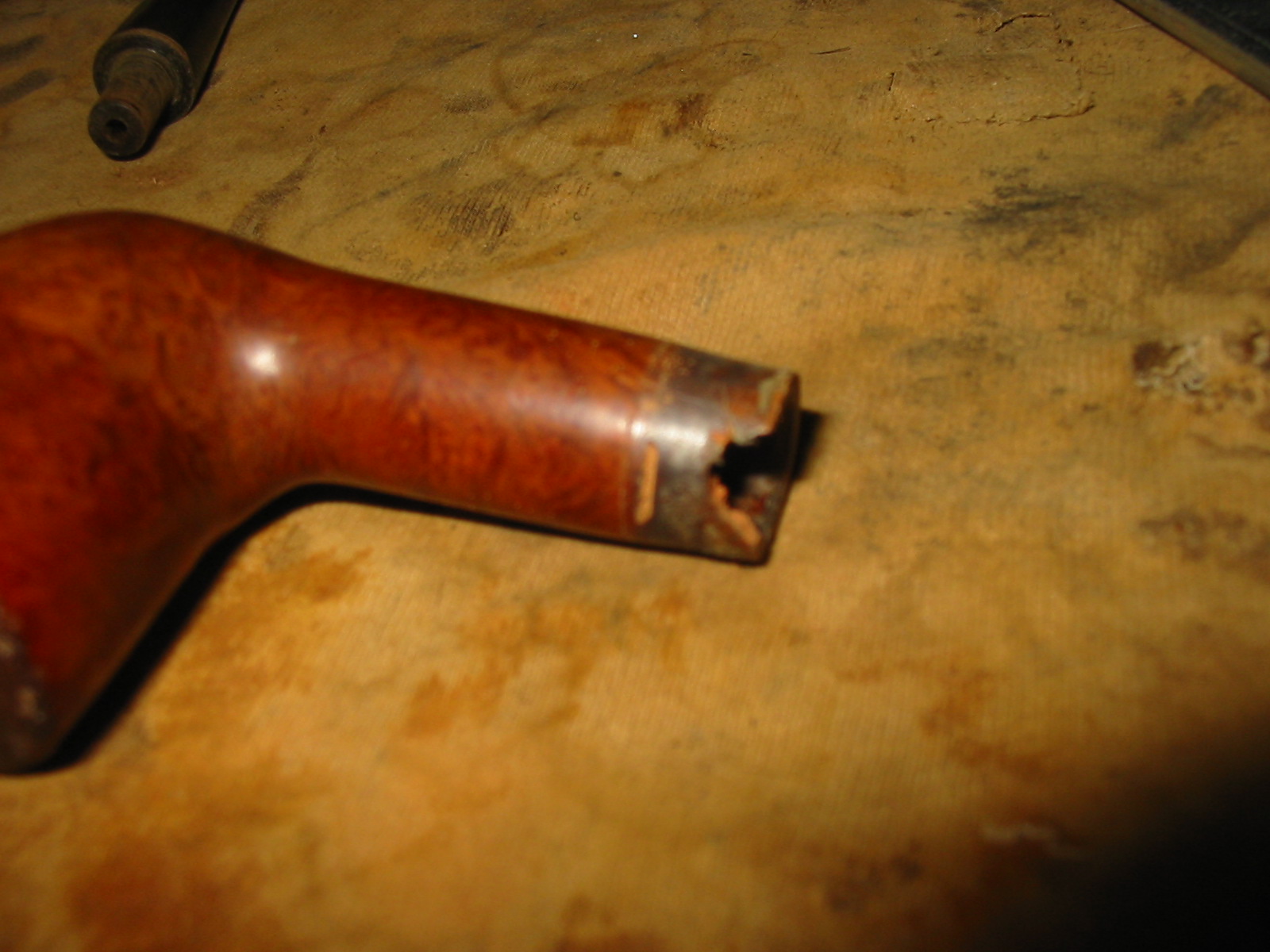
In keeping with the theme of my last few posts about my recent pipe restorations the pipe I took on in this repair/restoration was in fairly bad shape. The rim was damaged on the top and the outer edge had been beaten badly and was rough to the touch. The inner edge had been reamed out of round somewhere in the distant past of its life. The bowl finish was “finished”. It was in rough shape. The left side had many fills and divots on the surface. It looked as if it had been dropped on concrete or rocks. The shank was much the same but worse in that the end on the top right side had a large chunk of briar missing. It did not have a stem but that was the least of the concerns at the moment.
IMG_5771

IMG_5772

IMG_5773

IMG_5774
I went through my can of stems and found one that would work. The diameter and length were correct for this size pipe. However I had to decide what to do with the missing chunk of briar. I could band it and cosmeticly hide the missing piece under the band or I could cut back the shank, shorten it and then band and restem the pipe.
IMG_5775

IMG_5776

IMG_5777
I removed the band – this is slightly harder than the simple words sound. It really involved cutting the metal and peeling it off the shank. I was not happy with the look so I decided to cut off the damaged end of the shank. What made this a happy solution to me was that the shank itself was not cracked. There were no cracks radiating from the area of the missing piece of briar.
IMG_5778
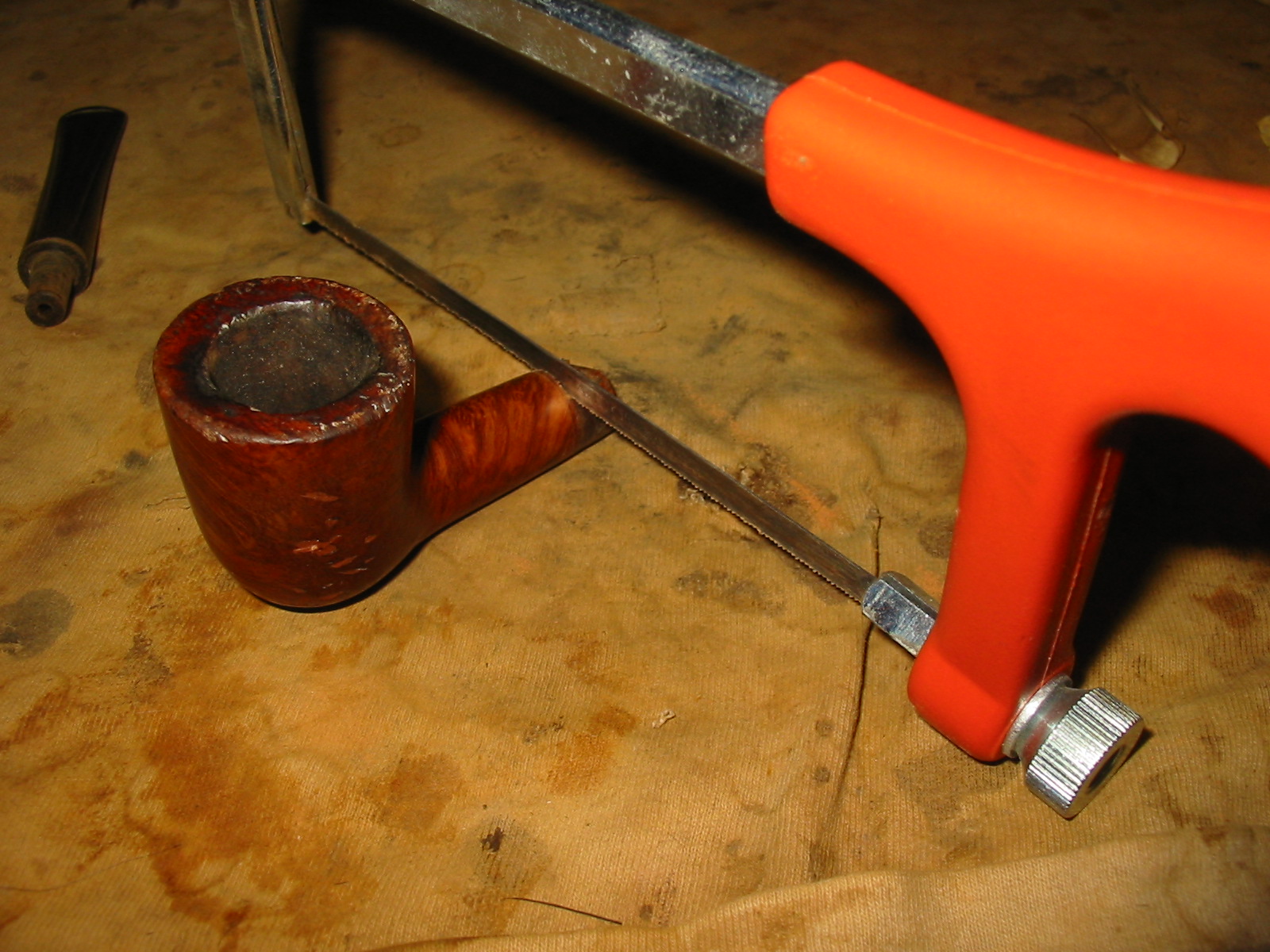
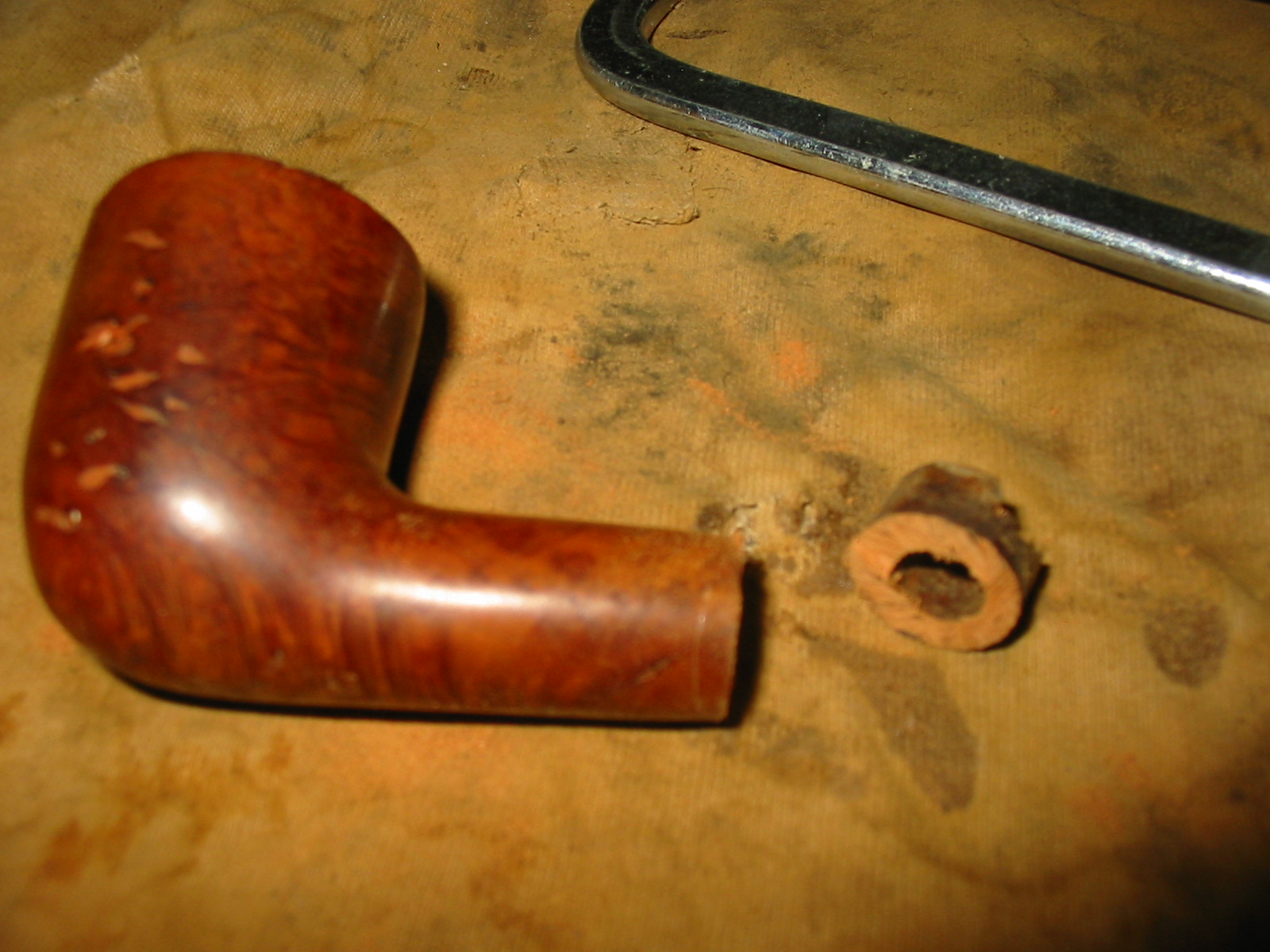
When cutting back a shank I use a small hack saw with a fine toothed blade to do the work. I am limited to hand tools as I do not have a shop. The problem with this method is that it is very difficult to get a good, clean, straight cut with a hand saw. I followed the scoring left behind by the band as I sawed around the shank.
IMG_5779
Even in being careful and working slowly the shank end was not perfectly square. That would have to be dealt with later.
IMG_5780
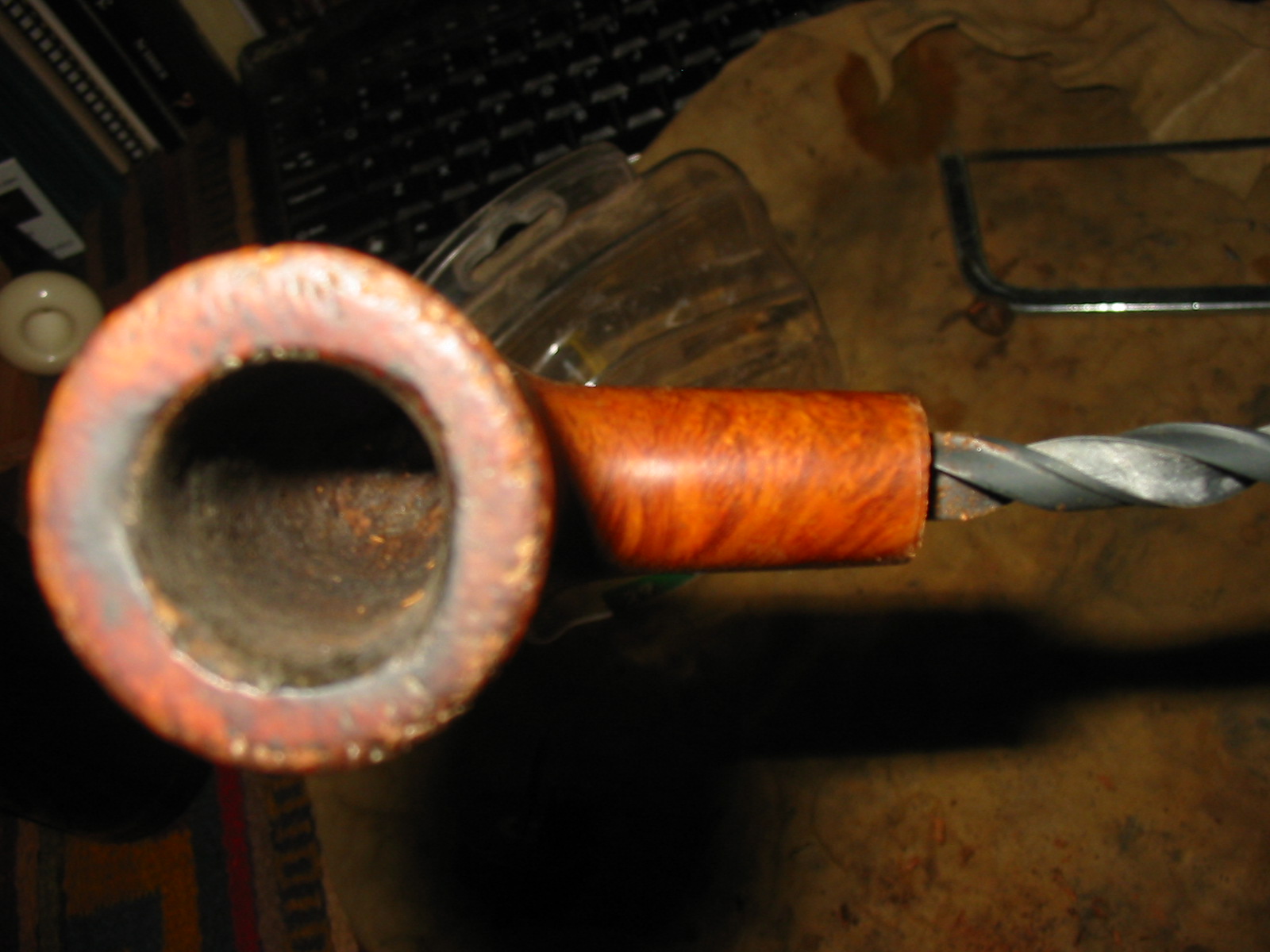
I needed to deepen the mortise area as I had removed a major piece of it by shortening the shank. I started with a drill bit that fit well in the existing mortise and turned it in by hand. I worked up to the correct size bit – each time anchoring the bit in my hand drill and turning the bowl onto the bit by hand. I did not want to risk using the power and having the bit go right through the bowl. I have a pin vise but it was not large enough to hold a bit this size so I improvised.
IMG_5781

IMG_5782
Once I had the airway drilled in the shank I set up a topping board to sand down both the end of the shank and the rim. I started with the shank end hold the bowl against the sand paper and making sure that it was straight up and down vertically and sanded the end of the shank to face it. I also topped the damaged rim to remove the damage to the surface and the edges of the bowl. I sanded the bowl down with sandpaper in preparation for the topping. The shank needed to be re-tapered to match the diameter of the stem and to give it more of a flow from the bowl to the stem. I used 220 grit sandpaper to taper the shank and to sand the bowl.
IMG_5783

IMG_5784

IMG_5785

IMG_5786

IMG_5787
Once I had a good fit on the stem and the shank and the bowl was topped and the finish cleaned up I decided to put a band on the shank. I thought that the shiny bling of the band would be a nice contrast to the stain I intended to use. I heated the band and pressed it onto the shank.
IMG_5788

IMG_5789

IMG_5790

IMG_5791
With the band in place and the stem fitting well it was time to address the finish of the briar. The left side damage needed to be cleaned up and repaired. I picked out the loose fill material with a dental pick. I washed down the surface of the bowl with acetone on cotton pads to remove dust and clean up any loose pieces of fill material. I roughened the edges of the divots and crevices on the briar and then filled them with briar dust and superglue.
IMG_5793
I sanded the repaired area with 220 grit sandpaper to remove the excess material and smooth out the surface of the bowl.
IMG_5794
I sanded the bowl with medium and fine grit sanding sponges to remove the scratches and prepare the surface for staining. I wiped it down with isopropyl alcohol on a cotton pad to pick up any surface dust before staining. I am continuing to experiment with contrast stains so I gave the bowl a heavy coat of black aniline stain. I flamed it and heated it to set the stain deep in the grain of the bowl. This particular bowl had some really stunning birdseye on the sides and great cross grain on the front and back and underside of the shank and bowl. I wanted to highlight that grain and make it pop.
IMG_5795
Once the stain was dried I wiped the bowl down with acetone on pads to remove the surface stain and then buffed the pipe with red Tripoli. I wanted to remove as much of the stain on the surface as possible while leaving it in the grain and around the birdseye. I sanded the bowl with medium and fine grit sanding blocks and sponges to get the surface down to the place the grain was highlighted. I then rubbed the bowl down with olive oil and buffed it with White Diamond to make the bowl shine.
IMG_5796

IMG_5797

IMG_5798

IMG_5799
I was happy with the contrast on the contrast stain and the look of the bowl at this point but now needed to work on the stem and the band. I sanded the stem with medium and fine grit sanding sponges to remove the scratches. I sanded the band with a fine grit sanding sponge as well. I then sanded the stem, band and the bowl with micromesh sanding pads. I wet sanded the stem with 1500-2400 grit pads and dry sanded the bowl with the same grit pads. I dry sanded the bowl and the stem with 3200-12,000 grit pads to finish polishing them both. I rubbed the stem down with Obsidian Oil and then when dry I buffed the bowl and stem with White Diamond.
IMG_5800

IMG_5801

IMG_5806
The series of four photos below show the bowl and stem after sanding with the micromesh sanding pads. The finish on the bowl is exactly what I was aiming for. The translucency of the finish was perfect. The fills and damage on the left side of the bowl all but disappeared – not just hidden by the finish by smooth to touch as well.
IMG_5802

IMG_5803

IMG_5804

IMG_5805
I buffed the pipe one last time with White Diamond and then gave the bowl and stem multiple coats of carnauba wax to polish and protect it. I finished by buffing with a clean flannel buff to lift the shine. The finished pipe is shown below and is ready for its inaugural smoke. The bowl and pipe came out well in my opinion and should last a long time in the hands of the person whose rack it eventually will grace.
IMG_5807

IMG_5808

IMG_5809

IMG_5810
I just reworked the inner rim of the bowl. I did a write up on the process and posted it here: https://rebornpipes.wordpress.com/2014/03/28/repairing-an-out-of-round-bowl/

No Name Pot Brought Back to Life from the Brink


This bowl came to me with a batch of bowls needing different degrees of work. This old-timer needed cleaning as the buildup of grime and grit that was ground into the bowl was thick. The surface was coated with a greasy black substance all around the top of the bowl and the sides. The bowl/shank junction was incredibly grimy. The inner rim was out of round and the outer rim and the top of the rim were in rough shape. The outer edge had been hammered around the sides and the top had dents and cuts in the surface. The shank looked to be slightly shorter than I have come to expect on this shape of pipe; though the drilling and the mortise were original. The shank had definitely not been shortened. The bowl was caked and the buildup thickest around mid bowl. There were quite a few small pink fills around the bowl sides. There was no stamping or identifying marks on the pipe. There had been some sanding done around he shank and it had left behind some fairly deep scratches.
IMG_5732

IMG_5733

IMG_5734

IMG_5735
I went through my can of stems and found one that fit quite well. It did not need work on the tenon diameter as the fit was snug. The stem was bent and would need to be straightened to give it a proper fit to the bowl. Once the stem was in place it was clear that the shank was out of round. The bottom edge of the shank was somewhat thicker than the stem at the same spot. I would need to work on the flow of the shank from the bowl to the stem union to insure that the fit was smooth and the transition seamless.
IMG_5736
The stem was badly oxidized so I figured heating it to straighten it would actually soften the oxidation and bring it to the surface. I used a heat gun on the low setting to heat the stem. I generally hold it about 4 or more inches above the heat source and hold so it bends in the correct direction as it softens. In this case it did not take long for the vulcanite to heat and the stem to return to the original straight position. I decided to leave a slight bend in the stem as I like the look of on the pipe.
IMG_5737
The next two photos show the stem after heating and straightening. The variation in the diameter of the shank and the stem is also clearly visible in these two photos.
IMG_5738

IMG_5739
Since the shank had no stamping to preserve I decided to sand the shank and the stem to even things out and to bring the shank into round. I used 220 grit sandpaper to remove the excess briar and to shape the taper on the stem. I sanded the stem as well to remove the softened oxidation and make the cleanup simpler.
IMG_5740

IMG_5741

IMG_5742

IMG_5743
I set up a topping board and anchored a piece of 220 grit sandpaper on the surface to provide a flat straight surface to sand the top on. I twisted the top into the sandpaper in a clockwise motion to remove the tars and rim damage on the bowl.
IMG_5744

IMG_5745
I wiped down the surface of the bowl with acetone on cotton pads to remove the grimy buildup on the finish. The black tarry substance took some elbow grease and hard scrubbing to remove. The inner rim would need some work to bring it back into round but that would wait until after I reamed the pipe.
IMG_5748
I sanded the bowl with 220 grit sandpaper and medium and fine grit sanding sponges to further remove the finish and the grime. I worked on the inner edge of the rim with a folded piece of 220 grit sandpaper to bevel the inner edge into the bowl. This minimizes the appearance of the bowl being out of round. It also removes burn damage and smooths the look of the rim as a whole.
IMG_5749

IMG_5750

IMG_5751

IMG_5752
I decided to try something different on this bowl in terms of stain. It had some great cross grain and some nice birdseye grain that I wanted to highlight. It also had some ugly pink fills that I did not want to pick out and refill. This led me to try a black aniline stain. Before I stained it I used a black permanent marker – a sharpie to line through the pink fills. I blended them into the grain of the wood with the pen. I heated the bowl with the heat gun to open the grain and then applied several coats of black aniline stain, flaming the stain between each application. Once the stain was dry I wiped the bowl down with isopropyl alcohol on cotton pads and then sanded the bowl with a medium grit sanding block. I wanted to remove the black stain from the higher/harder areas of the briar while leaving it in the grain patterns.
IMG_5753

IMG_5754

IMG_5755
I sanded the bowl with a medium grit sanding sponge and then wiped it down with isopropyl alcohol to remove the dust. I remarked the fills with the black Sharpie. In the four photos below the marked fills are visible and the finish has about all the black removed that I wanted to take off.
IMG_5756

IMG_5757

IMG_5758

IMG_5759
I rubbed the bowl down with Olive oil on a paper towel and rubbed it into the finish. I sanded the bowl with micromesh sanding pads – 1500-2400 grit, while the oil was wet as the oil gives the pads a bit more bite. I worked on the marked areas to blend them in with the sanding pads. I also sanded the stem with the micromesh sanding pads and the Olive oil at the same time. The next four photos show the finish after it had dried over night. I then buffed it on my buffer with White Diamond and gave the bowl several coats of carnauba wax. You can see how well the black sharpie blended into the finish. The pink fills have all but disappeared in the finish.
IMG_5760

IMG_5761

IMG_5762

IMG_5763
I sanded the stem with my usual array of micromesh – the difference this time was all pads were used to dry sand the stem – 1500-12,000 grit. In between each grit I rubbed the stem down with Obsidian Oil and rubbed it into the vulcanite before sanding with the next grit pad. Once I had finished with all grits I gave the stem a final rub down with the Obsidian Oil.
IMG_5764

IMG_5765

IMG_5766
I gave the pipe several more coats of carnauba wax on the buffer and then buffed it with a soft flannel buff to bring out the shine. I was aiming for a stem shape similar to what I had seen on the Castello 55 shape and wanted that slight bend downward in the final look. While the pipe is certainly no Castello, I like the final look of the stem and the bowl. It certainly has come a long way from the bowl that came in the lot I received in the mail. This one should make a good addition to someone’s rack once it leaves here. The next four photos show the finished pipe.
IMG_5767

IMG_5768

IMG_5769

IMG_5770

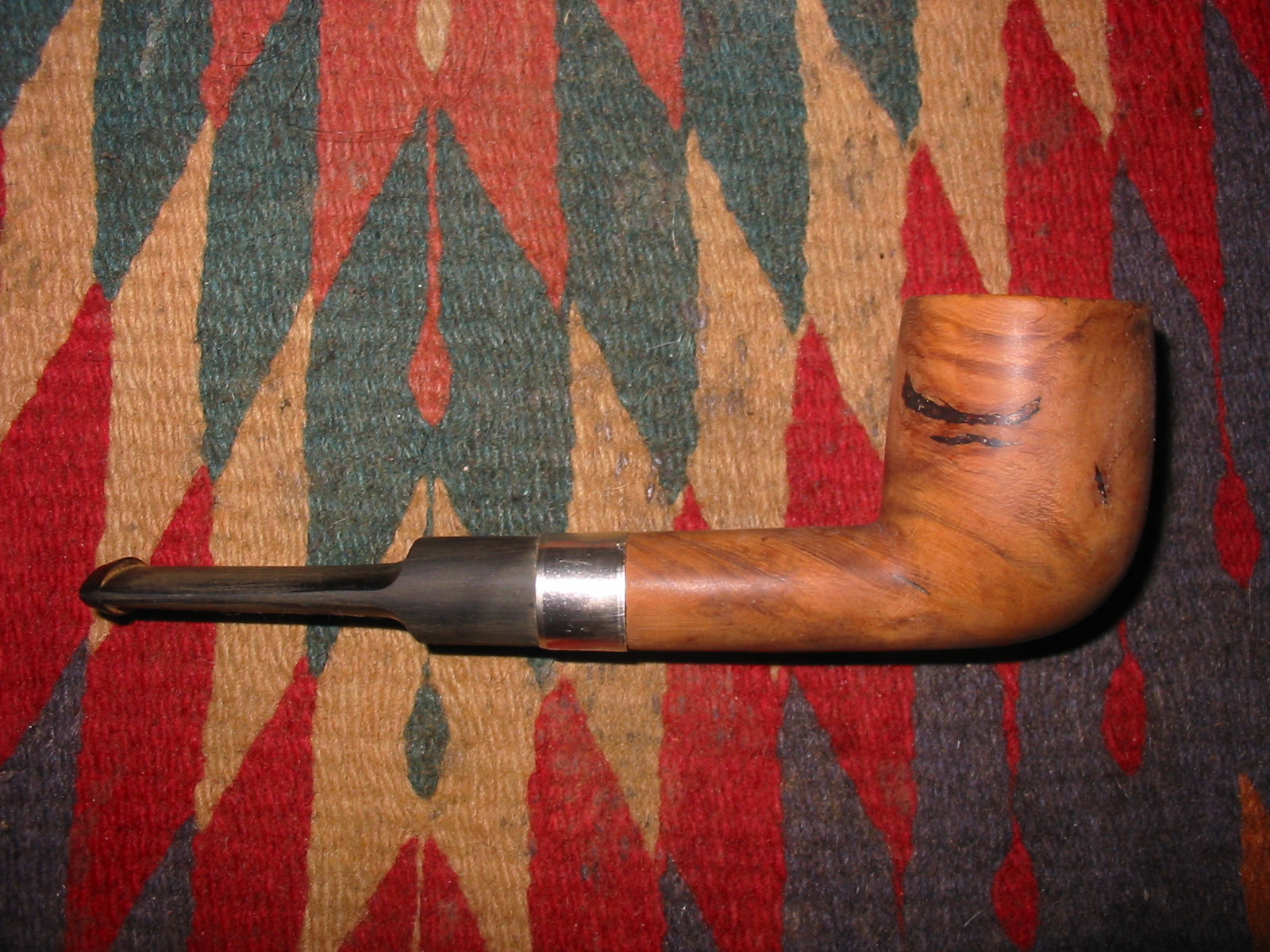
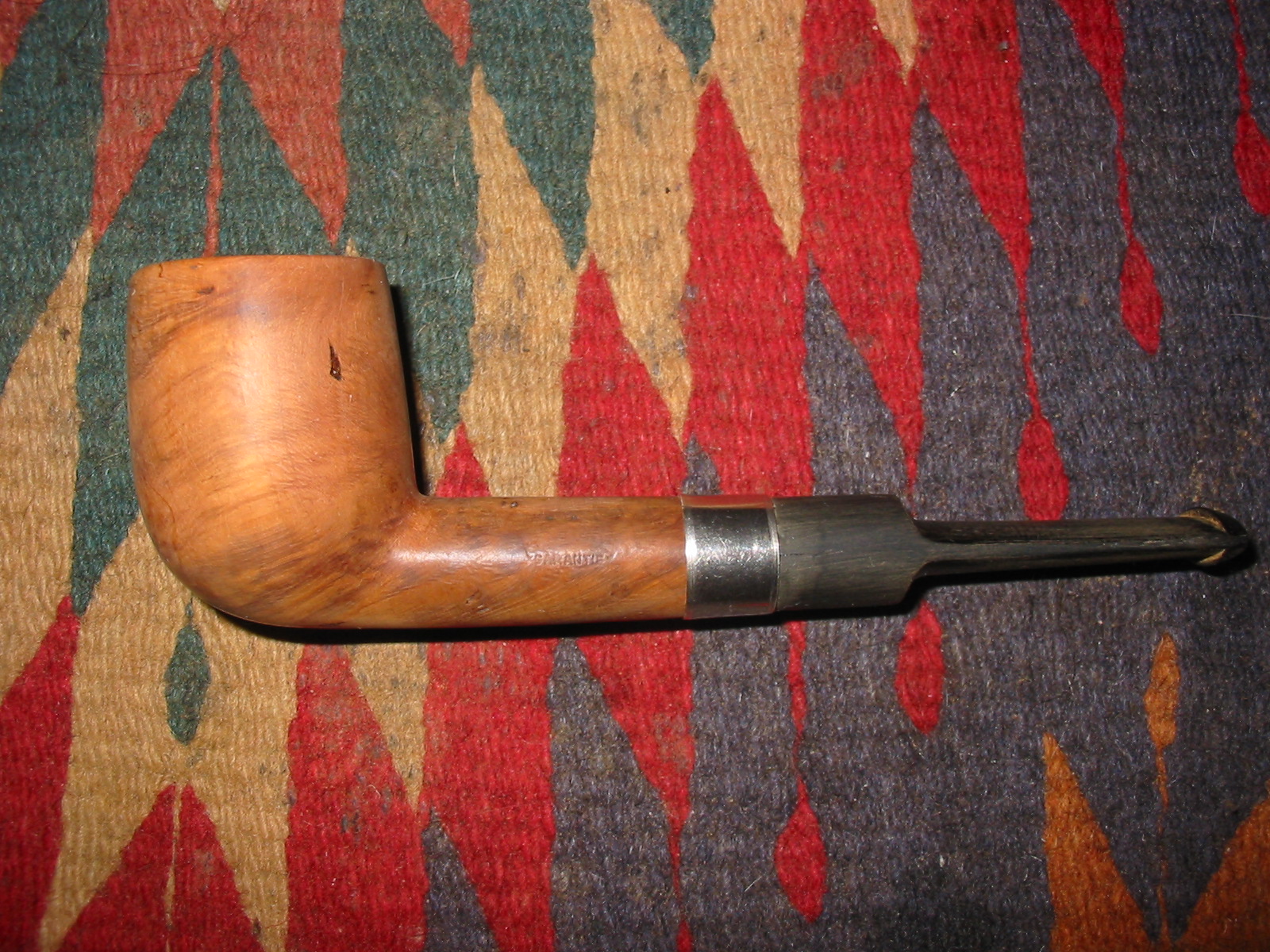
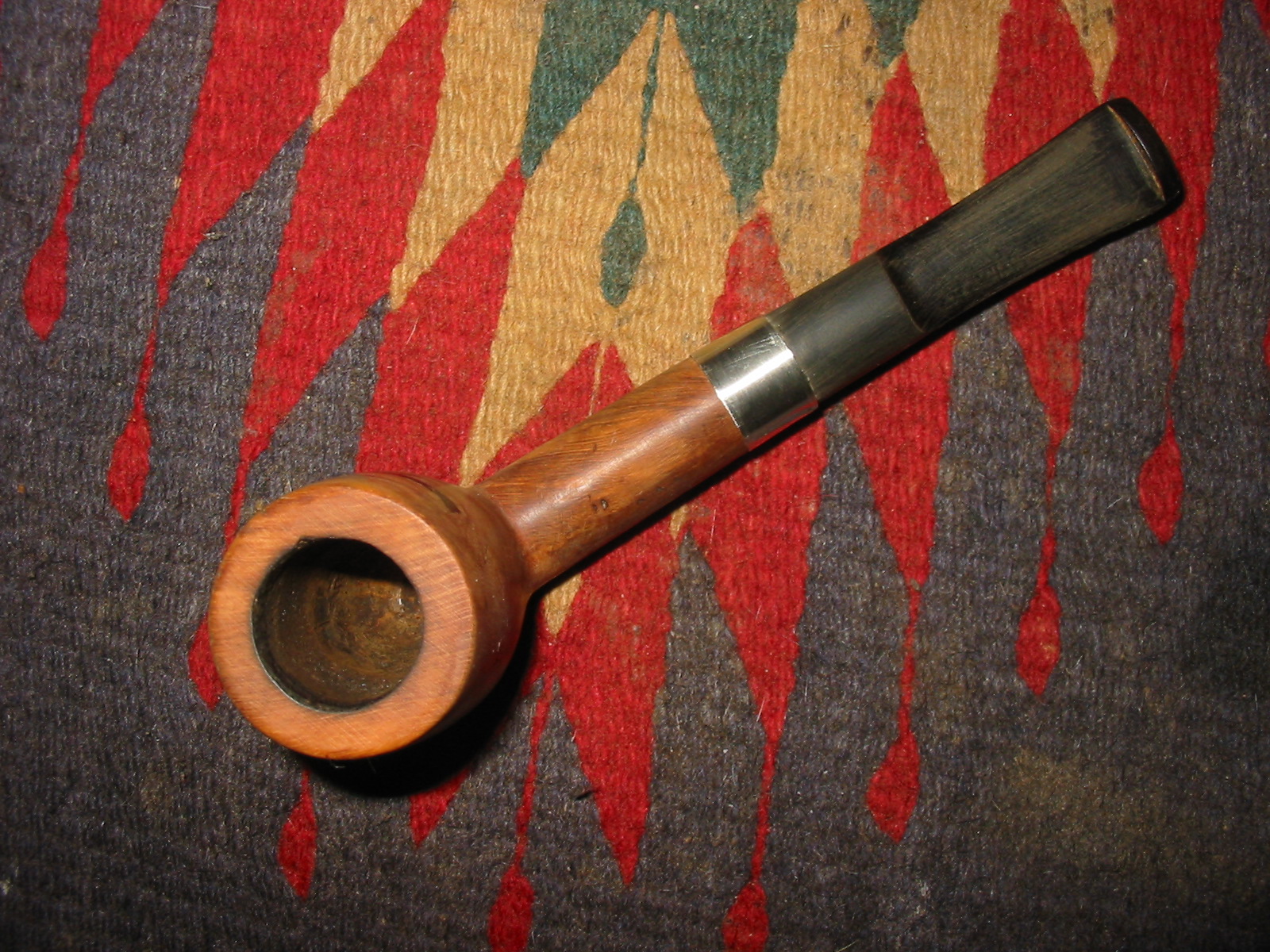
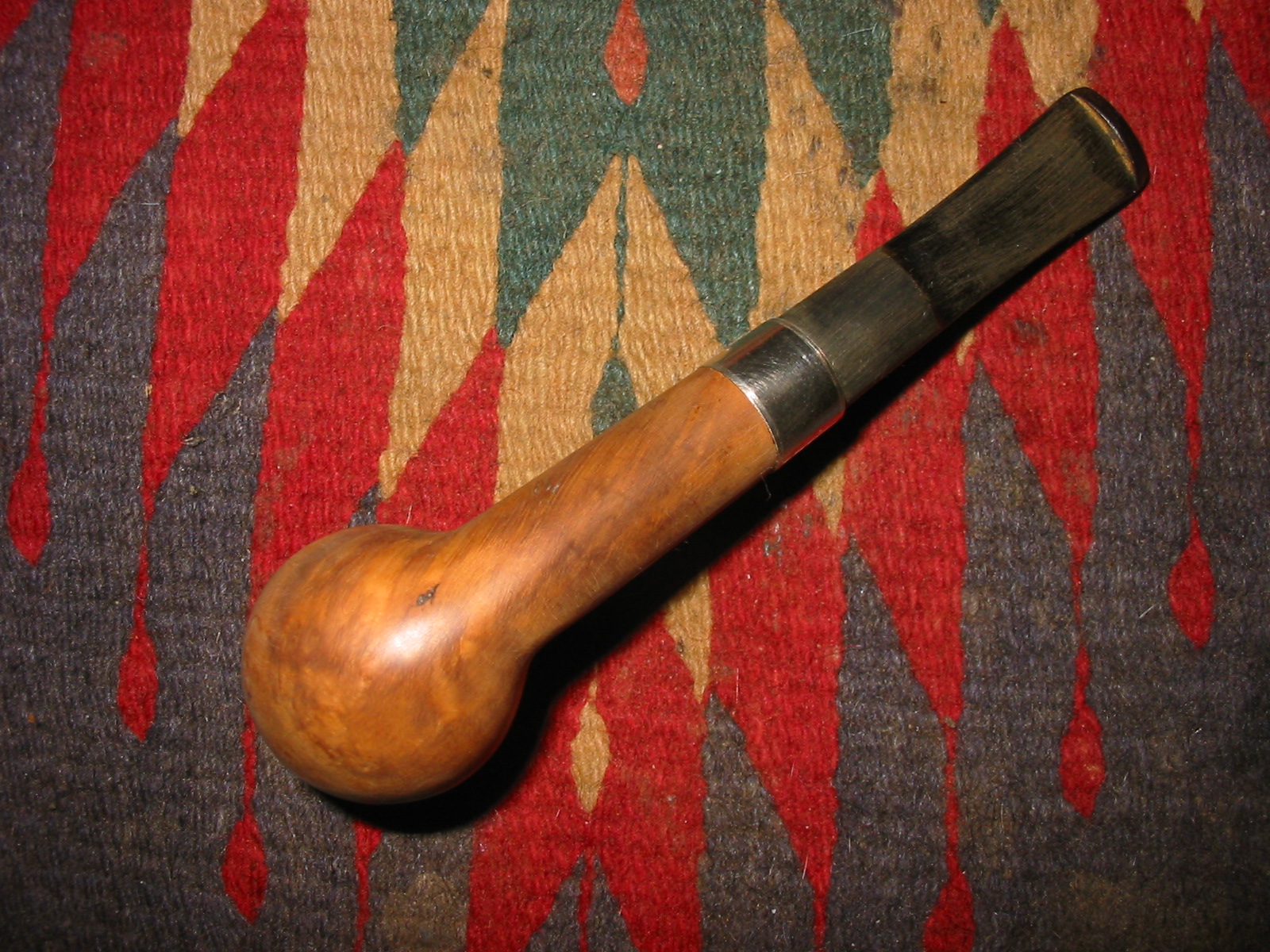
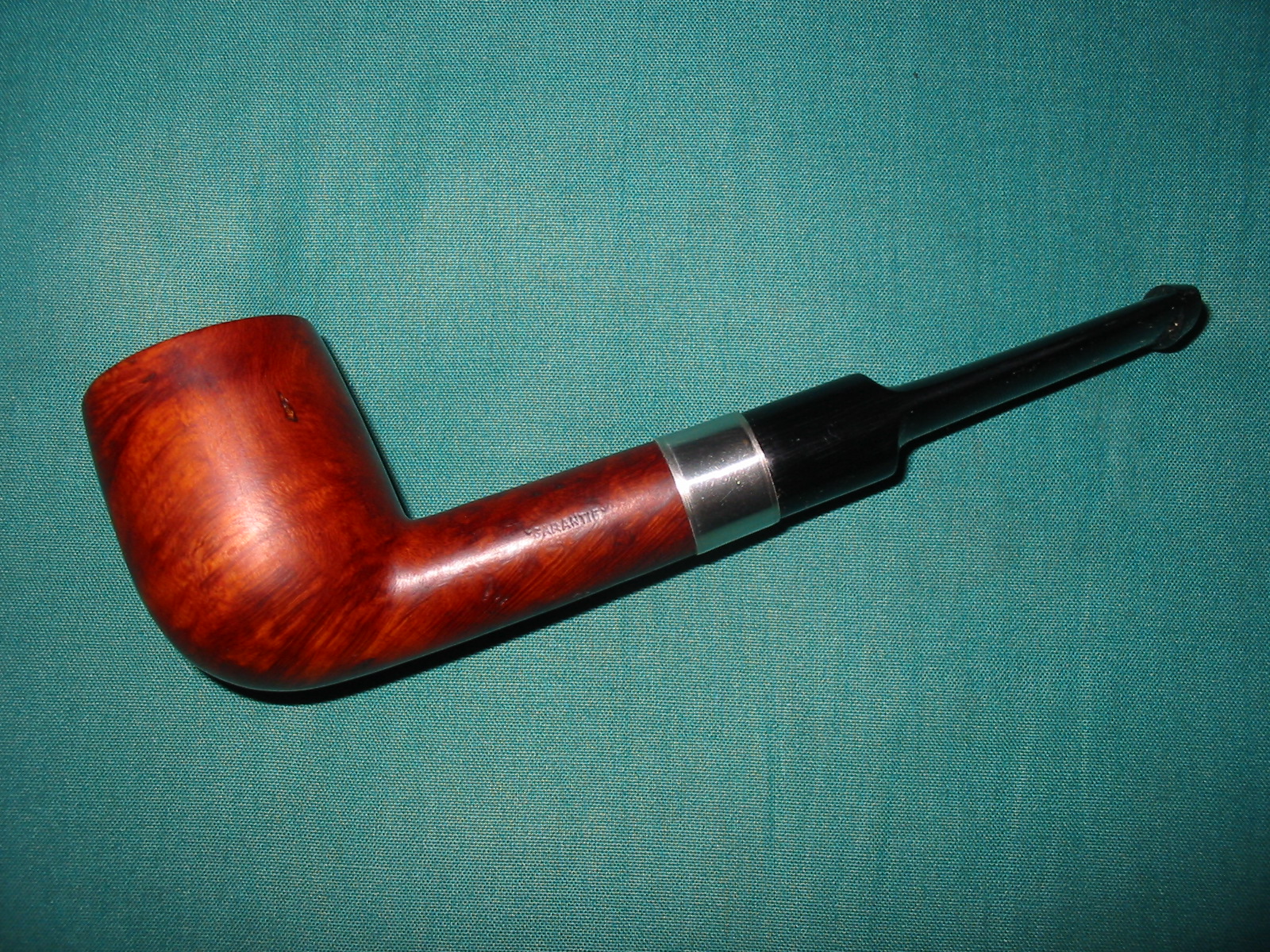
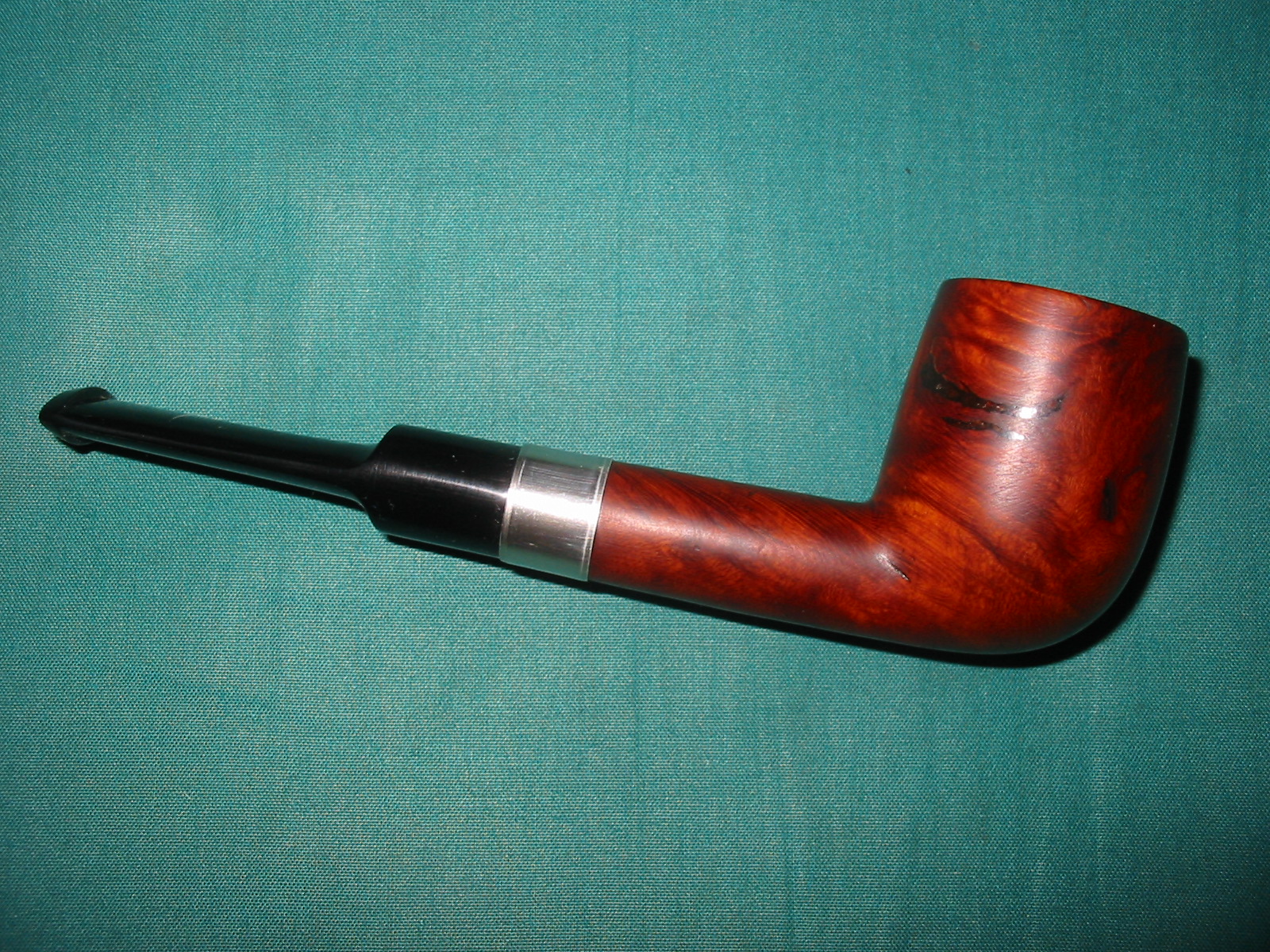
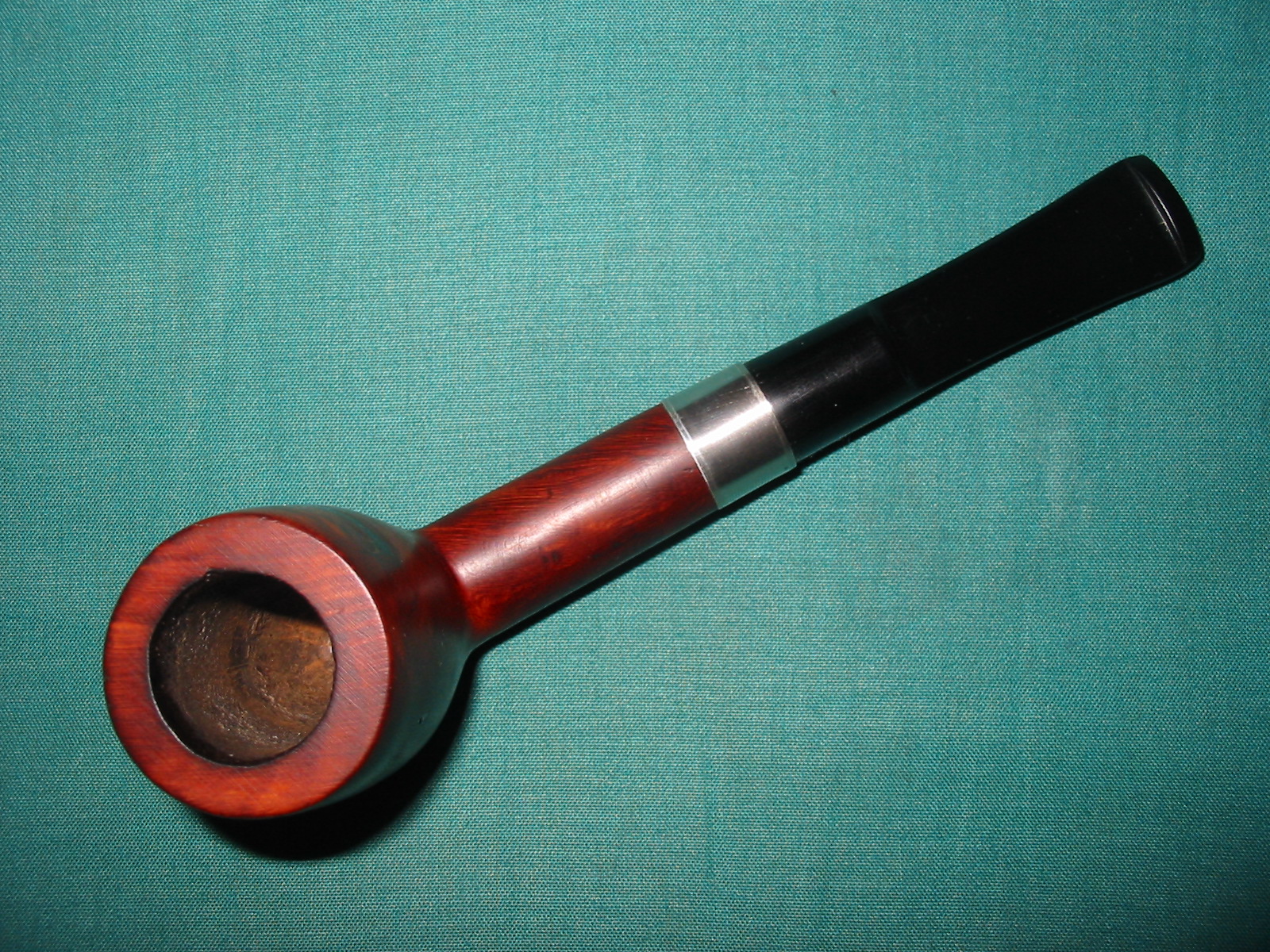
It looked like someone took a saw to the bowl on this one – A Bruyere Garantie Lovat Restored


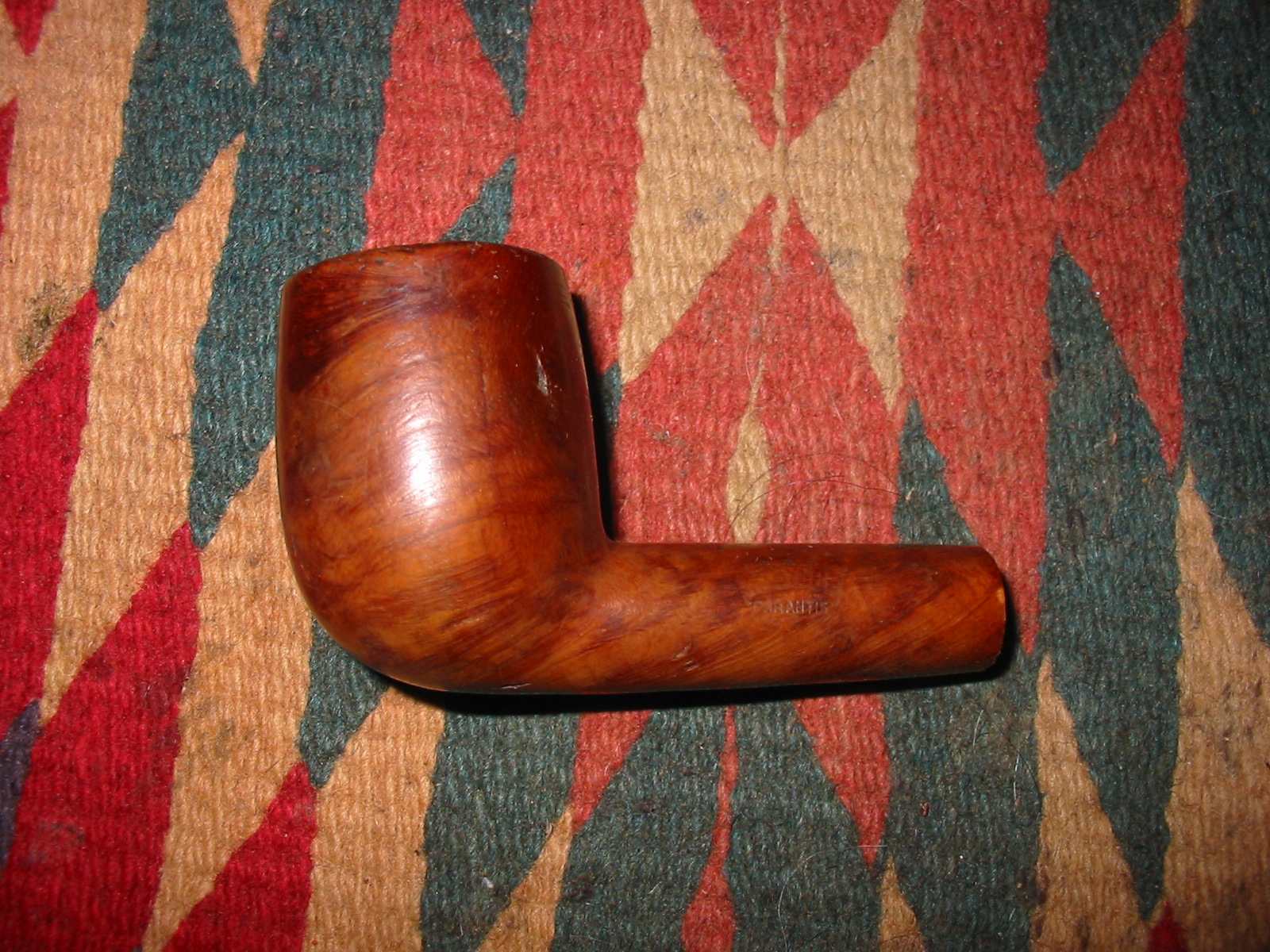
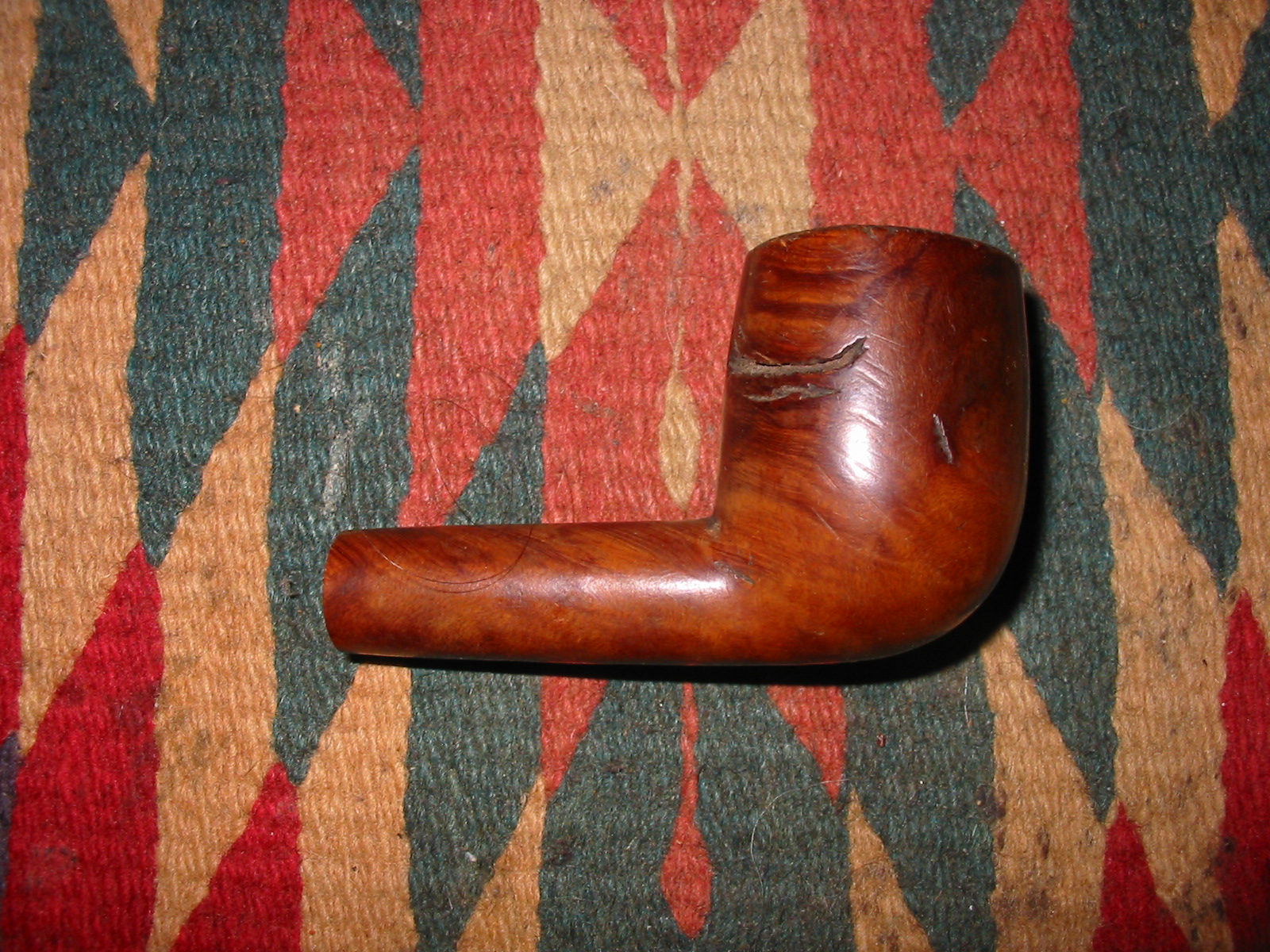
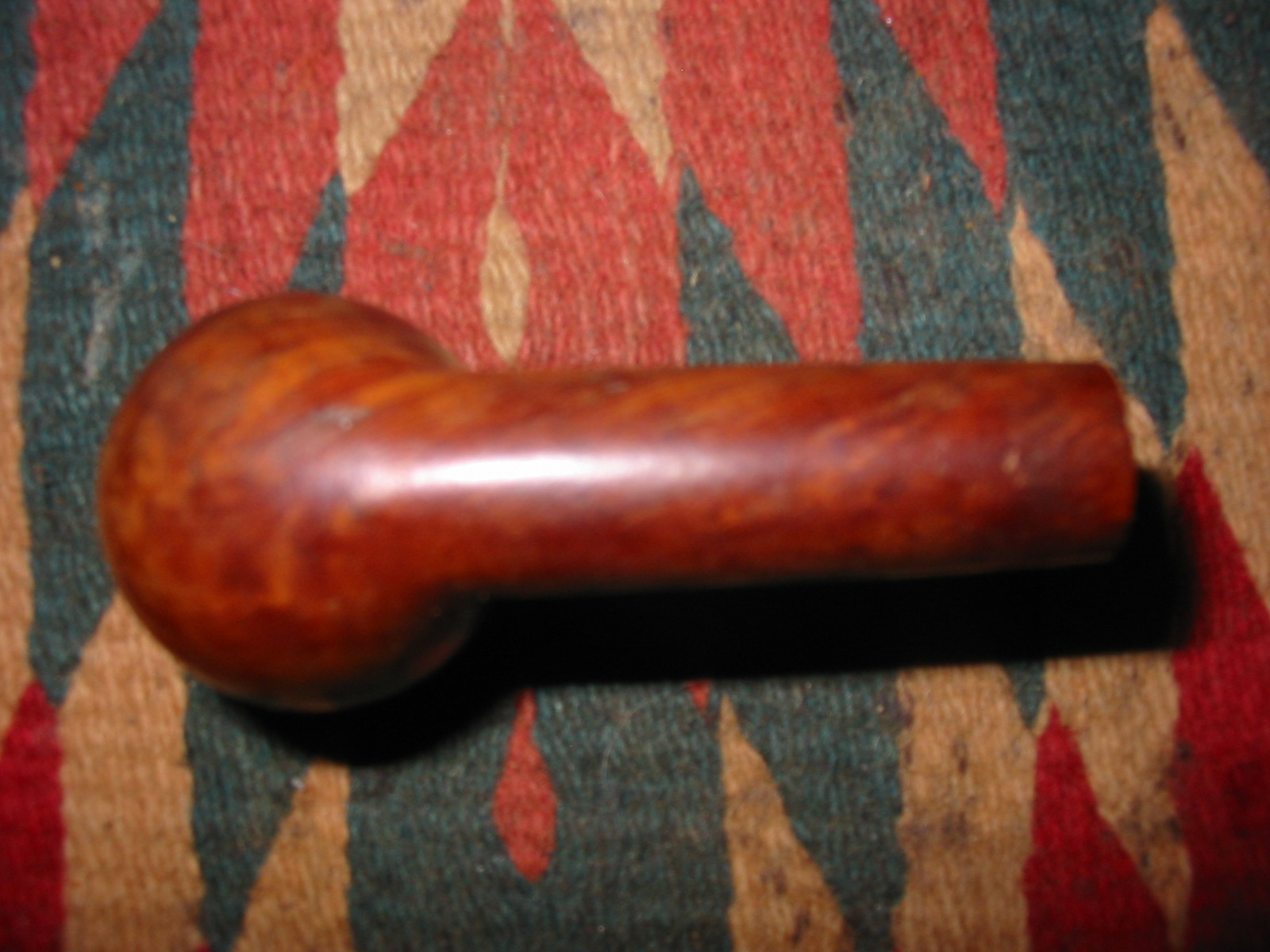
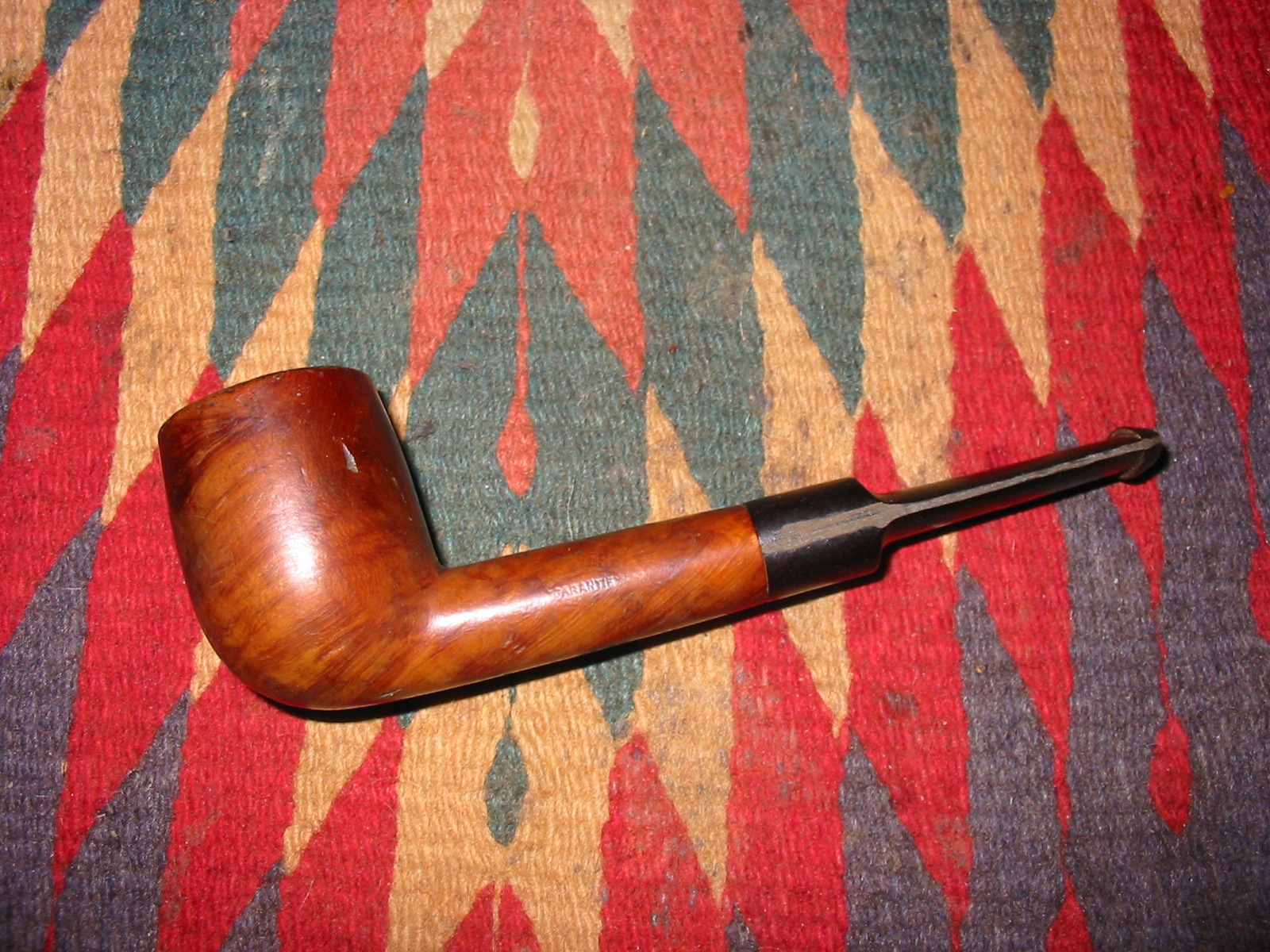
This bowl came to me showing a lot of promise but also a lot of damage. It was like someone had sawed at the bowl on the side near the shank. The cuts were more than mere flaws in the briar as they were very jagged and broken inside the cuts. There were what looked like tooth marks in the grooves. I debated on rusticating it but there was something about the challenge that made we work at ways to make it smooth once again. The inside of the bowl was in great shape. There was one damaged spot on the inside edge of the rim on the right side of the bowl. The bowl had tobacco still in it and the top of the rim was tarred and caked. There were multiple nicks in the finish all the way around the bowl but the majority of those were in line with the deep grooves. The bowl came without a stem and the shank had a nick out of the end making a clean fit almost impossible. There were no cracks in the shank so no damage in that way. The stamping on the pipe is Bruyere in a curved banner – unfurled in an arch on the left side of the shank and underneath it is stamped Garantie. The banner also seems to go across a three pointed crown that is visible underneath the banner.
IMG_5612

IMG_5613

IMG_5614

IMG_5615
I found a precast stem in my can of stems that was close to the right diameter to the shank and turned the tenon with a PIMO Tenon Turner and then fit it in the shank. I used a Dremel to remove the excess rubber along the edges and end of the cast.
IMG_5616

IMG_5617

IMG_5619
I sanded the stem and the shank to achieve a good smooth transition between the two. In the process I was curious as to what the shank would look like with a band so I slid a band part way on and fit the stem in place to have a look.
IMG_5620

IMG_5621
I liked the look of the band so I removed it and sanded the stem to fit smoothly against the shank. I sanded it with 220 grit sandpaper. (I have found that lower grits, courser sandpaper just makes for more scratches and is counterproductive when I am working toward refinishing the bowl.
IMG_5622

IMG_5623

IMG_5624

IMG_5625
Once I had the fit right and the transition smooth I cleaned off the shank with isopropyl alcohol and then rubbed on some white glue I heated the band and pressed it in place. With the band in place I took the bowl back to my work table and did a light topping as the outer edges of the bowl were more damaged than I thought. I wanted a good clean rim to go with the pipe once I had stripped and refinished it.
IMG_5626

IMG_5627
I reamed the bowl with a PipNet reamer and took it back to bare wood all the way to the bottom of the bowl.
IMG_5629
I wiped down the bowl with acetone on cotton pads to remove the finish. I wanted it clean of debris and grime as well as stain so that I could do the repair. I used the dental pick to clean out the edges of the two large cut marks and the smaller chatter in the briar as well. None of them actually were fills but rather gouges in the briar. I roughened the edges and wiped it down a final time with the acetone and cotton pads.
IMG_5632
I packed the cuts and nicks with briar dust and tamped it into place with the curved head or a pipe nail and also with the dental pick. Once they were full I dripped super glue into the grooves. I then packed more briar dust into the grooves, over filling them. I always put far more briar dust in the grooves than necessary to get good tight fills in the holes. I figure I can pack once and sand it back to the surface of the bowl instead of doing the pack two or three times. At this point in the process the photos show the pipe as a serious mess. I always wonder if I will be able to clean it up or if I had just made it a mess for nothing.
IMG_5633

IMG_5634

IMG_5635
I sanded the repairs and the bowl with 220 grit sandpaper to remove the excess material on the surface of the bowl. I followed that by sanding with a medium grit sanding block. The repairs are visible in the photos below as a solid dark brown/black coloured fill.
IMG_5636

IMG_5637

IMG_5638
I sanded the bowl further with medium and fine grit sanding sponges to remove the scratches in the surface of the bowl. I wet sanded with 1500-2400 grit micromesh sanding pads to smooth things out even more. I wanted the surface of the repairs to be smooth with the rest of the briar on the bowl. Once the sanding was finished I wiped the bowl down with some isopropyl alcohol on a cotton pad to clean off the dust.
IMG_5639

IMG_5640

IMG_5641

IMG_5642
I decided to give the bowl several coats of an oxblood stain that was slightly more opaque than my normal aniline stain. It is a stain that is used on kitchen cabinets and surfaces that food comes into contact with so I believe it is safe once it is dry.
IMG_5643

IMG_5644

IMG_5645
I wiped the bowl down with a soft cotton cloth to remove the excess stain and then restained it a second time. I repeated the staining until the coverage was even and clear.
IMG_5646

IMG_5647

IMG_5648
I worked on the stem some more with medium and fine grit sanding sponges and then with micromesh sanding pads. I wet sanded with 1500-2400 grit pads and dry sanded with 3200- 12,000 grit pads.
IMG_5724

IMG_5725

IMG_5726
I rubbed the stem down with Obsidian Oil and let it soak in. I looked over the bowl again and decided to give it a top coat of a walnut brown stain. I felt that it might add some darker highlights to the repaired areas and make them less noticeable. I applied the stain, flamed it, restain and reflamed it and then buffed the bowl and the stem with White Diamond on the buffing wheel. I gave the whole pipe multiple coats of carnauba wax and then a final buff with a soft flannel buff to add a polish. The next four photos show the finished pipe. While the flaws/cuts are still visible they are no longer deep gashes in the wood. Rather they give a sense of character to the pipe and overall it is ready to go and last a long time delivering a quality smoke.
IMG_5727

IMG_5728

IMG_5729

IMG_5730
I took the final photo to give a close up view of the repaired gashes on the bowl. Though visible they are now smooth to the touch and solid and unmovable.
IMG_5731

Learning something new while repurposing this damaged pipe bowl – adding a shank extension.


Blog by Steve Laug

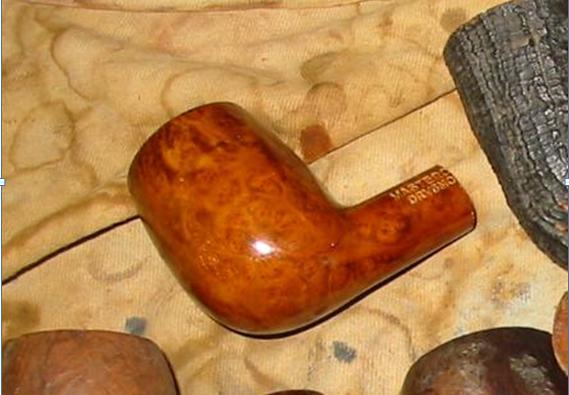
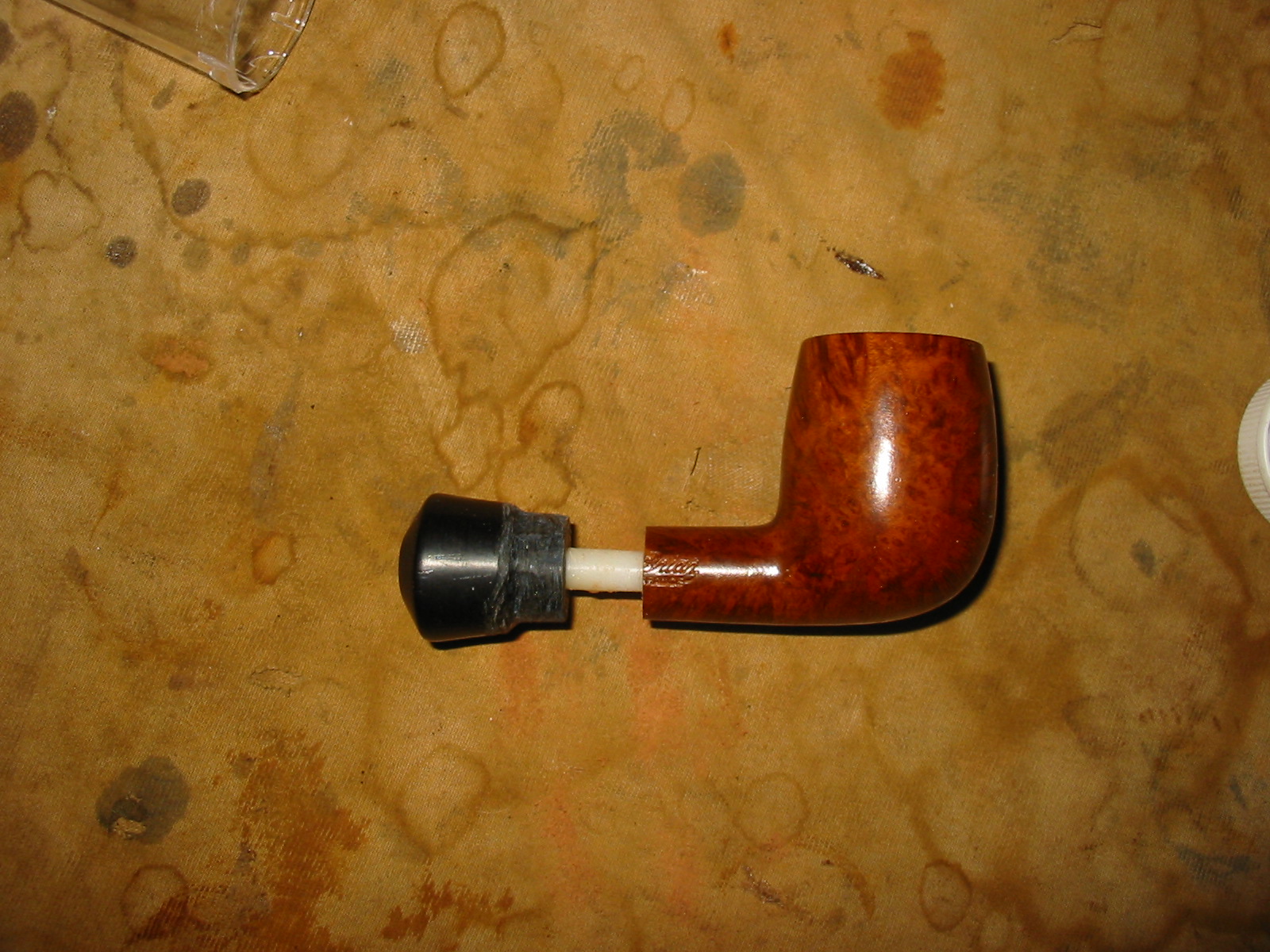
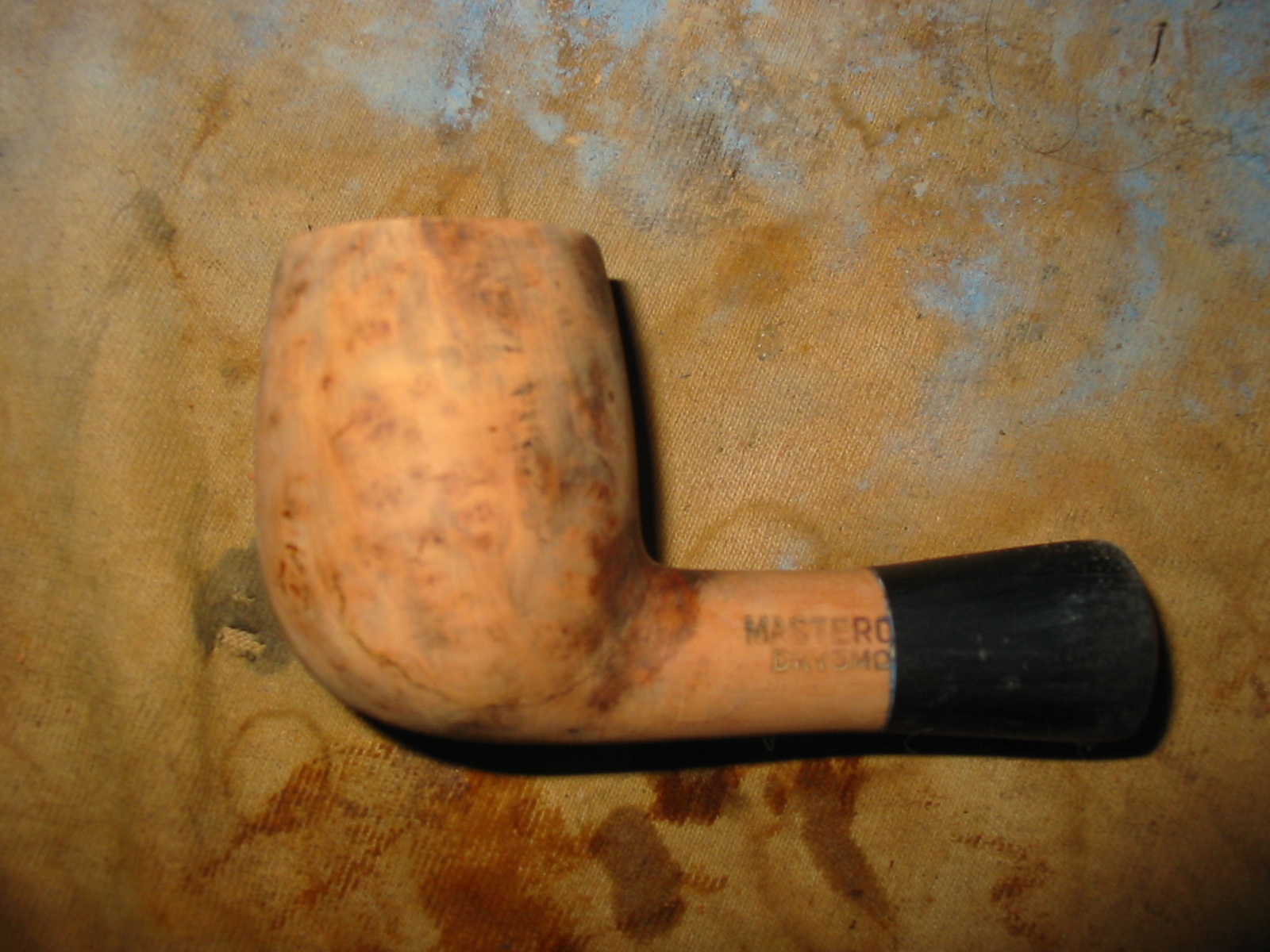
One of the pipe bowls I was recently gifted was an unsmoked Mastercraft Drysmoke bowl that had the shank cut back to half of its original length. The cutback was done poorly – crooked cut with a dull saw. It had cut right through the stamping on both sides of the shank and was crooked.
Dry smoke
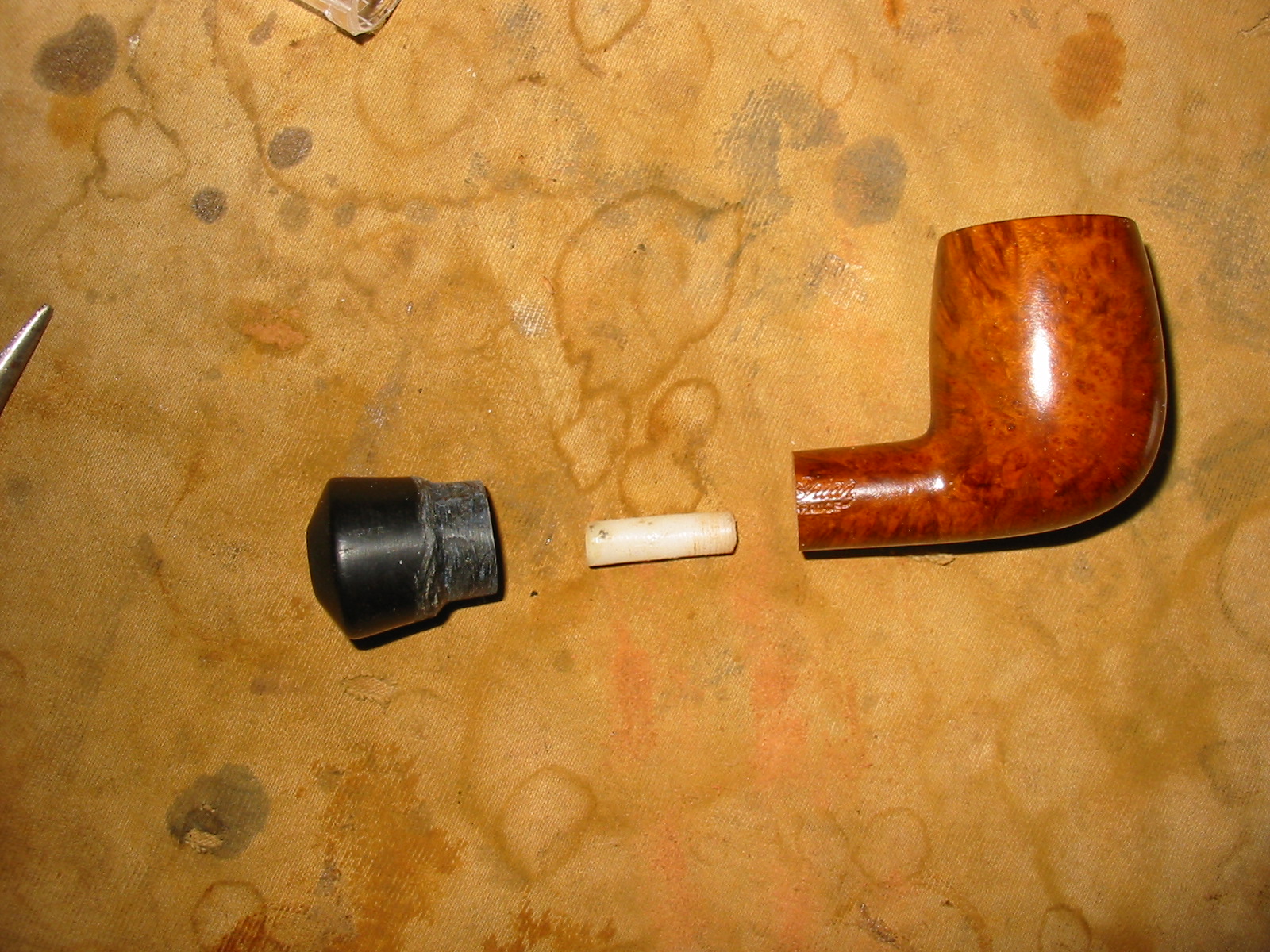
The bowl had a very heavy coat of urethane on it as well. There was some nice grain on part of the bowl but the bottom had some hack marks where it looked like the saw had jumped. I took some time to look it over and try to figure out what I was going to do with it. I was not sure and looked at the end of the cut off. I knew I would have to face the end of the shank to even things up no matter what I did with it. I could easily have just drilled the mortise large and cut a new stem for it. It would have ended up a short shank billiard and that would have been fine. However in the midst of the review I decided that it was time to learn something new. I have always wanted to learn how to do shank extensions so I figured this was a great candidate for my schooling. I flattened the end of the shank squaring it like I do when topping a bowl. I had an old vulcanite shank extension I scavenged somewhere. I had played around with it and sanded away part of the end that faced on the shank of the pipe before I threw it in my parts box. It was a mess as it was but it might just work. I also had some white Delrin tenon material that would work well. I had already turned it almost to the correct size with my Dremel and sanding drum. Maybe these parts would all come together and help me craft something different. What the heck it was worth a try and I would learn a lot in the process.
IMG_5514
The photo above shows all the parts laid out for the connection. I faced the end of the shank using a sanding board in the same manner I used to top a bowl rim. It took a bit of work and focus to get it flattened out and perfectly horizontal. (Oh to have a lathe to do this kind of thing.) I used the Dremel with the sanding drum to fine tune the diameter of the Delrin so that it would fit well in both the end of the cut of shank and the vulcanite extension. I wanted the two parts to face smoothly against each other. I put it together to make sure I had the fit right
IMG_5515
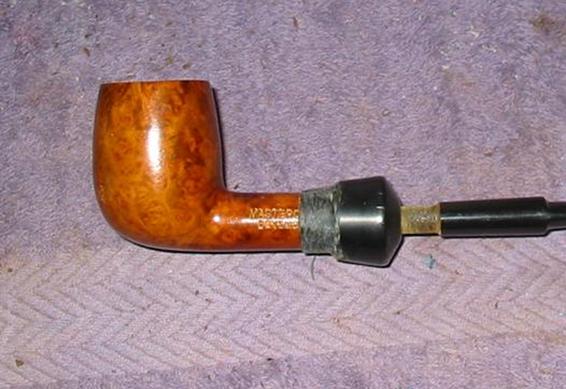
I put glue on the end of the tenon and pressed it into the shank and then repeated the process and pressed the extension in place. The fit against each other was exactly what I wanted. I ran some superglue in the joint between the two materials and when it dried I would sand it down. I had an old stem that had the right tenon size and inserted it to have a look. I wanted to see what the newly glued shank extension would look like with a stem in place. The joint looked good and a stick bit stem would work well when I got to that point in the process.
glued shank
I removed the excess material of the extension with the Dremel and sanding drum and a lot of hand sanding with 220 grit sandpaper. I wanted to make the extension slightly flared and the transition between the shank and the extension smooth and seamless. I was going for a taper back from the bowl to the end of the shank. I also wiped the bowl down with acetone on cotton pads to remove the urethane finish. It was a tough go so I sanded the bowl and shank. I decided to not worry about sanding the partial stamping that was left on the shank as it was no longer a Mastercraft pipe at this point.
IMG_5518
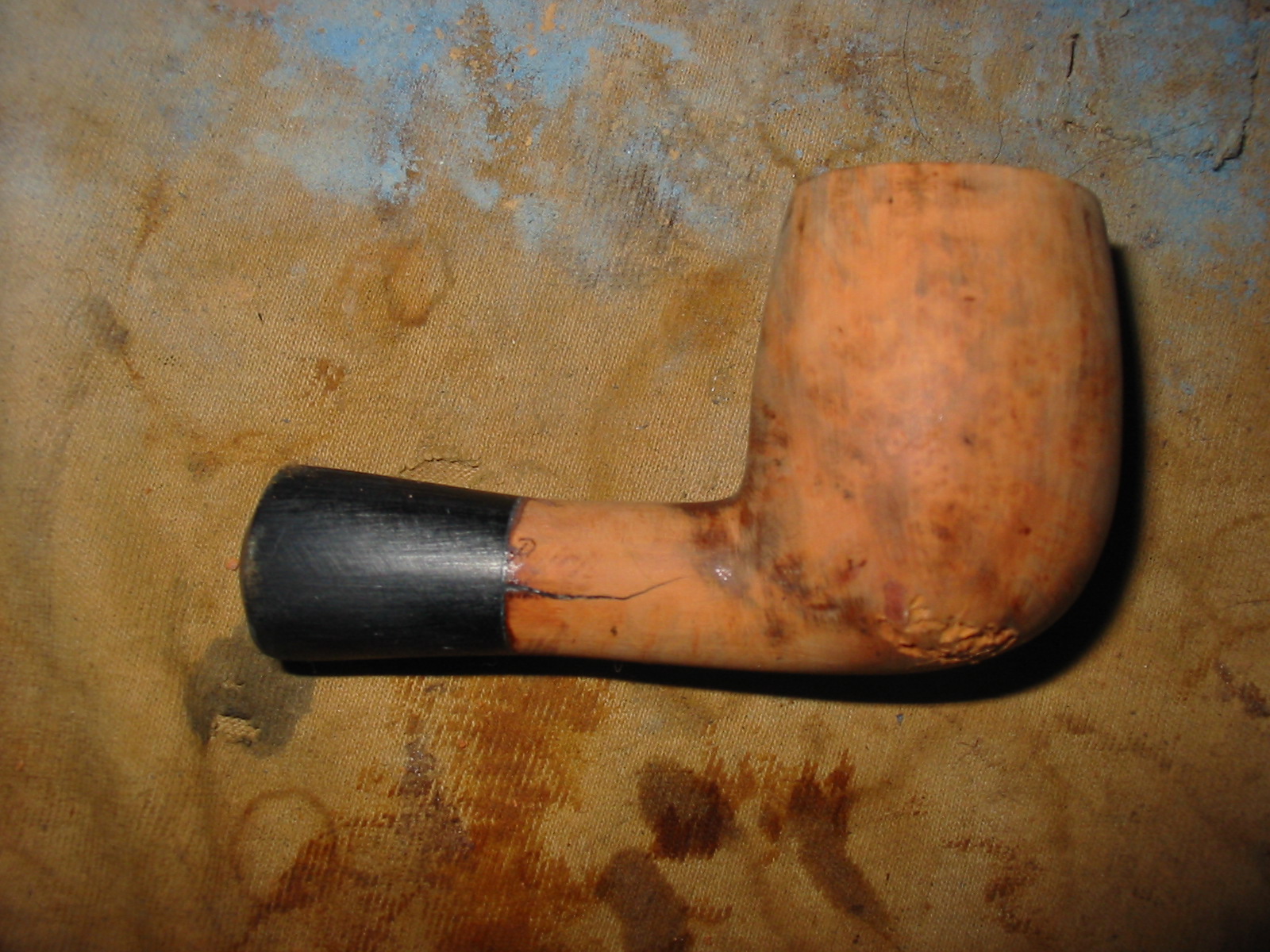
In the process of adding the Delrin I noticed that there was a crack in the shank on the right side of the pipe. It was present before I inserted the tenon, but the insert opened it up. I dripped some super glue in the crack before I put the Delrin insert in place. I knew that the insertion of the tube in the shank from the cut end to the end of the airway would give strength to the repair and also remove the pressure on the shank. I also knew that there would no more stress on the crack once the extension and tube was in place. After sanding the shank and extension I did some cosmetic work on the crack and filled it with superglue and briar dust. Once it was dry I sanded that area of the shank until it was smooth.
IMG_5519

IMG_5520
With the crack and repair being very visible and knowing that it would not disappear in the stain I decided to rusticate the shank and the bowl bottom. I did not worry about the visibility of the repair as the entire pipe is a repair job. I have been reading a lot about John Calich and his use of rustication and smooth finishes in the same pipe and the contrast stains to highlight the transition between finishes so I decided to try that out with this bowl. I wanted a thin band of smooth briar around the joint so I taped off the area and did the rustication with my modified Philips screwdriver. I rusticated the shank and the bottom of the bowl. I used a brass bristle tire brush to go over the rustication and knock off the rough areas. I buffed it with red Tripoli to further smooth out the rustication slightly.
IMG_5522
I stained the bowl bottom with black aniline stain and flamed it. I repeated the staining and flaming until I had a good even coverage on the rusticated portion of the bowl. I cleaned up the smooth areas next to the stained rustication with sandpaper to remove the slight bleed from the black stain. I wiped those areas down with acetone on a cotton swab to clean the transition areas.
IMG_5523

IMG_5524

IMG_5525

IMG_5526
I found the stem I wanted to use in my can of stems. It was a slender military bit with a slight taper. I liked the look of the stem. I put it in place for the next photos. It is not stuck deeply enough into the mortise because of the taper to the end of the stem. It will need to be turned down slightly to get a good snug fit deep in the mortise.
IMG_5527

IMG_5528

IMG_5529

IMG_5531
Before going to bed last evening I rubbed down the bowl and stem with Olive oil. I wanted it to penetrate the vulcanite extension, stem and the bowl (smooth and rusticated portions) to give a bit more life to the rubber and the briar. This morning when I got up I worked on the end of the stem to get a deeper fit into the mortise. I used the PIMO tenon turning tool adjusted as small as possible and turned the first inch of the stem to get a tenon. I sanded it with 220 grit sandpaper to bring it down to the diameter of the inside of the mortise. The next two photos show the stem sanded enough to go half way into the mortise. It would take a lot more sanding before it sat against the end of the mortise.
IMG_5532

IMG_5533
Ah progress! Got the stem fit right – it is snug and deep in the mortise now. I sanded the tenon until it fit well. I also sanded the transition from the end of the tenon to the taper on the rest of the stem. I wanted the fit against the shank extension to be snug without the edges of the tenon showing when the stem was in place. This pipe has turned out to be a great lesson for me in the school of pipe repair up to this point. I am looking forward to “graduating” from this project at this point.
IMG_5534
I sanded the bowl, the smooth band at the union of the extension and the briar and the vulcanite of the stem and extension with micromesh sanding pads. I wet sanded with 1500-2400 grit pads to remove any scratches in the briar and the shank extension from sanding with the fine grit sanding sponges. The photos below show the bowl and stem after I had sanded them with the early grits of micromesh. I wiped down the bowl and the stem with a cotton cloth and then rubbed Obsidian Oil into the vulcanite extension and stem.
IMG_5535

IMG_5536

IMG_5537
I stained the smooth parts of the bowl and shank with a cherry stain using a cotton swab and wiped it off with a soft cloth. I hand buffed the bowl and shank with a shoe brush to give it a quick polish.
IMG_5539

IMG_5540

IMG_5541

IMG_5542
Once that was finished I continued to sand the stem with the micromesh sanding pads. I had already wet sanded the extension and the stem with the earlier grits of pad so now it was time to dry sand them with the remaining pads – 3200-12,000 grit.
IMG_5543

IMG_5544

IMG_5545

IMG_5546
When I finished sanding with the micromesh sanding pads I rubbed the vulcanite extension and stem down with Obsidian Oil and when it was dry gave the stem, extension and smooth portions of the pipe a buff with White Diamond. I gave the smooth areas of the pipe and the vulcanite multiple coats of carnauba wax. I buffed with a soft flannel buff to give it a shine. The finished pipe is shown in the photos below. It has come a long way from the cut off bowl that I started with in the beginning of this restoration. I think rather than restoring this one I have actually repurposed a bowl – a phoenix rising from the ashes. Now I have another new pipe to fire up and try out later today.
IMG_5547

IMG_5548

IMG_5549

IMG_5550