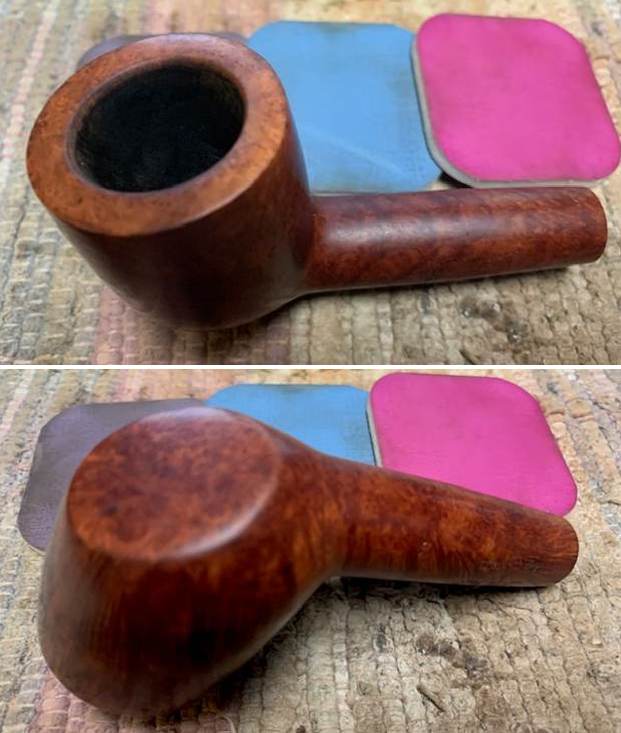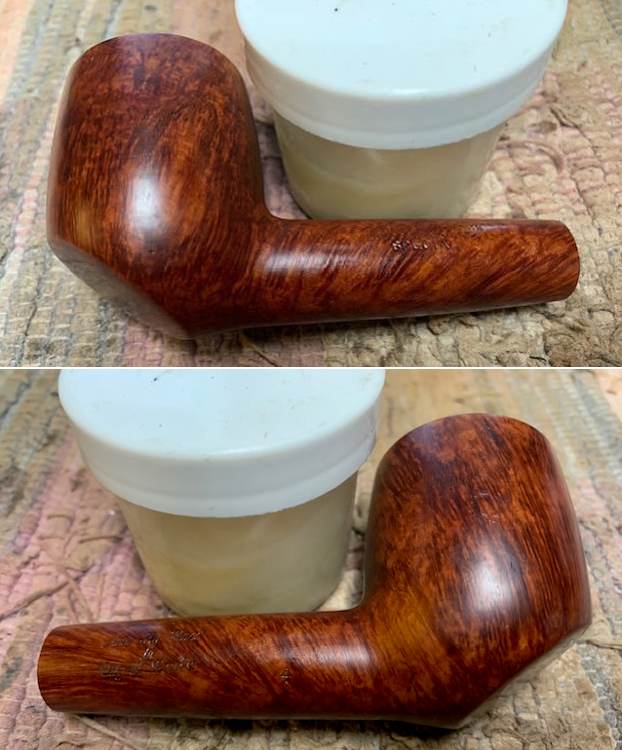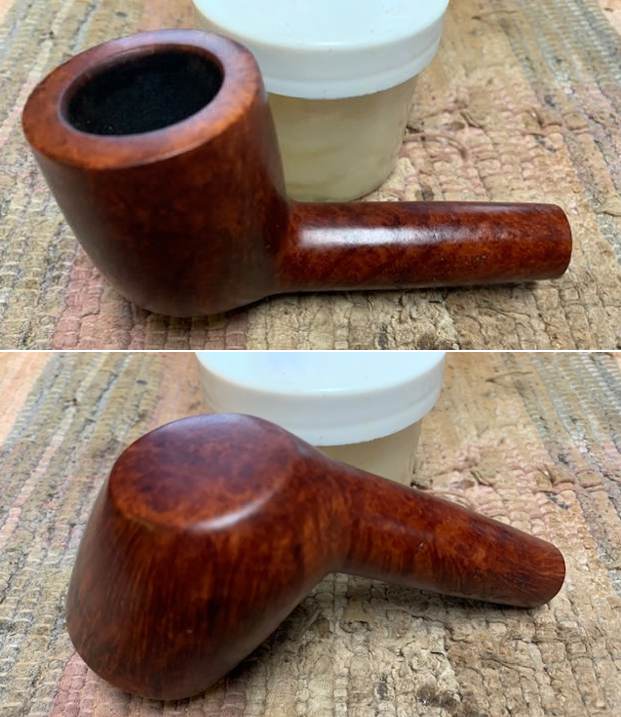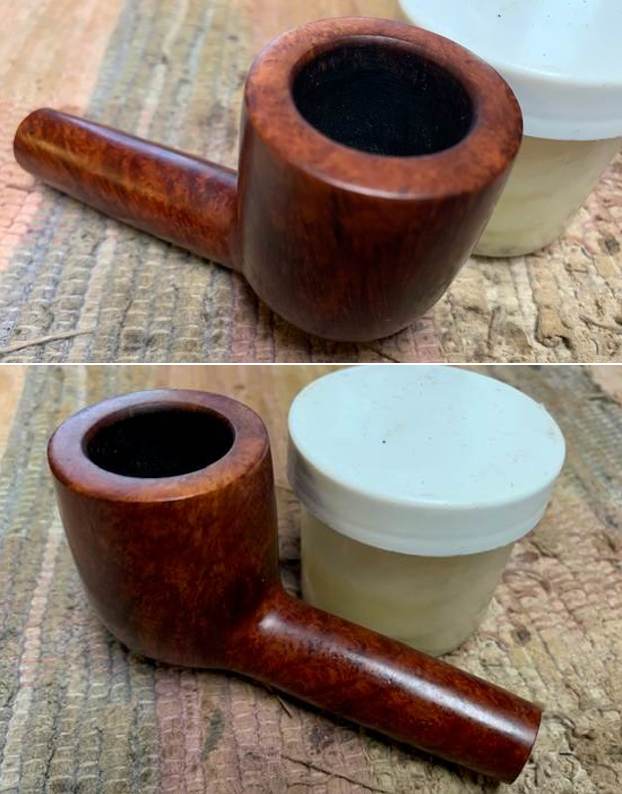
Tag Archives: Stem repairs

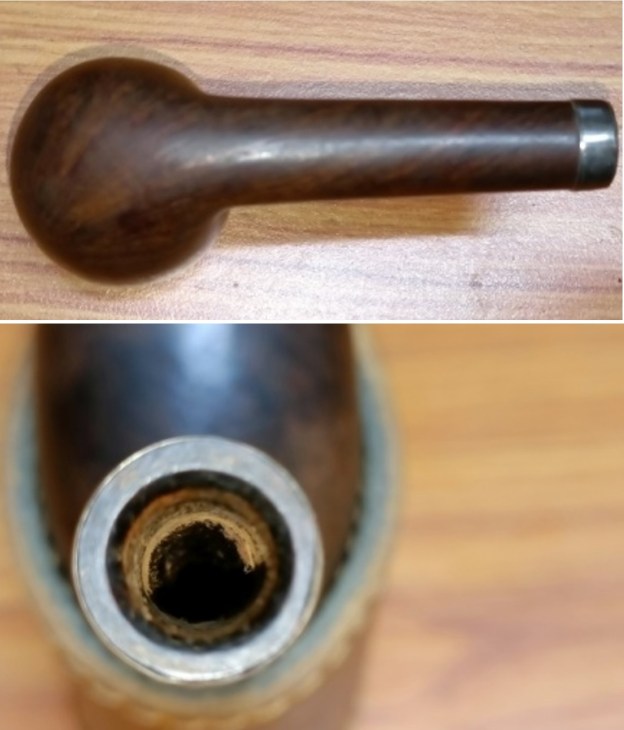
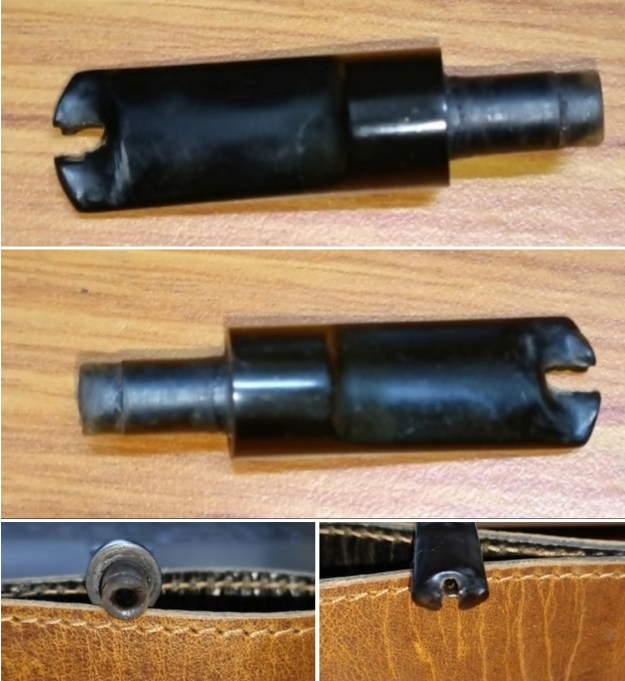
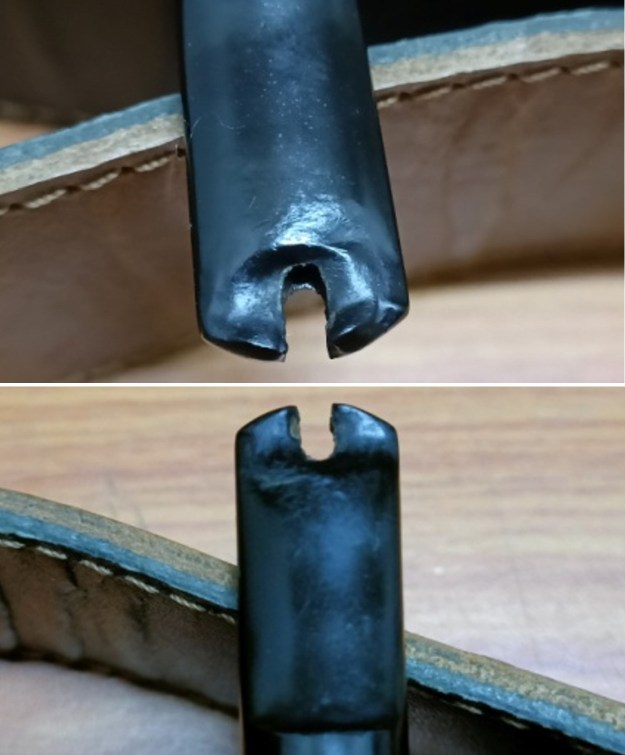
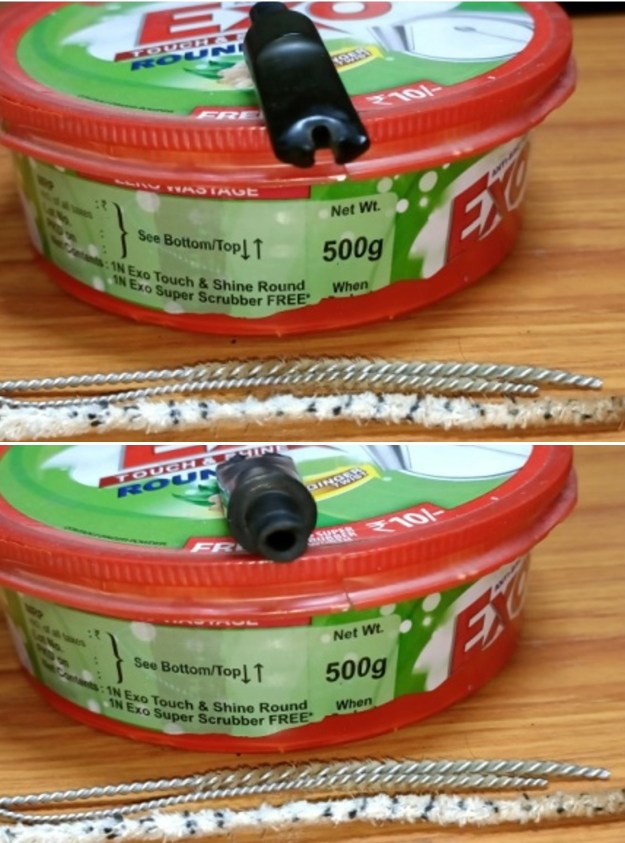
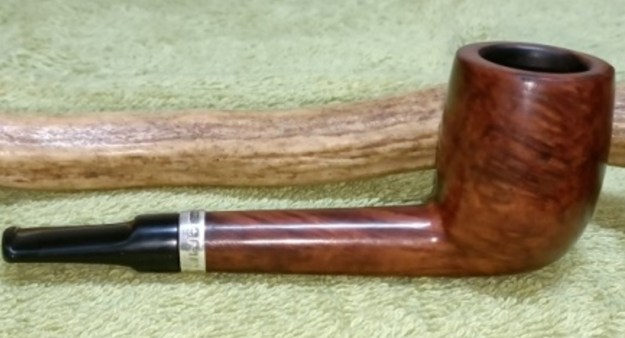
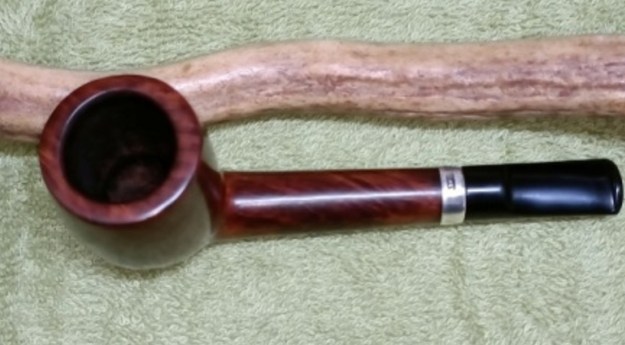
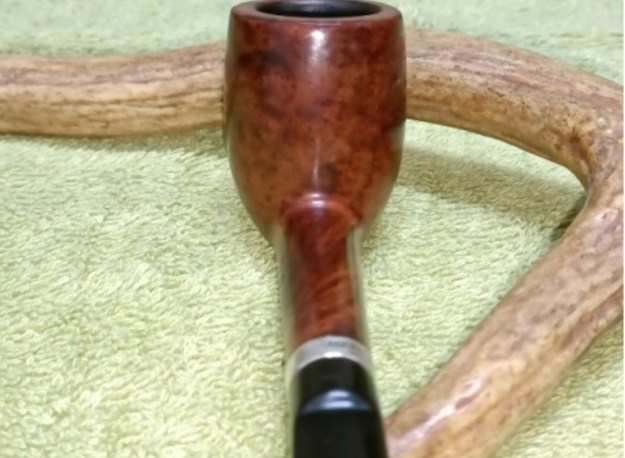
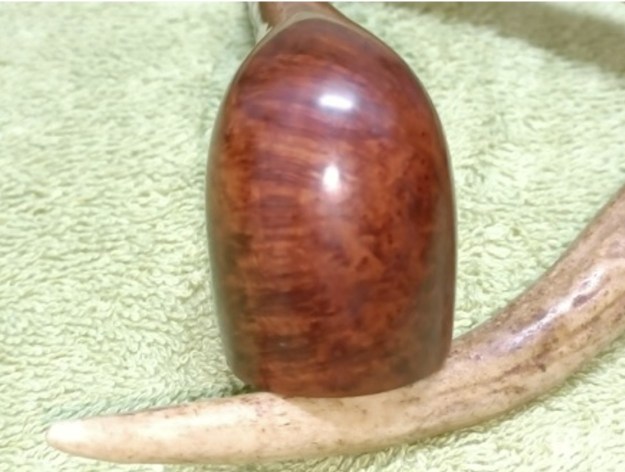
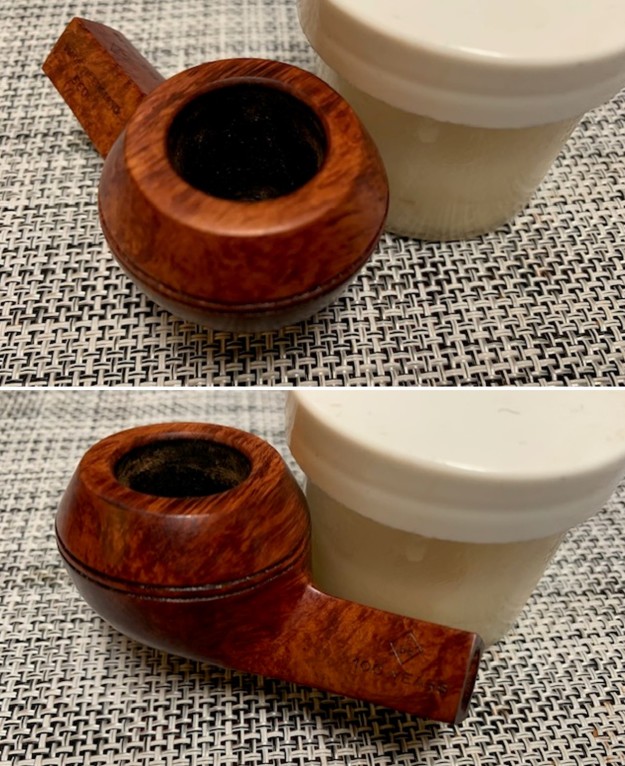
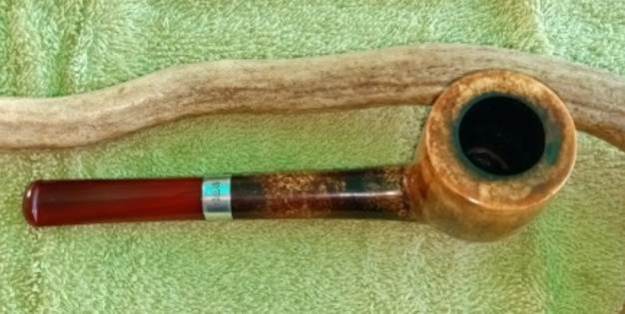
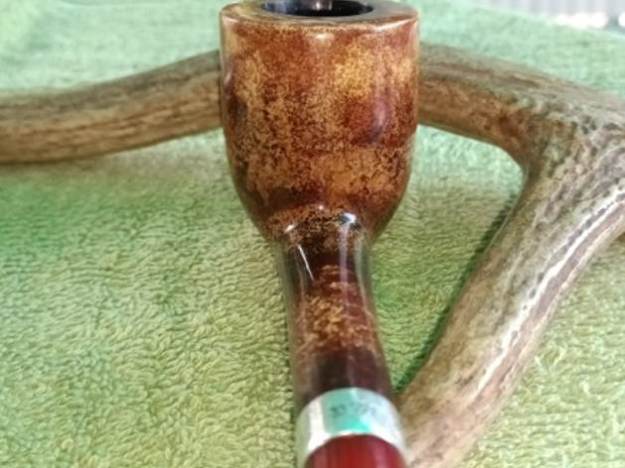
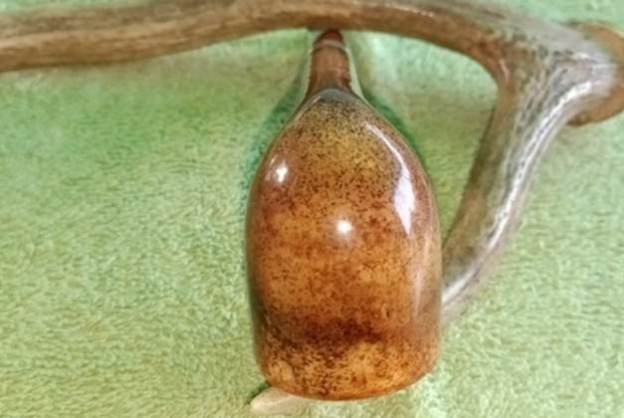
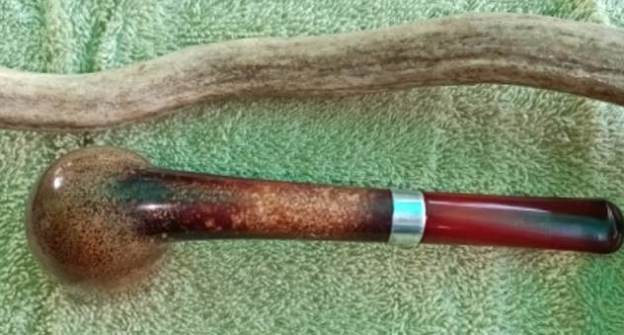
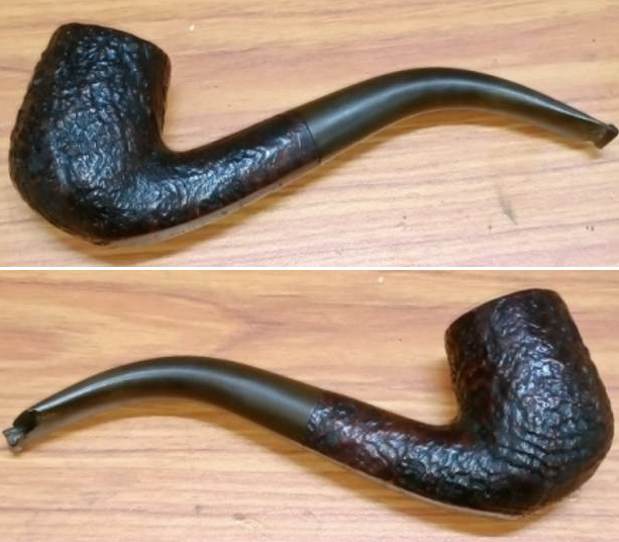
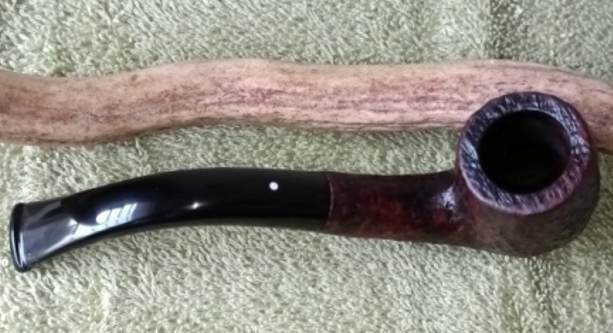
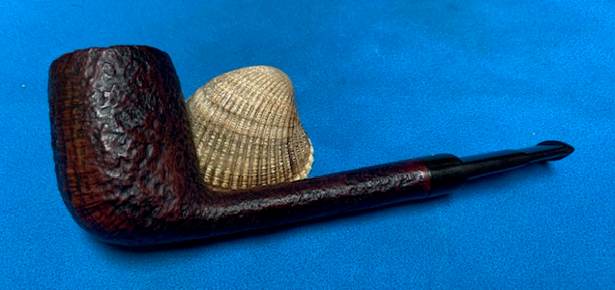
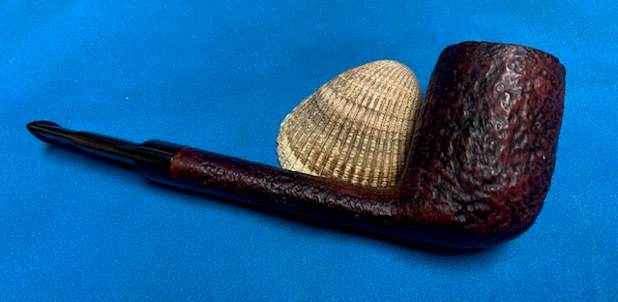
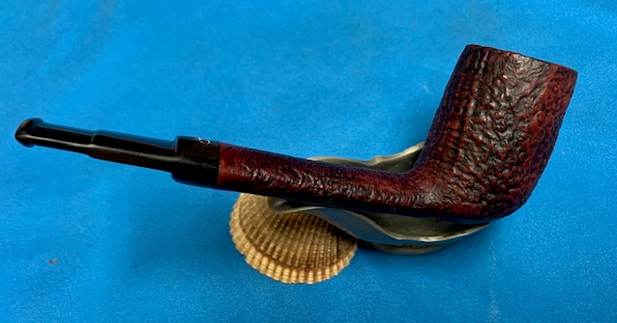
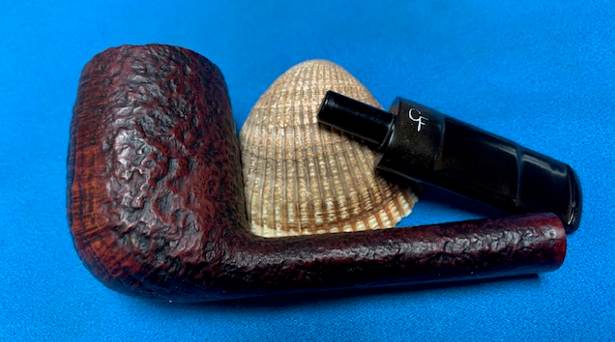
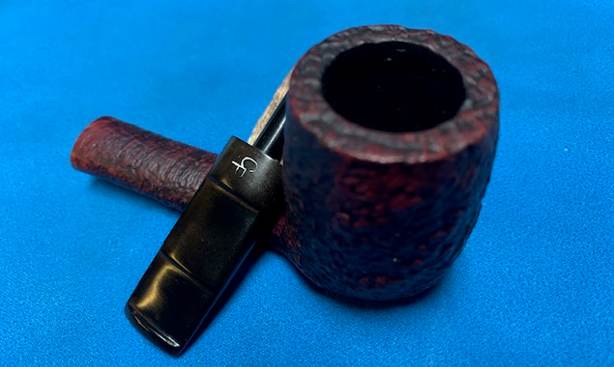
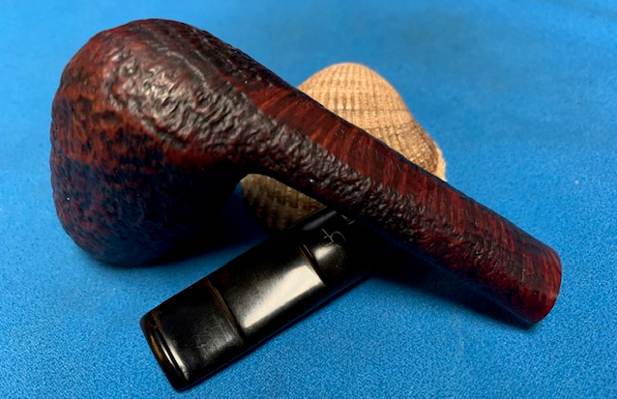
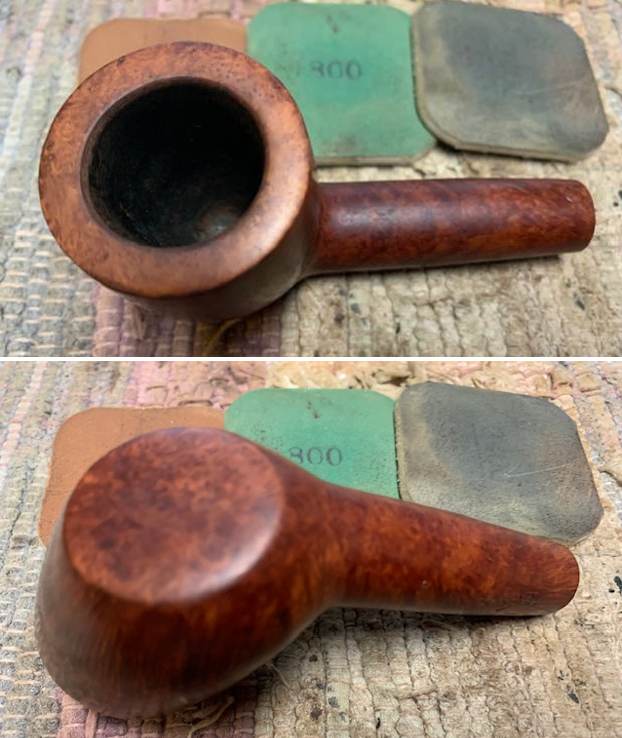
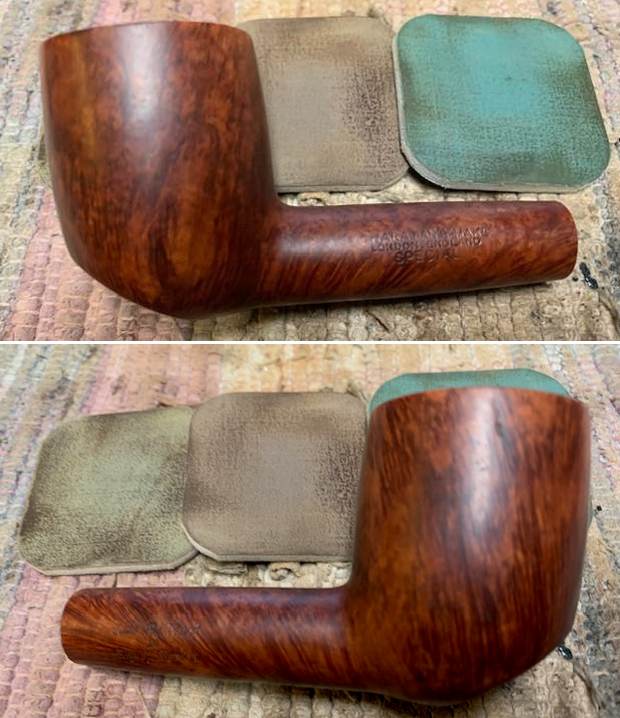
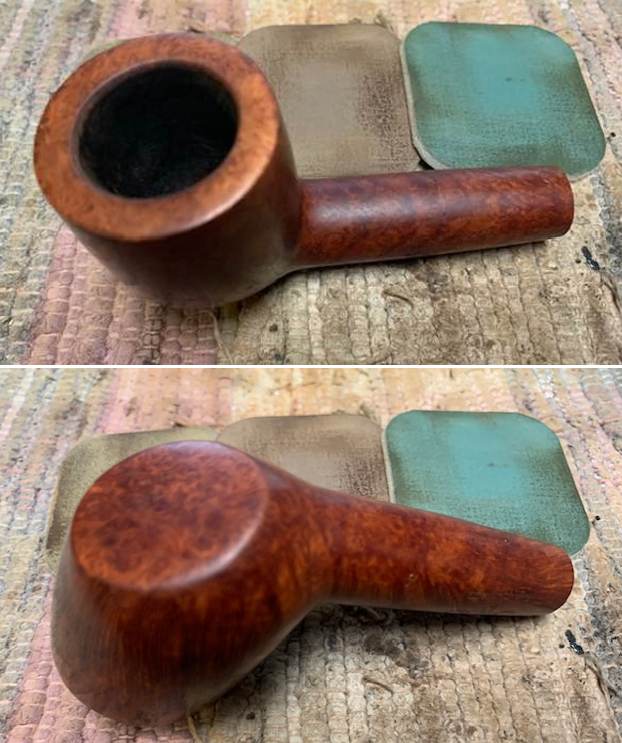
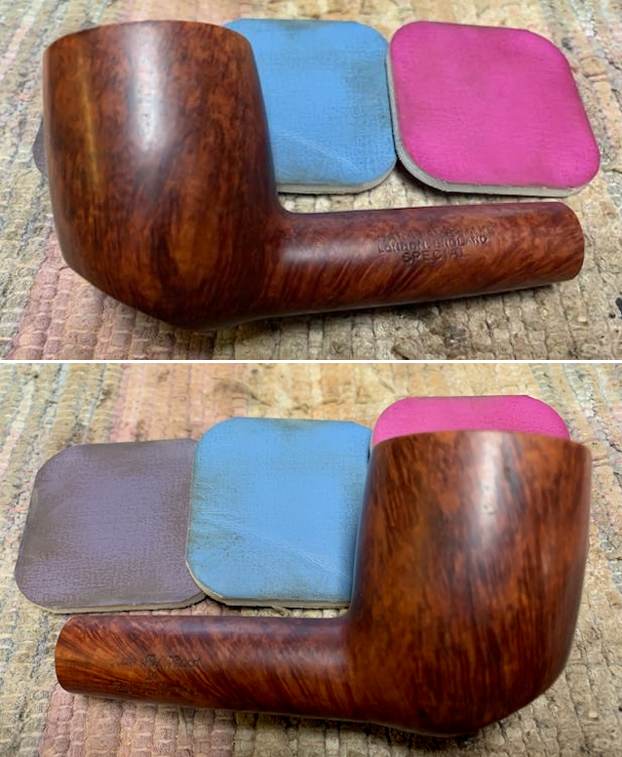
Refurbishing a beautiful classic billiard from Peterson’s – a Kapet # 150, London Made, England


Blog by Paresh Deshpande

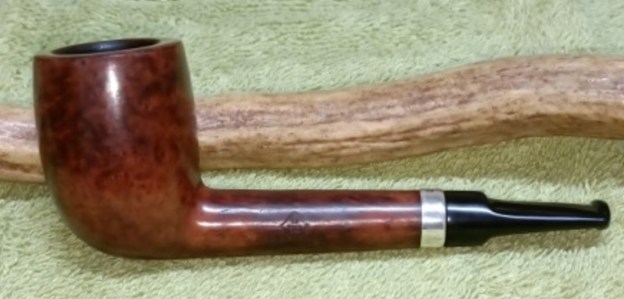
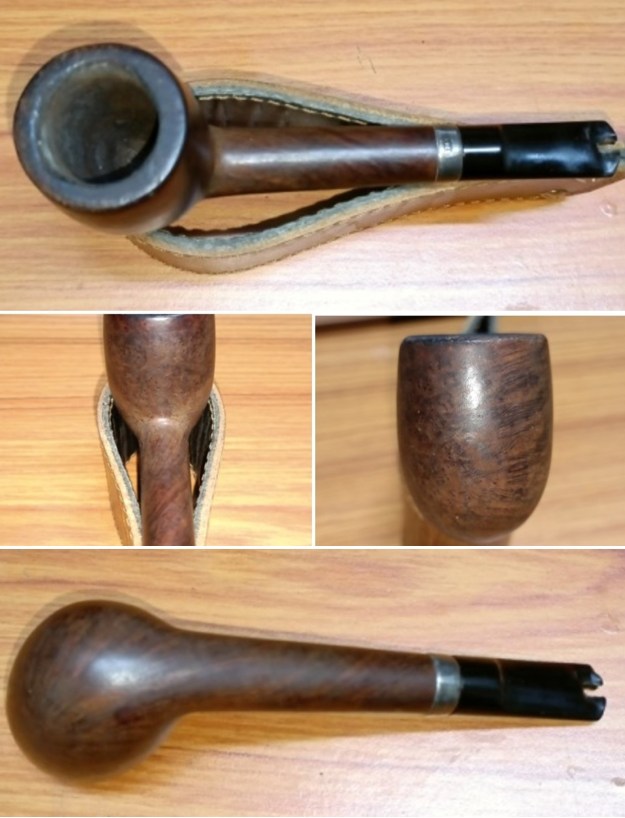
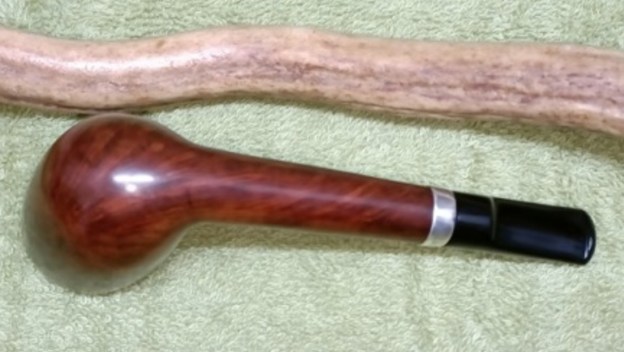
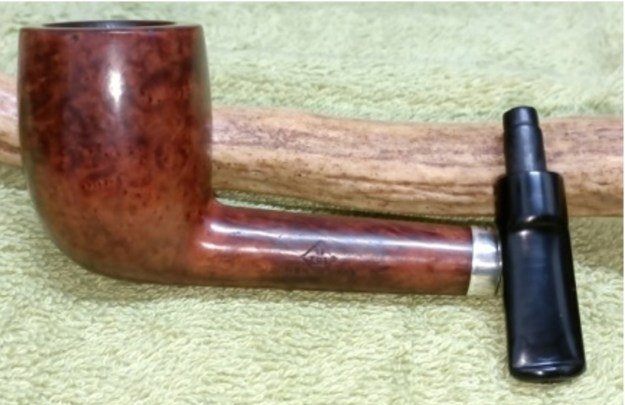
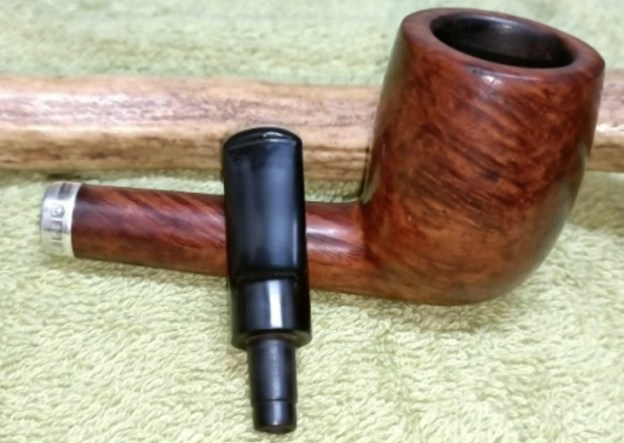
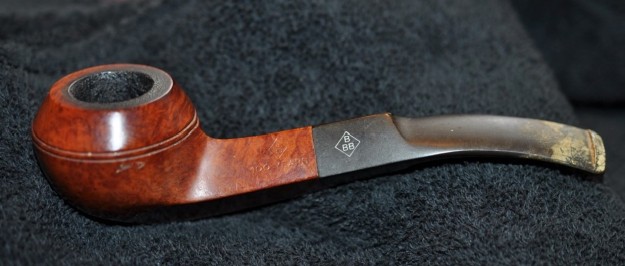
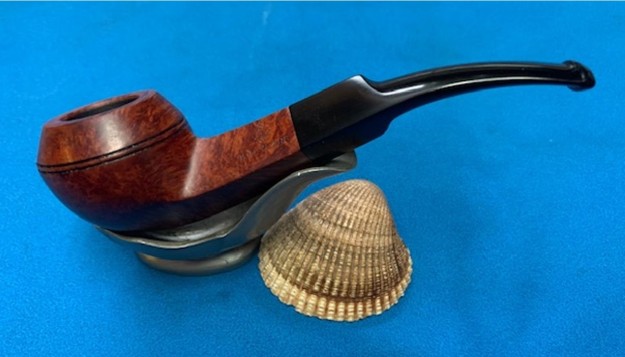
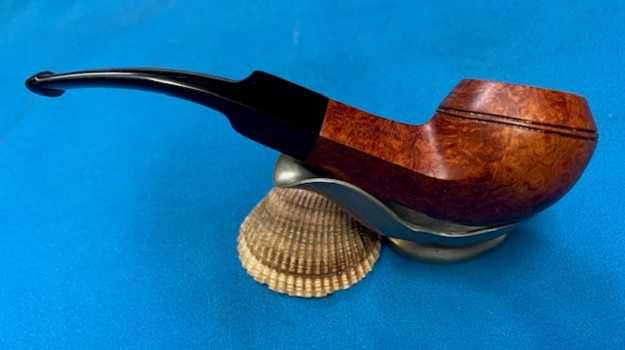
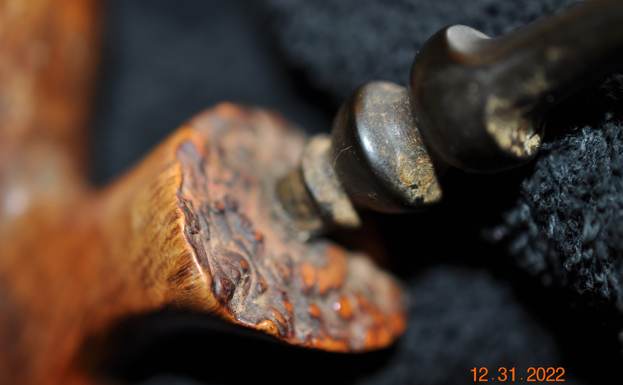
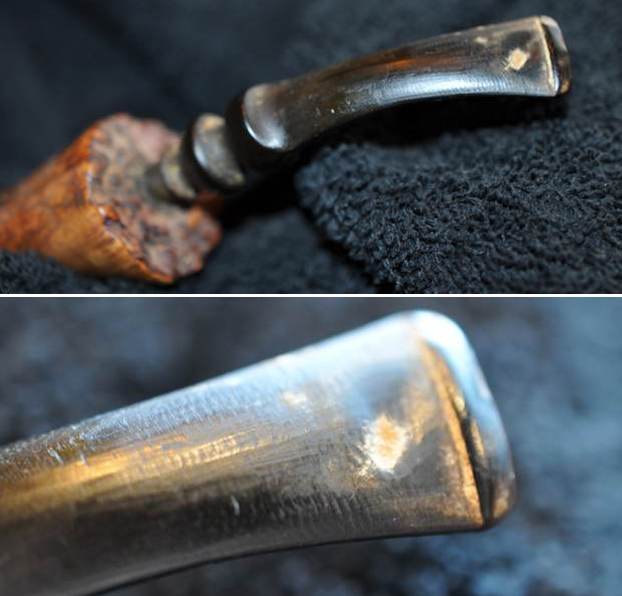
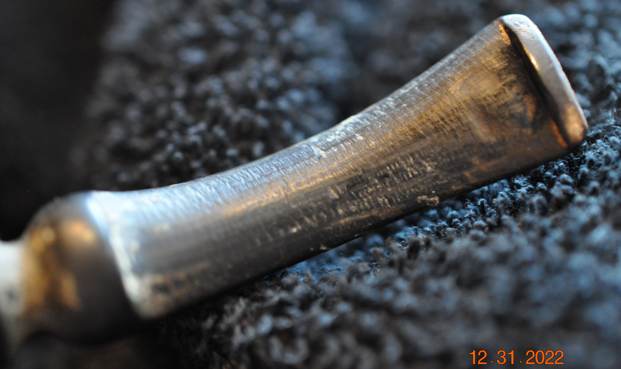
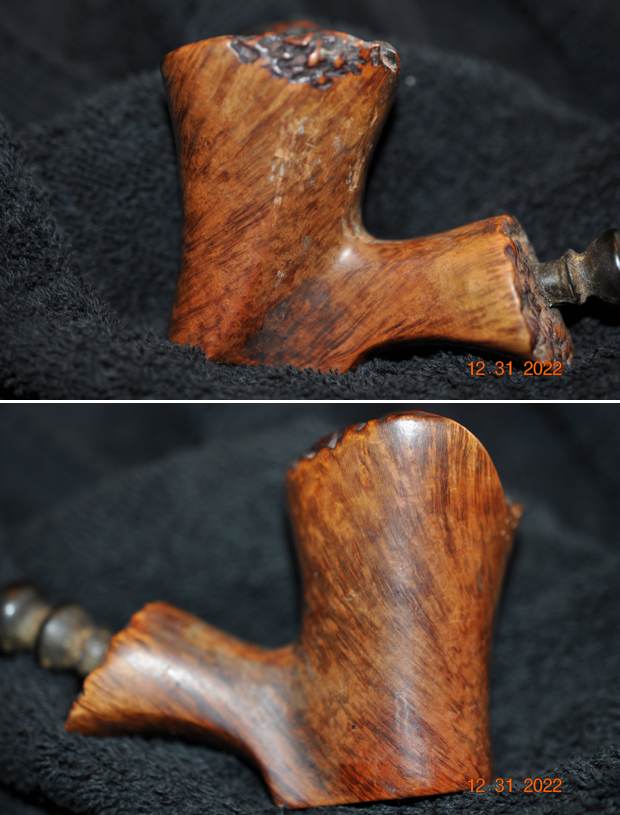
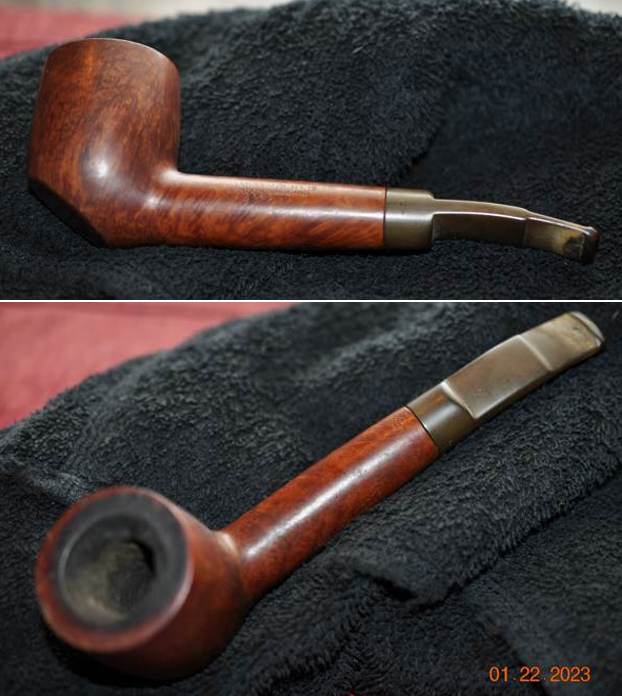
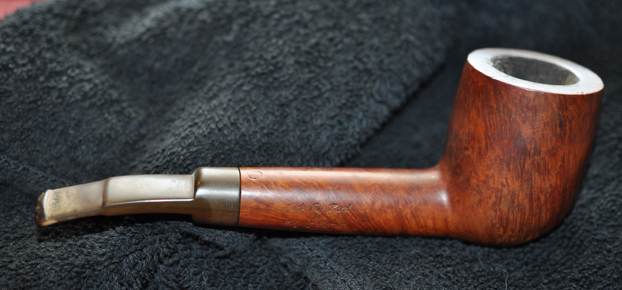
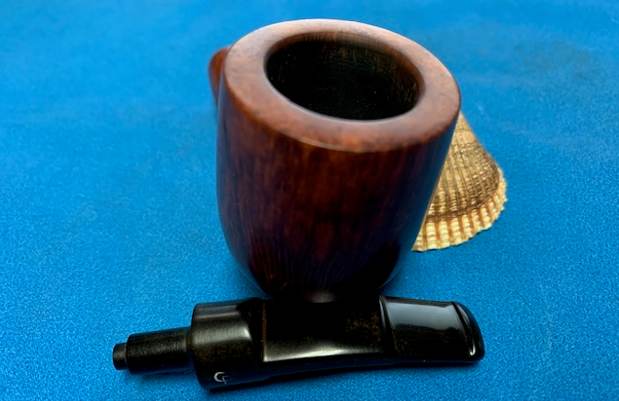
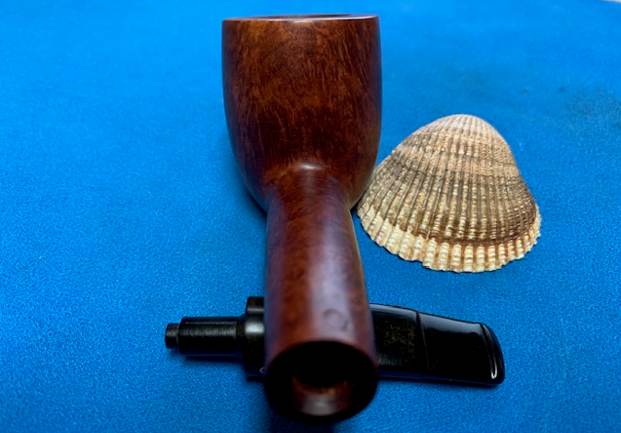
The next pipe that I selected to work on is a beautiful classic billiard shaped Peterson’s pipe with a P-lip tapered stem. The very appearance of this pipe shouted “ol’ timer” to me even before I saw the stampings. The size also indicated that this pipe was from an era when large bowl were not in vogue, specifically the English made.

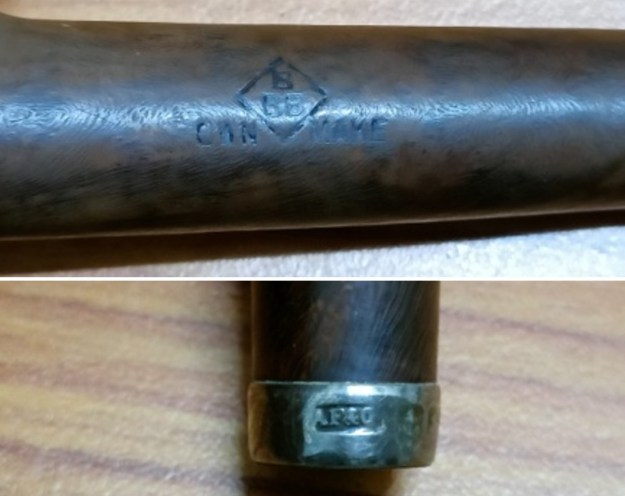
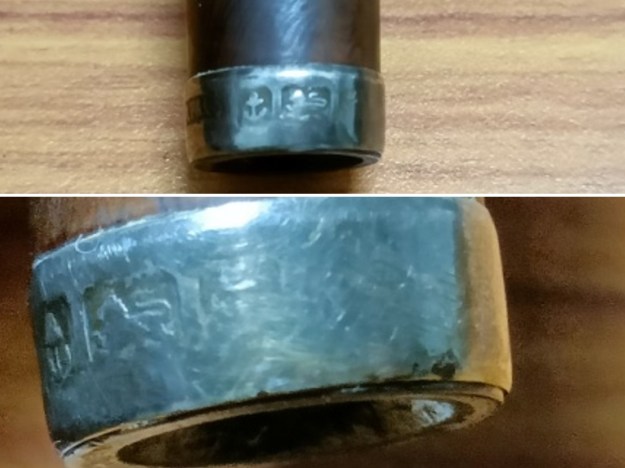
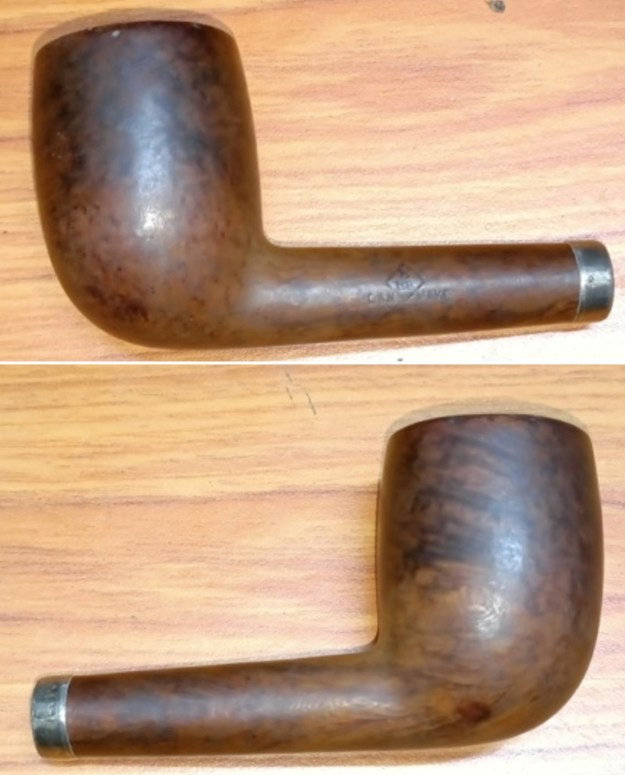
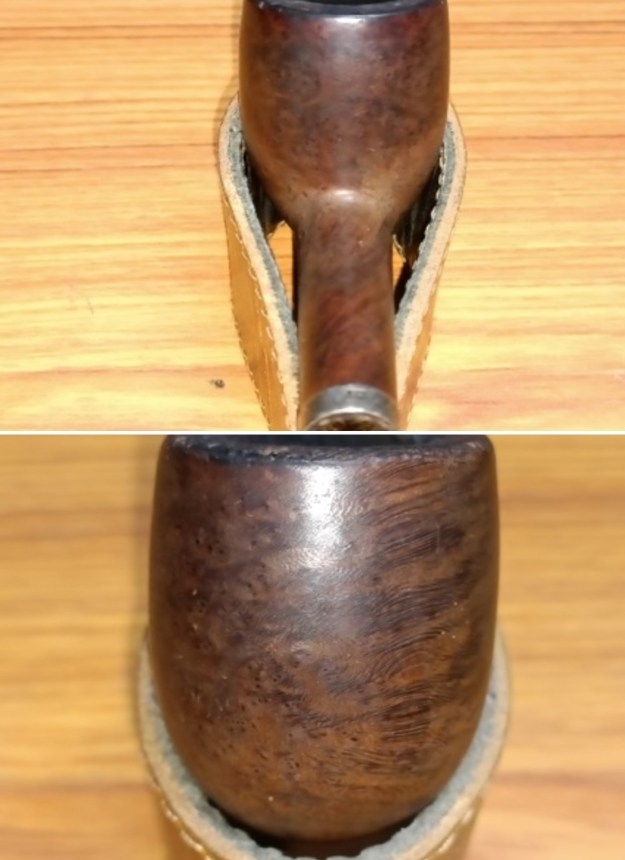
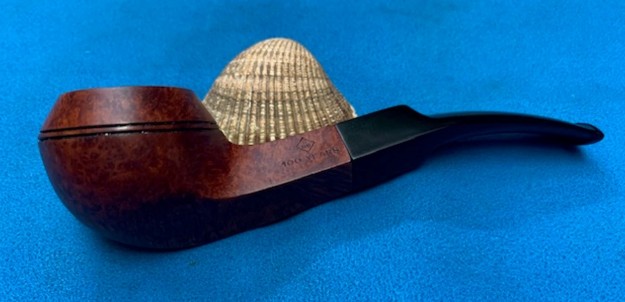
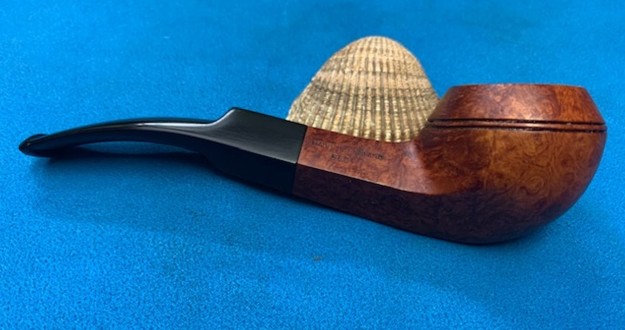
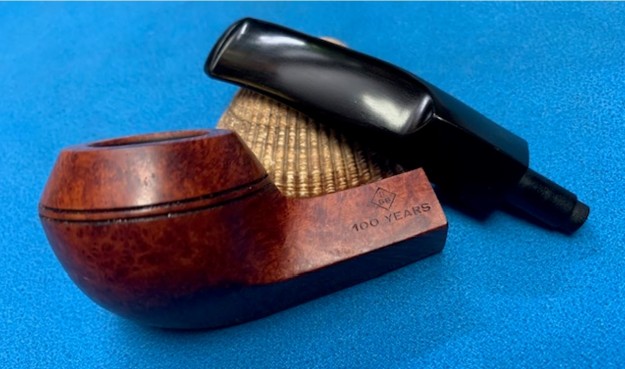
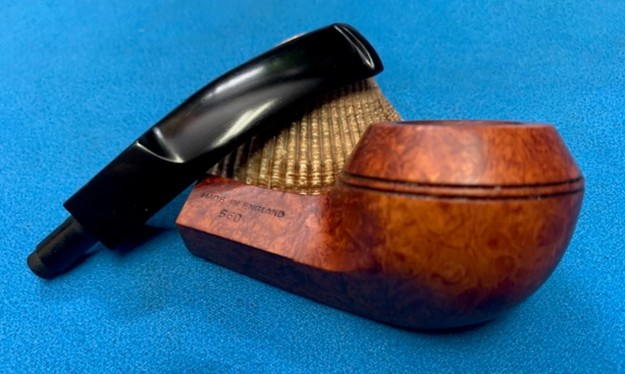
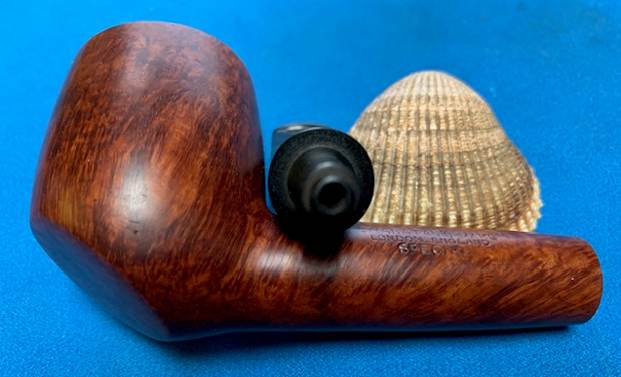
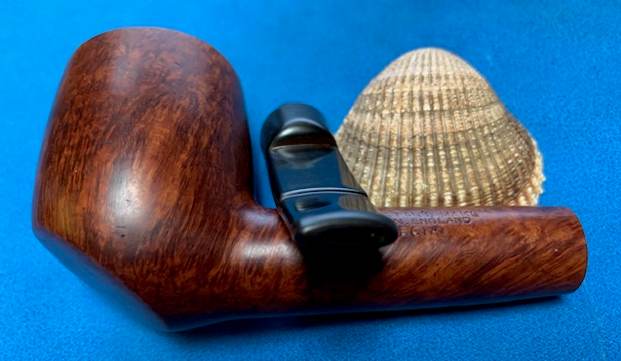
The pipe boasts of some beautiful mixed grains of bird’s eye and cross grains hidden beneath the layer of dirt and grime. That this pipe is from a quality pipe maker is evident from the quality of fit, finish and the briar used. There are only a couple of small fills that I could identify. The tapered P-lip vulcanite stem also oozes quality and points it to be a Peterson’s pipe. The pipe is stamped on the left side of the shank as “PETERSON’S” with a forked P over “KAPET”, all in capital letters. The left side of the shank is stamped as “LONDON MADE” over “ENGLAND” and followed by shape code “150” towards the shank end. The stem has the trademark letter P in cursive hand over the left side.I have worked on quite a few Peterson’s from pre-1960s and from those researches; I know that this pipe is from the classic range of pipes from Peterson’s and belongs to the period when Peterson’s had an office in London up to late 1950s when the shop was closed. I referred to pipedia.org just to refresh my knowledge about the history of Peterson’s pipes. It always does make for an interesting read and is highly recommended. Given below is the link to this detailed history of the brand Peterson’s.

https://pipedia.org/wiki/Peterson

Given below is the link to the Dating Guide for Peterson’s pipes at the end of the article on pipedia.org.

https://pipedia.org/wiki/A_Peterson_Dating_Guide;_A_Rule_of_Thumb

To summarize, this pipe is from the classic range of Peterson’s, an entry level Pete pipe. This is evidenced from the KAPET stampings and a couple of fills in the briar surface. The COM stamp points to a period between 1895, when Peterson’s opened a shop in London, and late 1950s when this shop was closed. Thus this pipe definitely dates to pre-1960s.

INITIAL VISUAL INSPECTION
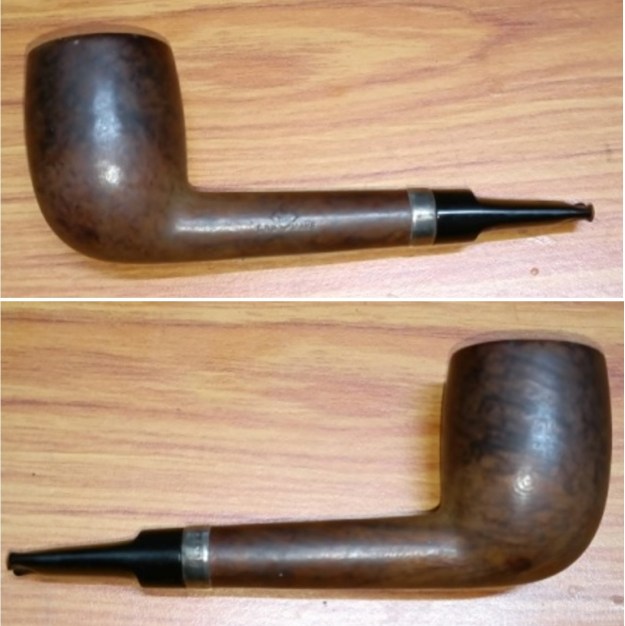
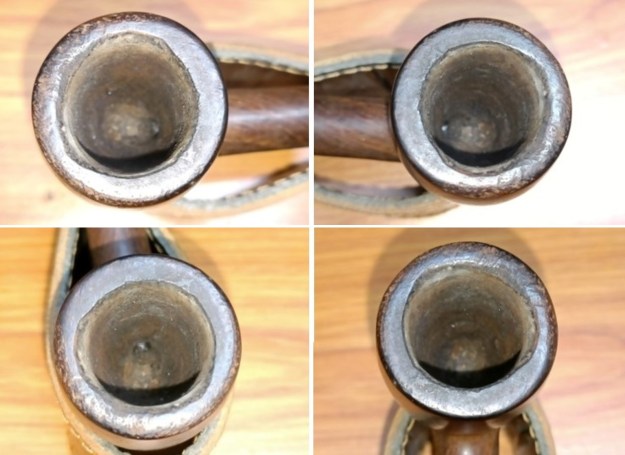
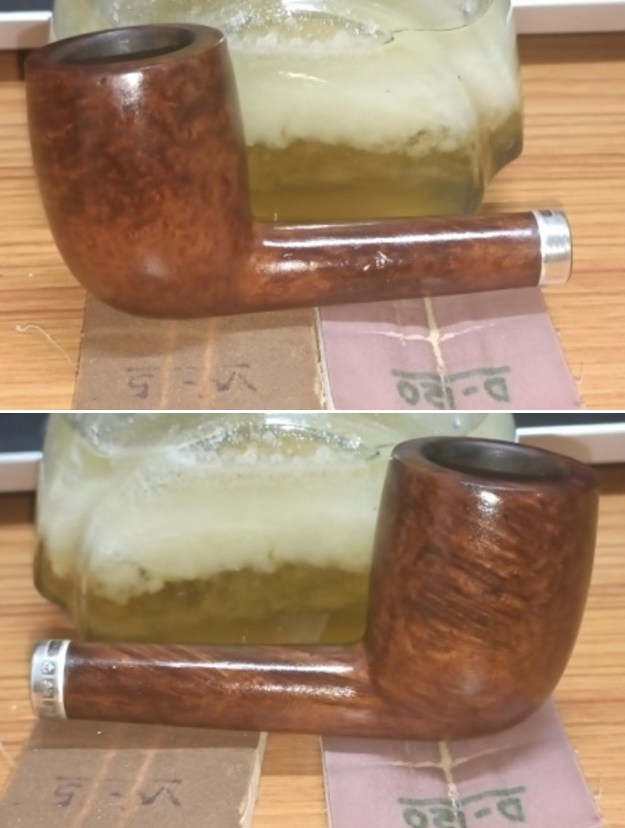
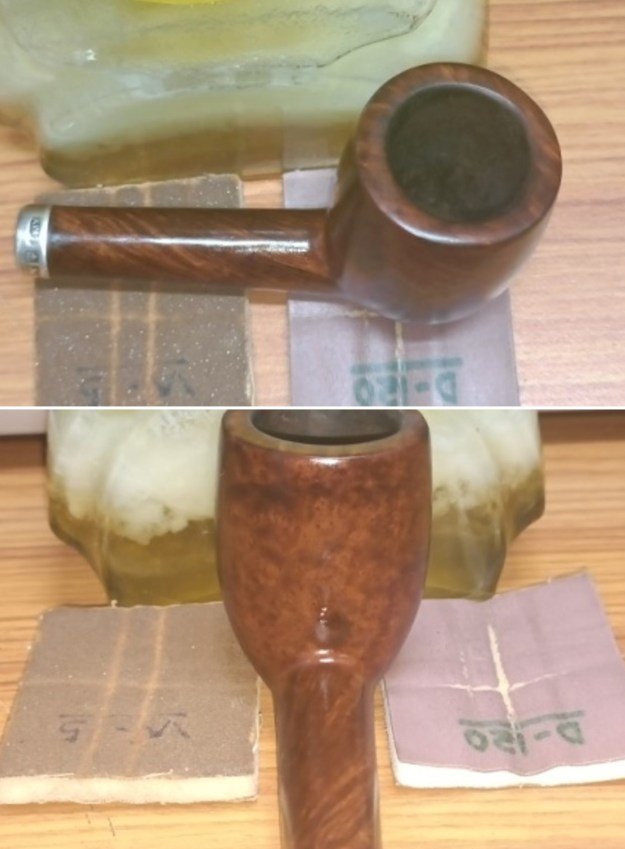
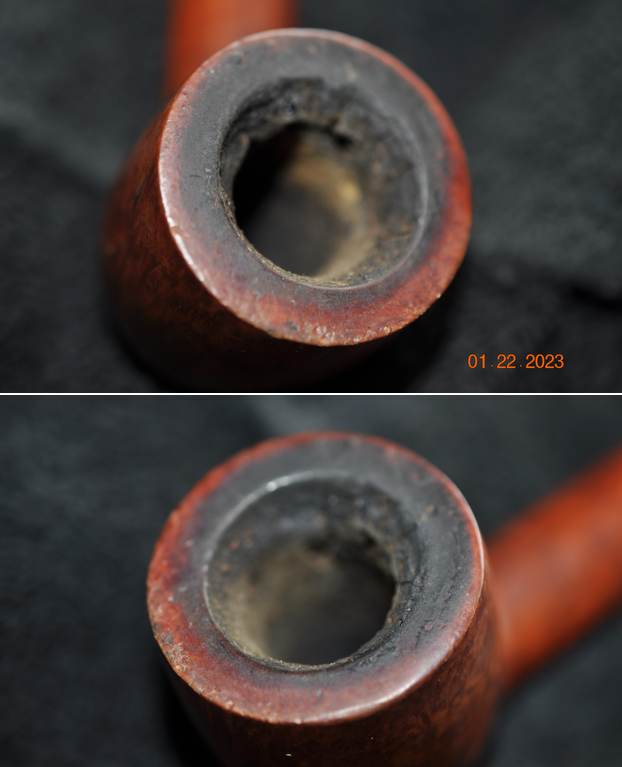
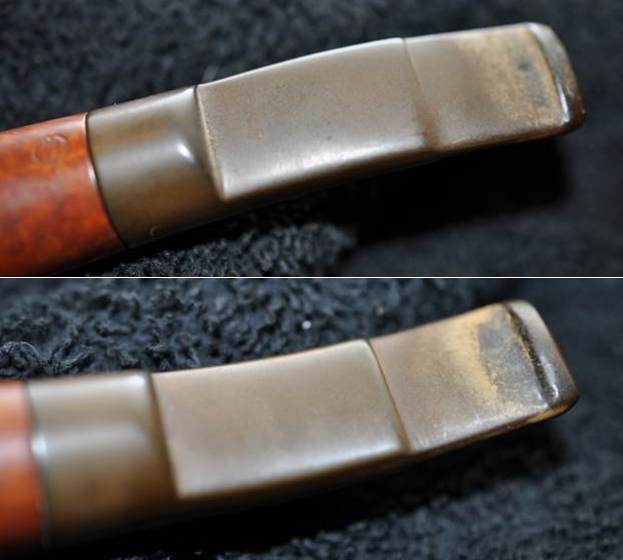
The chamber of this classic billiard shaped pipe has a thick coat of even cake with small traces of lava flow over the rim top surface. The rim top itself has a few dents and dings along its surface. The stummel surface is dull, dry and covered in grime giving it a lackluster appearance. The shank shows accumulation of old oils, tars and gunk. The vulcanite stem does not sit flush with the shank face. The stem bite zone has signs of deep tooth indentations over the button edges and around the round slot end. Here is how the pipe appears as it sits on my work table. Detailed Inspection
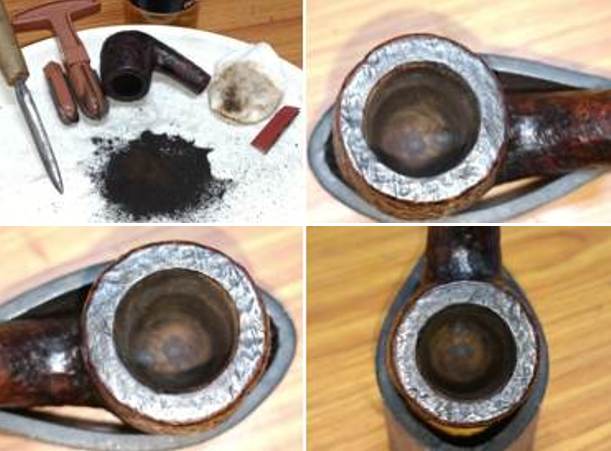
The chamber has a decent layer of even cake that lightly overflows over the rim top surface. The condition of the chamber walls can be commented upon once the cake has been completely taken down to the bare briar. The inner rim edge is charred in 6 o’clock and 11 o’clock directions (encircled in yellow). The rim top itself is dotted with dents and dings. The outer rim edge too has a few minor chipped areas, but nothing serious.The stummel is covered in dust and grime of all the years of use. There are a couple of fills (marked by green). The shank is filthy with the accumulated old oils, ash and grime. This clogging could be the reason for the seating of the stem not being flush with the shank face.  Other than these issues, the stummel is in a decent condition. The P-Lip straight vulcanite stem is oxidized with severe tooth indentations on the button edge on either surfaces of the stem in the bite zone to the extent that the round slot at the top is completely deformed. The step tenon end shows heavy traces of dried oils and tars and remnants of ash and the heavy draw through the stem airway convinces me that there is heavy accumulation of gunk throughout the airway.The Process
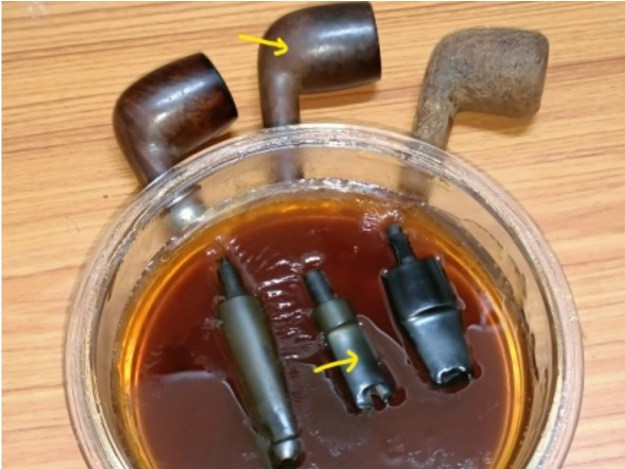
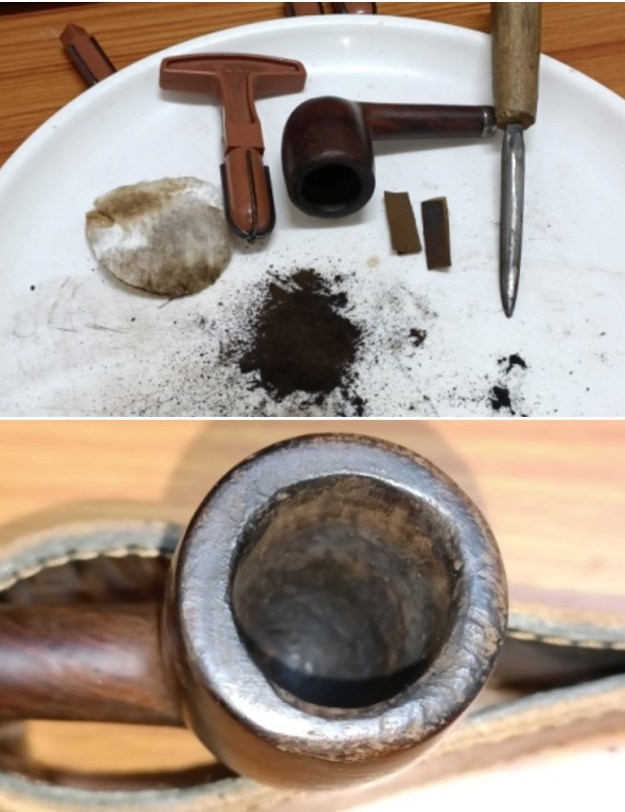
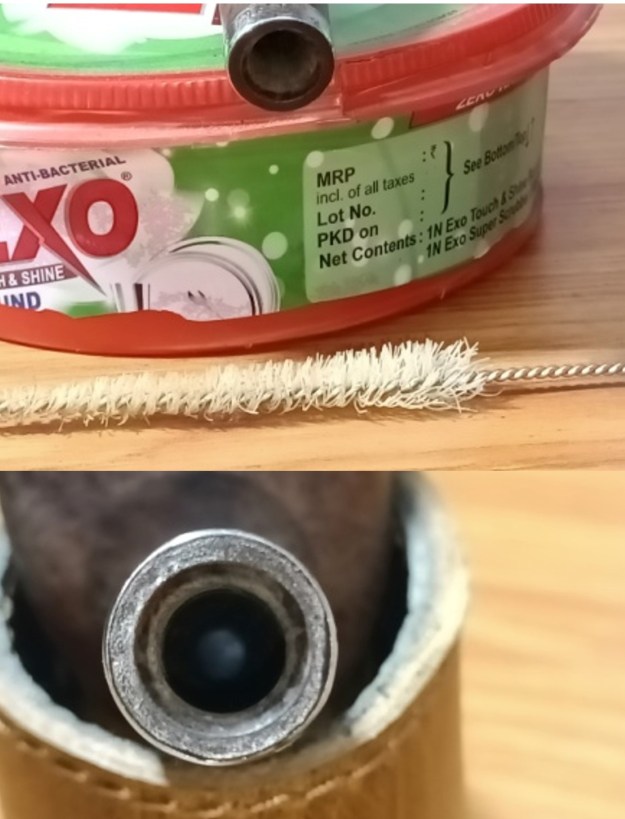
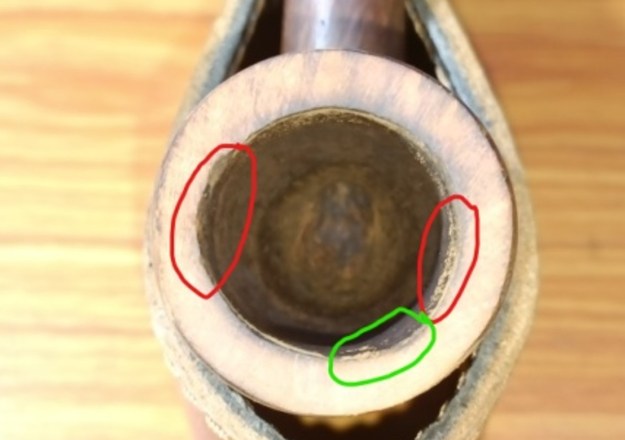
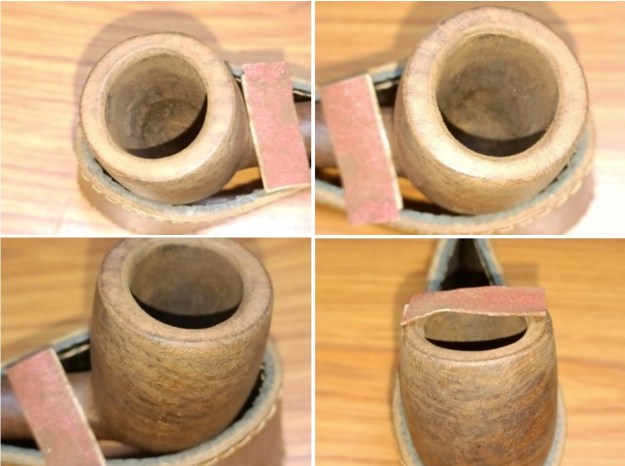
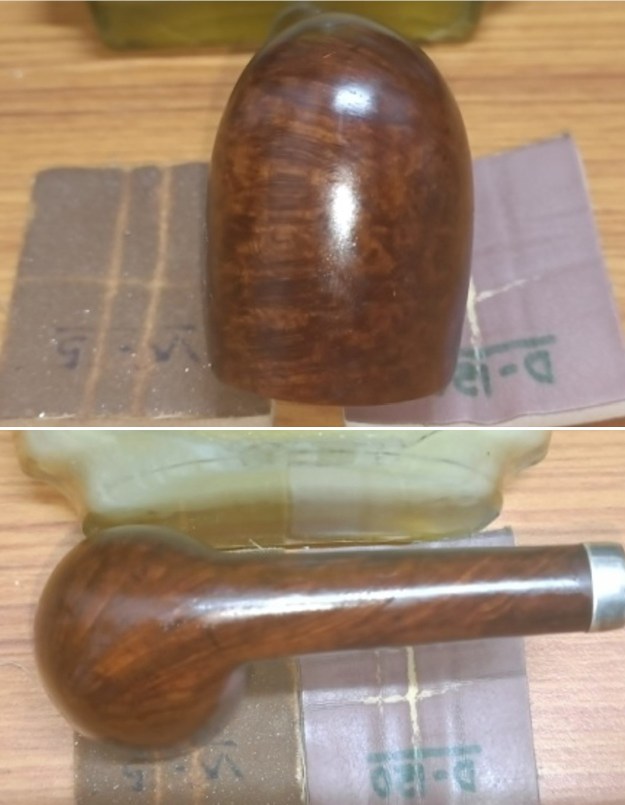
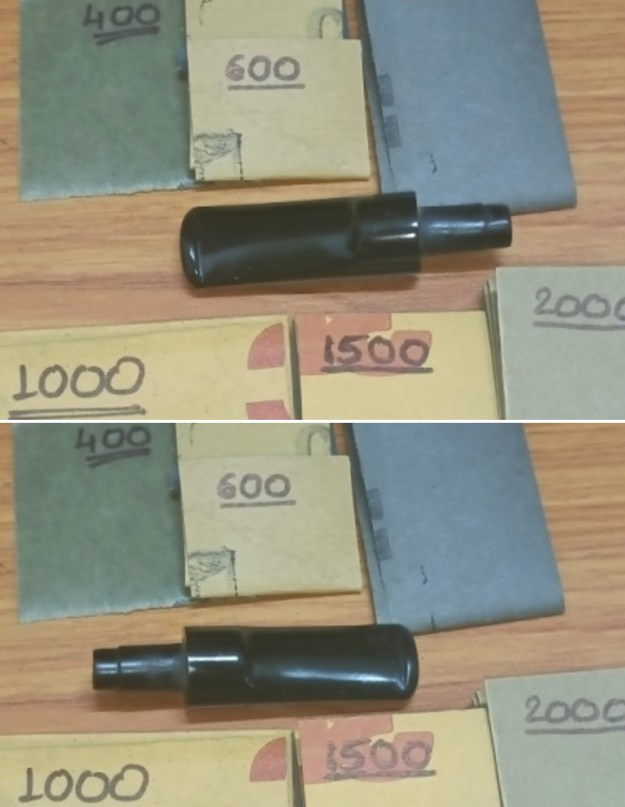
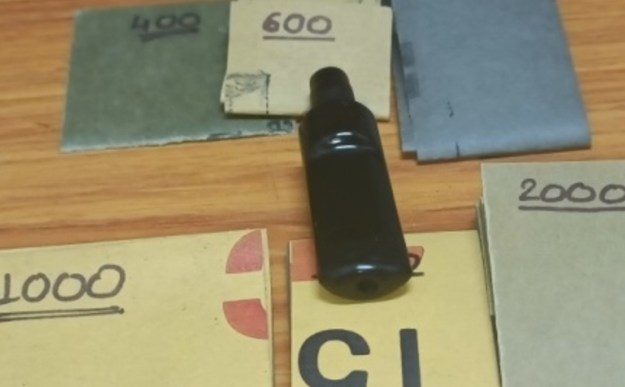
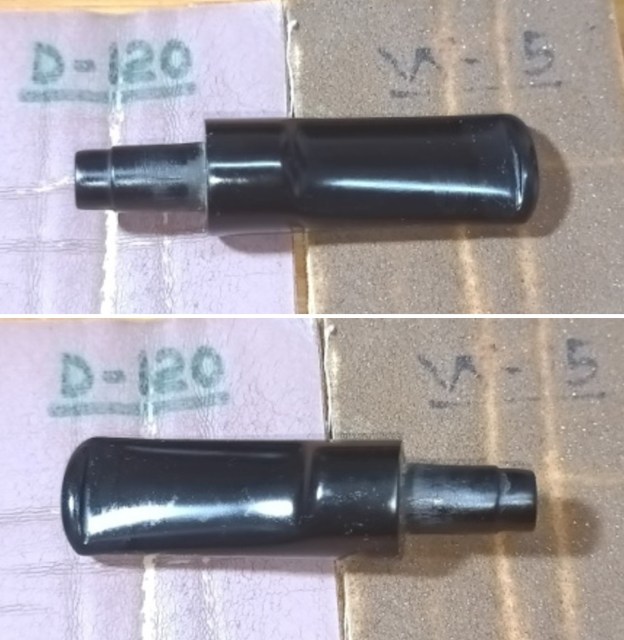
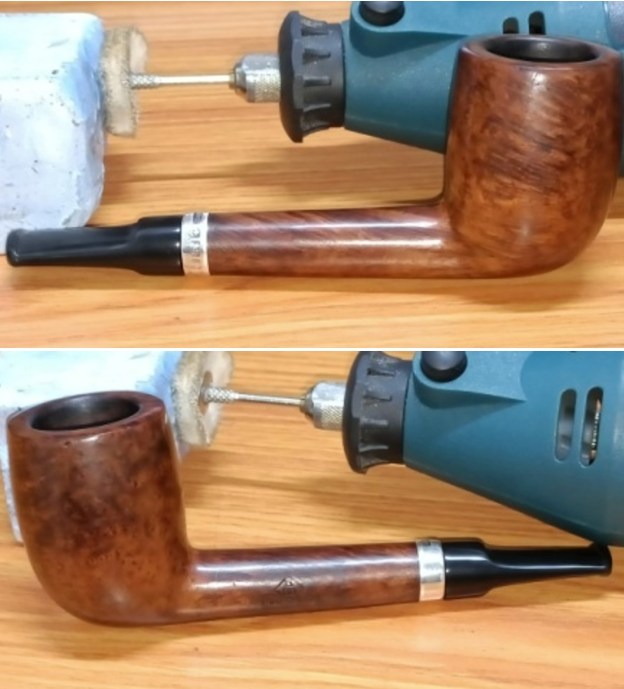
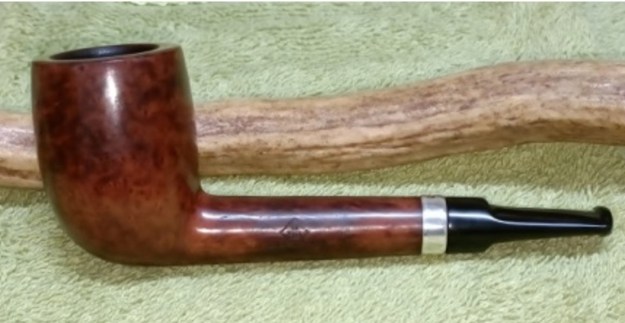
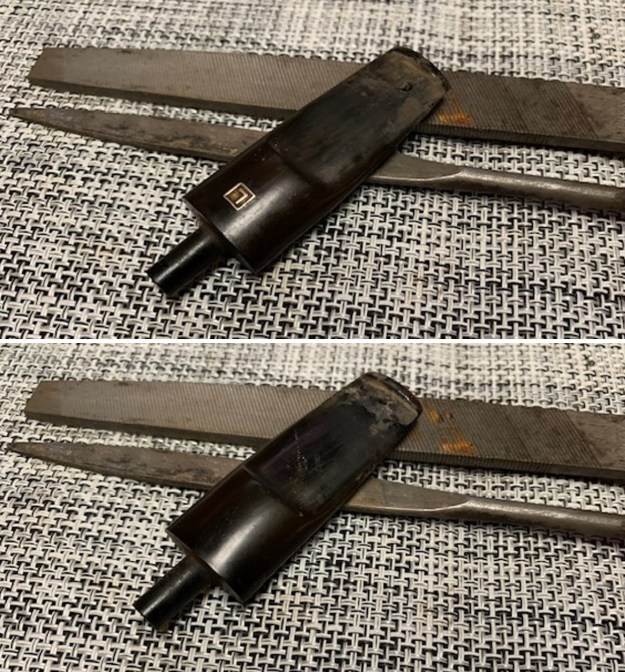
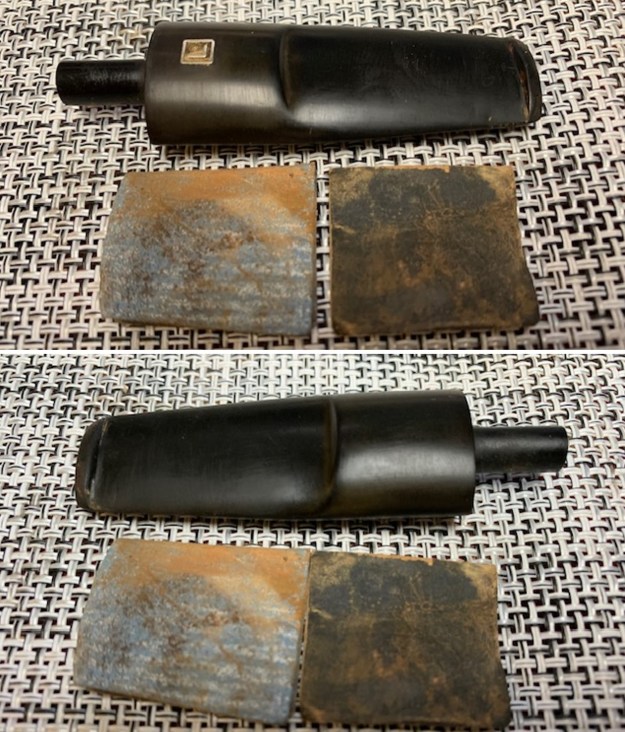
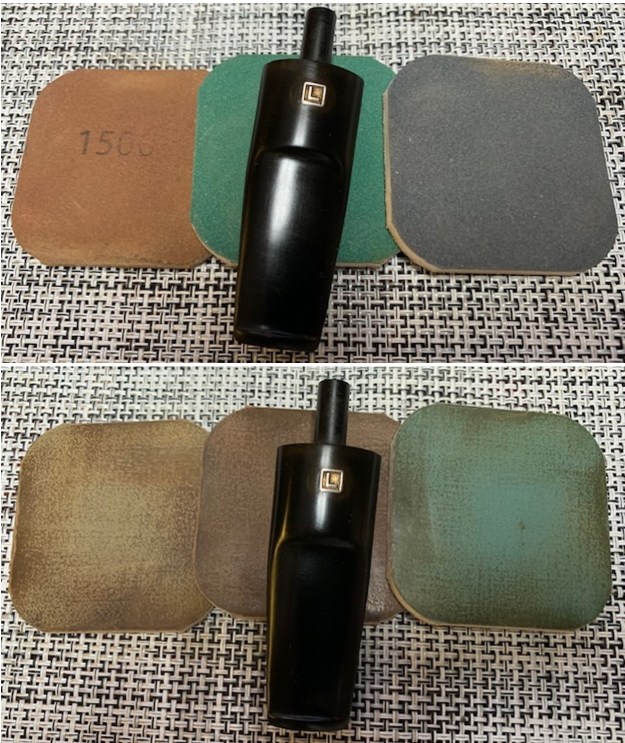
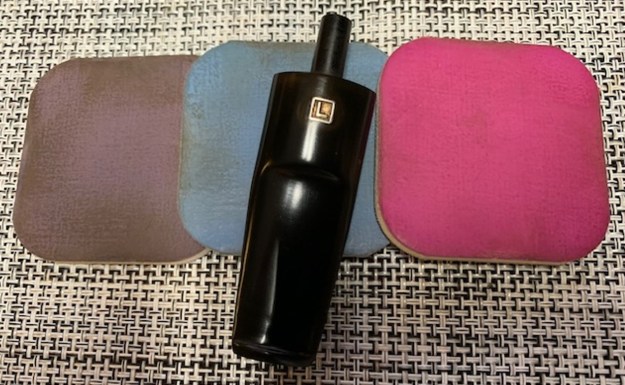
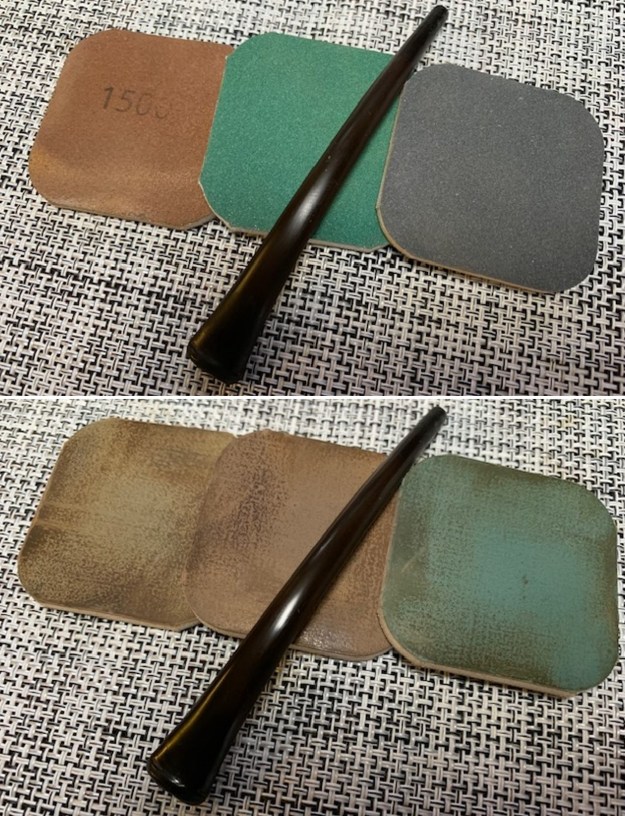
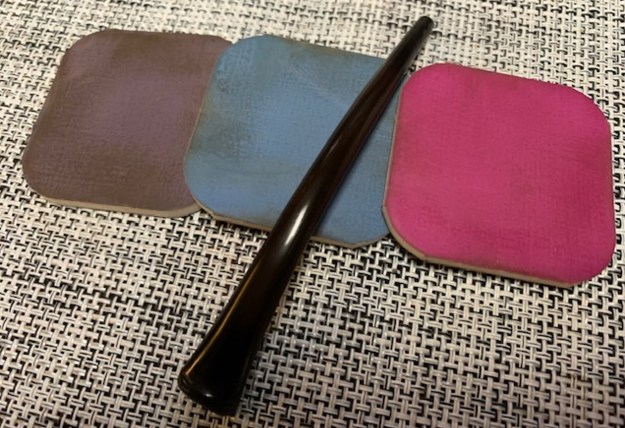
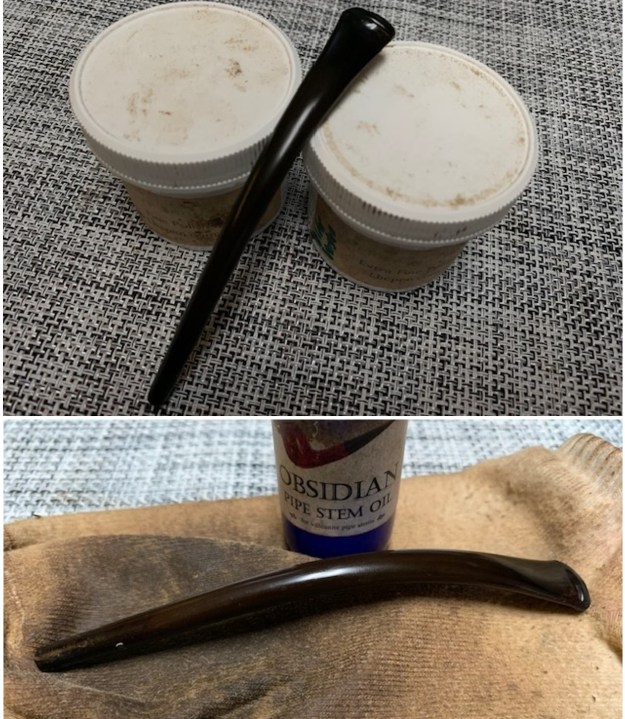
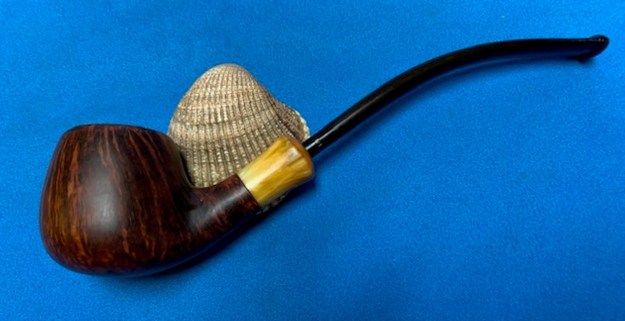
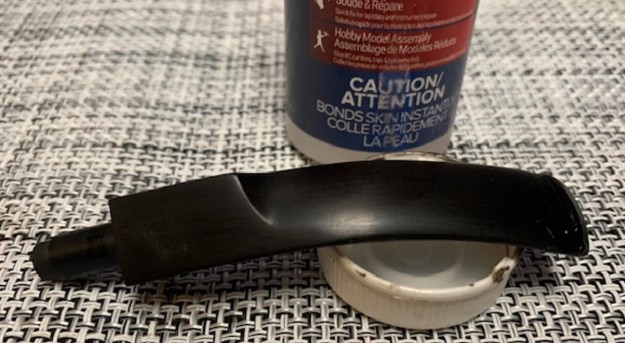
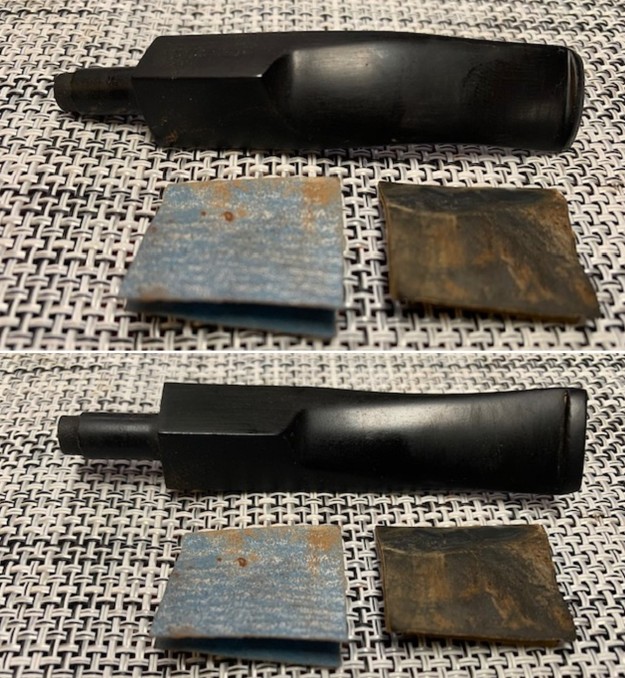
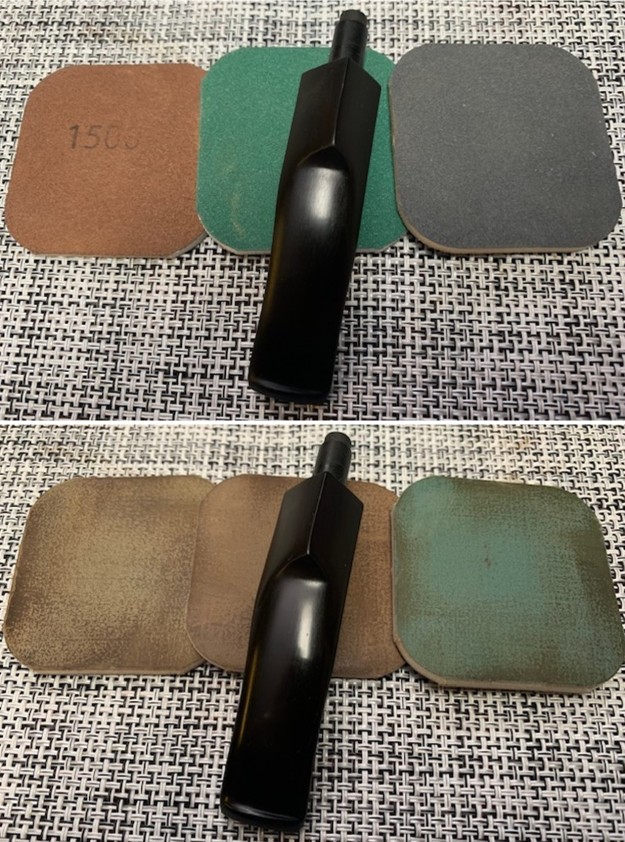
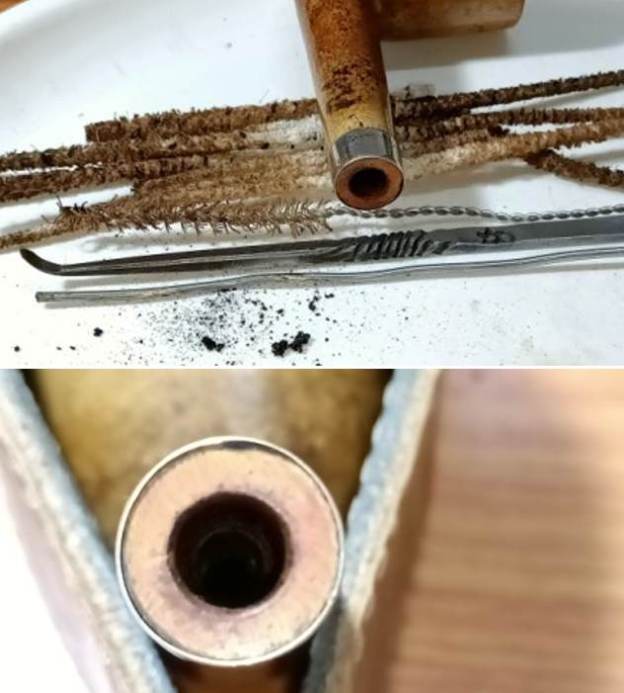
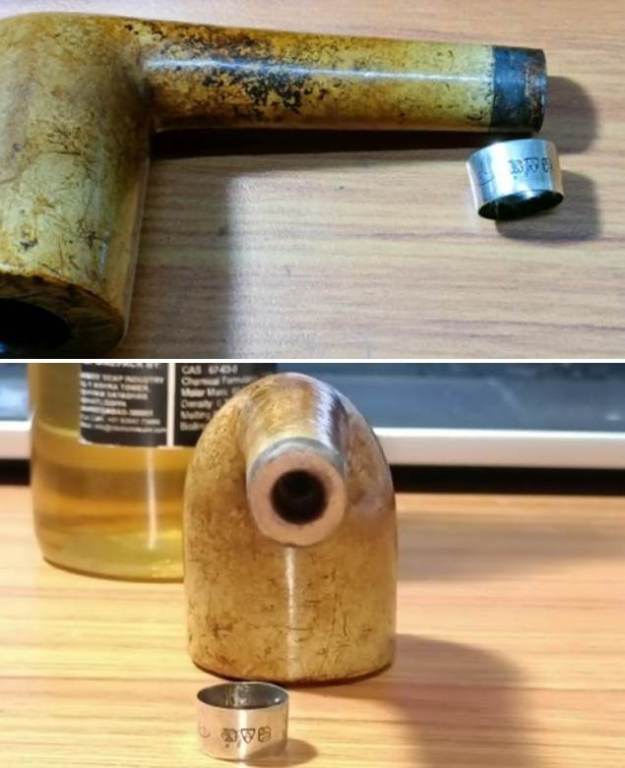
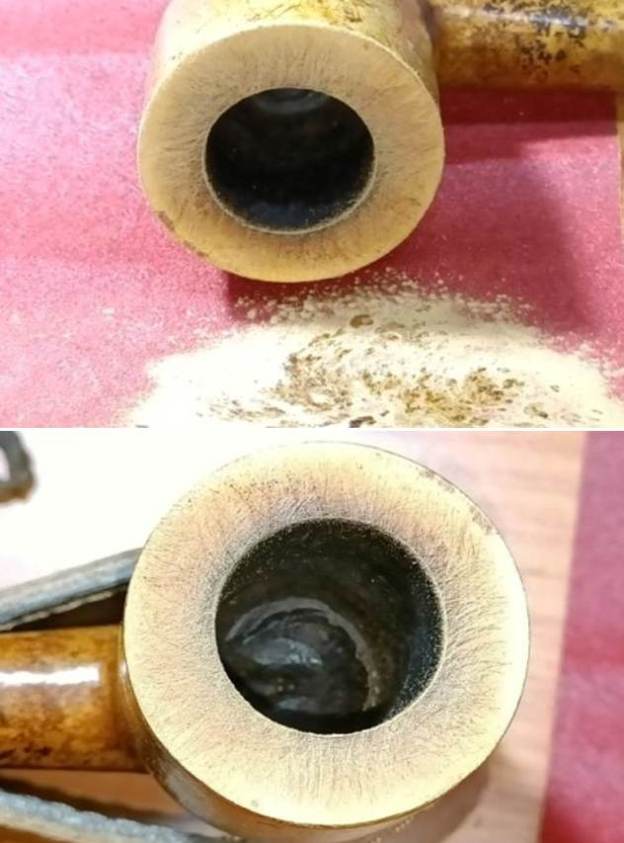
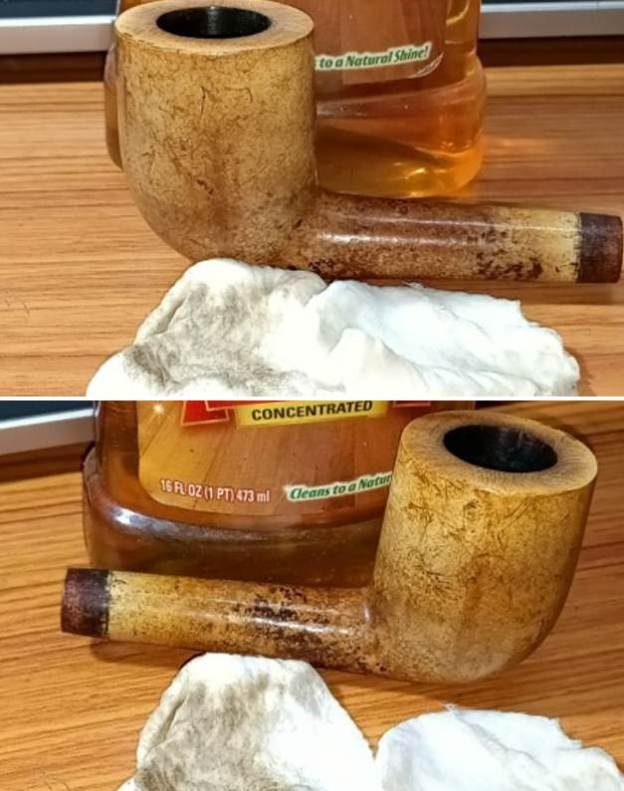
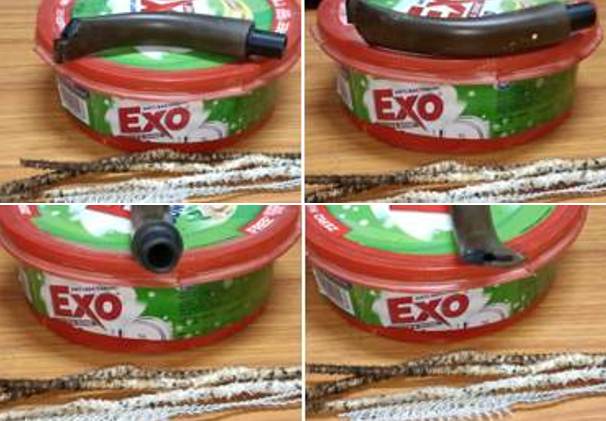
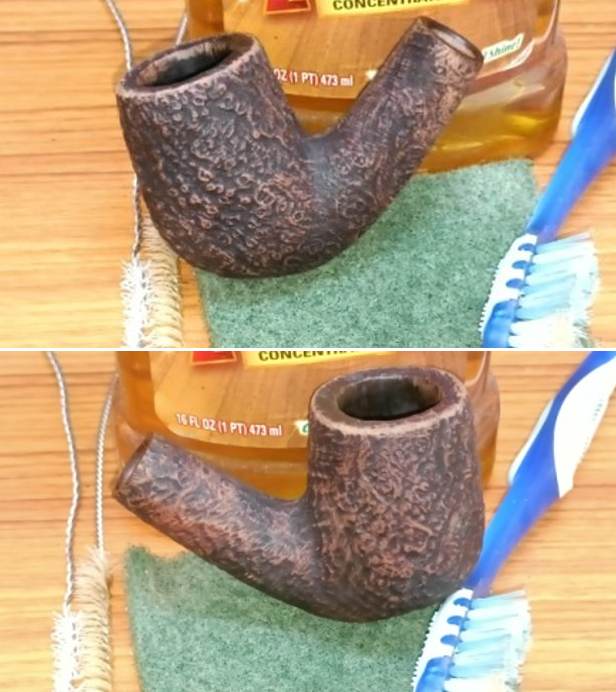
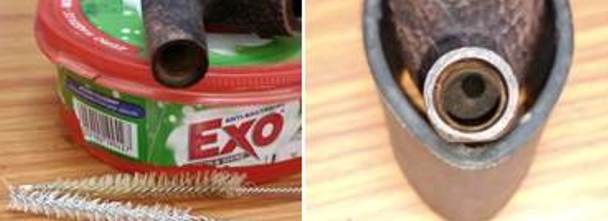
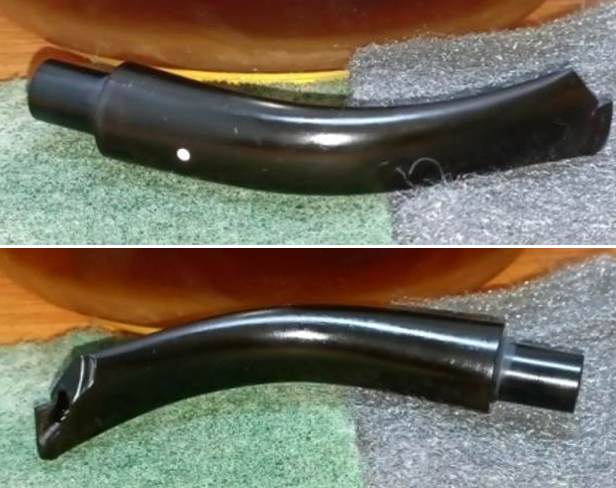
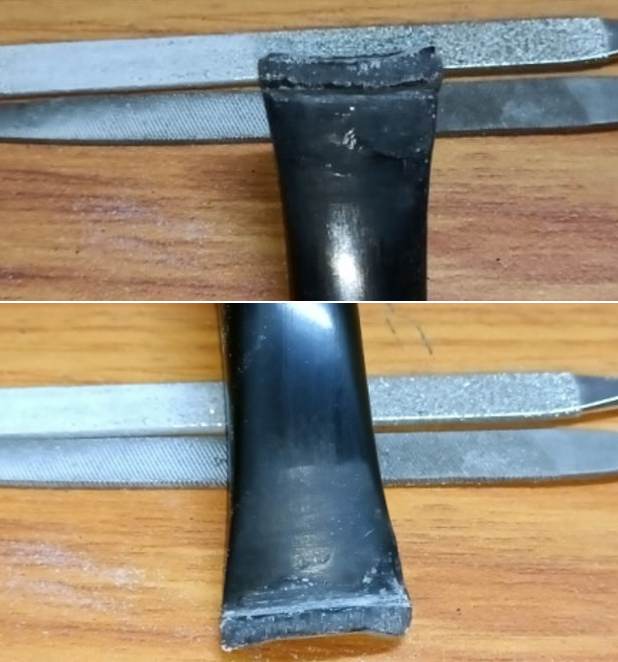
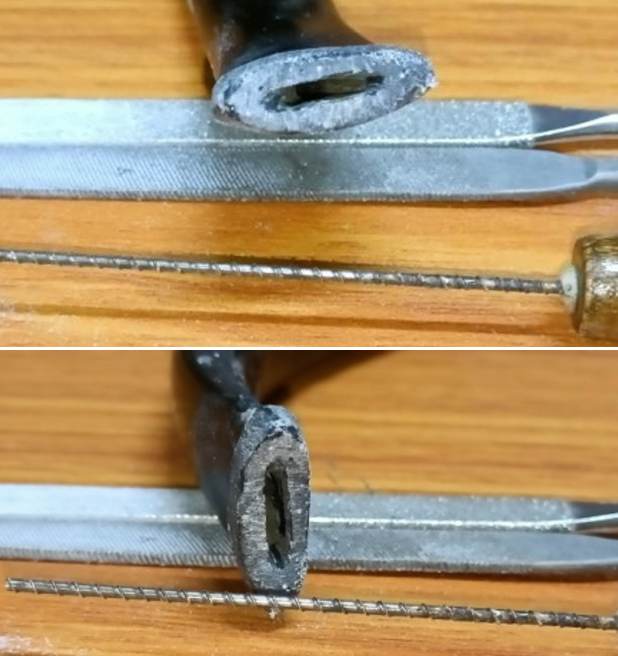
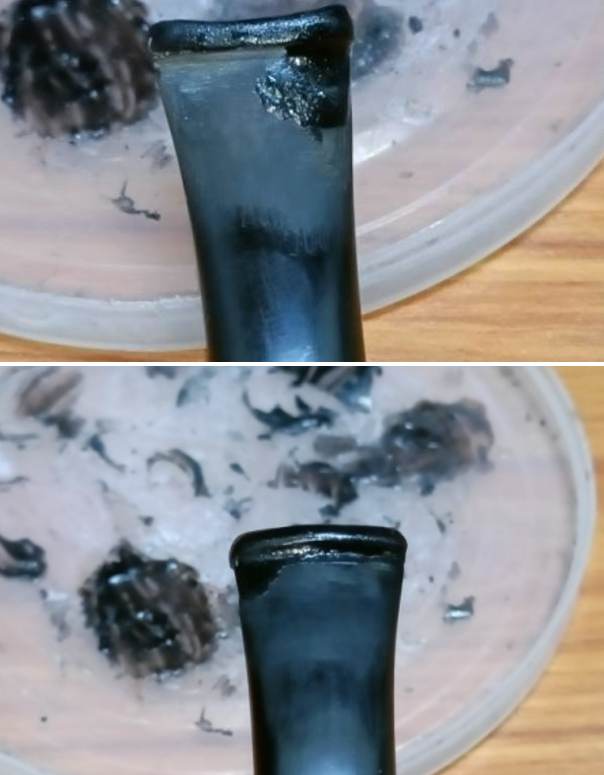
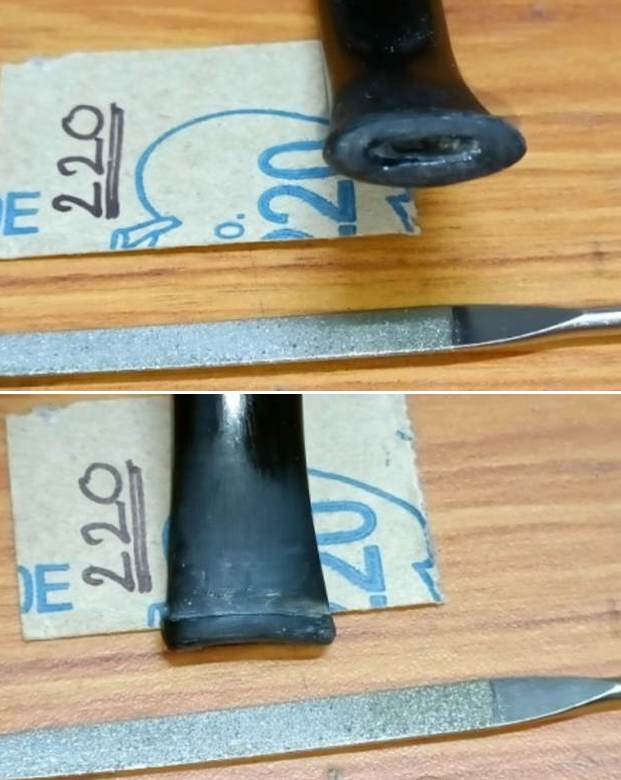
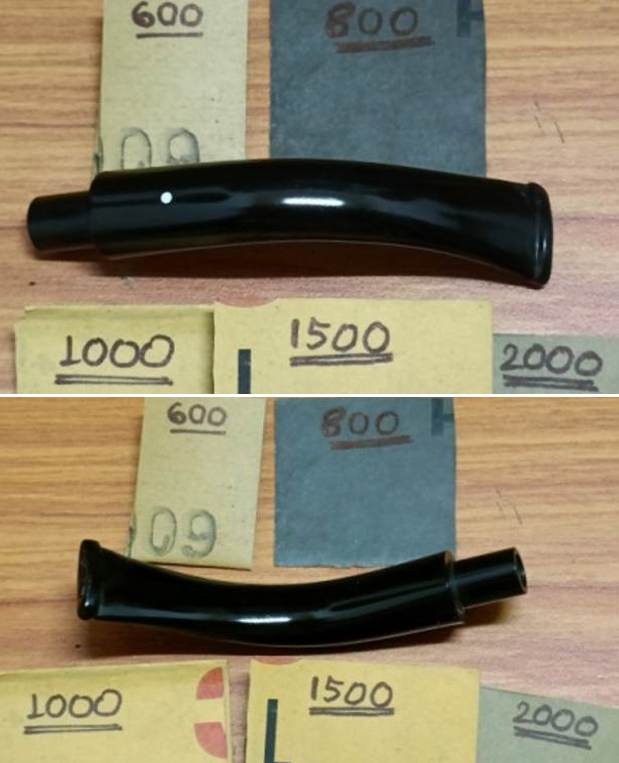
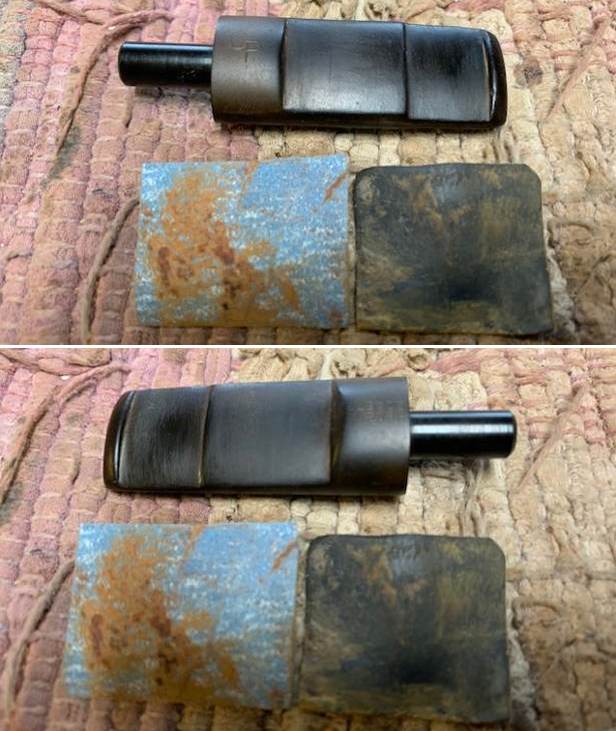
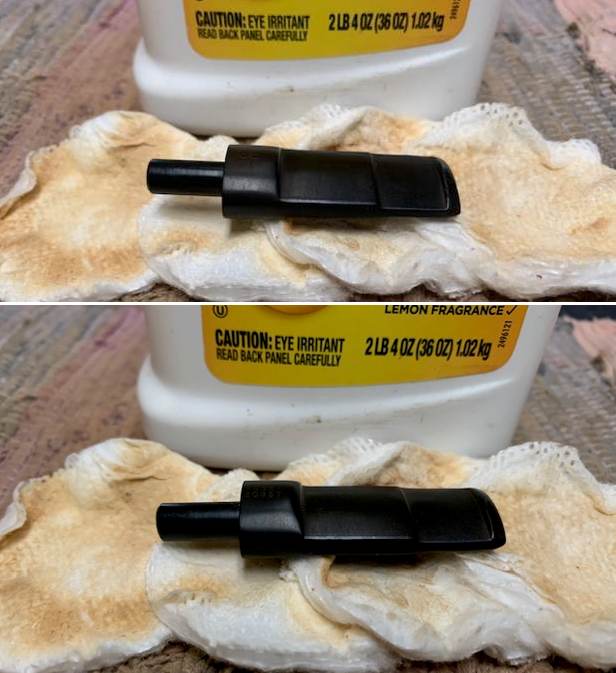
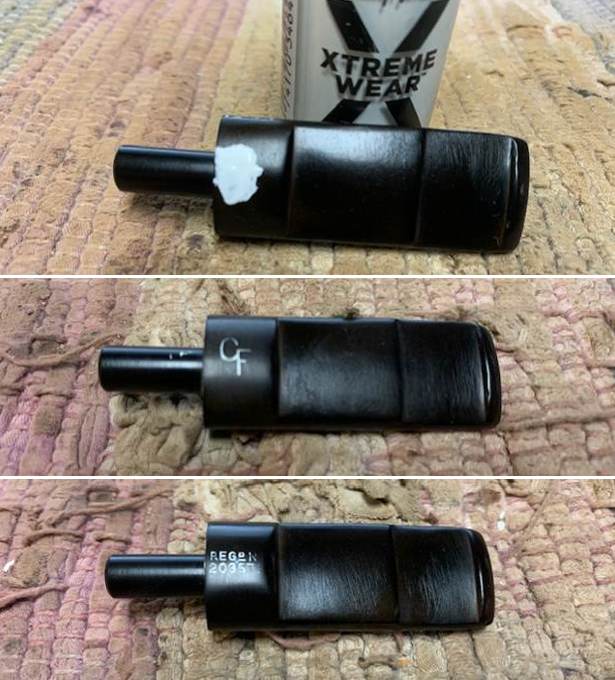
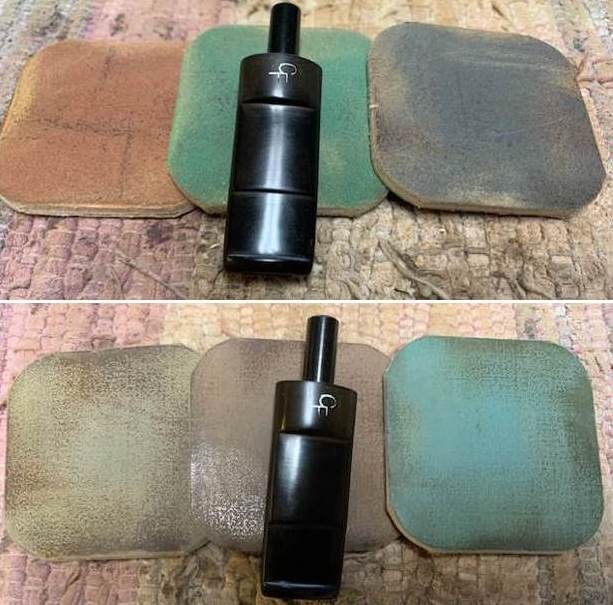
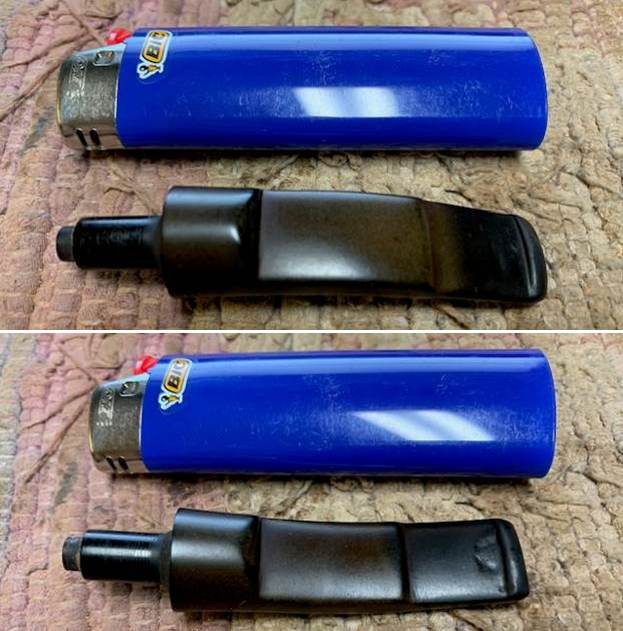
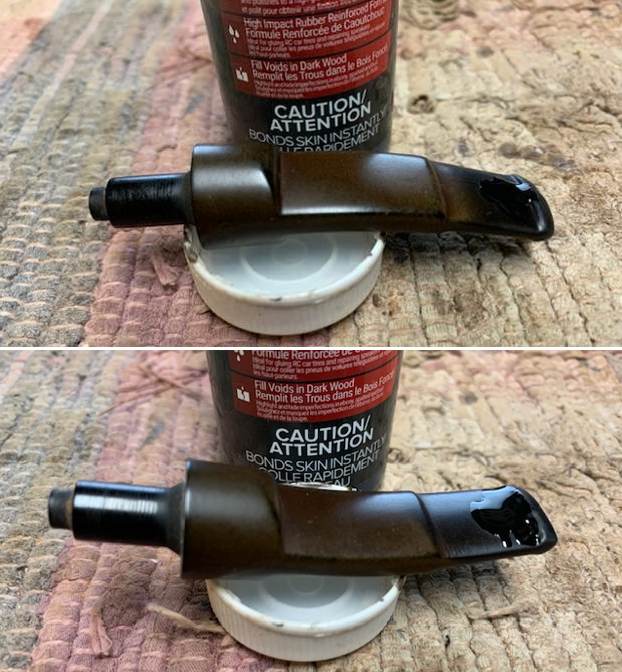
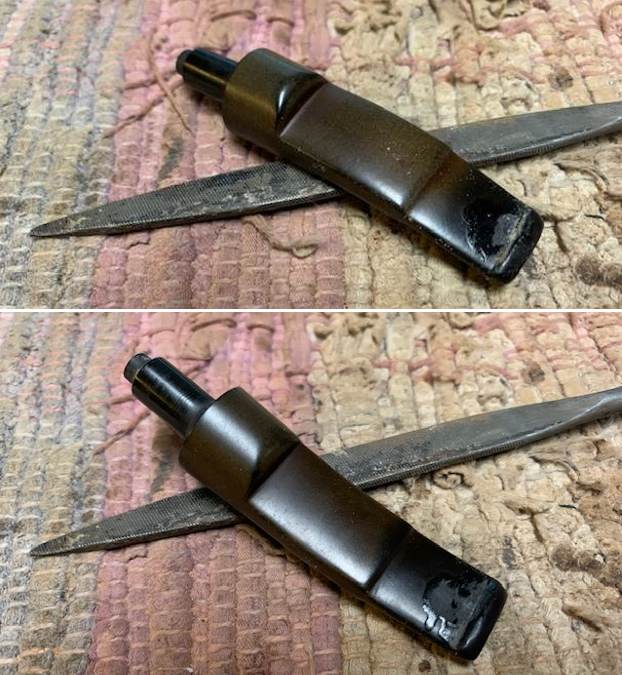
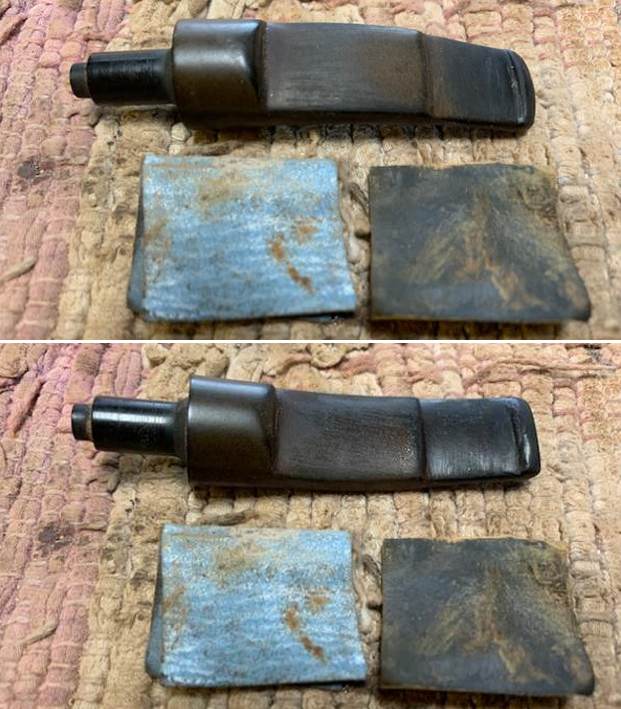
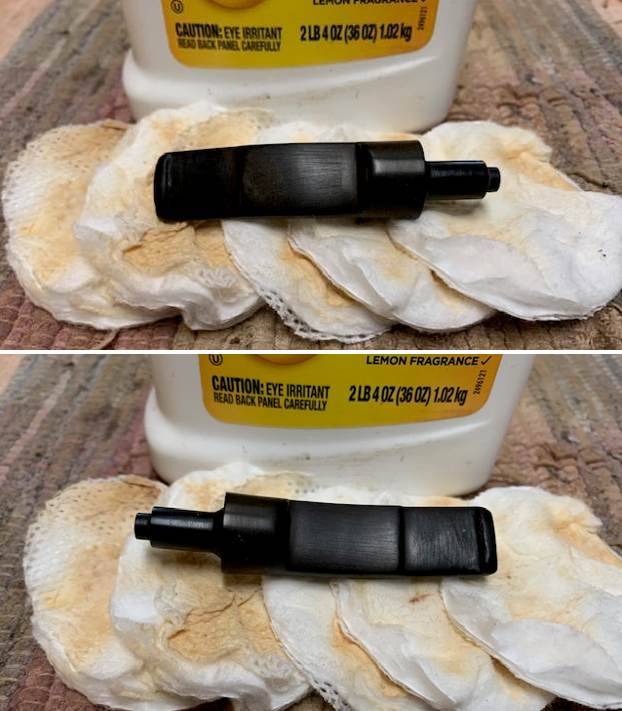
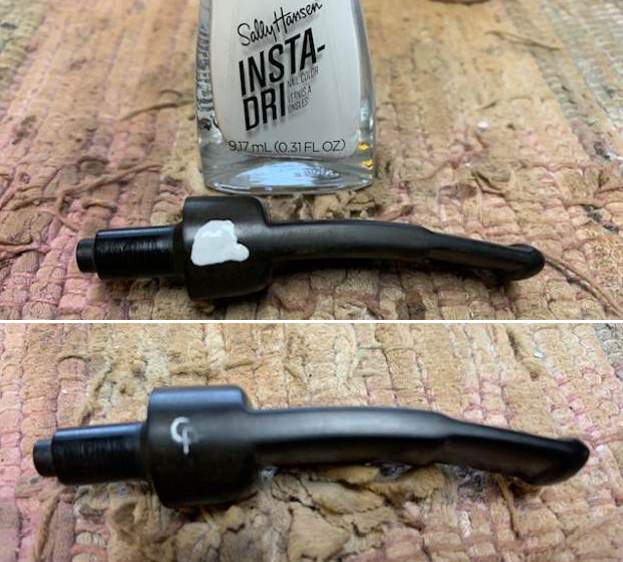
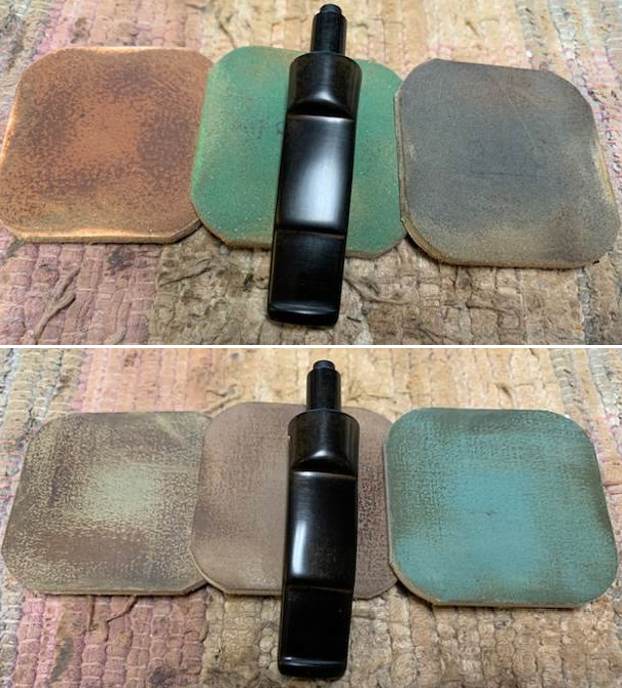
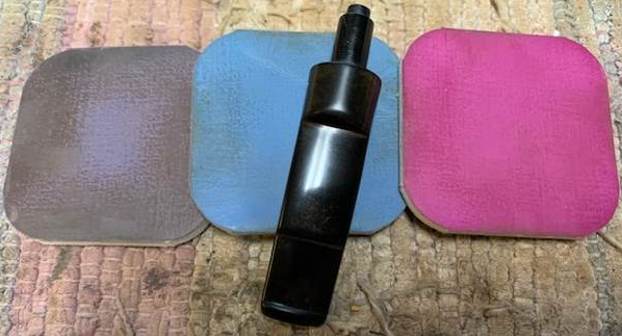
I started the process of restoration by first cleaning the stem internals with anti-oil dish cleaning soap and thin shank brushes. The stem air way was filthy to say the least. I further cleaned the stem internals with hard bristled and regular pipe cleaners and isopropyl alcohol. A lot of elbow grease and a pile of pipe cleaners later, the pipe cleaners emerged white and I knew that the stem internals were now clean and fresh. I dunked the stem into the deoxidizer solution have overnight for the oxidation to be pulled out to the surface. I usually have around 4-5 pipes lined for restoration and this Pete is indicated by a green arrow.The next afternoon, Abha fished out the stem from the deoxidizer solution and scrubbed it with a Scotch Brite pad to get rid of the loosened oxidation from the surface. She followed this scrub with a second scrub using 0000 grade steel wool and this helped in further removal of raised oxidation from the surface and even out the minor scratches resulting from using the Scotch Brit pad. She rinsed the stem under warm running water to completely remove the solution from the airway and slot end. She ran a couple of pipe cleaners to remove the last traces of residual deoxidizer solution from the airway and dry out the airway.With the external and internal cleaning of the stem completed, Abha handed over the stem to me to complete the repairs. Continuing with the stem refurbishing, I heated the bite zone with the flame of a lighter to raise the tooth indentations to the surface. Though the results were not what were expected, the vulcanite was raised a little leaving behind deep tooth compressions over the button edge on either surfaces. These surfaces of the stem were filled with a mix of CA Gorilla superglue and activated charcoal powder and set aside for the fill to cure. I really hope that this time around I get better results with using this new CA glue. With the stem repairs set aside to harden, I started with the stummel repairs by reaming the chamber with the smallest of the PipNet reamer blade. I used my fabricated knife to remove cake from areas inaccessible to the reamer blade and completed the process by sanding the walls smooth with a folded piece of 180 grit sandpaper. I wiped the chamber with a cotton swab wetted with alcohol to clean the residual carbon dust. The chamber walls are solid with decades of residual service life. However, the rim has slightly deformed due to charring at 6 and 12 o’clock directions and encircled in green. I cleaned the external surface of the stummel with undiluted Murphy’s oil soap and a hard bristled toothbrush. I cleaned the smooth rim top surface with the soap and Scotch Brite pad. The darkened inner rims edge in the 6 o’clock direction is now clearly visible (marked in red) and confirms a charred rim edge. Simultaneously, I thoroughly cleaned the mortise with shank brush and anti-oil dish washing soap. This ensured that the stummel now smells clean and fresh. I dried the stummel internals and externals with paper towels and soft absorbent cotton cloth and set it aside overnight to completely dry out before I worked on it any further.By next afternoon, the stummel had dried out and I decided to address the issue of fills over the surface. With a sharp dental tool, I extracted the old and loosened fills and cleaned the area with a cotton swab and alcohol. Using clear CA superglue, I filled up the pits over the stummel surface and set it aside to cure. Once the fill had hardened, I first sand the fills with a needle file to roughly match the fill with the rest of the surface followed by sanding with a folded piece of 220 grit sand paper to further blend in the fills with the rest of the briar surface.Next, I moved on to address the charred edges over the rim top surface. I topped the rim over a piece of 220 grit sand paper by slowly rotating the rim over the sand paper. I hate to lose briar any more than absolutely necessary and so frequently checked the progress I was making. I was quite pleased with the appearance of the stummel at this stage in restoration.With a folded piece of 220 grit sandpaper pinched between my forefinger and thumb, I imparted a nice bevel to the inner rim edge. This eliminated the minor charring that had remained over the inner rim edges.Now that the stummel repairs were complete, Abha took over the bowl to work her magic and bring alive the grains over the briar surface. She went through the complete set of micromesh pads, wet sanding through 1500 to 12000 grit pads. Next, she rubbed a small quantity of “Before and After Restoration Balm” deep in to the briar with my finger tips and let it rest for a few minutes. The balm almost immediately works its magic and the briar now has a nice vibrant appearance with the beautiful grain patterns displayed in their complete splendor. I really like the looks of the stummel at this point in restoration. The grains and the clean lines of this piece of briar is really appreciable. While Abha was polishing the stummel, I worked on the stem repairs. The fill had cured and with a flat head needle file, I worked on the filling till I had achieved a rough match with the surrounding surface and had sufficiently sharpened the button edges. For a better blending, I further sand the entire stem with 320.Next, to impart a nice shine, I dry sanded the entire stem with 320, 600 and 800 grit sand papers followed by wet sanding using 1000, 1500 and 2000 grit sand papers. This progressive use of higher grit sandpapers helps to, firstly,  reduce the sanding marks left behind by the more abrasive ones, secondly, completely eliminates the oxidation while imparting a clean shine to the stem surface. Thirdly, this also helped to even out the minor imperfections from the bite zone. I applied a little EVO and set the stem aside for a few minutes for the oil to be absorbed in the stem surface. To bring a deep shine to the vulcanite stem, I went through the dry sanding with 3200 to 12000 grit micromesh pads, and wiped the stem with Extra Virgin Olive oil to rehydrate the vulcanite. The repairs have blended in very well and the stem now looks shiny black and beautiful. The finished stem is shown below.To refresh the stem logo, I coat the stem logo with white correction ink and let it dry out completely. Once the ink had dried out, with a toothpick, I gently removed the excess ink from the surrounding surface. Though the logo is not very crisp, this is the best that was possible given how worn out the stamping was to start with.This is that part in pipe refurbishing that I love and enjoy the most. I began the final polishing cycle by mounting a cotton cloth buffing wheel on to my hand held rotary tool and applying a coat of Blue Diamond to the entire pipe to polish out the minor scratches. With a cotton buffing wheel that I use for carnauba wax, I apply a coat of carnauba wax to the stummel and stem and continued to work on it till the complete coat of wax had been polished out. I mount a clean cotton cloth buffing wheel and gave the entire pipe a once over buff. I finished the restoration by giving the entire pipe a rigorous hand buffing using a microfiber cloth to deepen the shine further. This classic Billiards shape pipe from Peterson’s oozes a solidity and beauty that draws you to it. Here are a couple of pictures of the pipe at the end of the restoration process. P.S. I shared the pictures of this pipe on our club’s WhatsApp group and was immediately snatched up by one of the members. As I completed the write up, I have received a fantastic feedback on the smoking qualities and aesthetics of this pipe…..and this is truly the most satisfying experience of the entire process!!

There are some interesting pipes that I have lined up next…..keep following rebornpipes for the write ups. Stay safe and keep the pipe lit.

A tale of two pipes- restoring a pair of vintage cased meerschaum pipes – Part-11


Blog by Paresh Deshpande

I had been working on a pair of meerschaum pipes that came in a beautiful well preserved case. I have completed refurbishing the first pipe, a straight Dublin. Though I had worked on both these pipes simultaneously, I have done the write up in two parts.

For detailed information on the brand and other general information about the pipe, please read PART- I of this series.

Part- ll: Straight Billiard

Initial visual inspection
Of the two pipes in this set, this Straight Billiards appears to have seen the max abuse as well as use. The chamber has a thin layer of cake while the rim top surface has a couple of dents and dings. The inner rim edge has a couple of nicks and darkened in couple of areas. The stummel surface is marked by a number of scratch marks and is dirty with grime rubbed in to the surface. The Amber stem is badly damaged with cracks towards the tenon end and tooth indentations in the bite zone. The seating of the tenon in to the mortise is loose. The shank end has white silicon or some such tape sticking out and was likely used to tighten the fit of the stem in to the shank. Here is how the pipe looks as it sits on the worktable. Detailed Inspection
Both the pipes in the set appear to have been reamed prior to storage as is evident from the very thin layer of carbon in the chamber of both these pipes. The rim surface is clean of any lava overflow with slight darkening in 5 o’clock direction. However, there are a number of scratches and a couple of slight gouges (encircled in green) along the rim surface. The inner and outer rim edges have a few minor dings and would need to be addressed. The draught hole is right in the center and at the bottom of the chamber making these pipes a fantastic smoke. The stummel is peppered with minor as well as some slightly deep scratch marks. These scratches are predominantly on the right side of the stummel surface. There is a ton of grime and dirt over the surface. The shank end has a brass band and close scrutiny confirmed that the band is not a repair band. The white silicon (?) duct tape that is seen along threads inside of the mortise is indicative of having been placed to tighten the seating of the tenon in to the mortise. The mortise is severely clogged with tobacco ash, oils and gunk making the draw labored. Notwithstanding the present appearance of this pipe, I think that this pipe has some really beautiful coloration hiding beneath all the dirt and grime. The butterscotch yellow Amber stem with its threaded bone tenon sits very loose in to the mortise. I also noticed that the bone tenon is on the shorter side and does not extend all the way in to the mortise. Amber is a highly brittle material and with age and use is highly prone to develop cracks. This Amber stem is no exception. There is major fault line starting from the top surface of the stem at the tenon end, moving down for about an inch and branching off towards either sides of the stem. The crack line on the left side takes an upward turn on the lower surface and extends towards the stem face again. These cracks appear to have been repaired by gluing them together.  All these cracks are indicated by red arrows. The bite zone on either stem surface has tooth indentations with chipped surfaces and these would need to be filled up. The round orifice has chipped areas around the edges. The leather covered case is in very good condition. The inside of the case is lined with deep maroon velvet that shows signs of being worn down, but intact. The intact outer leather covering is dirty and looks dull and lifeless with the brass pins and latches/locks all in working condition. This leather case should clean up nicely and be ready to accept these freshly refurbished pipes soon. The Process
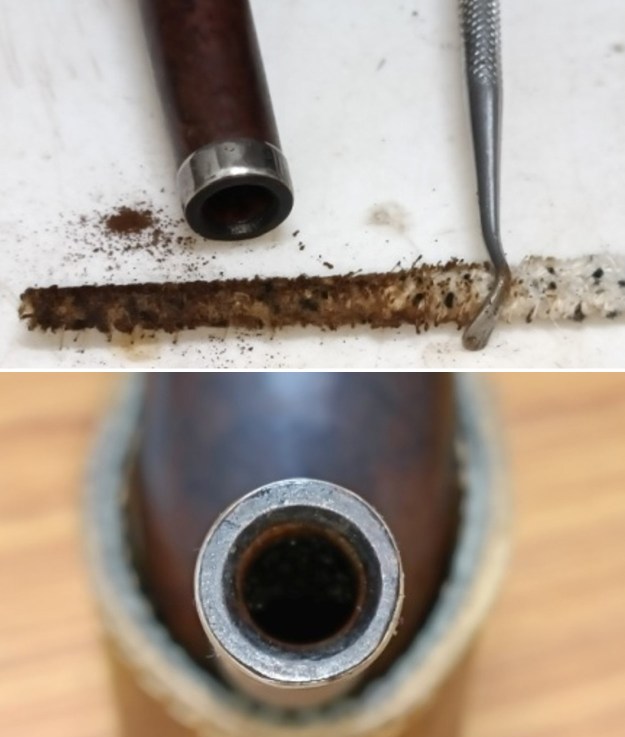
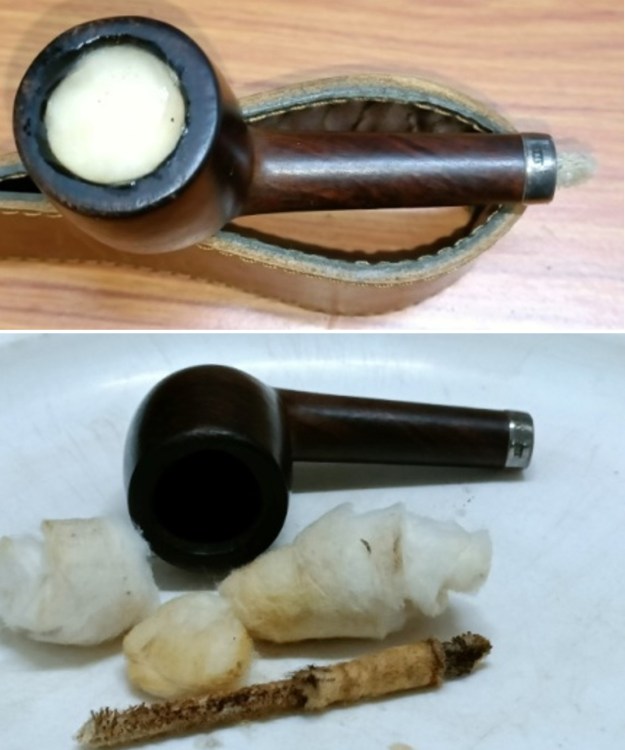
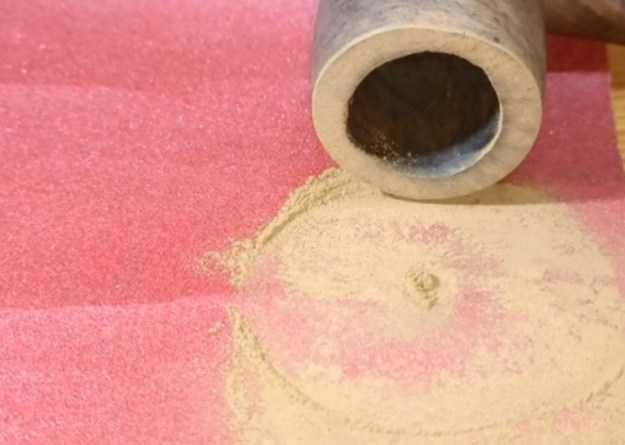
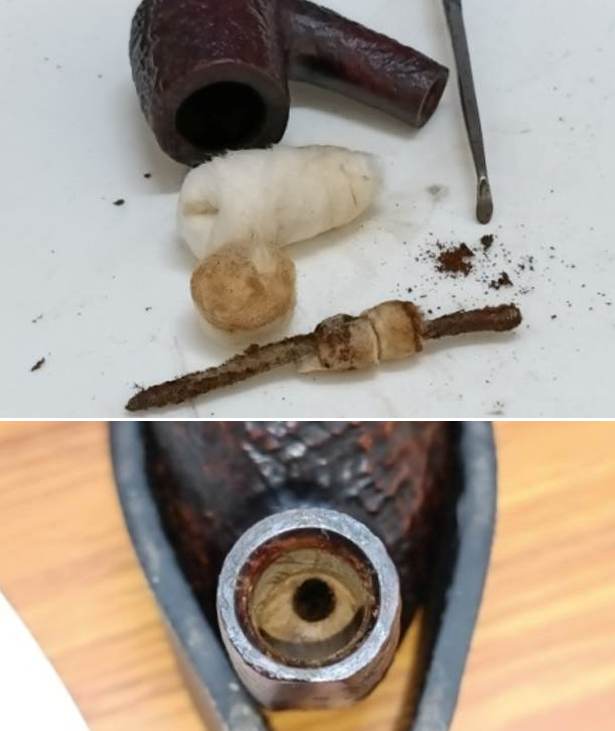
I started this project by first reaming the chamber to rid the walls of the little cake that was visible. I used my fabricated knife to gently scrap off the cake. I followed this up by sanding the walls of the chamber with a piece of 180 grit sandpaper. This sanding not only helps to completely remove the cake but also helps to even out the wall’s surfaces. A wipe using 99.9% pure isopropyl alcohol on a cotton swab ensured that the carbon dust that remained is completely lifted from the wall surface and the ghost smells are eliminated.I followed the cleaning of the chamber with cleaning the shank and mortise. If you recollect, I had mentioned that the draw through the mortise is heavy/ labored and assumed that it was due to accumulation of oils/ tars and gunk. However, during the cleaning, I was unable to get a pipe cleaner in through the airway and out through the draught hole. It was at this point that I handed over the stummel to Abha, my wife to see if she could clear the air way. By the late afternoon, when I came back from some work, Abha had removed the blockage from the shank air way and it was a solid piece of wood (clearly seen in the picture). She ran a few hard bristled and regular pipe cleaners dipped in 99.9% isopropyl alcohol  through until the shank and mortise was spotless clean and disinfected. Close inspection of the piece of wood extracted from the mortise makes me believe this piece to be remnants of a 6mm Balsa filter. How and why would anyone even think of doing so, let alone do it, is beyond my comprehension.With the stummel internals all cleaned and spruced up, I cleaned the external surface of the stummel with cotton swab and oil soap. Once the grime was cleaned, I wiped the surface with a moistened cotton swab to completely remove the residual soap and grime from the surface. The scratches are now distinctly visible all across the surface. Also, the color at the foot of the stummel and over the shank surface is succinctly visible. With this external cleaning, the damage to the rim top is now clearly visible. I topped the rim surface on a piece of 220 grit sandpaper, frequently checking for the progress. Once I was satisfied that the damage is sufficiently reduced, I stopped the process of topping. Though the damage to the rim top is still visible, it is now in much better state than before. I think I shall let these signs of damage remain as a part of this pipe’s journey to date. I polished the bowl with micromesh sanding pads. I dry sanded the entire stummel with 1500 to 12000 grit pads. I wiped the bowl down with a damp cloth to remove the dust that was left behind by the sanding. While I was working on the bowl top I also worked over the sides and bottom of the bowl to polish them as well. I wanted to minimize the scratching but not necessarily remove them all. These lacerations and dings must have had a history and I wanted to preserve it. I like the appearance of the stummel at this stage of restoration. I set the stummel aside and started with refurbishing of the stem. I cleaned the stem internals using anti oil detergent and thin shank brushes and rinsed it under warm water. I also cleaned the external surface of the stem using the soap and Scotch Brite pad. I further cleaned the stem airway with pipe cleaners and 99.9% pure isopropyl alcohol. I filled the tooth chatter with clear CA superglue and set the stem aside for the fill to cure.While the stem repairs were set aside to cure, I started with cleaning the leather covered case that housed the pipes. I used a hard bristled toothbrush and warm soap water to clean the maroon velvet lining the insides of the case and wiped it completely dry using paper towels. I cleaned the external surface of the case using cotton swabs and Murphy’s Oil soap and set it aside to dry out naturally.I checked the repairs over the stem and found that the fills had cured completely. Using a needle file, I roughly blended the filled surface with the surrounding surface. With a folded piece of 220 grit sandpaper, I further fine tuned the blend by sanding the filled areas to match with the stem surface. The progress so far is good.To bring a deep shine to the stem, I went through the complete set of micromesh pads, dry sanding with 1500 to 12000 grit pads. Though the repairs are visible, they are meant to be as it is after all a repair. I have made peace with this.With the stem repairs and polish completed, I checked the leather case. It had dried completely. Next, I applied a liberal coat of Neutral color shoe polish over the leather and kept it in the sun for the leather to absorb the wax from the polish. I followed it up with a nice polish using a horse hair shoe brush. The leather is now nicely hydrated and taken on a nice shine.At this stage, the stummel has been polished with micromesh pads, the stem repairs and polishing is completed and the leather case has been cleaned and polished. I decided to address the loose seating of the tenon in to the mortise. I thought of using clear CA superglue to coat part of the tenon surface at the stem end and fit it in to the mortise. The rotation of the coated tenon within the mortise would create a thread pattern on both the tenon and mortise wall. I gave a few in and out rotations for the threads to set in to the coat. Once I was satisfied with the seating and alignment of the stem, I set it aside for the glue to set. I seem to have lost pictures of the process at this stage or may have not even taken them as after this complete project went in to a downward spiral….

Once the tenon coating had completely cured, I checked the seating of the stem in to the mortise again and heard a small cracking sound (though utterly deafening to my ears) and I knew that I was in trouble, rather huge trouble. The Amber stem cracked exactly along the fault lines that I had indicated early on. The pain, frustration and the agony is indescribable!! I decided to set the carnage aside and took a break.A couple of days later, I had a fresh look at the broken stem and worked out a POA to address the damage. I decided to replace the old tenon with a fresh bone tenon from my cache of spare tenon and glue the broken stem pieces together. I would further stabilize and strengthen the cracked portion of the stem with a sterling silver band. This replacement of the tenon would also address the issue of shorter tenon that I had mentioned above.

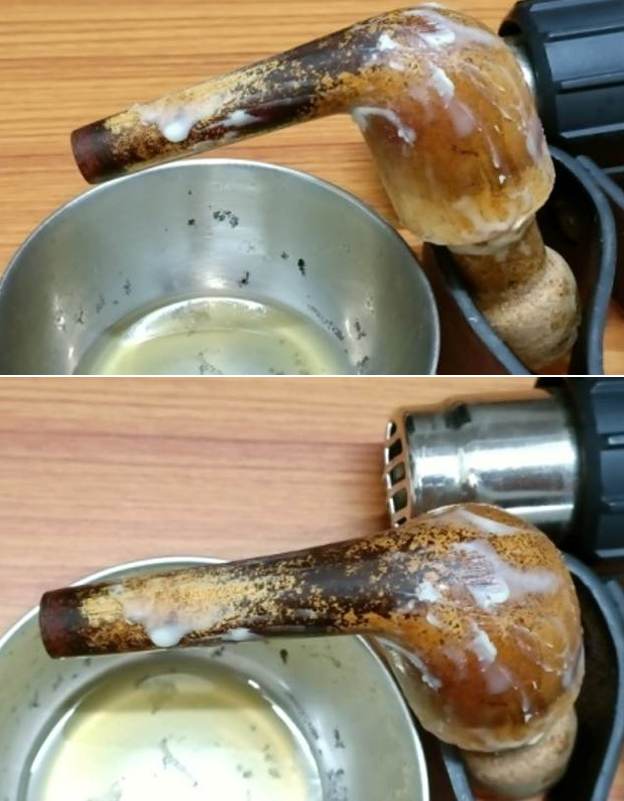
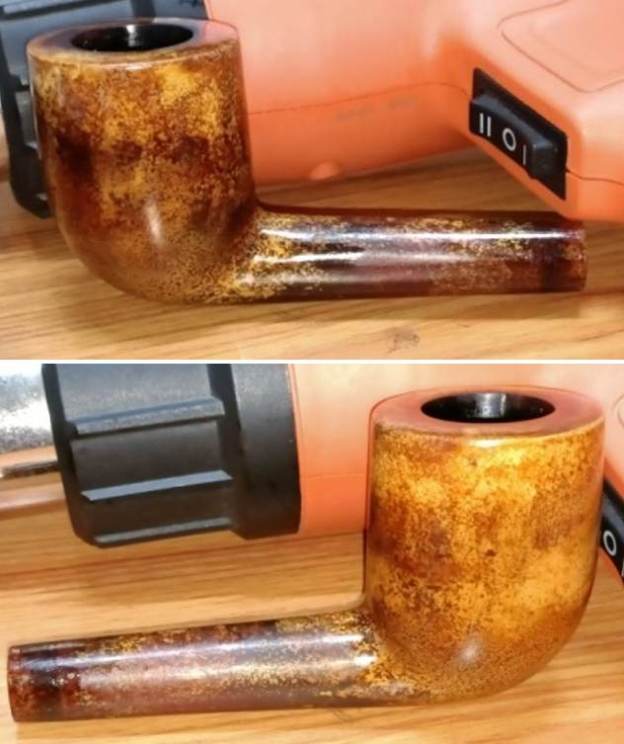
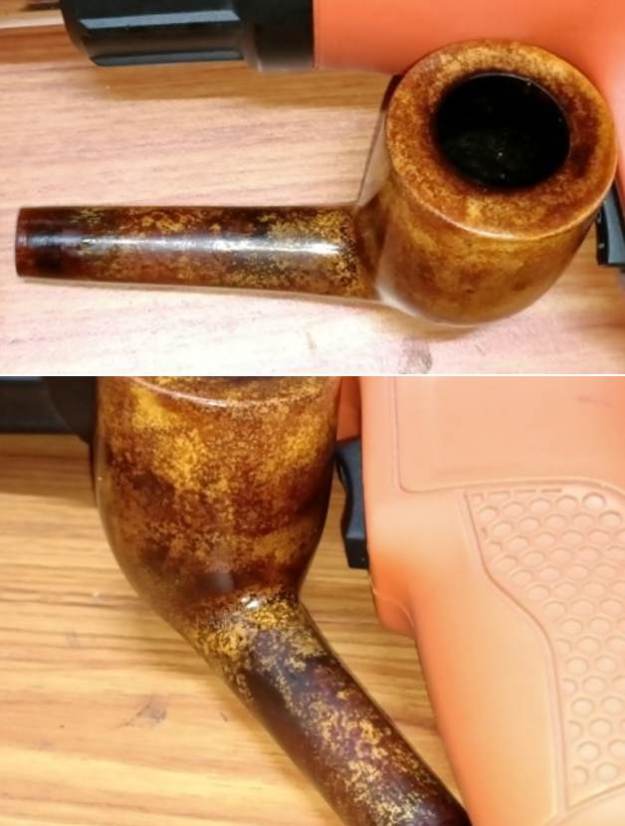
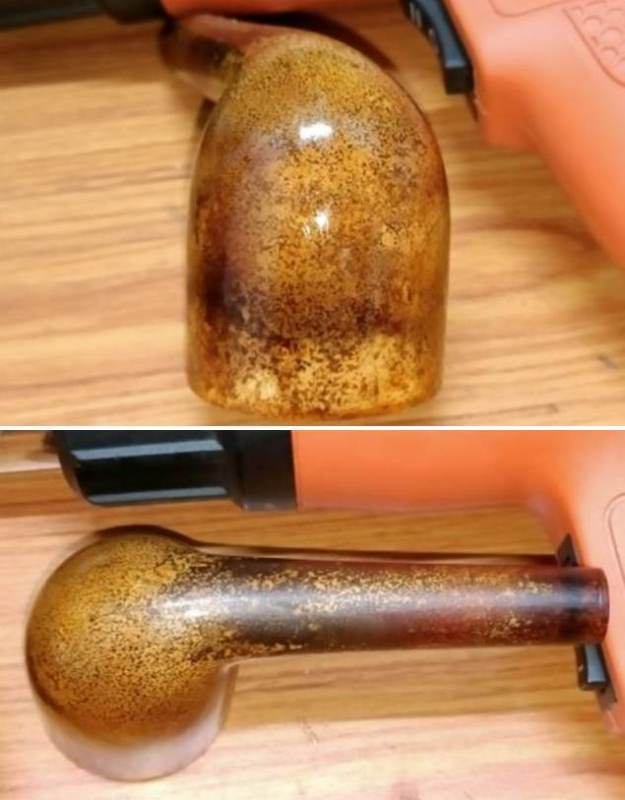
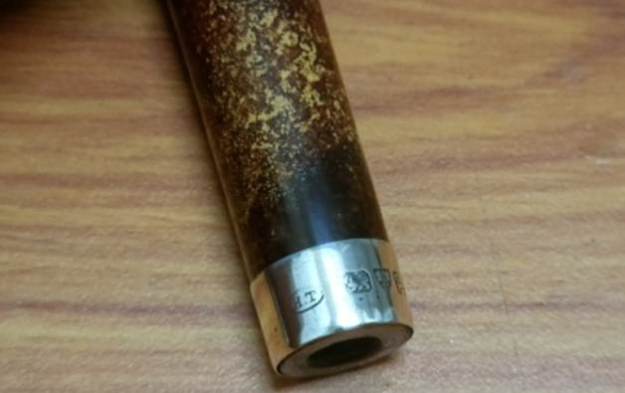
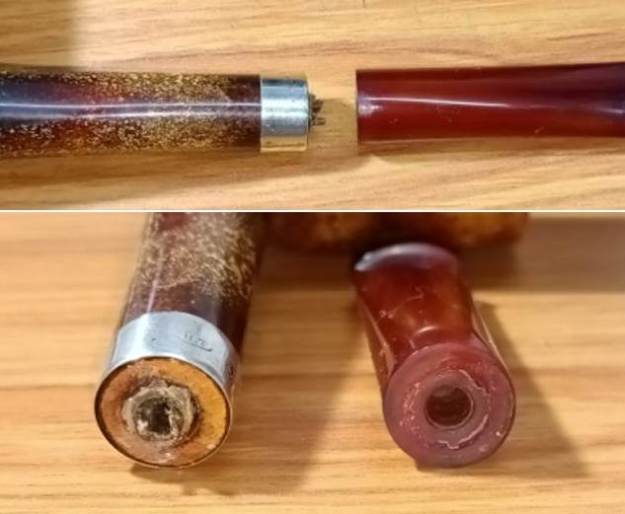
I selected a bone tenon that would fit snugly in to the mortise as well as in to the broken stem. I fixed the tenon in to the remaining intact part of the Amber stem using superglue. Once the glue had cured, I fixed the broken parts of the stem around the tenon with superglue and set it aside for the glue to cure completely. Once the glue had cured, I sand the repaired surface with a piece of 320 grit sand paper to match with the rest of the stem surface. Thereafter I attached a sterling silver band, which I had got specifically made for this stem, using superglue. The repairs are solid and I am quite satisfied with the progress being made.The gentleman who had commissioned this set had made it amply clear that the scratches/dents and dings over the stummel surface should remain as it is a part of the pipe’s past journey. I too agreed with the new owner and decided to move ahead with polishing and waxing of the stummel with beeswax. I brought a deep shine to the surface by dry sanding with micromesh pads and followed with a microfiber cloth. I assembled the equipment and materials that would be needed during the waxing process viz heat gun, paper towels, q-tips and a steel container graciously lent by Abha from the kitchen and of course, beeswax. I stuffed the chamber with cork and the shank end with folded pipe cleaners to prevent inadvertent seepage of the melted beeswax into either. Next, I melted a sufficient quantity of beeswax using my heat gun and thereafter heated the stummel. Using the a folded pipe cleaner, I completely coated the stummel with the wax and continued the application till the surface was saturated and set the stummel aside to absorb the wax. I reheated the stummel with the heat gun about 20 minutes later and let the excess wax either be absorbed or drip off from the stummel surface. I rubbed off the excess wax with a soft cotton cloth and. The deep golden brown coloration that the meerschaum has taken is a visual treat. With the stummel now completed, I was through with repairs and refurbishment of this cased pair. I reattached the Amber stem with the stummel for a final inspection and polish. Unfortunately, this was not the end of the journey with this pipe!!! As I reattached the Amber stem, the shank band broke free and fell on the table along with a small portion of the threads. Luckily, the concave surface of the shank face and the convex surface of the band were intact and I decided to glue them up again as was done originally.Since the threads were now damaged, I decided to do a complete stem replacement and shortlisted a near matching sized stem as a replacement to the Amber stem. The two aspects that I needed to match was the stem face diameter and the second was the matching of the taper and width with the Amber stem.This decision to replace the stem on this pipe has now necessitated that I consider replacing the replacement stem on the Dublin from this set. All the efforts that had gone in to fabricating and shaping the acrylic stem on the Dublin are for naught!! I did the replacement of the acrylic stem on the Dublin and the end results are more than satisfying (you can read all about it in Part-I of this restoration).

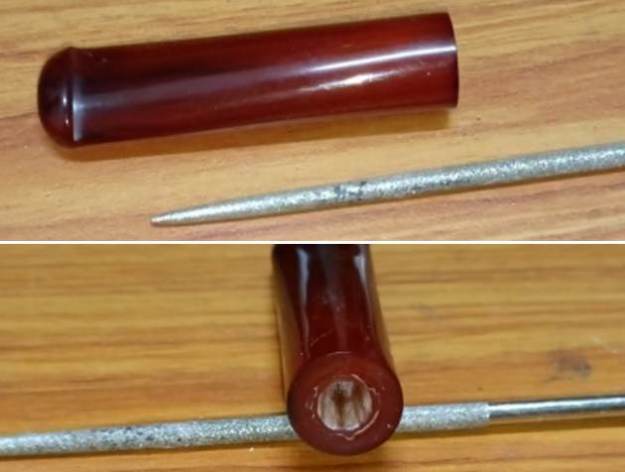
Using needle files and folded piece of sandpaper, I evened out the threads inside the mortise wall. This would make it easier for the mortise to accept a push pull tenon type.Next I tackled the sizing of the tenon. I first did the major hard work by sanding the tenon with a 150 grit sanding drum mounted on a hand held rotary tool. The challenge of achieving a perfect fit of the tenon in to the mortise was achieved by sanding the tenon using sandpaper. It did take a few man hours, tons of elbow grease and patience to achieve perfect fit.With snug seating of the stem in to the mortise ensured, it was time to adjust the length and other parameters of the replacement stem. I wanted an old style stem with an orifice to match the correct time period of 1920s. I marked the length of the stem that would fit in to the case and cut off the excess with a blade. This cutting off of the stem provided me with a rounded slot and a taper that nearly matched the required shape.I cleaned out the stem internals using shank brushes and anti oil dish washing soap. I ran a couple of pipe cleaners through the airway to further clean and dry out the stem internals.I firstly evened out the slot end of the shortened stem by topping on a piece of 220 grit sandpaper. Thereafter began hours of hard and laborious task of shaping the stem to match the shape and rebuild buttons on either stem surface using needle files and sandpapers. It did take hours of work and eyeballing to get the shape I desired and most importantly, the slot end. I am pleased with the results achieved. Next, I wet sand the entire stem with 600, 800, 1000, 1500 and 2000 grit sand papers. This progressive use of higher grit sandpapers helps to, firstly,  reduce the sanding marks left behind by the more abrasive ones, secondly, completely eliminate the oxidation while imparting a clean shine to the stem surface. Thirdly, this also helped to even out the sanding marks left behind by the flat needle files. I applied a little EVO and set the stem aside for a few minutes.This was followed by wet sanding the stem with 3200 to 15000 to bring a deep shine and smooth finish to the stem. I applied a small amount of EVO and set it aside.To put finishing touches to this pipe, I polished the stem with Blue Diamond compound and subsequently with carnauba wax using my hand held rotary tool and vigorously buffed the stummel with microfiber cloth to bring a deep shine. This pipe looks absolutely stunning and I am sure that my friend will like it too.

A tale of two pipes- restoring a pair of vintage cased meerschaum pipes – Part 1 (A)


Blog by Paresh Deshpande

Recently I had purchased a few pipes on eBay and this time the delivery was effected without any issues from the Seller. All the Sellers had described the pipes just as they are received, items were well packed and shipping was record quick making this a nice experience (far cry from all my previous experiences on eBay!). I shared the pictures of the pipe haul with members of my Pipe Club and this pair of cased Meerschaum called out to one of the founding members of the club and more importantly a dear friend of mine.

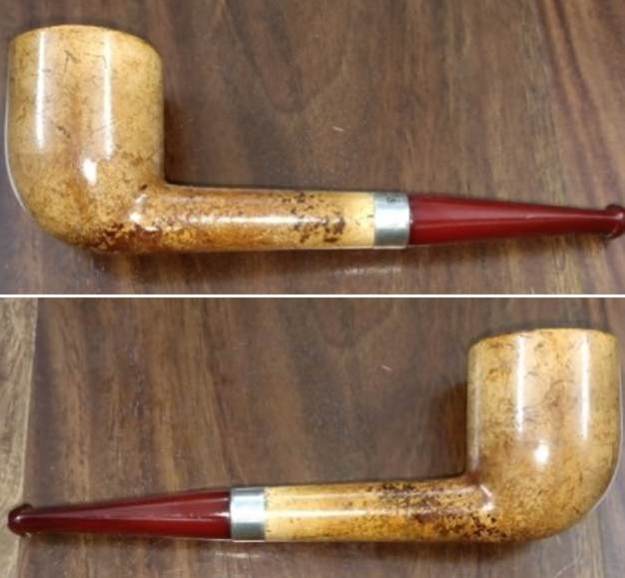
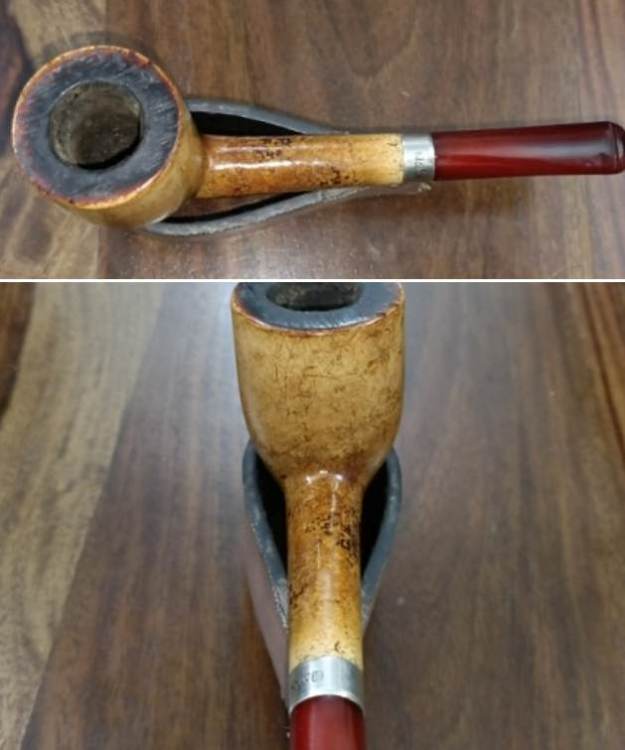
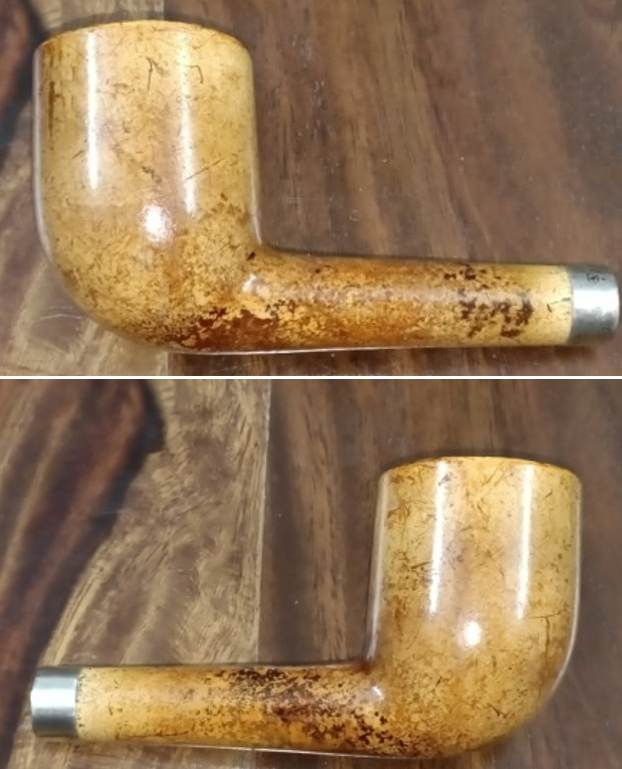
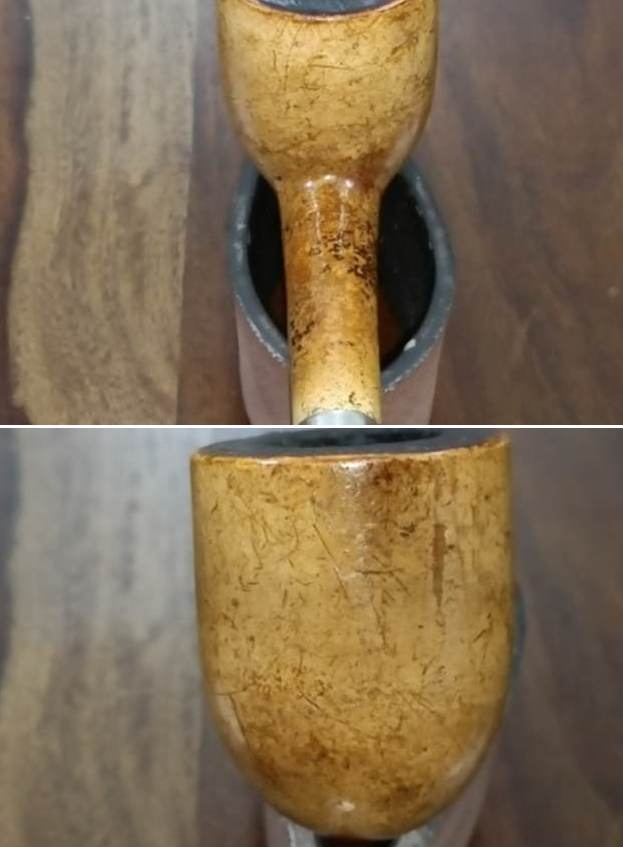
Looking at the pipe set, it is apparent that these pipes had seen many a summers, many a number of repair jobs more so to the stem including splicing and many ages of (mis?)use. The case consists of two Meerschaum pipes; a Dublin and a Billiard (or maybe a Tulip or even an Apple shape!!!). There are no visible stampings or markings either on the pipe or on the hard leather case except a small note with c.1920’s written on it (well, again veracity of this note cannot be established and needs to be considered with a pinch of salt, or rather a handful of salt!). This makes it impossible to firmly establish the provenance of this pipe set. However, the overall feel, appearance and quality make me want to believe that small little note. Here are a couple of pictures of the cased set of meer as it sits on my table. Though both the pipes were worked on simultaneously, for the sake of brevity and convenience of explaining the process and how issues that cropped up on one pipe affected the other, I shall divide the write up in to two parts.

Part 1: Dublin
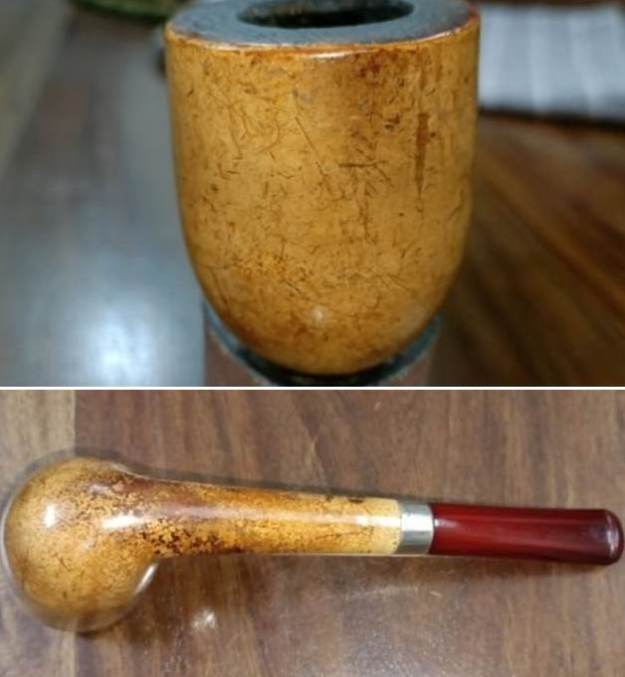
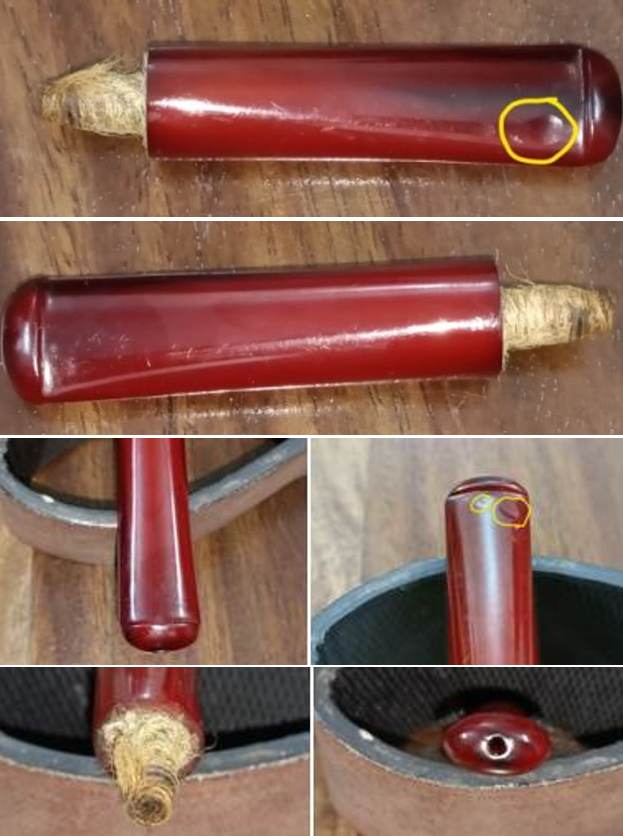
The Dublin shaped meerschaum pipe is in pretty good condition with a thin layer of cake in the chamber. The rim top surface is clean and in good condition with no dents or dings over the rim edges. The major issue on this pipe is with the stem. Somewhere down the line during its previous innings, the Amber stem on this pipe must’ve broken in half and was repaired using a multicolored acrylic or cheap plastic stem spliced in to place at the tenon end. The seating of the tenon in to the shank end is very loose and barely holds the walls of the mortise. This seems to be the main reason why this pipe was so sparingly used as evidenced by the thin layer of cake in the chamber. The following pictures will give a general idea of the condition of this pipe as it sits on my workbench. Detailed Inspection
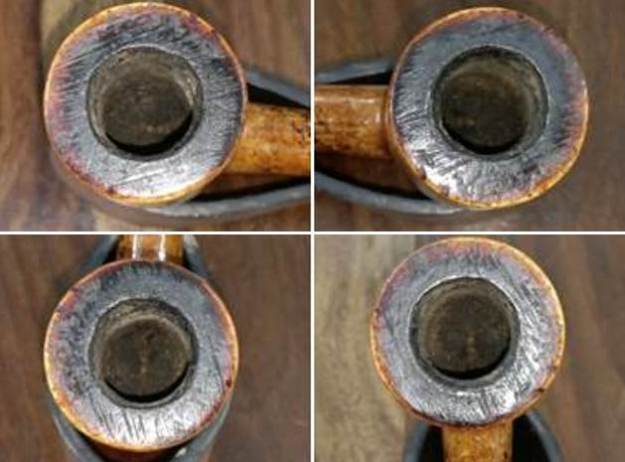
The chamber is clean with a thin layer of even cake. The rim top surface is clean and in pristine condition without any dents and dings over the rim top. The inner and outer rim edges are smooth, even and without any darkening along the edges. The rim appears thinned out in 12 o’clock direction along the outer rim edge. I think it is the design feature which has the stummel in a slight inwards turn near the upper surface. However, the chamber itself is perfectly rounded. The stummel surface shows a few scratches, but none serious enough to draw away your attention from the beauty of the bowl. The inward turning shape to the upper surface of the stummel that I have mentioned above is indicated by green arrows. There are a couple of dark spots over the stummel surface and encircled in pastel blue. The shank end shows residual white tape and is indicative of an earlier repair work to the shank end. The band, though identical to the other pipe in this set, appears to be fixed after the pipe was completed. The white Teflon tape, in all probability, was used to tighten the seating of the threaded tenon in to the mortise. However, this was an utter failure as the tenon is too loose in the mortise and is the reason for this pipe being so sparingly used. The stem is where maximum repair work is required. The stem has been spliced and repaired previously with the rounded slot end made of Amber while the tenon end is a similar colored variegated acrylic or plastic stem. The joint is easily discernible and is encircled in Red. Though the stem airway is aligned, the stem shape is not. The mismatched stem shape is indicated by green. The tenon is too short and filthy and very loose fitting in the shank. The slot end has tooth indentations and chipped surface. Given the present condition of the stem and its seating in to the mortise, I shall be replacing the stem itself to make it both functional and aesthetically appealing to the eye (that’s what the intention is!). The Process
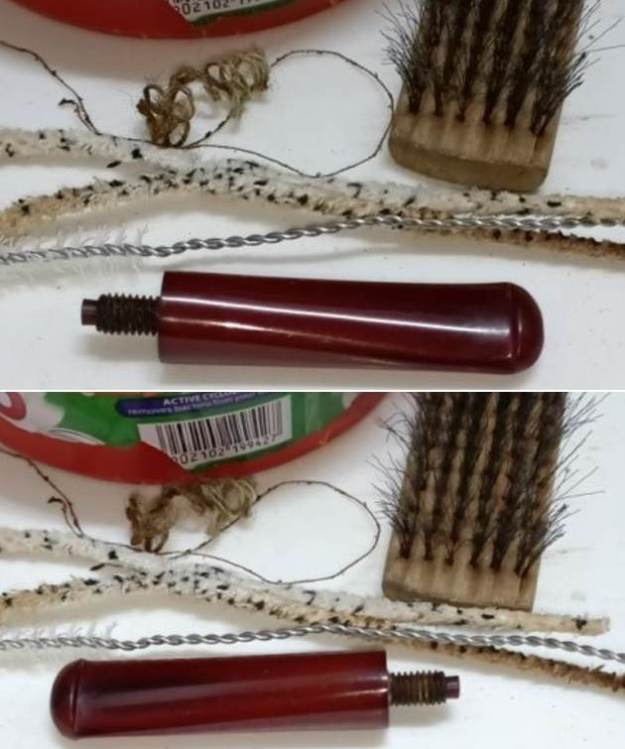
I started this project by reaming the chamber with my smaller fabricated knife and scraped out all the carbon from chamber. I used a 220 grit sand paper, pinched between my thumb and forefinger, to sand the inner walls of the chamber of the pipe. Once I had reached the bare walls, I wiped the chamber with a cotton pad dipped in isopropyl alcohol. This removed all the residual carbon dust and also rid the chamber of all ghost smells. I followed it up by cleaning of the mortise and air way of the pipe using hard bristled and regular pipe cleaners, q-tips dipped in alcohol. The mortise and the draught hole were given a final clean with shank brushes dipped in alcohol. I dried the mortise with a rolled paper napkin. The shank internals and the draught hole are now nice and clean with an open and full draw.I cleaned the external surface of the Meerschaum bowl with Murphy’s Oil soap and cotton swabs. I wiped the bowl surface with a moist cloth to remove the soap and grime that remained on the surface. The stummel surface cleaned up nicely. The scratches and dents and dings over the stummel surface are now clearly visible and will be addressed to an extent when the stummel is polished using the micromesh pads. I polished the rim top surface and rim edges with micromesh pads. I then went on to dry sand the entire stummel with 1500-12000 grit pads and wiped the bowl down with a damp cloth to remove the dust that was left behind by the sanding. I had planned to minimize the scratches but not necessarily remove them. These lacerations and dings must have had a history and I wanted to preserve it. Once I was done with the micromesh cycle, I applied a small quantity of Paragon wax and vigorously polished it off with a microfiber cloth. The stummel now has a nice deep shine to it. Next I decided to address the stem repairs or rather stem replacement since the damage to the already repaired stem was far too extensive and yet it would not make this pipe fully functional since the tenon was too loose and too short. The stem that I selected is a beautiful yellow acrylic stem that perfectly matched the shank face diameter. I selected a Delrin tenon that perfectly threaded in to the mortise for a snug fit.Now it was necessary to down size the smooth end of the tenon to fit in to the stem face. I mounted a 150 grit sanding drum on to my hand held rotary tool and sand down the smooth end of the tenon till I had achieved a rough seating of the tenon in to the stem face. My previous experience has taught me an invaluable lesson; “SAND ONCE AND CHECK TWICE”!! Once I had achieved a rough seating, I got down to the arduous and time consuming task of manually sanding down the smooth portion of the tenon with a folded piece of 220 grit sandpaper till I had achieved a perfect seating of the tenon in to the stem. Here I was extra careful and vigilant while sanding the sides of the tenon and frequently checked the alignment of the tenon airway with the stem airway and finally through the shank airway and right through the draught hole.   Once I was sure that the tenon, stem and shank face and airways are all aligned and seated flush, I glued the tenon in to the stem. I took some time to admire the overall appearance of the pipe and I like it very much.Next on the agenda was to match the length of the replacement stem with that of original stem. Using needle file and 150 grit sand paper, I sand the slot end of the replacement stem till I achieved a perfect length match. Even though it took me a few man hours and lots of efforts, I was able to achieve the desired length. I checked the seating of the pipe in to the case and noted with satisfaction that the case closed without any gaps. However, in achieving the desired length, the button edges on the new stem were sanded down. This necessitated rebuilding of button edges on the new stem.With clear CA superglue, I rebuild the buttons using layering technique. Once the glue had hardened, using a needle file, I roughly shaped the buttons and further fine tuned the buttons using a piece of 330 grit sandpaper. The slot end at this stage is rounded and the horizontal slot needs to be carved. I marked the center line on either sides of the orifice and using a slot file, I carved out a horizontal slot. The stem looks good at this stage.Next the stem was subjected to a full cycle of polishing using micromesh pads.With the shaping and polishing of the replacement stem completed, I turned my attention back towards the stummel. I gave a beeswax polish to the meerschaum bowl. I assembled the equipment and materials that would be needed during the process viz heat gun, paper towels, q-tips and a Katori, a steel container graciously lent by Abha from her kitchen and of course, beeswax. I stuffed the chamber with cork to prevent inadvertent seepage of the melted beeswax into it. Next, I melted a sufficient quantity of beeswax in the katori using my heat gun and thereafter heated the stummel. Using a folded pipe cleaner, I completely coated the stummel with the wax and continued the application till the surface was saturated with the beeswax and set the stummel aside to absorb the wax. I reheated the stummel with the heat gun about 20 minutes later and let the excess wax either be absorbed or drip off from the stummel surface. I rubbed off the excess wax with a soft cotton cloth and brought a deep shine to the surface with a microfiber cloth. With the replacement stem all shaped and aligned and the bowl waxed and polished, I had completed the refurbishing of this pipe from the cased pair and set the pipe aside.

However, little did I know at this stage that all the man hours and efforts that I had put in making this replacement stem to make this pipe aesthetically beautiful and functionally sublime would come to a naught due to certain challenges that I was presented with while working on the second pipe from the set. I shall cover those aspects in Part- II of the write up. It will suffice to say here that I had to discard this stem and fabricate a new vulcanite stem from scratch.

PART-I (B)
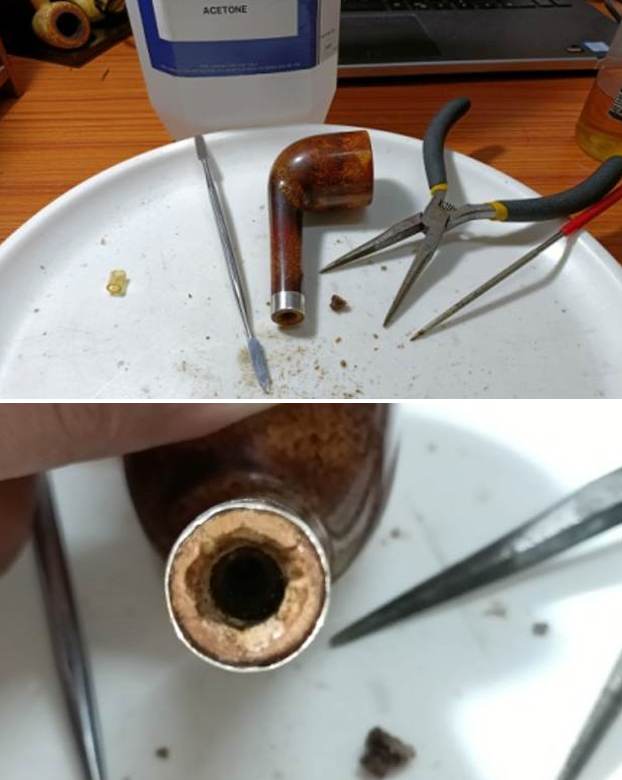
Now that I have decided to match the stem on this pipe to the vulcanite stem that I had fabricated on the second pipe from the set, I first selected a vulcanite stem that would more or less be a perfect match to the butterscotch yellow acrylic stem that was made earlier. I would need to shape the flare at the slot end to a nice smooth taper (indicated by yellow lines), reshape the slot end to an orifice with old style rounded buttons and would need to greatly reduce the diameter of the tenon (indicated by red arrows) for a snug fit in to the mortise. Once that was achieved, I would need to clean and polish the vulcanite to a nice black shine. Here is a picture to give you an idea of both the stems.First I removed the metal stinger from the tenon end by heating it with the flame of a match light and pulling it out with a pair of nose pliers. I followed this with cleaning the stem internals using anti-oil dish washing soap on a thin shank brush and rinsing it under warm running water. I ran a couple of pipe cleaners through the airway to completely remove any residual traces of soap and also to dry it out. With a 150 grit sanding drum mounted on my hand held rotary tool, I sized down the tenon to achieve a rough match with the mortise size. I fine tuned the seating of the tenon in to the mortise by sanding it further with a 180 grit sand paper till I had achieved a snug fit.As I was trying out the seating of the tenon in to the mortise a second time, the brass ring separated from the shank end with threaded portion of the mortise while revealing a minor crack at the shank end (unfortunately, in my haste to address the newly presented challenge, I missed out on taking pictures of the damaged shank end). The problems are continually mounting unabated!!

Luckily, I had a Sterling silver band that I previously got made from a local silversmith which perfectly fit the shank end. I filled the crack with thin CA superglue. Once the glue had seeped in to the crack and hardened completely, I attached the band over the shank end with CA superglue and set it aside for the repairs to cure.Now I turned my attention back to the stem. The tenon mod was completed and next I decided to address the extra flare at the slot end of the replacement stem. I wanted an old style stem with an orifice to match the correct time period of 1920s and had achieved it to a certain extent on the billiards pipe from the set. I cut about half an inch off the slot end. This achieved two aims; firstly, the flare was reduced and secondly, I now had an orifice at the slot end. I further evened out the cut surface by sanding the surface over a 220 grit sand paper.Thereafter began the arduous task of eyeballing and filing with flat/ semi-circular needle files. It did a take long time and lots of elbow grease to achieve a rough desired shape. I further fine tuned the rough edges and shape by sanding the stem surface using a 220 grit sand paper. Next, I wet sand the entire stem with 600, 800, 1000, 1500 and 2000 grit sand papers. This progressive use of higher grit sandpapers helps to, firstly,  reduce the sanding marks left behind by the more abrasive ones, secondly, completely eliminate the oxidation while imparting a clean shine to the stem surface. Thirdly, this also helped to even out the sanding marks left behind by the flat needle files. I applied a little EVO and set the stem aside for a few minutes.I went through the 1500 to 12000 grit micromesh pads to wet sand the stem. The stem now has a nice deep shine along the entire stem surface. I rubbed a small quantity of EVO and set the stem aside for the oil to hydrate the stem surface.To finish the restoration of this pipe, I polished the stem with Blue Diamond compound and subsequently with carnauba wax using my hand held rotary tool. I once again vigorously buffed the stummel with microfiber cloth to bring a deep shine. The finished pipe actually looks much attractive in person than in the pictures below.

A Brigham Canada 141 Rusticated Acorn Reborn


Blog by Steve Laug

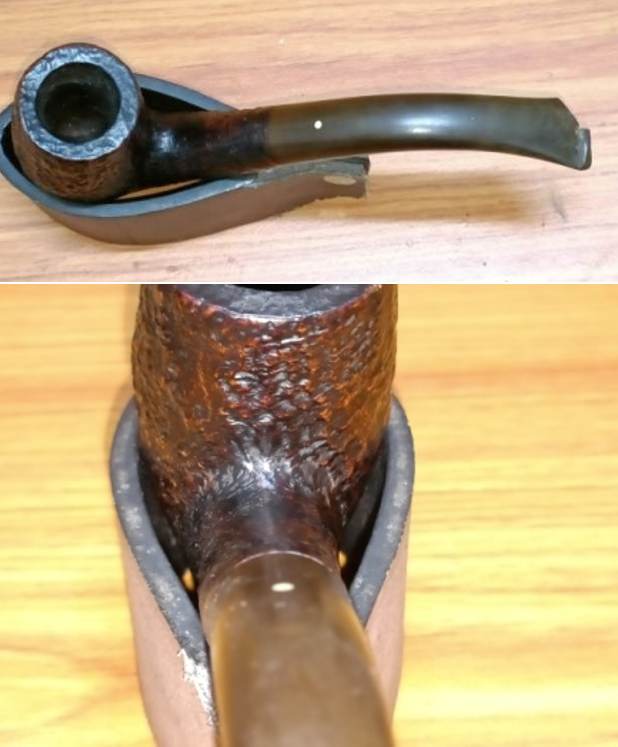
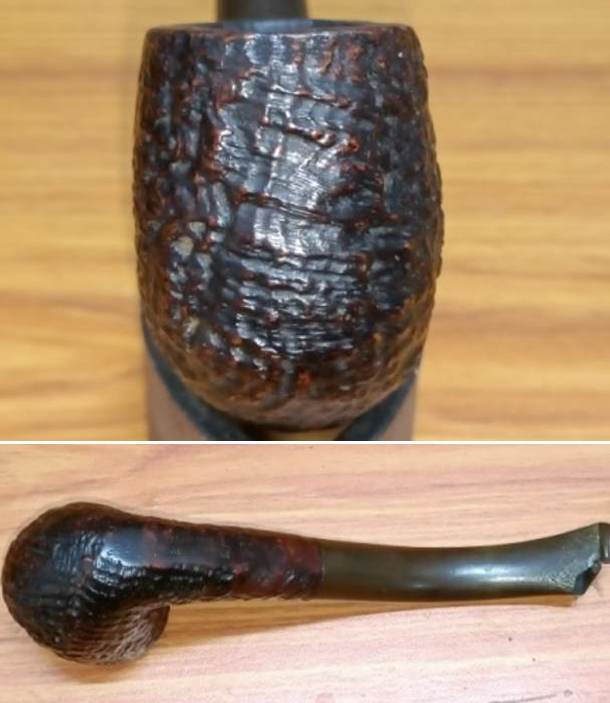
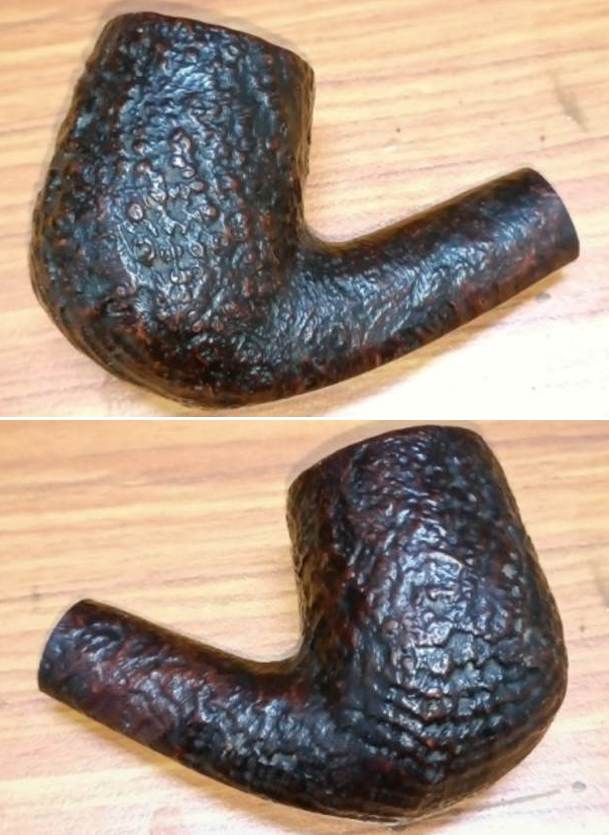
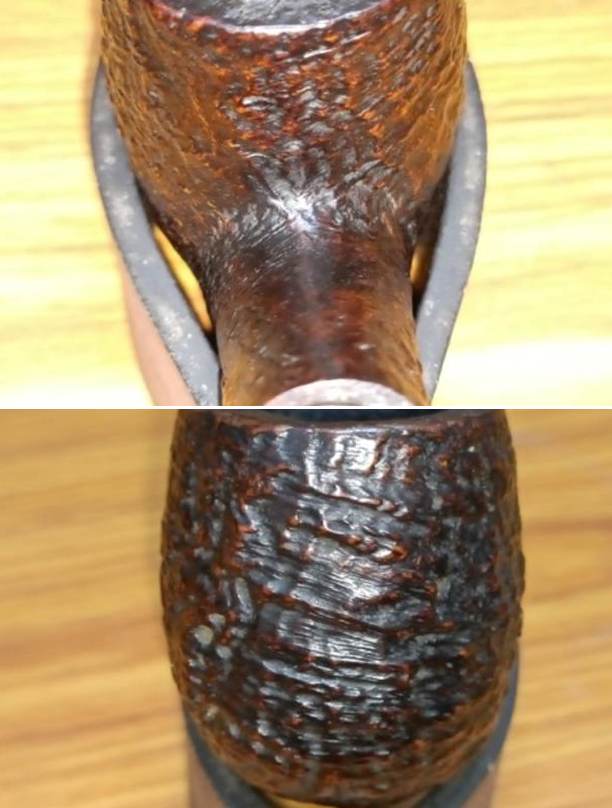
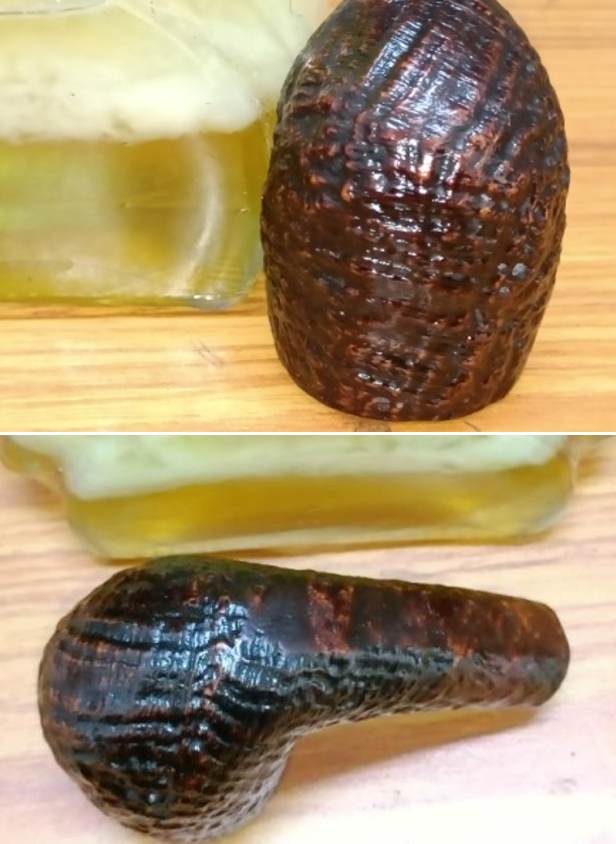
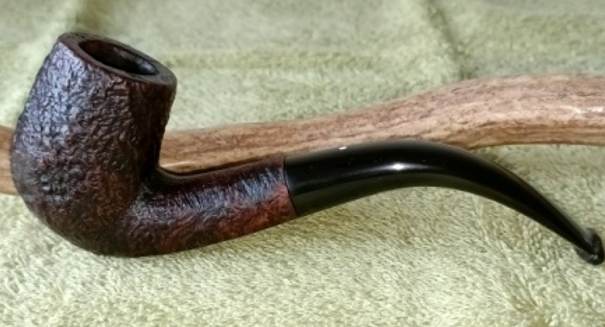
The next pipe I have chosen to work on is a nice looking rusticated ¼ bent acorn with a black vulcanite stem. We picked it up on 09/12/2021 from an auction in Wilkes Barre, Pennsylvania, USA. The stamping on the underside of the shank has the shape number 141 on the heel of the bowl followed by Brigham in script [over] CANADA. The vulcanite stem has a single brass dot inserted on the left side. The pipe is a nice looking pipe with a medium brown finish that highlights the grain under the rustication. The ¼ bent vulcanite stem works very well with the bowl. It is light weight and comfortable pipe to hold. Jeff sent me the following photos of the pipe to show the condition it was in before he worked on it.

This is what I saw when I looked over the pipe.

  1. The finish shows darkening of hand oils and some thick grime ground into the finish around the bowl sides. The medium brown stain is dull and the grain is obscured around the bowl sides and shank
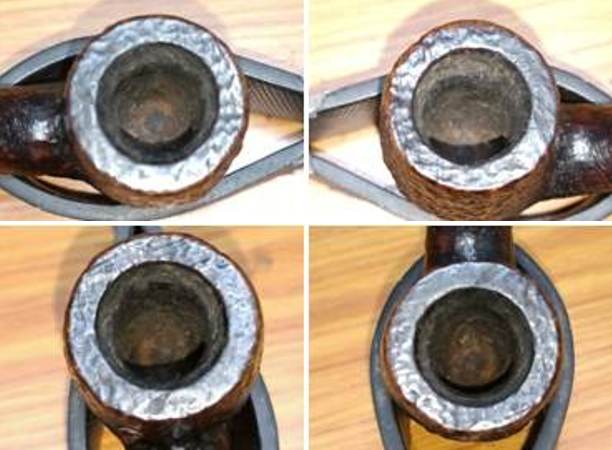
  2. The rusticated rim top was very dirty with darkening and lava ground into the rustication to point that it was almost smooth. The inner edge of the bowl was unclear but seemed to show some damage under the lava coat.
  3. There was a moderate cake in the bowl. The bowl itself was very dark and dirty. Once the bowl was cleaned up we could confirm the condition of the bowl walls.
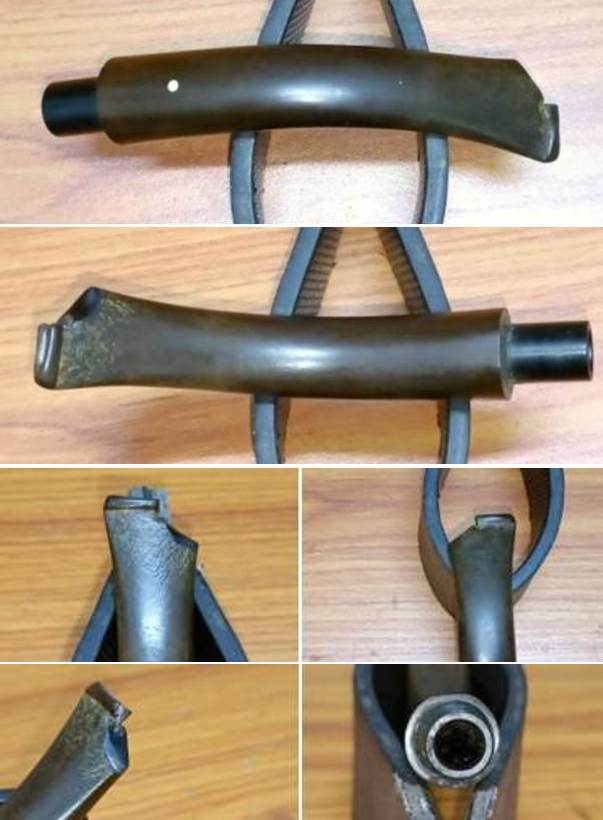
  4. The vulcanite taper stem was filthy with oxidation, calcification and tooth marks and chatter on both sides. There were some deeper tooth marks on the underside ahead of the button.
  5. There is a brass single dot on the left side that identifies it as a Brigham pipe. It is tarnished and almost invisible in the oxidation of the stem. The tenon is a Hard Rock Distillator system that holds a maple filter and it is tarred and heavily dirty.

To summarize what I saw – this Brigham Canada 141 Acorn is a well made pipe. The bowl and stem are very dirty which says to me that the pipe was someone’s favourite pipe. The look and feel of the pipe in the hand is great. It should clean up very well. Here are photos of the pipe taken before Jeff started the clean up.  Jeff took close up photos so that I could have a clearer picture of the condition of the bowl, rim edges and top. The rim top photos confirm my assessment above. The cake in the bowl is thick – covering the walls of the bowl. The rim top has thick lava coat and has some darkening on the inner edge and is heavier toward the back of the bowl. The inner edge looks like it might be damaged. This is what I look for when assessing a pipe. I look forward to viewing it in person after the clean up work. The stem is very oxidized with thick calcification on the last half of the stem and there are tooth marks and chatter on both sides ahead of the button. Instead of telling you what I see in the next photos of the sides of the bowl and the heel I want to hear from you. Tell me what you see? What does the finish look like to you? Are there any visible problems or issues that stand out to you? Are the cracks or scratches in rusticated finish of the bowl? Are there visible flaws or fissures in the briar? What does the finish look like? Is there a pattern to it? Any visible issues on the heel of the bowl? These questions should help you to see what I am looking for when I see these photos.  Jeff removed the stem from the shank and took photos of the distillator aluminum tenon. There was no maple filter in the tenon so the tube was filled up with tars and oils. The outside of the tube is also covered with tars as well. He took photos of the stamping on the underside of the shank. On the heel it is stamped with the shape number 141. That is followed by Brigham in script [over] Canada. The vulcanite stem has the brass pin in the left side of the taper. What stands out for you in the photos of the stamping? What do you look for in the stamping? It is dirty but what do you see underneath the grime on the surface of the briar? I am also including the information from Pipedia’s article on Brigham pipes. It is a great read in terms of the history of the brand (https://pipedia.org/wiki/Brigham_Pipes). Charles Lemon (Dadspipes) is currently working on a book on the history of the brand. Until that is complete this article is a good summary. I have included it below.

Roy Brigham, after serving an apprenticeship under an Austrian pipesmith, started his own pipe repair shop in Toronto, in 1906. By 1918 the business had grown to include five other craftsmen and had developed a reputation across Canada for the high quality of workmanship. After repairing many different brands of pipes over the years, Roy noted certain recurring complaints by pipe smokers, the most common referred to as “tongue bite”. Tongue bite is a burning sensation on the smoker’s tongue, previously thought to be due to the heat of the smoke (i.e. a “hot smoking pipe”).

He soon began manufacturing his own pipes, which were lightweight, yet featured a more rugged construction, strengthening the weak points observed in other pipes. The problem of tongue bite intrigued him, and he decided to make overcoming it a future goal.

About 1938, Roy’s son Herb joined him to assist in the business. The business barely survived the great depression because pipes were considered to be a luxury, not a necessity, and selling pipes was difficult indeed. In approximately 1937 [1], after some experimentation, Roy and Herb discovered that tongue bite was in fact a form of mild chemical burn to the tongue, caused by tars and acids in the smoke. They found that by filtering the smoke, it was possible to retain the flavour of the tobacco and yet remove these impurities and thereby stop the tongue bite.

Just as Thomas Edison had searched far and wide for the perfect material from which to make the first electric light bulb filaments, Roy & Herb began experimenting with many materials, both common and exotic, in the quest for the perfect pipe filter. Results varied wildly. Most of the materials didn’t work at all and some actually imparted their own flavour into the smoke. They eventually found just two materials that were satisfactory in pipes: bamboo and rock maple. As bamboo was obviously not as readily available, rock maple then became the logical choice.

They were able to manufacture a replaceable hollow wooden tube made from rock maple dowelling, which when inserted into a specially made pipe, caused absolutely no restriction to the draw of the pipe, yet extracted many of the impurities which had caused tongue bite. The result was indeed a truly better smoking pipe…

I then turned to a second article by Charles Lemon called, “A Closer Look at the Dots, Dates, and Markings of Brigham Pipes” to be able to pin down the time frame that the pipe was made in and to help interpret the stampings and shape number on the pipe. Here is the link to his article. (https://pipedia.org/wiki/Brigham_Pipes_%E2%80%93_A_Closer_Look_at_Dots,_Dates_and_Markings

I have dubbed the decades between 1980 and 2000 the Late Canadian Era, a period that saw several changes at Brigham that are of note to the collector. First, the traditional 8-grade pinning system (the famous Brigham “Dots” which denoted the quality of the pipe) was changed to a 7-grade system to simplify pinning (more on this below), and the Norsemen and Valhalla series were merged to form the President Series, which represented the very finest pipes coming out of the Toronto factory. Early pipes from this era (left, below) are stamped with a shape number and “Brigham” over “Canada”; later pipes (late 1980s+, on right below) are stamped simply with a shape number and the Brigham logo.

I have included the photos and headings on the photos below.

Late Canadian Era Stamps1980-85 1990s

With the information from Charles’ message and the chart above that he included I knew what I was dealing with in terms of the stamping and the age of this pipe. I learned that this Late Canadian Era was made between 1980-1985. The pipe is a Brigham Standard (1-Dot) 141 Acorn. Now it was time to work on the pipe.

I am sure many of you will shake your head and ask maybe even out loud, “Why is he including this again?” However, please remember that the point of these blogs is not to wow your with the work or make you shake your heads but I want you to know the details of the work we do so you can do your own. Back in 2020 Jeff wrote a blog about his cleaning process. I am including a link to that now so you can see what I mean about his process. Do not skip it! Give it a read (https://rebornpipes.com/2020/01/20/got-a-filthy-estate-pipe-that-you-need-to-clean/). Here is the introduction to that blog and it is very true even to this day.

Several have asked about Jeff’s cleaning regimen as I generally summarize it in the blogs that I post rather than give a detailed procedure. I have had the question asked enough that I asked Jeff to put together this blog so that you can get a clear picture of the process he uses. Like everything else in our hobby, people have different methods they swear by. Some may question the method and that is fine. But it works very well for us and has for many years. Some of his steps may surprise you but I know that when I get the pipes from him for my part of the restoration they are impeccably clean and sanitized. I have come to appreciate the thoroughness of the process he has developed because I really like working on clean pipe!

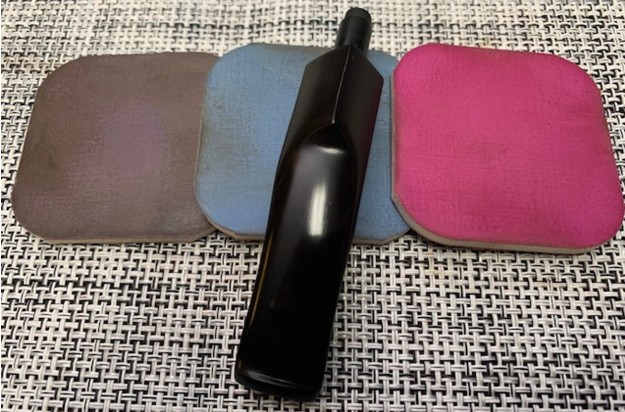
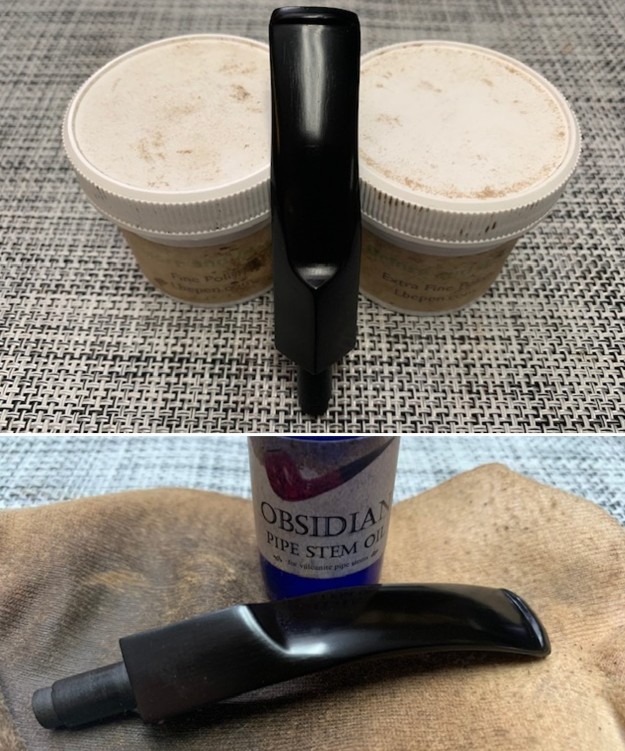
For the benefit of some of you who may be unfamiliar with some of the products he uses I have included photos of three of the items that Jeff mentions in his list. This will make it easier for recognition. These three are definitely North American Products so you will need to find suitable replacements or order these directly on Amazon. The makeup pads are fairly universal as we were able to pick some up in India when we were with Paresh and his family.

In the blog itself he breaks his process down into two parts – cleaning the stem and cleaning the bowl. Each one has a large number of steps that he methodically does every time. I know because I have watched him do the work and I have seen the pipes after his work on them. He followed this process step by step and when the pipe got to me it was spotlessly clean and ready for my work. The inside of the stem, shank and bowl were clean and to me that is an amazing gift as it means that my work on this end is with a clean pipe! I cannot tell you how much difference that makes for my work.

  1. The finish cleaned up quite well but there was still some darkening of hand oils in the finish around the bowl sides. The medium brown stain is clean and the grain around the bowl sides and shank
  2. The rusticated rim top was clean and the lava was cleaned out of the grooves and hollows of the rustication. The inner edge of the bowl showed some rough areas but was very clean.
  3. The cake was cleaned out of the bowl. The bowl very clean and the bottom of the bowl was raw briar. The bowl walls were smooth and there was no checking or burn damage.
  4. The vulcanite taper stem was very clean and the oxidation and calcification were gone. The tooth marks and chatter on the topside looked better. There were some deeper tooth marks on the underside and on the button.
  5. There is a brass single dot on the left side that identifies it as a Brigham pipe. It looks better and once it is polished with shine. The tenon is a Hard Rock Distillator system that holds a maple filter is very clean.

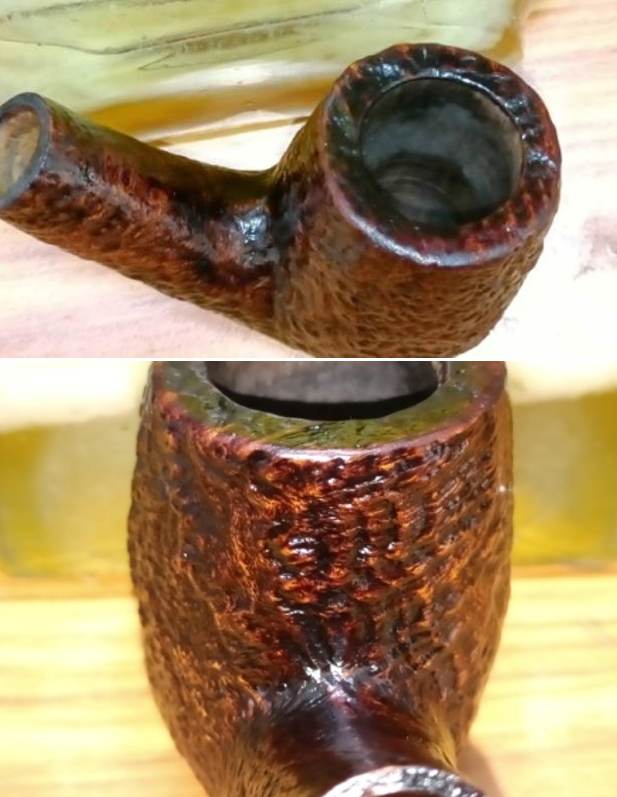
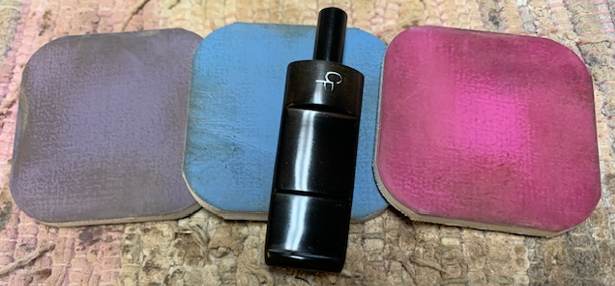
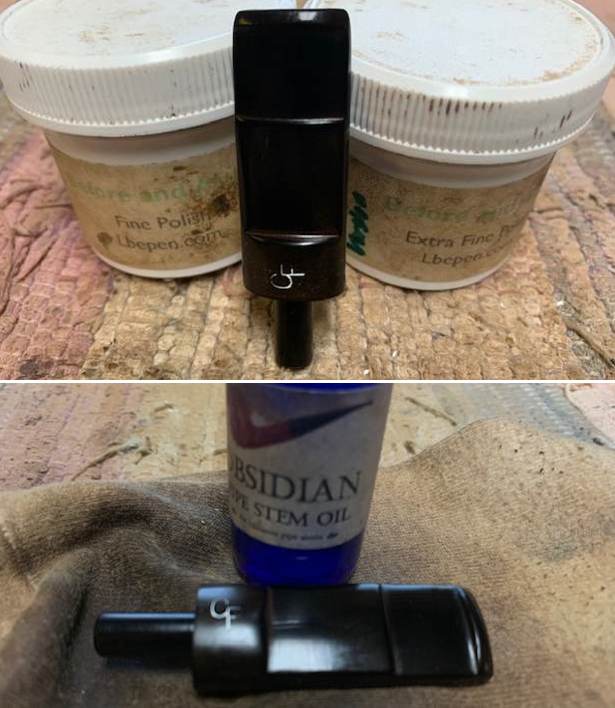
Hopefully the steps above show you both what I look for when I go over the pipe when I bring it to the work table and also what I see when I look at the pipe in my hands. They also clearly spell out a restoration plan in short form. My work is clear and addressing it will be the next steps. I took photos of the whole pipe to give you a picture of what I see when I have it on the table. This is important to me in that it also shows that there was no damage done during the clean up work or the transit of the pipe from Idaho to here in Vancouver. I carefully went over the bowl and rim top to get a sense of what is happening there. In this case once the rim top and edges were cleaned the rim top looked better. The inner edge was damaged and was the bowl was slightly out of round. I also went over the stem carefully. The fit to the shank is snug and the transitions are smooth. There were some tooth marks and chatter on the surface of the stem and the button on the underside. The vulcanite stem surface was clean and looked better. I took photos of the rim top and stem sides to show as best as I can what I see when I look at them. I always check to make sure that the clean up work did not damage the stamping on the shank sides in any way. It is in excellent condition and is very clear and readable. I love just looking at the lay of the pipe and the proportion of the hand made pipes. I took the pipe apart to get a sense of what was in the mind of the pipe maker when he crafted the pipe. The photo shows its beauty in flow and shape.I started my work on the pipe by dealing with the damaged inner edge of the bowl. I used a folded piece of 220 grit sandpaper to clean up the edges and to give the rim edge a slight bevel to hide the damage. It looked much better when I had finished. I rescrubbed the bowl and shank with undiluted Murphy’s Oil Soap and a brass bristle wire brush. I rinsed it with hot water to remove the remaining grime in the briar. The Tiger Striped stain on the pipe looks amazing.     I rubbed down the bowl and shank with Before & After Restoration Balm. It is a paste/balm that is rubbed into the surface of the briar. The product works to deep clean the finish, enliven and protect the briar. I worked it into the briar with my finger tips and a horsehair shoe brush. I let it sit for 10 minutes then wiped it off with a soft cloth then buffed it with a cotton cloth. The briar really began to have a deep shine in the briar and the rustication showed depth. The photos I took of the bowl at this point mark the progress in the restoration. It is a gorgeous pipe.    I set the bowl aside and turn to work on the stem. I painted the stem surface with the flame of a Bic lighter to lift the tooth marks. I was able to lift the majority of them significantly. The deep marks on the underside of the stem did not completely come up and neither did the deep mark in the button edge on the underside. I filled them in with black CA glue and set the stem aside for the repairs to cure. Once hardened I used a small file to flatten out the repairs and reshape the button edge on the underside. I sanded them smooth with 220 grit sandpaper and started polishing it with 600 grit wet dry sandpaper. I fit the aluminum tenon/Distillator holder with a Hard Maple filter tube. It fits in the aluminum tube and fits snug against the tube end.I polished the stem with micromesh sanding pads – 1500-12000 grit sanding pads and water to wet sand the stem. I wiped it down after each sanding pad with Obsidian Oil on a cotton rag after each sanding pads. I know that many say Obsidian Oil does nothing for acrylic stems, but I find it does two things – first it gives some protection to the stem from buildup and second it give the sanding pads bite in the polishing process. After finishing with the micromesh pads I rub the stem down with Before & After Fine and Extra Fine stem polish as it seems to really remove the fine scratches in the vulcanite. I rub the Fine Polish on the stem and wipe it off with a paper towel and then repeat the process with the Extra Fine polish. I finish the polishing of the stem down with a final coat of Obsidian Oil and set the stem aside to let the oil absorb. This process gives the stem a shine and also a bit of protection.The final steps in my process involve using the buffer. I buffed the bowl and stem with Blue Diamond to polish out the light scratches in the briar and the vulcanite. I gave the bowl multiple coats of Conservator’s Wax and the stem multiple coats of carnauba wax. I have found that I can get a deeper shine if I follow up the wax buff with a buff with a clean buffing pad. It works to raise the shine and then I hand buff with a microfiber cloth to deepen the shine. It is always fun for me to see what the polished bowl looks like with the polished stem. It really is a nice pipe. The rusticated finish around the bowl sides and shank looks great with the vulcanite stem. The Brigham Canada Acorn 141 feels great in my hand. It is a well balanced pipe. Have a look at it with the photos below. The dimensions are Length: 6 inches, Height: 1 ¾ inches, Outside diameter of the bowl: 1 ¼ inches, Chamber diameter: ¾ of an inch. The weight of the pipe is 1.31 ounces/37 grams. It is a beautiful pipe that I will soon be adding to the rebornpipes store in the Canadian Pipemakers Section. If you would like to add it to your collection let me know. It should be a great smoking pipe.

Hopefully the style of writing of this blog is helpful to you in some way. In it I wanted to show both what I am looking for and how I move forward in addressing what I see when work on a pipe. Let me know if it is helpful to you. It is probably the most straightforward detailed description of my work process that I have done. As always I encourage your questions and comments as you read the blog. Thanks to each of you who are reading this blog. Remember we are not pipe owners; we are pipe men and women who hold our pipes in trust until they pass on into the trust of those who follow us.

Restoring a Stanwell Royal Briar Regd. No 689-48 Dublinesque Freehand 189


Blog by Steve Laug

Not long ago I worked a trade with a fellow for these five pipes in exchange for one that I had here. He sent me photos of the pipes and the deal was struck. The pipes he sent are as follows from bottom to top. There is a W.O. Larsen sandblast oval shank Brandy with a hairline crack in the shank and with tooth marks on the button on both sides, a Bertram Cutty that I had traded with him earlier, a Kriswill sandblast Canadian with a cracked shank, a Viby pencil shank Billiard and a Stanwell Royal Briar wide oval shank Dublinesque Freehand with burn damage on the rim edges and top around the bowl and deep tooth marks on the stem.The next of these I chose to work on today is the Stanwell Royal Briar 189 at the top of the photo above. It is a classic Stanwell shape with a some nice grain around the bowl and the shank. The rim top was in good condition and there was some darkening and burn damage on the front inner edge. The outer edge of the rim is in good condition. The bowl had a light cake in the bowl and smells of good Virginia tobacco. There was some grime and grit ground into the surface of the finish. The stamping on the topside of the shank reads Stanwell [over] Regd. No. 689-48 [over] Royal Briar. On the underside it is stamped Made in Denmark [over] the shape number 189. The stain is light/medium brown and goes well with the oval vulcanite saddle stem. Once it is cleaned up and polished the grain around the bowl and shank will shine. The stem is in good condition with some tooth marks on it. The surface just ahead of the button is damaged with some deep bite marks on both sides. The button edge looks good on both sides. I am including several of the photos that were sent to me for viewing. The first shows the front of pipe and the grain around the front. It also gives a look inside the bowl and shows the cake. The second shows the marks on the stem surface that I spoke of above. The third photo shows the pipe from the button forward on the bowl. I took photos of the pipe before I did my clean up work on it to show its condition. The photos confirm what I noted above regarding the condition of the bowl and the stem. It a nice looking pipe that will look better with a bit of work on the stem and bowl.   I took close up photos so that I could have a clearer picture of the condition of the bowl, rim edges and top. The rim top photos confirm my assessment above and show that while there is some darkening and burn damage  on the front top and inner edge. The cake in the bowl is quite moderate and smooth. You can also see the condition of the outer and the inner edge. They appear to be in great condition. This is what I look for when assessing a pipe. The bowl is still round and other than being in a used condition it is in great shape. The issues with the stem are visible in the photos on both sides ahead of the button and on the button itself. I took a photo of the stamping on the underside of the shank. It is clear and readable as noted above.I took the stem off the bowl and took a photo of the pipe to give a sense of proportion of the pipe. You can also see shape of the pipe and some interesting grain around the bowl and shank.Now it was time to work on the pipe itself. I started my work on this one by reaming the bowl with a Savinelli Fitsall Pipe Knife. I followed that up by sanding the bowl walls with 220 grit sandpaper wrapped around a piece of dowel.    I cleaned the internals of the shank and the stem with 99% isopropyl alcohol, cotton swabs and pipe cleaners. I scrubbed it until the shank was clean and the smell was much cleaner smelling.  Before scrubbing the bowl exterior I decided to clean up the darkening and the burn damage on the rim top and inner edge of the bowl. I used some 220 grit sandpaper and a wooden ball to give the bowl a light inward bevel and remove the darkening and the damage. I finished by cleaning it up a bit further with a folded piece of 220 grit sandpaper. It looks much better. I scrubbed the external surface of the briar with a tooth brush and undiluted Murphy’s Oil Soap. I scrubbed it until the finish was clean and then rinsed it off with warm running water to rinse off the soap and the grime from the finish. I dried it off with a soft cloth and took photos of the pipe. I polished the briar with micromesh sanding pads. I choose to dry sand the briar rather than wet sand it. Again it is a matter of personal preference. I prefer to use the pads dry and find they work very well on the briar. I sand with each pad (9 in total) and group them by threes for ease of reference. I wipe the bowl down after each pad with a damp cloth to remove the sanding debris and check the briar. I love seeing the developing shine on the briar as I move through the pads which is why I include so many photos of this step.     I applied some Before & After Restoration Balm to the briar. It is a paste/balm that is rubbed into the surface of the briar. The product works to deep clean finish, enliven and protect the briar. I worked it into the briar with my finger tips. I let it sit for 10 minutes to do its work. I wiped it off with a soft cloth then buffed it with a cotton cloth. The briar really began to have a deep shine in the briar and the grain shone through. The photos I took of the bowl at this point mark the progress in the restoration. It is a gorgeous pipe. I set the bowl aside and turned my attention to the issues with the vulcanite stem. I “painted” the surface of the stem with the flame of a Bic Lighter to lift the tooth marks in the stem surface on both sides as well as the button edges where the marks were deepest. I was able to lift the marks significantly and filled in the remaining marks with clear CA glue. I set the stem aside to allow the repairs to cure. Once the repairs cured, I used a small file to reshape the button edge and flatten them. I sanded them smooth with 220 grit sandpaper and started the polishing with 600 grit wet dry sandpaper. The stem surface and button looked much better. I touched up the Crown S stamping on the top of the saddle portion of the stem with white acrylic fingernail polish. I worked it into the stamp with a tooth pick. I scraped off the excess with the tooth pick. It was ragged looking but readable. When I started polishing, it would clean up well. I continued polishing the stem with micromesh sanding pads – 1500-12000 grit sanding pads and water to wet sand the stem. I wiped it down after each sanding pad with Obsidian Oil on a cotton rag after each sanding pads. But I find it does two things – first it gives some protection to the stem from oxidation and second it give the sanding pads bite in the polishing process.    After finishing with the micromesh pads I rub the stem down with Before & After Fine and Extra Fine stem polish as it seems to really remove the fine scratches in the vulcanite. I rub the Fine Polish on the stem and wipe it off with a paper towel and then repeat the process with the Extra Fine polish. I finish the polishing of the stem down with a final coat of Obsidian Oil and set the stem aside to let the oil absorb. This process gives the stem a shine and also a bit of protection. The final steps in my process involve using the buffer. I put the Stanwell Royal Briar 189 Freehand back together and lightly buffed the bowl and stem with Blue Diamond to polish the finish. I polished the vulcanite stem at the same time to polish out the scratches. I gave the bowl and the stem multiple coats of carnauba wax. I have found that I can get a deeper shine if I follow up the wax buff with a buff with a clean buffing pad. It works to raise the shine and then I hand buff with a microfiber cloth to deepen the shine. It is always fun for me to see what the polished bowl looks like with the polished stem. It really is a nice pipe. The finish around the bowl sides and shank looks great with the rich combination of brown stains. The Stanwell Regd. No. 689-48 Royal Danish Freehand feels great in my hand. It is a well balanced pipe. Have a look at it with the photos below. The dimensions are Length: 5 inches, Height: 1 ¾ inches, Outside diameter of the bowl: 1 ½ inch, Chamber diameter: ¾ of an inch. The weight of the pipe is 1.55 ounces/45 grams. It is a beautiful pipe that functions as a sitter due to the wide heel on the bowl. I will soon be adding to the rebornpipes store in the Danish Pipemakers section. If you would like to add it to your collection let me know. It should be a great smoking pipe. As always I encourage your questions and comments as you read the blog. Thanks to each of you who are reading this blog. Remember we are not pipe owners; we are pipe men and women who hold our pipes in trust until they pass on into the trust of those who follow us.
Refreshing a Handmade in Denmark W.O. Larsen Sandblast Brandy


By Steve Laug

Not long ago I worked a trade with a fellow for these five pipes in exchange for one that I had here. He sent me photos of the pipes and the deal was struck. The pipes he sent are as follows from bottom to top. There is a W.O. Larsen sandblast oval shank Brandy with a hairline crack in the shank and with tooth marks on the button on both sides, a Bertram Cutty that I had traded with him earlier, a Kriswill sandblast Canadian with a cracked shank, a Viby pencil shank Billiard and a Stanwell Royal Briar wide oval shank Dublinesque Canadian with burn damage on the rim edges and top around the bowl and deep tooth marks on the stem.The first of these I chose to work on today is the Hand Made W.O. Larsen Sandblast Brandy at the bottom of the photo above. It is a classic Larsen Brandy shape with a beautiful, deep and tactile sandblast around the bowl and the shank. The rim top were in good condition and the blast had some darkening but no lava in the blast. The bowl has a light cake in the bowl and smells of good Virginia tobacco. The inner edge of the rim is in good condition. The blast is quite clean with no grime and little dust ground into the surface of the finish. The stamping on the underside of the shank reads W.O. Larsen [over] Handmade [over] Made in Denmark. The stain is a mix of dark and medium browns and goes well with the oval vulcanite stem. Once it is cleaned up and polished the blast will highlight the grain around the bowl and shank. The stem is in good condition with some tooth marks on it. The button area and the surface just ahead is damaged. There are bite marks on the button surface on both sides. The button edge has been flattened and worn with tooth marks on the underside. I am including two of the photos that were sent to me for viewing. The first shows the right side of pipe and the second shows the marks on the stem surface that I spoke of above. I took photos of the pipe before I did my clean up work on it to show its condition. The photos confirm what I noted above regarding the condition of the bowl and the stem. It a nice looking pipe that will look better with a bit of work on the stem, the cracked shank and bowl. I have circled a short crack in the top of the shank with red in the top photo below. It is hairline and fine but it is very present.I took close up photos so that I could have a clearer picture of the condition of the bowl, rim edges and top. The rim top photos confirm my assessment above and show that while there is some darkening. However, I missed the tars and lava build up on the sandblast rim top. The cake in the bowl is quite moderate and was very smooth. You can also see the condition of the outer and the inner edge. They appear to be in great condition. This is what I look for when assessing a pipe. There is no visible burn damage at this point. The bowl is still round and other than being in a used condition it is in great shape. The small crack in the shank is circled in red below. The issues with the stem are visible in the photos on both sides ahead of the button and on the button itself.I took a photo of the stamping on the underside of the shank. It is clear and readable as noted above.I took the stem off the bowl and took a photo of the pipe to give a sense of proportion of the pipe. You can also see shape of the pipe and some interesting grain in the blast on the briar.I have worked on quite a few W.O. Larsen pipes that are well made Danish takes on classic shapes. Several of them have been Brandy shaped pipes. This sandblast Canadian has a bowl that is almost a Brandy shape. Here is a link to the blog describing the background and history of the brand (https://rebornpipes.com/2021/10/25/restoring-a-sandblast-canadian-hand-made-designed-by-w-o-larsen-super-tan-65/). I quote from that blog in information that follows.

I turned to Pipephil (http://www.pipephil.eu/logos/en/logo-l2.html) to get a quick view of the brand once again. I did a screen capture of the site’s information and have included that below. The pipe I am working on is a W.O. Larsen as it is stamped similarly to the ones in the photos. I quote from the sidebar below:

In the 1960s Ole Larsen, owner of the Copenhagen tobacco store, retails pipes carved by Sixten Ivarsson, Poul Rasmussen, Sven Knudsen or Peter Brakner. Faced with the success and urged by Sven Bang (store manager), Sven Knudsen and Former (Hans Nielsen) are successively hired to carve pipes in the basement of the shop at the beginning and in the old Larsen cigar factory afterwards. Carver like Teddy Knudsen, Tonni Nielsen, Jess Chonowitch, Peter Hedegaard work a while in this context. When Nils, son of Ole Larsen, succeeds his father he acquires the Georg Jensen pipe factory to focus on less expensive pipes. This turns out to be an error ending with the sale of W.O. Larsen trademark to Stanwell. The famous tobacco shop at Strøget, Amagertorv 9 closed down for good on Dec 31, 2004. Do not confuse W.O. Larsen with: Jorgen Larsen

I turned to Pipedia (https://pipedia.org/wiki/W.%C3%98._Larsen) for a quick read. The site is worth reading the history of the shop and the brand and its influence on Danish pipe carving. I quote a portion of the article below:

The workshop of W.Ø.Larsen

W.Ø.Larsen is Denmark’s oldest and probably most famous pipes and tobacco store, placed in the center of Copenhagen on the main pedestrian street, Stroget. If you visit Copenhagen and do a “pipe crawl” this store is a must. In the beginning of the 1960’s the store began to sell Danish hand-made pipes, especially those of Poul Rasmussen. This went very well and Poul Rasmussen could not keep up with the demand. W.Ø.Larsen, with their dynamic business manager Svend Bang (who later started his own pipe business), decided to establish their own workshop in rooms next to the store.

The first manager of the pipe workshop was Sven Knudsen, but he soon left to make pipes under his own name. The next manager was Hans Nielsen, also known as “Former” (named after the late British actor George Formby, whom he was said to resemble. Coincidentally, in Danish, “Former” means “shapes”). Under the management of Former the workshop grew and W.Ø.Larsen pipes became a prominent name abroad. Among the prominent pipemakers educated here were Else Larsen (Denmark’s first female pipemaker),Poul Ilsted, Ph. Vigen, Teddy Knudsen, Tonni Nielsen, and Peter Hedegaard.

Typical for the W.Ø.Larsen School were semi-classic shapes, meaning classic shapes, but with slight differences, often bring a little more full or round. The pipes often had lower center of gravity. A typical billard would have a bowl shaped more like a pear and the connection between the bowl and the shank would be clearly distinguished. Yellow and orange were colors more widely used for the finishes.

What I learned from the research is that the pipe is a W.O. Larsen pipe made by one of the famous carvers who worked in the shop. It is a beautiful pipe in both shape and finish.

Now it was time to work on the pipe itself. I started my work on this one by reaming the bowl with a Savinelli Fitsall Pipe Knife. I followed that up by sanding the bowl walls with 220 grit sandpaper wrapped around a piece of dowel.I scrubbed the rim top with a brass bristle wire brush to knock of the lava and tars in the blast on the rim top. Once it was scoured with the brass it looked significantly better.I cleaned the internals of the shank and the stem with 99% isopropyl alcohol, cotton swabs and pipe cleaners. I scrubbed it until the shank was clean and the smell was much cleaner smelling.I scrubbed the external surface of the sandblast briar with a tooth brush and undiluted Murphy’s Oil Soap. I scrubbed it until the finish was clean and then rinsed it off with warm running water to rinse off the soap and the grime from the finish. I dried it off with a soft cloth and took photos of the pipe. I applied some Before & After Restoration Balm to the briar. It is a paste/balm that is rubbed into the surface of the briar – both smooth and rusticated finishes. The product works to deep clean the nooks and crannies of finish, enliven and protect the briar. I worked it into the briar with my finger tips and a horse hair shoe brush. I let it sit for 10 minutes to do its work. I wiped it off with a soft cloth then buffed it with a cotton cloth. The briar really began to have a deep shine in the briar and the grain shone through. The photos I took of the bowl at this point mark the progress in the restoration. It is a gorgeous pipe.     I decided to repair the cracked shank next. The first photo shows the crack. I inserted the tenon partially in the shank to make the crack visible and took a photo. I have circled it in red so that it is clear. I cleaned up the crack and pushed a pinhole with an awl into the end of the crack to stop it. I pressed some CA glue into the crack held it together until the glue cured. I reduced the diameter of the shank end with a folded piece of 220 grit sandpaper. I found a nickel band and used a Dremel and sanding drum to remove the excess nickel on the band until the end was flush against the shank end. I cleaned up the sharp edge with a folded piece of 220 grit sandpaper. I heated it with a lighter and pressed it in place against a hard wood surface. I took photos of the band before I fit it and after it was on the shank end. It looks very good at this point. I set the bowl aside and turned my attention to the issues with the vulcanite stem. I “painted” the surface of the stem with the flame of a Bic Lighter to lift the tooth marks in the stem surface on both sides as well as the button edges where the marks were deepest. I was able to lift the marks significantly and filled in the remaining marks with clear CA glue. I set the stem aside to allow the repairs to cure. Once the repairs cured, I used a small file to reshape the button edge and flatten them. I sanded them smooth with 220 grit sandpaper and started the polishing with 600 grit wet dry sandpaper. The stem surface and button looked much better. I continued polishing the stem with micromesh sanding pads – 1500-12000 grit sanding pads and water to wet sand the stem. I wiped it down after each sanding pad with Obsidian Oil on a cotton rag after each sanding pads. But I find it does two things – first it gives some protection to the stem from oxidation and second it give the sanding pads bite in the polishing process.   After finishing with the micromesh pads I rub the stem down with Before & After Fine and Extra Fine stem polish as it seems to really remove the fine scratches in the vulcanite. I rub the Fine Polish on the stem and wipe it off with a paper towel and then repeat the process with the Extra Fine polish. I finish the polishing of the stem down with a final coat of Obsidian Oil and set the stem aside to let the oil absorb. This process gives the stem a shine and also a bit of protection.  The final steps in my process involve using the buffer. I put the W.O. Larsen Handmade Brandy back together and lightly buffed the bowl and stem with Blue Diamond to polish the blast without filling in the grooves in the finish. I polished the vulcanite stem at the same time to polish out the scratches. I gave the bowl multiple coats of Conservator’s Wax and the stem multiple coats of carnauba wax. I have found that I can get a deeper shine if I follow up the wax buff with a buff with a clean buffing pad. It works to raise the shine and then I hand buff with a microfiber cloth to deepen the shine. It is always fun for me to see what the polished bowl looks like with the polished stem. It really is a nice pipe. The finish around the bowl sides and shank looks great with the rich combination of brown stains. The W.O. Larsen Sandblast Brandy feels great in my hand. It is a well balanced pipe. Have a look at it with the photos below. The dimensions are Length: 5 ½ inches, Height:  2 inches, Outside diameter of the bowl: 1 ¼ inch, Chamber diameter: ¾ of an inch. The weight of the pipe is 1.41 ounces/40 grams. It is a beautiful pipe that functions as a sitter due to the wide heel on the bowl. I will soon be adding to the rebornpipes store in the Danish Pipemakers section. If you would like to add it to your collection let me know. It should be a great smoking pipe. As always I encourage your questions and comments as you read the blog. Thanks to each of you who are reading this blog. Remember we are not pipe owners; we are pipe men and women who hold our pipes in trust until they pass on into the trust of those who follow us.
I enjoy working on Brakner Pipes and this Antique Hand Cut 124 Pickaxe is no exception


Blog by Steve Laug

Once again I want to take you through my process of working on each pipe that we purchase. Jeff has set up a spread sheet to track where the pipe came from, the date of purchase and what we paid for it so that we know what we have invested in the pipe before we even work on it. This takes a lot of the guess work out of the process. This particular pipe was purchased on 10/03/2022 from a seller in Copenhagen, Denmark. I also want you to understand why we take the photos we do. If you have followed for a while then you will see the familiar pattern of the photos we include both in the before and midstream process of working on a pipe. It is not accidental or chance as the photos have been taken to help me make an assessment of the pipe Jeff sees before he starts his clean up work. We do this to record the condition that the pipe was in when received it and to assess what kind of work will need to be done on. When I look at these photos this is what I see.

  1. The first thing I see is a classic Pickaxe shape with a vulcanite stem. It is well proportioned and well made with a Brakner style rustication and stamping.
  2. The finish is dirty and there is grime and grit ground into the rustication on the sides of the bowl and shank. The two smooth panels on the sides are also dirty. It is dusty and dull looking but under the grime the pipe looks good.
  3. The smooth rim top has some lava and debris toward the back of the bowl and the edges. It is dirty looking but cleaning will reveal a real beauty. The bowl is deep and the walls adequate but thinner looking.
  4. The bowl has a thick cake and debris on the walls that hides the walls and some grime on the inner edge of the bowl but once it is clean we will know what the bowl and edges really look like. The outer edges look good and there does not appear to be any obvious burn damage to the smooth rim top or bowl edges.
  5. The vulcanite stem is in good condition – dirty and has light tooth chatter and marks on both sides ahead of button. I am pretty certain it is a replacement stem as it is not like original Brakner pipe stems I have worked on. The diameter of the stem was a little larger than the shank and the shoulders rounded. There was a wrinkle in the vulcanite on the left side mid stem. This is also a 6mm filter stem and there was a small chip out of the tenon on the top side.

Overall my impressions of this pipe is that it is a beauty that once cleaned up will be another one that will look pretty amazing. Brakner’s shape and rustication are readily identifiable when you see them so I knew what the pipe was even before looking at it in person. The photos below confirm the assessment above. Jeff took close up photos so that I could have a clearer picture of the condition of the bowl, rim edges and top. The rim top photos confirm my assessment above. The cake in the bowl is thick with tobacco debris stuck on the walls. The rim top has some lava, grime and debris that is heavier on the back of the bowl. You can also see the condition of the outer and the inner edge. They appear to be in great condition. This is what I look for when assessing a pipe. There is no visible burn damage at this point. The bowl is still round and other than being in a used condition it is in great shape. The photos of the vulcanite stem surface from various angles confirm my assessment of its condition. You can see the dirty grime and light oxidation on the stem in the first photo below. There is light chatter and tooth marks. The stem is quite dirty but otherwise in good condition. The fit of the stem to the shank is off a bit, the diameter is a little larger on the stem. Instead of telling you what I see in the next photos of the sides of the bowl and the heel I want to hear from you. Tell me what you see? What does the finish look like to you? Are there any visible problems or issues that stand out to you? Are the cracks or scratches in the valleys of the rustication or the high spots? Are there visible flaws or fissures in the briar? How random does the deep rustication look? Is there a pattern to it? Any visible issues on the heel of the bowl? These questions should help you to see what I am looking for when I see these photos. Jeff took a close up photo of the rustication on the bowl side and the shape of the smooth outer edge of the rim top to give a sense of what he was seeing.He took a photo of the stamping on the left side of the shank. It is stamped Brakner Antique. On the right side it is stamped HAND-CUT followed by the shape number 124. What stands out for you in the photos of the stamping? What do you look for in the stamping? It is dirty but what do you see underneath the grime on the surface of the briar?   If you have been following the blog for any length of time you have come to know that when I am working on interesting old pipes (even sometimes those not so interesting) I like to know a bit about the background of the brand. I like to “meet” the carver to get a feel for their work and style. This is the first Brakner I have worked on so I felt compelled to do a bit of reading before I started the cleanup of the pipe.

I looked first on the Pipephil website (http://www.pipephil.eu/logos/en/logo-b7.html) to see what I could find. I have found through the years that it gives me a good summary of the information available and some pictures of some of the pipes from the brand. I have included a screen capture of the first pipe in the listing as it shows the logo on the stem and a bit of the stamping that is on the underside of the shank. There was not much information on the site regarding the history of the maker. It did tell me that most Brakner’s pipes had the carver’s “micro-rustication” finish. He made few smooth pipes. Next I turned to Pipedia for more information and detail (https://pipedia.org/wiki/Brakner). I quote in part:

Peter Micklson (†) started his career at the Teofil Suhr workshop, Suhr’s Pibemageri, in Copenhagen, where Sixten Ivarsson was the foreman. He brought in Poul Rasmussen and taught him the two or three important things about pipemaking in a six weeks crash course, before he went off to join Poul Nielsen, the later Mr. Stanwell.

Micklson, who later changed his last name to Brakner, cannot have worked under Rasmussen too long before he felt to be good enough to go off on his own. Indeed he carved himself quite a good name as it was proudly announced 1955’s World Championship of Pipe Smoking was won by a smoker who employed a Peter Brakner pipe. His fame based fairly on developing a unique and very special “micro-rustication” he called Antique. According to Kai Nielsen, Brakner kept this technique as a secret and only once he showed it to one person – Kai’s mother. Both have passed away, so this secret technique is lost. Kent Rasmussen was recently inspired by Brakner’s Antique finish when he created his new technique of rustication. Brakner was a close friend of Ole Larsen, the proprietor of the famous W.Ø. Larsen tobacco shop and sold a lot of his pipes there, before Larsen hired his own indoor carvers…

The pipes came in three different series.

Antique series. Antique finish in tan or black. Smooth pipes also. Each pipe 7.50 $.
Bella Danica series. Antique finish in tan or black. Each pipe 10.00 $.
Royal Danois series. Antique finish in tan or black. Each pipe 12.50 $.\
The latter were named after the Royal Danish Guard Regiment, founded in 1689.

Brakner was one of the first high-end carvers from Denmark to enter the US market and was considerably successful there in the early 1970’s. After his sudden death Peter Brakner’s name faded back from the forefront, but his pipes speak to the injustice of that. His body of work has earned him a place in the important history of Danish pipemaking.

That gives a good picture of the history and development of the Brakner brand and the connection to some of the great carvers of Danish pipe history.

Now I had more information to work with. The Brakner Antique in my hands that probably came out in the early 1970s before his death.

I am sure many of you will shake your head and ask maybe even out loud, “Why is he including this again?” However, please remember that the point of these blogs is not to wow your with the work or make you shake your heads but I want you to know the details of the work we do so you can do your own. Back in 2020 Jeff wrote a blog about his cleaning process. I am including a link to that now so you can see what I mean about his process. Do not skip it! Give it a read (https://rebornpipes.com/2020/01/20/got-a-filthy-estate-pipe-that-you-need-to-clean/). Here is the introduction to that blog and it is very true even to this day.

Several have asked about Jeff’s cleaning regimen as I generally summarize it in the blogs that I post rather than give a detailed procedure. I have had the question asked enough that I asked Jeff to put together this blog so that you can get a clear picture of the process he uses. Like everything else in our hobby, people have different methods they swear by. Some may question the method and that is fine. But it works very well for us and has for many years. Some of his steps may surprise you but I know that when I get the pipes from him for my part of the restoration they are impeccably clean and sanitized. I have come to appreciate the thoroughness of the process he has developed because I really like working on clean pipe!

For the benefit of some of you who may be unfamiliar with some of the products he uses I have included photos of three of the items that Jeff mentions in his list. This will make it easier for recognition. These three are definitely North American Products so you will need to find suitable replacements or order these directly on Amazon. The makeup pads are fairly universal as we were able to pick some up in India when we were with Paresh and his family.

In the blog itself he breaks his process down into two parts – cleaning the stem and cleaning the bowl. Each one has a large number of steps that he methodically does every time. I know because I have watched him do the work and I have seen the pipes after his work on them. He followed this process step by step and when the pipe got to me it was spotlessly clean and ready for my work. The inside of the stem, shank and bowl were clean and to me that is an amazing gift as it means that my work on this end is with a clean pipe! I cannot tell you how much difference that makes for my work.

When the pipe arrives here in Vancouver I have a clean pipe and I go over it keeping in mind my assessment shared in the opening paragraph above. Now that I have it in hand I am looking for confirmation of what I saw in the photos as well as any significant structural changes in the bowl and finish as I go over it.

  1. The first thing I see is a classic rusticated Pickaxe with a vulcanite taper stem. It is well proportioned and well made with a Brakner style micro rustication and stamping.
  2. The finish is clean and the grime and grit have been removed from the finish on the bowl. The rustication and the smooth finish both have come alive around the bowl sides.
  3. The lava, grime and dust on the rim top has been removed and it looks to be in good condition on the top and edges of the bowl.
  4. The walls of the bowl are clean and I do not see any checking or burn damage. The inner edge of the bowl looks good. The outer edges look good and there does not appear to be any obvious burn damage there.
  5. The vulcanite stem is clean and has very light tooth chatter and marks on both sides. The stem is definitely a replacement. This is also a 6mm filter stem what has a chip out of the tenon on the top side.

Hopefully the steps above show you both what I look for when I go over the pipe when I bring it to the work table and also what I see when I look at the pipe in my hands. They also clearly spell out a restoration plan in short form. My work is clear and addressing it will be the next steps. I took photos of the whole pipe to give you a picture of what I see when I have it on the table. This is important to me in that it also shows that there was no damage done during the clean up work or the transit of the pipe from Idaho to here in Vancouver.  I carefully went over the bowl and rim top to get a sense of what is happening there. In this case once the rim top and edges were cleaned, they looked very good. There was no damage on the edges or the top of the rim. The rim edge and top are clean and should polish up well. I also go over the stem carefully. The stem had some issues as noted. The diameter of the stem was larger than the shank and the end had been rounded giving it shoulders. That would need to be addressed. There were some faint tooth marks chatter on the surface of the stem. I took photos of the rim top and stem sides to show as best as I can what I see when I look at them. I always check to make sure that the clean up work did not damage the stamping on the shank in any way. It is in excellent condition and is very clear and readable. Brakner’s micro rustication is unique and readily recognizable. To me it different and I like the feel of it. I love just looking at the beauty of the lay of the pipe and the proportion of the hand made pipes. I like to remove the stem from the shank to get a sense of what was in the mind of the pipe maker when he crafted the pipe. The photo shows its beauty in flow and shape. I polished the smooth briar on the rim top and the panels on the bowl sides with micromesh sanding pads. I choose to dry sand the briar rather than wet sand it. Again it is a matter of personal preference. I prefer to use the pads dry and find they work very well on the briar. I sand with each pad (9 in total) and group them by threes for ease of reference. I wipe the bowl down after each pad with a damp cloth to remove the sanding debris and check the briar. I love seeing the developing shine on the briar as I move through the pads which is why I include so many photos of this step.  I applied some Before & After Restoration Balm to the briar. It is a paste/balm that is rubbed into the surface of the briar – both smooth and rusticated finishes. The product works to deep clean the nooks and crannies of finish, enliven and protect the briar. I worked it into the briar with my finger tips and a horse hair shoe brush. I let it sit for 10 minutes to do its work. I wiped it off with a soft cloth then buffed it with a cotton cloth. The briar really began to have a deep shine in the briar and the grain shone through. The photos I took of the bowl at this point mark the progress in the restoration. It is a gorgeous pipe.   I set the bowl aside and turn to work on the stem. I decided to address the chipped 6mm filter tenon. I decided to fit it with an adapter/converter to remove the filter aspect of the stem. I had a long thin piece of Delrin tubing that I had saved from a previous project. It fit perfectly in the 6mm tenon and was snug. I glued the converter in place in the filter tenon and built up the chipped area on the end of the tenon. I used clear CA glue to hold it in place. I set the stem aside to allow the glue to cure.I used my Dremel and a sanding drum to cut foo the tenon to the length of a normal tenon. I sanded the built up area on the tenon with 220 grit sandpaper. It fit the shank well and the airflow through the stem is perfect.I smoothed out the tooth marks on the stem surface on both sides ahead of the button with 220 grit sandpaper. I also reduced the diameter on the stem at the shank and removed the shoulders on the shank end of the stem. It looked much better. I started the polishing of the stem with 600 grit wet dry sandpaper.I continued polishing the stem with micromesh sanding pads – 1500-12000 grit sanding pads and water to wet sand the stem. I wiped it down after each sanding pad with Obsidian Oil on a cotton rag after each sanding pads. But I find it does two things – first it gives some protection to the stem from oxidation and second it give the sanding pads bite in the polishing process.  After finishing with the micromesh pads I rub the stem down with Before & After Fine and Extra Fine stem polish as it seems to really remove the fine scratches in the vulcanite. I rub the Fine Polish on the stem and wipe it off with a paper towel and then repeat the process with the Extra Fine polish. I finish the polishing of the stem down with a final coat of Obsidian Oil and set the stem aside to let the oil absorb. This process gives the stem a shine and also a bit of protection.  The final steps in my process involve using the buffer. I don’t buff a rusticated pipe with Blue Diamond as it can build up in the deep grooves of the finish. I used it on the stem and find that it works very well to polish out the light scratches in the vulcanite. I moved on to buffing the pipe – I gave the bowl multiple coats of Conservator’s Wax by hand and the stem multiple coats of carnauba wax on the wheel. I have found that I can get a deeper shine if I follow up the wax buff with a clean buffing pad. It works to raise the shine and then I hand buff with a microfiber cloth to deepen the shine. It is always fun for me to see what the polished bowl looks like with the polished vulcanite stem. It really is a nice pipe. The micro rusticated finish around the bowl sides and shank looks great with the rich black and dark brown stains. The Brakner Antique 124 Pickaxe feels great in my hand. It is light and well balanced. Have a look at it with the photos below. The dimensions are Length: 5 inches, Height: 2 ¼ inches, Outside diameter of the bowl: 1 inch, Chamber diameter: ¾ of an inch. The weight of the pipe is 1.20 ounces/34 grams. It is a beautiful pipe that I will soon be adding to the rebornpipes store in the Danish Pipemakers section. If you would like to add it to your collection let me know. It should be a great smoking pipe.
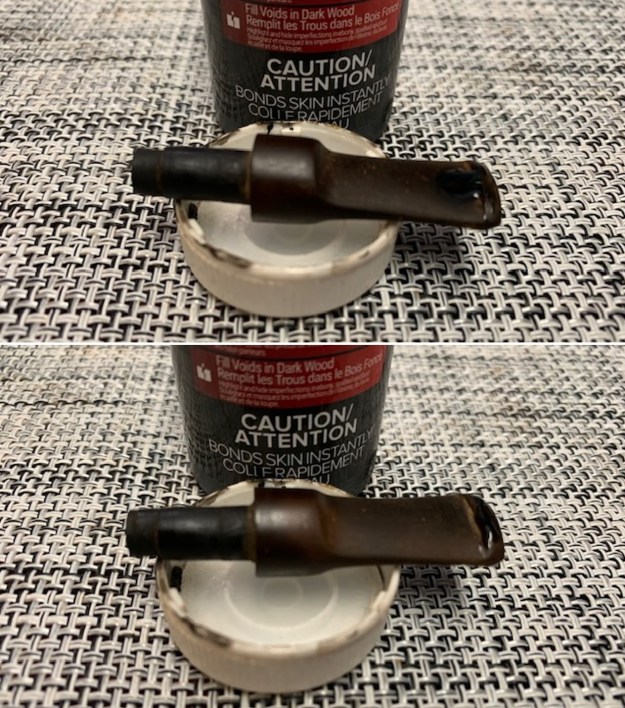
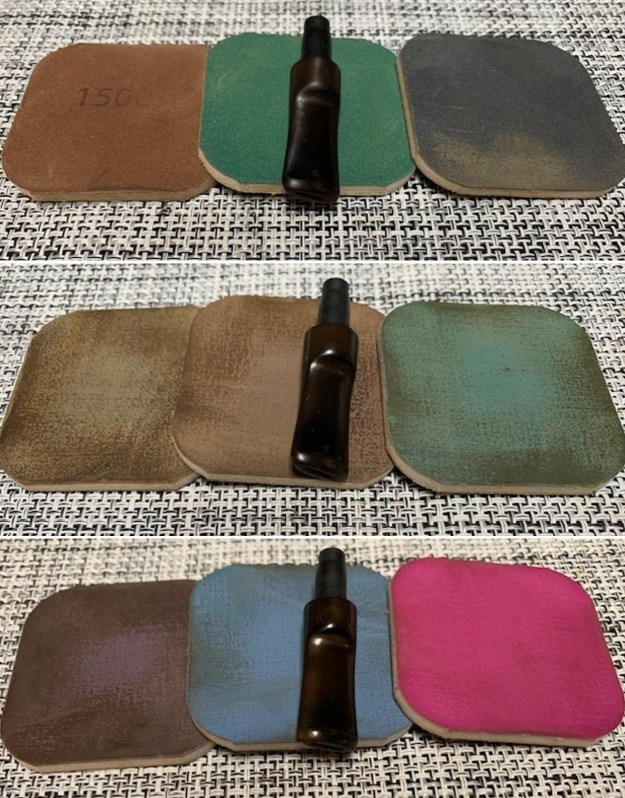
Hopefully the style of writing of this blog is helpful to you in some way. In it I wanted to show both what I am looking for and how I move forward in addressing what I see when work on a pipe. Let me know if it is helpful to you. It is probably the most straightforward detailed description of my work process that I have written. As always I encourage your questions and comments as you read the blog. Thanks to each of you who are reading this blog. Remember we are not pipe owners; we are pipe men and women who hold our pipes in trust until they pass on into the trust of those who follow us.

Restoring an interesting Motorist Patent Capped Straight Bulldog


Blog by Steve Laug

Once again I want to take you through my process of working on each pipe that we purchase. Jeff has set up a spread sheet to track where the pipe came from, the date of purchase and what we paid for it so that we know what we have invested in the pipe before we even work on it. This takes a lot of the guess work out of the process. This particular pipe was purchased on 05/01/2022 from a seller in Glendale, California, USA. I also want you to understand why we take the photos we do. If you have followed for a while then you will see the familiar pattern of the photos in the before and midstream process of working on a pipe. It is not accidental as the photos have been taken to help me make an assessment of the pipe Jeff sees before he starts his clean up work. We do this to record the condition that the pipe when received it and assess the work needed to be done. When I look at these photos this is what I see.

  1. The pipe has the classic straight Bulldog shape but the rest of the details are odd. Like the Bulldog cap this is tapered and unscrews from the bowl. It also has twin holes coming out of the front of the bowl toward the bottom just above the heel.
  2. The finish is dirty and there is dust, grime and grit ground into the smooth finish. The screw on rim top is also dirty on the inside.
  3. The rim top has lava on the top and edges under the screw on rim cap. It does not appear that there is any damage to the top or the edges.
  4. The bowl has a cake on the walls that hides the condition of the interior walls and edges. The top looks very good under the grime.
  5. The vulcanite stem is in excellent condition – dirty and has light tooth chatter and marks on both sides ahead of button. There is a circle M logo on the left top side of the diamond stem.

Overall my impressions of this pipe is that it is a great looking straight Bulldog with a mix of grain around the bowl and shank that once cleaned up will be another pretty pipe.Jeff took close up photos so that I could have a clearer picture of the condition of the bowl, rim edges and top. The photos show the cap in place and removed from the rim top. The photos confirm my assessment above. The cake in the bowl is quite thick. The rim top under the cap and the cap itself has lava, grime and debris covering it – heavier toward the back. The edges are hard to assess well at this time but they look to be in decent condition. This is what I look for when assessing a pipe. It is unclear if there is any burn damage at this point. I look forward to viewing it in person after the clean up work. The photos of the vulcanite stem surface from various angles confirm my assessment of its condition. You can see the grime on the stem in the first photo below. The stem is quite dirty but the fit of the stem to the shank is good. There is no logo on the stem so it makes me wonder if the stem is a replacement. Jeff also took photos of the chipped tenon end at the stepped down portion of the stem. It was missing a chunk of vulcanite on one side.Instead of telling you what I see in the next photos of the sides of the bowl and the heel I want to hear from you. Tell me what you see? What does the finish look like to you? Are there any visible problems or issues that stand out to you? Are the cracks or scratches in the valleys of the rustication or the high spots? Are there visible flaws or fissures in the briar? How random does the deep rustication look? Is there a pattern to it? Any visible issues on the heel of the bowl? These questions should help you to see what I am looking for when I see these photos.   He took photos of the stamping on the sides of the diamond shank. It bears stamping Motorist on the left side and on the right side it reads PATENT. On the right underside it reads Italy. What stands out for you in the photos of the stamping? What do you look for in the stamping? It is dirty but what do you see underneath the grime on the surface of the briar?  If you have been following the blog for any length of time you have come to know that when I am working on interesting old pipes (even sometimes those not so interesting) I like to know a bit about the background of the brand. I like to “meet” the carver to get a feel for their work and style.

I did a quick Google search and found the only listing was to a previous blog that I had written on a ¼ bent Bulldog (https://rebornpipes.com/tag/motorist-italian-patent-pipes/). I quote what I had found previously below.

I can find no information on the make of the brand but it is possible that it was made in Italy for either Wally Frank or Mastercraft, both had a broad reach of makers that they imported. I am not sure it will ever become clear who made the pipe but it is an interesting piece of pipe history that is well worth restoring.

I also found a listing on Worthpoint (https://www.worthpoint.com/worthopedia/vtg-estate-motorist-bent-bulldog-495791347) for another Bent Bulldog like the one I had. This is how the seller described it:

We have a rare vtg estate motorist patented design Bent Bulldog smoking briar pipe with a screw off top cap. Pipe is in good vintage condition. Some nicks in cap. Very light teeth marks. Appears lightly smoked. Very unique wind & spark proof design. Also has two cooling vents that exit through undercarriage of bowl.

Now it was time to work on the pipe.

I am sure many of you will shake your head and ask maybe even out loud, “Why is he including this again?” However, please remember that the point of these blogs is not to wow your with the work or make you shake your heads but I want you to know the details of the work we do so you can do your own. Back in 2020 Jeff wrote a blog about his cleaning process. I am including a link to that now so you can see what I mean about his process. Do not skip it! Give it a read (https://rebornpipes.com/2020/01/20/got-a-filthy-estate-pipe-that-you-need-to-clean/). Here is the introduction to that blog and it is very true even to this day.

Several have asked about Jeff’s cleaning regimen as I generally summarize it in the blogs that I post rather than give a detailed procedure. I have had the question asked enough that I asked Jeff to put together this blog so that you can get a clear picture of the process he uses. Like everything else in our hobby, people have different methods they swear by. Some may question the method and that is fine. But it works very well for us and has for many years. Some of his steps may surprise you but I know that when I get the pipes from him for my part of the restoration they are impeccably clean and sanitized. I have come to appreciate the thoroughness of the process he has developed because I really like working on clean pipe!

For the benefit of some of you who may be unfamiliar with some of the products he uses I have included photos of three of the items that Jeff mentions in his list. This will make it easier for recognition. These three are definitely North American Products so you will need to find suitable replacements or order these directly on Amazon. The makeup pads are fairly universal as we were able to pick some up in India when we were with Paresh and his family.

In the blog itself he breaks his process down into two parts – cleaning the stem and cleaning the bowl. Each one has a large number of steps that he methodically does every time. I know because I have watched him do the work and I have seen the pipes after his work on them. He followed this process step by step and when the pipe got to me it was spotlessly clean and ready for my work. The inside of the stem, shank and bowl were clean and to me that is an amazing gift as it means that my work on this end is with a clean pipe! I cannot tell you how much difference that makes for my work.

  1. The pipe has the classic straight Bulldog shape but the rest of the details are odd. Like the Bulldog cap this is tapered and unscrews from the bowl. It also has twin holes coming out of the front of the bowl toward the bottom just above the heel.
  2. The finish is clean and the grime and grit have been removed from the finish on the bowl and the screw on rim cap. It is very clean on the inside of the cap and the rim top.
  3. The lava, grime and dust on the rim top has been removed and it has revealed that the inner edge is clean and burn free. The outer edge of the bowl is also in good condition. The rim cap looks very good.
  4. With the cake reamed out the walls of the bowl are clean and they look very good with no checking or burn damage to the walls.
  5. The vulcanite stem is in excellent condition – it is clean and has light tooth chatter and marks on both sides ahead of button. The fit of the stem to the shank looks good. The circle M logo stem is faint but readable. There is a chipped end on the tenon extension.

Hopefully the steps above show you both what I look for when I go over the pipe when I bring it to the work table and also what I see when I look at the pipe in my hands. They also clearly spell out a restoration plan in short form. My work is clear and addressing it will be the next steps. I took photos of the whole pipe to give you a picture of what I see when I have it on the table. This is important to me in that it also shows that there was no damage done during the clean up work or the transit of the pipe from Idaho to here in Vancouver. I carefully went over the bowl and rim top to get a sense of what is happening there. In this case once the rim cap was clean it showed only some light scratches in the finish. I also go over the stem carefully. The fit to the shank is snug and the transitions are smooth. There were some light tooth marks and chatter on the surface of the stem and the button. I took photos of the rim cap and stem sides to show as best as I can what I see when I look at them. I always check to make sure that the clean up work did not damage the stamping on the shank sides in any way. It is in excellent condition and is very clear and readable. You can also see the misfit stem in the first photo. I love just looking at the lay of the pipe and the proportion of the hand made pipes. I like to remove the stem from the shank to get a sense of what was in the mind of the pipe maker when he crafted the pipe. The photo shows its beauty in flow and shape.   I removed the rim cap from the bowl and took photos of the top of the bowl with the ventilator holes and the clean bowl. It is a nice looking pipe. I also took photos of the bowl sides and the exit of the cooling/ventilator holes on the front heel of the bowl.Now it was time to start working on the pipe. I wiped down the exterior of the pipe and the threads, rim top on the inside and the inside of the rim cap with isopropyl alcohol on a cotton pad and folded pipe cleaner to remove the shiny remnants of the finish and the debris in the threads on the rim top and inside of the cap as well as the inside of the cap. It looked better when it was finished.  I polished the briar with micromesh sanding pads. I choose to dry sand the briar rather than wet sand it. Again it is a matter of personal preference. I prefer to use the pads dry and find they work very well on the briar. I sand with each pad (9 in total) and group them by threes for ease of reference. I wipe the bowl down after each pad with a damp cloth to remove the sanding debris and check the briar. I love seeing the developing shine on the briar as I move through the pads which is why I include so many photos of this step.  I rub down the bowl and shank with Before & After Restoration Balm. It is a paste/balm that is rubbed into the surface of the briar and the plateau. The product works to deep clean the nooks and crannies of finish, enliven and protect the briar. I worked it into the briar with my finger tips and into the rustication with a horse hair shoe brush. I let it sit for 10 minutes then wiped it off with a soft cloth then buffed it with a cotton cloth. The briar really began to have a deep shine in the briar and the grain shone through. The photos I took of the bowl at this point mark the progress in the restoration. It is a gorgeous pipe.  I set the bowl aside and turn to work on the stem. I decided to shorten the extension or step down on the tenon to remove the damaged or chipped portion. I used a folded piece of 180 grit sandpaper.  I polished the stem with micromesh sanding pads – 1500-12000 grit sanding pads and water to wet sand the stem. I wiped it down after each sanding pad with Obsidian Oil on a cotton rag after each sanding pads. But I find it does two things – first it gives some protection to the stem from oxidation and second it give the sanding pads bite in the polishing process. After finishing with the micromesh pads I rub the stem down with Before & After Fine and Extra Fine stem polish as it seems to really remove the fine scratches in the vulcanite. I rub the Fine Polish on the stem and wipe it off with a paper towel and then repeat the process with the Extra Fine polish. I finish the polishing of the stem down with a final coat of Obsidian Oil and set the stem aside to let the oil absorb. This process gives the stem a shine and also a bit of protection. The final steps in my process involve using the buffer. I buffed the stem with Blue Diamond to polish out the light scratches in the acrylic. I gave the bowl multiple coats of Conservator’s Wax and the stem multiple coats of carnauba wax. I have found that I can get a deeper shine if I follow up the wax buff with a buff with a clean buffing pad. It works to raise the shine and then I hand buff with a microfiber cloth to deepen the shine. It is always fun for me to see what the polished bowl looks like with the polished stem. It really is a nice pipe. The mix of smooth and rusticated finishes around the bowl sides and shank looks great with the rich black and brown stains. This Italian Made Motorist Patent Straight Bulldog feels great in my hand. It is a well balanced pipe. Have a look at it with the photos below. The dimensions are Length: 5 ¾ inches, Height: 1 ¾ inches, Outside diameter of the bowl: 1 ½ inches, Chamber diameter: 7/8 of an inch. The weight of the pipe is 1.23 ounces/35 grams. It is a beautiful pipe will be joining my collection of odd pipes. It is one that I will enjoy a bowl in one day very soon. It should be a great smoking pipe.
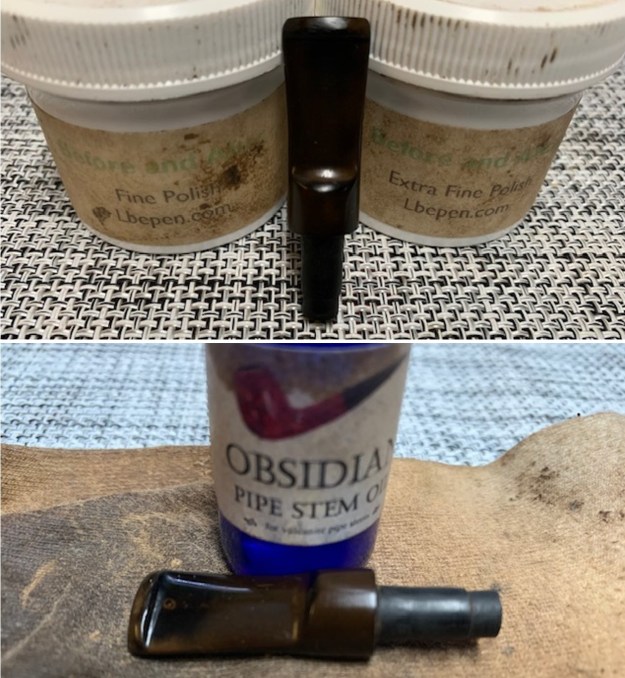
Hopefully the style of writing of this blog is helpful to you in some way. In it I wanted to show both what I am looking for and how I move forward in addressing what I see when work on a pipe. Let me know if it is helpful to you. It is probably the most straightforward detailed description of my work process that I have done. As always I encourage your questions and comments as you read the blog. Thanks to each of you who are reading this blog. Remember we are not pipe owners; we are pipe men and women who hold our pipes in trust until they pass on into the trust of those who follow us.
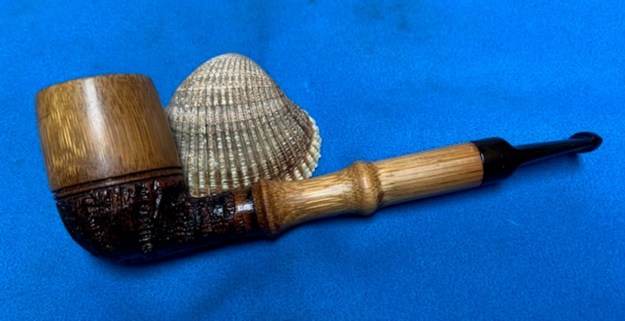
Caminetto 08. R.18 Hand Made Cucciago, Italy Rusticated Bent Billiard


Blog by Steve Laug

Once again I want to take you through my process of working on each pipe that we purchase. Jeff has set up a spread sheet to track where the pipe came from, the date of purchase and what we paid for it so that we know what we have invested in the pipe before we even work on it. This takes a lot of the guess work out of the process. This particular pipe was purchased on 10/20/2022 from an Antique Store in Vancouver, Washington, USA. I also want you to understand why we take the photos we do. If you have followed for a while then you will see the familiar pattern of the photos in the before and midstream process of working on a pipe. It is not accidental as the photos have been taken to help me make an assessment of the pipe Jeff sees before he starts his clean up work. We do this to record the condition that the pipe when received it and assess the work needed to be done. When I look at these photos this is what I see.

  1. The first thing I see is a pipe that has a classic bent Italian Billiard shape.
  2. The finish is dirty and there is grime and grit ground into the rusticated finish. The rustication is very nicely done in a classic Caminetto style.
  3. The rim top has thick lava on both the top and the edges. The cake makes it quite hard to know whether there is any damage to the top or the edges.
  4. The bowl has a thick cake and debris on the walls that hides the walls and edges. The outer edges have some darkening and potential damage on the front smooth portion.
  5. The acrylic stem is in excellent condition – dirty and has tooth chatter and marks on both sides ahead of button. The diameter of the stem is off from that of the shank. There is a Caminetto white mustache logo inlaid in the stem top.

Overall my impressions of this pipe is that it is a great looking Bent Billiard with a mix of rustication and smooth finishes that once cleaned up will be another pretty pipe. The photos below confirm the assessment above.  Jeff took close up photos so that I could have a clearer picture of the condition of the bowl, rim edges and top. The rim top photos confirm my assessment above. The cake in the bowl is very thick and almost clogging the bowl. The rim top has thick lava, grime and debris covering it. The inner and outer edges are hard to assess at this time. This is what I look for when assessing a pipe. It is unclear if there is any burn damage at this point. I look forward to viewing it in person after the clean up work. The photos of the acrylic stem surface from various angles confirm my assessment of its condition. You can see the dirty/sticky substance on the stem in the first photo below. The stem is quite dirty but the fit of the stem to the shank is good. The white mustache logo on the top is in good condition. Instead of telling you what I see in the next photos of the sides of the bowl and the heel I want to hear from you. Tell me what you see? What does the finish look like to you? Are there any visible problems or issues that stand out to you? Are the cracks or scratches in the valleys of the rustication or the high spots? Are there visible flaws or fissures in the briar? How random does the deep rustication look? Is there a pattern to it? Any visible issues on the heel of the bowl? These questions should help you to see what I am looking for when I see these photos.   He took a photo of the stamping on the sides of the shank. The underside reads “Caminetto” [over]  08.R.18. That is followed by Hand Made [over] Cucciago – Italy. The acrylic stem has an inset white mustache. What stands out for you in the photos of the stamping? What do you look for in the stamping? It is dirty but what do you see underneath the grime on the surface of the briar? If you have been following the blog for any length of time you have come to know that when I am working on interesting old pipes (even sometimes those not so interesting) I like to know a bit about the background of the brand. I like to “meet” the carver to get a feel for their work and style.

I turned to Pipephil’s site (http://pipephil.eu/logos/en/logo-c1.html) to see what I could find. I did a screen capture of the entry there and have included the side bar information below then the photo. It reads

Brand created in 1968 by Giuseppe Ascorti († 1984), Luigi Radice and Gianni Davoli as distributor.

    • 1979 : End of the first Caminetto period. Luigi Radice left the company. Giuseppe Ascorti produced the Sergio pipes (a short time) and moved into his new workshop with his son Roberto. (See also Capitello)
    • 1986 : New Caminetto period by Roberto Ascorti

From the information there I am fairly certain that the pipe was made after 1986 when the New Caminetto period began by Roberto Ascorti. The pipe is probably crafted by Ascorti.

From there I turned to Pipedia for more detailed information about the Caminetto brand (https://pipedia.org/wiki/Caminetto). I quote below:

Caminetto’s history started in 1959 when Guiseppe Ascorti, from Cucciago, and known to his friends as “Peppino”, was hired by Carlo Scotti to work at Castello, located in nearby Cantu. Since it’s foundation in 1947 Castello had contributed substantially to regained glory for Italian pipemaking.

Talent and assiduity soon made Ascorti one of Scotti’s most notable pipemakers – a man he counted on for the future. But, Ascorti had his own far reaching plan: He wanted to work as a self-employed pipemaker! After his wife, Paola, had taken over her parent’s small greengrocery in the early 1960’s this plan became more concrete. The additional income from the shop enabled him to buy tools and machines little by little to furnish his own workshop. By the end of 1968 he was ready and left Castello. Ascorti also persuaded his co-worker, the young and highly-talented pipemaker Luigi Radice (born 1939), to join him – the two were neighbors in Cucciago. Carlo Scotti, whom is known as a perfect gentleman, is reported to have spoken unreservedly about this development.

Ascorti & Radice started to manufacture pipes on their own. One of the first who agreed to market their pipes was Gianni Davoli, proprietor of a tobacco shop in Milan. The situation was perfect–two pipemakers in search of a distributor, and a pipe merchant in search of a mainstay brand to market. Davoli – via friends and relations in the States – had made flourishing contacts with US pipe wholesalers and traders. He shipped some pipes across the pond for inspection and received excellent feedback for the very high quality of the pipes. He, shortly after, offered to be the sole distributor worldwide, and Ascorti & Radice happily accepted.

Then came the legendary evening when Ascorti, Radice and Davoli gathered around the fireplace after a hard day’s work enjoying their pipes, a glass of wine, and humorous conversation. Davoli is said to be the one who associated the pipes with the fireplace or chimney, which is “camino” in Italian. Hence “Caminetto”, the diminutive (smaller) singular version of camino, was coined as the brand’s name. Ascorti, Radice and Davoli later became famous as “I tre Camini” – the three chimneys. Maybe, they had more than one glass of wine each, but it’s not certain whether the distinctive mustache logo on the stem and the Caminetto slogan “La Pipa del Baffo” – “the pipe with the mustache” – was created the same night. In fact, Ascorti and Radice both wore impressively large mustaches, and a pharmacist in the neighborhood had been kidding them about that. (Davoli, for reasons of corporate identity, later wore a big mustache, too.)

Now, Davoli concentrated on marketing the Caminetto brand in the United States. His strategy was as simple as it was brilliant. There was a remarkable Castello hype at the time. Castello pipes were highly sought after but hard to get due to limited production. Davoli filled the gap, promoting the Caminetto to be absolutely equal to the Castello in terms of quality, while asking only half the price. And best of all: the Caminetto pipes were consignable! The Tinder Box International would be under contract with successful nationwide distribution. The brand’s success was overwhelming – far beyond any expectation, with the rusticated Business line becoming the most popular.

Ironically enough, the increasing demand soon drove Ascorti and Radice to the limits of their production abilities. The brand had been introduced successfully in Germany, and in Italy to some extent. By the end of 1970 more hands were needed. Even Ascorti’s elder son, Roberto Ascorti (born 1958; and the current owner) helped with stamping and shipping the pipes when he was just a schoolboy. The most important employee is Cesare Vigano, who has worked for Caminetto /Ascorti for more than thirty years. To bring about more stability and higher production, Davoli invested a considerable amount of money in modern pipemaking machinery, and in doing so went from distributor to co-owner of Caminetto. By 1973 he held the vast majority of the company’s capital.

The boom continued strongly – especially in the US. Production increased steadily, from 3,000 to 5,000 and then 7,000 pipes being made per year, placing Caminetto at the top of US sales in their market segment. The 1974 Tinder Box catalog celebrated Gianni Davoli as “master pipe maker and designer” and “sole creator of Caminetto” without a single mention of Ascorti or Radice!

Dating Caminetto pipes is very difficult. However the way the pipe is stamped can narrow it down some and the look of the mustache logo also helps. Pipedia has a helpful article on the process (https://pipedia.org/wiki/The_History_of_Caminetto_(shapes,_stamping,_articles,_etc.). I quote from it below.

First off, dating earlier Caminetto’s is nearly impossible. Nevertheless, there were three phases, some in which were much earlier, of development that occurred in the stamping process of Caminetto. Before that though, every pipe had the stamp of Caminetto in one of two ways: Caminetto in script or Caminetto within quotation marks in block letters (I do not know how it was decided which pipe got which stamp, as I have had EARLY Caminetto’s with both). The stampings:

      1. ASCORTI

RADICE

CUCCIAGO

CANTU-ITALY

      1. HAND MADE IN ITALY

CUCCIAGO (Co)

      1. MADE IN ITALY

CUCCIAGO (CANTU)

In addition to the above stampings, there was always the trademark mustache on the stem. The earlier models (1968/69-1974/75) had the iconic gold, sometimes white, “bird-in-flight” mustache and the later models (1975-1979/80/81) had a gold, or white, “double comma” mustache. Tinder Box often stamped their shield on the pipes as well. Now I wanted to understand the stamping 08.R.18. How was that to be interpreted. The same article above gave the following information on the stamping.

The newer model Caminetto stampings are quite different and easy to date. Roberto upgraded the stamping technique of Caminetto so that it was possible to figure out when the pipe was made. There are two different types of stamps, one in which is not in use anymore. The first is the traditional “Caminetto” stamp in script, followed by a 4 part grid with numbers. The second is a 3 part stamp (two numbers and one letter, which is most of the time an “L”)

The first number in the old stamp of the grid refers to the shape of the pipe. The second number, which is the first in the stamp most are familiar with refers to the grade or of the pipe:

0 standard smooth (red or orange stained)
1 highest grade natural straight-grain smooth (realllllly rare)
2 smooth natural.
6 sandblast
7 New Dear
8 Business finish.

The third number in the old grid stamp is the series.

And the fourth number, which is the third in the newer stampings, refers to the year it was made in. For instance, if one has a 54/6/2/01, they would have a pipe made in the first year of production of the newer Caminetto line (i.e. 1985-86). I include the 85 because some hold that Ascorti was making Caminetto’s in 1985, but the majority of who I have talked to and the information I have researched claim official production and retail sale did not begin until 1986.

The second part of the newer stamp is a letter, usually L, which I have no idea what it stands for, but there are others I have seen “B” on. In short, the old stamp has a 2×2 grid specifying the shape, finish, series, and year (in that order), while the newer stamp only shows the finish, the letter ‘L’, and the year.

With that information I knew that the 08.R.18 gave me quite a bit of information. It is to be read as follows:

08 – the grade or the finish of the pipe in hand is a Business Finish.

R – unclear what it stands for.

18 – is the year of manufacture which I believe would make this one 2018

Now it was time to work on the pipe.

I am sure many of you will shake your head and ask maybe even out loud, “Why is he including this again?” However, please remember that the point of these blogs is not to wow your with the work or make you shake your heads but I want you to know the details of the work we do so you can do your own. Back in 2020 Jeff wrote a blog about his cleaning process. I am including a link to that now so you can see what I mean about his process. Do not skip it! Give it a read (https://rebornpipes.com/2020/01/20/got-a-filthy-estate-pipe-that-you-need-to-clean/). Here is the introduction to that blog and it is very true even to this day.

Several have asked about Jeff’s cleaning regimen as I generally summarize it in the blogs that I post rather than give a detailed procedure. I have had the question asked enough that I asked Jeff to put together this blog so that you can get a clear picture of the process he uses. Like everything else in our hobby, people have different methods they swear by. Some may question the method and that is fine. But it works very well for us and has for many years. Some of his steps may surprise you but I know that when I get the pipes from him for my part of the restoration they are impeccably clean and sanitized. I have come to appreciate the thoroughness of the process he has developed because I really like working on clean pipe!

For the benefit of some of you who may be unfamiliar with some of the products he uses I have included photos of three of the items that Jeff mentions in his list. This will make it easier for recognition. These three are definitely North American Products so you will need to find suitable replacements or order these directly on Amazon. The makeup pads are fairly universal as we were able to pick some up in India when we were with Paresh and his family.

In the blog itself he breaks his process down into two parts – cleaning the stem and cleaning the bowl. Each one has a large number of steps that he methodically does every time. I know because I have watched him do the work and I have seen the pipes after his work on them. He followed this process step by step and when the pipe got to me it was spotlessly clean and ready for my work. The inside of the stem, shank and bowl were clean and to me that is an amazing gift as it means that my work on this end is with a clean pipe! I cannot tell you how much difference that makes for my work.

      1. The first thing I see is a pipe that has a classic bent Italian Billiard shape.
      2. The finish is clean and the grime and grit have been removed from the finish on the bowl. The rustication looks very good as well.
      3. The thick lava, grime and dust on the rim top has been removed and it has revealed that the inner edge is damaged and has some burn marks. The outer edge of the bowl is also in good condition other than the burn damage on the front smooth ring on the outer edge of the bowl
      4. The walls of the bowl are clean and they look very good with no checking or burn damage to the walls.
      5. The acrylic stem is in excellent condition – dirty and has light tooth chatter and marks on both sides ahead of button. The diameter of the stem is off from that of the shank on both sides and will need to be adjusted for a decent fit. There is a Caminetto white mustache logo inlaid in the stem top.

Hopefully the steps above show you both what I look for when I go over the pipe when I bring it to the work table and also what I see when I look at the pipe in my hands. They also clearly spell out a restoration plan in short form. My work is clear and addressing it will be the next steps. I took photos of the whole pipe to give you a picture of what I see when I have it on the table. This is important to me in that it also shows that there was no damage done during the clean up work or the transit of the pipe from Idaho to here in Vancouver. I carefully went over the bowl and rim top to get a sense of what is happening there. In this case once the rim top and edges were cleaned the top and edges showed a lot of damage on the top, inner and outer edge of the bowl. There was burn damage all around the inner edge, on the top at the back and front as well as on the outer edge of the bowl at the front. I also go over the stem carefully. The stem had some minor issues as noted. The fit to the shank is noted in the photo below circled in red with arrows pointing out the issues. There were some light tooth marks and chatter on the surface of the stem and the button. I took photos of the rim top and stem sides to show as best as I can what I see when I look at them. I always check to make sure that the clean up work did not damage the stamping on the shank sides in any way. It is in excellent condition and is very clear and readable. You can also see the misfit stem in the first photo. I love just looking at the lay of the pipe and the proportion of the hand made pipes. I like to remove the stem from the shank to get a sense of what was in the mind of the pipe maker when he crafted the pipe. The photo shows its beauty in flow and shape.Now it was time to start working on the pipe. I decided to address the fit of the stem to the shank first. I sanded the shank and stem on the right side until the transition was very smooth. You will notice in the photos of the top and the right side of the pipe that the shank has been sanded and will need to be restained. On the left side I sanded the stem to remove the excess acrylic and make the transition smooth. You will note in the photos that the surface of the stem shows the sanding on the acrylic. Once finished the fit was perfect and the transition was smooth. Once the transition was smooth I took photos of the stem/shank transition. It is very smooth and there is no longer a lip on either the stem or the shank.I polished the sanded briar with micromesh sanding pads and then restained the portion with an Oak Stain Pen to match the rest of the bowl and the shank. With that portion finished I turned to address the darkening on the rim top and edges I started by topping the bowl with 220 grit sandpaper on a topping board. I need to remove the darkening to be able to see the damage. The damage is very evident on the top of the bowl and the inner edge on the right front. To deal with the rim damage on the top and the inner edge I used a wooden ball and a piece of 220 grit sandpaper to give the inner edge a slight bevel and remove the damage. Now I was getting somewhere. I used a folded piece of 220 grit sandpaper to fine tune the shape. I topped it once again with 220 grit paper. I am happy with the end result. I stained the rim top with a oak stain pen to match the rest of the bowl and shank colour. It as a little dark but once it was polished and waxed it would be a perfect match.I polished the smooth portions of the briar with micromesh sanding pads. I choose to dry sand the briar rather than wet sand it. Again it is a matter of personal preference. I prefer to use the pads dry and find they work very well on the briar. I sand with each pad (9 in total) and group them by threes for ease of reference. I wipe the bowl down after each pad with a damp cloth to remove the sanding debris and check the briar. I love seeing the developing shine on the briar as I move through the pads which is why I include so many photos of this step.   After polishing it with the micromesh pads I rubbed it down with Before & After Restoration Balm. It is a paste/balm that is rubbed into the surface of the briar and the plateau. The product works to deep clean the nooks and crannies of finish, enliven and protect the briar. I worked it into the briar with my finger tips and into the rustication with a horse hair shoe brush. I let it sit for 10 minutes then wiped it off with a soft cloth then buffed it with a cotton cloth. The briar really began to have a deep shine in the briar and the grain shone through. The photos I took of the bowl at this point mark the progress in the restoration. It is a gorgeous pipe. I set the bowl aside and turn to work on the stem. I polished the stem with micromesh sanding pads – 1500-12000 grit sanding pads and water to wet sand the stem. I wiped it down after each sanding pad with Obsidian Oil on a cotton rag after each sanding pads. But I find it does two things – first it gives some protection to the stem from oxidation and second it give the sanding pads bite in the polishing process. After finishing with the micromesh pads I rub the stem down with Before & After Fine and Extra Fine stem polish as it seems to really remove the fine scratches in the vulcanite. I rub the Fine Polish on the stem and wipe it off with a paper towel and then repeat the process with the Extra Fine polish. I finish the polishing of the stem down with a final coat of Obsidian Oil and set the stem aside to let the oil absorb. This process gives the stem a shine and also a bit of protection.  The final steps in my process involve using the buffer. I buffed the stem with Blue Diamond to polish out the light scratches in the acrylic. I gave the bowl multiple coats of Conservator’s Wax and the stem multiple coats of carnauba wax. I have found that I can get a deeper shine if I follow up the wax buff with a buff with a clean buffing pad. It works to raise the shine and then I hand buff with a microfiber cloth to deepen the shine. It is always fun for me to see what the polished bowl looks like with the polished stem. It really is a nice pipe. The mix of smooth and rusticated finishes around the bowl sides and shank looks great with the rich black and brown stains. The Caminetto 08.R.18 Bent Billiard feels great in my hand. It is a well balanced pipe. Have a look at it with the photos below. The dimensions are Length: 5 inches, Height: 2 inches, Outside diameter of the bowl: 1 3/8 inch, Chamber diameter: ¾ of an inch. The weight of the pipe is 1.73 ounces/49 grams. It is a beautiful pocket sized pipe that I will soon be adding to the rebornpipes store in the Italian Pipemakers section. If you would like to add it to your collection let me know. It should be a great smoking pipe.

Hopefully the style of writing of this blog is helpful to you in some way. In it I wanted to show both what I am looking for and how I move forward in addressing what I see when work on a pipe. Let me know if it is helpful to you. It is probably the most straightforward detailed description of my work process that I have done. As always I encourage your questions and comments as you read the blog. Thanks to each of you who are reading this blog. Remember we are not pipe owners; we are pipe men and women who hold our pipes in trust until they pass on into the trust of those who follow us.
Resurrecting a Karl Erik Pot


Blog by Steve Laug

Once again I want to take you through my process of working on each pipe that we purchase. Jeff has set up a spread sheet to track where the pipe came from, the date of purchase and what we paid for it so that we know what we have invested in the pipe before we even work on it. This takes a lot of the guess work out of the process. This particular pipe was purchased on 12/27/2021 from a seller in Pittsburgh, Pennsylvania, USA. I also want you to understand why we take the photos we do. If you have followed for a while then you will see the familiar pattern of the photos we include both in the before and midstream process of working on a pipe. It is not accidental or chance as the photos have been taken to help me make an assessment of the pipe Jeff sees before he starts his clean up work. We do this to record the condition that the pipe was in when received it and to assess what kind of work will need to be done on. When I look at these photos this is what I see.
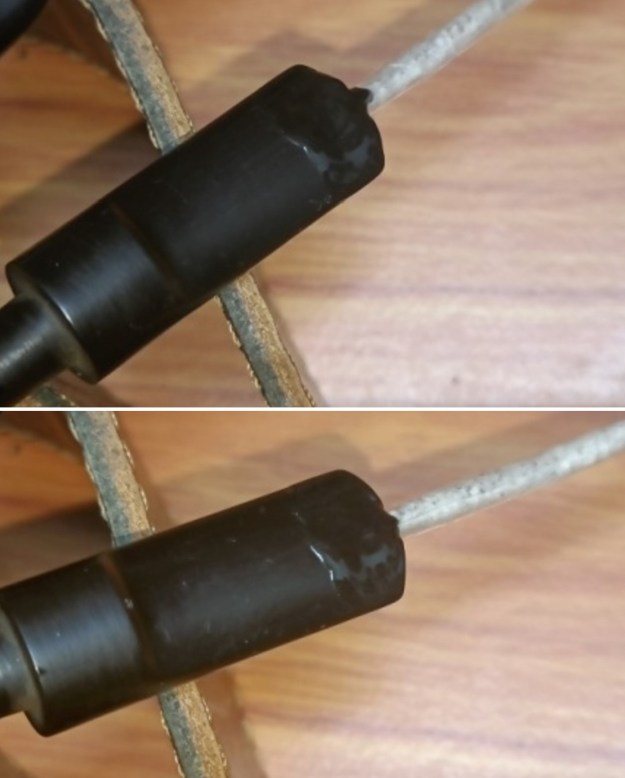
  1. The first thing I see is a classic Danish take on a Pot shaped pipe that had been well used. It was obviously someone’s favourite pipe if the cake in the bowl is any indication.
  2. The finish is dirty and there is grime and grit ground into the finish. Underneath the grime it looks like the bowl and shank have some amazing grain.
  3. The rim top has a heavy coat of lava that flowed from the cake in the bowl. It was thick and it was impossible to know what the edges of the bowl – both inner and out. I am hoping that the thick lava had protected the top and edges from burn damage.
  4. The bowl has a very thick cake and debris on the walls that hides the walls. The outer edges look good and there does not appear to be any obvious burn damage to outer bowl edges.
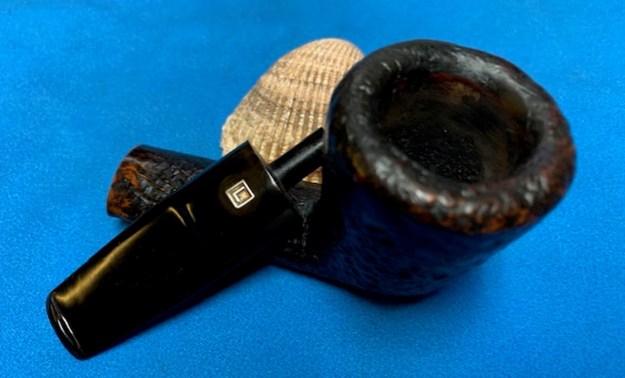
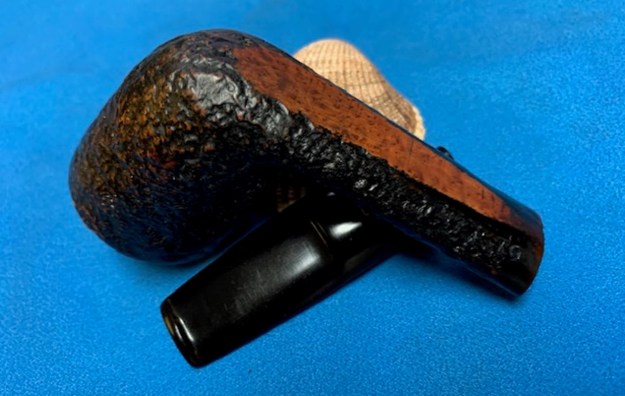
  5. The acrylic stem is in excellent condition – dirty, scratched and has tooth chatter and marks on both sides ahead of button. There were deeper tooth marks on the underside. There was a worn and partial KE logo on top of the blade portion of the saddle stem.

Overall my impressions of this pipe is that it is a great looking Danish style pot shaped pipe with some beautiful grain hidden under the grime that once cleaned up will be another pretty pipe. The photos below confirm the assessment above. Jeff took close up photos so that I could have a clearer picture of the condition of the bowl, rim edges and top. The rim top photos confirm my assessment above. The cake in the bowl is thick with tobacco debris stuck on the walls. The rim top has heavy lava, grime and debris covering it. The inner and outer edges are so covered it is hard to know what is under them. This is what I look for when assessing a pipe. It is unclear if there is any burn damage at this point. I look forward to viewing it in person after the clean up work. The photos of the acrylic stem surface from various angles confirm my assessment of its condition. You can see the grime on the stem in the first photo below. The stem is quite dirty and a bit of a mess. The fit of the stem to the shank is good. There is a partial logo on the top visible in the photo. Instead of telling you what I see in the next photos of the sides of the bowl and the heel I want to hear from you. Tell me what you see? What does the finish look like to you? Are there any visible problems or issues that stand out to you? Are the cracks or scratches in the valleys of the rustication or the high spots? Are there visible flaws or fissures in the briar? How random does the deep rustication look? Is there a pattern to it? Any visible issues on the heel of the bowl? These questions should help you to see what I am looking for when I see these photos. (One note is that there appears to be burn damage on the front outer edge of the bowl shown in the second photo below.)  He took a photo of the stamping on the sides of the shank. The underside reads Karl Erik in an oval (Karl [over] Erik. Following the length of the shank it is stamped Made In Denmark. What stands out for you in the photos of the stamping? What do you look for in the stamping? It is dirty but what do you see underneath the grime on the surface of the briar? If you have been following the blog for any length of time you have come to know that when I am working on interesting old pipes (even sometimes those not so interesting) I like to know a bit about the background of the brand. I like to “meet” the carver to get a feel for their work and style.

I turned to Pipephil’s site (http://pipephil.eu/logos/en/logo-k1.html) to see what I could find. I did a screen capture of the entry there and have included the side bar information below the photo. Brand created in 1965-66 by Karl Erik Ottendahl (1942 – 2004 †). In the best years he employed up to 15 craftsmen among which Bent Nielsen (see Benner) and Peder Christian Jeppesen. Former grading (ascending): from 4 to 1, and “Ekstravagant” (entirely hand made)

I turned to Pipedia (https://pipedia.org/wiki/Karl_Erik) and reread the history of the brand. Give the article a read.

Now it was time to work on the pipe.

I am sure many of you will shake your head and ask maybe even out loud, “Why is he including this again?” However, please remember that the point of these blogs is not to wow your with the work or make you shake your heads but I want you to know the details of the work we do so you can do your own. Back in 2020 Jeff wrote a blog about his cleaning process. I am including a link to that now so you can see what I mean about his process. Do not skip it! Give it a read (https://rebornpipes.com/2020/01/20/got-a-filthy-estate-pipe-that-you-need-to-clean/). Here is the introduction to that blog and it is very true even to this day.

Several have asked about Jeff’s cleaning regimen as I generally summarize it in the blogs that I post rather than give a detailed procedure. I have had the question asked enough that I asked Jeff to put together this blog so that you can get a clear picture of the process he uses. Like everything else in our hobby, people have different methods they swear by. Some may question the method and that is fine. But it works very well for us and has for many years. Some of his steps may surprise you but I know that when I get the pipes from him for my part of the restoration they are impeccably clean and sanitized. I have come to appreciate the thoroughness of the process he has developed because I really like working on clean pipe!

For the benefit of some of you who may be unfamiliar with some of the products he uses I have included photos of three of the items that Jeff mentions in his list. This will make it easier for recognition. These three are definitely North American Products so you will need to find suitable replacements or order these directly on Amazon. The makeup pads are fairly universal as we were able to pick some up in India when we were with Paresh and his family.

In the blog itself he breaks his process down into two parts – cleaning the stem and cleaning the bowl. Each one has a large number of steps that he methodically does every time. I know because I have watched him do the work and I have seen the pipes after his work on them. He followed this process step by step and when the pipe got to me it was spotlessly clean and ready for my work. The inside of the stem, shank and bowl were clean and to me that is an amazing gift as it means that my work on this end is with a clean pipe! I cannot tell you how much difference that makes for my work.

  1. The first thing I see is a classic Danish take on a Pot shaped pipe that cleaned up pretty well. There was damage that I will note in the numbers below but it was a nicely shaped pipe.
  2. The finish is clean and the grime and grit have been removed from the finish on the bowl. The grain is quite amazing looking.
  3. The lava, grime and dust on the rim top has been removed and it has revealed that there is some burn damage on the front outer, top and inner edge. There was some burn damage around the inner edge of the bowl as well
  4. The walls of the bowl are clean and there are some ridges in the walls of the bowl from someone reaming it with a knife.
  5. The acrylic stem is clean and has tooth chatter and marks on both sides. The marks on the underside of the stem are deeper than on the topside. The logo is partially visible but worn. The fit to the shank is well done with no damage.

Hopefully the steps above show you both what I look for when I go over the pipe when I bring it to the work table and also what I see when I look at the pipe in my hands. They also clearly spell out a restoration plan in short form. My work is clear and addressing it will be the next steps. I took photos of the whole pipe to give you a picture of what I see when I have it on the table. This is important to me in that it also shows that there was no damage done during the clean up work or the transit of the pipe from Idaho to here in Vancouver.   I carefully went over the bowl and rim top to get a sense of what is happening there. In this case once the rim top and edges were cleaned the top and edges showed lots of burn damage on the top front right and middle as well as around the inner edge of the bowl. There was also some damage on the front outer edge of the bowl. I also go over the stem carefully. The stem had some issues as noted. There were some deep tooth marks on the underside and lighter on the topside. I took photos of the rim top and stem sides to show as best as I can what I see when I look at them. I always check to make sure that the clean up work did not damage the stamping on the shank sides in any way. It is in excellent condition and is very clear and readable. I love just looking at the lay of the pipe and the proportion of the hand made pipes. I like to remove the stem from the shank to get a sense of what was in the mind of the pipe maker when he crafted the pipe. The photo shows its beauty in flow and shape.  Now it was time to start working on the pipe. To address the darkening on the rim top and edges I started by topping the bowl with 220 grit sandpaper on a topping board. I need to remove the darkening to be able to see the damage. The damage is very evident on the top of the bowl and the inner edge on the right front. To deal with the rim damage on the top and the inner edge I used a wooden ball and a piece of 220 grit sandpaper to give the inner edge a slight bevel and remove the damage. Now I was getting somewhere. I used a folded piece of 220 grit sandpaper to fine tune the shape. I topped it once again with 220 grit paper. I am happy with the end result. I wiped the bowl down with some acetone to remove the darkening in the stain around the bowl. I wanted to even out the stain coat and the look of brown on the bowl and rim. I could not remove much more of the damage on the front and sides of the bowl without changing the profile of the pipe. I stained the rim top with a walnut stain pen to match the rest of the bowl and shank colour. It was a little dark but once it was polished and waxed it would be a perfect match.I polished the bowl and rim with a medium and fine sanding sponge to blend the finish together and smooth out the briar. I polished the briar with micromesh sanding pads. I choose to dry sand the briar rather than wet sand it. Again it is a matter of personal preference. I prefer to use the pads dry and find they work very well on the briar. I sand with each pad (9 in total) and group them by threes for ease of reference. I wipe the bowl down after each pad with a damp cloth to remove the sanding debris and check the briar. I love seeing the developing shine on the briar as I move through the pads which is why I include so many photos of this step.  After polishing it with the micromesh pads I rubbed it down with Before & After Restoration Balm. It is a paste/balm that is rubbed into the surface of the briar and the plateau. The product works to deep clean the finish, enliven and protect the briar. I worked it into the briar with my finger tips. I let it sit for 10 minutes then wiped it off with a soft cloth then buffed it with a cotton cloth. The briar really began to have a deep shine in the briar and the grain shone through. The photos I took of the bowl at this point mark the progress in the restoration. It is a gorgeous pipe. I set the bowl aside and turn to work on the stem. I filled in the deep tooth marks on both sides of the stem with black CA glue. I used a small file to flatten the repaired area. I used a folded piece of 220 grit sandpaper to blend them into the surface. I started the polishing with 600 grit wet dry sandpaper. I continued polishing the stem with micromesh sanding pads – 1500-12000 grit sanding pads and water to wet sand the stem. I wiped it down after each sanding pad with Obsidian Oil on a cotton rag after each sanding pads. But I find it does two things – first it gives some protection to the stem from oxidation and second it give the sanding pads bite in the polishing process.    After finishing with the micromesh pads I rub the stem down with Before & After Fine and Extra Fine stem polish as it seems to really remove the fine scratches in the acrylic. I rub the Fine Polish on the stem and wipe it off with a paper towel and then repeat the process with the Extra Fine polish. I finish the polishing of the stem down with a final coat of Obsidian Oil and set the stem aside to let the oil absorb. This process gives the stem a shine and also a bit of protection.  The final steps in my process involve using the buffer. I buffed the bowl and stem with Blue Diamond to polish out the light scratches in the briar and the acrylic. I gave the bowl and the stem multiple coats of carnauba wax. I have found that I can get a deeper shine if I follow up the wax buff with a buff with a clean buffing pad. It works to raise the shine and then I hand buff with a microfiber cloth to deepen the shine. It is always fun for me to see what the polished bowl looks like with the polished stem. It really is a nice pipe. The polished finish around the bowl sides and shank looks great with the rich brown stains. The Karl Erik Made in Denmark Danish Pot feels great in my hand. It is a well balanced pipe. Have a look at it with the photos below. The dimensions are Length: 6 inches, Height:  1 ½ inches, Outside diameter of the bowl: 1 ½ inch, Chamber diameter: 7\8 of an inch. The weight of the pipe is 2.19 ounces/62 grams. It is a beautiful pipe that functions as a sitter due to the wide heel on the bowl. I will soon be adding to the rebornpipes store in the Danish Pipemakers section. If you would like to add it to your collection let me know. It should be a great smoking pipe.

Hopefully the style of writing of this blog is helpful to you in some way. In it I wanted to show both what I am looking for and how I move forward in addressing what I see when work on a pipe. Let me know if it is helpful to you. It is probably the most straightforward detailed description of my work process that I have done. As always I encourage your questions and comments as you read the blog. Thanks to each of you who are reading this blog. Remember we are not pipe owners; we are pipe men and women who hold our pipes in trust until they pass on into the trust of those who follow us.