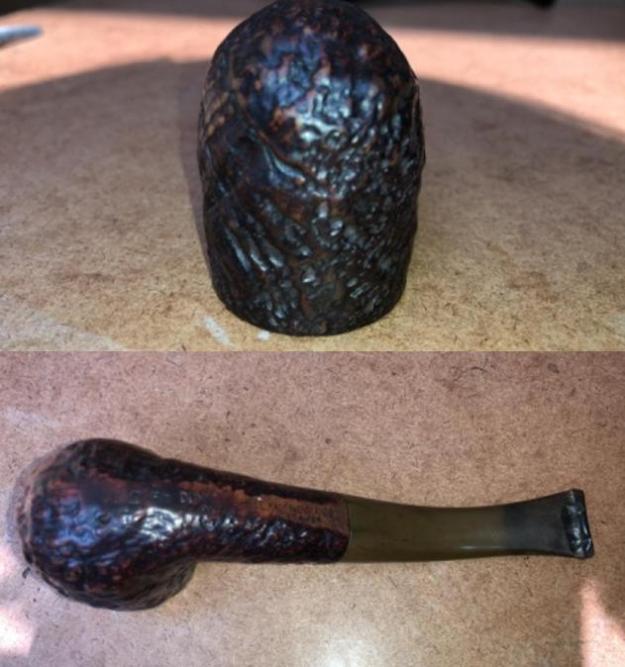
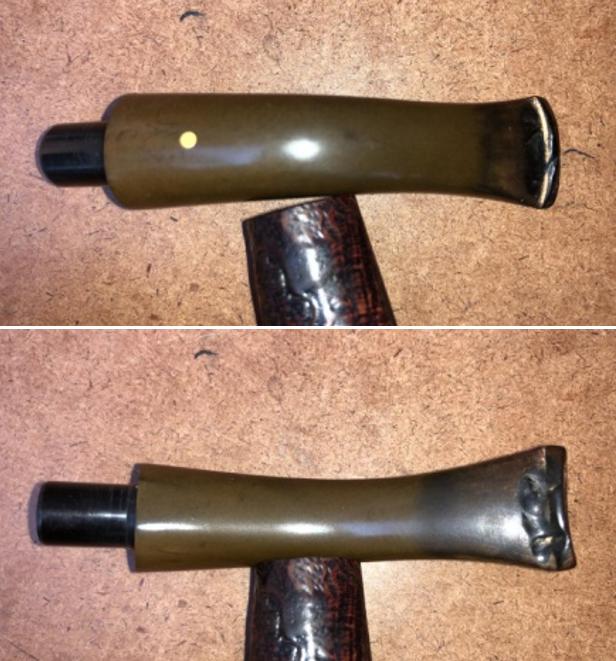
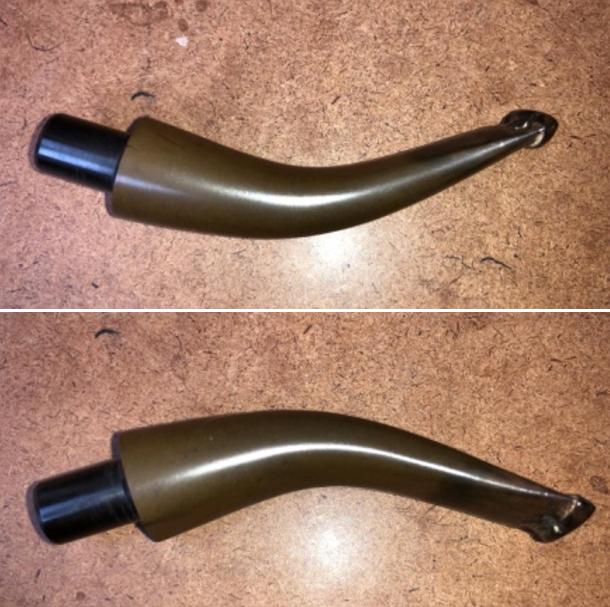
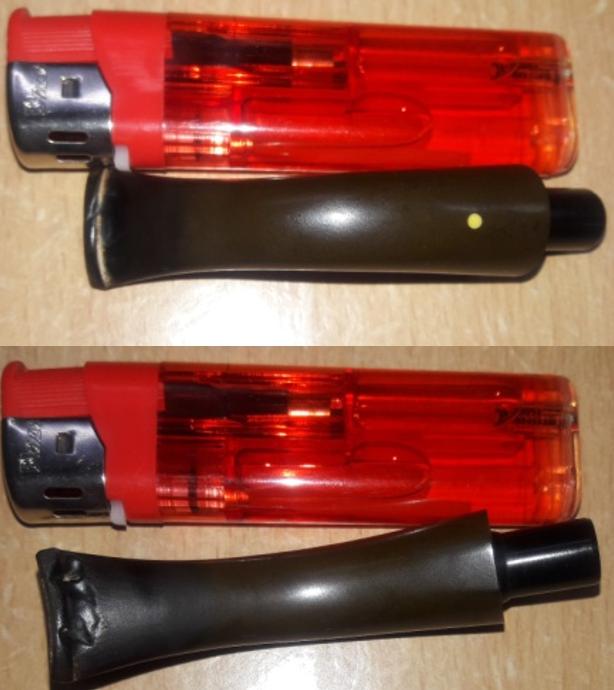
Tag Archives: Stem repairs

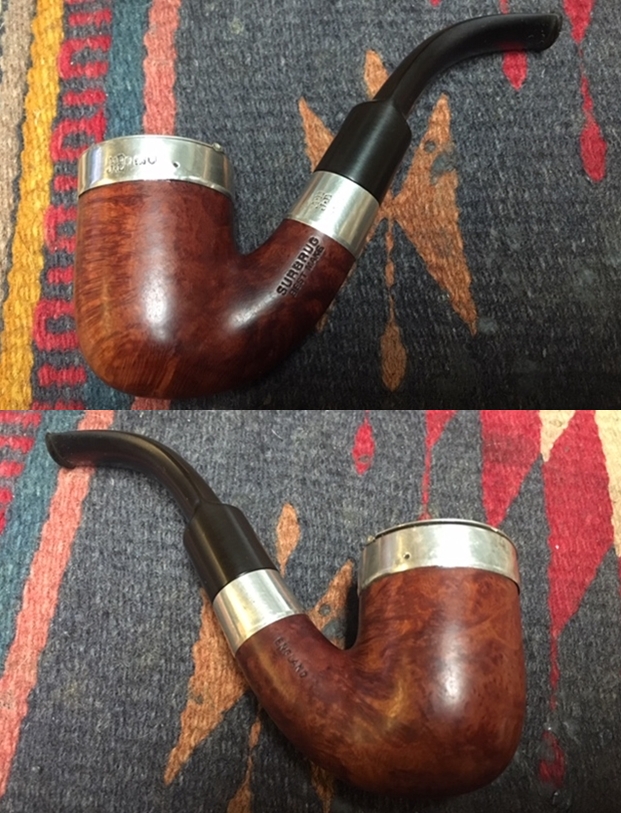
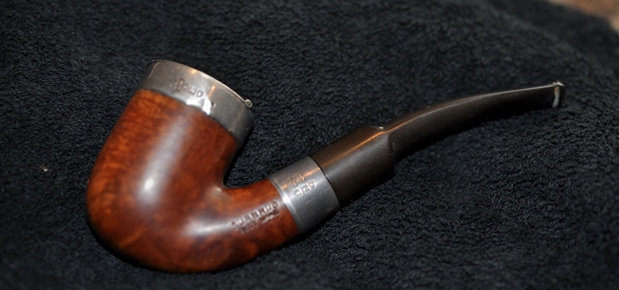
Time to work on another old timer – a Surbrug Best Make ¾ Bent Capped Billiard


Blog by Steve Laug

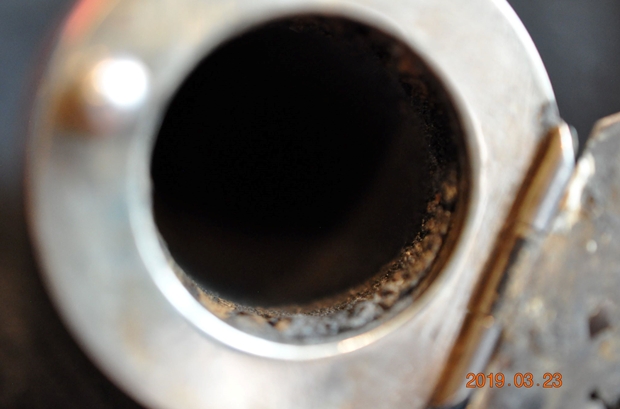
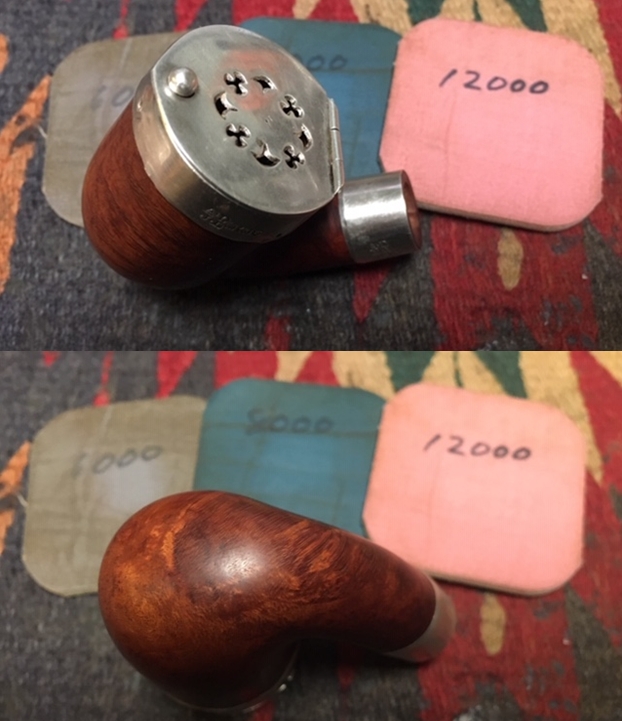
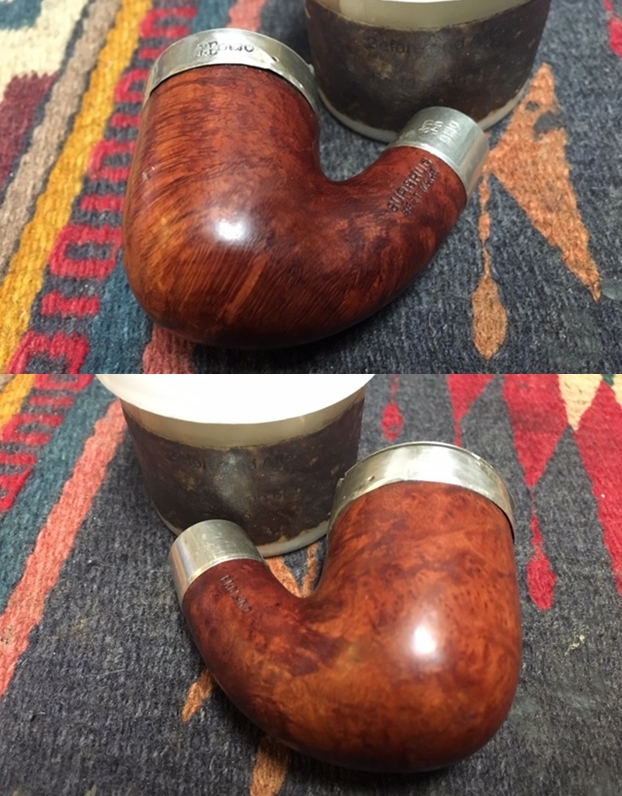
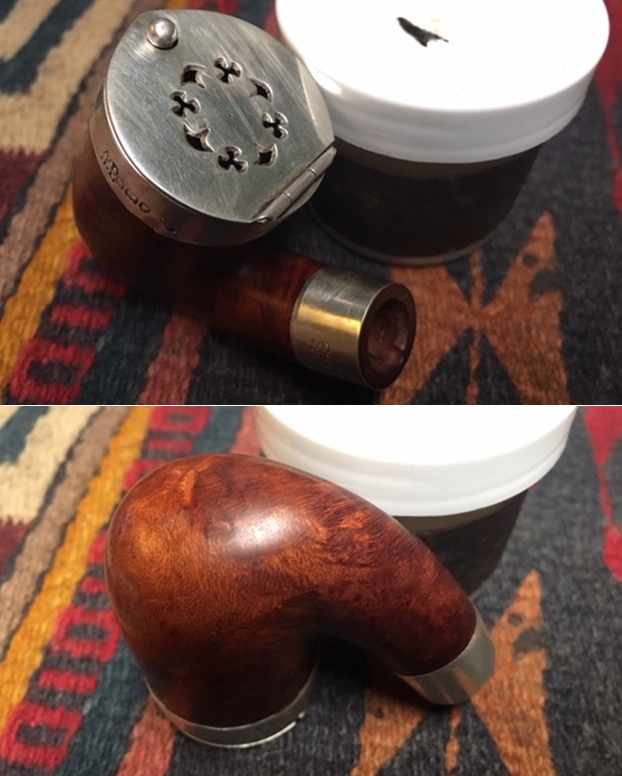
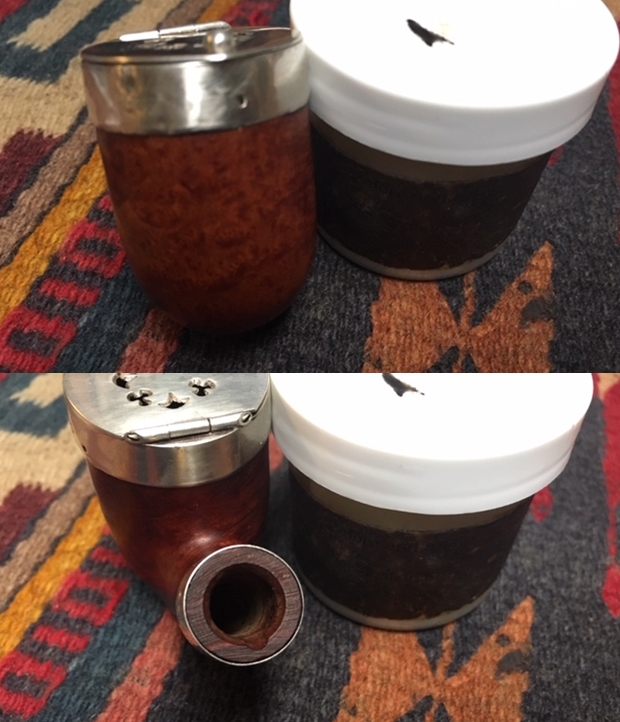
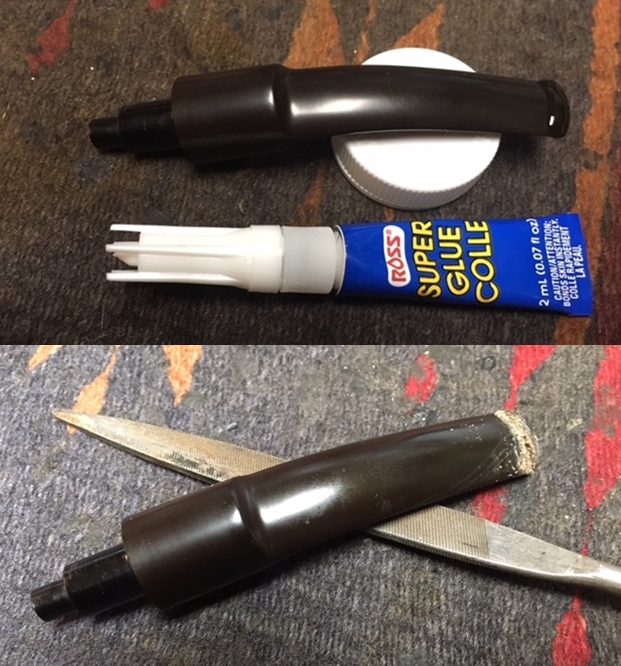
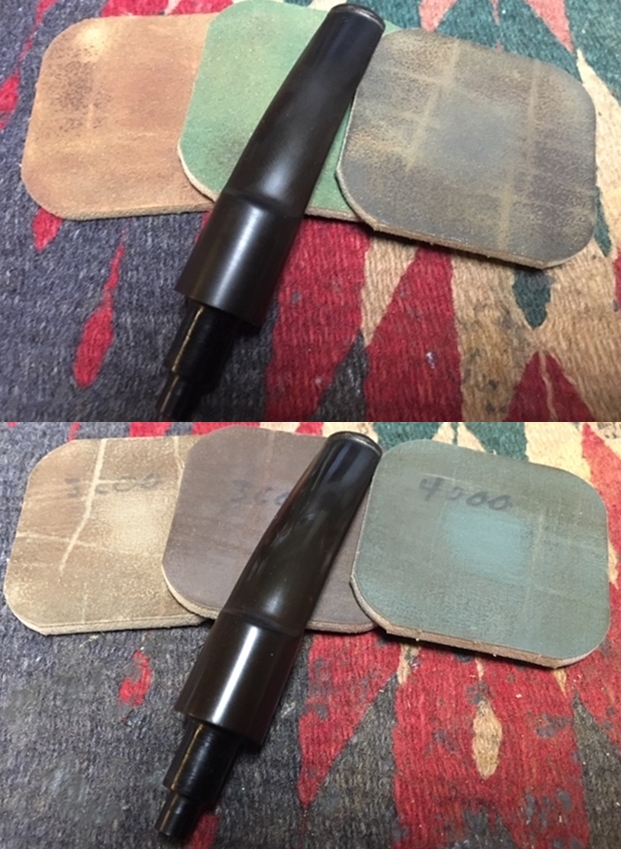
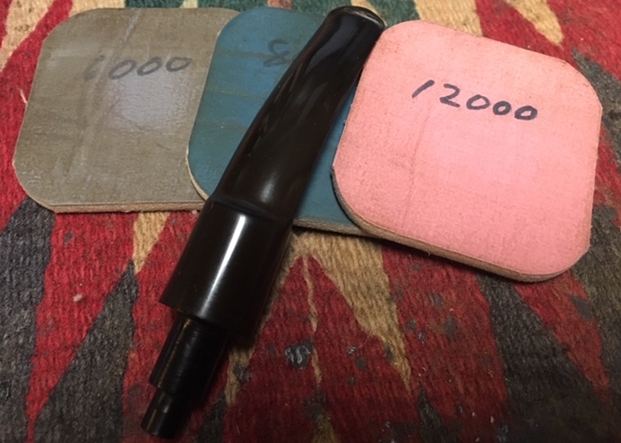
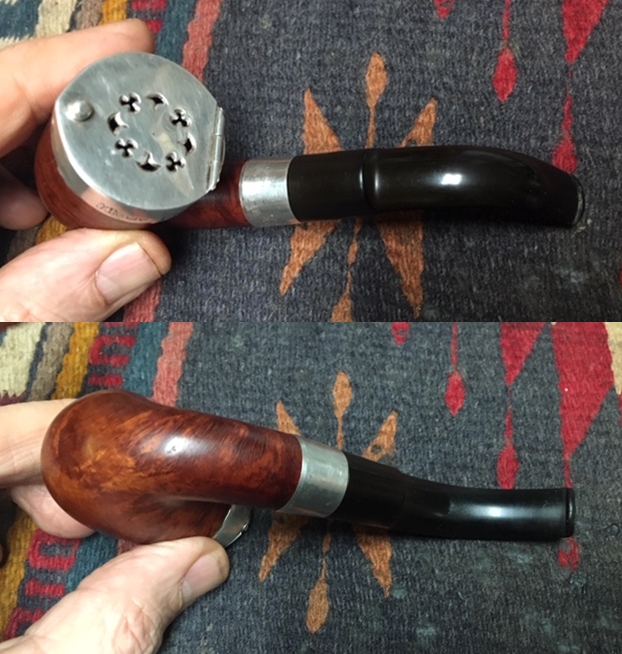
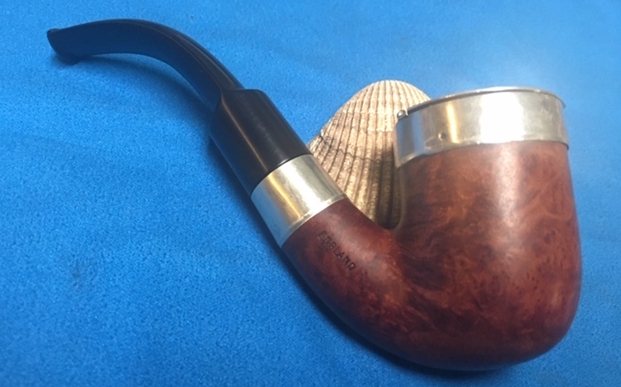
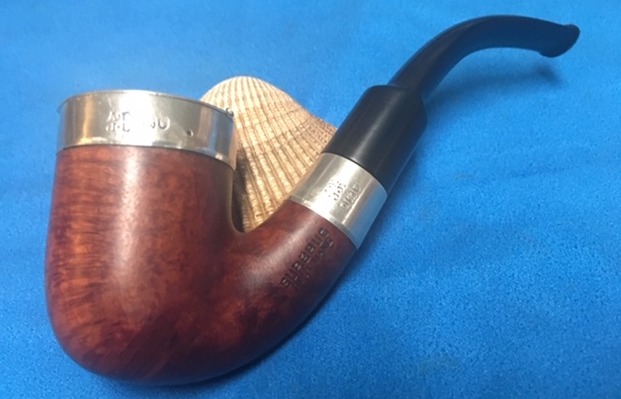
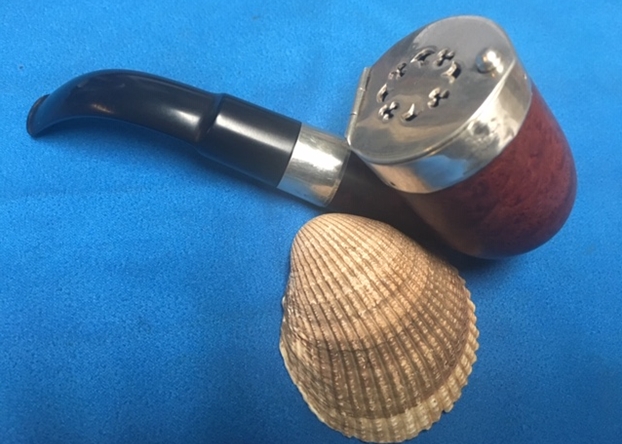
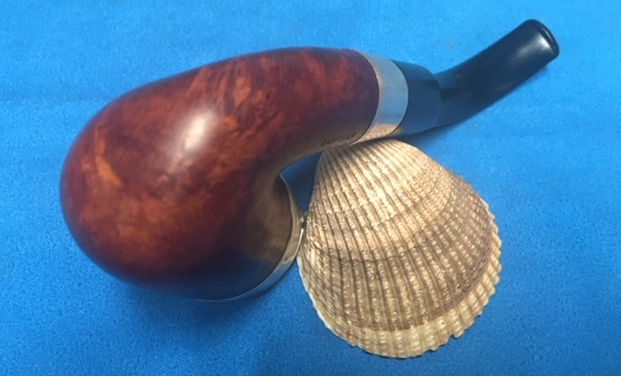
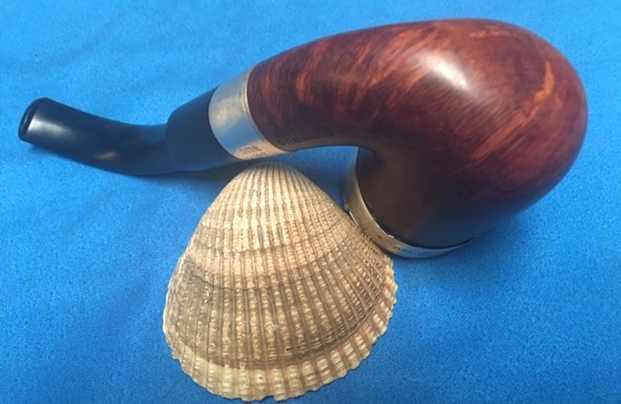
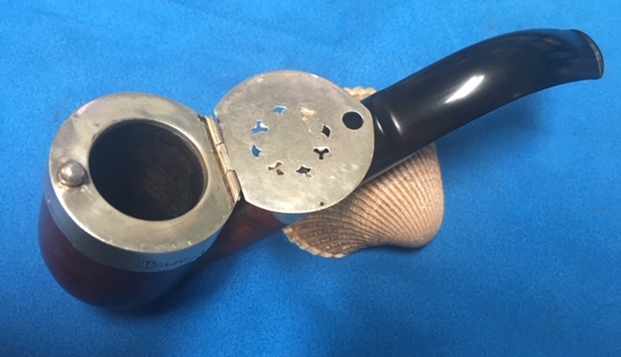
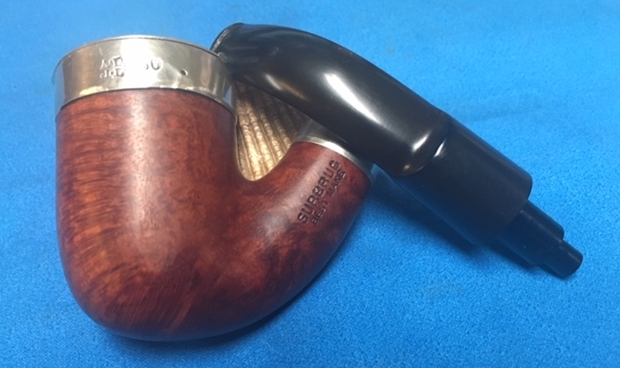
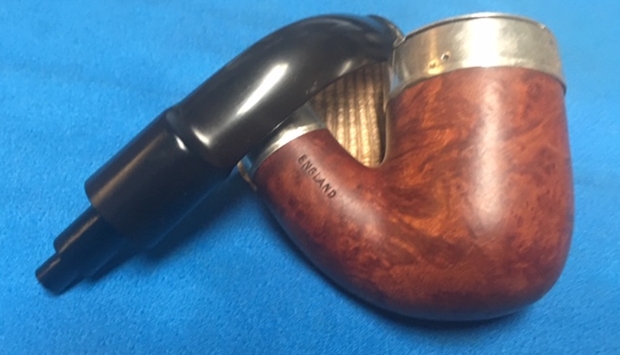
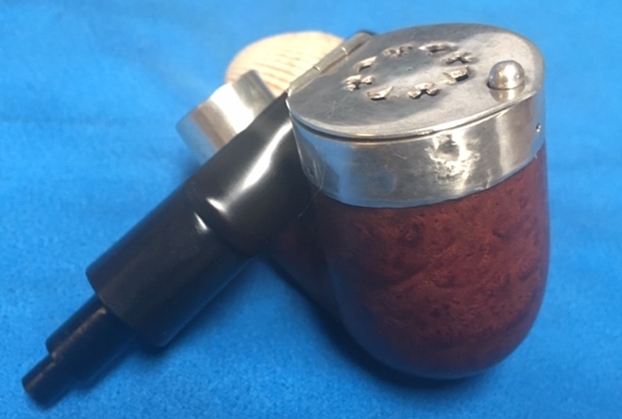
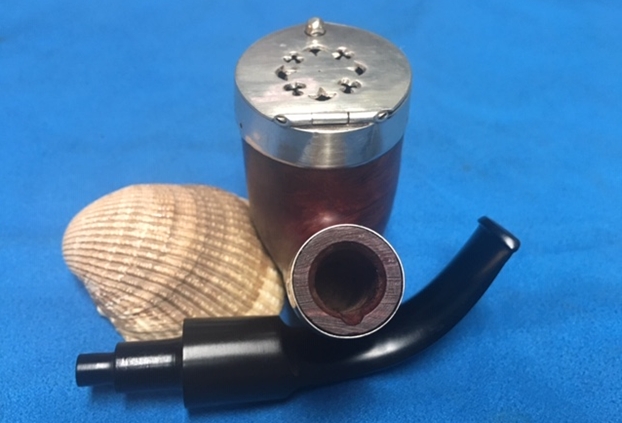
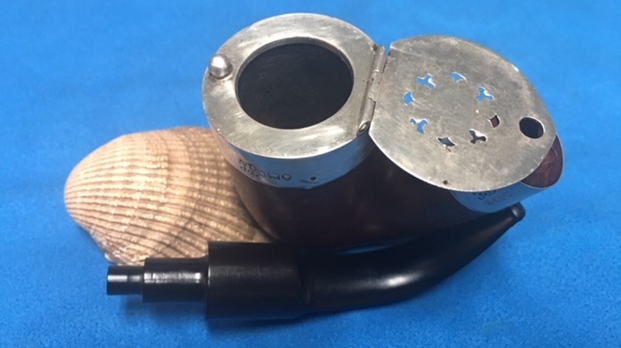
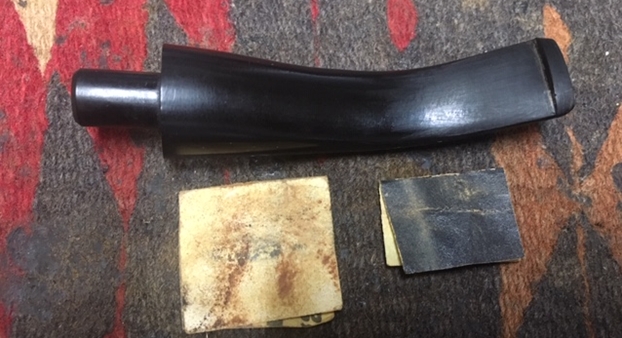
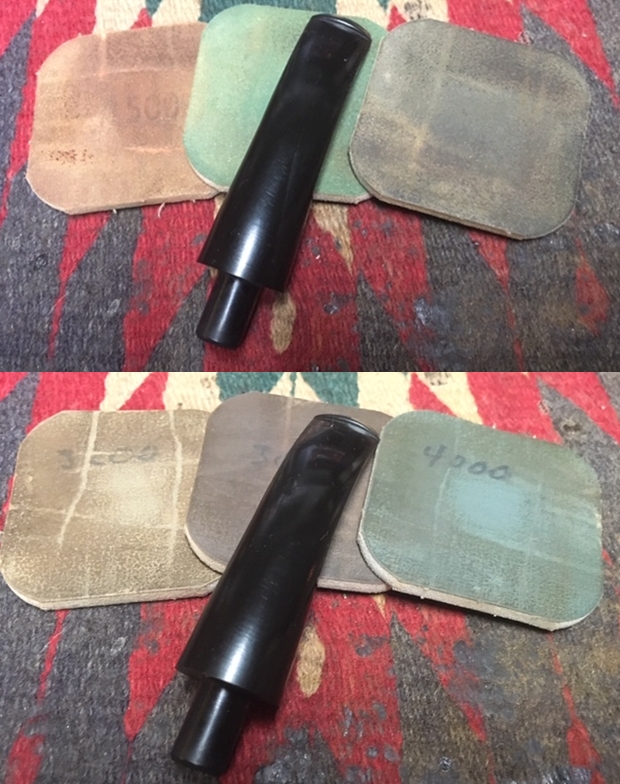
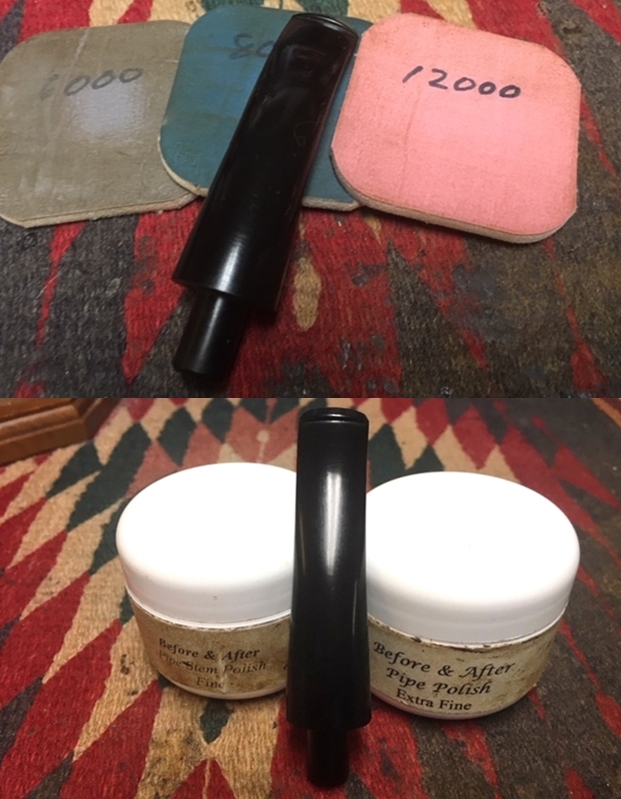
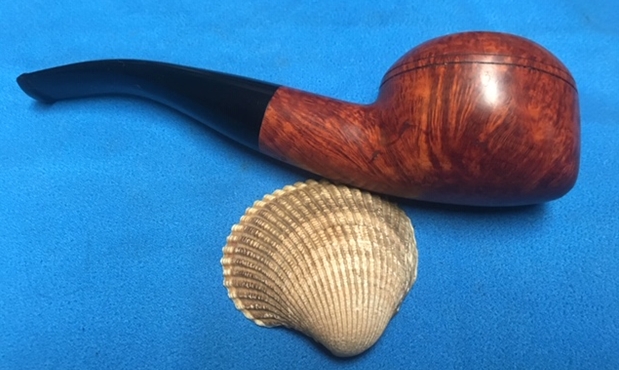
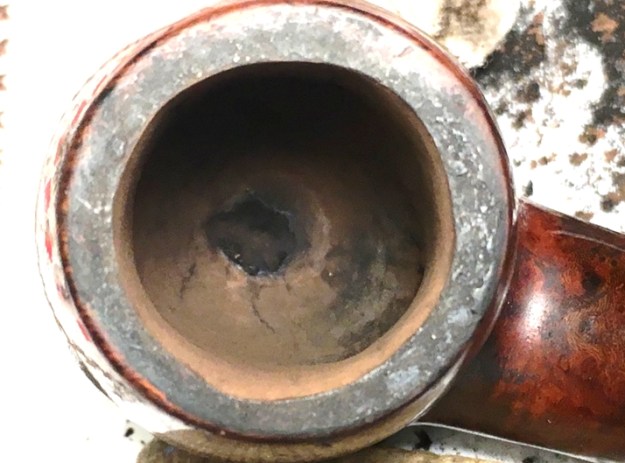
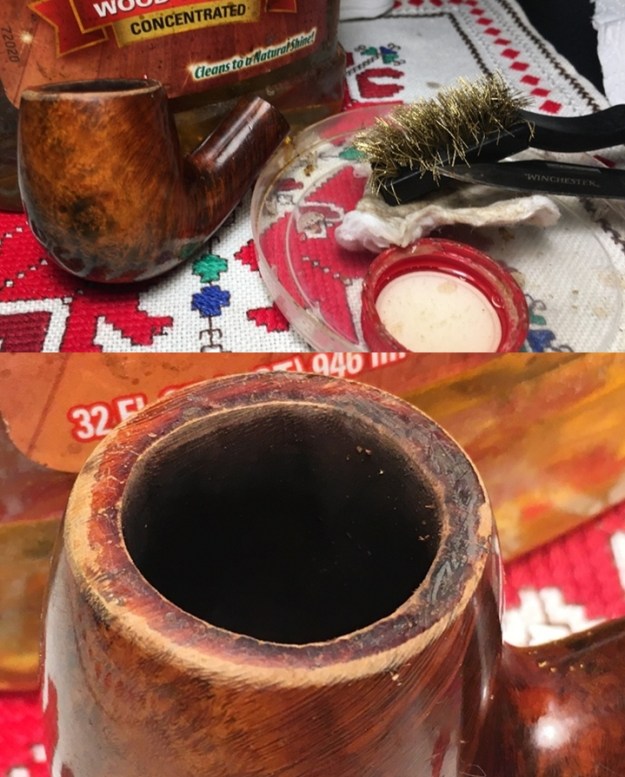
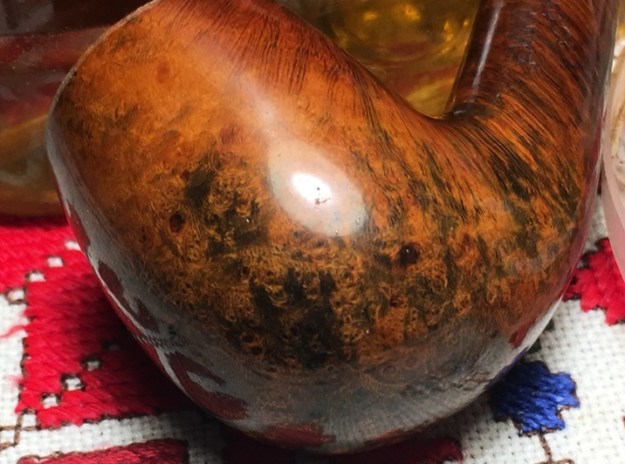
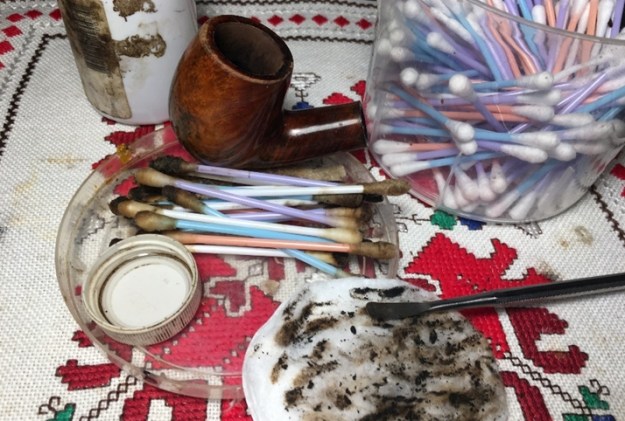
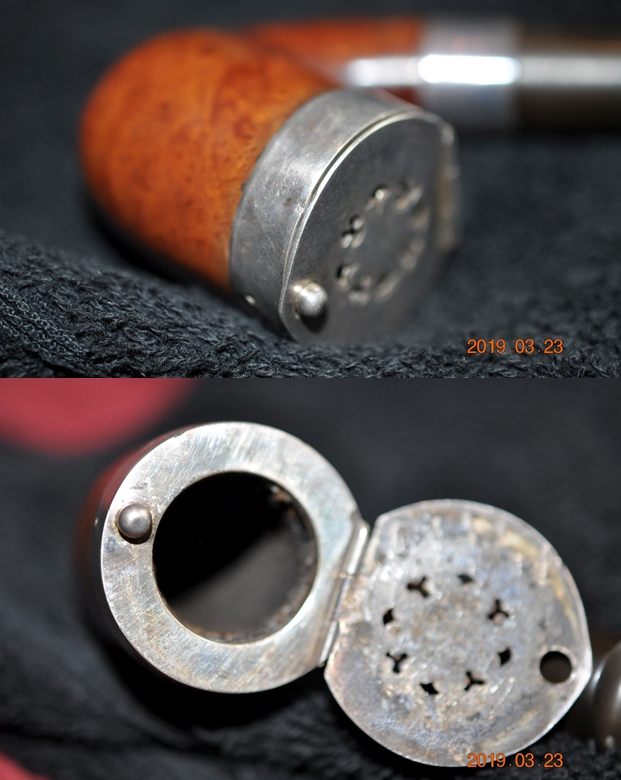
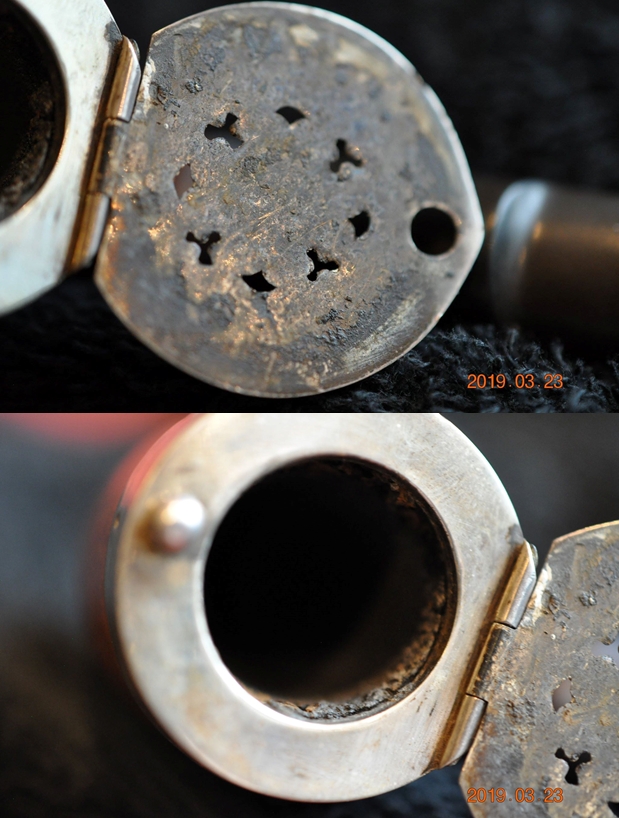
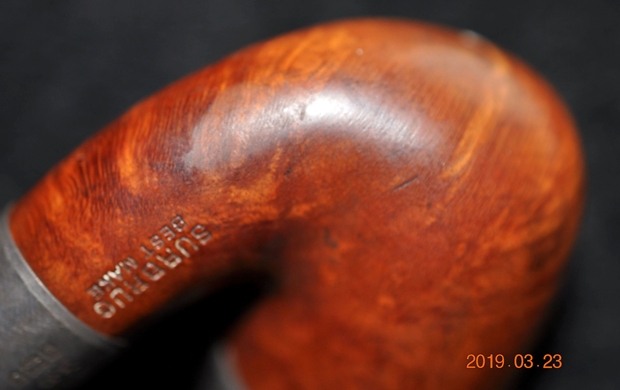
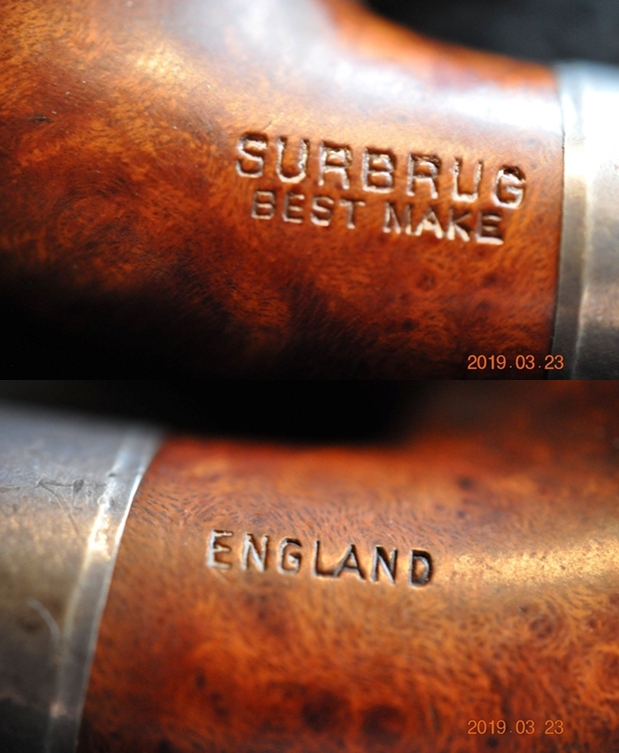
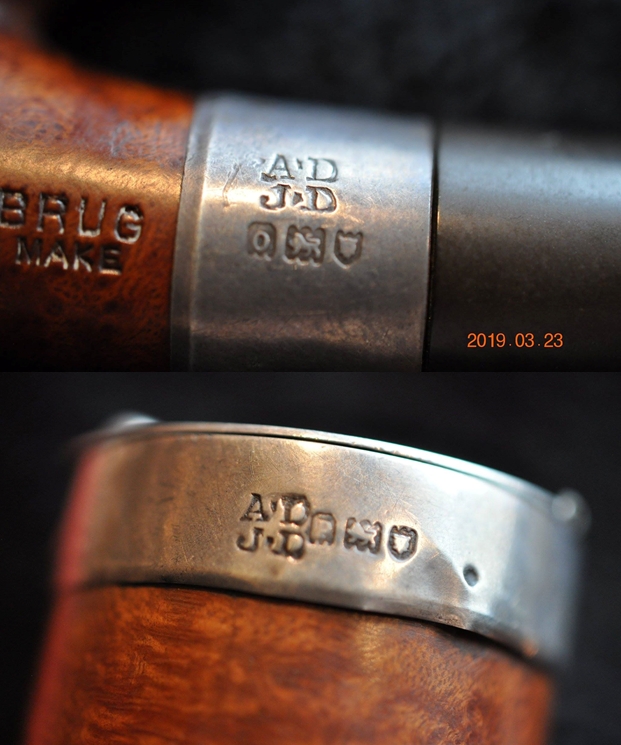
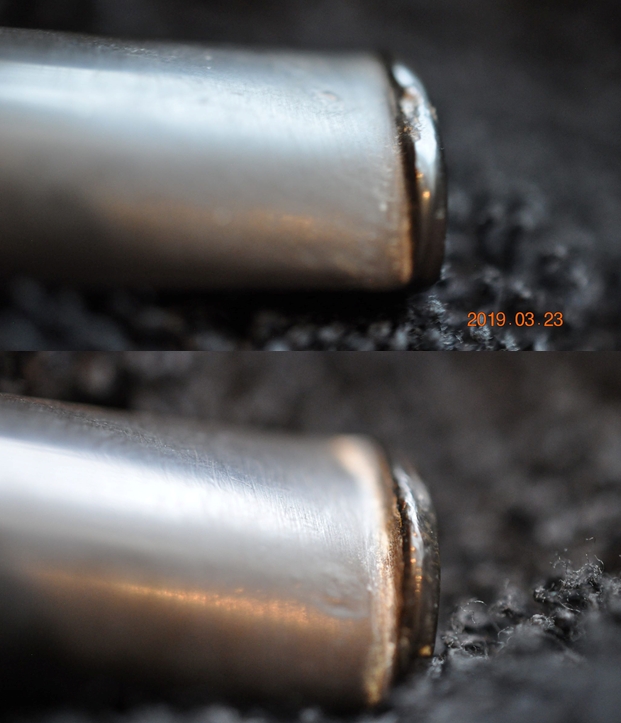
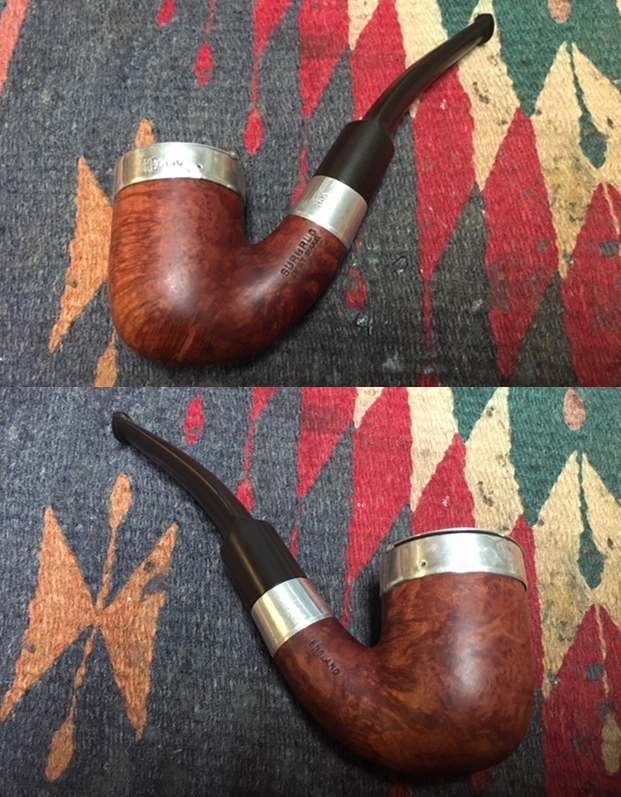
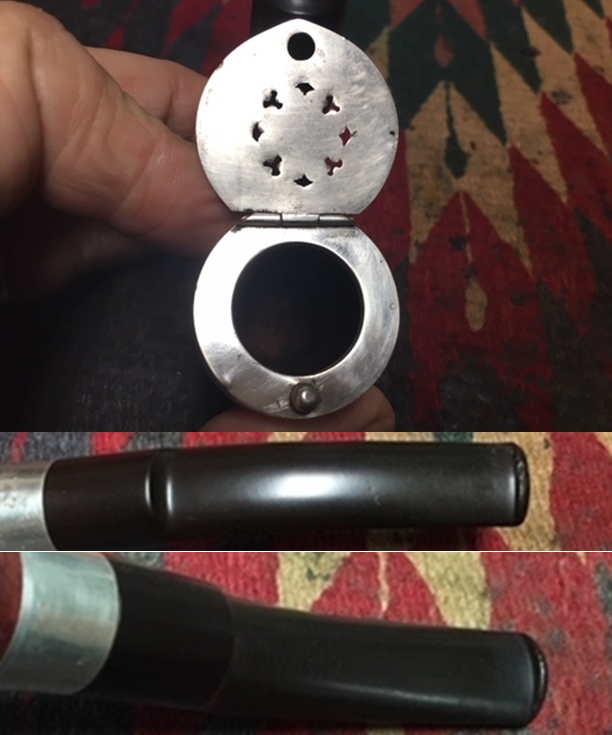
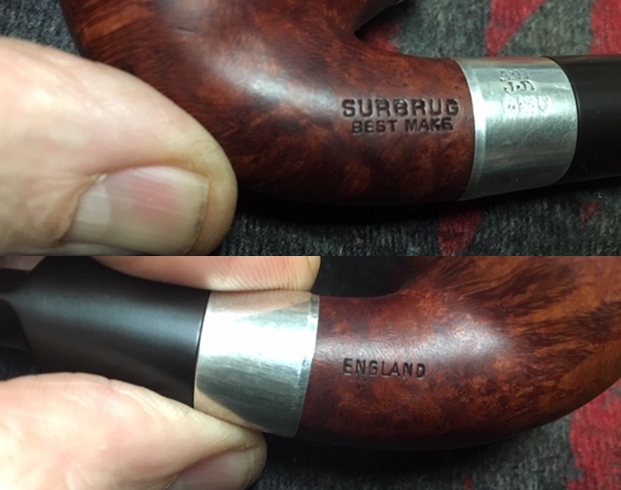
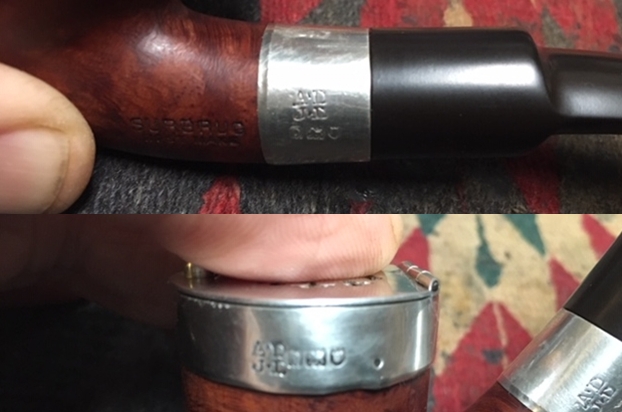
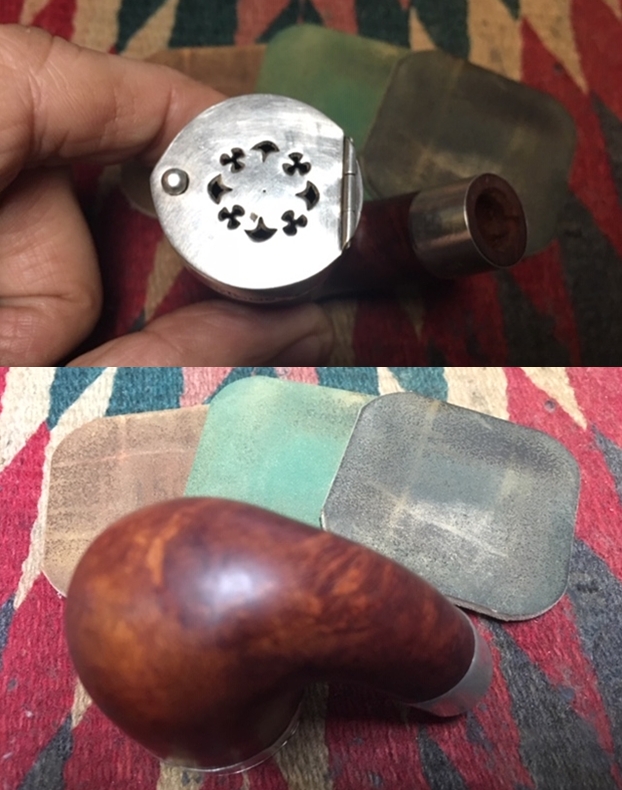
I have been cleaning up a lot of American made pipes between the Malaga’s for Alex and the Bertrams that Jeff and I picked up. I was in the mood for something a little different this time around. You know variety is the spice of life and all that… So today I went through my box and picked an interesting pipe that came from an auctioneer in Los Angeles, California with the older Barling’s Make S-M Take Apart Pipe. That was an old timer and this one is also an old one. From the silver band and the band around the rim top I will be able to date it. But I knew looking at it that was older. The pipe was very dirty but had a look of class to it. There was a sterling silver band on the shank and one around the rim top with a hinged wind cap. The briar is very dirty and the silver has a lot of dings and dents around the rim. The bowl had a thick cake and the wind cap was black. Looking down the shank it was filled with tars and oils. The left side of the shank was stamped Surbrug over Best Make and the right side was stamped England. The hallmarks on the band were an O, a rampant lion and a crownless lion’s head. On the cap around the rim top the hallmarks were P, a rampant lion and a crownless lion’s head. On both the makers’ marks were the same – AD over JD. The stem had some bite marks on the top side near the button. It was lightly oxidized and the bend on the stem had almost straightened out. Jeff took some photos of the pipe before he started his cleanup.The next series of photos show the band around the rim top and the wind cap. The briar is quite beautiful and the silver, though oxidized is quite pretty. He also included some close up photos. The last photo in the series shows the thickness of the cake in the bowl. It was quite thick. He took a photo of the left side of the bowl and the underside. It shows the dirt and grime in the briar as well as the nicks and dents in the wood.He took photos of the stamping on the left and right side of the shank as well as the hallmarks on the silver band and rim top. The stamping and the hallmarks are as noted above The last two photos show the stem surface. It is both oxidized and has some tooth damage to the surface of the button on both sides.I had forgotten that Al Jones (Upshallfan) had restored a Surbrug pipe and done a blog on it for rebornpipes. When I googled the brand one of the first links that came up was the one to Al’s blog on rebornpipes (https://rebornpipes.com/2015/03/24/surbrugs-special-restoration/).There was a great section on the brand written by Jon Guss and linking it to a New York City Tobacco Shop that Al quoted. I quote from that in full now.
I only knew that Surbrug’s was a New York City tobacco shop and I’ve seen their shop pipes pop up occasionally.  Jon (Guss) sent me this about the shop:

John R Surbrug, born in Switzerland of a Swiss father and Ohio mother, had a small tobacco shop in New York City. After his death in the 1880s, his young son John Willard Surbrug (born in NYC in 1859) took over the store. Incorporating the business in 1895, John W. expanded into the cigarette market and prospered greatly. After buying a cigarette competitor name Khedivial, Surbrug’s business in turn was acquired by the Tobacco Products Company (TBC) in 1912. TBC was what we would now call a roll-up play, created by George and William Butler as a vehicle to compete with the American Tobacco Company. Surbrug’s business was acquired for stock, which meant John was left with an active role in the combined business. The later part of his career (and his son’s career), though interesting, is irrelevant here; what matters is that the Surbrug Company, while primarily engaged in the manufacture and sale of cigarettes, continued to be true to its roots offering well known tobacco blends and pipes. In regard to the former, the company was especially famous for its Golden Sceptre, Best Make, and Arcadia Mixture tobaccos. In regard to the latter, it appears that Surbrug was not a manufacturer, but rather a reseller of pipes that were stamped with their name by a variety of third party suppliers. Some at least of these were major players in the world famous London pipe industry. Surviving early hallmarked examples make it clear that BBB/Frankau, Barling, and Delacour Brothers were three of Surbrug’s vendors.

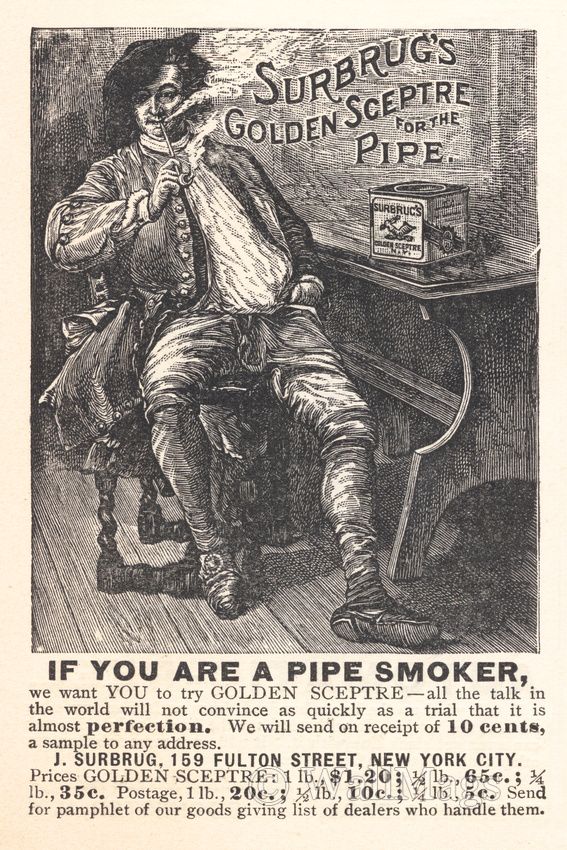
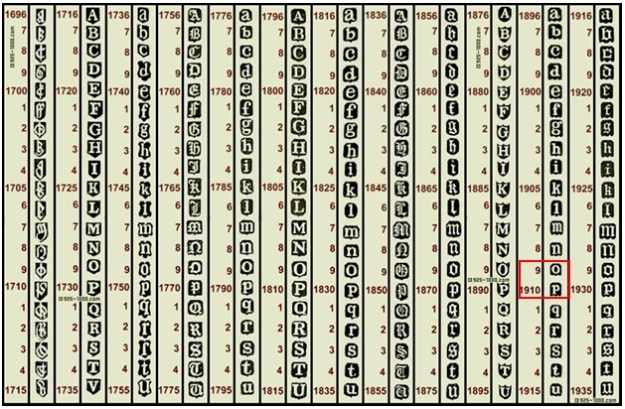
Al also included an old advertisement for one of Surbrug’s famed tobacco blends. I have included it below to give a feel for the Pipe Shop and also because it gives the address of the shop. I love these old adverts as they give a great view of the time period the brand came out.To help get closer to a maker and a date I worked on the hallmarks on the band and rim cap. The hallmarks on the band were an O, a rampant lion and a crownless lion’s head. Those marks told me that the silver band was made in 1909 (O) in London (crownless lion or leopard head) and the rampant lion told me it was .925 Sterling Silver. On the cap around the rim top the hallmarks Those marks told me that the silver cap was made in 1910 (P) in London (crownless lion or leopard head) and the rampant lion told me it was .925 Sterling Silver. On both the band and the cap the makers’ marks were the same – AD over JD. (I am including the picture of the hallmarks that I included above). I have also included a chart to help date the band and cap. I have put a red box around the two dates. Note that the cartouche (box surrounding the letter) is the same on the band and cap as the one shown in the chart (https://www.925-1000.com/dlc_london.html).Now that I had the date I needed to identify the Maker Marks on both pieces of silver. From Al’s quote above I was given another clue about the manufacture of the pipe. It seems that Surbrug was not a manufacturer, but rather a reseller of pipes. They also seemed to have these pipes stamped with their name by a variety of third party suppliers. I quote the section of the above blog as it gave me a starting spot.
Some at least of these were major players in the world famous London pipe industry. Surviving early hallmarked examples make it clear that BBB/Frankau, Barling, and Delacour Brothers were three of Surbrug’s vendors.

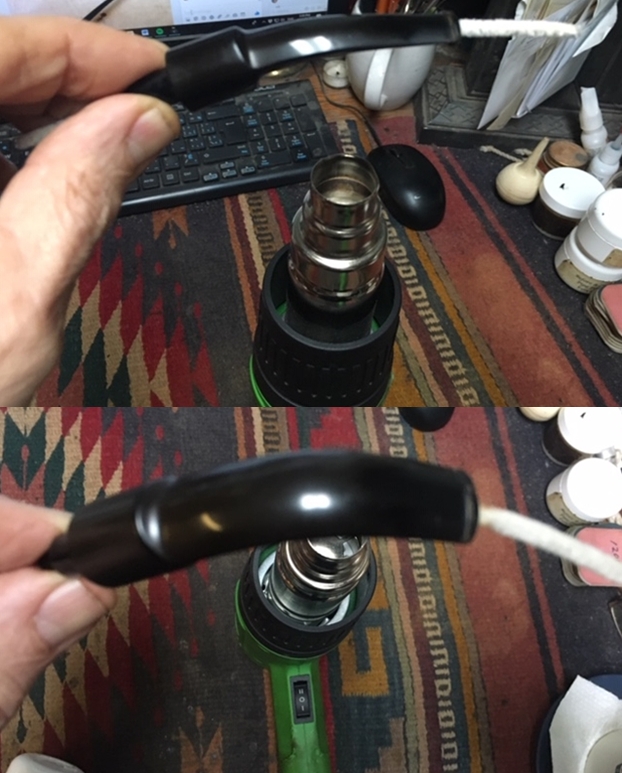
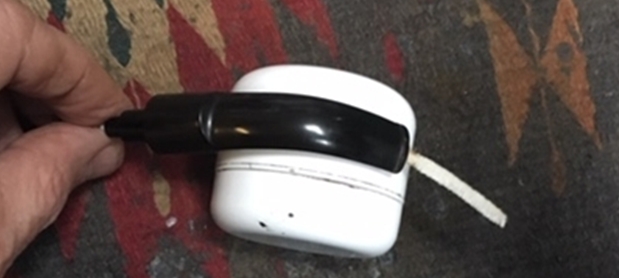
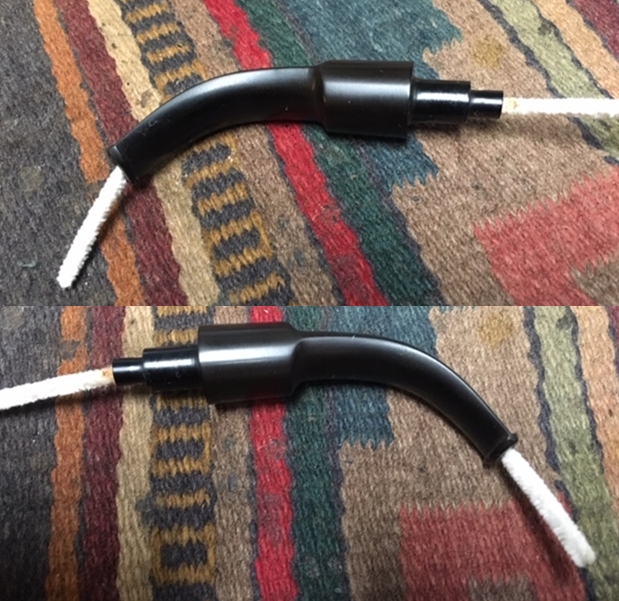
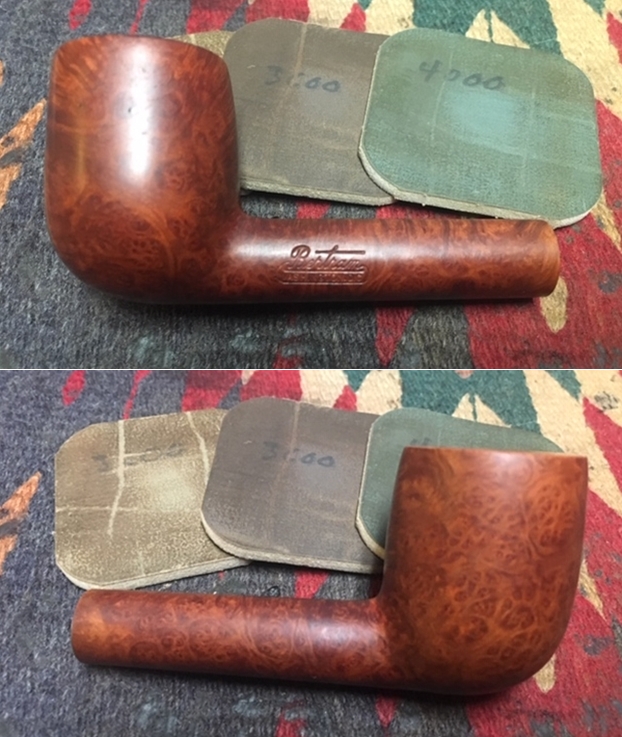
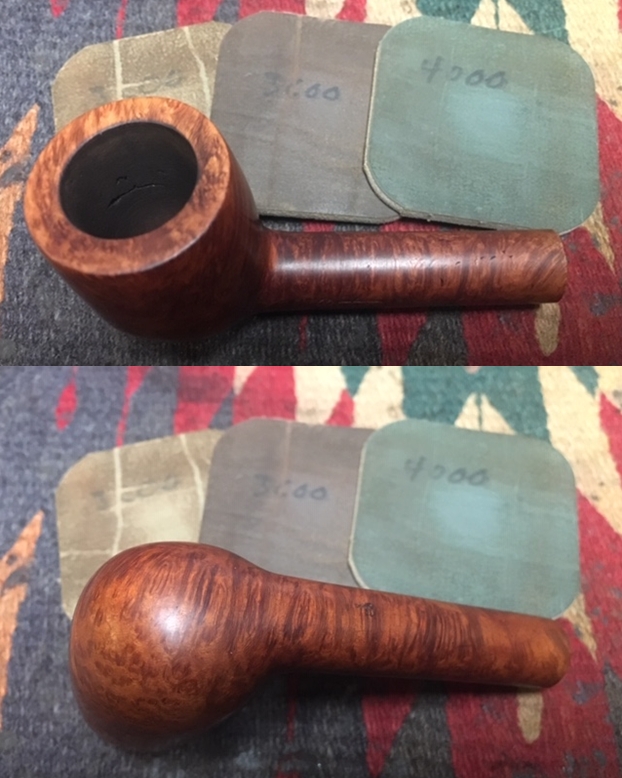
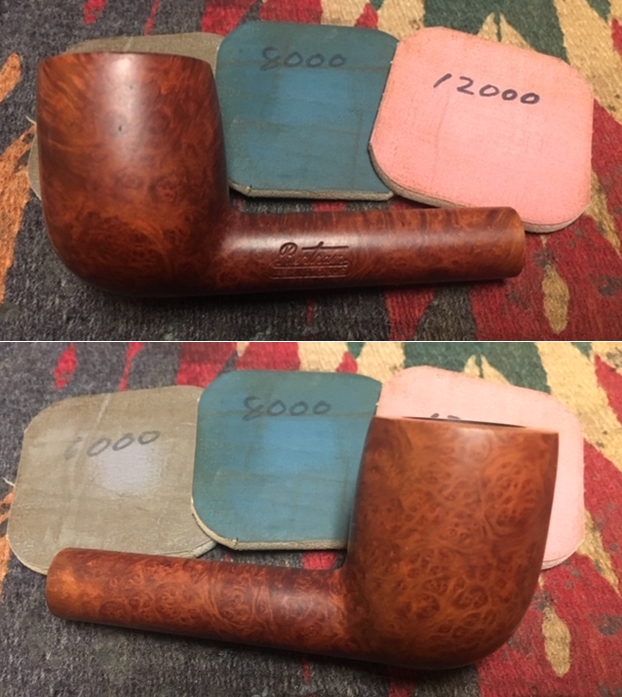
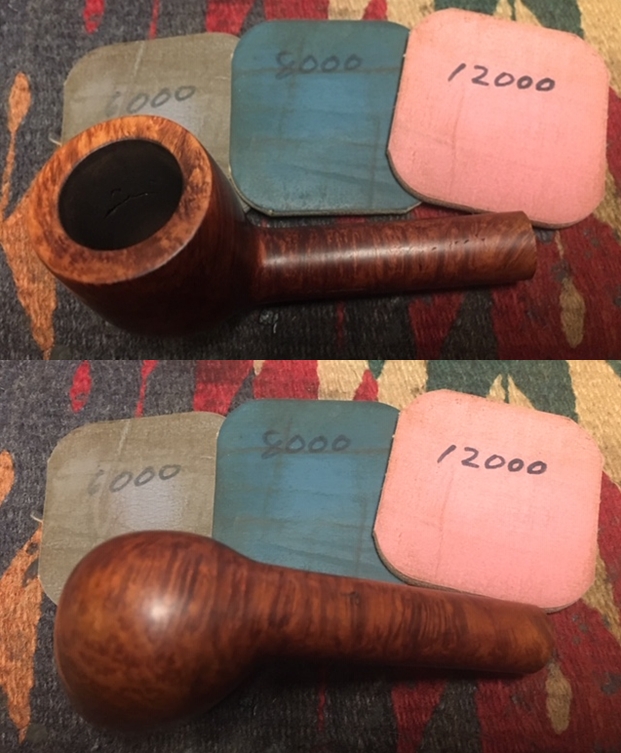
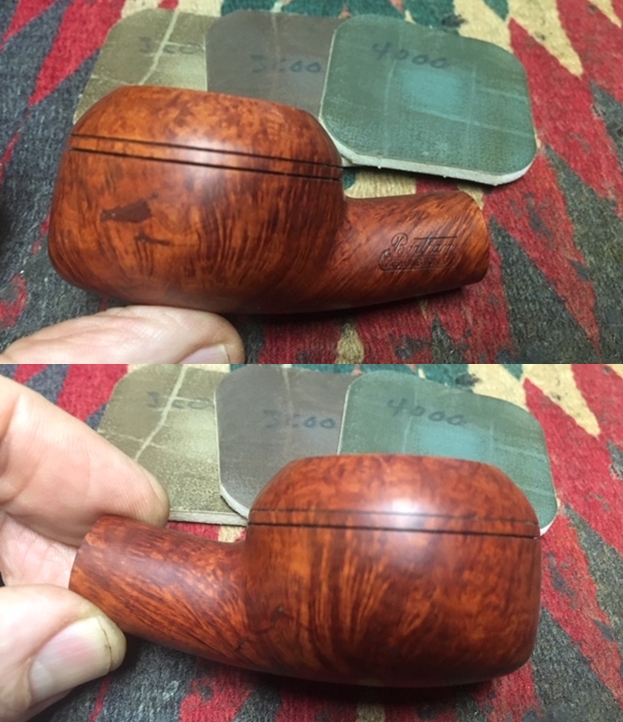
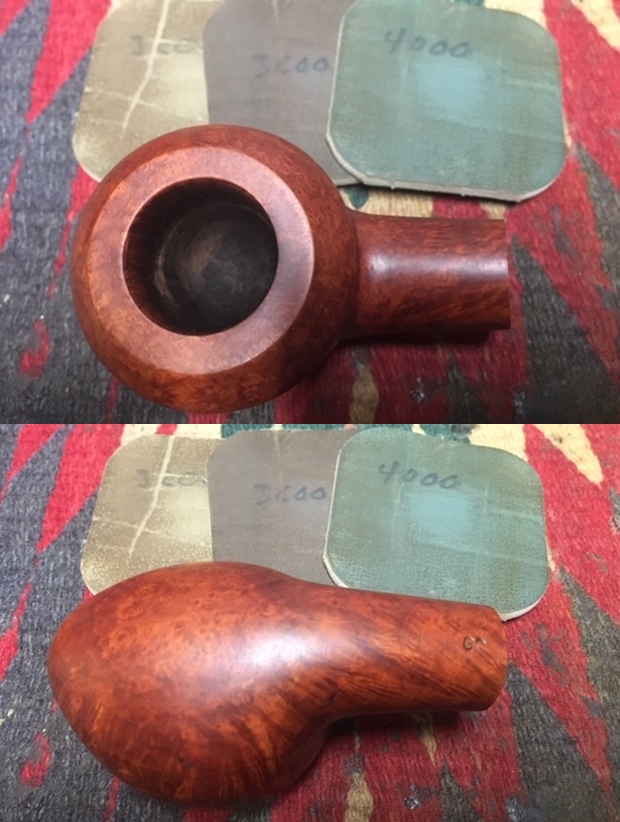
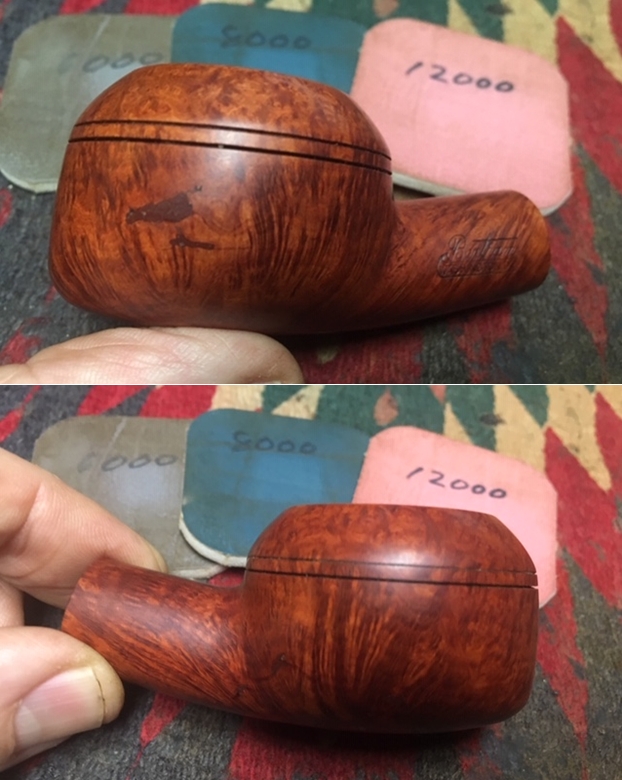
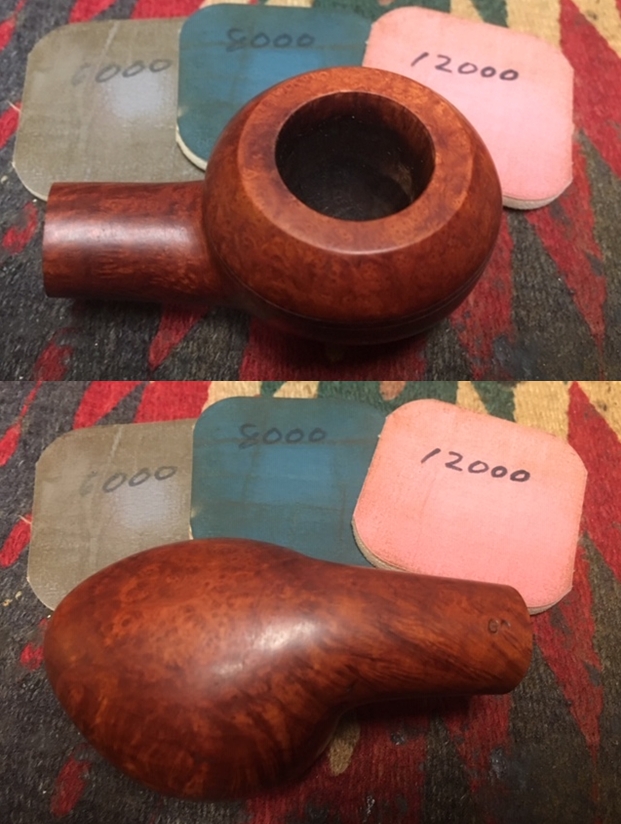
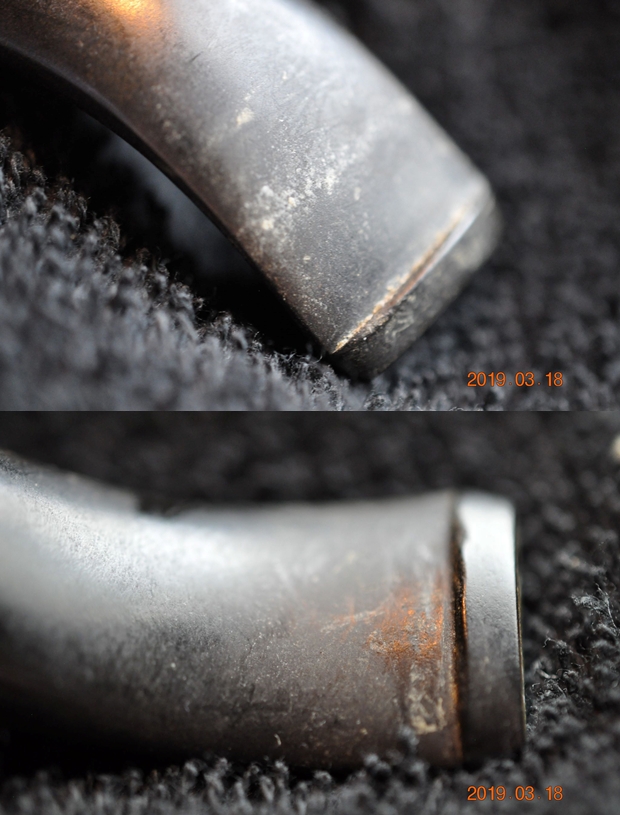
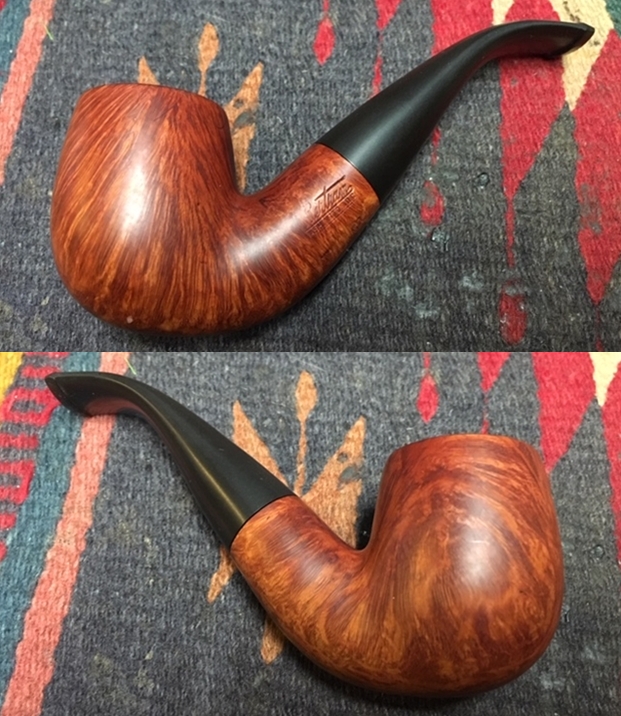
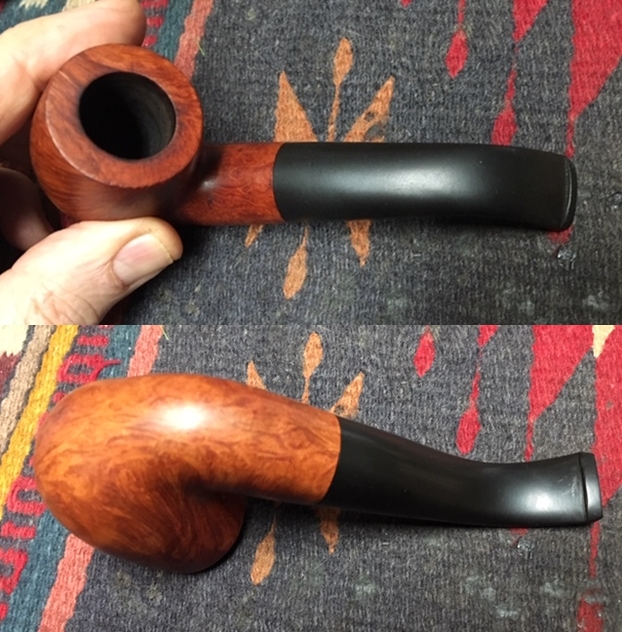
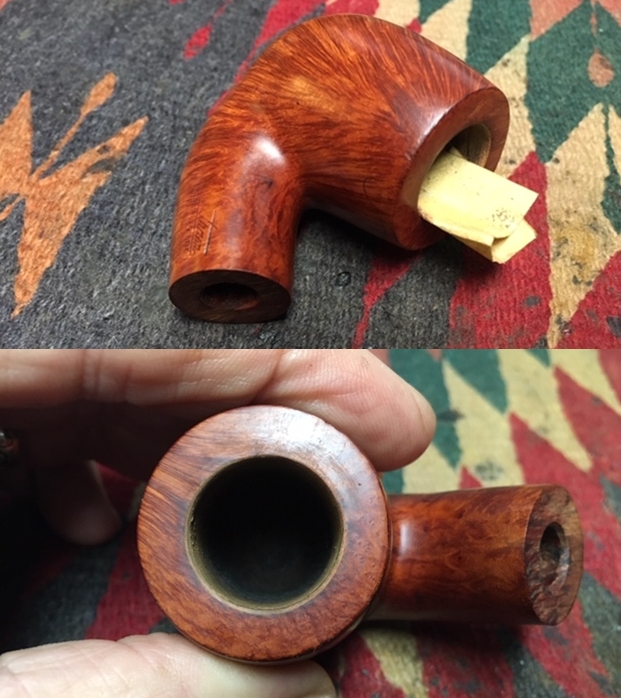
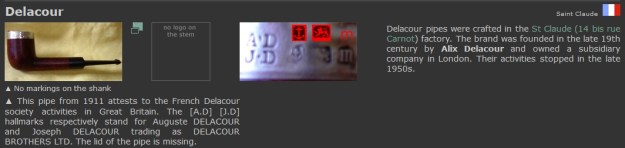
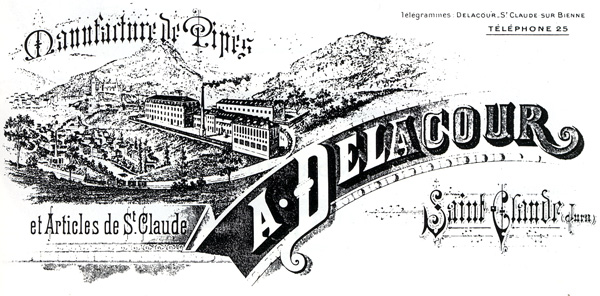
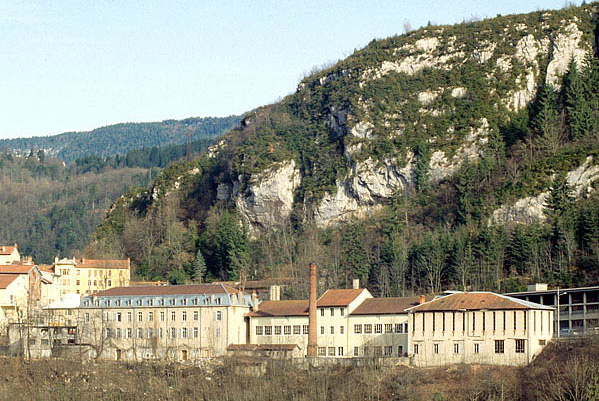
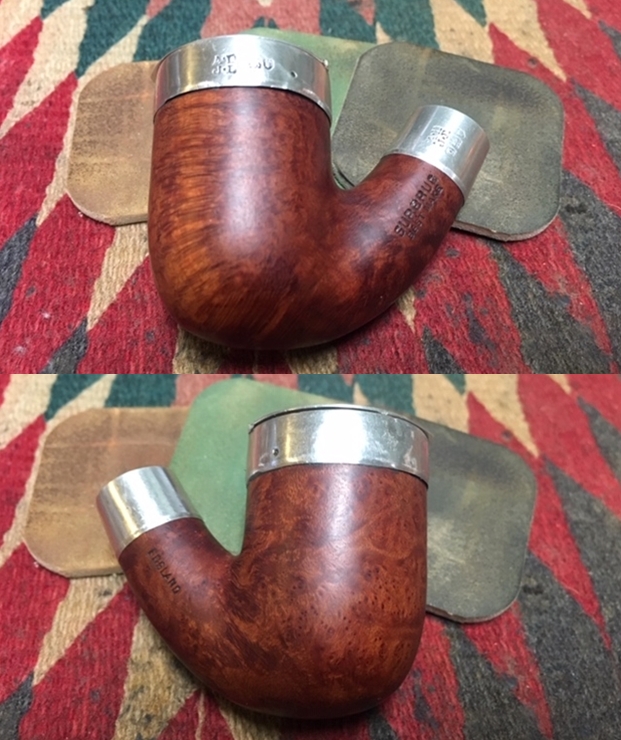
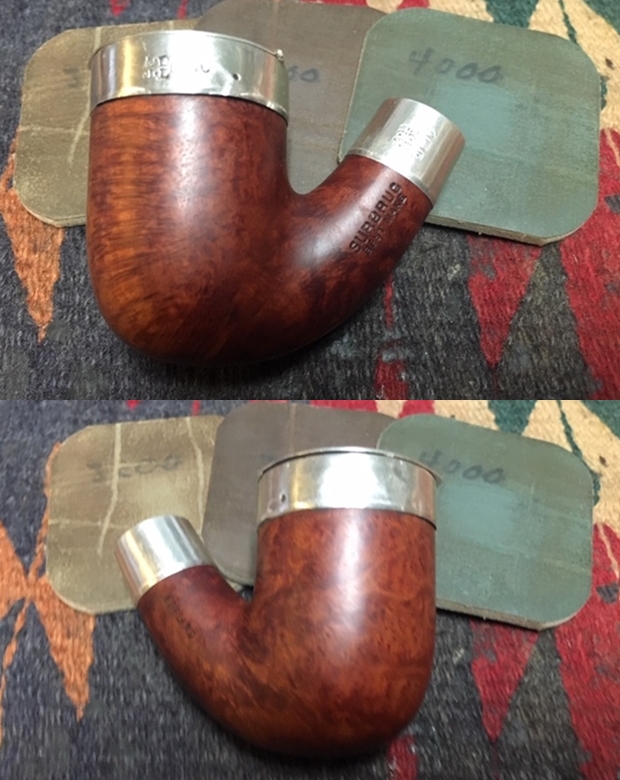
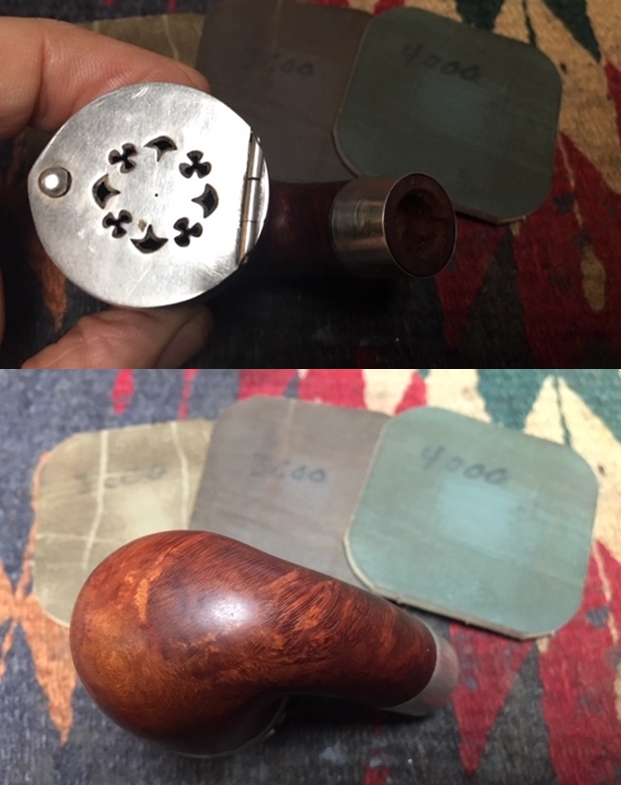
I wonder if perhaps the AD and JD marks could be Delacour Brothers as noted in the above quote. They are certainly the only D in the list of third party suppliers. I decided to check on the pipephil website to see if I could find any information on the Delacour brand to help narrow down the identification of the initials on the bands (http://pipephil.eu/logos/en/logo-d4.html). Sure enough the pipe was a Delacour the band in the photo on the site is the same as the one I am working on. It has the AD over JD stamp and identifies the makers as Delacour Brothers – Auguste and Joseph. The pipe was also a lidded pipe like mine. A further interesting link was found there that made the connection to a late 19th century Alix Delacour who owned a subsidiary company in London. I am including the screen capture below.I followed the links that were given on that site to further information on extra pages on the site (http://pipephil.eu/logos/en/infos/delacourusine-en.html). The first is to a picture of the letterhead of the Delacour Company in Saint Claude, France. The letterhead shows a wood cut of the factory. There was also a photo of the factory itself that shows a similar view to the letterhead illustration. Now I knew I was working on a pipe made by Delacour for the Surbrug pipe shop in New York City and that it was made around 1909/10. I had a good sense of the Delacour Brothers and the London connection for this pipe. With the history and background of the brand in mind it was time to go to work on my part of the restoration but first a review of Jeff’s cleanup of the pipe. He reamed the bowl with a PipNet pipe reamer and followed up with a Savinelli Fitsall pipe knife to remove the cake. He scrubbed out the mortise and the airway in the shank and the stem with alcohol, cotton swabs and pipe cleaners. He scrubbed the exterior of the bowl, rim, shank and stem with a tooth brush and Murphy’s Oil Soap to remove the oils and tars on the rim and the grime on the finish of the bowl. He rinsed it under running water. He dried it off with a soft cloth. He was able to remove lava build up on the rim top and you could see the great condition of the bowl top and edges of the rim. There was still some darkening to the rim top toward the back of the bowl. He soaked the stem in Before & After Deoxidizer to remove the oxidation. I took photos of the pipe before I started my work on it. I took a close up photo of the silver rim top to show the condition of the bowl and rim after Jeff had cleaned up the grime and lava from the bowl and the silver. The cap and the rim top looked very good and had been polished. There was some scratching and dents in the silver. The stem photos show that the oxidation is gone. The light tooth chatter is hard to see but I should be able to sand it out quite easily. There were some tooth marks on the top and underside of the button edge.I also took a photo of the stamping on the left side and the underside of the shank showing how the stamping was laid out. I also took photos of the hallmark on both the band on the shank end and the rim cap and top. I polished the bowl and shank with micromesh sanding pads – wet sanding it with 1500-2400 grit pads and dry sanding it with 3200-12000 grit pads. I wiped the bowl down with a damp cloth after each pad to remove the sanding debris. After the final sanding pad I hand buffed it with a cotton cloth to raise a shine. I worked some Before & After Restoration Balm into finish of the briar with my fingertips to clean, enliven and protect it. I let the balm sit for a little while and then buffed with a cotton cloth to raise the shine. The Restoration Balm really makes the grain stands out beautifully. I set the bowl aside and filled in the deep tooth marks on the topside of the button with clear super glue and set the stem aside to let the repair cure. Once it had cured I used a needle file to flatten it into the surface of the stem. I used a folded piece of 240 grit sandpaper to reshape the button surface on both sides of the stem. Once the surface was smooth I sanded out the scratch marks and started the polishing of the stem with a folded piece of 400 grit sandpaper. I wiped the stem down with Obsidian Oil. (I neglected to take photos of the process of sanding the file marks and smoothing out the repair. I apologize.)I polished the stem with micromesh sanding pads – wet sanding it with 1500-2400 grit pads and dry sanding it with 3200-12000 grit pads. I wiped the stem down with Obsidian Oil after each pad. I wiped it down with Obsidian Oil and set it aside. I stopped the polishing process at this point to put a proper bend in the stem. I put a pipe cleaner in the stem and heated it with a heat gun until the vulcanite was supple. Once it was supple and flexible I bent it over a round jar to get the bend to match the flow of the top of the bowl. I took some photos of the newly bent stem to show what it looked like now that it was finished. I put the stem back on the pipe and took photos of the new look. I like what I see. I need to finish polishing the stem and then do the final buffing. I finished polishing the stem with Before & After Pipe Polish – both Fine and Extra Fine and gave it a final coat and set it aside to dry.  I put the stem and bowl back together and buffed the pipe with Blue Diamond on the buffing wheel. I polished the briar and the minute scratches still in the vulcanite of the stem until there was a rich shine. I polished the silver with a jeweler’s cloth to protect it and give it a shine. This old 1909/1910 Surbrug made by Delacour Brothers has a classic bent billiard with a twist – a sterling silver band on the shank and a sterling silver rim and wind cap. It is a beautifully carved pipe. Once I buffed the pipe the briar came alive and the mixture of grain – cross, swirled and birdseye – popped with polishing. The black vulcanite stem had a rich glow. The finished pipe is a beautiful grained bent billiard shaped pipe. This old pipe with a new bend in the stem fits well in the hand and sits right in the mouth. Have a look at it with the photos below. The dimensions are Length: 5 inches, Height: 2 inches, Outside diameter of the bowl: 1 3/8 inches, Chamber diameter: ¾ of an inch. This old timer is one that is staying in my own collection and fits the niche of my old pipe collection well. Thanks for walking through the restoration with me as it was a pleasure to work on.
The 8th of a collection of Bertrams – a Bertram 55 Lovat


Blog by Steve Laug

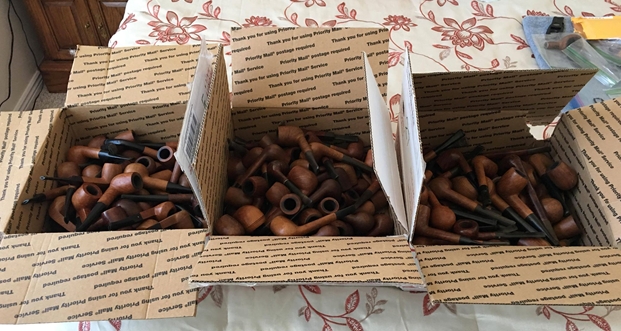
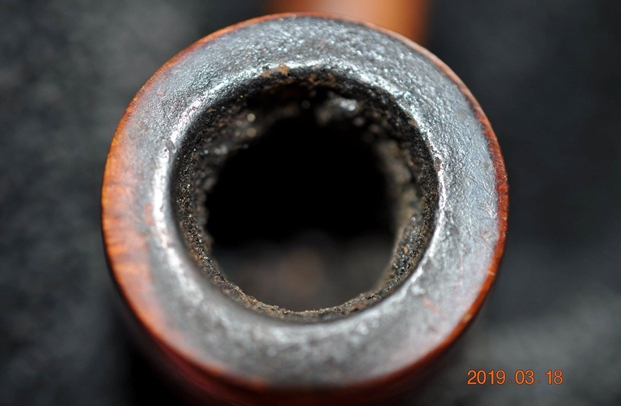
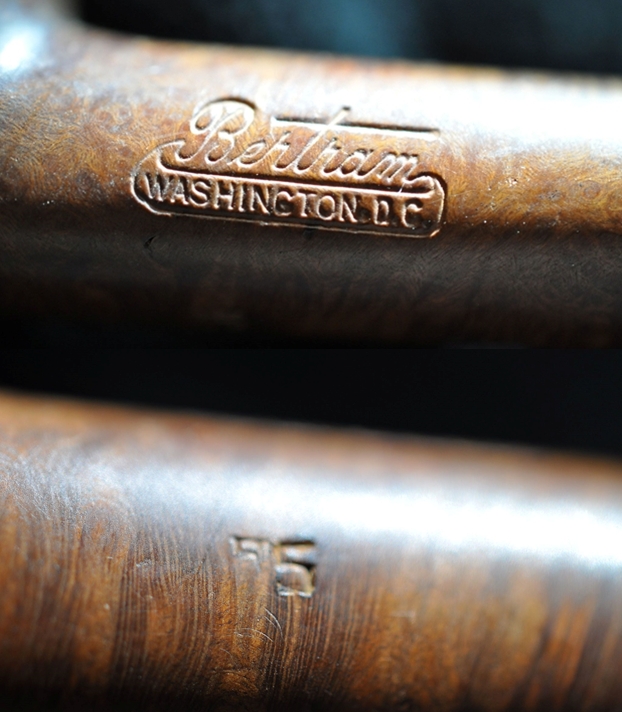
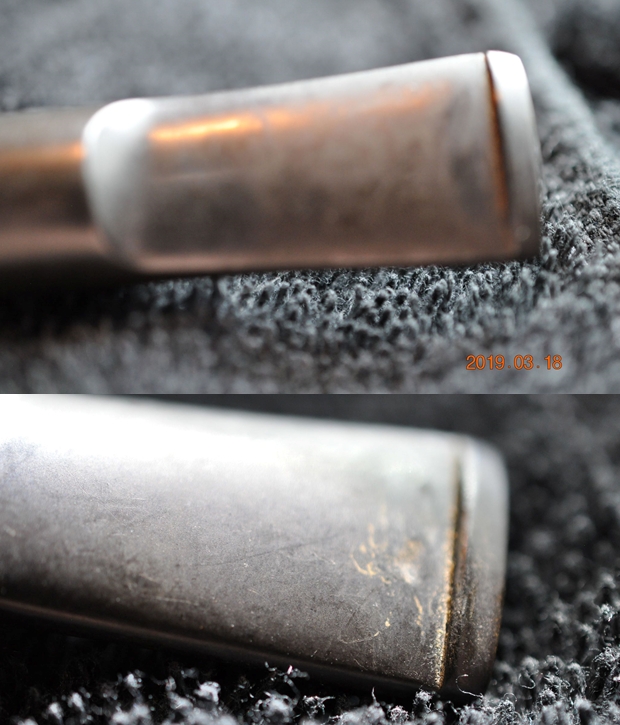
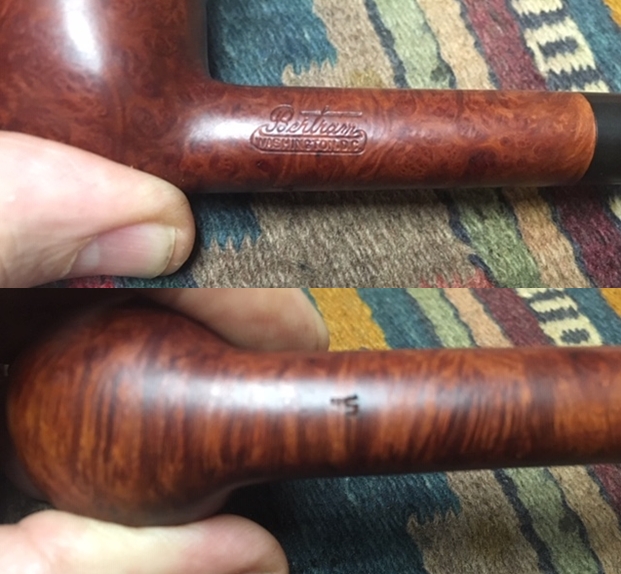
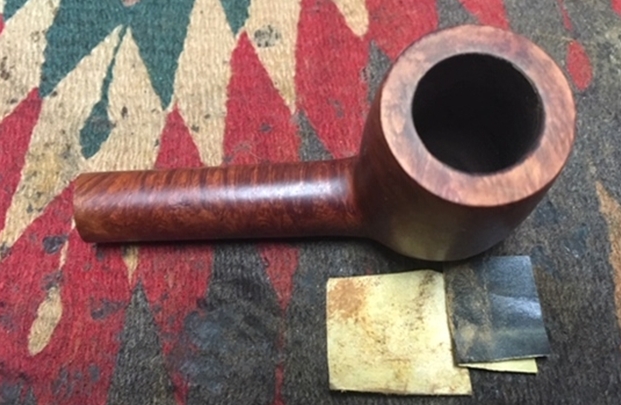
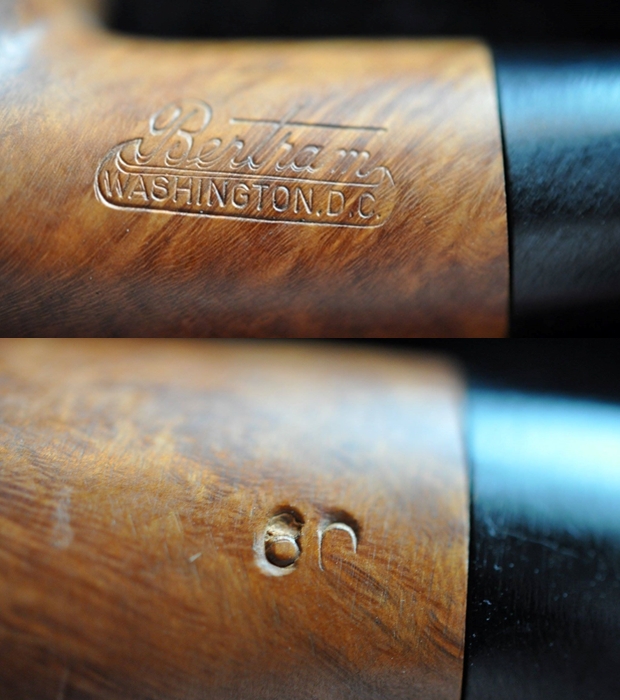
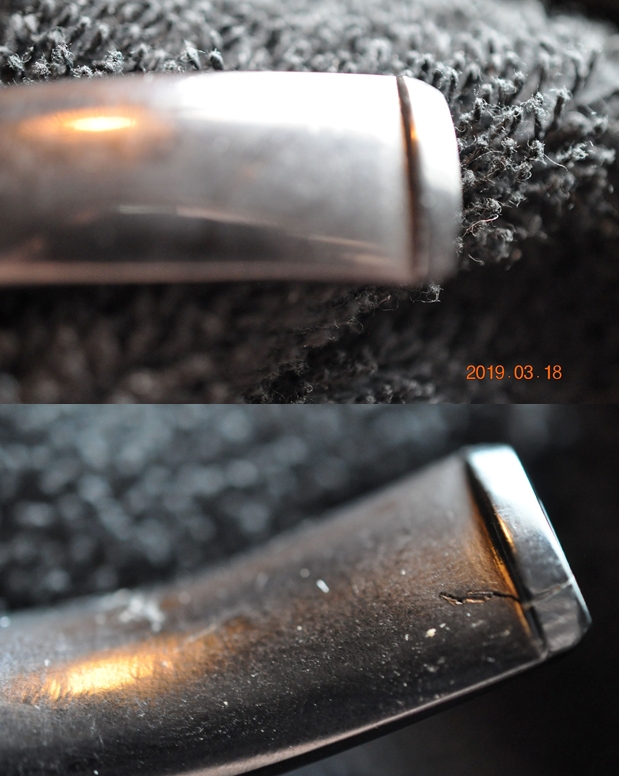
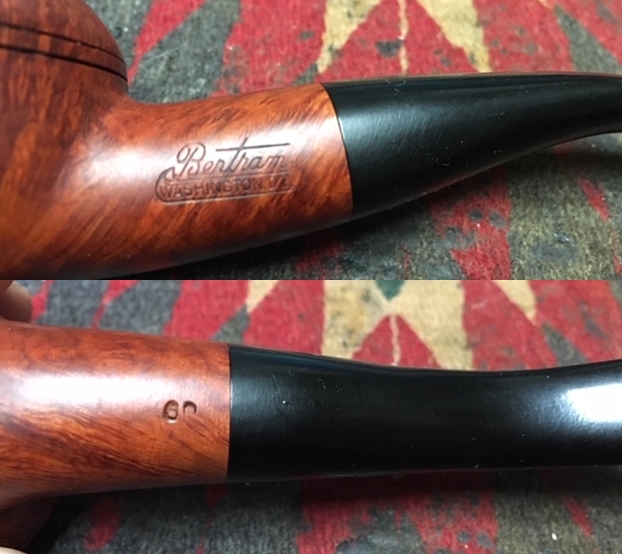
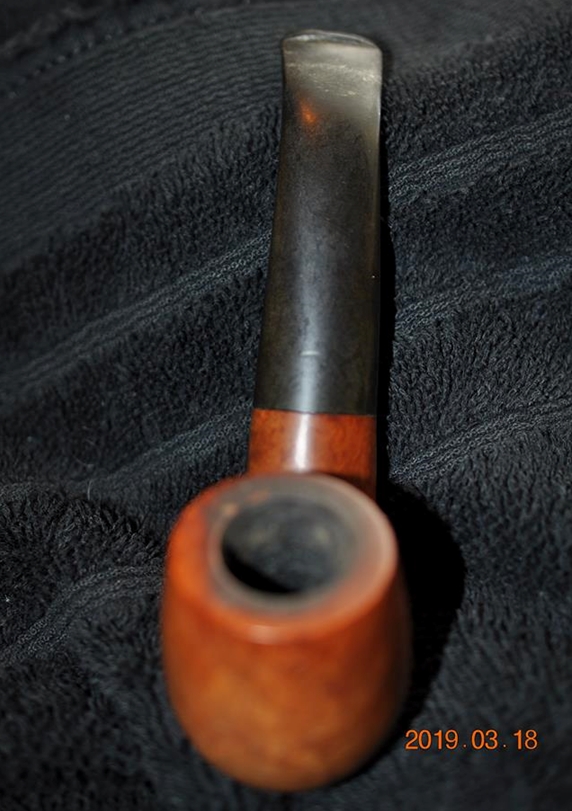
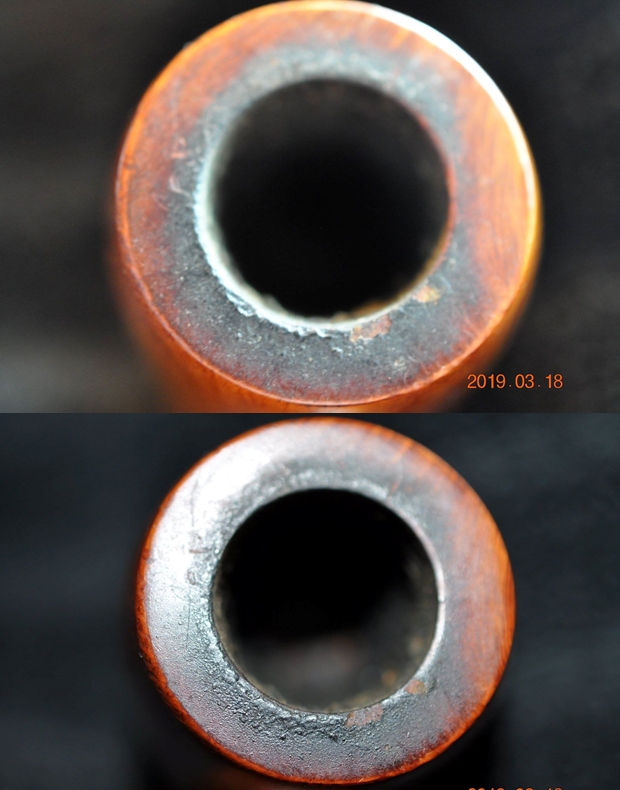
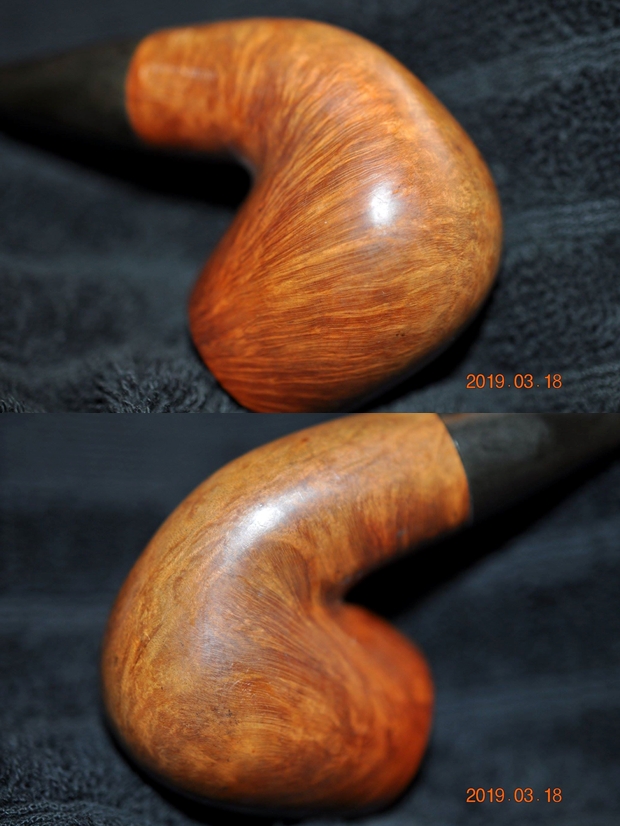
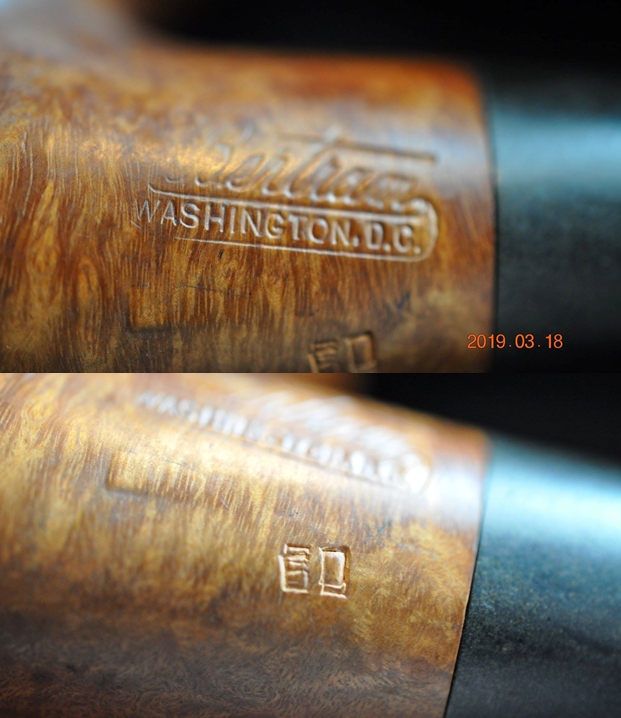
If you have been reading the blogs on the restoration of the Bertram pipe lot that Jeff and I purchased you already know the story of the find. If you have not you can read more about it on the earlier blogs in this series. Just for a quick reminder I will include the photo that Jeff took the collection when it arrived in Idaho. He unwrapped each of the 200+ pipes and filled the three boxes that they were mailed in to show the size of the collection we had purchased. To be honest it was a bit overwhelming to see all of the collection in boxes. We were looking at a lot of work to bring these back to life.I am sure glad that Jeff is working through the clean up on this lot as they are really quite dirty and there are so many! I am leaving it to him to choose which pipes to work on. So far he is choosing the higher grade pipes and the more interesting shaped ones. As he finishes a batch of them he boxes them up and sends them to me. From the first box he sent, I chose another one of the Bertrams to be the eighth pipe that I would work on. As with the rest of the collection this one was dirty! The smooth finish was grimy and dusty but some interesting grain shone through showing me that this was a beautiful pipe. It was a Lovat shaped pipe with a short saddle stem. There was a thick cake in the bowl and heavy lava overflowing on to the rim top. It was hard to know the condition of the edges due to the cake and lava. The stem showed some light oxidation and some chatter on the top and some deep tooth marks on the underside. The photos below tell the story and give a glimpse of the pipe. Jeff took a close-up photo of the bowl and rim to capture the condition of the pipe when it arrived. The rim top had a thick coat of lava and the bowl had a thick cake.Jeff took 2 photos to capture the stamping on the left and underside of the shank. The first photo shows stamping on the left side which read Bertram over Washington, D.C. The stamping on this pipe is clear and readable. The second photo shows the grade number stamping on the underside at the shank stem junction. It read number 55 which shows the quality of the pipe.The next two photos show the stem surface. They show the oxidation and the chatter on both sides near the button. The deep tooth marks are visible on the underside next to the button. There is also some wear on the underside button edge.If you have read the previous five blogs I have posted on the Bertram pipes that I have cleaned up so far you can skip the next bit. But if you have not, then I include the link to Bertram history and information. I would recommend that if you don’t know much about them do some research on them. I include a link to the write up on Pipedia (http://pipedia.org/wiki/Bertram). Bertram pipes were based out of Washington DC. They were popular among famous politicians and celebrities of the time. They made many products for them from FDR’s cigarette holders to Joseph Stalin’s favorite pipe. They were considered some of the best America had to offer till they finally closed their doors in the 70s. They graded their pipes by 10s, the higher the grade the better. Above 60s are uncommon and 80-90s are quite rare. I’ve never heard of or seen a 100 grade. I have several blogs that I have written on rebornpipes that give some history and background to Bertram pipes. (https://rebornpipes.com/2015/06/16/an-easy-restoration-of-a-bertram-grade-60-217-poker/).

I have included the following link to give a bit of historical information on the pipe company. It is a well written article that gives a glimpse of the heart of the company. http://www.streetsofwashington.com/2012/01/bertrams-pipe-shop-on-14th-street.html#

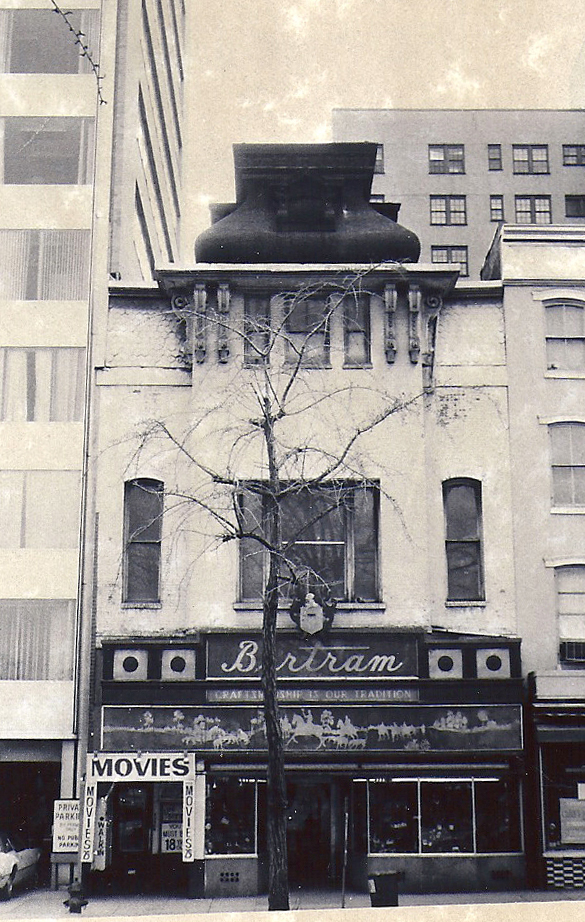
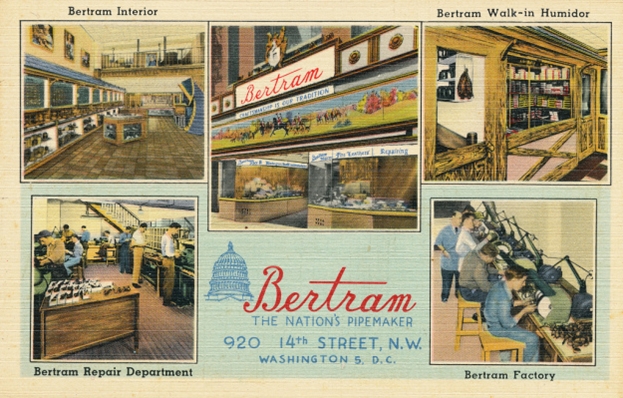
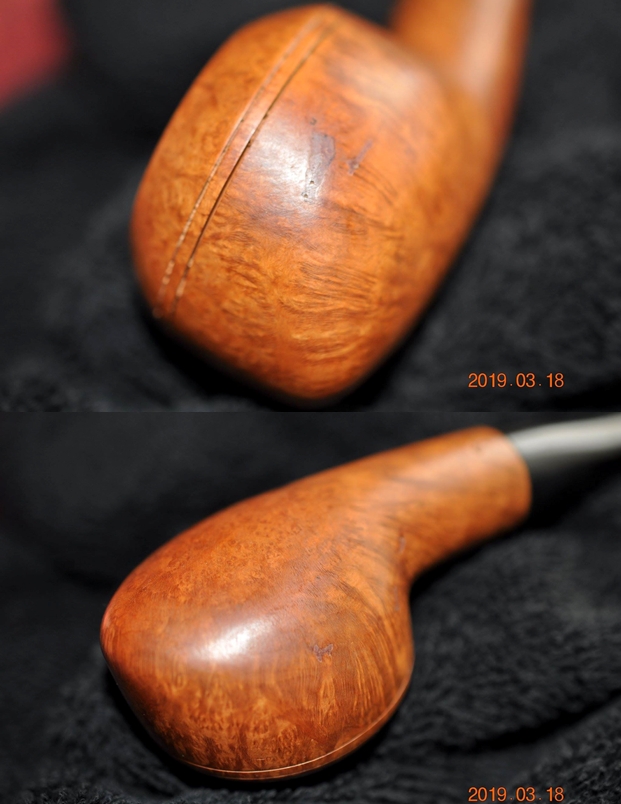
I am also including this photo of the shop in Washington D.C. and a post card of the shop. From this information I have learned that the shape and grade Bertram I have in front of me now was made before the closure of the shop in the 1970s. This Bertram Lovat is one of the more usual shapes in terms of the Bertram pipes I have worked on. With a grade 55 stamp it is just above the mid-range mark.

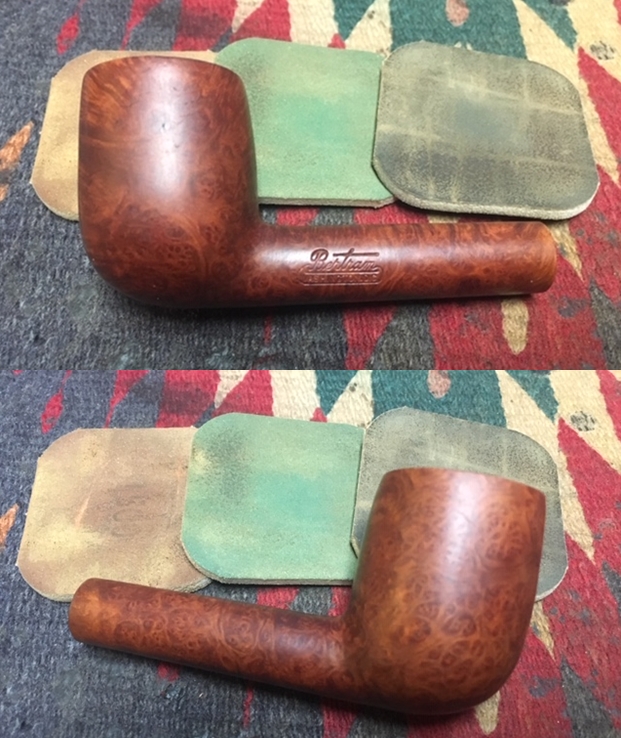
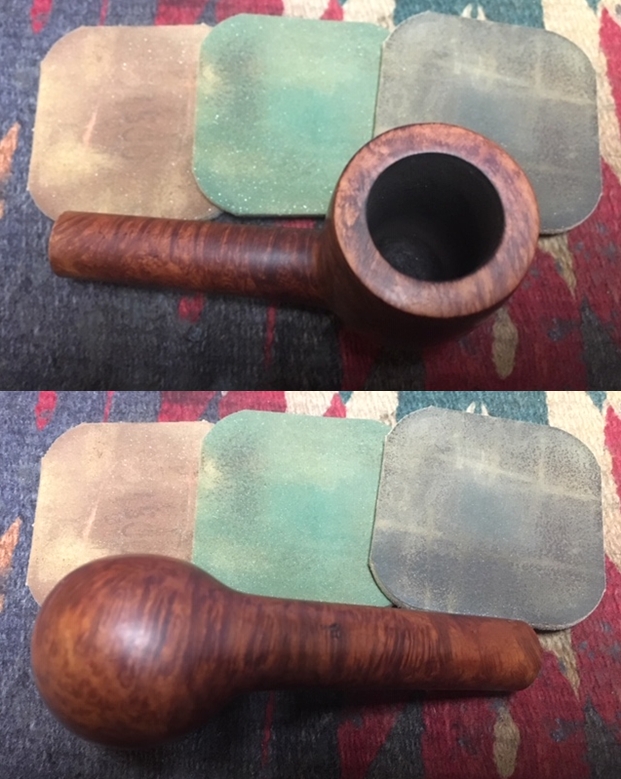
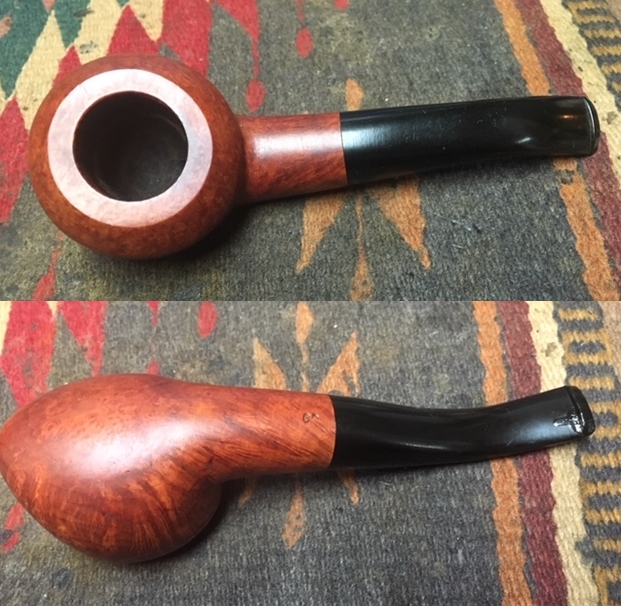
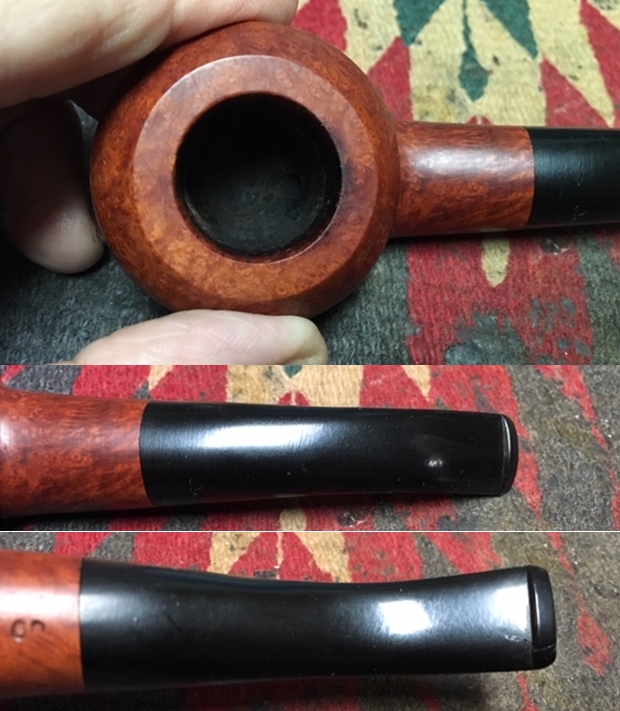
Jeff reamed the bowl with a PipNet pipe reamer and followed up with a Savinelli Fitsall pipe knife to remove the cake. He scrubbed out the mortise and the airway in the shank and the stem with alcohol, cotton swabs and pipe cleaners. He scrubbed the exterior of the bowl, rim, shank and stem with a tooth brush and Murphy’s Oil Soap to remove the oils and tars on the rim and the grime on the finish of the bowl. He rinsed it under running water. He dried it off with a soft cloth. He was able to remove lava build up on the rim top and you could see the great condition of the bowl top and edges of the rim. There was still some darkening to the rim top toward the back of the bowl. He soaked the stem in Before & After Deoxidizer to remove the oxidation. I took photos of the pipe before I started my work on it. I took a close up photo of the rim top to show the condition of the bowl and rim after Jeff had cleaned up the grime and lava but the rim top had some light damage and darkening all the way around. Both the inner edge and the outer edge of the rim look good. The stem photos show that the oxidation is gone. The light tooth chatter is hard to see but I should be able to sand it out quite easily. The tooth marks on the underside will take a little more work to remove.I also took a photo of the stamping on the left side and the underside of the shank showing how the stamping was laid out.I sanded the top of the rim with a folded piece of 220 grit sandpaper to remove the damage and the darkening. I polished the top with 400 grit wet dry sandpaper to remove the scratches. The photo shows how the rim looked at this point.I polished the bowl and rim top with micromesh sanding pads – wet sanding it with 1500-2400 grit pads and dry sanding it with 3200-12000 grit pads. I wiped the bowl down with a damp cloth after each pad to remove the sanding debris. After the final sanding pad I hand buffed it with a cotton cloth to raise a shine. I worked some Before & After Restoration Balm into finish of the briar with my fingertips to clean, enliven and protect it. I let the balm sit for a little while and then buffed with a cotton cloth to raise the shine. The Restoration Balm really makes the grain stands out beautifully. I set the bowl aside and filled in the deep tooth marks with clear super glue and set the stem aside to let the repair cure. Once it had cured I used a needle file to flatten it into the surface of the stem.I used a folded piece of 240 grit sandpaper to address the tooth chatter and blend the repair into the surface of the stem. Once the surface was smooth I sanded out the scratch marks and started the polishing of the stem with a folded piece of 400 grit sandpaper. I wiped the stem down with Obsidian Oil.I polished the stem with micromesh sanding pads – wet sanding it with 1500-2400 grit pads and dry sanding it with 3200-12000 grit pads. I wiped the stem down with Obsidian Oil after each pad. I polished it with Before & After Pipe Polish – both Fine and Extra Fine and gave it a final coat and set it aside to dry. I put the stem and bowl back together and buffed the pipe with Blue Diamond on the buffing wheel. I polished the briar and the minute scratches still in the vulcanite of the stem until there was a rich shine. This Bertram has a classic Lovat shape and some amazing grain on a proportionally well carved pipe. Once I buffed the pipe the briar came alive and the mixture of grain – cross, swirled and birdseye – popped with polishing. The black vulcanite stem had a rich glow. The finished pipe is a beautiful grained Lovat shaped pipe. Like the other Bertrams I have worked on this one fits well in the hand and sits right in the mouth. Have a look at it with the photos below. The dimensions are Length: 5 1/4 inches, Height: 1 3/4 inches, Outside diameter of the bowl: 1 1/4 inches, Chamber diameter: ¾ of an inch. Since I am traveling for a bit for the next three weeks this one will go on the store once I return. If you are interested let me know. Thanks for walking through the restoration with me as it was a pleasure to work on.
 

The 7th of a collection of Bertrams – a Bertram 60 Bullmoose


Blog by Steve Laug

You will probably get tired of this introduction if you are following the blog but I will keep it here at least for a while for those who have not read the previous blogs on the pipes in this collection… As I mentioned before, once in a while I get emails through the blog about pipes that someone wants to sell. These can be estates or they can be a collection that an older pipeman has decided to get rid of by passing it on to someone who can work on them and see that they get into the hands of another pipe smoker. In this case I received an email from a fellow who wanted to sell me a collection of Bertram pipes. We met over FaceTime and he showed the pipe collection to both Jeff and me. We discussed their condition and arrived at a price for the pipes. The majority of the pipes in the collection were Bertrams but there were also some other brands that were known to me. We struck a deal on the lot and he shipped them to Jeff. Jeff took some photos of the collection when it arrived in Idaho. He unwrapped each of the 200+ pipes and filled the three boxes that they were mailed in, and then took a photo to show the size of the collection we had purchased. To be honest it was a bit overwhelming to see all of the collection in boxes. We were looking at a lot of work to bring these back to life.I am glad that Jeff is working through the clean up on this lot as there are many! I am leaving it to choose which pipes to work on. So far he is choosing the higher grade pipes and the more interesting shaped ones. As he finishes a batch of them he boxes them up and sends them to me. From that box, I chose another one of the Bertrams from the lot to be the seventh pipe that I would work on. As with the rest of the collection this one was dirty! The smooth finish was grimy and dusty but the grain shone through showing me that this was a beautiful pipe. It was a Bullmoose shaped pipe with a straight tapered stem. There was a cake in the bowl and light lava overflowing on to the rim top. The rim had slight darkening on the rear inner edge. The stem showed some light oxidation and some chatter on the top and underside. There was a crack in the button and on the underside of the stem surface. The photos below tell the story and give a glimpse of this interesting pipe. Jeff took 2 close-up photos of the bowl and rim at different exposures to capture the condition of the pipe when it arrived. The rim top had some light lava and some darkening on the back rim top. The bowl had a cake that was quite thick but also a lot of tobacco debris stuck to the walls.He also took a photo of the left side of the bowl to show the large fill that was mid bowl. He took a photo of the underside of the shank to show the shape ant the grain on the bowl and heel. The finish is very dirty but this is another interesting pipe. Jeff took a photo to capture the stamping on the left side of the shank. The first photo shows stamping which read Bertram over Washington, D.C. The stamping on this pipe is clear and readable. The second photo shows the grade number stamping on the underside at the shank stem junction. It read number 60 which shows the quality of the pipe. The next two photos show the stem surface. They show the oxidation and the chatter on both sides near the button. There is also some wear on the button edges. The most significant issue that will need to be dealt with is the crack in the button edge and into the stem on the underside.If you have read the previous five blogs I have posted on the Bertram pipes that I have cleaned up so far you can skip the next bit. But if you have not, then I include the link to Bertram history and information. I would recommend that if you don’t know much about them do some research on them. I include a link to the write up on Pipedia (http://pipedia.org/wiki/Bertram). Bertram pipes were based out of Washington DC. They were popular among famous politicians and celebrities of the time. They made many products for them from FDR’s cigarette holders to Joseph Stalin’s favorite pipe. They were considered some of the best America had to offer till they finally closed their doors in the 70s. They graded their pipes by 10s, the higher the grade the better. Above 60s are uncommon and 80-90s are quite rare. I’ve never heard of or seen a 100 grade. I have several blogs that I have written on rebornpipes that give some history and background to Bertram pipes. (https://rebornpipes.com/2015/06/16/an-easy-restoration-of-a-bertram-grade-60-217-poker/).

I have included the following link to give a bit of historical information on the pipe company. It is a well written article that gives a glimpse of the heart of the company. http://www.streetsofwashington.com/2012/01/bertrams-pipe-shop-on-14th-street.html#

I am also including this photo of the shop in Washington D.C. and a post card of the shop. From this information I have learned that the shape and grade Bertram I have in front of me now was made before the closure of the shop in the 1970s. This Bertram Bullmoose is a rare shape in terms of the Bertram pipes I have worked on. With a grade 60 stamp it is just above the mid-range mark.

Jeff reamed the bowl with a PipNet pipe reamer and followed up with a Savinelli Fitsall pipe knife to remove the cake. He scrubbed out the mortise and the airway in the shank and the stem with alcohol, cotton swabs and pipe cleaners. He scrubbed the exterior of the bowl, rim, shank and stem with a tooth brush and Murphy’s Oil Soap to remove the oils and tars on the rim and the grime on the finish of the bowl. He rinsed it under running water. He dried it off with a soft cloth. He was able to remove light lava build up on the back of the rim top and you could see the great condition of the bowl top and edges of the rim. He soaked the stem in Before & After Deoxidizer to remove the oxidation. I took photos of the pipe before I started my work on it. (Please note that I forgot to take a photo of the underside of the stem before I started my repair work so the last photo below shows the initial repair started.) I took a close up photo of the rim top to show the condition of the bowl and rim after Jeff had cleaned up the darkening at the front and rear of the rim. It looked really and both the inner edge and the outer edge of the rim look really good. The stem photos show that the oxidation is gone. The light tooth chatter is hard to see but I should be able to sand it out quite easily. The repair on the button and the stem would actually work well as it was not as large as it appeared.I also took a photo of the stamping on the left side and the underside of the shank showing how the stamping was laid out.I polished the bowl and rim top with micromesh sanding pads – wetsanding it with 1500-2400 grit pads and dry sanding it with 3200-12000 grit pads. I wiped the bowl down with a damp cloth after each pad to remove the sanding debris. After the final sanding pad I hand buffed it with a cotton cloth to raise a shine. The large fill on the left side is rock hard so I left is as it was when I received the pipe. I worked some Before & After Restoration Balm into finish of the briar with my fingertips to clean, enliven and protect it. I let the balm sit for a little while and then buffed with a cotton cloth to raise the shine. The Restoration Balm really makes the grain stands out beautifully. I set the bowl aside and turned my attention to the stem. I cleaned off the crack in the underside of the button with alcohol and a cotton swab. I dried it off and filled in the area with clear super glue and set it aside to cure.I used a folded piece of 240 grit sandpaper to address the tooth chatter and blend the repair into the surface of the stem. Once the surface was smooth I sanded out the scratch marks and started the polishing of the stem with a folded piece of 400 grit sandpaper. I wiped the stem down with Obsidian Oil.I polished the stem with micromesh sanding pads – wetsanding it with 1500-2400 grit pads and dry sanding it with 3200-12000 grit pads. I wiped the stem down with Obsidian Oil after each pad. I polished it with Before & After Pipe Polish – both Fine and Extra Fine and gave it a final coat and set it aside to dry. I put the stem and bowl back together and buffed the pipe with Blue Diamond on the buffing wheel. I polished the briar and the minute scratches still in the vulcanite of the stem until there was a rich shine. This Bertram has a protruding chin or nose to it. It is that shape that is called a Bull Moose. Once I buffed the pipe the briar came alive and the mixture of grain – straight, flame and birdseye popped with polishing. There are some fills on the left side of the bowl but they are not glaring pink putty. The black vulcanite stem had a rich glow. The finished pipe is a beautiful grained Bull Moose shaped pipe. Like the other Bertrams I have worked on this one fits well in the hand and sits right in the mouth. Have a look at it with the photos below. The dimensions are Length: 5 3/4 inches, Height: 1 5/8 inches, Outside diameter of the bowl: 1 3/4 inches, Chamber diameter: ¾ of an inch. Since I am traveling for a bit for the next three weeks this one will go on the store once I return. If you are interested let me know. Thanks for walking through the restoration with me as it was a pleasure to work on.
Restoring a 1965 Dunhill Shell Briar # 56 F/T 3/4 Bent Billiard


Blog by Paresh Deshpande

I had just finished restoring the fifth Dunhill from my Mumbai Bonanza find, a 1962 DUNHILL SHELL #196 F/T and now this is the sixth. I am left with only one Dunhill pipe to complete from the Mumbai Bonanza, a smooth finish LB.

I was fortunate enough to have heeded to the advice of my dear friend and mentor, Mr. Steve, and struck a deal with a trash collector from Mumbai. He did not know what he was selling and I did not know what I was buying as we reside in different cities!! The argument that Mr. Steve presented was that if not anything, I shall at least have some spares and this was logical. I struck a deal and here are pictures of the pipes that I received in this lot. This lot contains some very nice collectible pipes, a few well known brands and some mediocre brands. Overall, with seven Dunhills, a Preben Holm #1, a couple of “Made in England” Pete System pipes, Charatan’s, Custom-Bilt, Stanwell and other assorted pipes, I would say that I had hit a huge jack pot!! Hence, I like to call this find the “Mumbai Bonanza”.

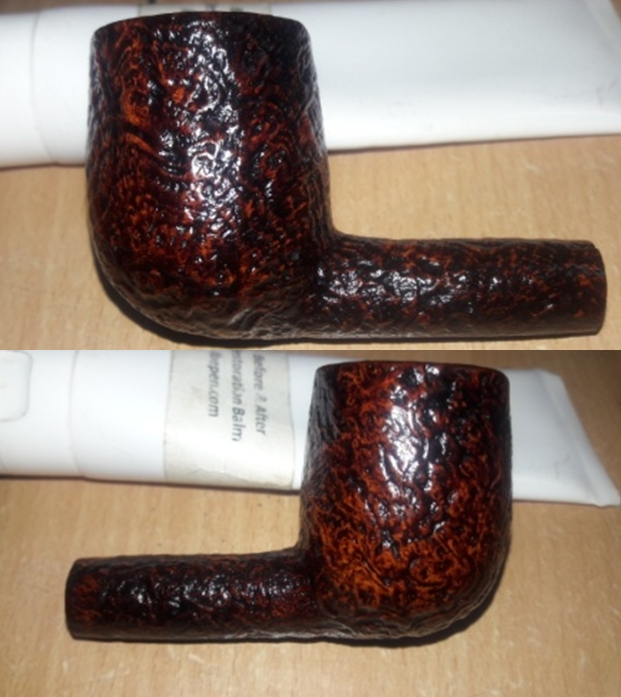
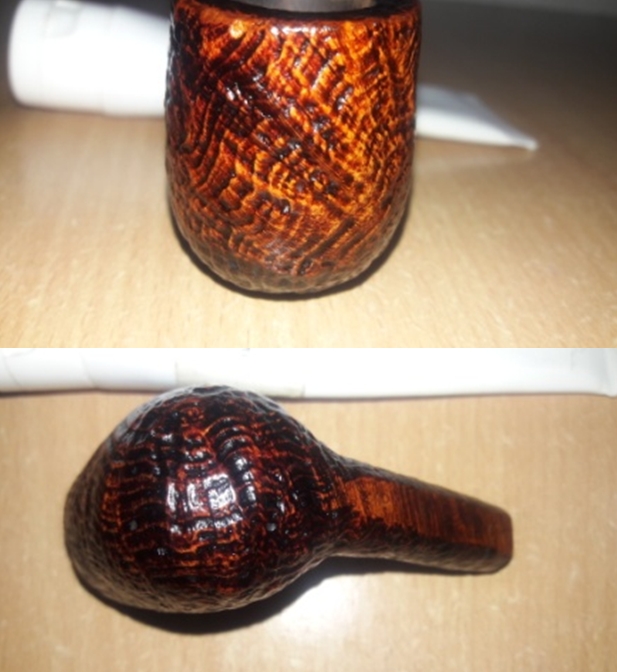
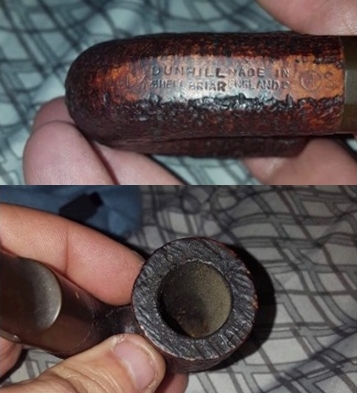
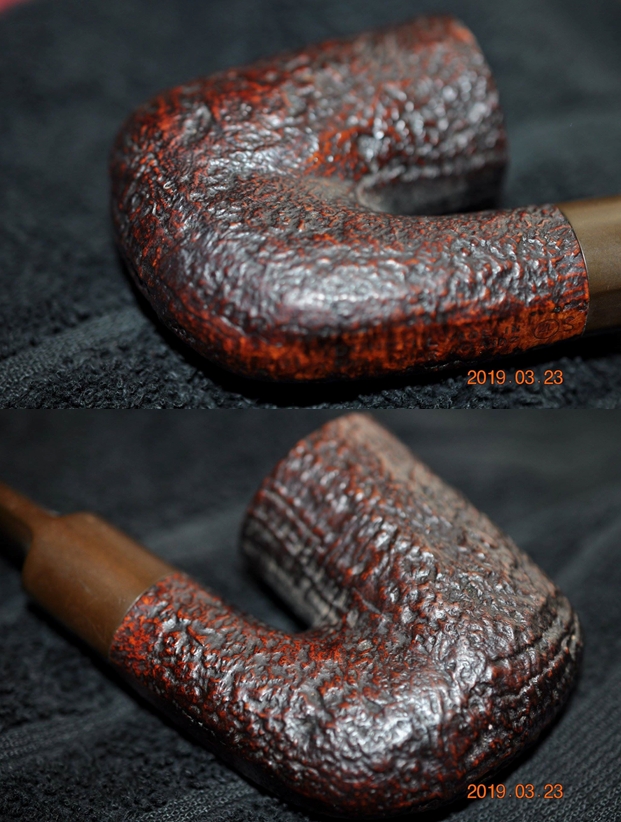
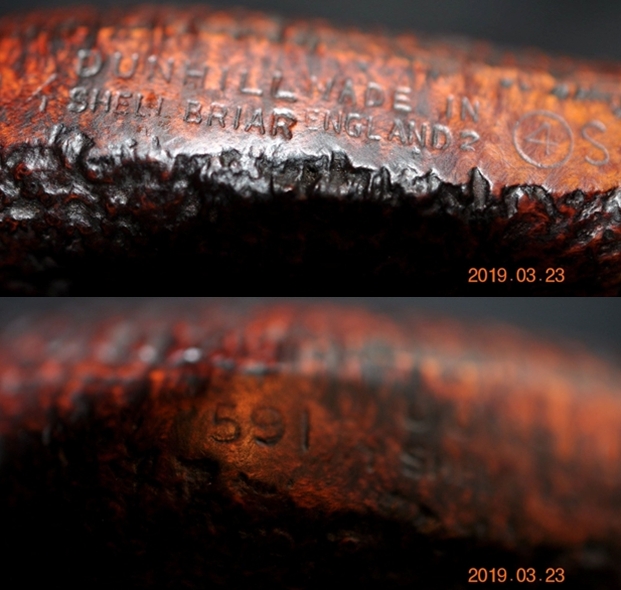
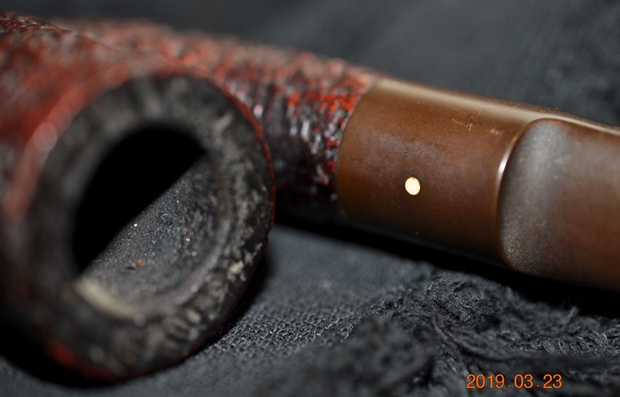
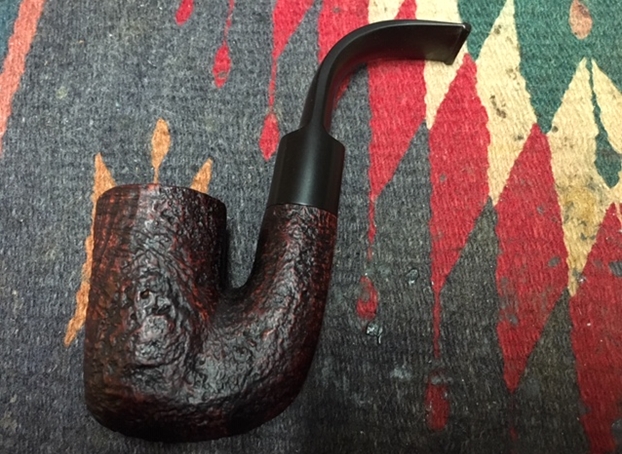
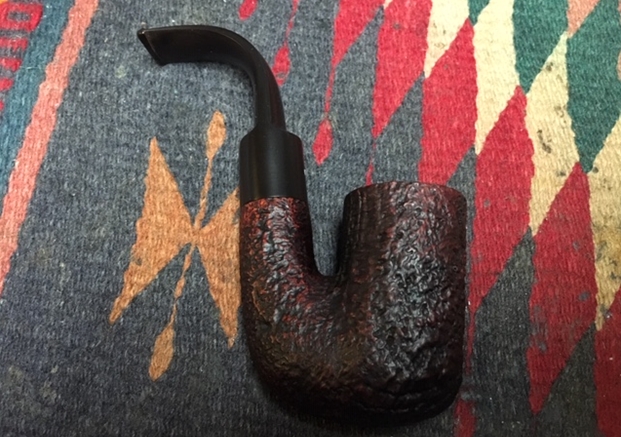
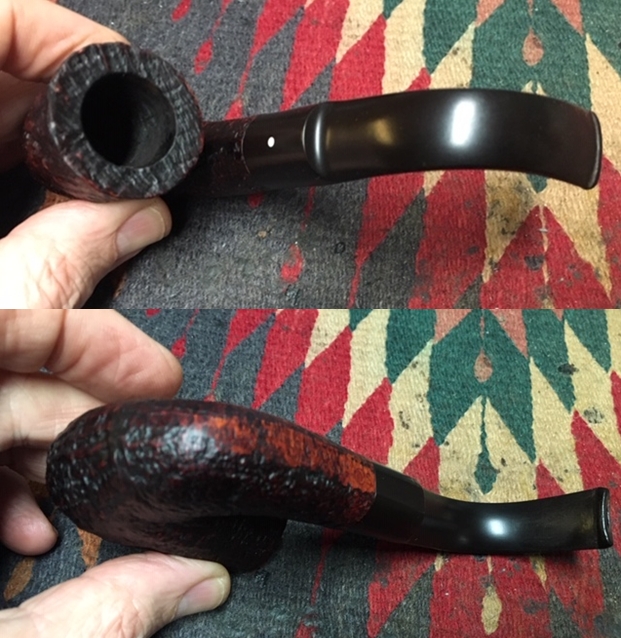
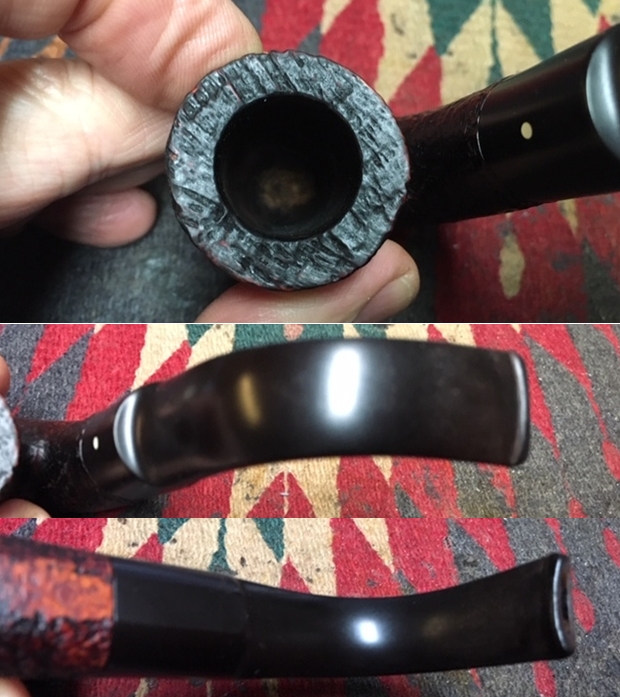
The pipe that I decided to work on from this find is another Dunhill, a 1965 Shell Briar 3/4 bent billiard, and is marked in pastel pink circle in the picture below. It is stamped on the underside of the shank with the shape number 56 followed by F/T followed by DUNHILL over Shell Briar followed by the COM stamp Made in over England 5 (underlined) which dates it as being made in 1965. This is followed by Group size number 4 in a circle and letter S for Shell. Dunhill White Dot adorns the top of the vulcanite stem. The stampings are very slightly worn out and easily readable.In this short journey of mine in to the world of pipe refurbishing, this particular pipe has one of the deepest and beautiful sandblast patterns that I have come across. The sandblast on this pipe speaks volumes about the skills of the pipe carver. With this thought, I move ahead with the restoration of this beautiful medium sized sandblasted Dunhill bent billiard and restore it to its glory.

INITIAL VISUAL INSPECTION
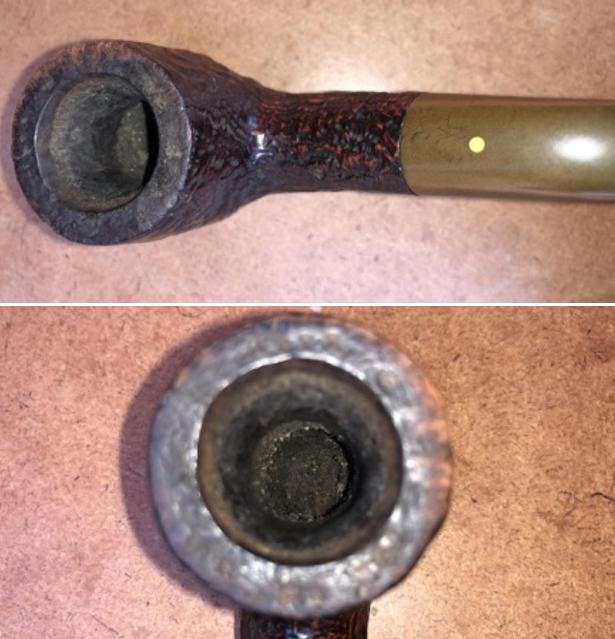
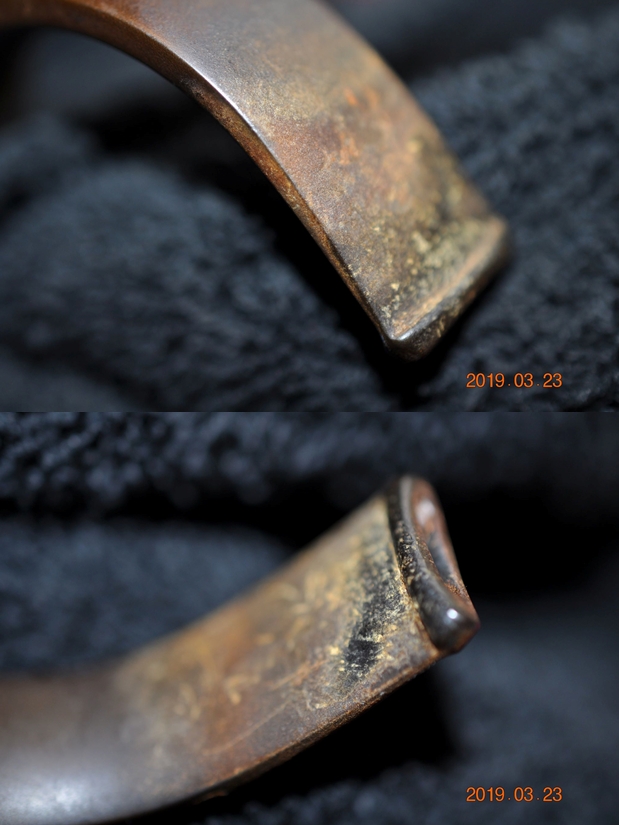
The chamber is clean with a decent and even thick layer of cake. From what I can see, the chamber walls appear to be without any damage. The chamber is odorless. There is an overflow of lava on the sandblasted rim top surface. The inner and outer rim edges are undamaged. The walls appear to be thin. Is this a case of over reaming or is it because the carver decided to compromise the wall thickness for deeper sandblast patterns?The stummel boasts of some beautiful sandblast pattern of mix of straight and cross grain all around. It is dirty with grime, oils and tars filling in much of the craggy finish. The briar looks lifeless and dull. The mortise shows minor accumulation of dried tars mixed with ash and remnants of tobacco. This will have to be cleaned and refreshed. The vulcanite stem shows a minor damage to the button end with minor chatter on the lower surface. The lip edges have a few bite marks and will have to be reshaped and made crisp. The stem is oxidized; however, the quality of vulcanite is good. The white dot on the upper surface has faded in some places but is still distinctly visible. This cannot be helped and status quo has to be accepted.There are no major issues to address here on this pipe; just a little TLC and the pipe should be good to go…nah, find a place of pride on my rack!!

THE PROCESS
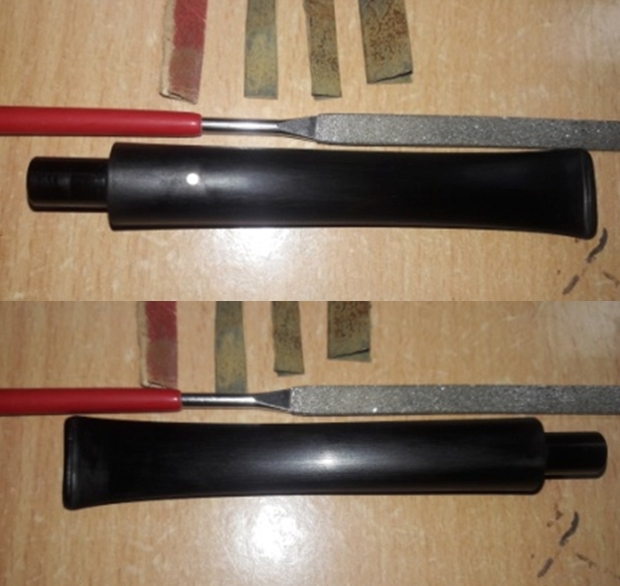
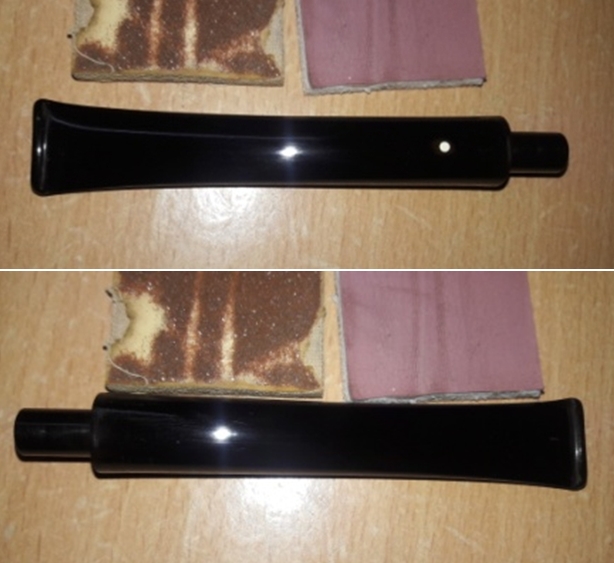
I start this project by tackling the stem first. I sand the stem with a folded piece of 220 grit sand paper to erase the minor tooth chatter on the lower surface, get rid of the oxidation and provide a smooth surface for the intended fill to reconstruct the button edges. I cleaned out the internals of the stem with hard bristled and regular pipe cleaners dipped in isopropyl alcohol. Once I was satisfied with the internal cleaning, I wiped the stem surface, particularly the damaged button end, with a cotton pad and alcohol to remove any traces of dirt and grime. I prepared a mix of CA superglue and activated charcoal and carefully applied it over the damaged lip and set it aside for curing over night. Before moving ahead, I would like to mention here that I had applied this mix in sufficient thickness which would help during the filing and sanding while shaping the button and achieving the correct lip edge profile.While the stem repair was set aside to cure, I moved ahead to deal with the stummel cleaning. With size 3 head of a PipNet reamer, I took the cake down to bare briar. Using a folded piece of 180 grit sand paper, I sand out the last traces of cake and expose the walls of the chamber to ascertain that there are no cracks/ heat fissures. I wiped the chamber with a cotton pad dipped in isopropyl alcohol to remove the carbon dust left behind by all the reaming and sanding process. The walls of the chamber were solid with no damage. This was followed by cleaning the mortise by scraping away at the dried gunk with my fabricated spatula and followed it up with further cleaning using cue tips, pipe cleaners and shank brush dipped in isopropyl alcohol. This eliminated all traces of old smells from previous usage. I followed up the internal cleaning with external. Using a soft brass wired brush I gently scraped away the thick lava coat in the blast of the rim. With a hard bristled tooth brush and dipped in undiluted Murphy’s oil soap, I very deliberately scrubbed the sandblast finish on the stummel and the rim top. The stummel and rim top was dried using paper napkins and soft cotton cloth and set it aside to dry out naturally. The stummel looks fresh and clean. Next, I rub a small quantity of “Before and After Restoration Balm” in to the briar with my finger tips and let it rest for a few minutes. The balm almost immediately works its magic and the briar now has a nice vibrant appearance with the beautiful contrasting hues colors that are unique to this sandblast pipe, on full display. I further buff it with a horse hair shoe brush. I set the stummel aside and turned my attention to the stem repair. The fill had cured nicely and I moved ahead and began the process of filing and shaping the button end with a flat head needle file. For a better blending, I further sand the entire stem with 220 followed by 400, 600 and 800 grit sand paper. This helps to reduce the sanding marks left behind by the more abrasive 220 grit paper. To bring a deep shine to the vulcanite stem, I went through the complete set of micromesh pads, wet sanding with 1500 to 2400 grit pads and dry sanding with 3200 to 12000 grit pads. I wiped the stem with alcohol after each pad and rubbed it down with Extra Virgin Olive oil to rehydrate the vulcanite. The repairs have blended in very well and the stem now looks shiny black and beautiful. The internals of the stem was once again cleaned out using alcohol and pipe cleaners to clear the airway of all the debris resulting due to the sanding. The finished stem is shown below. To finish, I re-attach the stem with the stummel. I mounted a cotton cloth buffing wheel to my local machine which is similar to the Dremel.  I set the speed at about half of the full power and applied White Diamond compound to the entire pipe. I wiped/ buffed the pipe with a soft cotton cloth to clear it of any leftover compound dust. I then mounted another cotton cloth wheel on to the polishing machine and applied several coats of carnauba wax. I finished the restoration by giving the entire pipe a rigorous hand buffing using a microfiber cloth to raise the shine further.The completed pipe looks lovely, fresh and vibrant; the pictures speak for themselves. I really enjoyed working on this pipe and hope that readers too enjoyed walking with me through this restoration. If only this old warrior could share its past life with all of us…if only!! Cheers.


A Fresh Lease on Life for a 1962 Straight Billiard Dunhill Shell Briar # 196 F/T


Blog by Paresh Deshpande

I had just finished restoring the fourth Dunhill from my Mumbai Bonanza find, a 1949 DUNHILL SHELL #52 F/T WITH PATENT No. 417475/34 and decided to complete restoration of all remaining Dunhill pipes from this collection before moving on to other pipes either from this collection or from my inherited pipes. It feels good to have options to choose from for the next project.

I was fortunate enough to have heeded to the advice of my dear friend and mentor, Mr. Steve, and struck a deal with a trash collector from Mumbai. He did not know what he was selling and I did not know what I was buying as we reside in different cities!! The argument that Mr. Steve presented was that if not anything, I shall at least have some spares and this was logical. I struck a deal and here are pictures of the pipes that I received in this lot.   This lot contains some very nice collectible pipes, a few well known brand pipes and some mediocre pipe brands. Overall, with seven Dunhills, a Preben Holm #1, a couple of Made in England Pete System pipes, Charatan’s, Custom-Bilt, Stanwell and other assorted pipes, I would say that I had hit a huge jack pot!!! Hence, I like to call this find the “Mumbai Bonanza”.

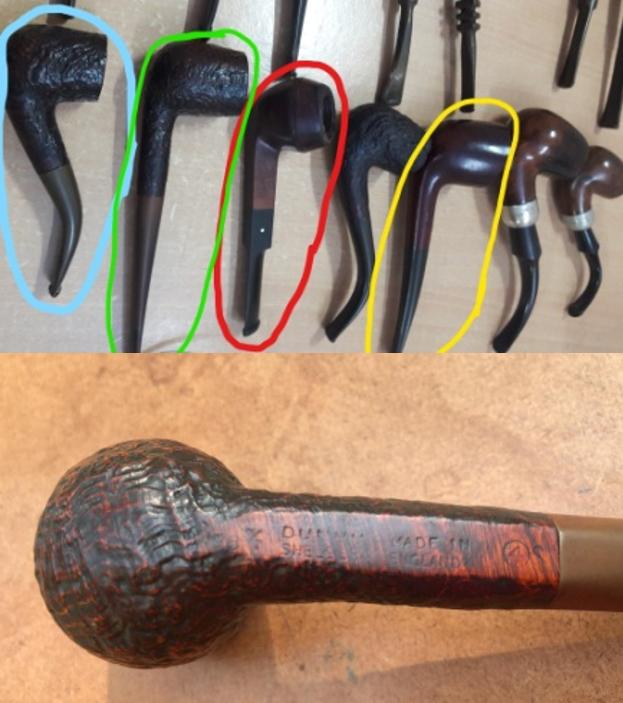
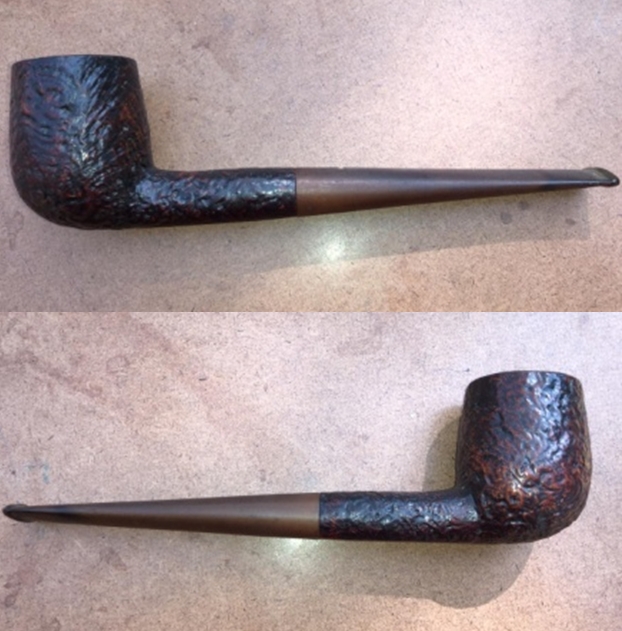
The pipe that I decided to work on from this find is another Dunhill, a 1962 Shell Briar billiard, and is marked in green circle in the picture below. It is stamped on the underside of the shank with the shape number 196 followed by F/T followed by DUNHILL over Shell Briar followed by the COM stamp Made in over England 2 which dates it as being made in 1962. This is followed by Group size number 4 in a circle and letter S for Shell. Dunhill White Dot adorns the top of the vulcanite stem. The stampings are slightly worn out but clear.In this short journey of mine in to the world of pipe refurbishing, I have found that I really like the sandblast finish on these Dunhill pipes, more than the smooth ones. Pardon me if I have hurt the sentiments of some of the readers who think otherwise, but this is my personal choice. I love the smooth finished pipes from Barling, Comoy’s and other British and US (Boswell, Tim West, Lakatosh etc.) pipe carvers. With this musing, I move ahead with the restoration of this beautiful medium sized sandblasted Dunhill straight billiard.

INITIAL VISUAL INSPECTION
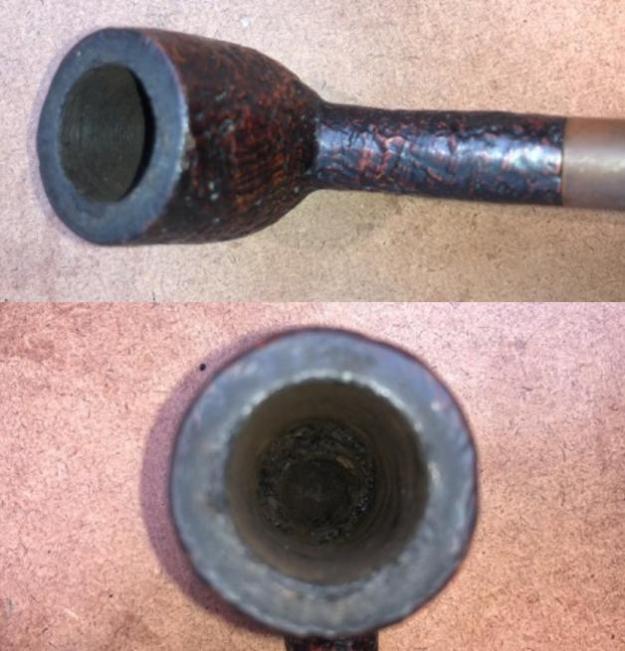
The chamber is clean with a thin layer of cake near the top and thick at the bottom near the draught hole, an indication that its previous Steward had either quit pipe smoking early or could never smoke beyond half a bowl full. From what I can see, the chamber walls appear to be without any damage. The chamber is odorless. There is an overflow of lava on the sandblasted rim top surface. The inner and outer rim edges are undamaged.The stummel boasts of some beautiful sandblast pattern of mix of straight and cross grain all around. It is dirty with grime and tar filling in much of the craggy finish. The briar looks lifeless and dull which is nothing serious to address. The round shank of the Billiard flows into a long tapered stem which has a flare, like a fish tail, at the button end, justifying the stamp F/T. The vulcanite stem shows damage to the button end with light tooth chatter on the upper surface. The lower surface has a couple of deep tooth indentations. The lips have bite marks, distorting the lip edge and will have to be sharpened. The stem is very heavily oxidized; in fact the oxidation has bubbled on to the surface and has the stem has taken on a reddish brown coloration. However, the quality of vulcanite is good. The horizontal slot is clogged with dried oils and tars and so it is safe to assume that even the stem’s airway would require a thorough cleaning. The fit of the tenon in to the mortise (which is has an accumulation of dried oils and tars) is loose and will need to be addressed. Overall condition of this pipe indicates that this should be an easy project, but those who have traveled this route before, will bear with me that there are surprises and pitfalls lurking around every corner on this road.

THE PROCESS
I start this project by tackling the stem first. I flame both the surfaces of the stem with a Bic lighter. The heat from the flame raises the vulcanite to the surface and takes care of the tooth chatter and bite marks that was seen earlier to a great extent. I sand the stem end with a folded piece of 220 grit sand paper to erase the scratches and provide a smooth surface for the intended fill. However, I soon realized that the oxidation was so deep that I needed to use a coarser grit paper and ended up using a piece of 150 girt sand paper!!! I cleaned out the internals of the stem with hard bristled and regular pipe cleaners dipped in isopropyl alcohol. I literally had to dig out the gunk which had clogged the horizontal slot with my fabricated spatula. Once I was satisfied with the internal cleaning, I wiped the stem surface, particularly the damaged button end, with a cotton pad and alcohol to remove any traces of dirt and grime. To begin the stem repairs, I smeared a folded pipe cleaner with petroleum jelly and inserted it in to the stem airway. I prepared a mix of CA superglue and activated charcoal and carefully applied it over the damaged lip and set it aside for curing over night. Before moving ahead, I would like to mention here that I had applied this mix in layers, to achieve sufficient thickness which would help during the filing and sanding while shaping the button and achieving the correct lip edge profile.While the stem repair was set aside to cure, I moved ahead to deal with the stummel repairs. There was practically no cake in the chamber and so I directly used a folded piece of 180 grit sand paper to sand out the traces of cake and expose the walls of the chamber to ascertain that there are no cracks/ heat fissures. But, I soon realized that the layer of cake in the chamber was not thin, but quite thick and ended up using size 2 and 3 head of the PipNet reamer. I followed it up by sanding the walls with a 180 grit sand paper. I wiped the chamber with a cotton pad dipped in isopropyl alcohol to remove the carbon dust left behind by all the reaming and sanding process. The walls of the chamber were solid with no damage. This was followed by cleaning the mortise by scraping away at the dried gunk with my fabricated spatula and followed it up with further cleaning using cue tips, pipe cleaners and shank brush dipped in isopropyl alcohol. This eliminated all traces of old smells from previous usage. I used my fabricated knife to gently remove the crusted lava from the rim top surface. Continuing with the cleaning regime, using a soft brass wired brush I gently scraped away the thick lava coat in the blast of the rim top surface. With a hard bristled tooth brush and dipped in undiluted Murphy’s oil soap, I very deliberately scrubbed the sandblast finish on the stummel and the rim top. The stummel and rim top was dried using paper napkins and soft cotton cloth and set it aside to dry out naturally. The stummel looks fresh and clean. Next, I rub a small quantity of “Before and After Restoration Balm” in to the briar with my finger tips and let it rest for a few minutes. The balm almost immediately works its magic and the briar now has a nice vibrant appearance with the beautiful contrasting hues colors that are unique to this sandblast pipe, on full display. I further buff it with a horse hair shoe brush. I set the stummel aside and turned my attention to the stem repair. The fill had cured nicely and I moved ahead and began the process of filing and shaping the button end with a flat head needle file. For a better blending, I further sand the entire stem with 220 followed by 400, 600 and 800 grit sand paper. This helps to reduce the sanding marks left behind by the more abrasive 220 grit paper. To bring a deep shine to the vulcanite stem, I went through the complete set of micromesh pads, wet sanding with 1500 to 2400 grit pads and dry sanding with 3200 to 12000 grit pads. I wiped the stem with alcohol after each pad and rubbed it down with Extra Virgin Olive oil to rehydrate the vulcanite. The repairs have blended in very well and the stem now looks shiny black and beautiful. The internals of the stem was once again cleaned out using alcohol and pipe cleaners to clear the airway of all the debris resulting due to the sanding. The finished stem is shown below. To finish, I re-attach the stem with the stummel. I mounted a cotton cloth buffing wheel to my local machine which is similar to the Dremel.  I set the speed at about half of the full power and applied White Diamond compound to the entire pipe. I wiped/ buffed the pipe with a soft cotton cloth to clear it of any leftover compound dust. I then mounted another cotton cloth wheel on to the polishing machine and applied several coats of carnauba wax. I finished the restoration by giving the entire pipe a rigorous hand buffing using a microfiber cloth to raise the shine further.The completed pipe looks lovely, fresh and vibrant; the pictures speak for themselves. This pipe too is being added to my rack housing Dunhill pipes. I really enjoyed working on this pipe and hope that readers too enjoyed walking with me through this restoration. As always, your inputs and valued suggestions are very important as they help me grow and improve my skill set in pipe refurbishing methods. PS: The stem turned out beautiful, in fact, it is one of the nicest in terms of blending in of the fills and shine. The spots that are seen near the white dot and on the lower surface in the above pictures may appear as blemishes, but they are simply reflection of some light. 

Rejuvenating the Amazing Grain of an EWA Trophee of St. Claude, France 909


Blog by Dal Stanton

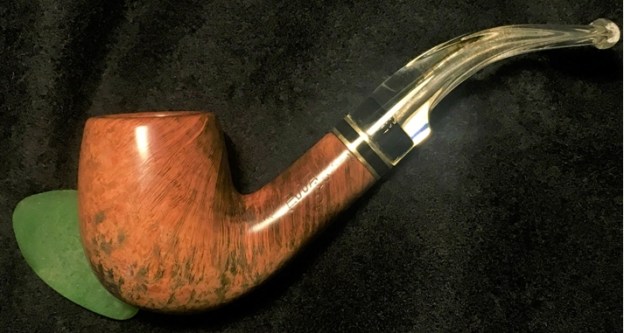
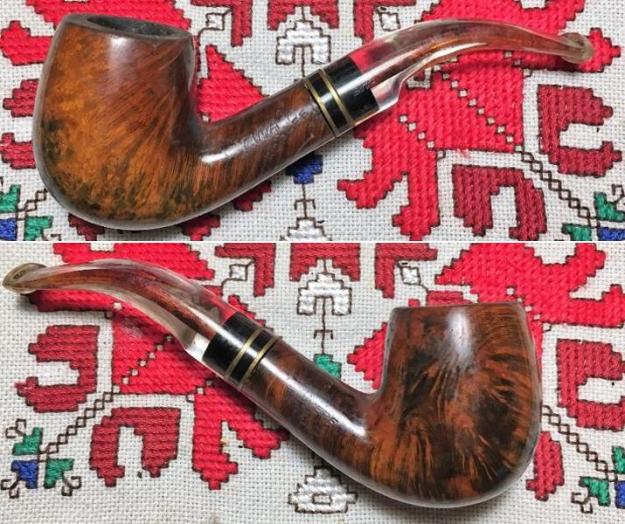
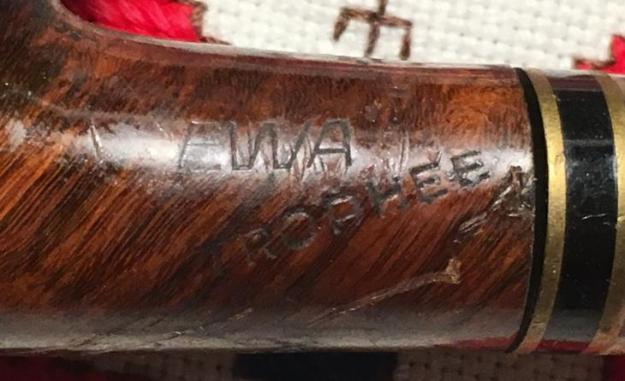
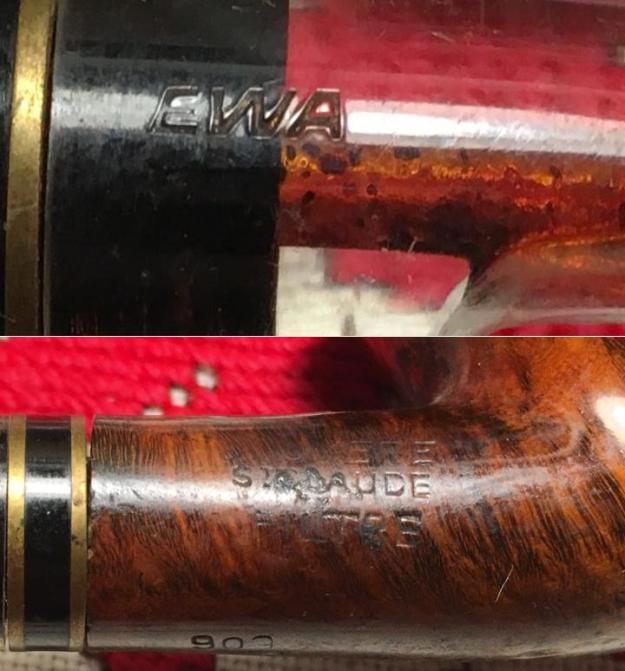
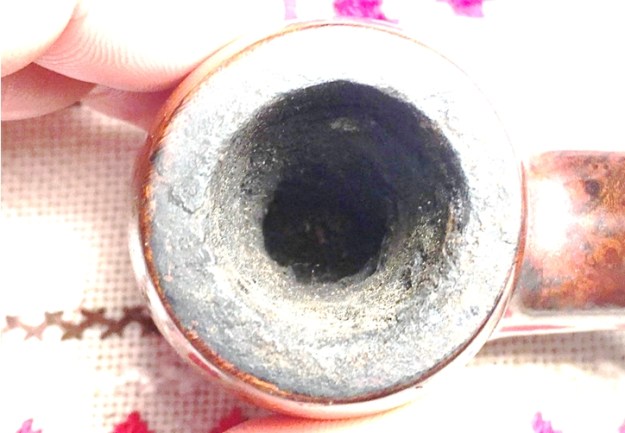
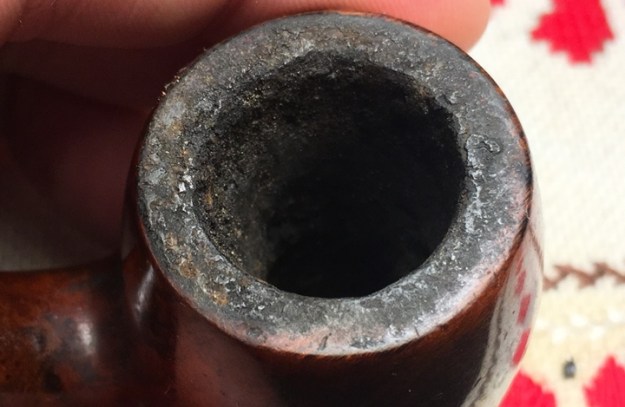
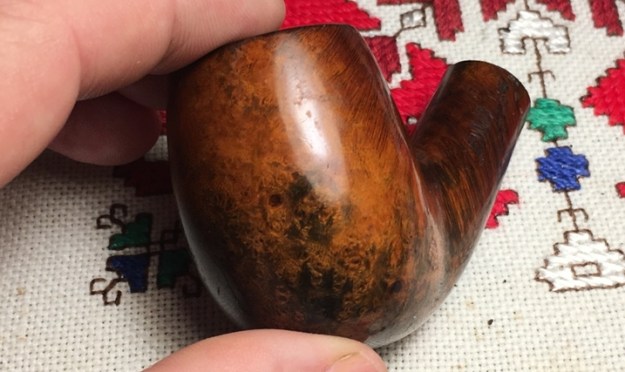
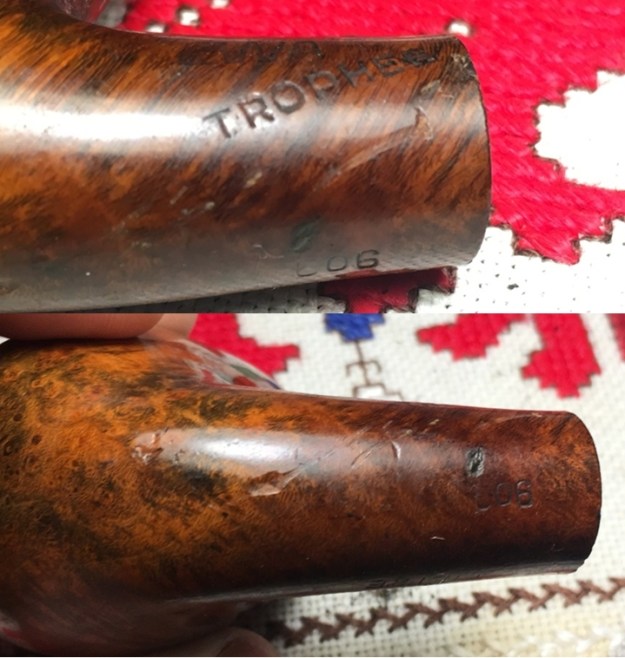
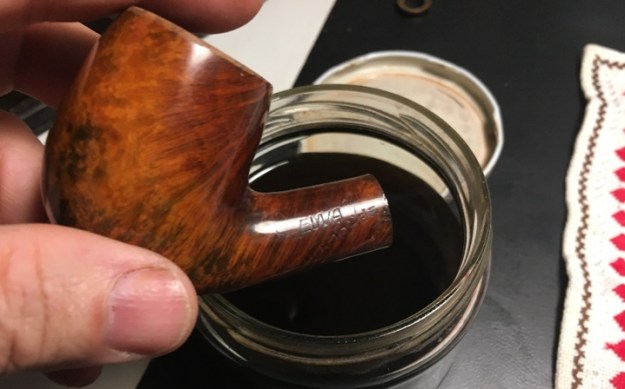
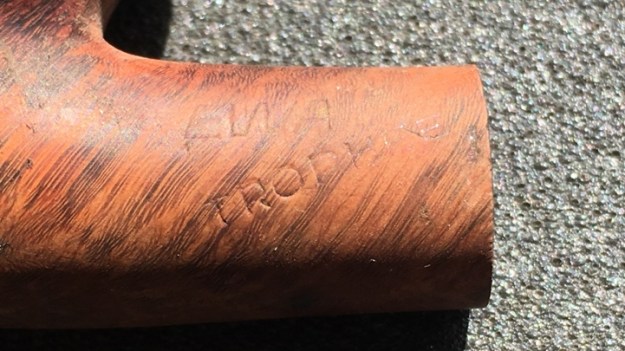
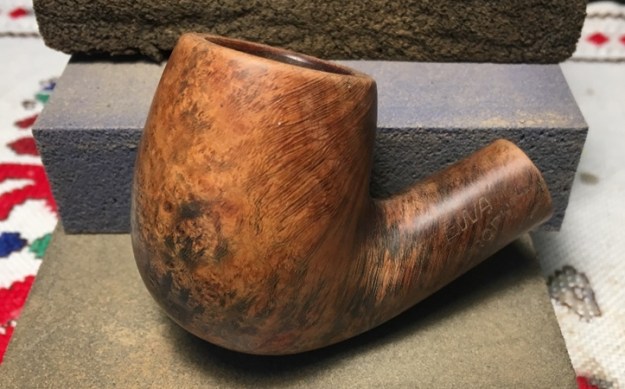
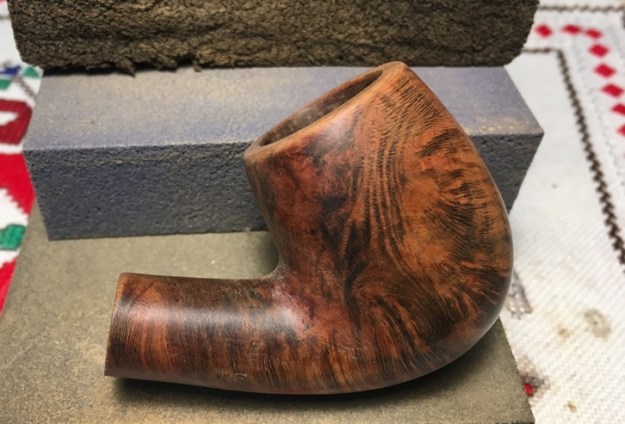
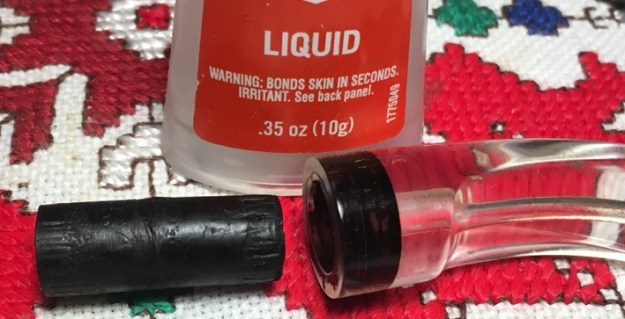
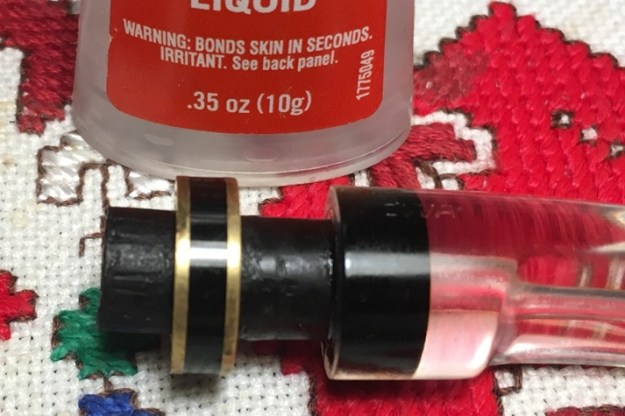
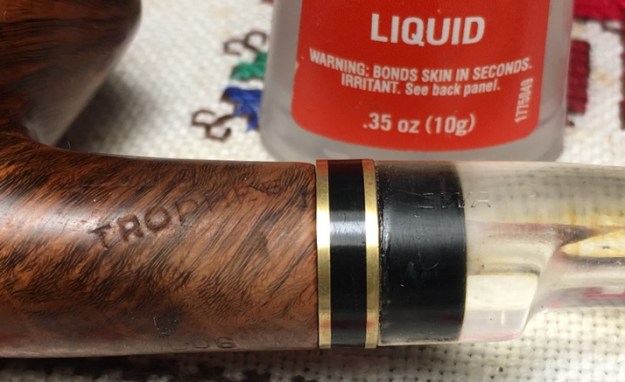
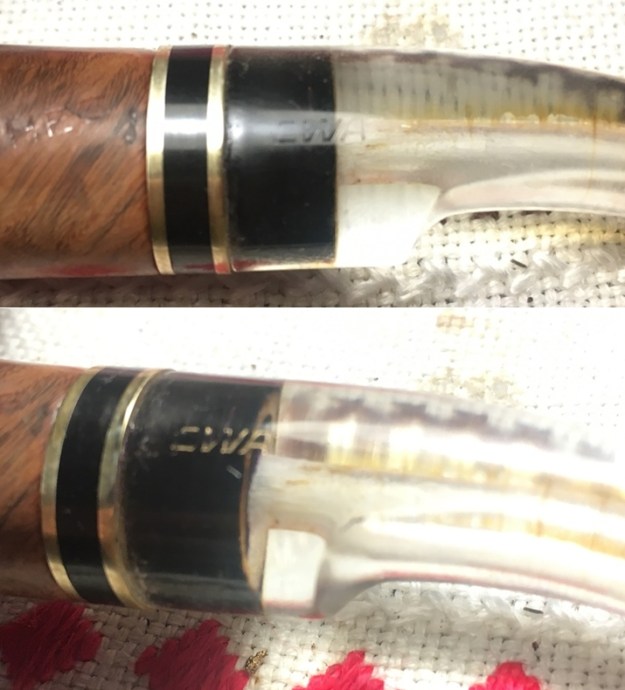
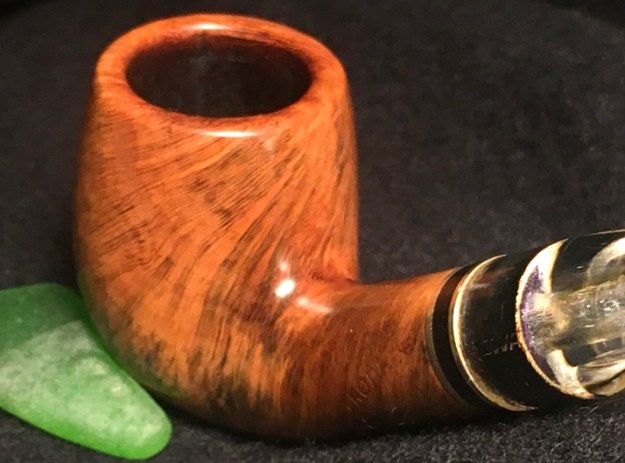
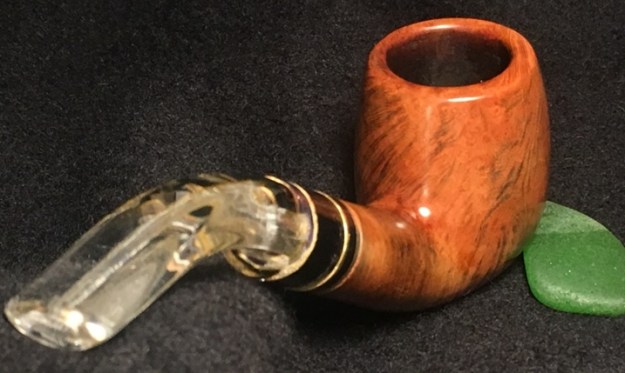
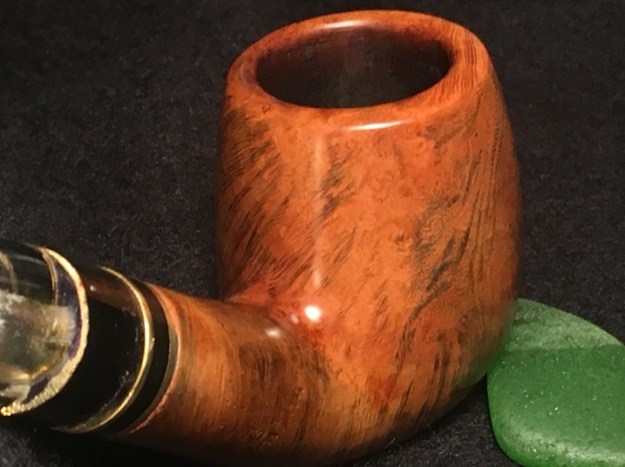
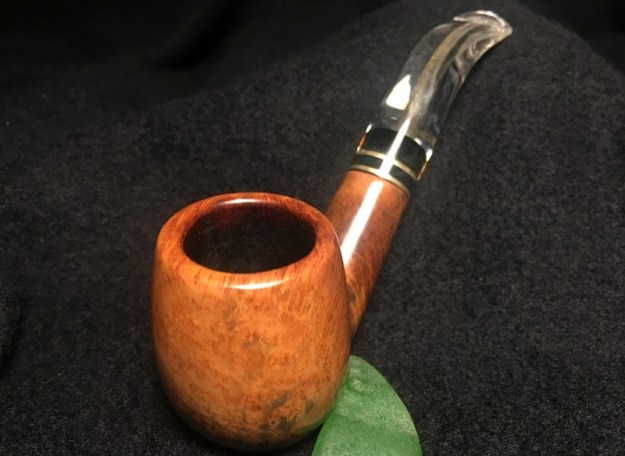
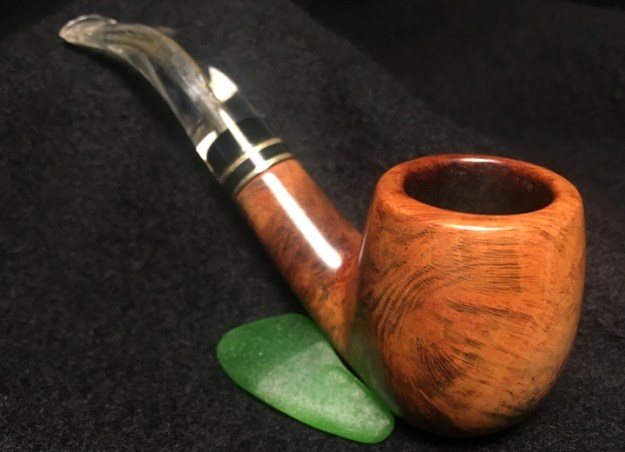
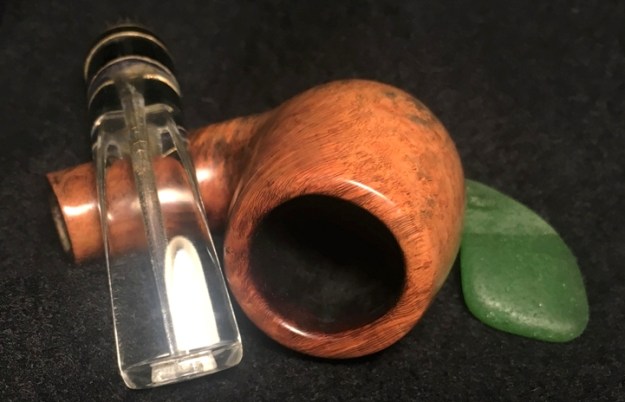
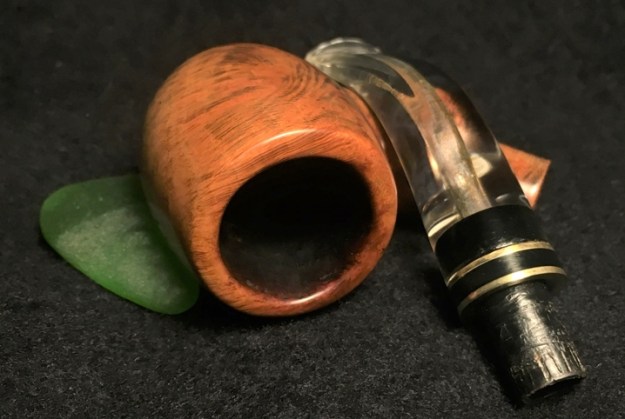
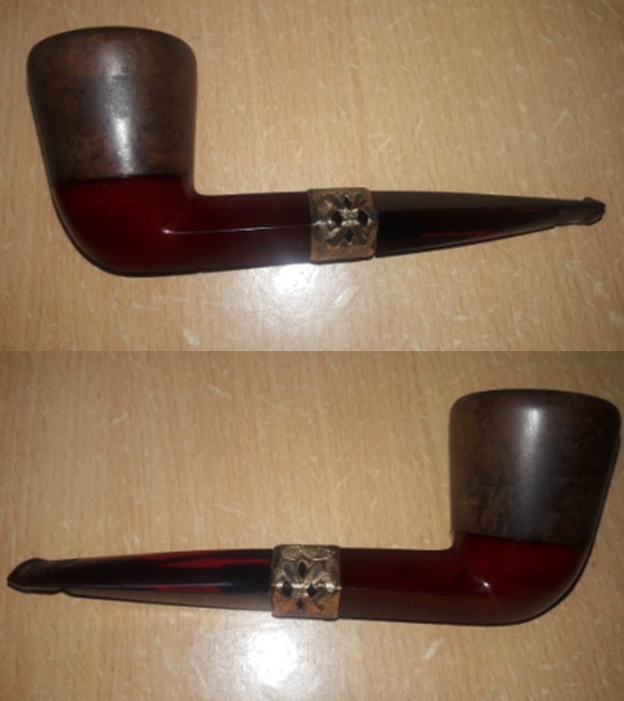
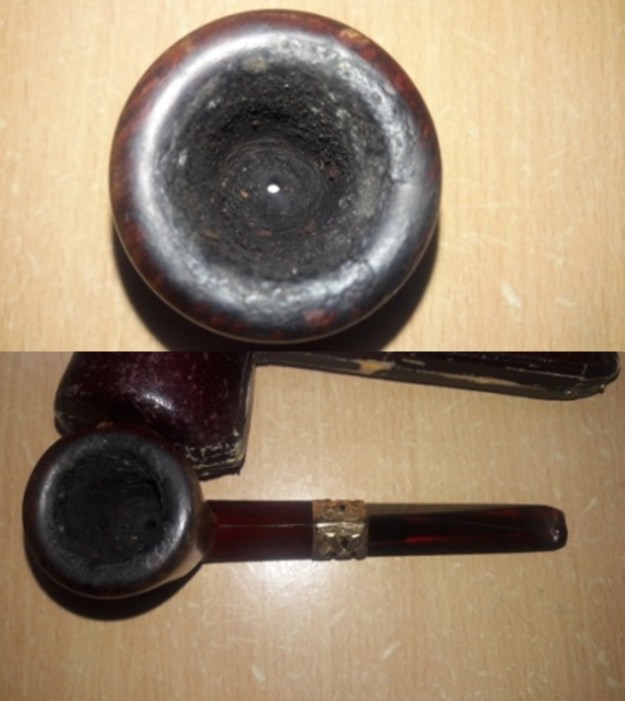
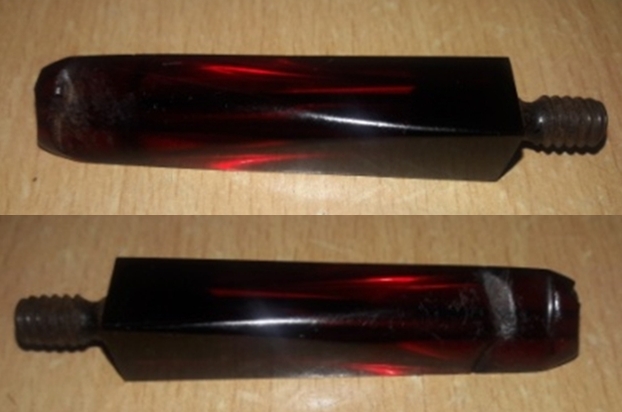
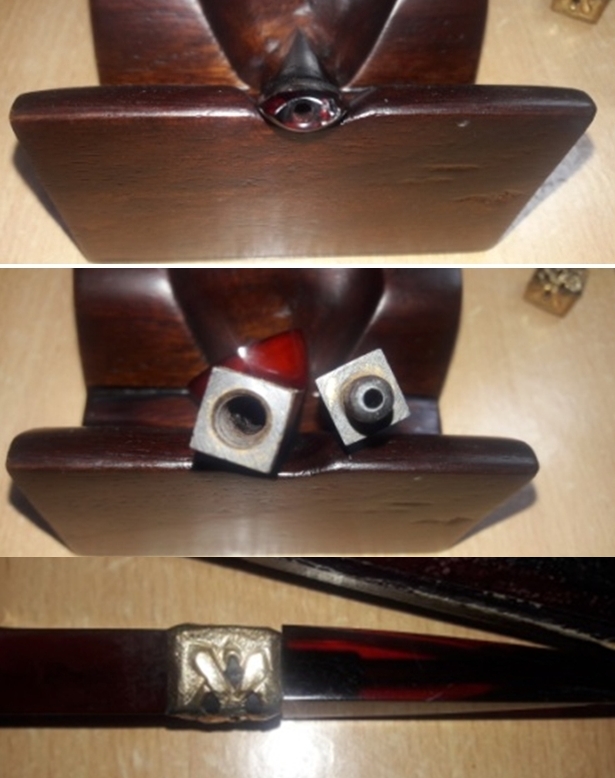
Next on my worktable is another pipe I acquired from a ‘Lot of Treasures’ I found on French eBay.  This French Lot of 50 has rendered some real keepers with historic interest and collectability.  The EWA Trophee I’m now looking at is a classic Bent Billiard with a flare – the acrylic stem, banding and picturesque briar holds out great potential, but it come with some challenges as well.  Pipe man, Scott, commissioned the EWA – a friend on FB and regular contributor on different Face Book Groups, and a former US Navy man who I appreciate very much.  Scott reached out to me on FB Messenger and had been looking at the pipes available for commission in my For “Pipe Dreamers” Only! collection and there were 5 pipes he was dreaming about that he had seen, but settled on one, the EWA Trophee.  I appreciate Scott’s patience in the speed of my pipe restoration production line!  His patience is now paying off, and his commission benefits the Daughters of Bulgaria – our work here in Bulgaria helping women and girls who have been trafficked and sexually exploited.  Here are the pictures that drew Scott’s attention. I can see why this pipe got Scott’s attention.  I have worked on several French named pipes, and this was the first with ‘EWA’ stamped on the left shank flank.  Underneath and at an angle is stamped ‘TROPHEE’.  The acrylic stem also is stamped with a distinct EWA.  The right side of the shank is stamped ‘BRUYERE’ [over] ‘ST. CLAUDE’ [over] ‘FILTRE’.  Tucked on the lower side of the shank is stamped the shape number, ‘909’.  Information about this nomenclature was readily available in the Pipedia article on EWA pipes and with this being my first look at the EWA name of St. Claude, I include more of this article.

From Pipes, Artisans and Trademarks, by José Manuel Lopes

EWA is a French brand of Pipe EWA-Ets. Waille SARL. Launched in the 1970s by Michel Waille, the brand began in the Waille factory founded in 1860 by Horace Waille., and has been passed down from generation to generation ever since. He was succeeded by his son, René (1902-1932), his grandson Adré — who obtained the rank of ‘CAP de Pipier’ in 1926 and was in the company from 1920 to 1974 — and his great grandson, Michel Waille.

Michel, ‘Meilleur Ourrier de France’ but retired today, is currently President of the Pipe Club de Saint-Claude. He joined his father in 1968 and was at the head of the firm until 2002, when the brand was sold, first to Mr. Gigandet, and later to Denis Blanc, of Ad Hoc Pipe. [link is dead]

The company specialises in the production of horn, acrylic and cumberland stems, and today is the only maker in Saint-Claude producing horn and Lucite stems. It also makes the Terminus system pipes, employs half a dozen people and export 25% of its production. From site Ad Hoc Pipe [link is dead]

Horace Waille, the great-grandfather was a pioneer in the history of Pipe story of Saint Claude and created in 1860 a pipe workshop.  Rene Waille, his son, has continued the activity from 1902 to 1932 and was specialized in the initial shaping.

Andre Waille, son of Rene, obtained a “CAP de pipier” (Pipe maker degree) in 1926 and has pursued the activity of the familial company from 1932 to 1974. He is the only pipe maker, who obtained a Pipe maker degree. In 1968 Michel, son of Rene, actual Manager of EWA pipe joint the familial company and transform in 1974 the company in SARL PIPE EWA.

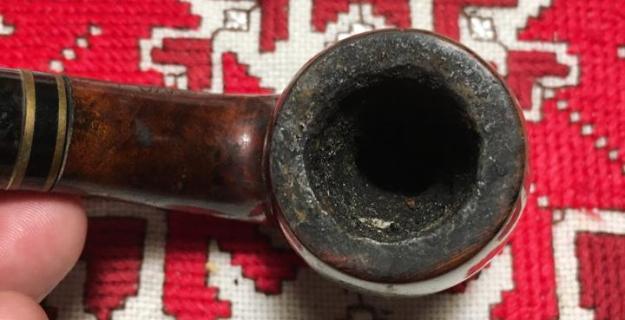
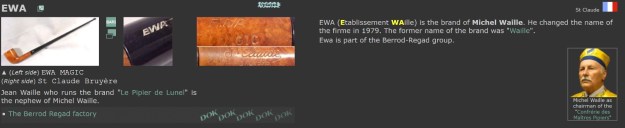
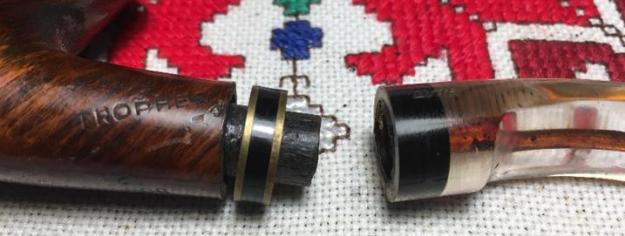
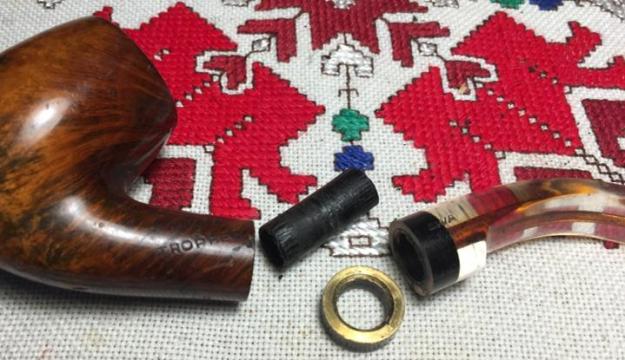
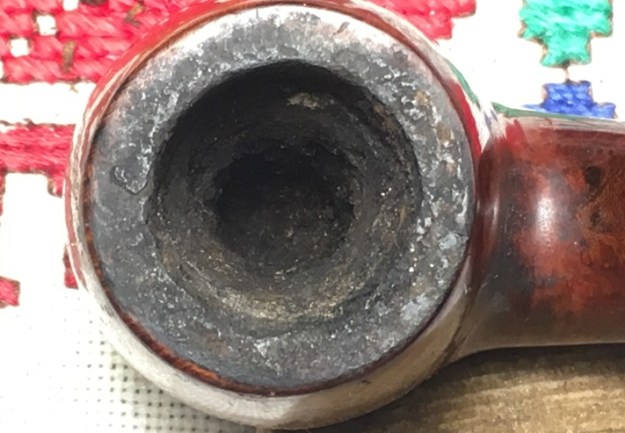
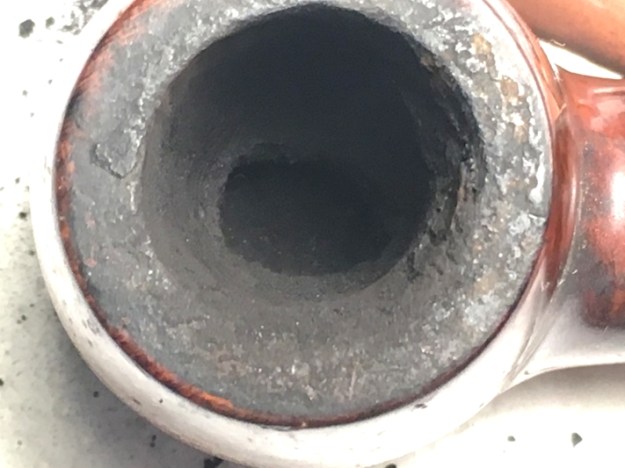
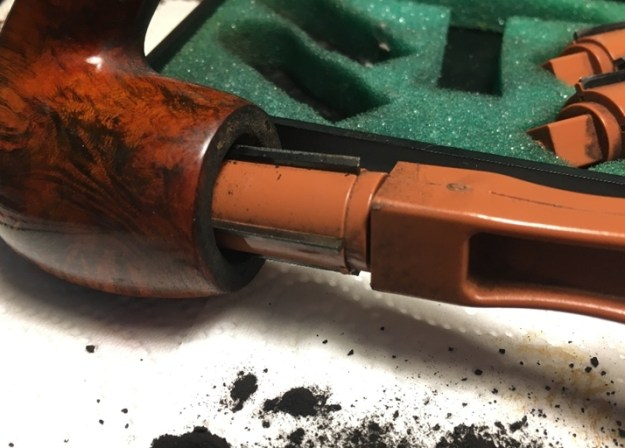
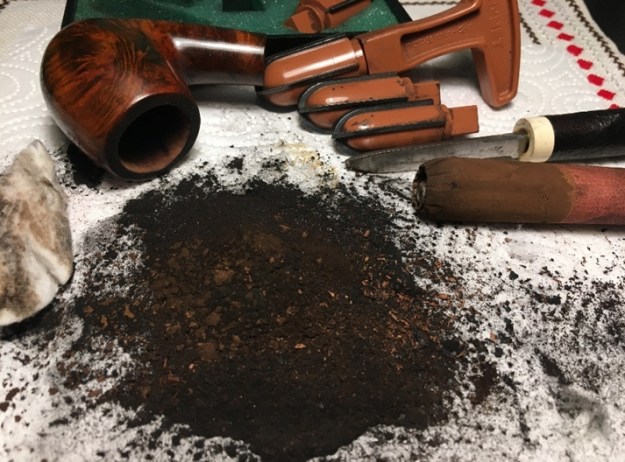
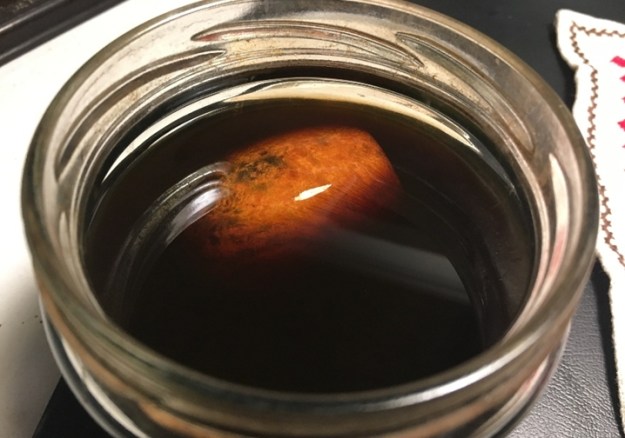
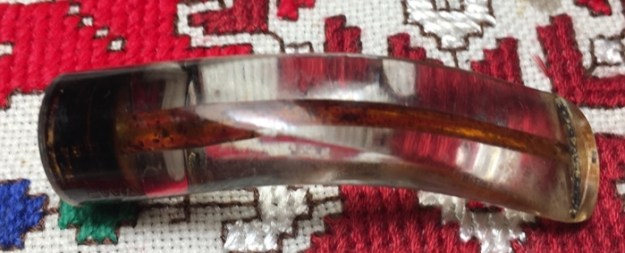
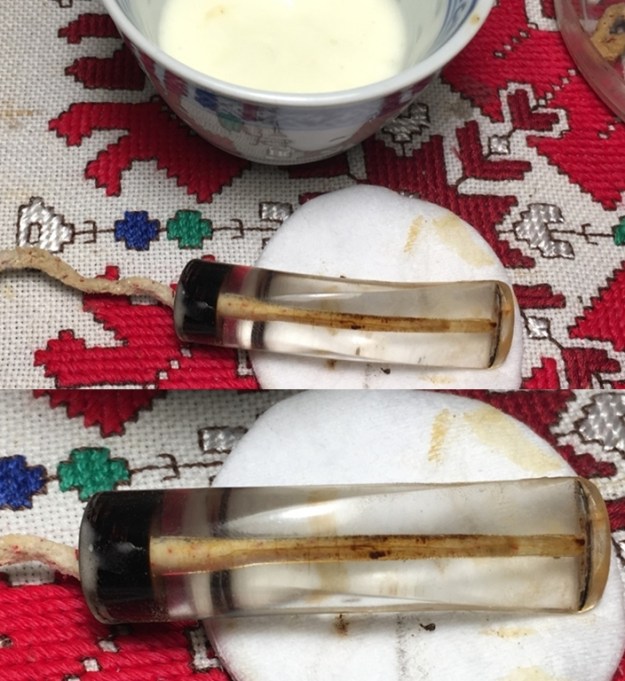
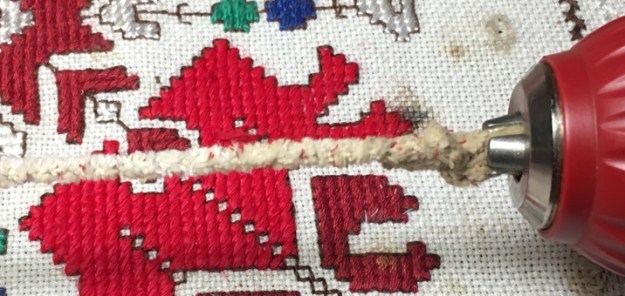
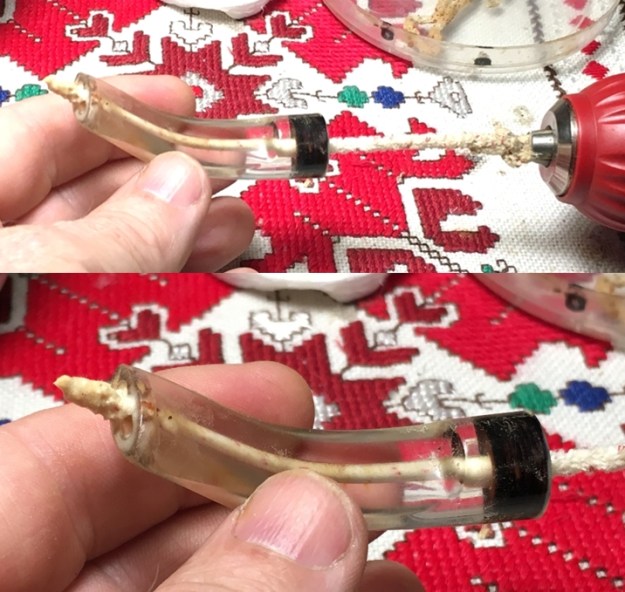
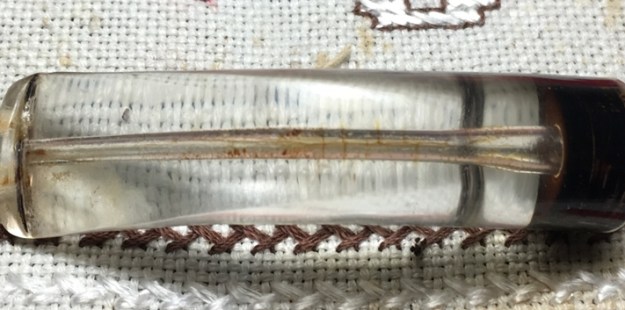
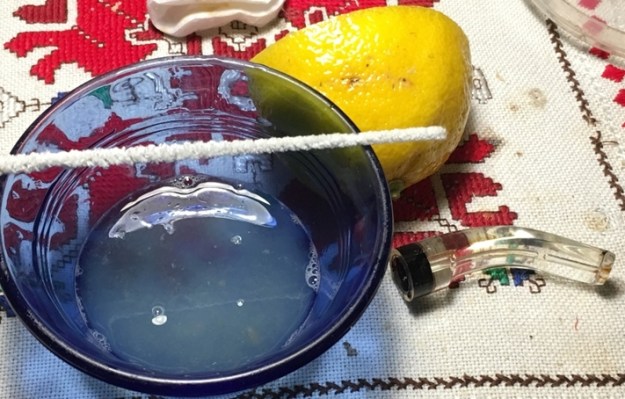
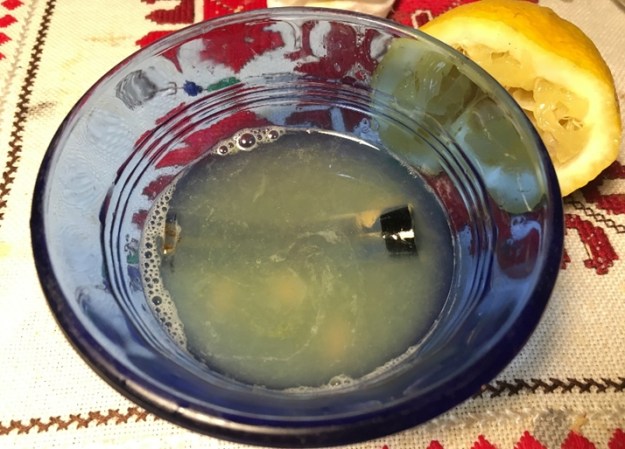
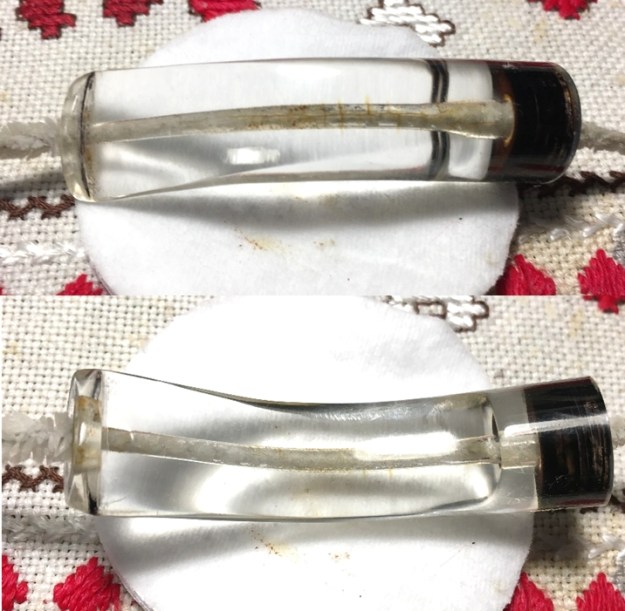
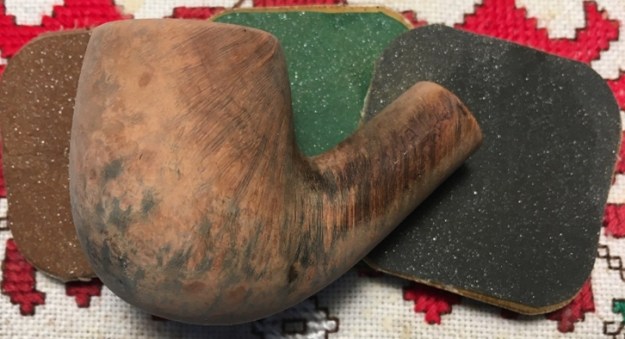
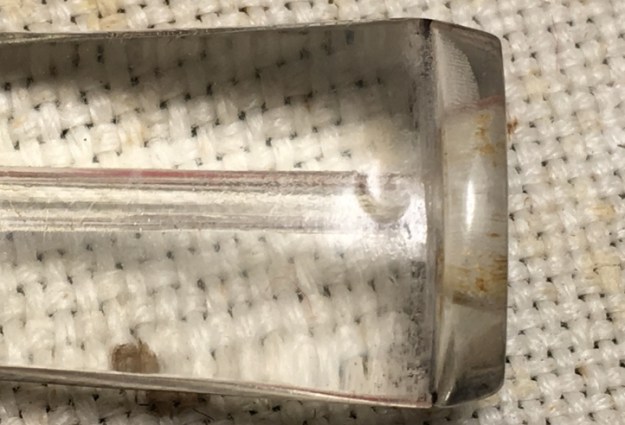
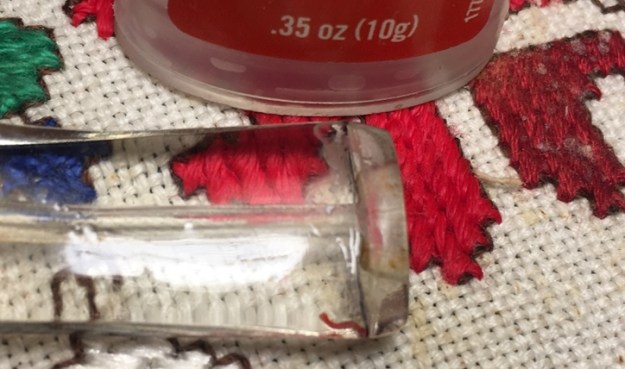
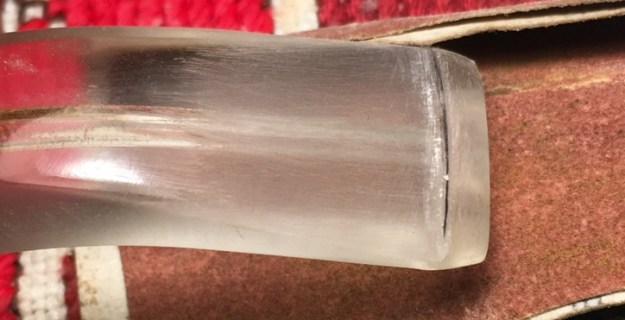
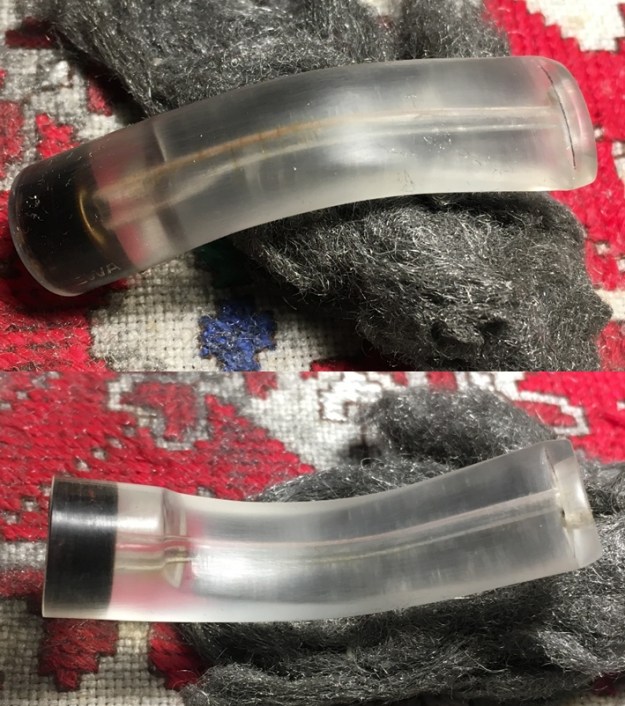
The information I gain from Pipedia that is useful – the Waille name is long-standing in France’s pipe center of Saint Claude.  I’m especially interested in the information that the company has historically specialized in the production and use of horn, acrylic and Cumberland stems which is relevant for the pipe on the worktable.  Pipephil.eu was my next stop and information there clarified the age of this EWA Trophee and the meaning of EWA.  The name was changed in 1979 from simply Waille to EWA from “Etablissement WAille” (English: Establishment).  So, the acrylic stemmed Billiard on my table dates at the earliest starting at 1979 with the genesis of the EWA stamp.With a better appreciation of the heritage and age of this EWA Trophee of St. Claude, I look more closely at the pipe itself.  The grain and classy acrylic stem and banding/shank ring shows promise, but there are also some issues and challenges in bringing this pipe back to a more presentable state.  I take several more pictures to catalogue the issues I see.  The fittings of the pipe have come apart.  As I disengage the stem and stummel, the 8mm filter sleeve is unattached to the stem and needs to be reattached.  The shank ring is also loose. The pipe has been heavily smoked and loved and the cake in the chamber is substantial.  By lightening the picture, you can see how the cake expands as it descends into the chamber.  There is no way to assess the health of the chamber wall until this cake is removed to allow the briar a fresh start and to inspect the wall for heat fissures or cracks.The rim corresponds to the lack of maintenance and cleaning of the chamber.  Thick lava has flowed over the rim and must be removed and cleaned to liberate the briar rim presentation.I like the grain on the stummel – very expressive.  What I don’t care for is the thick shellac finish that was used on this stummel – my classic ‘candy apple’ finish.  I love shine, but briar shine not chemical shine!  I will need to strip this stummel down to the raw briar to allow the grain I see to breathe again.There is a deep gouge on the left side of the shank that creeps toward the shank end where there is another dent next to the edge. The heel of the stummel has seen better days!  There are a few good-sized dents and divots that must be addressed.Probably the most fun will be cleaning the acrylic stem.  The external acrylic surface will not be difficult, but the discolored airway is another thing altogether coupled with the issue of not being able to use the normal cleaning attack with the use of alcohol.On close examination, my concern grows for the cleaning of the airway as I can see microscopic veins splaying from the airway – mainly at the bend of the stem. This next picture is looking into the mouth of the stem that the 8mm filter sleeve has vacated.  This needs to be cleaned thoroughly making way to reattach the filter and afterwards, the ring.We have work to do!  To begin the restoration of Scott’s choice of this EWA Trophee Bent Billiard of St. Claude, I start with the cleaning of the stummel by reaming the chamber which is nearly closed by the growth of the cake.  I take another picture to mark the start and then, starting with the smallest of the blade heads of the Pipnet Reaming Kit, I begin the cleaning process.  To help in the cleanup I first put down paper towel. The cake is hard and stubborn and takes some time and effort for the smallest blade to penetrate to the floor of the chamber.  I take a picture about three quarters of the way down the chamber. I use 3 of the 4 blades available and then switch to using the Savinelli Fitsall Tool to scrape chamber walls.  Finally, I sand the chamber with 240 grit paper wrapped around a Sharpie Pen.  To clean the chamber of the carbon dust, I wipe it thoroughly with a cotton pad wetted with isopropyl 95%.  The picture below shows the huge pile of carbon that was removed from the chamber. After inspection, the chamber appears to be in good shape.  What I notice after the reaming is complete is the rim width imbalance that is now evident after the cake was removed.  The left side of the rim (bottom in the picture) is thinning where fire was drawn over the rim during the lighting. Next, to clean the exterior surface of the stummel, I use undiluted Murphy’s Oil Soap on a cotton pad to scrub.  I also use a brass wire brush to work on the lava crusted on the rim as well as gently scraping it with a knife edge.  The cleaning helps, but the rim remains darkened from the lava and the ‘candy apple’ finish is still very much in place. To complete the stummel cleaning regimen, I use pipe cleaners and cotton buds wetted with isopropyl 95% to clean the internals. After many pipe cleaners and cotton buds, and scraping the mortise walls with a dental spatula, the color of the buds started coming out less soiled.  I decide to stop at this point – the internals were clean enough at this point.In order to strip the ‘candy apple’ finish I put the stummel in a soak of acetone. This should strip the stummel of all the old finish.  I leave it in the soak overnight. Turning to the acrylic stem, before I started on the restoration and as I was thinking about my approach, something in the recesses of my memory was ringing a warning concerning the approach to cleaning the clear, acrylic stem, but I wasn’t sure what it was. I decided to send Steve an email with the stem’s picture and my questions.  With his vast rebornpipes experience, as always, his response was helpful to help chart a course:

Hey Dal

The clear stems like that (if on a GBD are Perspex and early acrylic) are not resistant to alcohol. They can shatter or at least craze. I will often use lemon juice to start with and also liquid cleanser or soft scrub with bristle pipe cleaners or shank brushes. Sometimes you can use a needle file to work the insides. The airways are often rough inside so they need to be smoothed out. It is pretty labour intensive to clean out the stains as originally the airways were clear…

Steve

In a subsequent note he also added this:

Ok… the GBD brand was originally a ST Claude Brand. Perspex is an early acrylic. It was on GBD Prehistoric pipes… Lucite is another brand name for acrylic… both are acrylic.

I have soaked the stems and it does help some, but I have also put the cleanser on a pipe cleaner and let it soak as well. I have even used comet cleanser… big thing is no alcohol if at all possible. Too risky.

I have read of guys chucking a pipe cleaner in their drill like a drill bit and spinning it in the stem but have not tried that myself…  Anyway..,

 Enjoy

Steve

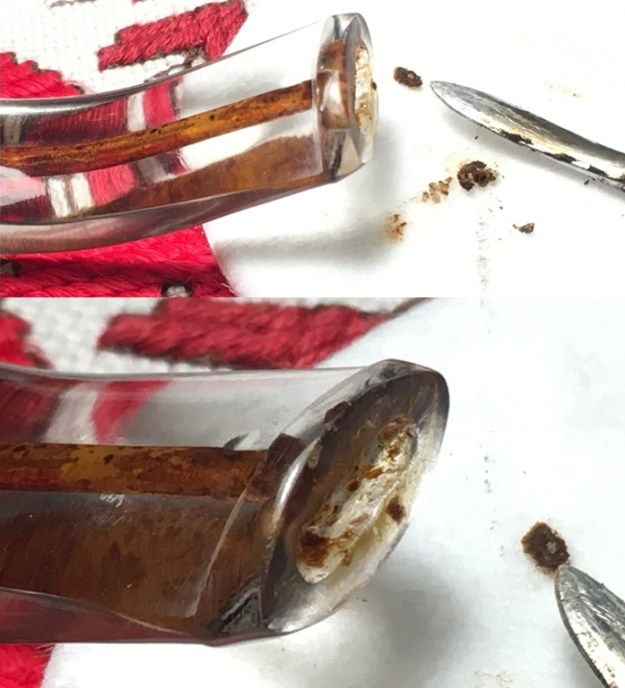
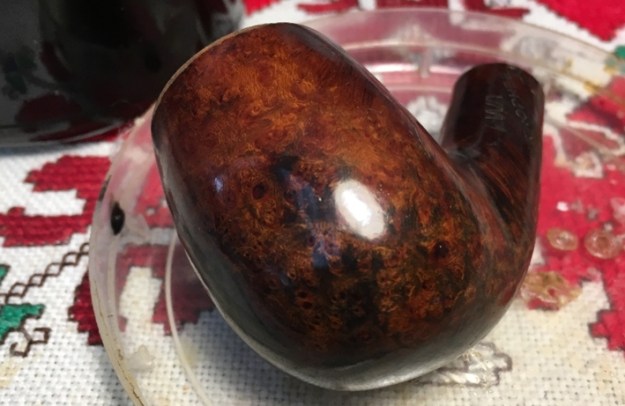
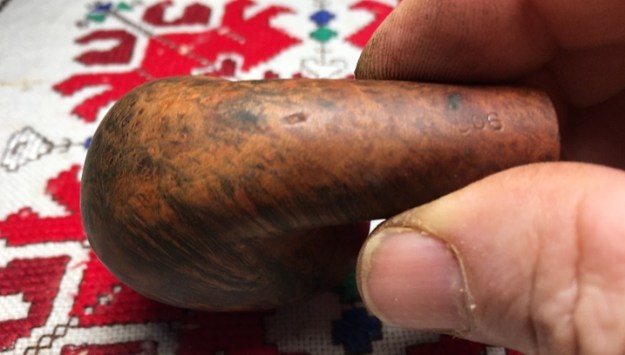
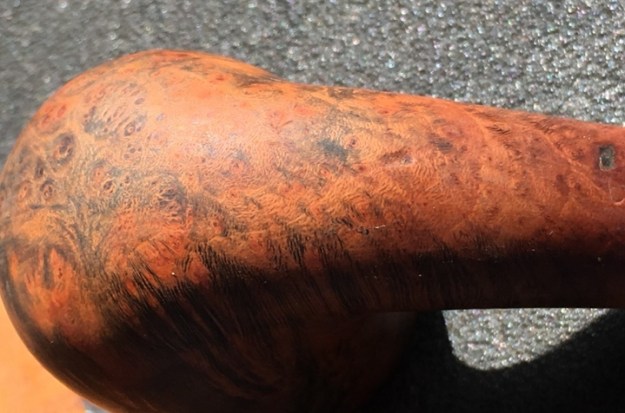
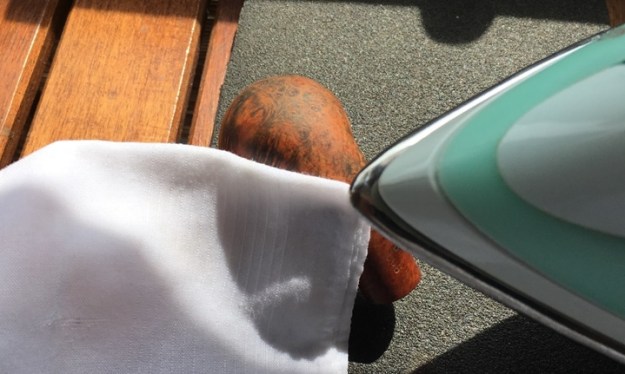
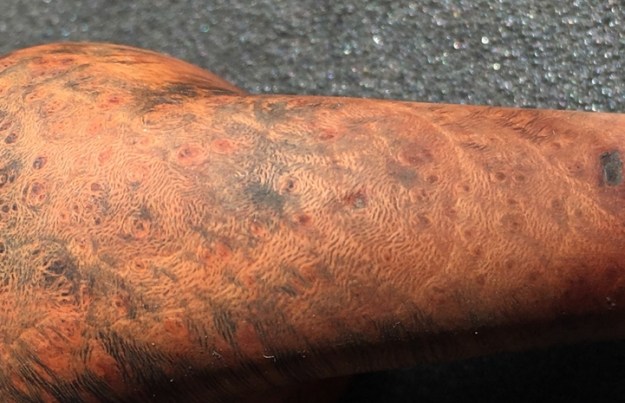
To begin the ‘enjoyment’ in tackling what proves to be a very stubborn project, I take a picture to mark the starting block.Using a sharp dental spoon, I work on digging gunk out of the slot cavity and scraping the hard stain buildup there.In Bulgaria we do not have ‘Soft Scrub’ but we have a product in the same genre called CIF that I next use to begin addressing the rough stains in the bent stem airway.  I use a bristled pipe cleaner and dip it in the cleanser and go to work.  With the pipe cleaner serving as a back drop I can see that microscopic veins are already evident in the airway lining. This is the ‘crazing’ effect that Steve mentioned in his note.  Removing stain from these will be an effort.  The veins are concentrated at the bend of the stem.To up the ante a bit, I decide to try the technique that Steve described that others had tried – to chock a pipe cleaner in a hand drill and utilize the high-speed rotation to enhance the cleaning process of the acrylic airway.  In order to increase the diameter of the pipe cleaner ‘bit’ I twist and wrap an additional pipe cleaner that I had already used.  I then insert this into the chuck and tighten it down.  I use another bristled pipe cleaner as the ‘drill’ and dip it in CIF cleanser.  I then insert the end of the pipe cleaner into the shank side of the stem and start the drill rotation gradually as I slowly insert the pipe cleaner into the airway – I haven’t done this before so I’m watching to see what happens!  It works like a charm.  As I insert the pipe cleaner, I increase the speed of the rotation and there is no wobble at all.  With the drill speed rotation engaged, I then push and draw the stem back and forth to create more cleaning movement.  I do this also with a soft pipe cleaner and cleanser.  The pictures show the pipe cleaner drilling.Well, I hoped for perfect results, but as feared, the stains in the veins remain visible and these are concentrated at the outer bend of the stem.  Because of this, it is evident that these veins have been here a while.  The rest of the airway is looking good.Next, from Steve’s suggested assault options, I squeeze lemon juice into a dish.  I will use the natural acids of the lemon to work on the airway.  I use the pipe cleaner too, but since the night is late, I settle at this point to put the stem into the lemon juice to soak through the night.  With the stummel soaking in the acetone and the stem in the lemon juice, I turn off the lights and end another day. The next morning, I use a pipe cleaner on the stem again.  The lemon soak through the night did seem to work, but the veins and the discoloration in the veins remain.  A reminder that we live in a fallen world where perfect pipes and restorations do not exist.  I accept this and decide to move on, but I decide to leave a pipe cleaner wet with CIF cleanser in the airway to continue to work on the stains while I turn to the stummel.The stummel has been soaking in acetone through the night to remove the ‘candy apple’ finish.  I fish it out of the acetone and the first appearance is that it still has the sheen showing that old finish was still present.  The finish has been greatly softened through the soak and with the gentle help of 0 grade steel wool I remove the finish without difficulty.  With the old thick finish removed, I examine the shank and the heel areas again where I saw significant dents and pits and discover that these are not as pervasive as they appeared before.  Most of the visible damage was to the thick finish and not to the briar.  Well, that’s one argument in favor of thick finishes!  The second picture below of the close-up of the grain – the bird’s eye grain is fantastic! Looking at the rim, it is thinner on the left side (bottom in the picture) and that edge is deteriorated.  The entire rim presentation needs freshening and to try to improve the width balance some. To address this, I take out the chopping board and put 240 grade sanding paper on it.  I give the stummel a minimal topping to give the rim a fresh start.After taking as much briar off the rim as will be helpful, I switch the board to 600 grade paper and rotate the stummel a few more times to smooth and blend.After the topping, the thinning on the left side of the stummel (bottom in picture above) remains thinner and more topping will not improve this because the stummel width descending in the chamber is thinned because of burning and lighting on that side.  To top until the rim width starts evening out would require too much briar real estate.  The way to mitigate against this, but not fully remove it, is to create an internal rim lip bevel.  On the ‘fatter’ side of the rim I increase the amount of bevel somewhat to help even out the round of the chamber.  I use a coarse 120 grade paper to begin, then follow with 240 and 600 grade papers.  The results I believe have improved the rounding, but again as with the stem airway, perfection is not achieved but it is looking very good none the less! Again, looking at the dent on the stummel heel and on the shank, just below the Trophee stamping, I examine the dents and how to repair them.  I go out on our 10th floor balcony, which is my ‘Man Cave’, and use the steaming method to raise the dent that’s on the heel of the stummel.  I wet a cotton cloth with water, and using my wife’s iron, I apply heat to the wet cloth.  When I do this, the moisture in the cloth evaporates and creates steam which is forced into the area of the briar compression.  The porous composition of wood expands with the forced heat and moisture and the result is the dent hopefully shrinks as the wood reclaims its original state.I apply the hot iron to the wet cloth over the dent.The results are excellent.  If I look hard at the place, I can still see an imprint but there is no longer a compression of the wood.I do the same to the small compression on the edge of the shank and the results are equally as good. To clean the entire stummel of the minor nicks and scratches, I utilize the less invasive approach of sanding sponges.  I use a coarse grade, then follow with a medium and light grade sponges.  I like using sponges because they can find the hard to get places as sponges, but they help remove the small nicks and pits in the briar surface.  The grain on this stummel is amazing – the dark grains appear almost cloudy as they cluster. Next, I take out the micromesh pads and wet sand utilizing pads 1500 to 2400. After finishing the wet sanding, I notice a fill on the underside of the shank next to the shape number that doesn’t look solid. Using a sharp dental probe, I test it and it doesn’t take much to remove it.  Before continuing with the micromesh process, I need to refill the pit left behind.I wipe the area with a cotton pad wetted with alcohol and mix a small amount of thick CA glue and briar dust.  I place a small amount of briar dust on an index card then drop some CA glue next to it.  Using a toothpick, I gradually pull briar dust into the CA glue until it thickens to the consistency of molasses. I then apply a small amount of the putty over the patch area, careful not to go over the shape number.  I put the stummel aside for the putty to cure.Several hours later, the patch has cured, and I begin the process of filing the patch down with a flat needle file.I’m careful to remain on the patch as I file avoiding collateral damage with nearby briar.After bringing the patch mound down almost to flush with the briar surface, I switch to using the sharp edge of a piece of 240 grade sanding paper to bring the patch down to the briar surface.  Again, keeping the sanding process tightly confined to the patch area.When the patch is smooth to touch, I then switch to 600 grade paper to smooth the patch and blend further.When the 600 grade has finished its work, I catch up the patch area in the micromesh process utilizing pads 1500 to 2400.With the patch completed, I continue by dry sanding using pads 3200 to 4000 and 6000 to 12000.  I love the thick grain on this stummel!There is no question in my mind about whether this grain can stand on its own!  At this point I apply Before & After Restoration Balm to the briar surface.  The B&A Restoration Balm does a great job simply deepening the richness of the natural briar.  I apply some to my fingers and rub it into the briar surface.  As I rub it in, it thickens to a wax-like consistency.  After I apply it thoroughly, I let it stand and absorb for about 20 minutes then I wipe off the excess and buff up the surface with a microfiber cloth.  I’m loving the grain!With the stummel on the side, I now turn to the clear Lucite stem. I begin by washing the stem with dish soap and warm water.  Looking closely at the bit area, the top lip of the button is compressed.  I take a picture of it but it’s not easy to see!  There is also roughness from tooth chatter.The lower bit has a tooth compression as well as tooth chatter.I apply clear CA glue to the lower tooth compression and spray the CA glue with an accelerator to hold the glue in place and to quicken the curing process.To deal with the compression on the top button lip, I simply sand it out using 240 grad paper.  I smooth out the tooth chatter as well.I then use 240 grade paper to sand and smooth the patch on the lower side as well as to remove the tooth chatter and roughness of the bit and button.  I follow the 240 sanding by wet sanding the entire stem with 600 grade paper to take out the small nicks and scratches.Following the 600 grade paper, I sand/buff the entire stem with 0000 steel wool.Following the steel would I wet sand the stem using micromesh pads 1500 to 2400 and then dry sand with pads 3200 to 4000 and 6000 to 12000.  After each set of three pads I apply a coat of Obsidian Oil to the stem. The stem is ready to go.  I take the nickel shank ring and clean it with Tarn-X.  It does a great job shining up. Now it’s time to reattach the 8mm filter sleeve.  I want to make sure its straight and seats accurately in the mortise.  I first slip the ring over the sleeve without attaching it with CA glue.  I want to simply use it as a spacer for the first step of reattaching the sleeve.  With the ring over the sleeve, I apply CA glue around the end of the sleeve that is inserted into the stem cavity. After I insert the sleeve into the cavity, before the CA glue sets up, I quickly seat the filter sleeve into the mortise with the ring compressed between the shank and stem.  I hold the stem firmly in place with proper orientation until the CA glue sets.With the sleeve properly seated, I then apply a few drops to the stem side of the ring and then reattach it, again seating the stem into the mortise.  It looks good – no gaps and a straight snug fit.To spruce up the EWA stem stamping, I apply Rub ‘n Buff European Gold.  I apply a little over the stamping and simply wipe it lightly off with a cotton pad.  The stamp is a little thin, but the Rub ‘n Buff holds well, and it looks good.Now the home stretch.  I mount a cotton cloth buffing wheel to the Dremel set at about 40% of full speed and apply Blue Diamond compound to the stem and stummel. I then separate the stem and change to another cotton cloth wheel dedicated to applying Blue Diamond to nickel and I buff up more shine on the shank ring.  After reuniting the stem and stummel again, I then wipe the pipe with a felt cloth to clean off the compound dust in preparation of the application of the wax.  I then change to another cotton cloth wheel with the same speed and apply a few coats of carnauba wax to stem and stummel and then finish with a rigorous hand buffing to raise the shine.

The unique grain cluster constellation that I see in the EWA Trophee is amazing.  The heel grain pattern shows color, swirls and vortexes that remind me of pictures of the planet Jupiter.  It is truly amazing and mesmerizing to look at.  The Lucite stem came out well – it is classy with the complimentary gold and black band ring providing a nice transition.  My only wish is that I could have purged the stem airway totally of the discoloration in the crazed veins that will remain as a reminder of this pipes battle scars from its past!  Even so, the EWA Trophee of St. Claude, is a beautiful Bent Billiard and Scott did well in seeing the potential of this pipe when he commissioned it.  As the commissioner, he has the first opportunity to acquire it in ThePipeSteward Store.  This pipe benefits the Daughters of Bulgaria – women and girls who have been trafficked and sexually exploited.  Thank you for joining me!

An Easy Sprucing up of a 1949 Dunhill Shell # 52 F/T


Blog by Paresh Deshpande

Believe you me friends, this is FUN!! Being able to work on different pipes, be able to choose your project, choose a brand you wish to work on, is an exhilarating experience for me. Prior to the Mumbai Bonanza striking me, I was restricted mostly to working on my inherited collection of pipes, each complete with its stem challenges and similar stummel condition and was getting slightly monotonous to say the least.

I was fortunate enough to have heeded the advice of my dear friend and mentor, Mr. Steve, and struck a deal with a trash collector from Mumbai. He did not know what he was selling and I did not know what I was buying as we reside in different cities!! The argument that Mr. Steve presented was that if not anything, I shall at least have some spares and this was logical. I struck a deal and here are pictures of the pipes that I received in this lot.  This lot contains some very nice collectible pipes, a few well known brand pipes and some mediocre pipe brands. Overall, with seven Dunhills, a Preben Holm #1, a couple of Made in England Pete System pipes, Charatan’s, Custom-Bilt, Stanwell and other assorted pipes, I would say that I had hit a huge jack pot!!! Hence, I like to call this find as “Mumbai Bonanza”.

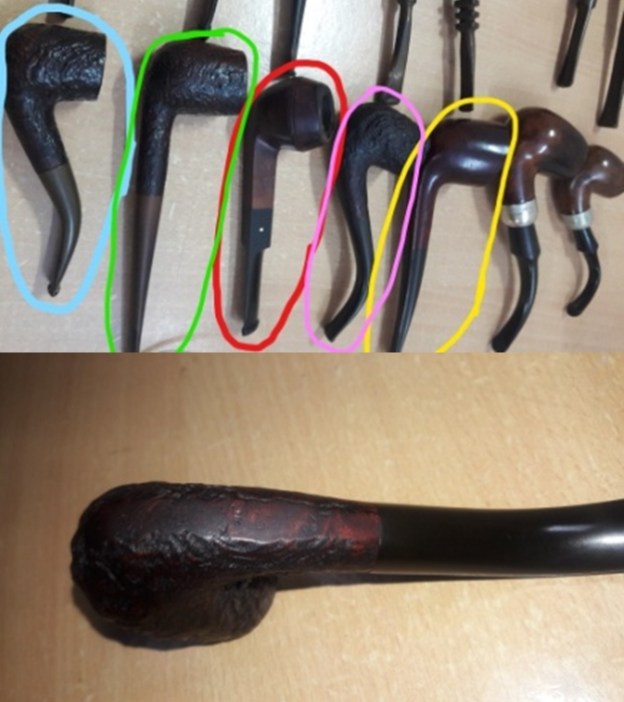
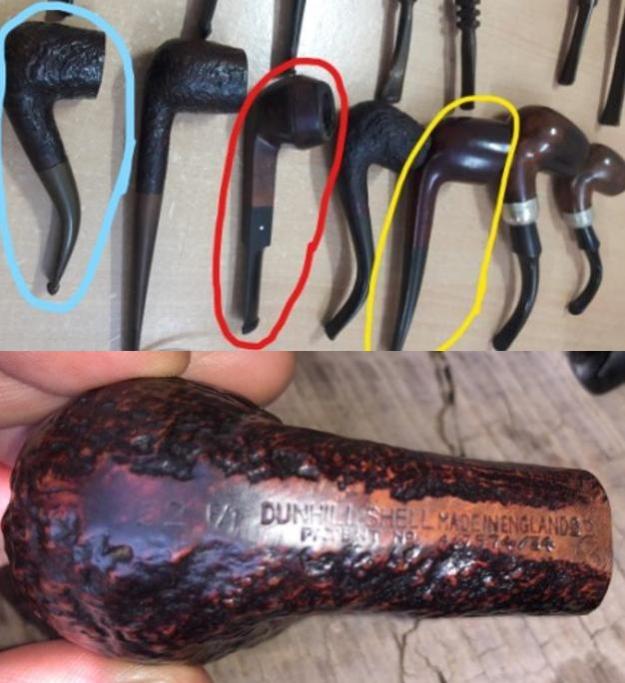
The pipe that I decided to work on from this find is a smallish full bent Dunhill Shell billiard, and is marked in pastel blue circle in the picture below (the ones circled in red and yellow are completed projects). This is a beautiful deeply sandblasted billiard with a lovely tactile feel in the hand. The play of dark red brown hues on the sandblast makes for a visual treat. It is stamped on a smooth surface on the foot and the underside of the shank with the shape number 52 followed by F/T followed by DUNHILL Shell Made in England 9 (9 is underlined) 0 all in a straight line over PATENT No 417574/34 followed by an encircled 3 at the shank end. This stamping indicates that this pipe is a fishtailed group 3 sized shell and dates this pipe to being manufactured in 1949 and sold in 1950.  The Trademark Dunhill White Dot adorns the top of the vulcanite stem. The stampings are deep, crisp and clear.With this information, I move ahead with the restoration of this beautiful sandblasted Dunhill bent billiard.

INITIAL VISUAL INSPECTION
The chamber has a thick layer of even and smooth cake which indicates that the pipe has been well used but also well cared for by its previous Steward. From what I can see, the chamber walls appear to be without any damage. The chamber is odorless. There is an overflow of lava on the blasted rim top surface. The inner and outer rim edges appear to be in pristine condition. The mortise is clean and so is the shank airway. The stummel boasts of some beautiful deep sandblast pattern all around. It is dirty with grime and oils filling in much of the craggy finish. The briar, in this condition also, looks amazing. I can’t wait to see after I have worked on it. The round shank of the bent billiard flows into a bent tapered stem which has a flare, like a fish tail, at the button end and hence the stamp F/T. The vulcanite stem shows significant damage to the button end with deep bite marks on both upper and lower surface of the stem. The lip is also severely damaged and will have to be reshaped. In this project, repairs to the damaged stem will be a major challenge, however if compared to previous stem repairs, this should be a cake walk.

THE PROCESS
Since the stem has significant damage, and from my experience of stem repairs, this will be time consuming and laborious part and hence I start this project by tackling the stem first

Now that I was clear about the path to be followed, I first flame both the surfaces of the stem with a Bic lighter. The heat from the flame raises the vulcanite to the surface and takes care of the tooth chatter that was seen earlier. I sand the stem with a folded piece of 220 grit sand paper to get rid of the oxidation, have a clear idea of the areas which require fill and its extent while providing a smooth surface for the intended fill. I cleaned out the internals of the stem with hard bristled and regular pipe cleaners dipped in isopropyl alcohol. Once I was satisfied with the internal cleaning, I wiped the stem surface, particularly the damaged button end, with a cotton pad and alcohol to remove any traces of dirt and grime.To begin the stem repairs, I prepared a mix of CA superglue and activated charcoal and generously applied it over the damaged surface and set it aside for curing over night. Before moving ahead, I would like to mention here that I had applied this mix to achieve sufficient thickness which would help during the filing and sanding while shaping the button and achieving the correct stem profile.While the stem repair was set aside to cure, I moved ahead to deal with the stummel repairs. I start the reaming with a size 1 head of the PipNet reamer and progress to size 2 head. I further clean the chamber with a folded piece of 180 grits sand paper to sand out the remaining traces of cake and expose the walls of the chamber to ascertain that there are no cracks/ heat fissures. Using my fabricated knife, I gently scrapped away the lava overflow. I wiped the chamber with a cotton pad dipped in isopropyl alcohol to remove the carbon dust left behind by all the reaming and sanding process. This also eliminated all traces of old smells from previous usage. The walls of the chamber were solid with no damage. Continuing with the cleaning regime, using a soft brass wired brush I gently scraped away the thick lava coat in the blast of the rim. With a hard bristled tooth brush and dipped in undiluted Murphy’s oil soap, I very deliberately scrubbed the sandblast finish on the stummel and the rim top. The stummel and rim top was dried using paper napkins and soft cotton cloth and set it aside to dry out naturally. The stummel looks fresh and clean. Next, I rub a small quantity of “Before and After Restoration Balm” in to the briar with my finger tips and let it rest for a few minutes. The balm almost immediately works its magic and the briar now has a nice vibrant appearance with the beautiful contrasting hues colors that are unique to this sandblast pipe, on full display. I further buff it with a horse hair shoe brush. After I had applied the balm, the rim top surface appeared too darkened and unclean. I was not happy with the way the rim top looked at this stage and decided to further clean it. I scrapped the rim top surface with a brass wired brush with a bit more pressure than I normally apply. The rim surface appeared clean as can be seen in the picture below. I reapplied the balm, hoping that the surface would look clean with the sandblast patterns showing themselves proudly. But alas!! The rim top surface appeared as before, blackened and unclean. I was at my wits end when after repeated cleaning with the brass brush with increasing pressure each time, the rim top surface appeared as before, dark and unclean. Mind you readers, being a sandblasted surface, topping really was not an option that I desired to adopt. I let the rim top surface be, satisfied that it was clean and sans any old lava overflow. In my exuberance to appreciate the beautiful and rugged patterns on the stummel caused by sandblasting, I missed out on cleaning the mortise and the shank airway. This is what exactly I addressed at this stage. Using bristled and regular pipe cleaners dipped in isopropyl alcohol, I first moistened the oils, tars and gunk in the mortise. Thereafter, with my fabricated spatula, I scrapped out all the tars and oils from the mortise. As I progressed with my cleaning, eventually the pipe cleaners started coming out clean indicating that the shank internals are clean.I set the stummel aside and turned my attention to the stem repair. The fill had cured nicely and I moved ahead and began the process of filing and shaping the button end with a flat head needle file. For a better blending, I further sand the entire stem with 220 followed by 400, 600 and 800 grit sand paper. This helps to reduce the sanding marks left behind by the more abrasive 220 grit paper. To bring a deep shine to the vulcanite stem, I went through the complete set of micromesh pads, wet sanding with 1500 to 2400 grit pads and dry sanding with 3200 to 12000 grit pads. I wiped the stem with alcohol after each pad and rubbed it down with Extra Virgin Olive oil to rehydrate the vulcanite. The repairs have blended in very well and the stem now looks shiny black and beautiful. The internals of the stem was once again cleaned out using alcohol and pipe cleaners to clear the airway of all the debris resulting due to the sanding. The finished stem is shown below. To finish, I re-attach the stem with the stummel. I mounted a cotton cloth buffing wheel to my local machine which is similar to the Dremel.  I set the speed at about half of the full power and applied White compound to the entire pipe. I wiped/ buffed the pipe with a soft cotton cloth to clear it of any leftover compound dust. I then mounted another cotton cloth wheel on to the polishing machine and applied several coats of carnauba wax. I finished the restoration by giving the entire pipe a rigorous hand buffing using a microfiber cloth to raise the shine further.The completed pipe looks lovely, fresh and vibrant. The deeply sandblasted surface proudly displays the contrasting dark brown hues which was the hallmark of Dunhill Shell pipes with a nice tactile feel in the hand. It surely is one of the best looking sandblasted pipes and will find a place of pride in my humble collection. As and when I load this pipe with my favorite tobacco (I love my English blends…) and sip my scotch, I wish this dude could tell me all about its past life!! Ah, this would be bliss…cheers!

The first from a collection of Bertrams – a Bertram ¾ Bent Billiard 60


Blog by Steve Laug

Once in a while I get emails through the blog about pipes that someone wants to sell. These can be estates or they can be a collection that an older pipeman has decided to get rid of by passing it on to someone who can work on them and see that they get into the hands of another pipe smoker. In this case I received an email from a fellow who wanted to sell me a collection of Bertram pipes. We met over FaceTime and he showed the pipe collection to both Jeff and me. We discussed their condition and arrived at a price for the pipes. The majority of the pipes in the collection were Bertrams but there were also some other brands that were known to me. We struck a deal on the lot and he shipped them to Jeff. Jeff took some photos of the collection when it arrived in Idaho. He unwrapped each pipe and filled the three boxes that they were mailed in, and then took a photo to show the size of the collection we had purchased. To be honest it was a bit overwhelming to see all of the collection in boxes. We were looking at a lot of work to bring these back to life.Jeff chose a group of pipes from the collection and began his work on them He sent me a box with some of the pipes he had cleaned up. I chose one of the Bertrams from the lot to be the first pipe I would work on. The smooth finish was dirty but the grain shone through showing me that this was a beautiful pipe. It had a thick shank and a bent tapered stem. There was a cake in the bowl and some lava overflowing on to the rim top. The stem showed some wear on the button edge and tooth marks and chatter in the top and underside. The photos below tell the story and give a glimpse of this interesting pipe. Jeff took 2 close up photos of the bowl and rim to capture the condition of the pipe before he started his cleanup work. The rim top had some thick lava overflow and made it hard to know what the inner edge looked like under the grime and lava. He also took photos of the right and left side of the bowl and shank to show the interesting grain on the bowl and the heel. The finish is very dirty but this is another interesting pipe.Jeff took a photo to capture the stamping on the left side of the shank. The photo shows stamping which read Bertram over Washington, DC. The stamping on this pipe is clear and readable. The second photo shows the double stamped number 60 showing the quality of the pipe. The next two photos show the stem surface. They show the tooth marks and chatter on both sides near the button. There are also some nicks on the outer edge of the button. The stem is lightly oxidized and scratched.If you don’t know much about them I recommend doing a little research on them. I include a link to the write up on Pipedia (http://pipedia.org/wiki/Bertram). Bertram pipes were based out of Washington DC. They were popular among famous politicians and celebrities of the time. They made many products for them from FDR’s cigarette holders to Joseph Stalin’s favorite pipe. They were considered some of the best America had to offer till they finally closed their doors in the 70s. They graded their pipes by 10s, the higher the grade the better. Above 60s are uncommon and 80-90s are quite rare. I’ve never heard of or seen a 100 grade. I have several blogs that I have written on rebornpipes that give some history and background to Bertram pipes. (https://rebornpipes.com/2015/06/16/an-easy-restoration-of-a-bertram-grade-60-217-poker/).

I have included the following link to give a bit of historical information on the pipe company. It is a well written article that gives a glimpse of the heart of the company. http://www.streetsofwashington.com/2012/01/bertrams-pipe-shop-on-14th-street.html#

I am also including this photo of the shop in Washington D.C. and a post card of the shop.

From this information I have learned that the shape and grade Bertram I have in front of me now was made before the closure of the shop in the 70s. I also learned that it was a grade 60 thus it was on the higher end of the spectrum just above mid-grade. Jeff reamed the bowl with a PipNet pipe reamer and followed up with a Savinelli Fitsall pipe knife to remove the cake. He scrubbed out the mortise and the airway in the shank and the stem with alcohol, cotton swabs and pipe cleaners. He scrubbed the exterior of the bowl, rim, shank and stem with a tooth brush and Murphy’s Oil Soap to remove the oils and tars on the rim and the grime on the finish of the bowl. He rinsed it under running water. He dried it off with a soft cloth. He was able to remove the lava build up on the rim top and you could see the great condition of the bowl top and edges of the rim. He soaked the stem in Before & After Deoxidizer to remove the oxidation. I took photos of the pipe before I started my work on it. I took a close up photo of the rim top to show its condition. It was in great condition with a little burn damage to the front inner edge of the rim. Otherwise both the inner edge and the outer edge of the rim look really good. The stem photos show the light tooth marks and the damage to the button surface on both sides.I cleaned up the inner edge of the rim to address the burn damage to the front inner edge. I used a folded piece of 220 grit sandpaper to smooth out the damage and to bring the bowl back into round.I polished the briar with micromesh sanding pads – wetsanding it with 1500-2400 grit pads and dry sanding it with 3200-12000 grit pads. I wiped the bowl down with a damp cloth after each pad to remove the sanding debris. After the final sanding pad I hand buffed it with a cotton cloth to raise a shine. I worked some Before & After Restoration Balm into finish of the briar with my fingertips to clean, enliven and protect it. I let the balm sit for a little while and then buffed with a cotton cloth to raise the shine. The pipe really looks good at this point and the grain stands out beautifully. I am very happy with the results. I set the bowl aside and turned my attention to the stem. There was a deep nick on the top of the stem near the shank end. I filled it with clear super glue and set it aside to dry. Once it had cured I used a folded piece of 240 grit sandpaper to blend the repair, the tooth marks and chatter into the surface of the stem. Once the surface was smooth I sanded out the scratch marks and started the polishing of the stem with a folded piece of 400 grit sandpaper. I wiped the stem down with a damp cloth and took the following photos. I polished the stem with micromesh sanding pads – wetsanding it with 1500-2400 grit pads and dry sanding it with 3200-12000 grit pads. I wiped the stem down with Obsidian Oil after each pad. I polished it with Before & After Pipe Polish – both Fine and Extra Fine and gave it a final coat and set it aside to dry. I put the stem and bowl back together and buffed the pipe with Blue Diamond on the buffing wheel. I polished the briar and the minute scratches still in the vulcanite of the stem until there was a rich shine. The polished briar came alive with buffing and the straight, swirled and birdseye grain just popped with polishing. The black vulcanite stem had a rich glow. The finished pipe is a thick shank bent billiard that really is a comfortable handful of briar. Have a look at it with the photos below. The dimensions are Length: 5 1/2 inches, Height: 2 inches, Outside diameter of the bowl: 1 3/8 inches, Chamber diameter: ¾ of an inch. I will be putting this one on the rebornpipes store sometime in the days ahead. If you are looking for a chunky billiard with a bent tapered stem this one might be for you. Let me know if you are interested. Thanks for walking through the restoration of this with me it was a pleasure to work on.
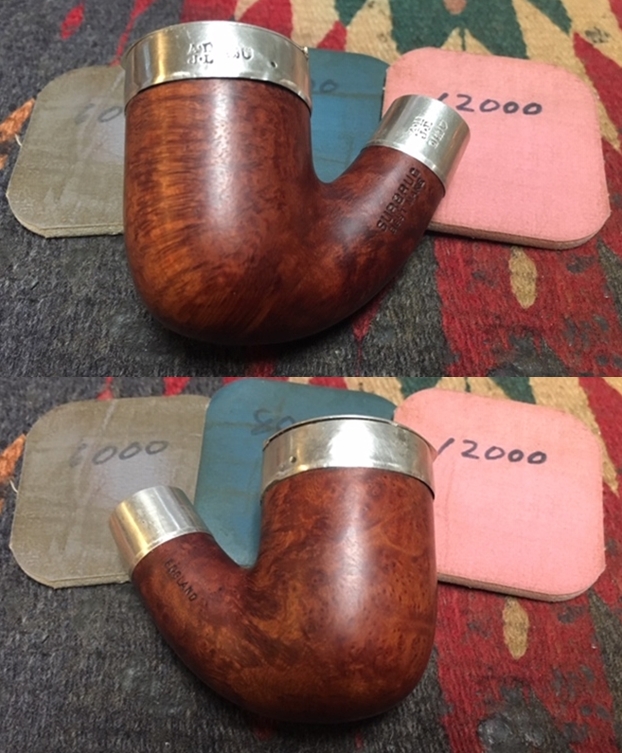
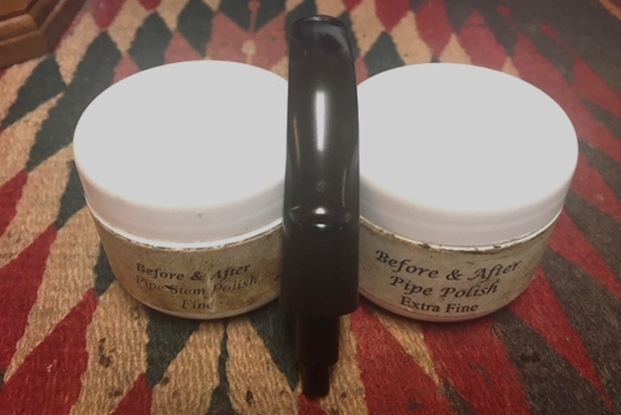
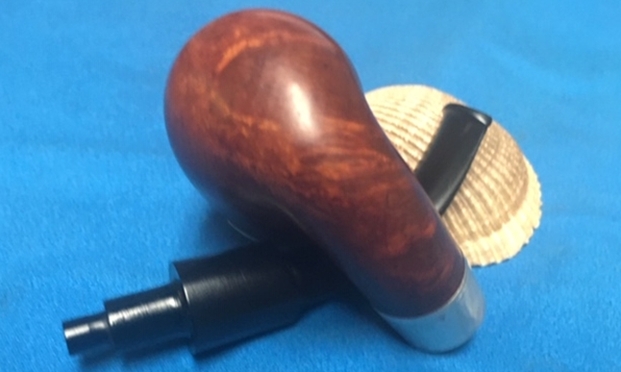
 

Breathing Life into a 1962 Dunhill Shell Briar 591 F/T Oom Paul


Blog by Steve Laug

One of the benefits of the rebornpipes blog is that more and more there are individuals contacting Jeff and me with either single or multiple pipes for sale. The current pipe on the table came to us in that fashion. The pipe was being sold on an auction and a friend referred him to Jeff. He contacted Jeff about the pipe he had and sent along some photos. He had a price in mind that worked for us and soon the beautiful Dunhill Shell Briar Oom Paul on the left was on its way to Jeff. I have included the photos of the pipe that he sent us to look at. They a pretty clear picture of the condition of the pipe.

The pipe was more dusty than dirty, but the finish was in excellent condition. The Shell Briar sandblast finish was rugged, craggy and quite beautiful. The rim top was clean with no damage to the inner or outer edge of the bowl. The bowl had a light cake but was not thick and there was no lava overflow on the rim top. The stem was quite worn with tooth marks and chatter on the top and underside ahead of the button. There was some light oxidation and some calcification on the surface for the first inch of the stem.

The pipe was stamped on the underside of the shank. It read 591 F/T followed by Dunhill over Shell Briar. Next to that it was stamped Made in England with a 2 following the D in England. Finally the pipe was stamped with a Circle 4 S next to the stem/shank junction. The second photo below was included by the seller. It appeared in the photo that the stamping was not strong. We would have to see once it was in hand. What I could see was that the 591 F/T stamp was not visible but the seller said it was there. That stamp identified the pipe as an Oom Paul shape with a saddle stem. The F/T refers to a Fish Tail stem. The finish is noted by the Shell Briar and S stamp on the shank. The number 2 next to the D in England dates the pipe to 1962. The Circle 4 identifies the pipe as a Group 4 sized pipe.Jeff took some photos of the pipe when he received it from the Michigan auction seller. He wanted to record the general condition of the pipe before he started his cleanup work. This pipe was a beauty and other than the dust and debris of years it was in very good condition. There was a thin cake in the bowl but no lava overflowing onto the rim top. The inner and outer edges of the bowl were in excellent condition. The sandblast finish was in great condition other than the dust as noted. The vulcanite stem was oxidized and has some calcification at the button. There were tooth marks and chatter on both sides of the stem at the button edge and some wear on the button edge itself. The photos below tell the story of this beautiful pipe. Jeff took a close up photo of the bowl and rim to capture the condition of the pipe before he started his cleanup work. The close up photo of the rim top had some lava overflow in the grooves of the sandblast. There is also a general accumulation of dust and debris in the sandblast finish on the rest of the bowl and shank.He also took photo of both sides of the bowl and shank to show the condition of the sandblast pattern on the bowl and the heel. The finish is very dirty but I like the looks of the finish on this interesting pipe.Jeff took photos of the stamping on the underside of the shank to give a clear picture of what it read. The photos show the stamping as noted above. The stamping on this pipe is clear and readable. The final photo of the threesome shows the white spot on the top of the saddle stem. The next two photos show the stem surface. They show the oxidation, calcification, tooth marks and chatter on both sides near the button. The stem also has some damage to the top and underside of the button.  Jeff reamed the bowl with a PipNet pipe reamer and followed up with a Savinelli Fitsall pipe knife to remove the cake. He scrubbed out the mortise and the airway in the shank and the stem with alcohol, cotton swabs and pipe cleaners. He scrubbed the exterior of the bowl, rim, shank and stem with a tooth brush and Murphy’s Oil Soap to remove the oils and tars on the rim and the grime on the finish of the bowl. He rinsed it under running water. He dried it off with a soft cloth. He was able to remove the lava build up on the rim top and you could see the great condition of the bowl top and edges of the rim. He soaked the stem in Before & After Deoxidizer to remove the oxidation. I took photos of the pipe before I started my work on it. I took a close up photo of the rim top to show its condition. It was in great condition with no damage to either the inner or outer edge of the rim. The stem photos show the light chatter and tooth marks on both sides.The bowl was in very good condition after Jeff had cleaned it up and did not require a lot of work on my part to complete the restoration. I worked some Before & After Restoration Balm into finish of the sandblast briar with my fingertips to clean, enliven and protect it. I let the balm sit for a little while and then buffed with a cotton cloth to raise the shine. The pipe really looks good at this point. I am very happy with the results. With the bowl finished I set it aside and turned my attention to the stem. I used a folded piece of 240 grit sandpaper to blend the tooth marks and chatter into the surface of the stem. Once the surface was smooth I sanded out the scratch marks and started the polishing of the stem with a folded piece of 400 grit sandpaper. I wiped the stem down with a damp cloth and took the following photos.I polished the stem with micromesh sanding pads – wetsanding it with 1500-2400 grit pads and dry sanding it with 3200-12000 grit pads. I wiped the stem down with Obsidian Oil after each pad. I polished it further with Before & After Pipe Stem Polish – both Fine and Extra Fine. Once I finished with that I gave it a final coat and set it aside to dry. This Dunhill Shell Briar Oom Paul came alive with polishing and waxing. I buffed both the bowl and stem with Blue Diamond polish on the buffing wheel. I buffed the bowl much more lightly than I buffed the stem. The polished black vulcanite stem looked very good with the Shell Briar finish. I gave the bowl multiple coats of Conservator’s Wax and the stem multiple coats of carnauba wax. I buffed the bowl and stem with a clean buffing wheel to raise a shine. I hand buffed it with a cotton cloth to deepen the shine. The finished pipe is a beautiful looking Oom Paul that looks amazing and feels great in the hand. This tall bowled pipe should be a cool smoking pipe. Have a look at it with the photos below. The dimensions are Length: 5 ½ inches, Height: 2 1/4 inches, Outside diameter of the bowl: 1 1/4 inches, Chamber diameter: ¾ of an inch. I will be putting this one on the rebornpipes store sometime in the days ahead. It may well be the kind of Dunhill Shell Briar that you have been looking for. Let me know if you are interested. Thanks for walking through the restoration of this with me it was a pleasure to work on.
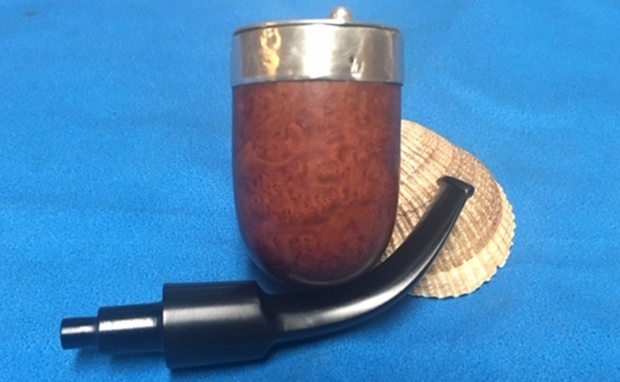
 

Sprucing up another WDC: A Cased Bakelite & Briar Dublin


Blog by Paresh Deshpande

There a quite a few WDCs that I have inherited from my old man and the one on my table now is “WDC BAKELITE” in its original case. I loved the deep red color of the Bakelite shank and the fiery transparent red of the stem. Thus, no surprise here that I chose to work on this WDC Bakelite Dublin shaped pipe!!

This is the third WDC from my grandfather’s collection, WDC Bakelite in an impressive Dublin shape. The dark brown briar bowl, Bakelite base and translucent Bakelite stem looks attractive. The gold filigree at the shank end adds a classy bling, breaking the red monotony of the stem and shank.  I dare say that this pipe does not boast of only beautiful bird’s eye or cross or straight grains but nevertheless distinct swirls of grains can be seen which are eye-catching to say the least!!  The shank and stem is devoid of any stamping, however, the only stamping to identify this pipe to be a WDC is seen on the top lid of the leather covered case. The case is internally lined with a soft silky felt cloth in light green color and bears the trademark inverted equilateral triangle in red with letters “WDC” over “BAKELITE” in gold. Gold ribbons flow from either sides of the triangle and bears the words “FRENCH” on the left ribbon and “BRIAR” on the right. The quality of the case, its felt lining and the stamping simply shouts QUALITY!! I searched pipedia.com for more information on this pipe and attempt at estimating the vintage of this pipe. Though I could not find any information about this pipe in particular or a connection between WDC and Bakelite material, here is what I have found on pipedia.org about the brand:

William Demuth. (Wilhelm C. Demuth, 1835-1911), a native of Germany, entered the United States at the age of 16 as a penniless immigrant. After a series of odd jobs he found work as a clerk in the import business of a tobacco tradesman in New York City. In 1862 William established his own company. The William Demuth Company specialized in pipes, smoker’s requisites, cigar-store figures, canes and other carved objects.

The Demuth Company is probably well known for the famous trademark, WDC in an inverted equilateral triangle. William commissioned the figurative meerschaum Presidential series, 29 precision-carved likenesses of John Adams, the second president of the United States (1797-1801) to Herbert Hoover, the 30th president (1929-1933), and “Columbus Landing in America,” a 32-inch-long centennial meerschaum masterpiece that took two years to complete and was exhibited at the World’s Columbian Exposition in Chicago in 1893.

The Presidential series was the result of Demuth’s friendship with President James A. Garfield, a connoisseur of meerschaum pipes. Demuth presented two pipes to Garfield at his inauguration in 1881, one in his likeness, the other in the likeness of the President’s wife. Later, Demuth arranged for another figurative matching the others to be added to the collection as each new president acceded to the White House, terminating with President Hoover.

In early 1937, the City of New York notified S.M. Frank & Co. of their intent to take by eminent domain, part of the land on which the companies pipe factory was located. This was being done to widen two of the adjacent streets. As a result of this, Frank entered into negotiations to purchase the Wm. Demuth Co.’s pipe factory in the Richmond Hill section of Queens. It was agreed upon that Demuth would become a subsidiary of S.M. Frank and all pipe production of the two companies would be moved to DeMuth factory. New Corporate offices were located at 133 Fifth Avenue, NYC.

Demuth pipes continued to be made at the Richmond Hill plant till December 31. 1972. Then the Wm. Demuth Company met its official end as a subsidiary company by liquidation.

I came across an interesting catalog on the same page on pipedia.org which shows the exact same pipe that I am now working on. It is the same pipe as the first pipe on the left in second row. A close scrutiny of the picture confirms the following:
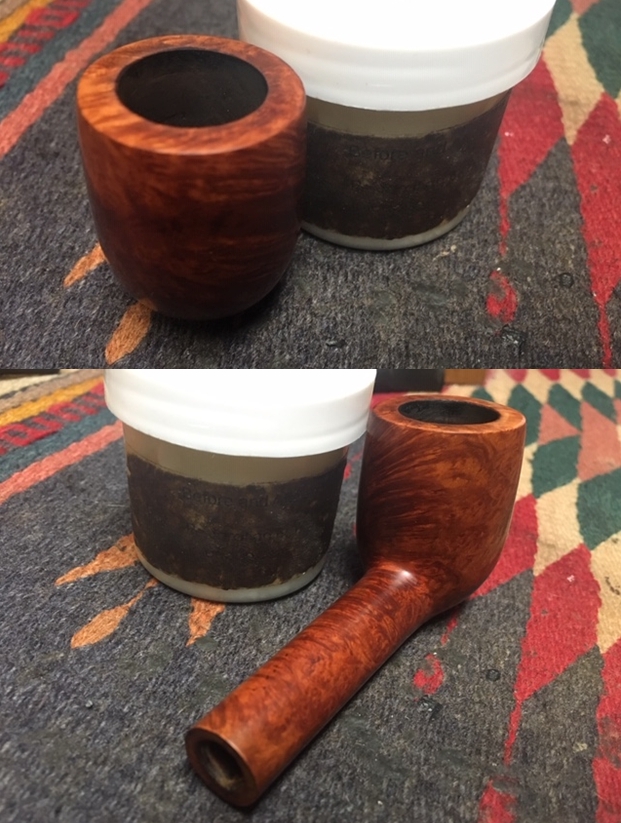
(a) Bakelite material was being newly introduced by WDC as WDC Bakelite line. This can be inferred from the Note on the flyer “BAKELITE IS A NEW PATENT COMPOSITION……….NOT BURN”.

(b) The pipe before me is model number 24718 and was at the time their second most expensive of all the pipes advertised in the flyer, retailing at $8!!

(c) The catalog was published by “John V Farwell Company, Chicago”. John V. Farwell & Co. was a department store in Chicago, Illinois, United States. The store’s history traces back to 1836, when the Wadsworth brothers came to Chicago to sell goods. John V. Farwell & Co. was the most successful store in the city until the 1871 Great Chicago Fire. The store continued to operate after the fire, but faced stiff competition from former partners Marshall Field and Levi Leiter. It was purchased by Carson, Pirie & Co. in 1926. (https://en.wikipedia.org/wiki/John_V._Farwell_%26_Co.) I visited rebornpipes.com and came across an interesting article on materials used in pipe making (https://rebornpipes.com/2014/08/09/hard-rubber-and-other-early-plastic-used-in-pipes-ronald-j-de-haan/)

It is here that I found the following information on “BAKELITE”:

These qualities made Bakelite the most successful synthetic material in the first half of the 20th century. From 1928 it was also produced as molded resin. Both the pressed and the molded forms were suitable for the pipe making industry. Pipes were made from Bakelite and molded phenol-resin. Complete pipes of Bakelite are very rare because of its lack of heat resistance. Phenol-resin however was frequently used for pipe mouthpieces and cigarette holders because it imitated amber.

From the above gleaned information, it is safe to conclude that the pipe now on my worktable is of 1920s and early 1930 vintage and at that point in time was WDC’s new offering retailing at $ 8!!

INITIAL VISUAL INSPECTION
The leather covered case in which the pipe was safely ensconced for many years has borne the maximum brunt of uncared for storage. The leather has weathered while being exposed to the extreme climate and has cracked at a number of places. However, the hinges and the lock mechanisms are intact and function smoothly. I shall just be giving a nice wipe with a moist cloth and applying a neutral shoe polish coat which is rich in wax content. The lining within has stained near the bowl/ Bakelite base joint and near the rim top. This needs to be cleaned up. Age definitely shows on the stummel surface!! The briar is dull and lifeless and has taken on a layer of aged patina, through which one can make out the beautiful grain patterns all around. There is a heavy overflow of lava all over the entire stummel surface. The bowl is covered in oils, tars and grime accumulated over the years of storage and is sticky to the touch. To be honest, the stummel is filthy to say the least. A thorough cleaning of the stummel followed by polish should accentuate the beautiful mixed grain pattern seen on the stummel through all the dirt. The Bakelite base of the stummel is dirty and sticky. Few scratches are also seen on close observation. The bowl (‘Real Walnut Bowl’ as specified in the flyer above!!) screws-in directly on to the Bakelite base. There is no brass or any metal separator between the bowl and the base, which is surprising. The threads on the bowl and the Bakelite base are covered in oils, tars and gunk. The bowl has one small hole at the heel through which the smoke passes in to the shank. The heel of the Bakelite base shows traces of old oils and tars. This will need a thorough cleaning.There is heavy buildup of cake with a thick layer in the chamber. The condition of the inner walls of the chamber can be ascertained only after the cake has been removed completely and taken down to bare briar. The bowl however, feels robust and solid to the touch from the outside. The rim top has a thick layer of overflowing lava. The condition of the smooth rounded inner and outer edge and rim top can be commented upon once the overflow of lava is removed and the chamber is reamed. The shank end of the pipe is clean. These issues should be a breeze to address, unless some hidden gremlins present themselves!!The diamond Bakelite stem has a rounded orifice which also points to its vintage. It is a rich reddish color that is translucent and the light really plays through. I cannot wait to see the stem clean up. Deep tooth indentations and minor tooth chatter is seen on the upper and lower surface. The pointed corner edge of the lip on the left is broken and will either have to be reconstructed or filed away to a straight profile. The lip edges have also been chewed off and greatly deformed. The screw-in tenon appears to be a Delrin tenon (or is it bone?) and is covered with dried oils and tars. The fit of the stem in to the mortise is very loose and the alignment is overturned. This will be a first for me as I have corrected metal threaded stingers, but never a Delrin or bone. The mortise does show signs of accumulated dried oils, tars and remnants of ash, greatly restricting the air flow. As I was dismantling the pipe, the gold filigree band also separated from the diamond squared Bakelite shank.The overall condition of the pipe, with the thick build-up of cake in the chamber, clogged mortises, overflowing of lava covering the entire stummel and the deep bite marks to the stem makes me believe that this would have been one of my grandfather’s favorite pipes.
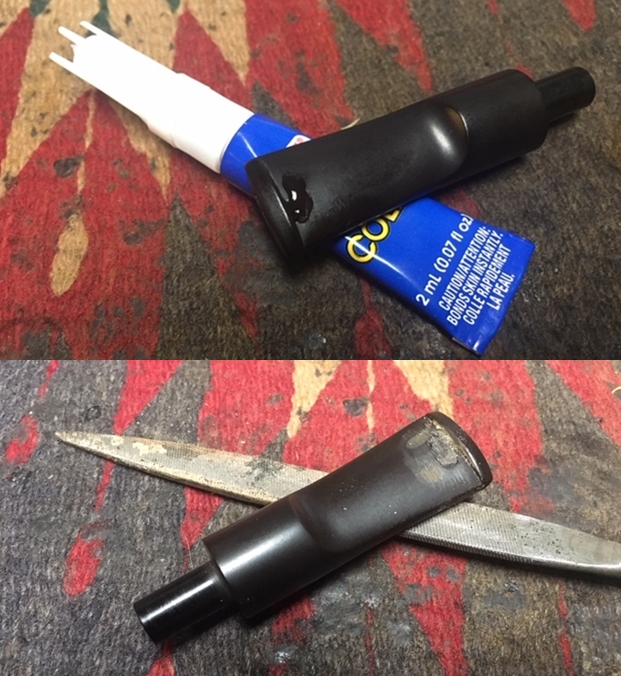
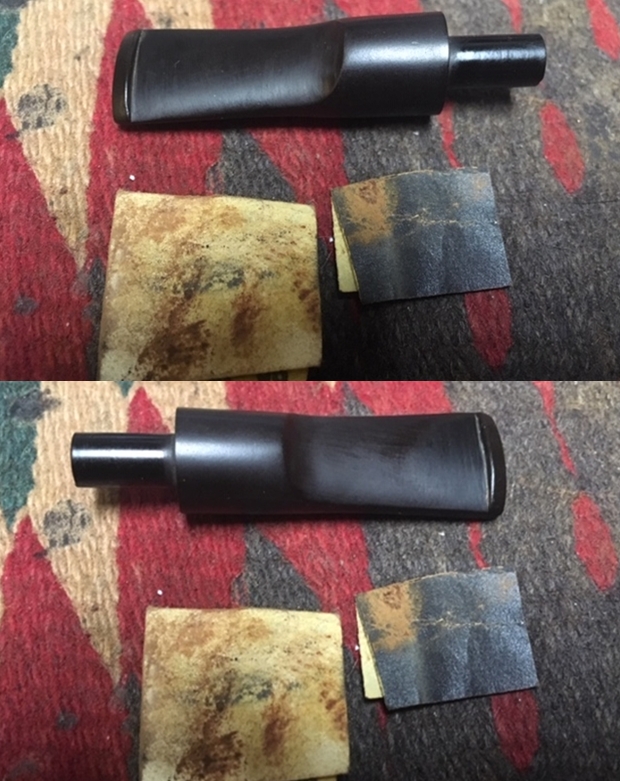
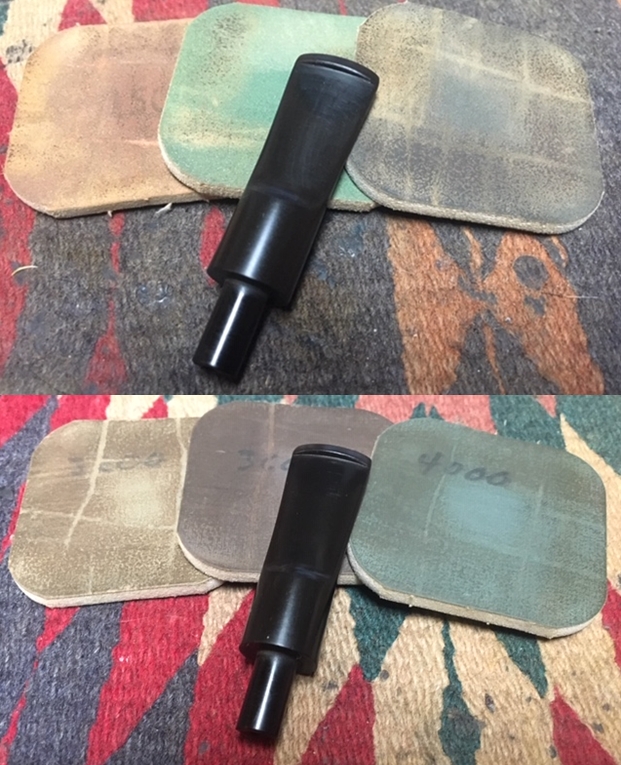
THE PROCESS
As is always the case, I prefer to start my restoration with part that has the most significant damage. In this case it was the stem. I first cleaned out the internals of the airway with pipe cleaners dipped in alcohol. This was followed by cleaning the surface and the deep tooth marks with cotton pads dipped in alcohol. This helps to remove all the dirt, oils and grime from the surface before proceeding with fills. Since the tooth indentations are deep, I shall resort to the layering technique for the fills. Having cleaned the bite marks and the stem surface, I fill these with clear superglue and set it aside to dry. The fills had shrunk once the glue had cured, exposing the damage. I gave a second layer of superglue fill and set it aside to cure. I had decided to address the issue of broken corner of the lip edge by reconstructing it afresh using superglue (God, why can’t I simply straighten the edges which would have been way simpler than reconstructing the concave shaped lip edges!!). I went about this task by placing a big drop of superglue and holding the stem such that a droplet was formed at the broken edge. Once this was done, it was all about twisting, turning and blowing so that the droplet does not fall to the ground while remaining at the broken edge. After the droplet has hardened, I repeated the process till I had more than enough well cured and hardened large edge which then could be filed and shaped as required.While the stem fills were curing, I addressed the thick cake in the chamber. I started by reaming the chamber with size 2 and followed it up with size 3 and 4 head of PipNet reamer. I used a 220 grit sand paper, pinched between my thumb and forefinger, to sand the inner walls of the chamber of the pipe. Once I had reached the bare briar, I wiped the chamber with a cotton pad dipped in isopropyl alcohol. This removed all the residual carbon dust from the chamber. The walls of the chamber are nice and solid with no signs of heat fissures or cracks. I scrapped out the overflowing lava from the rim top with my fabricated knife. The inner and outer rim edges are pristine and that was a big relief.I cleaned the threads and the heel of the Bakelite base with cotton and alcohol. This was followed by cleaning the mortise and air way of the pipe using hard bristled and regular pipe cleaners, q-tips dipped in alcohol. The mortise and the draught hole were given a final clean with shank brushes dipped in alcohol. I dried the mortise with a rolled paper napkin. The shank internals and the draught hole are now nice and clean with an open and full draw.Using a hard bristled tooth brush dipped in undiluted Murphy’s oil soap and brass wire brush, I scrubbed the stummel, cleaning the surface thoroughly. I was very deliberate on the surface areas which were covered in overflowed lava over which dirt and grime had accumulated over the years. I rinsed the stummel under tap water, taking care that water does not enter the mortise or the chamber. I dried the stummel using cotton cloth and paper napkins. On close inspection, I observed a couple of minor dents and ding on the front portion of the stummel. These would need to be addressed. I also cleaned and removed the entire accumulated and now moistened gunk from the threads and base if the bowl with my fabricated dental spatula and the brass wired brush. The stummel is now clean and devoid of any grime and dirt. It is really surprising that the rim top, round edges and the stummel is in such pristine condition after so many years of storage and without a single fill. Speaks volumes about the quality of this line of pipes from WDC!! To further clean and highlight the grains, I sand the stummel with a folded piece of 220 grit sand paper followed by 600 grit sand paper. For a deeper shine and to remove the scratches left behind by the coarse grit papers, I followed it up by sanding with the micromesh pads, wet sanding with 1500 to 2400 grit pads and dry sanding with 3200 to 12000 grit pads. I wiped the stummel after each wet pad with a moist cloth to remove the resulting dust. I rub a small quantity of “Before and After Restoration Balm” in to briar and let it rest for a few minutes. The balm almost immediately works its magic and the briar now has a nice vibrant appearance. I further buff it with a horse hair shoe brush. The pipe now looks lovely with beautiful grains showing off their beauty in all glory!! While the bowl was absorbing the balm, I worked the Bakelite base. I cleaned the surface with a cotton pad dipped in acetone and with horror I realized that I could see some swirls like marks on the shank. This got me worried and I immediately conferred with Mr. Steve, my mentor. He informed me that the Bakelite needs to be cleaned only with soap water!! Ah, well, what’s done is done. He suggested that I use the balm and see if it helps and it did but not to the full extent. I bashed on regardless, going through the complete micromesh pad cycle. It was then that I realized that the so called spots were from within and not external! Whew, what a relief. The Bakelite base looks absolutely stunning with a deep red color. With the bowl and Bakelite base now nice and clean and attractive, I worked the stem of the WDC.  Just to let the readers know, that all the while that I was working the bowl and base, I was simultaneously adding layers of superglue to the tooth indentations and chatter and the broken corner edge of the lip. Once I was satisfied with the thickness of the fill (I prefer over filling which can be evened out during sanding), I began by sanding the fills with a flat heat needle to achieve a rough match with the surrounding stem surface. I sharpened the lip edges using a needle file and sand the entire stem with 220 followed by 400, 800 and 1000 grit sand paper to perfectly blend the filled surface with the rest of the stem surface. This helps to reduce the sanding marks left behind by the more abrasive 220 grit paper. By mere sanding itself, the minor tooth marks seen on stem surfaces were completely addressed. I was especially careful while shaping the broken corner edge of the lip. Finally, after long hours at the table, I was able to achieve a satisfactory reconstruction of the lip along with the proper concave around the orifice. To bring a deep shine to the Bakelite stem, I went through the complete set of micromesh pads, wet sanding with 1500 to 2400 grit pads and dry sanding with 3200 to 12000 grit pads. The only part begging for attention was also the most attractive and costly item on this pipe; the gold filigree band!! This band was easily detached from the shank end and this made the cleaning job very easy. I use Colgate tooth powder to clean all the silver and gold bands and embellishments on pipes, a trick I learned from Abha, my wife. Some readers may find it surprising, but believe you me gentlemen, please at least give a try to see if it suits you. The band cleaned up nicely. I carefully applied a very small quantity of superglue along the shank end edges and stuck the band firmly over the shank end.Before moving on to polishing and buffing, the only issue that remained to be addressed was that of the overturned tenon. I discussed with Mr. Steve who suggested that I should try using clear nail polish coat over the threaded tenon and once the nail polish had completely dried, I should try the fit. I did just that and, viola!! The fit and alignment of the stem and shank was perfect!!
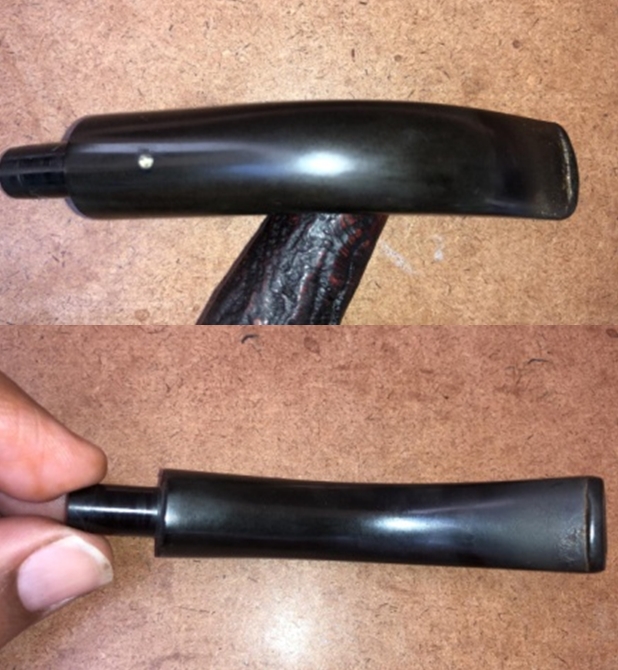
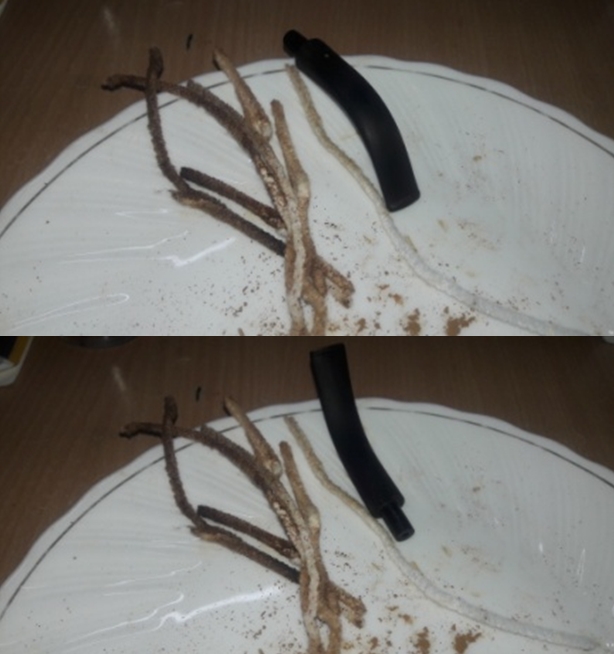
To finish, I re-assembled the entire pipe. I mount a cotton cloth buffing wheel on to my local machine which is similar to a Dremel.  I set the speed at about half of the full power and polished the entire pipe with White Diamond compound. I wiped/ buffed the pipe with a soft cotton cloth to clear it of any leftover compound dust. I then mounted another cotton cloth wheel on to the polishing machine and applied several coats of carnauba wax over the bowl, Bakelite base and the Bakelite stem. I finished the restoration by giving the pipe a rigorous hand buffing using a microfiber cloth to raise the shine further. The completed pipe, with the dark brown hues of the grains on the bowl contrasting with the shining deep red Bakelite base and the translucent Bakelite stem, looks lovely, fresh and vibrant; the photographs speak for themselves. The leather covered case was cleaned and polished with wax rich neutral shoe polish. If only the pipe could tell some of my grand Old man’s stories and recount incidents witnessed while being smoked.…………… Cheers!! I am grateful to all the readers for their valuable time spent in reading this write up and joining me on this part of the journey in to the world of pipe restoration while I attempt to preserve a heritage and past memories which eternally shall remain a part of me.