Tag Archives: Stanwell Made in Denmark pipes

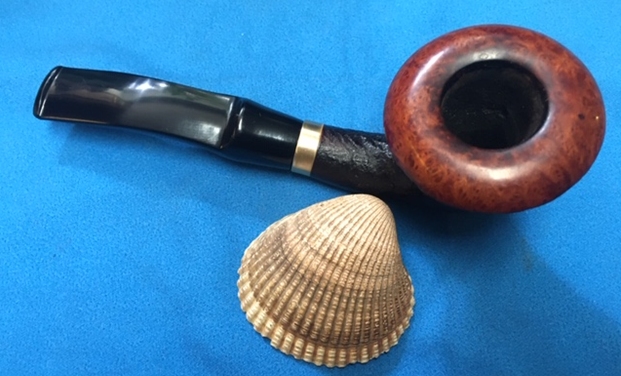
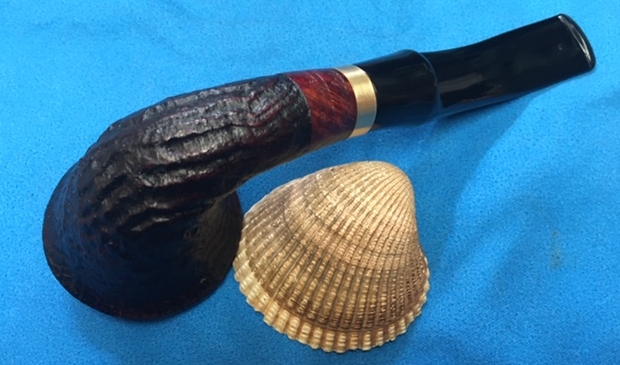
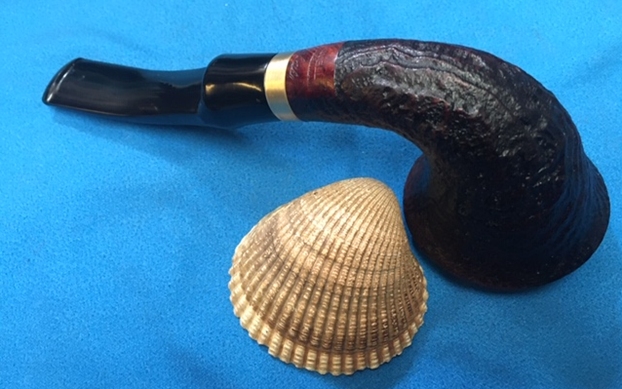
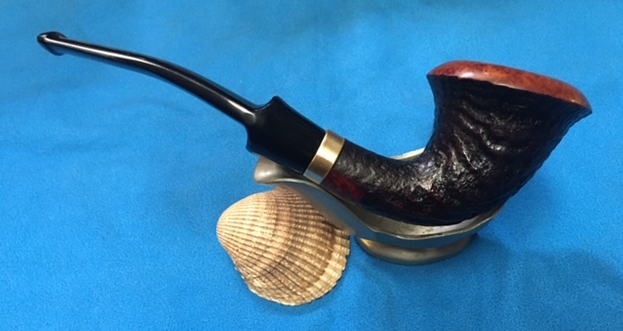
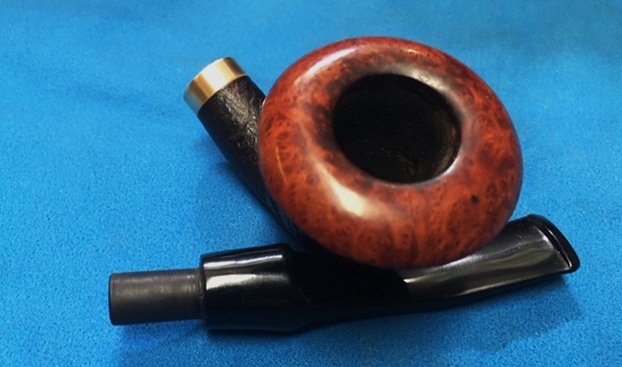
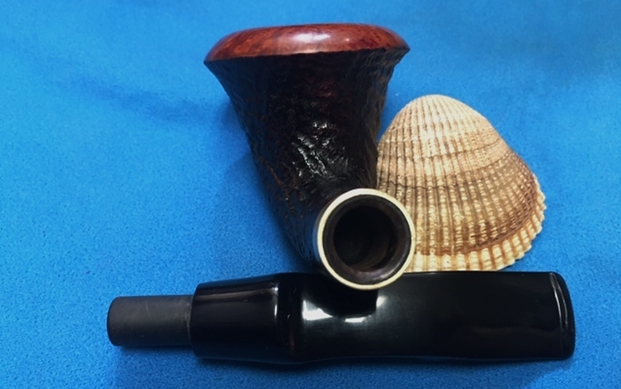
A Pause from Bob Kerr’s Estate – Repairing a Bite Through on a Stanwell Calabash for my Local Pipe Shop.


Blog by Steve Laug

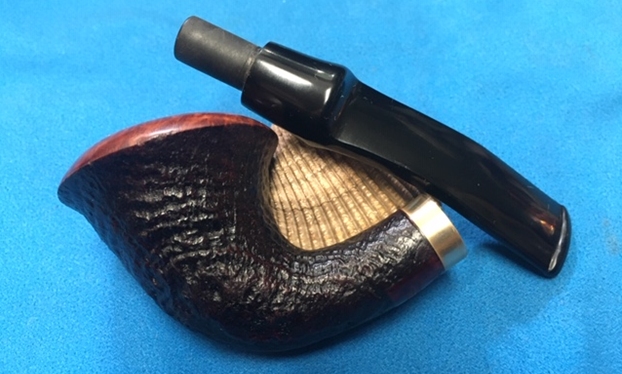
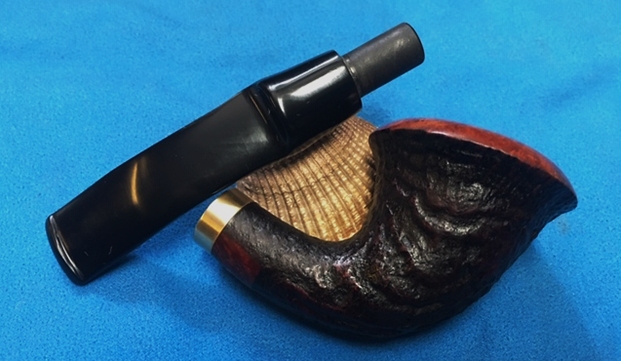
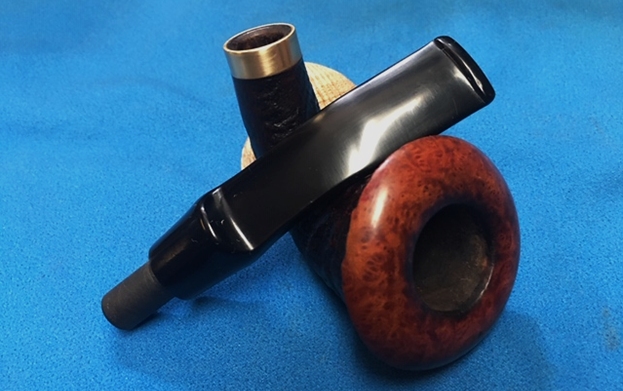
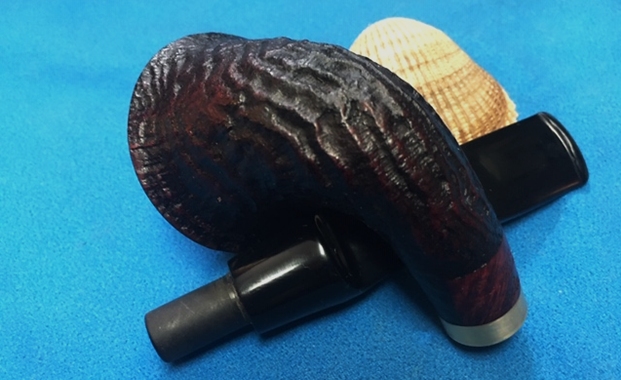
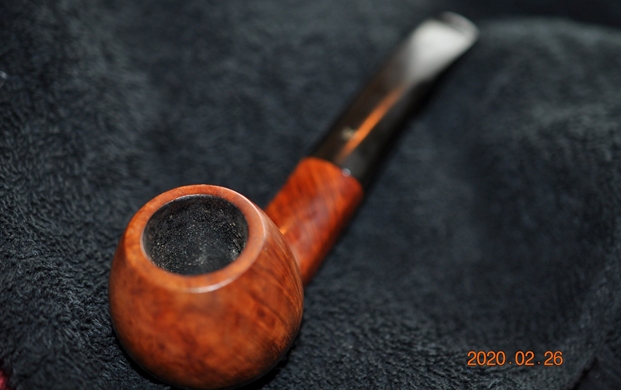
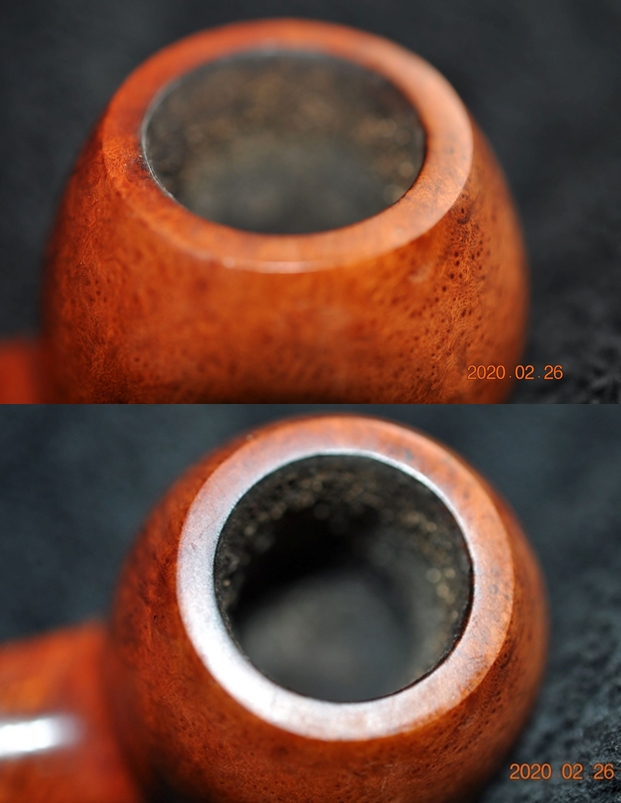
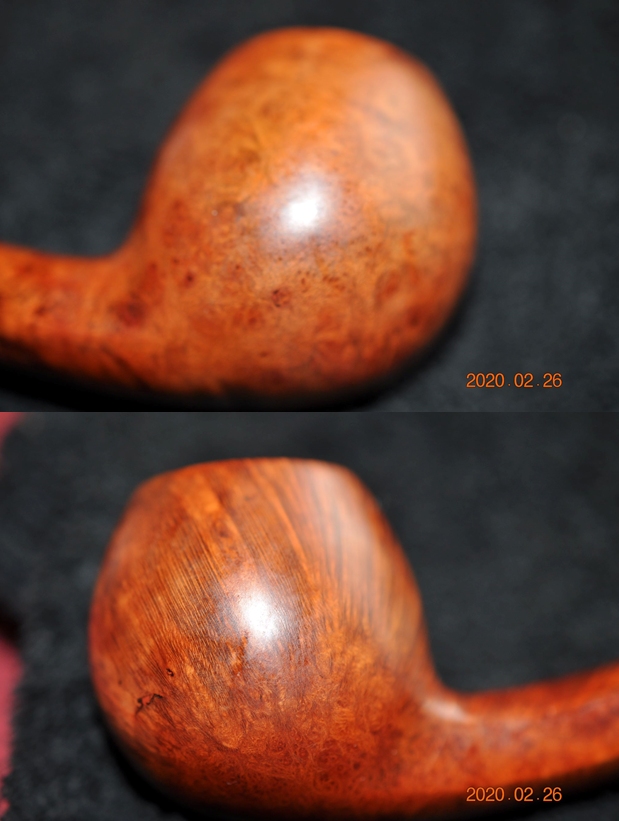
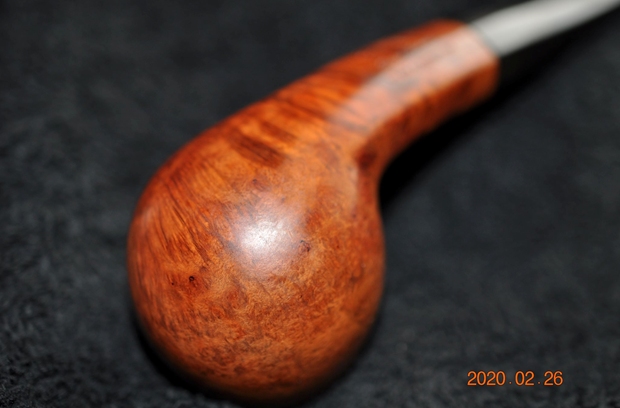
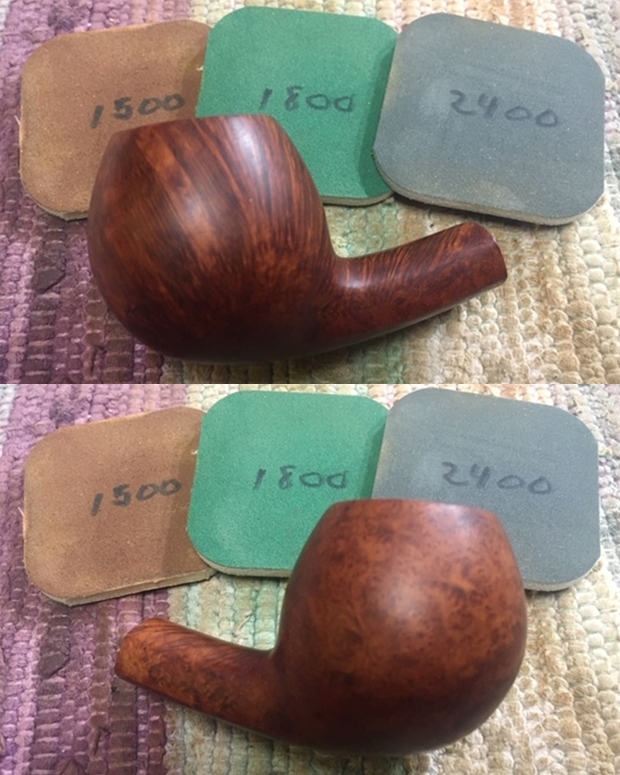
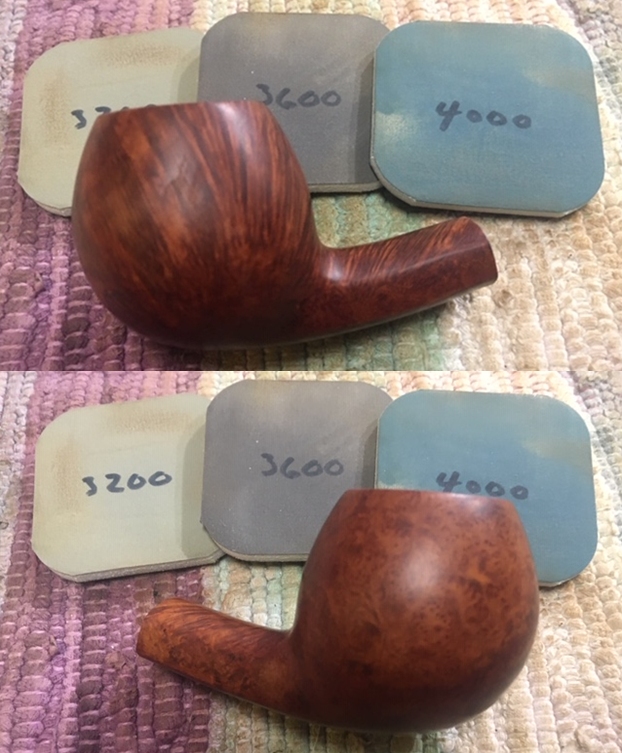
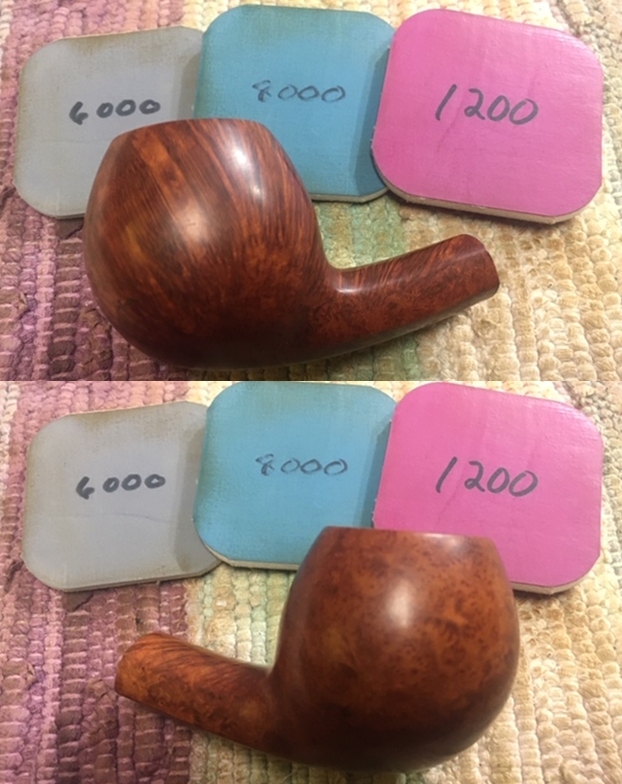
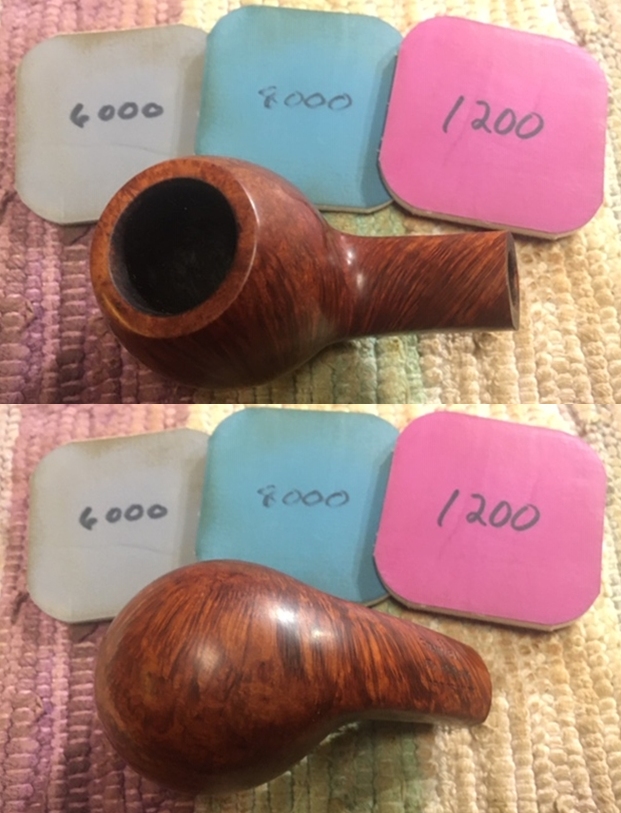
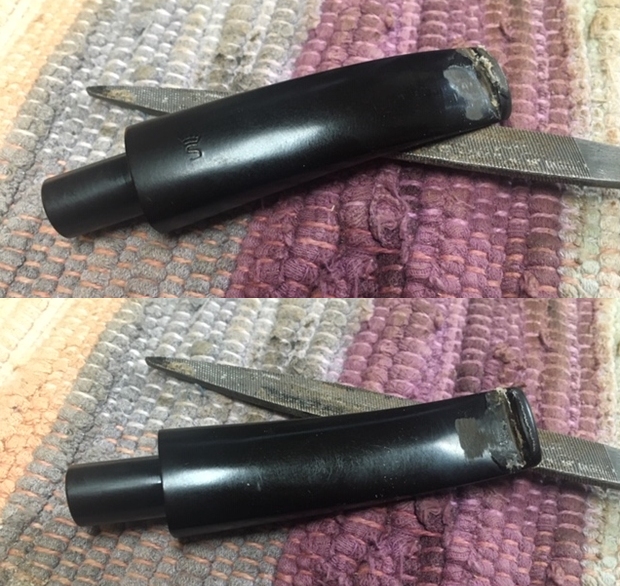
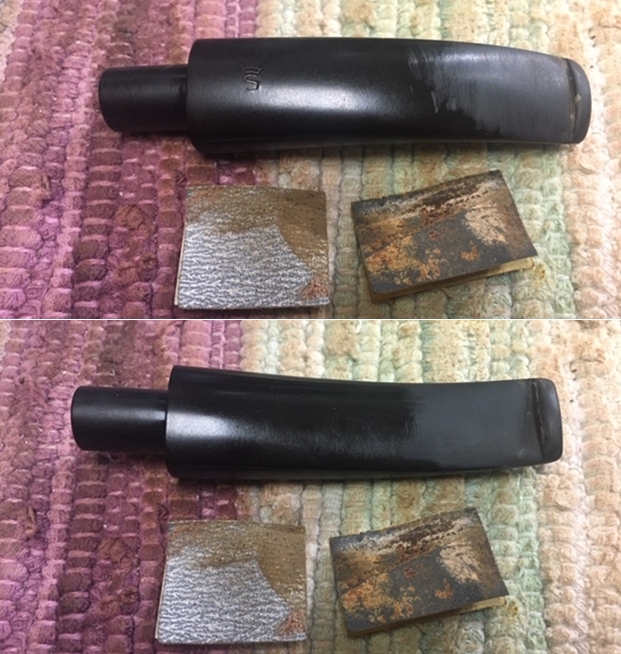
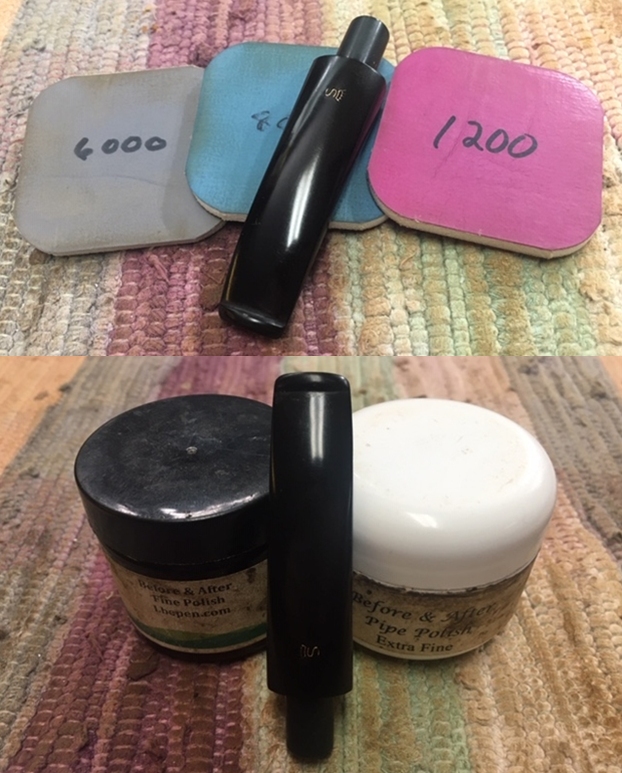
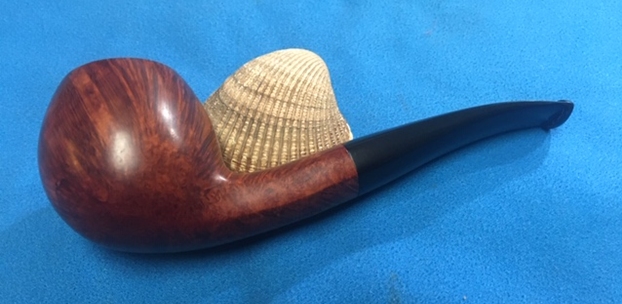
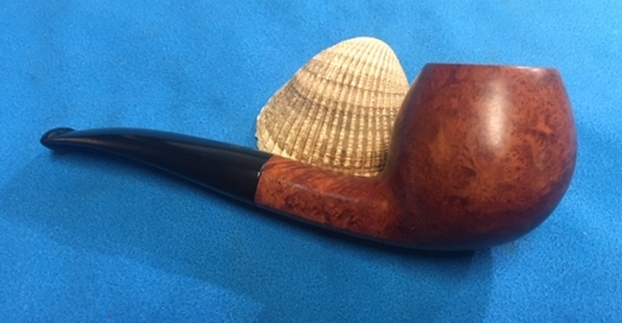
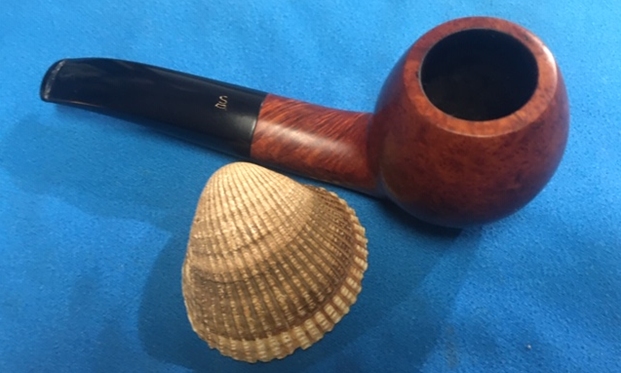
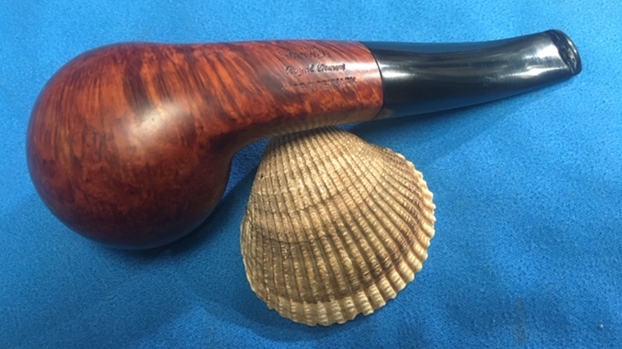
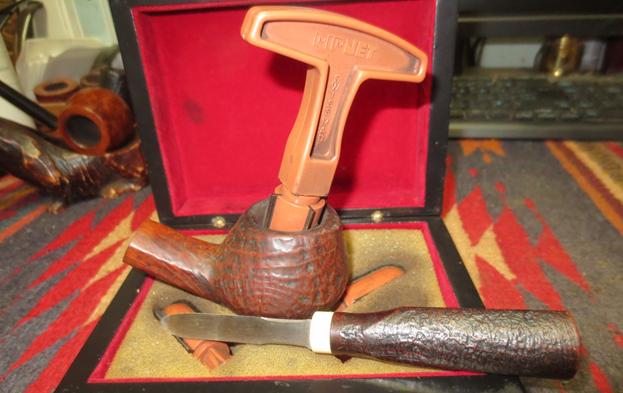
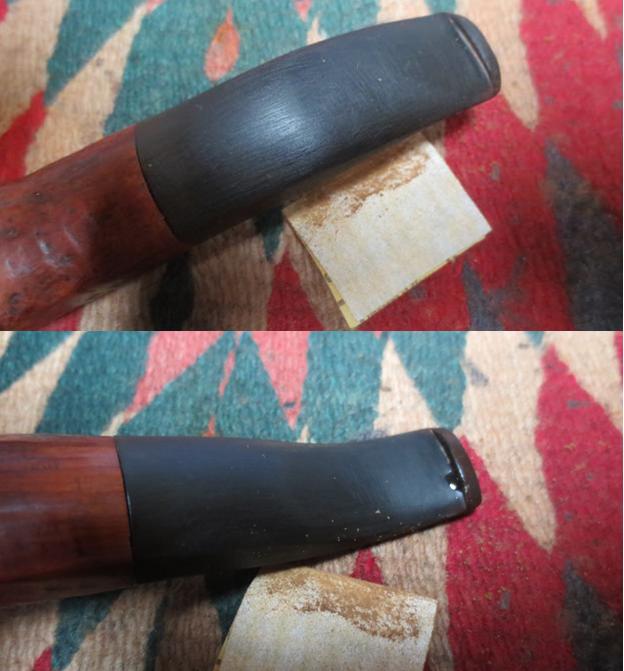
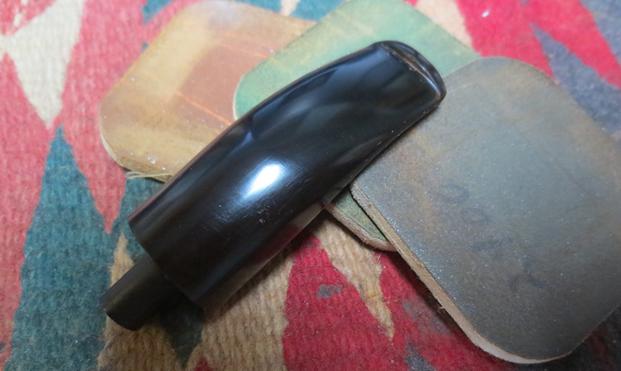
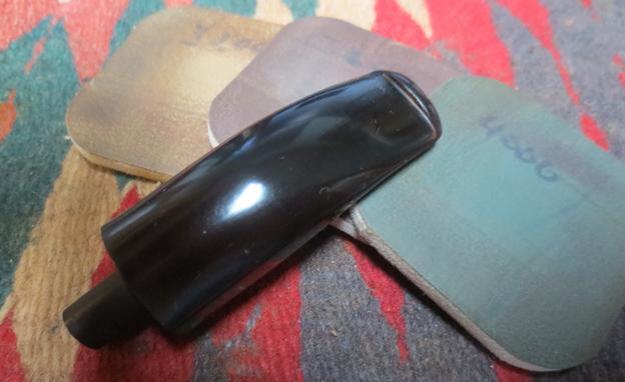
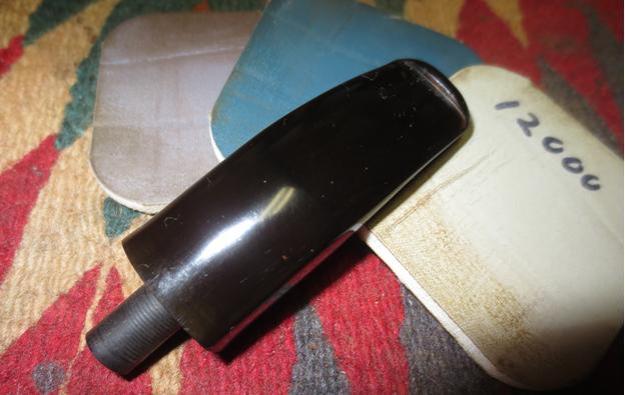
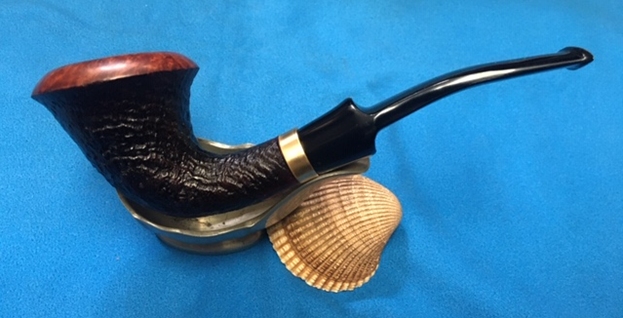
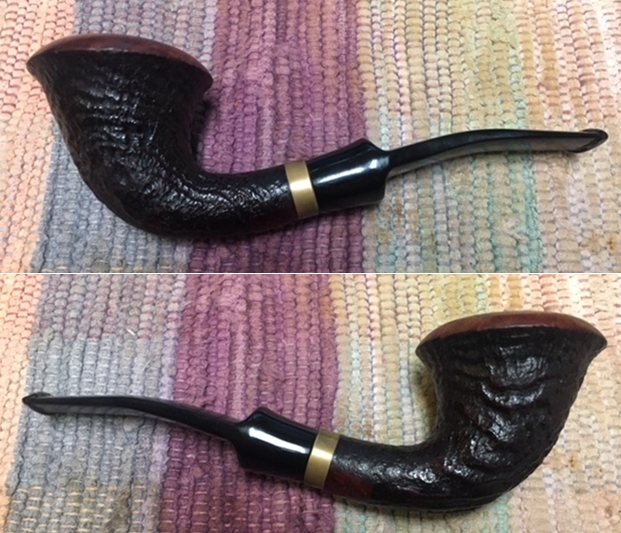
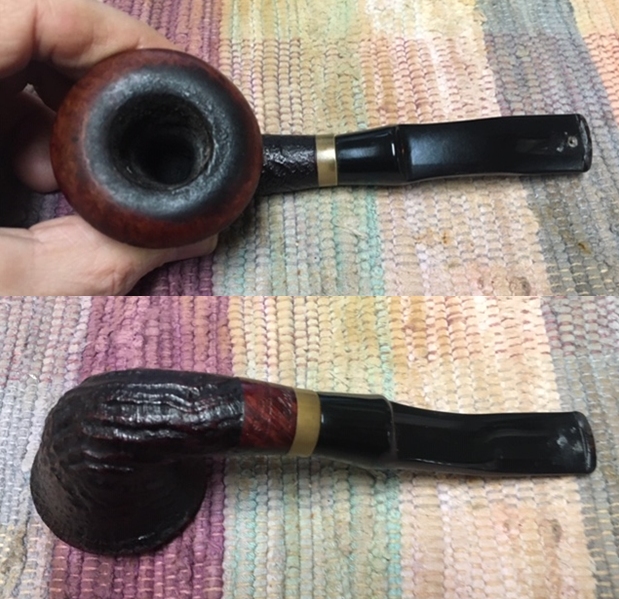
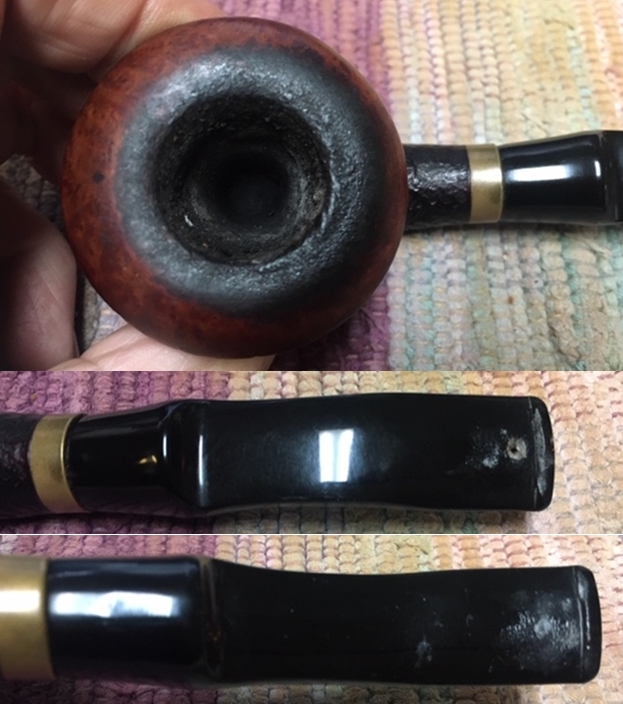
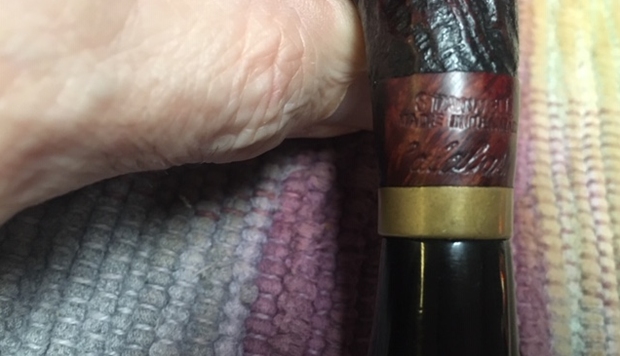
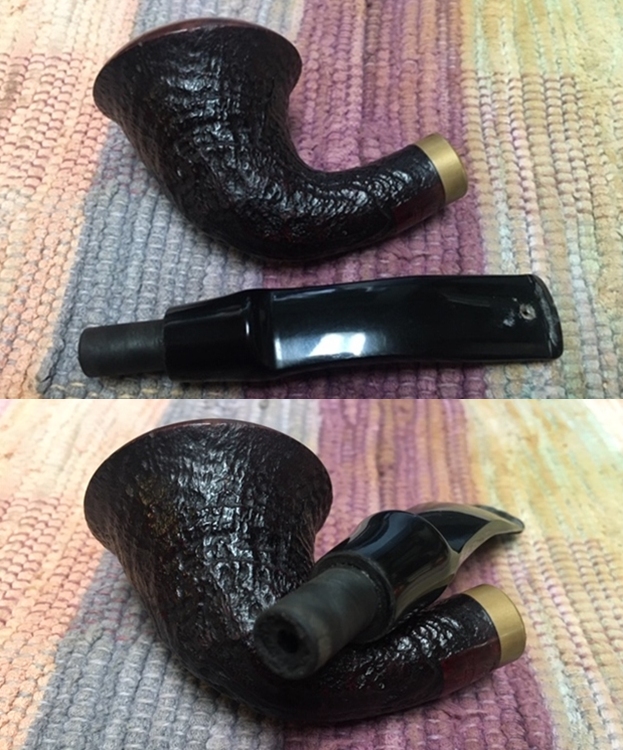
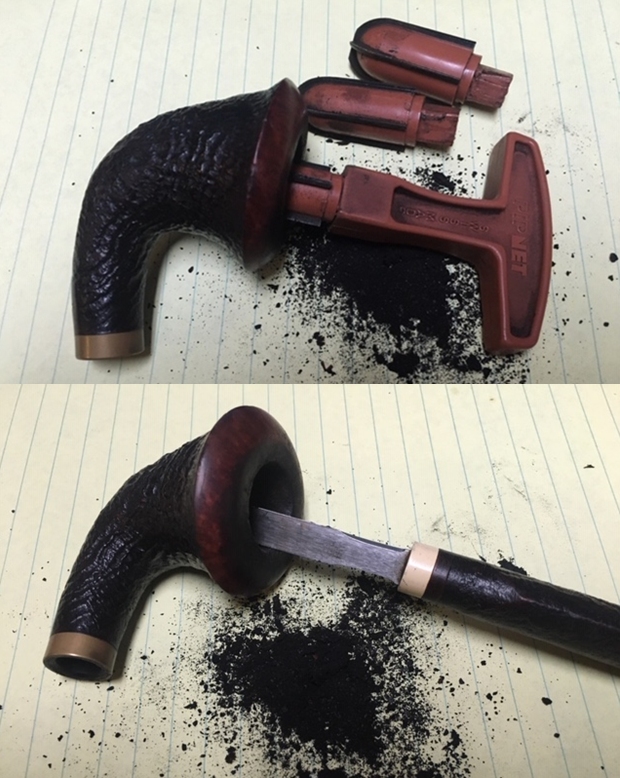
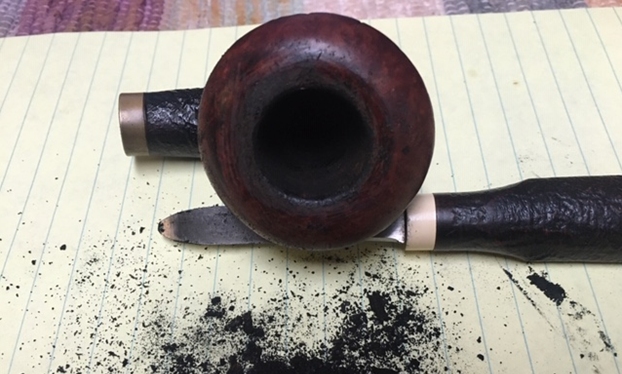
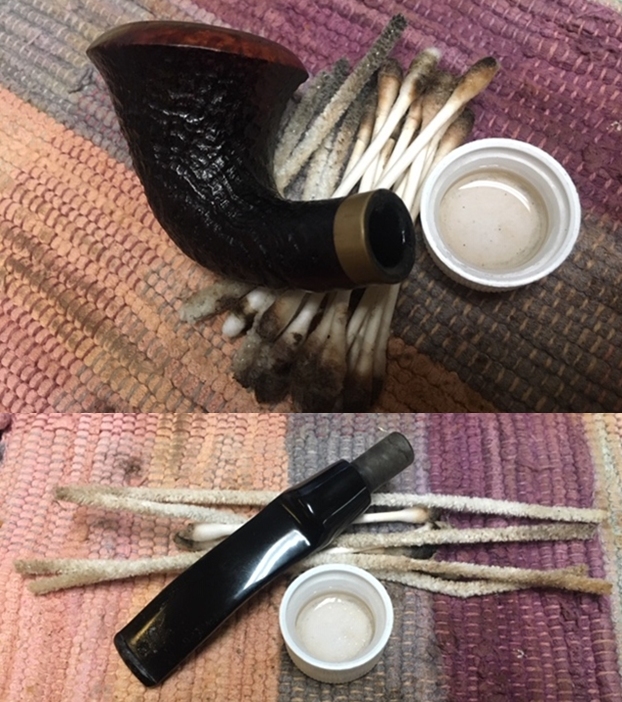
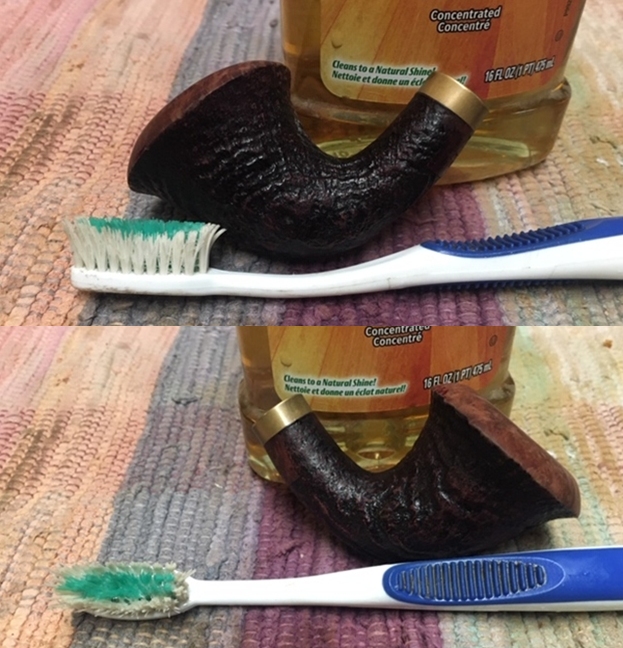
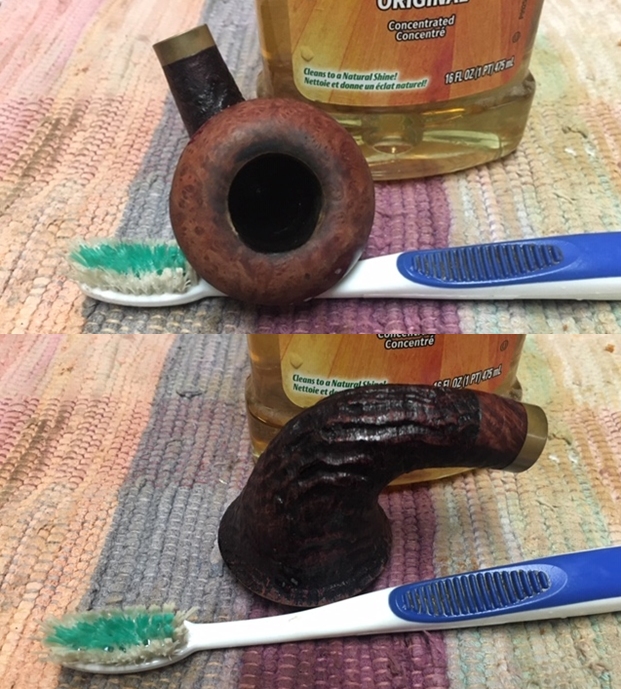
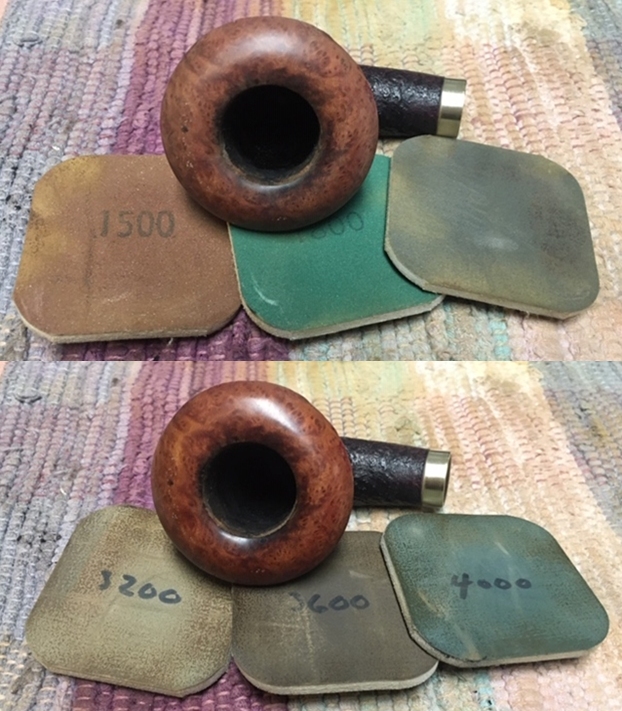
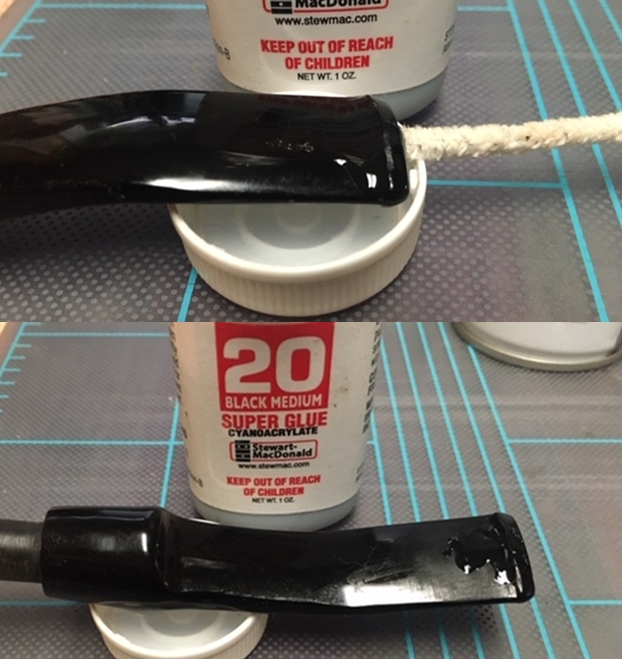
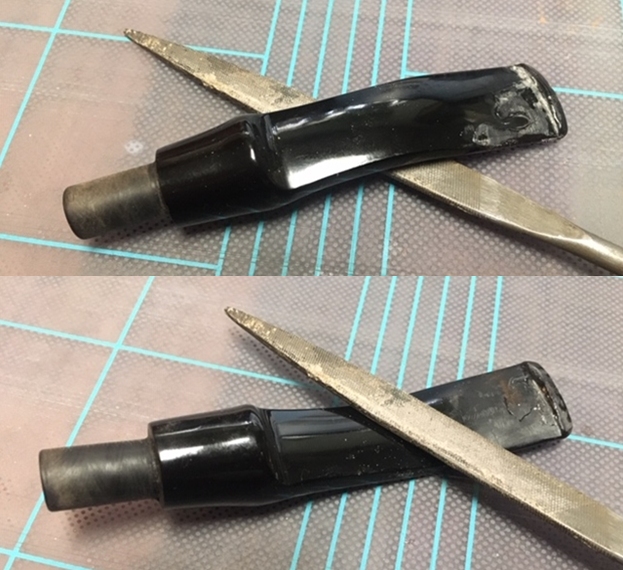
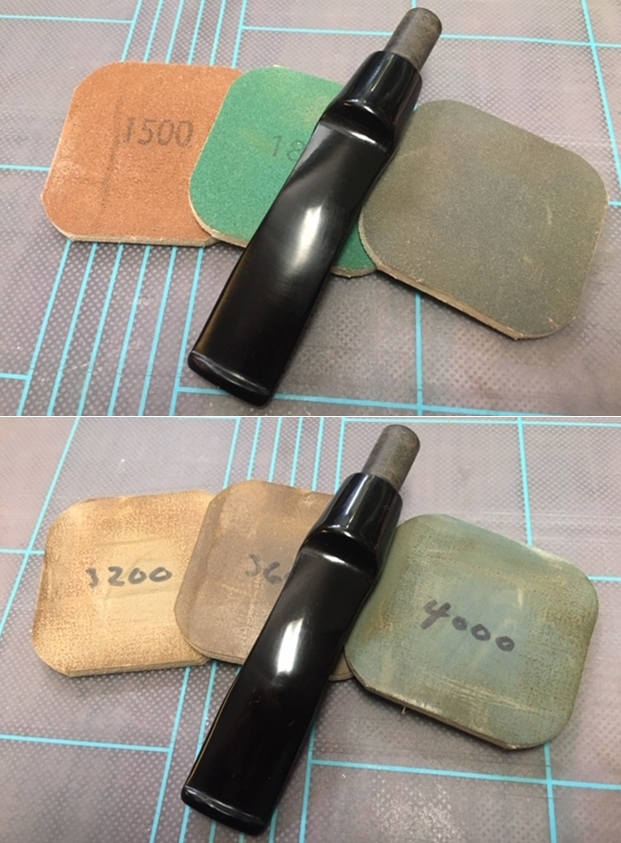
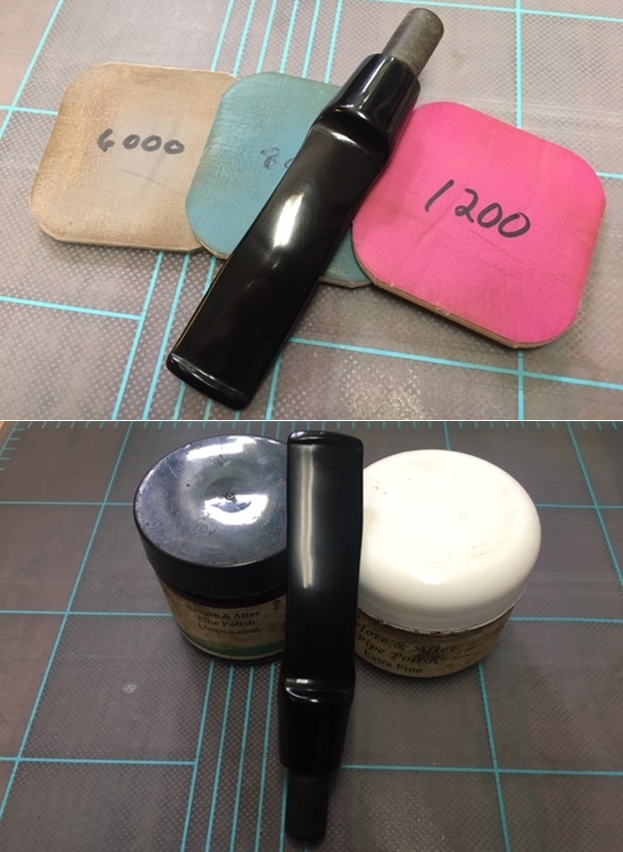
On Friday a fellow from my local pipe shop called and said that he was bringing a pipe by for repair. He had a pipe that he had bitten through on the top side of the stem. He said he would leave it for me to work on. I have been having the shop drop their repairs off in my mail box. When my daughter picked this one up she was blown away by the heavy vanilla aromatic smell that filled the mail box and wafted from the pipe wherever it was. She brought it to my basement work table for me to see. This is what I saw. It was obviously a well smoked pipe that the pipeman must have really loved. It had a thick cake in the bowl and heavy overflow of lava on the rim top that was also very thick. The inner edge of the bowl was also thickly caked. The photos I took of the stem are also very clear. There were tooth marks and chatter on both sides of the acrylic stem and a small bit through on the topside of the stem. Fortunately it was not too big a bit through so it was repairable.I took a photo of the stamping on the shank and it read Stanwell [over] Made in Denmark [over] Calabash in script. The brass decorative band was dull and oxidized.I took the stem off the shank and took photos of the pipe. The first photo below shows the pipe in profile and shows the bite through very clearly. The second photo shows the end of the tenon and how clogged it was with the tars and oils. My first thoughts were that it had an adapter in the tenon to fill it and convert it to a non-filter pipe. Once I cleaned it up it was clear that it was a regular tenon with a slight inset.I like working on clean pipes so I reamed the bowl with three of the four cutting heads on the PipNet Pipe Reaming set. The bowl is conical so it took all three heads to remove the cake from the bowl. I cleaned up the remnants of cake with a Savinelli Fitsall Pipe Knife. I also scraped the calabash rim top with the knife to remove the lava. I cleaned out the internals of the shank and stem with pipe cleaners, cotton swabs and alcohol. I worked them over until the inside of the pipe was clean.I scrubbed the exterior of the bowl and rim with a tooth brush and Murphy’s Oil Soap. I scrubbed the buildup on the rim top with the soap and tooth brush and was able to remove it all from the calabash top. I rinsed it off with running water and dried the pipe with a cotton cloth. I polished the smooth calabash rim top with micromesh sanding pads – 1500-12000 grit pads. I wiped the rim top down with a damp cloth after each sanding pad. The rim top began to look very good as it took on its shine. I rubbed the bowl and rim top down with Before & After Restoration Balm. I worked it into the surface of the briar with my fingertips and a horse hair shoe brush to clean, enliven and protect it. I let the balm sit for a little while and then buffed with a cotton cloth and shoe brush to raise the shine. The Balm does a great job in bringing life to aged briar that has been cleaned. I set the bowl aside and went to work on the stem. I cleaned off the surface of the stem with alcohol to remove greases and oils from the acrylic. I wanted it clean and dry so I could do the repair. Once it was clean I greased a pipe cleaner with Vaseline and inserted it into the airway of the stem. The greased pipe cleaner keeps the glue from filling in the airway.Since the hole in the top of the stem was quite small I decided to use just black super glue to fill in the damaged spot. I also used it to fill in the tooth marks and the dents in the surface. I set the stem aside to let the repairs cure.Once the repair cured I used a needle file to smooth out the repaired areas. I also cut the edges of the button on both sides and smooth it out. I would need to do a lot of sanding to blend it in but it would certainly look better. I sanded it with a folded piece of 220 grit sandpaper to smooth it out. I started the polishing with a folded piece of 400 grit wet dry sandpaper. I polished the acrylic stem with micromesh sanding pads – 1500-12000 grit pads. I wiped it down with a damp cloth after each sanding pad. I used Before & After Pipe Polish – both Fine and Extra Fine to further polish the stem. The repairs and restoration of the Stanwell Calabash turned out really well. The mix of brown stains highlights the sandblasted grain around the bowl sides as well as the smooth calabash rim top. The finish on the pipe is in excellent condition and the contrasting stains work well with the polished acrylic saddle stem. I put the stem back on the bowl and carefully buffed the pipe with Blue Diamond on the buffing wheel using a light touch on the briar. I gave the bowl and stem multiple coats of carnauba wax on the buffing wheel and followed that by buffing the entire pipe with a clean buffing pad. I hand buffed the pipe with a microfiber cloth to deepen the shine. The finished Stanwell Calabash fits nicely in the hand and feels great. Give the finished pipe a look in the photos below. The dimensions of the pipe are Length: 5 ¾ inches, Height: 2 inches, Outside diameter of the bowl: 1 ¼ inches, Chamber diameter: ¾ of an inch. I am looking forward to hearing what the pipeman who dropped it off thinks of it when he picks it up. It should continue to serve him well. Thanks for reading this blog and my reflections on the pipe while I worked on it. This is an interesting pipe to bring back to life.
 

Stanwell Really Made Some Stunning Pipes Like this Royal Guard 182


Blog by Steve Laug

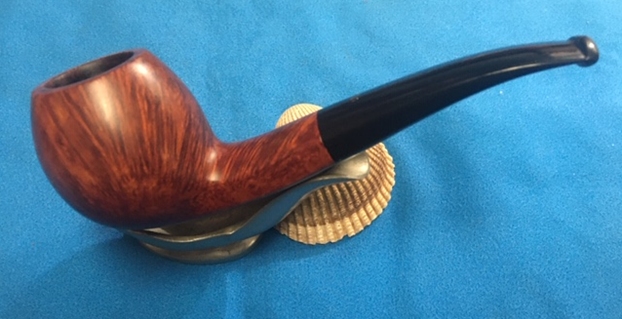
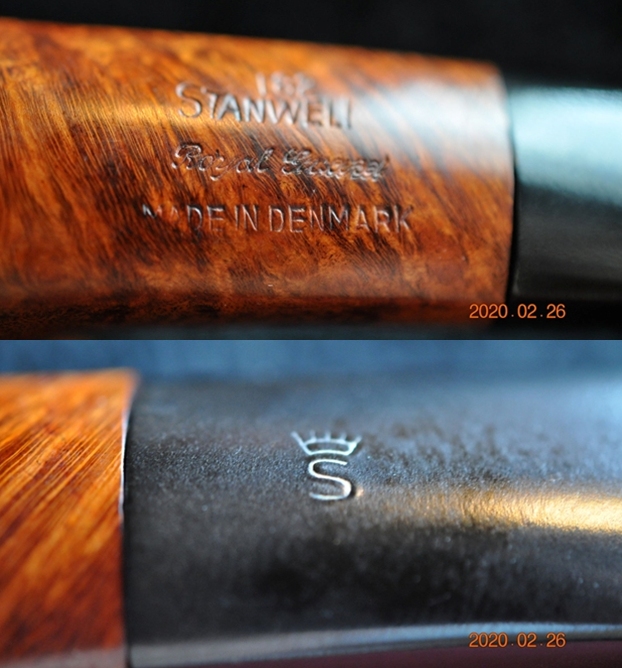
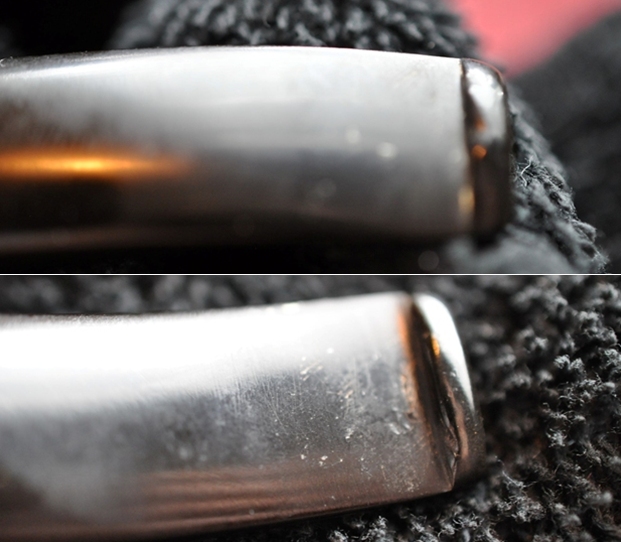
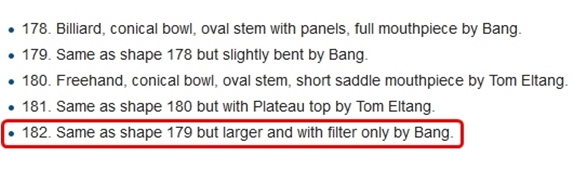
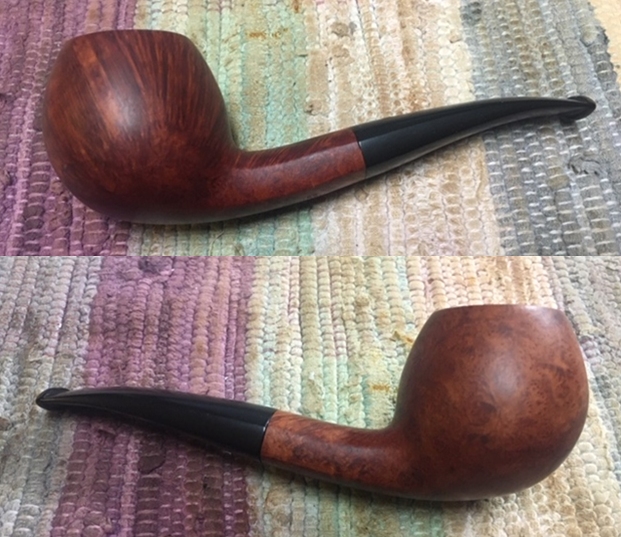
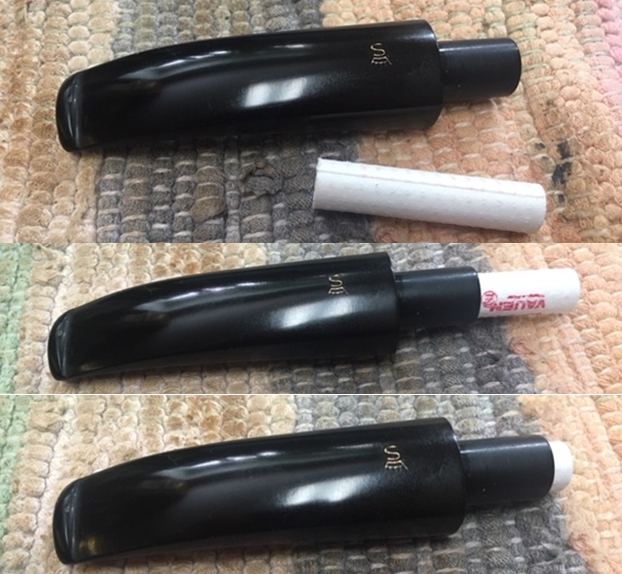
The next pipe on the table is one that was also at the bottom of the box of pipes I am working on. It is a Stanwell Royal Guard Apple. The round shaped bowl, oval shank and taper stem made up a nicely shaped pipe. The smooth finish showed great grain through the ground in dirt and grime. There are also some well hidden fills in the briar. It was stamped on the underside of the shank and read 182 at the top over Stanwell over Royal Guard over Made in Denmark. The finish was very dirty with a heavy coat of grime ground into the bowl and rim top as can be seen in the photos. The bowl had a thick cake with a lava overflow on the inner edge of the rim top but very little on the top itself. It appeared that both the inner and outer edges of the bowl looked clean and undamaged. The stem was oxidized and there were tooth marks and chatter on both sides and on the top and bottom edges of the button. The stem was made for a 9mm filter. Jeff took photos of the pipe before he cleaned it up so you could see what we saw. Jeff took photos of the rim top to show lava build up around the rim, the edges and cake in the bowl. Jeff took some photos of the bowl sides and heel to show the absolutely dirty finish ground into the briar. It was a dirty pipe but I think it will be a beautiful one once we are finished.  The stamping on the underside of the shank is shown in the photos below. It is clear and read as noted above.  There was the Stanwell Crown S stamped on the top of the stem. The stem was a good fit to the shank. It was oxidized, calcified and had debris stuck to the surface of the vulcanite. It also shows the tooth marks on the stem and on the button surface. Pipedia has a great article on Stanwell Shape Numbers & Designers that matches the shape numbers of Stanwell pipes with the designer of the shape. I enjoy that information (https://pipedia.org/wiki/Stanwell_Shape_Numbers_and_Designers?fbclid=IwAR0ULK-xl-hW0RZXbt64VWijPtpMgn1uTDEawHywln8fGcDXtbWcmB6SA24). Turns out the design of this pipe was done by Bang and is a filter pipe. I am including the following screen capture.It was my turn to work on the pipe now. I was really looking forward to what the pipe would look like once Jeff had worked his magic. What would the rim top look like? What would the dirty sandblast on the bowl look like? I had no idea. When I took it out of the box I was struck great job cleaning up the pipe Jeff had done. It was impressive! He had reamed the pipe with a Pipnet piper reamer and taken the cake back to bare briar. He cleaned up the remaining cake with a Savinelli Fitsall Pipe Knife. He scrubbed the interior of the bowl and shank with pipe cleaners, cotton swabs and alcohol to remove the tars and oils. He scrubbed the exterior of the pipe with Murphy’s Oil Soap and a tooth brush to remove the grime from the finish. He worked on the rim top lava and darkening with the soap and tooth brush. He scrubbed the inside of the stem with alcohol and pipe cleaners. He scrubbed the exterior with Soft Scrub and then soaked it in Before & After Deoxidizer. He washed the stem off with warm water to remove the Deoxidizer. The pipe looked far better. I took photos of the pipe when I received it before I started working on it. I took photos of the bowl and rim top as well as the stem to show how clean they were. You can see that rim top and edges look very good. The stem is clean and the tooth damage on the button top and bottom edges. I took a photo of the stamping on the underside of the shank. The stamping is readable as noted above. The stamping GUARD is a double stamped and gives me a bit of a mystery. Royal Guard was a Stanwell second and generally was not stamped Stanwell. This one was! The stem on the Royal Guard was also stamped RG and this one bears the Stanwell Crown S.I took a photo of the pipe with the stem removed to show that the tenon was drilled for a 9MM filter. I also took a photo of the bowl and stem to get an overall look of stem, tenon and profile of the pipe. It really is a beautifully shaped pipe.  I decided to start my work on the pipe by polishing the pipe with micromesh because it was in such good condition. I polished it with 1500-12000 grit micromesh sanding pads. I wiped the bowl down after each sanding pad with a damp cloth. I rubbed the briar down with Before & After Restoration Balm. I worked it into the briar with my fingertips. The product works to clean, enliven and preserve the briar. I let it sit for 10 minutes while I worked on the stem. After the time passed I buffed it with a cotton cloth to deepen the shine. The briar really comes alive with the balm.      I set the bowl aside and turned my attention to the stem. I filled in the indentations on the button edge and built it up with clear super glue. Once the repair cured I used a needle file to reshape the button edges and also flatten the repaired areas.   I sanded the stem with 220 grit sandpaper to finish the shaping and to remove the remaining oxidation. I started polishing the stem with 400 grit wet dry sandpaper. I wiped the stem down with Obsidian Oil before further polishing it.   I used some Rub’n Buff Antique Gold to touch up the gold that remained in the Crown S stamp on the top of the stem.     I polished the vulcanite with micromesh sanding pads – 1500-12000 grit pads. I wiped it down with Obsidian Oil after each sanding pad. I used Before & After Pipe Polish – both Fine and Extra Fine to further polish the stem.   I have a box of Vauen 9MM filters so I took one out of the box and inserted it in the tenon. The fit is perfect and fills in the tenon.  This S. Bang designed Stanwell Royal Guard 182 Apple with a taper vulcanite stem turned out very nice. The mix of brown stains highlights the grain around the bowl sides and bottom. The rim top and edges look very good. The finish on the pipe is in excellent condition. I put the stem back on the bowl and carefully buffed the pipe with Blue Diamond on the buffing wheel. I gave the bowl and stem multiple coats of carnauba wax on the buffing wheel and followed that by buffing the entire pipe with a clean buffing pad. I hand buffed the pipe with a microfiber cloth to deepen the shine. The finished apple is very nice and feels great in the hand and can be used as a sitter with the wide base. Give the finished pipe a look in the photos below. It is a nice pipe whose dimensions are Length: 5 ½ inches, Height: 1 ¾ inches, Outside diameter of the bowl: 1 ¼ inches, Chamber diameter: ¾ of an inch. Thanks for walking through the restoration with me as I worked over another beautiful pipe. This Stanwell Royal Guard 182 will be going on the rebornpipes store shortly. If you are interesting in adding it to your collection let me know! Thanks for your time.
A Very Tired, Very Dirty Stanwell Bent Volcano with a cracked bowl


Blog by Steve Laug

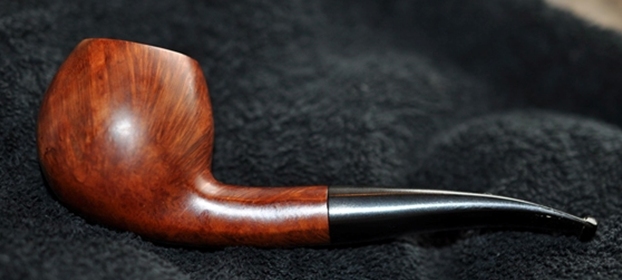
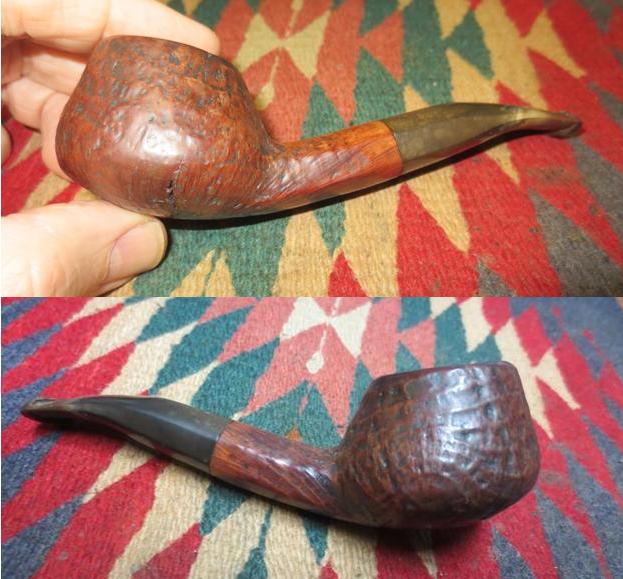
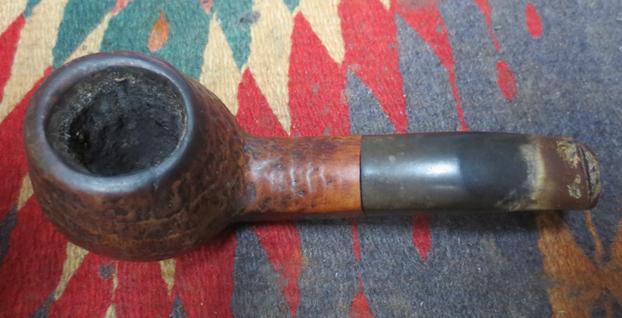
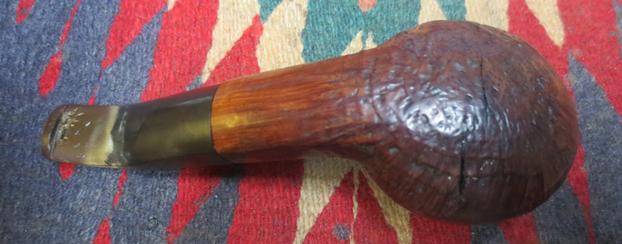
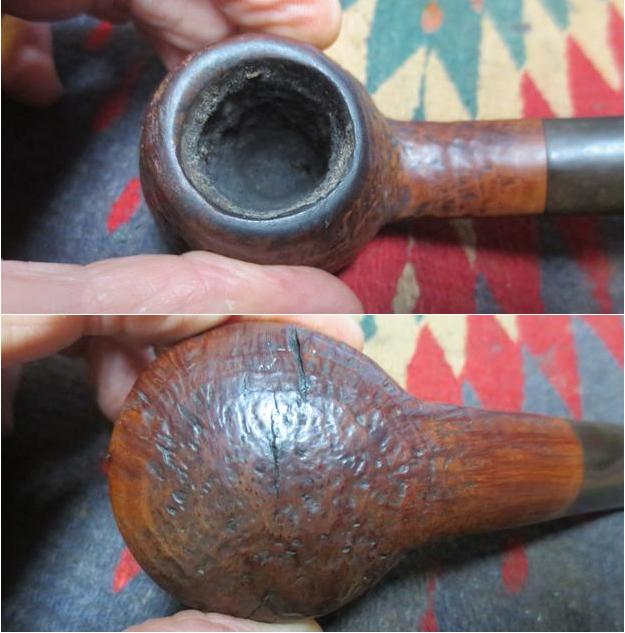
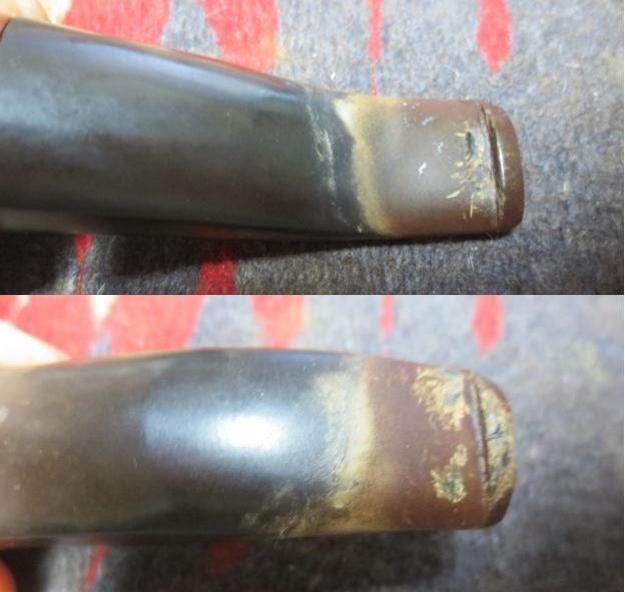
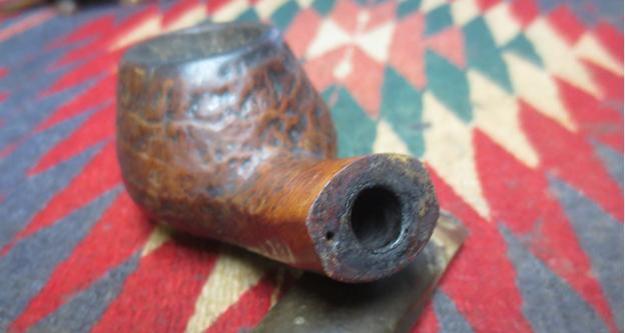
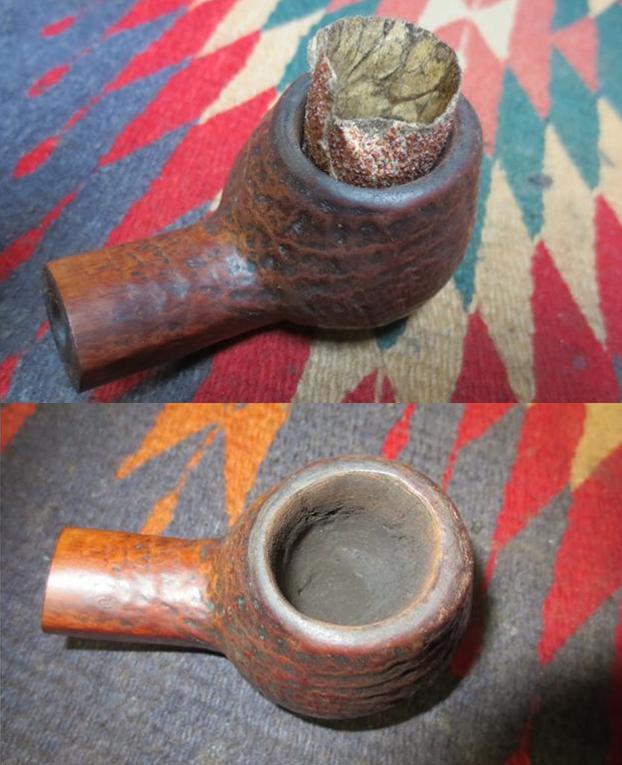
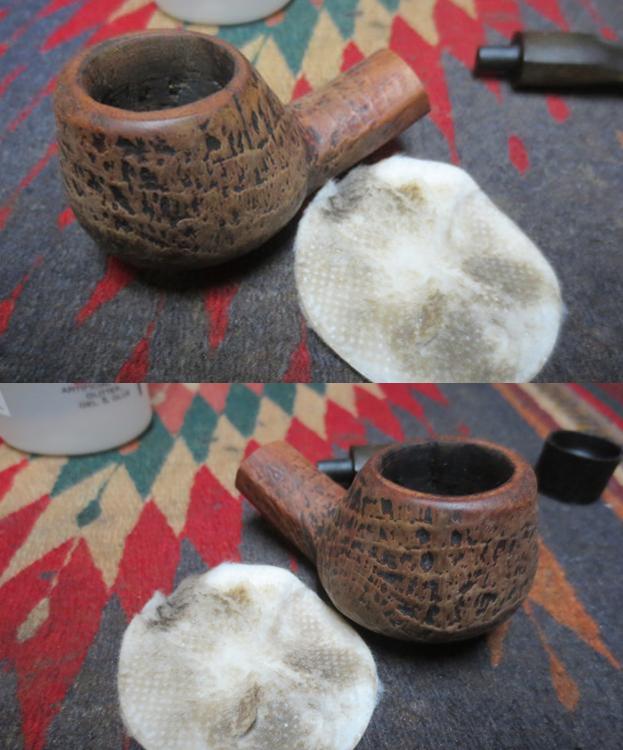
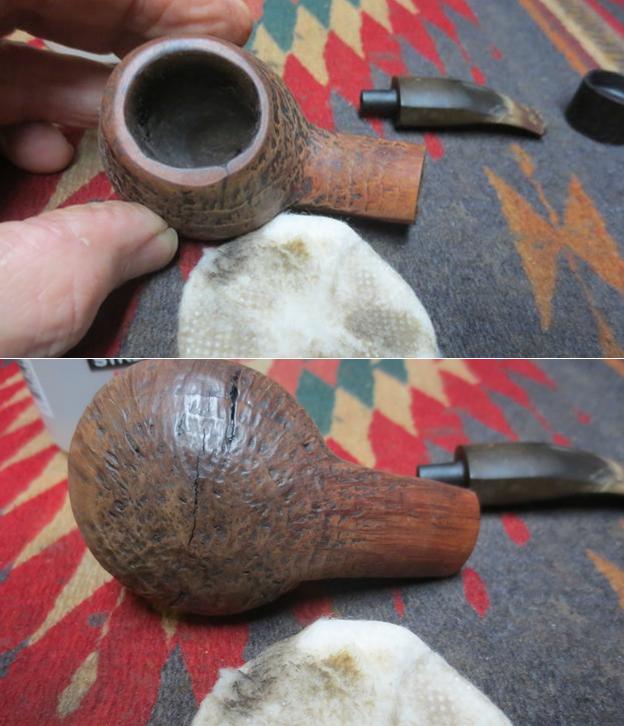
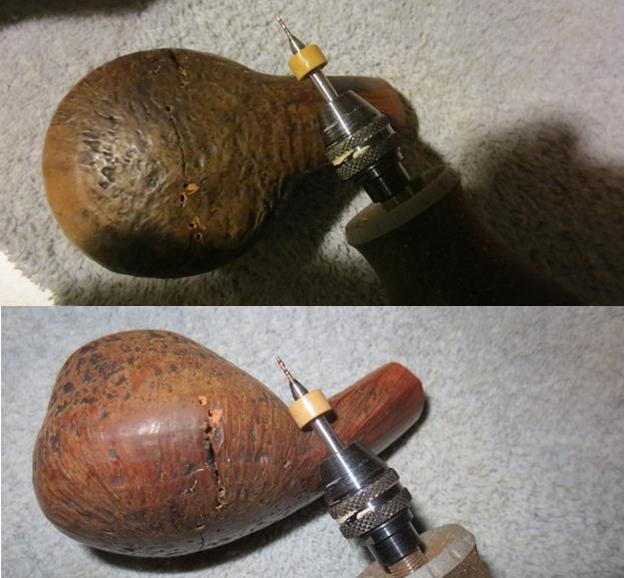
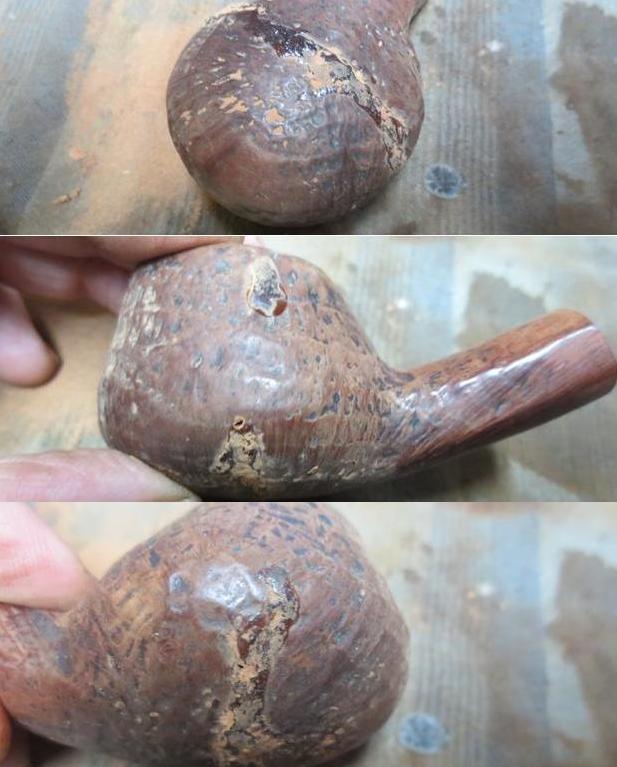
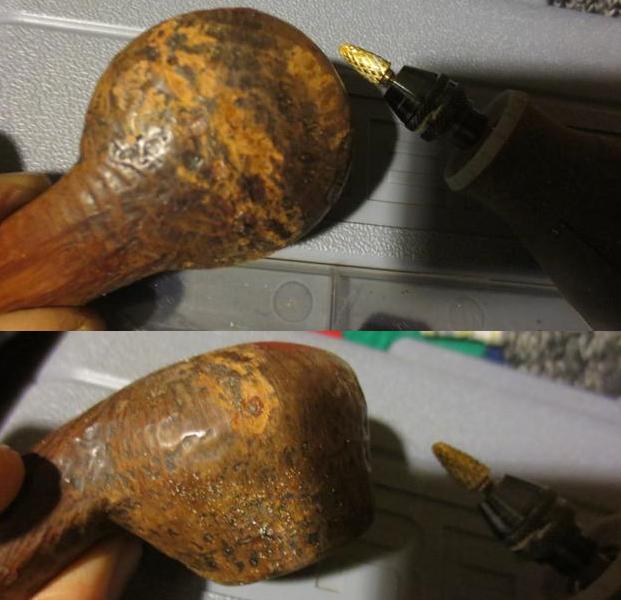
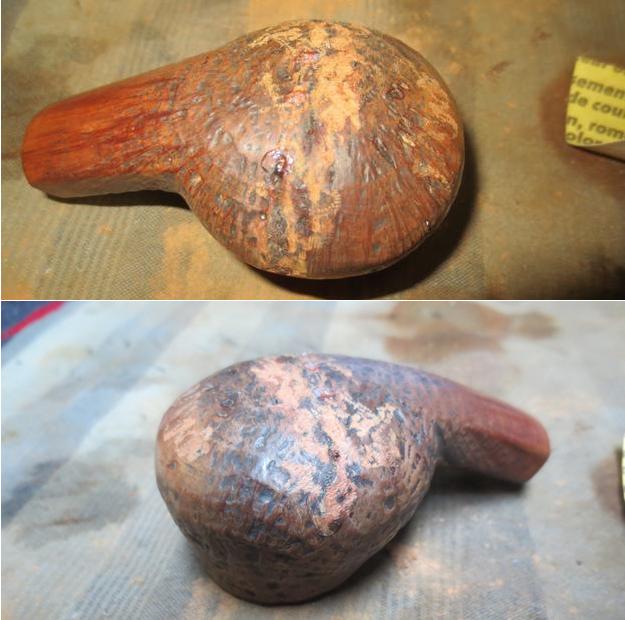
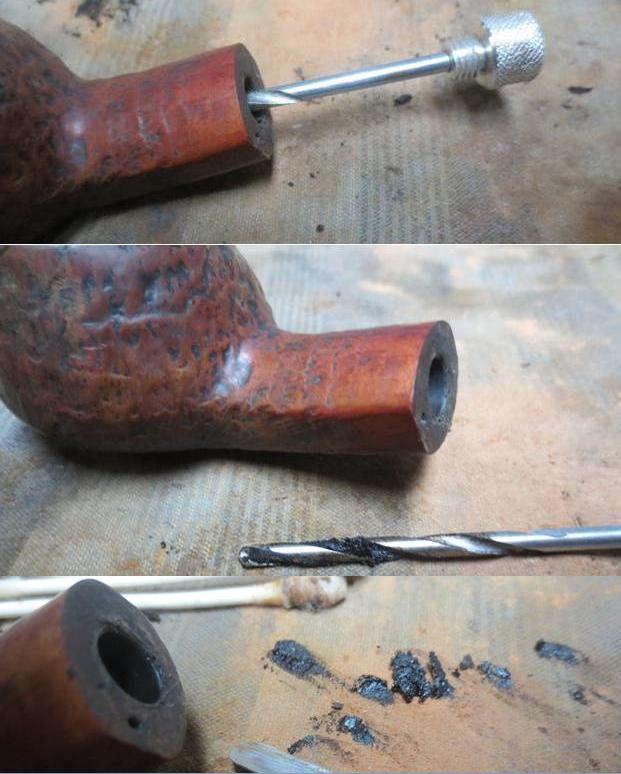
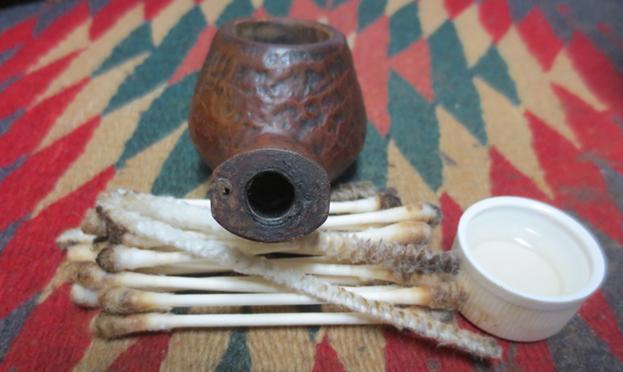
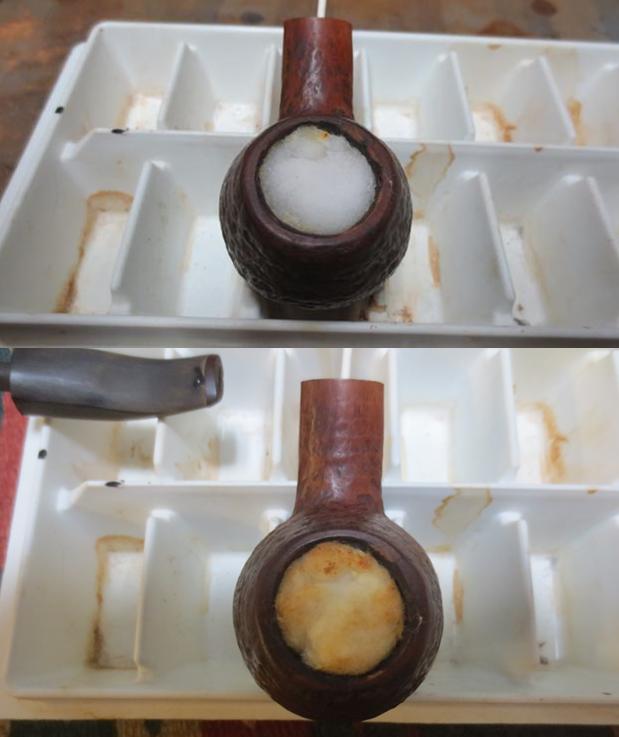
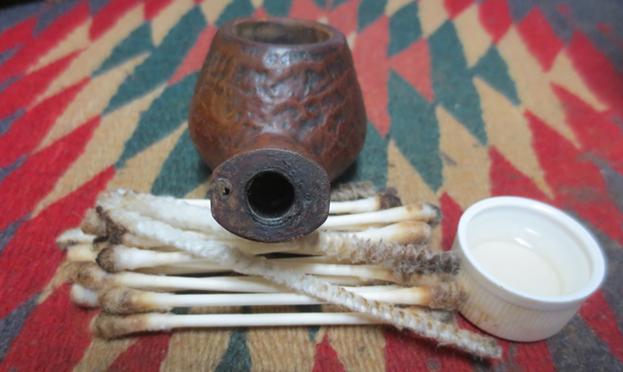
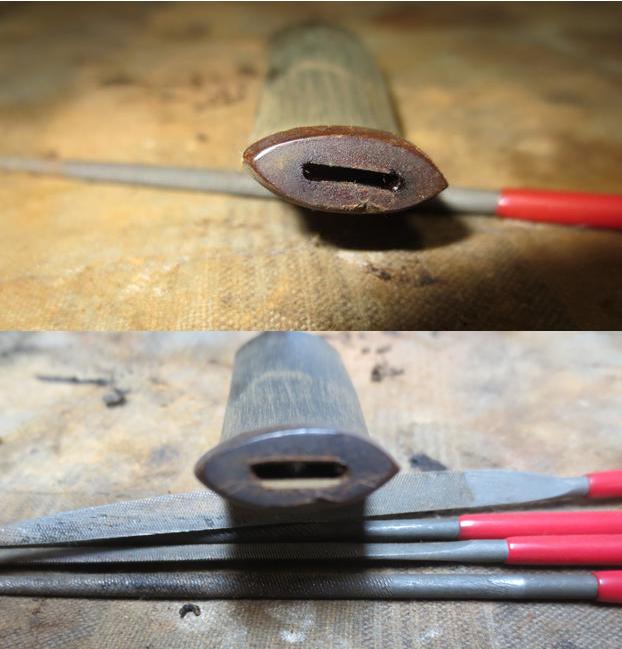
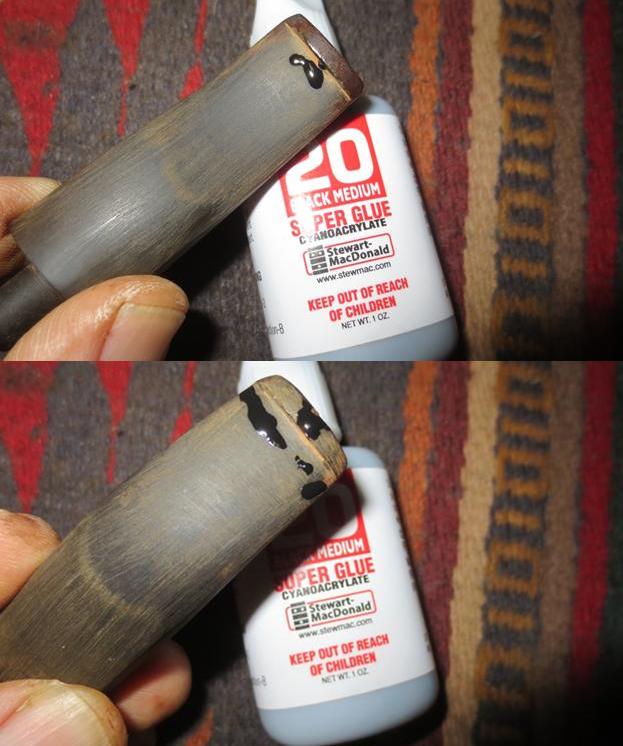
Sometimes when I take in pipes for repair and restoration I am pretty stunned by the condition. This one obviously was an old favourite of the pipesmoker who brought it to me with 8 others in need of some TLC. I sat with him in my living room and went over the repair list of what needed to be done to bring it back to life. It had been restemmed before and the stem was good and heavy so it did not need to be replaced. There were tooth marks near the button on both sides of the stem. It had some deep oxidation that needed attention. Sometime in its life it had been buffed to the point that the stamping was all but gone on the underside of the shank. With a lens I could read Stanwell over Made in Denmark but all but one number of the shape number (1) was buffed away. The finish was sticky to touch from all the waxes and oils on the bowl. The sand blast was pretty worn away and now was shallow. The angled, tapered bowl had a thick cake and it had been reamed into almost an hour-glass shape. The rim top had an overflow of the tars on it and the blast was smooth. There was some damage on the front of the bowl from knocking the pipe out on something hard. There was a small crack on the left side of the bowl from the rim down about a 1/8 of an inch that would need to be repaired. From memory I knew that the bowl was drilled to follow the angle of the exterior of the bowl.When I turned the bowl over the bottom side was covered with cracks. There were four cracks of various sizes that did not go into the interior but rather sat on the surface of heel. They were all different in terms of depth and tended to follow the blast and cut across the ring grain. They were filled with grime and wax. The bottom of the bowl was a real mess.I took a close up photo of the rim to show the damage that had been done to it by reaming it with a knife rather than with a reamer. The cake was sticky and soft and what appeared to be an hourglass shape actually was not it followed the angled bowl walls. I was concerned that the inside of the bowl would also have cracks once the cake was removed. I recommended that we remove entire cake to assess the interior of the bowl. I also took a close up photo of the heel of the bowl to show the cracks.The stem was a replacement that was thick and well made. The fit against the shank was not too bad and there was little gap between the two parts. The stem was oxidized and there was come calcium build up on the first inch on both sides. There were tooth marks and tooth chatter on both sides of the stem near the button.The shank end shows how thick the buildup was inside of the shank. The tars and oils overflow the shank and show up on the end and walls. There were also two small holes drilled to the left and right of the mortise.I reamed the bowl with the PipNet reamer using the largest cutting head. Notice the angle of the cutting head as it shows the angle of the drilling of the bowl. I cleaned up the walls with a Savinelli Fitsall reaming knife.  I sanded the bowl with 180 grit sandpaper wrapped around a piece of dowel. The third photo below shows the bowl after it has been sanded. I scrubbed the exterior of the bowl with acetone on cotton pads to remove the grime and the finish. The grime and oils came off the walls of the bowl and bowl sides and bottom to prepare the bowl for the repairs to the cracks. I drilled each end of all of the cracks with a microdrill bit on a Dremel. There were about 9 holes in the bottom of the bowl and two on the left side at the end of the shank.I put clear super glue into the cracks and pressed it down with a dental pick. I pressed briar dust into the glue and then put more dust in the glue and then more glue on top of the repair to seal it.I used a dental burr on the Dremel to rusticated the repaired areas on the bottom of the bowl and side to match them to the sand blast finish. I knocked off the rough areas of the rustication with 220 grit sandpaper to smooth it into the surrounding finish. The photos show the progress of this process. With the exterior cracks repaired and sealed I turned to work on the internals. The airway in the shank and the mortise was absolutely a mess. I used the drill bit from the KleenReem pipe reamer to clean out the airway into the bowl from the mortise. It was almost closed off with the tars and oils. I turned the bit into the airway until it was smooth. I used a dental spatula to scrape out the inside of the mortise. The scraped tars and oils can be seen in the photos below.There were two small drilled holes in the end of the shank on both sides of the mortise. I filled them in with super glue and briar dust. I cleaned out the inside the mortise and shank with alcohol, pipe cleaners and cotton swabs until they came out clean.The bowl smelled strongly of old tobacco and there were oils in the briar walls. I wanted to remove that smell as much as possible. I stuffed two cotton balls into the bowl, set it in the ice cube tray and used an ear syringe to fill it with alcohol. I left it standing overnight while it pulled the oils out of the briar bowl. In the morning the cotton was stained a yellow brown.I recleaned the mortise and airways after it had soaked using alcohol, cotton swabs and pipe cleaners.I stained the repaired areas on the bowl with a dark brown stain. I used a black Sharpie Pen to fill in some of the grooves in the briar and then restained it. I flamed it with a lighter to set the stain.I buffed the bowl with Blue Diamond on the buffing wheel to raise a shine on the bowl. The photos below show the repaired areas and the blending into the surrounding briar. I set the bowl aside and turned my attention to the stem. I cleaned out the slot with a dental pick and pulled a lot of built up tars from there. I used a sharp knife to bevel the end of the tenon to open the air flow to the slot. I sanded the stem with 220 grit sandpaper to break up the oxidation and to also remove the tooth chatter and some of the tooth marks. Some of them were too deep and they would need to be repaired later. I cleaned out the inside of the stem with alcohol and cotton swabs to remove the buildup in the airway. The slot was very narrow and it was hard to push pipe cleaners through the airway. I decided to open up the slot with needle files to facilitate easier cleaning with pipe cleaners. I did not want to change the shape of the slot, but merely wanted to make it wider and tapered smoothly into the airway. I used both large and small round, oval and flattened oval files to shape the slot. Once I had it large enough for a pipe cleaner to pass through easily I folded a piece of sandpaper and sanded the inside of the slot. I sanded the stem around the button with 220 grit sandpaper and filled in the remaining tooth marks with black super glue. I set the stem aside to dry overnight. In the morning I sanded the stem with more 220 grit sandpaper to smooth out the repairs and blend them into the surface of the stem. I also reshaped the button and smoothed out the repairs I had made there. I wiped the stem down with Obsidian Oil on a cloth to have a better look at where things were at. I noticed a small bubble in the patch on the underside of the stem once I had cleaned it so I put another drop of black superglue on it to fill it in. I polished the stem with micromesh sanding pads – wet sanding with 1500-2400 grit pads and dry sanding with 3200-12000 grit pads. I rubbed the stem down with Obsidian Oil after each set of three pads. After the final set of pads I set the stem aside and let the oil dry. I mixed up a batch of pipe mud – water and cigar ash – and applied it to the inside of the bowl to provide protection to the bare walls while a new cake is formed. When it dried I put the stem on the bowl and buffed it with Blue Diamond polish on the buffing wheel. Blue Diamond is a plastic polish that comes in a block. I load the buffing pad with it and polish the stem and the bowl. I use a light touch on the bowl so that I don’t load up the grooves and crevices with the polish. I gave the stem and bowl multiple coats of carnauba wax and buffed the pipe with a clean buffing pad to raise a shine to the finish. The finished pipe is shown in the photos below. The repairs on the bottom of the bowl blended in very well and those on the stem did also. This is the first of nine pipes that I am repairing for a guy who dropped them off at the house. It is ready for more years of service. Thanks for looking.