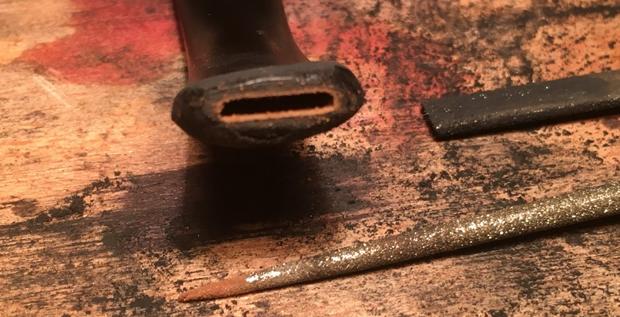
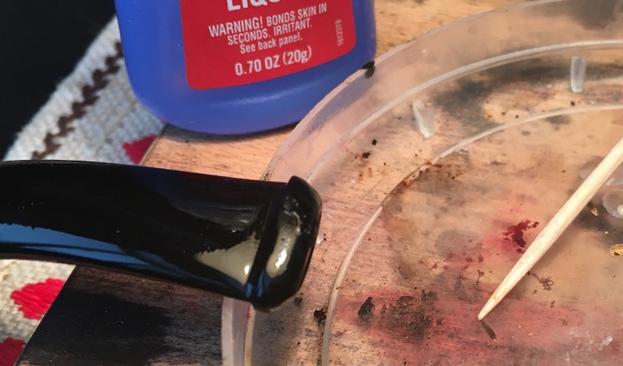
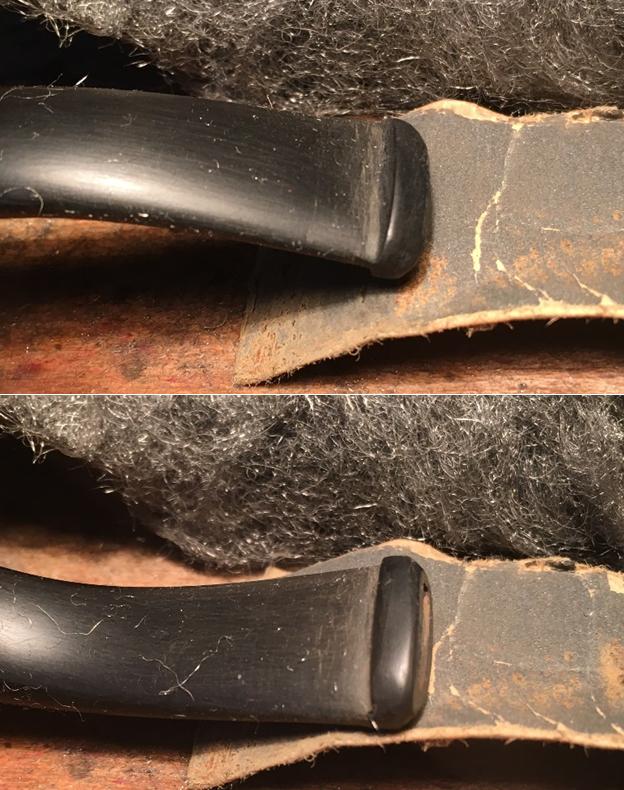
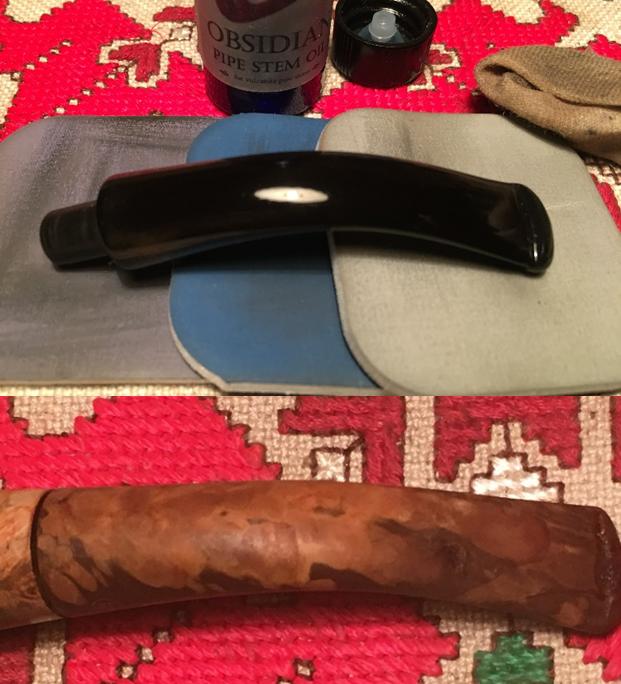
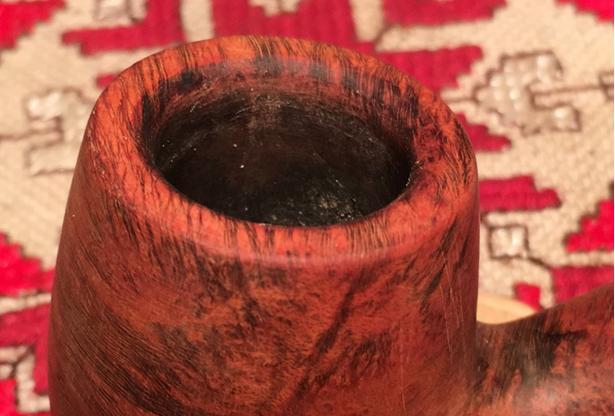
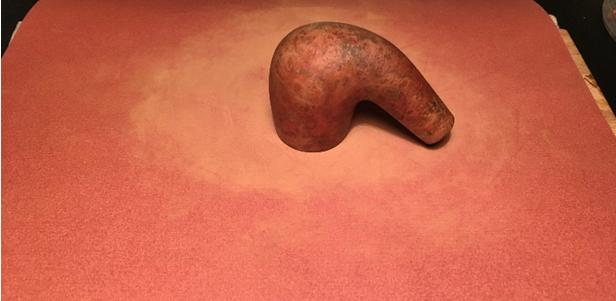
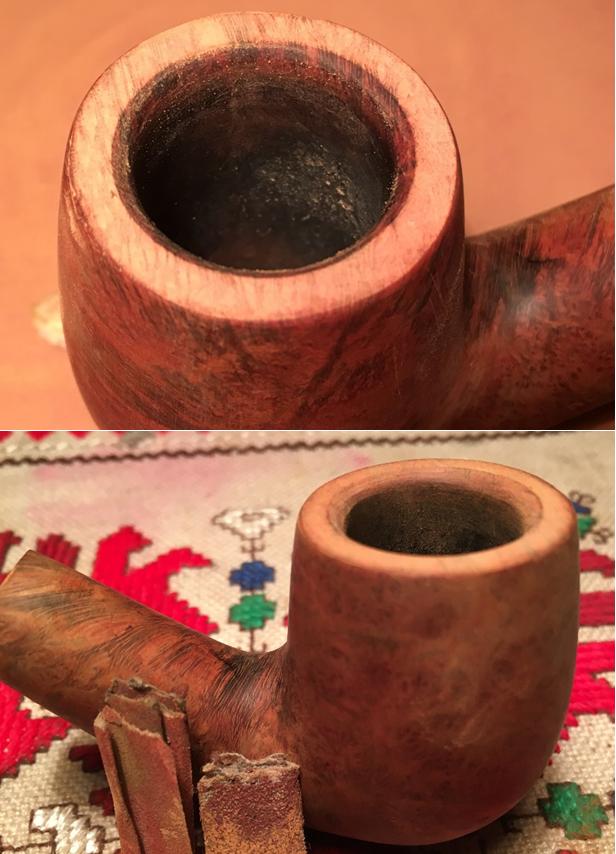
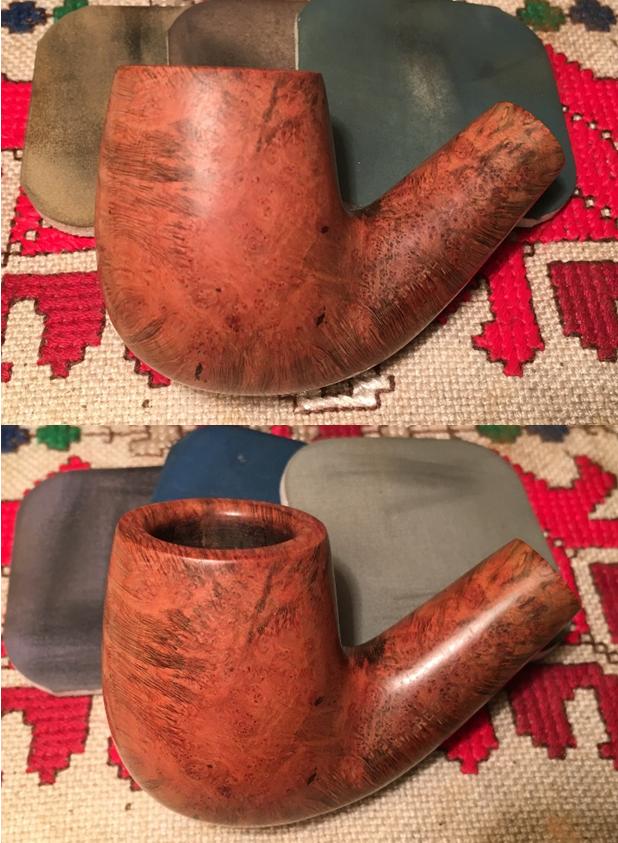
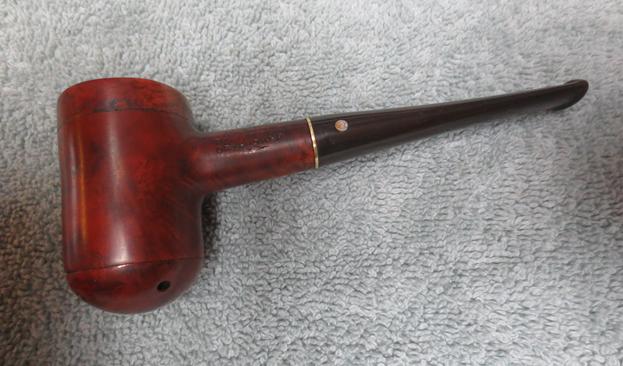
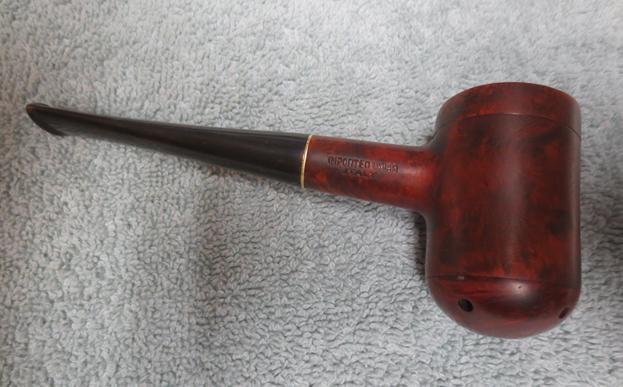
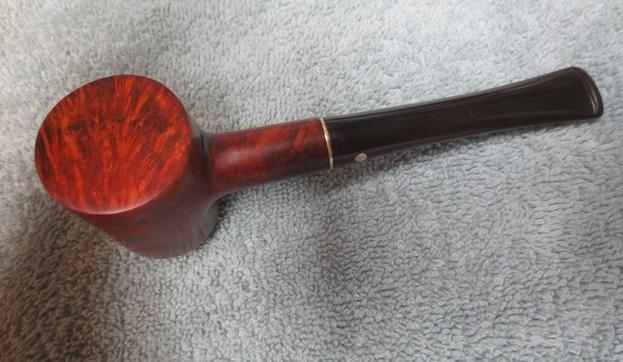
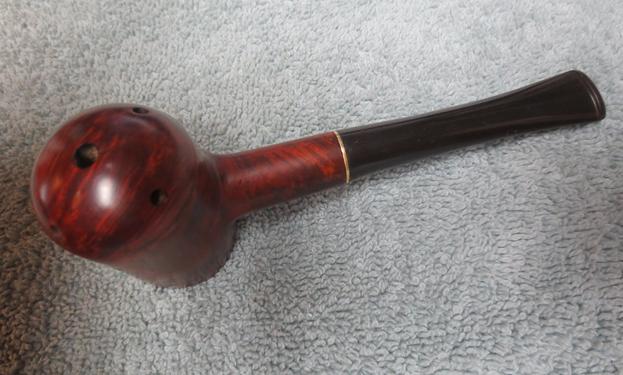
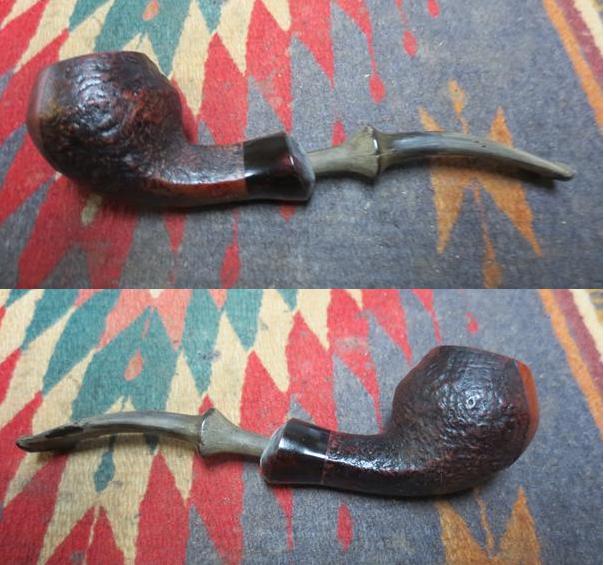
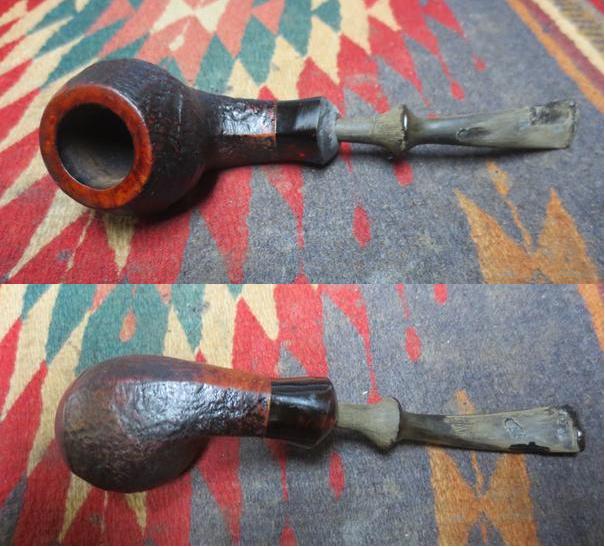
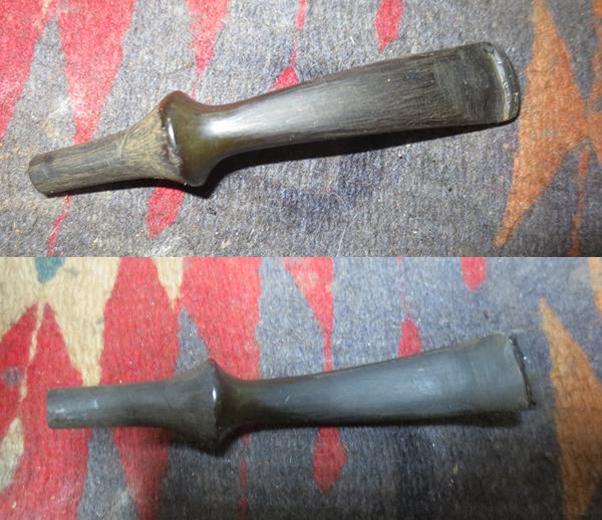
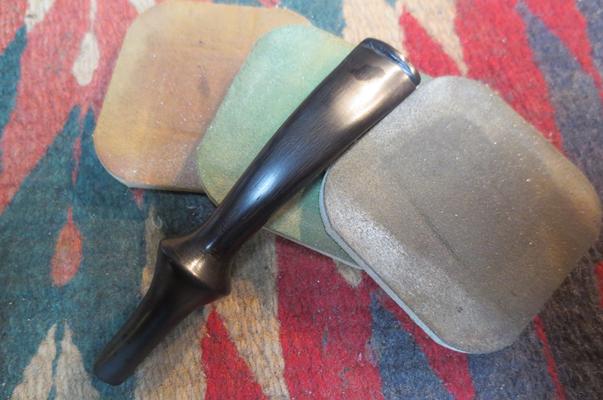
Tag Archives: shaping a stem

‘Gramps’ – A Redonian Deluxe London Made 26 Rescued


Blog by Dal Stanton

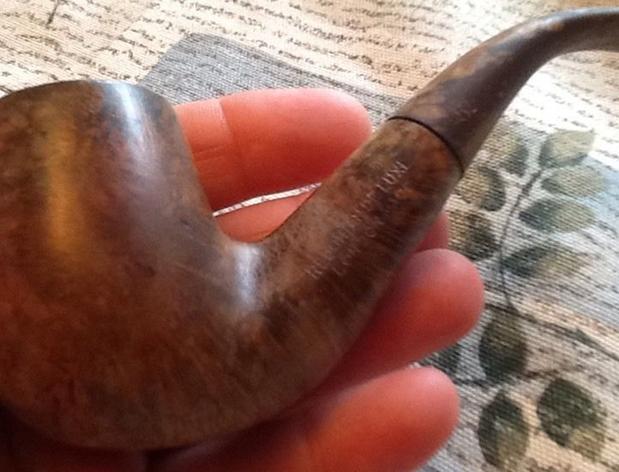
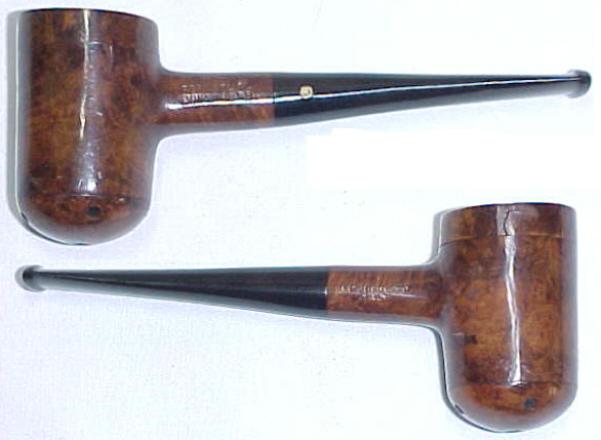
I know exactly where I was when Charles Lemon, of Dad’s Pipes, posted his blog Family Heirloom Comes in from the Cold on December 22.  I was dutifully, pushing the shopping cart at the Target in Golden, Colorado, while my wife and I were engaged in last-minute Christmas shopping.  Well, my wife was shopping and I was catching up on pipe blog reading with my iPhone 6s.  The story Charles told was of a pipe (without a stem) discovered on a stroll in a pasture, how it arrived there was a mystery, which, after some research looking at old photos, was determined to belong to a great-great uncle.  The restoration was to be a Christmas gift for the great-great nephew, the pipe finder’s step-father….  It was an excellent restoration on Charles’ part, but the story itself, the condition of the pipe, the fact that it was found after how many years – contributed to one of the core reasons I love restoring pipes.  As I read Charles’ heart-warming story, I found myself rooting for the pipe to make it and to again be restored to the lineage of the steward.  While I continued faithfully to keep pace with the shopping cart, dodging frantic shoppers and kids on too much sugar and reading Charles’s post, ‘Gramps’ came to mind.  The first time I saw the pictures of ‘Gramps’ and read the eBay seller’s comments, I determined to place my bid to rescue the old, worn out, tossed aside, pipe.  Why did I immediately name him ‘Gramps’?  Here is what the eBay seller said:

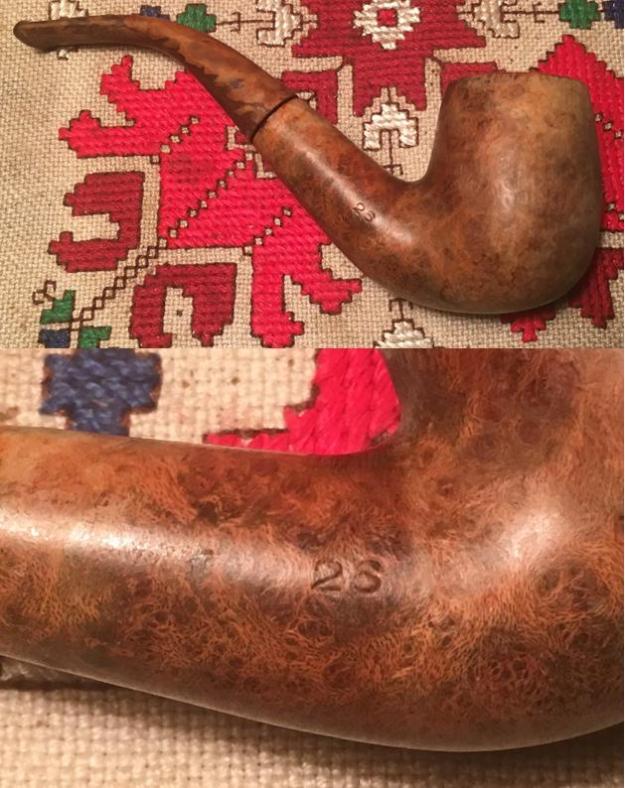
Vary rare REDONIAN Pipe.  Found at the Estate Auction of a 98-year-old man.  (Who said smoking will kill ya?…no way). So the pipe has some ware marks up by the mouth piece, see pictures.  Pipe is marked bowl piece is marked 26 on one side and SARDINIAN de Luxe Made in London on the other.  It is a used pipe.  Ready to be Enjoyed, Gifted or Resold…ENJOY!  

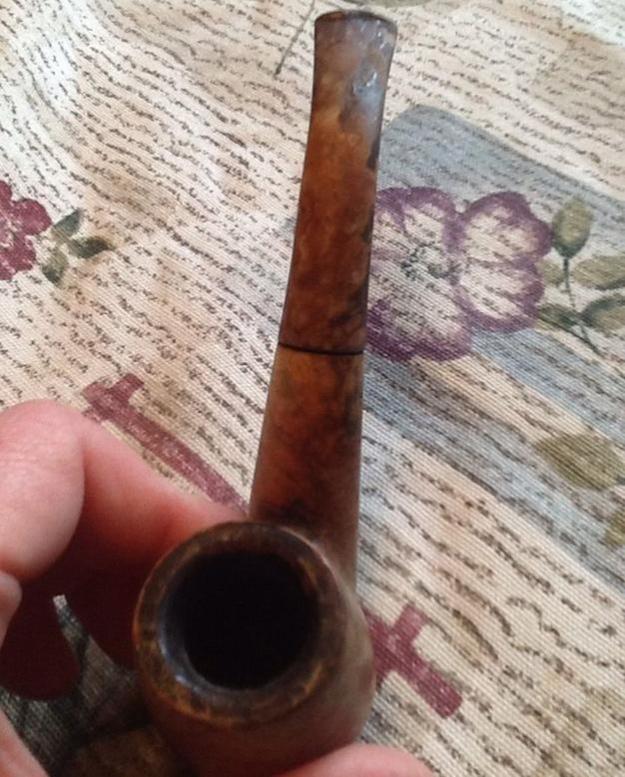
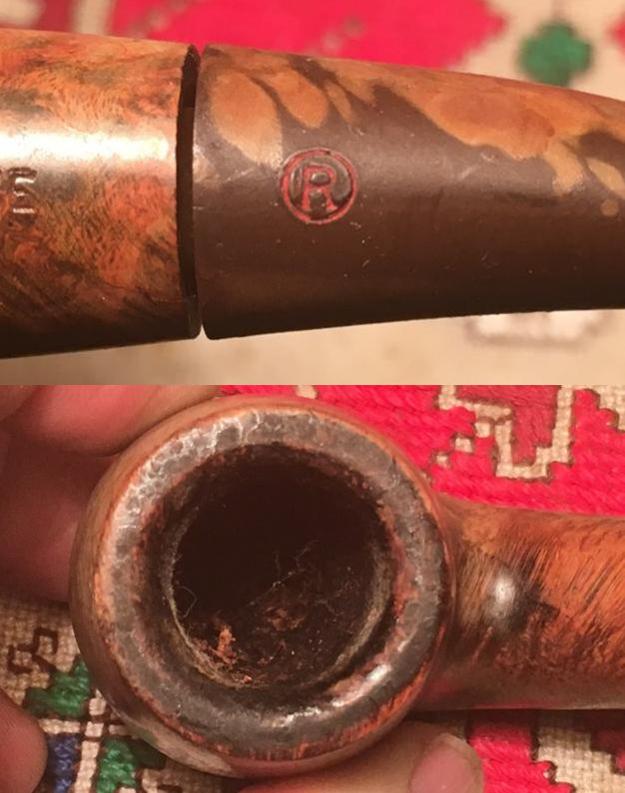
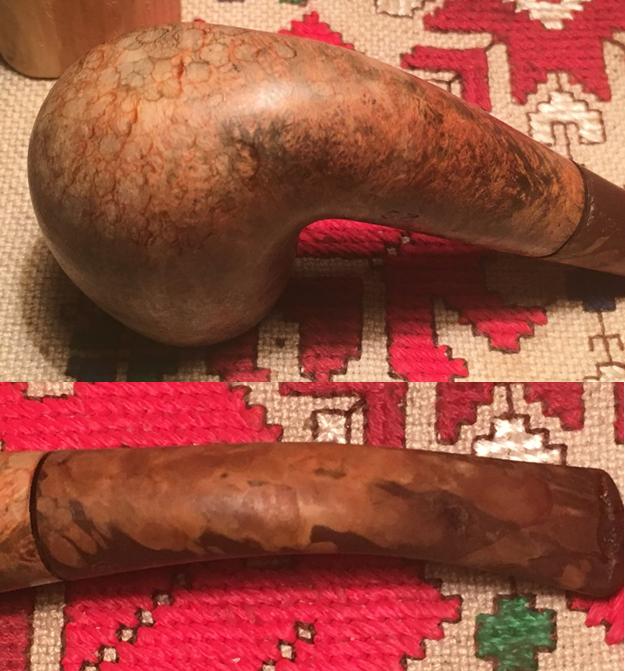
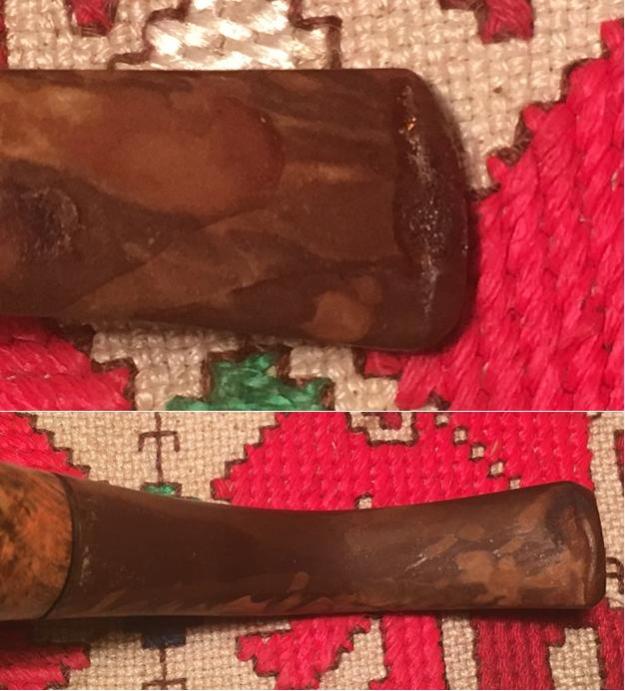
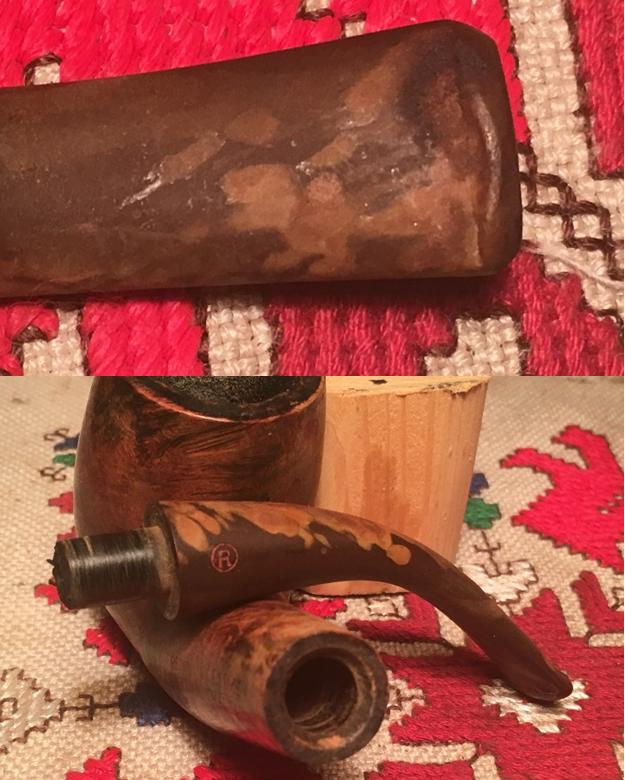
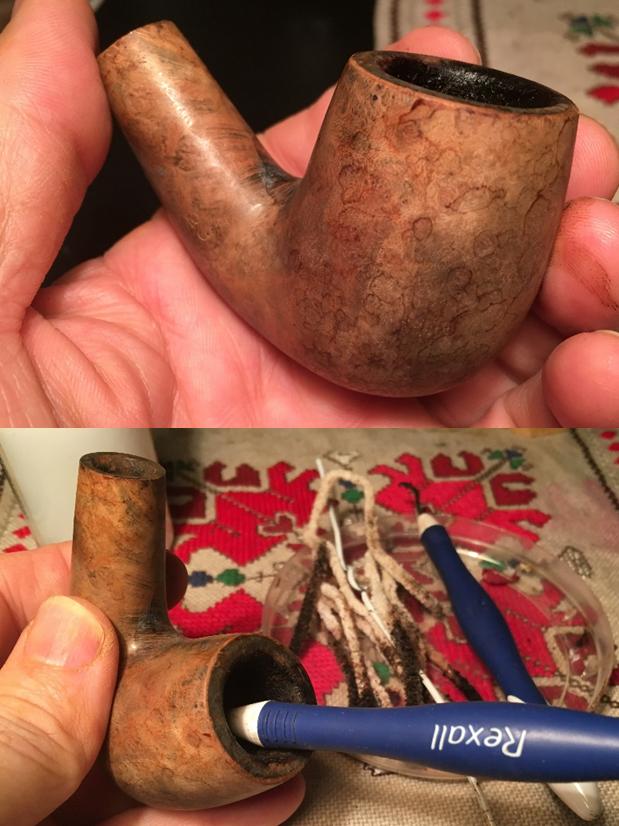
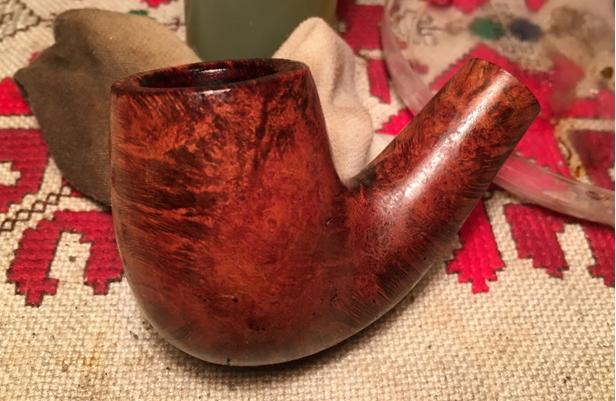
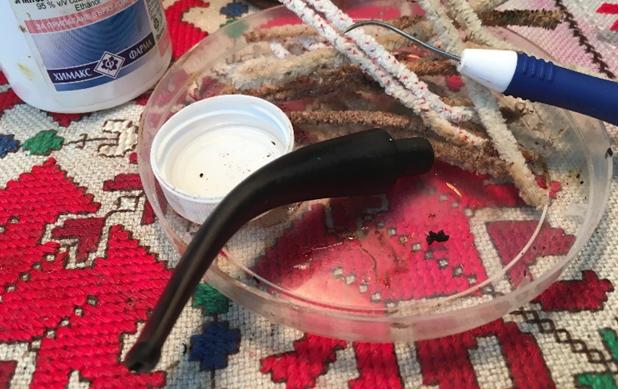
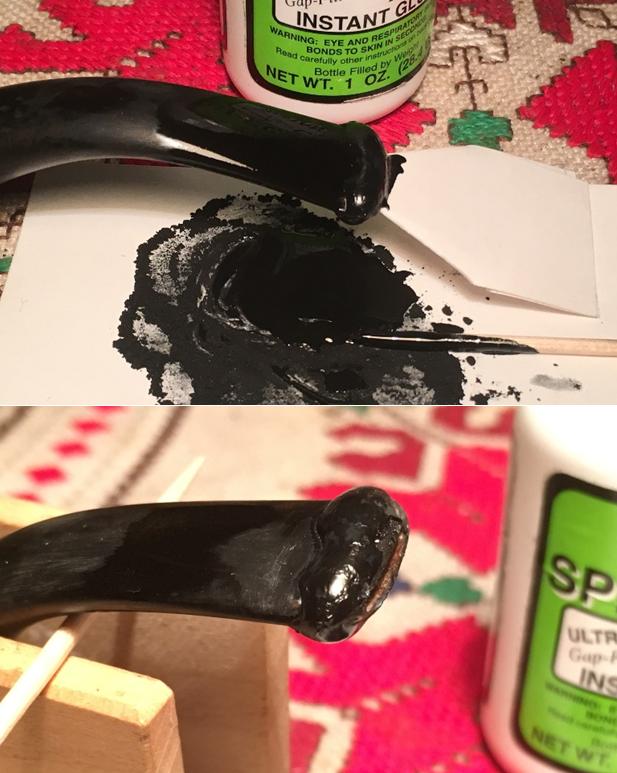
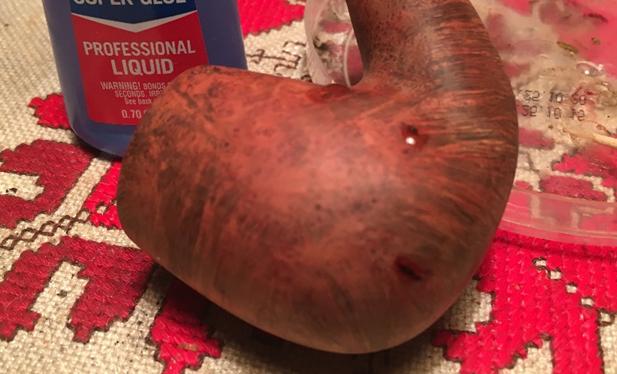
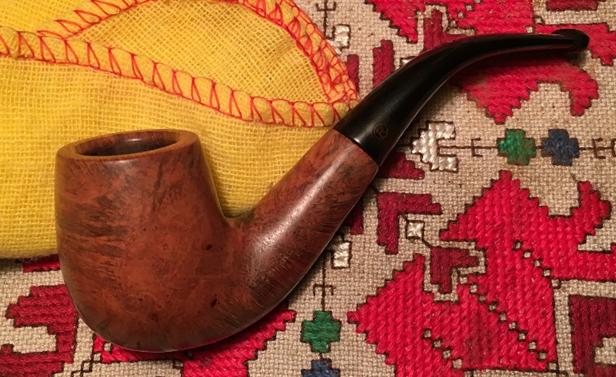
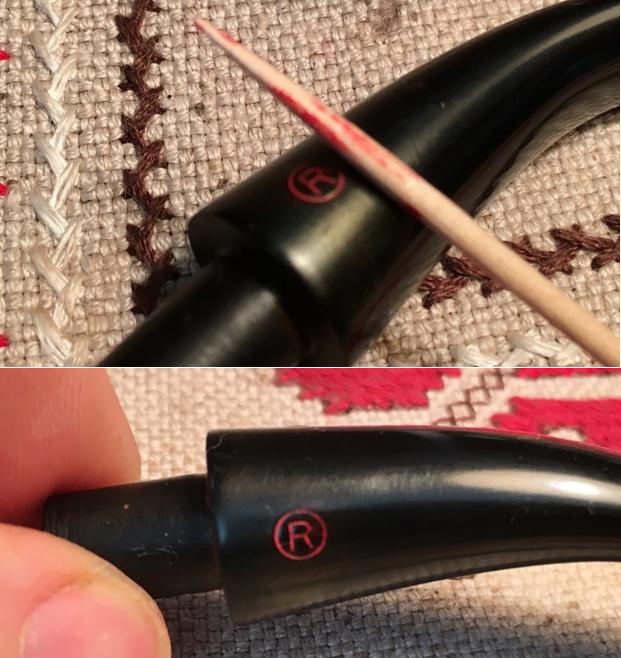
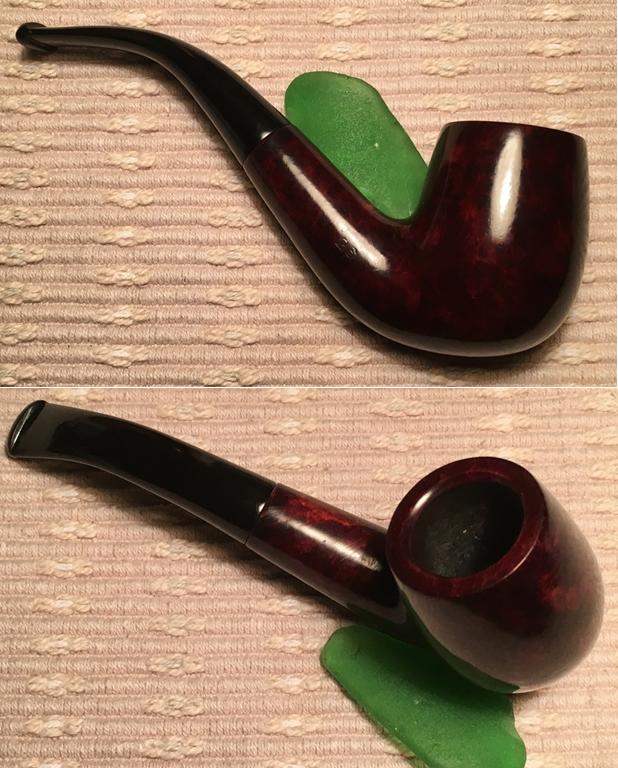
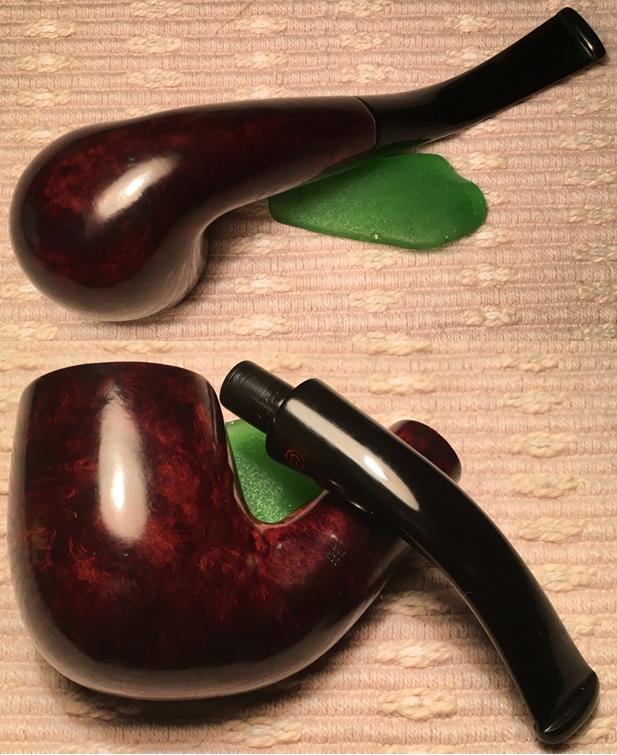
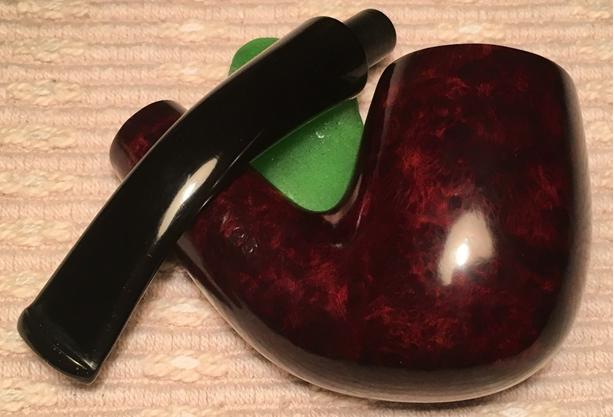
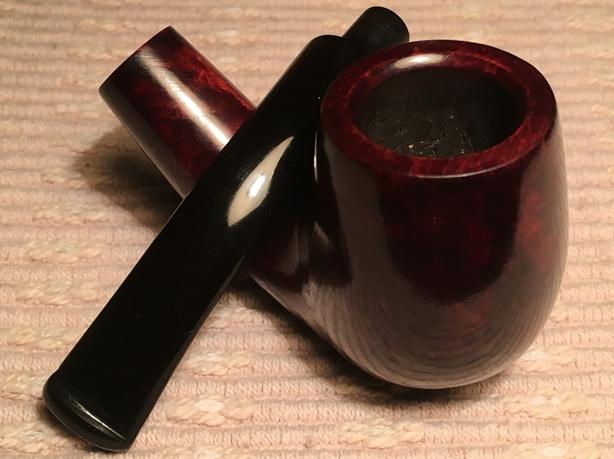
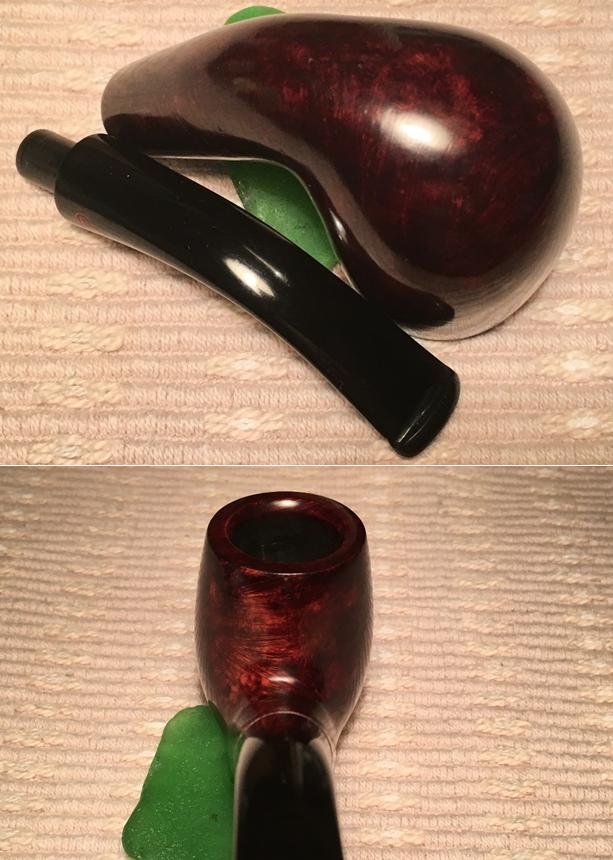
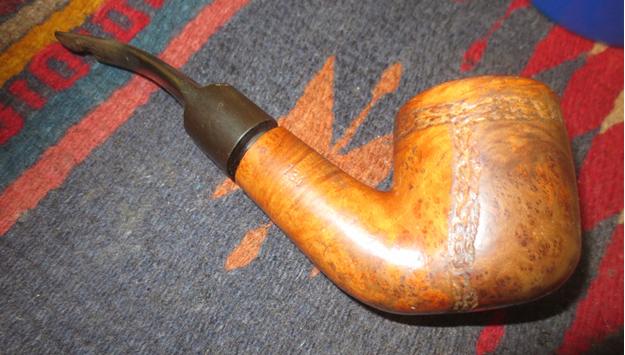
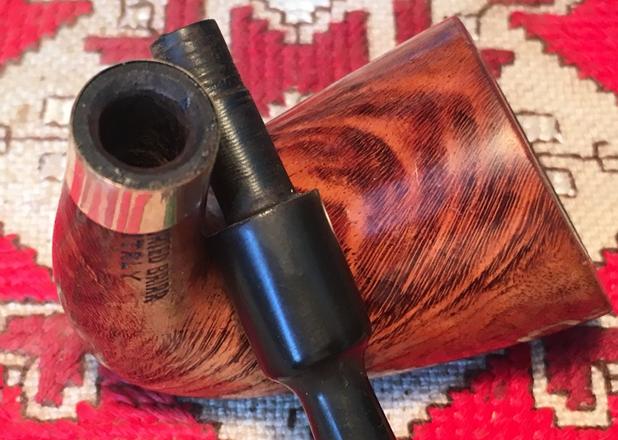
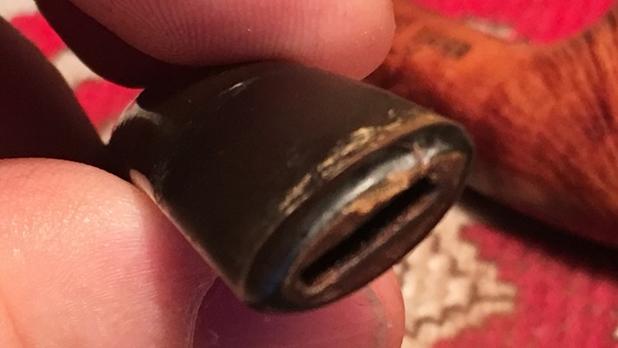
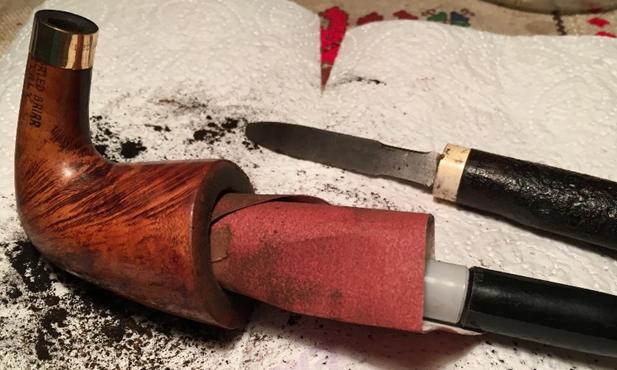
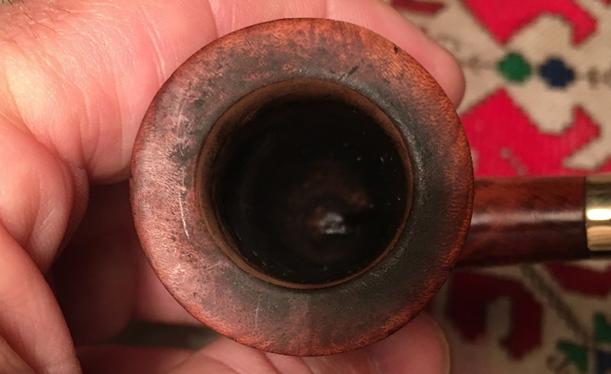
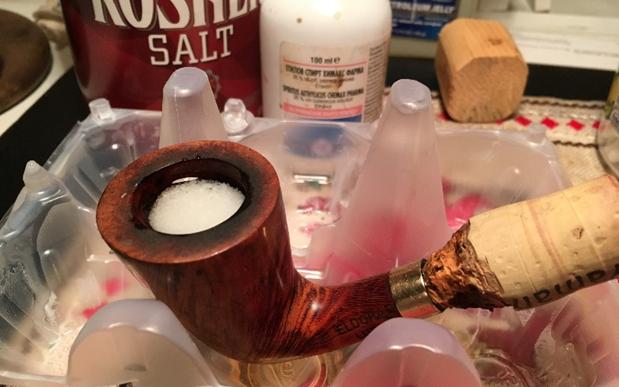
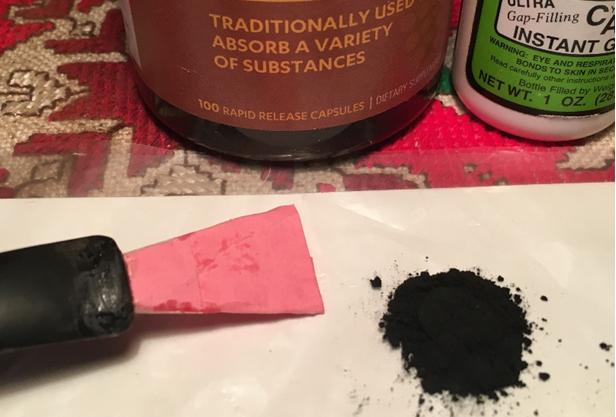
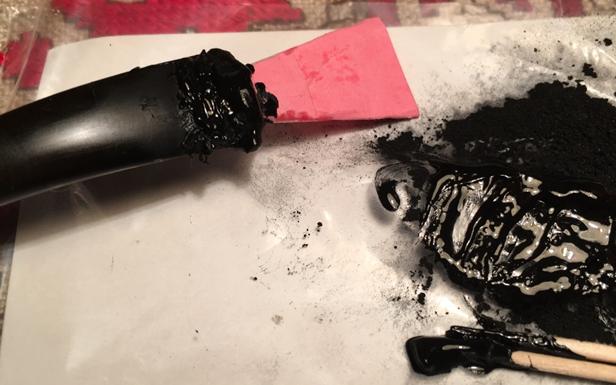
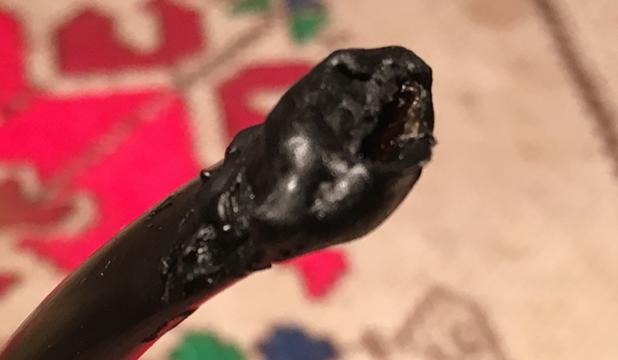
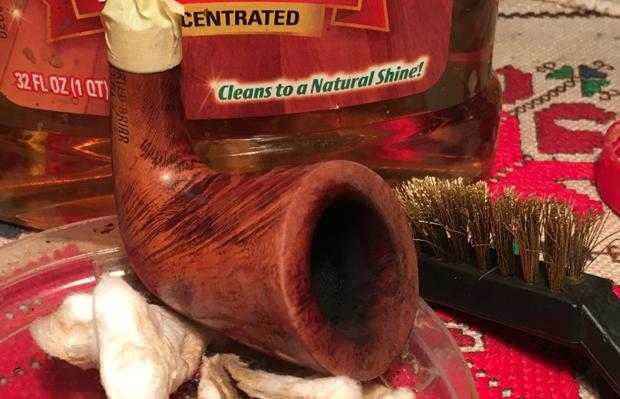
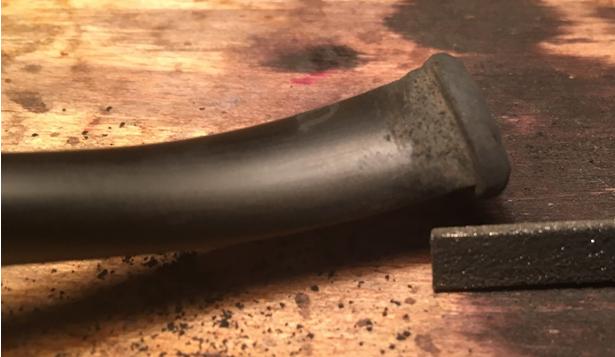
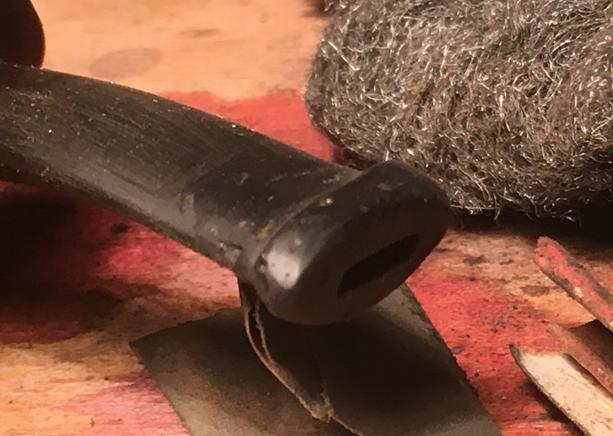
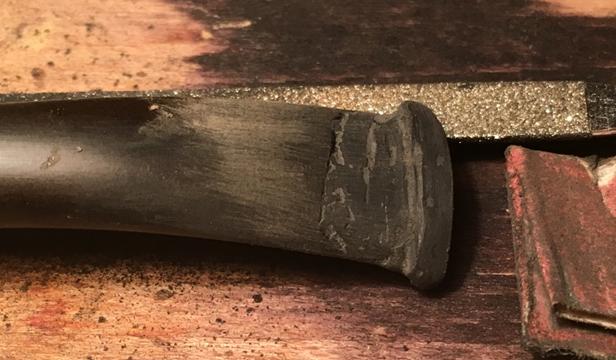
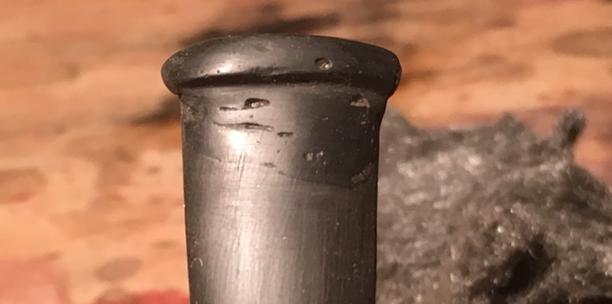
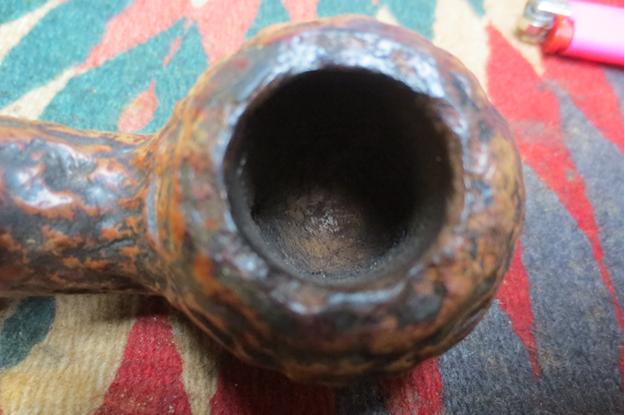
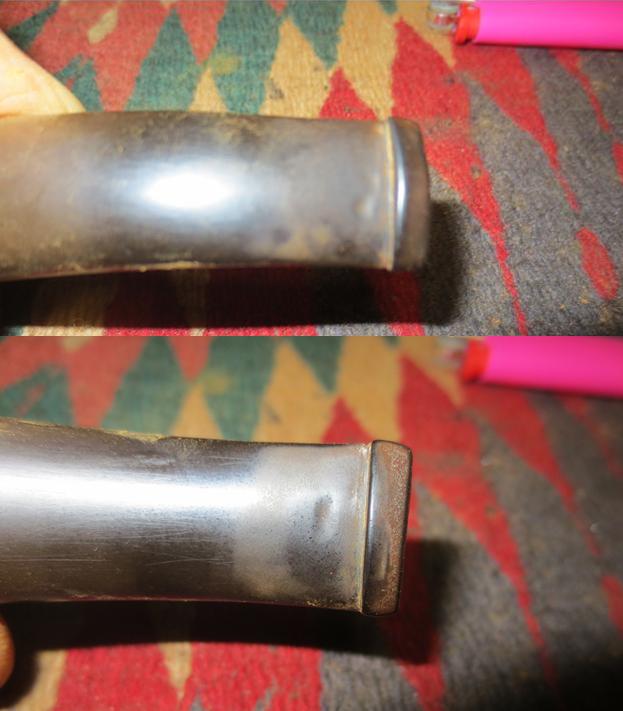
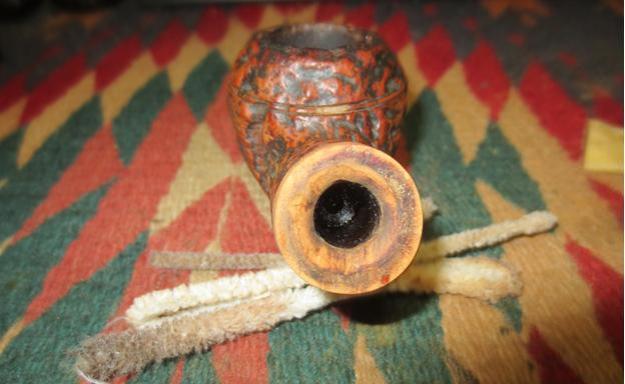
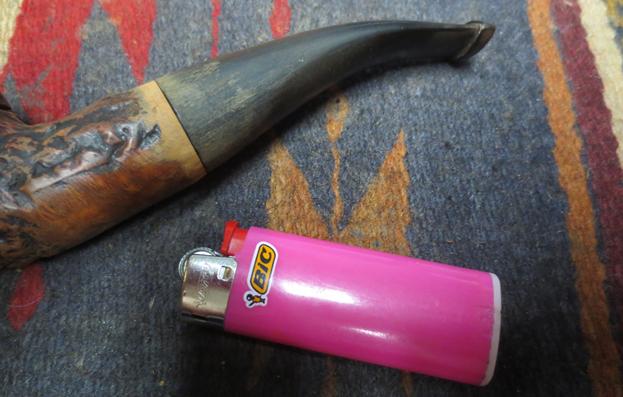
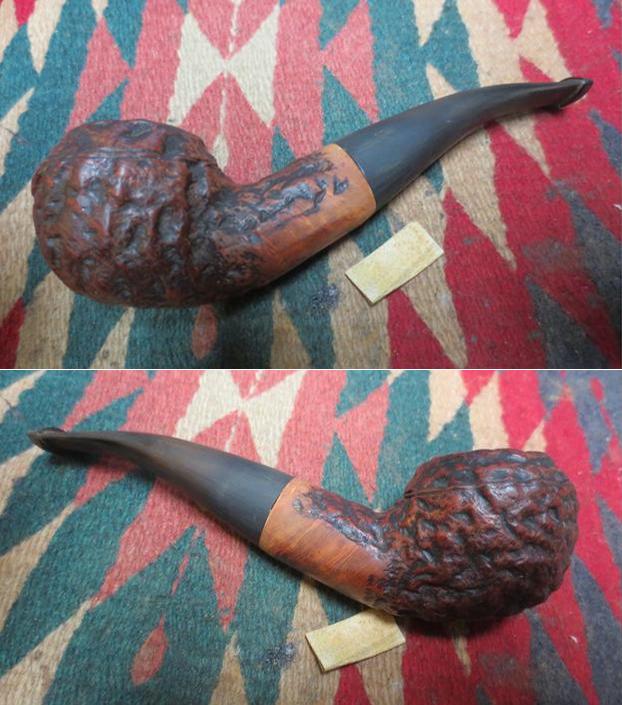
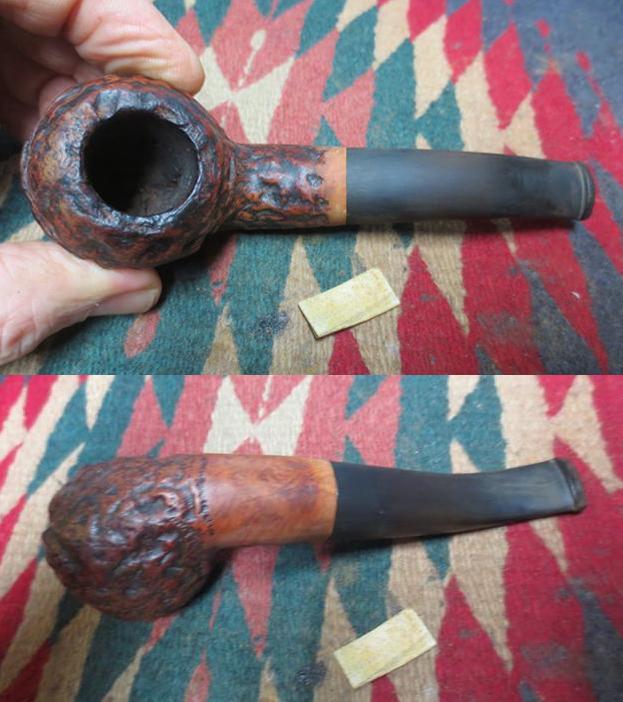
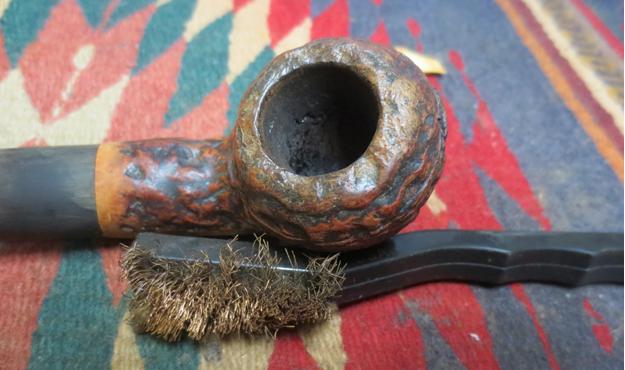
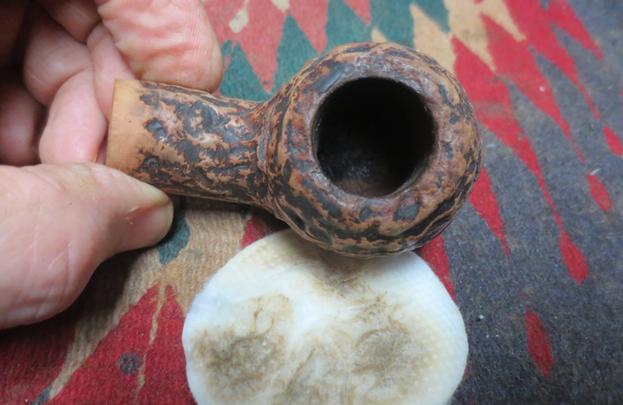
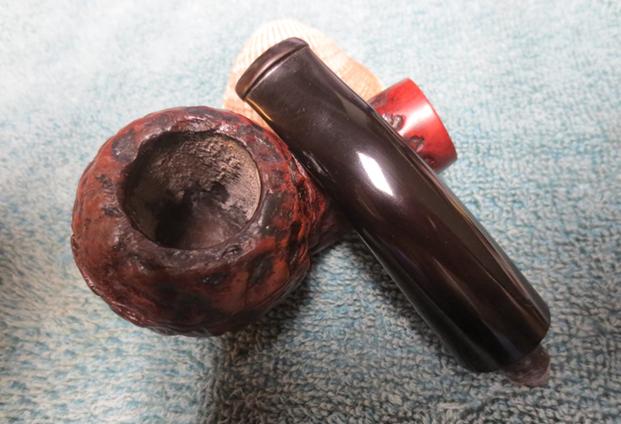
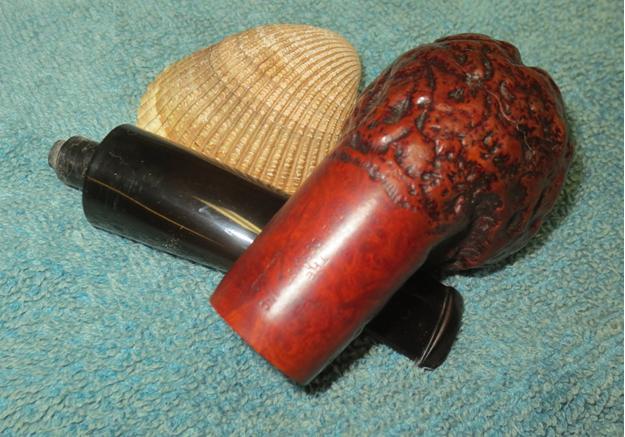
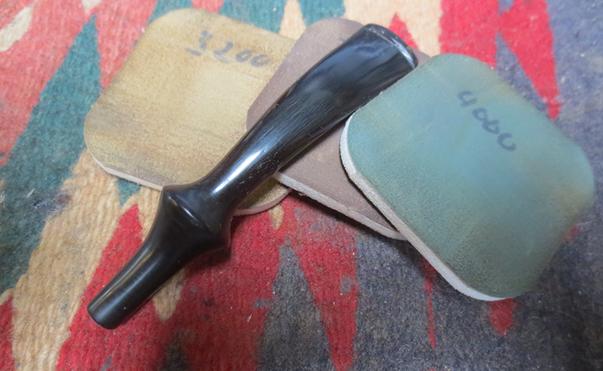
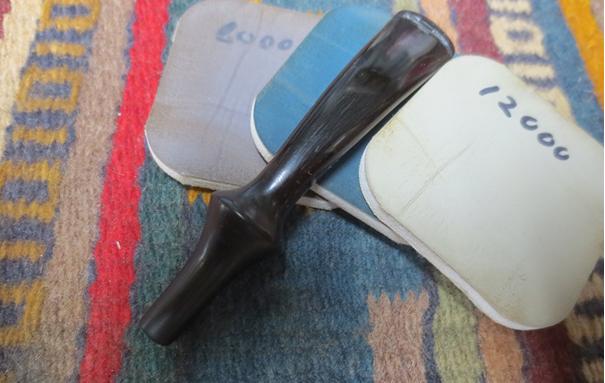
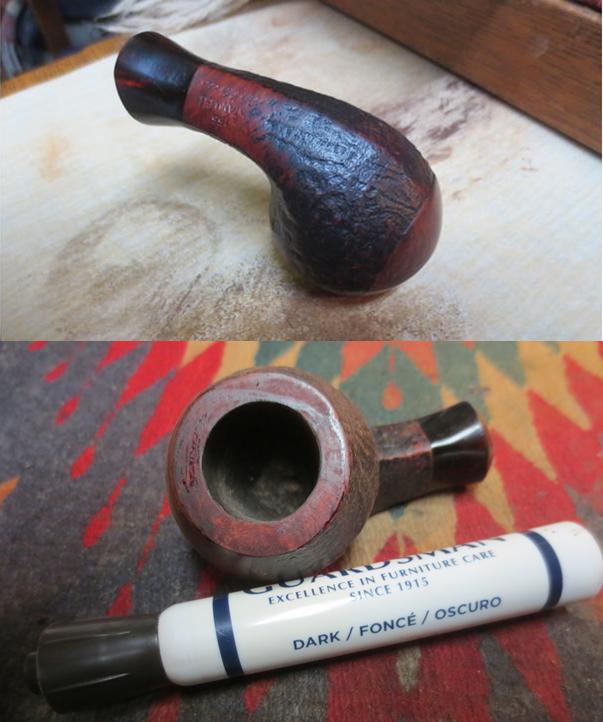
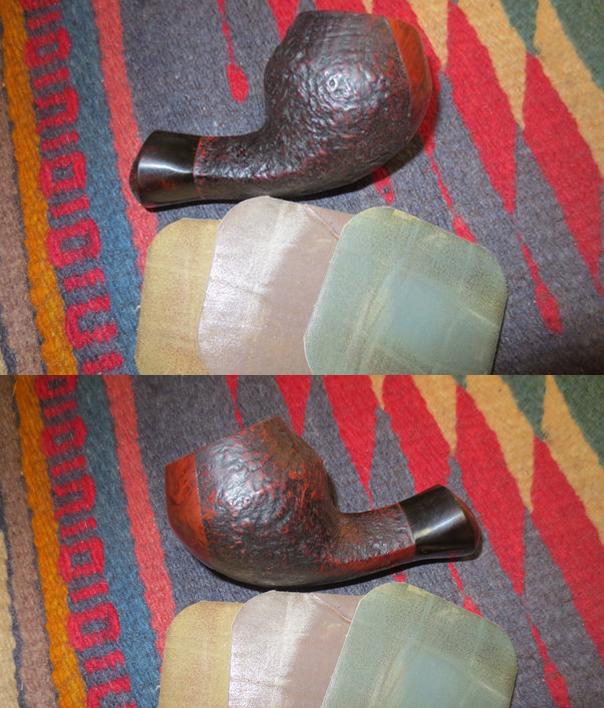
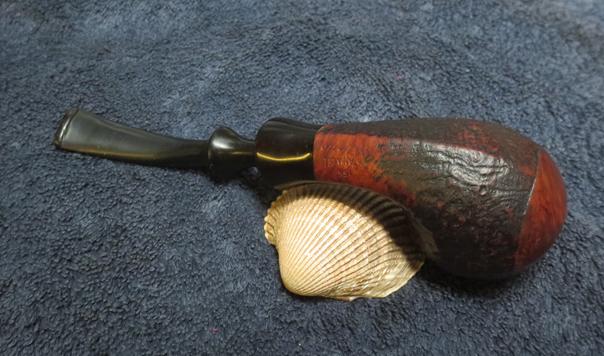
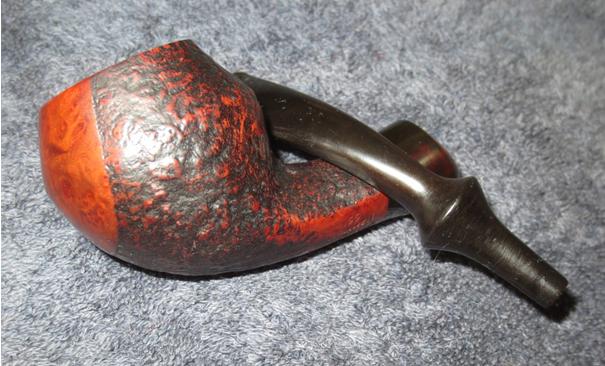
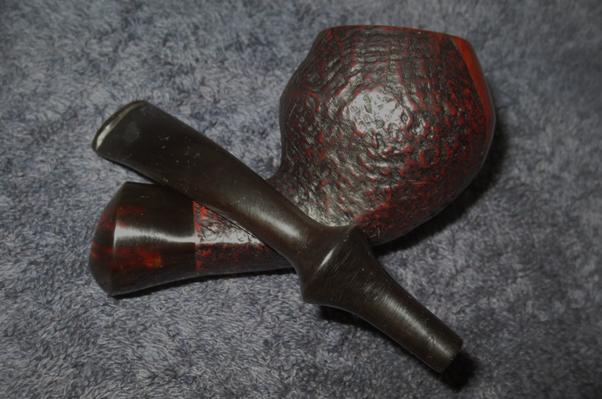
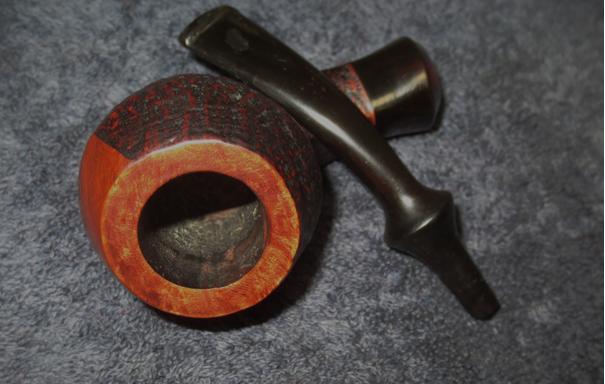
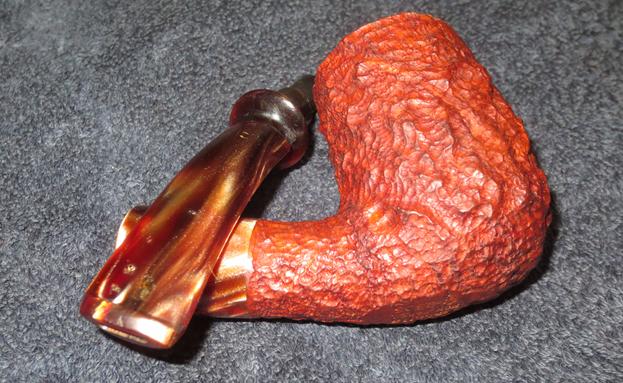
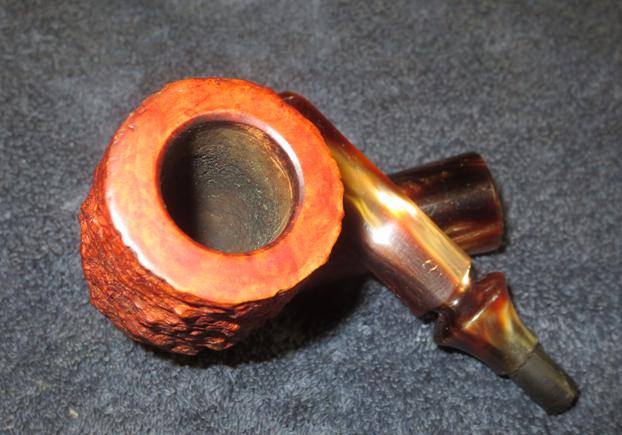
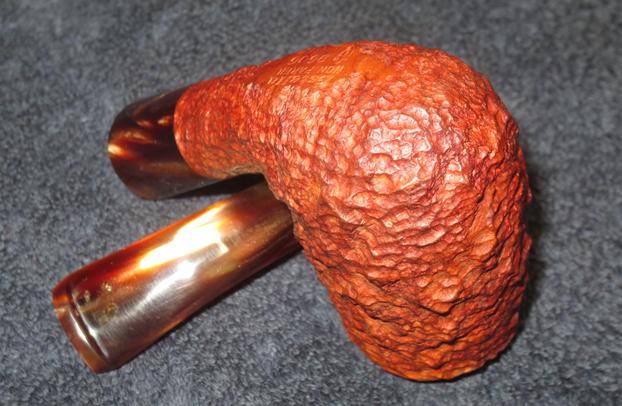
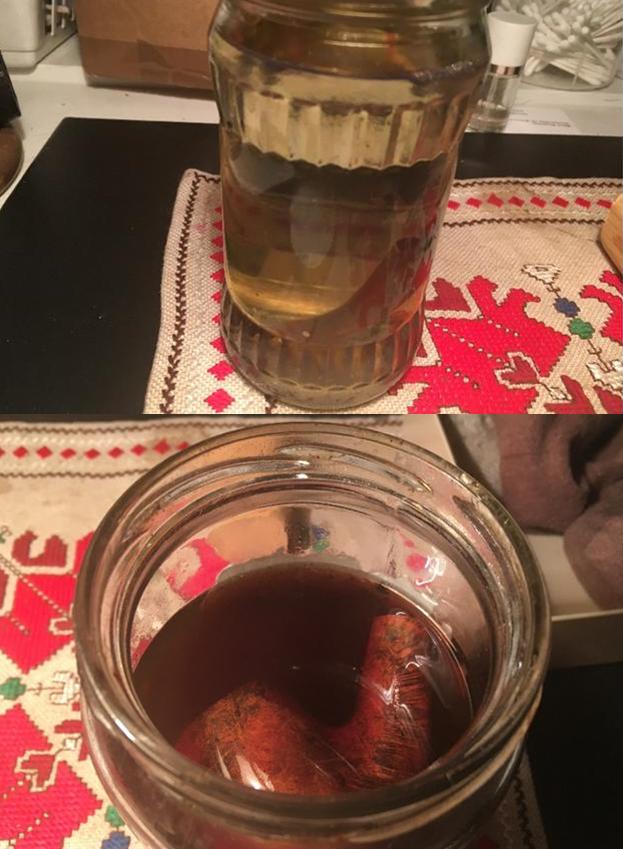
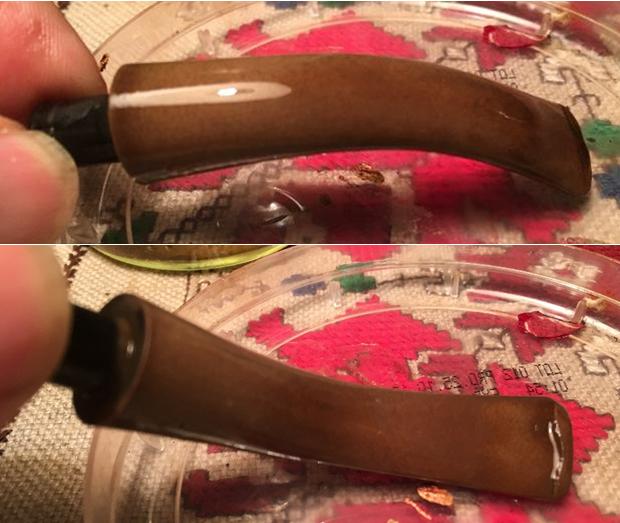
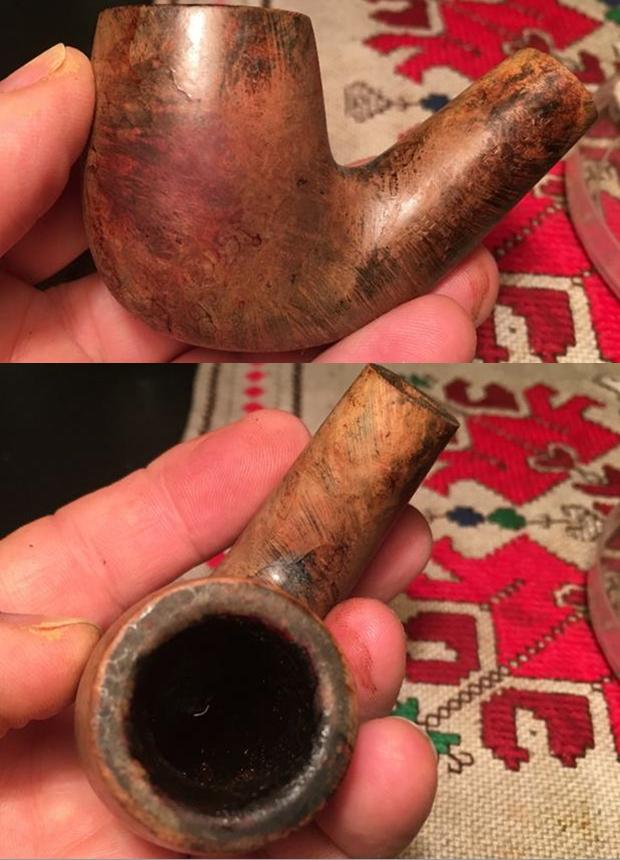
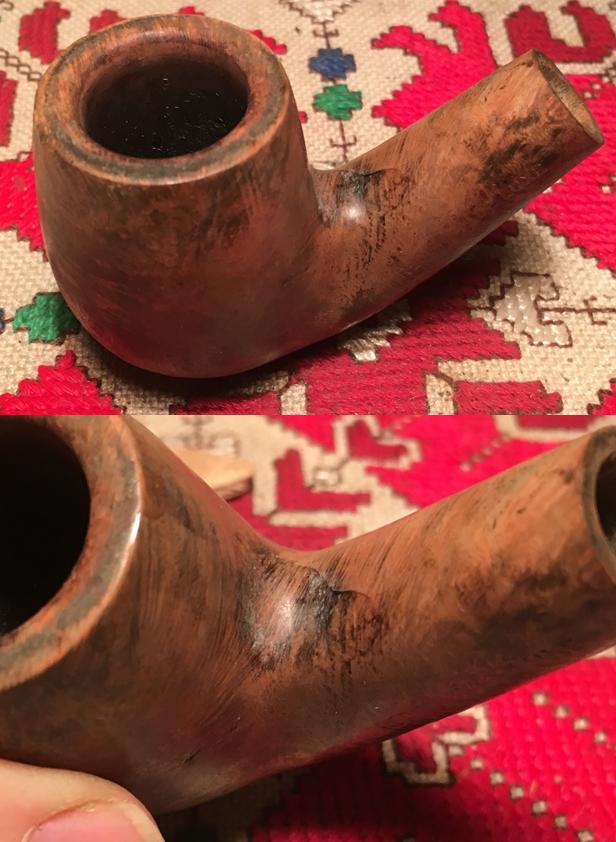
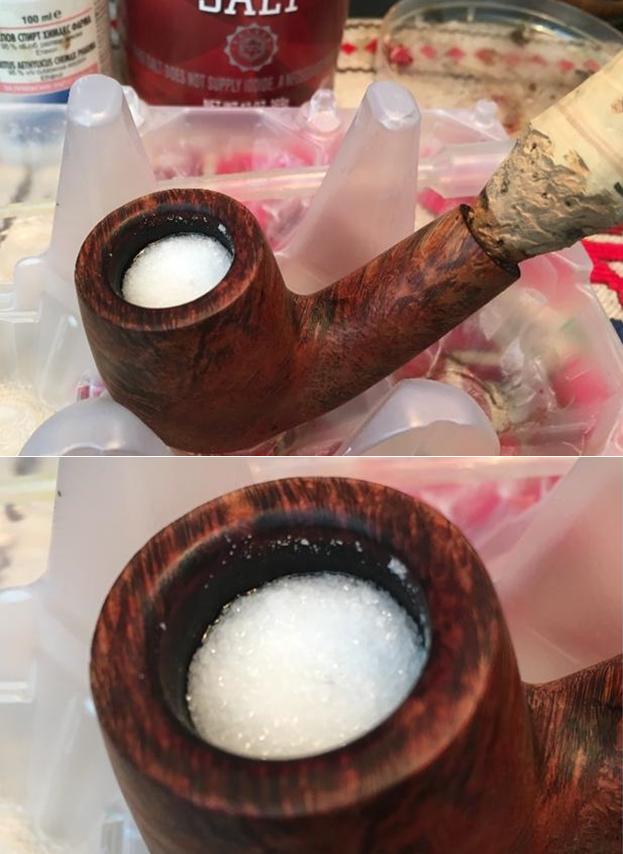
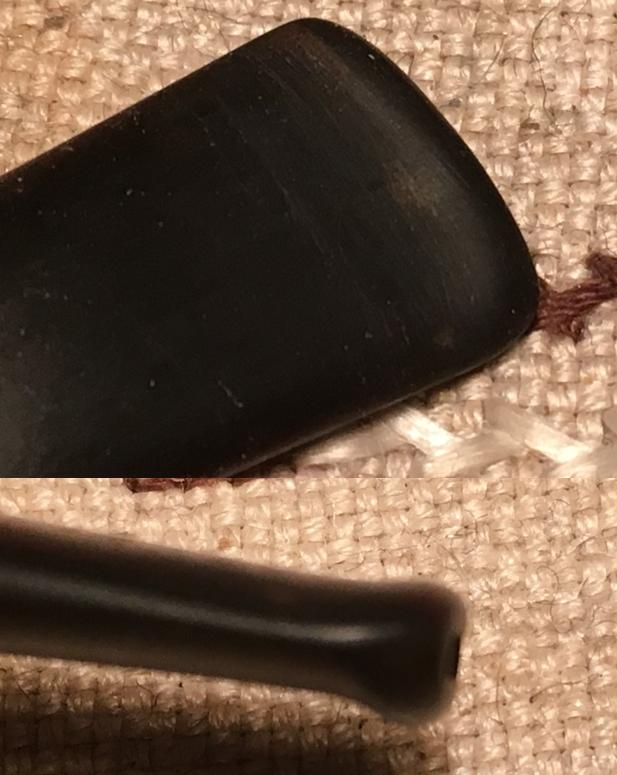
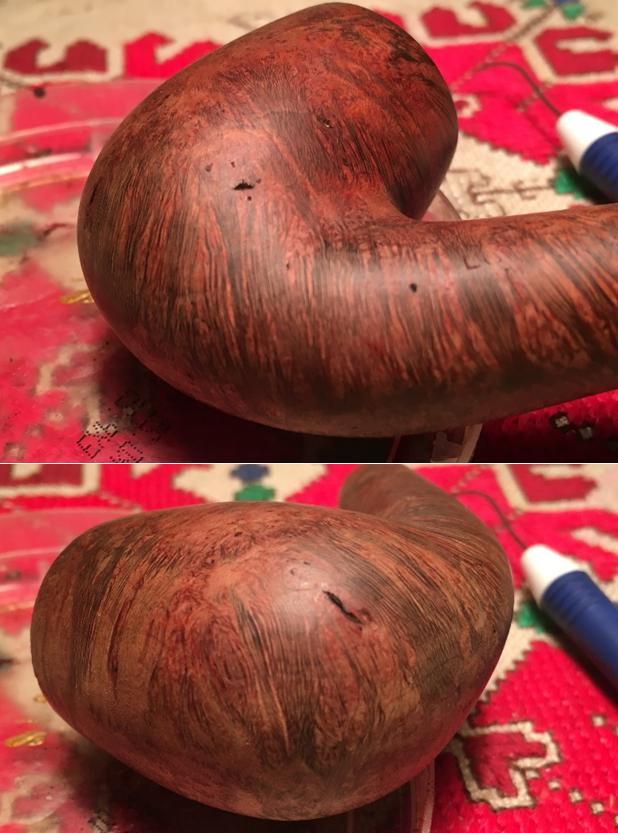
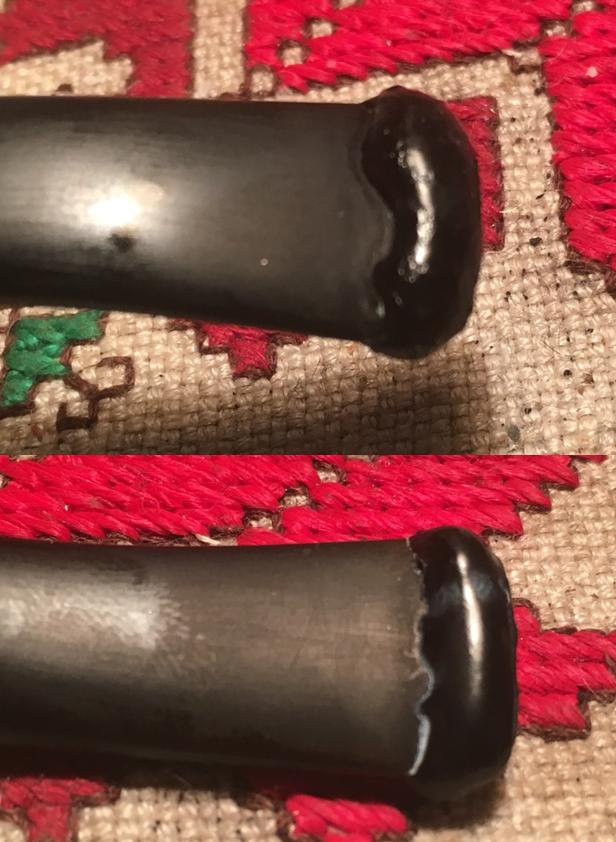
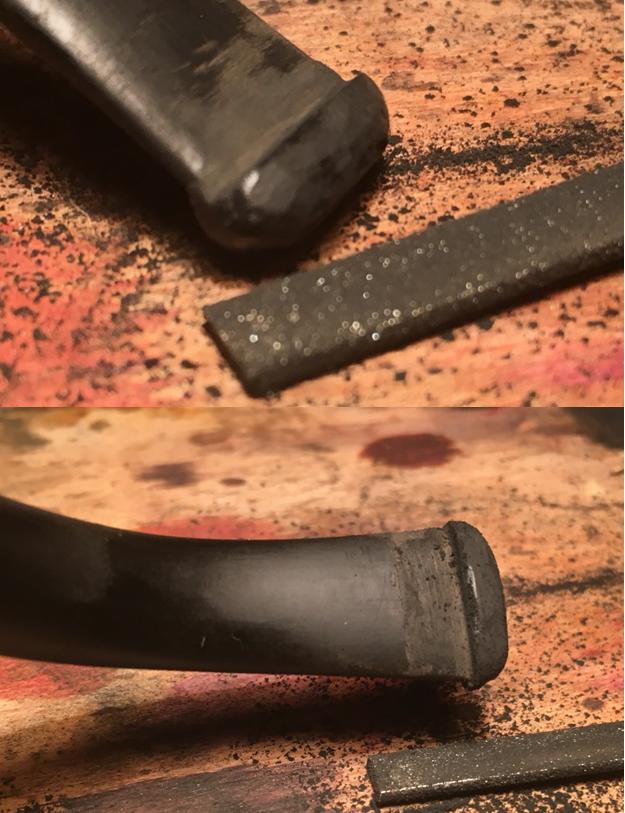
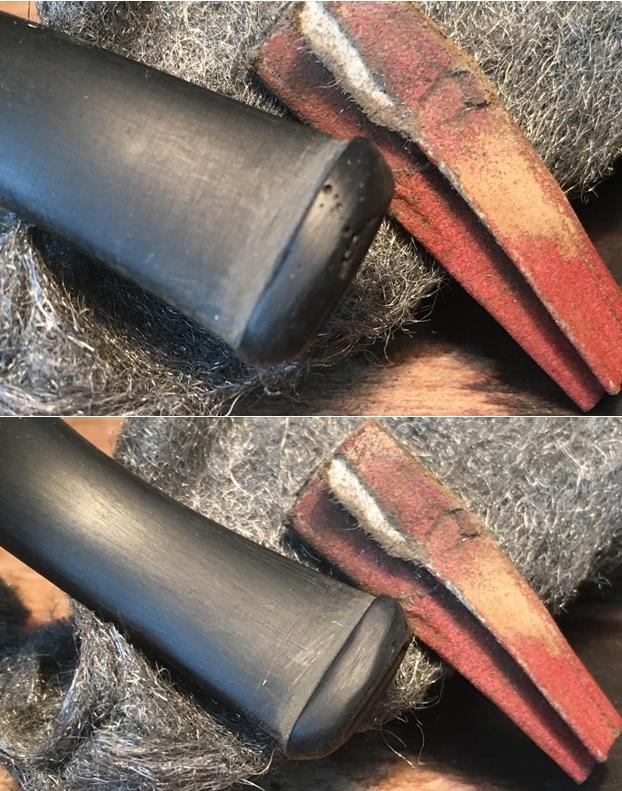
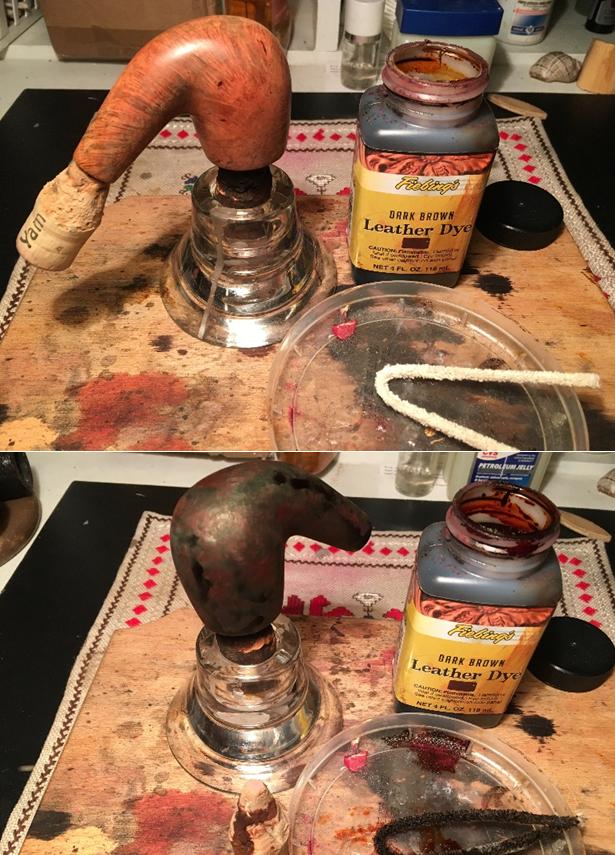
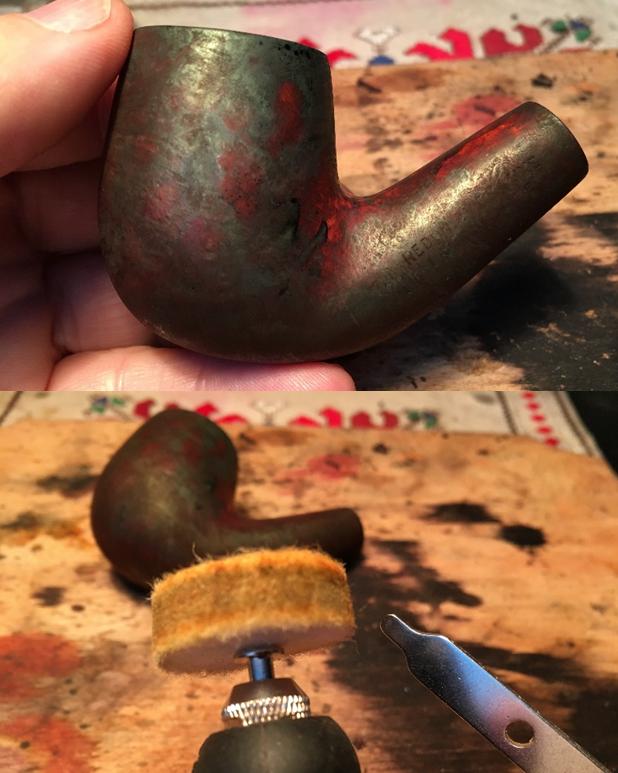
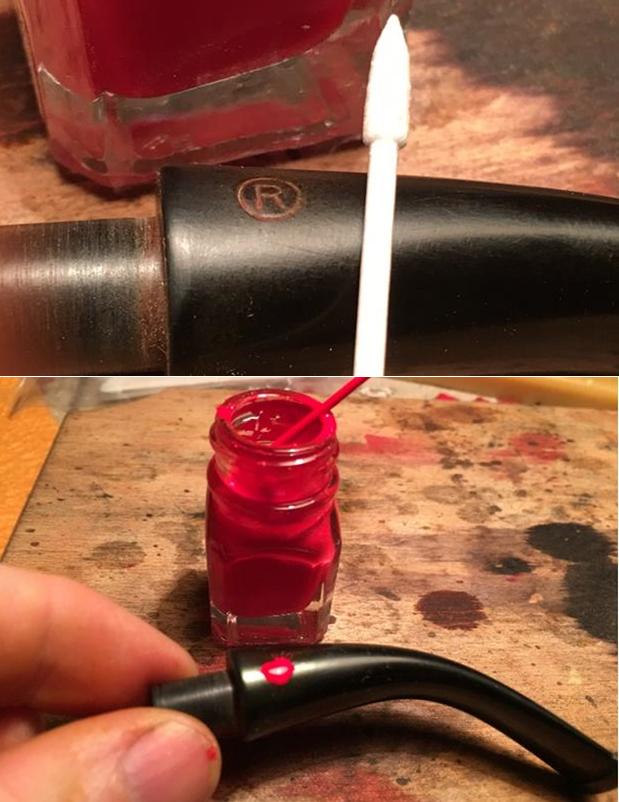
With a smile on my face while looking at Gramps’ pictures, notwithstanding the ‘mild’ exaggeration of the seller’s sales bravado, “Ready to be Enjoyed, Gifted or Resold…ENJOY!”, this is what I saw:red1 red2 red3I have no idea if I can bring Gramps to drink of the Fountain of Youth or not, but I’m now looking at him on my worktable here in Sofia, Bulgaria.  The markings on the left shank are Redonian Deluxe over London Made.  The right side of the shank bears the mark, 26, which I assume is the shape number.  Surprisingly, the stem stamping is legible – a red ‘R’ ensconced in a circle.  A look at Pipedia and I discover that the Redonian was made by the John Redman Ltd./British Empire Pipe Co. in London, the same company that was a possible manufacturer of the L. J. Perretti I restored not long ago – the Perretti Co. is based in Boston and the second oldest Tobacconist in the United States.  According to the Pipedia article, John Redman Co. pipe lines, along with Redonian, include Aristocrat, Buckingham, Buckingham Palace, Canberra, Captain Fortune, Dr John, Golden Square, Richmond (not Sasieni),  and Twin Bore.   I take some additional pictures of ‘Gramps’ for a fresh look.red4 red5 red6 red7 red8 red9Like Charles’ patient, this pipe looks to have been left outside or exposed in a barn or something, as half of it seems to be colored differently – laying on its side for some time.  The stem has the heaviest oxidation I’ve seen to date – perhaps something else is going on – it appears to be leprous!  The surface is so soiled and the cake so thick – there appears to be a spider web in the fire chamber – I really can’t determine the condition of either the stummel or stem, so after taking some pictures from my work table, I plop the stem in Oxi-Clean to start dealing with the stem leprosy and I plop the stummel along with spider web, in an alcohol bath – isopropyl 95% to soften the ages of crud clinging to the stummel – inside and out.red10About 24 hours later, I retrieve the stem from the Oxi-Clean bath and the oxidation was raised to the vulcanite surface as hoped and expected.  I first attack the oxidation by wet standing the stem with 600 grit sanding paper.  I’m very careful to stay clear of the Redonian ‘R’ stamping and work around it.  I sand for quite some time.  After making some progress, I switch to using 0000 steel wool to take off more oxidation and smooth in the process.  Again, I’m steering clear of the ‘R’ stamping.  I wish I would have taken a picture at this point.  The stem is looking much improved except for the circle ‘R’ stamping – still encased in thick oxidation.  I know that taking anything abrasive to the stamping will erode it and for me, this is anathema.  I try another tack – I think I remember reading somewhere about using Mr. Clean Magic Eraser.  I brought it to Bulgaria from the US and hadn’t used it yet.  The sponge that emerges from the box would not be abrasive – I hope.  So, I wet the sponge and start working on the area of the stamping. I start very cautiously and gingerly apply pressure with the sponge Magic Eraser.  When I discover that it is not eating away at the stamping I apply more pressure.  Before long I was working on the area aggressively.  Very gradually, and without perceptible damage to the ‘R’, the oxidation disappeared – or at least, in very large measure.  The last picture in the set below shows the magic brought by the Magic Eraser! I’m pleased with the progress cleaning up a once, leprous stem!red11 red12Satisfied with the progress on the stem, I fish the stummel out of the alcohol bath.  I use several pipe cleaners attempting to open the airway between the mortise and draft hole – unsuccessfully.  I then use about a 6-inch length of hanger wire as a probe and to ream the airway gently.  After a while, I finally push through the ancient muck and reconnect the mortise and bowl.  After this, I put the stummel back in the alcohol bath to soak further after stirring up and opening the internals.red13 red14 red15Out of the bath again, I take Q-tip cotton swabs and pipe cleaners and clean the gunk out of the mortise and draft airway while it is still loosened.  It’s cleaning up well, but I need to ream the bowl to remove the softened cake and the old residues.  I want Gramps to have a new start down to the fresh briar.  I use the Pipnet reaming kit using the two smaller blades of the four available.  The cake comes easily.  I fine tune the reaming more using the Savinelli pipe knife.  I then take 240 grit sanding paper, wrapped around a Sharpie Pen and sand the chamber walls to remove the remaining carbon.  I finish by cleaning the bowl using cotton pads wetted with isopropyl 95%.  The fire chamber looks good – no problems, no burn throughs detected visually. The pictures mark the progress.red16 red17 red18With the bowl reamed and cleaned, I now turn to the stummel externals.  I take another critical look at the stummel surface and lava flow on the rim and take a few pictures to show the condition of the briar before I use Murphy’s Oil Soap.  I want to mark the progress moving from the desperate condition in which the Redonian Deluxe started.  I use undiluted Murphy’s Soap and scrub the rim and stummel surface with cotton pads. I also use a bristled tooth brush to scrub the surface.  After cleaning, I rinse the stummel with warm tap water careful not to allow water into the stummel internals.  The rim cleans nicely and it looks good.  Looking at the briar surface, not surprising I detect several pits which need to be either sanded or filled.  What is emerging from underneath the gunk, grime and grunge is a piece of briar holding much potential to shine with the gradual appearance of some nice-looking grain.  With my work day ending, I decide to apply olive oil to the stummel to hydrate the very dry wood – letting it absorb the oil through the night. The pictures show the progress.red19 red20 red22 red23The next morning, I decide to further clean and purify the stummel using the salt/alcohol soak.  I fill the bowl with Kosher Salt and cover the opening with my palm and shake the stummel to distribute the salt.  I then place the stummel in an egg carton to give stability, and fill the stummel with isopropyl 95% until it surfaces over the salt.  I then cork the mortise and let it sit and do its thing – letting the salt absorb the crud.  I then turn to the stem.  I clean the stem internals using pipe cleaners dipped in alcohol.  Using a sharp dental probe, I dig gunk out of the slot to clean it.  It takes a while to work a pipe cleaner all the way through the stem.  Once I do accomplish this, I use a bristled pipe cleaner with alcohol to run it back and forth several times to clear and clean the airway – hopefully allowing a pipe cleaner easier passage.red24 red25After cleaning the internals of the stem, I now look at the condition of the button area.  The 98-year-old grandpa that owned the Redonian did not leave teeth marks (is that a clue to his dental condition??) but the upper and lower bits are almost flush with the stem surface. This is not good – the button edges are necessary to hang the pipe properly on the teeth so that one does not bite the stem leaving the teeth chatter and dents one must remove when restoring a pipe!  I will use charcoal/superglue putty to build up the button area.  I form a wedge made of index card and fit it into the slot of the stem to keep putty from covering the opening.  I open a capsule of activated charcoal and pour the powder on an index card.  I then put a small puddle of Hot Stuff Special ‘T’ CA glue (extra thick glue) next to the charcoal powder.  With a toothpick, I draw charcoal into the glue, mixing it as I go.  I continue to add charcoal powder until I reach a thickness like molasses.  When I reach this viscosity, I then dollop the putty around the button area – more than is needed to provide excess to sand down to the proper button proportions.  I use an accelerator to set the putty.  I then remove the wedge from the slot and put the stem aside to cure.  The pictures show the process.red26 red27 red28Several hours have passed since the stummel began its salt/alcohol soak.  The salt has darkened some, so I assume it’s done its work!  I dump the used salt from the stummel and thump it on my palm to remove lodged salt crystals.  I take a paper towel and wipe out the bowl.  Using a bristle brush, I clean the mortise to remove any salt lodged in the internals. I want to be sure all the salt is purged.  I then return to using Q-tip cotton swabs, pipe cleaners and isopropyl 95% to complete cleaning the internals.  With 2 Q-tips, the verdict is in – the Kosher Salt and alcohol soak did a great job drawing out the muck and freshening the mortise.  I complete the job by wiping the chamber with a cotton pad with isopropyl 95%.  Done.  The pictures show the result!red29With the stummel now clean, I take a close look at the stummel surface to be reminded of the question areas.  I take a few pictures to show these. The stummel is in surprisingly good condition for what it looked like when I started.  I find some pitting on the surface that I will fill with superglue.  I also detect a rim ‘skin’ on the front end of the stummel.  There are also other nicks around the rim from normal wear and tear. I start preparing the stummel surface by sanding with a medium grade sanding sponge to remove a layer off the finish – to determine where fills are needed.  After using the medium grade sanding sponge, I apply super glue to the 3 places on the stummel I detected earlier to fill the larger pits and a small crevasse and put the stummel aside for the superglue fills to cure.  The pictures show the progress.red30 red31 red32Now to return to the stem’s button rebuild.  The charcoal superglue putty has fully cured and ready for shaping.  I take pictures of the upper and lower bit to mark the progress.red33The technique I’ve developed for button shaping is to start at the end of the stem, using a flat needle file I file to establish the vertical – perpendicular slot area – that it’s flat.  This establishes a base-line for the end of the button and shaping the rest (I forgot to document this in a picture!).  I then start with the upper button area with the flat needle and begin filing from the stummel-side toward the end to establish the straight edge of the button’s ‘lip’.  I gradually file this toward the stem’s end until it appears a good depth for the upper button. I then file top of the bit’s lip to shape in further.  When I’m satisfied with the upper button shaping, I then flip the stem over doing the same with the lower button seeking to match the upper. When the basic filing is completed, I use a pointed needle file to enlarge the slot.  The pictures show the button rebuild process.red34 red35 red36To remove the roughness of the files, I then use 240 then 600 and finally 0000 steel wool to further perfect the shape and to cover the treads left by the files. Which often is the case, air pockets encased in the charcoal/superglue are exposed during the shaping and sanding process. I apply some CA glue to the button surface and paint it with a toothpick to cover the pin-sized air pocket holes and then spray an accelerator on the glue to cure it more rapidly.  After a while, I return with 240, 6000 paper and then 0000 steel wool to remove the excess CA glue on the button and complete the button rebuild.  The pictures show the completion of the button rebuild.red37 red38 red39With stem internals cleaned, and new button completed, I transition to the externals.  Using micromesh sanding pads 1500 to 2400, careful to guard the Redonian ‘R’ stamping, I wet sand the stem and follow the set by applying Obsidian Oil.  I then use micromesh pads 3200 to 4000 and after, pads 6000 to 12000 following each set with an application of Obsidian Oil.  I set Gramps aside to soak in the Obsidian Oil.   All I can do is to say, ‘Oh, my!’  Gramps is responding well to the TLC. The pictures tell the story – I can’t but help to throw in a reminder of how far we’ve come! red40 red41With a reborn stem waiting, I turn to the stummel.  The 3 pit-holes that were filled with superglue are cured.  Using 240 grit paper I sand the excess glue to the surface and blend the patches. red42 red43I take a close-up picture of the rim and inspect the rim more closely.  Along with nicks, I can see that rim lines are not sharp.  There is evidence of a bevel on the inside ring of the rim which is scorched.  I decide to mildly top the stummel and reestablish a crisp bevel. The bevel will also remove the scorching I see.  I use 240 grit paper on a chopping board and rotate the inverted stummel in an even, circular motion to remove old briar.  I stop and check things after every couple of revolutions to make sure I’m staying level.  I only take off enough to leave the former bevel more distinct.  To recut the inner bevel, I use 120 grit paper rolled very tightly to create a hard-sanding surface.  I want the bevel to be straight and uniform.  I follow the 120 using 240 grit also tightly rolled to remove the coarser lines.  The topping and bevel look good.  The bowl is in-round.red43 red44 red45After completing the rim and bevel, I take a medium grade sanding sponge and then a light grade sanding sponge and sand the stummel to blend the superglue fills – careful to work around the Redonian Deluxe London Made markings on the stummel.  Then, using micromesh pads 1500 to 2400 I wet sand the stummel, followed by dry sanding using micromesh pads 3200 to 4000 and then 6000 to 12000.  I never tire seeing the grain emerge during this process.  After I complete the micromesh cycles, I unite stummel and stem to get a look at where we are.  Gramps is looking good. The pictures show the progress – woops, I forgot to take a picture after the first micromesh cycle!red46 red47 red48I’m liking very much the progress of the Redonian Deluxe London Made – aka, Gramps.  I decide to use Fiebing’s Dark Brown Leather Dye with Gramps.  I think the rich depth of the leather dye will create the subtle expression of the straight grain hugging the bottom of the stummel as it expands into horizontal patterns and scattered bird’s eye on top.  I give the surface a quick wipe with a cotton pad to clean and remove any leftover briar dust.  I use my wife’s hair dryer to warm the stummel to expand the wood to help the grain to be more receptive to the dye.  I use a cork in the shank as a handle and I then take a folded over pipe cleaner and apply the dark brown dye over the entire surface.  After this, I fire the wet dye which immediately burns the alcohol and sets the dye in the grain.  In a few minutes, I repeat the process concluding with firing the wet dye.  I put the crusted stummel aside to rest.  I decide to do the same and call it a day.  The pictures show the progress.red49The next day, after a full day’s work, I’m anxious to look at Gramps, and with the Dremel I begin unwrapping the fired dye crust.  After mounting a dedicated felt wheel for applying Tripoli, I set the Dremel’s speed for 1, the slowest possible, and first purge the wheel with the sharp edge of the Dremel’s tightening wrench – to rid it of old compound and to soften the felt wheel.  I apply very little pressure on the briar surface, allowing the RPMs and compound to do the work for me.  To reach the inside of the bent shank elbow with the Tripoli compound, I switch to a smaller, pointed felt wheel to get in the tight angles.  With the Tripoli finished, I rejoin the stem to the stummel and I mount a Blue Diamond dedicated felt wheel and again buff stem and stummel.  When completed, I hand buff the pipe with a cotton cloth to remove the compound dust left over.  The pictures show the progress.red50 red52With the abrasive application of the compounds finished, before I apply carnauba wax to the stummel and stem, I want to dress up Gramps’ stem stamping.  The original appears to have been red so I take red acrylic paint and apply a dab over the Redonian ‘R’ and circle and let it dry thoroughly – overnight.  When dry, I gently rub/scrape off the excess with the flat side of a toothpick which protects the paint in the indentations.  After this, I rub it well with a cotton pad to clean the remainder of the excess – gently leaving a rebranded stem – very nice, a refreshed stem stamping.  The pictures show the results.red53 red54With the Redonian stem stamp completed, I reunite stem and stummel and mount the cotton cloth Dremel wheel and apply several coats of carnauba wax to the pipe. I increase the speed of the Dremel to 2.  I follow the carnauba wax with a vigorous hand-buff using a micromesh cloth to dissipate wax that was not spread evenly and to deepen the gloss of the shine.
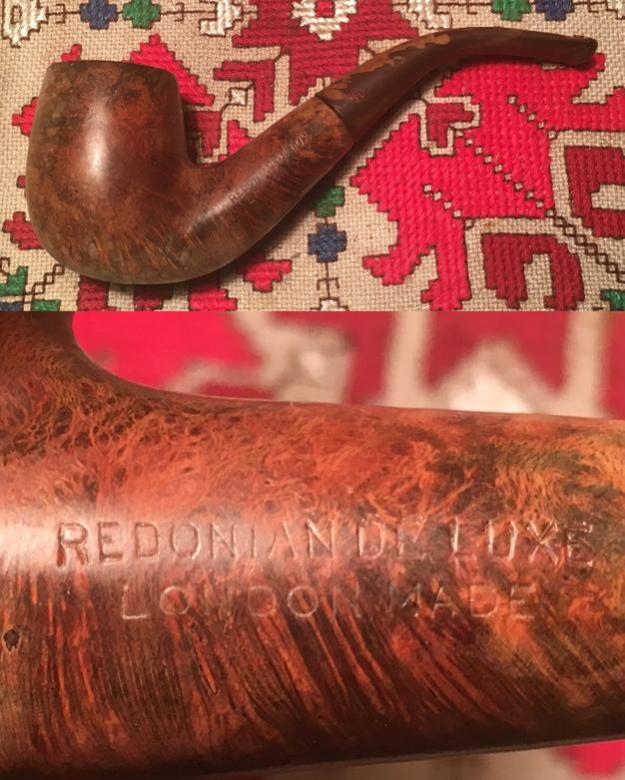
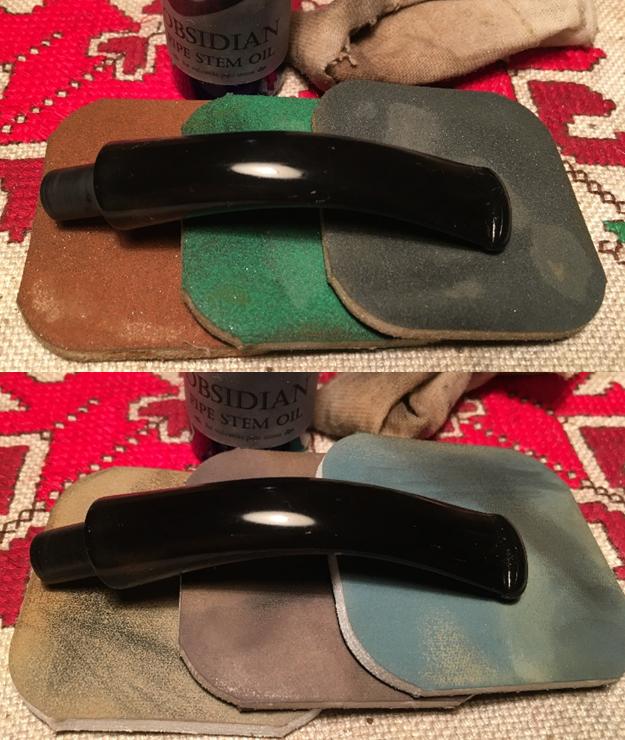
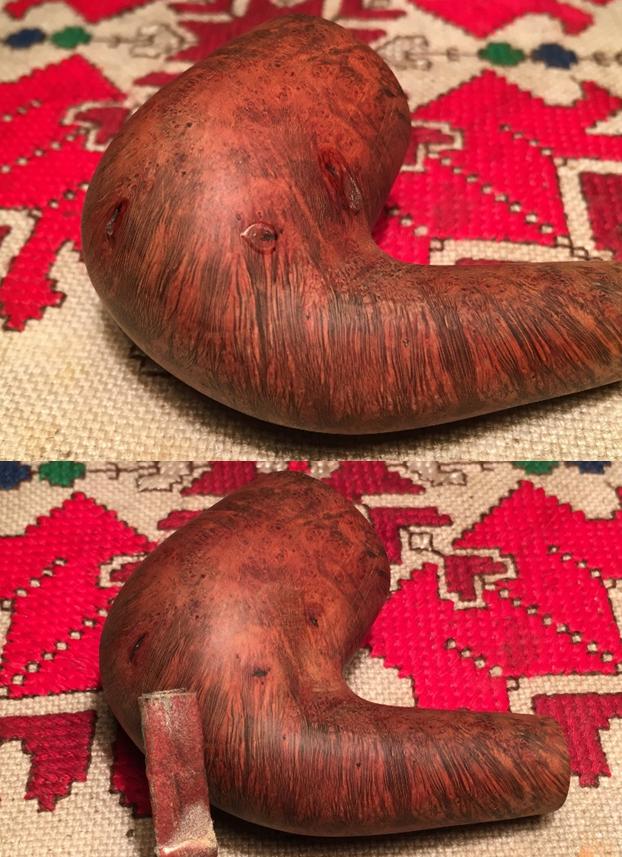
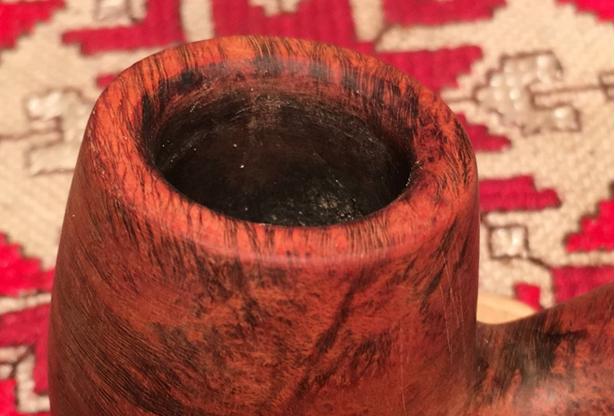
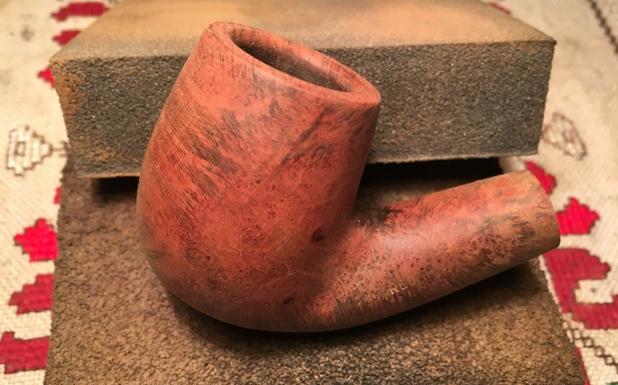
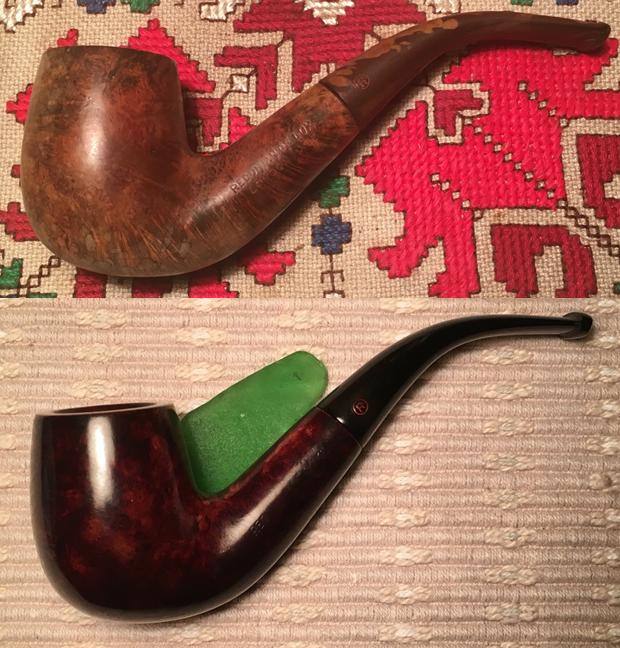
When I think about the 98-year-old steward from whose estate this Redonian Deluxe London Made came, I cannot believe he would have dreamt his pipe would one day start a new lifetime serving another steward.  I gave this old, worn pipe the nickname, ‘Gramps.’  Bear with me one more time to put a picture of ‘Gramps’ in front of the younger man he has now become.  I’m amazed at the transformation and it is why I love this hobby – the pictures speak for themselves.  I sell my restorations with the profits helping the work we do with the Daughters of Bulgaria – those sexually exploited and trafficked.  This Redonian Deluxe London Made is ready to serve a new steward.  If you’re interested in adopting him and helping the Daughters, check out ‘Gramps’ at The Pipe Steward Store.  Thanks for joining me!red55 red56 red57 red58 red59 red60
Renewing and restemming a La Strada Staccato Bent Pot


Blog by Steve Laug

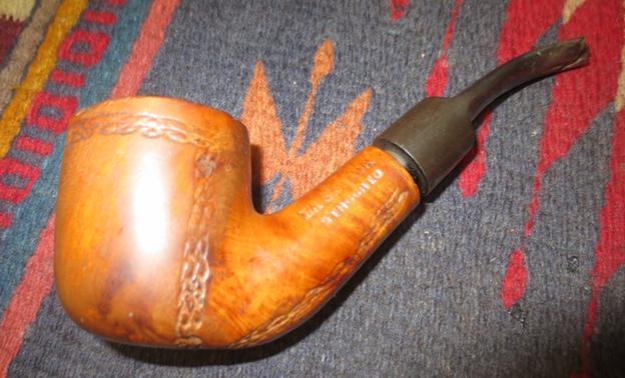
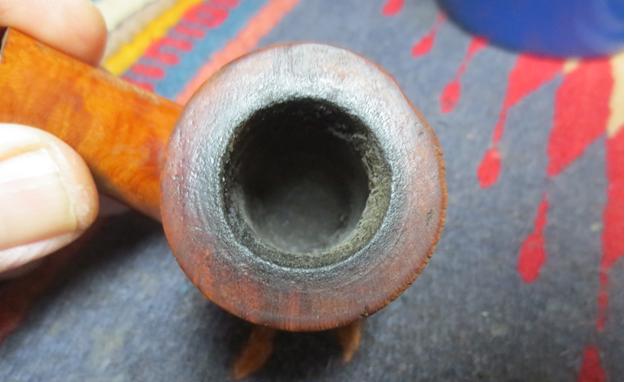
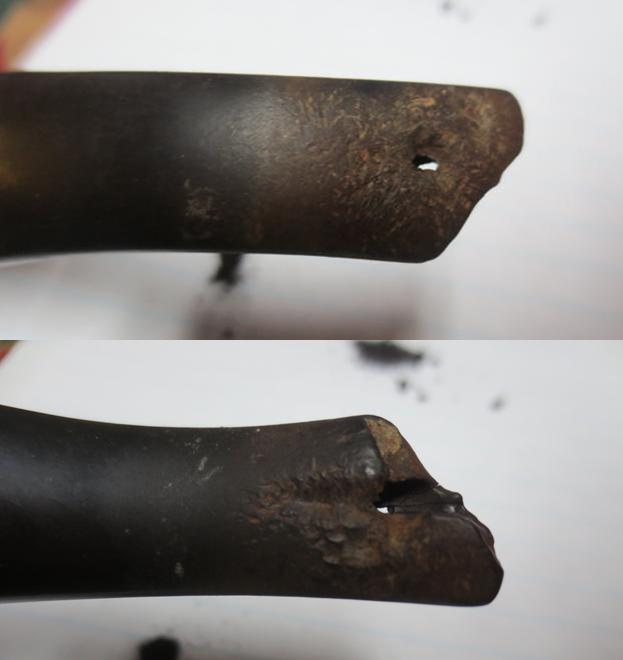
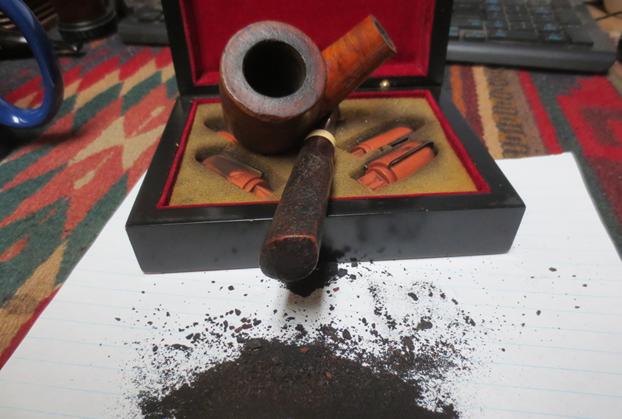
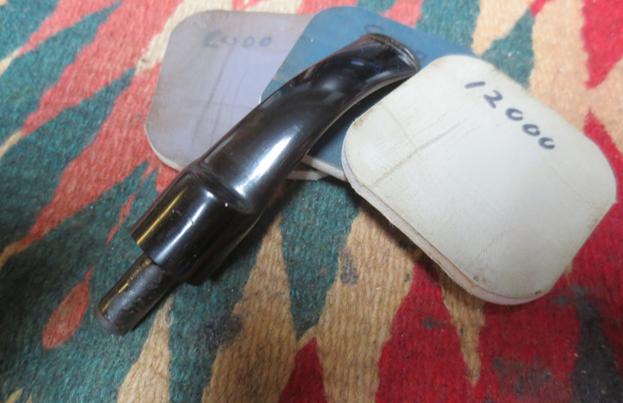
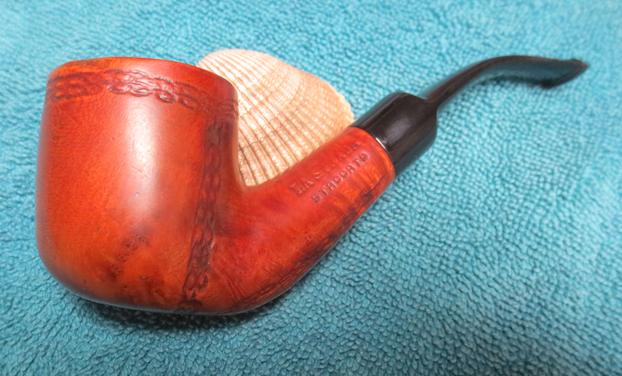
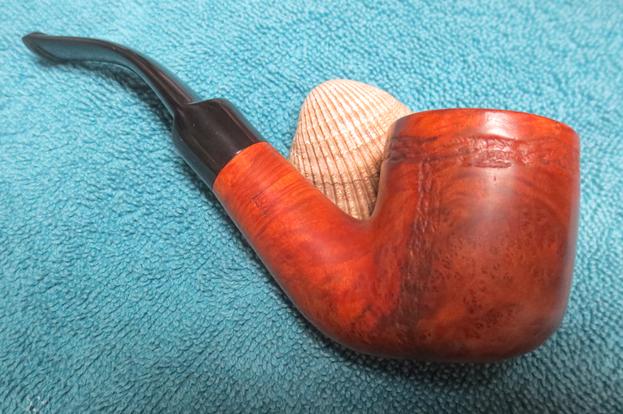
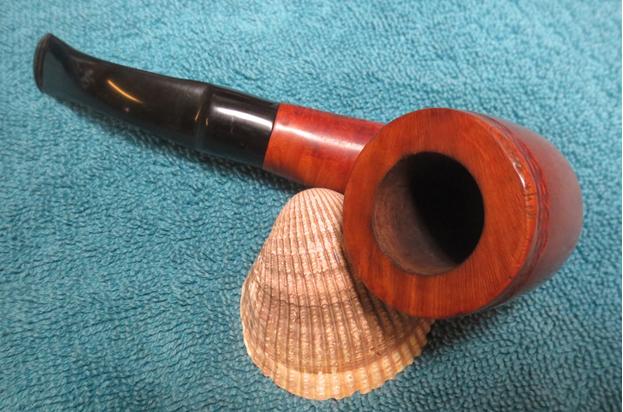
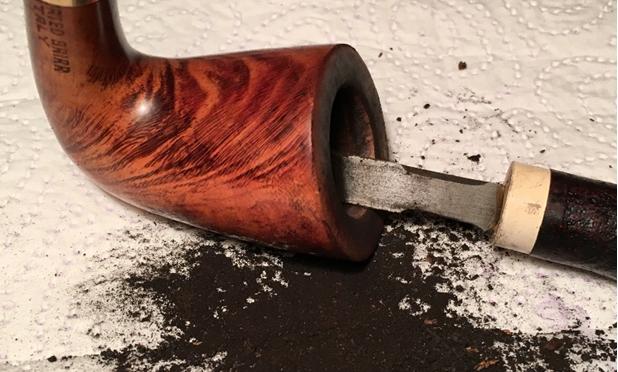
This tired old La Strada came to me for repairs. It was in rough shape. The stem had been gnawed, broken and gnawed again. The finish was shot and covered in oils and grease to the point that it was hard to see the rope rustication around the bowl. The bowl had a thick crumbling cake and smelled heavily or aromatics. The lava from the bowl had flowed over the top of the rim and darkened the finish there. The outer edge of the rim was heavily damaged on the front left side and looked as if the bowl had been dropped. There were dents on the underside of the bowl as well from a similar event. The shank was so dirty that the stem would not fit into the mortise. I was able to get it in but the fit was not tight against the shank. The shank is slightly off round so the stem was slightly different.la1 la2The next photo is out of focus but the road rash on the bowl bottom is visible.la3I took a series of close up photos of the bowl and rim and the stem to show the condition of the pipe when I started. In the first photo you can see the thick crumbly cake and the damage to the rim surface and edges. It was hard to tell if the inner edge of the bowl was damaged and only after reaming would I be able to know for certain. The stem was a write off as the damage was too extensive to repair. The fit against the shank also warranted a new stem.la4 la5I reamed the bowl with a PipNet reamer and went through the various cutting heads. I cleaned up the remaining cake in the bowl bottom with the Savinelli Pipe Knife. I took the cake completely out of the bowl and reamed it back to bare briar.la6I wiped down the surface of the bowl with acetone on cotton pads to remove the finish. It came off with a bit of scrubbing but there were places where it did not come off with the acetone. It would take some sanding to remove the totality of the finish.la7 la8The damage to the bowl top and outer edges required that I top the bowl. I gently topped it on the topping board so as not to remove too much and remove the smooth portion above the rope rustication on the top edge.la9I sanded the bowl and rim top with a medium and a fine grit sanding sponge and took the following photos.la10 la11I cleaned out the internals of the shank and the replacement stem that I fit to the shank with alcohol, pipe cleaners and cotton swabs. It took a lot of scrubbing to get the mortise and the airway clean in the shank. The stem was in decent shape so it did not take too much work on it.la12I took some photos of the pipe at this point to get a feel for the look with the new stem in place.la13 la14I wrapped some sandpaper around a dowel and sanded the walls and bottom of the bowl. There was a ring at the bowl bottom that was grooved and needed to be smoothed out. It did not take a lot of sanding before the inside walls were smooth.la15I restained the bowl with a dark brown aniline stain mixed 50/50 with isopropyl alcohol to approximate the original colour of the pipe and to highlight the grain on the pipe. I flamed the stain and repeated the process until the coverage was even around the bowl and rim.la16I buffed the bowl with White Diamond on the buffing wheel to even out the new finish and give it a bit of a shine. I took photos of the bowl at this point to give a clear picture of the new look.la17 la18Now all that remained was to finish the fit and polishing of the stem. I sanded it with 220 grit sandpaper until it fit the shank well. It took some adjusting of the diameter of the stem to match the slightly out of round shank. In the end it fit well. I polished the stem with micromesh sanding pads – wet sanding it with 1500-2400 grit pads and dry sanding with 3200-12000 grit pads to give it a deep shine.la19 la20 la21I buffed the bowl and stem with Blue Diamond on the buffing wheel to polish the minute scratches on the vulcanite and on the briar. I buffed them both until the stem and briar glowed. I gave the bowl and stem multiple coats of carnauba wax. I buffed the bowl and stem with a clean buffing pad to raise the shine. I hand buffed it with a microfibre cloth to deepen the shine. The finished pipe is shown in the photos below. It is ready to go back to the pipe man who sent it to me for restemming and refurbishing. I think he will enjoy it and it will deliver a life time of good smokes to him. la22 la23 la24 la25 la26 la27 la28 la29 la30

A Gold Banded Bent Dublin Eldorado Lucite of Italy


Blog by Dal Stanton

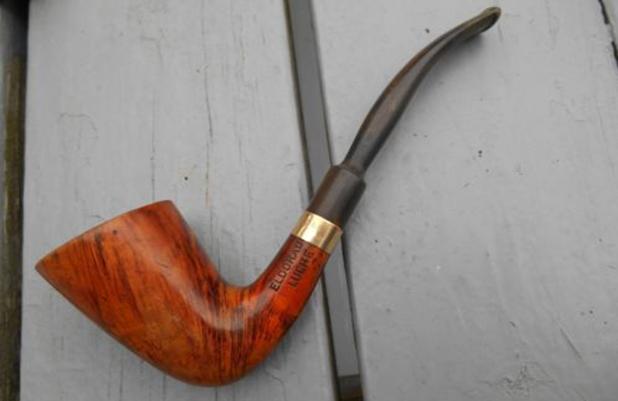
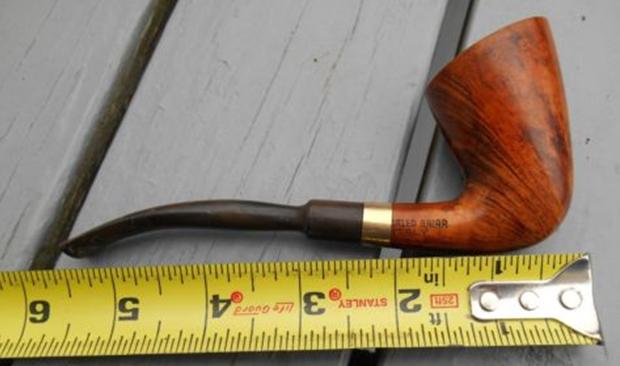
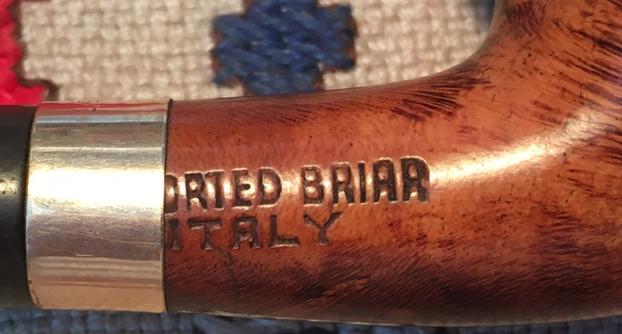
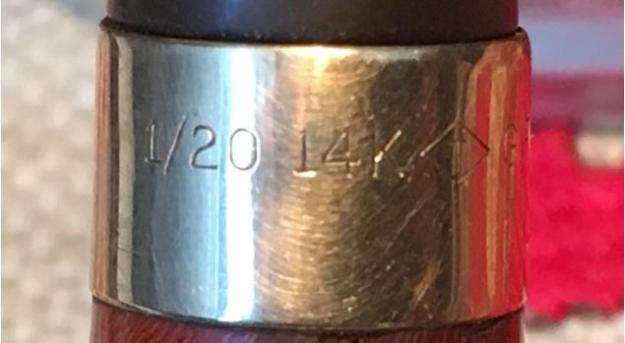
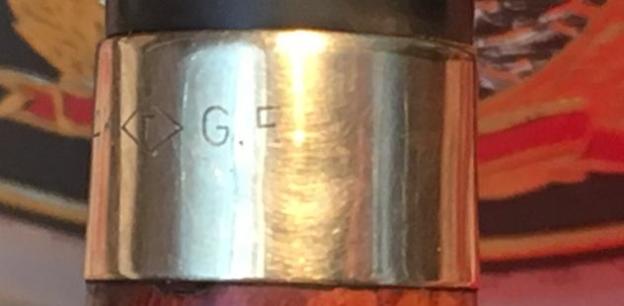
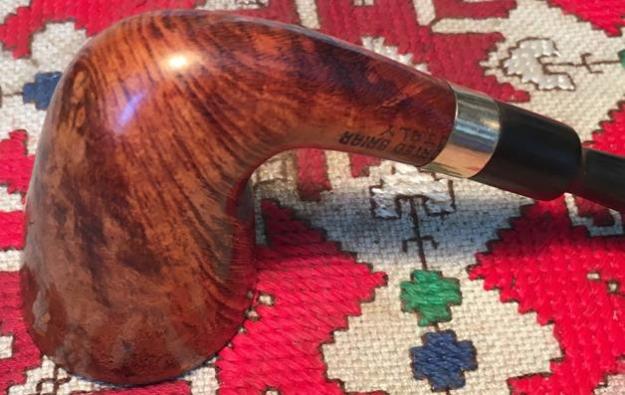
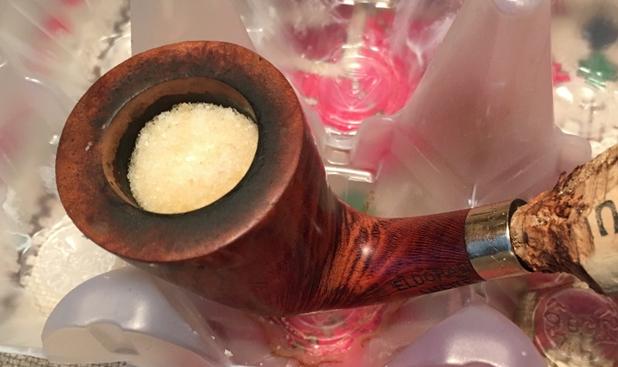
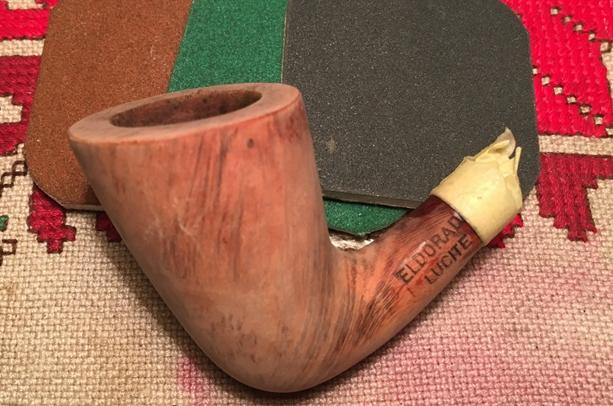
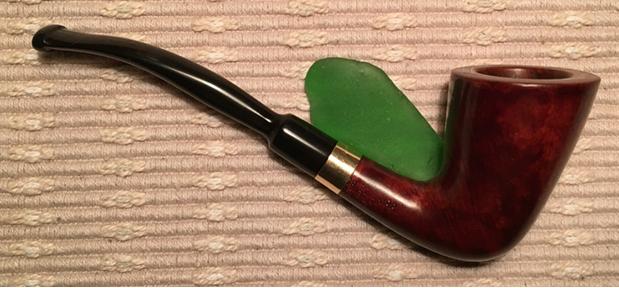
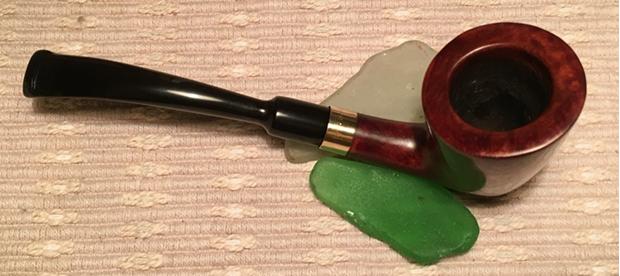
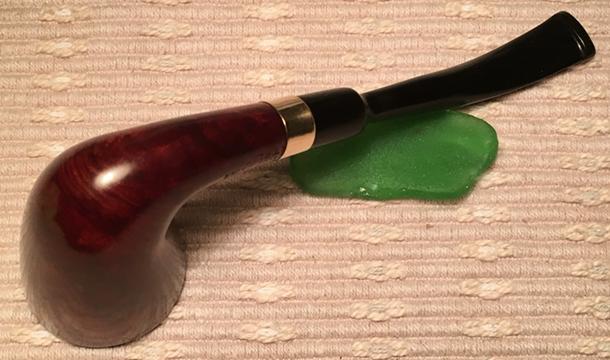
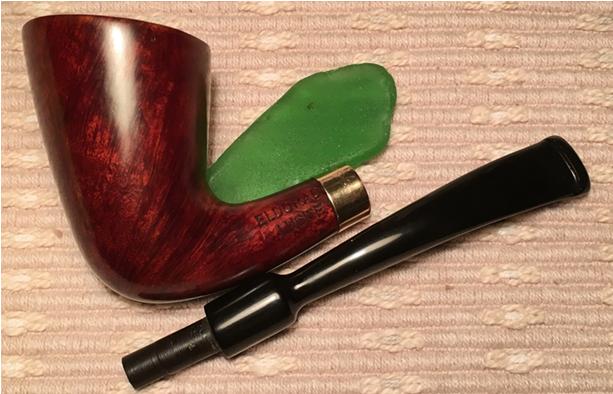
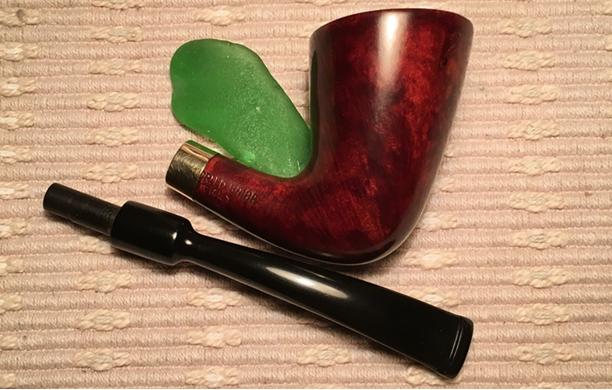
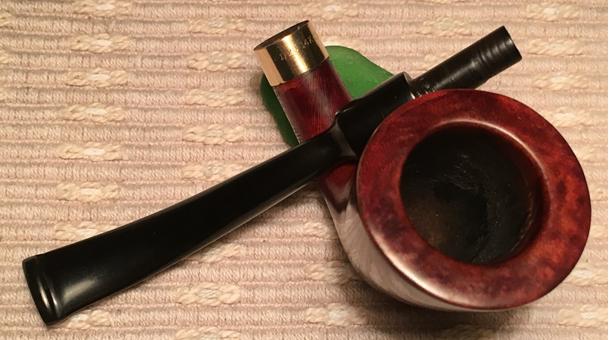
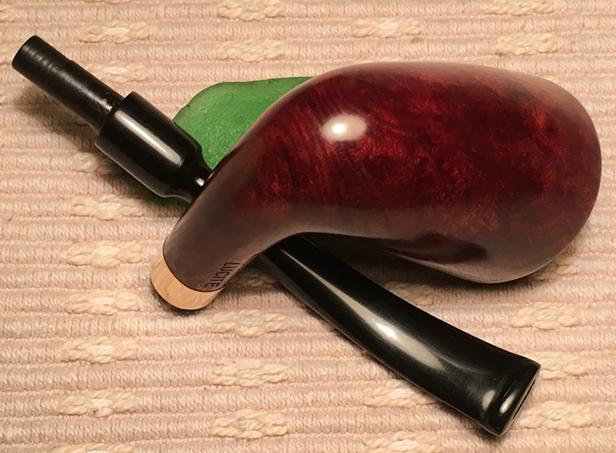
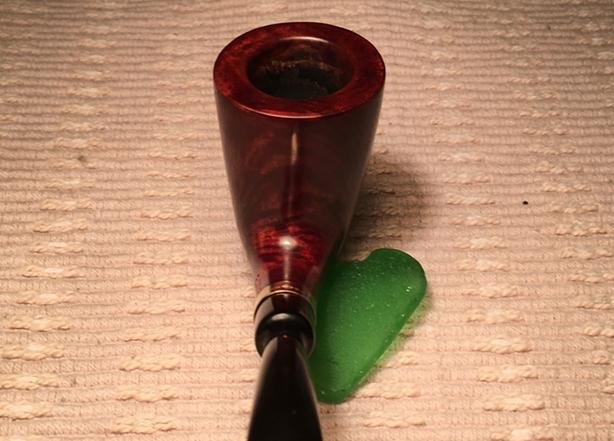
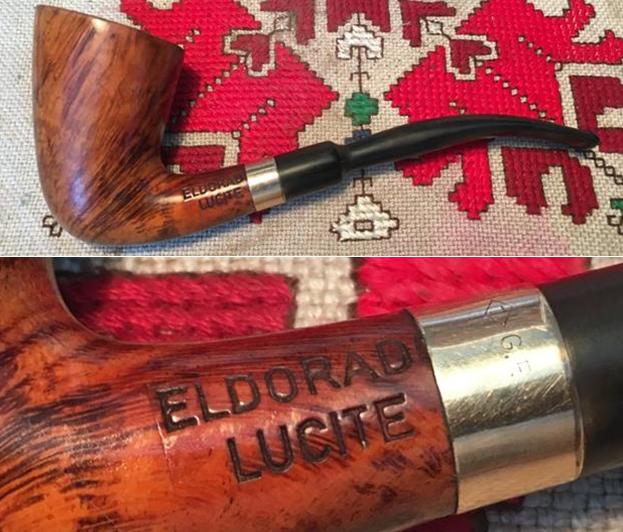
When I first saw this Eldorado Lucite, I believed it to be a Zulu or Woodstock, the Dublin’s smaller cousin.  In the end, I settled on it being a bent Dublin because the stummel was larger than I would expect a Zulu’s to be.  When I saw the Eldorado Lucite bent Dublin on the eBay auction block, two things, no, three things drew my attention motivating me to slog through the bidding and bring this pipe home to Bulgaria.  First, the shape is very attractive – I like the curve of the Dublin’s natural ‘nose-forward’ stummel flowing to and through the stem; an attractive pipe, I wanted to try it out in my palm.  Secondly, the briar’s potential.  I love taking smooth briars and bringing out the grain to encourage a double-take.  The straight grain of the Eldorado is nice.  Thirdly, the band – a touch of class for any pipe, but for this pipe, also raises some questions. The following eBay photos from the seller show what I saw.el1 el2When I retrieved this pipe out of the “Help Me!” basket in Sofia, I take a fresh look at the Eldorado over Lucite – stamped distinctly on the left shank.  The right shank shows Imported Briar over Italy.  Both stamps are obstructed/hidden somewhat by the band which immediately brings into question the possibility of the band being part of a cracked shank repair.  I would not think the original design would include a band hiding part of the nomenclature, but I might be wrong!  After removing the stem, I inspect the mortise and conclude that a crack may be there, but it’s not conclusive – at least to me.  The band is gold and stamped with hallmarks of 1/20 14KT (ensconced in a diamond) G.F.  Looking on the internet, I discover from  RareGoldJewelry.com these hallmarks indicate the ratio of gold in the band is at about 1 to 20.  Rated at 14 karats means that it’s approximately 58% gold and the band is ‘gold filled’ rather than ‘gold plated.’  Regarding gold filled and gold plated, eBay’s buyers’ guide jewelry describes the difference:

Gold-filled jewelry is much more valuable than gold-plated. In fact, there is almost 100 percent more gold in gold-filled items than is found in gold-plated items. Just as gold-plated jewelry is plated with gold, gold-filled jewelry is as well, but there is a big difference between the ways these products are made.  Gold-filled items have a much thicker layer of gold on them, and the gold is a much higher quality. In fact, it is just a step down from solid gold when it comes to quality and value. Speaking of solid gold, pure gold is very soft and is not a good choice for jewelry; that is why an alloy is almost always used for gold jewelry items, even in jewelry pieces worth an incredible amount of money.

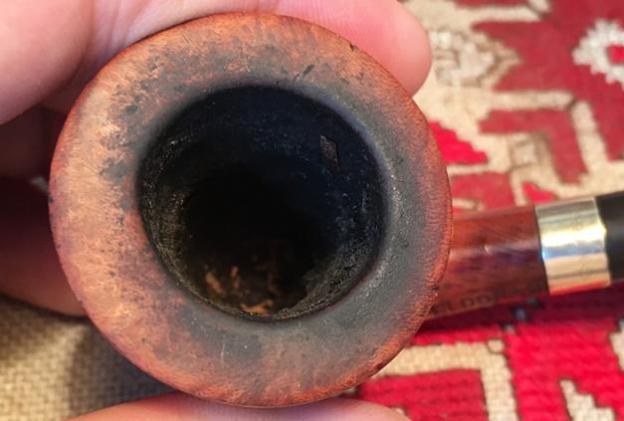
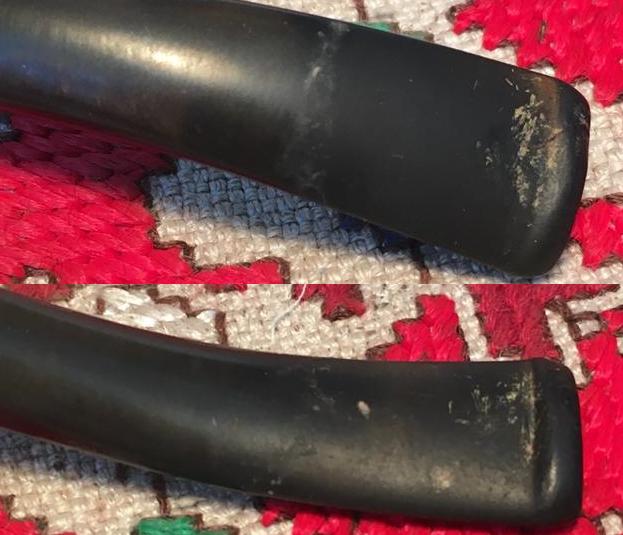
If this band is part of a cracked shank repair, which doesn’t appear to be the case, it seems that whoever had this pipe valued it quite a bit to add a gold band.  Another question is raised regarding the name – Eldorado Lucite.  According to the compilation of Herb Wilczak & Tom Colwell (3/3/97) ‘Who Made That Pipe’ (Yes, Santa brought this!) lists Eldorado as Maker or Seller as the Linkman Co./ Parker Pipe and country USA/ENGL.  My subsequent research into Linkman turned up the connection to Dr. Grabow pipes – ‘Eldorado’ is a high-end pipe of Dr. Grabow – which doesn’t fit the pipe before.  Dr. Grabow pipes are usually marked as such.  Parker Pipe Company turned up nothing too.  This pipe is also stamped, Italy, but does this mean country of manufacturer or source of the briar in this case? – as the right shank has the marking ‘IMPORTED BRIAR’ over ‘ITALY’.   Would the ‘Imported Briar’ indicate a US manufacturing – the usual US marking and spelling?  But this, I found is not always the case.  One more question that doesn’t find answers in my research – Eldorado Lucite – does ‘Lucite’ refer to a unique pipe name or is it referring to the stem material with which it was originally outfitted?  If this is the case, is the stem now with this Dublin a replacement because it certainly isn’t Lucite but vulcanite?  Yet, as I look at the stem, it works VERY well with the stummel and shape – it doesn’t appear to be a replacement stem.  So are the many questions this beautiful pipe creates, but now I turn to the pipe itself and take more pictures to fill in the gaps!el3 el4 el5 el6 el7 el8 el9 el10 el11 el12The stummel appears to be in good condition except I detect what might be an acrylic finish with normal wear marks and scratches on top of it.  I’ll want to clean the old finish off.  The bowl has moderate cake build up and old dottle flakes left in the bottom.  I’ll remove the cake bringing the bowl down to the briar for a fresh start.  The rim looks to be in good condition structurally, but has light lava flow and possibly some scorching.  I need to clean the rim to assess this fully.  The stem is attractive.  I’m not sure if it has a special name, but it flays out from the shank and the button is fanned – a fish tail?  It has minor oxidation.  There are tooth dents on the upper and lower button area and a possible crack on the slot side through the button lip pictured above.  I’ll need to look closely at this.  The band is in good shape – I’ll polish it simply with a clean cloth, no more!
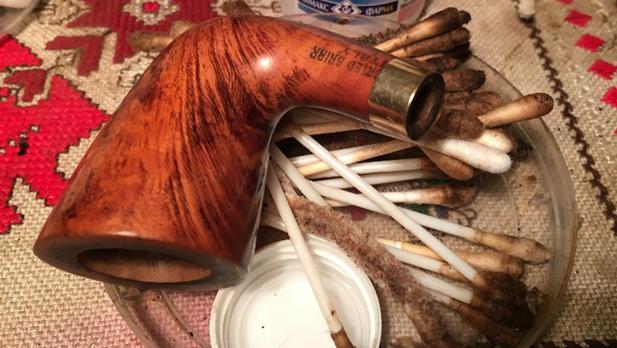
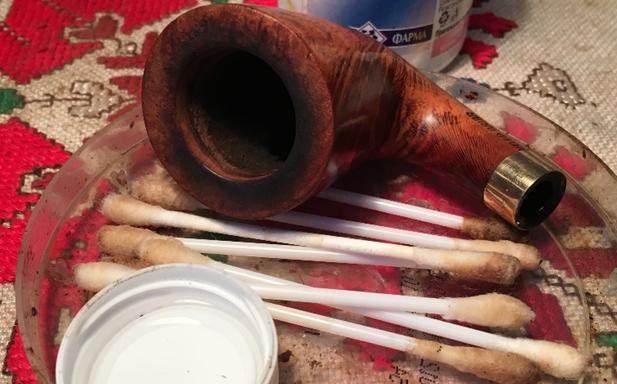
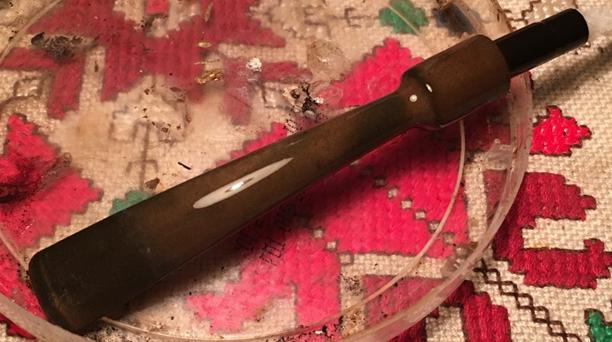
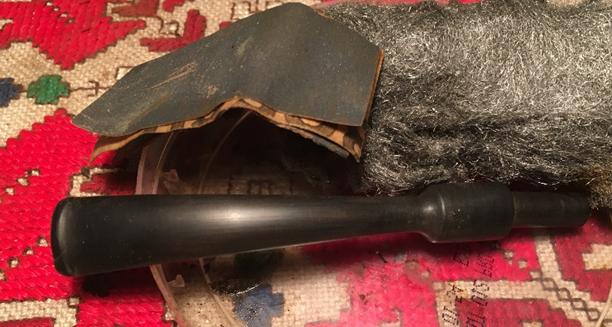
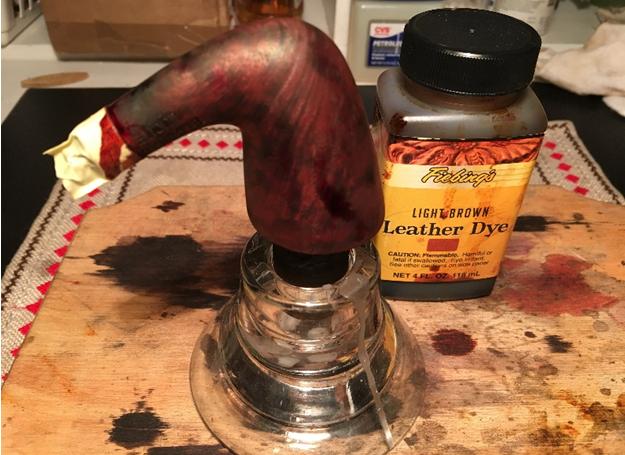
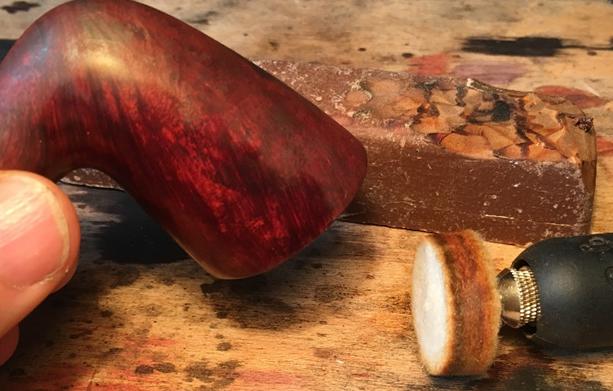
I begin the clean-up of the Eldorado Lucite by plopping the stem into the Oxi-Clean bath to work the oxidation to the surface of the vulcanite.  I take the Pipnet reaming kit out and discover that the conical chamber is too tight and angled in the Dublin’s shape to employ the reaming blades.  I’ll use the Savinelli pipe knife instead to ream the bowl.  With the Savinelli pipe knife I make good progress removing the cake in the tight quarters of this chamber.  Following the reaming, I sand the chamber walls with 240 grit paper wrapped around a Sharpie pen and then finish by wiping the chamber with cotton pads and isopropyl 95% to remove the carbon dust.  The chamber looks good.  The pictures show the progress.el13 el14 el15 el16 el17Before continuing with cleaning the external stummel, I tackle the internals with pipe cleaners and Q-tips and isopropyl 95%.  The cleaning job proves to be a bit more than I expected. I’m not positive about the internal layout and drilling of the mortise but it ‘feels’ like there is a gunk trap slightly below the air passage leading out toward the draft hole in the chamber.  After building a good mountain of expended Q-tips and pipe cleaners, and after looking at the lateness of the hour, I decide to give the stummel a salt soak, and let the Kosher salt and alcohol do some of the work for me.  I put the stummel in an egg crate to keep it stable, and fill the bowl with kosher salt which is not iodized – iodine can leave a taste (Thanks to Charles Lemon of Dad’s Pipes for this information).  I cover the bowl with my hand and give it a bit of a shake to displace the salt.  After corking the shank side, I fill the bowl with isopropyl 95% and turn out the light.  The next morning I see that the salt has darkened a bit and I toss the used salt into the waste basket.  I take a paper towel and wipe out the remaining salt from the bowl and use a bristle bush both in the bowl and the mortise making sure that salt residue is purged.  I then return to cleaning with Q-tips, pipe cleaners and isopropyl and finish the internals very quickly. Done! The pictures show the progress.el18 el19 el20 el21Time to retrieve the stem from the Oxi-Clean bath and I see that the oxidation has risen to the vulcanite surface which is shown very nicely in the first picture below. I attack the oxidation by wet sanding with 600 grit paper.  I follow this by using 0000 steel wool to remove more oxidation and begin the smoothing process as well.  Following this, I work on cleaning the internals of the stem with pipe cleaners and isopropyl.  It was going so well until it wasn’t!  Earlier, you recall, as I was doing the initial inspection of the stem, I identified what appeared to be a crack on the left side of the button.  The pressure exerted by the pipe cleaners exacerbated this crack and now I see fissures developing in the vulcanite – not only at the original crack sighting but now also on the right side of the button.  It would not be difficult to project the path of the fault line and the ultimate stem break if not addressed. Ugh! The pictures tell the story.el22 el23 el24 el25 el26Oh, ‘the best laid plans of mice and men’ – my plan is to apply thin CA Instant Glue to the cracks to seal them and hopefully to stop the fissure’s progress.  I fold a piece of index card and cover it with tape and insert it in the slot to keep glue from possibly entering the airway.  It also serves to ‘torque up’ a bit, and opening the cracks a hair to allow better glue penetration.  After this, I will build up the button with a mixture of charcoal dust and super glue and redefine the bit hopefully to reinforce the area.  I put the stem aside for the glue to cure.  The pictures show the progress.el27 el28After the initial CA glue cures, I start the button rebuild.  I use 240 grit sanding paper to rough up the button area, upper and lower.  Then I clean the area with a cotton pad and isopropyl to prepare for the charcoal/glue putty.  While in the States for Christmas, I picked up a bottle of activated charcoal capsules.  In the past, using a mortar and pestle, I had to grind up granulated charcoal which was sold for an aquarium filtration application for use with charcoal patches.  Generally, I was not satisfied with the results.  After the patches were applied, sanded/shaped, and polished, etc., I found a very porous and speckled result – not smooth as I wanted.  I suspected the cause was that the charcoal grade was not fine enough.  So, we’ll see if better results are realized with current charcoal powder.  I decide to re-use the ‘slot insert’ that I earlier made from an index card.  With the crack going through the lip of the button, I make sure I have sufficient ‘overage’ of charcoal putty to cover the crack.  After opening a charcoal capsule, I empty it onto the index card and then add a puddle of Hot Stuff Special ‘T’ CA glue next to the charcoal.  The ‘T’ stands for extra thick.  Using a toothpick, I begin to draw the charcoal into the glue puddle to form the putty.  I’m aiming at a honey-like viscosity for the putty – not to thin that it won’t remain where I put it and not to thick that it doesn’t shape well.  When I arrive at what looks good, I use the toothpick as a trowel and apply the putty to the button – the top receiving the most attention.  With charcoal putty applied to the button, I put the stem aside giving time for the curing process.  The pictures show the progress.el29 el30 el31 el32I return to the stummel to clean the externals.  I’ve not worked before with a gold band and I don’t believe that any cleaning agents I use will deface the gold, but to stay on the safe side, I cover the band with a few layers of masking tape.  I then take undiluted Murphy’s Soap and cotton pad and clean the stummel surface and rim.  With the help of a brass brush, which will not scratch the briar, the light lava flow on the rim becomes history.  I rinse the stummel with warm tap water keeping the internals dry.  After the Murphy’s Soap, I still can detect the acrylic shine of the finish which is not what I like (2nd picture below).  I prefer the shine of the natural briar and not what I have referred to as a ‘candy apple’ shine finish.  To remove the finish, I use acetone with a cotton pad.  After a few unsuccessful rounds of this, I utilize 0000 steel wool to add a little abrasion to the acetone removal process.  This does the trick, though the candy apple finish did not come off easily.  The pictures show the progress.el33 el34 el35To remove nicks and some pitting in the briar I use a medium grade sanding sponge on the stummel and rim.  I follow this with a light grade sanding sponge.  To remove some damage in the inner rim edge and to clean it up, I use 240 grit sanding paper rolled tightly.  I again follow the 240 grit paper and use the light grade sanding sponge on the rim to smooth things out.el36 el37 el38Before I move forward with sanding and finishing the stummel, I return to the stem and the shaping and repair of the button and slot.  I take another close-up of both the top and bottom to mark the progress.  I begin using a flat needle file and a pointed half-circle needle file to re-shape the slot and to redefine the end of the stem.  I will work from stem end, having established a base line.  When I finish the basic shaping with the needle files I then continue shaping the button with 240 grit paper then 0000 steel wool.  The pictures show the progression.  Near the completion of the button rebuild, I use K-150 Black Medium glue to fill pockets and unevenness in the upper bit area.  After cured, I re-sand the area with 240 grit, then 600 grit papers then complete the process with 0000 steel wool.  The last two pictures show the finished button rebuild.  It took some time, but I think it looks good as well as refortifying a formerly, weak and cracked button.el39 el40 el41 el42 el43 el44 el45 el46 el47 el48With button rebuild completed, I begin the micromesh sanding process first by wet sanding the stem with pads 1500 to 2400 and follow with an application of Obsidian Oil over the entire stem.  I then dry sand the stem using pads 3200 to 4000 and again with pads 6000 to 12000, following each set with a fresh application of Obsidian Oil.  The stem looks great and the button repair has blended well.  I put the stem aside to dry.  The pictures show the progress.el49 el50 el51Turning again to the stummel, I wet sand the surface with micromesh pads 1500 to 2400, then 3200 to 4000, and then 6000 to 12000, taking a picture after each set to show the progress.  The micromesh pads’ work is spectacular by teasing out the beautiful briar straight grain. The briar on this Eldorado Lucite is very nicely showcased cascading down the elongated Dublin canonical stummel.  A very nice choice of briar for this pipe style.el52 el53 el54As I moved through the micromesh cycles, my usual thought processing is to ponder the finish and what approach will best showcase the briar.  Should I leave the natural grain color and apply carnauba wax or apply a stain?  With the 14K gold band on this sleek Dublin, I decide to leverage toward a darker brown than the original.  I think the black stem and the darker stummel will give the gold band an extra pop – standing out very nicely.  To expand the briar and enabling the grain to be more receptive to the dye, I warm the stummel using my wife’s hair dryer.  Then, using a pipe cleaner folded in two, I apply Fiebing’s Light Brown Leather Dye liberally to the stummel and rim.  I cover the surface thoroughly.  When covered, I flame the wet dye using a lit candle and the alcohol in the dye immediately evaporates setting the dye hue in the grain.  After a few minutes, I repeat the process including flaming the dye.  I set the stummel aside for the night to rest.  The picture shows the dye-crusted stummel.el55The next morning, I’m anxious to ‘unwrap’ the crust of the fired dye from the night before.  Since I live in a flat on the 10th floor of former Communist block apartment building, I do not have a lot of room for my work shop.  The Dremel high speed rotary tool is how I solve the problem of not having regular high speed buffing wheels.  To unwrap the stummel, I mount the Dremel with a felt polishing wheel and set the speed of the Dremel to the slowest speed.  The felt material is abrasive and I don’t want to over-heat the wood with the higher speeds.  Each polishing wheel is dedicated to a specific compound used in the buffing process.  I mount the Tripoli wheel, and after purging it from old compound with the edge of the metal wrench, used to tighten the wheels on the Dremel, I apply Tripoli compound to remove the flamed residue of the light brown dye.  I rotate the wheel around the surface of the stummel slowly, not applying much vertical pressure on the surface but allowing the RPMs, felt and compound to do the work.  I use the sheen created on the surface of the briar (reflecting the bright overhead work lamp) to observe the compound’s behavior, which enables me to distribute the compound evenly over the surface.  See my essay, ‘My Dremel Polishing Technique’ if you want more detail.  I took a picture of the ‘unwrapping’ with the Tripoli compound and wheel.  You can see the before and after comparison very easily which demonstrates my typical approach.el56I follow the Tripoli compound with Blue Diamond.  Again, using a dedicated Blue Diamond wheel mounted on the Dremel, I work the compound into the surface in the same manner as Tripoli.  After the Blue Diamond cycle, I hand-buff the stummel with a cotton cloth simply to remove the powdery residue of the compounds from the briar surface.  I do this before applying carnauba wax. Next, I mount the cotton cloth polishing wheel onto the Dremel, increase the speed of the Dremel from 1 to 2 (5 is the fastest) and apply several coats of carnauba wax to both stummel and its reunited stem.  I finish with a rigorous hand-buffing with micromesh cloth not only to deepen the shine but to distribute any pockets of unintegrated carnauba wax.
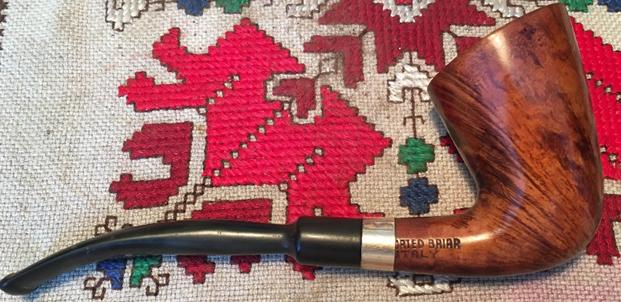
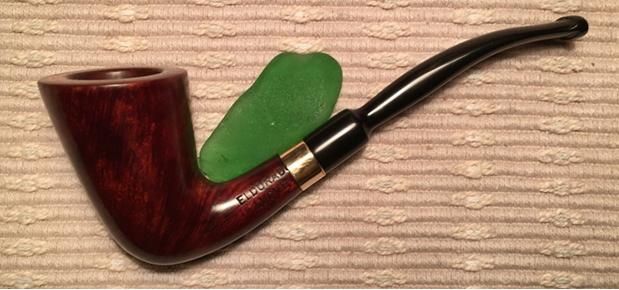
I was hoping to create a pop with the classy gold band linking a slim, gently curving stem with the rich darker brown hues of the Dublin’s cascading briar patterns.  I think what I now see before me effectively does just that!  This gold banded Eldorado Lucite of Italy is an elegant Dublin which feels very comfortable in the hand.  It will be a great addition to some new steward’s collection.

Below, in the comments, I reposted this blog of Reborn Pipes to my new blog site, http://www.ThePipeSteward.com This site is serving not only as a ‘store front’ for pipes I’m selling, but it also describes the work we do in Bulgaria with the Daughters of Bulgaria Foundation – rescuing and restoring women and children who have been trafficked and sexually exploited. To help with this work, the profits of my sales go to the Daughters.  So, if you’re interested in adding this Eldorado Lucite Bent Dublin of Italy to your collection, jump over to The Pipe Steward, and check it out!  Thank you for joining me!el57 el58 el59 el60 el61 el62 el63 el64 el65 el66

Pinehurst Bakelite Zeppelin


Blog by Steve Laug

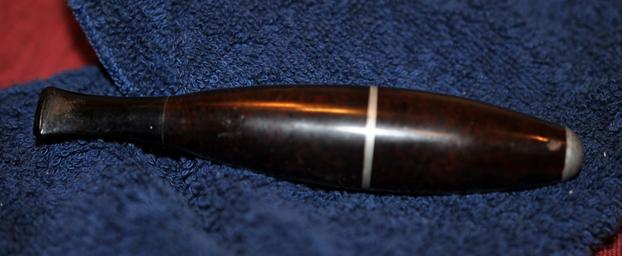
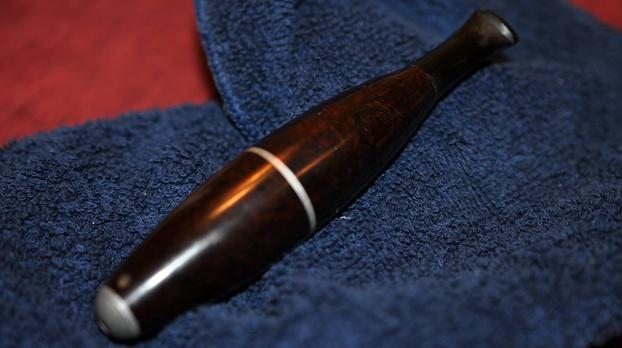
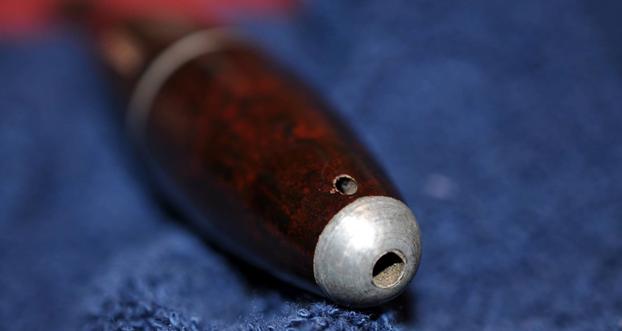
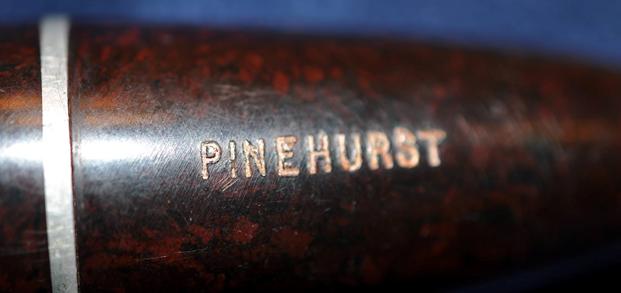
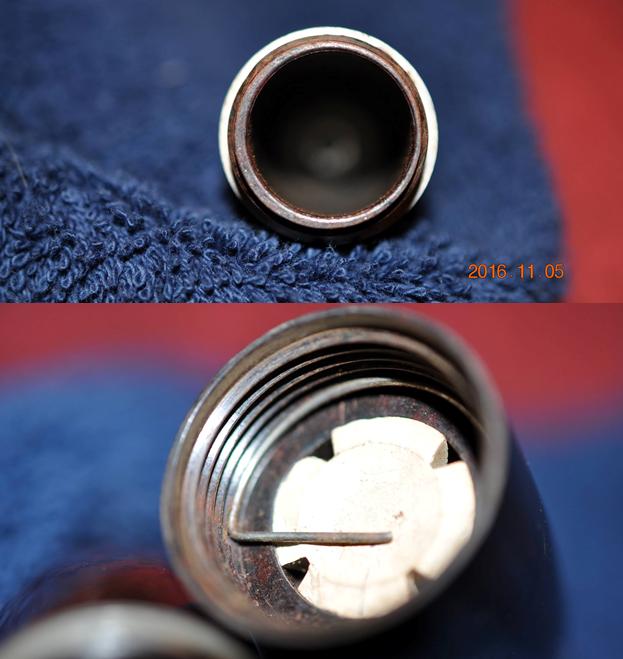
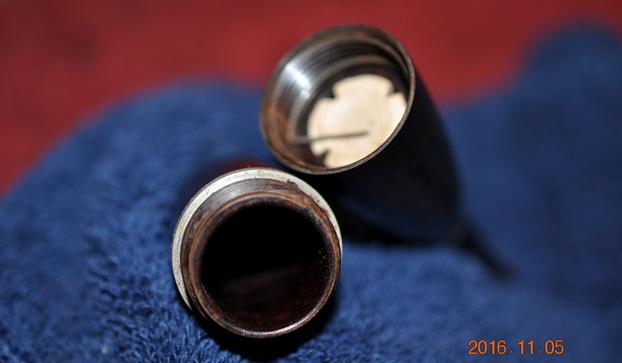
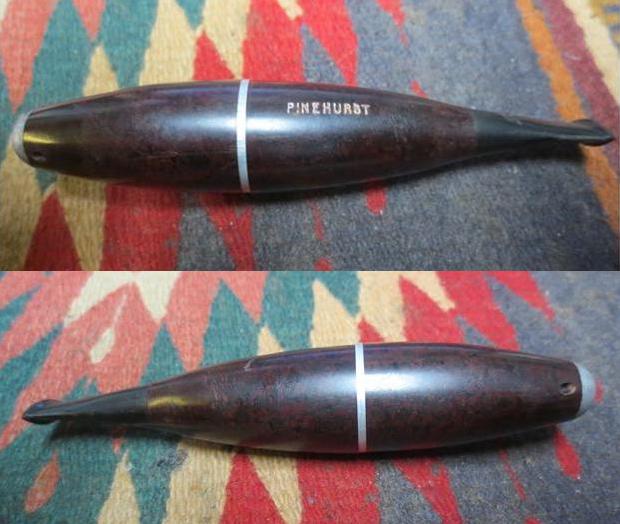
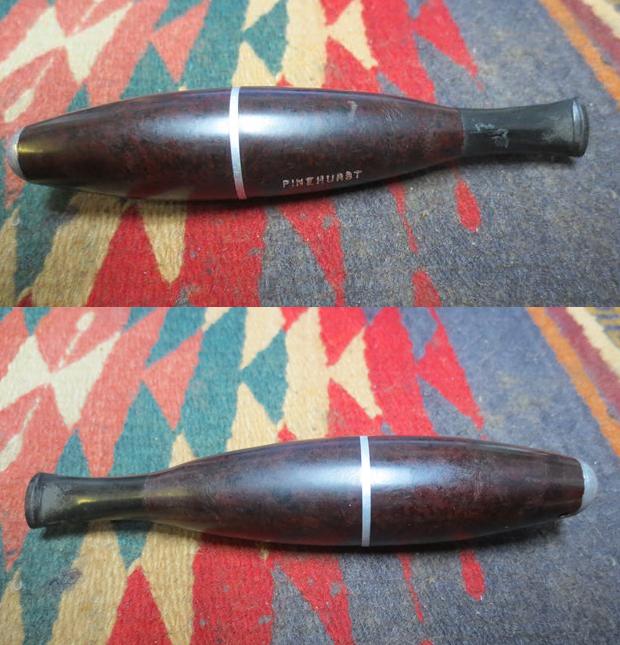
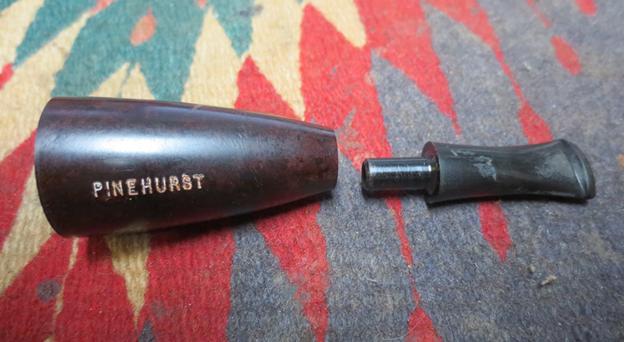
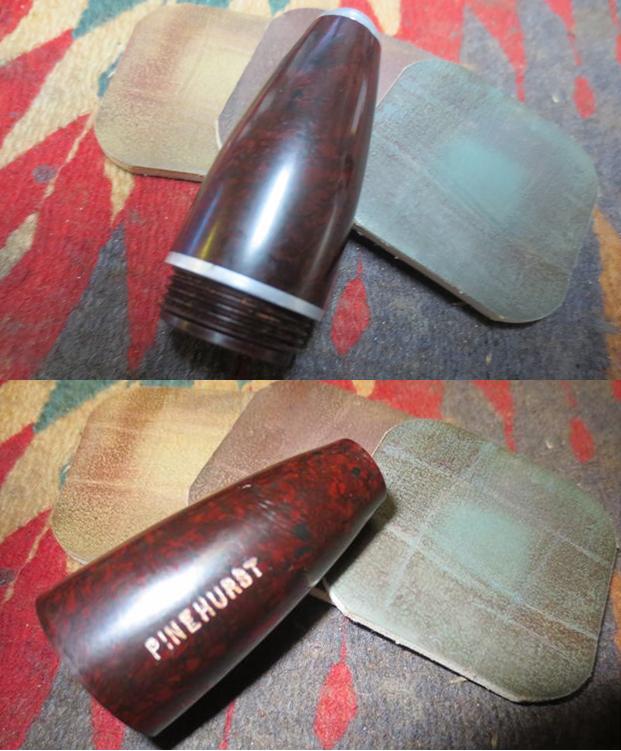
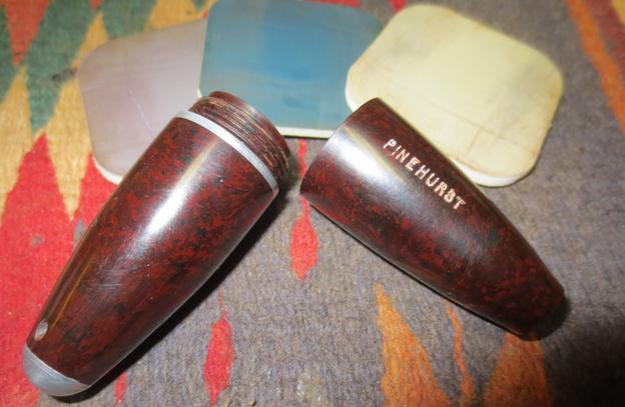
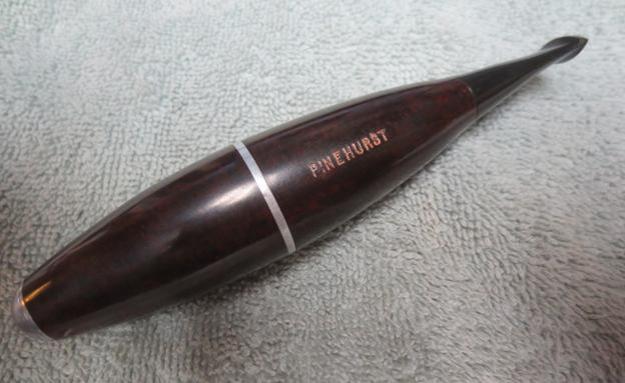
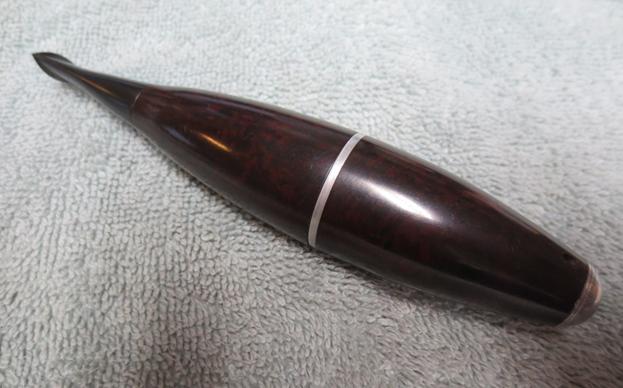
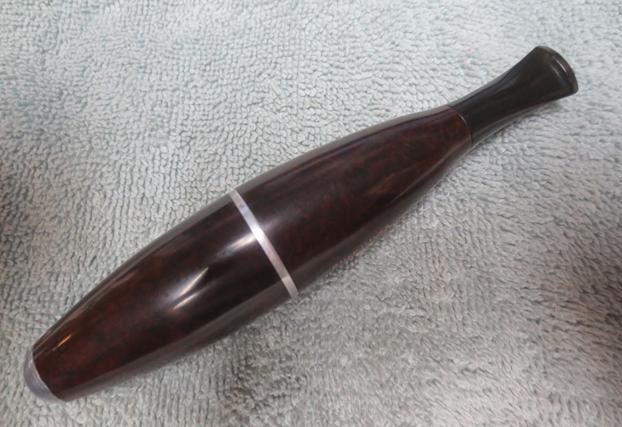
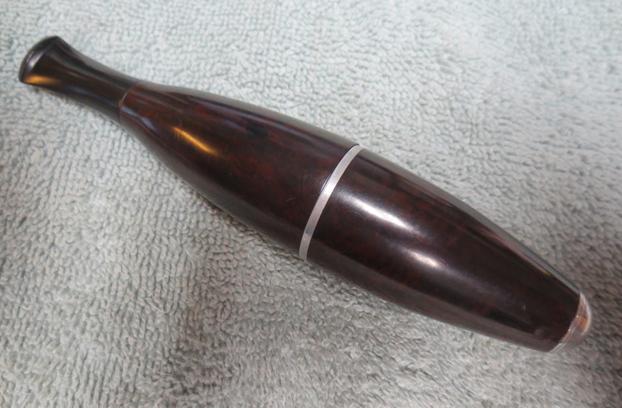
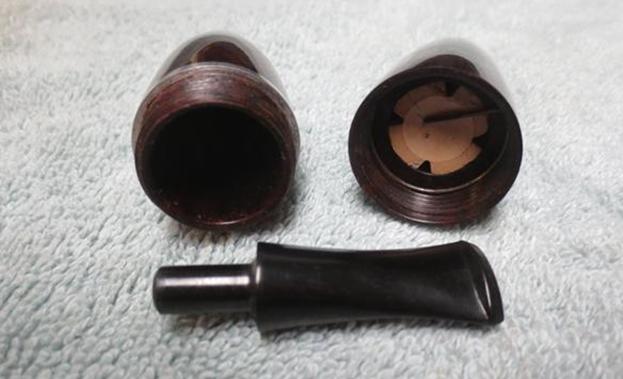
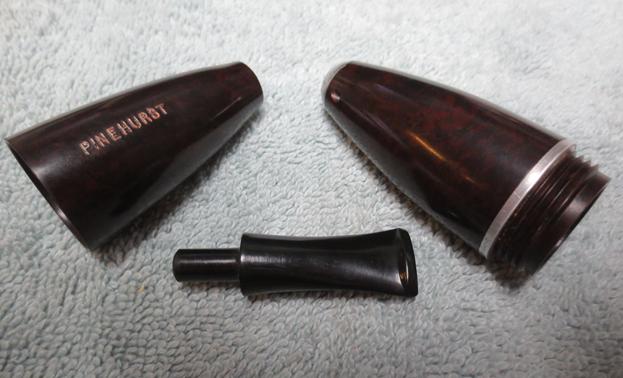
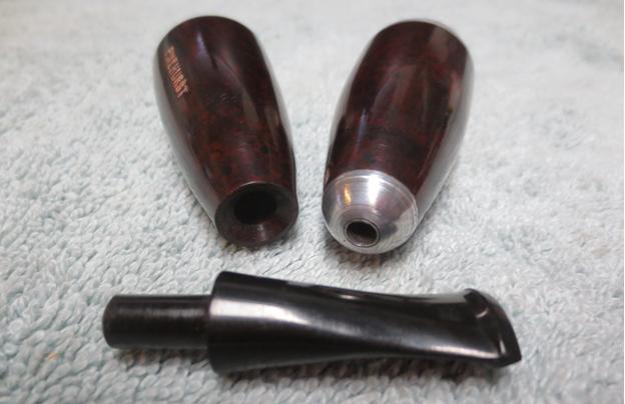
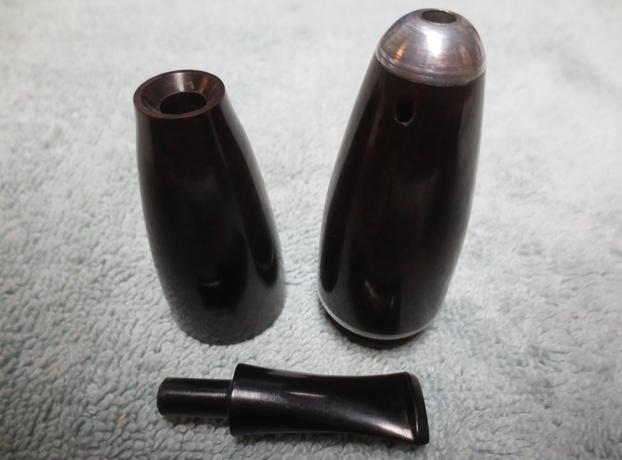
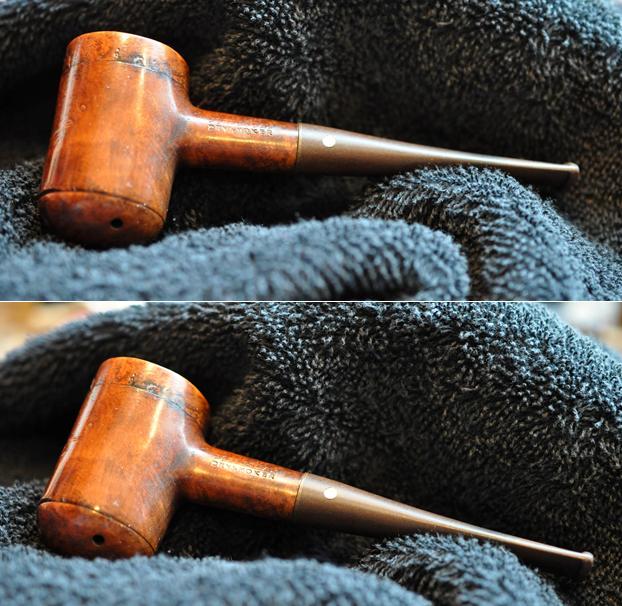
pine1aOne of the most unusual and unique pipes that my brother sent in this box of pipes was a pipe that was stamped PINEHURST in gold on the left side of the barrel. What made it unusual is not the fact that it was a Zeppelin or cigar type pipe but that it is made out of Bakelite. When I took it apart there is a diamond shape with a capital P stamped on the inside. The stem is vulcanite with a long tenon that fits into a mortise that is beveled inward. There is an aluminum nose cone with a single hole in the middle and in the Bakelite just below the cone are two parallel holes – one on each side. The Bakelite body of the pipe was scratched and the finish was dull. There were tooth marks on the top and bottom side of the stem and there some dried glue on the top of the stem near what would have been the shank. From what I can find out on the internet the pipe was made in the late 1920’s or early 1930’s. My brother took the following photos of the pipe before he cleaned it. The first two give a clear picture of the pipe as a whole.pinea1 pinebThe next two show the oxidized aluminum nosecone and the stamping on the left shank side of the pipe.pinec pinedThe next three photos show the pipe taken apart. It is dirty but not too bad for a pipe of this age.pinee pinegThe last two photos show what the stem looked like when he received it in Idaho.pinehI was unfamiliar with the Pinehurst brand so I did some research to see what I could find out. I looked first to see if there was any information on Pipephil’s website. I have included the link if you wish to read the article he has in full in his section on odd pipes. It is written in French and is worth a read. http://www.pipephil.eu/oddpipes/pipcig/pinehurst.html#markings

I am quoting a translated portion from that page pinpointing the information regarding the name: Pinehurst is the name of a city in Texas (USA). This stamping can take various forms and sometimes it is omitted. One possibility is put forward from looking at the logo that accompanies the stamp of some models. Inside the pipe there is a P in a sort of diamond shape that is characteristic of pipes made by Reiss-Prime Corp. called the “Premier”.

UPDATE: 12/26/21 I received and email from a reader name Susan Tyler about the Pinehurst brand it is definitely linked to the Reiss-Premier Corp. in West New York. She sent me some interesting articles on the make of the brand John D. Burger. She sent me the obituary for Mr. Burger that I have included below. Notice the link between Reiss Brothers Pipes of Chicago and the Premier Briar Pipe Company of West New York. Earliest mention of the Pinehurst Pipe was in 12-15-1921 in The Pinehurst Outlook (Pinehurst NC). See below…. Reiss-Premier donated the pipe to a lot of prize winners in different golf tournaments up until the early 1940’s. Thank you Susan for your help on identifying this maker.

There was not much more information on the web other than lots of discussions on the forums about the brand and almost all linked it to the previous site. However, I did find a listing on etsy for a Pinehurst pipe where the seller included some helpful information on the pipe that was being sold. Here is the link: https://www.etsy.com/ca/listing/243904288/1932-pinehurst-bakelite-zeppelin-torpedo. I quote the first two sentences of the description because the pipe in my hand perfectly matches the one that he is selling. Very RARE 1st generation 1932 Pinehurst Bakelite Zeppelin Torpedo – Estate Cigar Pipe. This…unique smoking pipe is in incredible near mint condition. Age Circa: Early 1930’s.

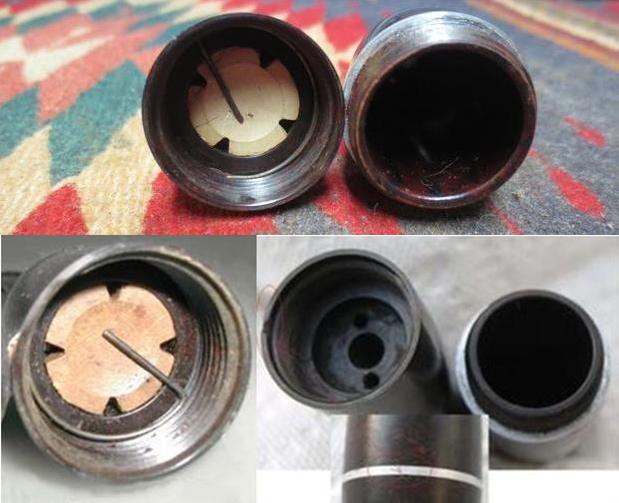
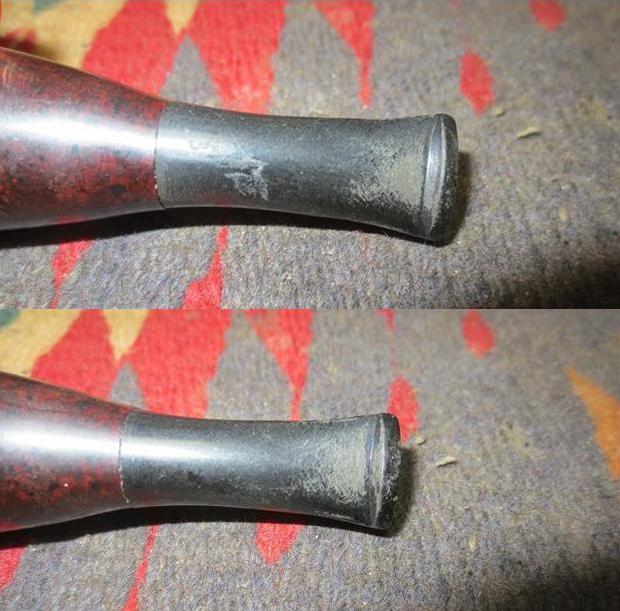
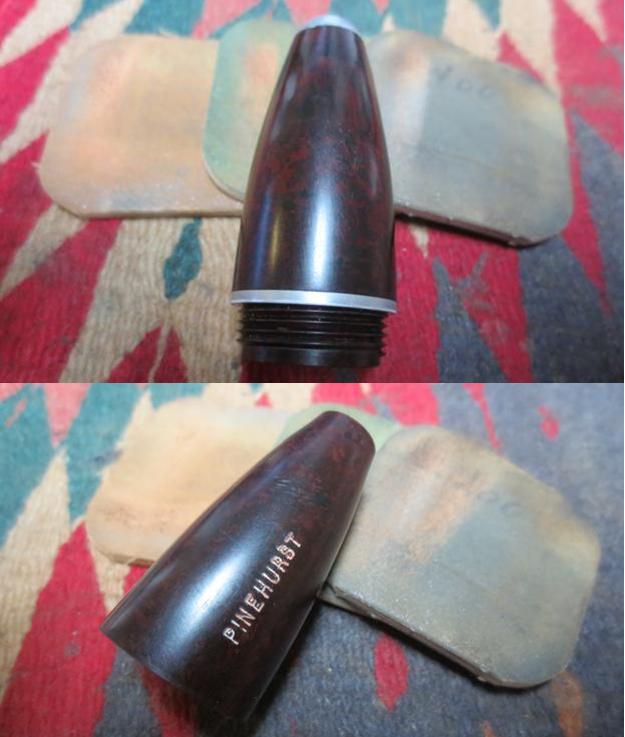
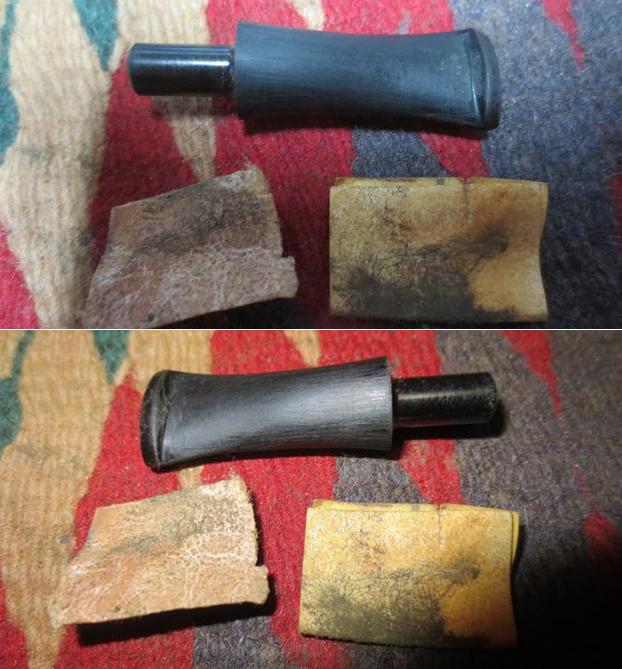
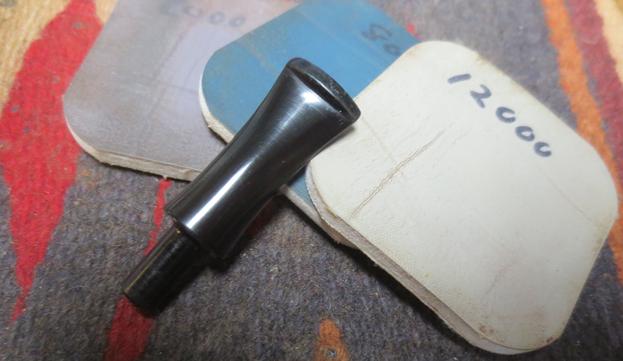
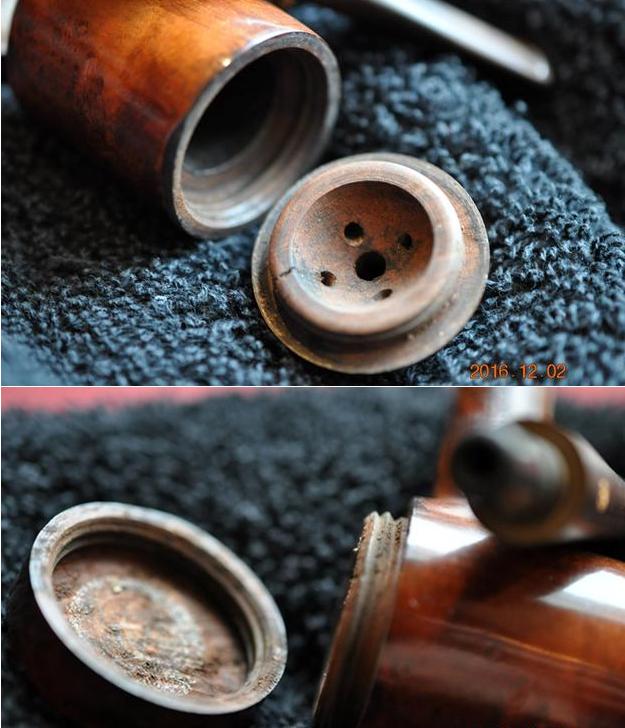
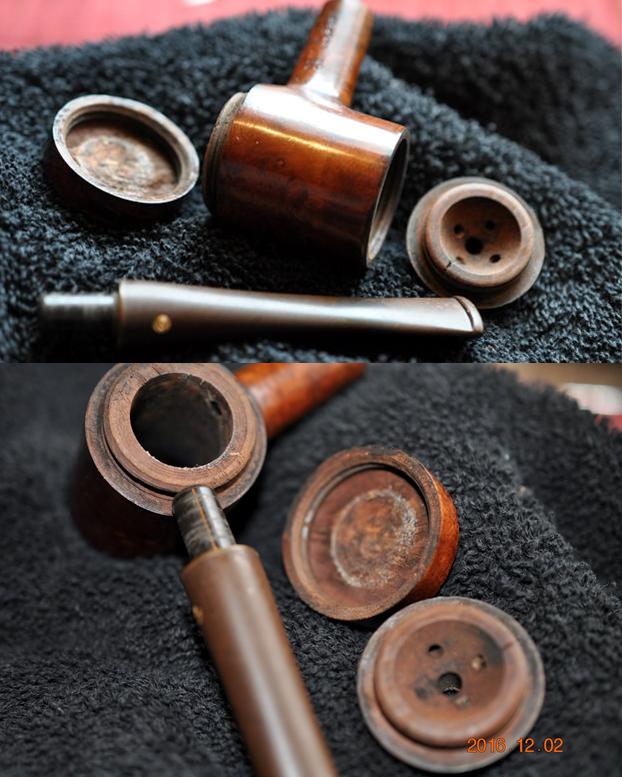
When I received the pipe from my brother he had cleaned the pipe thoroughly. He had cleaned the exterior of the pipe and the stem with Murphy’s Oil Soap and rinsed it under running water. He had cleaned out the inside so that there were no tars or oils remaining. The aluminum nose cone and centre portion of the pipe which had a male aluminum threaded tenon that screwed into the female Bakelite thread portion were lightly oxidized but not damaged. He cleaned out the airway in the stem with pipe cleaners and alcohol. The stem had tooth marks and chatter on both the top and the bottom sides near the button. There was also some dried glue on the top of the stem. When my brother sent it to me I had not bothered to look at it. I did not take the time to look at it. Today when I was talking with him he said it was not briar and that he was a little disappointed. I took the pipe out of the box and looked it over – it was made out of Bakelite. There was no need to be disappointed as it was an old timer. I took the following photos when I brought it to the work table today.pine1 pine2The inside of the two parts of the barrel were very clean. There was no debris of tars and oils inside either half. When I took it apart I found some unique features of the Pinehurst Bakelite Zeppelin. In the stem half of the barrel there was a spring wire holding a clay filter disk in the shank. When I removed the spring wire I was also able to remove the clay disk filter. Behind the clay filter there was a rim that held it above three holes at the base – one on each side of the centre larger hole. The combination of the clay filter system and the gap between the end of the airway and the filter acted as a trap to cool the smoke before it is drawn into the mouth. The smoke was drawn from the front portion of the bowl around the clay filter where the moisture that could cause bite in the smoke dissipated on the disk. From there it was drawn through the four V-shaped openings in the clay disk into small gap between disk and the three air holes in the base where it was further cooled. The twice cooled smoke was then drawn into the mouthpiece and out the slot into the mouth of the smoker. It is almost like the chamber in a reverse calabash pipe of today or the cool smoking gourd calabash of time past.pineaThe outside of the two parts were dirty but the fit was perfect – no damage at the joint and the threads fit perfectly together. The threads on the inside of the Bakelite and those on the aluminum portion were in perfect condition. Once they were cleaned they fit together without any separation.pine3 pine5I took photos of the stem to show the condition it was in once it arrived. There was tooth chatter on the top and underside that can be seen in the next two photos. There was also some wear on the top and underside of the button itself. The mark in the first photo below that looks like a scar on the topside is dried glue – it was hard on the surface and sticky underneath.pine4I twisted the stem out of the shank of the Bakelite and was pleased to see that the there was no damage to the tenon. There was an inner bevel on the end of the Bakelite portion that made the stem and shank to fit snugly together.pine6The Bakelite was in perfect condition. There were no cracks or broken spots. I polished the Bakelite and the aluminum with micromesh sanding pads. I wet sanded it with 1500-2400 grit pads and dry sanded it with 3200-12000 grit pads. I wiped it down with a wet cotton pad to remove the dust from sanding it.pine8 pine9 pine9aI sanded the tooth marks and chatter off both sides of the stem and the glue from the topside of the stem with 180 and 220 grit sandpaper. I cleaned up the top and underside of the button and the lines of the stem sides.pine10I polished the stem with micromesh sanding pads – wet sanding with 1500-2400 grit pads and dry sanding with 3200-12000 grit pads. I rubbed the stem down with Obsidian Oil after each set of three pads and after the final set gave it a last coat of oil. I set it aside to dry.pine11 pine12 pine13I buffed the Pinehurst Zeppelin with Blue Diamond on the buffing wheel to polish more of the scratches out of the Bakelite and to shine the vulcanite. I gave the entire pipe multiple coats of carnauba wax and buffed it with a clean buffing pad to give it a shine. I hand buffed it with a microfiber cloth to deepen the shine. The finished pipe is shown in the photos below. The Bakelite has a rich shine and you can see the varied colours of browns and black in the finished pipe. The aluminum shines with all scratching and oxidation removed. The stem looks new with a rich black polish to it. Overall the pipe is a beauty and from what I can find online it is a bit of a rarity. So I think my brother has no need to feel disappointed in this old timer from the 1930s as it has a rich heritage and if it could talk a long and interesting story to tell of its journeys to this point in 2017. Thanks for looking.pine14 pine15 pine16 pine17 pine18 pine19 pine20 pine21


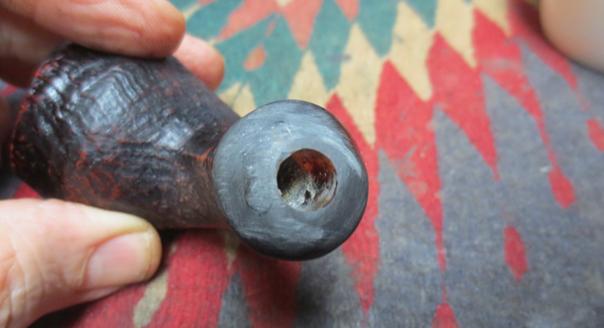
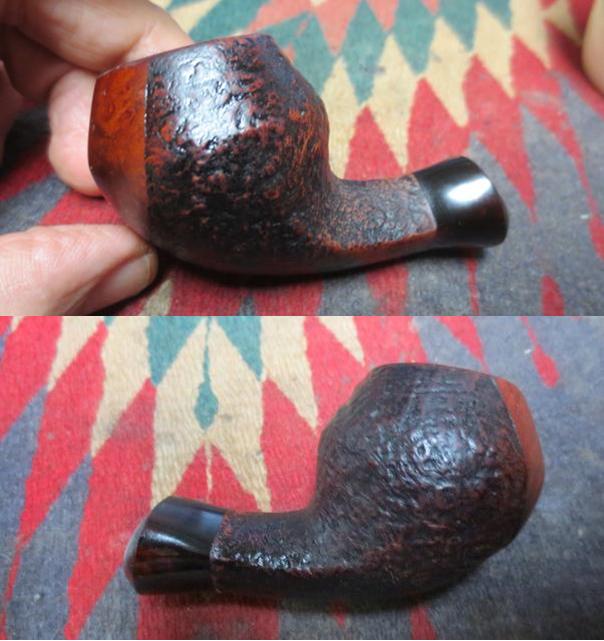
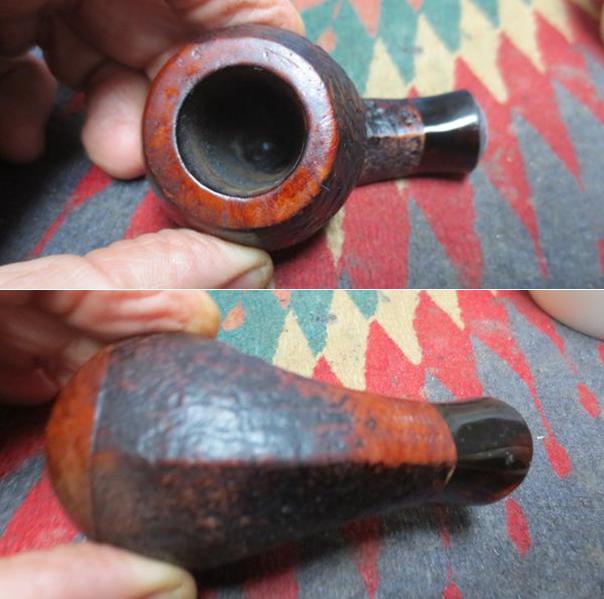
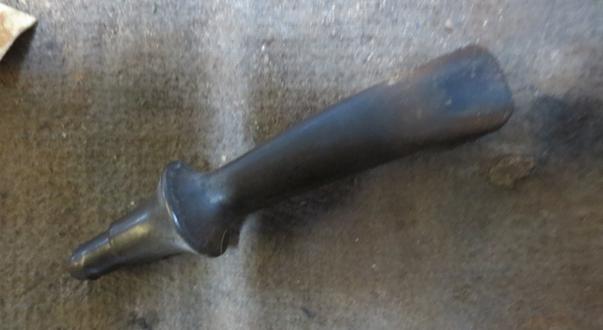
Restoring Another Unique Windy Perpetual Drysmoker


Blog by Steve Laug

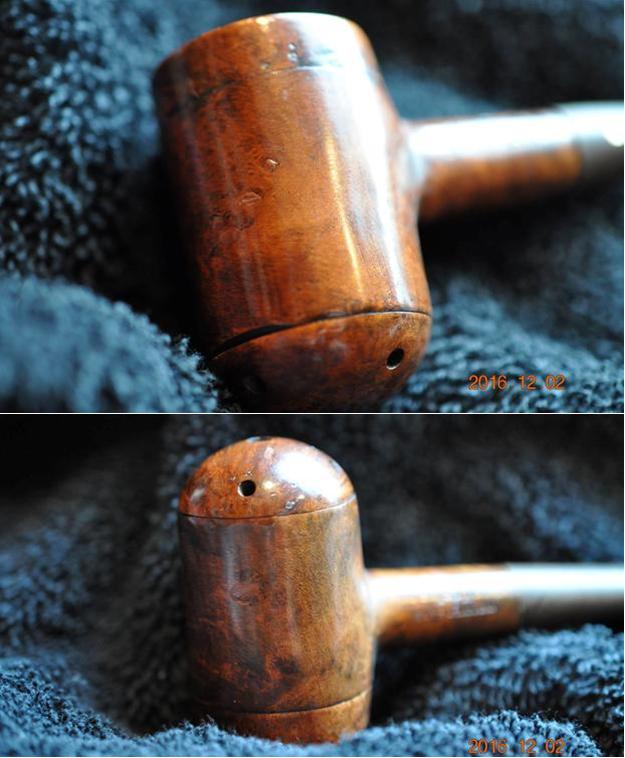
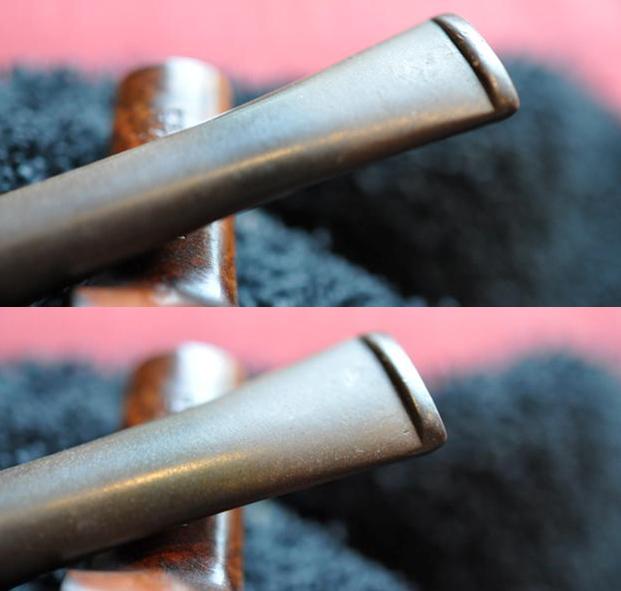
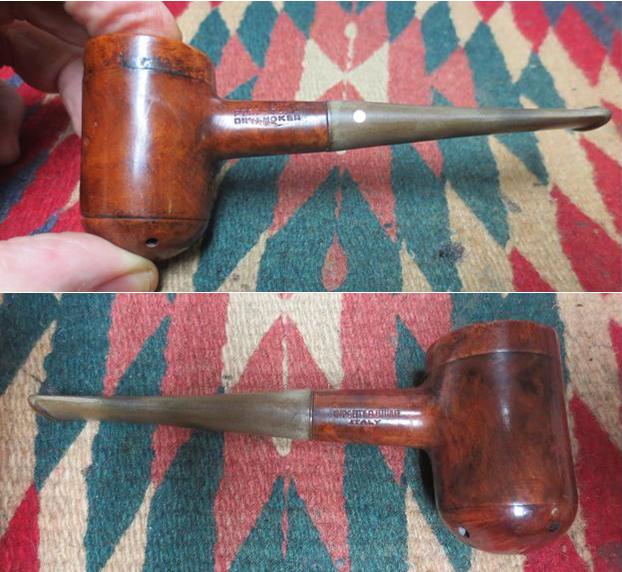
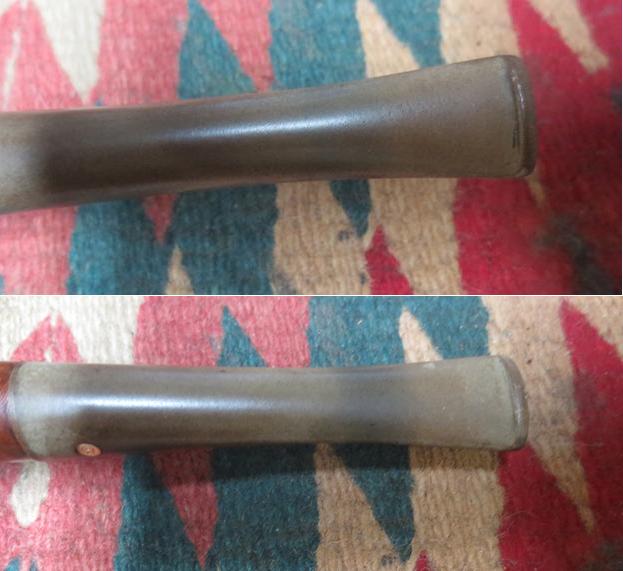
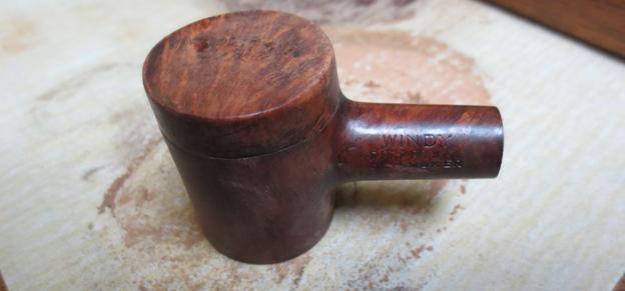
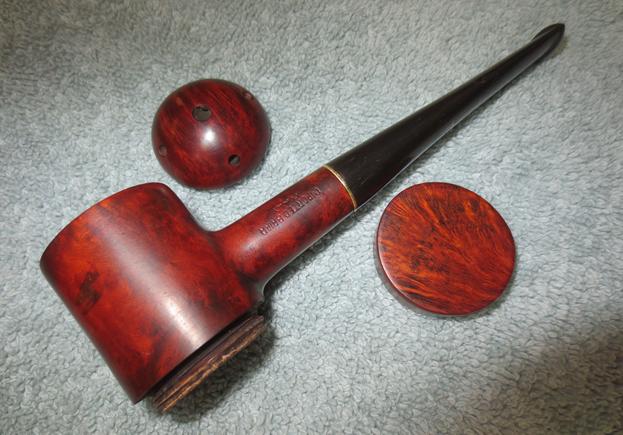
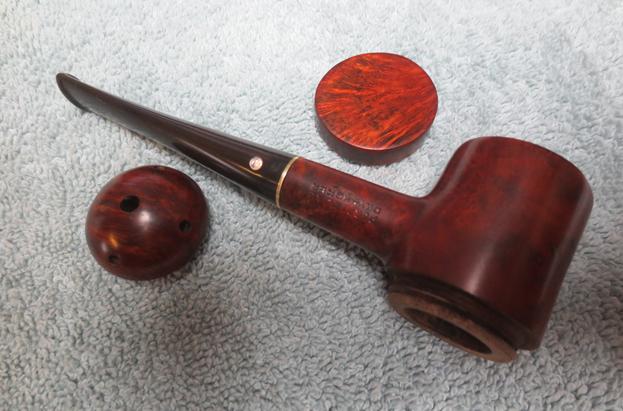
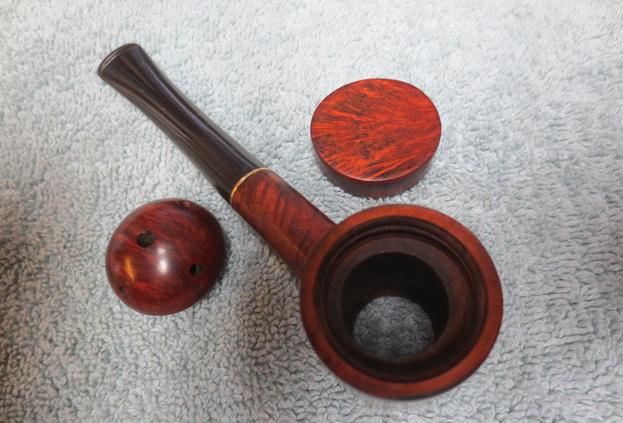
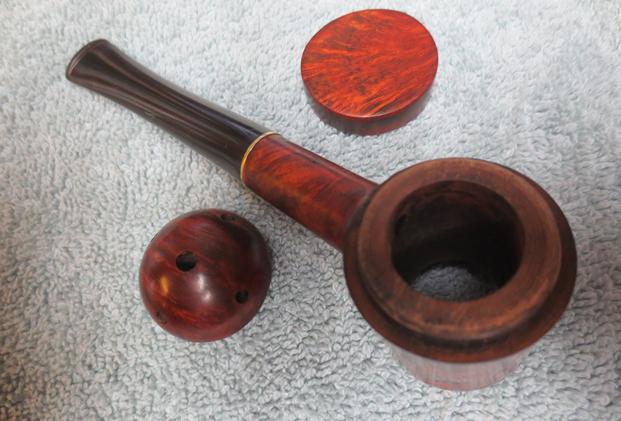
Today I have been working on the second Windy Perpetual Dry Smoker that has come across my work table. The first was a gift from Troy who writes here on rebornpipes. I have written the description of the restoration on a previous blog. You can read about the cleanup and restoration on that blog: https://rebornpipes.com/tag/windy-perpetual-drysmoker-pipe/ . In that blog I did some research on the brand, as prior to the first pipe I was gifted I had never heard of or seen one of these pipes. I decided to repeat a portion of that first blog here to give some background on the brand.

Here is the link to one of my favourite informational sites on metal and unique system style wooden pipes. The link will take you to the article as a whole and some photos that show the pipe quite well: http://www.smokingmetal.co.uk/pipe.php?page=508

“WINDY PERPETUAL DRYSMOKER by Stan Wolcott”

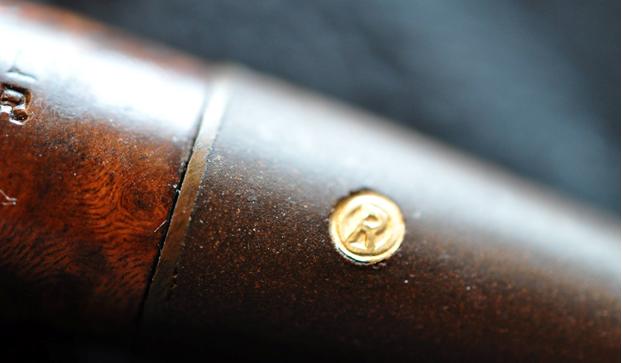
“In my travels I recently came across this intriguing pipe on which very little information appears online by Google search. The left side (?) is stamped “Windy Perpetual Drysmoker” and on the right side (?) “Imported Briar/Italy”. The stem has a small round gold medallion on the left side bearing an “R”. Although several similar pipes are pictured online here in the USA and UK, no explanatory information is included with those images. Floyd Norwood of Tennessee, who restored the pipe for me, also had no idea how the pipe was to be smoked. Tony Pringle of the UK, who has one pictured on his website, believes there may be other pieces which are missing from the four present in the images—flat cap, rounded cap with five vent holes (presumably the wind cap) and the pipe bowl and stem. As can be seen from the images, the flat cap has female threads and screws into the bottom (?) onto male threads on the bowl. The wind cap has male threads and screws into the top (?) of the bowl. I have placed the question marks in parentheses following the terms top, bottom, right and left, since I’m not even sure whether the flat cap is intended to be the bottom. Can someone out there enlighten me and the NASPC readership about this “mystery pipe”, its manufacturer and the proper way of smoking it?”

“The “Perpetual” part of the name seems to come from the ability to actually load more tobacco from the bottom of the pipe whilst still alight and of course the dottle etc. gets burnt as the smoking progresses. Rather ingenious. There are at least two possible for makers from the logo, REGIS and EMPIRE STATE and nothing seems to be known of these either.

Tony Pringle of smokingmetal then includes the following photos of the pipe. There is no doubt that it is the same pipe that I have. There are a few variations between the two but the overall design is the same. He shows photos of the pipe as a whole, taken apart and of the stamping.dry1I have only included the first photos as the pipe I have is virtually identical to this one. Mine also has the gold circle R on the logo on the side of the stem. The only difference is that mine is has a brass spacer on the stem that forms a thin band between the shank and stem. Mine is also in better condition than the one in the photos with no cracks or breaks in the bowl, caps or threads. I believe along with Tony from smokingmetal that the pipe was crafted in the late 1940s. Many things about the briar quality, the rubber that is used in the stem etc. point to manufacture of the pipe occurring during or after the conclusion of World War II.

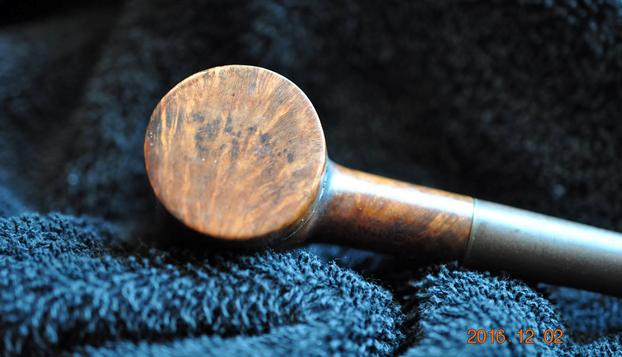
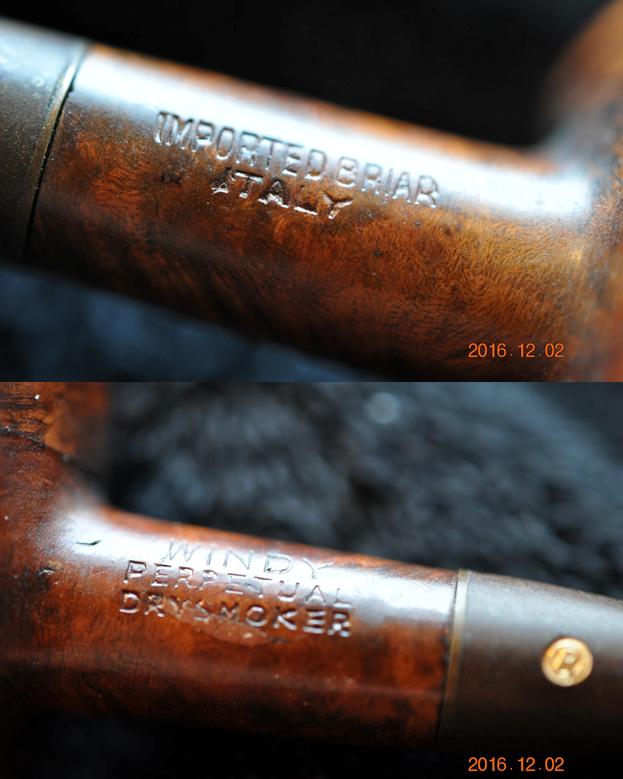
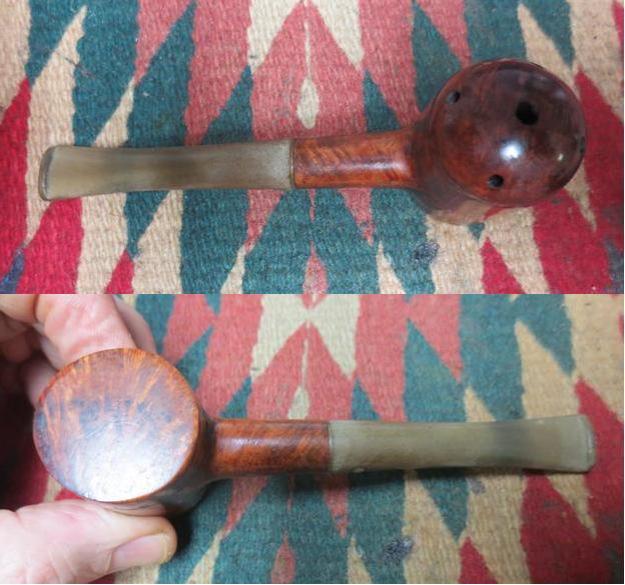
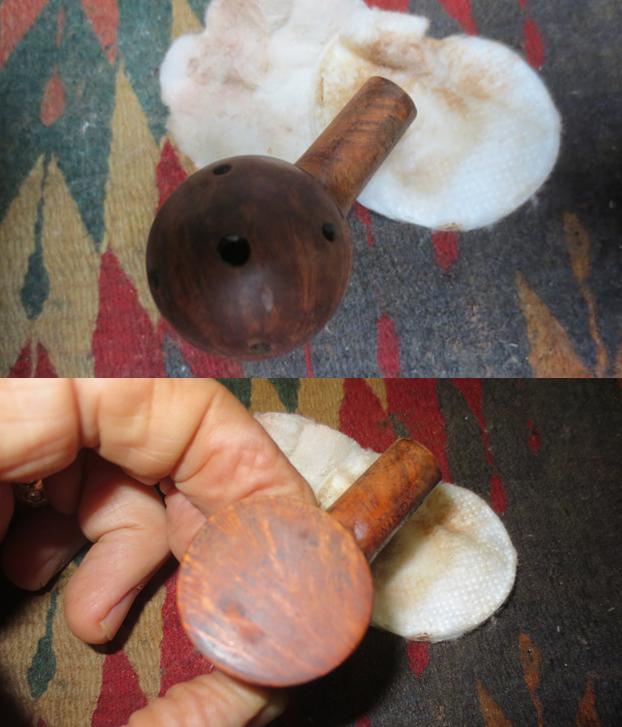
The stamping on the one above and the one I have is simply WINDY over PERPETUAL over DRYSMOKER in caps on what is the left side of the shank. On the right side of shank it is stamped Imported Briar over Italy. The pipe is meant to be smoked with the perforated, rounded cape pointing downward. That is why the stamping is the way it is. If the pipe is held otherwise the stamping is upside down. If the pipe is inverted it can be set upright on a desk or table on the flat top cap and act as a sitter pipe. The pipe is 5 ¼ inches from the front of the bowl to end of bit. The diameter of the outer bowl is 1 3/8 inches. The chamber diameter is just over 5/8 inch and depth is over 1 ¼ inches with both the top and bottom cap removed. The pipe is lit from the bottom and the wind cap cover is screwed in place. I think that more tobacco can be fed in from the top of the bowl with the flat cap removed thus making the pipe a PERPETUAL DRYSMOKER.

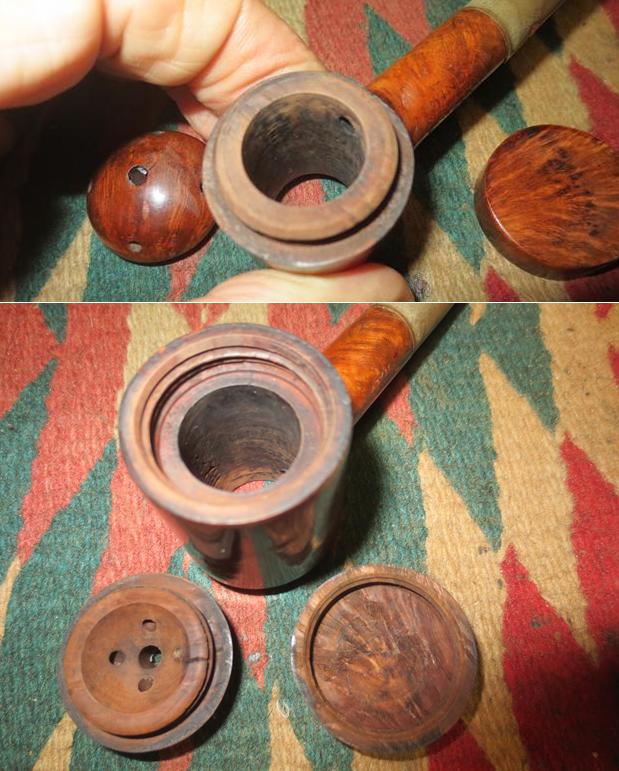
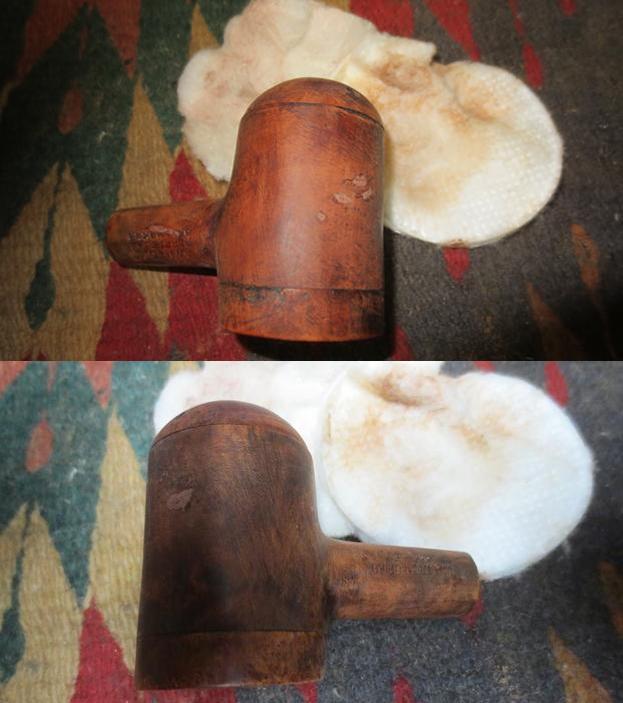
The pipe my brother Jeff picked up is shown in the next photos that he took of it before cleaning it and sending it to me in Vancouver. You can see some darkening in the finish around the flat cap on the bowl and some general wear and tear to the finish as a whole. The bowl has quite a few fills in the shank, the left and right front sides and the crowned perforated bottom cap. The stem was oxidized quite heavily and the diameter of the shank and the diameter of the stem did not match.dry2Jeff took some great photos of the bowl taken apart. Contrary to what Tony and Stan mention in the quote article from the website all the parts are present with the pipe. There are no additional pieces needed to make the pipe functional. The first two photos show the rounded bottom cap and the flat top cap removed from the bowl. You can see the wooden threads on the inside of the bowl in the first photo where the bottom cap screwed into it. The second photo shows the threads on the outside of the bowl where the flat top cap screwed onto it. The completed pipe resembled a salt or pepper shaker to my mind – a unique and interesting smoking device. Both caps were darkened by smoking but appeared to be clean. There was a small crack in the rounded bottom cap but it did no effect the fit in the bowl.dry3He also took some photos with the parts laid out together to give an overall idea of what the pipe looked like.dry4My brother also included some close up photos of the sides of the bowl to show the condition of the finish and what would need to be done to clean it up. He included a photo of the flat top cap to show the remarkable grain underneath the staining and grime.dry5 dry6The next two photos show the stamping on both sides of the shank. The third photo shows the brass circle R logo on the stem and also the brass spacer in between the stem and the shank.dry7 dry8The final two photos Jeff included showed me the condition of the stem. It looked really good other than the oxidation. There was no tooth chatter or tooth marks in the surface. The only issue I would need to address was the mismatched diameter of the shank and the stem.dry9My brother did a really thorough job cleaning up this old pipe. When it arrived in Canada the inside of the bowl and both caps was really clean. He had scraped out the light cake in the bowl and cleaned out the mortise and airway in the stem and shank with alcohol, cotton swabs and pipe cleaners. He cleaned off the exterior of the bowl and was able to remove much of the grime on the surface. The brass space was oxidized but would clean up easily when I worked on the diameter of the stem. I took the next four photos to show the condition I found the pipe in when I unpacked it here in Vancouver.dry10 dry11I took the pipe apart and took photos of the parts of the bowl – the centre core, the rounded bottom cap and the flat top cap. In the photos the core is flat side up in the first one and rounded side up in the second one. The bowl and caps were very clean and you could see raw briar inside all of the parts which led me to think that the pipe had not been smoked often.dry12I took some close up photos of the stem to record its condition as well.dry13The fit of the crowned bottom cap to the edge of the core part of the pipe had some damage to it that did not allow the cap to seat tightly against the edge of the core. I topped it with 220 grit sandpaper on the topping board until the cap fit snugly.dry14I put the cap back in place and wiped the bowl down with acetone on cotton pads to remove the finish. The fills on the bowl were dimpled so they would need to be repaired with briar dust and super glue.dry15 dry16With the finish removed I could better assess the darkened areas around the sides and bottom of the flat cap. I could also see areas that needed to be sanded around the edges of the rounded bottom cap also. I sanded the entire pipe with 220 grit sandpaper to remove the damaged areas and smooth out the transitions between the core and the caps. I also smoothed out the edges of the fills to prepare them for repair later in the process.dry17 dry18With that part finished I needed to rework the shank/stem diameter. The right side of the shank was narrower than the right side of the stem. With the stem removed it was easy to see why. That side of the briar shank was thinner in terms of the thickness of the walls of the shank than the left side. The red circle shows the side that needed to be taken down.dry19I used the Dremel with a sanding drum to take down the excess vulcanite and brass of the spacer.dry20I cleaned out the areas around the fills and removed any of the loose debris around them. I rebuilt the areas around the fills with a mixture of clear super glue and briar dust. I overfilled the repairs to allow for shrinkage. I sanded the repairs smooth to match the surface of the bowl.dry21I sanded the repairs smooth and then polished the areas with micromesh sanding pads. I wet sanded the repaired areas with 1500-2400 grit sanding pads and dry sanded them with 3200-12000 grit pads. I wiped the bowl down with a damp cloth. I stained the bowl and the caps with dark brown aniline stain and flamed it to set it. I repeated the process until the coverage was even.dry22 dry23I buffed the bowl with Blue Diamond polish on the buffing pen. I gave it several coats of carnauba wax and buffed it to a shine.dry24 dry25I sanded the stem with 220 grit sandpaper to smooth out the scratch marks on the vulcanite. I polished it with micromesh sanding pads – wet sanding with 1500-2400 grit pads and dry sanding with 3200-12000 grit pads. I rubbed the stem down with Obsidian Oil after each set of three pads. After the final coat of oil I set it aside to dry.dry26 dry27 dry28I buffed the pipe with Blue Diamond once more and then gave the bowl and stem multiple coats of carnauba wax. I buffed it with a clean buffing pad to polish it and then by hand with a microfibre cloth to deepen the shine. The finished pipe is shown in the photos below. Some of the character marks of the pipe that came to me still show and I am sure could tell a story if they were able to speak. I like the finished look – the marks and all give the pipe a sense of history and time. It is not a bad looking old pipe considering that it has traveled from the 1940s into 2016 and who knows how much longer. Thanks for looking.dry29 dry30 dry31 dry32 dry33 dry34 dry35 dry36

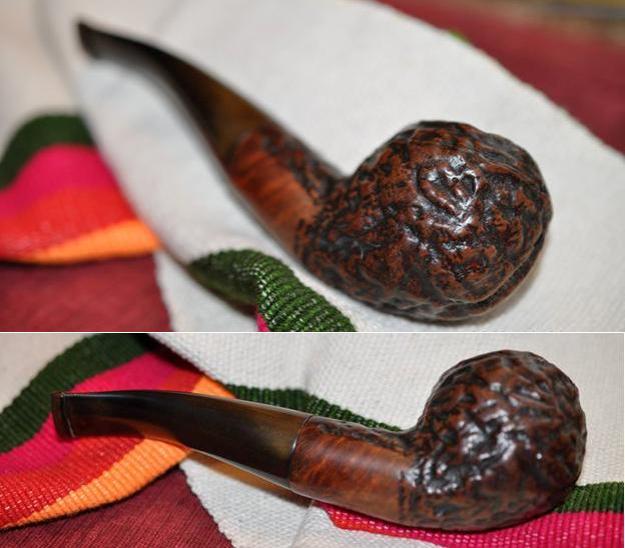
Reclamation Project: The Tobacconist Inc. Rhodesian


Blog by Steve Laug

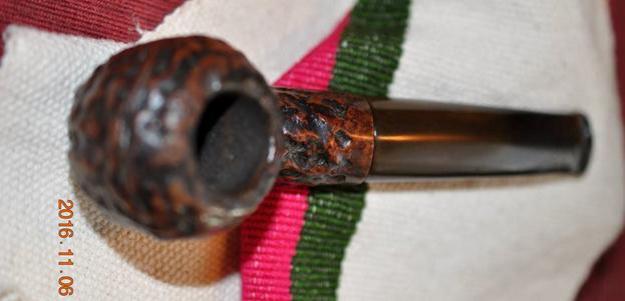
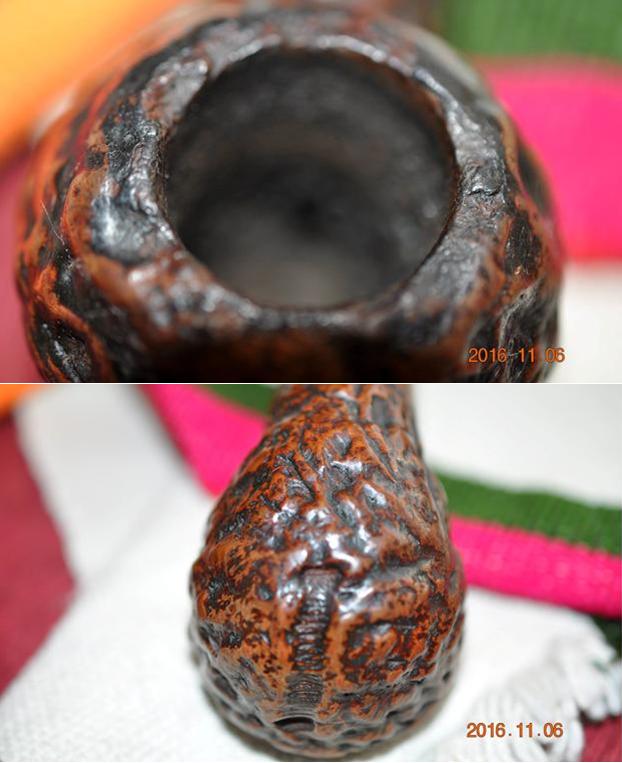
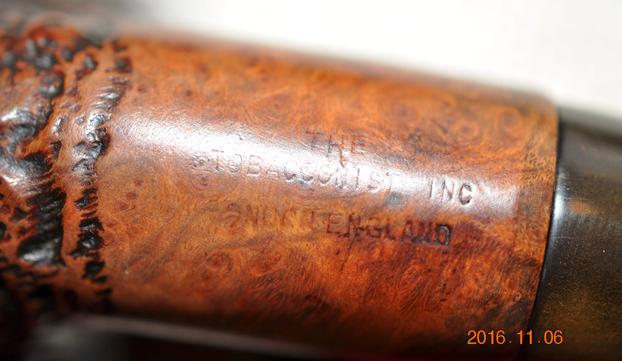
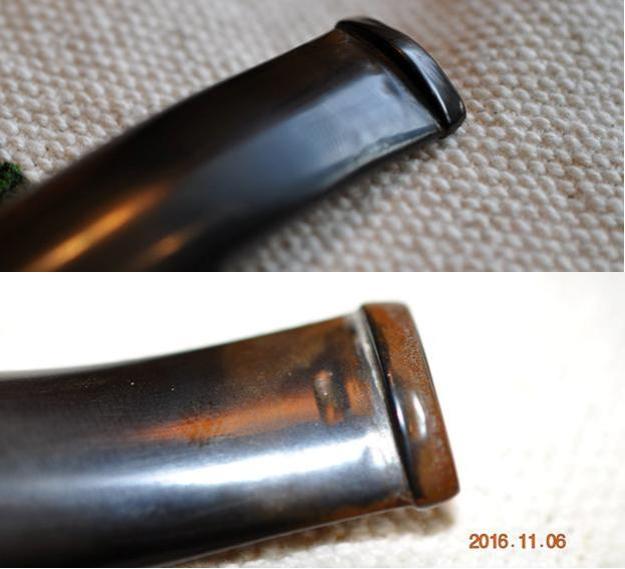
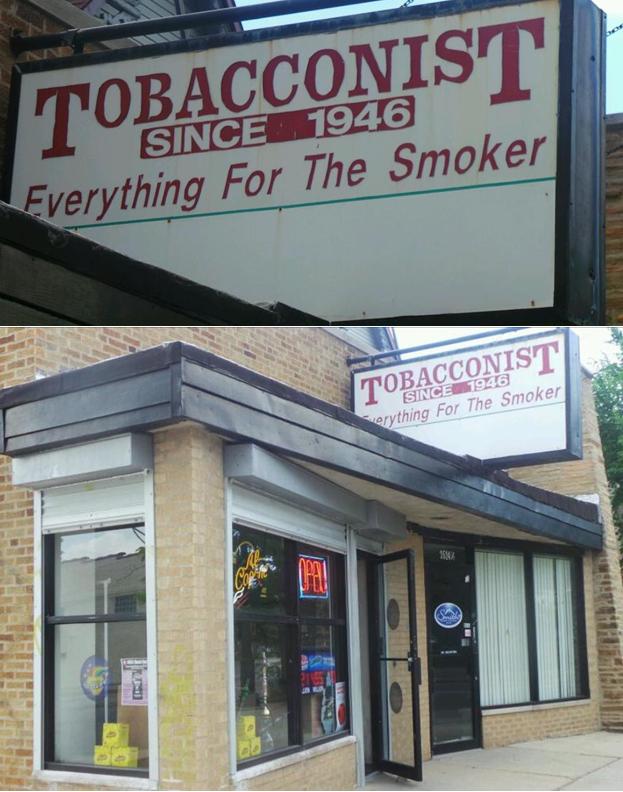
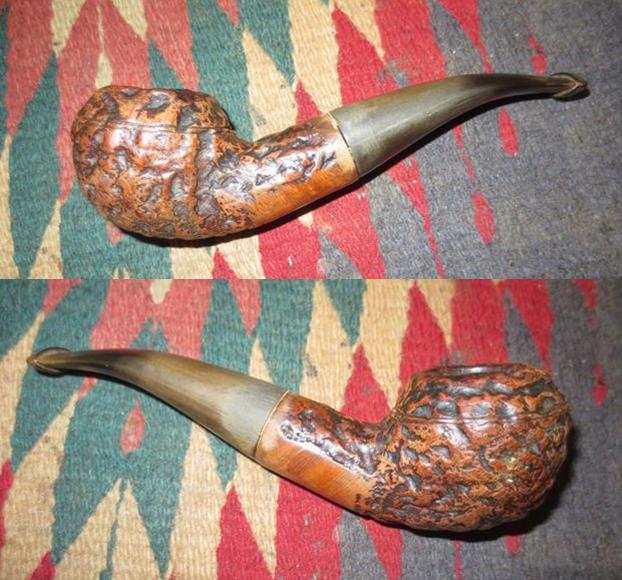
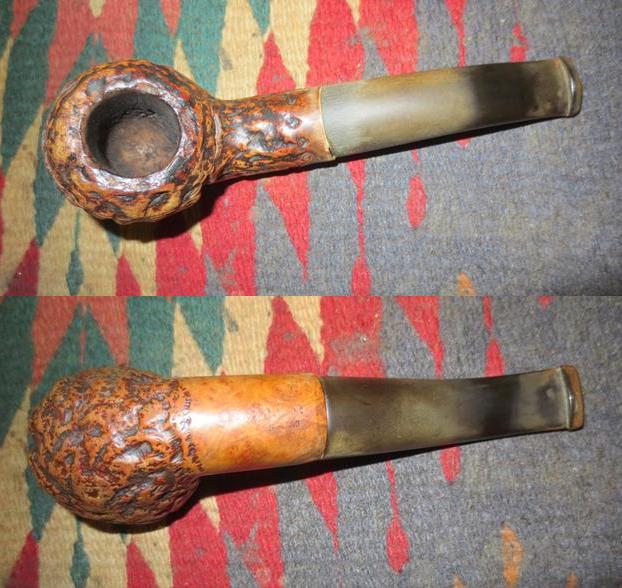
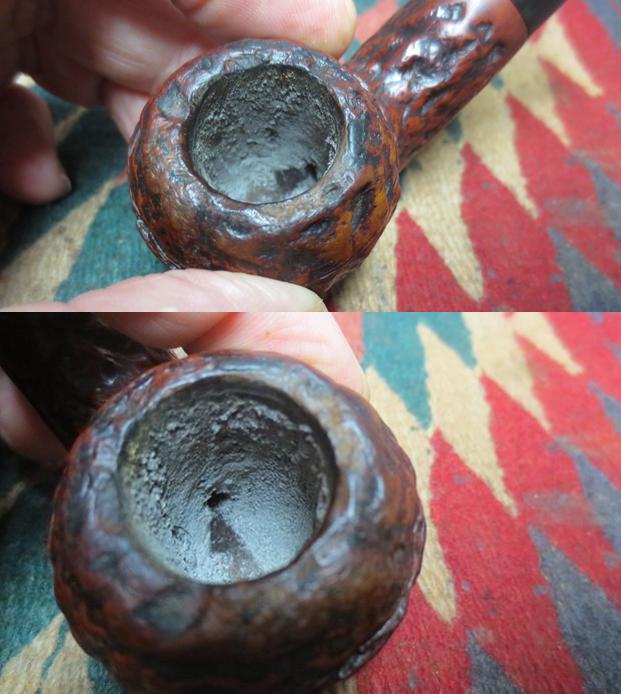
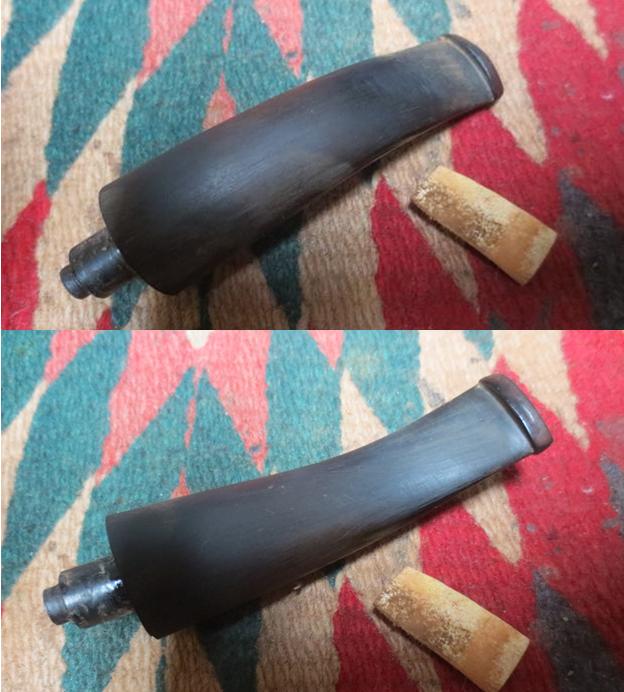
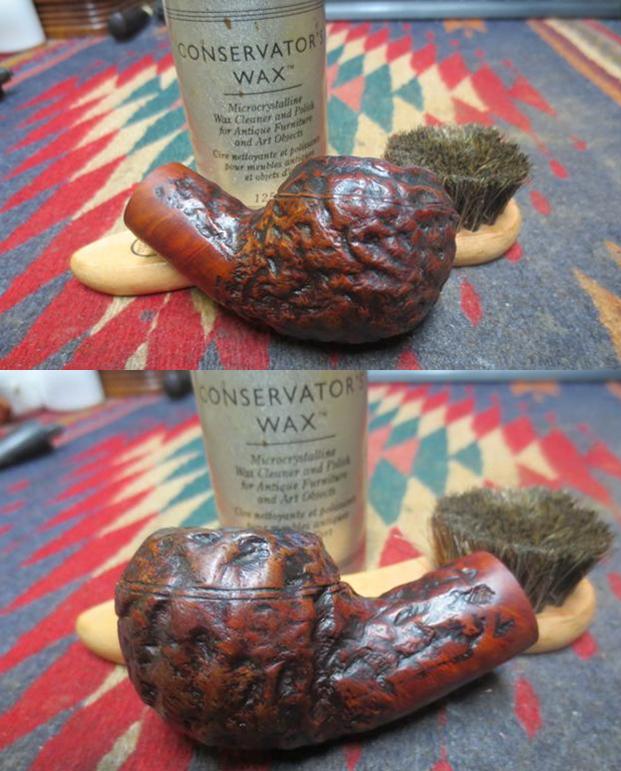
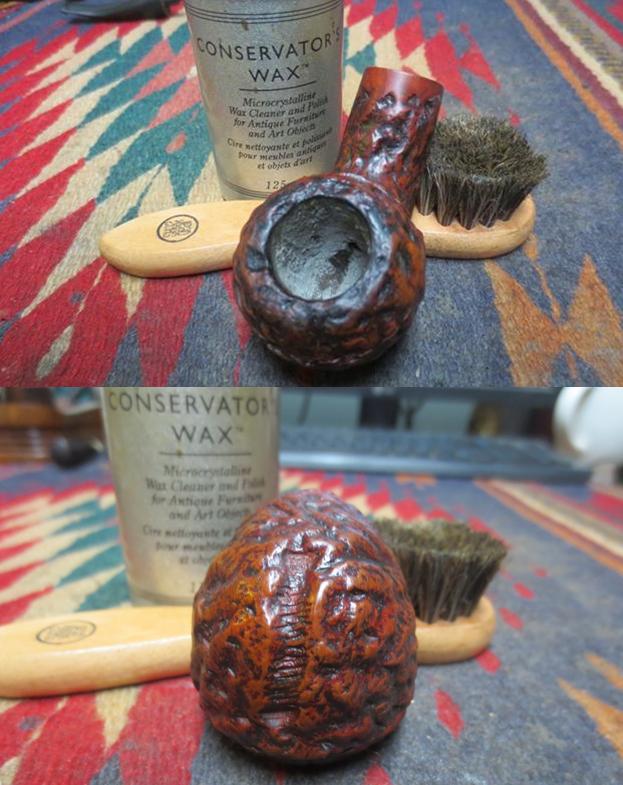
In the last box of pipe that my brother sent there was a pipe that is of course one of my favourite shapes – a 9438/9242 GBD style Rhodesian though the taper stem makes me think of a 9242 shape. It is not stamped with a shape number or a make but the Made in England stamping on the underside of the shank matches that found on GBD pipes. From first glance at the pictures of the pipe that my brother sent me it looked to be in decent shape. This was to be proved wrong once my brother started to clean it and I received it in Vancouver. But from the photos the contrast finish of blacks and browns looked really good. The rustication on the bowl is a combination of worm trails and “squiggles” that is reminiscent of Custombilt pipes. From the front there is a worm trail that divides the bowl into two hemispheres like a brain (photo 5). Strange humour of the original pipe maker, I think.tob1 tob2The close up photos of the rim and bowl give a bit of a foretaste of the hidden issues in the bowl and on the rim. It is hard to see the inside of the bowl from this photo but there was a light cake in the bowl and it had run over the top edge of the bowl filling in some of the grooves and crevices in the rustication. The second photo below shows the worm trail on the front and underside of the bowl that divides the bowl into two hemispheres.tob3The stamping on the underside of the shank on a smooth portion of briar was faint but could still be read. It said The Tobacconist Inc. over Made in England.tob4The stem was lightly oxidized around the shank end and the button end, though the middle was strangely clean. There were tooth marks on the top and underside near the button. The top edge of the button on both sides had tooth marks as well.tob5I have restored a Liverpool shaped pipe with The Tobacconist Inc. stamping and written a blog on it – (https://rebornpipes.com/2016/07/16/a-liverpool-stamped-tobacconist-inc/). I remember hunting to no avail on information on the brand and finding nothing. I checked once again with my usual sources – the book Who Made that Pipe and the online sites Pipedia and Pipephil. None of the sources had any new information. For that blog, I searched for the name of the shop – The Tobacconist Inc. to see if I could find any information on it and possibly see if they had shop pipes made for them. The name Tobacconist Inc. came up shop a tobacco shop in Chicago. It is called The Tobacconist Inc. and is located at 3524 W. Irving Park Rd. Chicago, Illinois. The phone number is 773-463-8468. I have included two photos from that blog – one of the sign and the other of the shop. The sign says the shop has “Everything for the Smoker” and has been in existence since 1946. Sounds like a place I need to visit one day. Now that I have worked on a second pipe with the name stamped on it I really need to call them and see if they have any information about the pipe. tob7My brother wrote that cleaning out the inside of the pipe was a pain. It took a lot of work to get the buildup of tars and grime out of the bowl and the shank. The rim top also had some damage under the thick tars. When it arrived in Vancouver I could see that the pipe was in pretty rough shape with a poorly fitting stem. The diameter of the stem and the shank don’t match. Not sure if it was because the stem was poorly fitting to start with or if it is a replacement stem. It looks to be original so I am opting for a poor fit. I took some photos of the pipe before I started working on it (well almost – I had done a little sanding at the shank stem union before I remembered to take the photos). tob8 tob9I took a close up photo of the rim and bowl. The rim inner edge had some chips and nicks that would need to blended in to make the rim more balances looking. It is hard to see from the photos but the walls of the bowl are in damaged condition.tob10The tooth dents in the top and underside of the stem near the button were quite deep. I heated the dents with a Bic lighter to raise them as much as possible. I painted them with the flame of the lighter and when I was finished they were not as deep as before. It would not take too much now to sand them out to match the surface of the rest of the stem.tob11I cleaned out the inside of the shank with alcohol, pipe cleaners and cotton swabs to remove the last of the debris on the walls. The bevel on the edge of the mortise was rough and needed to be cleaned up and smoothed out but the wood was solid with no cracks.tob12I used a Dremel and sanding drum to remove the excess briar and vulcanite and get the shank and the bowl to match in diameter. It took some work but it certainly was a better fit once I was finished. I sanded the bevel in the shank end until it was smooth but the stem still did not fit tightly against the shank. I heated the tenon to soften the vulcanite and make it flexible. I pushed the stem carefully into the shank and held it against the shank end to align it until the tenon cooled.tob13I sanded the stem/shank union with 220 grit sandpaper to smooth it out and make the transition clean. I took the following photos to show the restoration at this point.tob14 tob15I used a brass bristle tire brush to work over the rim top. It took some work but I was able to get the grime and grit out of the grooves of the rim.tob16I scrubbed off the finish on the bowl and rim to remove the stain and the remaining varnish coat on the briar. When I finished cleaning the surface the pipe was ready for the stain coat.tob17 tob18I stained the bowl with a dark brown aniline stain and flamed it to set it in the grain. I repeated the process until the stain coverage was even across the bowl.tob19 tob20I used the Savinelli Fitsall pipe knife to scrape out the walls of the bowl. I examined the interior and saw a lot of spidering cracks on the walls of the bowl. While the briar around them was still solid and the briar was not too badly damaged. This would need to be addressed to assure that the briar would be protected until a new cake had formed.tob21I decided to mix up a batch of pipe mud with some tap water and a dental spatula. I applied the mud mixture to the inside of the bowl pressing it into the cracks in the bowl walls. I coated the inside of the bowl with the mud until there was a solid bowl coating.tob23 tob24I set the bowl aside to dry overnight. I took the following photos to show what the inside looked like after the mud had cured.tob25I sanded the stem with 220 grit sandpaper to remove the last remnants of the tooth dents and reshape the button on both sides. It also removed the surface oxidation.tob27I used a black Sharpie Pen to touch up the grooves in briar on the sides and the rim top. I gave briar a touch up coat of dark brown stain. I waxed the rusticated briar with multiple coats of Conservator’s Wax and once it had dried buffed it with a shoe brush to raise the shine.tob28 tob29I polished the stem with micromesh sanding pads – wet sanding with 1500-2400 grit pads and dry sanding with 3200-12000 grit pads. I rubbed the stem down with Obsidian Oil after each set of three pads. I gave it the final coat of oil and set it aside to dry.tob30 tob31 tob32I buffed the bowl and stem with Blue Diamond polish on the wheel. I gave the stem multiple coats of carnauba wax and put another coat of Conservator’s Wax on the briar. I buffed the bowl and stem with a clean buffing pad. I hand buffed the pipe with a microfibre cloth to deepen the shine. The fit of the stem against the shank is far better than it was when I started the cleanup. I like the way the flow is now between the stem and the shank. The finished pipe is shown in the photos below. It had a great feel in hand and I think the rustication will heat up nicely with the next first smoke. I think that the pipe mud will protect the bowl until a new cake is built. Thanks for walking through the restoration with me.tob33 tob34 tob35 tob36 tob37 tob38 tob39 tob40

Finishing Touches on an Interesting Bambu Egg


Blog by Steve Laug

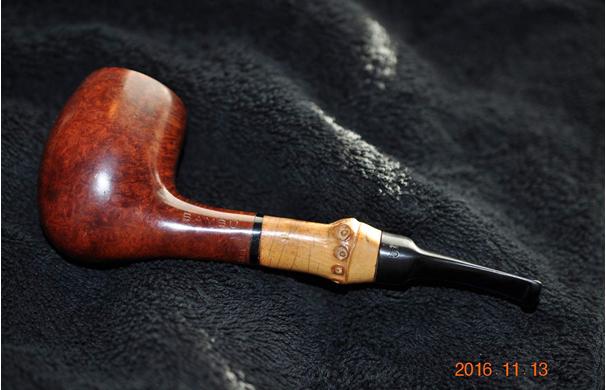
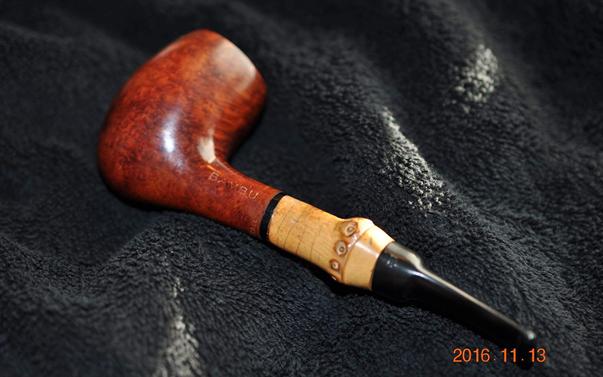
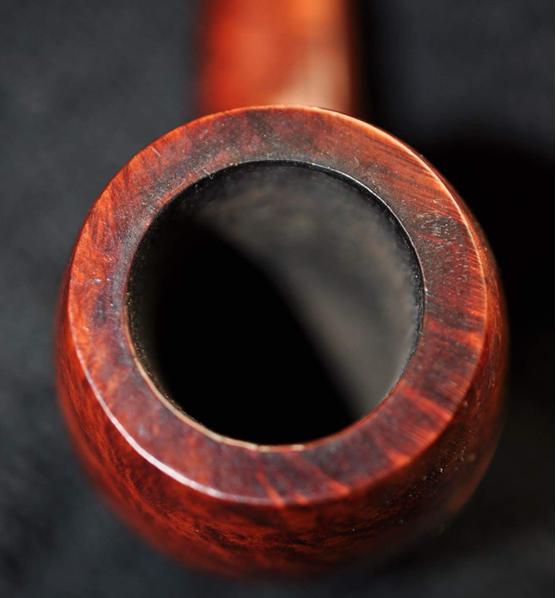
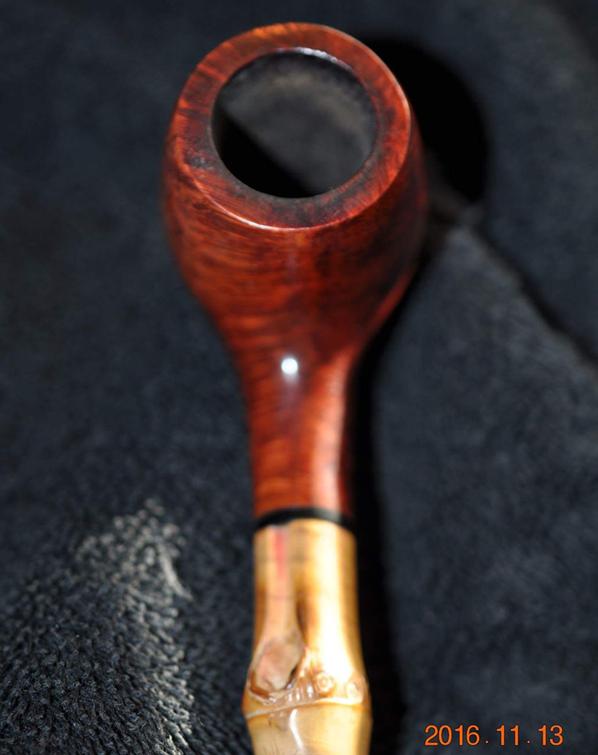
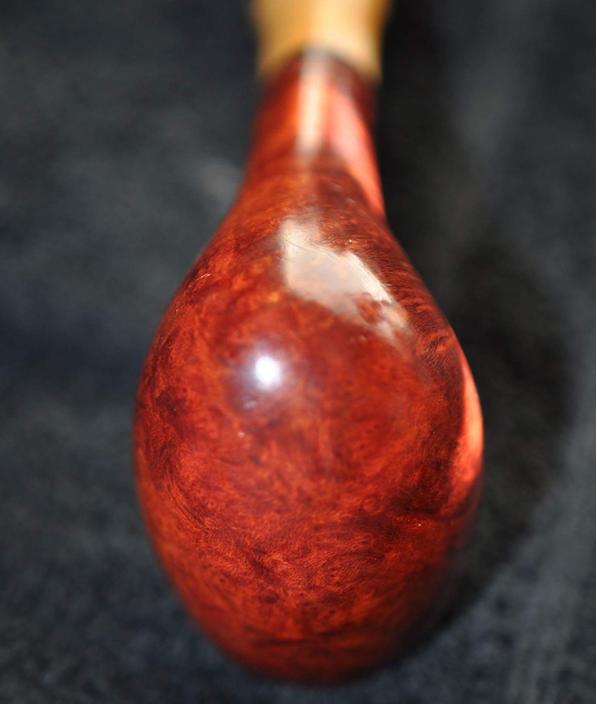
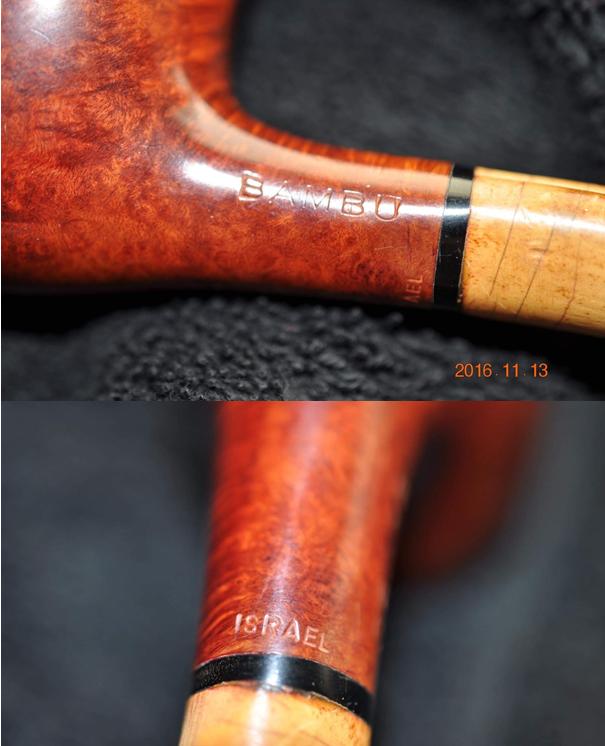
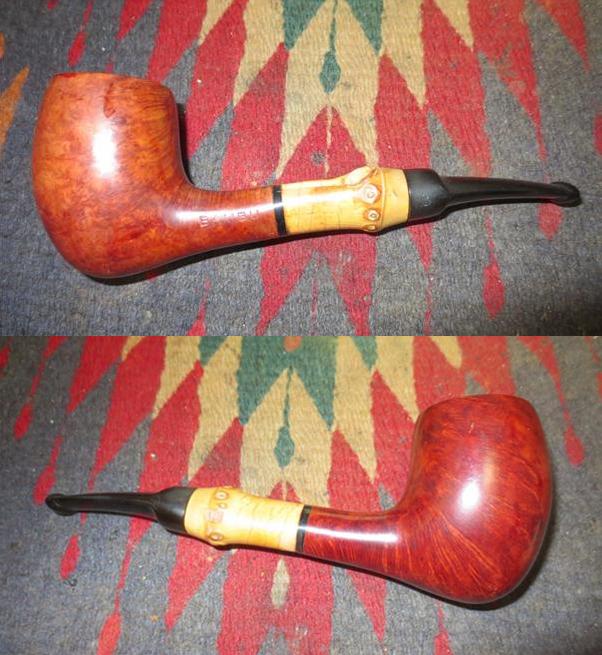
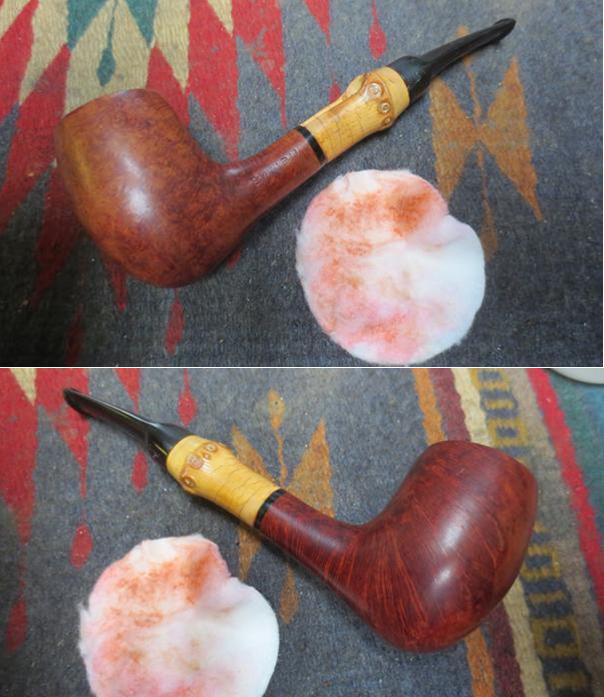
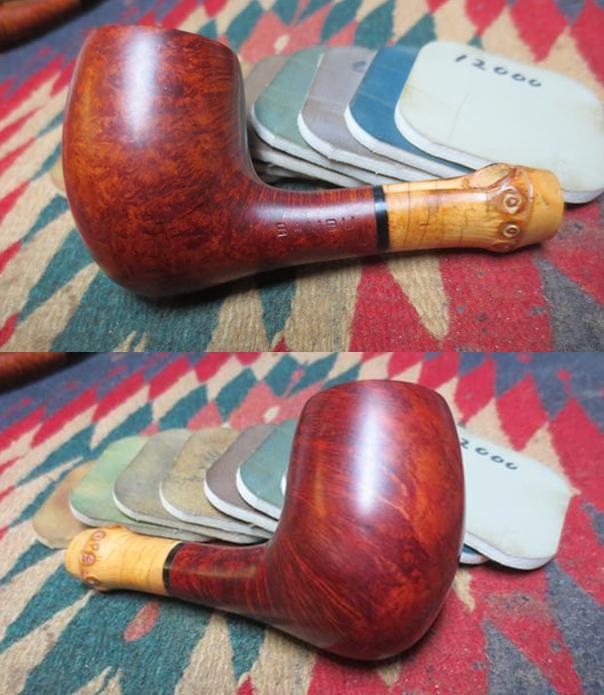
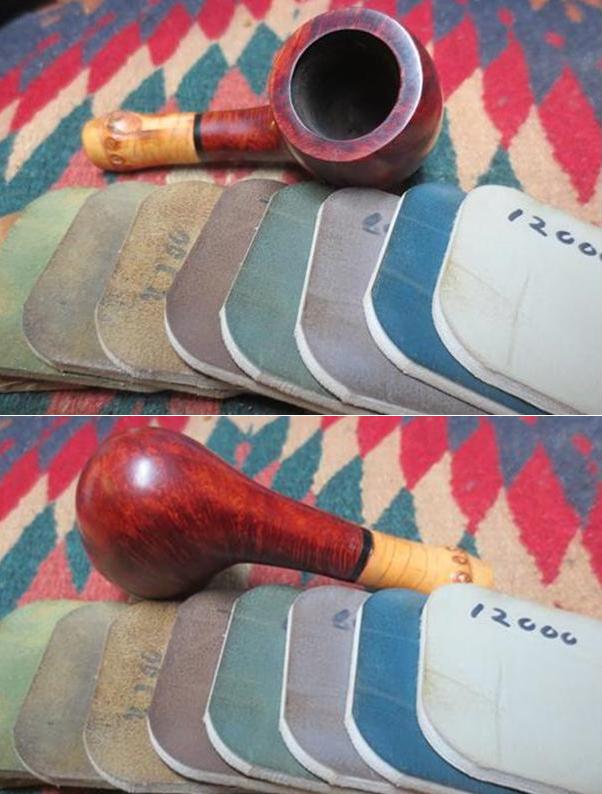
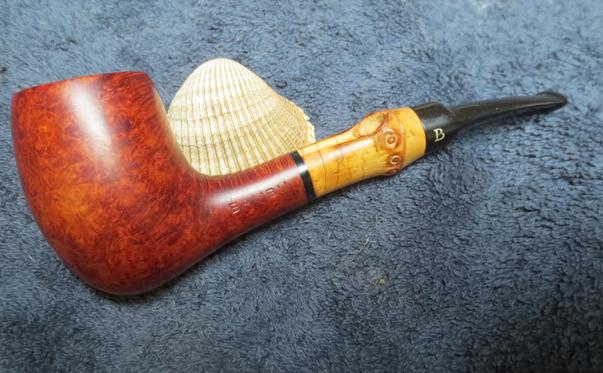
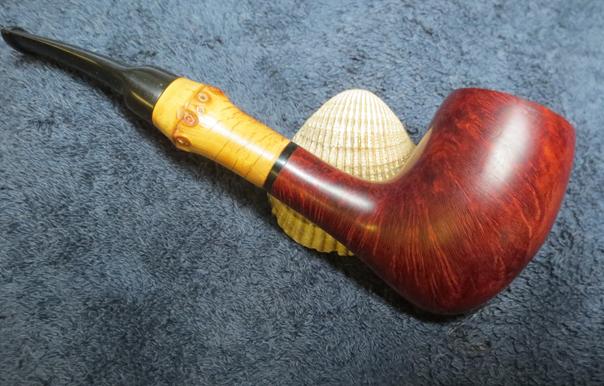
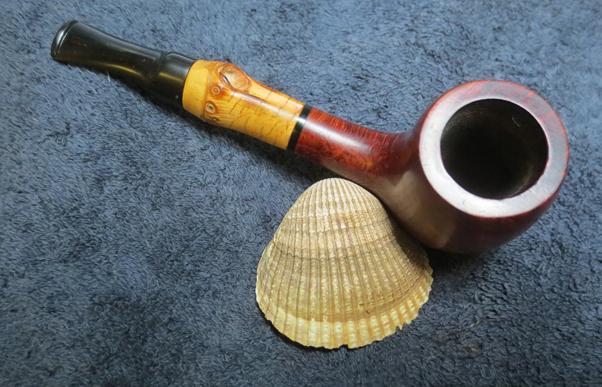
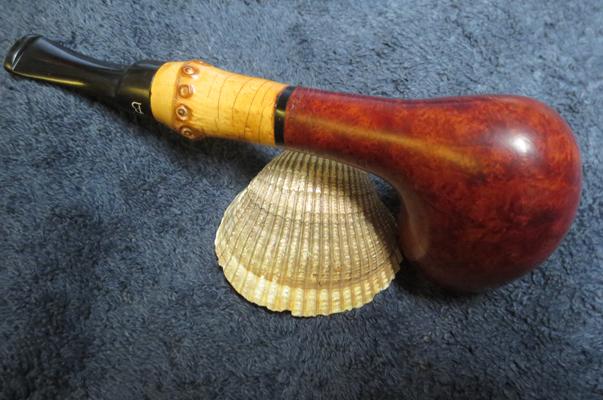
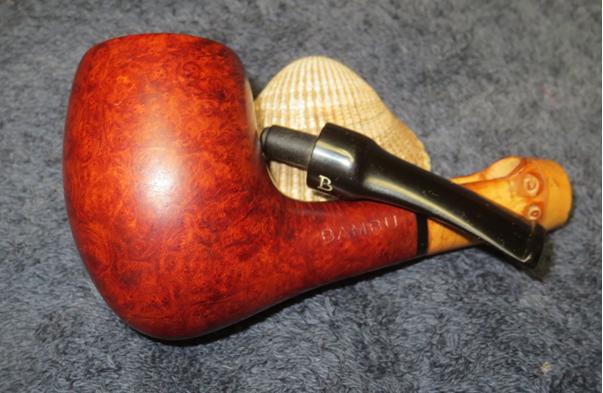
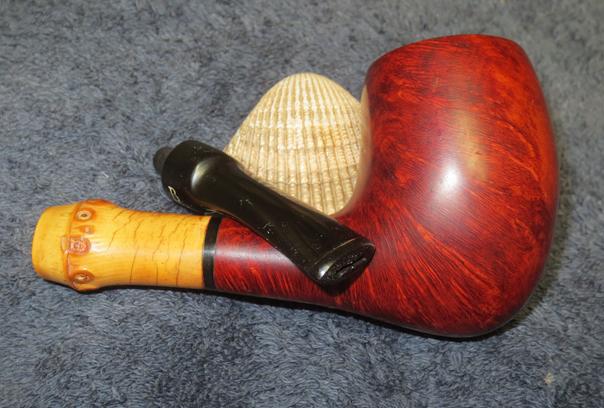
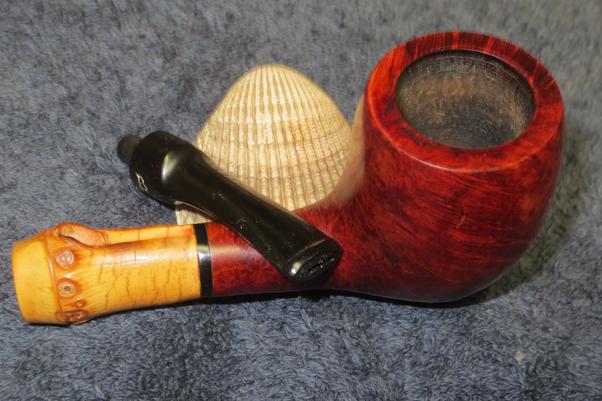
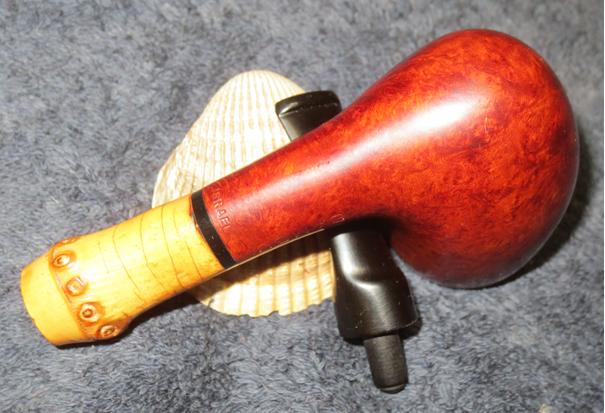
This pipe came up for sale on the Gentleman’s Pipe Smoking Society on Facebook. It was being sold by a friend of Dal’s and I liked the shape and the look of it. I honestly was thinking it was a smaller Stanwell like egg even though I knew it was not a Stanwell pipe. The pipe is stamped Bambu on the left side of the shank and on the underside it is stamped Israel which leads me to believe that it was crafted by the Shalom Pipe Factory. There is nothing online that I can find regarding the stamping or the brand but it is similar in stamping to my early Alpha Israel pipes. That is all the information that I can surmise from the pipe itself. I paid for the pipe and had it shipped to my brother instead of to Canada over a month ago and he received it really quickly. I told him to hold onto it and ship it up when he sent another box of pipes to me.

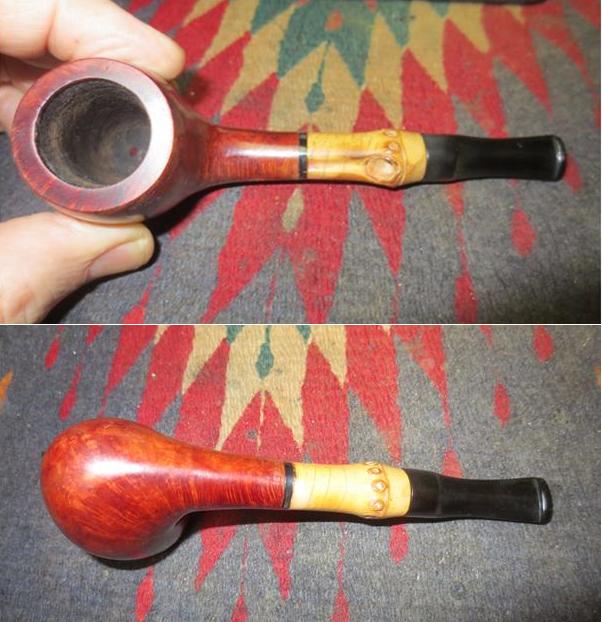
This week it arrived and I expectantly took it out of the box of other pipes. I unwrapped it from the bubble wrap to have a look at it. My brother had sent along a few photos of the pipe to show me what I was in for once it arrived so I was kind of excited to see it up close. In the next two photos he shows the overall look of the pipe. It was really quite nice.bamboo2 bamboo3Whenever I buy an estate pipe, no matter who has done the restoration, I always add my own touches to the restoration to make it mine and to remove the things that will bug me as I use the pipe. I don’t know if you all do that but it is part of my own pathology that I have to go over every estate I get with a fine tooth comb before I even load a bowl and fire it up. This was no exception to my habit. I took the bowl and turned it over in my hands to examine it closely. As usual I noted a few issues that I knew would bug me unless I addressed them. (No criticism of the seller as I am sure many folks would have been absolutely fine with the as it was when I got it.)

  1. The finish on the bowl was spotty. The left side of the bowl appeared to have been stripped of its varnish or shellac coat and there were shiny spots left on the bowl side toward the top edge of the rim. The front, back and right side of the bowl still had the shiny finish coat. I knew I would need to remove the finish and smooth things out. Call me anal but that kind of thing bugs me.
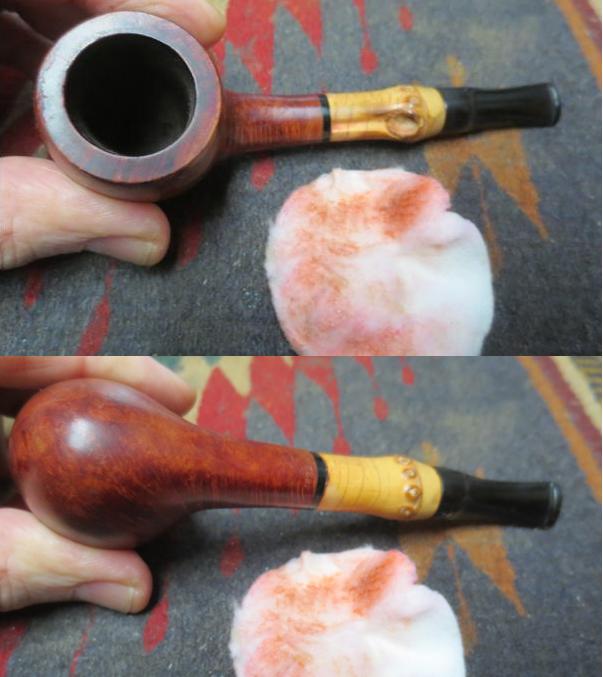
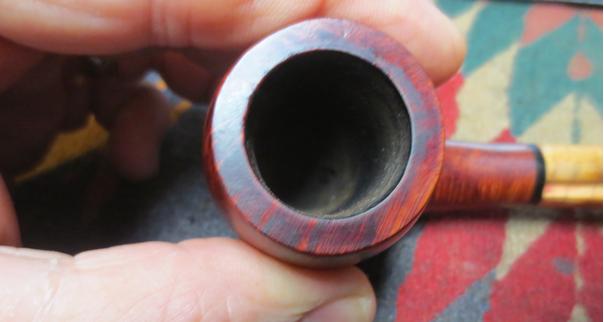
  2. The rim still had some residual lava spots from the bowl that would need to be cleaned off and the darkening of the rim appeared to be on top of the shiny top coat. I was pretty sure that I could remove much of the issue by removing the shiny coat.
  3. The underside and sides of the bowl had some dents and nicks in the finish that needed to be steamed out.
  4. The transition between the briar, the black insert and the bamboo was rough to the touch and there was debris collected in the rough edges of the transition.
  5. There was a red mark in the groove of the bamboo on the top side of the shank. It stood out and it bugged me – kind of like lipstick on the collar of a good shirt.
  6. The bamboo also had a thick seal coat that seemed to have brush marks in the finish and I could feel them with my thumb as I ran it over the bamboo.
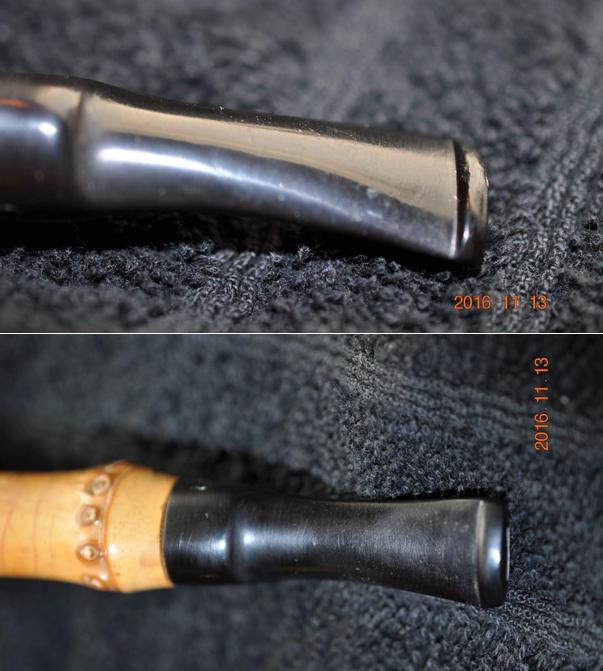
  7. The stem had a lot of pits and small tooth chatter that had been polished but was still present on both the top and the bottom sides.
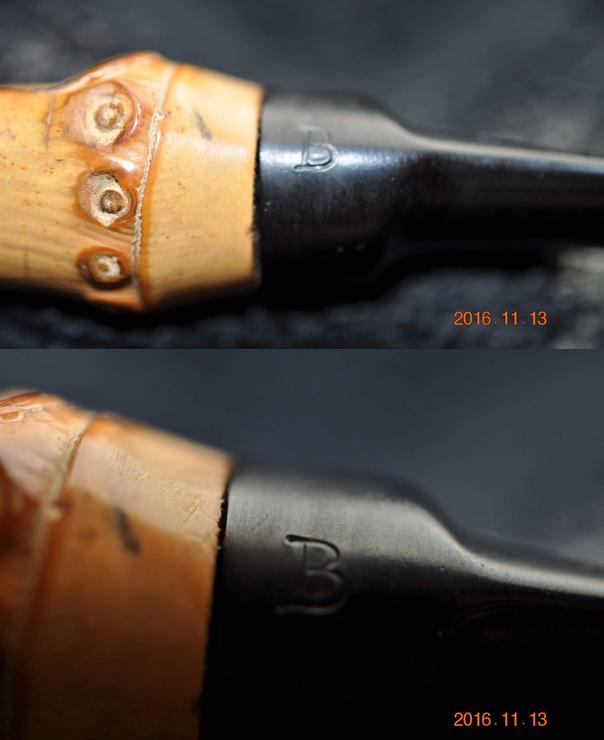
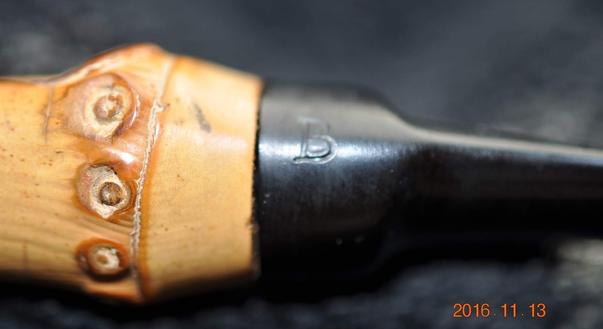
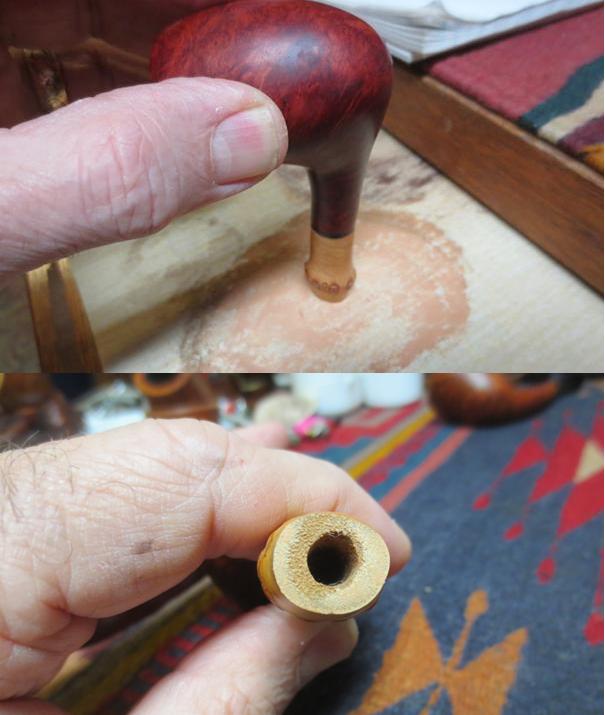
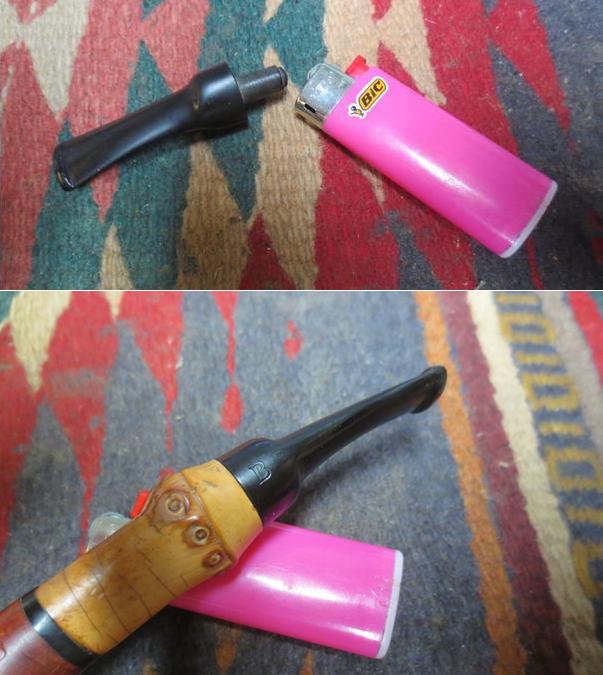
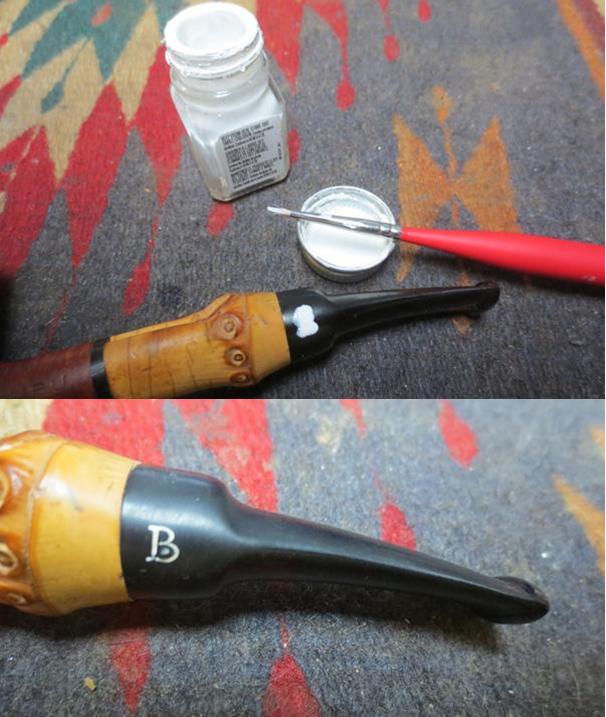
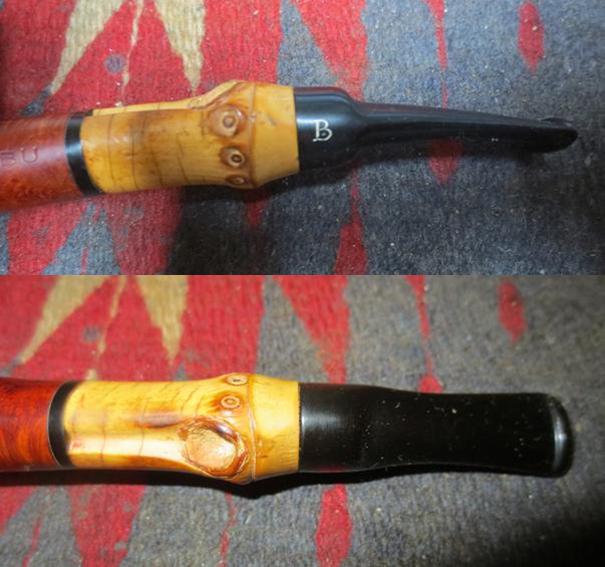
  8. The stamped B logo on the stem was in great shape but I wanted to paint it and make it stand out a bit more on the saddle portion.
  9. The stem also did not sit correctly in the shank leaving a gap on the underside of the joint when it was properly aligned.

My brother included some close up photos of the bowl, the underside, the shank and the stem that highlight some of the issues I raised above.bamboo4 bamboo5 bamboo6The next photos show the stamping on the left side of the shank and on the underside. It reads Bambu as noted above and Israel on the underside.bamboo7In the next two close up photos of the stem you can see the tooth chatter and scratches on the vulcanite stem.bamboo8The final photo shows the B stamp on the side of the saddle portion of the stem. It is in decent shape and would be easily filled in. The fit of the stem against the bamboo was a bit off as well. I would need to adjust this fit.bamboo9In adding my own touches to the restoration of the pipe I decided to work through remedying each of the issues noted above individually. You can be the judge if the finished pipe is better than when I started. The first four photos show the pipe as it appeared when I unwrapped it. You can see the shiny spots on the left side of the bowl near the top and toward the bottom of the bowl. You can also see the dents in the bowl sides.bamboo10 bamboo11The issue raised above in number 1 involved the spotty finish on the bowl. The above photos highlight that issue clearly. The left side of the bowl appeared to have been stripped of its varnish or shellac coat and there were shiny spots left on the bowl side toward the top edge of the rim. The front, back and right side of the bowl still had the shiny finish coat. I scrubbed the finish on the bowl with acetone on cotton pads to remove the shiny topcoat. I was pretty sure it was a varnish or shellac coat and that it had been partially removed somewhere along the way. It did not take too much effort to remove it from the surface of the bowl.

I also addressed issues number 2 and 3 noted above. To take care of the second issue of the rim surface I scrubbed the rim of the bowl with the acetone on the cotton pad and the bits of lava came off along with the shiny coat. The rim was smooth to the touch and some of the darkening also was removed in the process. To take care of the dents and nicks in the finish I steamed them out with a hot knife and wet cloth to raise them. I was able to remove all of the dents and nicks leaving the bowl smooth.bamboo12 bamboo13The next photo is a close up of the rim after the scrubbing with acetone.bamboo14Next I decided to address issue number 9 noted above – the improper alignment of the stem in the shank. When it was correctly aligned in the shank it left a gap on the underside of the joint. It is visible at the bottom of the stem in the photo below.bamboo15I removed the stem from the shank and faced the end of the shank on the topping board using 220 grit sandpaper. You can see from the second photo below where the topping at removed high spots on the end of the shank leaving the center unsanded. This was only the first step in the process of this repair.bamboo16When I put the stem back in the shank it was clear that the angle of the tenon was incorrect in terms of the drilling in the bamboo. I heated the tenon with a Bic lighter to soften the vulcanite of the tenon and then pushed it back into the mortise in the bamboo. Because the tenon was pliable I was able to align the stem edge with the edge of the bamboo to remove the gap in the fit. I held the stem in place while the tenon cooled. Once finished the alignment remained and the gap was gone.bamboo17Once I got the stem alignment corrected I decided to touch up the B stamp on the side of the stem to address issue number 8 noted above. I use some white acrylic paint and applied it with a fine bristle paint brush to fill in the stamping on the stem. Once the paint dried I scraped it off with a soft cloth and sanded it with a 2400 grit micromesh sanding pad.bamboo18To address the issues noted in numbers 4-6 above – all dealing with the bamboo shank extension I worked specifically to deal with the varnish coat on the bamboo. I wiped it down with a cotton pad and acetone to remove the buildup and brush marks on the surface of the bamboo. I cleaned out the “lipstick” that was in the groove in the bamboo using a cotton swab and acetone. There is just one small spot left next to the spacer between the bamboo and the briar. I sanded the transition between the briar, the insert and the bamboo to smooth it out and to also clean up some of the debris that seemed to have collected at that point on the shank. With the removal of the thick varnish the bamboo began to take on its natural patina and the stress marks stood out giving an aged look.bamboo19 bamboo20The final issue, number 7 above, to be addressed was the stem. It had some tooth chatter and marks on the top and underside that needed some attention. They were not too bad but they stood out and bugged me. I sanded the stem with 220 grit sandpaper to remove the tooth chatter and smooth out the tooth marks. I polished the stem with micromesh sanding pads – wet sanding with 1500-2400 grit pads and dry sanding with 3200-12000 grit pads. I rubbed the stem down with Obsidian Oil after each set of three pads. After the final set I gave it a final coat of oil and set it aside to dry.bamboo21 bamboo22 bamboo23I polished the bowl and the bamboo with micromesh sanding pads as well – all grits 1500-12000 to remove any remaining scratches or small nicks in the finish.bamboo24 bamboo25I buffed bowl and stem with Blue Diamond on the buffing wheel to further polish the pipe and then gave the entire pipe several coats of carnauba wax. I buffed it with a clean buffing pad to polish the wax and then hand buffed it with a microfibre cloth to deepen the shine. The finished pipe is shown in the photos below. The rich finish now highlights the beautiful grain on the pipe and the smooth feel in the hand satisfies my desire for that in a pipe. It is now ready to fire up a bowl of some Christmas tobacco and the distractions that irritated me when I received the pipe are taken care off and all the distractions removed. So goes the life of a pipe refurbisher – never finished and rarely satisfied with the end product – I always see more imperfections that need to be addressed. Thanks for humouring me as I took you through this journey I appreciate it!bamboo26 bamboo27 bamboo28 bamboo29 bamboo30 bamboo31 bamboo32 bamboo33

Replacing a Stem on a Stanwell Antique 156 Bulldog


Blog by Steve Laug

The next pipe I brought to my work table is another Stanwell Antique. This one is stamped on the underside of the shank with the words Stanwell over the script Antique and over the top of them both is the number 156 which is the shape number. This one came in the same lot as the two victims of Jaws that I have already written about on the blog – the Estella and the GBD Midnight (https://rebornpipes.com/2016/12/06/jaws-and-an-estella-non-pareil-%c2%bc-bent-9606-stack-by-savinelli/ and https://rebornpipes.com/2016/12/09/another-jaws-victim-a-gbd-midnight-788-oval-shank-apple/). This Stanwell Antique Bulldog had a poorly fit replacement stem – a diamond shaped stem from a classic bulldog shape. The stem had many deep tooth marks on both the top and the underside of the stem. anti1The finish on the bowl was in decent shape though the rim had some tarry buildup and there was a thick cake in the bowl. The first photo shows the mixture of sandblast and smooth on this pipe was a nice contrast. The front of the pipe was smooth and joined the smooth rim. The second photo shows that the front outer edge had nicks and dents in it as did the surface of the rim. The close up photo of the rim shows the condition of the pipe when my brother received it.anti2The Lucite shank extension is amber coloured. The thickness of the extension makes it hard for the light to shine through it. The mortise had been damaged – it is my thought that whoever put the new stem in place redrilled the mortise and damaged the inner edge and the bottom of the mortise. anti3The stamping on the underside of the shank is better than the stamping on the previous Antique I just finished. The shape number is very clear and sharp. The Stanwell logo is lighter on the left side and the Antique stamping is also very clear and sharp.anti4The next photo shows the transition from the smooth front of the bowl to the sandblast on the rest of the bowl. You can see some of the grit in the grooves and crevices of the blast and the grime on the smooth portion.anti5The last photo that my brother sent me shows the bite marks on the diamond stem. They are identical in pattern to the ones on the previous two “Jaws” pipes.anti6My brother cleaned up the pipe with his usual thoroughness. When the pipe arrived in Vancouver the finish was clean and the grooves and crevices clean. The rim was better though it show the damage to the front edge and the dents to the top of the rim. He had reamed and cleaned the mortise and the airway in the replacement stem so the pipe was very clean and ready for me to work on.

I cleaned up the shank extension end and used clear super glue to rebuild the damage portion of the Lucite. I sanded it with 180 grit sandpaper and also with 220 grit sandpaper to smooth out the repairs. I cleaned out the shank with a cotton swab and warm water to remove the debris in the shank. I took photos of the bowl after I cleaned it up and scrubbed it with Murphy’s Oil Soap.anti7 anti8The rim shows some damage to the top and the back edge in the photo below.anti9The stem was an obvious replacement so I put it in my can of stems and looked for a stem that would be a good candidate for a replacement. I had one in a lot of stems that my brother sent me. It was a Danish looking freehand stem that had a long tenon and a step up toward the ring in the middle. I forgot to take a photo of the stem before I worked on it but I had another example of one that was similarly shaped that is shown in the next photo.anti10I sanded the stem with a Dremel and sanding drum to shorten and remove the step down area. I wanted to have a smooth transition from the tenon end to the mid ring. I also wanted to make the slope to the ring more abrupt that it was in the one above. The stem was in pretty rough shape. There was deep tooth mark on the topside of the stem from the damaged button forward. There was also some tooth damage on the underside of the stem in the middle and on one side. The button was also damaged on the underside. There was a missing chunk of vulcanite on the button edge. I filled in the damaged areas with black superglue to build them up. I let the glue dry and once it was dry I sanded it smooth to match the surface of the rest of the stem. I filled in the damaged button and built up the edge on the top and bottom sides. I sanded the button as well once it had cured and reshaped it.anti11I sanded the diameter of the tenon area on the new stem until the fit in the mortise was correct. The stem still looked a little long but I would take care of that shortly. I put it in the mortise and took photos of the pipe with the new stem.anti12 anti13I sanded the stem with 180 grit and 220 grit sandpaper to smooth out the repairs and reshape the stem to match the rest of the stem.anti14I polished the stem with micromesh sanding pads – wet sanding with 1500-2400 grit sanding pads and rubbed it down with Obsidian Oil and dry sanding with 3200-12000 grit sanding pads and rubbing it down with the oil after each set of three pads. After the final set I gave it a final coat of the oil and set the stem aside to dry.anti15 anti16 anti17To remove the damage to the front edge and the top of the rim I topped the bowl with 220 grit sandpaper on the topping board. I sanded it with 1500-6000 grit micromesh sanding pads to sand out the scratches in the rim surface. I restained the rim to match the front of the bowl using a dark brown stain pen. I buffed it lightly with a microfibre cloth.anti18I sanded the smooth portions of the bowl face and the rim with 1500-6000 grit micromesh sanding pads to polish them.anti19 anti20I buffed the rim and smooth part of the bowl and the stem with Blue Diamond polish on the wheel. I gave the stem multiple coats of carnauba wax and gave the bowl several coats of Conservator’s Wax. I buffed the pipe with a clean buffing pad and hand buffed it with a microfibre cloth to deepen the shine. The finished pipe is shown in the photos below. The repairs on the stem show under the bright lights of the flash but in person they are pretty well blended into the surface of the stem. Thanks for walking through the restoration with me.anti21 anti22 anti23 anti24 anti25 anti26 anti27 anti28

Jaws and an Estella Non Pareil ¼ bent 9606 Stack by Savinelli


Blog by Steve Laug

The next pipe on my work table is a Savinelli made Estella that my brother sent my way. It is stamped on the underside of the shank on a smooth oval – Estella over Non Pareil over 9606 with the Savinelli S shield next to that and Italy underneath. When my brother sent me the photos it appeared to be a good looking pipe. The rustication and the stain colour were very nicely done. The Lucite shank extension and the matching Lucite stem in brown and gold tones looked really good – from the side view. The finish on the bowl looked to be dirty or at least had darkening where the hand of the previous owner had wrapped around the bowl.estella1 estella2The cake in the bowl had overflowed on to the rim top and left behind a black and pitted mess. The right front outer edge of the bowl also had a large scrape from a drop or a badly chosen knock to remove the dottle. The close up photos of the rim and the side of the bowl show the condition of the pipe. In the last photo in this series you can see the darkening where the hand wrapped around the side of the bowl.estella3 estella4The next photo shows the stamping on the bottom of the bowl and the shank extension. Other than the S shield logo connecting the Estella and Savinelli the stamping on the Lucite certified the connection.estella5The mortise in the shank extension showed damage and wear as well. It appeared that the mortise was lined with a Delrin tube to go with the Delrin tenon on the stem.estella6Now I am ready to show you the meaning of the word Jaws in the title of this blog. The two photos after the portrait below show the tooth marks left behind by the “shark” who owned this pipe. Lucite stems are really hard material so for him to leave behind this kind of deep gouges in the stem he must have had quite a pair of choppers. Maybe the teeth were like those on one of the villains on James Bond known as Jaws.estella7Whatever then previous pipeman’s choppers were like they left behind a legacy of damage on both sides of this hard Lucite stem that needed a lot of work and would never really disappear.estella8My brother did his usual thorough clean up on the pipe. He reamed the bowl and scrubbed the externals with Murphy’s Oil Soap and a soft tooth brush. He was able to remove all of the buildup on the rim top. He cleaned the internals of the mortise and the airway in the shank and the stem with pipe cleaners and alcohol. He wiped down the stem so that when the pipe came to me it was ready to restore. The next four photos show the pipe when I brought it to my work table.estella9 estella10I took a close up photo of the rim top to show the pitting and the damage on the right front outer edge of the bowl.estella11I took close up photos of the chomped on stem. It was truly a mess and one that would be a challenge to blend in the repairs on the variegated browns and tans of the Lucite.estella12The stem had a partial stamp of an S on the topside near the saddle. Now the challenge began. I examined the tooth marks and saw clearly that they were sharp cuts in the material and not just dents. Heating the stem and trying to raise them would not work. I looked through my super glue options and I had clear and amber superglue that might work. My guess was that no matter what I used would stand out to some degree because of the striations in the browns of the Lucite. I cleaned out the divots with a cotton swab and alcohol to make sure there was no debris in them and put a drop of amber super glue in the divots on both sides of the stem.estella13Once the glue dried I sanded it with 220 grit sandpaper to smooth out the repairs to the surface of the stem. So far the topside was looking better than the underside.estella14I decided to see if I could remove more of the darkening around the spot where the hand of the previous owner clasped the bowl. I used some undiluted Murphy’s Oil Soap and scrubbed it with a tooth brush. I rinsed the pipe under running water avoiding getting water in the bowl. I was able to remove the remainder of the darkening.estella15 estella16To remove the nicks and gouges from the rim top and to remedy the rough outer edge on the front right I topped the bowl on a topping board until the damage was gone and the rough edge was minimized.estella17I cleaned off the exterior of the stem with a damp cotton pad and cleaned out the stem with a pipe cleaner. You can see the ghosts of the repairs in the variations of the colour in the stem material.estella18I polished the stem with micromesh sanding pads – wet sanding it with 1500-2400 grit pads and dry sanding it with 3200-12000 grit pads. After each set of three pads I wiped the stem down with the damp cotton pad to check the progress. The repairs certainly were smooth to the touch but nonetheless they were visible against the variations of the colour of the stem. I had been able to blend in the repairs on the upper portion of the stem but the closer I got to the button the more they seemed to stand out on both the top and the bottom sides.estella19 estella20 estella21I gave the bowl a coat of Conservator’s Wax and buffed it with a shoe brush. I buffed the stem with Blue Diamond on the wheel to see if I could further smooth and blend the repairs. I buffed the entire pipe with a clean buffing pad and then once again by hand with a microfibre cloth. The finished pipe is shown in the photos below. The bowl and rim look really good and the finish is clean and as good as new. The stem and shank extension have a rich glow and from the side they look amazing. The top and underside of the stem with the repairs is absolutely smooth to touch and has a glow. The repairs do show but only because of the swirls of the Lucite. It was a pain to repair but I am happy with the overall finished product. Thanks for journeying with me on this chomped stem and knocked about pipe.estella22 estella23 estella24 estella25 estella26 estella27 estella28 estella29


In With a Roar – A Lion’s Head Meerschaum


Blog by Steve Laug

In one of the boxes of pipes that my brother sent me there was a brown leather pipe case that was in good shape. There was some scuffing along the edges of the case but the latch and the hinges were in excellent shape. I love a good mystery and certainly this brown pipe case offered up a good one. Fortunately solving this mystery was very simple. All I needed to do was to press the latch on the front of the case and I would know what was inside. I was curious to see what was inside of the case. The shape hinted at a figural pipe and I was pretty sure it was a meerschaum.lion1I pressed the latch and the case popped open. Inside was a nicely carved lions head staring out at me. The head was turned toward me and the carving was well done. It looked at me the same time I was looking at it. It seemed to have a snarl coming out of its wide open mouth. The large curved fangs were opened and appeared to ready to bite my hand when I reached for it. The lion was well carved – the shape of the head, the open mouth, the fangs and the look of a roar were very realistic. The ear on the right side looked really good with no chips. The meerschaum was developing a patina on the jaws and the shank. It was beginning to darken. The stem looked to be amber but I was not sure at this point in the examination. The last inch of the stem to the button had been broken off and was still in the case.lion2I removed the pipe from the case along with the broken tip of the stem and took some photos of the pipe. My brother had cleaned up the externals and the airway in the shank and the stem. He had reamed the bowl and cleaned the soiled surface of the figural. There was a small chip missing from the bottom edge of the right ear. It is hard to see unless you are looking for it. The rim was clean and solid with no chips or dents. The inner edge of the bowl was also clean with no damage. The fur and whiskers on the big cat were also well carved and the patina was beginning to develop in the deeper grooves of the carving.

I examined the stem more closely. I looked at the edges on both sides of the break on the stem and I was sure that I was dealing with another Bakelite stem rather than an amber one. The break looked clean and there was no splintering like I have seen in broken amber stems. It also had a plastic like feel when I probed it with a dental pick. The feel of the material was definitely not amber. The stem could be made of “Amberoid” that was used in making stems before Lucite was invented. The last photo in the series below shows the pipe after I had taken it apart. A threaded bone tenon held the stem on the pipe when screwed into the threads in the end of the shank.lion3 lion4 lion5I wiped off both sides of the broken stem with a cotton pad that was dampened with alcohol. Once it was clean I used clear super glue to glue the two pieces back together. I then used the amber super glue to fill in the gaps around the repair. I also used it to fill in the tooth marks on the top and the underside of the stem. The next series of photos show the repaired stem before I sanded it smooth.lion6 lion7 lion8I cleaned out the inside of the airway in the stem to remove any debris from the repair and also to remove the last bit of darkening I had seen in the stem when it was apart. I used pipe cleaners and warm water so as not to damage the Bakelite with alcohol. I had learned the hard way long ago that alcohol can cause a Bakelite stem to craze – not always but it certainly did on the one I learned on.lion9I have a jar of Clapham’s Beeswax Polish in my restoration kit that I have used over the years to polish meerschaum figurals. It is a white beeswax paste that easy to work into all of the carved grooves in the meerschaum and polishes well. I applied the wax to the bowl with a qtip and my finger and once it was dry I buffed it with a shoe brush.lion10 lion11The next series of photos show the pipe after I buffed it with the brush. I love the frontal look of the lion’s head.lion12 lion13 lion14 lion15 lion16I sanded the stem repair with 220 grit sandpaper to remove the ridge that was over the repaired area. I sanded it until the repair blended into the surface of the stem on both sides. I polished the stem with micromesh sanding pads – wet sanding with 1500-2400 grit pads and dry sanding with 3200-12000 grit pads. I rubbed the stem down with Obsidian Oil after each set of three sanding pads. After the final set of three pads I gave it a final coat of the oil and set it aside to dry.lion17 lion18 lion19The finished pipe is shown in the photos below. I lightly buffed the bowl with a clean buffing pad and gave the stem multiple coats of carnauba wax. I also buffed the stem with a clean buffing pad to raise the shine. I hand buffed it with a microfibre cloth to deepen the shine on the meer. I have found that a newly waxed meerschaum will darken after the bowl has been smoked for a while. The spotty appearance of the finish will gradually blend into the patina of the bowl. Thanks for taking this journey with me.lion20 lion21 lion22 lion23 lion24 lion25 lion26 lion27 lion28