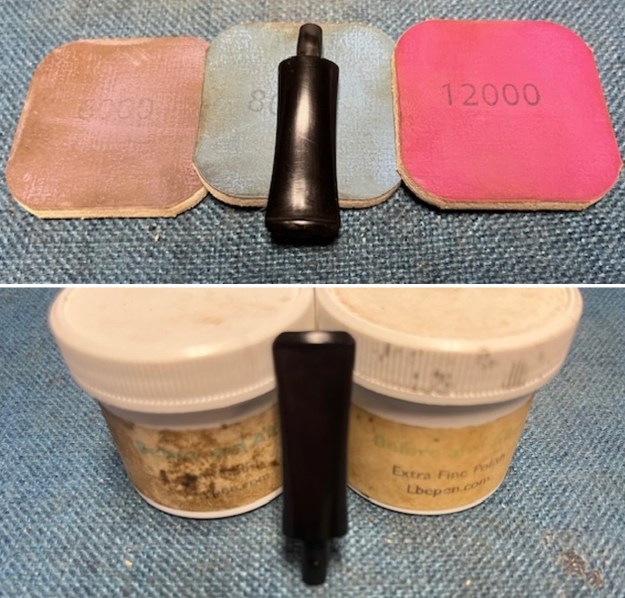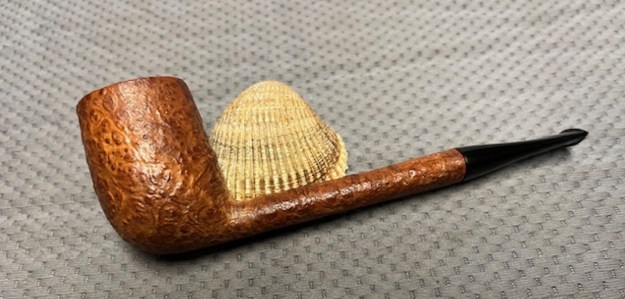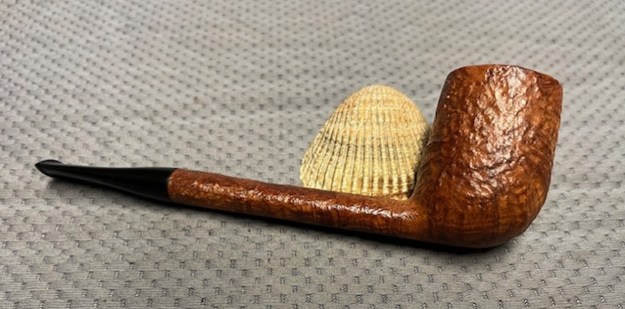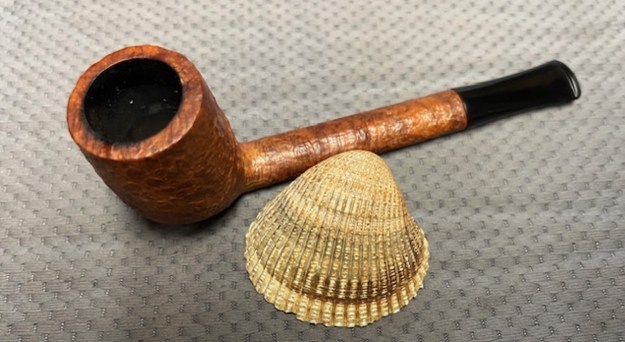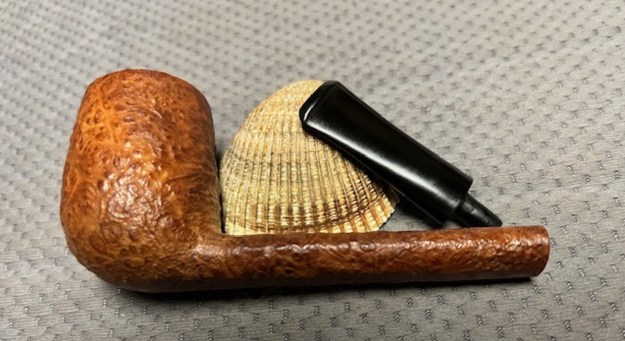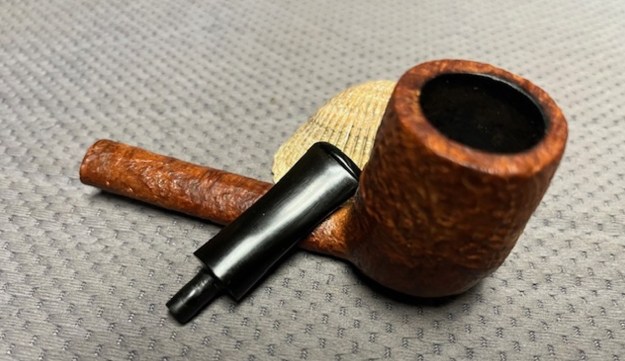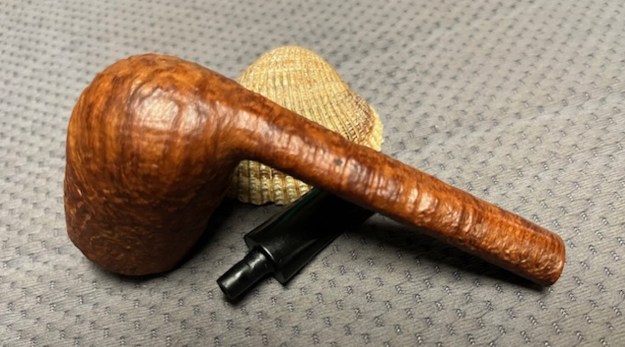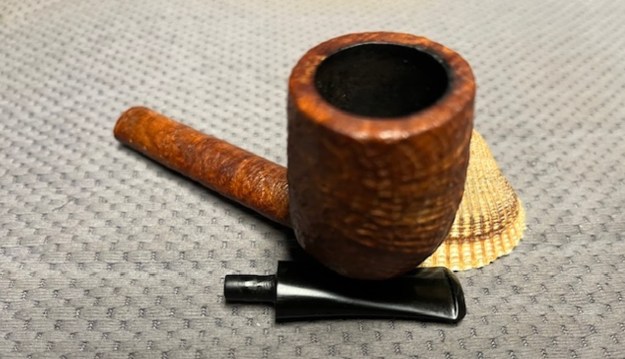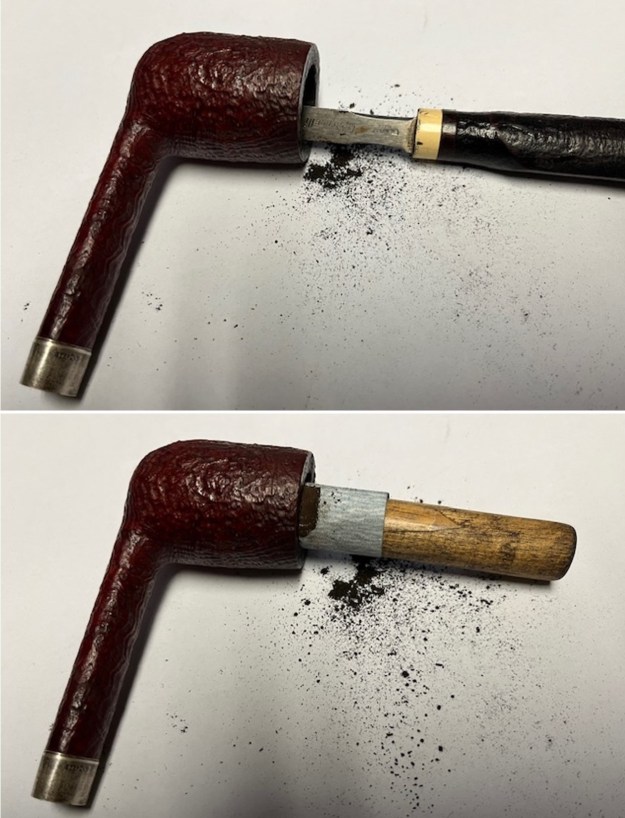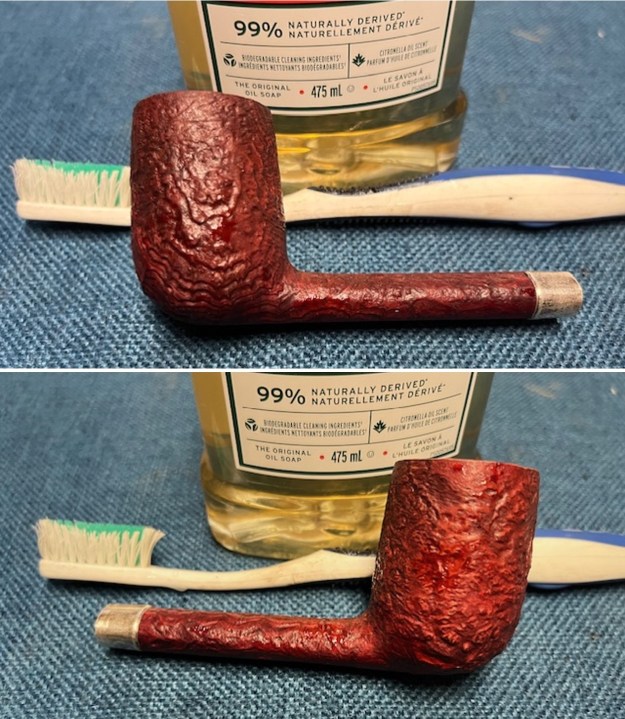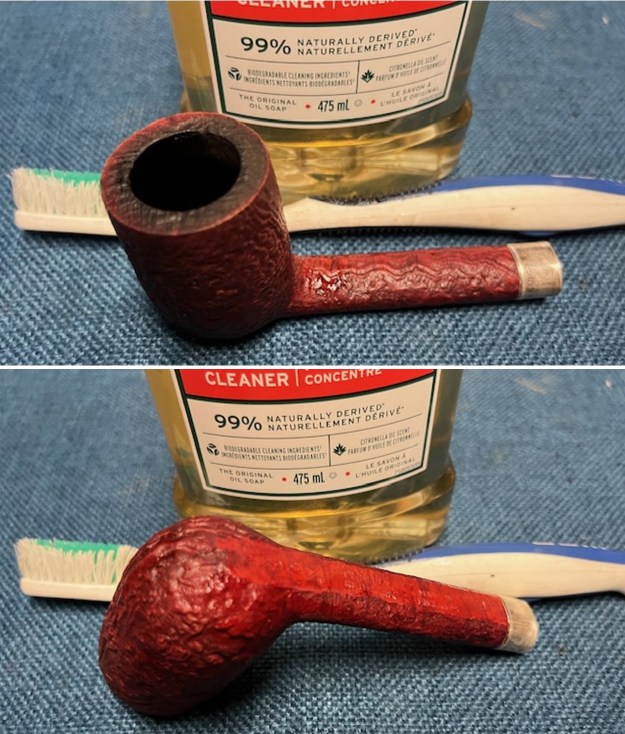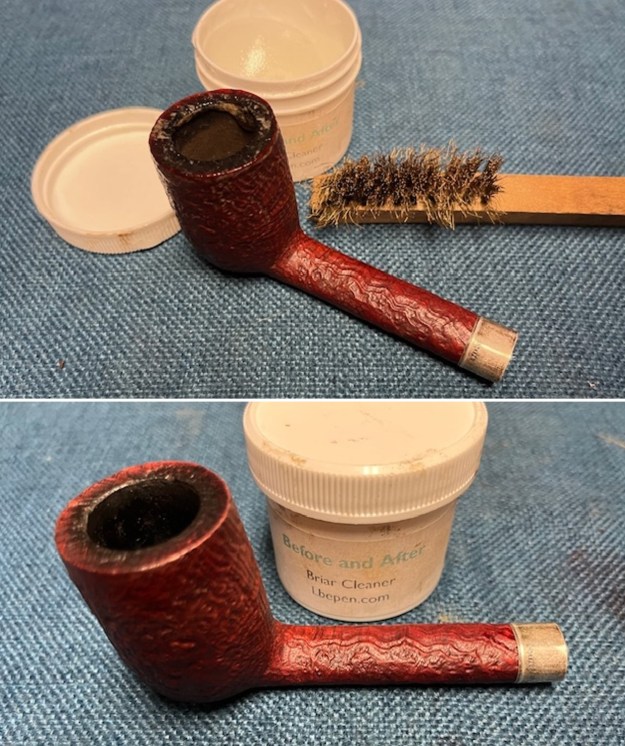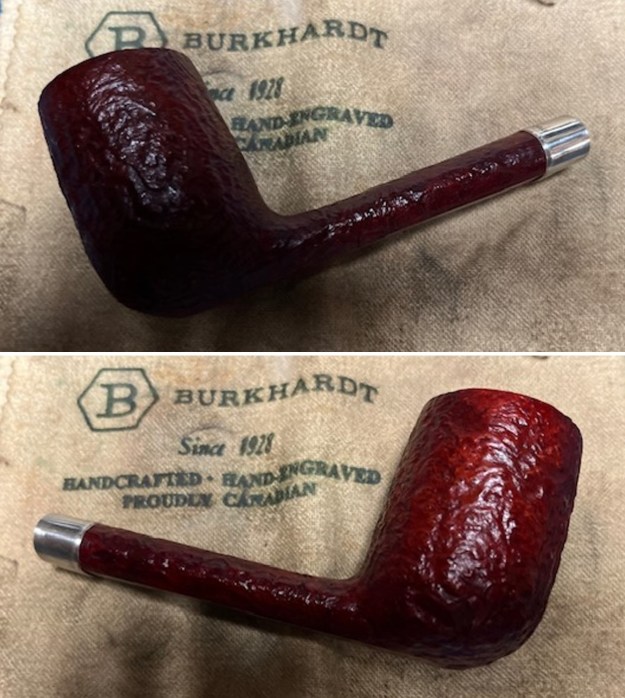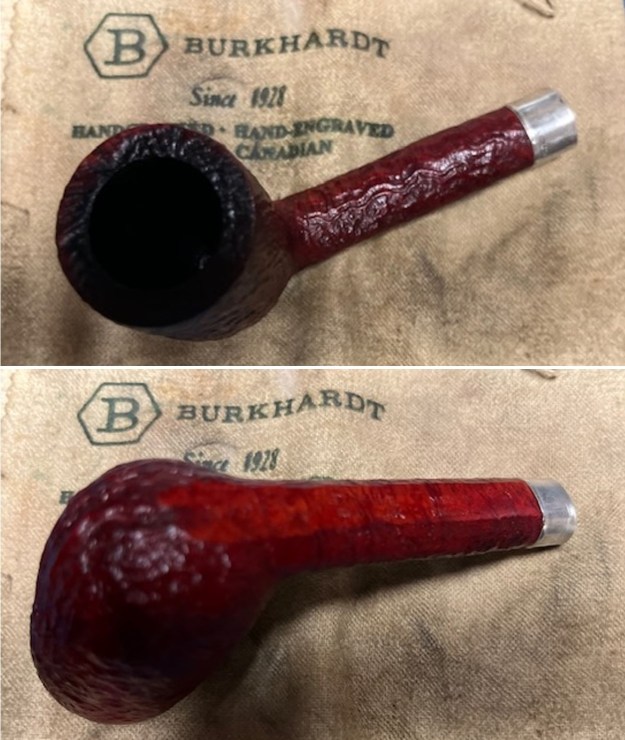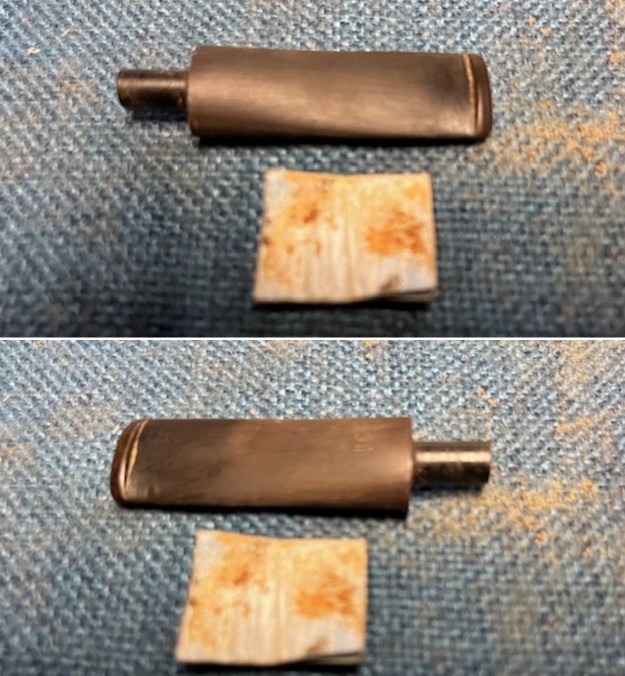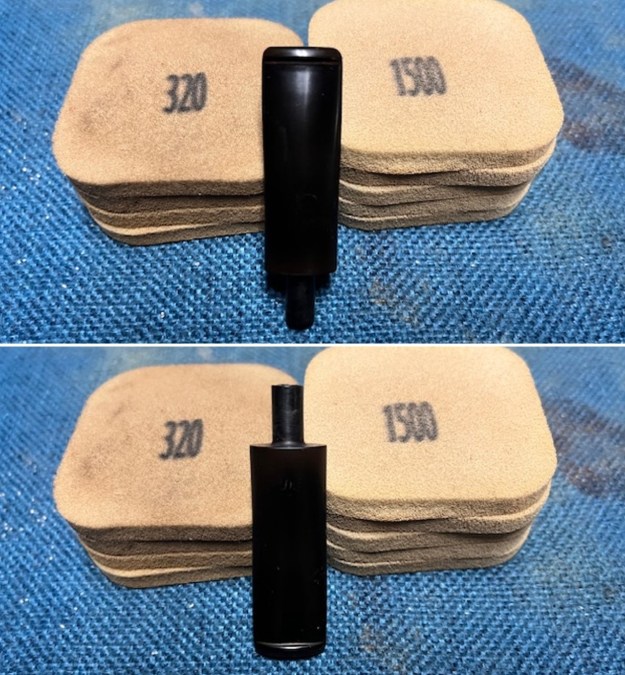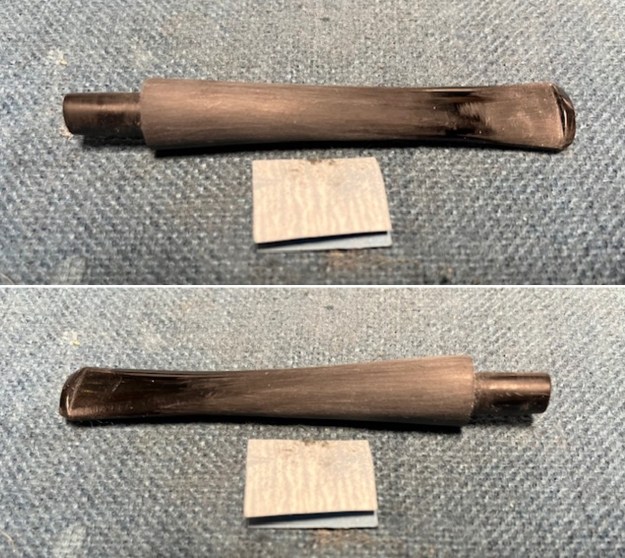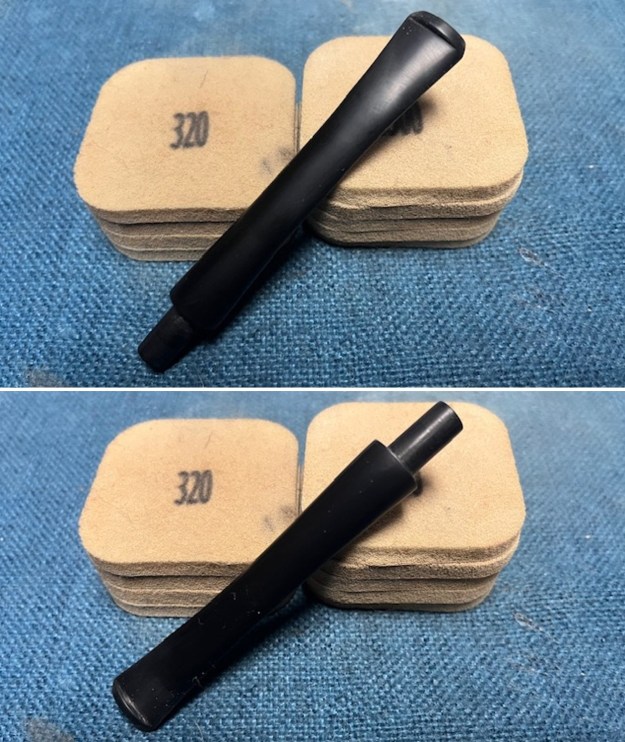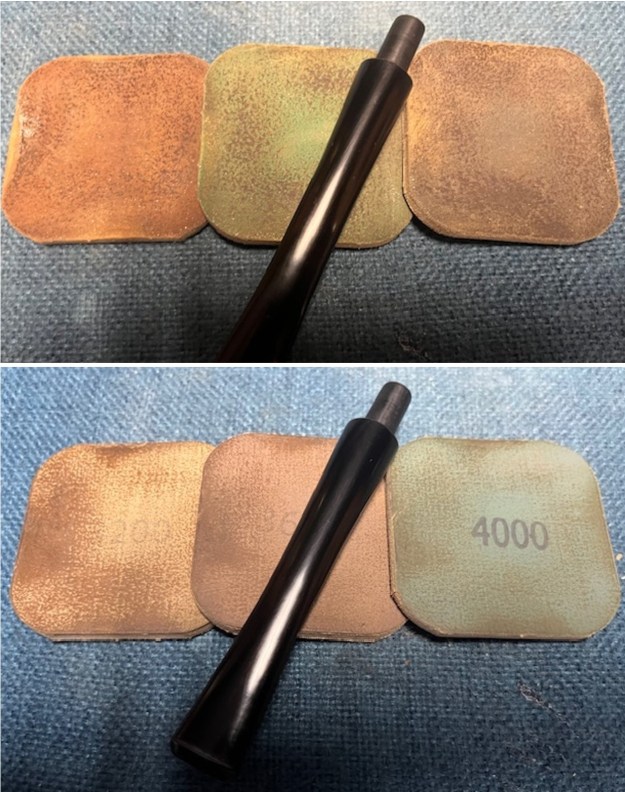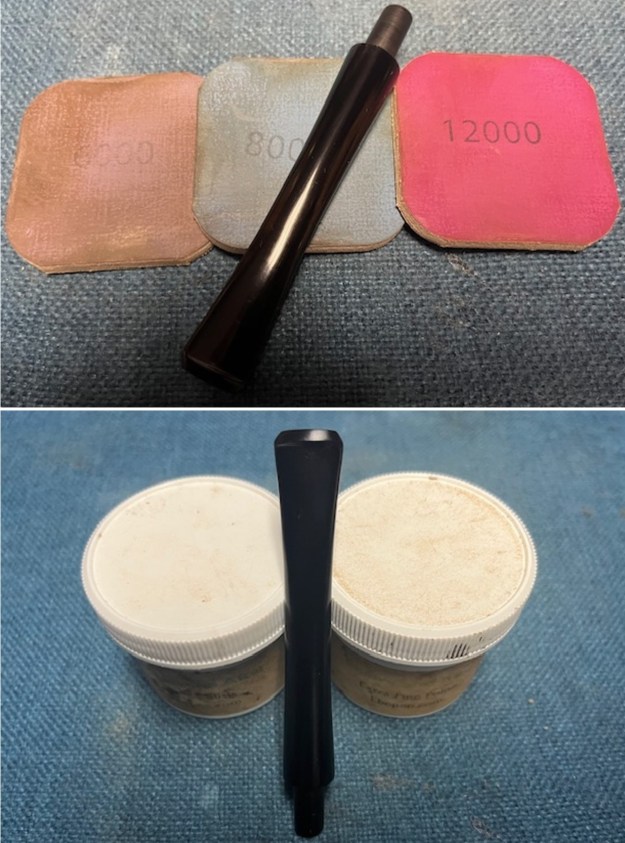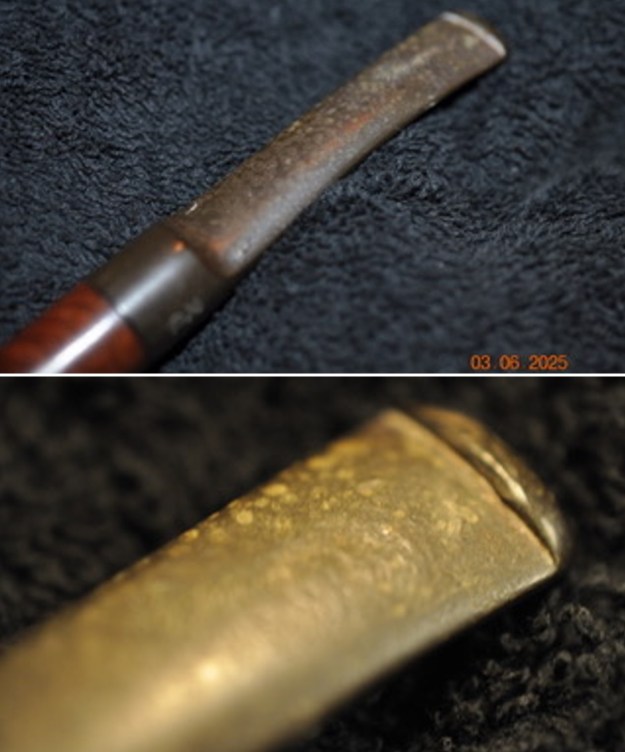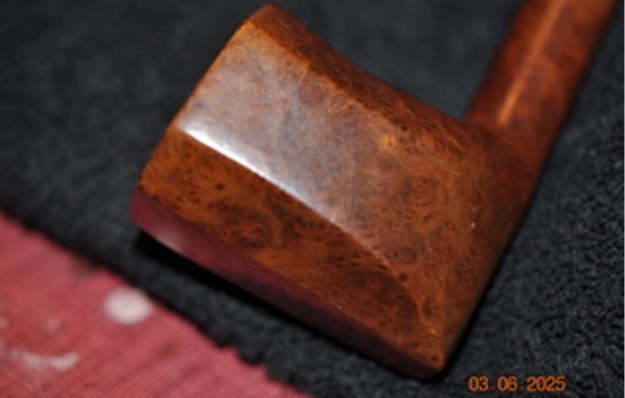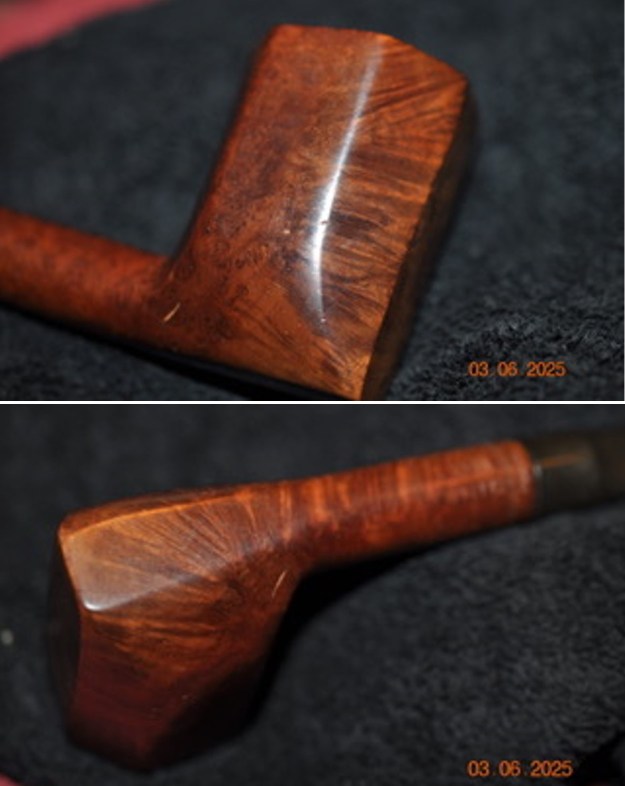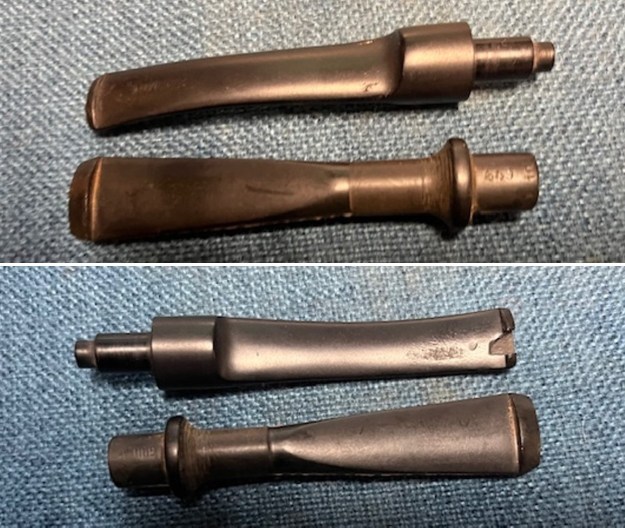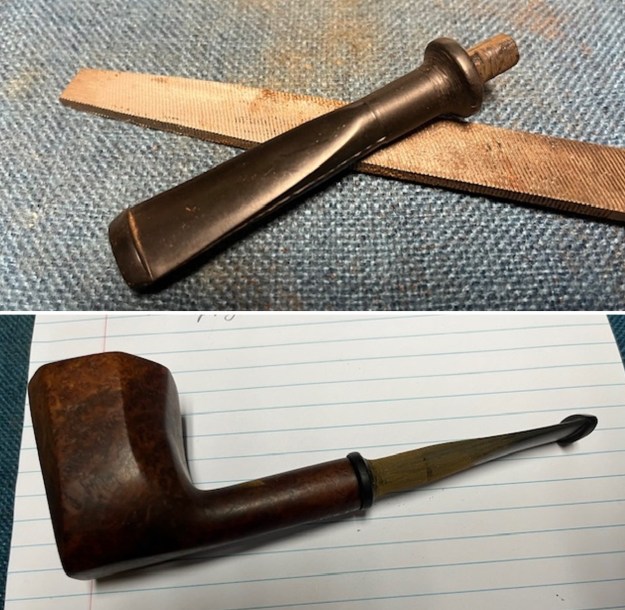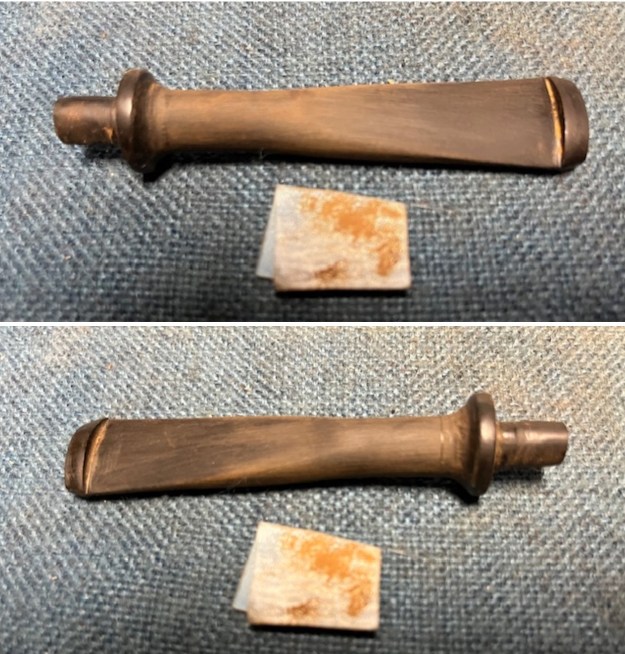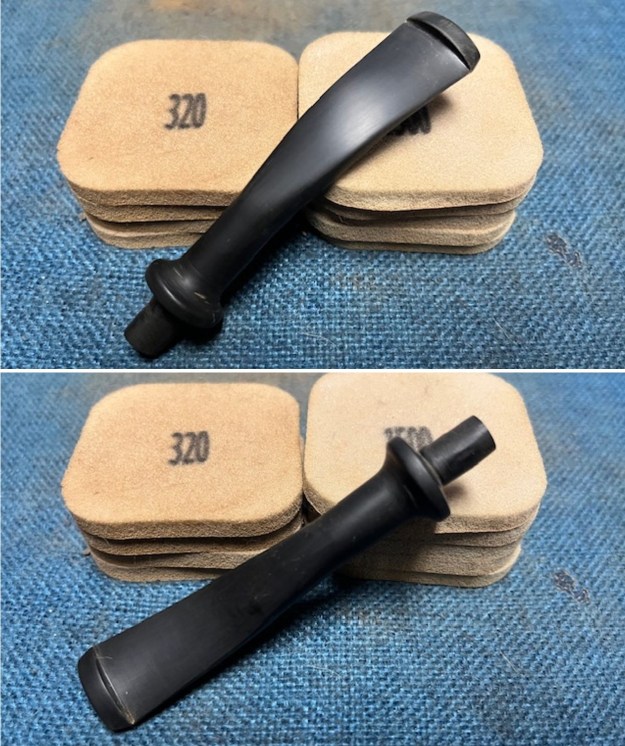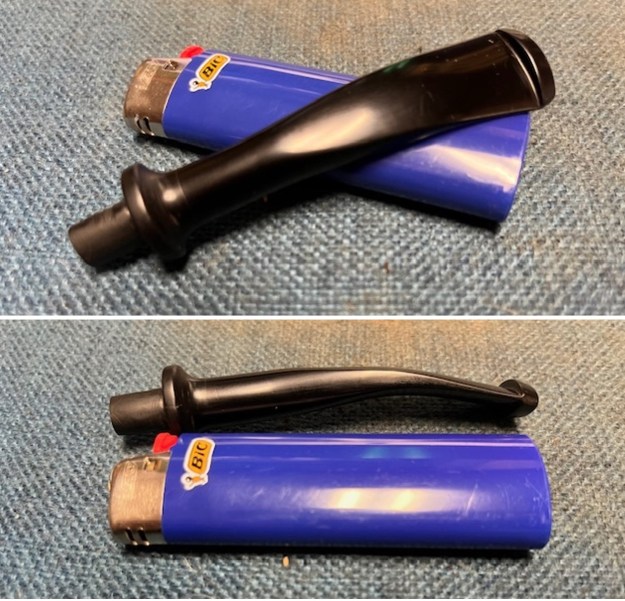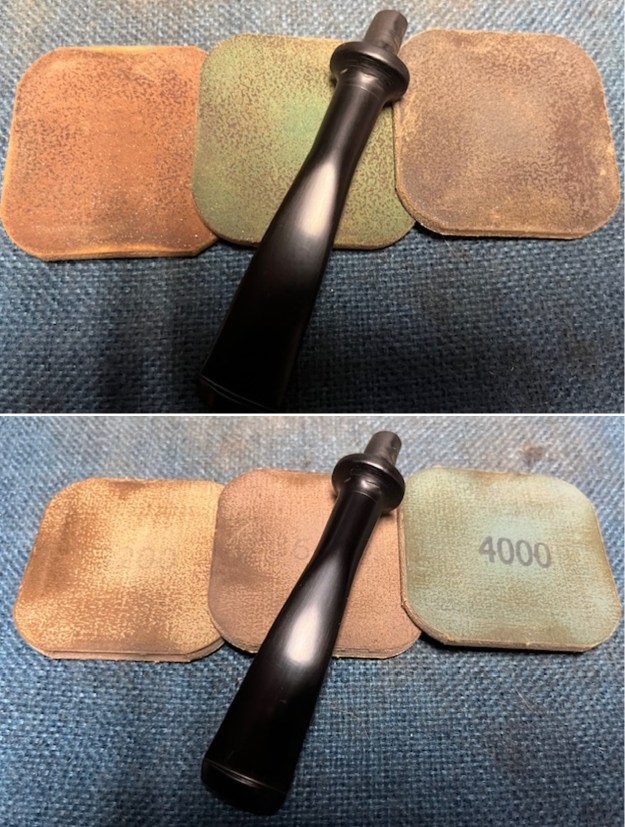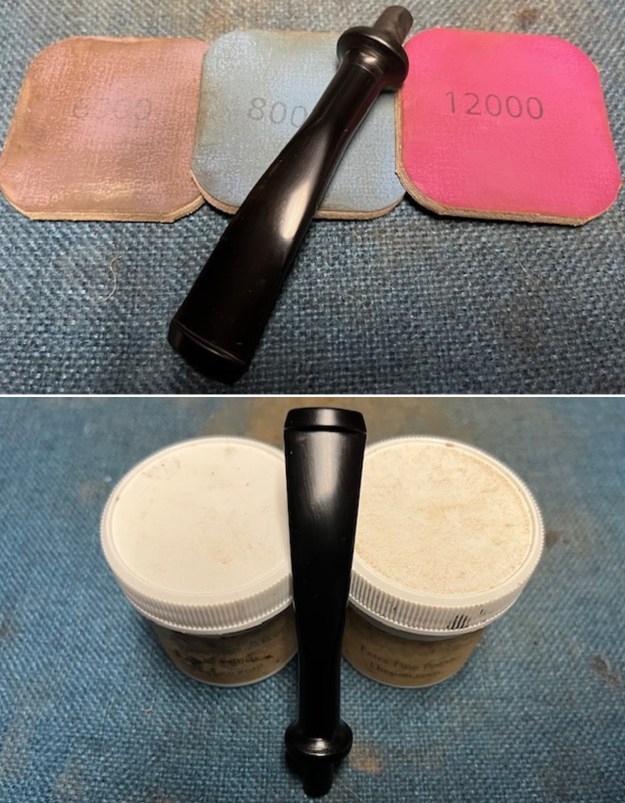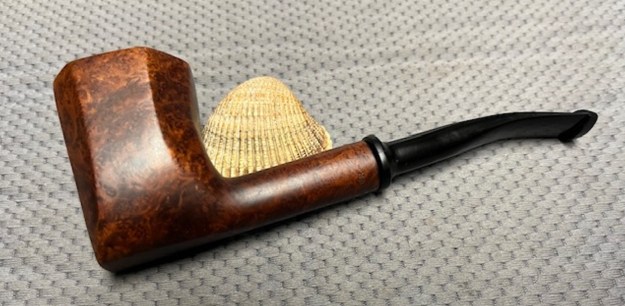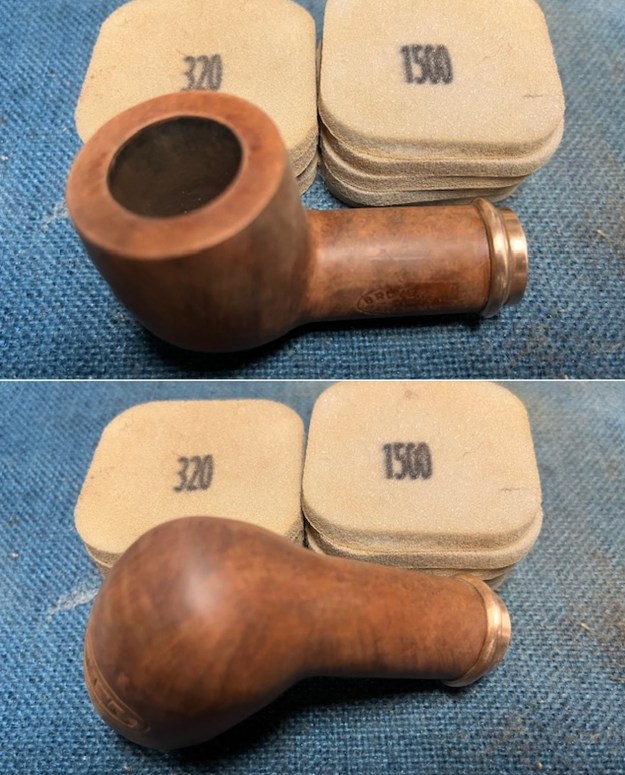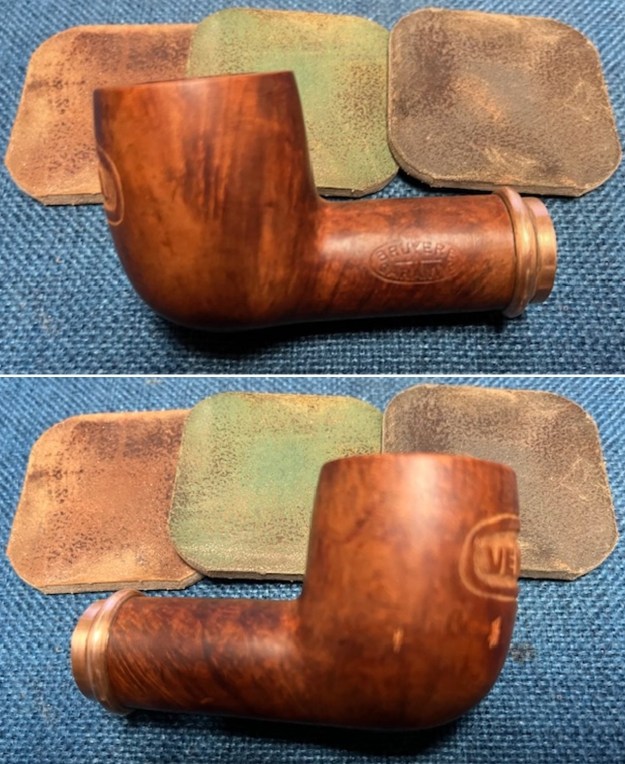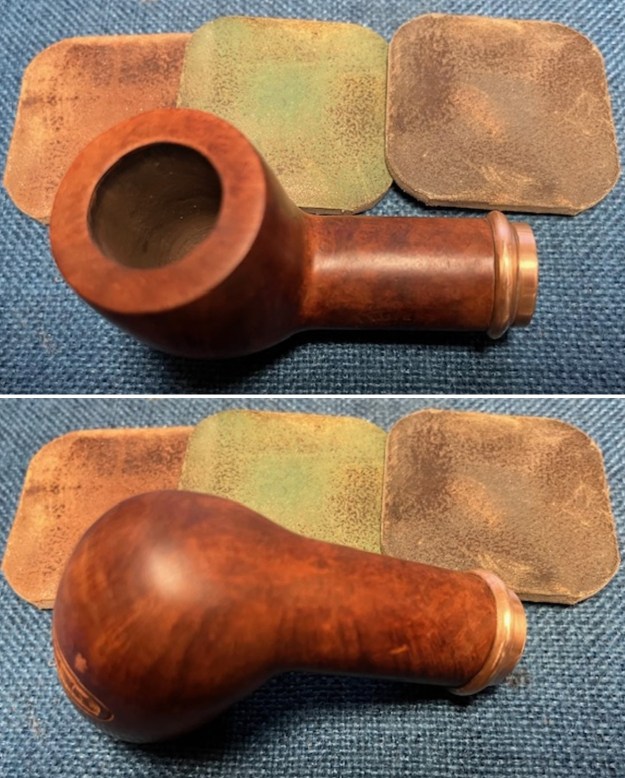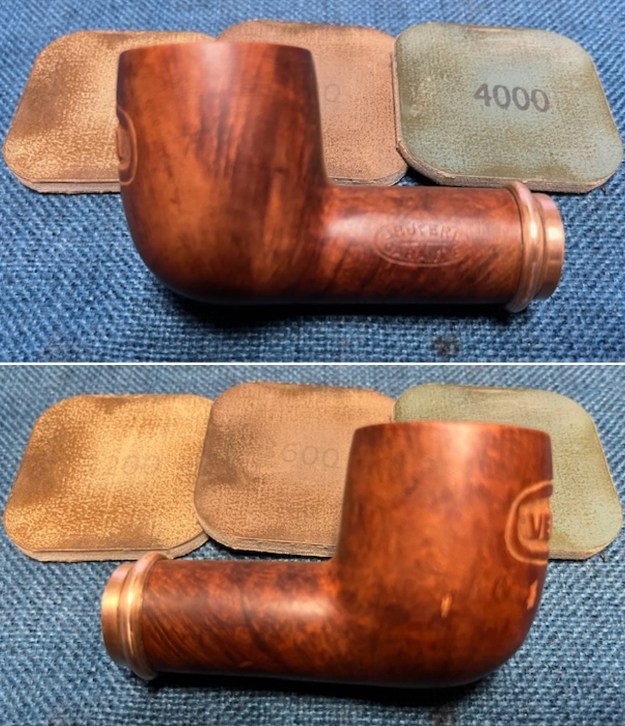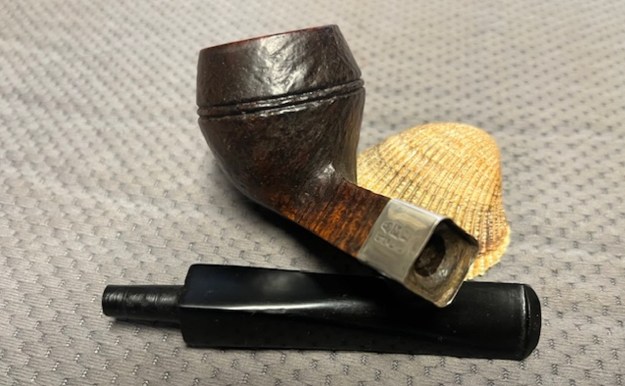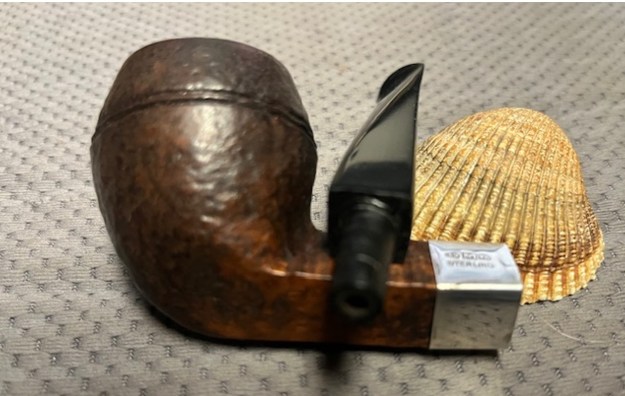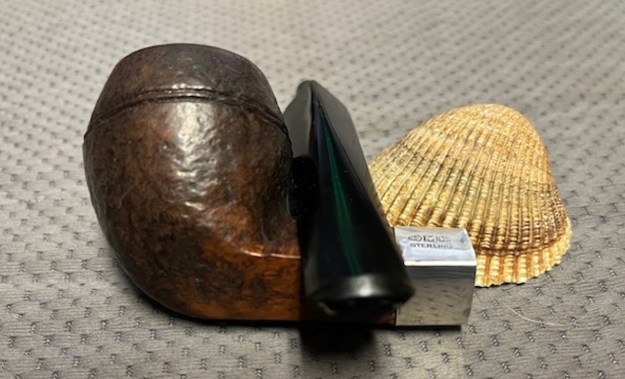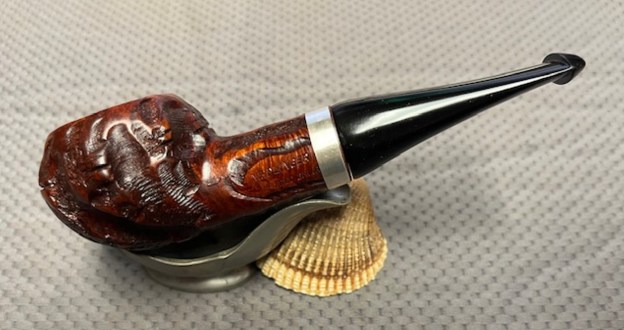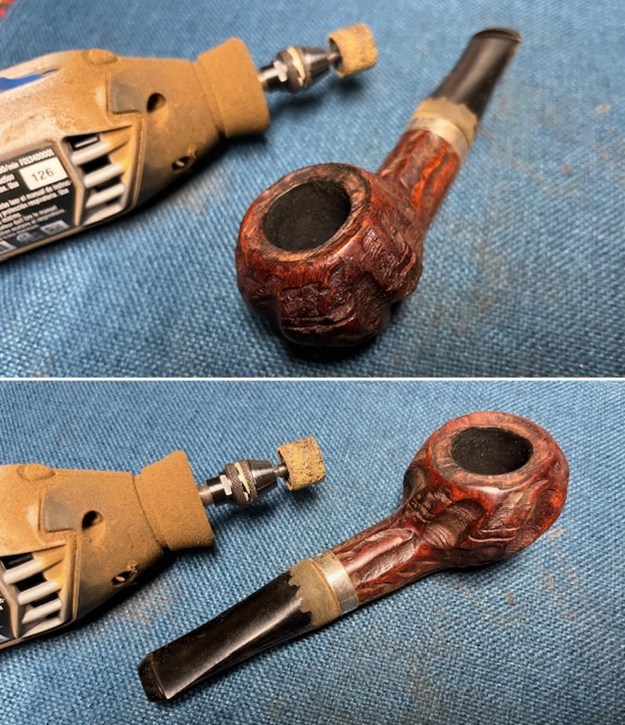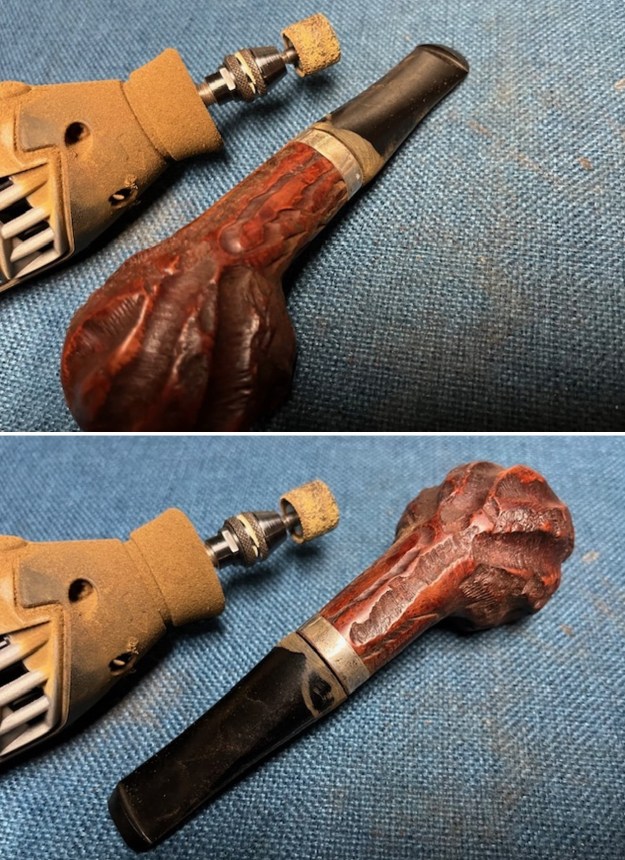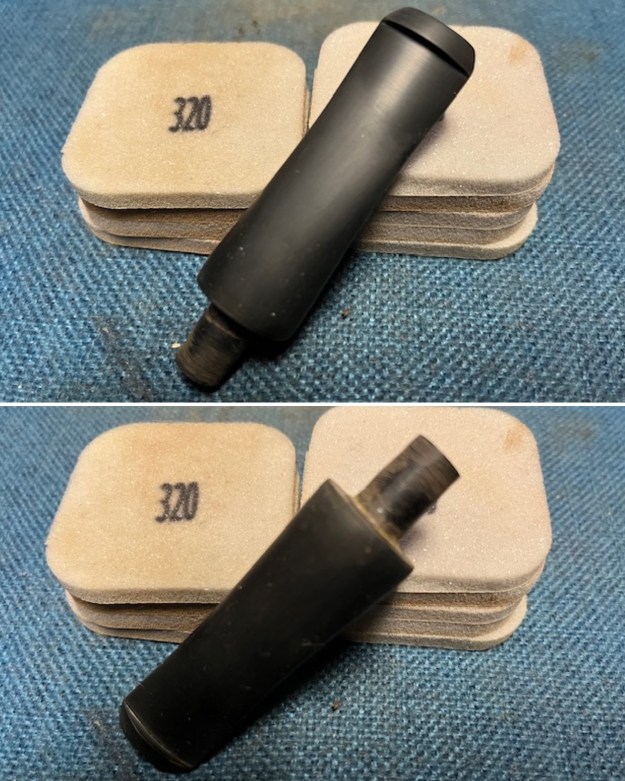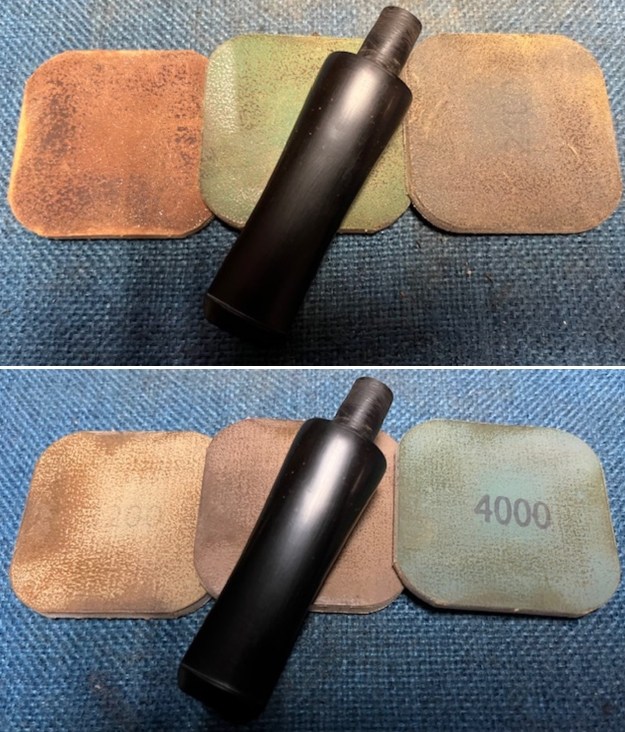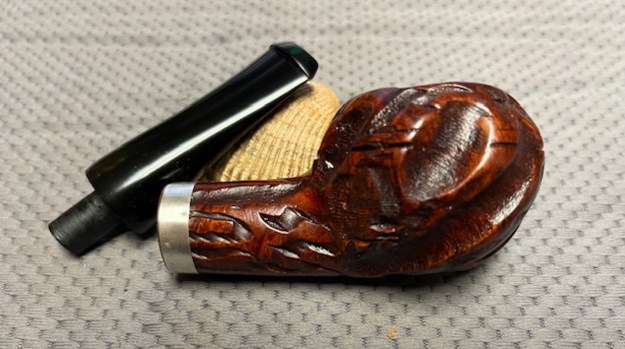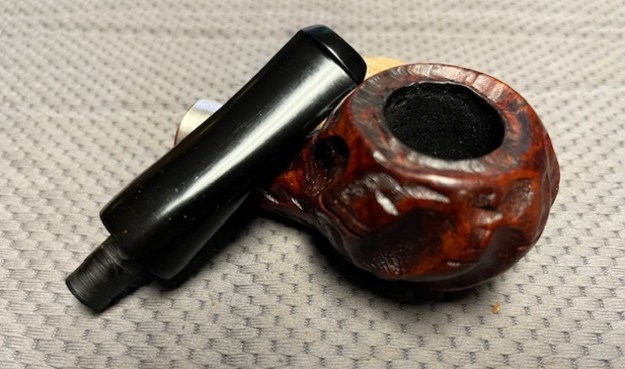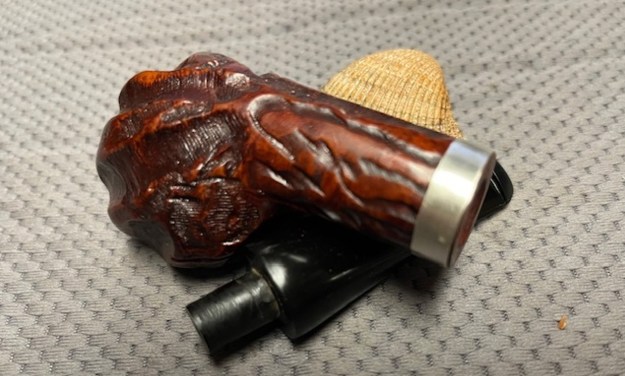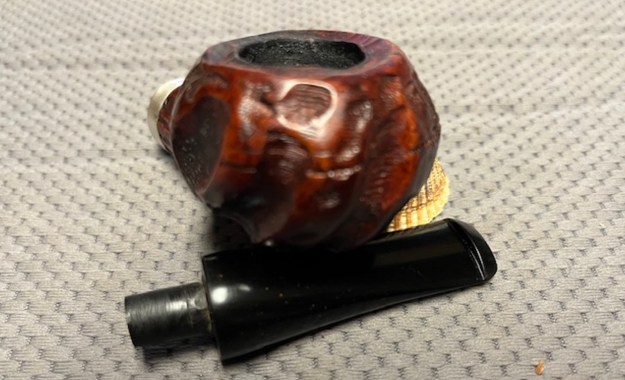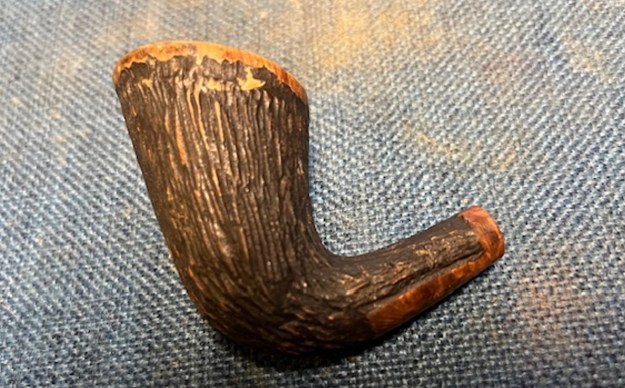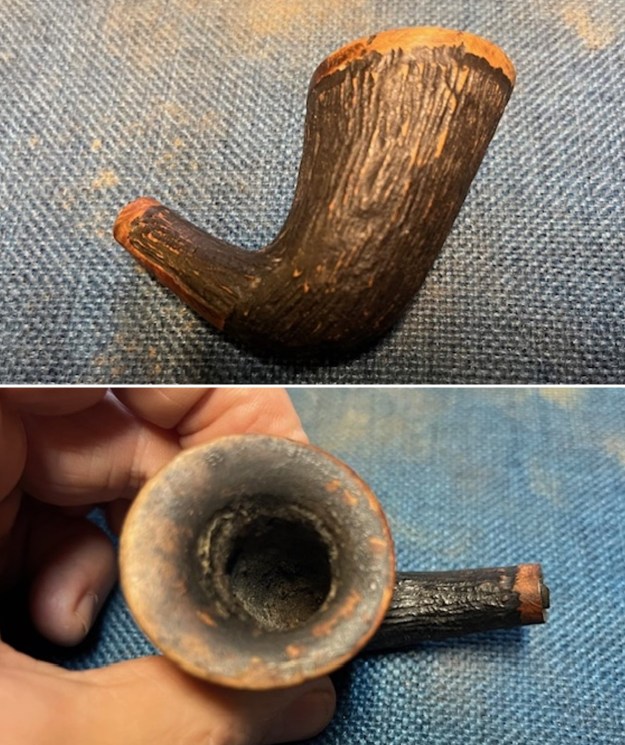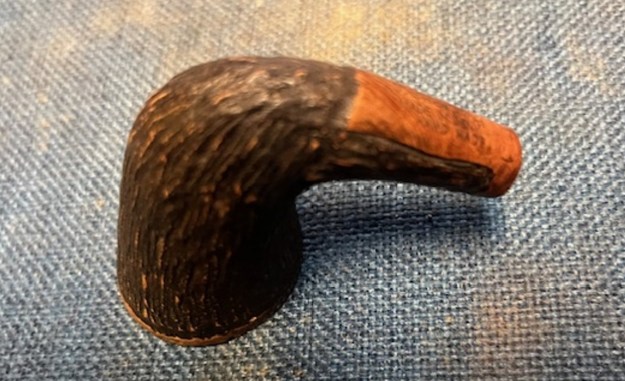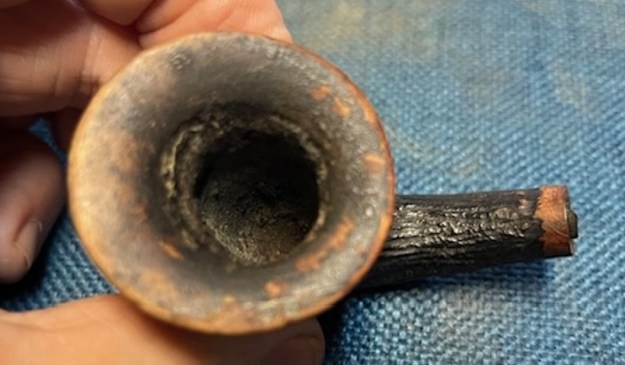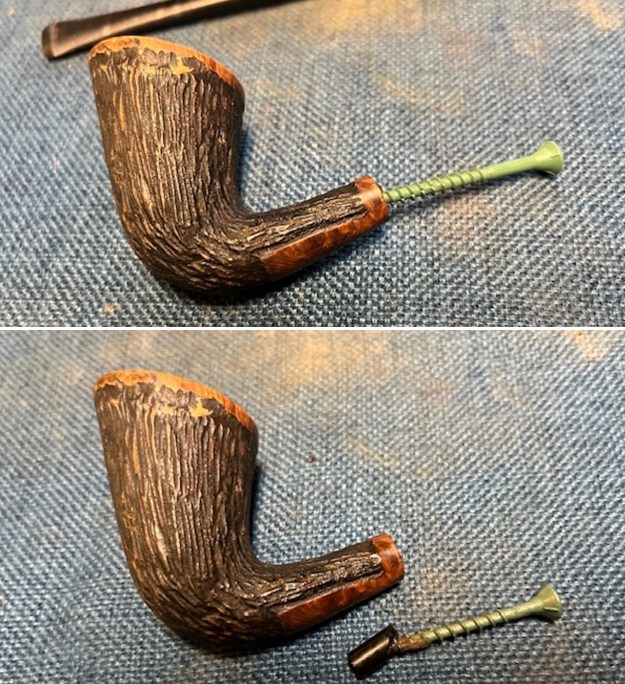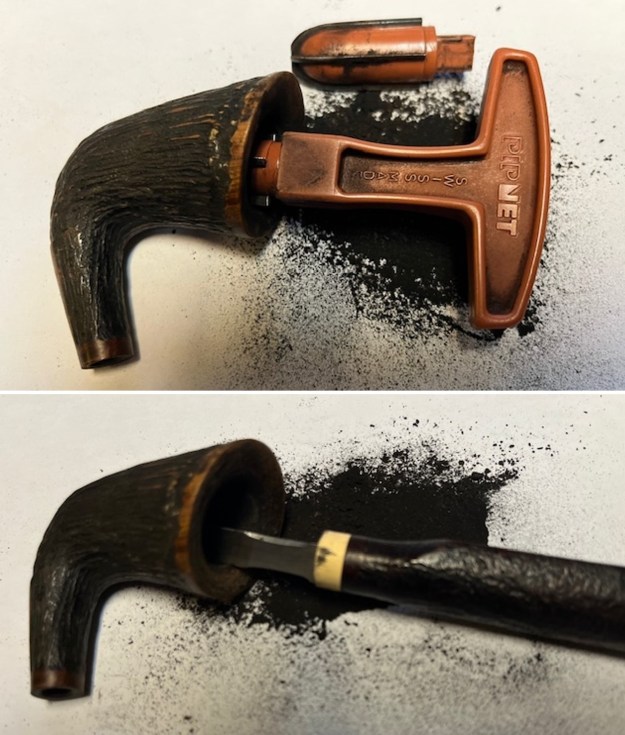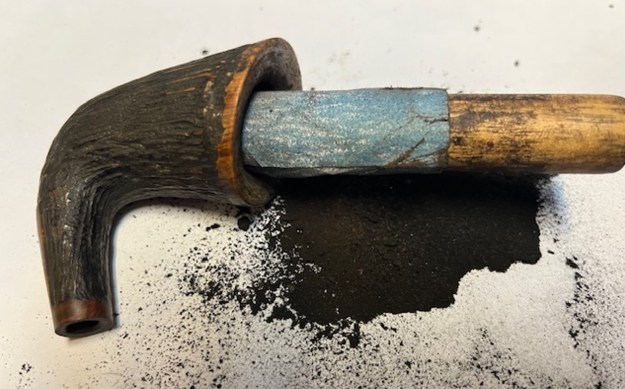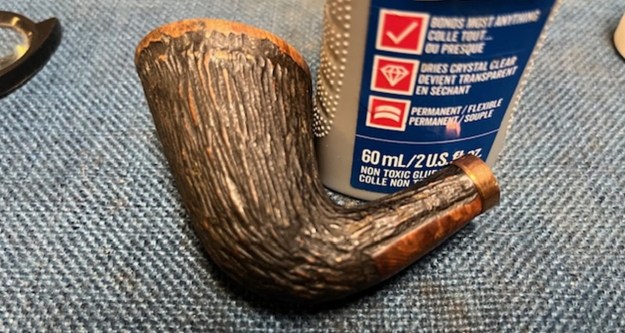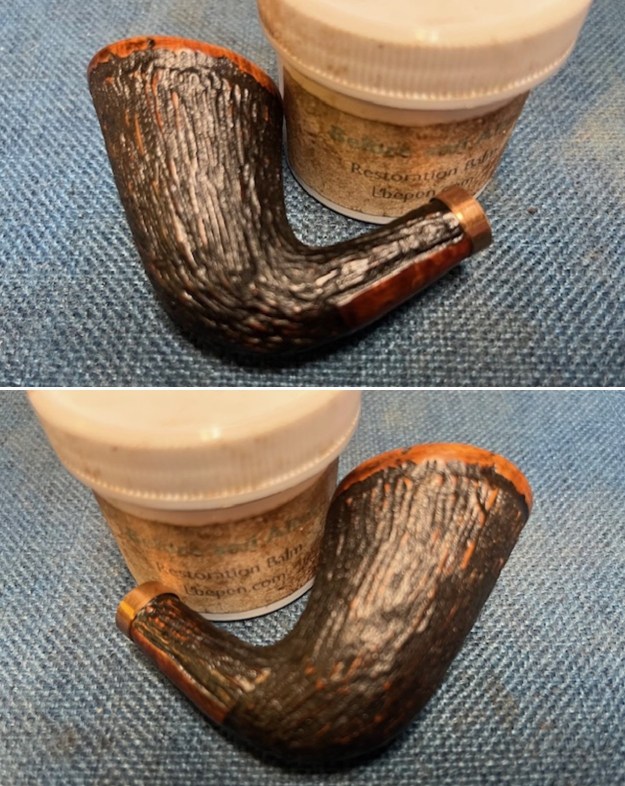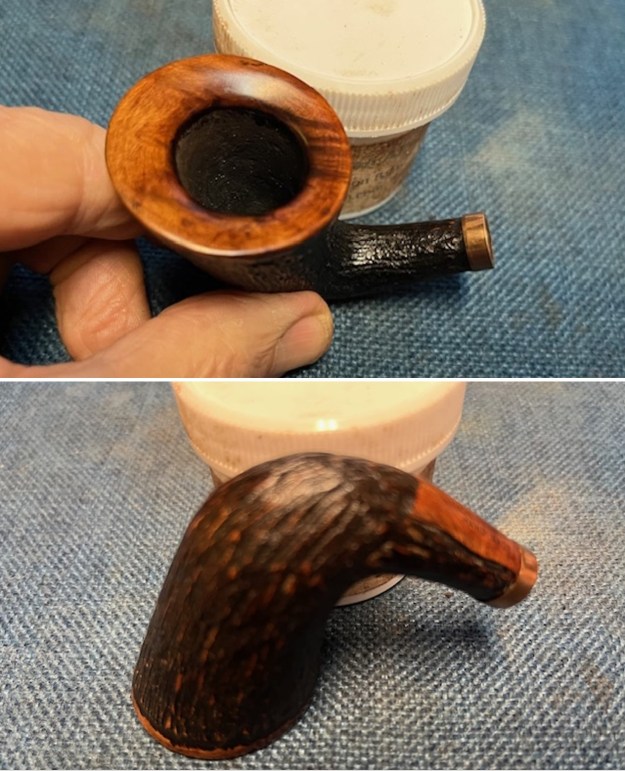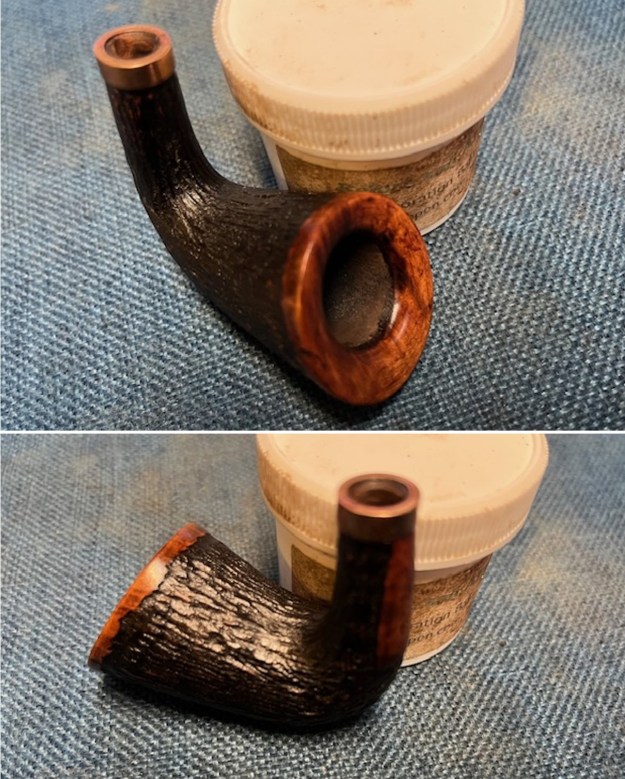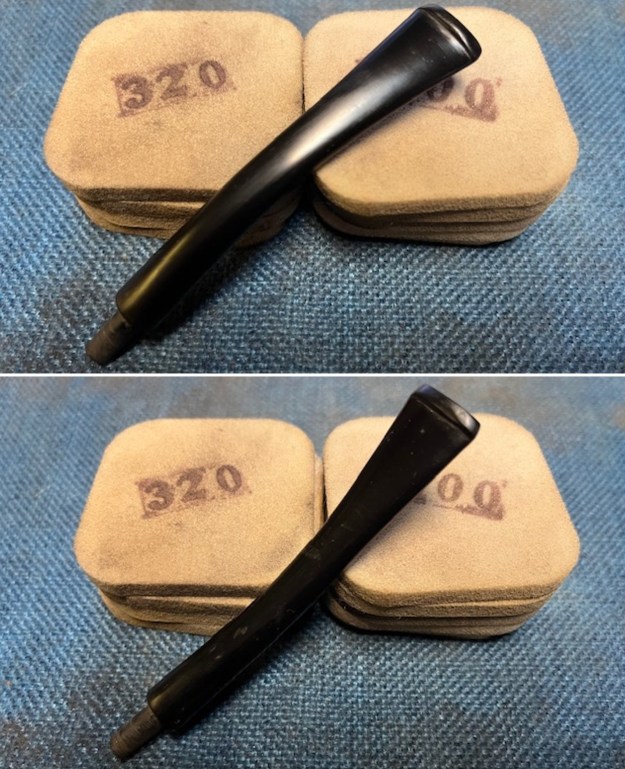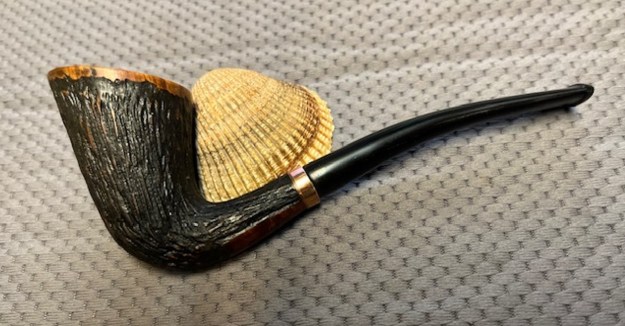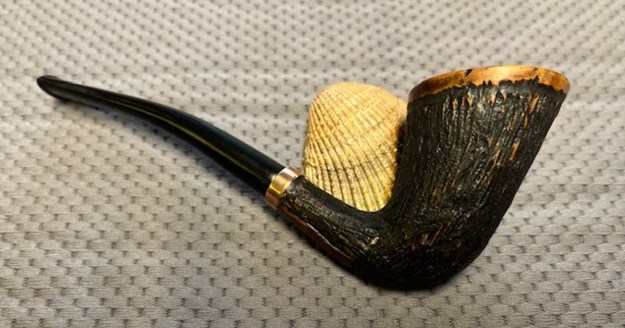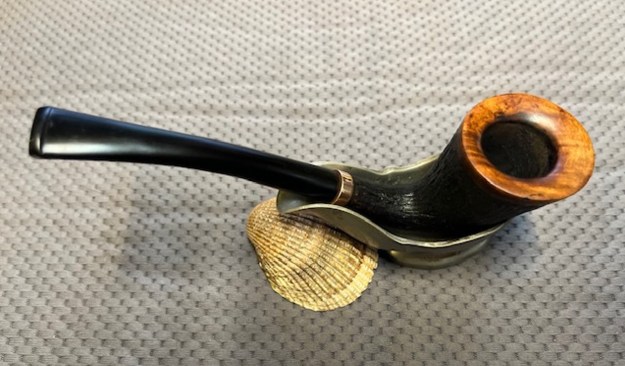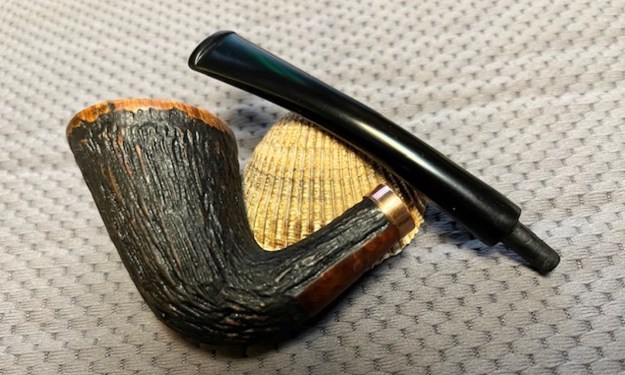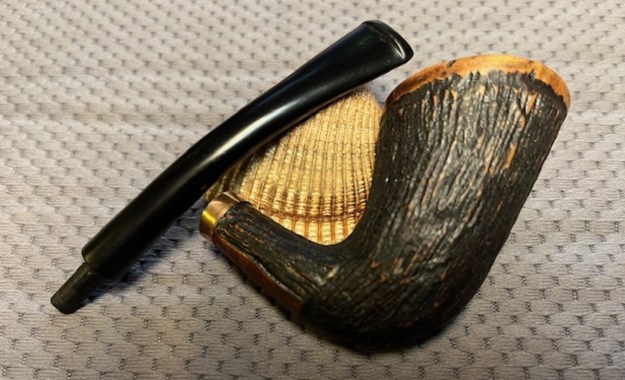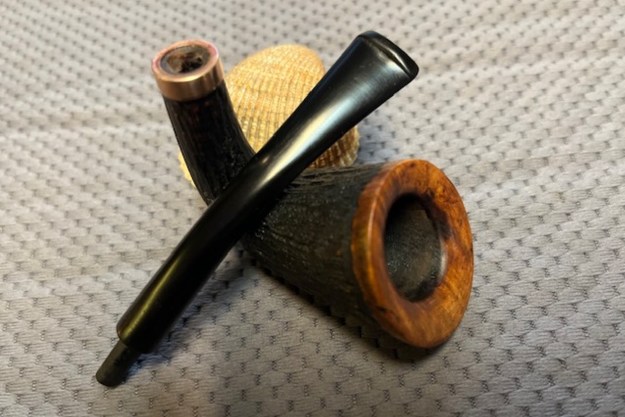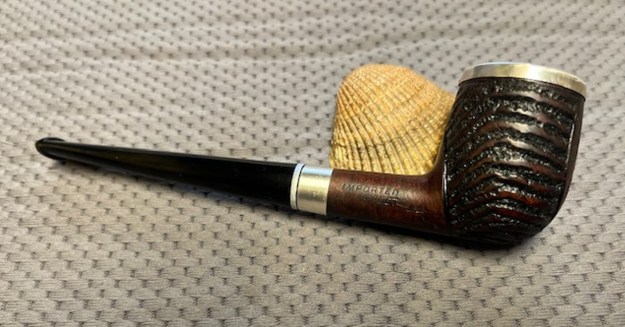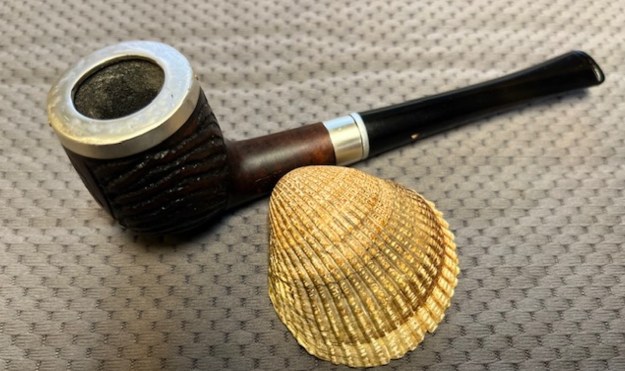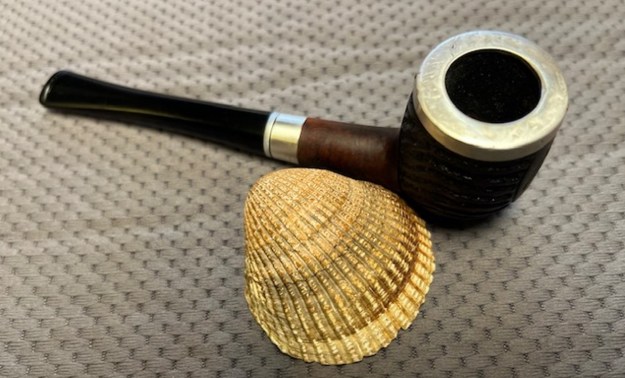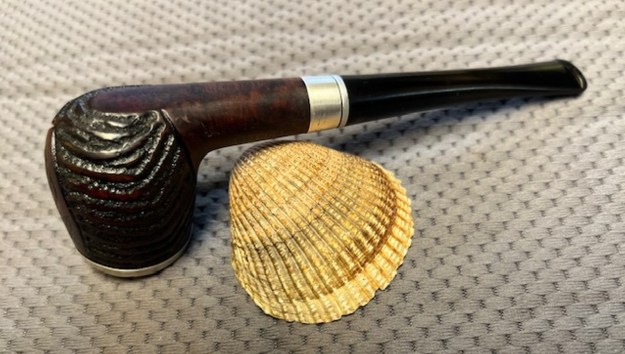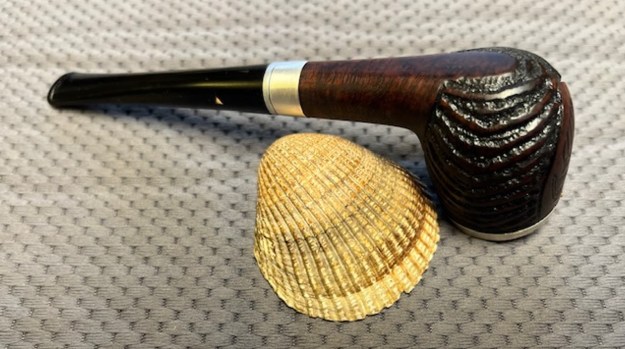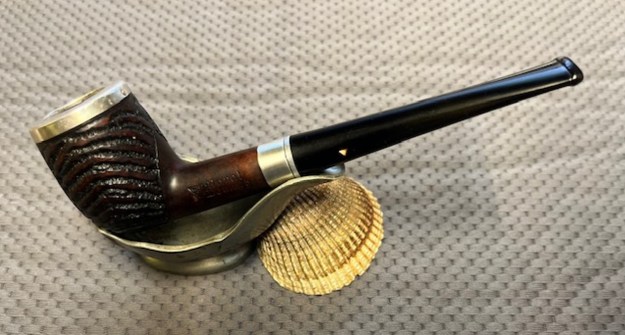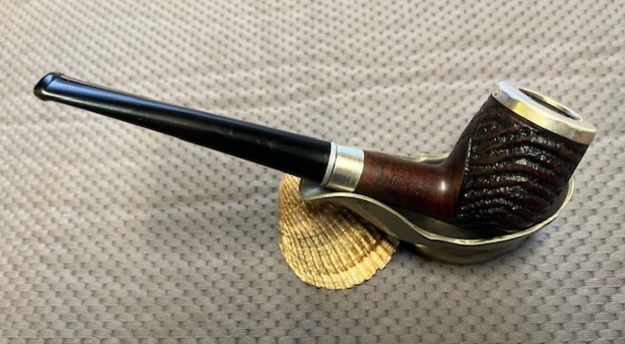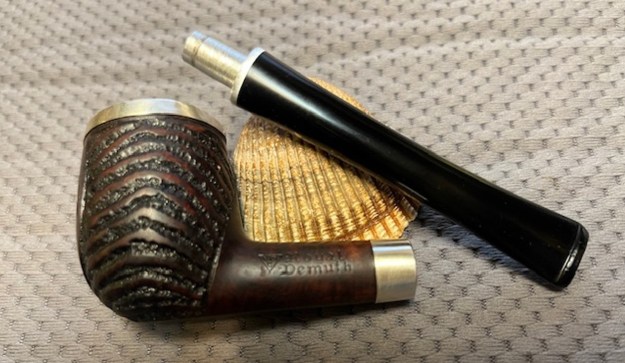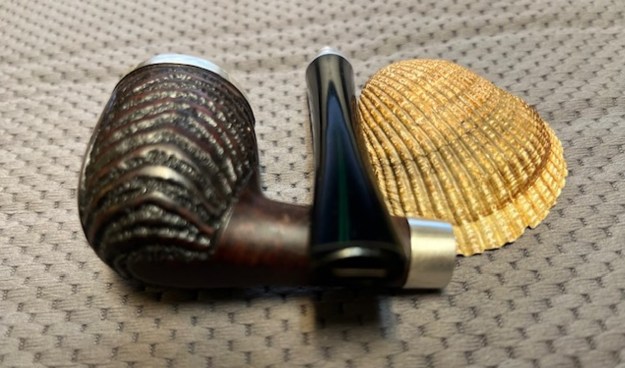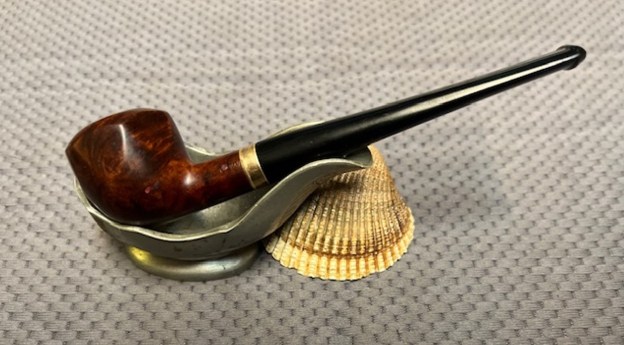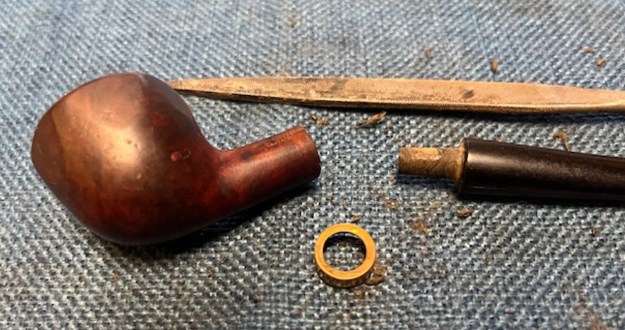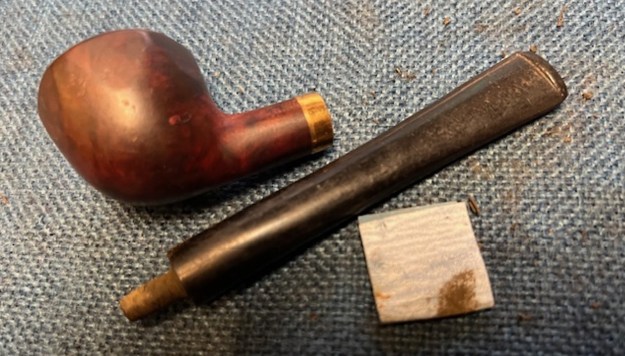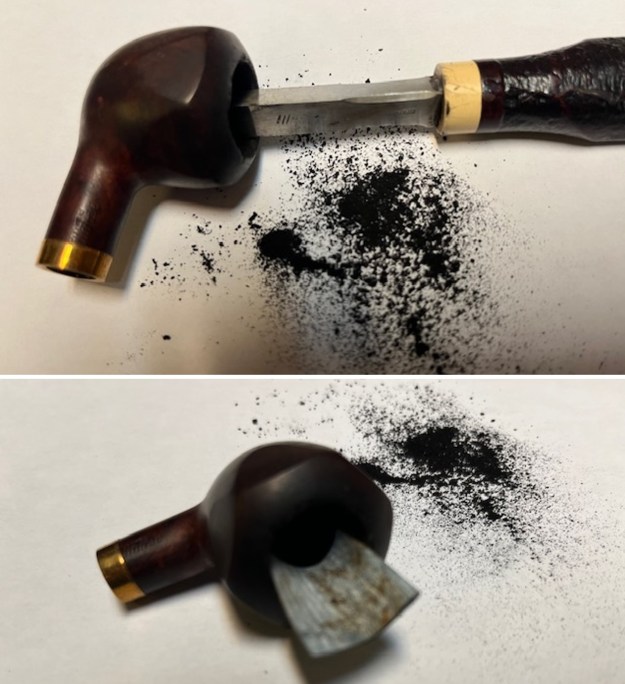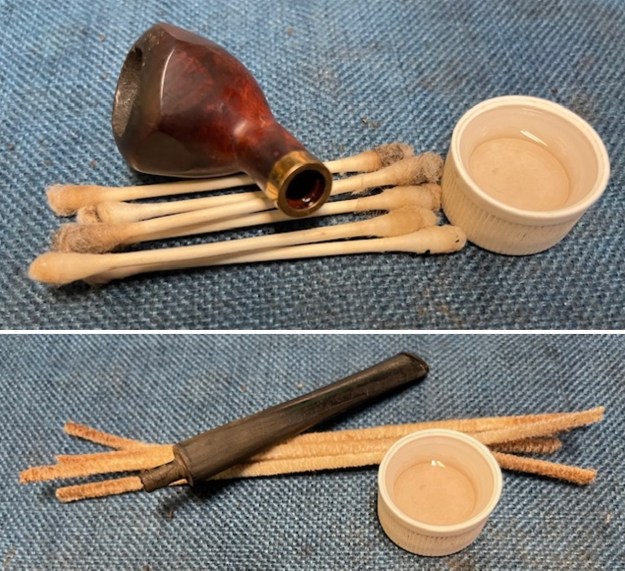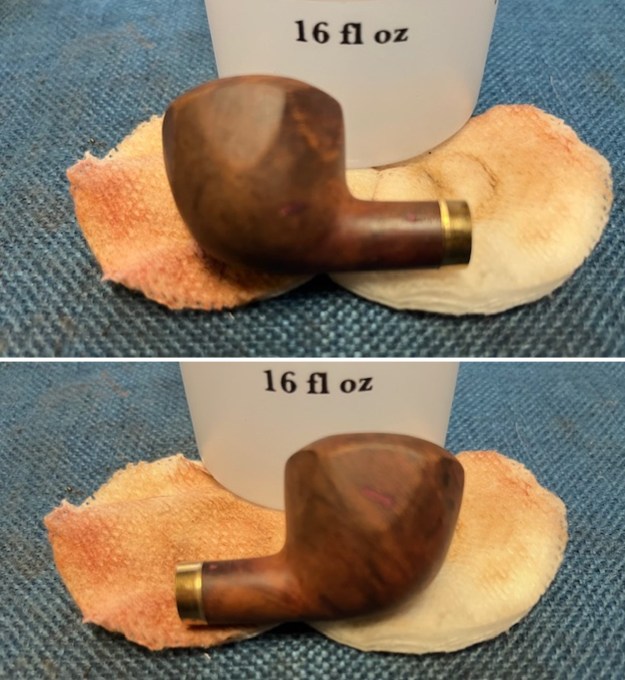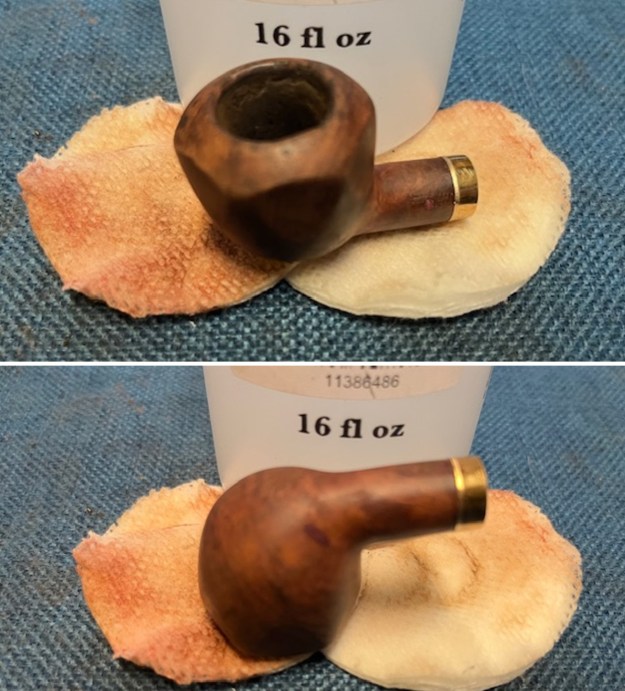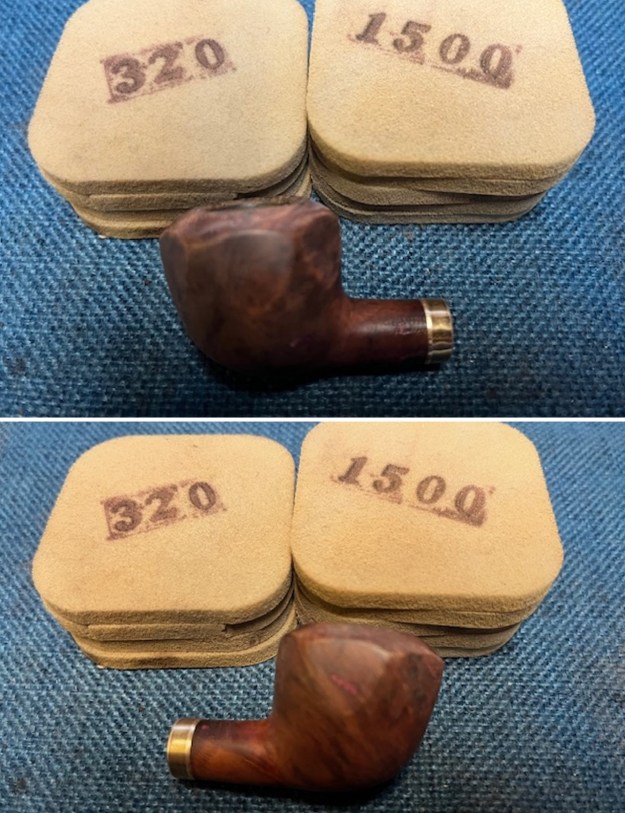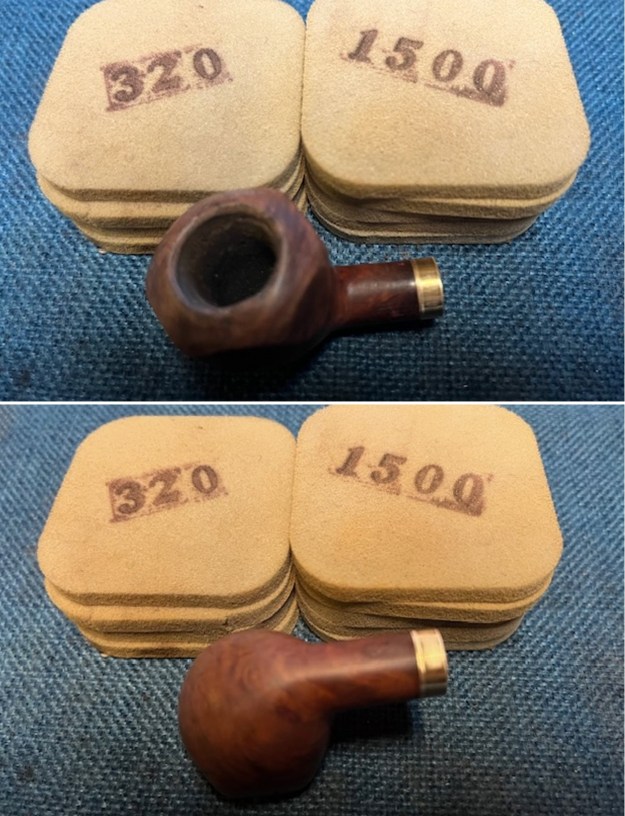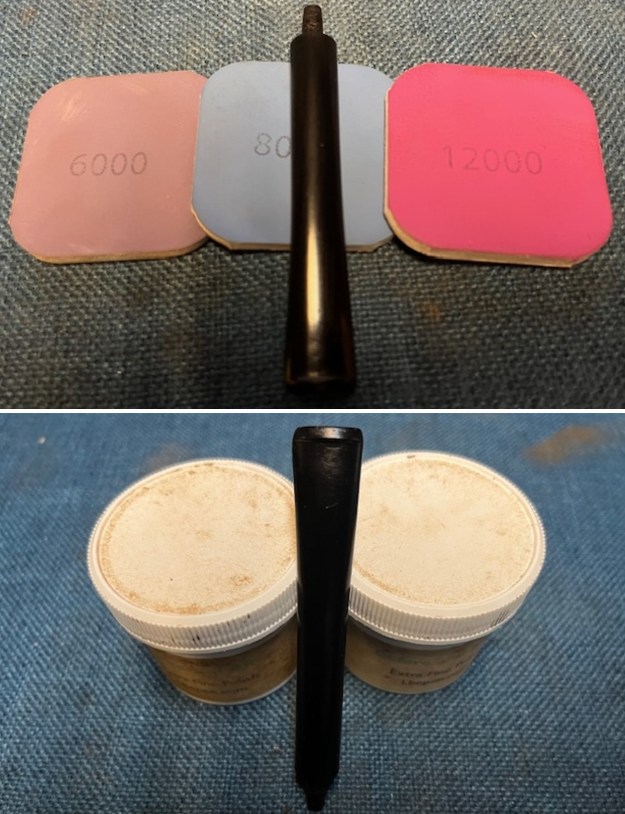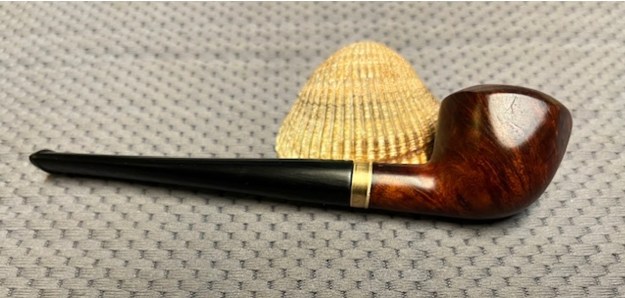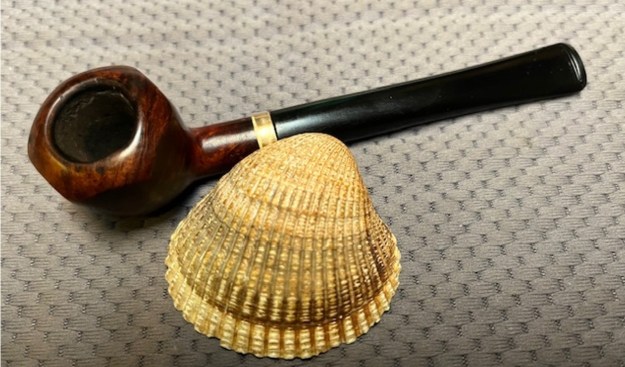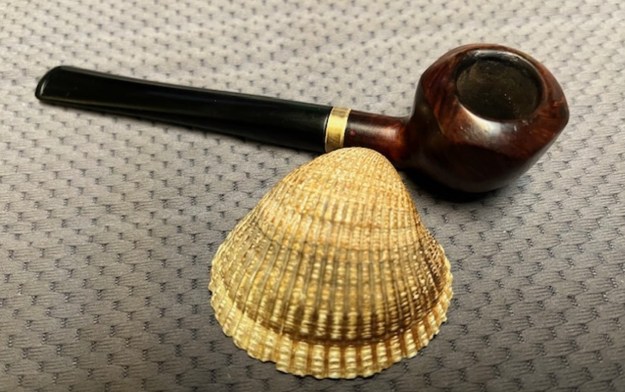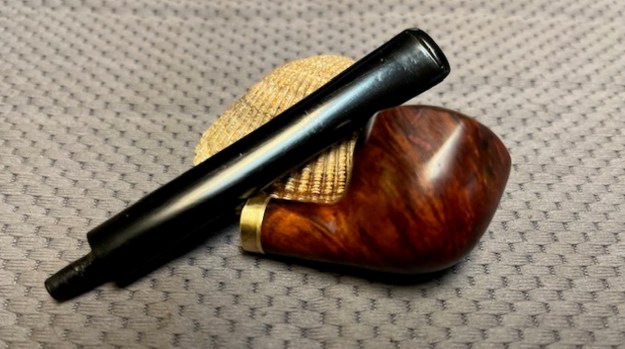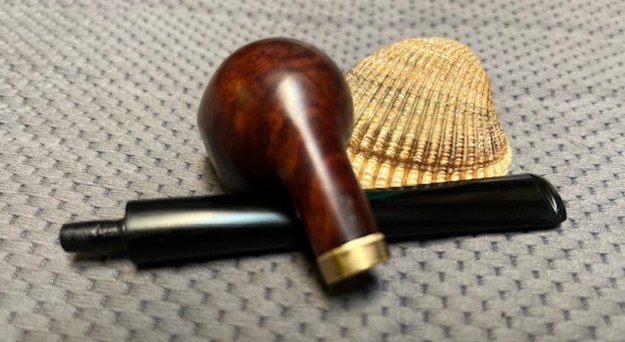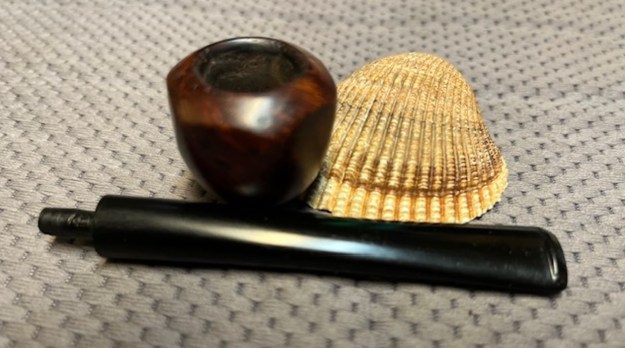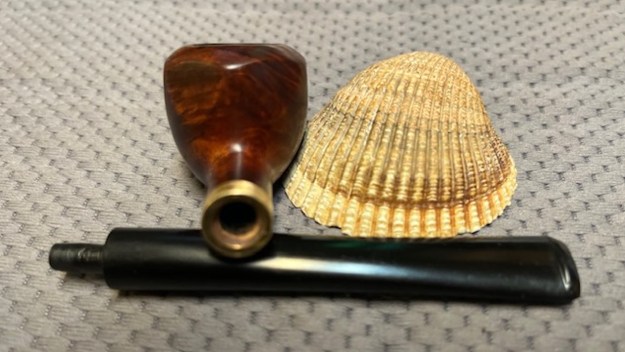
Tag Archives: shaping a new stem

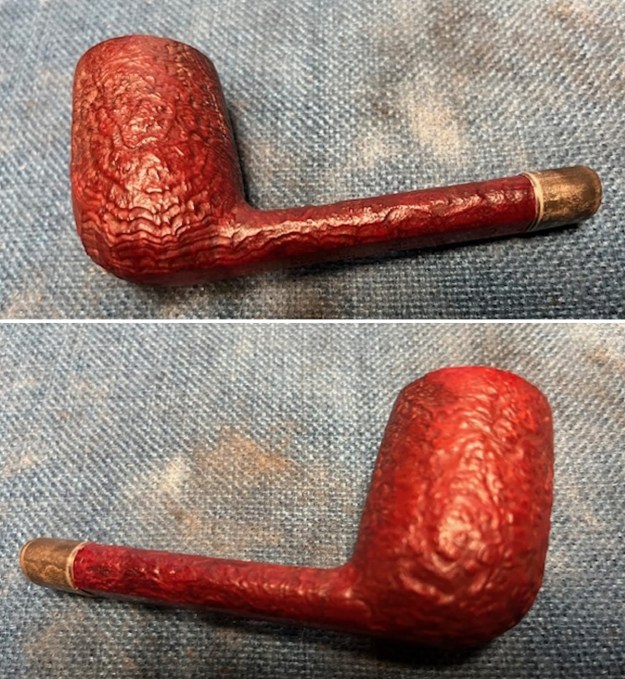
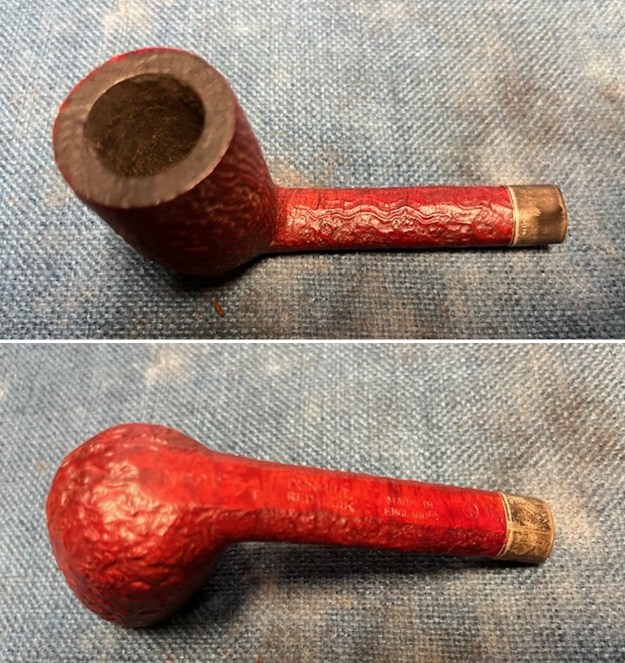
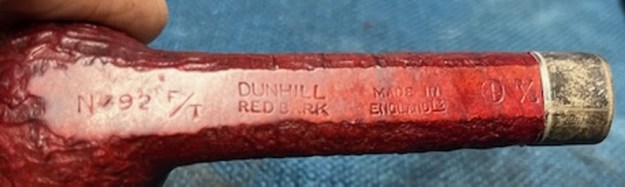
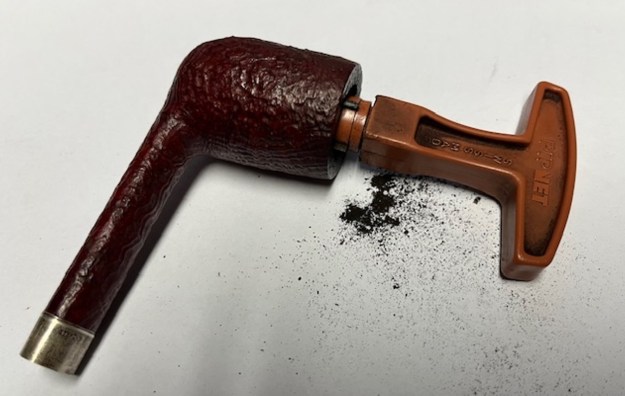
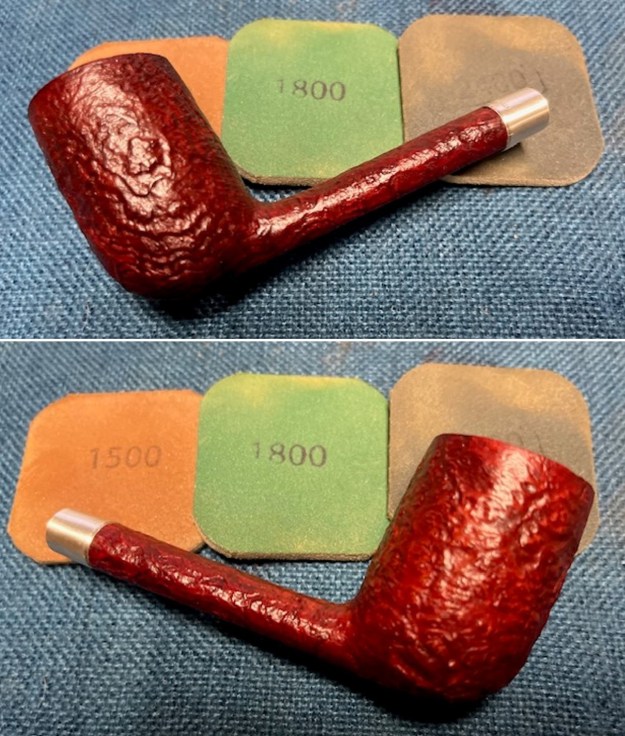
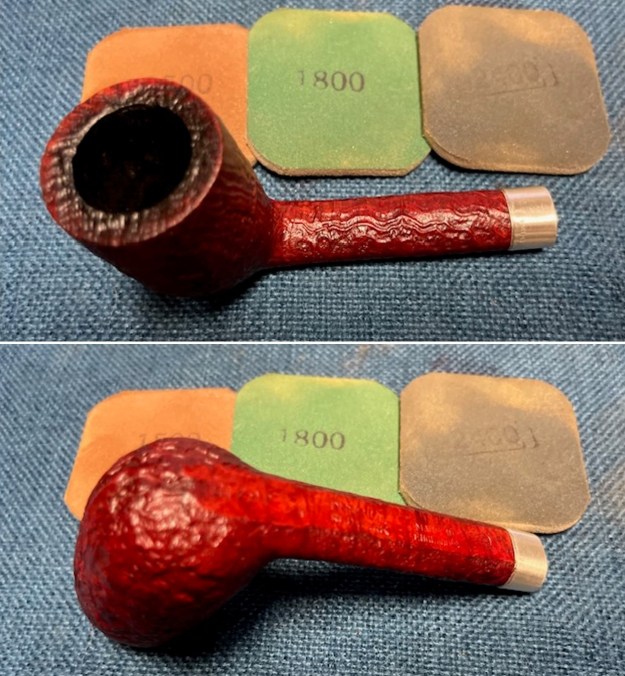
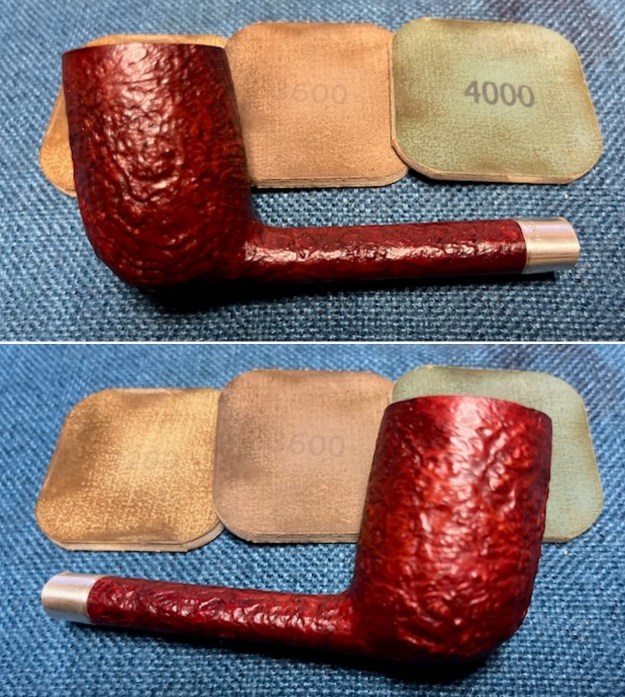
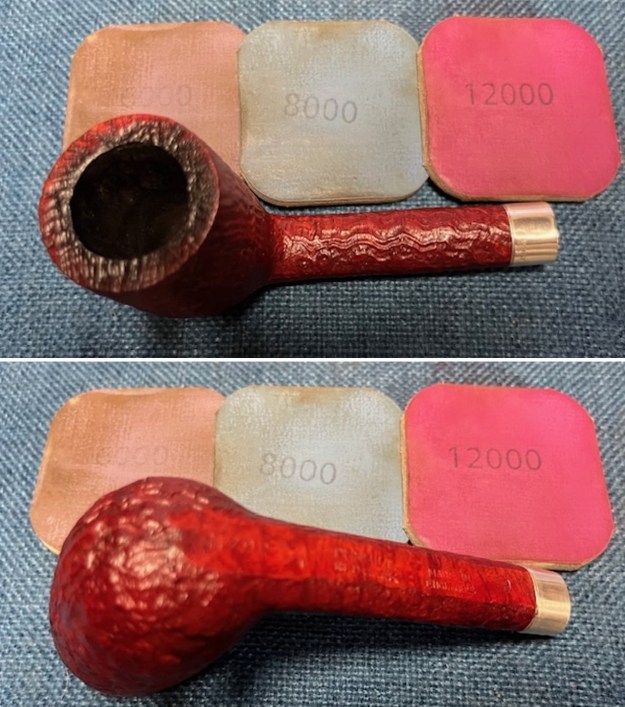
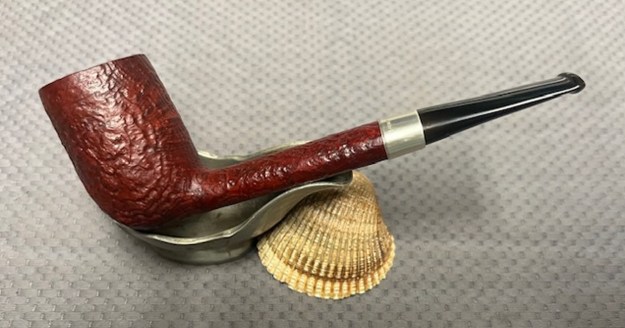
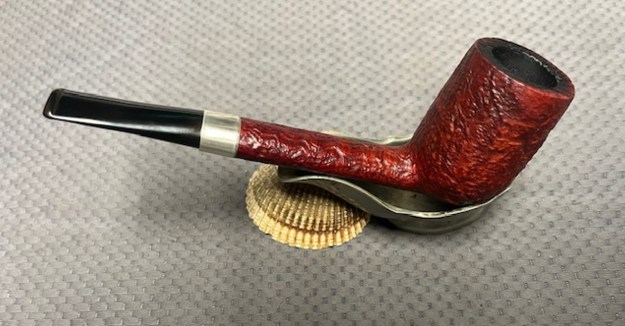
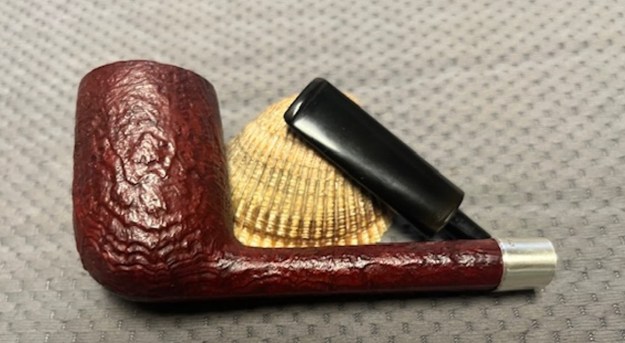
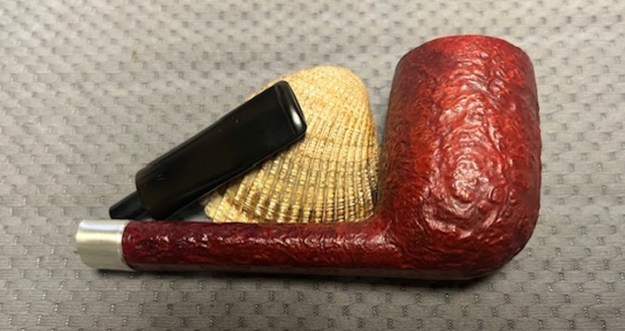
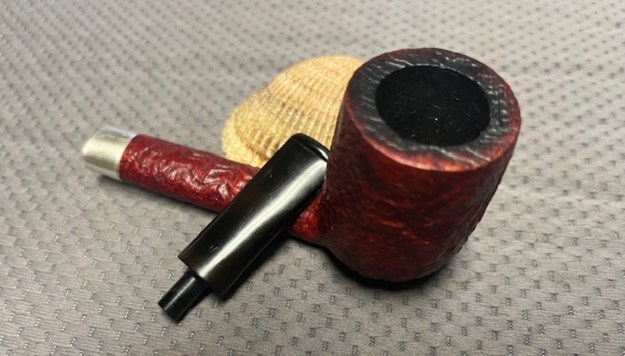
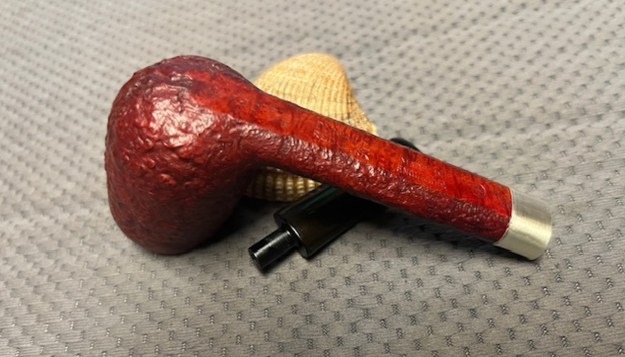
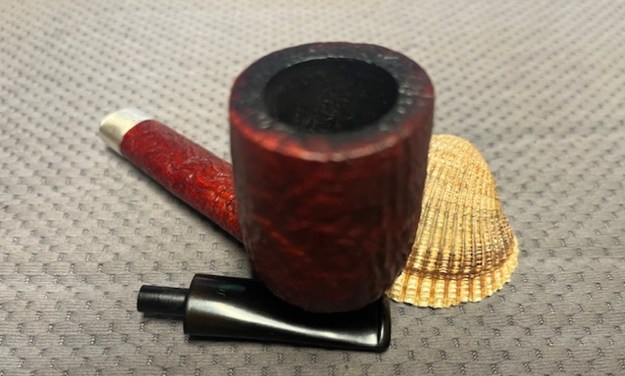
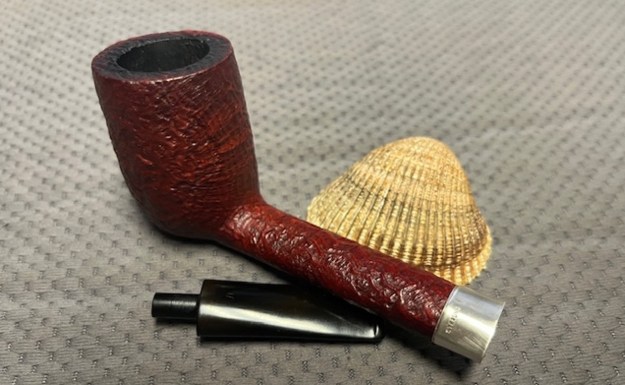
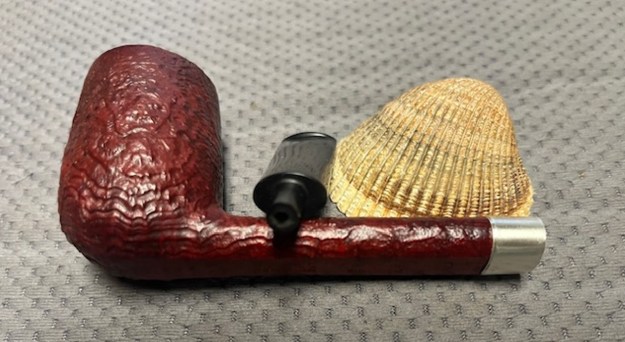
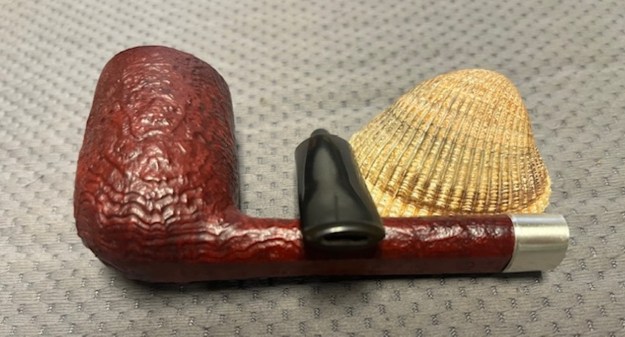
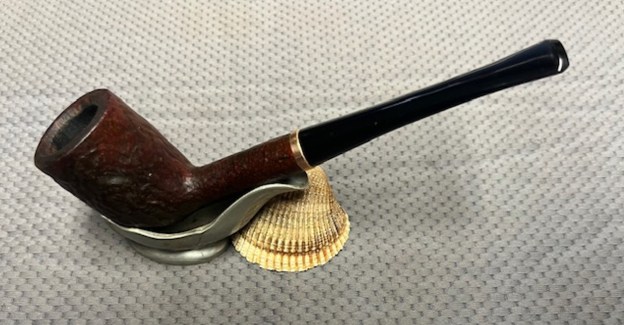
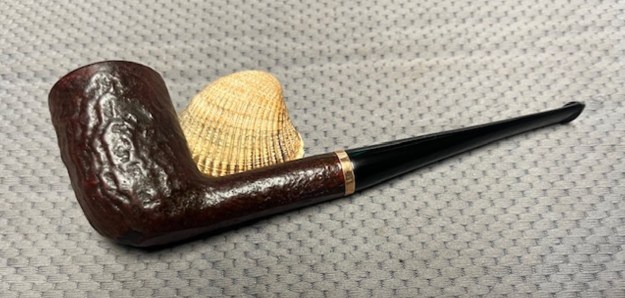
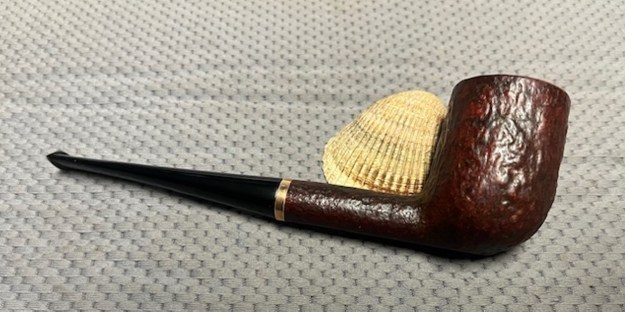
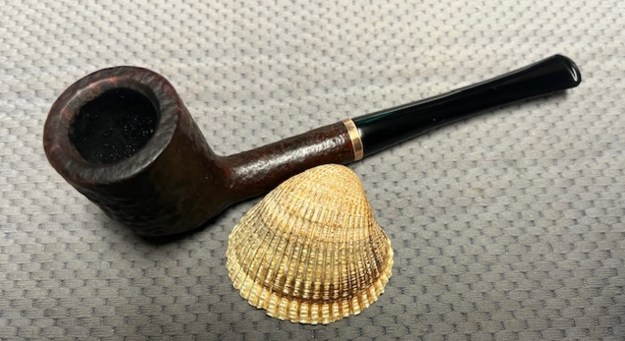
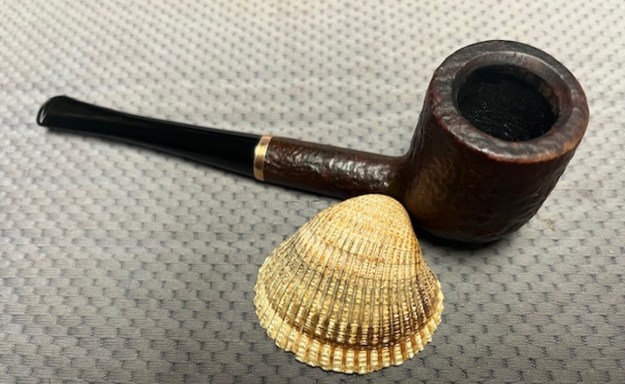
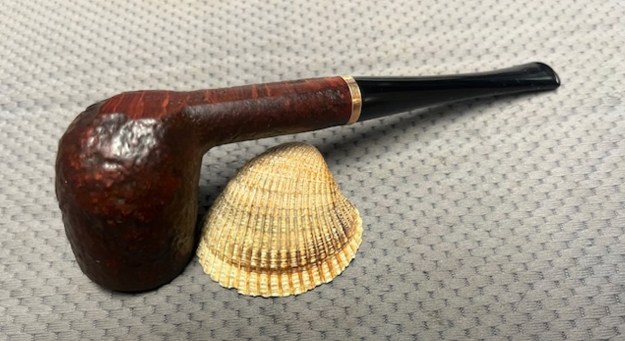
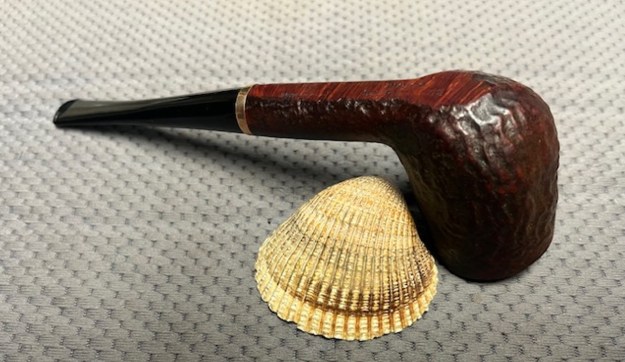
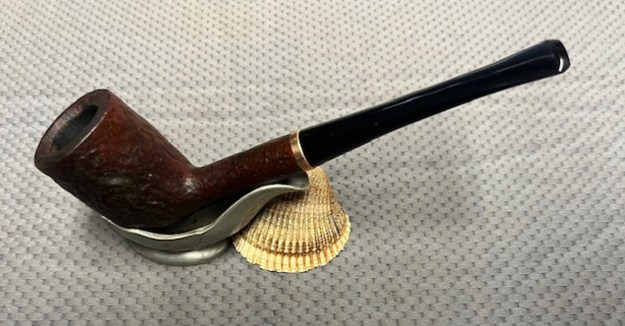
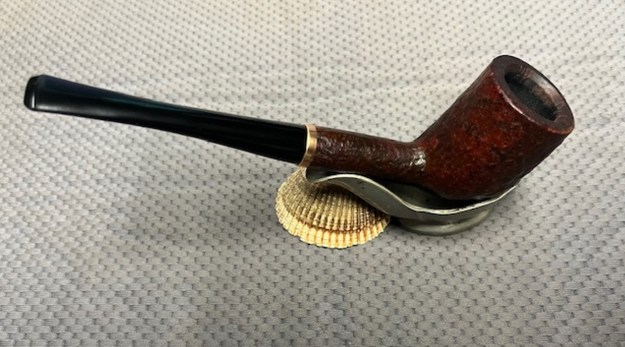
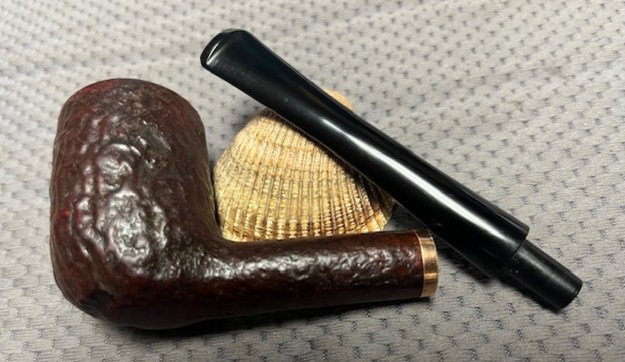
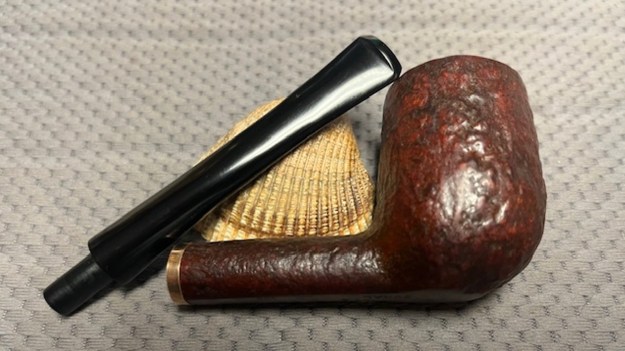
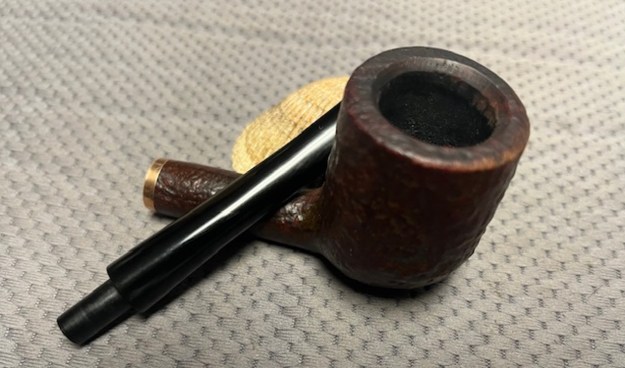
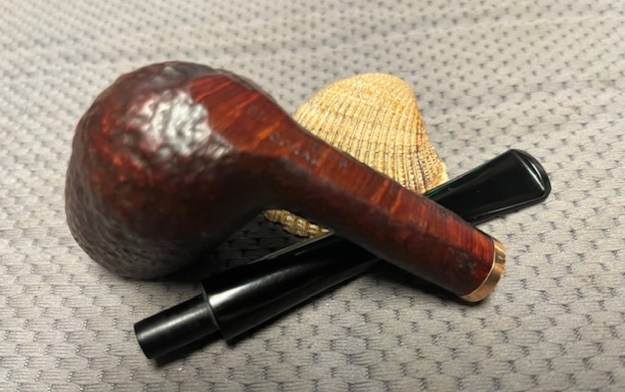
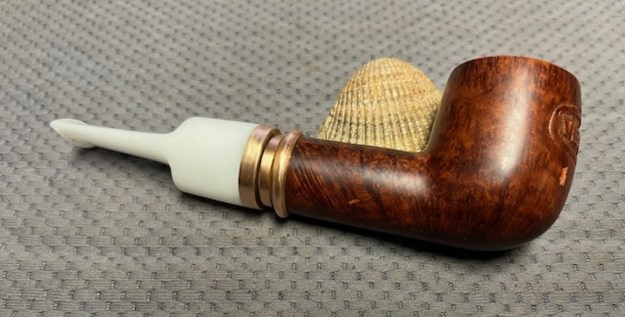
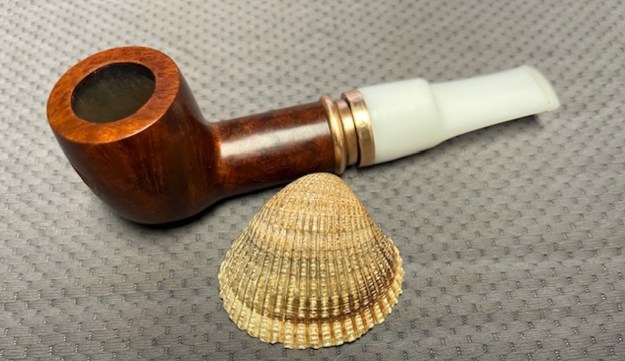
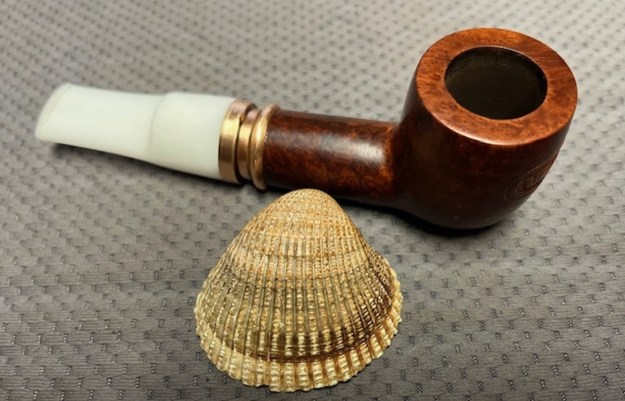
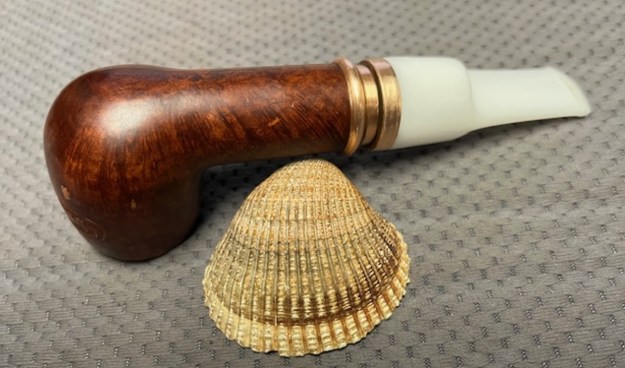
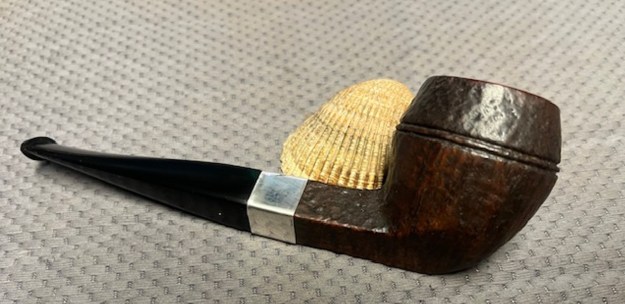
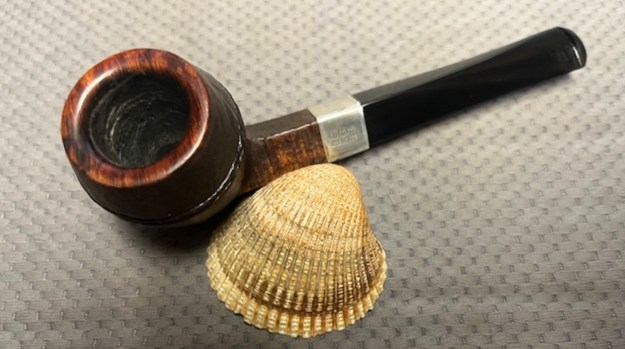
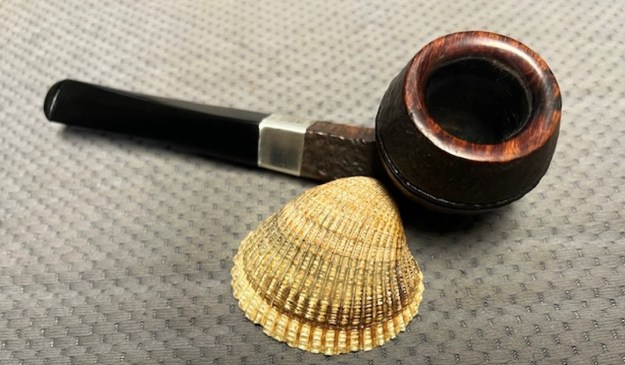
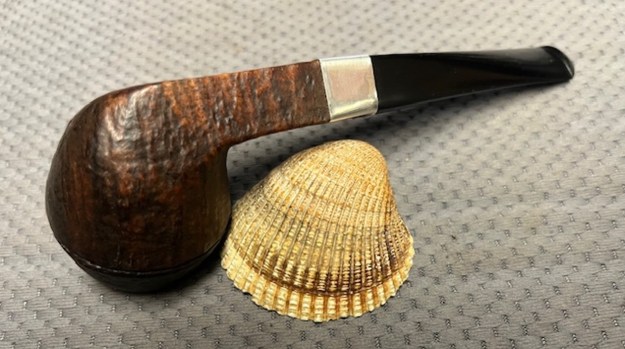
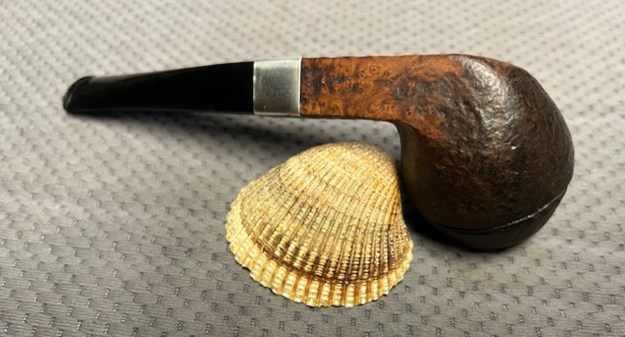
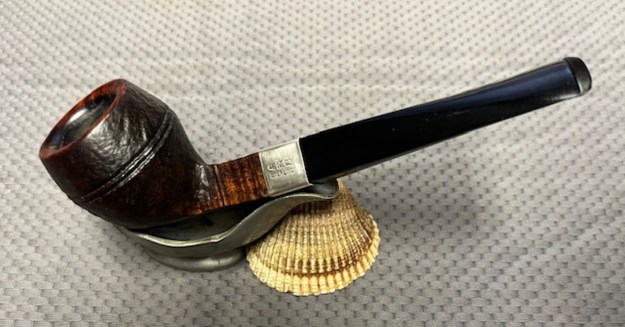
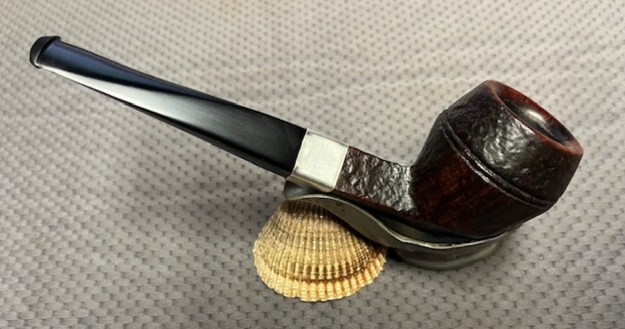
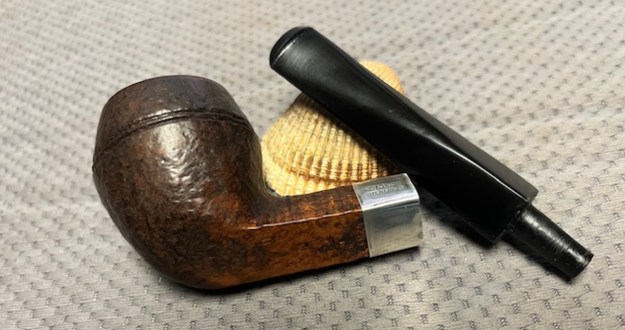
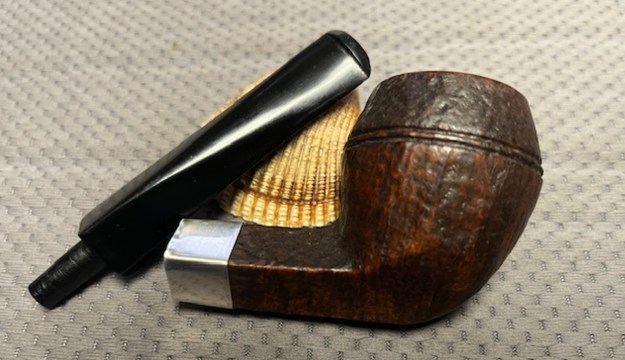
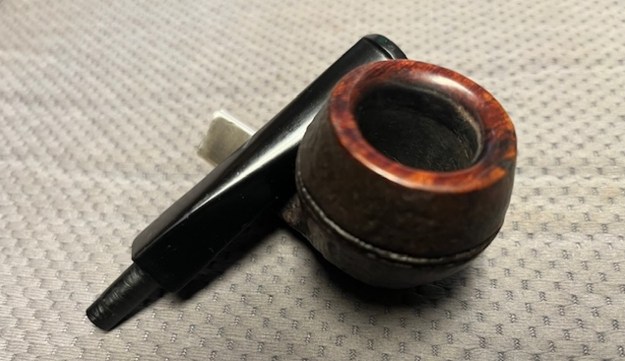
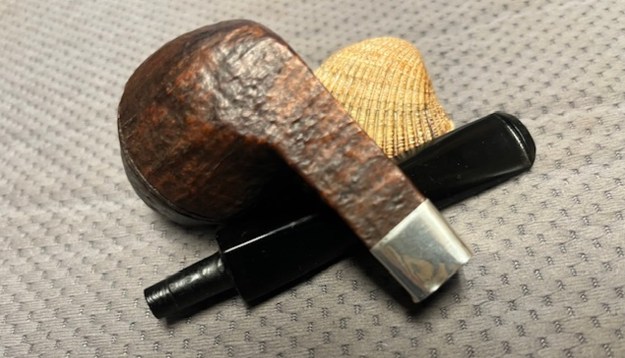
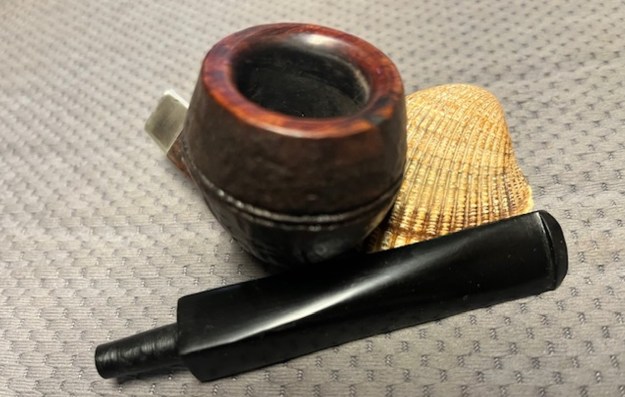
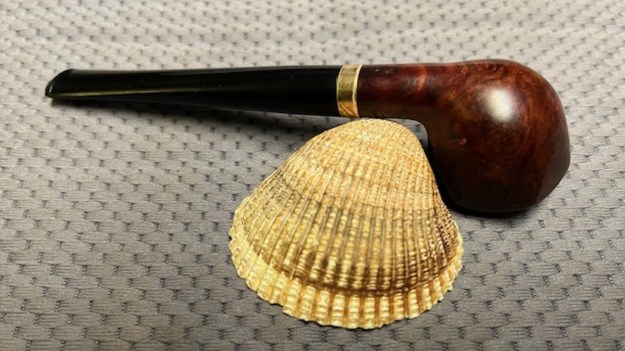
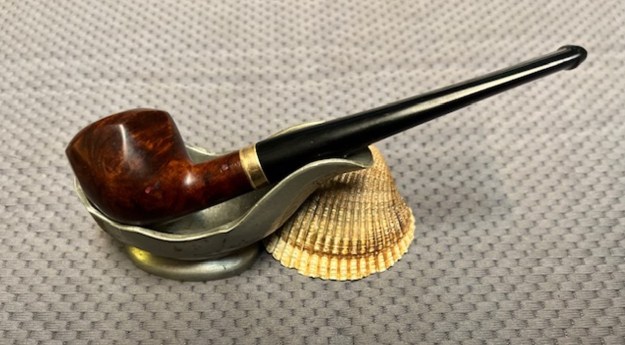
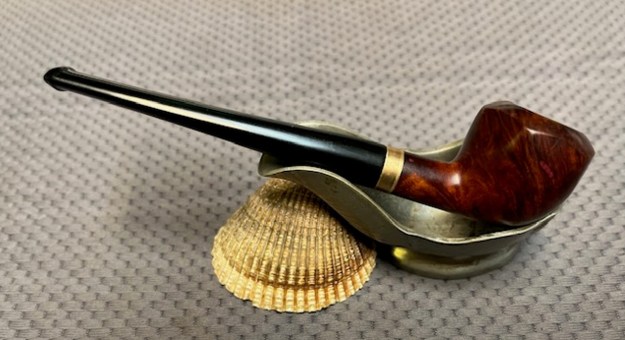
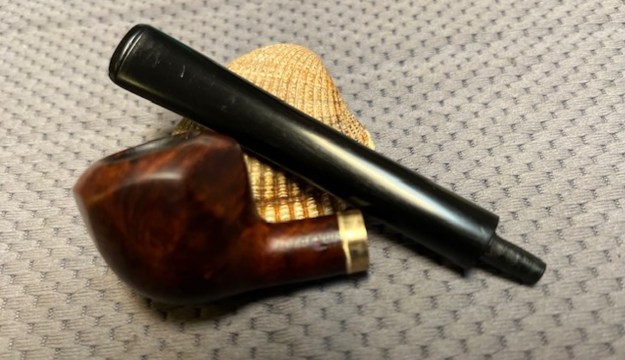
Restemming and Restoring a Sandblast Benaderet’s Coral 135 Billiard


by Steve Laug

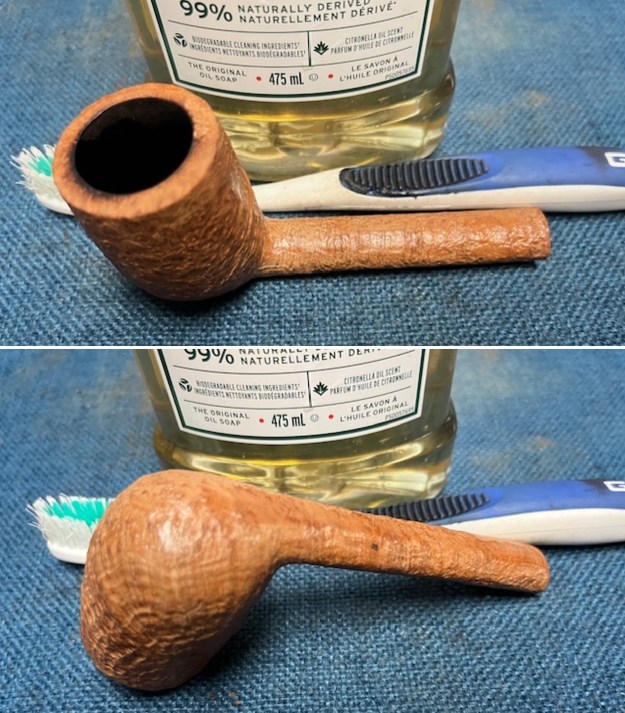
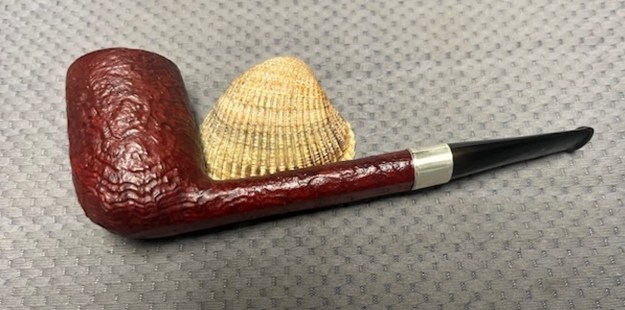
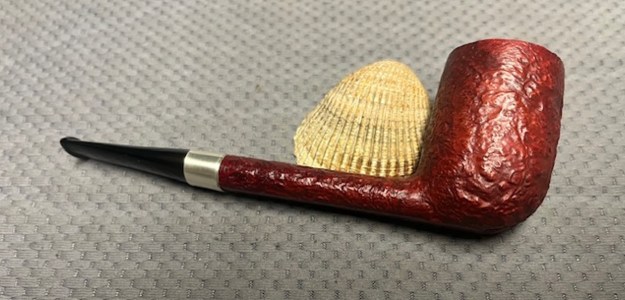
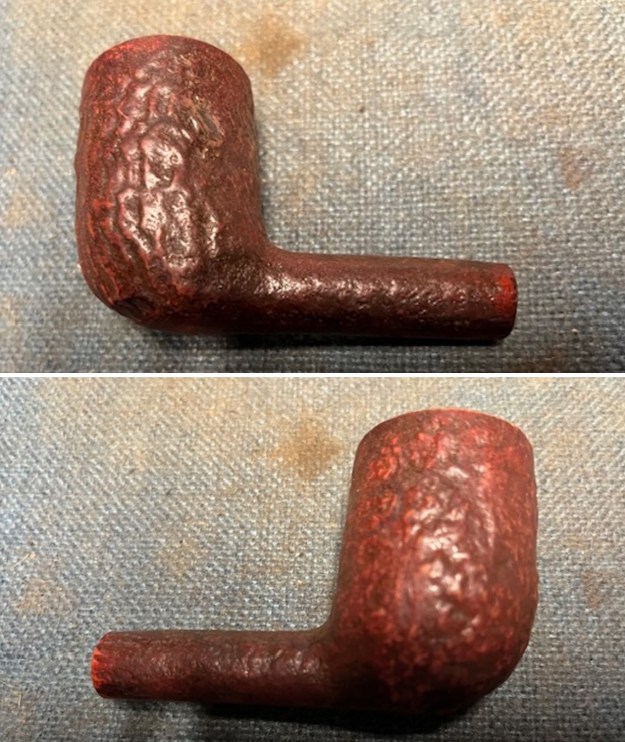
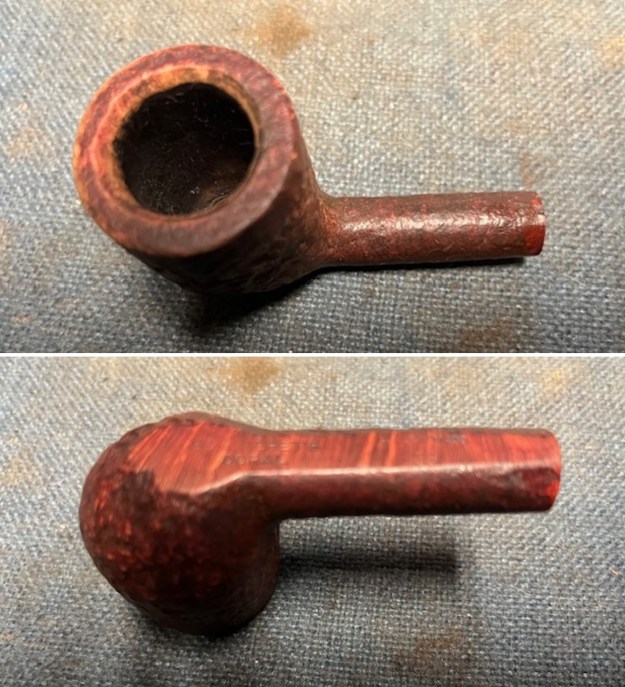
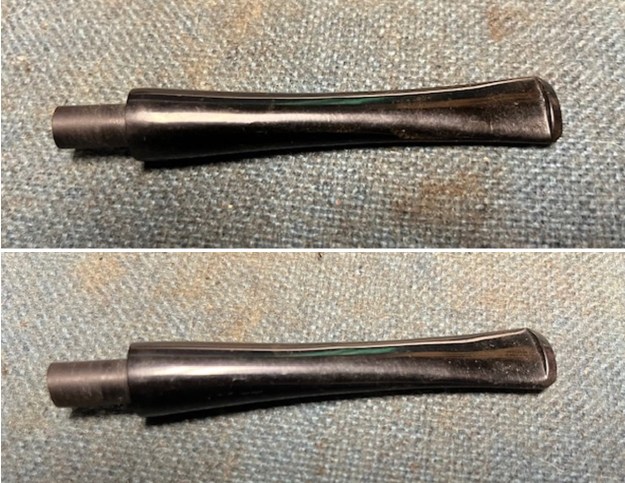
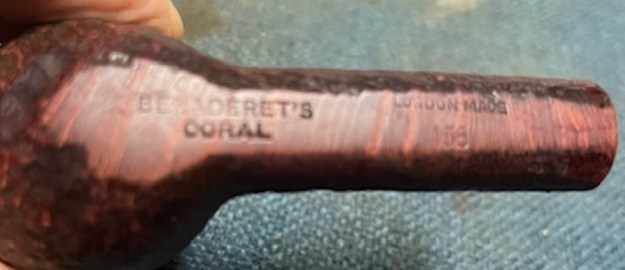
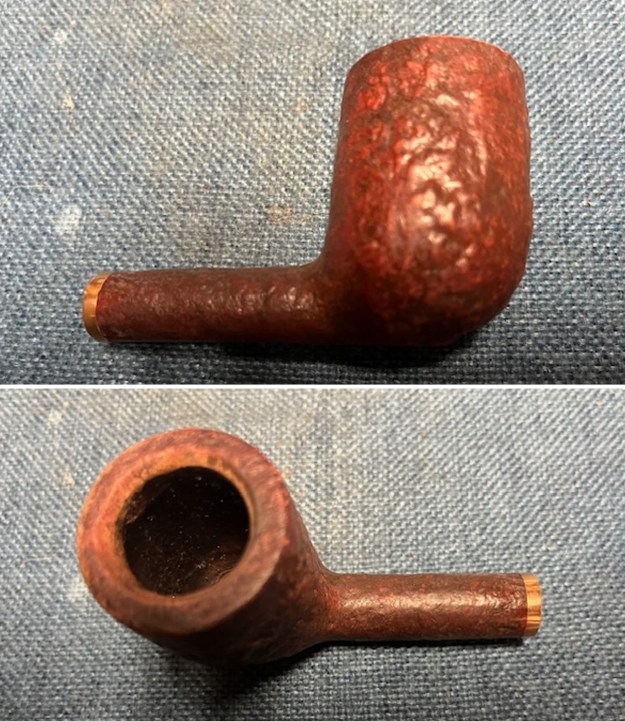
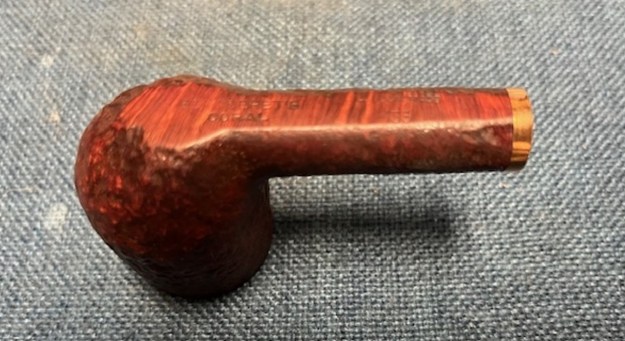
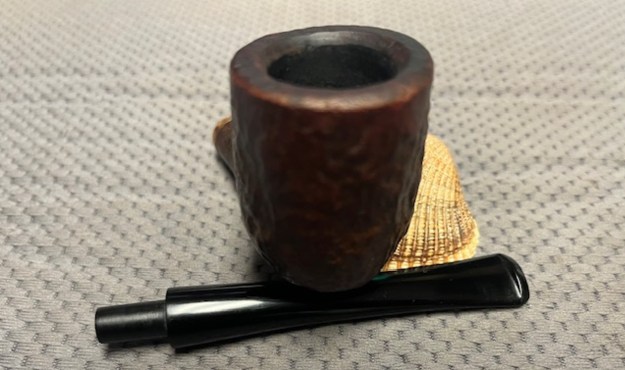
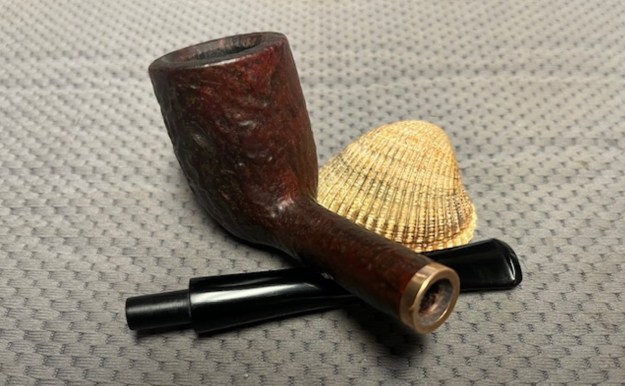
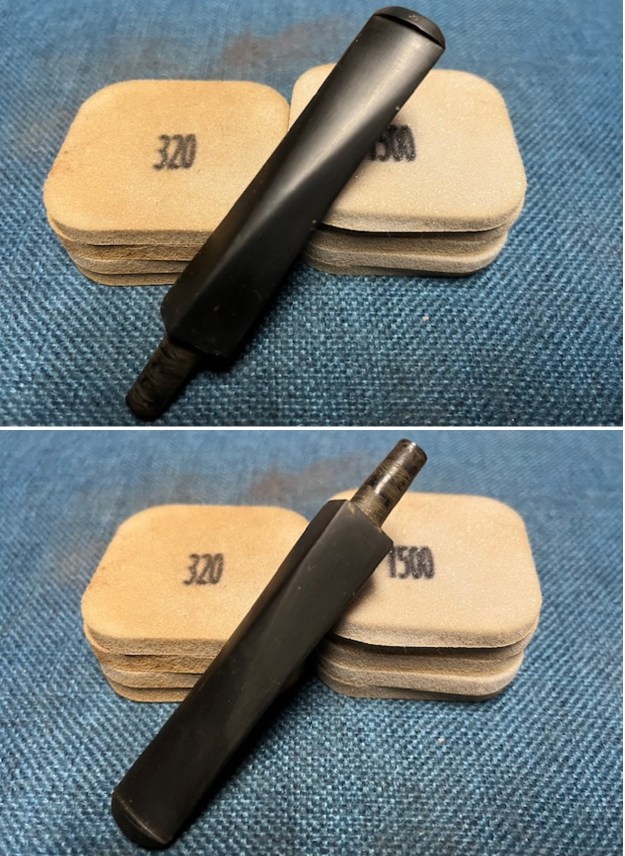
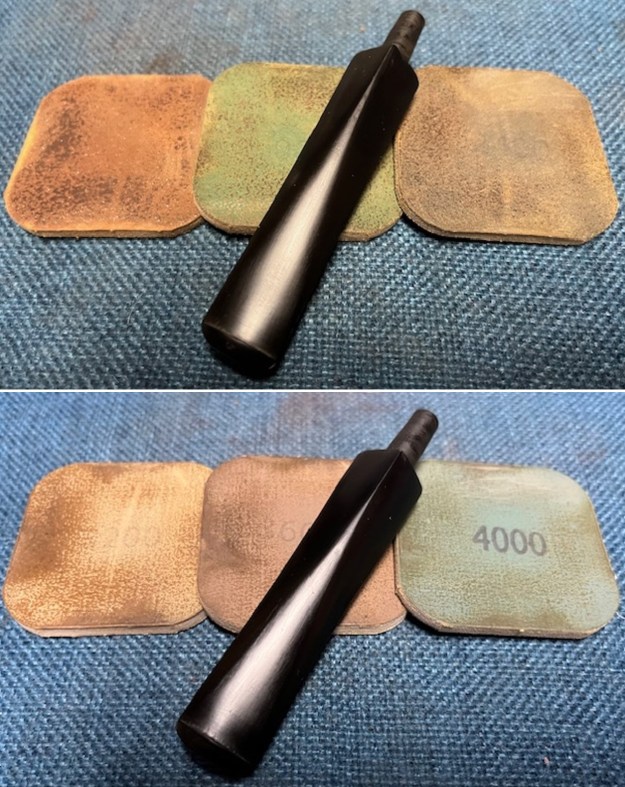
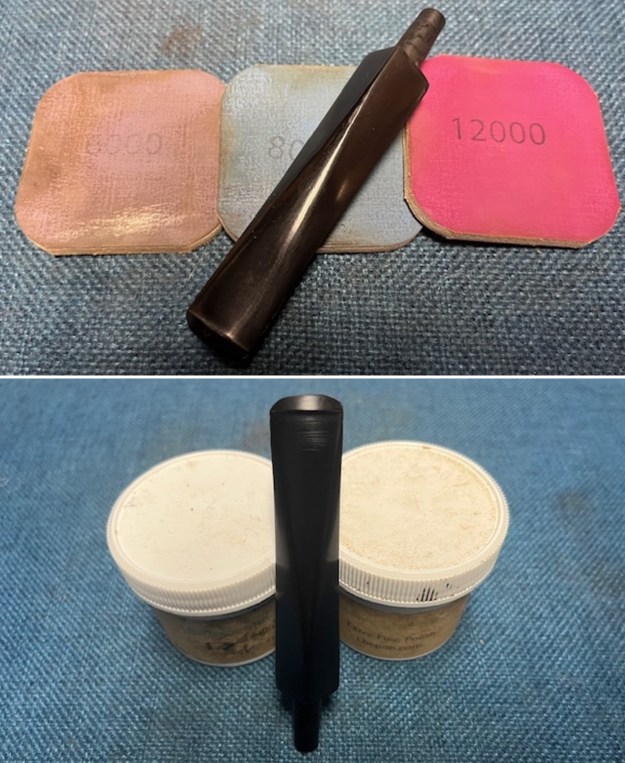
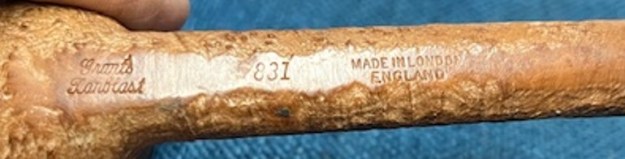
The next pipe on the table was a bowl sans stem that I have had in my box of bowls to be restemmed. It is stamped on the underside of the shank and reads Benaderet’s [over] Coral followed by London Made [over] the shape number 135. The sandblast highlights great grain around the sides of the pipe. The shape number said I was dealing with a GBD made pipe. It had been reamed and cleaned by my brother Jeff many years ago. The rim and the inner edge were clean and with some light areas on the front right of the bevelled rim top and inner edge. The finish had been scrubbed and was very clean. I took photos of the bowl before I worked on it. I found an acrylic taper stem in my can of stems that would work with some adjustments. The tenon would need to be reduced in diameter and the diameter of the shank end would also need to be reduced. The size and shape of the stem were perfect to start with. I took photos of the stamping on the underside of the shank. It is clear and readable as noted above. With the new stem in place it is going to be a beautiful pipe once it is completed.From the shape number on the shank I was pretty certain I was dealing with a GBD pipe. The stamping Benaderet’s Coral was a dead end but the shape number hit the mark. I turned to Pipedia’s shape number listing and found it (https://pipedia.org/wiki/GBD_Shapes/Numbers). I have included a screen capture of the listing below.
I did some more digging on the net and found that Benaderet’s was a pipe shop in San Francisco that closed in the 70’s. Their house pipes were made by Comoys or Sasieni although smokingpipes had one listed that was made by GBD once.

The other link was to a blog (http://theothersideofthelizard.blogspot.com/2018/11/benaderets-pipe-shop.html). That blog gave the original address of the shop in San Francisco and the names of the owners of the shop.

Benaderet’s Cigarette, Pipe and Tobacco Shop215 Sutter Street [Formerly at 566 California Street], San Francisco.

Owners: Robert and Edith Rashaw (Robert Rashaw: born 1916. Edith Edna Rashaw: born 1916.) Store still extant in the late seventies. No longer there by the eighties. At one point, they had Egyptian cigarettes made for them. Their house pipes were usually by Comoys. There are also Benaderet’s Sasienis. More research required.

Quote: “Benaderet’s Inc., was California’s oldest pipe and tobacco store when it went out of business in 1980. Sam Benaderet was a tobacconist from New York City who came to San Francisco in 1915 to work at the Panama Pacific International Exposition. An immigrant to the United States from Turkey, Mr. Benaderet decided that he liked the West Coast’s Mediterranean like climate. After the Exposition closed, he stayed to open his own tobacco business. This new firm produced custom private-label cigarettes for men’s clubs. A lavish retail store was opened in the late 1920’s that quickly became a mecca for tobacco connoisseurs.”

So what I could find out about the pipe is that it is a pipe made by GBD (Shape number confirms this). It turns out that the pipe was a GBD pipe made for Benaderet’s Cigarette, Pipe and Tobacco Shop in San Francisco, California. Since the shop went out of business in 1980 I now knew that the pipe was made before that time. Now it was time to work on the pipe.

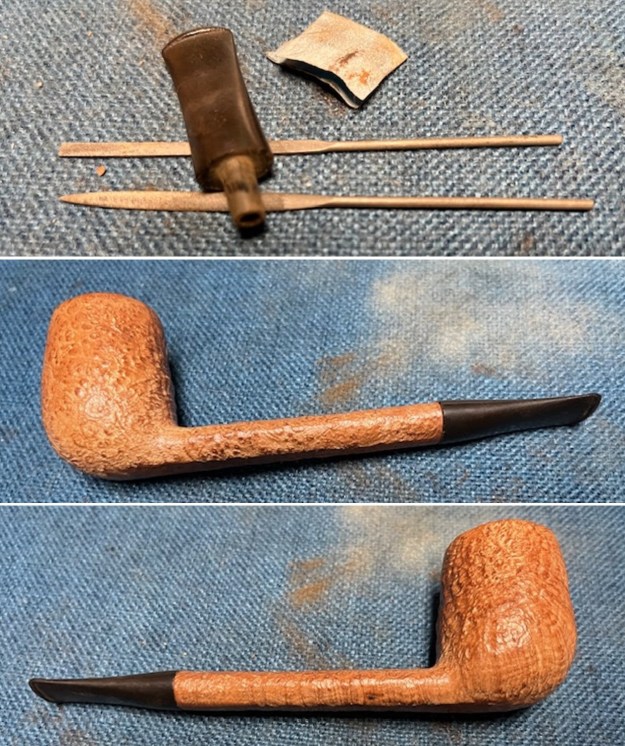
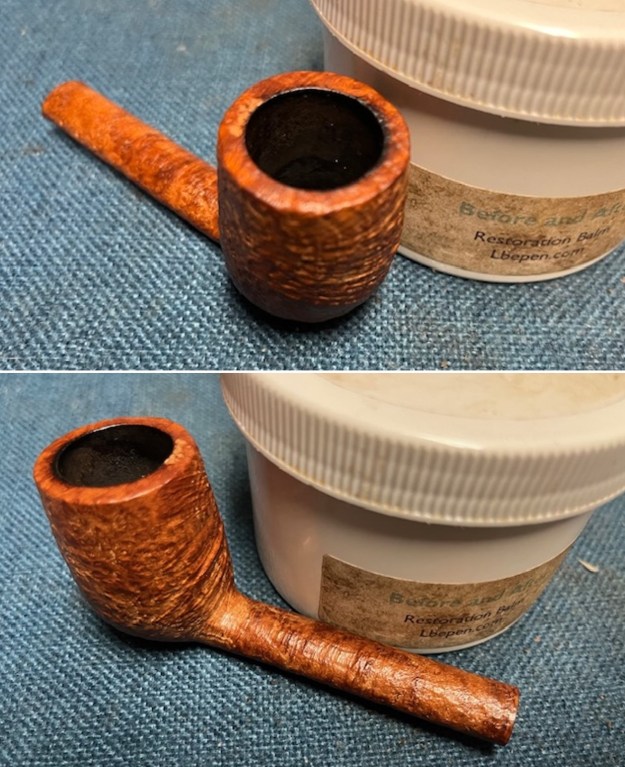
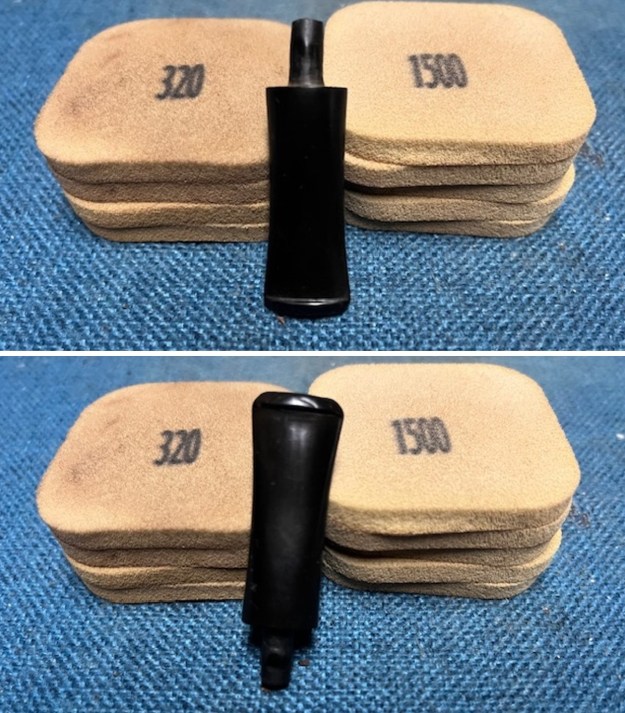
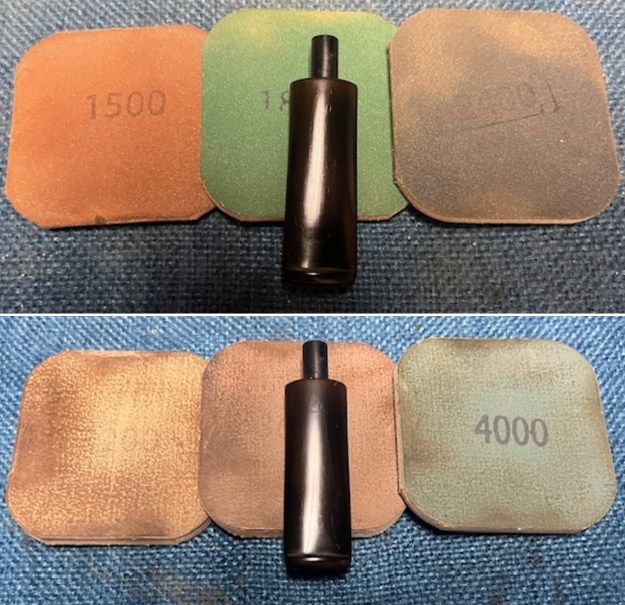
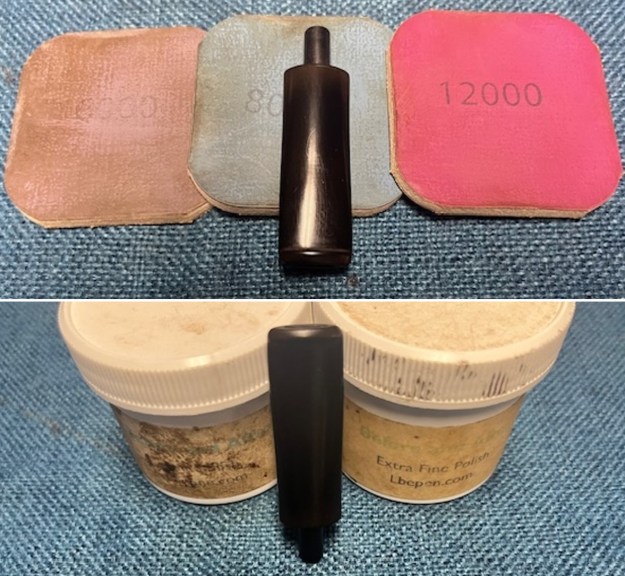
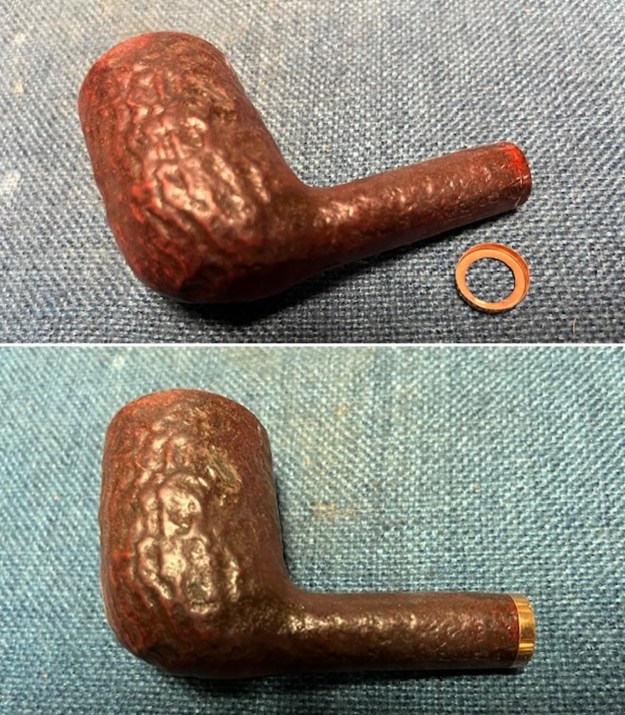
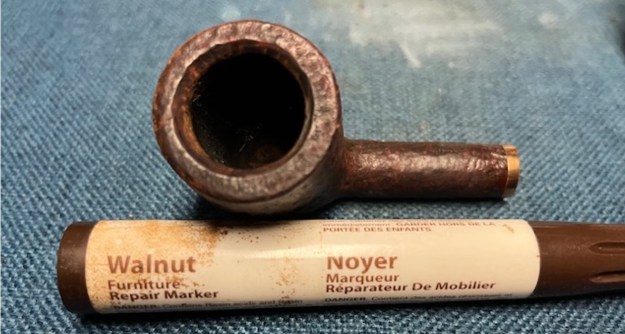
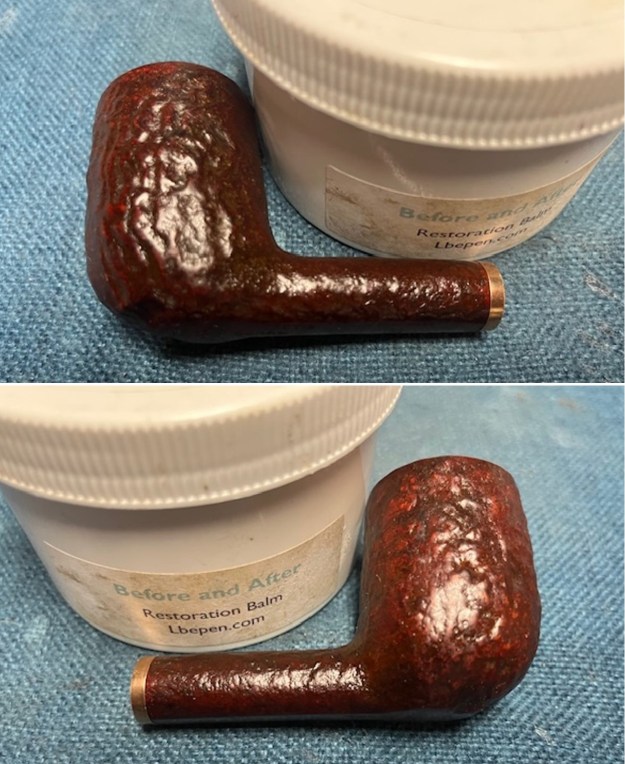
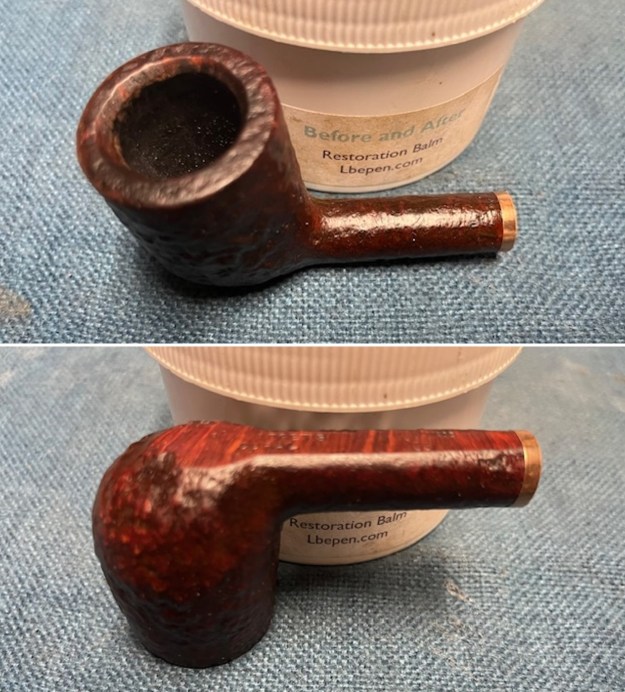
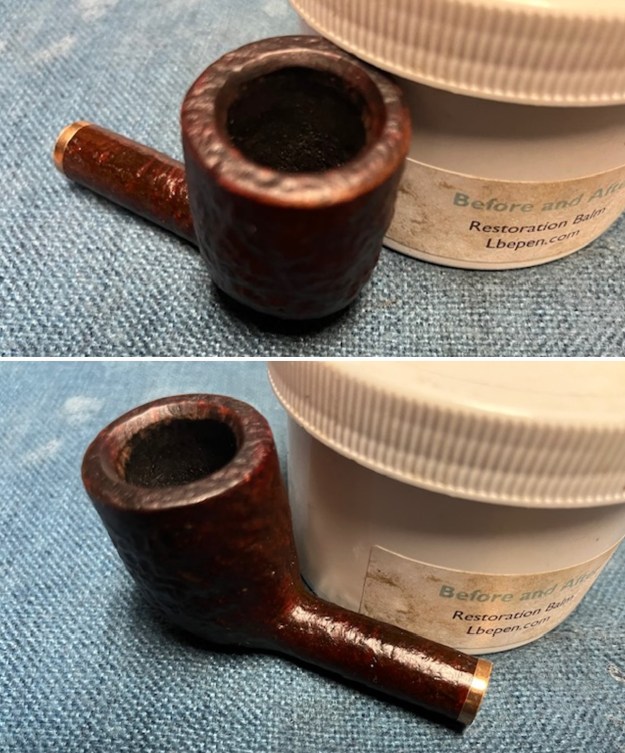
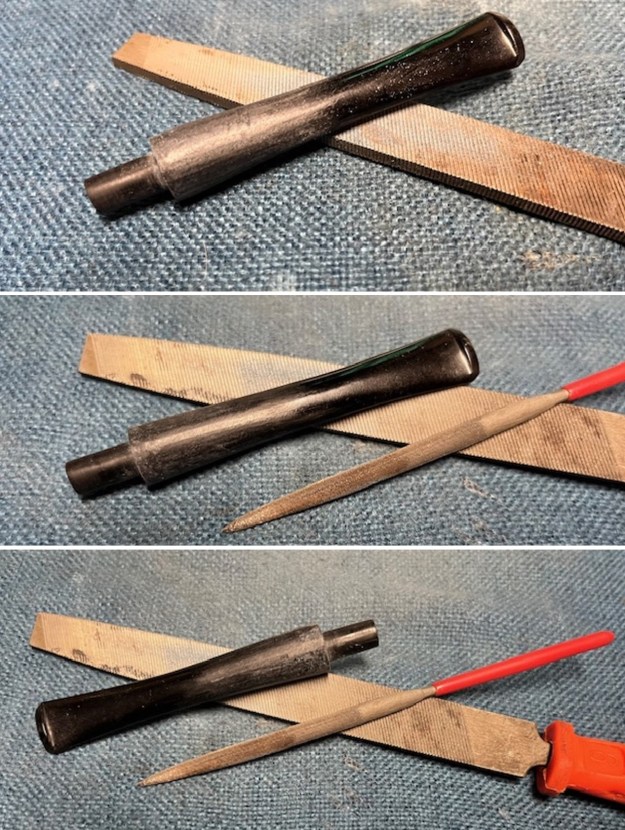
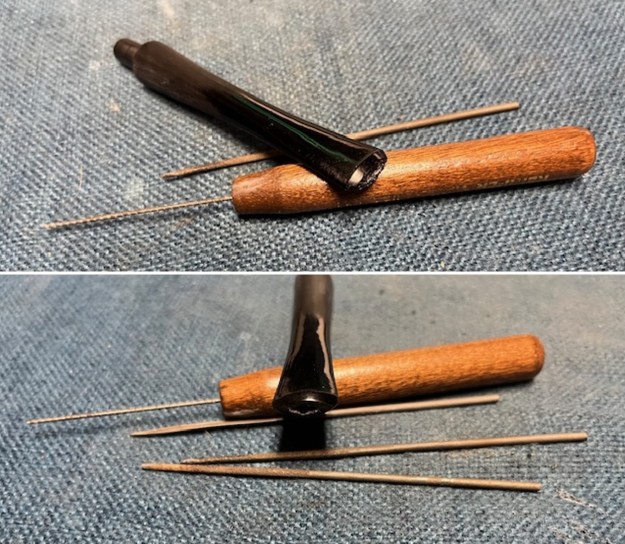
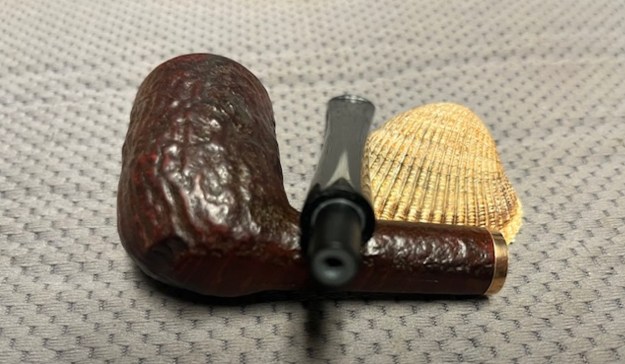
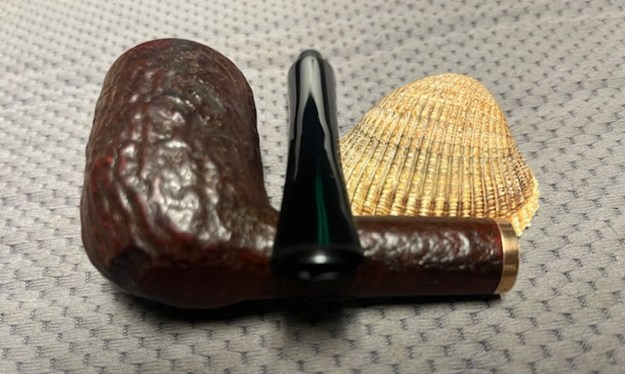
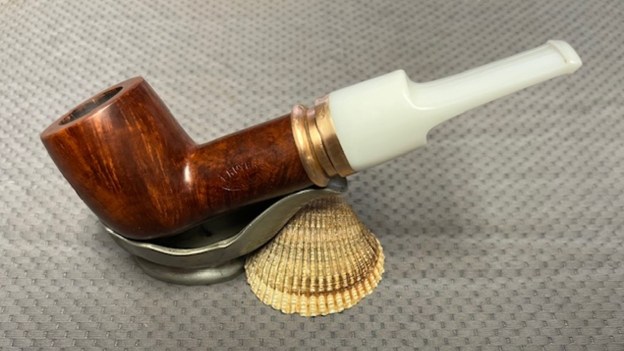
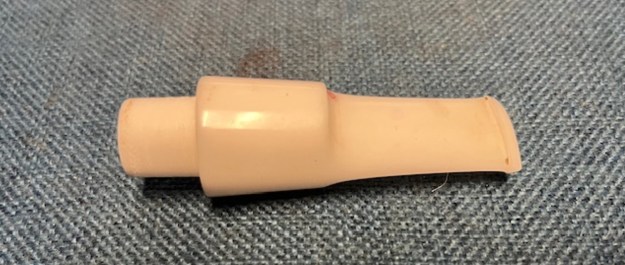
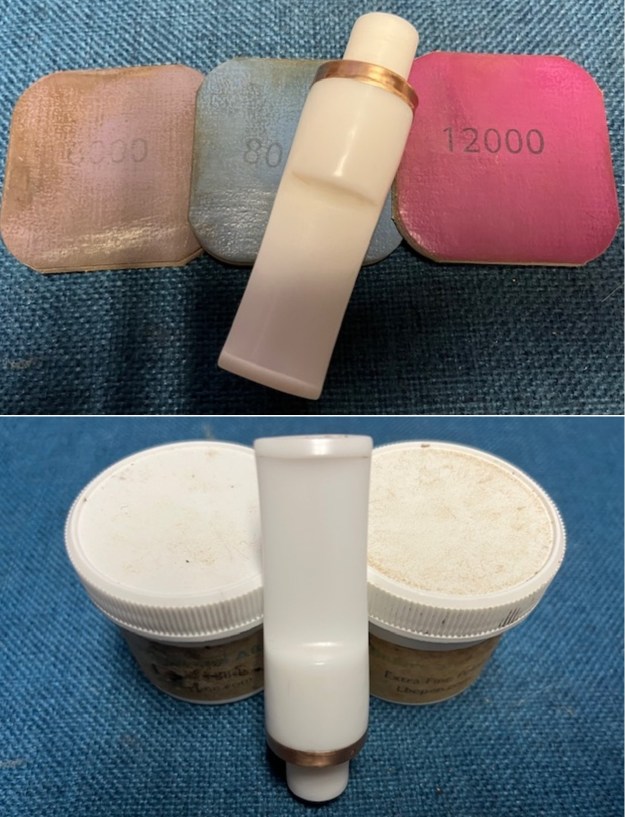
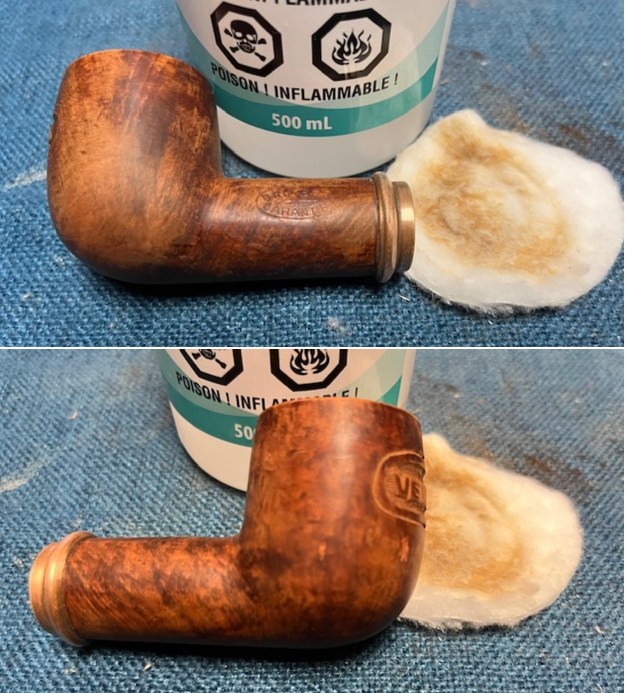
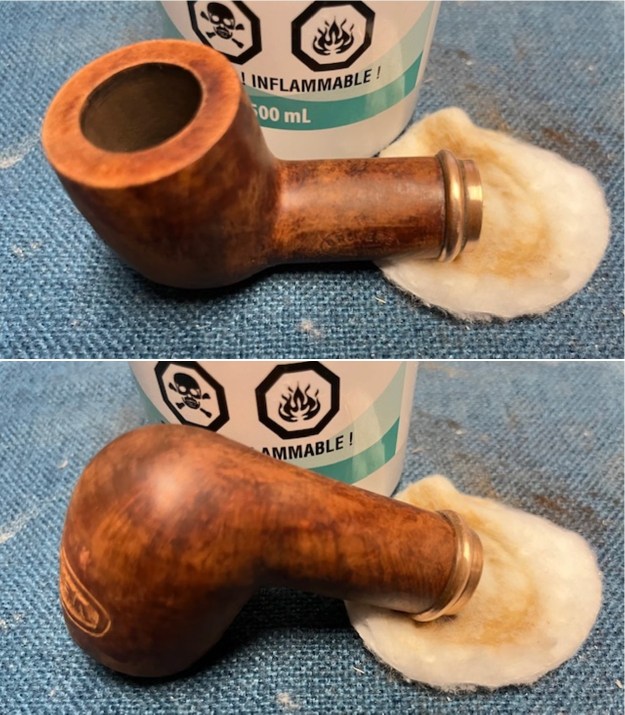
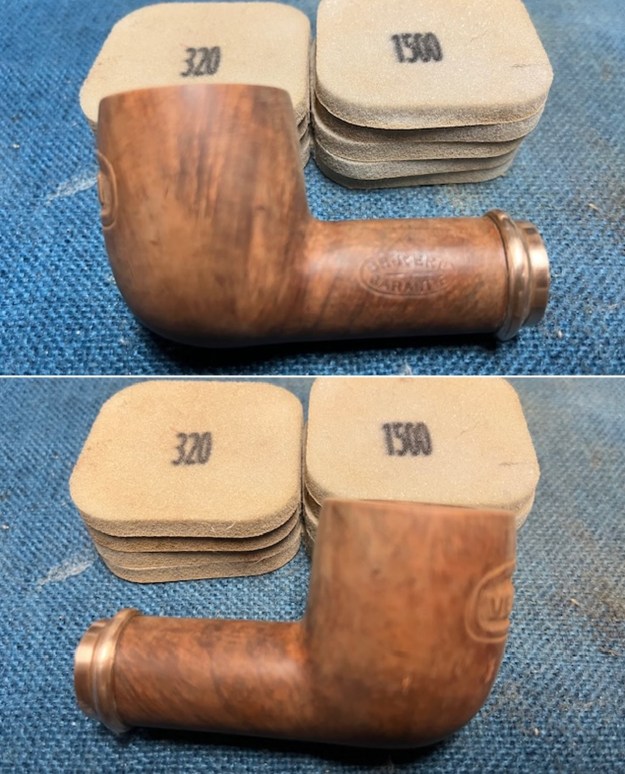
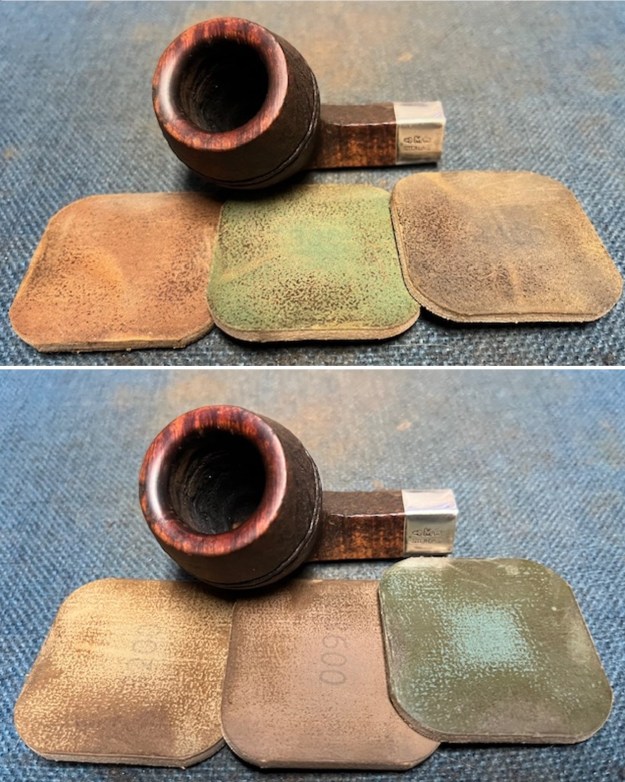
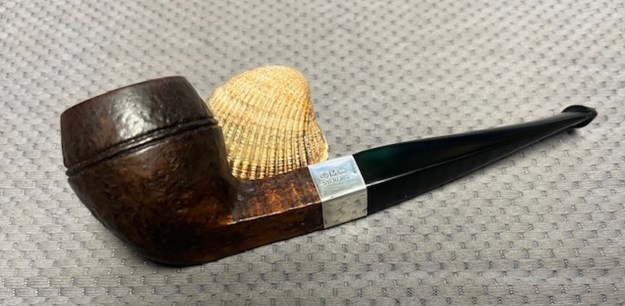
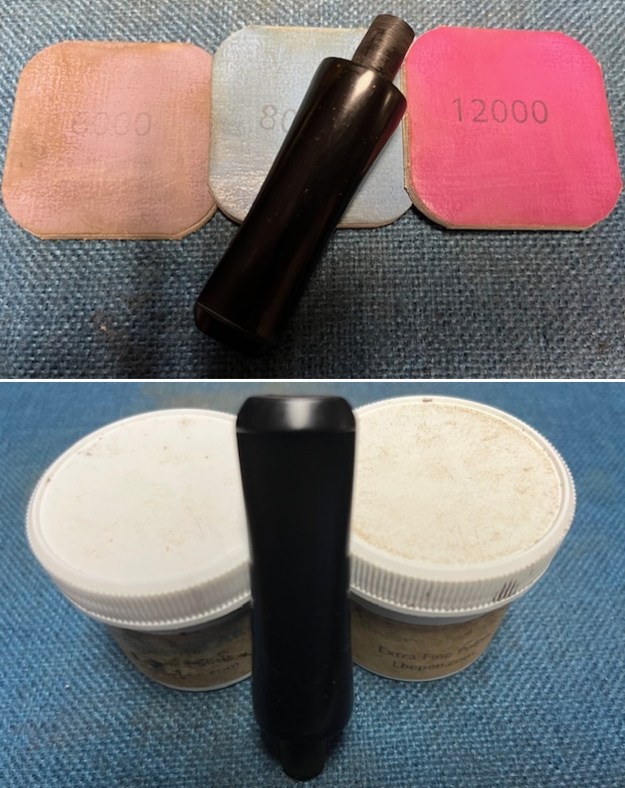
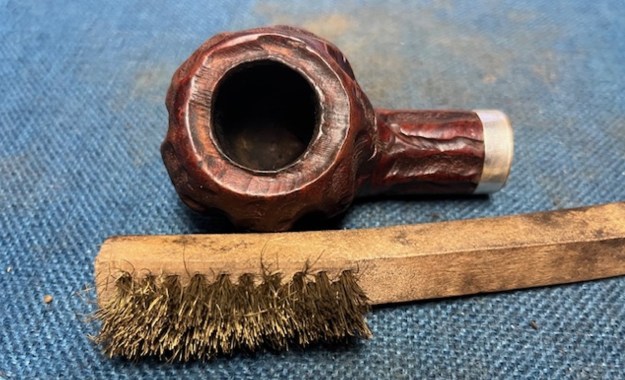
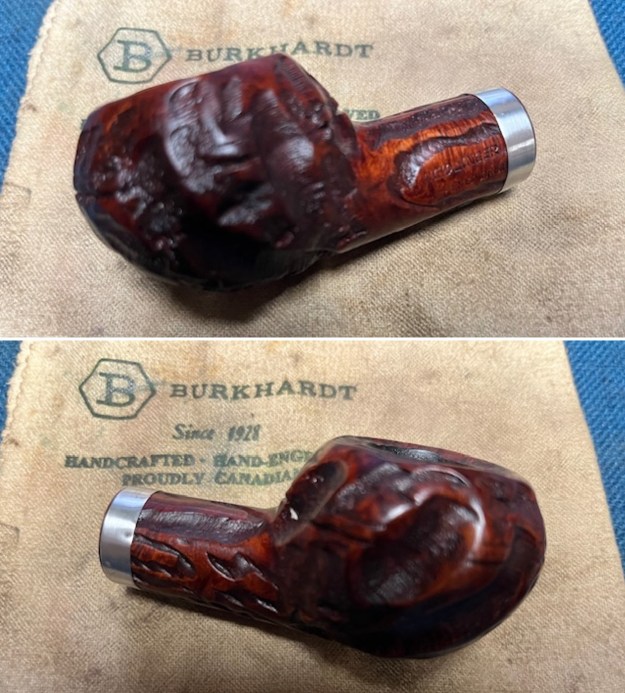
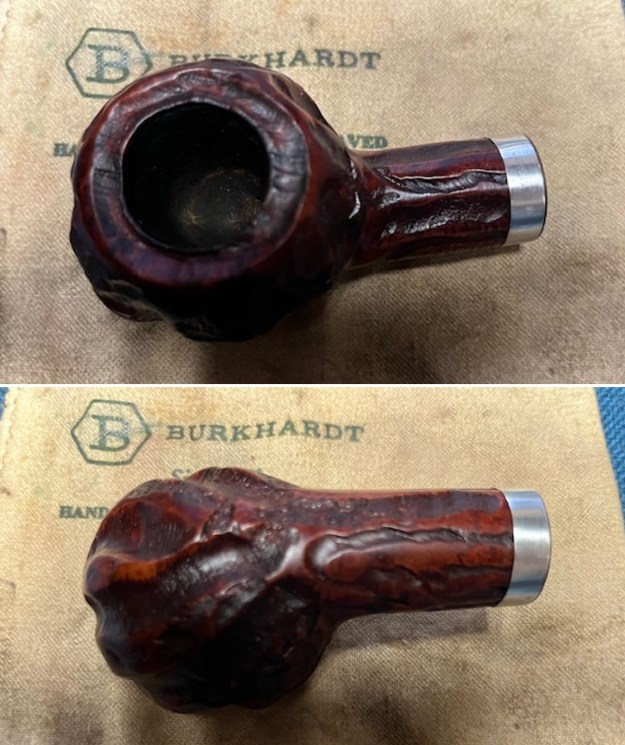
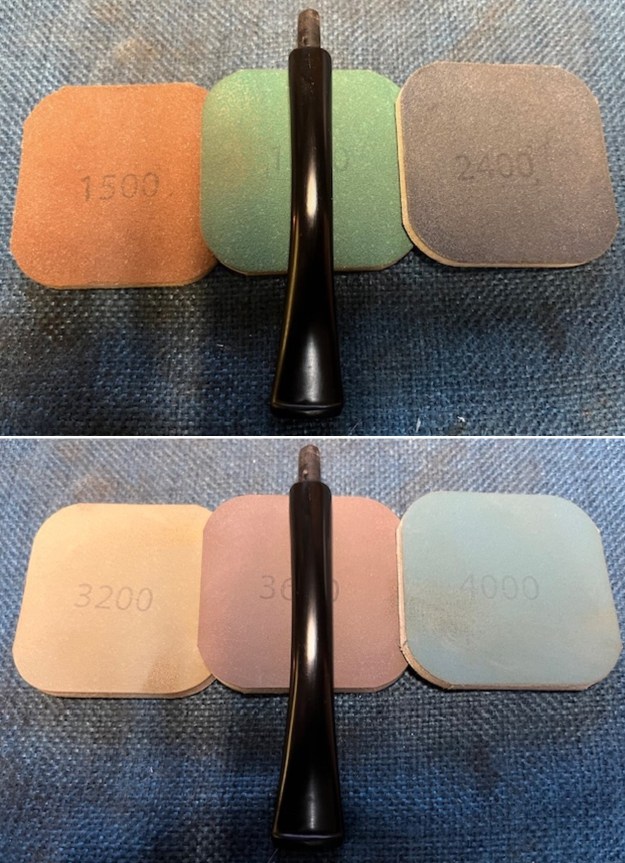
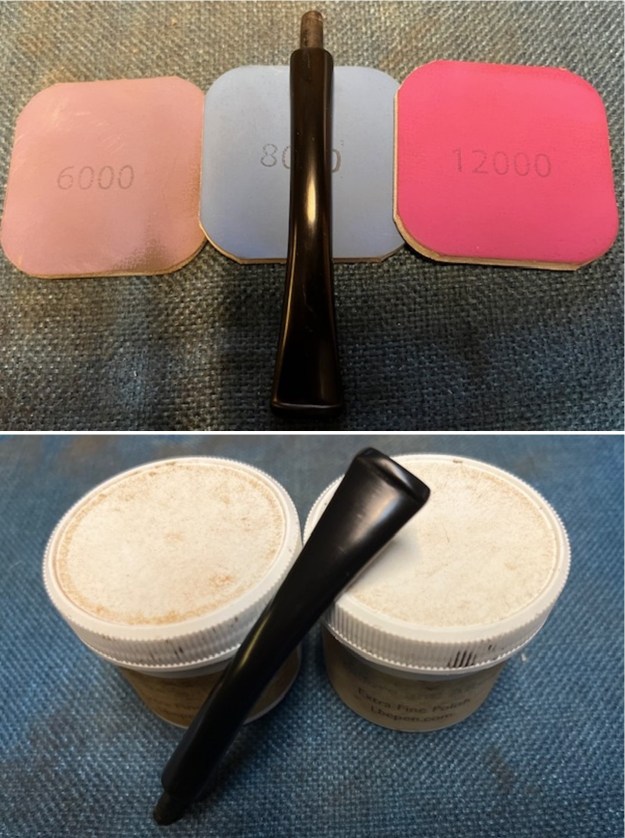
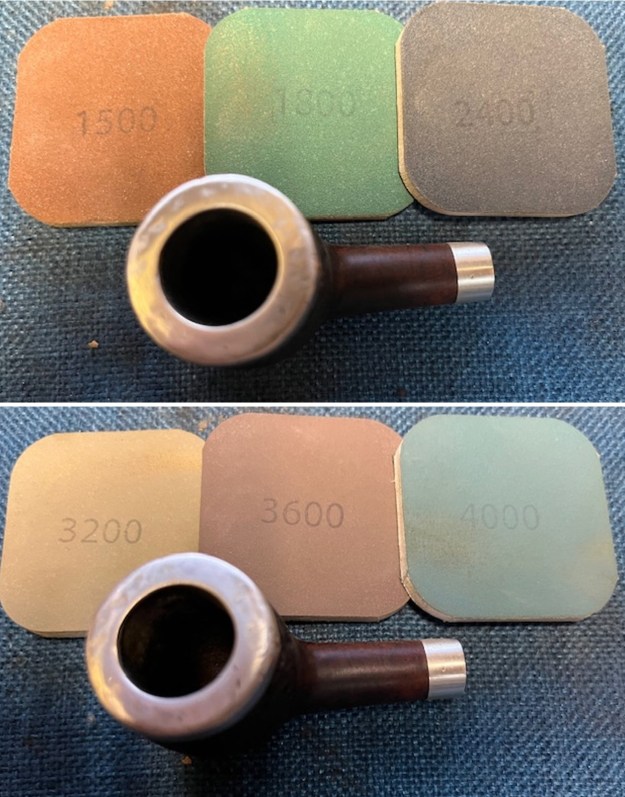
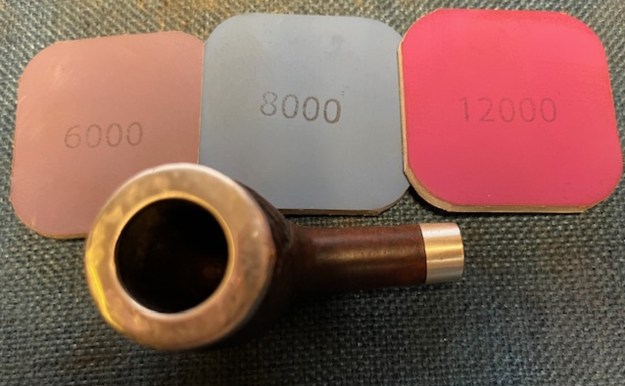
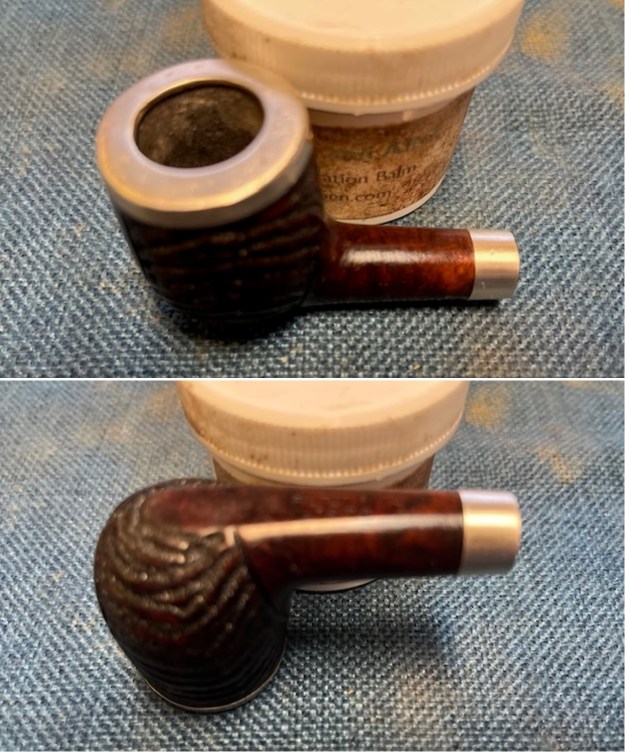
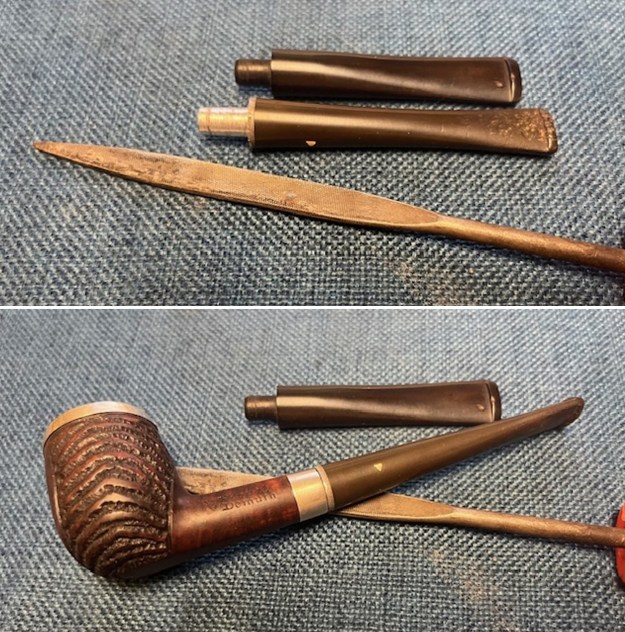
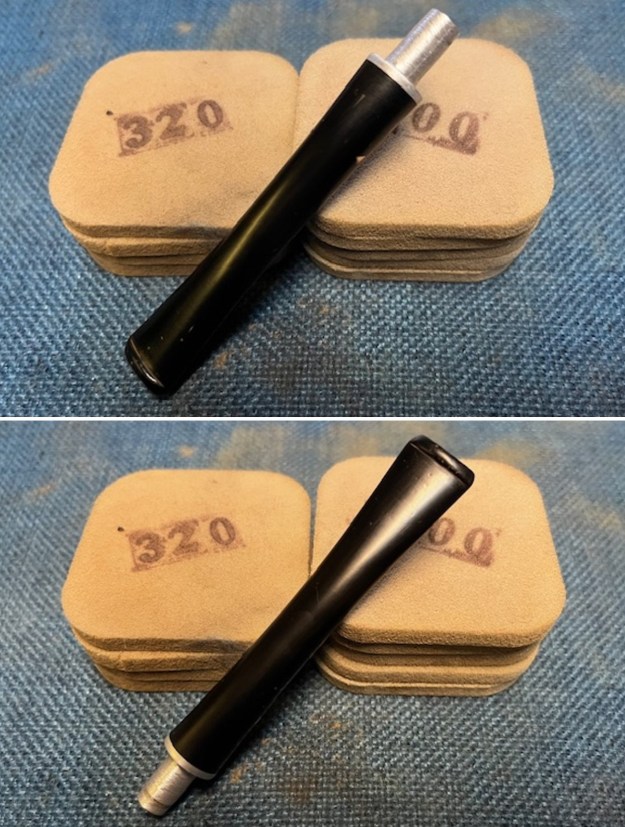
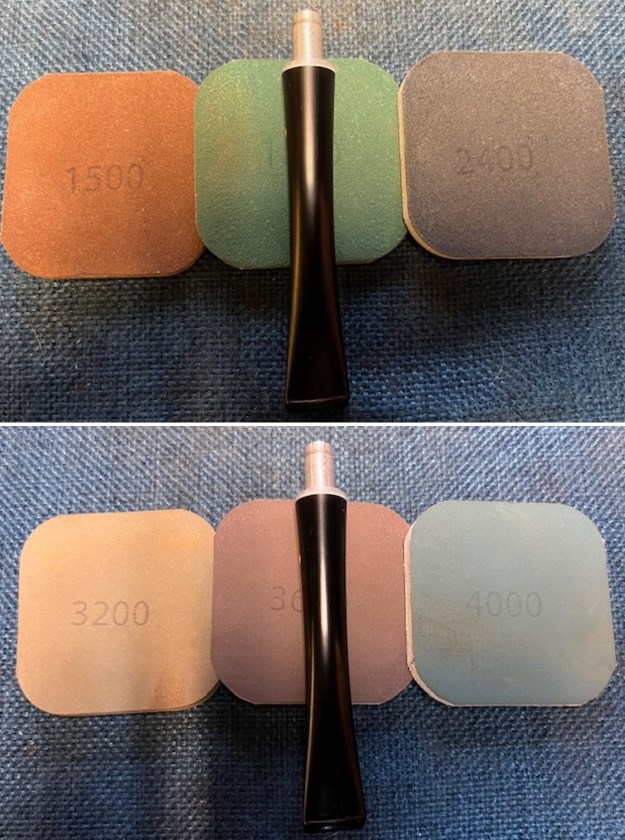
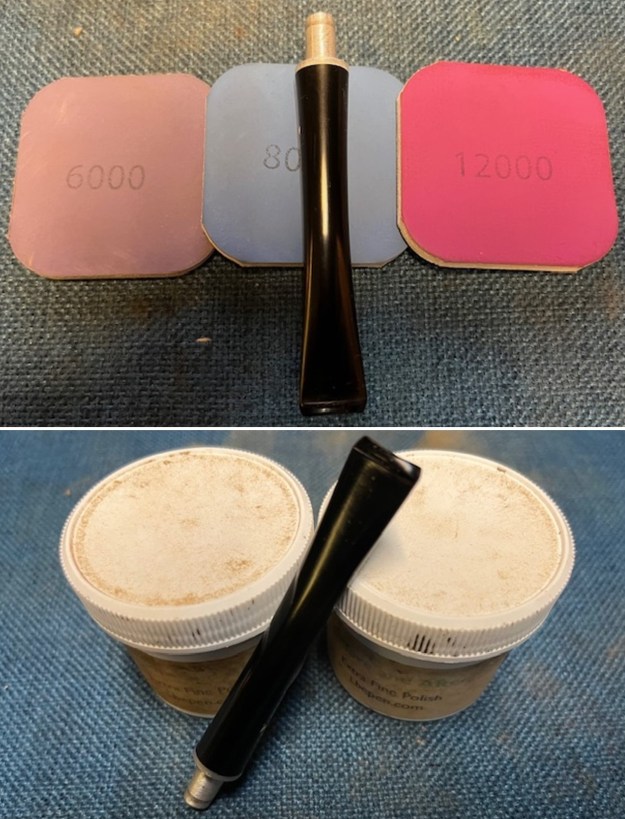
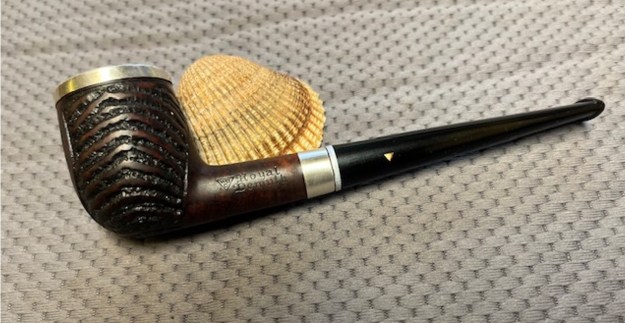
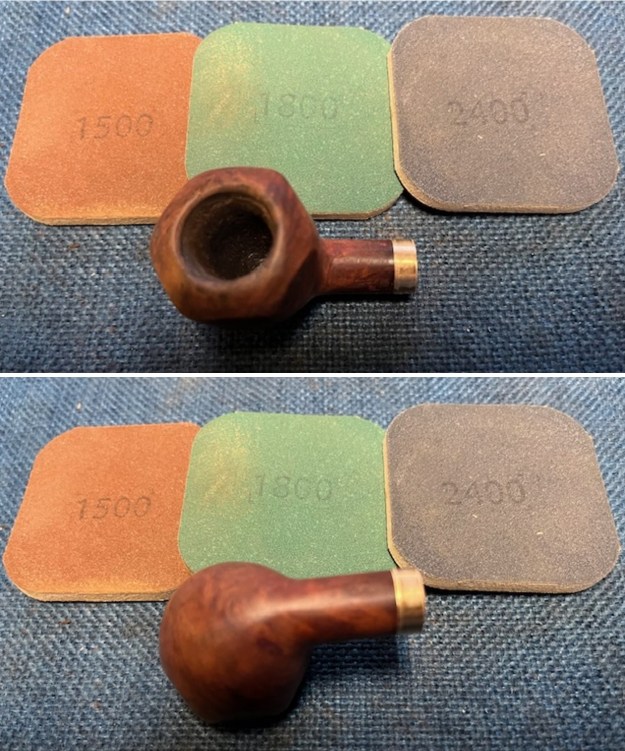
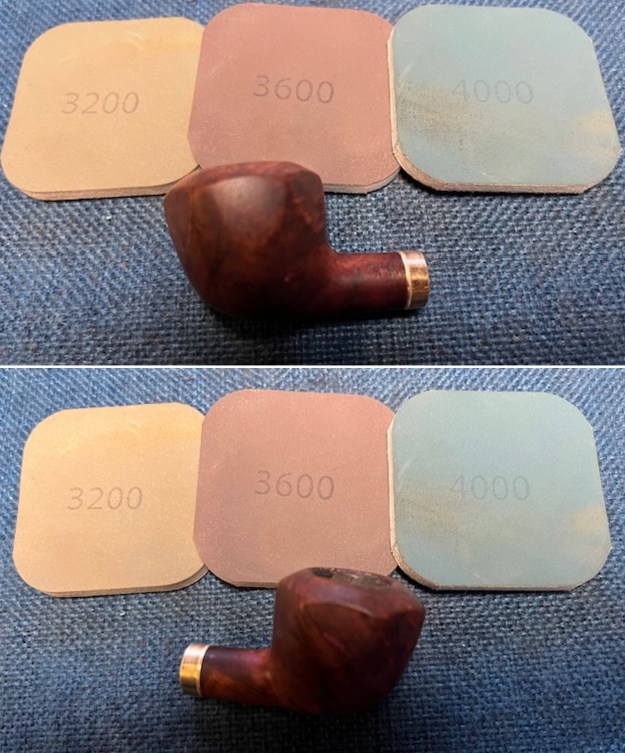
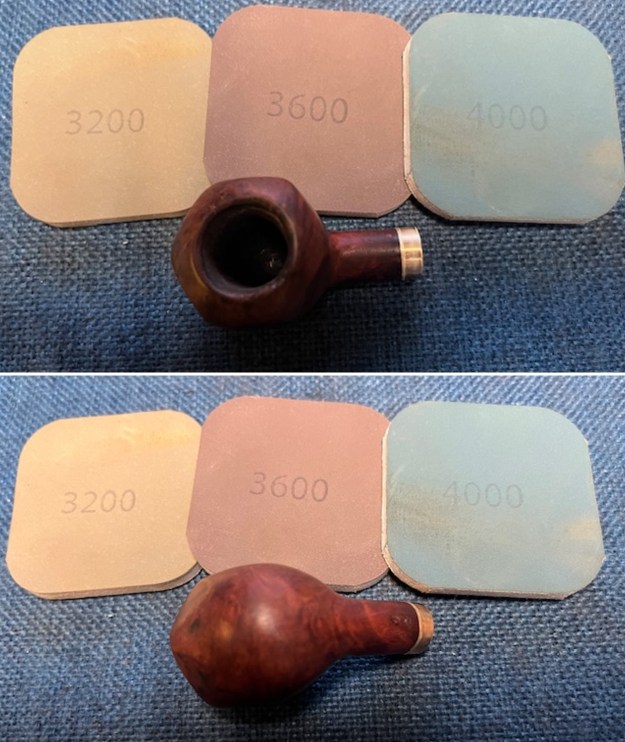
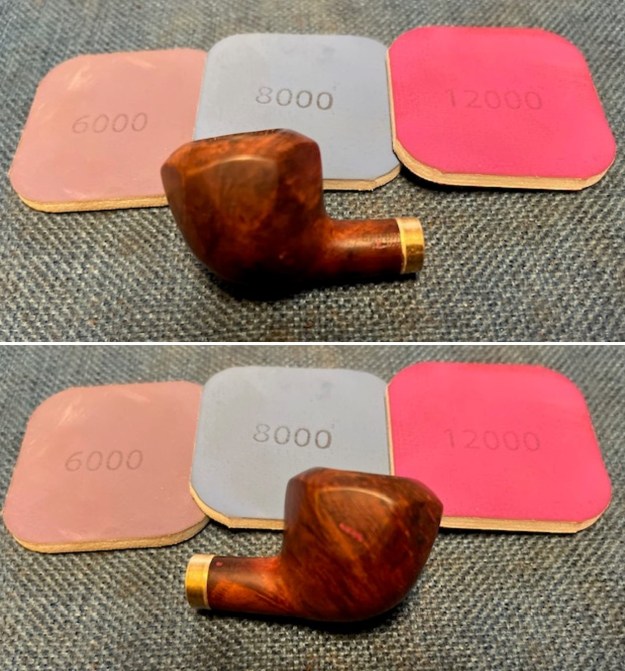
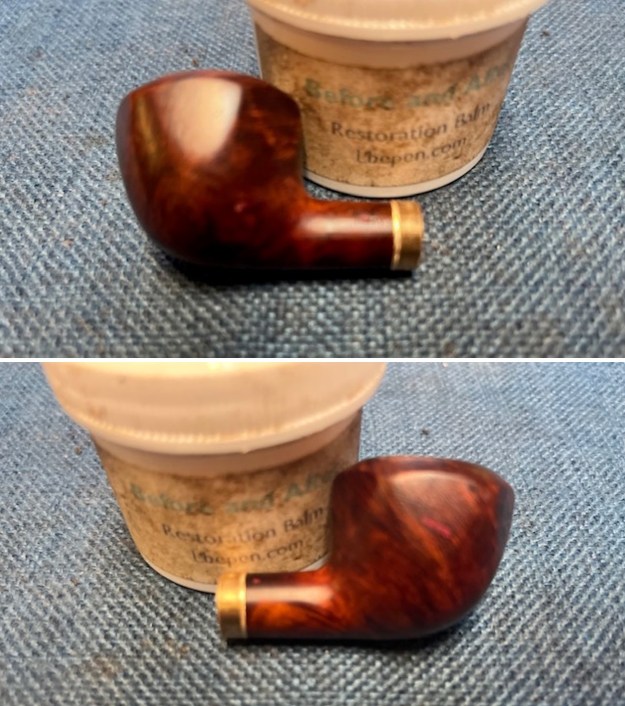
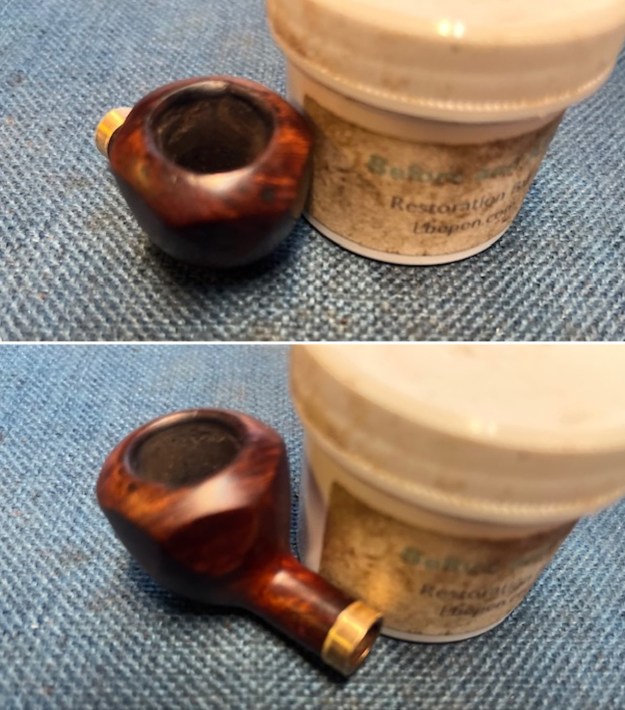
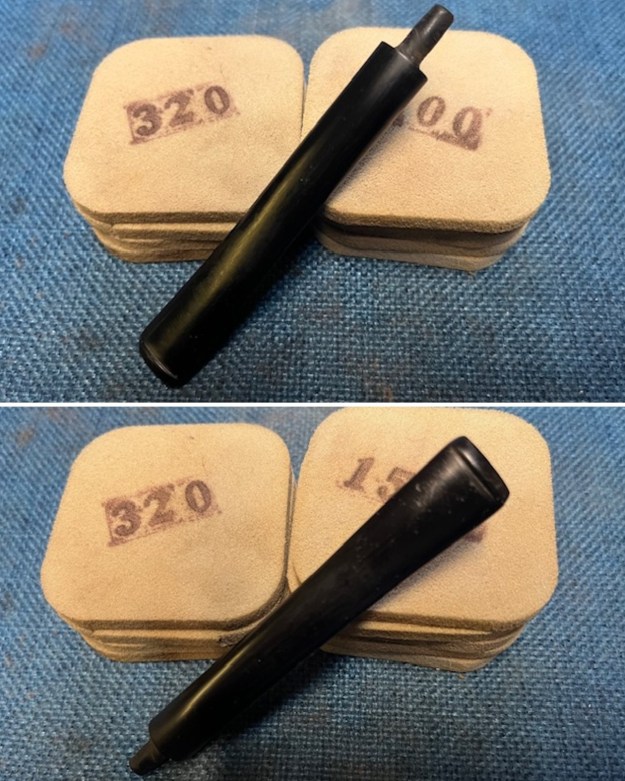
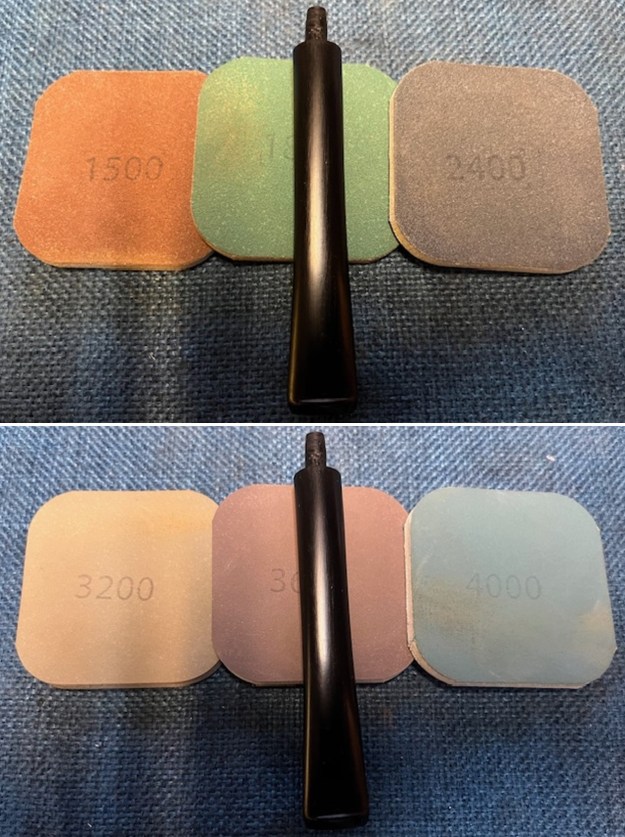
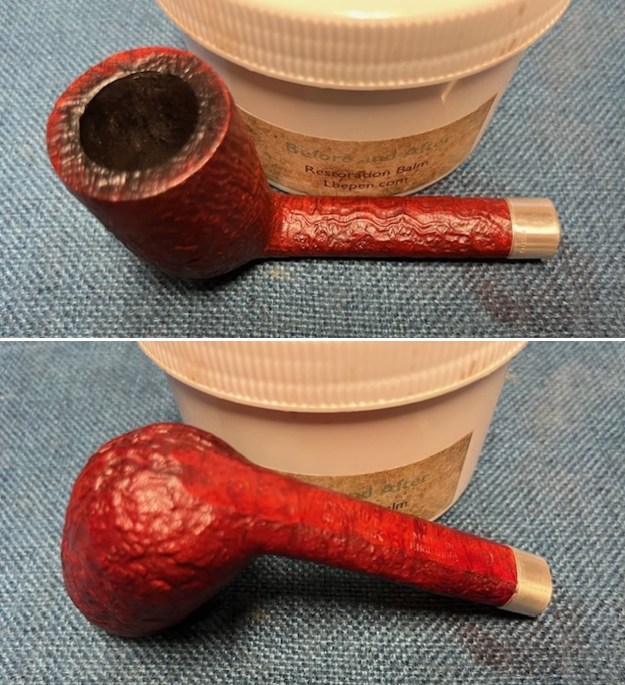
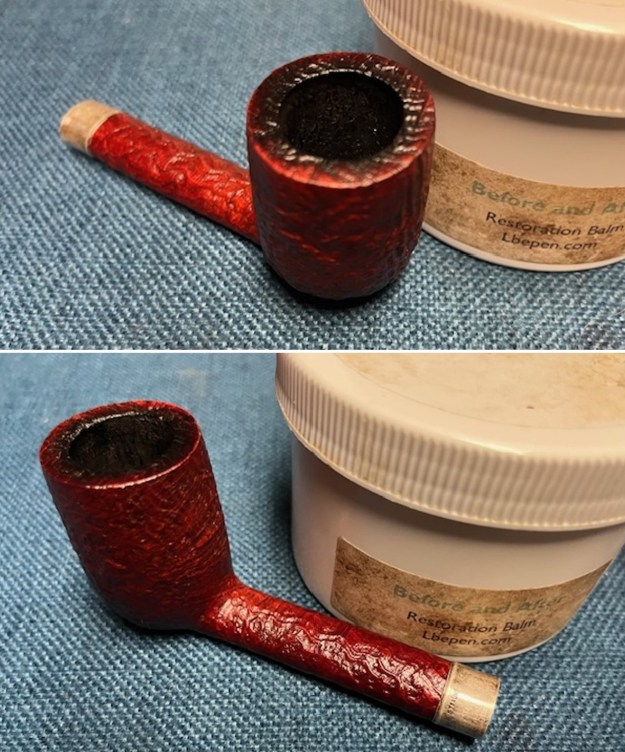
I decided to fit the shank with a thin polished brass band. The shank end was tapered slight and was no long round. It appeared to have been sanded for a stem somewhere in its journey. The thin band would smooth out the transition and square it off. It would also set off the briar and the new stem. I pressed it onto the shank and it was firmly in place. I stained the rim edges and top with a Walnut stain pen to match the rest of the bowl and shank colour. It looked very good. I worked some Before and After Restoration Balm into the finish of the briar with my finger tips. The product works to clean, enrich and restore the briar. The photos show the beauty that pipe really had at this point. I set the bowl aside and turned my attention to the stem. I used the Dremel and sanding drum to reduce the diameter of the stem as much as I safely could do and then used a flat file to take it further. I cleaned up the diameter fit with a smaller flat needle file. It worked well to remove the excess acrylic to match diameter of the shank. It was getting there.I used a small hole saw and small round, oval and flat files to shape the round hole in the button into a slot with an oval. It looked much better once I finished it.I sanded out the files marks on the stem surface with a folded piece of 220 grit sandpaper. I becamse smooth to the touch and was ready to be sanded further with sanding pads.I moved on to sand the stem with 320-3500 grit 2×2 inch sanding pads. I wiped it down with an Obsidian Oil cloth after each sanding pad to remove the sanding debris. The stem began to look much better.I polished the stem with micromesh sanding pads – wet sanding with 1500-12000 grit sanding pads. I wiped it down after each sanding pad with some Obsidian Oil. I finished polishing it with Before & After Pipe Stem Polish – both Fine and Extra Fine and buffed it off with a cotton cloth. I wiped it down with Obsidian Oil to protect the stem and slow down the oxidation. Once again, I am at the part of the restoration that I always look forward to – the moment when all the pieces are put back together. I put the Benaderet’s Coral 135 Billiard and new acrylic stem back together and buffed the bowl with Blue Diamond. I buffed the stem with a heavier touch with Blue Diamond on the buffing wheel. I gave the bowl and the stem multiple coats of carnauba wax. I buffed the pipe with a clean buffing pad to raise the shine. I hand buffed it with a microfiber cloth to deepen the shine. It is fun to see what the polished bowl looks like with the polished sandblast finish and thin brass band. The black acrylic stem stands out as a shiny black contrast to the colours of the bowl. The reddish brown stain on the Benaderet’s Coral Billiard looks absolutely great. It is nice to know that it has a west coast tie to the San Francisco area and a long-gone pipe shop. It must have been a fine smoking pipe judging from the condition it was when we received it. Have a look at it in the photos below. The dimensions are Length: 6 ½ inches, Height: 2 inches, Outside diameter of the bowl: 1 ¼ inches, Chamber diameter: ¾ of an inch. The weight of the pipe is 1.41 ounces/41 grams. This is one that will go on the British Pipemakers section of the rebornpipes online store shortly. Thanks to each of you who are reading this blog. Remember we are not pipe owners; we are pipemen and women who hold our pipes in trust until they pass on into the trust of the next generation.

Rebirthing a French made DM over UNIC Algerian Briar Panel Sitter


by Steve Laug

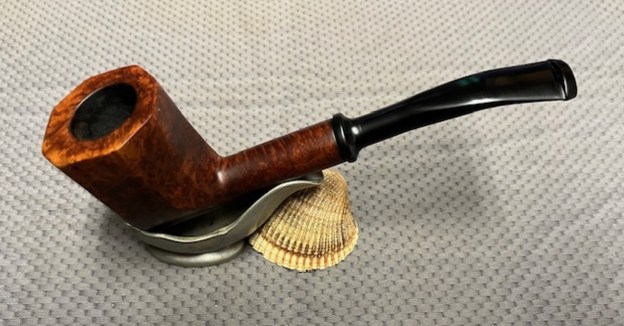
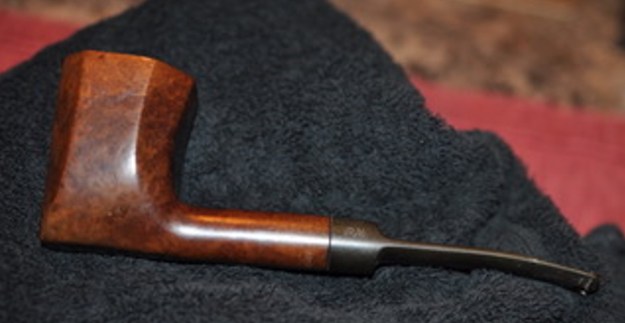
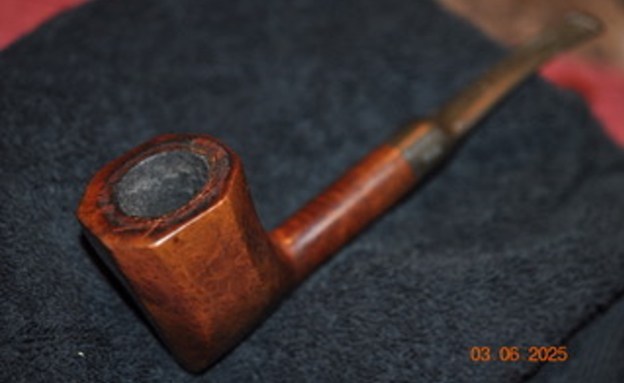
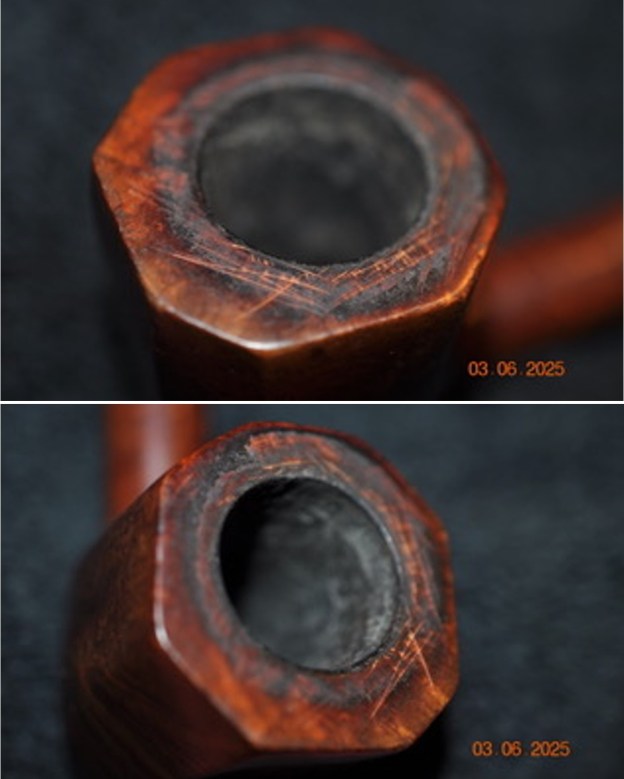
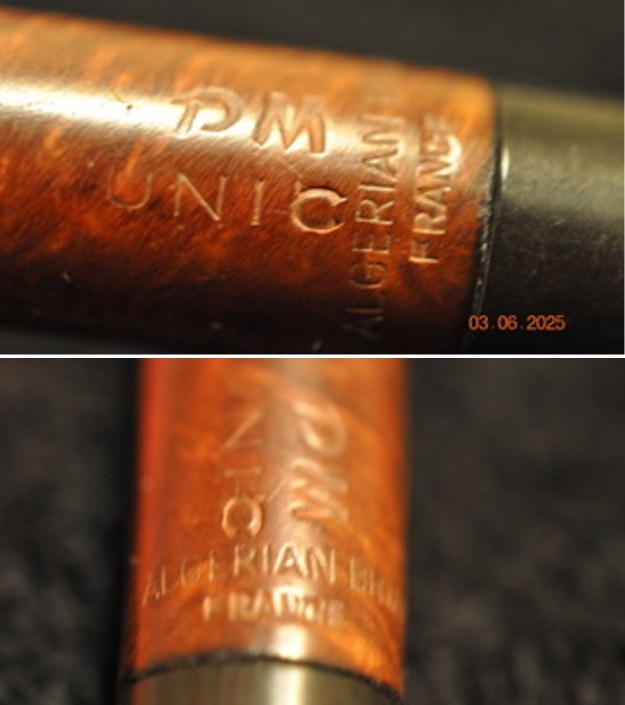
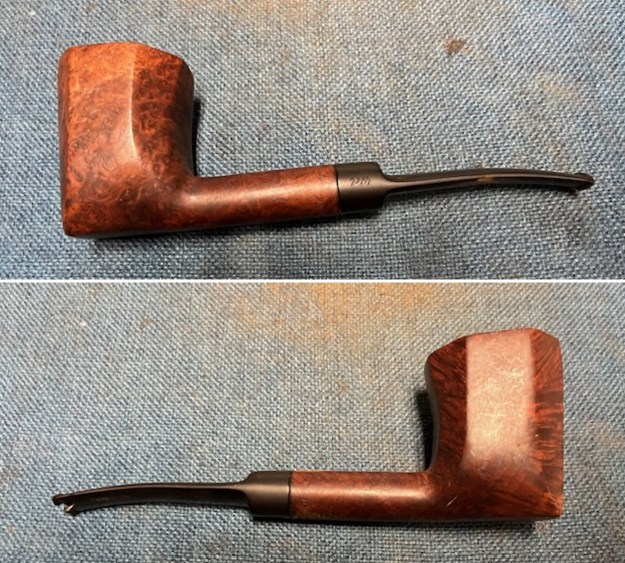
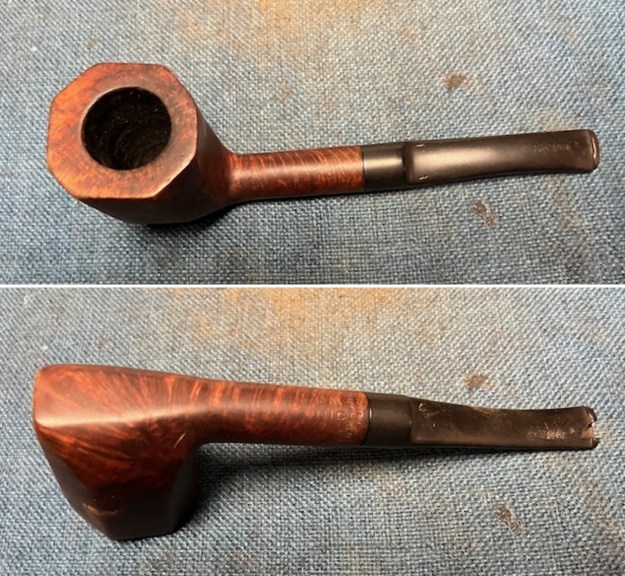
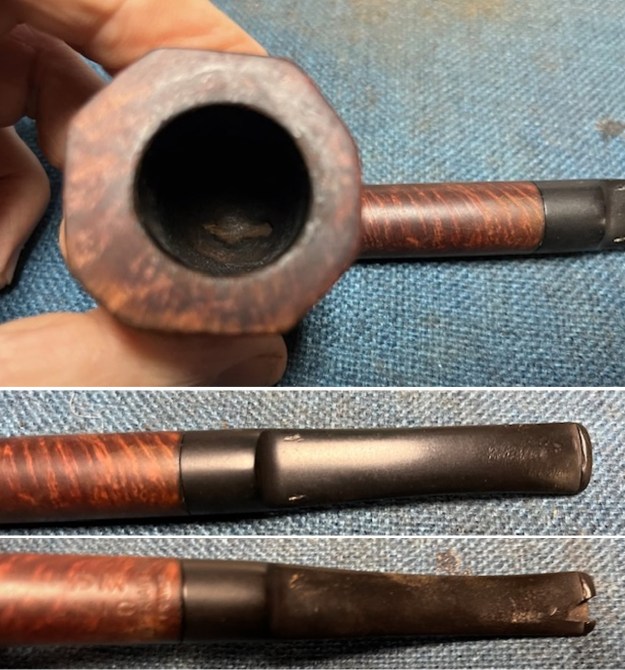
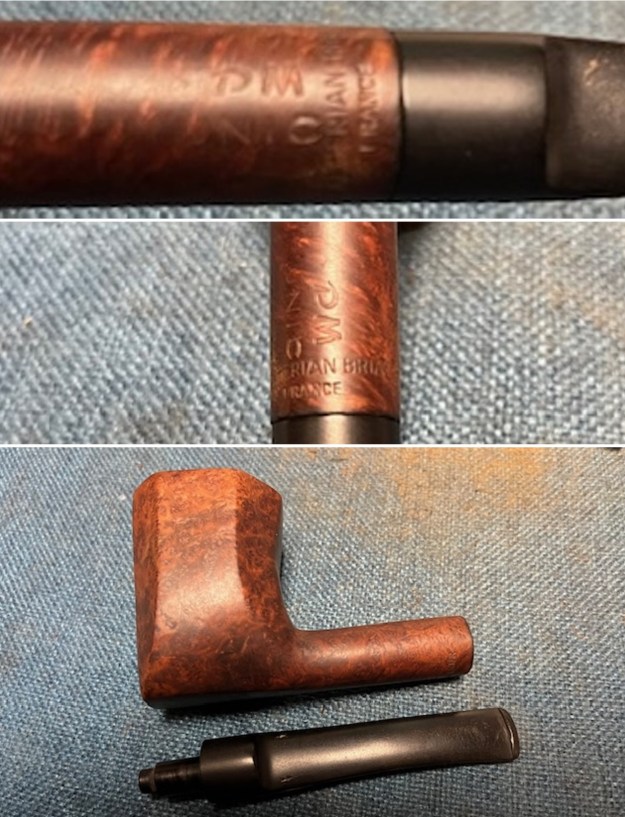
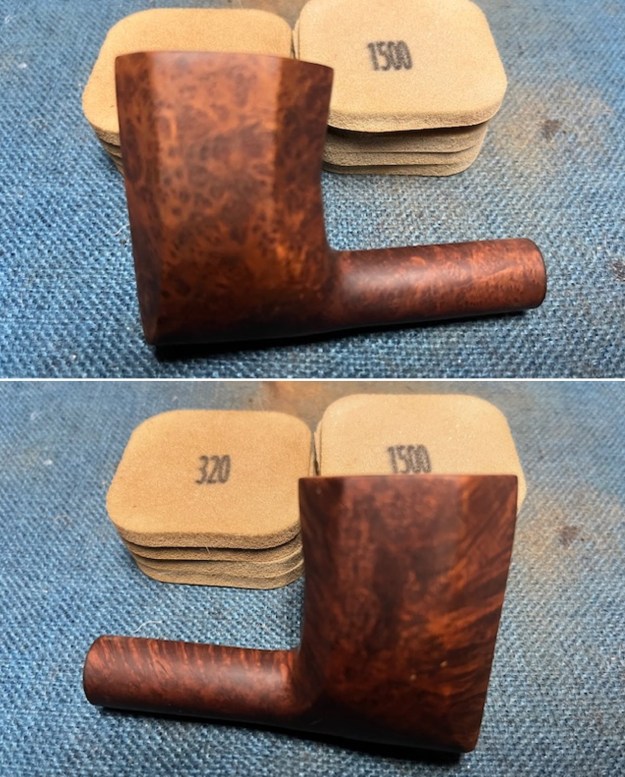
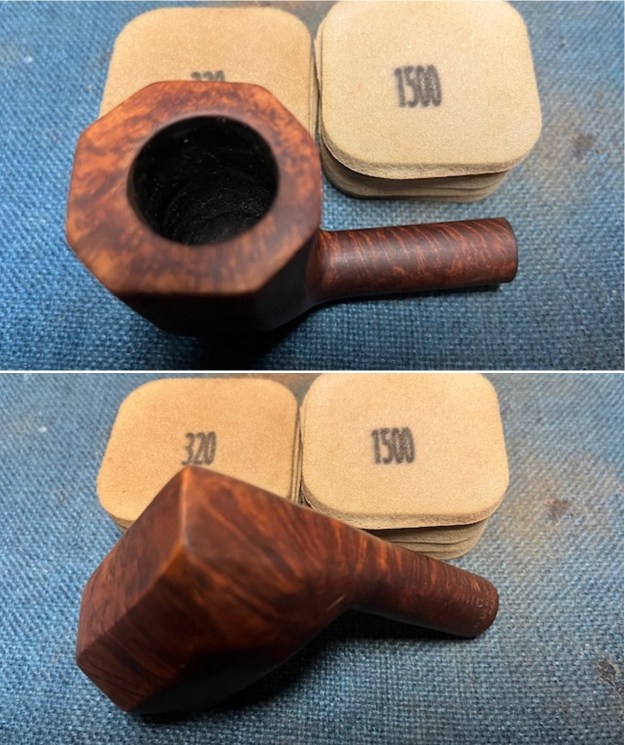
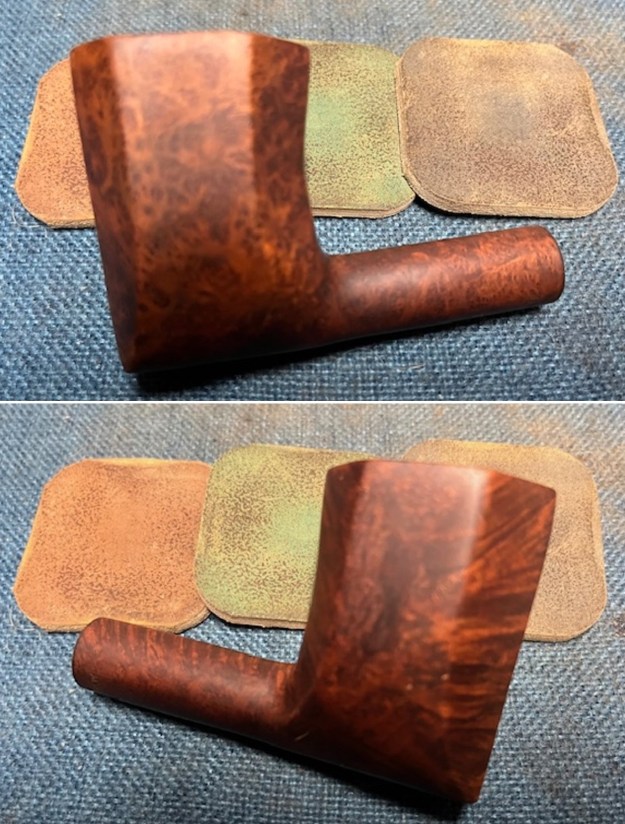
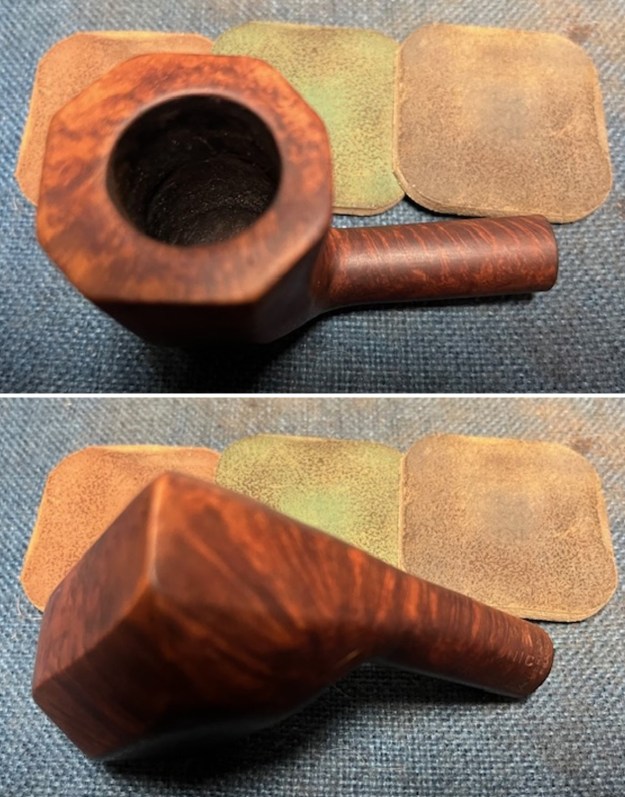
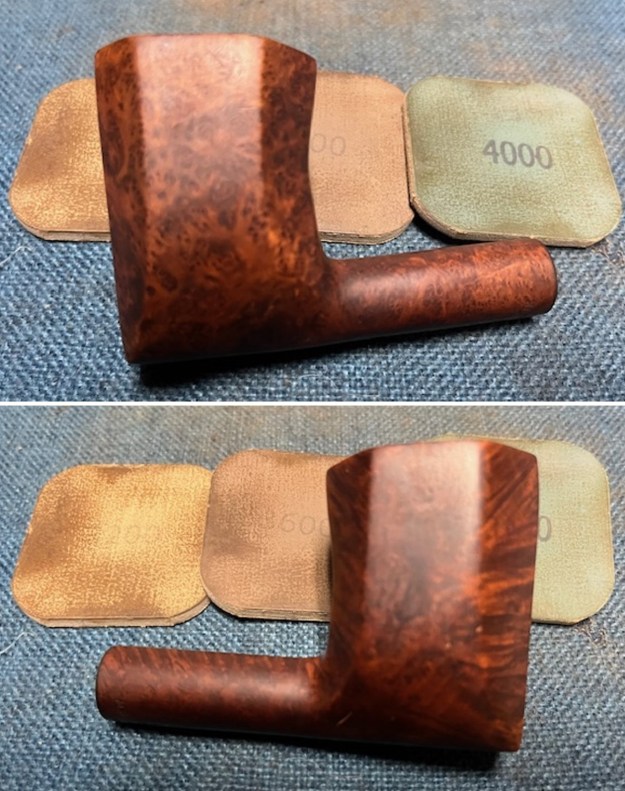
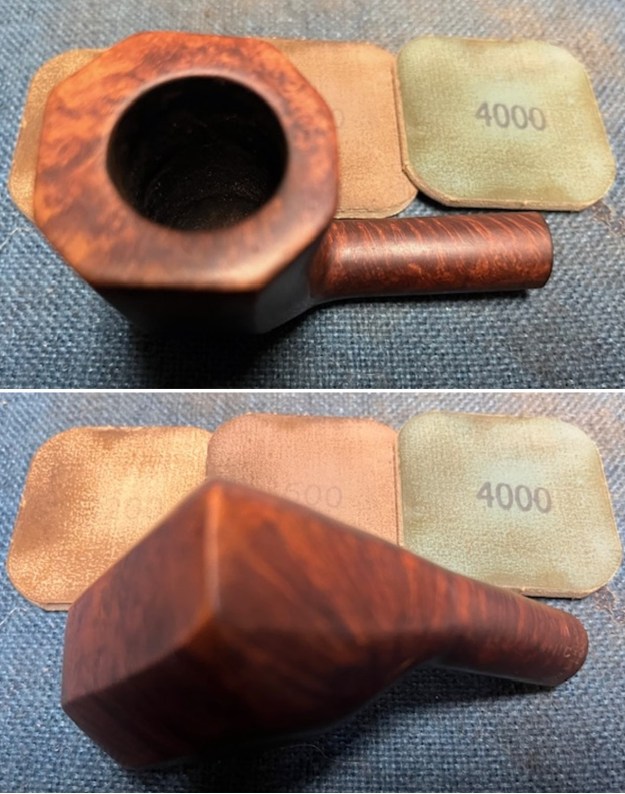
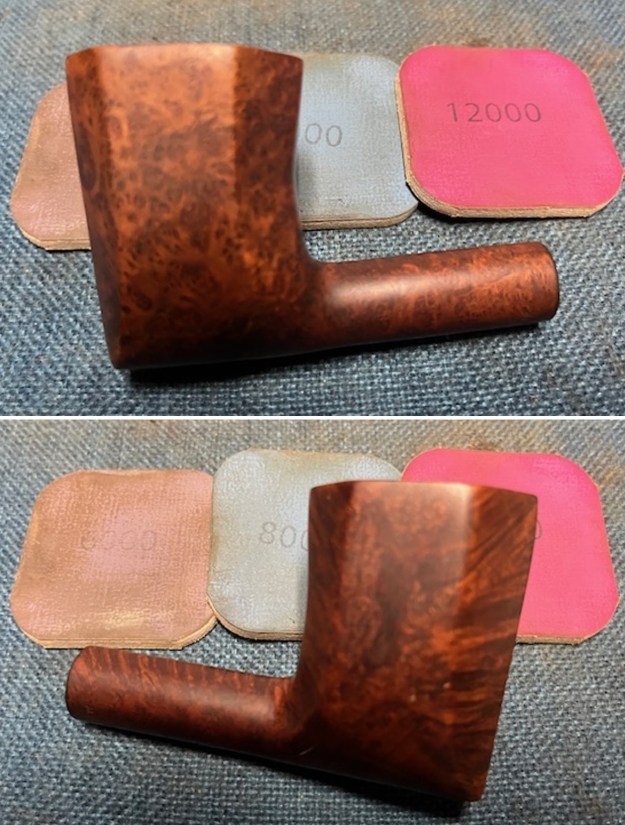
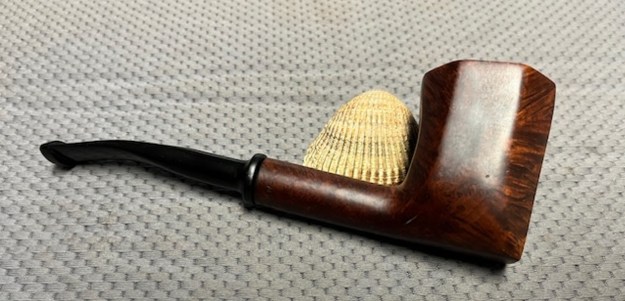
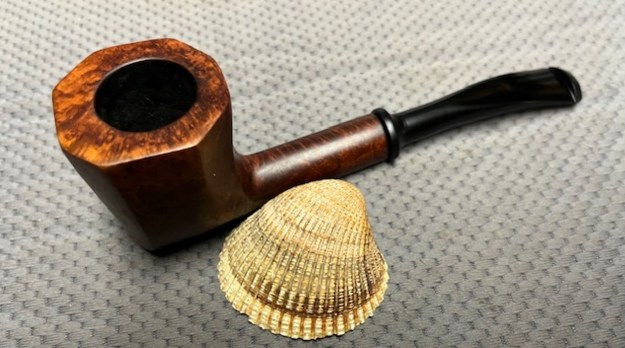
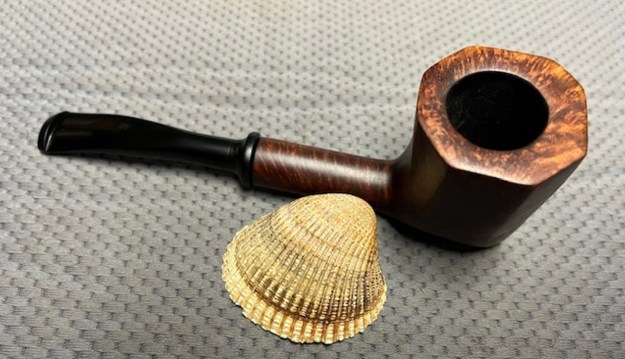
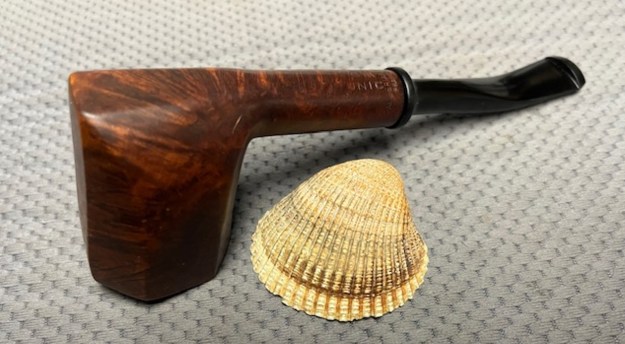
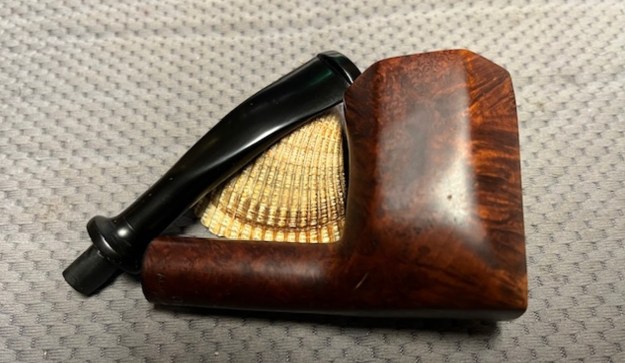
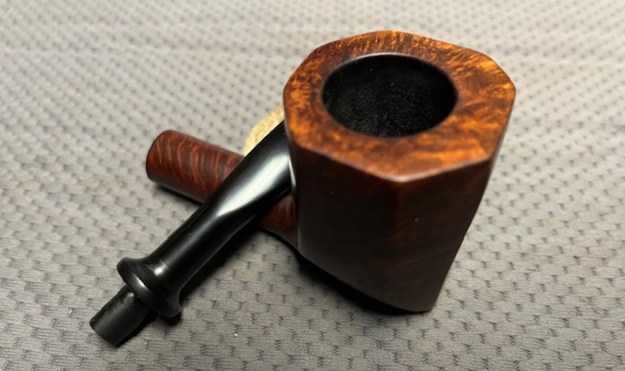
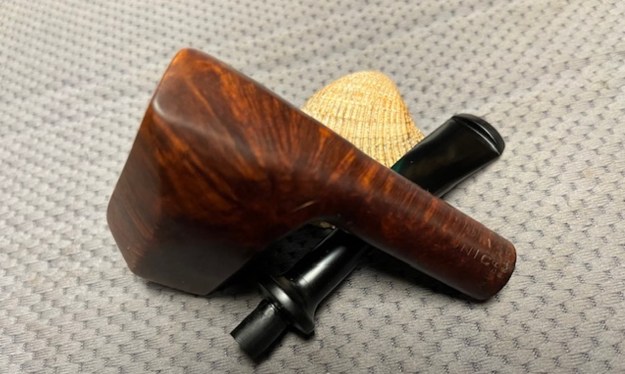
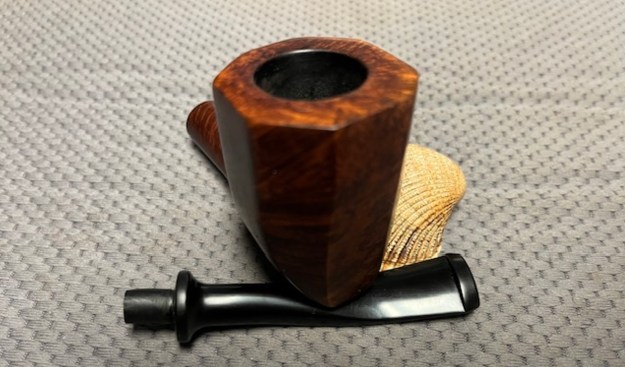
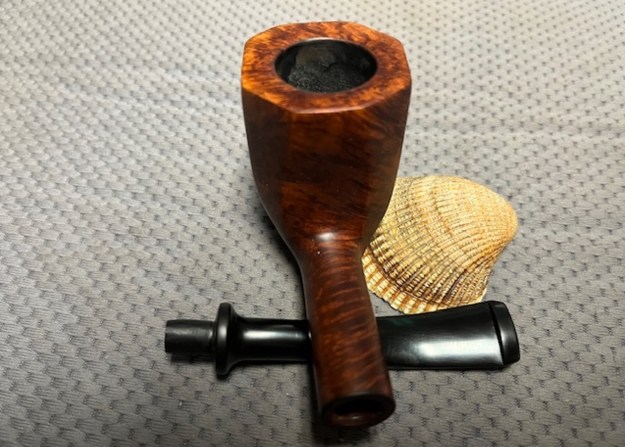
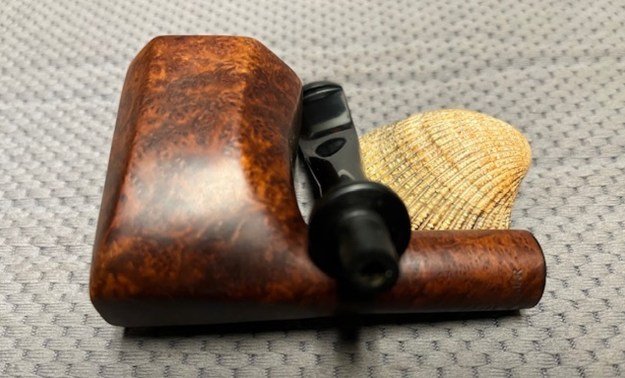
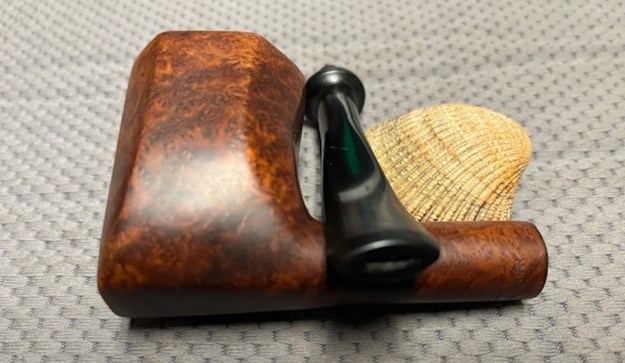
The next pipe I chose to work on was an interesting octagonal Panel. We picked the pipe up from a seller in Saint Cloud, Florida, USA on o4/12/2024. The finish was very dirty but some great mixed grain stood out around the bowl and the shank. The pipe is stamped on the underside of the shank and reads either DN or PM horizontally and vertically it is stamped UNIC. I have never heard of the brand at this point. Below these stamps it is stamped Algerian Briar [over] France. There was also a faint DN or PM in an oval stamped on the side of the saddle stem. The bowl had a moderate cake with some light lava overflow and scratching on the rim top.  The shape is almost a Skater but the Octagonal panels take away the shape point of the nose on the heel of the bowl. It had a vulcanite push saddle stem. The stem was oxidized and it was rough to touch. There were also some gouges in the top near the saddle that looked like marks from pliers and tooth marks and chatter. The worst part was that there was large chip from the button forward on the underside of the stem that gave me pause and made me think it would need to be restemmed. Jeff took some photos of the pipe before he started his clean up work. He took some photos of the rim top and bowl from various angles to give me a clear picture of the condition of the rim top and bowl. You can see the cake in the bowl and the darkening, scratches and light lava coat on the inner edge and rim top. He also took photos of the stem. It is dirty and has a large chunk out of the underside of the stem from the button forward. Jeff took some photos of the sides of the bowl to show the condition of the finish on the pipe. The photos show the smooth finish on sides and heel of the bowl and shank, highlighting grain. Under the dust it was some great looking briar on the panel sides of the octagonal bowl. Jeff took photos of the stamping on the underside of the shank. It is clear and readable as noted above. The DM or PM stamp over UNIC does not ring any bells with me in terms of the maker. Any help would be greatly appreciated…Jeff did a thorough clean up on the pipe before he sent the box to me. He reamed the bowl with a PipNet pipe reamer and got rid of the cake. He cleaned up the reaming with a Savinelli Fitsall Pipe Knife so that we could see the walls of the bowl and assess for damage. It was smooth and in great condition. He cleaned the internals of the shank and stem with alcohol, pipe cleaners, shank brushes and alcohol. He scrubbed the exterior with undiluted Murphy’s Oil Soap and a tooth brush. He rinsed the pipe under warm water. He dried it off with a cloth and then let it air dry. The stem was scrubbed with undiluted Murphy’s Oil Soap and a tooth brush at the same time as the bowl. He soaked it in Briarville’s Pipe Stem Deoxidizer. Once it was rinsed off, it came out looking very good. The finish on the bowl and the rim top cleaned up nicely. The damage on the stem underside was clearly visible. I took pictures of the pipe to show how it looked when I unpacked it. I took close-up photos of the bowl and rim top to show the condition after cleaning. It looked great. I also took photos of the stem surface to show the condition of the stem and the large chip on the underside. I took photos of the stamping on the underside of the shank. It was clear and readable as noted above. I also took a photo of the pipe with the stem removed to give a sense of size and perspective.I sanded the rim top and sides of the bowl and shank with 320-3500 grit 2×2 inch sanding pads. I wiped the stem down after each sanding pad with a damp cloth to remove the debris. I polished the smooth side of the bowl and shank with micromesh sanding pads – dry sanding with 1500-12000 grit pads and wiping it down after each sanding pad with a damp cloth. It really began to take on a real shine. I worked some Before & After Restoration Balm into the surface of the smooth briar with my finger. I let it sit on the bowl for 10 minutes and then buffed it off with a paper towel and soft cloth. The product is a great addition to the restoration work. It enlivens, enriches and protects the wood while giving it a deep glow. It is a product I use on every pipe I restore. Now I had a decision to make regarding the stem. I could try a repair on the huge chip but I was uncertain how well it would hold up. I could try though. I could also fit a new stem on the pipe. I could not find any stem that was similar but I found one that would give the pipe a jaunty look. Here is a photo of the two stems. I decided to fit the new stem to the shank just to have a look at its appearance. I really wanted to know if the stem would work and what the pipe would look like with the stem. The pipe almost has the appearance of an interesting cross between a French and a Danish pipe.I sanded the casting marks and marks on the new stem with 220 grit sandpaper and files to clean it up and make it look fitting. The change of appearance was quite different. I am excited to see how the finished stem looks on the bowl.I sanded the stem with 320-3500 grit 2×2 inch sanding pads. I wiped the briar down after each pad with a damp cloth to remove the sanding dust and debris. I wiped it down with an Obsidian Oil cloth. It began to look very good.I heated the stem with the flame of a lighter and then bent it over the curve of the lighter. The bend was perfect and once polished I looked forward to see what it would look like on the finished pipe.I polished it with micromesh sanding pads – dry sanding with 1500-12000 grit sanding pads. I wiped it down after each sanding pad with Obsidian Oil. I polished it with Before & After Pipe Stem Polish – both Fine and Extra Fine. I buffed the stem with a soft cloth to raise the shine. I gave it a final wipe down with Obsidian Oil to protect it. I don’t know what it is about finishing a restoration but I have to tell you that it is my favourite part of the process. It is the moment when everything that I have worked on comes together. I can compare it to where I started and there is always satisfaction that it looks better than when we picked it up. As always, I put the new stem on the DM UNIC Algerian Briar France and buffed it with Blue Diamond on the buffing wheel. I gave the bowl and the stem multiple coats of carnauba wax. I buffed the pipe with a clean buffing pad and hand buffed it to raise the shine. It is fun to see what the polished bowl looks like along with the polished All Briar stem. This DM Algerian Briar French Octagonal Panel is a great looking pipe and I am sure that it will be comfortable in hand when smoking as it is light and well balanced for a pipe of this size. Have a look at it with the photos below. The dimensions are Length: 6 ½ inches, Height: 2 ¼ inches, Outside diameter of the bowl: 1 ½ inches, Chamber diameter: 7/8 of an inch. The weight of the pipe is 2.29 ounces/65 grams. It is another beautiful pipe and one that will be on the rebornpipes store soon. You can find it in the section of Pipes by French Pipe Makers. If you are interested in adding it to your collection let me know. Thanks for walking through the restoration with me as I worked over this pipe. Thanks to each of you who are reading this blog.

As always, I encourage your questions and comments as you read the blog. Thanks to each of you who are reading this blog. Remember we are not pipe owners; we are pipe men and women who hold our pipes in trust until they pass on into the trust of those who follow us.

Restemming and Restoring a Unique Venezia Bruyere Garantie Thick Shank System Billiard


by Steve Laug

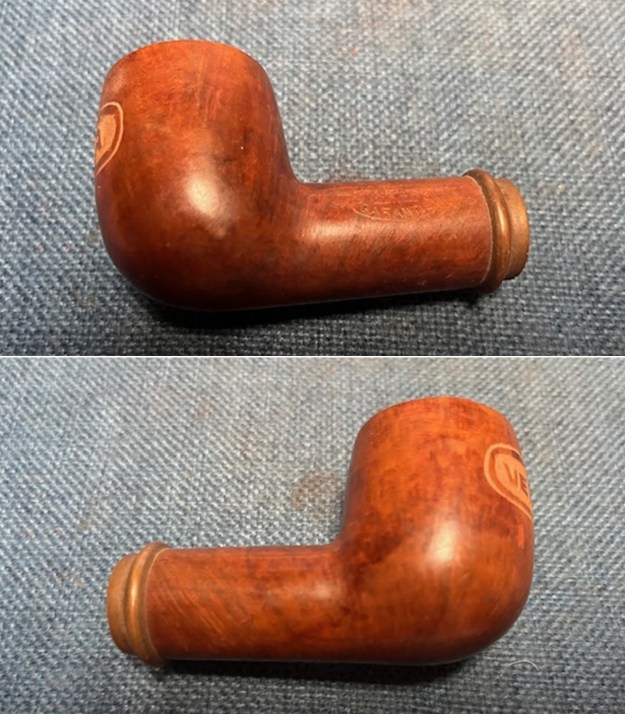
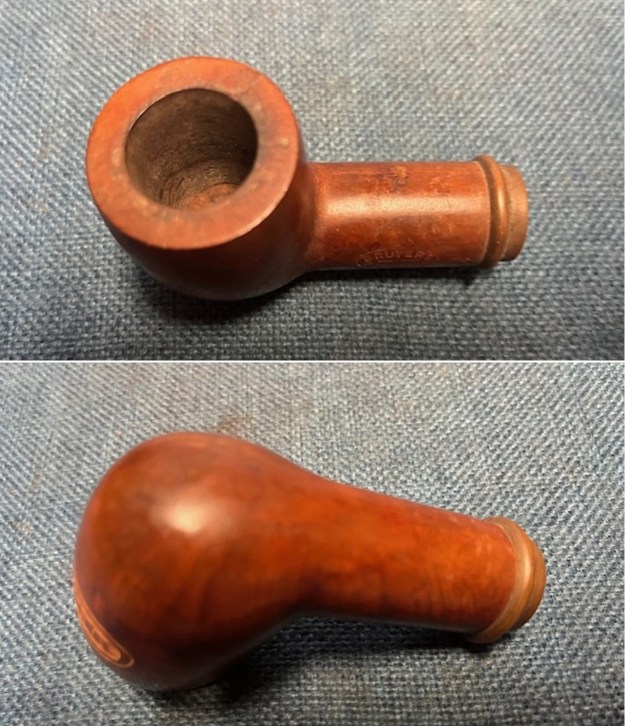
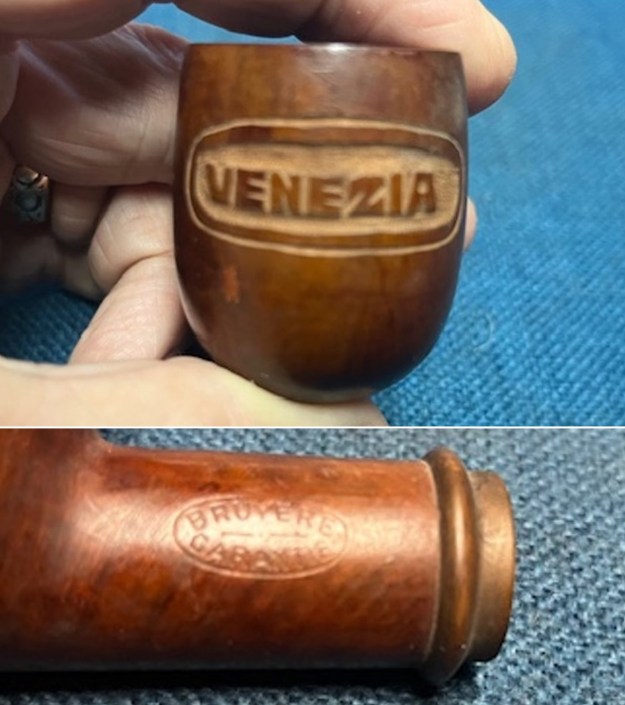
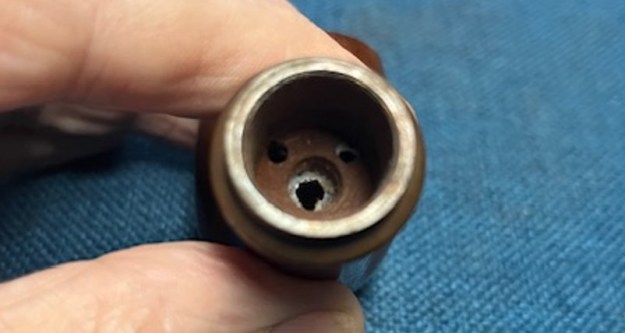
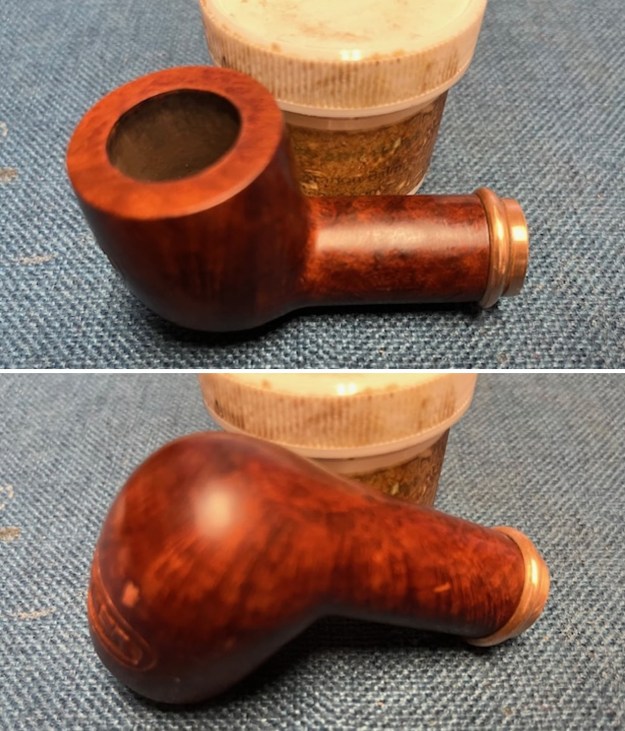
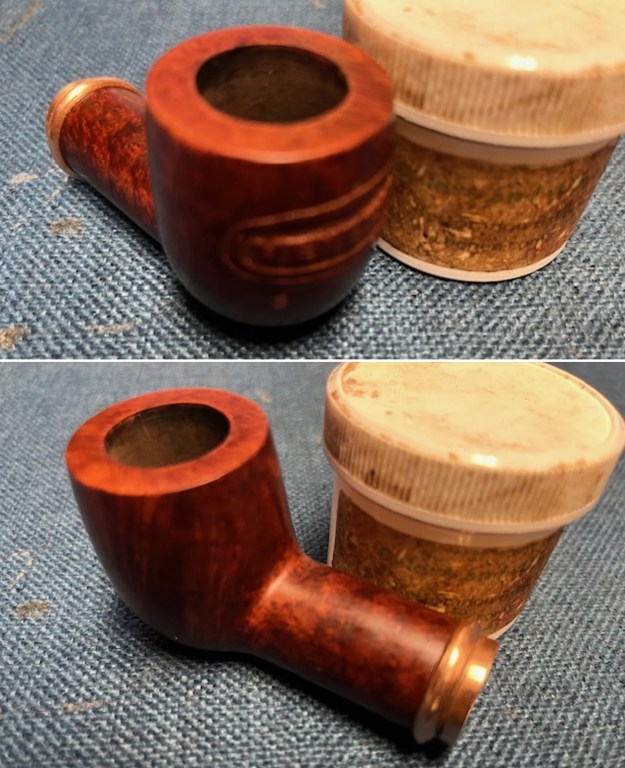
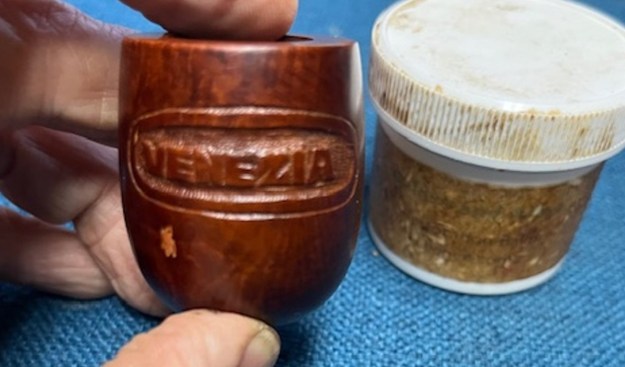
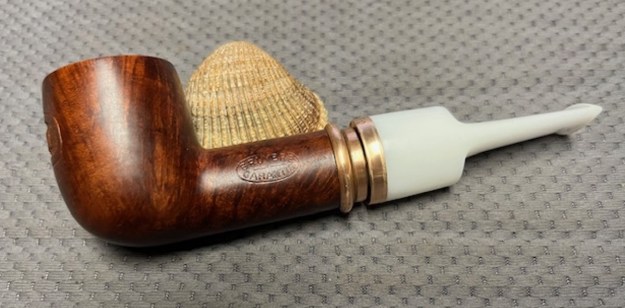
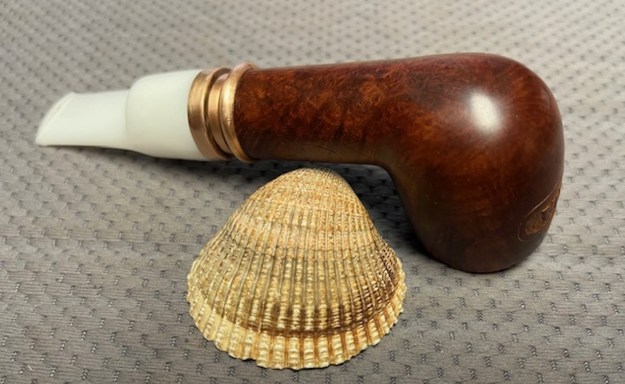
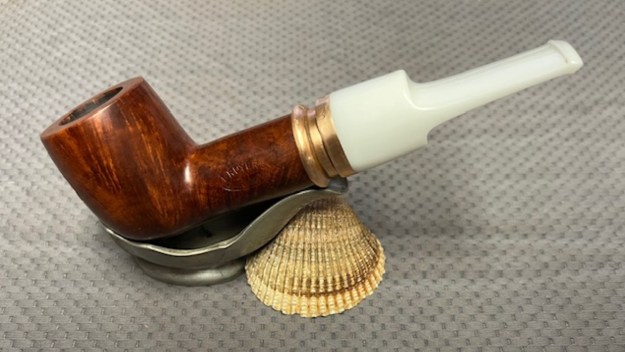
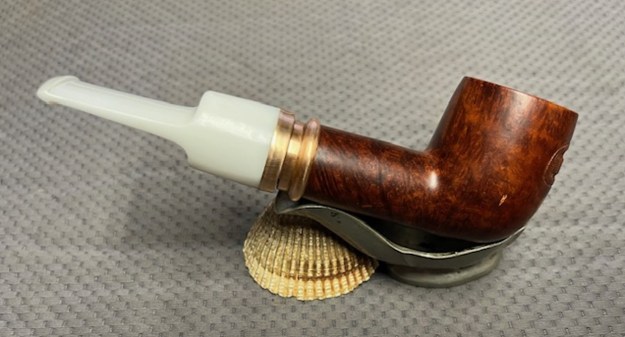
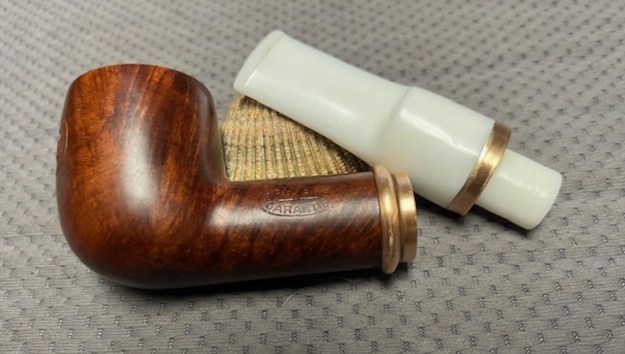
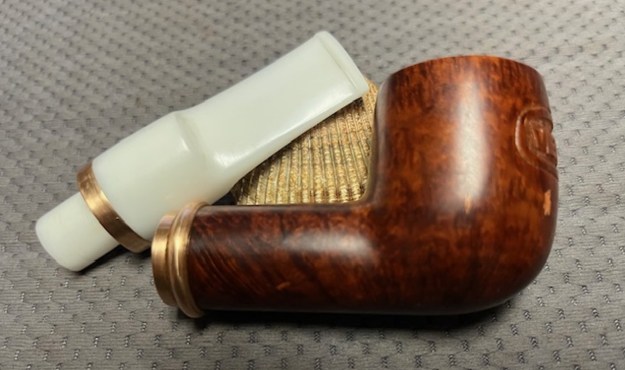
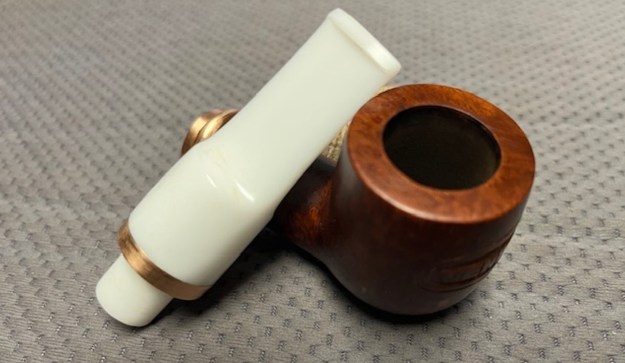
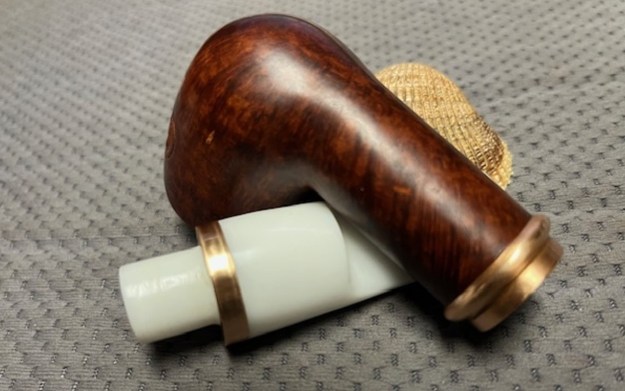
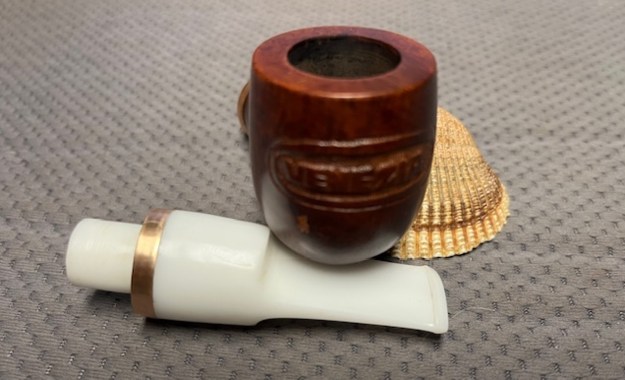
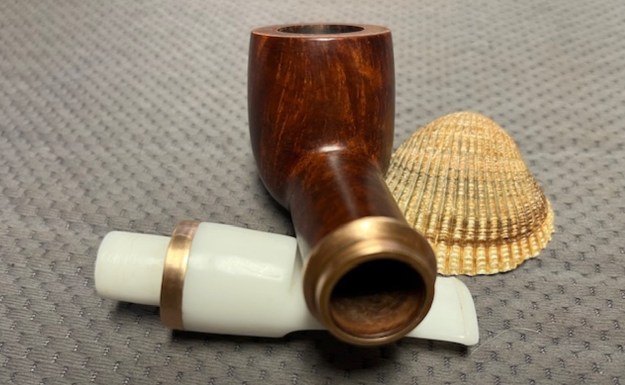
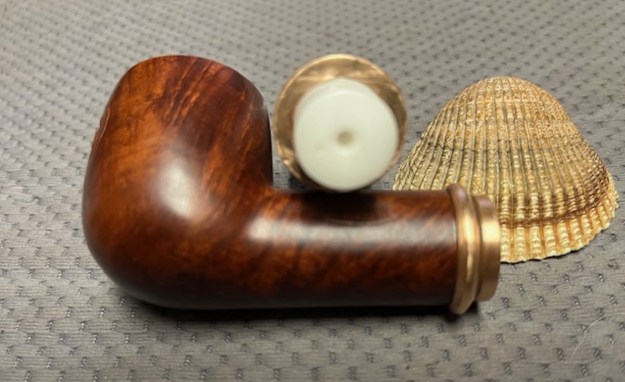
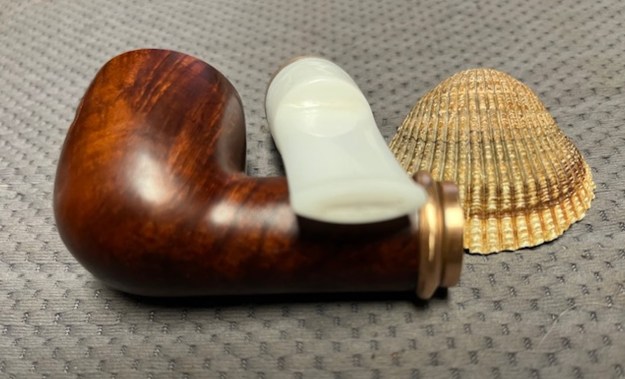
Once again, I am breaking the rhythm of restoration of pipes that Jeff has sent to me work on a bowl that I have in a very big box of bowl without stems. There are probably about 100 bowls that I have been chipping away at for a long time now. Yesterday I had to urge to restem a few of the bowls. The next bowl I chose was this interesting thick shank Billiard bowl that was a system style pipe that had two airways entering the bowl and shank. I ran a pipe cleaner through each airway in the shank and the came out in the bowl bottom. The shank end had a thick step-down brass fitting that was oxidized and greenish coloured. The stamping on the left side of the shank was an oval that reads Bruyere [over] Garantie. The front of the bowl was carved with the word VENEZIA (smooth) in a rusticated oval. Somewhere along the way Jeff had reamed and cleaned the bowl and it was waiting a new stem. The briar was dirty from sitting in my box for years. The rim top had a bit of debris and darkening on the surface that was probably present after Jeff’s previous cleanup. I examined the brass shank end for any stamping and there was nothing in the brass as it was unmarked.

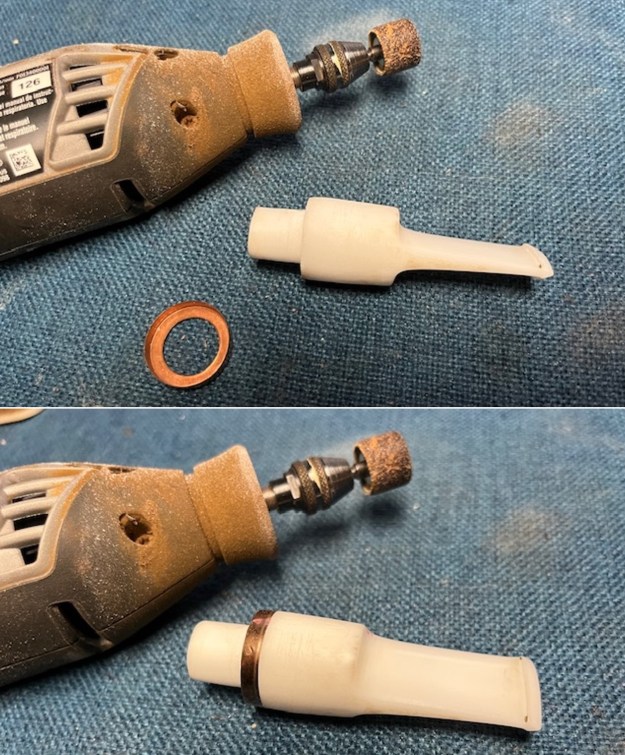
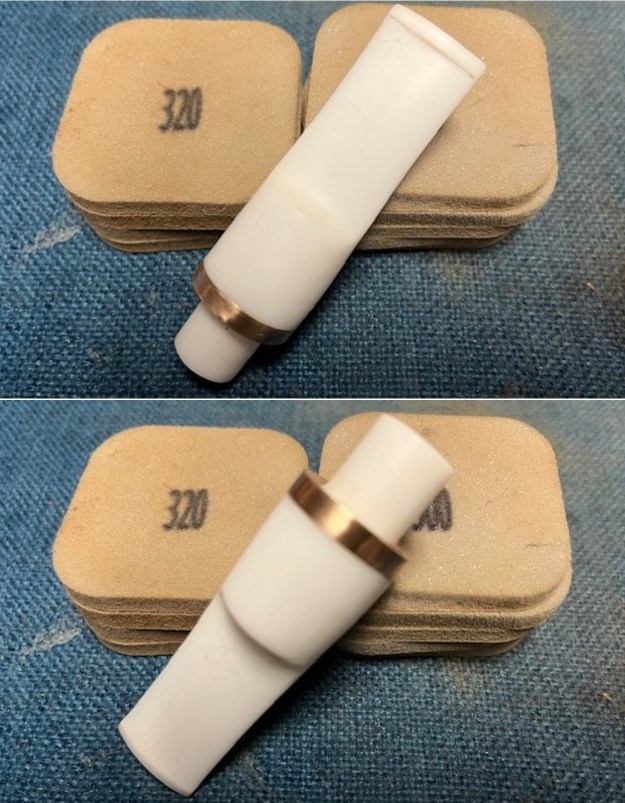
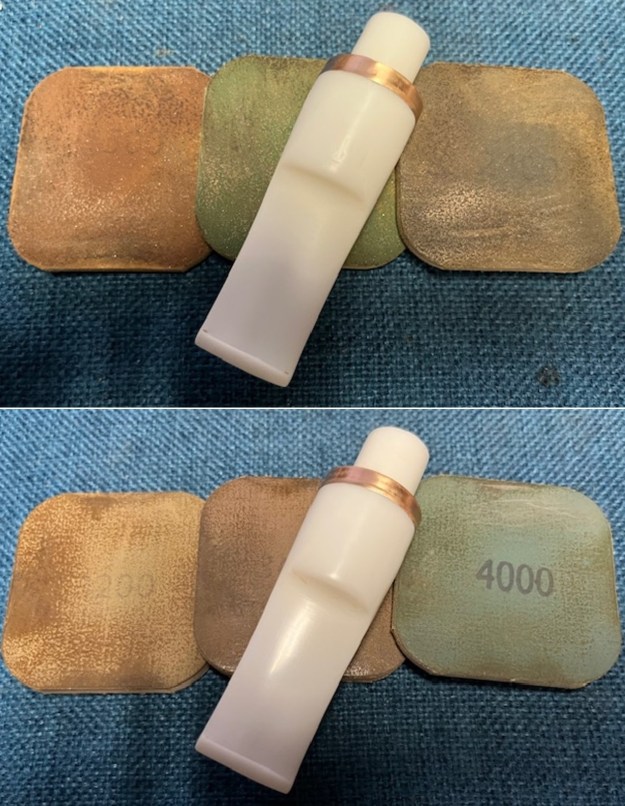
I found the VENEZIA carving interesting, which is what drew me to it in the first place. I have worked on Savinelli pipes that were in a line called VENEZIA and I have worked on a folding pocket pipe from my late friend Chuck (https://rebornpipes.com/2012/09/05/chucks-gift-pipes-part-1-venezia-vogini/) that also bore that name along with Vogini. I have done a bit of digging and I cannot put a finger on the maker other than it is separate from the Savinelli Line. The one thing I know is that they have certainly made some unique pipes. This System Pipe is certainly another unique and special looking pipe. My guess is that it probably had a horn stem with a plunger in the centre of the tenon and an airway on the top left and right of the centre dropping the smoke into the rest of the airway in the stem as cool and dry. I took a photo of the carving on the front of the bowl and the left side of the shank. They are clear and readable as noted above.I took a photo of the airways as they entered the shank. You can see one at the top right and top left. There is also fitment at end of the mortise that looks like it held a pin in the centre as a condenser that fit in the mortise.I went through my stems and found an interesting white acrylic saddle stem that would look good with this bowl and the brass shank end. I would need to reduce the diameter of the tenon to fit in the large mortise and would also need to reduce the diameter of the saddle portion to reflect the diameter of the shank.I used a Dremel and a sanding drum to take down the diameter of the saddle portion of the stem and also the tenon. I decided to try something a bit different – to fit the end of the stem with a reversed shank band/ferrule. I reduced the stem diameter enough to press the band onto the end of the stem.I sanded the stem with 220 grit sandpaper to smooth out the marks from the Dremel. I followed that by sanding it with 320-3500 grit sanding pads to further blend down the sanding areas. I wiped the stem down between pads with an Obsidian Oil cloth to remove the sanding debris from the stem.I polished the stem with micromesh sanding pads – dry sanding with 1500-12000 grit sanding pads. I wiped it down after each sanding pad with Obsidian Oil. I polished it with Before & After Pipe Stem Polish – both Fine and Extra Fine. I set the stem aside and turned my attention to the bowl. I wiped down the bowl with alcohol to remove the spotty finish and the debris on the bowl sides. It began to look much better. I sanded the bowl with 320-3500 grit 2 x 2 inch sanding pads. I wiped the bowl down after each sanding pad with a damp cloth to remove the sanding debris. It began to take on a rich shine. I polished the briar with micromesh sanding pads – dry sanding with 1500-12000 grit pads. I wiped the bowl down after each pad with a damp cloth to remove the sanding dust. By the end of the process the pipe bowl looked very good. I worked some Before & After Restoration Balm into the surface of the briar with a shoe brush to get into the carving on front of the bowl and my fingertips on the smooth. The product works to clean, enliven and protect the briar. I let the balm sit for 15 minutes and then buffed with a cotton cloth to raise the shine. The photos show the bowl at this point in the restoration process. This Unique Vezania System Bowl with the new White Acrylic stem is a great looking pipe now that it has been restored. The rich finish gives the shape an elegant look. The flow of the bowl and the new stem have a great hand feel. I put the stem back on the bowl and carefully buffed the pipe with Blue Diamond on the buffing wheel using a light touch on the briar. I gave the bowl and the stem multiple coats of carnauba wax on the buffing wheel. I buffed the entire pipe with a clean buffing pad. I hand buffed the pipe with a microfiber cloth to deepen the shine. The finished Vezana System Bowl and new stem fits nicely in the hand and feels great. Give the finished pipe a look in the photos below. The dimensions of the pipe are Length: 5 ½ inches, Height: 1 ¾ inches, Outside diameter of the bowl: 1 ¼ inches, Chamber diameter: ¾ of an inch. The weight of the pipe is 59 grams/2.08 ounces. This is unique enough that for the time being I am going to hold on to it and enjoy its look, feel and smoke it! Thanks for reading this blog and my reflections on the pipe while I worked on it.

Restemming and Restoring a GBD Prehistoric Bulldog with a Cracked Shank


by Steve Laug

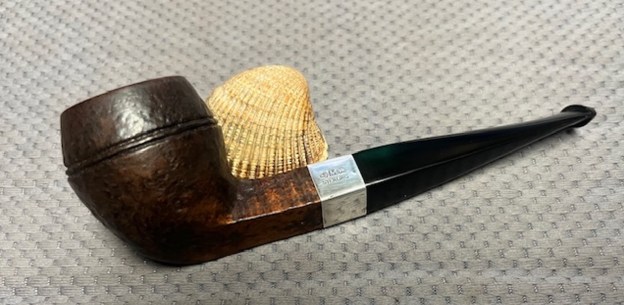
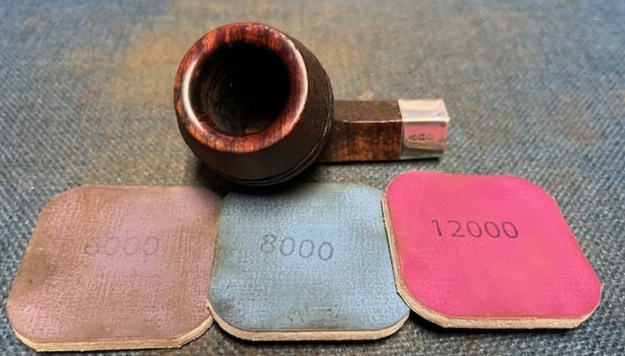
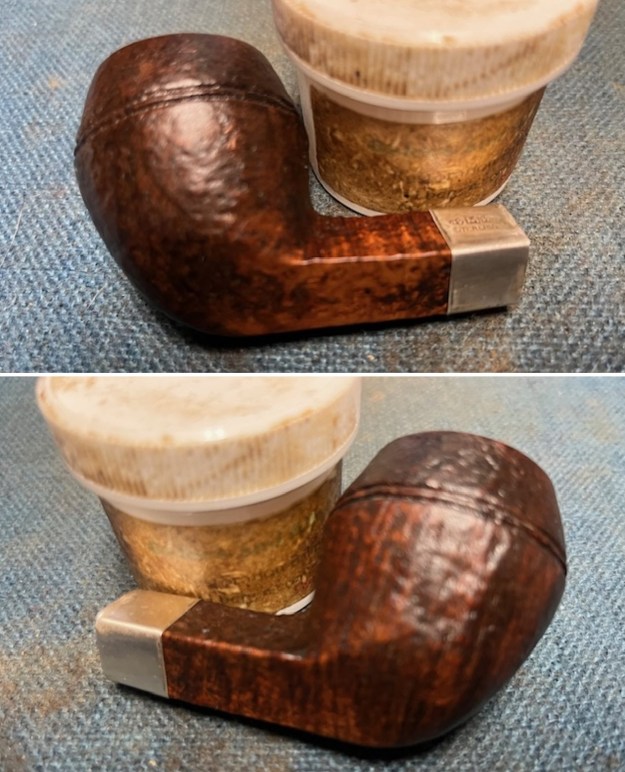
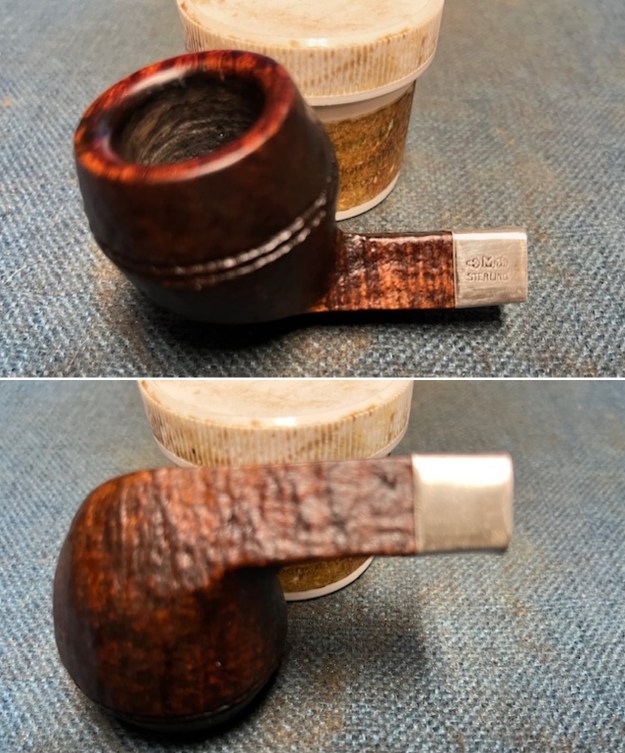
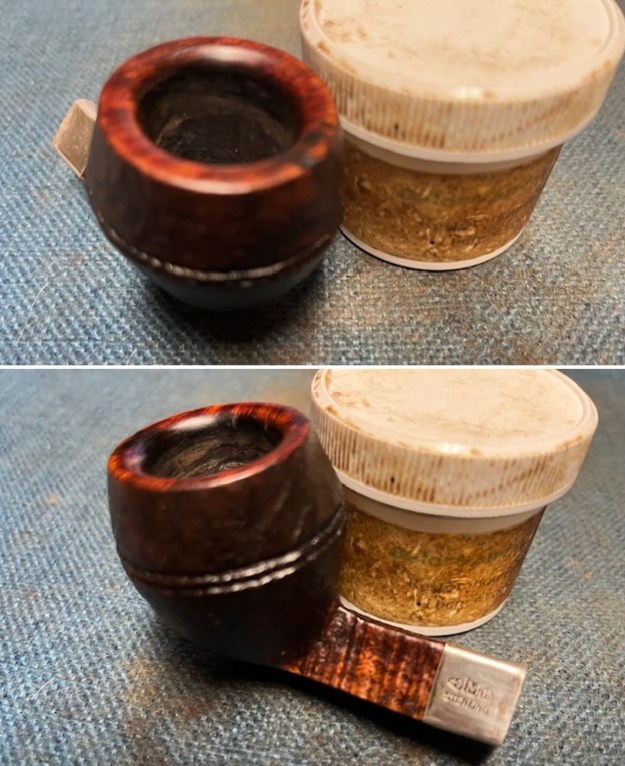
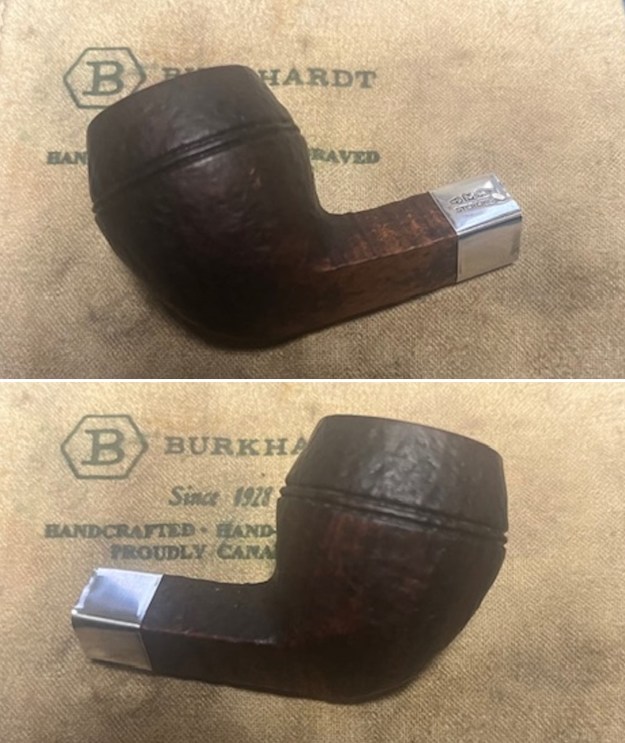
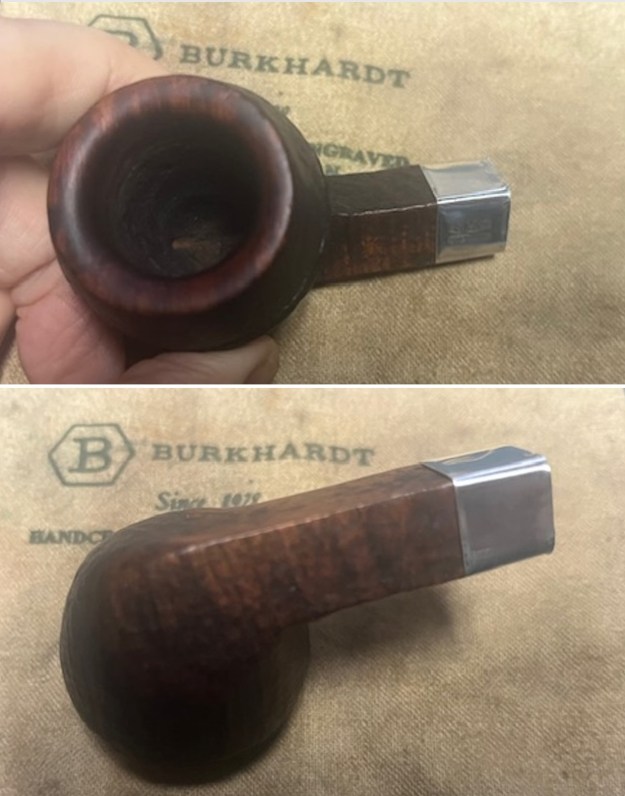
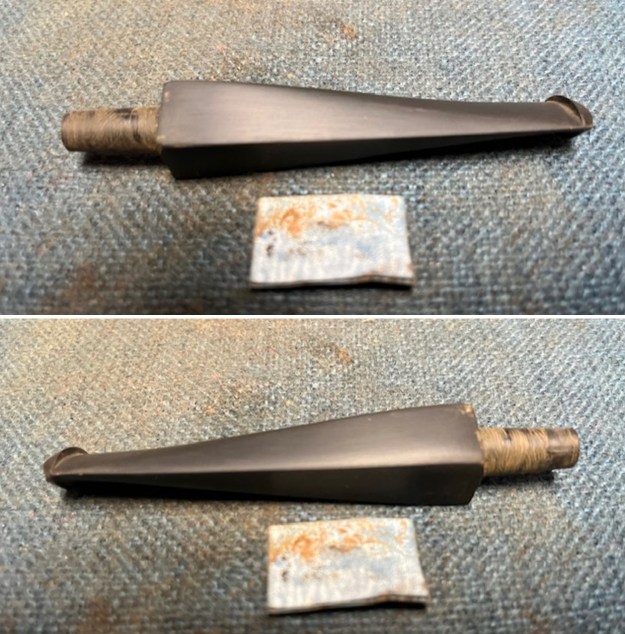
The next pipe on the work table was another bowl I had sitting in the box. This one was a nice-looking bulldog with beveled rim top and a sandblast finish on the bowl. There was a very faint stamp on the left underside of the shank. It had the GBD oval logo [followed by] Prehistoric [over] Made in England. The bowl had been reamed and cleaned. Jeff had thoroughly cleaned it before it went in the box. The rim top was smooth and other than a few small nicks was in good condition. The twin rings around the cap were also perfect. The sandblast finish was worn and the stain was faded. The shank had a crack on the right and the left top side. I had an old silver band that would fit the diamond shank well. I was so excited to fit the band on the shank that I did not take any before photos. I did however take photos of the band once it was in place on the shank. I heated it with the flame of a lighter and pressed it onto the shank end. The band is oxidized and is stamped with three hallmarks – an anchor, an M and a rampant lion [over] Sterling. I went through my can of stems and found a nice diamond taper stem that was unused. The tenon had been worked on but the rest of the stem still had the casting marks and debris on the angles and the button. Only later did I figure out that it was a twin bore or bite proof stem. I really liked the look of it and with the banded bulldog it worked well. The photos also show the condition of the bowl at this point in the process. I started on the bowl. I polished the smooth portions of the rim with micromesh sanding pads – dry sanding with 1500-12000 grit pads. I wiped the bowl down after each pad with a damp cloth. It really began to take on a rich shine. I worked some Before & After Restoration Balm into the surface of the briar with my finger tips and a shoe brush to get into the depths of the sandblast on the bowl and shank. The product works to clean, enliven and protect the briar. I let the balm sit for 15 minutes and then buffed with a cotton cloth to raise the shine. The photos show the bowl at this point in the restoration process. I polished the silver band with 1500-3000 grit micromesh sanding pads and then finished with a jeweller’s cloth to raise the shine and protect it from further oxidation.I set the bowl aside and turned to the stem. I used the Dremel and sanding drum to clean up the tenon angles and smooth them out. I also used it to remove the excess vulcanite on the shank end of the diamond stem. I was excited and totally forgot to take any photos of the process. For that I apologize.

Once finished I sanded out the marks from the Dremel and the scratches with 220 grit sandpaper. I worked on it for quite a while to smooth out the surface and get the fit to the shank correct. I wiped the stem down with an Obsidian Oil cloth. I sanded it with 320-3500 grit sanding pads to further blend down the sanding areas. I wiped the stem down between pads with an Obsidian Oil cloth to remove the sanding debris from the stem.I polished the stem with micromesh sanding pads – dry sanding with 1500-12000 grit sanding pads. I wiped it down after each sanding pad with Obsidian Oil. I polished it with Before & After Pipe Stem Polish – both Fine and Extra Fine. This Sandblast GBD Prehistoric Bulldog is a great looking pipe now that it has been restored and restemmed. The rich finish and Sterling silver give the pipe an elegant look. The Twin Bore stem works with the pipe and is unique. The flow of the bowl and stem make for a great hand feel. I put the stem back on the bowl and carefully buffed the pipe with Blue Diamond on the buffing wheel using a light touch on the briar. I gave the bowl and the stem multiple coats of carnauba wax on the buffing wheel. I buffed the entire pipe with a clean buffing pad. I hand buffed the pipe with a microfiber cloth to deepen the shine. The finished GBD Prehistoric Bulldog fits nicely in the hand and feels great. Give the finished pipe a look in the photos below. The dimensions of the pipe are Length: 6 inches, Height: 2 inches, Outside diameter of the bowl: 1 ¼ inches, Chamber diameter: 7/8 of an inch. The weight of the pipe is 47 grams/1.62 ounces. It is a great looking and light weight pipe. I will be putting it on the rebornpipes store in the British Pipemakers Section shortly. If you are interested in adding this pipe to your collection send me a message or an email. Thanks for reading this blog and my reflections on the pipe while I worked on it.

Restemming and Restoring a Neidlinger Imported Briar Rhodesian Bowl


by Steve Laug

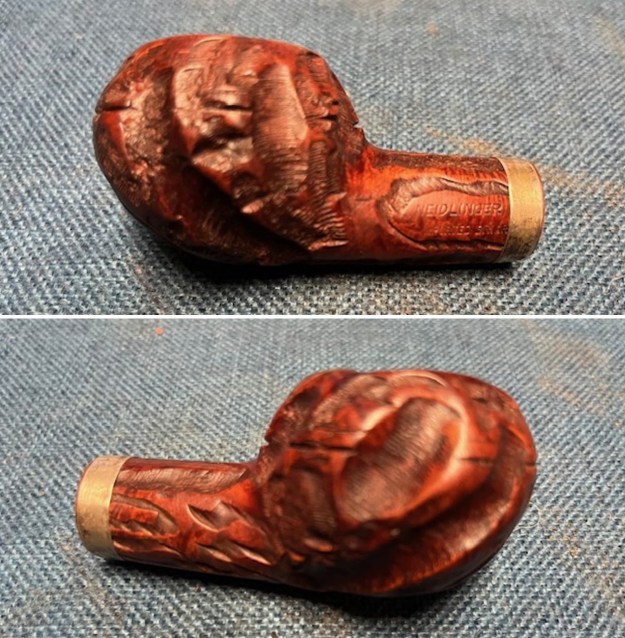
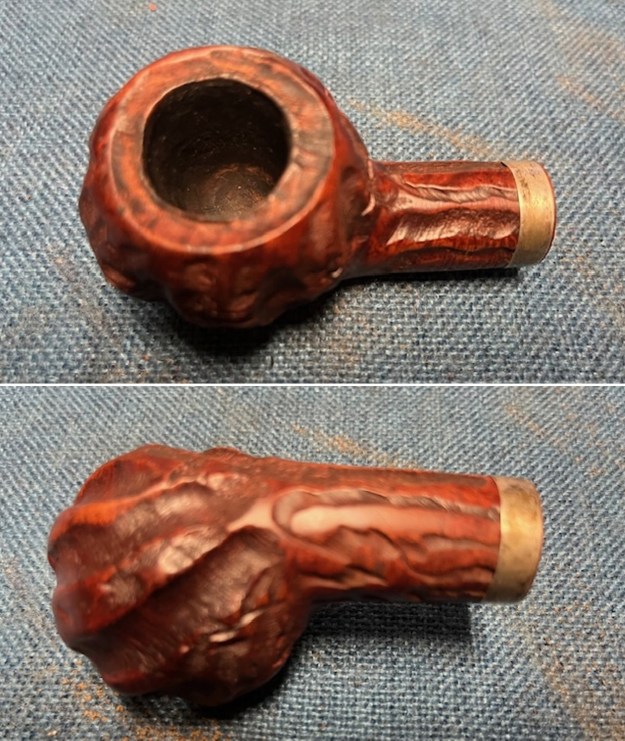
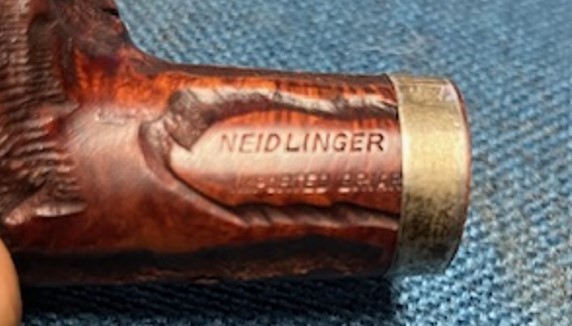
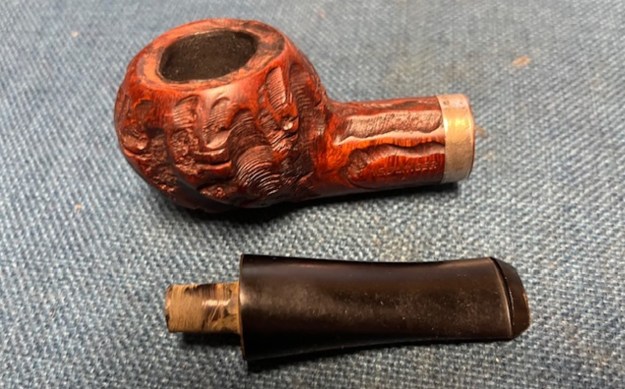
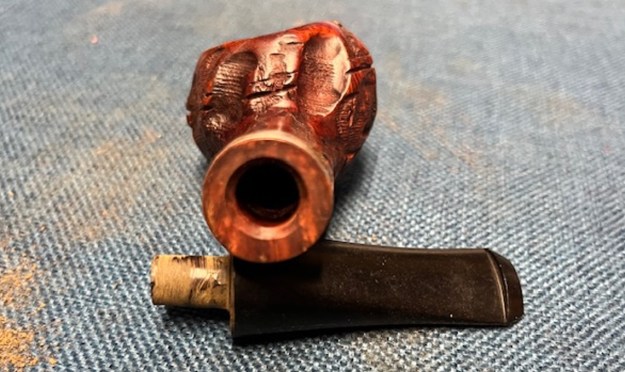
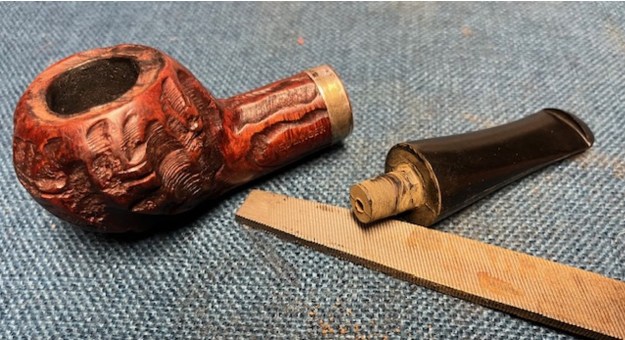
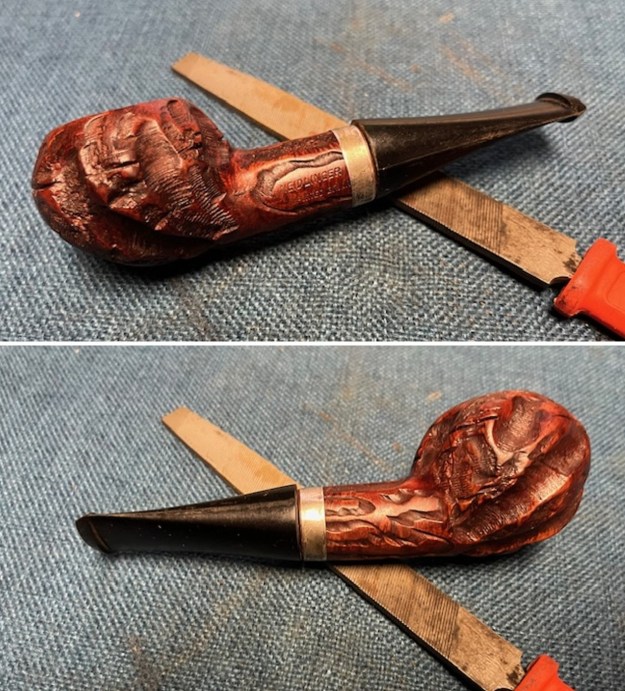
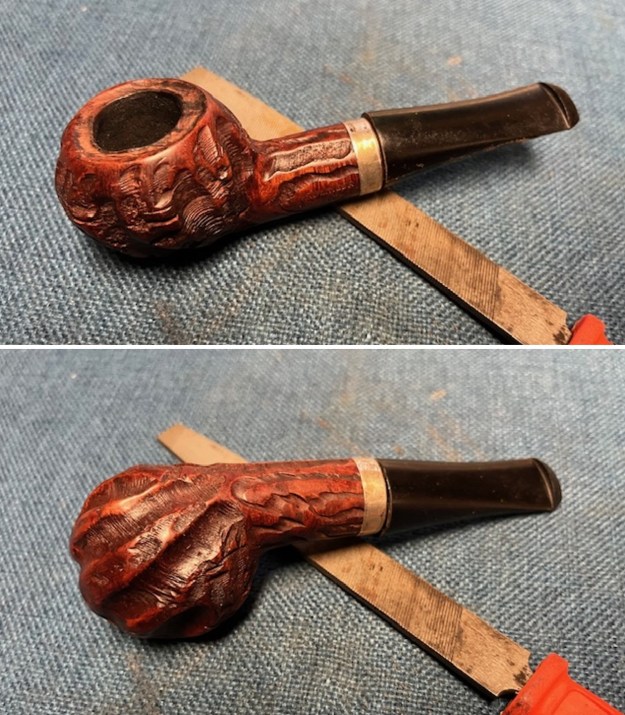
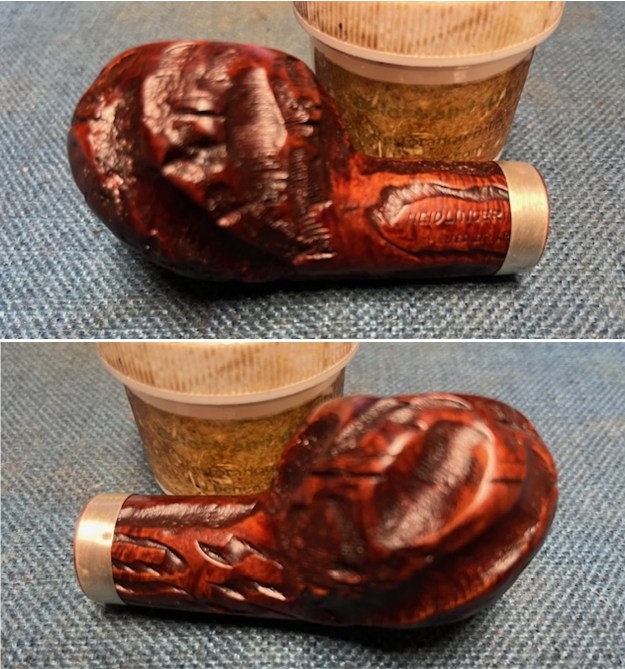
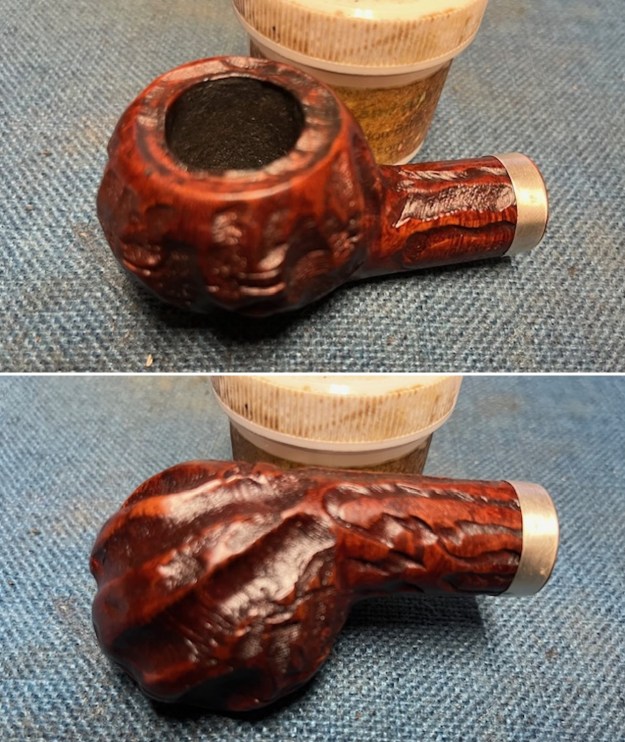
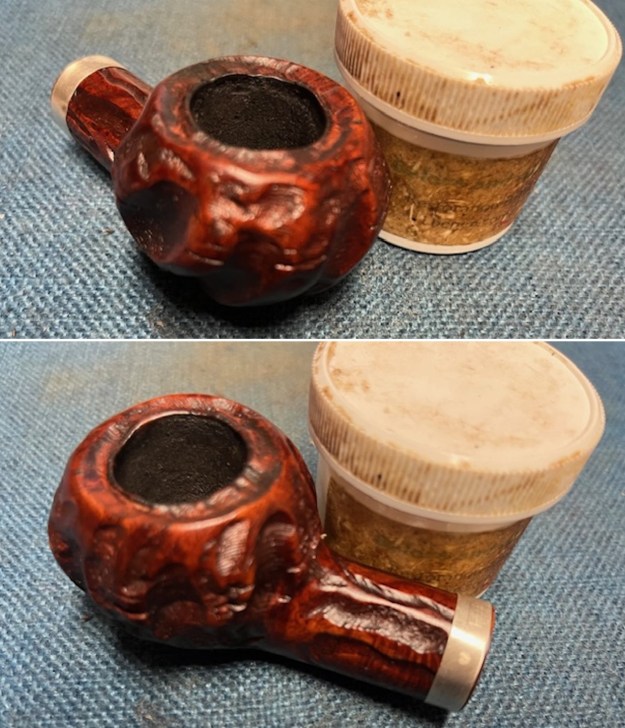
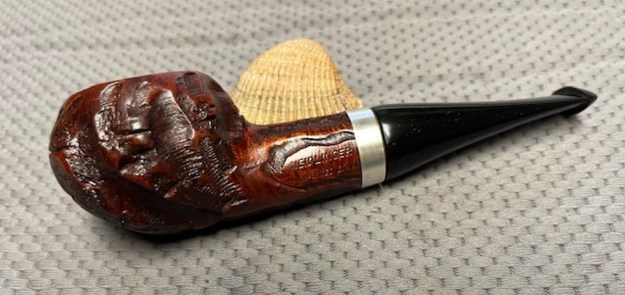
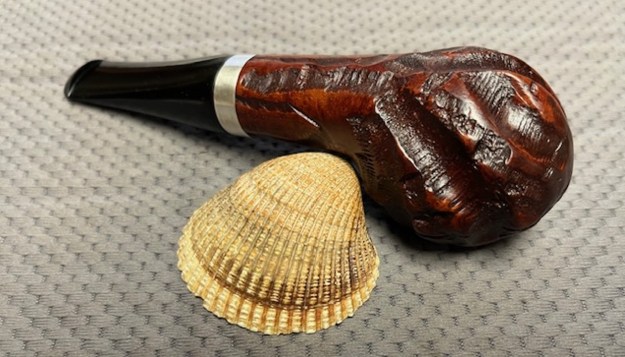
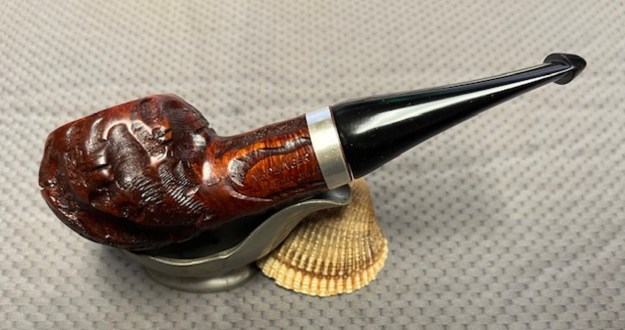
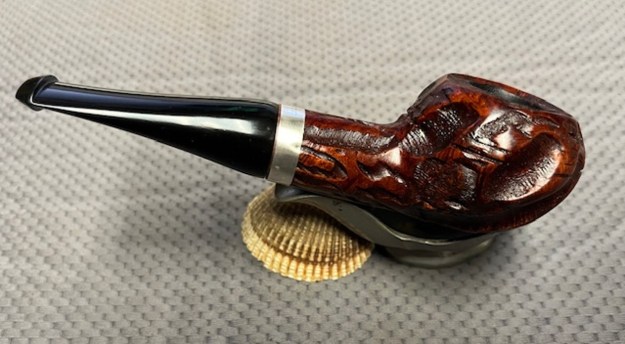
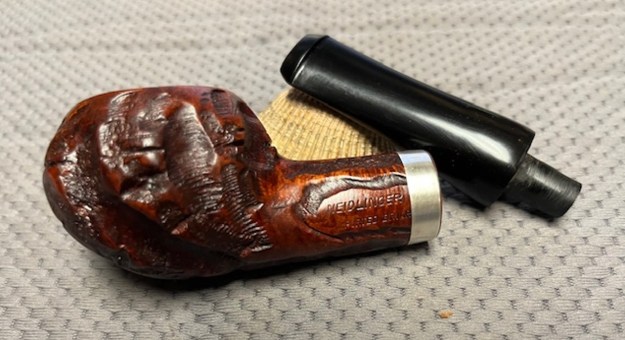
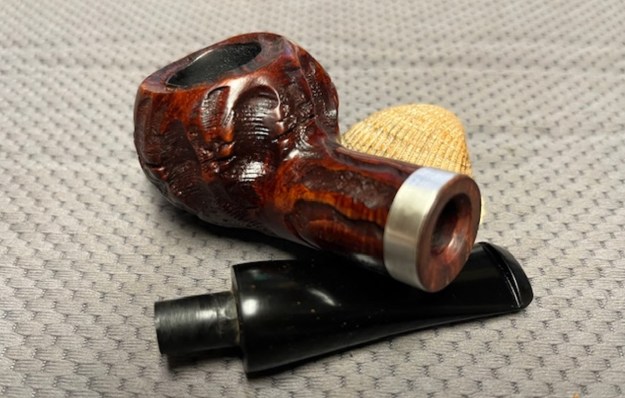
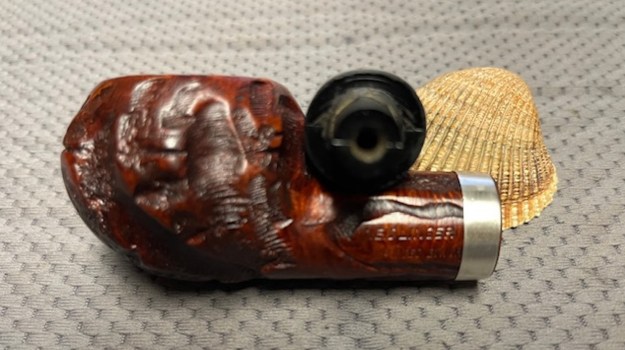
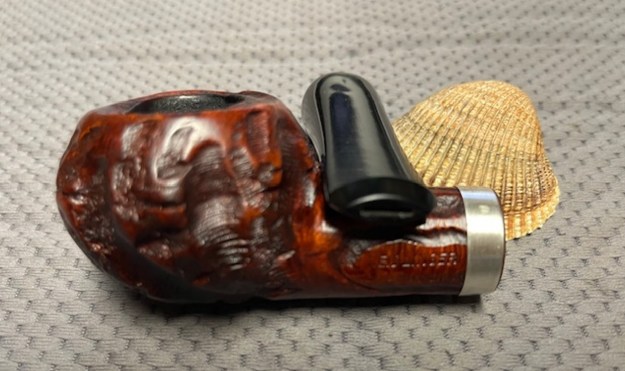
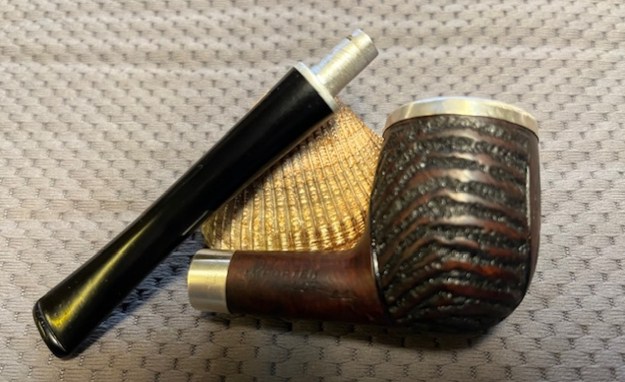
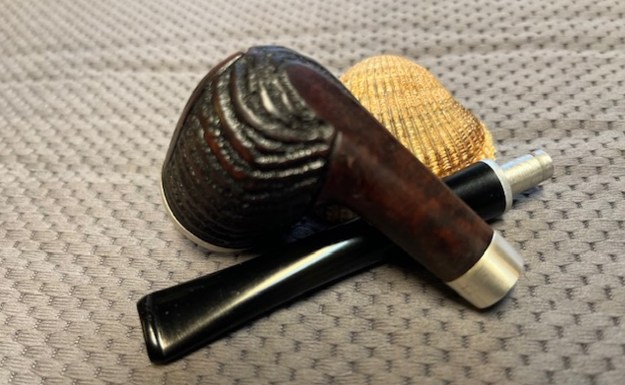
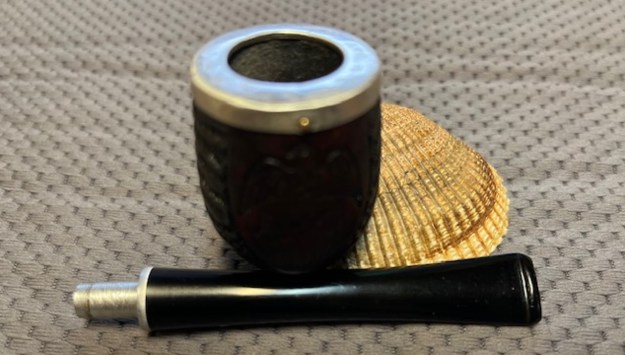
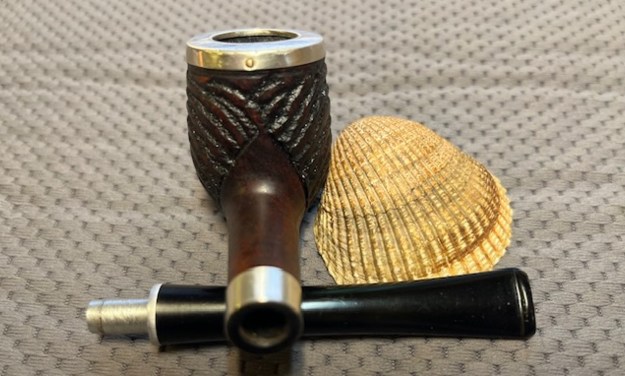
Once in a while I break the rhythm of restoration of pipes that Jeff has sent to me work on a bowl that I have in a very big box of bowl without stems. There are probably about 100 bowls that I have been chipping away at for a long time now. Yesterday I had to urge to restem a few of the bowls. The first of them was this interesting rusticated Rhodesian bowl that looked a lot like some of the rustication on Custombilt pipes though with a bit of variation that separates it from them. It bears an oxidized Sterling Silver band on the shank that will need some attention. The stamping on the left side of the shank reads NEIDLINGER [over] Imported Briar. Somewhere a long the way Jeff had reamed and cleaned the bowl and it was waiting a new stem. I examined the silver and it was stamped across the top of the band and read STERLING. I took a photo of the stamping on the shank side. It was clear and readable as noted above.I went through my can of stems and found one that that was close to the diameter I needed and the tenon would need a slight adjustment for it to fit in the shank. I used a file to reduce the diameter of the tenon. I cleaned up the tenon diameter with my Dremel and a sanding drum. It did not take much for the stem to fit well in the shank. I put it in place and took photos. You can see in the photos that the stem diameter will need to be adjusted as the shank is not round and the stem is. I worked on the adjustment of the outside diameter of the stem with my Dremel and a sanding drum. I took off the majority of the excess vulcanite that way. The rest would need to be done with files and sanding pads. I sanded the stem with 220 grit sandpaper to smooth out the marks from the Dremel. I followed that by sanding it with 320-3500 grit sanding pads to further blend down the sanding areas. I wiped the stem down between pads with an Obsidian Oil cloth to remove the sanding debris from the stem.I polished the stem with micromesh sanding pads – dry sanding with 1500-12000 grit sanding pads. I wiped it down after each sanding pad with Obsidian Oil. I polished it with Before & After Pipe Stem Polish – both Fine and Extra Fine. I set the stem down and turned my attention to the clean bowl. I used a brass bristle wire brush to work over the rim top and remove the debris in the carving. It looked cleaner.I polished the silver band with 1500-3000 grit micromesh sanding pads and then finished with a jeweller’s cloth to raise the shine and protect it from further oxidation. I worked some Before & After Restoration Balm into the surface of the briar with my finger tips and a shoe brush to get into the carving on the bowl and shank. The product works to clean, enliven and protect the briar. I let the balm sit for 15 minutes and then buffed with a cotton cloth to raise the shine. The photos show the bowl at this point in the restoration process. This Rusticated Neidlinger Imported Briar Rhodesian is a great looking pipe now that it has been restored and restemmed. The rich finish gives the shape an elegant look. The flow of the bowl and stem are well done make for a great hand feel. I put the stem back on the bowl and carefully buffed the pipe with Blue Diamond on the buffing wheel using a light touch on the briar. I gave the bowl and the stem multiple coats of carnauba wax on the buffing wheel. I buffed the entire pipe with a clean buffing pad. I hand buffed the pipe with a microfiber cloth to deepen the shine. The finished Neidlinger Rhodesian fits nicely in the hand and feels great. Give the finished pipe a look in the photos below. The dimensions of the pipe are Length: 6 inches, Height: 1 ¾ inches, Outside diameter of the bowl: 1 ½ inches, Chamber diameter: 7/8 of an inch. The weight of the pipe is 64 grams/2.26 ounces. It is a great looking and light weight pipe. I will be putting it on the rebornpipes store shortly. If you are interested in adding this pipe to your collection send me a message or an email. Thanks for reading this blog and my reflections on the pipe while I worked on it.

Restemming and Redressing an interesting Prince Amled Calabash


by Steve Laug

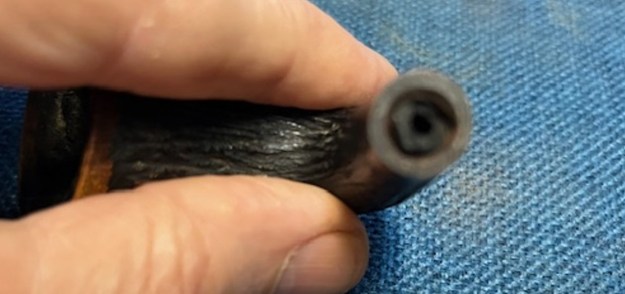
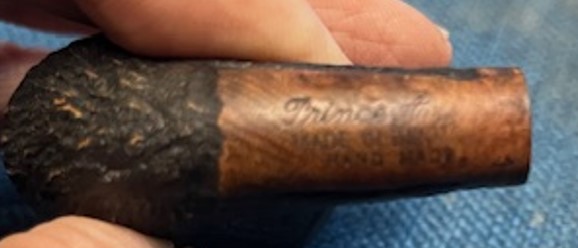
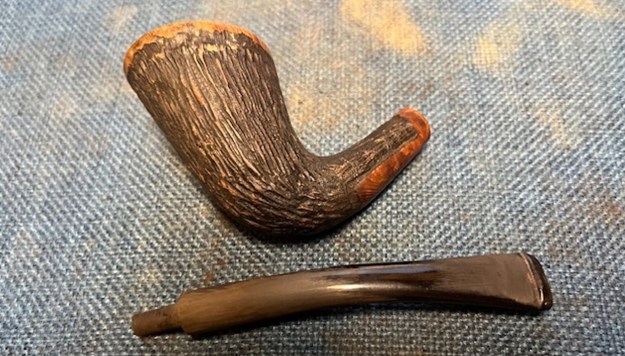
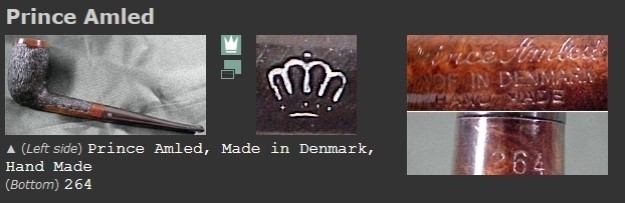
For the next pipe to work on I chose to clean up and match a stem with a uniquely rusticated calabash bowl that I have here in my box. This one was more complicated than some of the other quick cleanup and restores but it is interesting enough work to give me a break from normal restoration. This bowl has a wire rustication or bark rustication on the sides and shank. There is a smooth band on the shank end and around the rim top. The rim top itself is also smooth and bevelled inward. The finish was worn and quite lifeless looking. Nonetheless to me it showed promise under the grit and grime of the years. On the underside of the shank on a smooth panel it was clearly stamped Prince Amled [over] Made in Denmark [over] Hand Made. The conical bowl had a thick cake and an overflow of lava covering the inwardly bevelled rim top. The wire rustication was a filthy mess with lots of dirt and a bit of paint in the crevices. The shank end had some damage and was no longer smooth. There was also a small tenon snapped off in the shank that would need to be pulled before I could fit a stem to it. I took some photos of the bowl before I started my work on it. I took a close up photo of the bowl to give an idea of what I had to work with. The bowl was very dirty and had a thick cake. The rim top had a thick and hard lava that was obscuring whether there was damage to the smooth rim. Perhaps it had protected it from burn damage but only cleaning will reveal that. I also captured the broken tenon in the shank in the second photo. I took a photo to try and capture the stamping on the underside of the shank. It is present and is readable in person far more than the photos show. It is stamped as noted above.I went through my cans of stems here and found a thin taper stem that would fit quite well once the tenon was shaped and the diameter of the stem was fitted at the shank. It was dirty and needed a thorough cleaning but I think it will look good.Before I started to work on the pipe I wanted to refresh my memory about the brand. I turned first to Pipephils site to see if there was any information about the Danish Made Prince Amled brand (http://www.pipephil.eu/logos/en/logo-p5.html). I did a screen capture of what was on the site and I include that below. It was another of those pipes with little information included.I turned to Pipedia (https://pipedia.org/wiki/Prince_Amled) to see if there was any further information to help me with hunt for this pipe manufacturer. The listing for that pipe company had some great photos but also an appeal for information on the brand. It looked like I had as much information as I could find online.

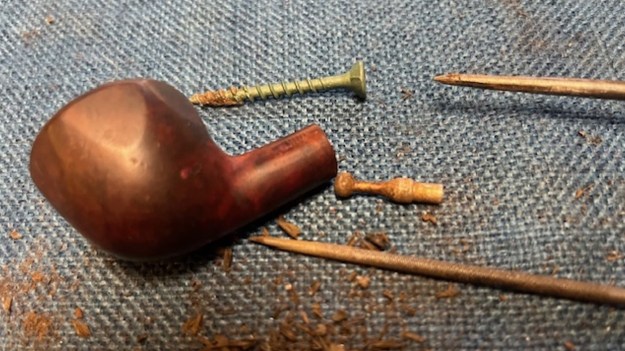
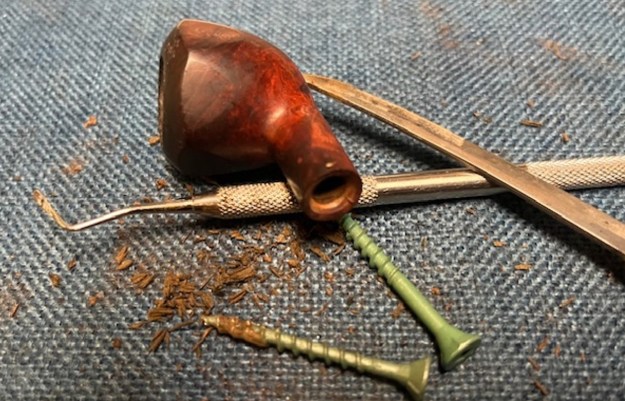
It was time to work on the pipe! I decided to start by pulling the broken tenon in the shank. I screwed a coarse thread drywall screw into the airway and gently wiggled the tenon piece free. The shank was dirty but otherwise undamaged. There was some nicking on the shank end and edge that would need to be dealt with but otherwise it was good.Now the pipe was ready to be cleaned. I reamed it with a PipNet Pipe Reamer using the 1st and 2nd cutting heads to remove the cake. I cleaned up the remnants with a Savinelli Fitsall Pipe Knife. I finished the bowl by sanding the walls with a piece of 220 grit sandpaper wrapped around a piece of dowel. The bowl walls looked very good. I went through my thin brass bands to find one that would work to clean up the damage on the shank end. I use these to give a smooth surface to face the new stem. It adds a bit of bling but also does a great job making the shank face smooth to match the stem. I wiped the shank end down with alcohol to clean it off and gave the shank end a coat of glue. I pressed the band in place over the all-purpose glue and cleaned off the excess with a wet cloth.Once the glue had dried I scrubbed out the internals with pipe cleaners (normal & bristle), cotton swabs and alcohol to remove the tars and oils in the shank between the mortise and the entrance of the airway into the bowl. It was quite dirty. I cleaned out the internals on the stem at the same time.I scrubbed the exterior of the bowl and shank with a tooth brush and undiluted Murphy’s Oil Soap. I worked it into rustication on the bowl and shank and the dirty rim top with a tooth brush. I rinsed the soap and grime off with warm water and repeated the process until the pipe was clean. I dried it off with a soft towel. It looked much better at this point. I polished the rim top and the smooth portions of the band around the rim edge and underside of the shank with micromesh sanding pads – dry sanding with 1500 – 12000 grit pads. I wiped the briar down after each sanding pad to remove the debris. The smooth rim and edge began to take on a shine. I stained the rim top and the smooth portions of the rim edge, bowl and shank with a Cherry stain pen. It looks good but will look even better once it is buffed and polished. I rubbed the bowl down with Before & After Restoration Balm. I worked it into the surface of the briar with my fingertips and a horse hair shoe brush to clean, enliven and protect it. I let the balm sit for 10 minutes and then buffed with a cotton cloth to raise the shine. Mark Hoover’s Balm is a product that I have come to appreciate and one I use on every pipe I have been working on. I set the bowl aside and turned my attention to the stem. I sanded the stem surface with 320-3500 grit sanding pads to further blend them in and smooth out the surface of the stem.I polished the stem with micromesh sanding pads – dry sanding with 1500-12000 grit pads. I wiped the stem down after each pad with some Obsidian Oil. I finished hand polishing it with Before & After Pipe Stem Polish – Fine and Extra Fine. I rubbed it down with another coat of Obsidian Oil and let it dry. The stem really looked very good. This delicate and petite Prince Amled Hand Made Calabash Pipe is a real beauty. I know it is hand made in Denmark but that is the extent of the information available on the brand. The carving looks like tree bark on the sides and a great smooth rim and trim. The finish on the pipe is in excellent condition and the contrasting stains work well to highlight the stunning finish on the pipe. The thin vulcanite pencil stem adds to the mix. With the grime and debris gone from the finish and the bowl it was a beauty and the finish shows depth at this point. The rim top looks really good now. I put the stem back on the bowl and buffed the pipe with Blue Diamond on the buffing wheel. I gave the bowl multiple coats of Conservator’s Wax and the stem multiple coats of carnauba wax on the buffing wheel. I buffed it with a clean buffing pad on the buffer and hand buffed the pipe with a microfiber cloth to deepen the shine. The finished Prince Amled Calabash is quite nice and feels great in the hand. The dimensions of the pipe are Length: 5 inches, Height: 2 ¼ inches, Outside diameter of the bowl: 1 ¼ inches, Chamber diameter: 5/8 of an inch. The weight of the pipe is .92 ounces/25 grams. Thanks for walking through the restoration with me as I worked over another interesting pipe. This pipe will be added to the Danish Pipe Makers section of the rebornpipes store soon. If you want to add it to your collection send me an email or a message! Thanks for your time.
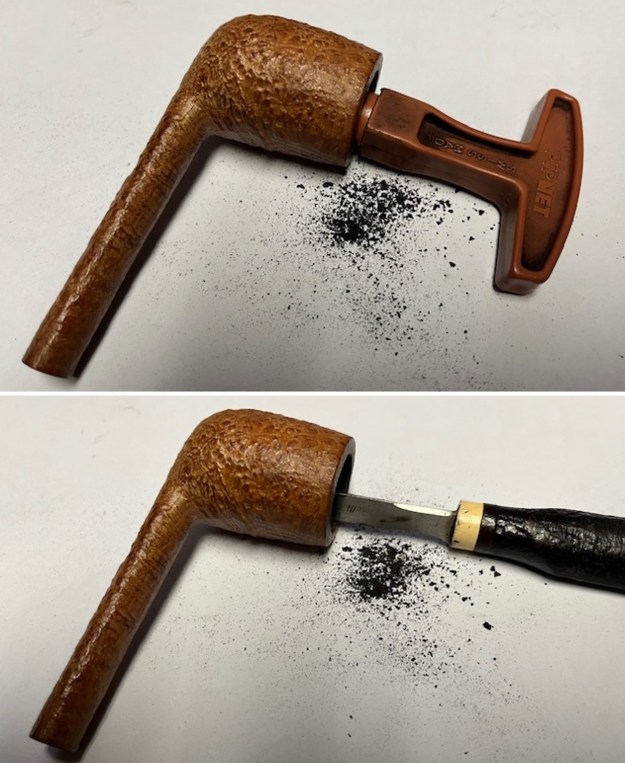
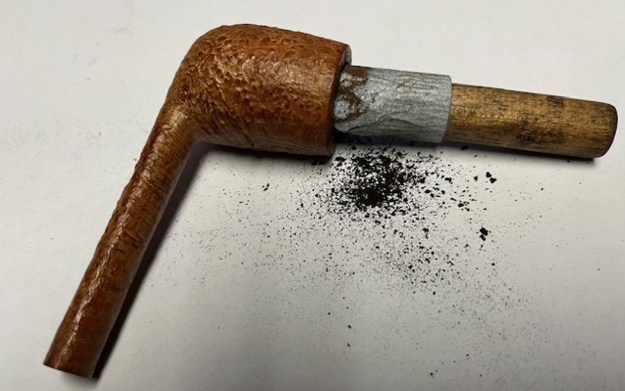
New Life for a Royal Demuth Mixed Finish Silver Rim Cap Patriotic 44 Billiard


by Steve Laug

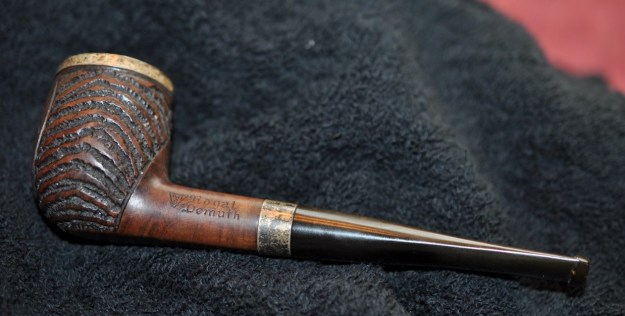
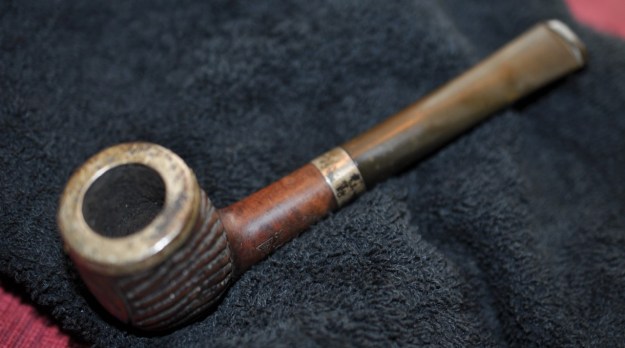
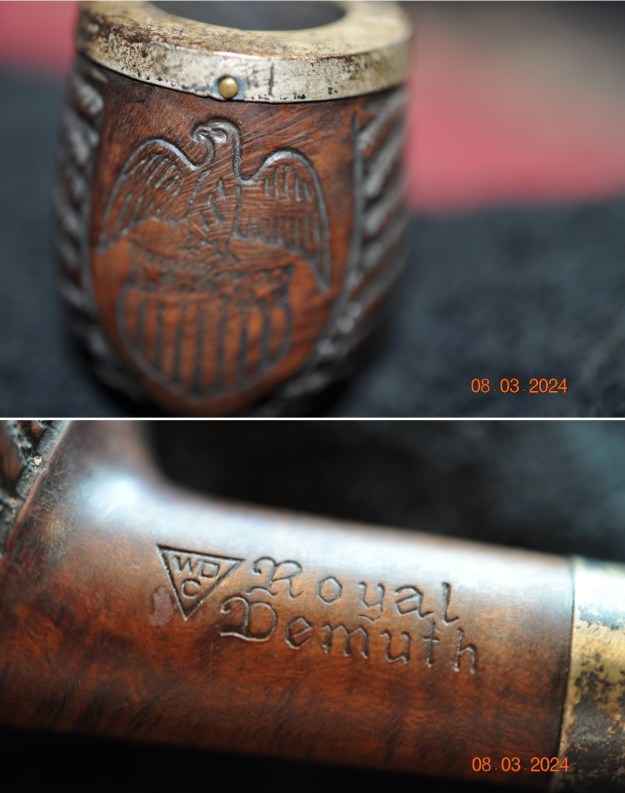
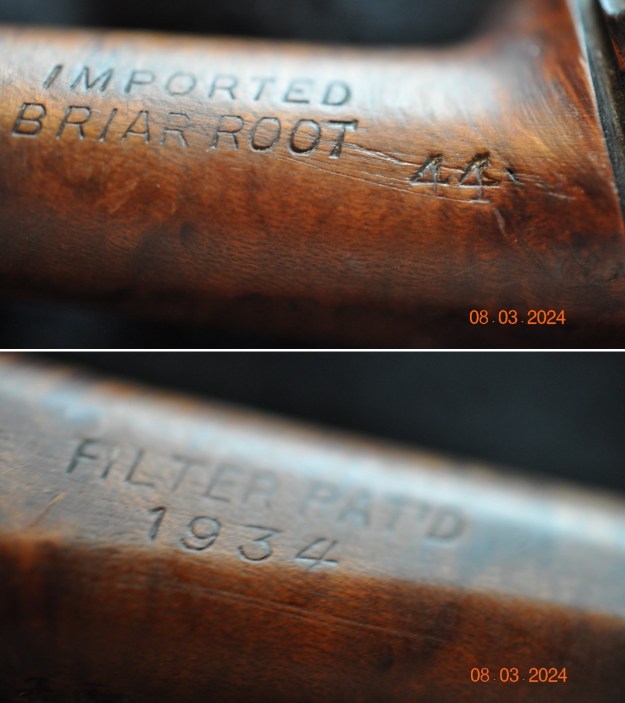
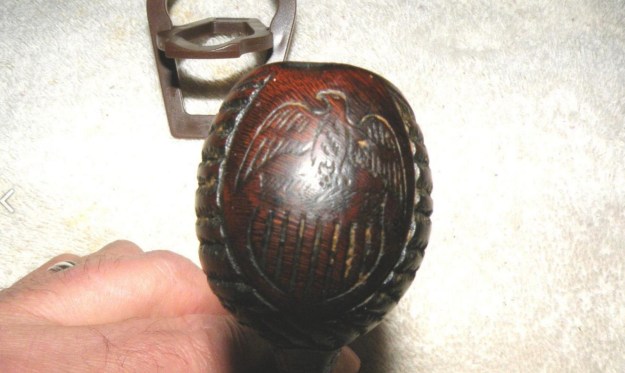
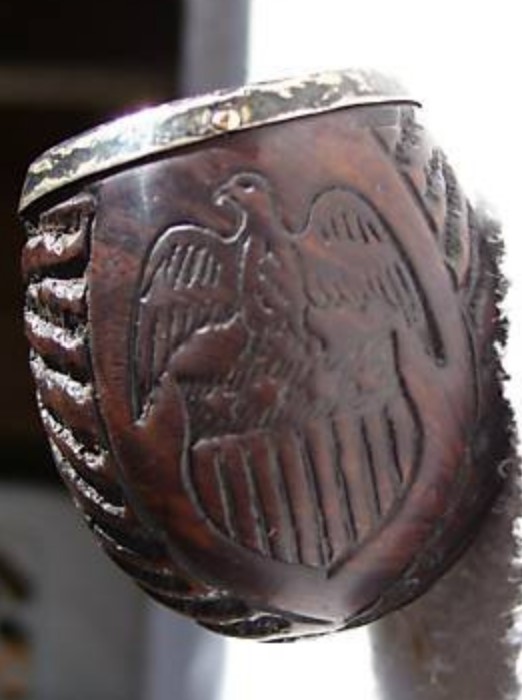
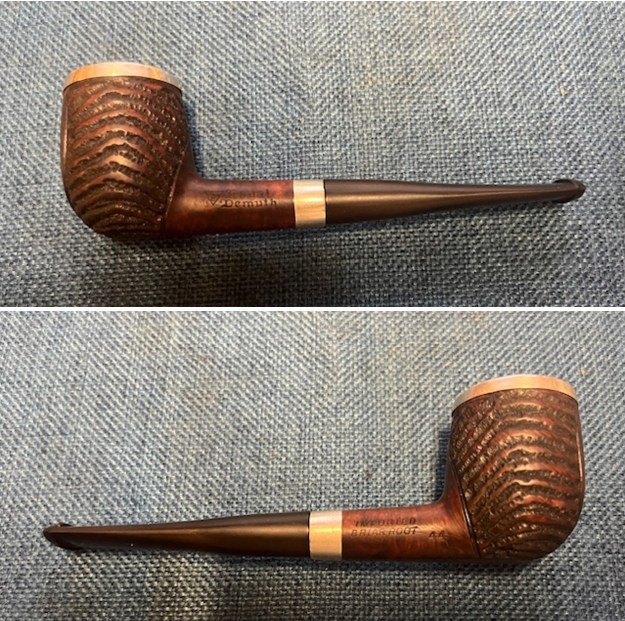
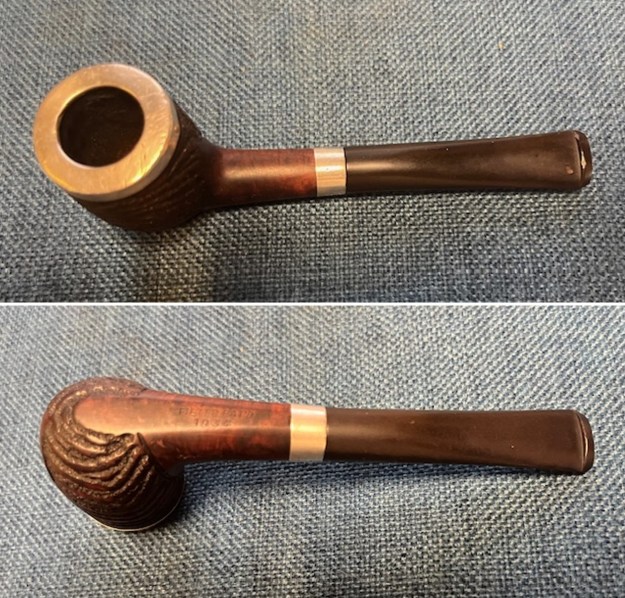
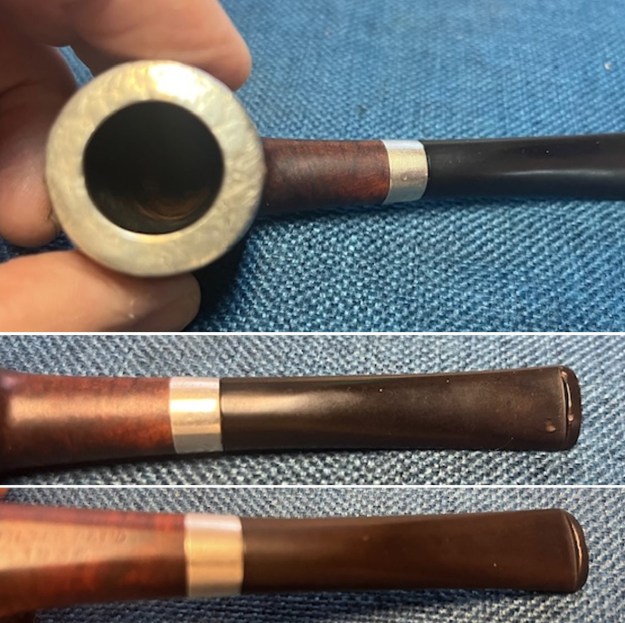
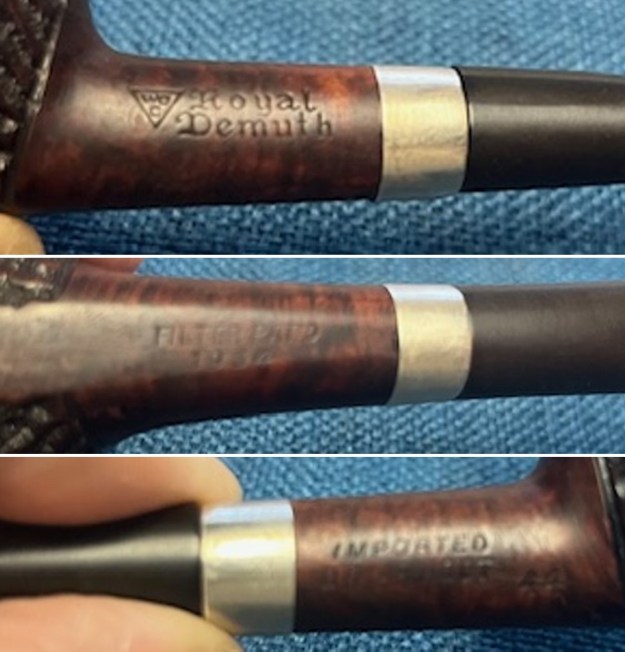
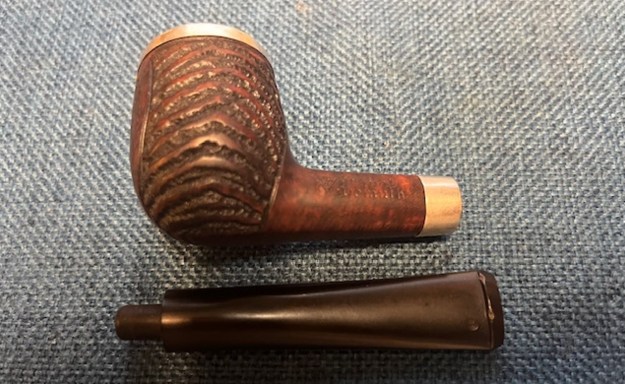
I decided work on this interesting Royal Demuth mixed finish billiard next. Jeff pick up from an auction in Blue Springs, Missouri, USA on 05/07/20. So, it has been here for a while. It had a silver rim cap and band on the shank. The bowl has some unique rustication on the sides of the bowl and a carving of an eagle standing on a shield with the stars and stripes inside. The eagle has its wings extended. The carving is well done and very tactile. The pipe is stamped on the left side of the shank and reads WDC in a triangle [followed by] Royal [over] Demuth. On the right side it is stamped Imported Briar [over] Briar Root [followed by] the shape number 44. On the underside of the shank it is stamped FILTER PAT’D [over] 1934. The stem has no markings or stampings. The stem is a replacement I believe as it does not have the filter tenon as noted on the shank. It is vulcanite with a fishtail taper stem. It is lightly oxidized and has some tooth marks on the top and underside of the stem near the button. The bowl had a thick cake in it and some bits and bobs of tobacco stuck to the walls. There was a thick lava coat on the rim top and edges. The silver rim cap is tarnished as is the silver band on the shank end. The finish was dirty but still winsome in some strange way. Jeff took some photos of the pipe before he started working on it. He took photos of the rim top and stem to show the general condition of the pipe. The bowl is heavily caked and the rim top and edges have a heavy coat of lava overflowing on to them. The silver rim cap is also tarnished as is the band on the shank. The stem is oxidized and has tooth chatter and marks on both sides ahead of the button end. He took photos of the finish and carving around the sides and heel of the bowl. It is a combination of rustication carved between smooth bands on the bowl sides and the shank. It is unique and very interesting. He took photos of the carving on the bowl front and the stamping on the sides of the shank. You can see that it is clear and readable. It reads as noted above. I removed the stem from the shank and took a photo of the parts to show how the pipe looks.   I looked on Pipephil’s site and though there were many WDC pipes there was nothing stamped Royal Demuth and nothing with any of the other stamping on the shank sides of this pipe. I turned then to Pipedia (https://pipedia.org/wiki/William_Demuth_Company). As always there is a great history of this American brand. If you are interested be sure to turn there and take time to read about it.

Royal Demuth example with box and filters, courtesy of Doug Valitchka

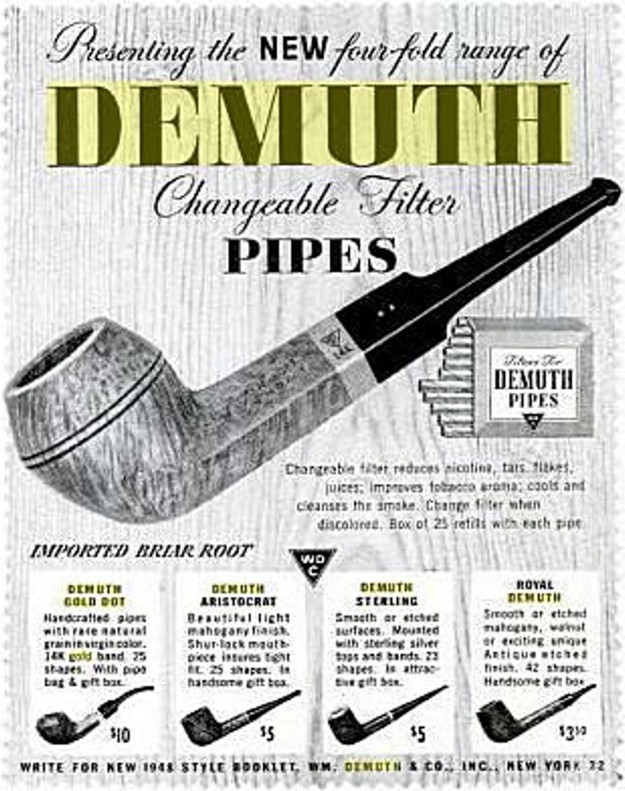
There was an interesting example of the Royal Demuth provided by Doug Valitchka that has identical stamping to the one that I am working on. It is a different shape but it identical in terms of the stamping. It also looks like it takes a filter that is similar to the Medico filter but I will double check that once it is thoroughly cleaned. This series of photos confirm that the stem on the pipe I am working on is a replacement as it is a push stem. There was also an advertisement for the WDC Changeable Filter Pipes that included the Royal Demuth. I have included that below. There is also a great article by Ben Rapaport on the Demuth – Dunhill Connection that is an enjoyable read (https://pipedia.org/wiki/A_Demuth%E2%80%94Dunhill_Connection%3F).

I now knew that the pipe was part of a line of Filter Pipes that WDC put out and that the filter system was patented in 1934. The stamping that the Filter was Pat’d 1934 tells that it came out after the patent was granted. However, I could not fine tune the date more than that. I also knew that the pipe I was working on was an older one but that it had been restemmed sometime in its life.

I did a bit more digging to see if I could find anything on the Royal Demuth pipe I was working on with the same stamping but also with a carved Eagle and Shield on the front of the bowl. I googled that and found two examples of the same type of carving on Worthpoint. I have included both descriptions given by the seller as well as photos.

Here is the first of the sale pipes listed: https://www.worthpoint.com/worthopedia/world-war-ii-wdc-royal-demuth-filter-1797860035

World War II era WDC Royal Demuth, says “Filter Patent’d 1934 on the bottom, “Imported Briar Root’ and the number 28 on the left side, has an Eagle and Shield motif carved into the bowl, this was on of the patriotic pipes they came out with during the war. In pretty good shape, some minor chatter on the stem, a little bit of wear on the rim. The Royal Demuths are generally considered some of the best WDC pipes.Here is the second of the sale pipes listed: https://www.worthpoint.com/worthopedia/estate-royal-demuth-pipe-carved-american-eagle

I have up for auction estate Royal Demuth pipe. It is marked on both sides and the bottom. The side that has the name also has a triangle with the letters, W, C, D inside. The other side has, Imported Briar Root, # 11. The bottom has, Filter Pat’d 1931. I am unsure of the actual date mark is does have some wear. The bowl has a beautiful American Eagle standing on a shield with 4 stars and stripes. The bowl has a strip of sterling on the rim and a band on the stem. The band is marked Sterling and has a square with a sideways anchor in it, a T in a square, and a lion in rectangle. I do not know the name of this company. The pipe is a well loved pipe and has been used. Some of the pictures were taken before I cleaned the silver.

From these sale sites I learned that the pipe I was working on was a World War II era WDC Royal Demuth. The patent date gave a start date and thus I knew it was made after that. It also has an Eagle and Shield motif carved into the bowl and the first seller surmised that it was one of the patriotic pipes that came out with during the war. I also knew that the stem was replaced sometime later and did not have the filter system expected on this pipe.

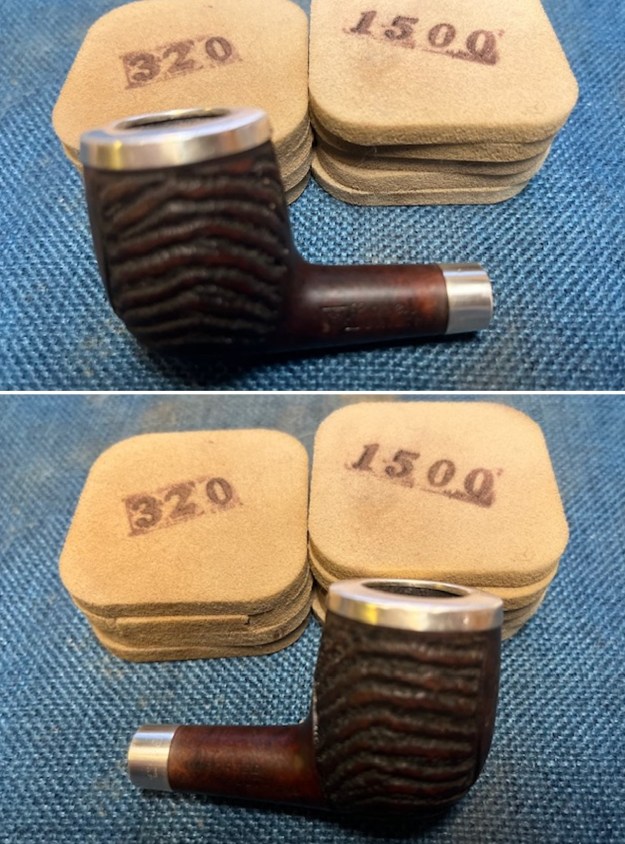
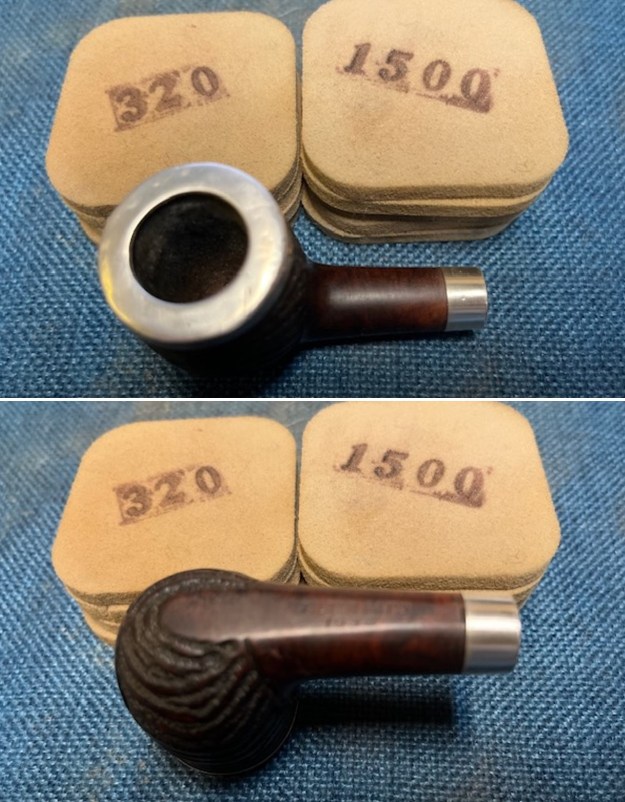
When I received it from Jeff it did not look like the same pipe. It was clean and the finish had life. He reamed it with a PipNet pipe reamer and got rid of the cake. He cleaned up the reaming with a Savinelli Fitsall Pipe Knife so that we could see the walls of the bowl and assess for damage. It was in good condition. He cleaned the internals of the shank and stem with cotton swabs, pipe cleaners and alcohol. He scrubbed the exterior with undiluted Murphy’s Oil Soap and a tooth brush. He rinsed the pipe under warm water. He dried it off with a cloth and then let it air dry. He scrubbed the stem with Soft Scrub and soaked it in Briarville’s Stem Deoxidizer. He rinsed it with warm water and dried it off with a soft cloth. It came out looking very good. The finish on the bowl and the rim top cleaned up nicely. I took pictures of the pipe to show how it looked when I brought it to the table. I took some photos of the rim top and stem to show the condition of them both when the pipe arrived. The rim top had some damage to the inner edge of the bowl and some marks on the top surface. Overall it looked very good. The oxidation on the stem had come off very well and the tooth marks chatter in the surface of the stem were visible. I took photos of the stamping on the sides of the shank. It was clear and readable as noted above. I removed the stem from the shank and took a photo of the appearance of the parts. It is a beauty. I started my work on the pipe by polishing the metal rim cap, edges and shank band. I polished it with 320-3500 grit sanding pads to polish out the scratches in the metal. It looked much better at this point in the process. I polished the metal cap and band with micromesh sanding pads – dry sanding with 1500-12000 grit sanding pads. I wiped it down with a damp cloth after each pad to remove the debris. The metal took on a rich glow. I rubbed the bowl down with Before & After Restoration Balm. I worked it into the surface of the briar with my fingertips and a horse hair shoe brush to clean, enliven and protect it. I let the balm sit for 10 minutes and then buffed with a cotton cloth to raise the shine. Mark Hoover’s Balm is a product that I have come to appreciate and one I use on every pipe I have been working on. I set the bowl aside and turned my attention to the stem. I had been thinking about the replacement stem and went through my cans of stem to see if I could find a WDC stem with the triangle logo on the left side. The amazing thing was I found one!!. The metal tenon (made for the WDC filters) was misshaped and was larger next to the stem than the mortise end. I used a small file and a Dremel and sanding drum to even us the diameter of the tenon all the way from the end to the stem end. It took some work but it worked well and the end result was the stem fit in the shank well. The diameter of the metal spacer was taller at the top than at the bottom. The measurements showed that from the tenon to the stem top was larger than the distance from the bottom edge. I would need to shape and work out that shape.  I took off some of the metal and vulcanite on the top half of the stem with the Dremel and sanding drum. I used a folded piece of 220 grit sandpaper to smooth out the sanding marks from the Dremel. Once I had smooth them out I sanded the stem with 320-3500 grit sanding pads to further blend them in and smooth out the surface of the stem.I polished the stem with micromesh sanding pads – dry sanding with 1500-12000 grit pads. I wiped the stem down after each pad with some Obsidian Oil. I finished hand polishing it with Before & After Pipe Stem Polish – Fine and Extra Fine. I rubbed it down with another coat of Obsidian Oil and let it dry. The stem really was beginning to look very good. This is a beautiful WDC Royal Demuth Silver Capped and Banded Billiard with a fitted filter vulcanite stem. The flat bottom makes it a sitter that is well balanced. The shape fits well in the hand with the curve of the bowl makes it a great pipe to hold. I polished stem with Blue Diamond polish on the buffing wheel. I gave the rusticated bowl and carvings on the bowl front multiple coats of Conservator’s Wax. I gave the stem multiple coats of carnauba wax. I buffed the pipe with a clean buffing pad to raise the shine. I hand buffed it with a microfiber cloth to deepen the shine. The pipe polished up pretty nicely. The rich combination of black and dark brown stains gave the sandblast a sense of depth. The pipe took on life with the buffing. The rich colour of the briar and the polished silver rim cap and shank band works well with the polished stem. Have a look at it with the photos below. The shape, finish and flow of the pipe and stem are very well done. The dimensions are Length: 5 ½ inches, Height: 1 ½ inches, Outside diameter of the bowl: 1 1/8 inches, Chamber diameter: 5/8 of an inch. The weight of the pipe is 33 grams/1.16 ounces. This American Made Silver Capped and Banded Filter Billiard is a real beauty. Thanks for walking through the restoration with me as I worked over another beautiful pipe. This one will be going on the rebornpipes store in the American Pipe Makers Section shortly if you would like to add it to your collection. Thanks for your time.

Pulling a Broken Tenon and Restemming a Tiny Hexagonal Dublin


by Steve Laug

I received two pipes for repair from Brady, who works at a Pipe and Tobacco Shop in Texas yesterday. The first is a tiny Hexagonal Dublin stamped Genuine Briar. The second one is a leather coated bowl stamped Longchamp France Billiard. Both were quite dirty and needed some special attention. I decided to work on the harder of the two pipes – the tiny Genuine Briar Hex Dublin. It had a broken tenon in the shank and a small stem. In looking it over I felt it was too thin to set a new tenon in. I would need to restem it. I was in a rush to work on it so I started without taking the customary photos. I put the bowl in the freezer to see if the cold and change would loosen the tenon from the shank. I took it out and used a screw to try and pull it. It did not work as it was solidly stuck. I repeated the freezer trick with no luck at all. I examined it and found that the tenon in the shank was quite cracked. I used a dental tool to pull out the pieces as much as possible. I cleaned up the shank with a pen knife to scrape out the remnants of vulcanite. A second issue became clear. There was a snapped aluminum stinger in the shank with a large ball on the end. It took some work and the ball stinger dropped out of the shank.With the stinger removed I worked on fitting a new stem to the shank. I toyed with a thin brass band to stabilize the thin shank. I tried it on for the fit and look and liked it. I glued it in place. I used sand paper and the Dremel and sanding drum to reduce the diameter of the tiny tenon. I finished it and the fit was right. All that was left was to polish it. I reamed the tiny bowl with a Savinelli Fitsall pipe knife and took cake back to briar. I sanded the walls of the bowl with a folded piece of 220 sandpaper.I cleaned out the internals of the bowl, shank and stem with pipe cleaners, cotton swabs and isopropyl alcohol. It came out smelling much better.The bowl had a lot of tars, lava and even varnish underneath the grime. I wiped it down with acetone on cotton pads until the surface of the bowl was much cleaner. I sanded the bowl with 320-3500 grit sanding pads. I wiped the briar down after each sanding pad to remove the dust and debris. The bowl began to look much better. I polished the bowl with micromesh sanding pads – dry sanding with 1500-12000 grit sanding pads. I wiped it down with a damp cloth after each sanding pad to remove the dust and debris. The grain stood out more with each set of pads. I worked some Before & After Restoration Balm into the finish of the bowl, rim top and shank with my fingertips to clean, enliven and protect it. I find that the balm really makes the briar come alive again. I let the balm sit for 15 minutes and then buffed with a cotton cloth to raise the shine. The bowl really looks good at this point. I set the bowl aside and turned my attention to the stem. I sanded the stem with 320-3500 grit sanding pads and wiped the stem down after each pad with an Obsidian Oil saturated cloth to remove the sanding dust and protect the stem. I polished the stem with micromesh sanding pads – dry sanding it with 1500-12000 grit pads. I polished it further with Before & After Pipe Stem Polish – both fine and extra fine. This Petite Genuine Briar Hexagonal Dublin with a new vulcanite stem is a great looking pipe now that it has been restored. I put the stem back on the bowl and carefully buffed the pipe with Blue Diamond on the buffing wheel using a light touch on the briar. I gave the bowl and the stem multiple coats of carnauba wax on the buffing wheel and followed that by buffing the entire pipe with a clean buffing pad. I hand buffed the pipe with a microfiber cloth to deepen the shine. The finished Genuine Briar Dublin fits nicely in the hand and feels great. Give the finished pipe a look in the photos below. The dimensions of the pipe are Length: 5 inches, Height: 1 ¼ inches, Outside diameter of the bowl: 1 inch, Chamber diameter: 5/8 of an inch. The weight of the pipe is .71 ounces/21 grams. This tiny, older American Made Hexagonal Dublin is a real beauty. Thanks for walking through the restoration with me as I worked over another beautiful pipe. I will set it aside and once I finish the other pipe that Brady sent to me, I will send them back to him. Thanks for your time.

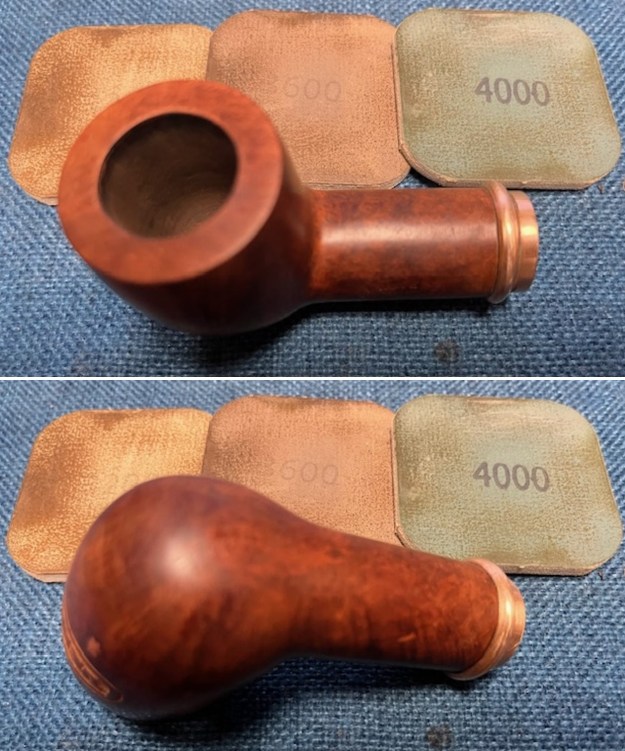
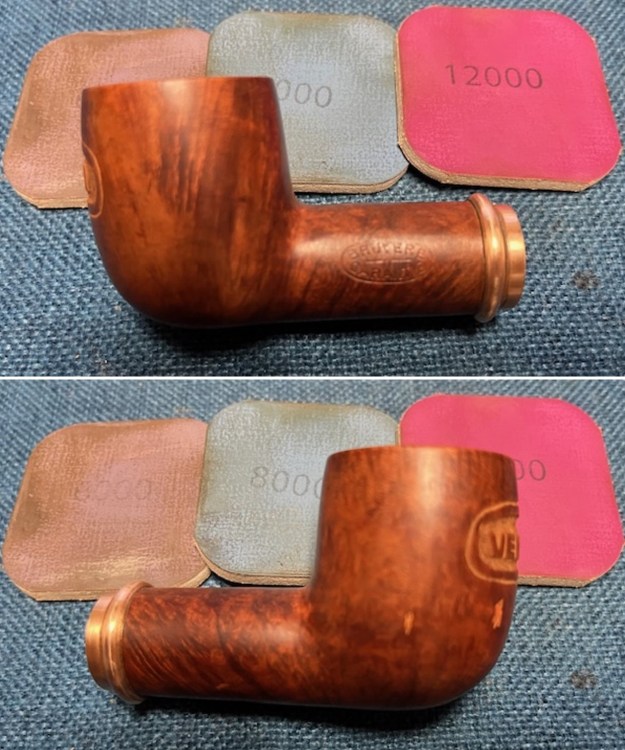
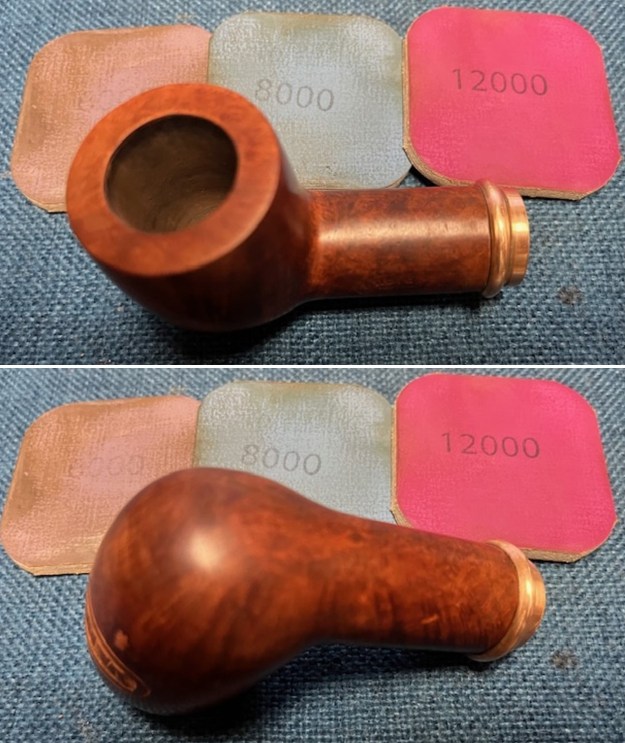
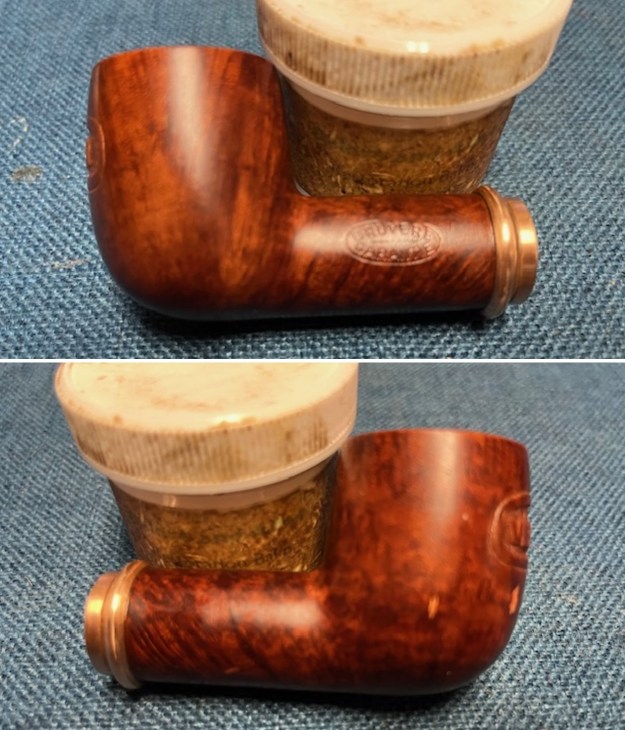
Restemming an UNSMOKED NOS WDC Military Bit Billiard


by Steve Laug

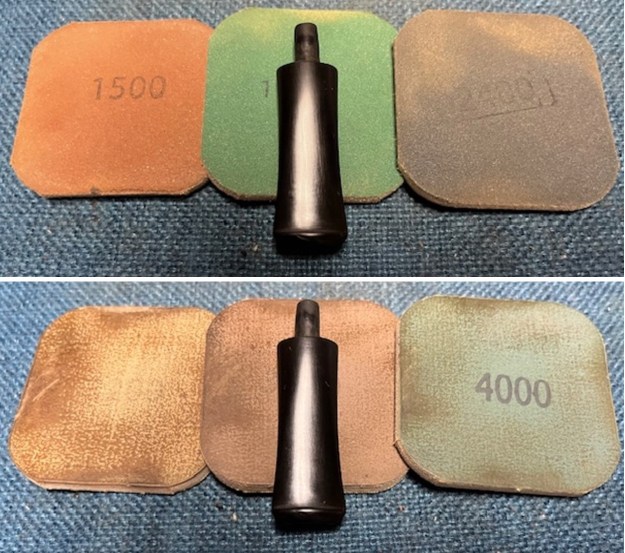
About a year ago I visited an older pipe repair man (when I say older I mean older than me). He gave me a lot of pipe parts – stems, bases, bowl, tenons and bands On Monday, August 25 after a visit with my brother Kenneth and I went to visit my contact again. This time he had more stuff that he wanted to get rid of from his parts. Once again, we received more stems and tenons. But he also put in a box of pipes that were in various states of repair or disrepair. There were quite a few that needed to be restemmed. One of those pipes was an interesting Billiard with a nickel ferrule stamped WDC in the triangle on the left side of the shank and the same on the left side of the nickel ferrule. It was in great shape for having been knocked around for a long time in a box of bowls and pipes. The finish was dirty but the bowl was unsmoked and very clean. There was a very shiny coat of varnish on the outside of the bowl and at least one fill on the back side of the bowl. The nickel was also clean and unoxidized. I would need to come up with a stem for it. I took a photo of the stamping on the left side of the shank. It is clear and reads as noted above. The stamp is also gold and very readable. I also tried to capture the stamping on the nickel ferrule. The shine tends to blur that stamp.I started my work on the pipe by wiping it down with acetone to remove the shiny varnish coat. It worked very well. The acetone loosened the glue on the ferrule and it came off when I was wiping it down. I cleaned up the glue on the shank end with the acetone cloth so that the briar was free of it. I used a dental spatula to spread some all purpose glue on the shank end. I pressed the nickel ferrule in place on the shank end and wiped off the excess glue with a damp cloth. I set it aside to allow the glue to cure. I sanded the briar with 320-3500 grit sanding pads. I dry sanded it and then wiped it down with a damp cloth after each sanding pad. The varnish finish was gone and the fills in the bowl sides were very visible. I polished the bowl with micromesh sanding pads – dry sanding with 1500-12000 grit pads and wiping down the bowl after each pad with a damp cloth. The briar took on a more natural shine than what was present when the bowl was varnished. I worked some Before & After Restoration Balm into the surface of the briar with my fingertips to clean, enliven and protect it. I let the balm sit for a little while and then buffed with a cotton cloth to raise the shine. The following photos show the bowl at this point in the restoration process. I am very happy with the results. I set the bowl aside and went through my stems. I found an unused vulcanite stem that had an orific button and a gentle that fits the style of the age of the pipe. It is also unsmoked and still bears a price tag on the underside. There is some oxidation around the tag and on both sides. I removed the sticky label with acetone on a cotton pad. I sanded the stem surface with 220 grit sandpaper to remove the nicks in the surface and the oxidation. It began to look much better as the work went on.I sanded the stem with 320-3500 grit sanding pads and wiped the stem down after each pad to remove the sanding debris. It began to take on a deep shine.I polished the vulcanite stem with micromesh sanding pads – 1500-12000 grit pads. I wiped it down with a damp cloth after each sanding pad. I used Before & After Pipe Polish – both Fine and Extra Fine to further polish the stem. I wiped it down with a final coat of Obsidian Oil and set it aside. The smooth WDC Billiard with a nickel ferrule and military vulcanite bit is a real beauty and the finish and shape are well done and have a classic English Billiard look even though this is an American Made pipe. The vulcanite military bit polished up on the buffing wheel with Blue Diamond and had a rich glue. I polished the nickel ferrule with a jeweller’s cloth. I gave the bowl and the stem multiple coats of carnauba wax on the buffing wheel and followed that by buffing the entire pipe with a clean buffing pad. I hand buffed the pipe with a microfiber cloth to deepen the shine. The finished WDC Billiard fits nicely in the hand and feels great. Give the finished pipe a look in the photos below. The dimensions of the pipe are Length: 5 ½ inches, Height: 1 ½ inches, Outside diameter of the bowl: 1 ¼ inches, Chamber diameter: ¾ of an inch. The weight of the pipe is 1.20 ounces/33 grams. I will soon be adding it to the rebornpipes store in the American Pipe Maker section. If you are interested in adding this pipe to your collection send me a message or an email. Thanks for reading this blog and my reflections on the pipe while I worked on it. There are many more to come!
Restoring and Restemming a John Crouch Heavyweigh Rhodesian


By Steve Laug

A while back I received an email reaching out about a pipe that the writer, Anthony had acquired long ago and wanted to know if I had heard of it. He wrote the following email:

Hello, I am just wondering if in all your refurbishings you’ve come across any pipes stamped with the name John Crouch? I would love to send you photos but don’t see a way possible to do that. I’ve had this for 20 years and don’t really remember where I picked it up. Any help would be greatly appreciated. Thank you for your time.

I wrote him back and asked for photos of the pipe and the stamping so I had something to work with. For me this always helps in the hunt for the identity as generally it gives me a lot of information. Anthony wrote back and sent some photos for me.

Hi Steve, thank you for the quick response!! Here are a few shots I have of this beauty. It’s one of the only bulldogs I’ve seen without the double lines engraved into it. Like I said in my first message. I’ve had it for 20+ years. If I had to guess I picked it up in Colorado when I lived out there. I would love to hear what you think. Thanks again!!! ps. if you need more photos let me know. The third photo he included gave a clear look at the stamping on the left side of the shank. It read John Crouch [over] HEAVYWEIGH [over] Italy. My initial thinking before doing any digging on the brand is that it was a pipe made for a pipe shop by someone like Savinelli (Italy). It is stamped with what I think is the shop name. I think that the “T” is missing on the end of HEAVYWEIGH as the shank is to short for the stamp. But some digging will clear that up.I wrote Anthony back with what I found. I was surprised that Pipedia included the brand but not surprised that it confirmed my suspicions about it being a pipe shop pipe. Here is my email:

The pipe is a beauty Anthony. I did a bit of digging and found this information on https://pipedia.org/wiki/John_Crouch

“John Crouch Tobacconist embodies the essence of Virginia. After all, tobacco is Virginia’s oldest industry. Years ago, tobacco was believed to have medical properties and a tobacconist was consulted in much of the same way that a pharmacist is today. In those days, a tobacconist would create a blend of tobacco products to ease an ailment. John Crouch Tobacconist has been home to the Washington areas’ nicest and largest humidor for over 30 years.” Apparently they also have pipes made for them under their name. I have also included photos from that listing. Hope that helps – Steve
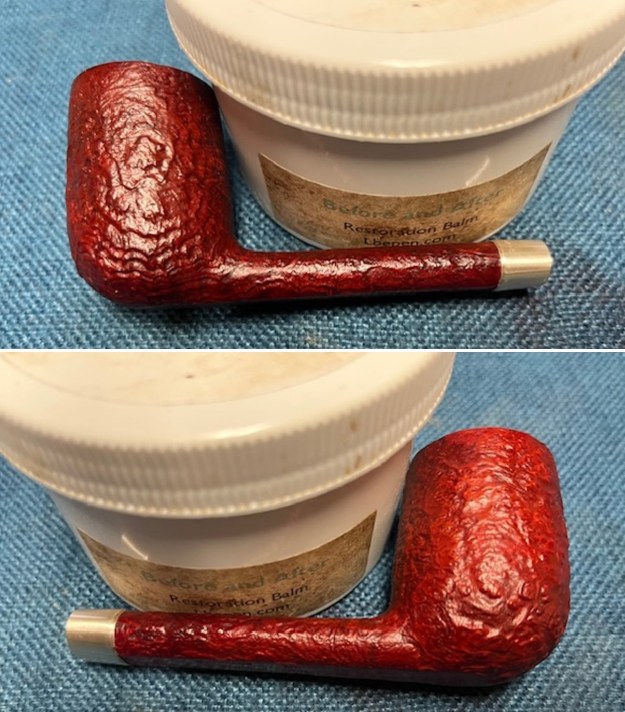
I am including the following photos from Pipedia and the advertising page that Anthony sent as well as they give a clear picture of the manufacturer of the pipe and the shop it was made for. Now I really want to visit this shop! Anthony wrote back and I include that below. I think his idea of calling or emailing them is perfect. He also asked if I would consider working on it if he chose to send it to me.

Hey Steve, Thanks for the info. I, too, found this but didn’t think it was associated with the shop in Virginia!!! I guess I need to give them a call or email them to try to get to the bottom of this. Thanks for the help. Actually, two other things. 1.Is there a reason so few bulldogs lack the double engraved lines around the bowl? 2. If down the line what would a refurbishing run me? Rough estimate, nothing set in stone find of thing. Again. Thanks for your quick responses and your time.
I answered him that I would gladly take on the project for him for the chance to see the pipe up close and personal. I answered his other questions about the lack of rings around the bowl cap. Some time went by and he wrote again.

I also wanted to thank you for helping me figure out my John Crouch Heavyweigh pipe!! I contacted and talked with one of the guys down there in Alexandria, VA. He said, yes, back in the 70’s they in fact imported these Italian pipes then stamped and sold them. I would love to send you this pipe for a restoration. If you could send me your address I’ll send it off in the next few days. I should have ask first if you have time or backed up on restorations? Or when would be a good time to send it to you?

I look forward to seeing what you can do to this amazing pipe. I love how detailed your blog posts and restoration process are!!

Thank you again and hope to hear from you soon.

I answered and Anthony wrote that he had sent the pipe to me. He also included another piece of information that would be important in the restoration and repair.

Hey Steve… I should tell you I did break a chunk of the stem off. I slipped off a step as I was walking down then and unfortunately one of my reactions was to bite down and it broke the mouth piece of the stem. I think I have them still. If I can find the pieces should I send them?

Thank you in advance. I can’t wait to see the transformation and the documentation on the blog. All the best!! Anthony
The pipe arrived yesterday just as I finished the repair on the table that was ahead of it. Great timing! I opened the box and took photos of the pipe as I examined it to get a clear assessment of the work that lay ahead of me. Before I took the photos I removed the Softee Bit from the stem so I could see the damage on the stem top that Anthony had mentioned. I love the shape of the pipe – to me a Rhodesian without the rim cap rings but still the right shape. The pipe is well used and must be a great smoker. There was a moderate cake in the bowl and lava on the rim top. The inner edge of the bowl is rough and shows some reaming damage leaving it out of round a bit. The finish is dirty and there are some spots of varnish or shellac remaining around the bowl and shank. There are a few fills but they are solid. The pipe is stamped on the left side of the shank and reads as noted above. The stamp is clear and readable. I wonder if the HEAVYWEIGH stamp is missing the “T” but suppose we won’t know for sure. The stem is well fit but the damage on the topside was more extensive than I thought once I remove the Softee Bit. I have mad patches this big before but really never have been happy with the suspected lack of durability of them. I think this one would be better off with a new stem. I took some closeup photos of the bowl and rim top to show the condition. You can see the damage on the inner edge and the generally roughness of the top and edge. The photos of the stem surface show the size of the damage. I hope you can see my rationale for restemming this one rather than making a patch that large.I took a photo of the stamping on the shank. It is clear as noted. You can also see why I wondered if the HEAVYWEIGH portion is missing the T. You can also see the shellac or varnish on the shank in this photo. To give a sense of the proportion of the of the pipe I removed the stem and took a photo of it. This will help me when I choose a new stem for it.Now to work on the pipe itself. I started by reaming it with a PipNet Pipe Reamer. The bowl was large enough that I used the second and third cutting heads. I took the cake back to bare briar. I cleaned up the reaming with a Savinelli Fitsall Pipe Knife. I also scraped off the lava build up on the rim top with the knife. I sanded the bowl walls with 220 grit sandpaper wrapped around a dowel. I took it back to smooth walls. The walls looked very good with no sign of checking or burning. I cleaned out the shank, mortise and the airway in the bowl with pipe cleaners, cotton swabs and isopropyl alcohol. It took a lot of cleaners but I got the grime and oils out of the shank and though the pipe smelled of tobacco it was much cleaner smelling than previous to that. I chose not to clean the stem since I was going to replace it.With the internals cleaned I turned my attention to the rim top. I worked over the inner edge of the bowl and the rim top with a folded piece of 220 grit sandpaper. I then gently topped the bowl on a topping board with 220 grit sandpaper. I cleaned up the inner edge a bit more. The pipe looked amazingly good. I wiped down the bowl with acetone soaked cotton pads to remove the varnish/shellac coat. It was particularly heavy around the stamping on the shank – both sides. It took much work to remove the shiny coat. I sanded the bowl with sanding pads – 320-3500 grit pads. I dry sanded it and wiped it down with a damp cloth after each pad. I was able to remove all of the shiny coat and the bowl began to take on a natural shine. I stained the rim top with a Cherry stain pen to match the rest of the briar. I also stained the lighter areas around the shank end. The rim top looked much better.I polished the briar with micromesh sanding pads – dry sanding with 1500-12000 grit pads. I wiped it down after each sanding pad with a damp cloth to remove the sanding debris on the surface. I rubbed the bowl down with Before & After Restoration Balm. I worked it into the surface of the briar with my fingertips to clean, enliven and protect it. I used a shoe brush to work it into the twin rings around the bowl cap. I let the balm sit for a little while and then buffed with a cotton cloth and shoe brush to raise the shine. I set the bowl aside and turned my attention to a new stem. I found a blank in my can of stems that was close to the right diameter and just slightly longer. With a few adjustments to the tenon and the diameter at the shank the fit will be good. You can also see the large broken chunk missing on the original stem in the photo below. In the second photo below, I knocked off the casting debris with a Dremel and sanding drum in preparation for using my tenon turning tool.I used the PIMO tenon turner to bring the tenon down close to the size that I wanted. I do this in stages as the tool can chip the tenon if you take too big a bite at one time. The second photo shows it getting closer. I paused mid turn to show how it cuts away material. Once I cleaned it up the fit was very close. Some sanding would make the fit perfect. I used a small flat file to remove the casting marks on the sides of the stem and fine tune the tenon fit in the bowl and took some photos of where it stands at this point.I started sanding the diameter of the stem to match the shank and then decided to give it a quick bend. I heated it with the flame of a lighter until the vulcanite was soft then bent the end to get the angle correct. I checked it against the original stem and the bend matched. Good to go! Now I had a lot of hand sanding to do to trim back the diameter to fit the shank. I do this next part all by hand with the stem removed and constantly putting it on the shank and checking progress. It is tedious so I can think of other things while sanding. It makes the process a bit of a respite. I can’t tell you how many hours of sanding this took but it is finally there. The fit is right and now it is time to polish it. Once the fit was correct, I started polishing out the scratch marks and smoothing the stem with 320-3500 grit sanding pads. I wiped the stem down after each sanding pad with an Obsidian Oil impregnated cloth. It removes the dust and also gives the sanding pads some bite. By the final pad it was looking quite good.Following my usual process in restoration I polished the stem with micromesh sanding pads – dry sanding with 1500-12000 grit sanding pads. I wiped it down after each sanding pad with Obsidian Oil. I polished it further with Before & After Stem Polish – both Fine and Extra Fine. I gave it a final coat of Obsidian Oil and set it aside to absorb the oil. The John Crouch Heavyweigh(t) Rhodesian has been restemmed and is finished other than the final waxing and buffing. I polished the new stem with Blue Diamond to polish out the remaining small scratches and gave it several coats of carnauba. I buffed the pipe with a clean buffing pad on the buffer to raise the shine. I hand buffed it with a microfiber cloth to deepen the shine. The pipe polished up pretty nicely. The finished pipe is shown in the photos below. The dimensions are Length: 5 ½ inches, Height: 1 ½ inches, Outside diameter of the bowl: 1 ¼ inches, Chamber diameter: ¾ of an inch. The weight of the pipe is 45 grams/1.59 ounces. It does not feel heavy and the weight certainly does not put it in a heavy category for me. I will be sending it back to Anthony shortly. I look forward to hearing what he thinks of it once he has it in hand. If the condition was any indicator it is a good smoker. Thanks for walking through the restoration with me as I worked over this John Crouch Heavyweigh(t) Rhodesian.