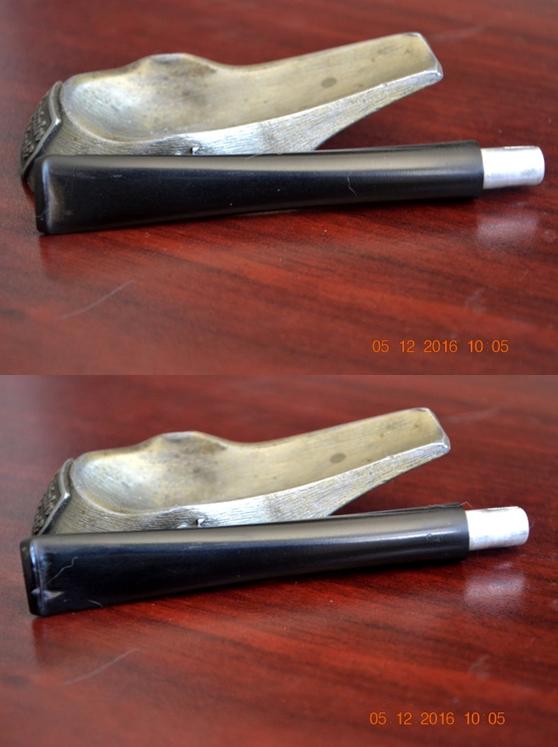
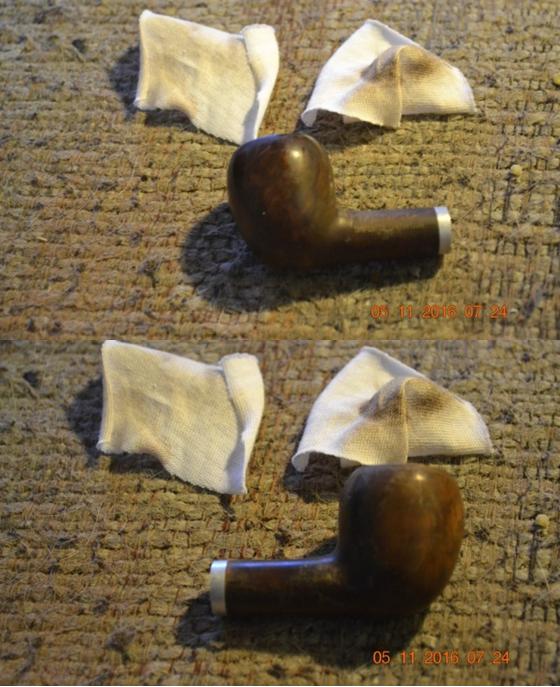
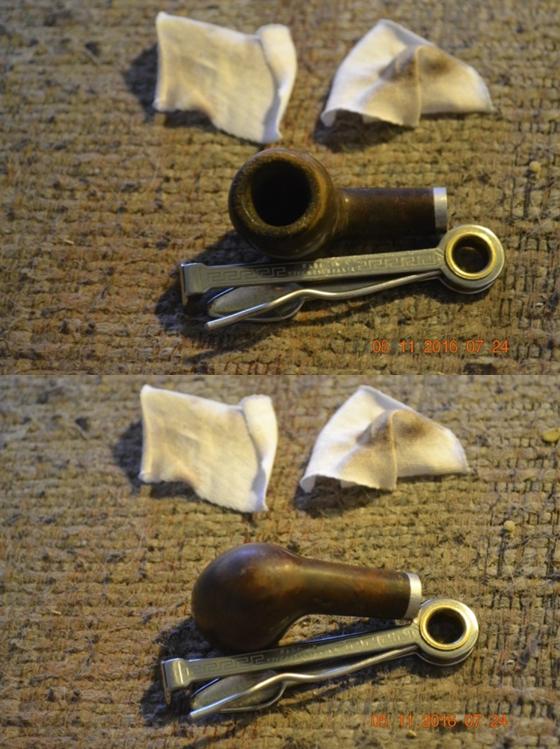
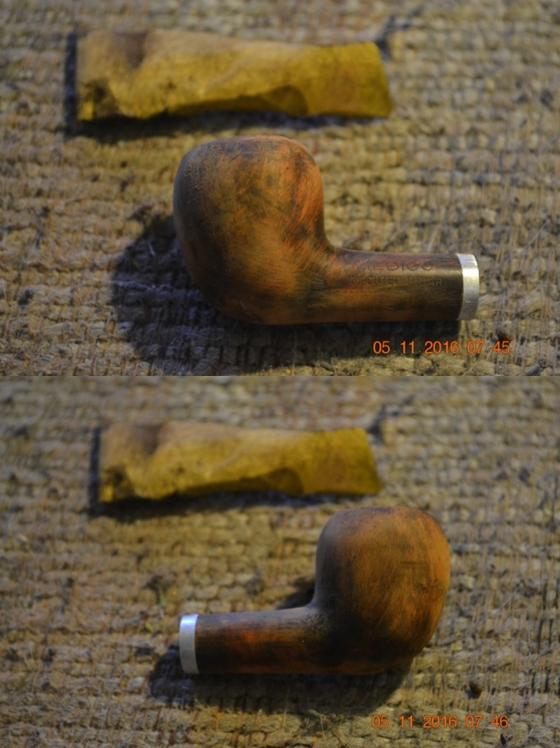
Tag Archives: Robert M. Boughton article

Spotlight: Ladies Pipes, Part 5/7, a Vintage Dr. Grabow Carved Duke


Guest Blog by Robert M. Boughton
Member, International Society of Codgers
Member, North American Society of Pipe Collectors
http://www.naspc.org
http://www.roadrunnerpipesnm.biz
http://about.me/boughtonrobert
Photos © the Author

If a man loves you…he’s willing to profess it. He’ll give you a title after a while. You’re going to be his lady, his woman, his fiancée, his wife, his baby’s mama, something.
— Broderick Steven “Steve” Harvey (b. 1957), U.S. comedian, actor, TV and radio talk show host, writer of books on relationships, former New York public high school teacher

INTRODUCTION
I neither forgot nor gave up on this special series despite the relative vacuum of responses. Instead, I was sidetracked by developments in a portfolio of litigious necessity that might very well expand with more certainty and regularity than the universe. Returning to the subject of this blog, just the other day I chanced upon a woman with a rather off-putting appearance. Perhaps some significant other had at last given her a title she disliked. At any rate, she was chain-smoking cigarettes with almost the frenetic zealousness of the late great Lloyd Bridges near the end of the comic classic “Airplane.”

Nevertheless, by pure nature, I acquainted her with my name and part-time occupation, and of course mentioned the several new customers I came across in recent weeks, under circumstances that can only be called serendipitous, who were already free of cigarettes. Undeterred when the lady did protest – with a deceptively soft, dismissive laugh that was somehow more like a tiger stifling a yawn before it pounces – that the idea of a woman smoking a pipe did not seem very lady-like. Still not dissuaded, I pulled from my magic box the perfect specimen of a lithe, sleek, petite bent billiard that I had reserved for one other singularly odd woman who never claimed it.

“That’s why I also restore ladies pipes such as this,” I said with a hint of enthusiasm, and held it out.

With the most cursory pretense of a glance I never before had the pleasure of noting in my writer’s mental file, she gave a flick of the head every bit as memorable, so that her long, dirty blonde hair made room for a fresh cancer stick. She shoved in her mouth, so forcefully punctuating her contempt that the nasty, chemical laden coffin nail went farther into her mouth than anticipated and almost choked her. I had to admire the quick recovery with a lengthy, chic, palliative drag, so reminiscent of any one of the many Golden Age of Hollywood starlets now long dead from the same prop rather than age. I know when I’ve been shot down. But it still goes to show the progress society needs to make before a lady can be comfortable walking into a tobacconist to buy a pipe.

On the subject of pipes, it turns out there really was a Dr. Grabow – Paul E. Grabow, MD (1868-1965), a general practitioner in Chicago who was a friend of Louis Linkman, co-founder with August Fisher of M. Linkman and Co. in 1898. During a conversation between the two in the early years of the Great Depression, Linkman reportedly told Dr. Grabow of his idea to introduce a new and improved line of pipes that he felt would sell better if they were named after a physician. Dr. Grabow, flattered by the request to use his name, accepted. The pipe brand named for him was launched in 1932, and until his death at age 97 the good doctor was given new models whenever he wanted them. Grabow1
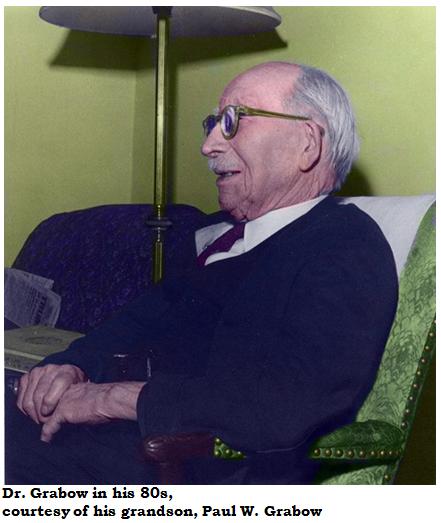
The free pipe perk persisted despite Linkman’s production of the brand stopping in February 1953, when the Dr. Grabow Pipe Co. filed for dissolution a month before Henry Leonard and Thomas Inc. (HLT) of Queens, New York bought the rights, and they were produced by Sparta Pipes Inc. U.S. Tobacco bought out Sparta in 1969, assuming control of the Dr. Grabow production until Lane Ltd. paid for the rights some time later. Around 2000, RJ Reynolds and British American Tobacco took over.

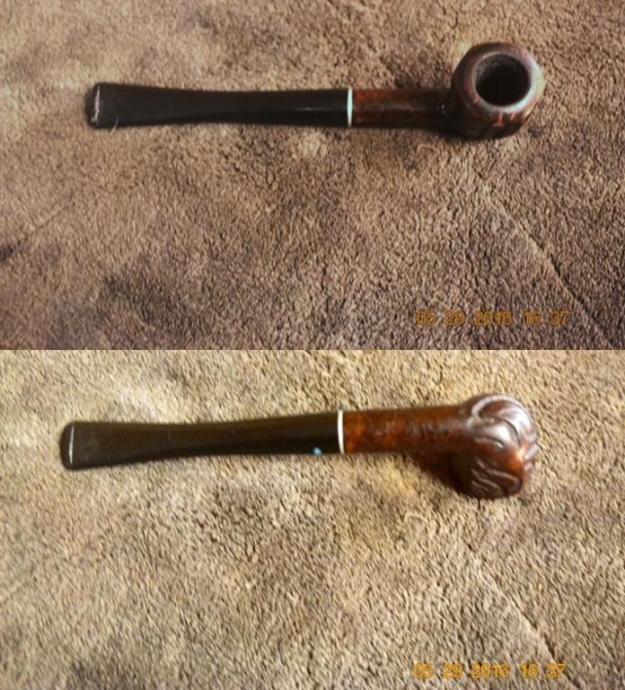
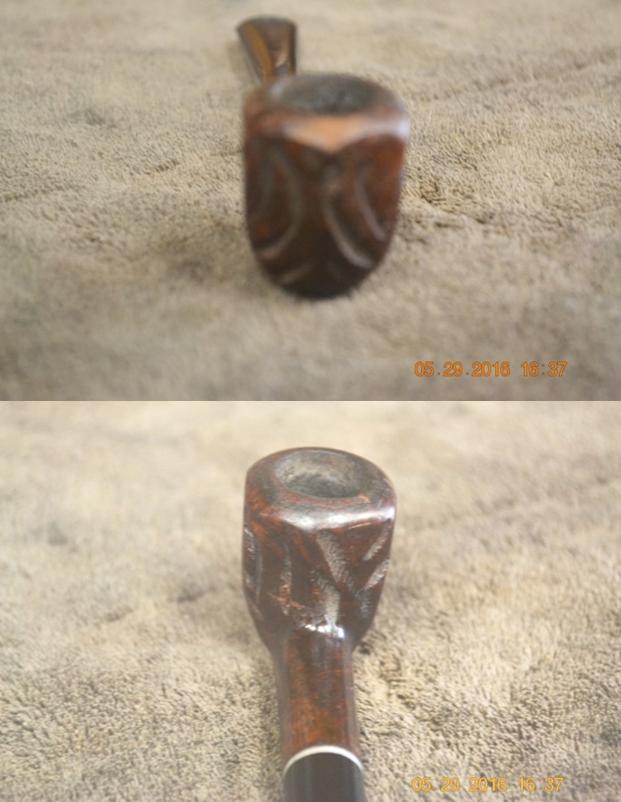
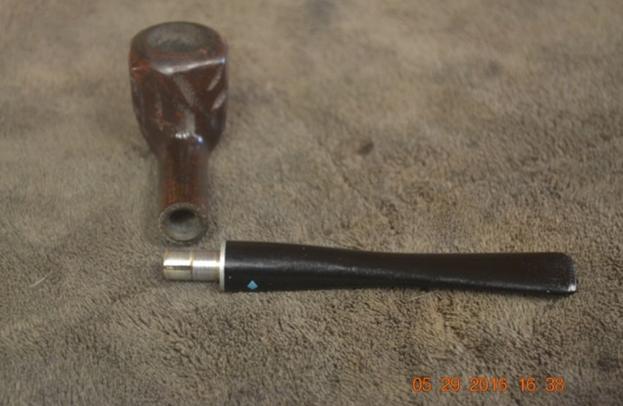
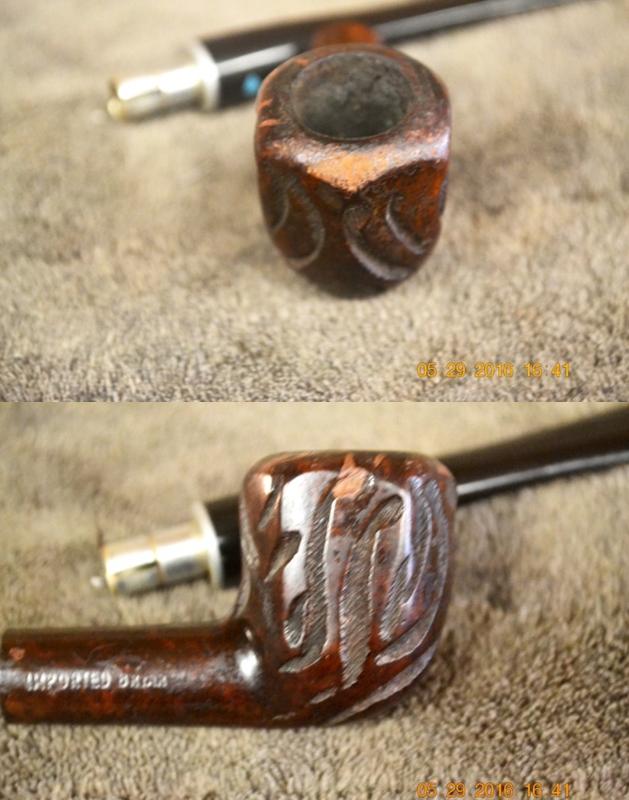
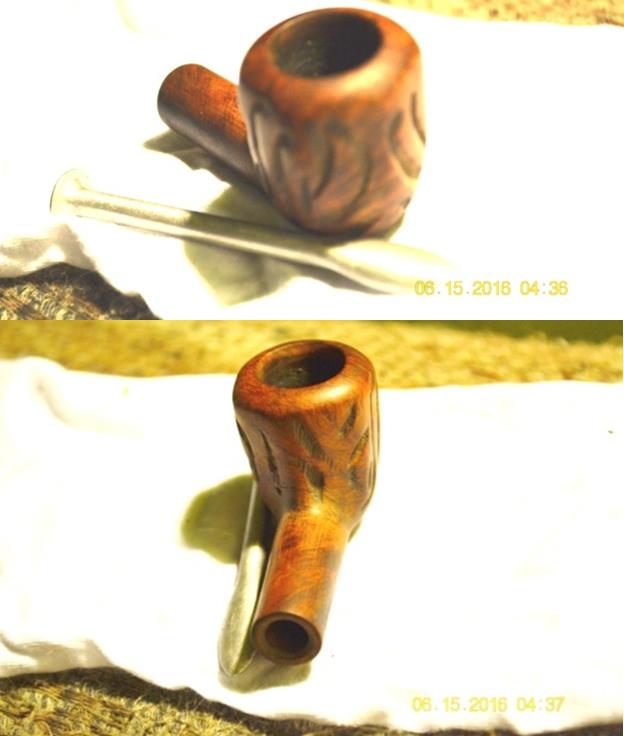
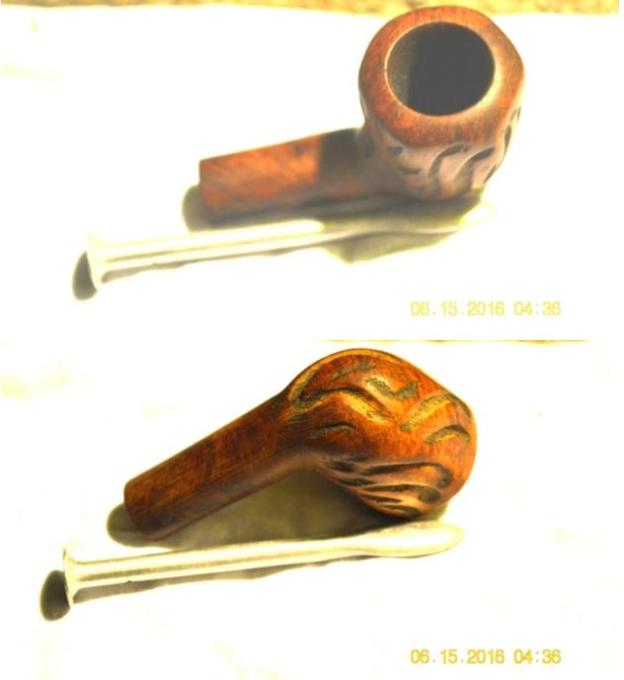
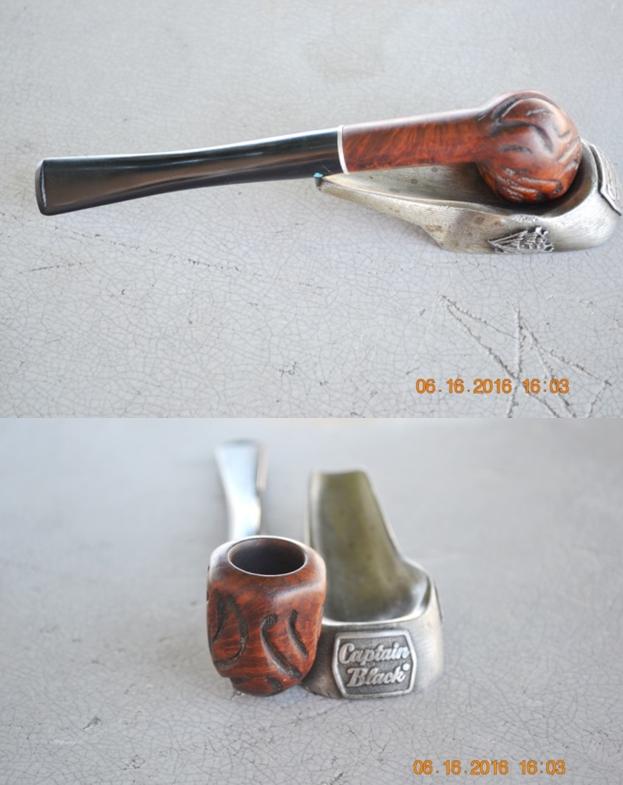
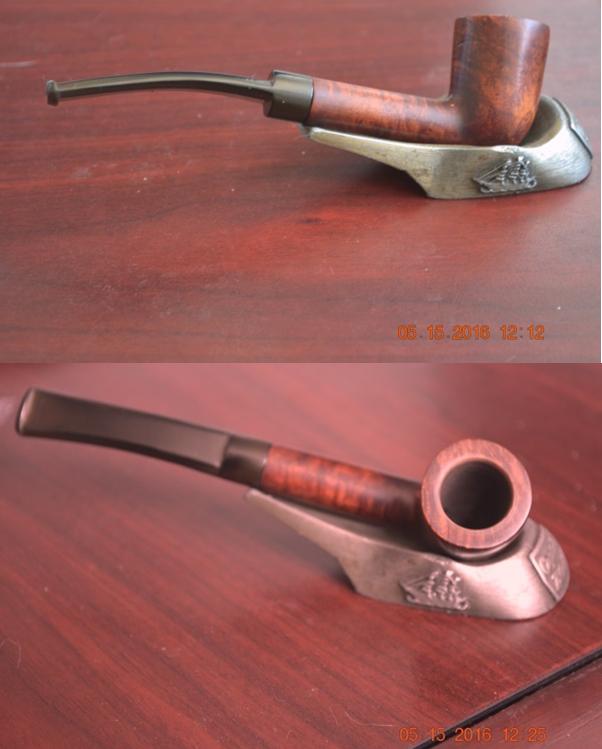
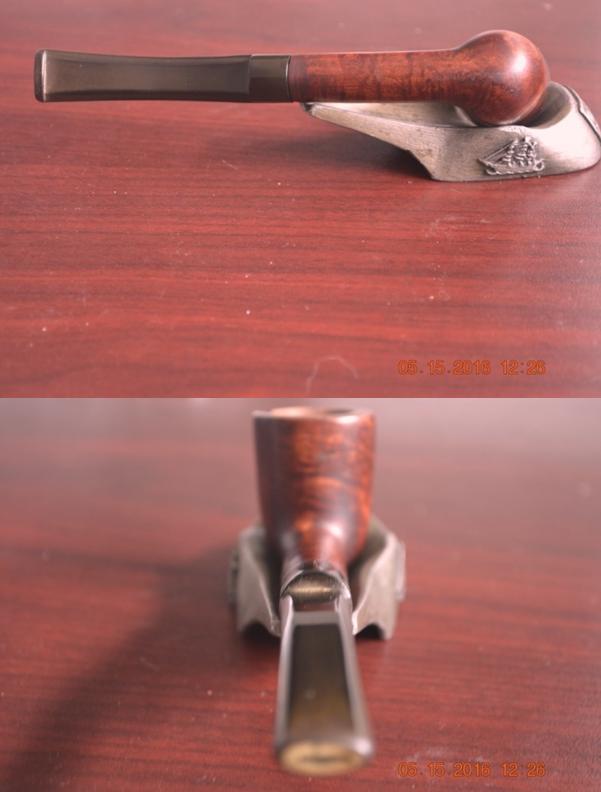
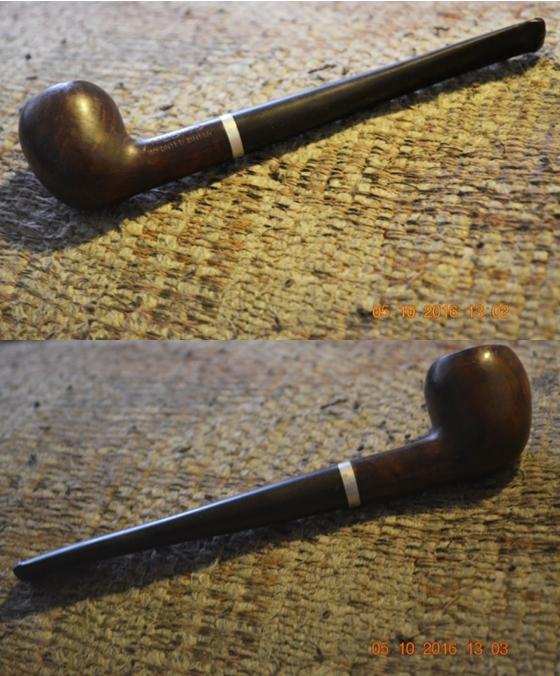
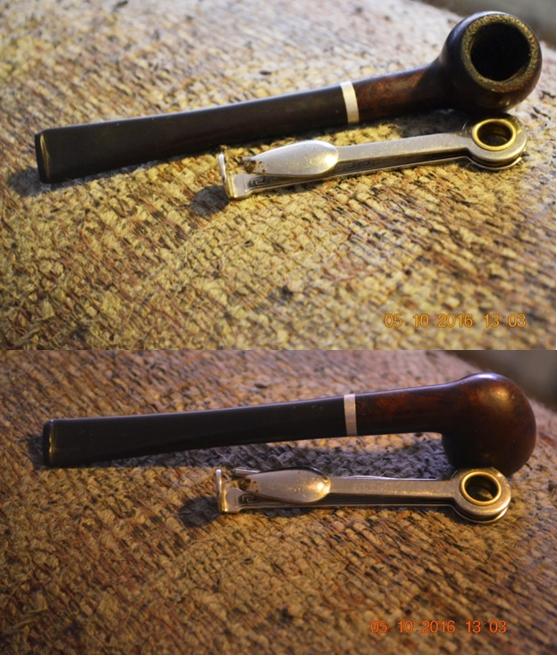
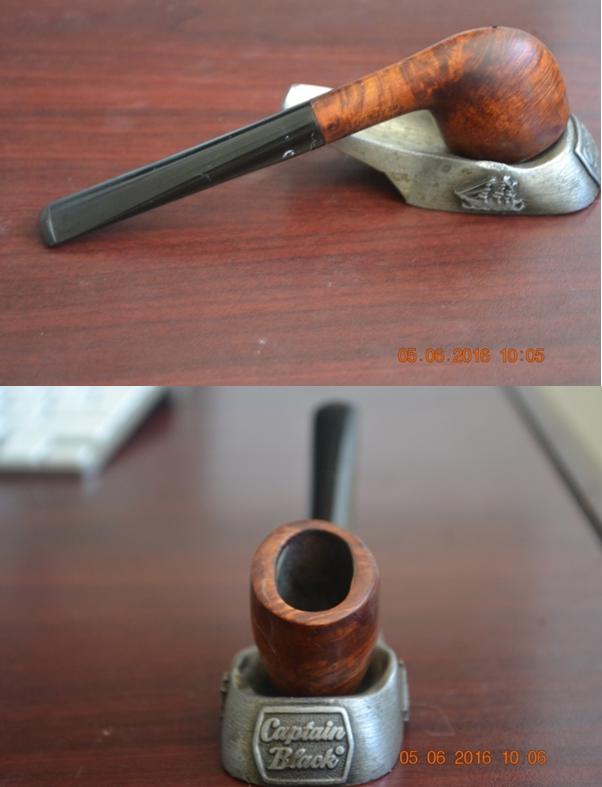
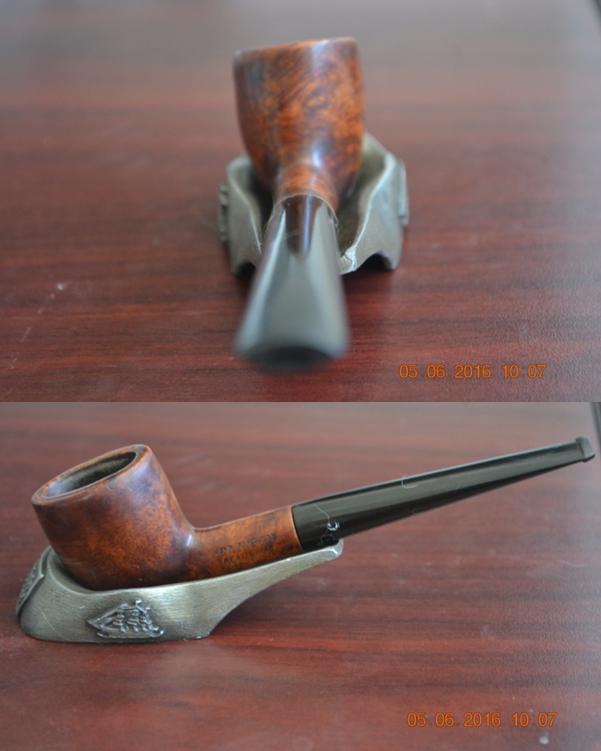
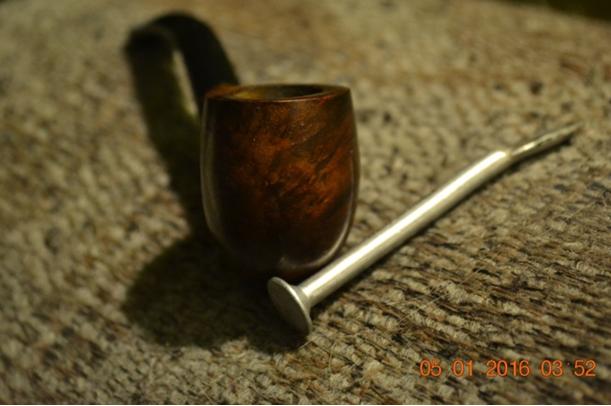
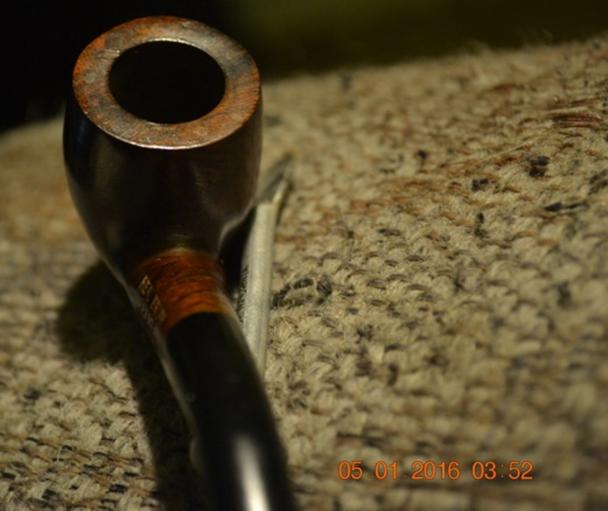
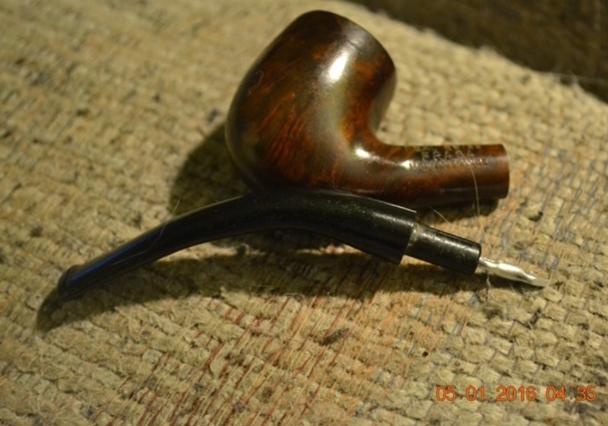
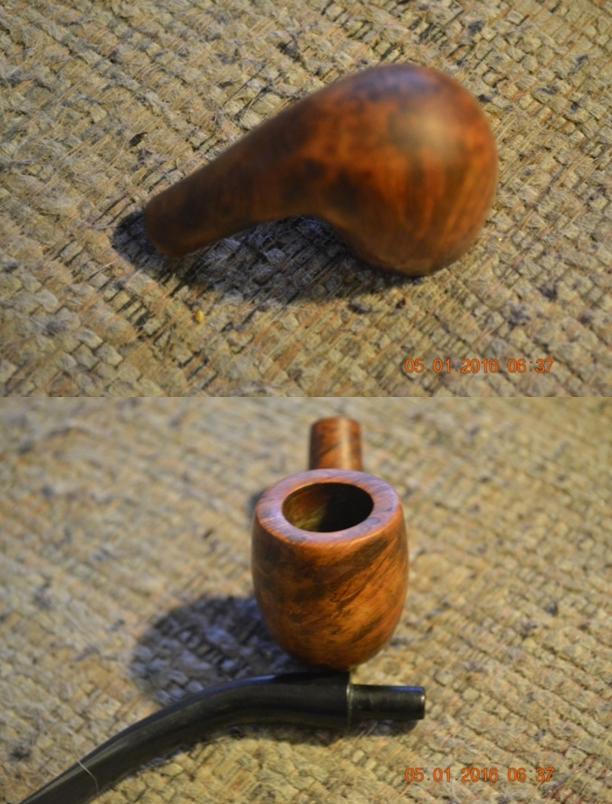
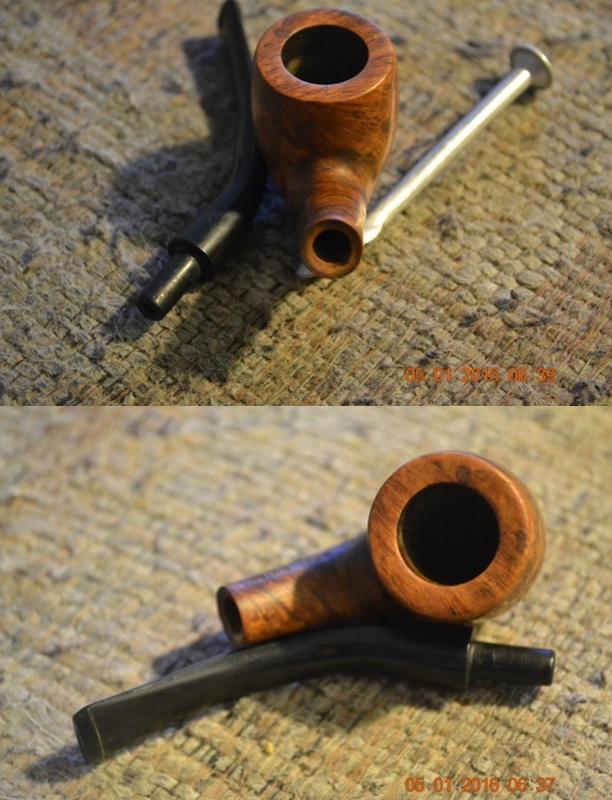
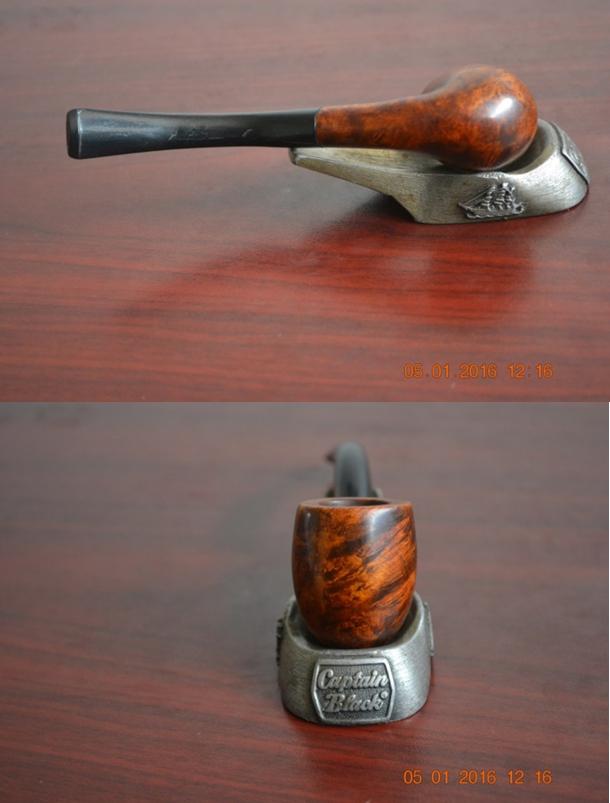
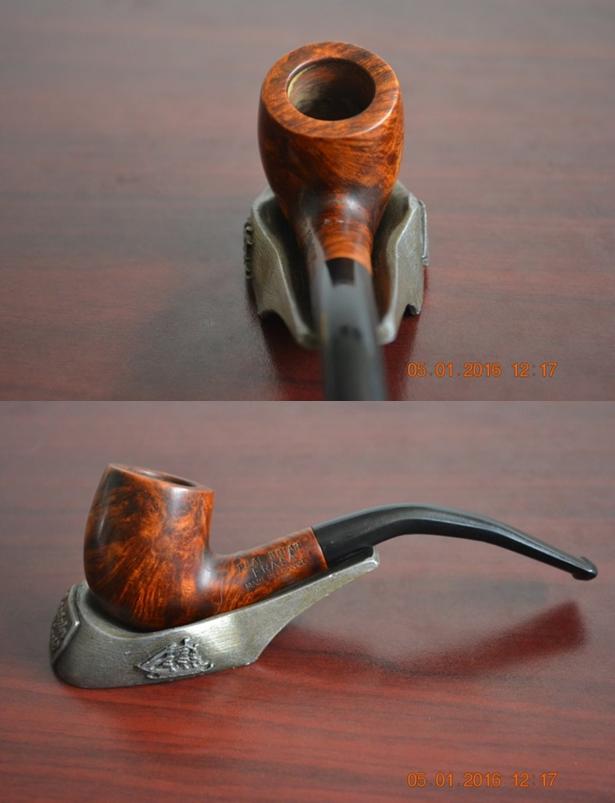
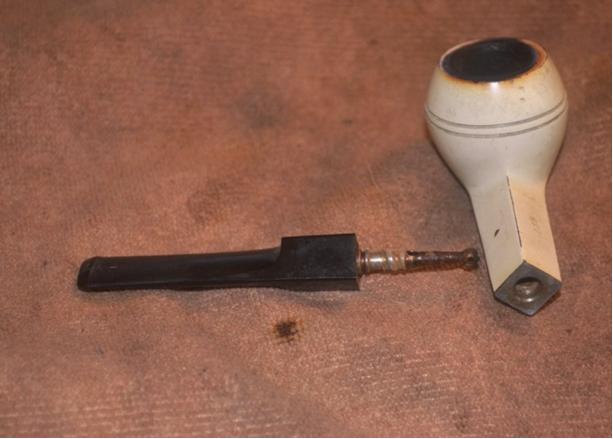
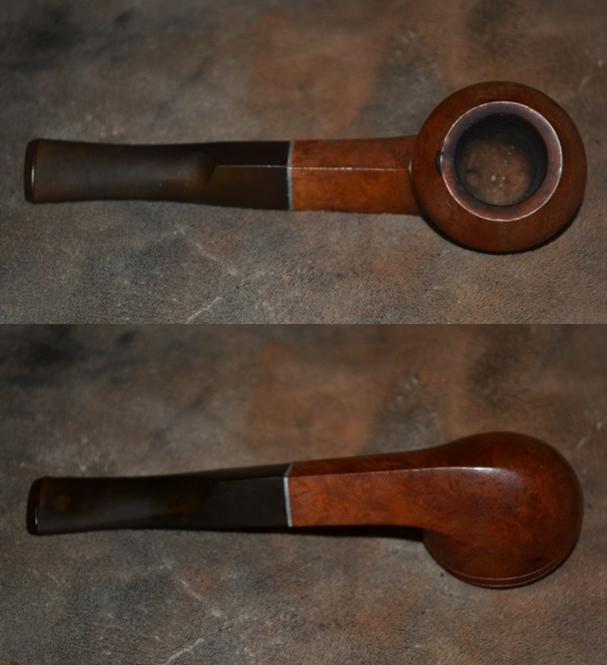
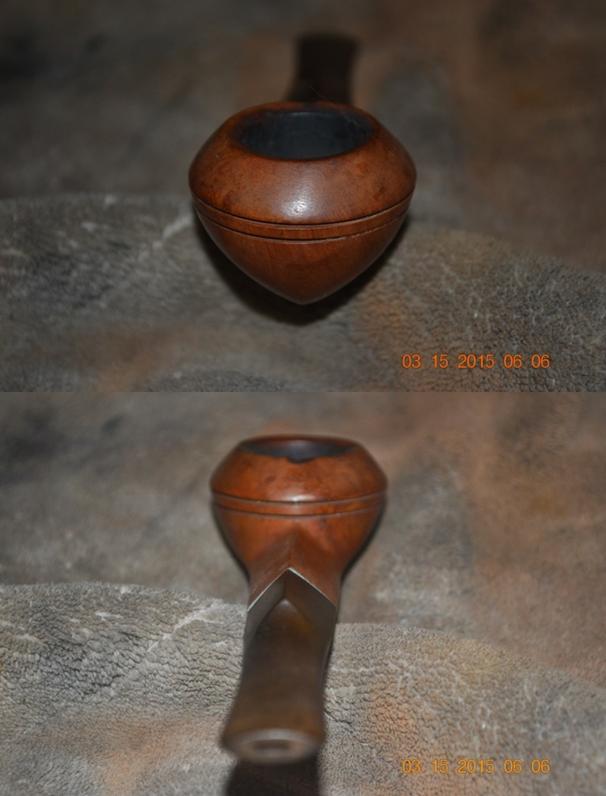
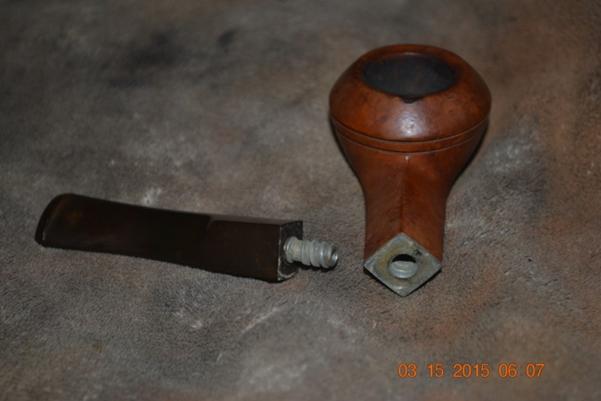
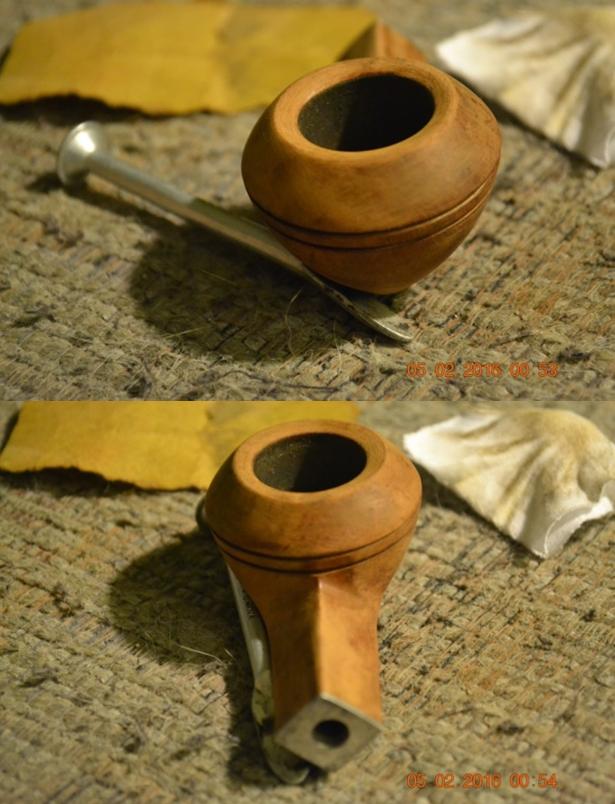
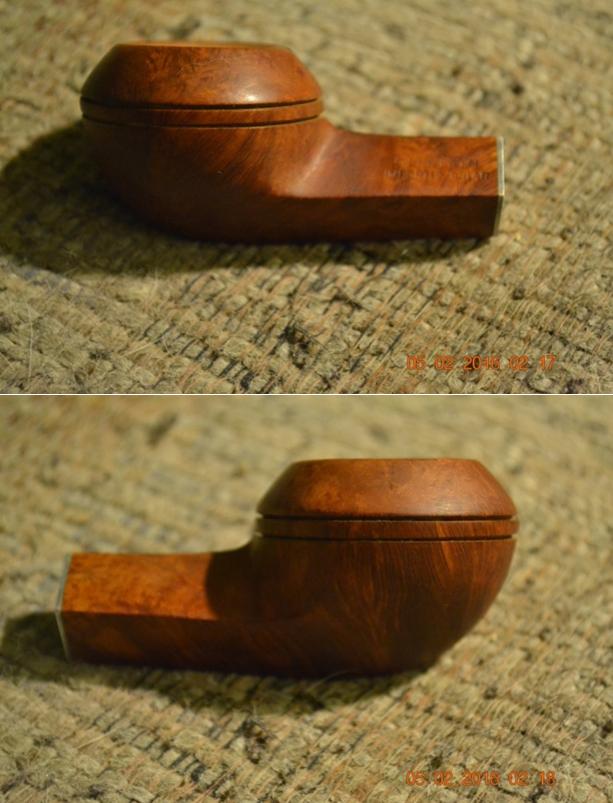
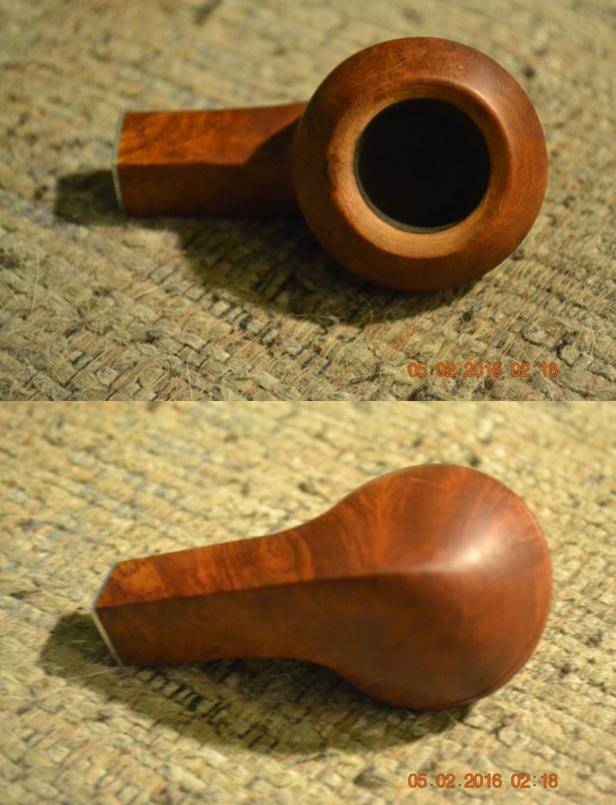
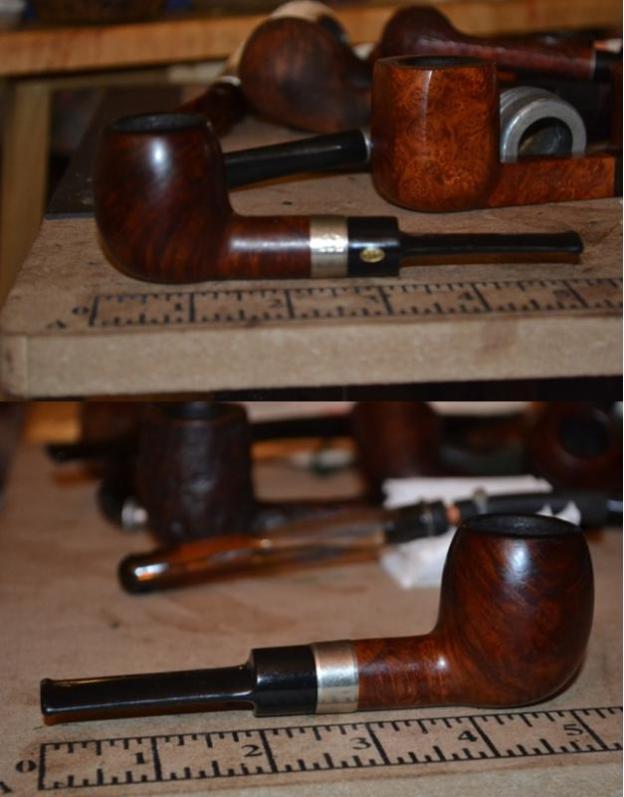
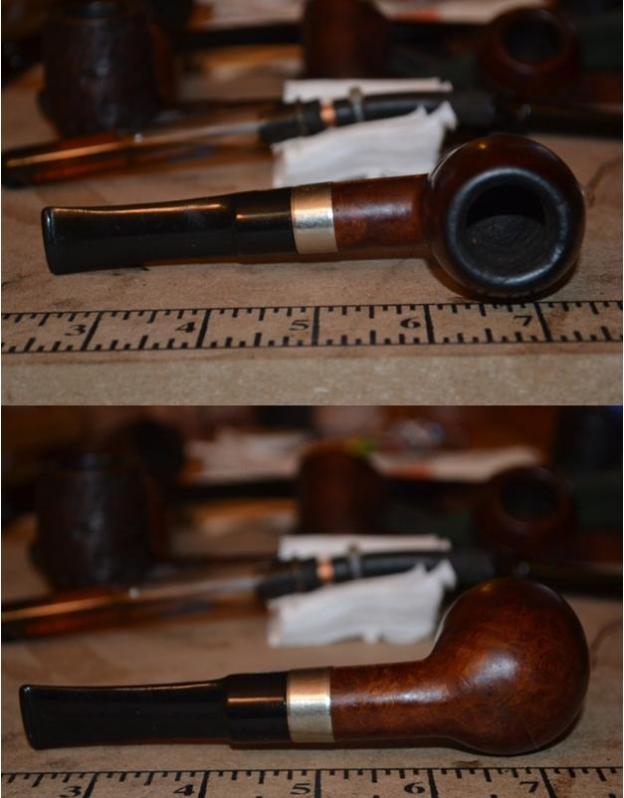
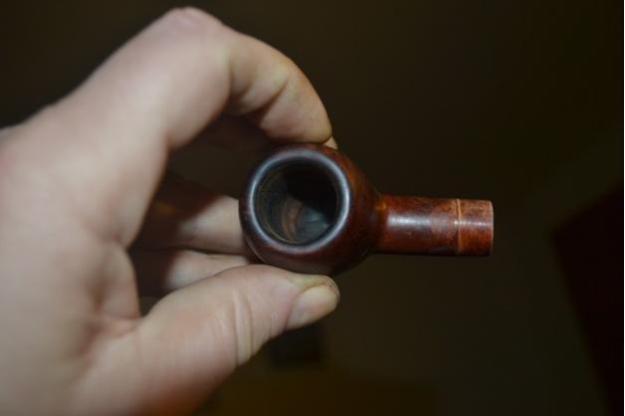
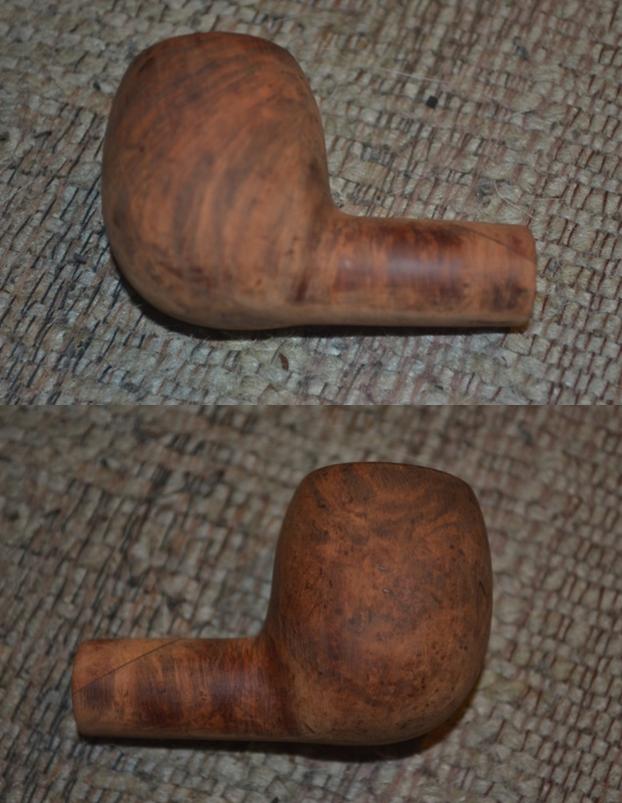
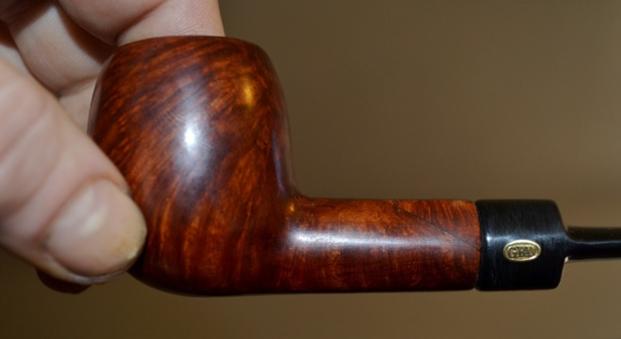
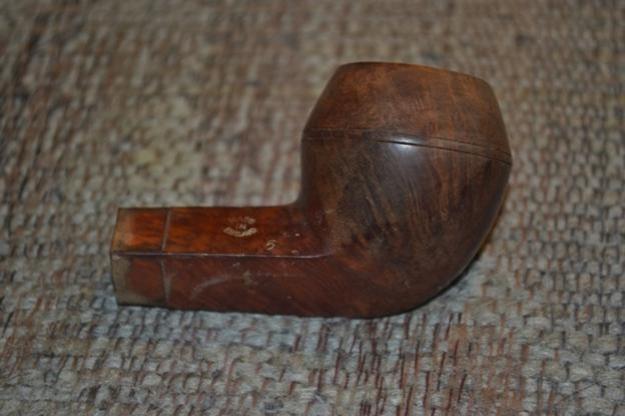
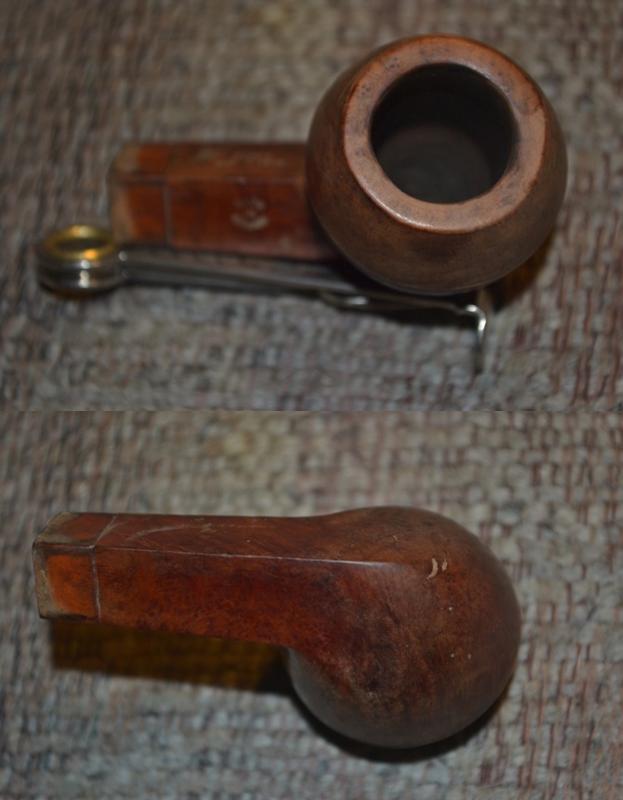
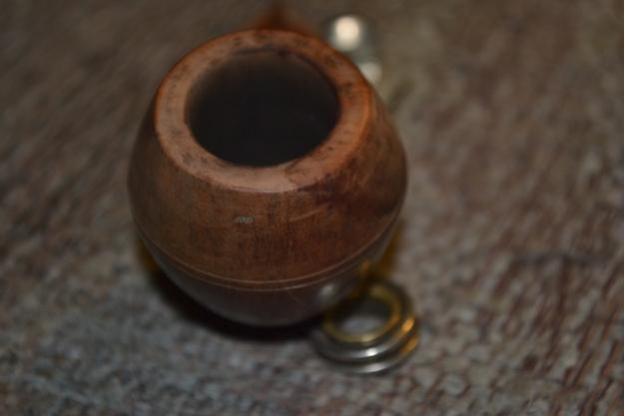
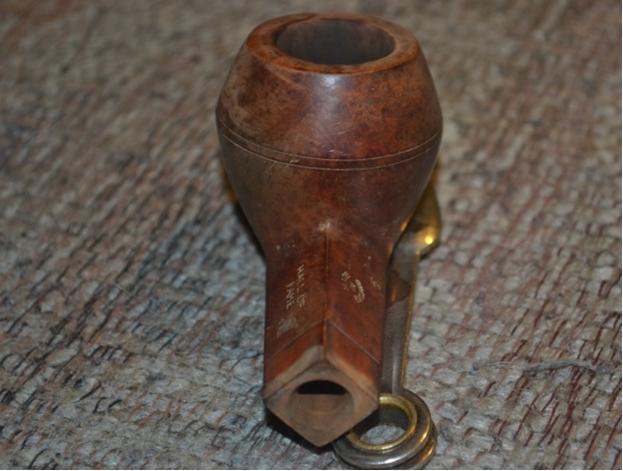
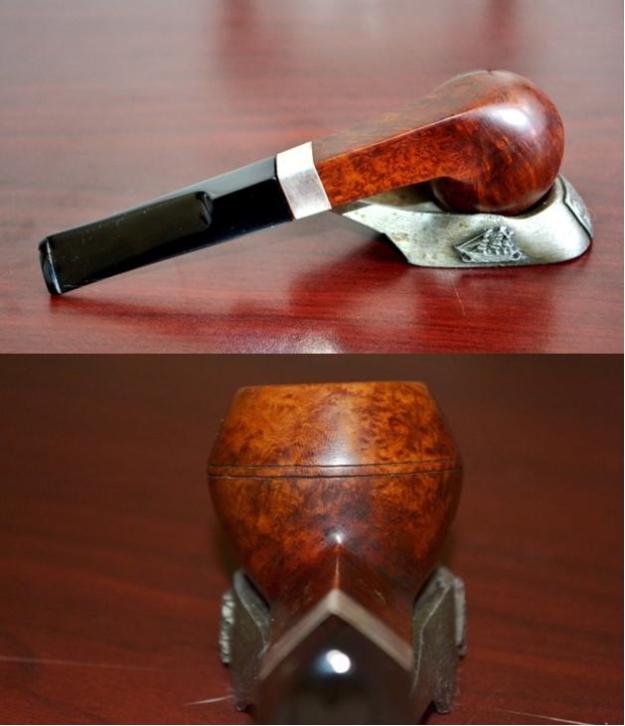
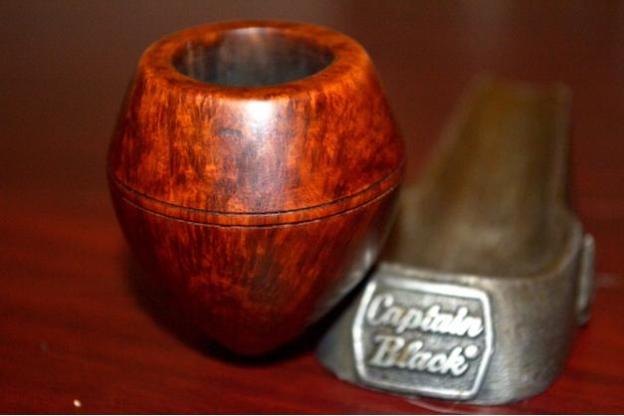
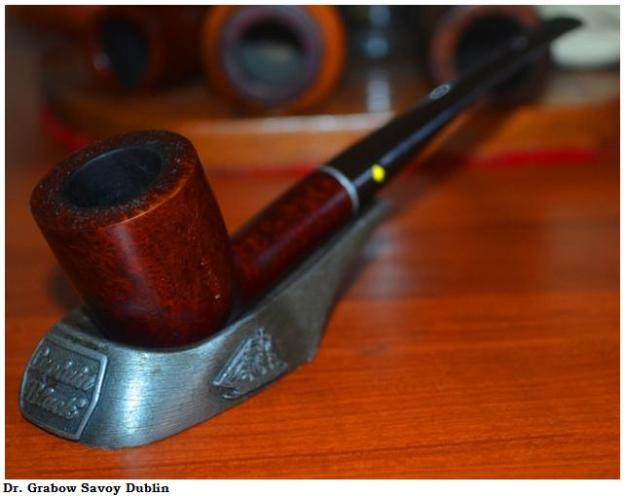
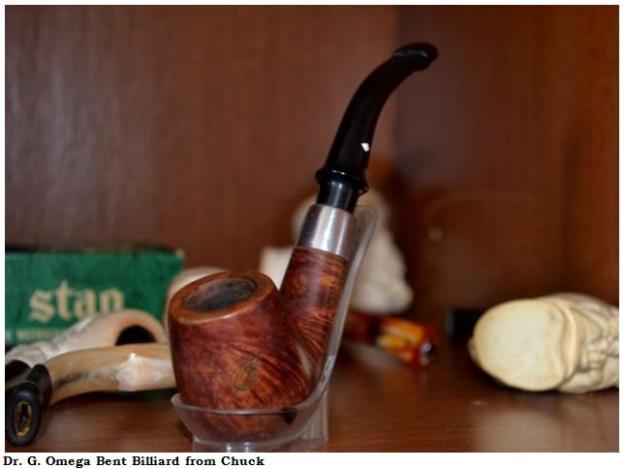
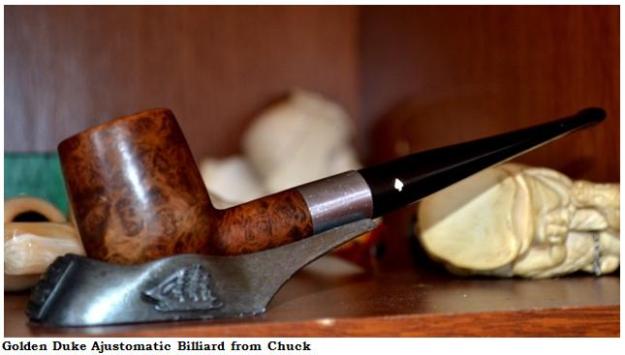
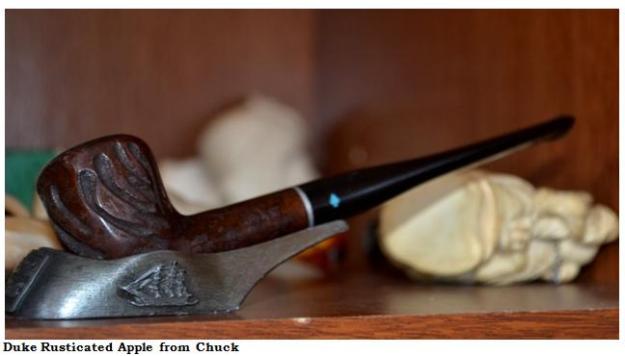
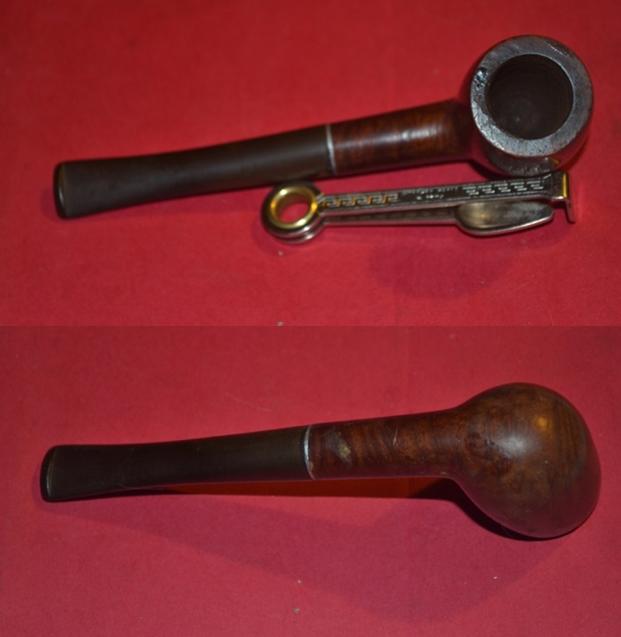
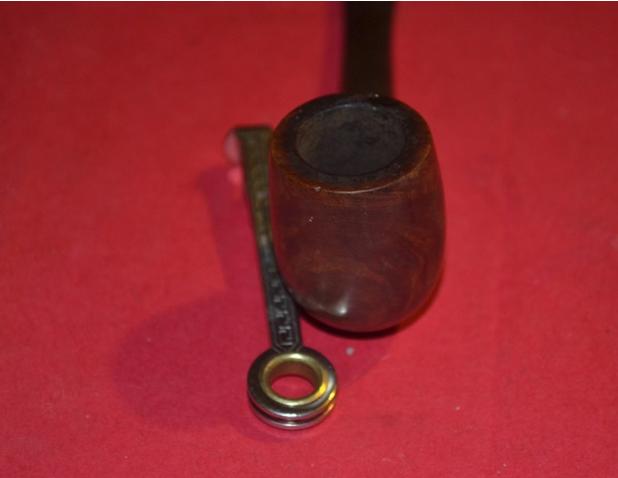
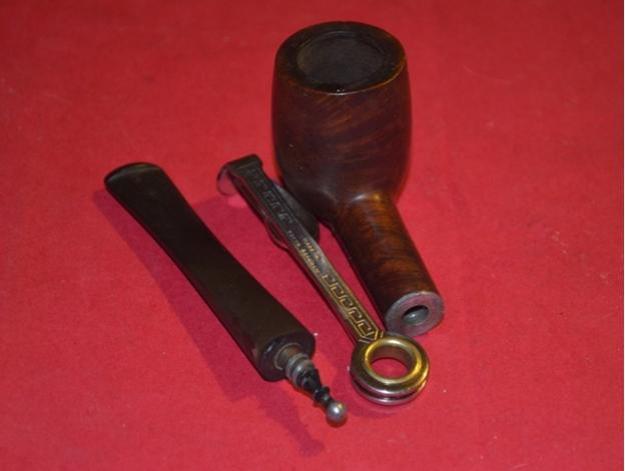
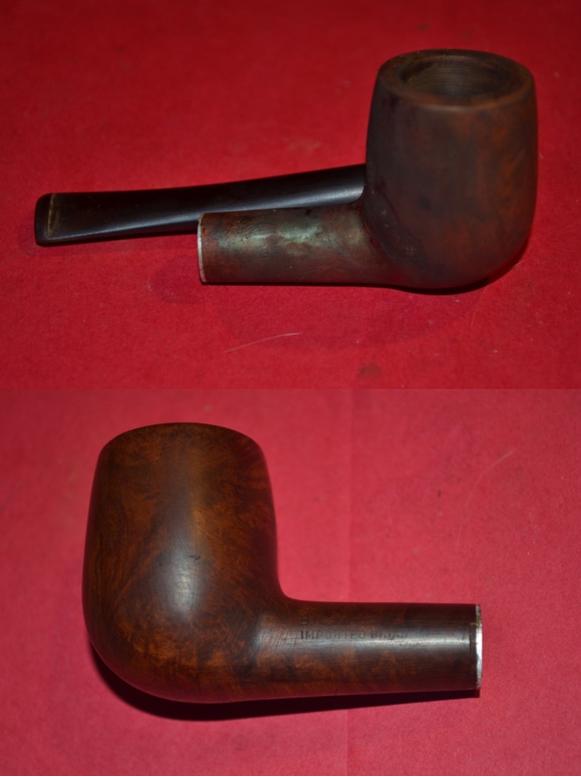
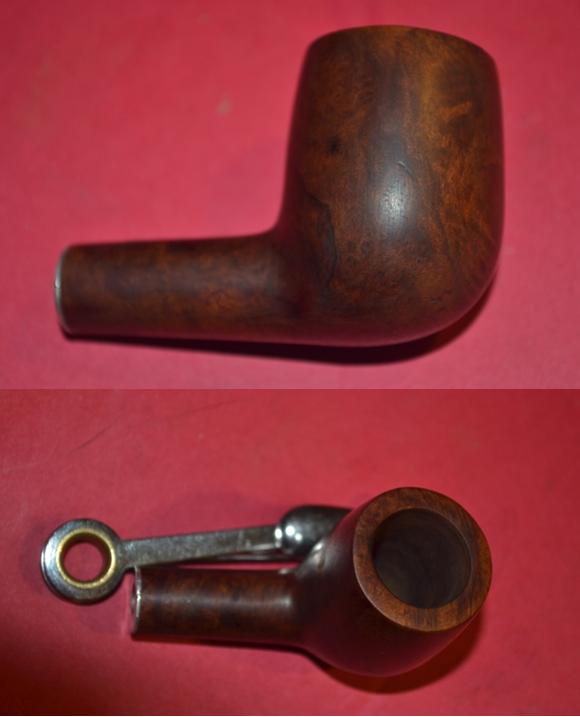
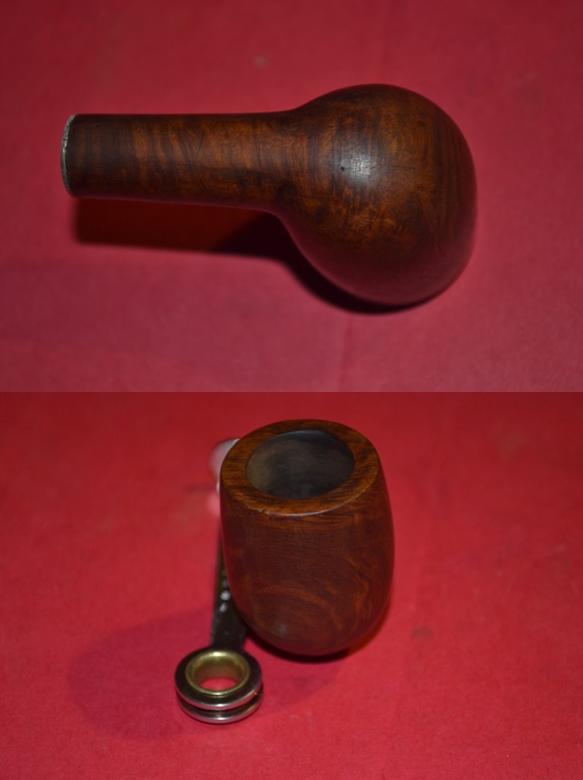
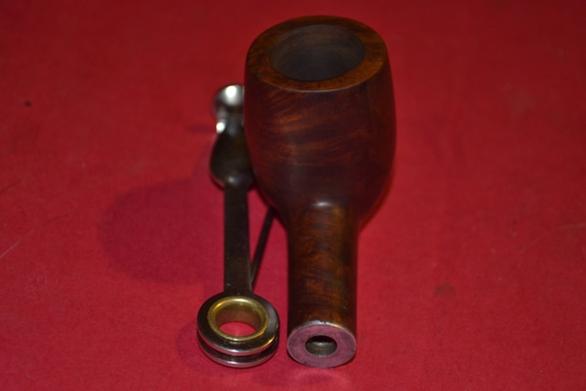
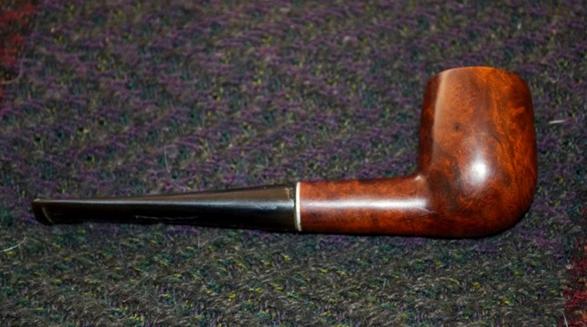
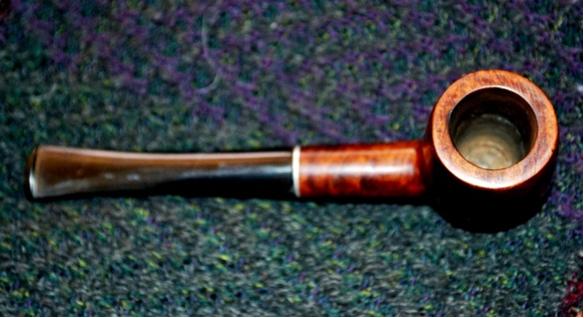
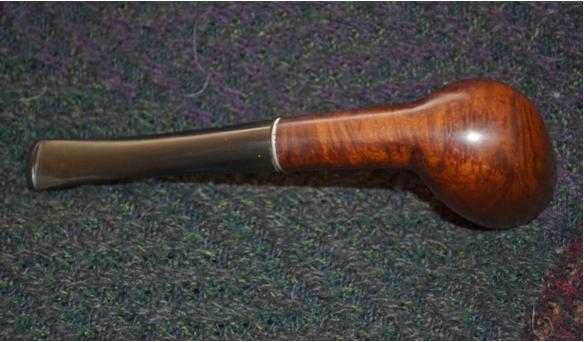
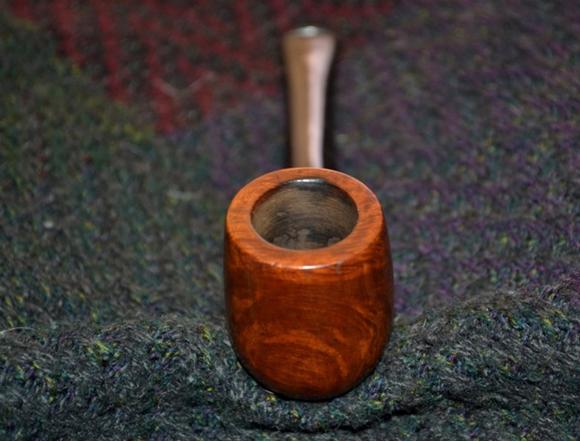
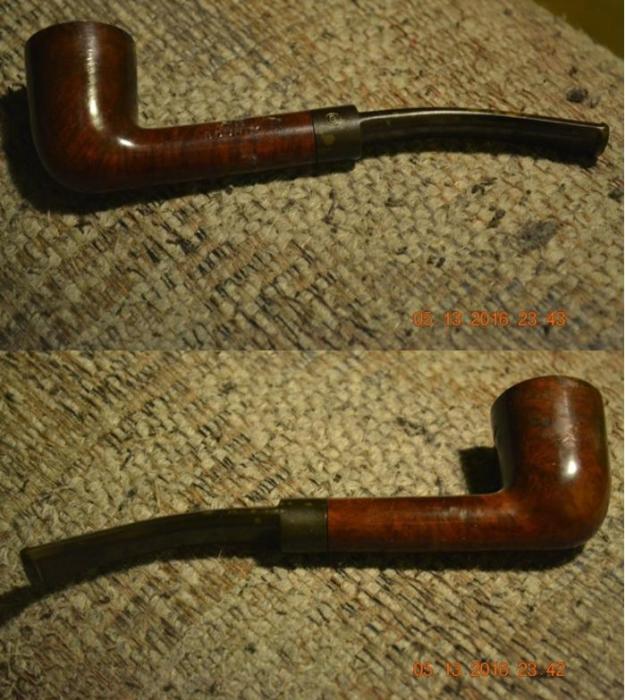
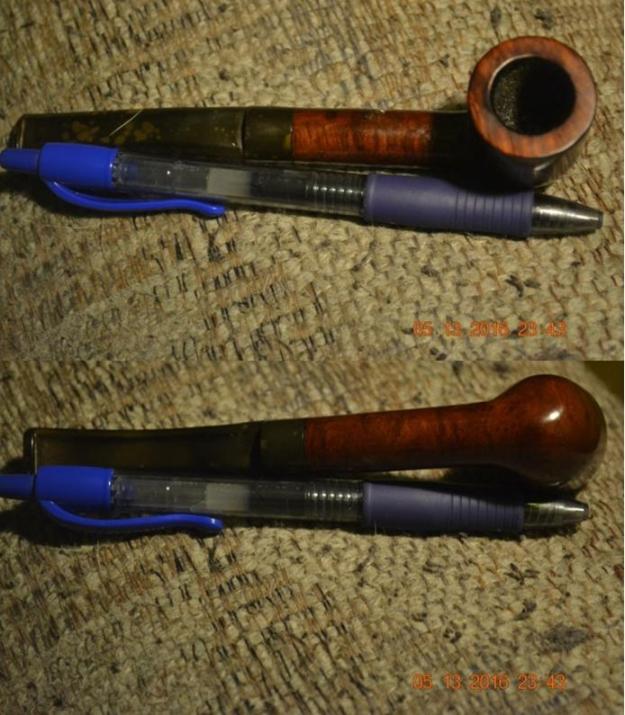
As for the peculiar little carved Duke that is the subject of this installment, regardless of its smallness, the bowl seems to have six subtle sides. I am inclined to call such a shape a panel. But the best narrowing I can do with the multitude of Dr. Grabow sites is a “textured” slim pear, shape number 74.Grabow2Grabow3Grabow4Grabow5
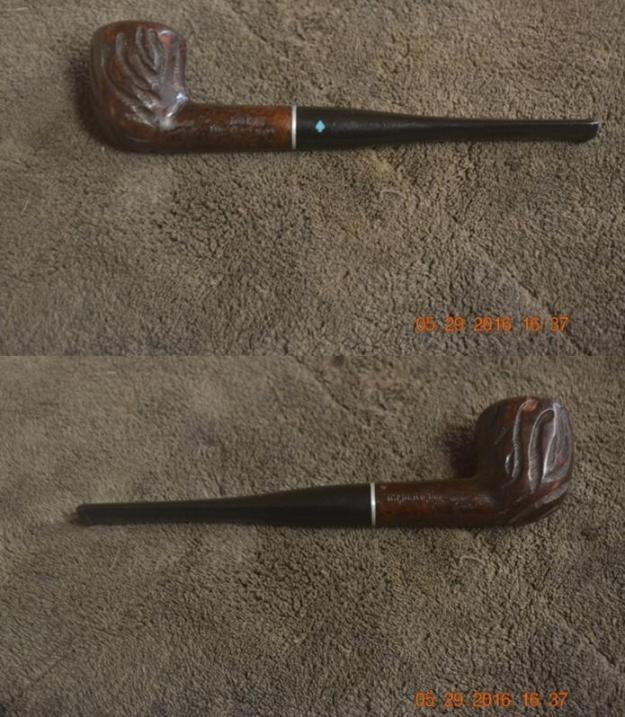
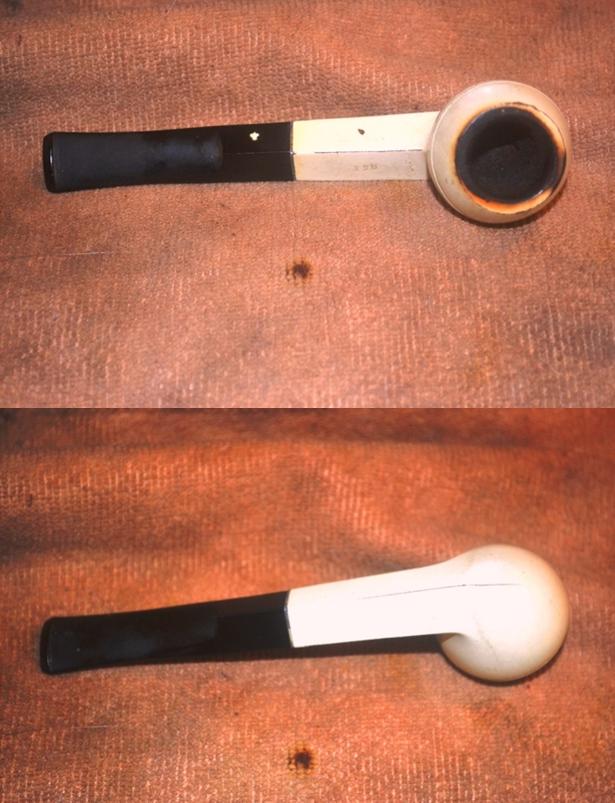
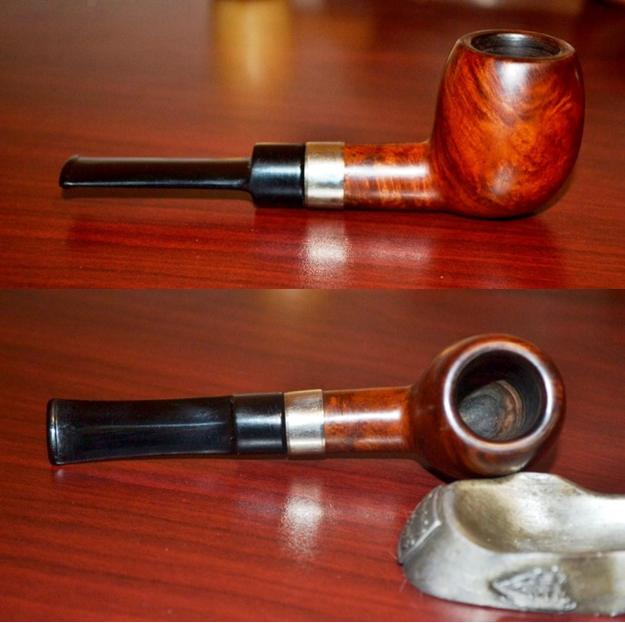
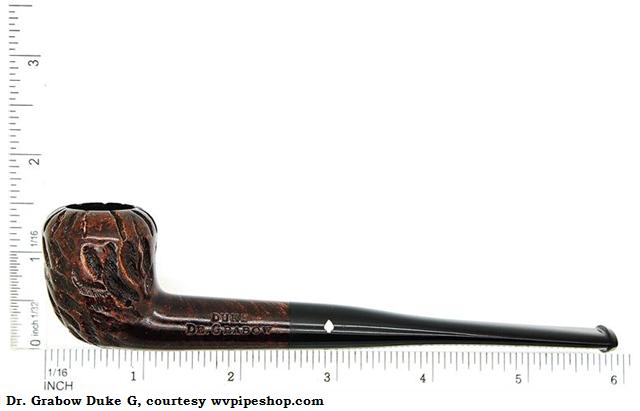
And here is a photo I found online of a Dr. Grabow “Duke G,” which appears to be the same pipe except for the white spade.Grabow6
RESTORATION
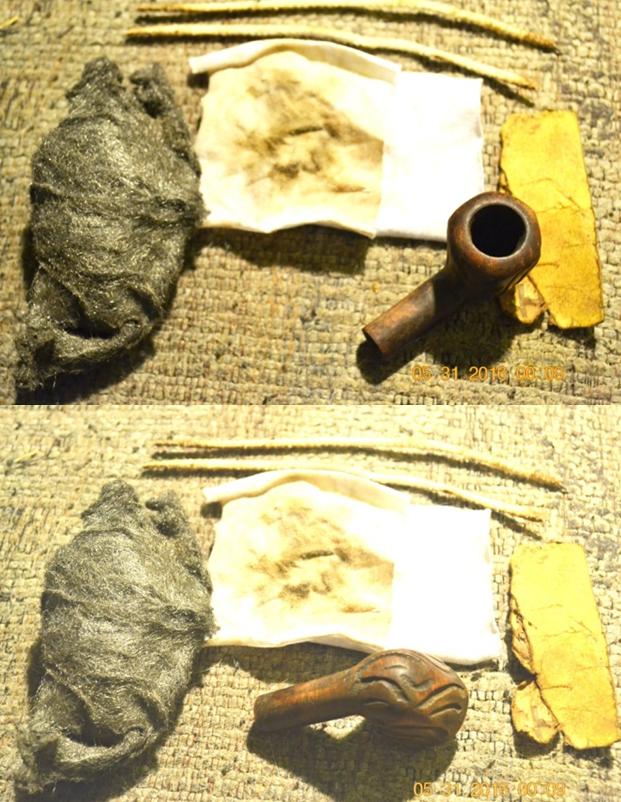
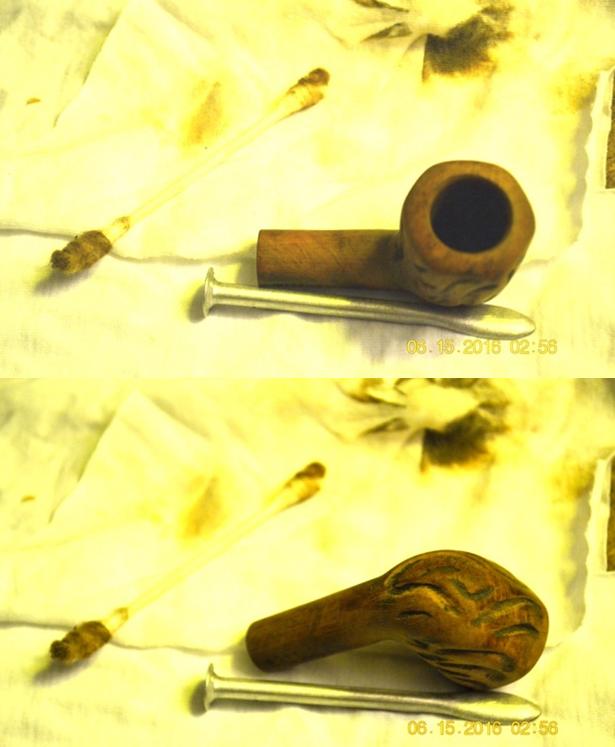
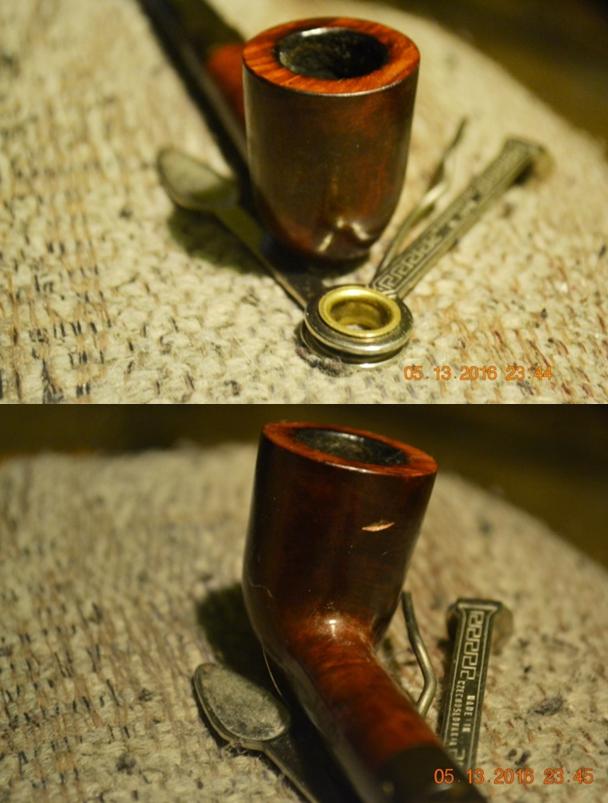
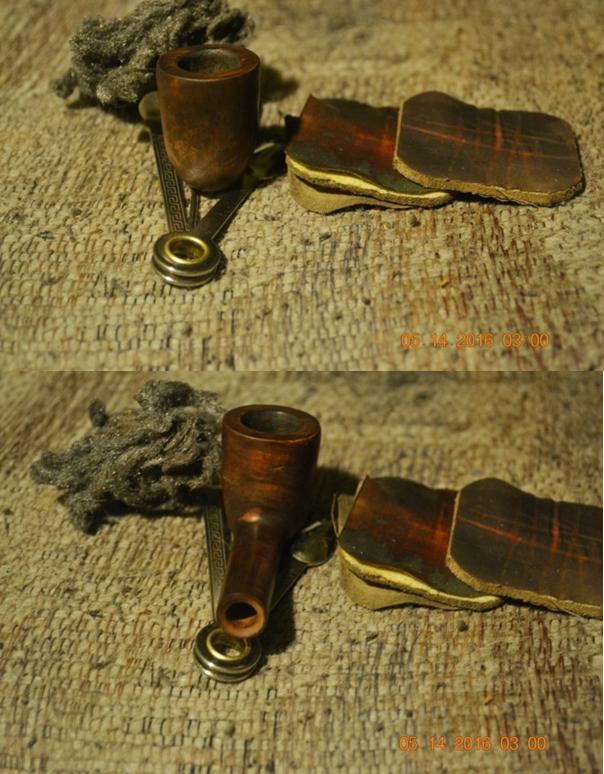
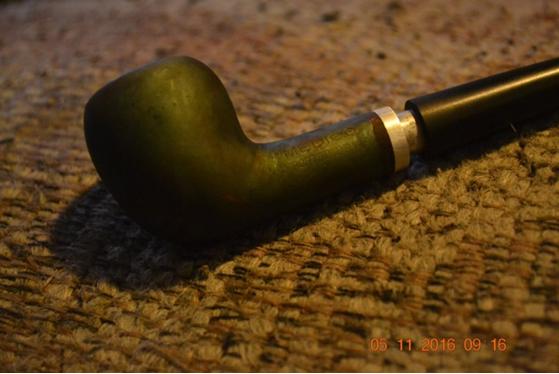
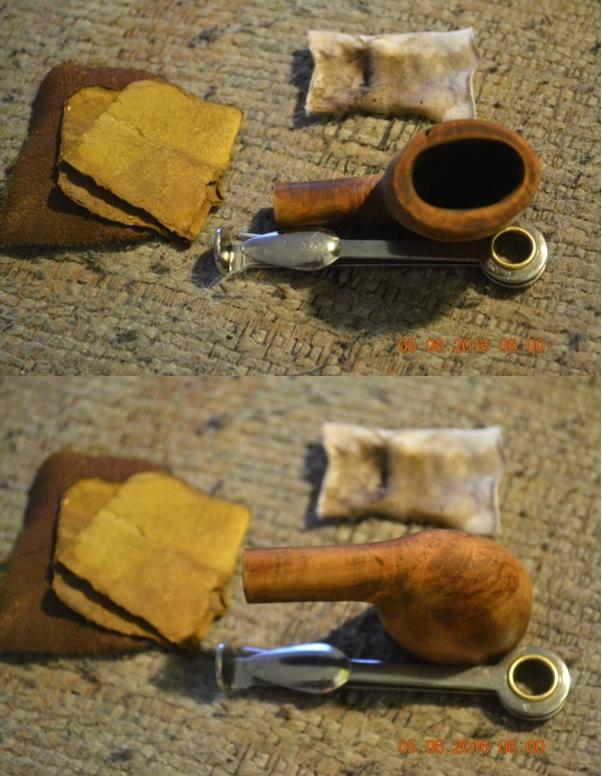
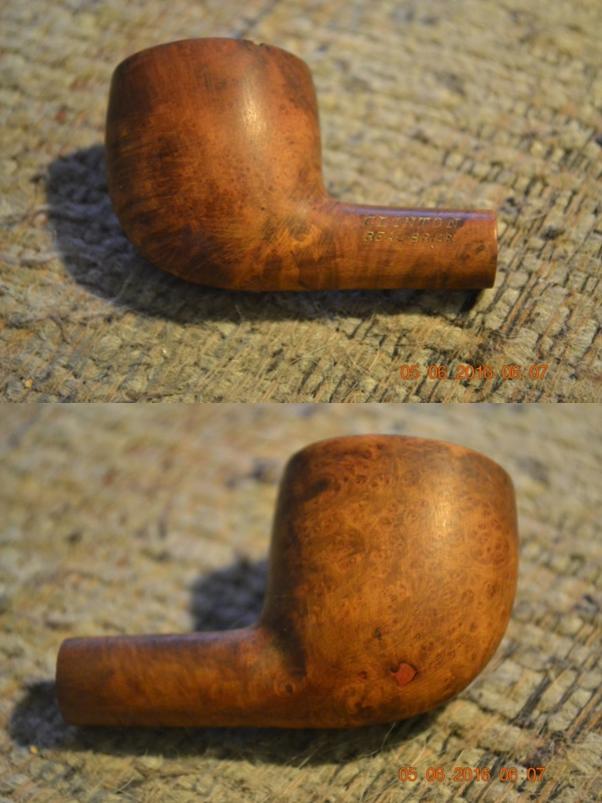
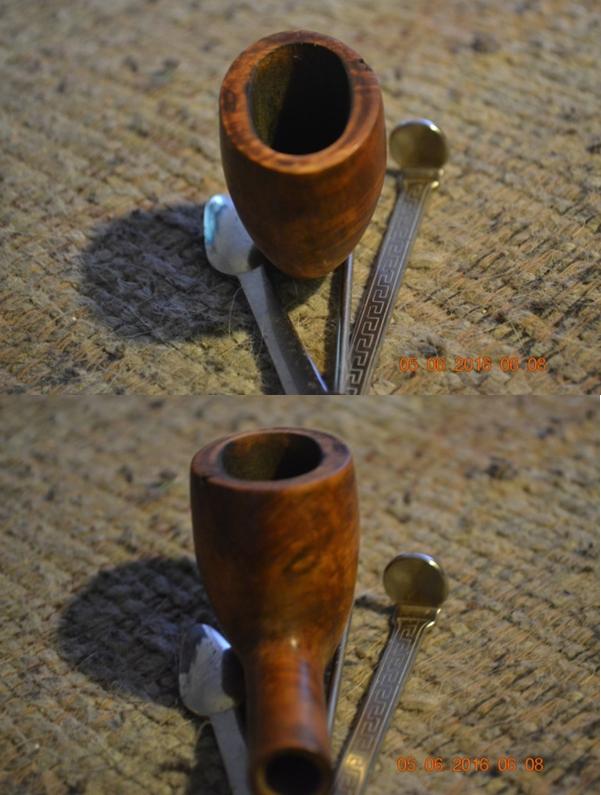
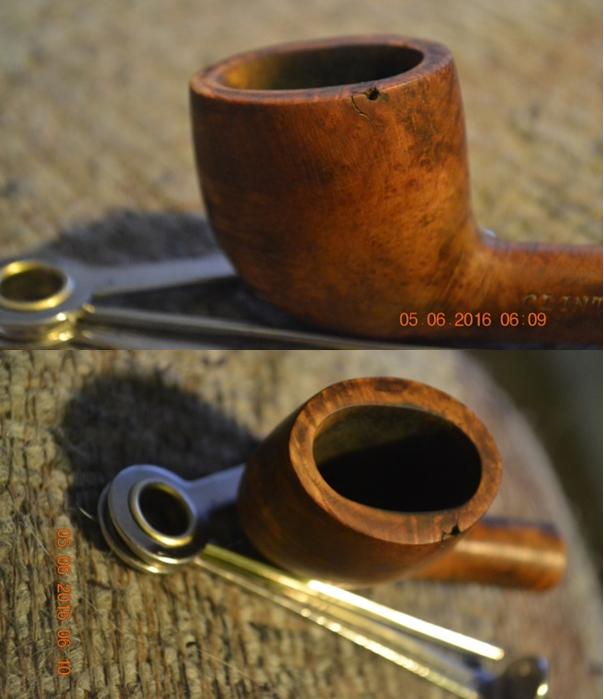
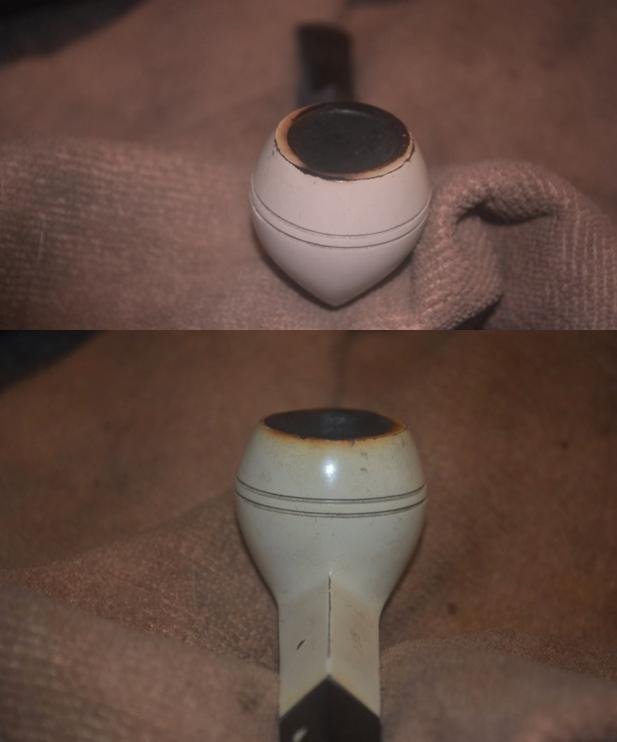
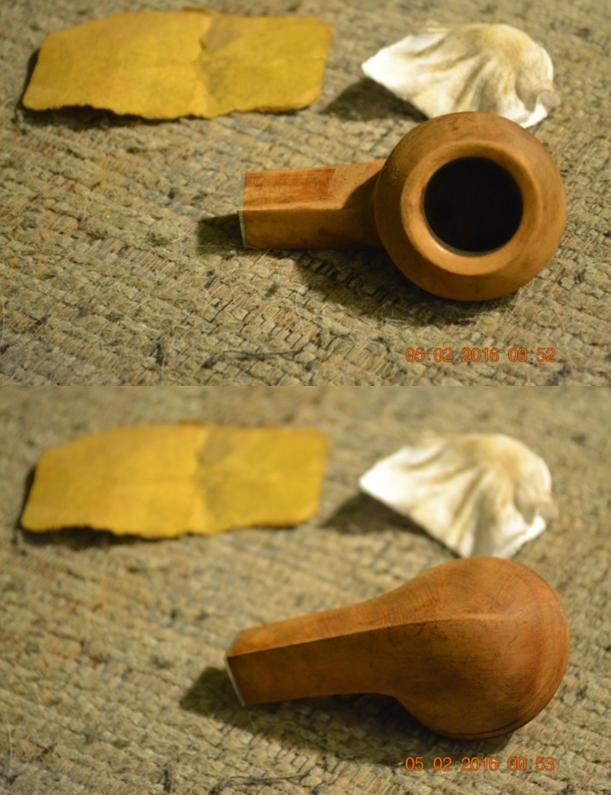
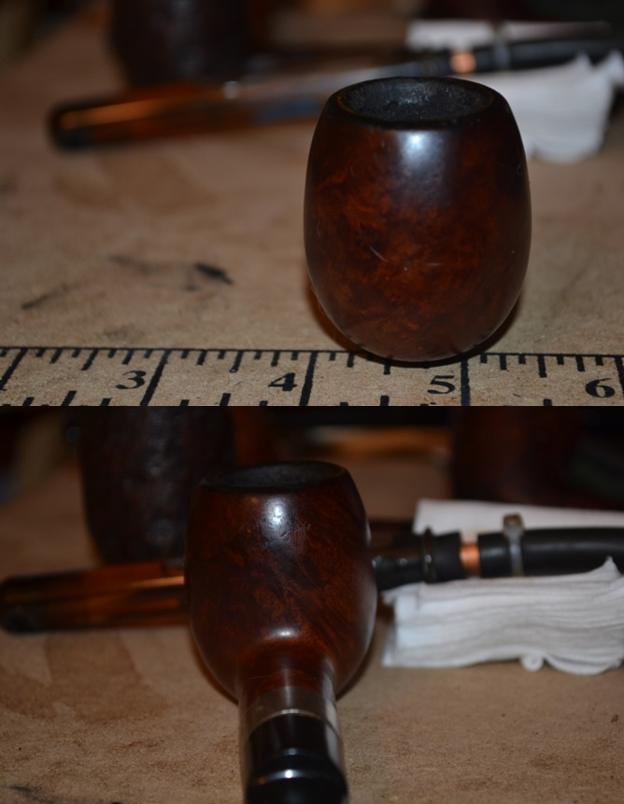
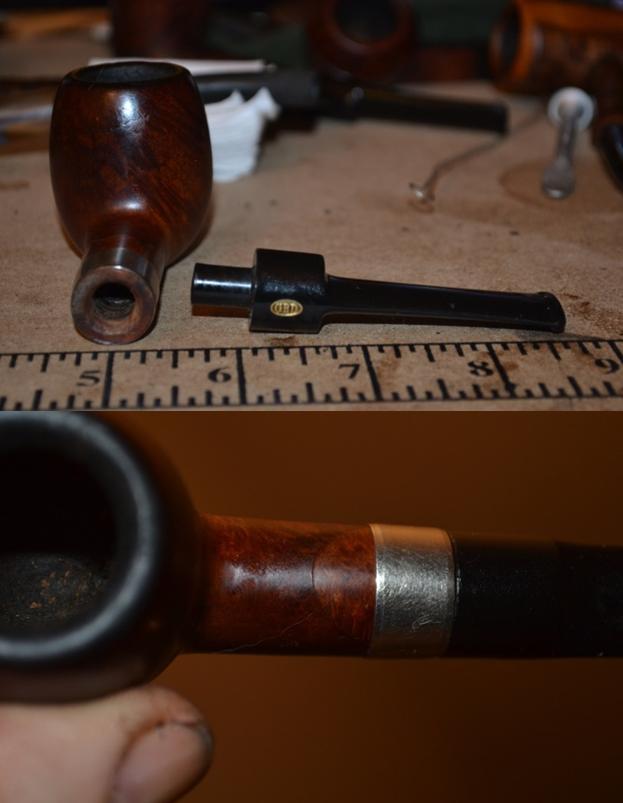
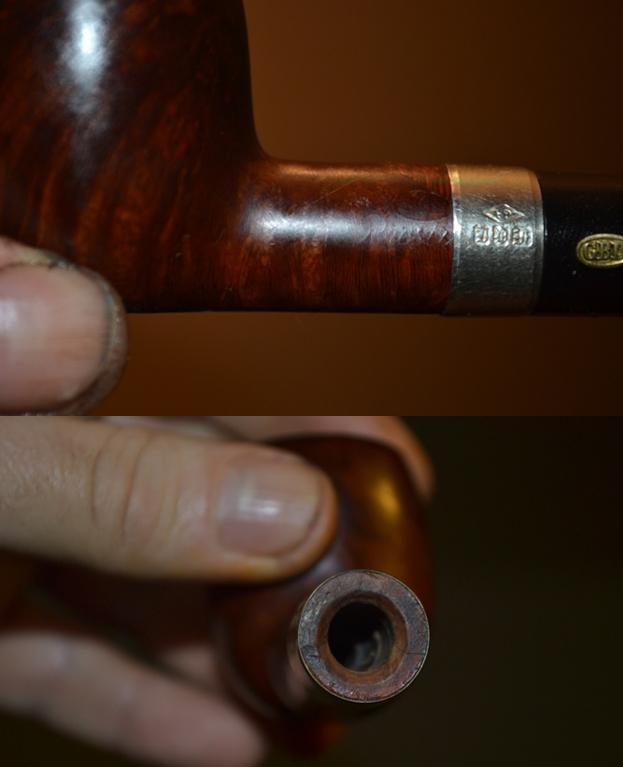
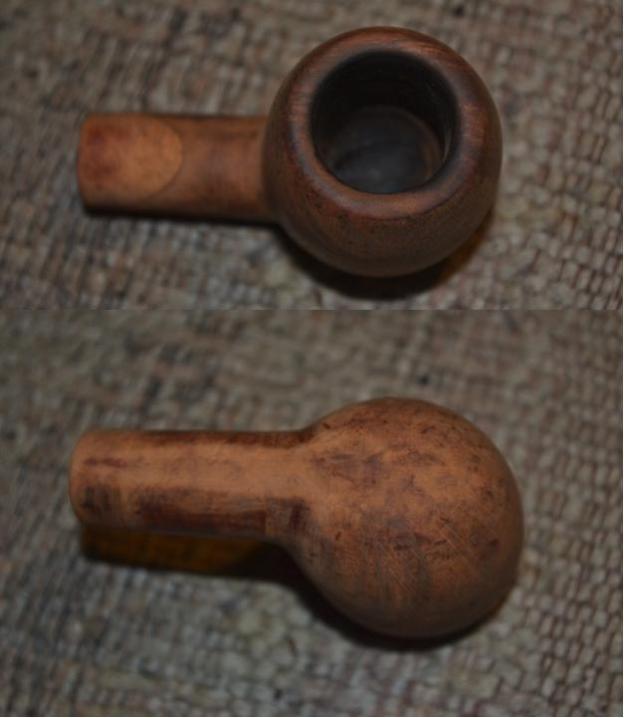
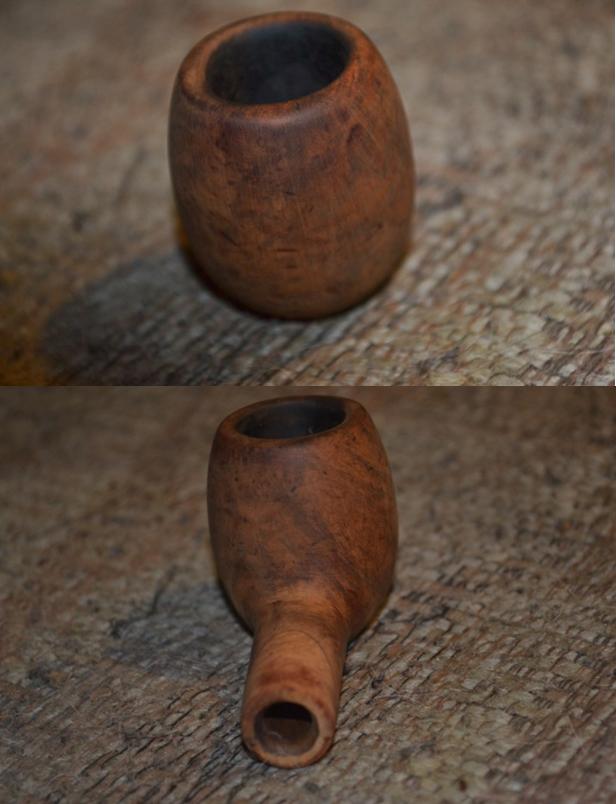
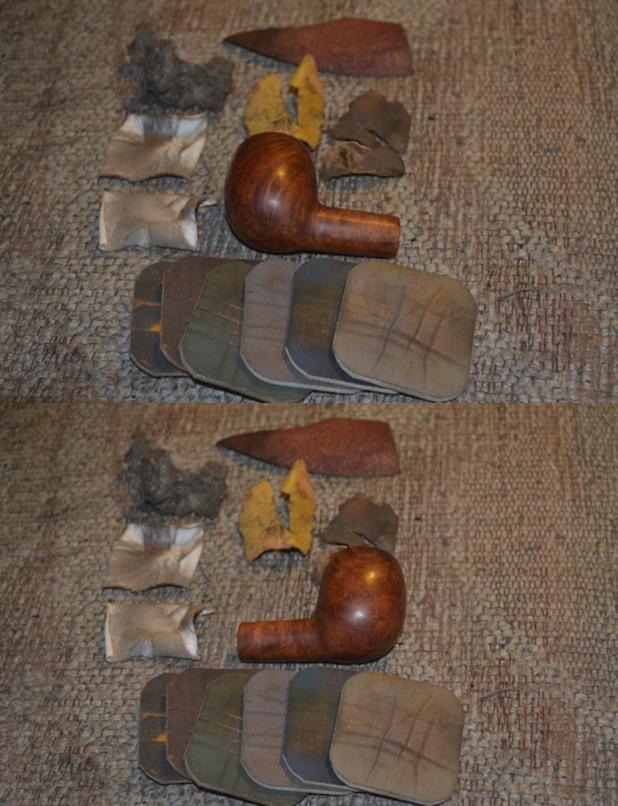
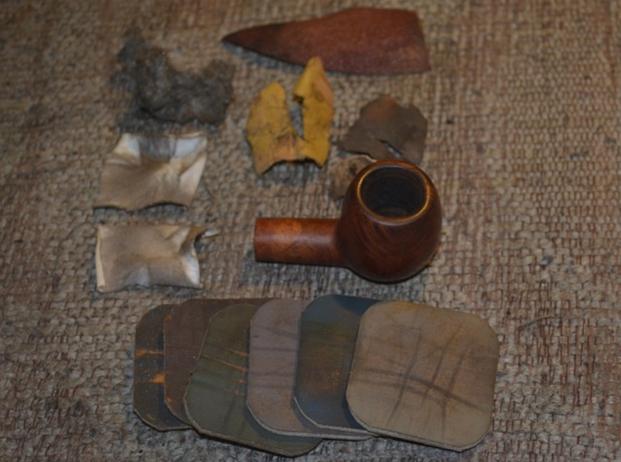
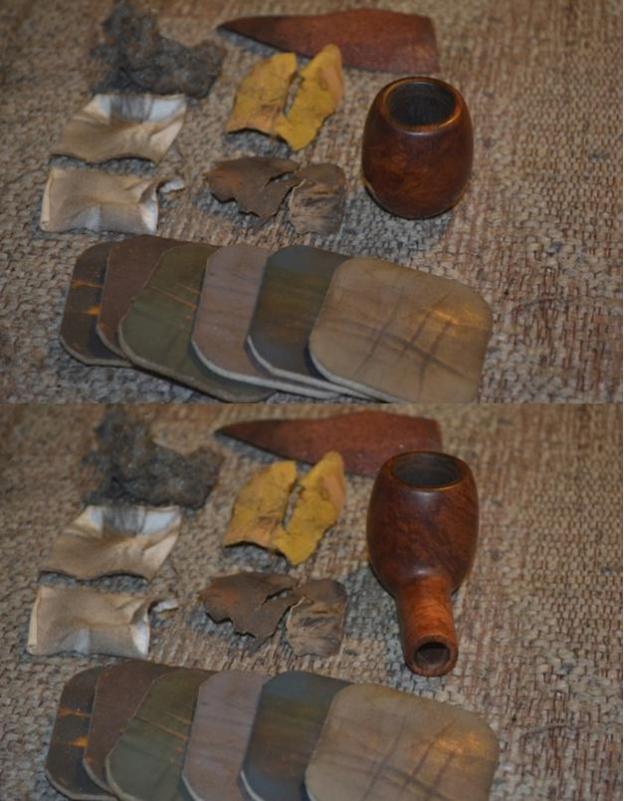
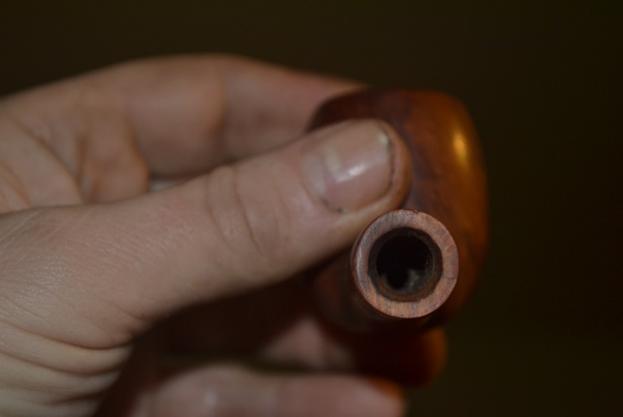
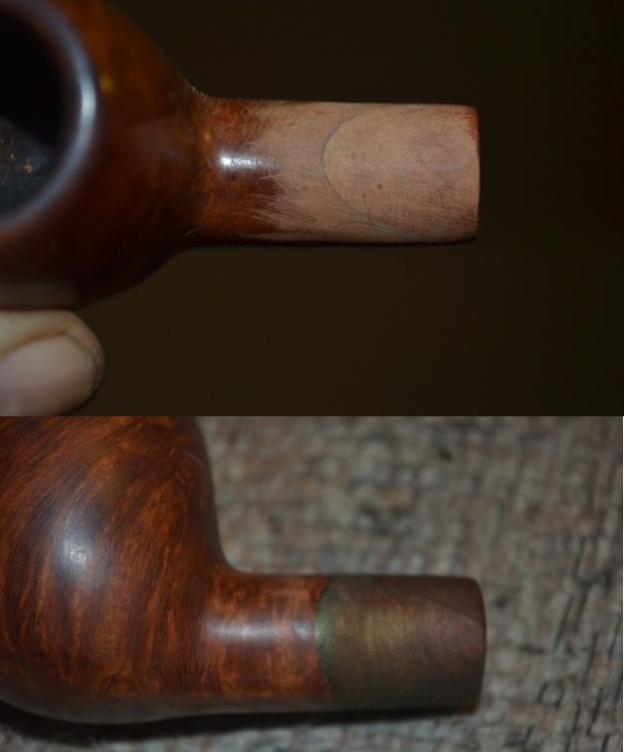
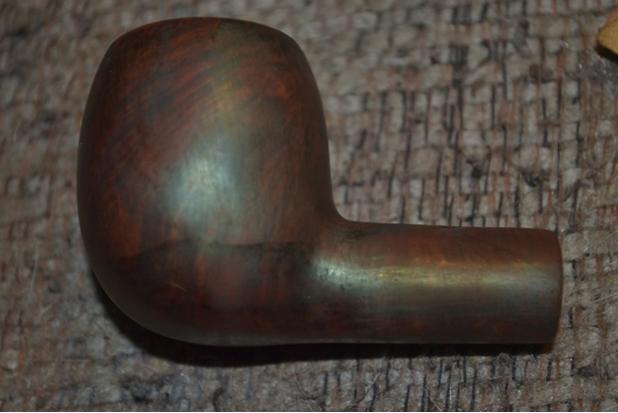
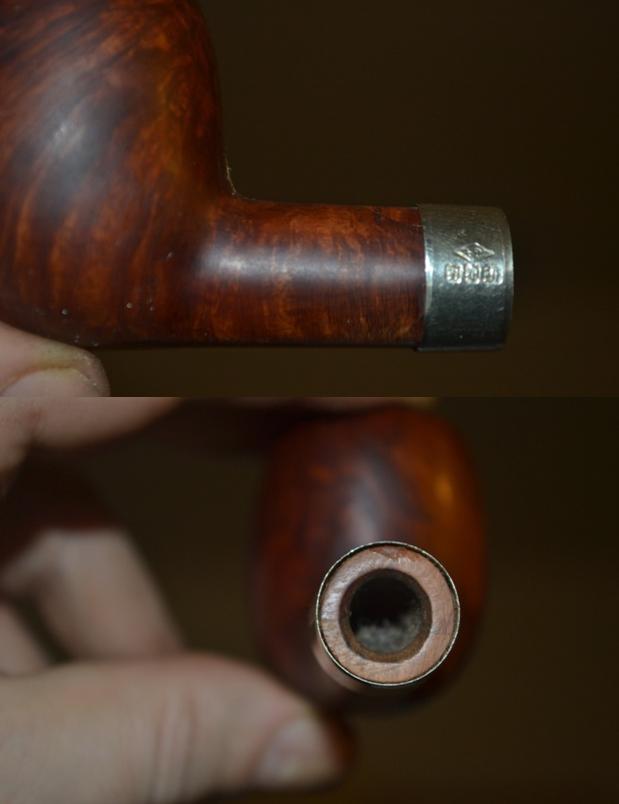
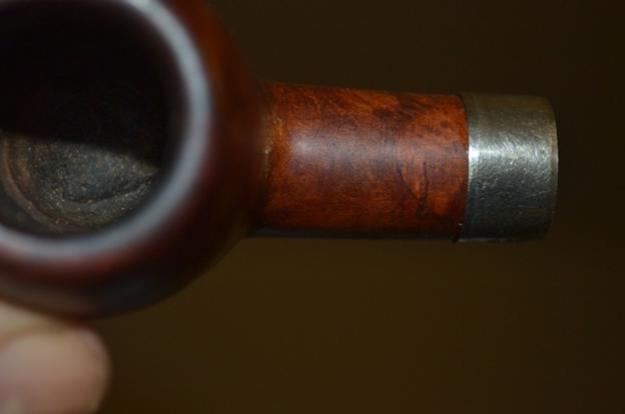
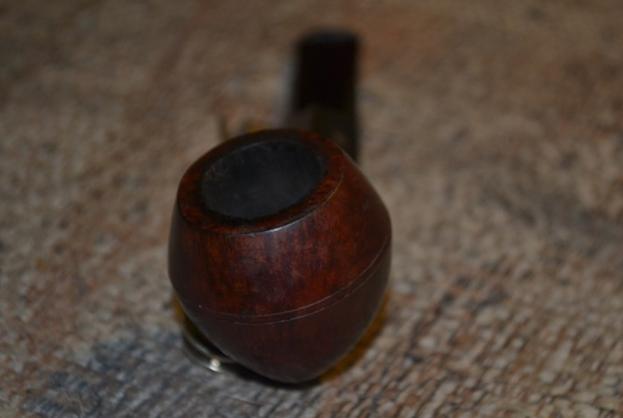
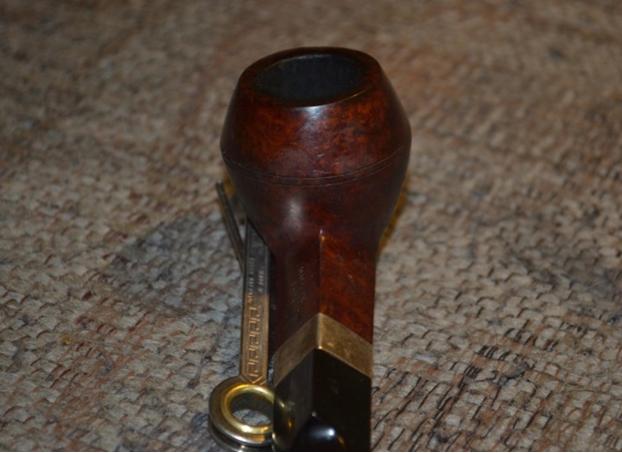
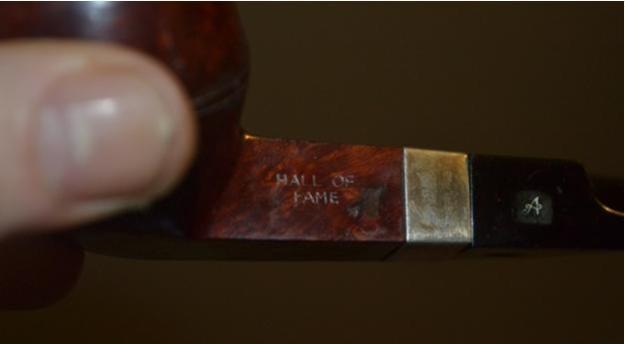
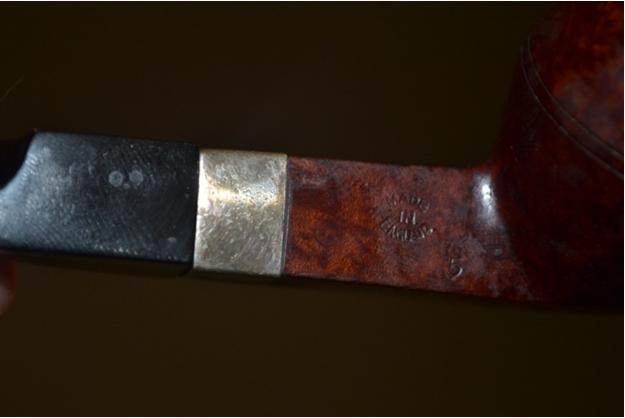
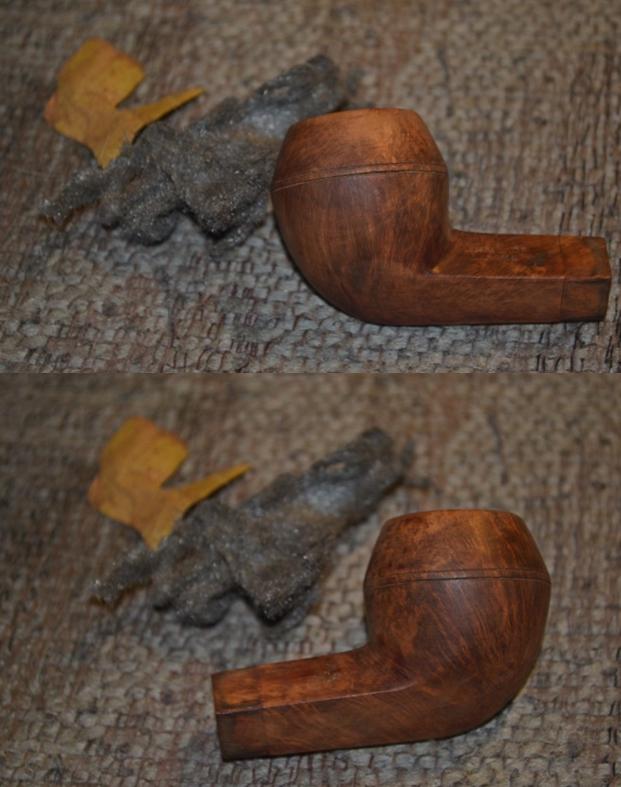
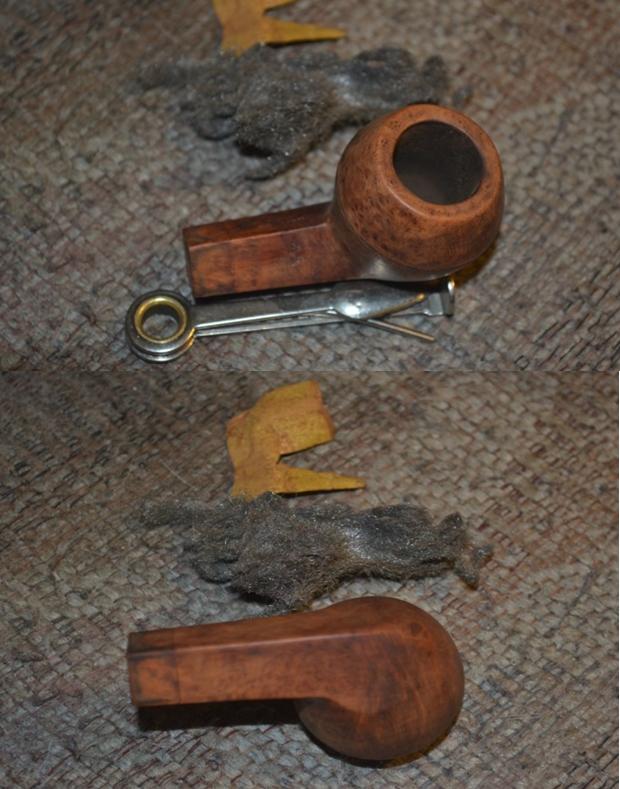
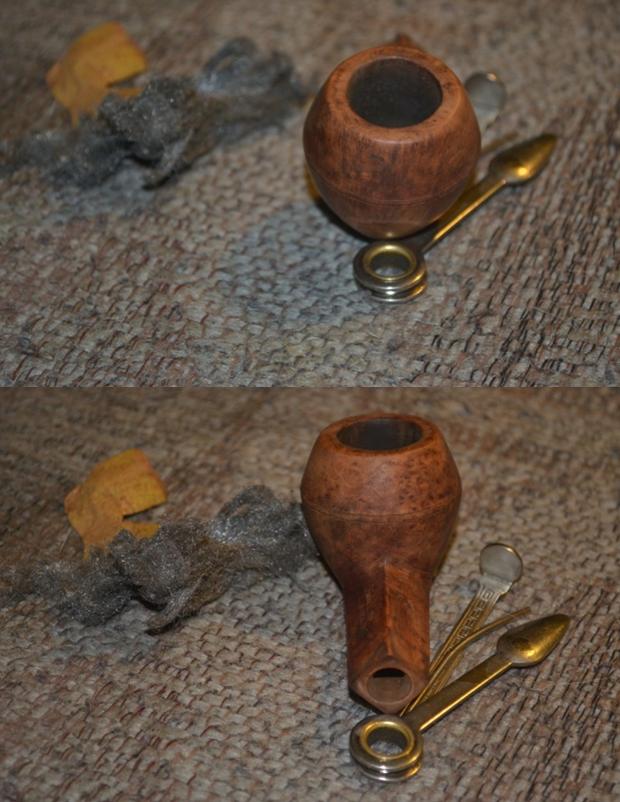
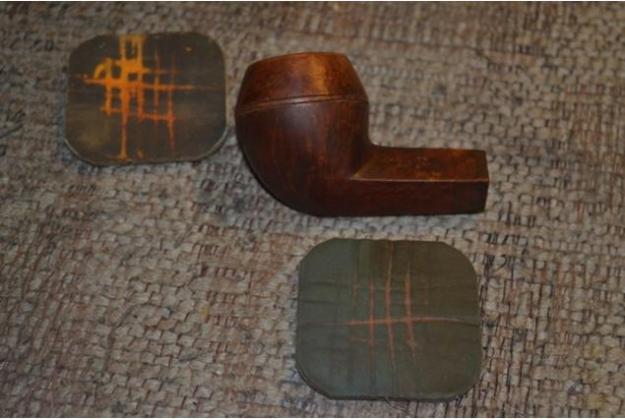
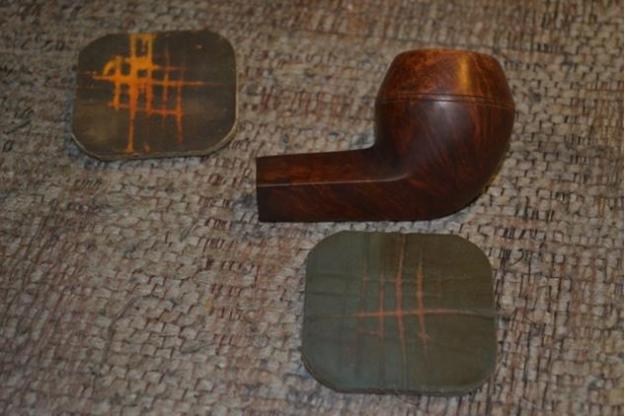
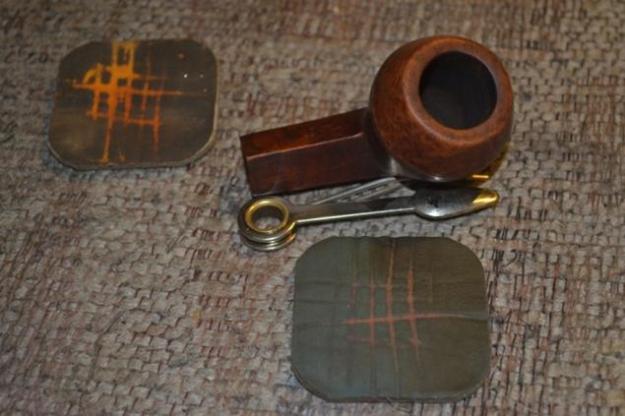
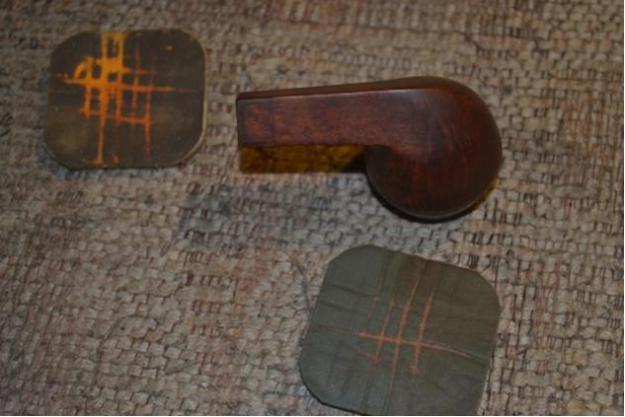
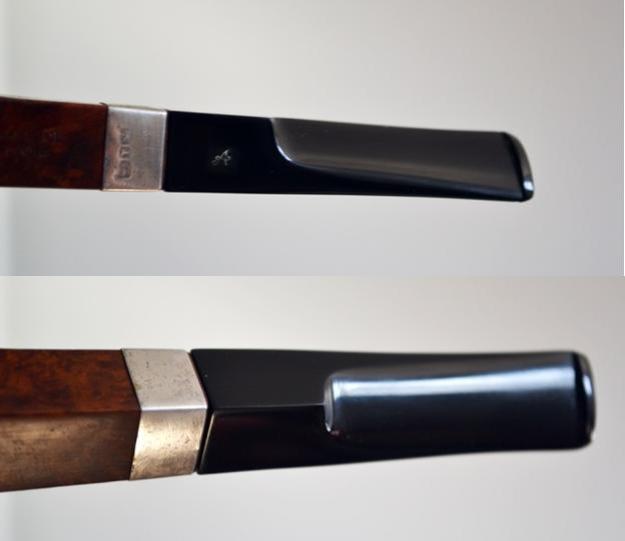
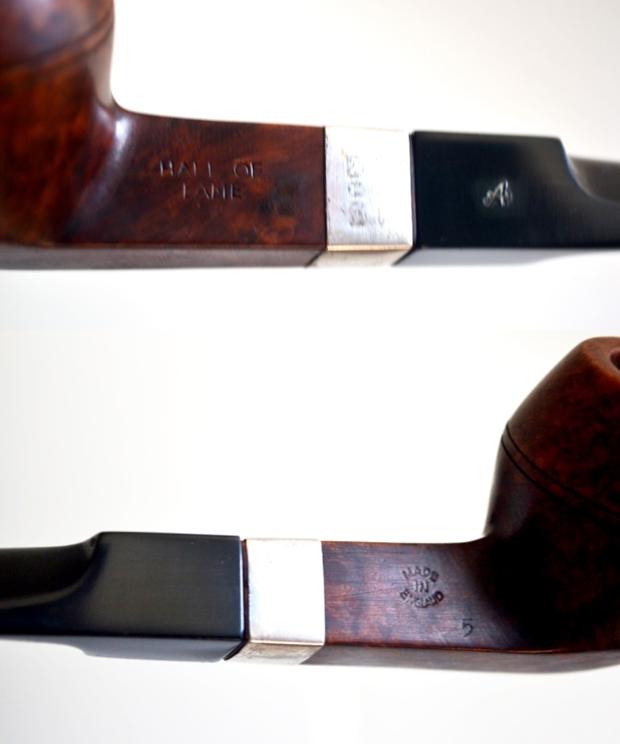
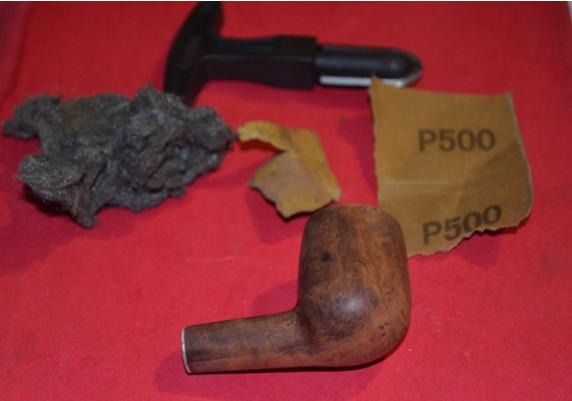
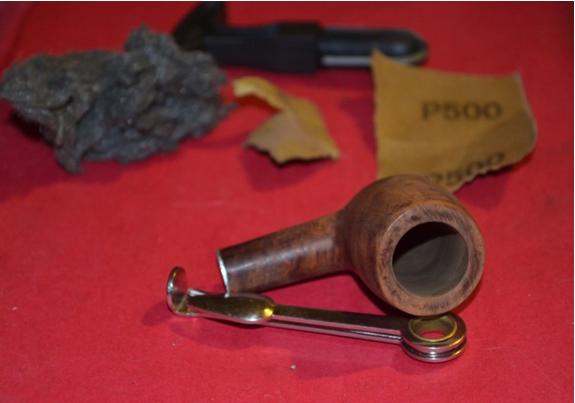
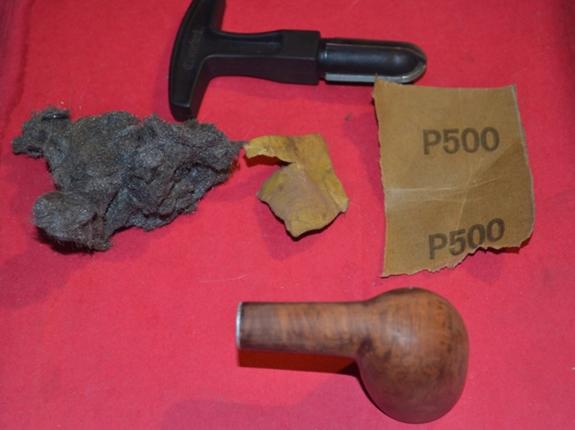
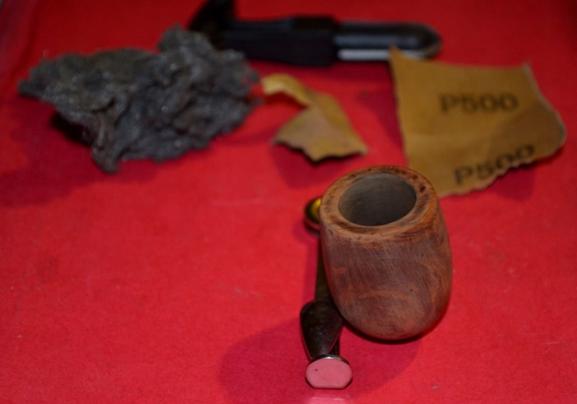
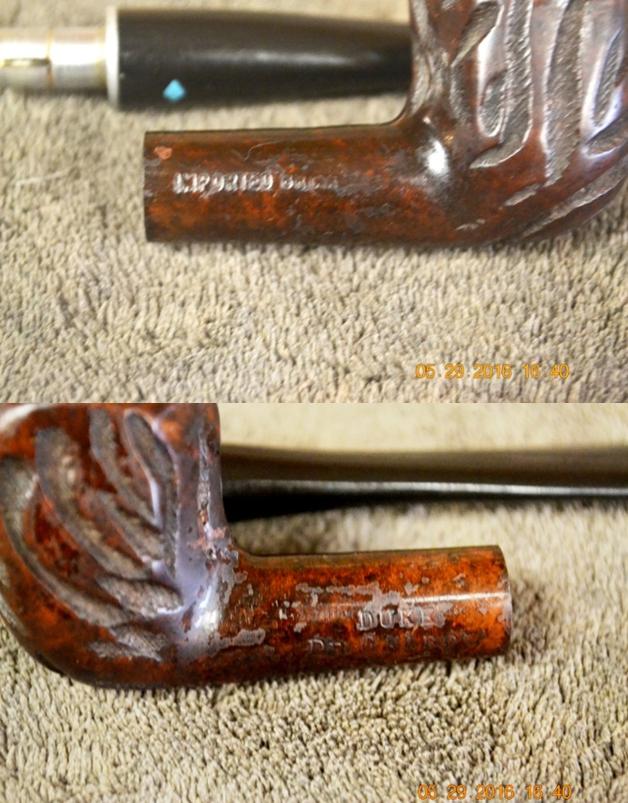
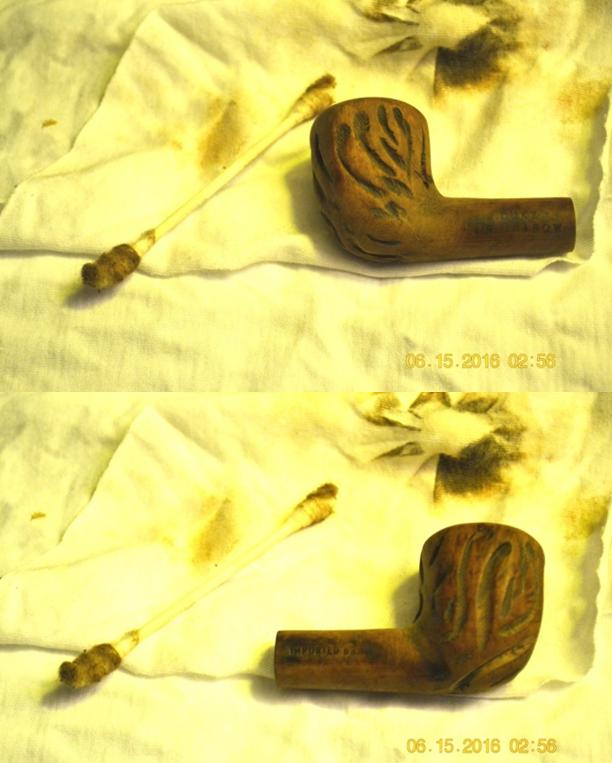
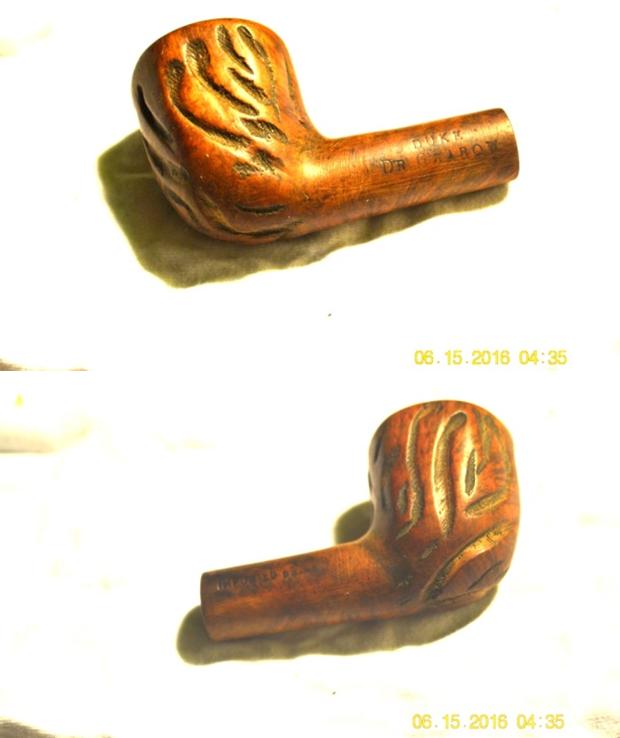
At a glance, the Duke was rough from age and unnatural wear. Here are a few close-ups of the stummel showing the thick, dark stain and some of the damages I faced, as well as the nomenclature I needed to preserve. The bit was in good shape, needing only moderate work. The six-sided paneling (two each on the front and back, and then the sides) is hard to spot by eye, but an inspection with fingers reveals the presence.Grabow7Grabow8
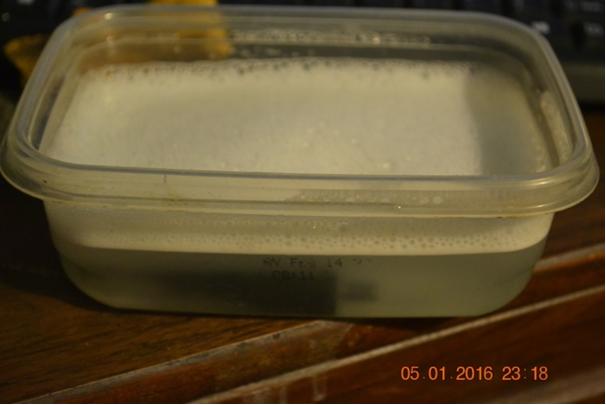
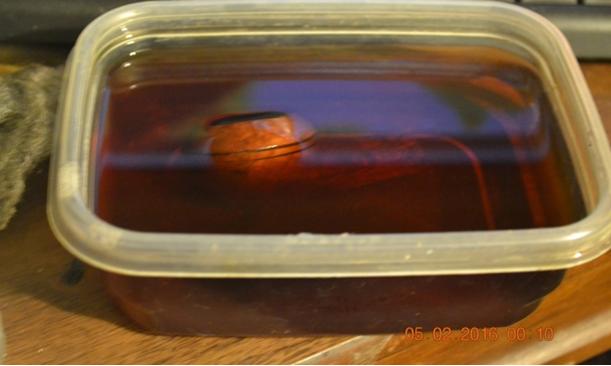
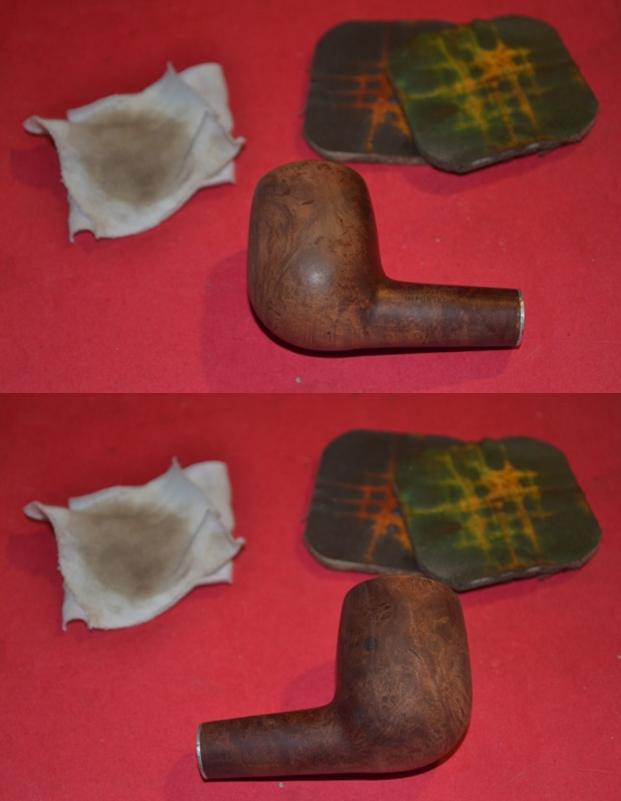
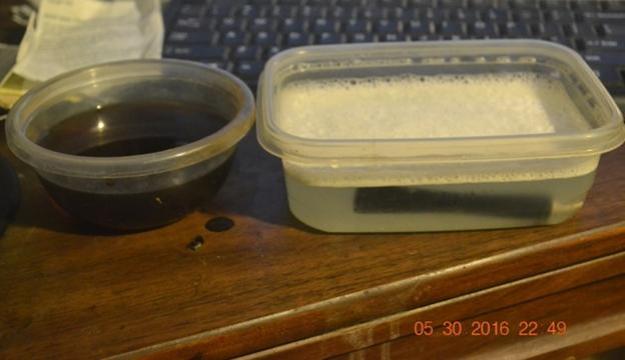
This kind of surface of a pipe stummel – whether it be referred to as carved, rusticated, textured or by any other designation – always poses a challenge in stripping the old stain. No matter how long the wood soaks in alcohol, at least by my concept of safe and sane standards, sanding is always still needed, in particular for the crevices. Of course, I could have started this project with an arduous application of several grades of paper, but the overdone original finish suggested the need for an Everclear soak to begin. And so that is how I commenced the task, putting the bit in an OxiClean bath at the same time.Grabow9
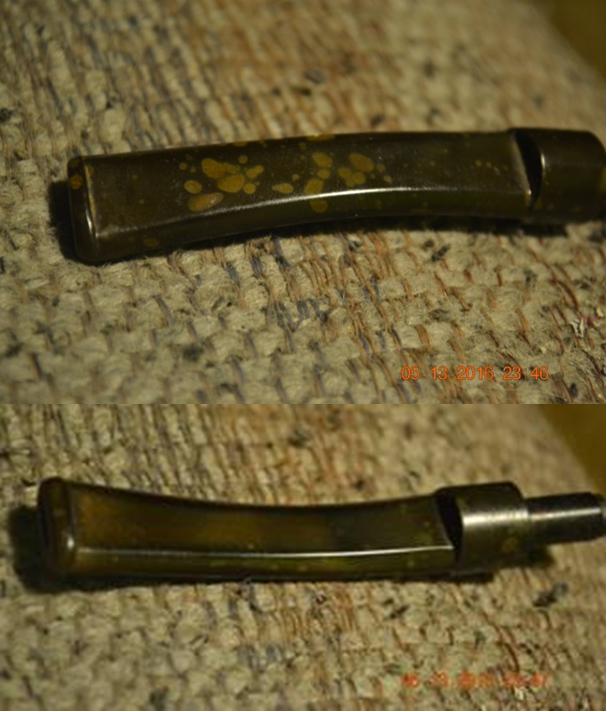
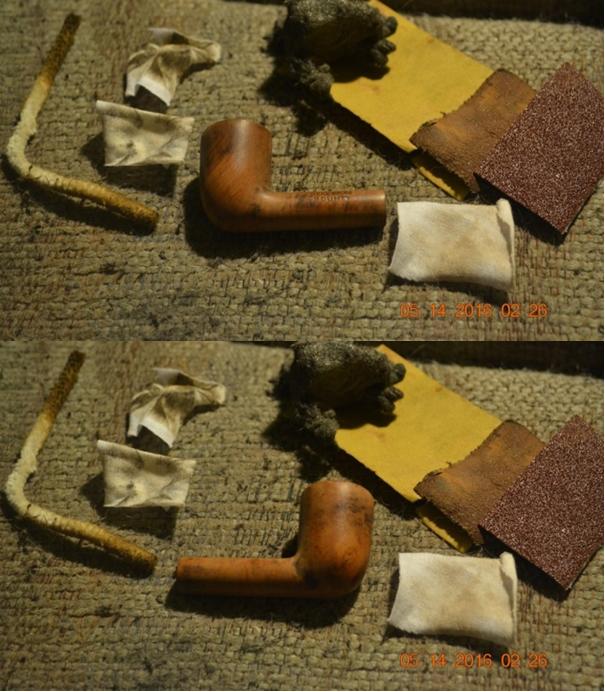
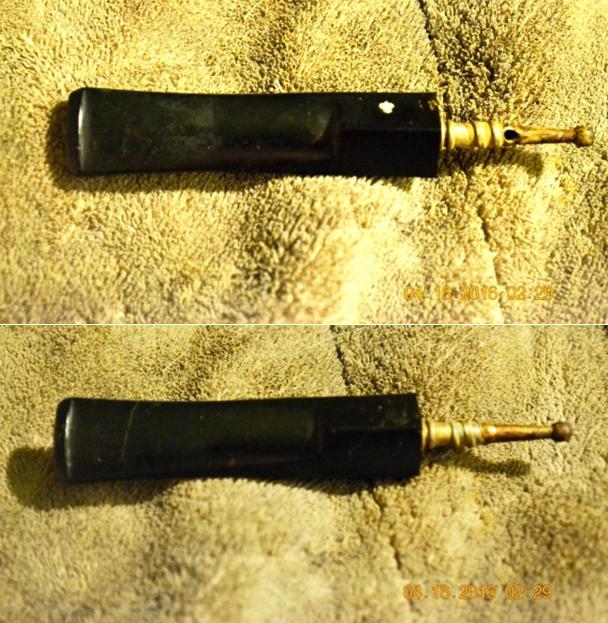
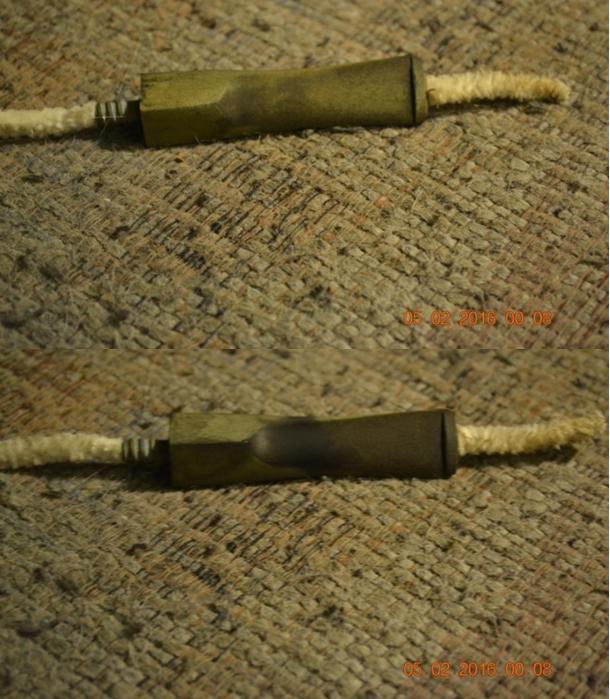
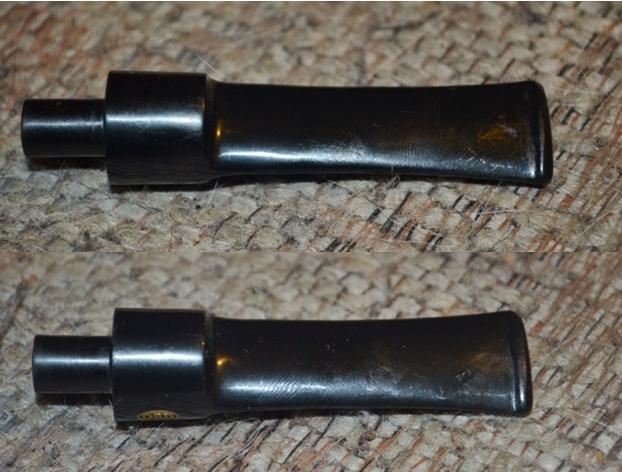
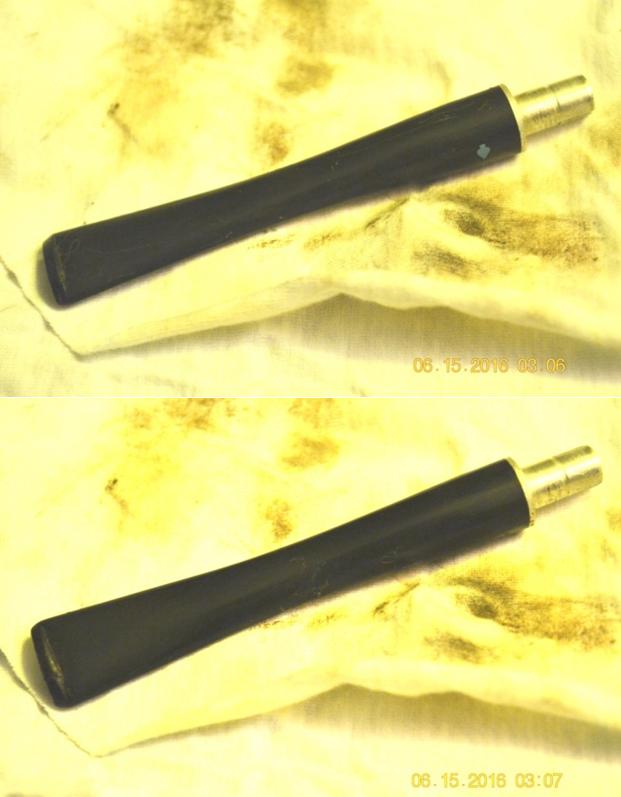
I removed the bit from its bath first and stuck a regular cleaner through the air hole. I was surprised by the remaining blackness of the Vulcanite, which I rubbed dry with a strip of soft white cotton rifle barrel cleaning cloth. Grabow10
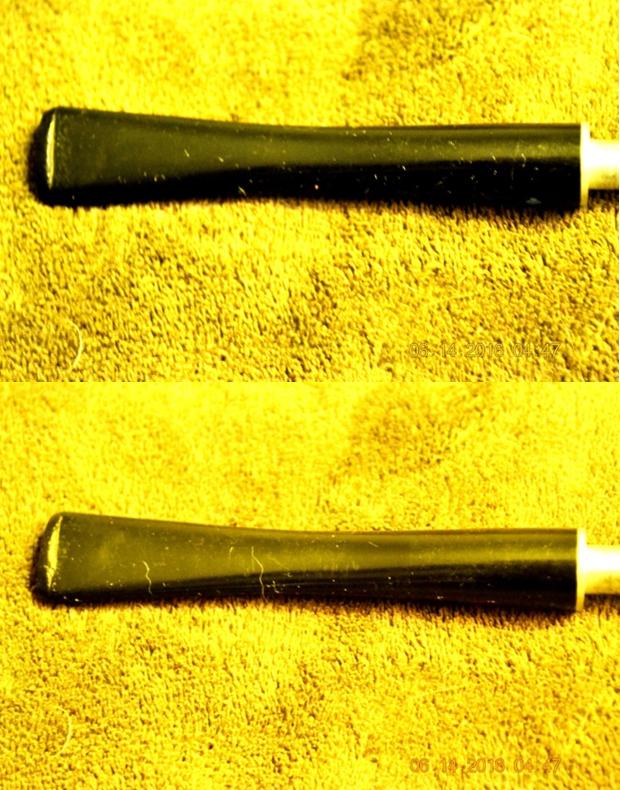
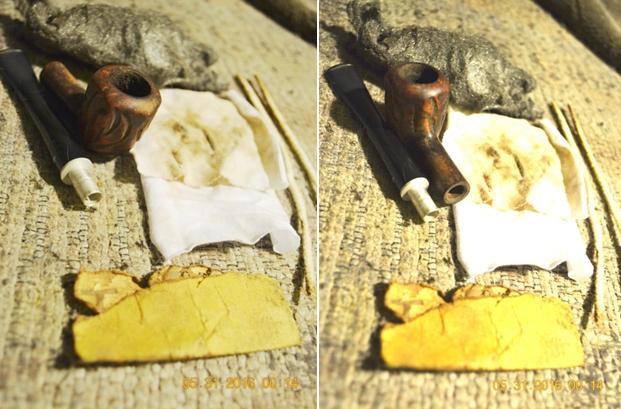
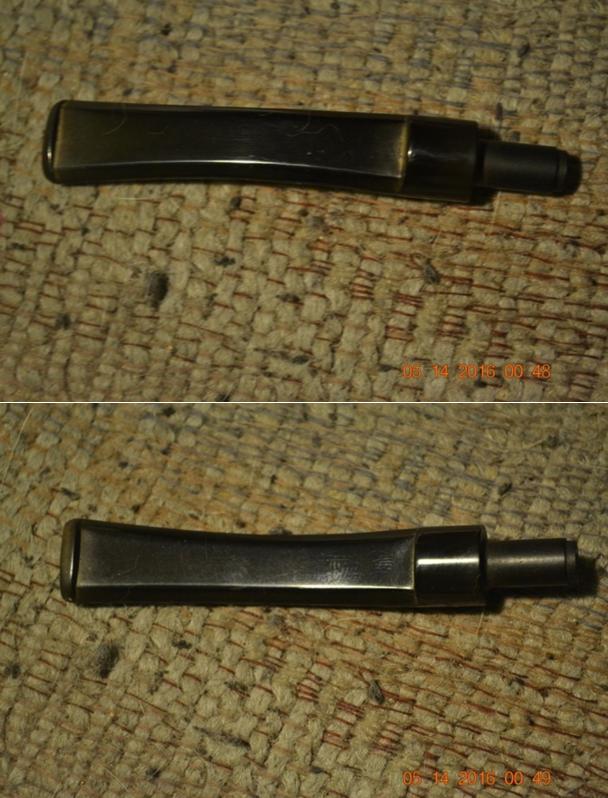
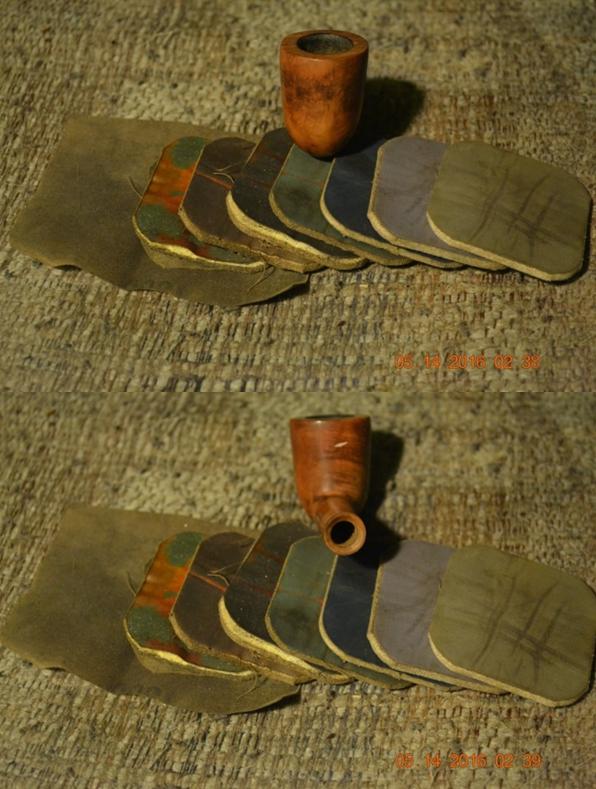
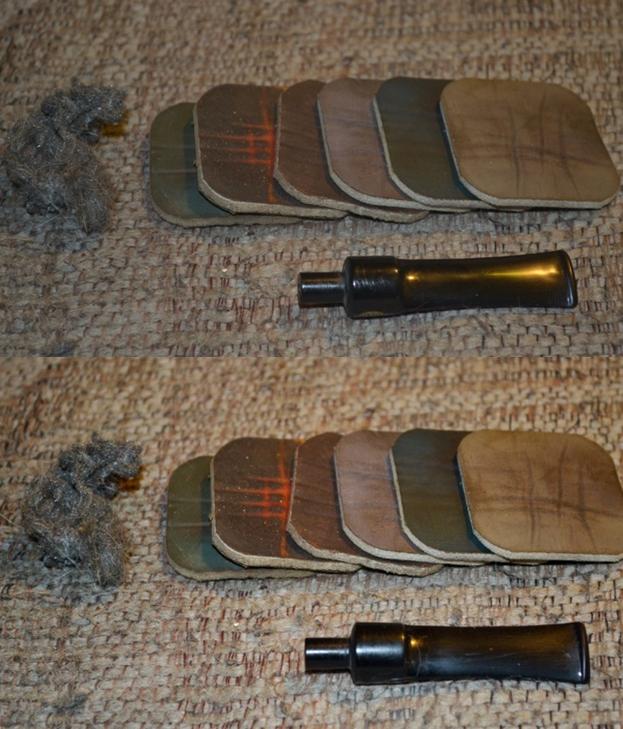
I apologize for my camera’s continuing flash problems, which for the above photos required manipulation of the color and brightness settings in my editor to show the minor scratches near the lip of the mouthpiece. Here it is, again with the editor adjustments, after light sanding with 320-grit paper and wet micro mesh from 1500-12000. I know it’s hard to see the difference, but the entire surface was smooth.Grabow11
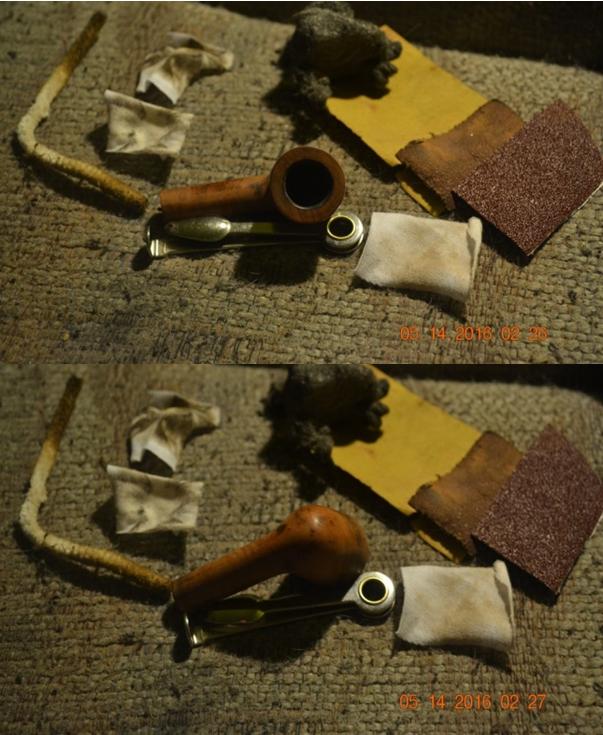
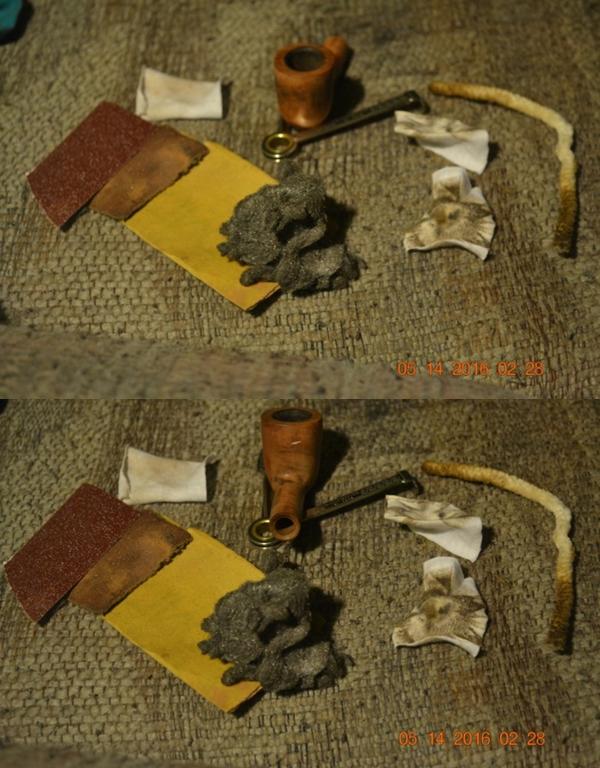
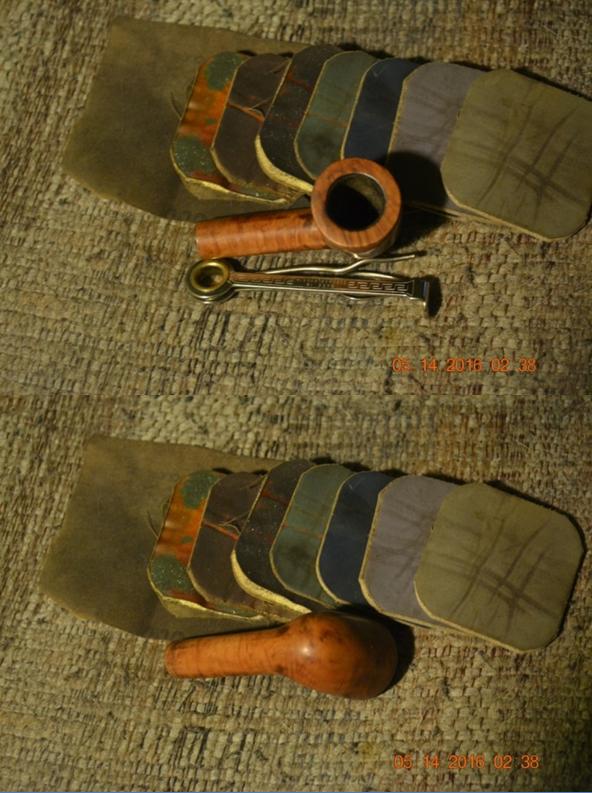
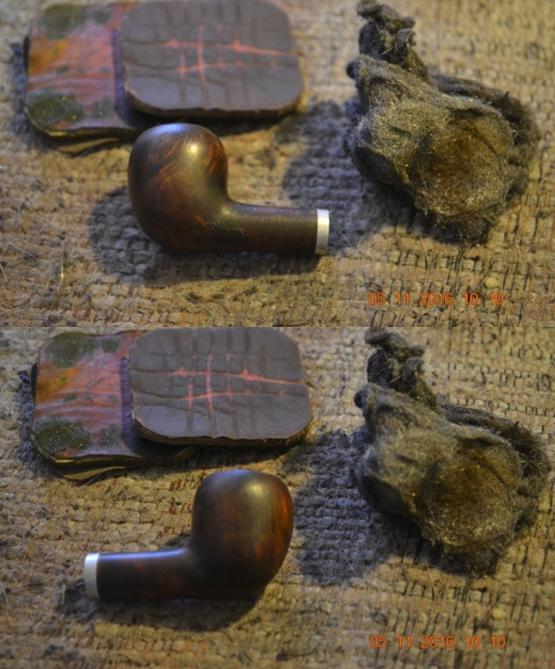
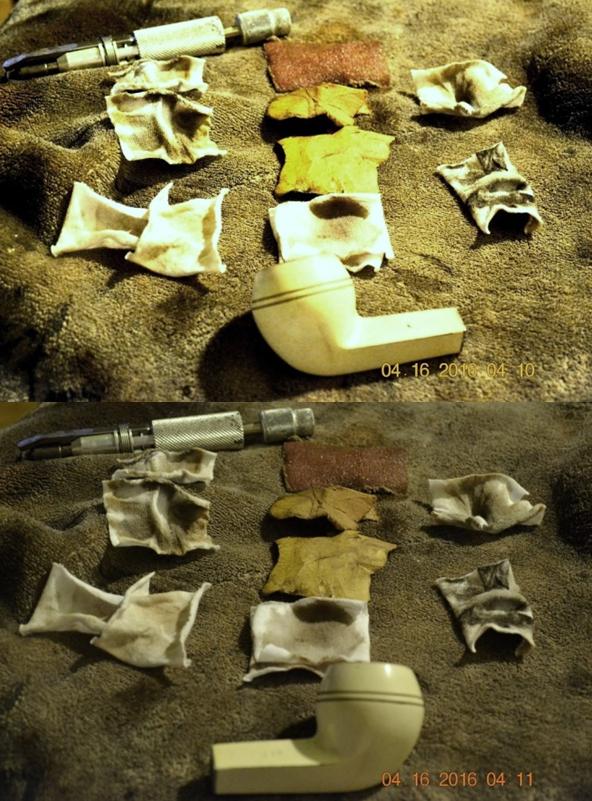
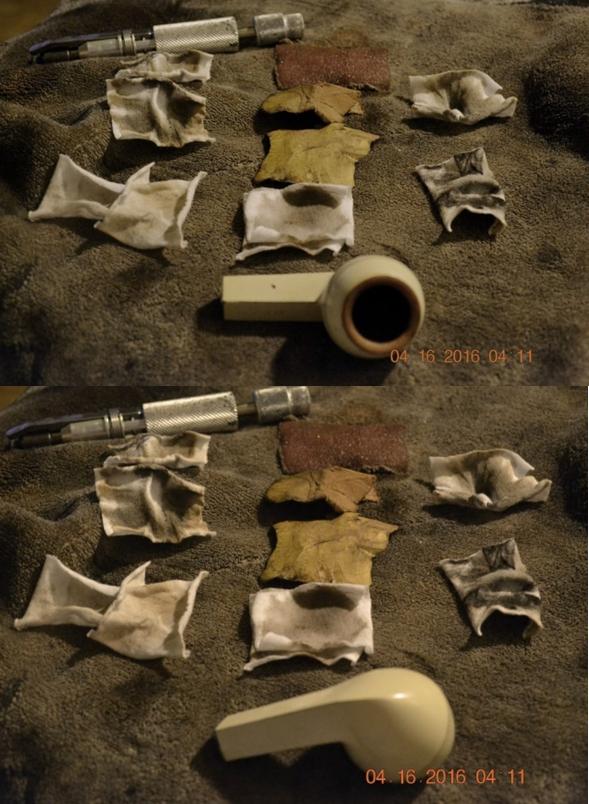
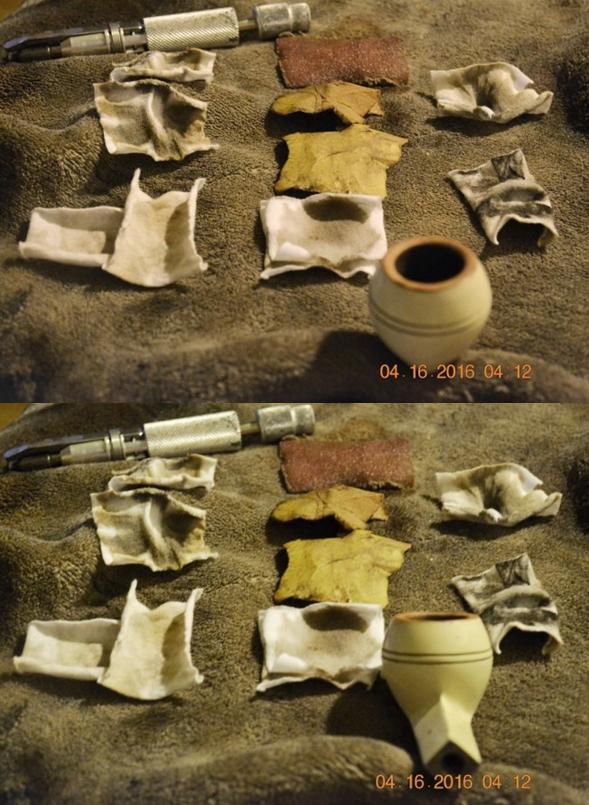
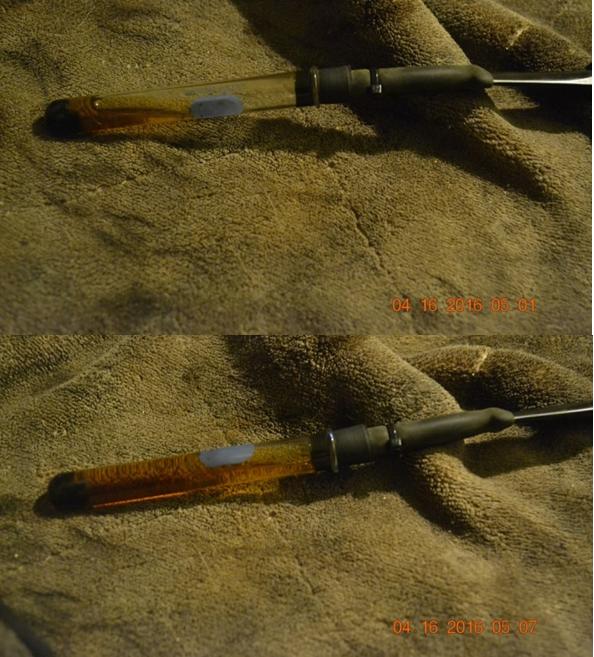
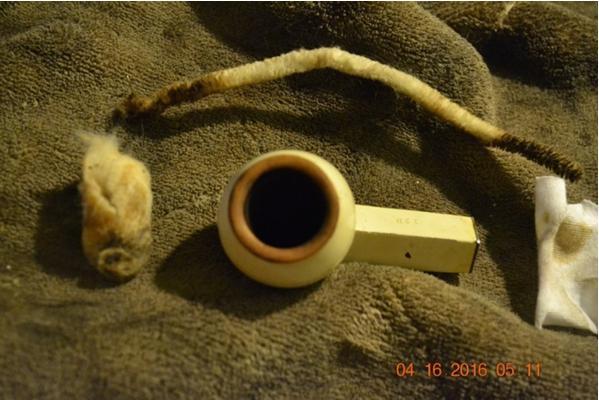
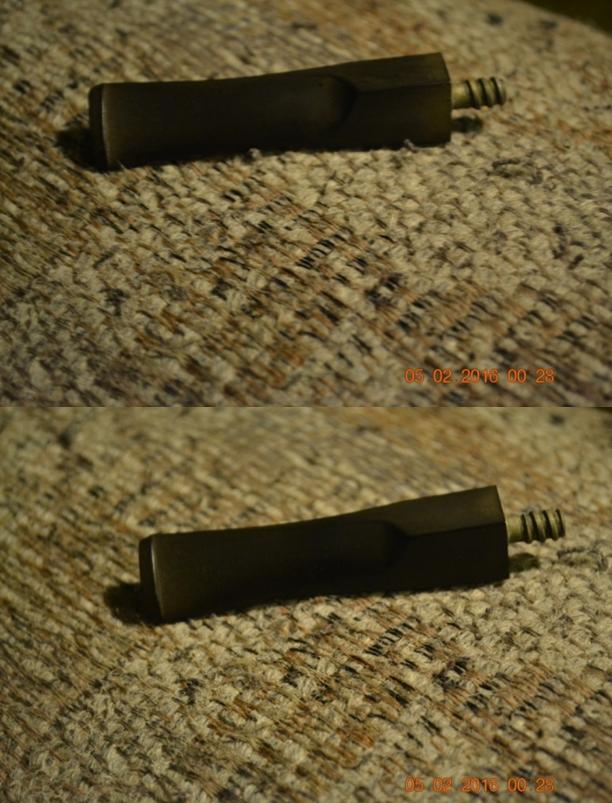
And here’s the stummel after drying with another piece of cotton cloth, running another cleaner through the shank, sanding with 200-grit paper and wiping down with 0000 super fine steel wool. The additional cleaner is from the bit. Note the still dark crevices.Grabow12Grabow13Grabow14
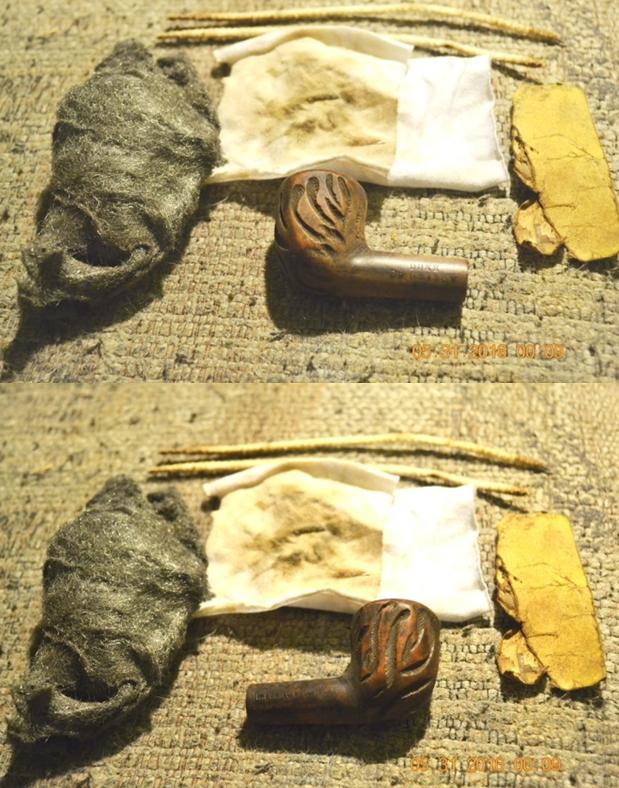
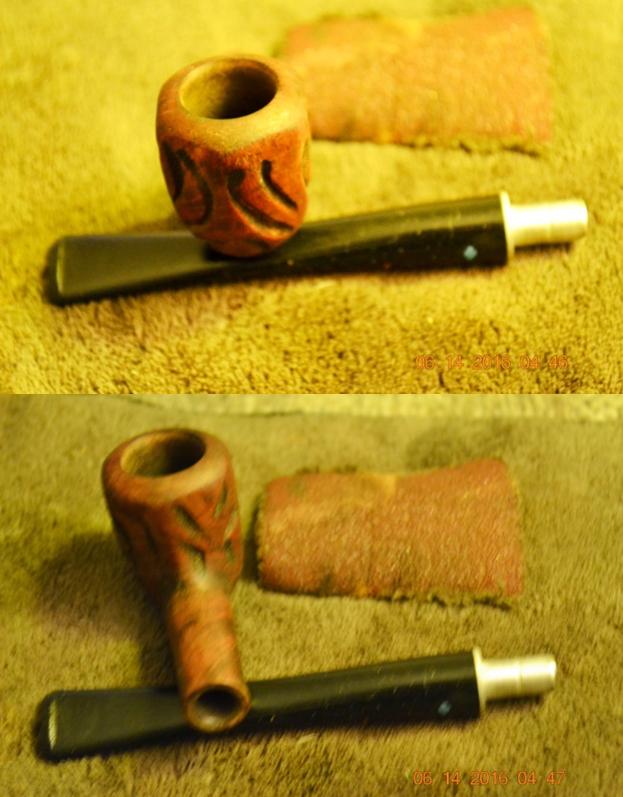
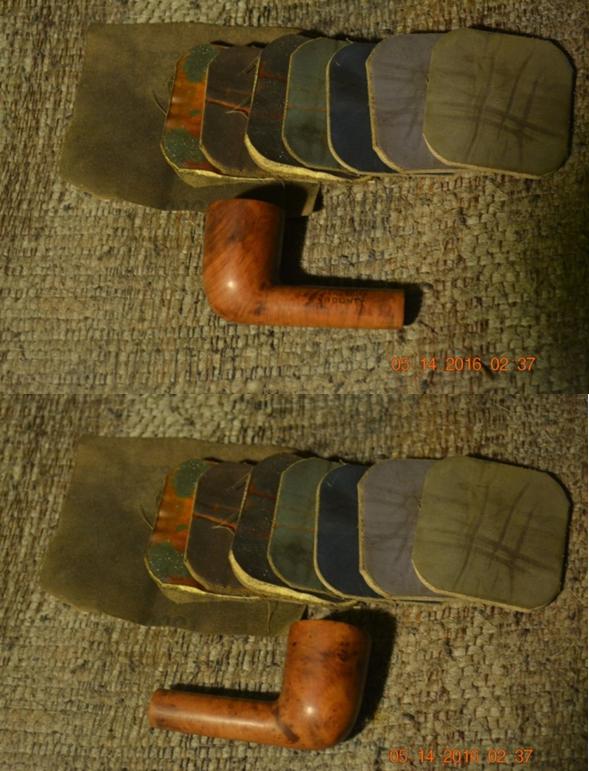
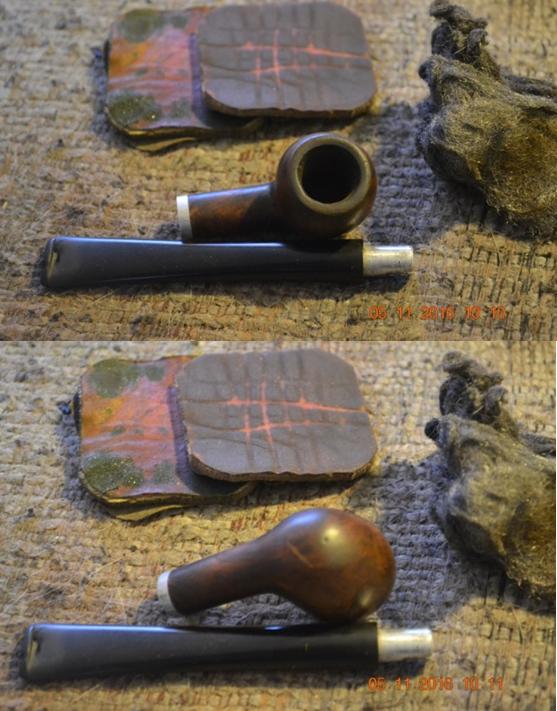
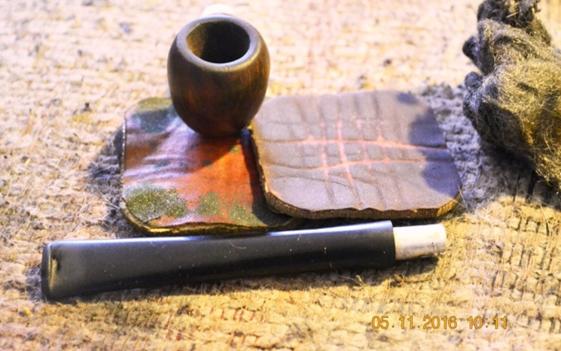
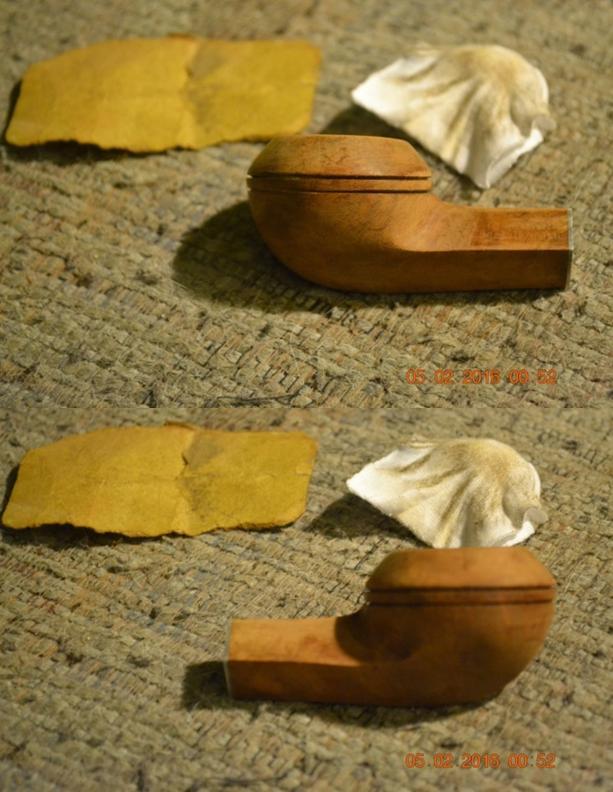
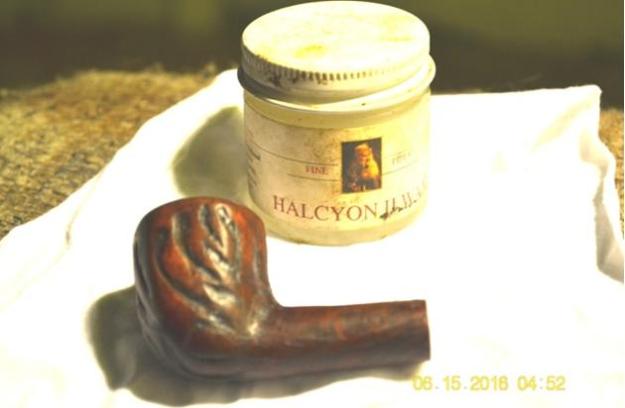
I began an assault on the crevices that turned out to be the crux of the battle to fix this nice, older Dr. Grabow. I started with super fine steel wool, squeezed into small enough edges to fit into the crevices. This was a tedious process, but it did improve the situation.Grabow15Grabow13 Grabow14I tried 180-grit paper folded to maneuver the edge into the pesky crevices, and the result was an improvement in spots but still disappointing. I only show the next photos as emphasis of the point.Grabow18 Grabow19 Grabow20For the first time in a long while, I concluded a second Everclear soak was needed, as I had not really let the first one complete. The success is clear, following another drying with cotton cloth and scrubbing the shank more with both ends of an ear cleaner. I flashed back to my childhood, at times when such cleaners came out of my ears in about the same condition.Grabow21 Grabow22 Grabow23The task of ridding the crevices of unwanted darker color accomplished, I prepared the pipe for the final steps, very gently using 320-grit paper again and the full scale of micro meshes.Grabow24 Grabow26 Grabow25I retorted the pipe, and for the re-stain used Fiebing’s brown alcohol-based leather conditioner and flamed it with a lighter.Grabow27A clean up of the char with 2400 micro mesh and a little reduction of the darkness with super fine steel wool worked well.Grabow28The fine briar was ready for Halcyon II. For once I laid it on thick.Grabow29When the wax compound had time to set in, I wrapped it in a cotton cloth and wiped it vigorously for about a minute. Then all that was left was buffing on the electric wheels, with red and White Tripoli, White Diamond and carnauba on the bit. To my eye, the wood needed a little more gloss, so I added some carnauba with the wheel, as always followed by the clean buffer. I was more happy than usual with the final results. Please excuse the unfortunate symbol in most of the following shots. I had rushed outside of the club where I was for open sunlight and didn’t notice until I saved the photos from my camera’s memory card to the computer hard drive, by which time the sun had set.Grabow30 Grabow31 Grabow32CONCLUSION
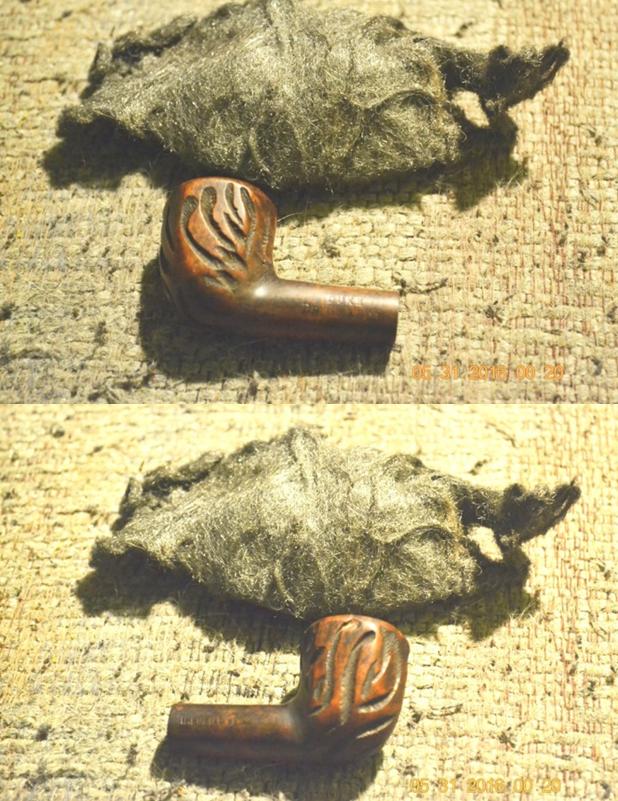
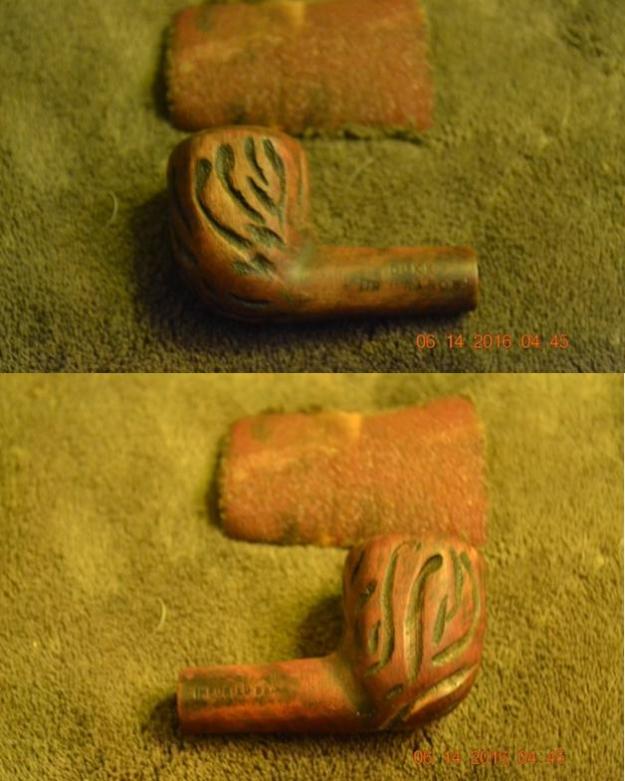
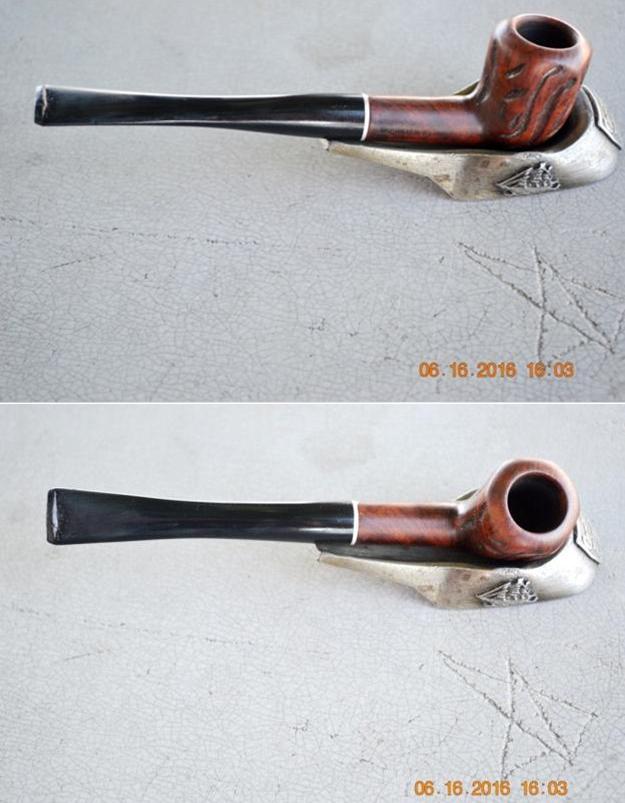
For a weathered old Dr. Grabow, this restoration provided some interesting lessons to me in working with a carved pipe. My dear friend and mentor, Chuck Richards, has always advocated a toothbrush for the crevices, but try as I have, that venerable method has never worked for me. Every situation seems a little different. This one required attacks from several different directions.

SOURCES
http://www.drgrabow.net/dr-grabow-pipes/
https://pipedia.org/wiki/Dr._Grabow
http://www.geocities.ws/lokomac8/grabow.htm
http://drgrabows.myfreeforum.org/index.php?component=content&topicid=15&postdays=0&postorder=asc&start=40
http://www.drgrabow-pipe-info.com/drgrabowp03.html
http://www.pipephil.eu/logos/en/logo-l4.html M. Linkman & Co.
http://www.pipephil.eu/logos/en/logo-drgrabow.html
http://www.drgrabow-pipe-info.com/pipenames09aa.html Date guide
https://1fa1282d-a-62cb3a1a-s-sites.googlegroups.com/site/seanspipes/home/dr-grabow-shape-charts/drg1988shapechart1.jpg?attachauth=ANoY7coHvB5qOmn44n9H_4wsnE06IzBJemJ0T5wa-FPbZh08FdvUUxghql7wG8V643ehj8Lj3Qjz4dhyUHGqC8PjXVHPy7yUihii1MNoOToCN-ZApjh36oFXVhS77OqW1r_meXdwIMaTYJP391i8GxBuwipjRfJyF-PbV4dNJrnK4684TJR7xnektgvTVNZ52aHs8nJKdigkmmVsgS06lld4DlOYIxYa2zismOQMQ1Lavw-0v_HcC4jddbKt2qVHTLKognYdJ2tD&attredirects=0 Slim Pear Shape 74
Spotlight: Ladies Pipes, Part 4/7, a Real Briar Bounty


Guest Blog by Robert M. Boughton
Member, International Society of Codgers
Member, North American Society of Pipe Collectors
http://www.naspc.org
http://www.roadrunnerpipes21.com
http://about.me/boughtonrobert
Photos © the Author

And old Boughton, if he could stand up out of his chair, out of his decrepitude and crankiness and sorrow and limitation, would abandon all those handsome children of his, mild and confident as they are, and follow after that one son whom he has never known, whom he has favored as one does a wound, and he would protect him as a father cannot, defend him with a strength he does not have, sustain him with a bounty beyond any resource he could ever dream of having.
— Marilynne Robinson (b. 1943), U.S. novelist and essayist, in “Gilead” (2006). She is the winner of the Pulitzer Prize for Fiction and the Library of Congress Prize for American Fiction, both this year.

BLOGGER’S NOTE: ALTHOUGH I READ AN EVELYN WAUGH NOVEL WHEN I WAS 17 AND COULDN’T HELP NOTICING THE MENTION OF A VILLAGE CALLED BOUGHTON, WHICH YEARS LATER I CONFIRMED EXISTS IN DEVENTRY, NORTHAMPTONSHIRE, “GILEAD” IS THE ONLY WORK OF FICTION IN WHICH I HAVE SEEN A CHARACTER WITH MY LAST NAME. BUT THE PART THAT TRULY GAVE ME THE WILLIES WAS FINDING WE (THE FICTIONAL PASTOR BOUGHTON AND I) SOMEHOW SHARE THE SAME GIVEN NAME AS WELL! I ALSO LIKE THE USE OF “BOUNTY.” ALL OF THE NAMES AND EVENTS IN “GILEAD” ARE FICTIONAL, AND NO RESEMBLANCE TO ACTUAL PERSONS, LIVING OR DEAD, IS INTENDED.

INTRODUCTION
The Real Briar Bounty billiard marks the over-the-hump point of my series on ladies pipes, and a cursory examination of the well-crafted implement of exquisite pleasure as it looked when it came in the mail shows it appears almost good to go. Bounty1 Bounty2 Bounty3 Bounty4But everyone knows the frequent truth about appearances. I bought the pretty, shiny little Bounty, light in the hand and with a corresponding semblance of fragility, in 2014 among one of the many pipe lots I snatched up that single year. The brand name itself was an excellent use of the adjective, whether in the more plausible sense of a generous gift or bestowal, or the bigger mouthful, “Goodness shown in giving, gracious liberality, munificence, usually attributed to God, or to the great and wealthy….” [Oxford English Dictionary.]
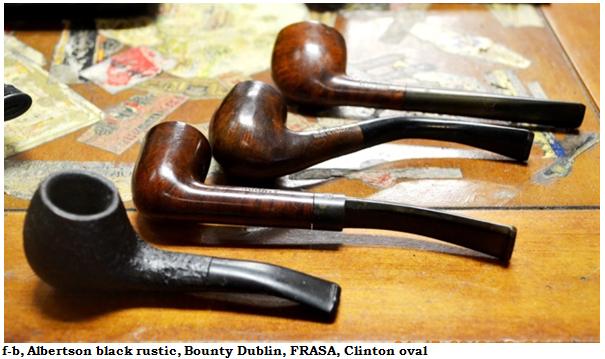
I still have more than a few of those pipes in need of restoration, although I’ve made quite good headway. Most of the 2014 parade of pipe lots, selling for an average of about $20 per pipe, included one, or more, good looking big brand names. For the most part the rest were nice or odd enough to warrant the purchase. There were, to be sure, a few total losses, with fatal cracks or burnouts, but little more than I could count on a hand. Take, for examples of both name brand and just plain interesting pipes, the following picture of 11 I acquired together, containing a Kaywoodie Rustic Silhouette bent apple [top row left] and a Spitfire by Lorenzo Mille [Italian for a thousand, appropriate considering its massive size, third row left). Then there’s the gigantic no-name Lorenzo pretender [by itself at the bottom], which may in fact be a reject from that Italian maker known for outrageous sizes. As I sit here editing the text of the finished blog, I hear a chime on my laptop and check the email. There is a new message from a gentleman I met last night who visited our monthly pipe meeting. I gave him a couple of samples of excellent new flakes I had and asked if he saw any of my restored pipes he likes. Alas, none of them was big enough for his taste! And so I recalled the Spitfire and its look-alike and described both to him, promising to send email photos for his information or consideration. Well, the gentleman just replied and accepted my bountiful offer of a very low price for the no-name. That, to my way of thinking, speeds past any notion of coincidence and stops on the dime at downright mysterious. We have arranged to meet Monday morning for the transaction.Bounty5This photo is extraordinary to me on several levels more appealing than its dingy back-drop and utilitarian lack of artfulness. Have a gander at it yourselves, ladies and gentlemen, and if you have read the prior parts of this set of blogs you will hopefully recognize two of the pipes restored in them.
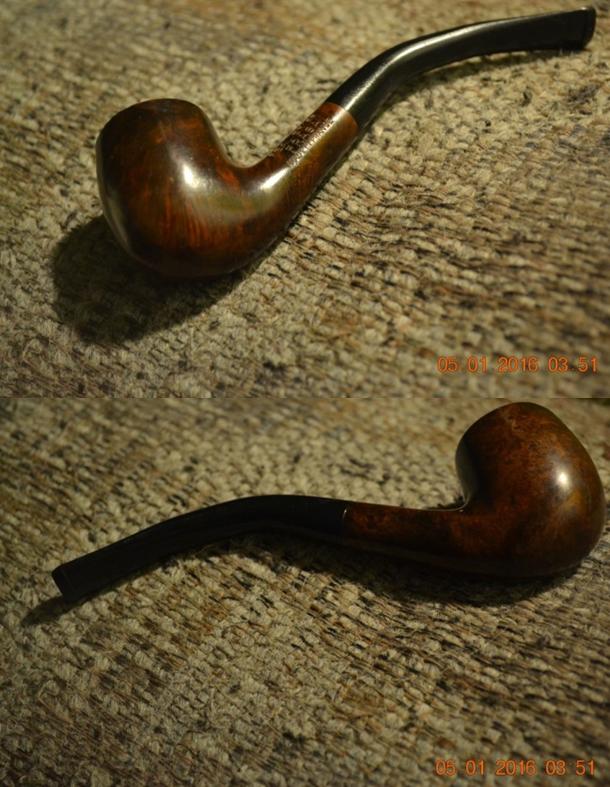
When you’re finished looking, they are, in order of their appearance in the photo: the Clinton Real Briar straight oval [top row, right] that sold to a young lady overcoming the social and medical blight known as cigarettes; the Real Briar Bounty billiard [fourth row, left] that I put on reserve for one genuine character of an older woman who belongs to a non-pipe related club of which I am a member and informed me in a Dr. Lecter sort of voice that her husband “used to smoke them all the time – but not anymore,” as well as how she quit cigarettes with the aid of her old misplaced pipe that she “also” learned to live without except for missing the feel of it in her mouth. The rather Faulknerian run-on segment of this passage begs the questions of whether the poor husband is not among the living at all and if not, why, or just not with the good lady, and other issues I dare not approach in this medium. And there is the Frasa, or FRASA as an acronym, French bent billiard [next to the Bounty], which I sold to my pipe club friend, Ashley. Another lady I caught smoking cigarettes was persuaded to purchase the Medico straight natural tiny acorn.

Wow! I just had a thought, the kind that makes me feel like an utter fool. Here I have been, wracking my brain to track down and interview unknown lady pipers in addition to Liz, and all along the obvious has been right in front of me: Ashley, the first female pipe smoker I met, in my own pipe club! Not that I don’t still need to collect some data that will allow me to get a handle on any patterns of experiences and difficulties faced by women who dare presume to invade one of the last existing perceived instances of a traditional male bastion; it’s just that now I understand I can simply post a thread on Liz’ Facebook forum asking for the input I seek from women, and then sit back and let it all pour in – or even chat with a few of the undaunted freedom fighters.

None of the ladies pipes in these blogs was picked by me for this project by looking at old photos, but rather by tunneling through the chaotic clutter on my work desk in search of diminutive pipes. Still awaiting restorations are a Willard Aristomatic rustic pot with U.S. Patent No. 2,461,905 issued in 1949, a Dr. Grabow Duke six-sided rustic panel and, last and least (in terms of length), la pièce de résistance, an Albertson Belgian bent black billiard. Try that five times fast.

Unconsidered by me at the moment of conception of the underlying theme of these blogs was any idea of ever writing such a series as this concerning the presence of women around the world who enjoy pipes every bit as much as men do, including the all-important contemplative aspect of the deeply personal experience. And so, while the details of inner visions of our most inviolate thoughts as we puff a pipe and tobacco may differ somewhat between the genders, the basic dynamic is a twin.

I do have a few words about Real Briar Bounty pipes. There are, in fact, few words I can write about the maker of these beautiful and varied works, samples of which I have found all over the Internet, for the most part members of sundry forums asking for information on the Bounty’s pedigree and receiving no coherent answer. [See Sources.] This omission of mine is not for lack of research but because of the apparent utter dearth of information. Based on the designs available for sale online, many were made for 9mm filters and some have originals included with the purchase. Then there are the references to separate ships in English history, both called The Bounty, each of which met with disastrous ends.

The few but important clues (9mm filters, an unusual number of the sources being in Europe – particularly several ebay.uk sellers – and the name itself, Bounty) embolden me to go out on a limb and suggest that the maker of this pipe is British.

A TEASER OF THINGS TO COME IN THE FINAL THREE BLOGS
For various reasons about which nobody still reading this would care to hear, I have yet to chat with any of the New Jersey Ladies of the Briar concerning their no doubt varied introductions to the wonderful world of pipes, but as I noted earlier I now have the solution to that I promise to get on it while preparing my fifth blog on the topic. To be more accurate, I should amend my previous statement with the note that my Smokers Forums U.K. friend, Liz, who founded the group, has been my sole source of information related to feminine tastes in the choices of pipes and tobaccos.

Our first few email exchanges were a bit odd. While Liz was open to my idea, at first proposing a single blog I soon knew would either turn into a New Yorker-length piece much longer even than my “The Young Man and the Pipe” tribute to Ernest Hemingway involving the restoration of a Thinbite. And so I decided upon a series. In those early emails, I remember describing, several times in different ways, the kind of information I wanted and any ideas how to go about getting it.

My mistake, a common one but inexcusable of someone with a reporter’s experience, was not asking specific questions of Liz. And so I at last understood and re-commenced with three questions.

The reply I received from Liz was candid, and also revealing of double standards and injustices I could never have dreamed up. My interests are eclectic, but there are certain areas to which I find myself constantly drawn. They include history, political science, law and, it goes without saying, everything related to pipes. I consider myself well versed in the real atrocities Mankind has committed against itself and the rest of the planet and the everyday varieties of rudeness and general foul play that abound daily. I just never considered the possibility that such attitudes had infiltrated our beloved pipe world to a real extent. Here is that first, ice-breaking, bare bottoms basic email Q&A.

Q: I know you have a penchant for minis, but what are some of your favorite pipes that you smoke regularly?
A: Currently, my go to pipe is a Dr. Plum mini Prince which I only smoke Lakelands in. Other pipes I tend to stick with are a huge Savinelli 320, Savinelli Lollo, Jirsa horn shape, Brebbia author shape and a no-name bent meer and corn cobs.

Q: What kind of pipe blends do you like?
A: I will smoke anything! But I love Lakelands and latakia blends the most. Aro[matic]s that I favor are mocha/coffee blends (McClelland 620 mocha black is my favorite) and also maple blends (Wilki Vermont Maple is my favorite). I tend to shy away from perique because it gives me a scratchy throat but I will smoke one bowl occasionally.

Q: When did you start smoking a pip? Were there any special circumstances?
A: I always wanted to smoke a pipe even when I was a child. I had seen photos of my dad smoking a pipe but he had quit smoking by the time I was born. I started smoking cigarettes in my early teens and the desire to smoke a pipe became stronger once I became an adult and started to do a lot of camping. I thought it would be very nice to sit by the campfire and smoke a pipe. But as a woman, I never felt comfortable or confident enough to go in a store and buy one. Finally in 2004 I got the nerve to go in the tobacco shop and buy a pipe. I used the excuse that I was buying it for my brother. I selected a 3/4 bent no-name Italian briar. I still have that pipe today although I don’t smoke it often since my taste is pipe shapes have changed. I had no one to teach me anything about smoking the pipe so what I learned I found on the internet. [Emphases added.]

RESTORATION
Earlier, I alluded to the smooth, fairly clean pipe with its nice glossy finish and unusually good though not thorough cleanliness. I also noted, during my first critical examination of the pipe, the bad gash on the rear of the bowl and other small scratches over the surface area. Out of nowhere, I had a bad feeling about the possibility that something other than a conventional alcohol-based stain might have been used, such as the bad habit in China of laying on Earl Scheib applications of regular varnish and – it hurts me to write this – even Shellac and, I’ve heard, paint! These coatings cause various serious damages, some of them being the destruction of the pipe’s ability to breathe, or to take in air, not to mention the inhibition of the wood’s natural expansion when it heats from use. The bit was freckled with discoloration.Bounty6The obvious starting point was tossing the bit in an OxiClean bath and the stummel in Everclear.Bounty7Then again, without the bit or the stummel, I had nothing whatsoever to do except to partake of a nice bowl of Mac Baren Bold Kentucky Flake in my Peterson’s silver band orange meerschaum Dublin. These are the times when pipe restoring can be so trying.

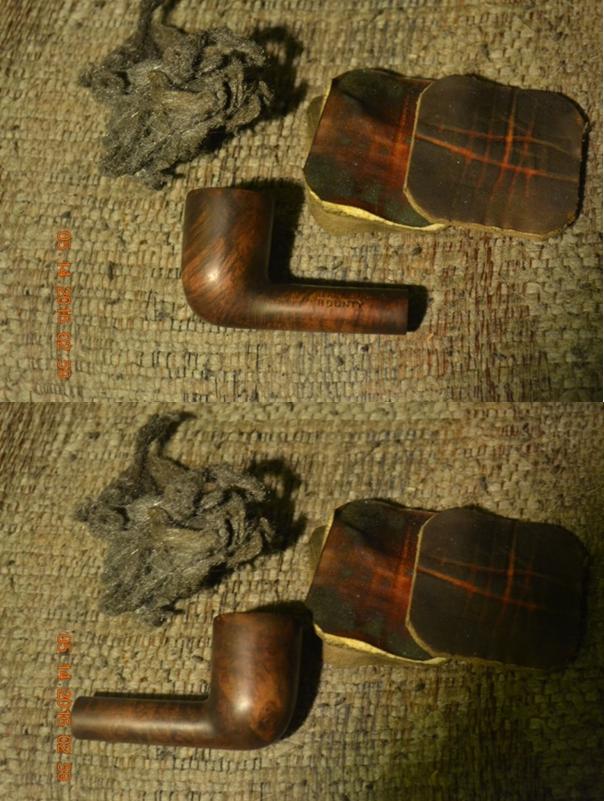
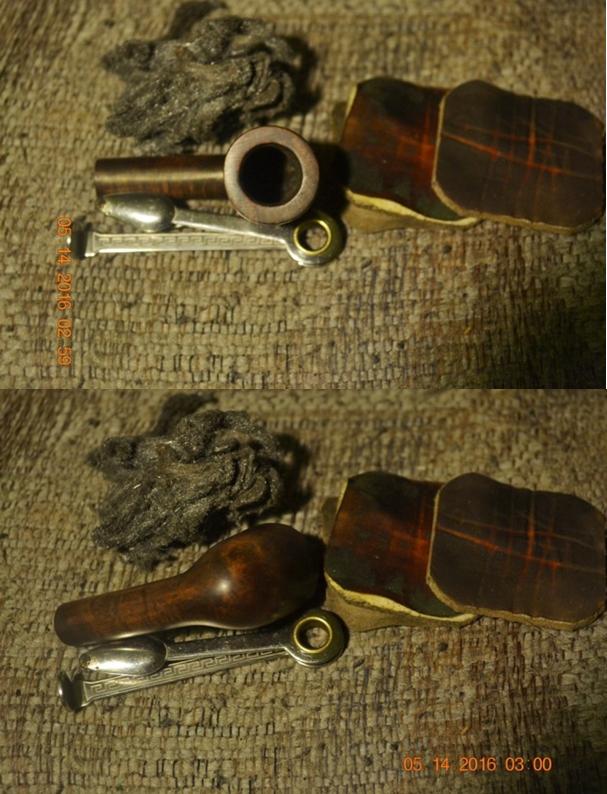
But I weathered the next half-hour with the stoic determination of an ancient mariner awash with kelpy brine, and got back to work. The bit was every inch a fright to behold, as I expected after its bath.Bounty8Nevertheless, I made it better with a bit of a makeover using 320-grit paper and the full progression of micro mesh.Bounty9About that time, I removed the stummel from the Everclear and stuck a pair of small soft cotton cloth squares into the chamber to twist and shout out some of the loosened mess there. I ran two more cotton cloth squares over the stummel, sanded the outside with 220-grit paper taking care to avoid the nomenclature and micro meshed all the way. The chamber was too small to fit a reamer, and so I sanded it (using a pinkie) with 150- and 320-grit paper before using a tiny edge of 0000 steel wool to finish smoothing. I put a touch of Everclear on a two-ply cotton cloth square and scrubbed out the remaining soot.Bounty10 Bounty11 Bounty12Micro meshing with my full set of pads was fun as usual and gave the wood a very nice natural shine. But as you can see, part of the big ding on the back side of the bowl remained.Bounty13 Bounty14 Bounty15I spot-sanded the ding with little pieces of 320- and 500-grit paper and a lot of elbow grease, re-micro meshed it, then micro meshed the little light but smooth spot all the way again. The time to re-stain had arrived, but what color? Why, Lincoln Marine Cordovan! I flamed the quickly drying alcohol-based boot treatment and set it aside to cool.Bounty16With 2400 and 3200 micro mesh, I removed enough of the stain-concealed grain to make out faint lines, but the pads could not do more than that. Several light applications of four-ought steel wool brought out the grain where I wanted it.Bounty17 Bounty18 Bounty19After an easy but necessary retort, the time to repair to the electric buffers had come. I used the red and white Tripoli, White Diamond and carnauba on the bit, and all but the red Tripoli on the stummel.Bounty20 Bounty21 Bounty22The last step was to touch up the circle B bit imprint with a white grease pencil as well as I could.

CONCLUSION
Close your eyes for a moment. I want you to imagine yourself standing just outside your favorite neighborhood tobacconist. You know there’s a pipe inside that you’ve always wanted. A pipe with your name, as it were. You may never have seen the pipe, but you know it’s in there. Waiting for you to buy it. For your own use. Whispering, “Come save me. I’ll be yours forever.” Maybe you remember your father or grandfather with it, relaxed and comfortable between his teeth. He’s smiling, laughing, and in his mirth has to take the pipe from his mouth for a moment. You watch as the beautiful pipe in his hand moves down in front of his chest, where the smoke subsides, but there are still faint wisps curling gently upward. And your eyes are still glued to the mysterious object of art when the hand moves up again and almost magically, without the man even looking at it, the pipe finds its way back between his happy, content lips. You reach for the doorknob to go inside.

Now, imagine you’re a woman.

SOURCES
http://www.pipetrader.de/artikelauswahl.php?kat=Estate+Pfeifen~Bounty
http://www.bestsmokingpipes.com/beautiful-real-briar-bounty-meerschaum-lined-smokers-smoking-estate-pipe-8-39
https://www.willhaben.at/iad/kaufen-und-verkaufen/d/pfeife-real-briar-bounty-157047822/
http://www.worthpoint.com/worthopedia/026-bounty-real-briar-bent-estate-463731513 9mm
http://www.cnn.com/2014/06/12/us/hms-bounty-tall-ship-sinking-investigation/
http://www.history.com/this-day-in-history/mutiny-on-the-hms-bounty
http://law2.umkc.edu/faculty/projects/ftrials/Bounty/bountyaccount.html The true story of the 1789 mutiny on the Bounty
http://globalnews.ca/news/1390913/hms-bounty-sinking-coast-guard-blames-owners-captains-decisions/

Spotlight: Ladies Pipes, Part 3/7, a Tiny Medico Acorn


Guest Blog by Robert M. Boughton
Member, International Society of Codgers
Member, North American Society of Pipe Collectors
http://www.naspc.org
http://www.roadrunnerpipesnm.biz
http://about.me/boughtonrobert
Photos © the Author

Two old buddies are heading off on their Annual Fishing Trip. For argument’s sake we’ll call them Kevin and Bob.
Bob notices that Kevin is being more grumpy than usual and tries to lighten things up by way of conversation.
Bob: “So Kev, last week was your birthday, happy belated.”
Kevin: (grudgingly) “Thanks.”
Bob: “Say, did, Laura, buy you that Estate Dunhill that you were constantly hinting at?”
Kevin: “Na”
Bob: “Well what did she get you instead?”
Kevin: “SUV.”
Bob: “New or used?”
Kevin: “New of course.”
Bob is extremely puzzled as Kevin is still driving the same beat-up pickup that was already old when Saddam was considered an ally.
Bob: “You know, Kev, you and I have been friends for a long time, and I’m entitled to say that you are an ungrateful sour puss. Laura buys you a New SUV instead of a second hand pipe, and that has you in a bad mood.”
Kevin: “Humph!”
Bob: “Well what kind of an SUV was it anyway?”
Kevin: “Socks, Underwear, Viagra”
— Thanks to mate on smokingpipes.com/forums. (I don’t know, but for some reason this struck me as a good gift idea for the next man who gives a lady grief for enjoying a pipe.)

INTRODUCTION
Steve comments now and then on the pleasure he gets from researching a pipe’s history. I know his motivation is not to tuck away, in his mind and for his own use, the information he gathers. I can’t say for sure what drives Steve, but I suspect he, also, is a natural born reporter – which is to say collector and sharer of information – with an insatiable longing to spread his news to readers as well as to supplement or in some cases create new pipe lore available online. Steve laughed at this when I suggested the notion, but I would say his crowning achievement so far is the definitive and exhaustive research that got to the bottom (which was deep) of the complex origins and Byzantine life of Brewster pipes – a close second to his exposé on the history of the Colossus Pipe Factory (CPF).

As a former freelance news reporter/photographer and still a spot news enthusiast, not to mention aspiring literary writer and pursuer of other investigative endeavors, I have a knack of my own for probing. When I can’t find any mention whatsoever of a pipe brand, I therefore become somewhat vexed. This was the case in particular with the first two pipes I restored for this series. One was a Frasa (or maybe FRASA as an acronym) French natural bent billiard;. The other was a Clinton natural straight oval that was neither the Israeli Alpha brand type nor the U.S. variety. Forever a dogged reporter at heart and also having a serious case of Obsessive-Compulsive Disorder, however, I intend to stay on these stories and others until I uncover the facts. The truth is out there.

As for Medico, there is much to be found online and in actual bound and printed books on pipes and the long, glorious history of their peaceful enjoyment. Indeed, the latter tools still exist, however tenuous their future. I hope and pray they survive for as long as Mankind occupies this planet, if not beyond. The history of Medico began with S.M Frank & Co.in New York in 1851, giving S.M. Frank the claim to the oldest pipe manufacturer in the U.S. By the time Frank formed Medico Pipes in 1957, it had already consumed eight other pipe makers, some still celebrated and others less remembered: the Manhattan Briar Pipe Co. in 1922; William DeMuth & Co. (WDC) in 1937; The Kaywoodie Co. (later Kaywoodie Pipes Inc.), Yello-Bole, Kaufman Brothers & Bondy (KB&B), the Reisss-Premier Corp. and the New England Briar Pipe Co. in 1955, and the New Jersey Briar Pipes Co. in 1956.

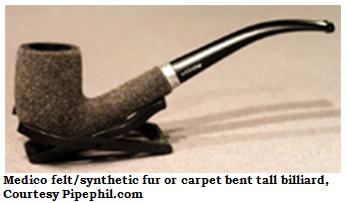
Discussions today about Medico pipes, in person or online forums, can become downright nasty, pitting vehement supporters against rabid critics. Nevertheless, older Medicos certainly possess a certain heightened quality and charm, and the brand’s lines are still made to be inexpensive and durable. As cigarsinternational.com put it, Medicos are “no-nonsense pipes made for the everyman.” That, they no doubt definitely are, at prices ranging from $15.99-$39.99. Medico has made pipes with materials including traditional briar, Brylon (an S.M. Frank synthetic invention of high temperature resin and wood flour) and even a unique bent tall billiard covered with a mysterious material described by Pipephil as either felt, synthetic fur “or a piece of wall-to-wall carpet.” Well, that settles that. To tell the truth, I would love to own one of those, if only for show-and-tell and to be able to call myself a carpet piper, despite the risk of static-electric charges and burns.Lady1SOME FEMALE SMOKERS AND PIPE MAKERS
I have put out various general calls for help in my local and online pipe communities searching for women who smoke pipes and would be willing to share some of their experiences and preferences, and my friend Liz invited me to become a Friend of her Facebook Ladies of the Briar Group. I still need to pursue that line, but at least have four blogs left to do so.

Since my second ladies pipe blog, I have re-focused my research on areas of interest I had not even considered until some other friends mentioned them. The one was revealed to me by Jennifer, the owner of Stag Tobacconist in Albuquerque where I am a very frequent fixture. The other, suggested to me by another Smoking Forums UK friend, Ed, was a fact that struck me as so obvious I was embarrassed to have overlooked the idea. Both, I believe, will prove of great interest.

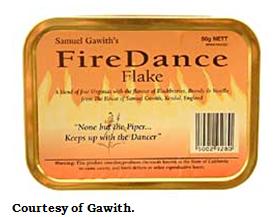
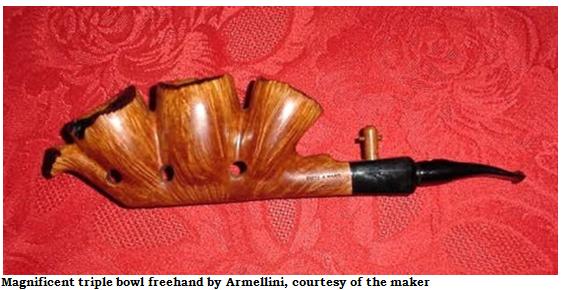
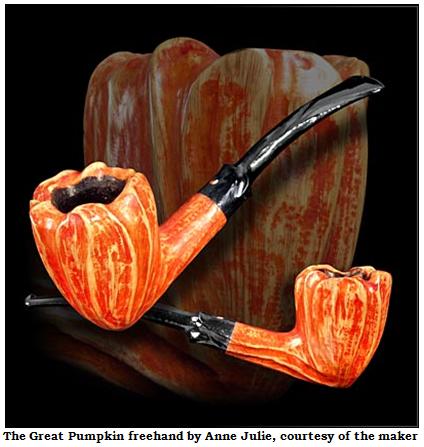
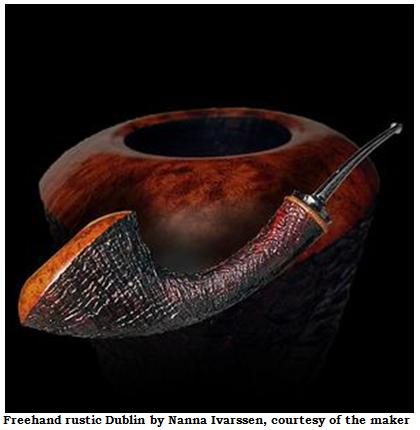
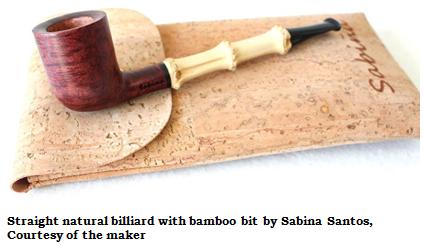
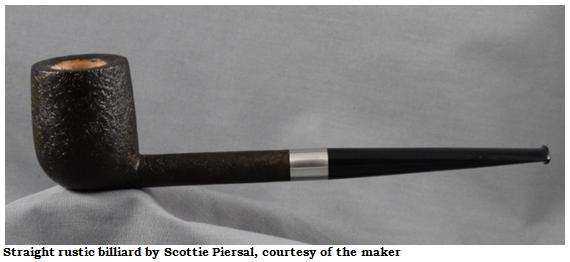
Unknown to me until Jennifer’s revelation, was that Samuel Gawith Fire Dance Flake – a Virginia mix with blackberry, vanilla and brandy flavorings that was a favorite of mine back in my aromatic-heavy days but remains a blend I still enjoy on occasion – was formulated by one of the few female tobacco blenders in the U.S. The light flavorings and Best Brown Virginia used give Fire Dance a nice little bite.Lady2Of more significance is the presence of females – ye gads, what’s the world coming to? – in the business of making pipes. Ed mentioned the following names and provided a few links, worried these were not enough, and I looked up the rest to get samples of their work: Vilma Armellini, one of three daughters of the great Italian pipe maker Mauro Armellini and who regularly assisted her father in making many of his pipes and took over the business upon his death; Anne Julie; Nanna Ivarssen, and two newcomers who have been crafting fine pipes for the past several years, Sabina Santos and Scottie Piersal. Alas, I have been unable to locate a pipe made entirely by Vilma Armellini, but the first photo below shows her father’s work that likely included her help. I will, you can bet, continue looking.Lady3 Lady4 Lady5 Lady6 Lady7In light of my severe case of P.A.D., I expect to add samples of these brilliant women’s pipe crafting art to my collection as soon as possible.

RESTORATION
Now, for the drab little Medico Real Briar acorn as I first saw it.Lady8 Lady9 Lady10 Lady11The bit looked like this close up.Lady12I put it in an OxiClean bath and the stummel in used Everclear (not to drink, but to strip prior pipes).Lady13I took the bit out after a half-hour or so and wet micro meshed it. Then I went ahead and buffed it with red and white Tripoli, White Diamond and carnauba.Lady14I apologize for the gunk in the last photo. I just noticed it, but I assure you it came off with a wipe, or I wouldn’t have sold it the next day. About an hour after putting the stummel into the Everclear, I removed it and swabbed the chamber with one small soft cotton square and the outside with another.Lady15 Lady16 Lady17As usual, there was still old stain to remove, but other than uncommon situations such as removing that awful red varnish used on almost all pipes made in China , for example, I prefer not to let the wood soak too long. A little sanding with 220-grit paper in easy, even strokes, for the most part in the same direction, worked off the rest of the drab and dreary cloaking stain on the briar that had left darkness there and nothing more, as Edgar Allen Poe wrote.Lady18 Lady19 Lady20Call me anything other than Ismael, but I always get a distinct rush when the stummel is ready for micro meshing. In an average restoration of this type, with no serious, time-consuming obstacles, micro meshing most of the time is the halfway + 1 point, or the hump of the project. However, with five steps to go before completion of the pleasant task – it was better than the movie, which I had seen 10 times already – I was exactly halfway finished. The point, however obtuse, is that in my mind I was almost to the finish line. Oh, never mind! Alright, then, I proceeded to micro mesh from 1500-12000.Lady21 Lady22 Lady23Next up was re-staining the stummel, using Lincoln brown alcohol-based shoe and boot leather dressing.Lady24I also enjoy the brief puff of blue fire after holding my Bic or a good kitchen match close to the stain-wet wood, like flaming baked apples served with ice cream. Sort of. But that doesn’t make me a pyro. I prefer to think that life is like a bowl of ice cream, even if it’s served up on fire at times. Consequently, a few minutes after torching the stummel, I started with 2400 and 3200 micro mesh to remove the charred neon green coating. That broke through to dark brown, at which time I switched to super fine four-ought steel wool to take the darkness down a few notches.Lady25 Lady26 Lady27Ready for the second to last step in this somewhat off-the-norm order of events, I retorted the pipe at last.Lady28 Lady29After running a fluffy cleaner through the shank and clearing more last-minute soot from the chamber with a cotton cloth square, I buffed the stummel with white Tripoli, White Diamond and carnauba, using the wheel I keep clean after each to work the compounds further into the briar and keep them from smudging.Lady30 Lady31 Lady32CONCLUSION
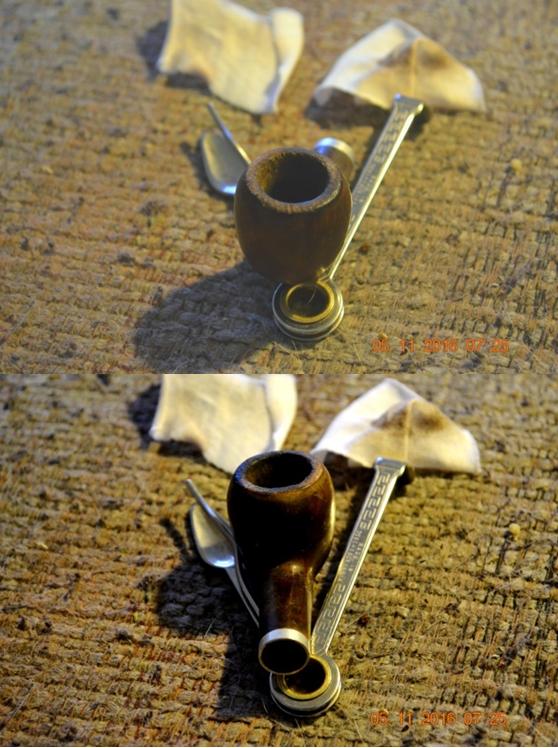
So far, by an eerie coincidence if there is such a thing, all three of the pipes I have restored for this ladies pipes series have sold. The Frasa (or FRASA) went to my good friend and fellow pipe club member, Ashley. The Medico Acorn of this installment was snatched up by another woman, Rita, whom I met last night when she saw me smoking a pipe and mentioned that her husband “used to enjoy his pipes all the time” (I took this rather ominous wording as either a sign that the good man is no longer with us or just not with Rita), as well as the fact that she gave up cigarettes by puffing on a pipe of her own with tobacco until she weaned herself off both, and she added that she missed the feeling of the pipe in her mouth. No comment. The third pipe, a Citation Real Briar oval, sold to an 18-year-young man who also approached me because of the fine pipe in my mouth at the time. Ashley reserved hers before it was even restored while the others fell victims to my persuasive sales technique and the fortuitous circumstance that I had my available pipes with me. Still, I didn’t push any of the ladies pipes on anyone. They were all picked out of the box by the happy buyers.
SOURCES
http://pipesmagazine.com/forums/topic/smoke-jokes
https://rebornpipes.com/tag/brewster-pipes/
https://rebornpipes.com/2013/04/14/some-reflection-on-the-historical-background-on-cpf-pipes/
http://www.smfrankcoinc.com/home/?page_id=2
https://pipedia.org/wiki/S.M._Frank
http://www.pipephil.eu/logos/en/logo-medico.html
http://www.smfrankcoinc.com/home/?page_id=143 Medico pipes
http://www.cigarsinternational.com/brands/1552/medico/
http://www.tobaccoreviews.com/blend/1965/samuel-gawith-firedance-flake
http://www.theitalianpipe.com/artisans/armellini.htm
http://www.annejulie.com/pipes.html
https://pipedia.org/wiki/Ivarsson,_Nanna
http://www.sabinapipes.com/
http://mypipeclub.com/forum/index.php?PHPSESSID=18ed18b6fd1b7cfa581ca18da56449f7&topic=805.0 Scottie Piersal

Spotlight: Ladies Pipes, Part 2/7, a Clinton Straight Oval


Guest Blog by Robert M. Boughton
Member, International Society of Codgers
Member, North American Society of Pipe Collectors
http://www.naspc.org
http://www.roadrunnerpipesnm.biz
http://about.me/boughtonrobert
Photos © the Author lady1

INTRODUCTION
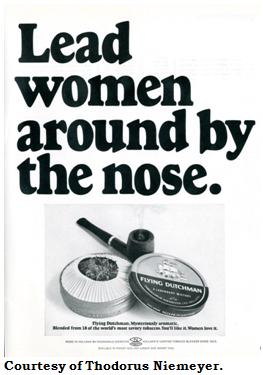
I came across a more subtle but still rather sexist yet humorous comment concerning the perceived relationship of women to pipe enjoyment, this time in the older ad above for Flying Dutchman tobacco. No longer in production, it was an aromatic blend of Kentucky Burley, Cavendish, Virginia, Oriental Turkish and “Other/Misc.” Sounds pretty good to me. But it makes me flash on an email I received from a friend on Smokers Forums UK. Her name is Liz. She wrote:

“I always wanted to smoke a pipe even when I was a child. I had seen photos of my dad smoking a pipe but he had quit smoking by the time I was born. I started smoking cigarettes in my early teens and the desire to smoke a pipe became stronger once I became an adult and started to do a lot of camping. I thought it would be very nice to sit by the campfire and smoke a pipe.”

Here comes the sad crux of Liz’ response. “But as a woman, I never felt comfortable or confident enough to go in a store and buy one. Finally in 2004 I got the nerve to go in the tobacco shop and buy a pipe. I used the excuse that I was buying it for my brother. [Emphasis added.] …I had no one to teach me anything about smoking the pipe so what I learned I found on the internet.”

I was struck by the eloquent and poignant plight of a woman I have come to think of as supremely confident and self-assured in all matters, albeit that our friendship is based in the ether world. This is a woman I should very much like to meet some day in person. Liz’ reluctance to purchase a tobacco pipe, at a tobacconist, for herself as a woman who had always wanted to partake of the pleasures she rightly imagined she would discover (around a campfire, no less, and as an alternative to the pernicious and addictive additives in cigarettes), plucked a mournful acoustic chord in my heart like listening to Albinoni’s Adagio for guitar alone on a torrential night.

This in turn sparked a connection to the woman in my previous blog of this series, the person who inspired me to tackle the subject in the first place with her soft-spoken, somewhat tentative inquiry to Chuck, at my local tobacconist, asking if he had any ladies pipes. After I read with delight and growing admiration for the fine woman Liz’ responses revealed her to be from the several questions I posed to her as a preliminary breaking of the ice in an ongoing interview process, I played back my mental tape of Chuck’s encounter with the good lady in search of a suitable pipe, and doing so recalled the trepidation in her voice and body language. With some amazement, I realized that she had probably worked herself up for untold years to that moment when at last she was determined to ask for that which she had always wanted!

As a man, I am compelled to declare that this clear and present state of social antipathy toward women who wish only to savor a pipe – and indeed the attitude must be widespread, or else I could not have come in contact with two ladies in hardly a month with the same reluctance to buy something so basic that they fancied obtaining – is intolerable. I mean good Lord, have we come so short a distance from the days when women on their own volition and in the strength of groups protested the double standard of cigarette smoking as chic by men while the practice was viewed as vulgar by females? Alas that science was not what it is today, and many beautiful pioneering civil rights women perished early from the intrinsic impurities and carcinogens of cigarettes. And let’s not forget the infamous bra burning demonstration so popular when I was a youngster (and to my natural titillation, no pun intended). With hope, therefore, these blogs will help to alleviate the barriers.

VARIOUS BRAND LADIES PIPES
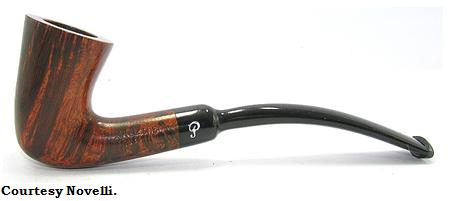
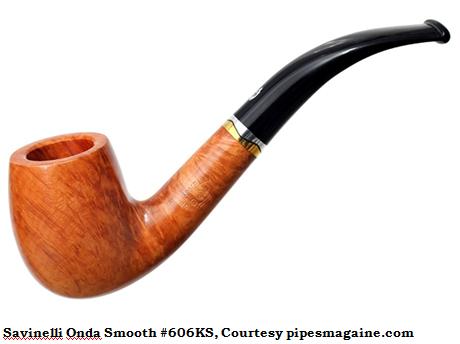
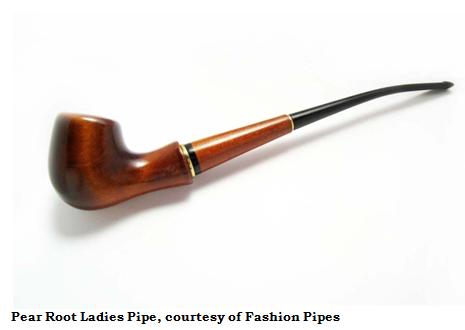
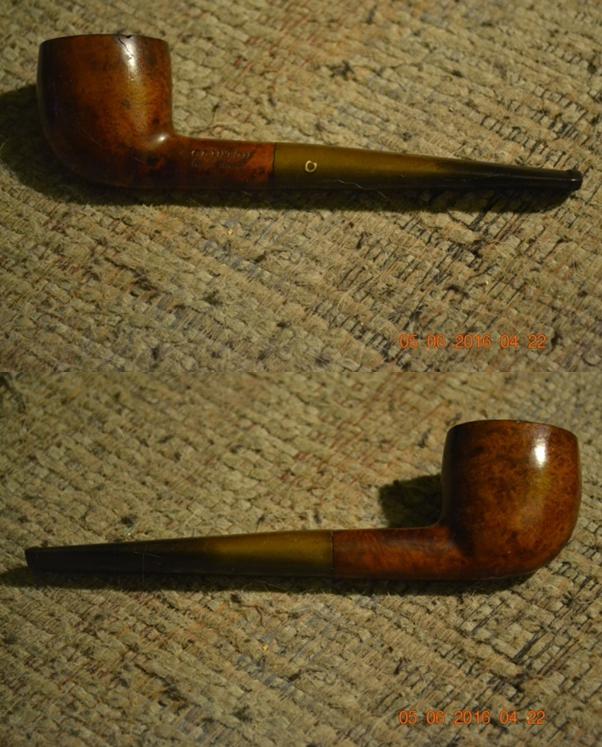
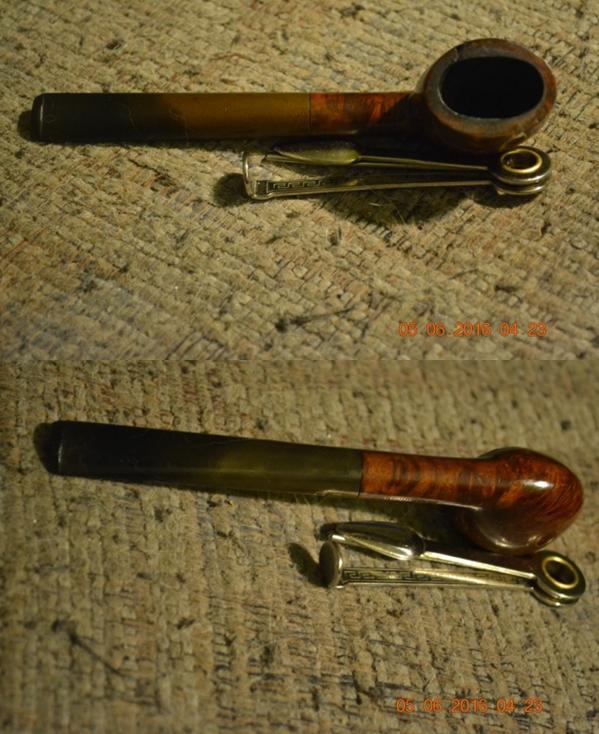
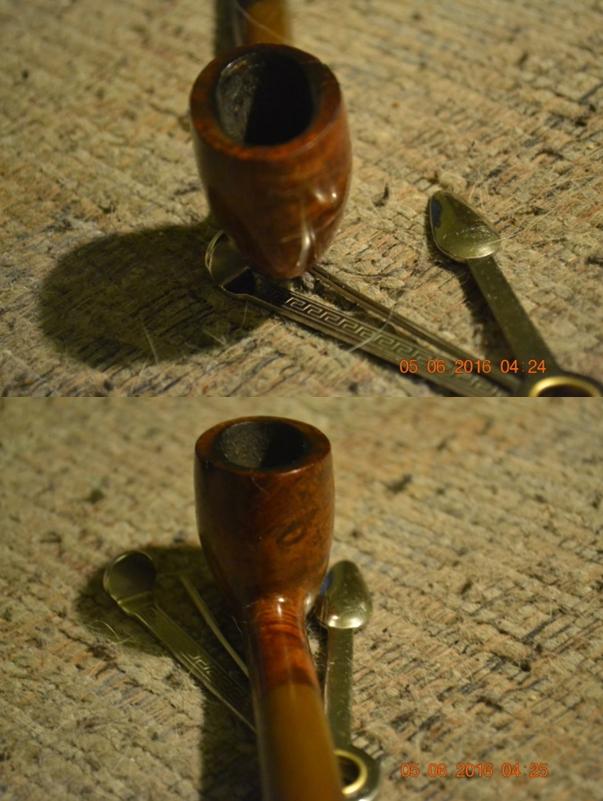
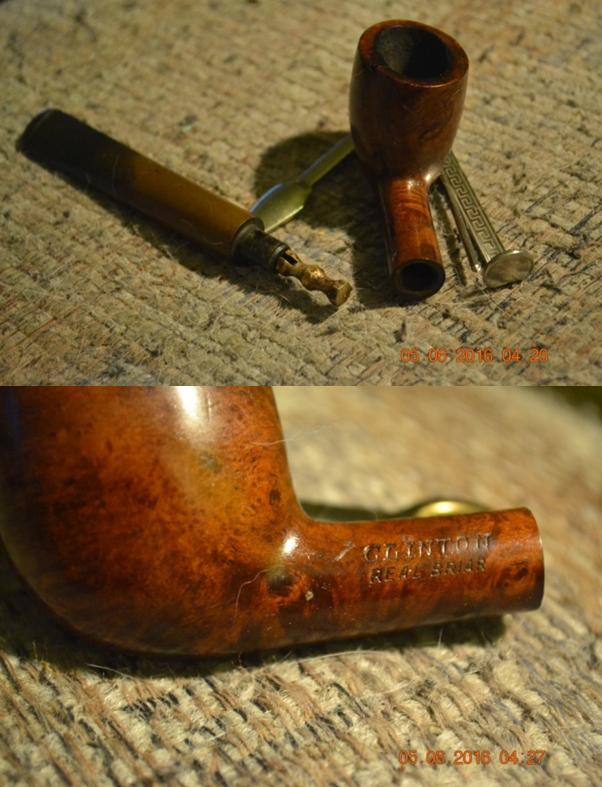
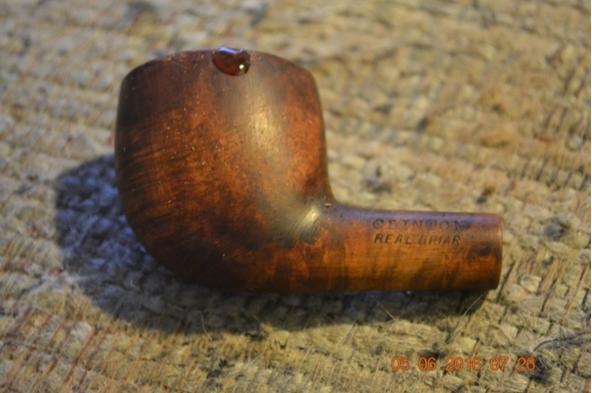
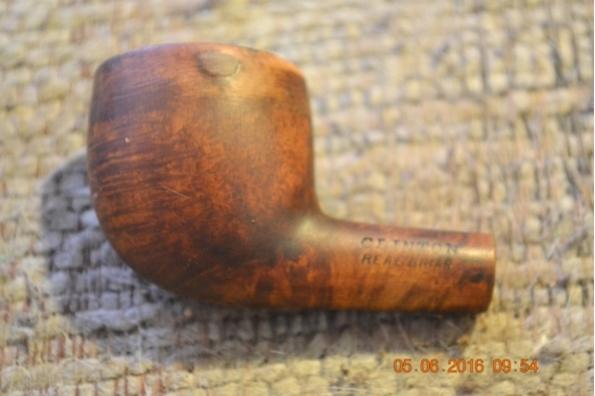
I noticed Peterson’s had at least one ladies pipe, and reader/blogger Mark Irwin, who read my previous blog on this subject, urged me to include some of them during the course of the series. Here are several samples of fine ladies pipes, starting with a Peterson I found offered in Italy, per Mark’s suggestion.lady2Paddy of SF let me know that his wife has a sweet collection of Savinelli 606 pipes, at least one for each day of the week, like the following example. BTW, Paddy writes, the missus also has “one Castello of a similar shape which she received as a gift.” Good company, indeed.Lady3 lady4And now, here is the Clinton Real Briar Oval as it came to me.Lady5 lady6 Lady7 Lady8RESTORATION
The Clinton, as well as the FRASA I restored for my first of these seven blogs, has an unusual stinger tenon, heightening my surprise that neither of them seems to have any discernible history, not even as seconds. In addition to the tenon, the Clinton also has a distinctive upside-down C on the bit.Lady9By way of synopsizing the pipe’s chief and obvious problems, the bit was badly discolored, there was a crack on the upper left side of the bowl extending from the rim downward (but not penetrating into the chamber), and the stain was far too dark for my taste, given the apparent decency of the obscured grain. And so I began by soaking the bit in an OxiClean bath and the stummel in some used Everclear I keep on hand for such occasions.Lady10The bit was ready first, about a half-hour later, and I removed it from the soak and rinsed it, then took out the stinger and ran a soft cleaner through the airway. I wiped the stinger clean with a soft cotton gun cleaner square and sanded both sides of the bit’s lip end with 200-grit paper. Then I wet micro-meshed the entire bit from 1500-12000 and had a nice bowl of D&R Two-Timer Gold in my Peterson Killarney Straight Bulldog Dress Pipe. I ordered the beautiful black “ebony” pipe online during a brief overwhelming fixation on these pipes that also landed me a sleek Nat Sherman. Both remain favorites.

That Everclear strip lasted just long enough for my consummate Burley mix to work its way down to a fine ash – or maybe I made it last the proper time, as was my prerogative! Whichever the case may have been, I had a couple more handy cotton cloth squares ready, one to stuff into the chamber with a pinkie and twist so I could clean out any residue there and hold the body in place while I scrubbed the still wet outside of the wood with the other. Look at the scum that would have ended up trapped below the stain I later applied. Some would ask what it would matter. I like to think the devil is in the details.Lady11With considerable difficulty given the tiny chamber diameter (1” in length and 1” deep but a mere 0.5” across), I coaxed a small, limp piece of 150-grit paper inside and somehow worked it up and down enough to make a difference, then switched to 200- and finally 500-grit., finishing with a cotton cloth square with a squirt of purified water to remove the extra char. On the outside, I used 200-grit paper to clear away the stubborn remaining stain and residue from the Everclear soak.Lady12 Lady13 Lady14I micro-meshed from 1500-12000.Lady15 Lady16 Lady17I was ready at last to consider the crack.Lady18It looks pretty nasty, doesn’t it? Again, the consensus was to shave down the rim. Having Executive Power of veto, I opted for a fix I never tried before with a little concerted sanding of the rim with 150-grit paper, it comes down appreciably.Lady19Then I got a wild hair to do the unthinkable. I retrieved my file, an old, wrecked briar stummel I’ve kept for several years knowing I would never dare to try restoring it and some Super Glue, and scrape off enough of the wood to make a nice pile of super fine particles. I’ll tell you right now, the first two attempts at mixing Super Glue with the briar particles and then moving the ultra-fast-drying gloop to the top hole in the Clinton didn’t turn out well. Eventually I conclude the trick is sprinkling some of the fine wood into the gap and then sealing it with a kiss of glue.Lady20I did hasten to scrape some of the excess glue into the hole and remove the rest using the edge of a business card. When it was dry, which was in almost no time at all, I retorted the pipe Before the finishing touches, I sanded it down to smoothness with 200-grit paper and re-micro-meshed.

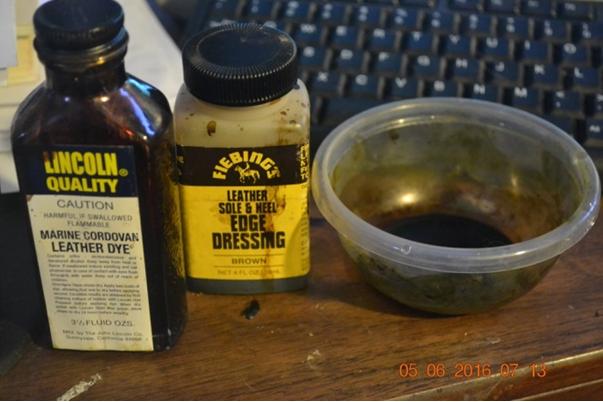
Afterward, taking the matter under full advisement and consideration, I mulled over Lincoln Marine Cordovan (burgundy) to stain it, which might have been overkill, and a mix with that and two or three times more Feibing’s Brown. I chose the latter, of course. I mixed the two stains in my small Tupperware. Lady21Staining the surface of the Clinton stummel for the most part had a nice effect, not counting the serious accentuation it gave to the small remaining hairline crack beneath the one I sealed on the rim. Therefore, following the same process I so painstakingly learned before, only going straight to the effective method, I prepared more briar shavings and, Super Glue at the ready, set the stummel down left side up and sprinkled the dust over the area where the crack was forming. After using another business card (what else are they good for?) to get the most of the particles, I squeezed a nice precise dot of glue over the spot and spread it out to let it dry in a thin coat.Lady22Of course I was forced to sand down the resulting obnoxious big round shiny bump, and in the process some of the surrounding stained surface, but it was worth it knowing the integrity of the pipe would be sound and none of my pipe aficionado friends with their eagle eyes would spot the former crack. Here is after sanding and before touch staining.Lady23And now for the finished product, after buffing with white Tripoli, White Diamond and carnauba. Red and white Tripoli, White Diamond and carnauba gave this bit a higher than usual shine.Lady24 Lady25 Lady26CONCLUSION
However lighthearted the ad with which I opened this installment of the series was intended to be, women are not here to be led around by the nose in the pursuit of so-called manly pleasures. Granted, no doubt, for the most part the pleasure of partaking of tobacco pipes has always been more the purview of men, but to think that women are incapable of such finer sensibilities of life is sheer sophistry, and shamefully self-deceptive and fallacious reasoning at that.

Furthermore, women need not have masculine qualities to favor the subtle qualities of pipe appreciation. And although most humans are capable of normal synaptic reflexes, the electrical impulses generated do not produce identical stimuli tickling the pleasure centers of the brain and kicking out uniform reactions. On the contrary, the magnificence of the human brain is that everyone’s reaction to a given stimulus is unique.

Why, then, should anyone be deprived of the deeply personal reflections facilitated by the mere puffing of a favorite tobacco in a like pipe? These are propositions that we hold to be self-evident, that all people are created equal. I would no more give up my pipes than my gun. Call me a radical or a revolutionary, but don’t call me a redneck or late for dinner.

SOURCES
https://www.smokingpipes.com/smokingpipesblog/single.cfm/post/top-pipe-picks-for-ladies Ladies pipes

https://www.youtube.com/watch?v=eo7IJY4ZjCU The Ladies of the Youtube Pipe Smoking Community


Spotlight: Ladies Pipes, Part 1/7, a FRASA French Bent Billiard


Guest Blog by Robert M. Boughton
Member, International Society of Codgers
Member, North American Society of Pipe Collectors
http://www.naspc.org
http://www.roadrunnerpipesnm.biz
http://about.me/boughtonrobert
Photos © the Author

LadyA pipe in the mouth makes it clear that there has been no mistake–you are undoubtedly a man.
— Alan Alexander Milne (1892-1956) – English author, playwright, poet essayist and storyteller best known for Winnie the Pooh – from “Smoking as a Fine Art,” in Not That It Matters, 1919, a collection of wide-ranging and manly essays

INTRODUCTION
I admit, my choice of the above quote was calculated, but not to raise the ire of any female smokers I indeed admire and whose attention I hope to draw to this forum and others, with the goal of opening a dialogue between the genders who share at least one common love. Of course, as with all well-meaning attempts at good natured humor mixed with more than a grain of satire, I should not be surprised if this one, in the spirit of political incorrectness, backfires in my face like a good ole boy’s sawed-off shotgun packed with too much rock salt.

But no, I think my message is clear. A.A. Milne was a good man and without doubt one of the most celebrated and creative writers of children’s stories of his time, albeit the product of the languid ease and floating, hypnotic comfort of his youth in the English countryside and predetermined defining crucible at Cambridge’s Exeter College at a time when his contemporaries were such traitors as Guy Burgess and Kim Philby to name but two. Yet Milne chose the right path, whatever unavoidable world-view of woman and their “rightful places” in the homes and gardens and still grander scheme of the universe. Milne escaped the abyss of prison, execution or exile to a dacha on the steppes of Mother Russia – outside of his day-to-day harrowing home life. All in all, notwithstanding the opening and somewhat tasteless quote, Milne turned out a bit alright.

So now, a few words about the earth-shattering day at the Stag Tobacconist in Albuquerque, New Mexico, US of A, deep in the Land of Enchantment. How â propos is that, I ask? Holy Shades of a Midsummer Night’s Dream, Batman! You see, I was sitting in my customary spot with a view of the entire room against the unlikely and therefore ever-present threat of imminent attack by unknown sinister forces, which seem to lurk in every corner of this wannabe city. The place continues to groan and grumble with unnatural growing pains.

I was sitting there in my comfortable cushioned chair in the smoker’s lounge, working on my laptop, when I overheard a woman who had come in looking for a “lady’s pipe.” I wasn’t eavesdropping, I just couldn’t help overhearing, along with the rest of the conversation, although my interest was piqued and my ears pricked. From her demeanor, I guessed it was her first visit to the shop. She was a rather large lady, dressed in a heavy long black coat. I knew right off that I had exactly what she was looking for at my apartment in an assortment of nice smaller pipes that nevertheless were not minis. I knew not to interfere with Chuck Richards, my friend and mentor, who had engaged the good woman

Scanning my mental knowledge of the shop’s inventory, I settled on a few of the no-name Italians and some mini carved meerschaums in the glass case below where Chuck and the lady stood at the end of the service counter, only a few yards from my curious ears and eyes. To my immense surprise, I watched Chuck (whose lips were pulled back in a look of distaste I recognized, whether or not the woman detected it) as he produced with appropriate care the open box of one of the meerschaums. The woman made a definite sound of pleasure that was stifled by Chuck’s masterful discourse on the pros and cons of meerschaum minis. He went on about the quality of the material and their ability to burn any type of tobacco without a lingering taste; their fragility and special precautions needed to use them, and in particular their construction with small push-in tenons that can be difficult to maneuver the vital cleaners through. He demonstrated and then explained how the cleaner would also be inserted into the shank after smoking but that he couldn’t handle the surface of the pipe because of its porous nature that absorbs skin oils and dirt, leading to serious damage.

Choking back a laugh, I thought I could not have discouraged a sale better if I had tried! I happen to know Chuck despises fancy, carved meerschaums for his own collection but would never hesitate to sell one to the right person. And so he moved on to several nice, shiny, natural finish no-names of medium length and bowl size. My excitement was growing. I decided if and only if Chuck proved unsuccessful in matching the female customer with a pipe – a wholly unlikely event – would I scurry out the door after her and offer the prospective customer my card and services.

But of course, Chuck sold her a very nice pipe, albeit twice the size of those I will show in this series. Thus was conceived the idea for this series, which, in my original plans, I envisioned, as usual, in a single blog. After a mere glimpse at the boggling research needed to undertake the endeavor, however, not to mention the difficulty of blogging seven restores in one space, I had the brainstorm of splitting the project into a series.

My friend on the Smokers Forums UK (http://www.smokersforums.co.uk/), who goes by the username “im2for1” there, is a Team Member at the Forums and owner of Ladies of the Briar for women only on Yahoo Groups and Friends of the Ladies of Briar of Facebook. She is also vice president of New Jersey Fellowship of Pipe Smokers on Yahoo and Facebook. With some careful, specific prodding, I hope to elicit some invaluable intelligence from Liz as this series progresses.

Here are some pictures of the seven pipes, which I relegated to a special pile on the big work desk in my office. I automatically segregated them for their unusual small sizes but had no idea that distinction would someday come in handy.Lady1 Lady2Now, for a description of my first foray into a so-called Ladies Pipes, although it could be smoked without shame by a man (if I didn’t already sell it to one of my best customers, known to some readers here as Ashley and going back to my first real restore). This is a FRASA (from the brand mark on the shank), a French piece of work about which I can find no background. Lady3I wonder if the larger capital letters indicate an acronym. It’s a lovely, little, delicately curved, natural, dark red briar billiard.Lady4 Lady5 Lady6 Lady7 Lady8RESTORATION
This was one of the cleanest pipes I’ve ever come across in a lot, but I’ve never seen one yet on which I couldn’t improve. I showed all of the pipes I’m restoring for these blogs to Ashley at one of our weekly pipe meetings a few weeks back, and I had a good idea which one she would like best. I’ve come to know her tastes, having sold her several pipes, not to mention one to her husband, Stephen. Her hand went straight for the FRASA and her eyes sparkled with P.A.D. I knew I had her. I pointed out the clean but slightly rough to the touch chamber, which took a flashlight to determine that it had indeed been lightly smoked. Then there were some minor blemishes on the bowl. I also said I’d like to lighten it up a bit, unless she liked it the way it was.

“Go for it!” she said.

And so I tossed the bit in an OxiClean bath.Lady9Moving to the stummel, I wiped it down with purified water and soft cotton cloth gun cleaners before using 320-grit paper gently and evenly before micro-meshing from 1500-12000.Lady10 Lady11 Lady12Removing the bit from the OxiClean and rinsing it, I wet micro-meshed it to a nice dark shine.Lady13I sanded the small chamber with 200- and 320-grit papers and retorted it just to be thorough, but I didn’t expect to find anything, and I didn’t. Now, that’s a clean pipe!

I finished by buffing the stummel with white Tripoli, White Diamond and carnauba, and the bit the red and white Tripoli, White Diamond and carnauba.Lady14 Lady15CONCLUSION
In the next installment, I plan on getting more to the meat and potatoes issues of relative numbers of women who partake of the magic instrument of divine contemplation – recognizing, of course, the futility of trying to get anywhere near exact numbers. I also hope to have feedback from Liz and others like her who are as active as any men in their smoking communities, with some insights into the kinds of pipes they actually enjoy, whether “ladylike” or more “manly.” Yes, sir (or ma’am), the times, they are a-changin‘.

I’ll leave you with these parting shots of two lady smokers, one real and one – ahem – well, never mind.Lady16 Lady17

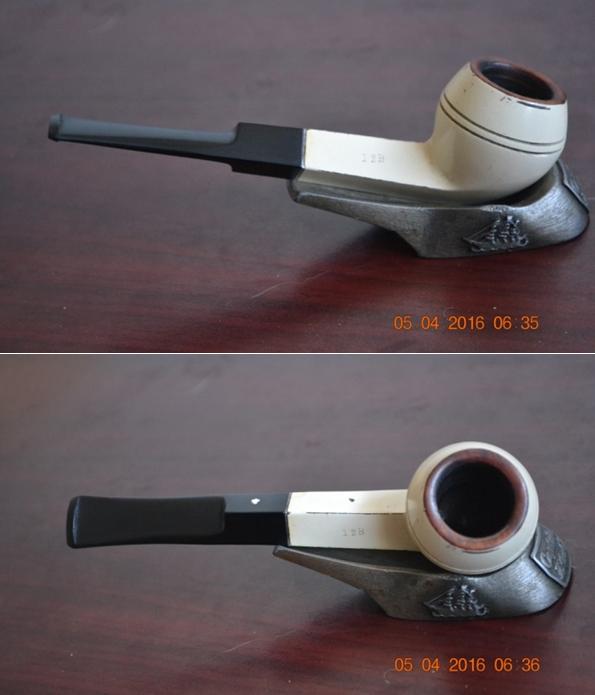
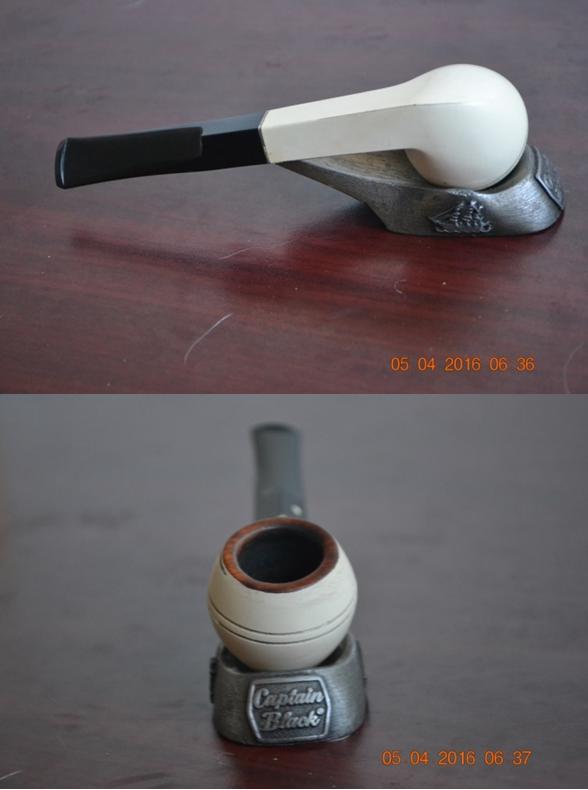
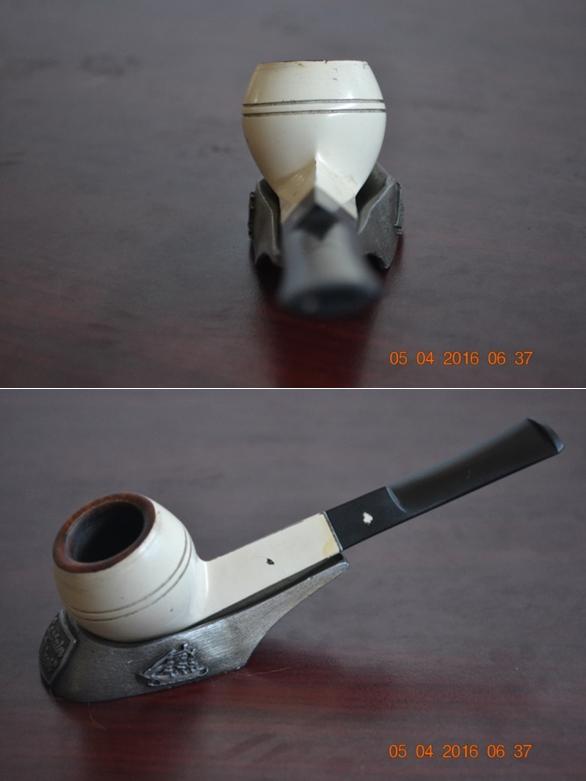
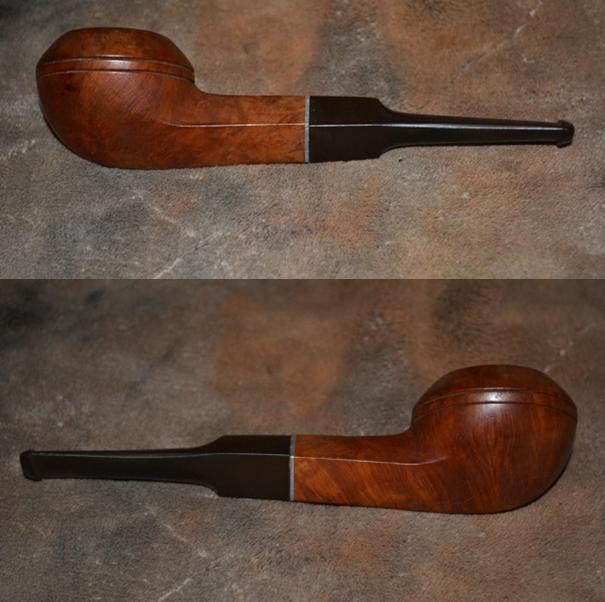
Kaywoodie White Briar Bulldog 12B


Guest Blog by Robert M. Boughton
Member, International Society of Codgers
Member, North American Society of Pipe Collectors
http://www.naspc.org
http://www.roadrunnerpipesnm.biz
http://about.me/boughtonrobert
Photos © the Author

INTRODUCTION
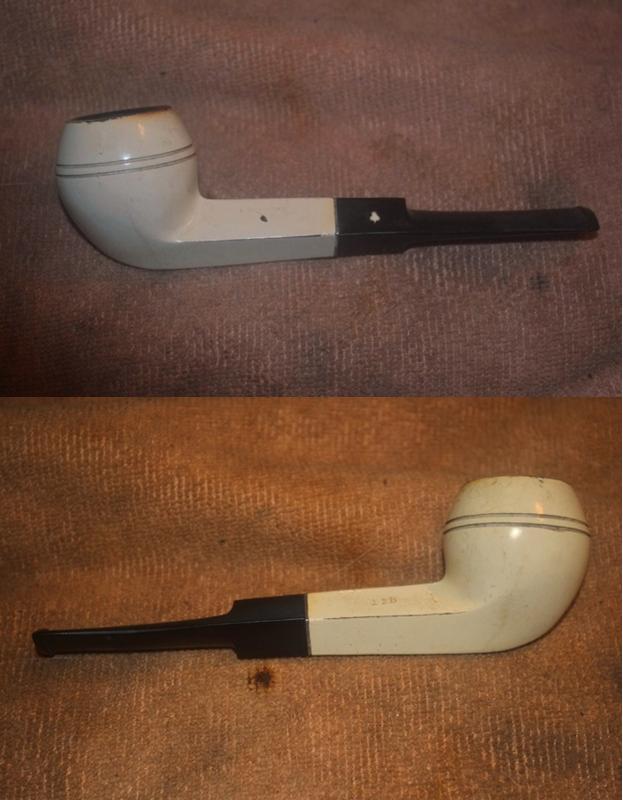
The Kaywoodie White Briar line lasted from 1951-1989. Some elusive quality, including perhaps its rough condition and the fact that I can’t find the same shape shown anywhere online, makes me suspect my bulldog is c. 1960-1970. It’s alright, I’m aware of the virtual non sequitur I just committed, and stand by it as a sort of literary tool if nothing else. Call it a hunch. Maybe I’m just a romantic. No doubt about the last part, at least.KW1 KW2 KW3 KW4RESTORATION
The bit was mostly just dirty.KW5I put it in an OxiClean bath and began the process of cleaning the rest of the pipe by using my Senior Reamer to remove the fair amount of char from the chamber. I followed the reamer with 150-, 200- and 320-grit papers, and removed the excess soot with soft cotton cloth squares soaked in purified water. Then I applied a little purified water to the outside of the stummel with more soft cotton cloth squares, getting rid of considerable grime.

My main concern was the rim, which appeared to be scorched to the point of no return. I used still more soft cotton cloth squares with purified water to work away at the char before switching to 1800, 2400 and 3200 micro-mesh – and just as I thought it was coming clean realized to my horror that the blackened parts of the rim, which had turned a creamy brown color, were down to the briar! In hindsight, I don’t know if I should have left the tiny amount of the original finish that was left on the rim as it was, but I saw no reason. With sadness and reluctance, I removed it for uniformity.KW6 KW7 KW8I replaced the bit, which I had removed from the OxiClean bath and used wet micro-mesh from 1500-12000 to return to a nice black smoothness, and retorted the pipe.KW9 KW10All that was left to do was an unexpected stain of the rim using Feibing’s Brown and flaming it, then buffing with white Tripoli, White Diamond and Carnauba. I buffed the bit as usual, with red and white Tripoli, White Diamond and Carnauba.KW11 KW12 KW13CONCLUSION
I’m always willing to face the music as far as responsibility for mistakes goes, but I honestly don’t know if the “mishap” I had with the rim is common with white briar restores. I didn’t use sandpaper – not until after it was already too late. But it was my restore, and so I will own it. As well as the pipe, most likely, unless anyone out there wants a good deal on a unique Kaywoodie White Briar Bulldog 12B with a brown briar rim!

Fixing a Citation Squat Bulldog


Guest Blog by Robert M. Boughton
Member, International Society of Codgers
Member, North American Society of Pipe Collectors
http://www.naspc.org
http://www.roadrunnerpipesnm.biz
http://about.me/boughtonrobert
Photos © the Author

INTRODUCTION
I thought I found the maker of this Citation on Pipephil, but should have taken a closer look at the nomenclature. As it turns out, the cursive style used by the U.S. manufacturer was a clear mismatch for the block letters on my squat bulldog. For now, I’m stumped. Here is the pipe as I received it.Citation1 Citation2 Citation3 Citation4The unusual cleanliness of the pipe tends to hide the need for serious work on the entire surface of the stummel, in particular a bad ding in the rim.Citation5RESTORATION
First, I tossed the bit in an OxiClean bath.Citation6While it started soaking, I used 150-grit paper evenly around the curved rim until the ding was gone and it was even all around. I also smoothed a rough spot on the right side of the top curve of the shank.Citation7Continuing just below the rim with 320-grit paper, I almost immediately realized the scratches were so pervasive and the grain so clear and fill-free that an Everclear strip was warranted. After the bit had soaked about 30 minutes, I dumped the OxiClean, rinsed the bit and ran a cleaner through it. Then I poured a jar of used Everclear in the Tupperware tub and dunked the stummel in.Citation8 Citation9

The bit was in good shape, and wet micro-mesh from 1500-12000 made it black and smooth again.Citation10I removed the stummel from the Everclear when it had soaked for an hour and wiped the chamber with a cotton cloth square before sanding the dried alcohol from the wood with 200-grit paper.Citation11 Citation12 Citation13Although I can’t explain how it works, my experiences stripping pipes with Everclear and then sanding and micro-meshing them had prepared me for the radical change in color I would notice after the full scale of micro-mesh.Citation14 Citation15 Citation16

Still, this is the first time I can remember where the grain was good enough that I didn’t need to use any stain. All I needed to do was sand the chamber and retort the pipe, the latter of which proved almost unnecessary.Citation17This is the finished pipe, after buffing with white Tripoli, White Diamond and Carnauba. I used red and white Tripoli, White Diamond and Carnauba on the bit.Citation18 Citation19 Citation20

CONCLUSION
Bulldogs always sell fast, even no-names or relatively unknown brands. But I still don’t know why I put off restoring this pipe for so long. Working on it was a real pleasure, and I did it overnight.

A Sad Lesson from a Botched GBD Repair (by Someone Else) I Tried to Mend


Guest Blog by Robert M. Boughton
Member, International Society of Codgers
Member, North American Society of Pipe Collectors
http://www.naspc.org
http://www.roadrunnerpipesnm.biz
http://about.me/boughtonrobert
Photos © the Author

If it ain’t broke, don’t fix it.
― Thomas Bertram “Bert” Lance (1931-2013), U.S. bank teller to president and Director of the Office of Management and Budget under President Jimmy Carter, in the May 1977 issue of “Nation’s Business” magazine

INTRODUCTION
This is a sad tale for all involved: the eBay seller from whom I purchased the GBD straight apple sitter this blog concerns, for $39.99 in April of last year, which the good lady in England refunded five days later; me, as the buyer who requested the refund after receiving the pipe and finding that the photos posted by the seller did not reveal the hidden nomenclature from a previous silver banding to fix an apparent crack in the shank, and at last, in a very real way, the person or persons unknown responsible for the banding itself that, nine months later, I have only just discovered was unnecessary. At least the last of the concerned parties is/are blithely unaware.

That’s right, you read correctly. Although I was justified in asking for the refund, and intended to pay the high postage required to return it to the seller beforehand, she responded, to my gentle but detailed account of the reasoning, with a message that can only be described as hysterical from an obvious sense of unjustified guilt for having “falsely advertised” the GBD. I never used that phrase in my request.

As I recall – though I can’t locate the exchange of emails between the Englishwoman and me that followed my awaiting the arrival of the GBD, with great expectations that were dashed by its clear flaws upon receipt – she wrote back that I should not bother returning it at all, but instead that she would promptly refund my money and I should “keep it, sell it for whatever you can, or throw it away, I don’t care.”

At that point, I was filled with remorse over the anguish in the tone and content of her message that literally rang in my ears, even without an exclamation point. I nevertheless attempted, in a final, unanswered message, to express my intent merely to let her know, in order to sell this pipe or any other (they are not her specialty), that she only needed to add a brief note of the band work and its effect on the nomenclature, as these are important details to collectors and sellers, and perhaps lower her asking price.

After showing the pipe to Chuck Richards, my good friend and mentor, before the emails described above and allowing him to discover on his own the same flaws I detected, he concluded that if I paid more than $10 for it, I should immediately ask for a refund, as I had bought it for my own estate pipe business with the prospect of a quick clean-up for resale. When I told Chuck the actual amount I had shelled out, he was speechless for a moment before all but insisting I seek the refund.

I have been unable to get the shame-riddled emailed words of the kind seller, who as far as I’m concerned made an honest mistake and acted, throughout the transaction, in absolute good faith, out of my mind ever since. I have entertained various options concerning the ultimate disposition of the pipe’s rightful ownership. Of course, I could (A) keep the still beautiful pipe and restore it as best I could to put in my own collection or sell with appropriate disclaimers; (B) clean it up and return it, like a good gentleman, to the grief-stricken lady, with the emphatic suggestion that she give it to a friend who enjoys pipes and would likely treasure this one, if she still didn’t wish to sell it on eBay with a lower price and notices, or (C) complete the work that could be done to fix the damages wrought on the hapless GBD, keep it or sell it but under no circumstances toss it in the trash as the seller advocated, and write the blog now presented as a full and sincere apology to the lady, with the intent of depositing the refunded money back into her PayPal account and forwarding her the link to the blog.

With great effort, I at last located the transaction numbers and dates of the original purchase and refund, and with them was able to obtain the lady’s name and email address.

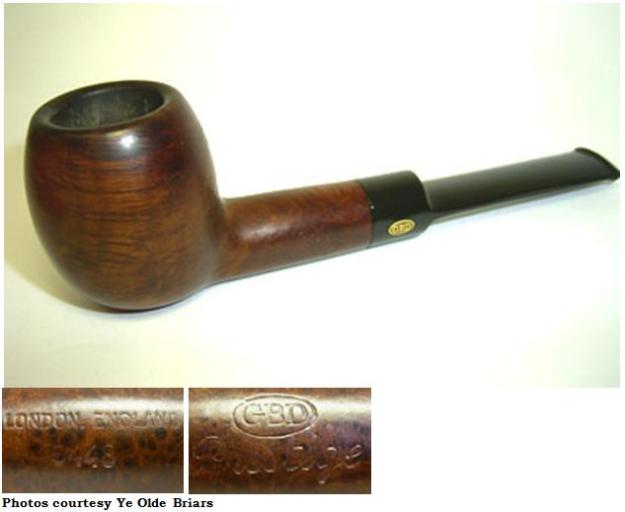
I will save my final decision for later in this account of the restoration of the GBD Prestige straight apple sitter, which research has disclosed was made prior to the acquisition of GBD (an abbreviation of the three founders of the brand in 1850 in Paris – Ganneval, Bondier and Donninger) by Cadogan of the Oppenheimer group in the 1970s. The imprint “London England” in a straight line on the right side of the shank, almost half of which was obliterated by the band, narrowed the pipe to the pre-Cadogan era and also signified that it might have been made in France despite the nomenclature. GBD was last taken over in 1981 by Comoy’s.

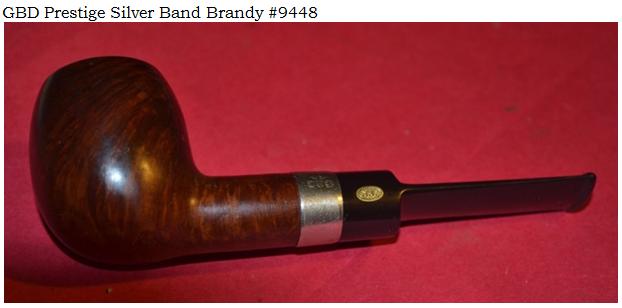
The other nomenclature on the Prestige was critically faint, before I started work on it, and included on the left shank the small letters GBD in an oval, barely visible beside the band, and the model name in cursive that took hours to decipher enough to make out the first uncovered letters, “Prest,” which led the excellent Englishwoman to suspect Presto, but I Googled and found the full correct name. On the right shank, equally as light as the left and below “on England,” were three numbers for the shape, 448, which I understood was 9448. Here is what another version of the pipe looked like.GBD1 The apple of my eyes in this blog is remarkably similar, discounting the nomenclature.

RESTORATION
GBD2

GBD3

GBD4

GBD5

GBD6 [Note the unusual, perfect, pale half oval indentation in the top of the shank in the sixth photo above: I have.no rational explanation for the presence of this mark other than the appearance that it is neither a natural aspect of the wood nor any type of damage, such as a crack. I believe the previous restorer attempted to use a self-made metal band, with the idea of reinforcing the top of the shank without covering any of the nomenclature. If this admittedly crazy-sounding guess is correct, the restorer likely intended to do the same on the bottom of the shank but aborted the idea altogether after failing with the top piece. Call me nuts, but this mark is not an accident.]

Already considering re-banding the apple with a shorter sterling variety, I tugged at the one used in the first place, without much hope that it might be loose, and was surprised when it flew off of the shank and onto my lap.GBD7 Now that was fortunate indeed, for, upon closer inspection, I was able to see that the tiny line in the shank’s opening, which ignited some daft restorer’s passion to fix something that wasn’t broken, was a mere blemish that led nowhere and, in fact, disappeared with a few seconds of sanding. I have to add an acknowledgement of my simultaneous relief that the shank was not cracked and disgust with the previous restorer who desecrated the otherwise weathered but fine pipe by ruining so much of the invaluable nomenclature. The only remaining imprints were the indentations left from the hallmarks and sterling silver designation on the once tight band. I scoffed out loud after my brain digested this enormous error in judgment that more or less ended any real value – and prestige, so to say – this GBD might have had.

Not yet wanting to deal with the majority of the stummel’s outer area, I decided to start by removing the years of accumulated dirt and whatnot from the wood with small soft white pieces of cotton gun cleaner cloths and much of the rim char with wet micromesh pads and a light touch of superfine steel wool. I followed those tasks by clearing the small amount of excess carbon in the chamber with a 19mm reamer and 200- and 500-grit paper, swabbing with Everclear-soaked cotton cloth pieces, and a retort of the pipe.

The retort turned out to be the hardest part of these preliminary steps, as neither of the two rubber tubes that span the few inches from the boiling Everclear to the lip of the bit would fit the extra wide mouthpiece that was part of the GBD. And so, ad-libbing somewhat, I sought out another bit from my collection with a tenon that fit the GBD and a lip that matched the rubber tube. Of course, the last possible pipe I checked was a match – or closely enough. It was from a favorite Ropp. I had no trouble cleaning the metal inlaid GBD bit with a couple of alcohol-soaked bristly cleaners.GBD8

GBD9

GBD10 The photos above show the surprising cleanliness of the well-worn sitter, and by inference, the degree of care its fortunate owner once accorded the bijou. The later of two test tubes full of Everclear used in the retort was almost clear, with only a few small, solid pieces of flotsam at the bottom.

Here, alas, is where I erred, and will have to accept the consequences, until the day I die, for the heartbreaking lesson they provided. In hindsight, I suppose I might, at this critical stage, have sought the guidance of Chuck or Steve (my second if unofficial mentor in this ever-evolving process of learning). But, as Jesse Eisenberg’s character in “Zombieland,” Columbus (for the city in Ohio where he was born), repeated slowly as a sort of mantra: “Shoulda-coulda-woulda.” Much as Columbus had come up with rules for surviving a zombie apocalypse, so have I adopted a set of guidelines, from my own experiences and those of others, for pipe restoring.

Sometimes I ignore one of these, for the most part with success, and sometimes I have to learn the hard way, on my own. Still, as I type this, I find myself experiencing emotions I prefer to avoid. Recognizing my harshness with the previous restorer, and my own share of fault for the apple’s present condition, I nevertheless tell myself I did my best, alone, to return the splendid pipe to its potential glory. My mistake, although unintentionally made in the pursuit of correcting one more egregious that I believed necessitated my next step, is on me.

To the point, and in spite of a note in my previous blog that I try my best to avoid full stripping of a pipe’s original stain and waxes with an Everclear bath, that is what I did.GBD11

GBD12

GBD13 These photos show two things: the wonderful success in removing the remaining rim char and reducing the wood to its natural smoothness, and, as an unexpected result of the latter, also eliminating almost every vestige of the remaining nomenclature. Anyone who loves pipes with all of his heart, as I do, will comprehend the complete hollowness, in the pit of my stomach and consuming my mind, I experienced upon seeing with my own eyes the gaff I had committed. I sat there on my couch awhile, stunned, until I forced myself to snap out of the melancholy reverie and get on with it.

Flashing on memories of a few pipes restored by Chuck, and which I bought despite the blemishes I detected and wondered why he let them remain, I knew the full answer he omitted, in his enigmatic way, when I asked him. Some flaws, as battles, are better left unfought. Before I reached this conclusion – as my mind was still rampaging with thoughts of how I should have approached the same notion of stripping the original stain and waxes from just the bowl and chamber, or could have accomplished the goal better, or would have saved the fragile markings that could now be visible – I had to suffer the unavoidable fact of my misdeed. Shoulda-coulda-woulda.

Thus I embarked on the only course of action I had left – to re-smooth and finish cleaning the chamber with 150-, 200- and 500-grit papers followed by small cotton cloths soaked with alcohol, and returning the sheen of the wood using superfine steel wool and then 3600-12000 micromesh pads. I then re-stained the briar, first trying Lincoln Medium Brown leather dye and flaming it before buffing with 6000 and 8000 micromesh.GBD14

GBD15

GBD16

GBD17

GBD18 I saw that the clear, pale half-oval shape, from the suspected attempt by the previous restorer to use an adornment band to fix the misperceived shank crack, remained stubbornly. And so, having nothing to lose, I sanded the open end of the shank with 150-, 200-, 320- and 500-grit papers before micro-meshing and staining again. I’ll tell you straight out, this was not the end of the struggle to fix the single blemish.GBD19 Of course, I buffed off the char from flaming the end of the shank with 6000 and 8000 micromesh, and reattached the bit to the shank with the band removed, to check the fit. The bit was still a match with the shank!GBD20 Grateful to have something go right, I turned in that direction and went after the bit. The photos below show before, as it arrived in the mail, and after I worked on it with the tools displayed.GBD21

GBD22 This blog is nothing if not a cautionary tale about the horrors of reversing someone else’s mistakes – of which mine, unfortunately, cannot be undone. I return to the battle of the pernicious, aborted oval pipe band, at the very moment I concluded that maybe a darker staining, adding Lincoln’s version of burgundy red to the medium brown I applied earlier, would help me be out, out with the foul spot. I was wrong, but here’s what it looked like after flaming the alcohol out of the stain.GBD23 However, this was, at least, a step in the right direction. I concluded that, despite my deepest desire not to be forced to re-shackle the apple sitter with the excellent but unnecessary sterling band that caused this ruckus in the first place, I had no choice. I Super Glued the band firmly back onto the shank, with the hallmarks on the left side, and it did serve to obscure most of the oval shape. Before I snapped the next photos, I added another spot stain using more of the medium brown, flamed it and buffed with 8000 micromesh. That was pretty much the end of the oval spot!GBD24

GBD25 At long last, I was ready for the final buffing on my electric wheels, which as always involved the clean buffer after each of the waxes. For the bit, I used the regular red and white Tripoli and White Diamond. Having let every other convention fly in the wind, the thought occurred to me to wax the stummel with the red Tripoli as well as white, followed by White Diamond and a slow double-coat of carnauba.GBD26

GBD27

GBD28
CONCLUSION
The foul spot still remains enough for a good eye to catch, if not the camera for once. I’m going to sum this up with the note that I sincerely hope I succeeded in creating a final result that, despite its one glaring disaster, reveals a more beautiful grain than the original darker version. And one more thing: I have decided to return the money the Englishwoman who gave me this fine GBD refunded to me last April, and then forward the link to this explanation. At this point in the whole experience with the cursed and enchanted apple sitter, I am happy to take a loss for once, and will try to sell the pipe for $25. I have no doubt the lady in England is lovely. How could she not be, given her obvious love of pipes that equals mine?

SOURCES
http://www.pipephil.eu/logos/en/logo-gbd.html
http://yeoldebriars.com/gbd013.html
https://www.youtube.com/watch?v=LPIuIfAywvY Zombieland Rules (AC, AL, GL, V)

UPCOMING RESTORES
GBD29

GBD30

GBD31

GBD32

Celebrating the Re-Opening of My Store with a Restoration


Guest Blog by Robert M. Boughton
Member, International Society of Codgers
Member, North American Society of Pipe Collectors
http://www.naspc.org
http://www.roadrunnerpipesnm.biz
http://about.me/boughtonrobert
Photos © the Author

“The people like to be humbugged.”
“Unless a man enters upon the vocation intended for him by nature, and best suited to his peculiar genius, he cannot succeed.”
“Nobody ever lost a dollar by underestimating the taste of the American public.”
“The noblest art is that of making others happy”

― Phineas Taylor Barnum (1810-1891), U.S. showman, businessman, politician, celebrated hoaxer and founder of the Barnum & Bailey Circus

INTRODUCTION
P.T. Barnum was a man of contradictions, as the quotes above suggest, making him an obvious two-time Republican candidate for state legislator in the Connecticut General Assembly, both of which races (at different periods of his eventful life) were successful. Business, however, was always his first love, and by the age of 12, in Bethel, Connecticut, he earned enough money selling snacks and homemade cherry rum to buy his own livestock. By 21, he owned a general store and a newspaper called “The Herald of Freedom,” and ran a small lottery.

The Greatest Showman on Earth, who insisted his customers were willing participants in his obvious pranks and hoaxes, never said the line most attributed to him: “There’s a sucker born every minute.” Hence the first quote above. Barnum’s fame began with the 1835 purchase of a blind slave named Joice Heth, whom he advertised, in one of his greatest hoaxes, as being 161 years old and the one-time nurse of George Washington. During her tour of New York City and New England, throngs of gawkers paid to hear the old woman spin tale of “dear little George.” To heighten the already wild frenzy around Heth, Barnum later spread the rumor that she was, in fact, an automaton manipulated by ventriloquists. At Heth’s autopsy in 1837 – to which Barnum sold tickets – medical examiners determined that she was probably 80 at the oldest.

Despite his purchase of a slave, to whom he no doubt gave far better treatment than her former owners, as a legislator in later years Barnum was a strong advocate of equal rights for African-Americans. And likewise, giving up all liquor, including the cherry rum that started his long run in business, Barnum became a devout supporter of the Temperance Movement and remained committed to it until he died.

Other than Heth, three of Barnum’s best-known “exhibits” were a child dwarf he called General Tom Thumb, who was even granted a royal audience by England’s Queen Victoria; the Fejee Mermaid [see “The X Files,” S2, E20, “Humbug”], or the top half of a dead monkey sewn to the lower part of a fish, and his giant, six-ton African elephant named Jumbo, which was bought under wide protest from the London Zoölogical Society and led to the adjective jumbo, or large.

There are far too many more titillating examples of Barnum’s contradictory exploits and far too little space to go into any of them here, but you get the point. At least I hope you do. In a market-driven economy, advertising, publicity and flair are everything, and they form the unabashed purpose of this blog: to celebrate the grand re-opening of my online pipe restoration and sales business with the latest addition to its stock.

The selection has diminished in size during the past few months that the webstore was down, due both to continuing sales the old-fashioned way – hand-to-hand – and a plethora of personal issues, including moving again and several pressing legal matters in which I am prevailing through appeals despite being up against real attorneys, that have until recently eaten away at the time I prefer to devote to pipe work.

As the Steve Miller Band might have sung had they been writing of my better spent daily life:

This here’s a story about Bobby Mike and his stew,
One young lover with nothin’ better to do
Than sit around the house, smoke his pipes, and watch the tube
And here is what happened when he decided to cut loose….

With no further ado, I am pleased to call out in a booming voice, though it be in written words, “La-dies and gen-tle-men, who are children of all ages, welcome to the greatest, most amazing, daring, thrilling and spectacular show on Earth! The circus known round the world as pipe restoration! And now…in the Center Ring…turn your eyes toward the wonderful and awe-inspiring silver-banded bulldog ! All the way from England, measuring an astonishing six inches in length and a 6/8” x 5-1/4” chamber diameter, and called the Atwood Hall of Fame Natural #5, of the world-renowned Comoy’s family!”

RESTORATION
Rob1

Rob2

Rob3

Rob4

Rob6

Rob7

Rob8 Sixty-three years after it was made and, my intuition tells me, loved by a single owner, there are numerous signs of wear and tear. Still, scratches on almost every inch of the stummel and bit, not to mention a few outright dings, are the pith of the blemishes, not counting the almost inevitable loose sterling silver band. These flaws are negligible considering the venerable pipe’s age and obvious regularity of use. Even the band – which, given the thinness of the inherently fragile material itself, invites heavy tarnish, bending and total obliteration of any hallmarks or stampings – was almost pristine, and is once more, still showing showing the single word of its substance, STERLING, and by more careful examination three hallmarks – something I can’t make out following by a T and a 5. Here is the first page of the original (and apparently only) Atwood U.S. Patent, showing the same design of the Hall of Fame 1953 Brandy.

AtwoodAtwood pipes came with “a permanent aluminum cup at the base of the chamber, with a bore hole.” [http://www.pipephil.eu/logos/en/logo-a9.html] The cup and bore hole, after cleaning, indeed are intact.

Although, by virtue of Atwood being a Comoy’s second, I was not over-concerned with the possibility of finding fills in the wood if I were forced to strip the original polish and stain, but I nevertheless took every measure I could conceive to avoid that step. At worst, I was convinced, the reason for the oppressive stain was to hide unfortunate grain. As will be shown, this proved to be the case.

I began by removing almost all of the rim burn with concerted rubbing using 2400 and 3200 micromesh freshly cleaned by a long soak in purified water.Rob9 An unsuccessful but still incomplete attempt to fix the remaining rim burn and scratching led me to an acceptance at that point of the fact that, though I might otherwise rid the rim of the remaining char, the remaining scratches, not just on the rim but everywhere else on the stummel, were sufficient to necessitate a low enough grit of sandpaper to take it down to bare wood. Having learned that sandpapering the entire wooden surface of a pipe can and often does lead to more problems, I chose the more efficient and reparable measure of an Everclear bath.Rob10

Rob11

Rob12

Rob13

Rob14 The Everclear was a complete success in revealing that there were, indeed, no fills, but even finer scratches than even my minute examination of the briar beforehand, using a jeweler’s magnifier headset, had caused me to suspect could exist. And so I tried the superfine 0000 steel wool first, which at least took off the rest of the old artificial color and some of the less pernicious scratches. But 200-grit paper was unavoidable, in careful spot sanding, to banish the rest of the marks and pocks, followed by another soft buffing with the steel wool.Rob15

Rob16

Rob17 The next steps seemed to be an easy crank or two of a 21mm reamer in the chamber followed by 320-grit and 500-grit paper, and a retort.Rob18

Rob19

Rob20 The retort required two test tubes full of Everclear, but only because of the way the first tube-full always seems to remain in the pipe’s inner bowels after a few boils. At any rate, immediately following the retort, I ran a bristly cleaner through the bit’s air hole, which came out remarkably light, and used both ends of a fluffy pipe cleaner on the inner shank to soak up the wet residue of various accretions still in the shank. I removed the cotton ball from the chamber and swabbed it thoroughly with small white cotton gun cleaning cloths. Then I finished the chamber with a final wipe using 500 paper and more thin cotton swabs soaked in Everclear. The chamber was silky smooth.

“This pipe is clean!” I said to myself, out loud in fact, thinking of the tiny lady of “Poltergeist” fame, who sought out and did her best to dispel dead but still malicious souls.Rob21 At last, I turned my attention to the bit. It was in pretty good shape, but notice the bad scratch in the second photo below.Rob22 Every micromesh pad I have, still damp after the soaking from which I removed them some time earlier, was employed to make the bit shine again.Rob23

Rob24 The distinctive A for Atwood was perfectly ingrained and intact. I had made the rounded top of the bulldog bowl lighter than the rest of the stummel on purpose, and as the time for re-staining had come, I chose Fiebing’s Brown leather stain for the top and Lincoln Medium Brown (darker) for the rest.Rob25 Applying the Fiebing’s with care to the top, I flamed it with my Bic, then did the same to the rest of the stummel with the Lincoln.Rob26 After a short sit to cool off (both the wood and me), I gently buffed the whole surface with 3000 and 6000 micromesh.Rob27

Rob28

Rob29

Rob30

Rob31

Rob32 The final step before buffing was re-attaching the band to the shank, mindful of placing the STERLING/SILVER stamp in small letters on the upper left side, where it had been.Rob33 Oh, glorious moment! The time was nigh to retire to my office, wherein rests my electric buffers. Observing the clock on the wall, which told me it was already 2 a.m., I considered the neighbors opposite that side of the apartment and, understanding the way my building is laid out, realized they would hear nothing from their bedroom. I used the customary red and White Tripoli on the bit, with the clean buffer between each, and white Tripoli, White Diamond and carnauba on the stummel, again separating each with the clean buffer. For the band, I used a very fast turn on the clean buffer.Rob34

Rob35

Rob36

Rob37

Rob38

Rob39
SOURCES
http://www.history.com/news/10-things-you-may-not-know-about-p-t-barnum
http://www.azlyrics.com/lyrics/stevemillerband/takethemoneyandrun.html
https://en.wikipedia.org/wiki/Ringmaster_(circus)

UPCOMING RESTORES
Rob40

Rob41

Rob42Rob43Rob44

Another Brewster That Looks Better Now Than When It Was Made


Guest Blog by Robert M. Boughton
Member, International Society of Codgers
Member, North American Society of Pipe Collectors
http://www.naspc.org
http://www.roadrunnerpipesnm.biz (Coming Soon)
http://about.me/boughtonrobert
https://roadrunnerpipes.wordpress.com/2016/01/13/about-the-author/
Photos © the Author

Everything has beauty, but not everyone sees it.
― Kong Qui (Confucius), 551-479 BC, Chinese philosopher, teacher and political figure

INTRODUCTION
This Brewster Billiard arrived in one of the many pipe lots I bought online the year before last, at which time I apparently dismissed it as a common Dr. Grabow that could be put off until I had nothing better to clean or restore. Nevertheless, despite the oppressive grime and weariness that lay upon the wretched pipe like a veil of black magic – or maybe because of this gloomy aspect, as a good friend once remarked with acerbic nonchalance that I seem to be attracted to wounded things (his exact words, all the more angering because I knew he was right) – my eyes returned to it many times since it came in the mail. On every occasion except the last, a week or so ago, I made the mental Dr. G. connection and passed it by.

I’m not saying all Dr. G. pipes are worthless; I just seem to be happier when they’re not cluttering up my own collection. But the two I do own are excellent and exceptional, not counting three unusual beauties that were given to me by my friend and mentor, Chuck Richards and which I expect to sell.Brew1

Brew2

Brew3

Brew4

Brew5

Brew6 There is a good reason for all of this talk about Dr. G. pipes, which might seem to some as nothing more than pointless rambling. As I already noted, all but the last time I considered this pipe, I was so certain it was a Dr. G. that I didn’t even bother with more than a glance. Then, not more than 10 days ago, for some reason I will never understand, I picked it up and squinted at the left side of the shank to check the brand. The pipe was so filthy and sticky (remember that last word) that it might have fallen out of a pig farmer’s bib overalls and smack into the trough. It was so bad, at any rate, that I had to take it into the living room where I keep my jeweler’s magnifier headset to begin to decipher the name, which I could see began with a B. Even then some hard rubbing with a thumb was necessary to break on through to the other side.

When I at last made out the word Brewster, all that came to mind was a great old movie, “Brewster’s Millions,” from 1945. Go figure! And so, of course, I took a seat on the couch and consulted my laptop, clicking the speed dial to pipephil.eu. There, sure enough, was Brewster. Made in Italy. Unknown maker. What kind of hogwash was this? I Googled “brewster tobacco pipes” and found only a few identical references. Well, I said to myself, I’m not about to let any lack of preliminary intel stop me from making this wounded or perhaps birth defected little thing better.

Only when I was gearing up for the restoration, and happened to visit my local tobacconist, did I chance to notice a new estate pipe put out by Chuck. You guessed it: a Brewster, made in Italy. What were the odds, I wondered, laughing so loudly that the young lady behind the counter, Candice, looked at me in surprise. I explained myself.

But the real shock came a few days later, when I was nearly done with the restoration and started wondering (worrying is more like it) how I was going to write a blog about a pipe with a clear name on it of which several experts in the pipe community had heard but still had no clue who made it. Being a somewhat persistent little bugger, however, I returned to Google, this time expanding my search to “brewster tobacco smoking pipes.” I will never cease to be amazed how sometimes the computer knows exactly where I’m going with a search and even comes up with the right suggestion, and others it’s a swing and a miss. This time it was out of the ballpark.

The very first link, at the top of the page, was to – where else? BREWSTER PIPES/ REBORN PIPES, https://rebornpipes.com/tag/brewster-pipes/. To say I was beside myself is an idiom that doesn’t begin to describe my sense of amazement. As I wrote to Steve in an email, the Brewster triangle was complete. And there, in the most vindicating black and white letters I have ever read, were the words, “The thread pattern and the look of the metal fitment looked exactly like a Dr. Grabow set up.”

Anyway, the bizarre connection between Brewster and Dr. G. is so thoroughly Italian (read “Machiavellian”) that I haven’t quite processed all of it yet. But it’s all there in Steve’s blog, blow by brutal blow, and as far as I can tell, it’s a Reborn Pipes exclusive. I’m sure those who are interested in the grizzly details will follow the link above. I am not about to try to paraphrase Steve’s incredibly detailed research. All I can say is that congratulations on an investigative job worthy of Woodward and Bernstein are in order. For once I will exercise the better part of valor in not going into details that already took up pages of Steve’s blog.

I will comment that Steve’s history of the Brewster includes one hilarious section on a blunder involving a large shipment of pipes to Mastercraft which were stained but not cured with a drying agent. Hence they remained sticky to the touch for years before they were eventually “fixed.”

RESTORATION
Brew7

Brew8

Brew9

Brew10

Brew11 The first order of business, if only so that I could handle the clinging pieces of wood and Vulcanite, was to clean the outside. I did this with a couple of white cotton gun cleaner cloths and purified water, and while I was at it applied 1800 and 2400 micromesh. Wetting the micromesh pads, I was able to remove all of the char on the rim. The stummel had so many scratches and dings that I doubted the micromesh would be enough, but the immediate difference was striking.Brew12

Brew13

Brew14 Next I chose a fixed, 21mm reamer, 320-grit and 500-grit paper for the chamber, and seeing I was correct about the scratches on the stummel, I tried super fine steel wool, the same sandpaper and steel wool again to work away more of the blemishes. This was an ongoing process.Brew15

Brew16

Brew17

Brew18

Brew19

Brew20

Brew21 An OxiClean bath, for the first time in my experience, was enough to work out all of the mess inside the bit air hole, which, judging from the used, sudsy, murky water, had been somewhat bad.Brew22 I used 320 paper followed by the full gamut of micromesh on the bit, and thought I was done.Brew23 Now, I didn’t actually notice the problem at this stage, but for the sake of uniformity I’ll add it here. In fact, only after I had completed the remainder of the restoration did I notice the turn of the bit was off. Examining the tenon end of the bit, which should have been flat, I saw it had a chip that I hoped – notice I don’t say thought – I could remedy with a little sanding. Luckily I stopped that madness before it was too late. Yes, I’ve utterly destroyed a few bits in my short experience with the treacherous objects, and I’ve learned my lesson! Turning to Black Super Glue, I dabbed a little over the weak spot and let it sit overnight.Brew24 Staining the stummel with Lincoln medium brown boot stain (which is really pretty dark), I flamed it, set it aside to cool, and buffed lightly with 4000 and 6000 micromesh.Brew25

Brew26

Brew27

Brew28 The next day, with the stummel already buffed on the wheels, I had to re-do the entire bit to remove scratches left from my aborted attempt to sand down the lip, and to even out the Black Super Glue. I also heated the tenon, threw a cotton rag over it and clamped it with my grip pliers and turned. It was close, but no cigar, so I repeated the process with less force, and the bit was flush with the shank.

Well, now I looked the two pieces over and was happy with the bit, but there were still fine lines on the wood that I didn’t care for at all. And so, not liking the idea, I used 1800 micromesh to smooth it out, then had to re-buff with white Tripoli, White Diamond and carnauba, and the clean wheel between each.  That did the trick.Brew29

Brew30

Brew31

Brew32

Brew33

Brew34 CONCLUSION
The most difficult part of this task, surprisingly, was the bit, from which, after bringing it to a high shine the first time, I didn’t expect any further problems. It’s taken some time, but I’m finally getting the hang of bits. The easy part of the restore was making the sweet little billiard look better than I expect it ever did out of the factory in Italy, with everyone involved in its creation doing his best to hide the fact!