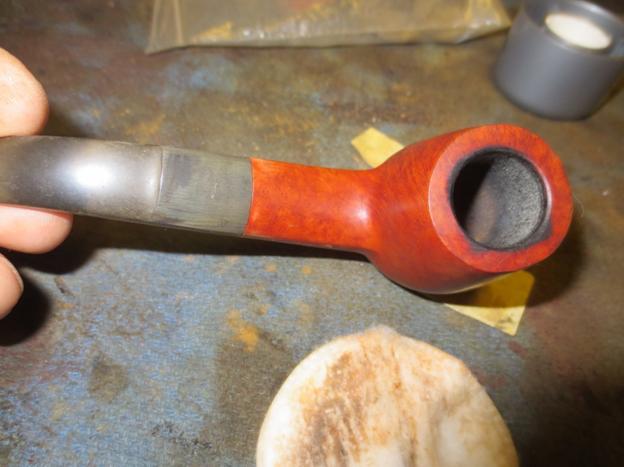
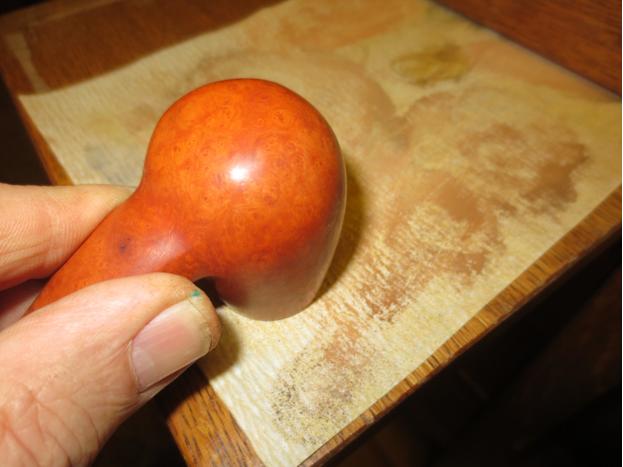
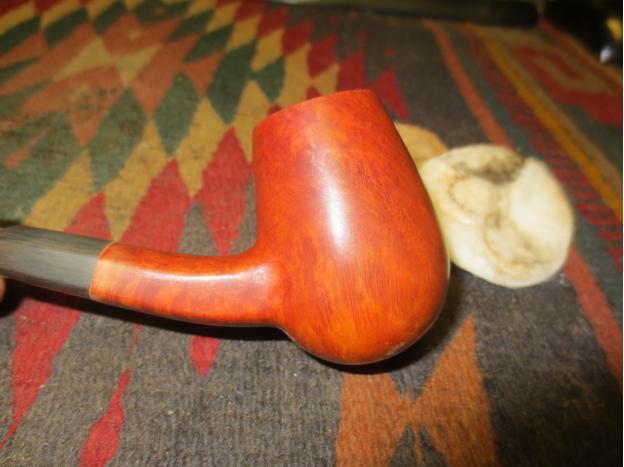
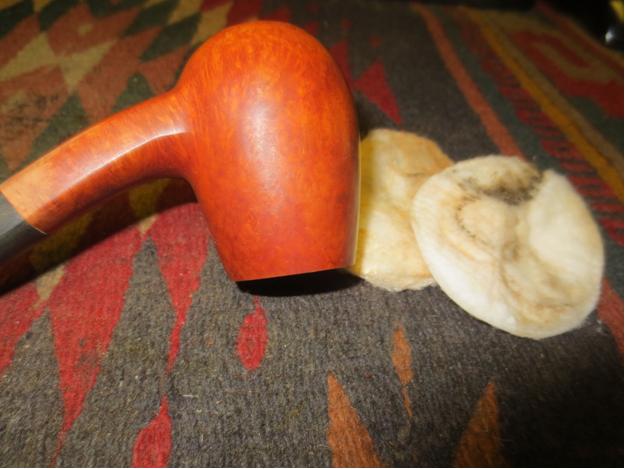
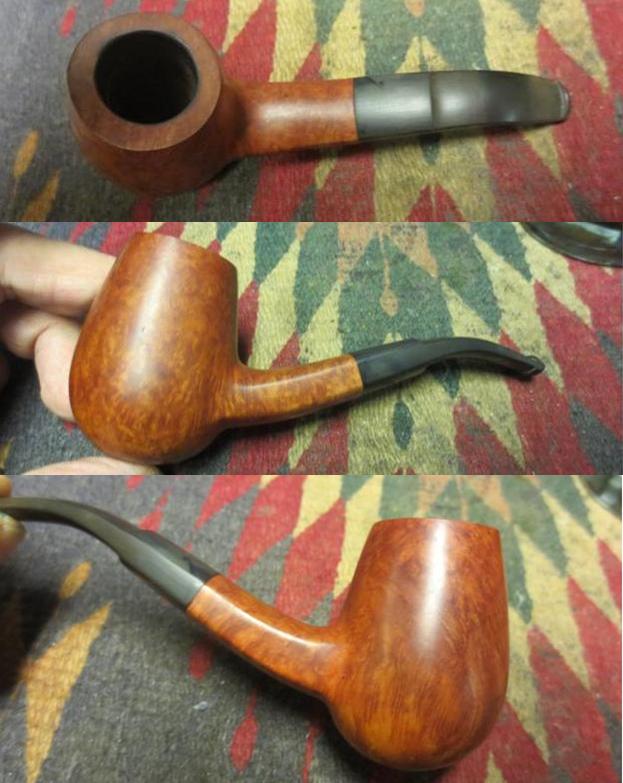
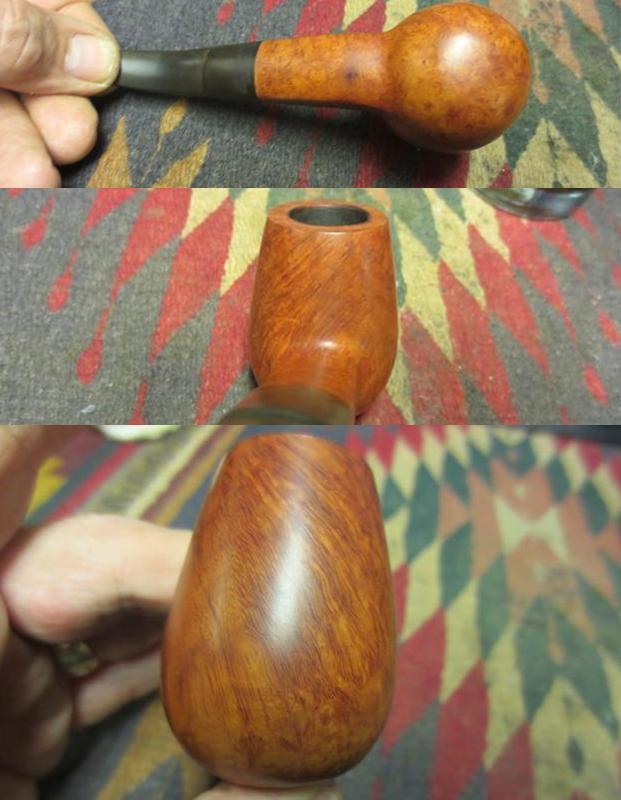
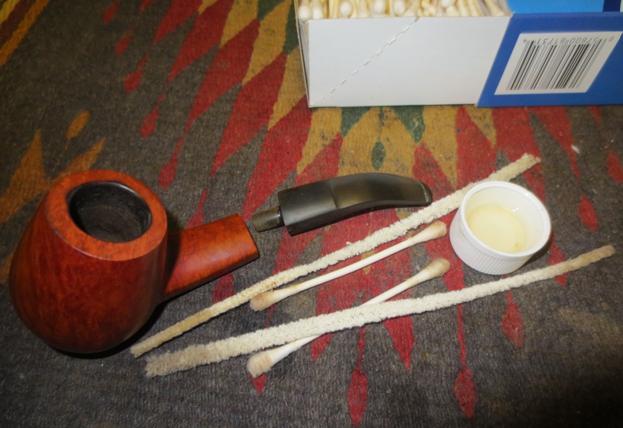
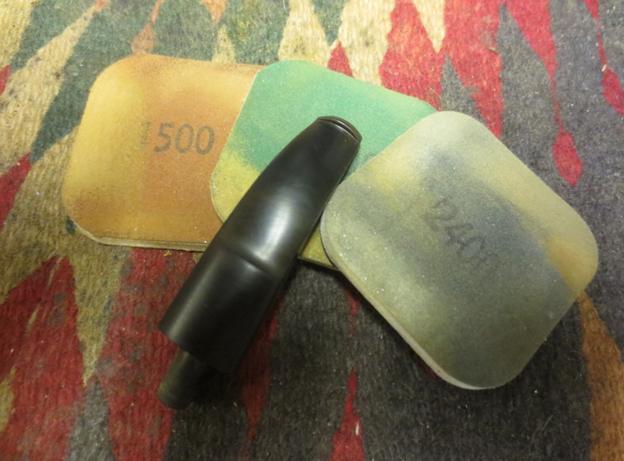
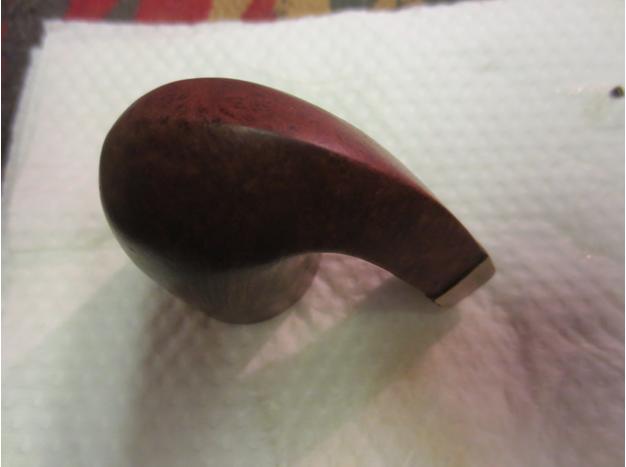
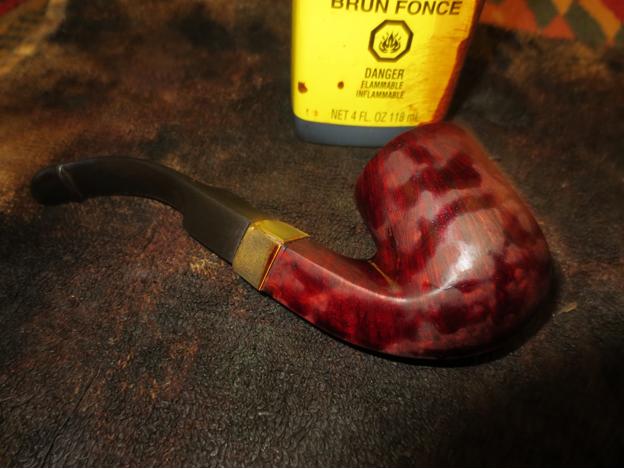
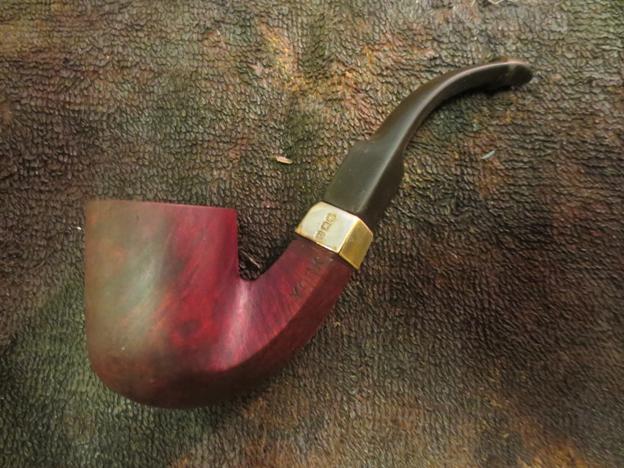
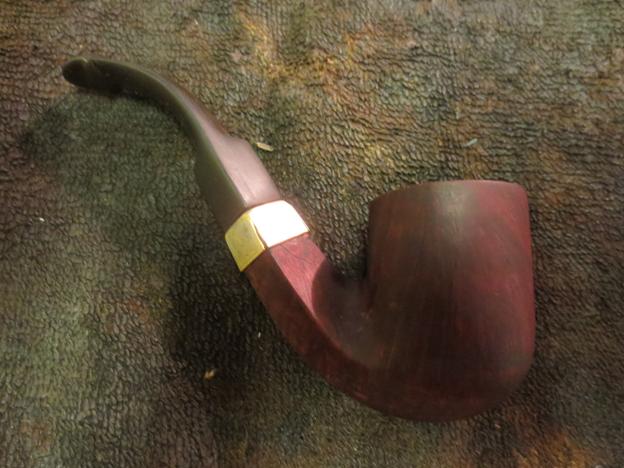
Tag Archives: replacing a broken tenon

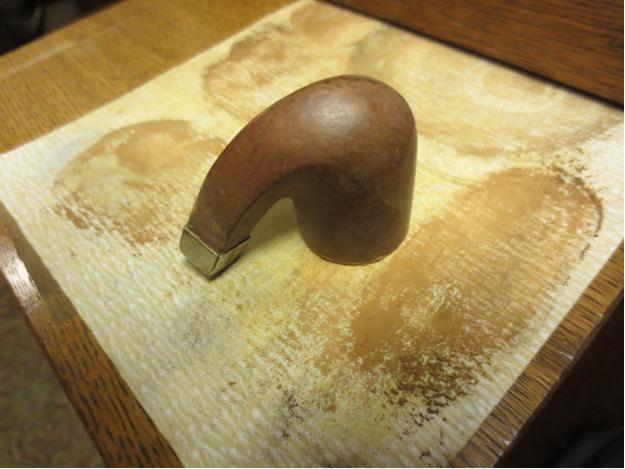
Replacing a Broken Tenon on a Gepetto Canadian 37


Blog by Steve Laug

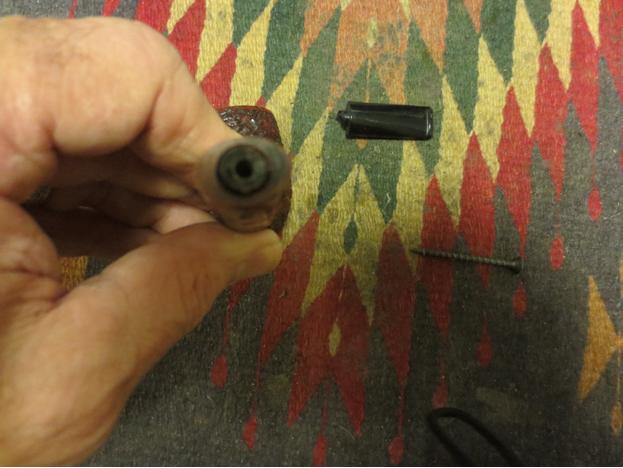
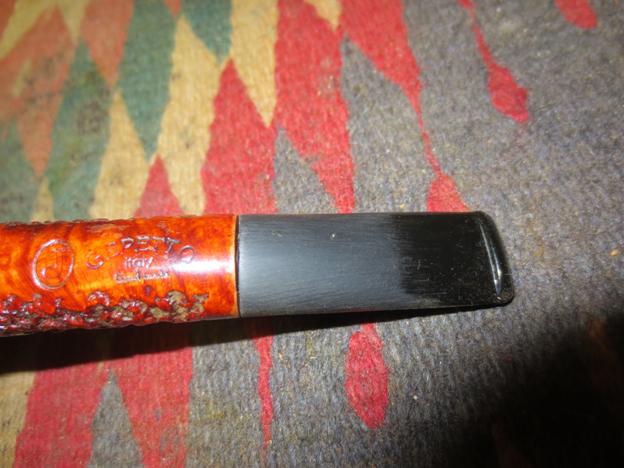
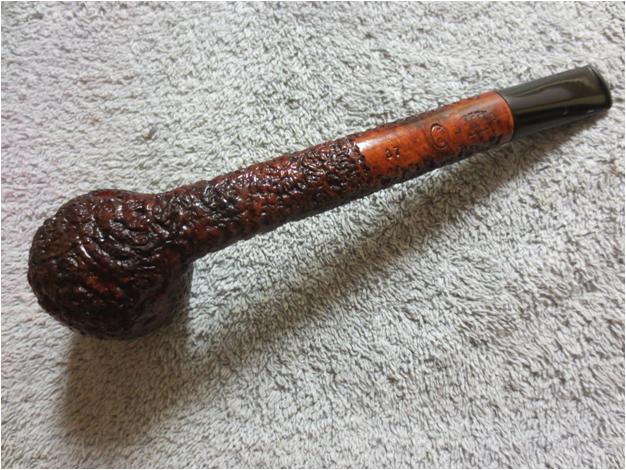
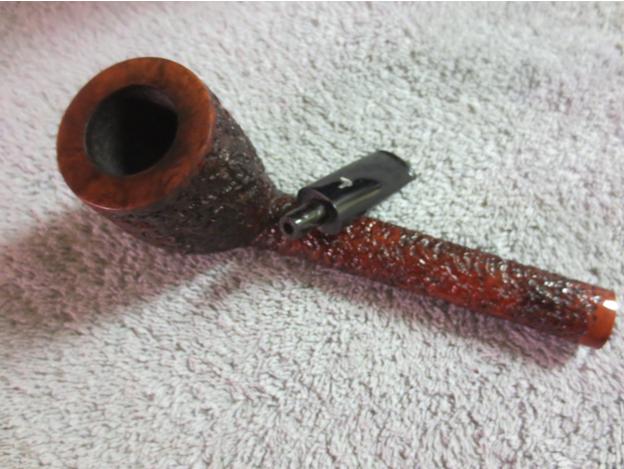
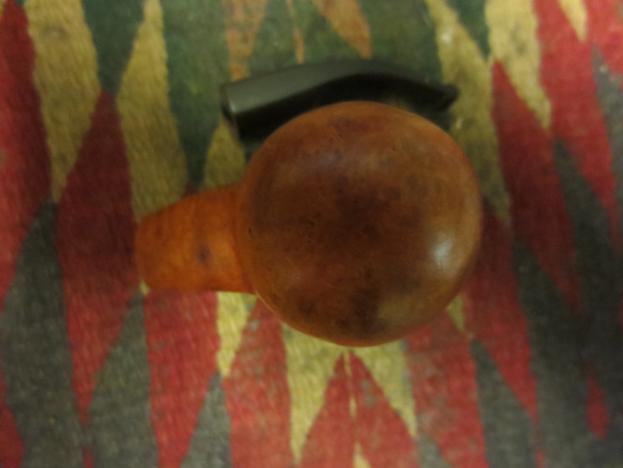
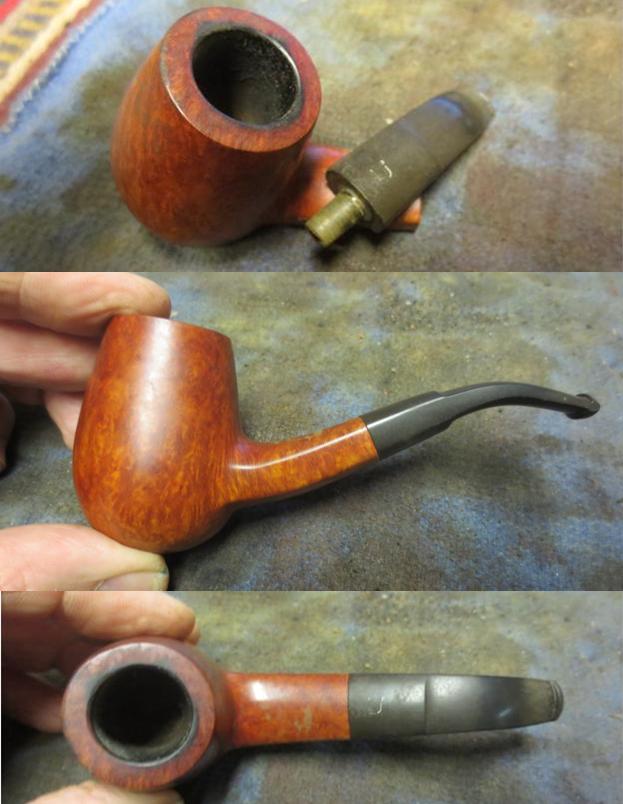
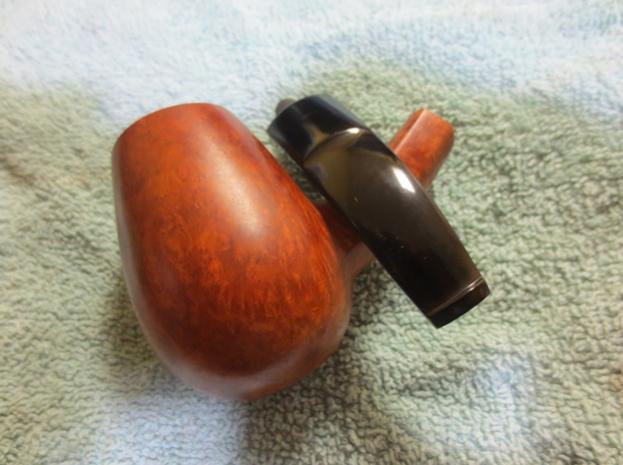
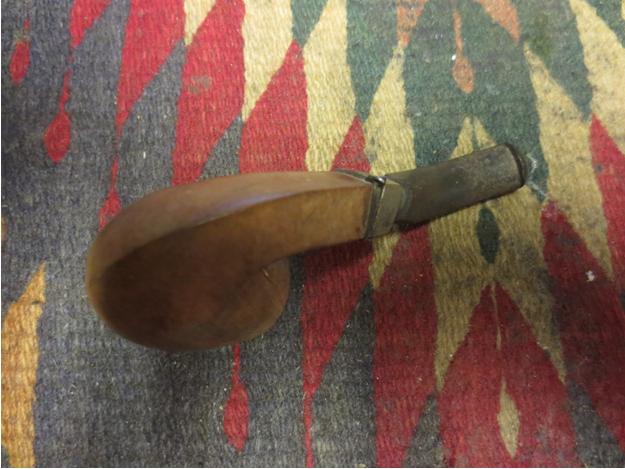
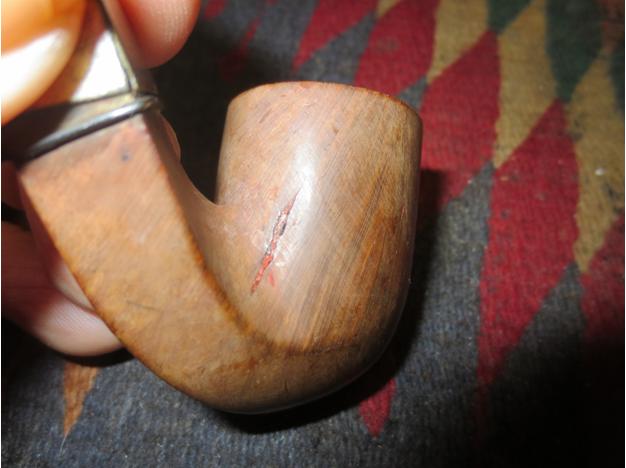
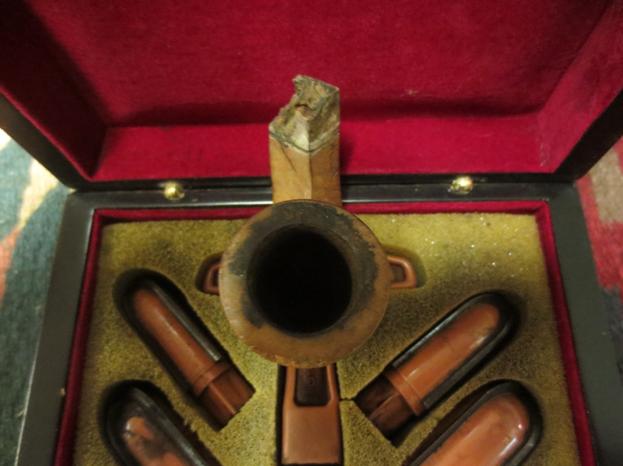
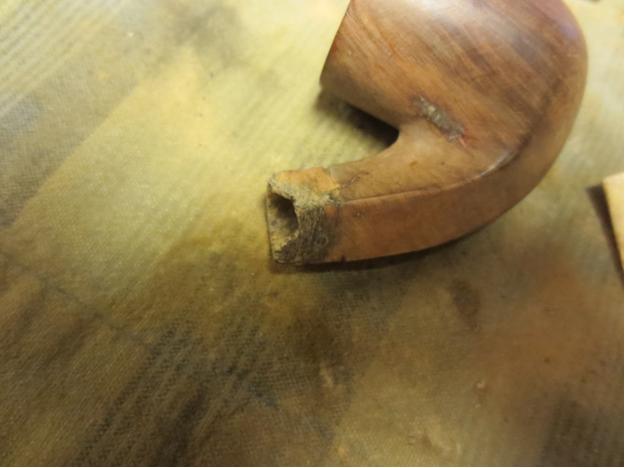
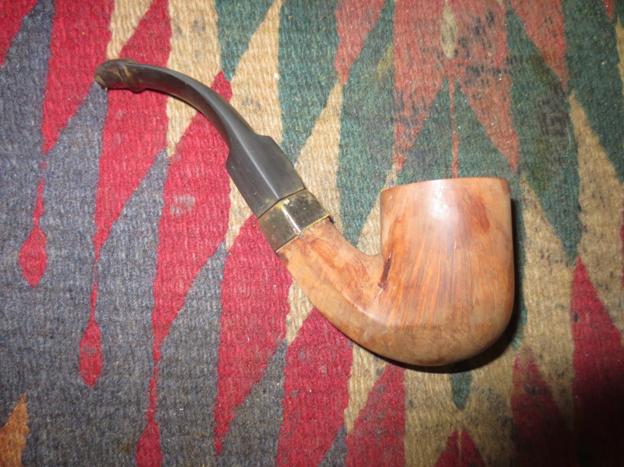
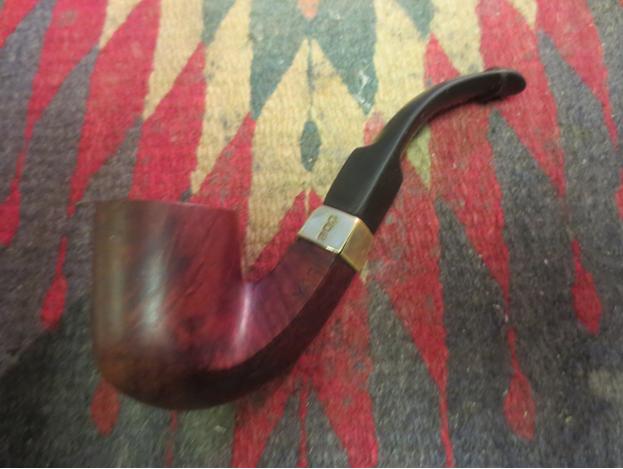
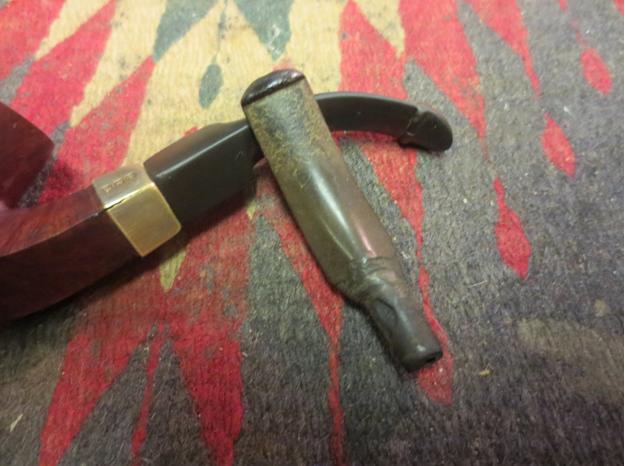
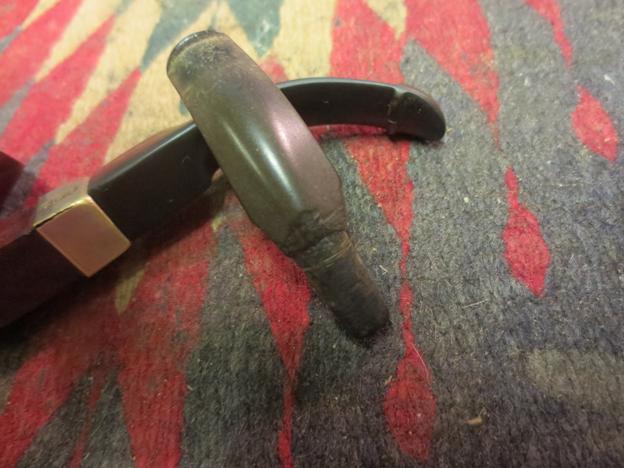
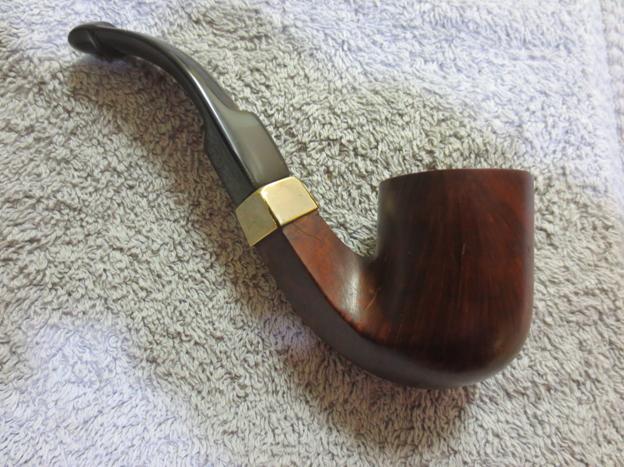
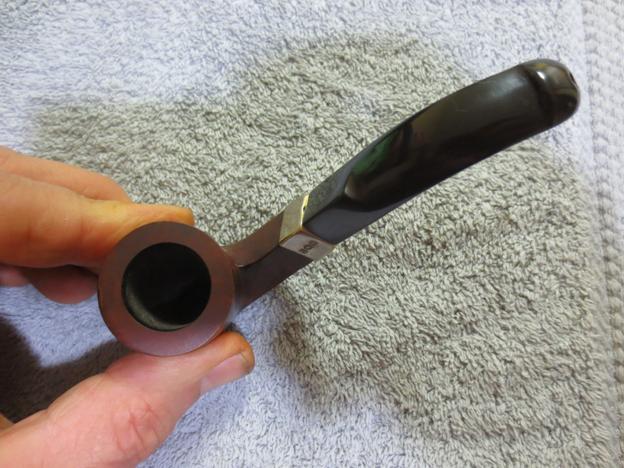
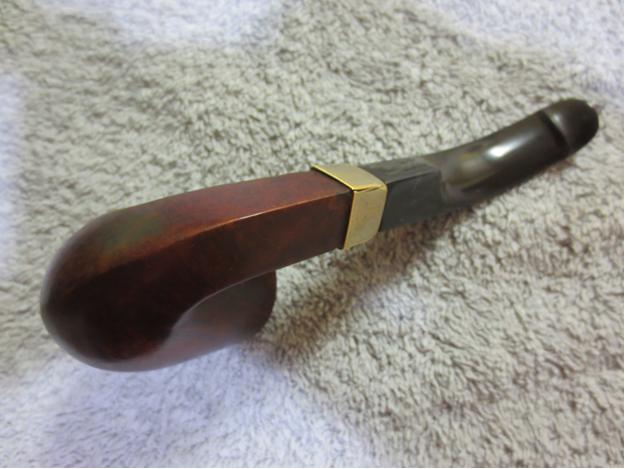
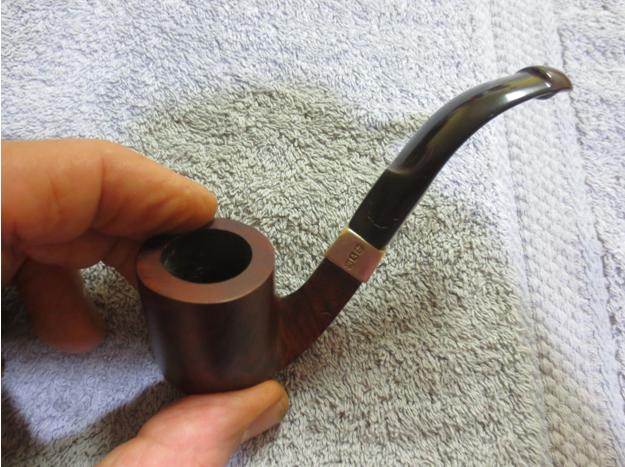
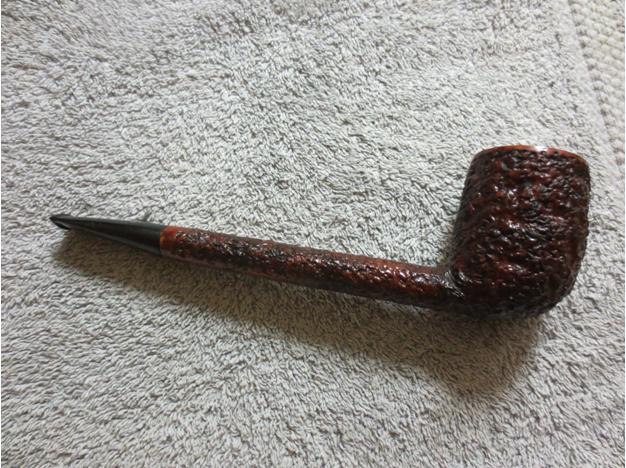
A good friend of mine stopped by for a bowl the other day and to drop off some pipes he was donating to the Nepal Pipe Project. He has given quite a few already and some of you have benefited from his generosity. This time he had a couple of surprises with him as well. He had two of his favourite pipes with him that needed some attention. The first was a handmade Gepetto Canadian made by Ser Jacopo. It was a shape #37 and had a rusticated finish. It was a beautiful pipe. He had been twisting the stem out of the shank and it was stuck. One little twist too much and the tenon snapped in the shank. It broke off quite deep in the shank and was solidly stuck in place. I would need to pull the tenon, drill out the stem and insert a new tenon.Gepetto1
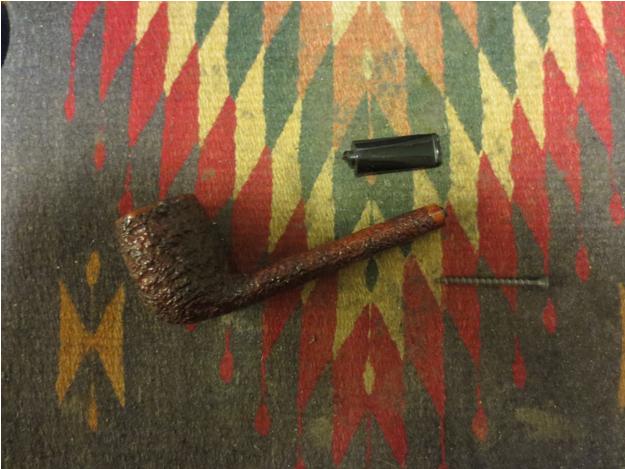
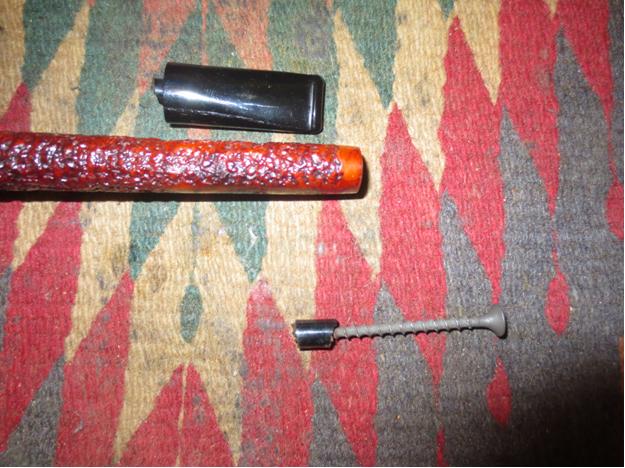
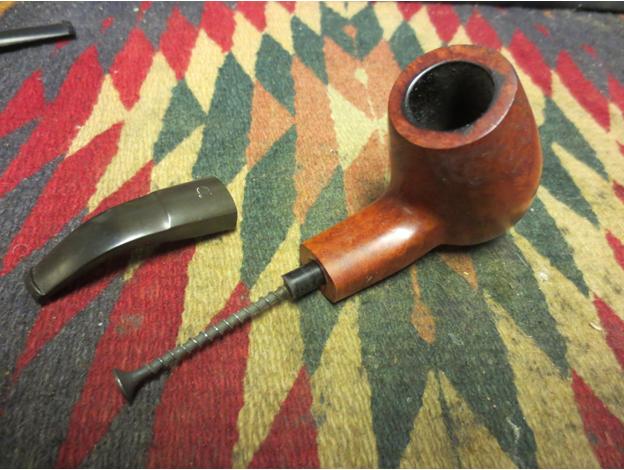
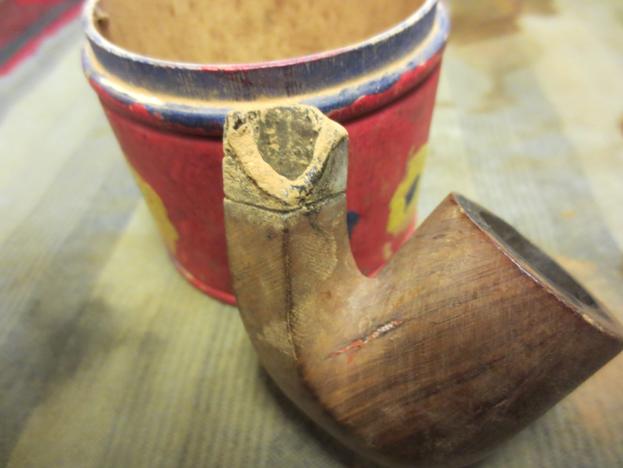
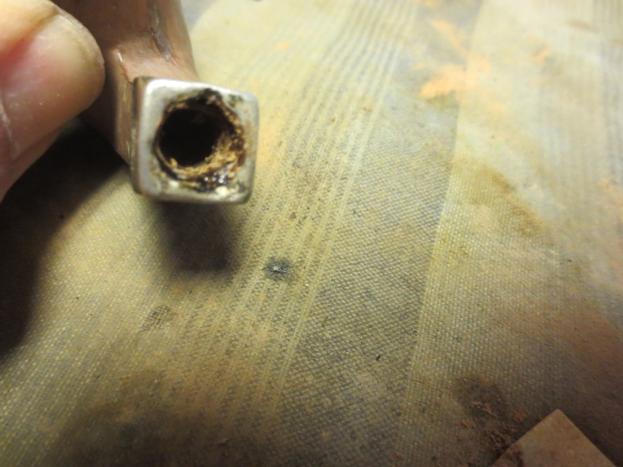
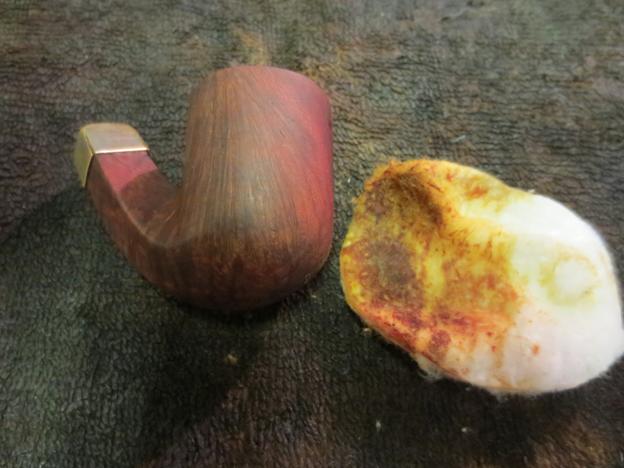
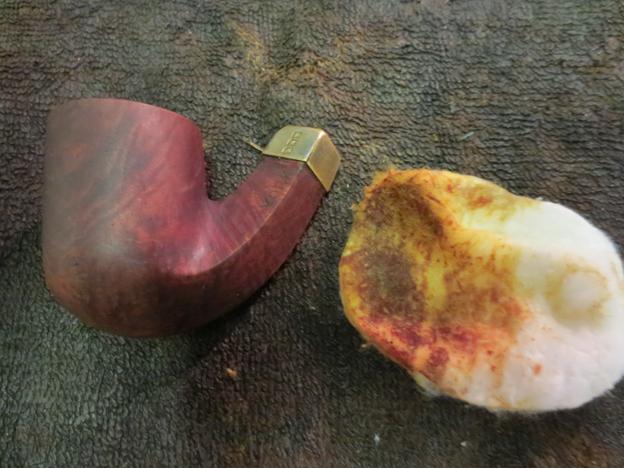
Gepetto2 I used my drywall screw and twisted it into the airway of the broken tenon until it caught hold and then wiggled it loose. With careful wiggling and pulling the broken tenon came free of the shank.Gepetto3
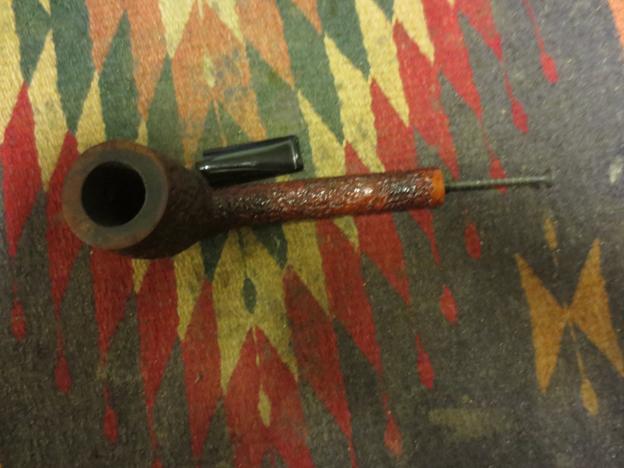
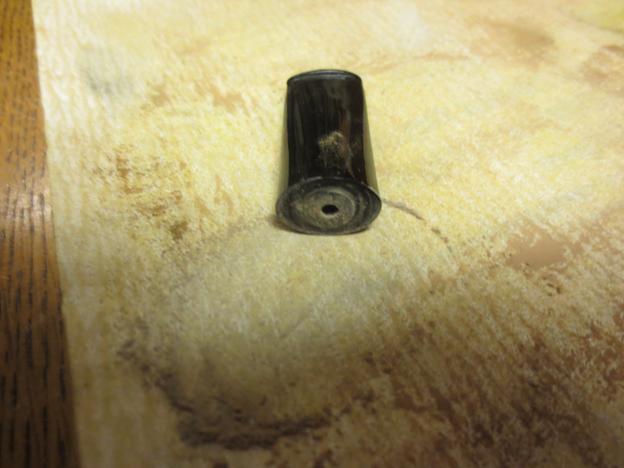
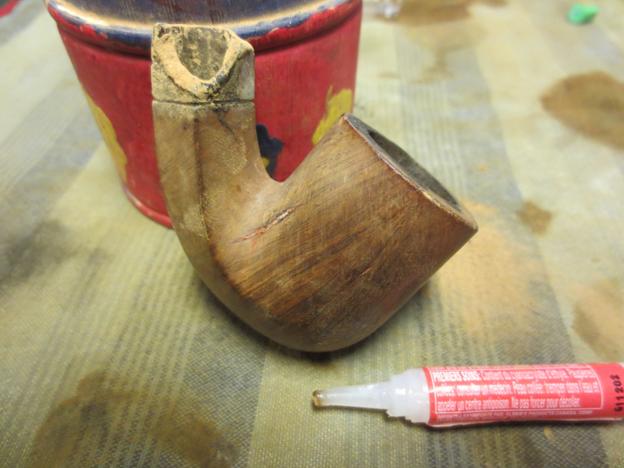
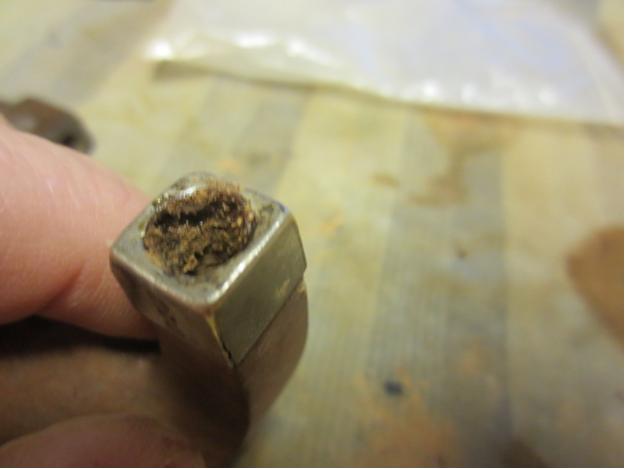
Gepetto4 I used the Dremel and sanding drum to take off the majority of the remaining broken tenon on the stem itself. I faced it on the topping board with 220 grit sandpaper until it was flat against the rest of the stem face.Gepetto5
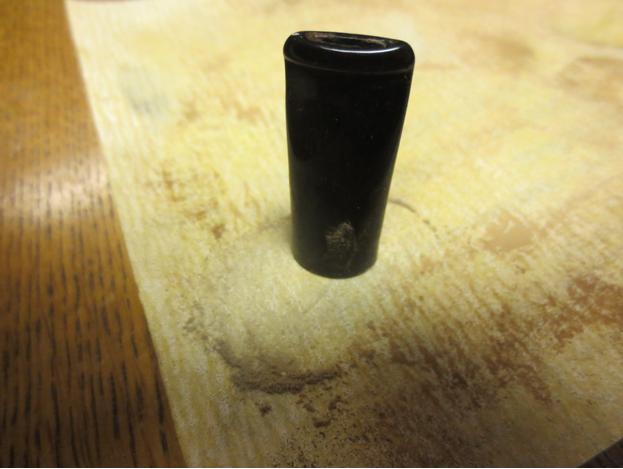
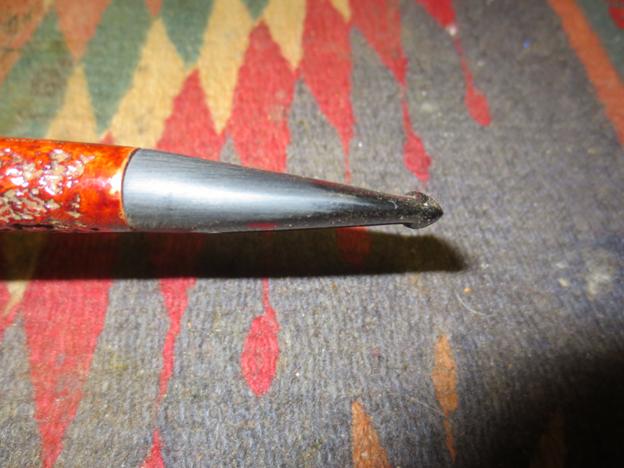
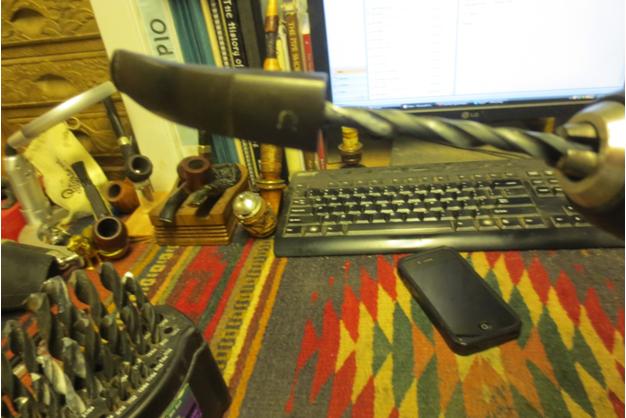
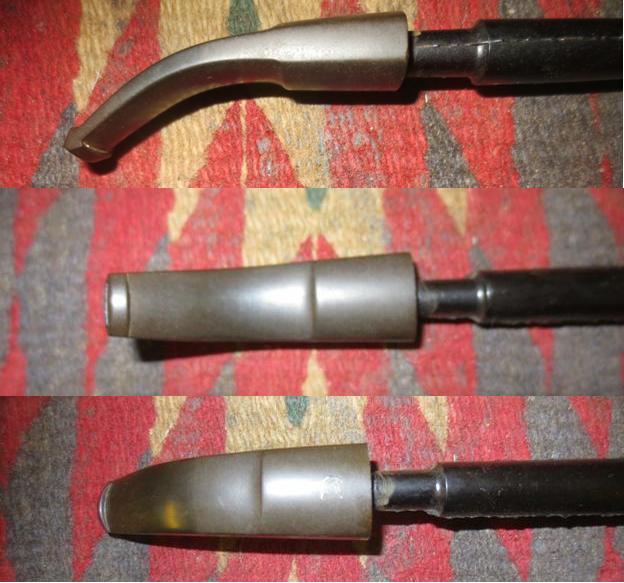
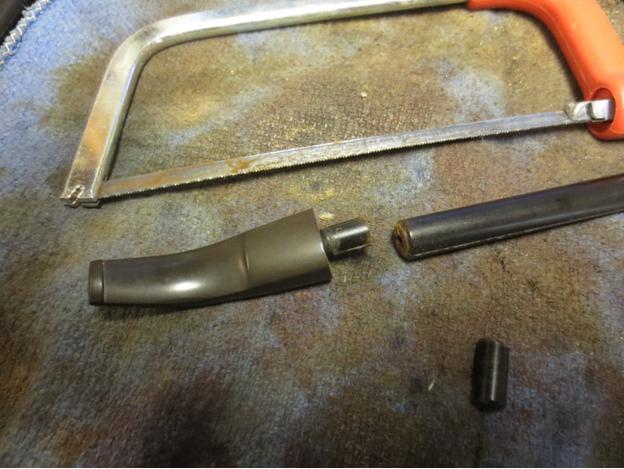
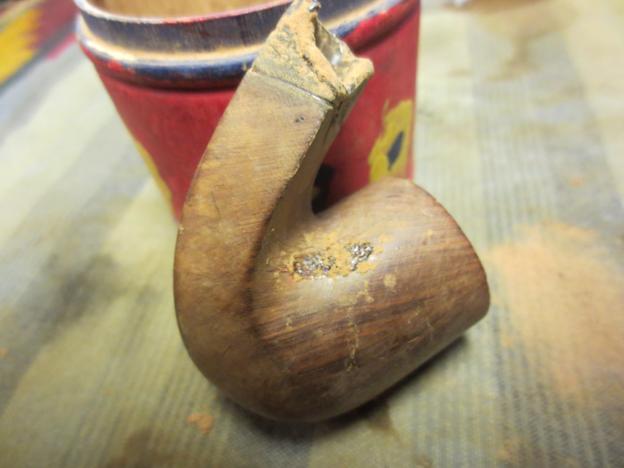
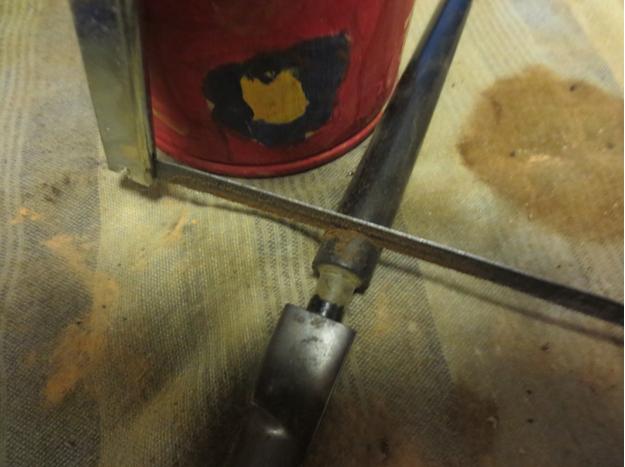
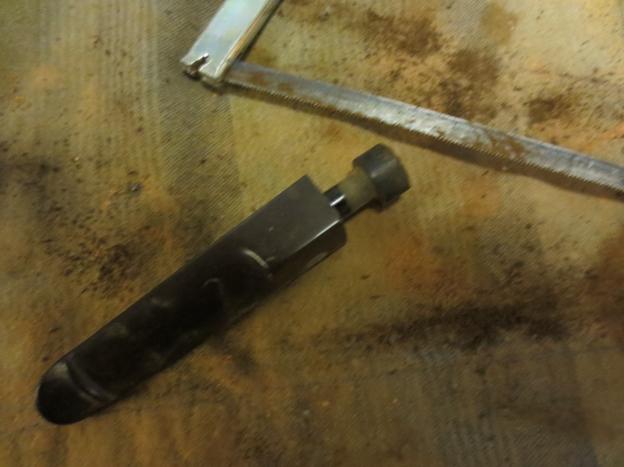
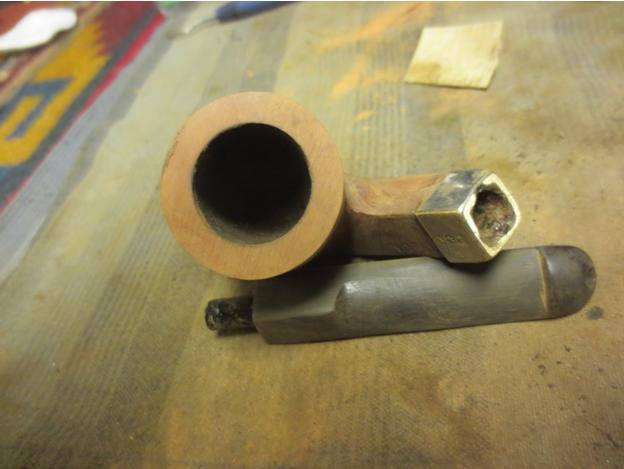
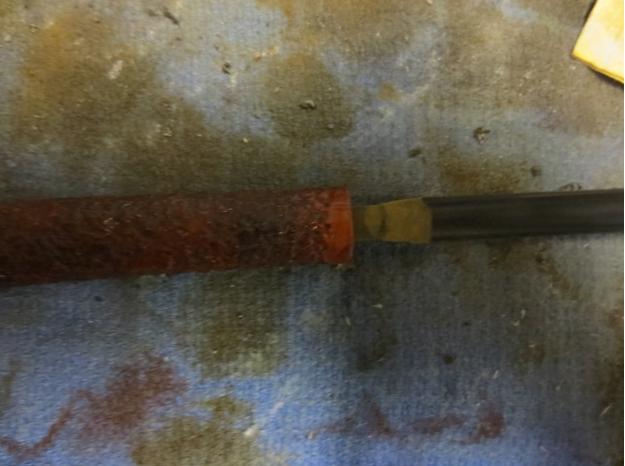
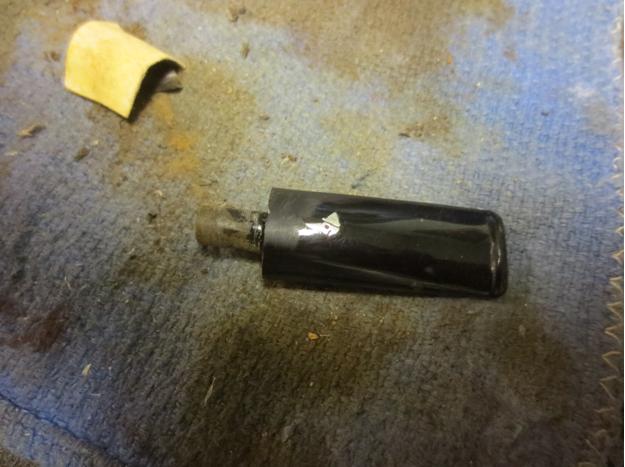
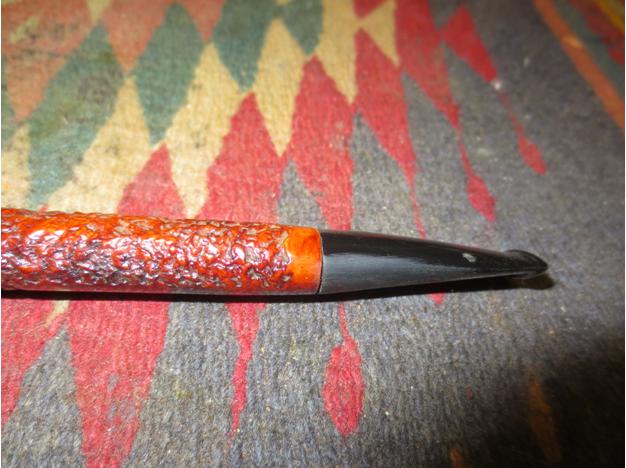
Gepetto6 The stem is Lucite and the original tenon was an integral part of the stem. I did not have any Lucite tenon and also no Delrin tenons. So once again I decided to do some improvisation. I turned down the tenon on an old thin vulcanite stem that I had in my stem can until it was a snug fit in the mortise of the shank. I wanted it to sit as deeply as the previous tenon so I turned it down accordingly with the Dremel and sanding drum. When the fit was correct I left it in place in the shank and carefully cut off the stem with a hacksaw. I left enough of the new tenon to sit in the hole I would drill in the stem face.Gepetto7 I set up a drill and turned the stem onto the drill bit by hand until it was deep enough to hold the new tenon but not too deep because of the sharp taper of the stem. If it was too deep it would have broken through the top and bottom side of the taper. I measured the depth I had to work with and drilled only that depth in the stem. I started out using a drill bit slightly larger than the airway in the stem and worked my way up to a ¼ inch bit. I used a round needle file to clean up the inside edges of the drilled out stem. I turned the end of the tenon down until it slid snugly into the hole. Once I had a good fit I coated the end of the tenon with super glue and pressed it into the hole. I did this carefully to keep the tenon straight both horizontally and vertically. Gepetto8 Once the glue set on the new tenon I cleaned it up with some sandpaper and then pushed it into the mortise of the pipe. The fit was good and the taper lined up correctly on the top, sides and bottom of the shank. The stem needed to be sanded to clean it up and polish it. I sanded it with 220 grit sandpaper to smooth out the edges and around the button.Gepetto9
Gepetto10

Gepetto11

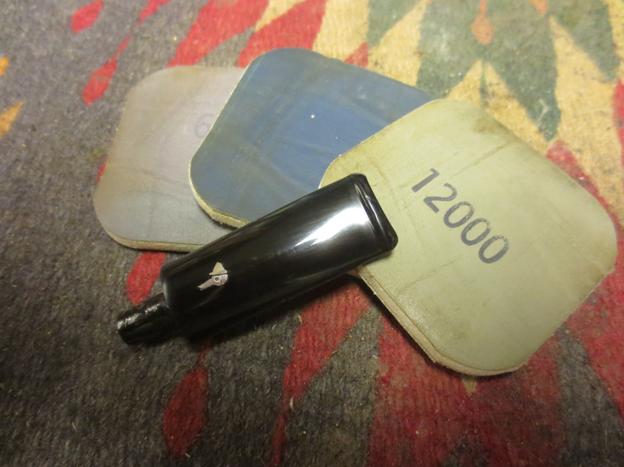
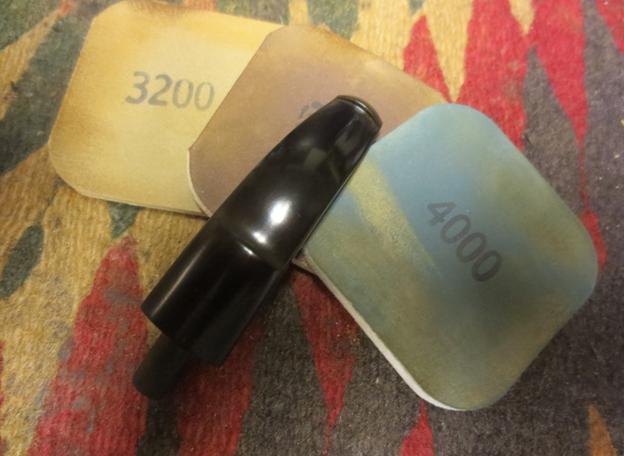
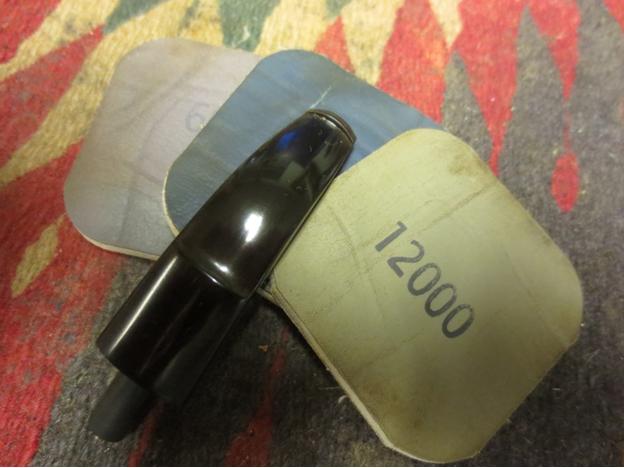
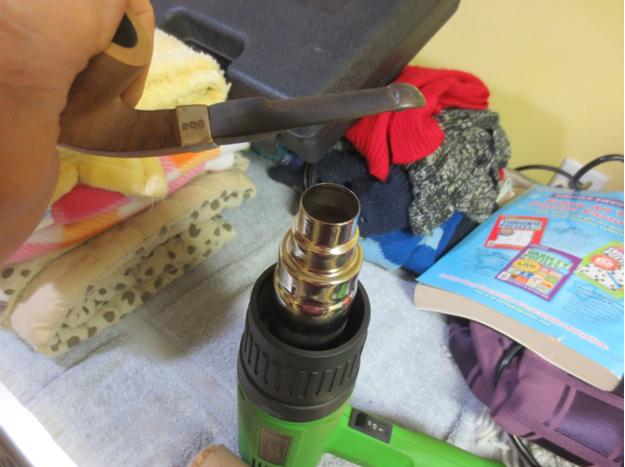
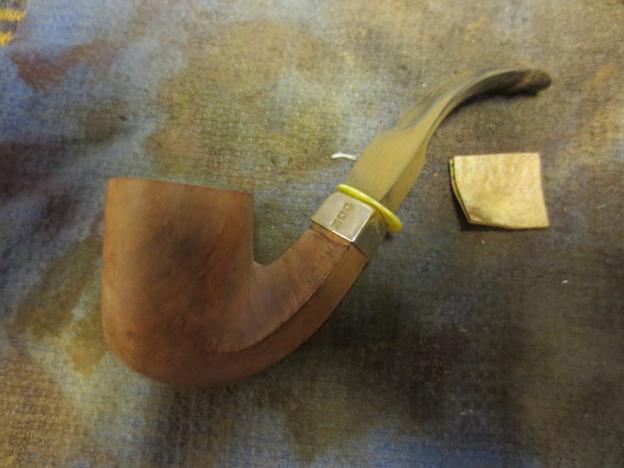
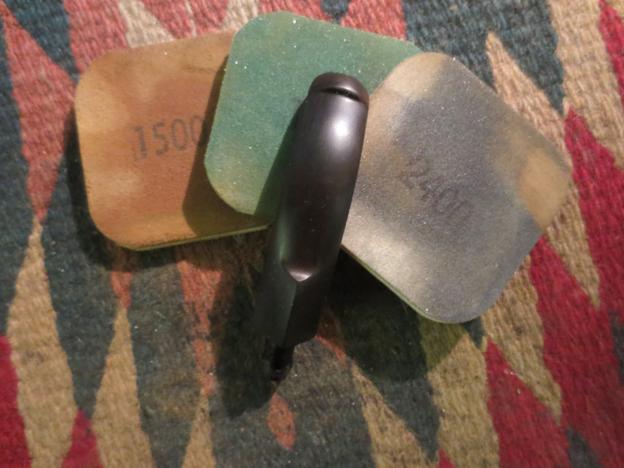
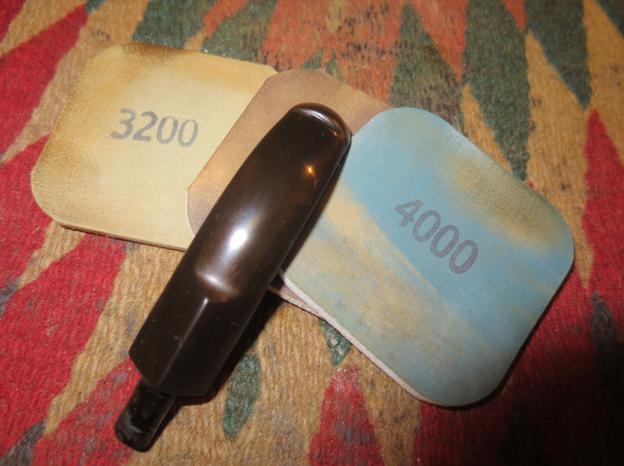
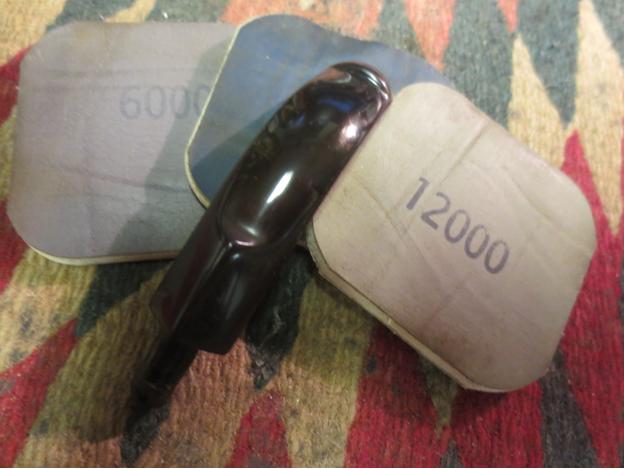
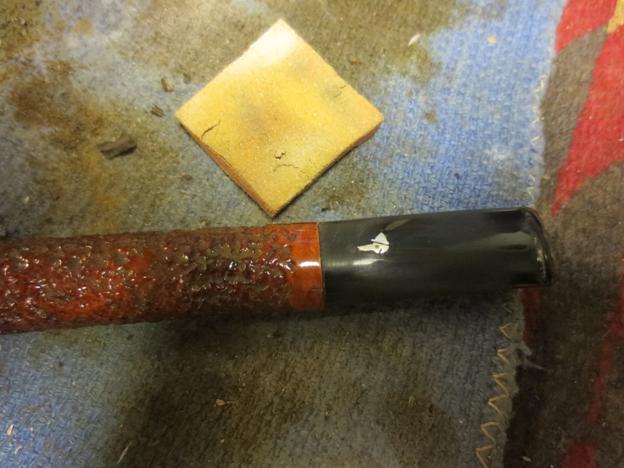
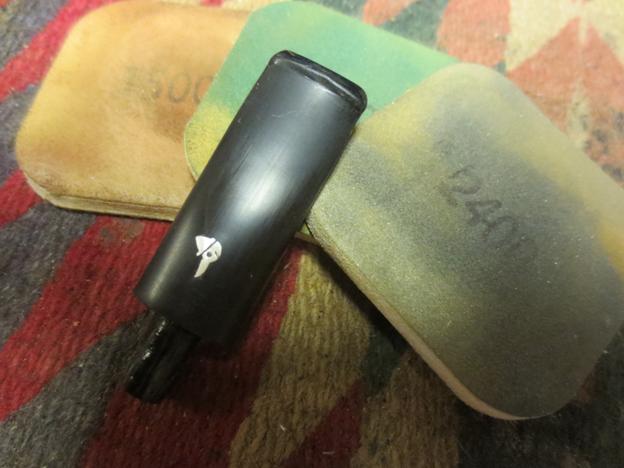
Gepetto12 I continued to sand it with a medium and a fine grit sanding sponge. The fit against shank on the underside had a slight gap so I needed to do some adjustments. I heated the tenon and then pushed it in place and held it against the shank until it cooled and set. The fit was better.Gepetto13 I wet sanded the stem with 1500-2400 grit micromesh pads and then used some mineral oil to give the next grits of micromesh some bite. I then dry sanded with 3200-4000 grit pads and repeated the oil and then finished with 6000-12000 grit pads. I put the stem on the pipe and buffed it with Blue Diamond.Gepetto14
Gepetto15

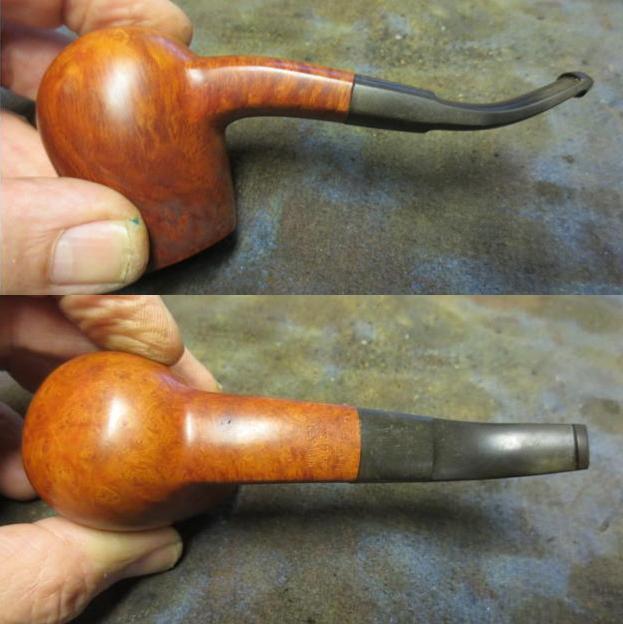
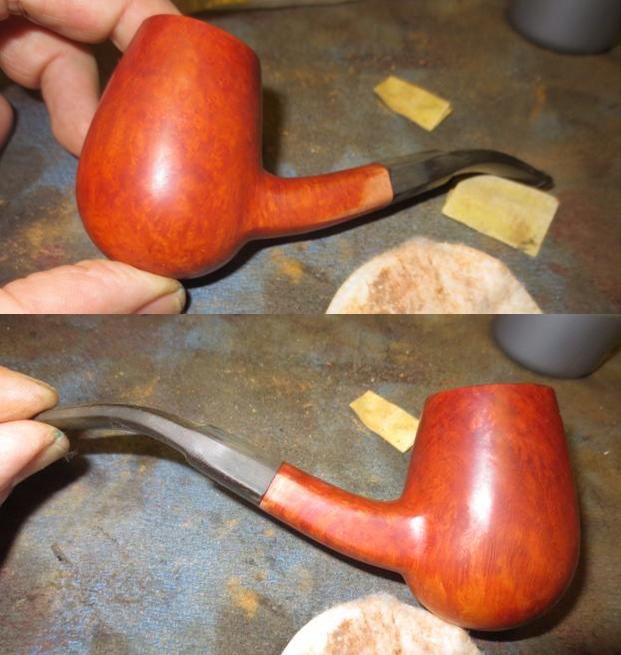
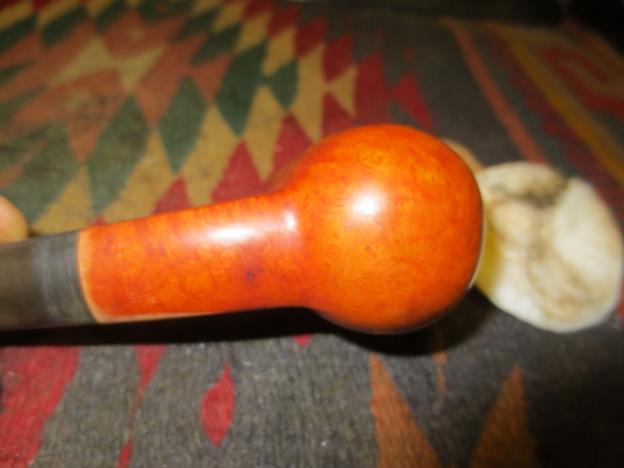
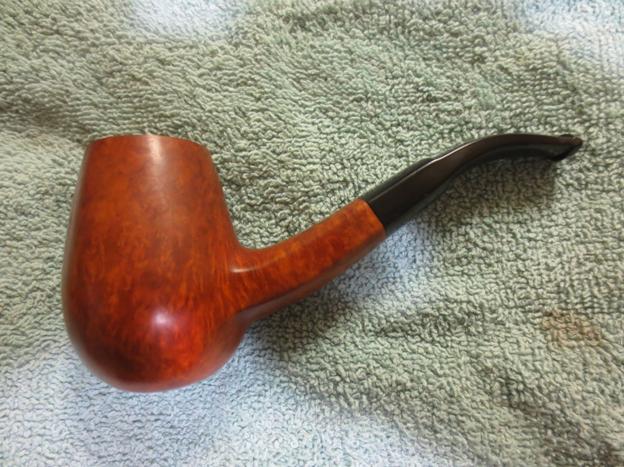
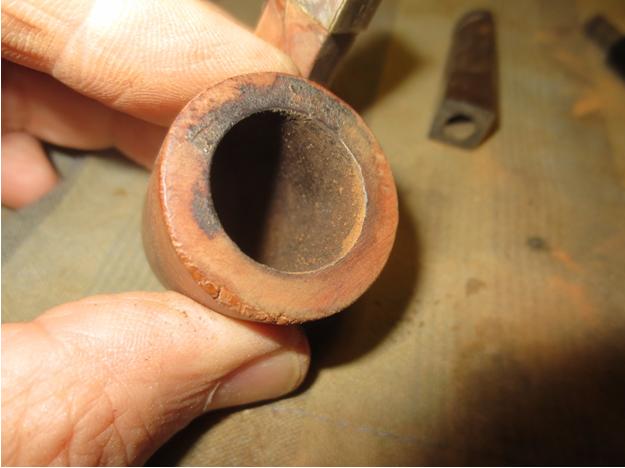
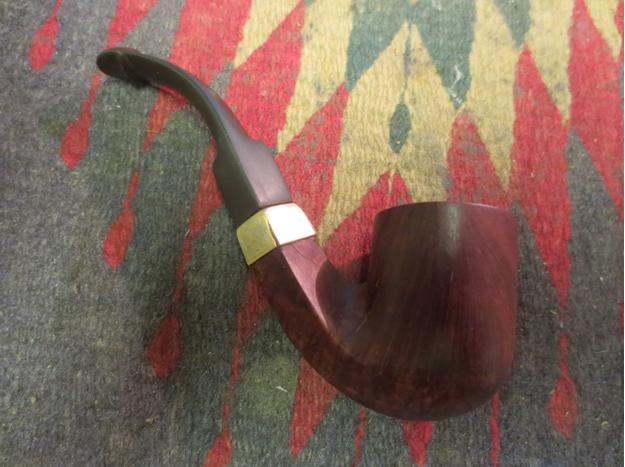
Gepetto16 The rim had some build up of tars on the back top edge so I cleaned that off and then buffed the rim the rim to polish it. I lightly buffed the entire bowl. I used carnauba wax on the rim and the smooth portions of the pipe as well as the stem. I buffed it with a clean flannel buff and then buffed it by hand with a microfibre cloth. The finished pipe is shown below. It should be back in my friend’s hands soon and he can enjoy it once again. Thanks for looking.Gepetto17
Gepetto18

Gepetto19

Gepetto20

Gepetto21

Gepetto22

Replacing a Broken Tenon & Doing a Simple Restoration on a Unique Bjarne Danish Handmade Egg


Blog by Steve Laug

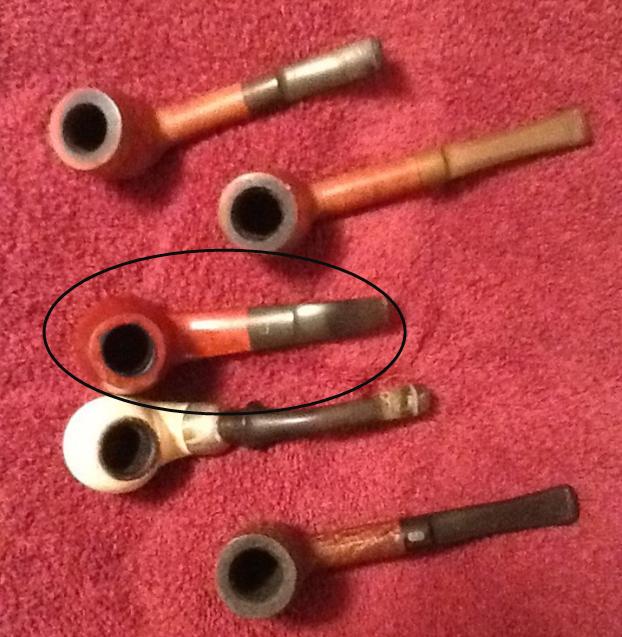
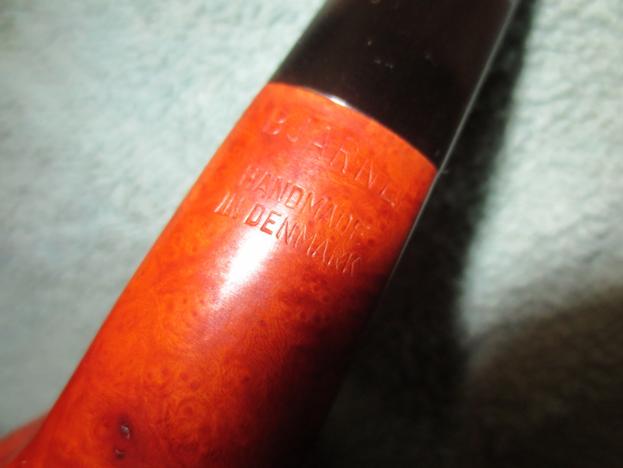
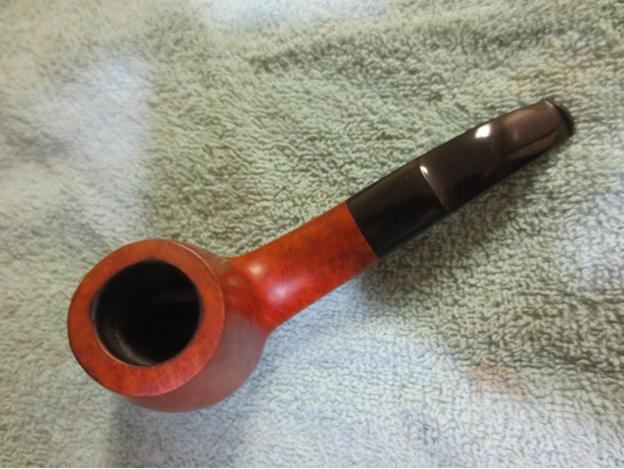
I found this interestingly shape pipe in an antique mall in Idaho Falls. I was attracted to the egg shape, the hanging bottom and the rectangular shank and saddle stem before I even knew who had made it. I was pretty sure that it was a Danish made pipe but did not know who had made it. When the clerk took it out of the display case I saw that it was priced at $15 US – not a bad price these days for estate pipes. I turned it over in my hands and could see that it was well made and barely smoked. The bottom of the bowl still showed unseasoned briar. The stem was oxidized but free of tooth marks and tooth damage. The finish was in decent shape other than some sticky spots where the person selling it had put price tags. On the bottom of the shank it is stamped BJARNE over Handmade in Denmark. That is the only stamping on the shank. It is the pipe circled in the photos below.Bjarne1

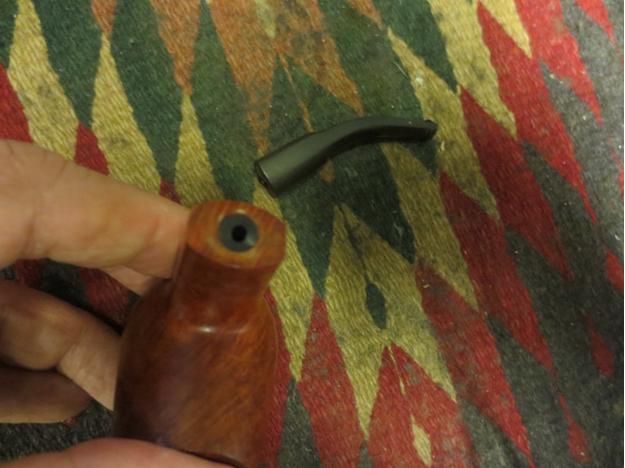
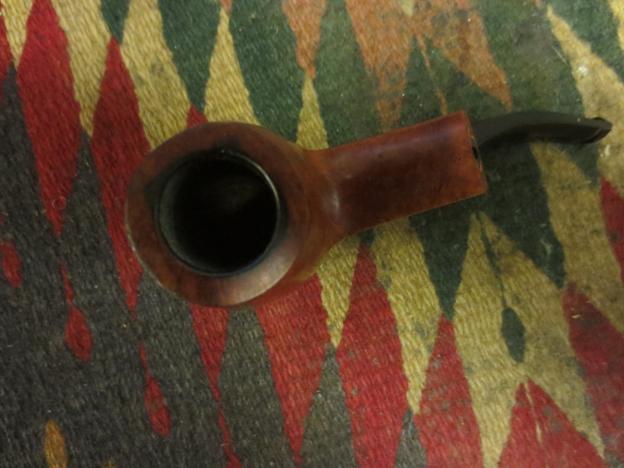
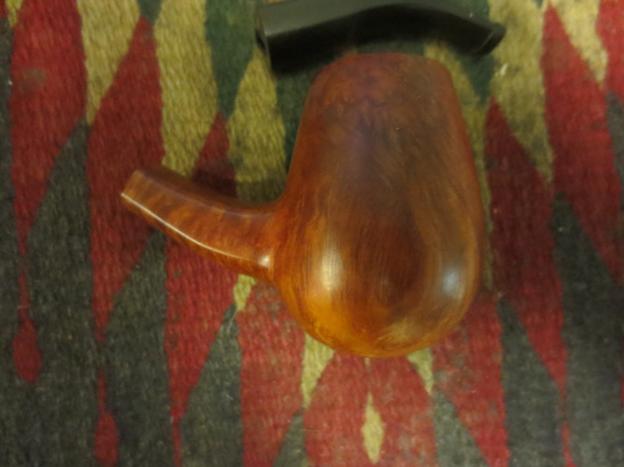
Bjarne2 I was excited by this find. I liked the shape and the cleanup would be simple. I purchased it and took it back to my mom and dad’s place. But then the something happened that I have come to dread. I was carrying the bag across their parlour when the bottom fell out of the bag and the pipe bounced off the tile floor. There was a sharp crack and the stem had disappeared. I found it hidden in the pattern of the carpet about three feet from the bowl. I was sick to my stomach. The tenon had snapped off evenly in the shank. The stem and the bowl were undamaged otherwise. This meant that what was originally a simple restoration would now be a bit more complicated. I would need to replace either the tenon or the stem.Bjarne3 I took some photos of the bowl when I brought it to my work table. The briar was beautiful and not a flaw in the grain on the bowl itself. There was one small sand pit on the bottom side of the shank but it had only darkened from handling and was not that big a deal. The rim had some darkening and burn marks on the top near the back, the right side and the right front. These would have to be dealt with.Bjarne4

Bjarne5

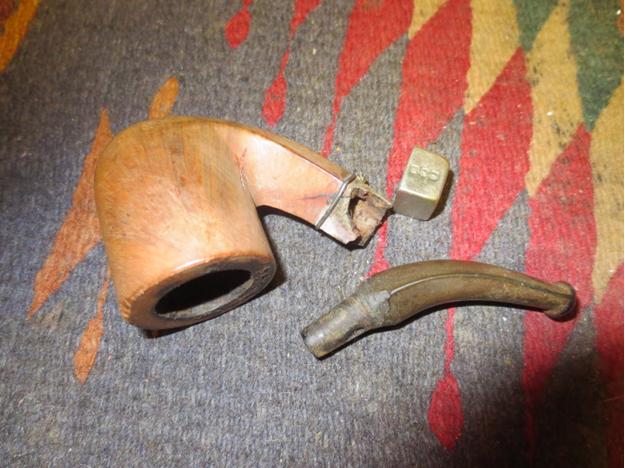
Bjarne6 I used my tried and true method for pulling broken tenons. I twisted a drywall screw with wide threads by hand into the airway on the tenon. When it bit, I wiggled the tenon free of the shank. It did not take much to pull it out. If it had I would have put the bowl in the freezer for a half hour and repeated the process.Bjarne7 I faced the stem on my topping board to knock off the remnants of the broken tenon and then twisted the stem onto a drill bit slightly larger than the airway in the stem. I don’t use the power feature on the drill as I would rather turn the stem onto the bit by hand. This is critical when working on short saddle stems where it is very easy to over drill the airway and ruin the stem.Bjarne8 When I had the airway open for a new tenon I improvised by using a junk stem I had in my can of stems. I pressed the tenon on the thin stem into the freshly drilled airway on the stem. The fit was snug and the once I cut back the donor stem I would have a new vulcanite tenon. I glued the new tenon in place with super glue and pressed it until it set. The next three photos give an idea of how the new tenon and the donor stem fit in the stem as a replacement tenon.Bjarne9 I cut off the stem with a hacksaw. In this case, after measuring the depth of the mortise I knew I could cut of the tenon portion of the donor stem and be left with a tenon the right length for the pipe.Bjarne10 I turned the diameter of the new tenon down with a sanding drum on my Dremel until it was close to fitting and then finished the fit by hand with 220 grit sandpaper.Bjarne11

Bjarne12 As often happens with a new tenon I had to do a little fine tuning on the shank – not much really but a slight removal of briar on the left side and a little vulcanite on the left. I probably could have left it but I am picky so I sanded it lightly until the transition was smooth. I wiped down the bowl with acetone on a cotton pad to remove the mottled finish and the glue that was on the shank and the bowl from the price tags.Bjarne13

Bjarne14 I examined the burns on the rim and to repair/remove them the bowl would have to be lightly topped. I used the topping board and 220 grit sandpaper to take off most of the burn marks and minimize the damage.Bjarne15

Bjarne16 I sanded the rim with a medium and fine grit sanding sponge and then wiped the bowl down with a cotton pad to remove the sanding dust.Bjarne17

Bjarne18

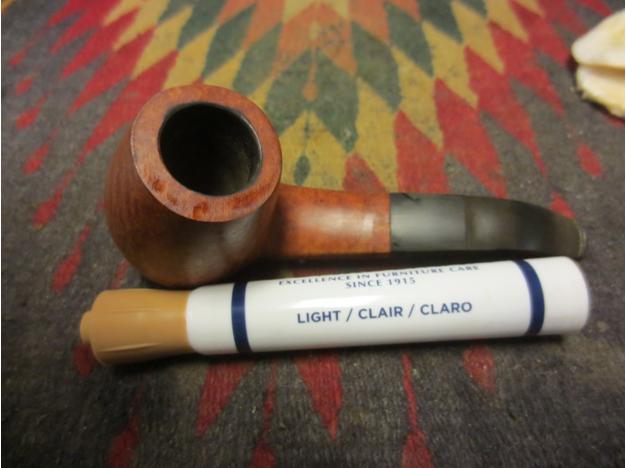
Bjarne19 I restained the sanded areas on the shank and the rim with a stain touch up pen using the lightest colour stain. I was able to match the colour of the bowl and not have to restain the whole pipe. Bjarne20

Bjarne21

Bjarne22 I gave the bowl a quick buff with a coarse cotton rag to blend in the stained areas with the rest of the bowl and feather in the new stain.Bjarne23

Bjarne24 I took the stem off and cleaned out the shank and the stem. It was a pretty clean pipe which lent proof to my earlier assumption of the pipe being lightly smoked.Bjarne25 With the tenon replaced, the bowl stained and looking fresh all that remained was to remove the oxidation on the stem. I lightly sanded the stem with medium and fine grit sanding sponges and then went on to sand it with micromesh sanding pads. I wet sanded the stem with 1500-2400 grit pads and rubbed the stem down with Obsidian Oil. I “painted” over the saddle area and the edge of the button with the flame from a Bic lighter to remove the oxidation. I dry sanded with 3200-4000 grit pads, rubbed it down with oil once again and then sanded it with 6000-12000 grit pads. I gave it a final rubdown with Obsidian Oil.Bjarne26

Bjarne27

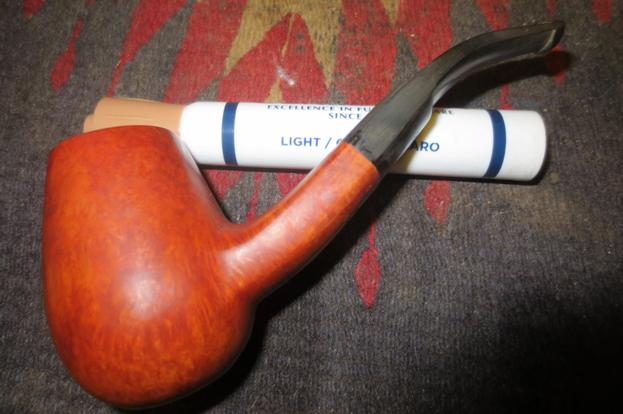
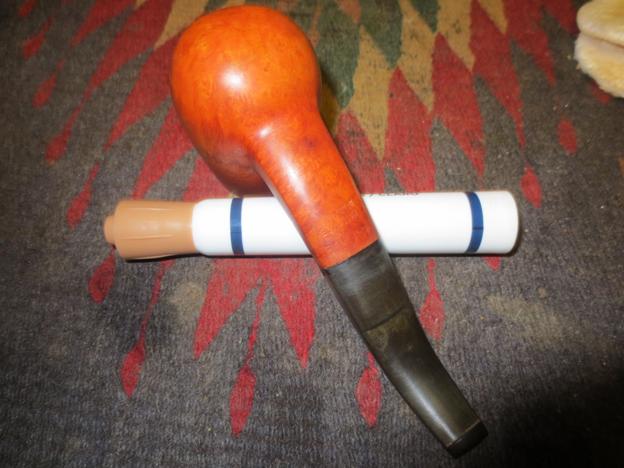
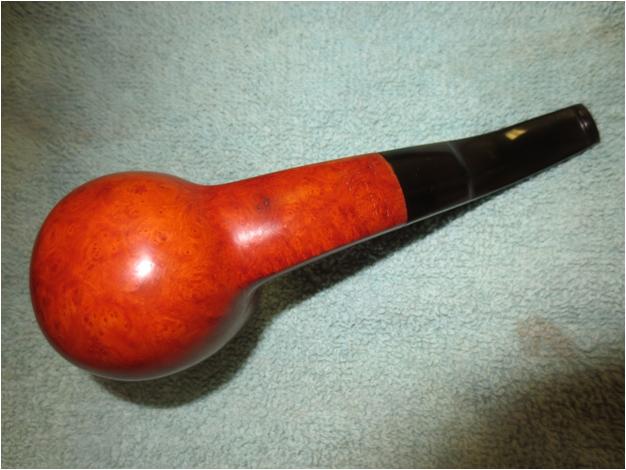
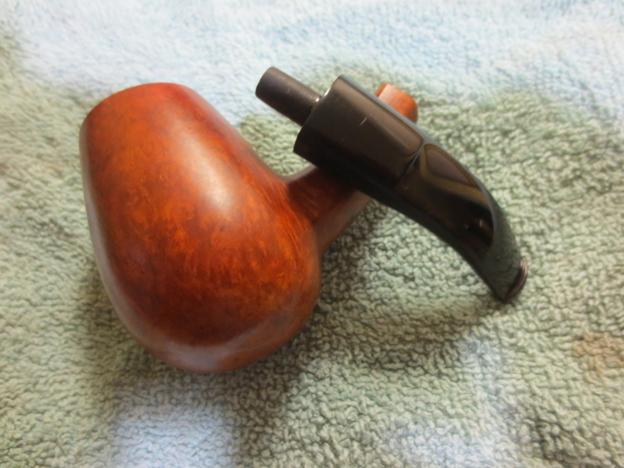
Bjarne28 Once the oil dried I buffed the stem and the bowl with Blue Diamond on the wheel and then gave it multiple coats of carnauba wax. I buffed it with a clean flannel buff to raise the shine. I then used the new addition to my order of things, learned from Dave Gossett and hand buffed the bowl and stem with a microfibre cloth to take the shine to the next level. The finished pipe is shown below. The fit of the stem makes the repair look like it came that way. The final photos of the stem and tenon show how the new tenon looks when it was completed. I am sure glad that the broken tenon did not ruin this old pipe and that once the new tenon was replaced the restoration was quite simple. This pipe should serve me well for years to come. Thanks for looking.Bjarne29

Bjarne30

Bjarne31

Bjarne32

Bjarne33

Bjarne34

Bjarne35

Repairing and Restemming a York (KBB) Diamond Shank Bent Billiard


Blog by Steve Laug

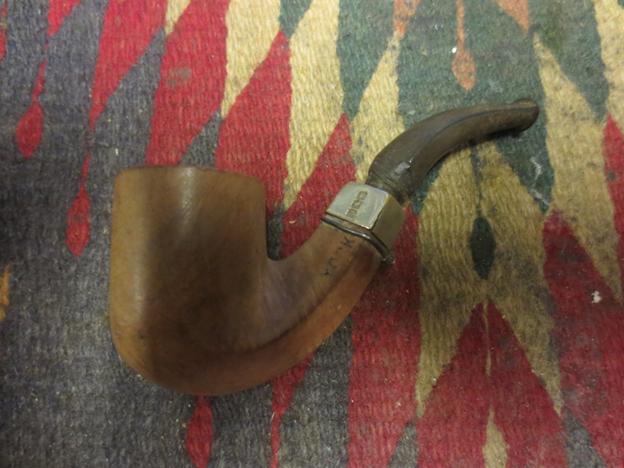
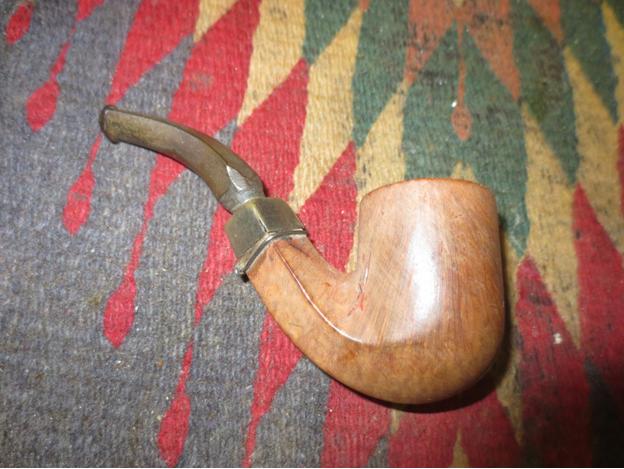
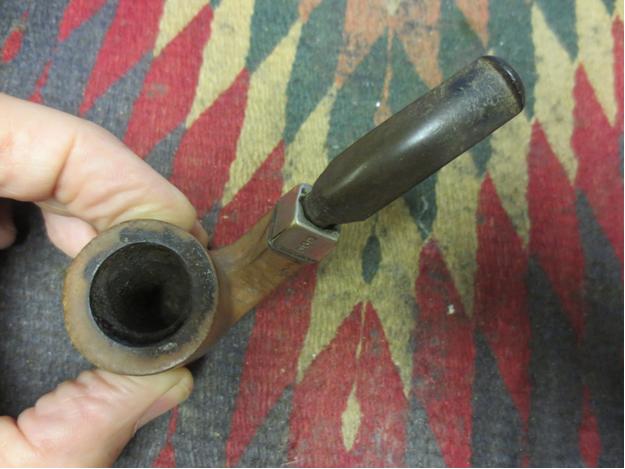
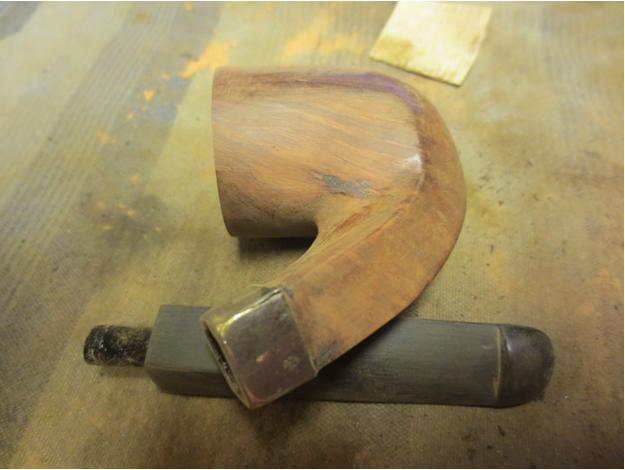
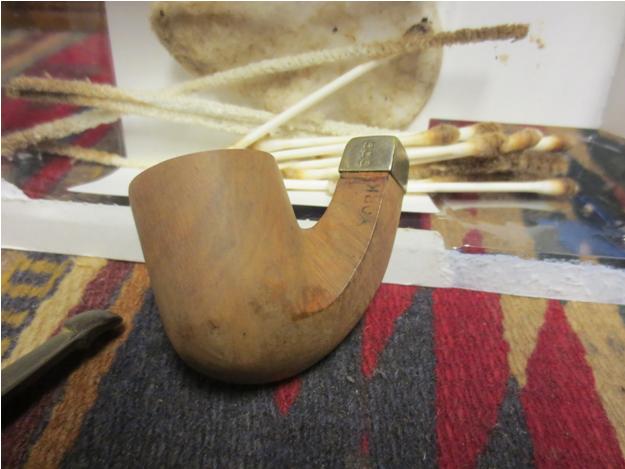
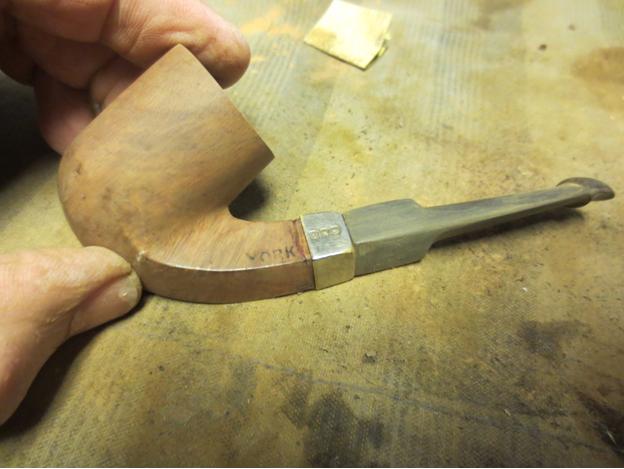
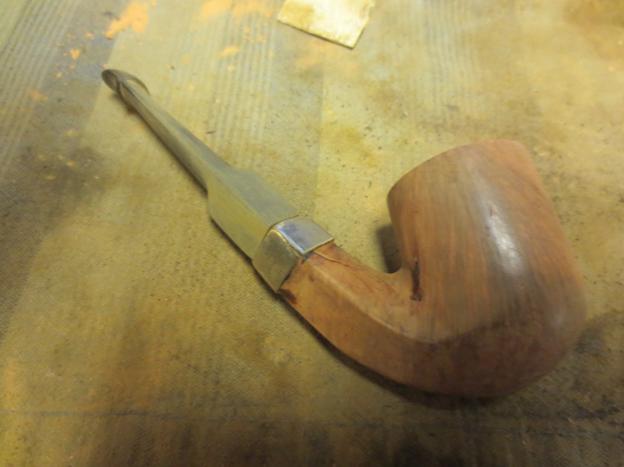
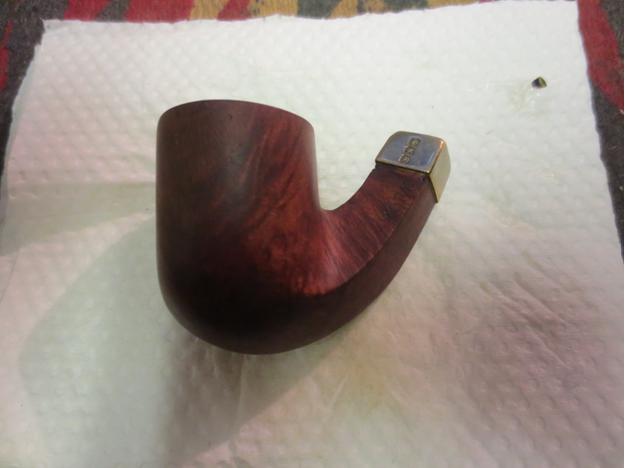
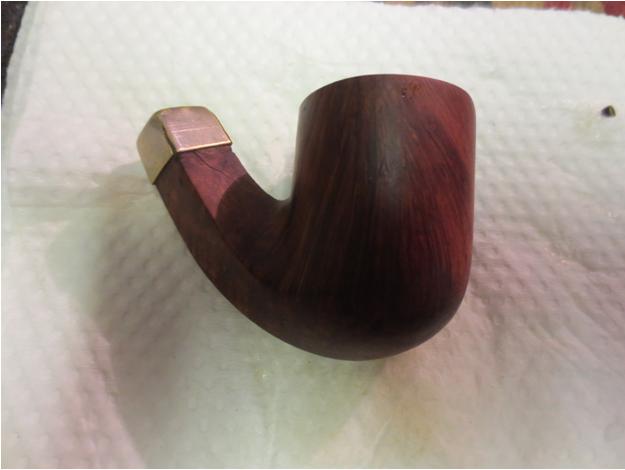
When I was traveling in Idaho my brother and I took the family for a trip to Jackson Hole, Wyoming. On the way we stopped in a little town called Victor, Idaho. There was an antique shop there in the town and I found four more old pipes. The first of these reminded me of an old WDC Diamond shank billiard that I have. This one was stamped YORK on the left side of the shank and from research it may have been made by KBB. It was in rough shape. The shank had been cracked and repaired with glue and a piece of twisted wire. The stem obviously had a broken tenon and the previous owner had carved it down to fit in the shank anyway. The bowl had a thick cake and the finish was gone. The rim was damaged on the front outer edge and there was some tar on the rim.York1
York2

York3

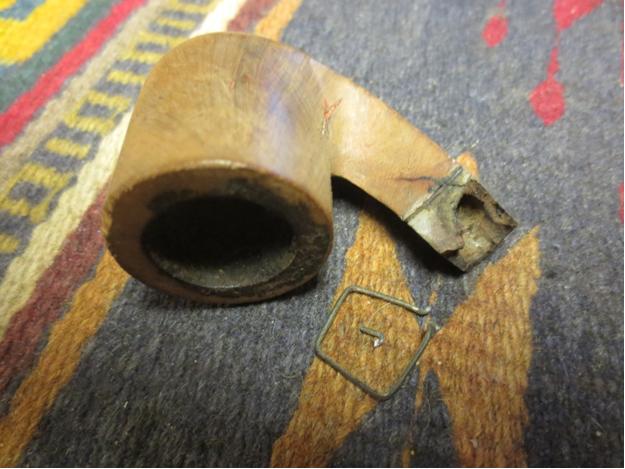
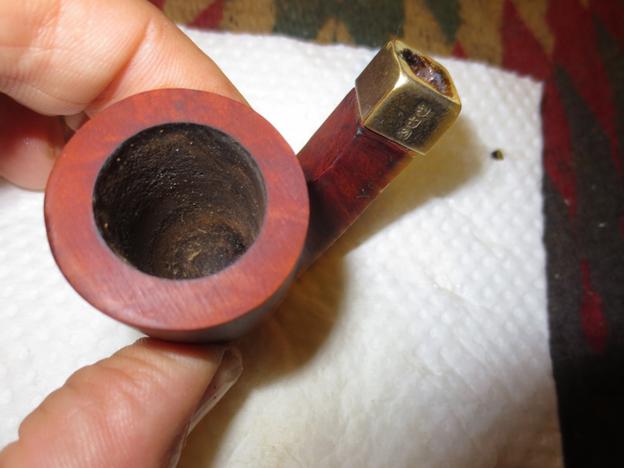
York4 On the right side of the bowl near the shank junction there was a pink putty fill that was coming out. Most of the putty had fallen out of the briar. This would need to be repaired.York5 When I got back home I took the pipe out of the bag to have a look. The silver end cap had some hallmarks but they were the faux hallmarks that I have found on older American made pipes to give them a touch of class. All four edges of the band were split. I removed the stem and looked inside the mortise and could see that a major part of the briar was missing on the right side of the shank under the cap. With little effort I removed the cap and sure enough a huge chunk was missing out of the briar. In fact the whole right side under the cap was gone. There was a small crack that had been repaired earlier. There was a small hole in the shank to stop the crack and the crack was glued and clamped with the wire. This was going to take a bit of work to bring it back from the brink of destruction. York6 I clipped the wire with a pair of wire cutters so that I could work on repairing the broken portion of the shank. This repair would take some careful and time consuming work to rebuild the missing portion of briar.York7 I reamed the bowl to clean out the thick cake. It was crumbling so I wanted it removed so that the repair of the shank would be less dirty. I use a PipNet reamer to take the cake back to the bare briar.York8

York9 The first step in rebuilding the broken area was to clean up the damaged ends of the remaining briar. Once it was clean I put clear super glue on the raw edge of the broken spot and tamped the end into some briar dust. I repeated the process until the edge was repaired as much as possible with this method.York10

York11 During the process I also picked out the broken putty fill and replaced it with briar dust and super glue.York12 I sanded the flat surface of each of the four sides of the diamond shank smooth with 220 grit sandpaper until the cap slid easily over the shank. I also faced the end of the shank on the topping board.York13

York14 The next step in the process of rebuilding the shank and the mortise was a little more difficult than the briar dust and super glue rebuild. It involved working on the internals of the shank. I glued the end cap in place with wood glue and clamped it in place to take care of small splits in the edges of the metal cap. Once that dried and set, I mixed white wood glue with briar dust to make putty. I tamped the mixture into the remaining areas of the shank with a dental pick and dental spatula until the area was filled solid looking once again. The next two photos show the rough repair on the inside of the mortise and shank. The broken area is gone! The holes are filled in and the repair is complete. Once the glue set I would have to clean up the mortise and make the walls smooth. The edges of the metal cap, looking at it from the end are damaged and I will not be able to repair them.York15

York16 While the shank repair cured I worked on the rim. There was a thick tar build up that was like rock on the back edge and the front edge of the rim had been knocked against something hard and was rough.York17 I decided to top the bowl to remove the rock hard tar and also minimize the damage to the front of the bowl. I used a topping board with 220 grit sandpaper and worked the rim against the sandpaper until the damage was minimized. Once I had it smoothed out I put some briar dust and super glue on the remaining divot on the front edge of the bowl as a fill. When it dried I sanded it smooth and lightly topped the rim once more to even out the repair with the rest of the rim. (That picture will be shown shortly.)York18 The stem that came with the bowl was damaged beyond repair. It had been repeatedly been cut off by the previous owner and hacked at until it fit in the damaged tenon. It was not a stem I would use again on this pipe. I went through my can of stems and found a faux p-lip stem – the airway came out the end of the button rather than on the top. It was old enough to work on this pipe and with some modification I thought it would look just right. The problem was that it did not have a tenon. When I found it the tenon was missing and the end of the stem had been drilled out to receive a replacement tenon. I am currently out of Delrin tenons so I used a thin vulcanite stem as the sacrificial tenon. I glued the tenon on the donor stem in place in the diamond shaped stem with super glue and then cut off the stem with a hacksaw. I left a piece of vulcanite that was longer than necessary so that I could work it to a proper fit in the repaired shank.York19

York20 The next photo shows the repaired stem and tenon and the topped bowl before I put the two parts together. I used a Dremel to remove the excess material on the new tenon and shortened it to the depth of the mortise in the shank.York21 The next photo shows the repaired fill on the bowl side with another photo of the new stem.York22 Once the shank repair was dry I used a needle file to clean up the rough areas and smooth out the inside of the mortise. I gave it several more coats of glue and briar dust to buildup the areas that had shrunk as the glue dried. I continued to work it with the files and sandpaper until the fit was correct. I cleaned out the airway to the bowl and the inside of the mortise with alcohol, cotton swabs and pipe cleaners in preparation for putting the new stem in place.York23 The next two photos show the newly fit stem. There was still work to do to fine tune the flow of the diamond stem sides to match the flow of the diamond shank but the look is clear at this point in the process.York24

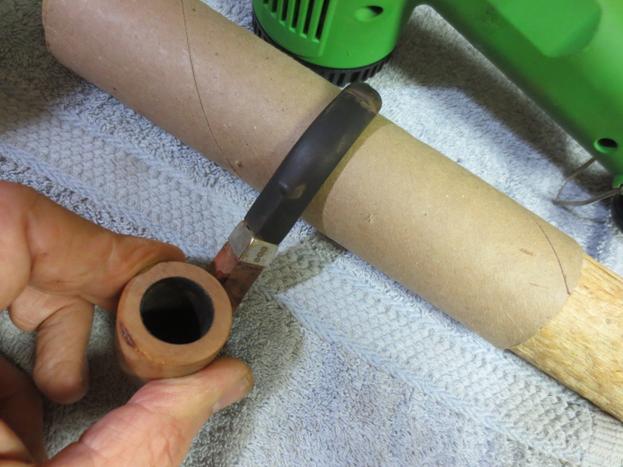
York25 I sanded the stem with 220 grit sandpaper and with a medium and a fine grit sanding sponge to fine tune the fit. When I had it the way I wanted, it was time to bend the stem. I used my heat gun to do the work. In this case I quickly set it up on the dryer in our laundry room (shh don’t tell my wife I did this) and heated the stem. I bent it over an old rolling pin that I use for this purpose until the bend in the stem matched the curve of the bottom of the bowl. I set the bend by holding the stem under cool running water.York26

York27 The next two photos show the newly bent stem and give an idea of how it will look with the pipe once it is finished.York28

York29 With the easiest part of fitting a stem completed I went on to do the laborious and tedious part of sanding and more sanding to get the fit just right. To do this without rounding the edges of the stem at the shank stem junction I use a plastic washer placed between the two areas. I sanded the stem with 220 grit sandpaper to smooth out the transition and make the angles square (or at least as square as possible on these old pipes where every side has a different angle and width).York30 When I had the fit of the stem correct it was time to polish it. I wet sanded with 1500-2400 grit micromesh sanding pads and rubbed the stem down with Obsidian Oil.York31 I needed a break from the stem work so I turned my attention to the bowl. I rubbed it down with a light coat of olive oil to highlight the grain. I took a few photos to show what it looked like at this point. It is certainly looking far different than it did when I started working on it. There is a deep richness in the red tones of the briar.York32

York33

York34

York35 I decided to highlight those tones with a dark brown aniline stain thinned by 50% with some isopropyl alcohol. I applied it and flamed it to set it in the grain.York36 I hand buffed it with a cotton cloth to get an idea of the coverage. It was still too dark to my liking so I would need to address that.York37

York38 I wiped the bowl down with some acetone on a cotton pad to remove some of the stain and make the grain show through better.York39

York40 I buffed the bowl with White Diamond and then gave it the first of many coats of carnauba. I don’t know about you but by this point in a long refurbishment I get a bit anxious to see what I have accomplished. It always seems that it is going to go on forever so I rewarded myself by putting the stem in place and taking a few photos to see what I had achieved.York41

York42 For comparison purposes I took the next two photos of the pipe with the old stem next to the new one. You can see how badly hacked the vulcanite was from the previous owners salvage work on his broken pipe. The pipe is beginning to look like a very different pipe than when I started. That always encourages me!York43

York44 Now it was time to finish up with this long project and get the stem done. I dry sanded it with 3200-4000 grit micromesh sanding pads and then rubbed it down with Obsidian Oil once again. I then dry sanded it with 6000-12000 grit pads and gave it a final coat of oil and let it soak into the vulcanite.York45

York46 I buffed the stem and bowl with Blue Diamond and then gave them both multiple coats of carnauba wax. I buffed them with a clean soft flannel buff to raise the shine and then hand buffed the pipe with a microfibre cloth to finish. The completed pipe is shown below. It has come a long way from the pipe I started on this morning. I had a quiet day at home and between reading and napping finished the work on this old timer. From what I can find out in my research and from Who Made That Pipe, the pipe may well be from the old KBB pipe works. Thanks for looking.York47
York48

York49

York50

York51

York52