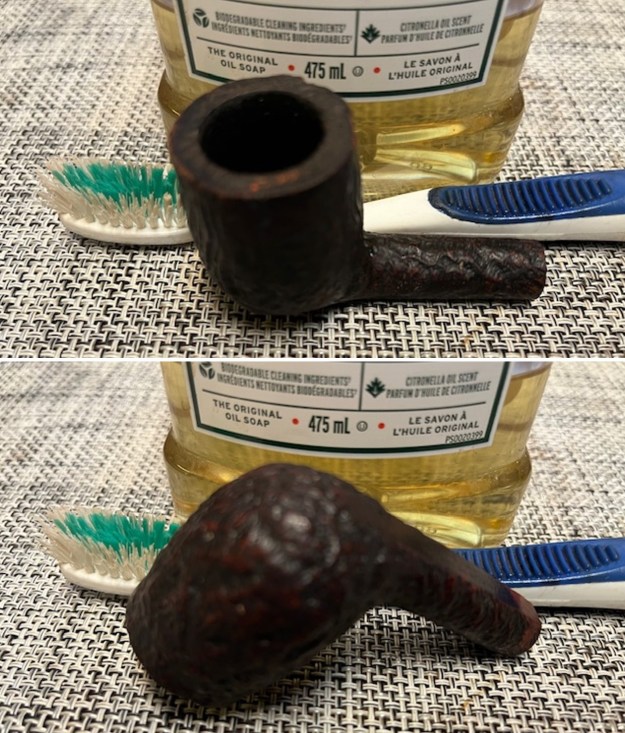
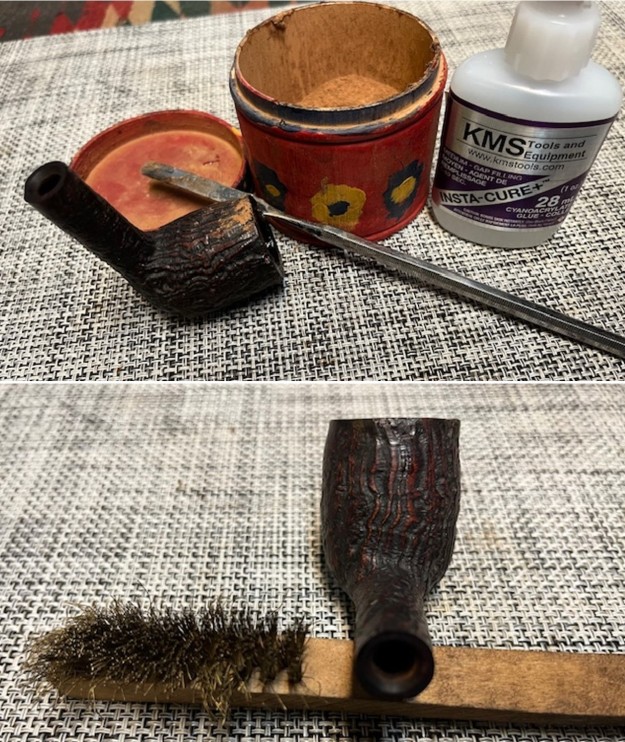
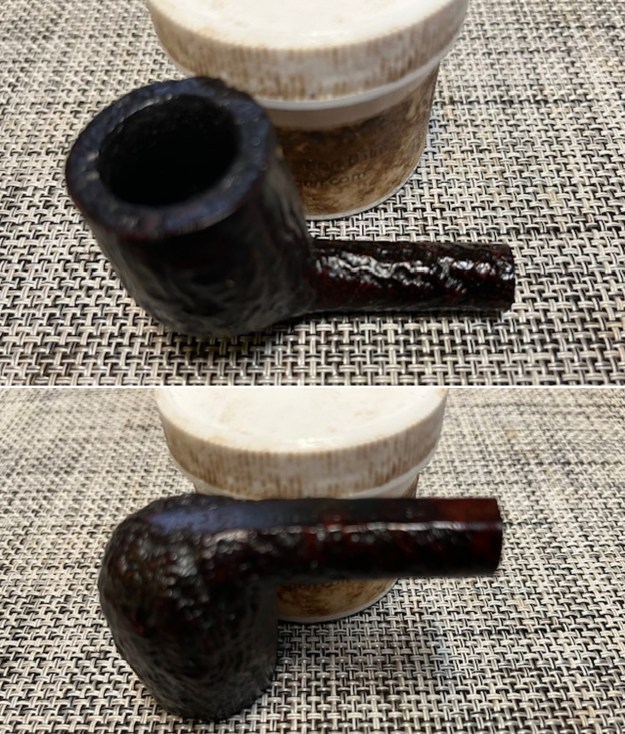
Tag Archives: removing tooth marks

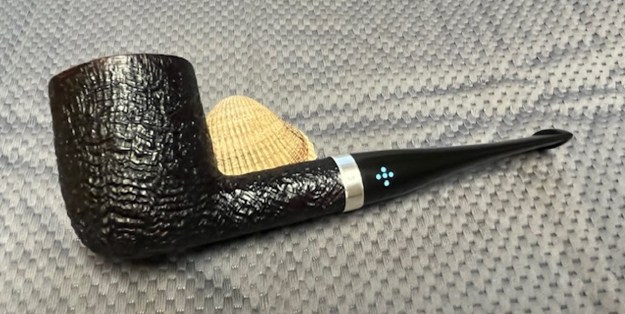
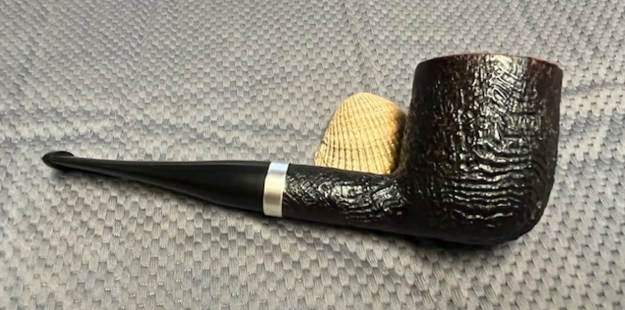
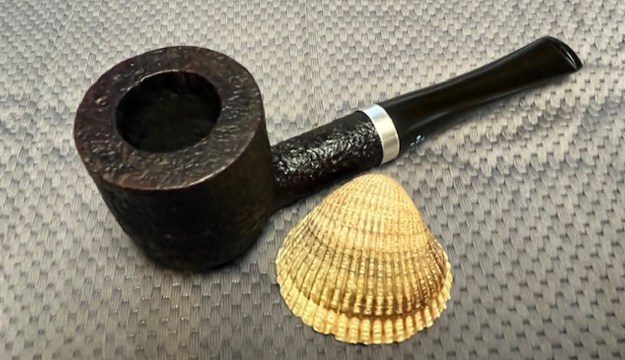
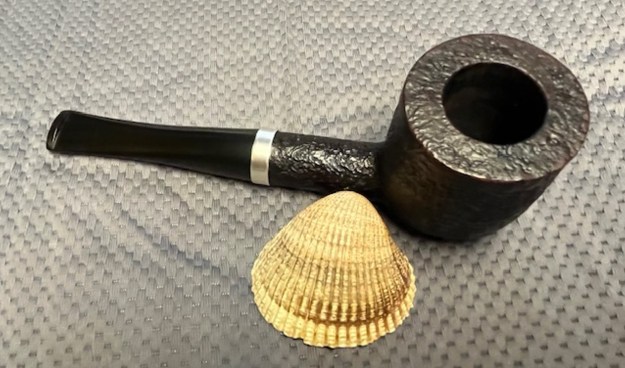
Restoring a Sasieni 5 Dot Billiard with a Taper Stem


Blog by Steve Laug

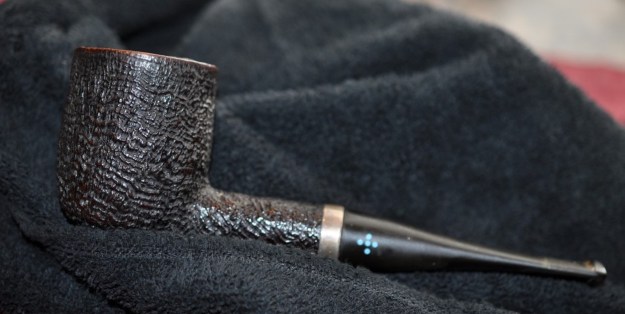
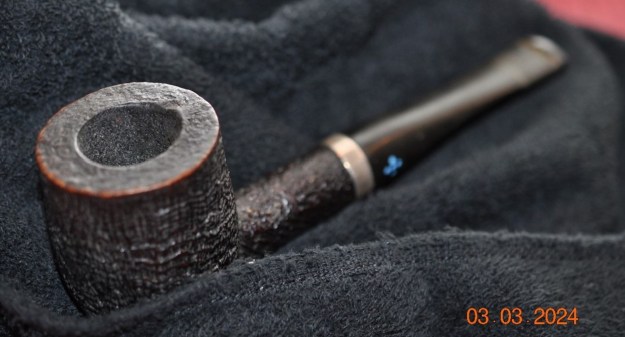
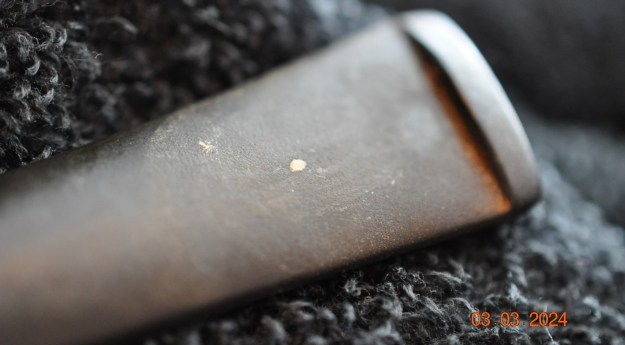
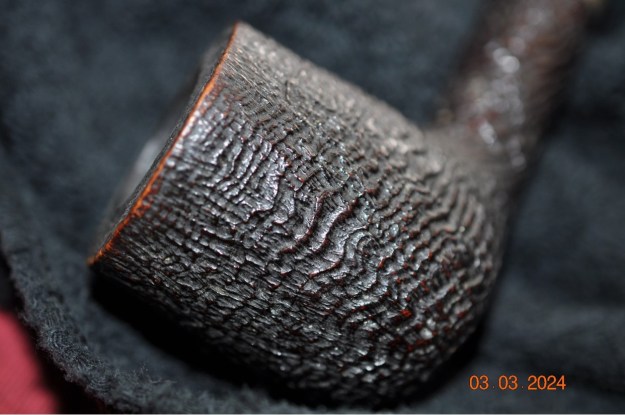
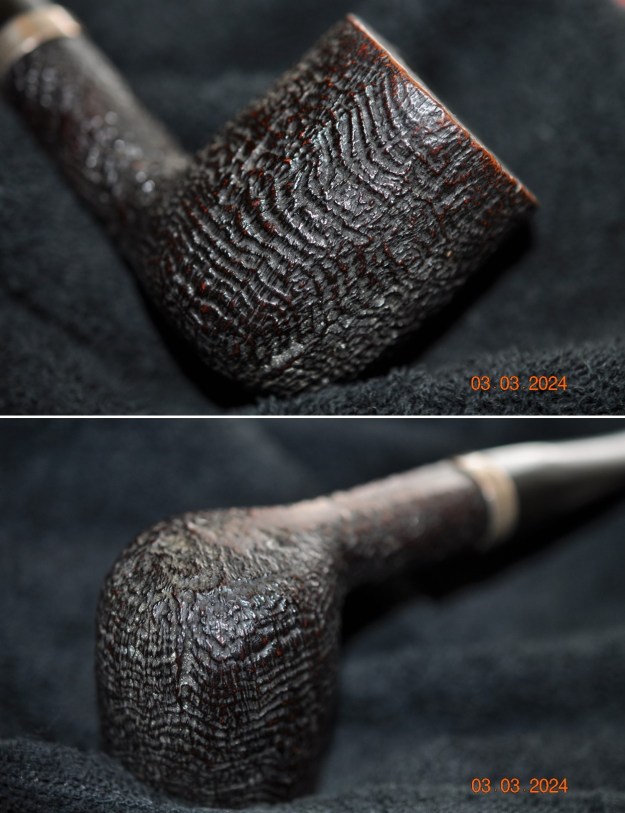
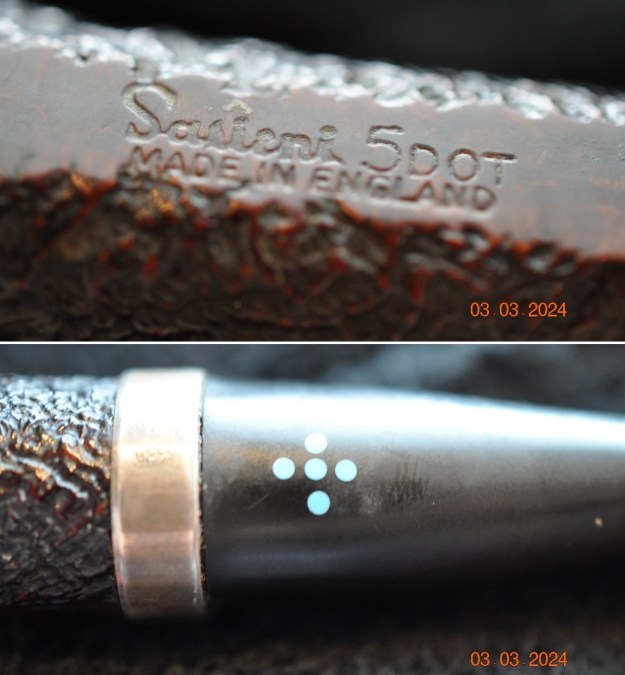
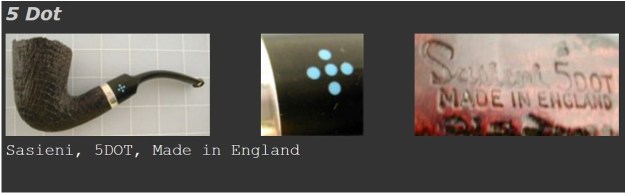
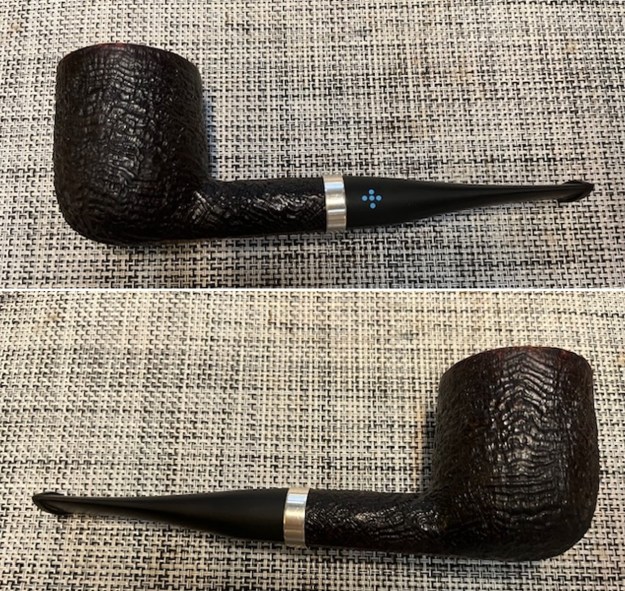
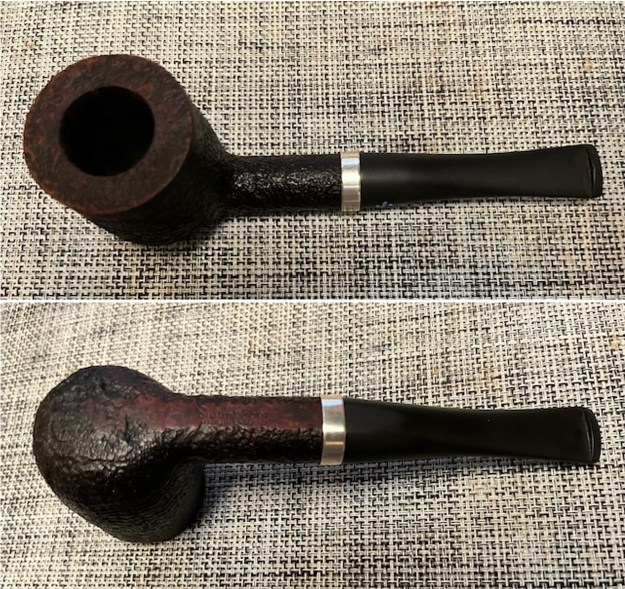
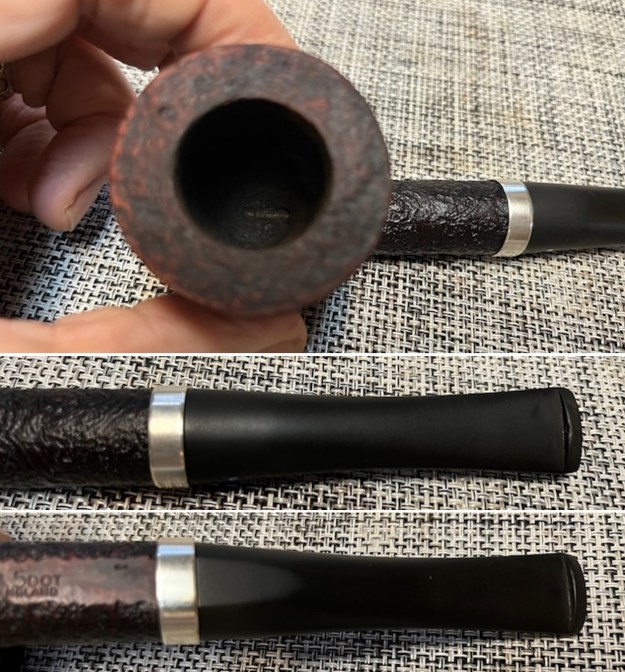
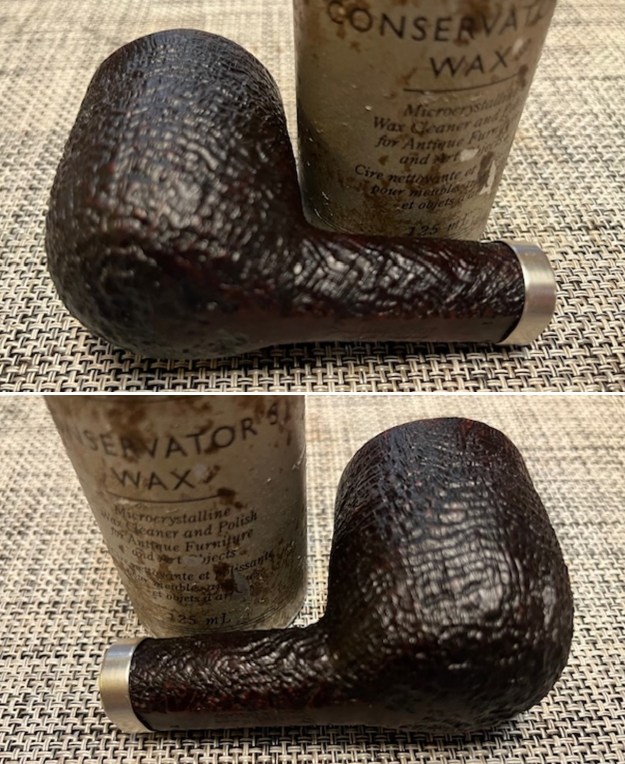
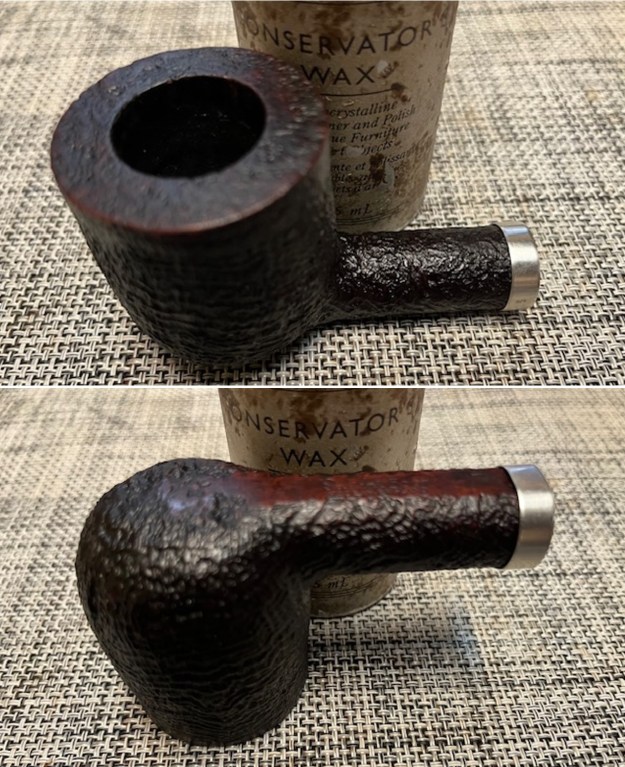
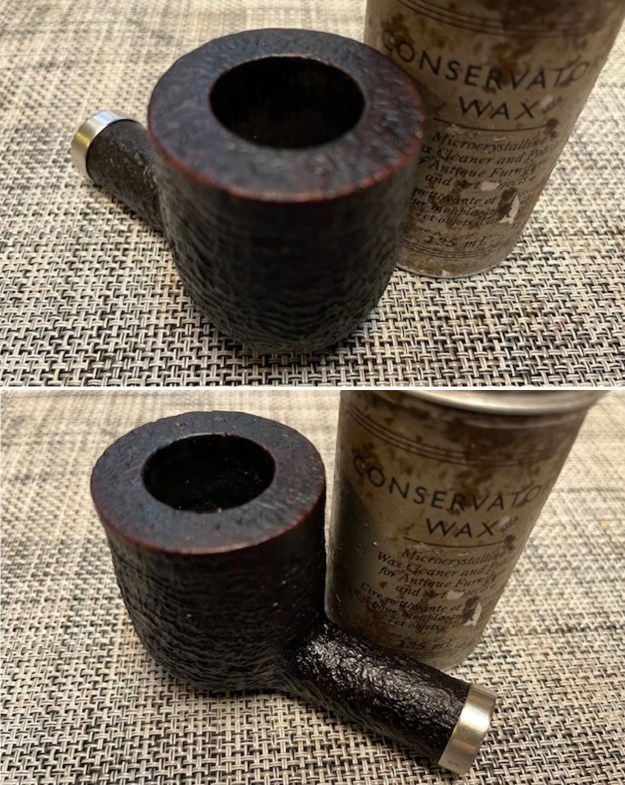
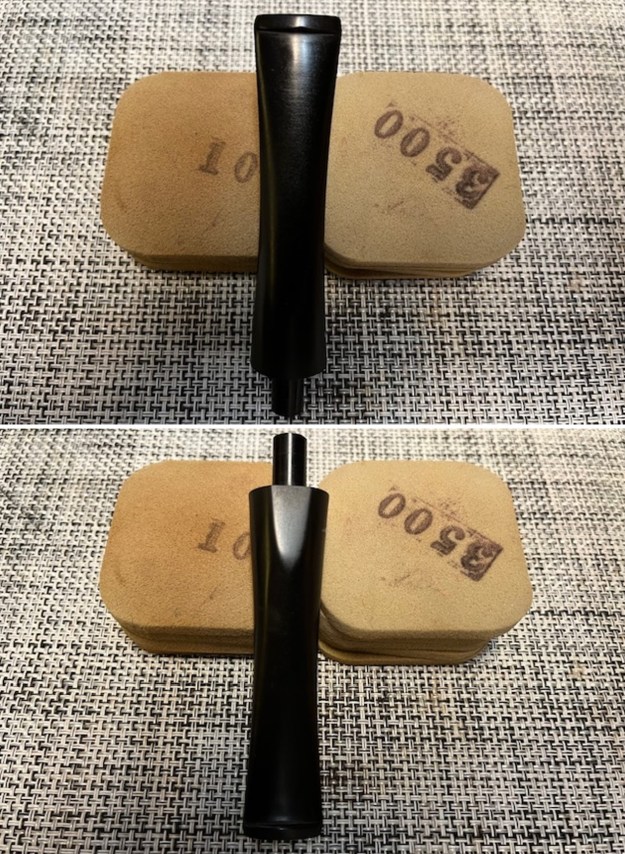
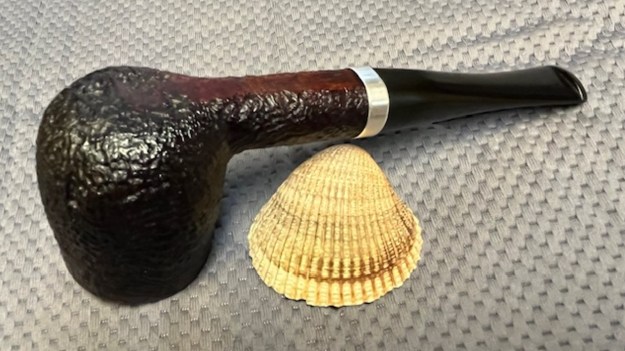
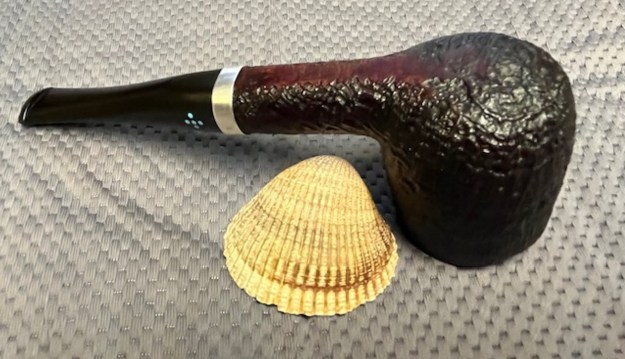
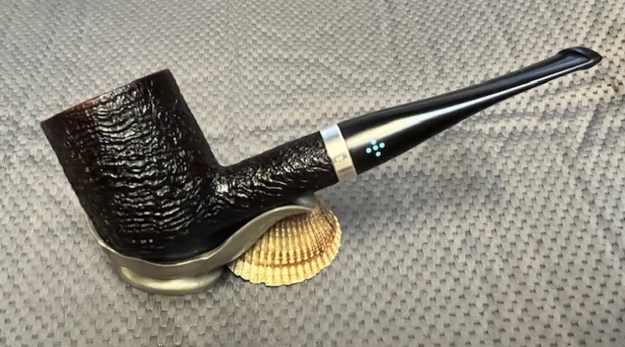
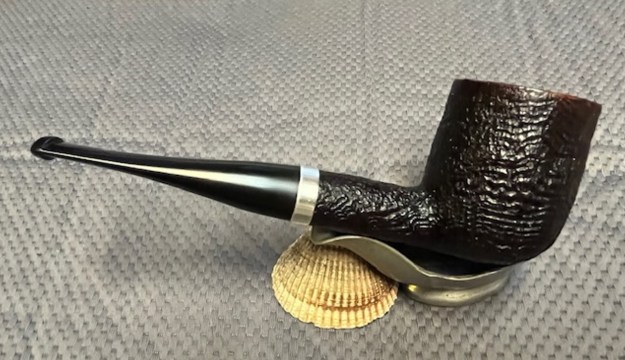
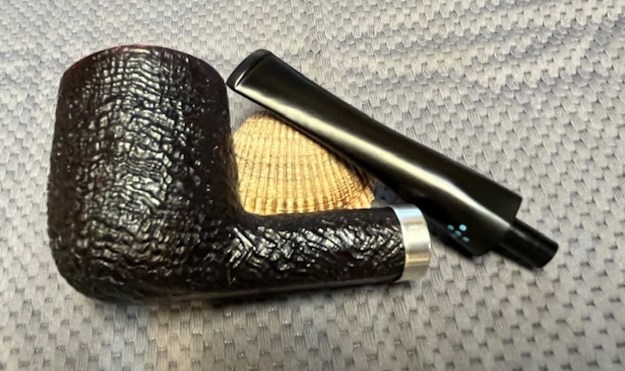
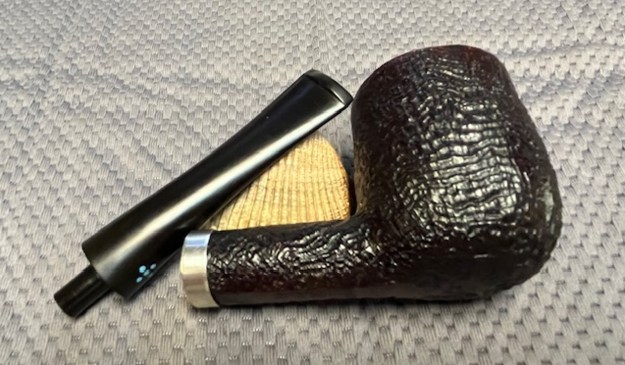
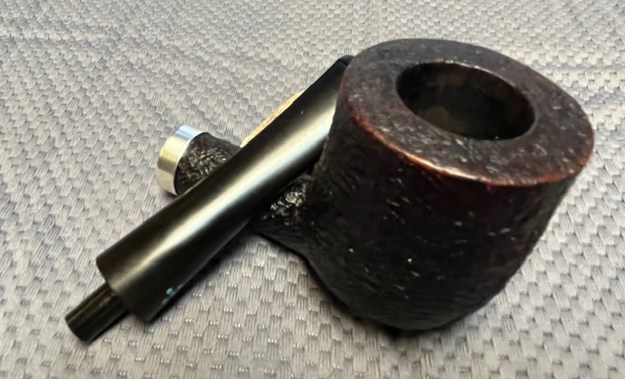
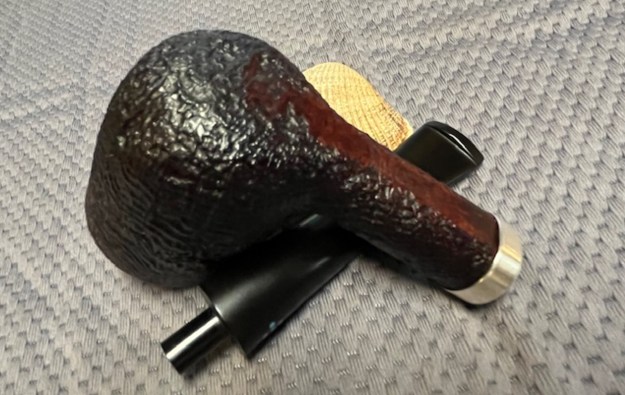
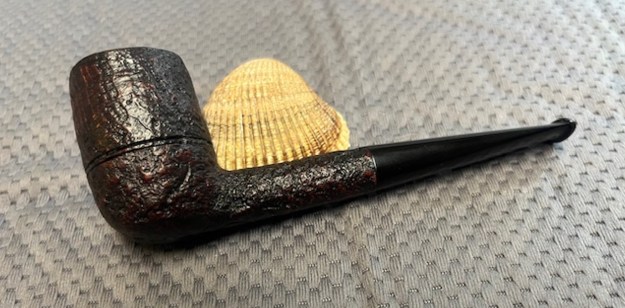
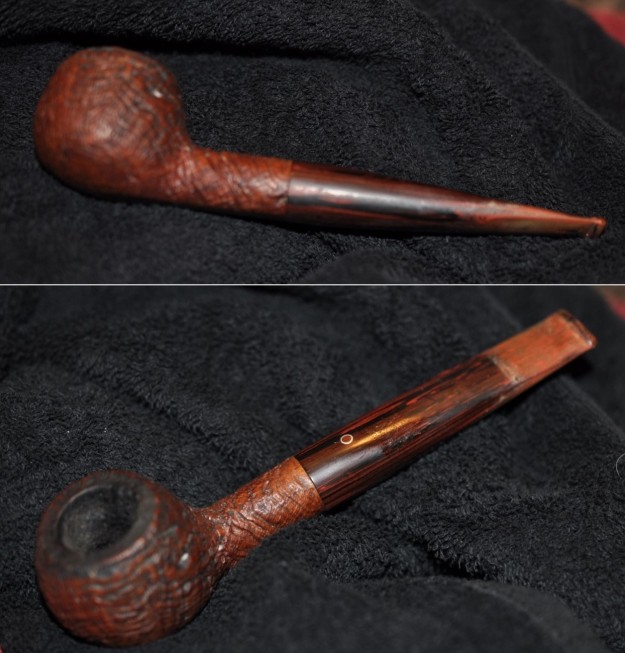
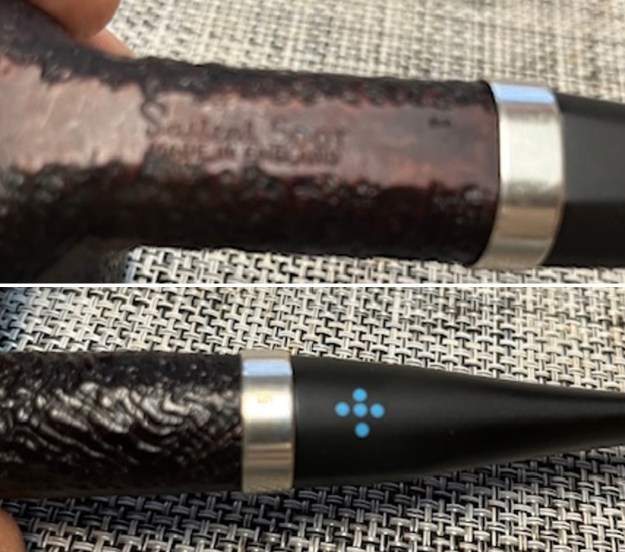
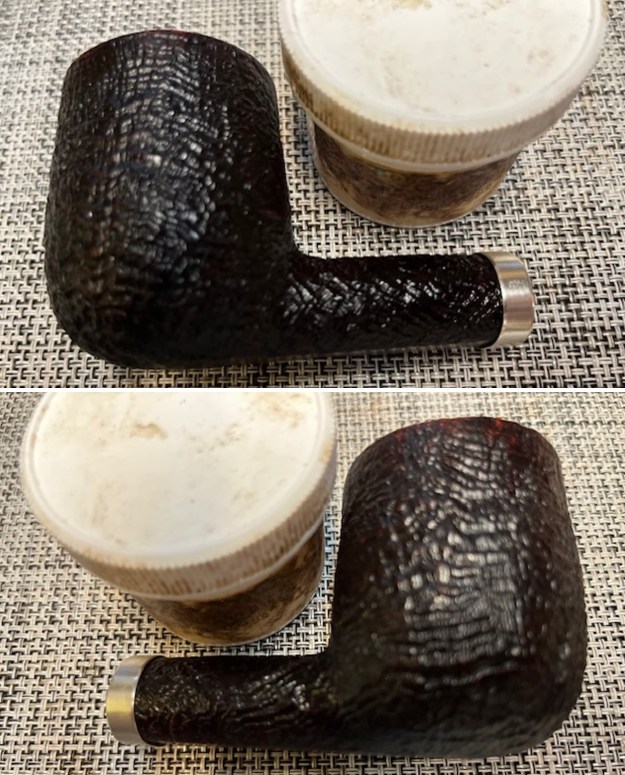
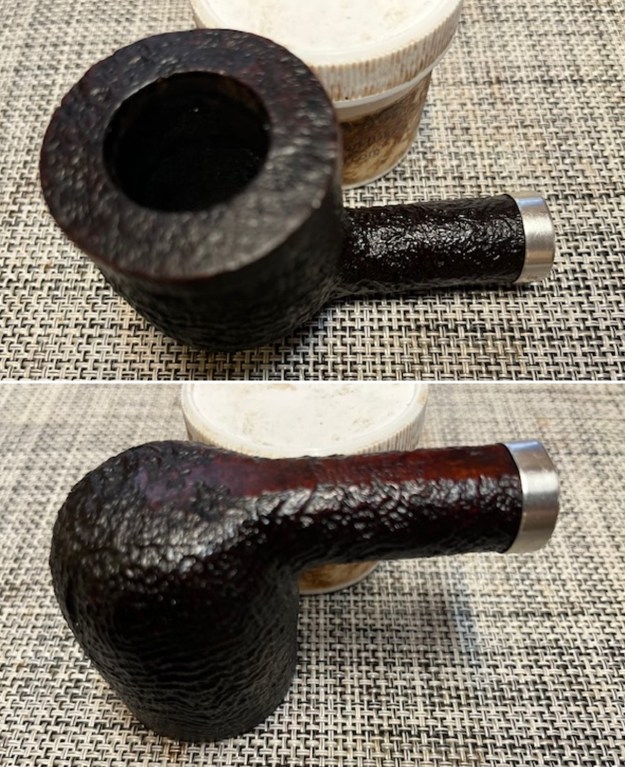
The next pipe on the table is large sandblast Sasieni Pot. We purchased it off eBay from Jordan, Minnesota, USA on 01/22/2024.The pipe is stamped on the heel of the bowl and the underside of the shank on a smooth panel. It reads Sasieni (in script) 5 DOT [over] Made in England. The silver band is stamped 925 on the left side. It is tarnished and dull looking. The taper stem bears the 5 blue Dot pattern of the Sasieni logo on the left side. The pipe had been smoked and there was a thick cake in the bowl with a thick lava overflow in the sandblast on the inner edge and the rim top. There was dust and debris in the sandblast finish around the bowl sides. The stem is oxidized and calcified. It had light tooth marks on both the top and underside of the stem just ahead of the button. Jeff took photos of the pipe before he started his clean up work. I have included them below. Jeff took photos of the rim top, bowl and the surfaces of the stem to give a sense of the condition of the pipe. The walls of the bowl had a thick cake which overflowed over the rim edges and onto the rim top making a mess. The stem is lightly oxidized and there is a mark on the stem where it appears that it had a Softee Bit on the end to protect it. There are light tooth marks on both sides ahead of the button. He took photos of the sides and heel of the bowl to give a clear picture of the depth of the sandblast. It really is a great looking blast that shows the grain underneath very well. He took photos of the stamping on the underside of the bowl and the shank. It is clear and readable and read as noted above. The five dots on the stem are clear and undamaged as is the 925 stamp on the silver band.I turned to Pipephil’s site to see what I could find about the Sasieni 5 Dot pipes and get some idea of where they fit in terms of the hierarchy (http://www.pipephil.eu/logos/en/logo-sasieni.html). I also wanted to know about a potential date for the pipe. I quote below what I found there. I quote from the side bar below and include a screen shot of the 5 Dot:

Post transition, 2001 – today, “5 dot”I Googled for information that I could find and came across some on the smokingpipes.com website (https://www.smokingpipes.com/pipes/estate/england/moreinfo.cfm?product_id=78680). It included several freehand versions of the 5 Dot but I found the description given by them for one of the pipes really informative. I have quoted it below for the information it includes.

The downside to post-transition Sasieni’s is that the once revered Four Dot wound up being applied to briars that never would have made the cut during the family and transition periods. The upside is that unlike some once-grand old marques, not everything went to pieces, standards-wise. This Five Dot (a purely post-transition designation) for example is solid and true: handsomely shaped, drilled out straight as an arrow, and possessed of quite a healthy bit of wild ring grain. – Eric N. Squires

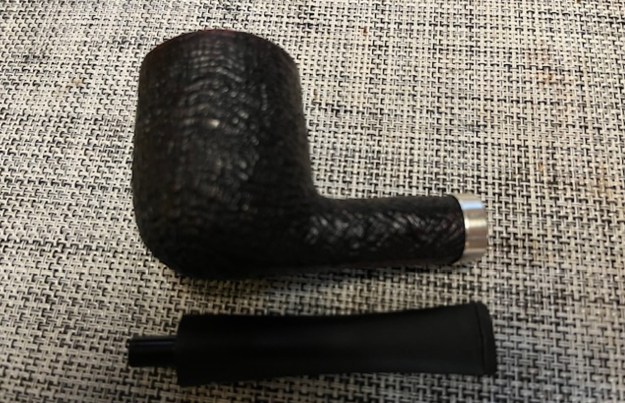
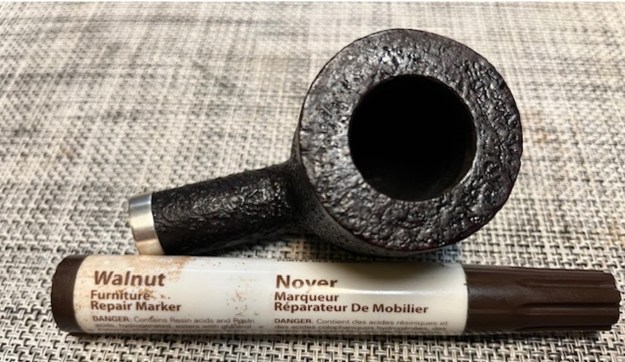
Now it was my turn to work on the pipe. Jeff had done an amazing cleanup of the pipe. He reamed the light cake with a PipNet reamer and cleaned up that with a Savinelli Fitsall Pipe Knife. He scrubbed the internals of the bowl and stem with alcohol, cotton swabs and pipe cleaners. He scrubbed the externals with undiluted Murphy’s Oil Soap and rinsed the bowl off with running water. He soaked the stem in Briarville’s Pipe stem Deoxidizer and once it had soaked rinsed it off with warm water to remove the residual solution. He dried it off and rubbed it down to remove any oxidation that was still on the stem. The pipe looked very good when I received it. I took photos of the bowl and the rim top as well as both sides of the stem to show the condition of the pipe before I started my work. The rim top was very clean and the edges looked good. The clean up had removed some of the stain on the top the outer edges of the bowl. It really looked remarkably good.I took a photo of the stamping on the shank. The photo of the stamping is clear and readable. I also removed the stem and took a photo of the parts of the pipe. It is a unique piece of pipe history. The bowl was in such good condition that I had to do some minimal work with it. I used a Walnut Stain pen to touch up the rim top and edges of the bowl to match the rest of the bowl. I looks amazingly good.I rubbed the briar down with Before & After Restoration Balm. I worked it into the briar with my fingertips and a horsehair shoe brush to work it into the nooks and crannies of the sandblast finish. The product works to clean, enliven and preserve the briar. I let it sit for 10 minutes then I buffed it with a cotton cloth to deepen the shine. The briar really comes alive with the balm. I waxed the bowl down with some Conservator’s Wax and set it aside to let the wax harden. I buffed it with a soft cloth to raise the shine. It is a beautiful sandblast that shows depth in the finish. I set the bowl aside and turned my attention to the stem. I sanded the surface of the stem smooth with 320-3500 grit sanding pads. It worked well to smooth things out and remove remnants of oxidation. When finished the stem looked much better.I polished the vulcanite with micromesh sanding pads – 1500-12000 grit pads. I wiped it down with Obsidian Oil after each sanding pad. I used Before & After Pipe Polish – both Fine and Extra Fine to further polish the stem. This Silver Banded Sasieni 5 Dot Billiard has a beautiful, Sandblast finish that is very tactile. The rich walnut brown/black finish highlights some great grain around the bowl and shank. The polished vulcanite taper stem adds to the mix. I put the stem back on the bowl and carefully buffed the pipe with Blue Diamond on the buffing wheel. It is critical to avoid buffing the stamping and to have a lighter touch on the sandblast briar. I gave the bowl multiple coats of Conservator’s Wax and the stem multiple coats of carnauba wax on the buffing wheel and followed that by buffing it with a clean buffing pad. I hand buffed the pipe with a microfiber cloth to deepen the shine. The finished Sasieni 5 Dot Billiard is quite stunning and feels great in my hand. Give the finished pipe a look in the photos below. The dimensions of the pipe are Length: 6 ½ inches, Height: 2 inches, Outside diameter of the bowl: 1 ¾ inches, Chamber diameter: 7/8 of an inch. The weight of the pipe is 2.82 ounces/80 grams. Thanks for walking through the restoration with me as I worked over another beautiful pipe. I am going to add it to the rebornpipes store in the British Pipemakers Section. If you would like to add it to your collection let me know. Thanks for your time.

Restoring a Dunhill Shell 7 90 C 4S Poker Stand-up


Blog by Steve Laug

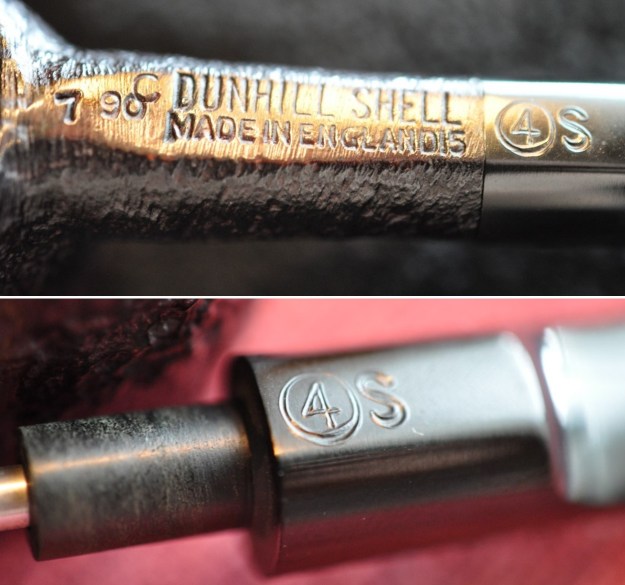
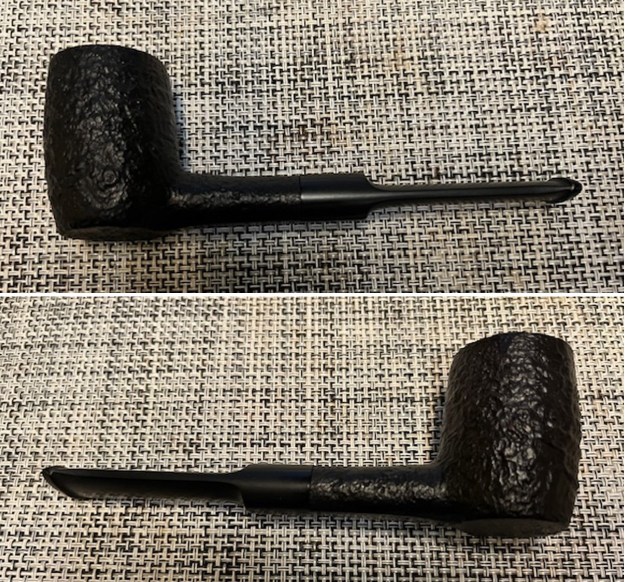
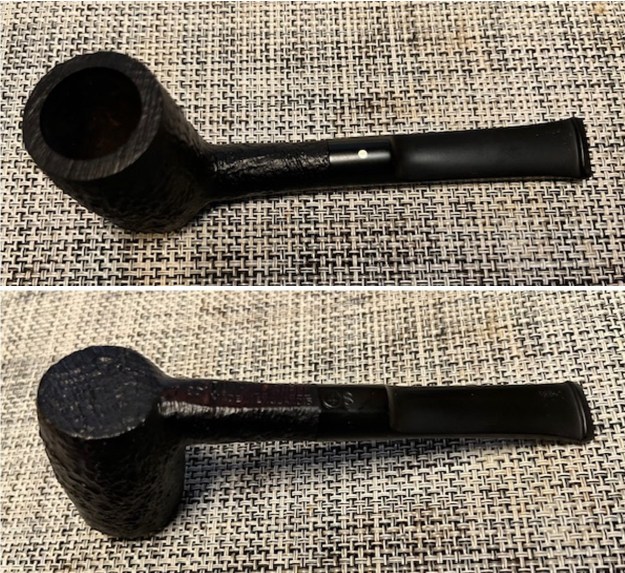
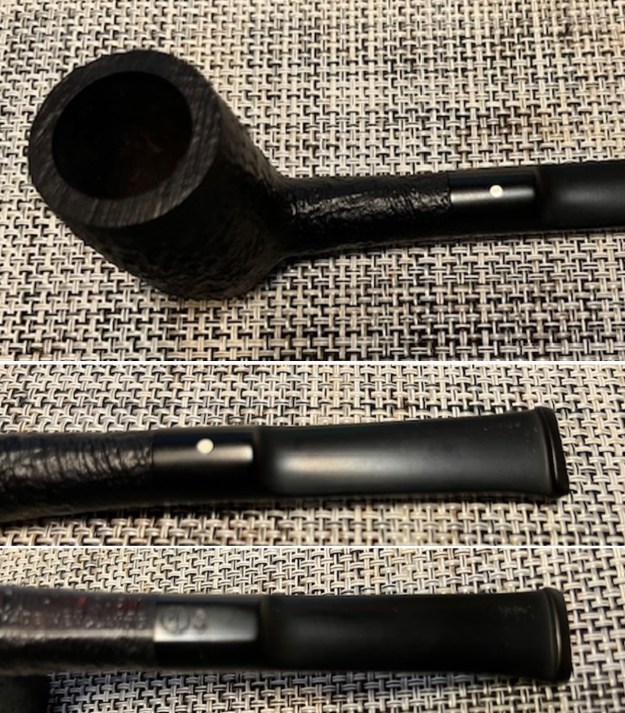
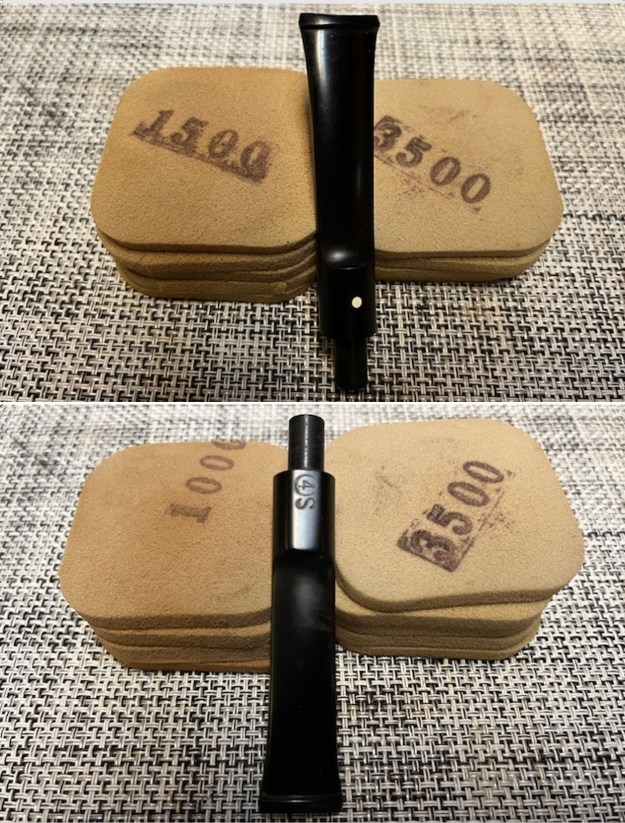
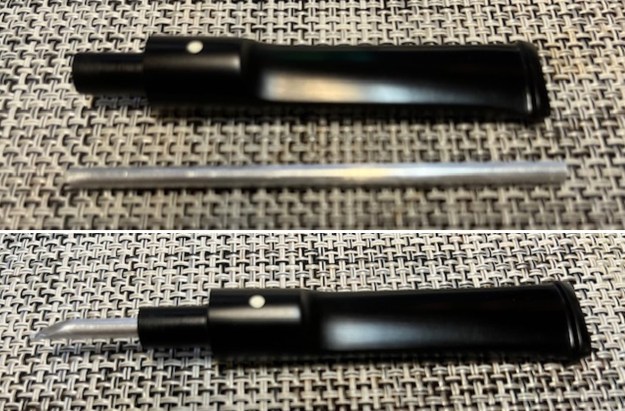
The next pipe on the table is another unique one and a shape I have not worked on before. We purchased it from our contact in Copenhagen, Denmark 02/02/24. The pipe is a Shell with a rugged sandblast finish. The pipe is stamped on the heel of the bowl and the underside of the shank on a smooth panel. On the heel it is stamped with a series of numbers. The first number is 7 (identity unknown) after that is the number 90 followed by a C. After that it is stamped Dunhill Shell [over] Made in England 15. The 15 is the date stamp. On the flat underside of the stem the pipe was stamped 4 in a circle with S following that. This tells me that the pipe is a Group 4 sized pipe in a Shell finish. The pipe had been smoked and there was a light cake in the bowl with no lava overflow in the sandblast on the rim top. There was dust and debris in the sandblast finish. The stem is lightly oxidized and had light tooth marks on both the top and underside of the stem just ahead of the button. Jeff took photos of the pipe before he started his clean up work. I have included them below. Jeff took photos of the rim top, bowl and the surfaces of the stem to give a sense of the condition of the pipe. The walls of the bowl had a light cake on them. The stem is lightly oxidized and has tooth marks on both sides ahead of the button. He also took the stem off to show the inner tube. He took photos of the sides and heel of the bowl to give a clear picture of the depth of the sandblast. It really is a great looking blast that shows the grain underneath very well. He took photos of the stamping on the underside of the shank and the stem. It is clear and readable and read as noted above.I turned to the dating key on Pipephil’s site (http://www.pipephil.eu/logos/en/dunhill/cledat-en1a.html) to establish a date for the pipe. I drew a red box around the pertinent information below. It fits the criteria of a Sandblast with a year suffix and a Non possessive form Dunhill. The suffix is the number 15 which puts in the section below which notes 1960 + suffix to establish a date. In this case it is 1960 +15 making the pipe a 1975.I turned to Pipedia for help with the shape number and the extra stamping of the 7 and the C (https://pipedia.org/wiki/Dunhill_Shapes_List).

90 Poker “Stand-up” 2 4¾” 1928, 1950, 1969 22

There are also two other markings around the shape number that I wanted to understand – 7 and a C. I found an article on Pipedia (https://pipedia.org/wiki/Dunhill_Additional_Stamps) on additional stamps. The C stamp signifies:

C stands for “complementary”. Pipes stamped as such are usually pipe given to business partners as a complementary present and are not for sale.

There was no information on the 7 though the number 6 indicated a saddle stem. I wonder if the 7 could also indicate that. It may be an “unknown” number.

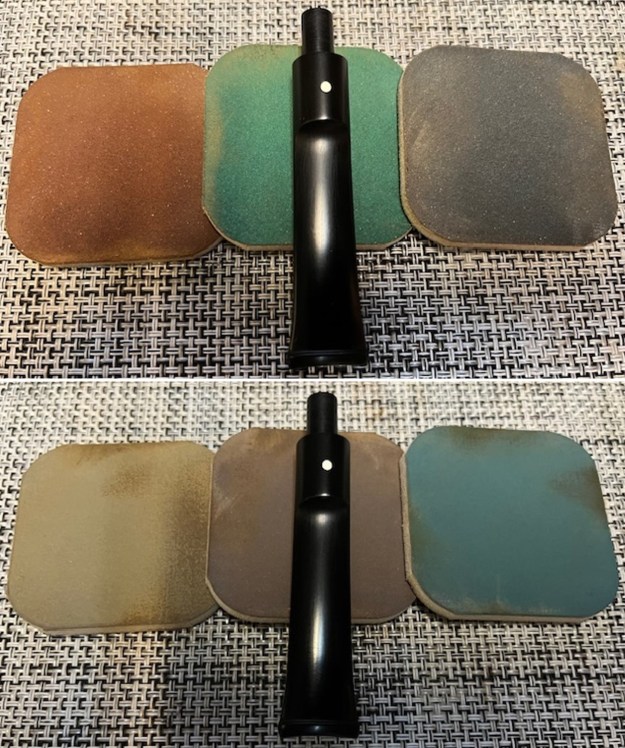
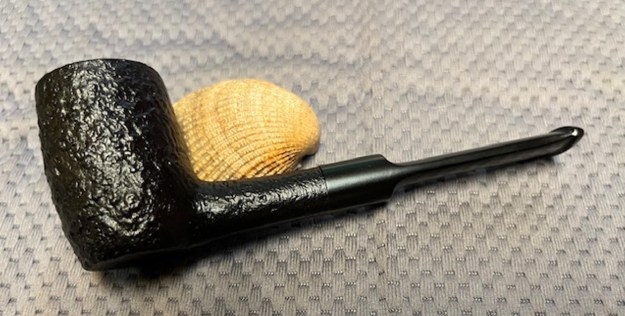
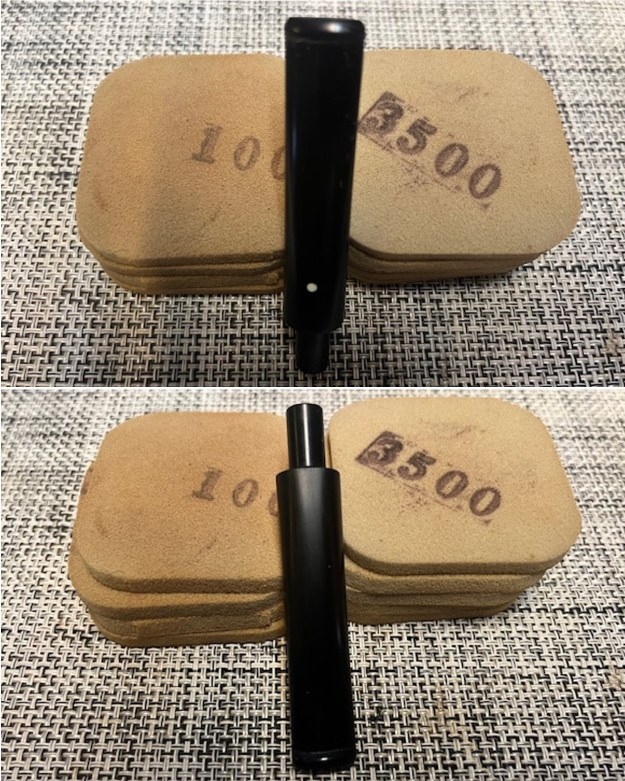
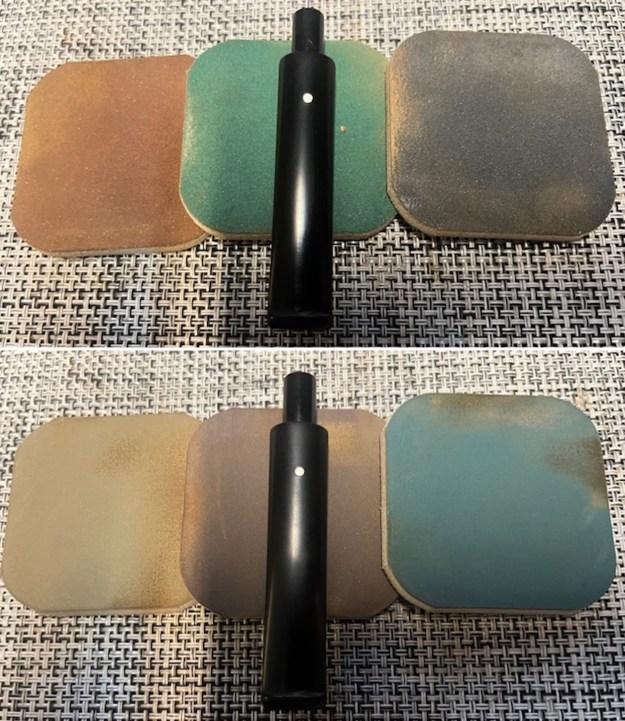
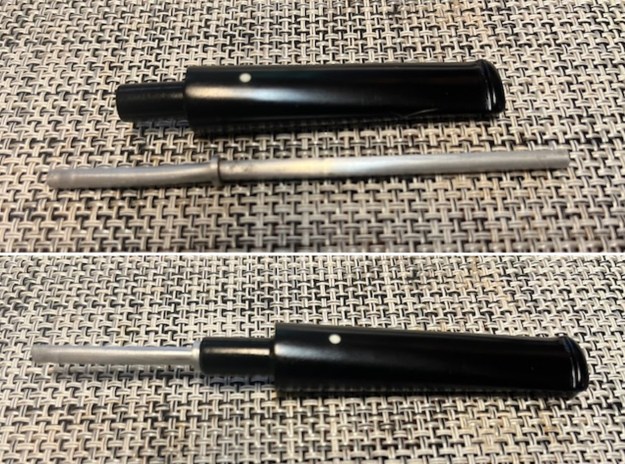
Now it was my turn to work on the pipe. Jeff had done an amazing cleanup of the pipe. He reamed the light cake with a PipNet reamer and cleaned up that with a Savinelli Fitsall Pipe Knife. He scrubbed the internals of the bowl and stem with alcohol, cotton swabs and pipe cleaners. He scrubbed the externals with undiluted Murphy’s Oil Soap and rinsed the bowl off with running water. He soaked the stem in Briarville’s Pipe stem Deoxidizer and once it had soaked rinsed it off with warm water to remove the residual solution. He dried it off and rubbed it down to remove any oxidation that was still on the stem. The pipe looked very good when I received it. I took photos of the bowl and the rim top as well as both sides of the stem to show the condition of the pipe before I started my work. It really looked remarkably good.I took a photo of the stamping on the shank. The photo of the stamping is clear and readable. I also removed the stem and took a photo of the parts of the pipe. It is a unique piece of pipe history.The bowl was in such good condition that I had to do some minimal work with it. I rubbed the briar down with Before & After Restoration Balm. I worked it into the briar with my fingertips and a horsehair shoe brush to work it into the nooks and crannies of the sandblast finish. The product works to clean, enliven and preserve the briar. I let it sit for 10 minutes then I buffed it with a cotton cloth to deepen the shine. The briar really comes alive with the balm. I set the bowl aside and turned my attention to the stem. I sanded the surface of the stem smooth with 320-3500 grit sanding pads. It worked well to smooth things out and remove remnants of oxidation. When finished the stem looked much better.I polished the vulcanite with micromesh sanding pads – 1500-12000 grit pads. I wiped it down with Obsidian Oil after each sanding pad. I used Before & After Pipe Polish – both Fine and Extra Fine to further polish the stem. I put the inner tube back into the tenon and stem and took a photo of it before I put the pipe back together. This 1975 Dunhill Shell 7 90 C Poker Stand-up marled Complementary has a beautiful, Dunhill Sandblast finish that is very tactile. The rich brown/black finish highlights some great grain around the bowl and shank. It has a; great sandblast that Dunhill developed and specialized in making. The polished vulcanite saddle stem adds to the mix. I put the stem back on the bowl and carefully buffed the pipe with Blue Diamond on the buffing wheel. It is critical to avoid buffing the stamping and to have a lighter touch on the sandblast briar. I gave the bowl multiple coats of Conservator’s Wax and the stem multiple coats of carnauba wax on the buffing wheel and followed that by buffing it with a clean buffing pad. I hand buffed the pipe with a microfiber cloth to deepen the shine. The finished Dunhill Shell 90 Poker Stand-up is quite stunning and feels great in my hand. Give the finished pipe a look in the photos below. The dimensions of the pipe are Length: 5 inches, Height: 1 ¾ inches, Outside diameter of the bowl: 1 1/8 inches, Chamber diameter: ¾ of an inch. The weight of the pipe is .99 ounces/28 grams. Thanks for walking through the restoration with me as I worked over another beautiful pipe. I am going to add it to the rebornpipes store in the British Pipemakers Section. If you would like to add it to your collection let me know. Thanks for your time.

Restoring a E 250 F/T Dunhill Shell Billiard


Blog by Steve Laug

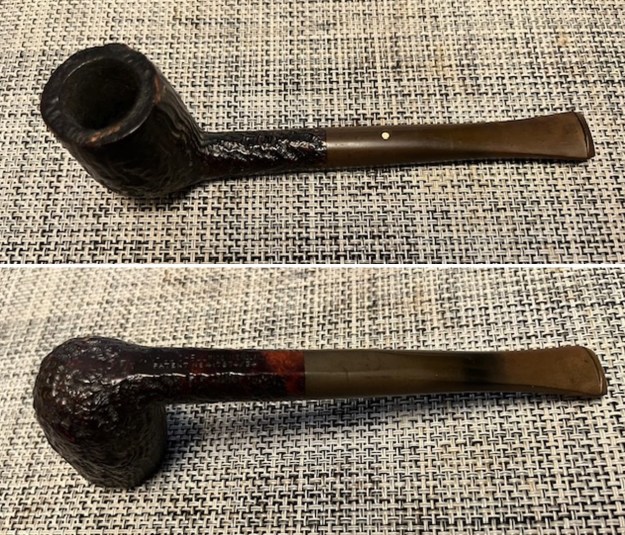
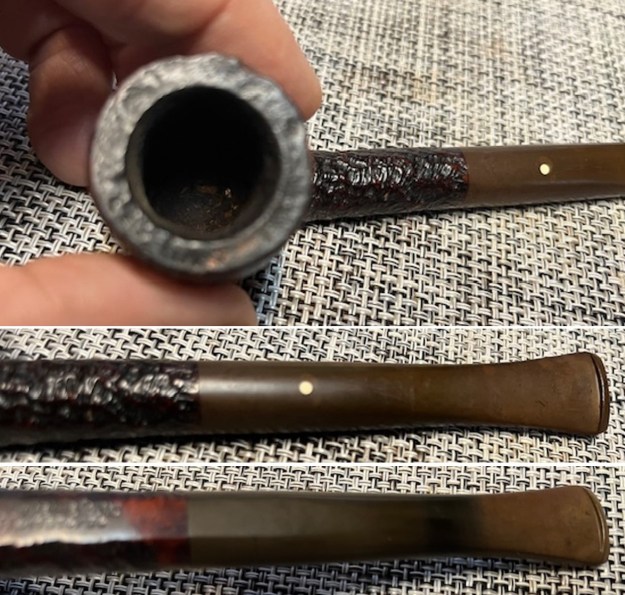
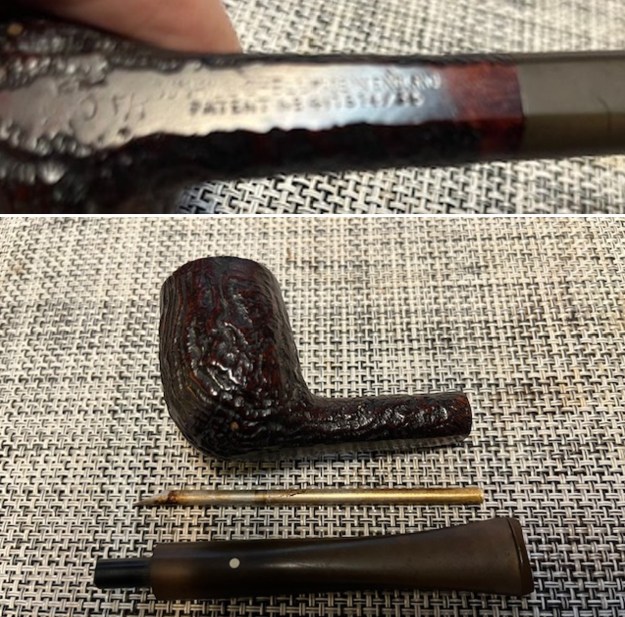
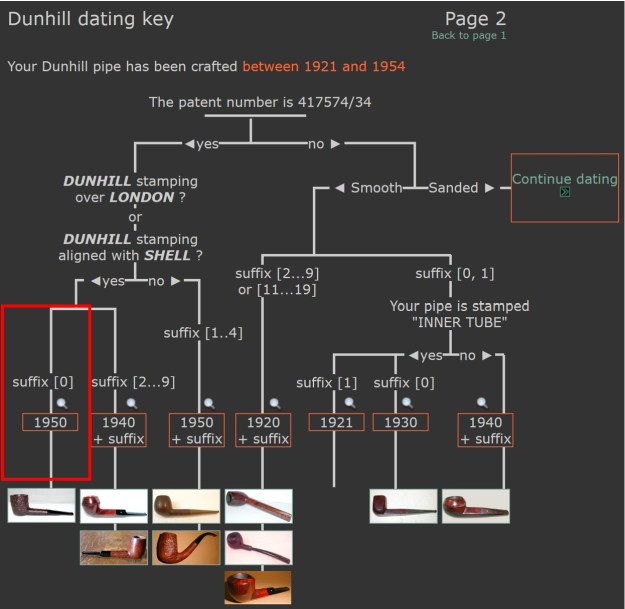
The next pipe on the table is one that showed up in the mail this week from a friend, Eric in Ontario. I sent him a message and got some background on the pipe. He purchased it from a small shop in his town and wanted me to restore it or as he said “Work my magic on it”. I have worked on quite a few of his pipes so I was not surprised. The pipe is a Dunhill Shell with a rugged sandblast finish. The pipe is stamped on the heel of the bowl and the underside of the shank on a smooth panel. On the heel it is stamped with the shape number E 250 F/T followed by Dunhill Shell followed by Made in England with no date stamp. Underneath the full stamp above it is stamped Patent No 417574/34. The pipe had been smoked and there was a moderate cake in the bowl with a light lava overflow in the sandblast on the rim top. There was a chip at the back of the bowl near the rim edge. The stem is oxidized and had light tooth marks on both the top and underside of the stem just ahead of the button. I took photos of the pipe before I started his clean up work. I have included them below. I took photos of the rim top, bowl and the surfaces of the stem to give a sense of the condition of the pipe. The rim top has some lava in the surface filling in the sandblast. The walls of the bowl had a moderate cake on them. The stem is oxidized and has light tooth marks on both sides ahead of the button.I took photos of the stamping on the underside of the bowl and the shank. It is clear and readable and read as noted above.  I took the pipe apart and took a photo of the parts to give a sense of what the pipe looked like.I turned to the dating key on Pipephil’s site (http://www.pipephil.eu/logos/en/dunhill/cledat-en1a.html) to establish a date for the pipe. I drew a red box around the pertinent information below. It fits the criteria of a Sandblast Dunhill stamping aligned with Shell. There was no suffix which puts it under 1950 which makes the pipe a 1950.Now it was my turn to work on the pipe. Armed with the facts that I am dealing with a 1950 Dunhill Shell pipe. I started my work on the pipe by reaming the bowl with a PipNet pipe reamer to take the cake back to bare walls. I followed that by using a Savinelli Fitsall Pipe Knife to scrape back the remnants of the cake back to briar. I finished my cleanup of the walls by sanding it with 220 grit sandpaper wrapped around a piece of dowel. I used a brass bristle brush to clean up the rim top. I took photos of the bowl and the rim top as well as both sides of the stem to show the condition of the pipe before I started my work. It really looked remarkably good. I used pipe cleaners, cotton swabs and isopropyl alcohol to clean out the tars and oils in the airway in the shank and the stem. I also cleaned the outside and inside of the aluminum inner tube in the shank and tenon. The internals were quite dirty but cleaned up very well. I scrubbed the grime and oils off the briar on the sandblasted briar with undiluted Murphy’s Oil Soap and a tooth brush. The briar looked much cleaner. I worked over the grime and tars on the rim top at the same time and was able to remove much of the build up. The bowl is beginning to take on a fresh look. I used some briar dust and clear CA glue to repair the chipped area on the back of the bowl edge. I built it up and once cured I used a brass bristle wire brush to knock of the high spots on the repair and blend it into the surrounding sandblast surface.I touched up the rim top, edges and the repaired area with a Walnut stain pen. The colour blends in very well with the colour of the surrounding briar.I rubbed the bowl down with Before & After Restoration Balm. I worked it into the surface of the smooth briar with my fingertips and into the sandblast with a shoe brush. The product works to clean, enliven and protect the briar. I let the balm sit for 15 minutes and then buffed with a cotton cloth to raise the shine. Mark Hoover’s Balm is a product that I have come to appreciate and one I use on every pipe I have been working on. I set the bowl aside and turned my attention to the stem. Once I had it open I turned to work on the outside of the stem and remove the oxidation on the stem surface. I used some Soft Scrub cleanser to scrub of the oxidation on the stem surface. Once finished it looked much better.I started polishing the stem with 320-3500 grit sanding pads. It was great to see the shine really deepen on the vulcanite.I polished the vulcanite with micromesh sanding pads – 1500-12000 grit pads. I wiped it down with Obsidian Oil after each sanding pad. I used Before & After Pipe Polish – both Fine and Extra Fine to further polish the stem. I had cleaned up the inner tube and with the stem polished and ready I reinserted the tube in the tenon.This 1950 Dunhill Shell E 250F F/T Billiard has a beautiful, unique Dunhill Sandblast finish that is very deep and craggy. The rich brown/black finish highlights some great grain around the bowl and shank. It has some great rugged sandblast that Dunhill developed and specialized in making. The polished vulcanite taper stem adds to the mix. I put the stem back on the bowl and carefully buffed the pipe with Blue Diamond on the buffing wheel. It is critical to avoid buffing the stamping and to have a lighter touch on the sandblast briar. I gave the bowl multiple coats of Conservator’s Wax and the stem multiple coats of carnauba wax on the buffing wheel and followed that by buffing it with a clean buffing pad. I hand buffed the pipe with a microfiber cloth to deepen the shine. The finished Dunhill Shell E 250 F/T Billiard is quite stunning and feels great in my hand. Give the finished pipe a look in the photos below. The dimensions of the pipe are Length: 5 ½ inches, Height: 1 ½ inches, Outside diameter of the bowl: 1 inch, Chamber diameter: ¾ of an inch. The weight of the pipe is .95 ounces/27 grams. Thanks for walking through the restoration with me as I worked over another beautiful pipe. I am going to be sending it back to Eric in Ontario later this week. I look forward to hearing what he thinks of it. Thanks for your time.

Restoring a Dunhill Shell Briar 4110 Liverpool


Blog by Steve Laug

The next pipe on the table is a unique one and I think it is an older one. We purchased it from our contact in Copenhagen, Denmark 02/11/24. The pipe is a Shell Briar with a rugged sandblast finish. The pipe is stamped on the heel of the bowl and the underside of the shank on a smooth panel. On the heel it is stamped with the shape number 4110 followed by Dunhill in an oval.  Next to that it is stamped Shell Briar [over] Made in England 30. The 30 is the date stamp. The pipe had been smoked and there was a light cake in the bowl with no lava overflow in the sandblast on the rim top. The stem is lightly oxidized and had light tooth marks on both the top and underside of the stem just ahead of the button. Jeff took photos of the pipe before he started his clean up work. I have included them below. Jeff took photos of the rim top, bowl and the surfaces of the stem to give a sense of the condition of the pipe. The walls of the bowl had a light cake on them. The stem is lightly oxidized and has tooth marks on both sides ahead of the button. He took photos of the sides and heel of the bowl to give a clear picture of the depth of the sandblast. It really is a great looking blast that shows the grain underneath very well.  He took photos of the stamping on the underside of the bowl and the shank. It is clear and readable and read as noted above. I turned to the dating key on Pipephil’s site (http://www.pipephil.eu/logos/en/dunhill/cledat-en1a.html) to establish a date for the pipe. I drew a red box around the pertinent information below. It fits the criteria of a Sandblast with a year suffix and a Non possessive form Dunhill. The suffix is the number 30 which puts in the section below which notes 1960 + suffix to establish a date. In this case it is 1960 +30 making the pipe a 1990.From there I turned to the Dunhill shape chart to unpack the shape number stamp 4110 on the heel of the bowl (http://www.pipephil.eu/logos/en/dunhill/shapes.html). This gave me the information I needed to interpret the 4110 shape stamp. The first digit 4 is the size of the pipe – a Group 4. The second digit is the style of the stem which in this case is a 1 telling me that the stem is a tapered stem. The last two digits the 10 tell me that the pipe is a Liverpool. I have included the shape below and encircled it with a red box.Now it was my turn to work on the pipe. Jeff had done an amazing cleanup of the pipe. He reamed the light cake with a PipNet reamer and cleaned up that with a Savinelli Fitsall Pipe Knife. He scrubbed the internals of the bowl and stem with alcohol, cotton swabs and pipe cleaners. He scrubbed the externals with undiluted Murphy’s Oil Soap and rinsed the bowl off with running water. He soaked the stem in Briarville’s Pipe stem Deoxidizer and once it had soaked rinsed it off with warm water to remove the residual solution. He dried it off and rubbed it down to remove any oxidation that was still on the stem. The pipe looked very good when I received it. I took photos of the bowl and the rim top as well as both sides of the stem to show the condition of the pipe before I started my work. It really looked remarkably good.I took a photo of the stamping on the shank. The photo of the stamping is clear and readable. I also removed the stem and took a photo of the parts of the pipe. It is a unique piece of pipe history.The bowl was in such good condition that I had to do some minimal work with it. I rubbed the briar down with Before & After Restoration Balm. I worked it into the briar with my fingertips and a horsehair shoe brush to work it into the nooks and crannies of the sandblast finish. The product works to clean, enliven and preserve the briar. I let it sit for 10 minutes then I buffed it with a cotton cloth to deepen the shine. The briar really comes alive with the balm. I set the bowl aside and turned my attention to the stem. I sanded the surface of the stem smooth with 320-3500 grit sanding pads. It worked well to smooth things out and remove remnants of oxidation. When finished the stem looked much better.I polished the vulcanite with micromesh sanding pads – 1500-12000 grit pads. I wiped it down with Obsidian Oil after each sanding pad. I used Before & After Pipe Polish – both Fine and Extra Fine to further polish the stem. This 1990 Dunhill Shell Briar 4110 Liverpool has a beautiful, unique Dunhill Sandblast finish that is very deep and craggy. The rich brown/black finish highlights some great grain around the bowl and shank. It has some great rugged sandblast that Dunhill developed and specialized in making. The polished vulcanite taper stem adds to the mix. I put the stem back on the bowl and carefully buffed the pipe with Blue Diamond on the buffing wheel. It is critical to avoid buffing the stamping and to have a lighter touch on the sandblast briar. I gave the bowl multiple coats of Conservator’s Wax and the stem multiple coats of carnauba wax on the buffing wheel and followed that by buffing it with a clean buffing pad. I hand buffed the pipe with a microfiber cloth to deepen the shine. The finished Dunhill Shell Briar Liverpool is quite stunning and feels great in my hand. Give the finished pipe a look in the photos below. The dimensions of the pipe are Length: 5 ½ inches, Height: 1 ¾ inches, Outside diameter of the bowl: 1 ¼ inches, Chamber diameter: ¾ of an inch. The weight of the pipe is 1.41 ounces/40 grams. Thanks for walking through the restoration with me as I worked over another beautiful pipe. I am going to add it to the rebornpipes store in the British Pipemakers Section. If you would like to add it to your collection let me know. Thanks for your time.

Cleaning Up a Charming Rossi Featherweight Acorn


by Kenneth Lieblich

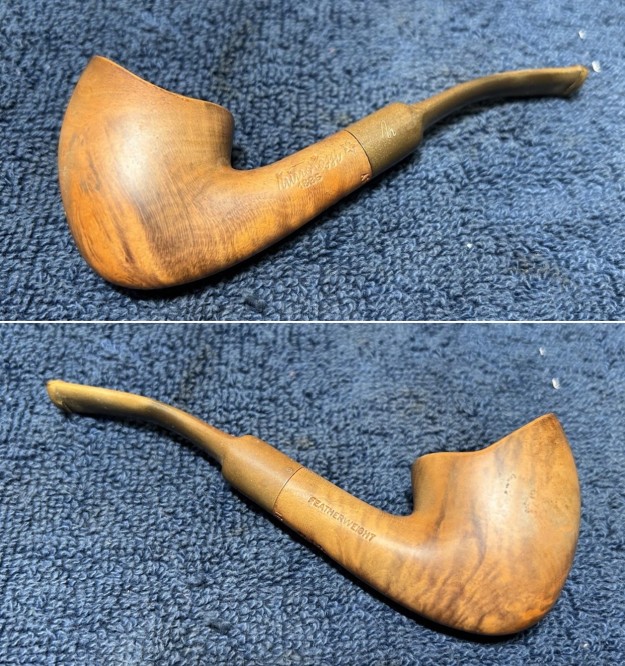
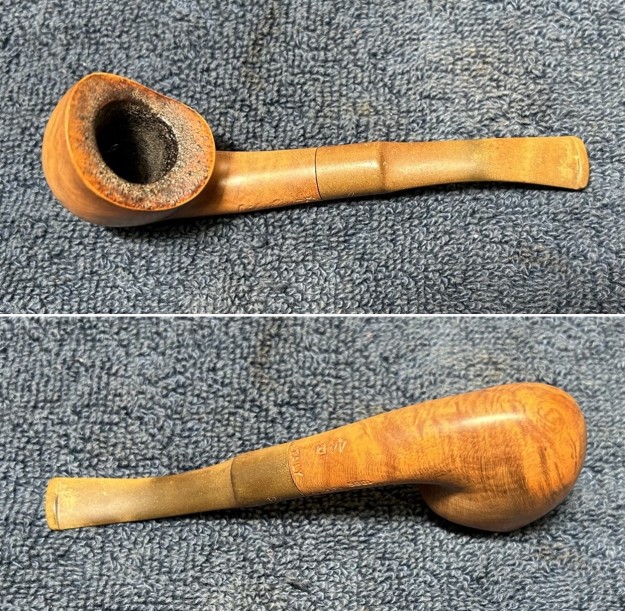
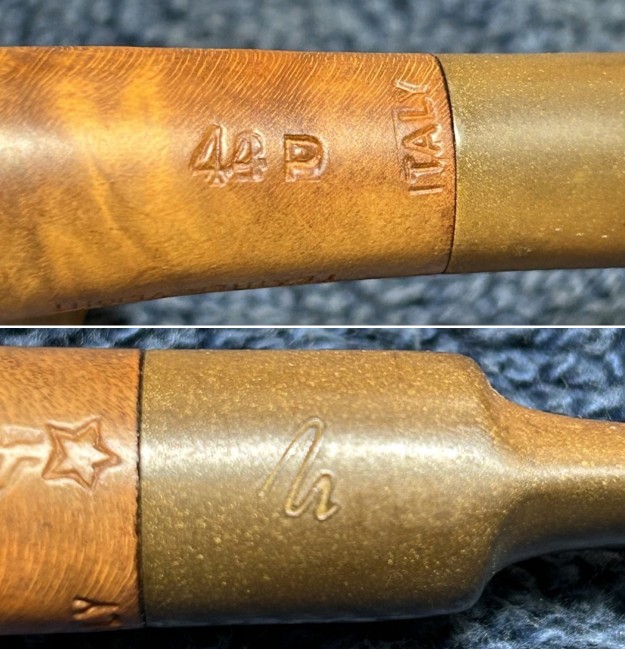
A fine gentleman from Washington contacted me recently and asked if I would restore some pipes for him. Of course, I was only too happy to oblige. This is the first of the four, and it’s the only one that doesn’t have major issues. This is a Rossi Featherweight 44P acorn pipe. It’s a pretty little pipe and I’m sure will serve its owner well. The markings on the pipe were clear and sharp. On the left-hand side of the shank, read Nino Rossi [over] 1886 – and to the right of that, a star. On the right side of the shank was the word Featherweight. On the underside of the shank, was 44P and, to the right of that, at 90 degrees, was the word Italy. On the stem was a stylized letter N. Rossi was founded by Ferdinando Rossi, in Italy, as Fabbrica di Pipe di Radica Rossi. The company dates from the mid-to-late 19th century. I would encourage you to read the Pipedia article on the company – there’s quite a bit of information: https://pipedia.org/wiki/Rossi. The article includes an important detail regarding this particular pipe:

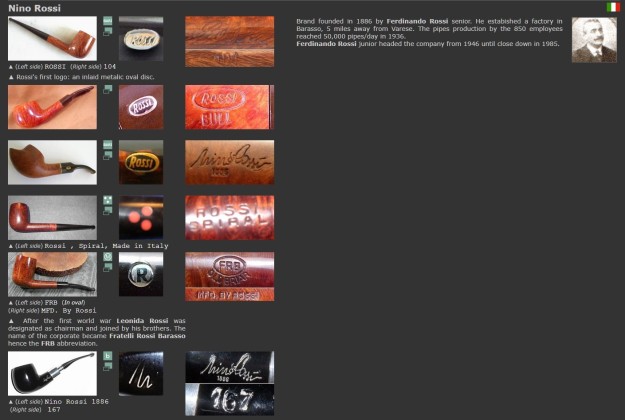
From, approximatively, seventies, until 1985, Rossi pipes were marked with “ROSSI”, into an oval (sometimes there was also “ITALY” on the shank); on the stem, there was “ROSSI”. In these years, appeared the signature “Nino Rossi” (in cursive font): he was the last heir of the factory.

From this point, we can deduce that this pipe is from the 1970s or ‘80s. Here is in an image capture from Pipephil:The pipe was in good condition and just needed some TLC to bring it back to working order. The stem was a bit dirty and thoroughly oxidized. The stummel was in decent shape, but it had a strange residue on the rim. I’d need to look into that more closely. First, I cleaned out the inside of the stem with pipe, cleaners and some lemon infused 99% isopropyl alcohol. It was pretty dirty, but not too terrible. I was more concerned about the oxidation, which was pretty heavy. I scrubbed it down with some SoftScrub cleanser and then tossed it in my deoxidizing fluid to sit overnight. The next day, I managed to scrub off even more oxidation with more SoftScrub. Before sanding the stem, I took out some nail polish and made sure to add it to the stylized N on the left side of the stem. I let that dry before moving on.I also repaired a few small nicks in the stem with some black cyanoacrylate adhesive and let it cure. That done, I proceeded to sand down the stem with my nine micromesh sanding pads. I also used some pipe stem oil during the sanding to bring out some extra lustre and beautify the stem. Just like the stem, I cleaned out the insides of the stummel with pipe, cleaners, cotton swabs, and alcohol. Took a bit of work, but I got it clean. In order to sort out the stuff stuck to the rim, I took a piece of machine metal and gently scraped it away, not wanting to do any more invasive work than I needed to. It came away reasonably easily and I carried on. I then set it up for a de-ghosting session. I put some cotton balls in the bowl and in the shank and saturated them with 99% isopropyl alcohol. I let that sit overnight to allow all of the lingering smells and stains leach out into the cotton. After that it was much improved. I wiped it down with some Murphy’s and finished up by scrubbing the insides with soap, and some tube brushes. I sanded down the stummel with my micromesh pads to make it smooth and lovely. Of course, I added some of my restoration balm to the wood and let it sit for 20 minutes or so. BUT, there was a bit of a problem. The sanding and application of balm revealed some mottling on the surface of the briar. Clearly, there was some remnants of an old lacquer or shellac. It looked awful and I couldn’t let it be. I couldn’t get rid of it with any solvents, so, unfortunately, I had to re-sand the whole thing. That worked and it looked much improved.Finally, I applied some another batch of Before & After Restoration Balm and buffed it with a microfiber cloth. This balm does beautiful things to the wood and really generates a beautiful shine. I then took the pipe to my bench polisher and buffed it with White Diamond and a few coats of carnauba wax. Wow – the pipe really looks lovely.This Nino Rossi Featherweight 44P acorn will suit my friend in Washington very well and I’m sure that he will appreciate smoking it for many years to come. I hope you enjoyed reading the story of this pipe as much I as I did restoring it. If you are interested in more of my work, please follow me here on Steve’s website or email me directly at kenneth@knightsofthepipe.com. Thank you very much for reading and, as always, I welcome and encourage your comments.

Reclaiming a Greaves Patent 2 Stubby Billiard Pipe


Blog by Paresh Deshpande

This pipe was always being relegated down the line up for restorations because of its uncanny resemblance to a Peterson’s pipe and having worked on quite a few challenging Peterson’s, I just wanted to take a break from another Peterson’s. However, the shape, size and the overall quality of this piece was undeniably attractive.

Thus, this time around when I closely observed the stamping, it turned out to be stamped across the shank on the left side as “GREAVES” over “PATENT” followed by encircled numeral 2. The right side bears the COM stamp “MADE” over “IN” over “FRANCE” in a football shape. The vulcanite stem is stamped as “GREAVES” over “PATENT”. A silver band adorns the shank end and is stamped as “S.S.G” over “E.G” followed by three faux hallmarks. I say faux hallmarks since firstly; all the cartouches differ from other and secondly, the symbols, or those that are discernible, are nothing to match the lion passant or the date code letter or the Assay office. This brand/ manufacturer is unknown to me and thus I visited pipedia.org. The information provided therein is very meagre (https://pipedia.org/wiki/Greaves) and is reproduced below:

Greaves was one of many brands owned by the Oppenheimer Pipe group, apparently made in France, likely by Marechal Ruchon & Cie. as evidenced in the following catalog page from a Circa 1950s Oppenheimer Pipes Catalog. Unfortunately, for the info of readers, this link has expired and does not work.

I have also reproduced a couple of pictures of c.1950s Oppenheimer pipe catalog from this site.I visited pipephil.eu for some additional information on this brand. Here I learned that the Greaves stem differs from the Peterson P-Lip in that the hole is drilled straight in to the bit in Greaves stem and the smoke is not deflected towards the palate as in P-lip. I have included a screen shot of the same along with the link below. http://www.pipephil.eu/logos/en/logo-g5.htmlGreaves is a brand of Marechal Ruchon (which became C.G. Verguet Frères). These companies belonged to Oppenheimer Holding.

I further searched the internet for additional information and came up naught. There were a few pictures, some with ferrule and some without. However, those with ferrule all were stamped as GREAVES over PATENT in football shape. Here are a few pictures for your consumption.Thus from the above it is understood that this was one of the French brands, likely from Marechal Ruchon & Cie. in the Oppenheimer holdings and find mention in 1950s catalog. However, the question that still haunts me is the difference in the ferrule stampings and makes me question if the band is original to the pipe or otherwise and for what purpose. It definitely is not a repair band as the shank face shows no signs of cracked shank end and the only plausible reason is decorative purpose! Any clarifications on this issue would be most welcome.

Initial Inspection
This Greaves Patent pipe has a classic chubby Billiard shape. It is a small sized pipe, about 5 inches in length, but the stout shank, bowl and stem lends it an overall attractiveness and hand feel. The rim top is covered in lava overflow while the chamber has a medium layer of uneven cake. The chamber appears to be out of round due to the thinning of the inner rim edge in the 12 ‘O’clock direction. The stummel surface is covered in dirt and grime through which beautiful flame grains are seen that radiate from the front of the bowl to the sides. The front of the bowl has a chipped area that will need to be filled. The mortise is clogged and the airflow through it is greatly restricted. The P-lip tapered vulcanite stem is oxidized with minor bite marks/ tooth indentations and traces of calcification in the bite zone. The stem does not fit snugly in to the mortise. The following pictures should give the readers a general idea of the condition of the pipe before I start working on it. Detailed Visual Inspection
The chamber has a decent layer of uneven cake and has a strong residual pungent smell of Latakia forward blend of tobacco. There is thick overflow of tobacco oils, ash and grime over the rim top surface that spills over to the sides of the bowl. The condition of the outer rim edge can be ascertained only after the rim surface is rid of complete lava overflow. However, that the inner rim edge has damage is visible through the grime. The rim surface has thinned out (encircled in yellow) in 12 and 3 o’clock due to removal of charred edge by the erstwhile individual who held the pipe in his/ her trust. Any other issues with the inner rim edge will be known after the rim top surface has been cleaned. The draught hole is at the bottom centre of the chamber and thus should be a decent smoker.The smooth stummel surface has some very beautiful cross grain patterns on the sides with loosely packed bird’s eye grain to the front and back. The stummel has taken on a lovely dark patina from years of usage. The lava overflow from the chamber has spilled over on to the sides of the stummel and has accumulated a lot of grime and dust imparting the stummel a lifeless and bone dry appearance. The front of the stummel has a prominent chip from where a chunk of briar is missing (encircled in pastel blue). There are a few minor scratches and dings over the bowl surface commensurate to the pipe’s journey to date. The stem is very firmly attached in to mortise and would not budge. I shall initiate measures to separate the two subsequently. The P-lip like stubby tapered vulcanite stem is deeply oxidized and covered in dirt and grime. A few deep tooth chatter and tooth indentations are seen on both the upper and lower stem surfaces in the bite zone and the lower button edge has been chewed off. The tenon of the stem is firmly stuck in to the mortise and its condition will be ascertained once the two are separated. The airflow through the airway is laboured and not smooth.The Process
The first issue that I addressed was to separate the stem from the shank. I dribbled a few drops of alcohol through the gap between the stem and shank with an eyedropper with the intent that the alcohol would moisten and loosen the gunk holding the tenon and set it aside for a few minutes. Thereafter, I gently twisted the stem the stem in order to pull the stem out. However the stem did not budge. I repeated the process of moistening the gunk holding the tenon in to the mortise using alcohol. After repeating the process a couple of times, I was finally able to separate the stem from the shank. A close observation of the mortise revealed a completely clogged mortise and an equally gunk and crud encrusted tenon end. It appears that the mortise and stem has never ever been cleaned.With the stem now separated from the shank, I cleaned the stem airway and surface using thin shank brushes and anti oil dish washing soap. I dried the stem airway by blowing out excess water and thereafter running a couple of pipe cleaners through the airway. Once the stem internals had been cleaned, I immersed it in “Before and After Deoxidizer” solution along with the stem of other pipes in line for restoration. This solution has been developed by Mark Hoover and works to draw out all the deep seated oxidation from the surface making its subsequent cleaning and polishing a breeze. I would definitely recommend this product as it saves on to time and efforts. The pipe has been marked with a yellow arrow for easy identification.While the stem was soaking in the deoxidizer solution, I worked on the stummel by reaming the chamber walls with my fabricated knife to remove the carbon deposits. Once the cake was reamed back to the bare briar, I used a 150 grit sand paper followed by 220 grit sand paper to remove all the traces of the remaining cake and also to smooth out the inner walls of the chamber surface. Finally, to remove the residual carbon dust, I wiped the chamber with a cotton pad wetted with 99.9% pure isopropyl alcohol. I gently scraped the rim top surface to remove the lava overflow. This was followed by cleaning the mortise with cue tips, pipe cleaners and a shank brush dipped in isopropyl alcohol. I scraped the walls of the mortise with my fabricated knife to remove the dried oils and tars. The heap of gunk scraped out from the mortise walls tells the sordid saga of the condition of the shank internals. Well, the shank internals are clean and will be further cleaned once the stummel exterior is cleaned using oil soap and shank brushes. However, the odours are still very strong and would need more intrusive methods of cleaning.Continuing with the internal cleaning of the chamber and shank, I subjected it to a salt and alcohol bath. I used cotton balls which is an at par substitute to kosher salt as I have realized over the years. I drew out a wick from the cotton and along with a folded regular pipe cleaner; inserted it into the mortise and through the draught hole and further into the chamber. Thereafter, I packed the chamber with cotton balls to about quarter of an inch below the rim inner edge and soaked the cotton balls with isopropyl alcohol up to the brim. About half an hour later, the level of alcohol had gone down, having being absorbed by the cotton. I topped it up once again and set it aside overnight. By next afternoon, the cotton and alcohol had drawn out all the remaining oils/ tars from the chamber and mortise and loosened out any residual cake and tar build up, fulfilling its intended task. I removed the cotton balls and ran pipe cleaners through the mortise to clean out all the loosened tars and gunk. Using my fabricated tool, I scraped out the entire loosed gunk from the mortise and further cleaned it with alcohol and q-tips. I also scraped the moist cake from the chamber using my knife and sanding it smooth with 180 grit sandpaper. The chamber now smelled clean and fresh and the tiny veins observed in the chamber were eliminated. I set the stummel to dry out naturally.As I was cleaning the shank internals, the metal band came loose from the shank end. Careful inspection of the now exposed shank end confirmed that the surface is sans any cracks or chips. I kept the band aside to be worked upon later.

The next morning, I removed the stems that had been soaking in the deoxidizer solution overnight. I cleaned the stem surface and airway under running warm water and scrubbed the raised oxidation from the stem surface using a Scotch Brite pad and the airway with thin shank brush. I further removed the oxidation by scrubbing the stem with 0000 grade steel wool and applied a little olive oil to rehydrate the stem.While the stem was set aside to rehydrate and absorb the EVO, I cleaned the external surface of the stummel with Murphy’s Oil Soap. I scrubbed the stummel surface with anti oil dish washing detergent using a Scotch Brite pad and a hard bristle toothbrush under warm running water, always being mindful of the stamping on the shank surface. I paid particular attention to the rim top surface to rid the rim of all the residual crud and lighten the darkening around the rim surface. Thereafter, I dried the stummel using paper towels and a soft cotton cloth and set it aside to dry out naturally. The extent of the gouge is now easily discernible and is encircled in blue. This will need to be addressed. I followed up the external cleaning of the stummel with internal cleaning of the mortise and shank using anti oil soap and shank brushes. The shank internals are now clean and fresh.Continuing with the stem refurbishing, I heated the bite zone with the flame of a lighter to raise the tooth indentations to the surface. Though the results were not what were expected, the vulcanite was raised a little leaving behind two visible tooth compressions on either surfaces. The button edges and deeper tooth indentations on either surfaces of the stem were filled with a mix of CA Gorilla superglue and activated charcoal powder and set aside for the fill to cure.With the stem repairs set aside, I addressed the rim top darkening and unevenness by topping the surface on a piece of 220 grit sandpaper. I frequently checked the progress being made as I hate to lose briar more than what is absolutely necessary. The chamber now appears more out of round than before and would be addressed by creating a bevel over the inner rim edge. With a folded piece of 220 grit sandpaper pinched between my forefinger and thumb, I imparted a nice bevel to the inner rim edge. This masked the out of round appearance of the chamber and also eliminated the minor charring over the edges. I evened out the outer rim edge n the same way. The rim top surface now has a nice rounded appearance with even rim edges.Next, I filled the deep gouge to the front of the stummel with a mix of briar dust and superglue. This mix hardens very rapidly and invariably reveals air pockets when sanded. To mitigate this, one has to re-patch the fill and this is exactly what I followed. Using a flat needle file, I sanded the patch to achieve a rough match of the fill with the rest of the stummel surface. I further evened out the patch with a folded piece of 220 grit sandpaper. I am quite satisfied with the appearance of the stummel surface at this point in restoration. Thereafter, I completed the polishing of the stummel by wet sanding the surface with 1500 to 12000 grit micromesh pads. I wiped the stummel with a moist cloth in between the pads to gauge the progress being made and massaged a small quantity of Before & After Restoration balm and set it aside for 10 minutes for the briar to rehydrate. Thereafter, I gave a rigorous hand rub using a microfiber cloth. The stummel now has a nice vibrant shine to it with the beautiful cross grains and bird’s eye grains resplendent in all their glory. I completed the mundane but equally important task of polishing the Sterling Silver filigree band. I used Colgate toothpowder to polish the band. The ultra fine powder was rubbed over the band and wiped it out. The polish completely removed the oxidation and gave a nice shine to the band which was further improved by polishing it with a jeweller’s cloth. Using CA superglue, I reattached the band at the shank end.Stummel repairs and refurbishing is now complete, save for the final polishing, I moved on to stem repairs. The stem had cured completely and began the stem refurbishing by first sanding the stem fills using a flat needle file to roughly match the rest of the stem surface. I masked the stem markings with a tape to preserve them as it was already worn out and avoid further wearing down during the polishing process. Thereafter I sand the fill with a piece of 320 grit sandpaper to blend in the repairs. I also lightly sand the entire stem surface to remove the raised oxidation from the surface.I followed it up by wet sanding the entire stem surface using 400, 600, 800, 1000, 1500 and finally with a piece of 2000 grit sand paper. This serves to reduce the sanding marks of the more abrasive sand papers. I also sharpened the button edges while sanding. I wiped the stem with a moist cotton swab to remove all the oxidation and sanding dust from the surface. I applied a little Extra Virgin Olive oil over the stem and set it aside to be absorbed by the vulcanite.I went through the 1500 to 12000 grit micromesh pads to wet and dry sand the stem. The stem now has a nice deep shine with no traces of oxidation around the entire stem surface. To apply the finishing touches, I mounted a cotton cloth buffing wheel on to my hand held rotary tool and applied a coat of Blue Diamond to the stummel and the stem to polish out the minor scratches. With a cotton buffing wheel that I use for carnauba wax, I applied a coat of carnauba wax and continued to work on it till the complete coat of wax had been polished out. I mounted a clean cotton cloth buffing wheel and gave the entire pipe a once over buff. I finished the restoration by giving the entire pipe a rigorous hand buffing using a microfiber cloth to raise the shine further. The finished pipe looks beautiful and is ready to be added to my collection of inherited pipes. I thoroughly enjoyed working on this project and seeing the pipe transforming itself in to a beautiful piece. However, the research on this particular pipe has highlighted more questions than answers. I would appreciate if the knowledgeable readers could clear the cobwebs of questions surrounding the provenance of this beauty. Thank you for reading through this write up and also in anticipation for the input on this particular piece.


Transforming an Old, Battered and Abused Brigham #417 Four Dot


Blog by Paresh Deshpande

This pipe has been in my possession for so long that details of how, when and where of this pipe have faded away from my memory. However, years after procrastinating on the restoration of this pipe, it’s finally on my work table.

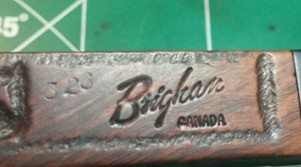
This is a partially rusticated straight Rhodesian with smooth side panels and a smooth shank bottom that bears the stampings of this pipe. The rustications are worn down and at some places the rustications have completely smoothed out, signifying that it had been in regular use of the previous pipe man/ woman and has been extensively used. Though the stampings are quite worn, they are easily discernible under bright light and magnification. It is stamped towards the shank end as “BRIGHAM” in script at an upwards angle moving from left to right over “CANADA” in straight capital letters. Towards the bowl end, faint shape code # “417” can be seen. The left of the stem towards the tenon end and shrouded beneath all the oxidation and grime, four dots arranged in a diamond shape are visible. I have a post-patent era (1956- 1969) Brigham that I had got from Steve and had read through the entire write up. It provided a deep insight in to the genesis, history and the dating of Brigham pipes. Here is the link to the write up and is highly recommended read.

https://rebornpipes.com/2019/01/13/restoring-pipe-16-from-bob-kerrs-estate-a-brigham-3-dot-canadian-691/

Next to ascertain the date and significance of the dots, I visited pipedia.org and went through the complete article written by well known to me pipe restorer, researcher and author of an authoritative book on Brigham pipes, Charles Lemon of Dad’s Pipe. I have reproduced an extract of relevant information related to the pipe that I am working on.
 “I have dubbed the decades between 1980 and 2000 the Late Canadian Era, a period that saw several changes at Brigham that are of note to the collector. First, the traditional 8-grade pinning system (the famous Brigham “Dots” which denoted the quality of the pipe) was changed to a 7-grade system to simplify pinning (more on this below), and the Norsemen and Valhalla series were merged to form the President Series, which represented the very finest pipes coming out of the Toronto factory. Early pipes from this era (left, below) are stamped with a shape number and “Brigham” over “Canada”; later pipes (late 1980s+, on right below) are stamped simply with a shape number and the Brigham logo.

The Original Brigham Dot System 1938 – 1980
Brigham pipes are reknown in the pipe world for their famous “Brigham Dots”, a system of brass pins inset in the stem to denote the grade of each pipe. The original 8-grade pinning system, used for 42 years between 1938 and 1978 (spanning the Patent, Post-Patent and Canadian Eras) looked like this:The pipe on my work table, thus, is from the early 1980s and a “Director” grade Brigham.

With the provenance of the pipe now established, it was time to move ahead with the initial/ detailed inspection and restoration.

Initial Inspection
The pipe, as it sits on my work table, does not present a very promising picture. However, having worked on a couple of hundred pipes, some in much worse condition that this one, I am sure with some TLC and repairs, the beauty of this pipe can be restored to its former glory. The smooth rim top shows damages consistent with having been knocked against hard edges and is covered with overflowing lava. The partially rusticated stummel surface is covered in dirt and grime giving the surface a dull and lacklustre appearance. The rustications are worn down at places to nearly a smooth surface. The vulcanite stem is deeply oxidized and is missing a chunk of vulcanite from the bite zone on the lower surface. The seating of the stem in to the mortise is loose. The following pictures will give you a clear idea to the condition of the pipe as I start the restoration work. Detailed Inspection
The stummel is smooth towards the tapered upper ½ inch and extends over the rim top surface. The rim top surface is uneven, a result of being knocked against a hard edge of a table. I suspect that this damage is more severe on the left side between 6 and 9 o’ clock direction (encircled in green). The cake is thick and hard and overflowing over the rim top surface. It is also observed that the cake is thicker towards the upper half of the chamber and has a strong sweet molasses like smell permeating from the pipe. The condition of the chamber walls is hidden beneath the thick cake and will be ascertained only after the cake has been taken down to the bare briar. However, after careful external examination of the surface, I am confident that there is no damage to the chamber walls as the stummel surface is hard and solid all around.The partially rusticated stummel surface is covered in dirt, dust and grime giving the surface a dull, dirty and lifeless appearance. The nooks and crannies of the rustications shows accumulated oils, tars and dust that have darkened over time. There are flecks of white paint embedded within these crevices of the rustications. These rustications have worn down significantly and have smoothed out at many places. The stummel surface is solid to the touch signifying less likelihood of any chamber damage. The stummel has taken on a nice dark patina from 40 years of heavy usage and I would like to preserve it through all the cleaning and polishing. The mortise is relatively clean as expected since the long metallic tenon housing the trademark maple wood filter sits close to the mortise face. The vulcanite stem is deeply oxidized and appears dirty green. The lower surface of the stem has a large chunk of vulcanite missing from the bite zone, including the button. The four brass dots are covered in oxidation and would need to be cleaned and polished. Once the stem has been cleaned and polished, these brass dots will add an element of dazzle to the entire pipe. The long aluminum tenon which houses the Brigham trademarked Maple wood filter is covered in dried oils and tars. The filter is completely stuck in to the tenon and wouldn’t budge and the sweet smell too is very strong.The Process
The first issue that I tackled was that to separate the maple filter from the aluminum tube tenon. I chucked the stem in to the freezer for a couple of hours. Thereafter, I gently and lightly heated the tenon with a Bic lighter. This loosened the oils and tars and gunk that held the filter in to the tenon. Using a pair of nose pliers, I gently pulled out the maple wood filter. The following pictures will give you an idea as to how filthy and dirty the filter was and made me ask myself whether the filter was ever replaced/ cleaned.In preparation for immersing the stem in to the oxidation remover solution, I cleaned out the aluminum tenon and stem airway using dish washing soap and shank brushes. I further cleaned the stem airway using hard and regular pipe cleaners and alcohol. The stem internals are now clean and ready for further processes.I immersed it in “Before and After Deoxidizer” solution along with the stems of other pipes in line for restoration. This solution works to draw out all the deep seated oxidation from the surface making its subsequent cleaning and polishing a breeze. I would definitely recommend this product as it saves on to time and efforts. The pipe has been marked with a blue arrow for easy identification. At this stage, I called it a day as it was well past midnight.The next afternoon, I removed the stems that had been soaking in the deoxidizer solution overnight. I cleaned the stem and the stem airway under running warm water and scrubbed the raised oxidation from the stem surface using a Scotch Brite pad and the airway with thin shank brush. I further removed the oxidation by scrubbing the stem with 0000 grade steel wool and applied a little olive oil to rehydrate the stem. I used the steel wool to clean the aluminum tenon and it did make a world of difference to the appearance of the tenon.Continuing with the stem repair, I inserted a triangulated index card covered in transparent tape in to the slot. The tape prevents the mix of superglue and charcoal from sticking to the index card. I mixed superglue and activated charcoal powder and generously applied it over the bite zone, including over the buttons and set it aside for the fill to cure.Once the repairs had hardened, I shaped the button and the bite zone using a flat needle file. I roughly matched the freshly shaped surface with the rest of the stem by sanding the patch with a folded piece of 220 grit sand paper. At this stage, I noticed air pockets in the patch on the upper surface of the stem (encircled in red) and also the horizontal slot needed a rebuild. I mixed a fresh batch of activated charcoal and superglue and rebuilt the entire bite zone on the upper surface and also the horizontal slot. I set the stem aside for the fills to cure. While the stem repairs were set aside to cure, I moved on to reaming the chamber with my PipNet pipe reamer. I started the reaming process with head size 1 of the PipNet reamer blade and progressed through to head size 2. I used my fabricated knife to remove cake from areas inaccessible to the reamer blades and completed the process of removing the cake by sanding the walls smooth with a folded piece of 180 grit sandpaper. I wiped the chamber with a cotton swab wetted with alcohol to clean the residual carbon dust. The chamber walls are solid and the hard layer of cake had worked well to protect the chamber walls.Next, I cleaned the mortise by scraping out all the dried oils and tars from the walls with a dental tool. I further cleaned the mortise using bristled and regular pipe cleaners dipped in alcohol. Continuing with the internal cleaning of the chamber and mortise, I subjected it to a salt and alcohol bath. I used cotton balls which is an at par substitute as I have realized over the years. I drew out a wick from the cotton and along with a folded regular pipe cleaner; inserted it into the mortise and through the draught hole and further into the chamber. Thereafter, I packed the chamber with cotton balls to about quarter of an inch below the rim inner edge and soaked the cotton balls with isopropyl alcohol up to the brim. About half an hour later, the level of alcohol had gone down, having being absorbed by the cotton. I topped it up once again and set it aside overnight. By next afternoon, the cotton and alcohol had drawn out all the remaining oils/ tars from the chamber and mortise and loosened out any residual cake and tar build up, fulfilling it’s intended task. I removed the cotton balls and ran pipe cleaners through the mortise to clean out all the loosened tars and gunk. Using my fabricated tool, I scraped out the entire loosed gunk from the mortise and further cleaned it with alcohol and q-tips. The large blobs of now moistened gunk that was removed from the mortise should give the readers an idea of how filthy the mortise was when I started the process of cleaning. The chamber now smells clean and fresh. I cleaned the external surface of the stummel with undiluted Murphy’s oil soap and a hard bristled toothbrush. I cleaned the smooth rim top surface with the soap and Scotch Brite pad. I scrubbed the rim top surface with a wire brush to remove the lava overflow and followed it up with a scrub using Scotch Brite pad. The stummel was dried using paper towels and soft cotton cloth. The clean rim top presents charred surface between 6 and 9 o’clock and in 12 o’clock direction (encircled in yellow) and also a couple of dents with thinning of the rim (encircled in red). I simultaneously cleaned the mortise with dish washing soap and shank brushes till all the loosened oils, tars and gunk, a result of the salt and alcohol bath, were completely removed. I dried the shank internals using paper towels and pipe cleaners.The external cleaning had revealed all the issues to the stummel surface that needed to be addressed and I decided to tackle the darkening and dents/ dings to the rim top surface. To address the rim top damage, I topped the rim top on 220 grit sandpaper till the surface was nice and even. I hate losing any briar and restrict it to the barest minimum that is required. The damage to the inner rim edge, though greatly eliminated, can still be seen to the back and left side of the rim edge (encircled in green) and the chamber too appeared to be out of round. These issues would be addressed next. To get the chamber back to round and address the still visible chipped surfaces over the inner rim edge, I created a bevel over the inner and outer edge with a folded piece of 220 grit sand paper. I am pretty pleased with the progress being made thus far. Next, I subjected the smooth surfaces over the stummel to a complete cycle of micromesh polish, wet sanding with 1500 to 12000 grit pads. I wiped the stummel with a moist cloth after every grit pad to remove the sanding dust left behind by the pads. This also helps in monitoring the progress being made and ensures early corrective action. I am happy with the progress being made until now. I massaged a small quantity of “Before and After Restoration Balm” into the briar surface with my finger tips and worked it deep into the surface and let it rest for a few minutes. The balm almost immediately works it’s magic and the briar now has a nice vibrant appearance with the beautiful bird’s eyes and cross grain patterns on full display. Now that the stummel repairs are completed, I turned my attention back to the stem repairs. The second attempt fills were well cured and I moved ahead with the process of filing and shaping the button end with a flat head needle file. With a flat needle file, I reshaped the horizontal slot end. For a better blending, I further sanded the entire stem with a folded piece of 220 grit sandpaper. The few minor air pockets that are visible will be completely eliminated as I progress with the sanding and polishing process. I continued to work on the stem and progressed to wet sanding the entire stem with a folded piece of 320 followed by 600, 800, 1000, 1500 and 2000 grit sand papers. Thereafter, I polished the stem by dry sanding the stem with 3200 to 12000 grit micromesh pads. I strictly avoided running the lower grit sand papers over the four brass dots, polishing them with 6000 to 12000 grit micromesh pads. I rubbed a small quantity of EVO into the stem surface and set it aside for the vulcanite to absorb and hydrate. Before moving on to final polishing of the entire pipe using polishing compounds, there was one aspect, though not critical, but important and that was to clean the gaps between the two rings separating the cap from the rest of the stummel. I used a sharp dental tool to clear out all the debris that had lodged between the rings.To complete the restoration, I mounted a cotton cloth buffing wheel on to my hand held rotary tool and polished the stummel and stem with Blue Diamond compound. This compound helps to remove the minor scratch marks that remain from the sanding. I wiped/ buffed the pipe with a soft cotton cloth to clear it of any leftover compound dust. With a cotton buffing wheel that I use for carnauba wax, I apply a coat of carnauba wax and continue to work on it till the complete coat of wax had been polished out. I mount a clean cotton cloth buffing wheel and give the entire pipe a once over buff. I finished the restoration by giving the entire pipe a rigorous hand buffing using a microfiber cloth to raise the shine further. The finished pipe looks beautiful and is ready to join my other Brigham that I had received from Steve. Looking forward to enjoying my leisure time with this beautiful and gorgeous looking pipe, smoking my favorite tobacco!! P.S.: No Brigham pipe is complete without it’s trademark Maple wood filter. I replaced the old and clogged filter with a fresh filter and now it’s truly ready to deliver it’s unique smoking experience that I have come to appreciate after smoking the one in my collection. I storngly recommend that every pipe smoker must experience the pleasures of smoking a Brigham pipe at least once.

An Unusual and Unique 1935 Dunhill Dryway Shell Briar Billiard


Blog by Steve Laug

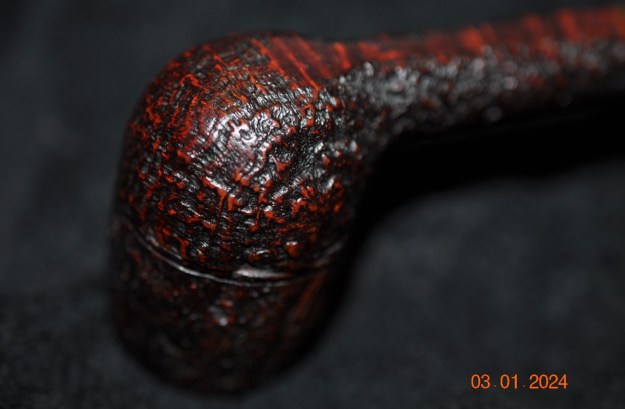
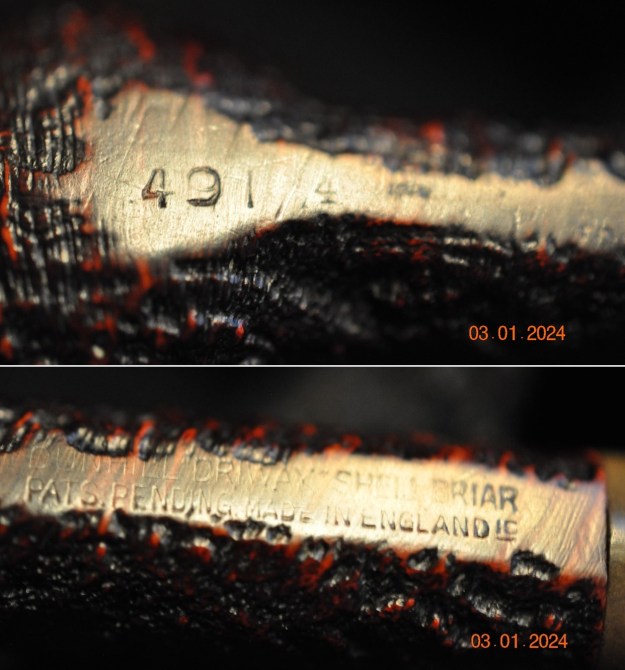
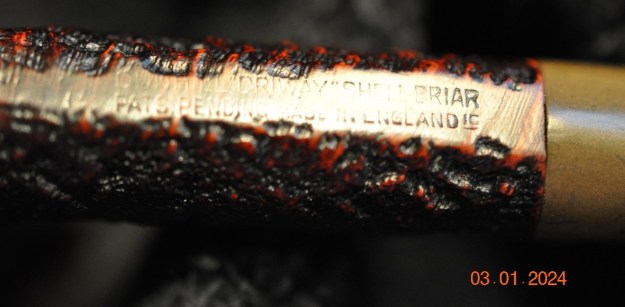
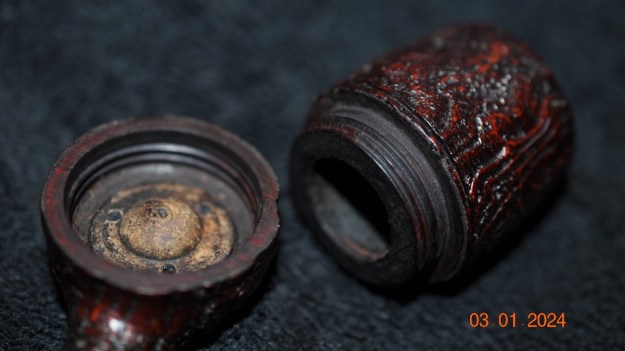
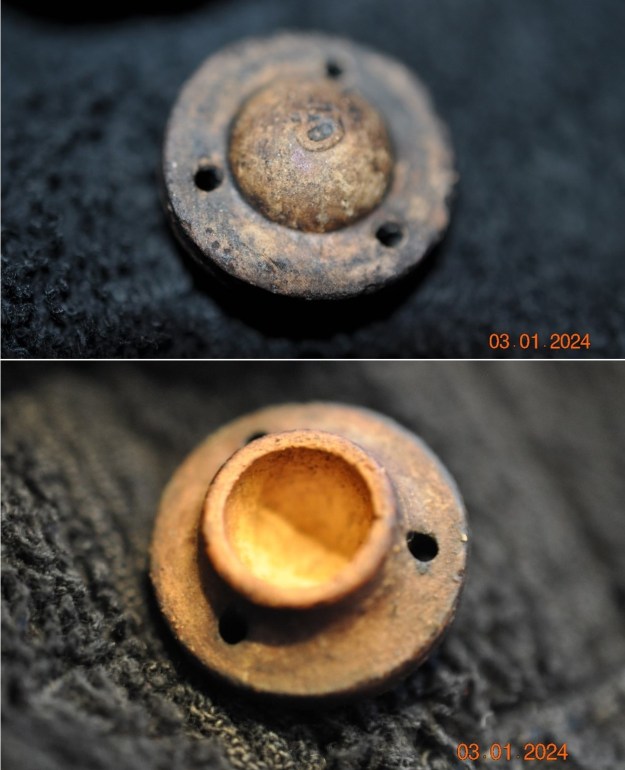
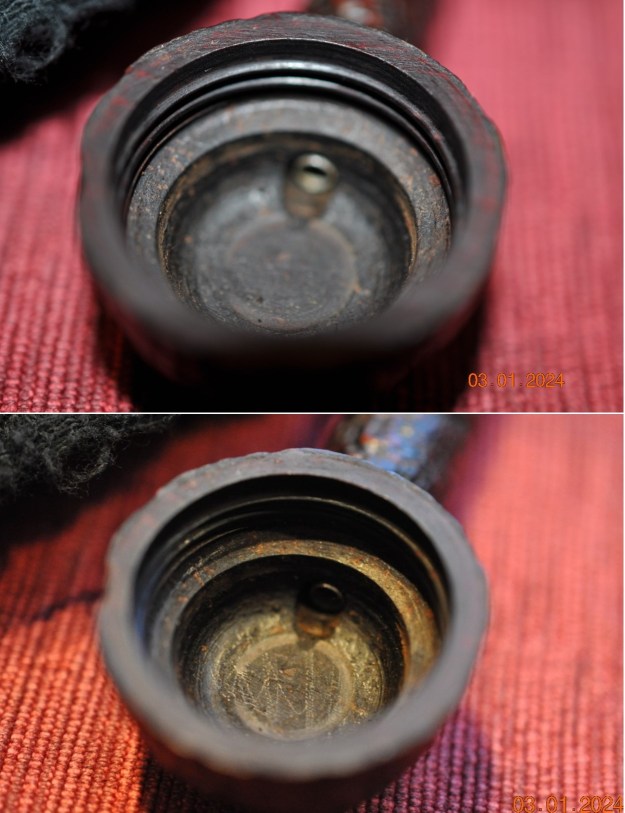
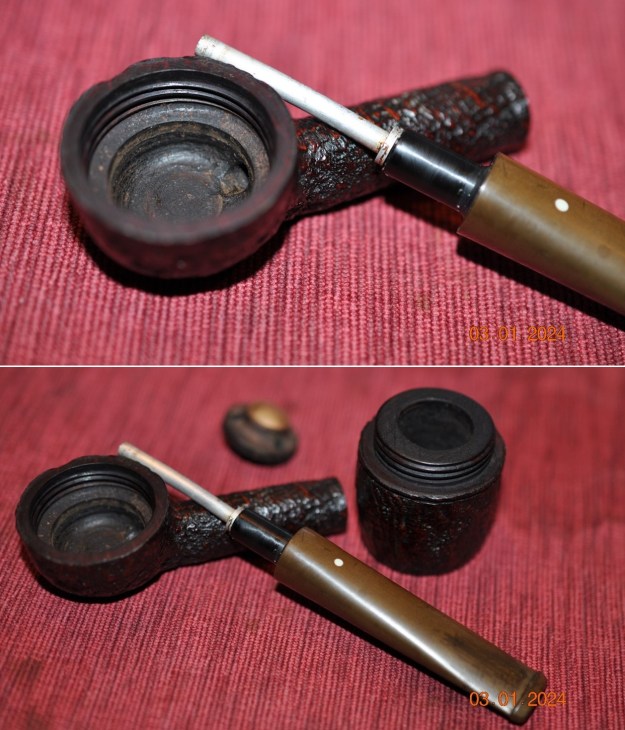
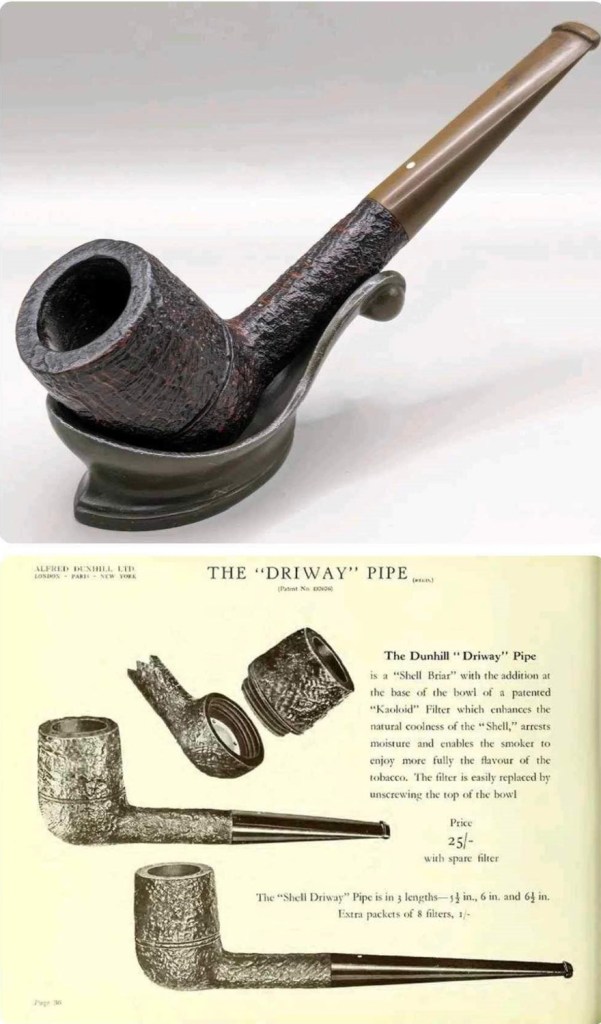
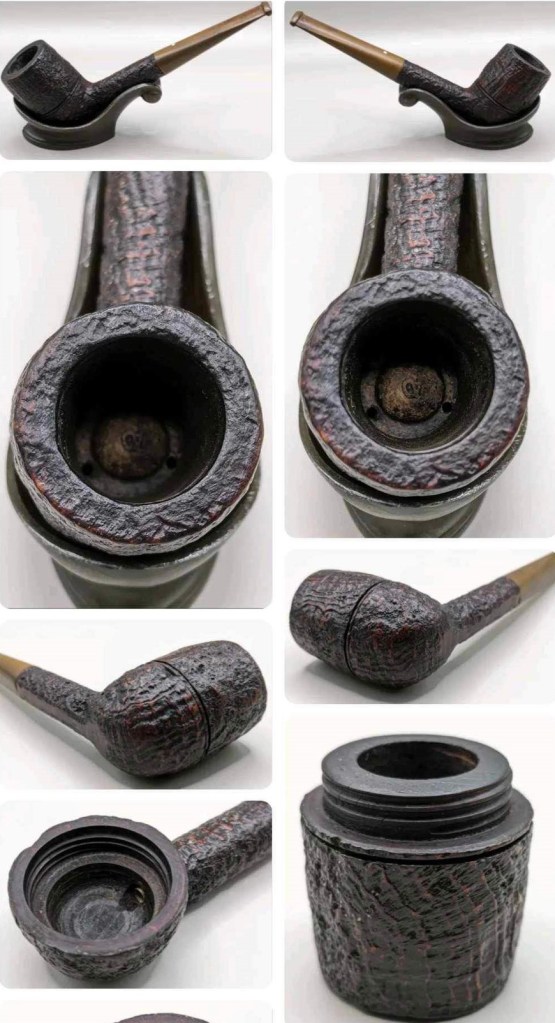
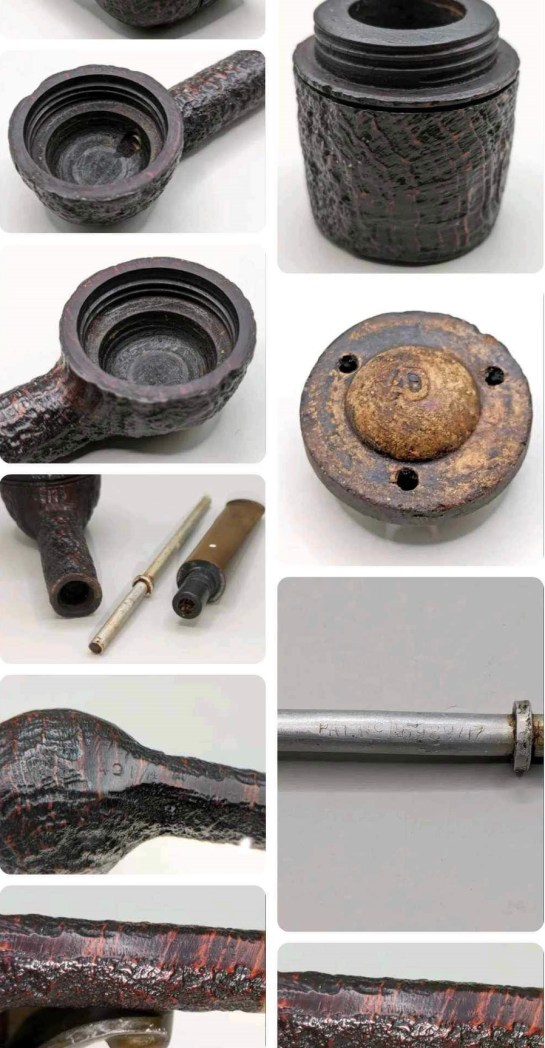
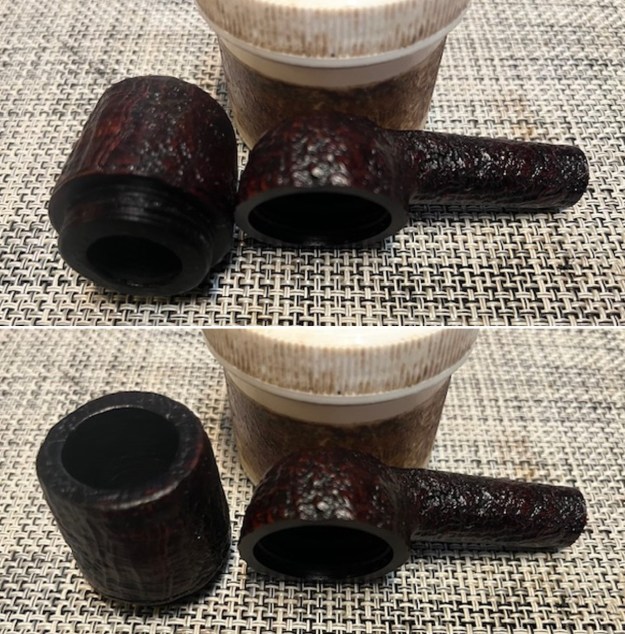
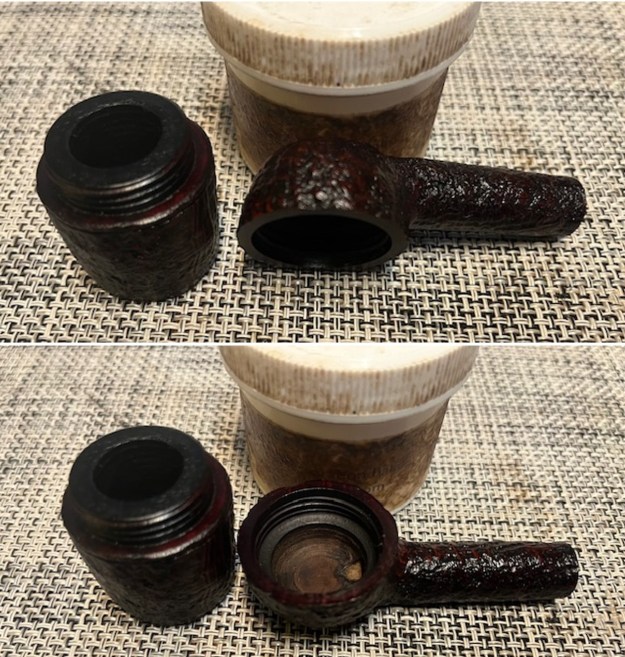
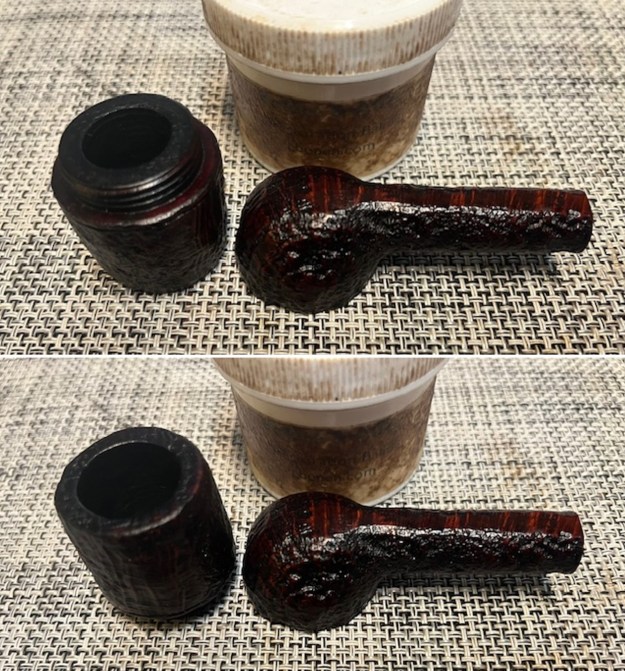
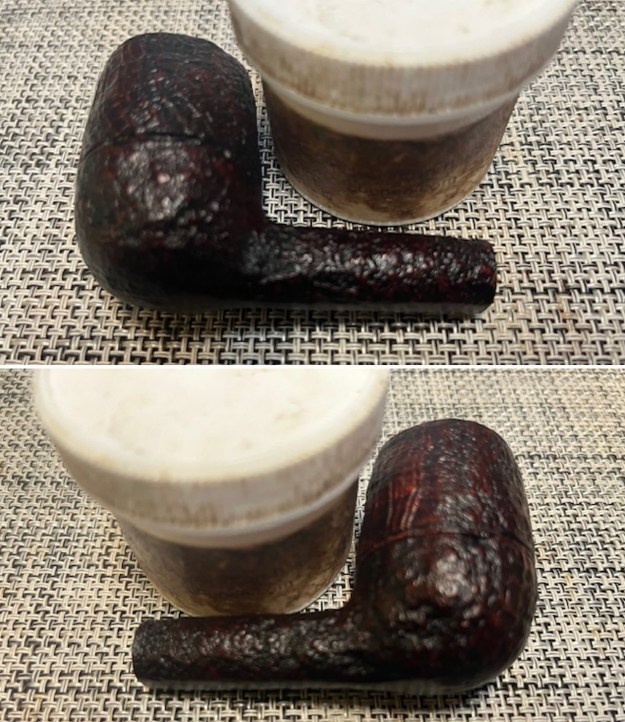
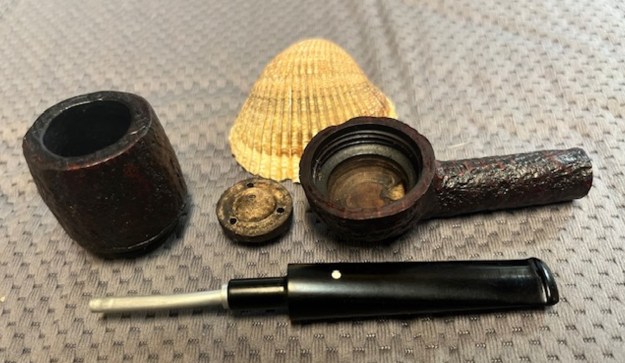
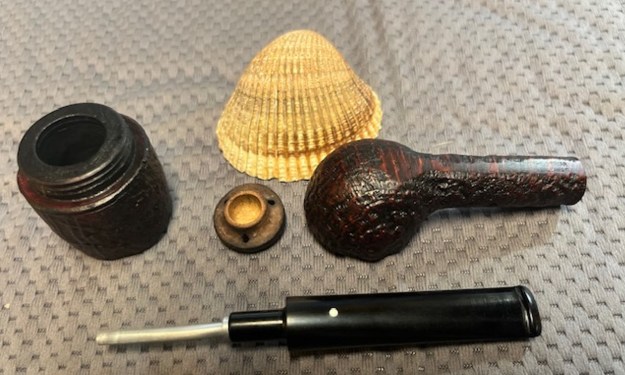
The next pipe on the table is a unique one and I think it is an older one. We purchased it from our contact in Copenhagen, Denmark 02/11/24. The pipe is a Shell Briar with a rugged sandblast finish. The upper portion of the bowl is threaded and screws into the base of the pipe. The junction is very smooth and the grain above and below the split is matched. The pipe is stamped on the heel of the bowl and the underside of the shank on a smooth panel. On the heel it is stamped with the shape number 491 followed by a /4 which I believe refers to the size of the pipe – a Group 4. That is followed by Dunhill “Driway” Shell Briar [over] Pats. Pending [followed by] Made in England 15. The superscript, underlined 15 is the date stamp. The pipe had been smoked and there was a light cake in the bowl with a light lava overflow in the sandblast on the rim top. The stem is oxidized and had tooth marks on both the top and underside of the stem just ahead of the button. Jeff took photos of the pipe before he started his clean up work. I have included them below. Jeff took photos of the rim top, bowl and the surfaces of the stem to give a sense of the condition of the pipe. The walls of the bowl had a light cake on them. The bottom of the bowl has what appears to be a white disc on the bottom from these photos. In later photos Jeff took the pipe apart to show the parts. The stem is oxidized and has tooth marks on both sides ahead of the button and some roughening on the button surface as well. He took photos of the sides and heel of the bowl to give a clear picture of the depth of the sandblast. You can also see the separation on the bowl sides showing where the top of the bowl screwed into the threaded base of the bowl. He took photos of the stamping on the underside of the bowl and the shank. It is clear and readable and read as noted above. Jeff unscrewed the bowl from the base to show how the parts fit together. The base and the bowl have some tars and oils around the threads and in the bottom of the base. The photos also show the clay disc that have three holes around the edges that filter out the moisture and tars. Jeff removed the disc to give a sense of what it looked like. The dome of the clay disc is stamped AD (Alfred Dunhill) on the topside. The underside is a cup that elevated the disc slightly from the bowl of the base.He also took photos of the base to show the condition of the bowl. You can see both the oils and the tobacco debris on the walls. At the back of the bowl you can also see where the inner tube in the shank enters the base.Jeff removed the stem to show the inner tube that fit in the shank and the stem. The pipe is quite a system.Jeff sent me the photos that our contact in Copenhagen included for him so that he could have a look at regarding this pipe. I am including them below. They include a part by part series of photos that show the parts from a variety of angles to give a sense how it all looks as a whole and in pieces. I have quoted the advertising information on the first card below. It is a fascinating read and the prices are an interesting to imagine on these pipes. I quote below:The Dunhill “Driway” Pipe is a “Shell Briar” with the addition at the base of the bowl of a patented “Kaoloid” Filter which enhances the natural coolness of the “Shell,” arrests moisture and enables the smoker to enjoy more fully the flavour of the tobacco. The filter is easily replaced by unscrewing the top of the bowl. The Price is 25/- with spare filter.

The “Shell Driway” Pipe is 3 lengths – 5 ½ in., 6 in. and 6 ½ in. Extra packets of 8 filters, 1/-

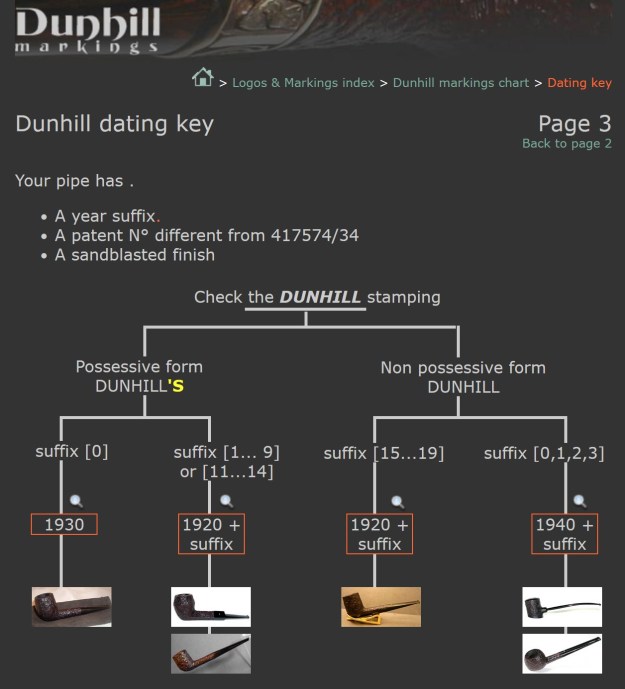
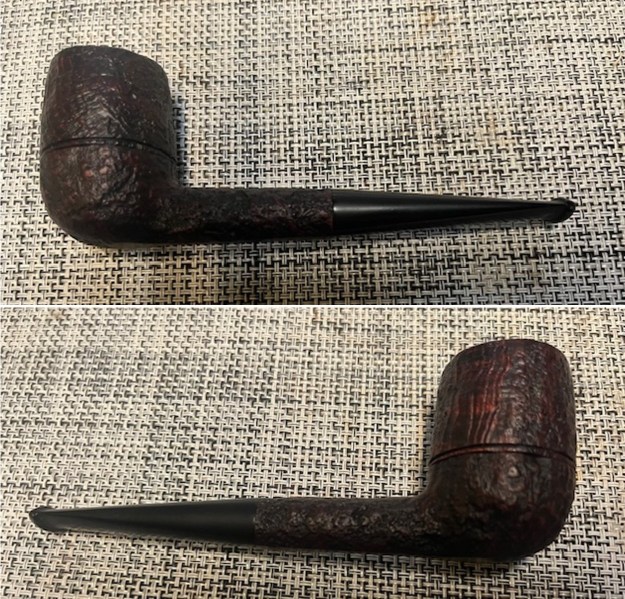
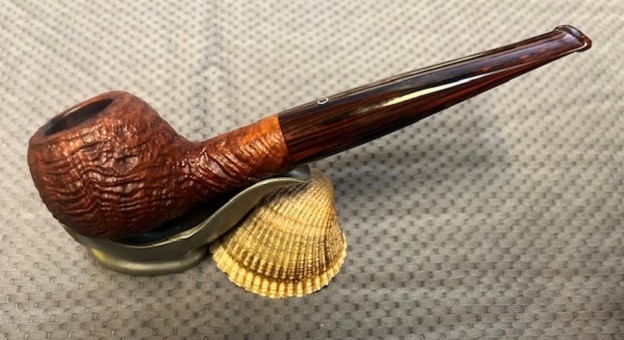
It is a pipe like the one I have in hand but it is not the same pipe. The grain on the bowl and shank are quite different. The damage on the rim top is also not present on the pipe in hand. The patent numbers on the shank bottom are different. The one I am working on is stamped Pats. Pending with no number. The inner tube in the photos also shows a patent number that is absent from the pipe I am working on. I turned to the dating key on Pipephil’s site (http://www.pipephil.eu/logos/en/dunhill/cledat-en1b.html) to establish a date for the pipe. I drew a red box around the pertinent information below. It fits the criteria of a Sandblast with a year suffix and a Non possessive form Dunhill. The suffix is the number 15 which puts in the section below which notes 1920 + suffix to establish a date. In this case it is 1920 +15 making the pipe a 1935.Now it was my turn to work on the pipe. Jeff had done an amazing cleanup of the pipe. He reamed the light cake with a PipNet reamer and cleaned up that with a Savinelli Fitsall Pipe Knife. He scrubbed the internals of the bowl and stem with alcohol, cotton swabs and pipe cleaners. He scrubbed the externals with undiluted Murphy’s Oil Soap and rinsed the bowl off with running water. He soaked the stem in Briarville’s Pipe stem Deoxidizer and once it had soaked rinsed it off with warm water to remove the residual solution. He dried it off and rubbed it down to remove any oxidation that was still on the stem. The pipe looked very good when I received it. I took photos of the bowl and the rim top as well as both sides of the stem to show the condition of the pipe before I started my work. It really looked remarkably good for a pipe made in 1935!I took a photo of the stamping on the shank. The photo of the stamping is far less clear than it appears in person. It is still very readable. I also removed the stem and took a photo of the parts of the pipe. It is a unique piece of pipe history.I took the pipe apart to show all the part. It was very clean and other than the darkening on the clay disc it was like new. The bowl was in such good condition that I had to do some minimal work with it. I rubbed the briar down with Before & After Restoration Balm. I worked it into the briar with my fingertips and a horsehair shoe brush to work it into the nooks and crannies of the sandblast finish. The product works to clean, enliven and preserve the briar. I let it sit for 10 minutes then I buffed it with a cotton cloth to deepen the shine. The briar really comes alive with the balm. I set the bowl aside and turned my attention to the stem. I “painted” the vulcanite with the flame of a lighter to lift the tooth marks as much as possible. Many of them lifted completely. Those that remained I filled in with clear CA glue. I chose clear to get a good match with the black of the old vulcanite. Once the repairs cured I used a small file to flatten then and redefine the edge of the button. I sanded the remainder smooth, blending it into the surrounding vulcanite with a folded piece of 220 grit sandpaper. I sanded the surface of the stem smooth with 320-3500 grit sanding pads. It worked well to smooth things out and remove remnants of oxidation. When finished the stem looked much better.I polished the vulcanite with micromesh sanding pads – 1500-12000 grit pads. I wiped it down with Obsidian Oil after each sanding pad. I used Before & After Pipe Polish – both Fine and Extra Fine to further polish the stem. I rubbed down the inner tube with a 12,000 grit micromesh pad to smooth out the scratches in the surface. There was some discolouration that remained but it was clean. I reinserted it in the tenon and it was ready for the fit in the shank of the pipe.This 1935 Dunhill Dryway Shell Briar 491 /4 Billiard has a beautiful, unique Dunhill Sandblast finish that is very deep and craggy. The rich brown/black finish highlights some great grain around the bowl and shank. It has some great rugged sandblast that Dunhill developed and specialized in making. The polished vulcanite taper stem adds to the mix. I put the stem back on the bowl and carefully buffed the pipe with Blue Diamond on the buffing wheel. It is critical to avoid buffing the stamping and to have a lighter touch on the sandblast briar. I gave the bowl multiple coats of Conservator’s Wax and the stem multiple coats of carnauba wax on the buffing wheel and followed that by buffing it with a clean buffing pad. I hand buffed the pipe with a microfiber cloth to deepen the shine. The finished Patents Pending Dunhill Dryway Shell Briar Billiard is quite stunning and feels great in my hand. Give the finished pipe a look in the photos below. The dimensions of the pipe are Length: 5 inches, Height: 1 ¾ inches, Outside diameter of the bowl: 1 1/8 inches, Chamber diameter: ¾ of an inch. The weight of the pipe is 1.09 ounces/32 grams. Thanks for walking through the restoration with me as I worked over another beautiful pipe. I am going to add this beauty to my collection of older and unique Dunhill pipes. I will smoke it one day soon to see how the system works. Thanks for your time.
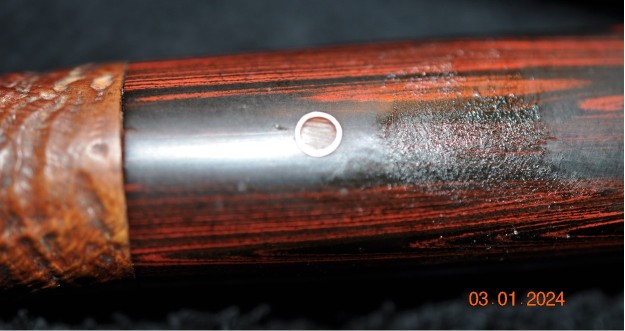
What about this Ashton Old Church Made in England 27 XX Apple?


Blog by Steve Laug

In January Jeff found out about an estate sale in Pocatello, Idaho, USA. It turned out that the sale was for a fellow Jeff and I had purchased pipes from in the past, Gene. He had been the owner of Outwest Tobacco in Pocatello (long closed now) and I bought tobacco and other smoking items from him in the past. As I think about it now, it seems that I had known Gene for over 30 years Jeff and I had been to his home and enjoyed coffee and a few pipes together. I have no idea how many pipes we bought on those visits as well as to the antique shop of his daughter. I know that there were many pipes. When we heard that it was Gene’s personal collection that was for sale and that he had passed away we decided for Jeff to go to the house and have a look. He went on January 25, 2024 to scope it out as we had seen his personal collection of pipes and there were definitely some among those well smoked old warriors that would be great to pick up. Perhaps there would even be one that could join my own collection in memory of Gene.

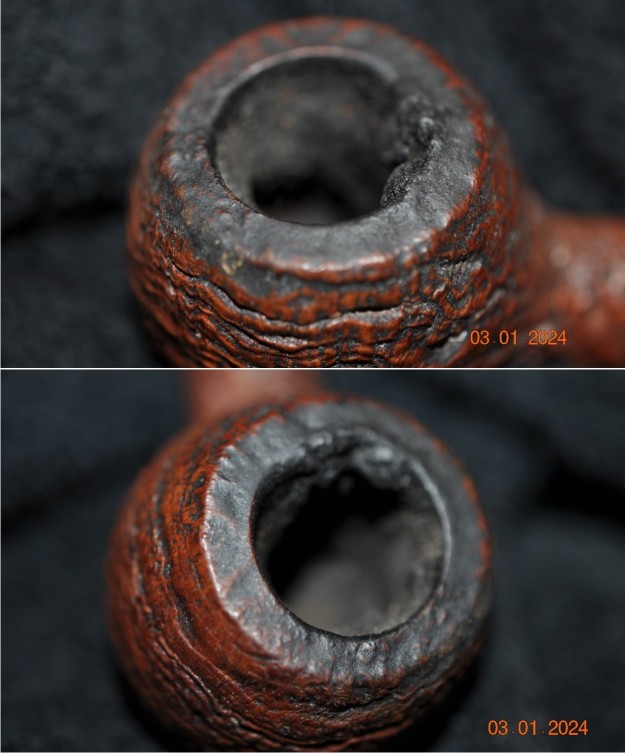
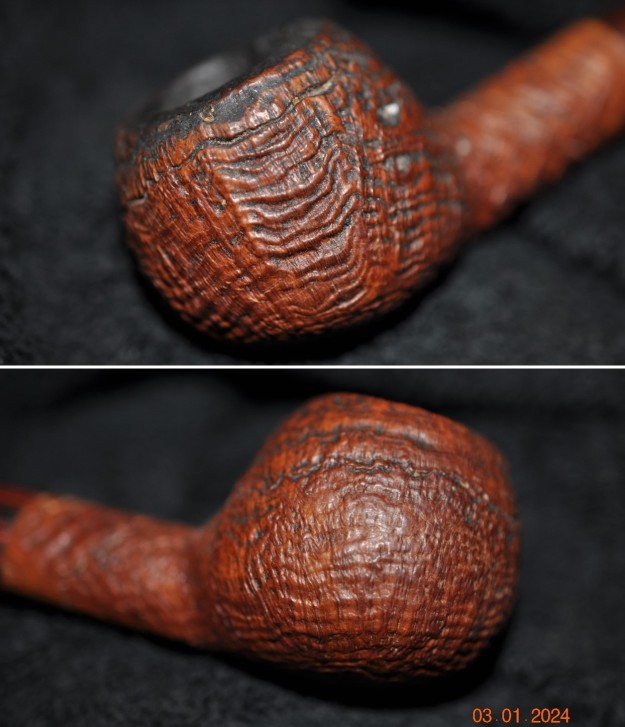
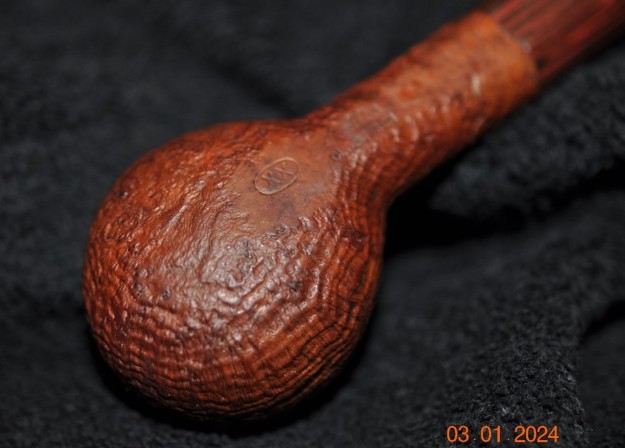
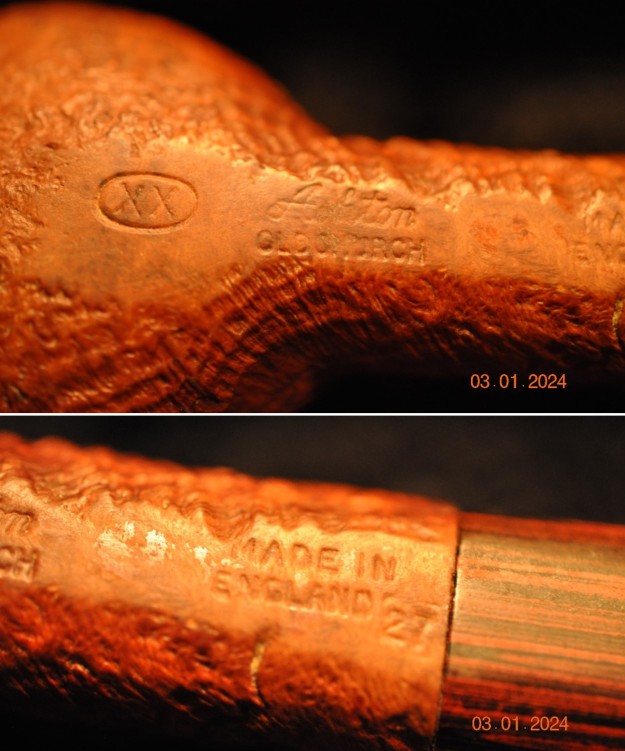
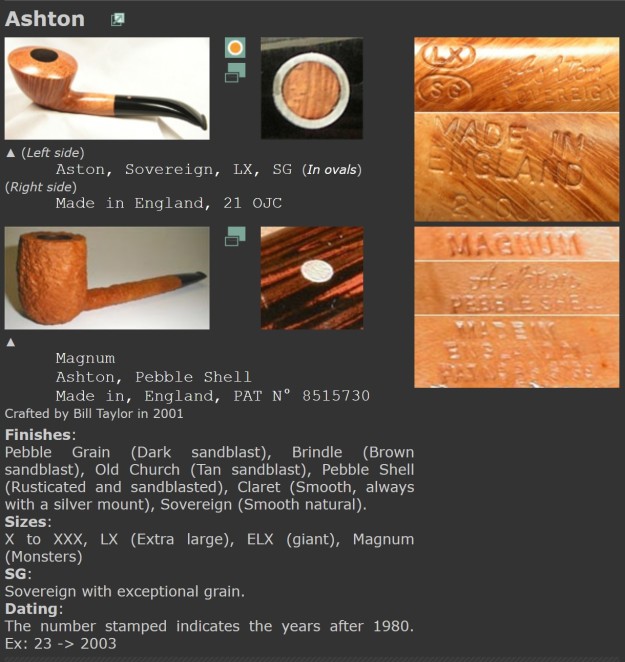
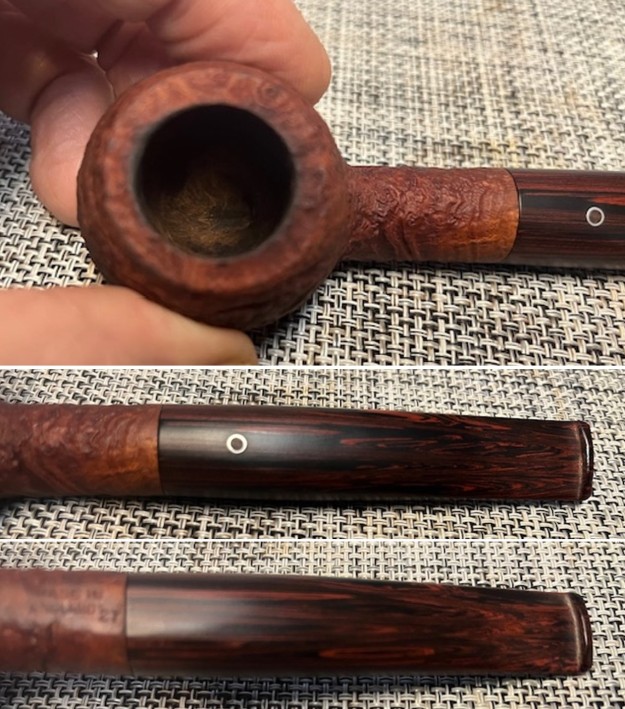
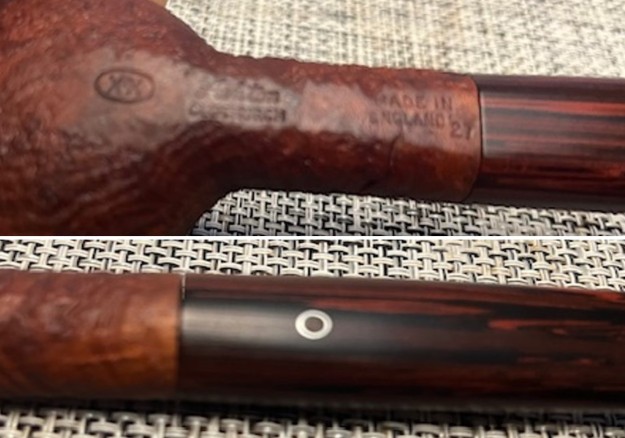
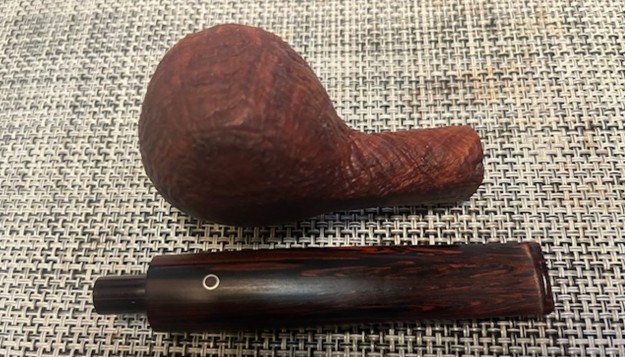
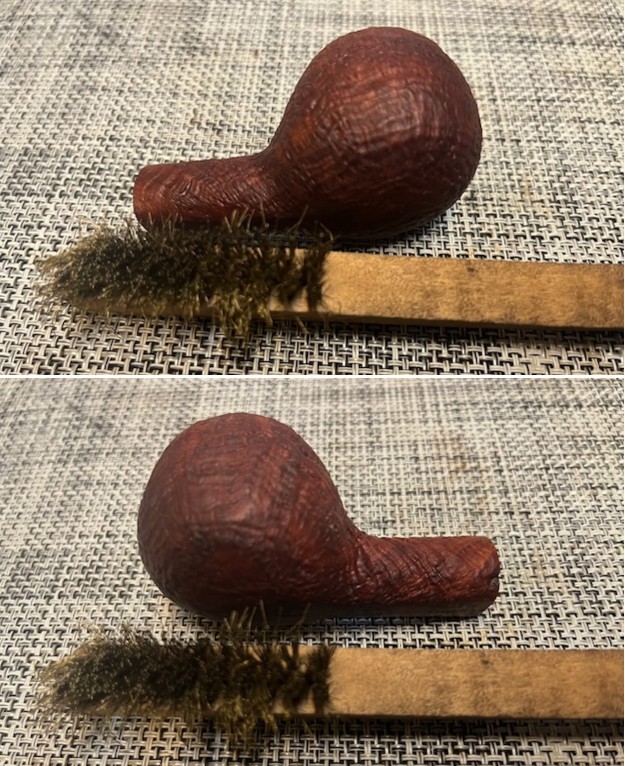
Jeff went to the house and looked through the racks, pipe bags, tobacco both bulk and tinned as well as a variety of pipes. All the pipes were well smoked and needed serious cleaning. One the pipes he picked up was this Ashton Sandblast Apple with a Cumberland stem. It was very dirty and probably had been a natural coloured pipe when it started. Sandblast finish around the bowl was dirty and had hand oils ground into the grooves. The bowl had a thick cake that overflowed in lava onto the sand blast rim edge and top of the bowl. I also flowed down onto the bowl sides particularly in the back of the bowl. The stem was Cumberland and the marks of a rubber Softee Bit on the end. It had become discoloured and there was a line where the debris from smoking had accumulated along the edge and under the bit protector. The good news was that there were no tooth marks or chatter. The rest of the Cumberland stem was oxidized and had lost the characteristic shine. The pipe was stamped on the heel of the bowl and shank on a smooth panel. It read XX in an oval on the heel of the bowl followed by Ashton [over] OLDCHURCH mid shank. After that it bore the stamp Made In [over] England followed by the number 27. The stem had the characteristic Ashton logo, a brass ring enclosing a piece of briar or in this case perhaps a piece of Cumberland. Jeff took photos of the pipe so I could have a sense of what it looked like before he started his work on it.Jeff took photos of the stem surfaces and the bowl and rim to give a sense of condition of the pipe. You can see the thick cake in bowl and the lava overflow on the edges and rim top of the bowl. It is had to know if there is any damage as the cake and lava is quite thick. The stem surface is very dirty and you can see the area on the end of the stem where the Softee Bit had protected it from chewing but had left it dirty and discoloured. He also took photos of the sides of the bowl and the heel to show the interesting sandblast that went around the bowl. It was deep and quite rugged looking. You can see the oils and debris in the grooves of the blast.  He took photos of the stamping on the underside of the bowl and shank. It is a clear and readable as noted above. The logo on the top of the taper stem is also in good condition. Before working on the pipe I wanted to familiarize myself with the meaning of the stamping on the shank. For general info I turn to Pipephil’s site (http://www.pipephil.eu/logos/en/logo-a8.html). I have included both a screen capture and the side bar notes on the brand.Brand established in 1983 by Bill Ashton-Taylor (1945 – 2009†). James Craig (Jimmy) was designed by Bill himself worthy to continue Ashton pipes manufacture. Sub-brand: Romford (sold through McCranie’s). See also: Taylor Made, Mac Cranie

From the information in the screen capture and notes I learned a lot about the stamping on the pipe. Here is the information collected for ease of reference

  1. Old Church is the name of a Tan Sandblast
  2. XX refers to the size of the pipe with the X’s ranging from X to XXX. This one is a midsized pipe.
  3. 27 gives me that date of the pipe. Using the formula above I have added the 27 to the date 1980 for a date of 2007 as the date the pipe was made.

From there I turned to Pipedia (https://pipedia.org/wiki/Ashton) for further information and background. I have included that information below.

The Ashton Pipe Story (the article is worth reading in its entirety. Click on the link above to do so. I am including the pertinent information to the Ashton pipes.)

… In the early 1980’s Bill strongly felt the need to form his own company in order to return both pipe making and the finished product to the very high standard formerly held. From the time the first pipe bearing his name was made to the present, ASHTON pipes have been manufactured of the best materials and with the utmost skill. And because no one today knows more about the criteria for making fine briar smoking pipes than William Ashton-Taylor, there is no more convincing guarantee for the high quality of ASHTON pipes than the man himself.

R.D. Field played a critical roll in Bill Taylor’s transition from Dunhill to the father of Ashton pipes, Bill Ashton-Taylor. Field wrote The Ashton Pipe Story chronicling this transition.

Due to Bill’s unique knowledge of pipe making and the seasoning of briar, he was granted a British patent for his method of manufacturing. This special process results in pipes that are 12- 14% lighter in weight than comparable pipes of other brands. About his handmade pipes Bill states: “For us, both parts of the pipe are equally important- bowl and mouthpiece. In both cases the best material and perfect finishing are essential.” Each ASHTON pipe, therefore, offers quality from bowl to bit…

The purchase of selected briar wood is the most important pre-condition for the manufacture of high-quality pipes… Bill used Calabrian briar for his smooth finished pipes because the wood is both hard and light, coming as it does from a light, sandy soil. Often, he took these straight grain plateau blocks and turned them on their sides in order to fashion beautiful cross grain/birds eye pipes which are widely believed to smoke cooler than straight grains.

Briar from Tuscany is used for the ASHTON sandblast finishes, as this type of briar takes on a rich, deep patina after the soft grain is removed by the sand-jet. Ashton sandblasted pipes are often compared to early Dunhill Shell pipes, which are highly prized for their deep, craggy sandblasting. While Dunhill seems to have, by and large, abandoned the deep sandblasting technique as time has progressed, Ashton revived the practice, as can be seen on Ashton sandblasted pipes…

The manufacture of ASHTON pipes is based upon an ingenious method first developed in 1915 and improved upon after years of experimentation by William Ashton-Taylor. After the pipe bowls are turned from briar blocks they are heated for eight hours in order that they expand. They are then steeped for an additional eight hours in a mixture composed of three beneficial oils. During this procedure the wood acts like a sponge in soaking up the oils.

After steeping, the oiled bowls are placed on heated brass pegs where they reside for fourteen days. Throughout this period the oil “exudes” from the briar, bringing with it unwanted sap and residue and leaving behind the nut-like flavor for which ASHTON pipes have become renowned…

The site also confirmed the dating information that I had found on Pipephil’s site earlier and quote above. It also included a brief chart on Ashton Pipe Finishes & Grading that I have included below. I have marked the items in the chart below that apply to this pipe in red below.

  • 1: Sandblast –
    • a. Pebble Grain (Pebble Grain) – dark
    • b. Old Church – Natural (OC)
  • 2: Claret & Gilt Edge – smooth with a burgundy to gold burgundy color
  • 3: Oak – dark smooth
  • 4: Sovereign – smooth natural
  • 5: Sovereign SG – smooth natural straight grain, # 1- 5
  • 6: Achievement – pipes that have some unusual work on them, spiraling, bamboo etc.
  • SIZING: X, XX, XXX, LX, ELX, Magnum

Now it was my turn to work on the pipe. Jeff had done an amazing cleanup of the pipe. He reamed the light cake with a PipNet reamer and cleaned up that with a Savinelli Fitsall Pipe Knife. He scrubbed the internals of the bowl and stem with alcohol, cotton swabs and pipe cleaners. He scrubbed the externals with undiluted Murphy’s Oil Soap and rinsed the bowl off with running water. He soaked the stem in Briarville’s Pipe stem Deoxidizer and once it had soaked rinsed it off with warm water to remove the residual solution. He dried it off and rubbed it down to remove any oxidation that was still on the stem. The pipe looked very good when I received it. I took a photo of the rim top to show the condition. You can see the clean bowl. The bowl is in excellent condition and looks very good. There is some darkening on the rim top and some light damage to the front inner edge of the bowl. The stem came out looking quite good. It only needed to be polished. I took a photo of the underside of the shank to show the stamping. The photo clearly shows the stamping and is actually more readable in person. The Ashton logo on the stem is in good condition. I removed the stem from the shank and took a photo of the pipe parts to show what I was working with. It is a nice looking pipe. I worked over the sandblast finish with a brass bristle brush to clean up the darkening on the rim top and in blast on the sides of the bowl. I worked on the inner edge of the bowl to bring it back to round using a folded piece of 220 grit sandpaper. I gave it a slight bevel to accommodate the damage. I stained the top, edge and cap of the bowl with a Maple stain pen to match the rest of the bowl. The bowl was in such good condition that I had to do some minimal work with it. I rubbed the briar down with Before & After Restoration Balm. I worked it into the briar with my fingertips and a horsehair shoe brush to work it into the nooks and crannies of the sandblast finish. The product works to clean, enliven and preserve the briar. I let it sit for 10 minutes then I buffed it with a cotton cloth to deepen the shine. The briar really comes alive with the balm. I set the bowl aside and turned my attention to the stem. I sanded the roughness on the surface of the stem smooth with 320-3500 grit sanding pads. It worked well to smooth things out and once finished the stem looked much better.I polished the Cumberland with micromesh sanding pads – 1500-12000 grit pads. I wiped it down with Obsidian Oil after each sanding pad. I used Before & After Pipe Polish – both Fine and Extra Fine to further polish the stem. This 2007 Ashton Old Church Made in England 27 XX Apple with a Cumberland Taper Stem has a beautiful, unique Dunhill Sandblast finish that is very deep and craggy. The rich brown/red finish highlights some great grain around the bowl and shank. It has some great rugged sandblast that Bill Ashton Taylor specialized in making. The polished Cumberland taper stem adds to the mix. I put the stem back on the bowl and buffed the pipe with Blue Diamond on the buffing wheel being careful to not buff the stamping and have a lighter touch on the briar. I gave the bowl multiple coats of Conservator’s Wax and the stem multiple coats of carnauba wax on the buffing wheel and followed that by buffing it with a clean buffing pad. I hand buffed the pipe with a microfiber cloth to deepen the shine. The finished Ashton Old Church XX Apple is quite stunning and feels great in my hand. Give the finished pipe a look in the photos below. The dimensions of the pipe are Length: 6 inches, Height: 1 ½ inches, Outside diameter of the bowl: 1 ¼ inches, Chamber diameter: ¾ of an inch. The weight of the pipe is 1.80 ounces/51 grams. Thanks for walking through the restoration with me as I worked over another beautiful pipe. I am going to enjoy smoking this one and remembering my visits with Gene both at his home and at Outwest Tobacco in Pocatello. Thanks for your time.
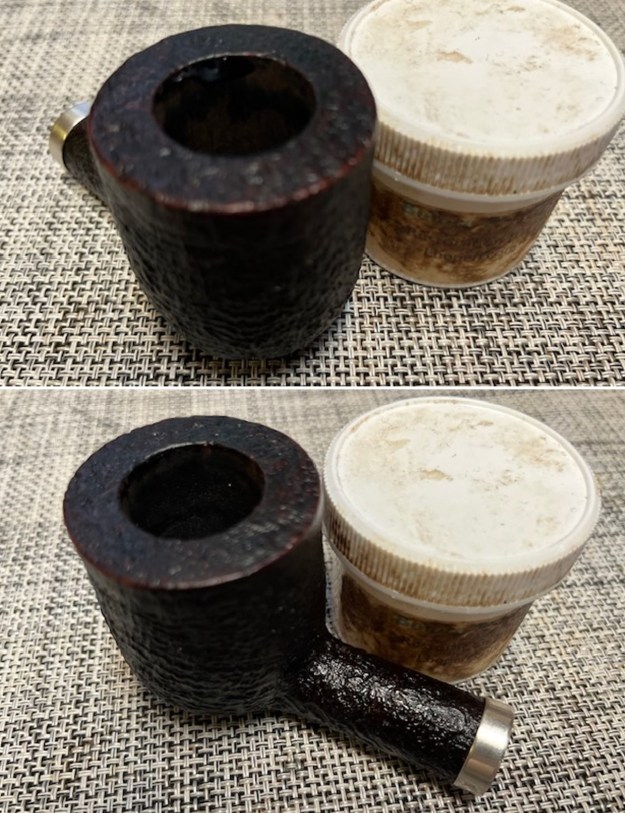
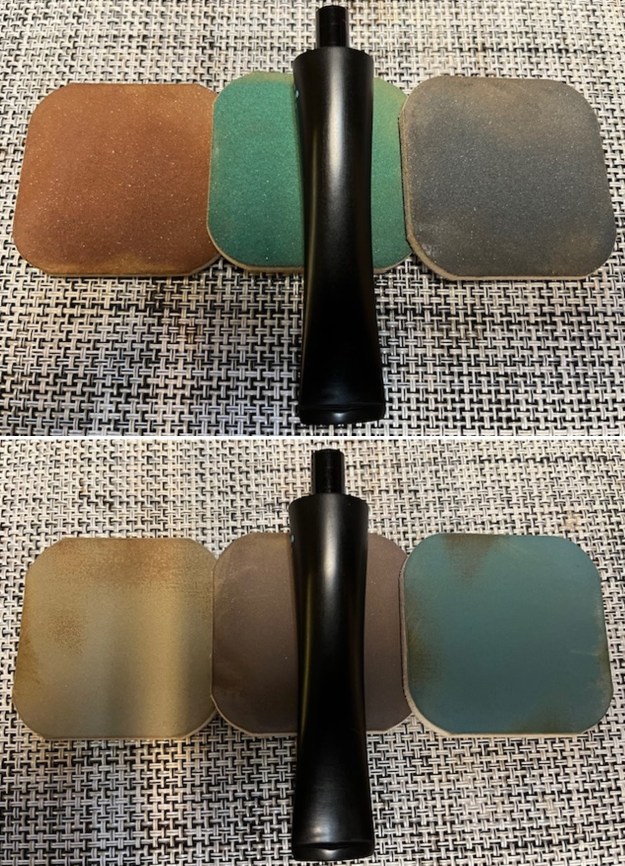
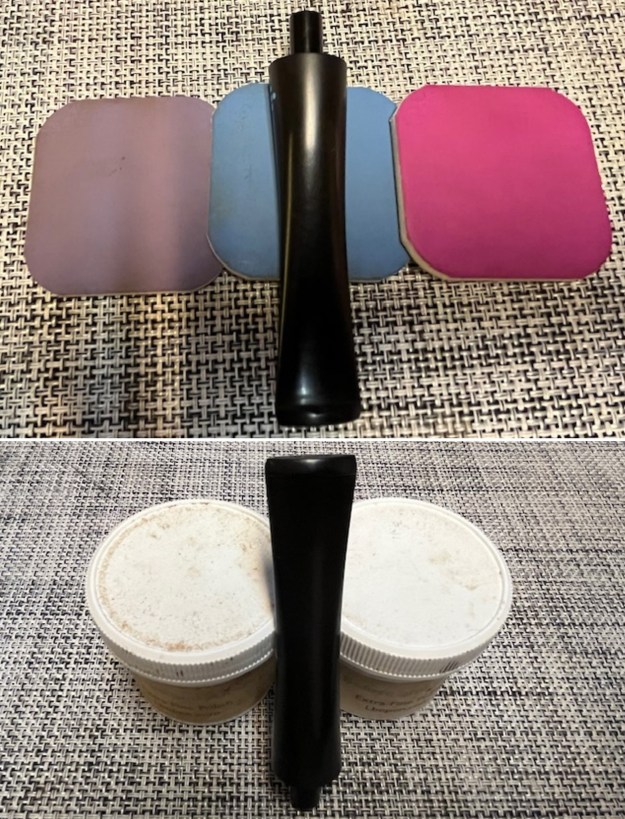
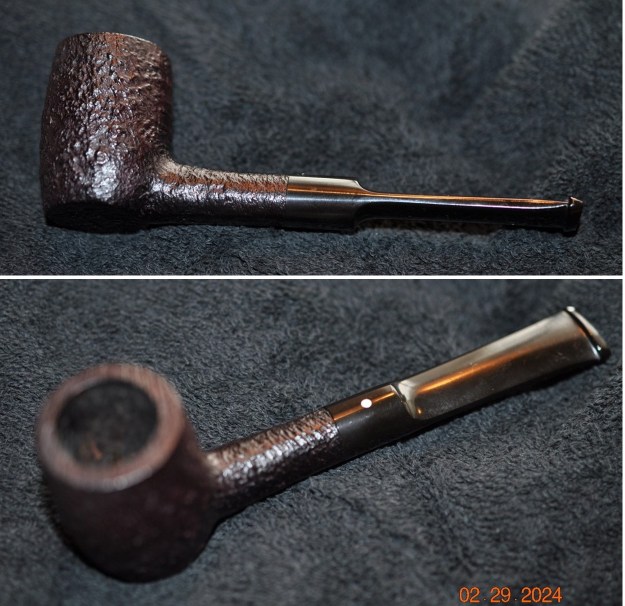
Cleaning up a Trade – a Georg Jensen Dania 9980 Dublin with a Filter Stem


Blog by Steve Laug

The next pipe on the work table is one that I took in on a trade from a fellow in the Netherlands. It is a great looking smooth quarter bent Dublin. It is stamped on the left side of the shank and read Georg Jensen [over] Made in Denmark Pipes. On the right side it is stamped Dania. There is a shape number 9980 on the underside of the shank. The pipe is shaped to highlight the grain around the bowl. The finish is quite clean with just a bit of grime and oil in bowl sides. The smooth rim top is in excellent condition with some light lava near the inner edge. The inner edge is clean and sharp. The bowl has a moderate cake that I will ream out but otherwise looks very good. The vulcanite taper stem was made for a 9mm filter. There is the Georg Jensen interlocked red GJ logo on the left side of stem. There is light oxidation and calcification on the stem surface and there are tooth marks and chatter on both sides ahead of the button. I took photos of the rim top and the stem surfaces to give a sense of the condition of the pipe. You can see the light lava on the rim top and other than that top is in good condition. There is a light cake in the bowl that I will ream to make sure the walls are in good condition. The stem photos show the oxidation, calcification, tooth marks and the chatter on both sides ahead of the button.I took photos of the stamping on the sides of the shank, both the left and the right sides. It is clear and readable. The stamping on the left side identifies the maker and country of origin. It reads Georg Jensen [over] Made in Denmark Pipes. On the left side of the taper stem it is stamped with an interlocked GJ in red. The stamping on the right side reads Dania which is the pipe line.An added part of pipe restoration for me is the opportunity to gather background information on a brand and maker to add depth to the restoration. I almost always turn to Pipephil’s site first for a summary. In this case it did not let me down (http://www.pipephil.eu/logos/en/logo-g2.html#georgjensen). It has a longer listing for the Georg Jensen Brand. The stamping and logo on the one in hand is like the second pipe down in the photo below. I have included a screen capture of the section below. I have also included a copy of the side bar information that gives a brief glimpse of the brand.Per Georg Jensen managed the Georg Jensen Pipe brand during 23 years and is currently (2011) active as “Tobacco Professor” at Mac Baren Tobacco Company. See also: Danets, North Dane Pipes, White Star, Goodwill
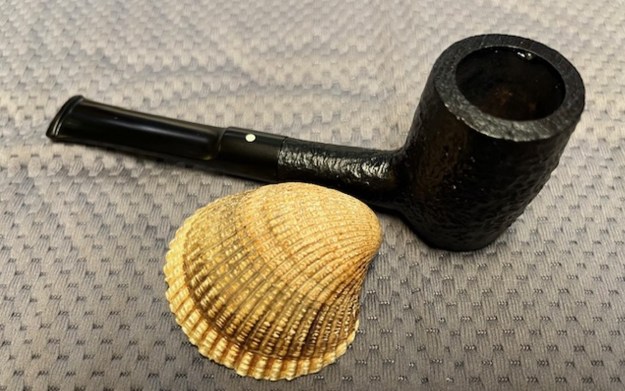
I turned then to Pipedia (https://pipedia.org/wiki/Georg_Jensen) and found a short listing on Georg Jensen. I have included it below.

The Georg Jensen pipe factory was founded by Per Georg Jensen and his wife in 1954, in Kopenhagen, Denmark. Since the 80s the company is under the management of his daughter Lis, and his son with the same name, Per Georg Jensen. The company manufactured around 2,000 factory pipes per year. Among the top of the line pipes are hand carved special editions and free hands.

Top of the Line models of Georg Jensen have vulcanite or ebonite stems, factory pipes usually have acrylic stems.

Factory pipes (in increasing quality) were marked:

Danish Sand Achat / Amber Red Flame / Red Skin Sunrise / Orange extra / Starline Contrast / Bicolour / Harmon Excellent / Masterpiece

Pipes were commonly marked (in increasing quality) with: MODEL + MODEL NUMBER + “Made in Denmark”, GJ stamp in red on the stem. MODEL NUMBER + “Georg Jensen” in italic or fancy font.

Extremely rare and collectible freehands were marked with: “Straight Grain” and a number that discerns the grading from 1 (lowest) to 13 (highest).

Special edition pipes were marked with: MODEL + MODEL NUMBER + “Handmade in Denmark” + GJ stamp in white on the stem.

The factory closed down in 2001 when Per Georg Jensen (Jr) became “Tobacco Professor” for MacBaren Tobacco house.

Now, on to the restoration of this pretty Georg Jensen Filter Dublin. I began the work by reaming the pipe with a PipNet reamer and cut back the cake back to the bare briar. I scraped out what remained with a Savinelli Fitsall Pipe Knife. I sanded the walls of the bowl with a piece of dowel wrapped with 220 grit sandpaper to smooth the out. The walls looked to be in excellent condition with no checking or heat damage. I scrubbed the inside of the mortise and shank along with the stem with alcohol, cotton swabs and pipe cleaners. The pipe was looking better than when it arrived.I scrubbed the exterior of the pipe with Murphy’s Oil Soap and a tooth brush to remove the grime from the finish. I worked on the rim top and edge to try to remove the grime and was able to remove it. I polished the smooth briar rim top with micromesh sanding pads – dry sanding it with 1500-12000 grit sanding pads. I wiped the bowl surface down with a damp cloth to remove the sanding dust. Once I finished the exterior of the briar looked much better and had taken on a shine. I rubbed the bowl down with Before & After Restoration Balm. I worked it into the surface of the briar with my fingertips to clean, enliven and protect it. I let the balm sit for 15 minutes and then buffed with a cotton cloth to raise the shine. Mark Hoover’s Balm is a product that I have come to appreciate and one I use on every pipe I have been working on. I set the bowl aside and turned my attention to the stem. I “painted” the stem surface with the flame of a Bic lighter to lift the tooth marks. I was able to lift all of them so it could be sanded.I wiped the stem down with Soft Scrub cleanser to remove the oxidation and the calcification on the stem. It really did a great job removing the oxidation and the stem is starting to look very good.I used the sanding pads I purchased recently – 320-3500 grit regular pads to smooth out the finish and remove the light tooth and chatter marks in the stem. I wiped the stem down with Obsidian Oil to finish the preliminary work after the 3500 grit pad.I polished the stem with micromesh sanding pads – wet sanding with 1500-12000 grit pads. I wiped the stem down after each sanding pad with Obsidian Oil. I finished polishing it with Before & After Pipe Stem Polish – both Fine and Extra Fine. Once I had finished the polishing I gave it final coat of oil and set it aside to dry. I fit the filter stem with a new 9mm filter. The fit was perfect and the pipe was ready to be smoked by the next trustee.As usual at this point in the restoration process I am excited to be on the homestretch. I look forward to the final look when it is put back together, polished and waxed. I put the Georg Jensen Dania 9980 Dublin back together. I polished the bowl and stem with Blue Diamond to polish out the scratches in the briar and the vulcanite. I gave the bowl and the stem multiple coats of carnauba wax. I buffed the pipe with a clean buffing pad to raise the shine. I hand buffed it with a microfiber cloth to deepen the shine. The pipe polished up pretty nicely. The grain really pops with the wax and polish. The shiny black vulcanite 9mm filter stem is a beautiful contrast to the reddish, browns of the bowl. This Georg Jensen Dania was a great pipe to spruce up. It is a very comfortable pipe to hold in the hand. The finished pipe is shown in the photos below. The dimensions of the pipe are Length: 5 ½ inches, Height: 2 inches, Outside diameter of the bowl: 1 ½ inches, Chamber diameter: ¾ of an inch. The weight of the pipe is 47 grams/1.66 ounces. This pipe will be going on the Danish Pipe Maker section of the rebornpipes store if you are interested in adding it to your collection. Thanks for reading this blog and my reflections on the pipe while I worked on it. This is an interesting estate to bring back to life.