Tag Archives: polishing vulcanite stems

Restoring a 1923 cased Finest H.G. London Quality Briar Bulldog


by Steve Laug

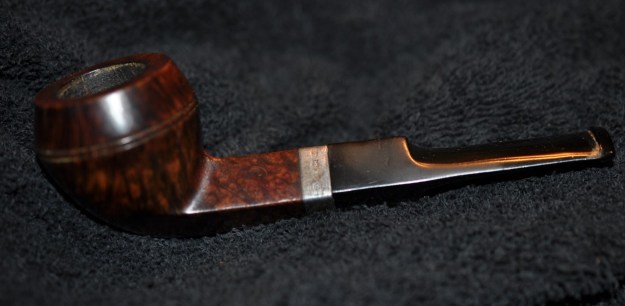
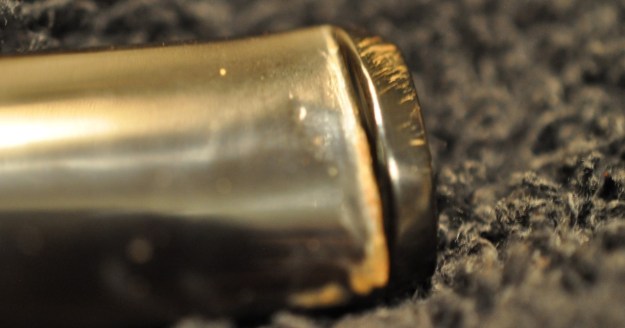
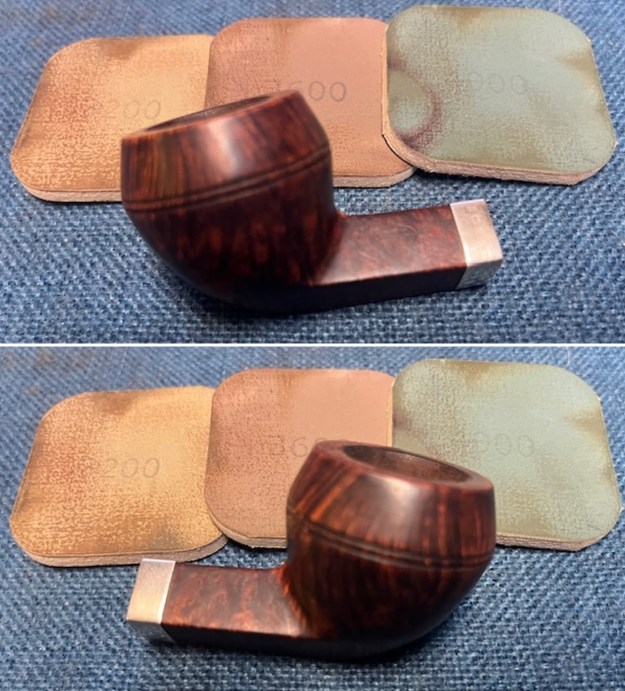
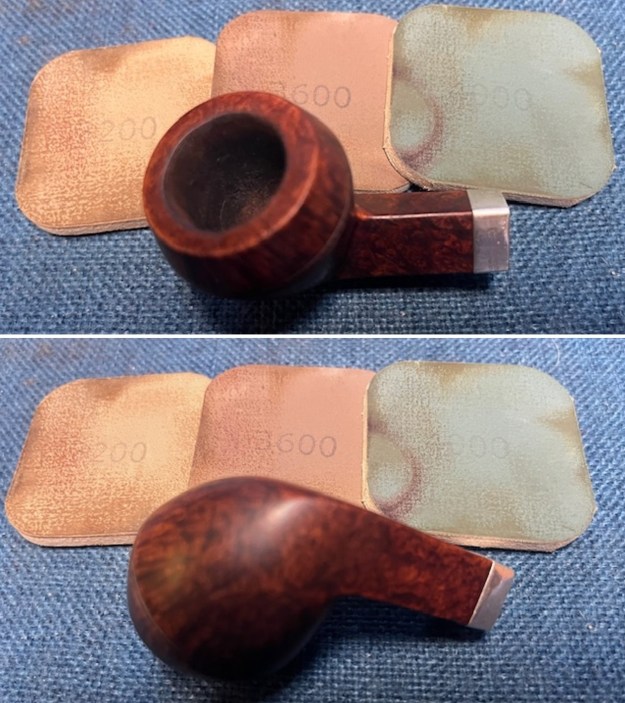
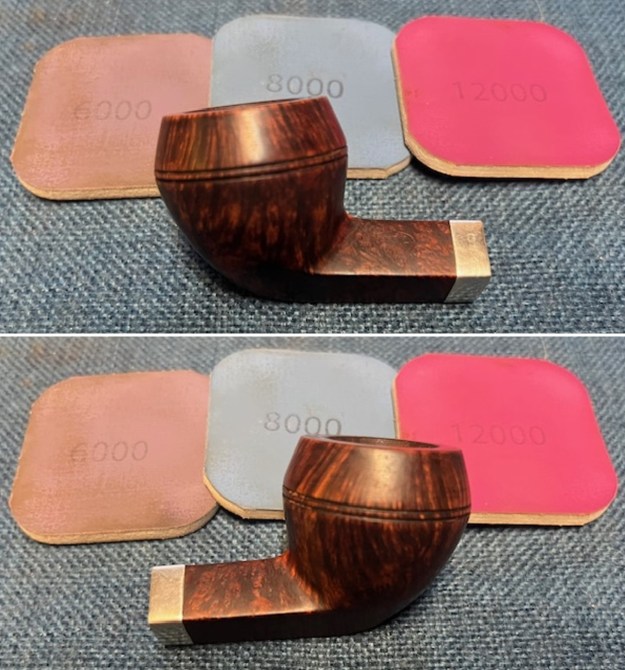
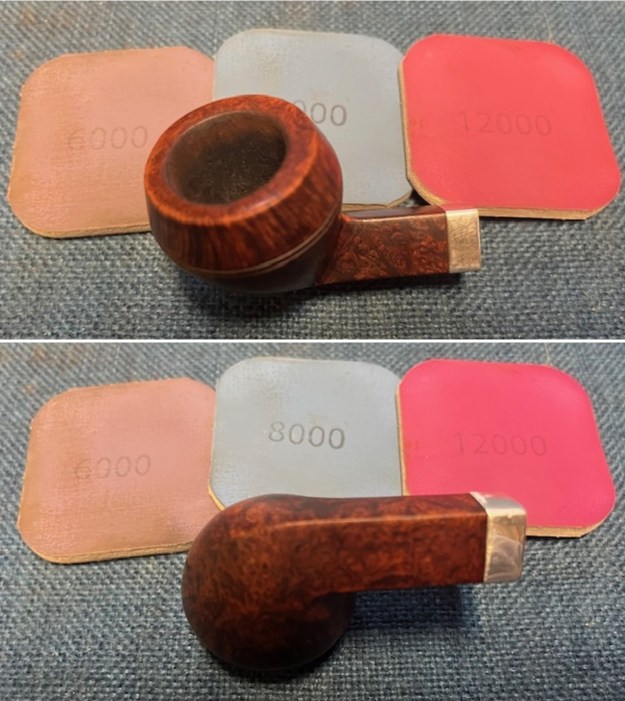
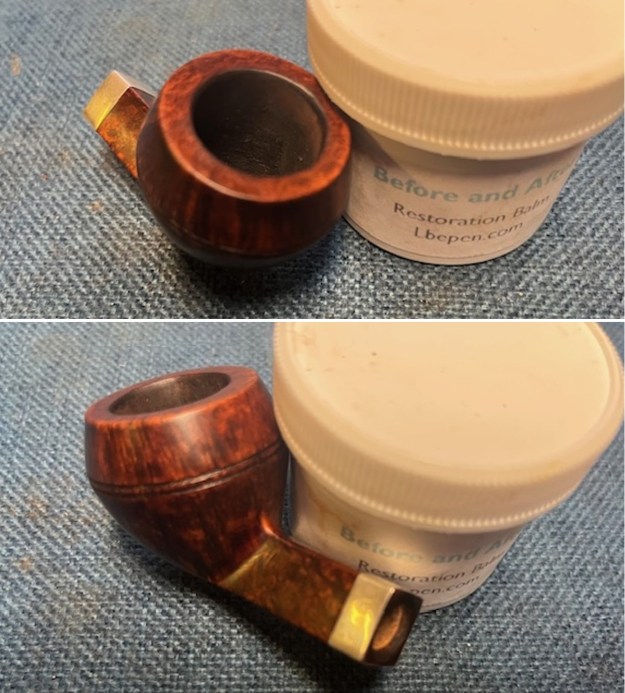
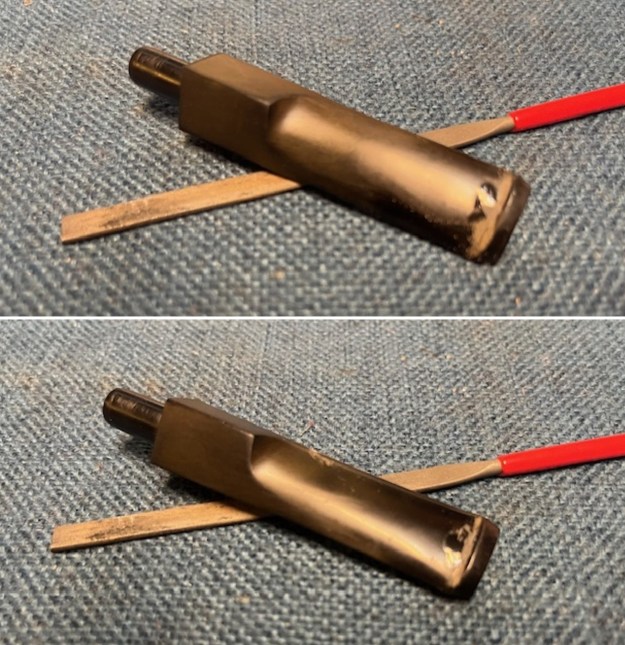
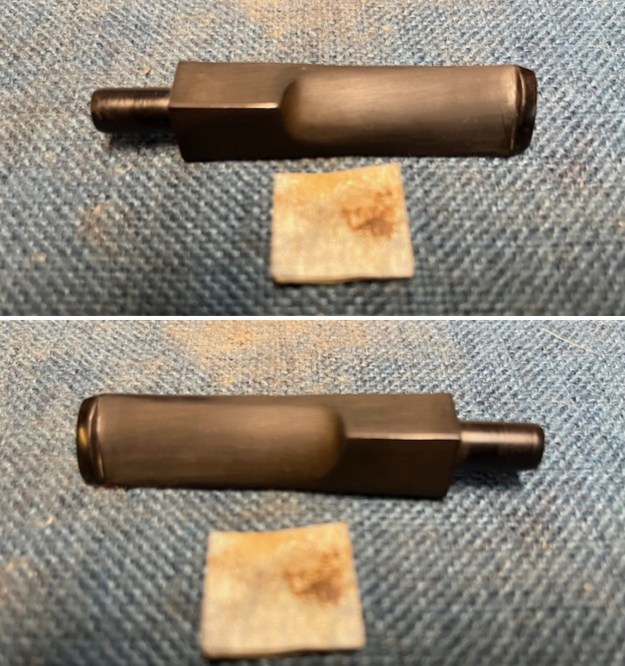
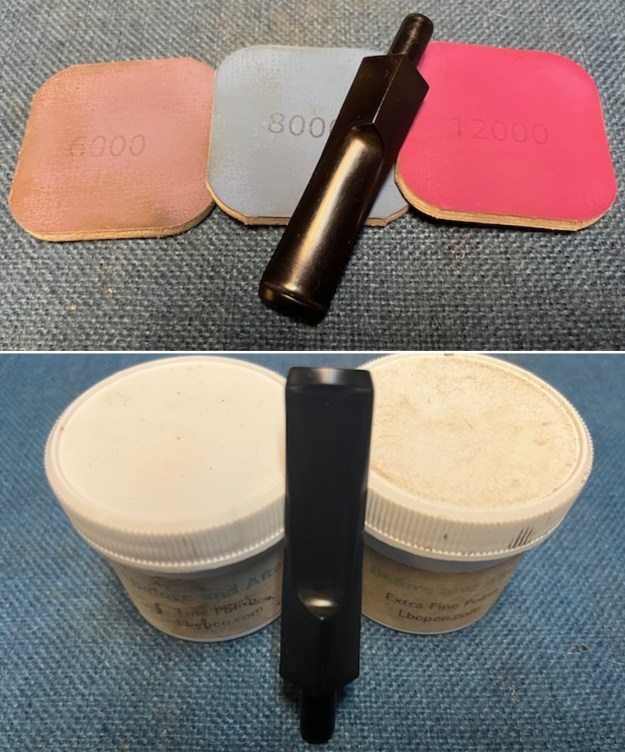
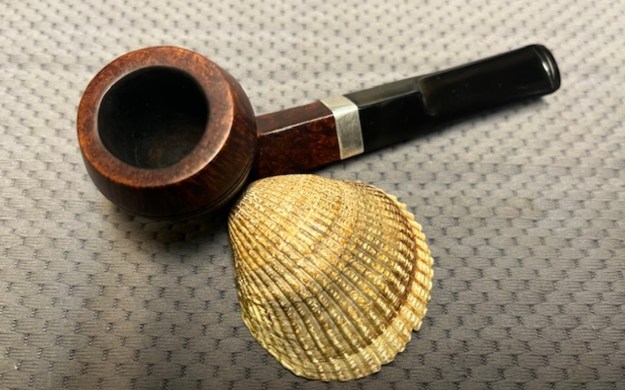
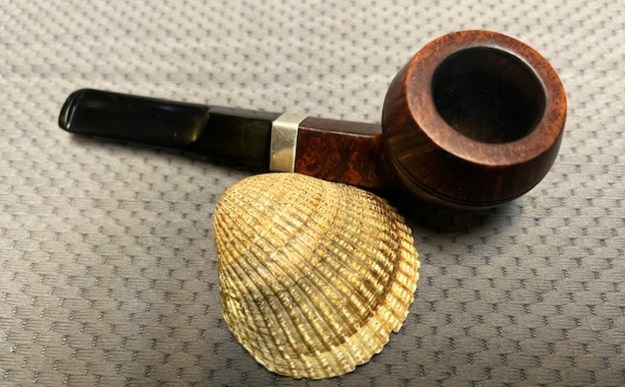
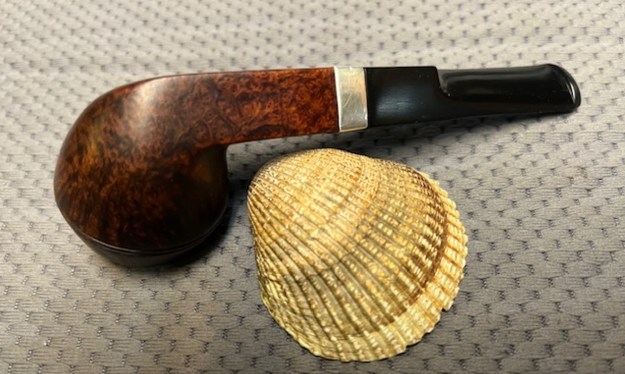
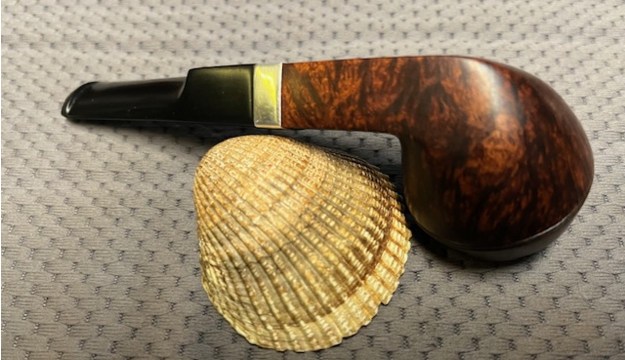
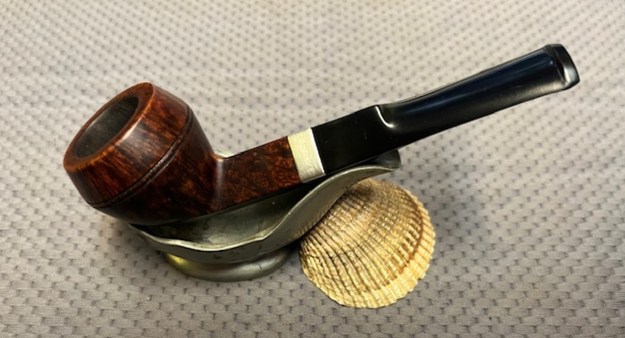
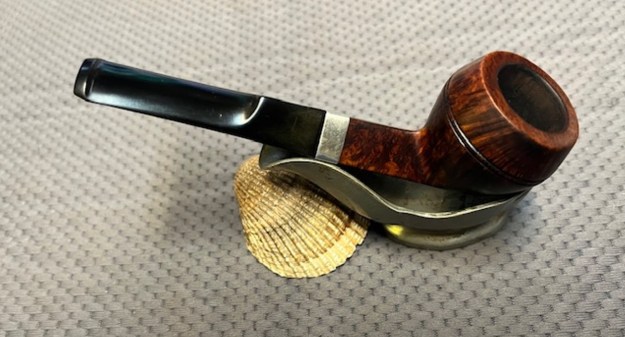
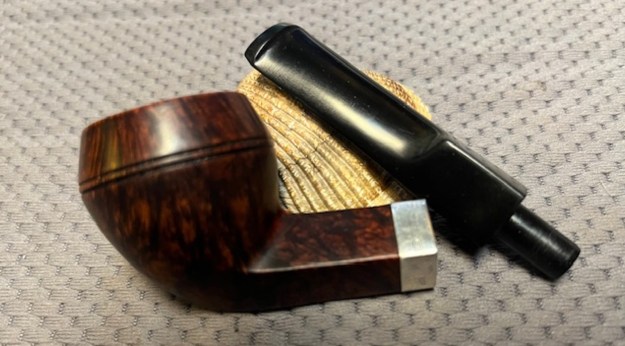
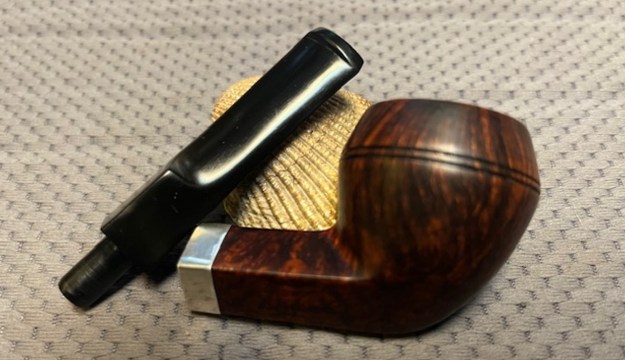
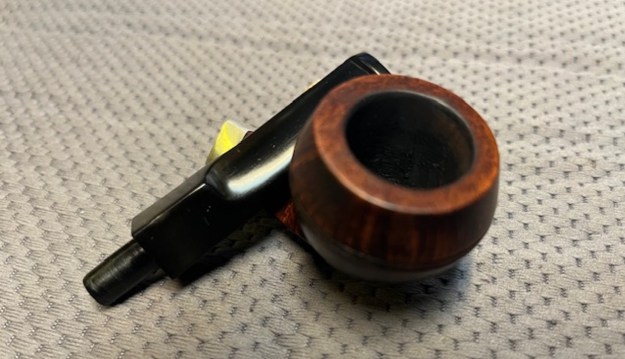
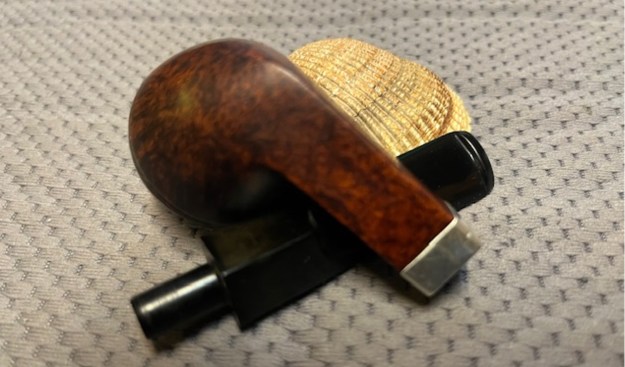
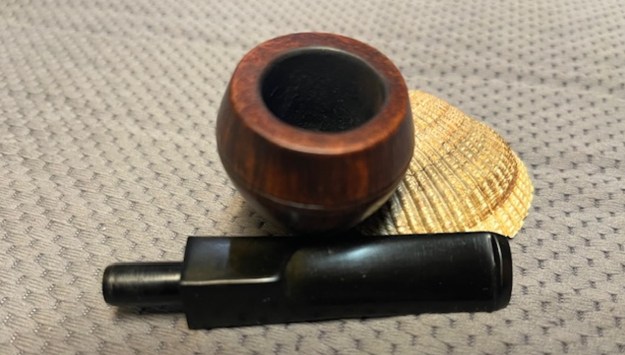
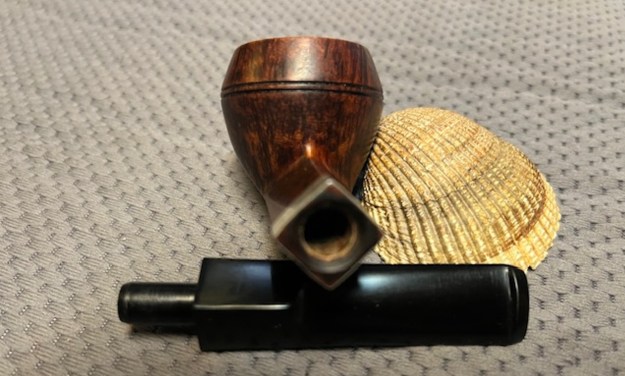
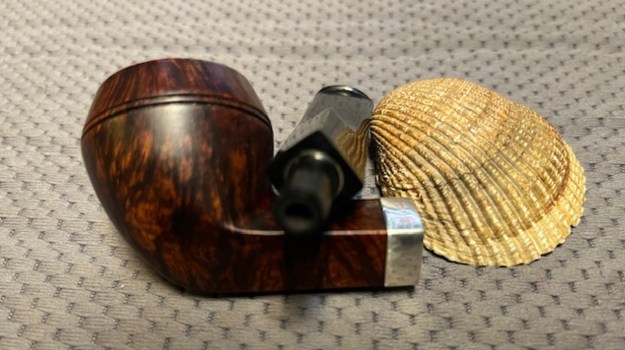
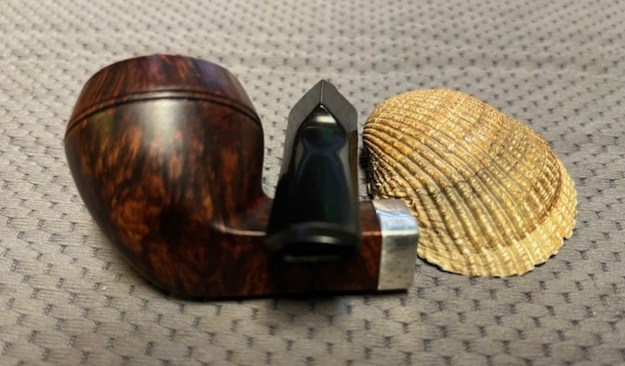
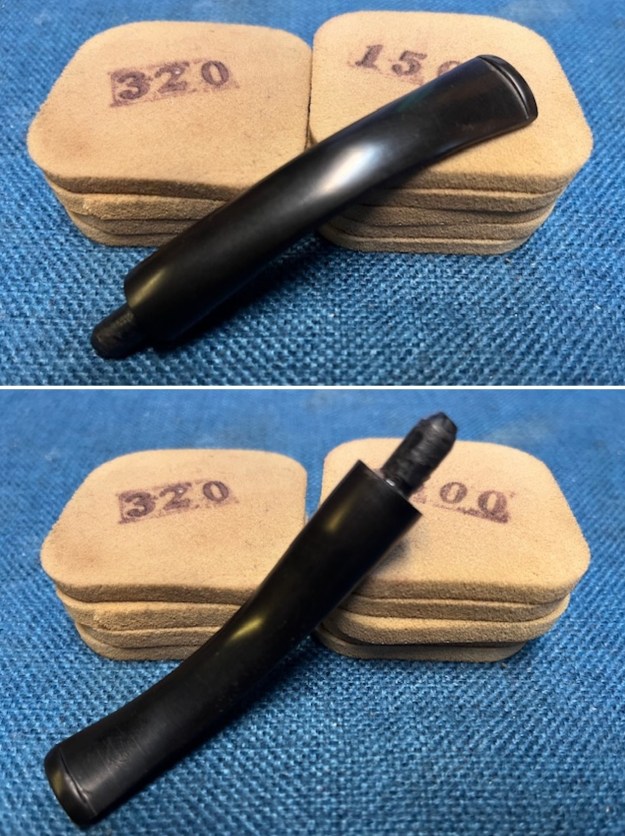
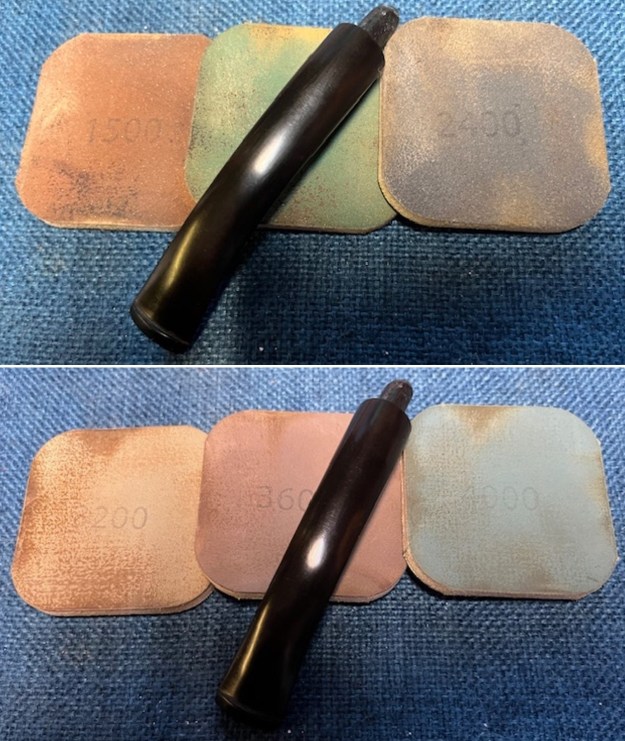
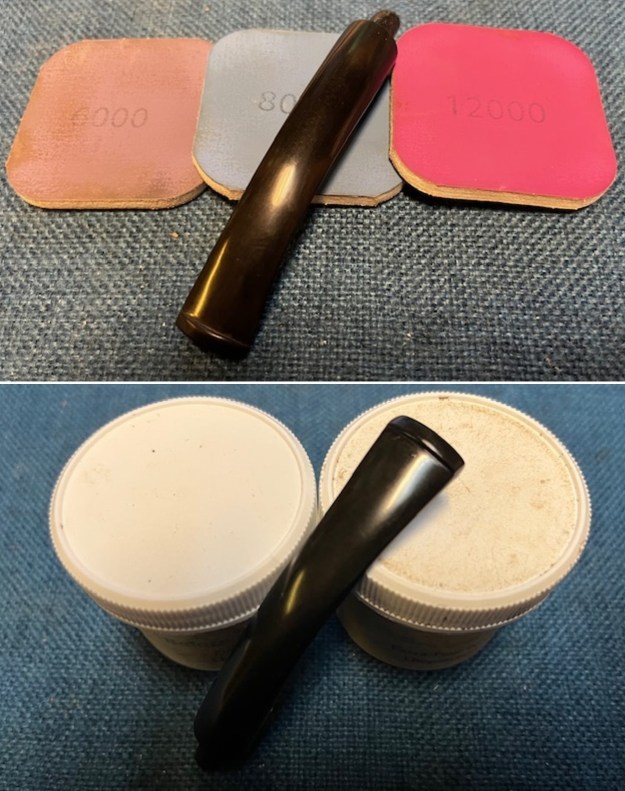
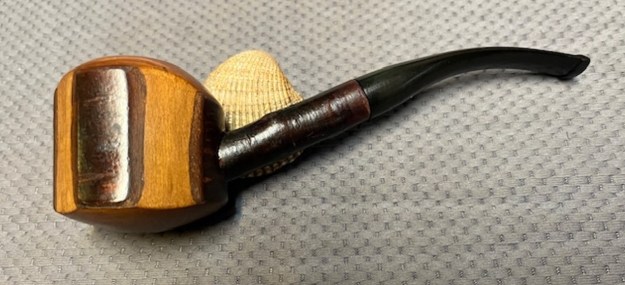
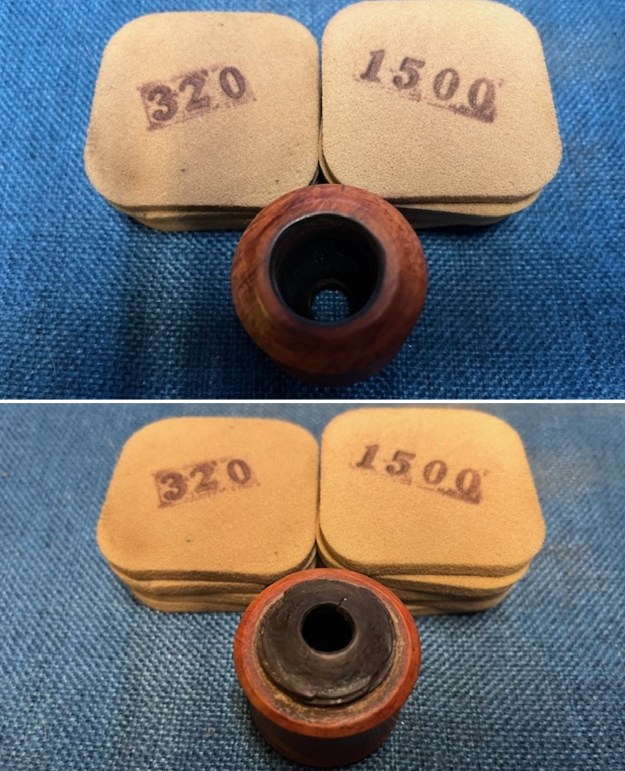
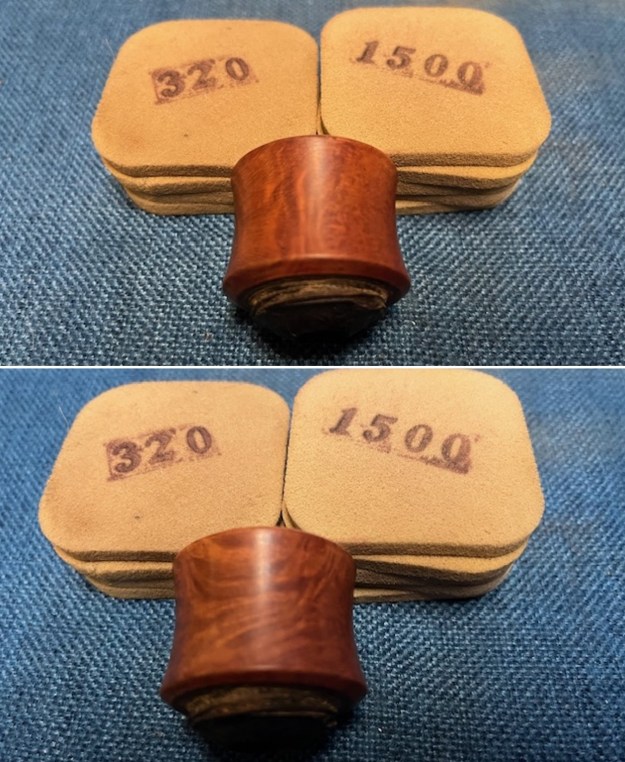
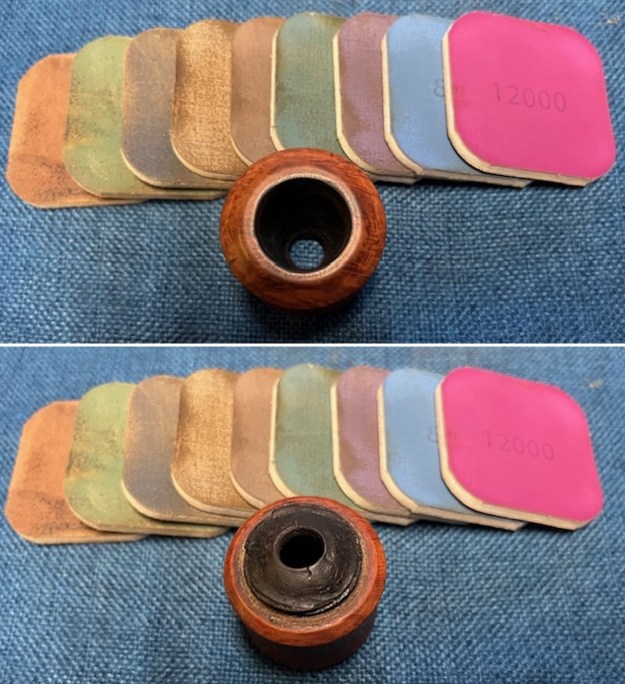
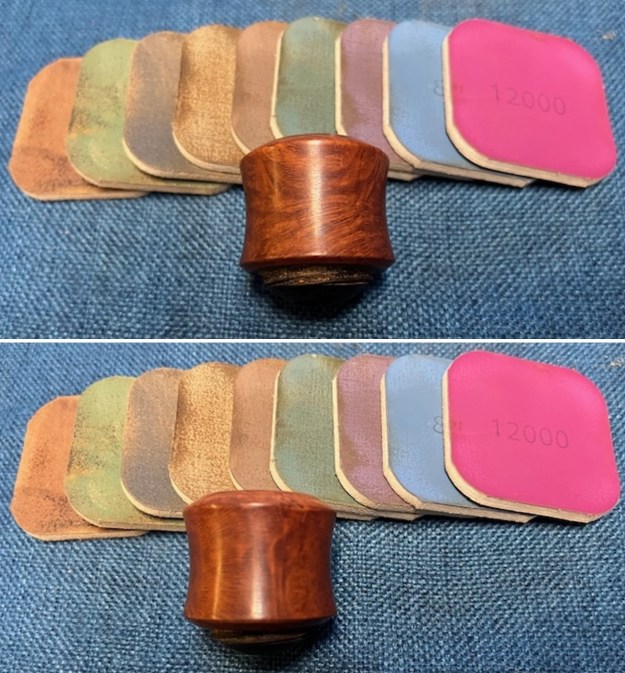
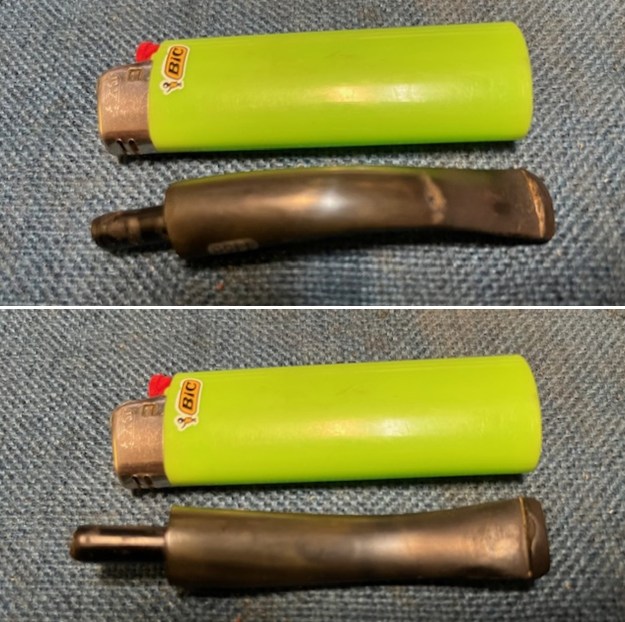
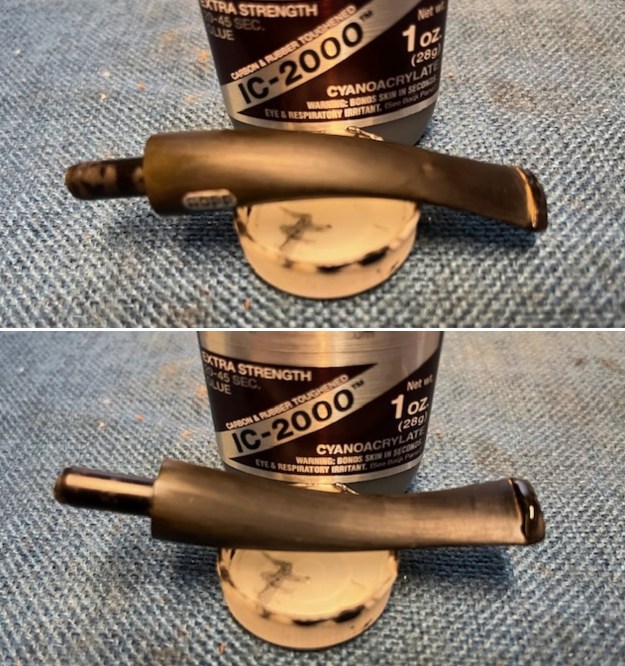
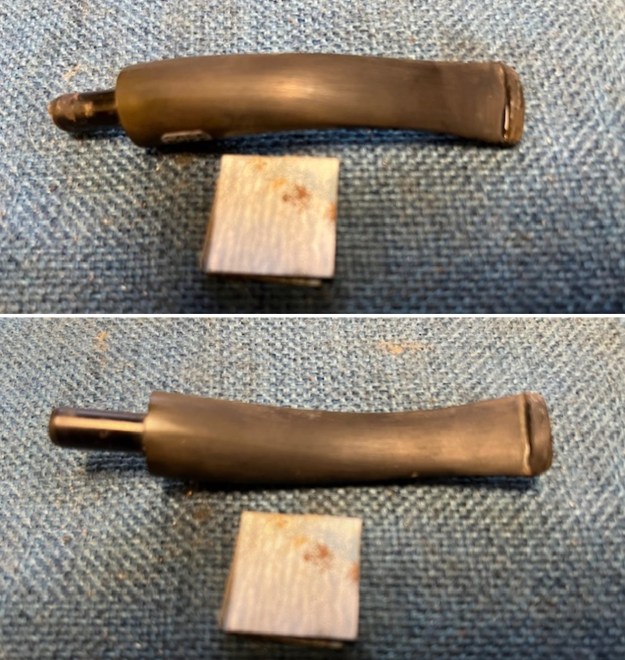
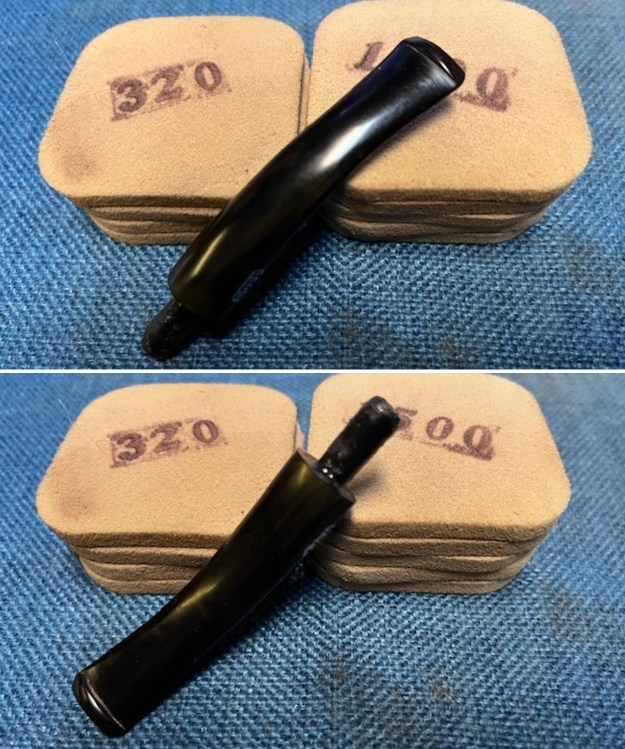
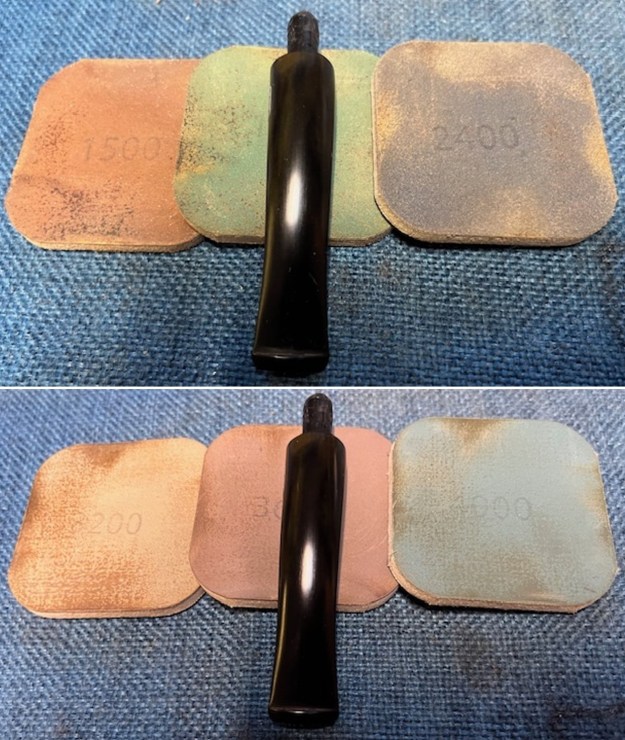
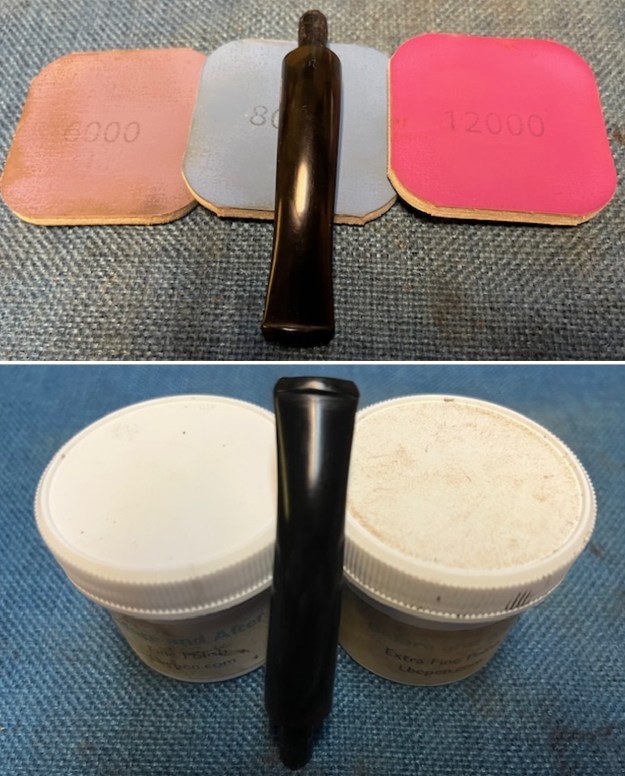
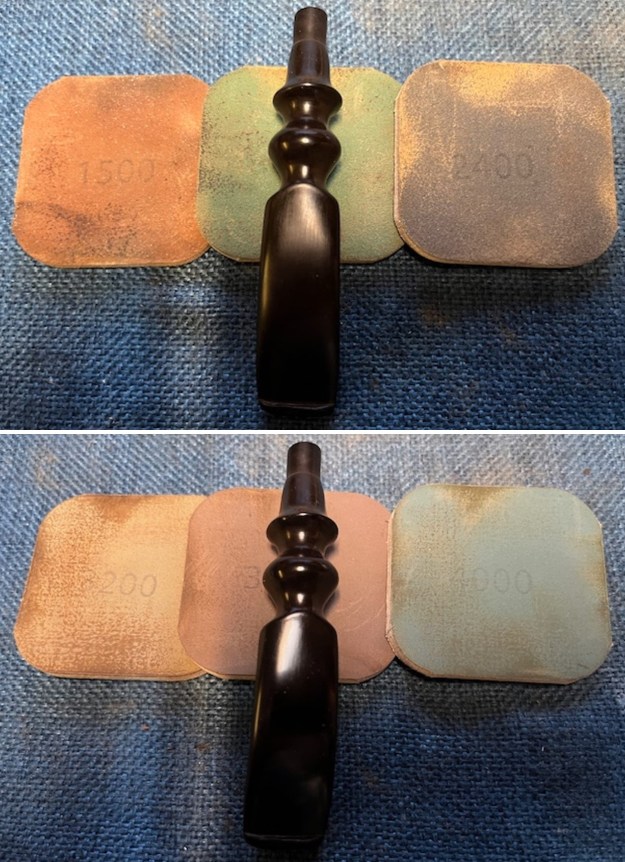
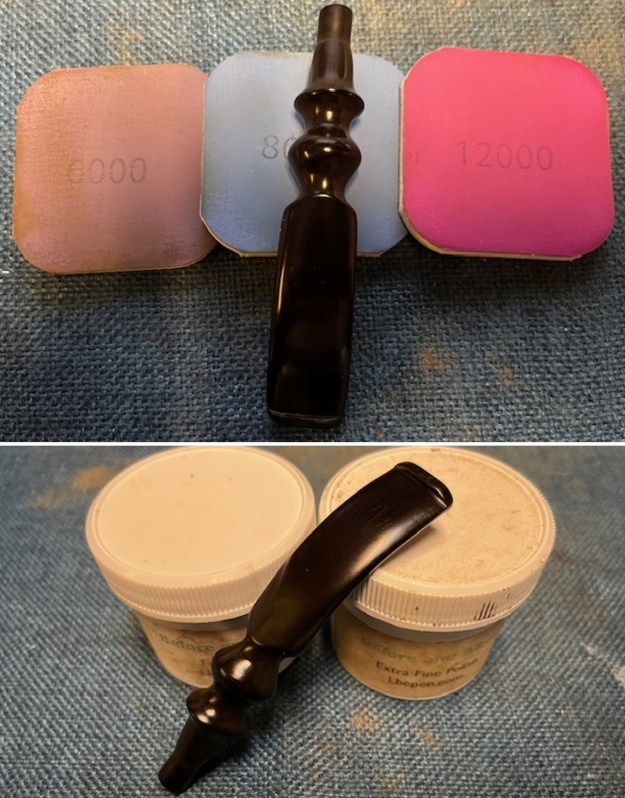
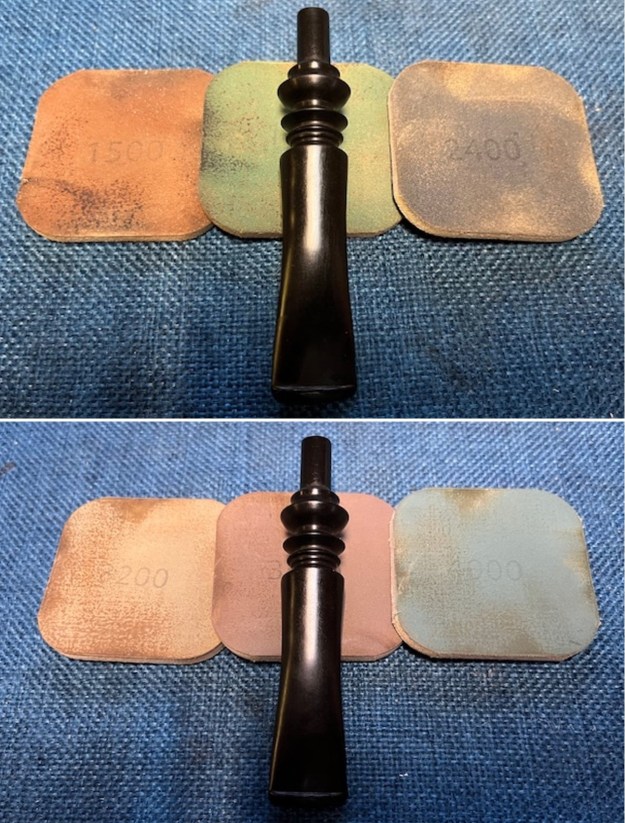
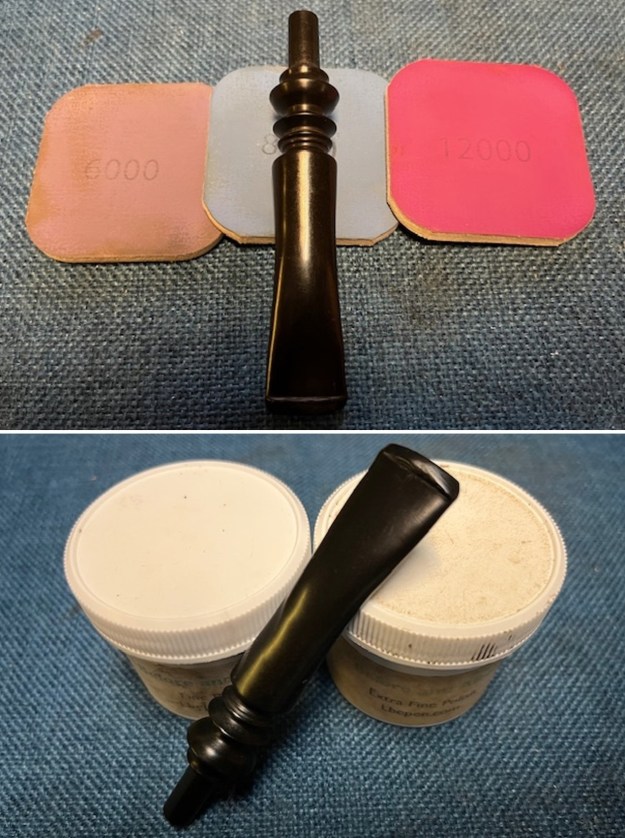
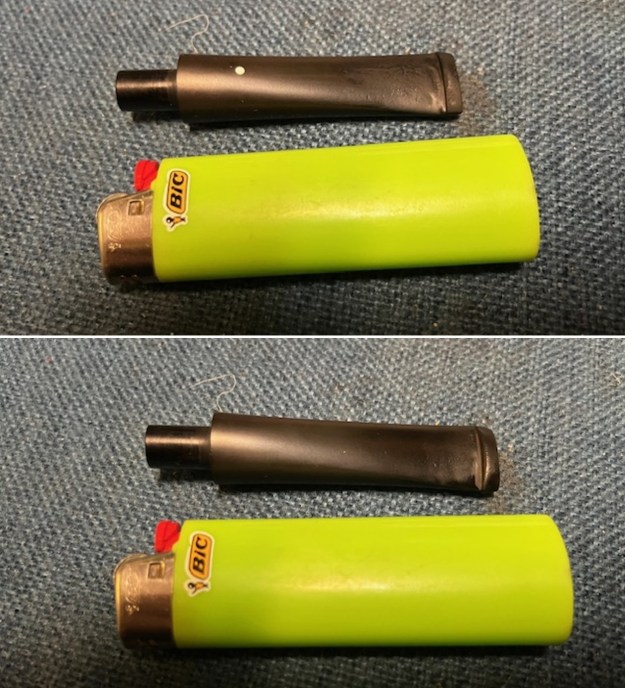
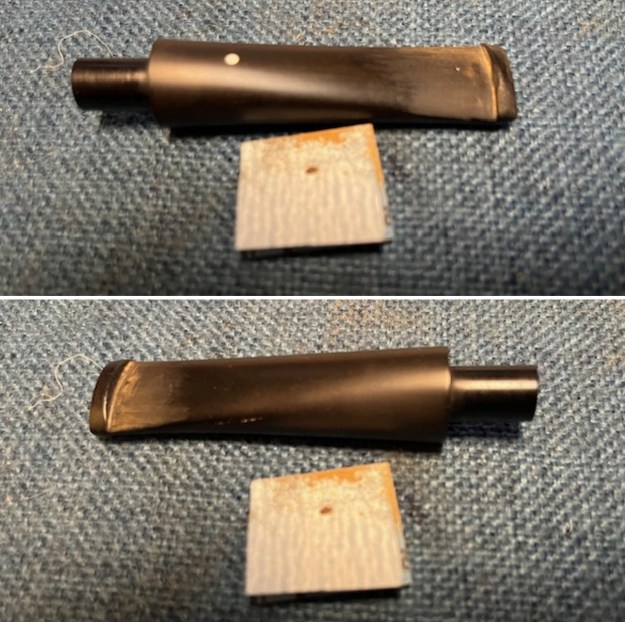
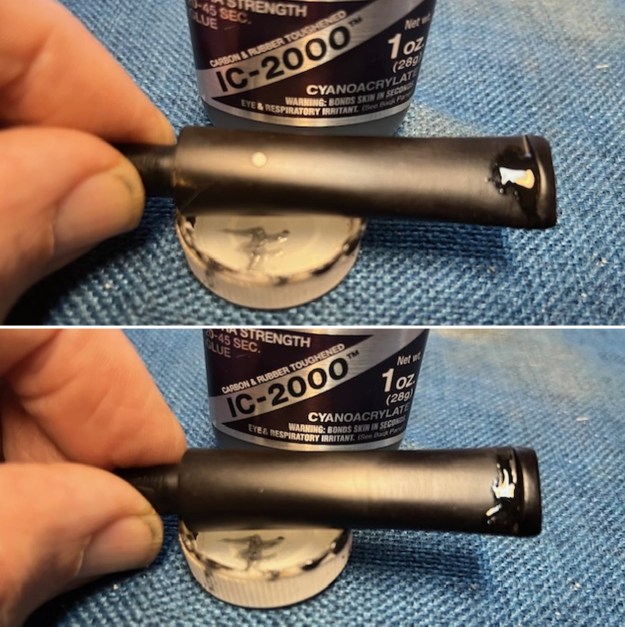
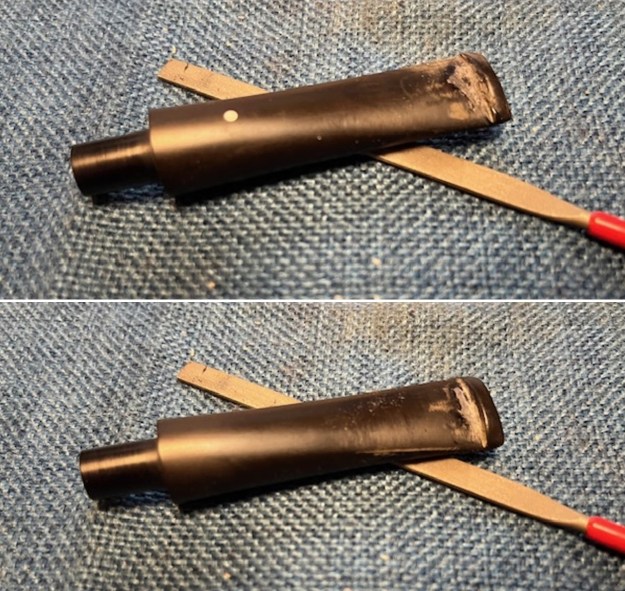
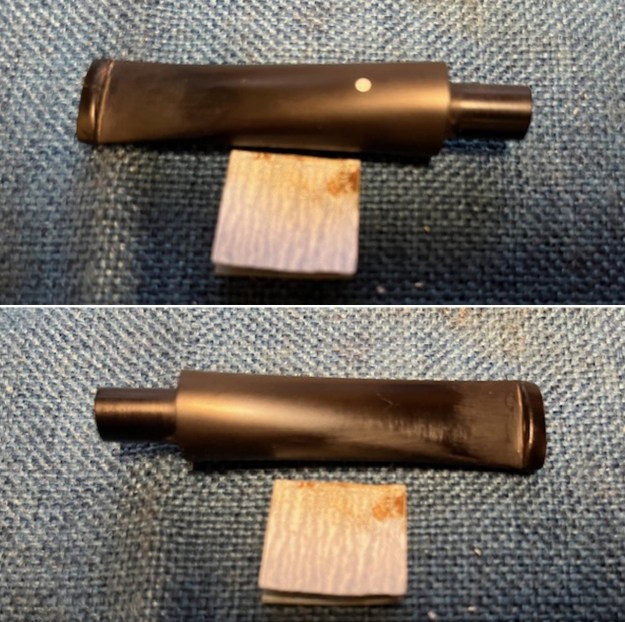
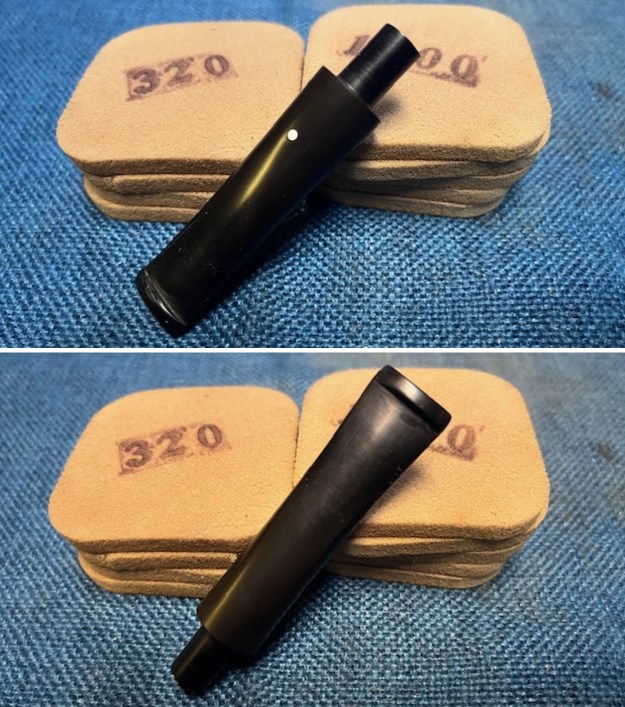
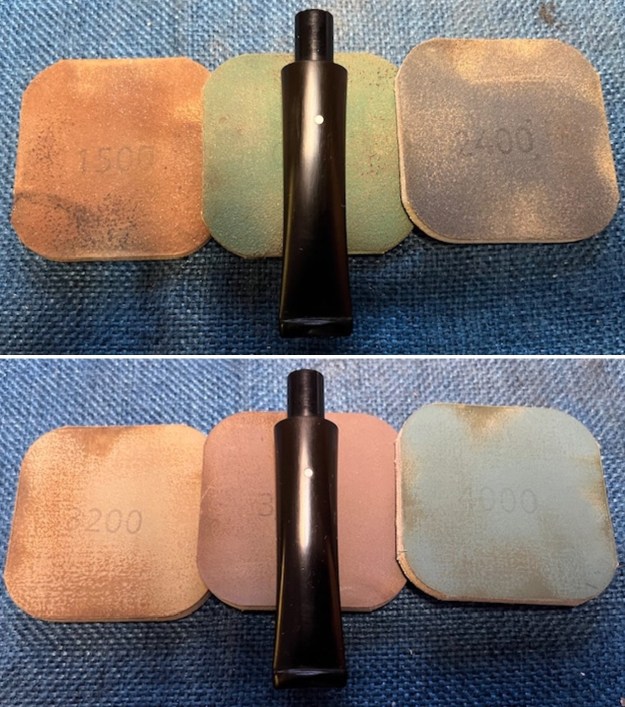
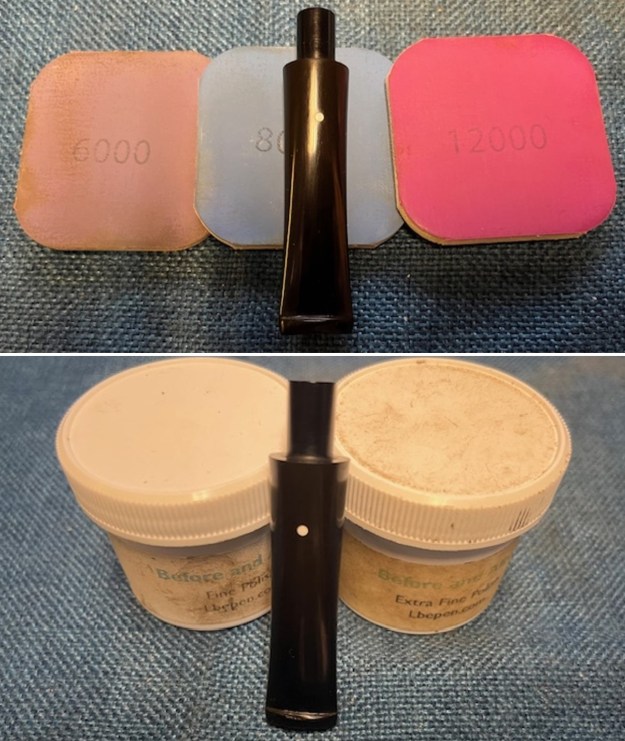
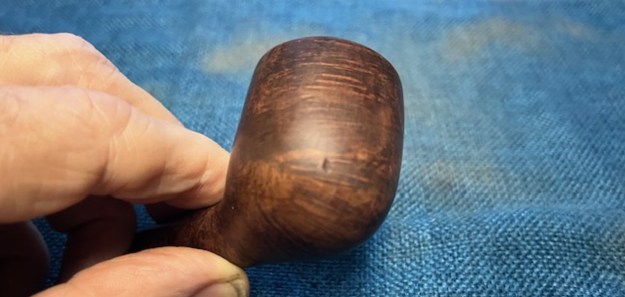
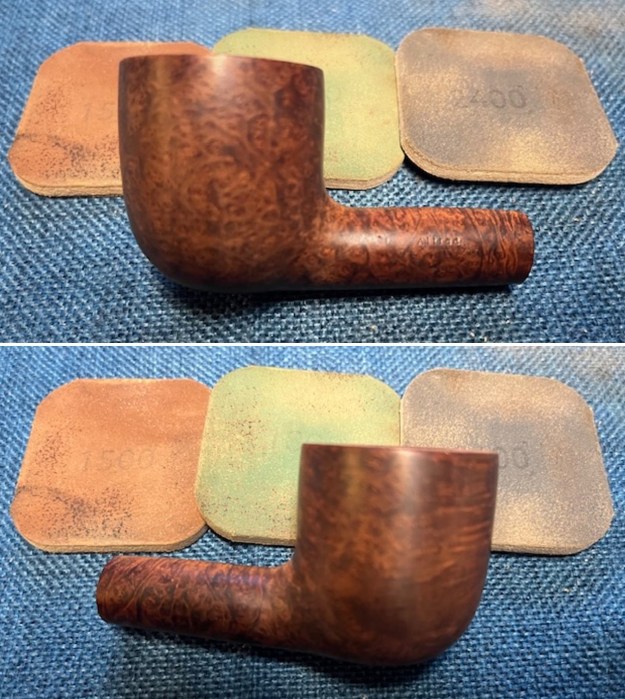
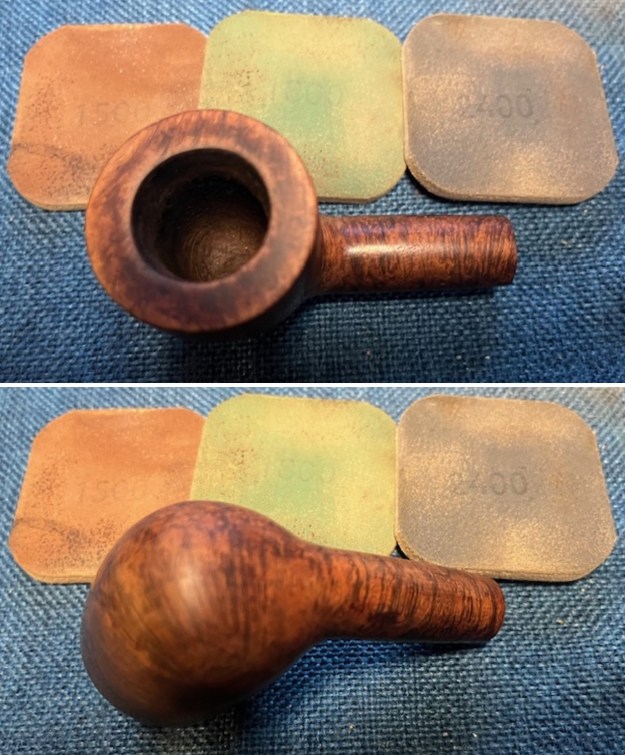
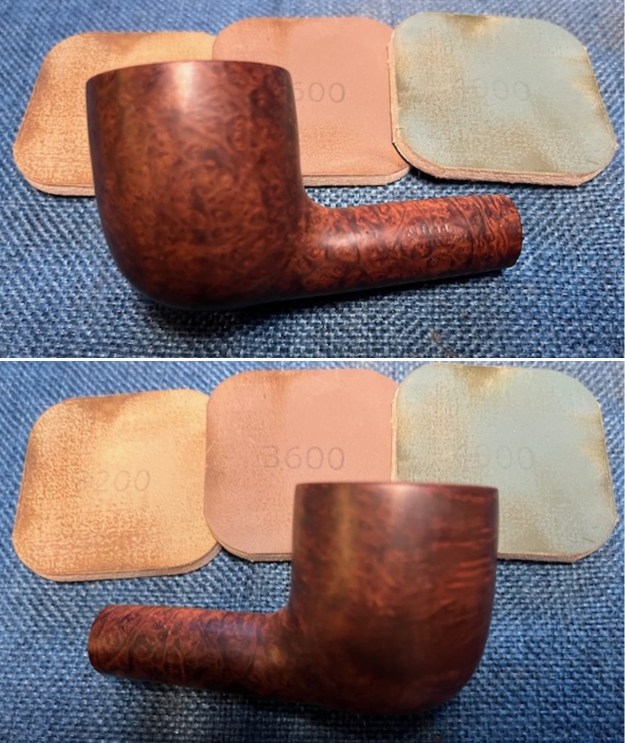
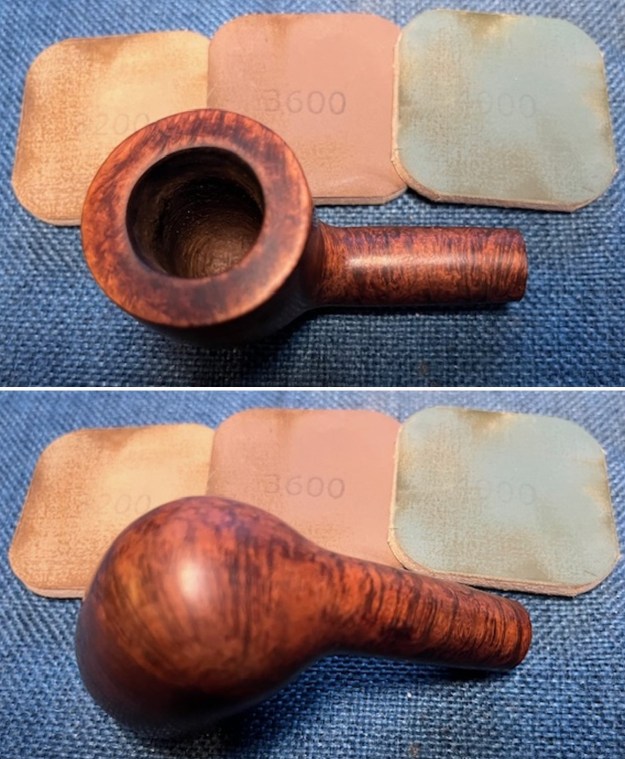
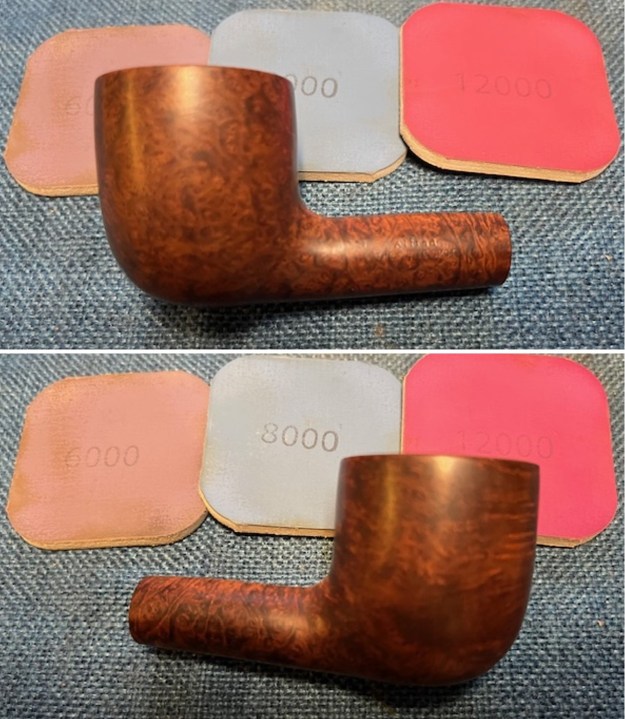
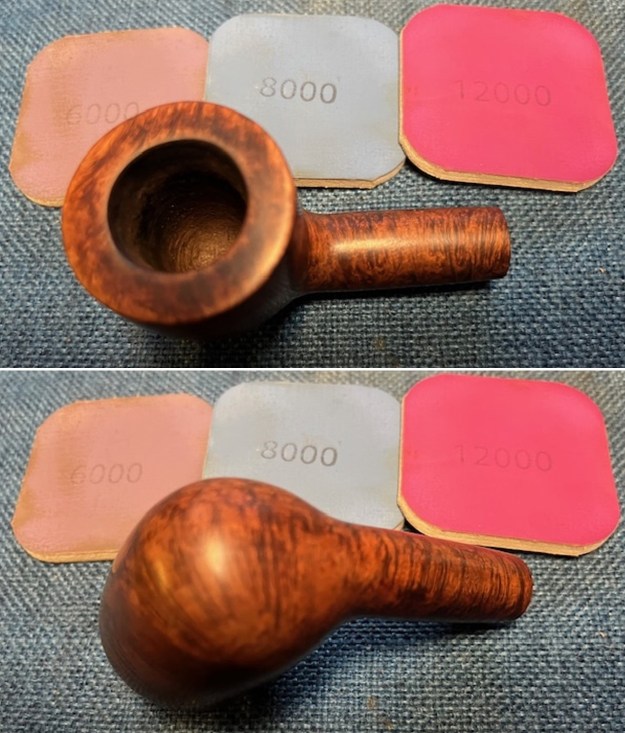
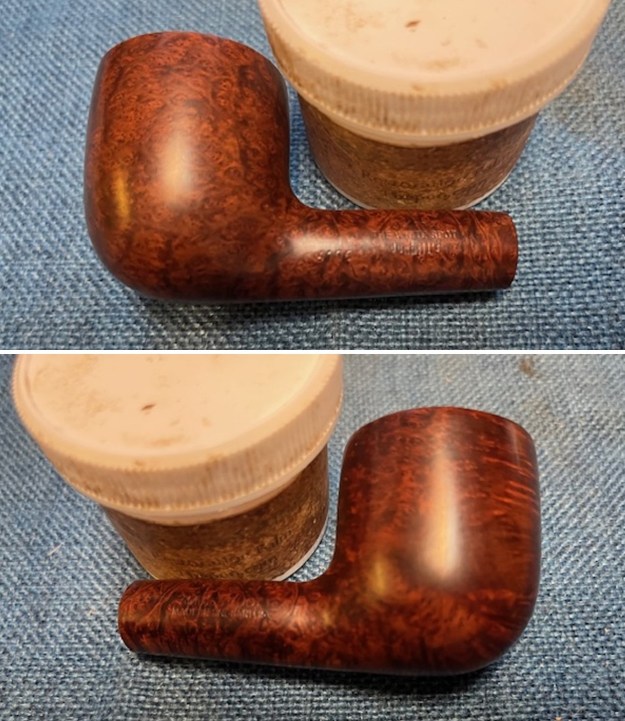
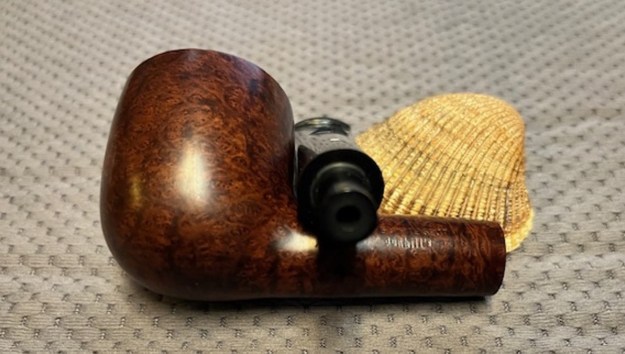
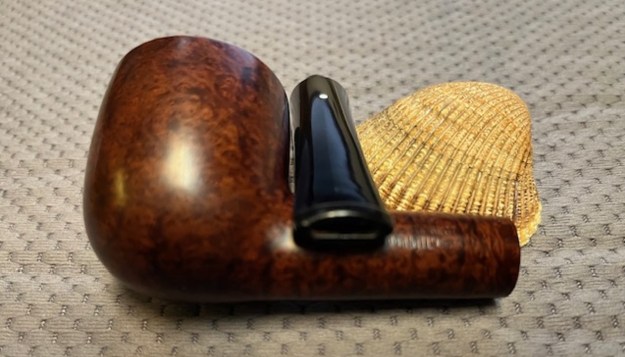
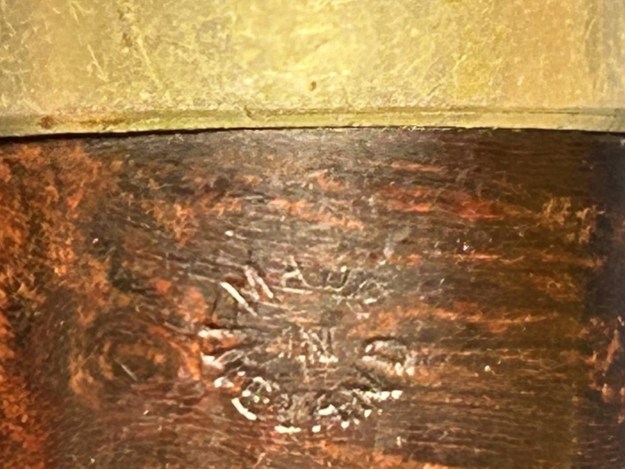
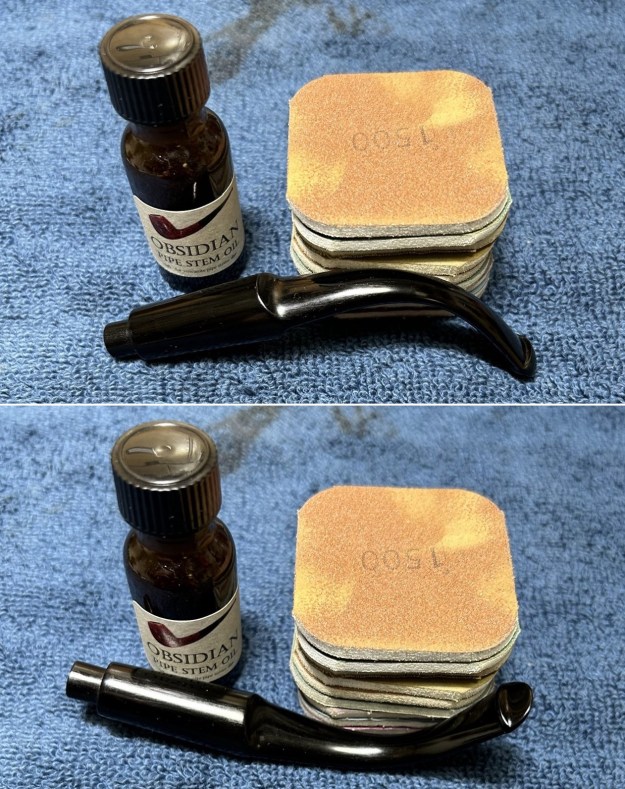
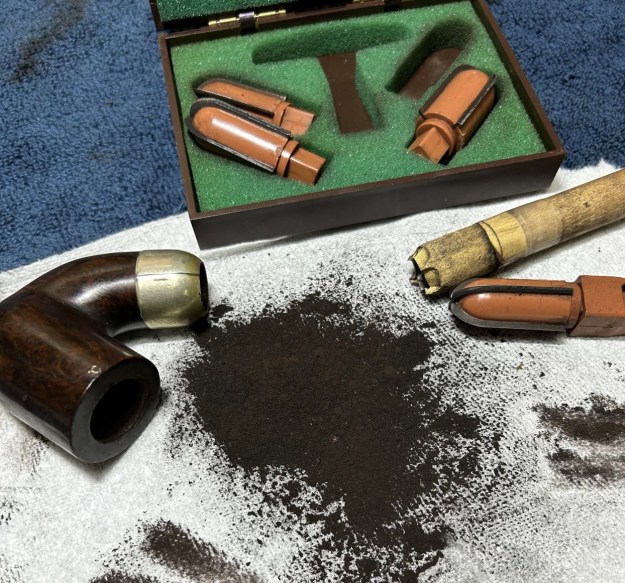
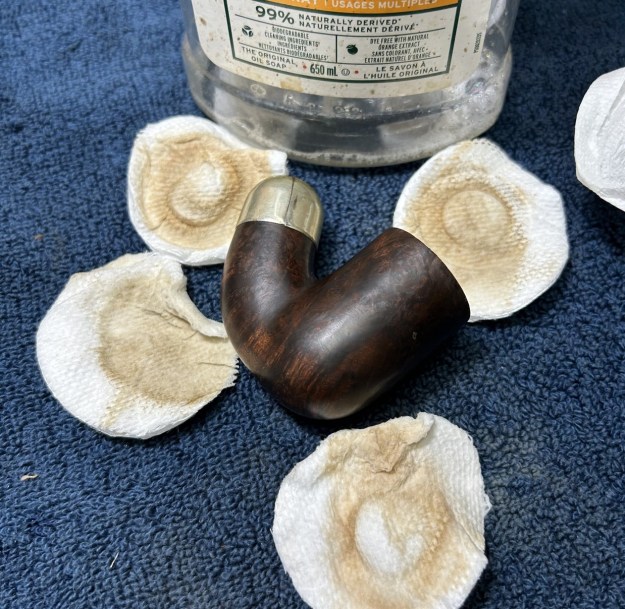
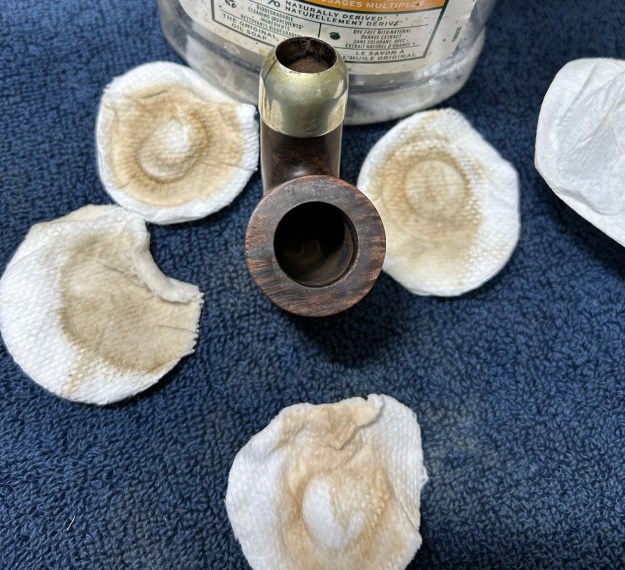
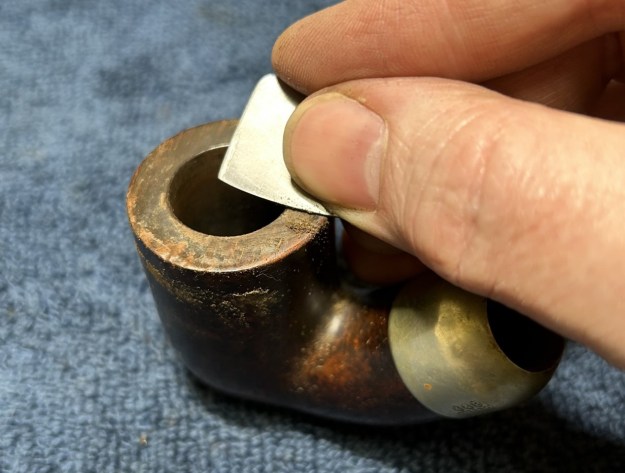
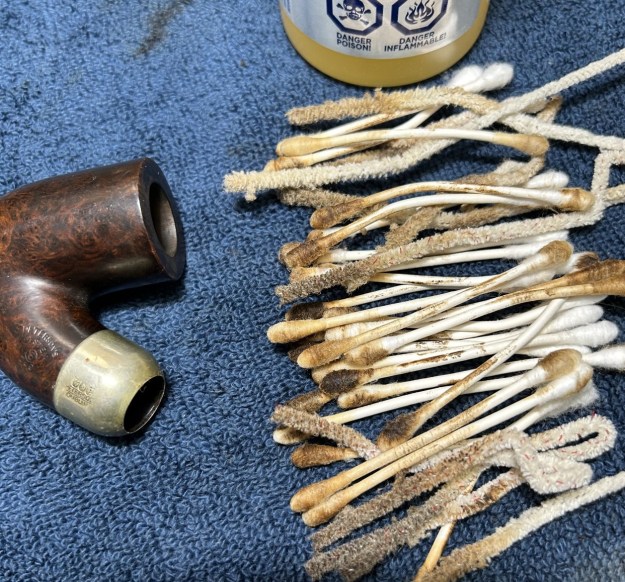
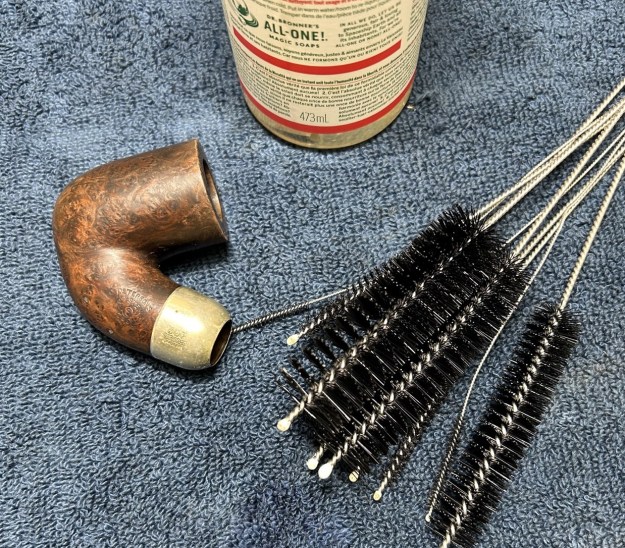
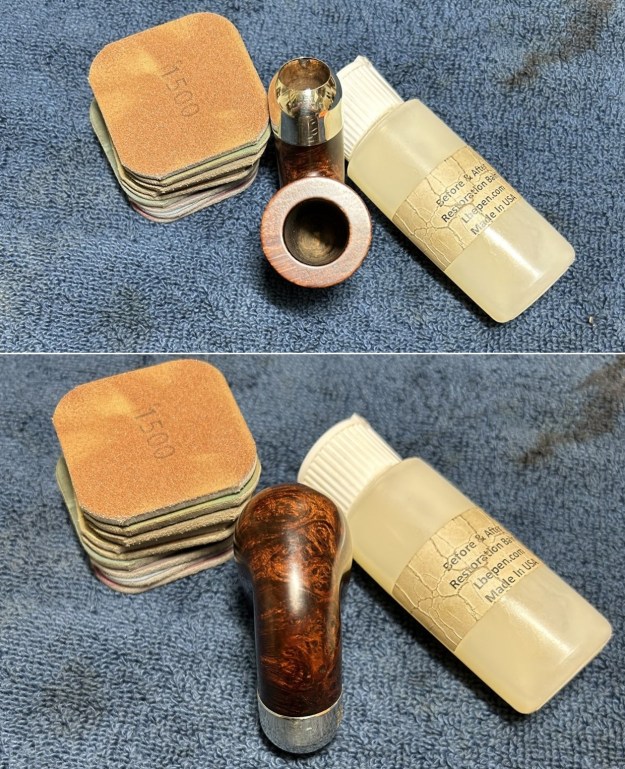
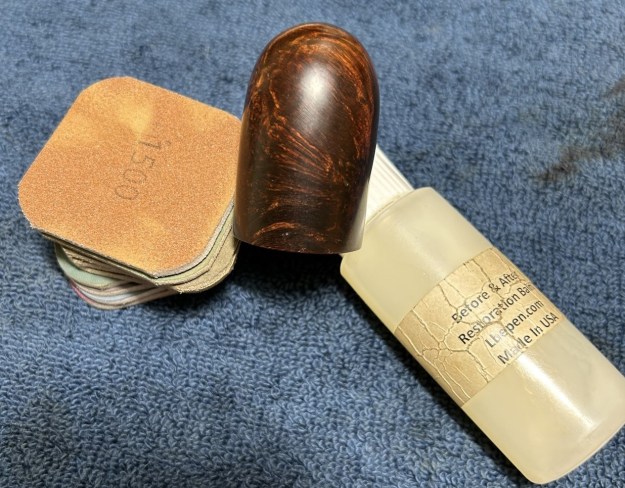
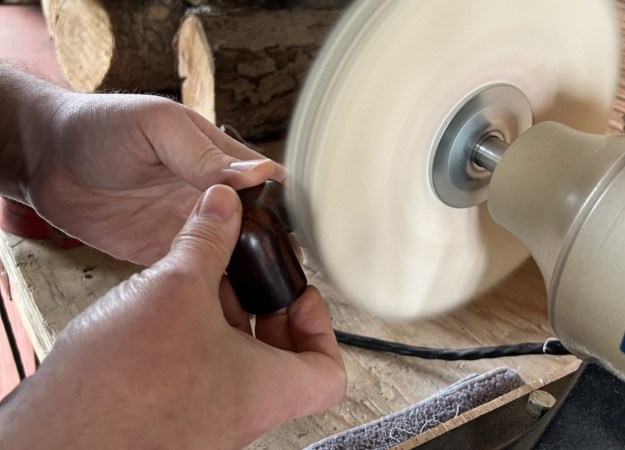
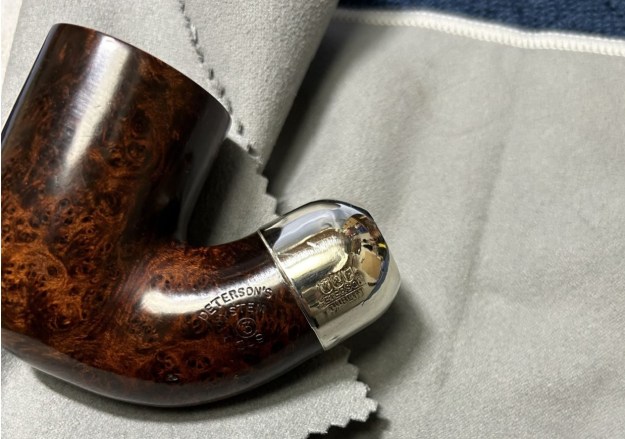
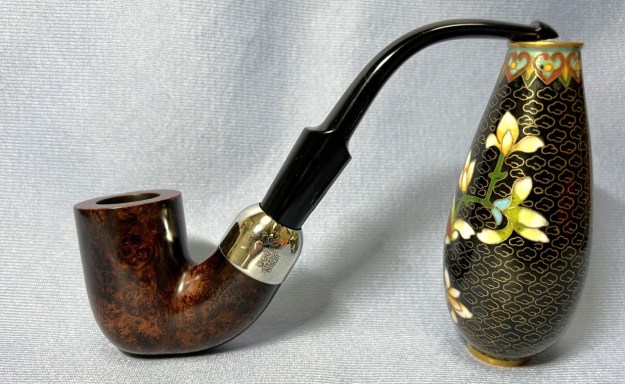
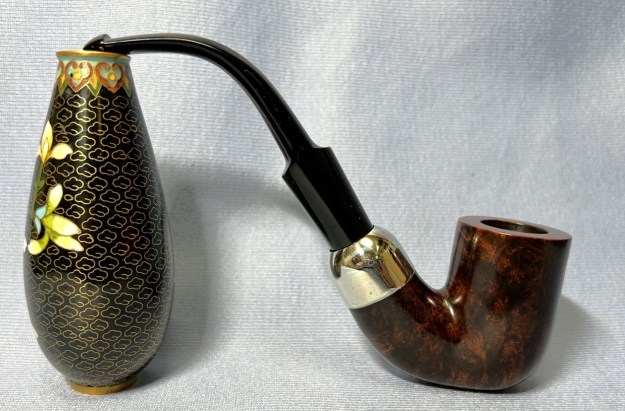
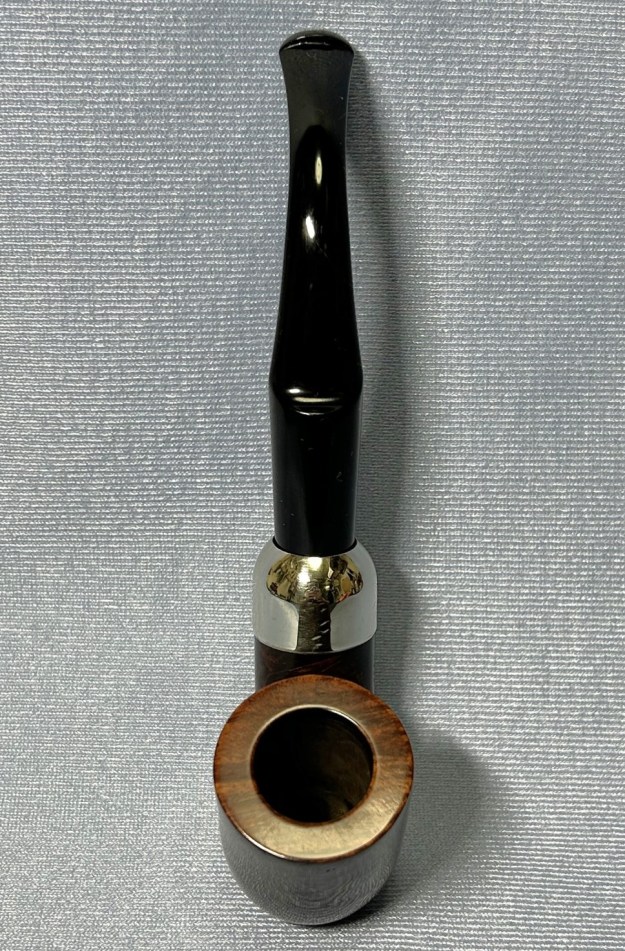
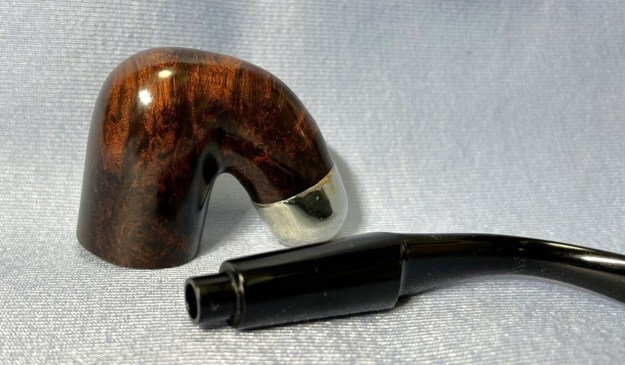
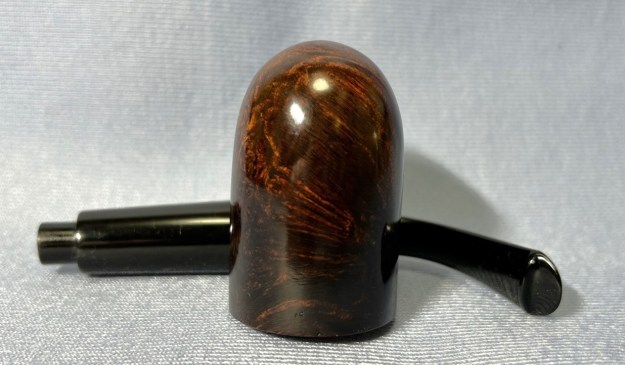
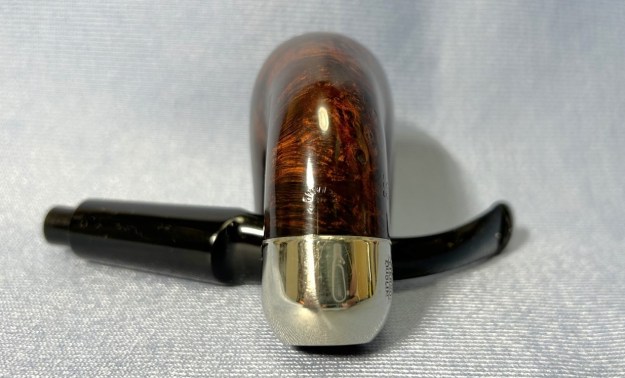
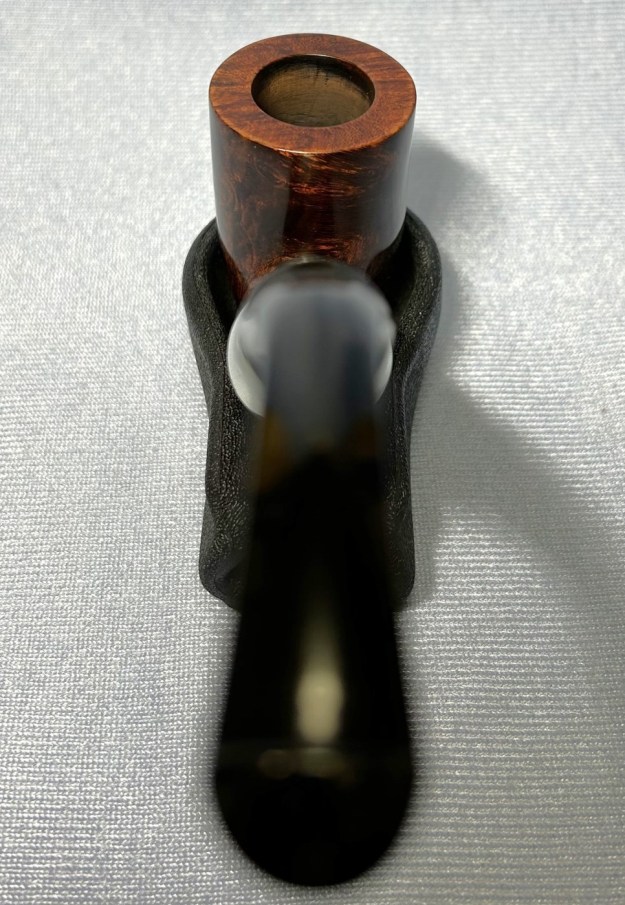
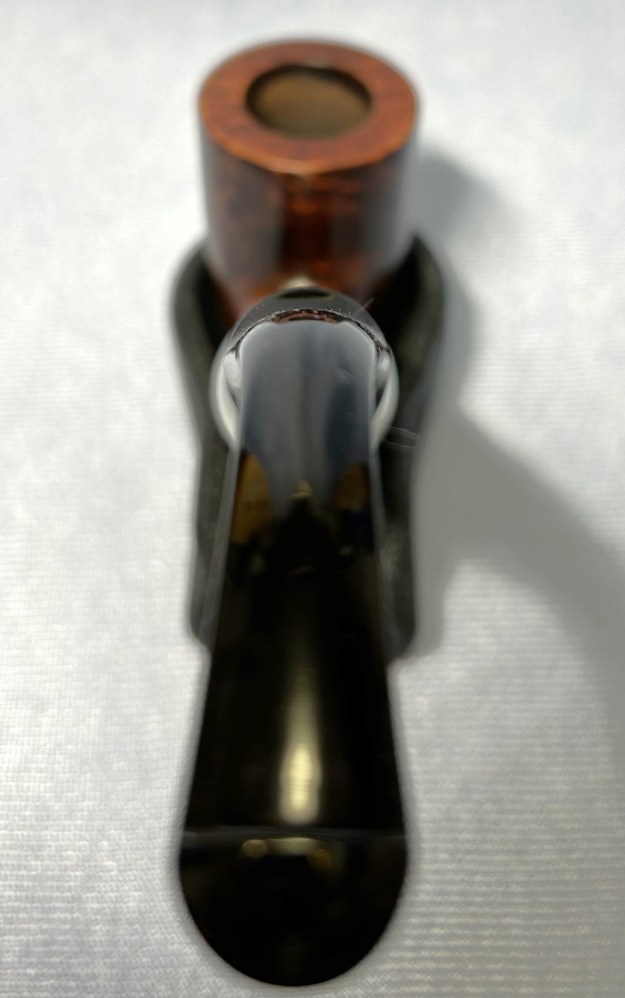
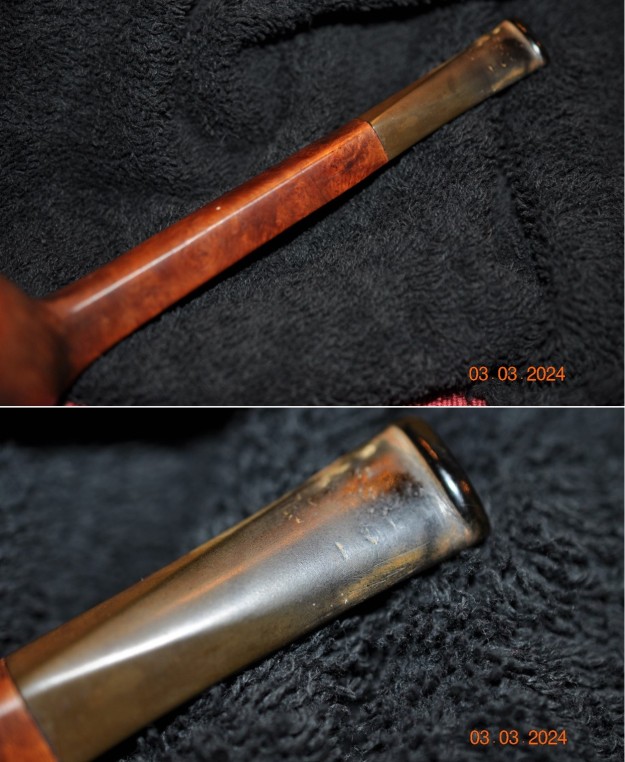
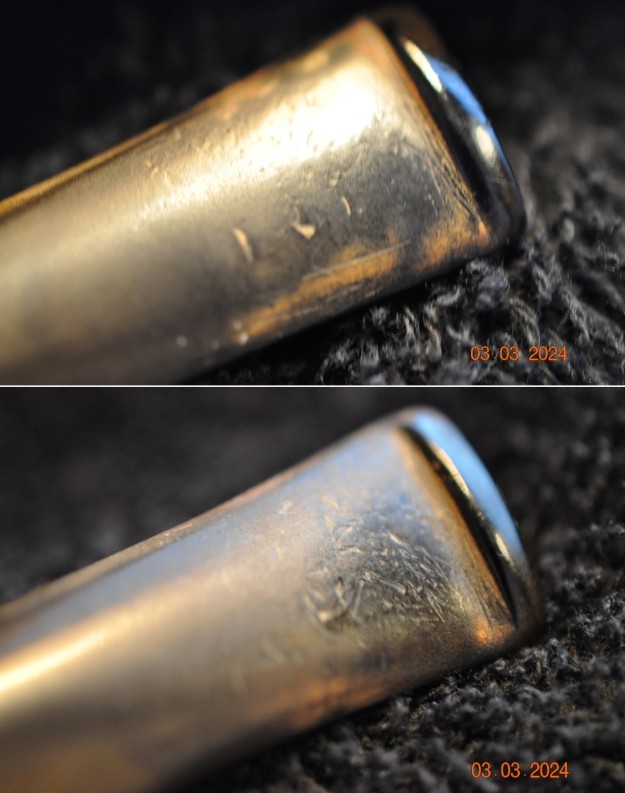
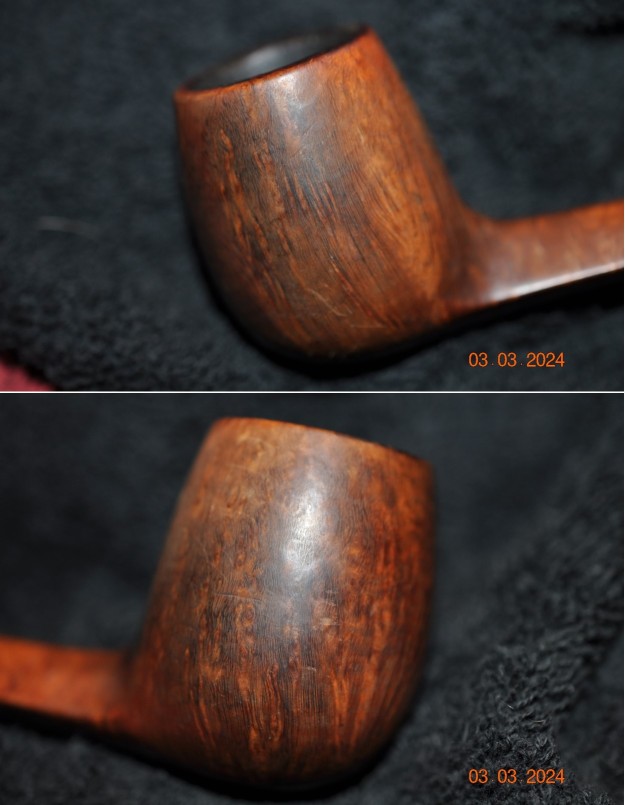
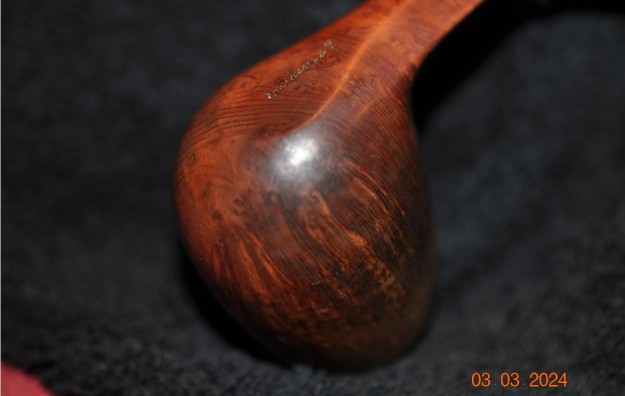
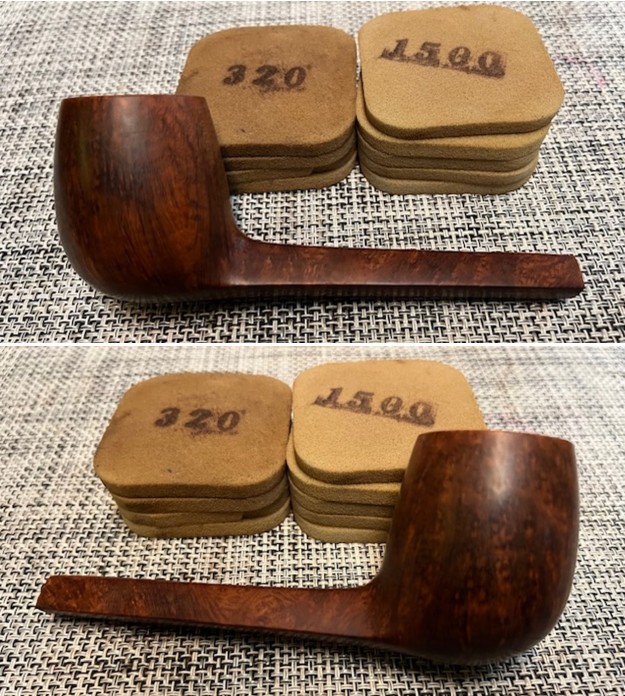
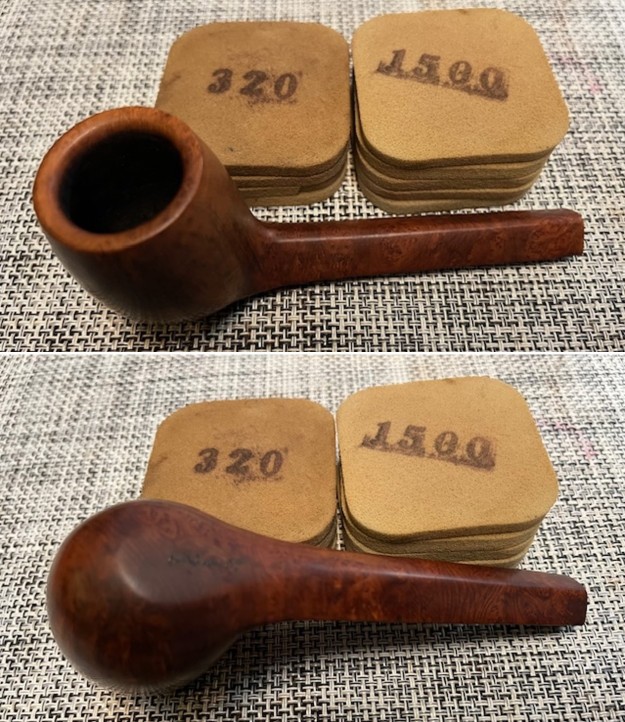
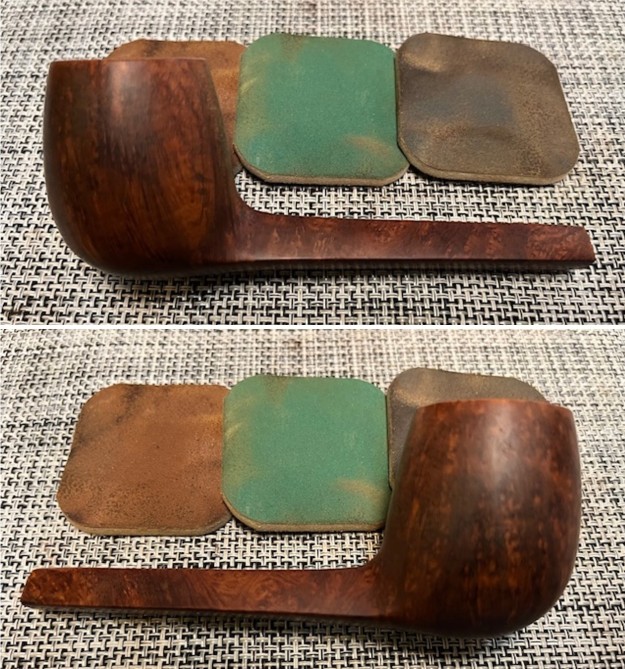
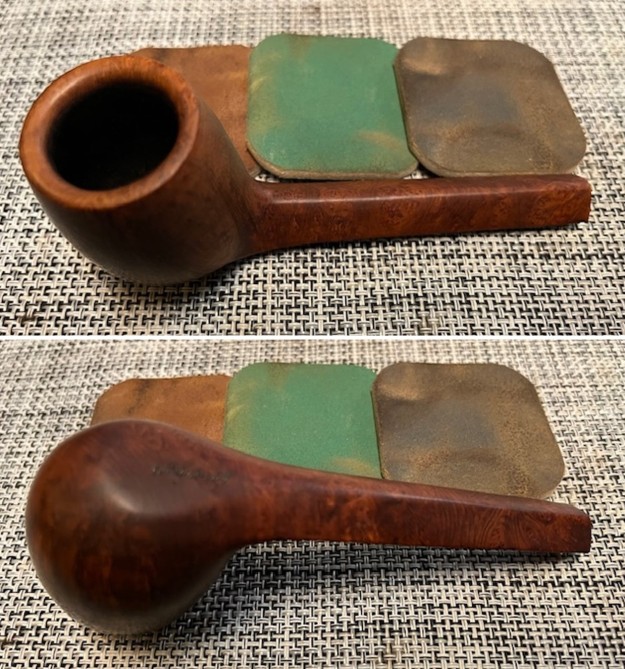
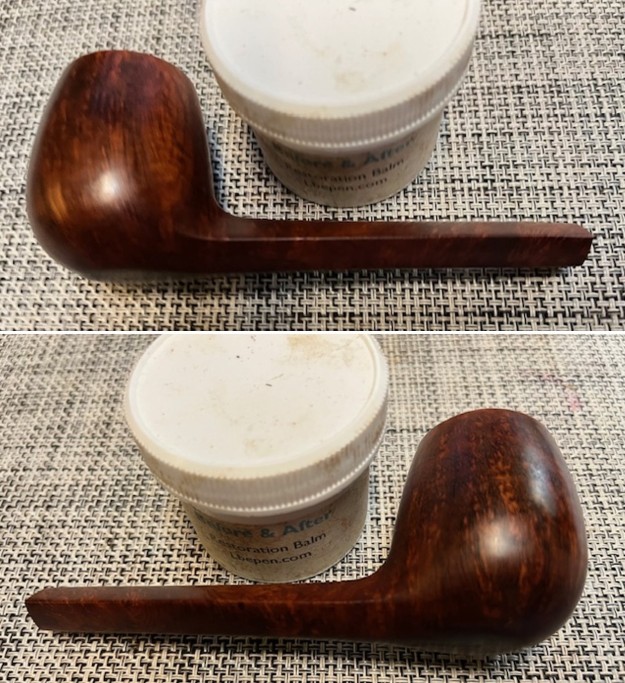
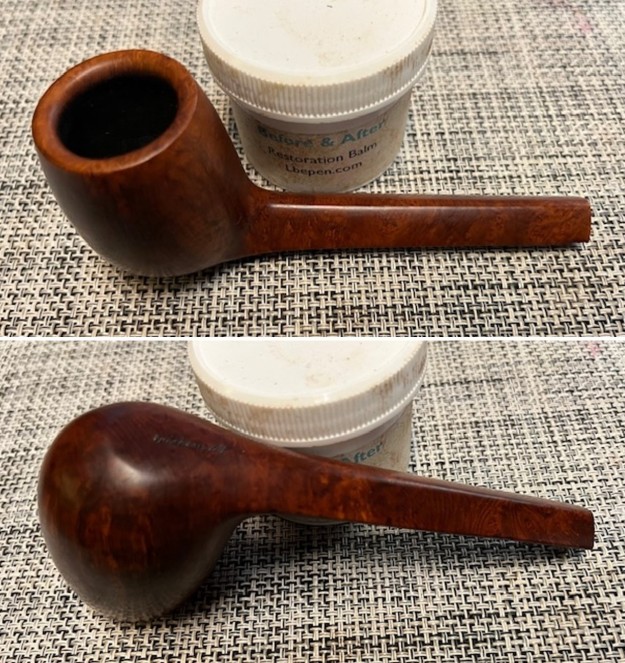
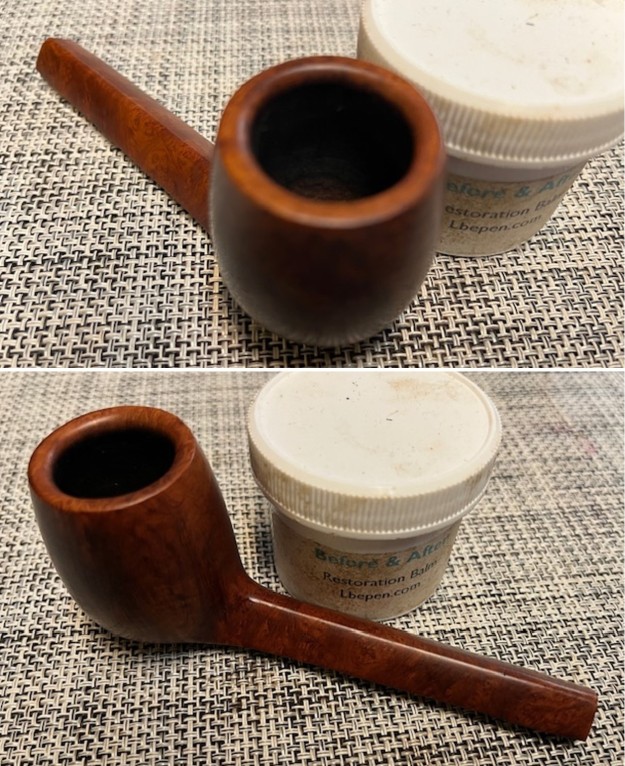
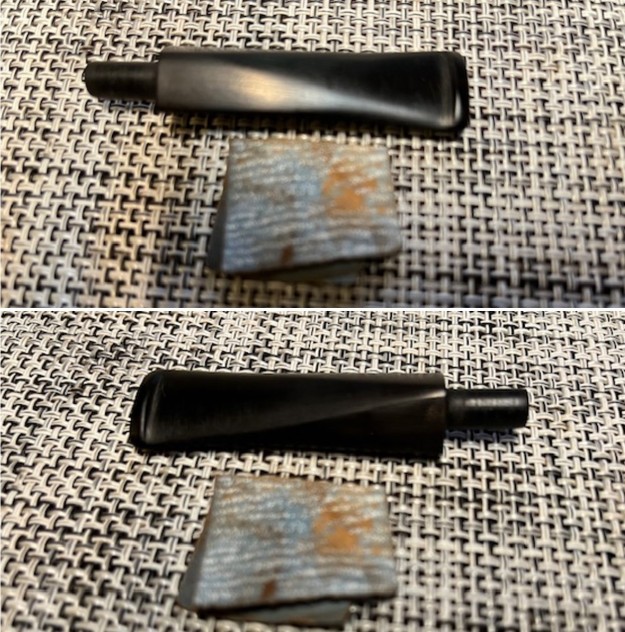
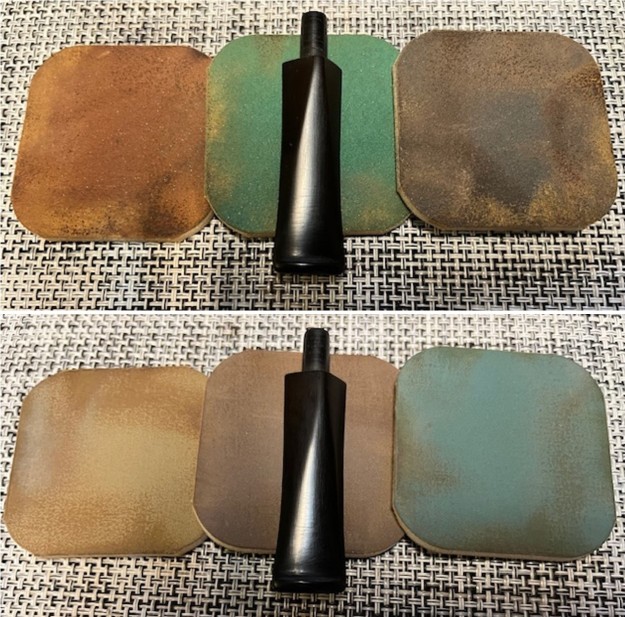
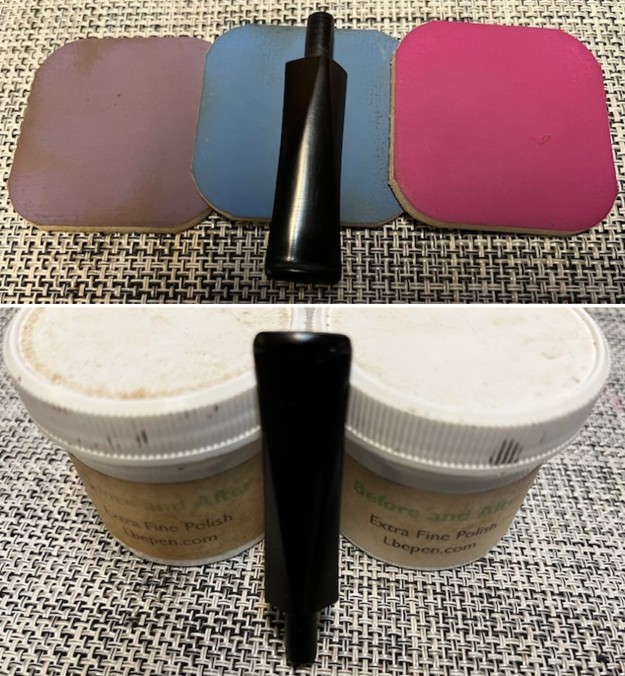
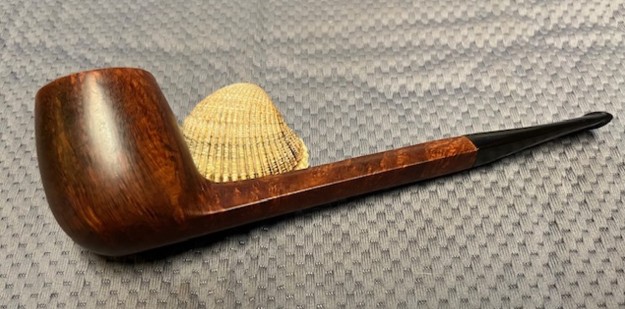
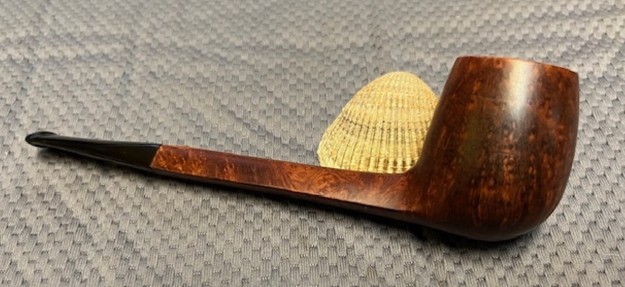
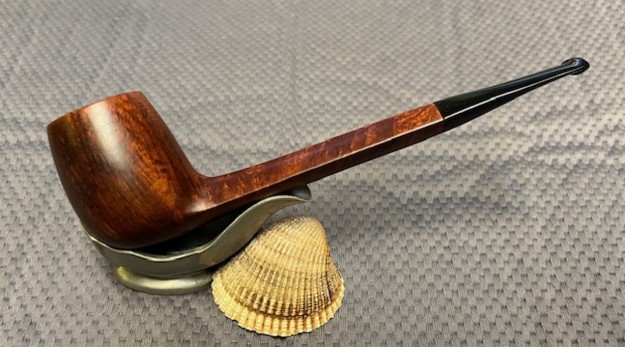
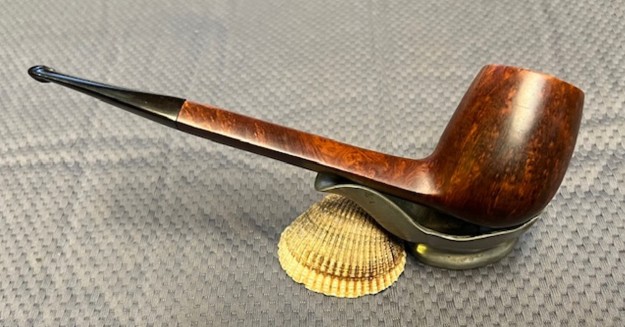
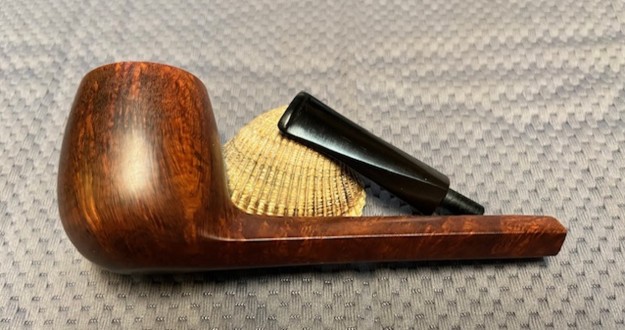
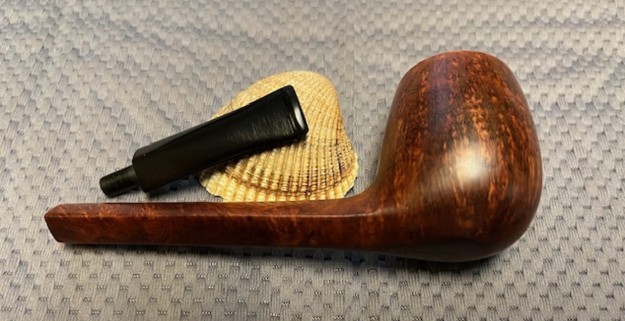
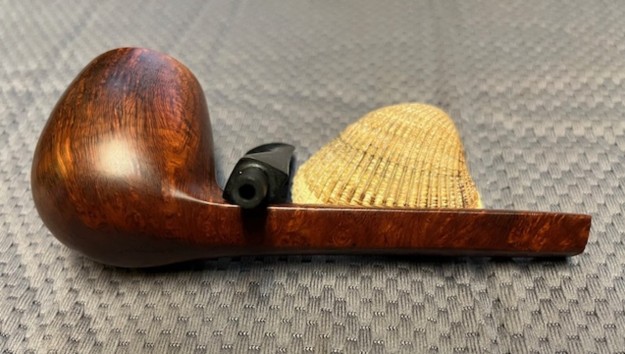
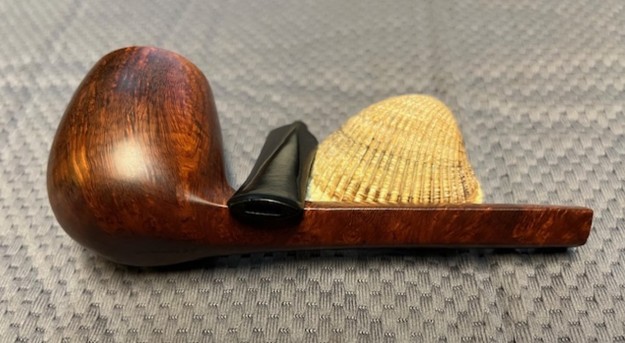
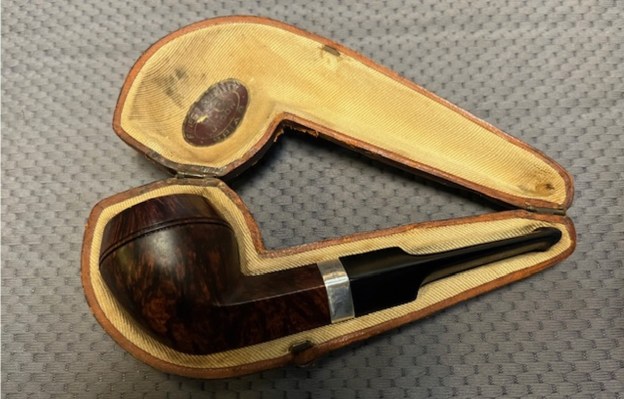
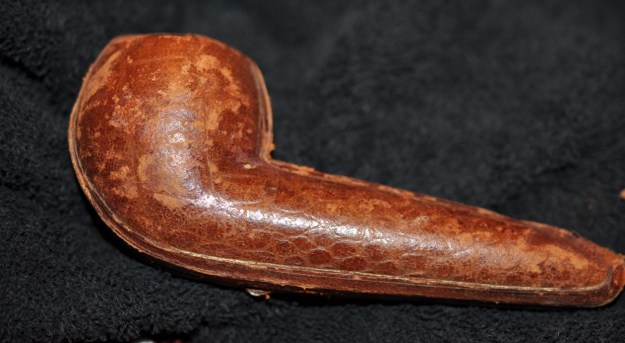
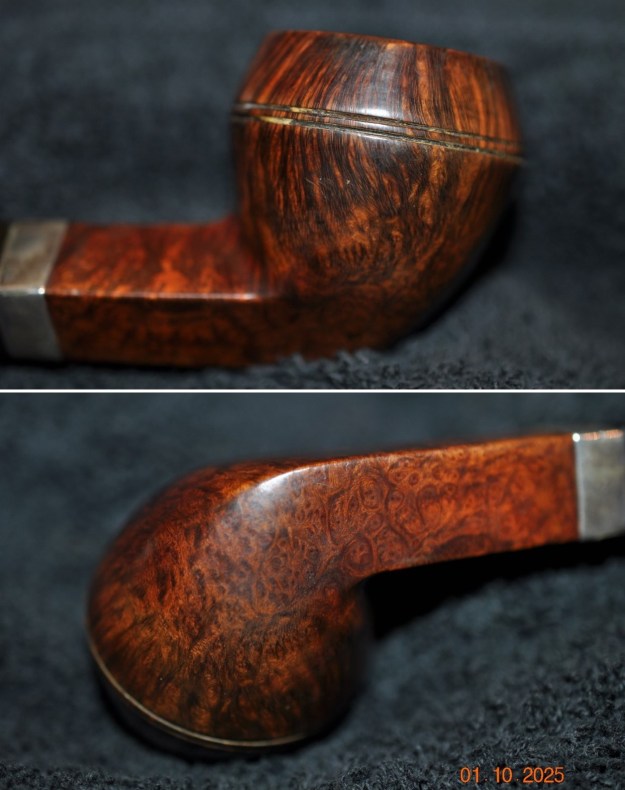
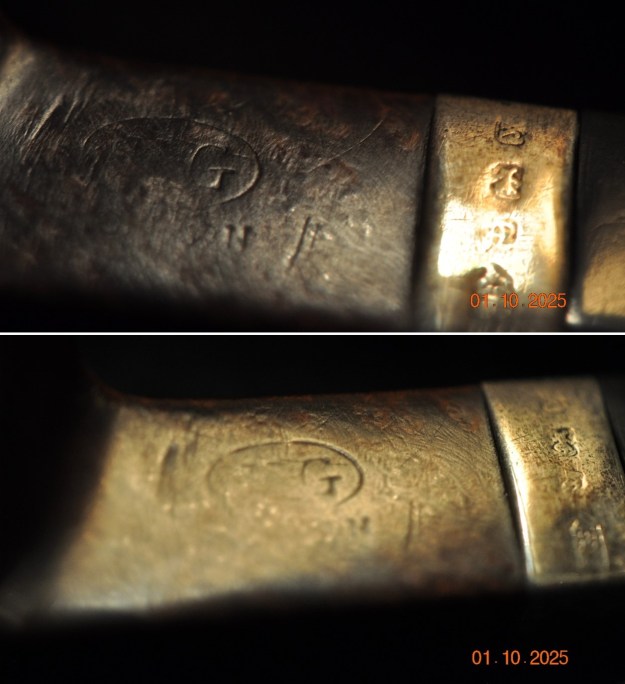
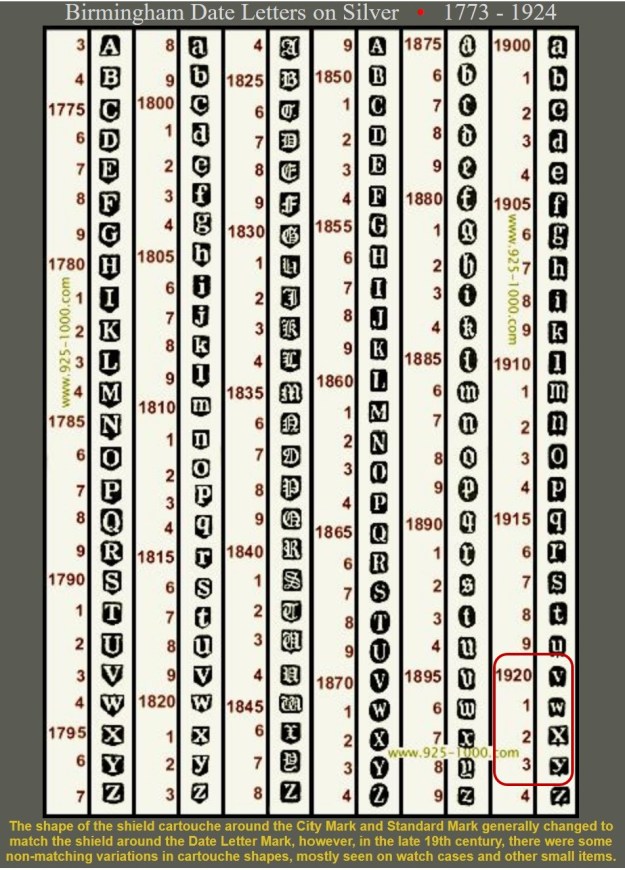
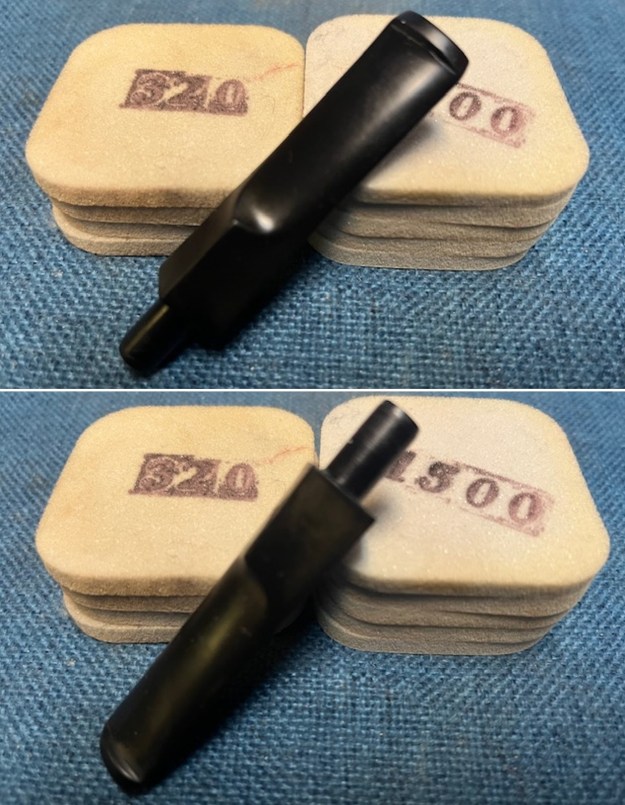
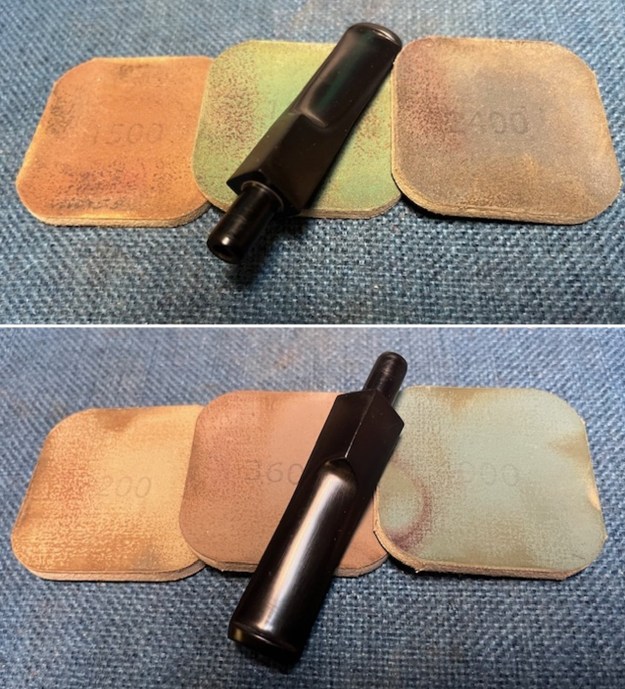
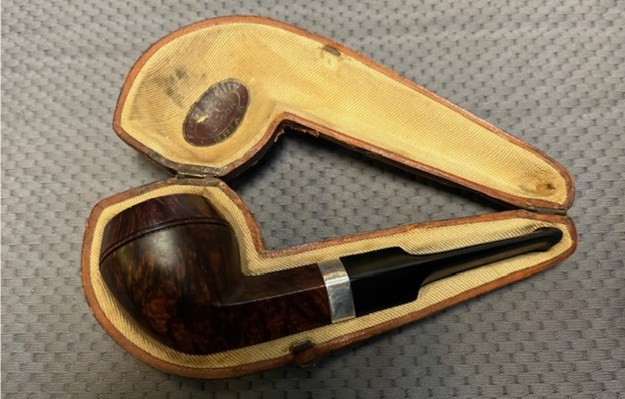
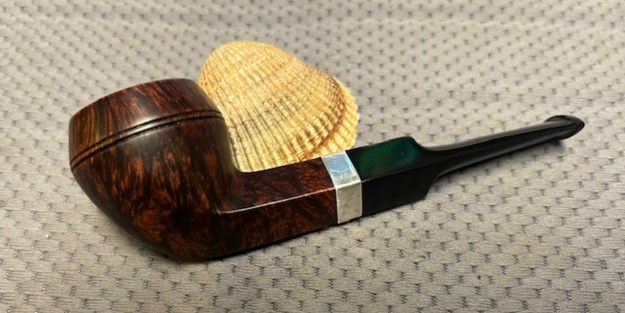
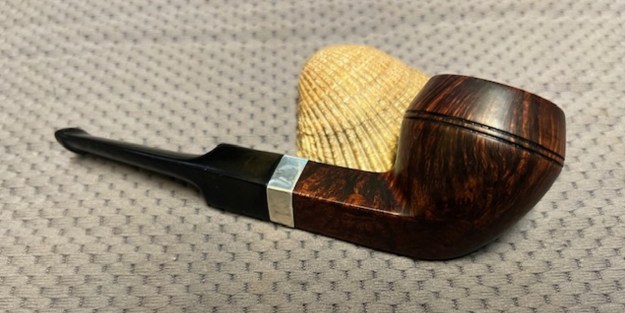
One of the things I love about pipe hunting – whether in person in a shop or online at a sale. This is one of those interesting pipes that we picked up on 12/09/2024 from a seller on Facebook Pipe Exchange. It came from Wellsville, Kansas, USA. It is a smooth Bulldog with a Sterling Silver Band on the shank. It is faintly stamped on the top left side of the diamond shank and reads H.G. in an oval [over] London. The silver band is stamped H.G. in a lozenge followed by three hallmarks. The first cartouche holds an anchor which is the mark for Birmingham. The second cartouche holds a rampant lion which is the mark for Sterling Silver. The third cartouche holds a lower case y which gives the date of the pipe. The pipe was in good condition in terms of the finish on the bowl. The bowl had been reamed quite recently and there was some slight checking on the bowl walls. The rim cap was quite clean with some wear around the top and on the inner edge. Otherwise it was a beautiful pipe. There vulcanite saddle stem had light oxidation on the surface and some tooth marks and chatter on the surface. Jeff took photos of the case which bears a stamp that reads Finest Quality Briar in the outer ring of the oval. On the inside of the oval it is stamped H.G. He also took photos of the pipe before he started his clean up to capture the condition of the pipe when it arrived. It is a real beauty. He took photos of the bowl and rim top to show the damage on the top and inner edge of the bowl. It looks like a combination of burn damage and over reaming damage on the front and back mid bowl. The stem was very dirty with grime and sludge build up from the button forward on both sides of the stem. Jeff captured the smooth finish around the bowl sides of the bulldog and it is stunning. There are twin bands below the rim cap. The bowl shows some great grain. He captured the stamping on the top left side of the shank. The stamping is faint but readable. It read as noted above.  He took a photo of a the silver band on the shank with the hallmarks that I noted above.I did some checking online on Pipedia and Pipephil for the HG brand and could not find anything about the stamping. I did however, find a silver Hallmark chart. I have included that below. I drew a red box around the section that includes the year stamp “y” on the band. It identifies the date as 1923. This is an old timer.Armed with that information I turned to work on the pipe itself. Jeff had done a great job cleaning up the pipe as usual. He cleaned up the inside of the bowl with a PipNet reamer and a Savinelli Fitsall Pipe Knife. The bowl walls looked very good. He scrubbed the interior of the bowl and shank with pipe cleaners, cotton swabs and alcohol to remove the tars and oils. He scrubbed the exterior of the pipe with undiluted Murphy’s Oil Soap and a tooth brush to remove the grime from the finish. He worked on the rim top lava and darkening with the soap and tooth brush. He scrubbed the inside of the stem with alcohol and pipe cleaners. He scrubbed the stem exterior with Soft Scrub and then soaked it in Briarville’s Pipe Stem Deoxidizer. He washed it off with warm water to remove the deoxidizer. The pipe looked far better. I took photos of the pipe when I received it before I started working on it. I took photos of the bowl and rim top to show how clean it was. The top and the inner edge of the rim show the damage that I mention above. It definitely has burn damage and also reaming damage on the front and back inner edge. The stem looks clean of debris and grime. The tooth marks and chatter are clear in the photos of each side ahead of the button.I took photos of the stamping on the top left side of the shank – it was faint but it read as noted above. I removed the stem from the shank to show the look of the pipe.I set the stem aside and started working on the bowl. I used a folded piece of 220 grit sandpaper to smooth out the nicks on the inner edge of the bowl and the top of the cap. It was looking better when I finished.I sanded briar bowl with 320-3500 sanding pads. I wiped the briar down with a damp cloth after each sanding pad. It began to look very good. I polished the bowl with micromesh sanding pads – wet sanding with 1500-12000 grit pads and wiping it down after each sanding pad with a damp cloth. The grain of the briar began to shine. I worked some Before & After Restoration Balm into the surface with my finger tips. I let it sit on the bowl for 10 minutes and then buffed it off with a paper towel and soft cloth. The product is a great addition to the restoration work. It enlivens, enriches and protects the wood while giving it a deep glow. It is a product I use on every pipe I restore. I set the bowl aside and worked on the stem. I “painted” the tooth marks with the flame of a lighter to lift them. They come up very little. I filled in the remaining two deep marks with black rubberized CA glue and set it aside to cure. I recut the button edge with a small file and sanded the repairs smooth with a folded piece of 220 grit sandpaper. I continued to sand the stem with 320-3500 grit sanding pads. I wiped the stem down with an Obsidian Oil cloth after each sanding pad. The stem looked better at this point. I polished the stem with micromesh sanding pads – wet sanding with 1500-12000 grit sanding pads. I wiped it down after each sanding pad with Obsidian Oil. I polished it with Before & After Pipe Stem Polish – both Fine and Extra Fine. I buffed the stem with a soft cloth to raise the shine. I gave it a final wipe down with Obsidian Oil to protect the stem from UV and slow down future oxidation. I don’t know what it is about finishing a restoration but I have to tell you that it is my favourite part of the process. It is the moment when everything that I have worked on comes together. I can compare it to where I started and there is always satisfaction that it does indeed look better than when we picked it up. As always, I put this Cased 1923 H.G. London Finest Quality Briar Bulldog back together and buffed it with Blue Diamond on the buffing wheel. I gave the bowl and the stem multiple coats of carnauba wax. I buffed the pipe with a clean buffing pad and hand buffed it to raise the shine. It is fun to see what the polished bowl looks like along with the polished clear acrylic stem. This 1923 H.G. London Bulldog is a great looking pipe and I am sure that it will be comfortable in hand when smoking as it is light and well balanced for a pipe of this size. Have a look at it with the photos below. The dimensions are Length: 5 inches, Height: 1 ¾ inches, Outside diameter of the bowl: 1 ¼ inches, Chamber diameter: ¾ of an inch. The weight of the pipe is .92 ounces/26 grams. It is another beautiful pipe and one that will be on the rebornpipes store soon. You can find it in the section of Pipes by British Pipe Makers. If you are interested in adding it to your collection let me know. Thanks for walking through the restoration with me as I worked over this pipe. Thanks to each of you who are reading this blog.
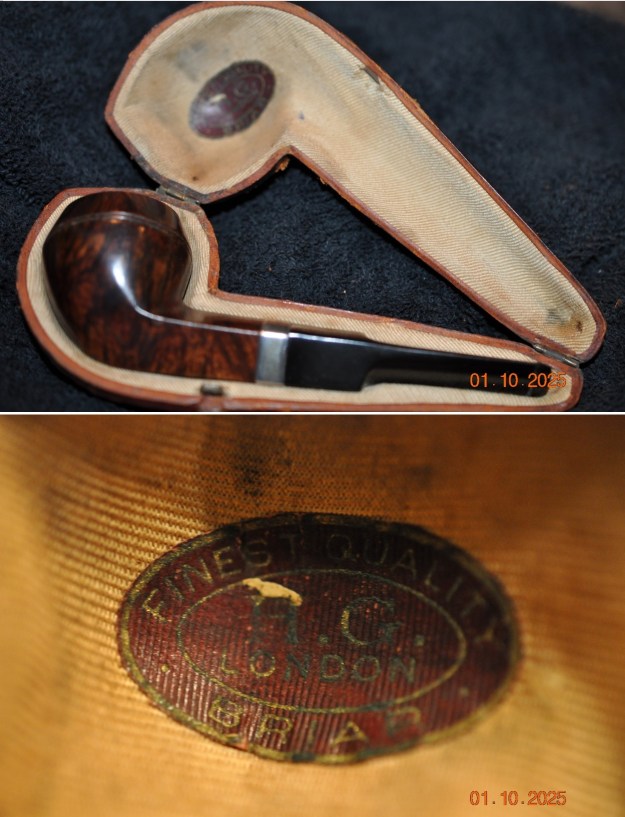
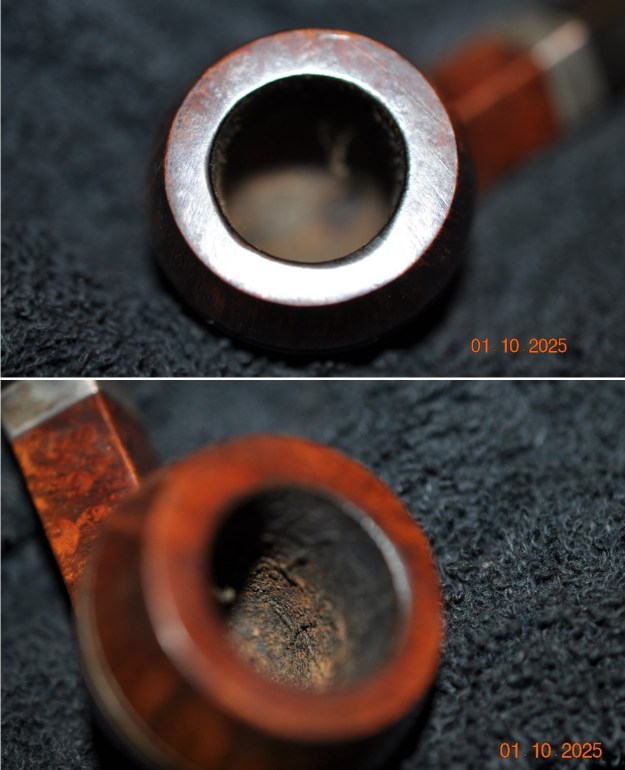
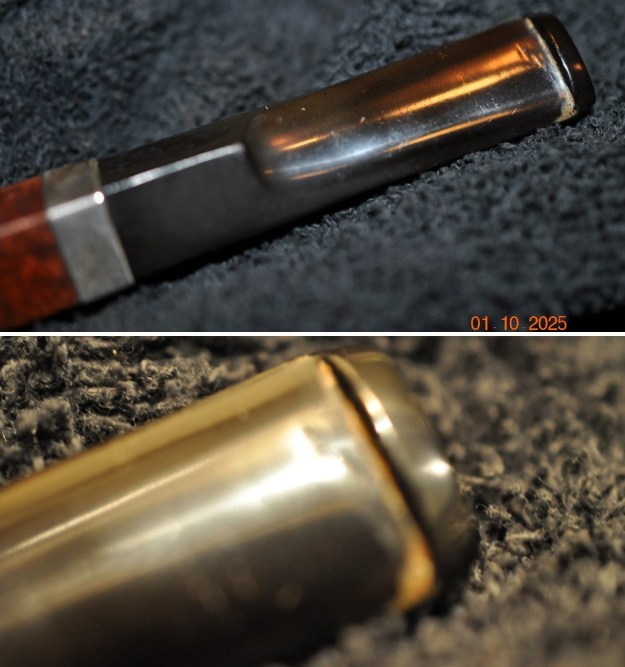
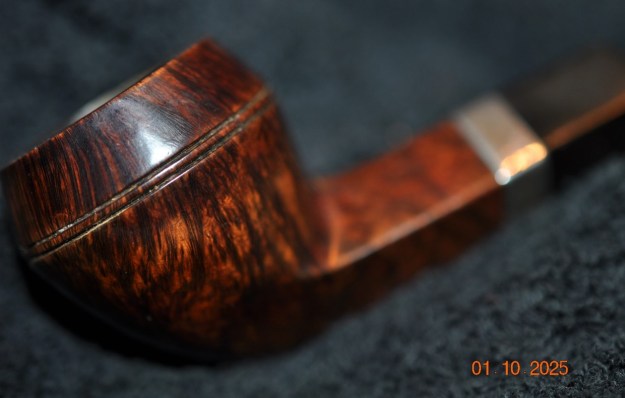
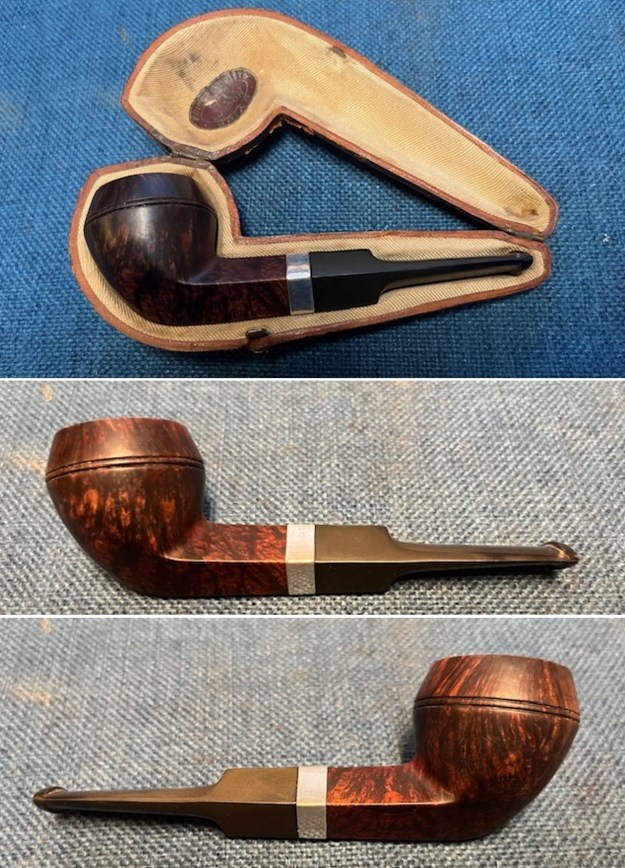
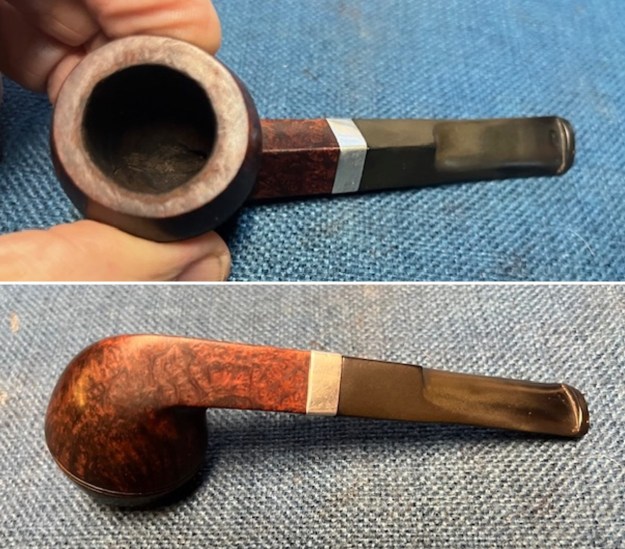
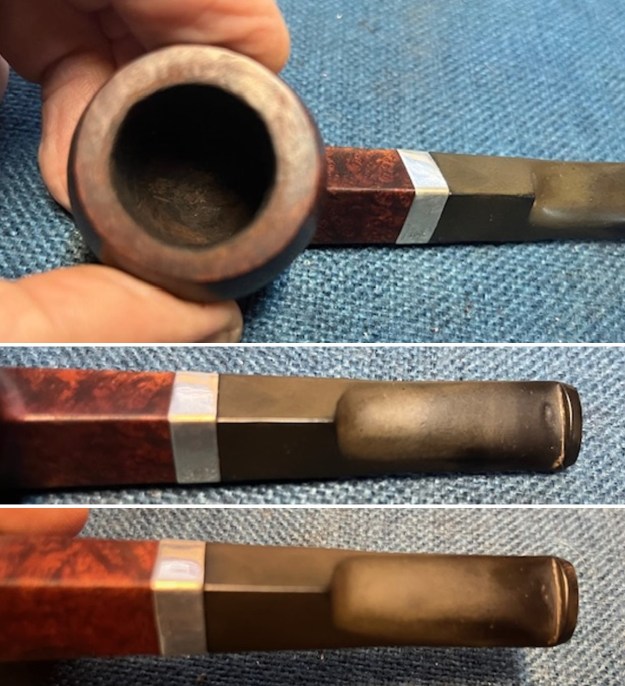
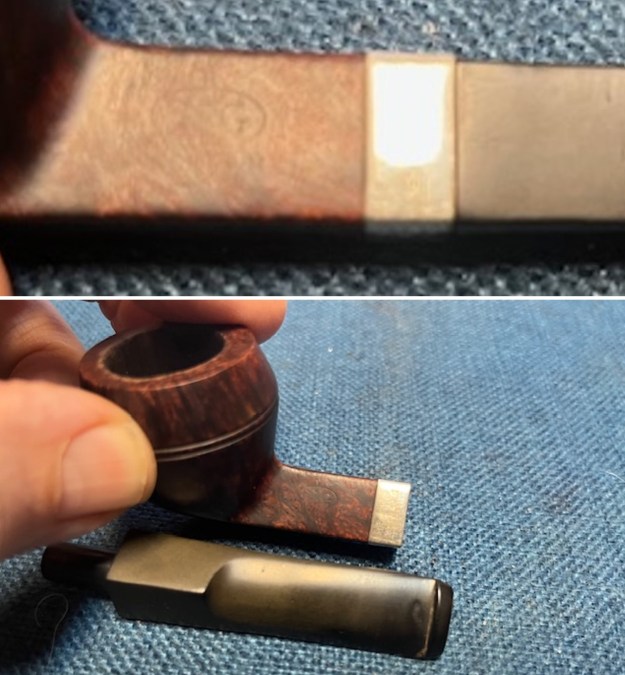
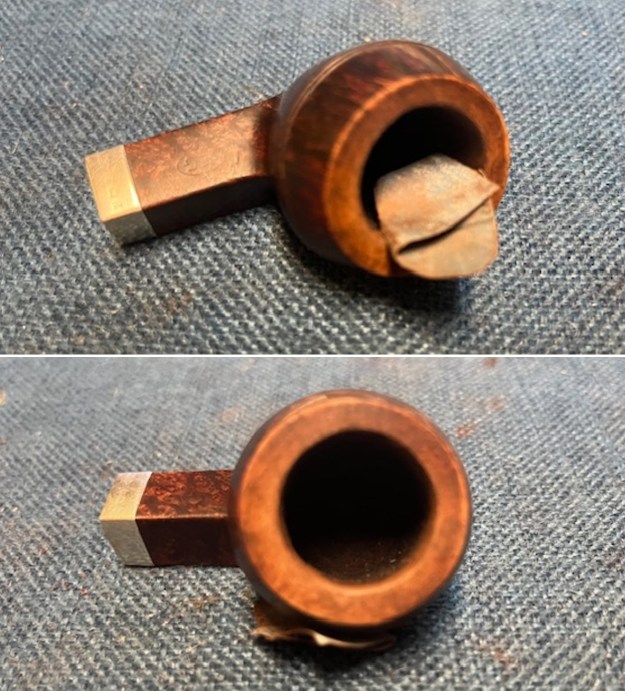
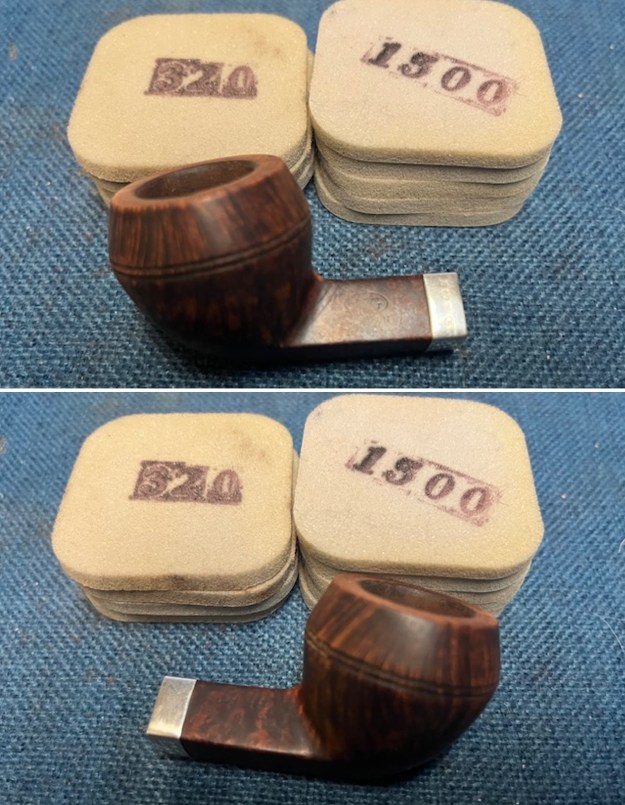
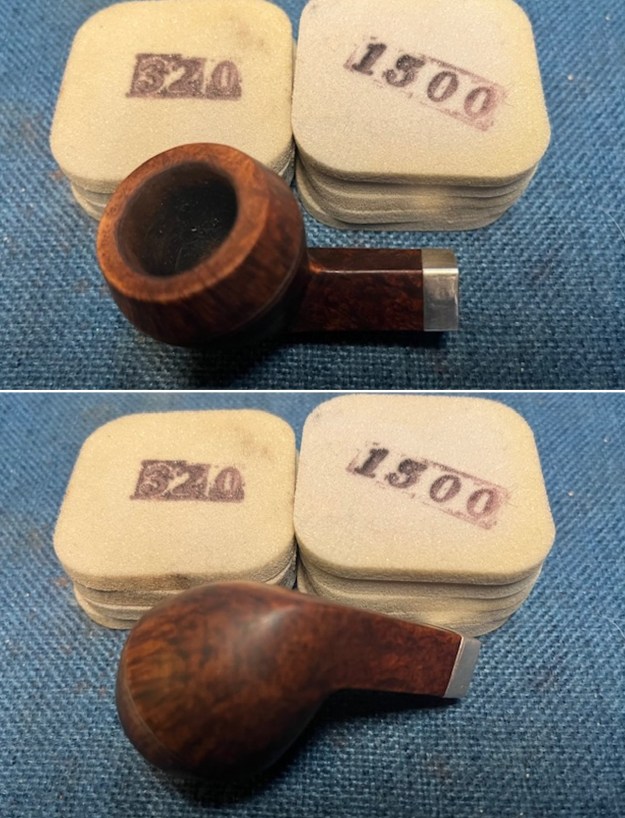
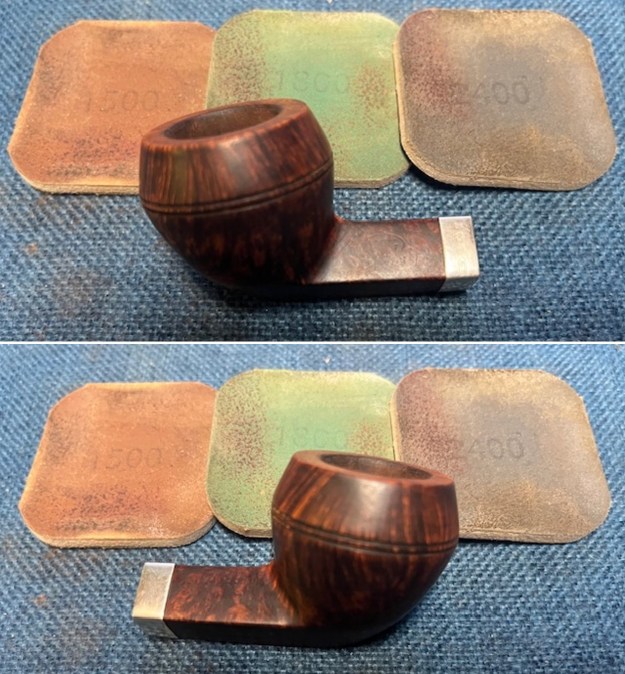
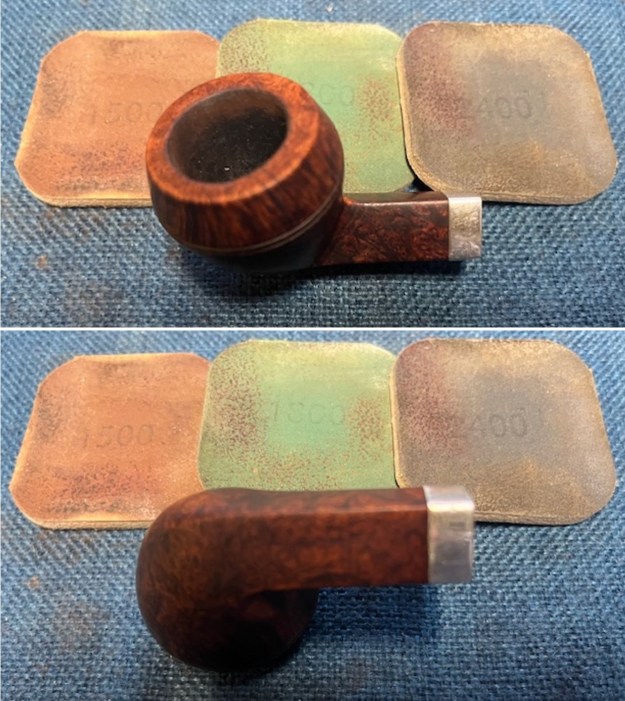
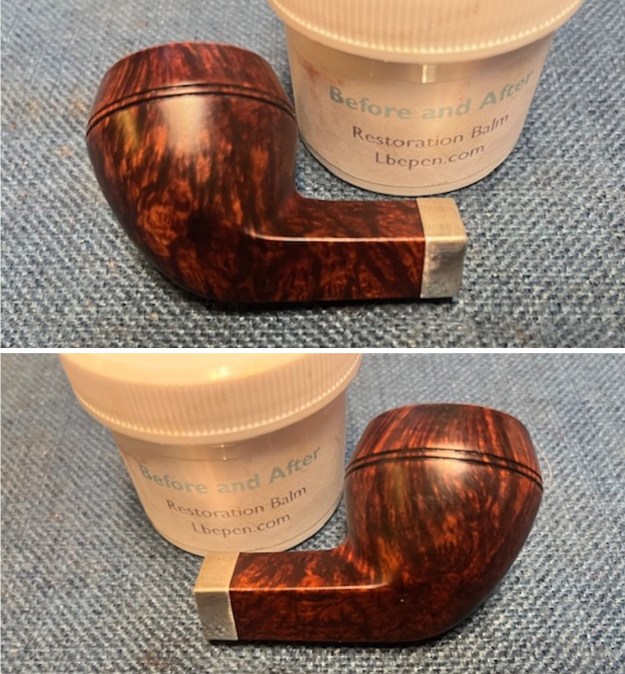
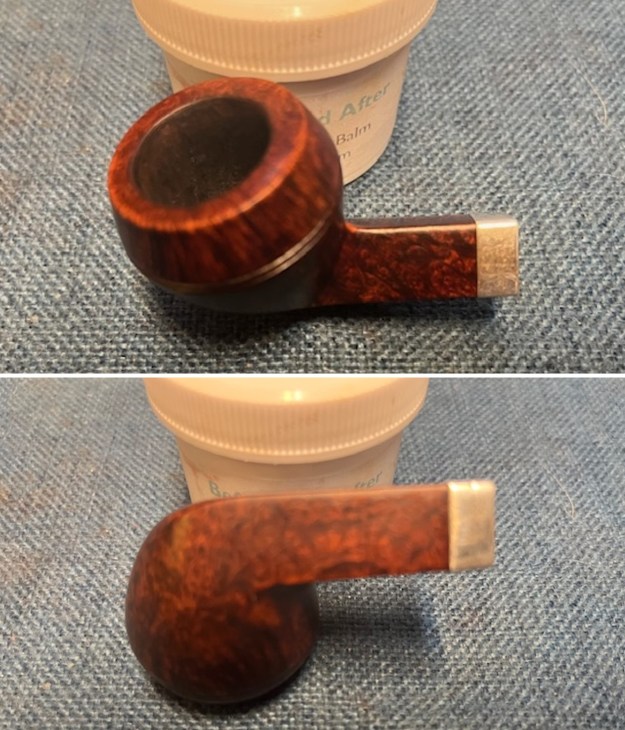
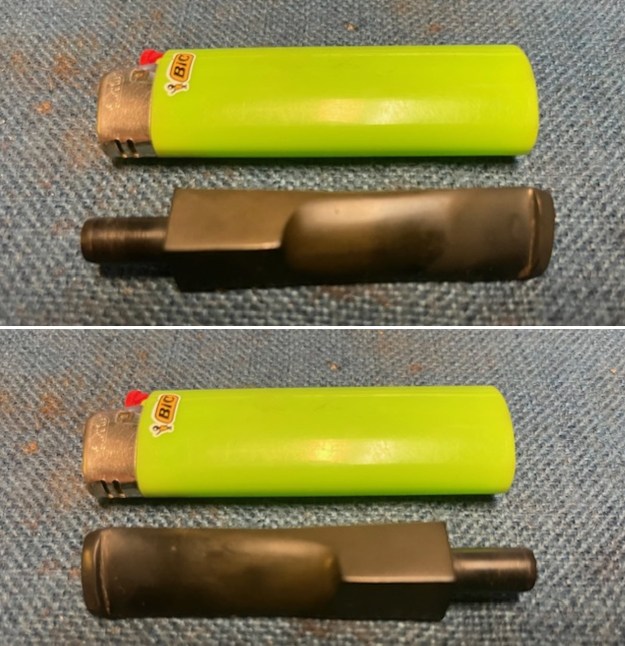
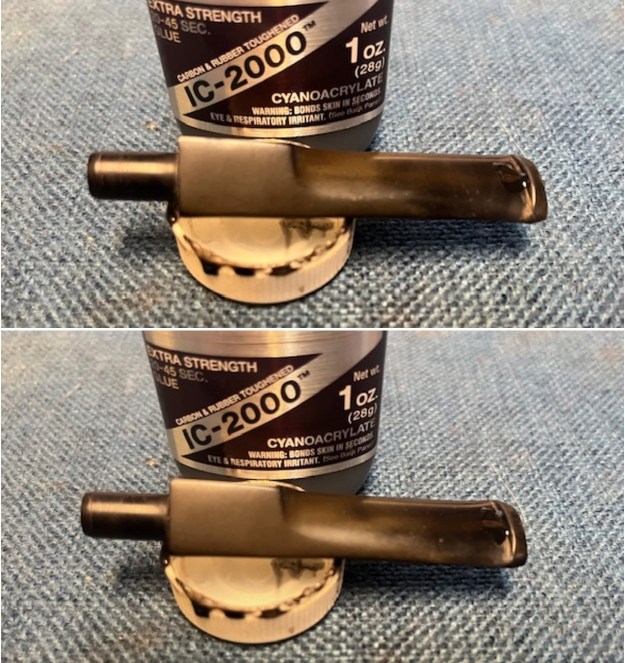
As always, I encourage your questions and comments as you read the blog. Thanks to each of you who are reading this blog. Remember we are not pipe owners; we are pipe men and women who hold our pipes in trust until they pass on into the trust of those who follow us.
Cleaning and Restoring the sixth of a lot of 12 pipes – A Ropp 804 Bent Octagonal Billiard


by Steve Laug

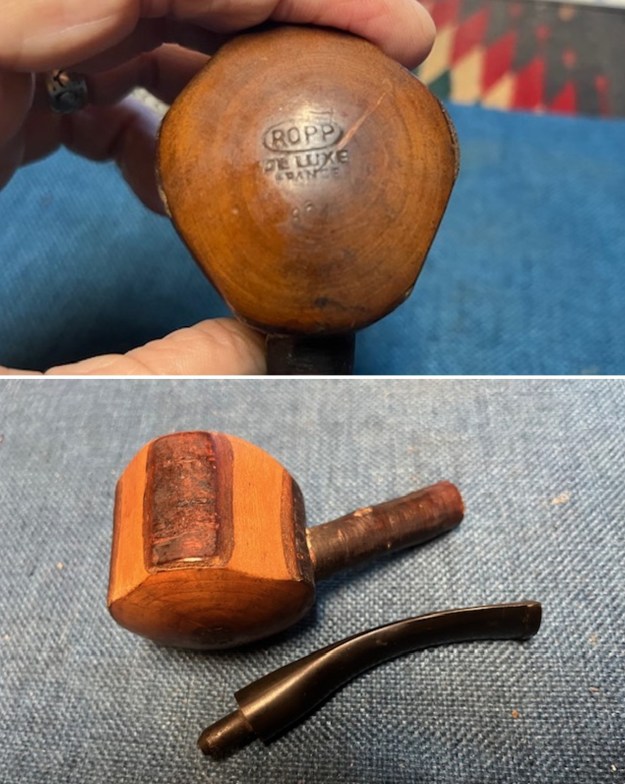
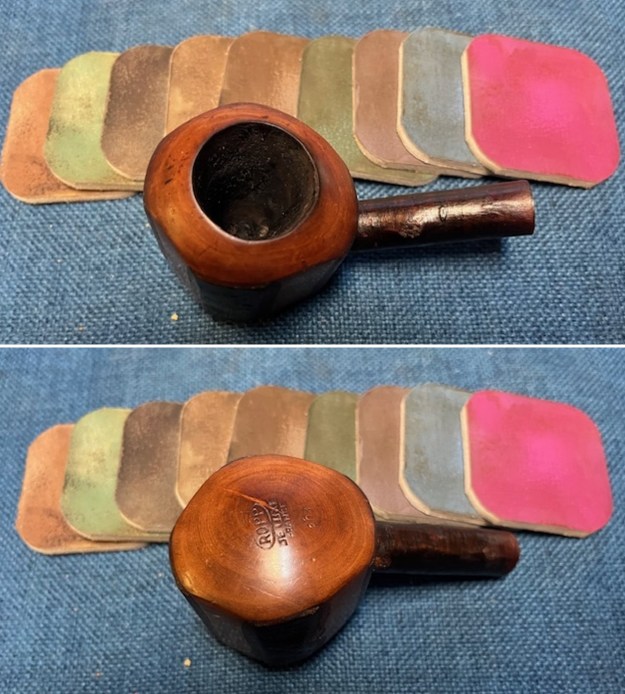
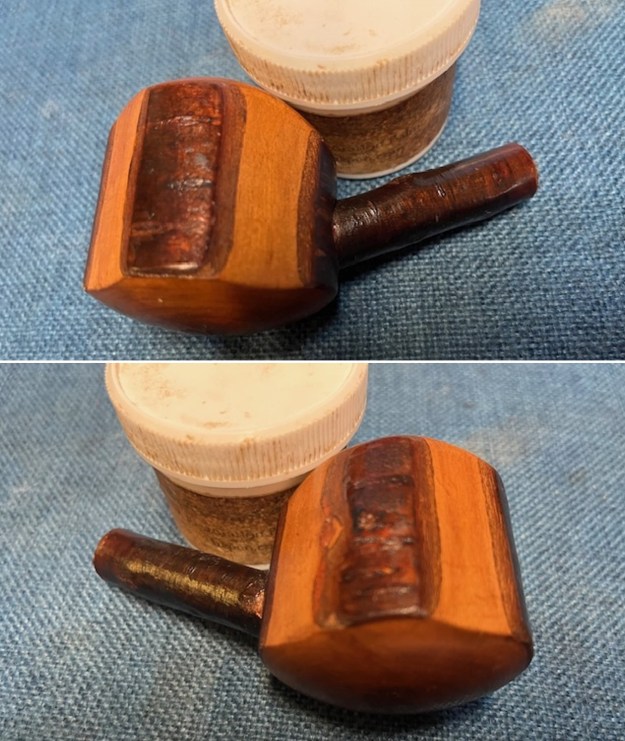
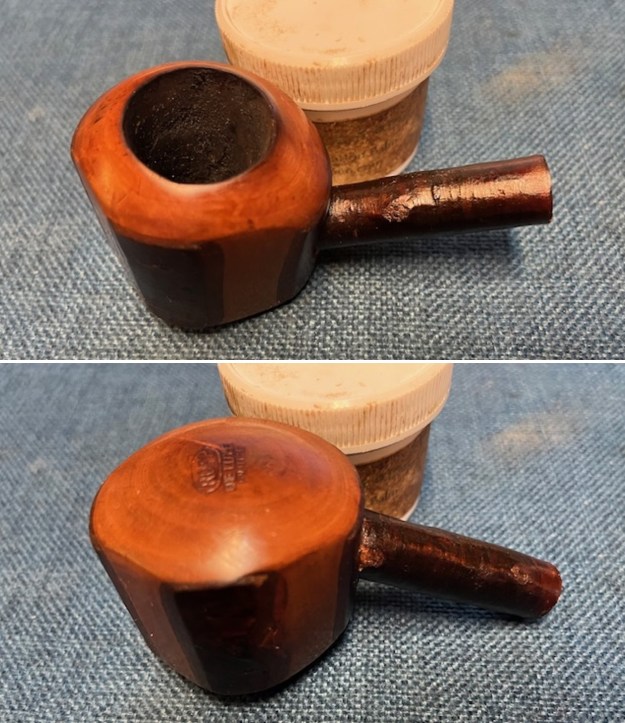
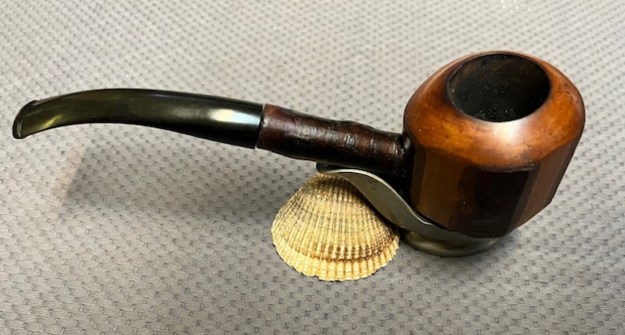
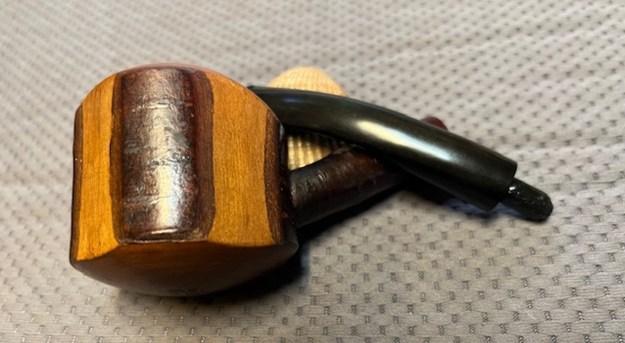
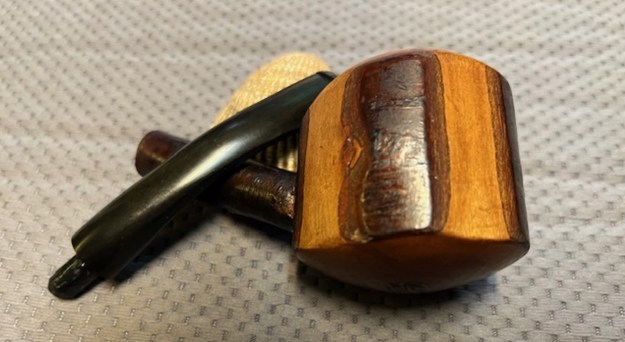
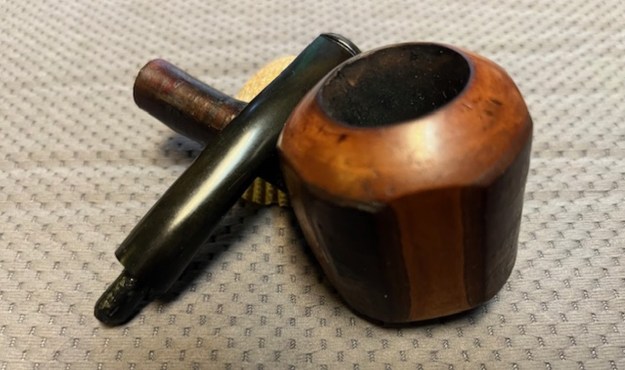
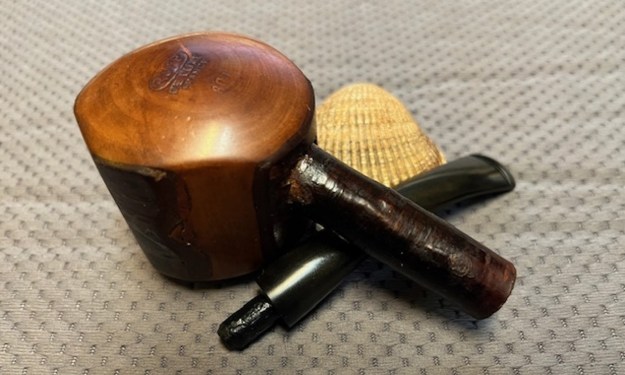
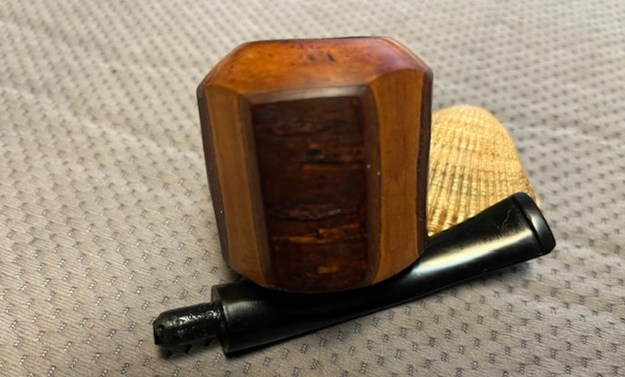
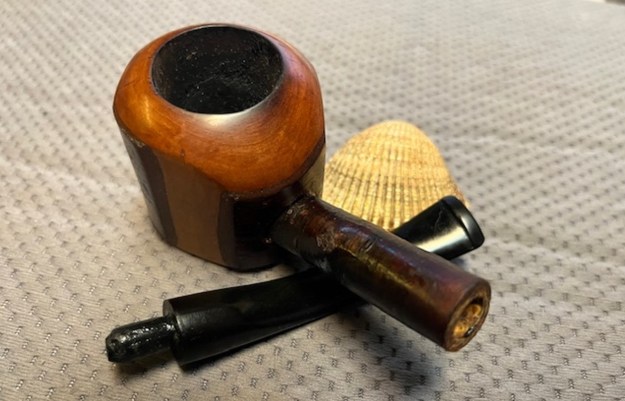
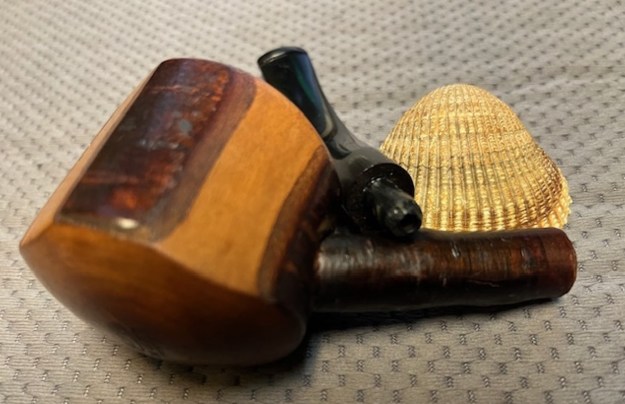
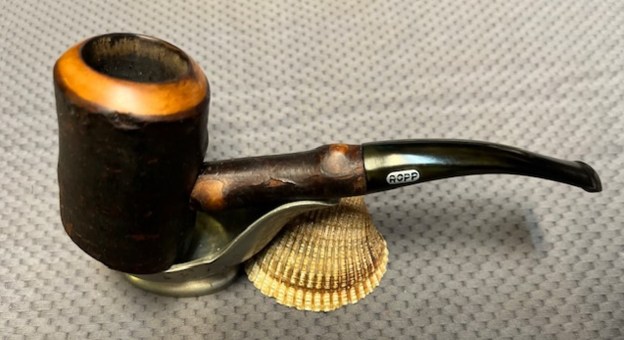
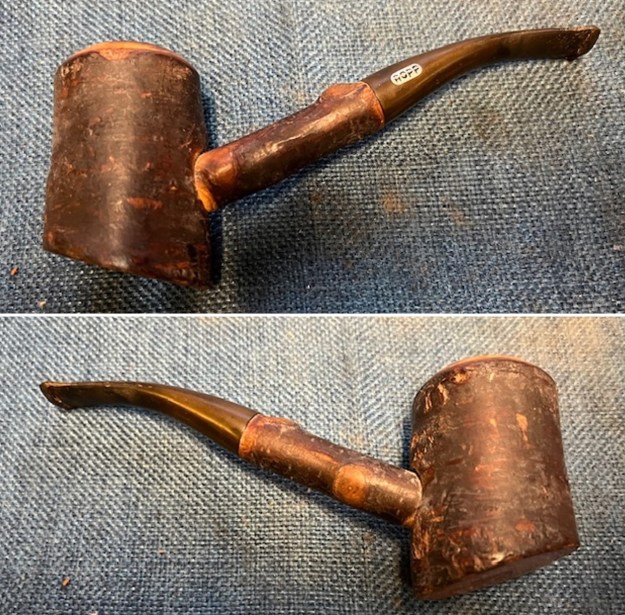
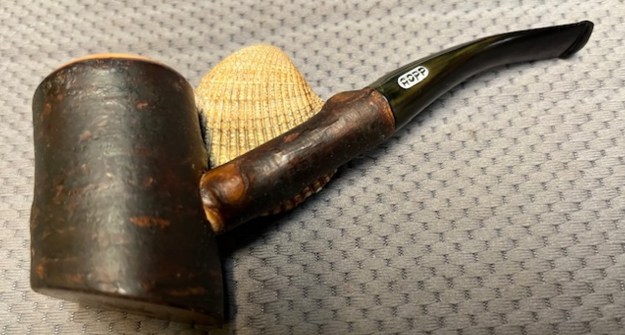
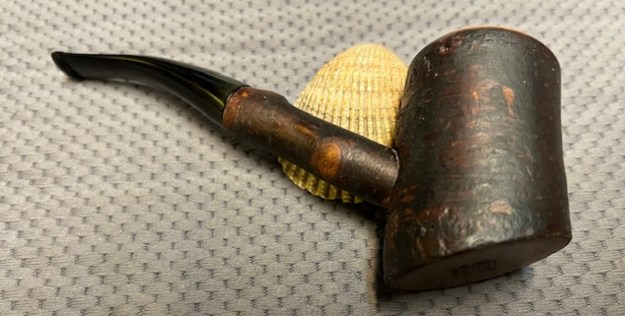
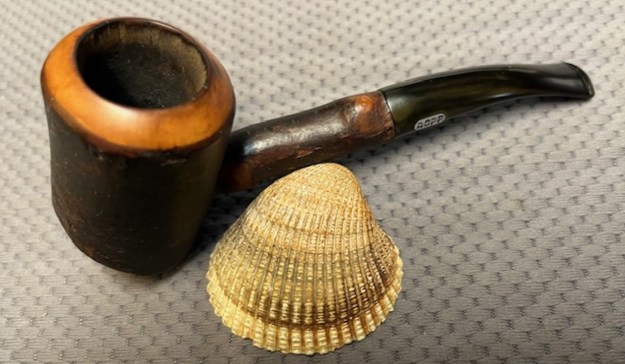
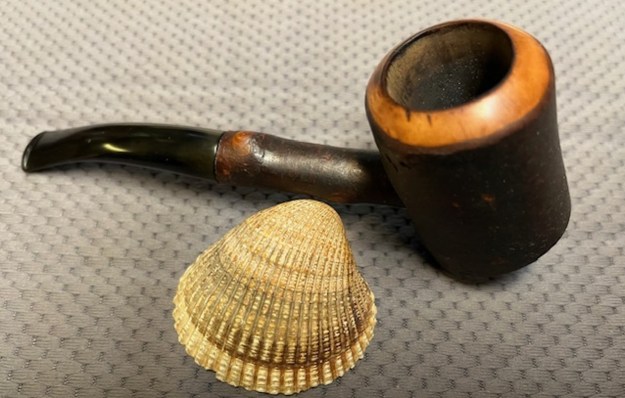
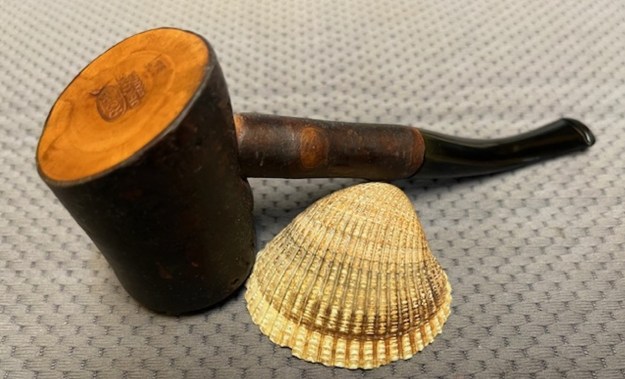
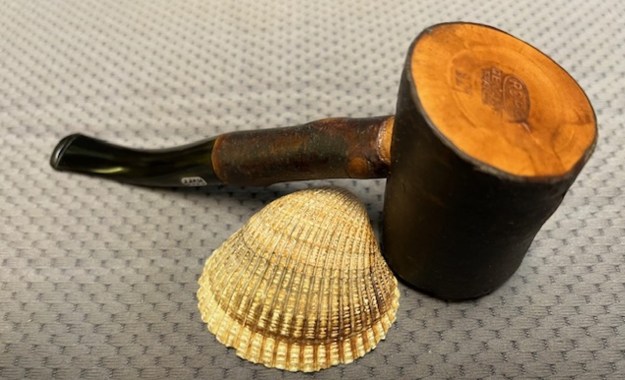
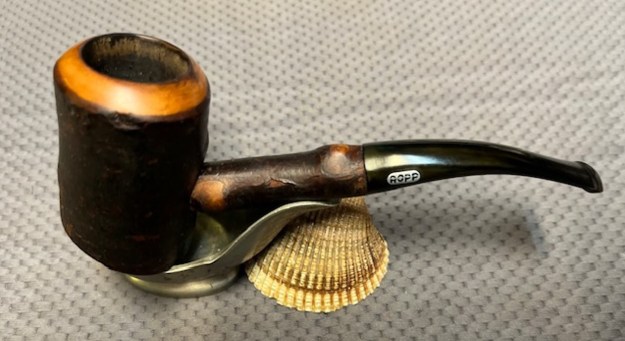
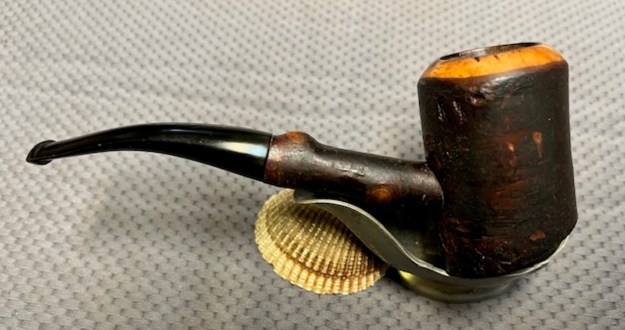
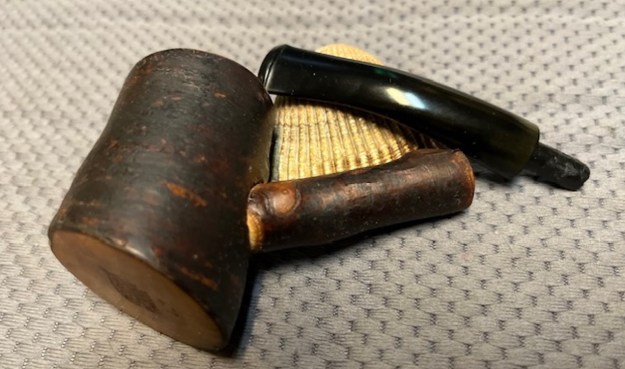
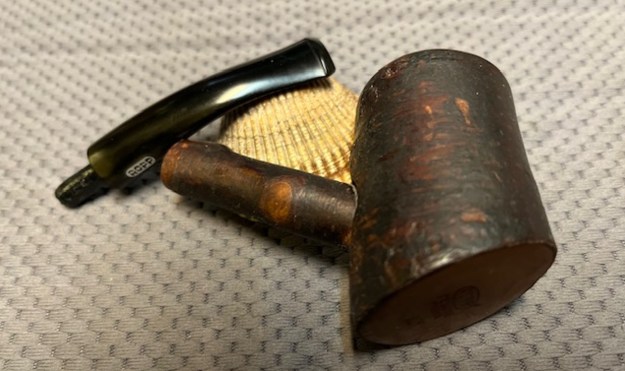
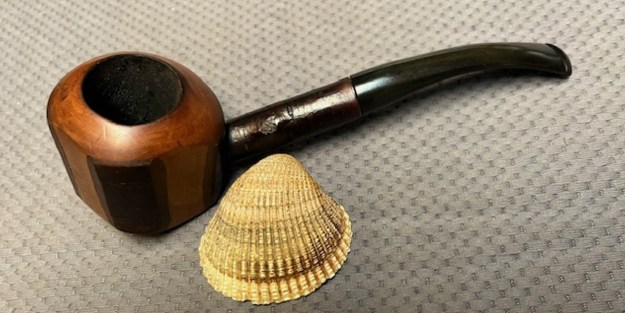
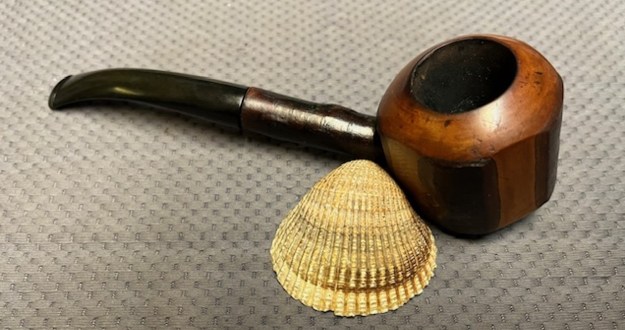
Back in January I received an email from Robert with a group 12 pipes that needed to be restored in various ways from cleanup to restemming. I chose to work on the second of the Cherrywood pipes next. It is a nice-looking Cherrywood Bent Octagonal Bowled Billiard. The bowl and shank had bark on the outside. The bowl has peeled striped around the octagon on every other flat side. The rim top and the base of the bowl were both smooth without bark. The bowl had been reamed at some time so there was no cake in it. The rim top had an overflow of lava on it and some darkening around the inner edge. The underside of the bowl was dirty but it was stamped ROPP [over] De Luxe [over] France. Underneath that what the shape number 804. The stem had no logo on it. It had light tooth marks and tooth chatter on the top and underside ahead of the button. I took some photos of the pipe to show its condition before I started my work on it.The relatively clean bowl looks quite good. There was some thick lava on the rim top and some lava build up on the inner edge of the bowl. It looked to be in good condition other than the lava and darkening. The vulcanite taper stem was dirty, lightly oxidized and has light tooth chatter and marks on both sides. I took photos of the bowl, rim top and the stem to show the condition of both.There was stamping on the heel of the bowl that was clear and readable. It read as noted above. I took a photo of the pipe with the stem removed to show the proportion of this pipe. It is a classic Ropp Cherrywood.I wanted to refresh my memory on the brand so I turned for a short, quick summary to Pipephil (http://www.pipephil.eu/logos/en/logo-ropp.html). I have included the pertinent information from that site below:
Brand created by Eugène-Léon Ropp (1830 – 1907) and continued throughout 3 generations. “GBA Synergie” run by Bernard Amiel (†2008) bought back Ropp in 1988 and owned it until 1991. The company was taken over by Cuty-Fort Entreprises (Chacom, Vuillard, Jean Lacroix…) in 1994.
I also turned to Pipedia to see if there was any additional information that would be helpful (https://pipedia.org/wiki/Ropp). I quote the portion of the article on the Cherrywood pipes.

Eugène-Léon Ropp (1830 – 1907) had acquired a patent for a cherrywood pipe (wild cherry, lat.: Prunus avium) in 1869. In 1870 he established a workshop to manufacture such pipes in Büssingen (Bussang, Vosges mountains). Around 1893 the business moved into the former mill of Sicard (part of the community of Baume-les-Dames – Département Doubs, Upper Burgundy – from 1895 on)… Even though cherrywood pipes were the mainstay of Ropp until the company finally closed down in September 1991. The company was taken over by Cuty-Fort Entreprises (Chacom, Jeantet, Vuillard, Jean Lacroix…) in 1994.

The pipe thus was made in France sometime prior to the closure in 1991. It is made from wild cherry and was a specialty of Ropp. I have worked on quite a few over the years but I had forgotten all the dates and information. Now it was time to work on the pipe.

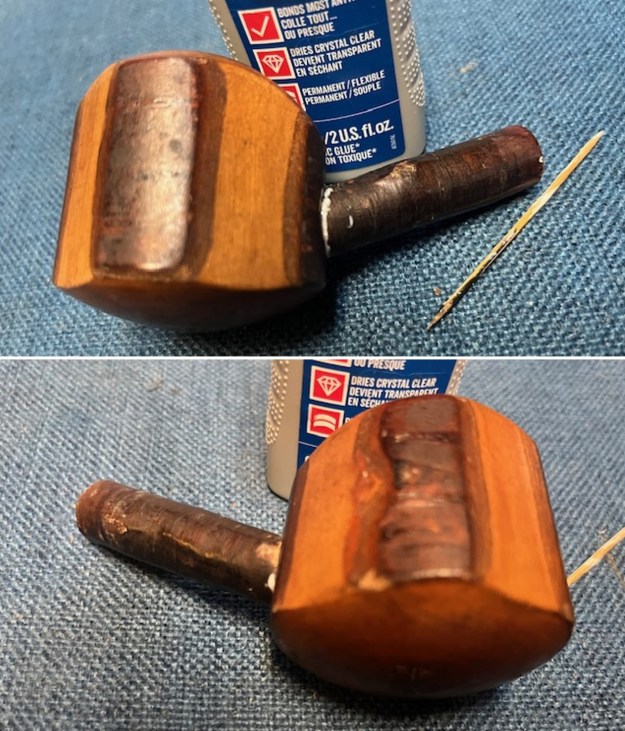
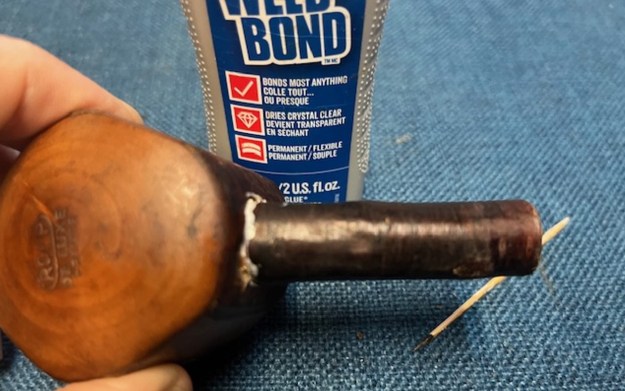
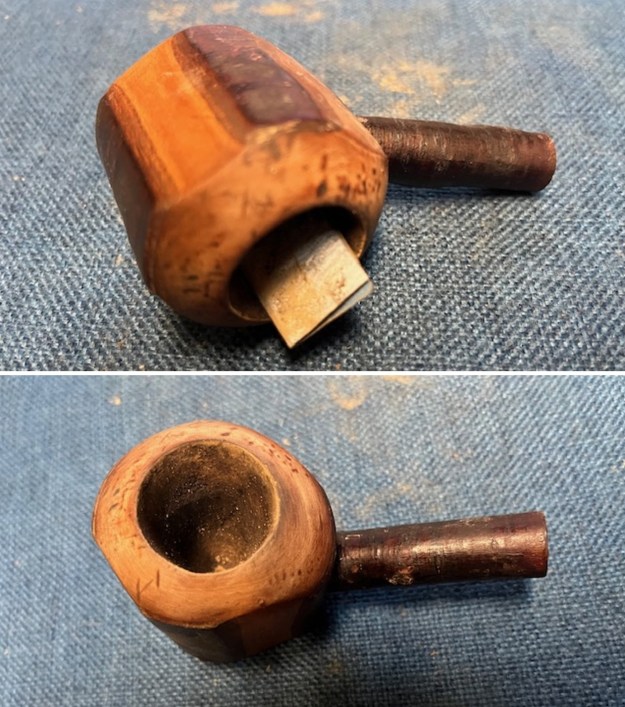
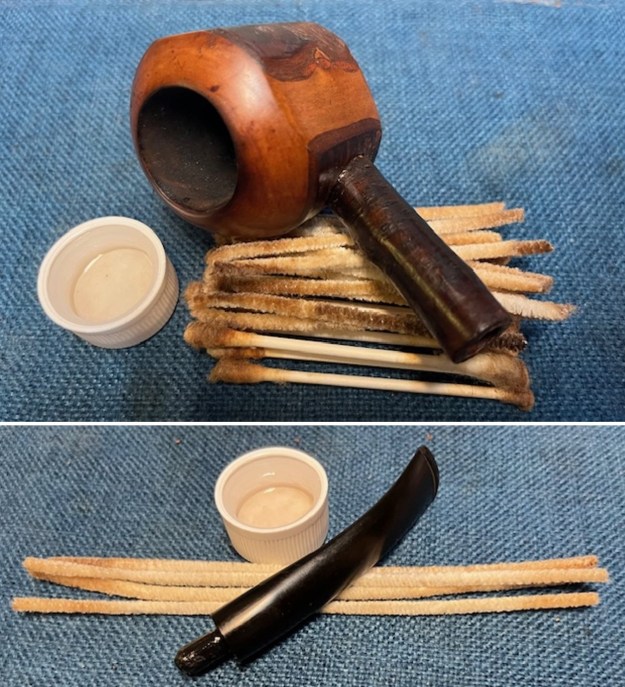
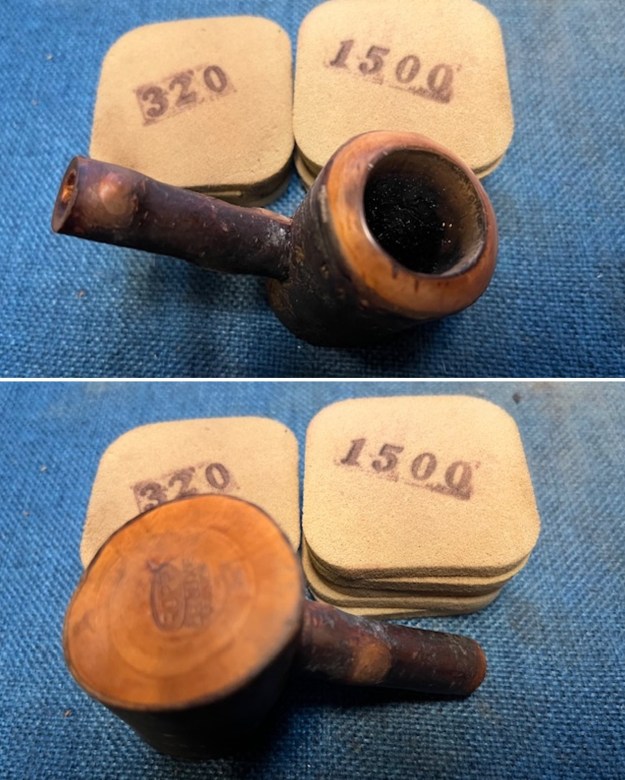
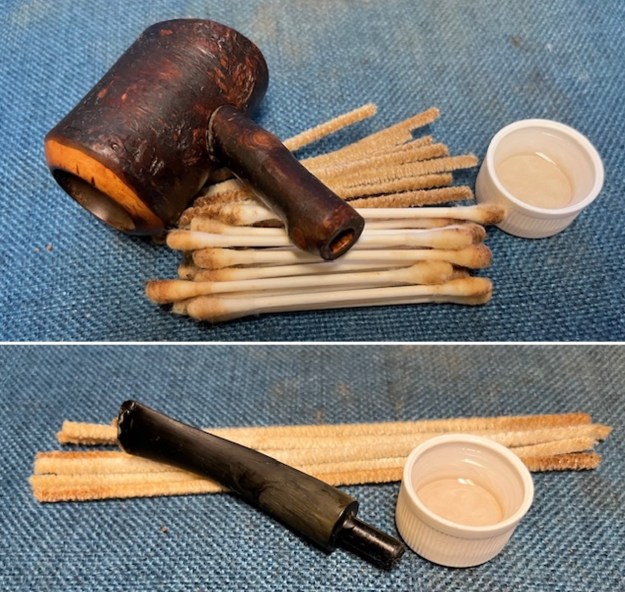
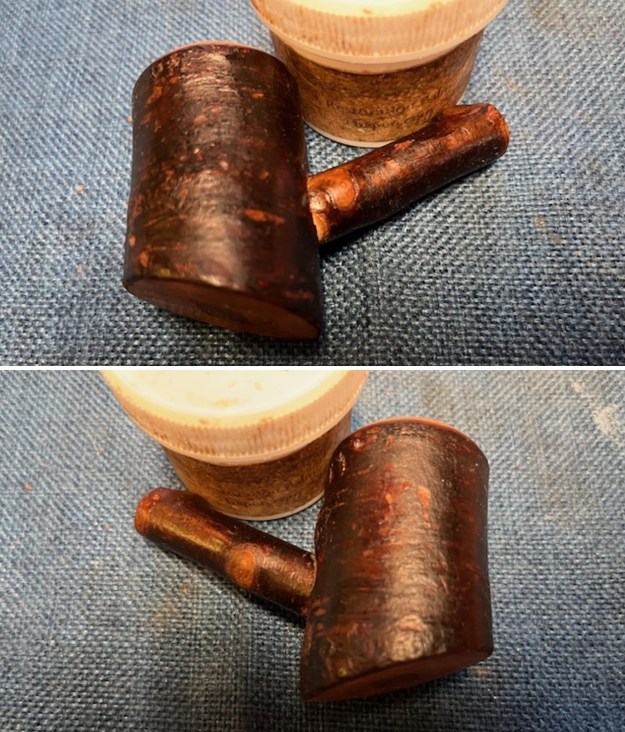
I turned to work on the pipe itself. The shank was loose in the bowl so I reglued it with all purpose white glue. I used a tooth pick to press it into the grooves around the junction and set it aside to cure. I worked over rim top and inner edge of the bowl. I used a folded piece of 220 grit sandpaper to smooth out the damage and darkening on the smooth rim top and inner edge of the bowl. It looked much better once the debris was removed. I sanded the walls of the bowl smooth with a piece of dowel wrapped with a piece of 220 grit sandpaper. The walls smoothed out very well.I scrubbed the bowl exterior with a tooth brush and undiluted Murphy’s Oil Soap to clean the debris and oils and tars in the cherry bark finish. I rinsed it with clean warm water and dried it off with a soft cotton cloth. I polished the smooth rim top, four panels on the sides and heel of the bowl with 1500-12000 grit micromesh sanding pads. It smoothed out the finish very well and removed much of the damage on the rim top, smooth panels and the scratching around the stamping on the heel. I cleaned out the mortise and airway in the shank and the stem with alcohol, cotton swabs and pipe cleaners. I was able to remove the grime and oils in the shank and the airway in the stem.I worked some Before & After Restoration Balm into the surface of the bowl and shank with my fingertips to clean, enliven and protect the wood. I let the balm sit for 15 minutes and then buffed it off with a cotton cloth to raise the shine. The photos show the bowl at this point in the restoration process. I set the bowl aside and turned my attention to the stem. I sanded the stem with 320-3500 grit sanding pads to further blend in the remnants of the tooth marks and chatter on the stem and to remove the residual light oxidation. I am happy with the way that it looked at this point.I polished the vulcanite with micromesh sanding pads – 1500-12000 grit pads. I wiped it down with Obsidian Oil after each sanding pad. I used Before & After Pipe Polish – both Fine and Extra Fine to further polish the stem. This Ropp De Luxe Cherrywood 804 Octagonal Bent Billiard with a vulcanite taper stem has a cherrywood bark finish with a smooth rim top and bowl heel. The bark covered Cherrywood pipe is what makes Ropp pipes stand out. I put the stem back on the bowl and buffed the pipe with Blue Diamond on the buffing wheel being careful to not buff the stamping. I gave the bowl and the stem multiple coats of carnauba wax on the buffing wheel and followed that by buffing it with a clean buffing pad. I hand buffed the pipe with a microfiber cloth to deepen the shine. The finished Ropp De Luxe Cherrywood Octagonal Billiard is quite nice and feels great in the hand. Give the finished pipe a look in the photos below. The dimensions of the pipe are Length: 6 ¾ inches, Height: 2 inches, Outside diameter of the bowl: 1 ¾ inches, Chamber diameter: 1 inch. The weight of the pipe is 2.36 ounces/66 grams. Thanks for walking through the restoration with me as I worked over another beautiful pipe. I will be sending it back to Robert once I finish the other 6 pipes he sent me to restore. I look forward to hearing what he thinks of this beauty. Thanks for your time.

Cleaning and Restoring the fourth of a lot of 12 pipes for a customer – a Falcon 1


by Steve Laug

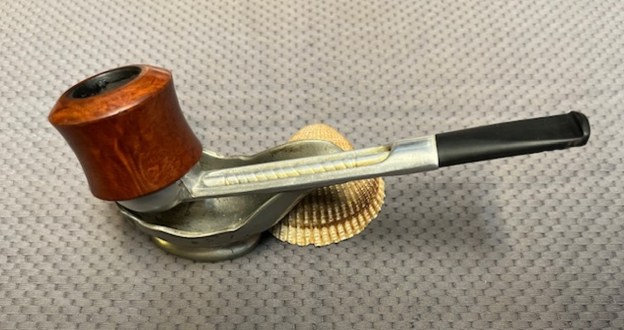
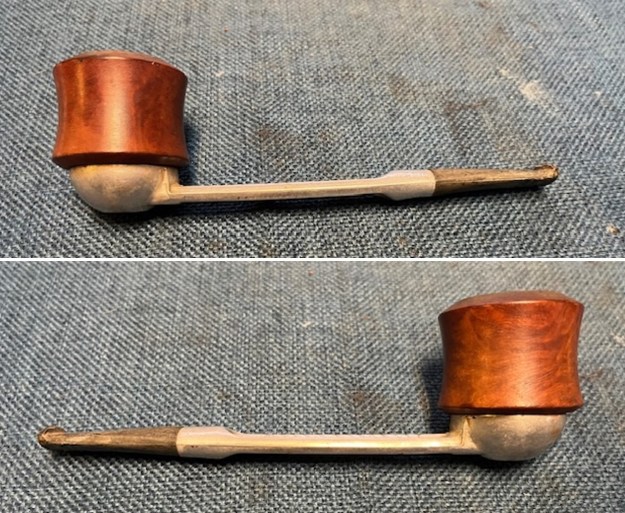
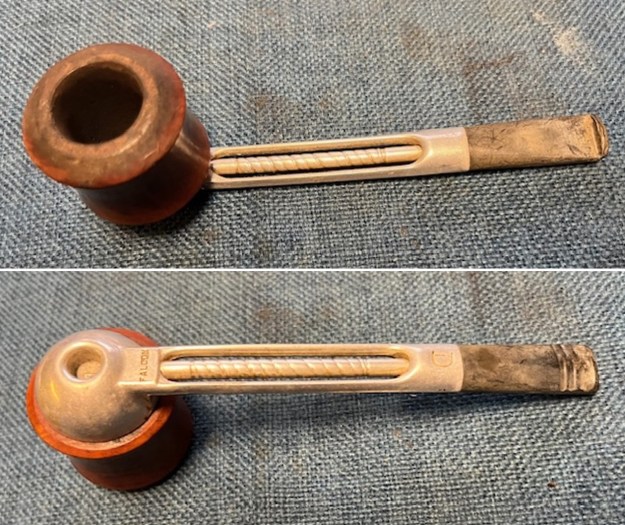
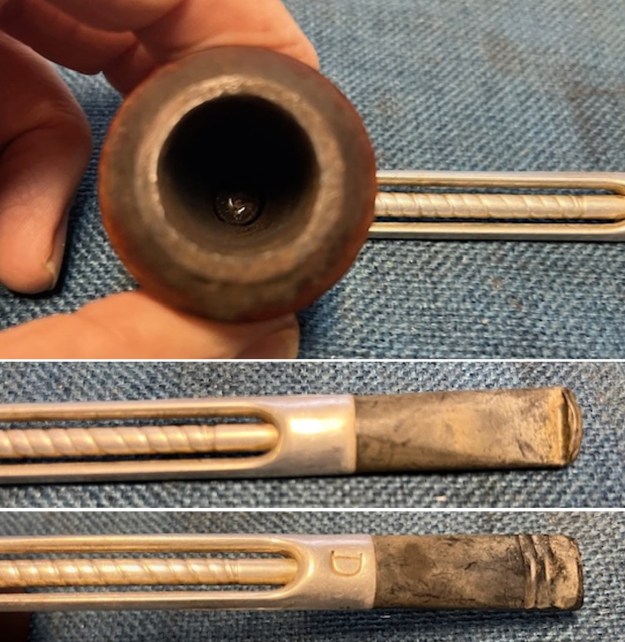
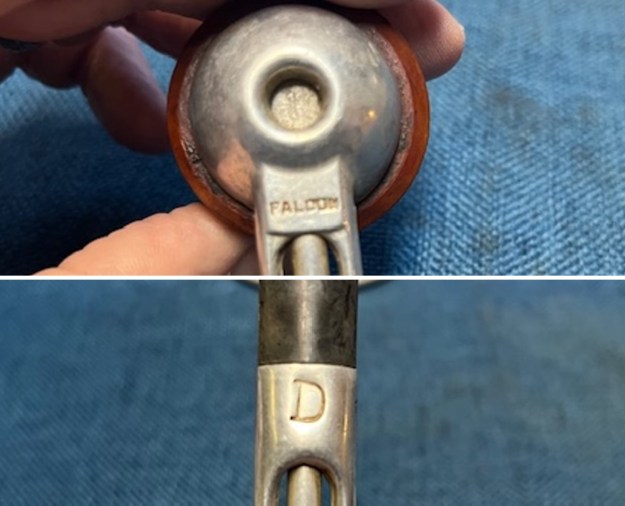
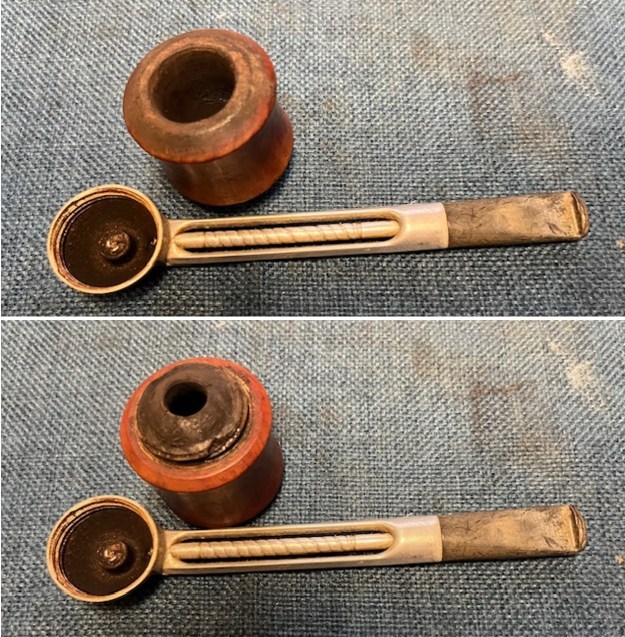
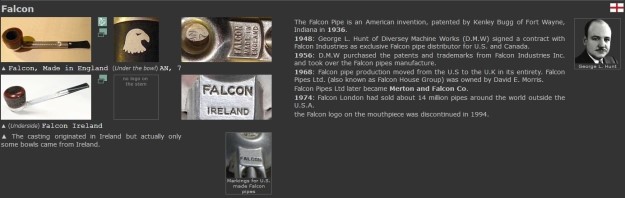
Back in January I received an email from Robert with a group 12 pipes that needed to be restored in various ways from cleanup to restemming. I chose to work on Falcon pipe next. It is a nice looking straight Falcon with a standard bowl. It was a smooth bowl with no rustication. The rim top and the base of the bowl were both very dirty. The bowl had been reamed at some time so there was no cake in it. The rim top had an overflow of lava on it and some darkening around the inner edge. The underside of the bowl was dirty and there were nicks in the threads. It still worked well but they were present. The underside of the metal base was stamped with a 1 in the inset on the heel. That is followed by FALCON where the base and shank come together. There is also a large D stamped at the shank/stem junction that I believe signifies that it has a dental bit on the shank. The stem was oxidized and dirty. It had calcification and light tooth marks and chatter on the top and underside ahead of the button. The button was a classic dental bit with a raised top edge and a series of ridges on the underside. I took some photos of the pipe to show its condition before I started my work on it. The relatively clean bowl looks quite good. There was some thick lava on the rim top and some lava build up on the inner edge of the bowl. It looked to be in good condition other than the lava and darkening. The dental bit stem was calcified, dirty, lightly oxidized and has tooth chatter and marks on both sides. I took photos of the bowl, rim top and the stem to show the condition of both.There was stamping on the heel of the bowl and shank junction that was clear and readable. The D stamp on the shank at the stem junction is also clear. It read as noted above. I also took a photo of the inlaid silver logo on the left side of the taper stem. I took a photo of the pipe with the bowl removed to show the proportion of this pipe. It is a classic Falcon.I turned to Pipephil (http://www.pipephil.eu/logos/en/logo-f1.html) to see what I could learn about the brand. I have included a screen capture of the information on the site below. Below; I also include the brief sidebar history from the site:

The Falcon Pipe is an American invention, patented by Kenley Bugg of Fort Wayne, Indiana in 1936.

1948: George L. Hunt of Diversey Machine Works (D.M.W) signed a contract with Falcon Industries as exclusive Falcon pipe distributor for U.S. and Canada.

1956: D.M.W purchased the patents and trademarks from Falcon Industries Inc. and took over the Falcon pipes manufacture.

1968: Falcon pipe production moved from the U.S to the U.K in its entirety. Falcon Pipes Ltd. (also known as Falcon House Group) was owned by David E. Morris.

Falcon Pipes Ltd later became Merton and Falcon Co.

1974: Falcon London had sold about 14 million pipes around the world outside the U.S.A.

The Falcon logo on the mouthpiece was discontinued in 1994.

There was also interesting information the particular stamping on the base of this pipe. It has the stamping that identifies it as an American made Falcon. Now I had the basic background information on the pipe. I also knew that the pipe was made after 1948 and prior to the move of production to the UK in 1968.

I turned to work on the pipe itself. I removed the bowl from the base and worked over rim top and inner edge of the bowl. I used a folded piece of 220 grit sandpaper to smooth out the damage and darkening on the smooth rim top and inner edge of the bowl. It looked much better once the debris was removed.I scrubbed the bowl interior exterior with a tooth brush and undiluted Murphy’s Oil Soap to clean the debris and oils and tars in the briar. I rinsed it with clean warm water and dried it off with a soft cotton cloth. I worked on cleaning up the base further after the first scrub with Murphy’s Oil Soap using alcohol, cotton swabs and pipe cleaners. I was able to significantly clean up the majority of the tars and oils in the base. I followed that up with a wash of acetone to further remove the darkening and the base looks and smells clean. I cleaned out the mortise and airway in the shank and the stem with alcohol, cotton swabs and pipe cleaners. I was able to remove the grime and oils in the shank and the airway in the stem.I sanded the bowl with 320-3500 grit sanding pads. It smoothed out the finish very well and removed much of the damage on the rim top and the scratching around the stamping on the shank. I polished the briar with micromesh sanding pads – dry sanding with 1500-12000 grit pads. I wiped the bowl down after each sanding pad with a damp cloth. The briar is quite beautiful. I worked some Before & After Restoration Balm into the surface of the bowl and shank with my fingertips to clean, enliven and protect the wood. I let the balm sit for 15 minutes and then buffed it off with a cotton cloth to raise the shine. The photos show the bowl at this point in the restoration process. I set the bowl aside and turned my attention to the stem. I sanded the stem with 320-3500 grit sanding pads to further blend in the remnants of the tooth marks and chatter on the stem and to remove the residual light oxidation. I am happy with the way that it looked at this point.I polished the vulcanite with micromesh sanding pads – 1500-12000 grit pads. I wiped it down with Obsidian Oil after each sanding pad. I used Before & After Pipe Polish – both Fine and Extra Fine to further polish the stem.This Falcon 1 Straight Billiard with a dental bit stem is a great looking pipe with the polished metal and briar set off by the black stem. I buffed the pipe with Blue Diamond on the buffing wheel being careful to not buff the stamping. I gave the bowl and the stem multiple coats of carnauba wax on the buffing wheel and followed that by buffing it with a clean buffing pad. I hand buffed the pipe with a microfiber cloth to deepen the shine. The finished Straight Falcon 1 is quite nice and feels great in the hand. Give the finished pipe a look in the photos below. The dimensions of the pipe are Length: 5 ½ inches, Height: 1 ½ inches, Outside diameter of the bowl: 1 ½ inches, Chamber diameter: ¾ of a inch. The weight of the pipe is 1.16 ounces/33 grams. Thanks for walking through the restoration with me as I worked over another beautiful pipe. Four pipes finished so far. I will be sending them back to Robert once I finish the other 8 pipes he sent me to restore. I look forward to hearing what he thinks of this beauty. Thanks for your time.

Cleaning and Restoring the third of a lot of 12 pipes for a customer – a Ropp Cherrywood 921


by Steve Laug

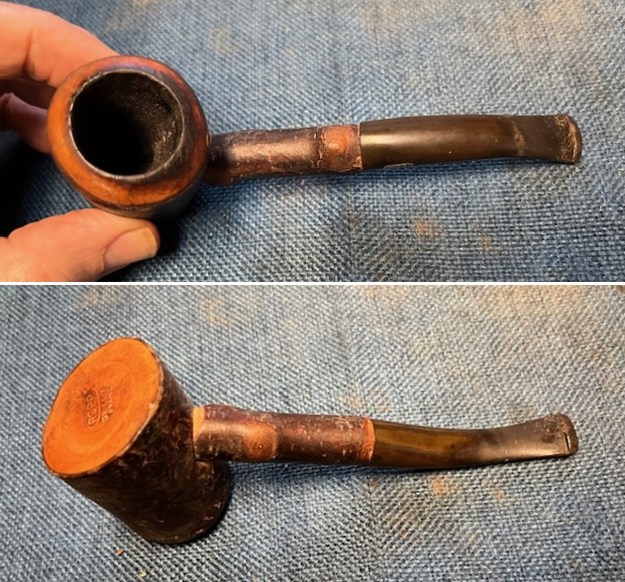
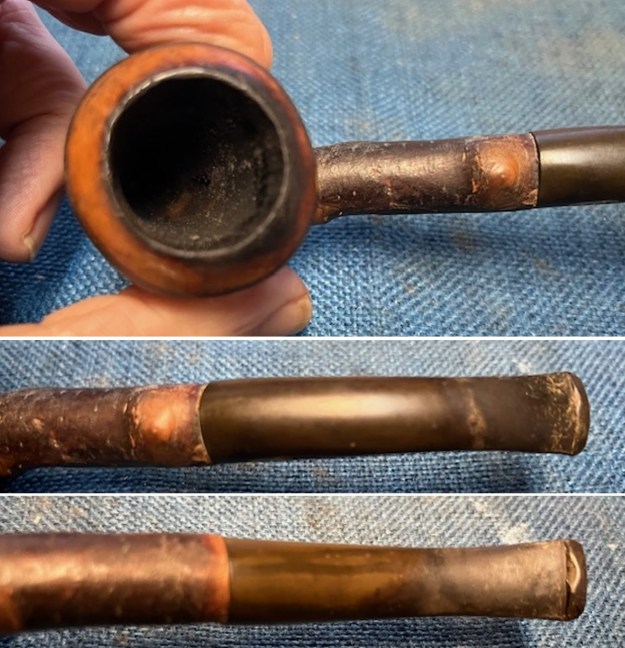
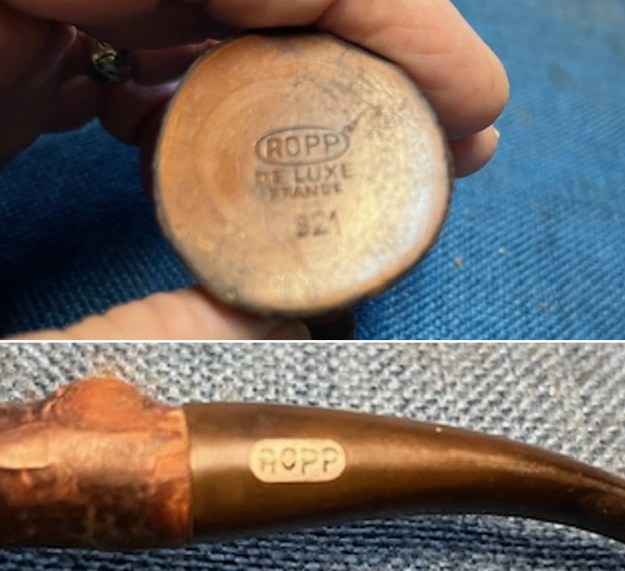
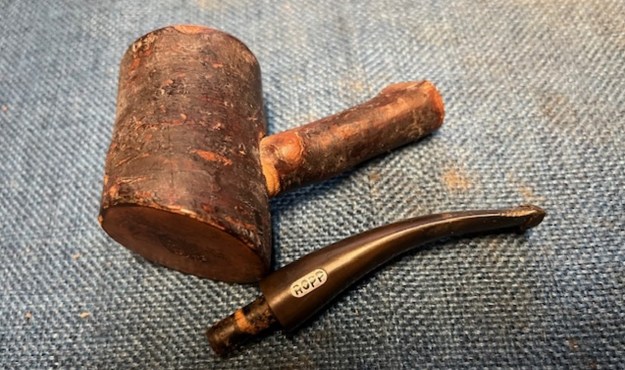
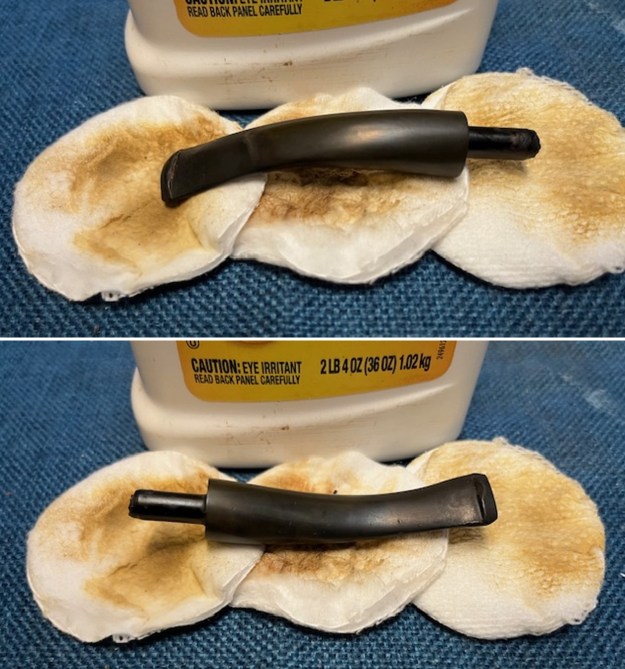
Back in January I received an email from Robert with a group 12 pipes that needed to be restored in various ways from cleanup to restemming. I chose to work on one of the Cherrywood pipes next. It is a nice looking Cherrywood Bent Poker. The bowl and shank had bark on the outside. The rim top and the base of the bowl were both smooth without bark. The bowl had been reamed at some time so there was no cake in it. The rim top had an overflow of lava on it and some darkening around the inner edge. The underside of the bowl was dirty but it was stamped ROPP [over] De Luxe [over] France. Underneath that what the shape number 921. The stem had tooth marks and tooth chatter on the top and underside ahead of the button. I took some photos of the pipe to show its condition before I started my work on it. The relatively clean bowl looks quite good. There was some thick lava on the rim top and some lava build up on the inner edge of the bowl. It looked to be in good condition other than the lava and darkening. The vulcanite taper stem was dirty, lightly oxidized and has tooth chatter and marks on both sides. I took photos of the bowl, rim top and the stem to show the condition of both.There was stamping on the heel of the bowl that was clear and readable. It read as noted above. I also took a photo of the inlaid silver logo on the left side of the taper stem. I took a photo of the pipe with the stem removed to show the proportion of this pipe. It is a classic Ropp Cherrywood. I turned to work on the pipe itself. I worked over rim top and inner edge of the bowl. I used a folded piece of 220 grit sandpaper to smooth out the damage and darkening on the smooth rim top and inner edge of the bowl. It looked much better once the debris was removed. I sanded the walls of the bowl smooth with a piece of dowel wrapped with a piece of 220 grit sandpaper. The walls smoothed out very well. I scrubbed the bowl exterior with a tooth brush and undiluted Murphy’s Oil Soap to clean the debris and oils and tars in the cherry bark finish. I rinsed it with clean warm water and dried it off with a soft cotton cloth. I sanded the smooth rim top and heel of the bowl with 320-3500 grit sanding pads. It smoothed out the finish very well and removed much of the damage on the rim top and the scratching around the stamping on the shank.I cleaned out the mortise and airway in the shank and the stem with alcohol, cotton swabs and pipe cleaners. I was able to remove the grime and oils in the shank and the airway in the stem.I worked some Before & After Restoration Balm into the surface of the bowl and shank with my fingertips to clean, enliven and protect the wood. I let the balm sit for 15 minutes and then buffed it off with a cotton cloth to raise the shine. The photos show the bowl at this point in the restoration process. I set the bowl aside and turned my attention to the stem. I scrubbed the surface of the stem with cotton pads and Soft Scrub. I was able to remove the debris on the stem and the oxidation on the surface. It looked much better.I “painted” the surface of the stem with the flame of a Bic lighter to lift the tooth marks. I was able to lift them all considerably. I filled in the two deep marks – one on each side of the stem just ahead of the button – with black rubberized CA glue. Once it cured, I sanded the repairs with 220 grit sandpaper to blend them into the surface. It looked significantly better at this point. I sanded the stem with 320-3500 grit sanding pads to further blend in the remnants of the tooth marks and chatter on the stem and to remove the residual light oxidation. I am happy with the way that it looked at this point.I polished the vulcanite with micromesh sanding pads – 1500-12000 grit pads. I wiped it down with Obsidian Oil after each sanding pad. I used Before & After Pipe Polish – both Fine and Extra Fine to further polish the stem. This Ropp De Luxe Cherrywood 921 Bent Poker with a vulcanite taper stem has a cherrywood bark finish with a smooth rim top and bowl heel. The bark covered Cherrywood pipe is what makes Ropp pipes stand out. I put the stem back on the bowl and buffed the pipe with Blue Diamond on the buffing wheel being careful to not buff the stamping. I gave the bowl and the stem multiple coats of carnauba wax on the buffing wheel and followed that by buffing it with a clean buffing pad. I hand buffed the pipe with a microfiber cloth to deepen the shine. The finished Ropp De Luxe Cherrywood Poker is quite nice and feels great in the hand. Give the finished pipe a look in the photos below. The dimensions of the pipe are Length: 5 ½ inches, Height: 2 inches, Outside diameter of the bowl: 1 ½ inches, Chamber diameter: 7/8 of a inch. The weight of the pipe is 1.66 ounces/46 grams. Thanks for walking through the restoration with me as I worked over another beautiful pipe. I will be sending it back to Robert once I finish the other 9 pipes he sent me to restore. I look forward to hearing what he thinks of this beauty. Thanks for your time.

Cleaning up the second of a lot of 12 pipes for a customer – a No Name Freehand Sitter


by Steve Laug

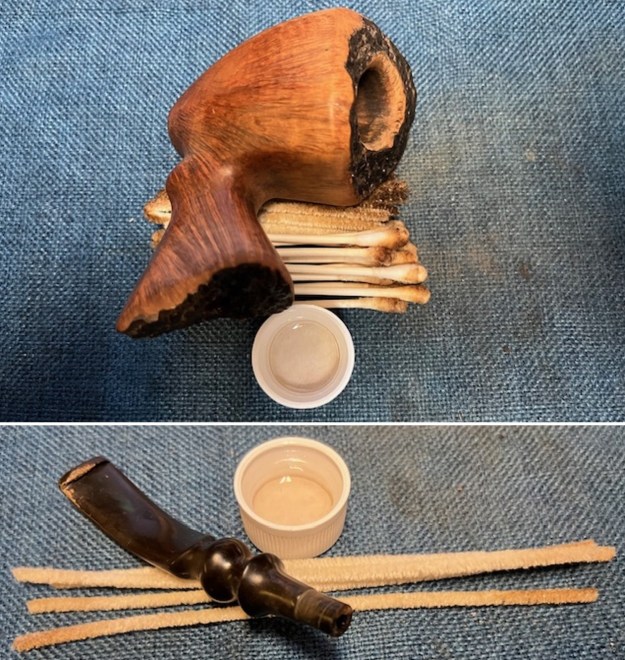
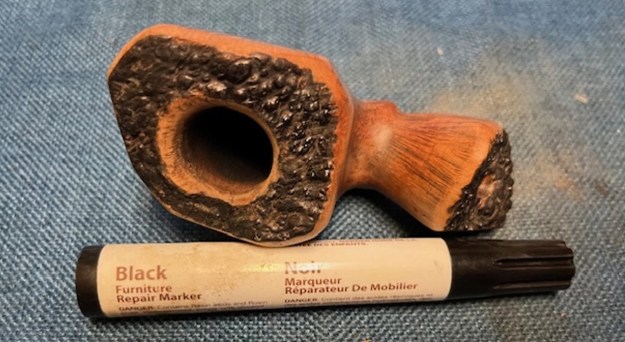
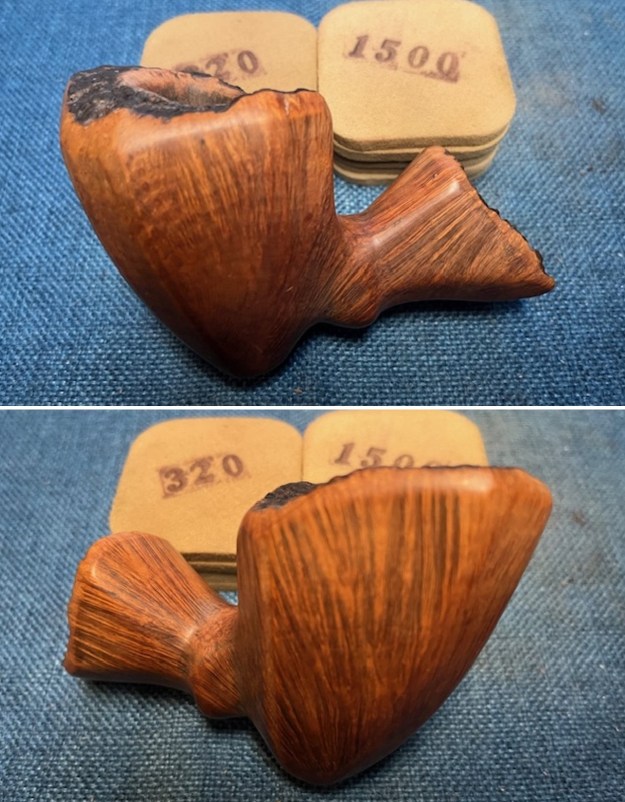
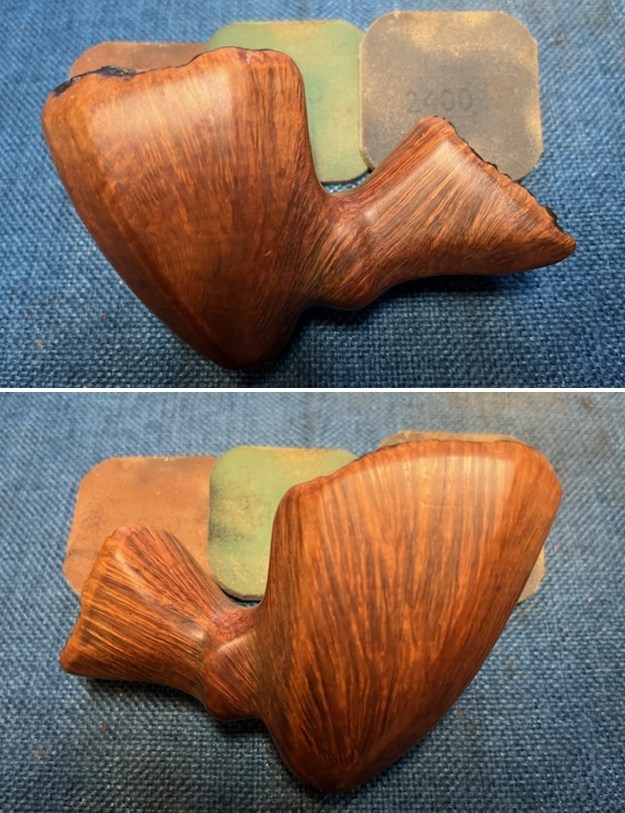
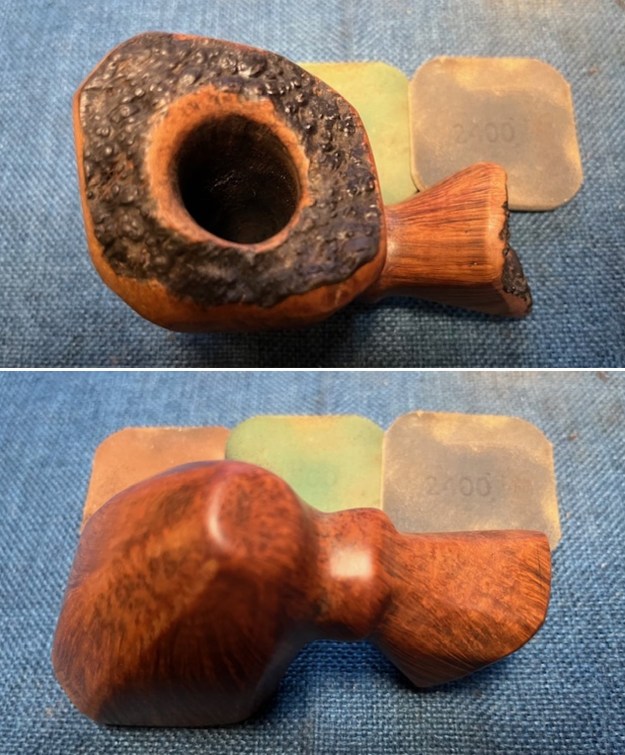
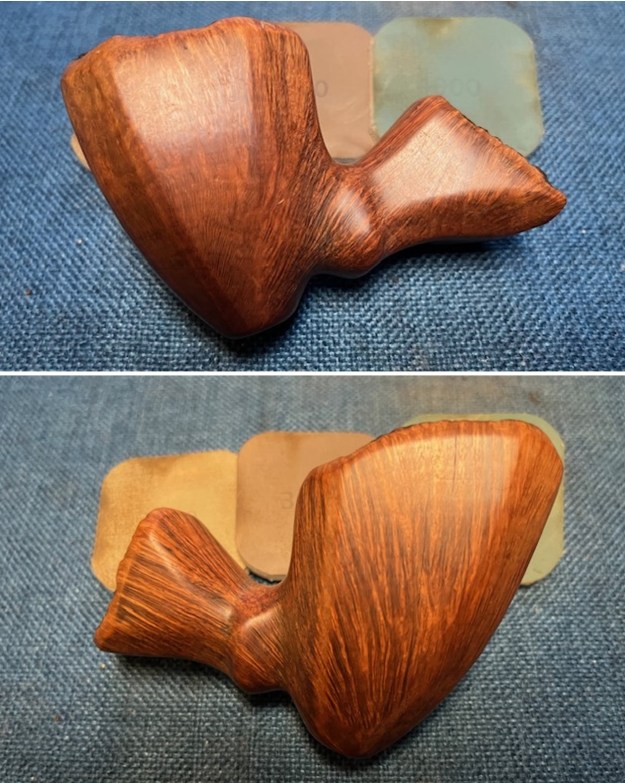
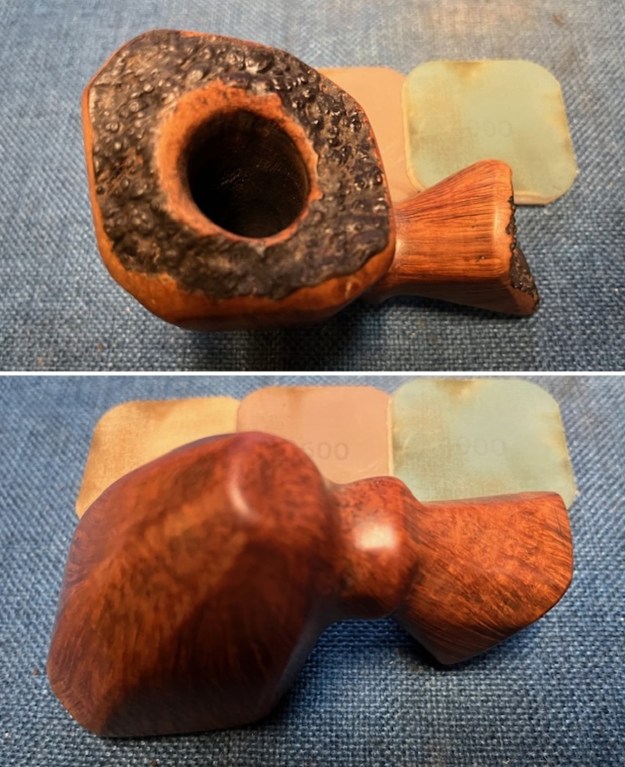
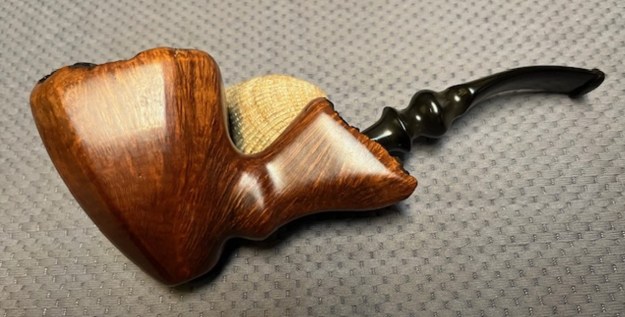
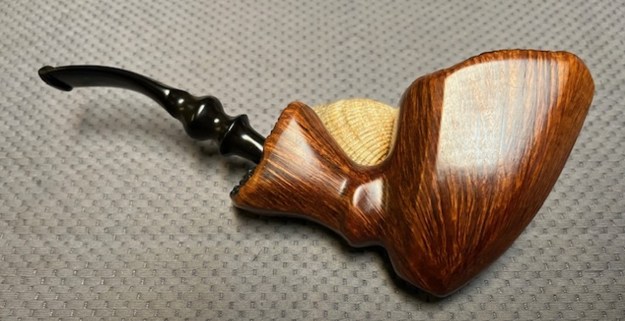
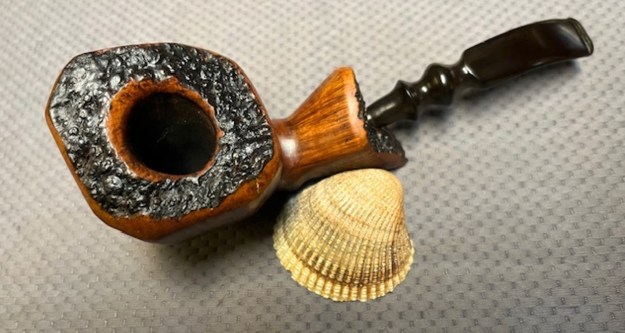
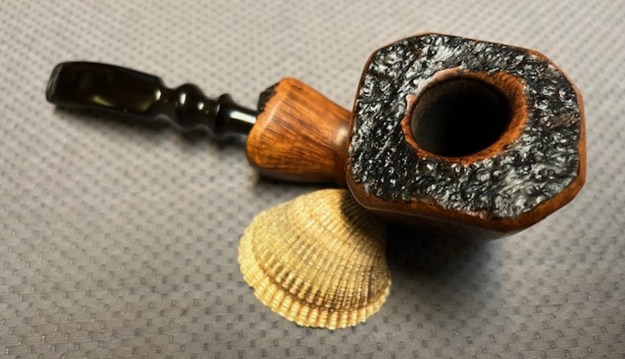
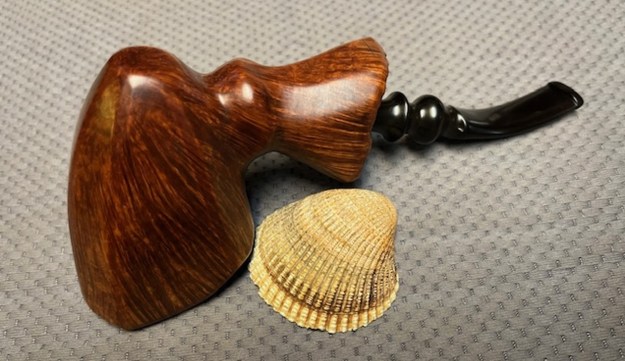
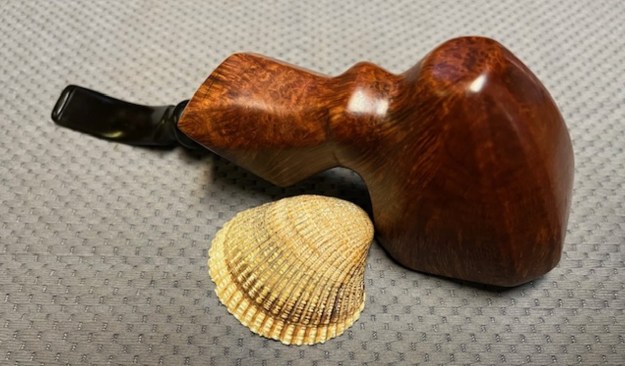
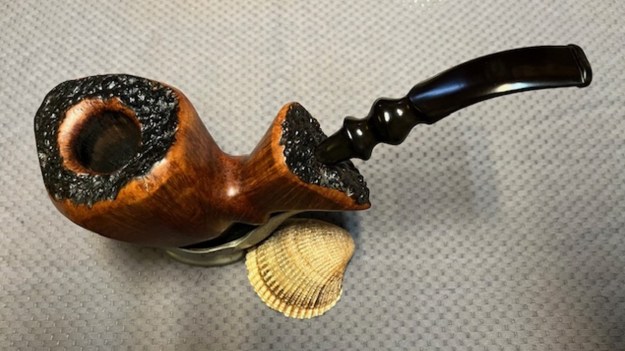
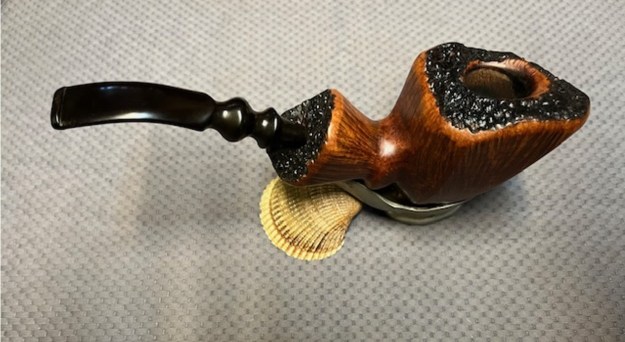
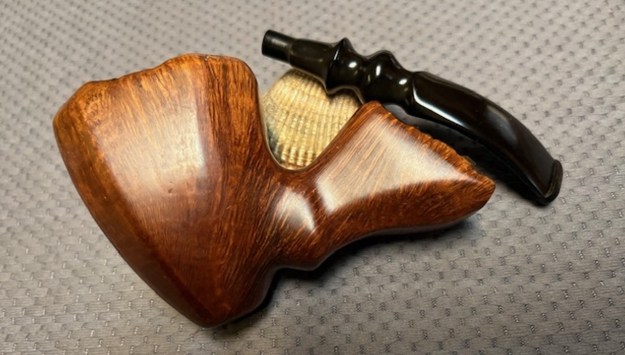
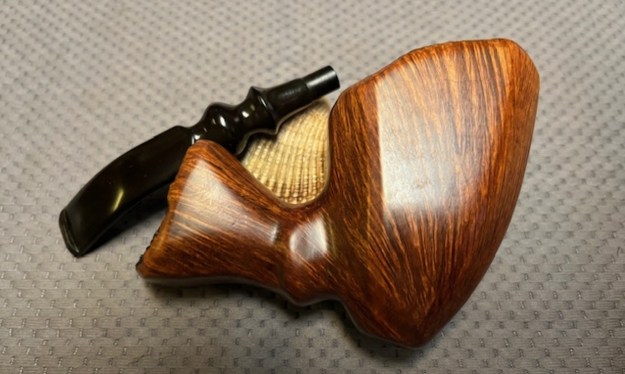
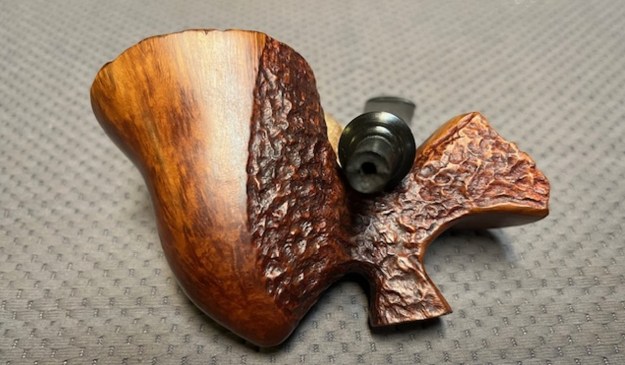
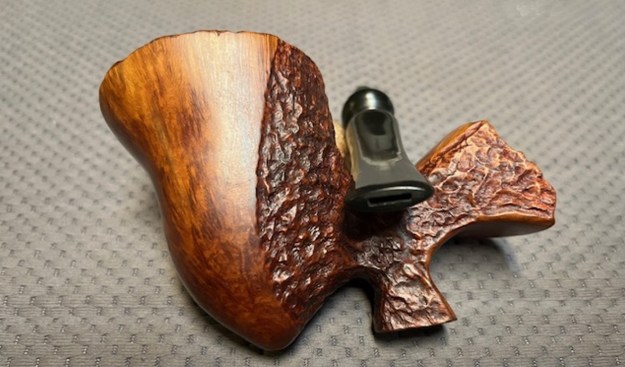
Back in January I received an email from Robert with a group 12 pipes that needed to be restored in various ways from cleanup to restemming. The second of these I chose to work on was a smooth Freehand sitter. The bowl was almost a panel shape with flattened corners on the four sides. The shank was also panelled in the same manner. It was a pretty pipe and it was a big one. The rim top and the shank end were both plateau finish. The heel of the bowl and the shank end had been flattened to make the pipe a sitter. The plateau rim top and shank end were dirty and debris in the plateau. The bowl had been reamed and was smooth on the inside walls of the bowl. There were some tars and oils in the mortise and the airway in the shank and the stem. The fancy turned, vulcanite stem was oxidized and dirty with light tooth marks and chatter in the top and underside of the stem ahead of the button. I took some photos of the pipe to show its condition before I started my work on it. The relatively clean bowl looks quite good. There was some debris in the plateau rim top and some lava build up on the inner edge and the grooves of the plateau. It looked to be in good condition other than the debris and darkening. The fancy vulcanite saddle stem was dirty, lightly oxidized and has tooth chatter and marks on both sides. I took photos of the bowl, rim top and the stem to show the condition of both.There was not any identifying stamping or marks on the shank. I also took a photo of the pipe with the stem removed to show the proportion of this pipe. It is really a beauty.  I turned to work on the pipe itself. I worked over the plateau rim top and shank end with a brass bristle wire brush to knock off the debris. It removed the debris and it looked much better. I scrubbed the bowl exterior with a tooth brush and undiluted Murphy’s Oil Soap to clean the debris in the rustication and also remove the oils and tars in the finish. I rinsed it with clean warm water and dried it off with a soft cotton cloth. I used a folded piece of sandpaper to smooth out the damage and darkening on the smooth inner edge of the bowl. It looked much better once the debris was removed.I sanded the walls of the bowl smooth with a piece of dowel wrapped with a piece of 220 grit sandpaper. The walls smoothed out very well.I cleaned out the mortise and airway in the shank and the stem with alcohol, cotton swabs and pipe cleaners. I was able to remove the grime and oils in the shank and the airway in the stem.I used a black Sharpie pen to touch up the valleys and deep spots on the plateau rim top and shank end. It looks much better at this point.I polished the bowl and shank along with the high spots on the plateau with 320-3500 grit sanding pads. It smoothed out the finish very well and made the contrast between the ridges and valleys of the finish stand out well. I polished the briar with micromesh sanding pads – dry sanding with 1500-12000 grit sanding pads. I wiped it down with a damp cloth after each sanding pad. It is looking very good at this point in the process. I worked some Before & After Restoration Balm into the surface of the briar with my fingertips and a horsehair shoe brush to clean, enliven and protect the briar. I let the balm sit for 15 minutes and then buffed it off with a cotton cloth to raise the shine. The photos show the bowl at this point in the restoration process. I set the bowl aside and turned my attention to the stem. I scrubbed the surface of the stem with cotton pads and Soft Scrub. I was able to remove the debris on the stem and the oxidation on the surface. It looked much better.I sanded the tooth chatter and marks with 220 grit sandpaper to blend them into the surface. It looked significantly better at this point.I sanded the stem with 320-3500 grit sanding pads to further blend in the remnants of the tooth marks and chatter on the stem and to remove the residual light oxidation. I am happy with the way that it looked at this point.I polished the vulcanite with micromesh sanding pads – 1500-12000 grit pads. I wiped it down with Obsidian Oil after each sanding pad. I used Before & After Pipe Polish – both Fine and Extra Fine to further polish the stem. This No Name Smooth Finish Plateau Freehand with a vulcanite fancy saddle stem has a beautiful, unique finish with great grain on the bowl and shank. The medium brown finish highlights the grain and the polished fancy turned stem adds to the mix. I put the stem back on the bowl and buffed the pipe with Blue Diamond on the buffing wheel being careful to not buff the stamping. I gave the bowl and the stem multiple coats of carnauba wax on the buffing wheel and followed that by buffing it with a clean buffing pad. I hand buffed the pipe with a microfiber cloth to deepen the shine. The finished No Name Freehand is quite nice and feels great in the hand. Give the finished pipe a look in the photos below. The dimensions of the pipe are Length: 7 inches, Height: 2 ¾ inches, Outside diameter of the bowl: 2 inches x 2 inches long, Chamber diameter: 1 inch. The weight of the pipe is 3.88 ounces/109 grams. Thanks for walking through the restoration with me as I worked over another beautiful pipe. I will be sending it back to Robert once I finish the other 10 pipes he sent me to restore. I look forward to hearing what he thinks of this beauty. Thanks for your time.

Cleaning up the first of a lot of 12 pipes for a customer – a No Name Freehand Sitter


by Steve Laug

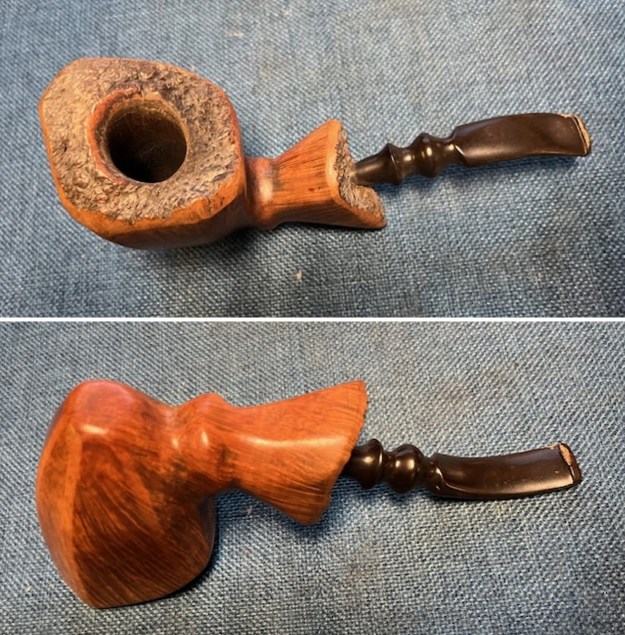
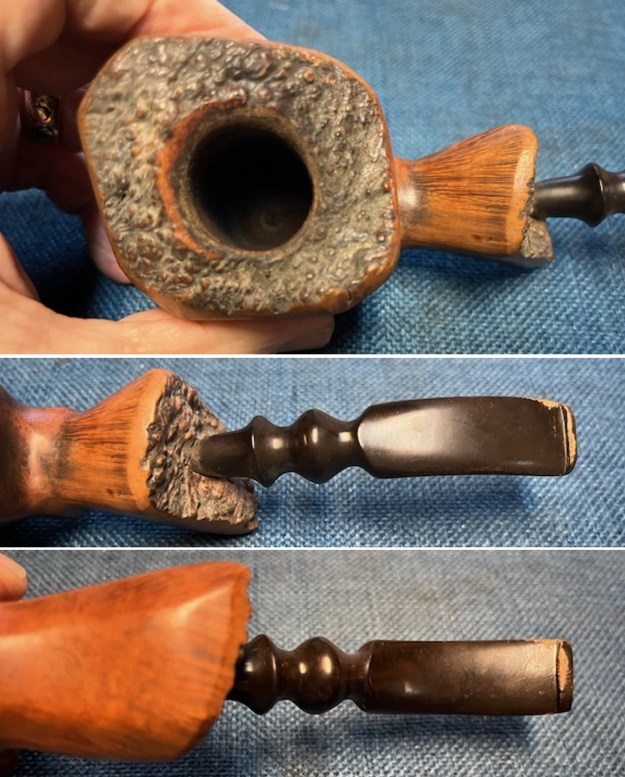
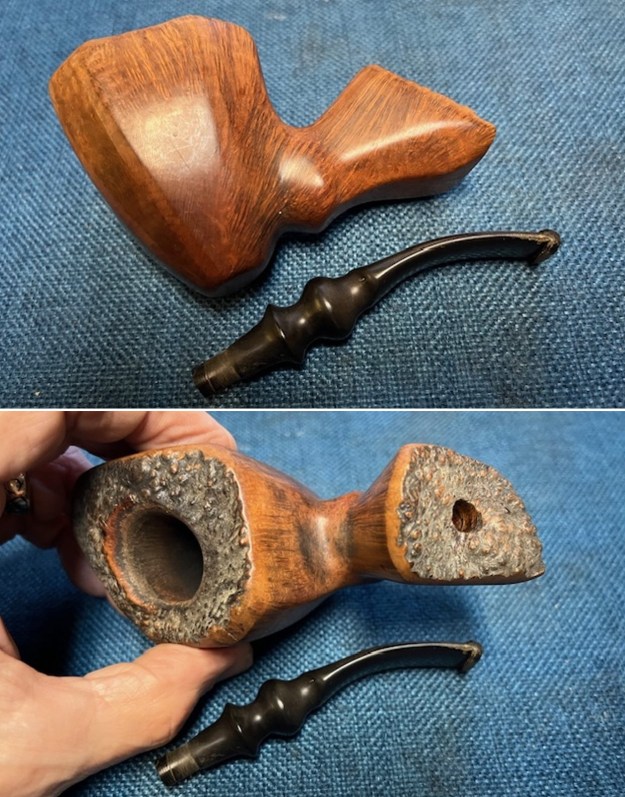
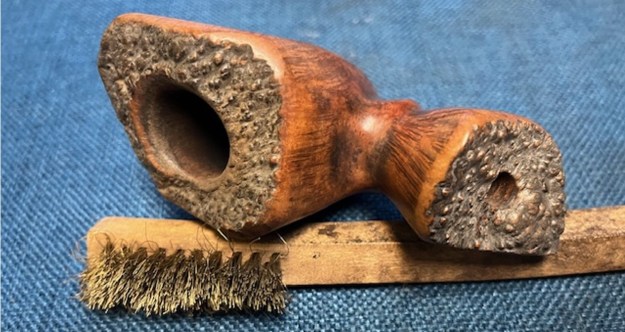
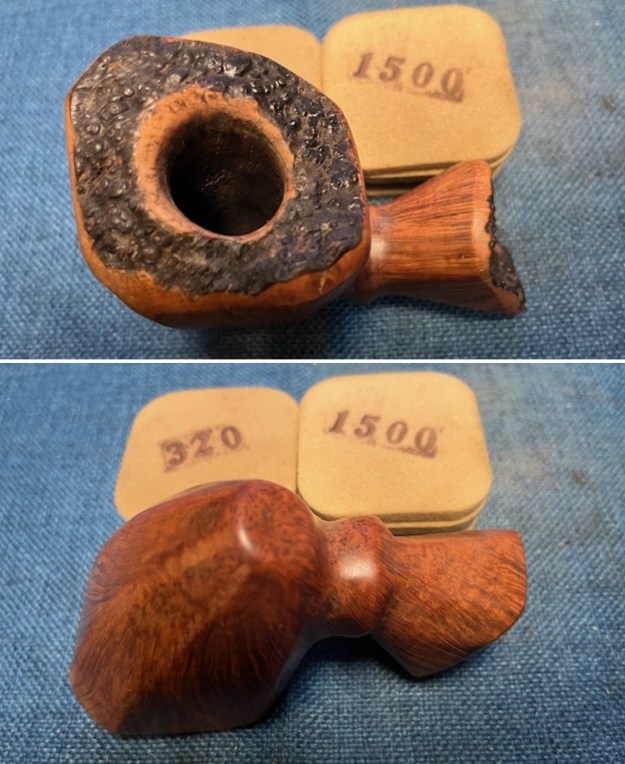
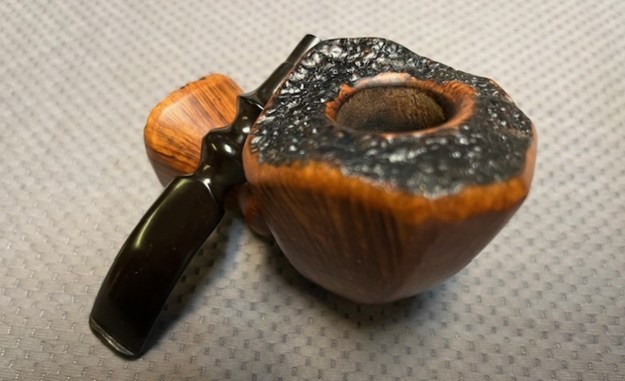
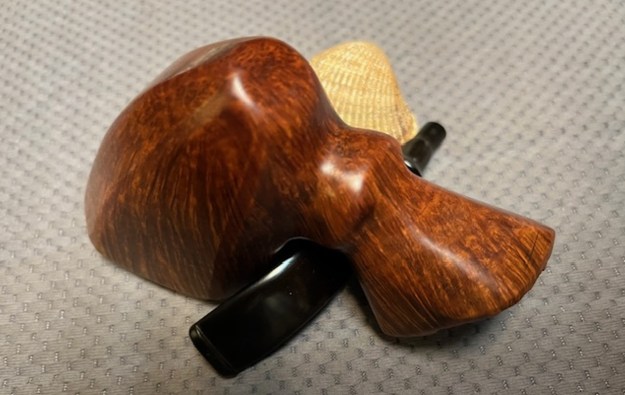
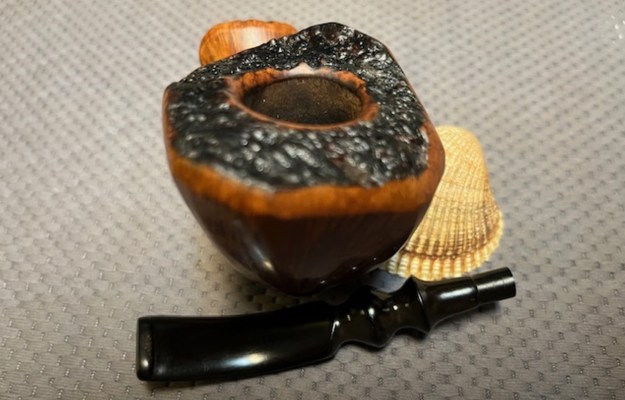
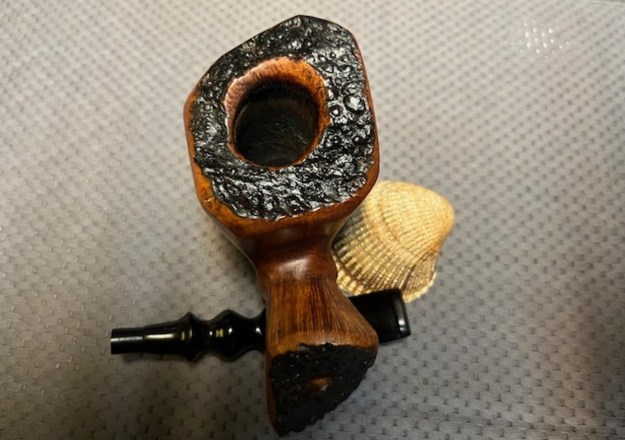
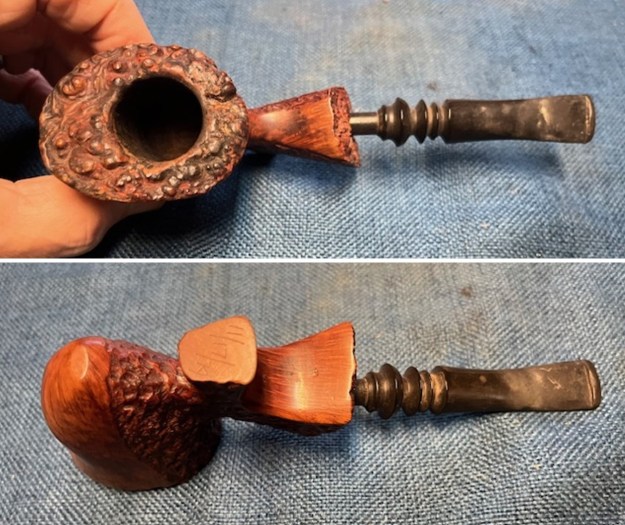
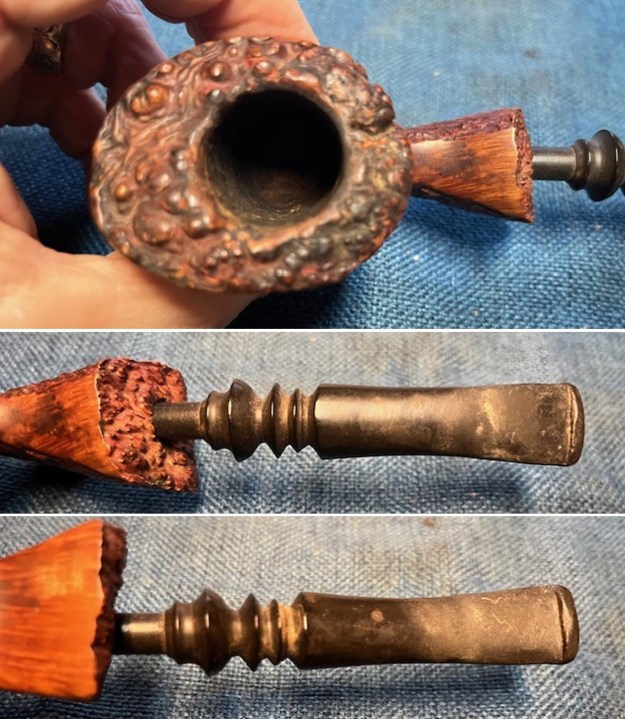
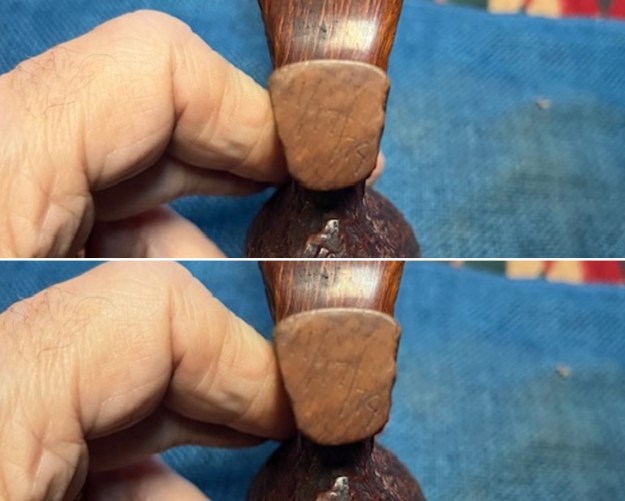
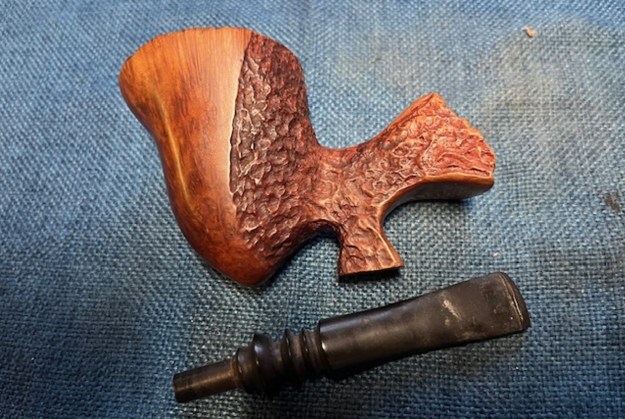
Back in January, I received an email from Robert with a group 12 pipes that needed to be restored in various ways from cleanup to restemming. The first of these I chose to work on was a partially rusticated Freehand sitter. The front and the sides of the bowl were smooth part way back. The back half of the bowl and shank sides were rusticated with a unique looking rustication. The top of the shank and the underside were both smooth. The rim top and the shank end were both plateau finish. The bottom of the foot of the shank is etched with the date 11/17/79. The plateau rim top and shank end were dirty and debris in the plateau. The bowl had been reamed and was smooth on the inside walls of the bowl. There were some tars and oils in the mortise and the airway in the shank and the stem. The fancy turned, vulcanite stem was oxidized and dirty with light tooth marks and chatter in the top and underside of the stem ahead of the button. I took some photos of the pipe to show its condition before I started my work on it. The relatively clean bowl looks quite good. There was some debris in the plateau rim top and some lava build up on the inner edge and the grooves of the plateau. It looked to be in good condition other than the debris and darkening. The fancy vulcanite saddle stem was dirty, lightly oxidized and has tooth chatter and marks on both sides. I took photos of the bowl, rim top and the stem to show the condition of both.The stamping on the shank are not to be found on the shank. There is however, an etched 11/17/79 on the flat bottom of the foot as shown in the photos below. I tried to capture the detail in the photos below. I also took a photo of the pipe with the stem removed to show the proportion of this pipe. It is really a beauty. I turned to work on the pipe itself. I worked over the plateau rim top and shank end with a brass bristle wire brush to knock off the debris. It removed the debris and it looked much better.I scrubbed the bowl exterior with a tooth brush and undiluted Murphy’s Oil Soap to clean the debris in the rustication and also remove the oils and tars in the finish. I rinsed it with clean warm water and dried it off with a soft cotton cloth. I used a folded piece of sandpaper to smooth out the damage and darkening on the smooth inner edge of the bowl. It looked much better once the debris was removed.I cleaned out the mortise and airway in the shank and the stem with alcohol, cotton swabs and pipe cleaners. I was able to remove the grime and oils in the shank and the airway in the stem.I used a black Sharpie pen to touch up the valleys and deep spots on the plateau rim top and shank end. It looks much better at this point.I polished the smooth portions of the bowl and shank along with the high spots on the plateau with 320-3500 grit sanding pads. It smoothed out the finish very well and made the contrast between the ridges and valleys of the finish stand out well. I worked some Before & After Restoration Balm into the surface of the briar with my fingertips and a horsehair shoe brush to clean, enliven and protect the briar. I let the balm sit for 15 minutes and then buffed it off with a cotton cloth to raise the shine. The photos show the bowl at this point in the restoration process. I set the bowl aside and turned my attention to the stem. I scrubbed the surface of the stem with cotton pads and Soft Scrub. I was able to remove the debris on the stem and the oxidation on the surface. It looked much better.I “painted” the surface of the stem with the flame of a Bic lighter to lift the tooth marks. I was able to lift them all considerably. I filled in the two deep marks – one on each side of the stem just ahead of the button – with black rubberized CA glue. Once it cured, I sanded the repairs with 220 grit sandpaper to blend them into the surface. It looked significantly better at this point. I sanded the stem with 320-3500 grit sanding pads to further blend in the repairs and remove the residual light oxidation on the stem surface. I am happy with the way that it looked at this point.I polished the vulcanite with micromesh sanding pads – 1500-12000 grit pads. I wiped it down with Obsidian Oil after each sanding pad. I used Before & After Pipe Polish – both Fine and Extra Fine to further polish the stem. This No Name Mixed Finish Plateau Freehand etched 11/17/79 with a vulcanite fancy saddle stem has a beautiful, unique finish with great grain on the smooth portions and rustication on the sides and shank. The medium brown finish highlights some great grain around the bowl and shank. It has a unique finish and the polished fancy turned stem adds to the mix. I put the stem back on the bowl and buffed the pipe with Blue Diamond on the buffing wheel being careful to not buff the stamping. I gave the bowl and the stem multiple coats of carnauba wax on the buffing wheel and followed that by buffing it with a clean buffing pad. I hand buffed the pipe with a microfiber cloth to deepen the shine. The finished No Name Freehand is quite nice and feels great in the hand. Give the finished pipe a look in the photos below. The dimensions of the pipe are Length: 7 inches, Height: 2 ¾ inches, Outside diameter of the bowl: 1 ¾ inch x 2 inches long, Chamber diameter: 1 inch. The weight of the pipe is 2.57 ounces/72 grams. Thanks for walking through the restoration with me as I worked over another beautiful pipe. I will be sending it back to Robert once I finish the other 11 pipes he sent me to restore. I look forward to hearing what he thinks of this beauty. Thanks for your time.

Restoring a Dunhill Amber Root 4106 Pot


by Steve Laug

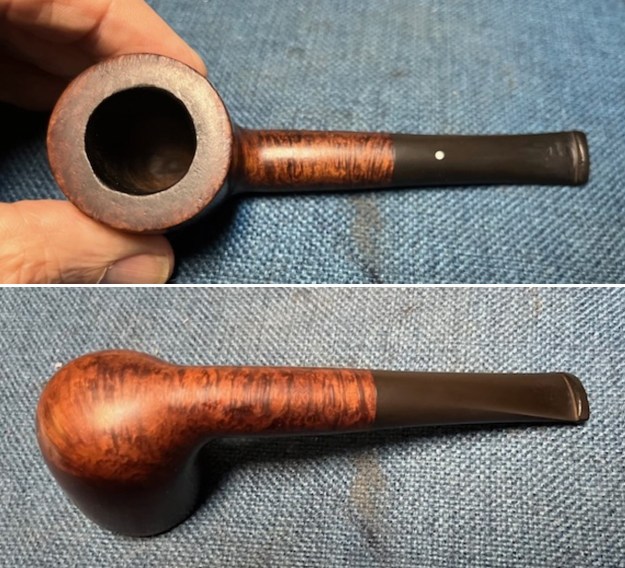
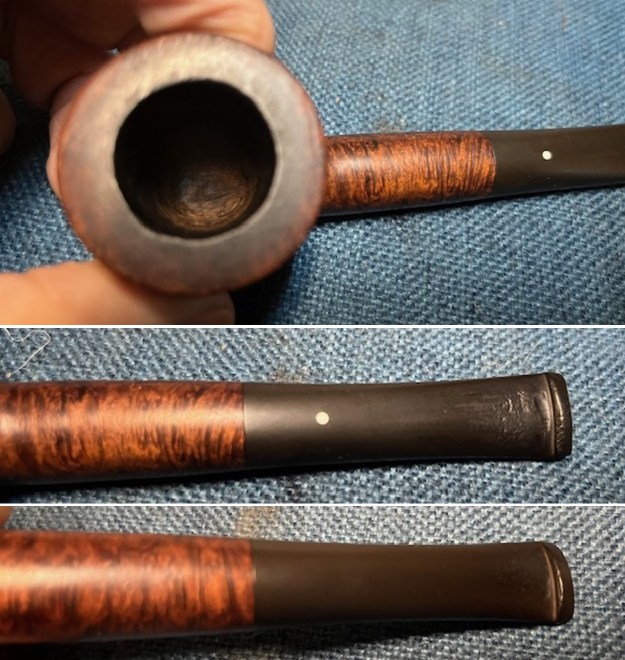
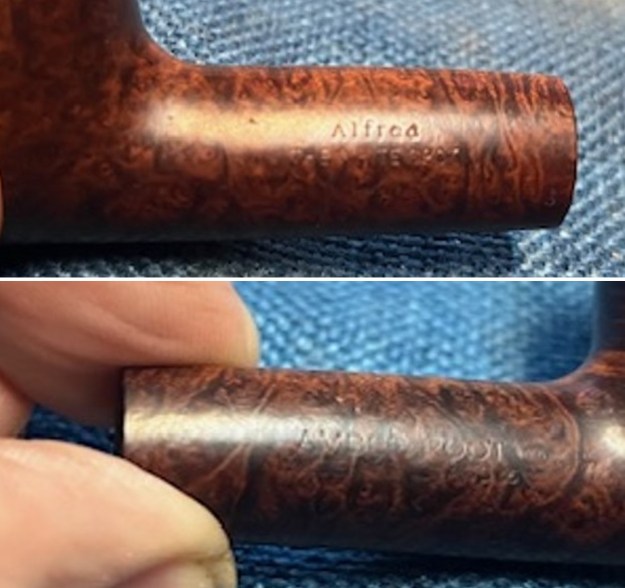
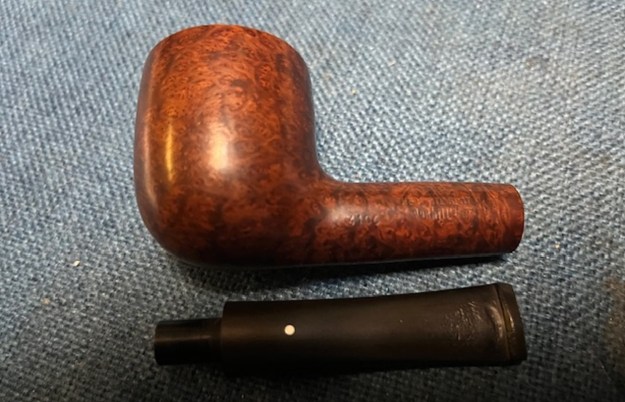
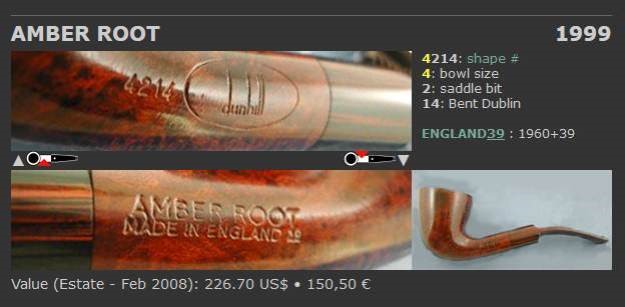
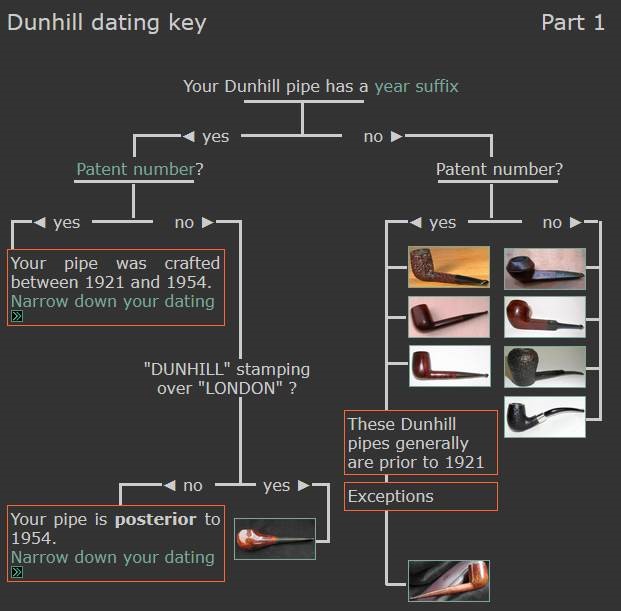
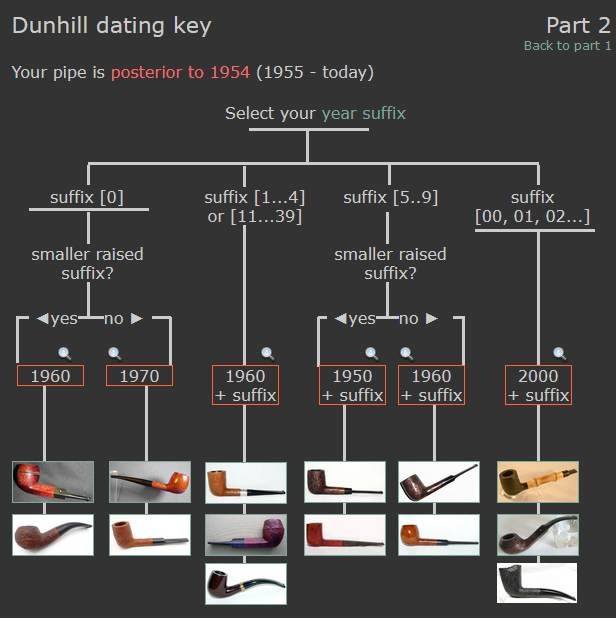
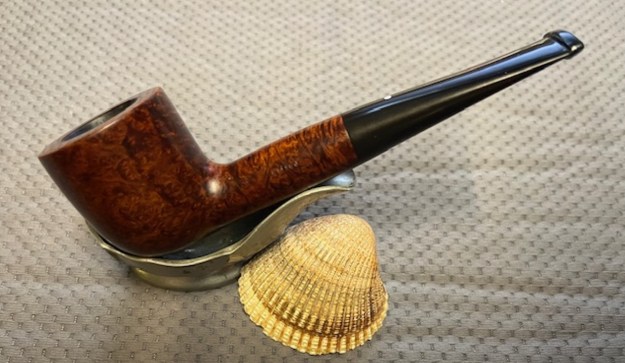
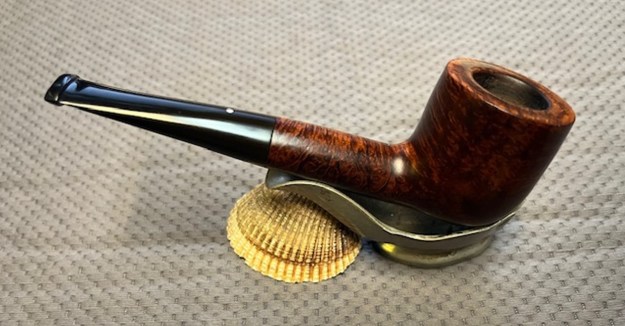
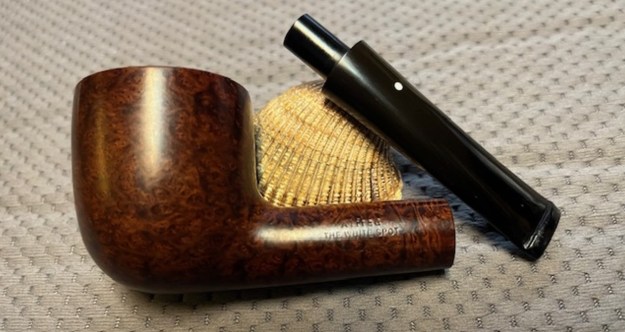
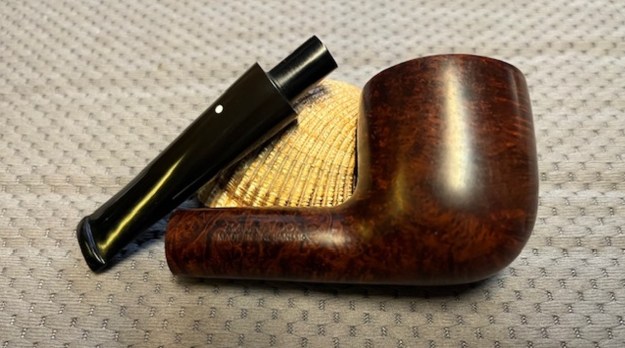
The first pipe on the table since I returned from my long Asia trip for work is one that was sent to me by Jim for restoration. It is a nice-looking Dunhill Amber Root Pot. The stamping on the left side of the shank reads 4106 (the shape number), near the bowl shank junction. It is followed by some unique stamping that reads Alfred [over] The White Spot [over] dunhill’s. On the right side it is stamped Amber Root [over] Made in England15. The pipe was in decent condition, just well used and stunk of an aromatic, vanilla tobacco. The outside of the bowl and shank were dirty and dull with hand oils but the flash on the photos shows the nice grain. The bowl had been reamed recently and there was no cake in the bowl. The rim top had some darkening around the inner edge and on the top. The inner edge has some damage and is slightly out of round. The outer edge looked good. The vulcanite taper stem was oxidized and had some light tooth marks on the top and underside ahead of the button. The shank of the pipe was quite dirty with the oils and tars of the aromatic tobacco that had been smoked in it. I took photos of the pipe when I brought it to my work table and before I started the clean up. Try to imagine how the pipe smelled. Even your imagination cannot begin to capture the smells of the briar in your hand. The relatively clean bowl looks quite good. There are some nicks in the inner edge from zealous reaming that left it rough and damaged. The vulcanite, taper stem was dirty, lightly oxidized and has tooth chatter and marks on both sides. I took photos of the bowl, rim top and the stem to show the condition of both.The stamping on the sides of the shank are shown in the photos below. It looks very good with portions of it faint but readable. It reads as noted and explained above. I tried to capture the detail in the photos below. I also took a photo of the pipe with the stem removed to show the proportion of this pipe. It is really a beauty. I wanted to unpack the Dunhill stamping on the shank and work to understand each element of the stamp. I generally use the Pipephil site to gather as much initial information as possible (http://pipephil.eu/logos/en/dunhill/amber1.html). The stamping is interpreted as follows: The number 4106 is the shape number that unpacks as follows: the 4 is the bowl size, 1 is the normal identifier for a taper stem, 06 is the shape designation – a Pot. The Amber Root stamp refers to the finish. The superscript 15 following the D of England would give the date the pipe.Pipephil also has some helpful dating keys on the site that are basically flow charts that you can walk through to date your pipe (http://pipephil.eu/logos/en/dunhill/cledat-en1.html). I turned to Part 1 of the Dating Key and followed the chart. This pipe has a number 15  following the D in England. There was no patent number so that took me to the section on the chart below (column one) which instructed me that the pipe could be dated as being made “posterior to 1954”.I followed the link under “Your pipe is posterior to 1954. Narrow down your dating”. That took me to Page 2 of the dating key (http://pipephil.eu/logos/en/dunhill/cledat-en1a.html). The last column (suffix 00, 01, 02…) led me to the section with a 15 after the D in England. There was a directive for dating the pipe spelled out as follows: 2000 + suffix which gives the pipe a date of 2015. From that I knew that the pipe was made in 2015. I chose this column rather than the second column which would have dated it as 1975 because of the date that the Amber Root was released by Dunhill being 1995. I hope that the logic of the dating is clear. I then turned to Pipedia’s section on Dunhill pipes to get a bit of background on the Dunhill finishes (https://pipedia.org/wiki/Dunhill#Root_Briar). I quote:

Amber Root – Introduced in 1995. A warm yellow-orange stain, reminiscent of the original Root Briar finish. Cumberland stems were used, although recently, Amber Root pipes have appeared with black stems. This is also a limited production pipe that is found in mainly Company stores and Principle Pipe Dealers. Straight grained pipes are made available in this finish under the name Amber-flame and are graded from one to three flames.

Note: While the Amber Root finish existed in the past with Cumberland and black Vulcanite mouthpieces (now we use usually the black Vulcanite variety only)[32].

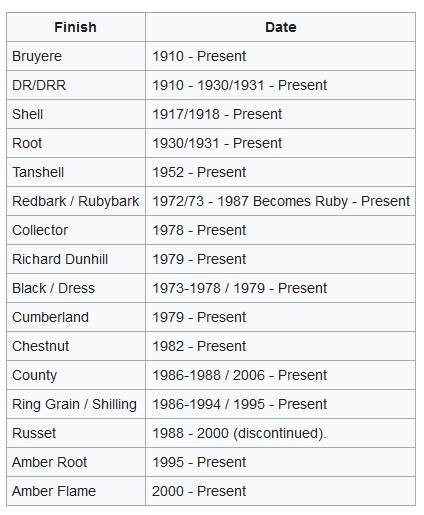
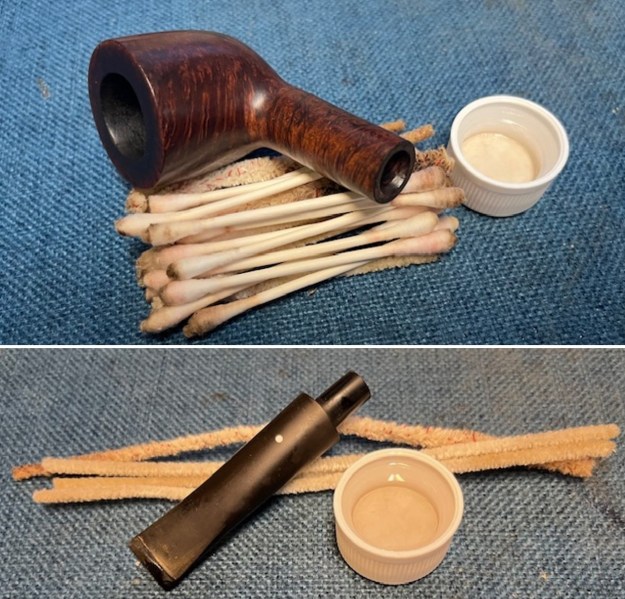
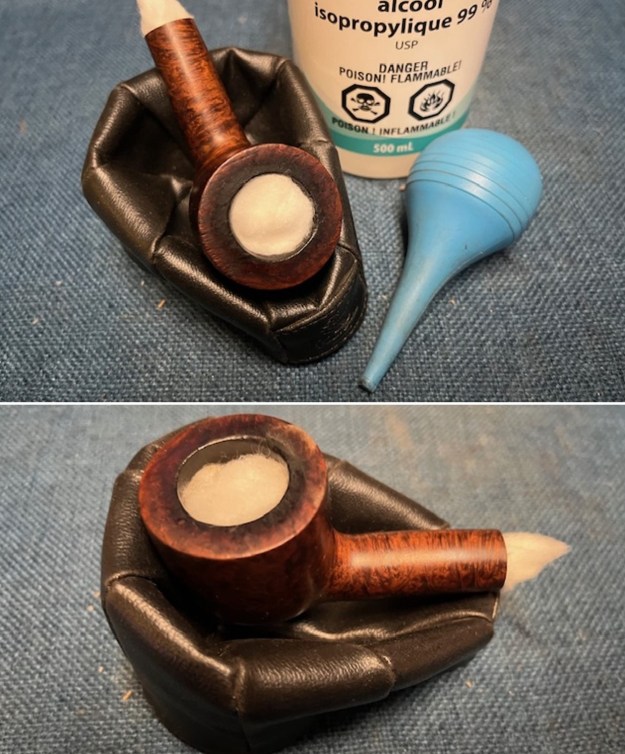
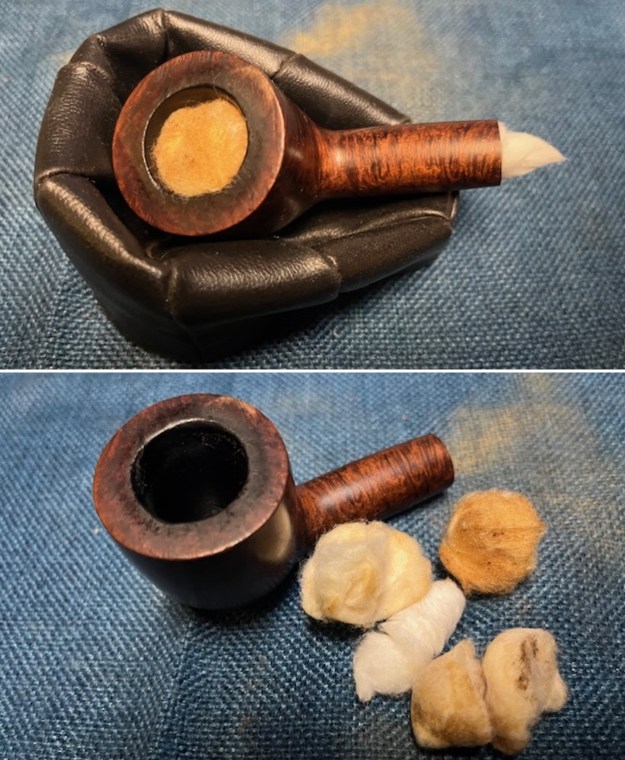
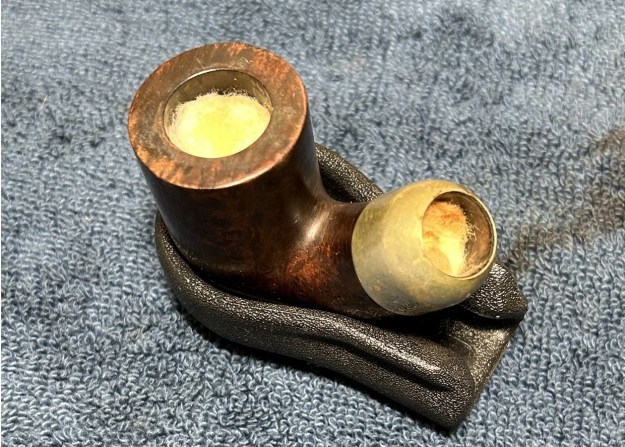
I have also included a chart from the site spelling out the Standard Pipe Finishes and giving a timeline. You can see that the Amber Root Finish (a smooth polished medium stain) was introduced in 1995 so this is definitely dates this 15 year stamped pipe to 2015. I turned to work on the pipe itself. I cleaned out the mortise and airway in the shank and the stem with alcohol, cotton swabs and pipe cleaners. I was able to remove a lot of the grime and oils in the shank but the stench of the strong aromatic still remained.To help remove the ghost in the bowl I stuffed it with cotton bolls and rolled a plug from cotton for the shank end. I filled the bowl with 99% Isopropyl alcohol and let it sit overnight to wick out the strong oils and tars from the bowl walls and the shank. In the morning when I checked it the cotton was heavily darkened with the oils. I removed them and set the bowl aside to airdry. I set the bowl aside to airdry after deghosting and turned to address the stem issues. I “painted” the surface of the stem with the flame of a Bic lighter to lift the tooth marks. I was able to lift them all considerably. I filled in the two deep marks – one on each side of the stem just ahead of the button – with black rubberized CA glue. Once it cured, I used a small, flat needle file to recut the button edge and flatten the repair. I sanded the repairs with 220 grit sandpaper to blend them into the surface. It looked significantly better at this point. I sanded the stem with 320-3500 grit sanding pads to further blend in the repairs and remove the residual light oxidation on the stem surface. I am happy with the way that it looked at this point.I polished the vulcanite with micromesh sanding pads – 1500-12000 grit pads. I wiped it down with Obsidian Oil after each sanding pad. I used Before & After Pipe Polish – both Fine and Extra Fine to further polish the stem. I set the stem aside and went back to the bowl. I used some Before & After Briar Cleaner to remove the tars from the finish. I scrubbed the surface of the bowl with a tooth brush. I rinsed of the debris with warm water and dried it off with a soft cloth. I used a folded piece of 220 grit sandpaper to smooth out the rough inner edge of the bowl. I also sanded the scratches and the darkening of the rim top with the sandpaper. It did not take much and it looked much better.There was a dent on the right side of the bowl toward the heel. I used a damp cloth and a hot knife to steam the dent out as much as possible. I was able to lift it to a large degree but not completely with the steam. I polished the rim top and bowl with micromesh sanding pads – dry sanding with 1500-12000 grit pads and wiping the bowl down with a damp cloth to remove the dust. The rim top and the bowl came out looking very good. I worked some Before & After Restoration Balm into the surface of the briar with my fingertips to clean, enliven and protect the briar. I let the balm sit for 15 minutes and then buffed it off with a cotton cloth to raise the shine. The photos show the bowl at this point in the restoration process. I rubbed the briar down with Before & After Restoration Balm. I worked it into the briar with my fingertips. The product works to clean, enliven and preserve the briar. I let it sit for 10 minutes then I buffed it with a cotton cloth to deepen the shine. The briar comes alive with the balm. This 2015 Dunhill Amber Root 4106 Pot with a vulcanite taper stem has a beautiful, unique Dunhill smooth finish with great grain. The medium orange brown finish highlights some great grain around the bowl and shank. It has a unique finish and the polished taper stem adds to the mix. I put the stem back on the bowl and buffed the pipe with Blue Diamond on the buffing wheel being careful to not buff the stamping. I gave the bowl and the stem multiple coats of carnauba wax on the buffing wheel and followed that by buffing it with a clean buffing pad. I hand buffed the pipe with a microfiber cloth to deepen the shine. The finished Dunhill Amber Root 4106 Pot is quite nice and feels great in the hand. Give the finished pipe a look in the photos below. The dimensions of the pipe are Length: 5 ½ inches, Height: 1 ¾ inches, Outside diameter of the bowl: 1 ½ inch, Chamber diameter: ¾ of an inch. The weight of the pipe is 1.55 ounces/44 grams. Thanks for walking through the restoration with me as I worked over another beautiful pipe. I will be sending it back to Jim on the weekend. I look forward to hearing what he thinks of this beauty. Thanks for your time.

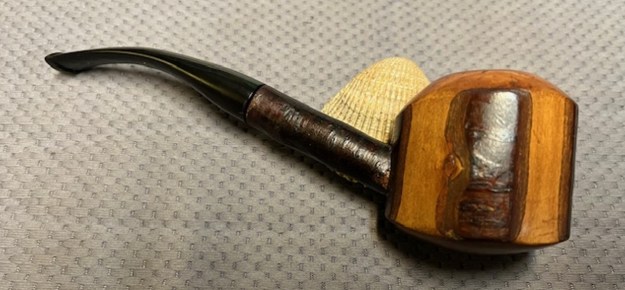
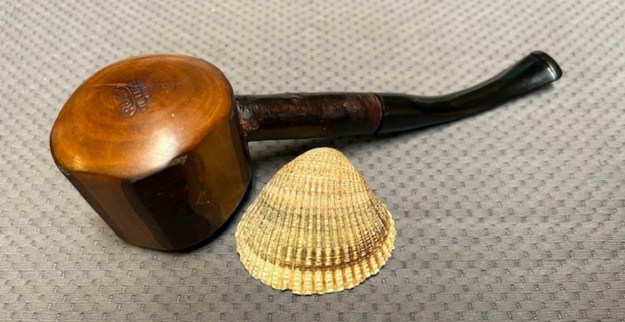
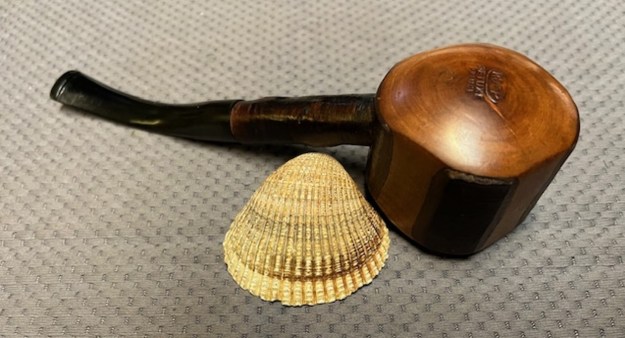
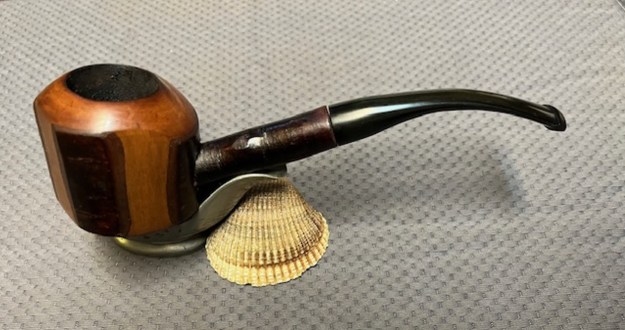
Cleaning Up a Mysterious Kirsten Like Bakelite/Briar Pipe


by Steve Laug

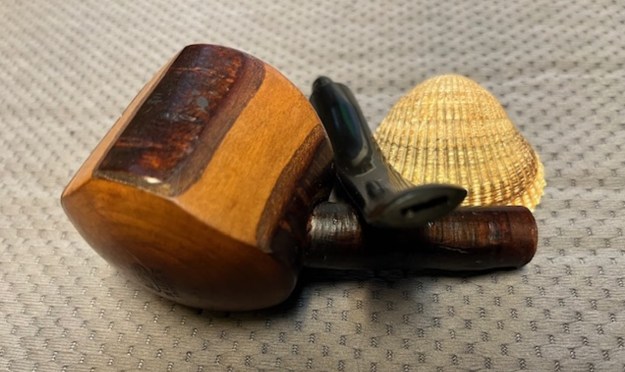
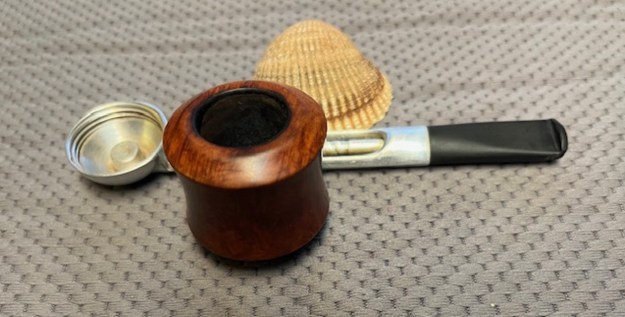
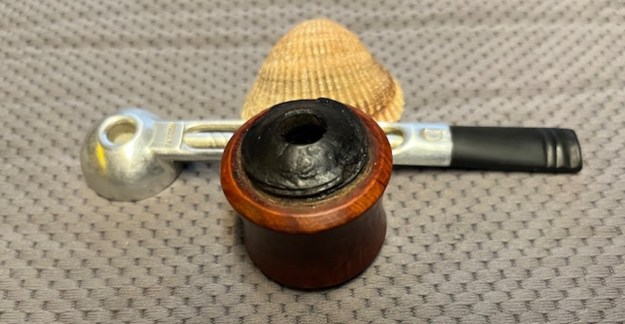
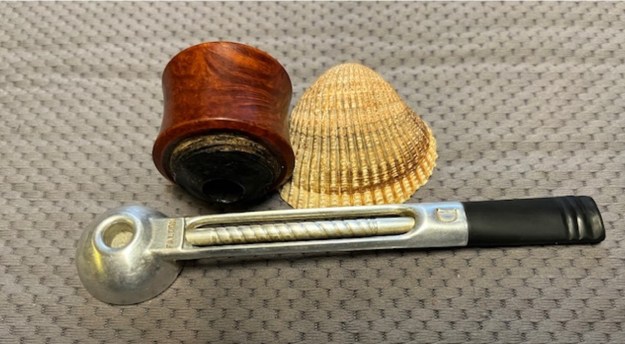
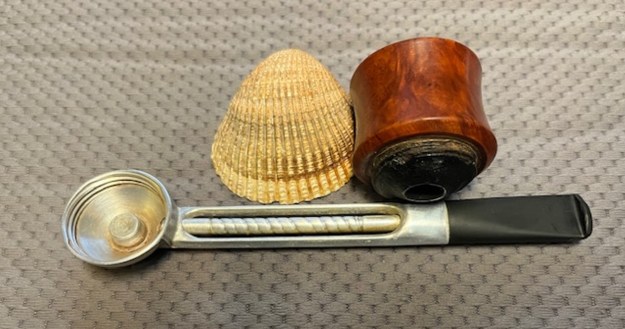
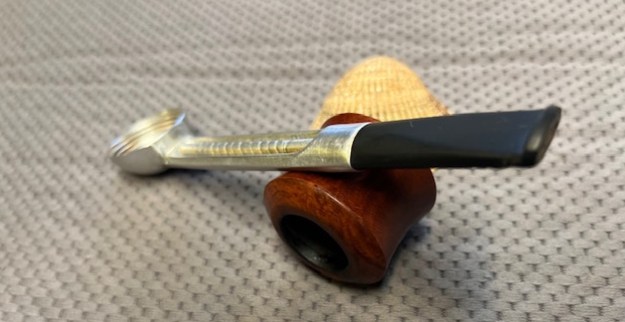
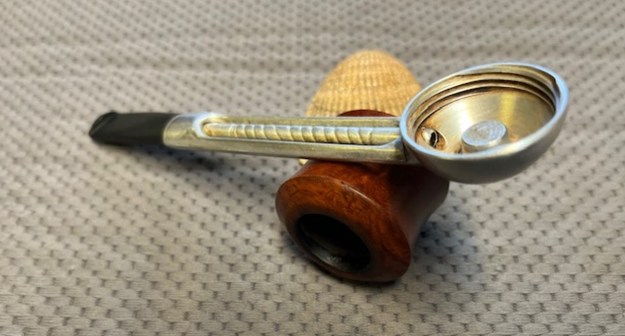
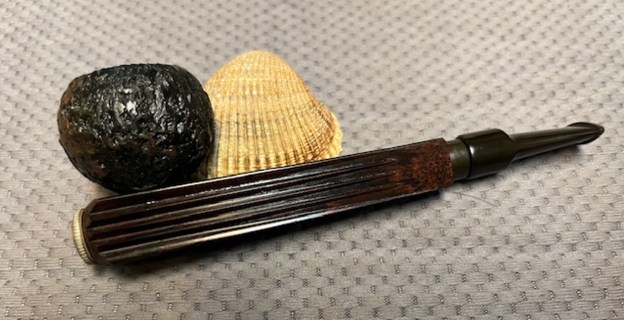
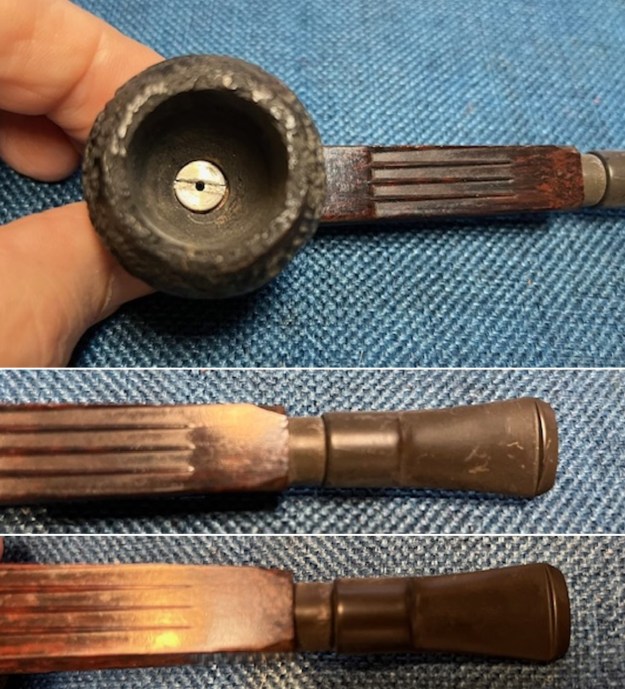
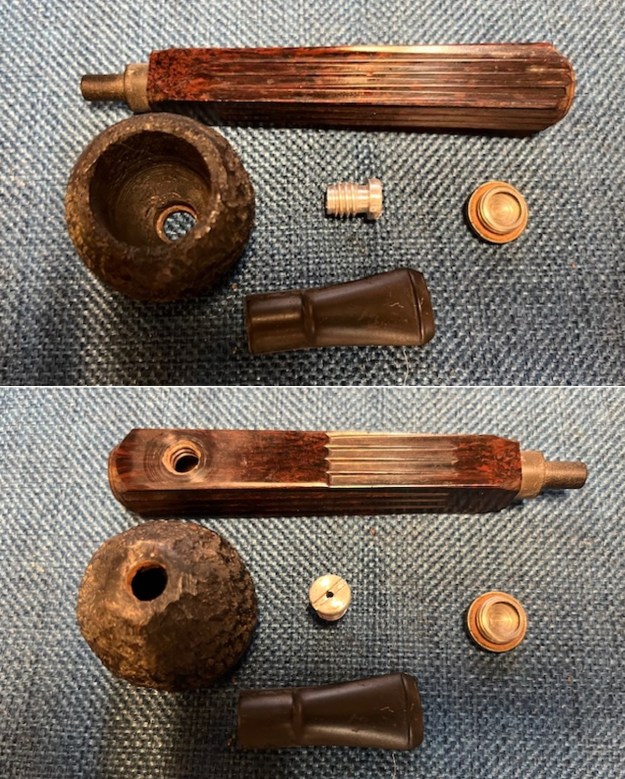
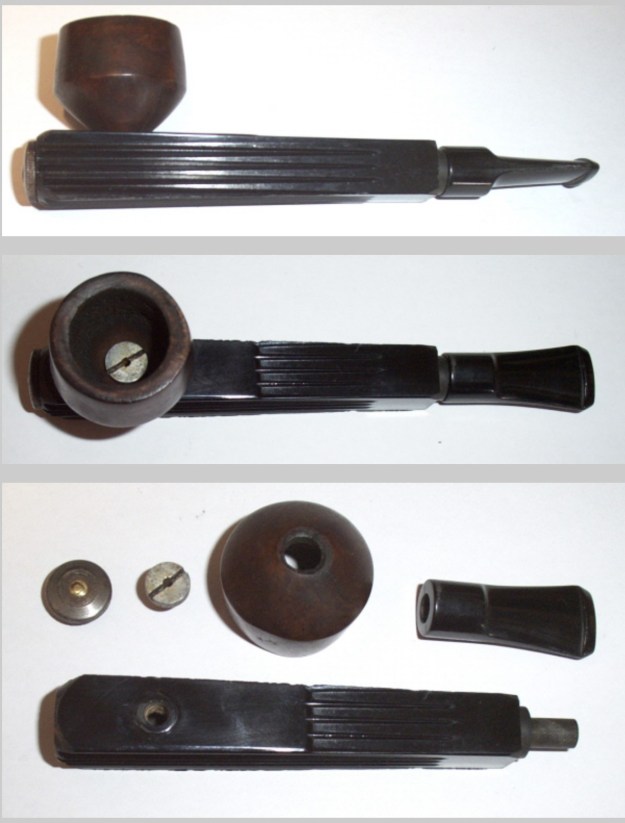
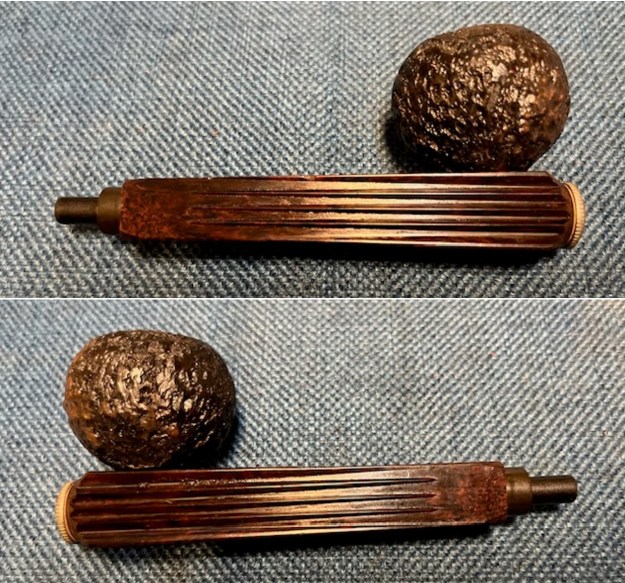
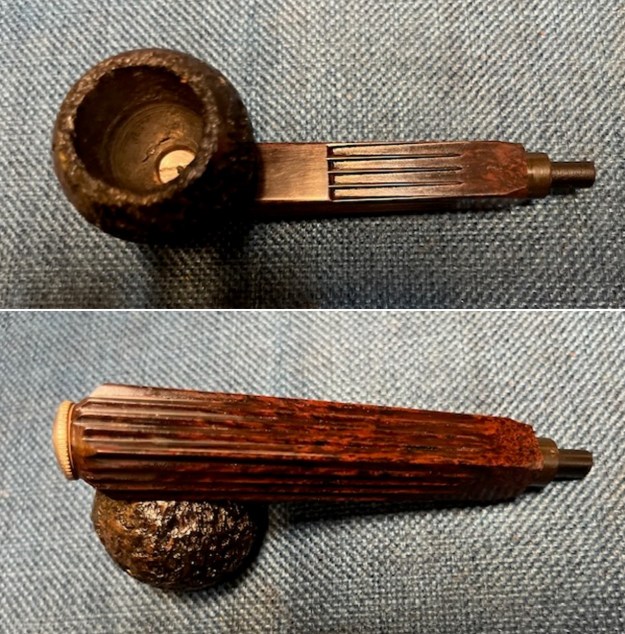
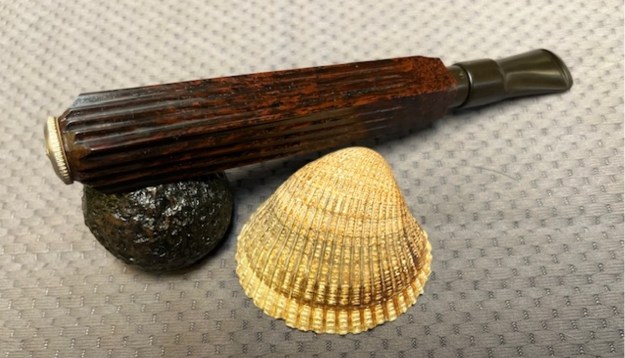
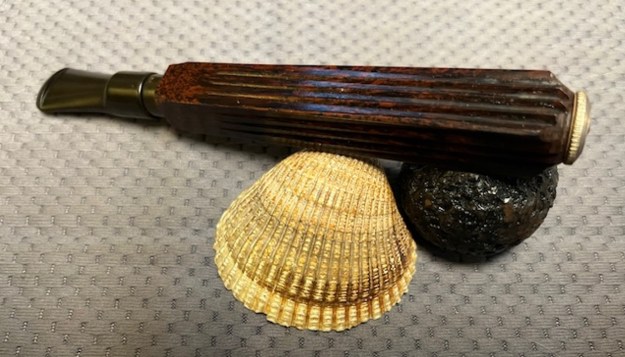
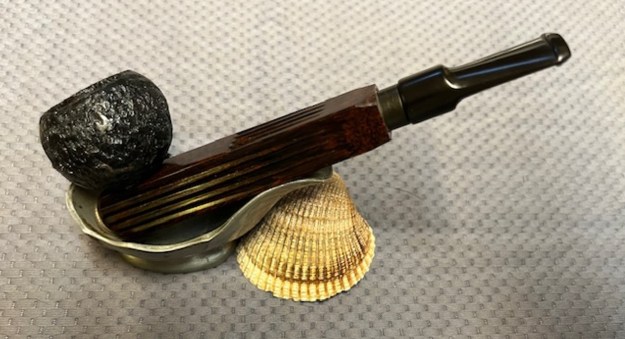
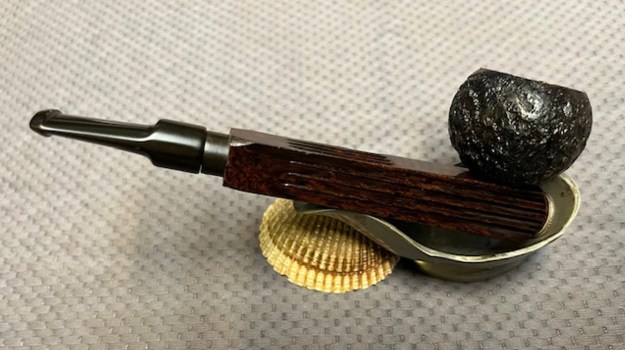
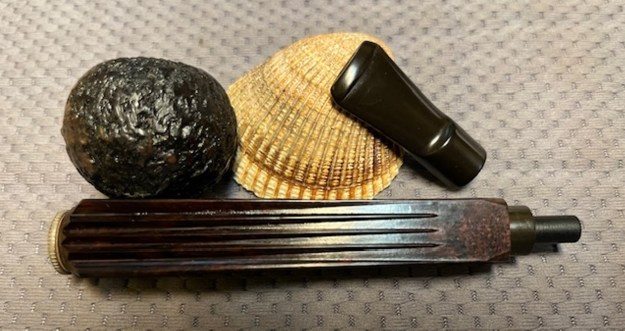
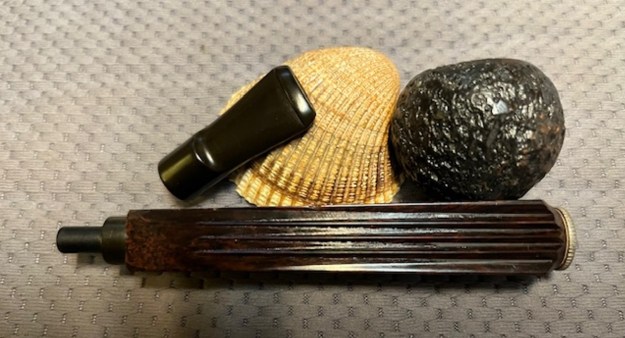
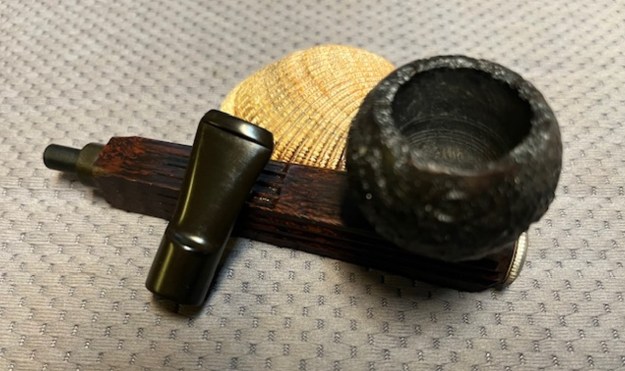
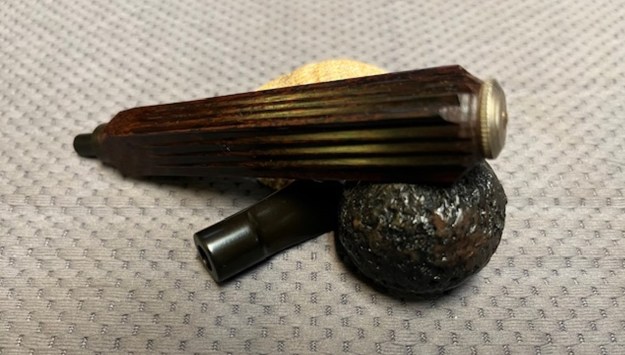
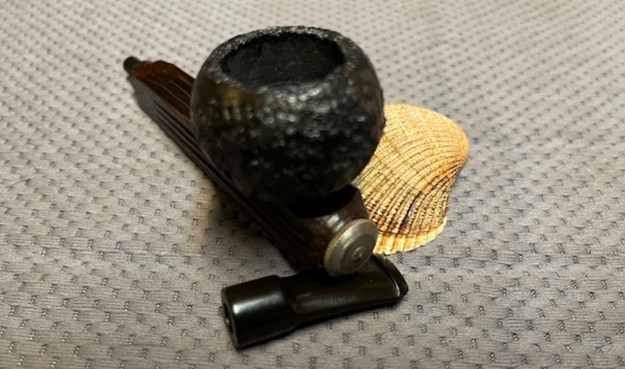
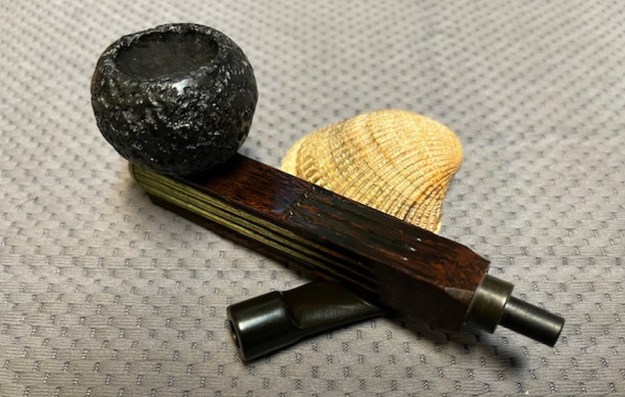
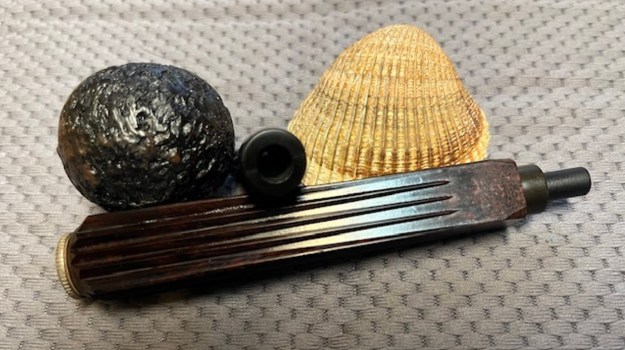
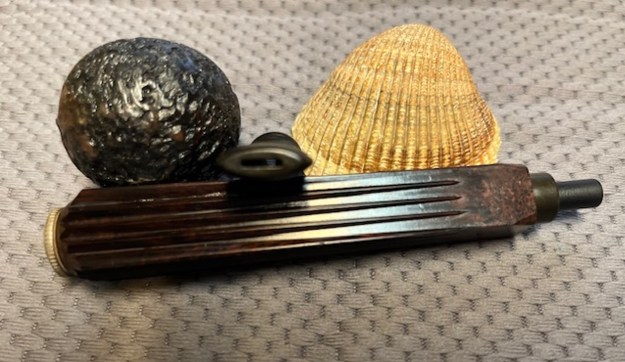
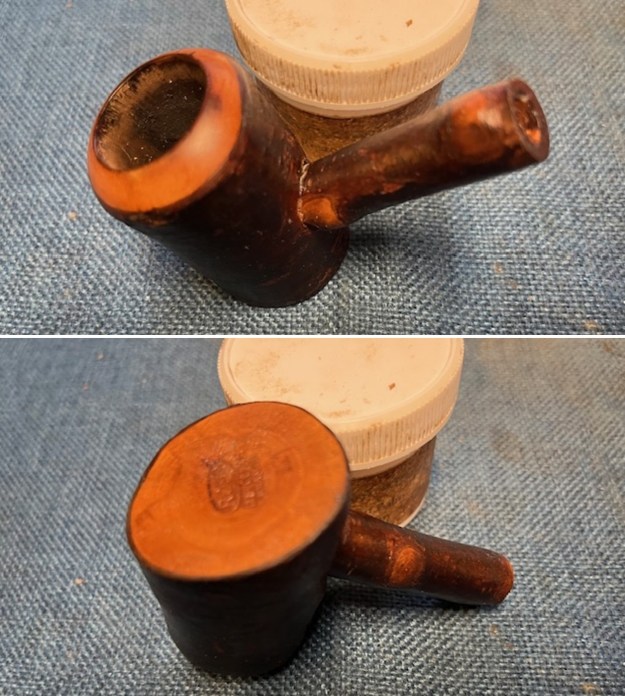
About a year ago I visited an older pipe repair man (when I say older I mean older than me). He gave me a lot of pipe parts – stems, bases, bowl, tenons and bands. In the lot there were quite a few Bakelite bases shaped a lot like Kirsten bases. They were square and had threaded opening on the top for a screw held bowl, a threaded opening on the end for a cap and an opening for a stem of some sort. There were no complete pipes in the lot, just some pieces like those pictured below. These were rough and unpolished and seemed like the end where the cap was had been shaped and the corners on the stem end were also shaped.On Monday, August 25 after a visit with my brother Kenneth and I went to visit my contact again. This time he had more stuff that he wanted to get rid of from his parts. Once again, we received more stems and tenons. But he also put in a box of pipes that were in various states of repair or disrepair. One of those pipes was one that included the same kind of base that is shown above. I took photos of the pipe before I started working on it. The pipe was unsmoked. It had a Bakelite base, a brass end cap screw and a vulcanite stem. The bowl was also unsmoked and clean. It was held to the base with hollow screw. The bowl was a rusticated briar bowl in an apple shape. There was a vulcanite piece inserted in the base end that the stem was pressure fit on. The stem was lightly oxidized and scratched from sitting in storage. I think that once I cleaned and polished the parts and put it back together it would be a great looking pipe. I took a close up photo of the bowl and rim top showing its condition. The bowl was clearly unsmoked and the screw was clean and shiny. The Bakelite shank/base is also dull and scratched. The stem shows the scratches and marks from storage and some light oxidation.I took the pipe apart and took photos of the pipe parts. It is a bit of an ingenuous creation with the Bakelite base forming a condensation chamber and the cap on the end allowing for clean out.Before I started polishing the pipe parts I did a bit of digging on the Smoking Metal website to see if I could find anything (http://www.smokingmetal.co.uk/). There was no name to work with and no particular branding on the pipe to give direction. I went a bit deeper on the site and found one listed in “STEM OF OTHER MATERIALS & Screw thro bowl”. Here is the link to that page (http://www.smokingmetal.co.uk/pipe.php?page=88). I have also included the photos of the pipe and the description.Briar bowl screwed onto a black bakelite ? shank with a rubber mouthpiece. Would appear to take Kirsten bowls and similar. Front end plug unscrews to facilitate cleaning. Overall length 5 1/2 inches (142 m/m).

From the photos of the pipe and the description you can see the similarities to the pipe I am working on. Compare it to the picture of the parts above. I am fairly certain that it is the same pipe.

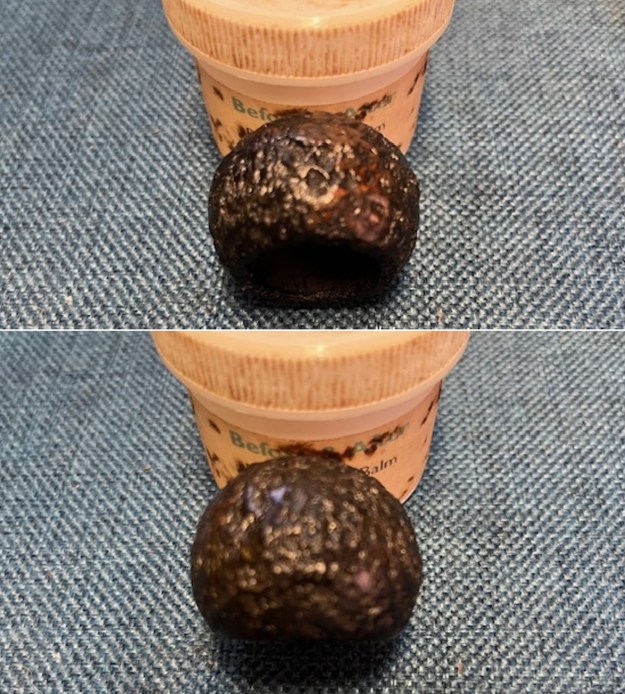
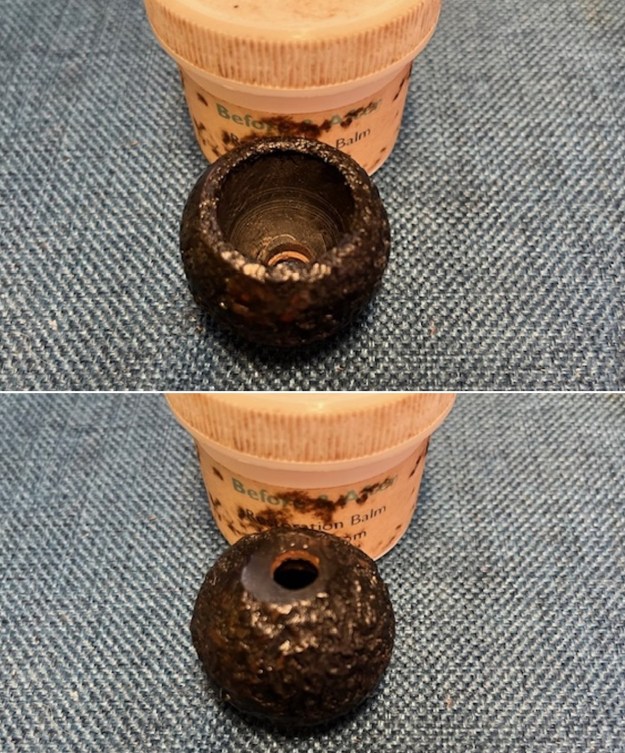
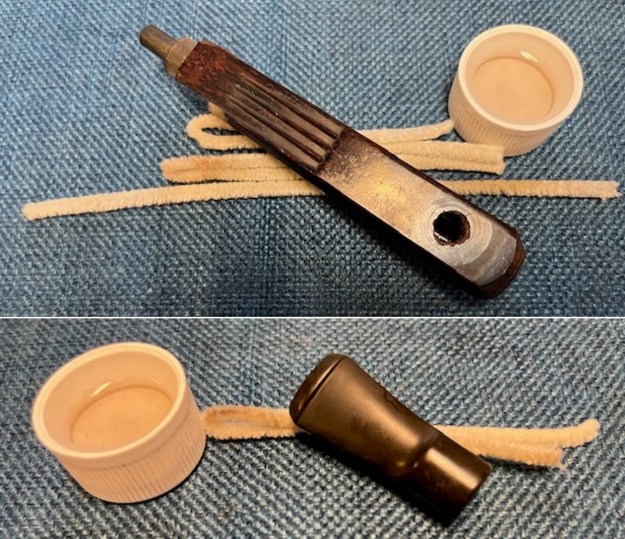
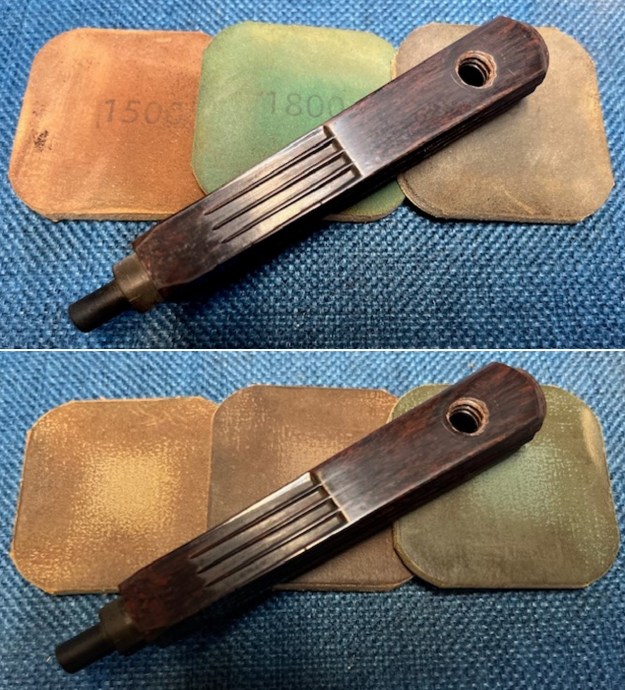
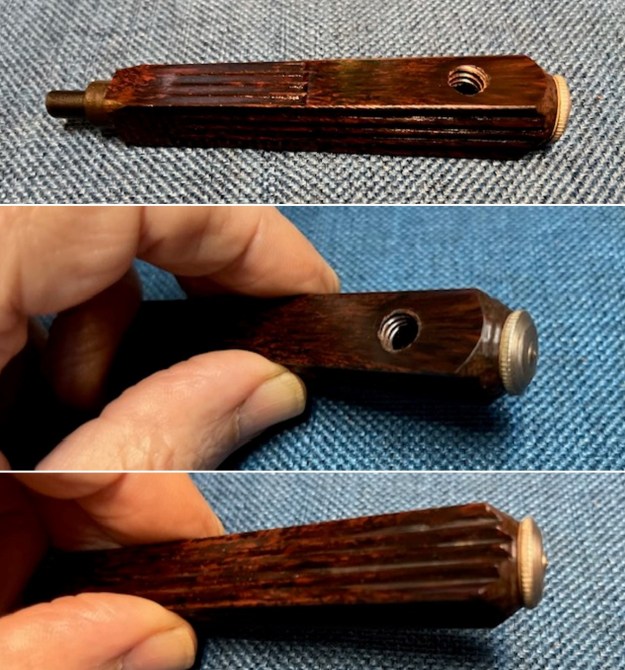
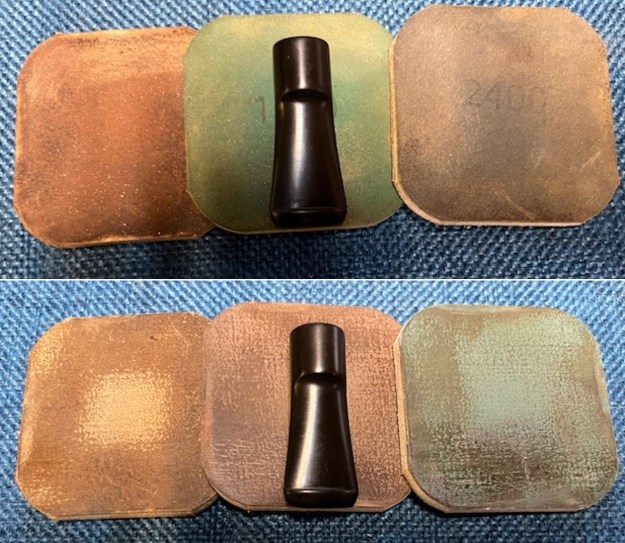
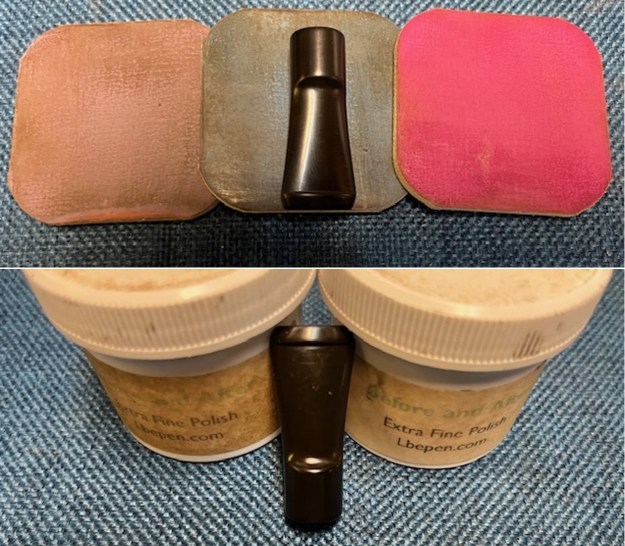
Now it was time to work on the pipe. I wiped off the dust and debris on the bowl exterior with a damp cloth. I worked some Before & After Restoration Balm into the surface of the rusticated bowl with my finger tips and a shoe brush. I let it sit for 10 minutes and then buffed it off with a soft cloth. It looked very good. I cleaned out the inside of the base with alcohol and pipe cleaners. I removed the dust and it was very clean. I cleaned the stem the same way.I polished the Bakelite base with micromesh sanding pads – dry sanding with 1500-12000 grit pads and wiping it down after each pad with an Obsidian Oil soaked cloth. It started to take on a deep shine. I finished the polishing with Before & After Pipe Stem Polish both Fine and Extra Fine. I wiped it a final time with the cloth. It looked very good. I put the shank and the brass cap back together again. I also screwed the bowl in place on the shank. It is looking very good with the clean and polished look. Now it was time to polish the stem. I polished it with micromesh sanding pads – dry sanding it with 1500-12000 grit sanding pads. I wiped it down after each pad with an Obsidian Oil cloth. I polished it with Before & After Pipe Stem Polish – both Fine and Extra Fine. It really looked good with the polishing. This interesting Kirsten like Bakelite/Briar pipe with a short saddle vulcanite stem looks amazing after the work on it. The briar is clean and the polished Bakelite really came alive. The rich brown stains on the bowl gave the finish a sense of depth with the polishing and waxing. The polished Bakelite base really popped. I put the it all together and butted the pipe with Blue Diamond on the buffing wheel using a light touch on the briar. I gave the bowl and the stem multiple coats of carnauba wax on the buffing wheel. I buffed the pipe with a clean buffing pad to raise the shine. I hand buffed the pipe with a microfiber cloth to deepen the shine. The finished Bakelite/Briar Kirsten like pipe really is quite nice looking and feels great in the hand and looks very good. Give the finished pipe a look in the photos below. The dimensions of the pipe are Length: 5 ½ inches, Height: 1 ¾ inches, Outside diameter of the bowl: 1 ¼ inches, Chamber diameter: 7/8 of an inch. The weight of the pipe is 46 grams/1.62 ounces. I will soon be putting this pipe on the rebornpipes store in the Various Pipe Makers section. It should make a great smoker that the next steward will enjoy. Thanks for reading this blog and my reflections on the pipe while I worked on it. It was a fun one to work on.

Restoring a Classic Peterson System 359


Blog by Kenneth Lieblich

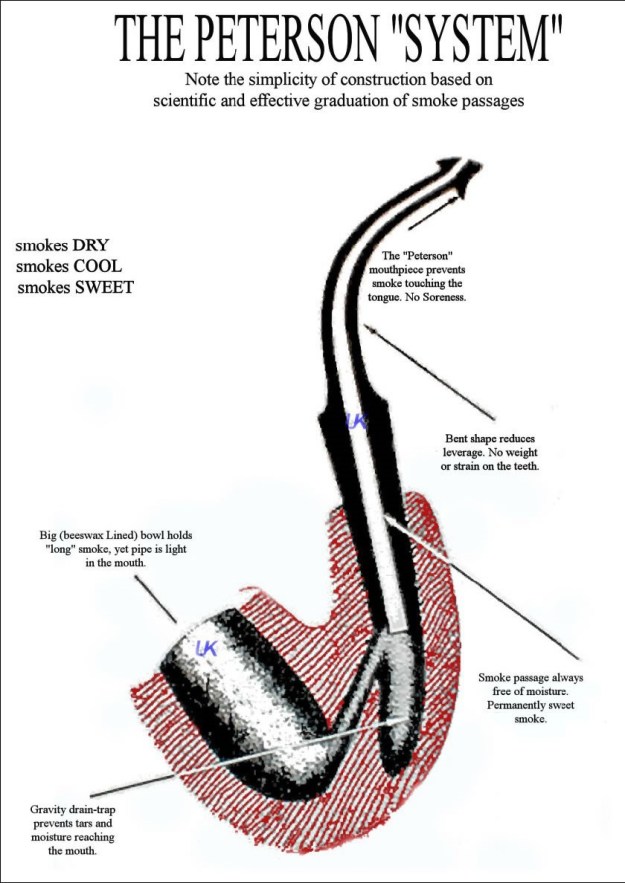
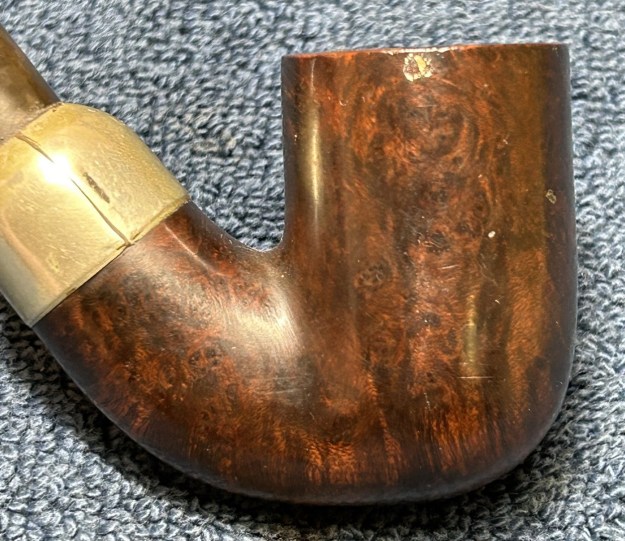
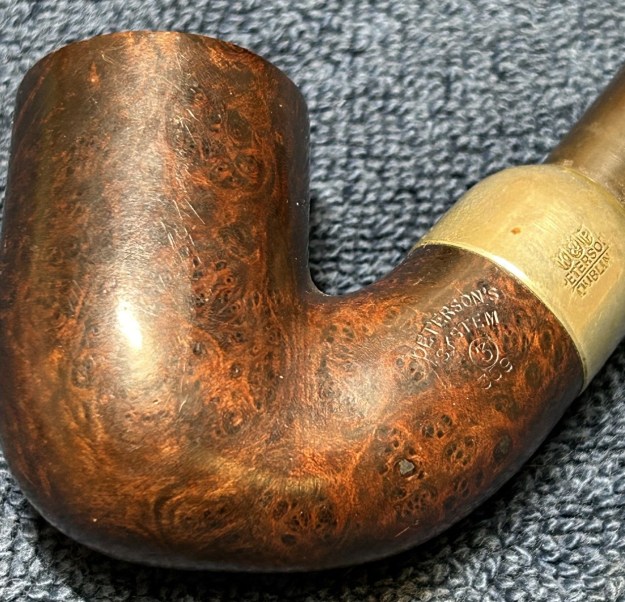
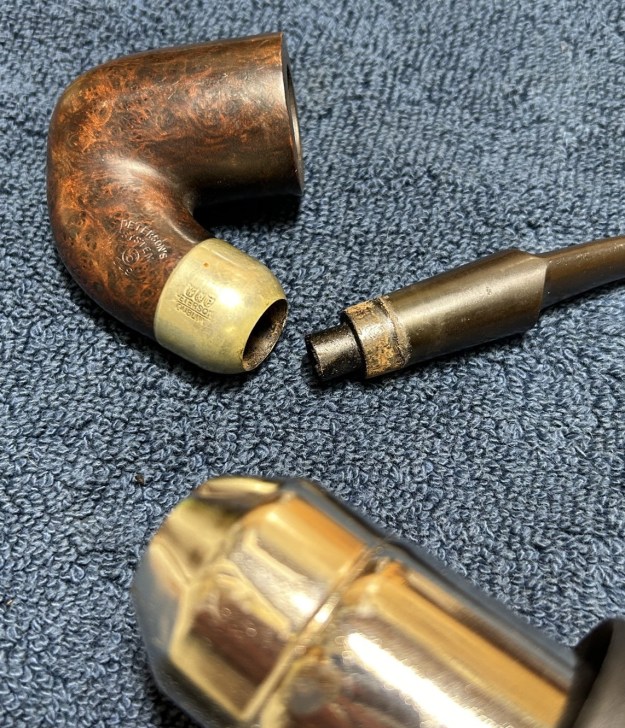
What a handsome pipe! I found this PRE-republic-period Peterson System 359 at a local antique shop and I was charmed by it right away. It’s a handsome devil and the look of it gives one a feeling of comfort. It is satisfying and comfortable in the hand – like a mug of tea. There was a lovely patina on this old timer and I really wanted to get this into the hands of Peterson lover. Let’s have a closer look. This Peterson 359 pipe has the classic “System” look: bent shape, nickel mount, and tapered, army-style stem. Of course, it also had the traditional Peterson P-lip stem. The markings on the left side of the shank are Peterson’s [over] System [over] ③ [over] 359. The underside of the shank showed Made in Ireland in a circle. The nickel mount on the shank had K&P (in shields) [over] Peterson [over] Dublin. There were no markings on the stem. The Peterson System pipes are well-storied among Peterson collectors/admirers. I took the opportunity to read the article on Pipedia, specifically about the System pipes, by Jim Lilley. There is lots of good information there and I encourage you to read it: https://pipedia.org/wiki/A_closer_look_at_the_famous_Peterson_Standard_System_Pipe.Having seen that the words “Made in Ireland” were in a circle, I knew that I was dealing with an older pipe. Precisely how old would require some elementary research. The main Pipedia article on Peterson included a few interesting lines:

“Charles Peterson applied for a patent for an improved tobacco pipe on the 8th of August 1890. He was awarded patent number 12393 on the 16th of June 1891 for Great Britain and Ireland. This came to be known as the famous ‘System Pipe’ patent.”

“Later they stamped their pipes with “Made in Ireland” in a circle format 1945-1947…”

This is awfully helpful in dating this pipe. I can comfortably say that this pipe dates from 1945 through 1947, that is to say, just short of 80 years (at the time of writing).

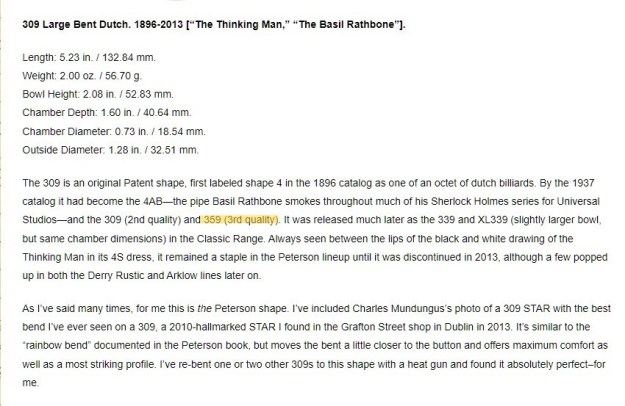
As usual, I also owe a debt of gratitude to Mark Irwin of Peterson Pipe Notes. He has a very interesting article on the various System shapes and I highly recommend having a look: https://petersonpipenotes.org/146-a-guide-to-system-shapes-1896-2019-part-1-the-300-shape-group/. Here is a screenshot of the relevant bit:In addition, Mark has an article on an older 359 that he picked up: https://petersonpipenotes.org/tag/peterson-359-system/.

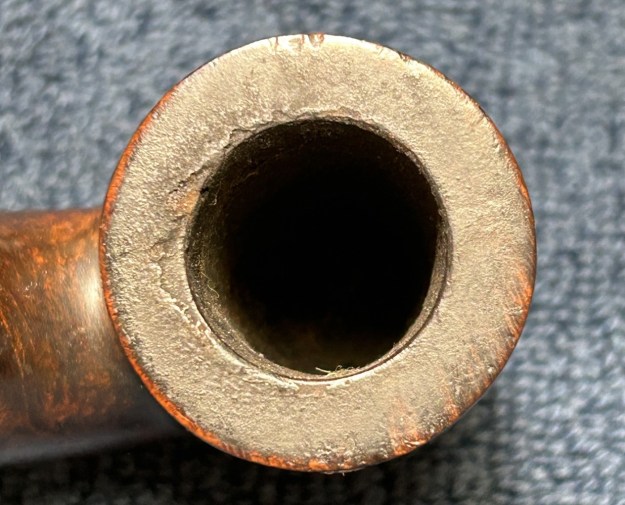
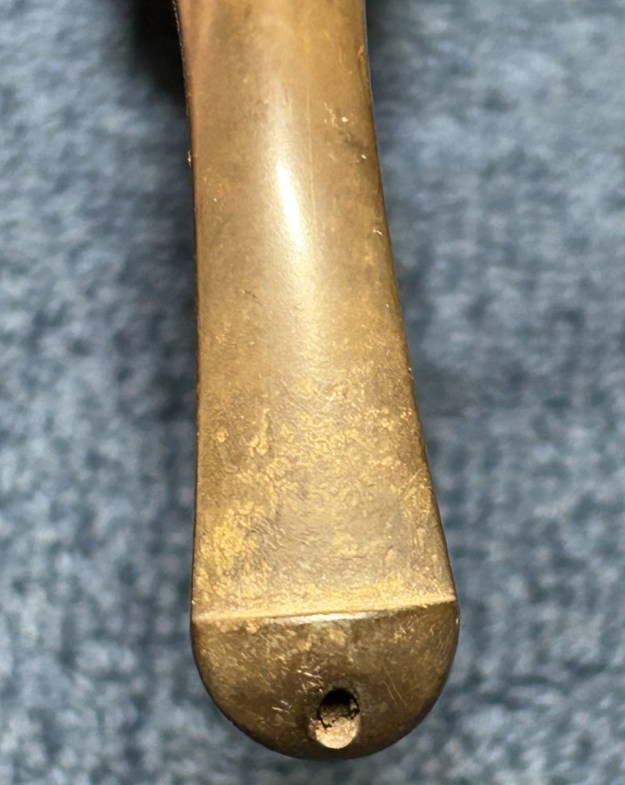
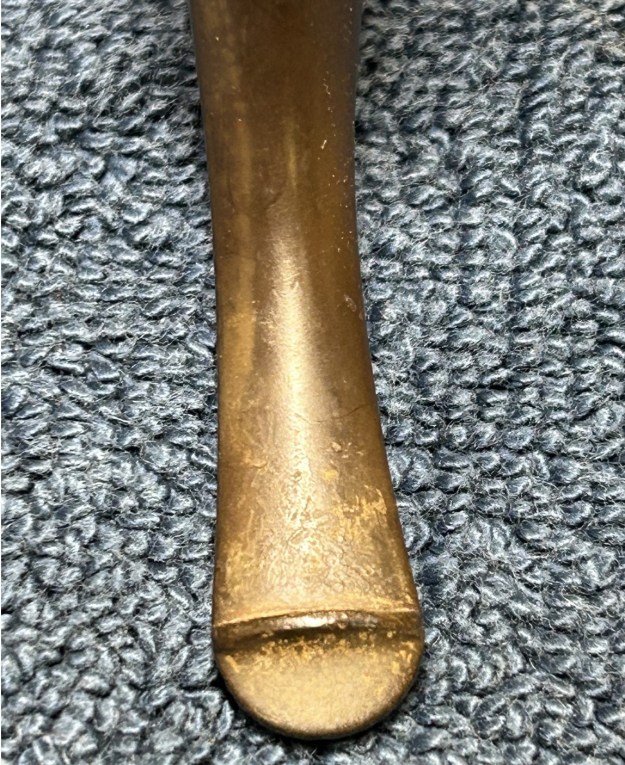
On to the pipe itself: the stem was in average condition – not especially dirty, but it had been well used. It had a few dents. The bowl was moderately dirty and had quite a bit of lava and plenty of cake. Aside from some small fills, the outside of the bowl was very nice. The nickel mount was in good shape – only some very slight dents. To work! The stem was first on my list – and I couldn’t get it out of the mortise! I grabbed the heat gun and gently warmed up the goo inside until it had softened enough to let go of the stem. I wiped the outside down with Murphy’s Oil Soap on some cotton pads. I also took a BIC lighter and ‘painted’ the stem with its flame to lift the few bite marks and dents. Sadly, however, this did not do much. Then I cleaned out the inside with pipe cleaners and isopropyl alcohol. I used some SoftScrub on the outside of the stem to remove some oxidation. Then, the stem went for an overnight soak in the Pipe Stem Oxidation Remover. The following day, I cleaned the de-oxidizing mess off with alcohol, pipe cleaners, et cetera. The oxidation had migrated to the surface and would be fairly straightforward to remove. I scrubbed again with SoftScrub on some cotton pads to remove the leftover oxidation. I built up the dents on the stem with black cyanoacrylate adhesive and let them cure. I then sanded the adhesive down with some sandpaper to level out with the stem. I then used all nine Micromesh pads (1,500 through 12,000 grit) to polish it and highlight the black lustre. I also used Obsidian Pipe Stem Oil in between each pad scrubbing. Moving on to the stummel, I first decided to ream out the bowl. I used the PipNet Reamer to remove the built-up cake and followed that with 220-grit sandpaper taped to a dowel to eliminate as much as possible. I took the chamber down to bare briar to ensure there were no hidden flaws in the wall. Fortunately, there were none.I used cotton rounds and some Murphy’s Oil Soap to scrub the outside of the stummel and a toothbrush with Murphy’s for the lava on the pipe’s rim. I took a close look at the rim. In order to save as much of the rim as possible, I used a piece of machine metal to very delicately scrape away as much lava as I could. I do this before automatically jumping to my topping board. This worked well.I then proceeded to clean out the insides of the shank with Q-tips, pipe cleaners, and lemon-infused isopropyl alcohol. There was quite a bit of filth inside this stummel, and it took a fair amount of cotton to get it clean. I followed that up by cleaning the insides with some dish soap and tube brushes. I decided to de-ghost the pipe in order to remove any lingering smells of the past. I thrust cotton balls into the bowl and the shank and saturated them with 99% isopropyl alcohol. I let the stummel sit overnight. This caused any remaining oils, tars and smells to leach out into the cotton. The bowl was nice and clean after this.There were a couple small fills and nicks around the bowl. I opted to leave them as they are – they are minor and are part of the history of this pipe. I felt that I had interfered enough and didn’t want to interfere anymore. Then, I used most (but not all) of my Micromesh pads on the stummel to finish it off. This included buffing up the nickel mount to a beautiful shine with my jewelry cloth. I also applied some Before & After Restoration Balm and let it sit for 20 minutes to do its magic. It adds that certain je ne sais quoi to the wood. Then it was off to the bench polisher! A dose of White Diamond and a few coats of carnauba wax were just what this pipe needed. Boy-oh-boy, this is one good-looking pipe! I’m pleased with the results. This Peterson Standard System 359 looks fantastic again and is ready to be enjoyed by its next owner. I am pleased to announce that this pipe is for sale! If you are interested in acquiring it for your collection, please have a look in the Ireland pipe section of the store here on Steve’s website. You can also email me directly at kenneth@knightsofthepipe.com. The approximate dimensions of the pipe are as follows: length 5⅞ in. (149 mm); height 4⅛ in. (105 mm); bowl diameter 1⅓ in. (33 mm); chamber diameter ¾ in. (19 mm). The weight of the pipe is 1⅞ oz. (55 g). I hope you enjoyed reading the story of this pipe’s restoration as much as I did restoring it. If you are interested in more of my work, please follow me here on Steve’s website or send me an email. Thank you very much for reading and, as always, I welcome and encourage your comments.

Restoring an Erickson 69 Diamond Shank Canadian


Blog by Steve Laug

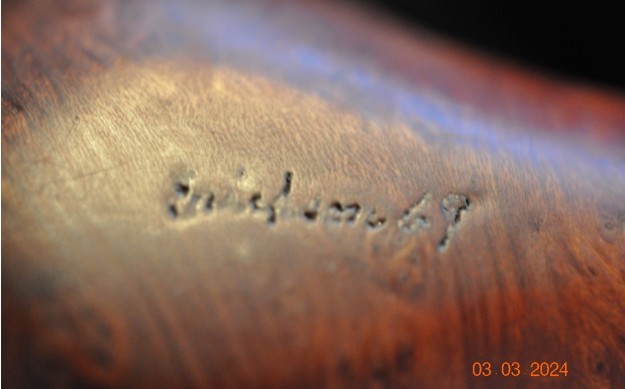
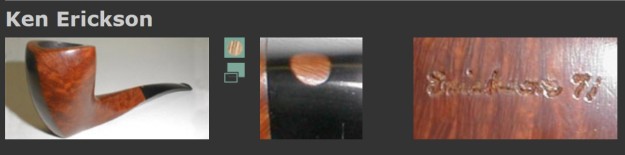
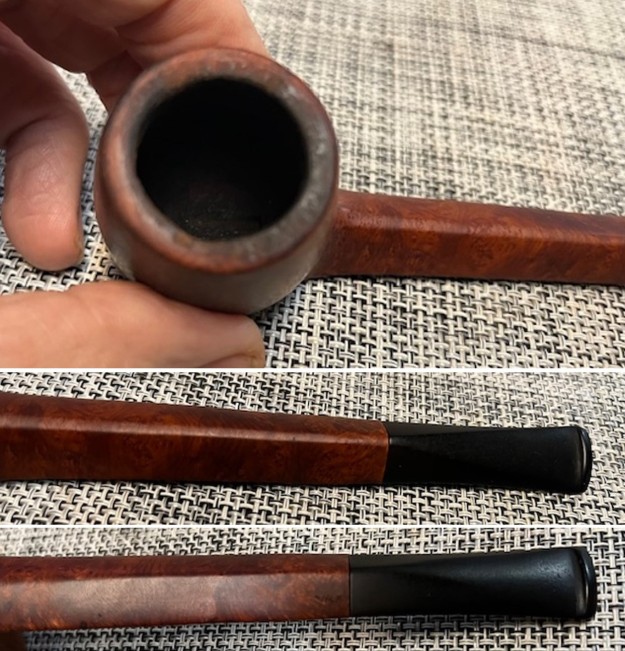
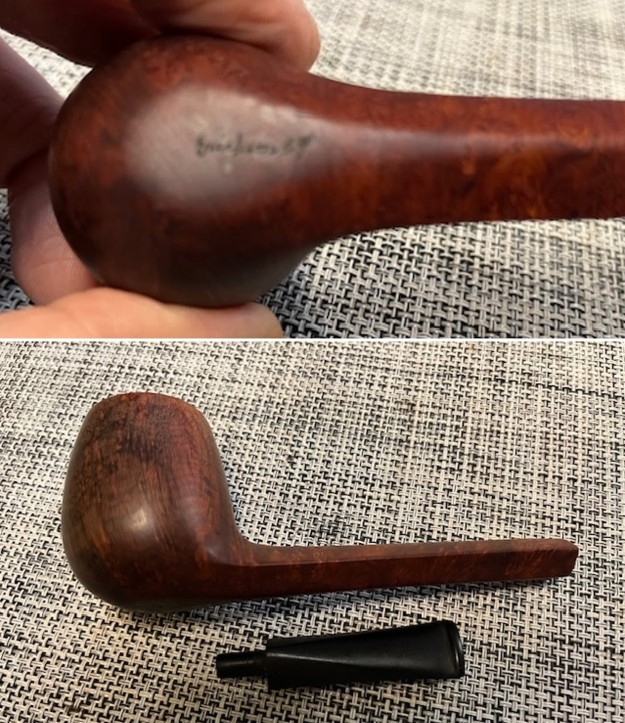
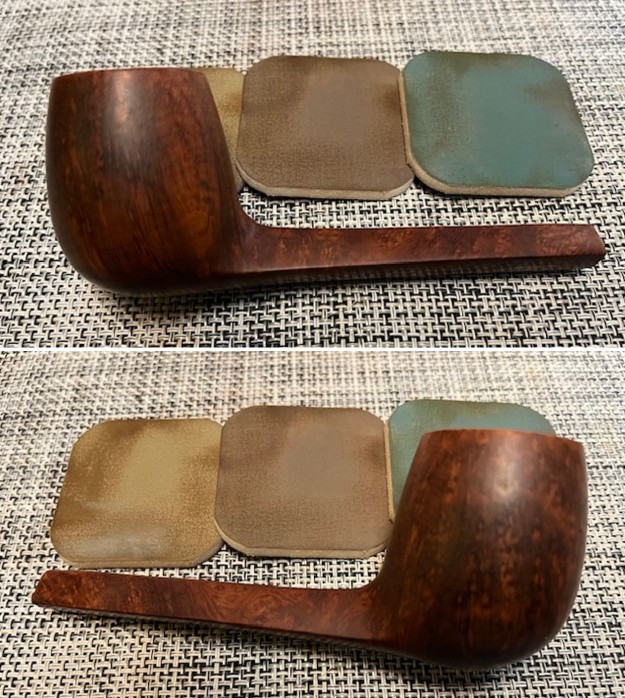
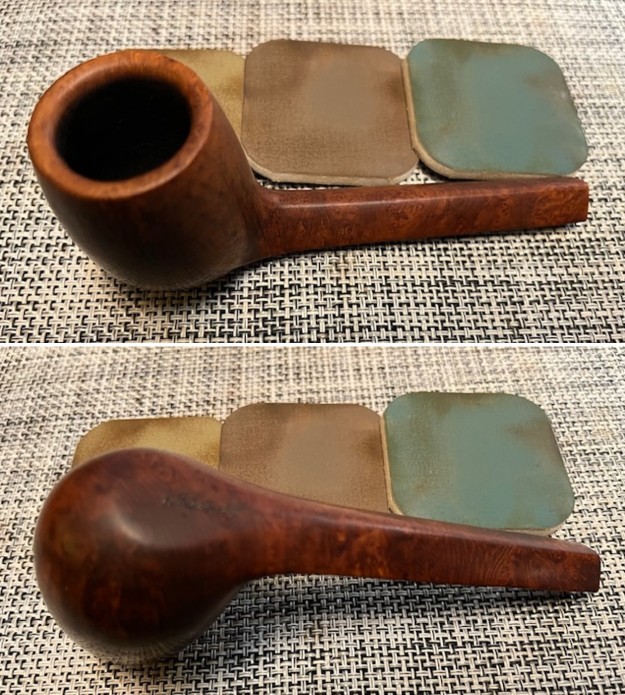
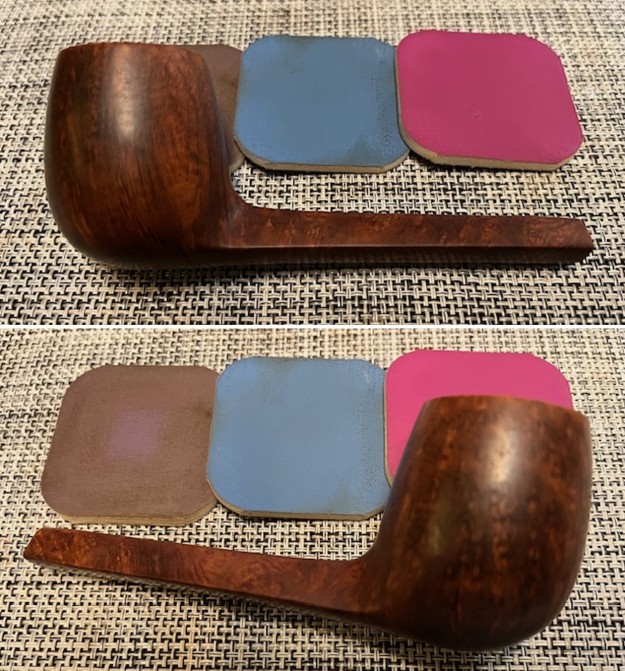
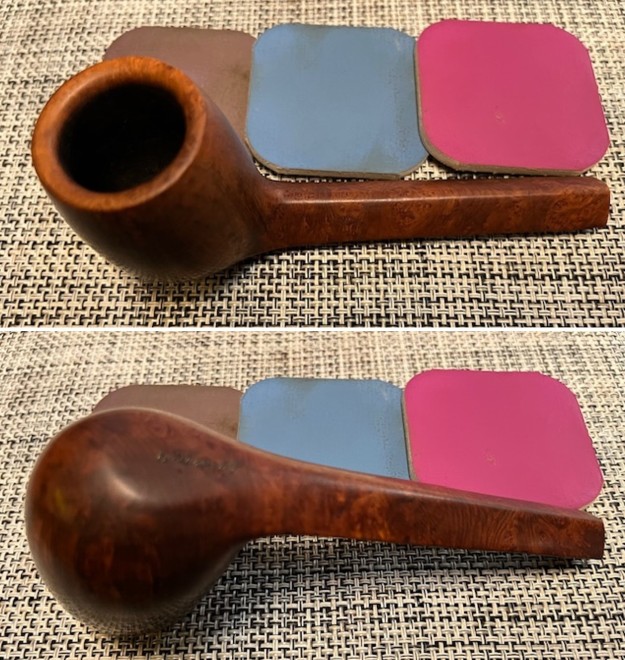
The next pipe on the table is a smooth finished diamond shank Canadian with a vulcanite diamond taper stem. We purchased it from a seller on eBay from Jordan, Minnesota, USA on 01/22/2024. The pipe is etched in script on the heel of the bowl Erickson 69. There is no other stamping on the bowl or shank. There was a lot of lava overflowing from the thick cake in the bowl onto the smooth rim top. It was hard to know for certain the condition of the inner edge though it appeared that there was some burn damage on the front edge of the bowl and some darkening on the back rim top. There were oils and grime ground into the bowl sides gives the finish a flat look though there is some great grain. The shank is a diamond shaped. The shape of the taper stem also matches the diamond shank shape. It is a dirty stem with calcification, oxidation, grime and grit on the surface. There were also light tooth marks on both the top and underside of the stem just ahead of the button. Jeff took photos of the pipe before he started his clean up work. I have included them below. He took photos of the pipe’s bowl and rim top to show the cake in the bowl and the lava coat overflowing onto the top. There is also potential burn damage visible on the front inner edge in the photos below. It is another dirty pipe. He also took photos to capture the light tooth marks on the top and underside of the stem near the button. He took photos of the sides and heel of the bowl to show the grain around the bowl and the amount of grime ground into the surface of the briar.   He took a photo of the stamping on the heel of the bowl. It is clear and quite readable. There is no other stamping on the pipe.  I turned to Pipephil’s site (http://www.pipephil.eu/logos/en/logo-k1.html#kenerickson) to see what I could learn about the brand. There was a listing there and I did a screen capture of it. The etching on the heel of the bowl on the Canadian I am working on looks like this one though the two digit stamp is 67. I have included a screen capture of the section below.Knowing that I was dealing with a Ken Erickson made pipe I wanted to know more so I turned to Pipedia (https://pipedia.org/wiki/Erickson). There I found out a lot about the maker and the brand. It is a brief article so I am quoting it in full below. The last paragraph had some helpful information on the two digit stamp.

Ken Erickson, freehand pipemaker from Sunland, California remained almost unknown outside the United States and even there his name is familiar to a small number of insiders only. Quite astonishing, because knowledgeable connoisseurs agree that Erickson was an absolute whiz, whose elegant pipes belong to the best, which were ever made in America.

Ken Erickson began to create pipes by the end of the 1960’s and died in January of 2003. Posthumously he was honored as “Outstanding American Pipe Maker” at the West Coast Pipe and Cigar Expo in March of 2003.

He started his career in Minnesota, but soon transferred his workshop to Sunland in California. It is reported, that back in the times of the “pipe mailers”, when notable pipe dealers in the USA used to instruct their customers by hectographed circulars about new available pipes – among other things – Erickson’s pipes sold even faster and at higher prices than those of such icons like Mike Butera or Rick Lewis. Unfortunately, on the climax of demand for his pipes Erickson, yet at a relatively young age, suffered a heavy heart attack. He abandoned pipemaking instantly. Many years later, appr. since 2000, he returned to his craft and finished some few more pipes from old supplies until his death.

Erickson used no grading. The pipes are engraved with his name (in script) and two digits indicating the year of production.

This particular pipe is engraved with his name and the two digits 67 making it a pipe made in 1967.

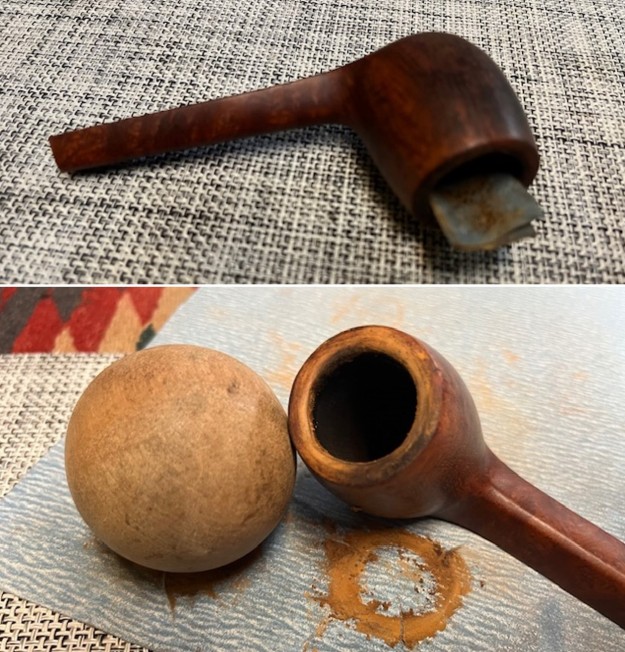
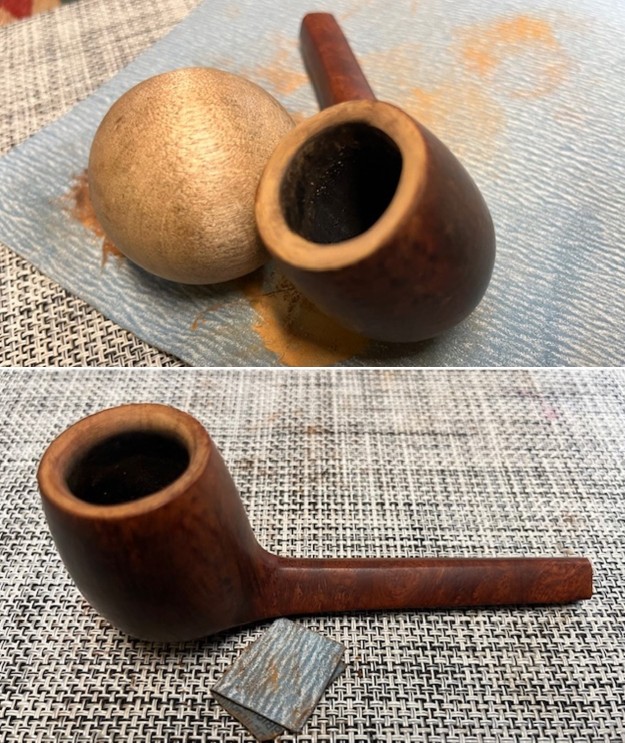
Armed with that information I turned to work on the pipe itself. Jeff had done a great job cleaning up the pipe as usual. He cleaned up the inside of the bowl with a PipNet reamer and a Savinelli Fitsall Pipe Knife. The bowl walls looked very good. He scrubbed the interior of the bowl and shank with pipe cleaners, cotton swabs and alcohol to remove the tars and oils. He scrubbed the exterior of the pipe with Murphy’s Oil Soap and a tooth brush to remove the grime from the finish. He worked on the rim top lava and darkening with the soap and tooth brush. He scrubbed the inside of the stem with alcohol and pipe cleaners. He scrubbed the exterior with Soft Scrub and then soaked it in Briarville’s Pipe Stem Deoxidizer. He washed it off with warm water to remove the deoxidizer. The pipe looked far better. I took photos of the pipe when I received it before I started working on it. I took photos of the bowl and rim top to show how clean it was. The top and the inner edge of the rim show darkening and some nicks and scratches. The stem looks clean of debris and grime. There are light tooth marks and chatter on both sides.I took photos of the stamping on the left and right sides of the shank. The stamping is clear and readable. I took a photo of the pipe with the stem removed to show the overall look of stem, tenon and profile of the pipe.I started my work on the pipe by addressing the damage on the inner edge of the rim. I used a folded piece of 220 grit sandpaper to smooth out the roughness. I then used 220 grit sandpaper and a wooden ball to give the inner edge of the bowl a slight bevel. It looked much better at this point in the process. I polished the briar with the 320-3500 grit sanding pads. I worked over the rim top and bowl with each pad and then wiped it down with a damp cloth. The pipe really began to take on a shine and the rim top began to match the rest of the briar. I polished the briar bowl with micromesh sanding pads – dry sanding with 1500-12000 grit sanding pads. I wiped it down with a damp cloth after each pad to remove the debris. The bowl took on a rich glow. I rubbed the bowl down with Before & After Restoration Balm. I worked it into the surface of the briar with my fingertips to clean, enliven and protect it. I let the balm sit for 10 minutes and then buffed with a cotton cloth to raise the shine. Mark Hoover’s Balm is a product that I have come to appreciate and one I use on every pipe I have been working on. I set the bowl aside and turned my attention to the stem. I sanded out the small tooth marks with 220 grit sandpaper and was able to remove them.I polished the vulcanite with micromesh sanding pads – 1500-12000 grit pads. I wiped it down with a damp cloth after each sanding pad. I used Before & After Pipe Polish – both Fine and Extra Fine to further polish the stem. I put the stem back on the Ken Erickson 1969 Long Diamond Shank Canadian and took it to the buffer. I worked it over with Blue Diamond to polish out the remaining small scratches. I gave the bowl and the stem several coats of carnauba wax and buffed the pipe with a clean buffing pad to raise the shine. I hand buffed it with a microfiber cloth to deepen the shine. The pipe polished up really well and the bevelled rim top looked good. I was happy with the look of the finished pipe. The photos below show what the pipe looks like after the restoration. The long diamond shank Canadian is a beautiful and unique take on a classic shape. The polished Black vulcanite stem looks really good with the browns of the briar. The dimensions of the pipe are Length: 7 inches, Height: 1 ¾ inches, Outside diameter of the bowl: 1 ¼ inches, Chamber diameter: 7/8 of an inch. The weight of the pipe is 1.27 ounces/36 grams. This is another pipe that I will be putting it on the rebornpipes store in the American Pipe Makers Section shortly, if you are interested in adding it to your collection. The long shank and tall bowl look and feel great in the hand. This one should be a great smoker. Thanks for walking through the restoration with me on this beauty!