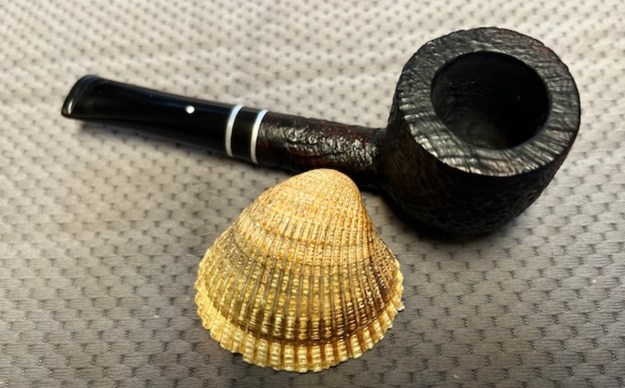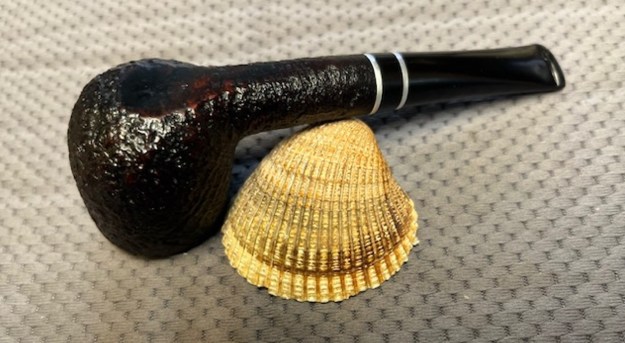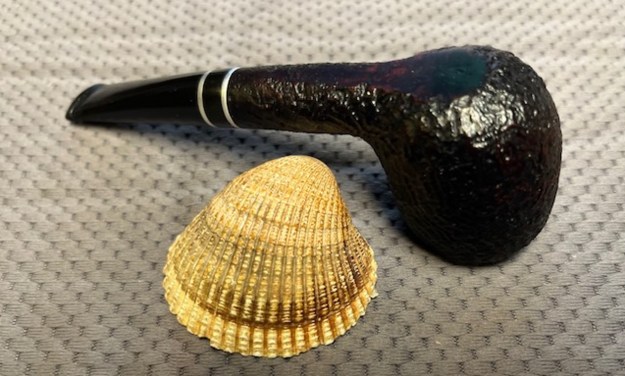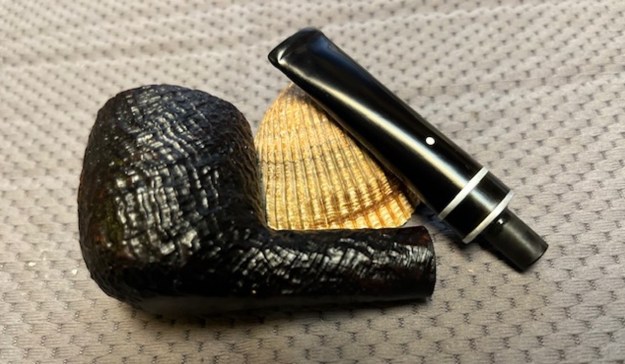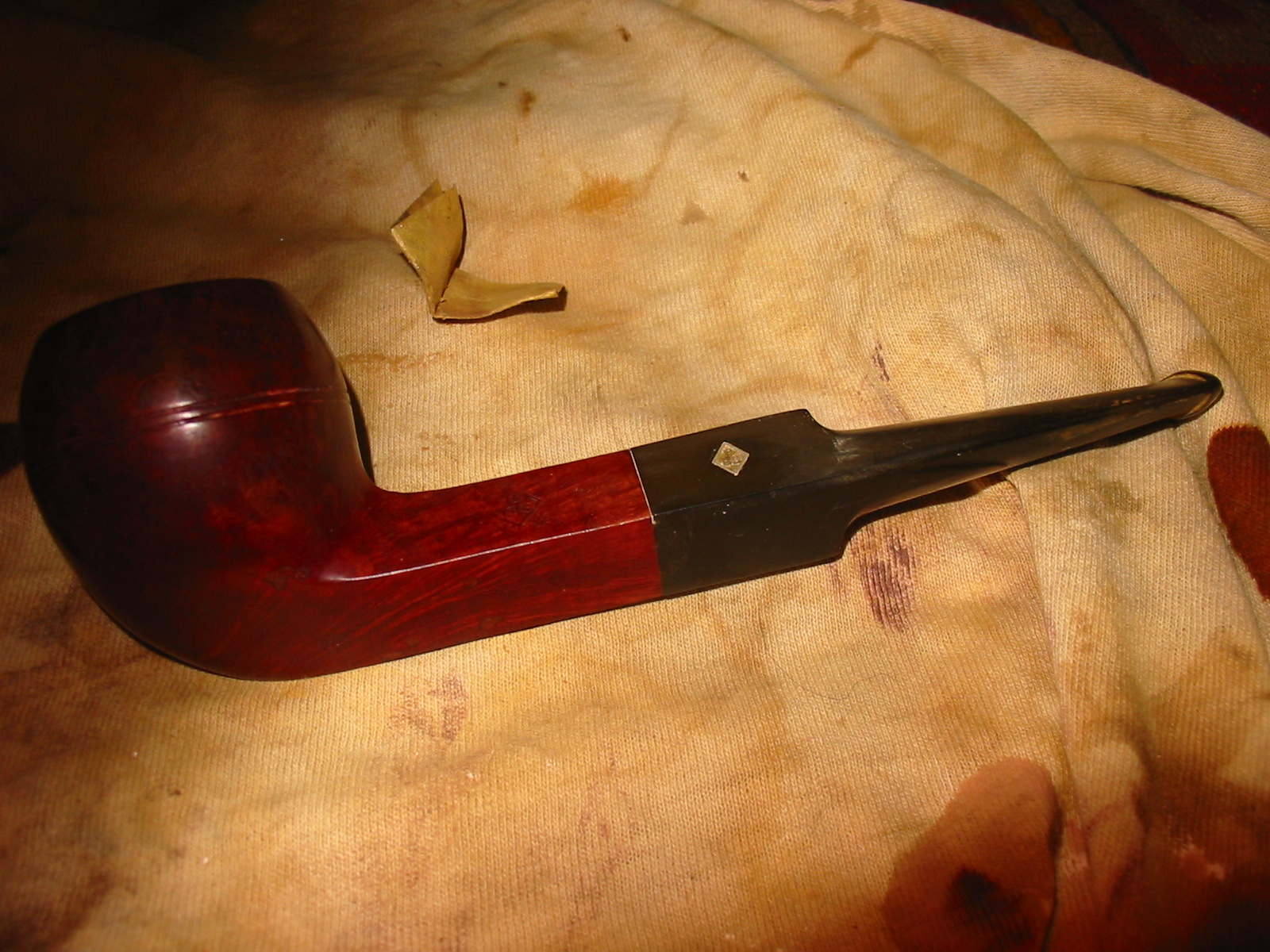
Tag Archives: polishing vulcanite

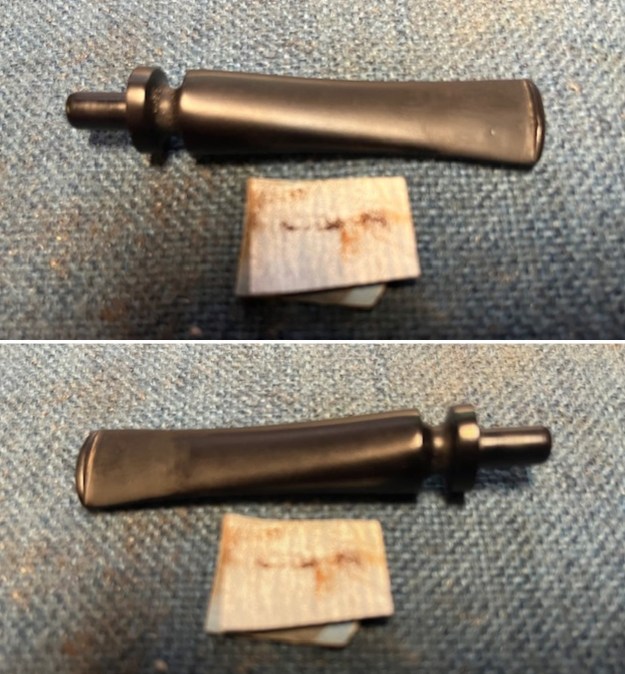
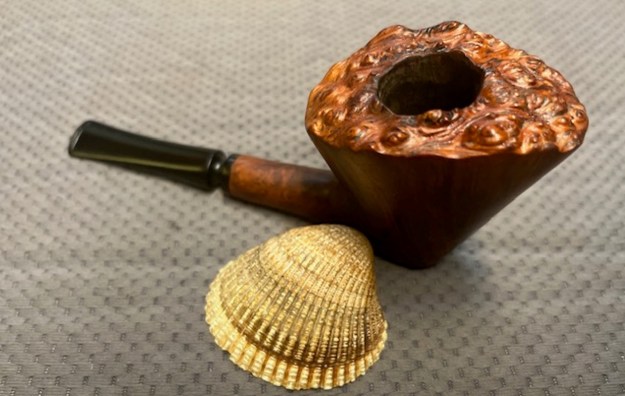
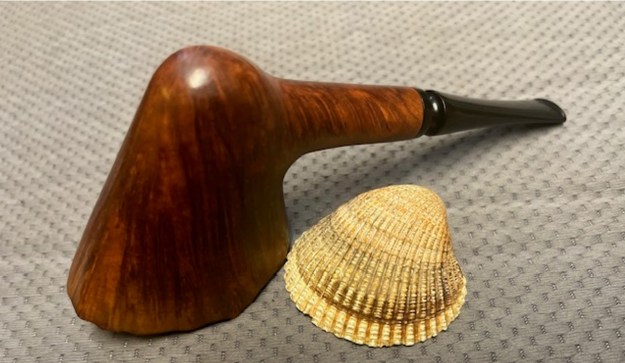
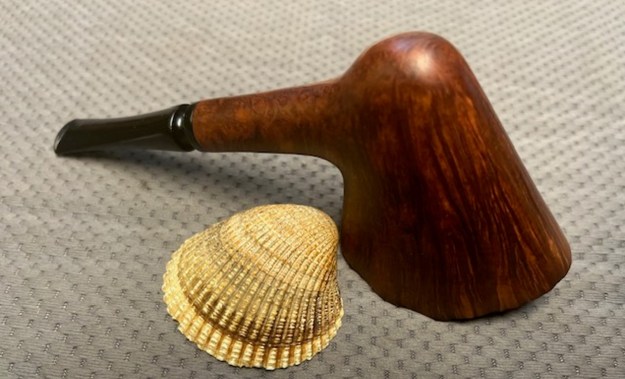
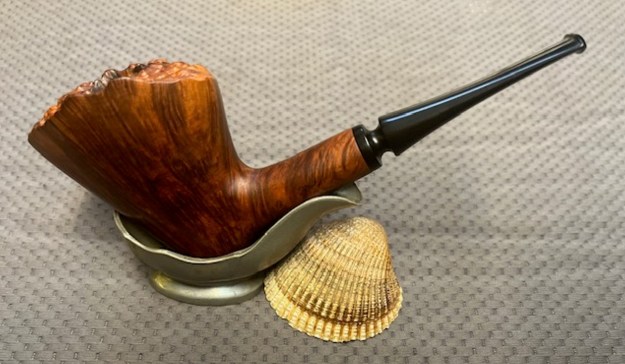
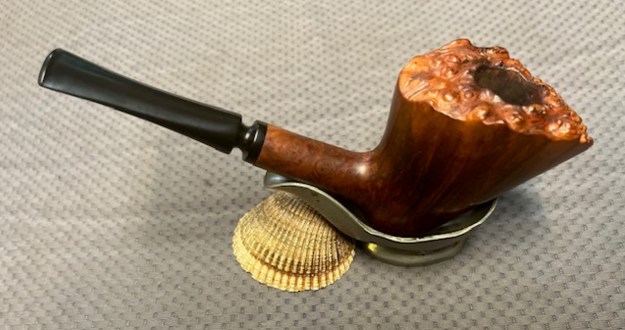
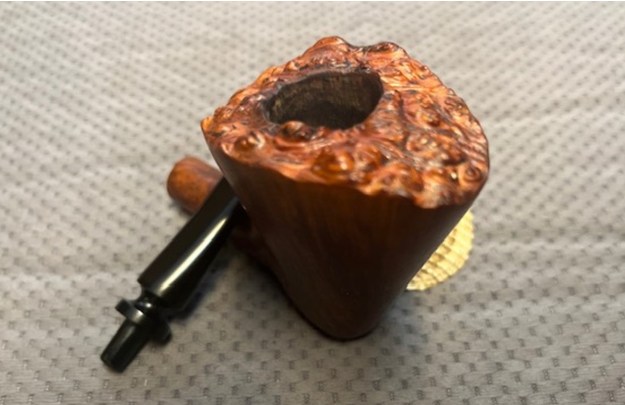
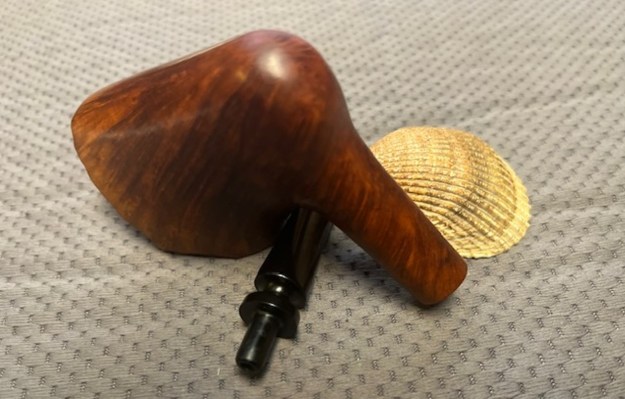
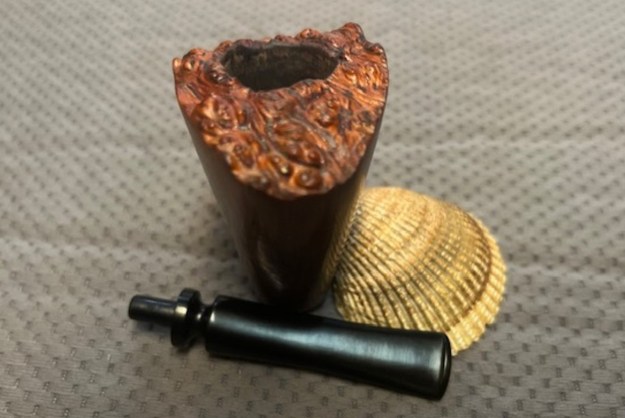
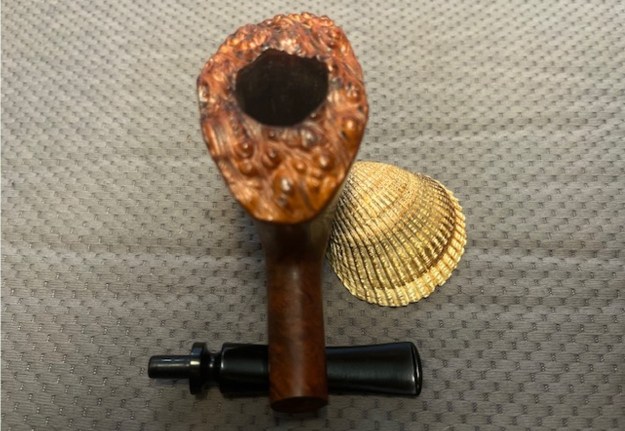
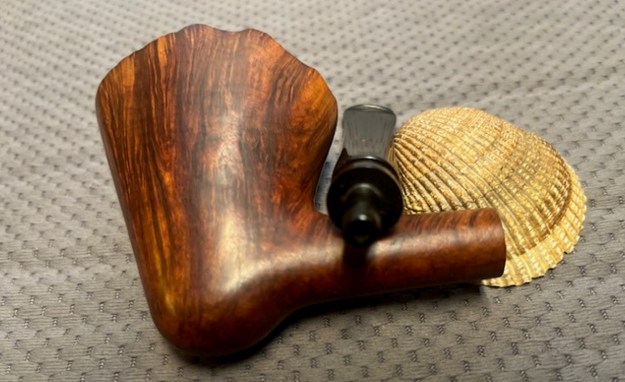
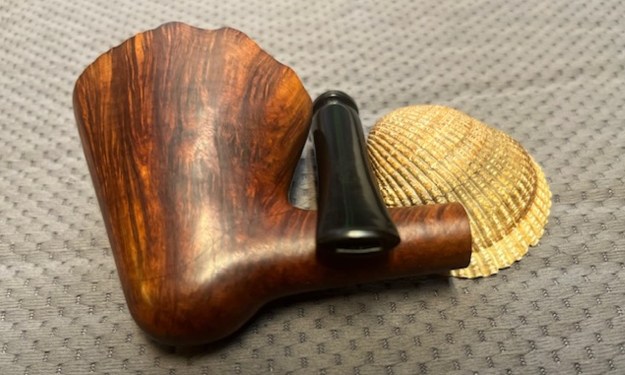
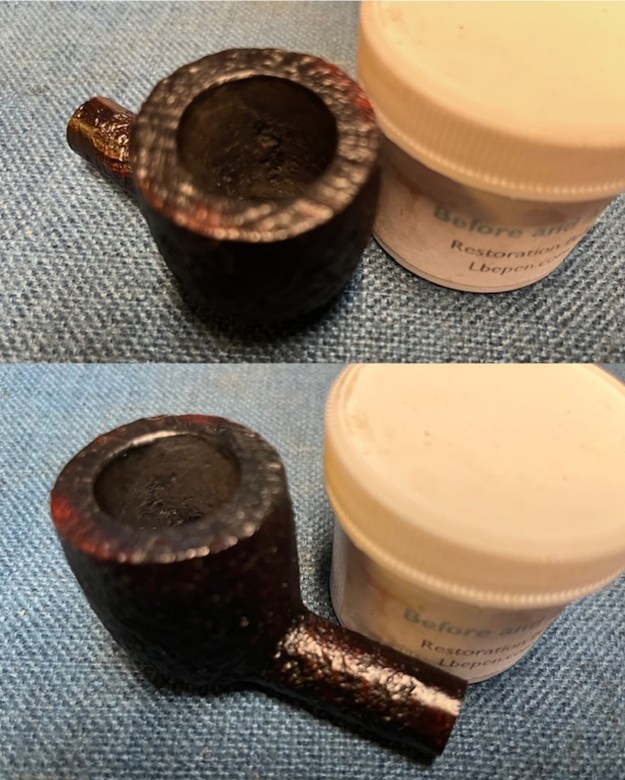
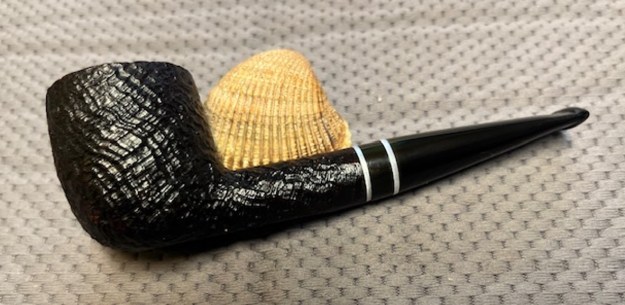
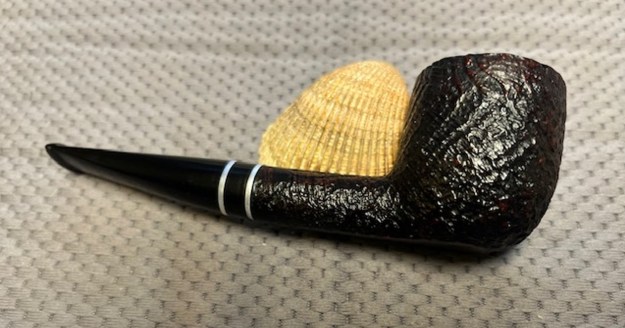
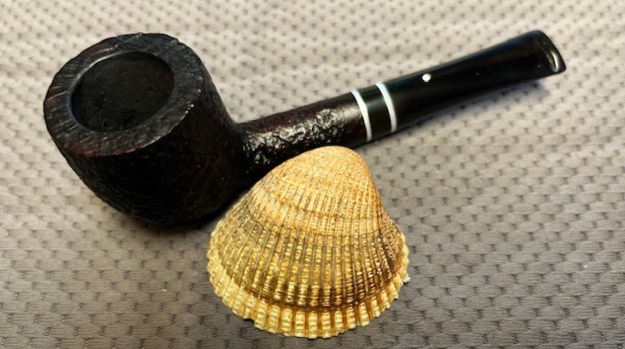
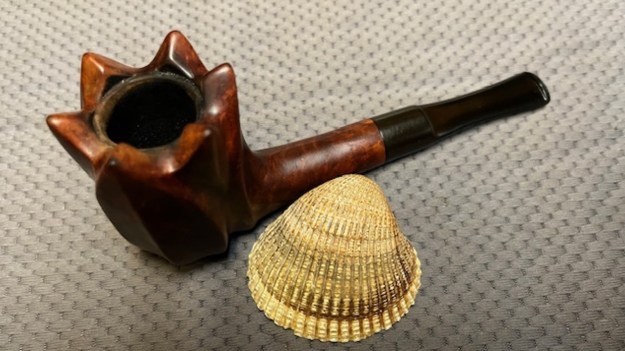
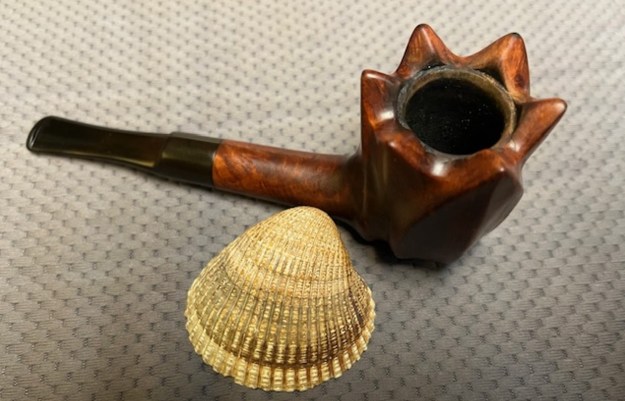
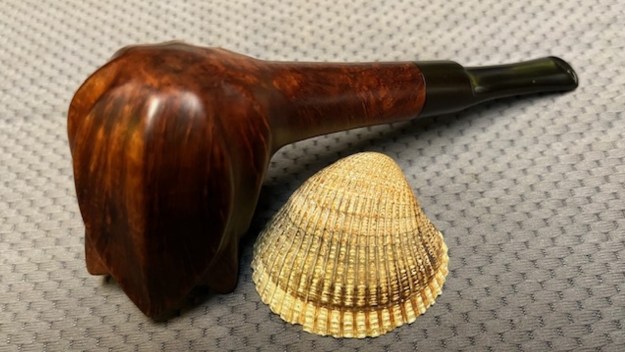
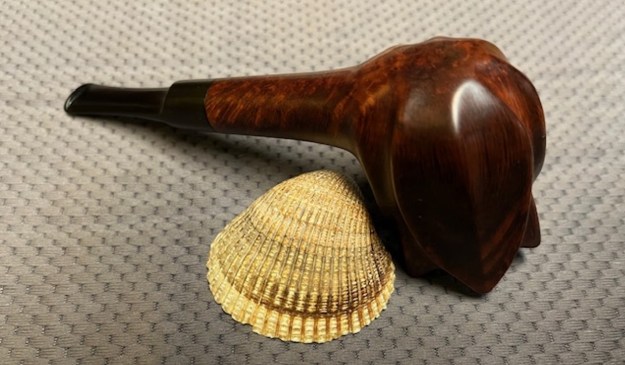
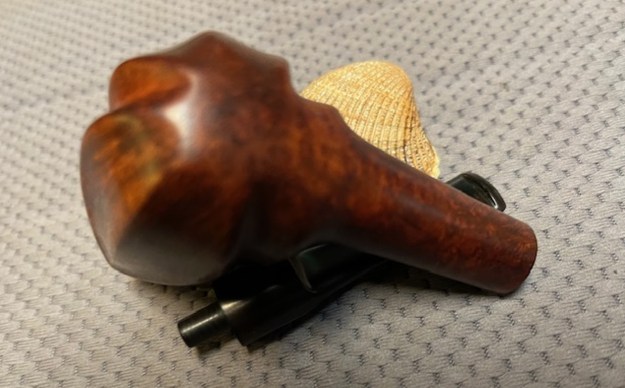
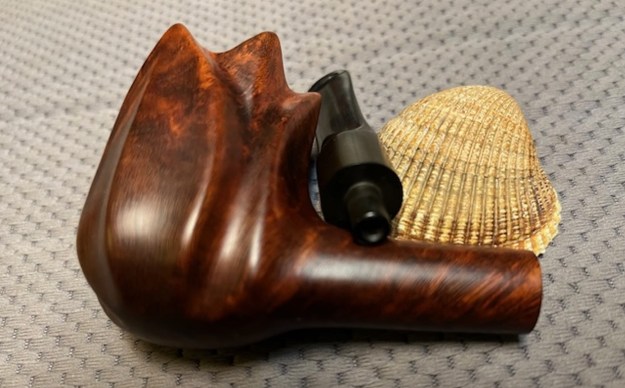
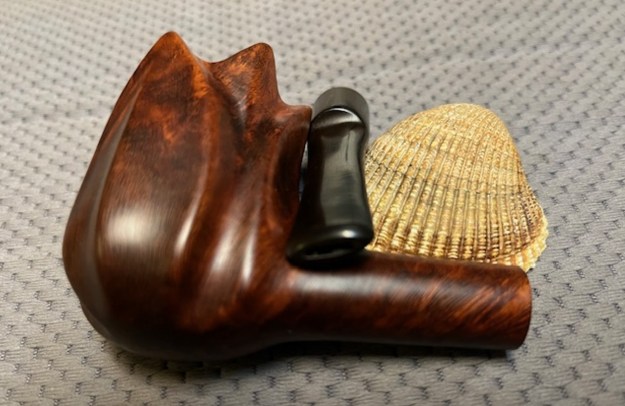
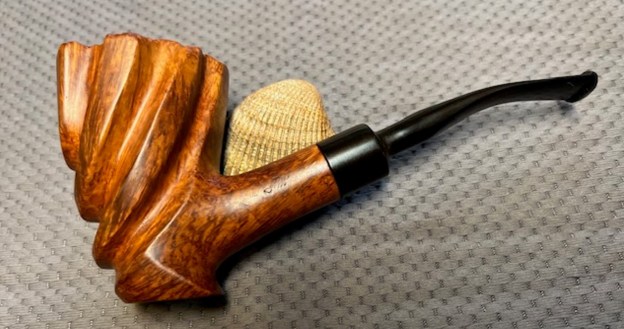
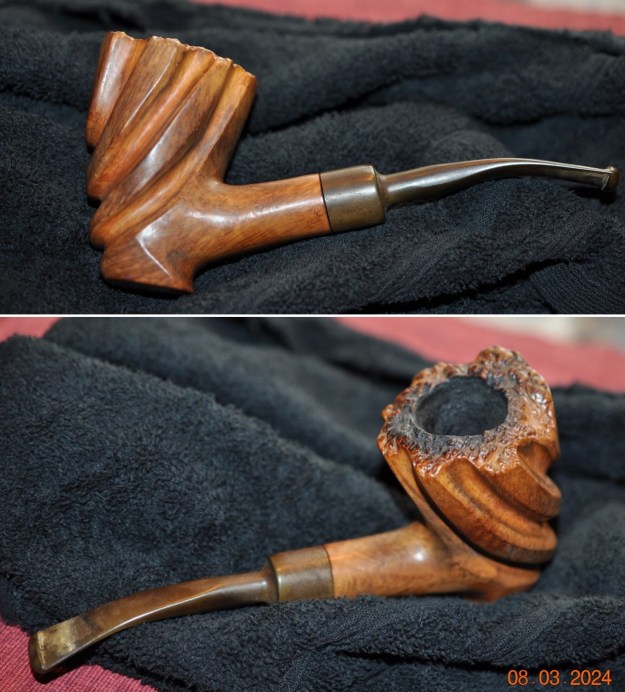
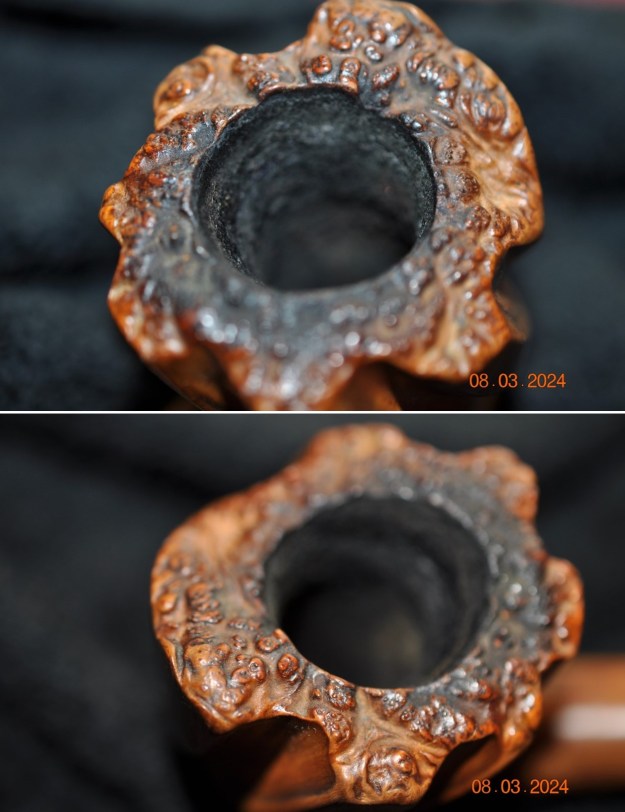
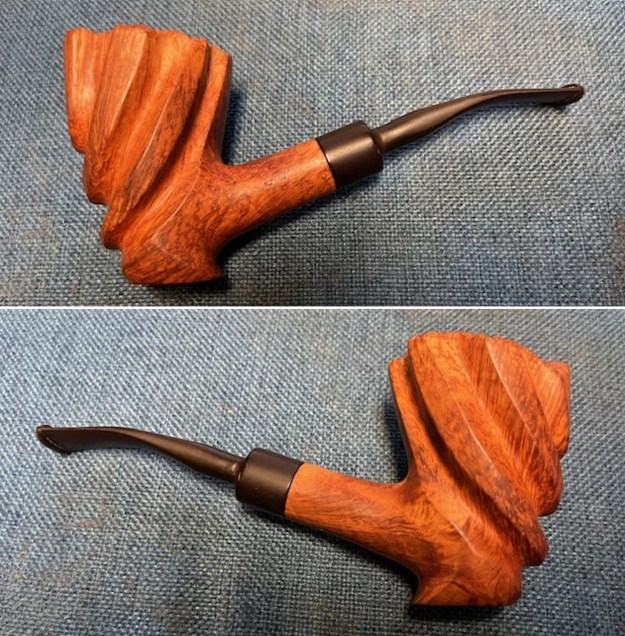
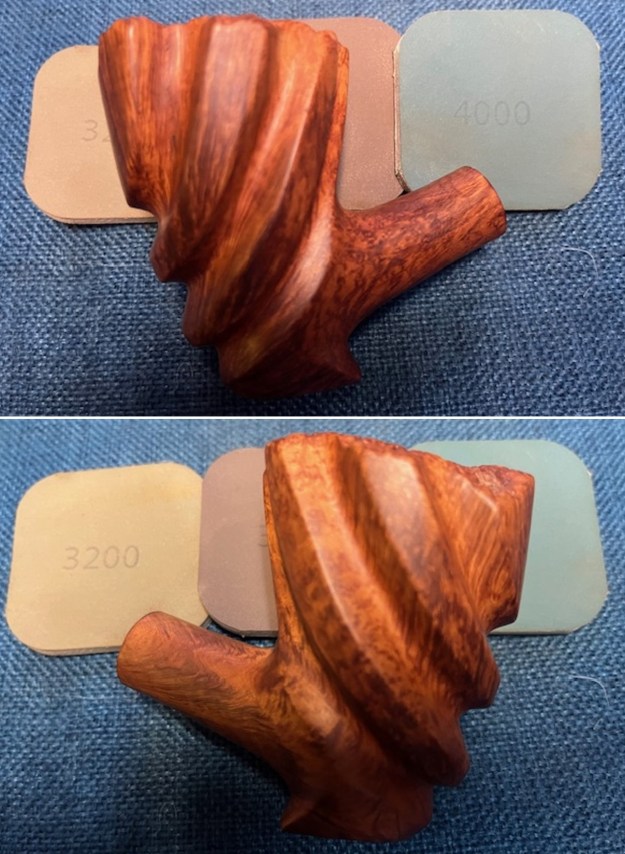
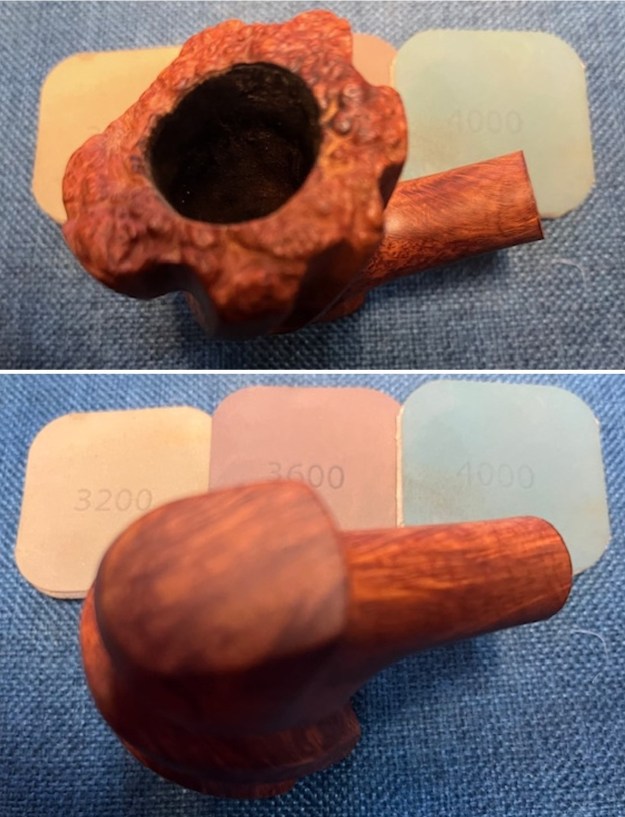
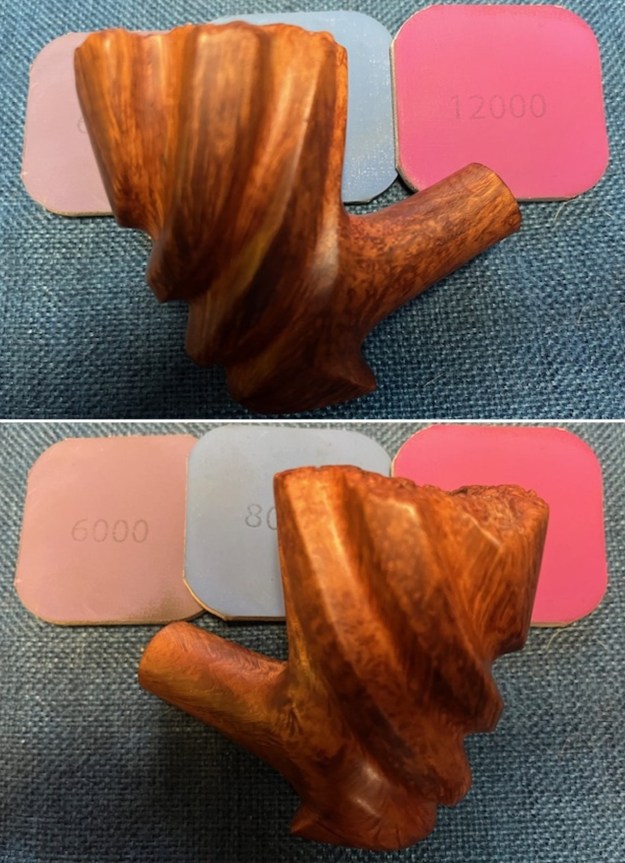
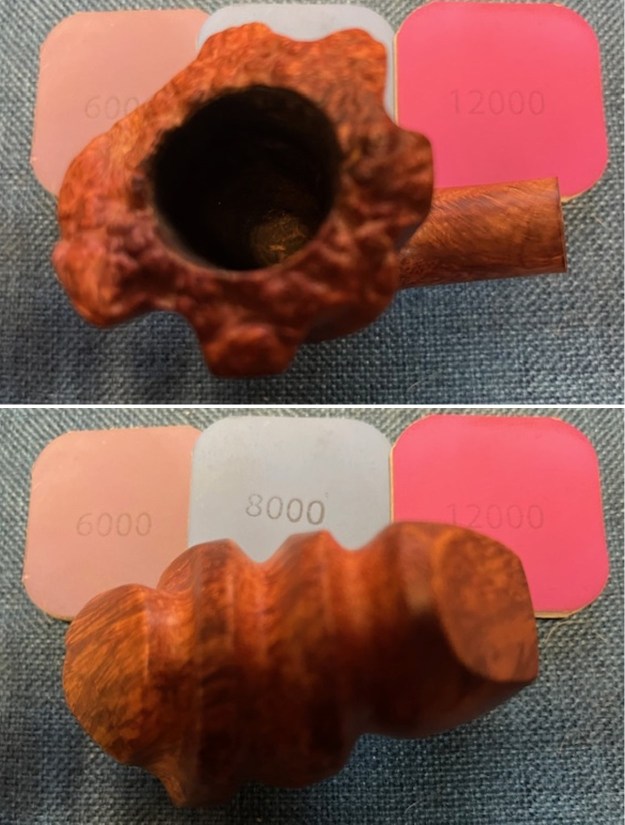
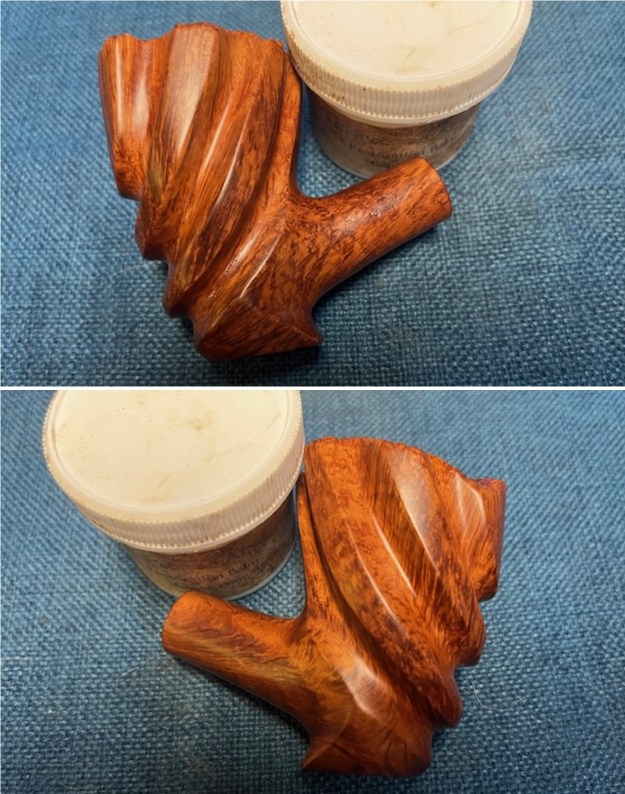
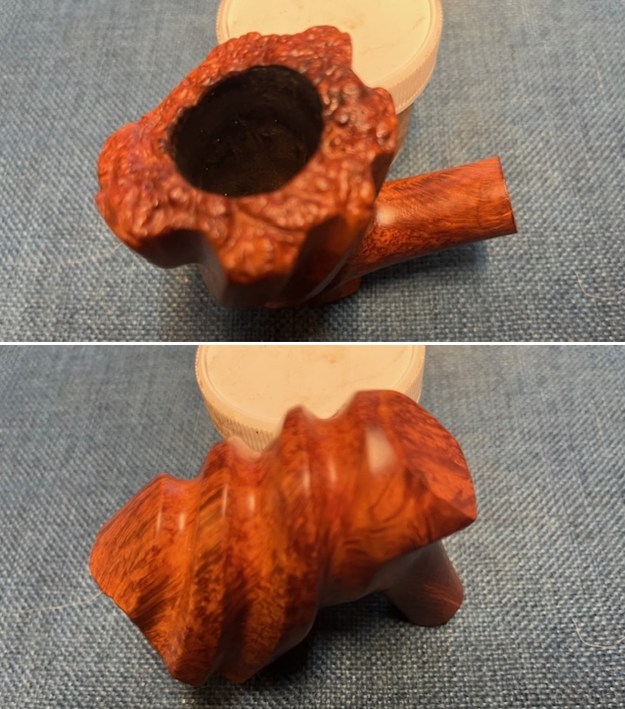
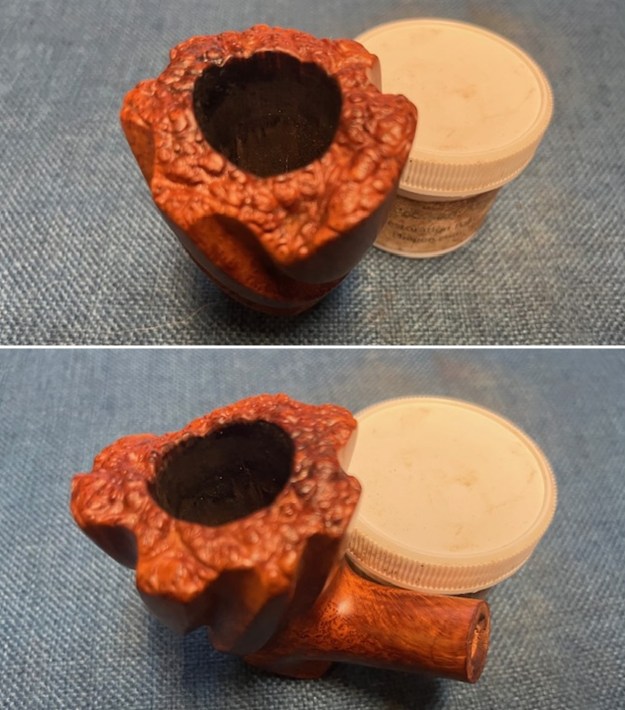
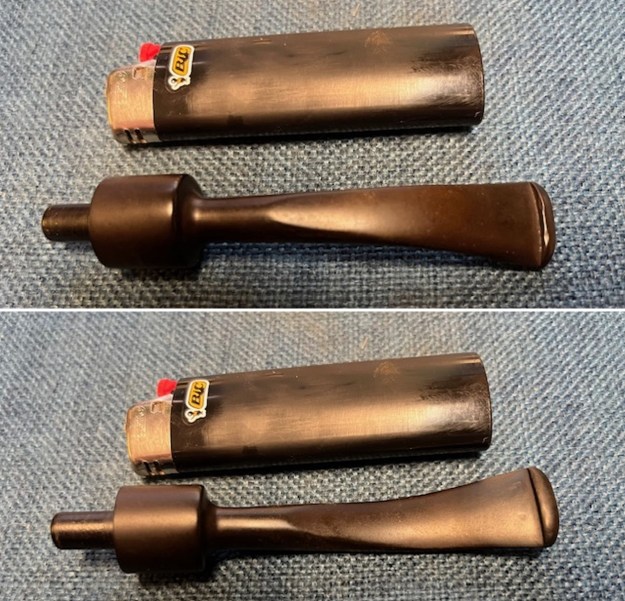
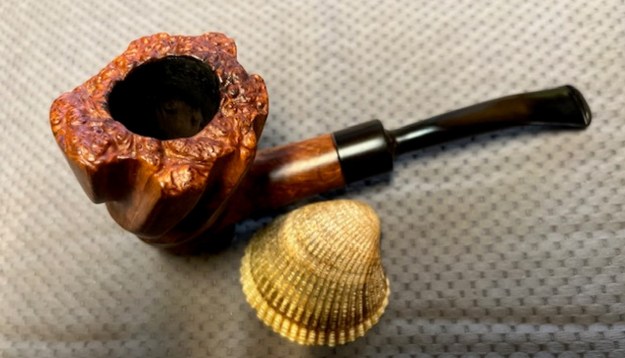
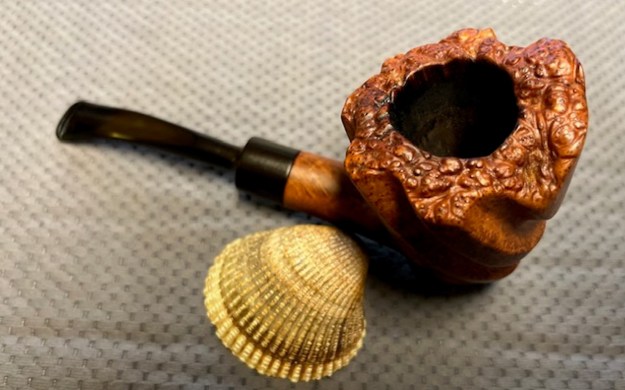
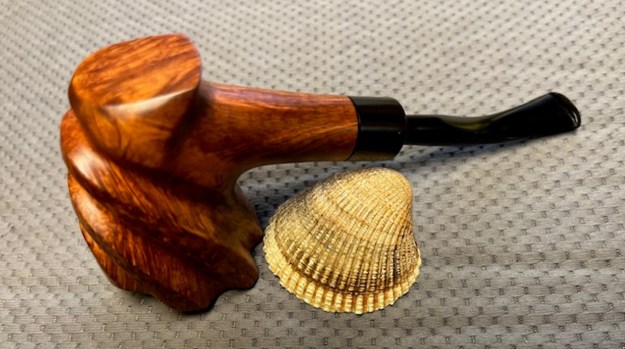
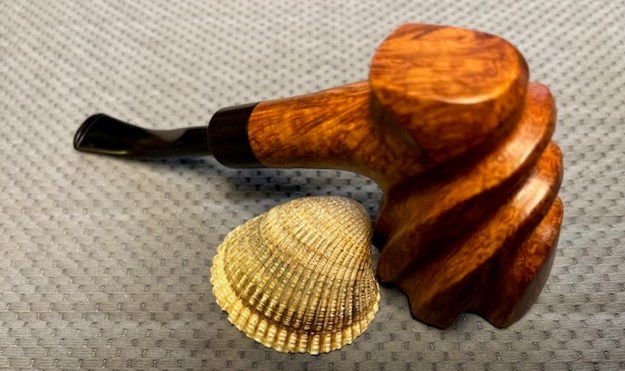
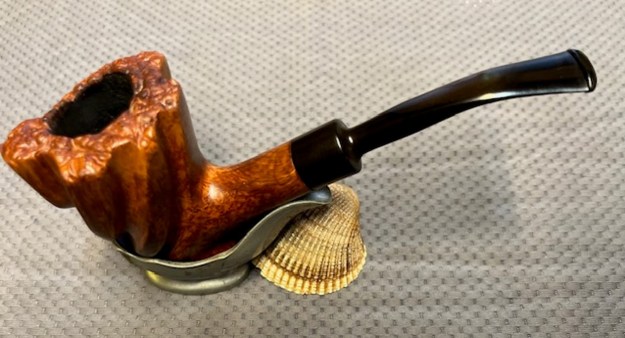
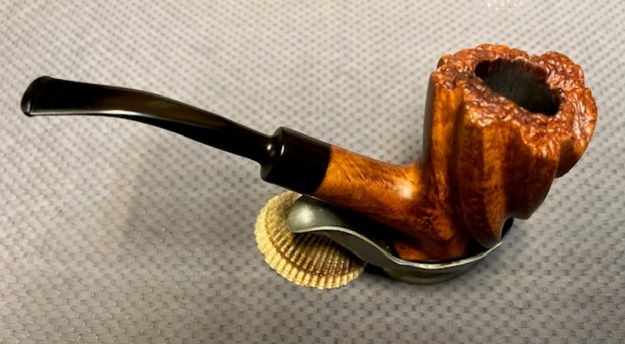
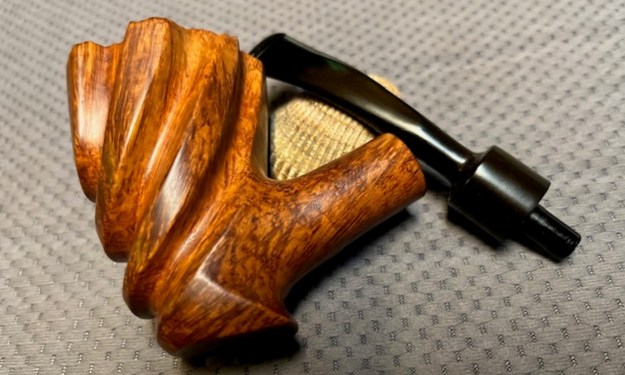
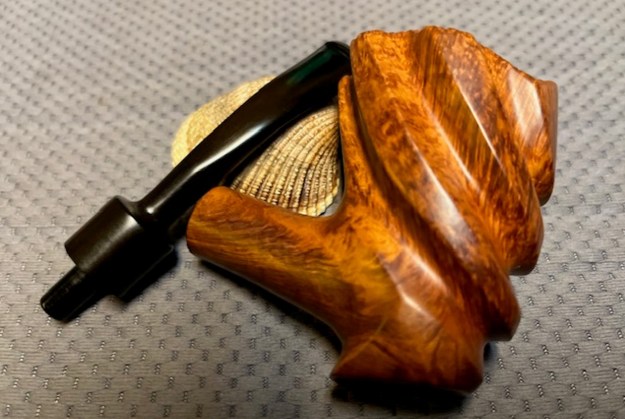
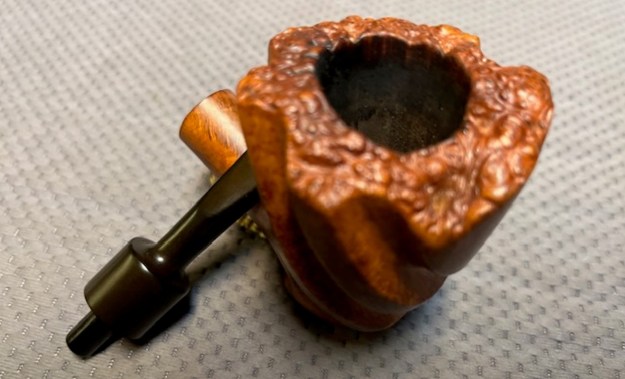
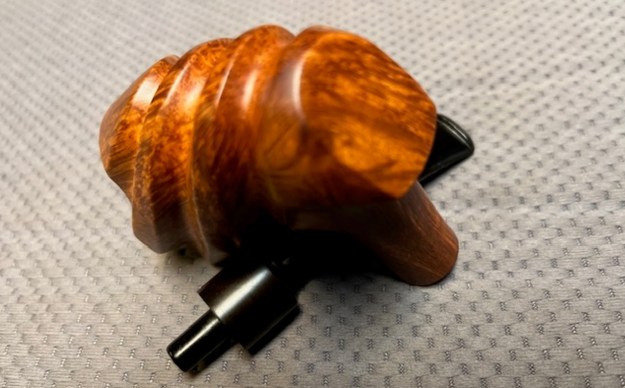
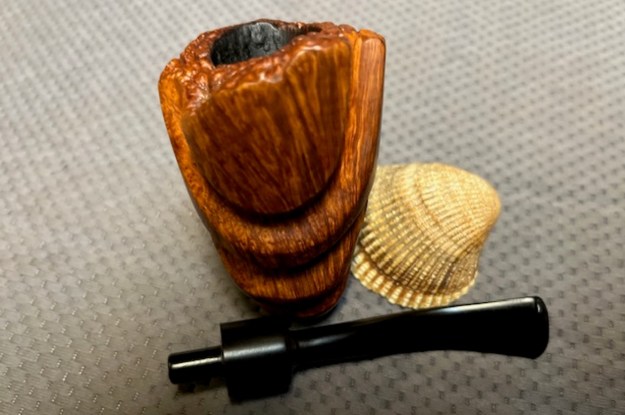
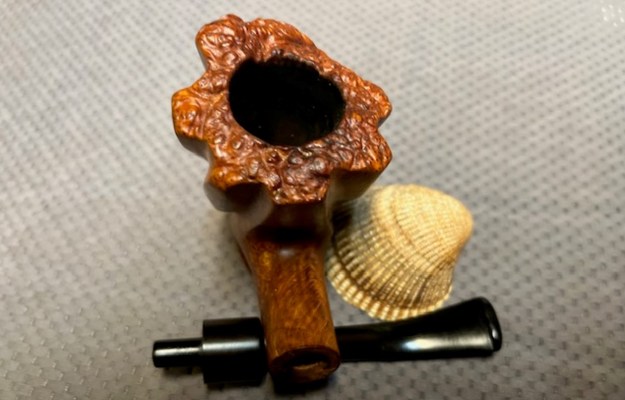
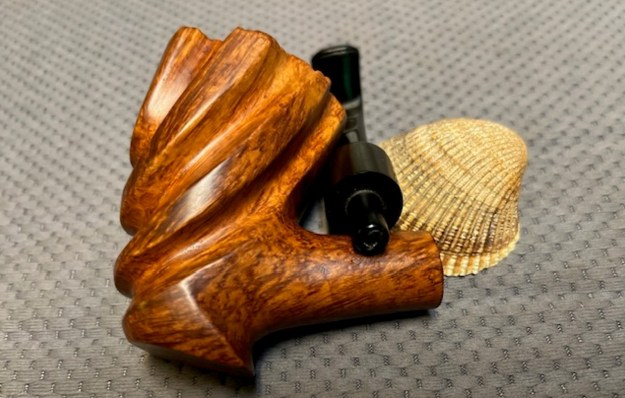
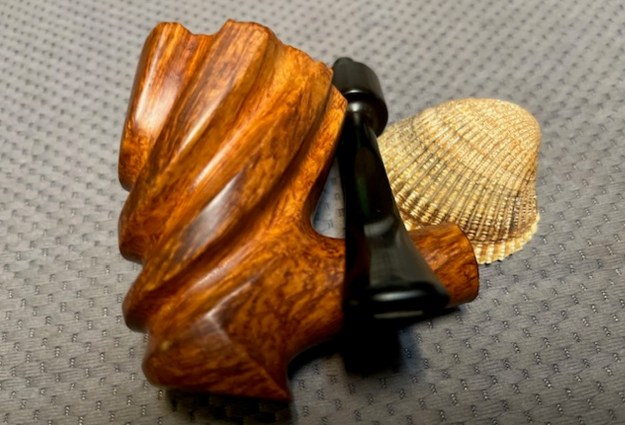
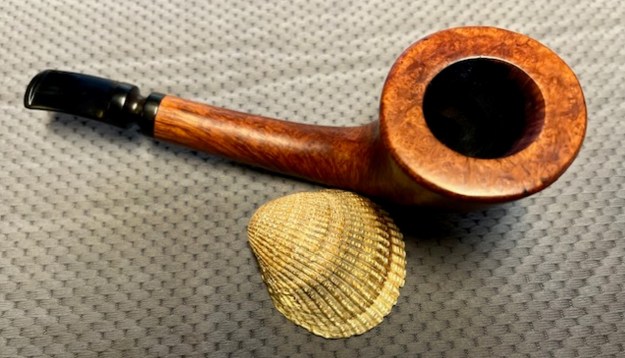
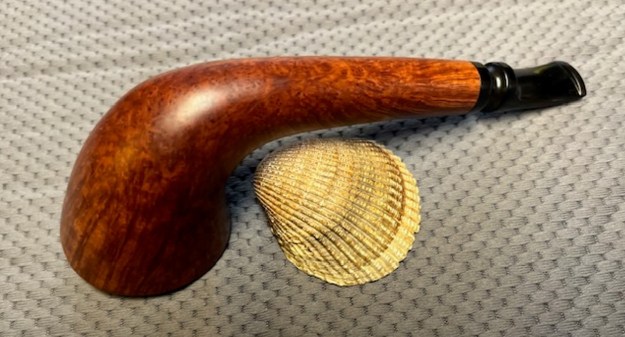
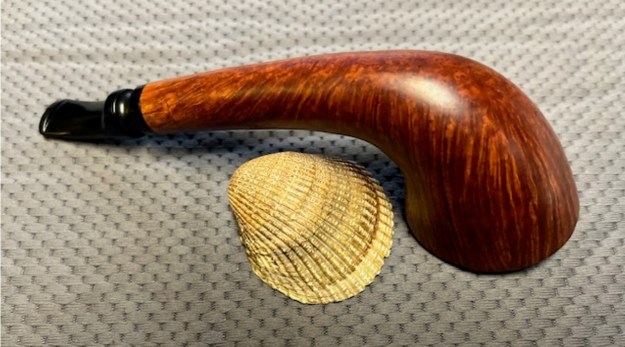
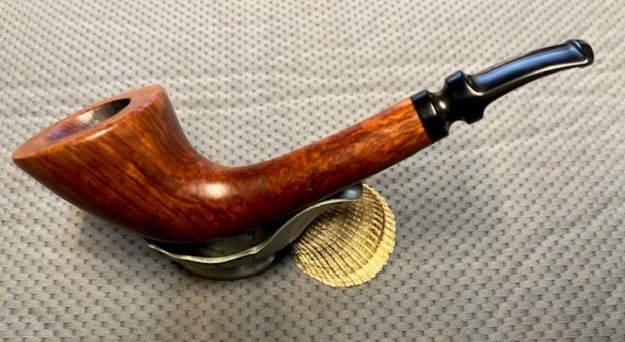
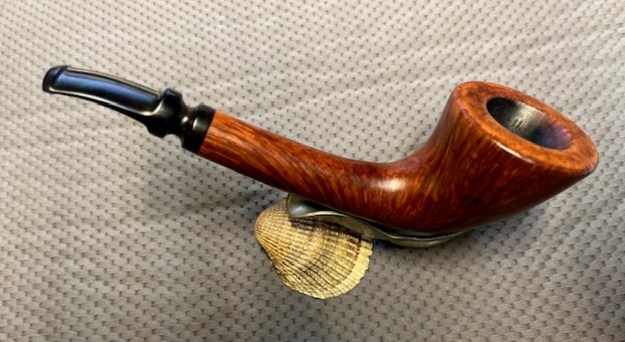
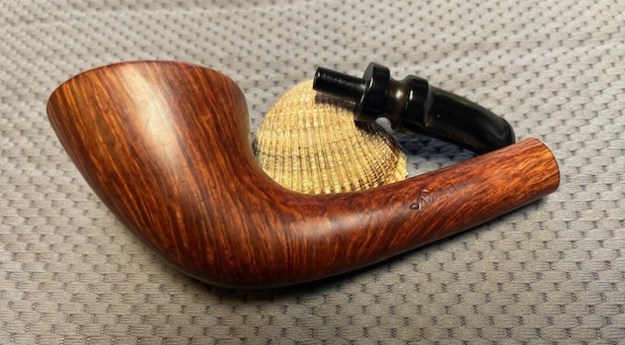
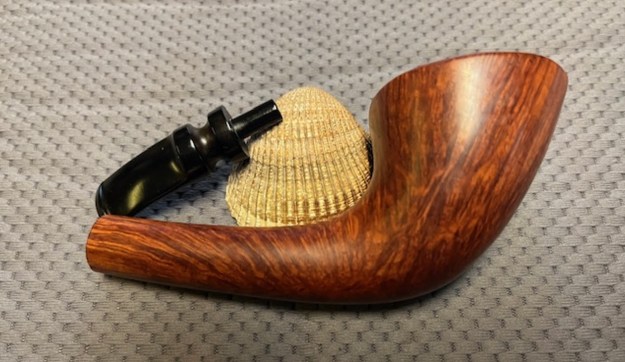
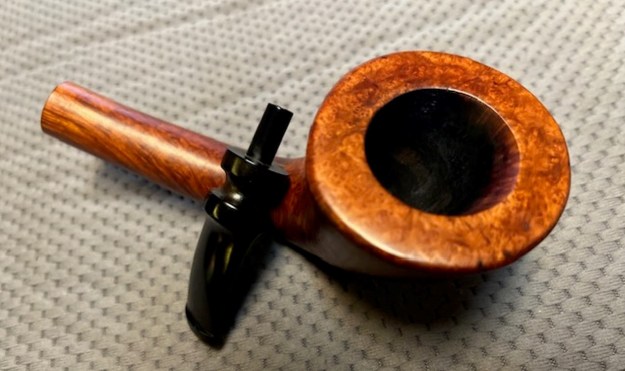
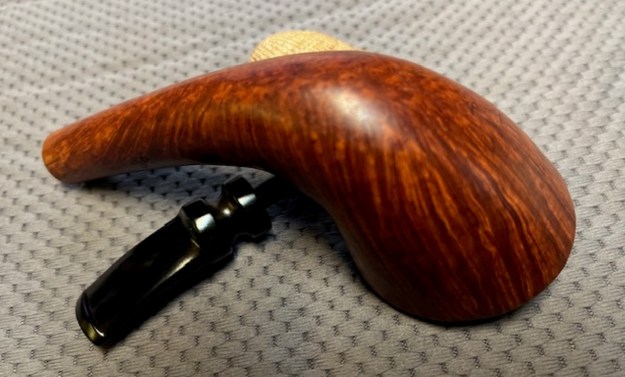
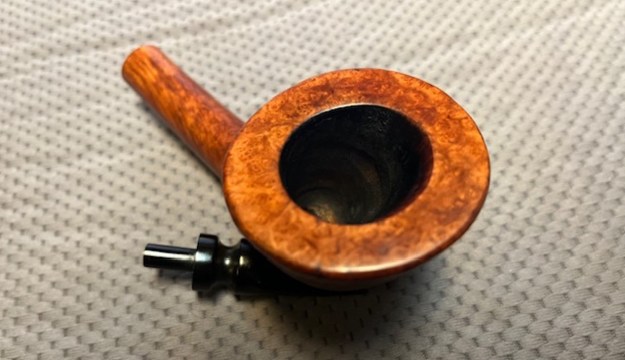
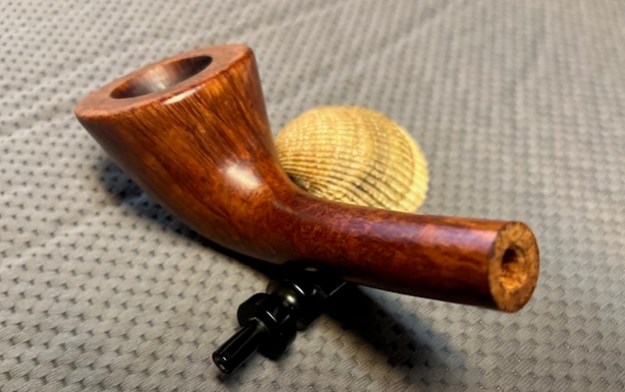
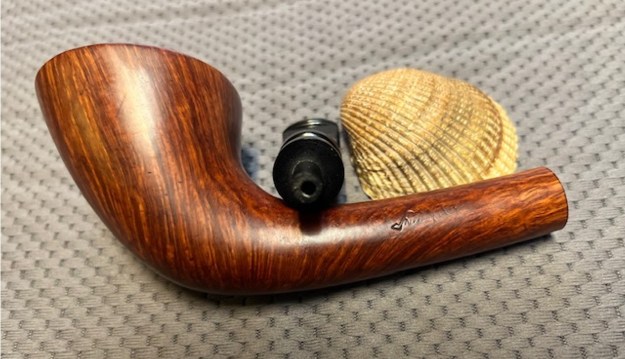
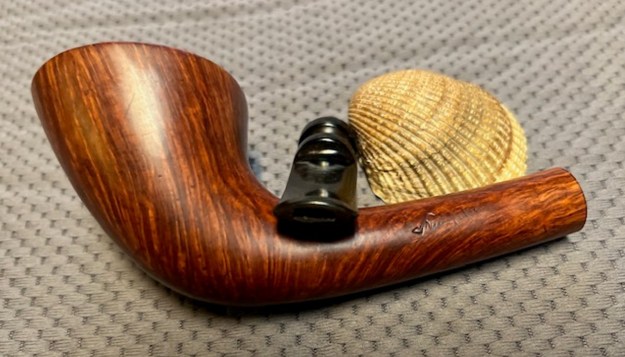
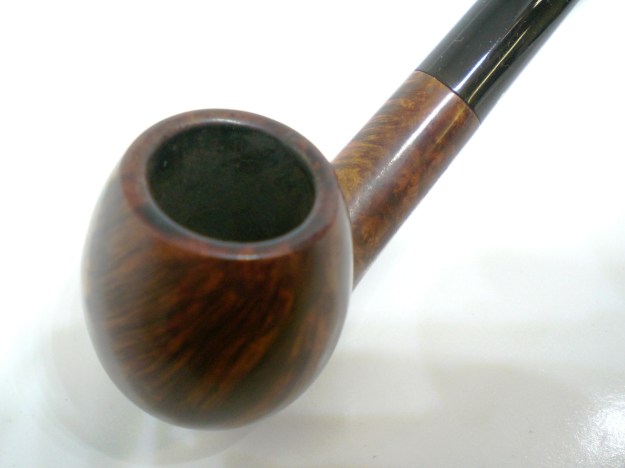
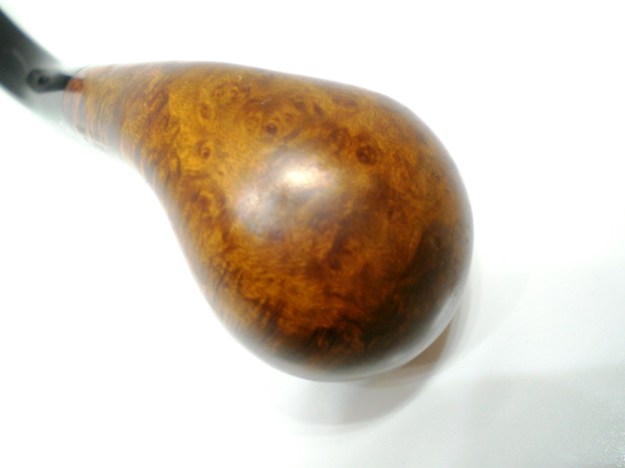
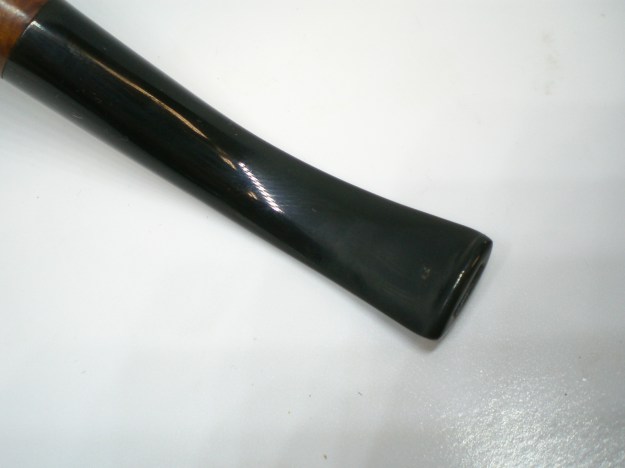
New Life for beautiful JHW Oval Bowl Plateau Freehand with Saddle Stem


by Steve Laug

I am excited to be working on another uniquely beautiful pipe stamped JHW. But maybe you don’t know why I am excited about a pipe stamped with these three initials, Well I have to tell you right up front that JHW is Jack H. Weinberger. Who is that? That does not help either? Jack H. Weinberger was a pipe maker in West Caldwell, New Jersey. Still not helping? He hired young lads from the local high school to help him out as he carved 10-12 hours a day. Two of these were none other than Curt Rollar and Mark Tinsky who went on to become the American Pipe Company. There was a long list of pipe carving luminaries who came through Jack’s shop and JHW pipes but these two you probably have heard of. So JHW or Jack H. Weinberger was an important part of the American Pipemaking scene and gave many carvers a start and they have continued to this day. Now maybe you understand my excitement – being able to work on another of Jack’s pipes and bring it back to its former glory.

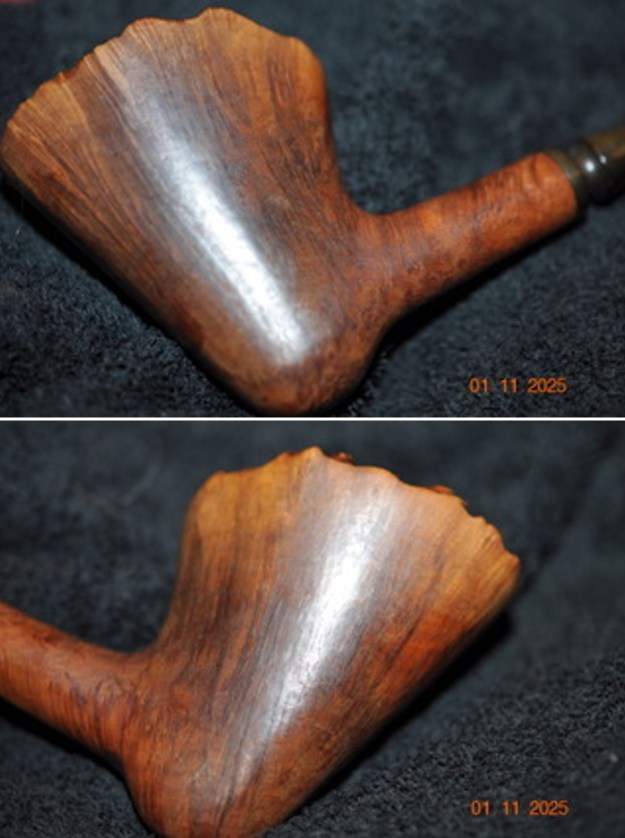
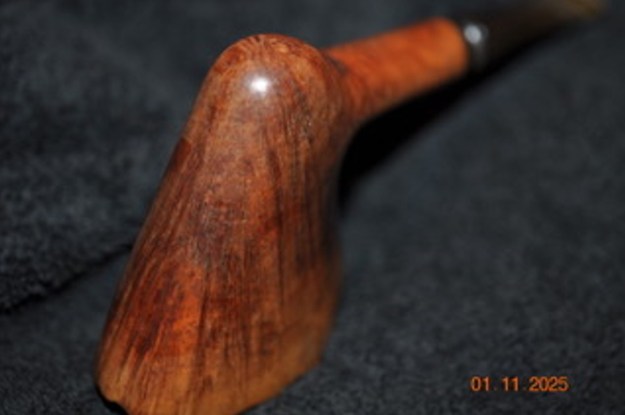
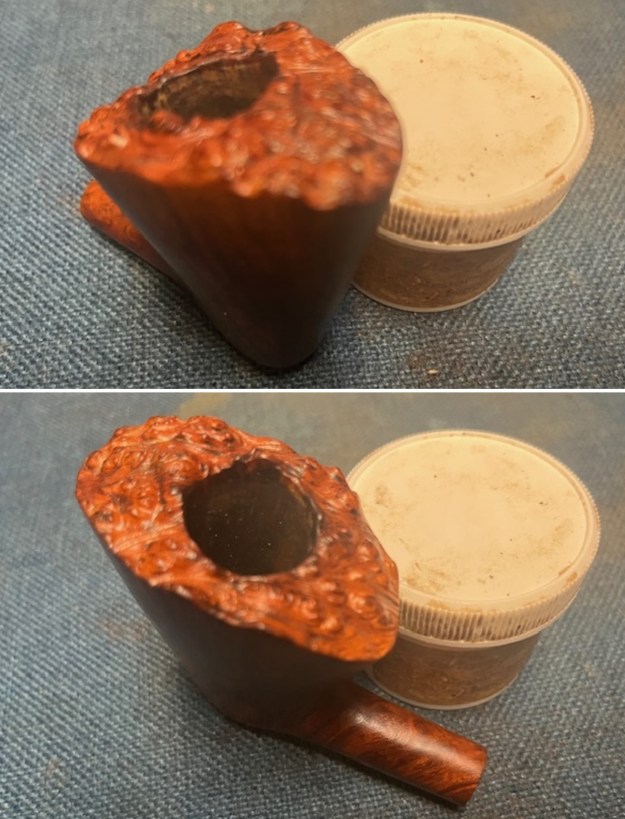
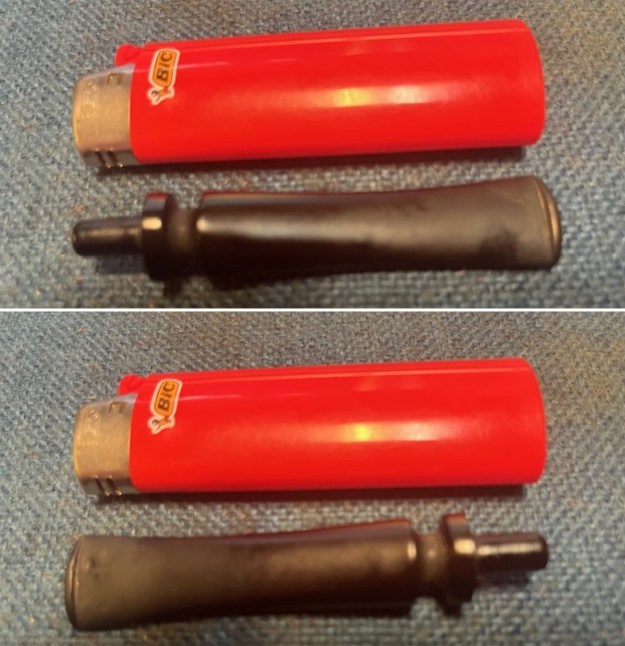
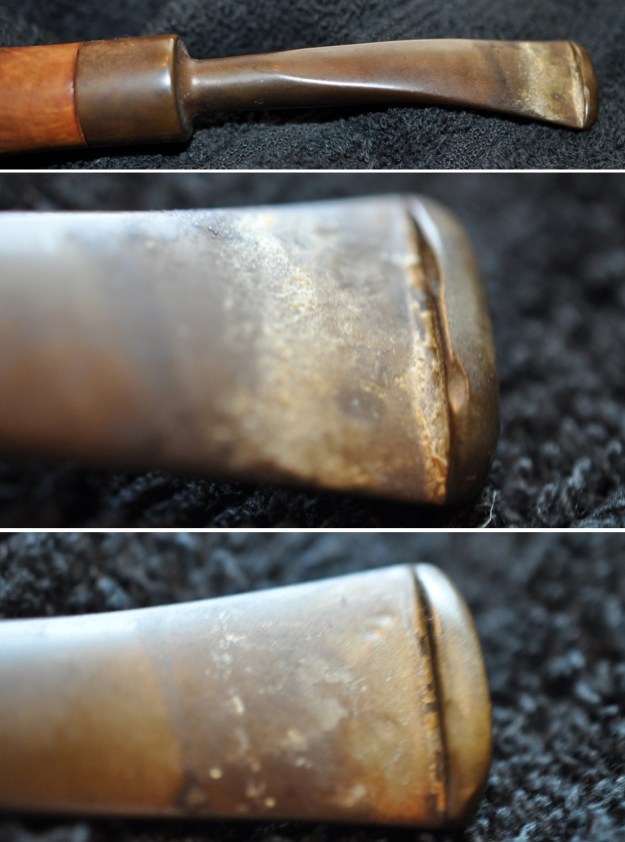
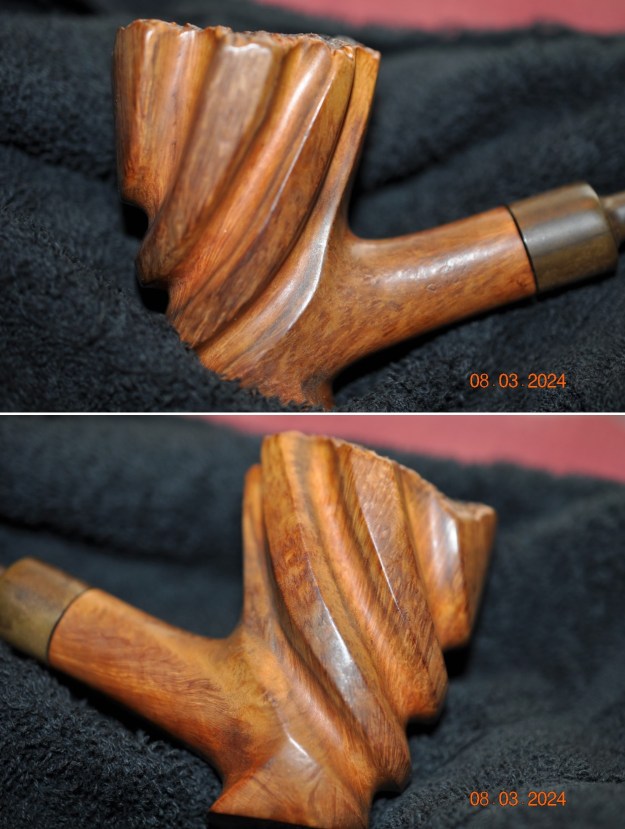
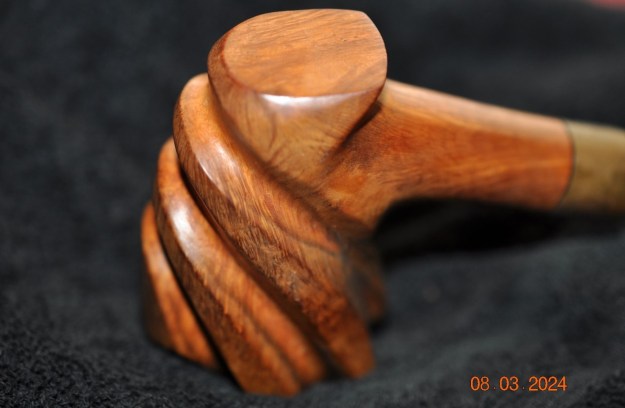
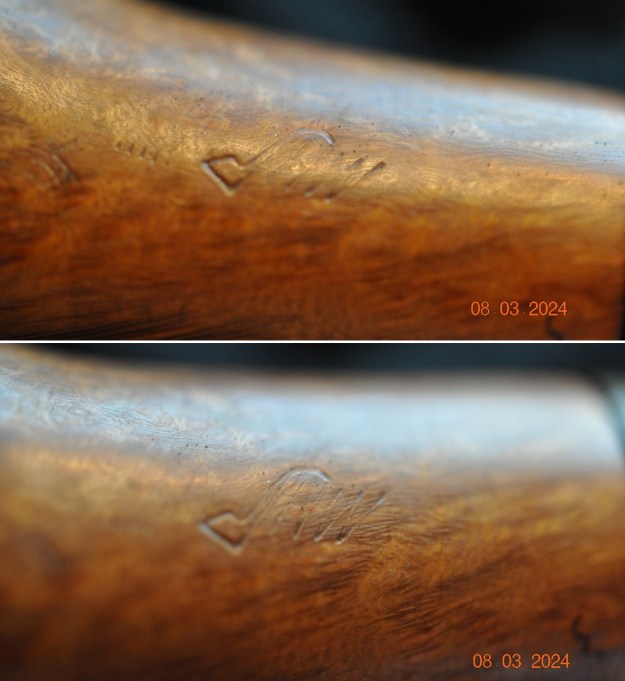
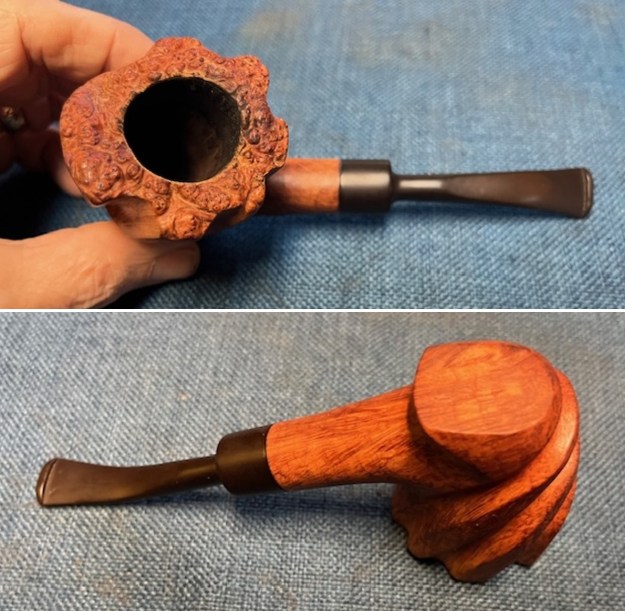
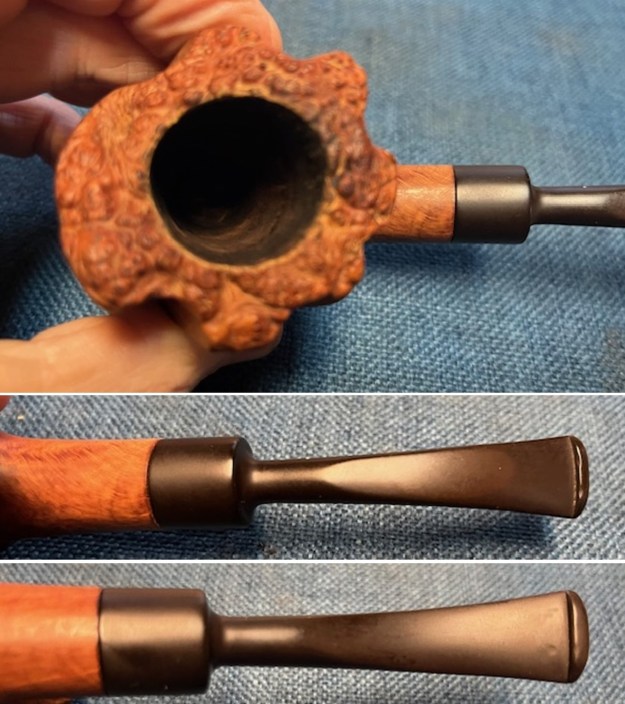
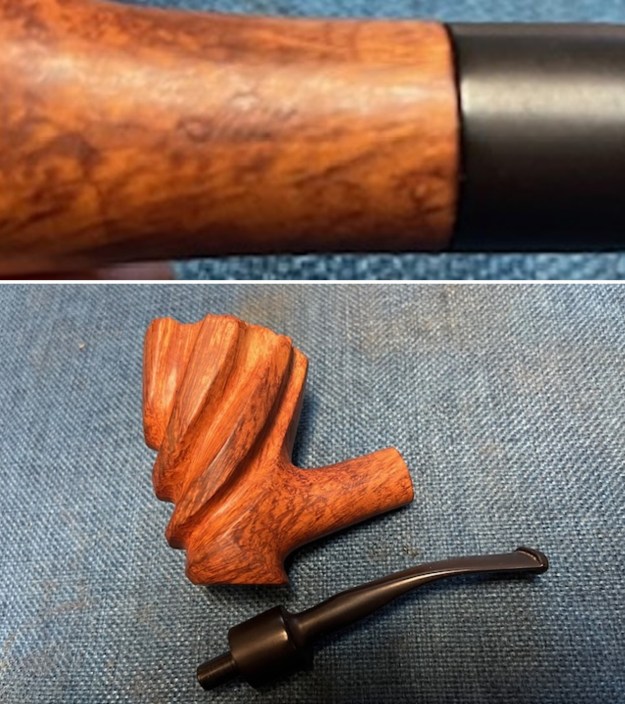
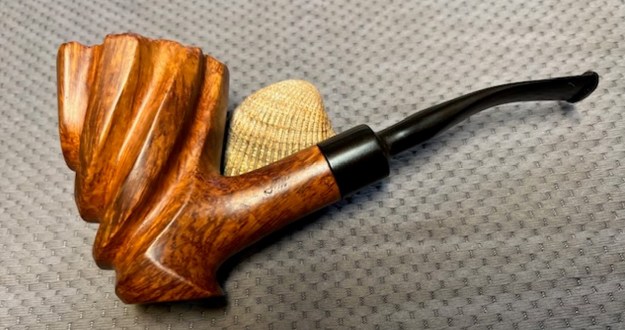
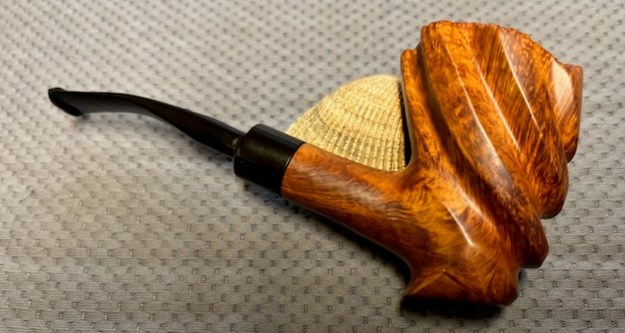
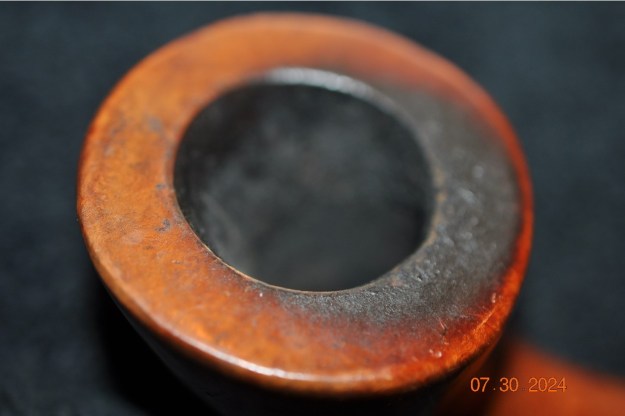
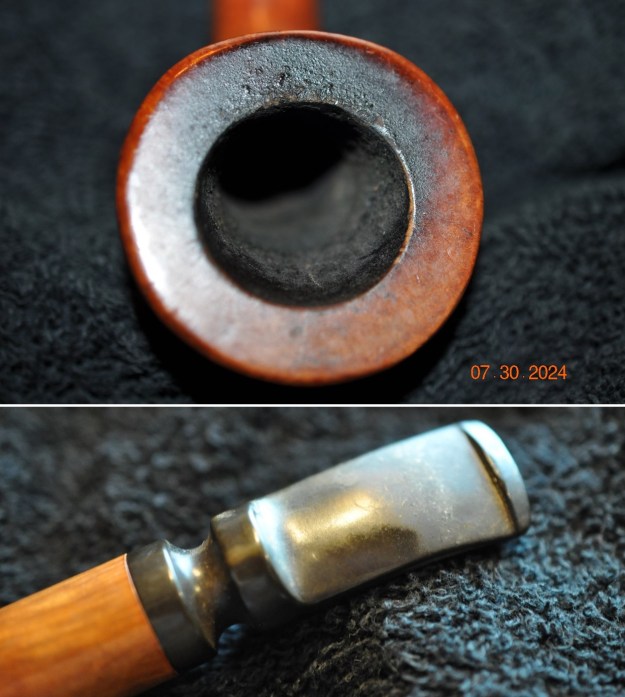
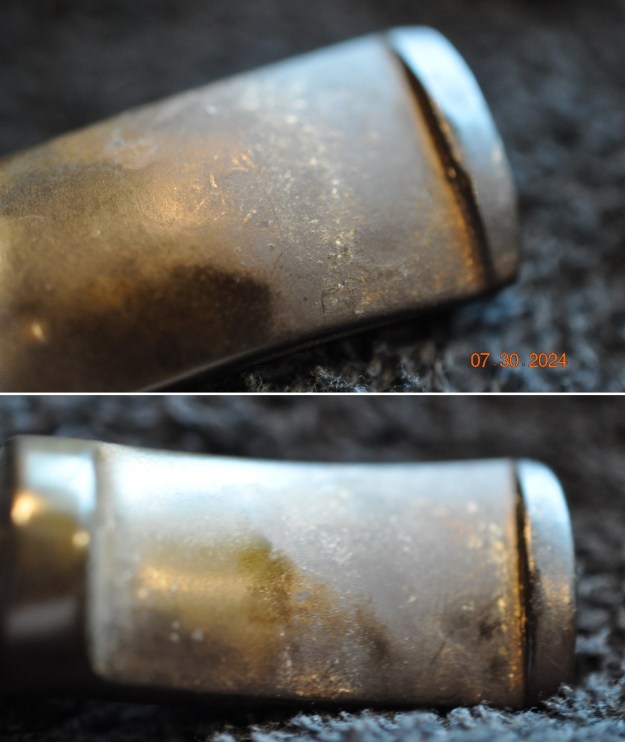
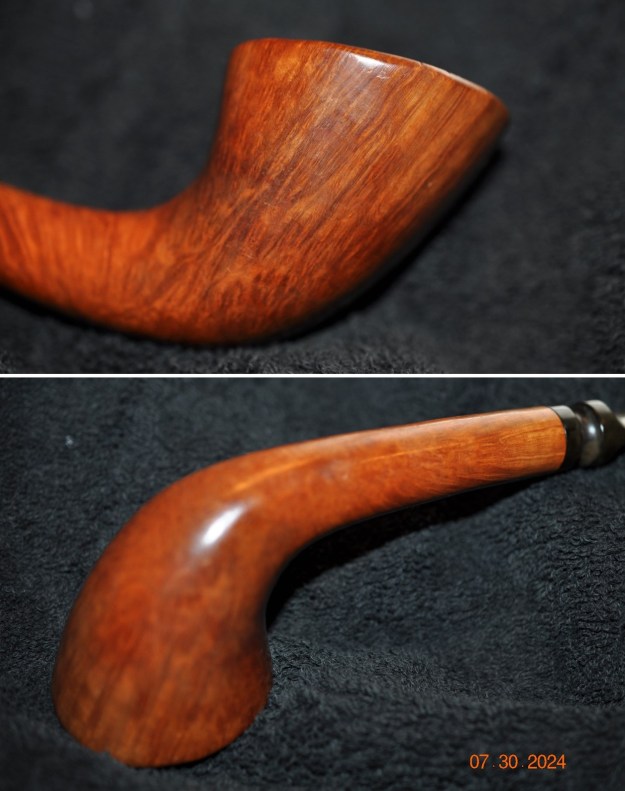
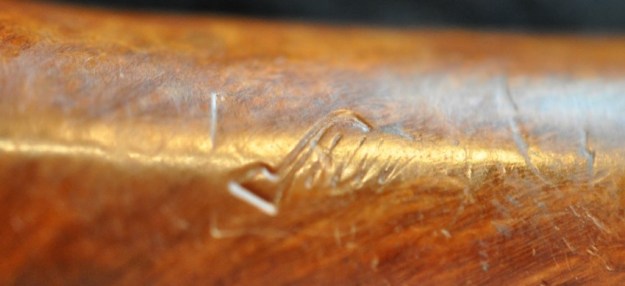
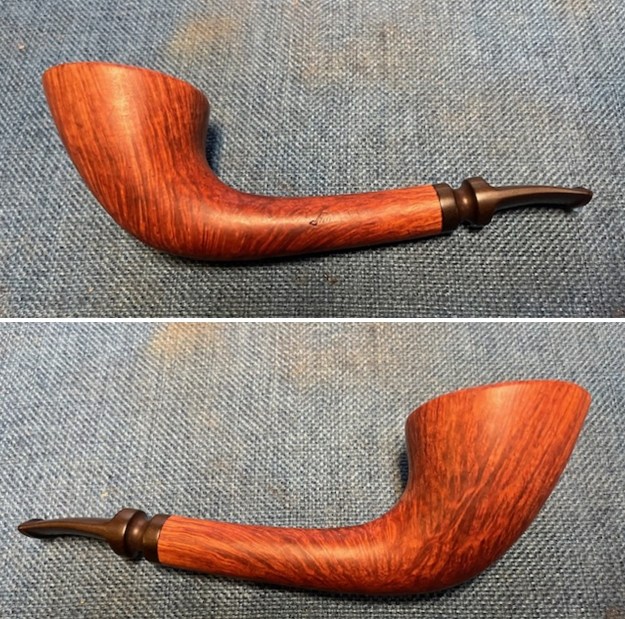
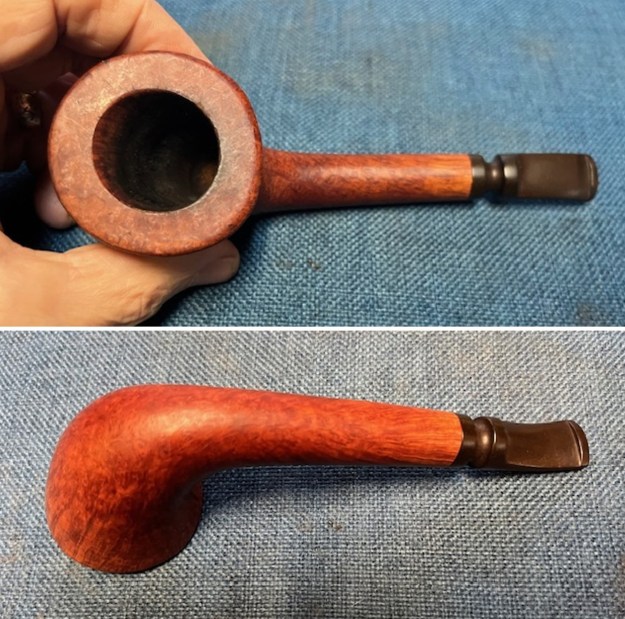
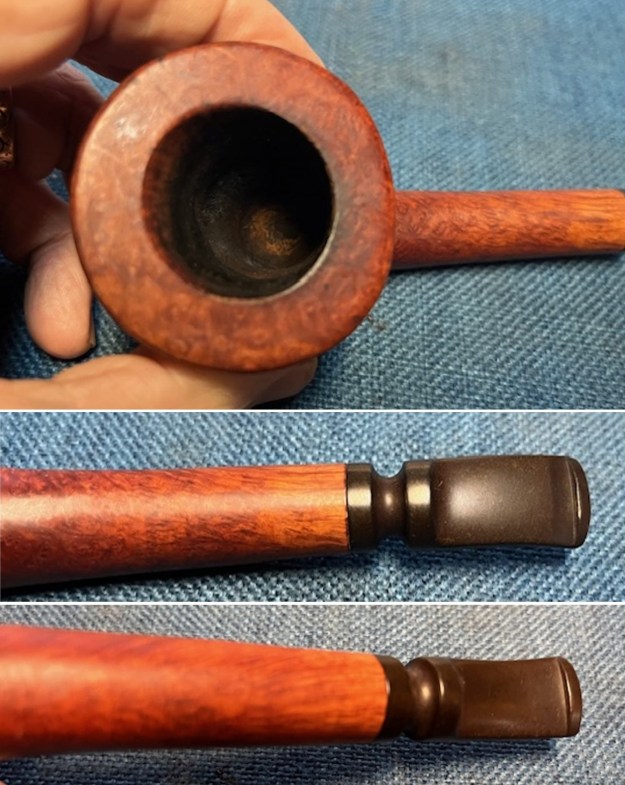
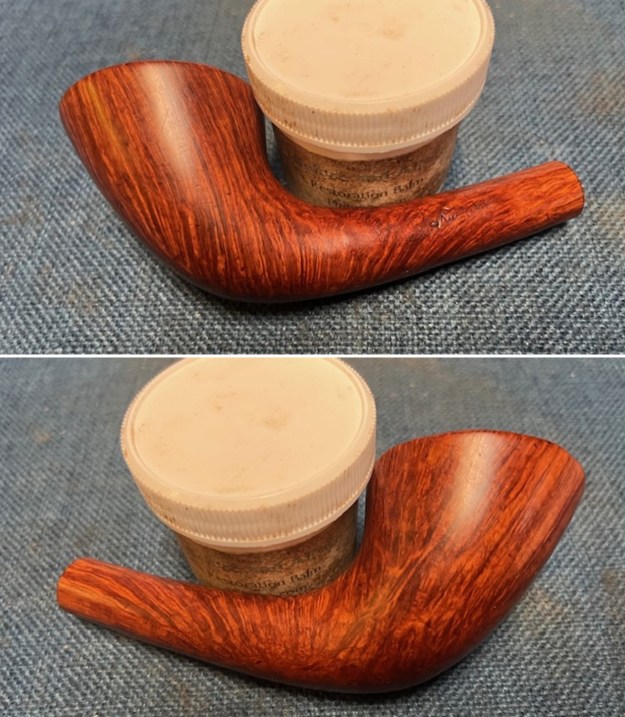
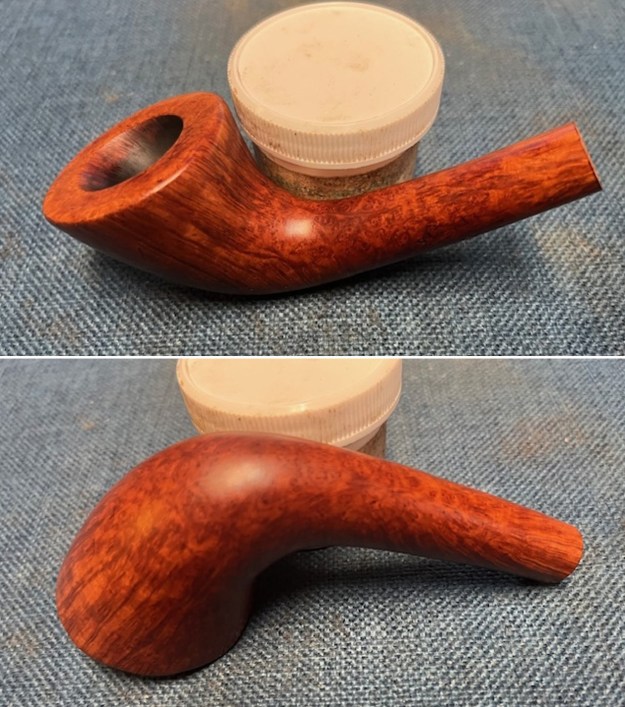
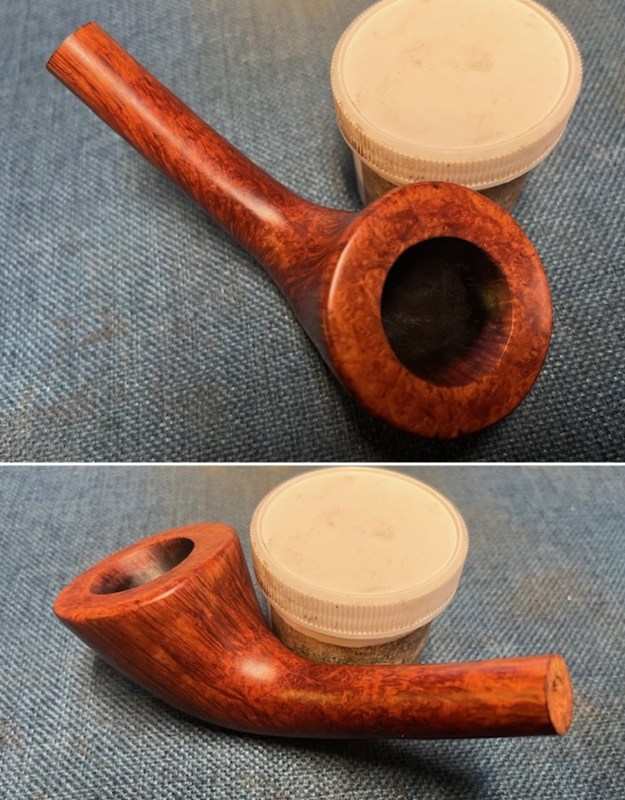
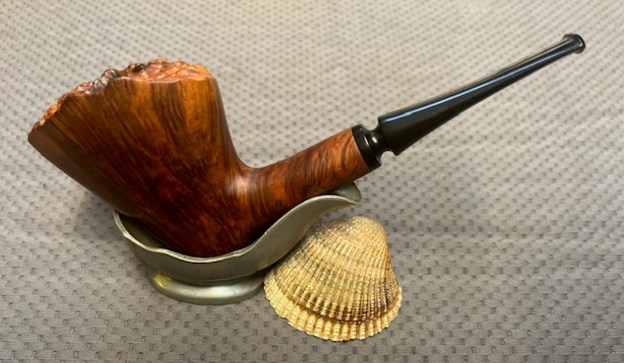
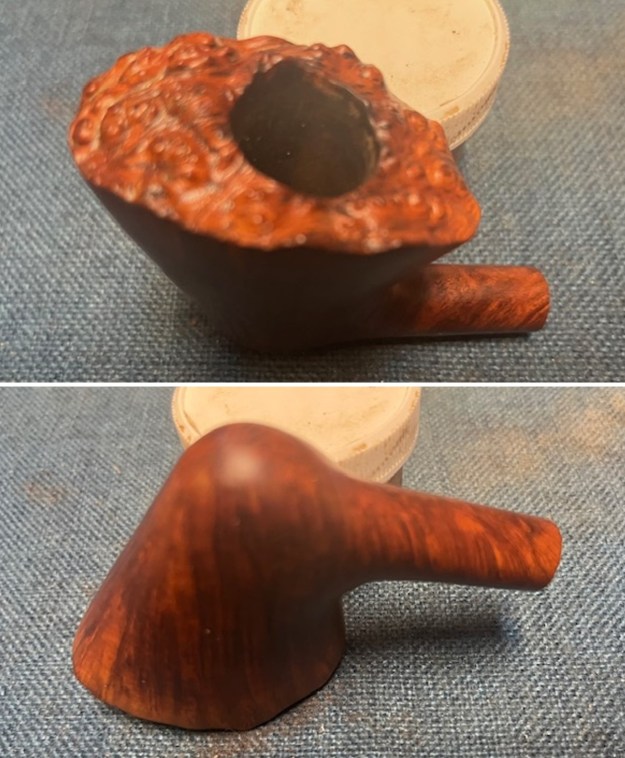
This pipe I chose to work on was another unusual one. It came to us from a seller in Santa Cruz, California, USA on 05/28/2024. It is a great piece of briar with great straight grain all the way around the bowl and shank and a plateau rim top on the bowl. It is a beautiful piece of briar! He made a carved, fan shaped Freehand pipe. The front, back and sides of the bowl have some nice straight grain. Very unique but something just calls out to you. When the pipe came to us it was dirty with grime ground into the finish. There was a thick cake in the bowl and heavy lava in the valleys of the plateau rim top and inner edge. There was grime and oils darkening the sides of the bowl. It was dirty but that did not hide the beauty of the grain on this briar. The stem is a saddle made out of vulcanite. There were tooth marks and light chatter on both sides just ahead of the button. Jeff took photos of the pipe as a whole before he started his cleanup work. I include them below. Jeff took some close up shots of the rim top to show the bowl and cake. You can see the cake in the bowl and the thick lava on the rim top and the inner edge. The stem photos also show the condition it was in when we received it. Lots of promise with the pipe but some work too! Jeff took some photos of the sides – left and right sides and the heel of the bowl to give a sense of the lay of the pipe on the block of briar. It is certainly beautiful. Here are some photos of the stamping on the left side of the shank. I think this must be an older stamp of JHW as the J is a part of the uppercase HW. It is the only one I have that has this stamping. Otherwise the J is a stylized pipe followed by the HW.Take some time to read the great writeup on Pipedia and JHW pipes and influence the carver had on the American pipe making scene. It is a well written and enjoyable read. Here is the link: (https://pipedia.org/wiki/JHW_Pipes).
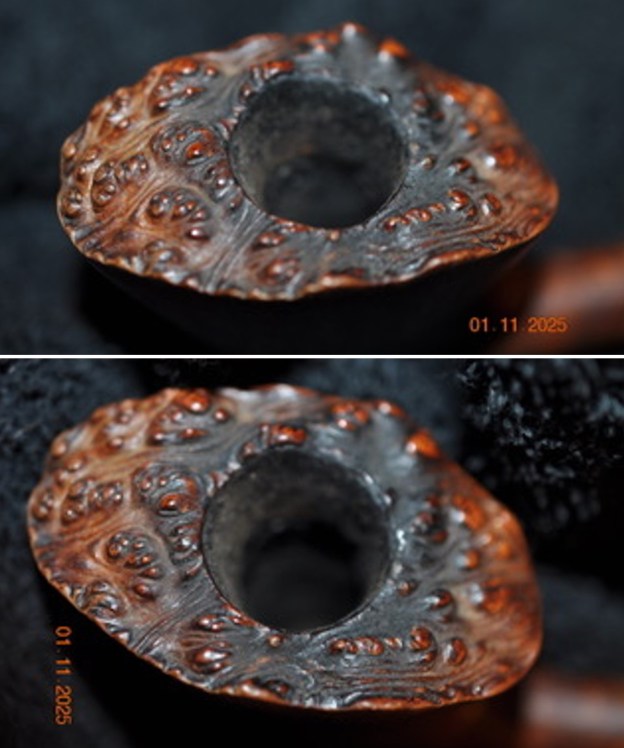
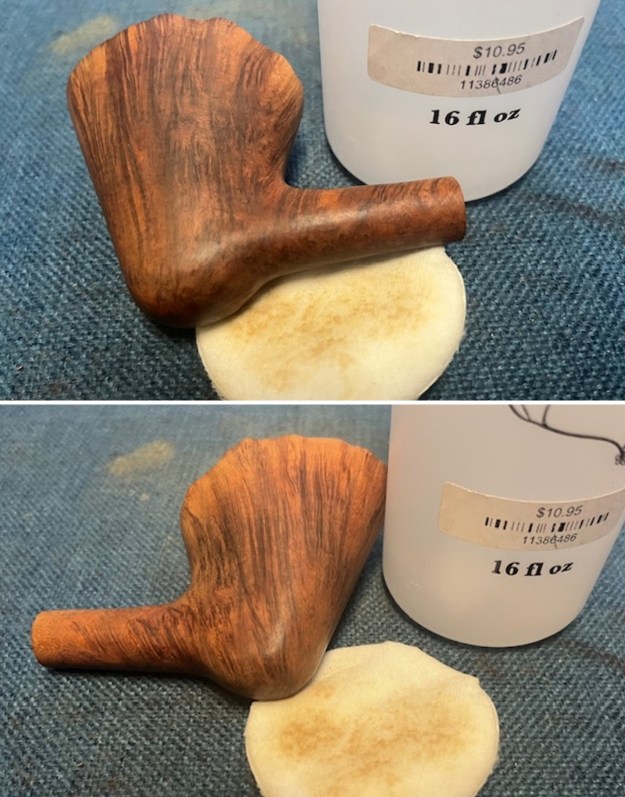
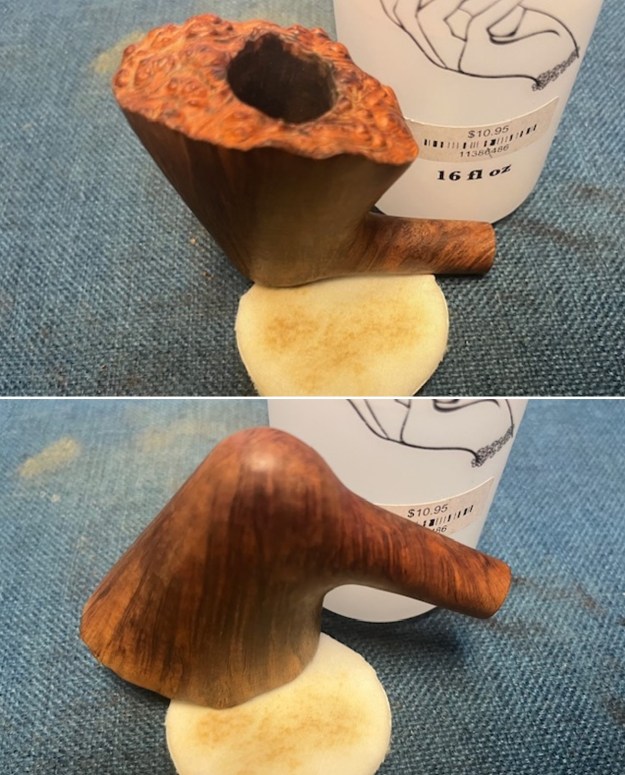
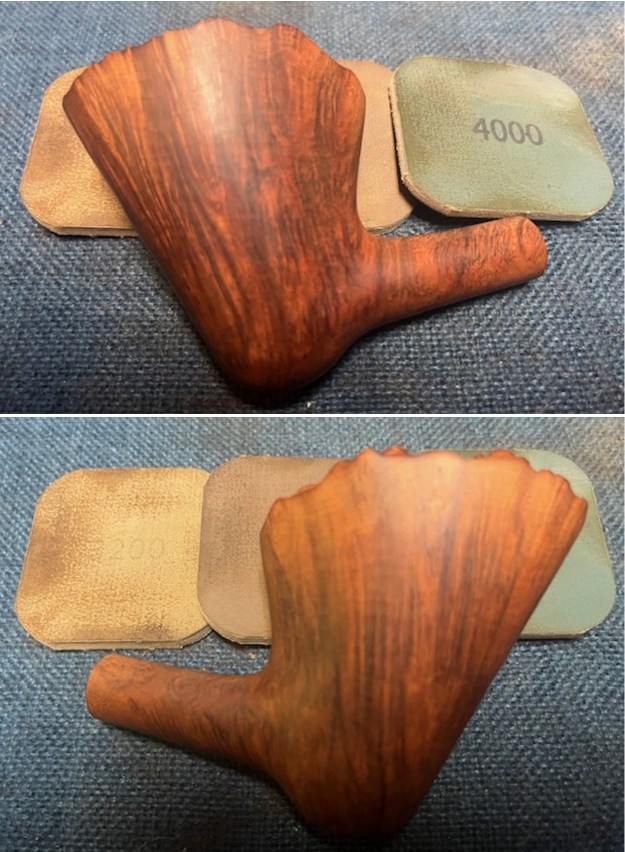
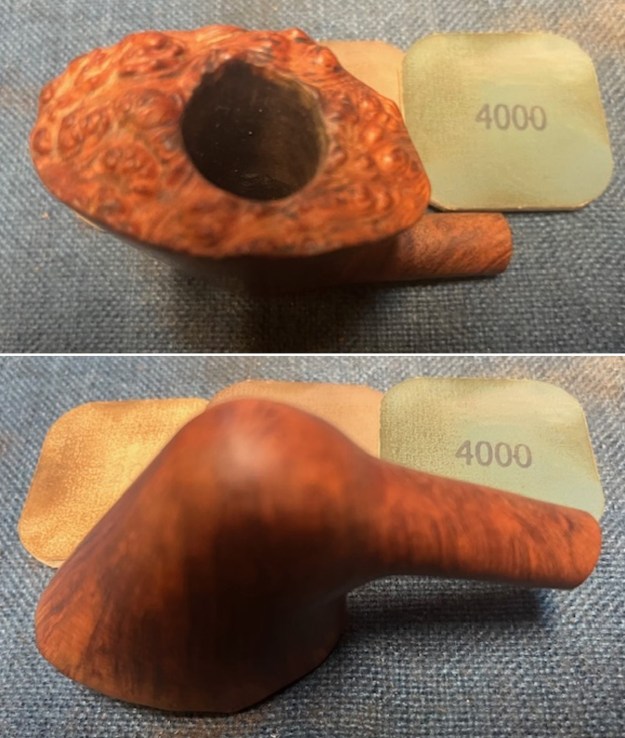
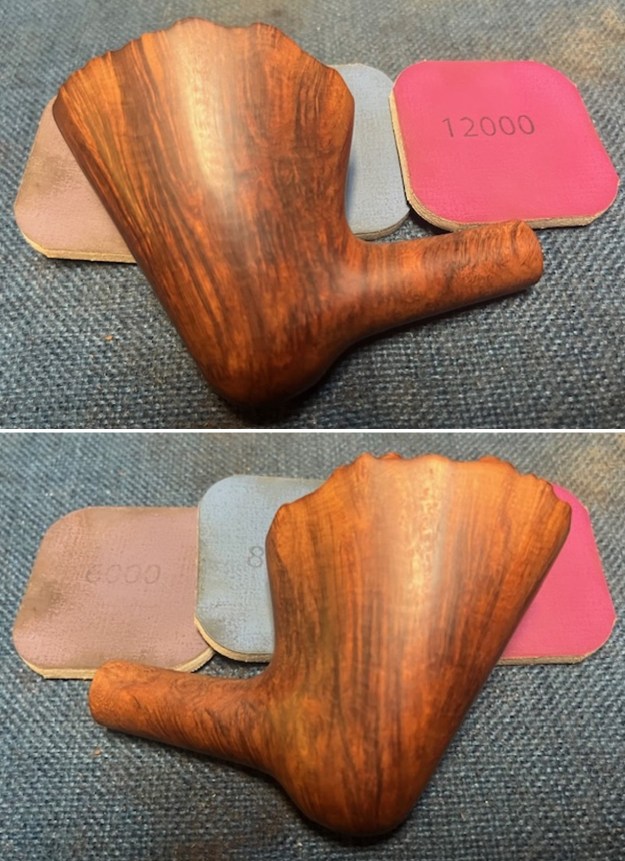
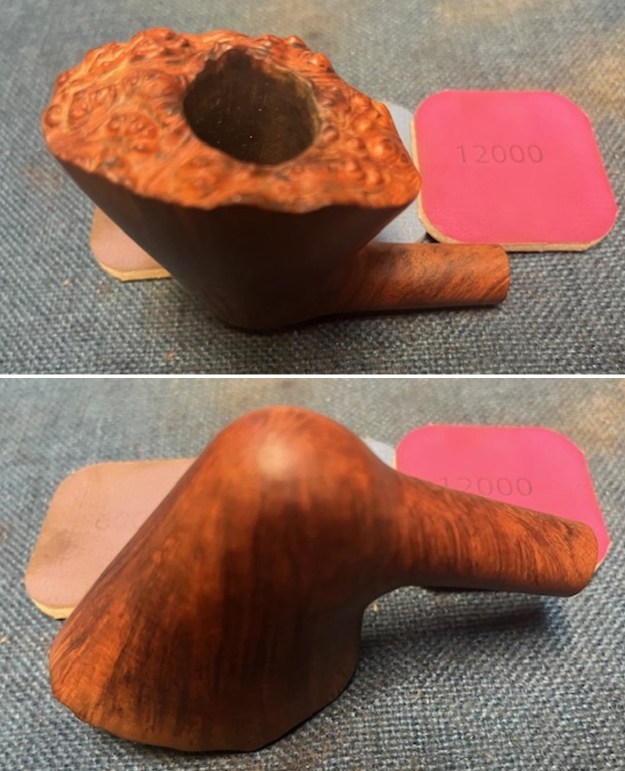
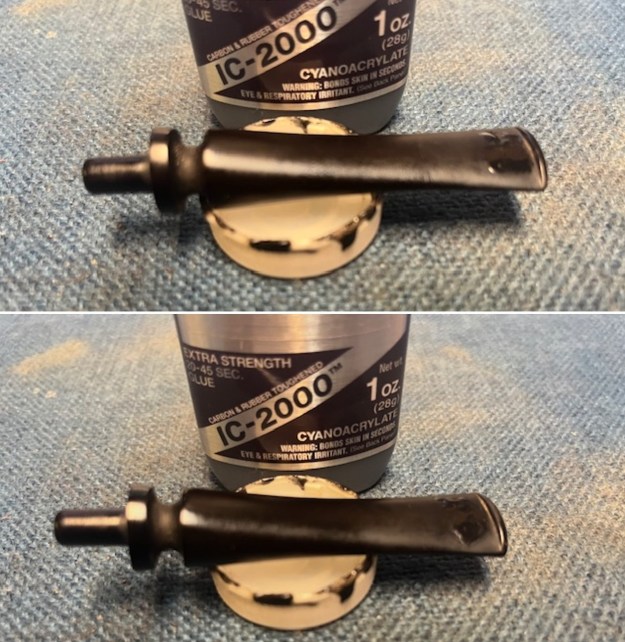
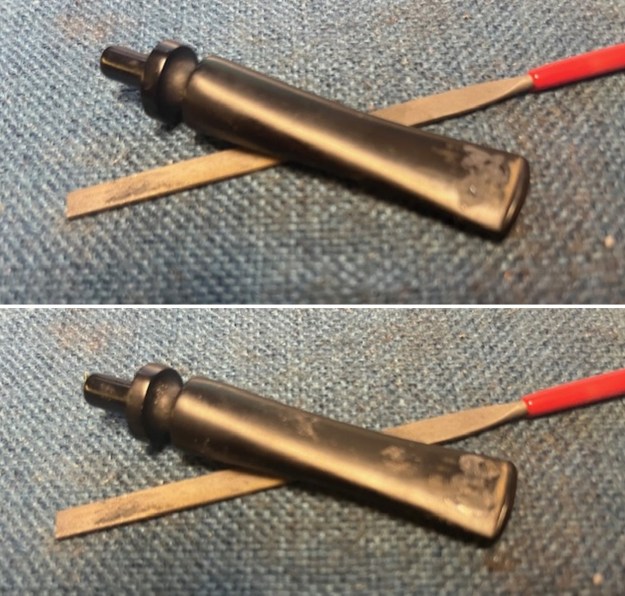
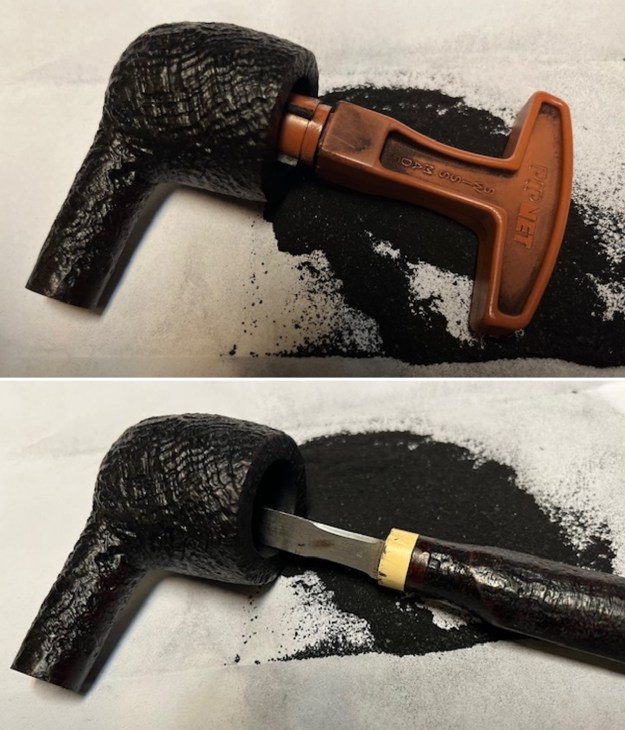
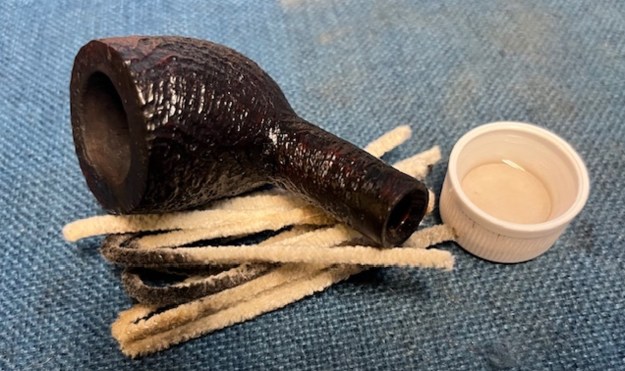
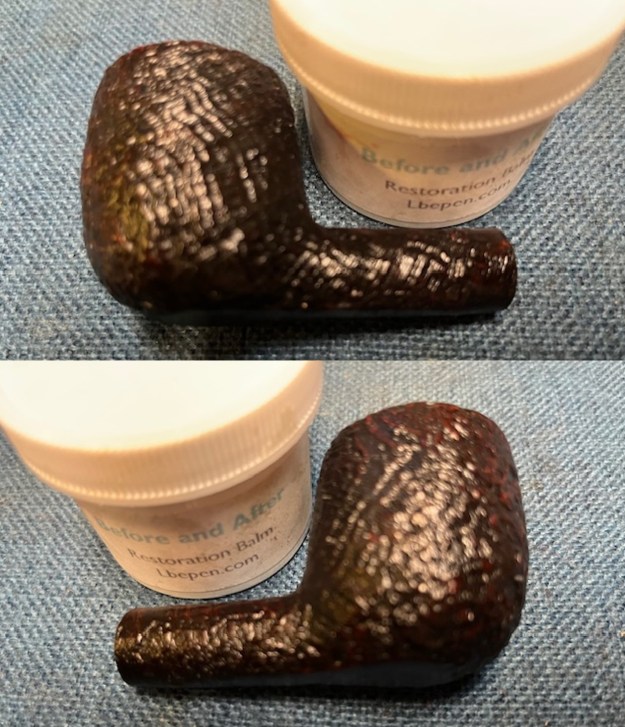
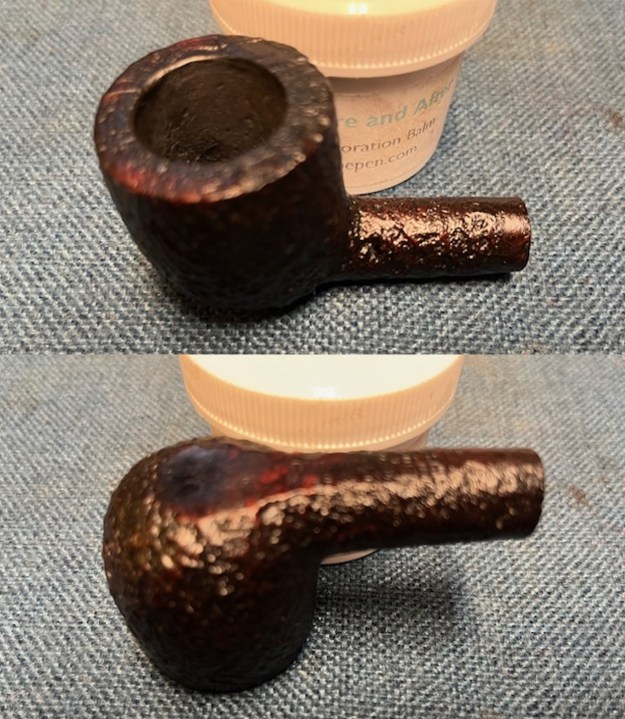
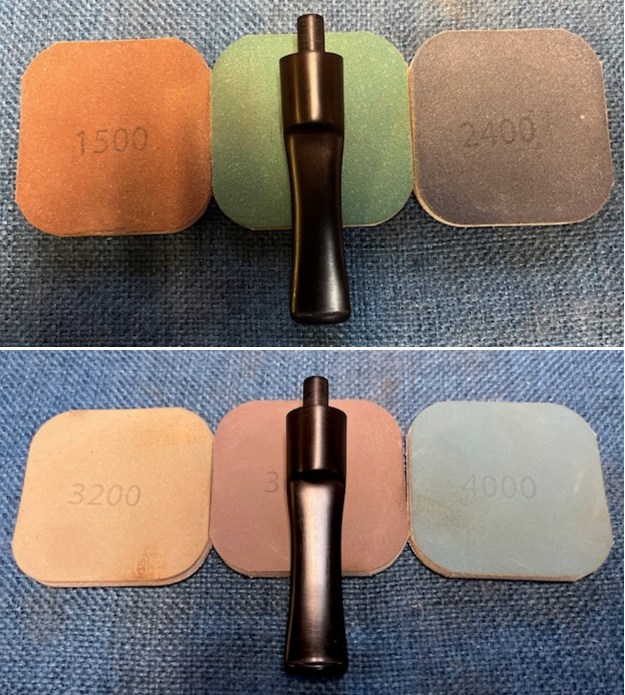
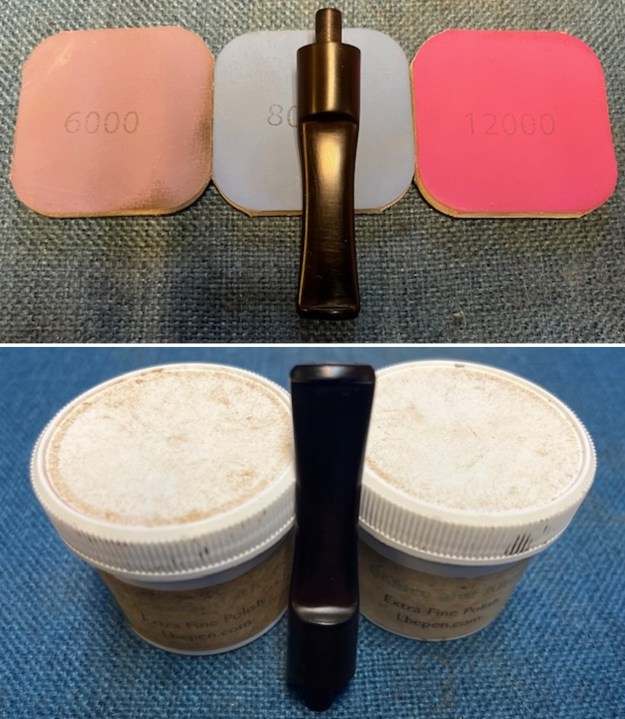
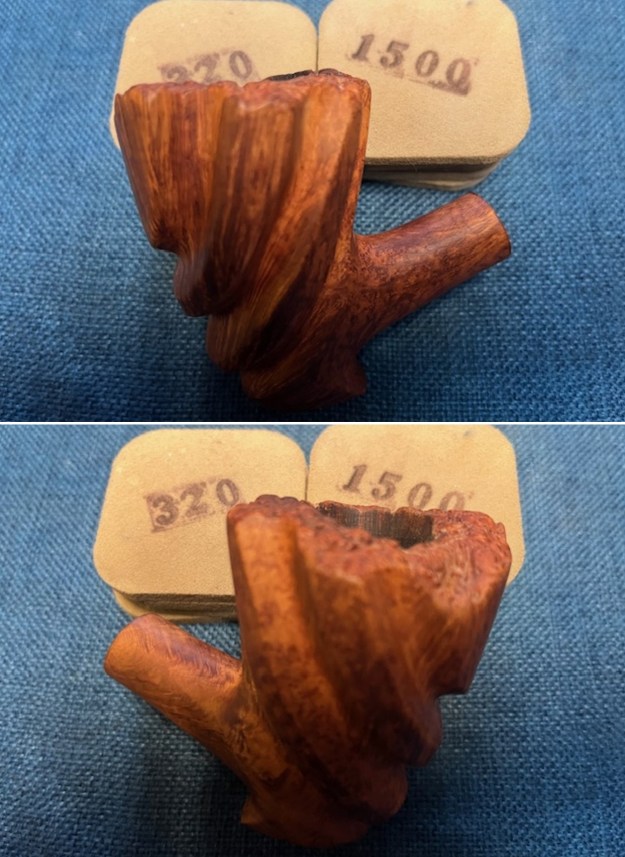
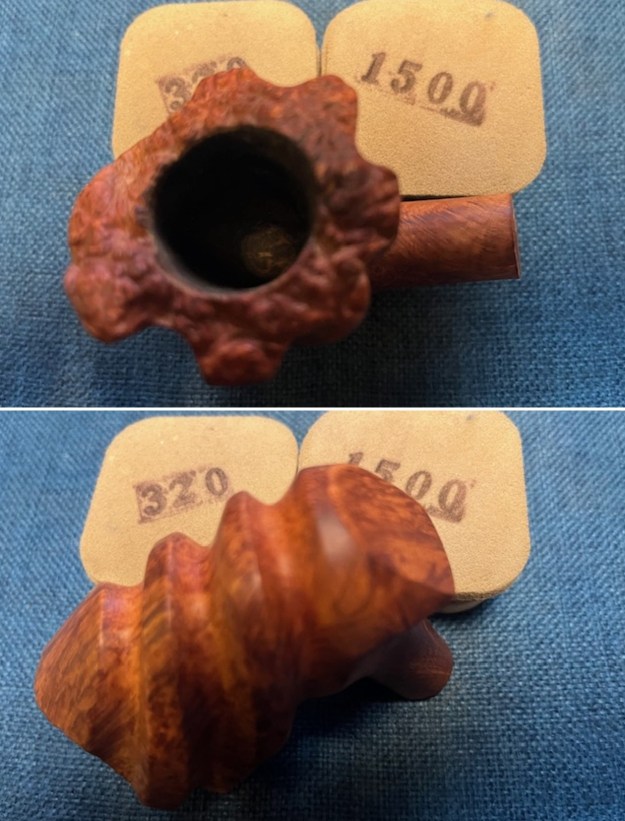
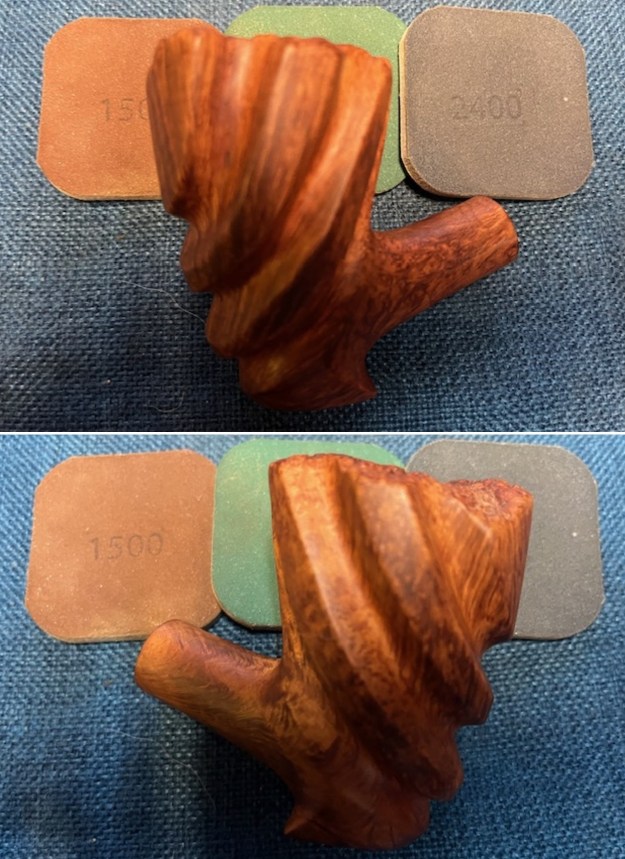
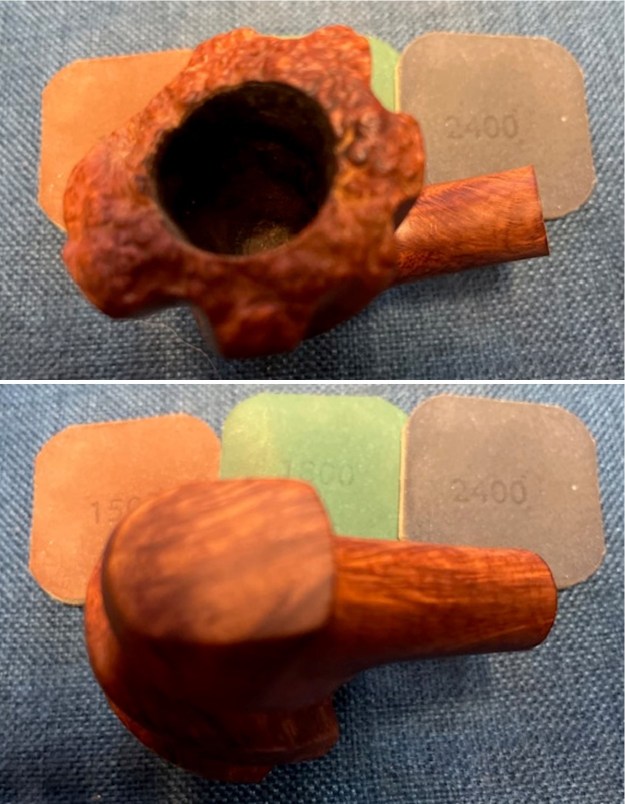
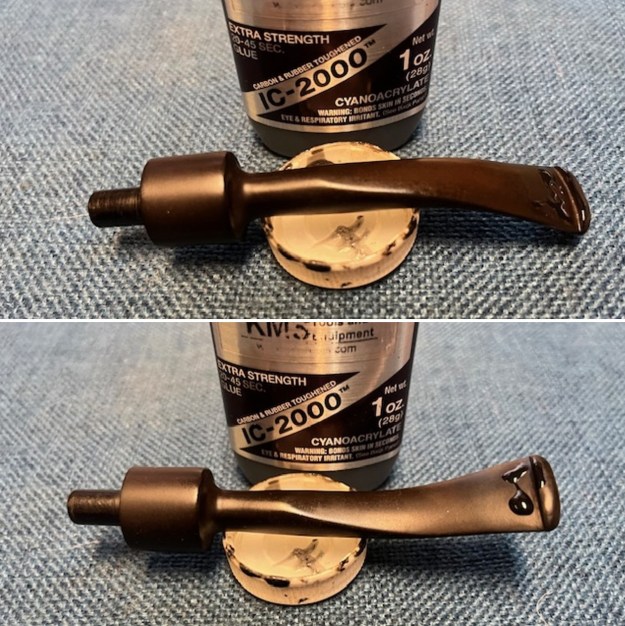
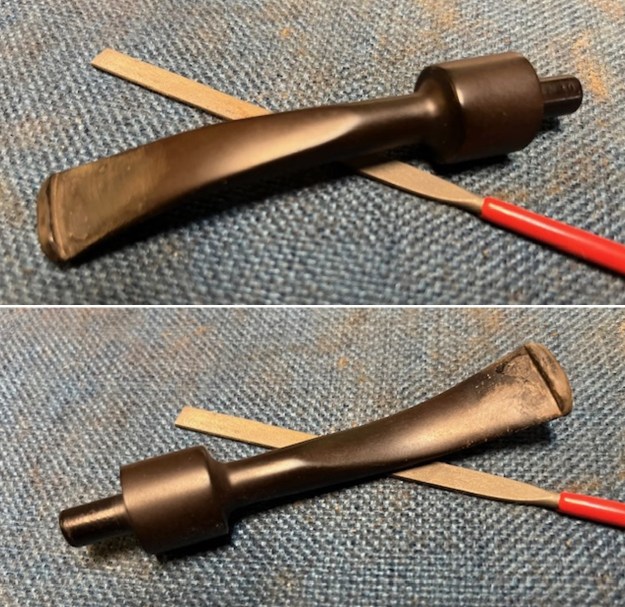
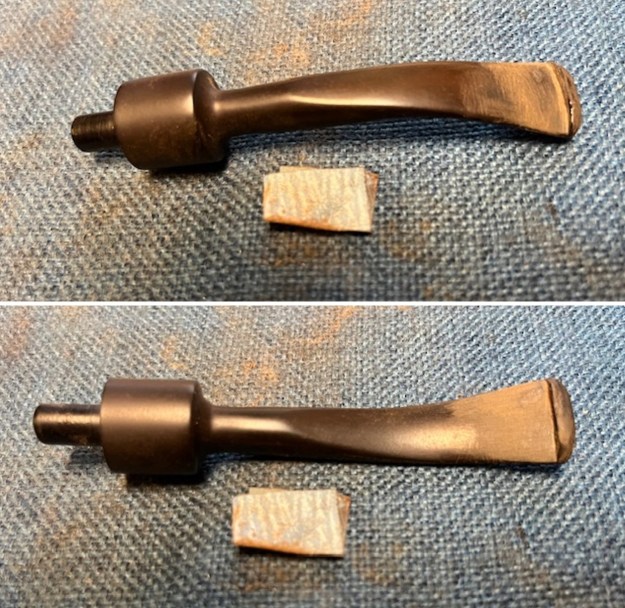
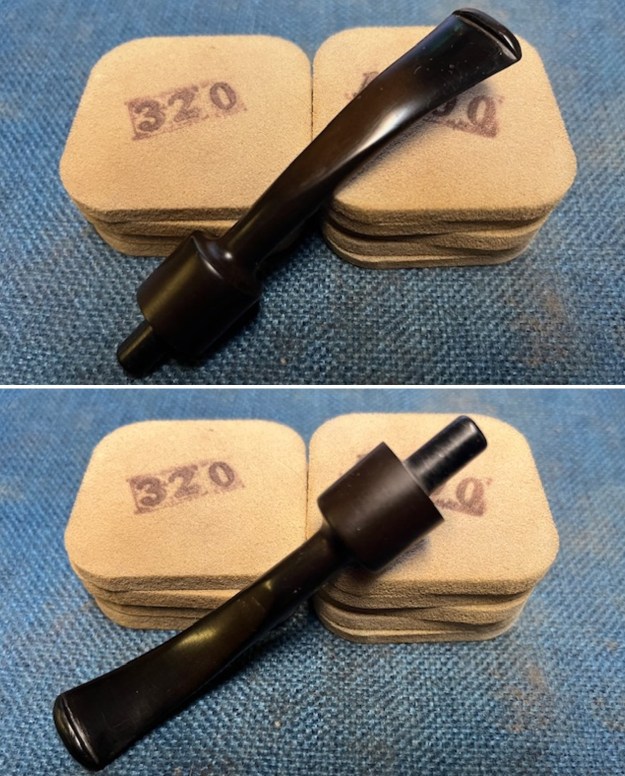
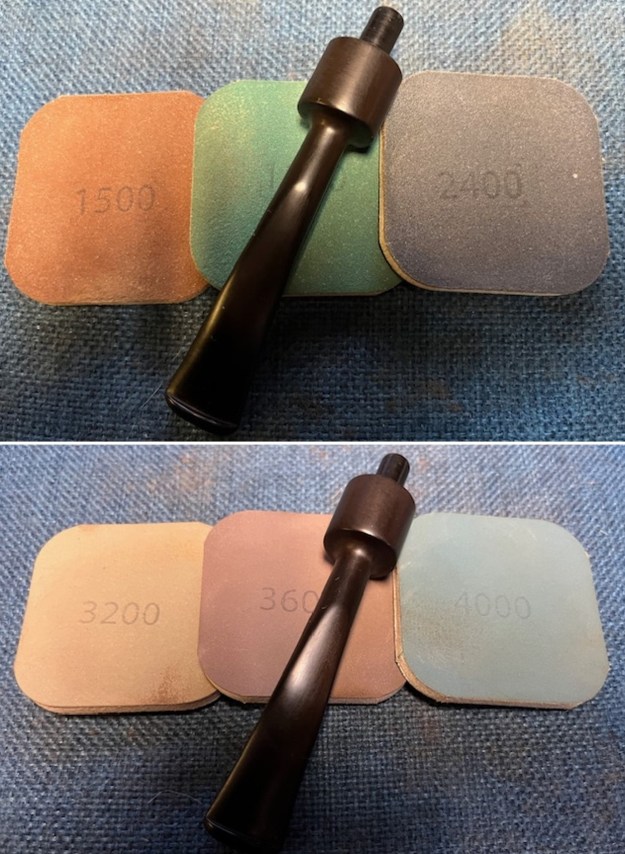
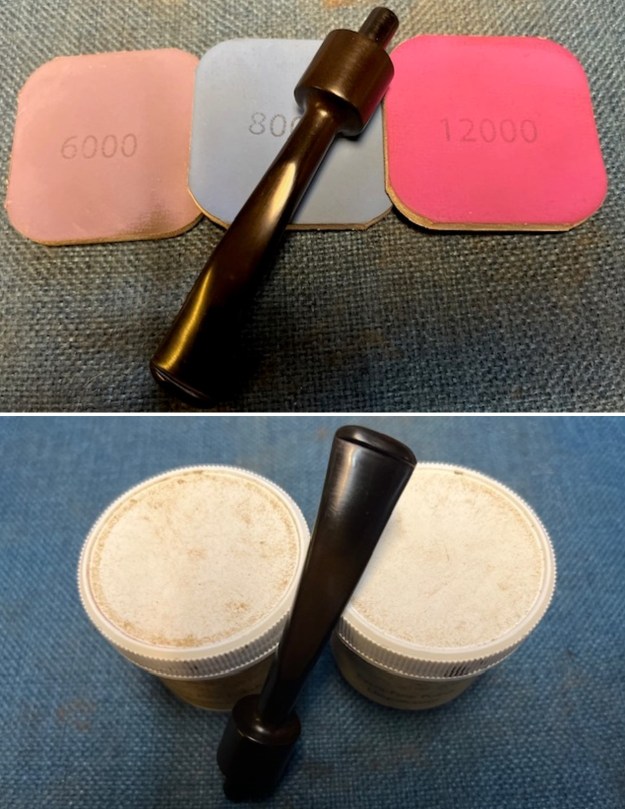
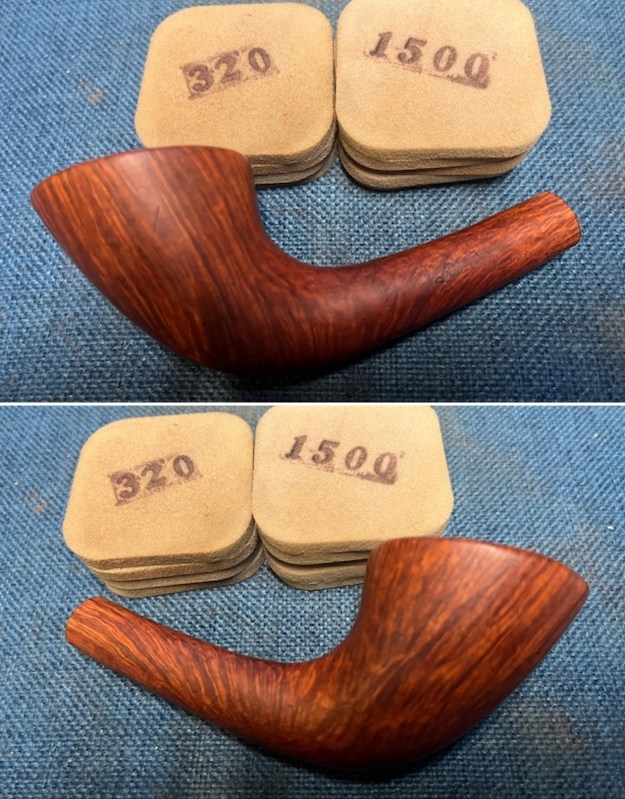
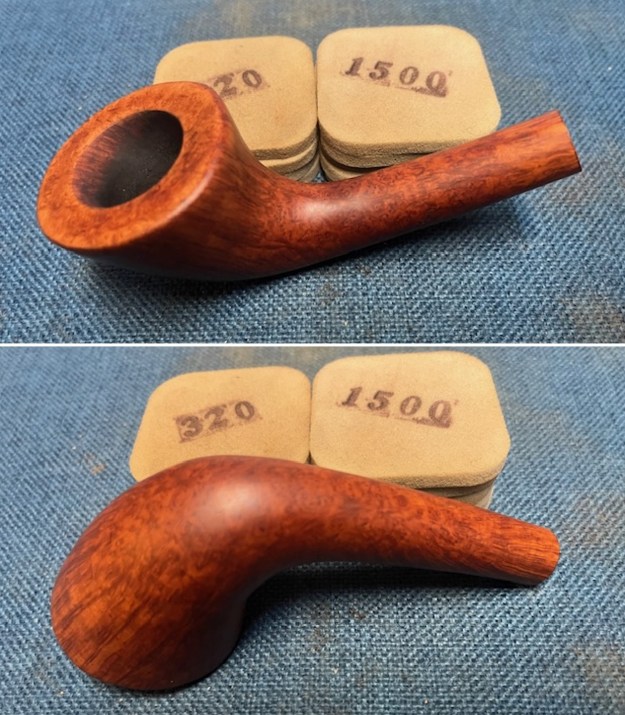
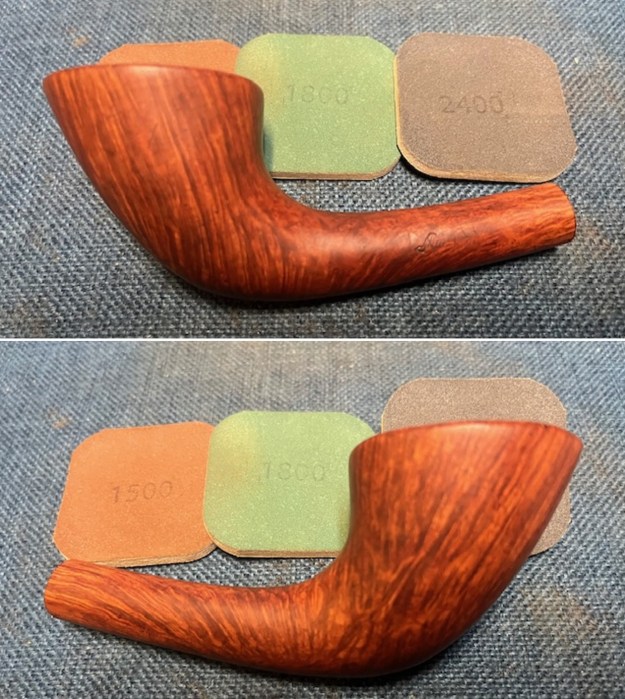
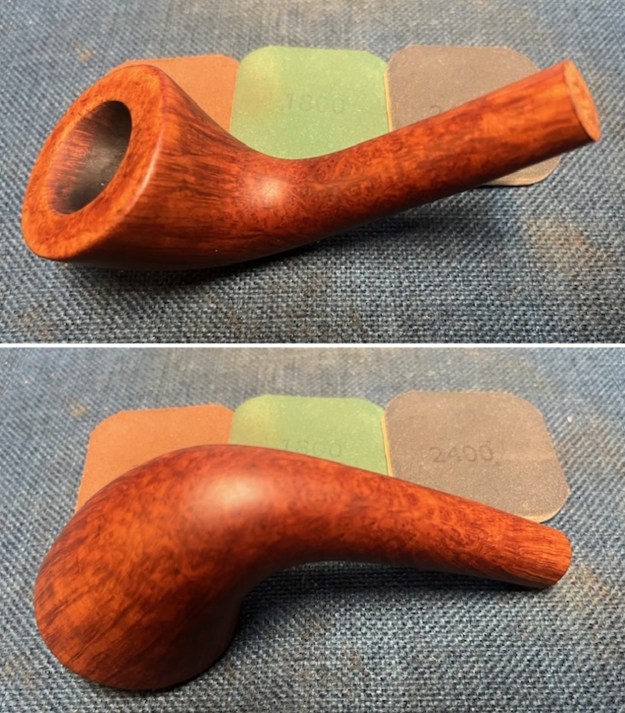
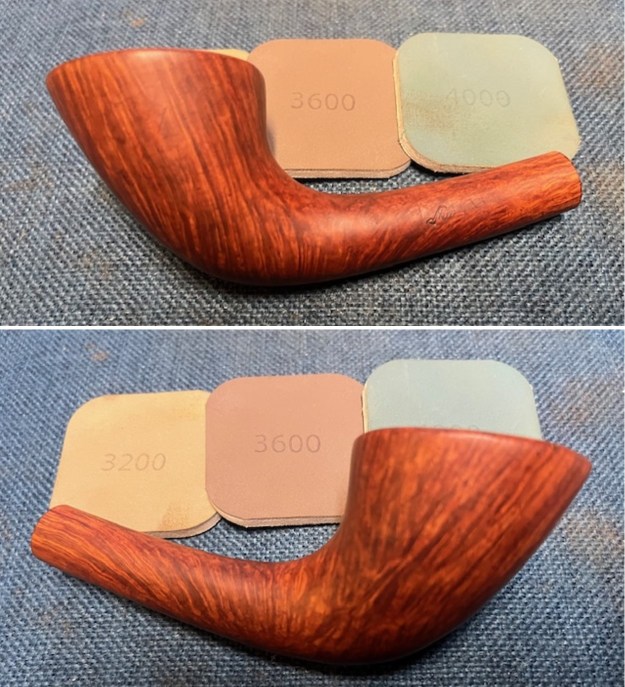
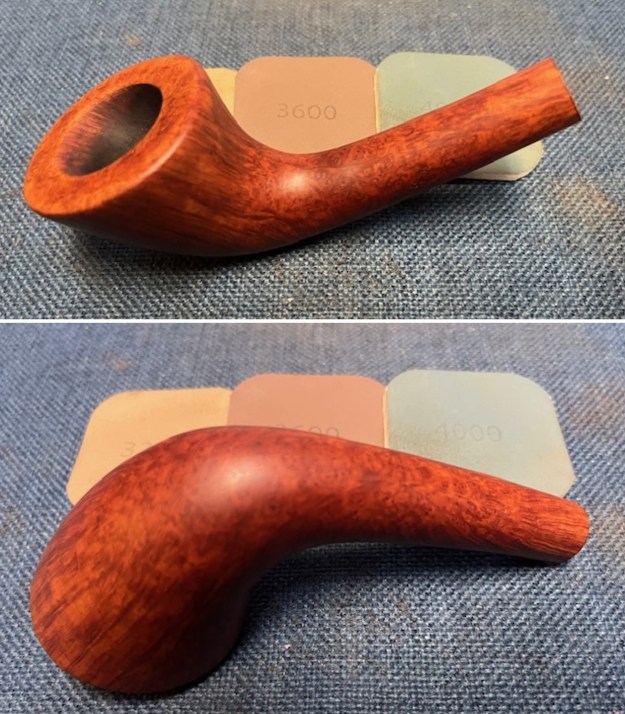
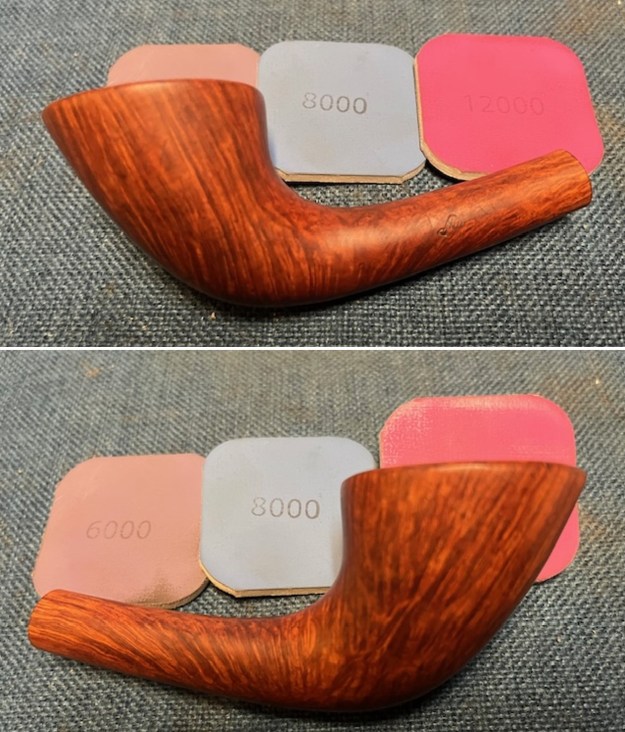
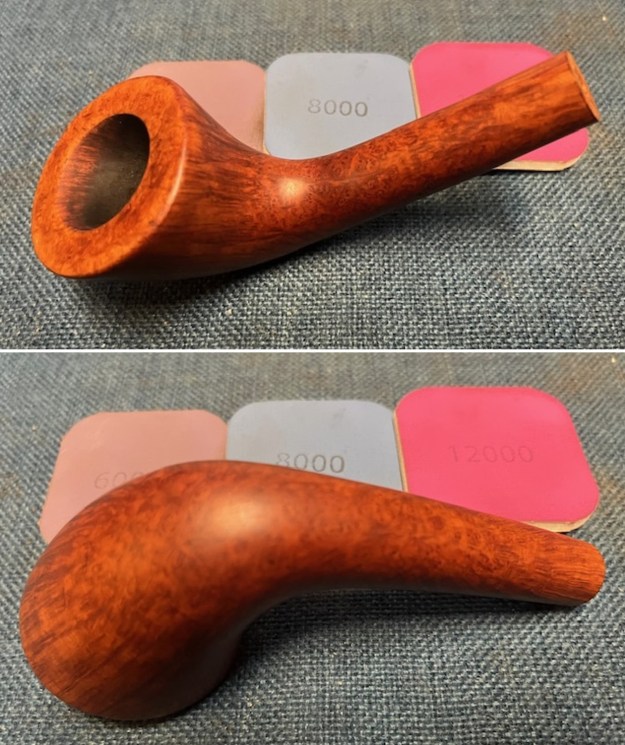
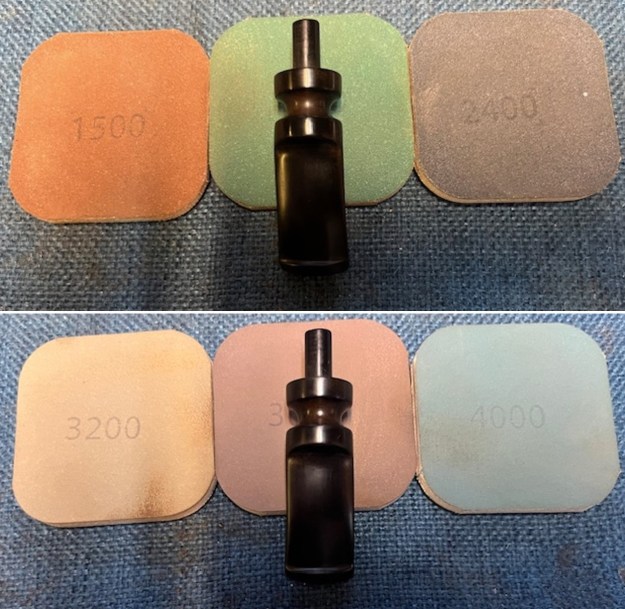
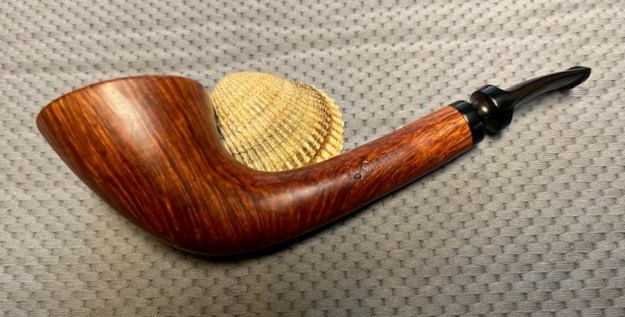
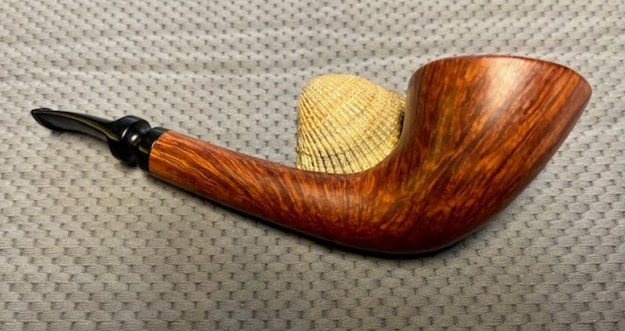
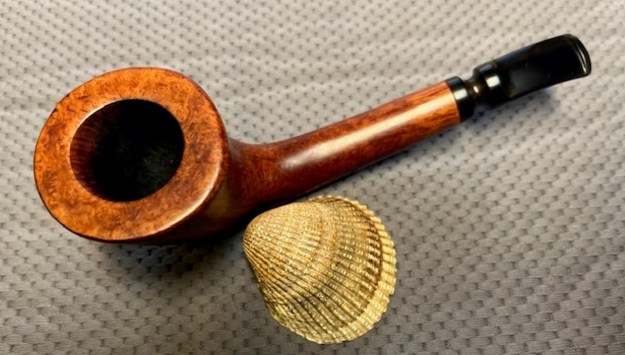
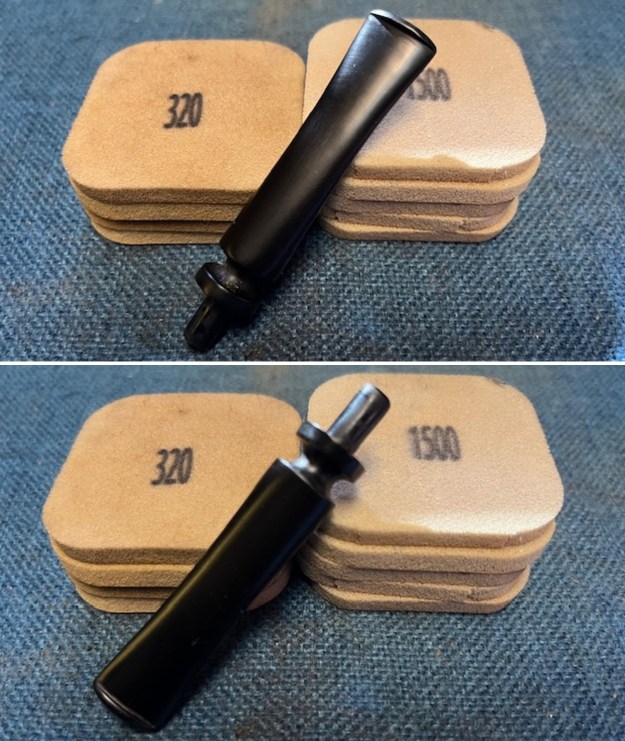
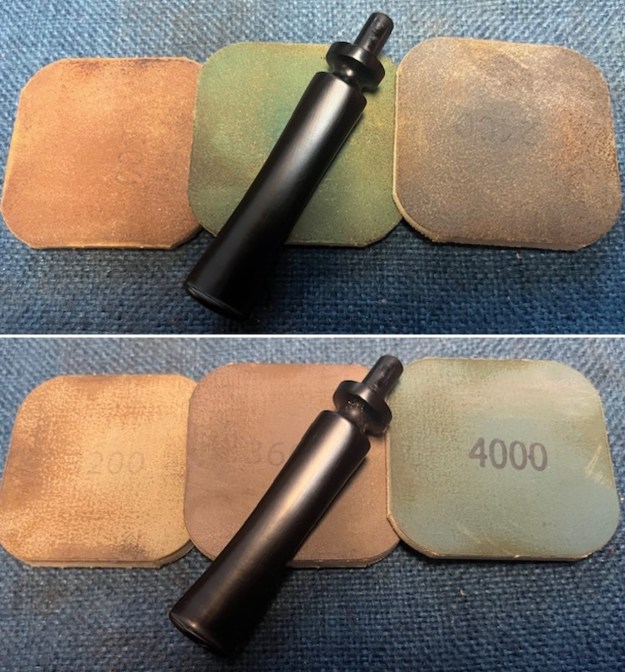
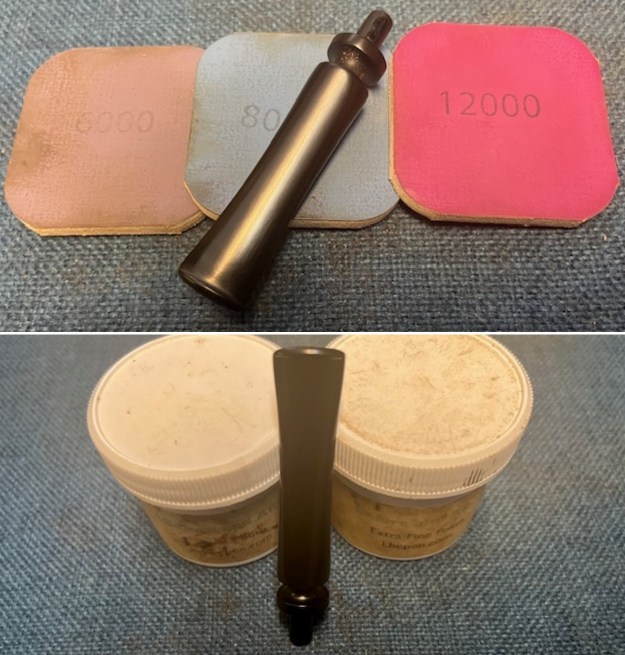
Armed with that information I turned to work on the pipe itself. Jeff had cleaned up the pipe with his usual thoroughness. He reamed the pipe with a PipNet pipe reamer and removed the rest of it with a Savinelli Fitsall Pipe Knife. He scrubbed the bowl with undiluted Murphy’s Oil Soap with a tooth brush. He rinsed it under running warm water to remove the soap and grime. He cleaned out the inside of the shank and the airway in the stem with alcohol, cotton swabs and pipe cleaners and shank brushes. He soaked the stem in Briarville’s Pipe Stem Deoxidizer and rinsed it off with warm water. I took photos of the pipe before I started my part of the restoration work. The rim top cleaned up really well. The rim top and inner edge of the bowl look good. The plateau rim top looks very good. There is a slight darkening on the inner edge of the bowl. The bowl itself was very clean and the pipe smelled fresh. The stem surface had light tooth chatter on both sides near the button.The stamping on the left side of the shank is faint but still readable. It is stamped as noted above. I removed the stem and took a photo of the pipe to give a sense of the whole.I wiped the bowl down with some acetone to see if I could lighten the darkening around the bowl sides. It worked quite well. I sanded the sides of the bowl and shank with 320-3500 grit sanding pads. There were also some scratches in the briar on the sides, but nothing too deep so this process would take care of the issues. I polished the briar with micromesh sanding pads – dry sanding with 1500-12000 grit sanding pads. I wiped the bowl down with a damp cloth after each pad. I take photos of the three groups of pads for my own viewing primarily as I am looking for progress in polishing. Once again, by the end of the process it looked quite good. I rubbed the bowl and shank down with Before & After Restoration Balm. I worked it into the surface of the bowl sides and shank with my fingertips. i worked it into the plateau on the rim top with a shoe brush. The product works to clean, enliven and protect the briar. I let the balm sit for 15 minutes and buffed with a cotton cloth to raise the shine. The grain came alive. I set the bowl aside and turned my attention to the stem. I “painted” the surface of the stem to raise the tooth marks on the vulcanite. I filled in what remained in the surface with black CA glue and set it aside to cure. Once the repair cured I used a flat needle file to smooth out the repairs on the stem surface. I followed that up with a folded piece of 220 grit sandpaper to blend them into the surface of the stem. I sanded the stem with 320-3500 grit sanding pads. I wiped the stem down after each pad with an Obsidian Oil soaked cloth. The process helped remove the lingering oxidation.I polished the stem with micromesh sanding pads – 1500-12000 grit pads to remove them. I wiped the stem down with Obsidian Oil after each sanding pad. I used Before & After Pipe Polish – both Fine and Extra Fine to further polish the stem. I rubbed it down with a final coat of Obsidian Oil and let it dry. This Jack H. Weinberger (JHW) Fan Shape Oval Freehand with a vulcanite saddle stem is a great looking pipe with some beautiful grain around the front and sides of the bowl. The grain around the bowl is quite stunning and works well with both the shape and the polished vulcanite saddle stem. I put the stem back on the bowl and carefully buffed the pipe with Blue Diamond on the buffing wheel using a light touch on the briar. I gave the bowl and the stem multiple coats of carnauba wax on the wheel and followed by buffing the pipe with a clean buffing pad. I hand buffed the pipe with a microfiber cloth to deepen the shine. The finished Jack H. Weinberger (JHW) Fan Freehand fits nicely in the hand and feels great. Give the finished pipe a look in the photos below. The dimensions of the pipe are Length: 6 ½ inches, Height: 3 inches, Outside diameter of the bowl: 2 ½ inches long x 1 ½ inches wide, Chamber diameter: ¾ of an inch. The weight of the pipe is 2.26 ounces/64 grams. I will be putting it on the rebornpipes store in the American Pipemakers Section shortly. If you are interested in adding this pipe to your collection send me a message or an email. Thanks for reading this blog and my reflections on the pipe while I worked on it. I appreciate your support and time!

Resurrection of a Well-Loved, Tired Old Dunhill Shell 4106 Billiard


by Steve Laug

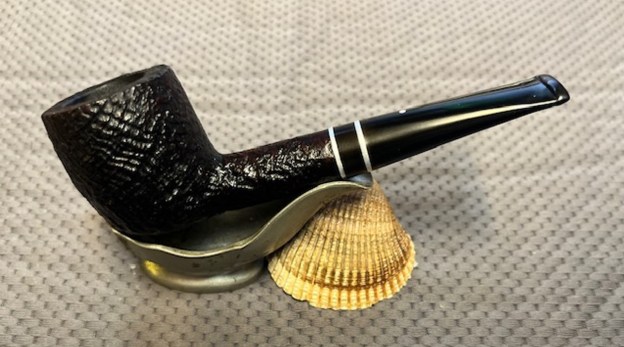
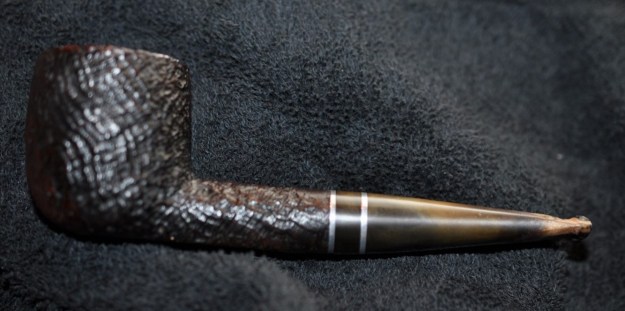
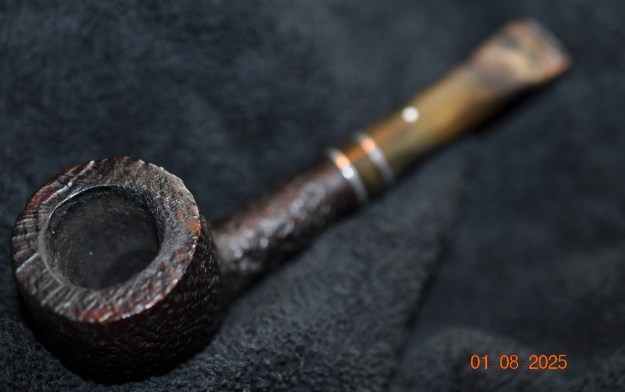
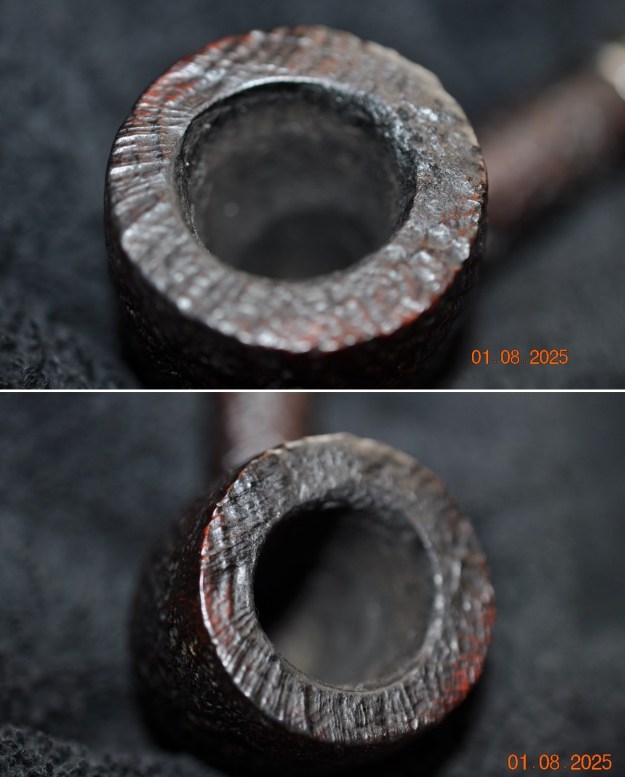
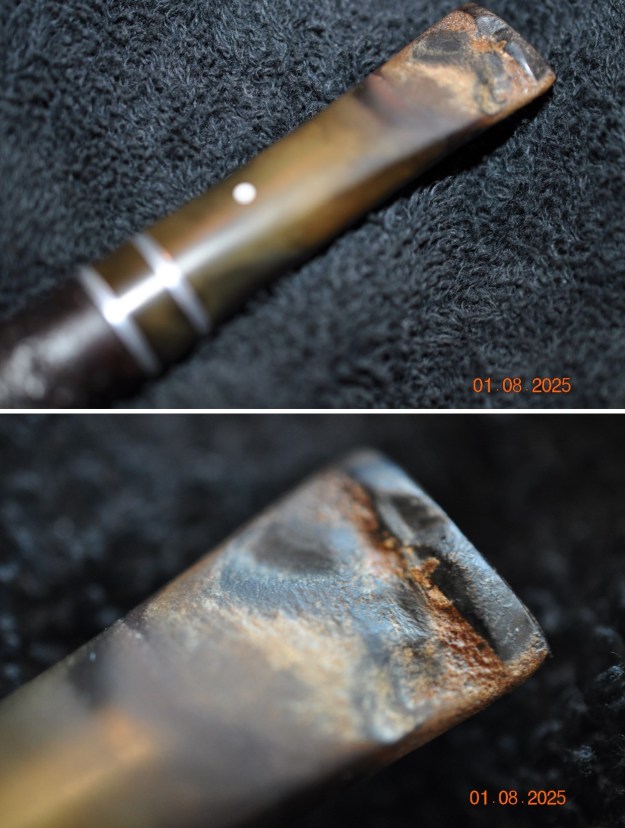
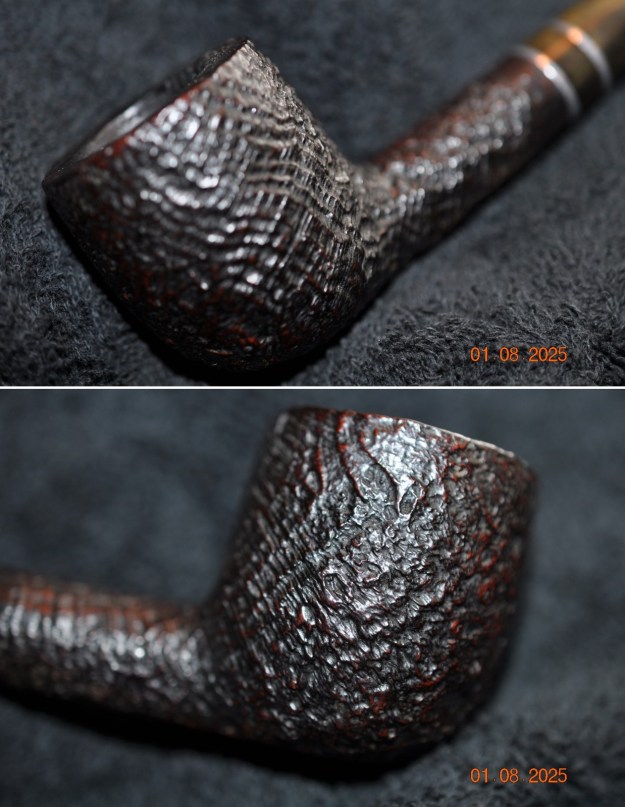
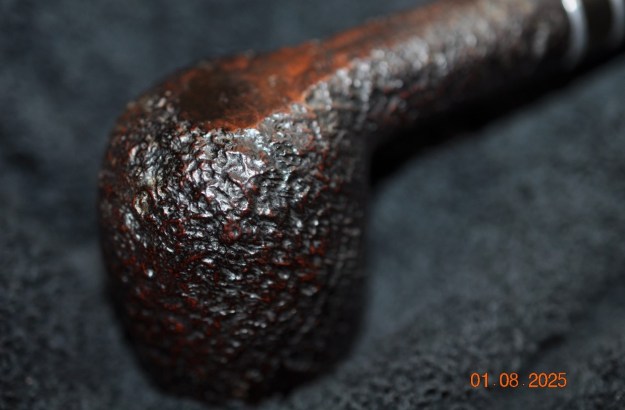
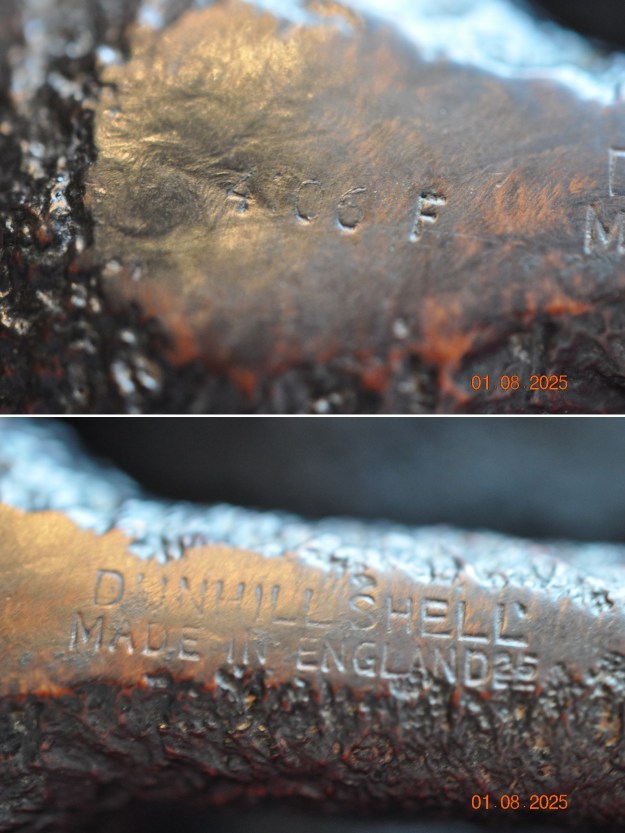
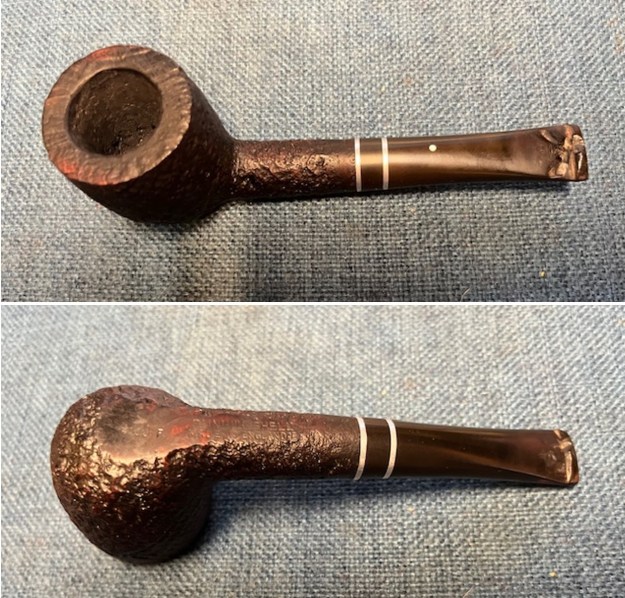
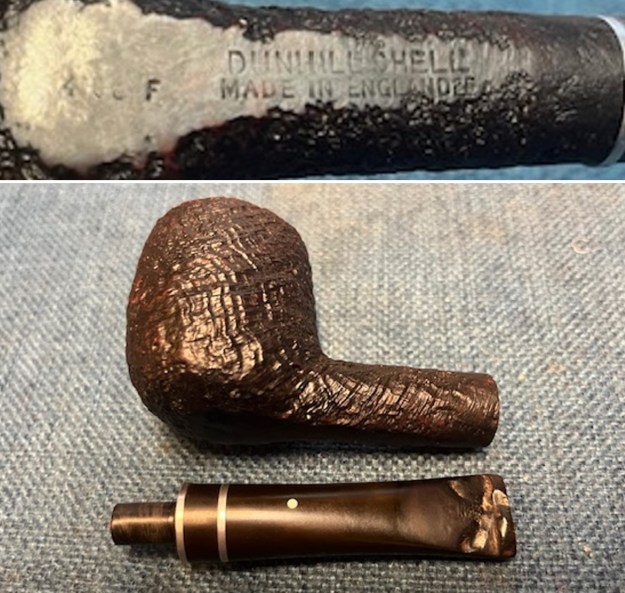
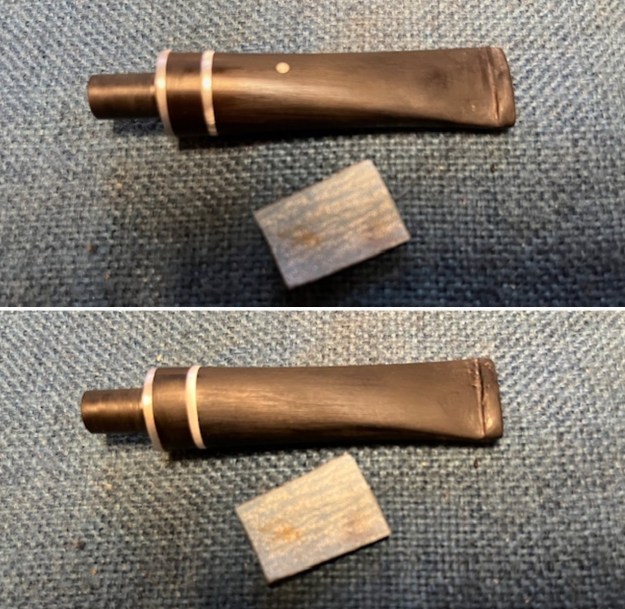
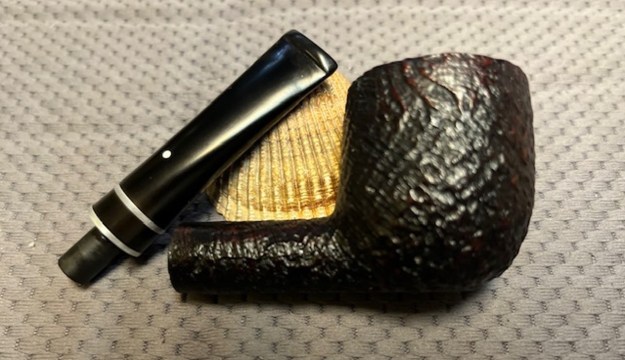
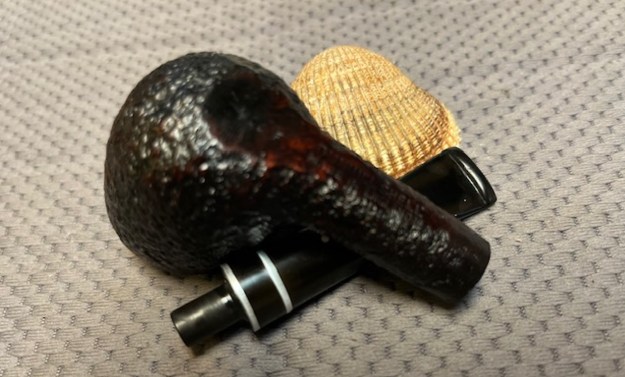
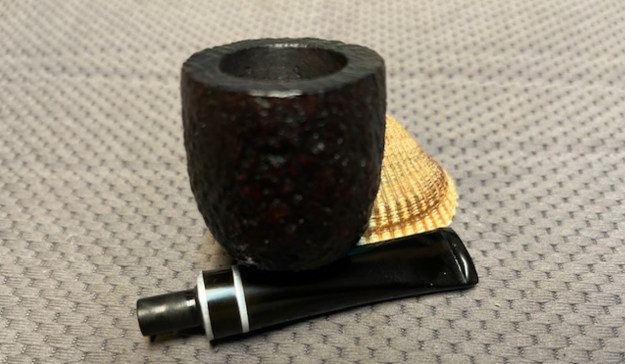
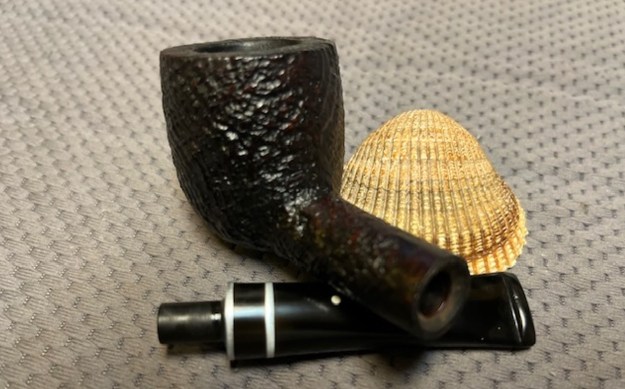
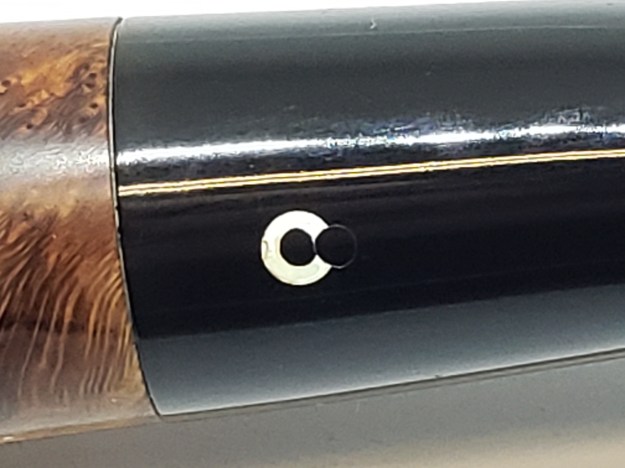
Sometimes when we get around to working on a pipe I am struck with asking why we picked this one up. That is the case with the next poor old Dunhill. It has been either well loved or abused depending on your perspective. We picked the pipe up from a seller in Ogden, Utah, USA on 12/12/2024. Probably the Shell finish and the Dunhill stamp is what caught our eye. It is stamped on the underside of the shank and reads 4106F on the heel of the bowl. That is followed by Dunhill Shell [over] Made in England25. It has a classic Shell briar dark brown/cordovan/black finish sandblast that is a stark contrast to the two silver coloured inlaid rings in the stem. From the side view it is a great looking sandblast pot. However, when you turn it over and examine it from the top down that can begin to see the abuse or love. The bowl appears to be moderately caked at first glance but it is actually quite thick at the bottom half of the bowl and hard as aged concrete. The inner edge and the top show lava overflow and it is hard to know if there is rim damage at this point because of the lava. And let’s talk about that stem. It is oxidized and calcified which is quite normal for what I see. However, the deep tooth marks and chomp marks on the stem surface and button edges are deeper than they first appear. You can picture the old pipe man (or maybe a young one though I doubt it) chomping down on the stem while concentrating on whatever his hands were doing in the shop. Cleaning it up will truly reveal the depth of the mess but first impressions are not good! There were two inlaid metal rings in the taper stem – sandwiching a piece of vulcanite. This is something I have not seen before on a Dunhill stem. The classic white spot is on the top of the stem and looks to be in good condition. Jeff took some photos of the pipe to show the general condition of the pipe before he started his clean up. What are your impressions? Would you have bought it or left it? He took some photos of the rim top and bowl from various angles to give me a clear picture of the condition of the rim top and bowl. You can see the lava on the rim top and edges as well as part of the cake in the bowl. It is thicker starting about half way down the bowl. The next photos show the top and underside of the stem. It is actually far worse than even the photos show. Jeff took some photos of the sides and heel of the bowl to show the condition of the finish on the pipe. The photos showed a great sandblast. It is a great looking piece of briar at least on the outside at this point! He took some photos of the stamping on the underside of the bowl and shank. The stamping was clear and readable as noted above. There was some faintness to the stamping of the shape number on the heel of the bowl but it was still readable.As is my regular practice, before I started my work on the pipe, I turned to Pipedia’s section on Dunhill Shell Pipes to get a refresh the information I know regarding the Dunhill finishes (https://pipedia.org/wiki/Dunhill#Root_Briar). I quote:

Shell

A deep craggy sandblast with a black stain finish (usually made using Algerian briar) – the color of the stain used has varied over the years. Although there is some doubt as to them being the first to sandblast pipes, Dunhill’s Shell pipes, and the sandblasting techniques developed to create them are considered one of Dunhill’s greatest and most lasting contributions to the art of pipe making.

The documented history of Dunhill’s inception of the Shell is largely limited to patent applications — there are no catalog pages or advertisements promoting blasted pipes at the time. The preliminary work on the English patent (No. 1484/17) was submitted on October 13, 1917. The patent submission was completed half a year later, on April 12, 1918, followed by the granting of the English patent on October 14, 1918. This was less than a month before the end of The Great War on November 11th.

In 1986 Dunhill released a line of premium Shell finish pipes – “RING GRAIN”. These are high-quality straight grain pipes which are sandblasted. Initially only Ring Grain, but now in two different finishes. In 1995 the “Shilling” was introduced with Cumberland finish – it is an extremely rare series. These pipes exhibit a deeper blast characteristic of that of the 1930’s – mid-1960’s (and the limited ‘deep blast’ pipes of the early 1980s) and show a fine graining pattern. These are considered the best new Dunhills by many enthusiasts today and are very rare. The finish is sometimes described as tasting like vanilla at first, with the taste becoming more normal or good as the pipe breaks in.

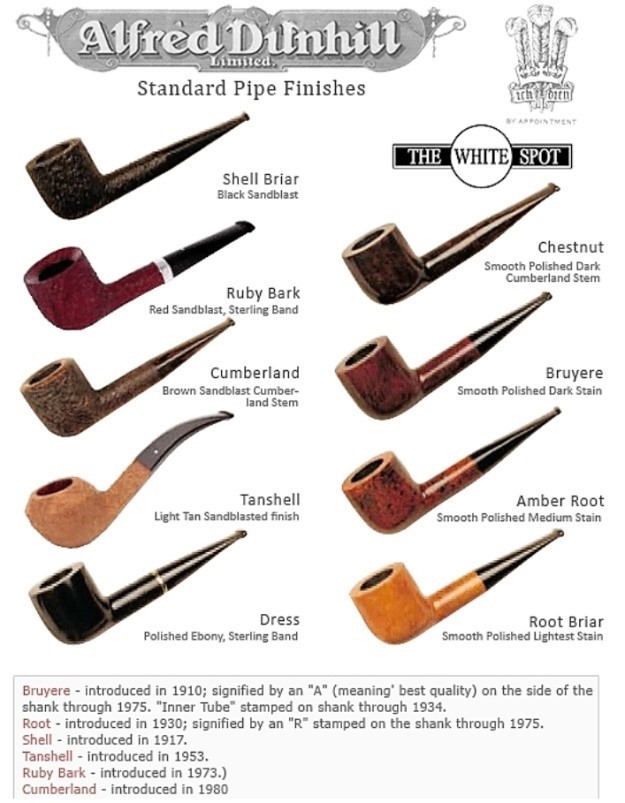
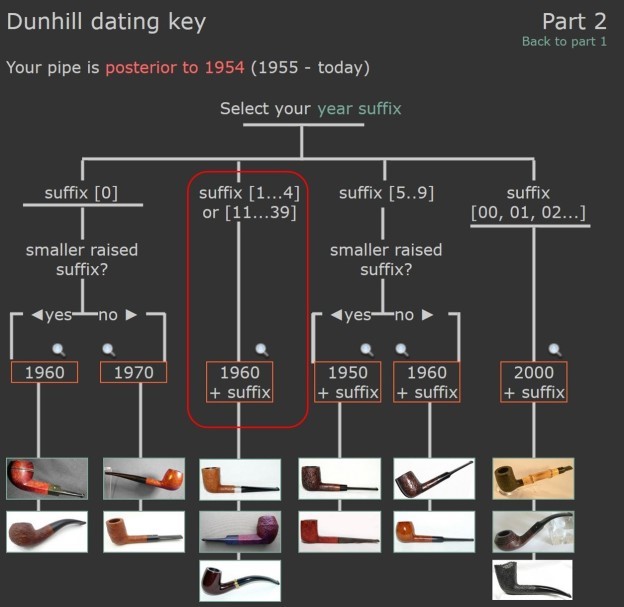
There was also a link to a catalogue page that gave examples and dates that the various finishes were introduced (https://pipedia.org/wiki/File:Dunnypipescatalog-1.png).I turned to Pipephil’s dating guide to show how I arrived at the date of manufacture for this pipe (http://www.pipephil.eu/logos/en/dunhill/cledat-en1a.html). I am including the chart that is provided there for the dating a pipe. I have drawn a red box around the section. Since the pipe I am working on has a superscript suffix 25 after the D in England it points to the 1960 line on the chart below. To date it just add 1960 +25 for a date of 1985. I have drawn a red box around the pertinent section in the chart.I now knew that I was working on a Shell that came out in 1985. The shape of the pipe is called a Pot with a 4106 Shape number on the heel of the bowl.

I turned to Pipephil’s shape list (http://www.pipephil.eu/logos/en/dunhill/shapes.html). At the bottom of the list of shapes (with the 06 being a pot) is a key for interpreting the digits in the stamp I have included that below.

Dunhill pipes are stamped with a four digit code.
Digit 1: (from 1 to 6) denotes the size of the pipe (the group).
Digit 2: denotes the style of the mouthpiece (0,1=tapered, 2=saddle)
Digit 3 and 4: denote the generic pipe shape (in yellow in the chart on top) 

Example: 5102
(5 = size | 1 = tappered stem | 02 = Bent)

When 5 digits occur, the meaning of the 4 first remain the same

The 4106 was thus a Group 4 size, with a taper mouthpiece, and in an 06 or Pot shape.

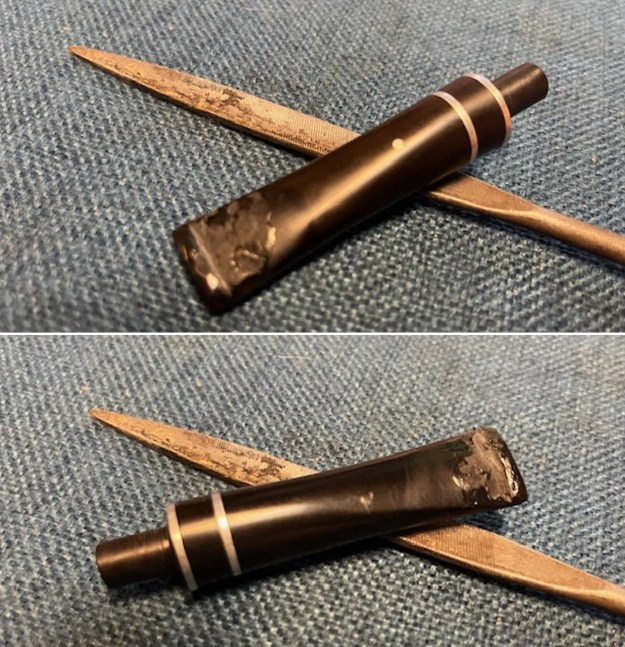
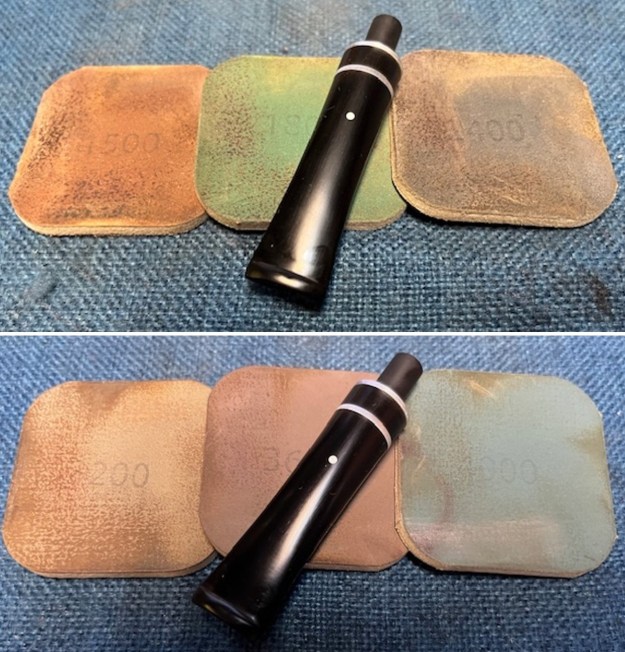
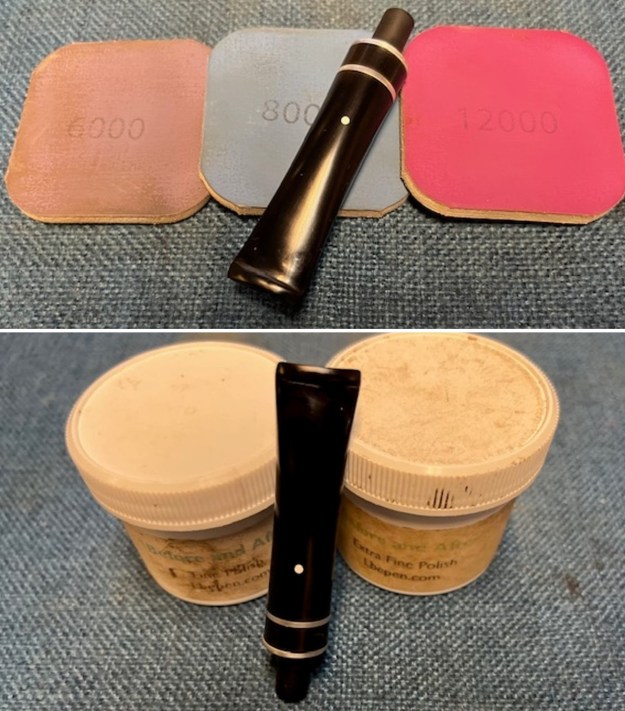
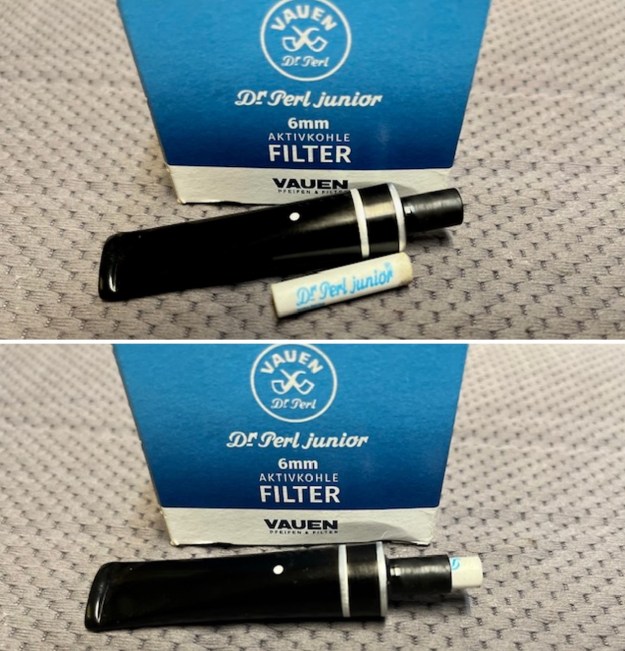
Armed with that information I turned to work on the pipe itself. Jeff had done a great job cleaning up the pipe as usual. He cleaned up the inside of the bowl with a PipNet reamer and a Savinelli Fitsall Pipe Knife. The bowl walls looked very good but there was a thick ring at the bottom of the bowl. The question was whether it was more cake or damage to the bowl bottom. The airway appears to be drilled at the bottom. This will take some more work. He scrubbed the interior of the bowl and shank with pipe cleaners, cotton swabs and alcohol to remove the tars and oils. He scrubbed the exterior of the pipe with Murphy’s Oil Soap and a tooth brush to remove the grime from the finish. He worked on the rim top lava and darkening with the soap and tooth brush. He scrubbed the inside of the stem with alcohol and pipe cleaners. He scrubbed the exterior with Soft Scrub and then soaked it in Briarville’s Pipe Stem Deoxidizer. He washed it off with warm water to remove the deoxidizer. Now the damage to the stem was very clear. Overall, the pipe looked far better. I took photos of the pipe when I received it before I started working on it. I took close up photos of the bowl, rim top and stem to show how clean the pipe was. The bowl was clean but if you look closely you can see the thick ring toward the bottom of the bowl. The stem was clean but the tooth damage is very visible on both sides of the stem and button. The pipe has potential but it will be a lot more work to bring it back.I took a photo of the stamping on the underside of the shank. It read as noted above. It is very clear and readable even though it is faint in spots. I also removed the stem from the shank and took photos of the pipe to show the look of the parts.It did not take long to decide where I would start with this pipe. I tried to raise the tooth marks as much as possible by “painting” the surface with a lighter flame. It did very little to lift the marks in the stem. I forgot a photo of this but you have seen them before. I filled in the deep marks by layering in the rubberized black CA glue. Once it had cured I flattened the repairs and recut the button with a small file. I reshaped the button top and edges and further flattened and blended in the repairs with a folded piece of 220 grit sandpaper. It was a big improvement but still more work to go! I continued the sanding process with 320-3500 grit sanding pads. The repairs began to disappear into the surface of the vulcanite and the stem began to take on a smooth new look. Progress for sure.It was ready for the next step. I polished it with micromesh sanding pads – dry sanding with 1500-12000 grit pads and wiping the surface down with Obsidian Oil after each sanding pad. It is really shining. I polished it further with Before & After Stem Polish – both Fine and Extra Fine. I gave it another coat of Obsidian Oil to finish this step. I fit the polished stem with a Vauen Dr. Perl Junior 6mm filter in the tenon. It fit perfectly and as normal the filter reduced the draught on the pipe. The pipe can easily be smoked without the filter.I set the stem aside and worked on the bowl. I worked on the thick “concrete” like build up at the bottom of the bowl. It was very hard and thick. I used a PipNet Reamer to work on it a bit and a lot came out of the bowl. I chipped away at it with a Savinelli Fitsall Pipe Knife to remove the build up until the bottom and walls were clean.I cleaned the shank and the bowl again with alcohol and pipe cleaners to remove the dust and debris from the work on the bowl bottom. The exterior of the bowl was in excellent condition. I did not need to sand or do anything in preparation on the pipe. I set the stem aside and worked some Before & After Restoration Balm into the briar with my finger tips and a horsehair shoe brush. I let it sit on the bowl for 10 minutes and then buffed it off with a paper towel and soft cloth. The product is a great addition to the restoration work. It enlivens, enriches and protects the briar while giving it a deep glow. It is a product I use on every pipe I restore. I am excited to be on the homestretch and look forward to finally seeing the 1985 Dunhill Shell 4106 Billiard put back together, polished and waxed. I put the bowl and stem back together and lightly polished the bowl and stem with Blue Diamond to polish them. I gave the bowl multiple coats of Conservator’s Wax and the stem multiple coats of carnauba wax. I buffed the pipe on the wheel with a clean buffing pad to raise the shine. I hand buffed it with a microfiber cloth to deepen the shine. The depths of the sandblast really pop with the wax and polish. The repaired and polished vulcanite stem is a beautiful contrast to the combination of Shell stains on the bowl and shank. This Dunhill Shell 4106 Billiard was a lot of work to bring back to life. The pipe is tactile in the hand and should feel great as it is warmed up when smoking. The finished pipe is shown in the photos below. The dimensions of the pipe are Length: 5 inches, Height: 1 ½ inches, Outside diameter of the bowl: 1 ½ inches, Chamber diameter: 7/8 of an inch. The weight of the pipe is 1.31 ounces/ 38 grams. I will be putting this one on the rebornpipes store in the British Pipemakers Section soon. Let me know if you wish to add it to your collection.

As always, I encourage your questions and comments as you read the blog. Thanks to each of you who are reading this blog. Remember we are not pipe owners; we are pipe men and women who hold our pipes in trust until they pass on into the trust of those who follow us.

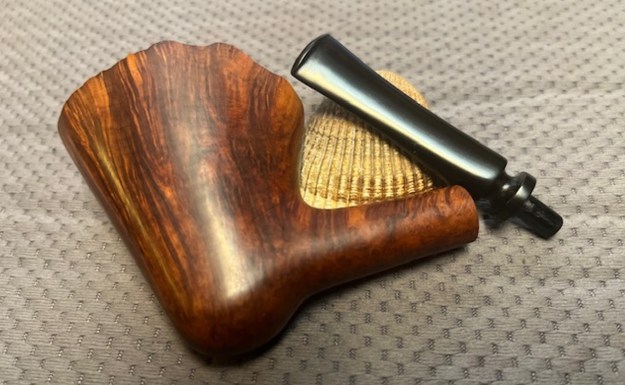
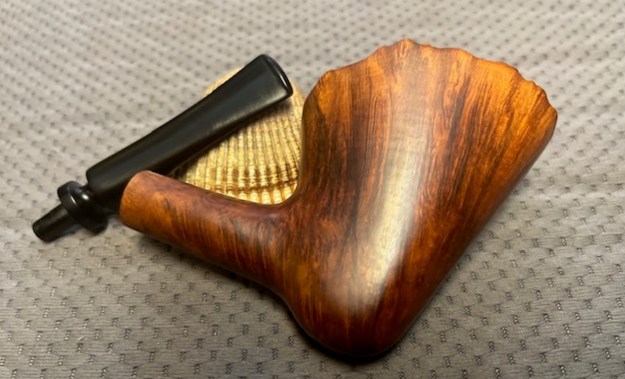
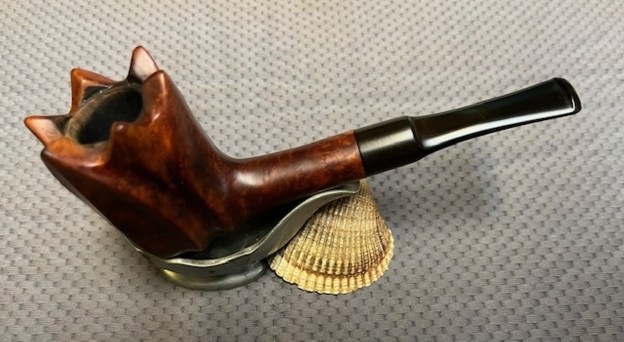
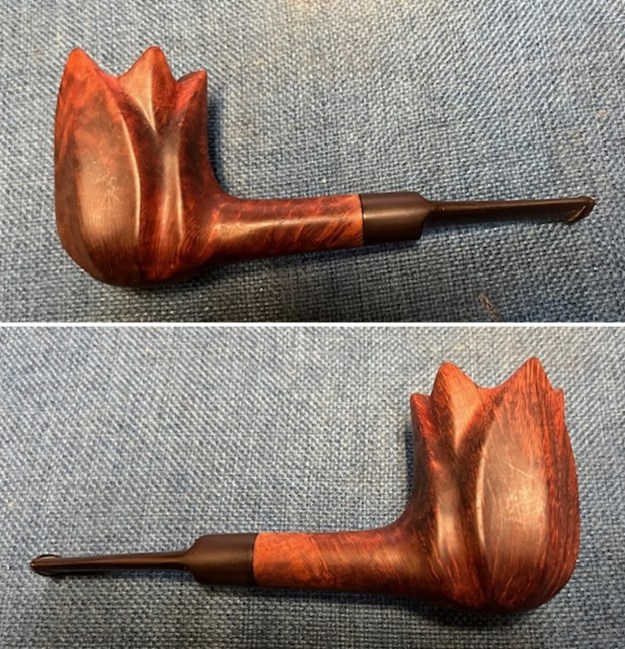
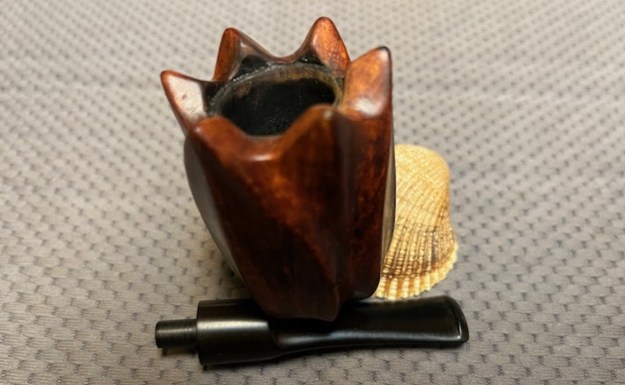
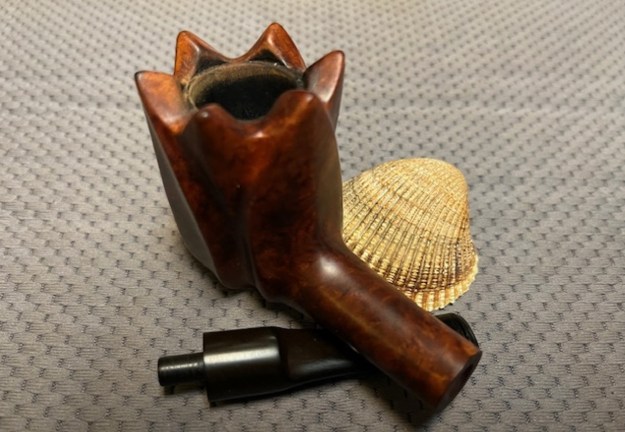
Restoring a JHW (Jack H. Weinberger) Fluted Tulip freehand with a saddle stem


By Steve Laug

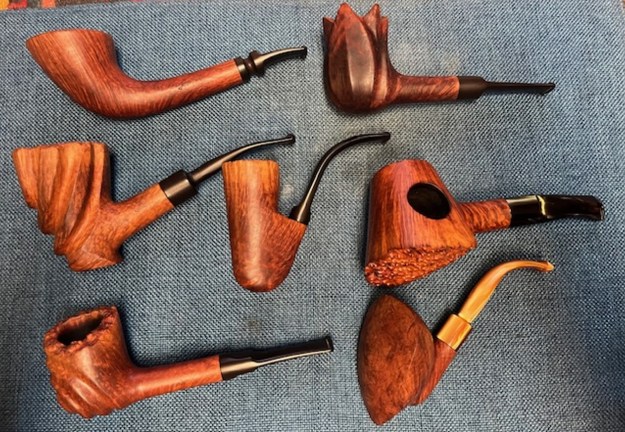
When Jeff and I were contacted about an estate in Santa Cruz, California, USA for sale I was excited to see what was in the lot. There were several with no other stamping on the shank than JHW. I have to say that I have seen very few JHW pipes and my heart skipped a beat when I saw not just one but 7 pipes with that stamping. All were Freehands and all were very unique – maybe even odd you might say! We purchased the estate on 05/28/2024.I am working on the last of the seven pipes. By now you know who JHW is. But maybe not so I ask again why so excited about three initials? Well I have to tell you right up front that JHW is Jack H. Weinberger. Who is that? That does not help either? Jack H. Weinberger was a pipe maker in West Caldwell, New Jersey. Still not helping? He hired young lads from the local high school to help him out as he carved 10-12 hours a day. Two of these are none other than Curt Rollar and Mark Tinsky went on to become the American Pipe Company. There was a long list of pipe carving luminaries who came through Jack’s shop and JHW pipes but these two you probably have heard of. So JHW or Jack H. Weinberger was an important part of the American Pipemaking scene and gave many carvers a start and they have continued to this day. Now maybe you understand my excitement – being able to work on a few of Jack’s pipes and bring them back to their former glory.

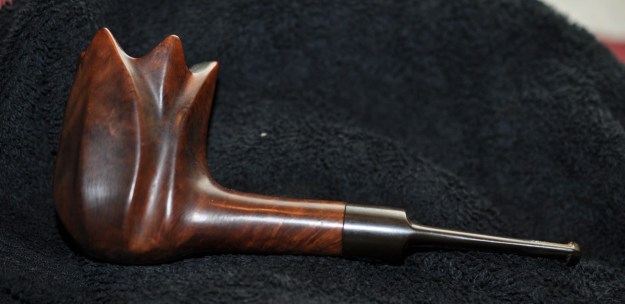
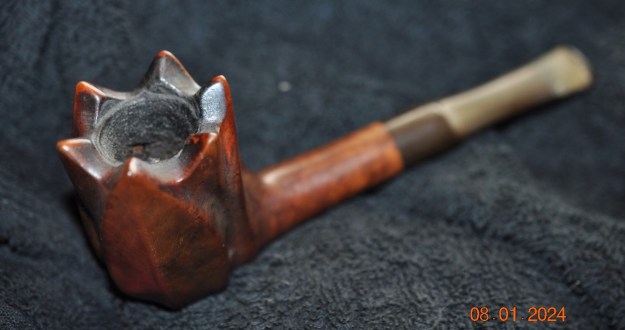
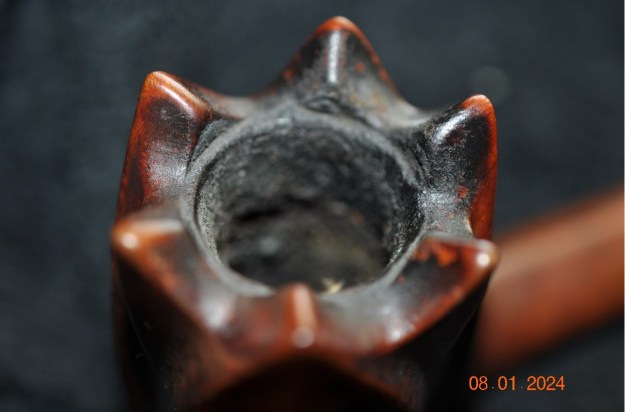
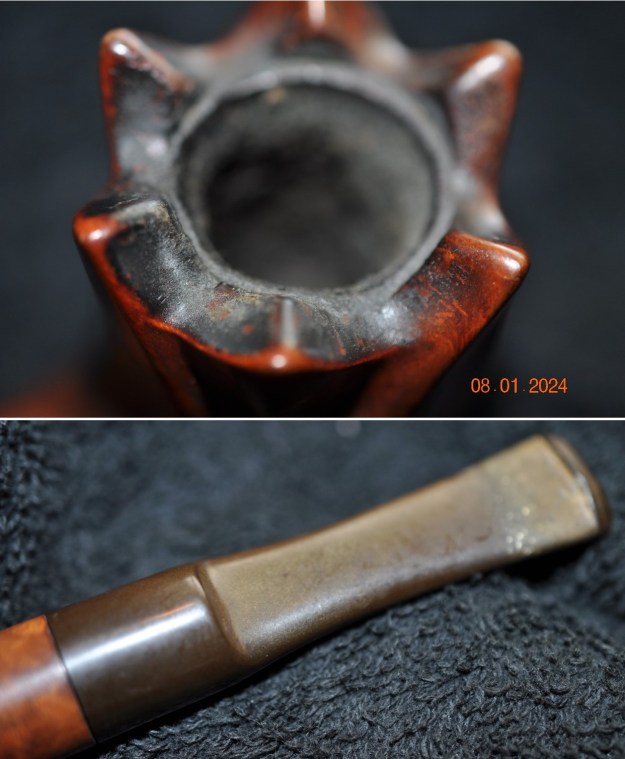
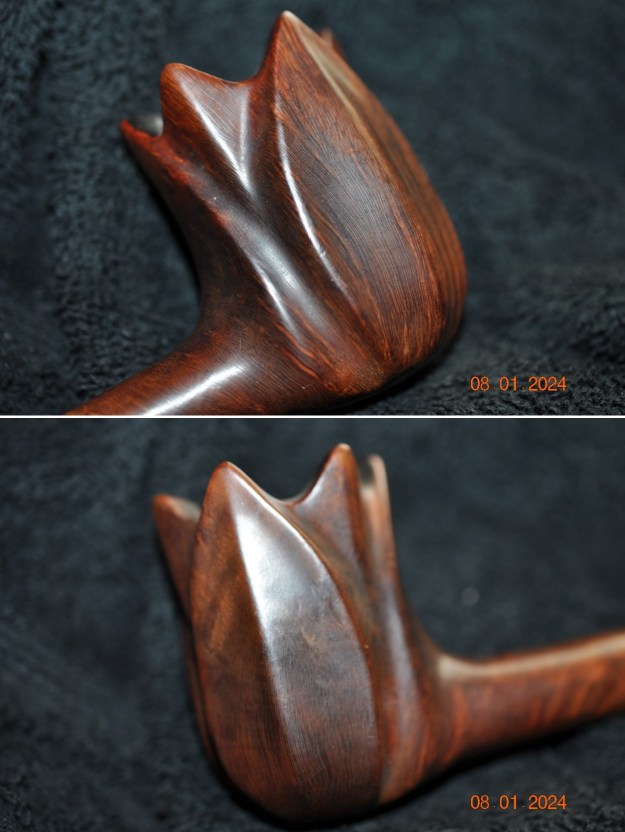
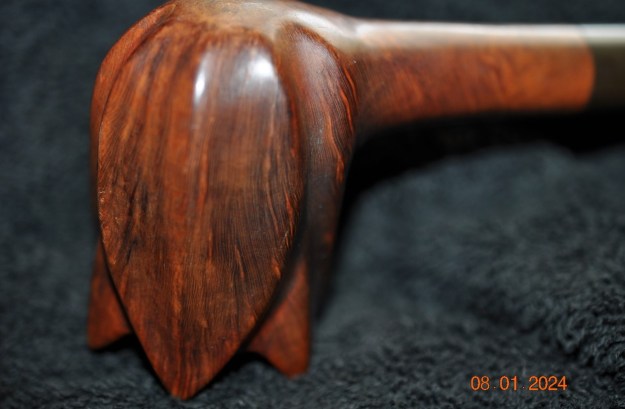
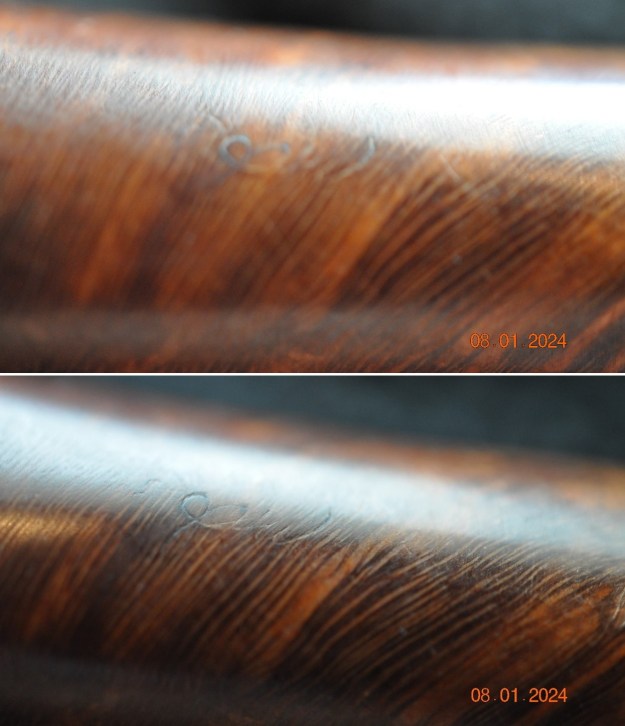
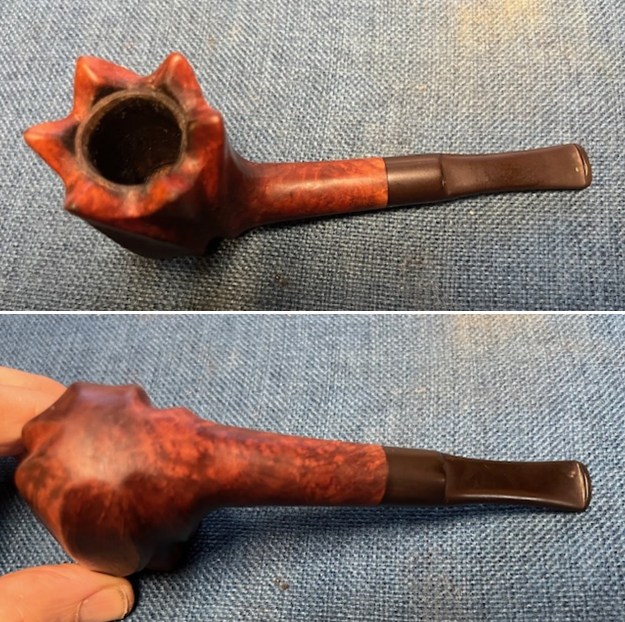
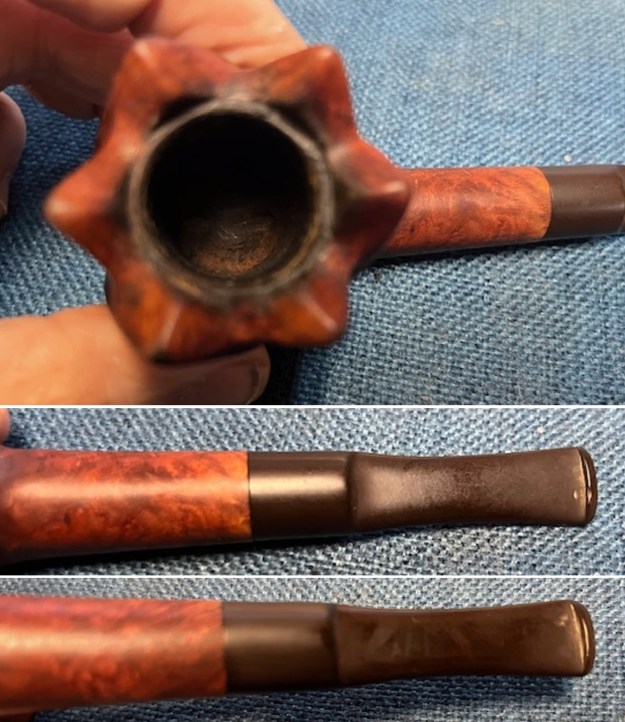
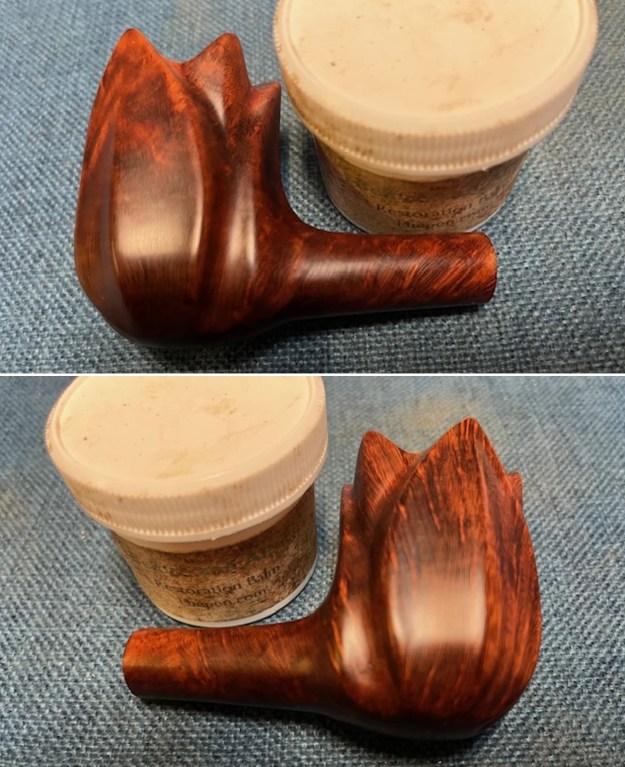
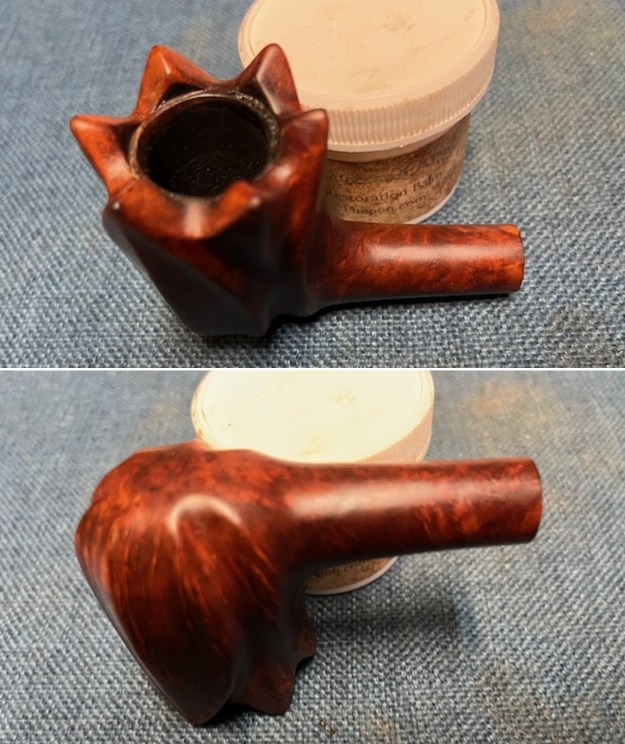
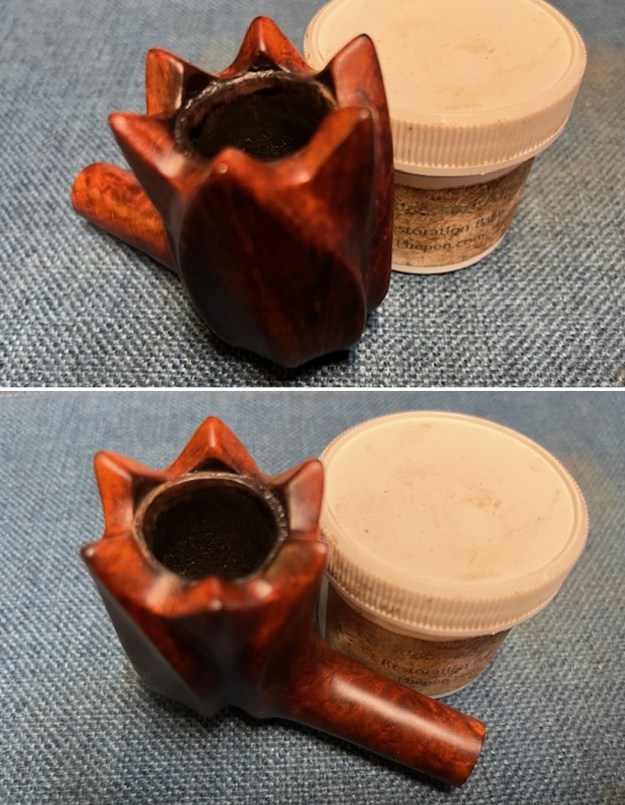
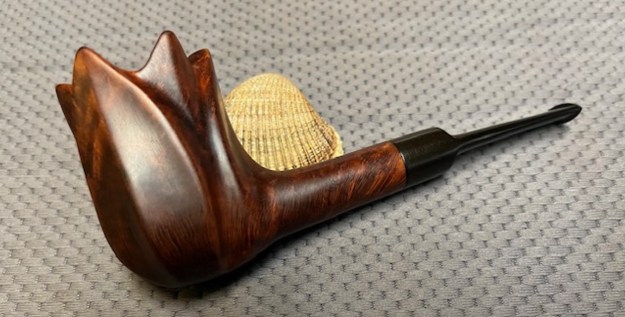
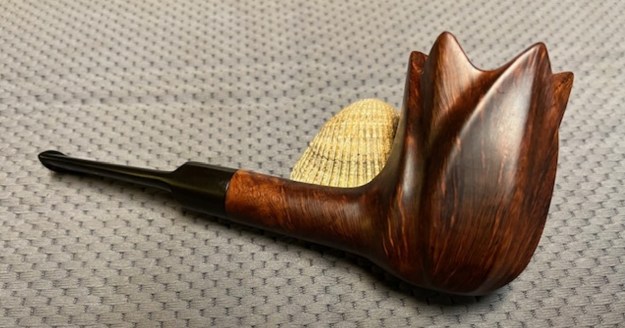
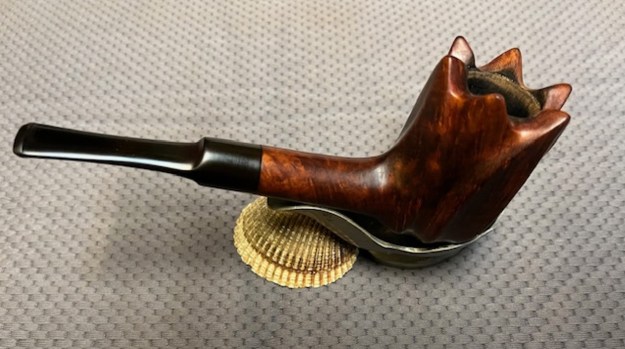
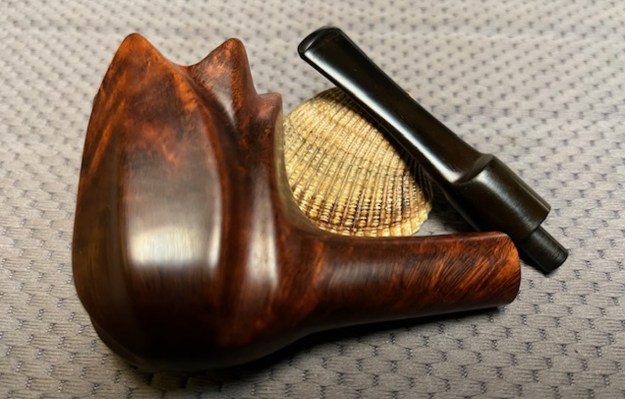
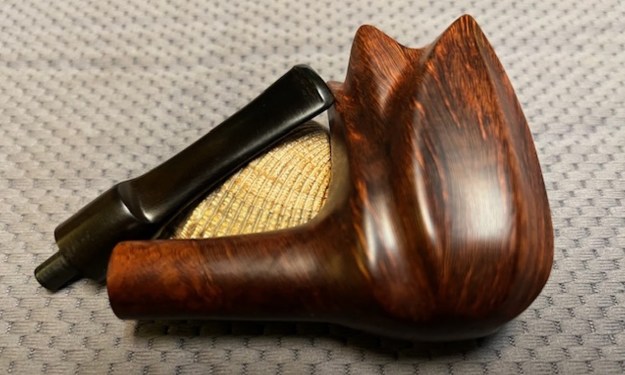
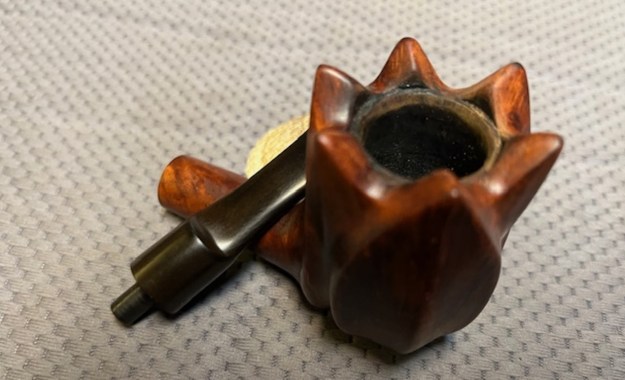
This pipe I chose to work on was another unusual one. It is a great piece of briar with a mix of grain all the way around the bowl and shank and a tulip shaped incorporated into the fluted and smooth portions of the bowl. It is a beautiful piece of briar! He made a carved, fluted style Tulip Billiard shaped pipe. The front, back and sides of the bowl have some nice straight grain. The rim top has the points of the petals around a thin flat rim top edge. Very unusual but something just calls out to you. When the pipe came to us it was dirty with grime ground into the finish. There was a thick cake in the bowl and lava on the rim top and inner edge. There appeared to be some darkening around the inner edge of the rim, the top and on the sides of the bowl. It was dirty but that did not hide the beauty of the briar. The stem is a saddle made out of vulcanite. There was light chatter on both sides just ahead of the button. Jeff took photos of the pipe as a whole before he started his cleanup work. I include them below. Jeff took some close up shots of the rim top to show the bowl and cake. You can see the lava on the rim top and the inner edge. The stem photos also show the condition it was in when we received it. Lots of promise with the pipe but some work too! Jeff took some photos of the sides – top, bottom, left and right to give a sense of the lay of the pipe on the block of briar. It is certainly unusual and unique. Here are some photos of the stamping on the left side of the shank. I think this must be an older stamp of JHW as the J is a part of the uppercase HW. It is the only one I have that has this stamping. Otherwise the J is a stylized pipe followed by the HW.Take some time to read the great writeup on Pipedia and JHW pipes and influence they had on the American pipe making scene. It is a well written and enjoyable read. Here is the link: (https://pipedia.org/wiki/JHW_Pipes).
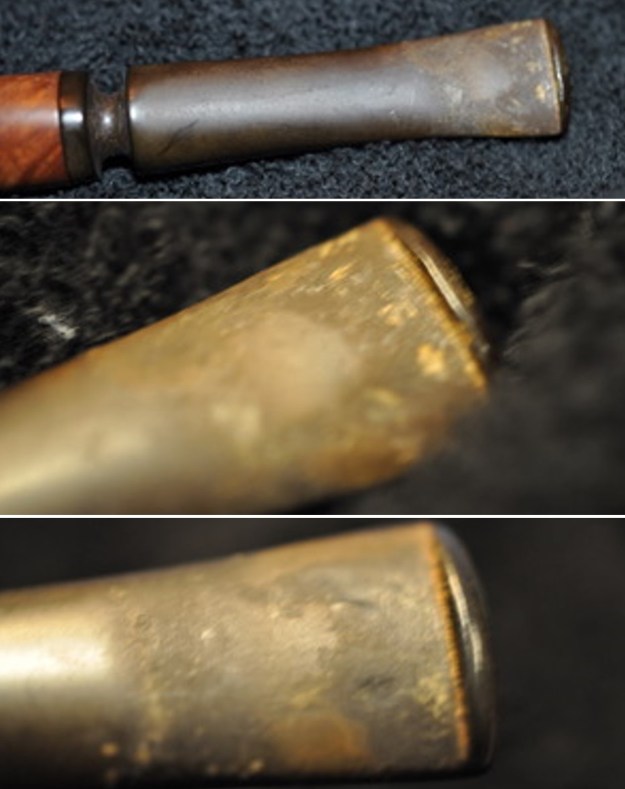
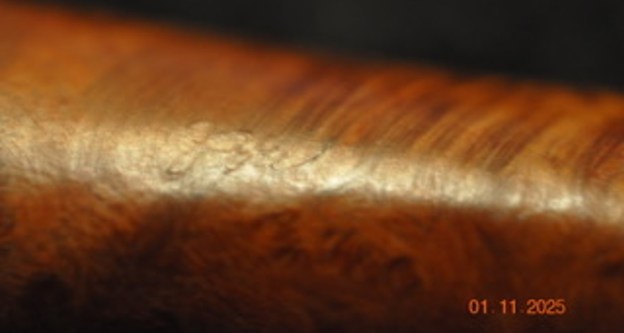
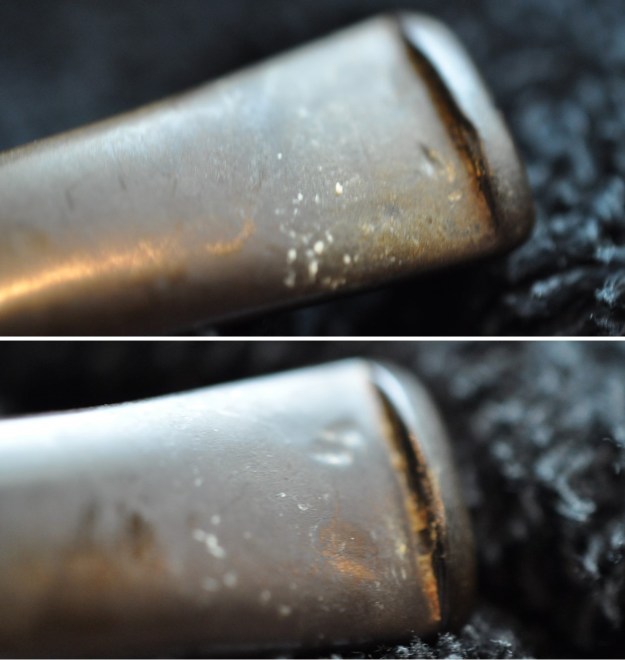
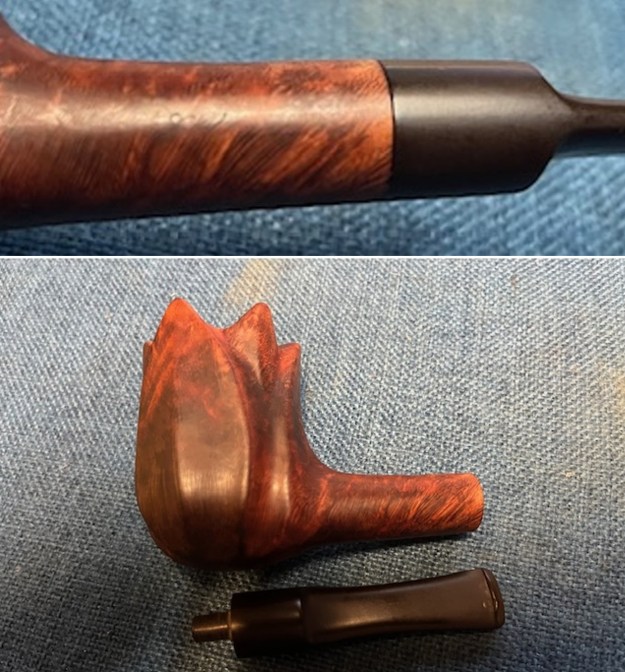
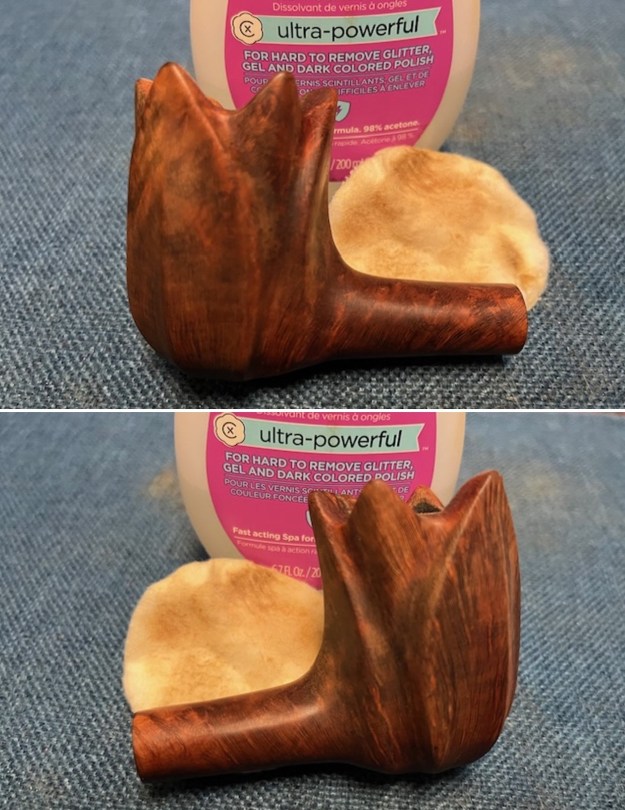
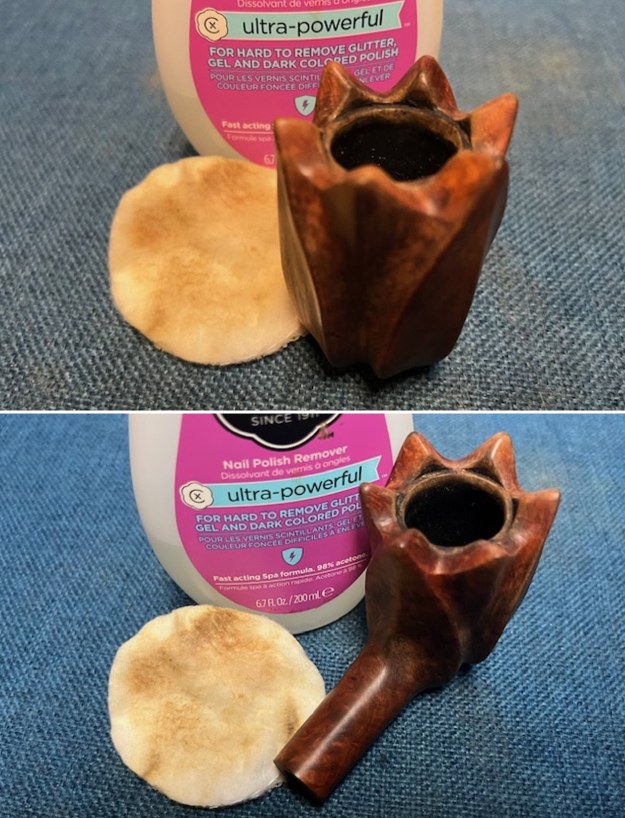
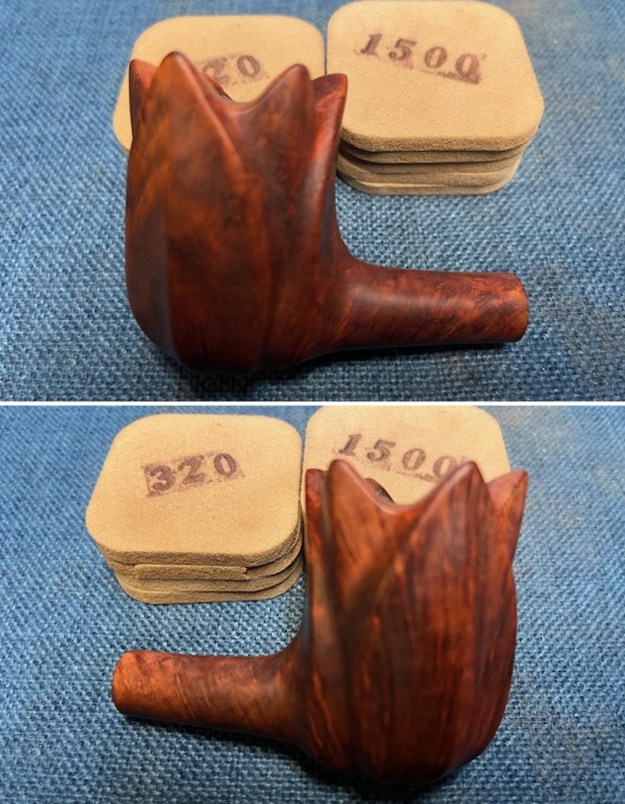
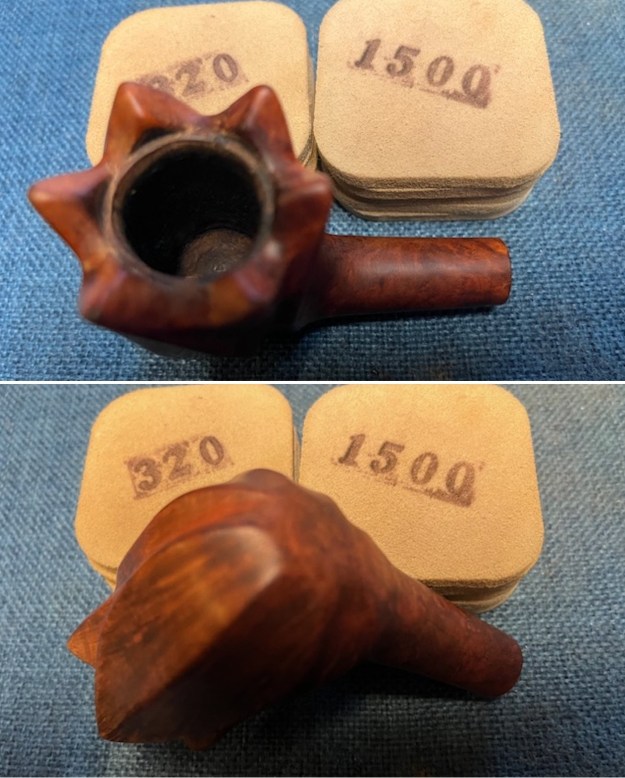
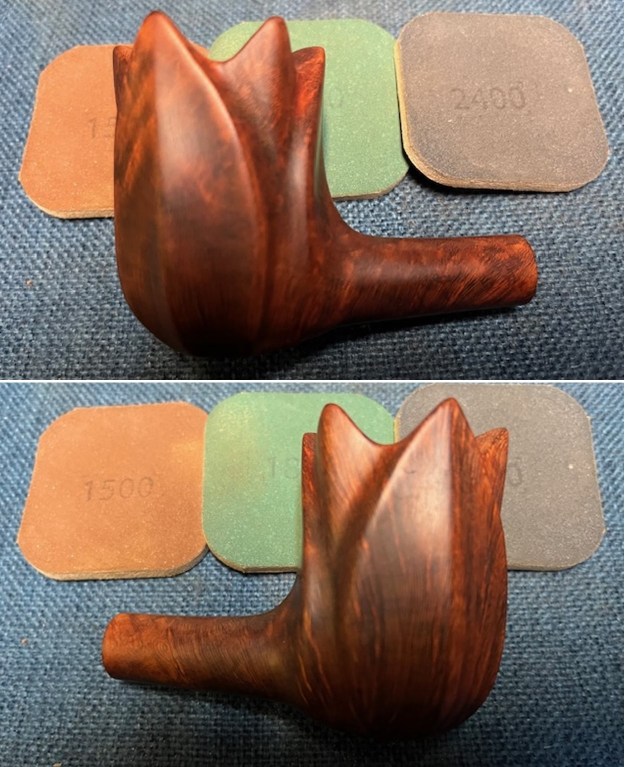
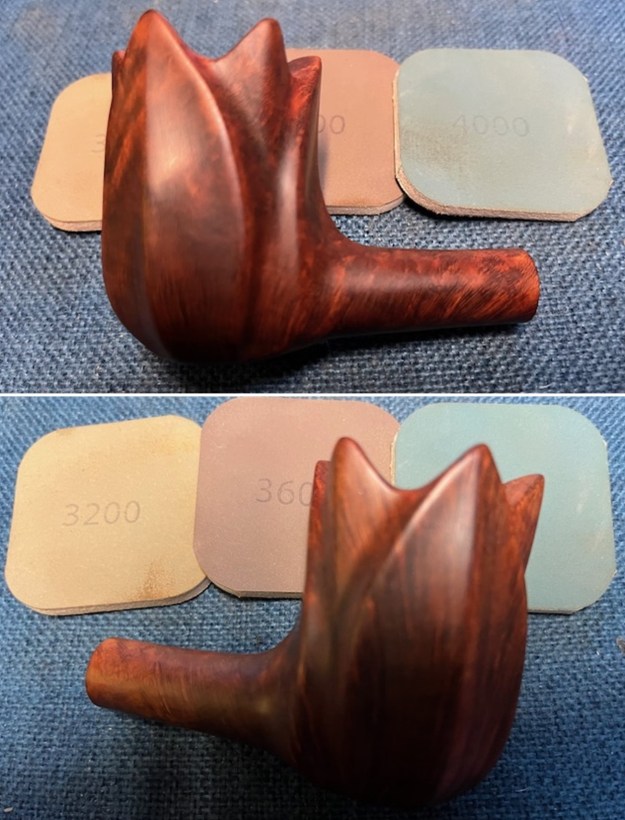
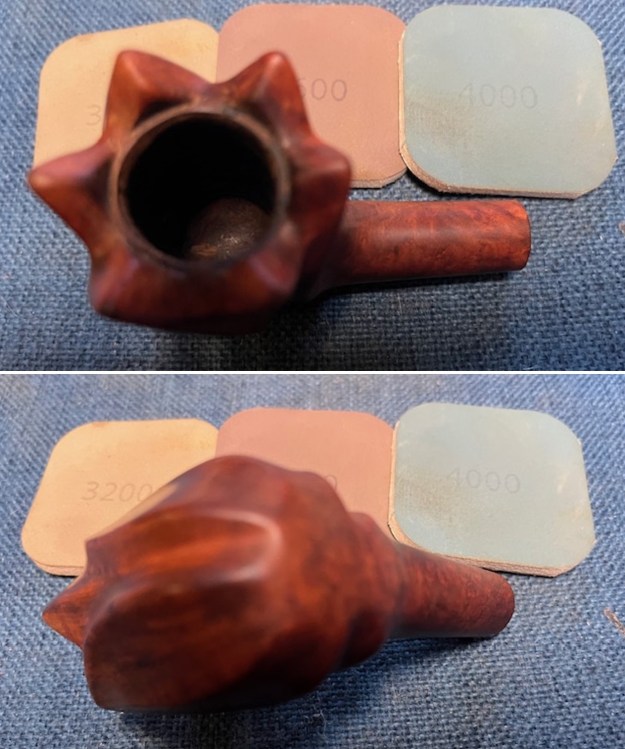
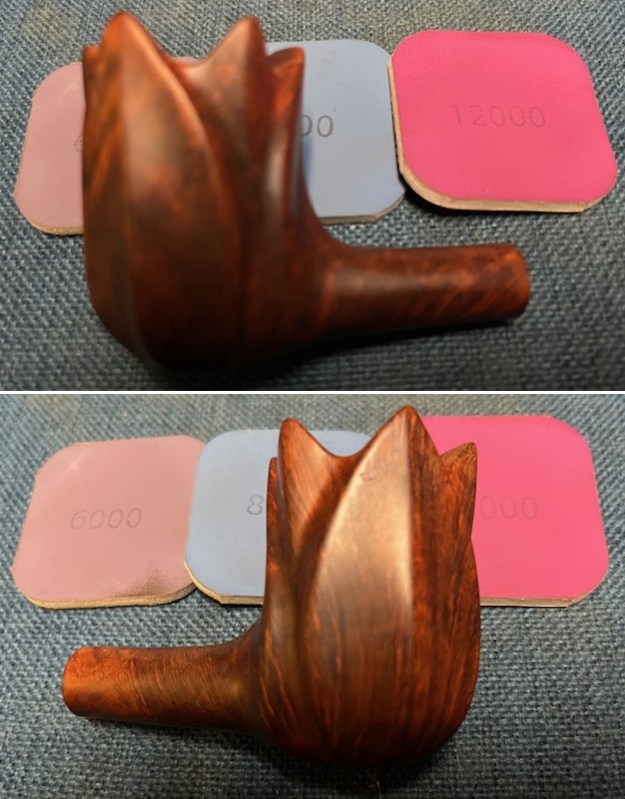
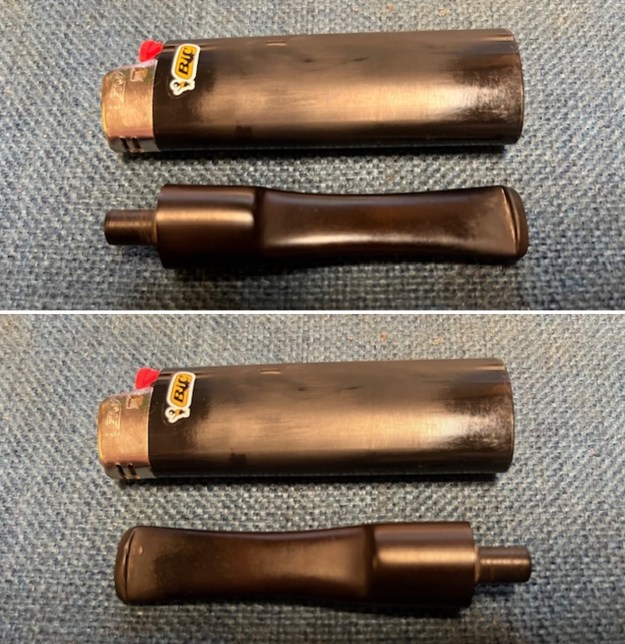
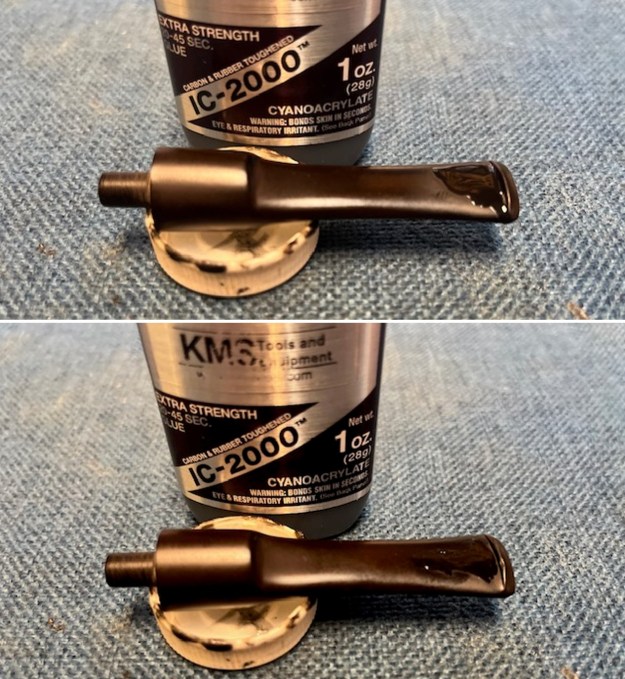
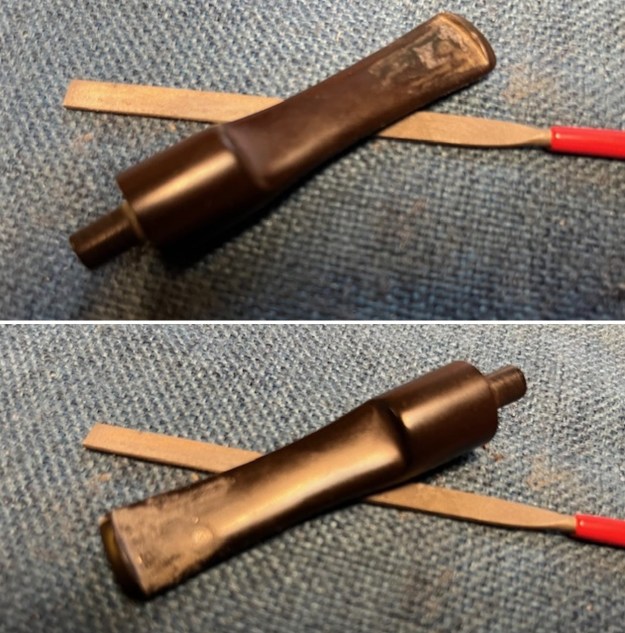
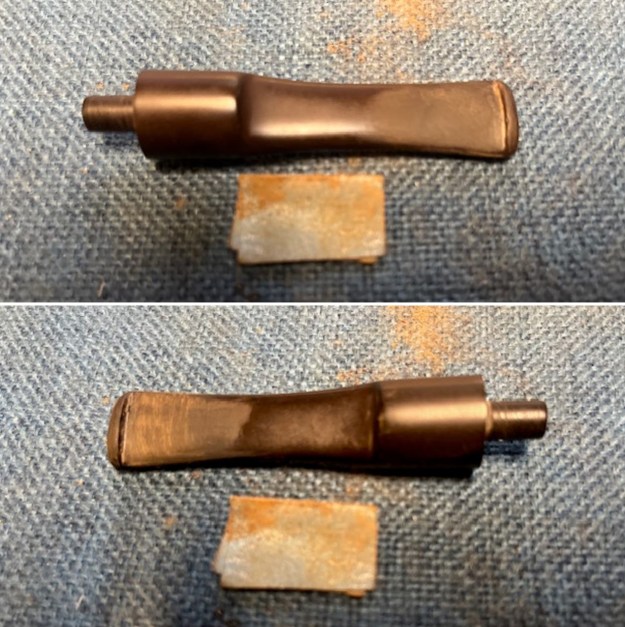
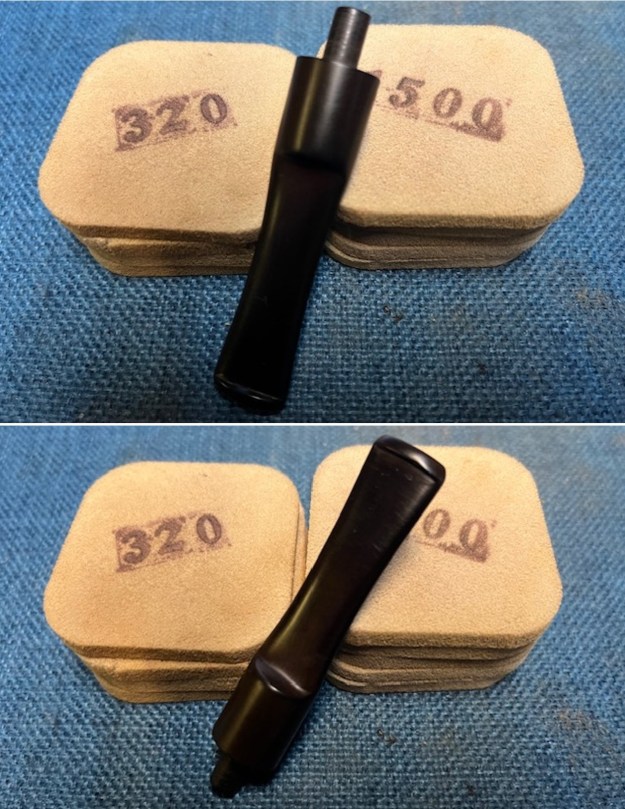
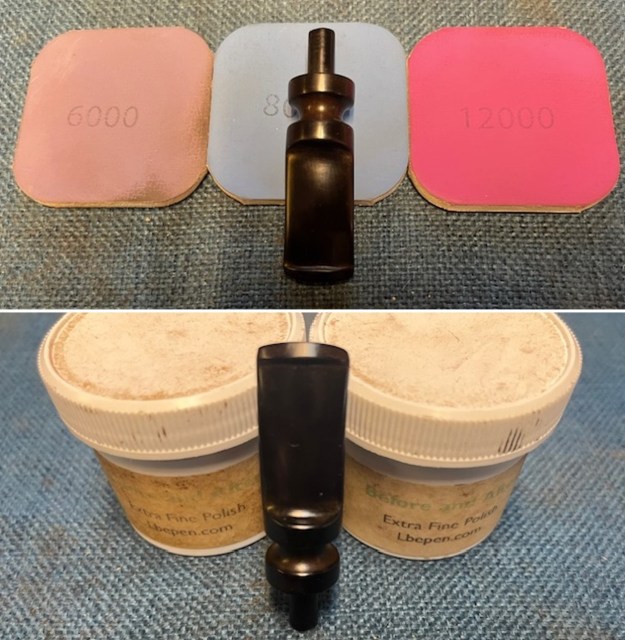
Armed with that information I turned to work on the pipe itself. Jeff had cleaned up the pipe with his usual thoroughness. He reamed the pipe with a PipNet pipe reamer and removed the rest of it with a Savinelli Fitsall Pipe Knife. He scrubbed the bowl with undiluted Murphy’s Oil Soap with a tooth brush. He rinsed it under running warm water to remove the soap and grime. He cleaned out the inside of the shank and the airway in the stem with alcohol, cotton swabs and pipe cleaners and shank brushes. He soaked the stem in Briarville’s Pipe Stem Deoxidizer and rinsed it off with warm water. I took photos of the pipe before I started my part of the restoration work. The rim top cleaned up really well. The rim top and inner edge of the bowl look good. There is some darkening on the inner edge and the top as well as on the insides of the points on the tulip petals. The bowl itself was very clean and the pipe smelled fresh. The stem surface had light tooth chatter on both sides near the button.The stamping on the left side of the shank is faint but still readable. It is stamped as noted above. I removed the stem and took a photo of the pipe to give a sense of the whole.I wiped the bowl down with some acetone to see if I could lighten the darkening around the bowl sides and on the rim top and inside edge of the petals at the top. It worked quite well. I wonder as I am doing this if the top and inside edge of the petals was stained black. I sanded the briar flutes and smooth surface with 320-3500 grit sanding pads. There was still some darkening on the bowl sides and rim edges. There were also some scratches in the briar on the sides, but nothing to deep so this process would take care of the issues. I polished the briar with micromesh sanding pads – dry sanding with 1500-12000 grit sanding pads. I wiped the bowl down with a damp cloth after each pad. I take photos of the three groups of pads for my own viewing primarily as I am looking for progress in polishing. Once again, by the end of the process it looked quite good.  I rubbed the bowl and shank down with Before & After Restoration Balm. I worked it into the surface of the bowl sides and shank with my fingertips. It works to clean, enliven and protect the briar. I let the balm sit for 15 minutes and buffed with a cotton cloth to raise the shine. The grain came alive. I set the bowl aside and turned my attention to the stem. I “painted” the surface of the stem to raise the tooth marks on the vulcanite. I filled in what remained in the surface with black CA glue and set it aside to cure. Once the repair cured I used a flat needle file to smooth out the repairs on the stem surface. I followed that up with a folded piece of 220 grit sandpaper to blend them into the surface of the stem. I sanded the stem with 320-3500 grit sanding pads. I wiped the stem down after each pad with an Obsidian Oil soaked cloth. The process helped remove the lingering oxidation.I polished the stem with micromesh sanding pads – 1500-12000 grit pads to remove them. I wiped the stem down with Obsidian Oil after each sanding pad. I used Before & After Pipe Polish – both Fine and Extra Fine to further polish the stem. I rubbed it down with a final coat of Obsidian Oil and let it dry. This Jack H. Weinberger (JHW) Tulip Billiard with a vulcanite saddle stem is a great looking pipe with some beautiful grain around the front and sides of the bowl. The grain around the bowl is quite stunning and works well with both the shape and the polished vulcanite saddle stem. I put the stem back on the bowl and carefully buffed the pipe with Blue Diamond on the buffing wheel using a light touch on the briar. I gave the bowl and the stem multiple coats of carnauba wax on the wheel and followed by buffing the pipe with a clean buffing pad. I hand buffed the pipe with a microfiber cloth to deepen the shine. The finished Jack H. Weinberger (JHW) Tulip Billiard fits nicely in the hand and feels great. Give the finished pipe a look in the photos below. The dimensions of the pipe are Length: 5 ¾ inches, Height: 2 ½ inches, Outside diameter of the bowl: 1 ½ inches, Chamber diameter: ¾ of an inch. The weight of the pipe is 1.90 ounces/54 grams. I will be putting it on the rebornpipes store in the American Pipemakers Section shortly. If you are interested in adding this pipe to your collection send me a message or an email. Thanks for reading this blog and my reflections on the pipe while I worked on it. I appreciate your support and time!
Restoring a JHW (Jack H. Weinberger) Fluted Dublin Sitter with a vulcanite saddle stem


by Steve Laug

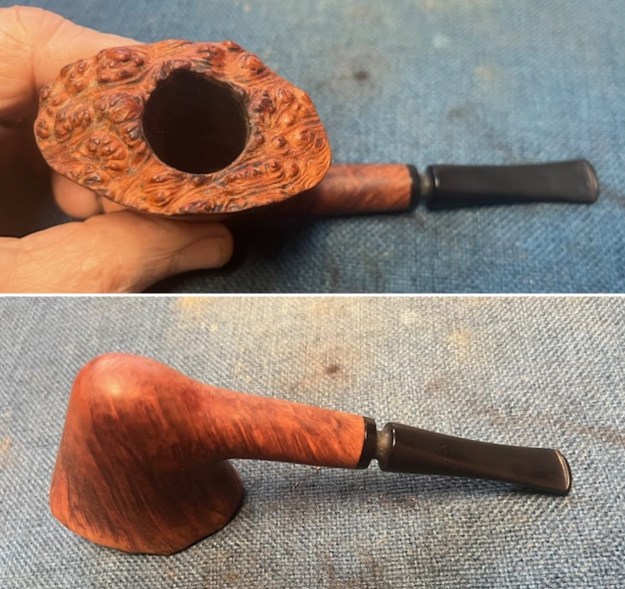
When Jeff and I were contacted about an estate in Santa Cruz, California, USA for sale I was excited to see what was in the lot. There were several with no other stamping on the shank than JHW. I have to say that I have seen very few JHW pipes and my heart skipped a beat when I saw not just one but 7 pipes with that stamping. All were Freehands and all were very unique – maybe even odd you might say! We purchased the estate on 05/28/2024. I am working on the sixth of the pipes. Now you might ask who is JHW? Why so excited about three initials? Well I have to tell you right up front that JHW is Jack H. Weinberger. Who is that? That does not help either? Jack H. Weinberger was a pipe maker in West Caldwell, New Jersey. Still not helping? He hired young lads from the local high school to help him out as he carved 10-12 hours a day. Two of these are none other than Curt Rollar and Mark Tinsky went on to become the American Pipe Company. There was a long list of pipe carving luminaries who came through Jack’s shop and JHW pipes but these two you probably have heard of. So JHW or Jack H. Weinberger was an important part of the American Pipemaking scene and gave many carvers a start and they have continued to this day. Now maybe you understand my excitement – being able to work on a few of Jack’s pipes and bring them back to their former glory.

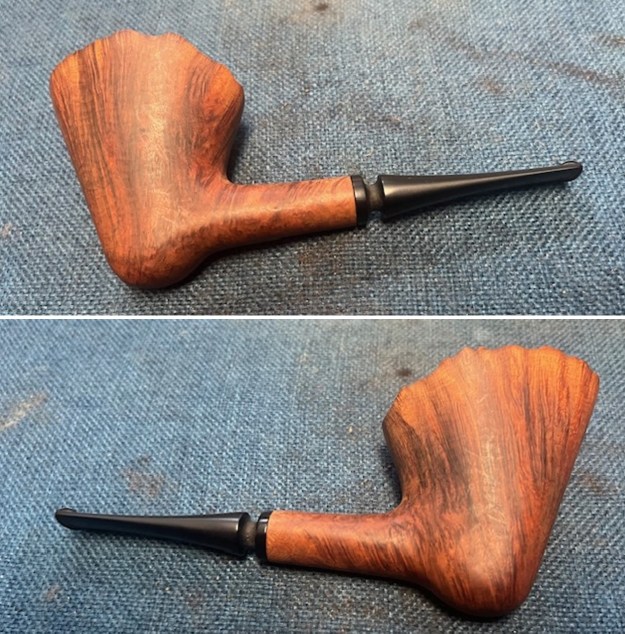
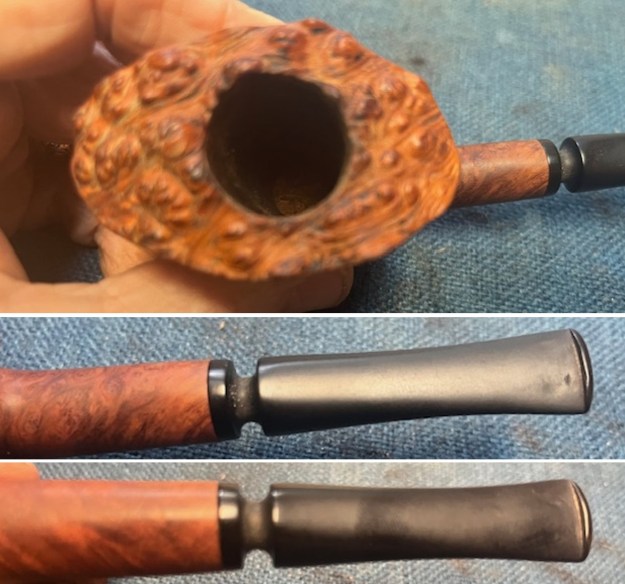
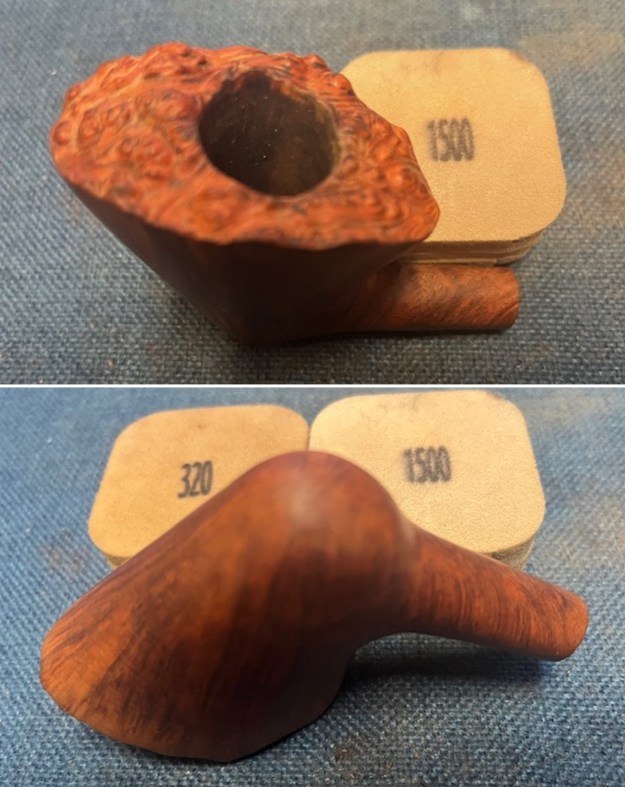
This pipe I chose to work on was another unusual one. It is a great piece of briar with a mix of grain all the way around the bowl and shank in the fluted areas of the bowl. It is a beautiful piece of briar! But Jack chose to use this block very differently than most would have used a plateau block. He made a carved, fluted style Dublin pipe. The front, back and sides of the bowl have some nice straight grain. The plateau rim top and the flat heel have a mix of grains. Very unusual but something just calls out to you. When the pipe came to us it was dirty with grime ground into the finish. There was a thick cake in the bowl and lava on the rim top and inner edge. There appeared to be some darkening around the inner edge of the rim and on the top itself. It was dirty but that did not hide the beauty of the briar. The stem is a fancy saddle made out of vulcanite. There was light chatter on both sides just ahead of the button. Jeff took photos of the pipe as a whole before he started his cleanup work. I include them below.Jeff took some close up shots of the rim top to show the bowl and cake. You can see the lava on the plateau rim top and the inner edge. The stem photos also show the condition it was in when we received it. Lots of promise with the pipe but some work too! Jeff took some photos of the sides – top, bottom, left and right to give a sense of the lay of the pipe on the block of briar. It is certainly unusual and unique. Here are some photos of the stamping on the left side of the shank. The J is a stylized pipe followed by uppercase HW. Take some time to read the great writeup on Pipedia and JHW pipes and influence they had on the American pipe making scene. It is a well written and enjoyable read. Here is the link: (https://pipedia.org/wiki/JHW_Pipes).

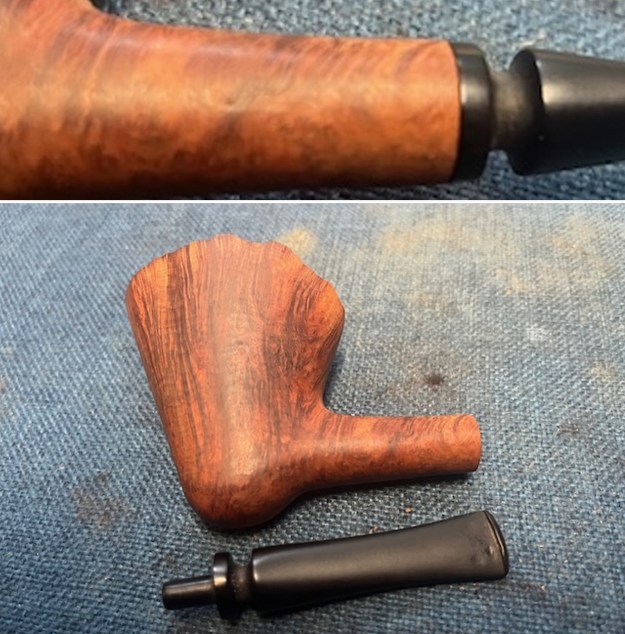
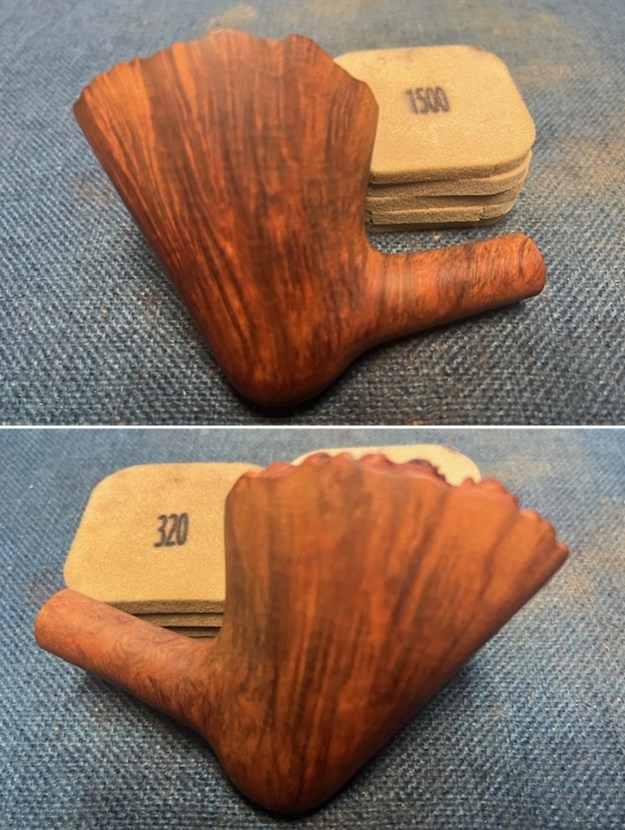
Armed with that information I turned to work on the pipe itself. Jeff had cleaned up the pipe with his usual thoroughness. He reamed the pipe with a PipNet pipe reamer and removed the rest of it with a Savinelli Fitsall Pipe Knife. He scrubbed the bowl with undiluted Murphy’s Oil Soap with a tooth brush. He rinsed it under running warm water to remove the soap and grime. He cleaned out the inside of the shank and the airway in the stem with alcohol, cotton swabs and pipe cleaners and shank brushes. He soaked the stem in Briarville’s Pipe Stem Deoxidizer and rinsed it off with warm water. I took photos of the pipe before I started my part of the restoration work.  The rim top cleaned up really well. The rim top and inner edge of the bowl look good. There is some darkening on the inner edge toward the back of the bowl. The bowl itself was very clean and the pipe smelled fresh. The stem surface had light tooth chatter on both sides near the button.The stamping on the left side of the shank is more clear and readable than it appears in the photo below. It is stamped as noted above. I removed the stem and took a photo of the pipe to give a sense of the whole.I started my work on the pipe by working over the rim top with a brass bristle wire brush to remove the debris and darkness on the plateau top.I sanded the briar flutes and soft surface with 320-3500 grit sanding pads. There were a lot of scratches in the briar on the sides but nothing to deep so this process would take care of the issues. I polished the briar with micromesh sanding pads – dry sanding with 1500-12000 grit sanding pads. I wiped the bowl down with a damp cloth after each pad. I take photos of the three groups of pads for my own viewing primarily as I am looking for progress in polishing. Once again, by the end of the process it looked quite good. I rubbed the bowl and shank down with Before & After Restoration Balm. I worked it into the surface of the bowl sides and shank with my fingertips. It works to clean, enliven and protect the briar. I let the balm sit for 15 minutes and buffed with a cotton cloth to raise the shine. The grain came alive. I set the bowl aside and turned my attention to the stem. I “painted” the surface of the stem to raise the tooth marks on the vulcanite. I filled in what remained in the surface with black CA glue and set it aside to cure. Once the repair cured I used a flat needle file to smooth out the repairs on the stem surface. I followed that up with a folded piece of 220 grit sandpaper to blend them into the surface of the stem. I sanded the stem with 320-3500 grit sanding pads. I wiped the stem down after each pad with an Obsidian Oil soaked cloth. The process helped remove the lingering oxidation.I polished the stem with micromesh sanding pads – 1500-12000 grit pads to remove them. I wiped the stem down with Obsidian Oil after each sanding pad. I used Before & After Pipe Polish – both Fine and Extra Fine to further polish the stem. I rubbed it down with a final coat of Obsidian Oil and let it dry. This Jack H. Weinberger (JHW) Fluted Dublin Sitter with a vulcanite saddle stem is a great looking pipe with some beautiful grain around the front and sides of the bowl. The grain around the bowl is quite stunning and works well with both the shape and the polished vulcanite saddle stem. I put the stem back on the bowl and carefully buffed the pipe with Blue Diamond on the buffing wheel using a light touch on the briar. I gave the bowl and the stem multiple coats of carnauba wax on the wheel and followed by buffing the pipe with a clean buffing pad. I hand buffed the pipe with a microfiber cloth to deepen the shine. The finished Jack H. Weinberger (JHW) Fluted Dublin fits nicely in the hand and feels great. Give the finished pipe a look in the photos below. The dimensions of the pipe are Length: 6 ½ inches, Height: 3 inches, Outside diameter of the bowl: 1 ¾ inches, Chamber diameter: 1 inch. The weight of the pipe is 2.61 ounces/73 grams. I will be putting it on the rebornpipes store in the American Pipemakers Section shortly. If you are interested in adding this pipe to your collection send me a message or an email. Thanks for reading this blog and my reflections on the pipe while I worked on it. I appreciate your support and time!
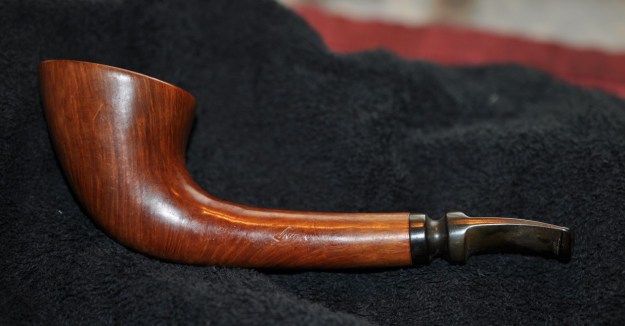
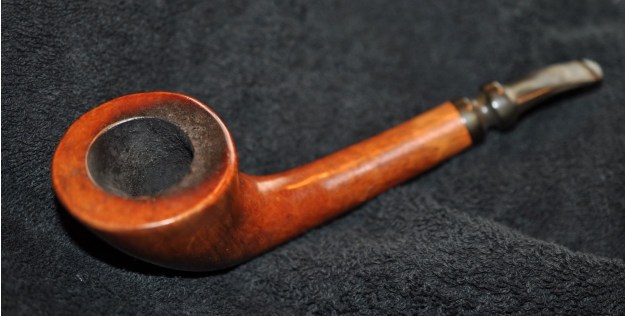
Restoring a JHW (Jack H. Weinberger) Long Shank Horn with a vulcanite saddle stem


By Steve Laug

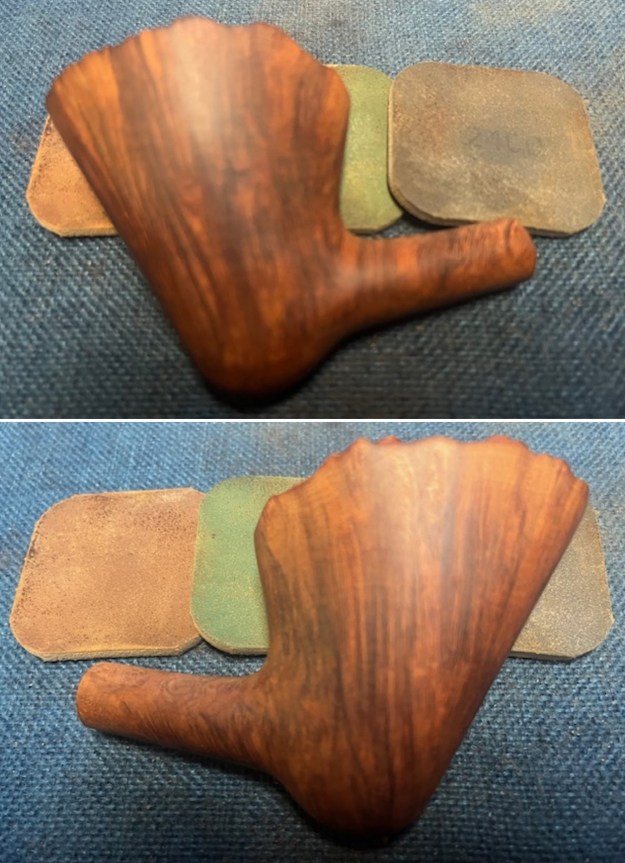
When Jeff and I were contacted about an estate in Santa Cruz, California, USA for sale I was excited to see what was in the lot. There were several with no other stamping on the shank than JHW. I have to say that I have seen very few JHW pipes and my heart skipped a beat when I saw not just one but 7 pipes with that stamping. All were Freehands and all were very unique – maybe even odd you might say! We purchased the estate on 05/28/2024. I am working on the fifth of the pipes. Now you might ask who is JHW? Why so excited about three initials? Well I have to tell you right up front that JHW is Jack H. Weinberger. Who is that? That does not help either? Jack H. Weinberger was a pipe maker in West Caldwell, New Jersey. Still not helping? He hired young lads from the local high school to help him out as he carved 10-12 hours a day. Two of these are none other than Curt Rollar and Mark Tinsky went on to become the American Pipe Company. There was a long list of pipe carving luminaries who came through Jack’s shop and JHW pipes but these two you probably have heard of. So JHW or Jack H. Weinberger was an important part of the American Pipemaking scene and gave many carvers a start and they have continued to this day. Now maybe you understand my excitement – being able to work on a few of Jack’s pipes and bring them back to their former glory.

This pipe I chose to work on was another unusual one. It is a great piece of briar with a mix of grain all the way around the bowl and shank culminating in a tight pattern on the face of the shield shaped of the bowl. It is a beautiful piece of briar! But Jack chose to use this block very differently than most would have used a plateau block. He made a long shank Horn style pipe. The bowl is his take on Horn with a long Canadian/Liverpool shape. The front, back and sides of the bowl have some nice straight grain. The top and underside have some birdseye. Very unusual but something just calls out to you. When the pipe came to us it was dirty with grime ground into the finish. There was a thick cake in the bowl and lava on the rim top and inner edge. There appeared to be some darkening around the inner edge of the rim and on the top itself. It was dirty but that did not hide the beauty of the briar. The stem is a fancy saddle made out of vulcanite. There was light chatter on both sides just ahead of the button. Jeff took photos of the pipe as a whole before he started his cleanup work. I include them below. Jeff took some close up shots of the rim top to show the bowl and cake. You can see the lava on the rim top and the inner edge. The stem photos also show the condition it was in when we received it. Lots of promise with the pipe but some work too! Jeff took some photos of the sides – top, bottom, left and right to give a sense of the lay of the pipe on the block of briar. It is certainly unusual and unique.Here are some photos of the stamping on the underside of the shank. The J is a stylized pipe followed by uppercase HW. Take some time to read the great writeup on Pipedia and JHW pipes and influence they had on the American pipe making scene. It is a well written and enjoyable read. Here is the link: (https://pipedia.org/wiki/JHW_Pipes).

Armed with that information I turned to work on the pipe itself. Jeff had cleaned up the pipe with his usual thoroughness. He reamed the pipe with a PipNet pipe reamer and removed the rest of it with a Savinelli Fitsall Pipe Knife. He scrubbed the bowl with undiluted Murphy’s Oil Soap with a tooth brush. He rinsed it under running warm water to remove the soap and grime. He cleaned out the inside of the shank and the airway in the stem with alcohol, cotton swabs and pipe cleaners and shank brushes. He soaked the stem in Briarville’s Pipe Stem Deoxidizer and rinsed it off with warm water. I took photos of the pipe before I started my part of the restoration work. The rim top cleaned up really well. The rim top and inner edge of the bowl look good. There is some darkening on the inner edge toward the back of the bowl. The bowl itself was very clean and the pipe smelled fresh. The stem surface had light tooth chatter on both sides near the button.The stamping on the left side of the shank is clear and readable. It is stamped as noted above. I removed the stem and took a photo of the pipe to give a sense of the whole.I started my work on the pipe by working over the rim top and briar with 320-3500 grit sanding pads. There were a lot of scratches in the briar on the sides but nothing to deep so this process would take care of the issues. I polished the briar with micromesh sanding pads – dry sanding with 1500-12000 grit sanding pads. I wiped the bowl down with a damp cloth after each pad. I take photos of the three groups of pads for my own viewing primarily as I am looking for progress in polishing. Once again, by the end of the process it looked quite good. I rubbed the bowl and shank down with Before & After Restoration Balm. I worked it into the surface of the bowl sides and shank with my fingertips. It works to clean, enliven and protect the briar. I let the balm sit for 15 minutes and buffed with a cotton cloth to raise the shine. The grain came alive. I set the bowl aside and turned my attention to the stem. The tooth chatter and marks were on the surface so I sanded the stem with 320-3500 grit sanding pads. I wiped the stem down after each pad with an Obsidian Oil soaked cloth. The process helped remove the lingering oxidation.I polished the stem with micromesh sanding pads – 1500-12000 grit pads to remove them. I wiped the stem down with Obsidian Oil after each sanding pad. I used Before & After Pipe Polish – both Fine and Extra Fine to further polish the stem. I rubbed it down with a final coat of Obsidian Oil and let it dry. This Jack H. Weinberger (JHW) Long Shank Horn with a vulcanite saddle stem is a great looking pipe with some beautiful grain around the front and sides of the bowl. The grain around the bowl is quite stunning and works well with both the shape and the polished vulcanite saddle stem. I put the stem back on the bowl and carefully buffed the pipe with Blue Diamond on the buffing wheel using a light touch on the briar. I gave the bowl and the stem multiple coats of carnauba wax on the wheel and followed by buffing the pipe with a clean buffing pad. I hand buffed the pipe with a microfiber cloth to deepen the shine. The finished Jack H. Weinberger (JHW) Long Shank Horn fits nicely in the hand and feels great. Give the finished pipe a look in the photos below. The dimensions of the pipe are Length: 6 ½ inches, Height: 2 inches, Outside diameter of the bowl: 2 inches, Chamber diameter: 1 inch. The weight of the pipe is 1.94 ounces/54 grams. I will be putting it on the rebornpipes store in the American Pipemakers Section shortly. If you are interested in adding this pipe to your collection send me a message or an email. Thanks for reading this blog and my reflections on the pipe while I worked on it. I appreciate your support and time!
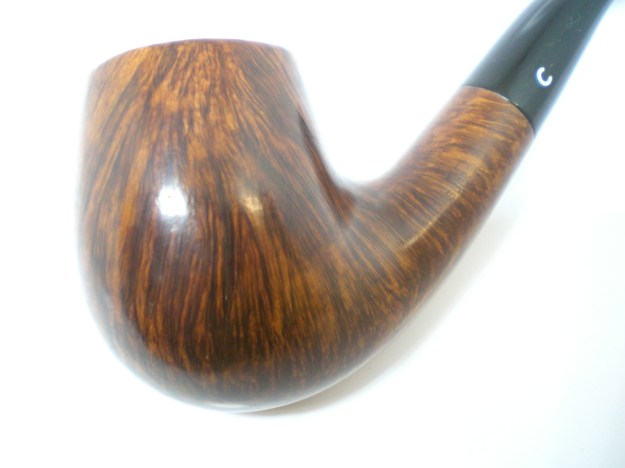
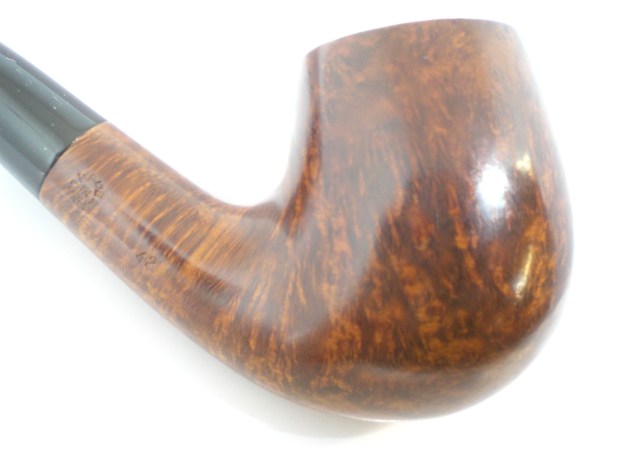
Comoys Supreme Grain Bent Billiard Restoration


By Al Jones

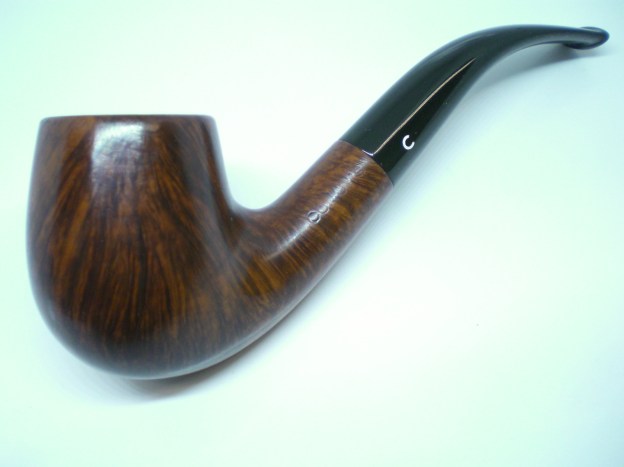
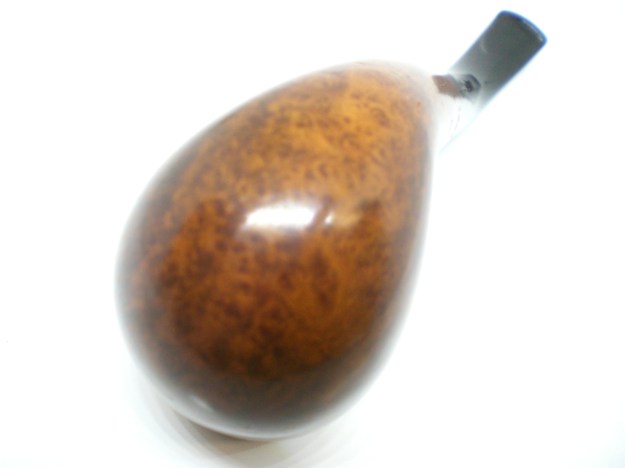
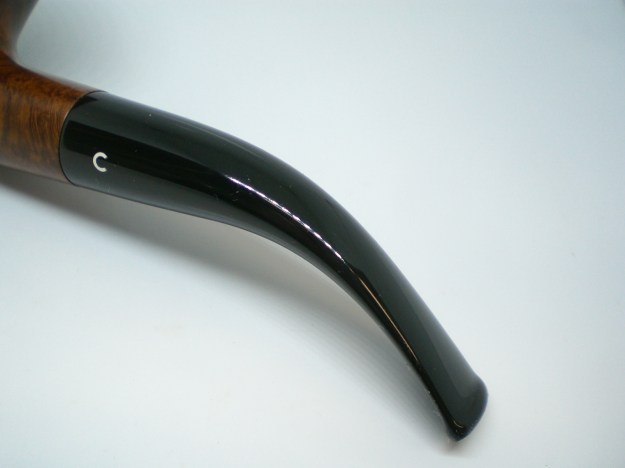
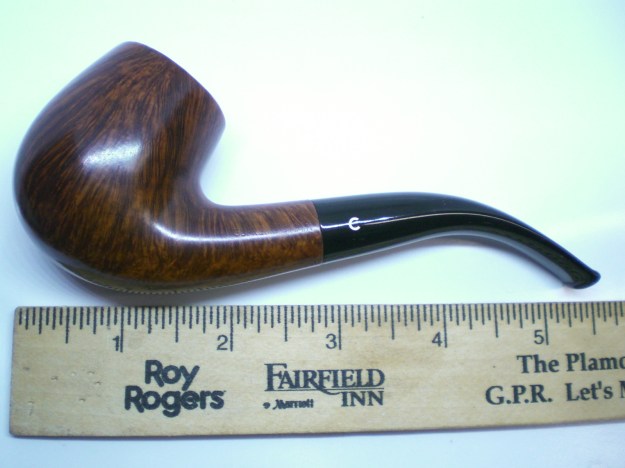
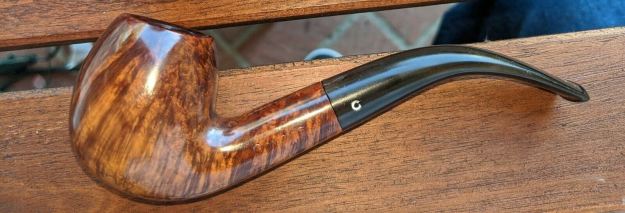
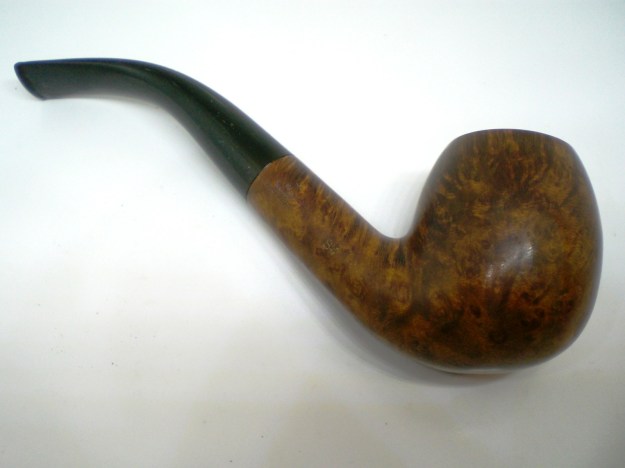
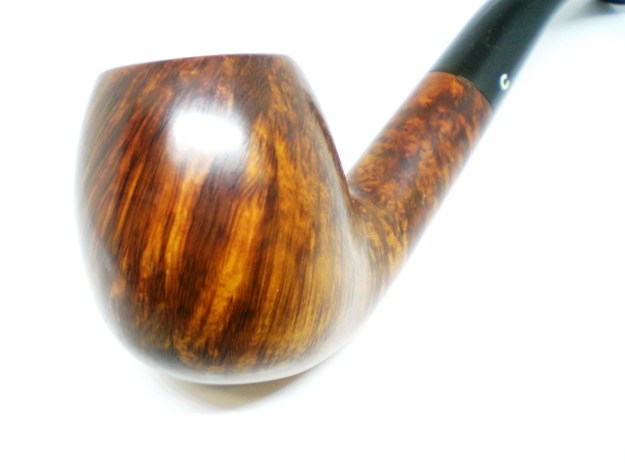
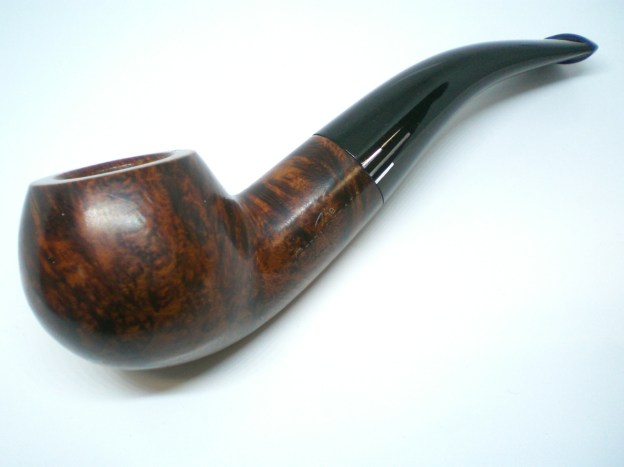
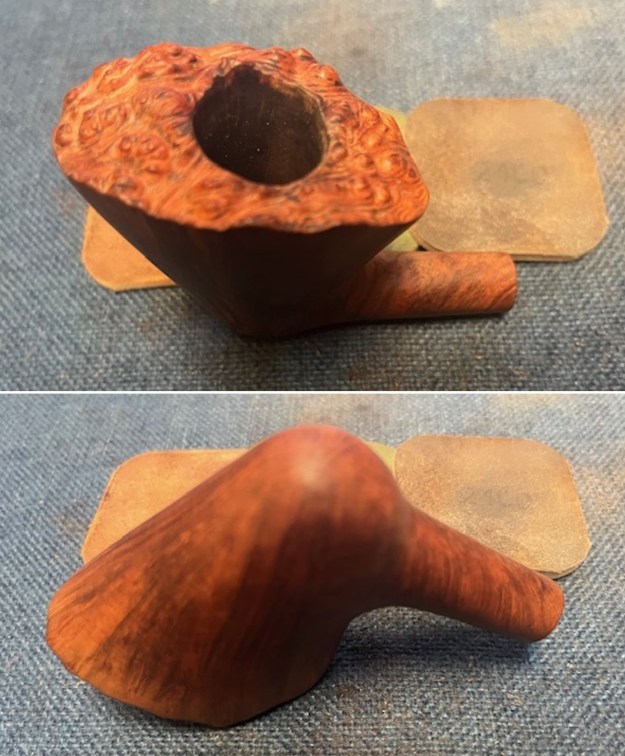
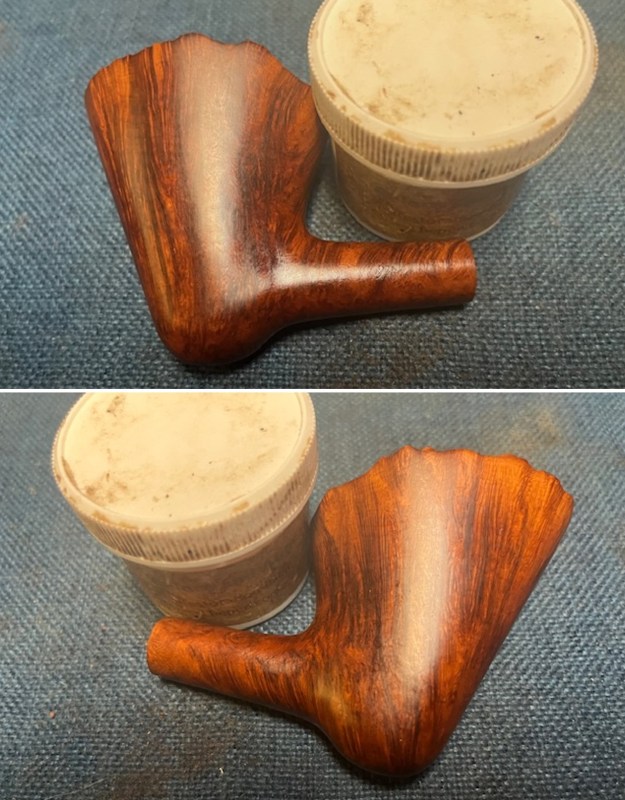
This is the 2nd Comoys that I restored this weekend.  And, the first “Supreme Grain” that I’ve ever seen.  I found a few examples on the web.  The pipe was in very solid condition.  Unfortunately, I also lost the before pictures of this pipe and only have the sellers.  As you can see, it is aptly named, and better grain than some Blue Ribands that I’ve seen.

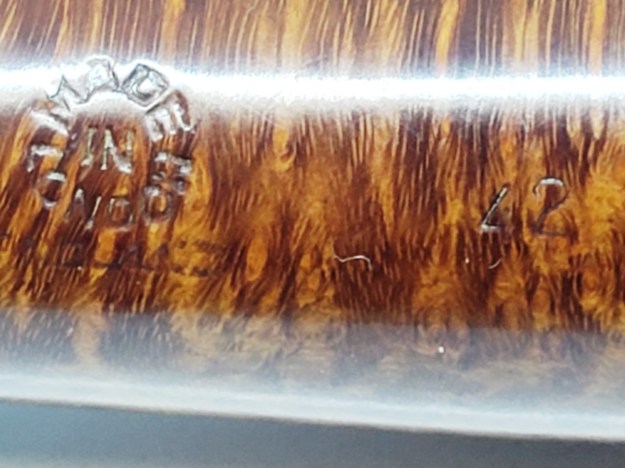
The pipe had very light oxidation and a few dings and bruises in the briar.  The shape 42 is the larger of the two Comoy’s bent billiards.

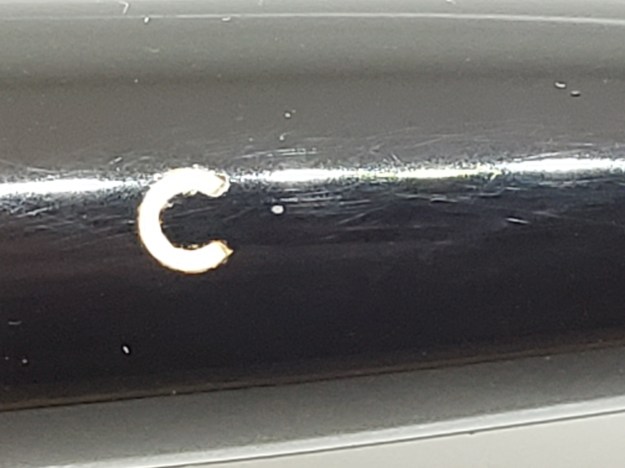
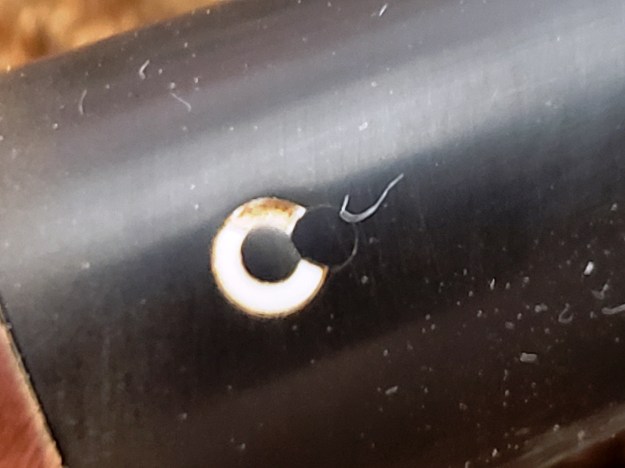
I initially thought it had a drilled C and started restoration the restoration with my usual regiment, which involves sanding right over the very durable logo.  I was horrified on closer examination to find out that the logo was not drilled.  However, it is seemingly quite deep and almost looks like an insert of sorts.  I’ve done a lot of Comoys pipes from every era, but not yet encountered one quite like this one.

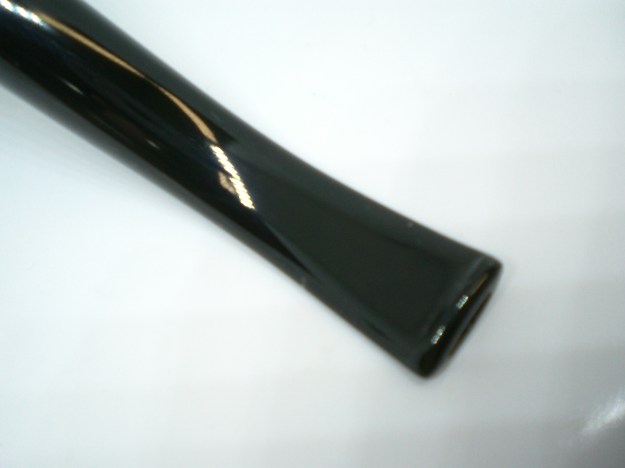
I removed the very light oxidation with 800, 1,500 and 2,000 grit wet paper, this was followed by 8,000 and 12,000 micromesh. The stem was then buffed with White Diamond and Meguiars Plastic Polish.

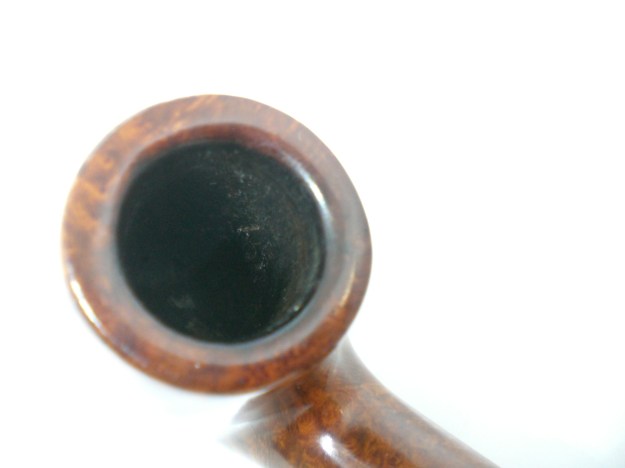
The bowl was reamed and soaked with alcohol and sea salt.  I used an electric iron on high with a wet cloth to steam out most of the dings around the bowl.  The bowl was then buffed with White Diamond and several coats of Carnuba wax.

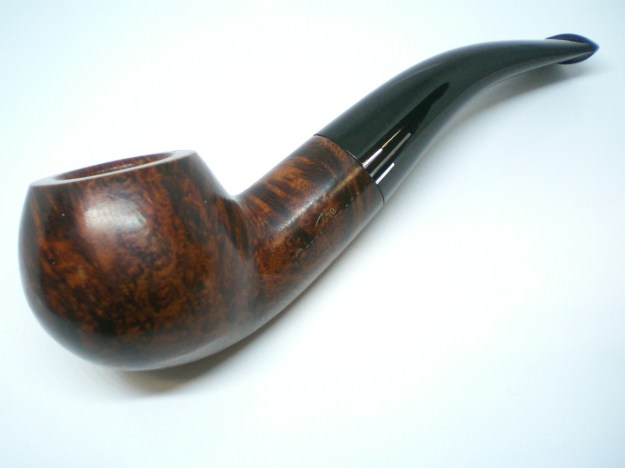
Below is the finished pipe.

Comoys 184 Golden Grain Restoration


By Al Jones

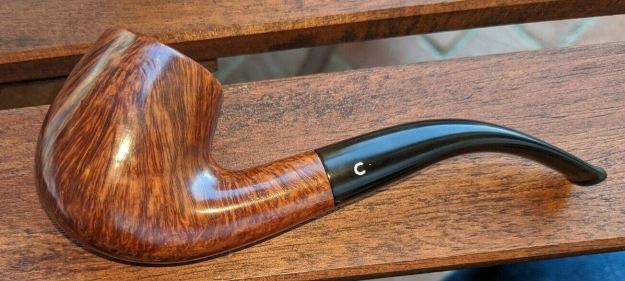
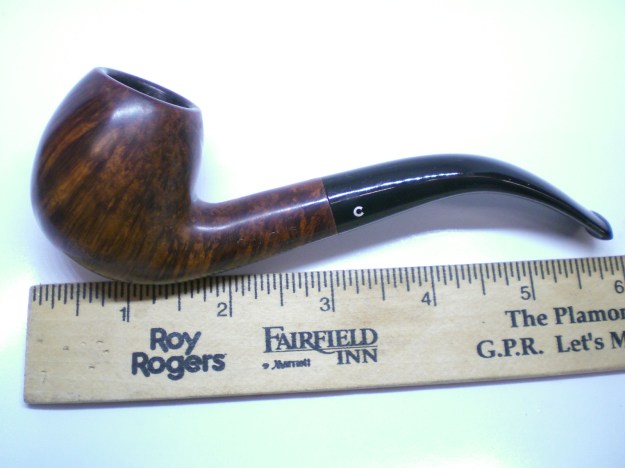
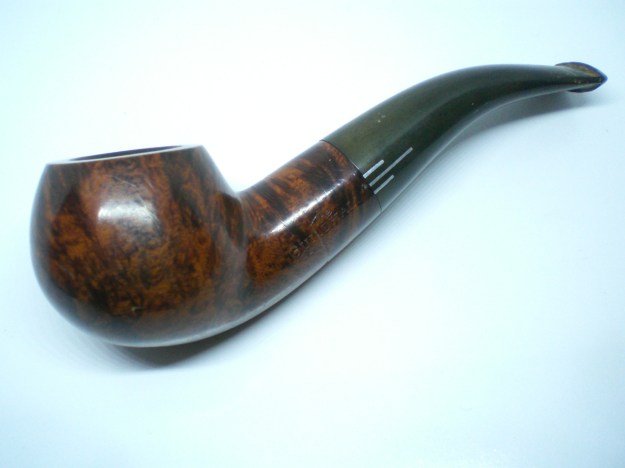
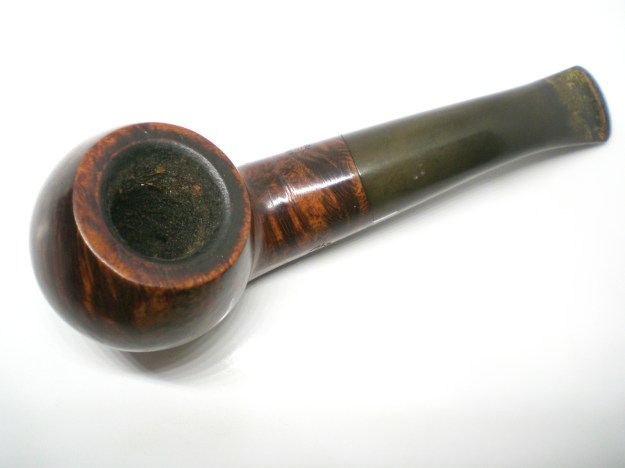
This looked like an easy restoration, but once in hand, it presented a few challenges.  I somehow deleted the “before” pictures, so I can’t share them.  This sellers picture shows that it was in pretty decent shape.  The shape 184 is listed as a Bent Apple on the Comoys shape chart and catalogs.

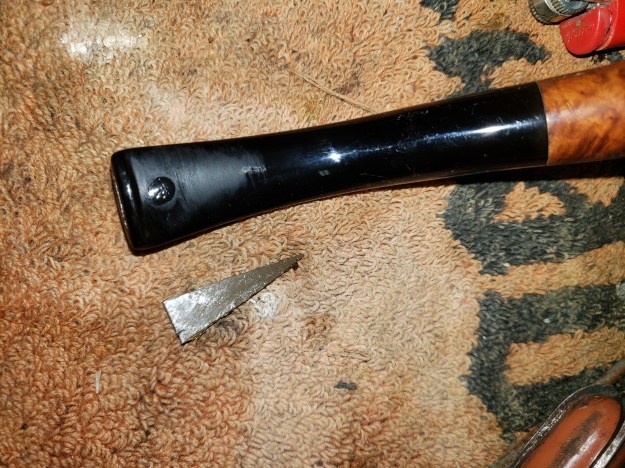
There was a white piece of the drilled, C stem logo and the button had what appeared to be a very poorly done hole repair.

The briar only needed to be reamed and soaked.  There were a few dents that I steamed out with an electric iron and cloth.

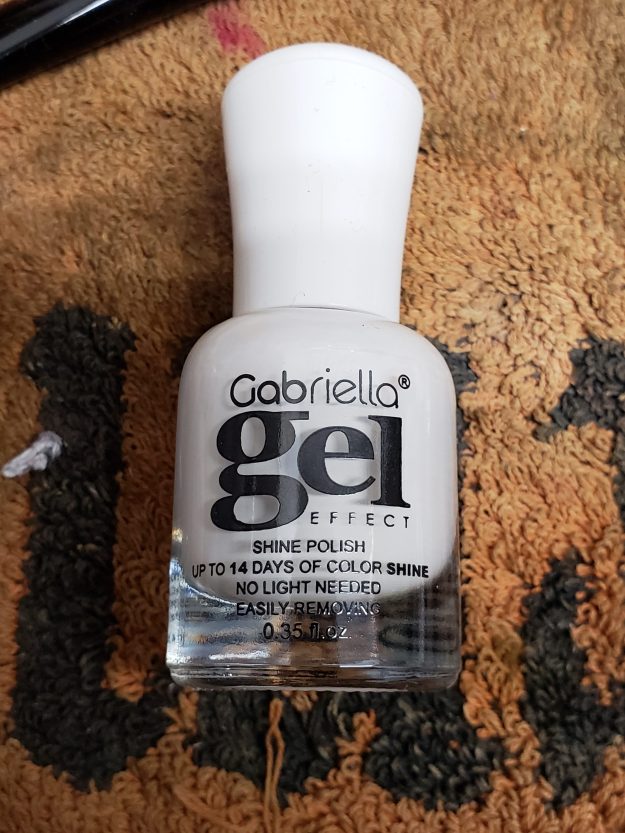
For the C logo fix, I entered a local beauty shop for the first time in my life and they recommended a white gel nail polish.  I applied the polish,let it sit overnight, than sanded smooth with 800 grit paper, it worked quite well and to the naked eye, is invisible.

I removed the very light oxidation with 800, 1,500 and 2,000  grit wet paper, this was followed by 8,000 and 12,000 micromesh.  This removed the poor repair job to a tiny pin hole underneath the bottom. I used the black superglue and accelerator to make that repair.  I cut a small v-shaped piece from an old credit card, coated that in grease and inserted it into the button to keep glue from sealing the draft hole.  Once the glue set, the plastic card is removed.

The stem was buffed with White Diamond and Meguiars Plastic Polish.

The briar was buffed lightly with White Diamond and several coats of Carnuba wax.

Below is the finished pipe.

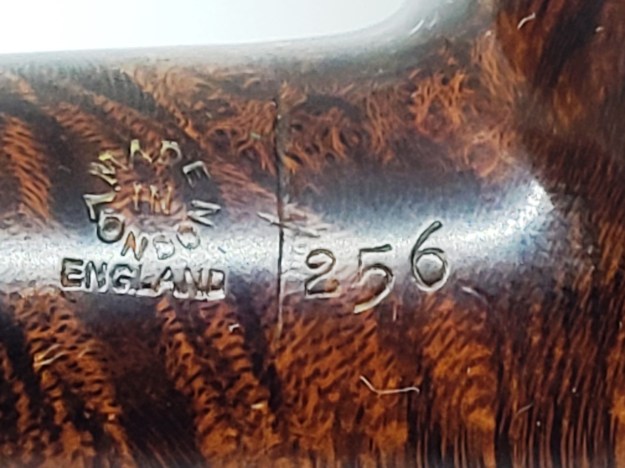
The Guildhall Shape 256 Restoration


By Al Jones

The Comoy’s Author shape, the 256 is one of my favorites and quite rare.  I’ve never been able to find this shape in any Comoy’s catalog, perhaps that contributes to it’s rarity. Three years ago, I was fortunate to find an Old Bruyere finish 256, and detailed that restoration here:

https://rebornpipes.com/2017/05/13/finally-comoys-old-bruyere-256-restoration/

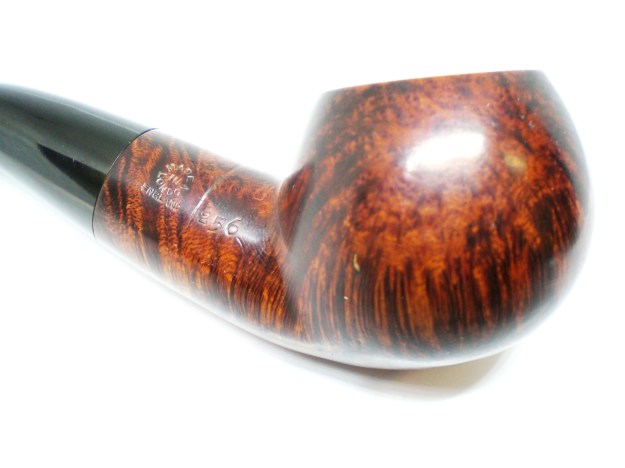
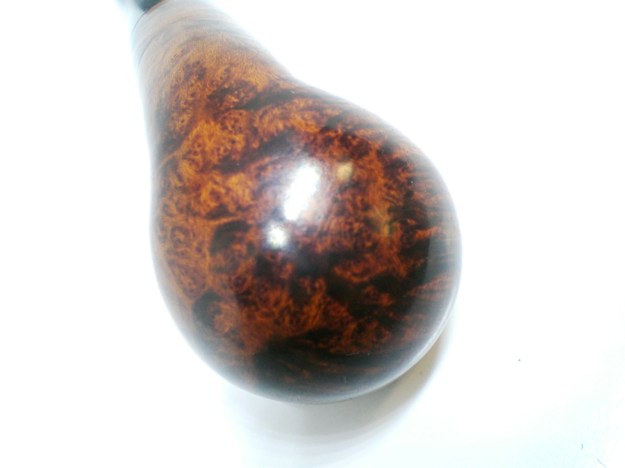
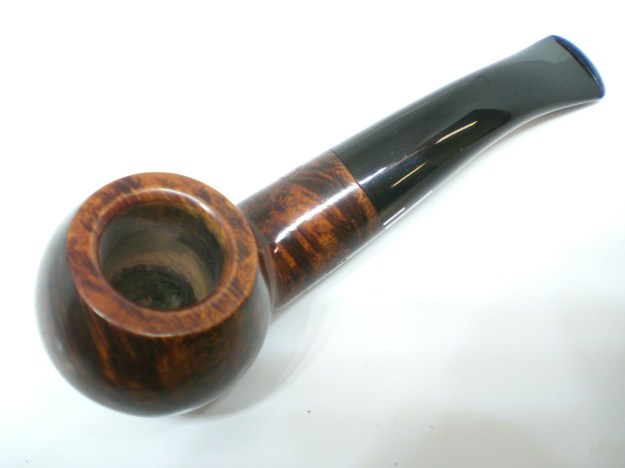
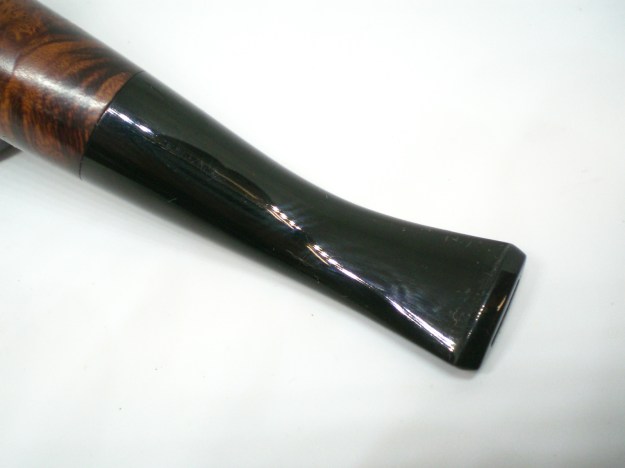
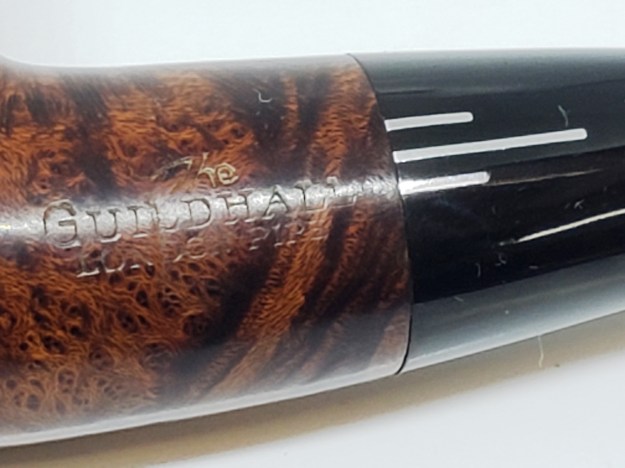
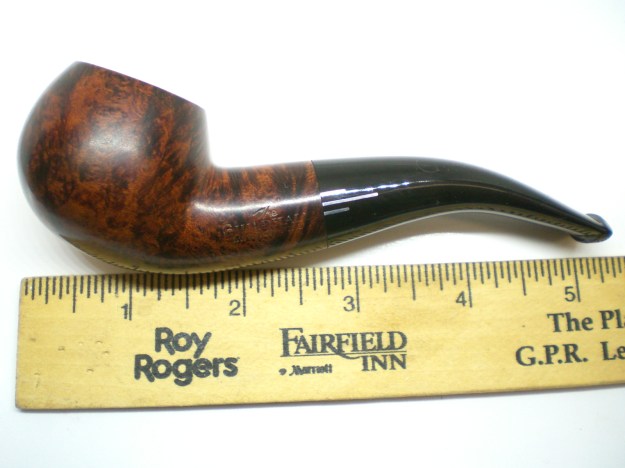
This pipe, is a Comoy’s second-line “The Guildhall”, instantly recognizable by the metal strats stem logo, which always captivates me.   The pipe arrived, with a one surprise, there were some deep circular marks in the briar, right around the shank.  I can’t imagine what created those marks, but I knew it was going to be a challenge to remove or minimize them.    Otherwise, it looked like a straightforward restoration.  There was minimal build-up on the bowl top and the stem was in very good condition.  Below is the pipe as it was received.

I used a piece of worn 2,000 grit wet paper to remove the build-up on the bowl top.  The bowl was then reamed and treated to an alcohol and sea salt soak.  While the bowl was soaking, I soaked the stem in a mild solution of Oxy-Clean.  Following the bowl soak, I cleaned the shank with a bristle brush dipped in alcohol and worked in some twisted paper towel, until it came out clean.

The stem was mounted and I used a lighter to lift the slight dents around the button.  The slight oxidation was removed with 800, 1,500 and 2,000 grit wet paper, followed by 8,000 and 12,000 micromesh sheets.  The stem was then buffed with White Diamond and Meguiars Plastic Polish.

I then turned my attention to the briar and marks.  I used a wet cloth and an electric iron set on high to steam out some of the deep marks on the bowl.  I had some success, lifting nearly all on the bottom of the bowl but some remain on the other areas.    The bowl was then buffed with White Diamond and several coats of Carnuba wax.

Below is the finished pipe.


A Quick Refurb on a BBB Straight Bulldog


Blog by Steve Laug

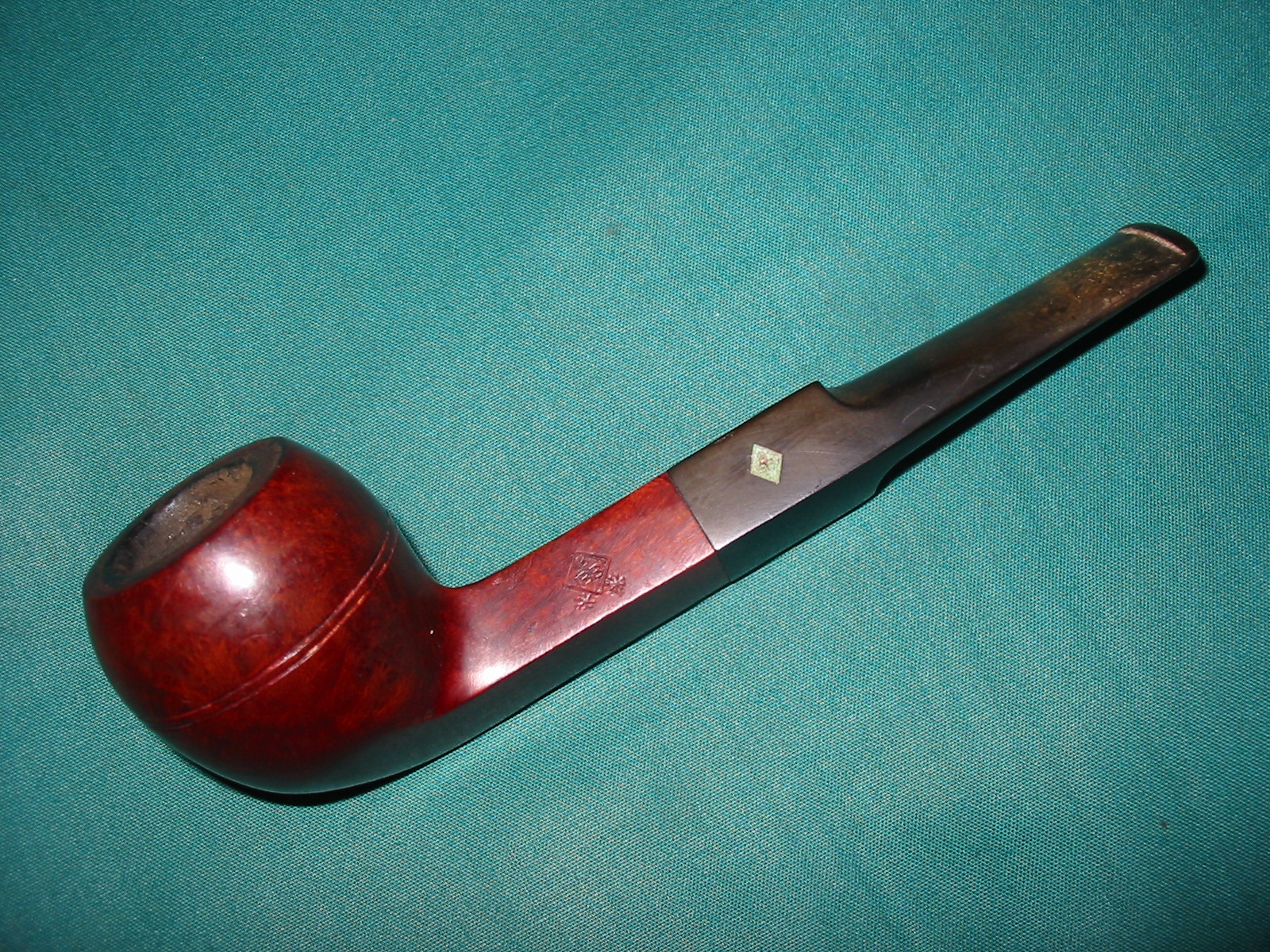
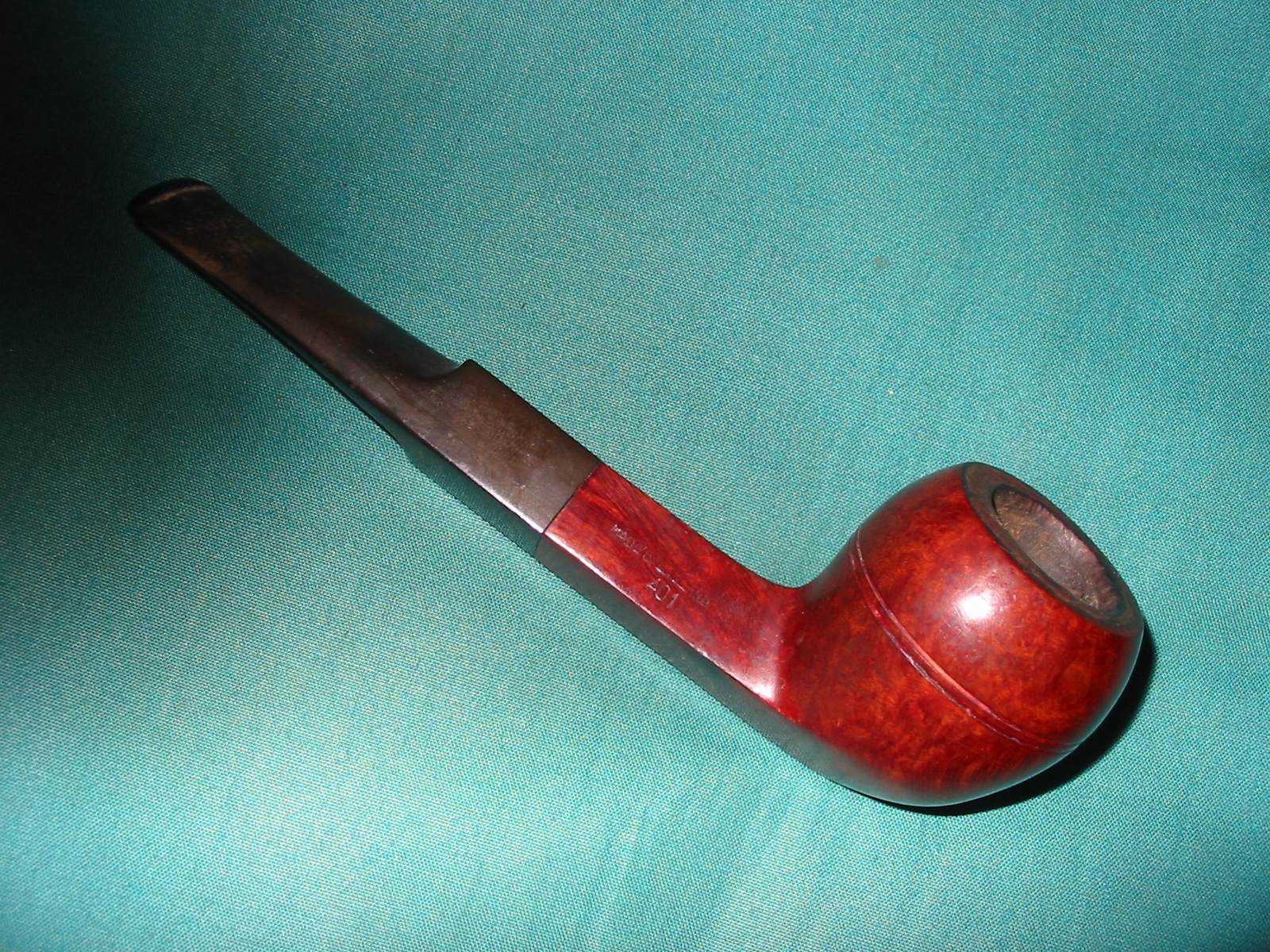
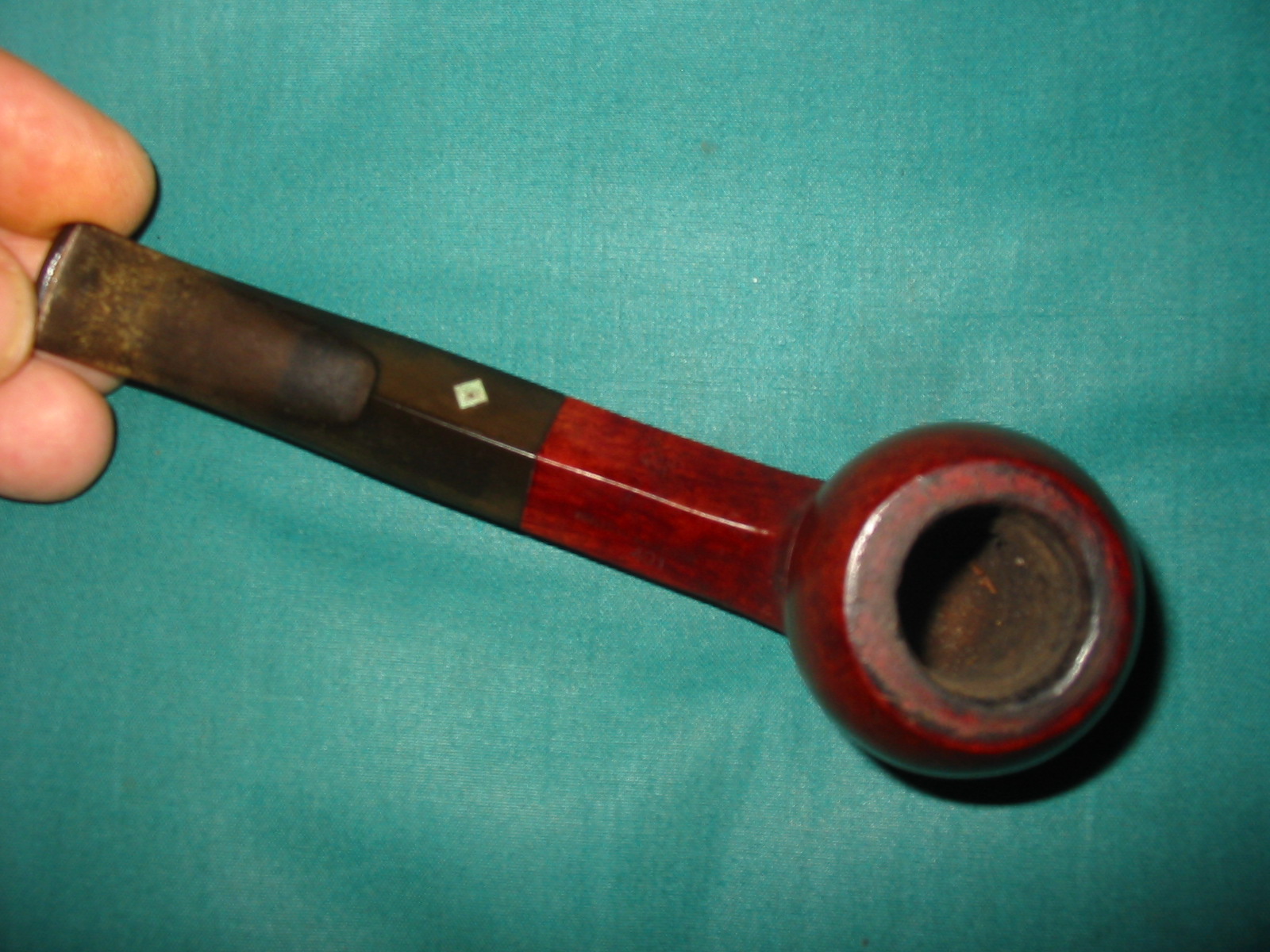
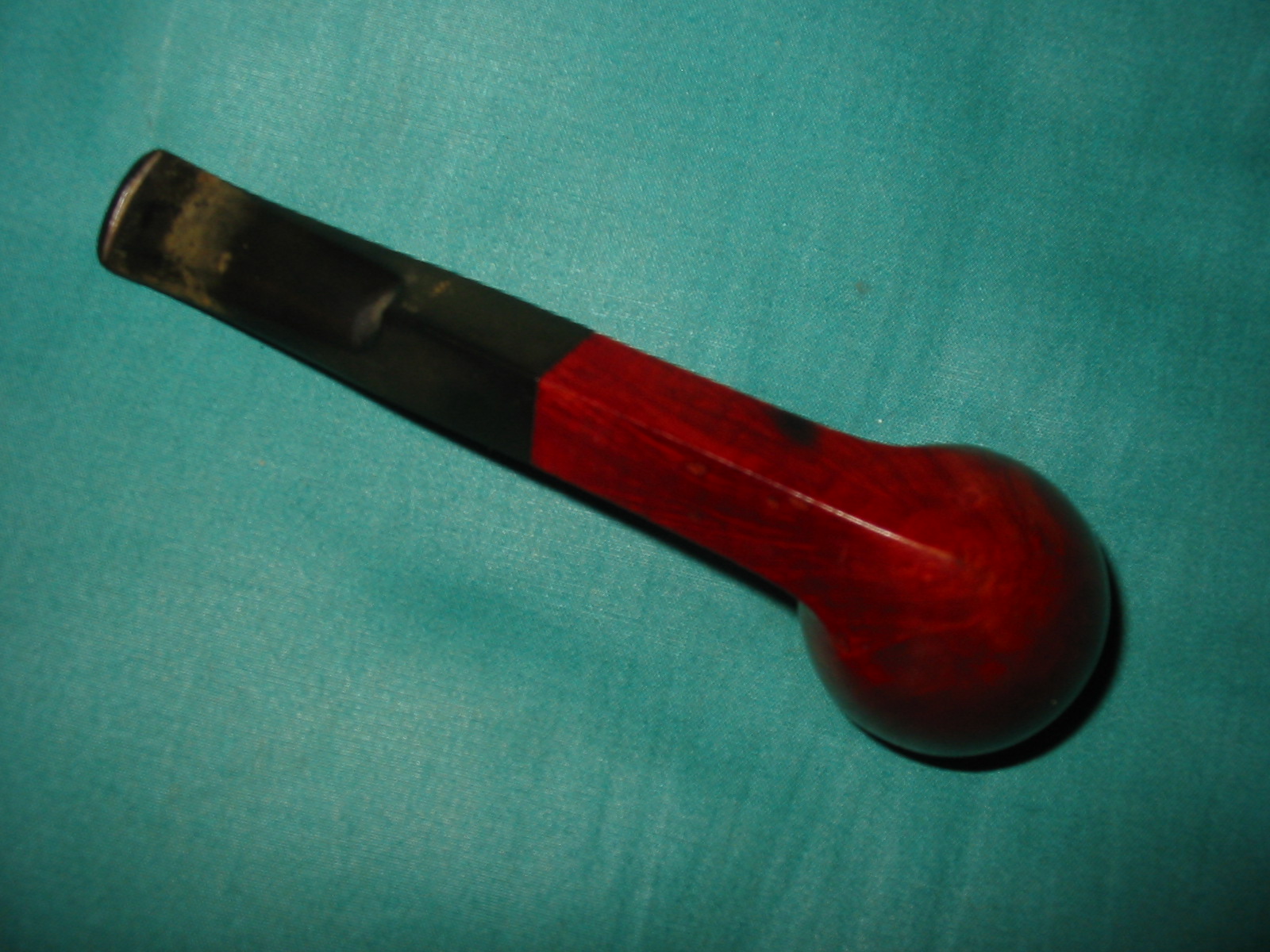
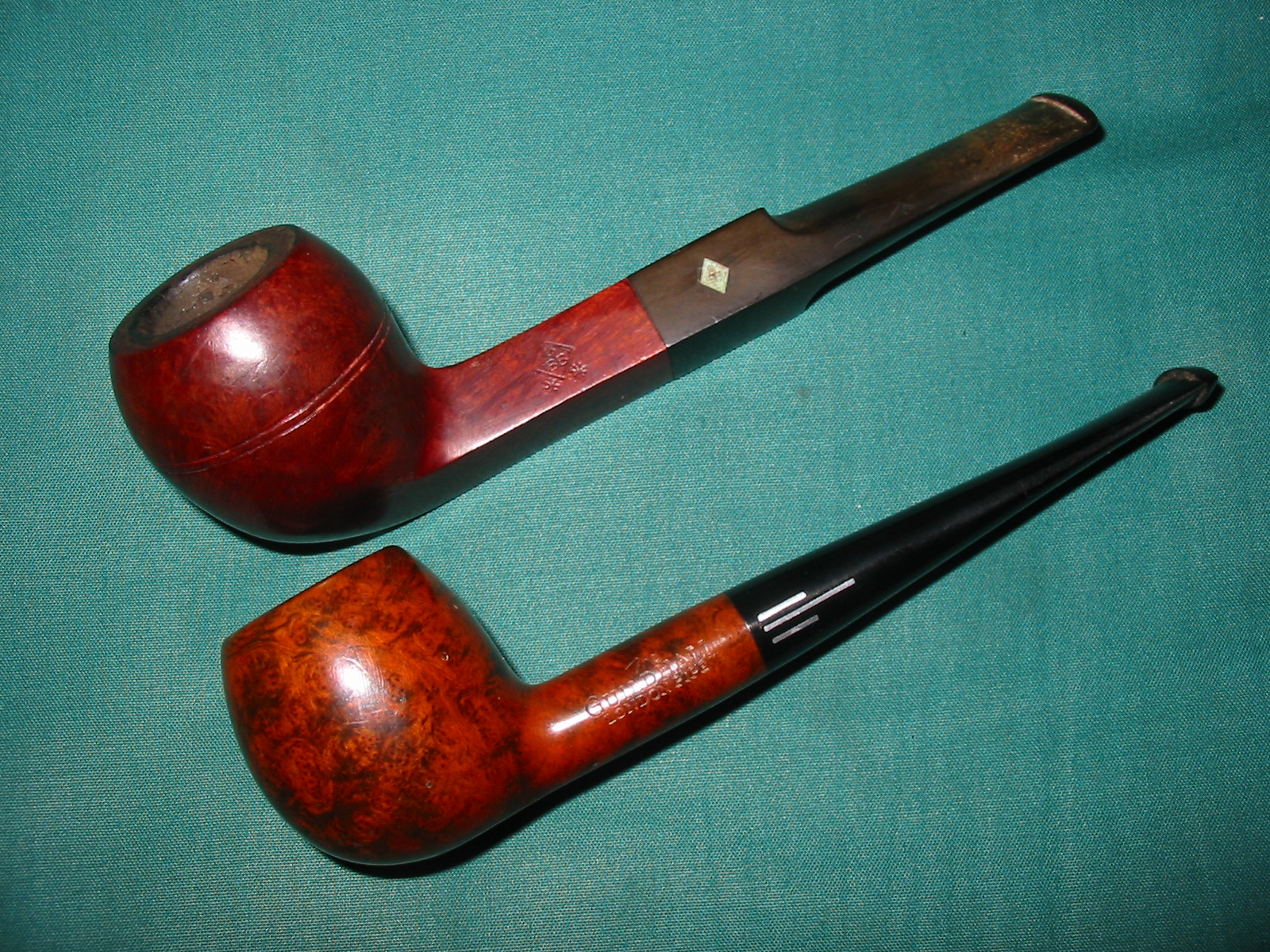
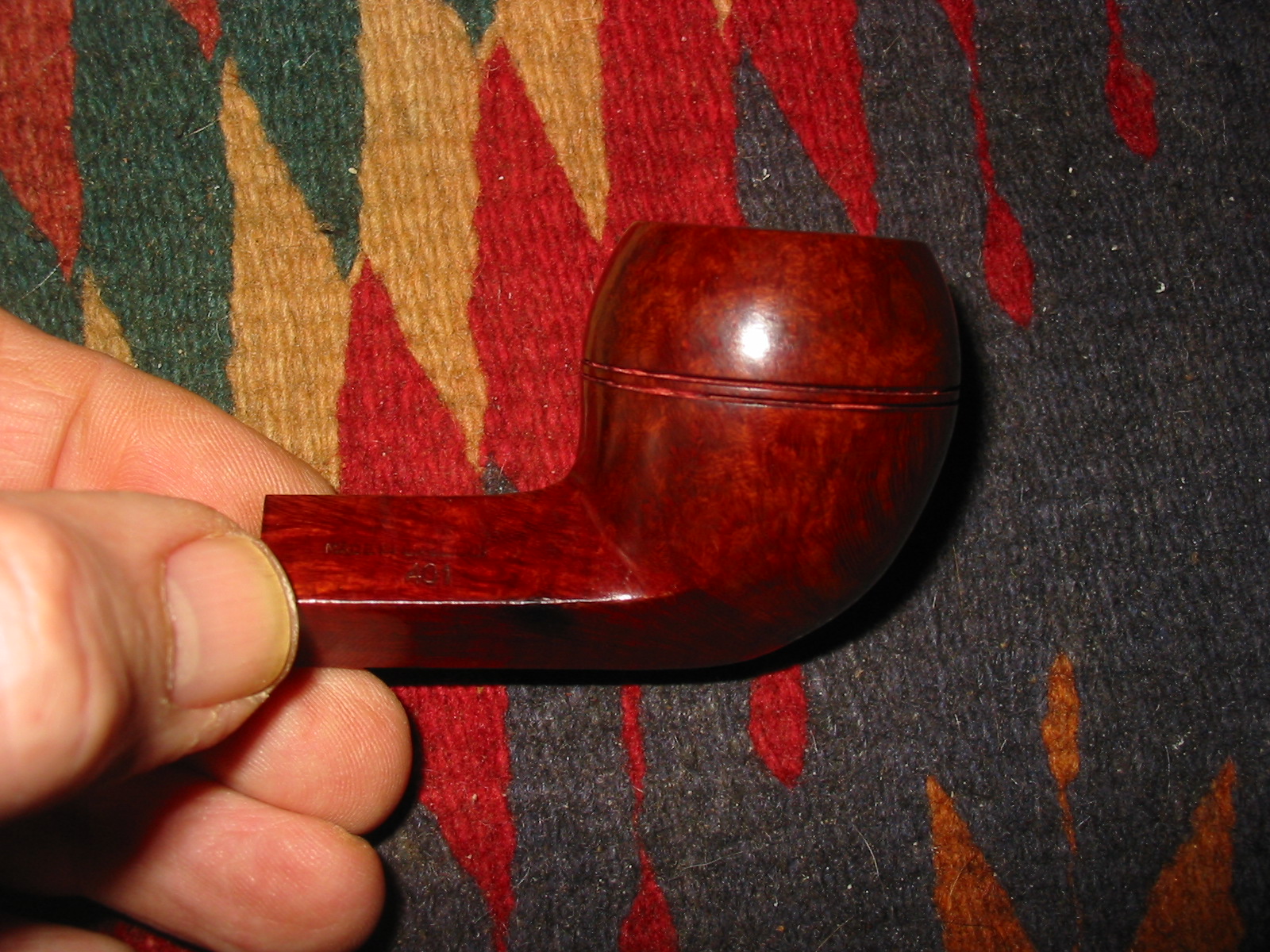
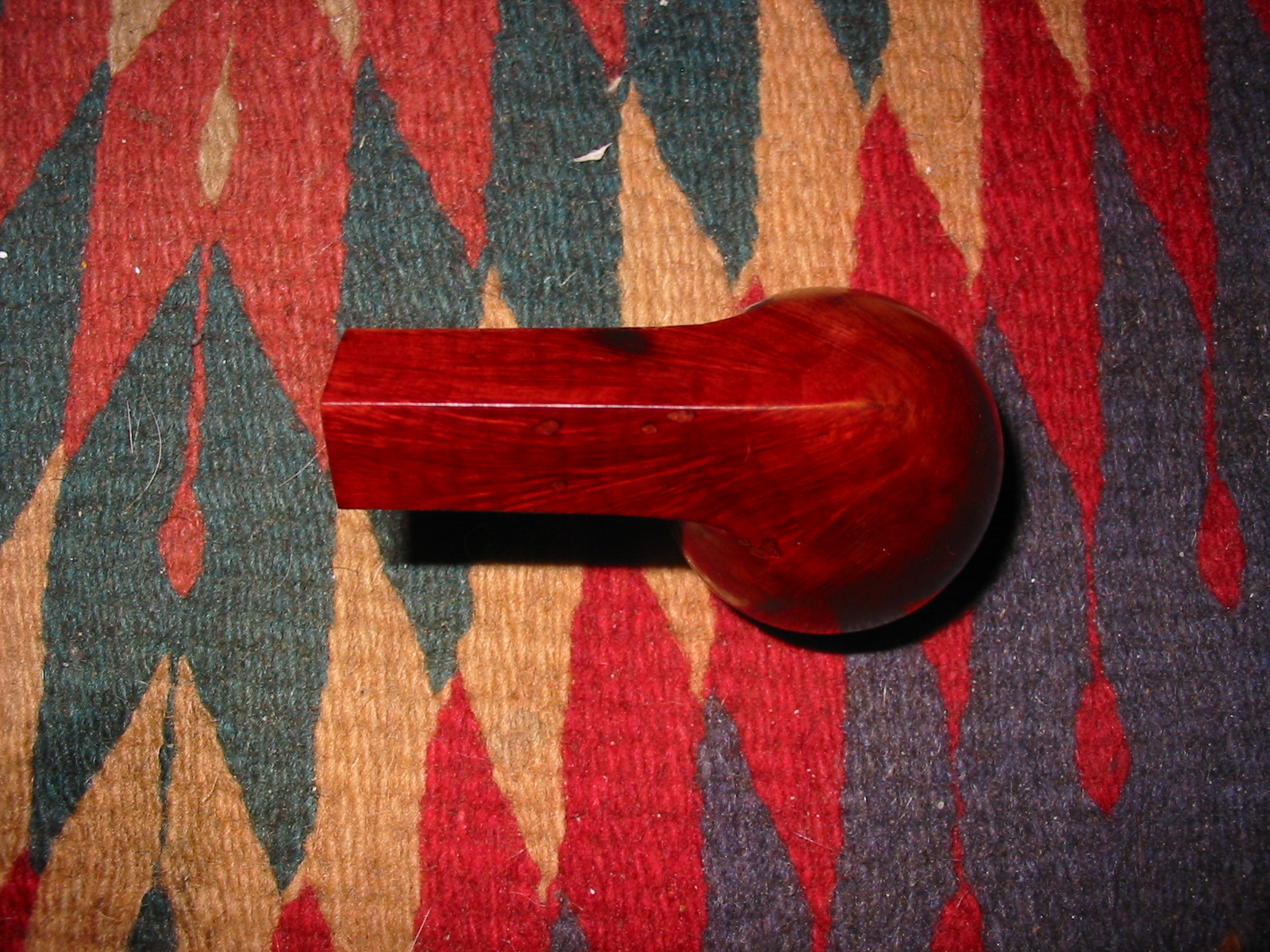
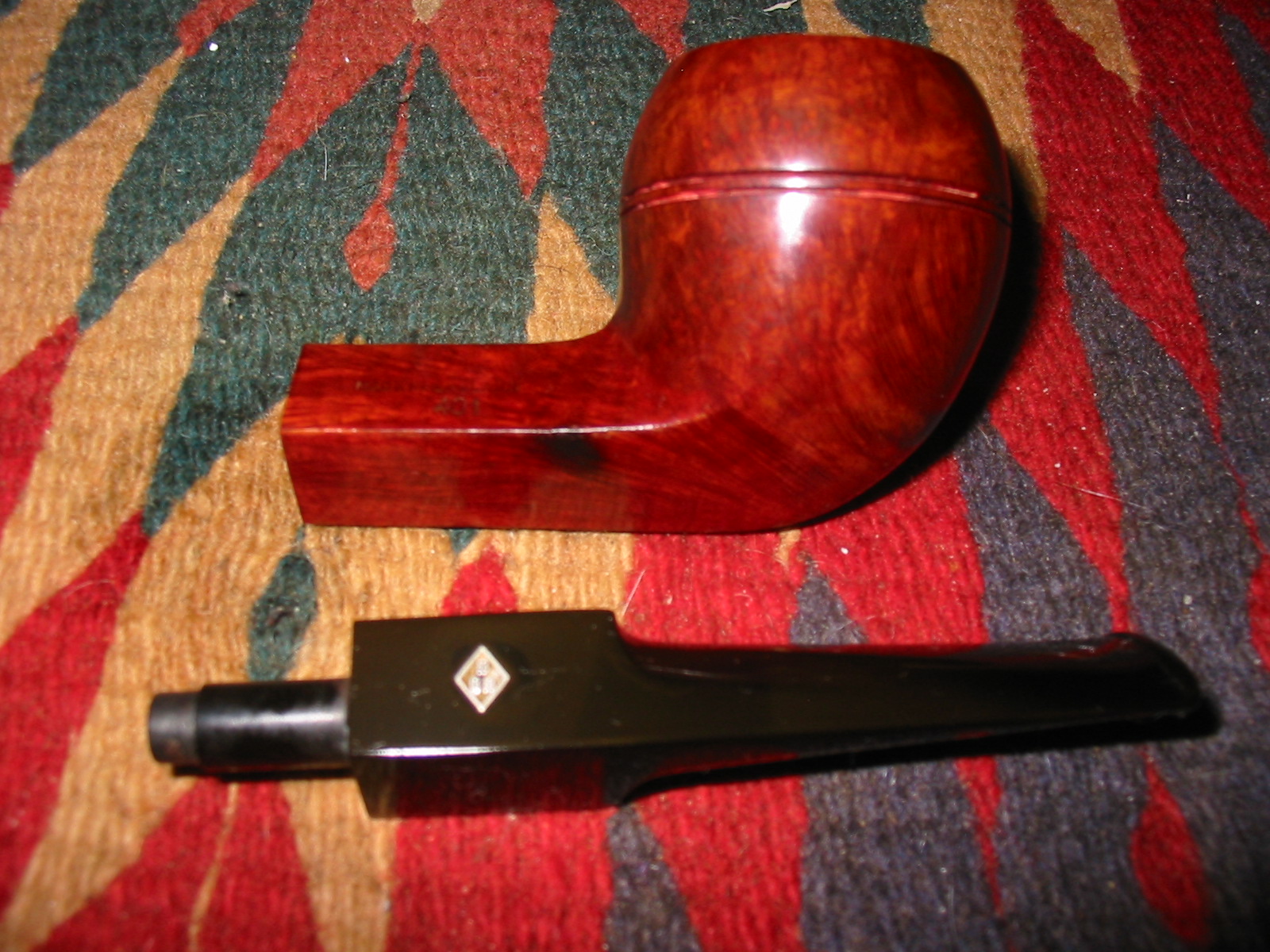
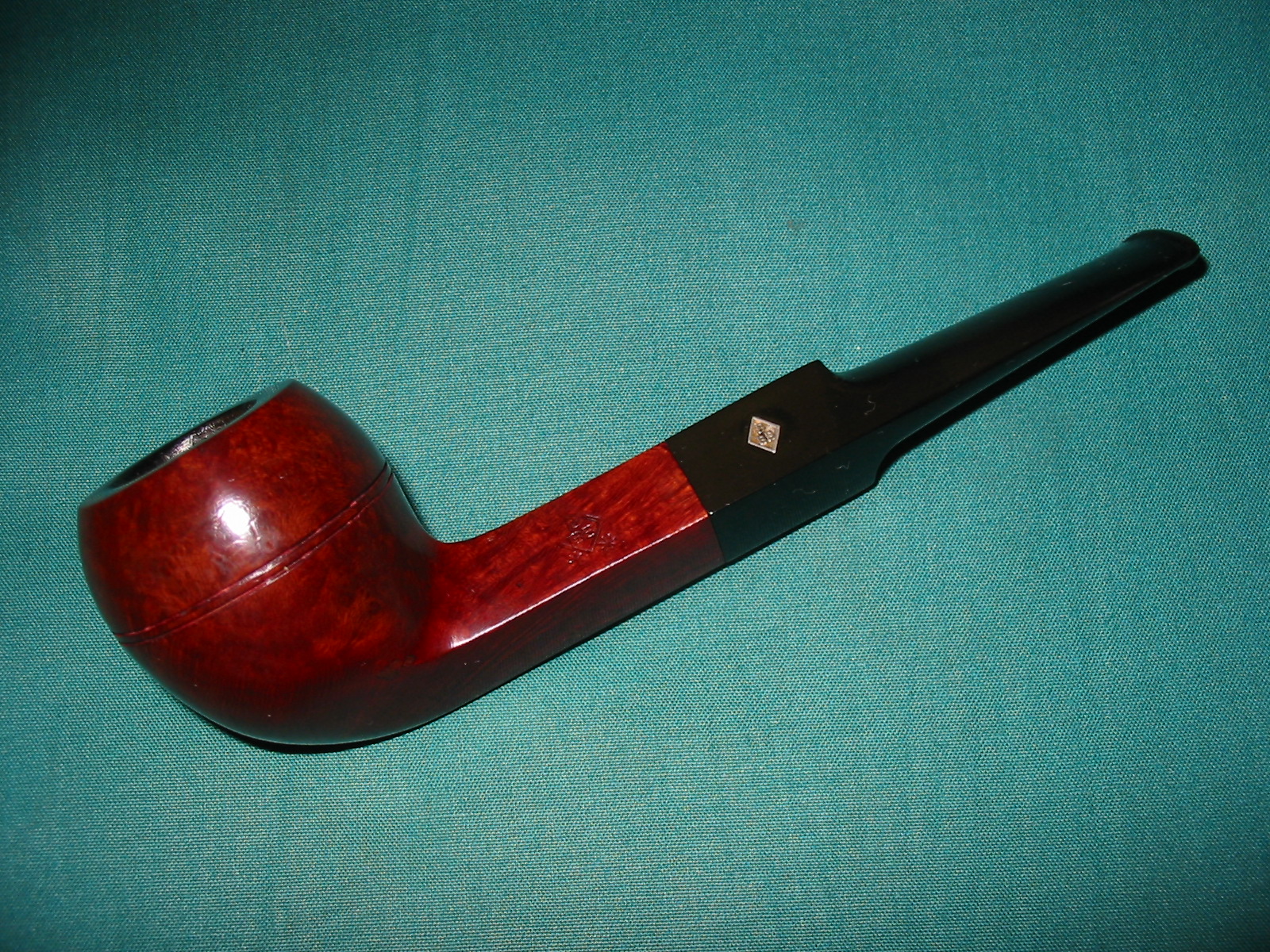
I picked this little BBB ** Bulldog up yesterday at a flea market for $16. It is stamped BBB in a diamond over ** on the left side of the shank. The other side is stamped 401 (shape number) over Made in England. The first four pictures below show what it looked like when I found it. It was hidden under a group of worn old pipes and this one and a little Comoy’s Guildhall became mine. The bowl was in pretty clean shape. The finish is clean with only a small dark spot on the shank where it must have touch a coal in an ashtray. The wood is not burned only darkened. The rim was clean but for a little tar. The bowl did not need to be reamed though it was a little out of round. The inner edge of the rim on the front right is a bit damaged from lighting the pipe repeatedly in the same spot. The double rings around the bowl were filled with wax in many spots and would need to be cleaned out for them to really show well. The stem had tooth marks on the underside and topside near the button and the tooth chatter on the oxidized stem would need some work. The BBB diamond was full of gunk and was oxidized with a greenish hue. Inside the shank and stem were dirty but would not take much to clean it up.

ImageImageImageImage

I put the next picture in to show the little Comoy’s Guildhall that I picked up at the same time and give a feel for the size of the pair. Both will not need a lot of work to bring them up to being ready for a smoke.

Image

I used silver polish to begin with and cleaned the brass BBB logo. I wanted to see what kind of shape it was in before I began work on the stem. It turned out to be in great shape under the grime and oxidation. The BBB stamp is clean and sharp and the lines in the background are still visible. Once I had the logo cleaned I worked on the tooth chatter and tooth marks in the stem. I used 320 grit sandpaper to work out the tooth chatter and a lighter to heat up the bite marks and lift them out. I then sanded them with 320 grit sandpaper to remove the remnants of them. The next series of three photos show the stem after sanding tooth chatter and bite marks out of the stem.

ImageImageImage

I cleaned the rim by lightly sanding it with 320 grit sandpaper and then wiping it down with saliva until the tars were removed. The photo below shows the rim after the sanding and cleaning.

Image

I sanded the stem with a medium grit sanding sponge to remove the scratches left by the sandpaper and then polished it with Maguiar’s Scratch X2.0. The next series of three photos show the stem as I worked on it with the micromesh sanding pads 1500-12,000 grit. In this case I wet sanded with the 1500, 1800 and 2400 grit micromesh and then dry sanded with the remaining grits of micromesh.

ImageImageImage

I gave the bowl a quick buff with White Diamond and then gave it several coats of carnauba wax. The next four photos show the polished bowl.

ImageImageImageImage

The next three photos show the stem after it has been polished with the micromesh pads up through 12,000 grit. I then used the Maguiar’s polish to finish off the polishing. The oxidation around the stem medallion and on the top sides of the saddle came off with some serious scrubbing with the polish. I also used a dental pick to clean out the two rings around the bowl cap of the bulldog.

ImageImageImage

The next series of four photos show the finished pipe, cleaned and ready to smoke. I rubbed the stem with Obsidian Oil and then once dry gave the whole pipe several coats of carnauba wax. The dark burn mark on the shank is only surface but still shows clearly in the finished pipe  – won’t affect the way it smokes though.

ImageImageImageImage