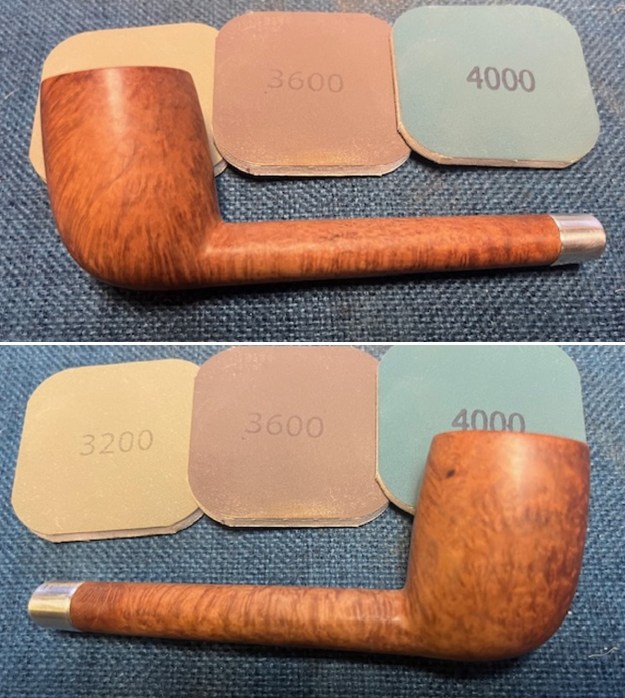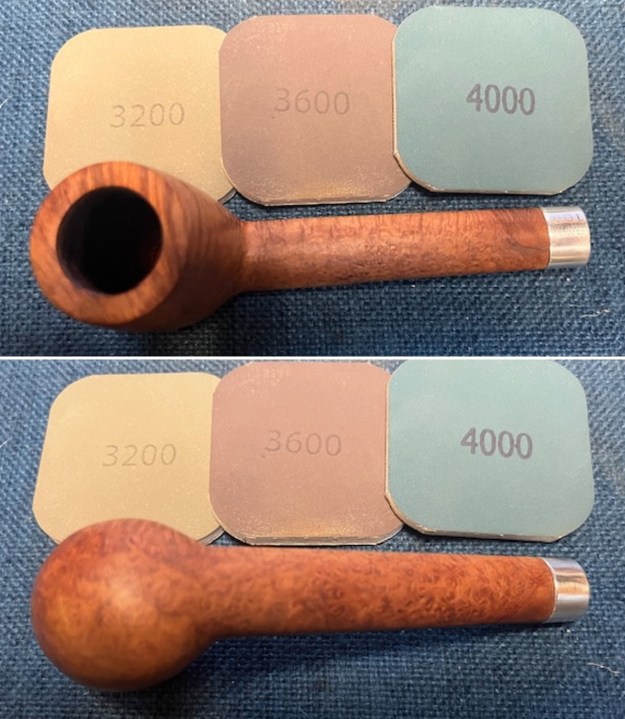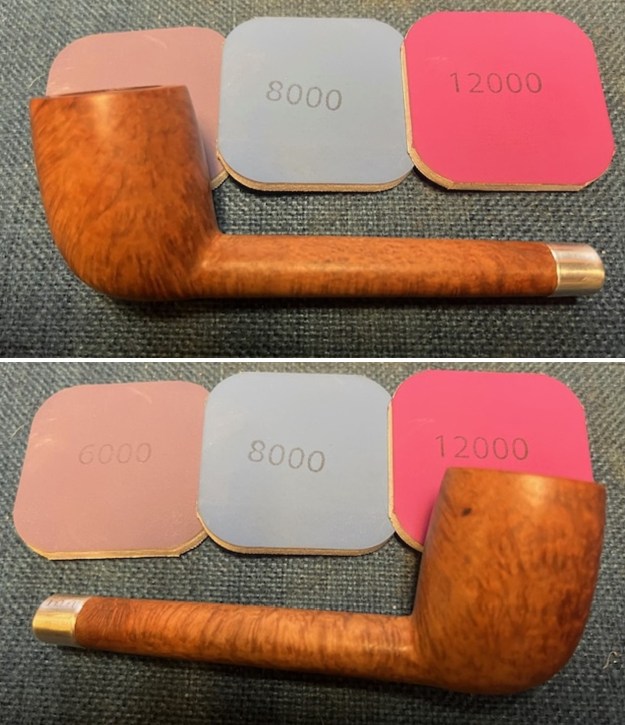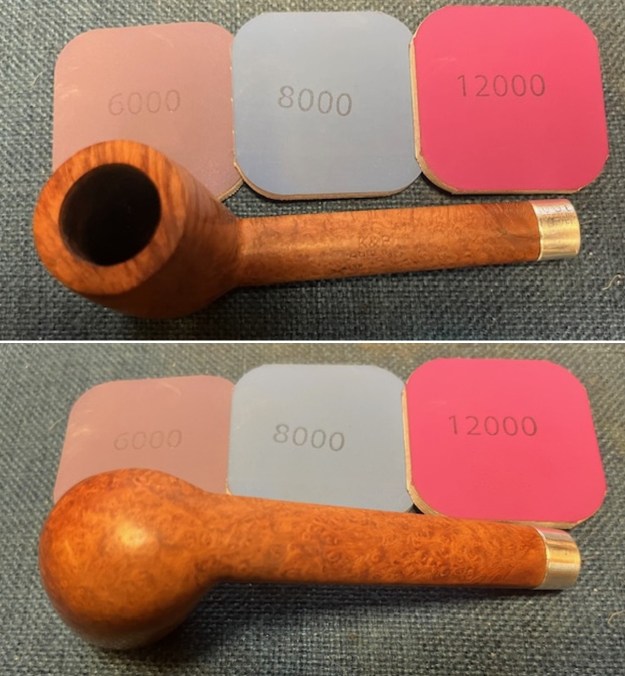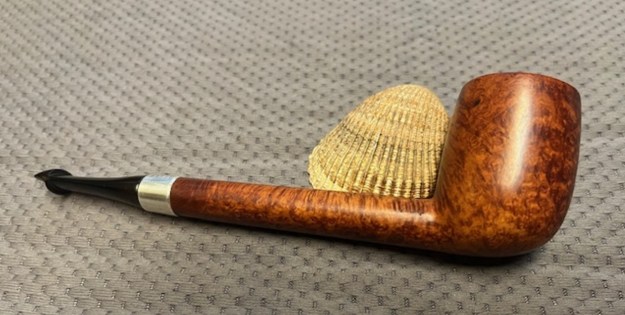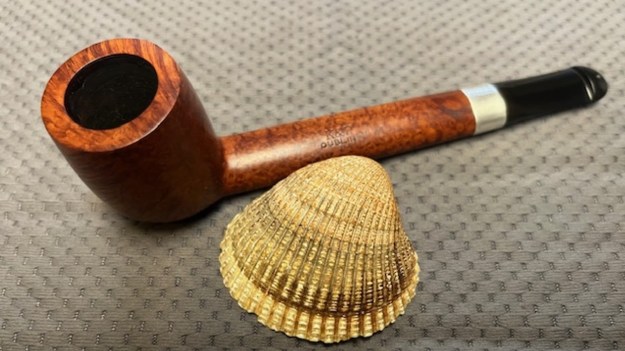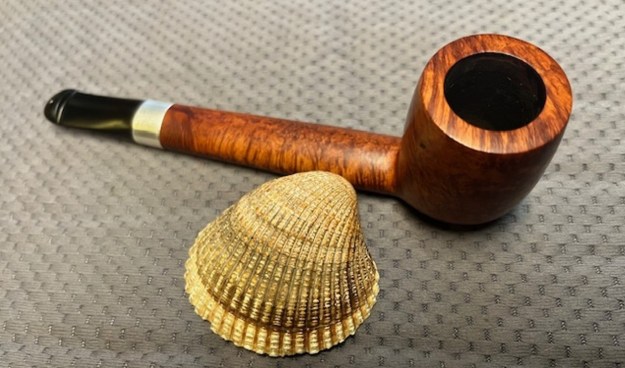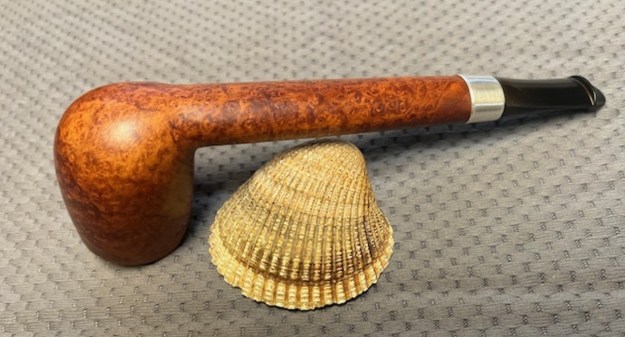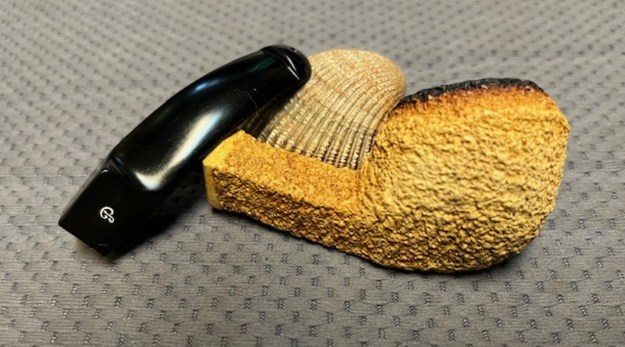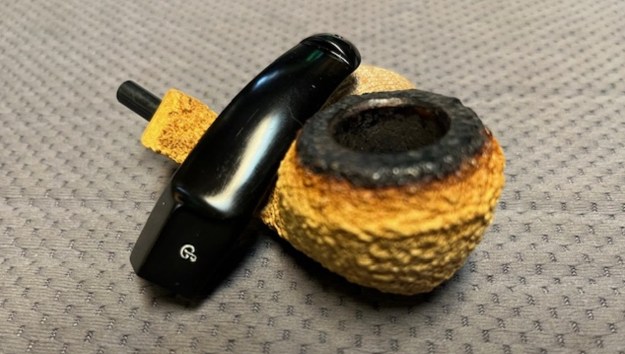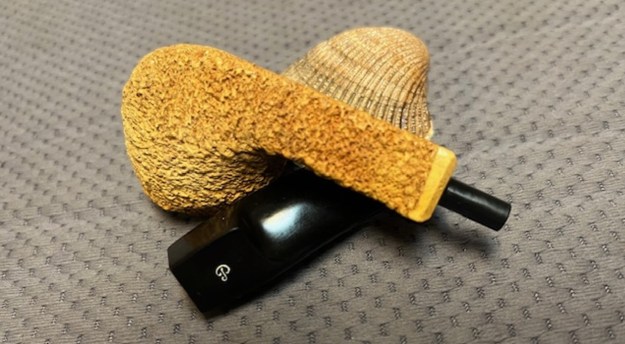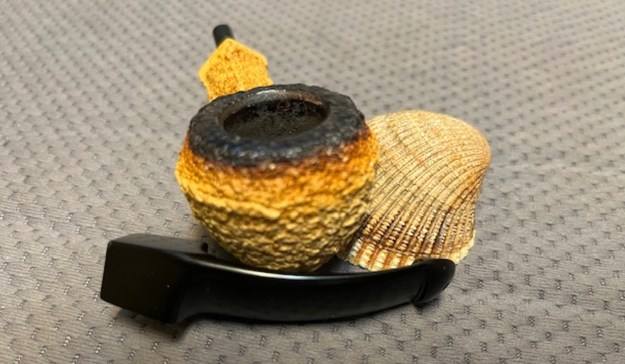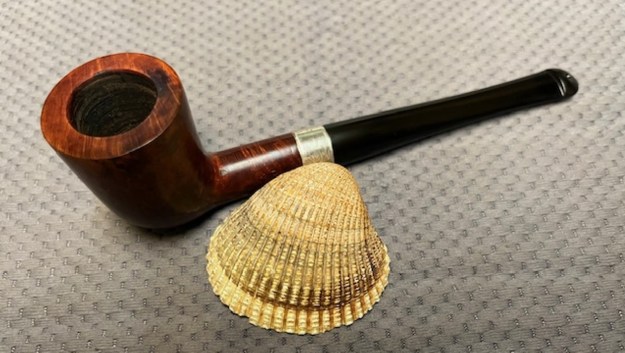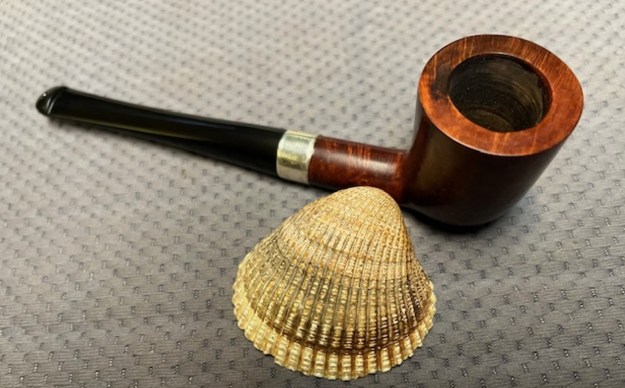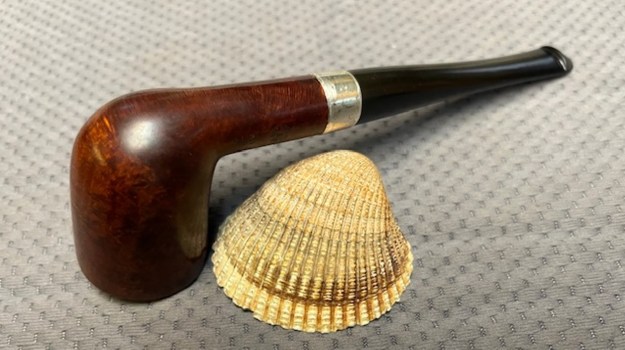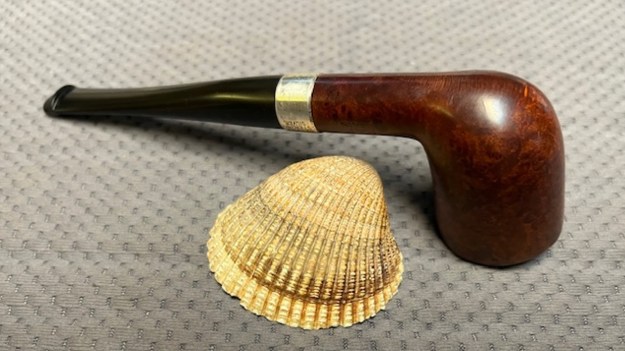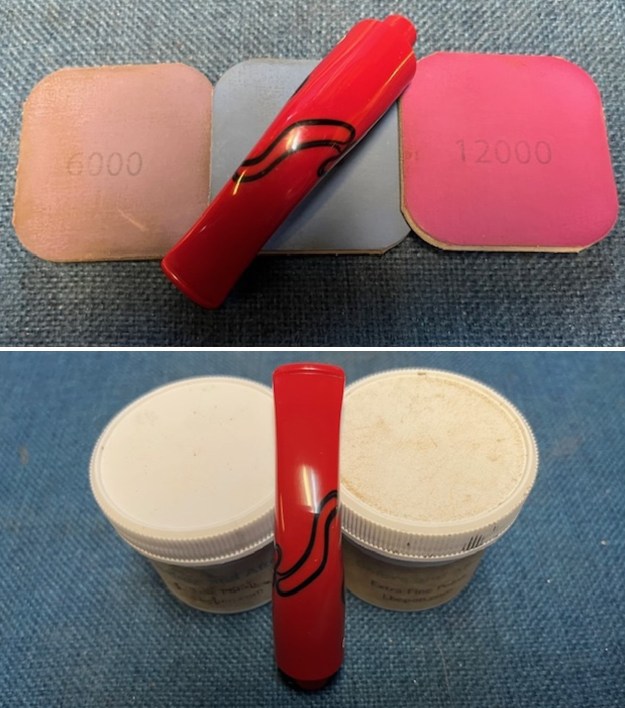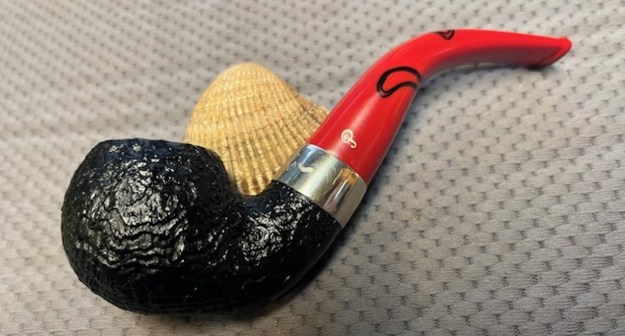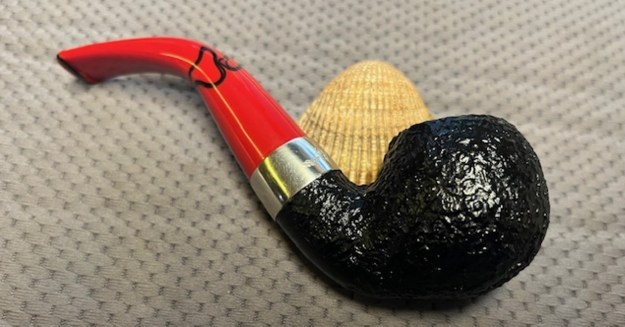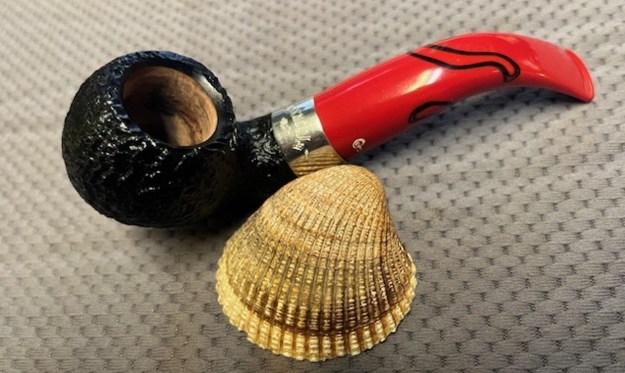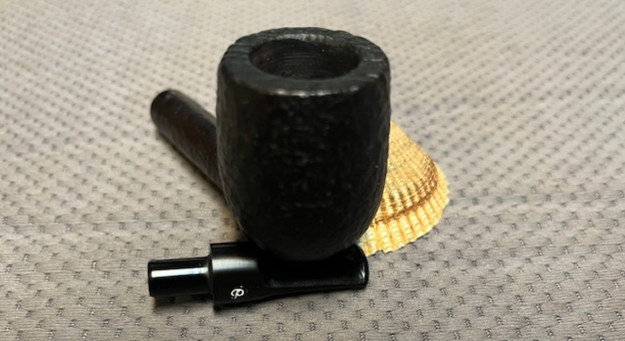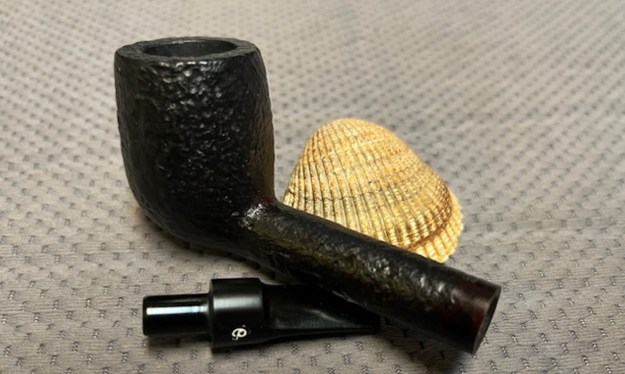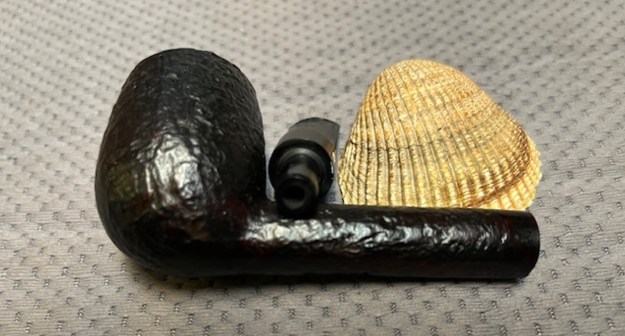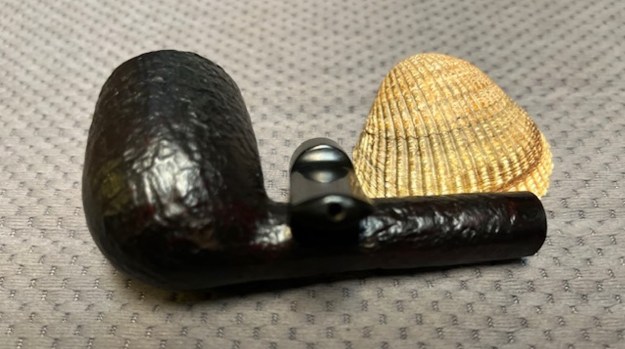
Tag Archives: Petersons Pipes

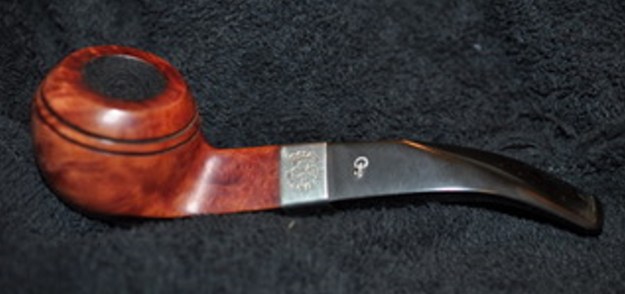
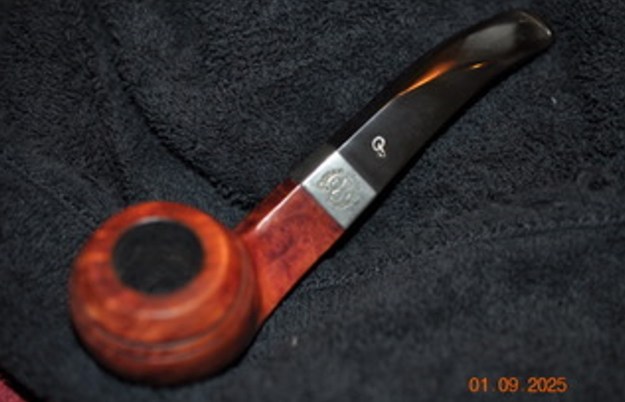
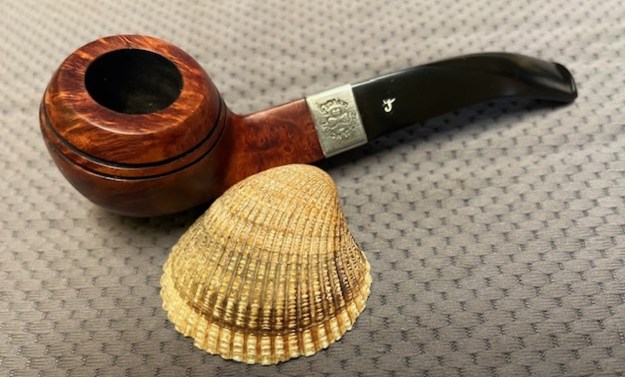
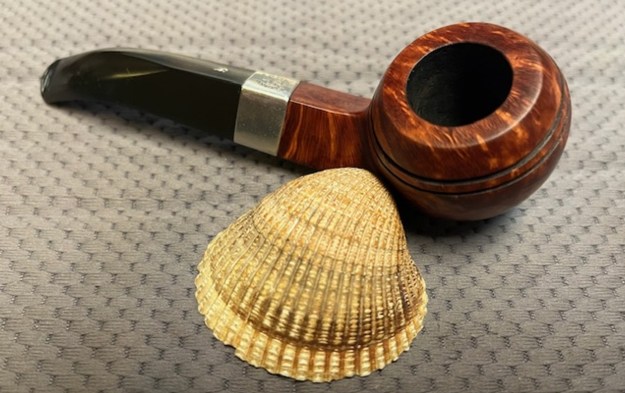
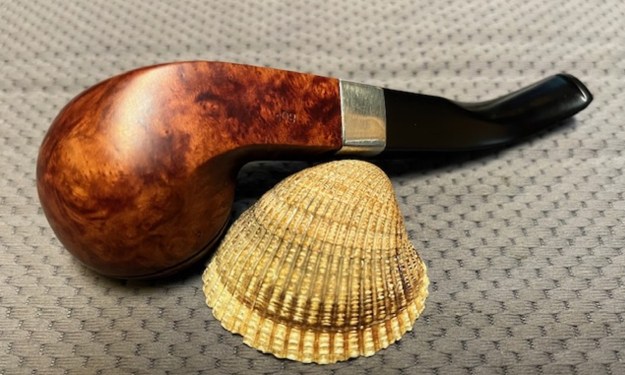
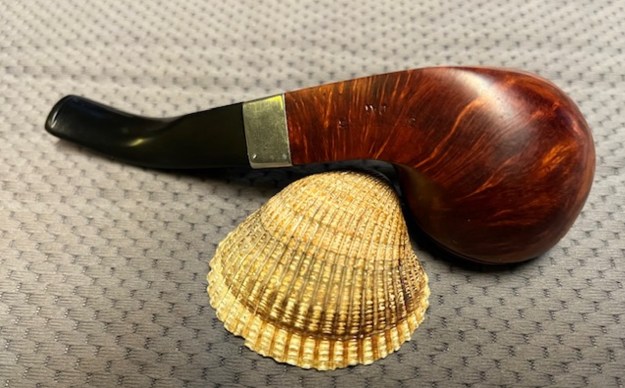
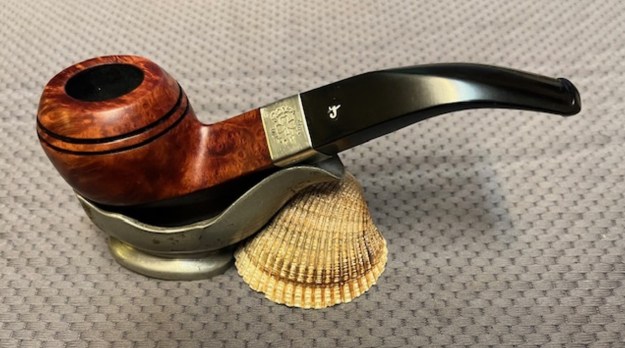
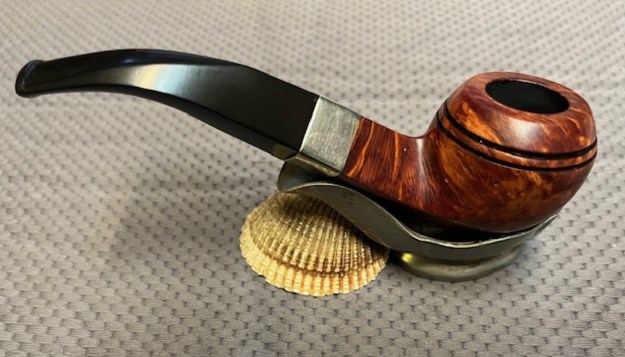
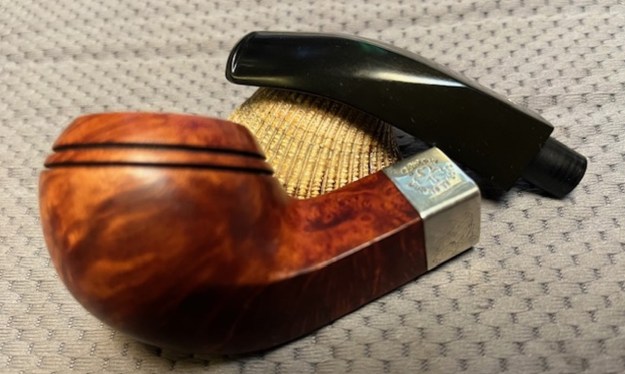
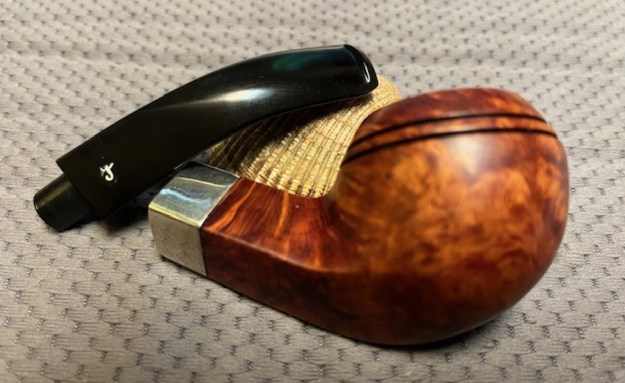
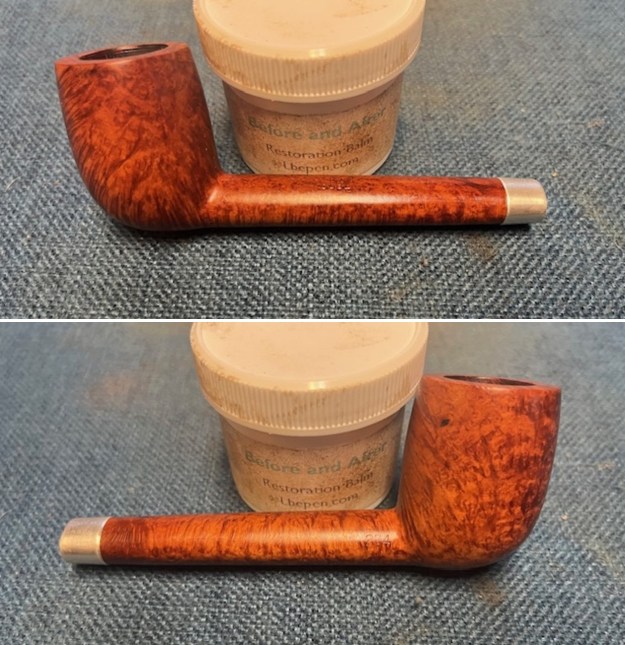
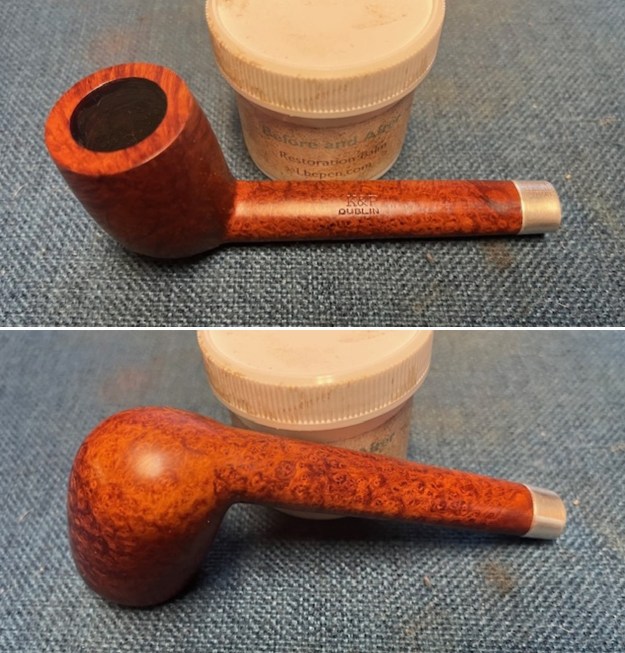
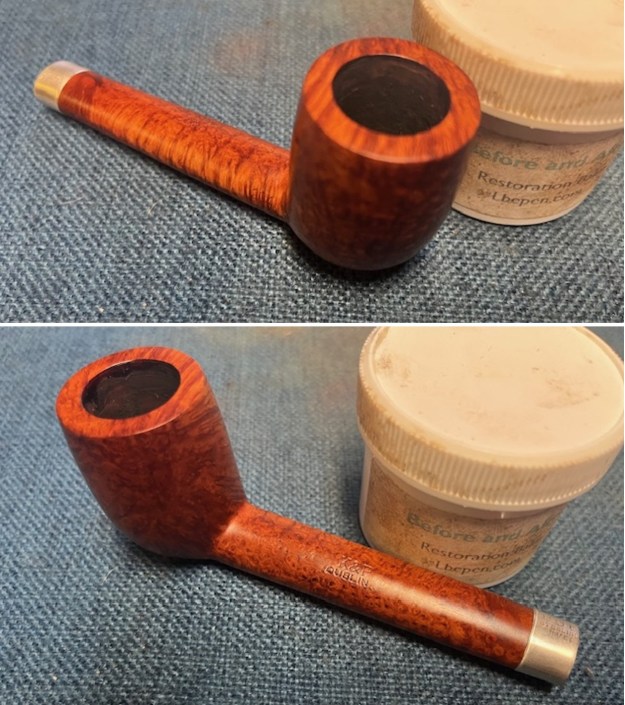
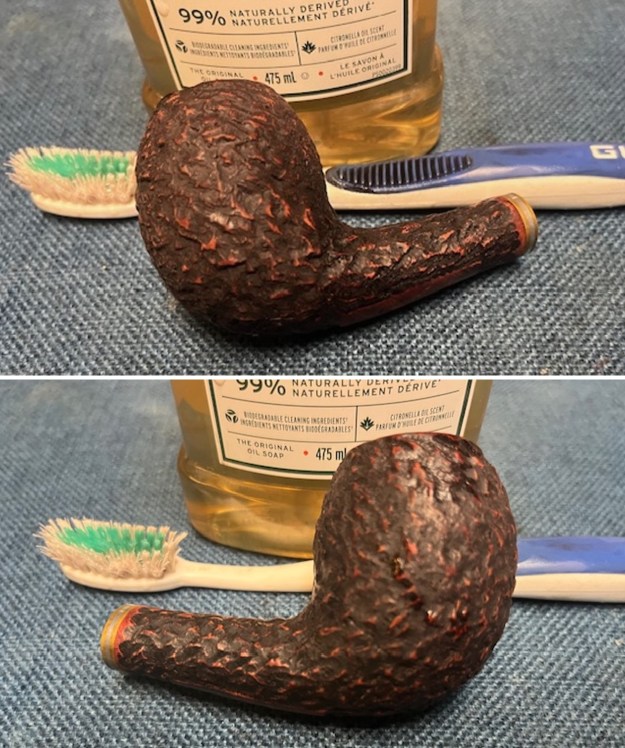
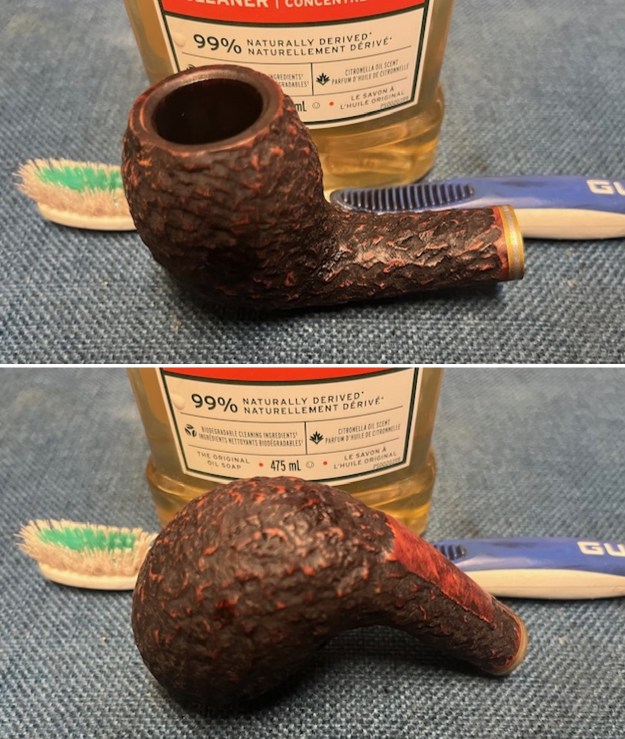
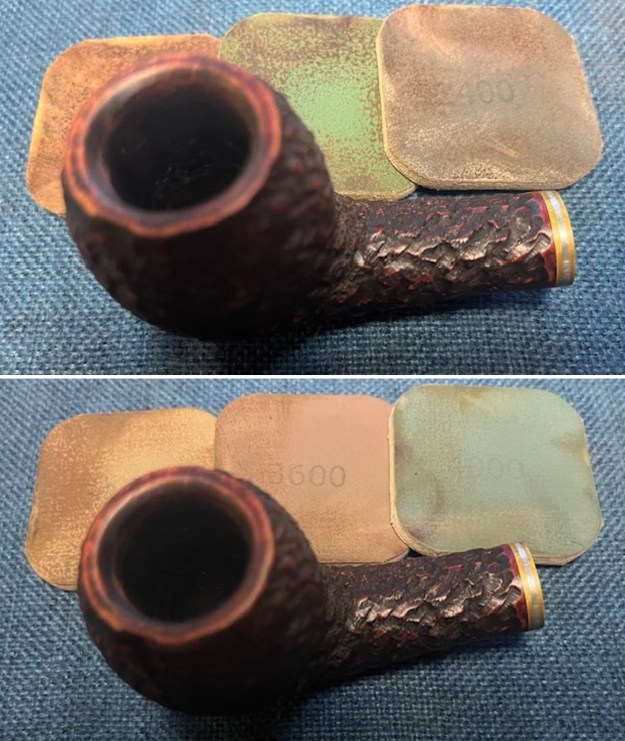
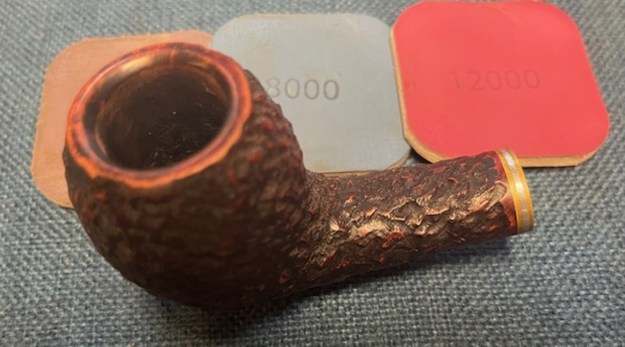
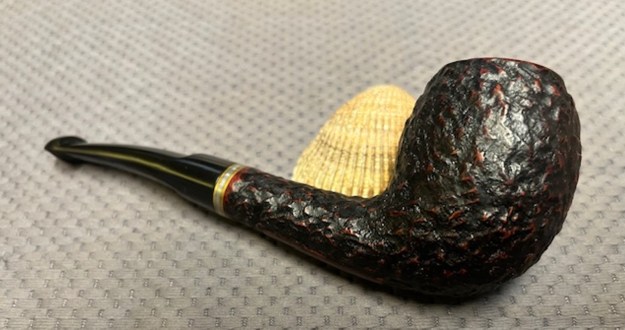
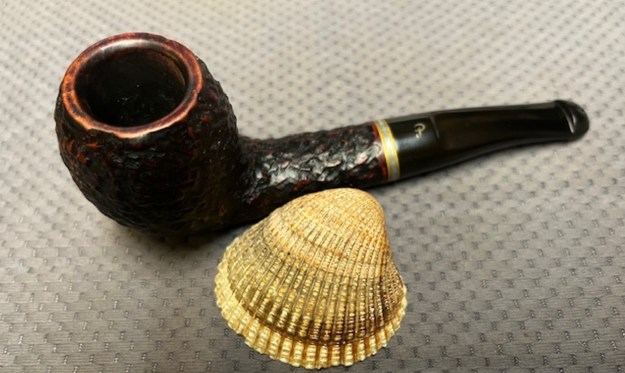
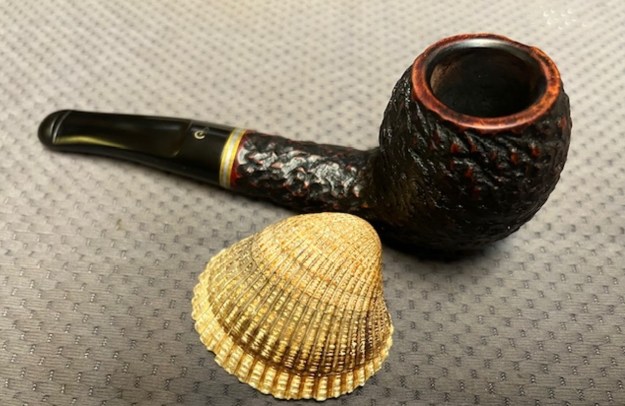
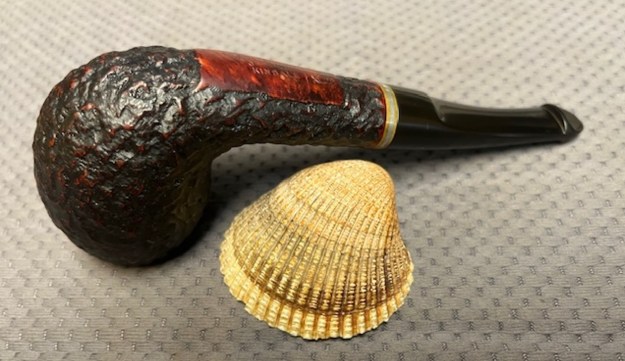
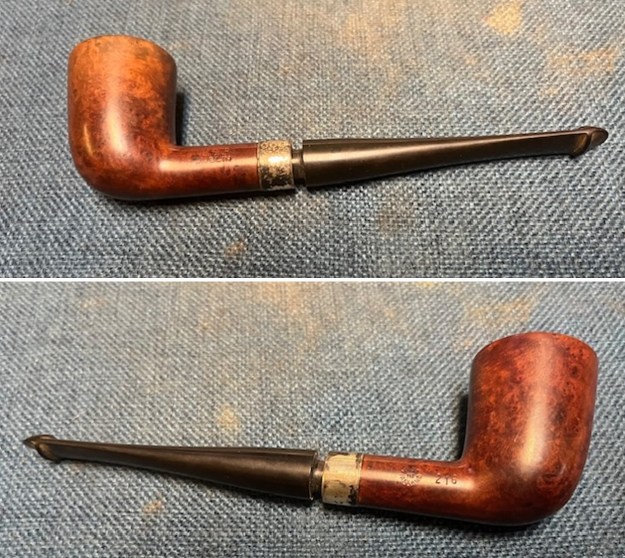
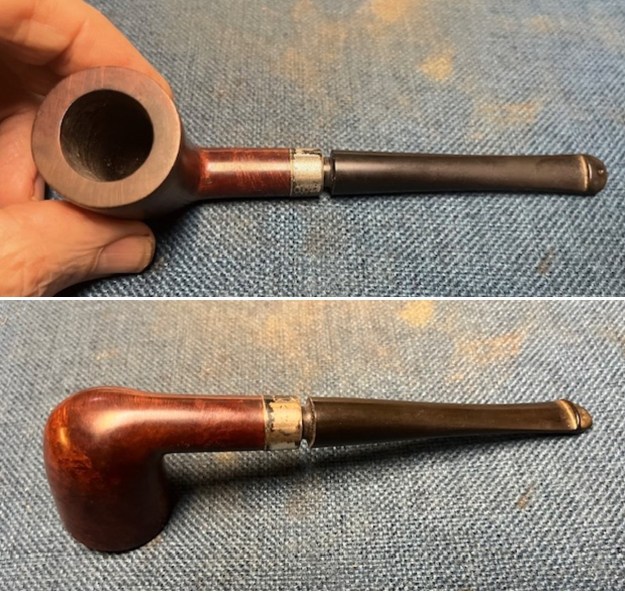
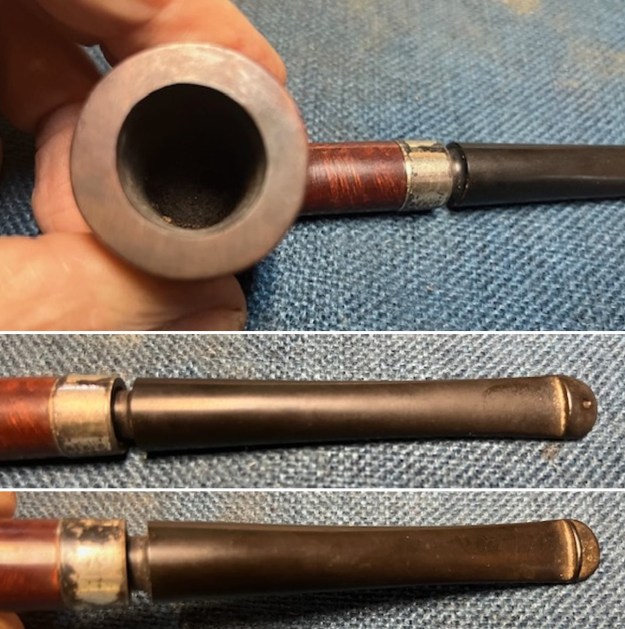
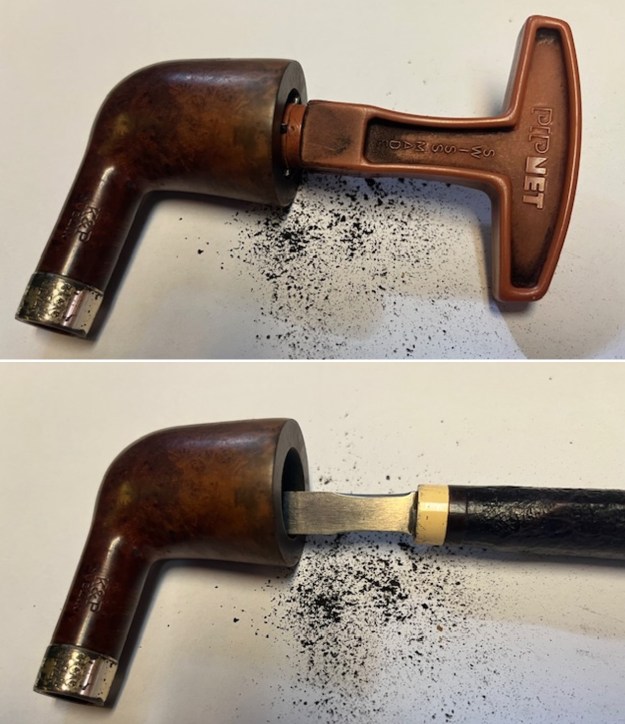
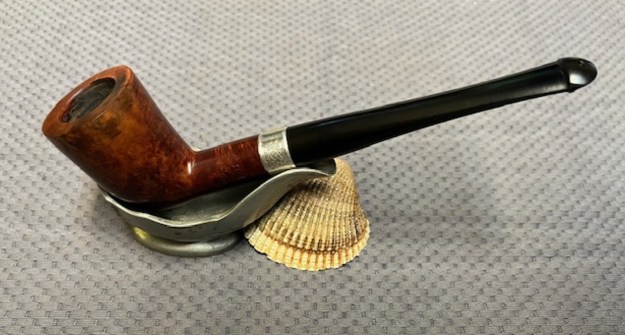
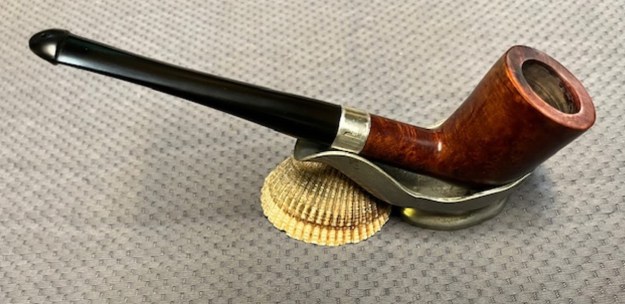
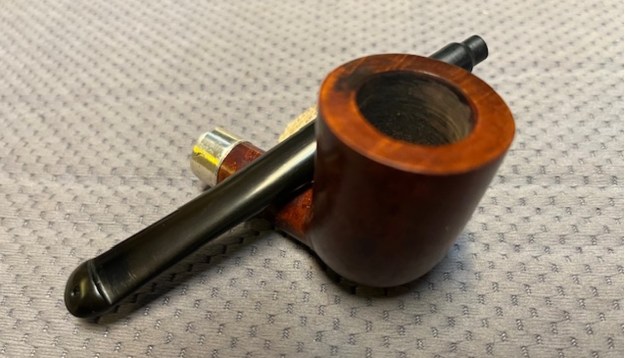
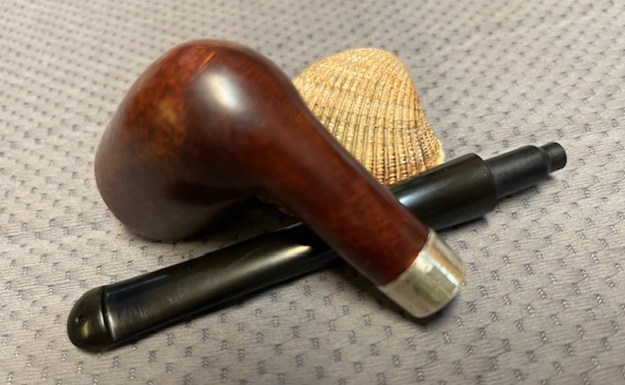
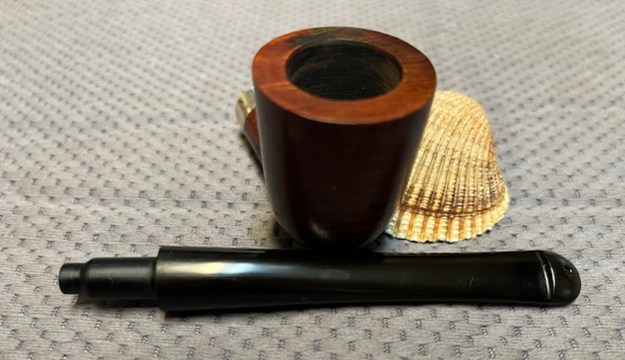
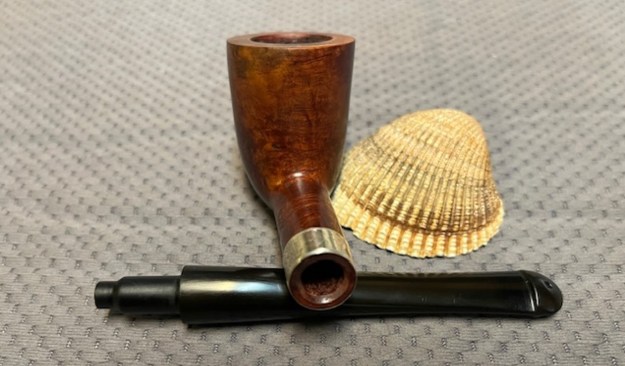
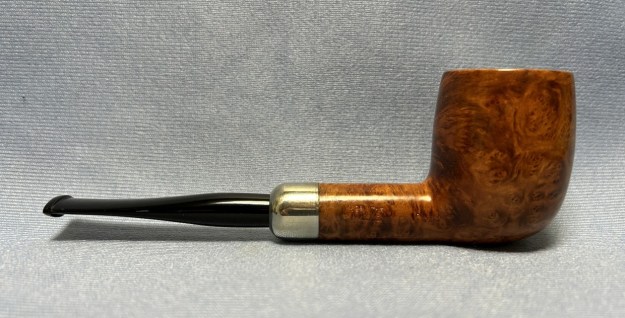
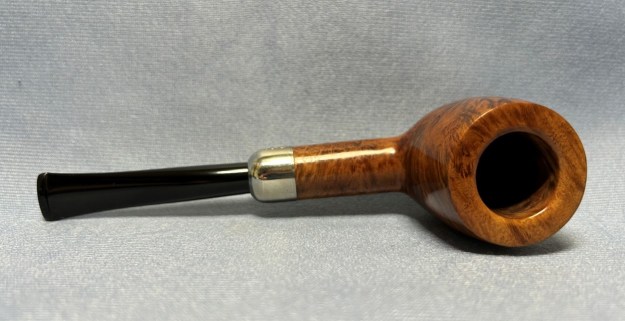
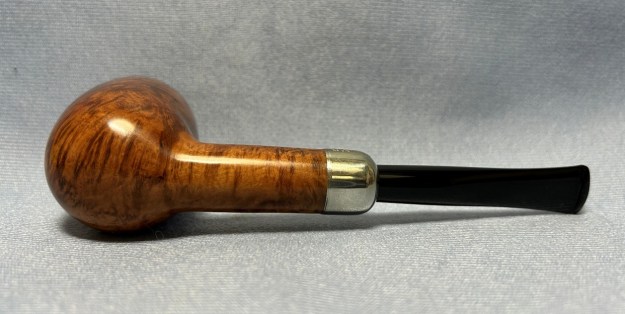
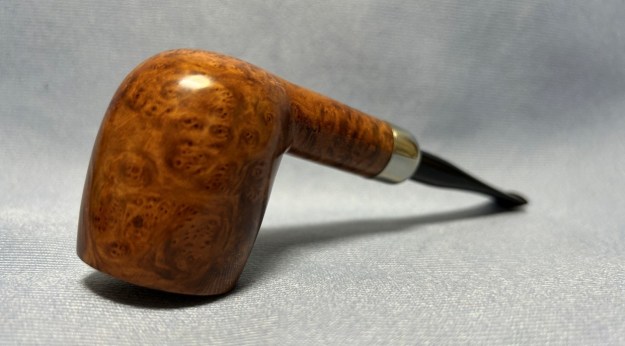
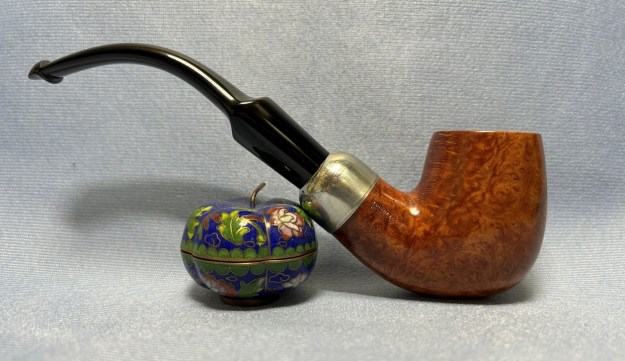
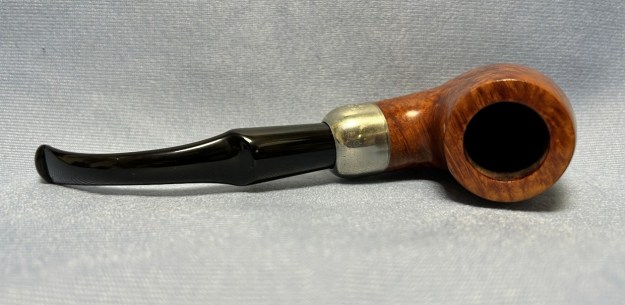
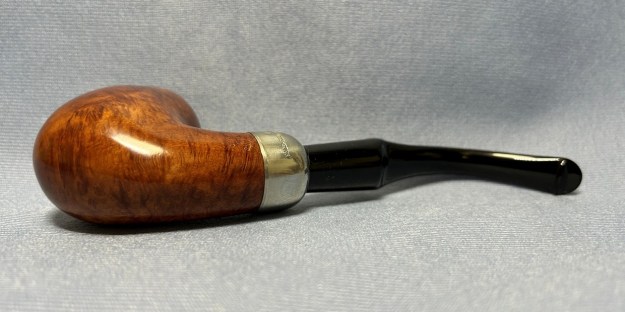
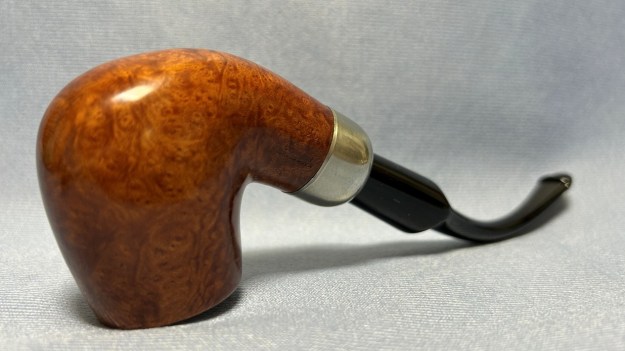
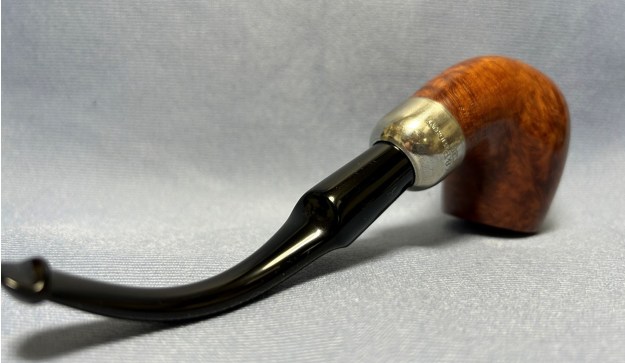
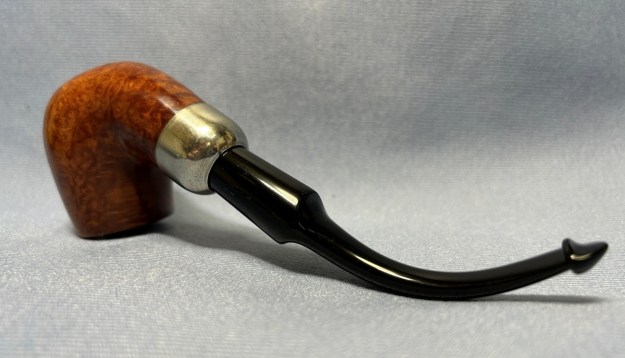
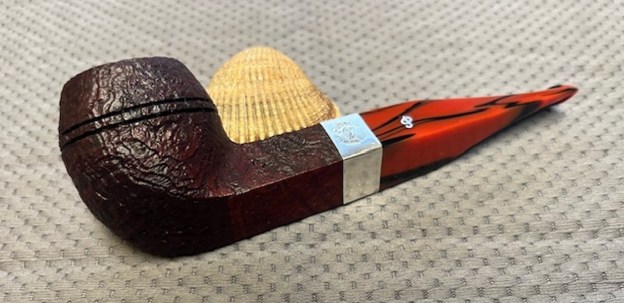
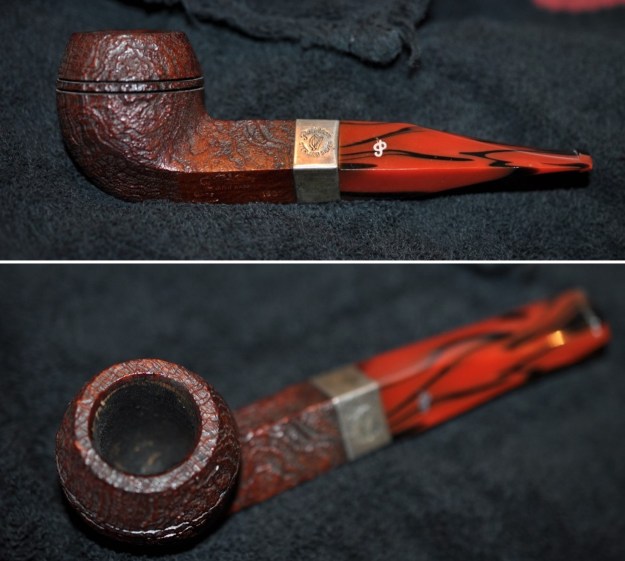
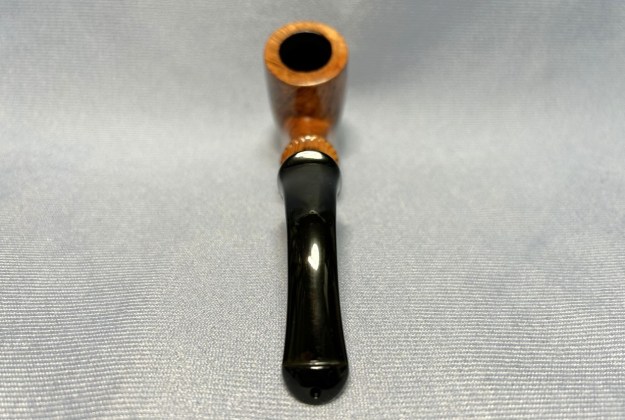
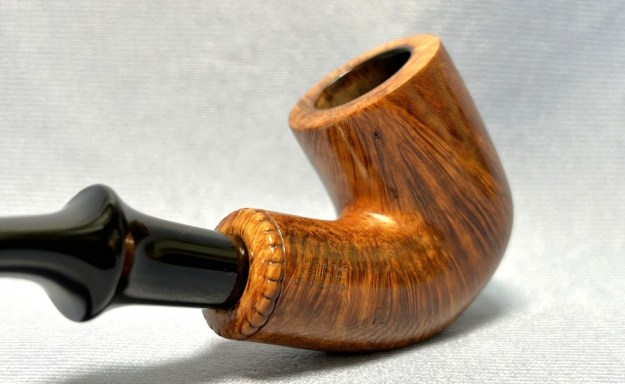
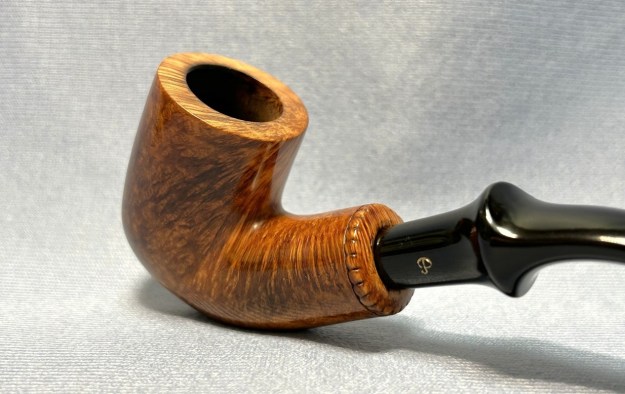
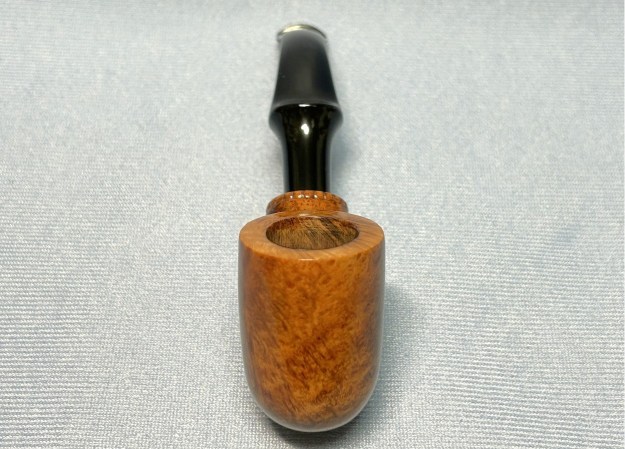
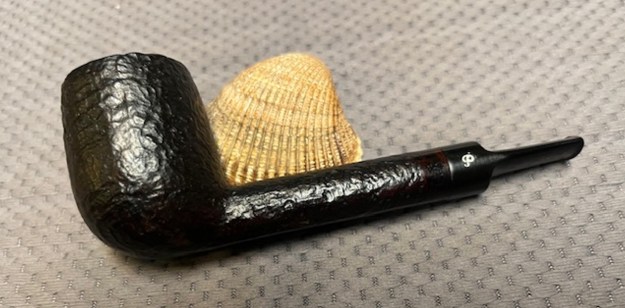
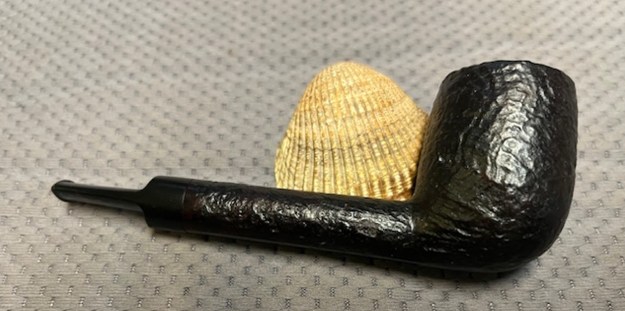
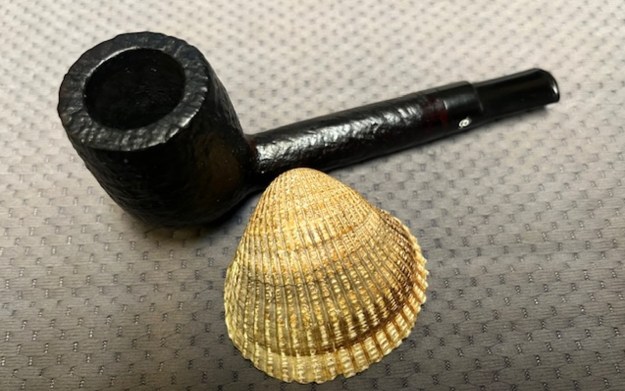
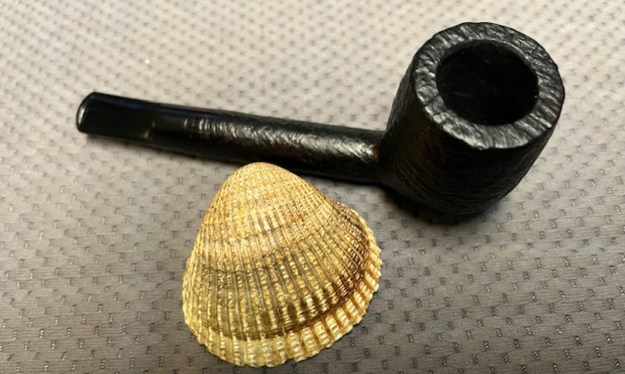
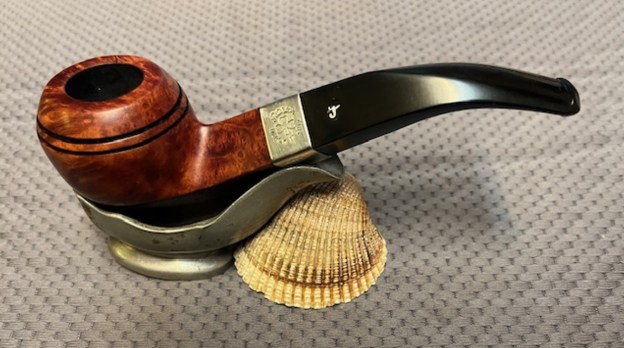
Restoring a Handsome Peterson Dunmore 73


by Kenneth Lieblich

Lá Fhéile Pádraig sona duit!

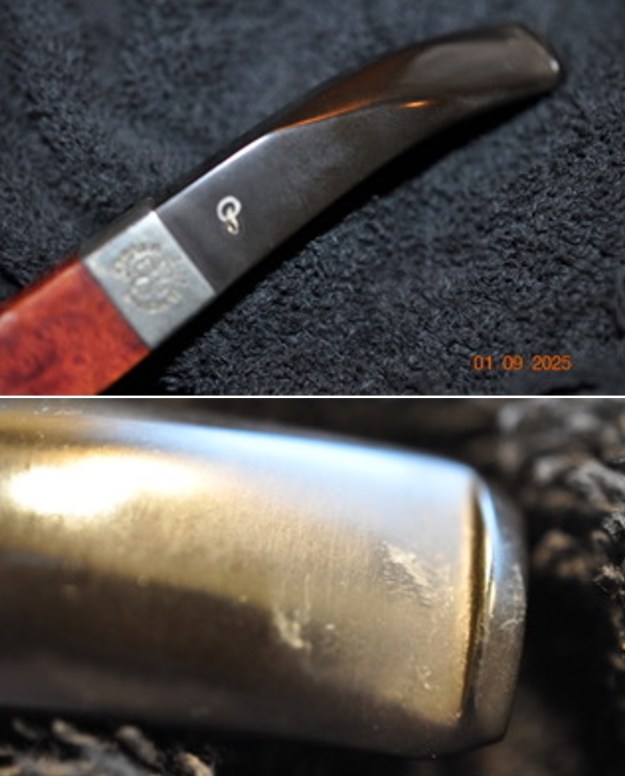
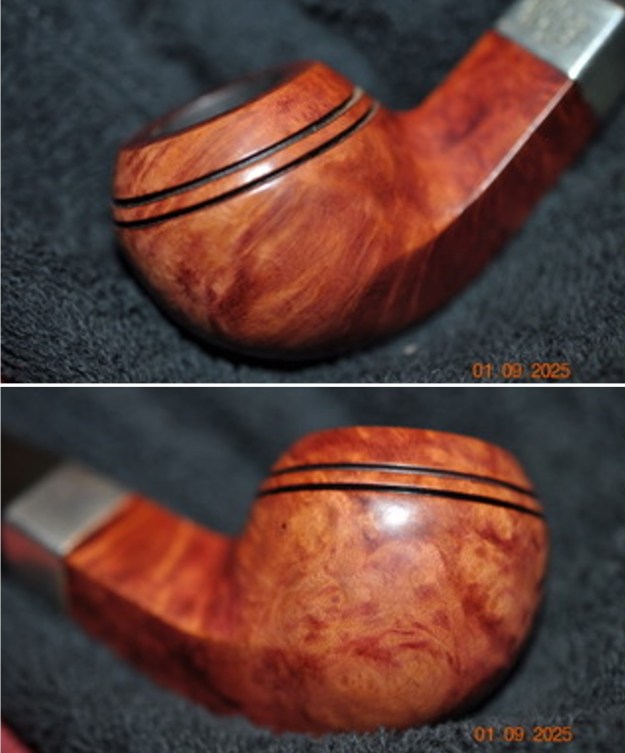
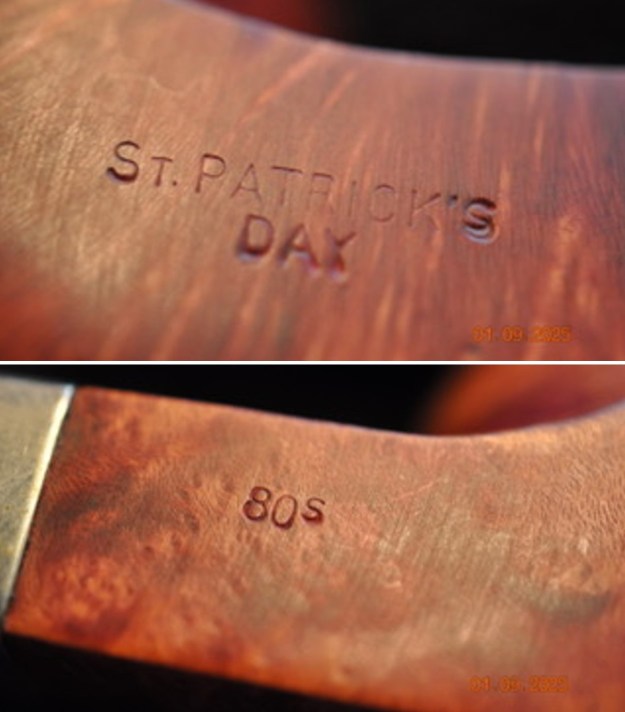
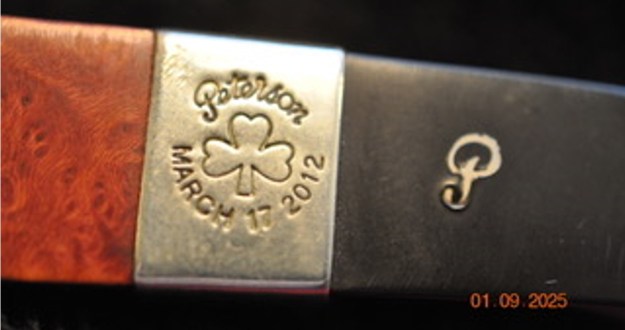
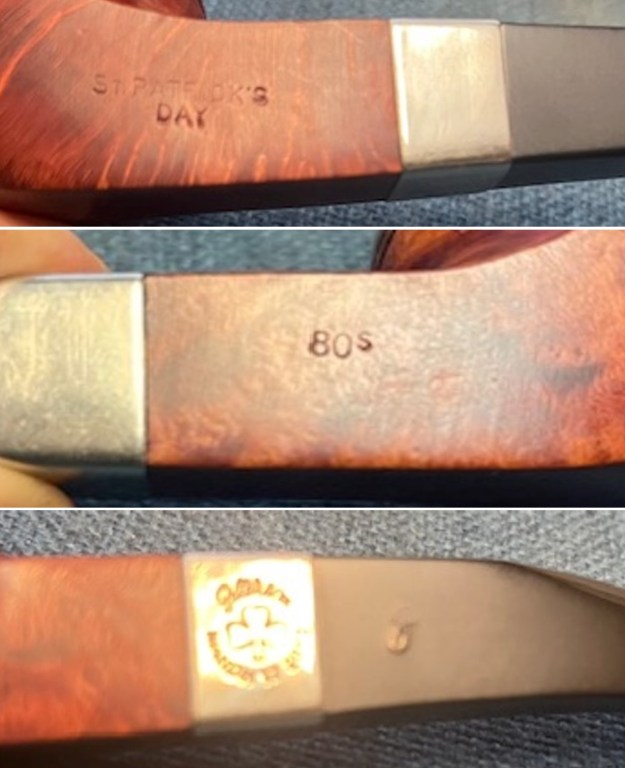
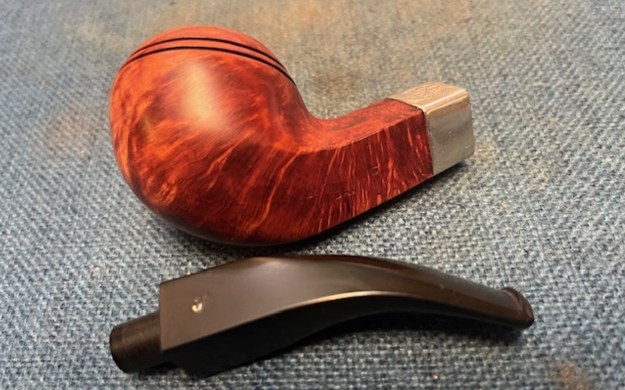
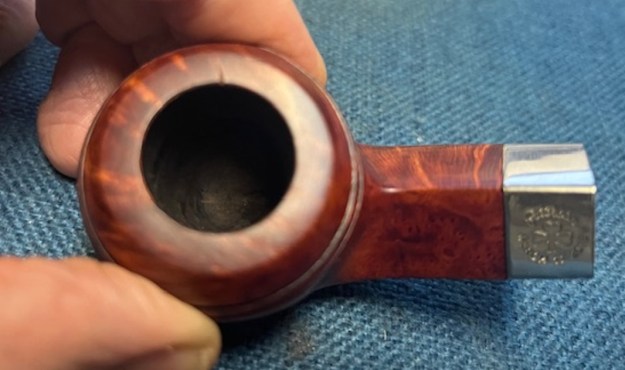
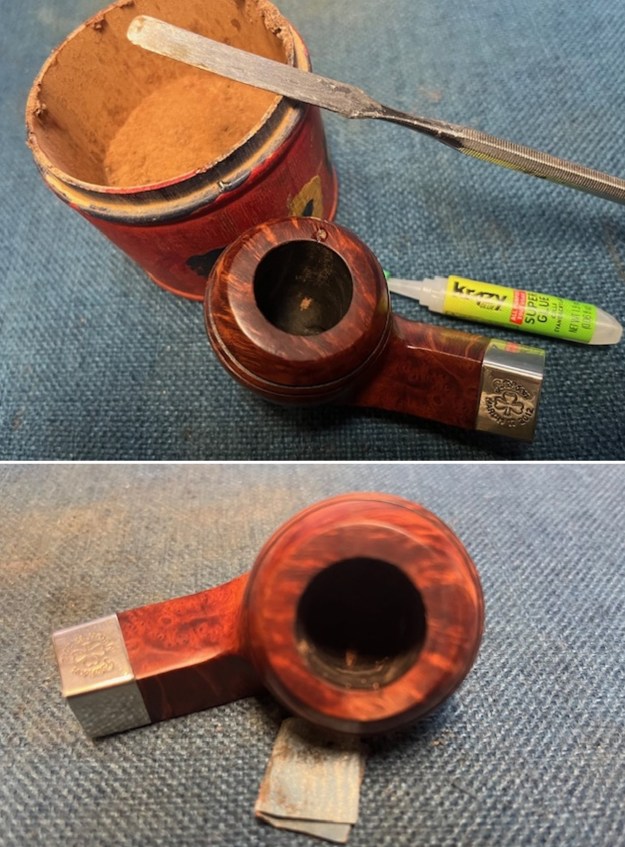
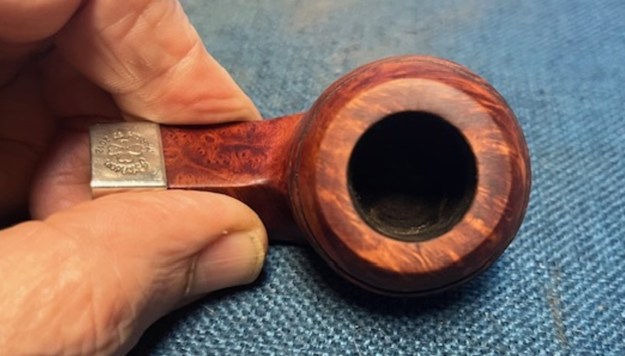
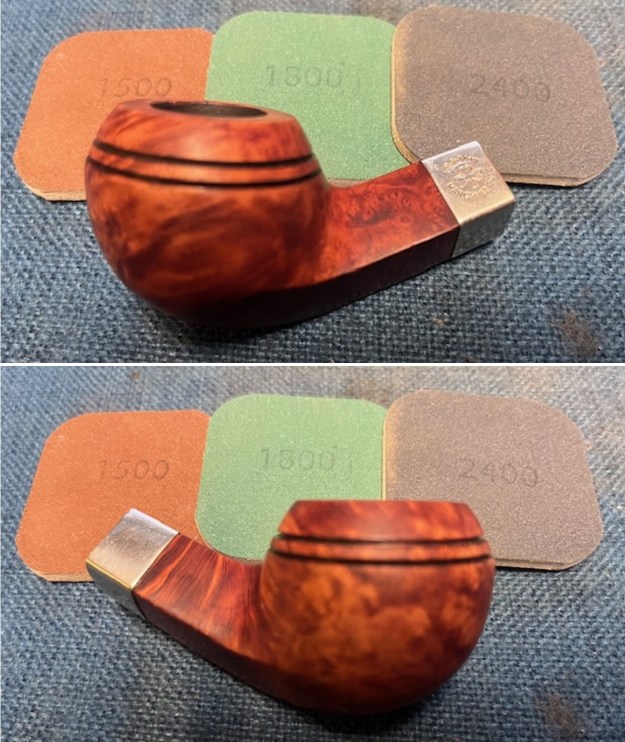
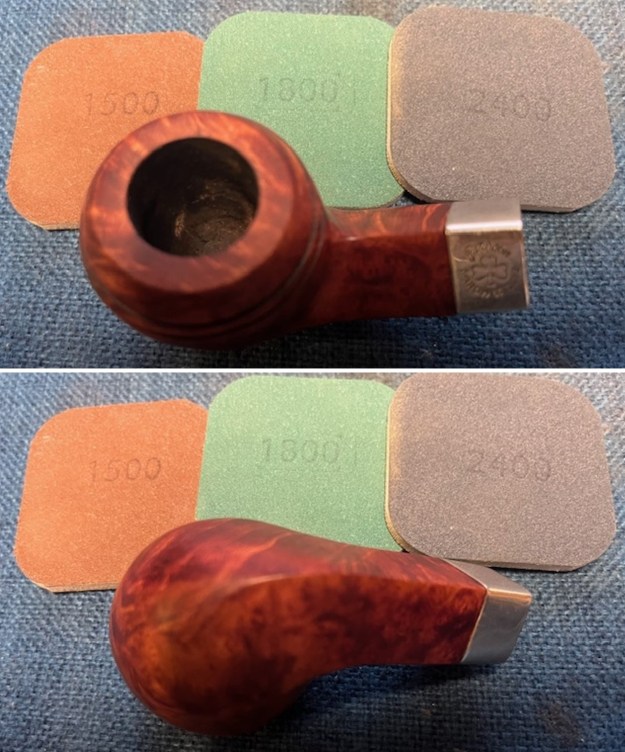
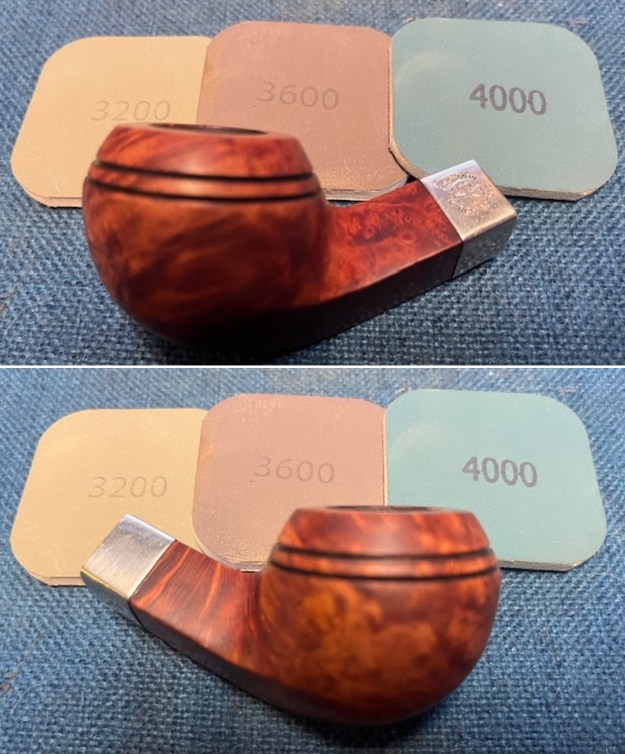
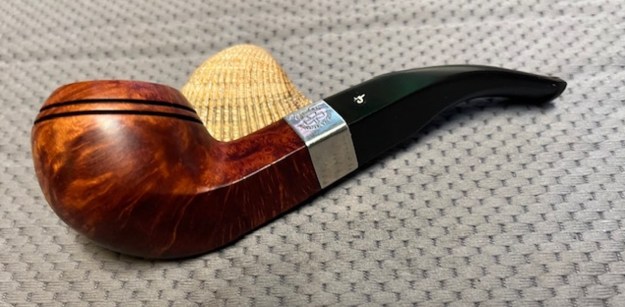
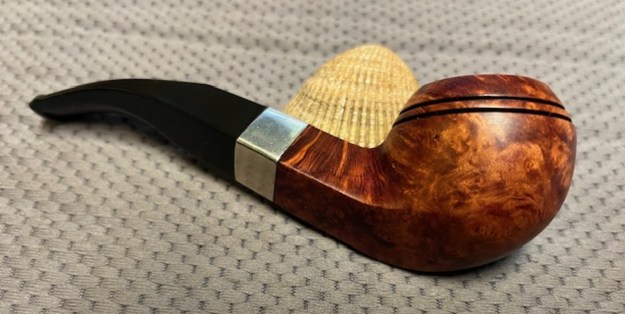
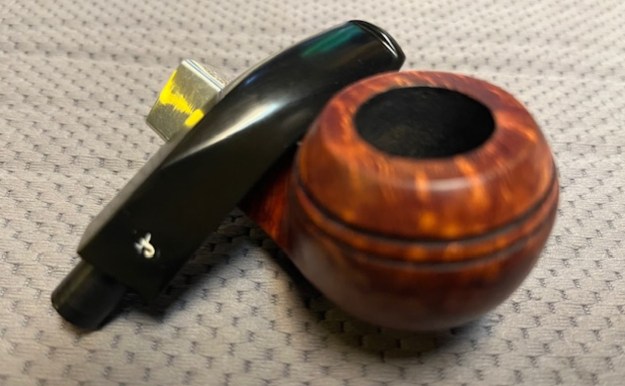
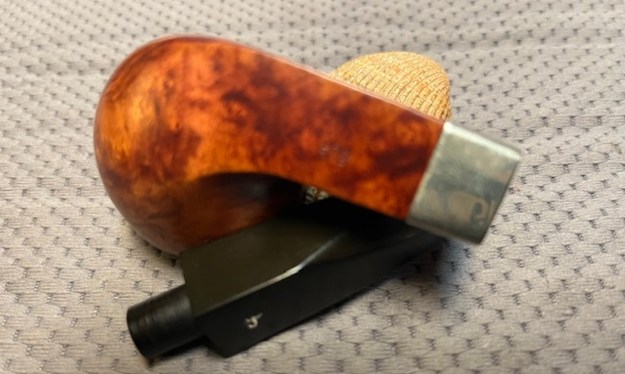
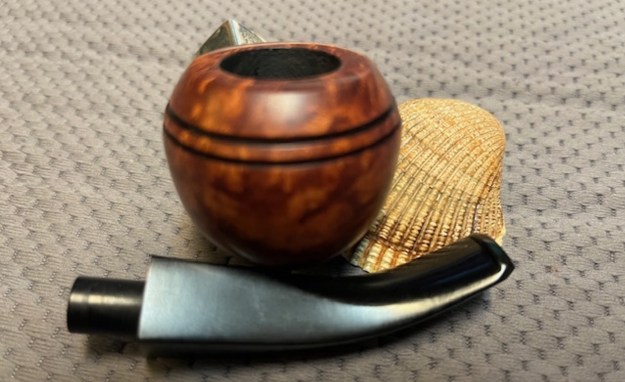
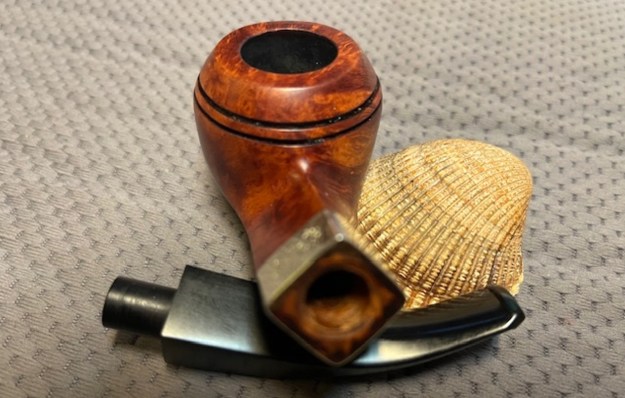
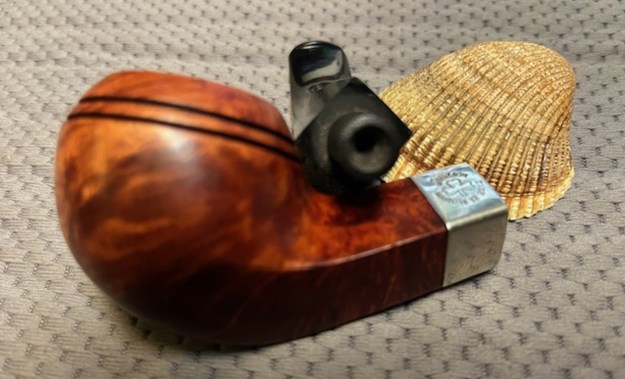
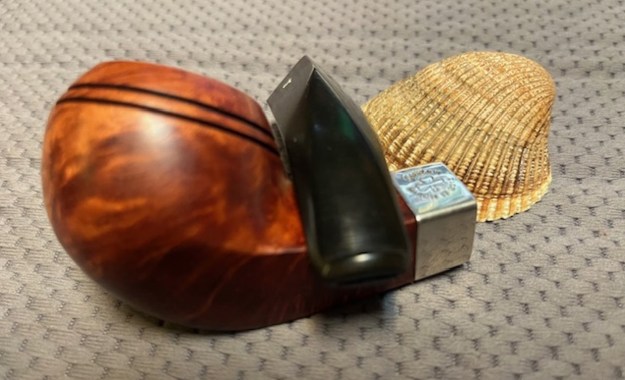
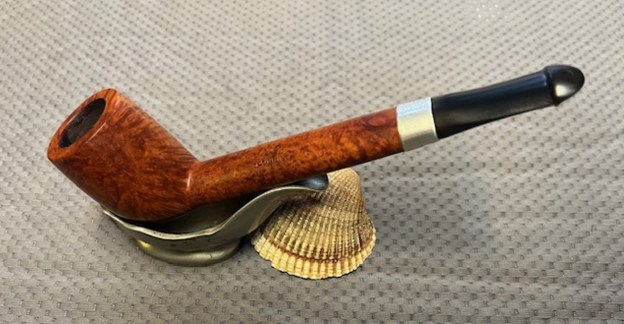
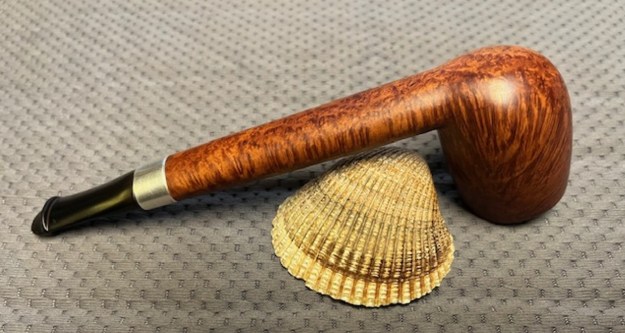
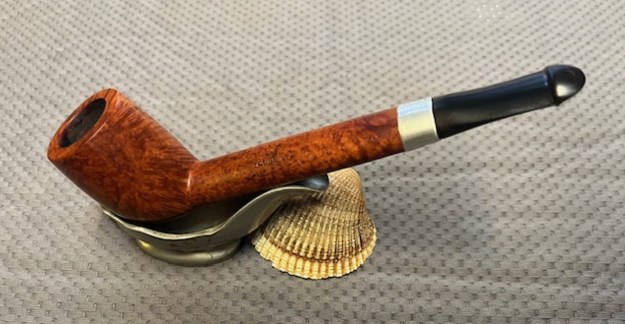
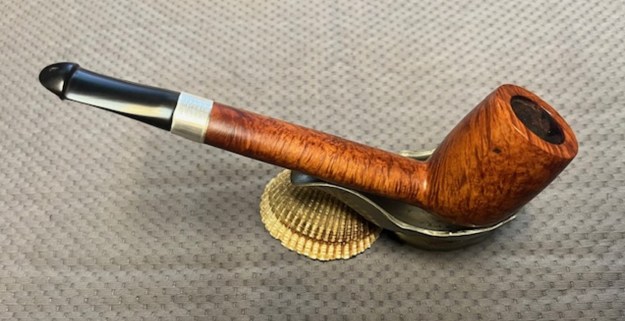
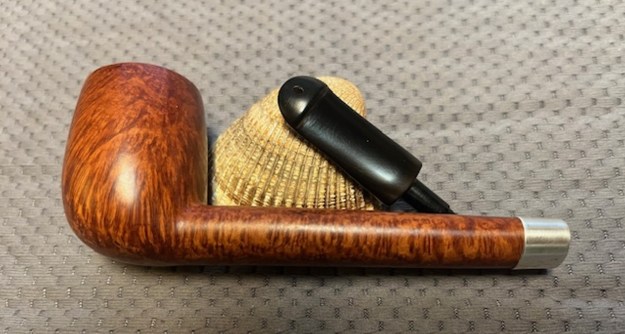
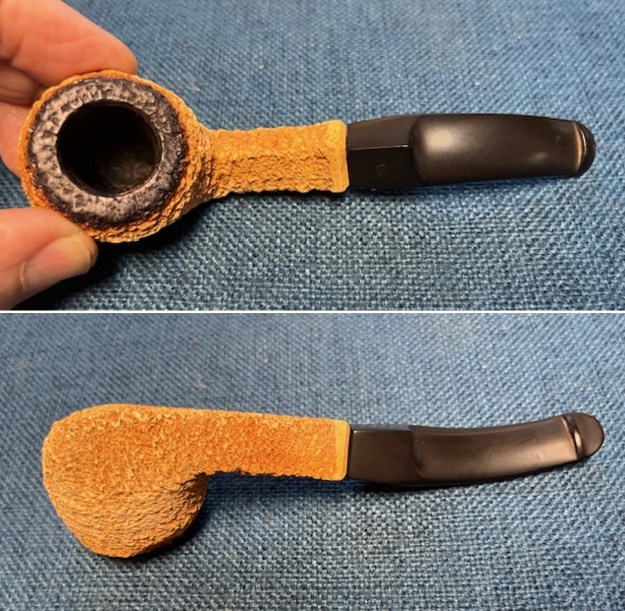
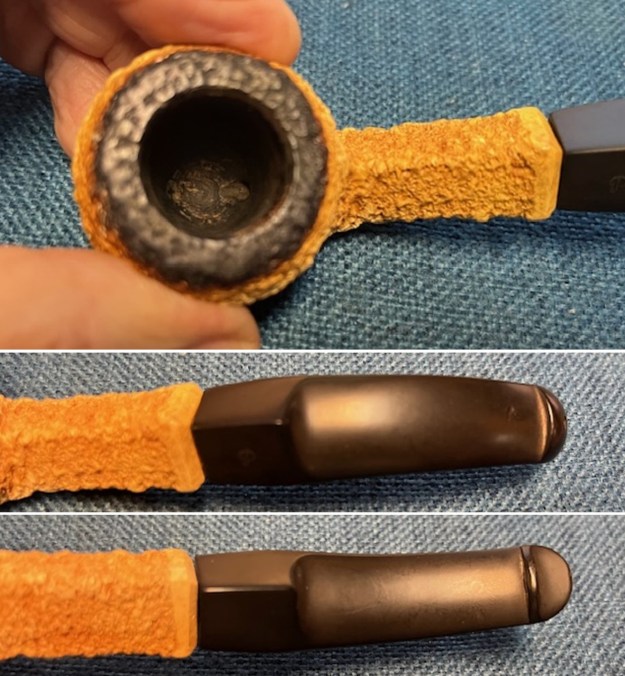
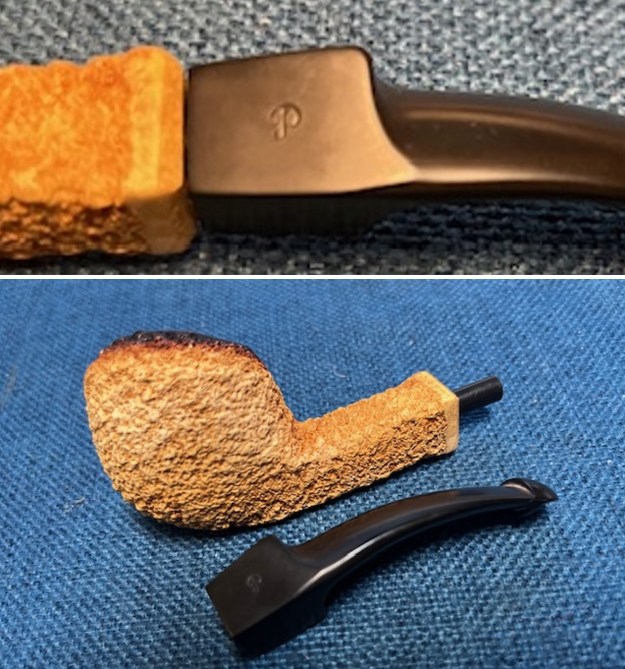
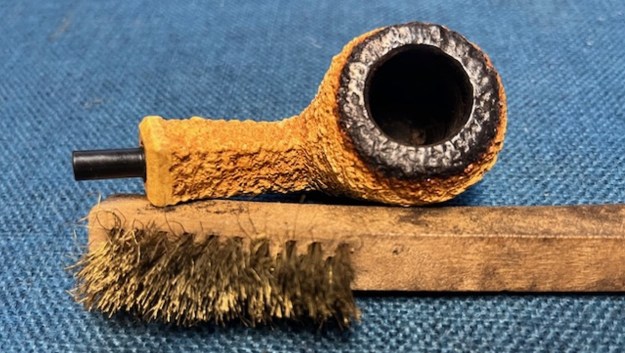
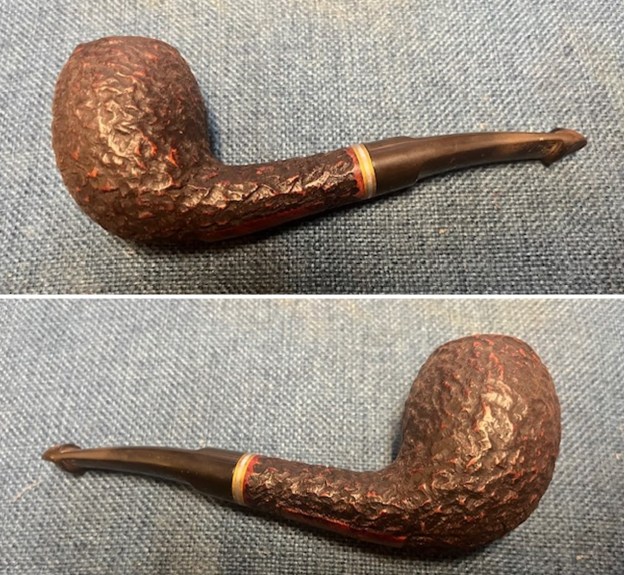
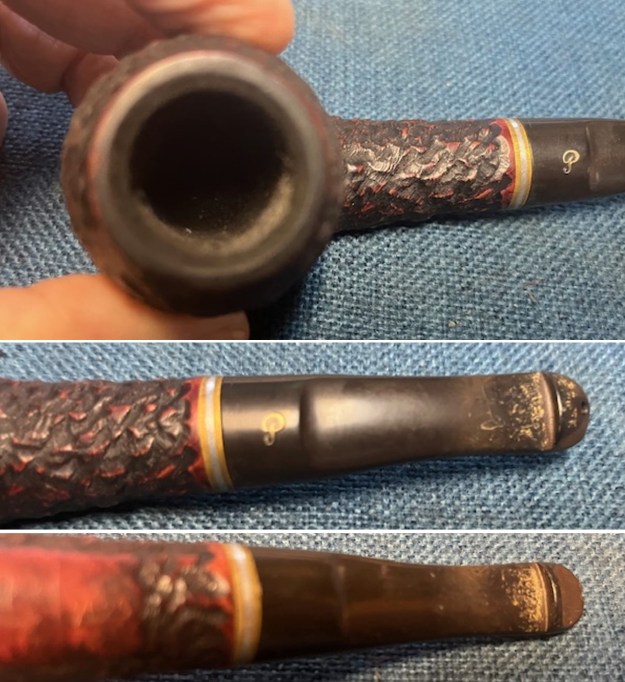
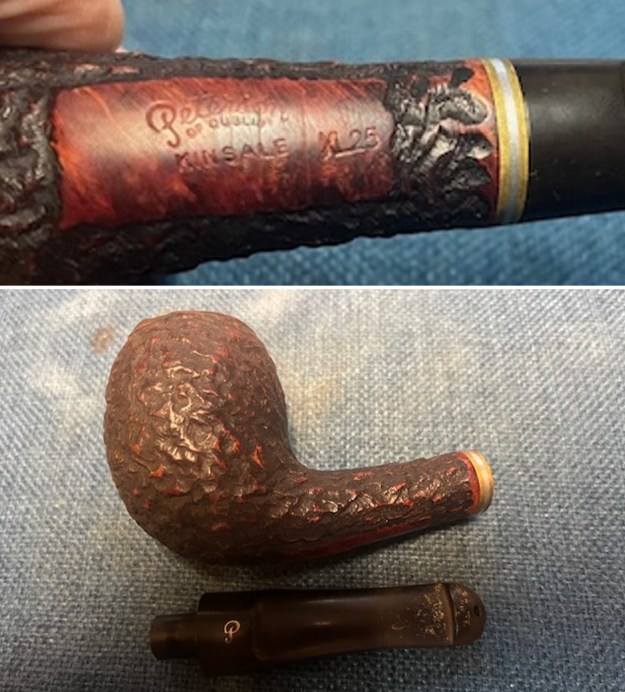
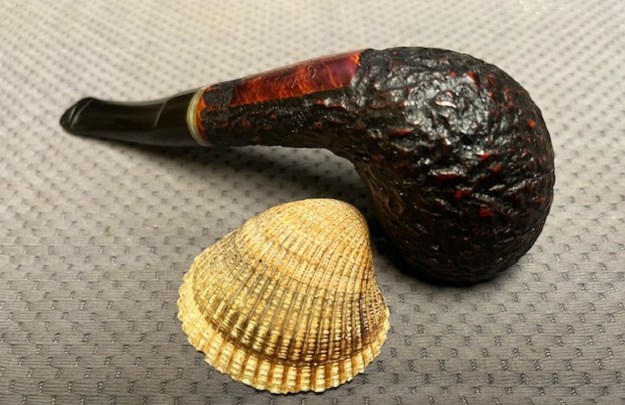
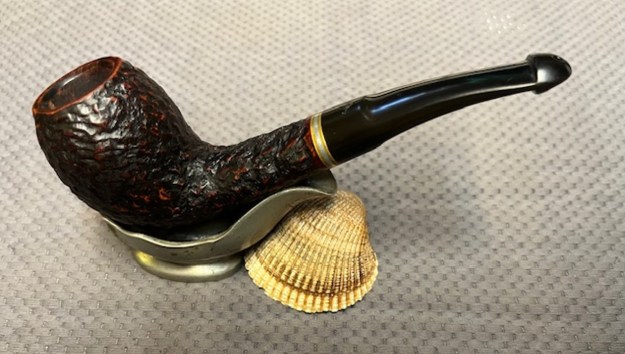
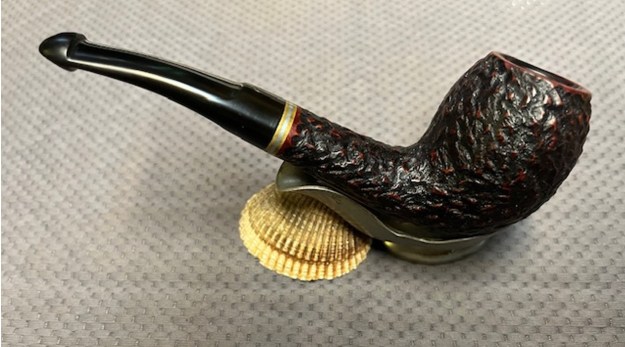
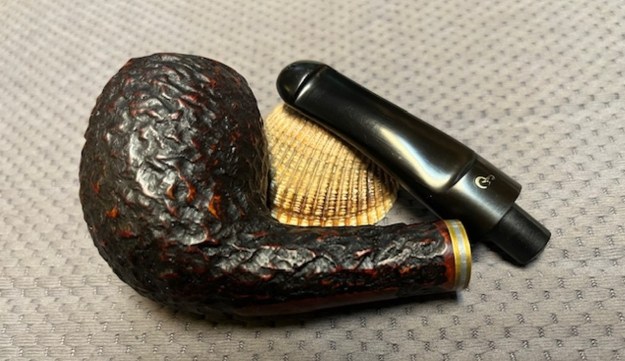
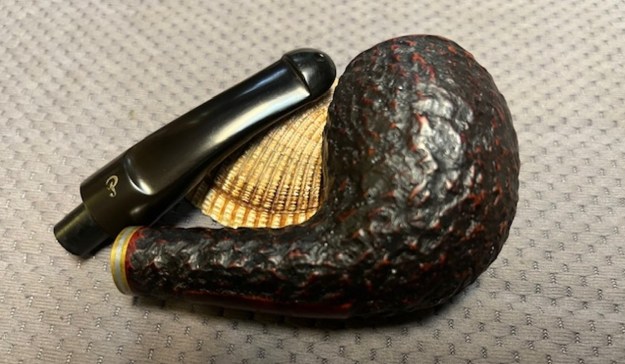
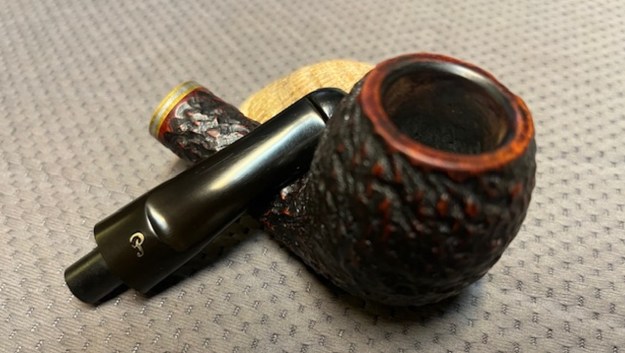
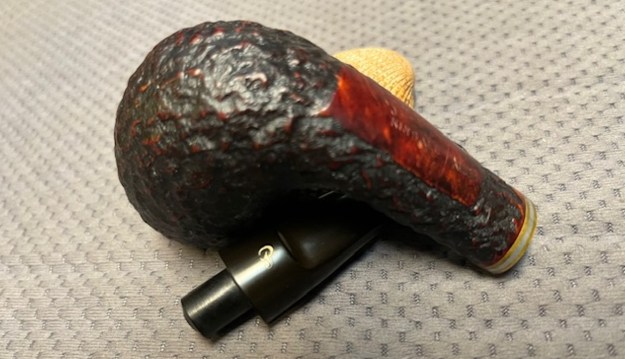
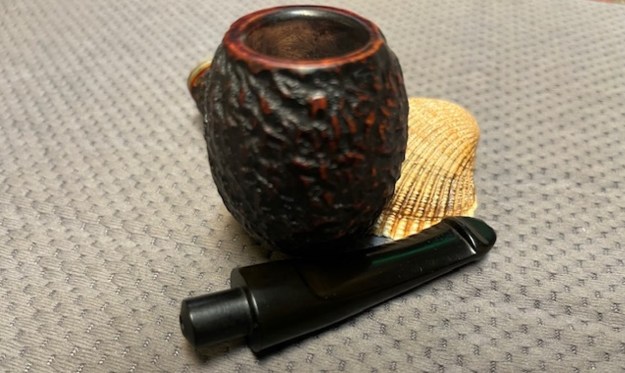
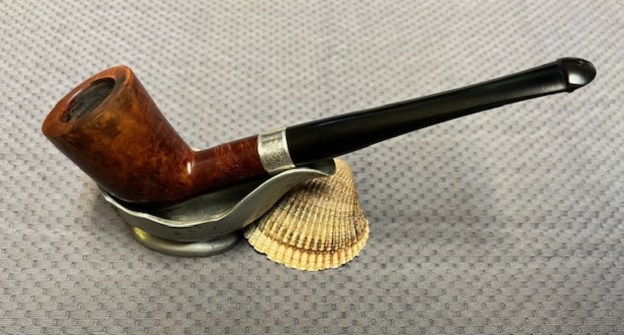
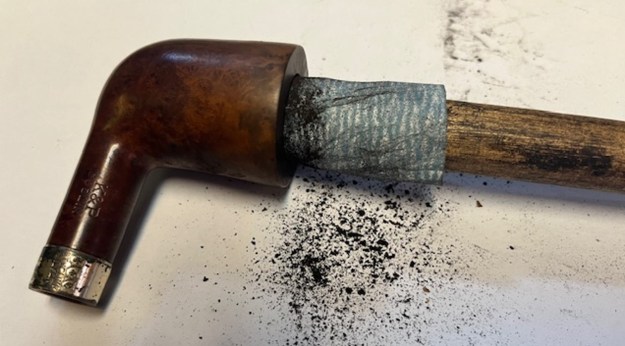
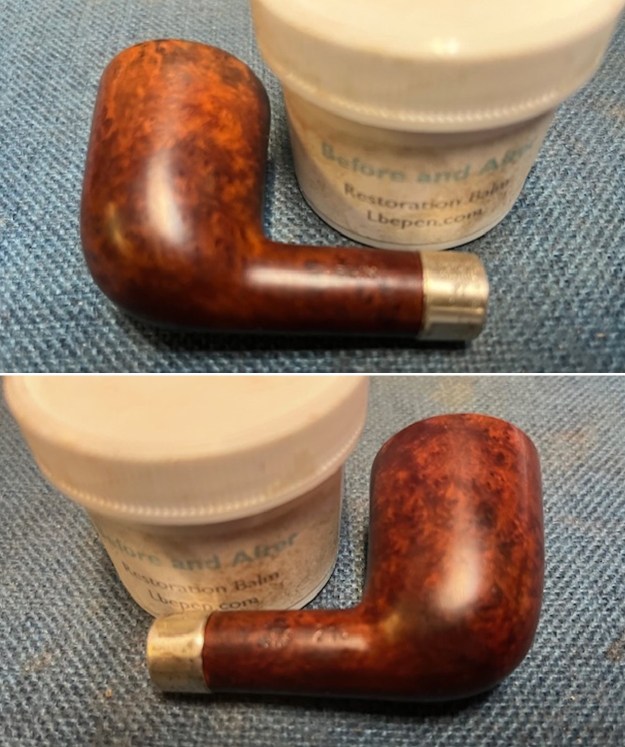
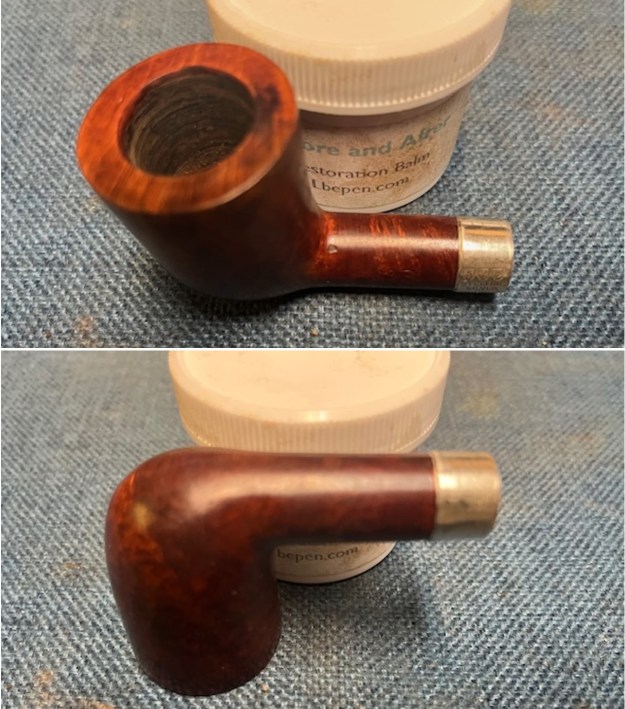
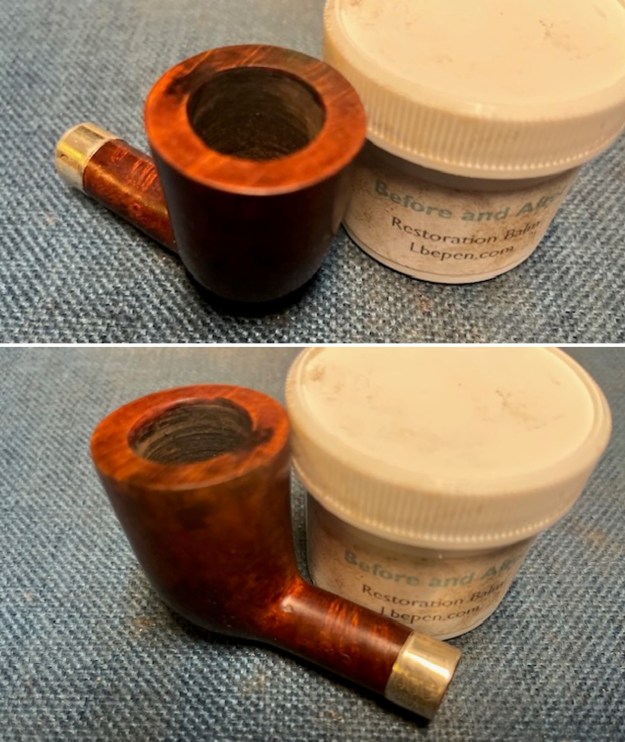
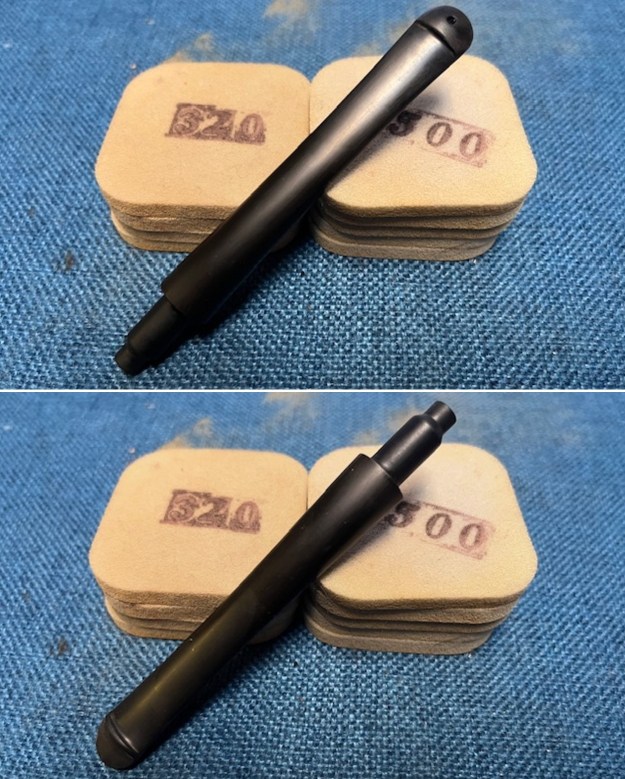
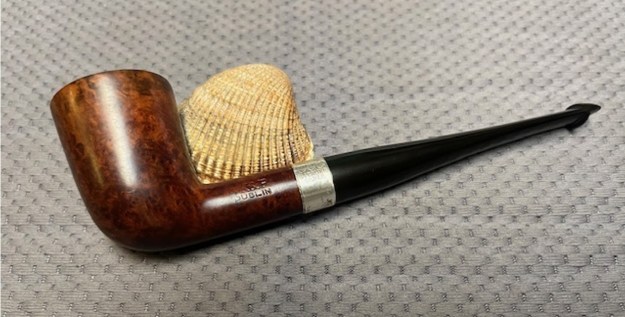
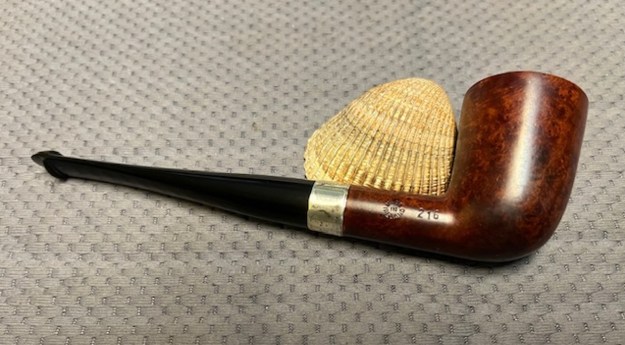
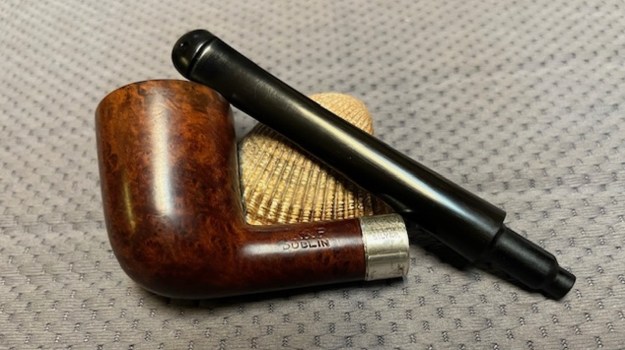
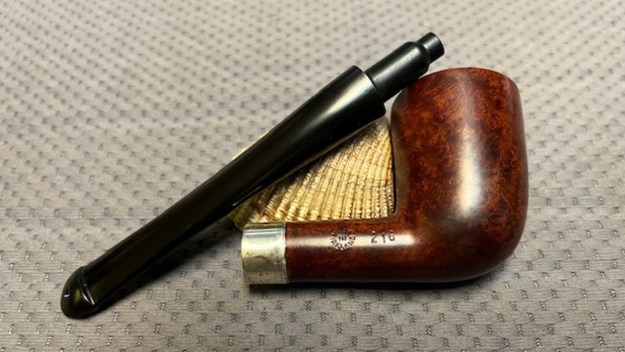
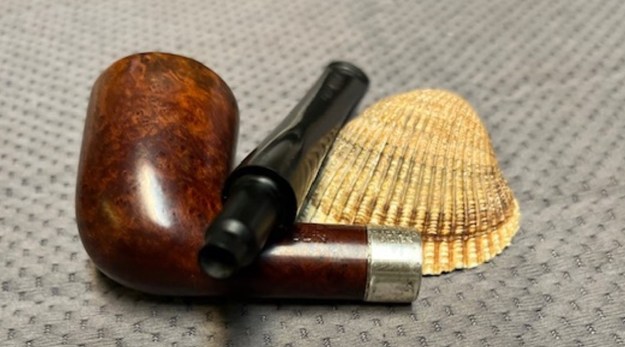
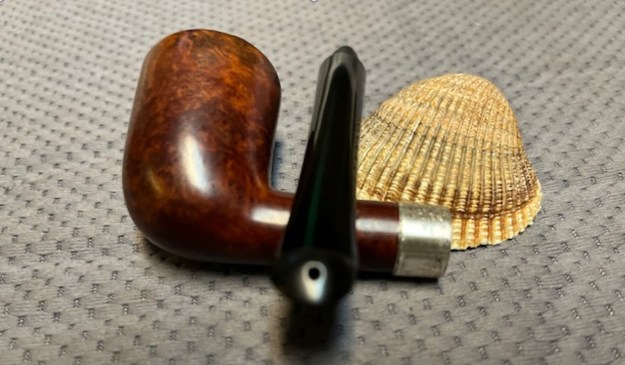
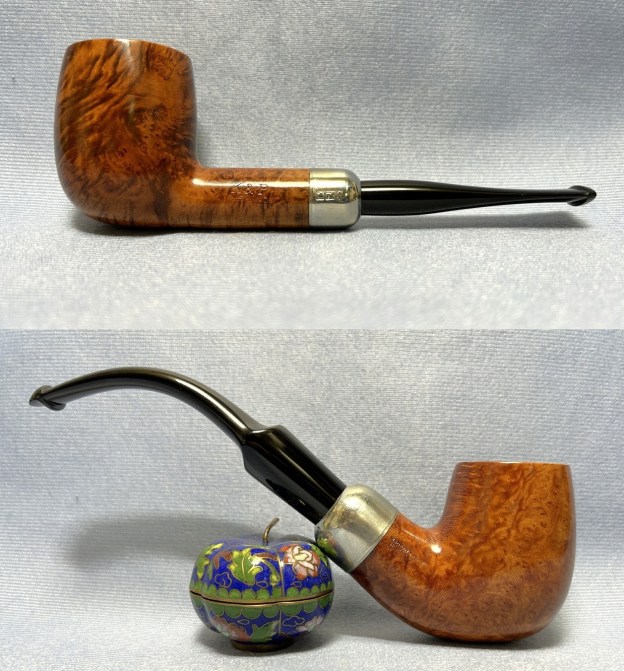
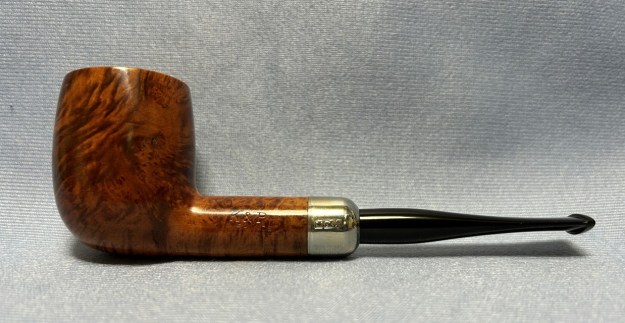
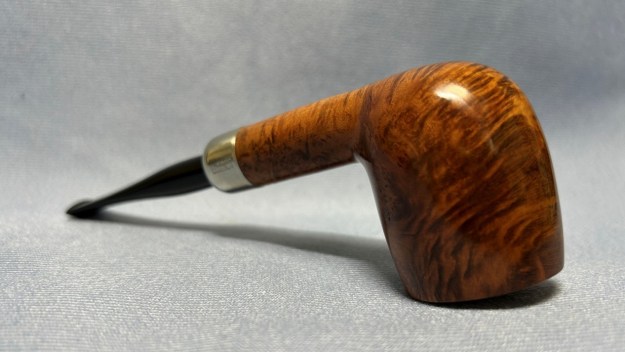
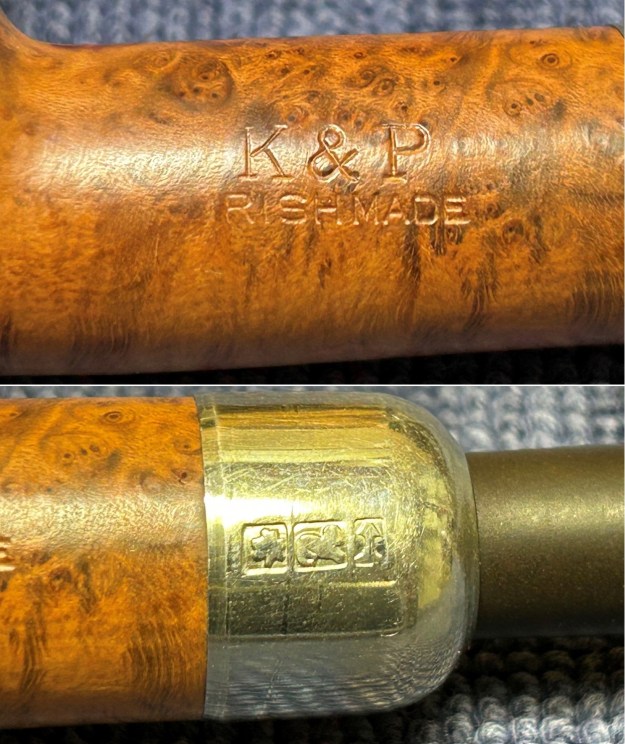
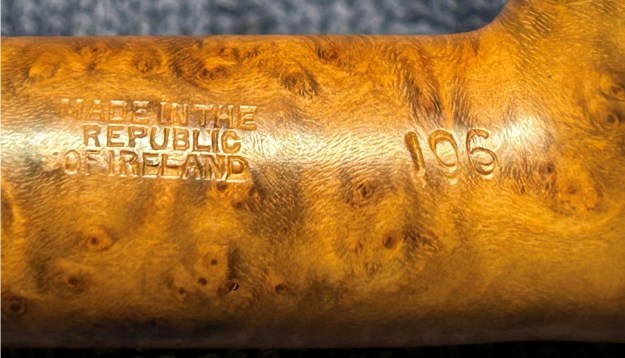
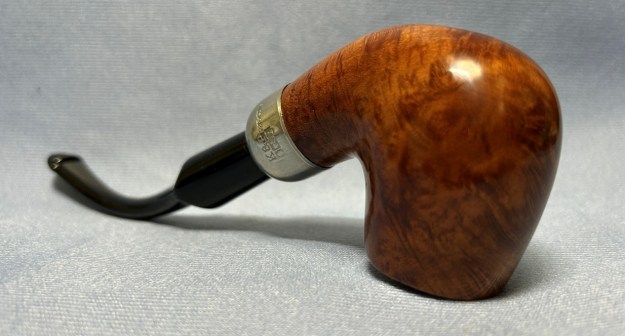
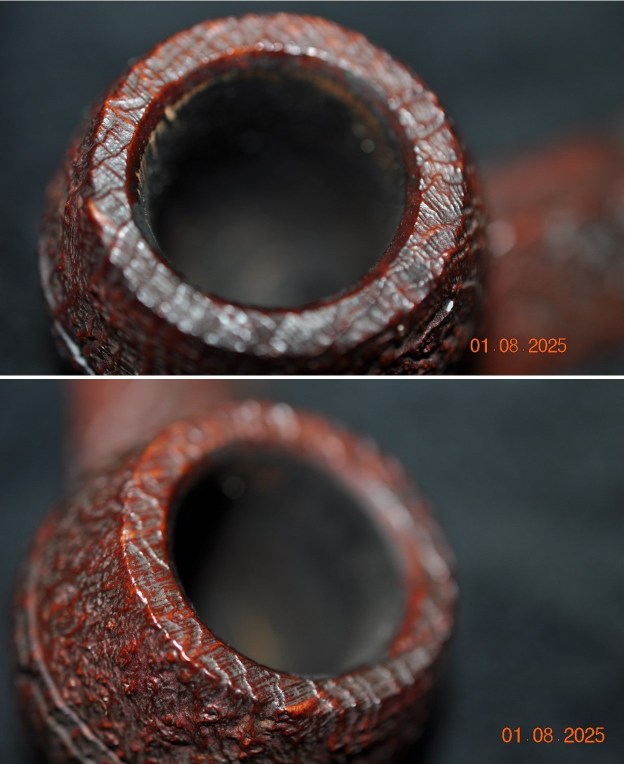
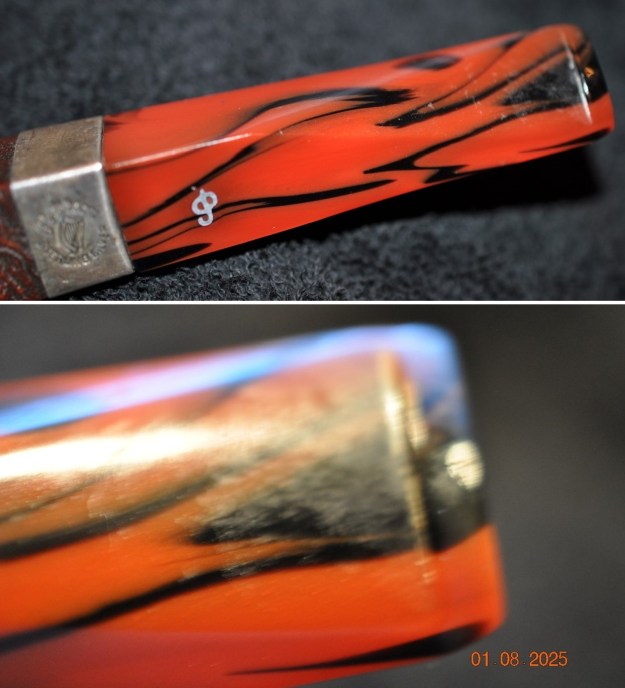
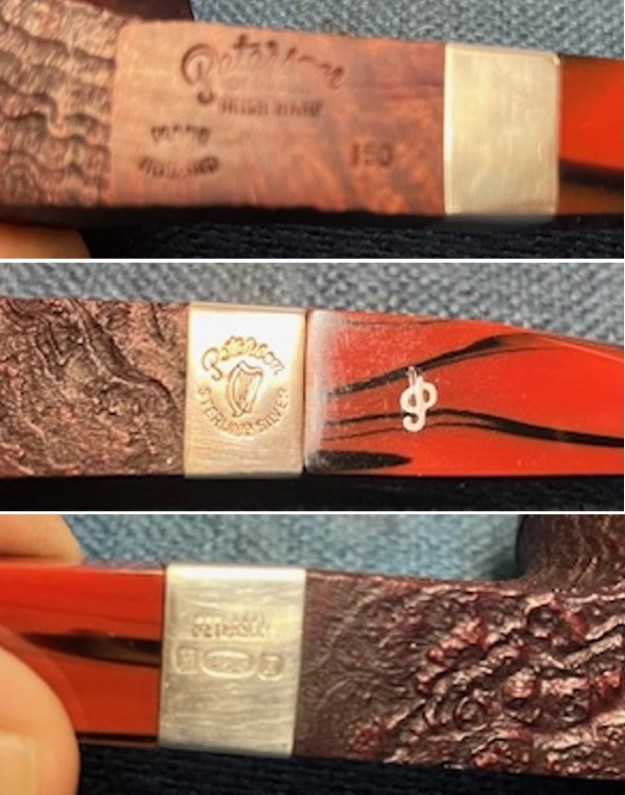
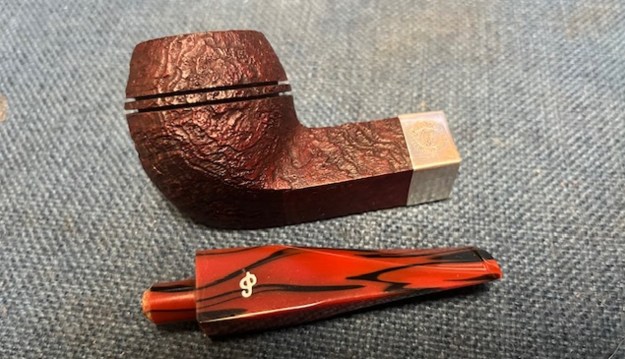
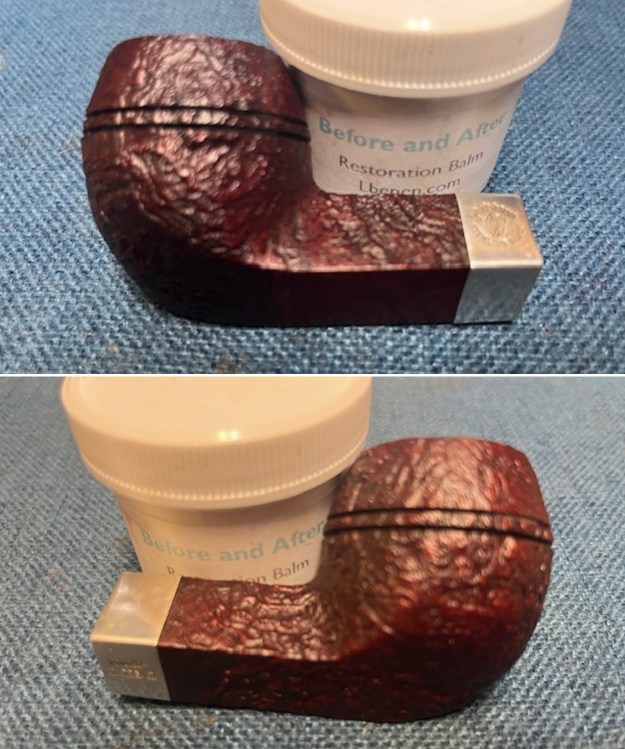
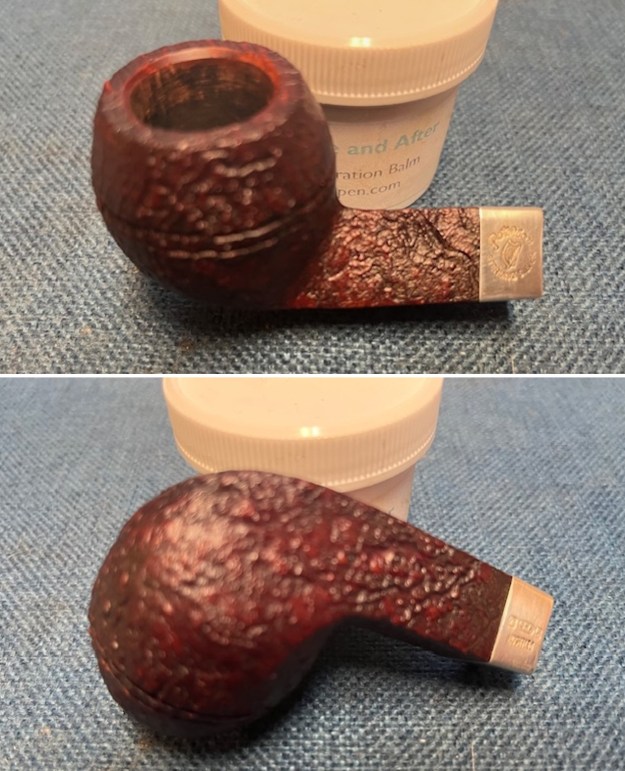
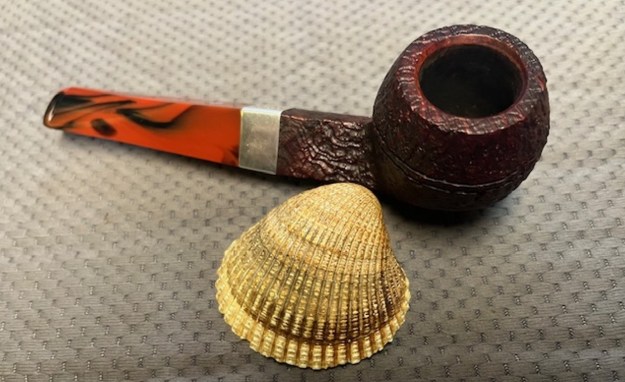
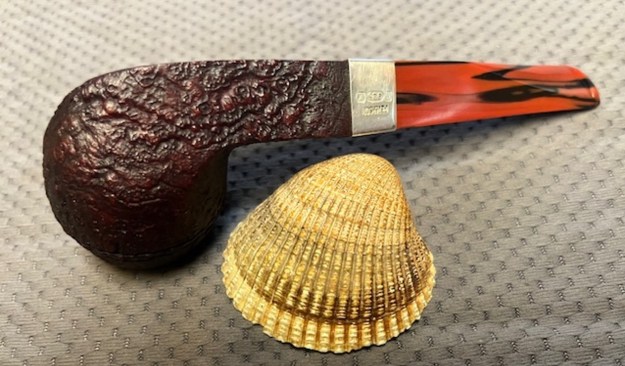
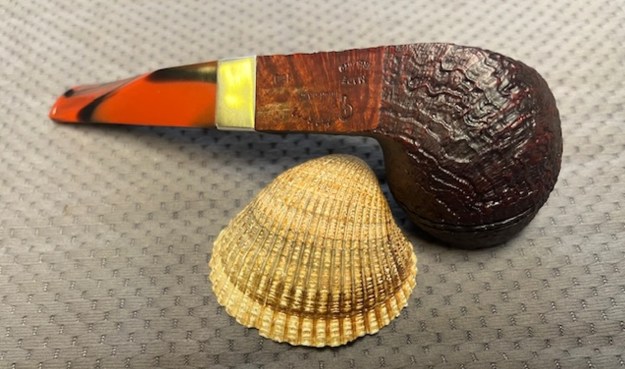
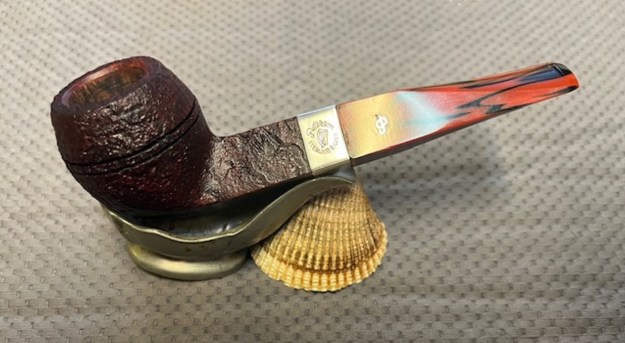
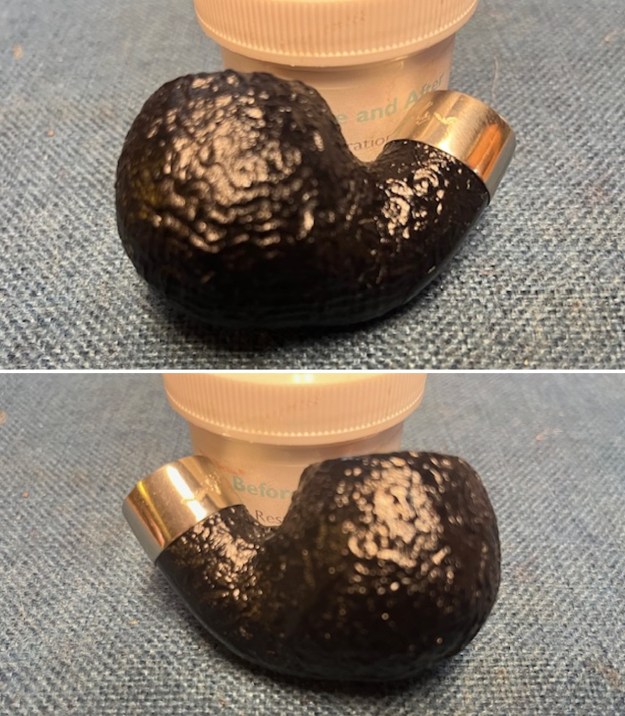
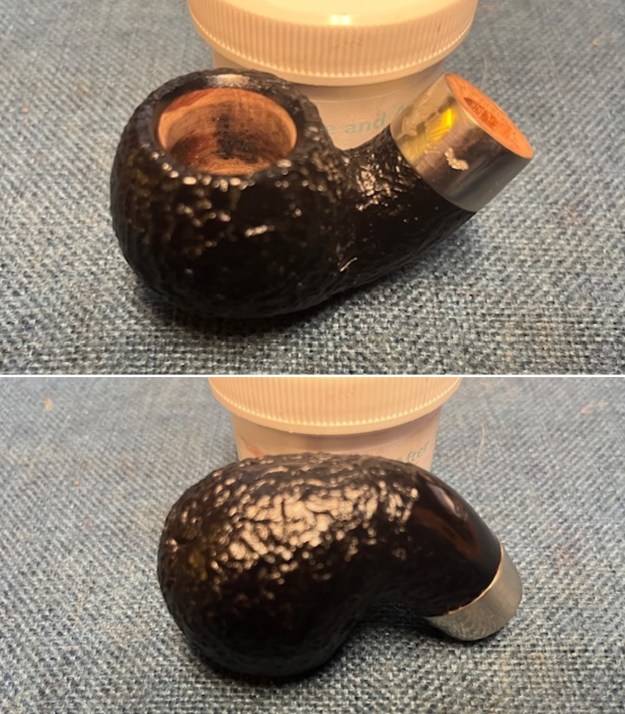
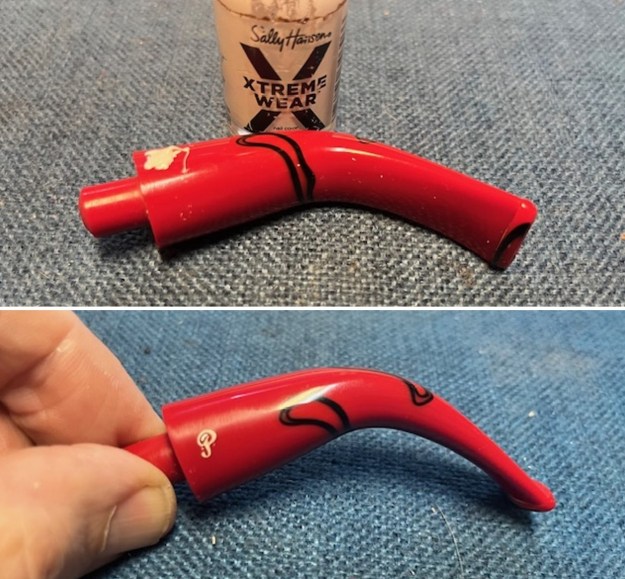
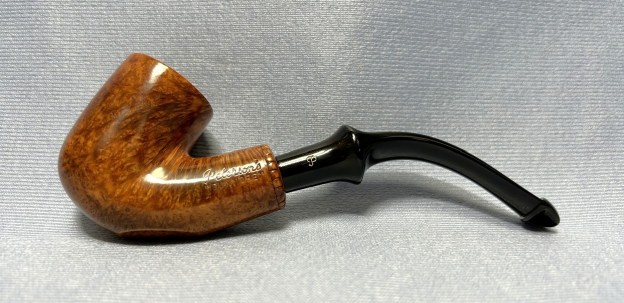
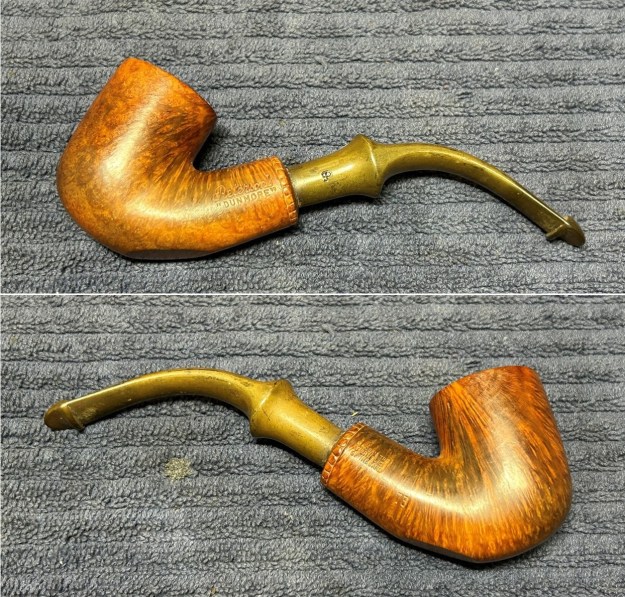
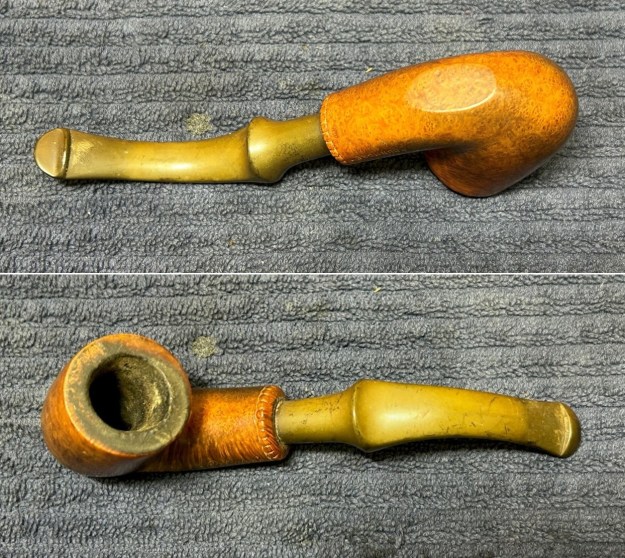
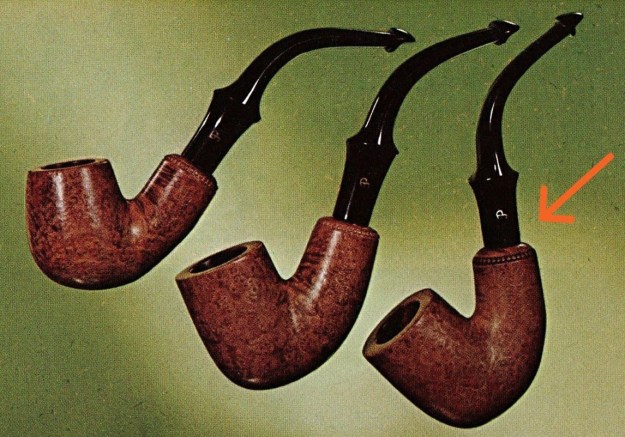
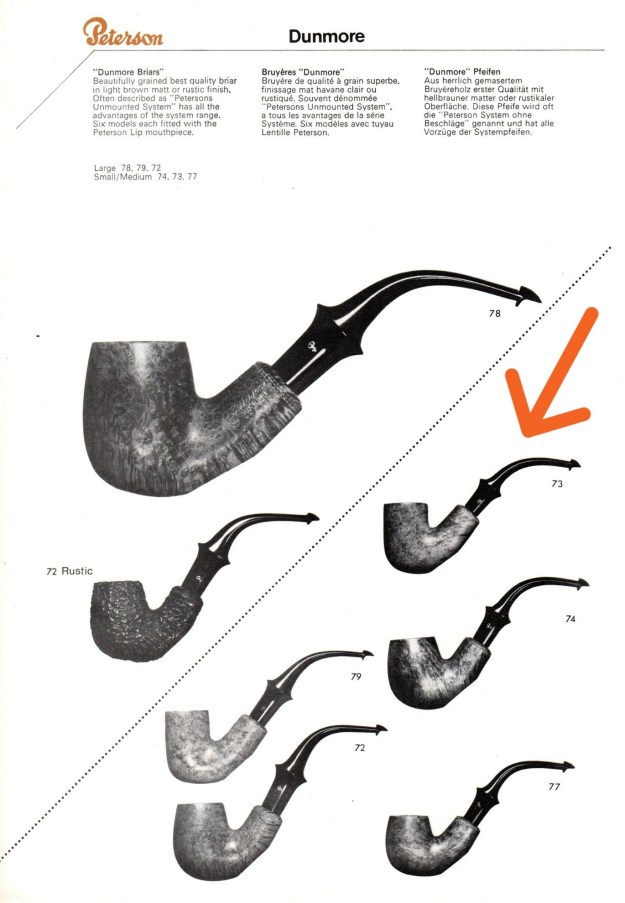
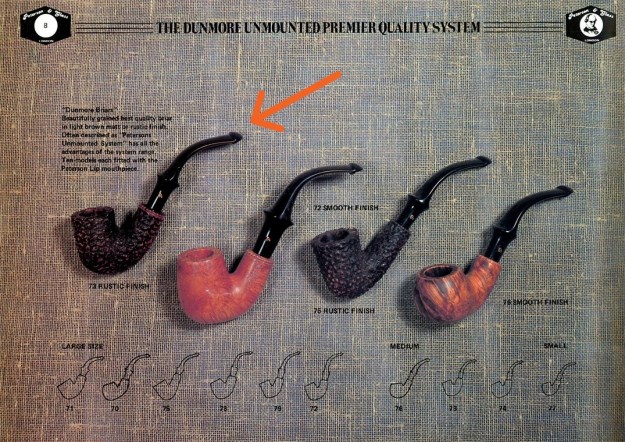
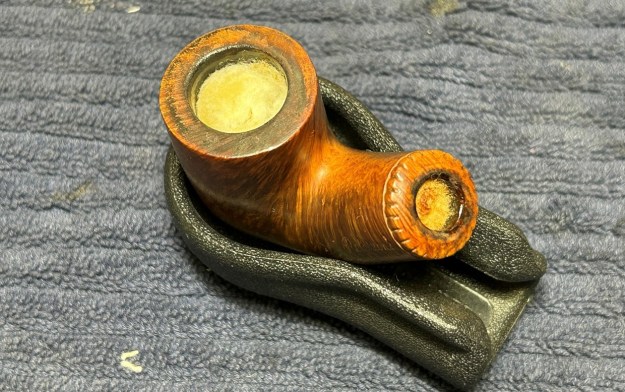
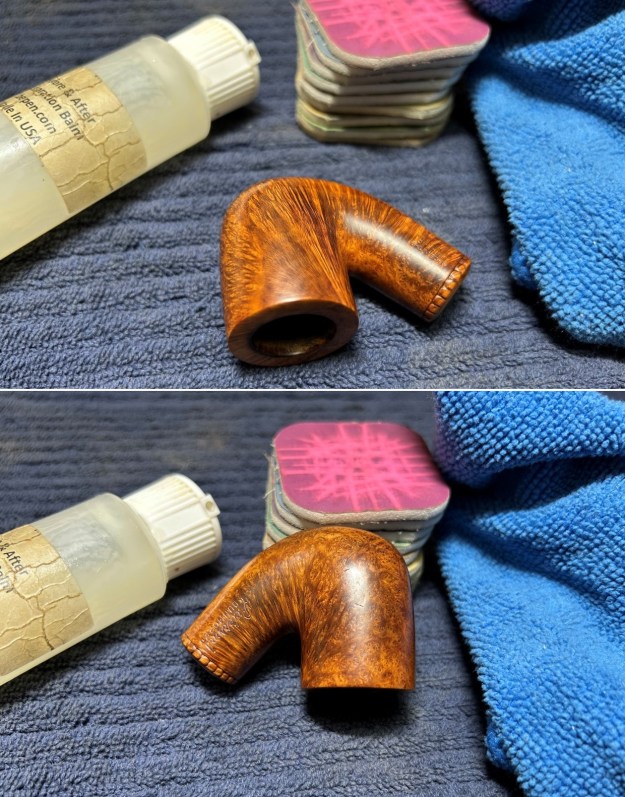
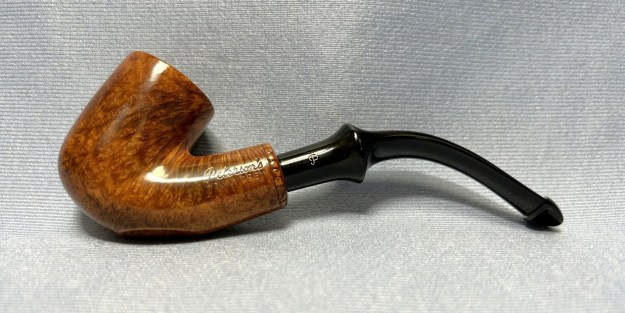
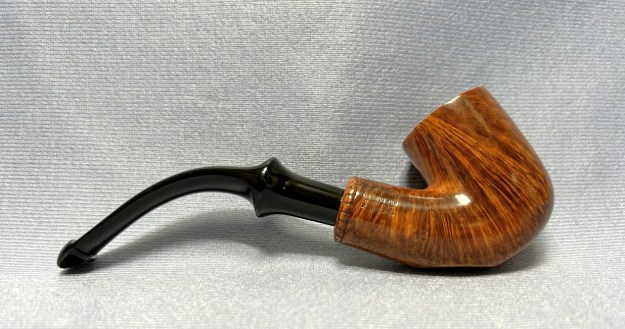
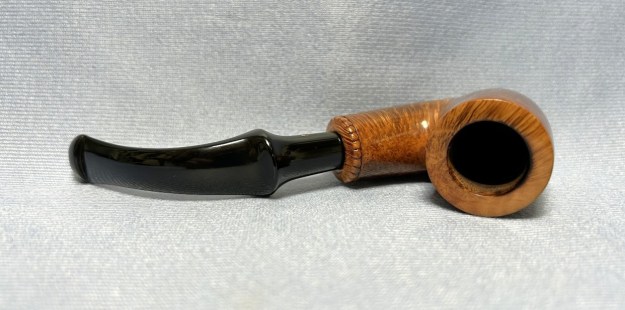
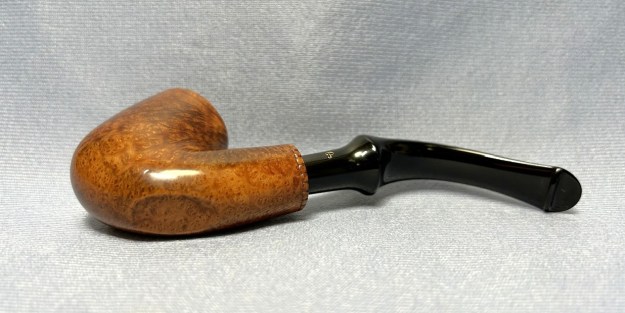
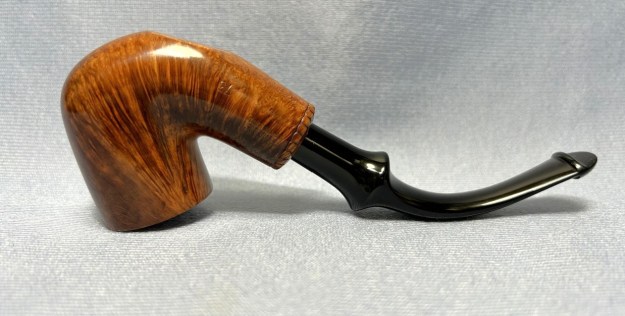
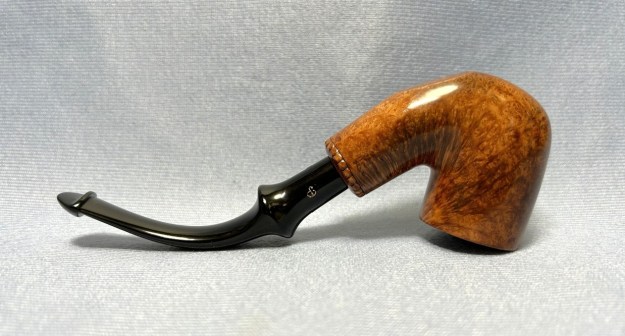
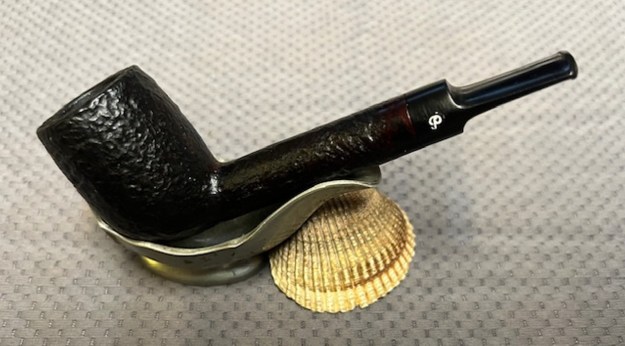
As it is the feast of Saint Patrick, I thought I would post an Irish pipe today – even though I have no Irish heritage myself. No matter! Petersons are very popular, so why not put some spit and polish on this handsome devil. I nabbed this beauty a couple of years ago and, unaccountably, it’s been sitting around waiting for me to clean it up. Let’s look at the markings. On the left side of the shank are the words Peterson’s [over] “Dunmore”. On the right side of the shank are the words Made in the [over] Republic [over] of Ireland. Then down and to the right of that is the shape number, 73. Finally, on the left side of the stem, is the stylized letter P of the Peterson Pipe Company.I’ve always found the scalloped edge at the end of Dunmore shanks to be quite attractive. Let’s investigate the Dunmore line a bit more. Mark Irwin of the Peterson Pipe Notes blog has a great article about Dunmores, which you should read here. Allow me to quote a few passages:

The line originated in collaboration with Iwan Reis in 1971. How it came about is anyone’s guess at this point. Chuck Levi, the man who more than any other was responsible for bringing the great Danish artisan pipes to the US, was working with the creative minds at K&P to bring something new to the IRC catalog, and this was one of about a dozen K&P lines that debuted as exclusives in the Iwan Reis catalogs of that era.The concept was to modernize the System pipe by removing what was perceived as the old-fashioned nickel mount. And old-fashioned it was—if you look at pipe catalogs from the 1940s on through most of the rest of the 20th century, nickel ferrules and even bands were almost non-existent. K&P was virtually the only hold out, using sterling bands on the Sterling Silver Classic line and on the Premier & De Luxe Systems. A bead was then carved around the stummel at the mortise end…

But there were two more ingredients to the original Dunmore aesthetic…. Paddy Larrigan, K&P’s master-craftsman, was always striving to push the envelope in pipe engineering, and one of the things he dearly loved was a pipe that would sit, so he shaved off the bottom of the shank to allow the Dunmore System to sit on its shank and button, which gives it its uniqueness in the catalog. The downside of this is that I am not convinced that all the Dunmore reservoirs, being slightly smaller than the traditional System, are quite as effective. 

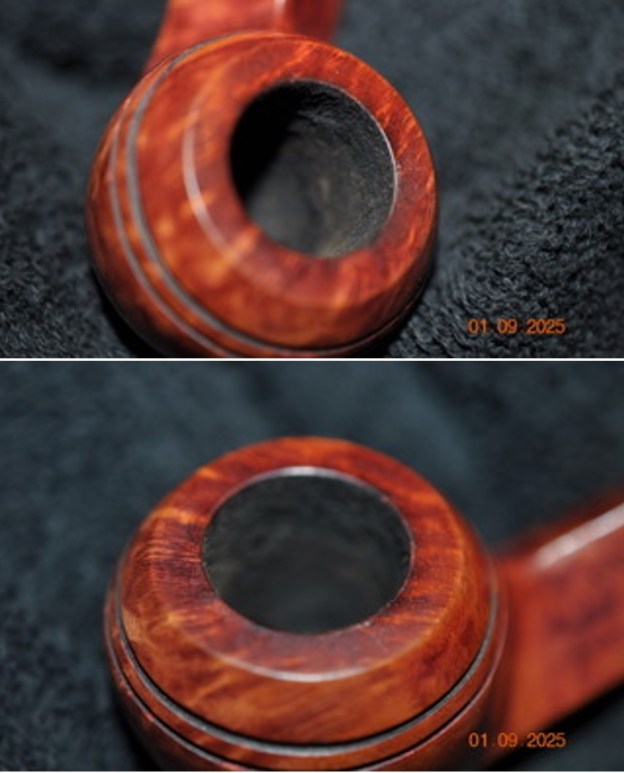
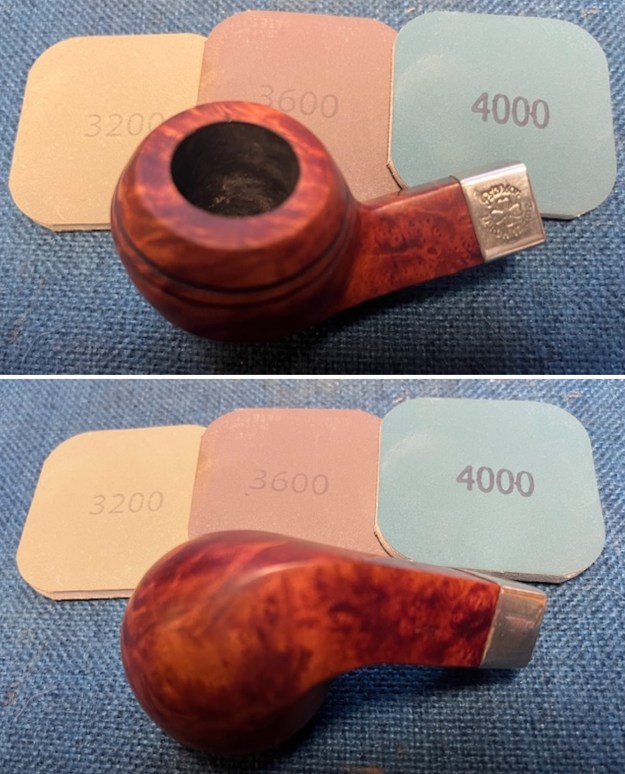
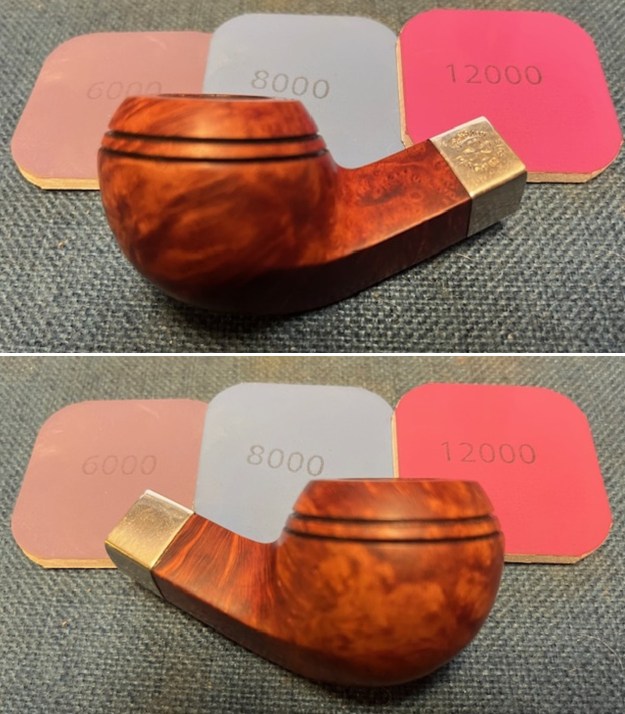
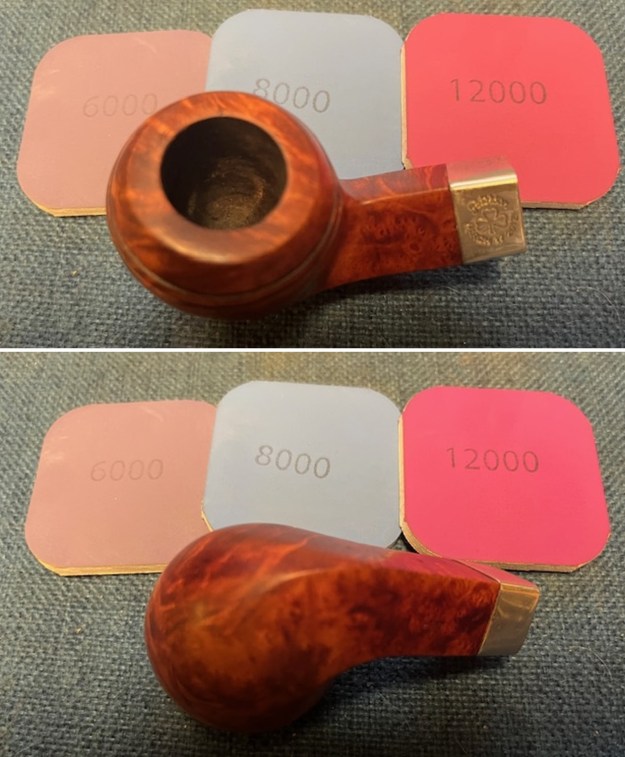
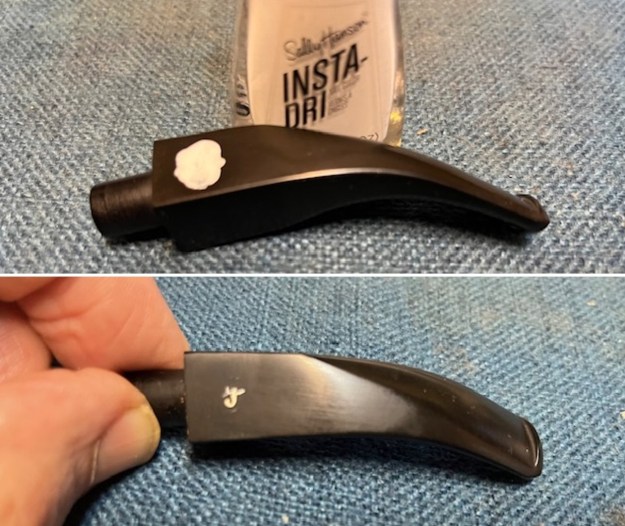
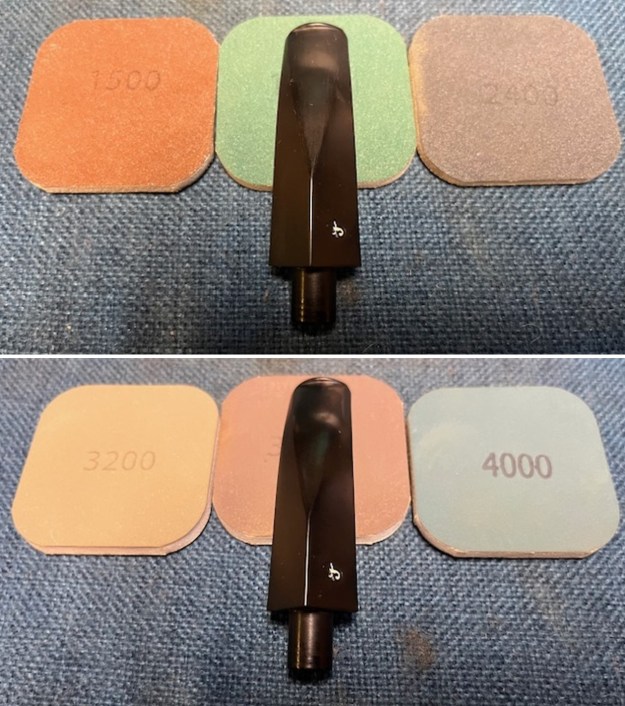
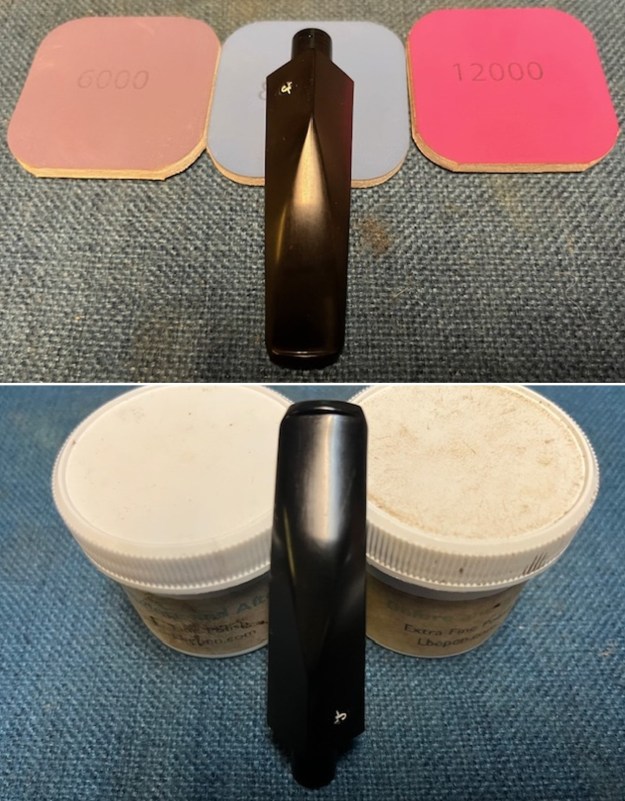
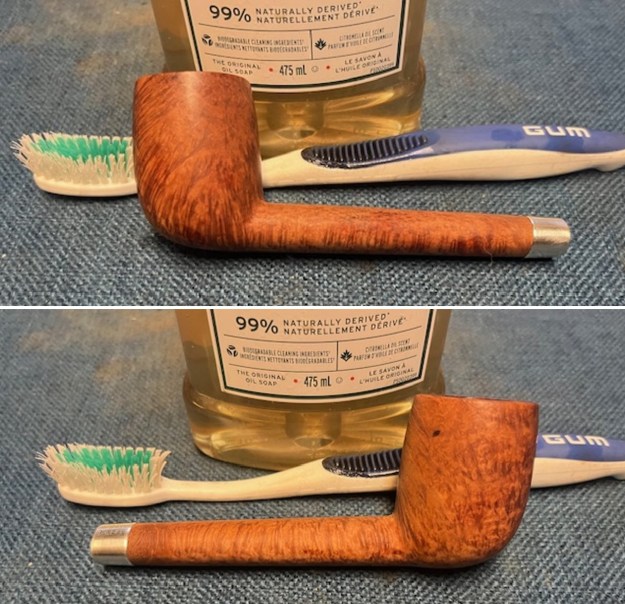
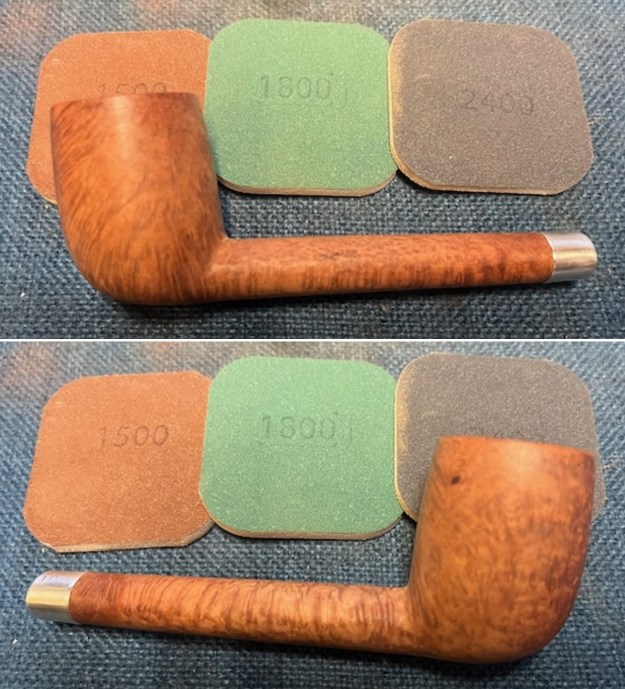
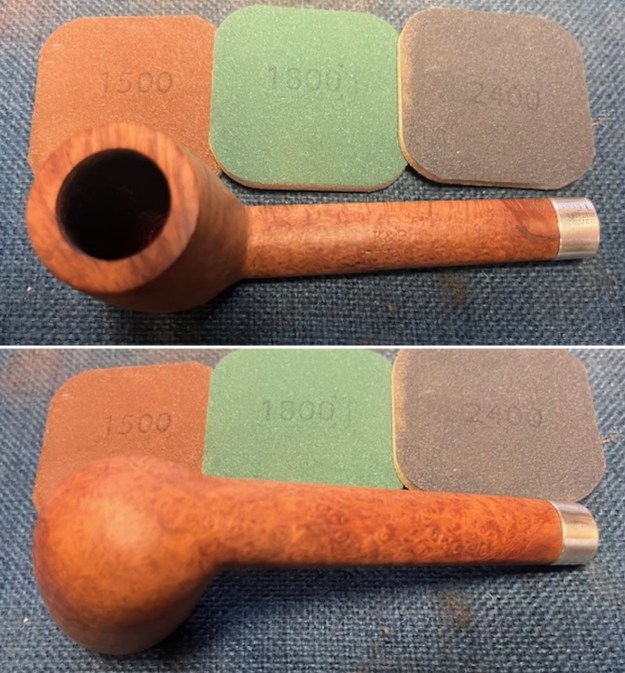
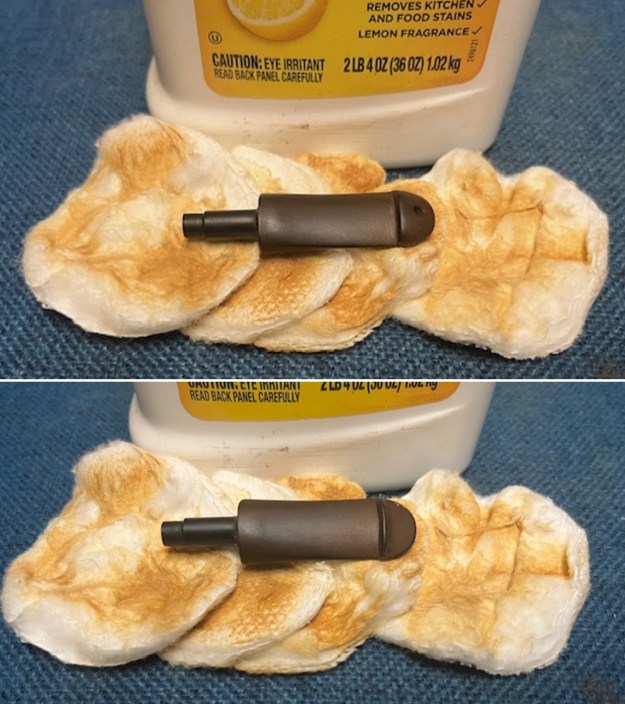
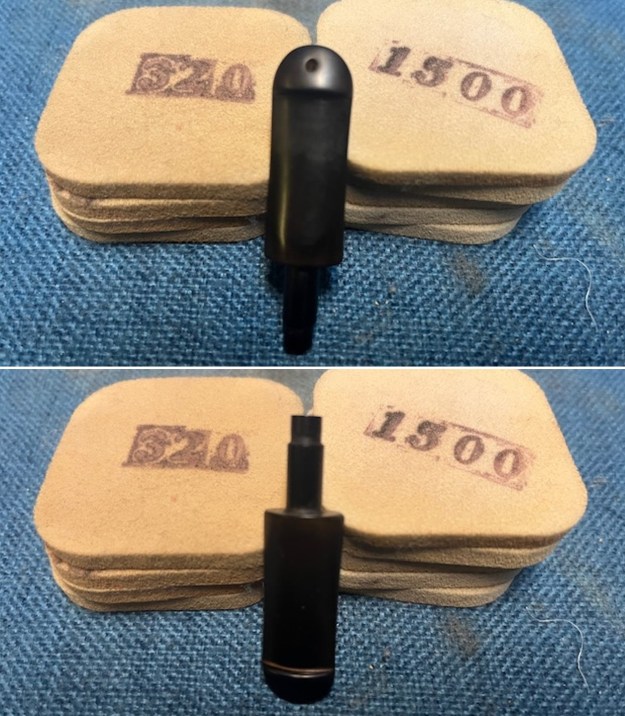
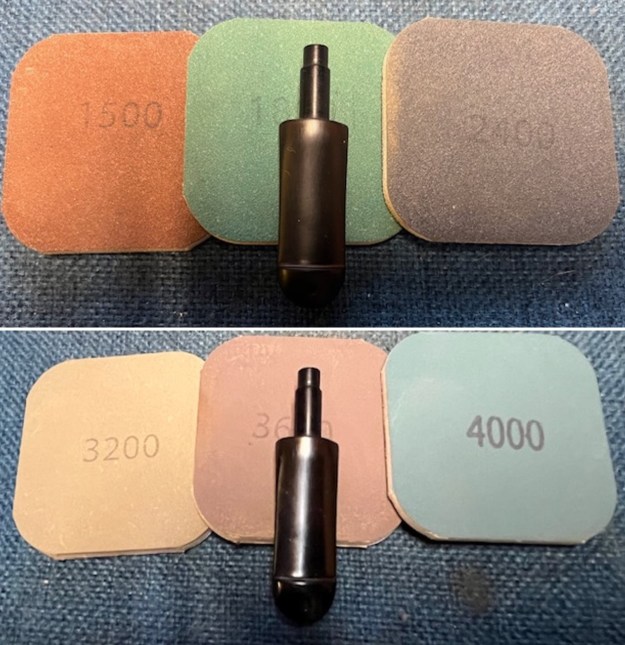
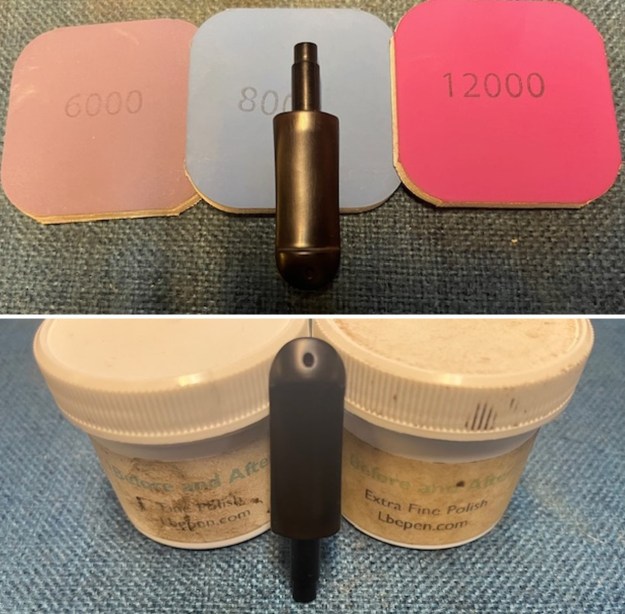
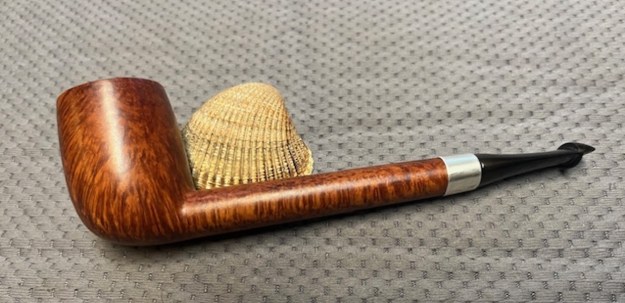
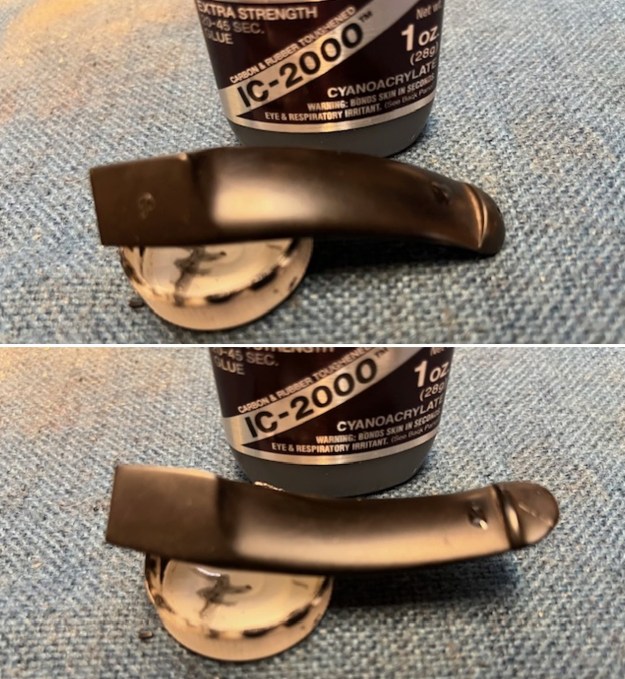
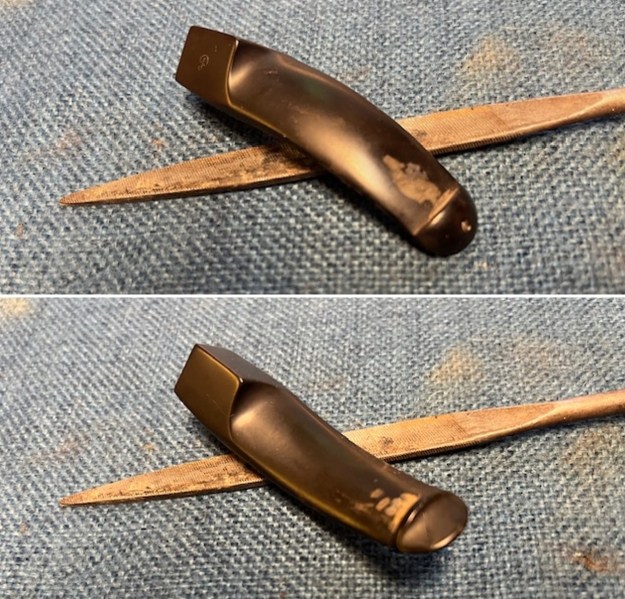
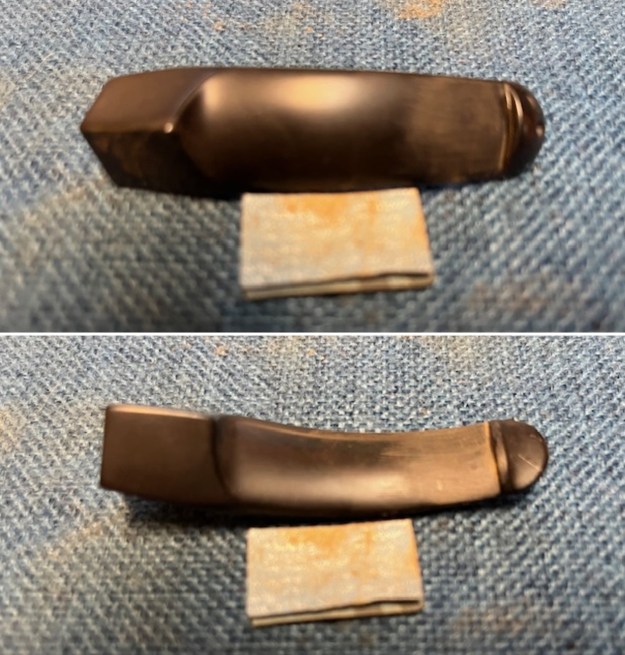
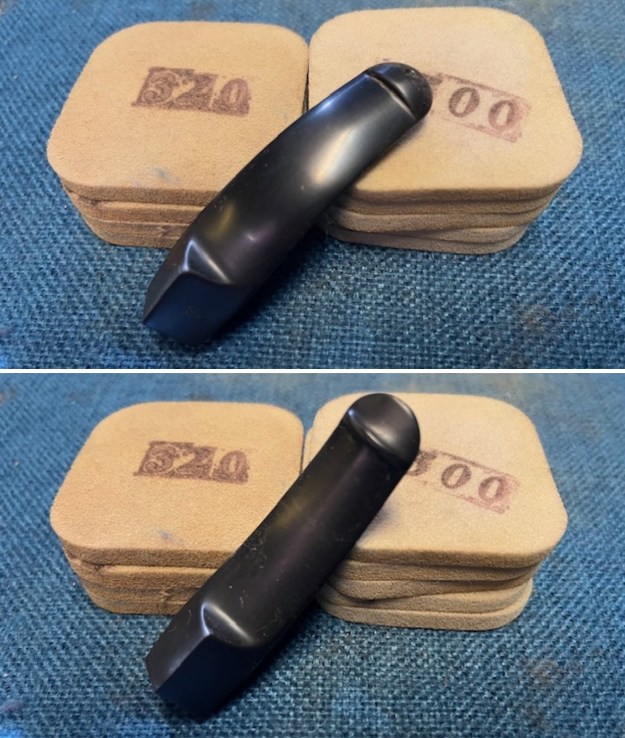
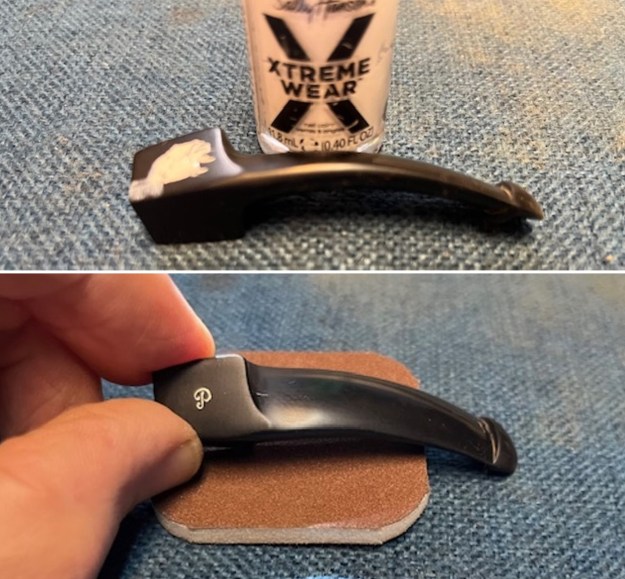
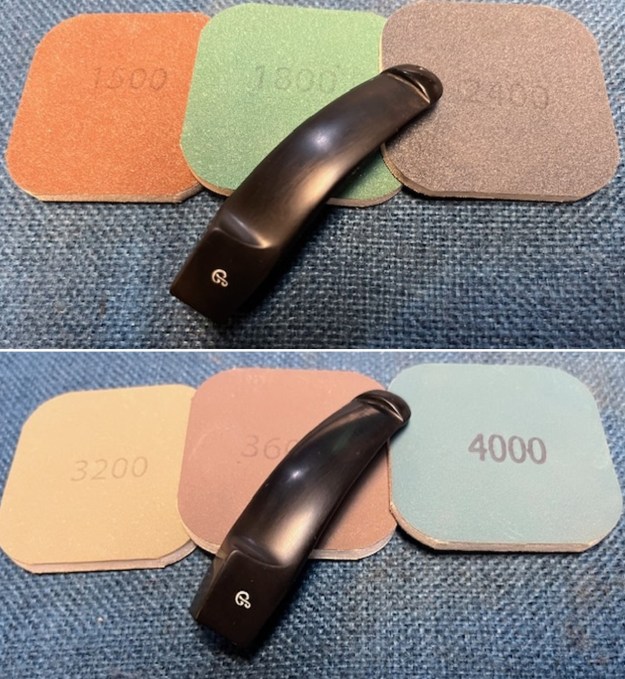
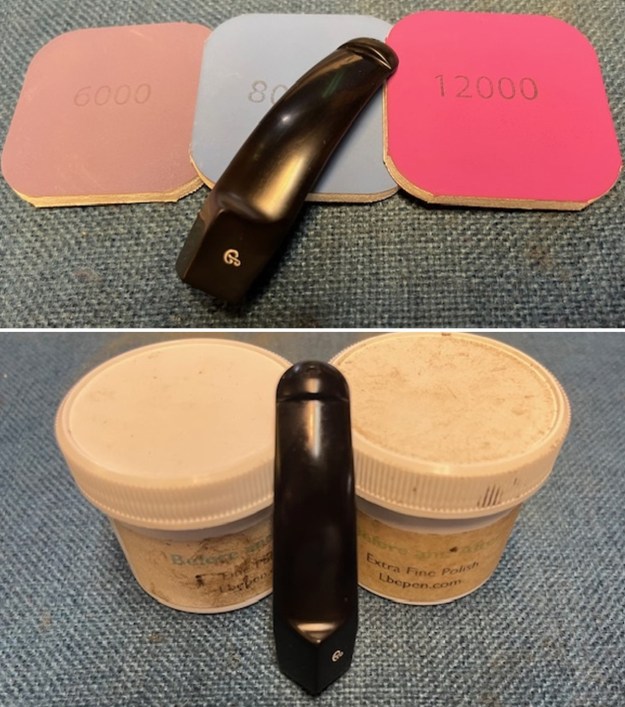
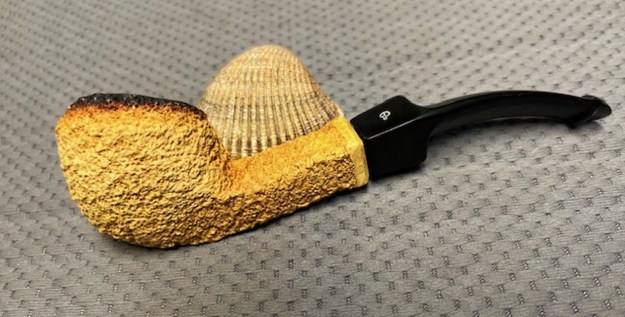
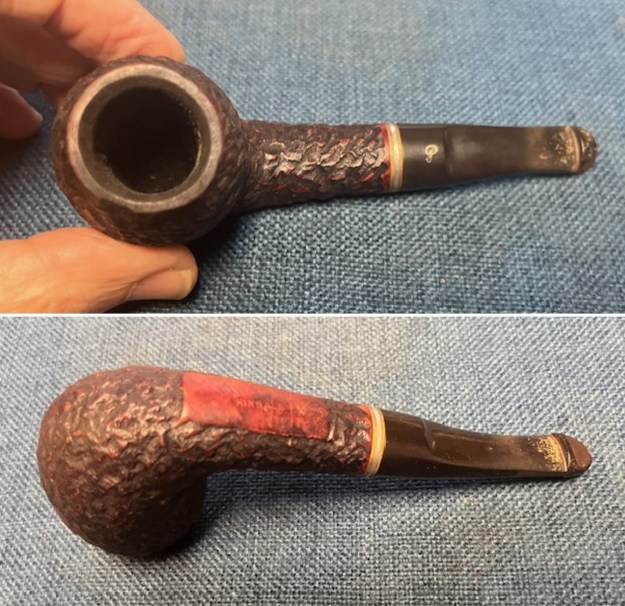
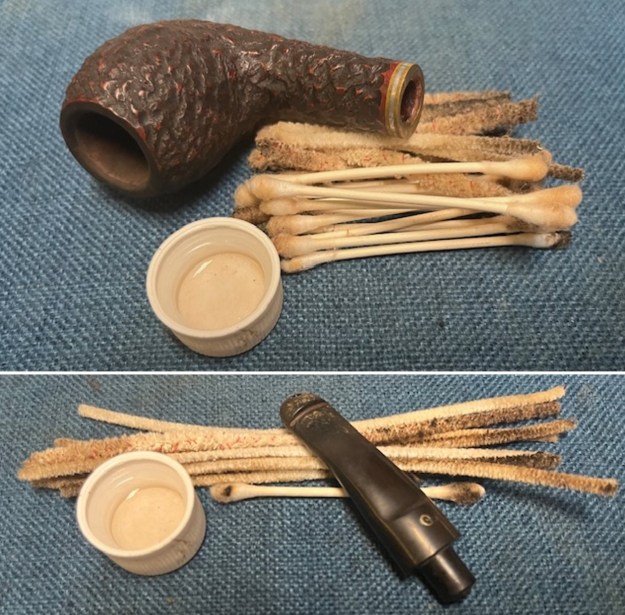
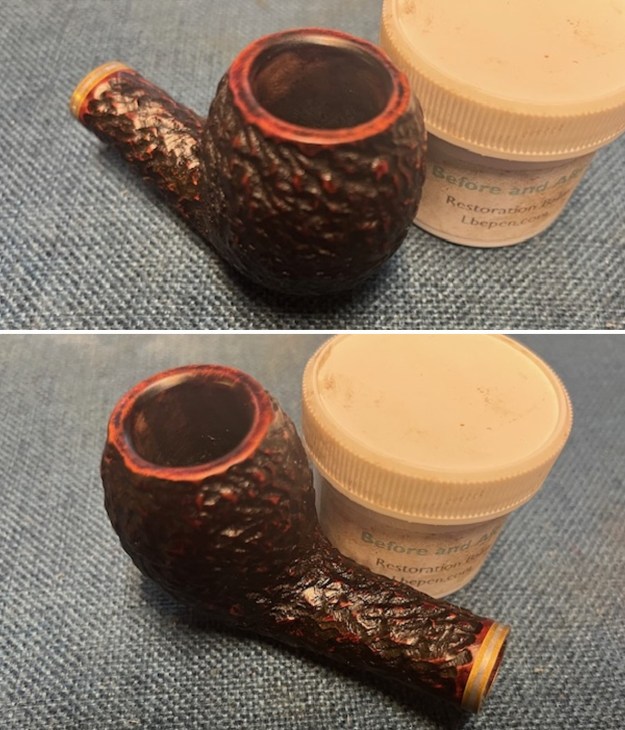
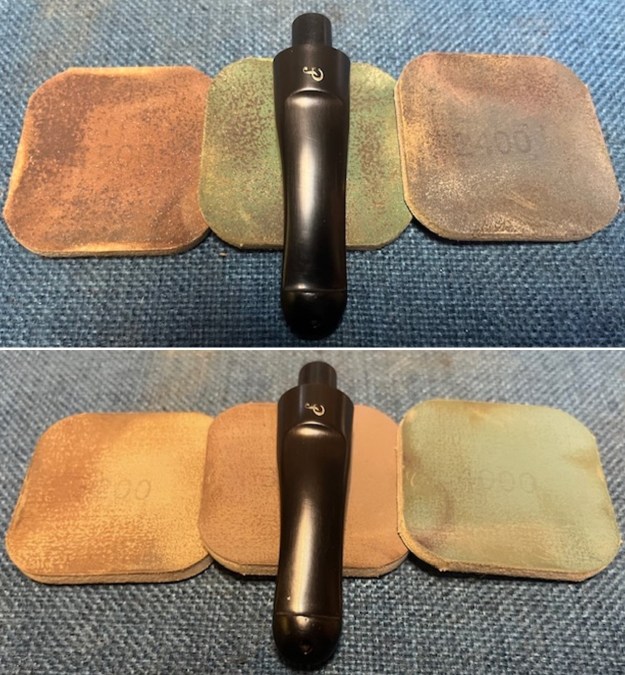
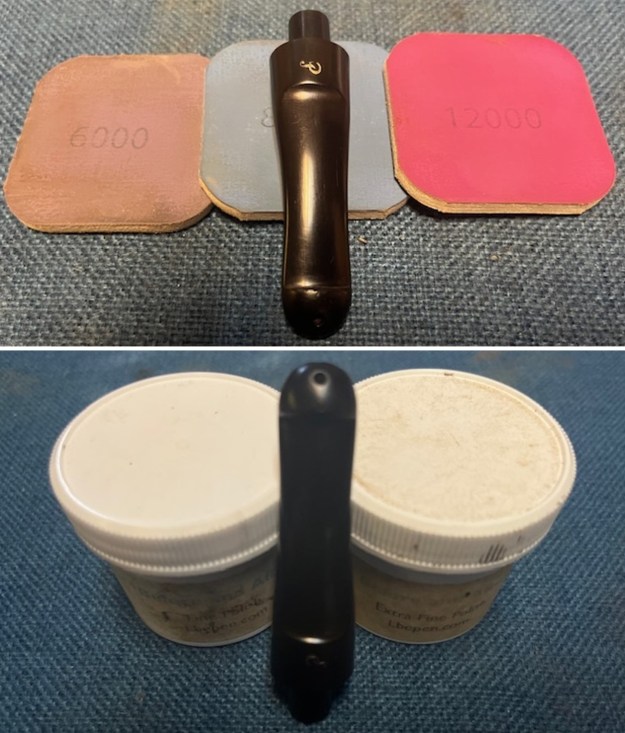
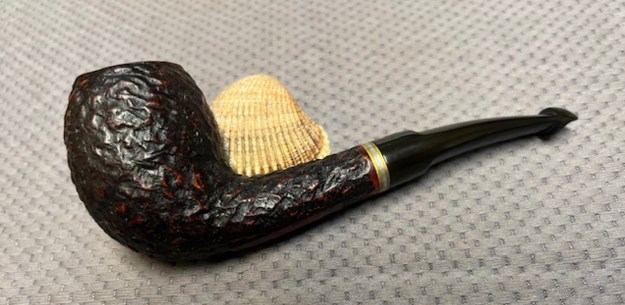
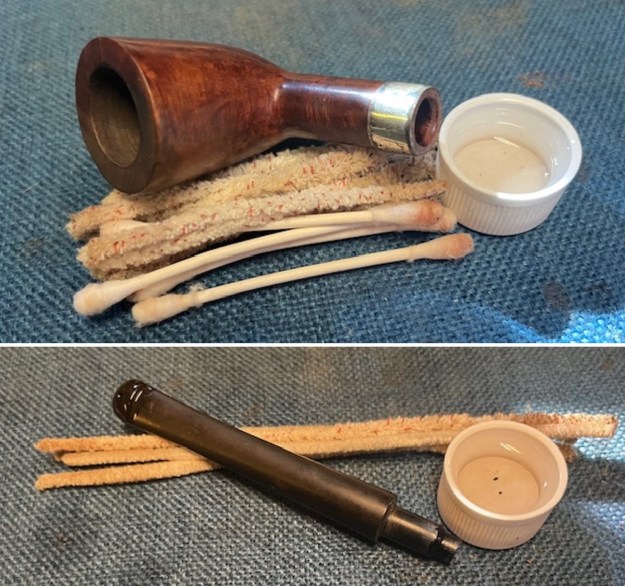
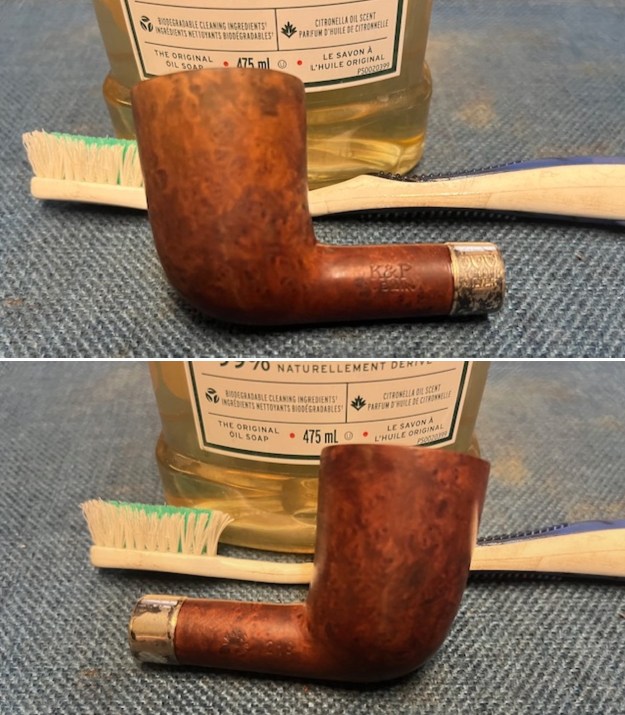
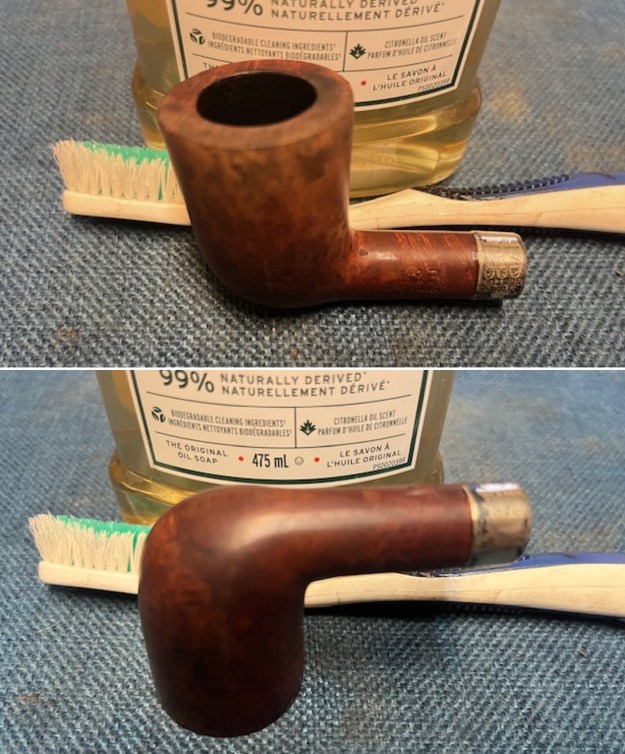
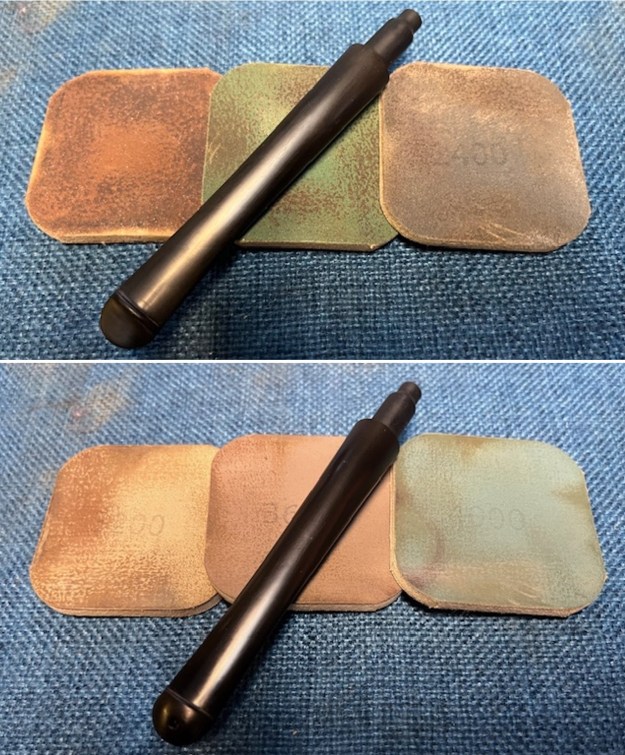
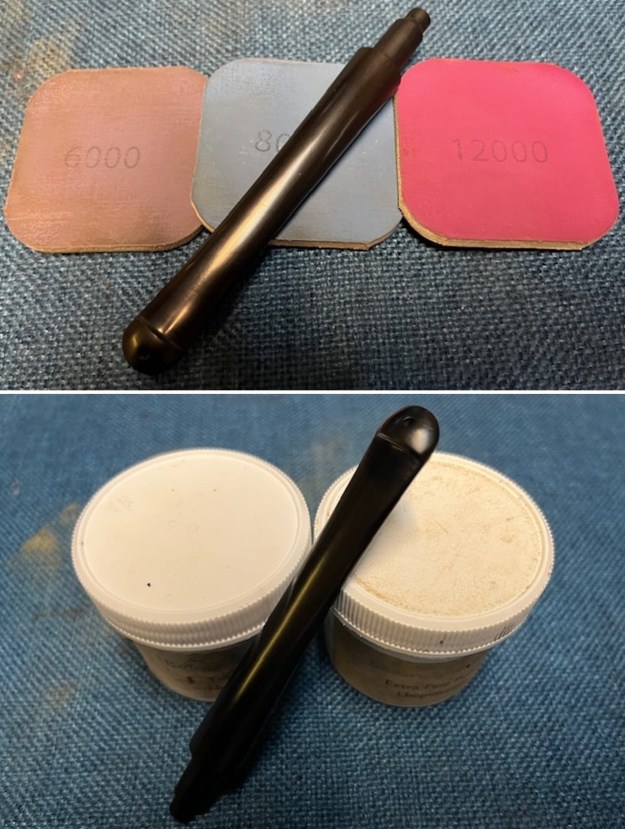
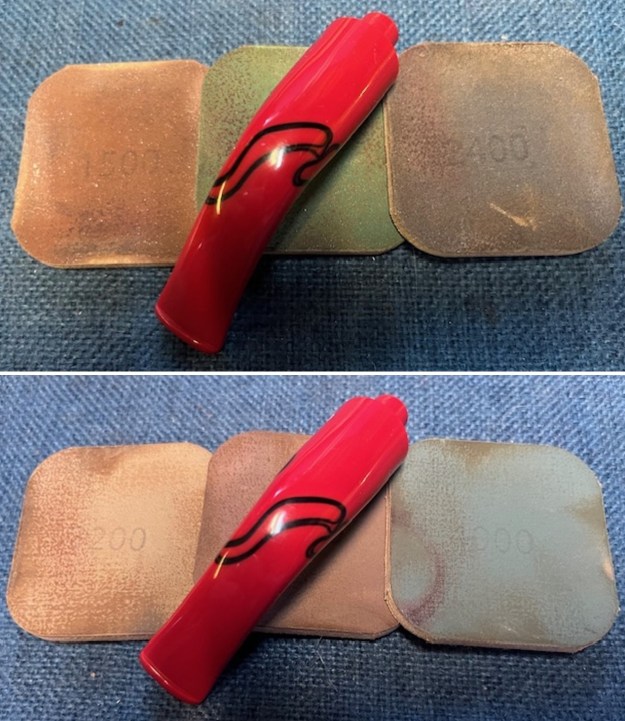
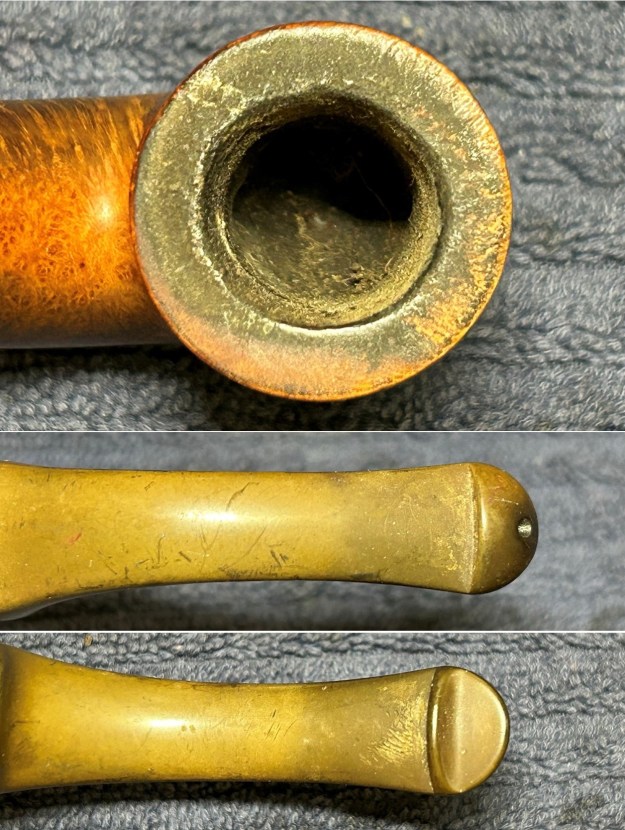
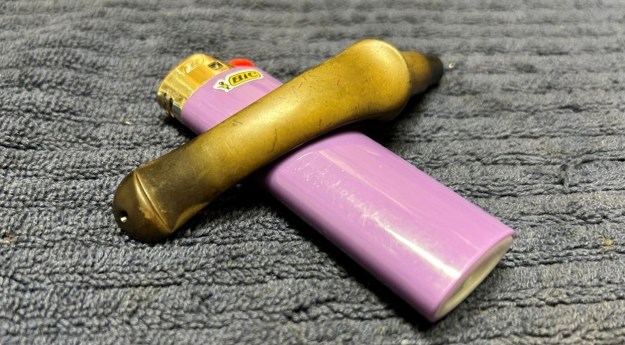
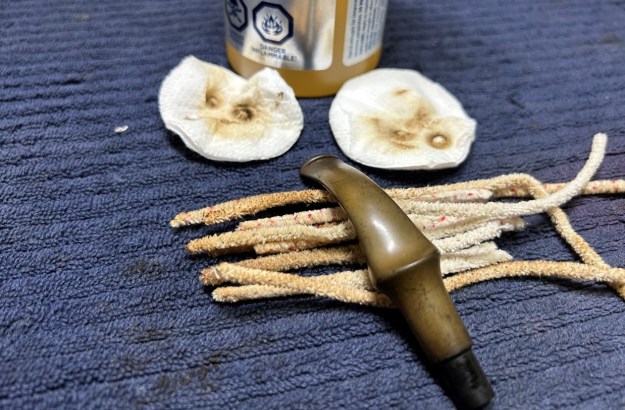
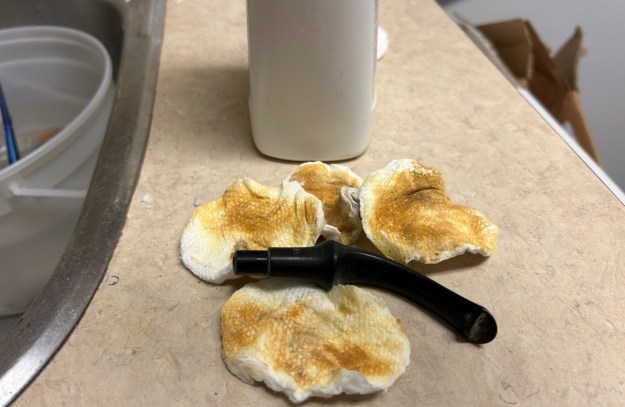
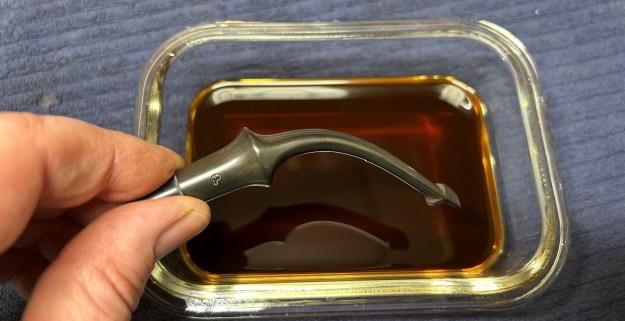
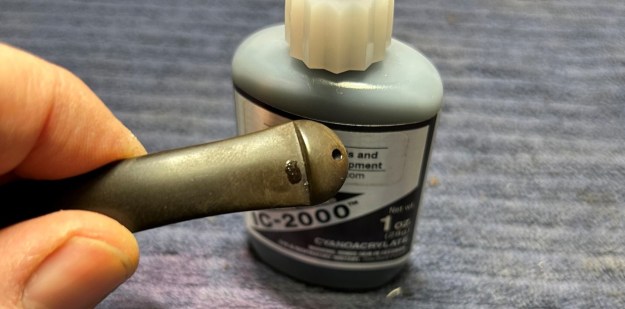
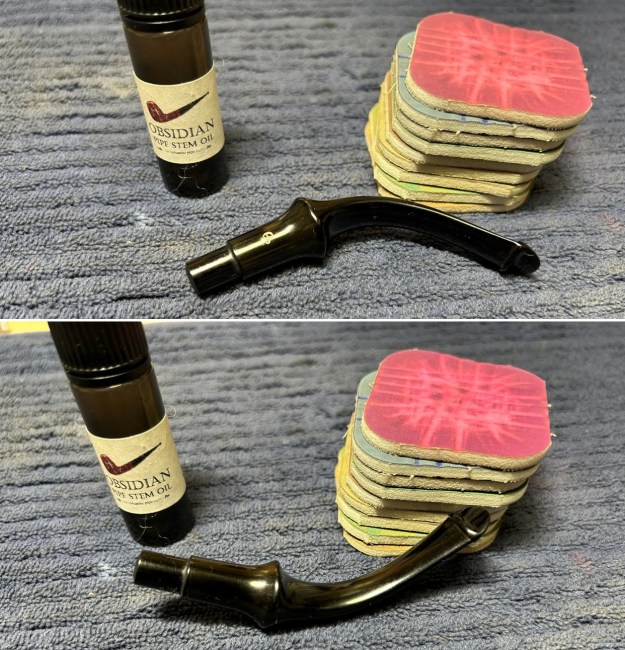
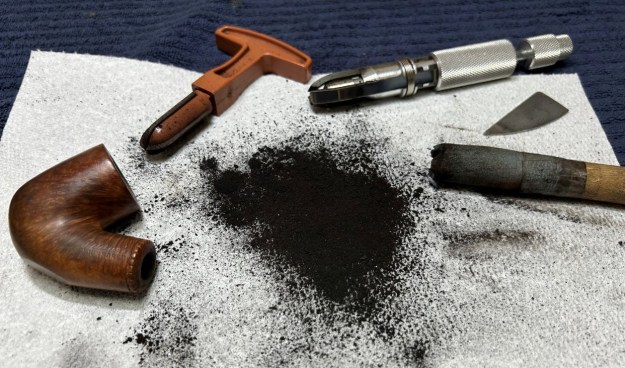
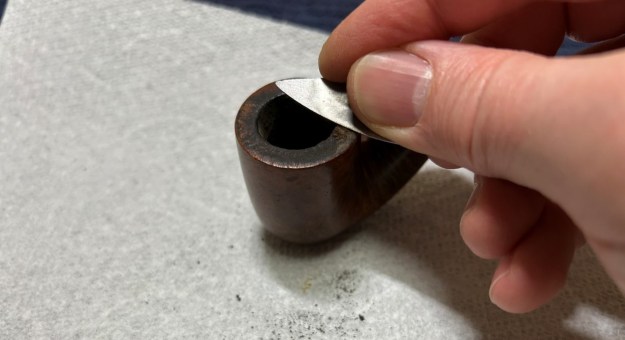
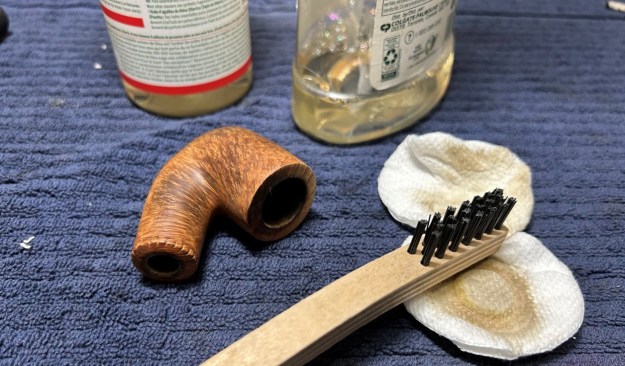
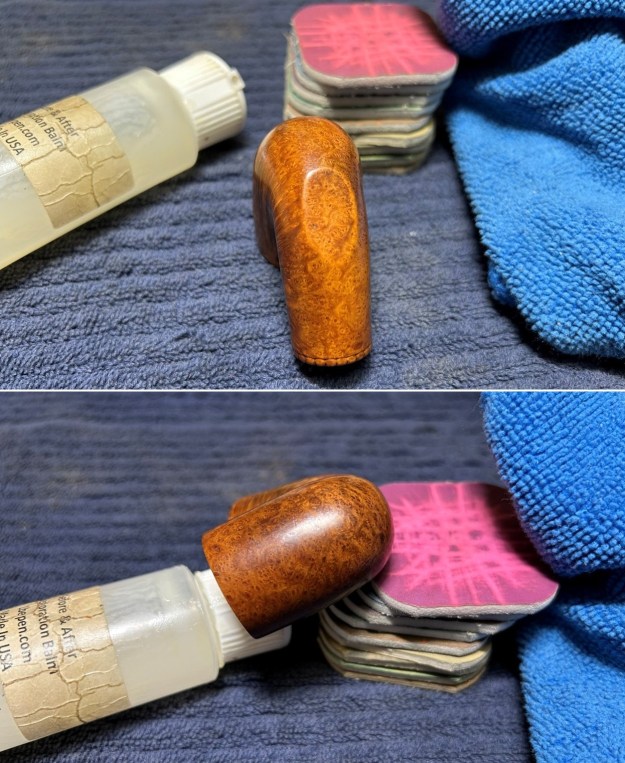
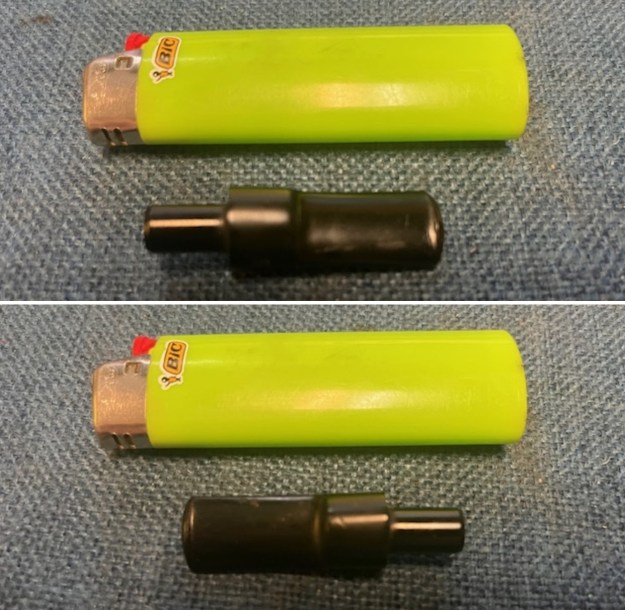
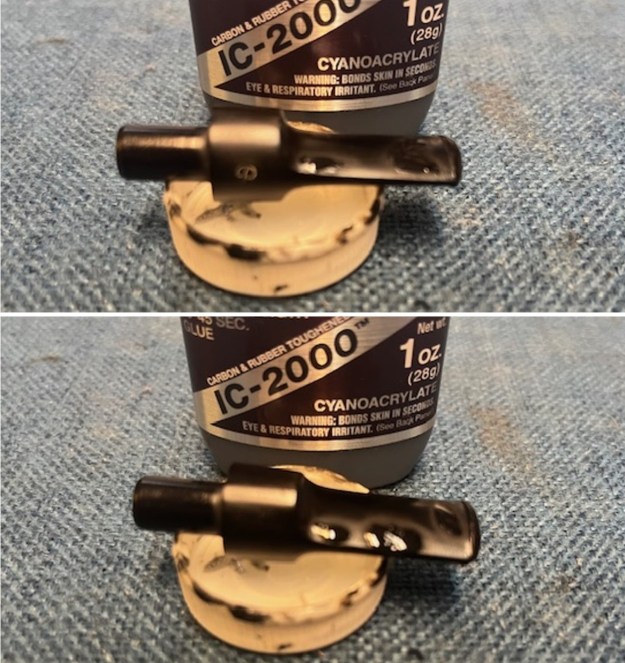
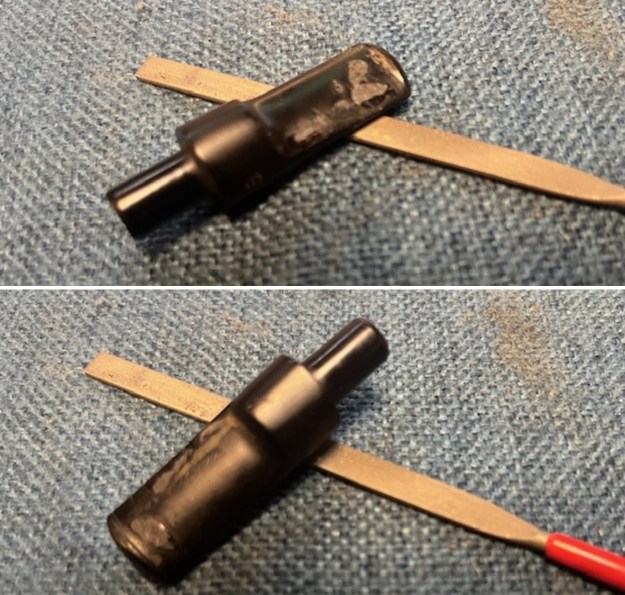
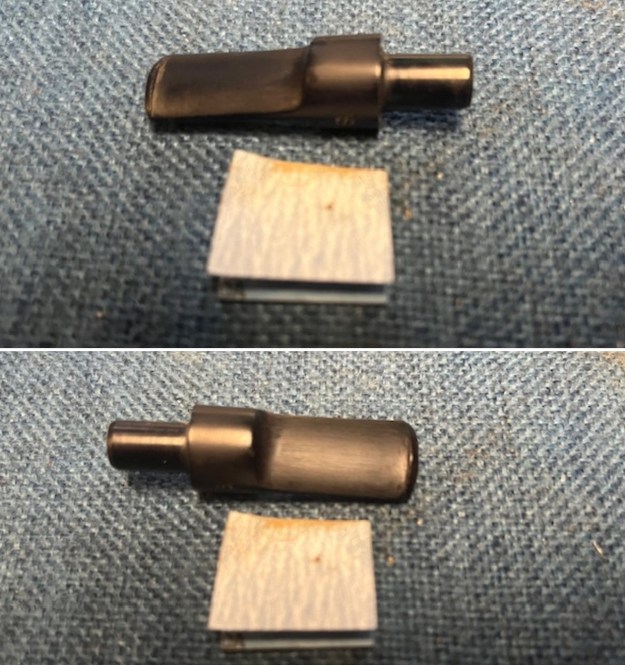
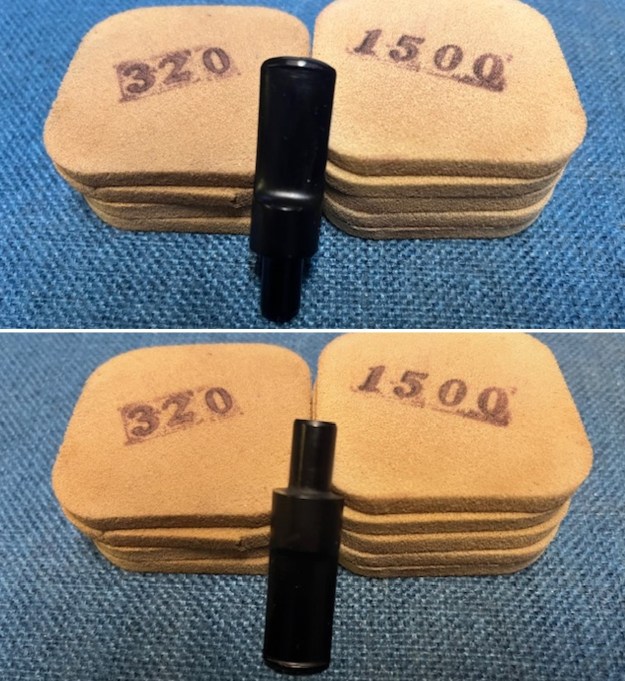
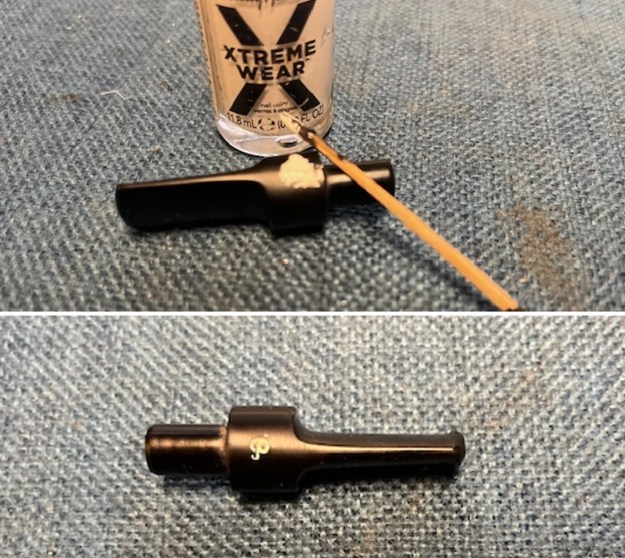
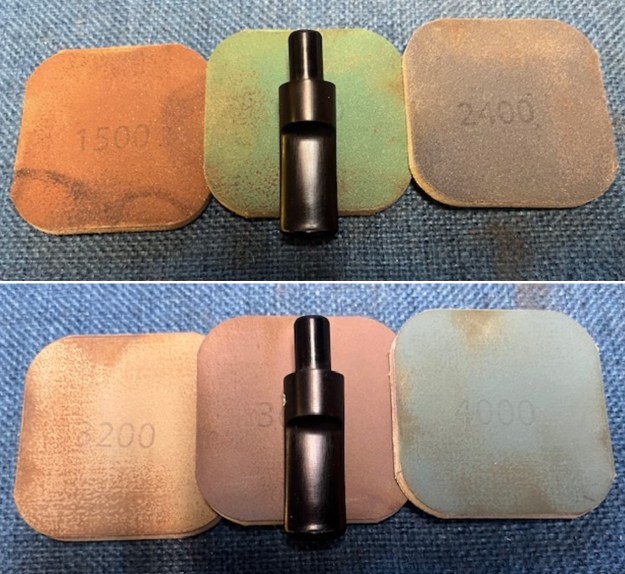
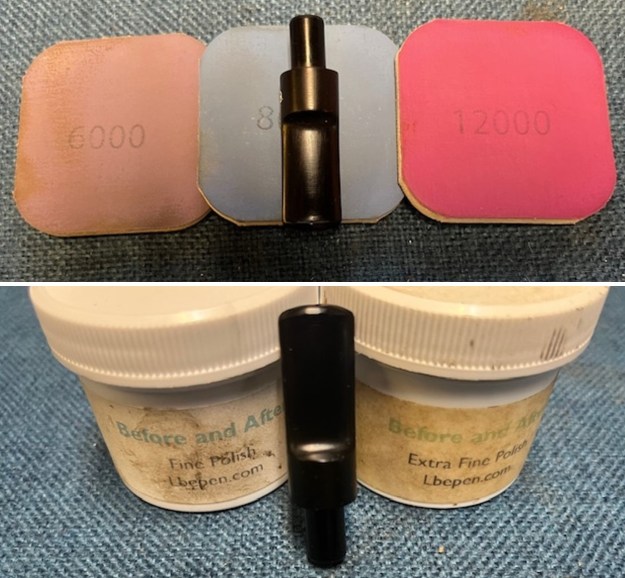
The third distinguishing mark of the original Dunmore lines is the stem. Both the System and Classic versions utilized the wide-shoulder “Comfort Lip,” with a painted  gold P on the stem. This doubtless helps the System sit as well as giving it a more muscular visual balance, strength being a long-standing concept in the design language of the company. While it gives the illusion of being an army “push” mount, of course it isn’t, but is a traditional tenon-mortise or “navy mount” as the old hands at K&P used to call it.Based on Mark’s information on his website and in his book, The Peterson Pipe Book, I can estimate that this pipe is from the mid- to late-70s – something like 50 years old. Many thanks to Mark for his help.On to the work! The pipe was in good shape and – boy-oh-boy – it had been smoked a lot! Things were dirty, rather than damaged – which is much preferred. The stem was oxidized and had a few tooth marks, but nothing deep or large. The stummel was loaded with cake and had substantial lava on the rim.I used a disposable lighter and ‘painted’ the stem with its flame. The gentle heat of the flame can cause the dents in the vulcanite of the stem to expand back into shape. In this case, it actually worked reasonably well and there was a bit of lift.I used oil soap on a few cotton rounds and wiped the stem down to provide an initial cleaning of filth before moving on to the next steps. The primary cleaning comes next. I cleaned the inside of the stem with both pipe cleaners and cotton swabs dipped in 99% lemon-infused isopropyl alcohol. I scrubbed thoroughly to make sure the interior was clean. I used quite a few pipe cleaners and cotton swabs – more than the photo shows.The goal of the next step is the removal (or minimization) of oxidation. Going to my sink, I used cream cleanser, cotton rounds, and a toothbrush, and scoured the stem to remove as much surface oxidation as possible. As the photos show, the result is a hideous brownish mess – but better off the stem than on it. Once the stem was reasonably clean, I soaked it overnight in some Briarville Stem Oxidation Remover. This solution works to draw oxidation in the stem to the surface. This is a major aid and an important step in ensuring a clean stem. The following day, I drew the stem out from its bath and scrubbed the lingering fluid with a toothbrush. Now that the stem is clean and dry, I set about fixing the marks and dents in the vulcanite. This is done by filling those divots with black cyanoacrylate adhesive, impregnated with carbon and rubber. I left this to cure and moved on. After this, I painted the logo on the stem with a gold-coloured metallic wax finish. I restored the logo carefully and let it fully set before proceeding.The penultimate step for the stem is sanding. First, with my set of needle files, I reduce the bulk of the cyanoacrylate repairs. I want to remove the excess adhesive as near to the surface as possible, without cutting into the vulcanite. Following that, I use all nine of the micromesh sanding pads (1,500 through 12,000 grit) to sand out flaws, even out the vulcanite, and provide gentle polishing of the finished surface. I also apply pipe-stem oil while using the last five micromesh pads. There was a wonderful, deep black shine to the stem when I was done.Now that the stem is (nearly) complete, I can move on to the stummel. The first step for me is to ream out the bowl – that is to say, remove all the cake inside the bowl. This accomplishes a couple of things. First (and most obviously), it cleans the bowl and provides a refurbished chamber for future smoking. Second, when the old cake is removed, I can inspect the interior walls of the bowl and determine if there is damage or not. I used a reamer, a pipe knife, and a piece of sandpaper taped to a wooden dowel. Collectively, these ensure that all the debris is removed.My next step was to remove the lava on the rim. For this, I took a piece of machine steel and gently scraped the lava away. The metal’s edge is sharp enough to remove what I need, but not so sharp that it damages the rim. Similar to the stem, I then cleaned the stummel with both pipe cleaners and cotton swabs dipped in 99% lemon-infused isopropyl alcohol. With a pipe this dirty, it took quite a while and much cotton to get clean. It was so, so dirty.I then decided to ‘de-ghost’ the pipe – that is to say, exorcize the remaining filth from the briar. I filled the bowl and the shank with cotton balls, then saturated them with 99% isopropyl alcohol. I let the stummel sit overnight. This caused any remaining oils, tars and smells to leach out into the cotton.To tidy up the briar, I also wiped down the outside with some oil soap on cotton rounds (and a toothbrush). This does a good job of cleaning any latent dirt on the surface of the briar. I also used a nylon brush on the rim. The last step of the cleaning process is to scour the inside of the stummel with some soap and tube brushes. This is the culmination of a lot of hard work in getting the pipe clean.I used all nine micromesh pads (1,500 through 12,000 grit) on the outside of the stummel to finish it off. This sanding minimizes flaws in the briar and provides a beautiful smoothness to the wood. I rubbed some Before & After Restoration Balm into the briar and let it sit for 20 minutes or so. The balm moisturizes the wood and gives a beautiful depth to the briar. I then buffed it with a microfibre cloth. For the final step, I took the pipe to my bench buffer and carefully polished it – first with a white diamond compound, then with three coats of carnauba wax. This procedure makes the pipe look its best – the stummel sings and the stem glows.

All done! This Peterson Dunmore 73 looks fantastic again and is ready to be enjoyed by its next owner. I am pleased to announce that this pipe is for sale! If you are interested in acquiring it for your collection, please have a look in the ‘Irish’ section of the store here on Steve’s website. You can also email me directly at kenneth@knightsofthepipe.com. The approximate dimensions of the pipe are as follows: length 5¼ in. (133 mm); height 3 in. (76 mm); bowl diameter 1⅛ in. (30 mm); chamber diameter ⅝ in. (18 mm). The weight of the pipe is 1¼ oz. (36 g). I hope you enjoyed reading the story of this pipe’s restoration as much as I enjoyed restoring it. If you are interested in more of my work, please follow me here on Steve’s website or send me an email. Thank you very much for reading and, as always, I welcome and encourage your comments.

Restoring a Republic Era Peterson’s Kapruf Sandblast Lovat 53


by Steve Laug

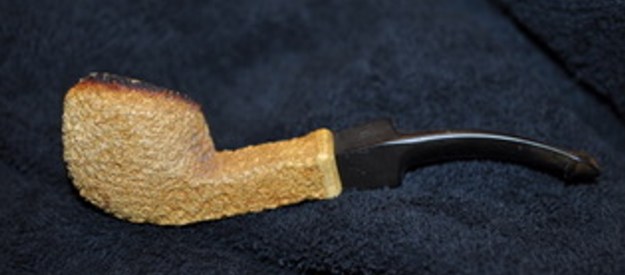
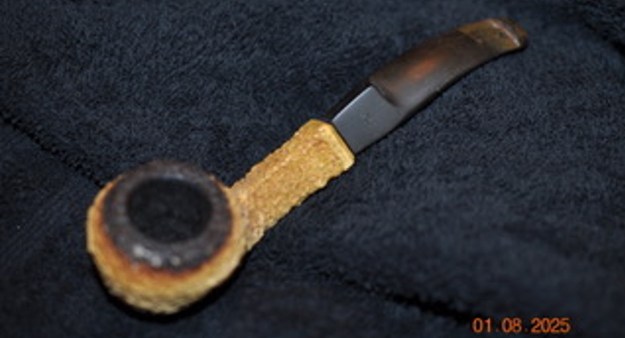
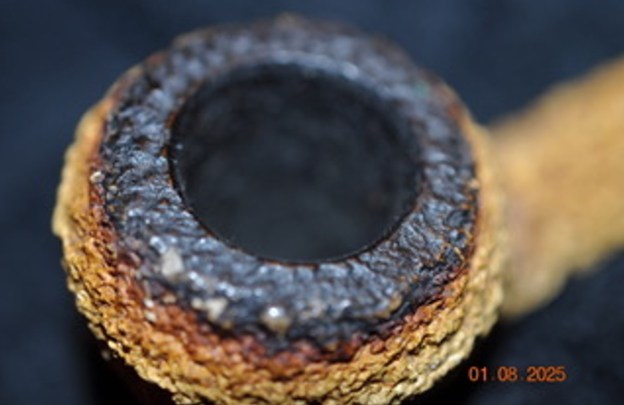
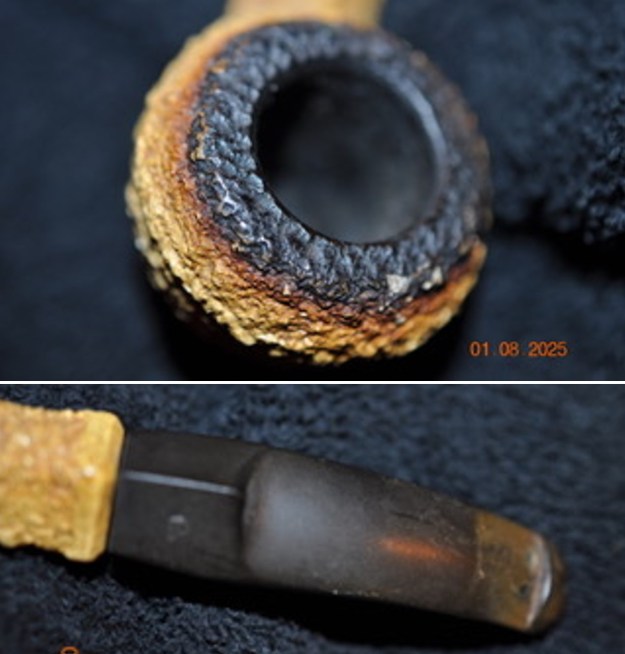
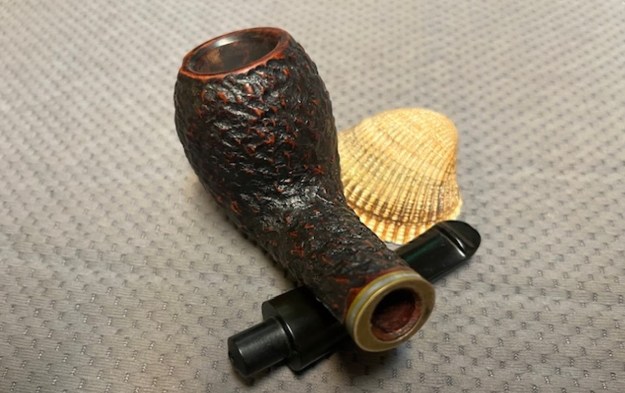
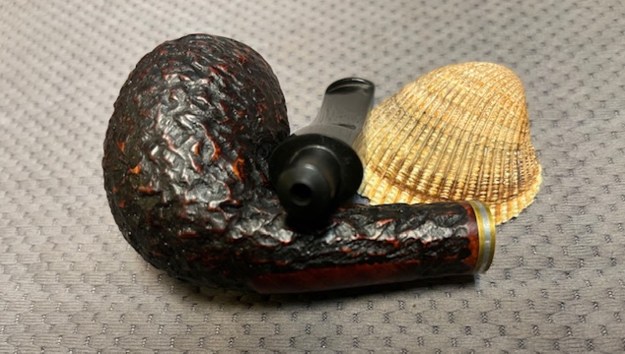
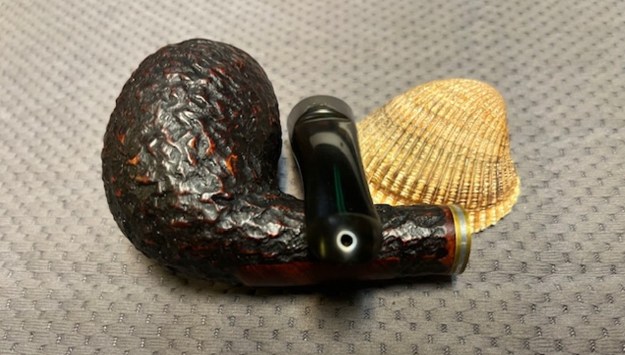
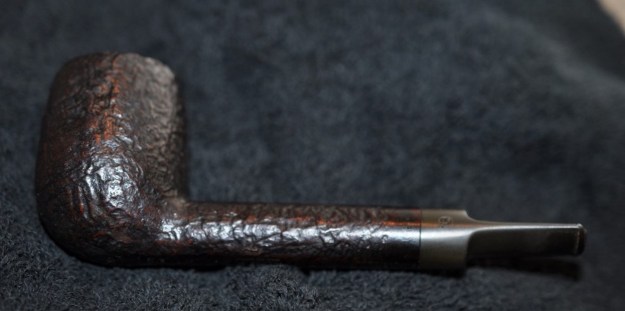
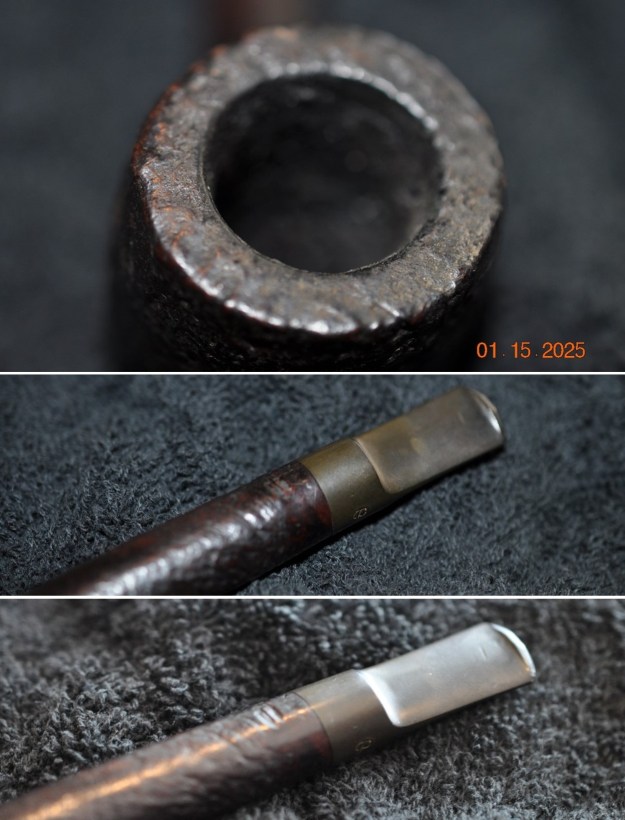
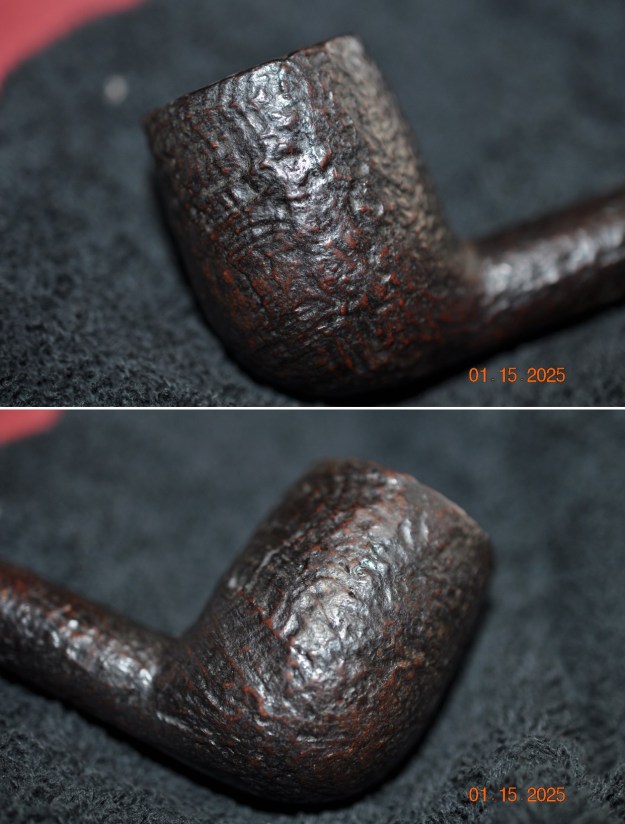
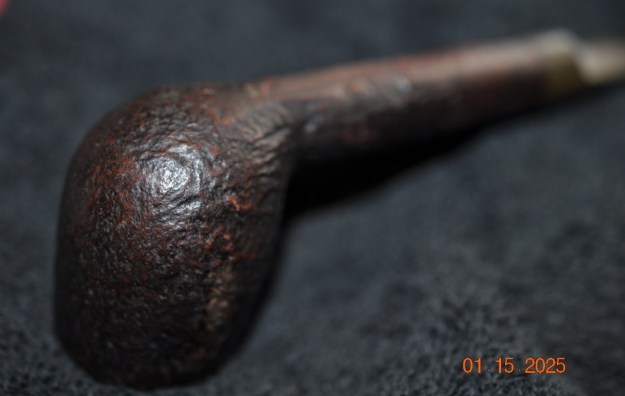
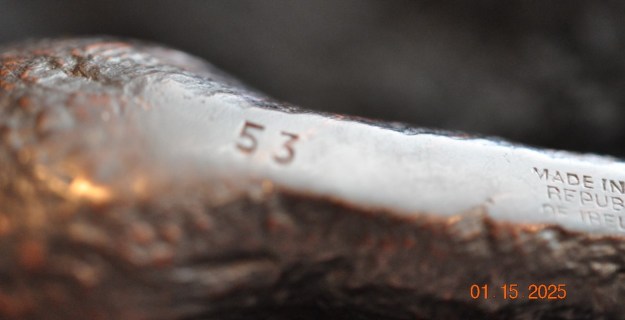
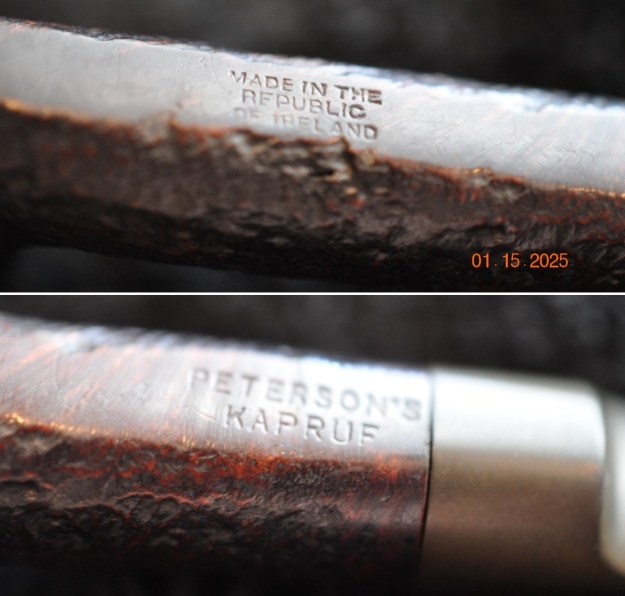
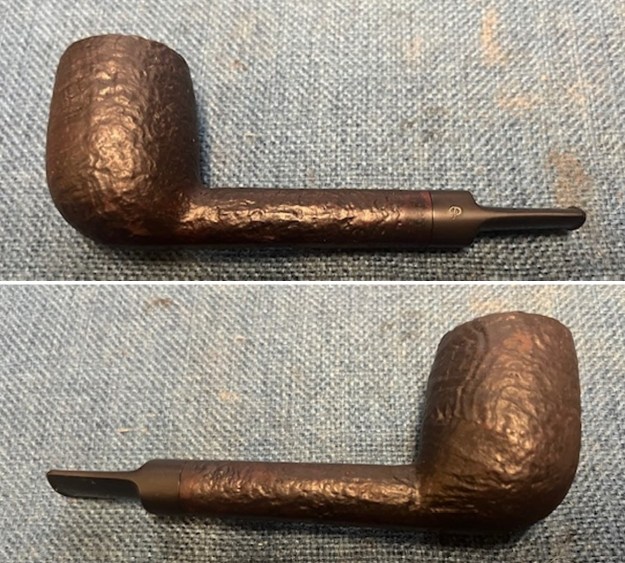
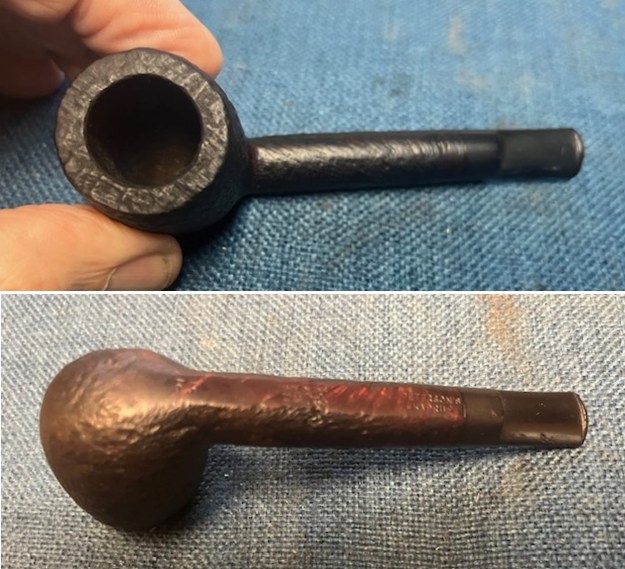
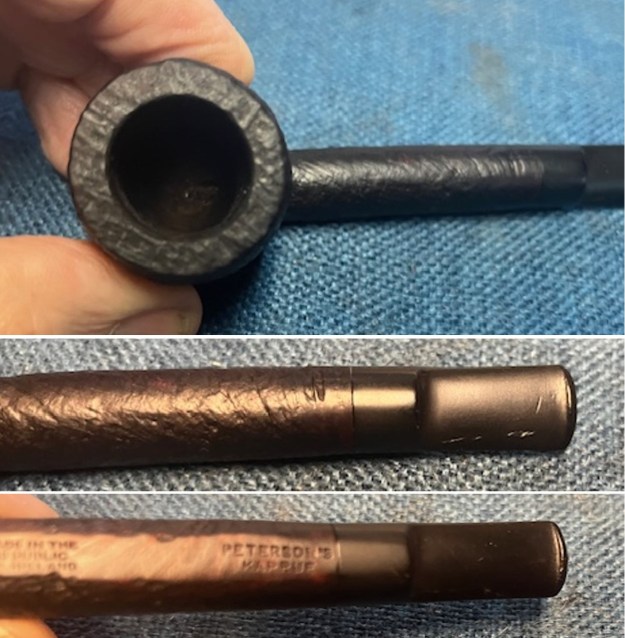
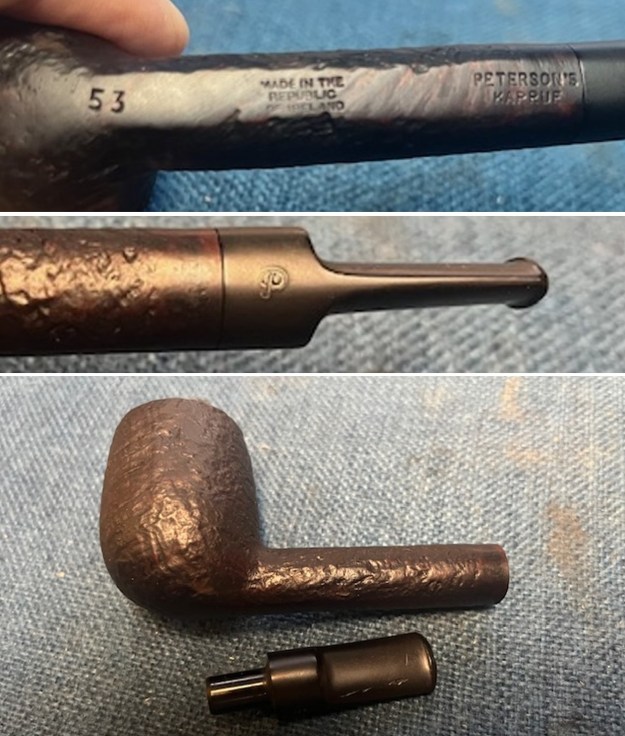
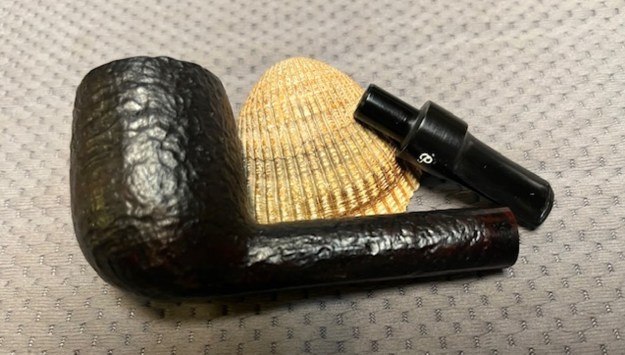
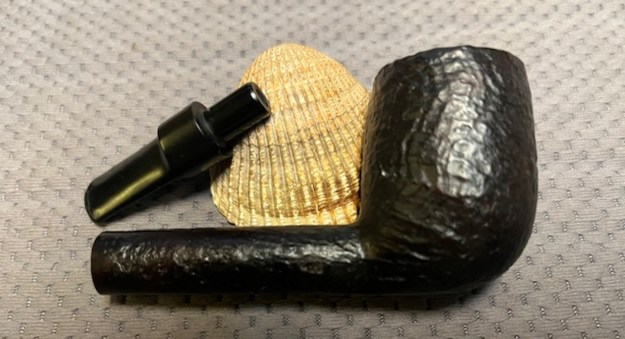
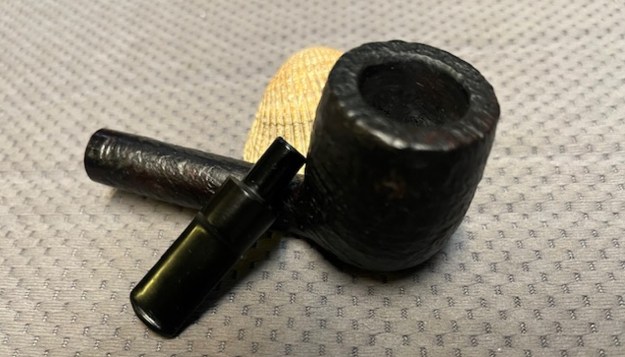
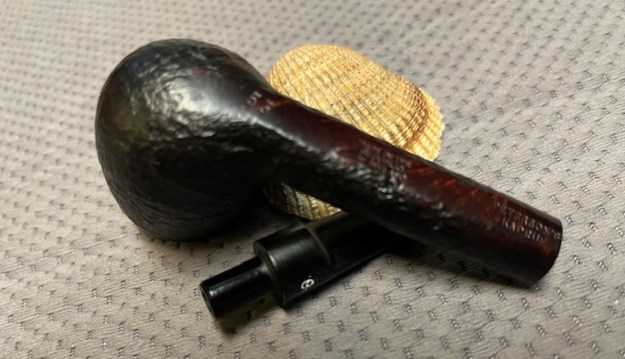
Today is cold and snowy day in Vancouver. I know in comparison to where many of you live it is not cold but to us it is. I am preparing for a trip to Asia for work so this is likely the last pipe I will work on for a while. I have chosen a Peterson’s Lovat. It is a sandblast pipe that came to us from our contact in Copenhagen, Denmark on 04/11/2024. There was grime ground into the sandblast finish on the bowl sides. I love the way the contrast of the brown and black stains gave the blast a sense of depth. It was stamped on the flat underside of the shank and had the shape number 53 on the heel of the bowl followed by Made in the Republic of Ireland (three lines). To the right of that it is stamped Peterson’s [over] Kapruf. This pipe must have been a favourite of the pipe man who used it as it had been well smoked. There was a thick cake in the bowl and some lava overflowing onto the sandblast rim top. The inner edge of the bowl looked good. The stem is an original fishtail style but the slot is merely a single opening like an old style orific button. Strange but original! The stem was oxidized and there were light tooth marks and chatter on the top and underside ahead of the button on both sides. Jeff took photos of the pipe before his cleanup work. Jeff took photos of the rim top and stem to show the general condition of the pipe. The bowl is thickly caked and the rim top and edges look to be in good condition despite the lava overflow in the sandblast of the rim top. The photos of the stem show the oxidation and the light tooth marks on the top and underside near the button. Jeff took a photo of the bowl sides and heel to show the blast that was around this bowl. It is a great sandblast and the choice of stain adds depth to the appearance of the bowl. He took photos of the stamping on the underside of the shank. It is clear and readable and reads as noted above. I turned to “The Peterson Pipe” by Mark Irwin and Gary Malmberg to get some background on the Kapruf line. On page 306 it had the following information.

Kapruf and “Kapruf” (c.1922-87) Sandblast (hence the name, Kapp-rough) P-lip or fishtail mouthpiece, in catalogs from 1940-87. Early documented specimens stamped IRISH over FREE STATE, no Eire specimens documented. Mid-century specimens may be stamped LONDON MADE [over] ENGLAND or MADE IN ENGLAND forming a circle or MADE IN [over] IRELAND, all dating no later than 1970. Those of recent vintage stamped MADE IN THE [over] REPUBLIC [over] OF IRELAND.

I knew that I was working on a KAPRUF that was made between 1970-1987 as it is stamped MADE IN THE REPUBLIC OF IRELAND as noted above. Now it was time to work on the pipe.

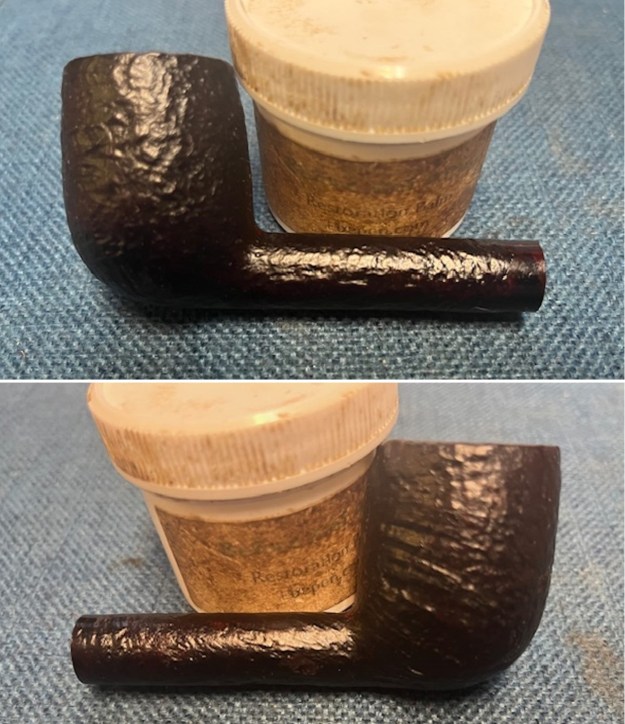
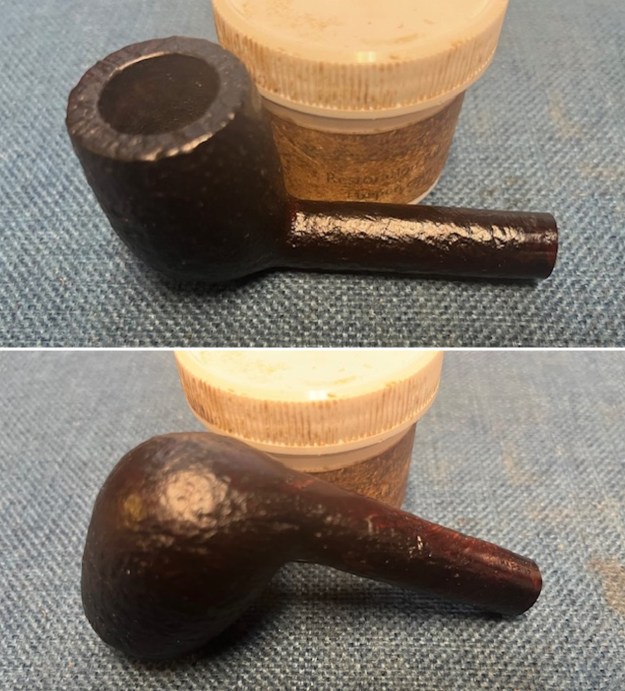
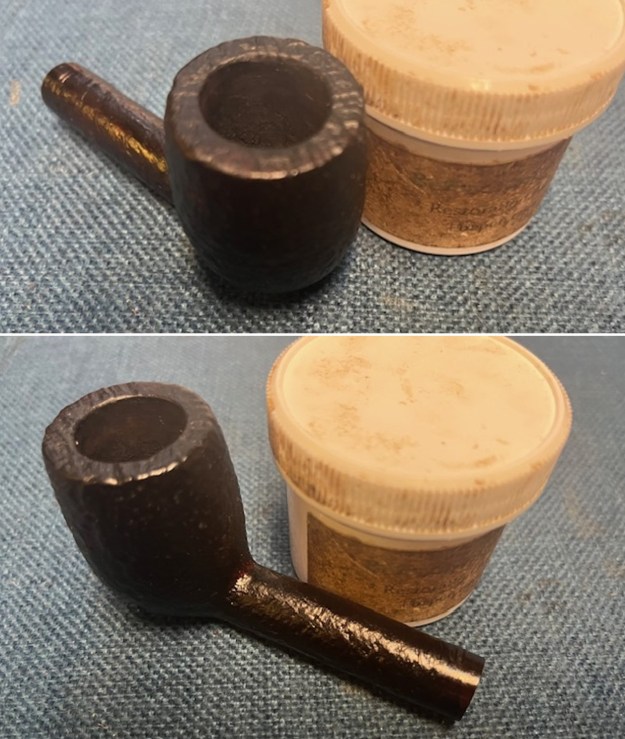
Jeff had done a great job cleaning up the pipe as usual. He reamed the pipe with a PipNet reamer and cut back the cake back to the bare briar. He cleaned up the walls with a Savinelli Fitsall Pipe Knife. He scrubbed the interior of the bowl and shank with pipe cleaners, cotton swabs and alcohol to remove the tars and oils. He scrubbed the exterior of the pipe with Murphy’s Oil Soap and a tooth brush to remove the grime from the finish. He worked on the rim top lava and darkening with the soap and tooth brush. He scrubbed the inside of the stem with alcohol and pipe cleaners. He scrubbed the exterior with Soft Scrub and then soaked it in Briarville Pipe Stem Deoxidizer. He washed it off with warm water to remove the Deoxidizer. The pipe looked far better when it arrived. I took some close-up photos of the rim top and the stem surface. I wanted to show how well it had cleaned up. The rim top and the inner and outer edges look very good. I also took close up photos of the stem to show the light chatter and marks on the surface near the button.I took a photo of the stamping on the underside of the shank. You can see that it is stamped as noted above. It is faint but readable. I took the pipe apart and took a photo of the pipe. It is a good looking pipe and has an interesting sandblast on the bowl.I worked some Before & After Restoration Balm into the surface of the briar with my fingertips and a horse hair shoe brush to clean, enliven and protect the briar. I let the balm sit for 15 minutes and then buffed with a cotton cloth to raise the shine. The photos show the bowl at this point in the restoration process. I set the bowl aside and turned my attention to the stem. I “painted” the stem surface with the flame of a lighter to try and lift the marks. It did not do much. I repaired the tooth marks and deep scratches in the surface with black CA glue. Once they cured I used a small file to flatten them and then sanded them further with 220 grit sandpaper. I sanded the stem with 320-3500 grit sanding pads. I wiped it down after each sanding pad with an Obsidian Oil impregnated cloth. It really began to take on a shine.I paused the polishing to touch up the P stamp on the left side of the saddle stem with some acrylic fingernail polish. I worked it into the stamp with a toothpick and then scraped off the excess once it had dried.I polished the stem with micromesh sanding pads – wet sanding with 1500-12000 grit sanding pads. I wiped it down after each sanding pad with Obsidian Oil. I polished it with Before & After Pipe Stem Polish – both Fine and Extra Fine. I wiped the stem down with Obsidian Oil and set it aside to dry. I am always excited to finish working on a pipe. This Peterson’s Made in the Republic of Ireland Kapruf 53 Lovat is no exception. I put the pipe back together and buffed it with Blue Diamond on the buffing wheel. I gave the bowl and the stem multiple coats of carnauba wax. I buffed the pipe with a clean buffing pad to raise the shine and hand buffed it with a microfibre cloth to deepen the shine. It is fun to see what the polished sandblast bowl looks like with the black vulcanite saddle stem. This Classic looking Peterson’s Kapruf Sandblast 53 Lovat feels great in my hand. It is light and well balanced. Have a look at it with the photos below. The dimensions are Length: 4 ¾ inches, Height: 1 ¾ inches, Outside diameter of the bowl: 1 ¼ inches, Chamber diameter: ¾ of an inch. The weight of the pipe is 28 grams/.95 ounces. I will be putting it on the rebornpipes store shortly in the Irish Pipe Makers section if you are interested in it. Thanks for walking through the restoration with me as I worked over this pipe. Thanks to each of you who are reading this blog.
Restoring a Fine Peterson Kildare 405S


by Kenneth Lieblich

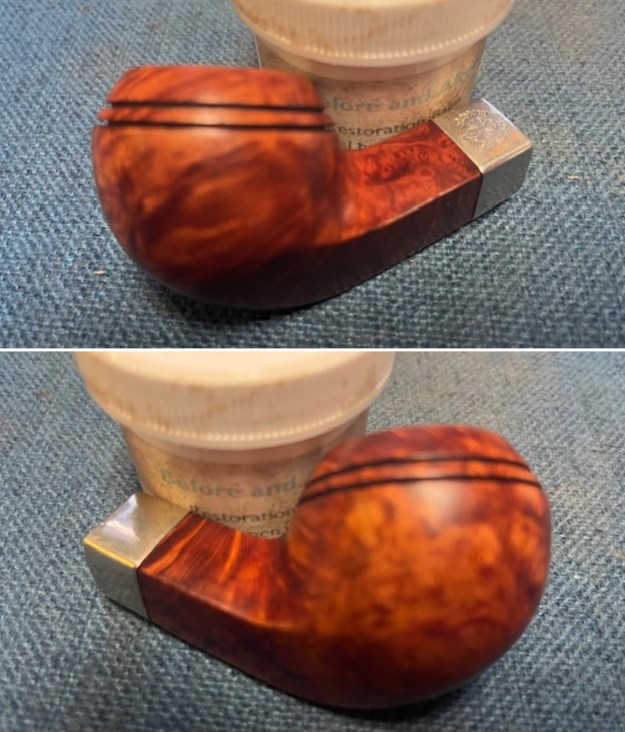
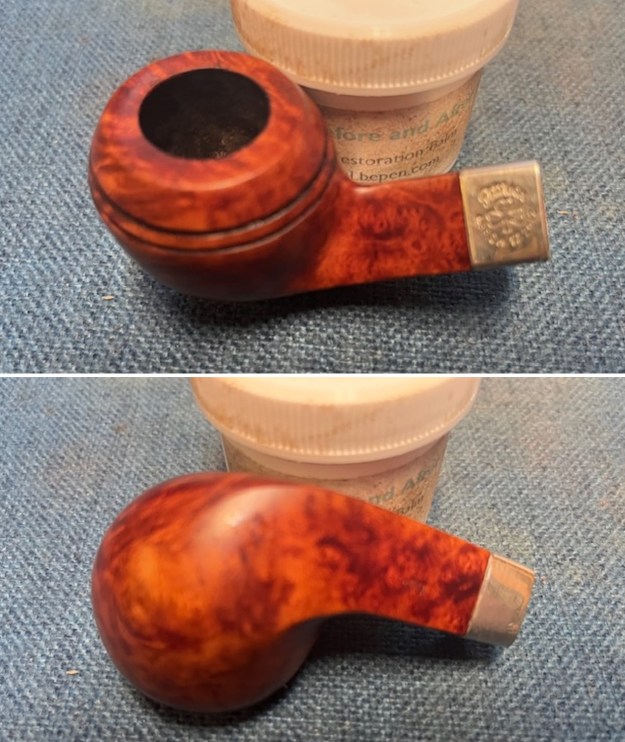
This is another in a series of pipes I cleaned up for a local family. Today, it’s a handsome Peterson Kildare 405S Prince with a P-lip saddle stem. It was a pleasure to work on this pipe, as it didn’t require too much elbow grease. In my research, I was interested to learn that this shape is apparently uncommon. The markings are as follows: on the left shank, we read Peterson’s [over] “Kildare”; on the right shank, we read Made in the [over] Republic [over] of Ireland. Immediately to the right of that is the shape number, 405S. Finally, on the stem, we see the stylized P of the Peterson Pipe Company.In looking up this pipe shape, I came upon a page from Mark Irwin’s blog, Peterson Pipe Notes. It had some useful information on the 400 series in general and this very pipe in particular:

The 400-shape group has come to the forefront with Peterson’s recent reboot of the 406 “Large Prince”. It’s an interesting and usually overlooked group, comprised of straight shapes influenced by the classic English chart. Insofar as the catalogs are concerned (which are never, of course, identical with actual production dates), the shape group begins quite understandably shortly after Peterson opened its London factory in the Bradley Buildings in 1937—England at the time being one of Peterson’s “Big Three” markets (the other two being the US and Germany). As a group, the shapes reflect the smoking styles of the mid-twentieth century—the 1940s, 50s and 60s—the decades that produced most of them. That is, they are smaller pipes than most pipemen (and women) use today and they’re lighter, designed for the comfort of constant clenching in an office or factory environment where both hands were needed, and for the shorter, probably more frequent smokes that the interruptions of the workday entails. While I’ve been able to document 21 shapes, probably no more than 8 to 10 were ever offered at one time, and for most decades considerably less. Once in a while Peterson, being the counter-cultural wags they are, will subvert the English aesthetic by giving a shape a “bit of the Irish,” adding what they call an “S/B” or “Semi-Bent” mouthpiece—a piece of Peterson lore that even Peterson has forgotten!

The 405s was first announced in the 1979 update to the 1975 catalog and released in the various Classic Range lines, documented in the Kildare, Kildare Patch and Sterling. It was extremely short-lived, however, and is not found in any subsequent Peterson catalogs. Whether it was slightly larger or smaller than the 406 and 407 is hard to say, especially when the 406 and 407 almost seem to be interchangeable.

I also understand that the 405S most closely resembles the modern-day 408. The two are not identical, but pretty close. Let’s look at the condition of the pipe. As mentioned, the condition is really quite good. There’s a bit of wear and tear on the rim of the bowl, but nothing serious – and it looks like the inside of the bowl was cleaned out at some point. The stem also has a few tooth marks, but no significant calcification and only a bit of oxidation.To begin, I used oil soap on a few cotton rounds and wiped the stem down to provide an initial cleaning of filth before moving on to the next steps. The primary cleaning comes next. I cleaned the inside of the stem with both pipe cleaners and cotton swabs dipped in 99% lemon-infused isopropyl alcohol. I scrubbed thoroughly to make sure the interior was clean.The goal of the next step is the removal (or minimization) of oxidation. Going to my sink, I used cream cleanser, cotton rounds, and a toothbrush, and scoured the stem to remove as much surface oxidation as possible. As the photos show, the result is a hideous brownish mess – but better off the stem than on it.Once the stem was reasonably clean, I soaked it overnight in some de-oxidation fluid. This solution works to draw oxidation in the stem to the surface. This is a major aid and an important step in ensuring a clean stem. The following day, I drew the stem out from its bath and scrubbed the lingering fluid with a toothbrush.Now that the stem is clean and dry, I set about fixing the very minor dents in the vulcanite. This is done by filling those divots with black cyanoacrylate adhesive, impregnated with carbon and rubber. I left this to cure and moved on.After this, I painted the logo on the stem with some nail polish. I restored the logo carefully and let it fully set before proceeding.The penultimate step for the stem is sanding. First, with my set of needle files, I reduce the bulk of the cyanoacrylate repairs. I want to remove the excess adhesive as near to the surface as possible, without cutting into the vulcanite. Following that, I use all nine of the micromesh sanding pads (1,500 through 12,000 grit) to sand out flaws, even out the vulcanite, and provide gentle polishing of the finished surface. I also apply pipe-stem oil while using the last five micromesh pads. There was a wonderful, deep black shine to the stem when I was done.Now that the stem is (nearly) complete, I can move on to the stummel. The first step for me is to ream out the bowl – that is to say, remove all the cake inside the bowl. This accomplishes a couple of things. First (and most obviously), it cleans the bowl and provides a refurbished chamber for future smoking. Second, when the old cake is removed, I can inspect the interior walls of the bowl and determine if there is damage or not. In this case, the bowl was clean enough that I only used a a piece of sandpaper taped to a wooden dowel to remove the little debris.Similar to the stem, I then cleaned the stummel with both pipe cleaners and cotton swabs dipped in 99% lemon-infused isopropyl alcohol.I then decided to ‘de-ghost’ the pipe – that is to say, exorcize the remaining filth from the briar. I filled the bowl and the shank with cotton balls, then saturated them with 99% isopropyl alcohol. I let the stummel sit overnight. This caused any remaining oils, tars and smells to leach out into the cotton.To tidy up the briar, I also wiped down the outside with some oil soap on cotton rounds (and a toothbrush). This does a good job of cleaning any latent dirt on the surface of the briar. The last step of the cleaning process is to scour the inside of the stummel with some soap and tube brushes. This is the culmination of the work of getting the pipe clean.I then used all nine micromesh pads (1,500 through 12,000 grit) on the outside of the stummel to finish it off. This sanding minimizes flaws in the briar and provides a beautiful smoothness to the wood. I rubbed some Before & After Restoration Balm into the briar and let it sit for 20 minutes or so. The balm moisturizes the wood and gives a beautiful depth to the briar. I then buffed it with a microfibre cloth. For the final step, I took the pipe to my bench buffer and carefully polished it – first with a white diamond compound, then with three coats of carnauba wax. This procedure makes the pipe look its best – the stummel sings and the stem glows.All done! This Peterson Kildare 405S looks fantastic again and is ready to be enjoyed by its new owner. The approximate dimensions of the pipe are as follows: length 5½ in. (139 mm); height 1½ in. (37 mm); bowl diameter 1⅝ in. (40 mm); chamber diameter ¾ in. (19 mm). The weight of the pipe is 1¼ oz. (36 g). I hope you enjoyed reading the story of this pipe’s restoration as much as I enjoyed restoring it. If you are interested in more of my work, please follow me here on Steve’s website or send me an email at kenneth@knightsofthepipe.com. Thank you very much for reading and, as always, I welcome and encourage your comments.

Restoring “A Peterson’s Product” Made in the Rep. of Ireland Shamrock 268 Zulu


by Steve Laug

The next pipe was a pipe that was in surprisingly good condition. The finish on the bowl and rim top looked very good other than being dirty. This old pipe is a smooth Zulu that has a rich coloured finish around the bowl sides and shank under the grit and grime of years. It was purchased from our contact in Copenhagen, Denmark on 01/08/2024. It was stamped on the top side of the shank and read SHAMROCK. It was stamped to the underside of the shank and reads “A Peterson’s Product” [over] Made in the Rep. [over] of Ireland. The shape number 268 was on the right side of the shank next to the bowl. It was dirty when Jeff brought it to the table. There was a thick cake in the bowl and the inner edge but there was no lava on the rim top. The taper fishtail vulcanite stem was lightly oxidized and there was tooth chatter ahead of the button. There was also a Shamrock “S” logo on the topside of the stem. Jeff took photos of the pipe before his cleanup work. Jeff took photos of the rim top and stem to show the general condition of the pipe. The bowl is heavily caked so it is hard to know the condition of the edges under the lava overflow. The stem looked surprisingly good. Jeff took photos of the bowl sides and heel to show the grain that was around this bowl. You can see the grime but the grain around the bowl is beautiful. Even so, it is a nice looking pipe. He took photos of the top and underside of the shank to show the stamping. The stamping is clear and readable in the photos below as noted above. He did not capture the shape number stamp on the right side of the shank. The “S” logo on the top of the stem looks very good. I am including the link to the Pipedia’s article on Peterson pipes. It is a great read in terms of the history of the brand (https://pipedia.org/wiki/Peterson).

I turned to “The Peterson Pipe” by Mark Irwin and Gary Malmberg to get some background on the Peterson’s Shamrock Pipe. On page 312 it had the following information.

Shamrock (c1941-2009) Originally stamped SHAMROCK with no brand name, an inexpensive line first described in George Yale (New York) mail order booklet in 1941, imported by Rogers Import. The line was actively promoted beginning in ’45, aggressively promoted in US by Rogers from early ‘50s when they registered the Shamrock logo with US Patent Office, claiming propriety since ’38. Over the years offered with P-lip or fishtail mouthpiece, with or without nickel band, with or without Shamrock logo on the band, with or without S stamped in white or later in gold on mouthpiece. Appearing in 2008 as unstained smooth and rustic, fishtail mouthpiece with gold impressed P on the stem. COMS of MADE IN over IRELAND (C1945-1965), MADE IN IRELAND forming a circle (c1945-1965), “A PETERSON’S PRODUCT” over MADE IN IRELAND (c1945-1965), MADE IN THE over REPUBLIC over OF IRELAND (c1948-1998). Model is always difficult or impossible to date.

Judging from the description above, the pipe I am working on is stamped with the stamp noted in red above. The stamping Made in the Rep. of Ireland narrows the date to approximately 1948-1998. It is just stamped SHAMROCK with no brand name and the S stamping on the stem.

Jeff had done a great job cleaning up the pipe as usual. He reamed the pipe with a PipNet reamer and cut back the cake back to the bare briar. He cleaned up the walls with a Savinelli Fitsall Pipe Knife. Surprisingly the walls looked unscathed from the heavy cake. He scrubbed the interior of the bowl and shank with pipe cleaners, cotton swabs and alcohol to remove the tars and oils. He scrubbed the exterior of the pipe with Murphy’s Oil Soap and a tooth brush to remove the grime from the finish. He scrubbed the inside of the stem with alcohol and pipe cleaners. He scrubbed the exterior of the stem with Soft Scrub and then soaked it in Briarville’s Deoxidizer. He washed it off with warm water to remove the Deoxidizer. When I examined the stem, it looked very good. The pipe looked far better when it arrived. I took some close up photos of the rim top and edges to show how well it had cleaned up and the edges around the bowl. I also took close up photos of the stem to show the light tooth chatter on the surface ahead of the button on both sides. I took photos of the stamping on the sides of the shank. It is clear and readable as noted above. I removed the stem and took a photo of the pipe to have a look at the parts and overall look. I polished the briar with micromesh sanding pads – dry sanding with 1500-12000 grit sanding pads. I wiped the bowl down with a damp cloth after each sanding pad. The grain really began to sing. I worked some Before & After Restoration Balm into the surface of the briar with my fingertips to clean, enliven and protect the briar. I let the balm sit for 15 minutes and then buffed with a cotton cloth to raise the shine. The photos show the bowl at this point in the restoration process. I set the bowl aside and sanded out the chatter on both sides of the stem ahead of the button with 220 grit sandpaper.I sanded the stem surface with 320-3500 grit sanding pads. The chatter was gone on both sides ahead of the button looked very good. The stem began to shine.I polished the stem with micromesh sanding pads – dry sanding with 1500-12000 grit sanding pads. I wiped it down after each sanding pad with Obsidian Oil. I polished it with Before & After Pipe Stem Polish – both Fine and Extra Fine. I am excited to finish this “Peterson’s Product” Made in the Rep. of Ireland Shamrock 268 Zulu. I put the pipe back together and buffed it with Blue Diamond on the buffing wheel. I gave the bowl and the stem multiple coats of carnauba wax. I hand buffed the pipe with a clean buffing pad to raise the shine. It is fun to see what the polished bowl looks like with beautiful mixed grain all around it, looks great with the polished black vulcanite stem. This smooth Classic Shamrock 268 Zulu is great looking and the pipe feels great in my hand. It is light and well balanced. Have a look at it with the photos below. The dimensions are Length: 5 ½ inches, Height: 1 ¾ inches, Outside diameter of the bowl: 1 ¼ inches, Chamber diameter: ¾ of an inch. The weight of the pipe is 32 grams/1.13 ounces. It turned out to be a beautiful pipe. I will be putting on the rebornpipes store in the Irish Pipe Makers Section. Let me know if you are interested in adding it to your collection. Thanks for your time as I walked through the restoration.
New Life for a Peterson’s System Standard 303 Smooth Apple with a 9mm Filter P-lip Stem


by Steve Laug

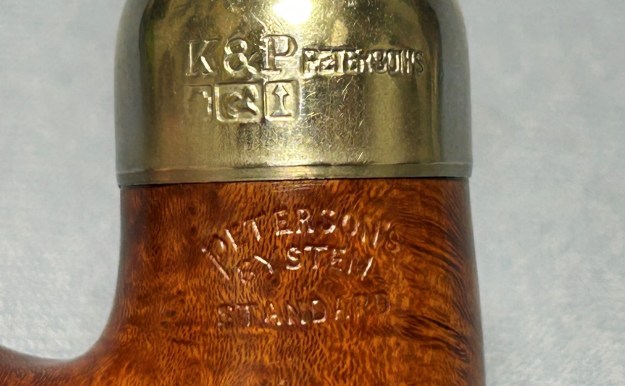
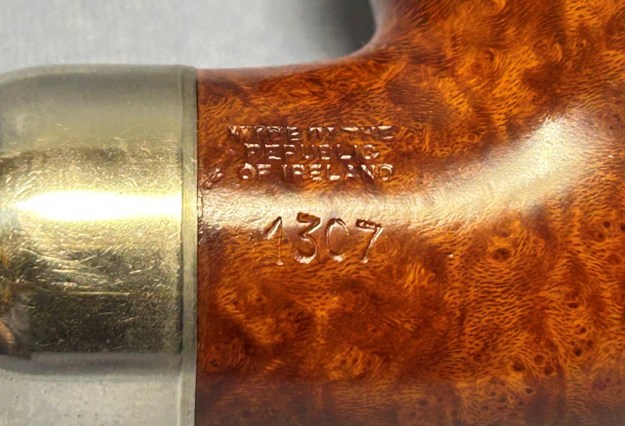
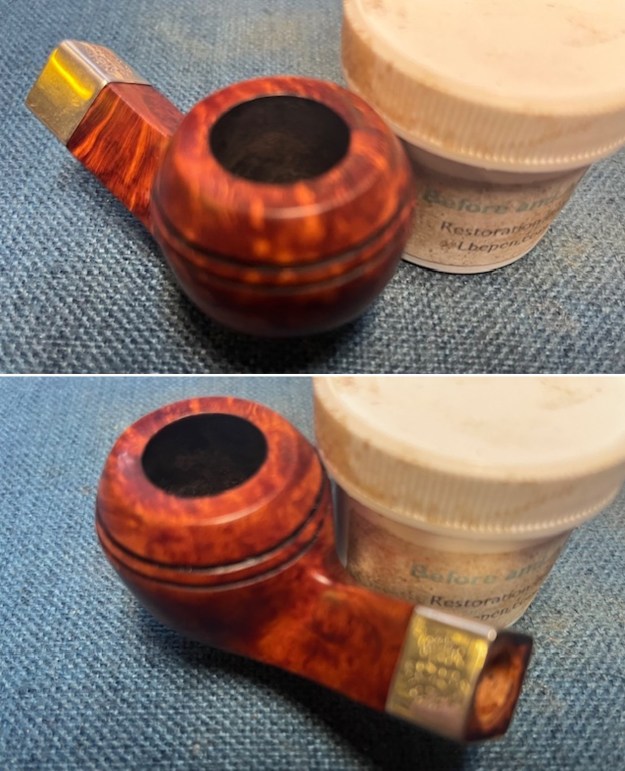
The next pipe I have chosen is another smooth finished Peterson’s System – this time a System Standard shape 303. It came to us from our source in Copenhagen, Denmark on 01/29/24. It had a P-lip stem. The finish was smooth with some nice grain around the sides and shank. It was stamped on the left side of the shank and read Peterson’s [arched over] System [over] Standard. On the right side of the shank it was stamped Made in the Republic of Ireland (three lines) over the shape number 303. It was dirty with grime ground into the finish around the bowl and shank. There was a moderate cake in the bowl and some light lava spots on the inner bevelled rim edge. The nickel ferrule was in good shape but had some scratches that would need to be polished. It is stamped as well and reads K & P [over] Peterson on the left. The vulcanite P-lip stem was unstamped and there was some light oxidation and light chatter near the button that would polish out. Jeff took photos of the pipe before he started my work. He took photos of the rim top and stem to show the general condition of the pipe. The bowl is moderately caked and the rim top looks good. The bevelled edges have a spotty lava overflow. The stem looks good but it has light tooth marks on the top and underside near the button. He took photos of the sides and heel of the bowl to show the grain that was very visible around the bowl and shank. He took photos of the stamping on the shank sides and the ferrule. It read as noted above and was clear and readable. I am including the information from Pipedia’s article on Peterson pipes. It is a great read in terms of the history of the brand (https://pipedia.org/wiki/Peterson). I have included a bit of the pertinent history here.

1950 – 1989 The Republic Era – From 1950 to the present time, the stamp for this era is “Made in the Republic of Ireland” in a block format generally in three lines but two lines have been used with or without Republic being abbreviated.

During the 1950’s and 60’s the Kapp & Peterson company was still in the ownership of the Kapp family. However 1964 saw the retiral of the company Managing Director Frederick Henry(Harry) Kapp.

Pipedia also included a section of information on the System pipes including a diagram of the systems look (https://pipedia.org/wiki/Peterson#Republic_Era_Pipes). I quote a section of the article in part and include a link to another article on Pipedia on the System pipe.

The Peterson System pipes are the standard bearers of the Peterson pipe family, famous for the excellent smoking pleasure they provide. Often imitated but never equalled, the Peterson System smokes dry, cool and sweet, thanks to the scientific effectiveness of the original design. The heart of the System is the unique graduated bore in the mouthpiece. This makes the suction applied by the smoker 15 times weaker by the time it reaches the tobacco chamber. The result is that all the moisture flows into the reservoir and, thus cannot reach the smoker’s mouth. The Peterson Lip further enhances the effectiveness of the graduated bore by directing the flow of smoke upwards and away from the tongue. This achieves a uniquely even distribution of smoke and virtually eliminates any chance of tonguebite or bitterness. Furthermore, the shape is contoured so that the tongue rests comfortably in the depression under the opening. Each “PLip” mouthpiece is made from Vulcanite. For the Peterson System pipes to work properly, the stem/tenon has to have an extension, the tip of which will pass by the draft hole from the bowl and into the sump. Upon the smoker drawing in smoke, this extension then directs the smoke down and around the sump to dispense a lot of the moisture before the smoke enters the extension and stem. On the System Standards and other less expensive systems, this extension with be made of Vulcanite turned integrally with the stem. On the more expensive System pipes this extension will be made of metal which screws into the Vulcanite stem. This extension on the earlier pipes will be of brass and the newer pipes will be of aluminium. Most smokers not knowing this function of the metal extension, assumes that it is a condenser/stinger and will remove it as they do with the metal condensers of Kaywoodie, etc. Should you have a System pipe with this metal extension, do not remove it for it will make the System function properly and give you a dryer smoke (https://pipedia.org/wiki/A_closer_look_at_the_famous_Peterson_Standard_System_Pipe).

With that information in hand I knew what I was dealing with in terms of the stamping and the age of this pipe. I knew from the information that the pipe was made during the Late Republic Era between 1950 and the present day. Personally, I think this is probably a 60s-70s pipe. Now it was time to work on the pipe.

Jeff had cleaned up the pipe with his usual thoroughness. He reamed the pipe with a PipNet Pipe Reamer and cleaned up the remnants with a Savinelli Fitsall Pipe Knife.  He scrubbed the bowl with undiluted Murphy’s Oil Soap with a tooth brush. He rinsed it under running warm water to remove the soap and grime. He cleaned out the inside of the shank and the airway in the stem with alcohol, cotton swabs and pipe cleaners. He soaked the stem in Before & After Deoxidizer and rinsed it off with warm water. Somewhere along the way as it sat here it picked up some stickiness on the top of the stem that looks a lot like what is left behind by a gummed label. I took photos of the pipe 3 years later when I finally got around to working on it. As you can see it is another beautiful looking pipe. I took photos of the rim top and bowl as well as the stem to give a sense of the condition of both. The rim top and the inner edge looked very good and the bevelled edge showed no damage. The stem was clean but had light tooth marks and chatter on the top and underside ahead of the button.I took photos of the stamping on the sides of the shank. They are clear and readable as noted above. I took the stem out of the shank and took a photo of the overall look of the pipe. It is another beauty. There are a few small dings from the journey of the pipe that will remain as a part of its story. I polished the briar with micromesh sanding pads – wet sanding with 1500-12000 grit pads. I wiped the bowl down after each pad with a damp cloth. I rubbed the bowl down with Before & After Restoration Balm. I worked it into the surface of the bowl sides and shank with my fingertips. The product works to clean, enliven and protect the briar. I let the balm sit for a little while and then buffed with a cotton cloth to raise the shine. I set the bowl aside and turned to work on the stem. I polished the stem with micromesh sanding pads – 1500-12000 grit pads. I wiped it down with Obsidian Oil after each sanding pad. I used Before & After Pipe Polish – both Fine and Extra Fine to further polish the stem. I gave it a final coat of Obsidian Oil and set it aside to dry. I fit the stem with a Vauen 9mm filter and took photos of it in place. This was a first for me – I have not ever seen a 9mm filter P-lip stem until this one.This Republic Era Peterson’s System Standard 303 Bent Apple with a vulcanite, P-lip saddle stem is a great looking pipe now that it has been restored. The stem is a 9mm filter stem. The beautiful grain that shines through the polished finish is stunning. I put the stem back on the bowl and carefully buffed the pipe with Blue Diamond on the buffing wheel. I gave the bowl and the stem multiple coats of carnauba wax on the buffing wheel and followed that by buffing the entire pipe with a clean buffing pad. I hand buffed the pipe with a microfiber cloth to deepen the shine. I polished the nickel ferrule with a jeweller’s cloth to protect it and raise the shine. The finished Peterson’s System Standard 303 fits nicely in the hand and feels great. Give the finished pipe a look in the photos below. The dimensions of the pipe are Length: 5 ½ inches, Height: 1 ½ inches, Outside diameter of the bowl: 1 ¼ inches, Chamber diameter: ¾ of an inch. The weight of the pipe is 44 grams/1.55 ounces. I will be putting this pipe on the rebornpipes store in the Irish Pipemakers Section soon. If you are interested in adding it to your collection let me know. Thanks for reading this blog and my reflections on the pipe while I worked on it.

New Life for a Peterson’s System Standard 301 Smooth Pot


by Steve Laug

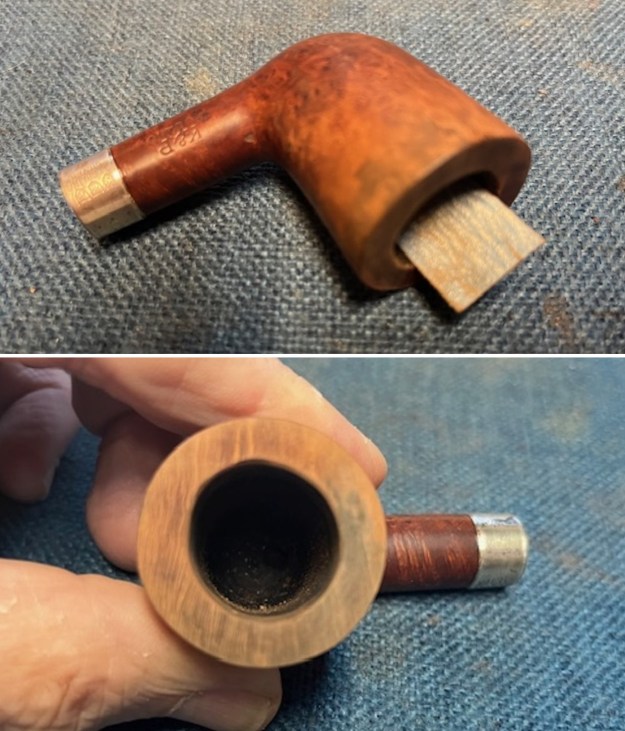
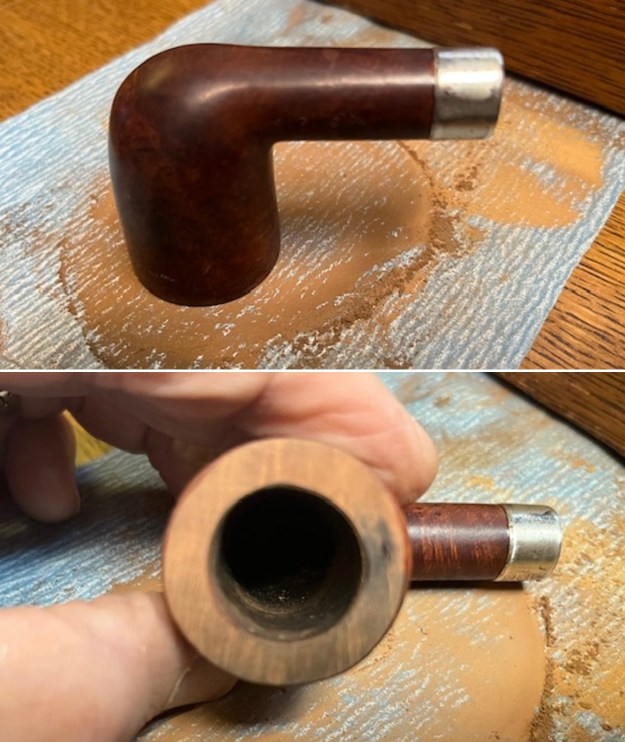
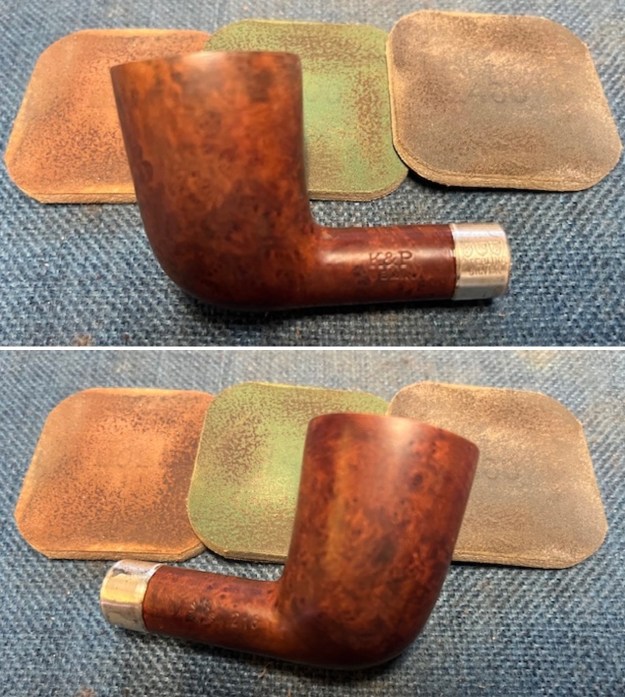
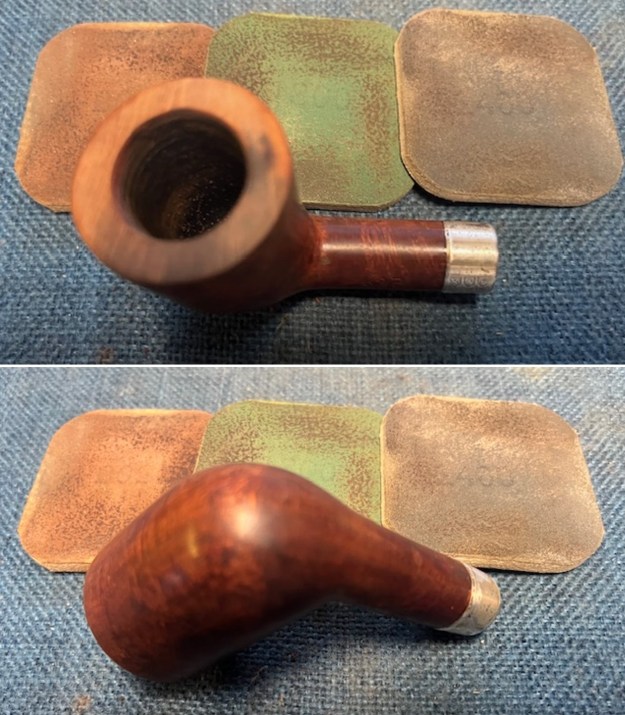
We received the next pipe from our source in Copenhagen, Denmark on 01/29/2024. It is another fitting New Year’s restoration. It is a Peterson’s 301 Bent Pot. It is stamped on the left side of the shank and reads Peterson’s [arched over] System [over] Standard. On the right side it is stamped Made in the Republic of Ireland (in three lines) [over] the shape number 301. The nickel ferrule on the shank is lightly oxidized and stamped K&P [over] Petersons. The pipe is dirty, obviously another favourite smoker. There is grime ground into the finish. There is a thick cake in the bowl and a thick overflow of lava on the inner edge and the smooth rim top. The nickel ferrule is lightly tarnished and stamped as noted. The stem is dirty, very oxidized but does not have tooth marks of chatter on either side. Jeff took photos of it before he started his clean up work. I have included those below. Jeff took photos of the rim top and stem to show the general condition of the pipe. The bowl is heavily caked and there was some darkening and a lava overflow on the rim top and the inner edge. The stem looks amazingly good for a pipe of this age. Jeff took photos of the bowl sides and heel to show the look of the sandblast that was around this bowl. The blast really highlights the grain underneath and is quite beautiful around the sides of the bowl and shank. It is another nice looking pipe. He took photos of underside of the shank to show the stamping. The stamping is clear and readable in the photos below and is as noted above. The stamping on the nickel ferrule is clear and readable as noted above. I have included a link to the Pipedia article so that you can read the history of the brand (https://pipedia.org/wiki/Peterson). Take some time to read through it as it is a great read.

I turned to “The Peterson Pipe” by Mark Irwin and Gary Malmberg to get some background on the Peterson’s System Line. On page 314 it had the following information.

Peterson’s over System – Pipes stamped Peterson’s System have been documented as early as 1920. A ’20 brochure is the earliest printed reference to the Peterson System. The pipe came in three quality grades (no mark, 2, or 3) until 1959, thereafter as De Luxe (no mark), Premier (the old 2) and Standard (the old 3).

Peterson’s over System over Standard (c1945-)

I learned previously that the shape 301 was not introduced until 1975. Considering the Republic stamp, this one would likely date between 1975 and 2000. My guess is that the pipe was made somewhere between 1975 and mid-80s. Now it was time to work on the pipe.

With that information at hand I turned to work on the pipe itself. Jeff had thoroughly cleaned up the pipe. He reamed the pipe with a PipNet Pipe Reamer and cleaned up the remnants with a Savinelli Fitsall Pipe Knife.  He scrubbed the bowl with undiluted Murphy’s Oil Soap with a tooth brush. He rinsed it under running warm water to remove the soap and grime. He cleaned out the inside of the shank and the airway in the stem with alcohol, cotton swabs and pipe cleaners. He scrubbed the exterior of the stem with Soft Scrub to remove as much of the oxidation and calcification as possible. He soaked the stem in Before & After Deoxidizer and rinsed it off with warm water. I took photos of the pipe before I started to work on it.  I took close up photos of the bowl and the stem. You can see the reamed bowl and the clean rim top and edges. It looks good. There is a bit of darkening on the inner edge at the back. The stem surface was clean but there are light tooth marks and chatter on both sides on and ahead of the button.I took a photo of the stamping on the underside of the shank. It is faint in spots but readable as noted above. I removed the stem from the shank and took a photo to give a sense of the proportions of the pipe. It is really quite nice looking. I polished the briar with micromesh sanding pads – dry sanding with 1500-12000 grit pads. I wiped the bowl down between pads with a damp cloth to remove any sanding debris. The briar really took on a rich shine. I rubbed the bowl and shank down with Before & After Restoration Balm. I worked it into the surface of the bowl sides and shank with my fingertips to clean, enliven and protect the briar. I let the balm sit for a little while and then buffed with a cotton cloth to raise the shine. I sanded the stem with 320-3500 grit sanding pads and wiped it down with a cloth and Obsidian Oil to remove the debris. It began to take on a rich shine.I polished the vulcanite stem with micromesh sanding pads – 1500-12000 grit pads. I wiped it down with a damp cloth after each sanding pad. I used Before & After Pipe Polish – both Fine and Extra Fine to further polish the stem. This nice looking Republic Era Peterson’s System Standard 301 Bent Pot with a classic Peterson’s P-lip vulcanite stem looks much better now that it has been restored. The rim top and edges cleaned up very well. The dark brown stains on the bowl came alive with the polishing and waxing. I put the stem back on the bowl and carefully buffed the pipe with Blue Diamond on the buffing wheel using a light touch on the briar. I gave the bowl multiple coats of Conservator’s Wax and the stem multiple coats of carnauba wax on the buffing wheel and followed that by buffing the entire pipe with a clean buffing pad. I hand buffed the pipe with a microfiber cloth to deepen the shine. I left a few of the wounds in the briar left by the journey as they do not detract. The finished Peterson’s System Standard 301 is a beauty and fits nicely in the hand and looks very good. Give the finished pipe a look in the photos below. The dimensions of the pipe are Length: 5 ½ inches, Height: 1 ¾ inches, Outside diameter of the bowl: 1 ½ inch, Chamber diameter: ¾ of an inch. The weight of the pipe is 59 grams/2.01 ounces. I will be putting it in the rebornpipes store in the Irish Pipemakers Section soon. If you are interested in adding this pipe to your collection send me a message or an email. Thanks for reading this blog and my reflections on the pipe while I worked on it. There are many more to come!

Restoring a Republic Era Petersons System Standard 301 Sandblast Bent Pot


by Steve Laug

We received the next pipe from our source in Copenhagen, Denmark on 11/21/2023. It is another fitting New Year’s Day restoration. It is a Peterson’s 301 Bent Pot. It is stamped on the underside of the shank and reads Peterson’s [arched over] System [over] Standard next that is stamped Made in the Republic of Ireland (in three lines) [over] the shape number 301. The nickel ferrule on the shank is stamped K&P [over] Petersons. The pipe is dirty, obviously another favourite smoker. There is grime ground into the finish. There is a thick cake in the bowl and a light overflow of lava on the inner edge and the sandblast rim top. The nickel ferrule is lightly tarnished. The stem is dirty, but is shiny and well cared for. Jeff took photos of it before he started his clean up work. I have included those below. Jeff took photos of the rim top and stem to show the general condition of the pipe. The bowl is heavily caked and there was some darkening and a lava overflow on the sandblast rim top and the inner edge. The stem looks amazingly good for a pipe of this age. Jeff took photos of the bowl sides and heel to show the look of the sandblast that was around this bowl. The blast really highlights the grain underneath and is quite beautiful around the sides of the bowl and shank. It is another nice looking pipe. He took photos of underside of the shank to show the stamping. The stamping is clear and readable in the photos below and is as noted above. The stamping on the nickel ferrule is clear and readable as noted above. I am including the link to the Pipedia’s article on Peterson pipes. It is a great read in terms of the history of the brand (https://pipedia.org/wiki/Peterson).

I turned to “The Peterson Pipe” by Mark Irwin and Gary Malmberg to get some background on the Peterson’s System Line. On page 314 it had the following information.

Peterson’s over System – Pipes stamped Peterson’s System have been documented as early as 1920. A ’20 brochure is the earliest printed reference to the Peterson System. The pipe came in three quality grades (no mark, 2, or 3) until 1959, thereafter as De Luxe (no mark), Premier (the old 2) and Standard (the old 3).

Peterson’s over System over Standard (c1945-)

I learned previously that the shape 301 was not introduced until 1975. Considering the Republic stamp, this one would likely date between 1975 and 2000. My guess is that the pipe was made somewhere between 1975 and mid-80s. Now it was time to work on the pipe.

With that information at hand I turned to work on the pipe itself. Jeff had thoroughly cleaned up the pipe. He reamed the pipe with a PipNet Pipe Reamer and cleaned up the remnants with a Savinelli Fitsall Pipe Knife.  He scrubbed the bowl with undiluted Murphy’s Oil Soap with a tooth brush. He rinsed it under running warm water to remove the soap and grime. He cleaned out the inside of the shank and the airway in the stem with alcohol, cotton swabs and pipe cleaners. He scrubbed the exterior of the stem with Soft Scrub to remove as much of the oxidation and calcification as possible. He soaked the stem in Before & After Deoxidizer and rinsed it off with warm water. I took photos of the pipe before I started to work on it. I took close up photos of the bowl and the stem. You can see the reamed bowl and the clean rim top and edges. It looks good. The stem surface was clean but there are light tooth marks and chatter on both sides on and ahead of the button.I took a photo of the stamping on the underside of the shank. It is faint in spots but readable as noted above. I removed the stem from the shank and took a photo to give a sense of the proportions of the pipe. It is really quite nice looking.The briar was in such good condition that I rubbed the bowl and shank down with Before & After Restoration Balm. I worked it into the surface of the bowl sides and shank with my fingertips and a shoebrush to clean, enliven and protect the briar. I let the balm sit for a little while and then buffed with a cotton cloth to raise the shine. I sanded the stem with 320-3500 grit sanding pads and wiped it down with a cloth and Obsidian Oil to remove the debris. It began to take on a rich shine.I polished the vulcanite stem with micromesh sanding pads – 1500-12000 grit pads. I wiped it down with a damp cloth after each sanding pad. I used Before & After Pipe Polish – both Fine and Extra Fine to further polish the stem. This nice looking Peterson’s System Standard 301 Sandblast Bent Pot with a classic Peterson’s P-lip vulcanite stem looks much better now that it has been restored. The rim top and edges cleaned up very well. The dark brown stains on the bowl came alive with the polishing and waxing. I put the stem back on the bowl and carefully buffed the pipe with Blue Diamond on the buffing wheel using a light touch on the briar. I gave the bowl multiple coats of Conservator’s Wax and the stem multiple coats of carnauba wax on the buffing wheel and followed that by buffing the entire pipe with a clean buffing pad. I hand buffed the pipe with a microfiber cloth to deepen the shine. The finished Peterson’s System Standard is a beauty and fits nicely in the hand and looks very good. Give the finished pipe a look in the photos below. The dimensions of the pipe are Length: 5 ½ inches, Height: 1 ¾ inches, Outside diameter of the bowl: 1 ½ inch, Chamber diameter: ¾ of an inch. The weight of the pipe is 45 grams/1.62 ounces. I will be putting it in the rebornpipes store in the Irish Pipemakers Section soon. If you are interested in adding this pipe to your collection send me a message or an email. Thanks for reading this blog and my reflections on the pipe while I worked on it. There are many more to come!

Peterson’s Kapruf Made in the Republic of Ireland 120 Dublin


by Steve Laug

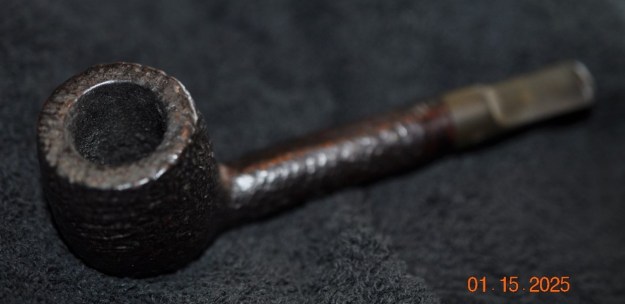
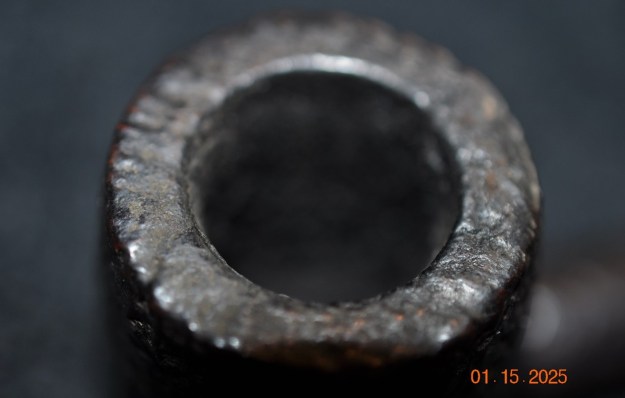
Today is rainy, chilly day in Vancouver. I know in comparison to where many of you live it is not cold but to us it is. The next pipe I have chosen is another Peterson’s Dublin. It is a sandblast pipe that came to us from our contact in Copenhagen, Denmark. There was grime ground into the sandblast finish on the bowl sides. I love the way the contrast of the brown and black stains gave the blast a sense of depth. The stain is almost tiger striped. It was stamped on the flat underside in the centre of the shank and read Made in the Republic of Ireland (three lines). To the right of that it is stamped Peterson’s [over] Kapruf. To the left of the Republic stamp, on the heel was the shape number 120. This pipe must have been another favourite of pipe man as it had been well smoked. There was a well-maintained cake in the bowl and some darkening on the rim top. The inner edge of the bowl looked good. The stem was in good condition and there were light tooth marks and chatter on the top and underside on and near the button. Jeff took photos of the pipe before his cleanup work. Jeff took photos of the rim top and stem to show the general condition of the pipe. The bowl is lightly caked and the rim top and edges look to be in good condition despite a little darkening. The photos of the stem show the light tooth marks on the top and underside near the button. Jeff took a photo of the bowl sides and heel to show the blast that was around this bowl. It is a great sandblast and the choice of stain adds depth to the appearance of the bowl. He took photos of the stamping on the underside of the shank. It is clear and readable and reads as noted above. I turned to “The Peterson Pipe” by Mark Irwin and Gary Malmberg to get some background on the Kapruf line. On page 306 it had the following information.

Kapruf and “Kapruf” (c.1922-87) Sandblast (hence the name, Kapp-rough) P-lip or fishtail mouthpiece, in catalogs from 1940-87. Early documented specimens stamped IRISH over FREE STATE, no Eire specimens documented. Mid-century specimens may be stamped LONDON MADE [over] ENGLAND or MADE IN ENGLAND forming a circle or MADE IN [over] IRELAND, all dating no later than 1970. Those of recent vintage stamped MADE IN THE[over] REPUBLIC [over]OF IRELAND.

I knew that I was working on a KAPRUF that was made between 1970-1987 as it is stamped MADE IN THE REPUBLIC OF IRELAND as noted above. Now it was time to work on the pipe.

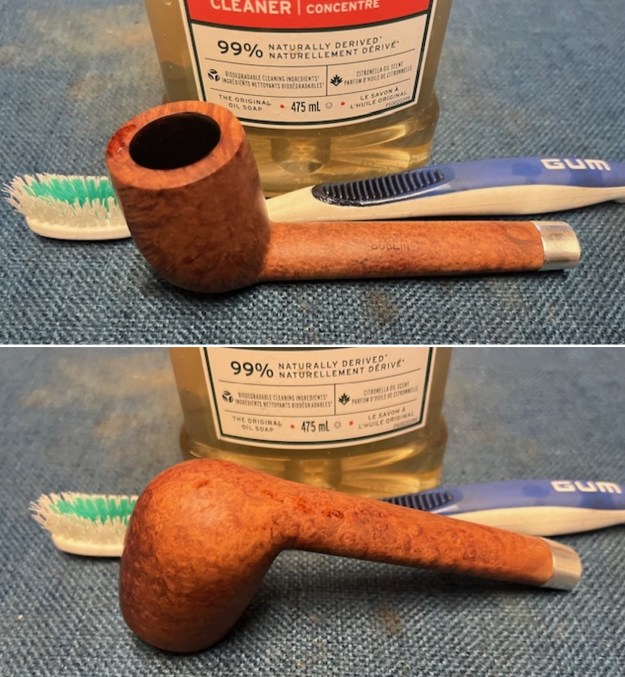
Jeff had done a great job cleaning up the pipe as usual. He reamed the pipe with a PipNet reamer and cut back the cake back to the bare briar. He cleaned up the walls with a Savinelli Fitsall Pipe Knife. He scrubbed the interior of the bowl and shank with pipe cleaners, cotton swabs and alcohol to remove the tars and oils. He scrubbed the exterior of the pipe with Murphy’s Oil Soap and a tooth brush to remove the grime from the finish. He worked on the rim top lava and darkening with the soap and tooth brush. He scrubbed the inside of the stem with alcohol and pipe cleaners. He scrubbed the exterior with Soft Scrub and then soaked it in Before & After Deoxidizer. He washed it off with warm water to remove the Deoxidizer. The pipe looked far better when it arrived.     I took some close-up photos of the rim top and the stem surface. I wanted to show how well it had cleaned up. The rim top looks very good. There is a little darkening on the top at the back of the bowl but is not too bad. I also took close up photos of the stem to show the oxidation that remained and the light chatter and marks on the surface near the button.I took a photo of the stamping on the underside of the shank. You can see that it is stamped as noted above. It is faint but readable. I took the pipe apart and took a photo of the pipe. It is a good looking pipe and has an interesting sandblast on the bowl.I worked some Before & After Restoration Balm into the surface of the briar with my fingertips and a horse hair shoe brush to clean, enliven and protect the briar. I let the balm sit for 15 minutes and then buffed with a cotton cloth to raise the shine. The photos show the bowl at this point in the restoration process. I set the bowl aside and turned my attention to the stem. I touched up the P stamp on the left side of the saddle stem with some acrylic fingernail polish. I worked it into the stamp with a toothpick and then scraped off the excess once it had dried. I polished the stem with micromesh sanding pads – wet sanding with 1500-12000 grit sanding pads. I wiped it down after each sanding pad with Obsidian Oil. I polished it with Before & After Pipe Stem Polish – both Fine and Extra Fine. I wiped the stem down with Obsidian Oil and set it aside to dry.  I  am always excited to finish working on a pipe. This Peterson’s Kapruf 120 Dublin, Made in the Republic of Ireland is no exception. I put the pipe back together and buffed it with Blue Diamond on the buffing wheel. I gave the bowl multiple coats of Conservator’s Wax and the stem multiple coats of carnauba wax. I buffed the pipe with a clean buffing pad to raise the shine and hand buffed it with a microfibre cloth to deepen the shine. It is fun to see what the polished sandblast bowl looks like with the black vulcanite taper stem. This Classic looking Peterson’s Kapruf Sandblast Dublin feels great in my hand. It is light and well balanced. Have a look at it with the photos below. The dimensions are Length: 6 inches, Height: 1 ¾ inches, Outside diameter of the bowl: 1 ¼ inches, Chamber diameter: ¾ of an inch. The weight of the pipe is 29 grams/.99 ounces. I will be putting it on the rebornpipes store shortly in the Irish Pipe Makers section if you are interested in it. Thanks for walking through the restoration with me as I worked over this pipe. Thanks to each of you who are reading this blog.

Really, is this a new Peterson’s Sherlock Holmes Deerstalker?


by Steve Laug

I received a call from a fellow yesterday who was sent to me by our local pipe shop. He had been given a pipe by his girlfriend for Christmas. She had purchased it somewhere other than the shop he went to and they assured her that it was brand new and unsmoked. It was a rusticated Peterson’s Sherlock Holmes Pipe with a silver band. When he opened the pipe sock he took out this gift in expectation. When it came out the pipe was dirty, the silver was tarnish and the stem was yellowed with oxidation. He had put it in his mouth and the oxidation gave a foul taste that almost put him off the pipe. He had taken it to my local shop to have them look at it. The clerk there looked it over and declared that it was a beauty and was definitely used. He cleaned off the silver with some silver cleaner and it shone. He recommended that he bring it to me for a restoration. He called and we chatted for a bit. It turned out he had this pipe and one of his Dad’s pipes that he wanted me to work on as well. He came over late afternoon with the pipes and I looked them over.

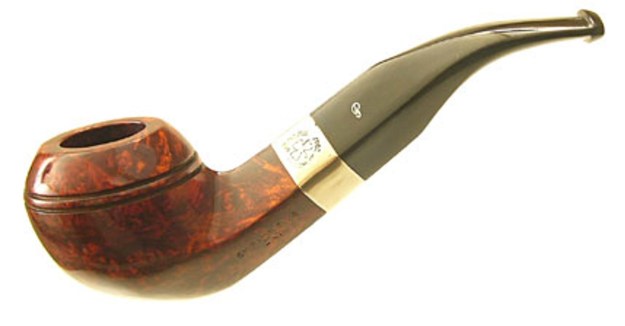
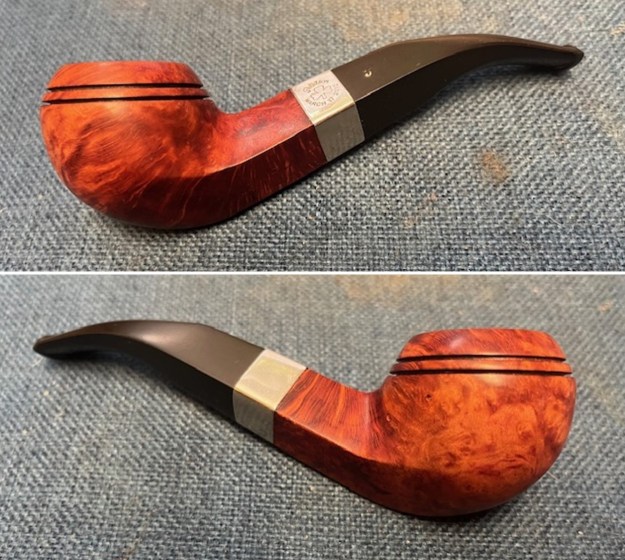
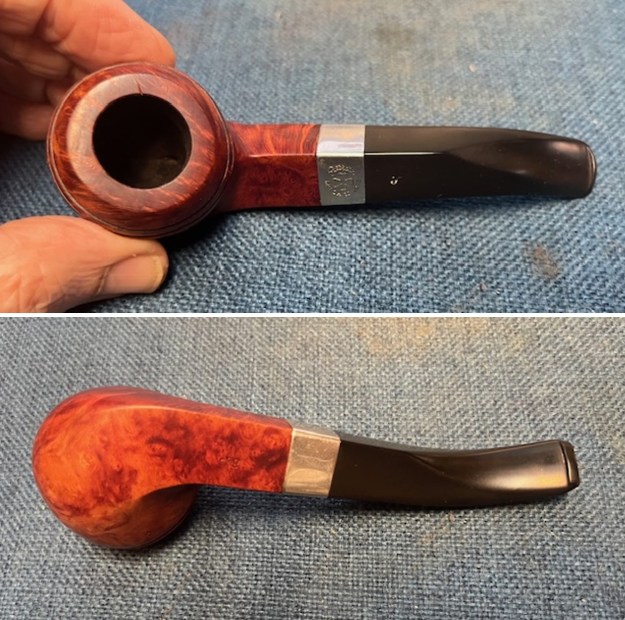
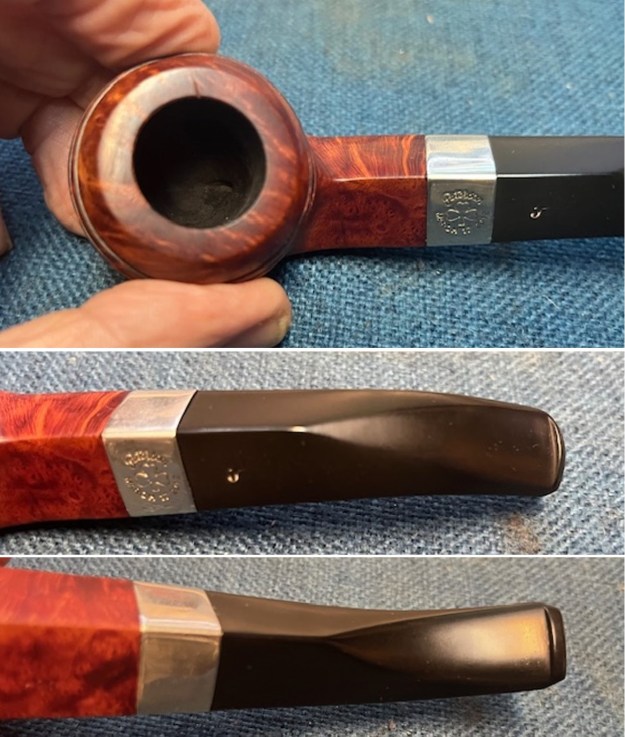
The Peterson’s was indeed quite a beauty under the grime. It was stamped on the heel of the bowl and read Peterson’s [over] of Dublin [over] Sherlock [over] Holmes [over] Deerstalker. The silver band was stamped on the topside with the profile of Sherlock Holmes with Peterson’s arched over the top and Sterling Silver arched underneath. On the underside it is stamped Peterson [over] three silver hallmarks. The first is Hibernia seated with an arm on a harp signifying the country of manufacture – Ireland. The second stamp is .925 designating the sterling quality from 2003 on. The third is the date letter mark – in this case an italic uppercase I which designates it as being made in 2019. The finish was dirty with dust and grime, perhaps from sitting and perhaps from use. The bowl reeked of English tobacco and was rough to the touch when I ran a finger down the walls. The silver looked good. The stem was badly oxidized but the silver P on the left side of the taper still shone. As I examined it I was pretty sure that there was a light cake in the bowl over the top of a bowl coating. When I took the stem off the inside of the mortise was stained with a purple stain showing that the pipe had been dip stained. Not unusual, but certainly a pain as it also adds a sour taste to the smoke. He left the pipe for me to work on and I started it last evening. I took these photos before I started my work. I took photos of the bowl and rim top to give you an idea of what I see. You can see inside of the bowl in the photos and the thin cake and perhaps some residue of a bowl lining in the heel of the bowl. The photos of the stem show that it is oxidized and has light tooth marks and chatter on both sides ahead of the button.I took a photo of the stamping on the underside of the shank. It is clear and readable as spelled out above. I captured the stamping on the underside of the silver band in the photo as well. I took a photo of stamp on the topside of the silver band as well. It is clear and readable as noted above.I wanted to know more about the Peterson’s Sherlock Holmes Line so I turned to the Pipedia article on the line and read it carefully to see where this pipe fit in the line of pipes making up the line. (https://pipedia.org/wiki/Peterson#1950_-_1989_The_Republic_Era). I quote what I found out below.

1987 saw the introduction and Issue of the first Sherlock Holmes ‘Original’ Series of pipes. The Sherlock Holmes series is probably the most successful series of pipes ever introduced by Peterson in terms of numbers. It was first issued to honour Sir Arthur Conan Doyle’s famous fictitious detective character, Sherlock Holmes. Holmes is perhaps the most famous pipe smoking character in fiction…

The Sherlock Holmes Series: Probably the most popular and successful series of pipes ever produced by Peterson. Including the Meerschaum version of the seven day sets. Both briar and Meers can be purchased either as individual pipes or complete seven day sets and stands. Expect to pay around $250 for briars and $300 for individual Meerschaums. The Adventures of Sherlock Holmes runs around $1000 for a 4 pipe boxed set. Complete 7 day sets and stands can be up to $1500 – $2000.

At this point I knew that the original line was introduced in 1987. I did not know the sequence of pipes after the Original first pipe. More work was necessary. So, I followed the links included to another article call the Pete Sherlockiana Group. There was photo there of the full collection of various Sherlock Holmes lines that were issue. I have included the link and the information include with the group photo that shown of the collection below.

Here is the link (https://pipedia.org/wiki/File:Pete_SherlockianaGroup.JPG). The description under the photo read as found below:

Sherlockiana Group, which includes: The ‘Original’ 7 day set w/stand, The ‘Return’ 7day set w/stand, The Meerschaum 7 day set w/stand, The ‘Adventures of’ 4 pipe collection, and Various ‘Silver Specials’. I still wanted to know where it fit in the order of release so I did a bit more digging into the pipe. I wanted to know the name of the pipe and what line of the Sherlock Holmes series it was in when it was released. I Googled and came across a link to an advertising brochure on Smokingpipes.com. (https://www.smokingpipes.com/smokingpipesblog/single.cfm/post/closer-look-petersons-sherlock-holmes-pipes-infographic). I have included it below. From that I knew that I was dealing with a Pipe Design from the Original release of the line from 1987, 1989-1991. Interestingly that dating does not match the date stamp of 2019.  Could it be a reissue? It was called a Deerstalker after cap that Sherlock Holmes wore. It was basically a tall, ¼ bent Rhodesian.

I also found a link to a chart on Tobaccopipes.com that was an exploration of the Sherlock Series. Here is the link (https://www.tobaccopipes.com/blog/exploring-the-peterson-sherlock-holmes-series/). Each name on the original list on the site can be clicked on for a description of the pipe that is named.I clicked on the Baker Street name in the chart above and it took me to the following link and information (https://www.tobaccopipes.com/blog/exploring-the-peterson-sherlock-holmes-series/#deerstalker). It states that the pipe was in the Original Collection and came out between 1989-1991. But there is still no explanation for the later date on the one in my hands.The text below the photos reads as follows:

Of course, one of these shapes had to be named for Sherlock’s iconic cap. The double billed, ear flapped headwear originally associated with hunting garb (hence the name) has become so tied to Sherlock, its image is essentially a visual metonym for detective. 

I can see why this shape is apt for the Deerstalker name. The round bowl pulling in above the bead lines gives that cap atop the head image, and the stem with its languid dip of a slight bend calls to mind the subtle downward slant of the deerstalker bill. 

Personally, I place Deerstalker among my favorites in this line. Again, we see the English classic Rhodesian given a twist, not too eccentric but certainly creating an identity of its own. It brings a strong forward weight, the bowl catching the eye and the shank and stem not quite as bold as we get from some of the other Sherlock shapes. Additionally, where much of the Sherlock line has a stoic briskness about the aesthetic, the light wave of the Deerstalker, following from heel to bit, adds a lithe, playful touch to the range.

With that information in hand I knew what I was dealing with in terms of the stamping and the age of this pipe. I knew from the information that the pipe was made during the Republic Era between 1950 and 1989. The Deerstalker pipe originally came out as part of the Original Sherlock Holmes Series and was specifically made between 1989 and 1991. The anomaly for me is that this one is dated 2019! Now, it was time to work on the pipe.

I reamed the bowl with a PipNet pipe reamer using the second and third cutting heads to remove the cake and what turned out to also include a rubbery bowl coating that stank. I used a Savinelli Fitsall Pipe Knife to remove the remnants of cake and bowl coating, only to find that the inside of the bowl was stained with a purple stain. I sanded the walls smooth with some 220 grit sandpaper wrapped around a piece of dowel. The walls were clean but there were still patches of purple stain on them so I would need to do a bit more to remove that along with the purple stain in the airway and the mortise area. I cleaned out the stinky tobacco oils and tars in the shank and the airway in the stem. I used 99% isopropyl alcohol, cotton swabs and pipe cleaners and was able to remove the oils, tars, and purple stain and some of the stench. I scrubbed the externals of the pipe with undiluted Murphy’s Oil Soap and a tooth brush. I was able to remove the debris from the finish of the bowl. I also scrubbed the inside of the bowl out with the soap. I rinsed the pipe with warm water to rinse off the debris and soap. It looked and smelled much cleaner once dried off. I needed to “deghost” the bowl and try to exorcize the smell. I stuffed bowl with cotton bolls and used an ear syringe to fill it with alcohol. I set it aside to let the alcohol do its work and wick the oils into the cotton. I let it sit over night. The next morning when I came back to it the cotton and alcohol had wicked out the oils and tars. The cotton was purple and brown and the bowl smelled much better. Once the bowl dried out, I sanded it once more with 220 grit sandpaper wrapped around a dowel. The bowl was clean but before I sanded it the walls were covered in purple stain. The sanding of the bowl removed the stain. I wiped the bowl down with a cotton pad and isopropyl alcohol. I rubbed the exterior of the bowl and shank down with Before & After Restoration Balm. I worked it into the surface of the briar with my fingertips and a horse hair shoe brush to clean, enliven and protect the briar. I let the balm sit for a little while and then buffed with a cotton cloth to raise the shine. The Balm did its magic and the rustication looked clean and showed real depth in the depths. I set the bowl aside and turned my attention to the stem. I scrubbed it down with Soft Scrub cleanser. I worked over it with cotton pads and the product and was able to remove the oxidation in totality. There was also some purple stain that came off the tenon that is visible on the cotton pads on the photo below. The stem looked very good at this point and only needed to be polished. I cleaned out the inside of the stem once again with alcohol. It looked very good.I polished the stem with micromesh sanding pads – 1500-12000 grit pads. I wiped it down with a damp cloth after each sanding pad. I used Before & After Pipe Polish – both Fine and Extra Fine to further polish the stem. I wiped it down once again with the Obsidian Oil cloth. I am excited to be on the homestretch and look forward to seeing the Republic Era Sherlock Holmes Deerstalker Rhodesian put back together, polished and waxed. I put the bowl and stem back together and lightly polished the bowl and stem with Blue Diamond to polish them. I gave the bowl multiple coats of Conservator’s Wax and the stem multiple coats of carnauba wax. I buffed the pipe on the wheel with a clean buffing pad to raise the shine. I hand buffed it with a microfiber cloth to deepen the shine. The depths of the rustication really pop with the wax and polish. The shiny black vulcanite stem is a beautiful contrast to the red and browns of the bowl, thick shank and Sterling Silver Band. This Peterson’s Sherlock Holmes Deerstalker Rhodesian was a fun pipe to work on. The pipe is tactile in the hand and should feel great as it is warmed up when smoking. The finished pipe is shown in the photos below. The dimensions of the pipe are Length: 6 inches, Height: 2 ¼ inches, Outside diameter of the bowl: 1 ¼ inches, Chamber diameter: ¾ of an inch. The weight of the pipe is 2.50 ounces/ 70 grams. I am sure that the fellow who dropped this off will now enjoy smoking this beauty. It is a lovely gift to be given on Christmas and now looks the part.

As always, I encourage your questions and comments as you read the blog. Thanks to each of you who are reading this blog. Remember we are not pipe owners; we are pipe men and women who hold our pipes in trust until they pass on into the trust of those who follow us.

Restemming and Restoring a Well Used Republic Era Peterson’s Kildare 408 Apple


by Steve Laug

In January Jeff found out about an estate sale in Pocatello, Idaho, USA. It turned out that the sale was for a fellow Jeff and I had purchased pipes from in the past, Gene. He had been the owner of Outwest Tobacco in Pocatello (long closed now) and I bought tobacco and other smoking items from him in the past. As I think about it now, it seems that I had known Gene for over 30 years Jeff and I had been to his home and enjoyed coffee and a few pipes together. I have no idea how many pipes we bought on those visits as well as to the antique shop of his daughter. I know that there were many pipes. When we heard that it was Gene’s personal collection that was for sale and that he had passed away we decided for Jeff to go to the house and have a look. He went on January 25, 2024 to scope it out as we had seen his personal collection of pipes and there were definitely some among those well smoked old warriors that would be great to pick up. Perhaps there would even be one that could join my own collection in memory of Gene.

Jeff went to the house and looked through the racks, pipe bags, tobacco both bulk and tinned as well as a variety of pipes. All the pipes were well smoked and needed serious cleaning. One the pipes he picked up was this Peterson’s Kildare 408 Apple with a black vulcanite replacement fishtail stem. It was very dirty and was a natural coloured pipe when it started. The smooth finish around the bowl was dirty and had hand oils ground into the grooves. The bowl had a thick cake that overflowed in lava onto the rim edge and top of the bowl. The stem was a replacement vulcanite one that was very dirty and had the marks of a rubber Softee Bit on the end. It had become discoloured and there was a line where the debris from smoking had accumulated along the edge and under the bit protector. The good news was that there were no tooth marks or chatter. The rest of the stem was dirty and had lost the characteristic shine. I really did not matter as I would be replacing it with a P-lip stem. The pipe was stamped on the left side of the shank and read Peterson’s [over] Kildare and on the right side it read Made in the [over] Republic [over] of Ireland (in three lines) and next to that was the shape number 408 next to the shank/bowl joint. Jeff took photos of the pipe so I could have a sense of what it looked like before he started his work on it.Jeff took photos of the stem surfaces and the bowl and rim to give a sense of condition of the pipe. You can see the thick cake in bowl and the lava overflow on the edges and rim top of the bowl. It is had to know if there is any damage as the cake and lava is quite thick. The stem surface is very dirty and you can see the area on the end of the stem where the Softee Bit had protected it from chewing but had left it dirty and discoloured. He also took photos of the sides of the bowl and the heel to show the interesting grain that went around the bowl. The grain is beautiful. You can see the oils and debris ground into the finish of the bowl. He took photos of the stamping on the sides of the shank. It is faint but still is readable as noted above. I reread Pipedia’s article on Peterson pipes. It is a great read in terms of the history of the brand (https://pipedia.org/wiki/Peterson). I am quoting nothing specifically from that article but recommend you take time to read it.

I turned to “The Peterson Pipe” by Mark Irwin and Gary Malmberg to get some background on the Peterson’s Kildare Line. It has become my go to any time I want information on the brand. On page 314 it had the following information on the Kildare Line.

Kildare (1965-) First issue of line with matte-finish in Classic Range shapes, P-Lip and fishtail mouthpiece. Second issue C.1979 as Kildare Patch, with rusticated patches on pipe surface. Third issue 2010, matte-brown, P-Lip or fishtail mouthpiece, no band. Fourth issue 2011-, burgundy sandblast finish, nickel army mount, fishtail mouthpiece, exclusive to smokingpipes.com.

The information given above identifies the pipe as a First Issue of the line with a matte-finish. It would have been issued between 1965 and 1979. This line was issued is a brown finish with either a P-lip or a fishtail mouthpiece. This means that the pipe is an older issue Kildare. The 408 shape number is attached to a ¼ bent Apple.

Now it was my turn to work on the pipe. Jeff had done an amazing cleanup of the pipe. It was a real mess and I wondered what it would look like after his work. He reamed the heavy cake with a PipNet reamer and cleaned up that with a Savinelli Fitsall Pipe Knife. He scrubbed the internals of the bowl and stem with alcohol, cotton swabs, shank brushes and pipe cleaners. He scrubbed the externals with undiluted Murphy’s Oil Soap and rinsed the bowl off with running water. He soaked the stem in Briarville’s Pipe stem Deoxidizer and once it had soaked rinsed it off with warm water to remove the residual solution. He dried it off and rubbed it down to remove any oxidation that was still on the stem. The scratches in the briar stood out once clean. There were some on the left side toward the top of the bowl that appear in the first photo below. Overall the pipe looked good when I received it. I took a photo of the rim top to show the condition. You can see the clean bowl. The bowl is in excellent condition and the rim top shows some darkening and some damage on the inner edge of the bowl and the outer edge as well. The misfit stem came out looking quite good, but since I would replace it in the restoration process I will add it to my cans of stems once I fit a new one to this pipe. I took photos of the sides of the shank to show the stamping. The photo clearly shows the faint stamping though it is actually more readable in person. I removed the stem from the shank and took a photo of the pipe parts to show what I was working with. The very short tenon is visible in the photo and was only one of the issues with this replacement stem. I set aside the bowl and turned my attention to the stem. I had decided to replace the stem so I went through my stems for fine one. I wanted a straight P-lip style stem for the Peterson’s Apple. I went through my many stems and did not find one that would work with the diameter of the shank. I contacted Kenneth with the dimensions of the shank and he found several that were close. He graciously dropped them by on Sunday afternoon. In the bag he brought were several new Peterson replacement P-lip stems. I chose the taper stem below as my first choice. It had the right diameter and after the tenon was turned should work well. You can see the casting marks on the button area and tenon showing it as new stock.I have a tenon turning tool here that I often use to do this job. But for this one I decided to use the Dremel and a sanding drum to reduce the diameter of the tenon. It actually worked very well and I cleaned up the tenon with a file to remove the ridges of the sanding drum. The diameter was correct and the fit to the shank was perfect. Once the fit in the shank was right I used a lighter to heat the stem to give it the proper bend for the angle of the shank on this apple.I fit the stem on the shank and took photos of the new stem to give a sense of the new look. Personally, I like doing this as it gives me a chance to see it apart from a lens or on my desk top and assess the bend and the fit. I was happy with what I say. Now I needed to sand and shape the stem. I worked on the stem to remove the casting marks from the sides and the P-lip end with 220 grit sandpaper. I also removed some of the excess diameter on the top and underside of the stem to make the transition smooth. It definitely looked better at this point. Still lots to do.I started the polishing process on the pipe by sanding the stem and tenon with 320-3500 grit sanding pads. Each successive pad brought smoother shape and definition to the stem and tenon surface. It was starting to look very good.I polished the stem with micromesh sanding pads – 1500-12000 grit pads. I wiped them down with Obsidian Oil after each sanding pad. I used Before & After Pipe Polish – both Fine and Extra Fine to further polish the stem. I gave it another coat of Obsidian Oil and set aside for the product to absorb into the vulcanite. I set the stem aside finished with all but the buffing and turned my attention to the bowl. I cleaned up the inner edge bevel with a folded piece of 220 grit sandpaper. I lightly topped the bowl on a topping board with 220 grit sandpaper to minimize the damage on the top and outer edge of the bowl. Once finished it definitely looked better. I wiped the bowl down with cotton pads and acetone to remove the darkening on the bowl sides and begin the process of cleaning the surface in my check for damage and cracks to the bowl. It actually looked very good. I used a Cherry stain pen to restain the inner edge and rim top to match the rest of the briar before I started sanding it. Once it had been sanded the match should be perfect.I sanded the bowl with 320-3500 grit sanding pads to remove the scratching and marks on the bowl surface and top and underside of the shank. I wiped it down after each pad with a damp cloth and by the end the bowl really began to show some promise. I carefully avoided the stamping on the shank sides. I polished the briar with micromesh sanding pads. I dry sanded it with 1500-12000 grit sanding pads and wiped the bowl down after each pad with a damp cloth. By the final pads the briar really had a shine. I rubbed the briar down with Before & After Restoration Balm. I worked it into the briar with my fingertips to work it into the finish. The product works to clean, enliven and preserve the briar. I let it sit for 10 minutes then I buffed it with a cotton cloth to deepen the shine. The briar really comes alive with the balm. I decided at the last minute to add a cosmetic thin brass band to the shank end. There was no need to do this in terms of damage to the stem or shank end. I just thought it would add a touch of bling to the pipe and give it a good interruption between the briar and the vulcanite. I heated the band and pressed it in place on the shank.It was great to finish this older (1965-79) Republic Era Peterson’s 408 Apple. I put the bowl and the newly fit stem together and buffed it with Blue Diamond on the buffing wheel. I gave the bowl and the stem multiple coats of carnauba wax. I buffed the pipe with a clean buffing pad to raise the shine. I hand buffed the pipe with a microfiber cloth to deepen the shine. It is fun to see what the polished bowl looks like with deep sandblast all around it. Added to that the polished black vulcanite stem was beautiful. This Peterson’s Kildare 408 Apple is great looking and the pipe feels great in my hand. It is light and well balanced. Have a look at it with the photos below. The dimensions are Length: 5 ¾ inches, Height: 1 ¾ inches, Outside diameter of the bowl: 1 ¼ inches, Chamber diameter: 7/8 of an inch. The weight of the pipe is 56 grams/1.98 ounces. It is a beautiful pipe and one that will soon be on the rebornpipes store in the Irish Pipe Makers Section of the store. If you want to add it to your collection let me know. Thanks for walking through the restoration with me as I worked over this pipe. Thanks to each of you who are reading this blog.