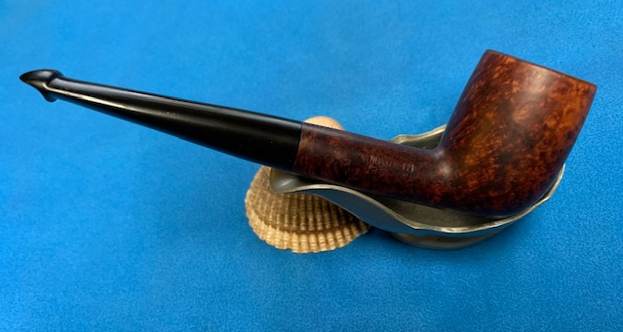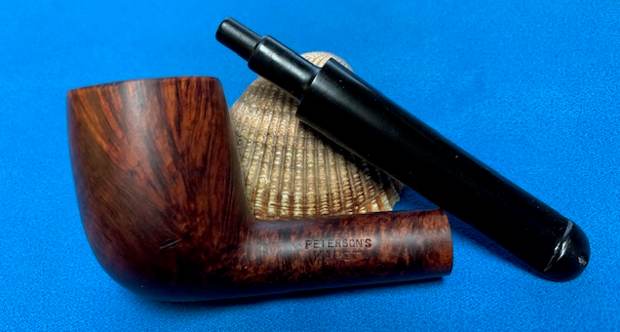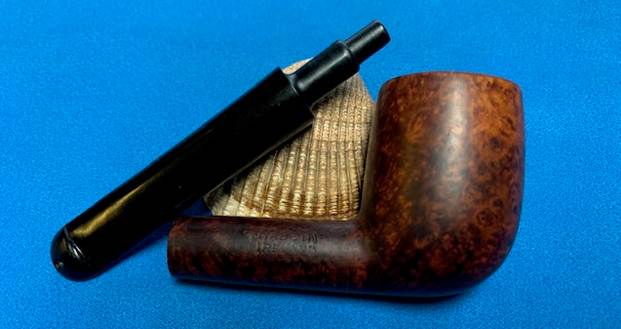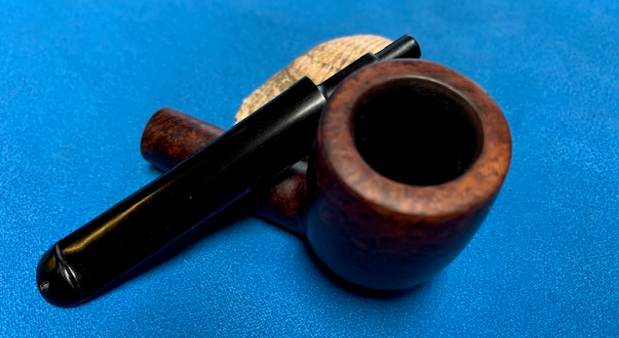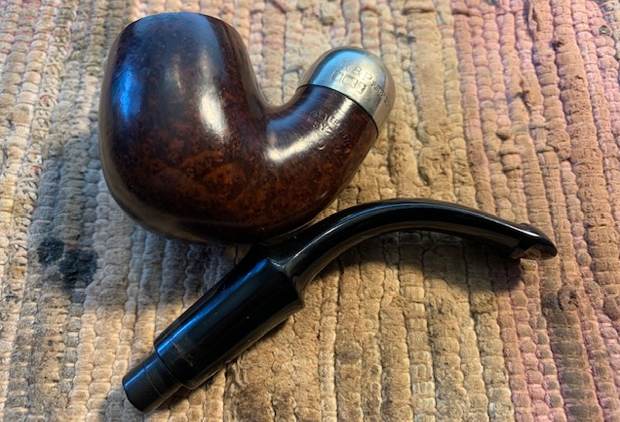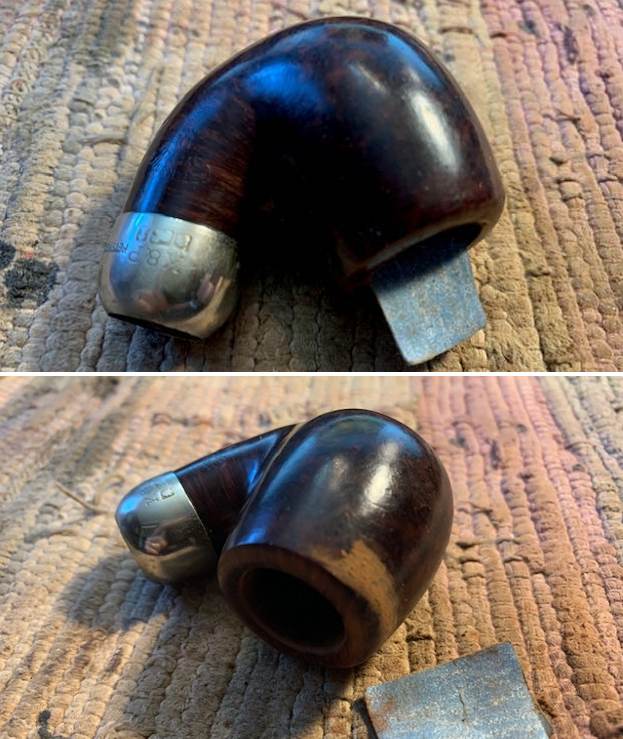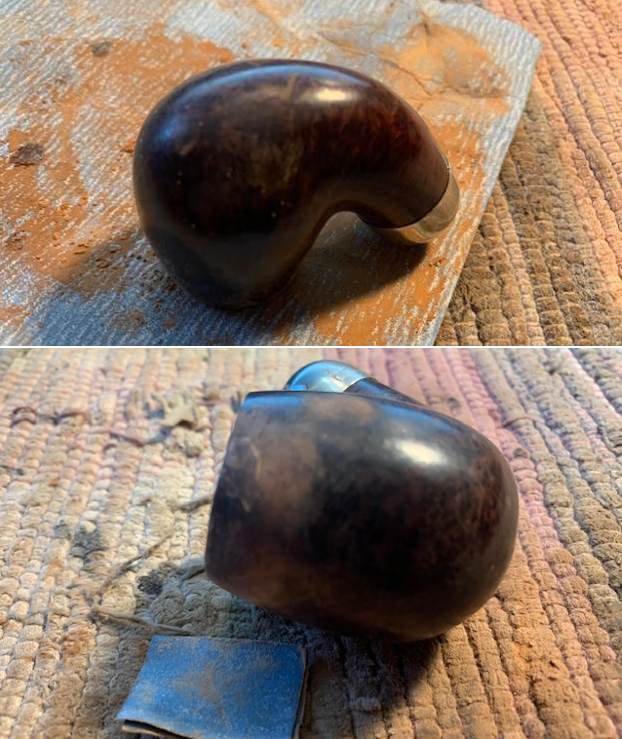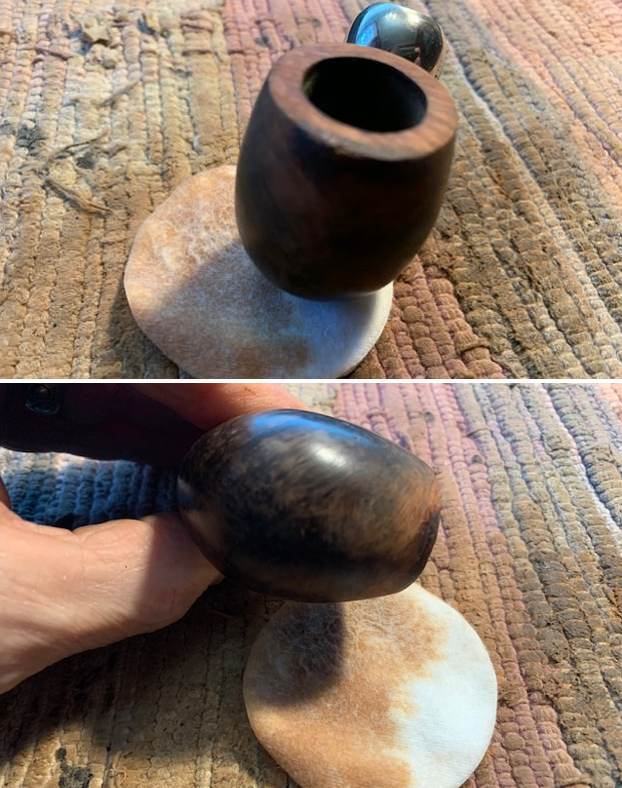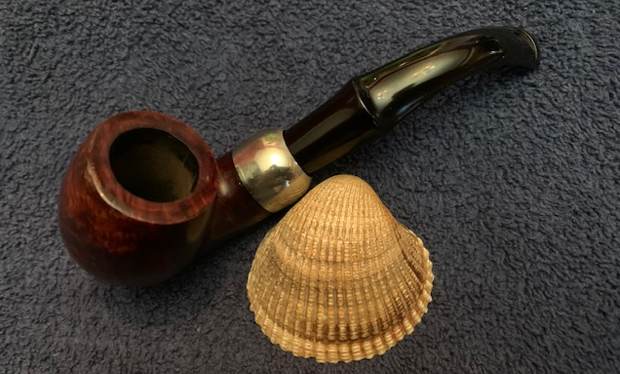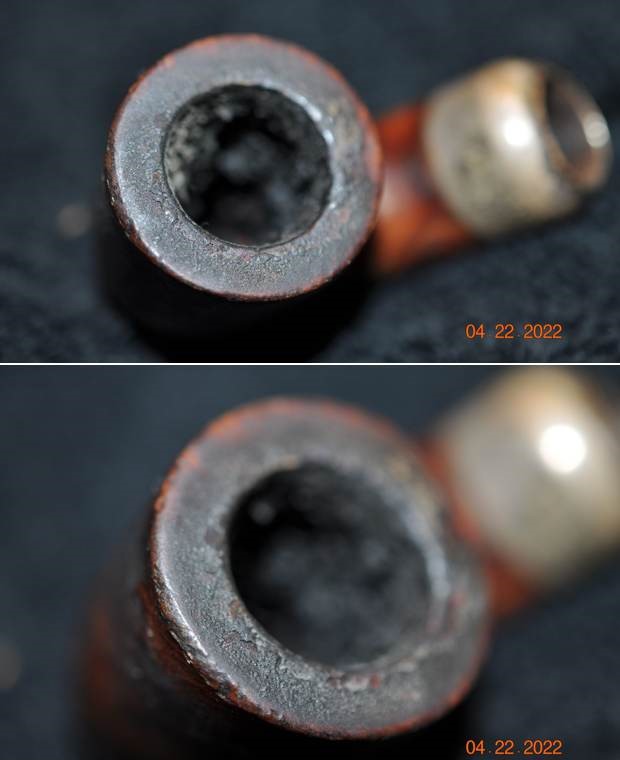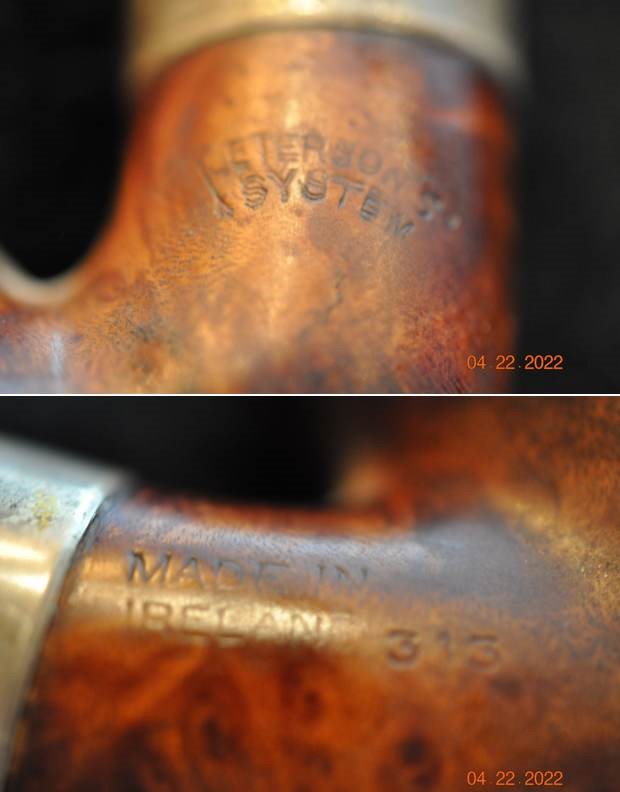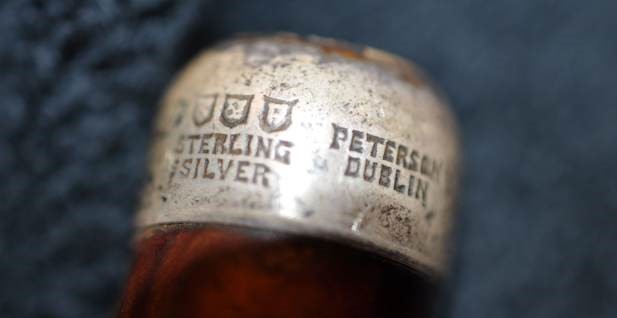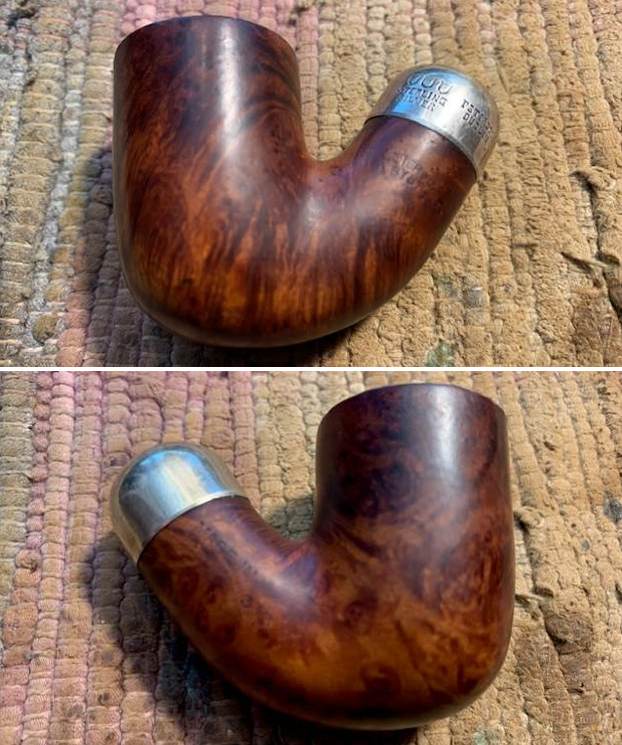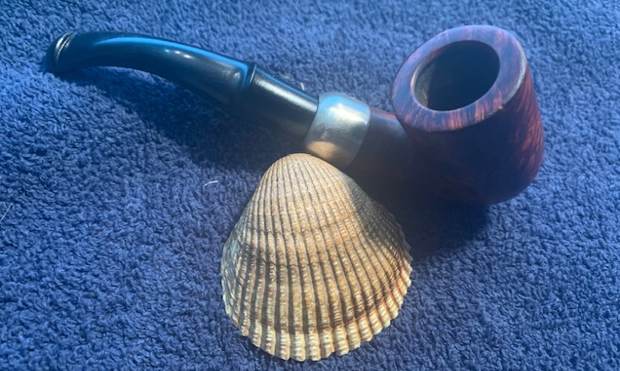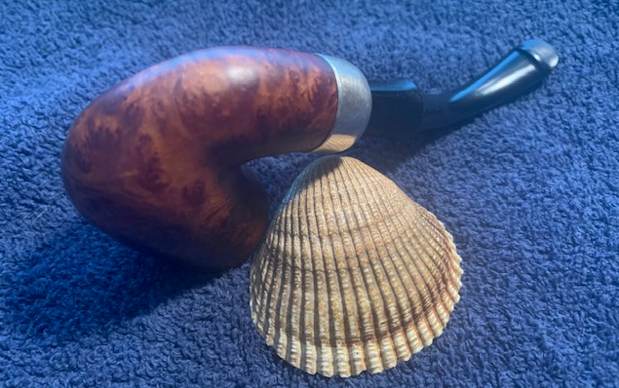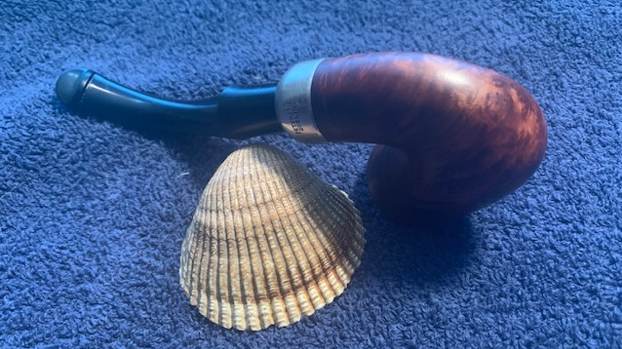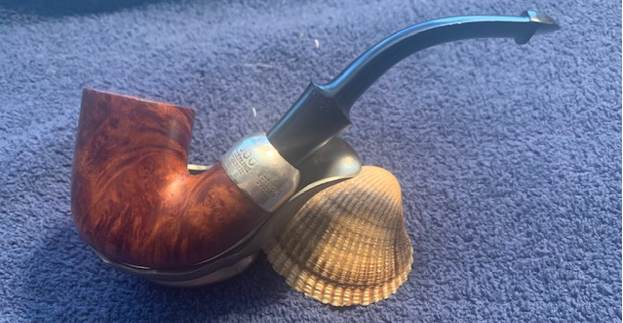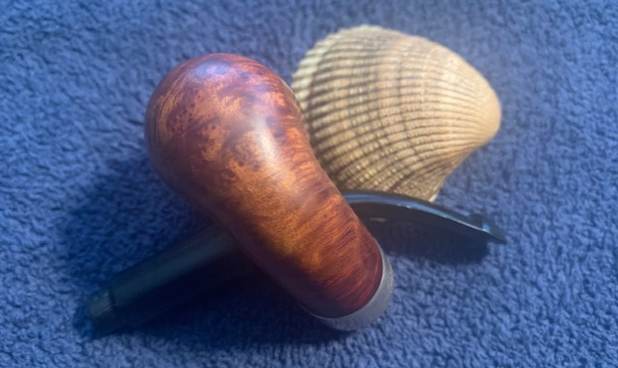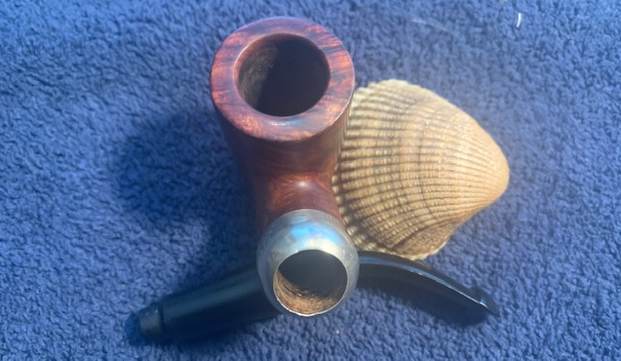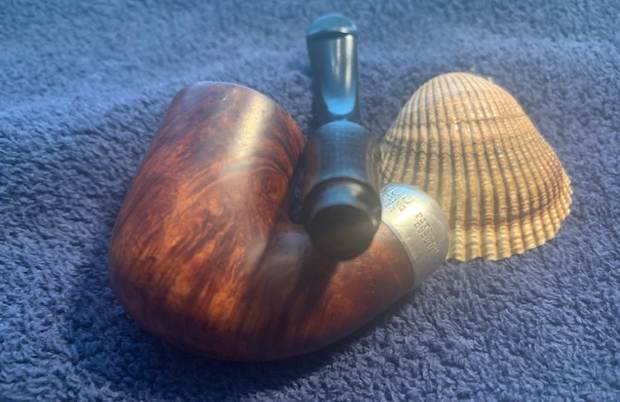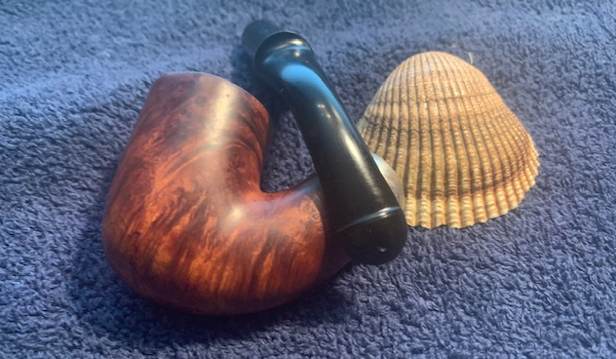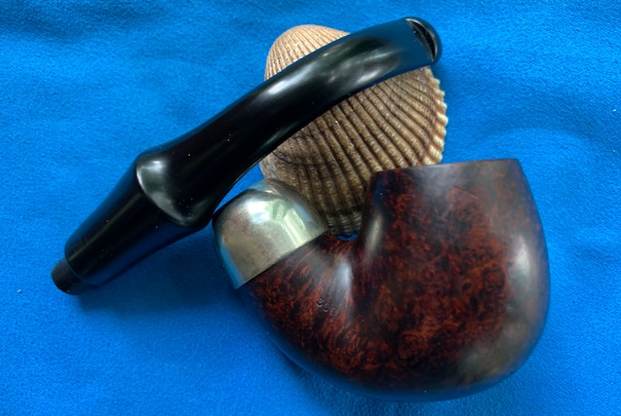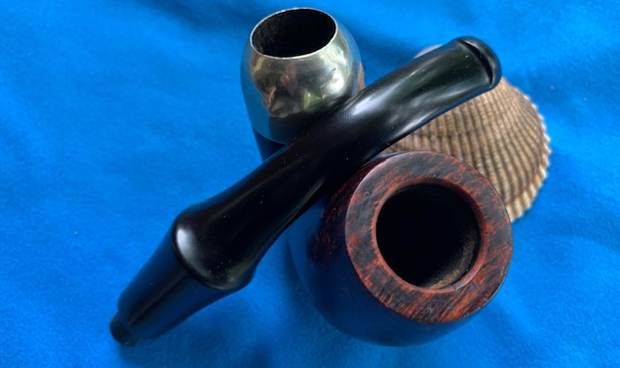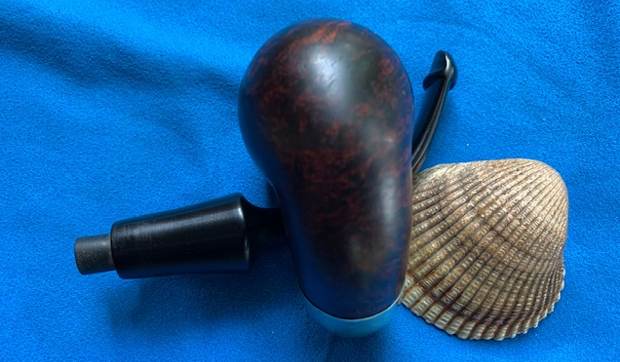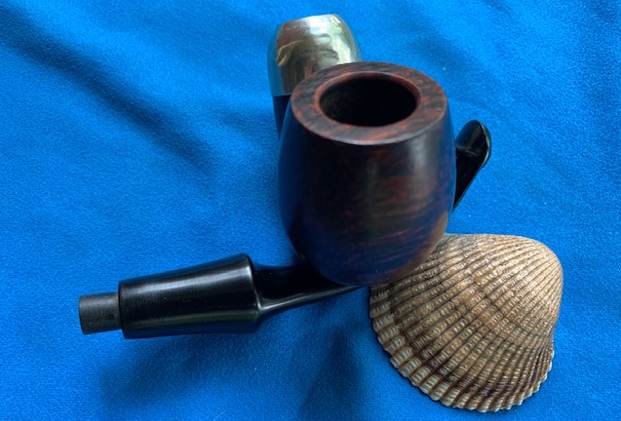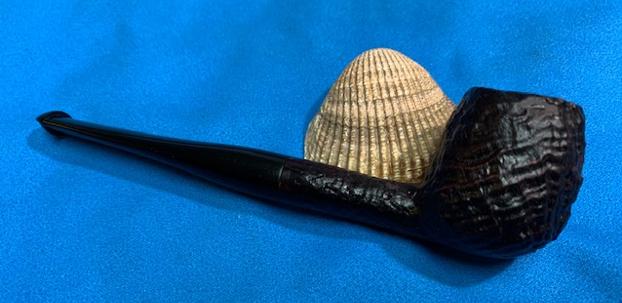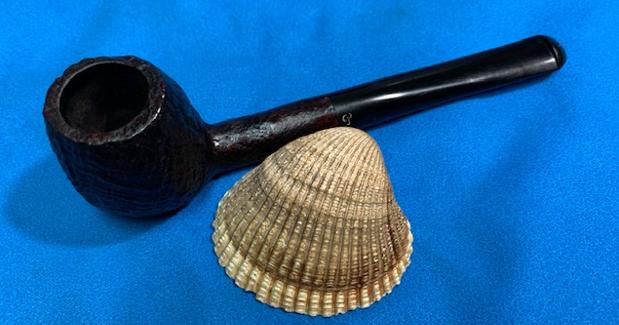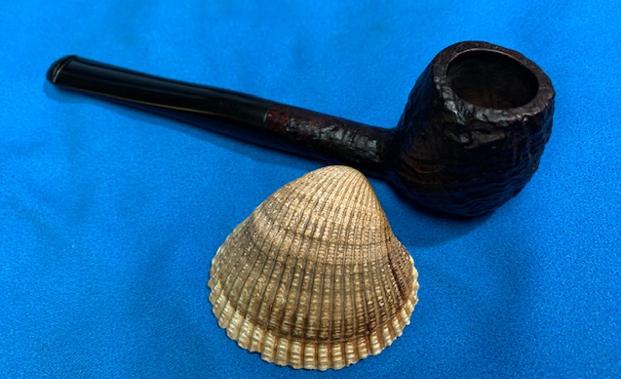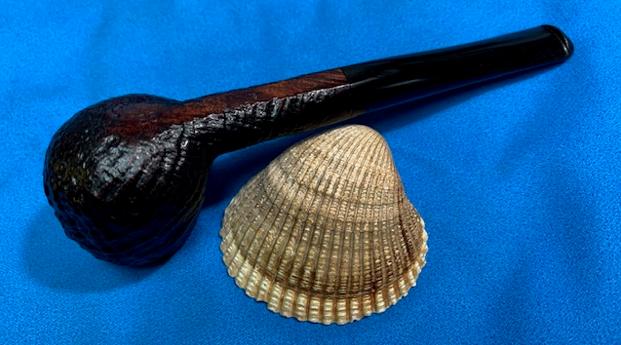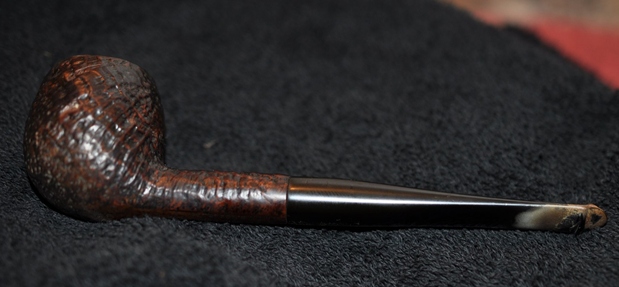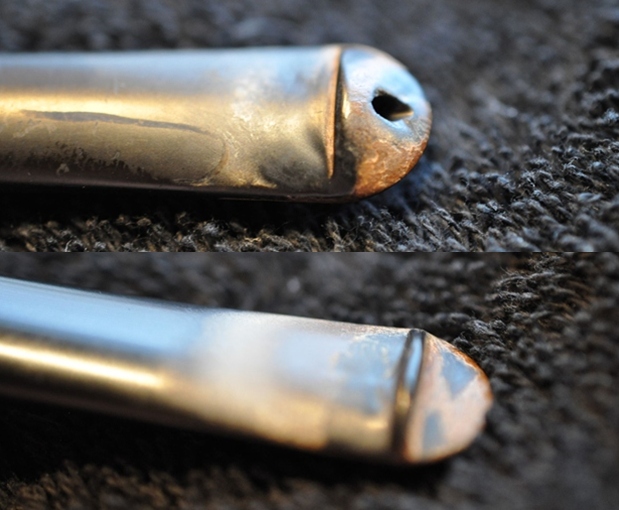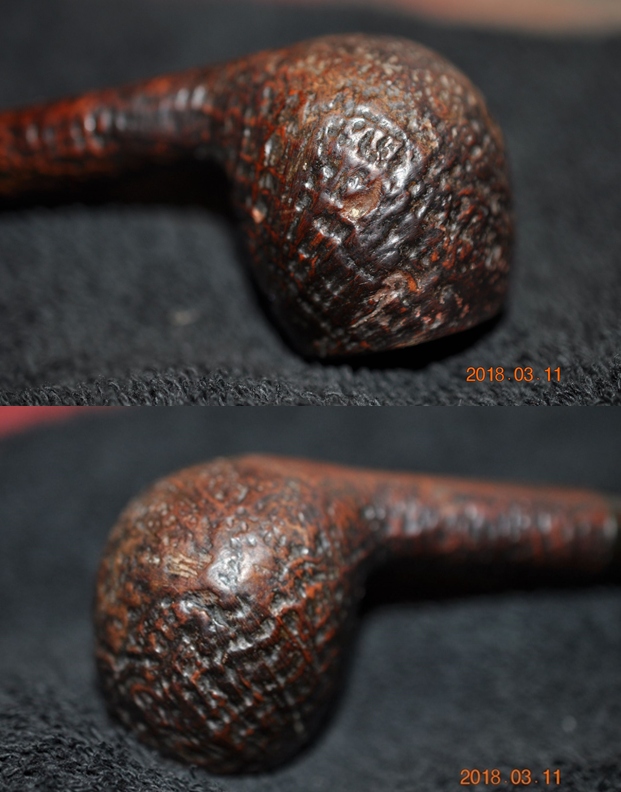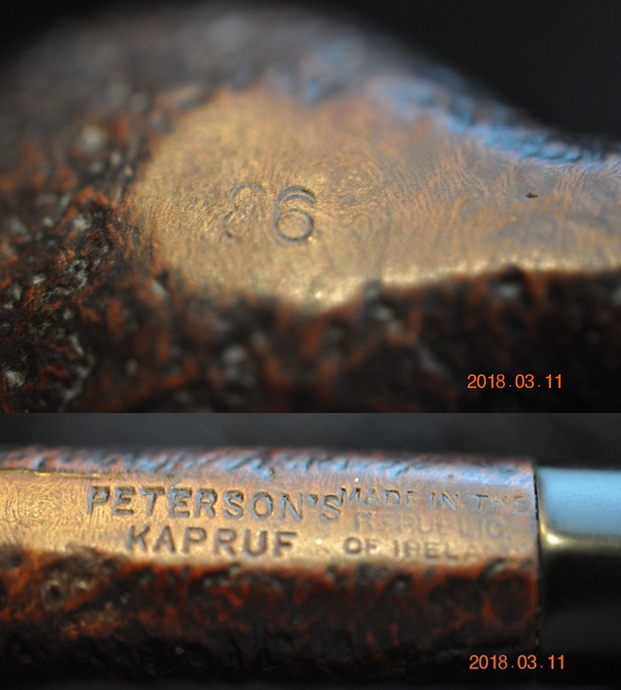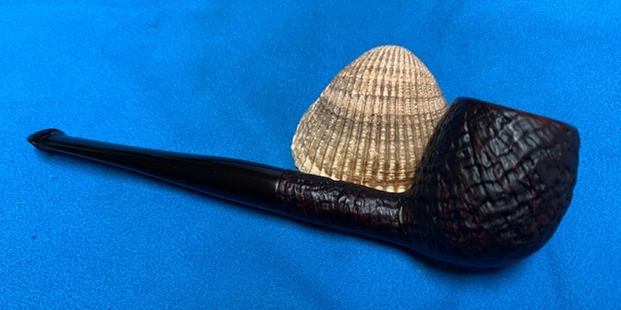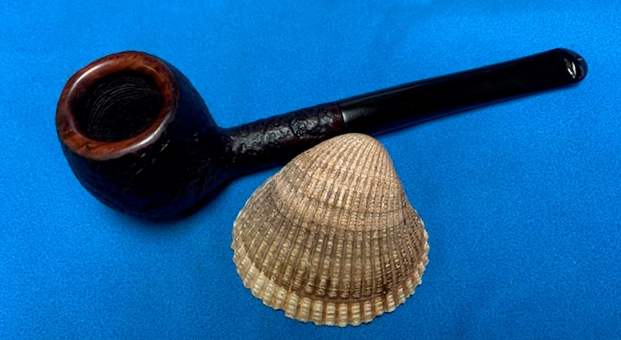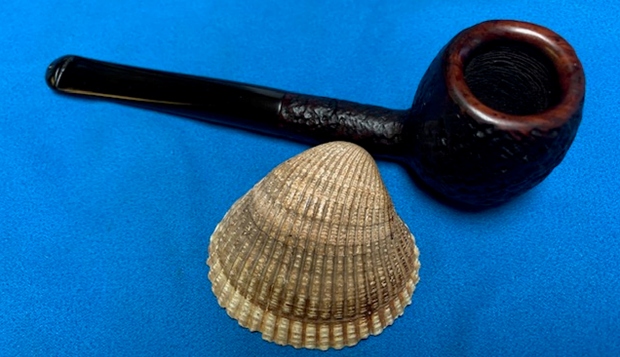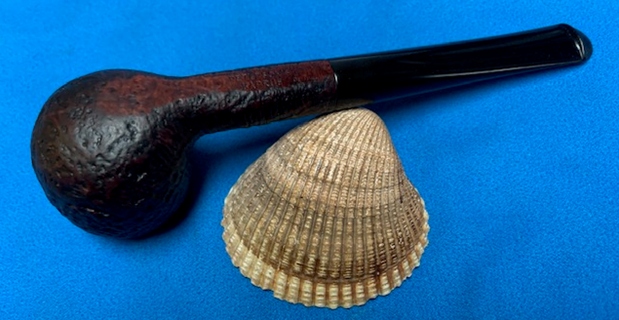
Tag Archives: Peterson’s Made In Ireland Pipes

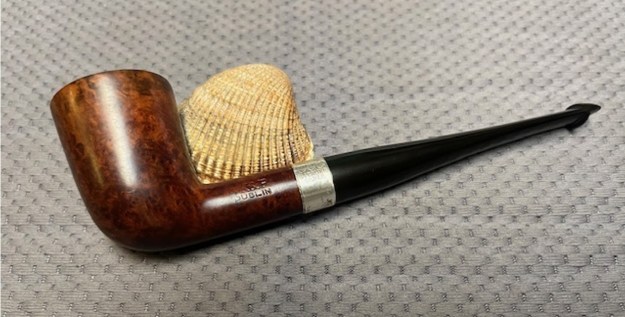
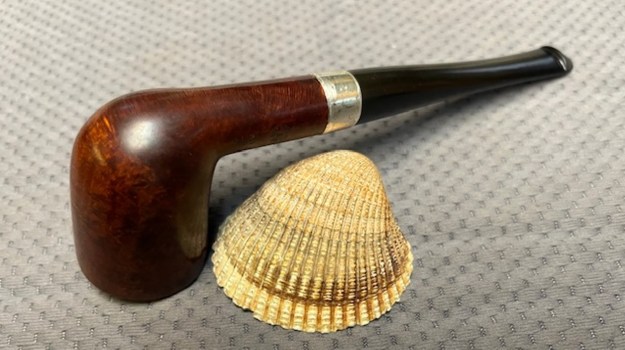
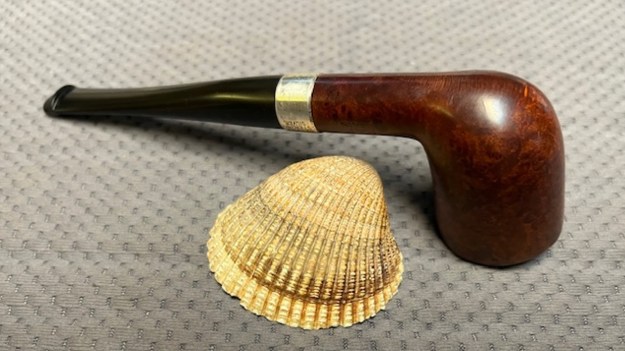
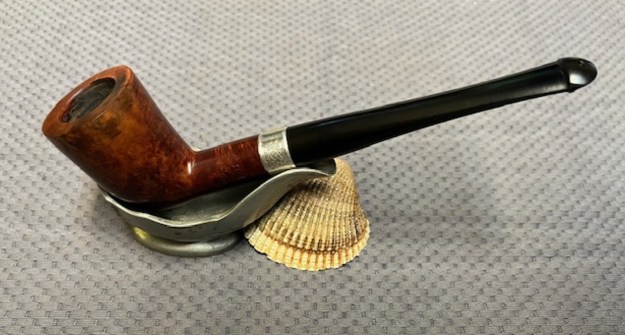
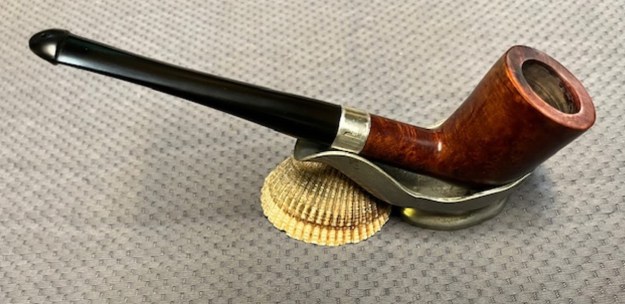
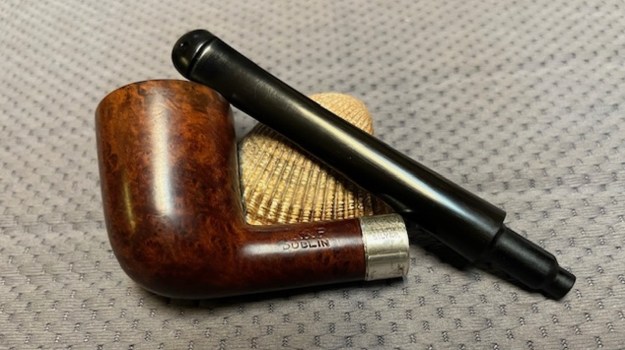
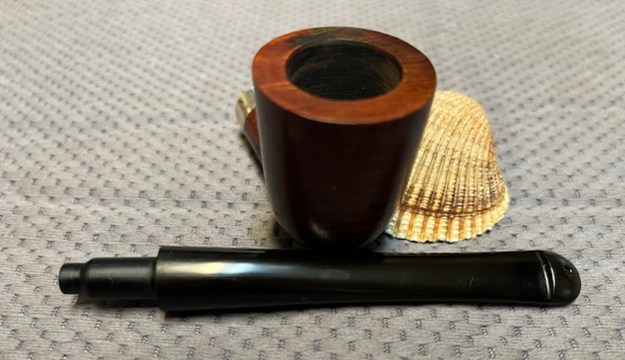
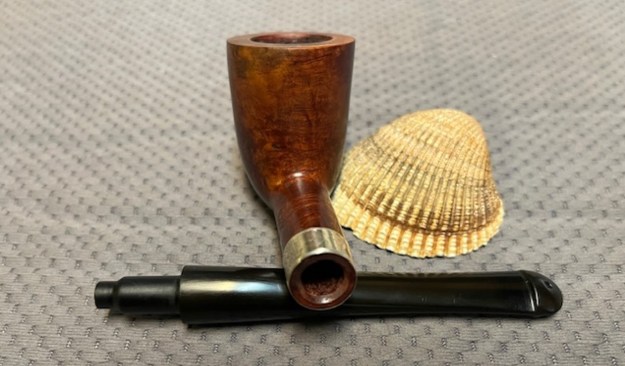
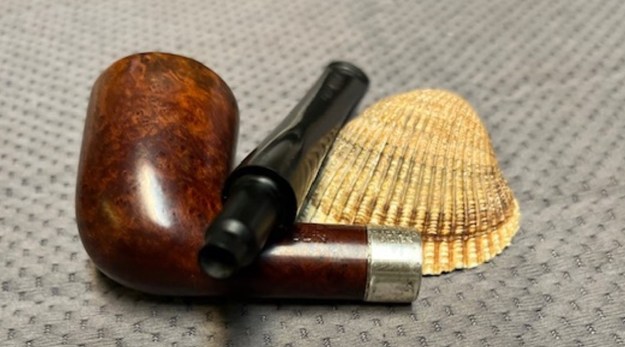
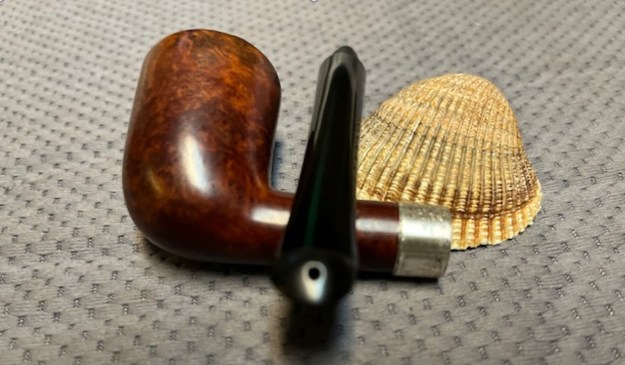
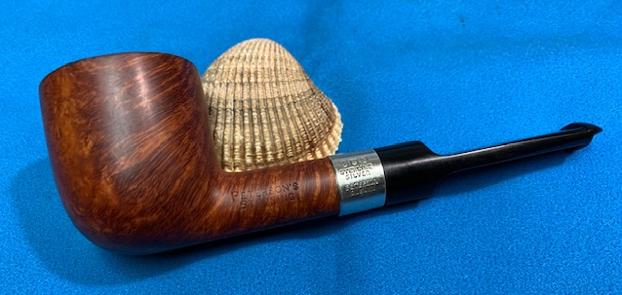
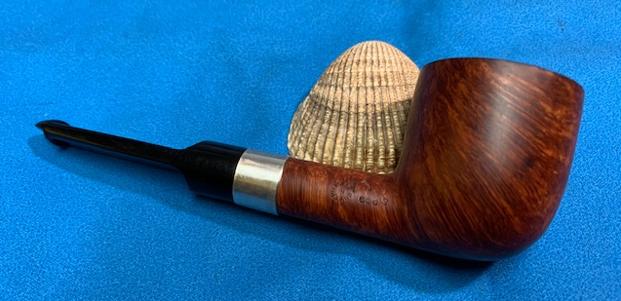
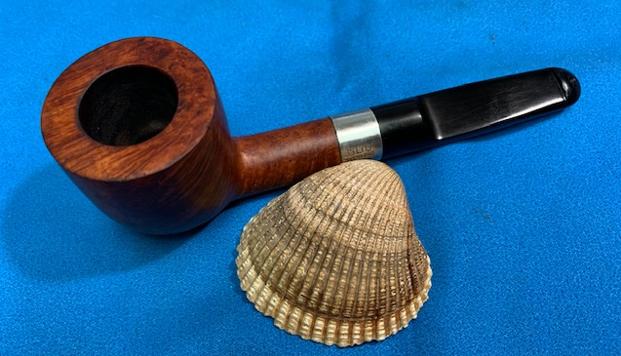
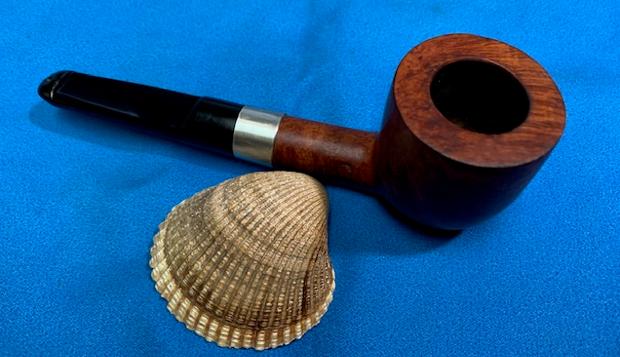
Restoring a Peterson’s K&P Dublin Made in Ireland Canadian


by Steve Laug

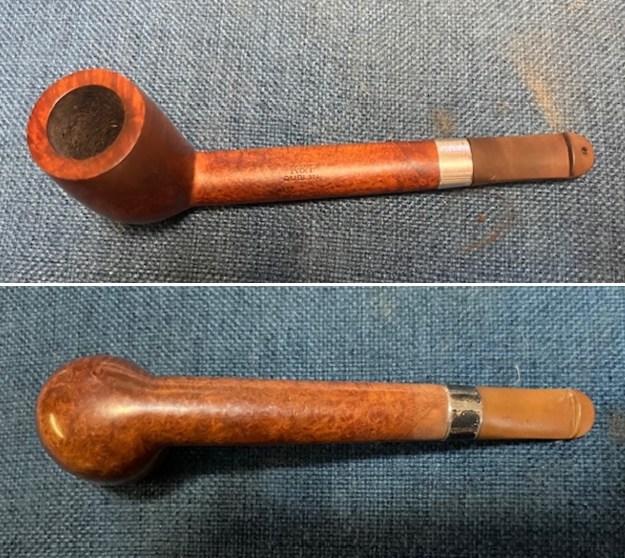
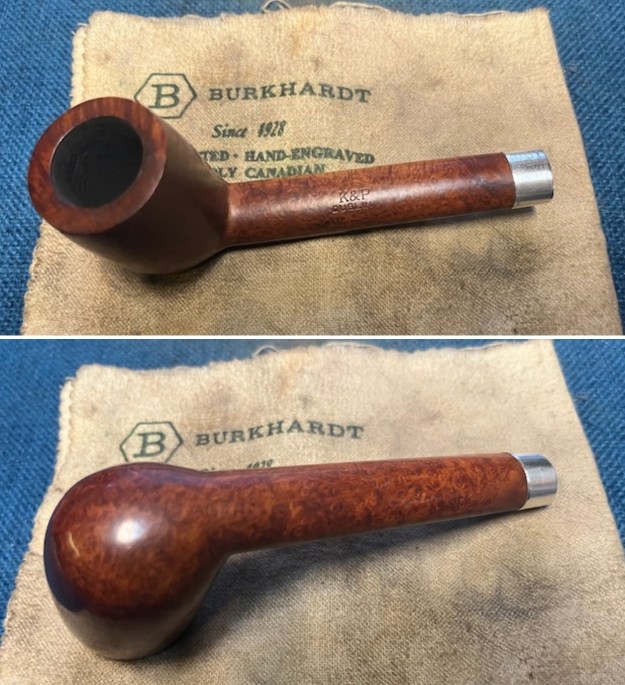
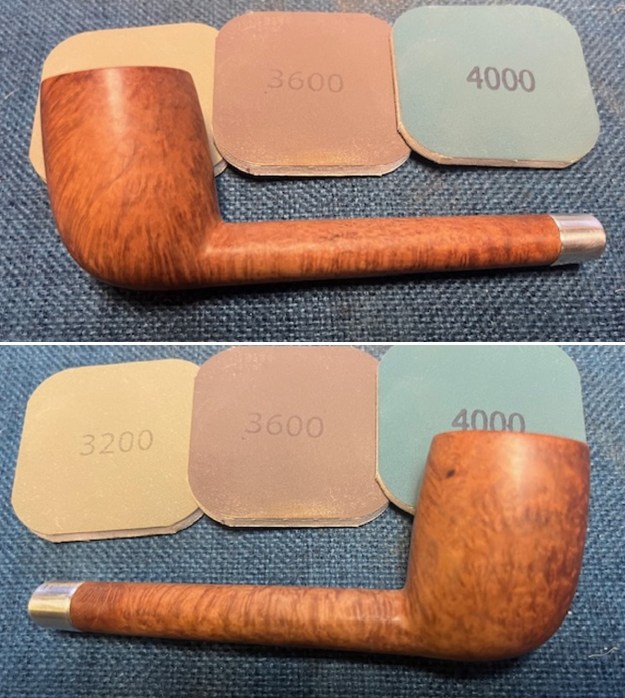
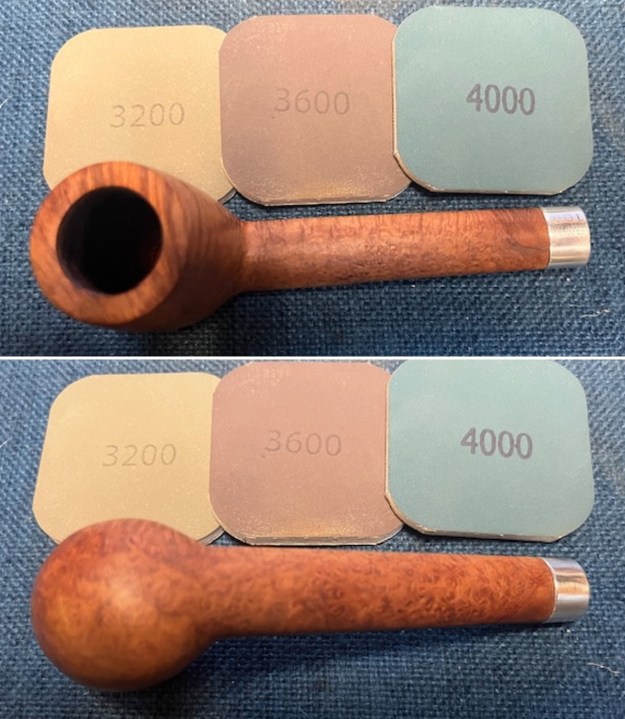
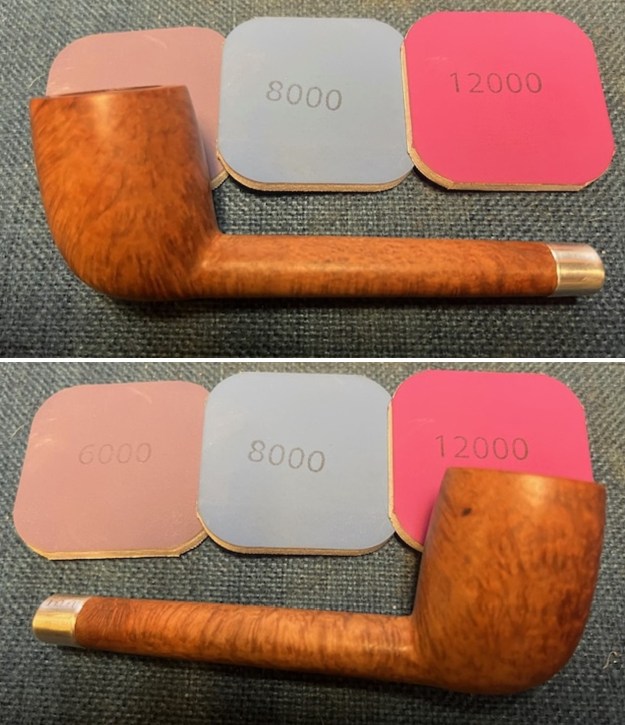
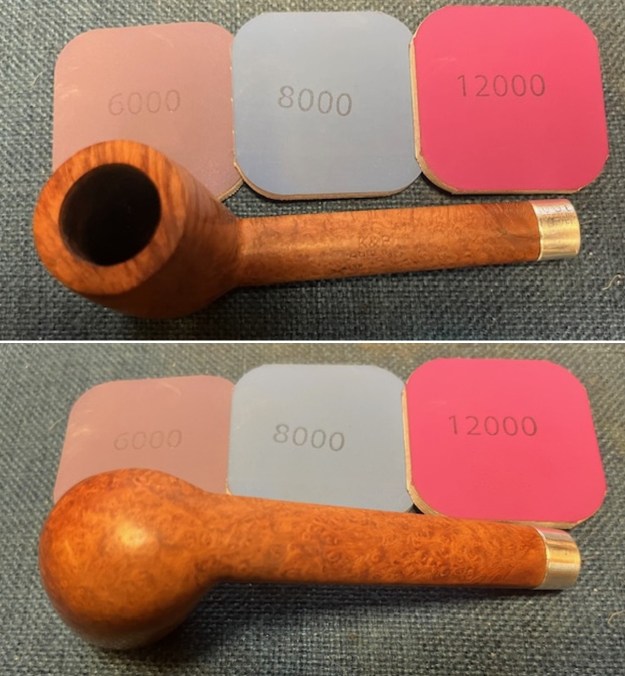
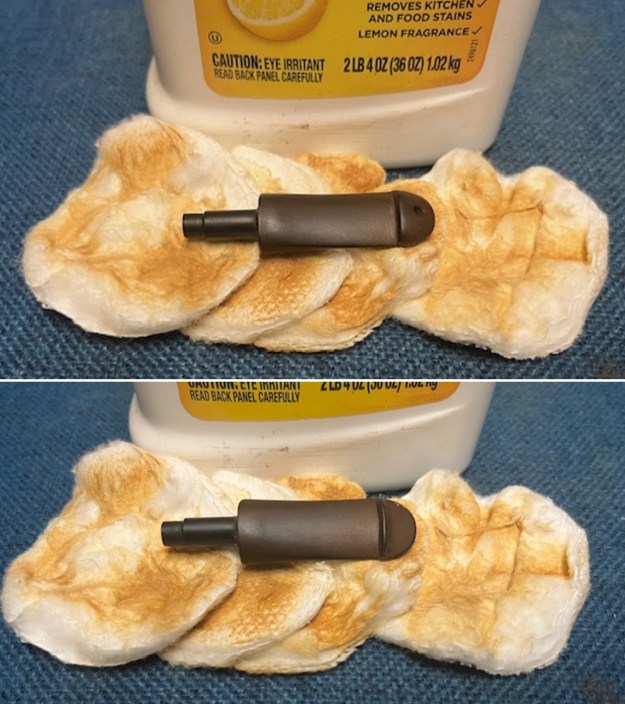
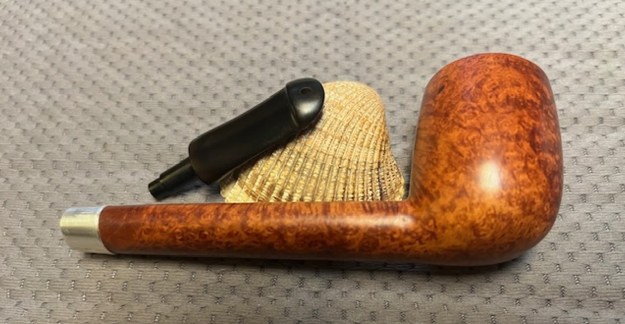
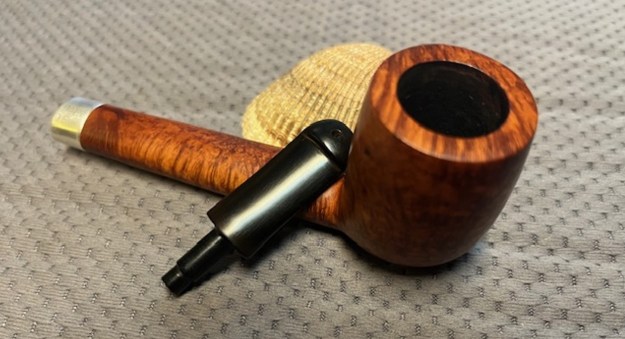
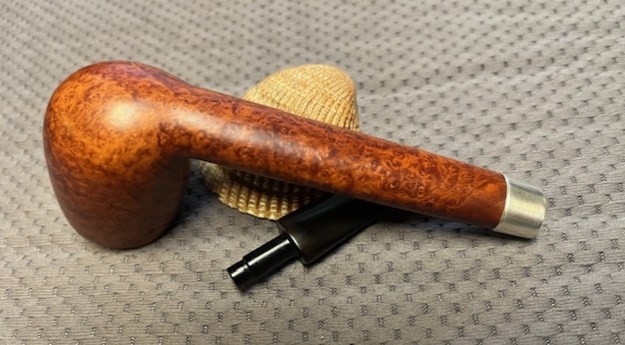
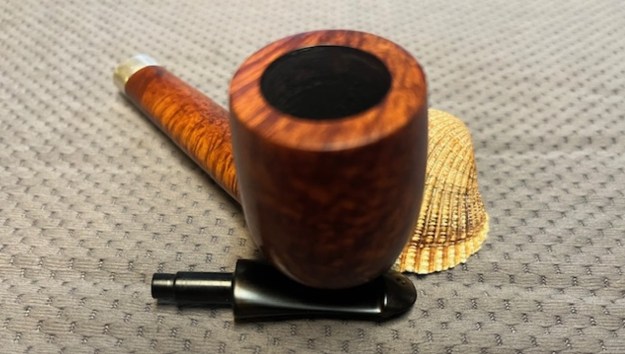
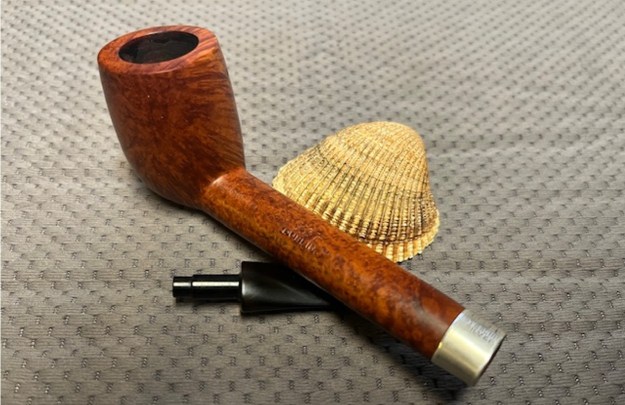
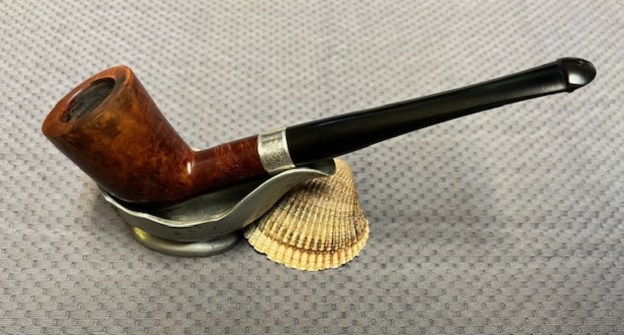
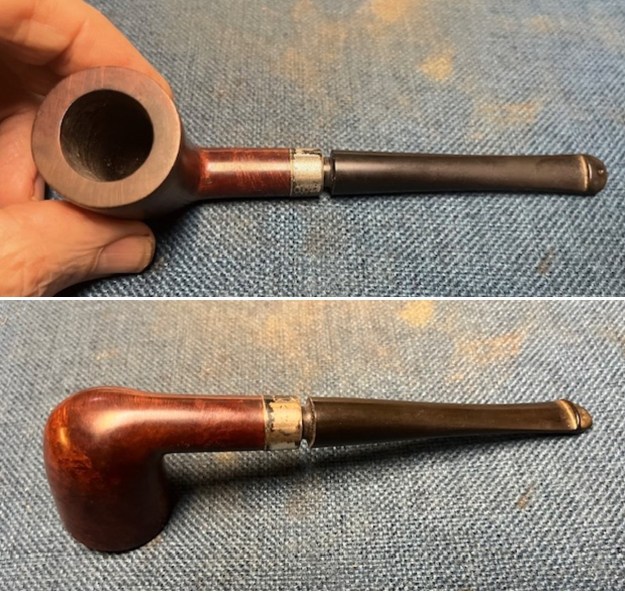
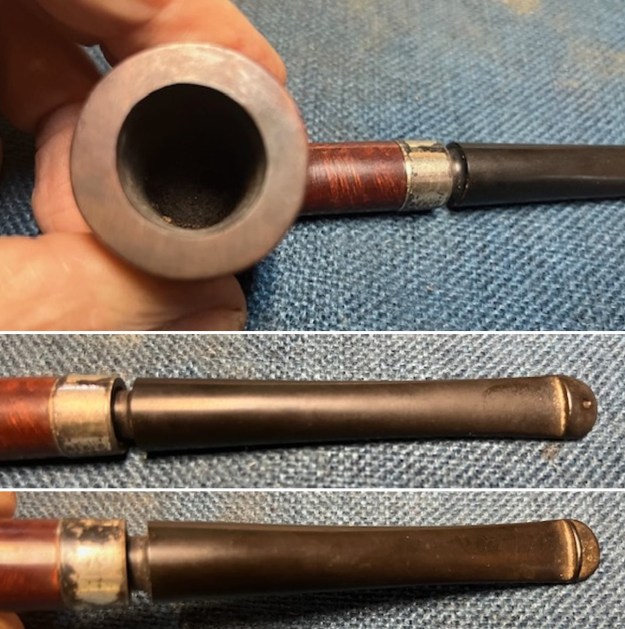
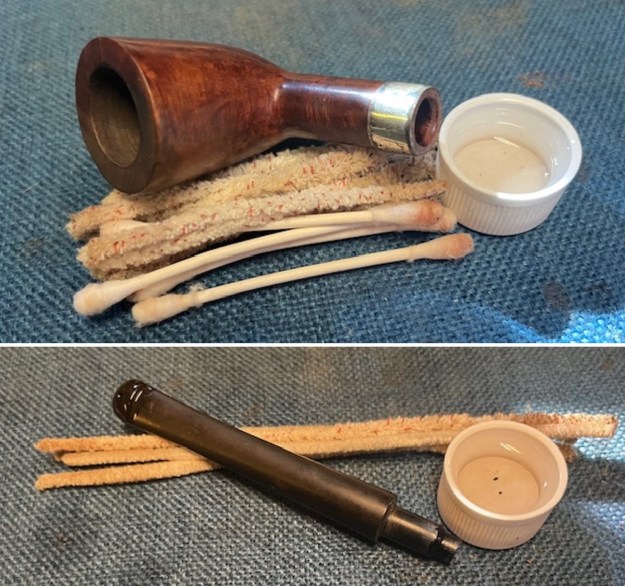
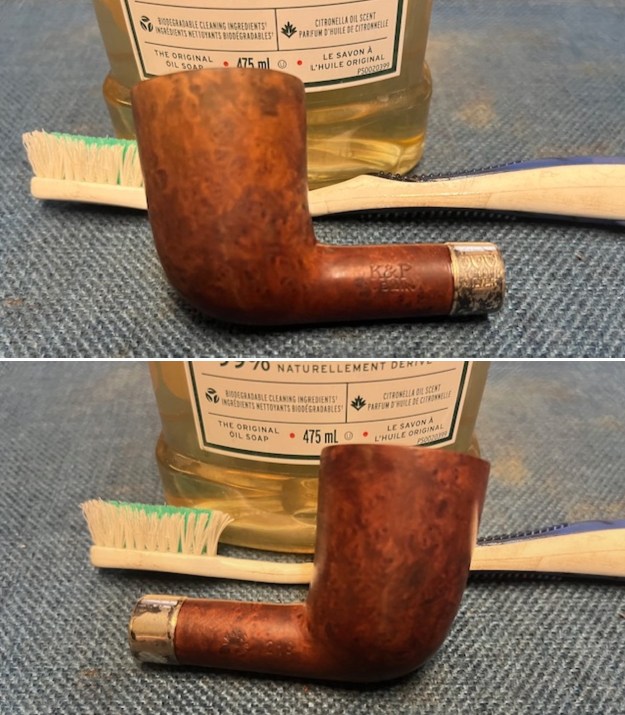
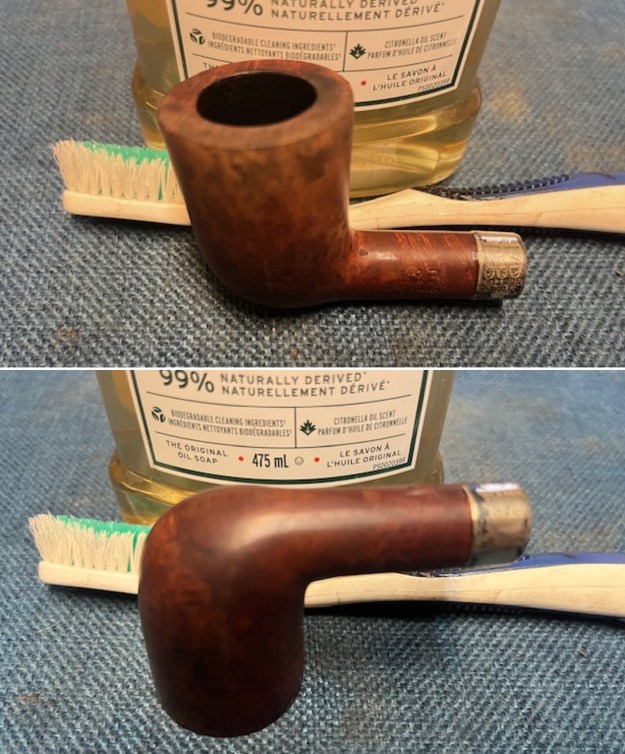
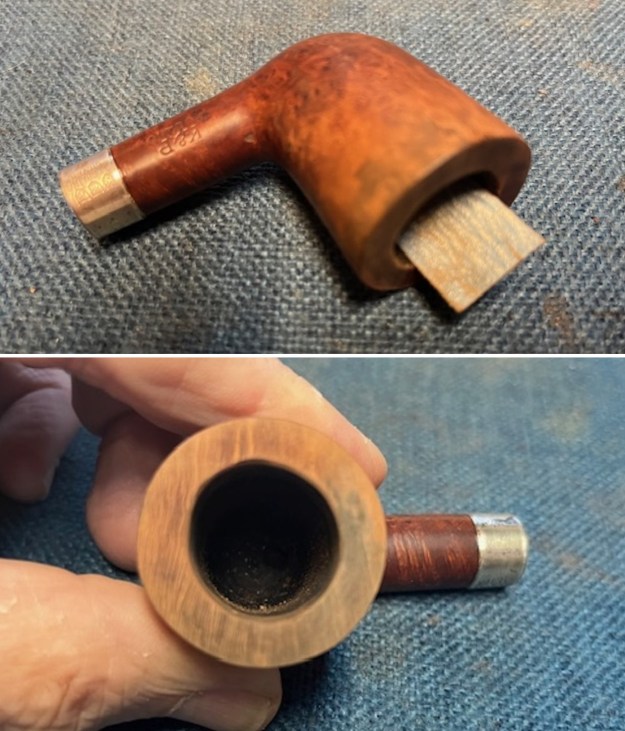
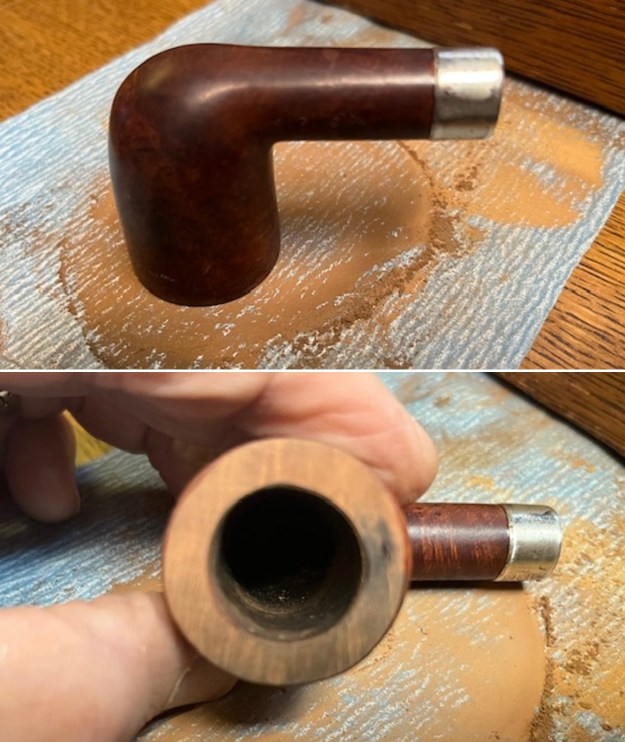
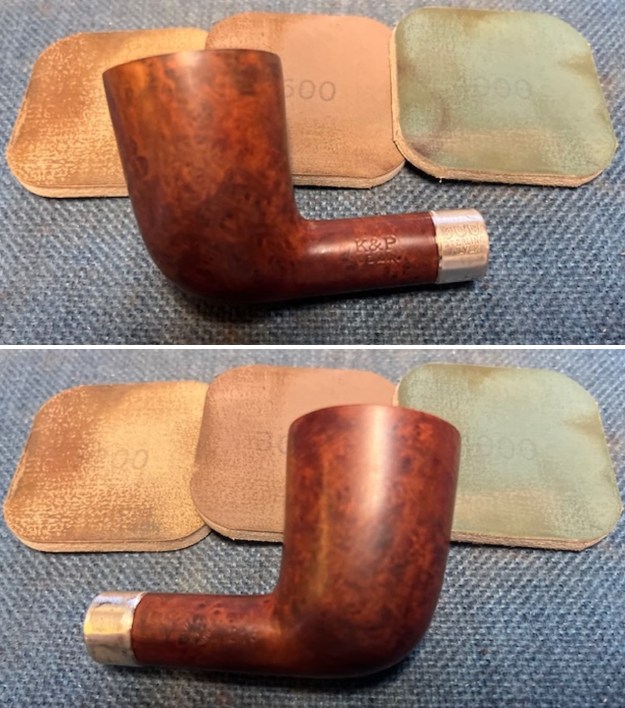
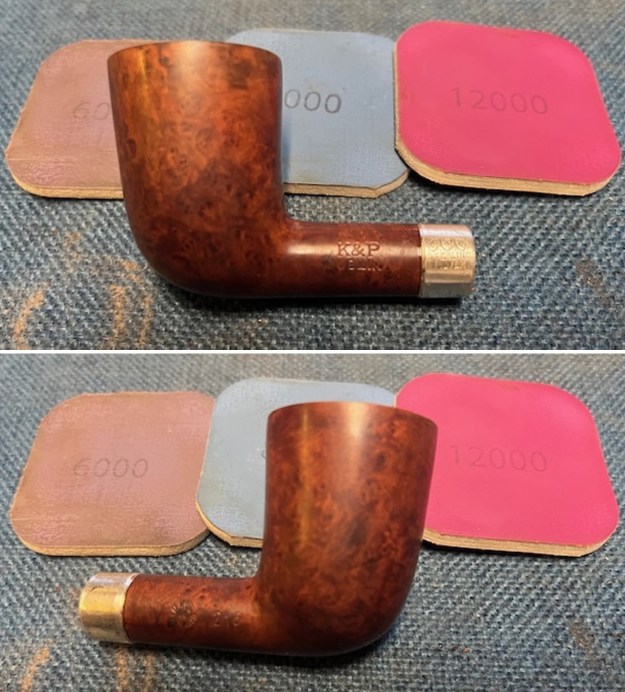
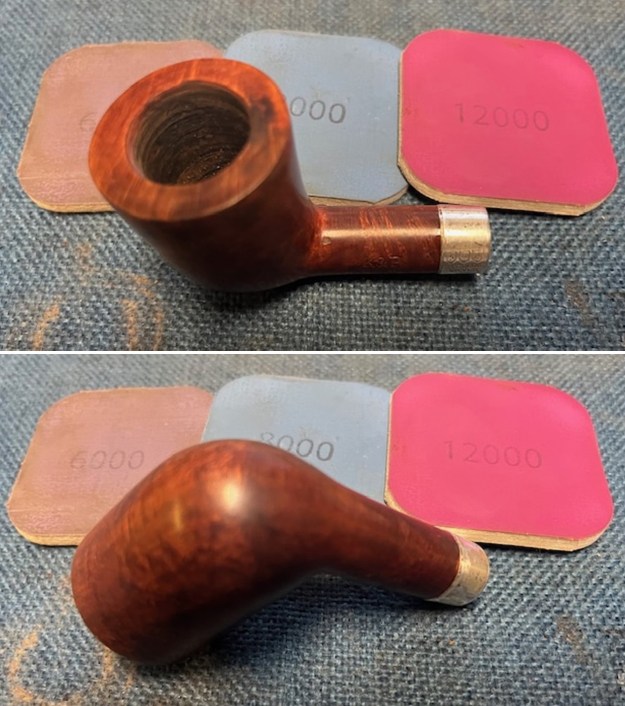
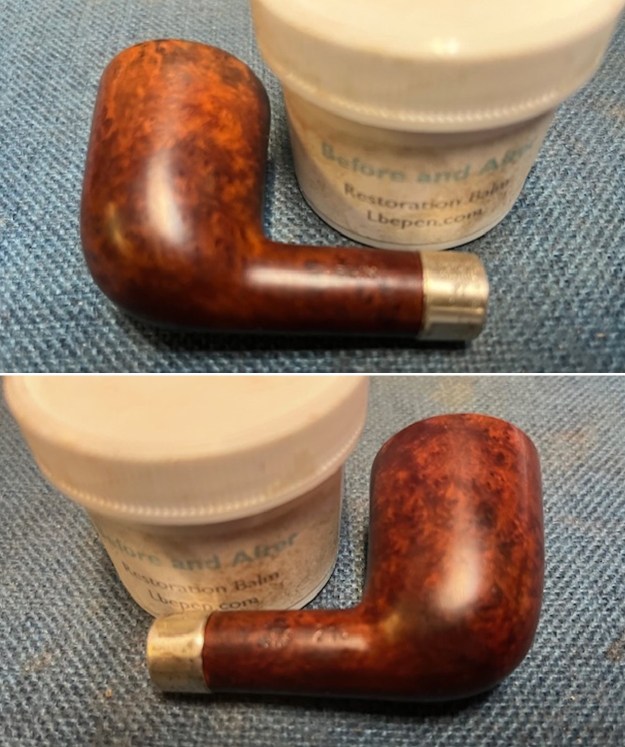
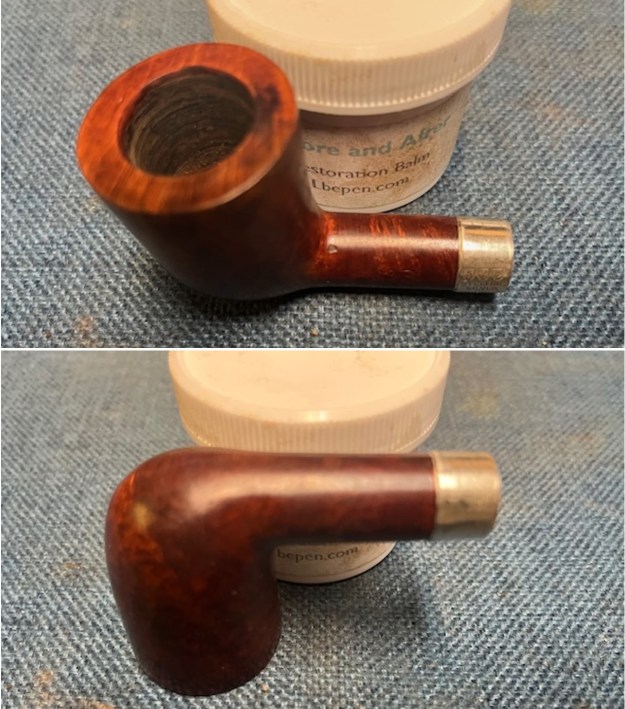
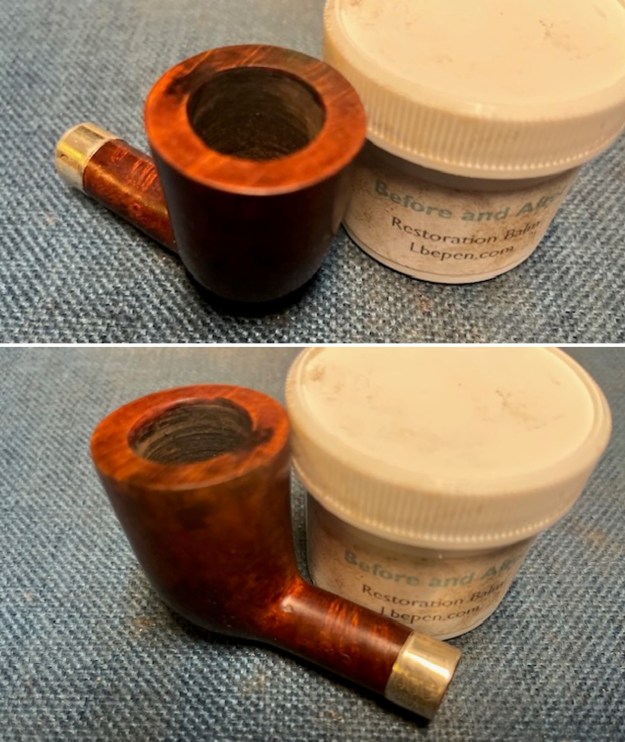
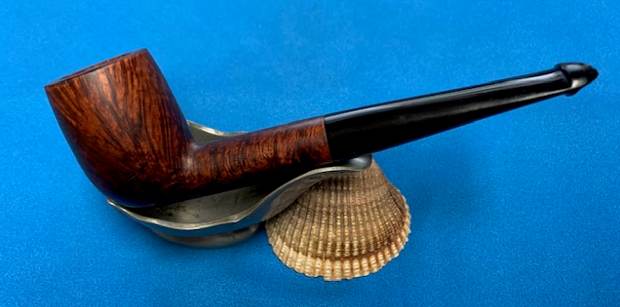
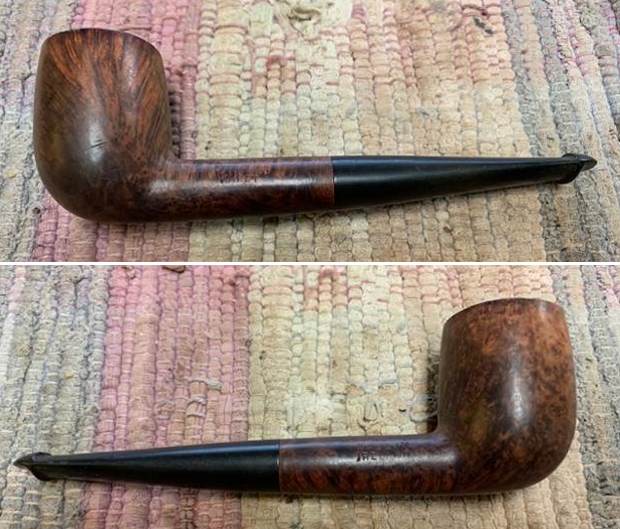
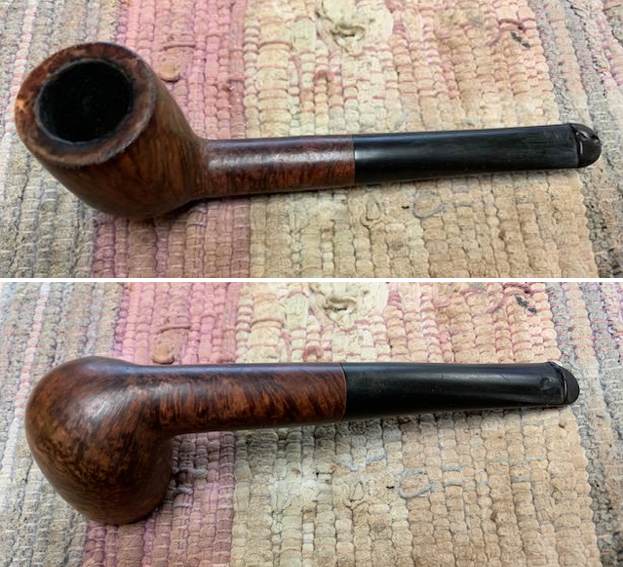
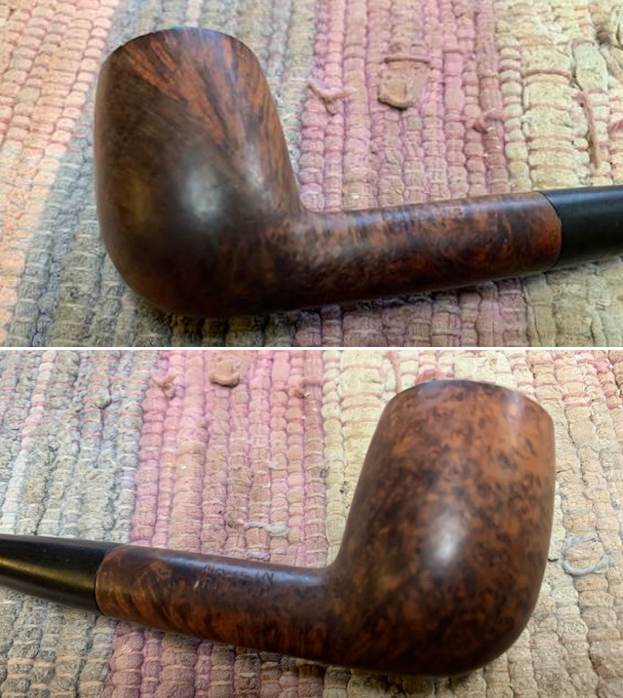
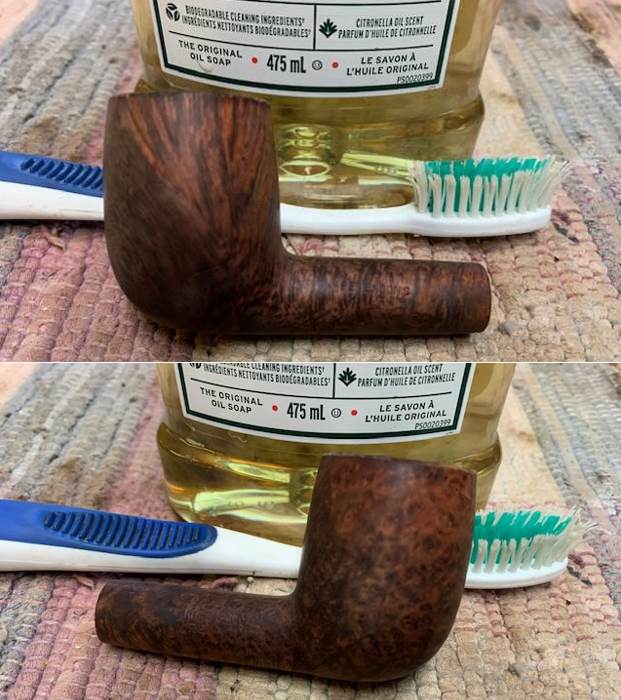
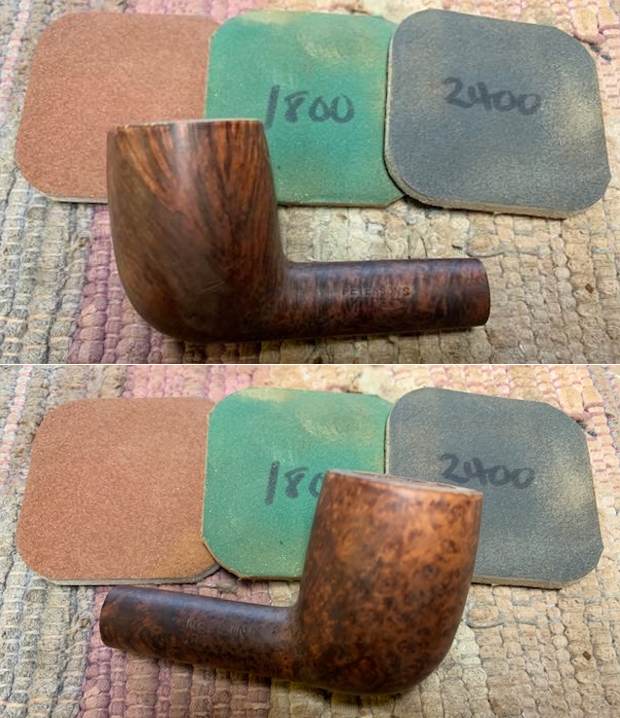
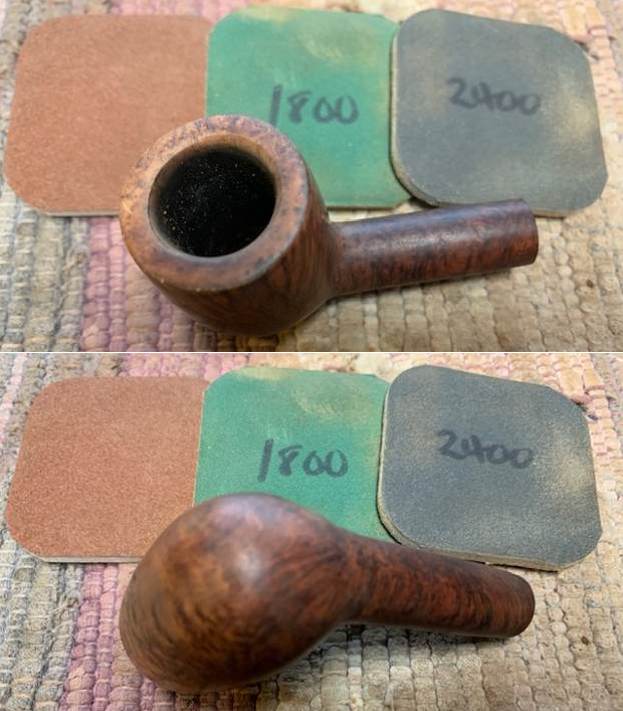
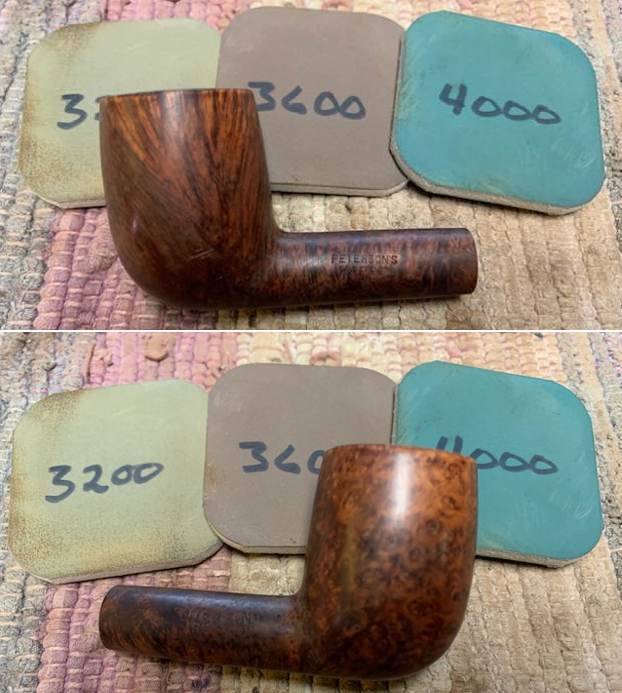
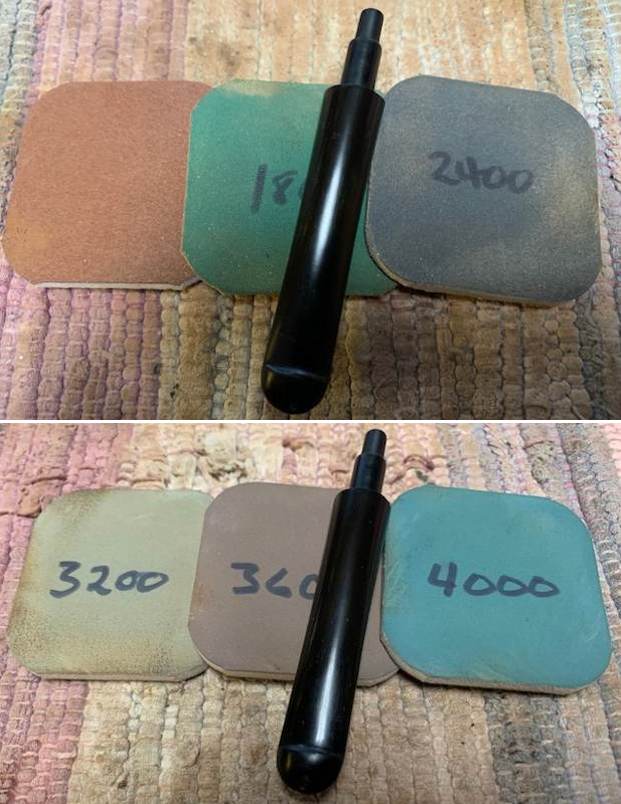
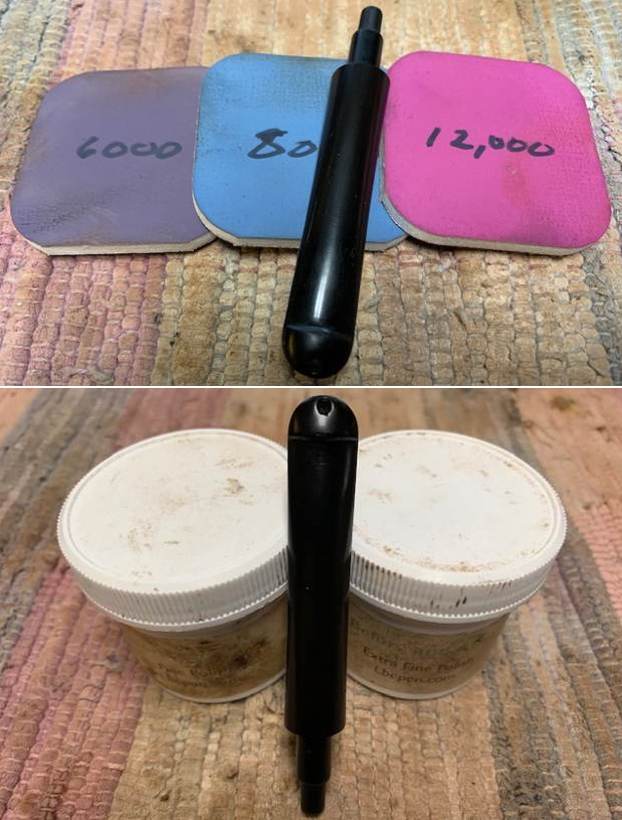
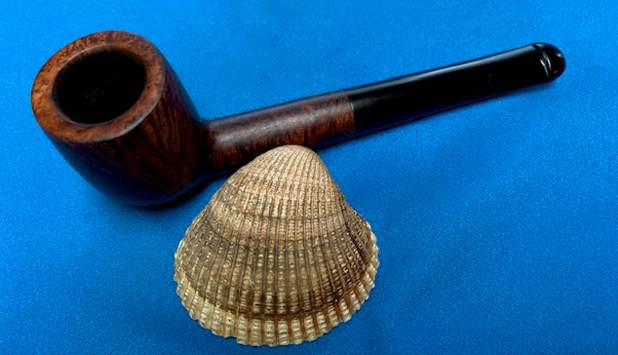
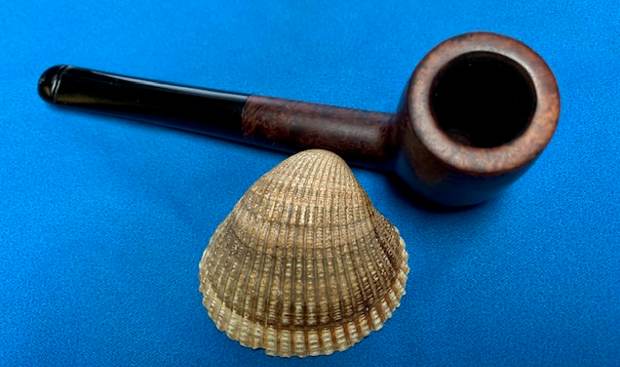
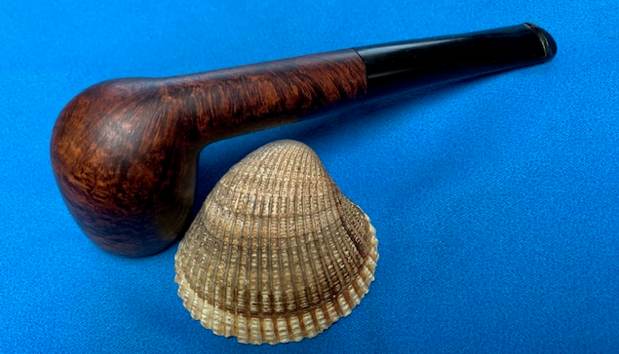
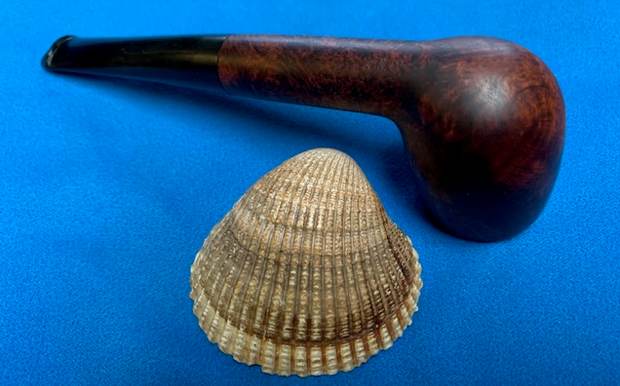
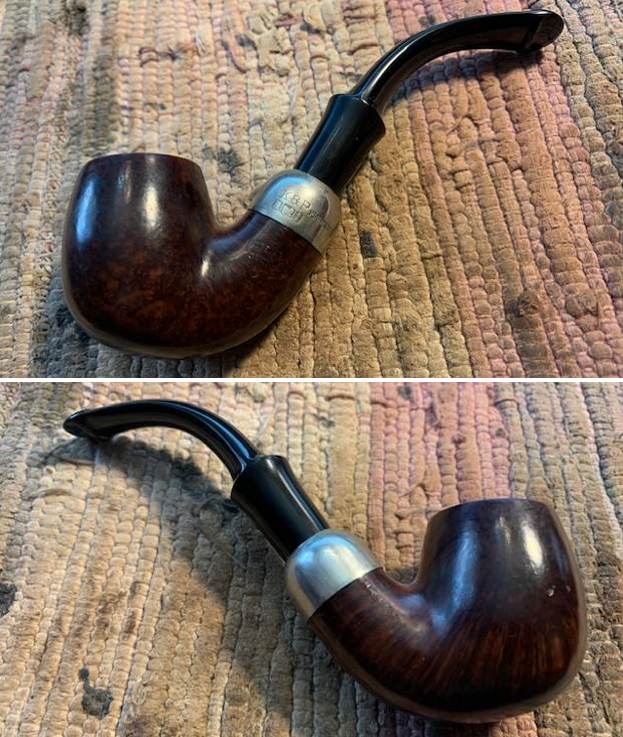
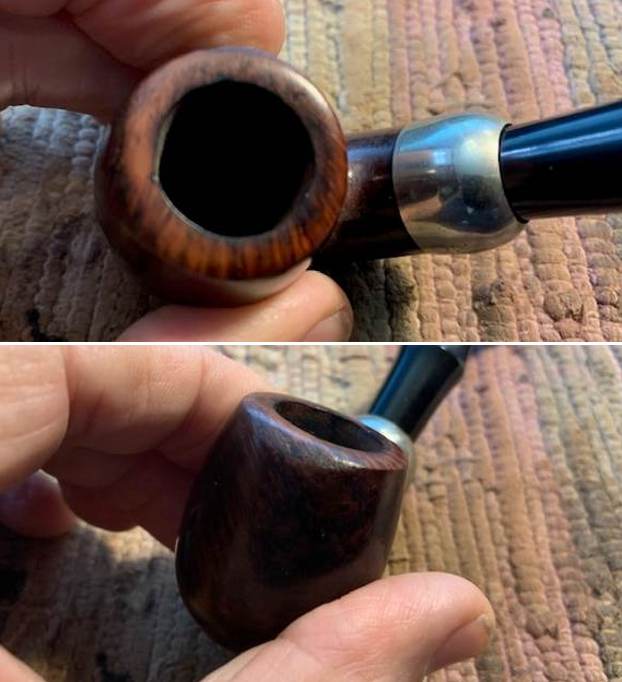
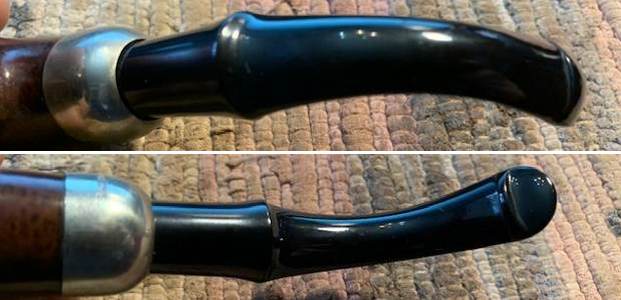
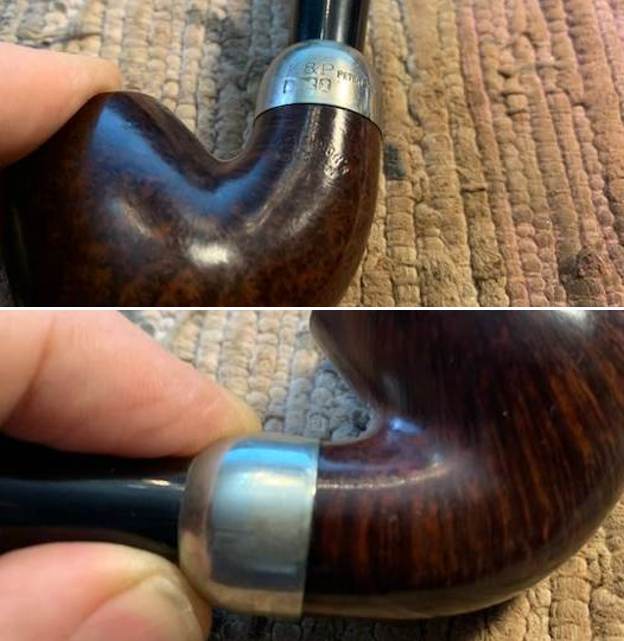
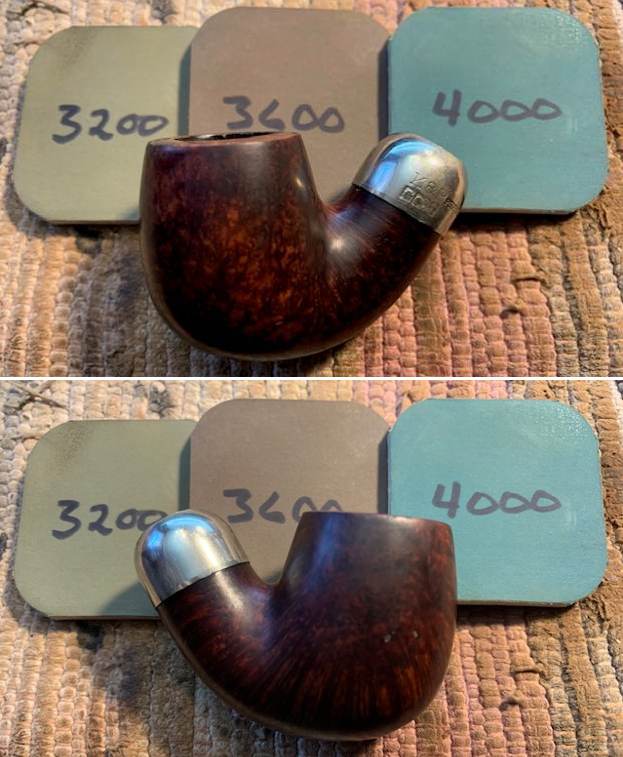
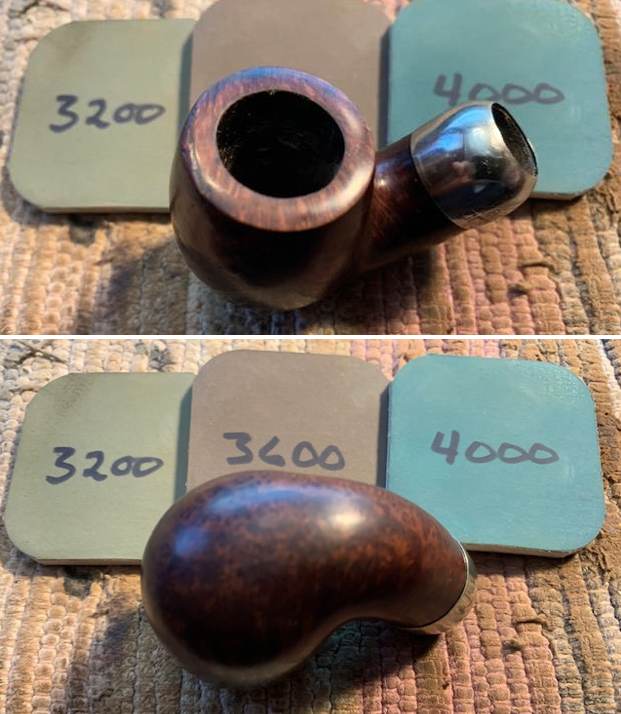
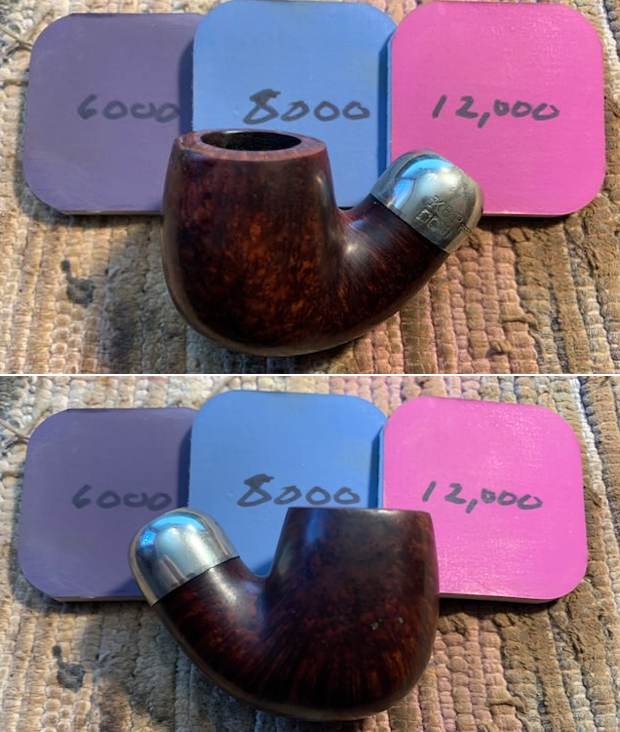
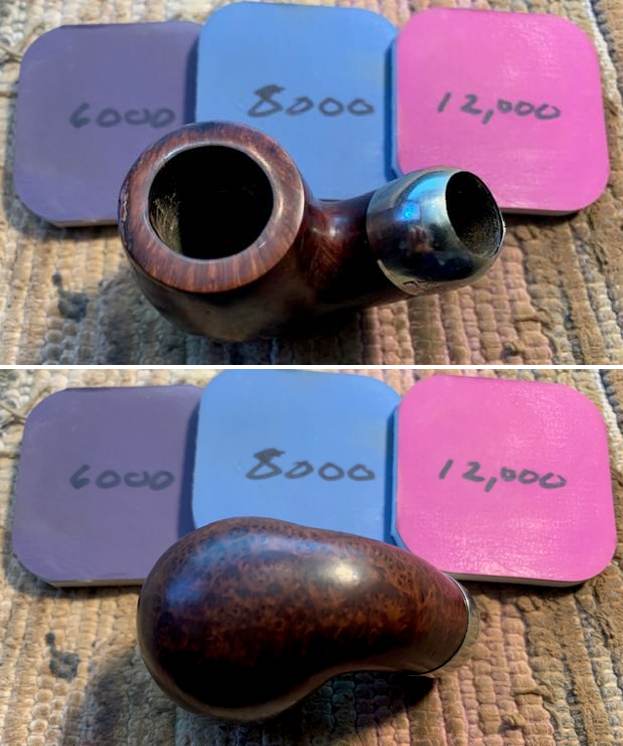
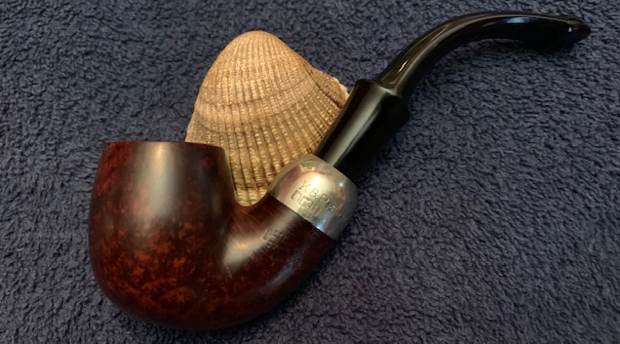
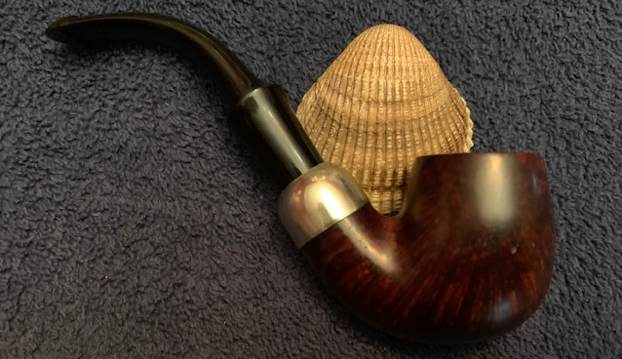
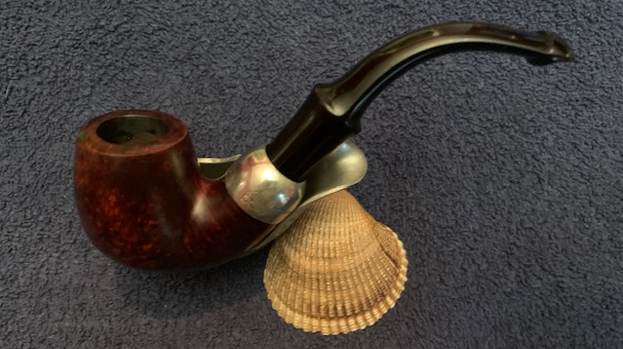
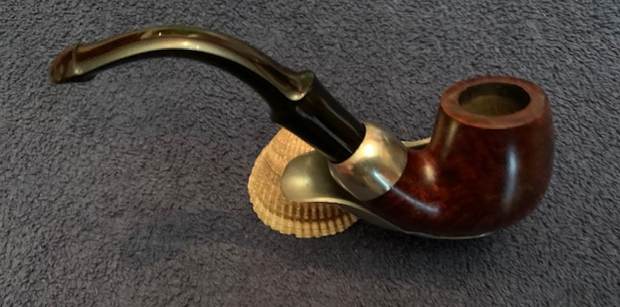
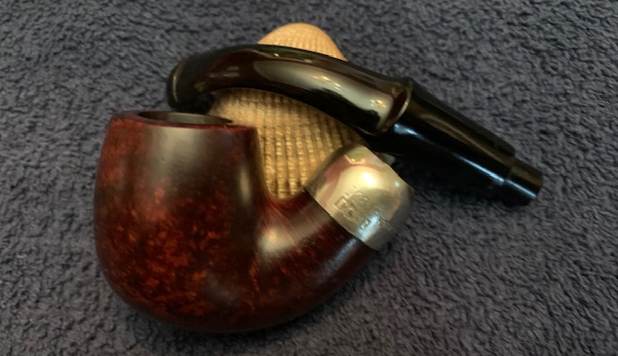
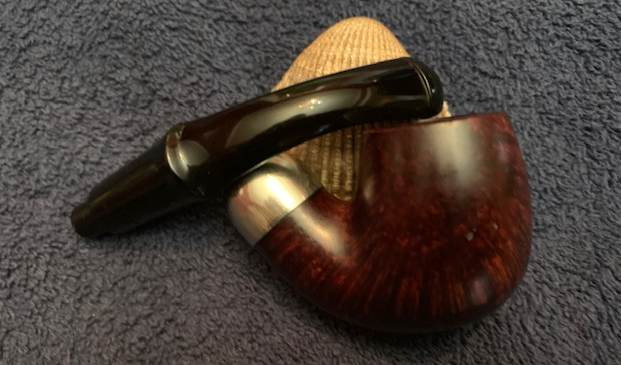
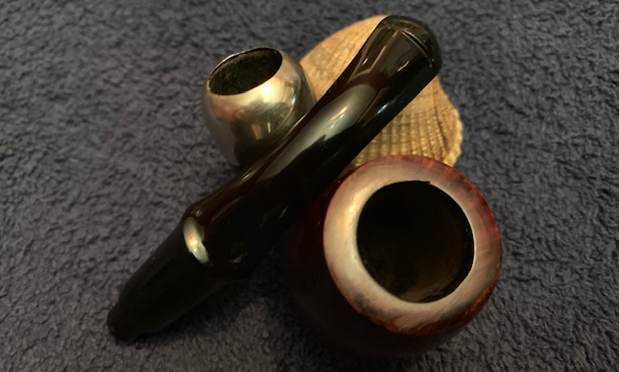
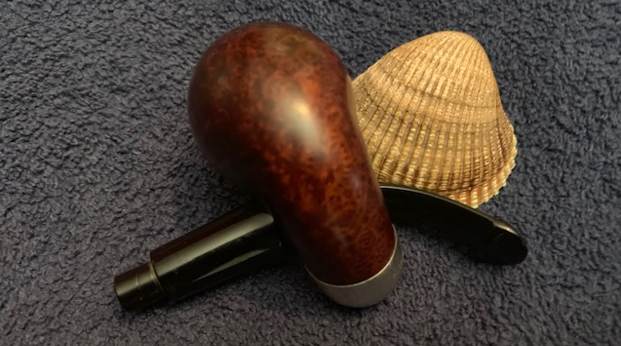
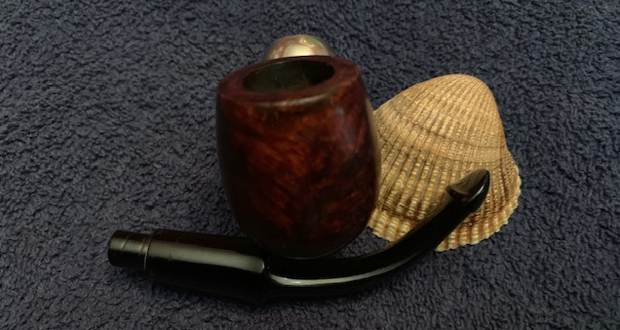
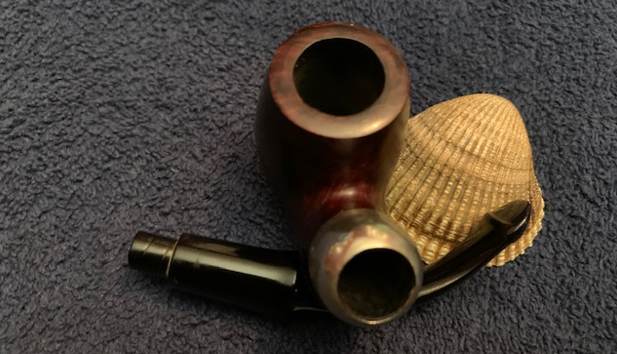
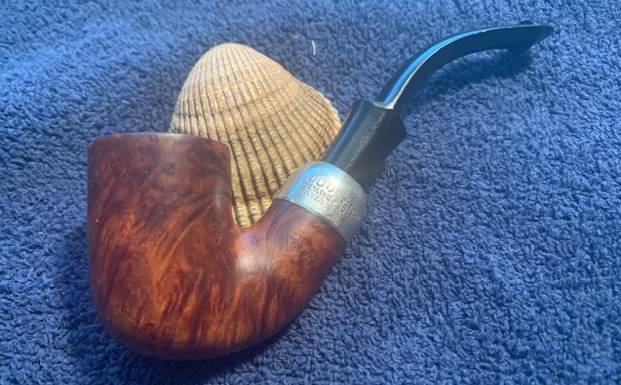
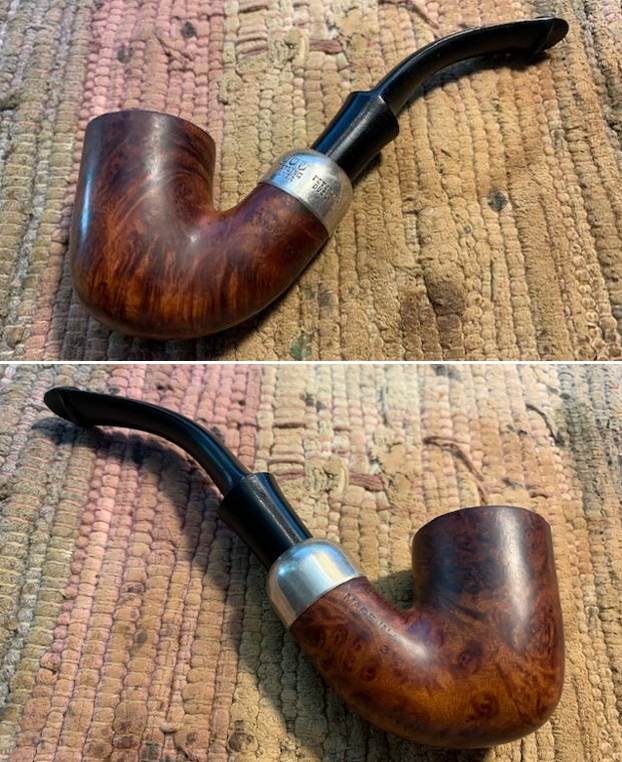
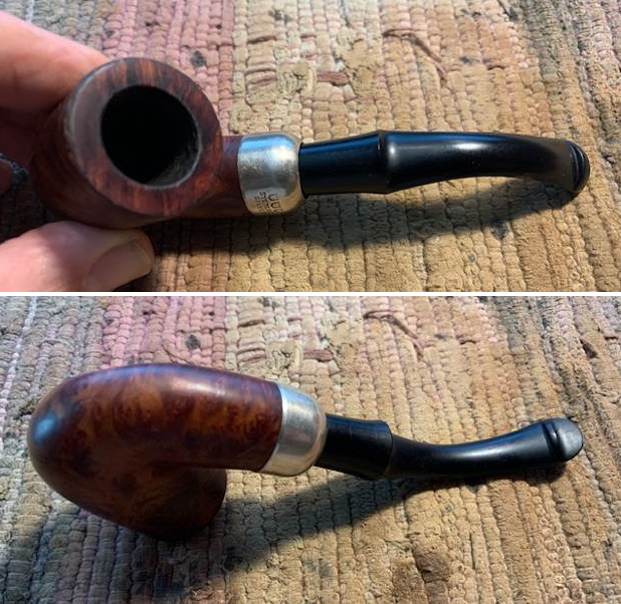
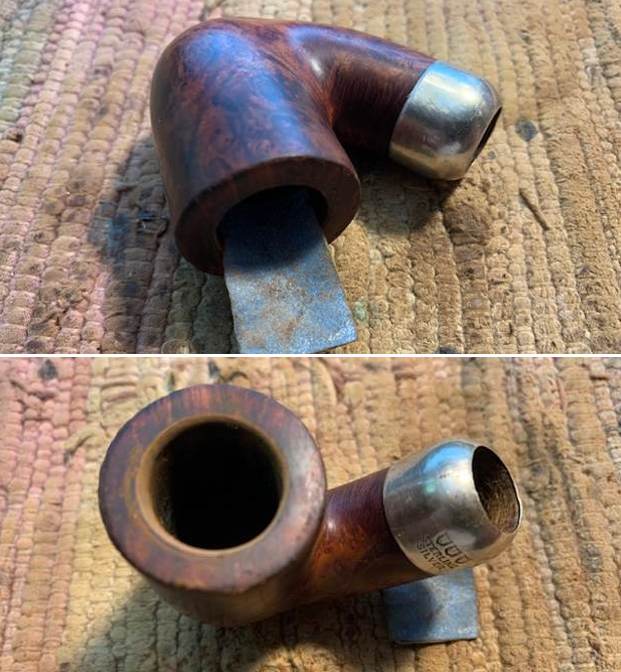
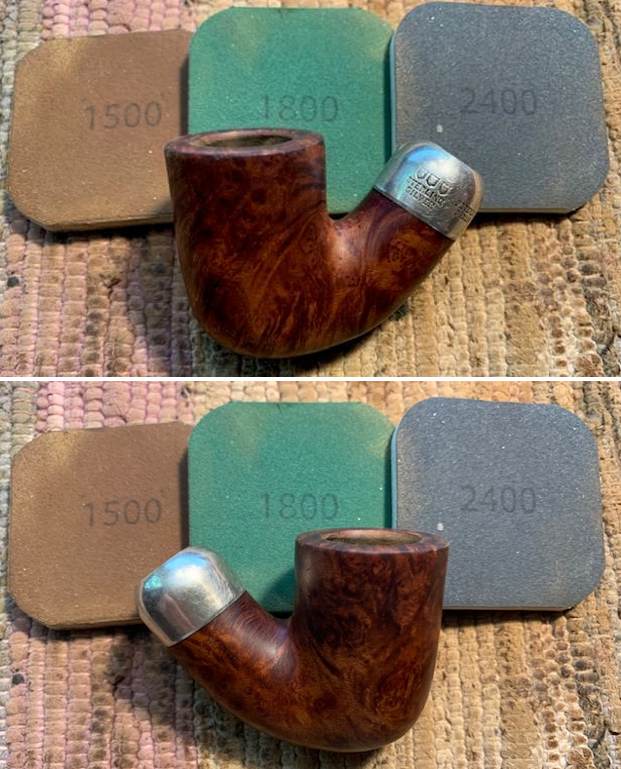
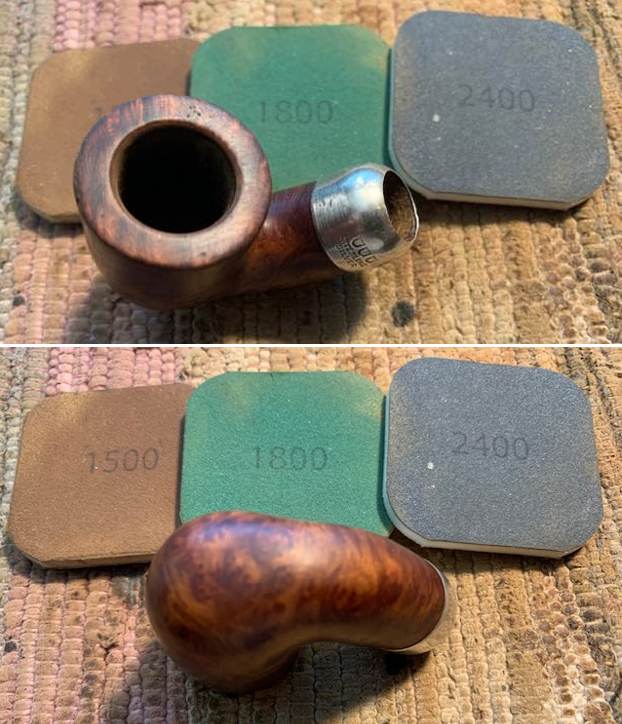
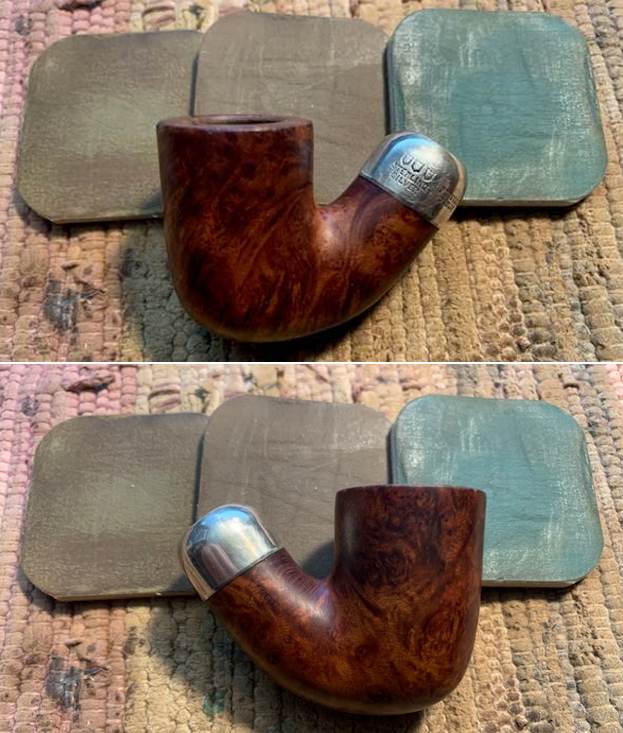
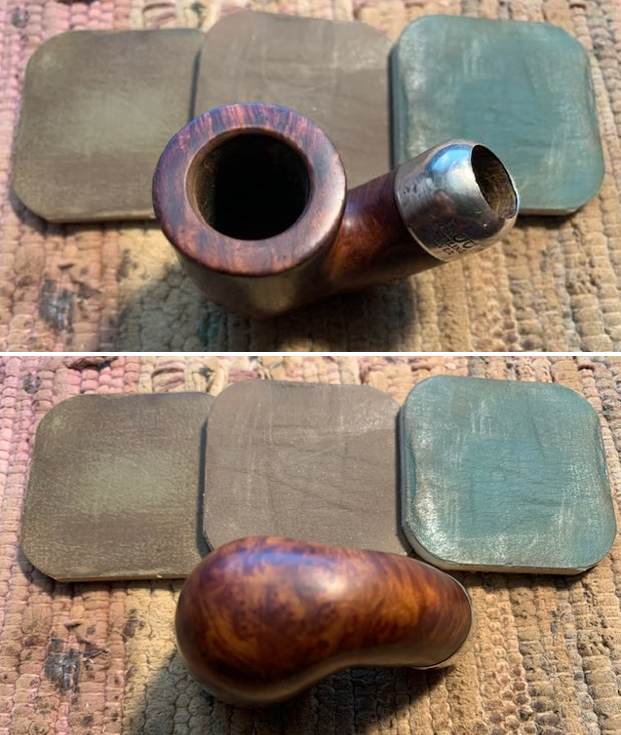
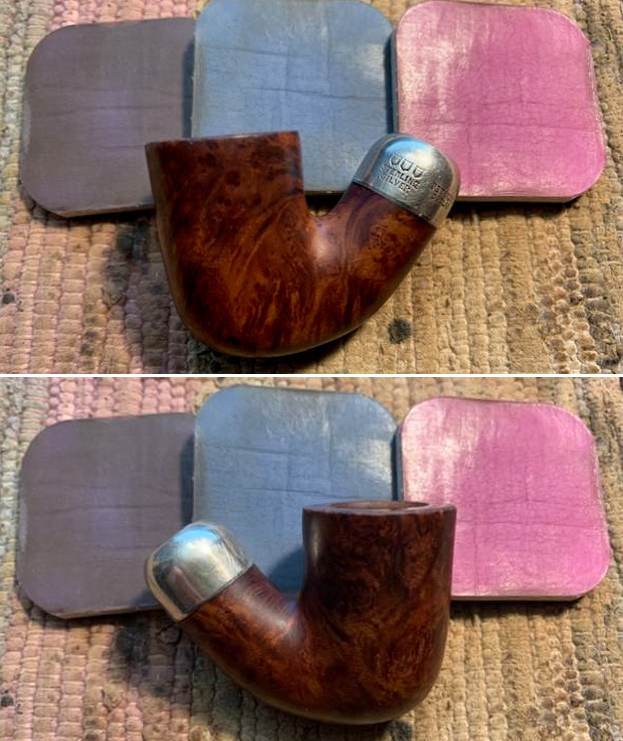
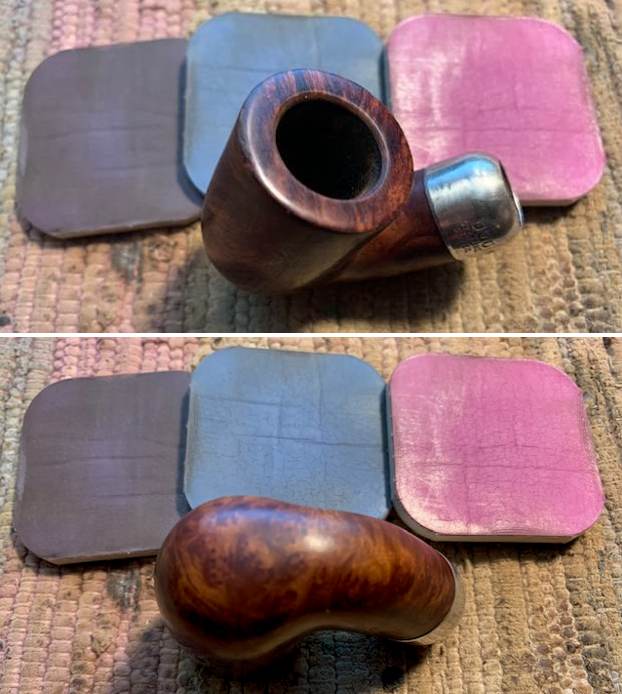
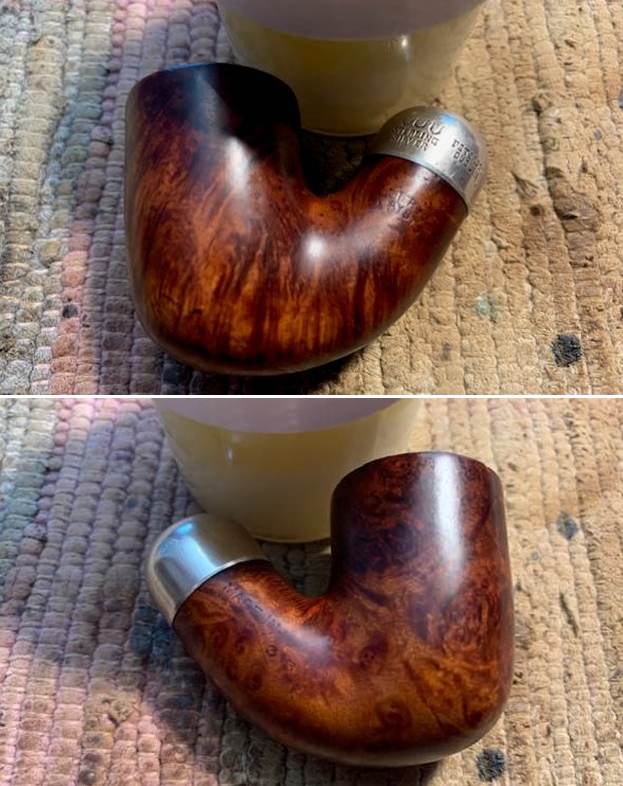
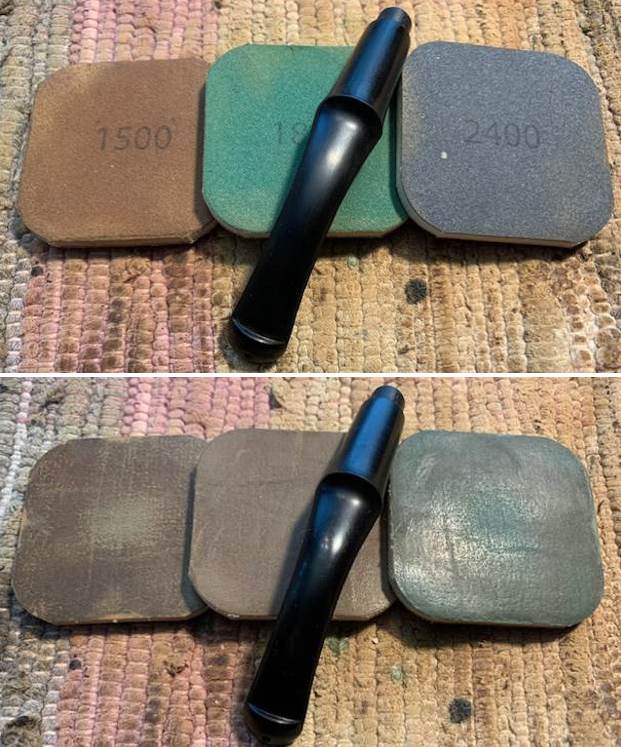
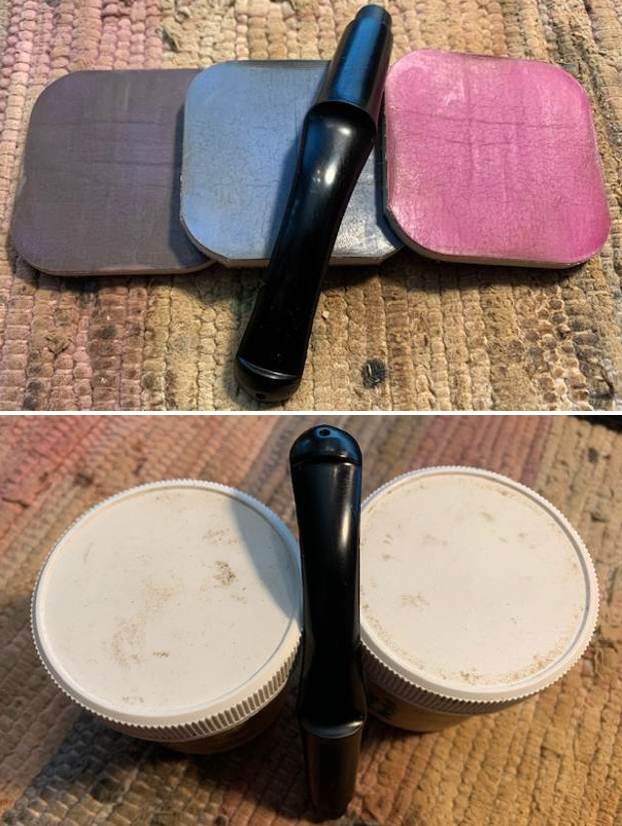
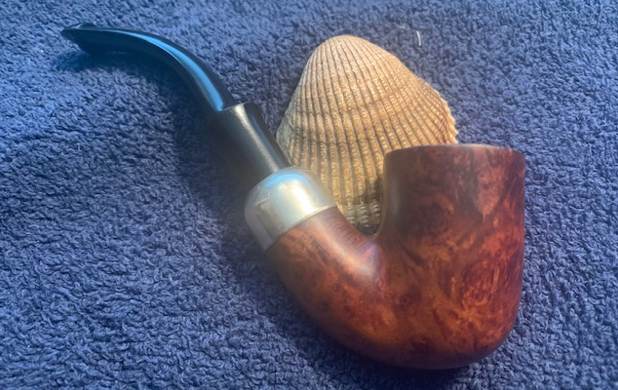
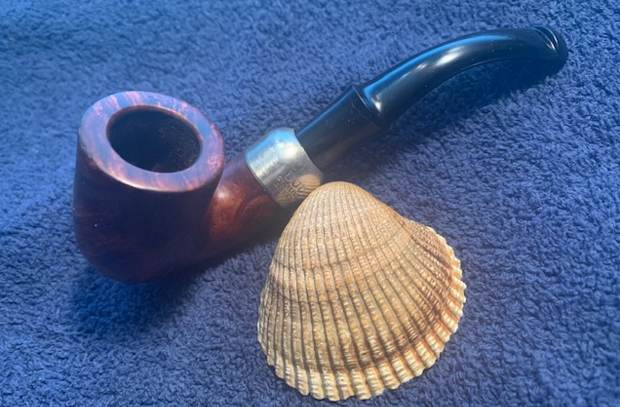
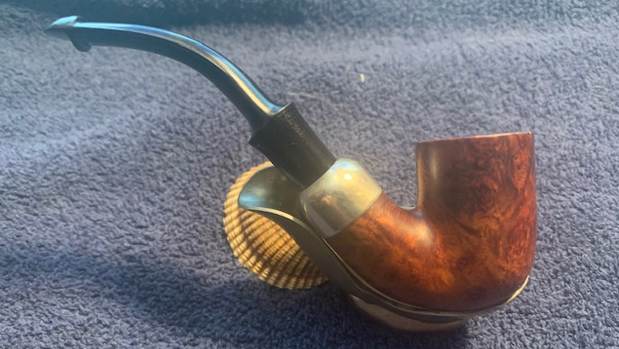
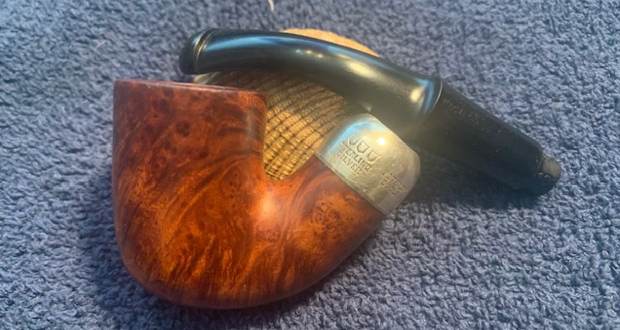
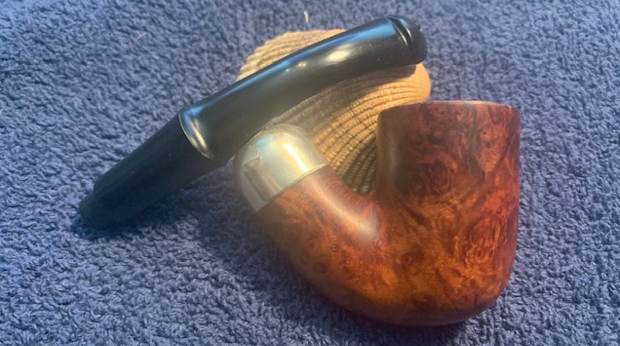
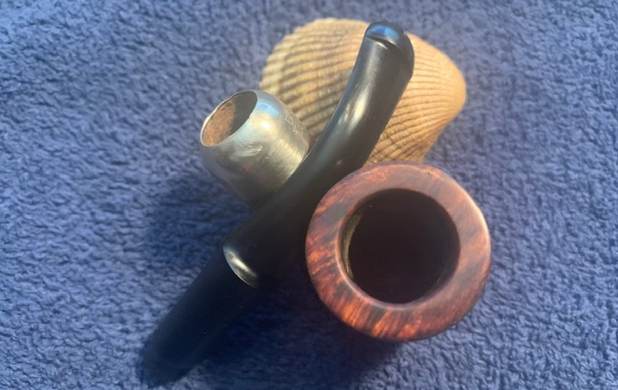
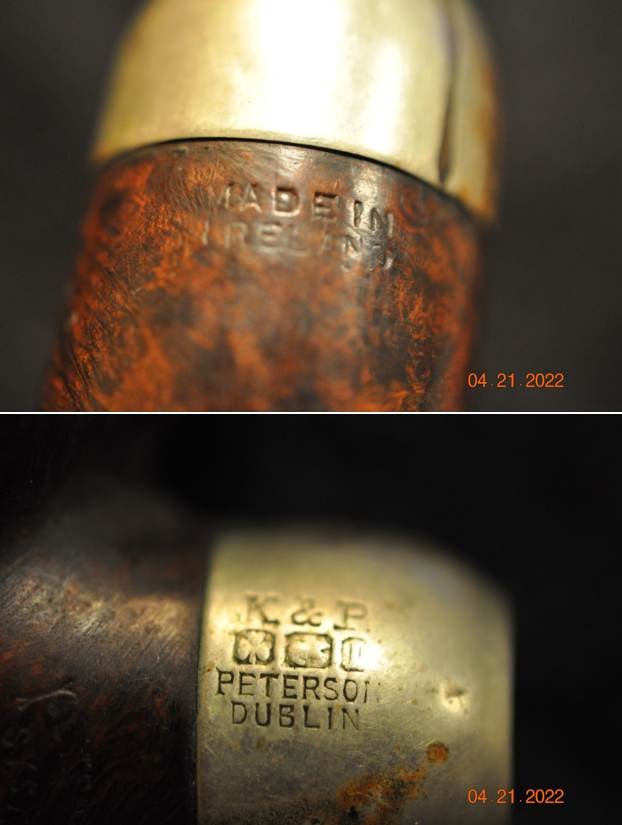
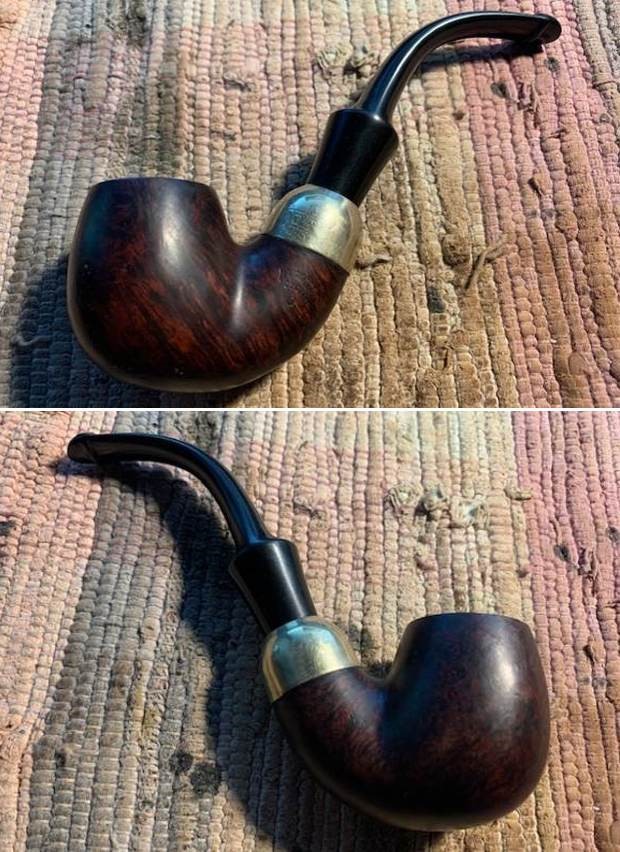
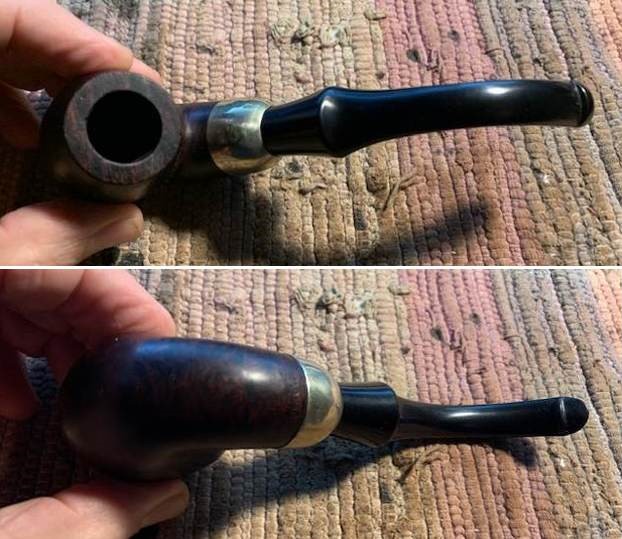
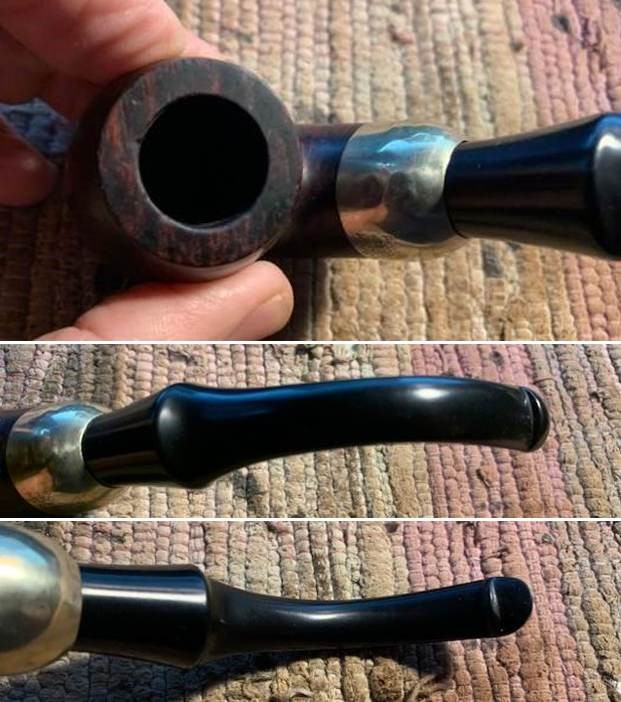
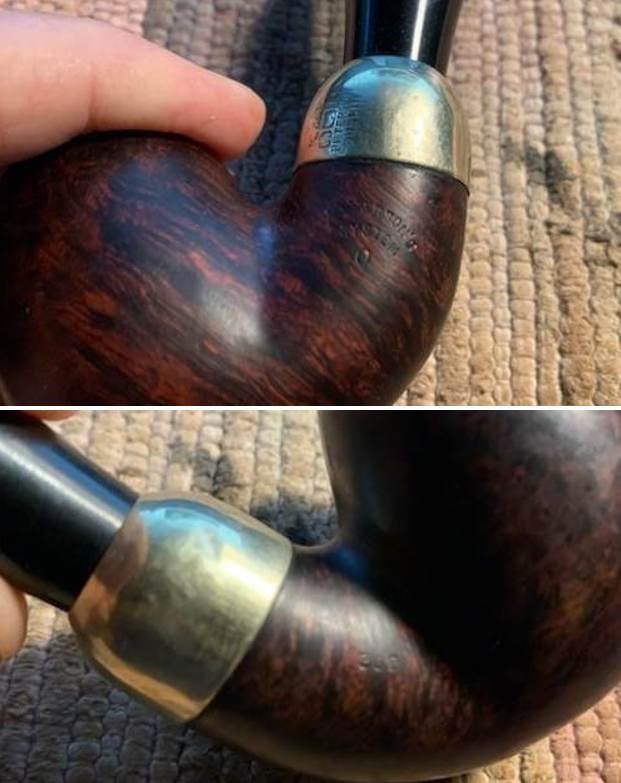
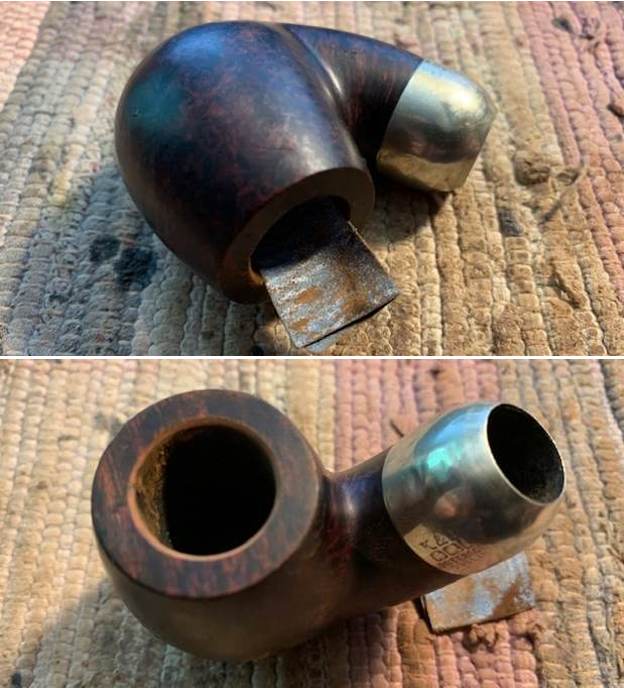
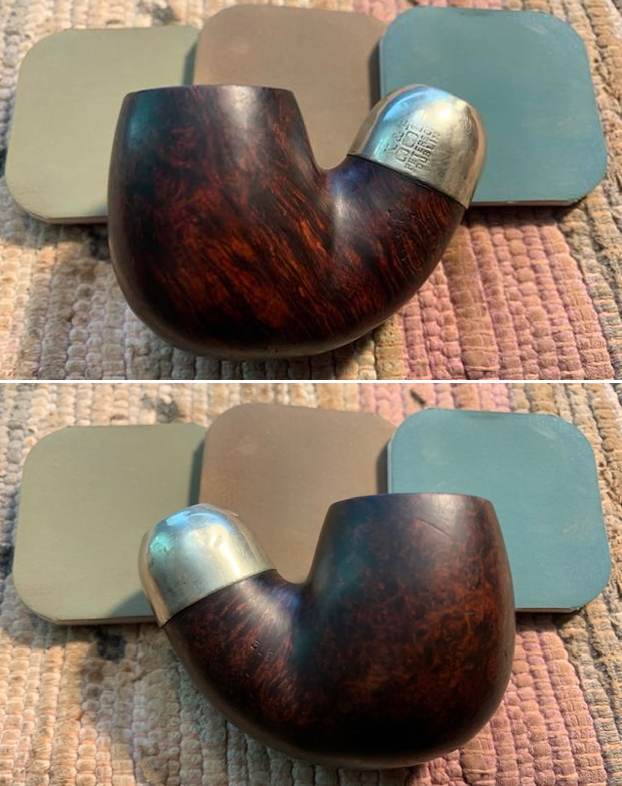
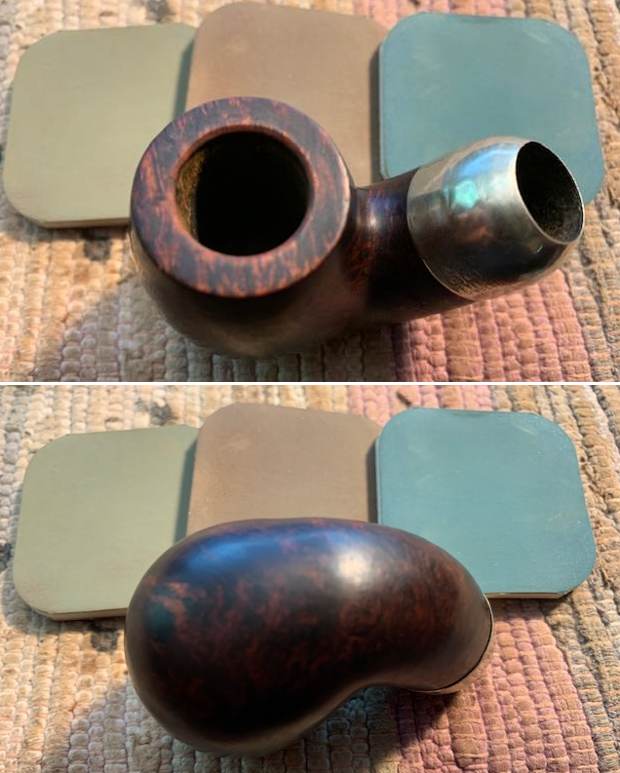
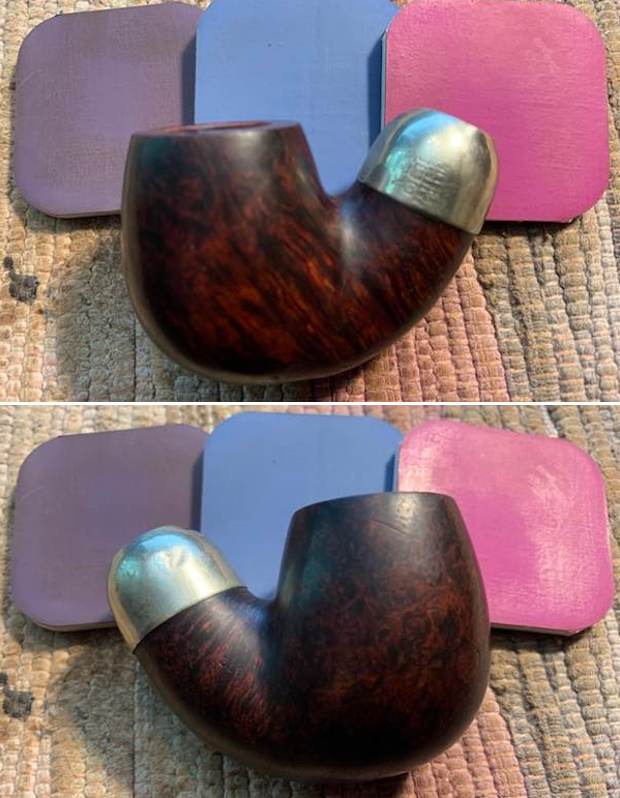
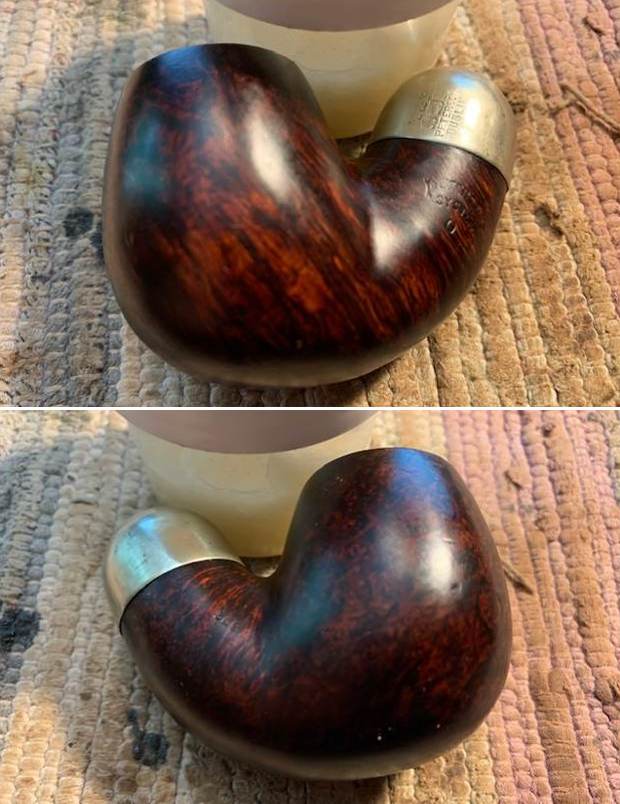
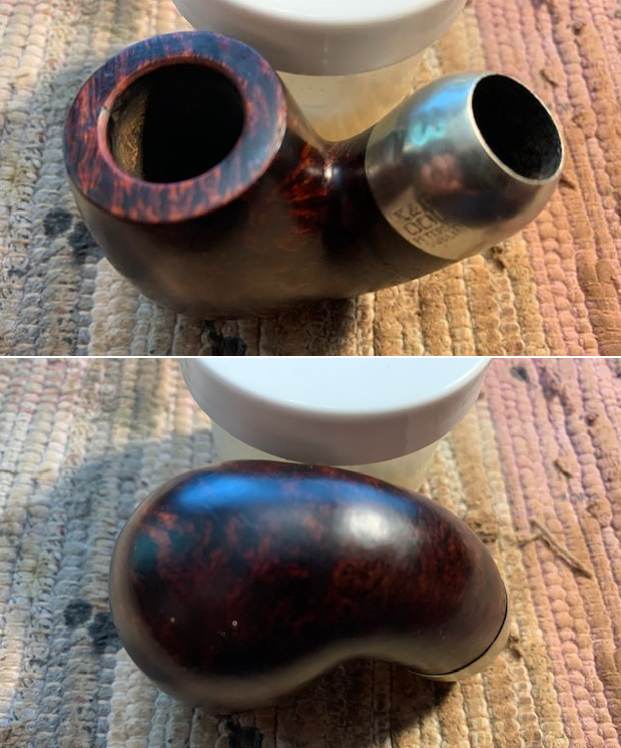
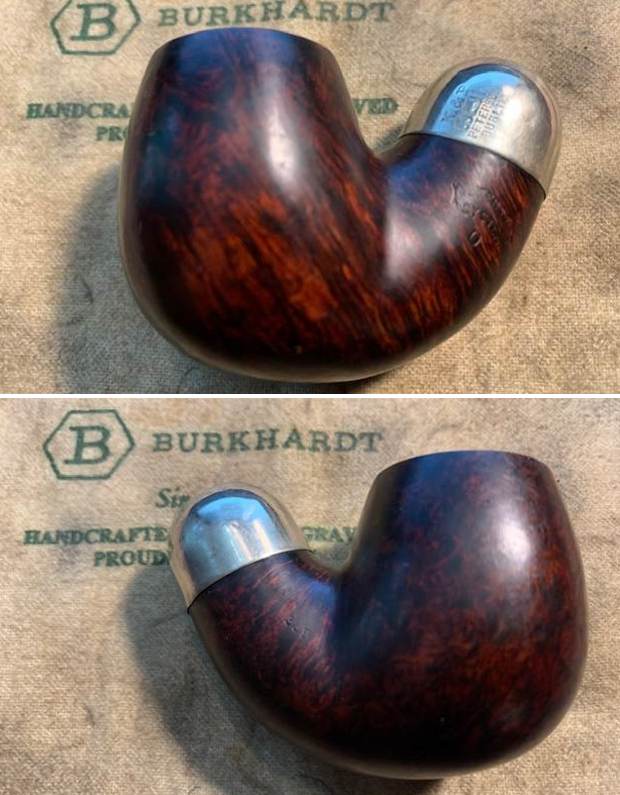
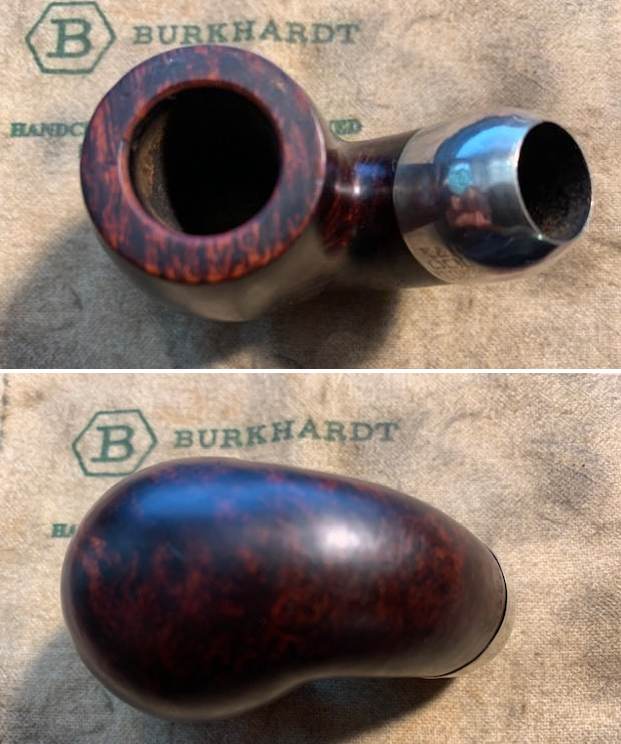
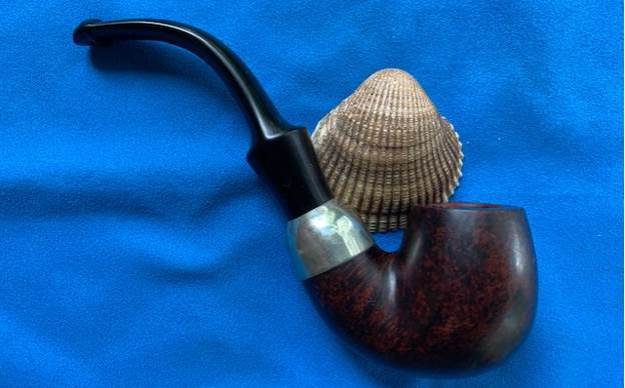
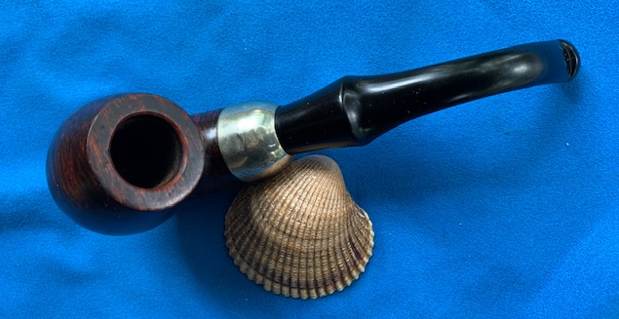
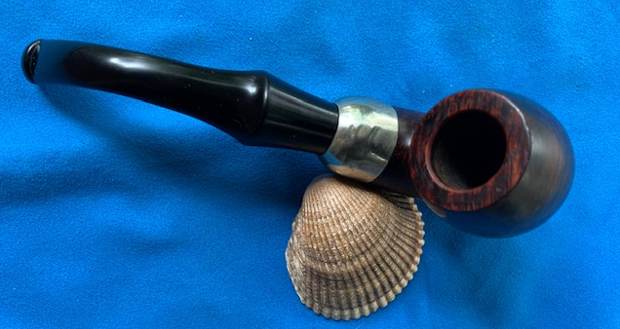
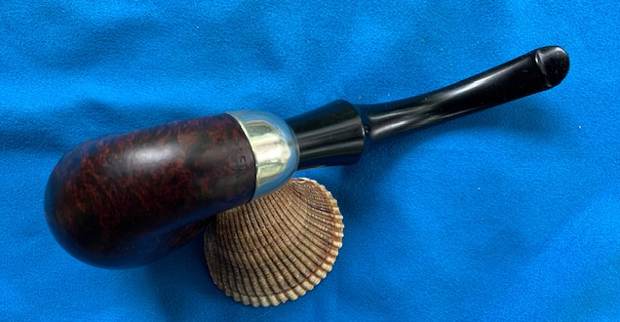
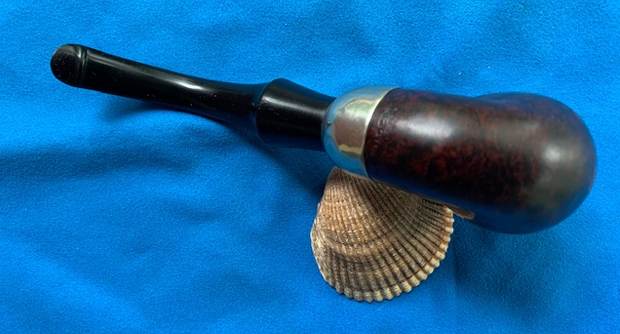
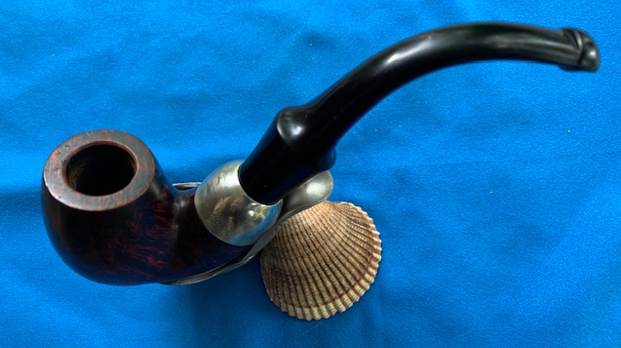
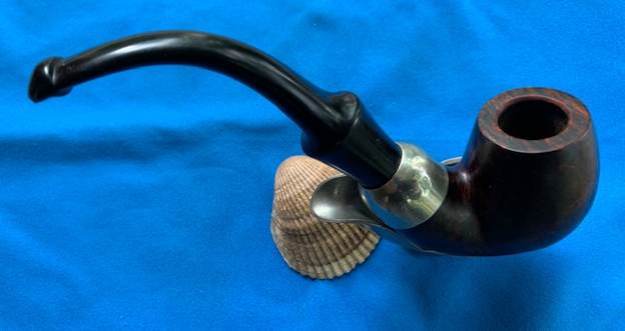
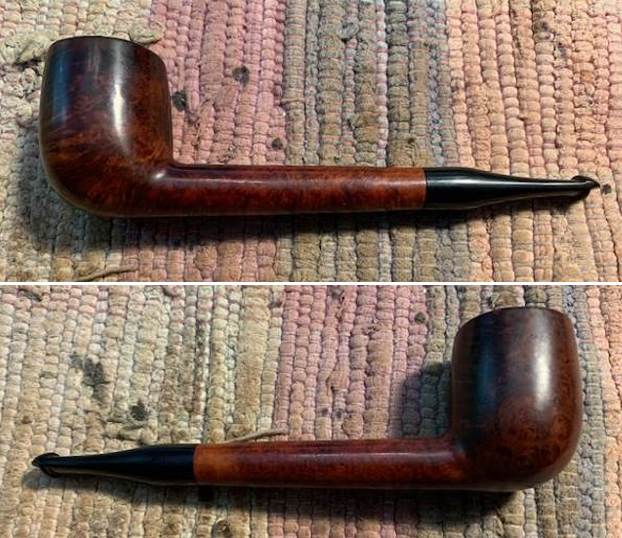
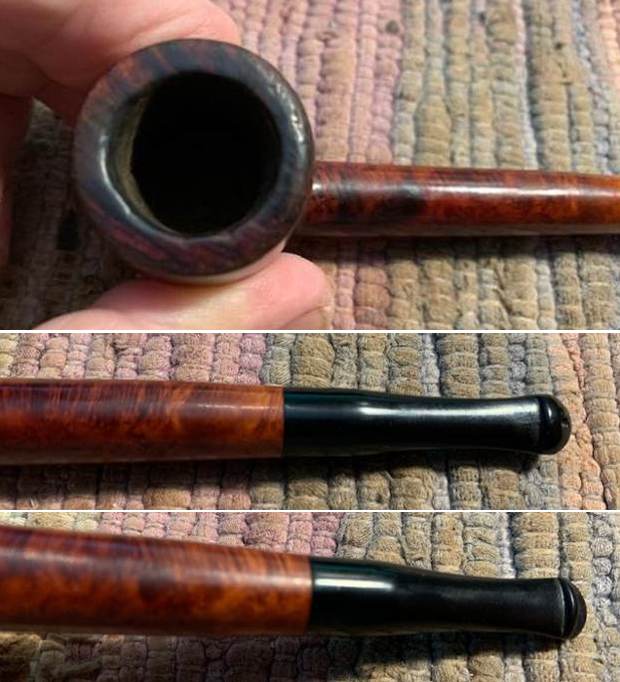
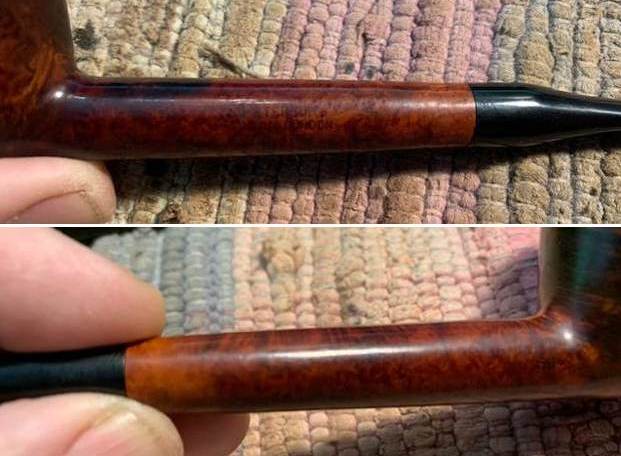
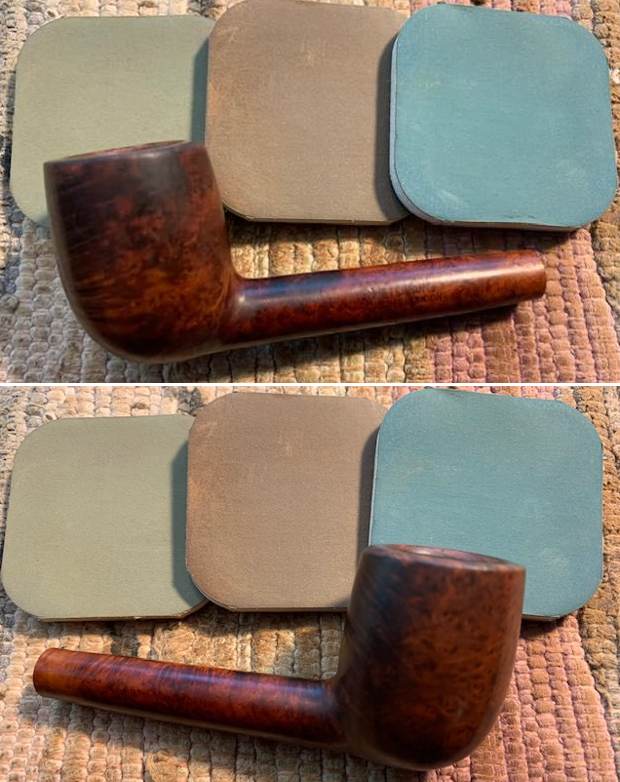
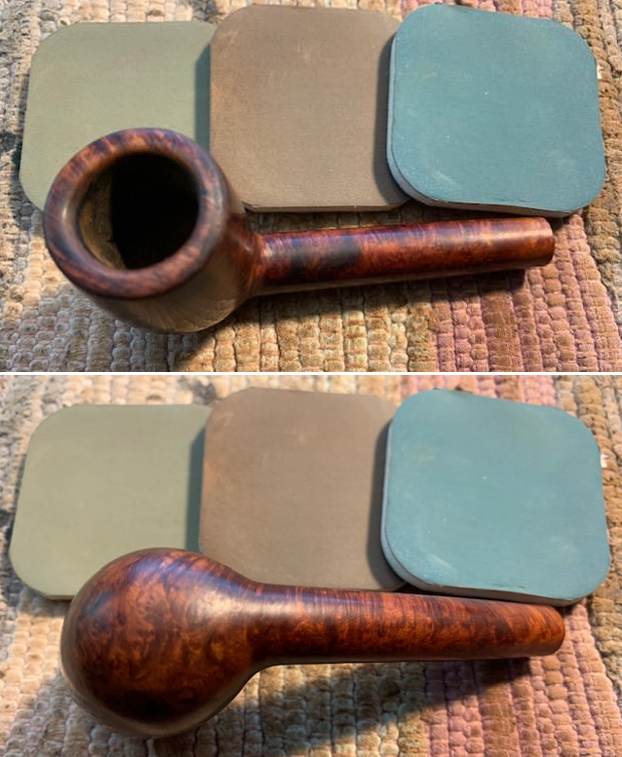
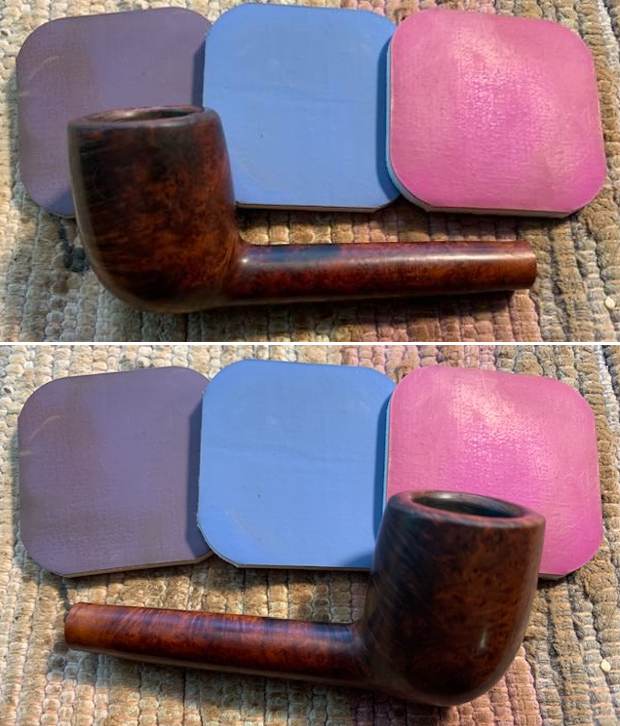
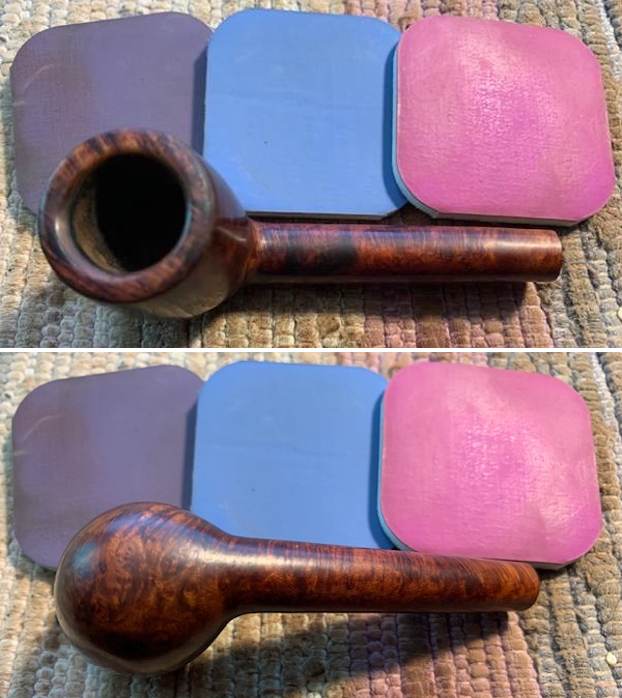
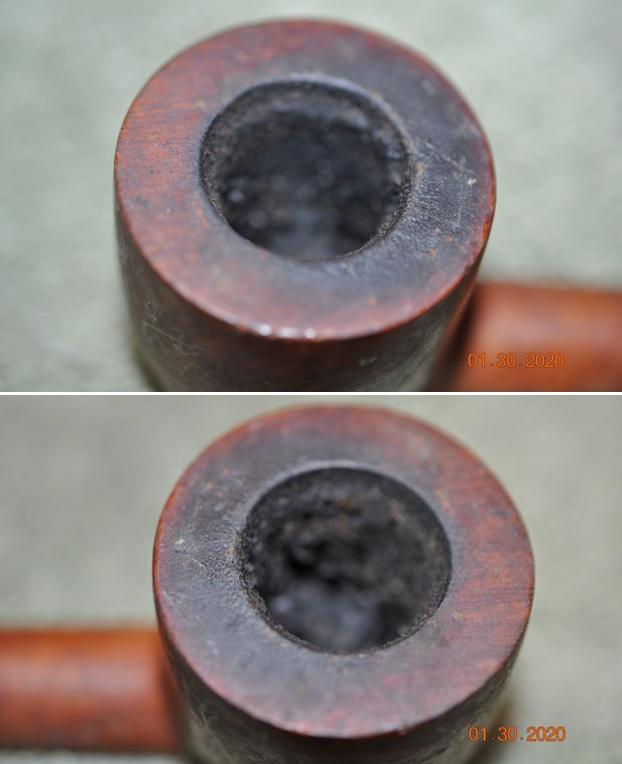
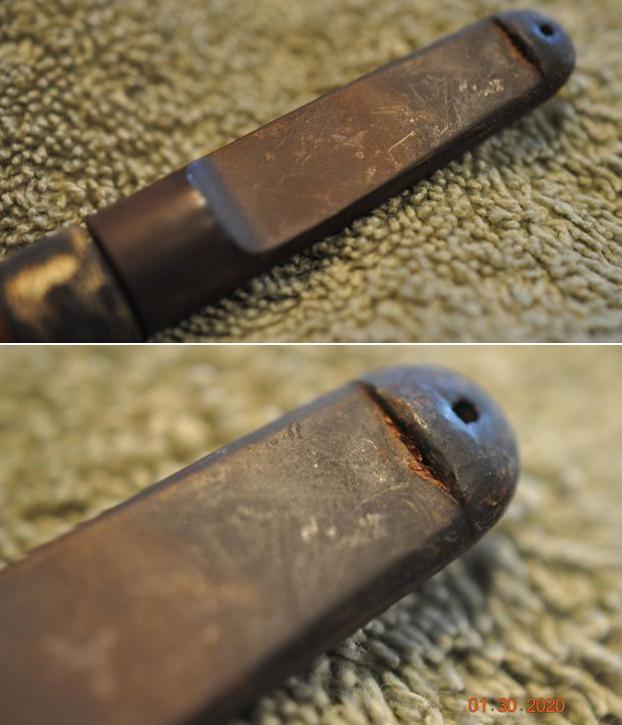
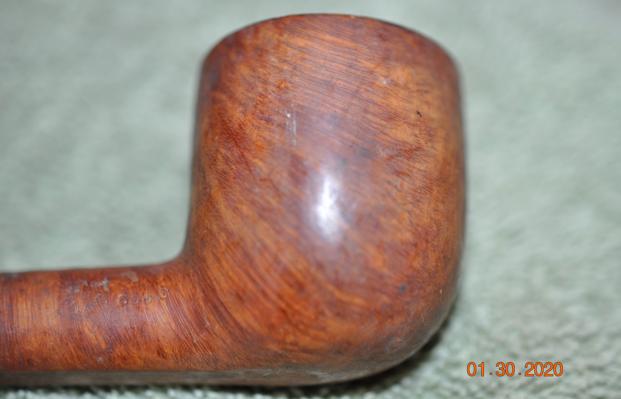
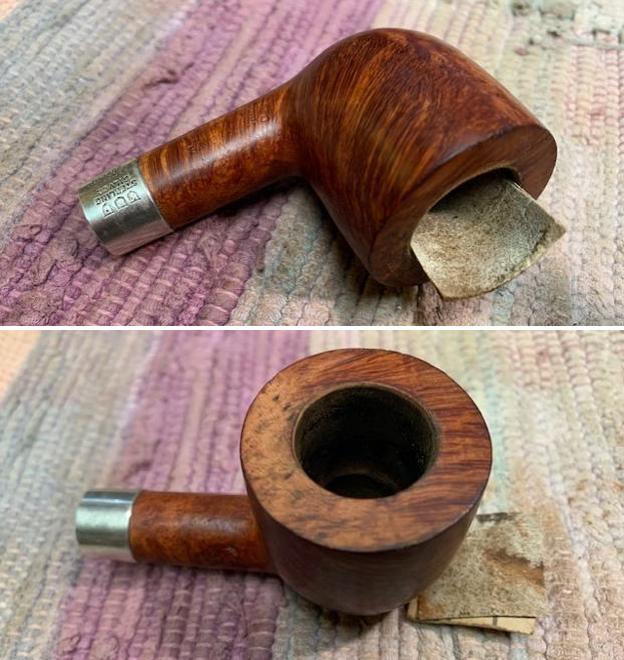
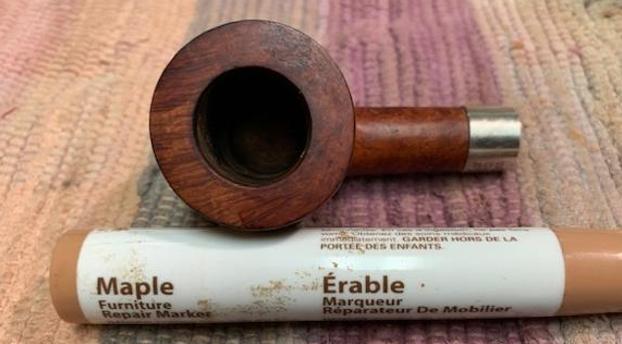
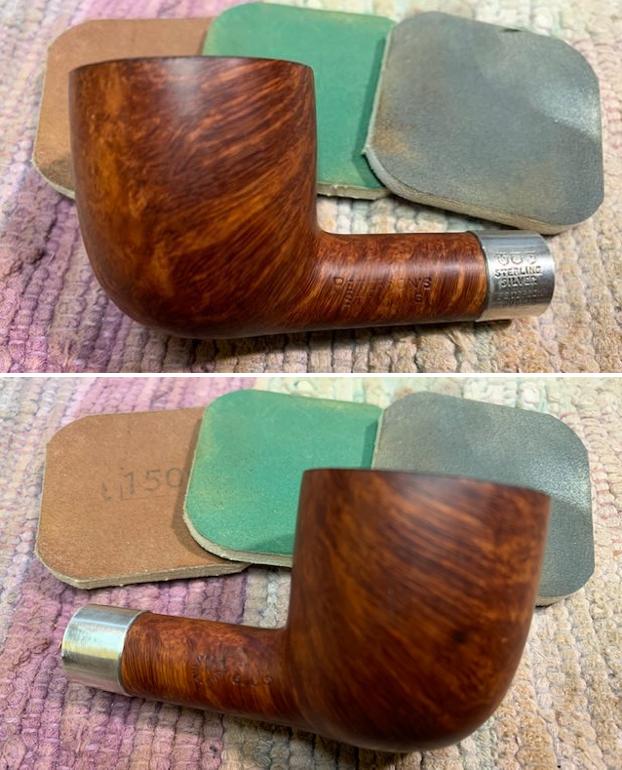
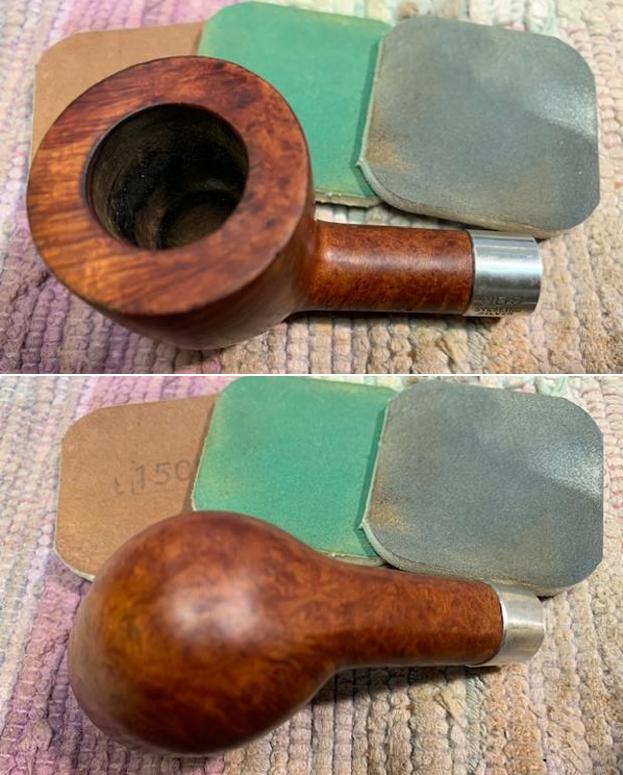
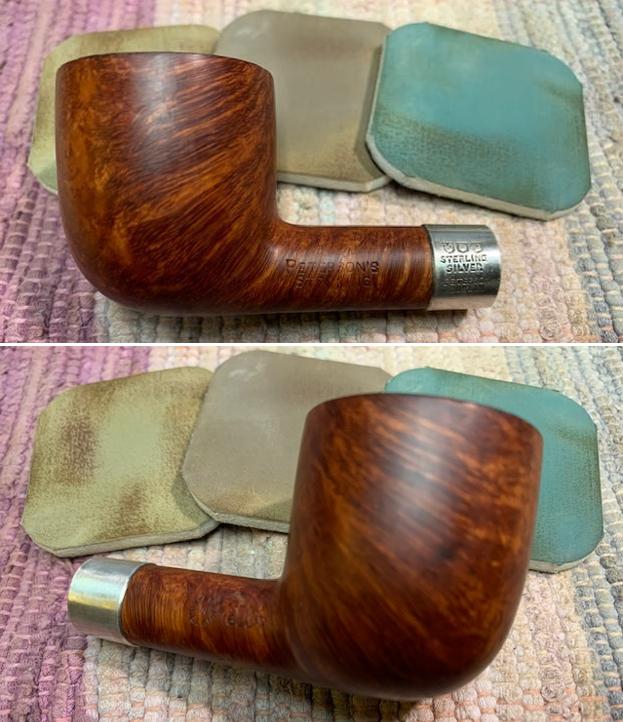
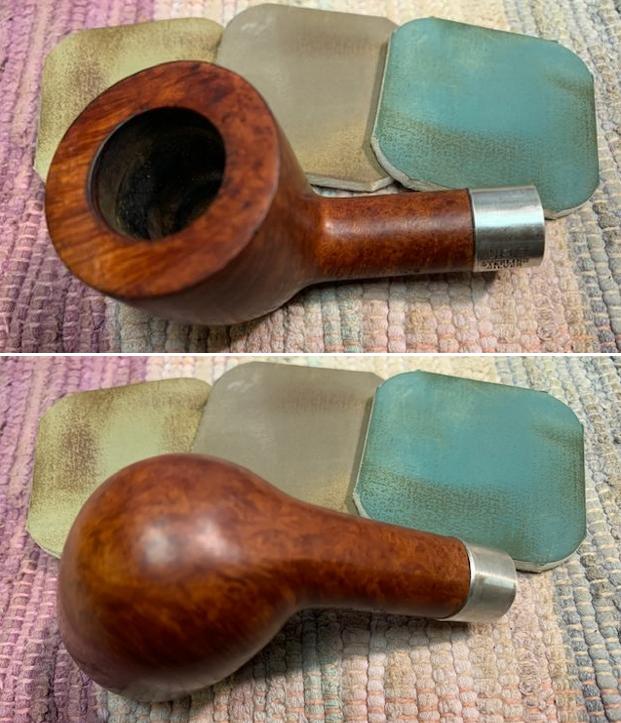
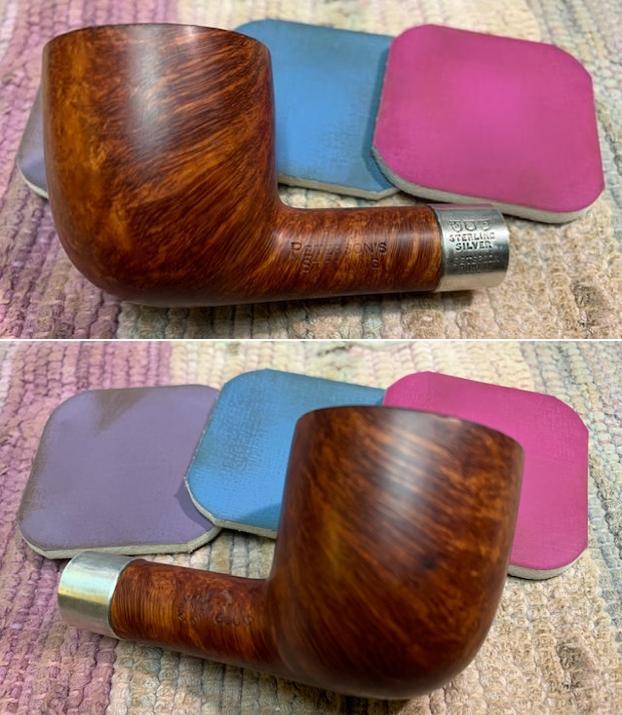
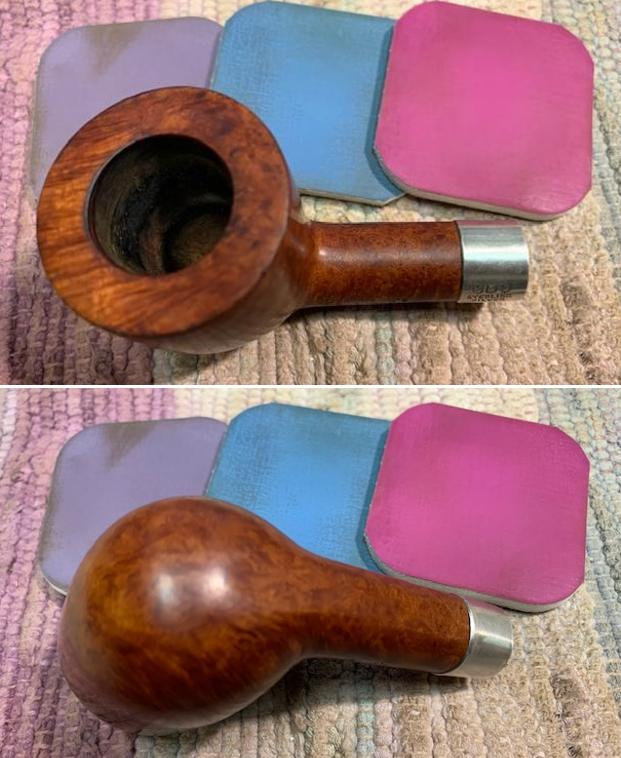
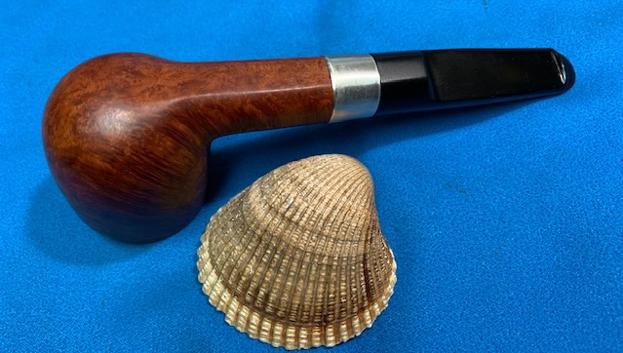
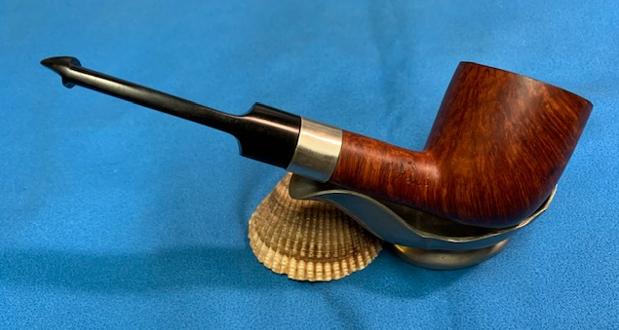
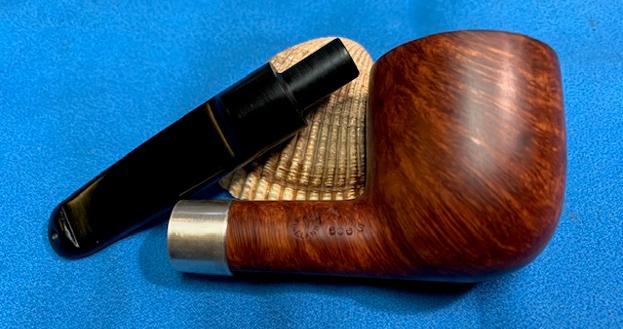
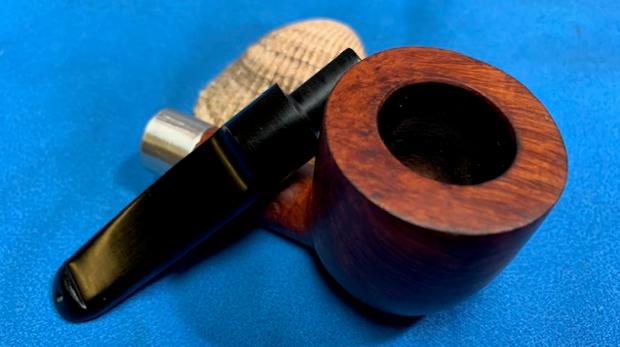
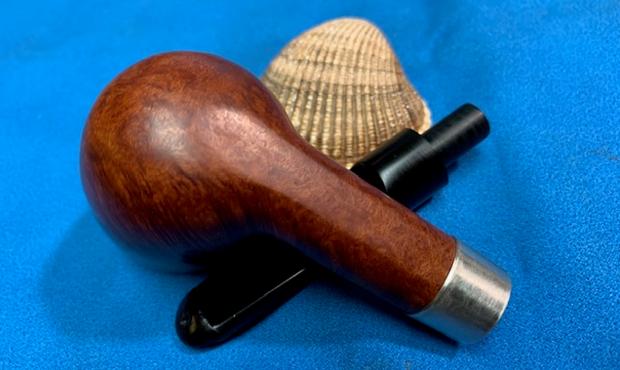
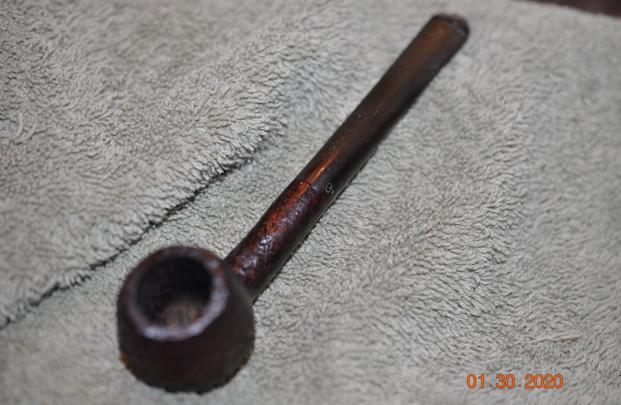
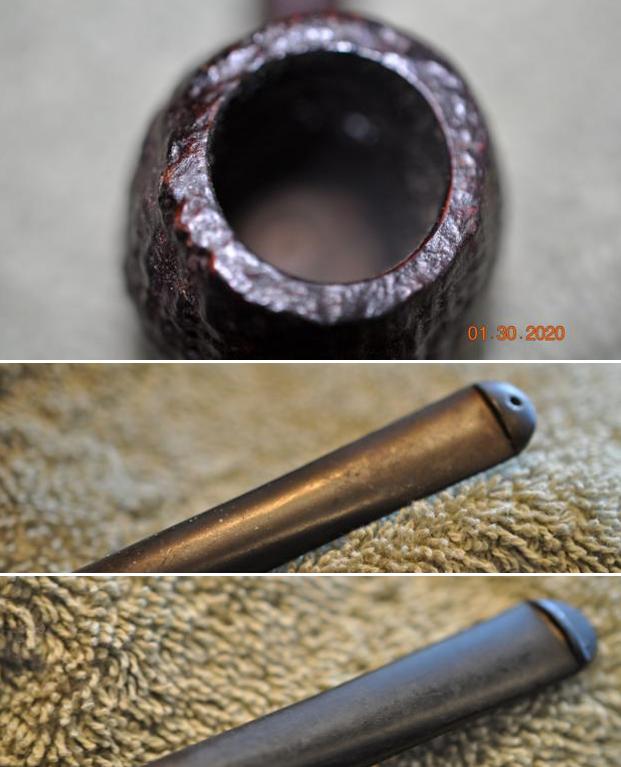
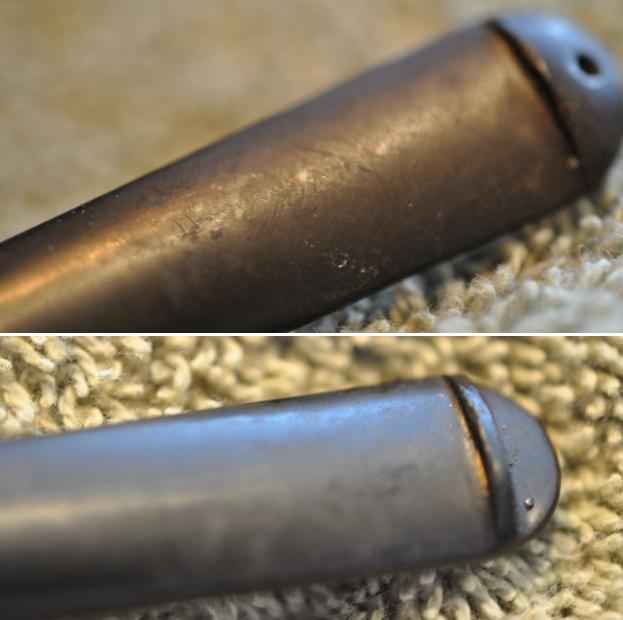
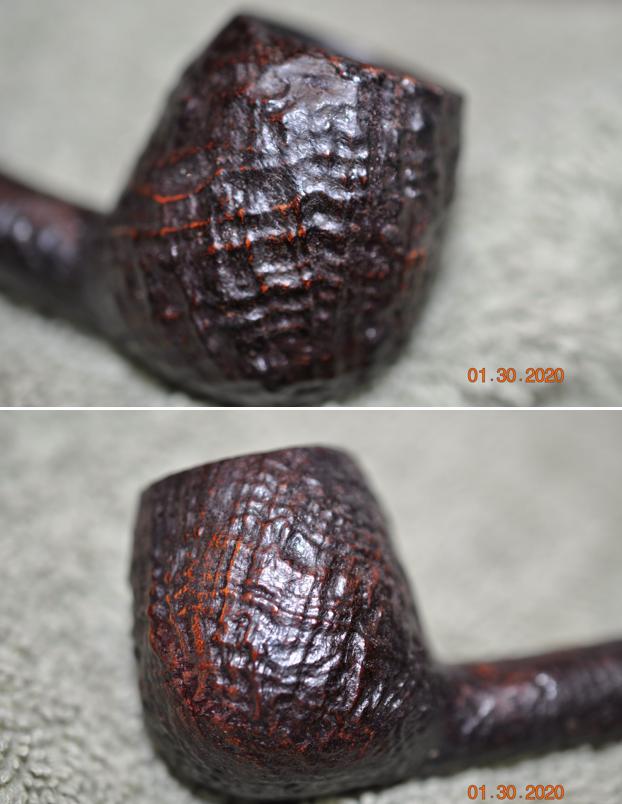
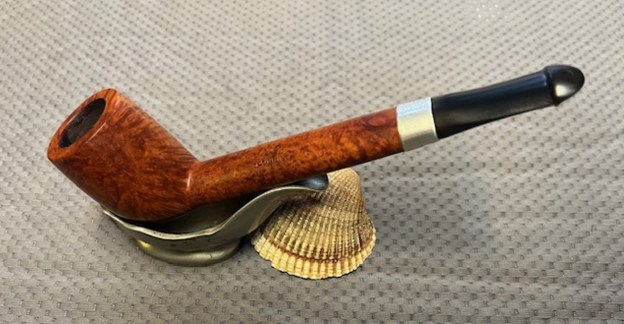
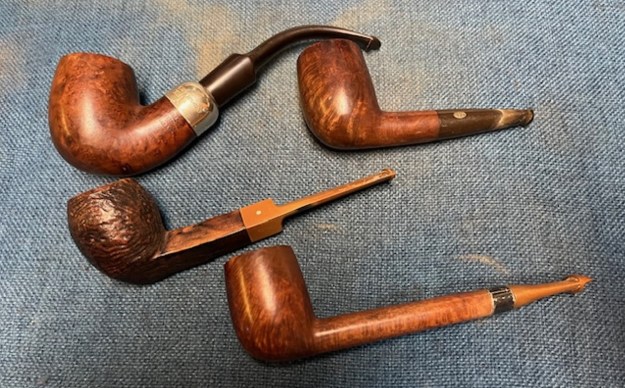
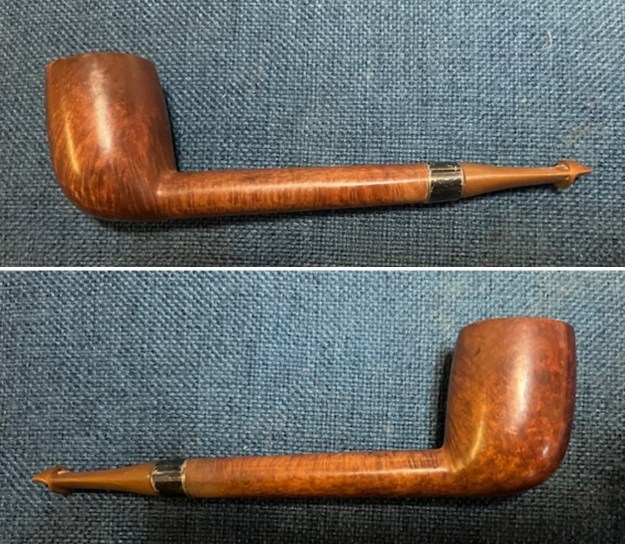
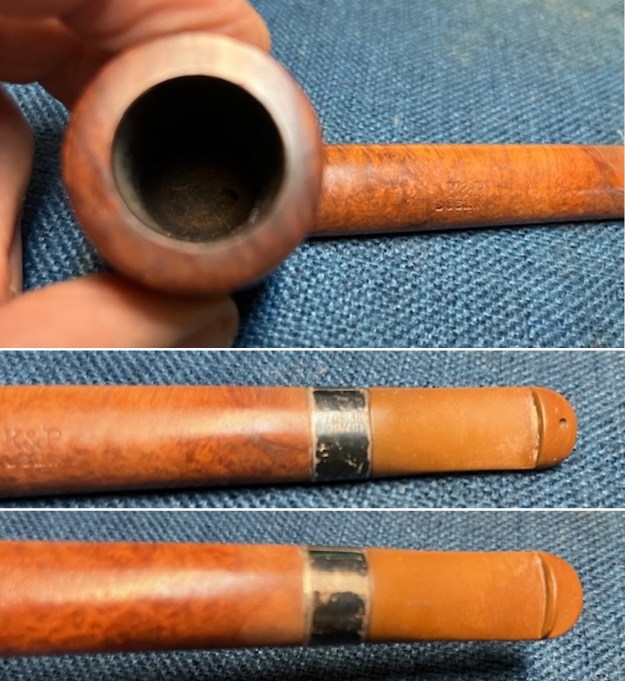
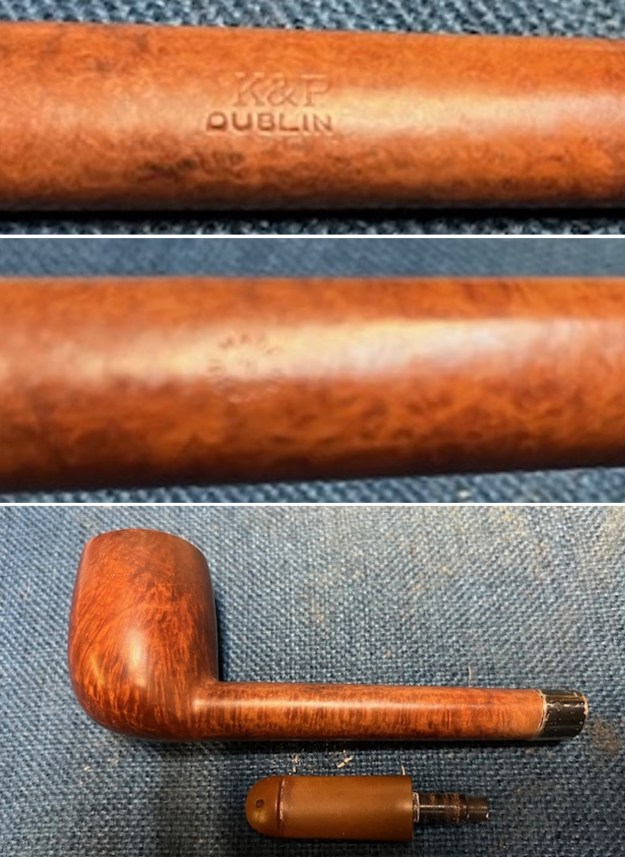
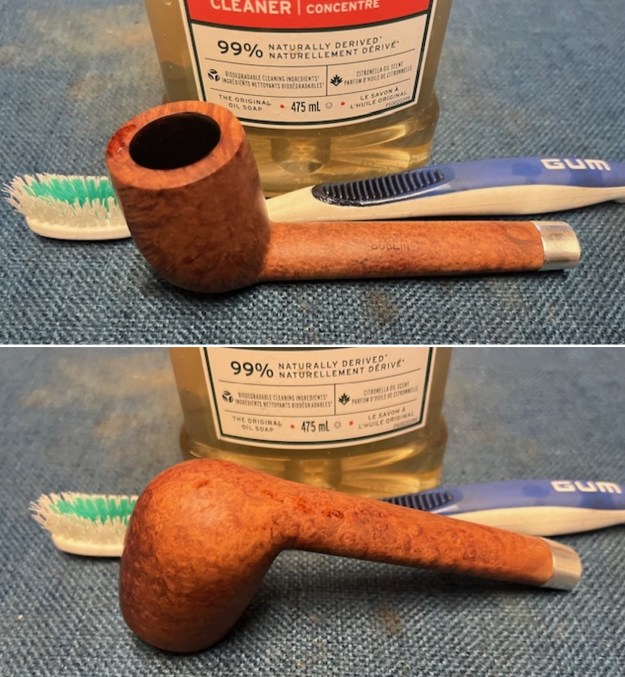
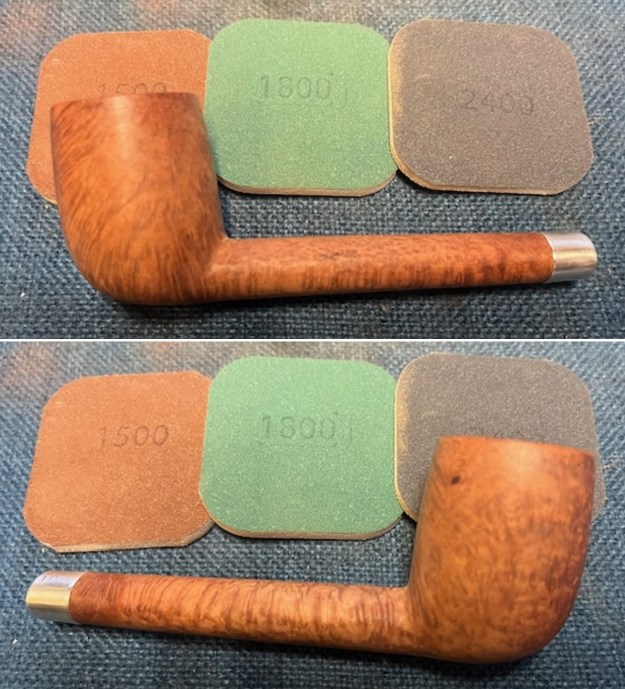
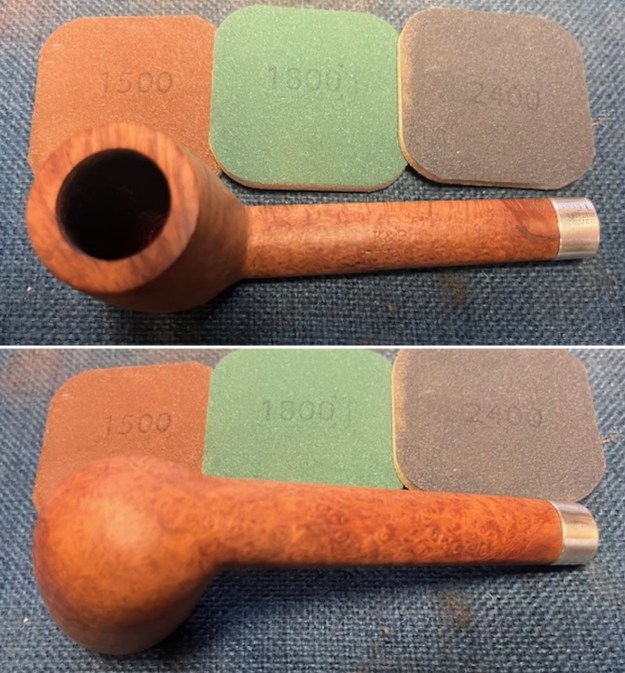
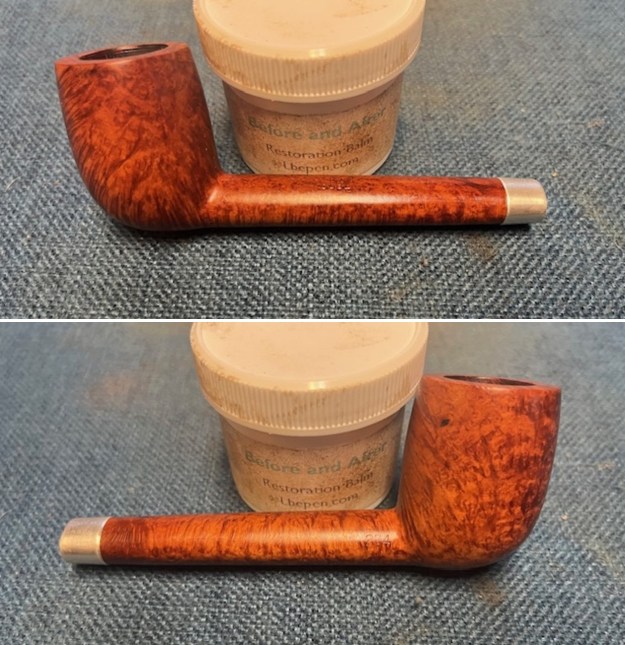
Last weekend Kenneth and I went to an antique show in New Westminster, BC. It is our third year going but still we have no idea what we are going to fine each time we go. It is always a part of the fun to wander through the various stalls and see what the vendors are offering on their tables. There are always surprising things – items that I grew up with that are now called antiques or at least collectibles. If only my foresight had been as good as my memory is now I could have sold many of the things I played with and ate from! But I digress. Back to the pipe hunting. We saw the usual offerings of things Grabow and Medico that were in very rough shape. I think we both have become much more selective over time and we passed on spending time with them. I did a few items that I picked up to restore. I took a picture of the group of fout pipes. In the left column from top to bottom there was a Peterson’s System Standard 1307 (Canadian number on a 307 shape), a Bulldog that was stamped Fraser Valley Made in Canada with a white dot stem and at the bottom was another Peterson – a K&P Dublin Made in Ireland Canadian with a Sterling Silver Band. The one on the right side is an older GBD Nosewarmer with an orific button on the short stem. Not a bad group of pipes to bring to the work table.The first of them I chose to bring to the table was the K&P Canadian at the bottom of the above photo. It is a pretty pipe and bears the stamping on the top of the shank that reads K&P [over] Dublin. On the underside the COM stamp is Made in Ireland in a circle. That format for the stamp made the pipe one that was made between 1945-1972. On the worn and oxidized Silver band it is stamped K & P in three shields [over] Sterling [over] Silver. The bowl has a light cake but the rim top and edges are very clean. The shank looks to be clean also. The stem is heavily oxidized and will take some work to bring it back to black. There does not appear to be any stamping or logo on the stem. It is an original P-lip style stem and it is in surprisingly good condition under the oxidation. I took photos of the pipe before I started my clean up work on it. I took a close-up photo of the rim top to show the condition of the bowl and inner edge of the bowl and the stem. You can clearly see the cake in the bowl and the darkening and lava on the rim top. The stem photos show the deep oxidation on the stem and the silver band.I took a photo of the stamping on the sides of the shank. It is clear and readable as noted above. I removed the stem and took a photo of the parts of the pipe. It is a pretty little pipe.Now it was time to work on the pipe. I cleaned up the silver band with a jeweller’s cloth so that I could read the stamping clearly. It read as noted above and the characters were slightly worn under the oxidation. But it is a great addition to the pipe. I reamed the pipe with a Savinelli Fitsall Pipe Knife to remove the thin cake in the bowl and check the bowl walls. I sanded the bowl with a piece of dowel wrapped with 220 grit sandpaper. It looked much better at this point.I moved on to clean up the internals. I cleaned out the airway and mortise with pipe cleaners, cotton swabs and alcohol. I cleaned out the airway in the stem at the same time. I was surprised at how clean the internals were. I scrubbed the externals of the pipe with undiluted Murphy’s Oil Soap and a tooth brush to remove the grime in the finish and on the rim top. I worked on it until it looked much better and then rinsed it off with warm water. I dried it off with a soft cloth. I polished the bowl with micromesh sanding pads – dry sanding with 1500-12000 grit sanding pads. I wiped it down between pads with a damp cloth. It really began to take on a deep shine. There is a dark spot on the right side of the bowl. It is solid so it is not a fill. My guess is that it is where a root or such came out of the briar. The exterior of the bowl looks better after sanding. I worked some Before & After Restoration Balm into the briar with my finger tips. I let it sit on the bowl for 10 minutes and then buffed it off with a paper towel and soft cloth. The product is a great addition to the restoration work. It enlivens, enriches and protects the briar while giving it a deep glow. It is a product I use on every pipe I restore. I set the bowl aside and turned my attention to the stem. I scrubbed the stem with Soft Scrub and cotton pads to remove the oxidation. I was able to rid the surface of the majority of the brown and what was left would be able to be sanded off.There were no deep marks or chatter so I sanded the stem with 320-3500 grit sanding pads and wiped it down with Obsidian Oil to remove the sanding dust.I polished the stem with micromesh sanding pads – dry sanding with 1500-12000 grit pads. I wiped the stem down after each sanding pad with Obsidian Oil to further protect the vulcanite surface. I finished the polishing with Before & After Pipe Stem Polish – Fine and Extra Fine. I wiped the stem down a final time with Obsidian Oil and a cloth. It really looks very good. I am always excited to finish working on a pipe. This K&P Dublin Made in Ireland Canadian made between 1945-1972 is no exception. I put the pipe back together and buffed it with Blue Diamond on the buffing wheel. I gave the bowl and the stem multiple coats of carnauba wax. I buffed the pipe with a clean buffing pad to raise the shine and hand buffed it with a microfibre cloth to deepen the shine. It is fun to see what the polished bowl looks like with polished silver and the black vulcanite taper stem. This Classic looking Peterson’s K&P Dublin Canadian feels great in my hand. It is light and well balanced. Have a look at it with the photos below. The dimensions are Length: 6 inches, Height: 1 ¾ inches, Outside diameter of the bowl: 1 ¼ inches, Chamber diameter: ¾ of an inch. The weight of the pipe is 31 grams/1.09 ounces. I will be putting it on the rebornpipes store shortly in the Irish Pipe Makers Section if you are interested in it. Thanks for walking through the restoration with me as I worked over this pipe. Thanks to each of you who are reading this blog.
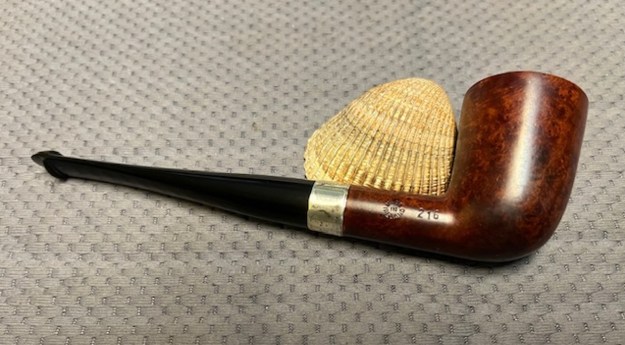
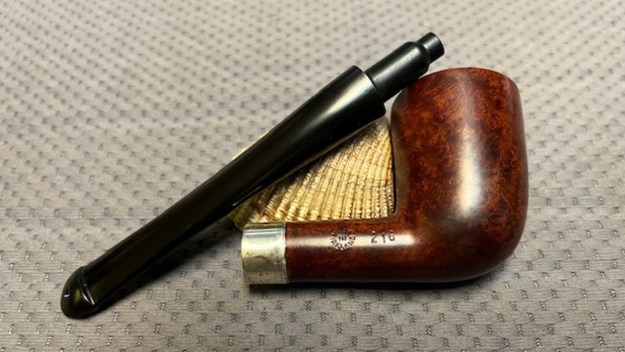
Restoring a K & P Dublin Made in Ireland 216 Dublin with a P-Lip stem


by Steve Laug

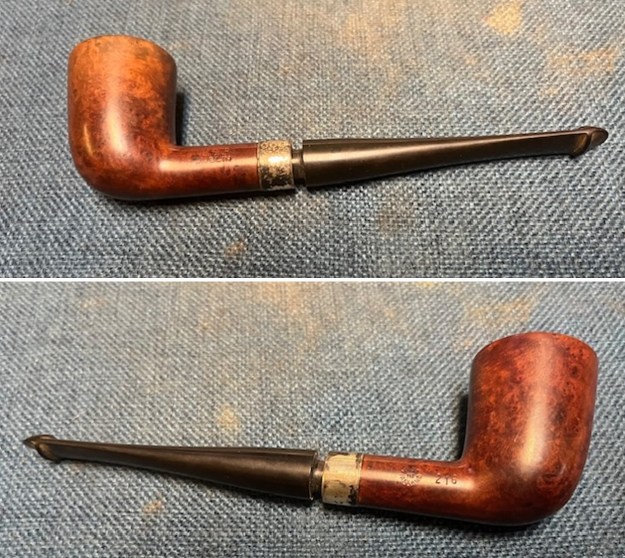
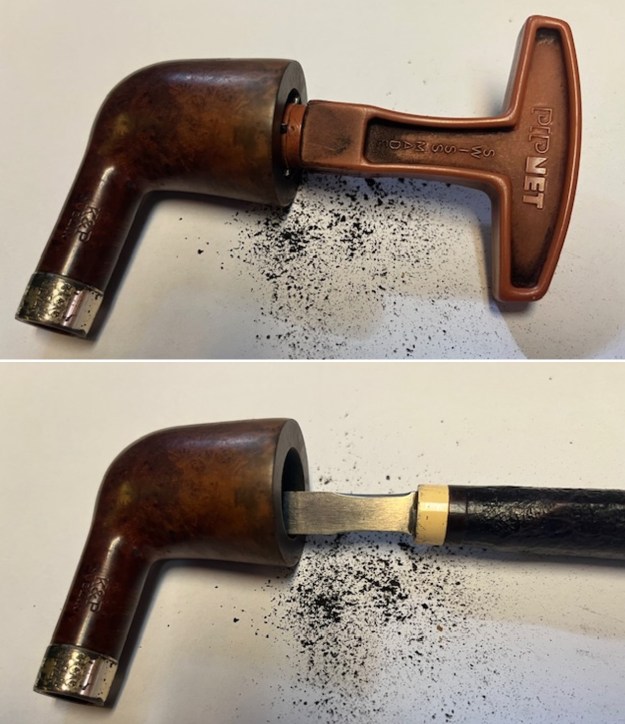
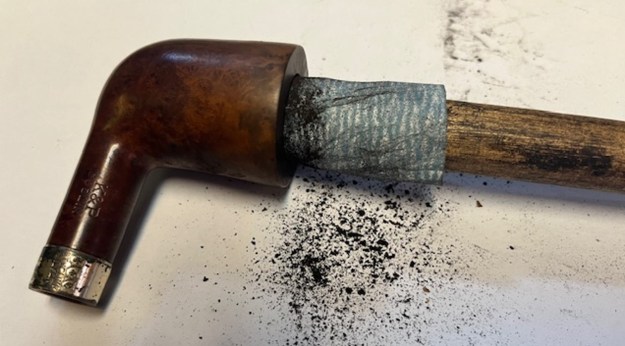
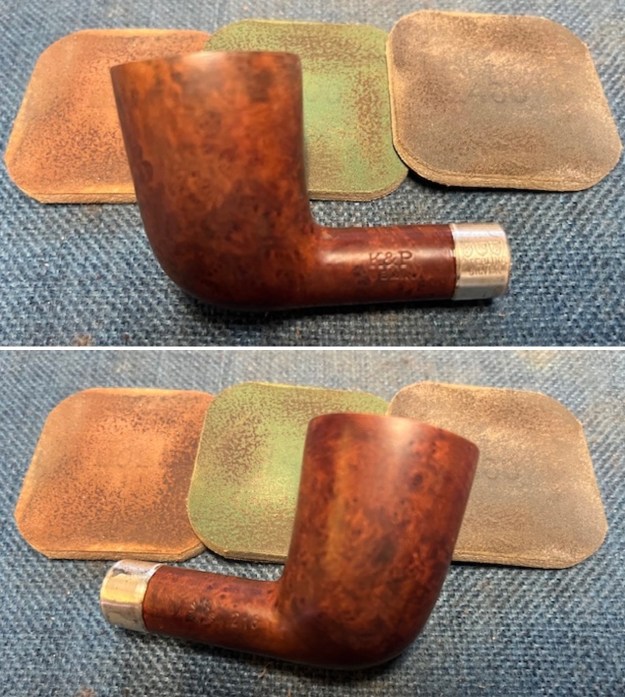
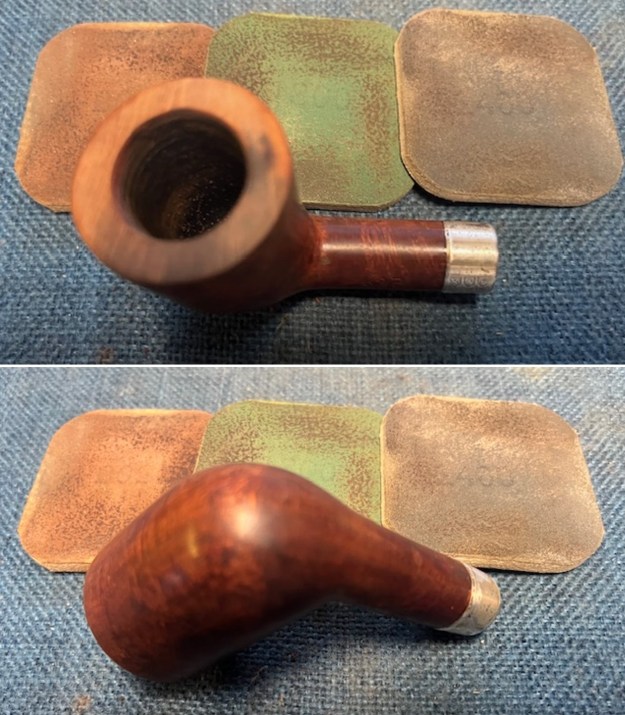
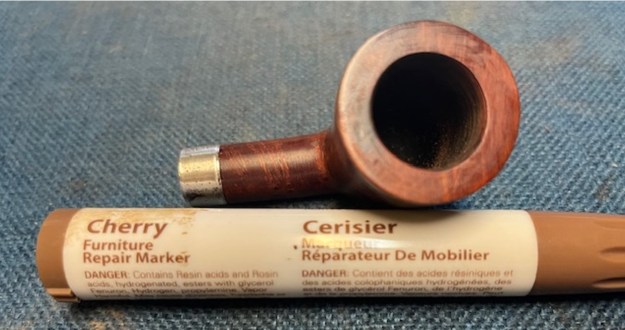
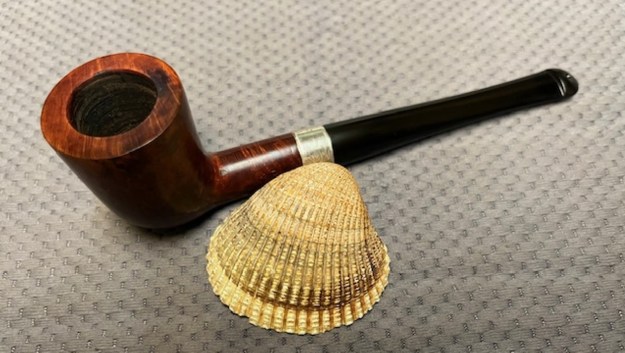
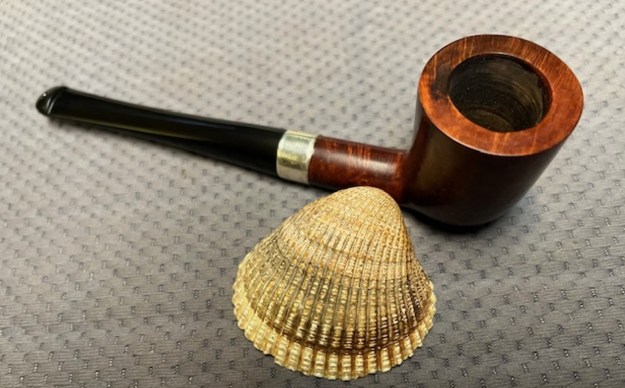
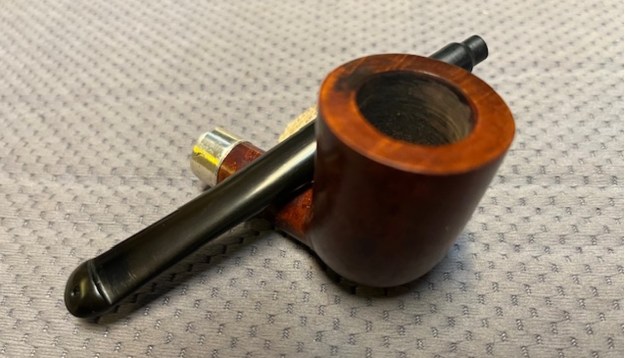
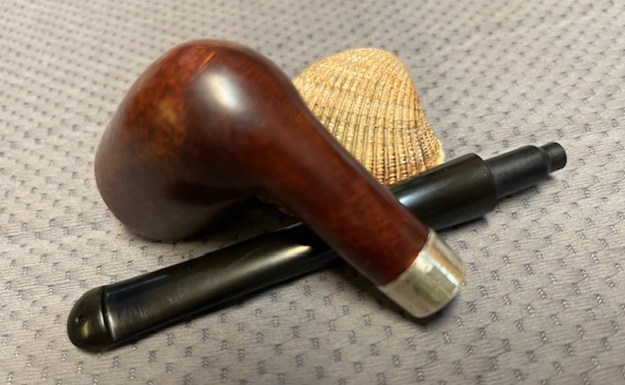
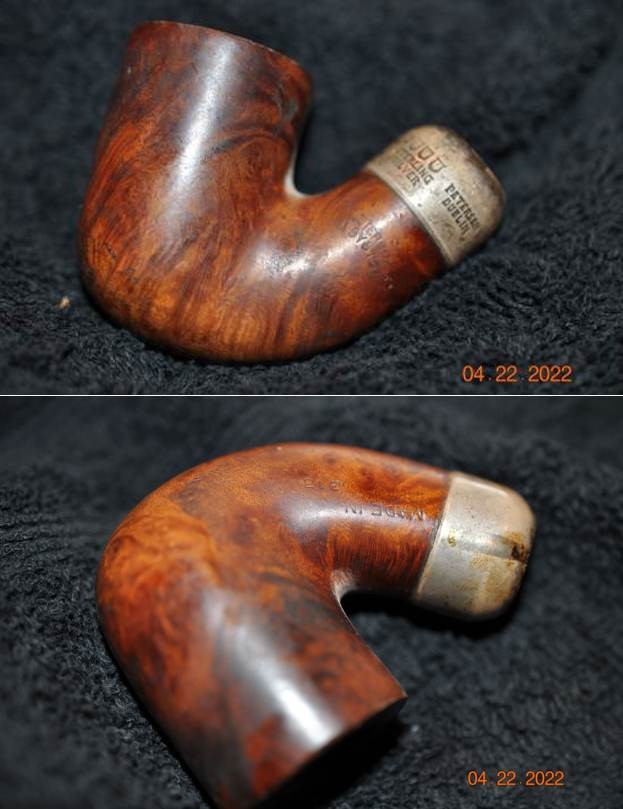
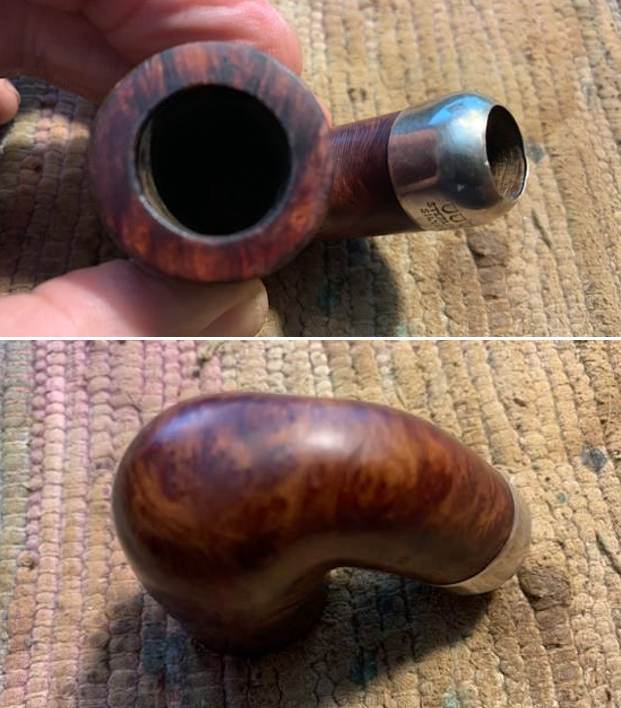
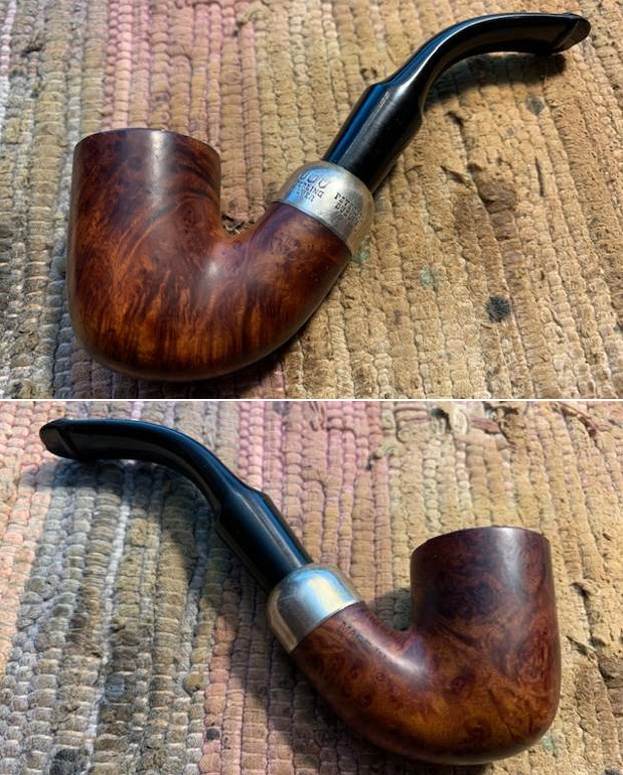
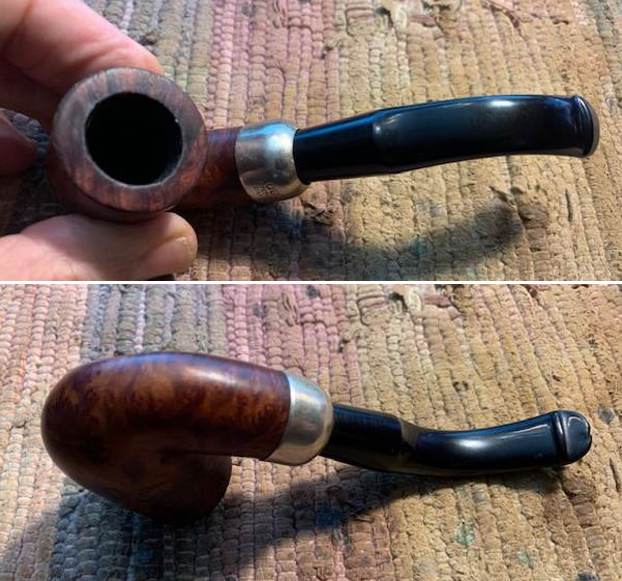
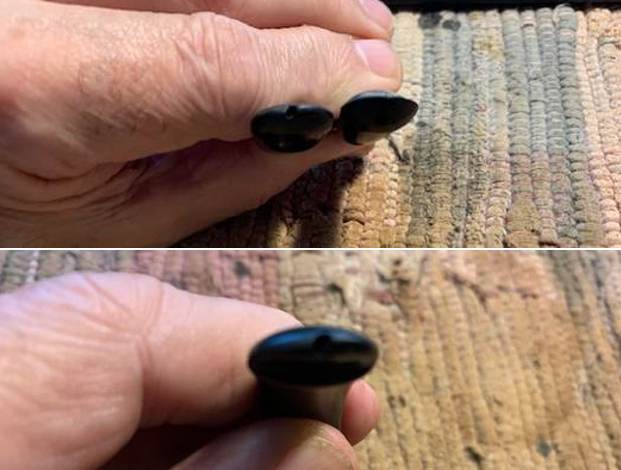
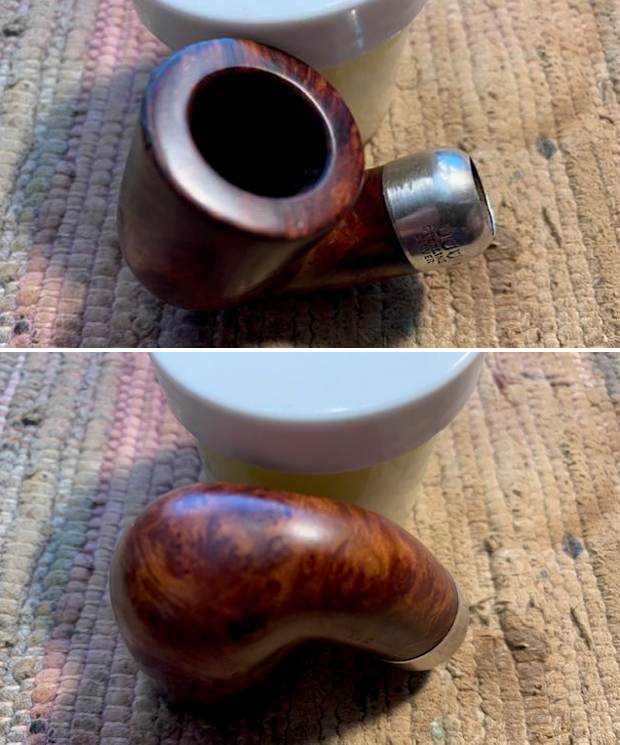
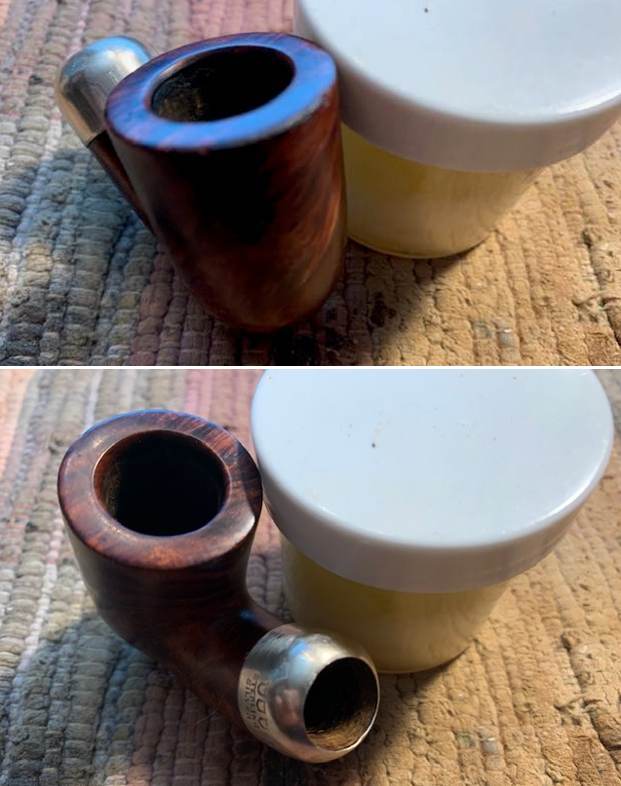
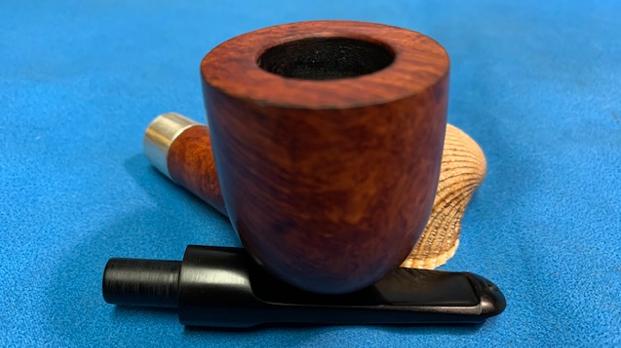
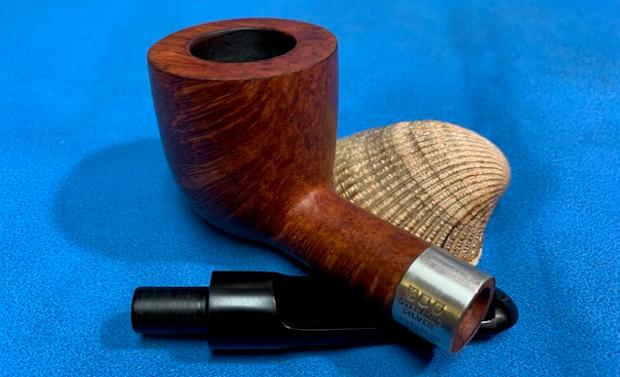
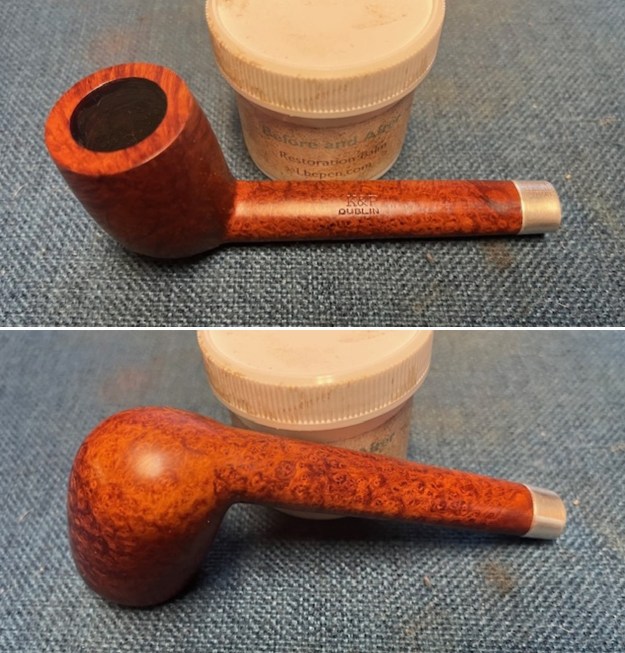
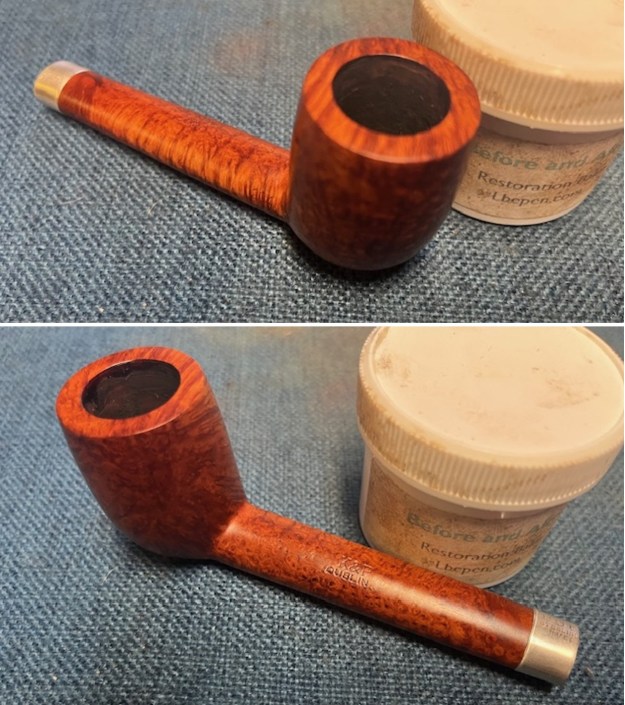
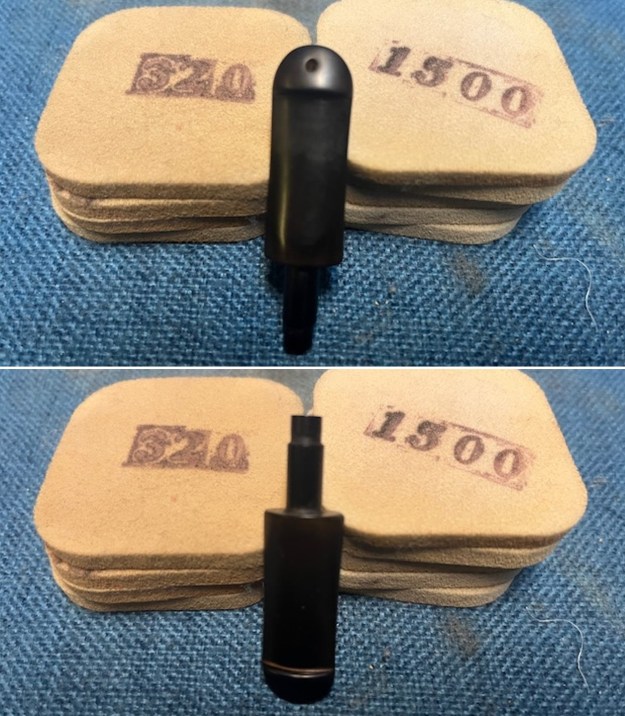
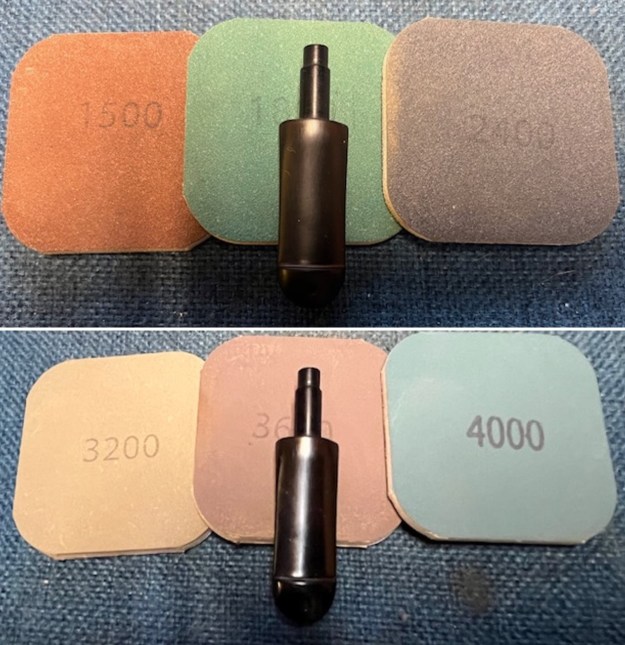
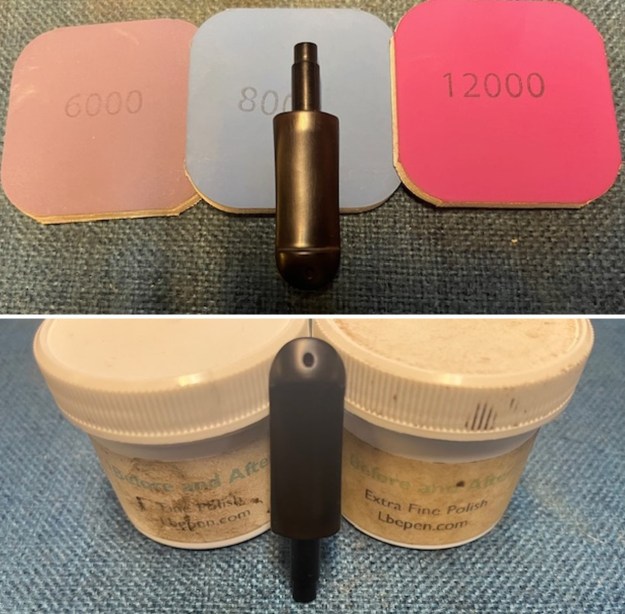
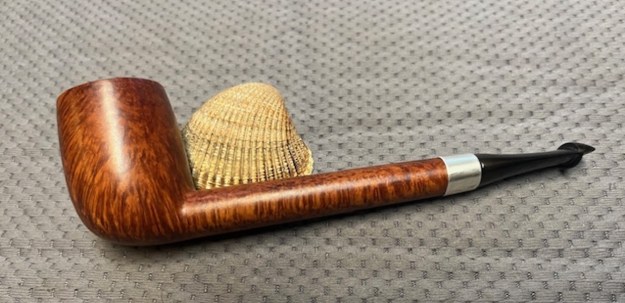
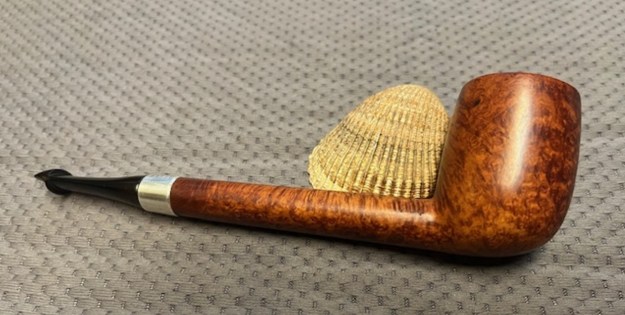
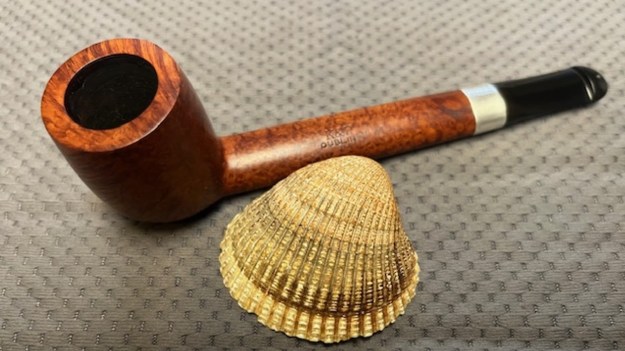
The next pipe on the work table is the 2nd of three pipes sent to me by a fellow near Vancouver for restoration. It is a Peterson’s Dublin shape with a Sterling Silver band. It is stamped on the left side of the shank and reads K&P [over] Dublin and on the right side Made in Ireland in a circle followed by the shape number 216. The silver band is stamped with K & P in shields [over] Sterling [over] Silver. The bowl had a light cake and a light overflow of lava on the rim top and inner edge. There was some darkening on the top and what looked like a fill on top at the back of the bowl. The finish was oily and light in spots on the left side near the top.  The silver band was tarnished but should clean up well. The P-lip stem was a vulcanite taper that was lightly oxidized and had light tooth marks and chatter on both sides ahead of the button. The stem did not seat properly in shank because of tars and oils in the mortise. It should be a straightforward clean up. I took photos of the pipe before I started my cleanup work. I took a close-up photo of the rim top to show the condition of the bowl and inner edge of the bowl and the stem. You can clearly see the cake in the bowl and the darkening and lava on the rim top. The stem photos show the light tooth marks on both sides ahead of the button.I took a photo of the stamping on the sides of the shank. It is clear and readable as noted above. I removed the stem and took a photo of the parts of the pipe. It is a unique and strangely pretty little pipe. Now it was time to work on the pipe. I reamed the pipe with a PipNet reamer using the first and second cutting head. I took the cake back to bare briar. I cleaned up the reaming with a Savinelli Fitsall Pipe Knife to remove the remnants. I sanded the bowl with a piece of dowel wrapped with 220 grit sandpaper. It looked much better at this point. I moved on to clean up the internals. I cleaned out the airway and mortise with pipe cleaners, cotton swabs and alcohol. I cleaned out the airway in the stem at the same time. It was a dirty pipe but after this cleanup it was much better.I scrubbed the externals of the pipe with undiluted Murphy’s Oil Soap and a tooth brush to remove the grime in the finish and on the rim top. I worked on it until it looked much better and then rinsed it off with warm water. I dried it off with a soft cloth. I smoothed out the inner edge of the bowl and worked on the rim top with a folded piece of 220 grit sandpaper. It was beginning to look much better. Once I had cleaned the top there was a darkened spot on the top toward the back that showed a small fill. I topped it on a topping board with 220 grit sandpaper. I polished the bowl with micromesh sanding pads – dry sanding with 1500-12000 grit sanding pads. I wiped it down between pads with a damp cloth. It really began to take on a deep shine. The dark spot on the rim top is where the fill is still in place. Before going further with the sanding/polishing process I touch up the stain on the rim top and inner edge with a Cherry Stain Pen. It matched very well with the rest of the briar. Once it dried I finished the polishing process with the micromesh pads. The exterior of the bowl looks better after sanding. I worked some Before & After Restoration Balm into the briar with my finger tips. I let it sit on the bowl for 10 minutes and then buffed it off with a paper towel and soft cloth. The product is a great addition to the restoration work. It enlivens, enriches and protects the briar while giving it a deep glow. It is a product I use on every pipe I restore. I set the bowl aside and turned my attention to the stem. There were no deep marks or chatter so I sanded the stem with 320-3500 grit sanding pads and wiped it down with Obsidian Oil to remove the sanding dust.I polished the stem with micromesh sanding pads – dry sanding with 1500-12000 grit pads. I wiped the stem down after each sanding pad with Obsidian Oil to further protect the vulcanite surface. I finished the polishing with Before & After Pipe Stem Polish – Fine and Extra Fine. I wiped the stem down a final time with Obsidian Oil and a cloth. It really looks very good. I am always excited to finish working on a pipe. This K&P Dublin Made in Ireland 216 Dublin is no exception. I put the pipe back together and buffed it with Blue Diamond on the buffing wheel. I gave the bowl and the stem multiple coats of carnauba wax. I buffed the pipe with a clean buffing pad to raise the shine and hand buffed it with a microfibre cloth to deepen the shine. It is fun to see what the polished bowl looks like with the black vulcanite taper stem. This Classic looking Peterson’s K&P Dublin 216 Dublin feels great in my hand. It is light and well balanced. Have a look at it with the photos below. The dimensions are Length: 6 inches, Height: 1 ¾ inches, Outside diameter of the bowl: 1 ¼ inches, Chamber diameter: ¾ of an inch. The weight of the pipe is 31 grams/1.09 ounces. I will be putting it on the rebornpipes store shortly in the Irish Pipe Makers Section if you are interested in it. Thanks for walking through the restoration with me as I worked over this pipe. Thanks to each of you who are reading this blog.
Fresh Life for a Made in Ireland Peterson’s Kapet taper stem Billiard


Blog by Steve Laug

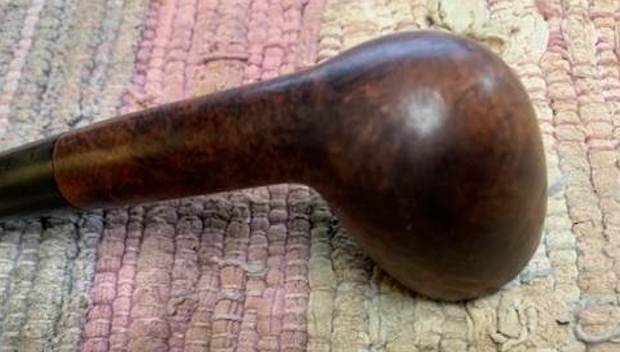
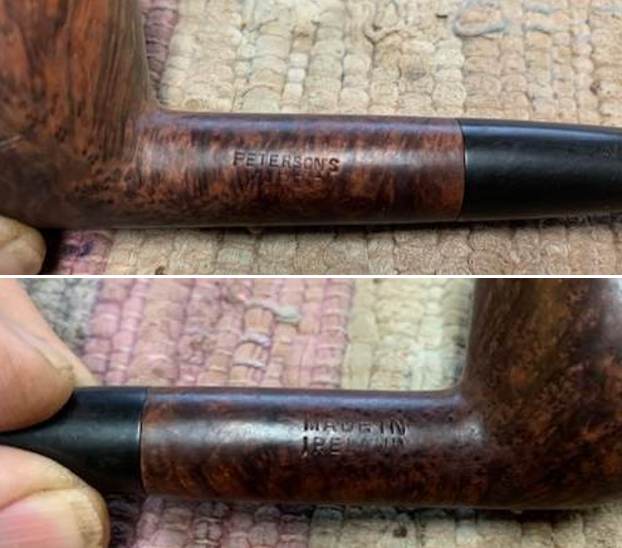
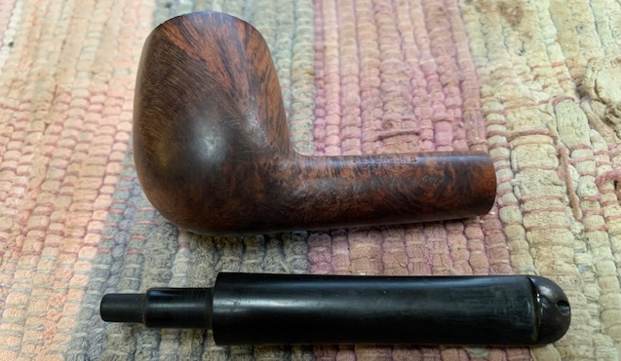
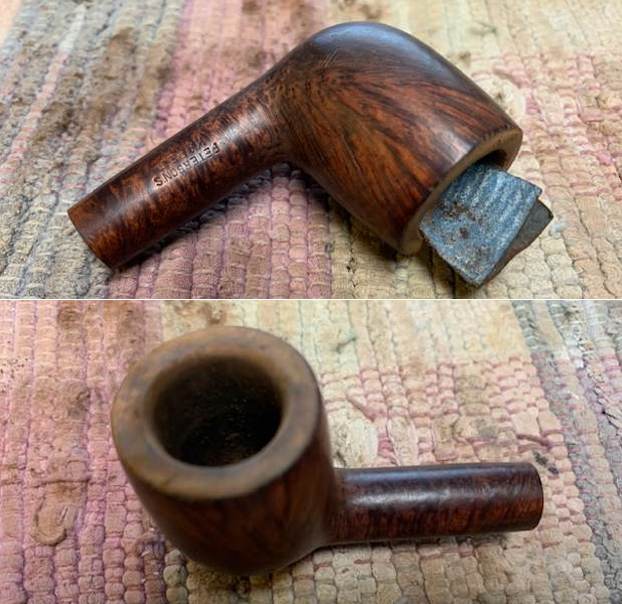
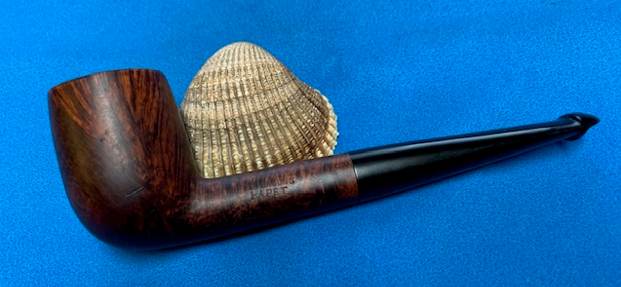
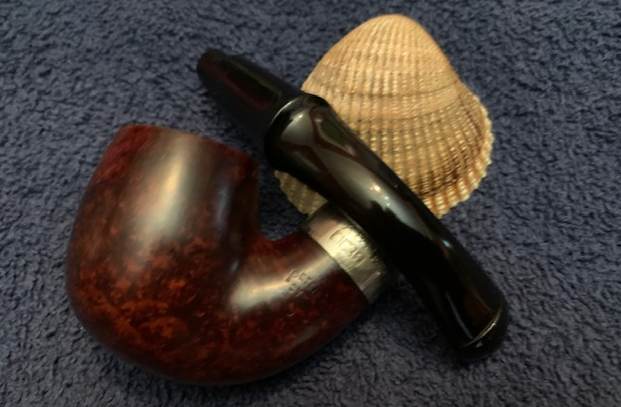
This is the second pipe on the table for restoration in 2023. It is another rainy, chilly day in Vancouver. I know in comparison to where many of you live it is not cold but to us it is. The next pipe I have chosen to work on is another Peterson’s Billiard. It is a smooth nicely grained pipe that is a bit of a mystery to Jeff and me as to its provenance. There was grime ground into the finish on the bowl sides. I love the way the contrast of the brown stains gives the finish a sense of depth. The stain is almost tiger striped. It was stamped on the sides of the shank. On the left side and it read Peterson’s [over] KAPET. On the right side it read MADE IN [over] IRELAND. This pipe must have been someone’s favourite as it had been well smoked. Somewhere on its journey the bowl had been reamed and the pipe cleaned. The inner edge of the bowl had some nicks and marks that made the bowl slightly out of round. The stem was lightly oxidized from sitting around here for a long time. It had tooth marks and chatter on the top and underside on and near the button. I took photos of the pipe before my cleanup work. I took photos of the rim top and stem to show the general condition of the pipe. The bowl is clean and has been recently reamed. The rim top and edges had some darkening and there was some lava in the sandblast of the finish on the back side. The photos of the stem show that it was lightly oxidized and has tooth marks on the top and underside near the button.I took photos of the bowl sides and heel to show the blast that was around this bowl. It is a great sandblast and the choice of stain adds depth to the appearance of the bowl. I took a photo of the stamping on the sides of the shank. It is clear and readable and reads as noted above.I took the pipe apart and took a photo of the pipe. It is a good looking pipe and has an interesting shallow sandblast on the bowl.I am including the link to the Pipedia’s article on Peterson pipes. It is a great read in terms of the history of the brand (https://pipedia.org/wiki/Peterson). There was a short note toward the bottom of the page about the series. It is definitely referring to the newer line that came out later. I quote:

I turned to Pipedia (https://pipedia.org/wiki/Peterson) to first pin down a date that the pipe was made. I knew that the Made in Ireland stamp would give me that. I quote:

As usual when trying to get accurate facts in regard to Peterson history, something will jump up and get in the way. They are missing many of their records. The following is the best that we can do for a guide to the myriad markings during the period 1922 – 1949. Prior to 1920 it was rare for a country of origin to be stamped on the pipe, just Peterson’s Dublin on the band. After 1921/22, if it is stamped “MADE IN IRELAND” and the “Made in” is stacked over “Ireland” or “MADE IN EIRE” or several other forms, it was made between 1922 and 1938. A considerable number of Peterson pipes were stamped “Irish Free State”. From about 1930 to 1949, most of the pipes (those which were stamped) were stamped “Made in Ireland”.” If the stamp reads “MADE IN IRELAND” in a circle, the pipe was made between 1939 and 1948. These are all “Pre-Republic” pipes. I can tell you that the mark “Irish Free State” was adopted in 1922; and replaced by “Eire” in 1937 and then by “Republic of Ireland” in 1949.

That gave me a date for the pipe – it was made between 1922 and 1938 as can be proved by the Made in Ireland stamp on the right side of the shank.

I turned to “The Peterson Pipe” by Mark Irwin and Gary Malmberg to get some background on the Peterson’s Kapet Line. On page 305 it had the following information.

Kapet (1925-87) Line first described in 1925 brochure and featured in occasional catalogs through 1987. Early specimens will be stamped IRISH over FREE STATE. Described in 1937 catalog as available in dark plum or natural finish. Featured an aluminum “inner tube” or stinger until 1945.  Mid-century specimens may be stamped Made In over Ireland. Specimens from 1970 on may have mounts with hallmarks.

Judging from the Made in Ireland stamp, the pipe I am working on is probably made between 1922-1938. Those dates work also for the Kapet information above. The stem does not have the P emblem on the stem side or the inner tube.

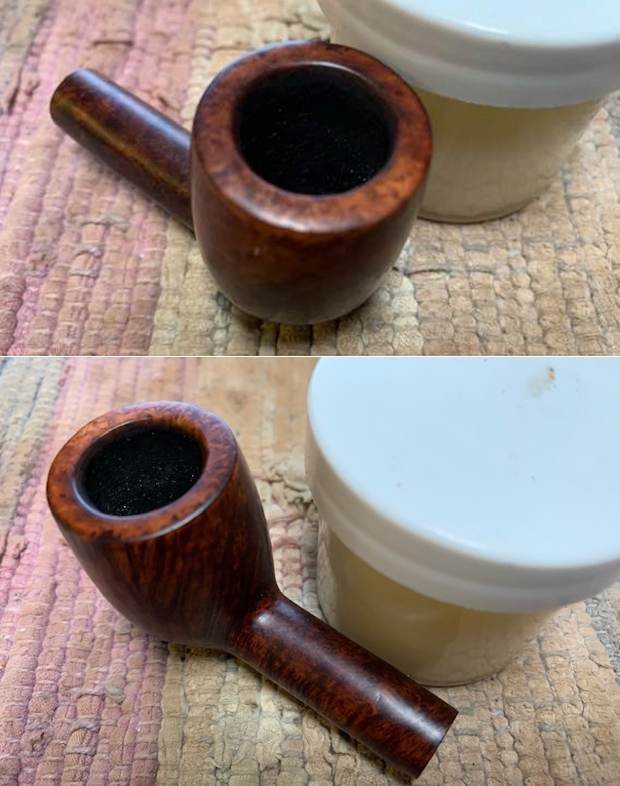
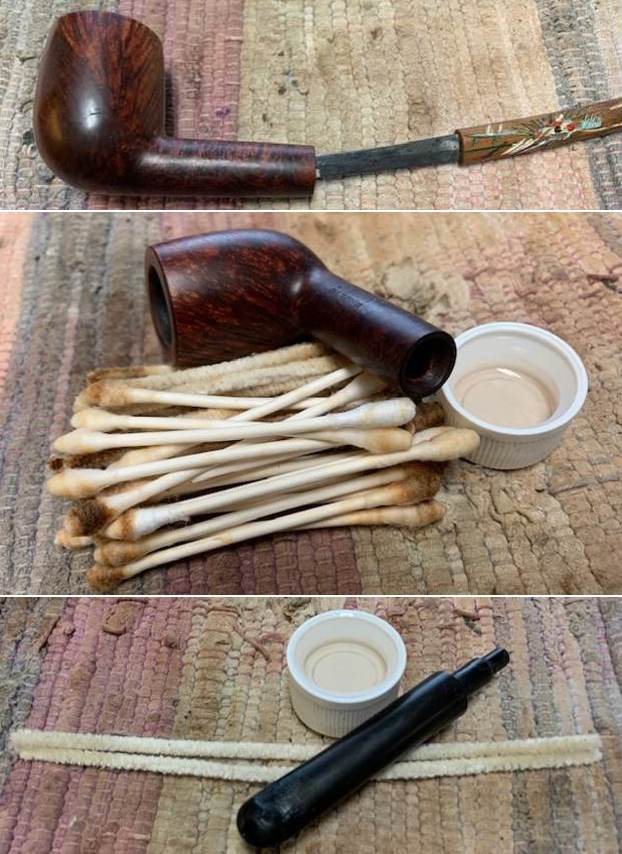
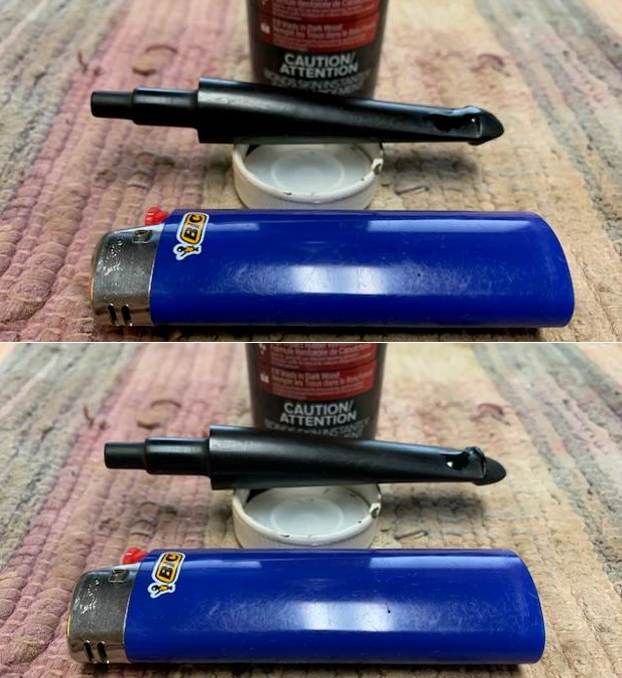
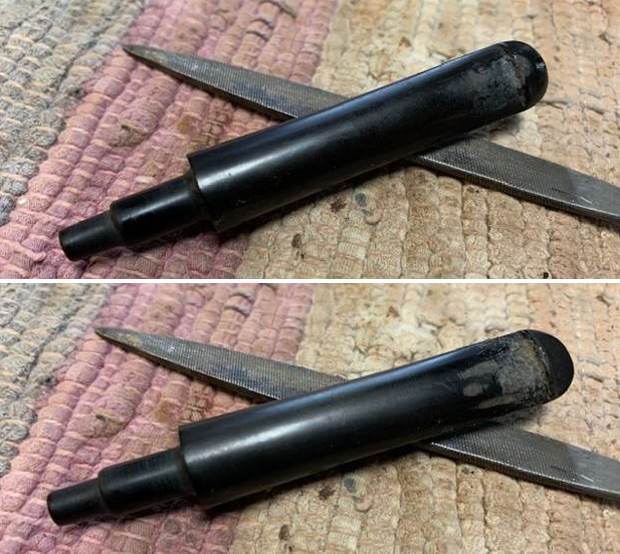
I started my work on the pipe by working on the rim top and the inner edge. I cleaned them up with a with a folded piece of 220 grit sandpaper. I was able to remove almost all of the darkening with the sandpaper and reshape the damaged inner edge of the bowl.  I scrubbed the externals of the pipe with undiluted Murphy’s Oil Soap with a tooth brush. I rinsed it under running warm water to remove the soap and grime. The bowl and rim top cleaned up really well with the lava coat removed. The inner edge of the rim was in good condition. I polished the briar with micromesh sanding pads – dry sanding with 1500-12000 grit pads. I wiped the briar down after each sanding pad with a damp cloth to remove the sanding debris.  I worked some Before & After Restoration Balm into the surface of the briar with my fingertips to clean, enliven and protect the briar. I let the balm sit for 15 minutes and then buffed with a cotton cloth to raise the shine. The photos show the bowl at this point in the restoration process. I scraped out some thick tar on the mortise walls with a pen knife. Afterwards, I cleaned out the inside of the mortise, shank and airway in the stem with alcohol, cotton swabs and pipe cleaners.I set the bowl aside and turned my attention to the stem. I “painted” the stem surface on both sides with the flame of the lighter to try and lift the deep tooth marks. I was able to lift them significantly but some deep spots remained. I filled those in with black CA glue and set the stem aside to let the repairs harden.I flattened the cured repairs with a small file and then sanded them with 220 grit sandpaper to blend them into the stem surface. I started polishing the stem with 400 grit wet dry sandpaper. I polished the stem with micromesh sanding pads – wet sanding with 1500-12000 grit sanding pads. I wiped it down after each sanding pad with Obsidian Oil. I polished it with Before & After Pipe Stem Polish – both Fine and Extra Fine.   I always am excited to finish working on a pipe. This Made in Ireland Peterson’s Kapet Billiard is no exception. I put the pipe back together and buffed it with Blue Diamond on the buffing wheel. I gave the bowl and the stem multiple coats of carnauba wax. I buffed the pipe with a clean buffing pad to raise the shine and hand buffed it with a microfibre cloth to deepen the shine. It is fun to see what the bowl looks like with the black vulcanite taper stem. This Classic looking Peterson’s Kapet Smooth Billiard feels great in my hand. It is light and well balanced. Have a look at it with the photos below. The dimensions are Length: 5 ½ inches, Height: 1 ½ inches, Outside diameter of the bowl: 1 1/8 inches, Chamber diameter: ¾ of an inch. The weight of the pipe is 30 grams/1.06 of an ounce. I will be putting it on the rebornpipes store shortly in the Irish Pipe Makers section if you are interested in it. Thanks for walking through the restoration with me as I worked over this pipe. Thanks to each of you who are reading this blog.
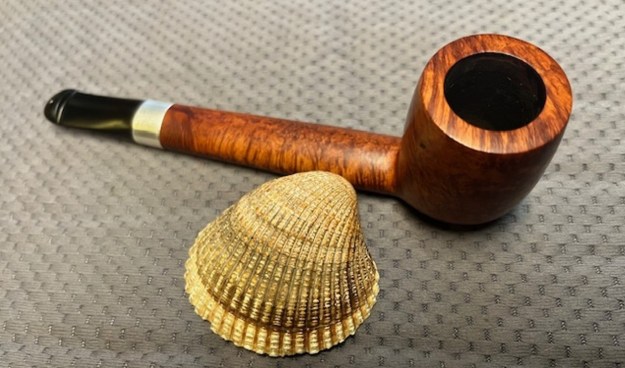
Moving one of my own – a Pre-Republic Peterson’s System 0, Made in Ireland 317 Bent Billiard


Moving one of my own – a Pre-Republic Peterson’s System 0, Made in Ireland 317 Bent Billiard

Blog by Steve Laug

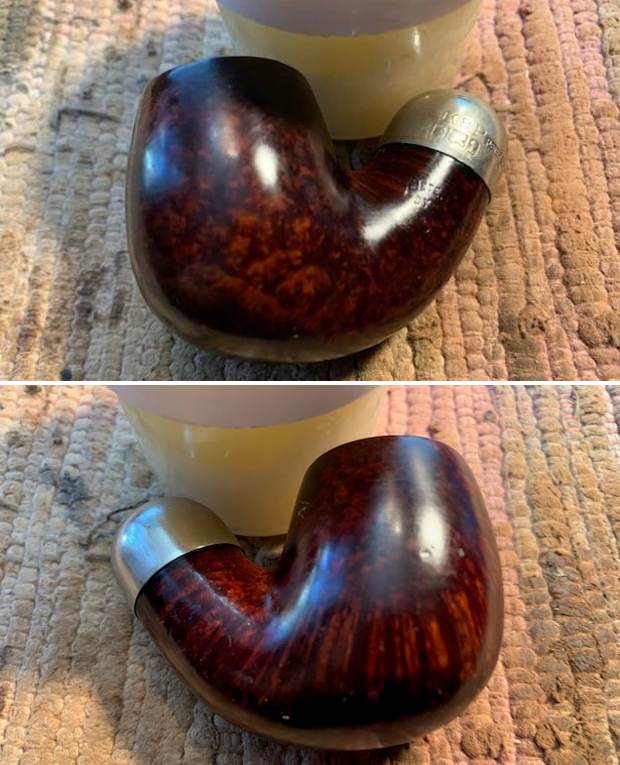
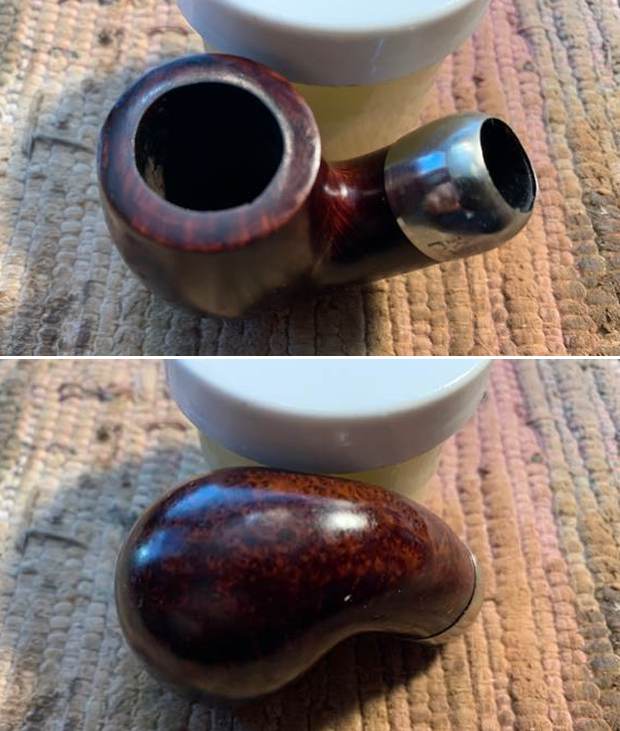
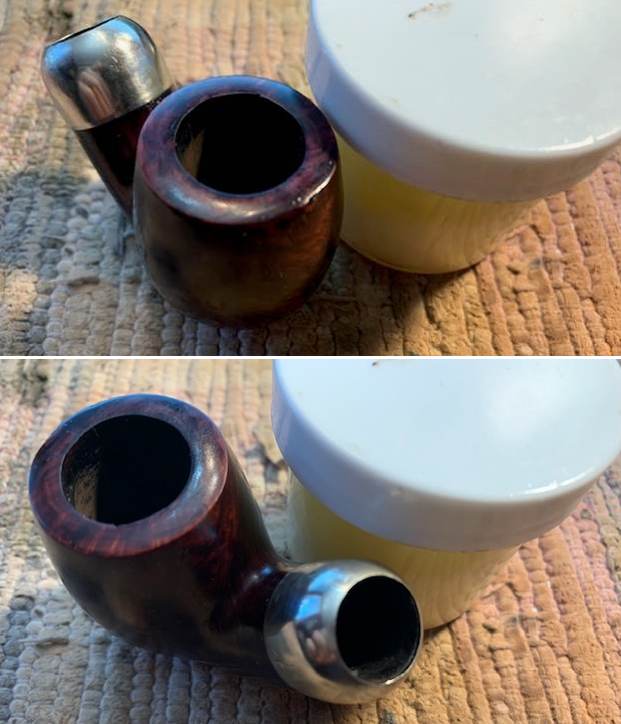
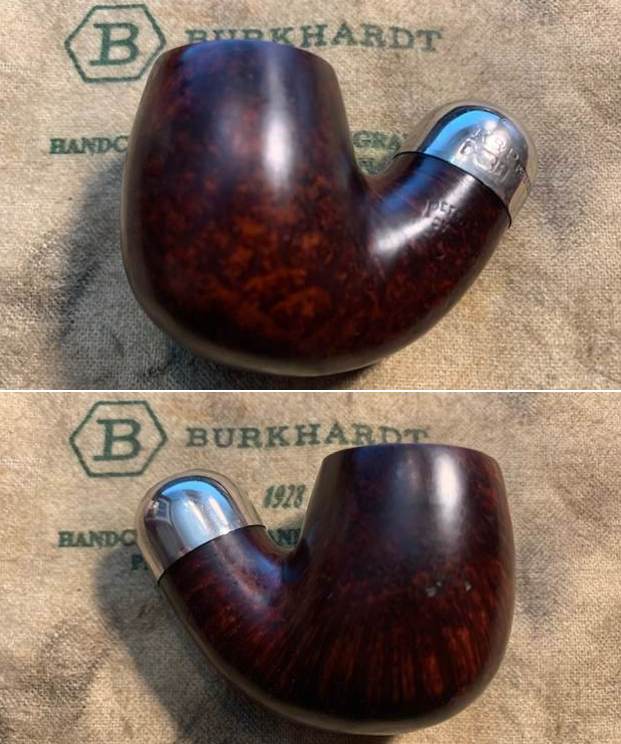
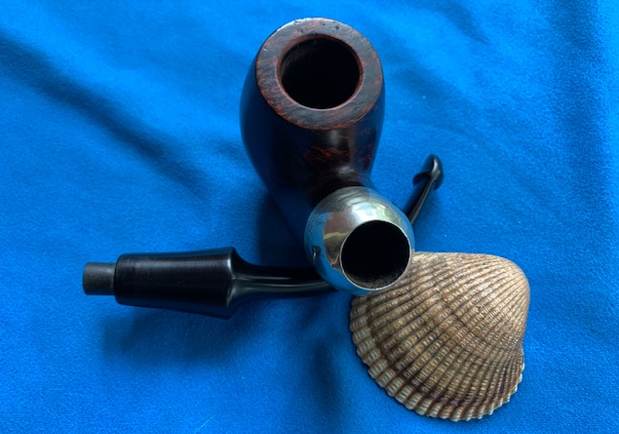
This is another pipe that I have taken out of my personal collection as I just do not use it too much. It is a classic Peterson’s Bent Billiard shaped pipe with some nice grain around the bowl and a nickel ferrule. It is another pipe that I smoked solely Virginia tobaccos in so it is very clean. The airway in the shank and the mortise were quite clean. The smooth rim top and edges were in excellent condition. The smooth finish was very clean but dull and quite lifeless. There were a few small fills the bowl sides. The grain is mixed but still quite nice around the bowl and shank. It is stamped on the left side of the shank and reads Peterson’s [arched over] System [arched over] 0. On the right side of the shank it is stamped Made in Ireland in a circle with the “In” mid circle. There is a faintly stamped number above that which seems to read 317. The nickel ferrule is stamped K&P [over] faux hallmarks (a clover leaf, an Irish wolfhound laying down and a tower). Next to that it reads Peterson’s. The bowl was quite clean with light damage to the inner edge and the front outer edge of the bowl. The nickel ferrule was in great condition and was dull looking. I took photos of the pipe before I did my clean up work on it. I took a photo of the bowl and rim top to verify the description above. I also took photos of the stem surface showing that there were no tooth marks on either side. I took photos of the stamping on the sides of the shank. It is faint but readable as noted above. The stamping on the ferrule is also very readable.I took the stem off the bowl and took a photo of the pipe to give a sense of proportion of the pipe. It is a beauty.I turned to Pipedia (https://pipedia.org/wiki/Peterson) and read through the article there. I found an interesting note in the middle of the page. I quote the pertinent section below and have highlights some important information in red below.

As usual when trying to get accurate facts in regard to Peterson history, something will jump up and get in the way. They are missing many of their records. The following is the best that we can do for a guide to the myriad markings during the period 1922 – 1949. Prior to 1920 it was rare for a country of origin to be stamped on the pipe, just Peterson’s Dublin on the band. After 1921/22, if it is stamped “MADE IN IRELAND” and the “Made in” is stacked over “Ireland” or “MADE IN EIRE” or several other forms, it was made between 1922 and 1938. A considerable number of Peterson pipes were stamped “Irish Free State”. From about 1930 to 1949, most of the pipes (those which were stamped) were stamped “Made in Ireland”.” If the stamp reads “MADE IN IRELAND” in a circle, the pipe was made between 1939 and 1948. These are all “pre-republic” pipes. I can tell you that the mark “Irish Free State” was adopted in 1922;and replaced by “Eire” in 1937 and then by “Republic of Ireland” in 1949.

I turned to “The Peterson Pipe” by Mark Irwin and Gary Malmberg to get some background on the Peterson’s System 0 Made in Ireland stamp. On page 126 it had the following information.

The stamp reads IRISH over FREE STATE, in small letters, usually perpendicular to the line of the shank, very close to and parallel to the seam where the shank meets the mouth piece. On banded pipe, this often hidden under the band itself. At the same time, they issued a smaller number of pipes stamped MADE IN over IRELAND. Today’s collector may encounter specimens of these with mountings hallmarked for every year from 1922-1937.

On page 301 of the above book I found a listing on System pipes that referred to the 0 stamp. I quote:

System Pipes (1937-59) The 1937 catalog only slightly changed the grading hierarchy for System pipes. The De Luxe model, described as “the finished possible quality obtainable” would be assigned no grading subscript, but neither would the First Quality. Below these were 0 Grade, 2nd Grade and 3rd Grade, all stamped with numbers and PETERSON’S over SYSTEM or PETERSON’S over DUBLIN. Grades 0 and 2nd were fitted with sterling mounts, 3rd grade with nickel. Each of these grades were sometimes stamped below and sometimes to the right of the model name. Sometimes these numbers were circled, sometimes not. The location of the number and whether it was circled or not was rather random from the onset of its use until discontinued in 1959, and by itself only indicates that a given pipe was made between ’37 and ’59.  

On page 302 there was a listing on the nickel mounted markings. I quote:

Nickel-Mount Markings. Often called faux hallmarks or faux marks by Peterson collectors, this set of three little images of a shamrock, an Irish wolfhound and a round tower appear within rectangular shapes as decorations on nickel mountings. Very early nickel mounts (1891-c. 1920) had no such decorations, only the same stamps used on sterling but without the hallmarks. As a stamp, the set of decorations began to appear at the beginning of the Irish Free State era, sometimes alone but often under K&P and over block lettered PETERSON over DUBLIN, although the  three emblems appeared on K&P’s Irish Carving Shamrocks pipes since 1896. The stamp was used until about 1963, when hand soldered nickel bands and ferrules were replaced by pressed ferrules and premade bands…The shamrock is the emblem of Ireland; the Irish wolfhound has long been used for both hunting and protection, and is an emblem of strength; the round tower a symbol of Ireland’s early religious power. These decorations were stamped at the factory on non-sterling mounts only, and the assay office has nothing to do with…

The information was very helpful. I have highlighted the pertinent reference to regarding the stamping, the shape 0 number and the faux hallmarks above. I knew that I was dealing with a Pre-Republic period pipes stamped Made in Ireland in a circle made between 1939-1948.

Now it was time to work on the pipe. I started working on the pipe with a folded piece of 220 grit sandpaper to smooth out the nicks in the inner edge. It did not take too much work to get it round again. I also used the sandpaper to smooth out the outer edge of the bowl.I rebuilt the front outer edge of the bowl with clear CA glue and briar dust to remove damaged area that was a flattened angle on the top bowl front. Once the repair cured I flattened it with a small flat file and then topped the bowl with a topping board and 220 grit sandpaper. I sanded the repair with a folded piece of 220 grit sandpaper to smooth it out. I wiped down the bowl sides and top with isopropyl alcohol on a cotton pad. I touched up the sanded rim top and the repaired area on the front of  the bowl with a Walnut stain pen to match the surrounding briar on the bowl and the shank. I cleaned up the light cake in the bowl with a Savinelli Fitsall Pipe Knife. I sanded the bowl walls with a piece of dowel wrapped in 220 grit sandpaper.I cleaned the shank and sump in the shank with cotton swabs, pipe cleaners and isopropyl alcohol to remove the debris and tars from my smoking. You can see that it was not too bad as I tend to keep my pipes clean.I polished the briar with micromesh sanding pads – dry sanding with 1500-12000 grit sanding pads. I wiped the bowl down with a damp cloth after each sanding pad. I worked some Before & After Restoration Balm into the surface of the briar with my fingertips to clean, enliven and protect the briar. I let the balm sit for 15 minutes and then buffed with a cotton cloth to raise the shine. The photos show the bowl at this point in the restoration process. I polished the nickel domed ferrule with a jeweler’s cloth to raise the shine and give it some pop. It looked much better after the polishing. Since the stem was in new condition I rubbed it down with some Obsidian Oil and buffed it off. It is a beautiful stem. I am excited to put the final touches on this Pre-Republic, Made in Ireland Peterson’s System 0 Bent. I put the pipe back together and buffed it with Blue Diamond on the buffing wheel. I gave the bowl and the stem multiple coats of carnauba wax. I hand buffed the pipe with a clean buffing pad to raise the shine. It is fun to see what the polished bowl looks like with beautiful mixed grain all around it. Added to that the polished black vulcanite stem and nickel ferrule combined with the bowl and made a stunning pipe. This smooth Classic Older Peterson’s System 0 Bent is great looking and the pipe feels great in my hand. It is light and well balanced. Have a look at it with the photos below. The dimensions are Length: 5 ½ inches, Height: 1 ¾ inches, Outside diameter of the bowl: 1 ¼ inches, Chamber diameter: ¾ of an inch. The weight of the pipe is 47 grams/1.66 ounces. It is a beautiful pipe that I will soon be putting on the rebornpipes store in the Irish Pipe Makers section. If you are interested in adding it to your collection send me an email or a message. Thanks for walking through the restoration with me as I worked over this pipe. Thanks to each of you who are reading this blog.
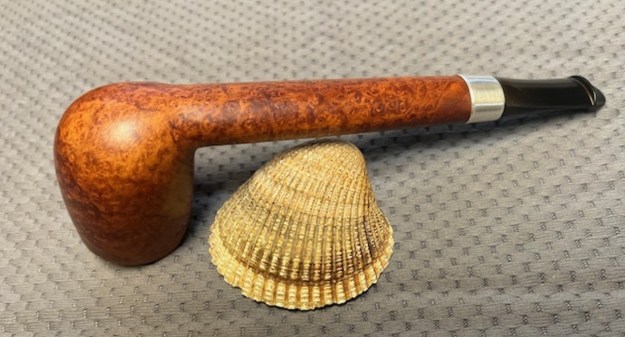
Restoring and Restemming a Made in Ireland Peterson’s System 313 Bent


Blog by Steve Laug

Jeff and I often purchase pipe bowl/stummels of brands that we like and want to restore. These have included a lot of different bowls. If you have followed us for long you know that some of these have included Peterson’s, Dunhill’s, and a wide range of Danish and English pipes. Awhile ago Jeff and I were sorting through the bowls in our collection and pulled out eight Peterson’s bowls that were dirty and stemless. A friend referred us to a contact named Silas Walls, of Walls Pipe Repair in Wallace, Idaho, USA as he seems to have a good supply of original Peterson’s stems. Our friend has had him fit stems for some of his Petes and was very happy with the work. We made contact with him and sent him eight bowls for restemming.

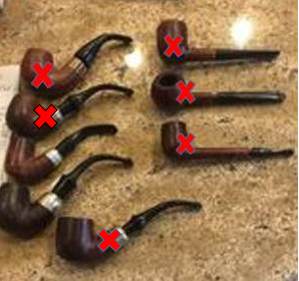
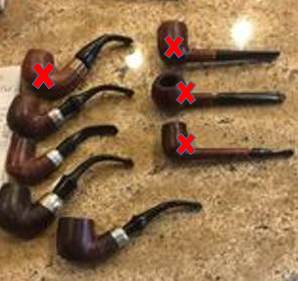
In the photo above I show the 8 restemmed pipes. I have marked the 6 I have worked on already with a red X). This seventh one that we cleaned up before mailing them out was a bowl that we purchased on 08/31/2019 from an auction Nyack, New York, USA. It is stamped on the left side of the shank and reads Peterson’s [arched over] System. On the right side of the shank it is stamped Made in Ireland (two lines) followed by the shape number 313. The ferrule is stamped K&P [over] Sterling Silver. Next to that it reads Peterson [over] Dublin. The bowl was dirty with lava on the rim top and a moderate cake in the bowl. The Sterling Silver ferrule was quite dirty and worn with some small dents in the surface. Jeff took photos of the bowl before he did his cleanup work in preparation for sending them to Walls Pipe Repair for their new stem. Jeff took photos of the stamping on the sides of the shank. It is clear and readable as noted above. There is also some great grain around the bowl and shank. I turned to Pipedia (https://pipedia.org/wiki/Peterson) and read through the article there. I found an interesting note in the middle of the page. I quote the pertinent section below and have highlights some important information in red below.

As usual when trying to get accurate facts in regard to Peterson history, something will jump up and get in the way. They are missing many of their records. The following is the best that we can do for a guide to the myriad markings during the period 1922 – 1949. Prior to 1920 it was rare for a country of origin to be stamped on the pipe, just Peterson’s Dublin on the band. After 1921/22, if it is stamped “MADE IN IRELAND” and the “Made in” is stacked over “Ireland” or “MADE IN EIRE” or several other forms, it was made between 1922 and 1938.  A considerable number of Peterson pipes were stamped “Irish Free State”. From about 1930 to 1949, most of the pipes (those which were stamped) were stamped “Made in Ireland”.” If the stamp reads “MADE IN IRELAND” in a circle, the pipe was made between 1939 and 1948. These are all “pre-republic” pipes. I can tell you that the mark “Irish Free State” was adopted in 1922;and replaced by “Eire” in 1937 and then by “Republic of Ireland” in 1949.

I turned to “The Peterson Pipe” by Mark Irwin and Gary Malmberg to get some background on the Peterson’s System 0 Made in Ireland stamp. On page 126 it had the following information

The stamp reads IRISH over FREE STATE, in small letters, usually perpendicular to the line of the shank, very close to and parallel to the seam where the shank meets the mouth piece. On banded pipe, this often hidden under the band itself. At the same time, they issued a smaller number of pipes stamped MADE IN over IRELAND. Today’s collector may encounter specimens of these with mountings hallmarked for every year from 1922-1937.

The information was very helpful. I have highlighted the pertinent reference to regarding the stamping. I knew that I was dealing with a Pre-Republic period pipe stamped Made in Ireland made between 1922-1938.

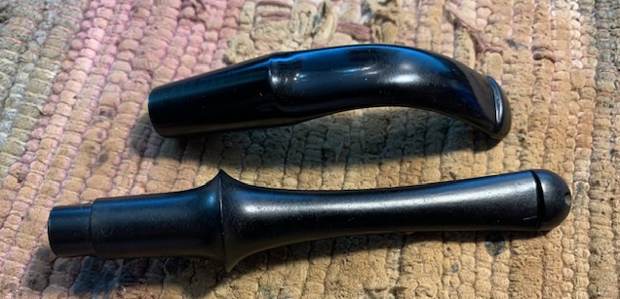
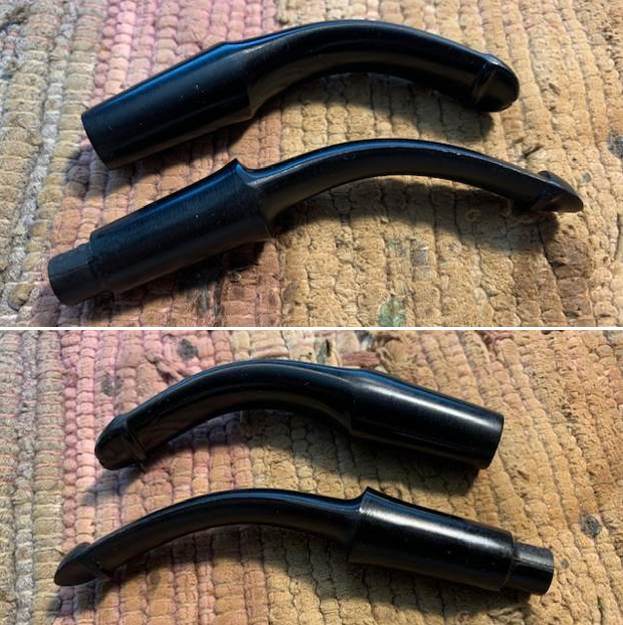
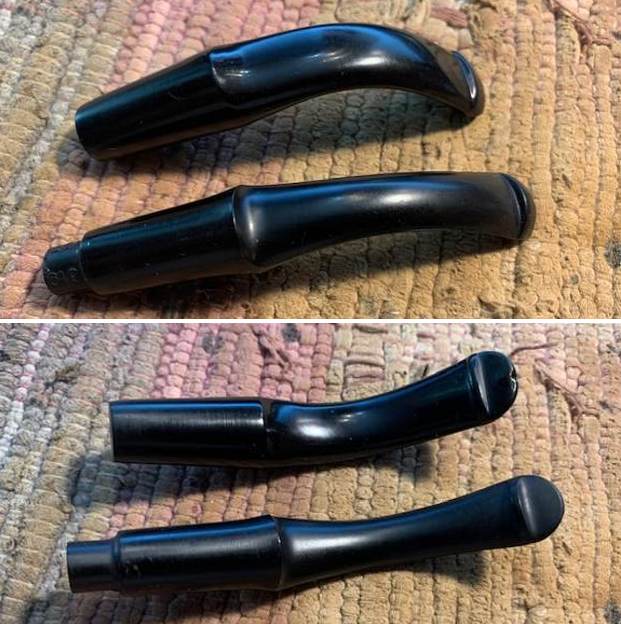
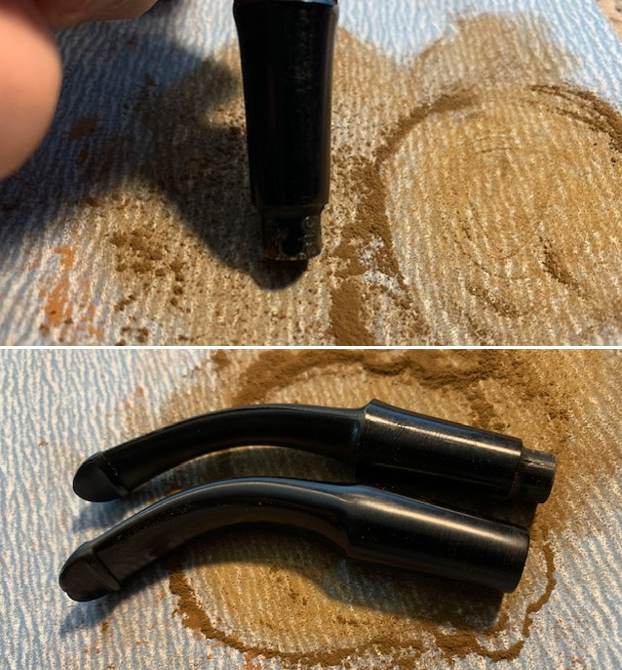
Now it was time to work on the pipe. Jeff had done a great job cleaning up the pipe as usual. He reamed the pipe with a PipNet reamer and cut back the cake back to the bare briar. He cleaned up the walls with a Savinelli Fitsall Pipe Knife. He scrubbed the interior of the bowl and shank with pipe cleaners, cotton swabs and alcohol to remove the tars and oils. He scrubbed the exterior of the pipe with Murphy’s Oil Soap and a tooth brush to remove the grime from the finish. He worked on the rim top lava and darkening with the soap and tooth brush. It looked much better. I took pictures of the bowl without the new stem from Silas Wall. It is a great looking piece of briar and the sterling silver ferrule looks very good. When the pipes came back to Jeff with their new stems they looked great. When the pipe arrived here this week I took photos of it with its stem so you can see what I see. The first six pipes from the lot were flawless and quite beautiful. The last two – this 313 and a 314 looked great at first glance but upon further examination the stems were not correct. The draught on the P-lip portion of the stem usually was on the top of the stem in all Peterson’s pipes but in the case of these two pipes the airway came straight out the end of the stem. Here are the photos of the pipe and stem. I took photos of the flawed stem next to a properly drilled stem. You can see in the photos where the airway exits the stem. In the photos below the new stem is on the left side and an original is on the right side. It is a little hard to see but in the new stem the airway exits at the end of the button and on the original it is on the top. The hole is the same size but the position is wrong. The shape of the button/p-lip is also quite different and more flat. It is obviously the wrong stem. I contacted Walls Pipe Repair about the problem and sadly it took many months to get some resolution. I suggested that they send me two unfinished stems and I would fit them myself. The problem was that these two were also not quite correct. You can see that the shape is very different and the blade itself was significantly thinner that the stem that had been fitted to the bowl. I took a photo of the pair below.I put the two stems aside and went through my cans of stems and found a stem that is quite similar. The blade is slightly longer and thinner than the one from Wall but the shape of the button and the shank end of the stem would work well with a few adjustments. Here are some photos of the stem I chose from a variety of angles. I used a topping board to shorten the extended end of the stem to match the length of the stem fitted by Wall. I fit the new stem to the shank and took photos of the pipe as it looks now.  The fit is good but I will need to polish it and give it a slight bend. With the new stem chosen I turned to work on the out of round and damage inner edge of the bowl. I used a folded piece of 220 grit sandpaper to clean up the inner bevel of the rim edge and remove the damage and bring it back into round. It looked much better. I polished the briar with micromesh sanding pads – dry sanding with 1500-12000 grit pads. I wiped the bowl down after each  pad to remove the grit. The bowl began to take on a rich shine. It is going to be a beauty.   I rubbed the bowl down with Before & After Restoration Balm. I worked it into the briar with my finger tips. I let it sit for 10 minutes and the Balm did its magic. It enlivens, cleans and preserves the briar. It certainly brought this bowl back to life. I buffed it off with a clean cloth and took the following photos.   I set the bowl aside and turned my attention to the stem. I polished it with micromesh sanding pads – 1500-12000 grit pads. I wiped it down with Obsidian Oil after each sanding pad. I used Before & After Pipe Polish – both Fine and Extra Fine to further polish the stem. This Made in Ireland Peterson’s System Bent 313 with a Sterling Silver Ferrule and a vulcanite P-lip stem is a great looking pipe now that it has been restored. The beautiful grain that shines through the polished finish is stunning. As the pipe is smoked the patina should develop and look even better. I put the stem back on the bowl and carefully buffed the pipe with Blue Diamond on the buffing wheel. I gave the bowl and the stem multiple coats of carnauba wax on the buffing wheel and followed that by buffing the entire pipe with a clean buffing pad. I hand buffed the pipe with a microfiber cloth to deepen the shine. The finished Peterson’s System 313 Bent Billiard fits nicely in the hand and feels great. Give the finished pipe a look in the photos below. The dimensions of the pipe are Length: 5 ½ inches, Height: 1 ¾ inches, Outside diameter of the bowl: 1 1/8 inches, Chamber diameter: ¾ of an inch. The weight of the pipe is 37 grams/1.31 ounces. I will be adding the pipe to the Irish Pipe Makers Section of the rebornpipes store. If you are interested in purchasing this pipe send me a message or an email. Thanks for reading this blog and my reflections on the pipe while I worked on it.

Restoring and Restemming a Made in Ireland Peterson’s System 0 Bent


Blog by Steve Laug

Jeff and I often purchase pipe bowl/stummels of brands that we like and want to restore. These have included a lot of different bowls. If you have followed us for long you know that some of these have included Peterson’s, Dunhill’s, and a wide range of Danish and English pipes. Awhile ago Jeff and I were sorting through the bowls in our collection and pulled out eight Peterson’s bowls that were dirty and stemless. A friend referred us to a contact named Silas Walls, of Walls Pipe Repair in Wallace, Idaho, USA as he seems to have a good supply of original Peterson’s stems. Our friend has had him fit stems for some of his Petes and was very happy with the work. We made contact with him and sent him eight bowls for restemming.

In the photo above I show the 8 restemmed pipes. I have marked the 4 I have worked on already with a red X). This fifth one that we cleaned up before mailing them out was a bowl that we purchased on 08/31/2019 from an auction Nyack, New York, USA. It is stamped on the left side of the shank and reads Peterson’s [arched over] System [over] 0. On the right side of the shank there is a number 308 stamped next to the bowl shank junction followed. On the underside of the shank it is stamped Made In Ireland in two lines. The ferrule is stamped K&P [over] faux hallmarks (a clover leaf, an Irish wolfhound laying down and a tower. Under that it reads Peterson [over] Dublin. The bowl was dirty with lava on the rim top and a moderate cake in the bowl. The nickel ferrule was quite dirty and worn with some small dents in the surface. Jeff took photos of the bowl before he did his cleanup work in preparation for sending them to Walls Pipe Repair for their new stem. Jeff took photos of the stamping on the sides of the shank. It is clear and readable as noted above. There is also some great grain around the bowl and shank.I turned to Pipedia (https://pipedia.org/wiki/Peterson) and read through the article there. I found an interesting note in the middle of the page. I quote the pertinent section below and have highlights some important information in red below.

As usual when trying to get accurate facts in regard to Peterson history, something will jump up and get in the way. They are missing many of their records. The following is the best that we can do for a guide to the myriad markings during the period 1922 – 1949. Prior to 1920 it was rare for a country of origin to be stamped on the pipe, just Peterson’s Dublin on the band. After 1921/22, if it is stamped “MADE IN IRELAND” and the “Made in” is stacked over “Ireland” or “MADE IN EIRE” or several other forms, it was made between 1922 and 1938. A considerable number of Peterson pipes were stamped “Irish Free State”. From about 1930 to 1949, most of the pipes (those which were stamped) were stamped “Made in Ireland”.” If the stamp reads “MADE IN IRELAND” in a circle, the pipe was made between 1939 and 1948. These are all “pre-republic” pipes. I can tell you that the mark “Irish Free State” was adopted in 1922;and replaced by “Eire” in 1937 and then by “Republic of Ireland” in 1949.

I turned to “The Peterson Pipe” by Mark Irwin and Gary Malmberg to get some background on the Peterson’s System 0 Made in Ireland stamp. On page 126 it had the following information.

The stamp reads IRISH over FREE STATE, in small letters, usually perpendicular to the line of the shank, very close to and parallel to the seam where the shank meets the mouth piece. On banded pipe, this often hidden under the band itself. At the same time, they issued a smaller number of pipes stamped MADE IN over IRELAND. Today’s collector may encounter specimens of these with mountings hallmarked for every year from 1922-1937.

On page 301 of the above book I found a listing on System pipes that referred to the 0 stamp. I quote:

System Pipes (1937-59) The 1937 catalog only slightly changed the grading hierarchy for System pipes. The De Luxe model, described as “the finished possible quality obtainable” would be assigned no grading subscript, but neither would the First Quality. Below these were 0 Grade, 2nd Grade and 3rd Grade, all stamped with numbers and PETERSON’S over SYSTEM or PETERSON’S over DUBLIN. Grades 0 and 2nd were fitted with sterling mounts, 3rd grade with nickel. Each of these grades were sometimes stamped below and sometimes to the right of the model name. Sometimes these numbers were circled, sometimes not. The location of the number and whether it was circled or not was rather random from the onset of its use until discontinued in 1959, and by itself only indicates that a given pipe was made between ’37 and ’59.  

On page 302 there was a listing on the nickel mounted markings. I quote:

Nickel-Mount Markings. Often called faux hallmarks or faux marks by Peterson collectors, this set of three little images of a shamrock, an Irish wolfhound and a round tower appear within rectangular shapes as decorations on nickel mountings. Very early nickel mounts (1891-c. 1920) had no such decorations, only the same stamps used on sterling but without the hallmarks. As a stamp, the set of decorations began to appear at the beginning of the Irish Free State era, sometimes alone but often under K&P and over block lettered PETERSON over DUBLIN, although the  three emblems appeared on K&P’s Irish Carving Shamrocks pipes since 1896. The stamp was used until about 1963, when hand soldered nickel bands and ferrules were replaced by pressed ferrules and premade bands…The shamrock is the emblem of Ireland; the Irish wolfhound has long been used for both hunting and protection, and is an emblem of strength; the round tower a symbol of Ireland’s early religious power. These decorations were stamped at the factory on non-sterling mounts only, and the assay office has nothing to do with…

The information was very helpful. I have highlighted the pertinent reference to regarding the stamping, the shape 0 number and the faux hallmarks above. I knew that I was dealing with a Pre-Republic period pipes stamped Made in Ireland made between 1922-1938.

Now it was time to work on the pipe. Jeff had done a great job cleaning up the pipe as usual. He reamed the pipe with a PipNet reamer and cut back the cake back to the bare briar. He cleaned up the walls with a Savinelli Fitsall Pipe Knife. He scrubbed the interior of the bowl and shank with pipe cleaners, cotton swabs and alcohol to remove the tars and oils. He scrubbed the exterior of the pipe with Murphy’s Oil Soap and a tooth brush to remove the grime from the finish. He worked on the rim top lava and darkening with the soap and tooth brush. When the pipes came back to Jeff with their new stems they looked great. When the pipe arrived here this week I took photos of it with its stem so you can see what I see.  I took some close up photos of the rim top and also of the stem surface. I wanted to show how well it had cleaned up. The rim top had some scratches and marks on the top and some darkening and nicks around the inner edge. It should clean up really well. I also took close up photos of the new stem to show how well it is made! Thanks to Walls Pipe Repair!! I took photos of the stamping on the sides of the shank. You can see that it is stamped as noted above. It is clear and readable. I removed the stem and took a photo of the pipe to have a look at the parts and overall look. The new stem looked really good with the bowl. Since the stem was in perfect condition and would not need work I set it aside and turned to work on the bowl. I decided to address the damage to the inner edge of the bowl and the rim top first. I used a folded piece of 220 grit sandpaper to give the inner edge of the bowl a slight bevel to minimize the darkening and damage and blend it into the surrounding briar.I polished the briar with micromesh sanding pads – dry sanding with 1500-12000 grit sanding pads. I wiped the bowl down with a damp cloth after each sanding pad. The polishing of the rim top brought the rim top colour to match the rest of the bowl. I did not need to stain the rim at all. I worked some Before & After Restoration Balm into the surface of the briar with my fingertips to clean, enliven and protect the briar. I let the balm sit for 15 minutes and then buffed with a cotton cloth to raise the shine. The photos show the bowl at this point in the restoration process. I polished the nickel domed ferrule with a jeweler’s cloth to raise the shine and give it some pop. It looked much better after the polishing. Since the stem was in such new condition the pipe was basically finished. I am excited to put the final touches on this newly restemmed Pre-Republic, Made in Ireland Peterson’s System 0 Bent. I put the pipe back together and buffed it with Blue Diamond on the buffing wheel. I gave the bowl and the stem multiple coats of carnauba wax. I hand buffed the pipe with a clean buffing pad to raise the shine. It is fun to see what the polished bowl looks like with beautiful mixed grain all around it. Added to that the polished black vulcanite stem combined with the bowl and made a stunning pipe. This smooth Classic Older Peterson’s System 0 Bent is great looking and the pipe feels great in my hand. It is light and well balanced. Have a look at it with the photos below. The dimensions are Length: 5 ½ inches, Height: 1 ¾ inches, Outside diameter of the bowl: 1 ¼ inches, Chamber diameter: ¾ of an inch. The weight of the pipe is 68 grams/2.40 ounces. It is a beautiful pipe that I will soon be putting on the rebornpipes store in the Irish Pipe Makers section. If you are interested in adding it to your collection send me an email or a message. Thanks for walking through the restoration with me as I worked over this pipe. Thanks to each of you who are reading this blog.
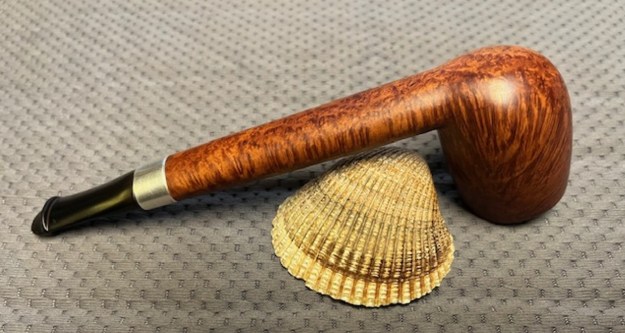
Restoring and Restemming a Made in Ireland Peterson’s Dublin & London 36 Liverpool


Blog by Steve Laug

Jeff and I often purchase pipe bowl/stummels of brands that we like and want to restore. These have included a lot of different bowls. If you have followed us for long you know that some of these have included Peterson’s, Dunhill’s, and a wide range of Danish and English pipes. Awhile ago Jeff and I were sorting through the bowls in our collection and pulled out eight Peterson’s bowls that were dirty and stemless. A friend referred us to a contact named Silas Walls, of Walls Pipe Repair in Wallace, Idaho, USA as he seems to have a good supply of original Peterson’s stems. Our friend has had him fit stems for some of his Petes and was very happy with the work. We made contact with him and sent him eight bowls for restemming.

This third of those pipes that we cleaned up before mailing them out was a Petite, Pencil Shank Liverpool shaped bowl that we purchased on 05/22/21 from Facebook Marketplace. It came from Fruitland, Idaho. It is stamped on the left side of the shank and reads Peterson’s [over] Dublin & London. On the right side of the shank there is a number 36 stamped next to the bowl/shank junction followed by (faint stamp) Made in [over] Ireland stamp in two lines mid shank. The bowl was dirty with lava on the rim top and a thick cake in the bowl.  There was some damage to the inner edge and top with the bowl slightly out of round. The finish had a lot of grime ground into the surface of the finish but some nice grain peeked through. Jeff took photos of the bowl before he did his cleanup work in preparation for sending them to Walls Pipe Repair for their new stem. The images were corrupted on Jeff’s camera so we have no photos of the pipe before his clean up work.

The next photos I have included below are of the pipe when it arrived in Vancouver with its new stem. Jeff had done a great job cleaning up the pipe as usual. He reamed the pipe with a PipNet reamer and cut the cake back to the bare briar. He cleaned up the walls with a Savinelli Fitsall Pipe Knife. He scrubbed the interior of the bowl and shank with pipe cleaners, cotton swabs and alcohol to remove the tars and oils. He scrubbed the exterior of the pipe with Murphy’s Oil Soap and a tooth brush to remove the grime from the finish. He worked on the rim top lava and darkening with the soap and tooth brush. When the pipes came back to Jeff with their new stems they looked great. I took some close up photos of the rim top and also of the stem surface. I wanted to show how well it had cleaned up. The rim top had some darkening and damage on the top. The inner edge was out of round and had some damage on the front and the back of the bowl. It appears that the shank is slightly tapered toward the stem end. I don’t know if this is original or from a previous repair. It should clean up really well. I also took close up photos of the new stem to show how well it was fit to the shank. It is a tiny looking stem and thin shank! Thanks to Walls Pipe Repair!! I took photos of the stamping on the sides of the shank. It is faint but readable with a light and lens you can see that it is stamped as noted above. I removed the stem and took a photo of the pipe to have a look at the parts and overall look. The new stem looked really good with the bowl. I am impressed by how the stem was shaped to fit the stem. I have restored a few Peterson’s Dublin & London in the past so I turned to my blog to have a look at the background information that I included in those blogs. I found the following link to a one of those pipes (https://rebornpipes.com/2021/02/24/restoring-a-made-in-ireland-petersons-dublin-london-999-rhodesian/). I also am including the background information I had gathered on the line from the previous blog. I quote:

I am including the link to the Pipedia’s article on Peterson pipes. It is a great read in terms of the history of the brand (https://pipedia.org/wiki/Peterson).

I turned to “The Peterson Pipe” by Mark Irwin and Gary Malmberg to get some background on the Peterson’s Dublin & London Pipe. On page 298 it had the following information.

Dublin & London (c1940-97, 2016-) First mentioned in a 1940 brochure, but probably not widely distributed until ’45, Dublin & London was the highest quality line (aside from the Supreme, introduced in ’53) until about ’86. P-lip or fishtail mouthpiece, polished finish, although sandblast described in ’70 Iwan Ries & Co. catalog. COMs include MADE IN over IRELAND (1940-80) and MADE IN THE over REPUBLIC over OF IRELAND (c1980-97).

Judging from the description above, the pipe I am working on is stamped with the stamp noted in red above. It reads Made in Ireland which narrows the date to between approximately 1940-1980. It was also one of the highest quality lines available by Peterson when it was made. Now it was time to work on the pipe.

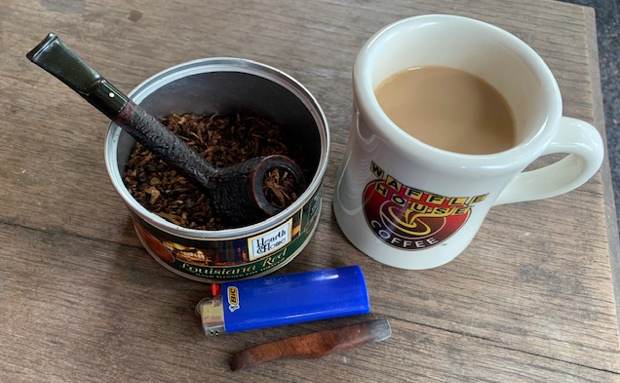
Before I started working on the pipe I took the little Dunhill Shell Briar Lovat for its inaugural smoke on the porch. I took a cup of fresh ground Honduran Medium Roast Coffee and a tin of Hearth and Home Louisiana Red with me. I loaded the bowl and sat watching the “world” walk by while I enjoyed the smoke. I finished the bowl and enjoyed a visit with Alex before getting back to the pipe. It is a great pipe and it was a great smoke.When I finally started to work on the pipe again I set the stem aside as it was in perfect condition and turned to work on the bowl. I decided to address the damage to the inner edge of the bowl and the rim top first. I used a folded piece of 220 grit sandpaper to give the inner edge of the bowl a slight bevel to minimize the darkening and damage and blend it into the surrounding briar.I polished the briar with micromesh sanding pads – dry sanding with 1500-12000 grit sanding pads. I wiped the bowl down with a damp cloth after each sanding pad. There was a dark spot on the top of the shank toward the bowl that appears to be a deep stain rather than a burn mark. It is solid and makes me wonder if the was just a spot on the briar that took the dark understain more deeply than the rest. The polishing of the rim top and inner edge brought the rim top colour to match the rest of the bowl. I did not need to stain the rim at all. I worked some Before & After Restoration Balm into the surface of the briar with my fingertips to clean, enliven and protect the briar. I let the balm sit for 15 minutes and then buffed with a cotton cloth to raise the shine. The photos show the bowl at this point in the restoration process. Since the stem was new condition the pipe was basically finished. I am excited to put the final touches on this newly restemmed Made in Ireland Peterson’s Dublin & London 36 Liverpool. I put the pipe back together and buffed it with Blue Diamond on the buffing wheel. I gave the bowl and the stem multiple coats of carnauba wax. I hand buffed the pipe with a clean buffing pad to raise the shine. It is fun to see what the polished bowl looks like with beautiful mixed grain all around it. Added to that the polished black vulcanite stem combined with the bowl and made a stunning pipe. This smooth Classic Older Peterson’s Liverpool 36 is great looking and the pipe feels great in my hand. It is light and well balanced. Have a look at it with the photos below. The dimensions are Length: 5 ½ inches, Height: 1 ½ inches, Outside diameter of the bowl: 1 1/8 inches, Chamber diameter: ¾ of an inch. The weight of the pipe is 39 grams/1.38 ounces. It is a beautiful pipe that I will soon be putting on the rebornpipes store in the Irish Pipe Makers section. If you are interested in adding it to your collection send me an email or a message. Thanks for walking through the restoration with me as I worked over this pipe. Thanks to each of you who are reading this blog.
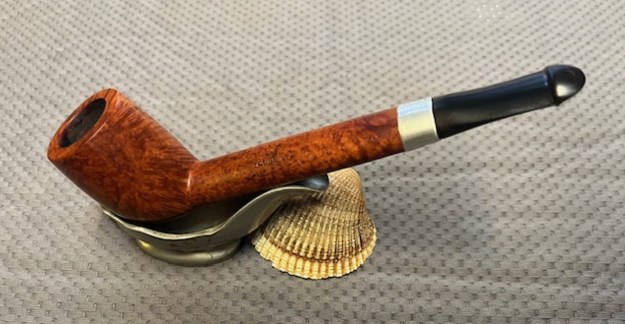
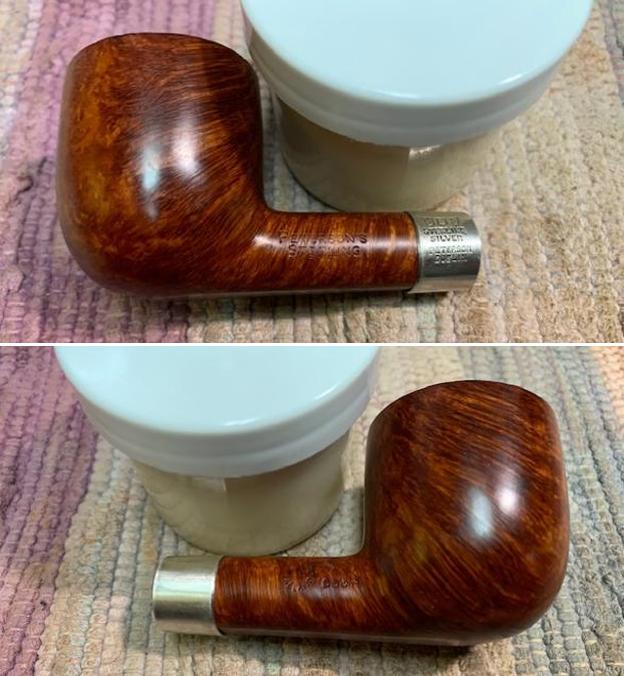
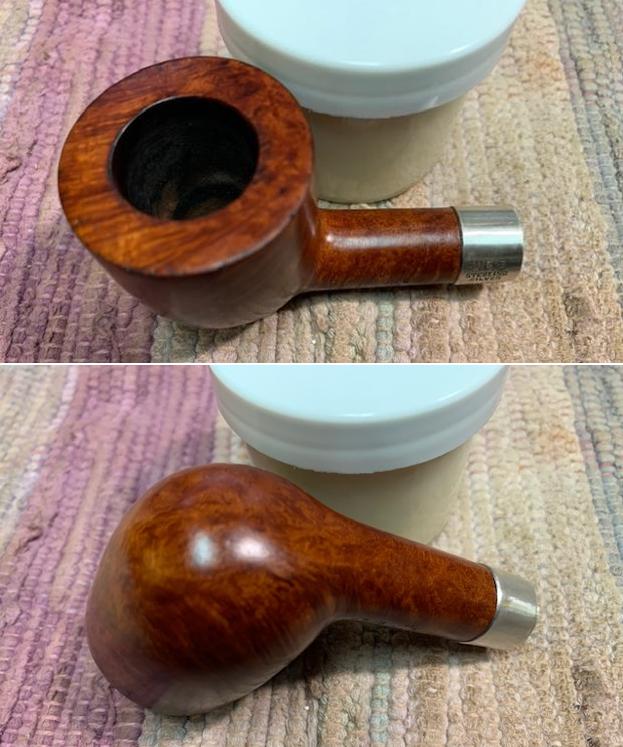
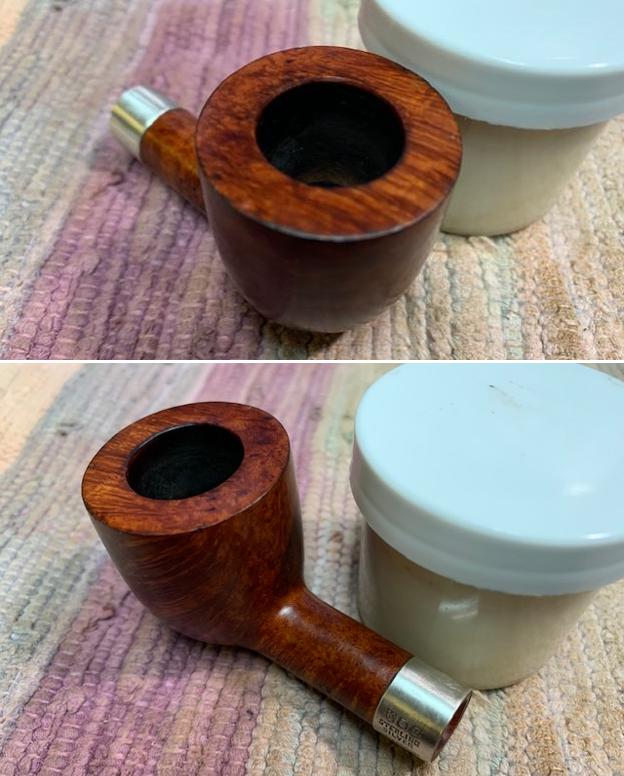
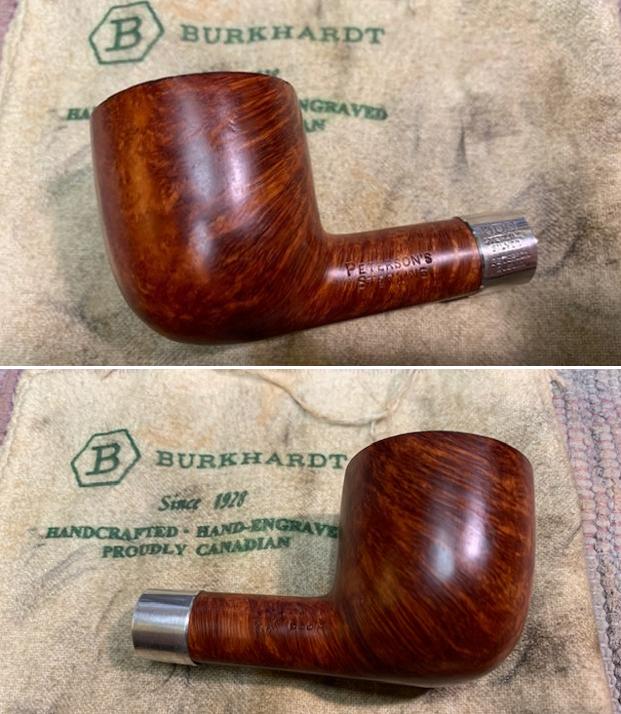
New Life for a Peterson’s Sterling 606S Pot


Blog by Steve Laug

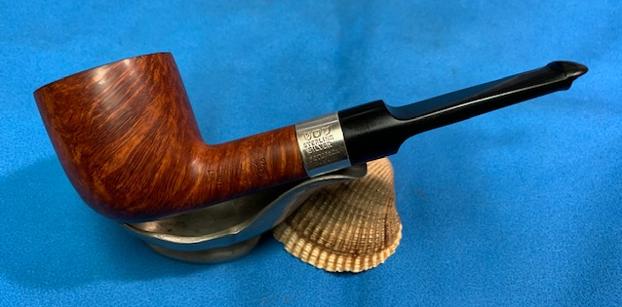
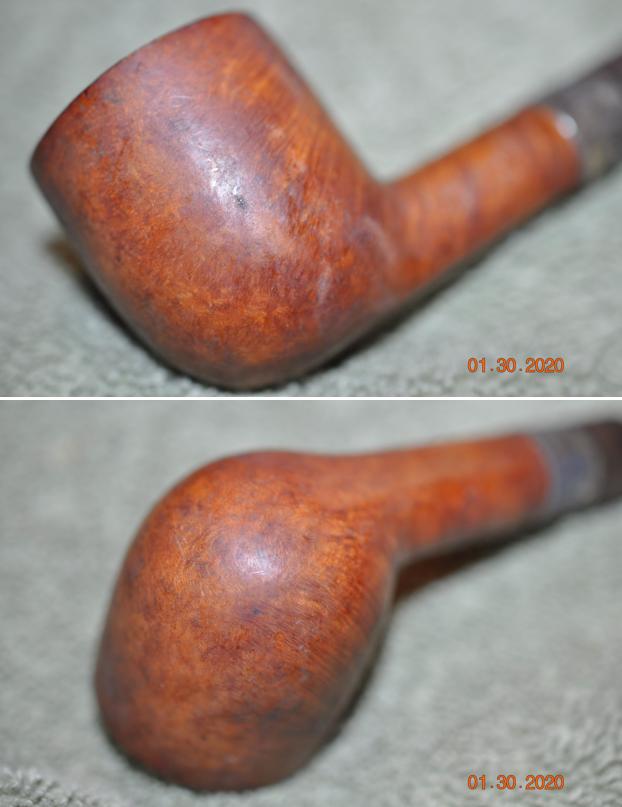
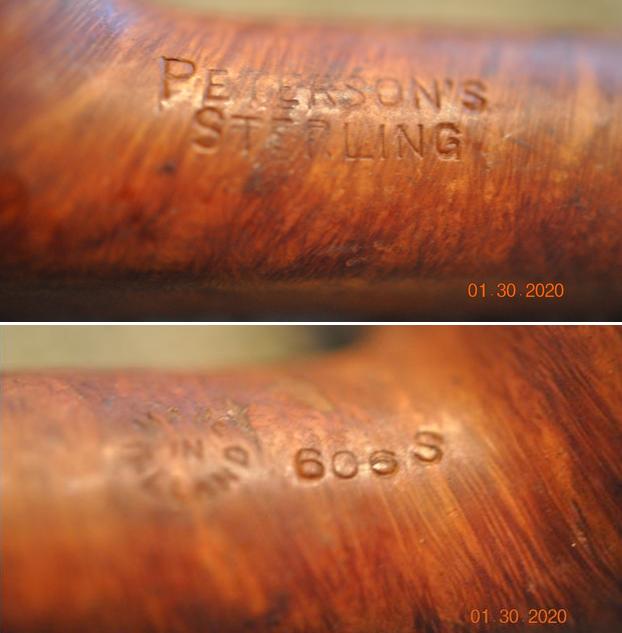
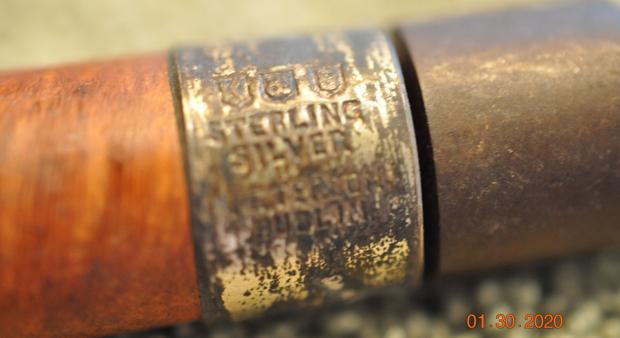
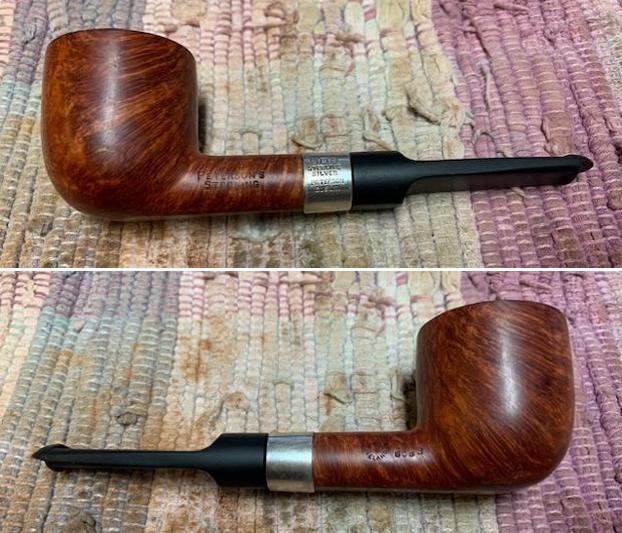
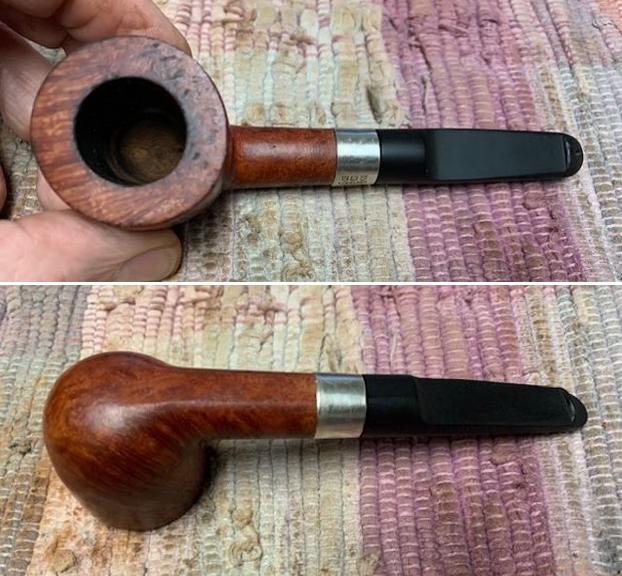
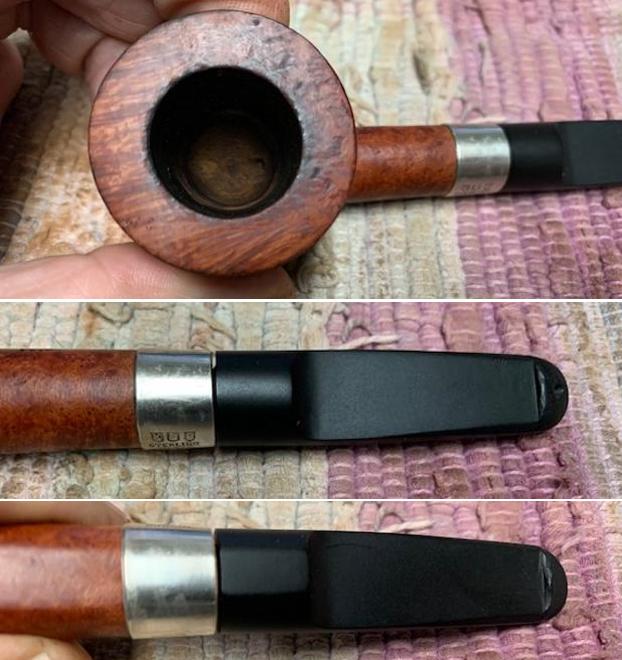
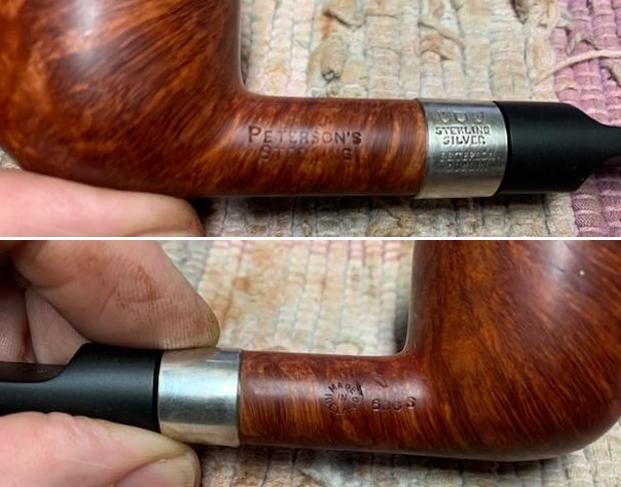
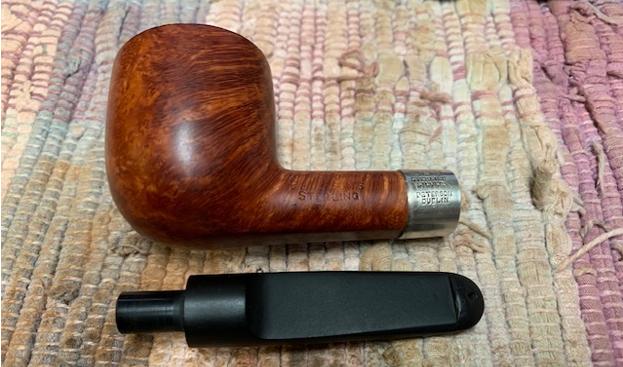
The next pipe I have chosen is smooth finished Peterson’s “Sterling” pipe. This one is a classic Peterson’s Pot shaped pipe with a saddle P-lip stem. It has a medium brown coloured finish with amazing grain around the bowl sides and shank. It is also incredibly dirty. This Pot has a silver band on the shank that was badly oxidized. The grime on the finish was ground into the finish on the bowl sides. The contrast of the brown stains the grain really pop. It was stamped on the left side of the shank and read Peterson’s [over] Sterling. It was stamped on the left side and read Made in Ireland in a circle. Next to the bowl it is stamped 606S. The heavily tarnished band is stamped with K&P in shields [over] Sterling Silver [over] Peterson [over] Dublin. It was in filthy condition when Jeff brought it to the table. There was a thick cake in the bowl and a spattering of lava on the rim top and the inner edge of the bowl. The stem was oxidized and had light tooth marks and chatter on the top and underside on and near the button. Jeff took photos of the pipe before his cleanup work but cannot find them. I am including the photos of the pipe as it was when it arrived here.  Jeff took photos of the rim top and stem to show the general condition of the pipe. The bowl is heavily caked and the rim top and edges have a thick lava overflow on the back of the rim top. The stem is oxidized and has light tooth marks on the top and underside near the button.    Jeff took some photos of the bowl sides and heel to show the grain that was around this bowl. It is a nice looking pipe. He took photos of the sides of the shank to show the stamping. The stamping is readable in the photos below and is as noted above. The stamping on the Sterling Silver band is also readable through the oxidation. I am including the information from Pipedia’s article on Peterson pipes. It is a great read in terms of the history of the brand (https://pipedia.org/wiki/Peterson).

I turned to “The Peterson Pipe” by Mark Irwin and Gary Malmberg to get some background on the Sterling Pipe. On page 314 it had the following information on the line.

Sterling (1949-c1957; 1978-) – Higher grade line with sterling band. Early example, 1949-57, with COM of Made in Ireland forming a circle, were offered to the US market through Rogers Imports and have no hallmark, although until recent years the line carried Peterson’s maker’s mark, the K&P is in separate shields. Models beginning in ’78 with hallmarked dates and a COM stamp of Made in [over] the Republic [over] of Ireland.

I knew that I was dealing with a pipe made between 1949-1957 as shown by the Made in Ireland Circle format stamp. I am working on another older one. Now it was time to work on the pipe.

Jeff had done a great job cleaning up the pipe as usual. He reamed the pipe with a PipNet reamer and cut back the cake back to the bare briar. He cleaned up the walls with a Savinelli Fitsall Pipe Knife. He scrubbed the interior of the bowl and shank with pipe cleaners, cotton swabs and alcohol to remove the tars and oils. He scrubbed the exterior of the pipe with Murphy’s Oil Soap and a tooth brush to remove the grime from the finish. He worked on the rim top lava and darkening with the soap and tooth brush. He scrubbed the inside of the stem with alcohol and pipe cleaners. He scrubbed the exterior with Soft Scrub and then soaked it in Briarville’s Pipe Stem Deoxidizer. He washed it off with warm water to remove the deoxidizer. The pipe looked very good when it arrived here.     I took some close up photos of the rim top and also of the stem surface. The rim top had some darkening on the back top and the inner edge. It also had some nicks and scratch on the rim top at the back and on the right. The silver cleaned up well on the band. The stem was clean and the tooth marks and chatter were minimal. I took photos of the stamping on the top and underside of the shank. You can see that it is stamped as noted above. It is faint and readable.      I took the pipe apart and took a photo of the pipe. It is a good looking pipe and has some nice looking grain around the bowl.I decided to address the darkening around the rim top and the inner edge of the bowl next. I used a folded piece of 220 grit sandpaper to minimize the nicks on the rim top and smooth out the inner edge of the bowl.     I used a Maple stain pen to match the rim top to the rest of the surrounding briar.I polished the briar with micromesh sanding pads – dry sanding with 1500-12000 grit sanding pads. I wiped the bowl down with a damp cloth after each sanding pad. I worked some Before & After Restoration Balm into the surface of the briar with my fingertips to clean, enliven and protect the briar. I let the balm sit for 15 minutes and then buffed with a cotton cloth to raise the shine. The photos show the bowl at this point in the restoration process. I polished the Sterling Silver band on the shank with a jeweler’s cloth to remove the tarnish and polish it.   I sanded out the tooth marks on the top and underside of the stem ahead of the button with 220 grit sandpaper and started polishing it with 400 grit wet dry sandpaper.  I polished the stem with micromesh sanding pads – wet sanding with 1500-12000 grit sanding pads. I wiped it down after each sanding pad with Obsidian Oil. I polished it with Before & After Pipe Stem Polish – both Fine and Extra Fine.   I am excited to finish this Peterson’s Sterling 606S Pot. I put the pipe back together and buffed it with Blue Diamond on the buffing wheel. I gave the bowl and the stem multiple coats of carnauba wax. I hand buffed the pipe with a clean buffing pad to raise the shine. It is fun to see what the polished bowl looks like with the grain popping all around it. Added to that the polished Sterling Silver band and the black vulcanite saddle stem was beautiful. This smooth Classic Peterson’s Pot is nice looking and the pipe feels great in my hand. It is light and well balanced. Have a look at it with the photos below. The dimensions are Length: 5 ½ inches, Height: 1 ¾ inches, Outside diameter of the bowl: 1 ½ inches, Chamber diameter: ¾ of an inch. The weight of the pipe is 42grams/1.48oz. It is a beautiful pipe and one that will be on the Irish Pipe Makers section of the rebornpipes store soon. If you are interested in adding it to your collection let me know. Thanks for walking through the restoration with me as I worked over this pipe. Thanks to each of you who are reading this blog.
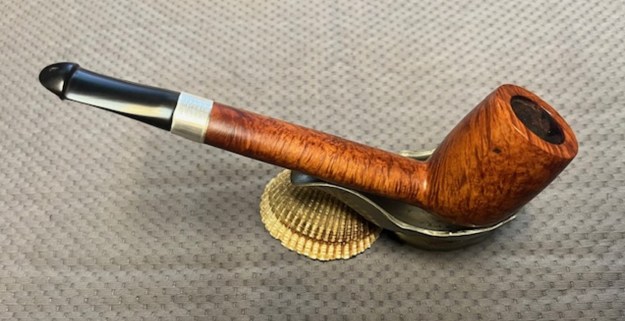
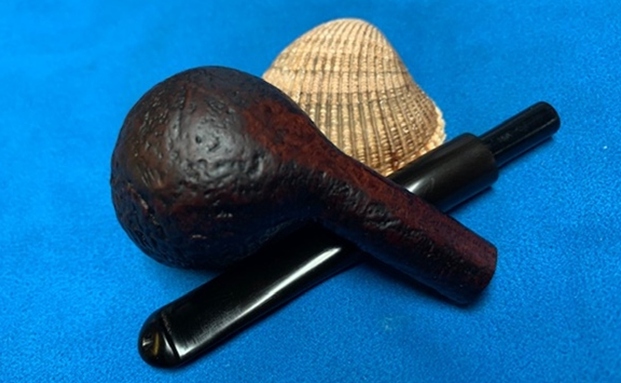
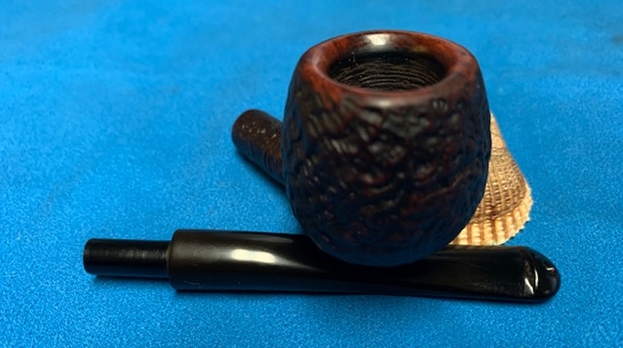
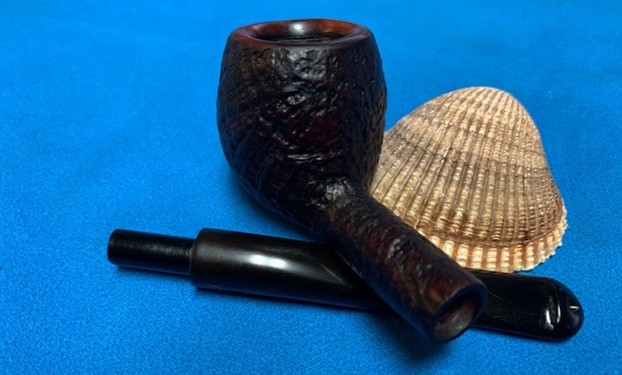
Finally an easy restore – a Made in Ireland Peterson’s Kapruf 86 Apple


Blog by Steve Laug

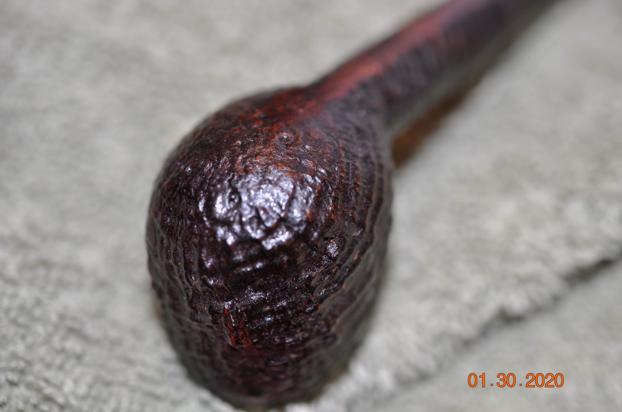
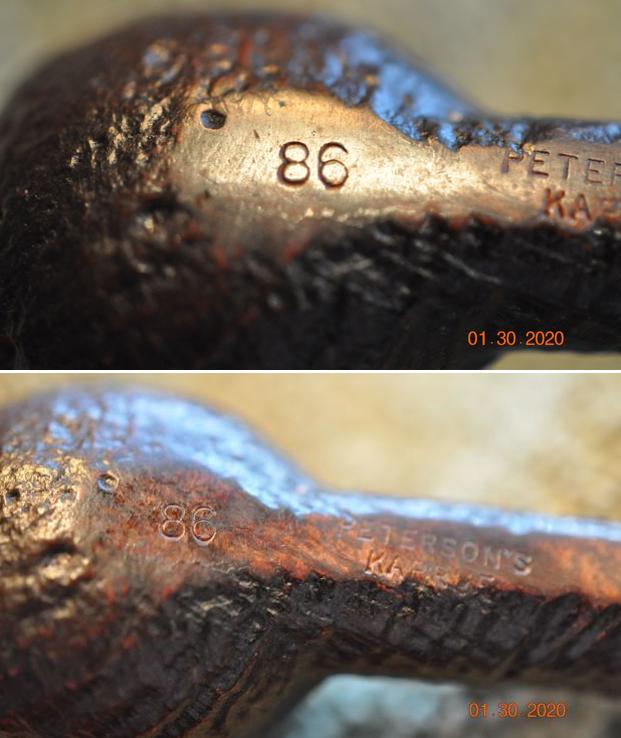
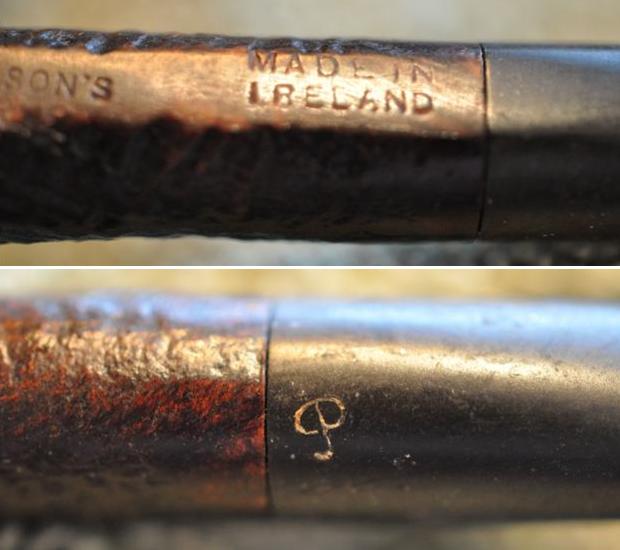
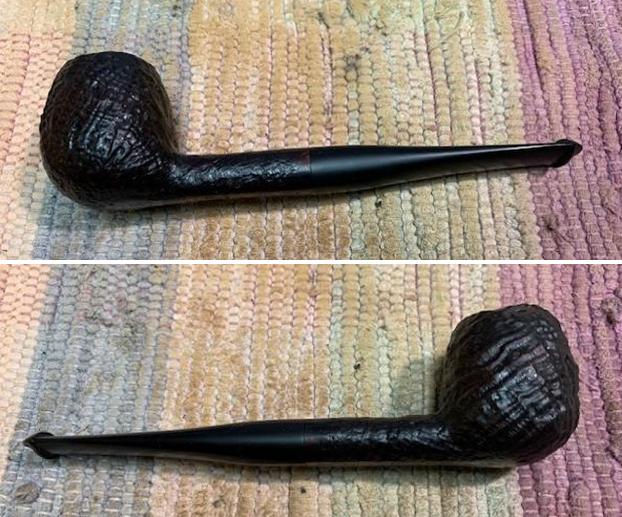
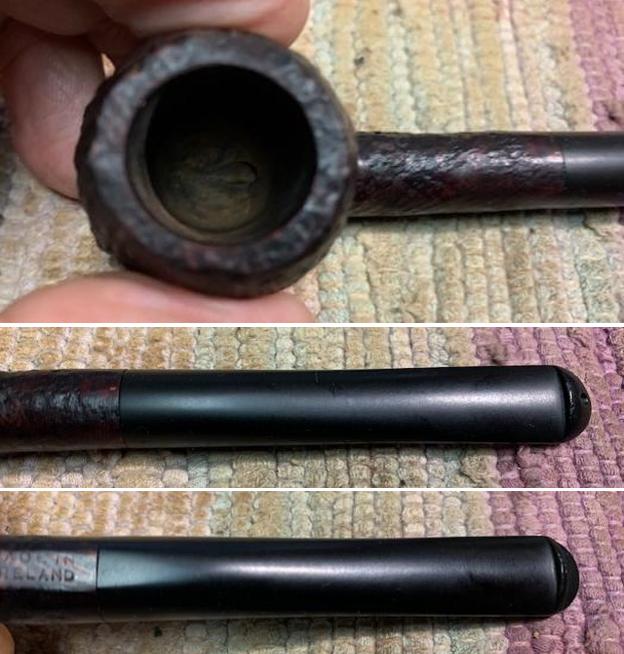
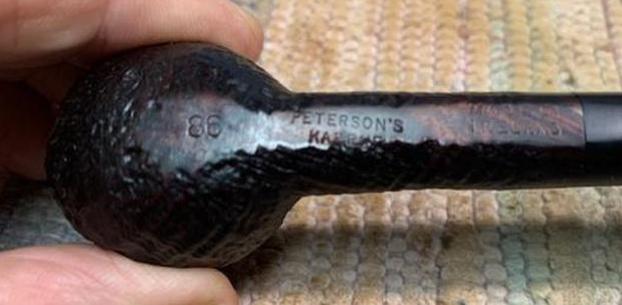
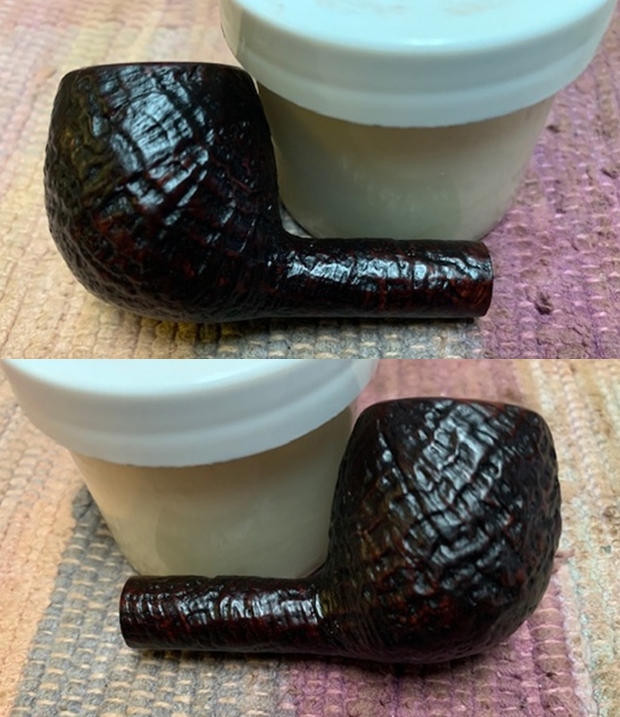
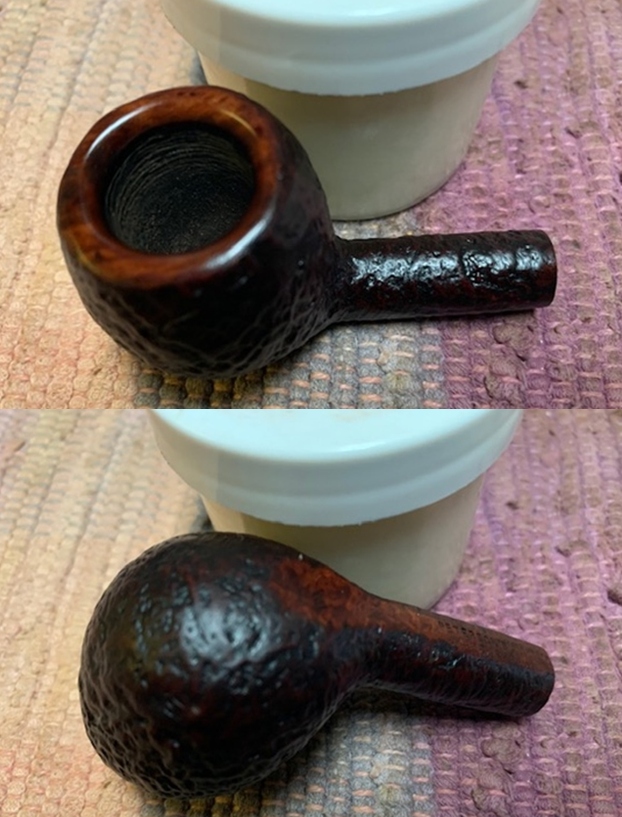
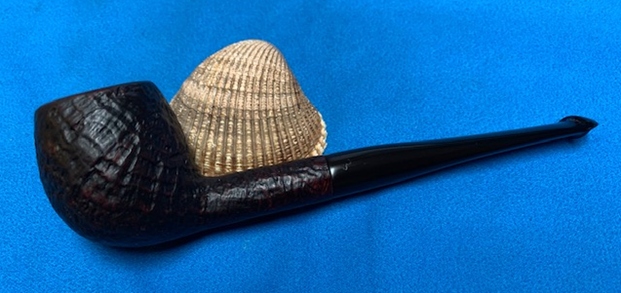
After some great sunny days this past week today is rainy, chilly day in Vancouver. I know in comparison to where many of you live it is not cold but to us it is. It is a great day to stay inside at the work bench listening to a church service and/or pod cast while working on pipes. Of course that will be accompanied by some music. The next pipe I have chosen is another Peterson’s pipe. This one is a petite sandblast Apple that was surprisingly clean. It came to us from a fellow in Los Angeles, California, USA. It was dusty but the sandblasted grain shown through. The contrast of the brown and black stains gave the blast a sense of depth. It was stamped on the flat underside of the shank and read Peterson’s [over] Kapruf. To the left of that on the heel was the shape number 86. To the right of the Kapruf stamp it read Made in [over] Ireland. There was a thin cake in the bowl but the rim top looked to be in excellent condition. The outer and inner edges of the bowl were in excellent condition. The stem was lightly oxidized and had some tooth chatter on the top and underside on and near the button. Jeff took photos of the pipe before his cleanup work. Jeff took photos of the rim top and stem to show the general condition of the pipe. The bowl is lightly caked and the rim top and edges look very good. The photos of the stem show that it was oxidized and has scratches and tooth chatter on both sides. Jeff took photos of the bowl sides and heel to show the blast that was around this bowl. It is a rugged sandblast that the choice of stain adds depth to on this beautiful bowl.   He took photos of the stamping on the underside of the shank. It is clear and readable and reads as noted above.      I turned to “The Peterson Pipe” by Mark Irwin and Gary Malmberg to get some background on the Kapruf line. On page 306 it had the following information.

Kapruf amd “Kapruf” (c.1922-87) Sandblast (hence the name, Kapp-rough) P-lip or fishtail mouthpiece, in catalogs from 1940-87. Early documented specimens stamped IRISH over FREE STATE, no Eire specimens documented. Mid-century specimens may be stamped LONDON MADE [over] ENGLAND or MADE IN ENGLAND forming a circle or MADE IN [over] IRELAND, all dating no later than 1970. Those of recent vintage stamped MADE IN THE[over] REPUBLIC [over]OF IRELAND.

I knew that I was working on a KAPRUF that was made no later than 1970 as it is stamped MADE IN IRELAND as noted above. Now it was time to work on the pipe.

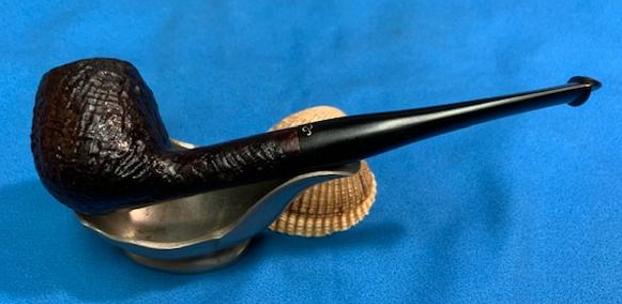
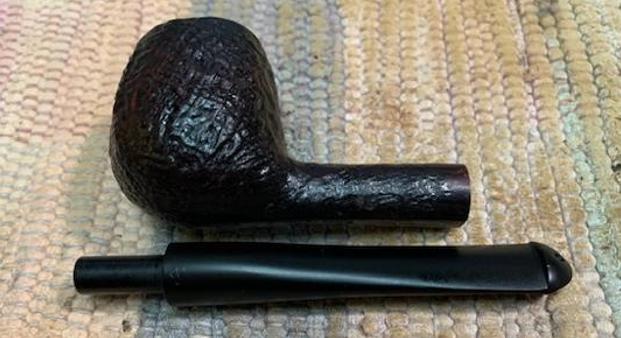
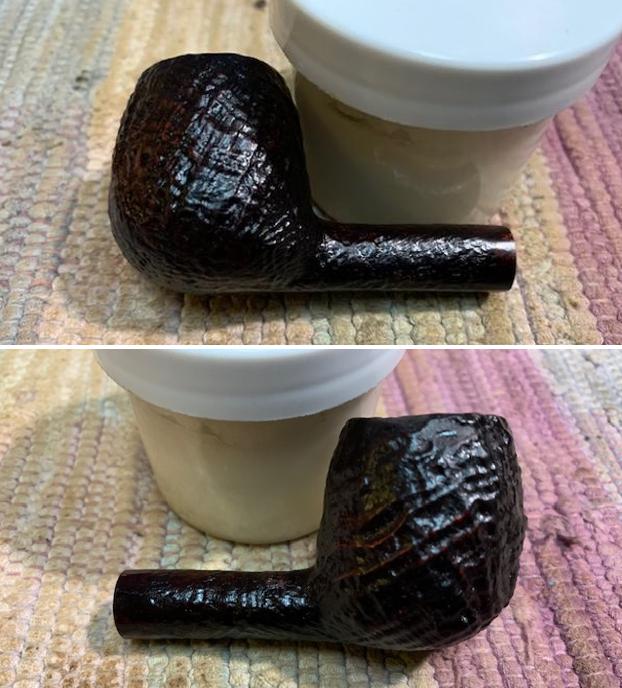
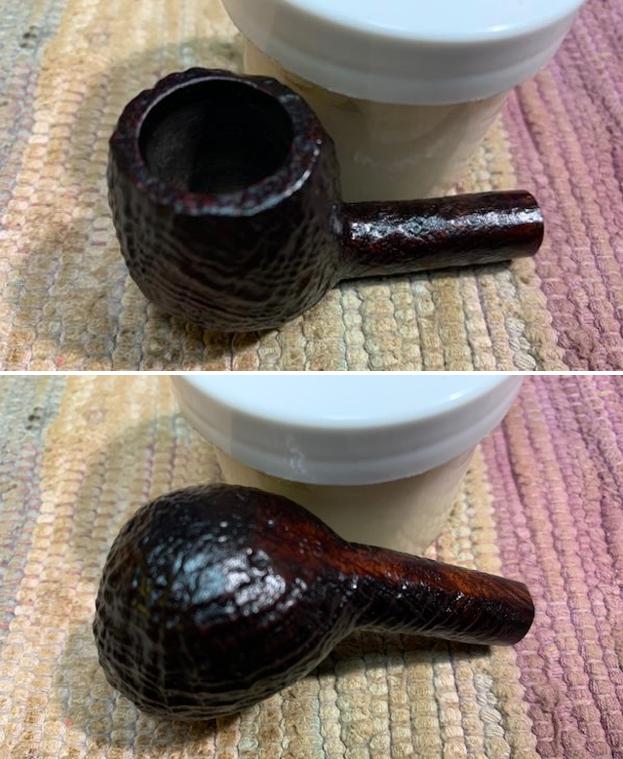
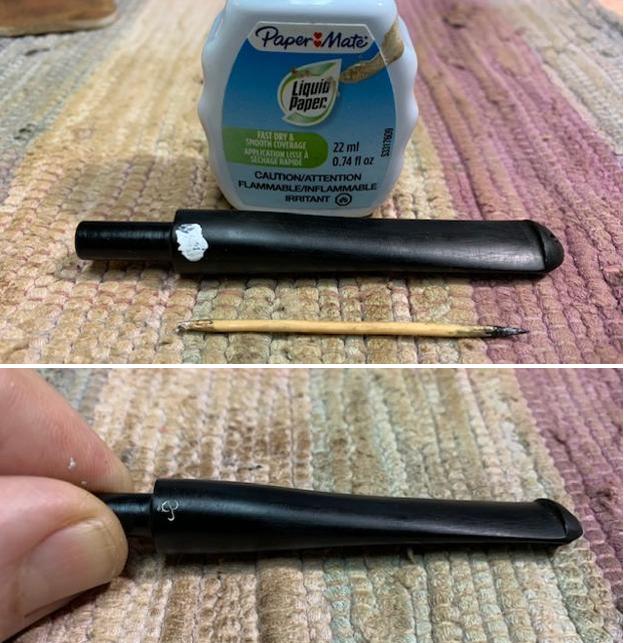
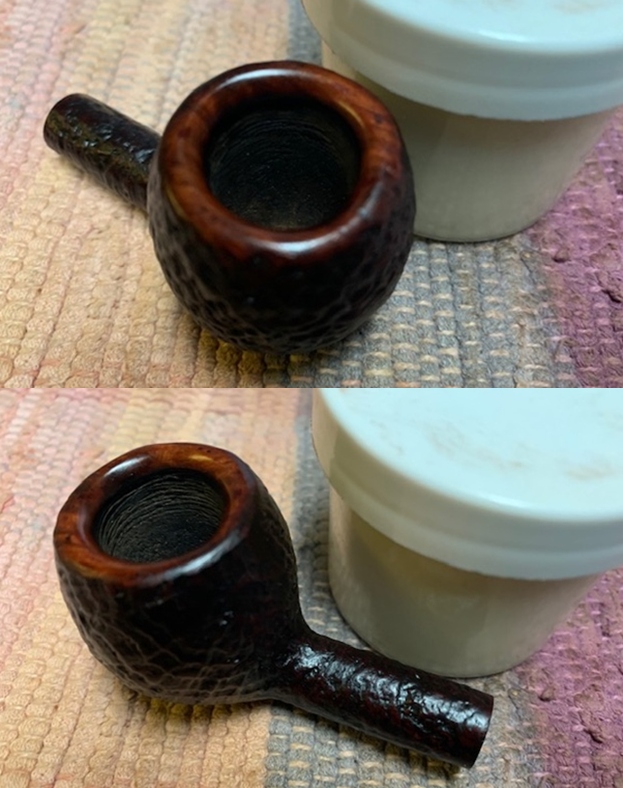
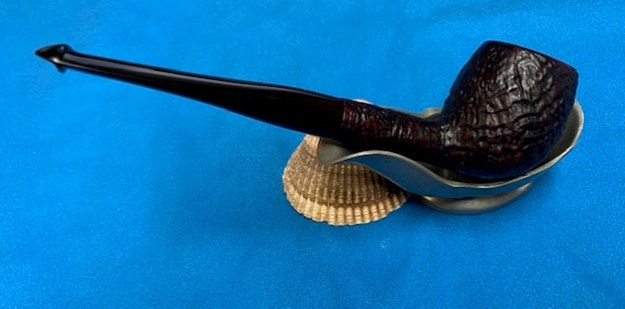
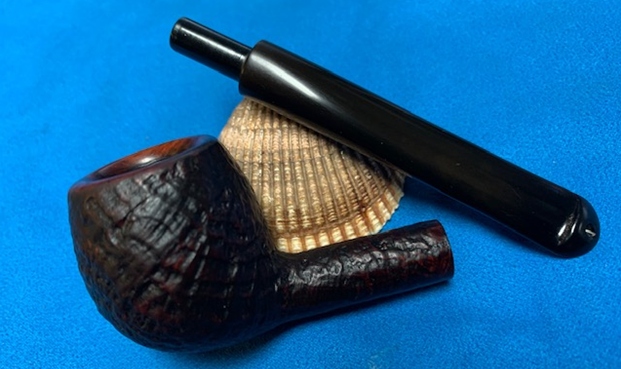
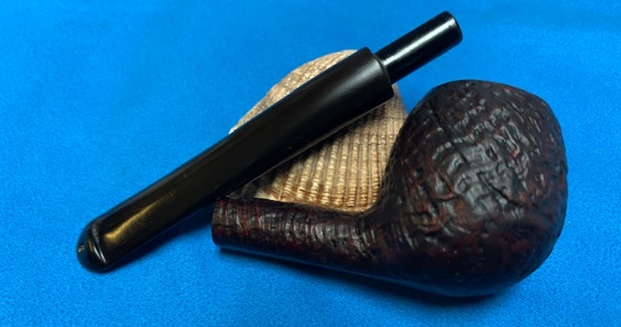
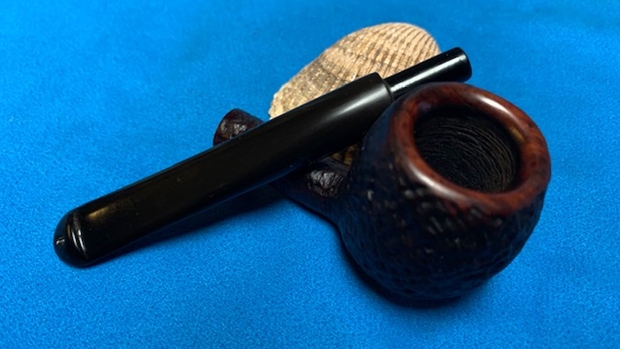
Jeff had done a great job cleaning up the pipe as usual. He reamed the pipe with a PipNet reamer and took the cake back to the bare briar. He cleaned up the remnants with a Savinelli Fitsall Pipe Knife. He scrubbed the interior of the bowl and shank with pipe cleaners, cotton swabs and alcohol to remove the tars and oils. He scrubbed the exterior of the pipe with Murphy’s Oil Soap and a tooth brush to remove the grime from the finish. He scrubbed the inside of the stem with alcohol and pipe cleaners. He scrubbed the exterior with Soft Scrub and then soaked it in Briarville Pipe Stem Deoxidizer. He washed it off with warm water to remove the deoxidizer. The pipe looked great when it arrived in Vancouver.     I took some close up photos of the rim top and the stem surface. I wanted to show how well it had cleaned up. The rim top looks very good and the sandblast is also in great condition. I also took close up photos of the stem to show condition of the surface.     I took a photo of the stamping on the underside of the shank. You can see that it is stamped as noted above. It is faint but readable. I took the pipe apart and took a photo of the pipe. It is a good looking pipe and has an interesting shallow sandblast on the bowl. The pipe was in excellent condition so I started my work on the bowl by working Before & After Restoration Balm into the surface of the briar with my fingertips and a horse hair shoe brush to clean, enliven and protect the briar. I let the balm sit for 15 minutes and then buffed with a cotton cloth to raise the shine. The photos show the bowl at this point in the restoration process. I set the bowl aside and turned my attention to the stem. It was in great condition other than the polishing. I touched up the “P” stamp on the left side of the stem with Liquid Paper and a tooth pick to fill in the stamping. Once it cured I scraped it off with the edge of a tooth pick.   I polished the stem with micromesh sanding pads – wet sanding with 1500-12000 grit sanding pads. I wiped it down after each sanding pad with Obsidian Oil. I polished it with Before & After Pipe Stem Polish – both Fine and Extra Fine. I gave it a final coat of Obsidian Oil to protect the vulcanite.      I am excited to finish this Peterson’s Kapruf 86 Apple, Made in Ireland. I put the pipe back together and buffed it with Blue Diamond on the buffing wheel. I gave the bowl multiple coats of Conservator’s Wax and the stem multiple coats of carnauba wax. I buffed the pipe with a clean buffing pad to raise the shine and hand buffed it with a microfibre cloth to deepen the shine. It is fun to see what the polished smooth rim top and the sandblast bowl looks like with the black vulcanite taper stem. This Classic looking Peterson’s Kapruf Sandblast Apple feels great in my hand. It is light and well balanced. Have a look at it with the photos below. The dimensions are Length: 5 ½ inches, Height: 1 ½ inches, Outside diameter of the bowl: 1 inch, Chamber diameter: 5/8 of an inch. The weight of the pipe is 26grams/.92oz. It is a beautiful pipe and one that will soon be on the rebornpipes store in the Irish Pipe Makers section. If you would like to add it to your collection let me know. Thanks for walking through the restoration with me as I worked over this pipe. Thanks to each of you who are reading this blog.
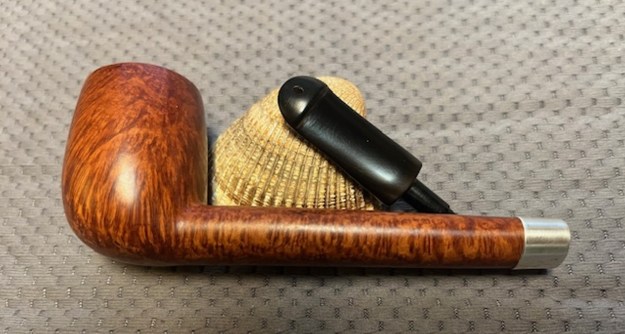
Rebirthing a Republic Era Peterson’s Kapruf 86 Apple


Blog by Steve Laug

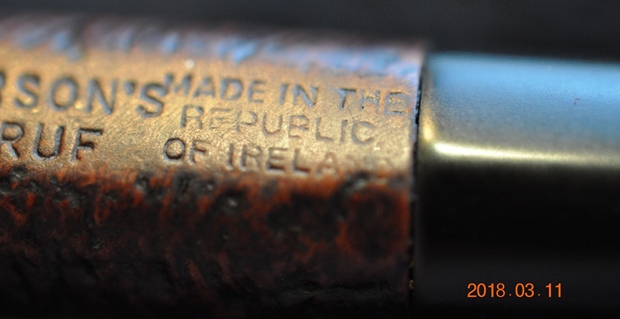
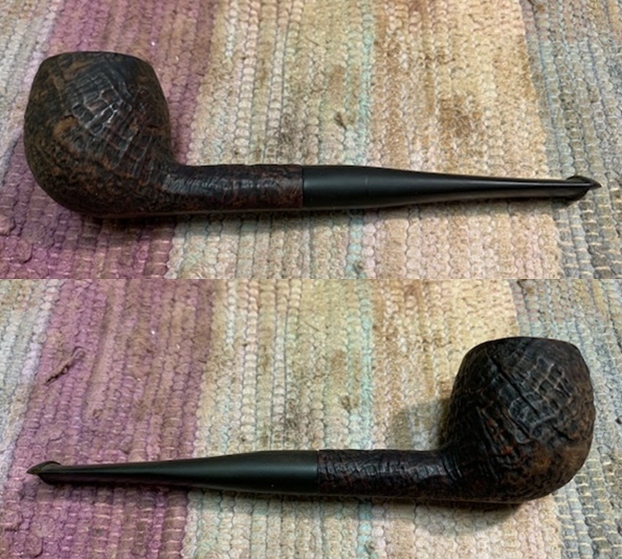
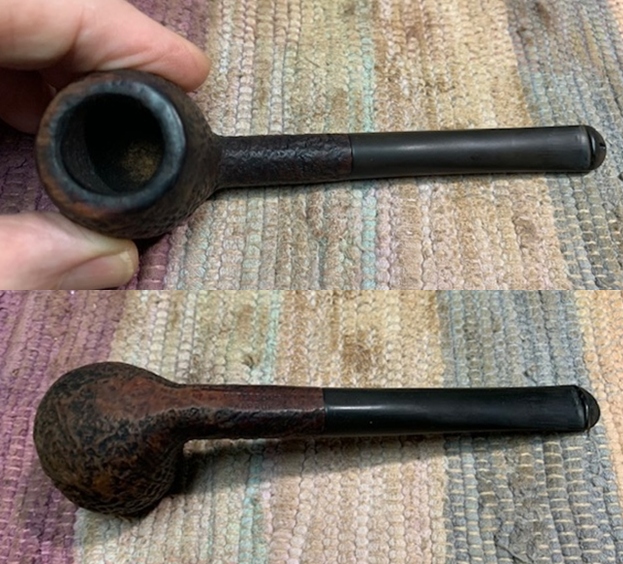
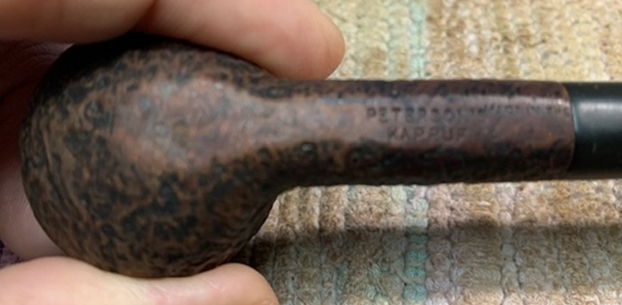
Today is an interesting day for me to work on pipes. It is Christmas Day and still fighting the sprained wrist. It is better than it was yesterday and the wrist brace really helps. I am slowed down a bit by it, but I have not stopped. The next pipe I have chosen is another Peterson’s Sandblast Apple. It is more delicate looking than the previous one but it was another very dirty pipe. It also came to us from the estate of Anglican minister that was a great friend of mine here in Canada. The grime was ground into the grooves of the sandblast finish on the bowl sides. The contrast of the brown stains gave the blast a sense of depth. It was stamped on the flat underside of the shank and read Peterson’s [over] Kapruf. To the left of that on the heel was the shape number 86. To the right of the Kapruf stamp it read Made in the Republic of Ireland (three lines). This pipe must have been another favourite as it had been well smoked. There was a moderate cake in the bowl a light overflow of lava and darkening on the thin rim top. The edge of the bowl looked was rough and out of round. The stem was oxidized, calcified and had light tooth marks and chatter on the top and underside on and near the button. Jeff took photos of the pipe before his cleanup work. They tell the story and give a glimpse of the promise that we see in this pipe.   Jeff took photos of the rim top and stem to show the general condition of the pipe. The bowl is moderately caked and the smooth rim top and edges have a lava overflow obscuring the apparent damage to the inner edge. The photos of the stem show that it was oxidized, calcified and has light tooth marks on the top and underside near the button.   Jeff took a photo of the bowl sides and heel to show the blast that was around this bowl. There were some nicks in the sides but overall it is a nice looking pipe.      He took photos of the stamping on the underside of the shank. It is clear and readable and reads as noted above.     I turned to “The Peterson Pipe” by Mark Irwin and Gary Malmberg to get some background on the Aran line. On page 306 it had the following information.
Kapruf amd “Kapruf” (c.1922-87) Sandblast (hence the name, Kapp-rough) P-lip or fishtail mouthpiece, in catalogs from 1940-87. Early documented specimens stamped IRISH over FREE STATE, no Eire specimens documented. Mid-century specimens may be stamped LONDON MADE [over] ENGLAND or MADE IN ENGLAND forming a circle or MADE IN [over] IRELAND, all dating no later than 1970. Those of recent vintage stamped MADE IN THE[over] REPUBLIC [over]OF IRELAND.

I knew that I was dealing with a KAPRUF made before 1970 as it is stamped MADE IN IRELAND as noted above. That fit with the majority of his pipes so I was clear what I was working on. Now it was time to work on the pipe.

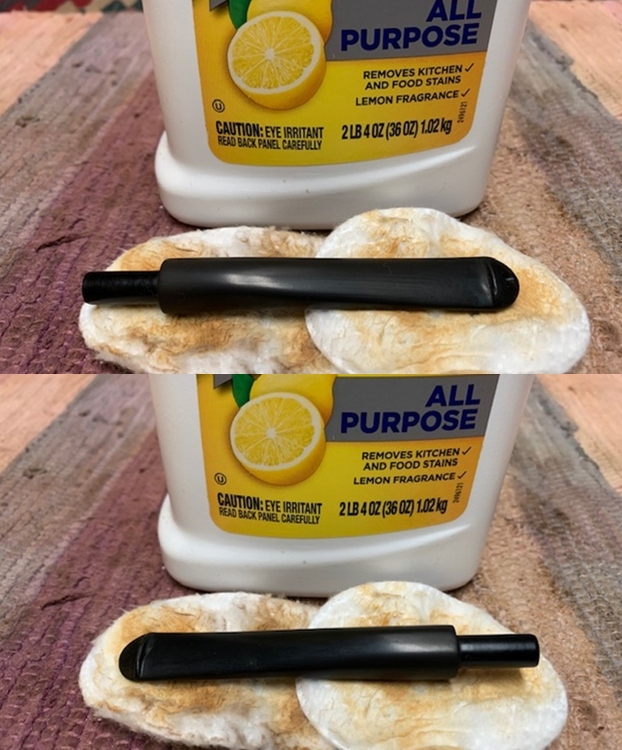
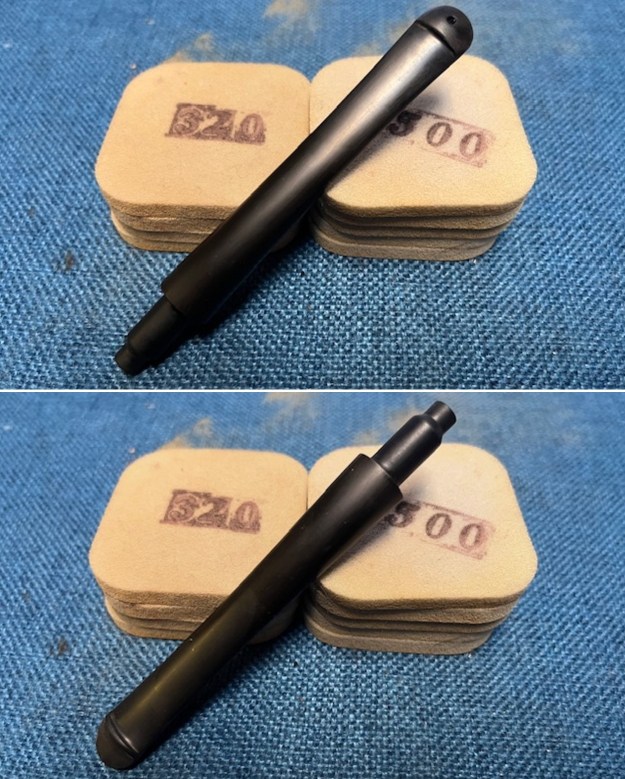
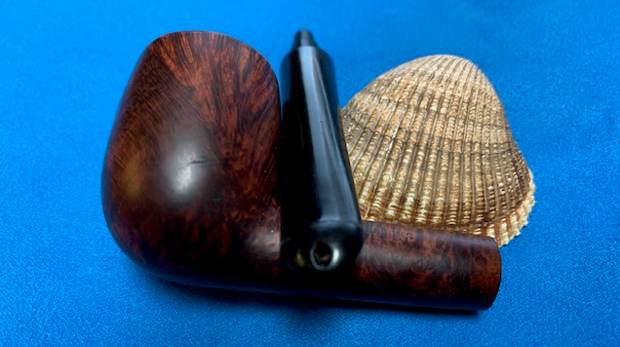
Jeff had done a great job cleaning up the pipe as usual. He reamed the pipe with a PipNet reamer and cut back the cake back to the bare briar. He cleaned up the walls with a Savinelli Fitsall Pipe Knife. He scrubbed the interior of the bowl and shank with pipe cleaners, cotton swabs and alcohol to remove the tars and oils. He scrubbed the exterior of the pipe with Murphy’s Oil Soap and a tooth brush to remove the grime from the finish. He worked on the rim top lava and darkening with the soap and tooth brush. He scrubbed the inside of the stem with alcohol and pipe cleaners. He scrubbed the exterior with Soft Scrub and then soaked it in Before & After Deoxidizer. He washed it off with warm water to remove the Deoxidizer. The pipe looked far better when it arrived.    I took some close up photos of the rim top and also of the stem surface. I wanted to show how well it had cleaned up. The rim top photo shows some damage on the back side of the rim top and inner edge. It should clean up really well. I also took close up photos of the stem to show the light tooth marks on the surface near the button. There was also some remaining oxidation.     I took a photo of the stamping on the underside of the shank. You can see that it is stamped as noted above. It is faint but readable.   I took the pipe apart and took a photo of the pipe. It is a good looking pipe and has a great sandblast on the bowl. I started my work on the pipe by cleaning up the damage on the back of the inner edge and rim top. I used a folded piece of 220 grit sandpaper to smooth out the damage. The rim top was smooth originally so that is what I worked with as I cleaned it up. I crowned the rim edge to eliminate the damage and blend it into the rest of the rim edge.  I polished the rim top with micromesh sanding pads – dry sanding with 1500-12000 grit sanding pads. I wiped down the briar between each pad to remove the sanding debris. I stained the rim top  with a Maple stain pen to blend it into the surrounding briar and to match the smooth panel on the underside of the shank.I worked some Before & After Restoration Balm into the surface of the briar with my fingertips and a horse hair shoe brush to clean, enliven and protect the briar. I let the balm sit for 15 minutes and then buffed with a cotton cloth to raise the shine. The photos show the bowl at this point in the restoration process.   I set the bowl aside and turned my attention to the stem. I scrubbed the stem with Soft Scrub All Purpose Cleaner to remove the oxidation on the surface of the vulcanite. It took a bit of scrubbing and I was able to remove the remaining oxidation.     I filled in the few tooth marks on both sides of the stem with clear super glue. Once the repairs cured I sanded the stem with 220 grit sandpaper to blend them into the rest of the stem. Then started the polishing with 400 grit wet dry sandpaper. I polished the stem with micromesh sanding pads – wet sanding with 1500-12000 grit sanding pads. I wiped it down after each sanding pad with Obsidian Oil. I polished it with Before & After Pipe Stem Polish – both Fine and Extra Fine.      I am excited to finish this Peterson’s Kapruf 86 Apple, Made in the Republic of Ireland. I put the pipe back together and buffed it with Blue Diamond on the buffing wheel. I gave the bowl multiple coats of Conservator’s Wax and the stem multiple coats of carnauba wax. I buffed the pipe with a clean buffing pad to raise the shine and hand buffed it with a microfibre cloth to deepen the shine. It is fun to see what the polished smooth rim top and the sandblast bowl looks like with the black vulcanite taper stem. This Classic looking Peterson’s Kapruf Sandblast Apple feels great in my hand. It is light and well balanced. Have a look at it with the photos below. The dimensions are Length: 5 ½ inches, Height: 1 ½ inches, Outside diameter of the bowl: 1 ¼  inches, Chamber diameter: ¾ of an inch. The weight of the pipe is 28grams/.99oz. It is a beautiful pipe and one that will be on the Irish Pipe Makers section of the rebornpipes store soon. If you are interested in adding it to your collection let me know. Thanks for walking through the restoration with me as I worked over this pipe. Thanks to each of you who are reading this blog.