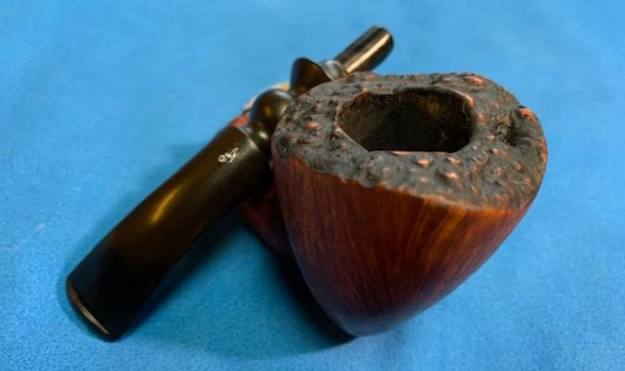
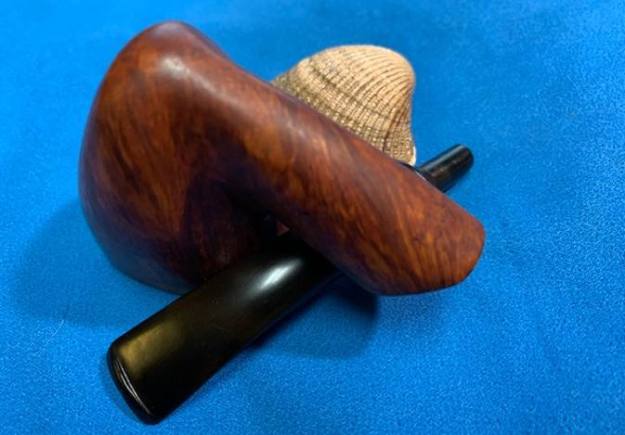
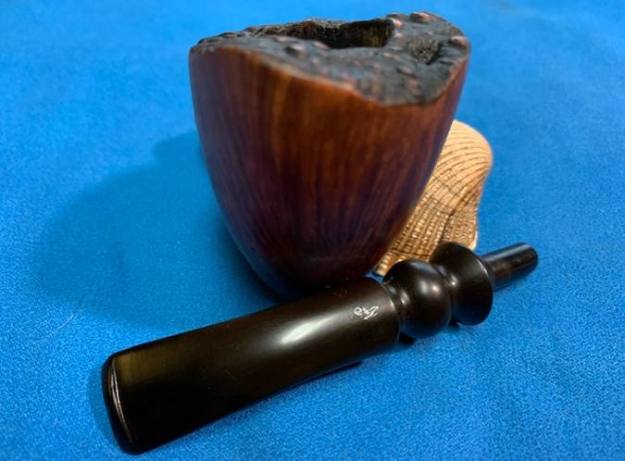
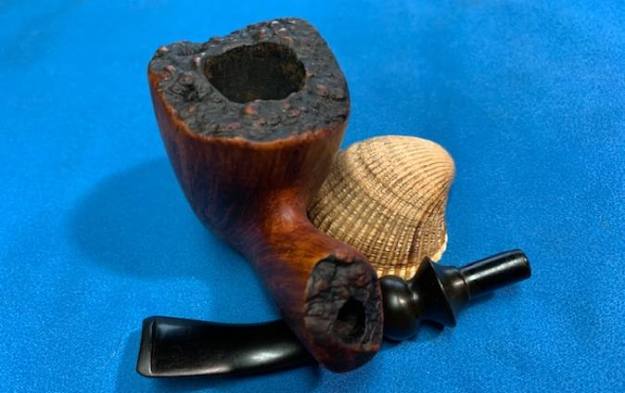
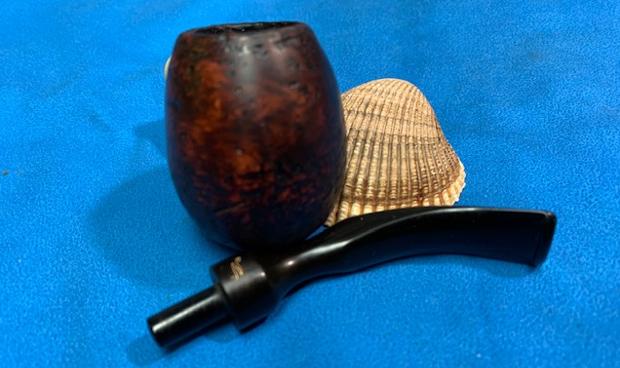
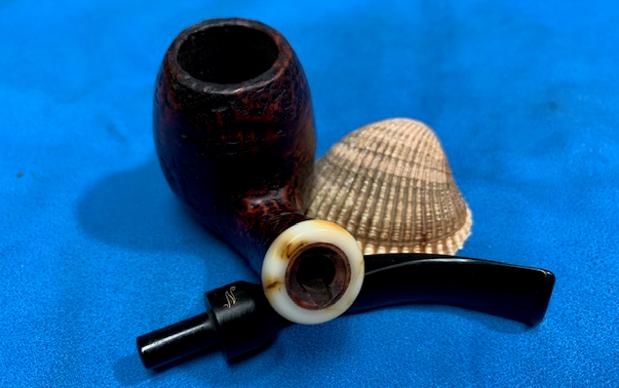
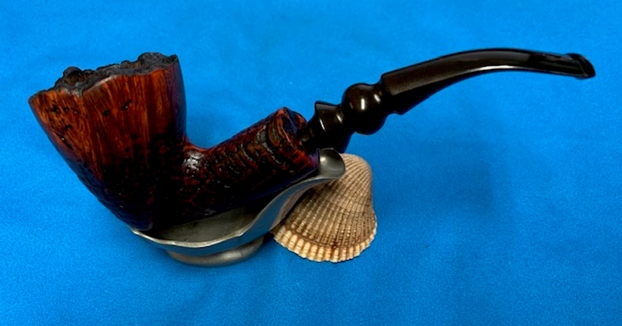
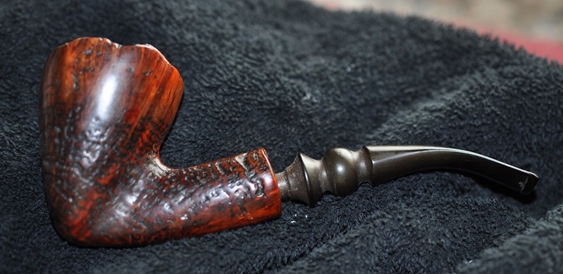
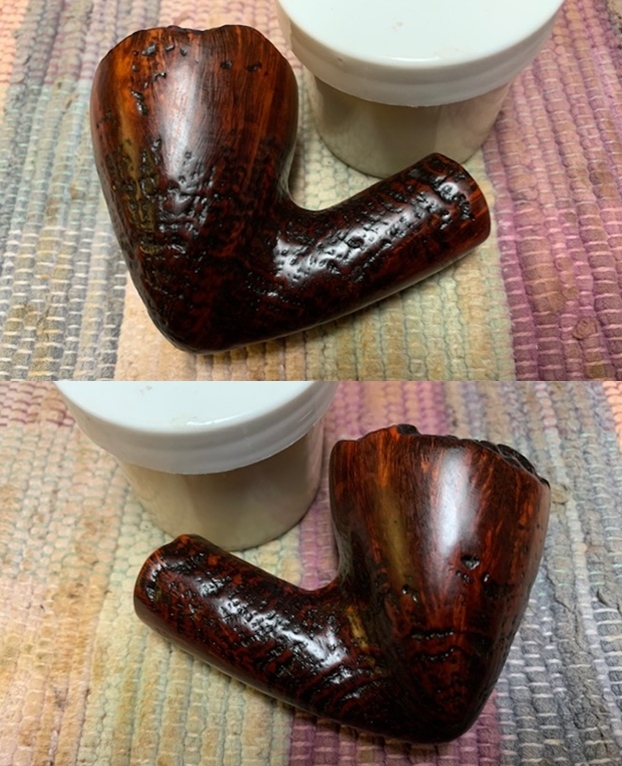
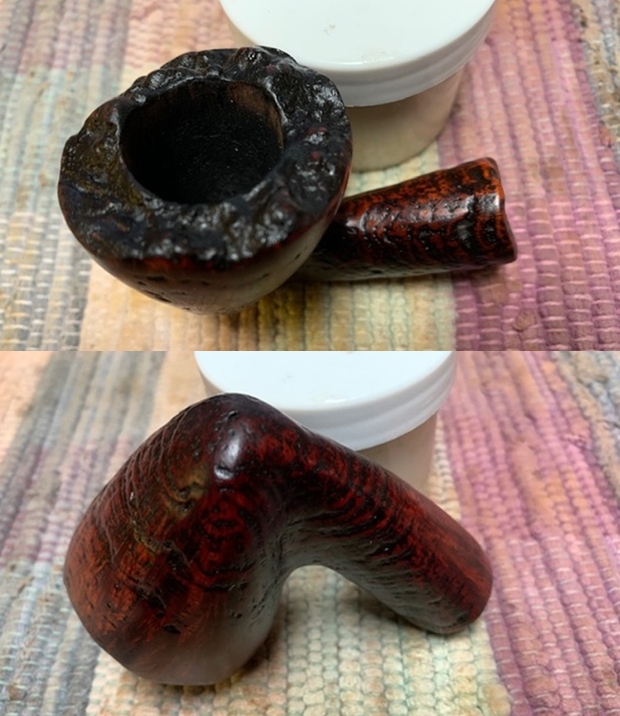
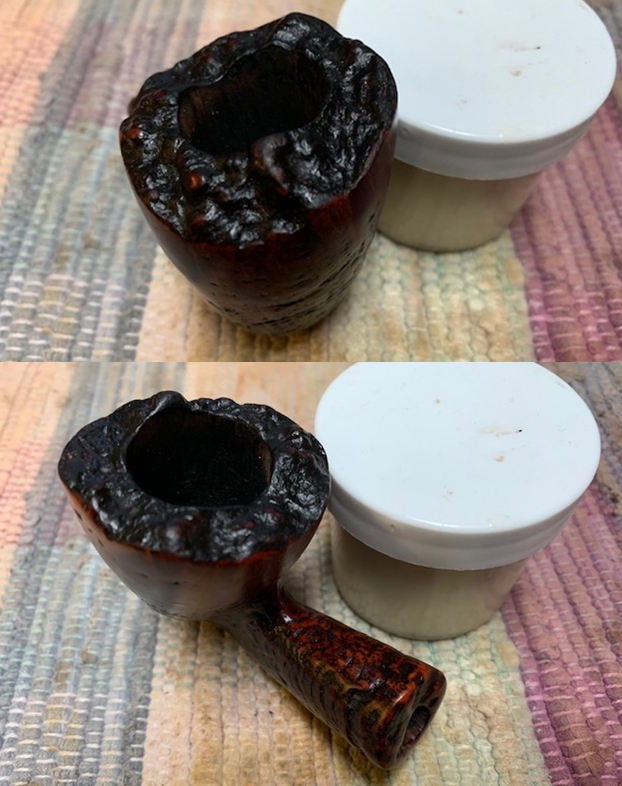
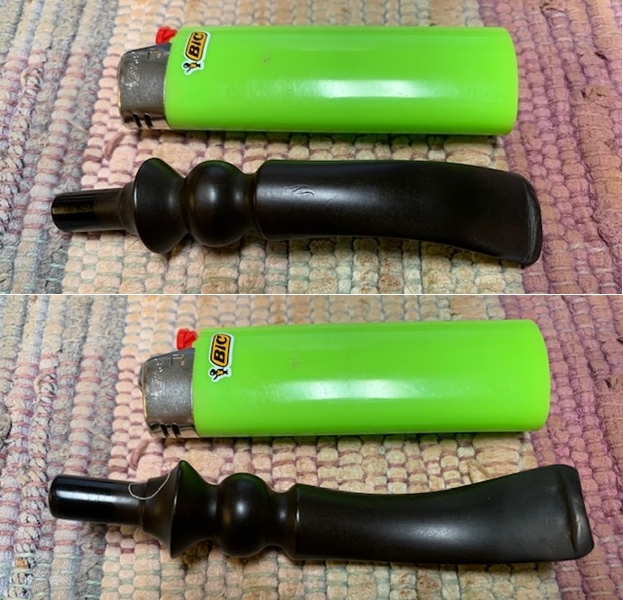
Tag Archives: Nording Pipes

Restoring a Dirty, Beautifully Grained Nording C Freehand


Blog by Steve Laug

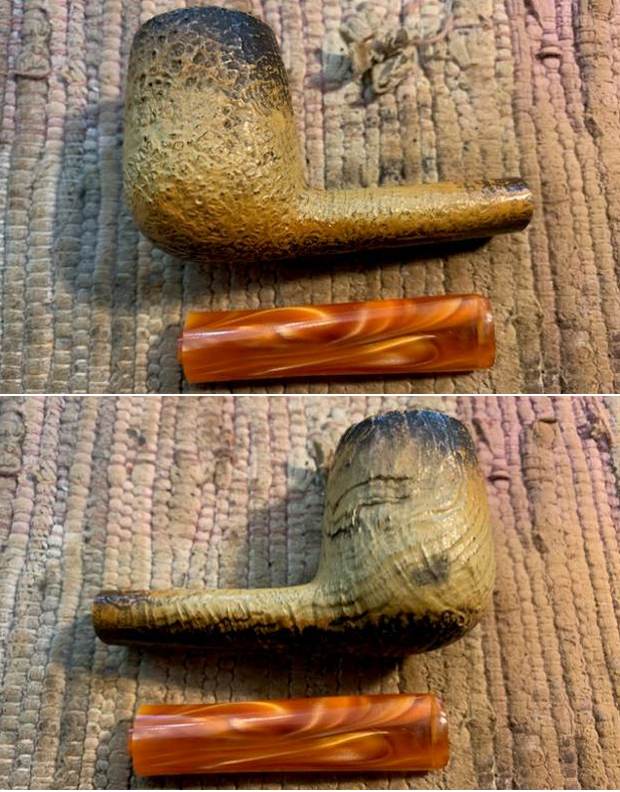
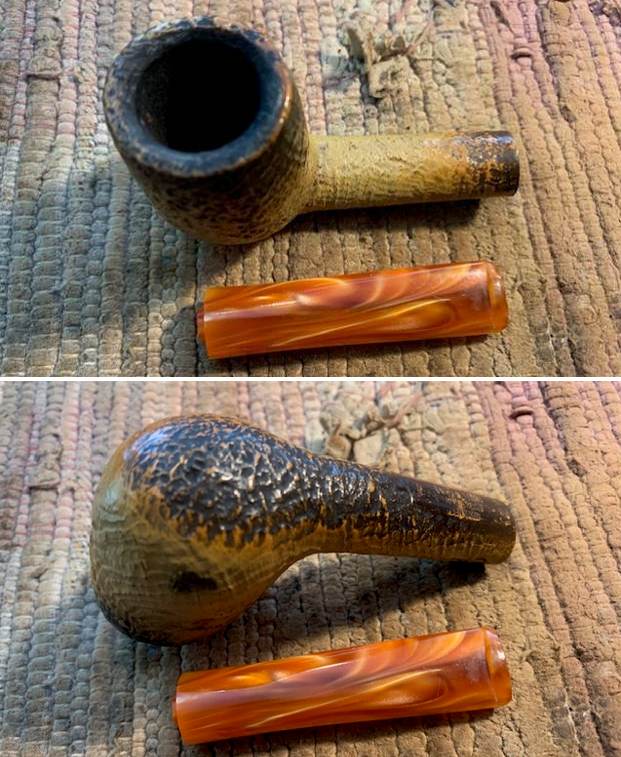
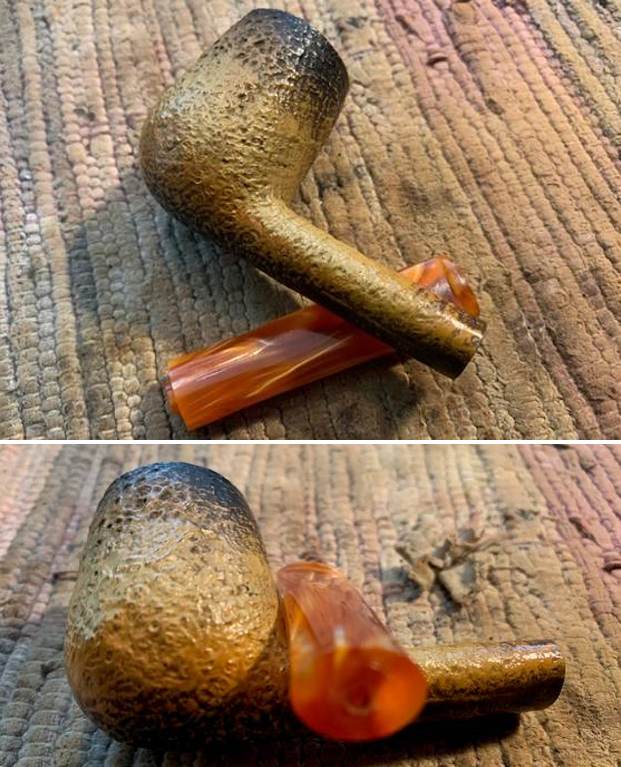
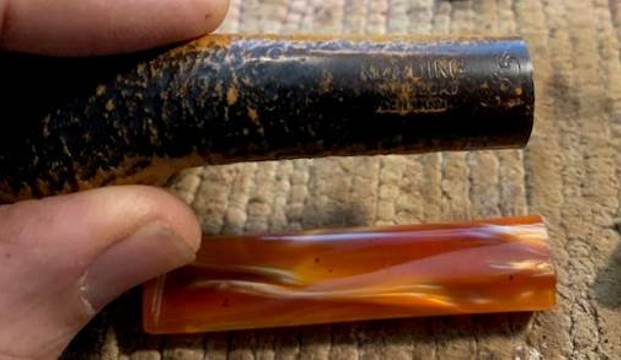
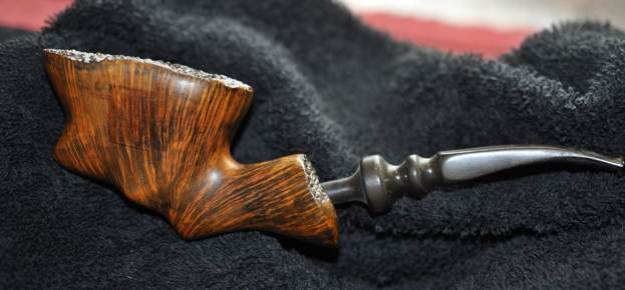
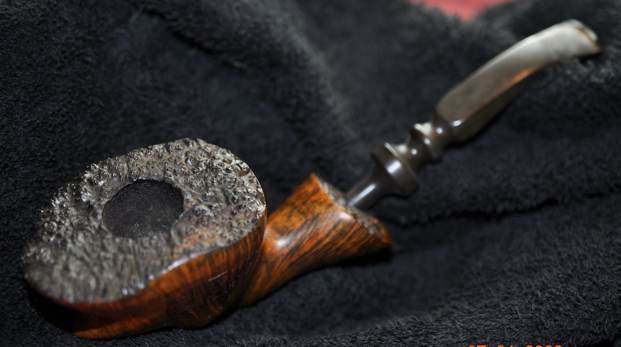
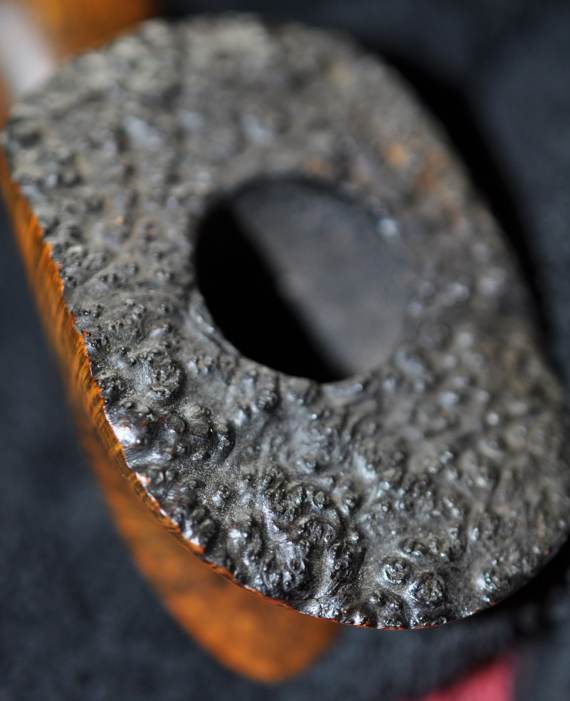
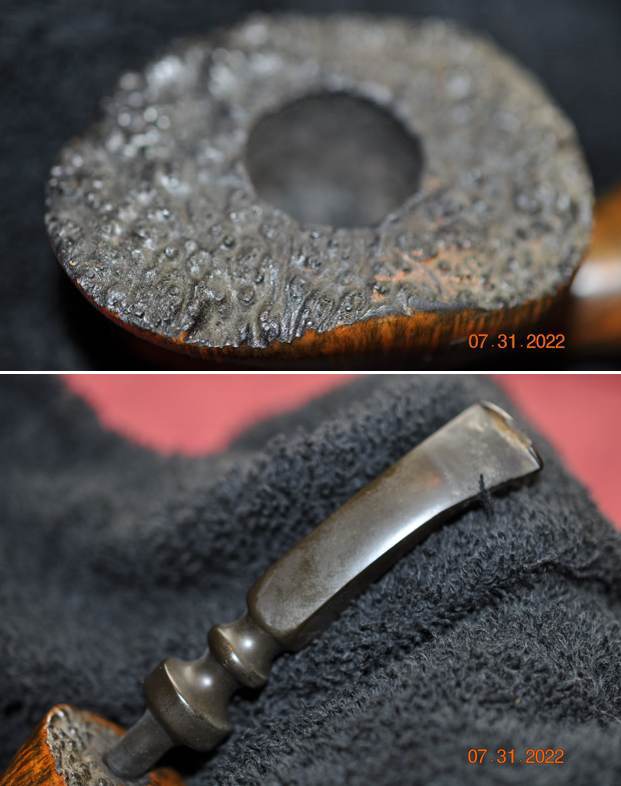
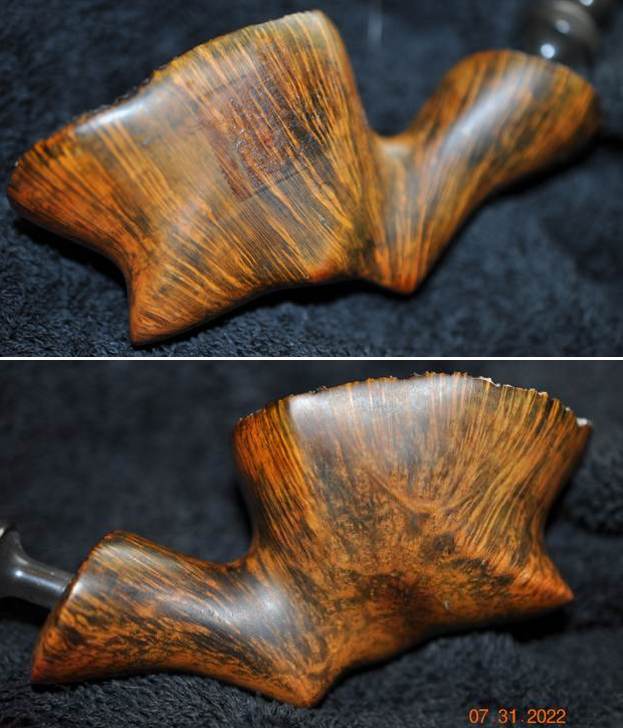
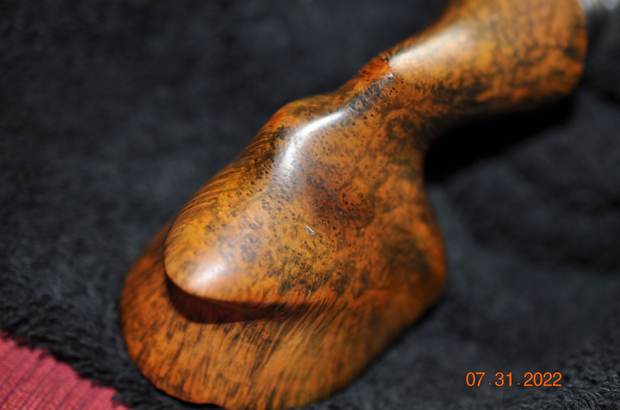
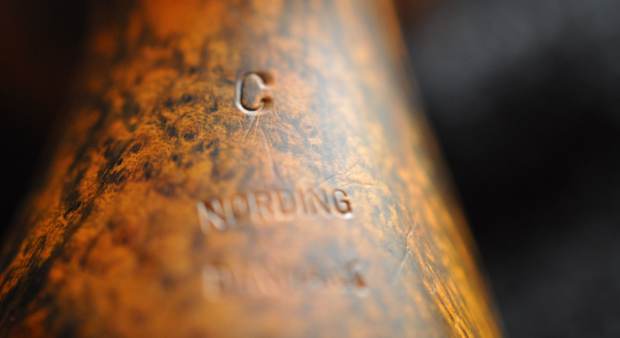
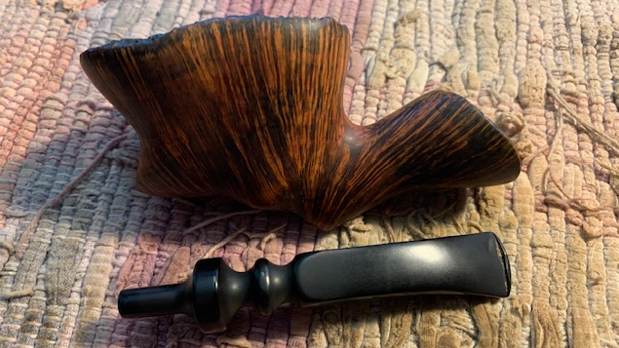
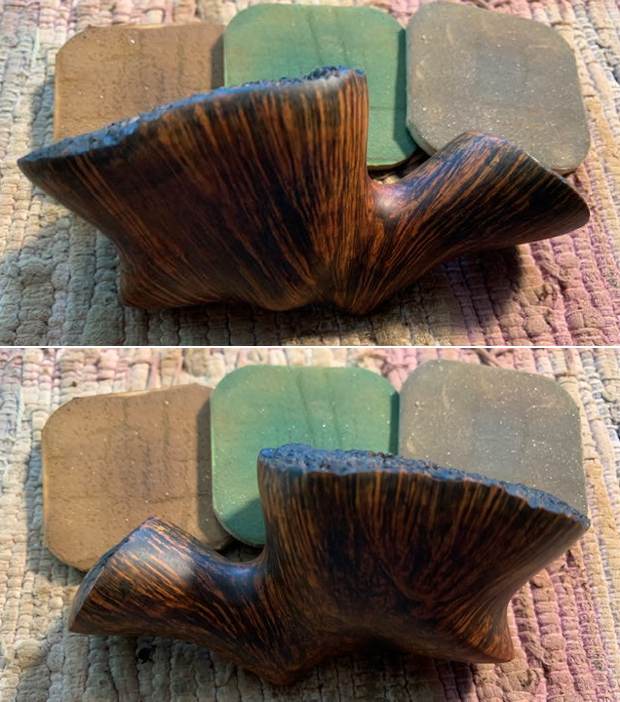
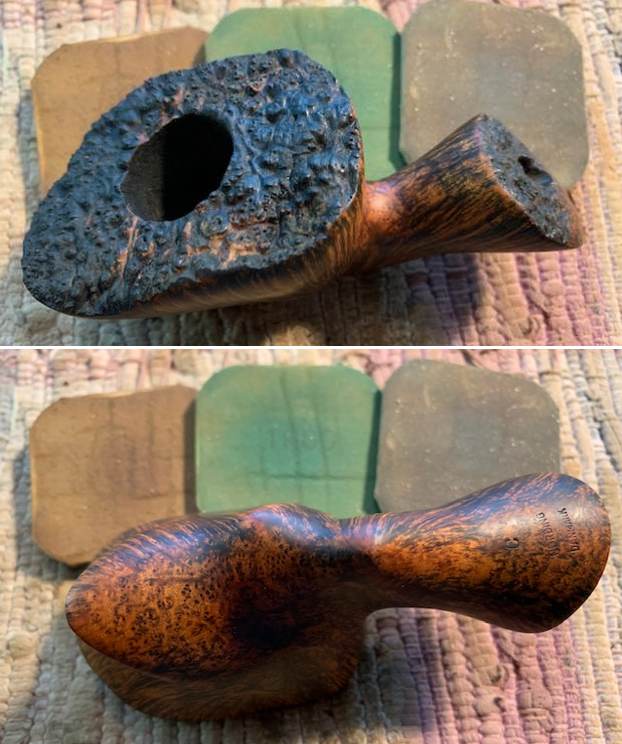
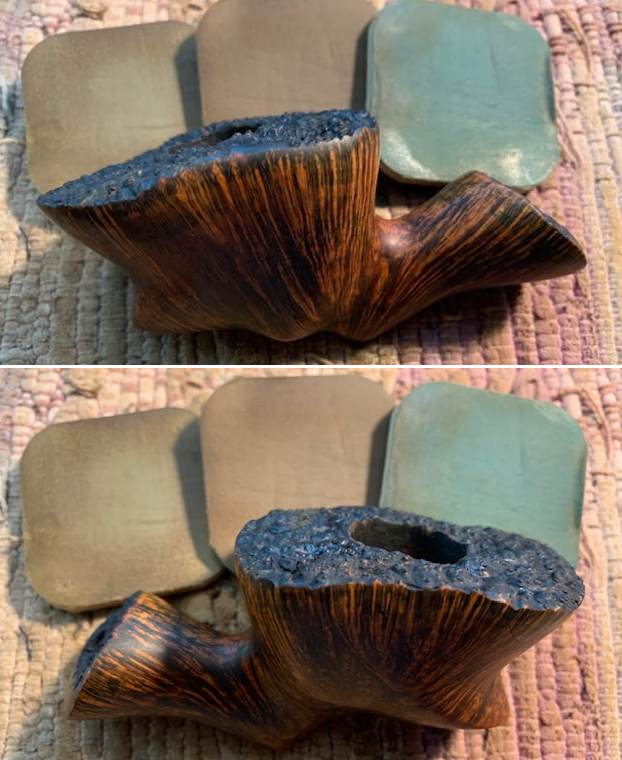
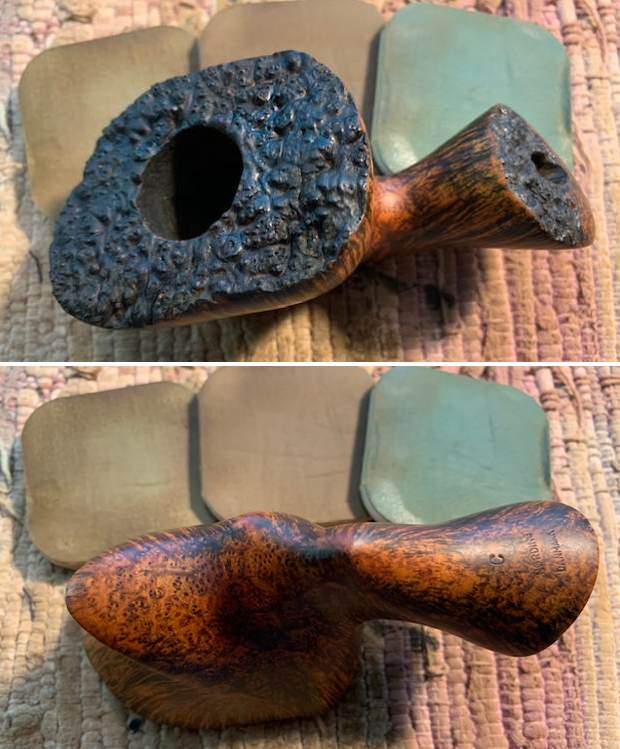
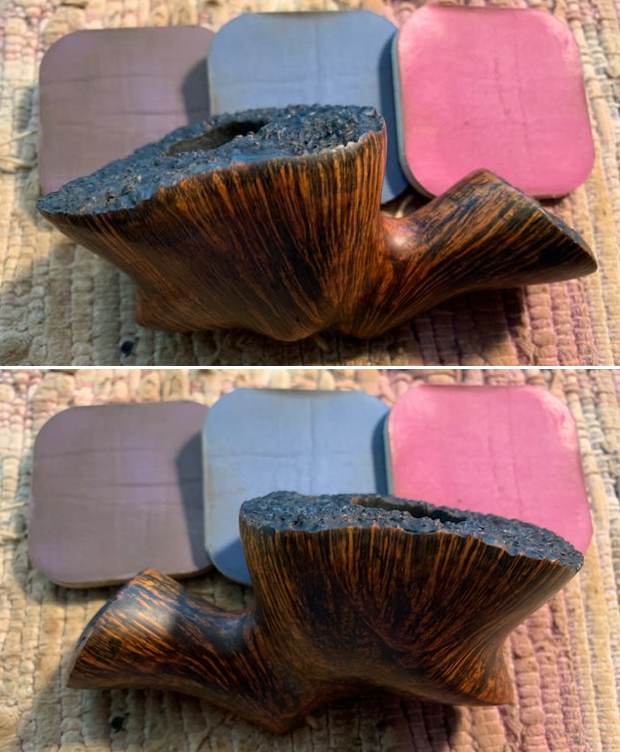
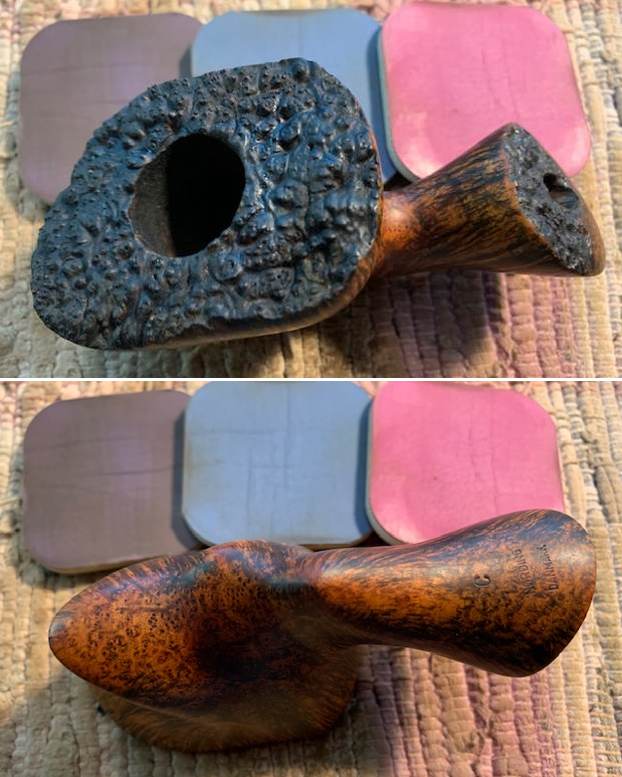
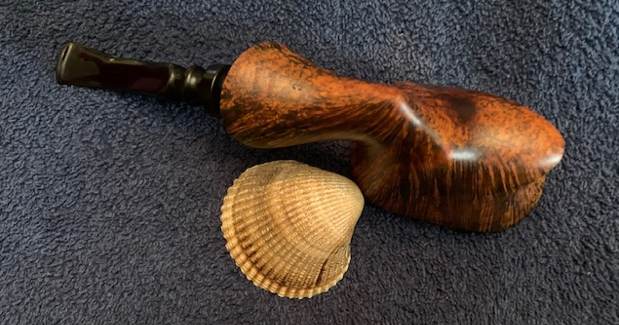
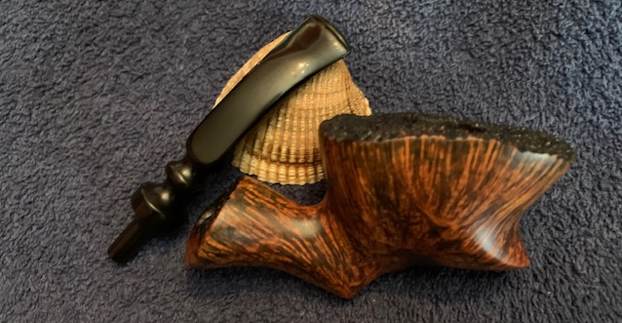
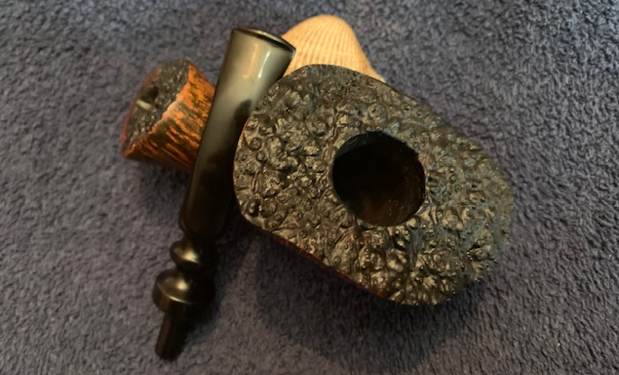
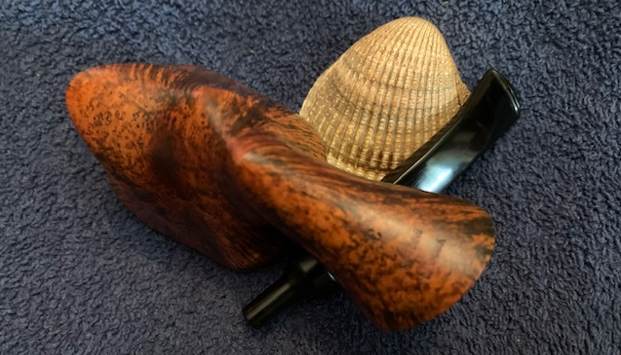
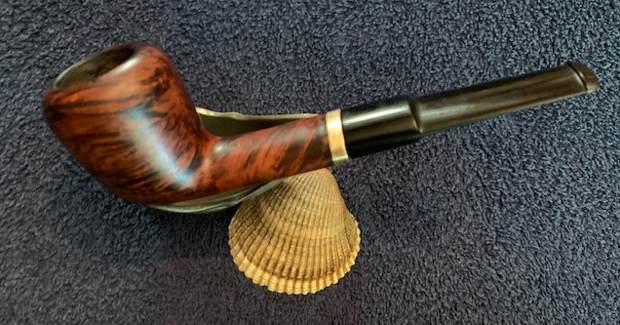
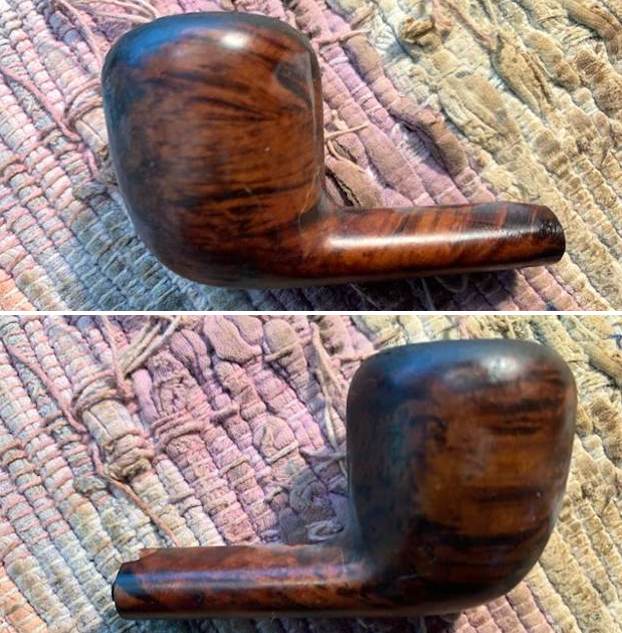
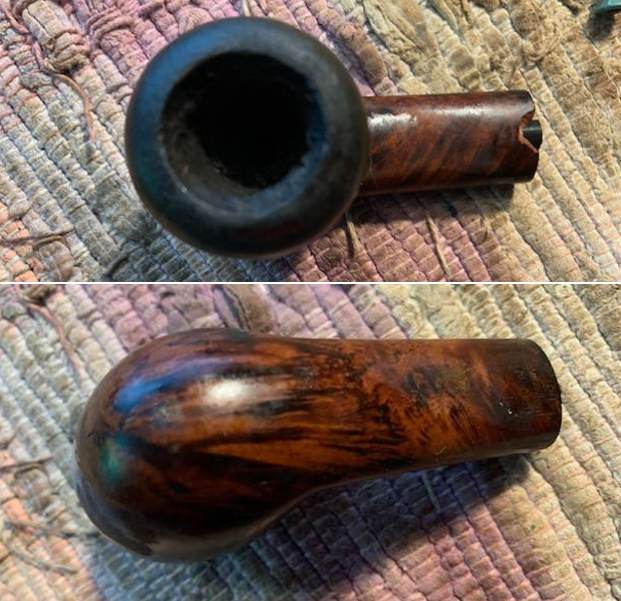
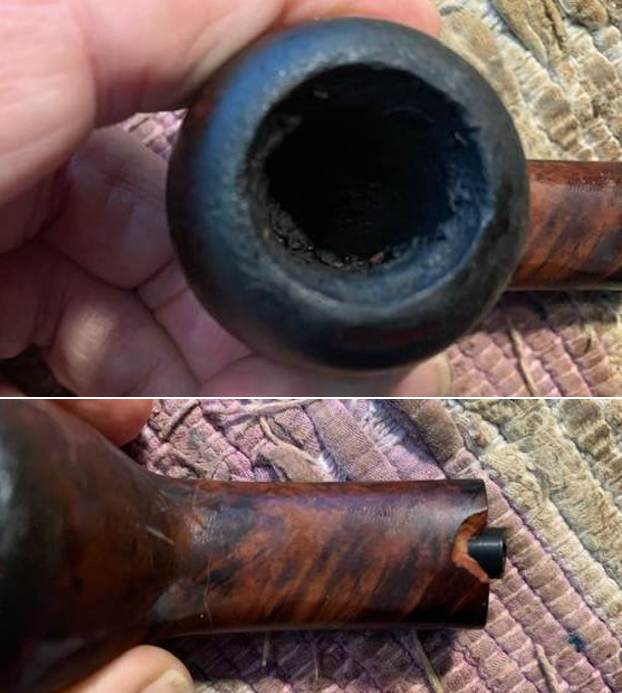
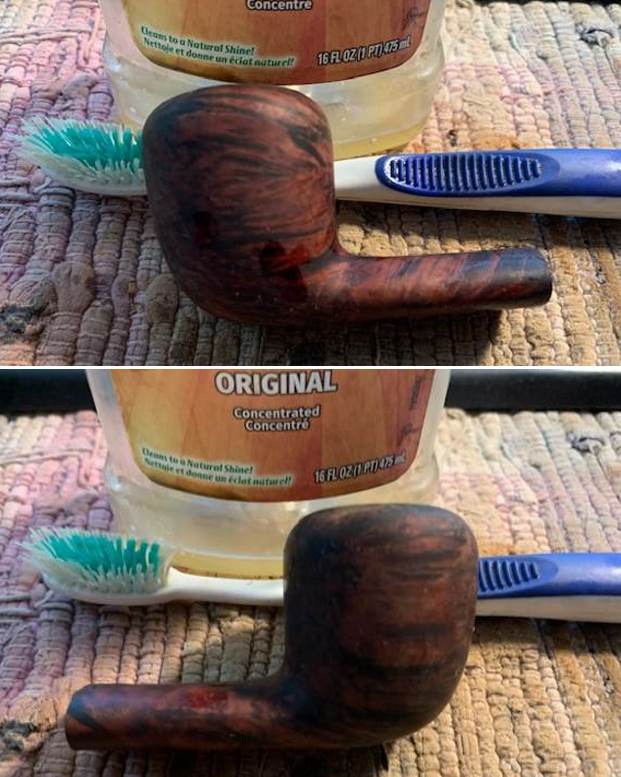
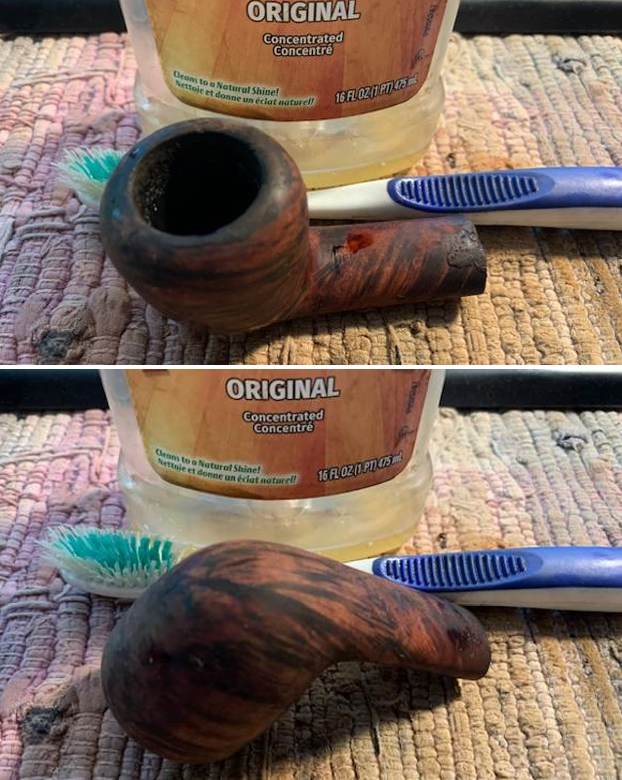
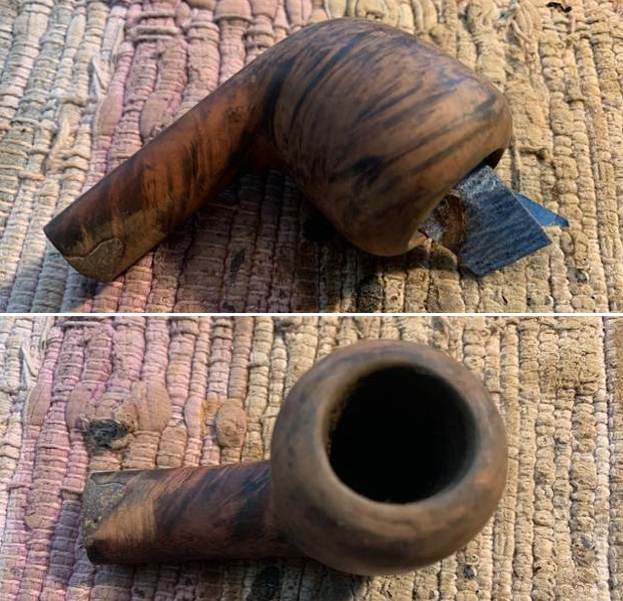
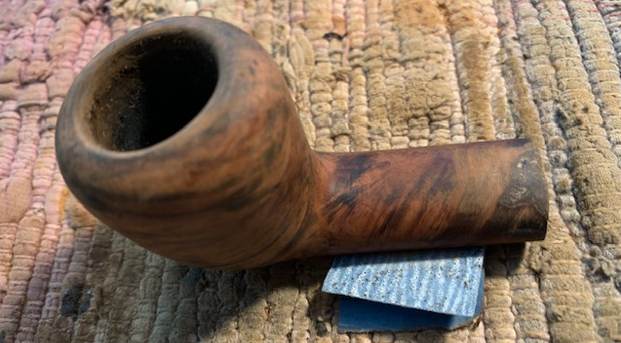
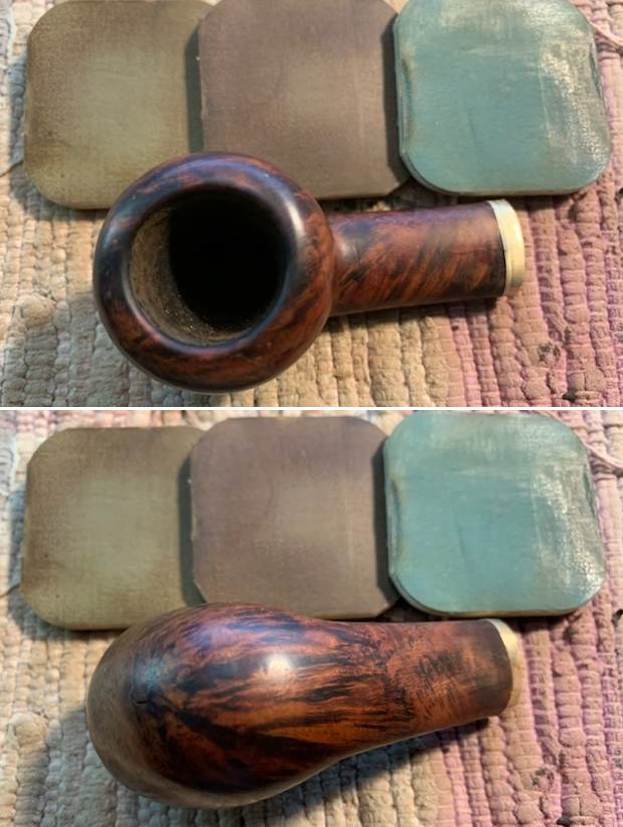
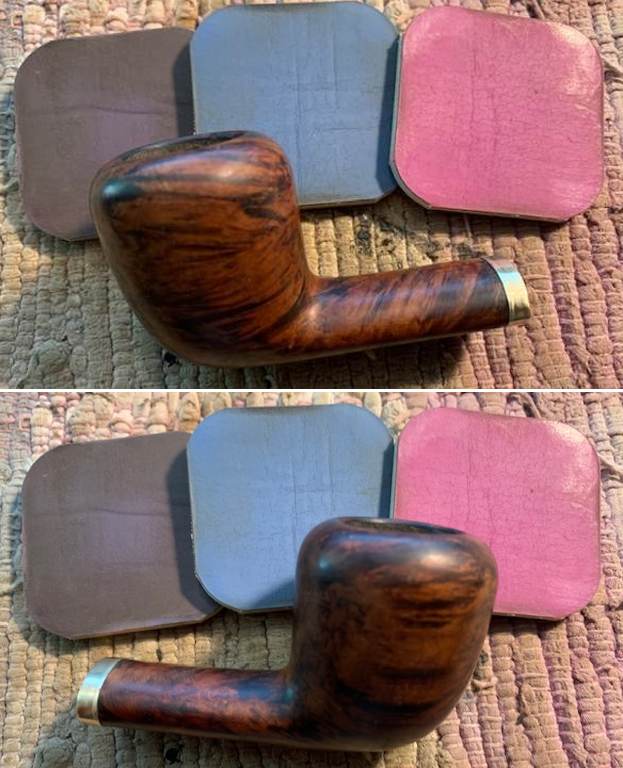
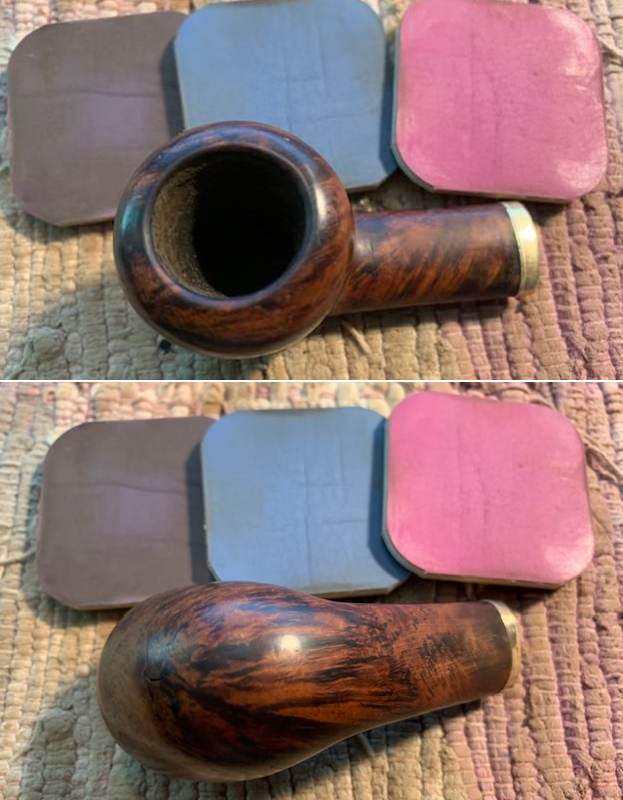
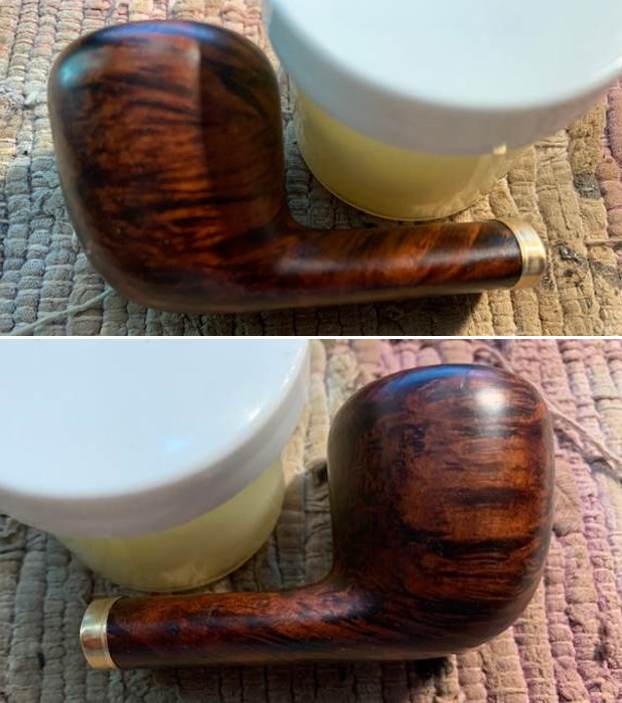
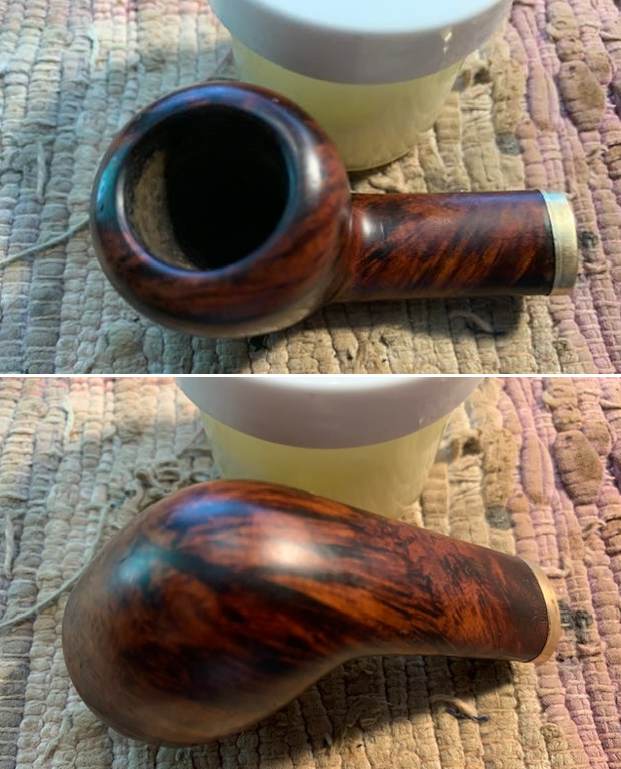
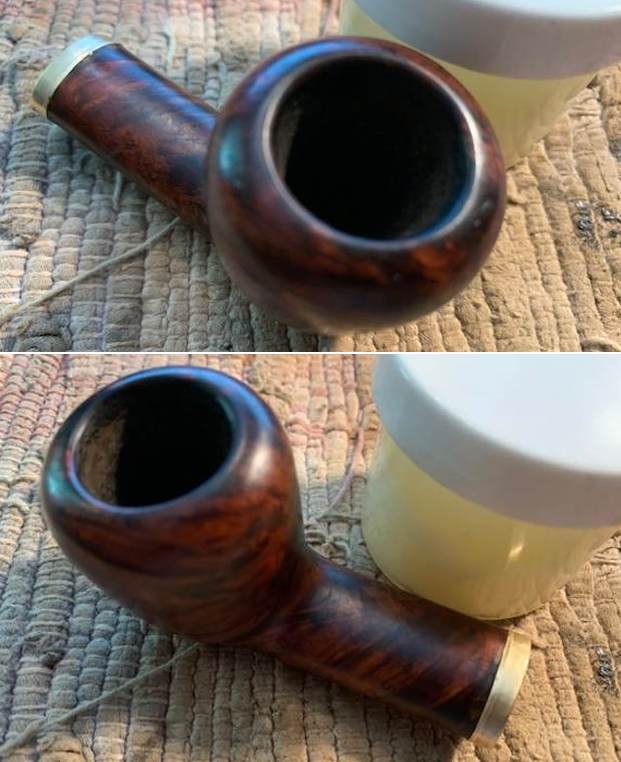
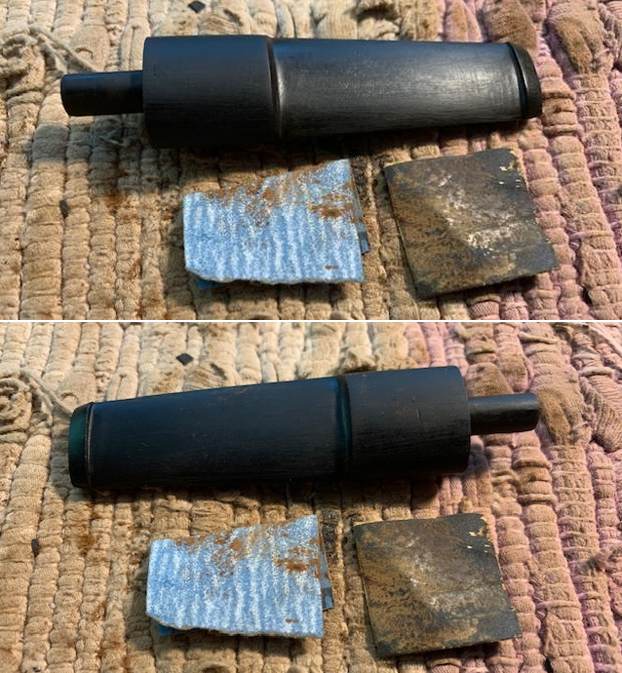
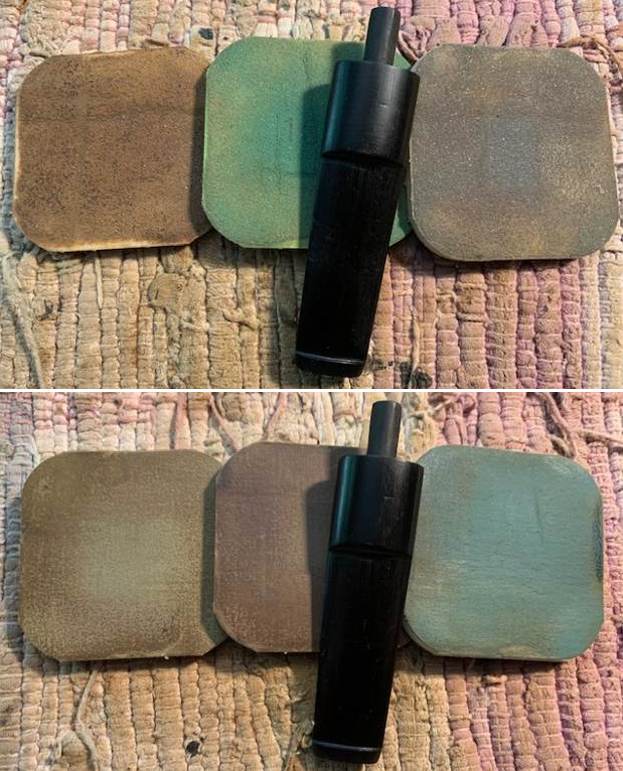
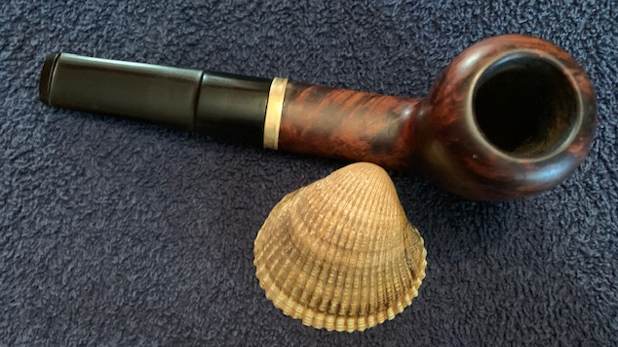
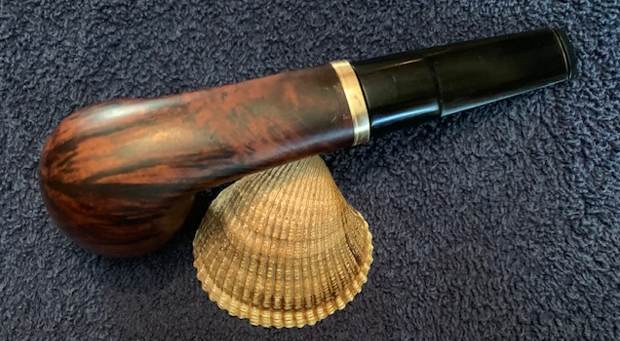
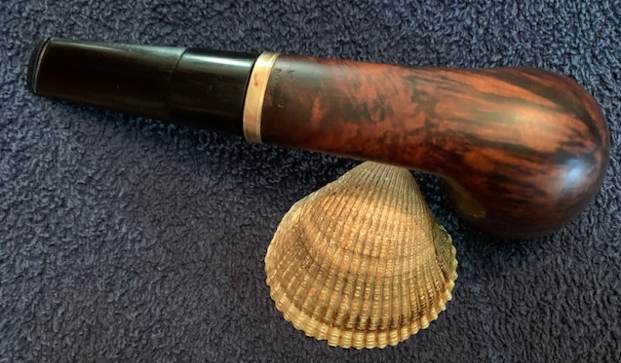
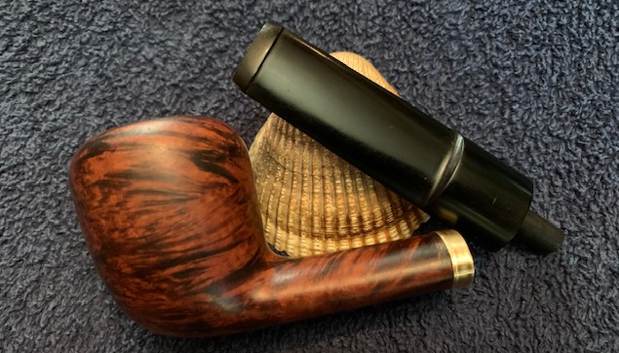
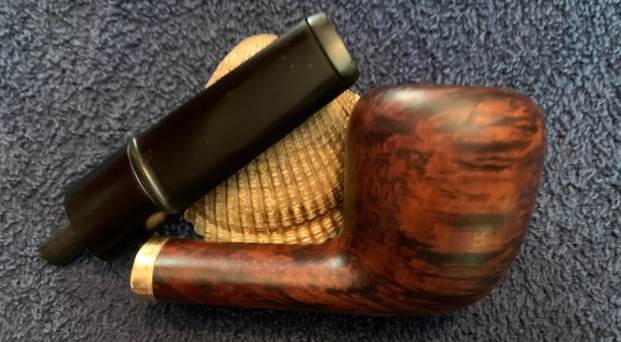
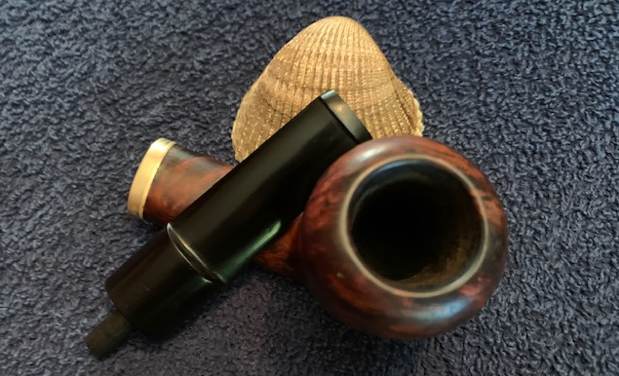
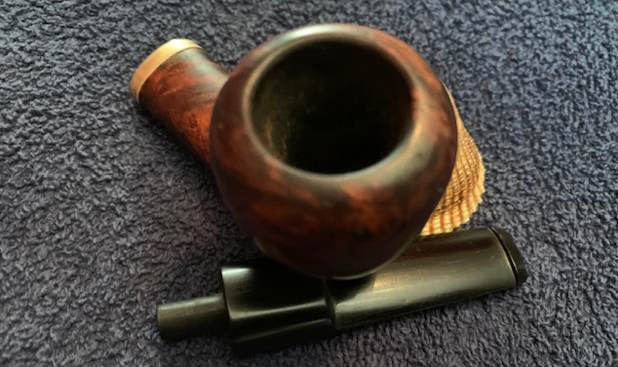
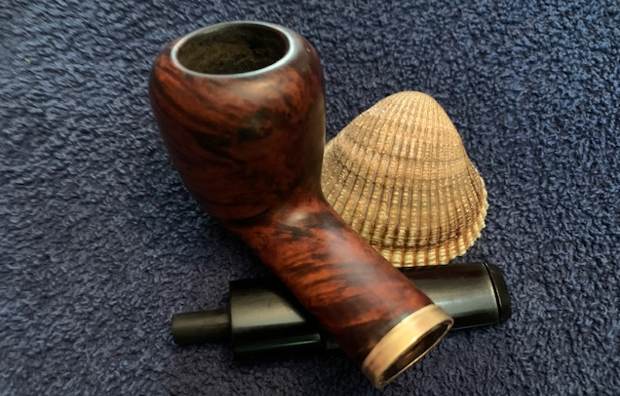
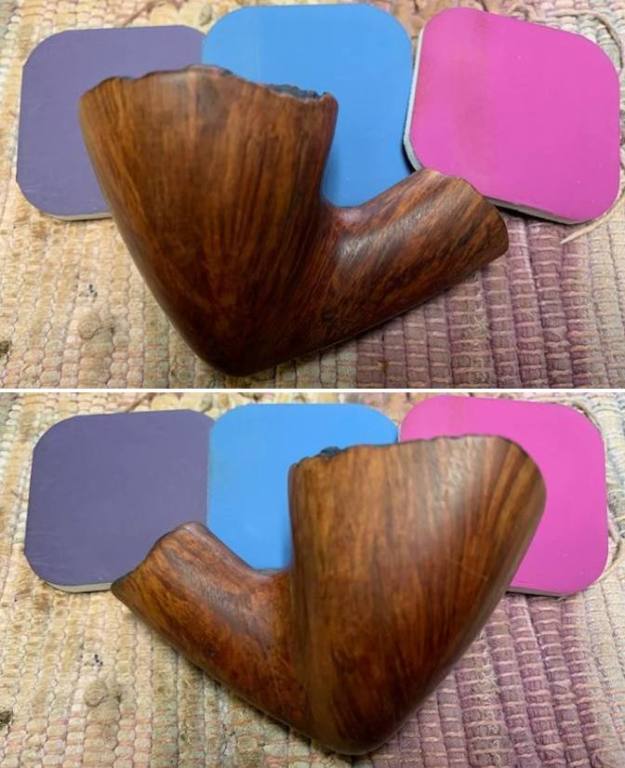
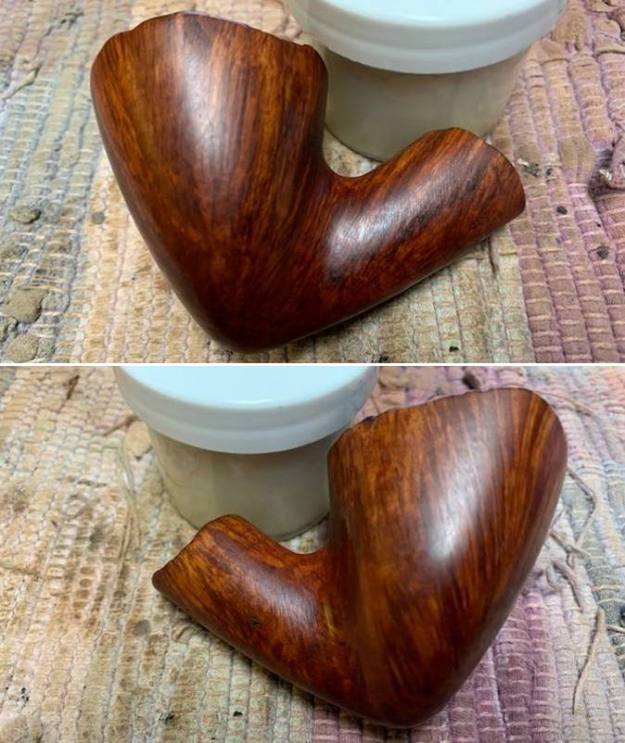
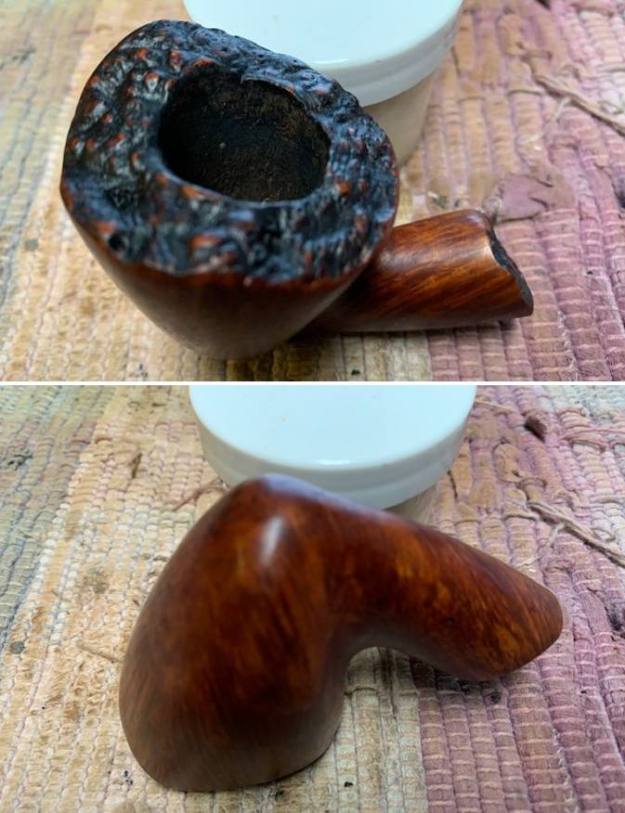
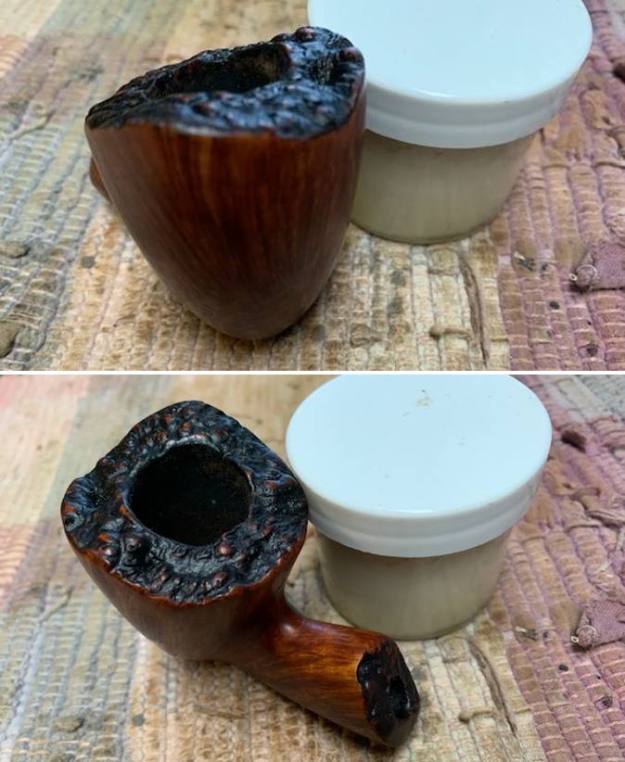
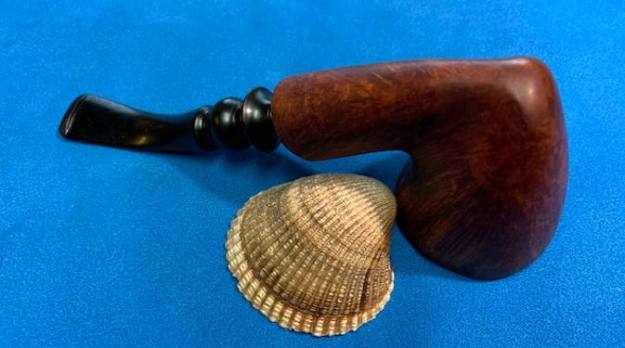
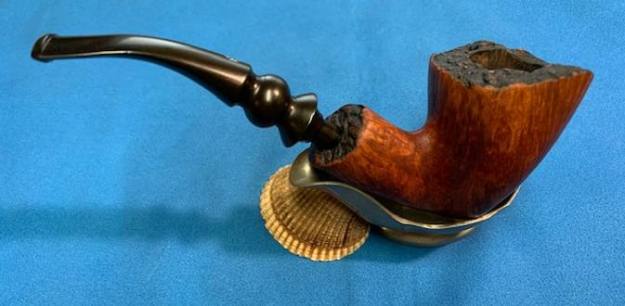
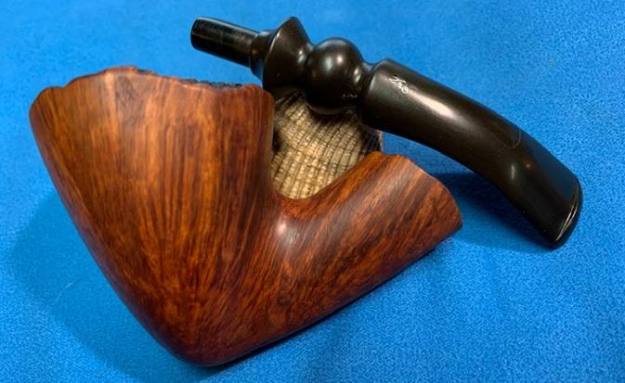
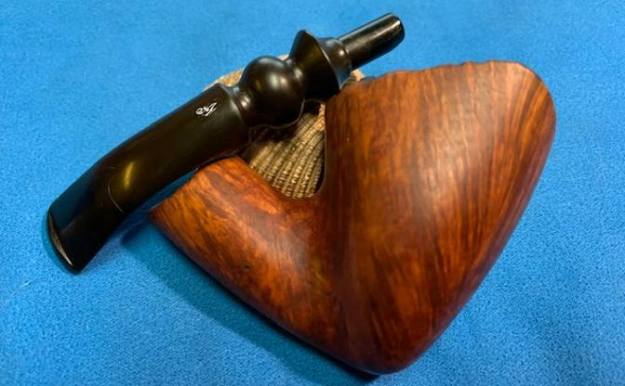
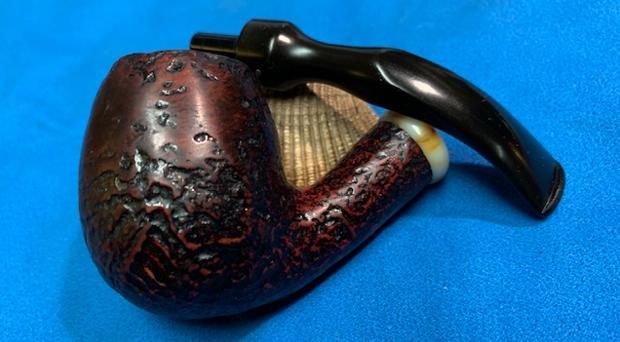
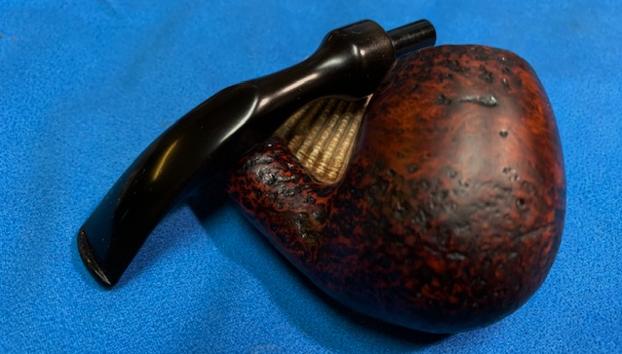
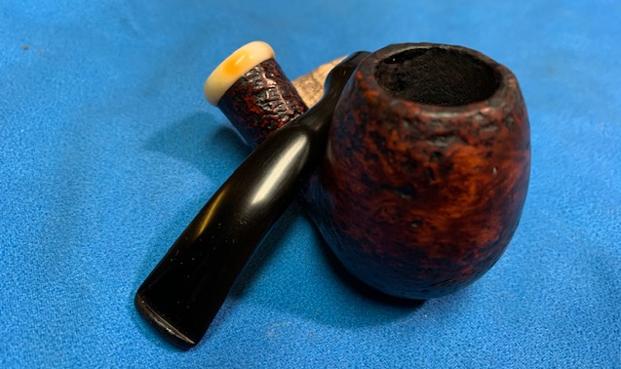
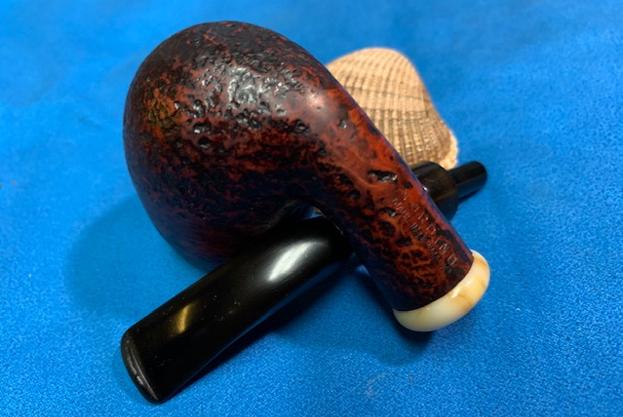
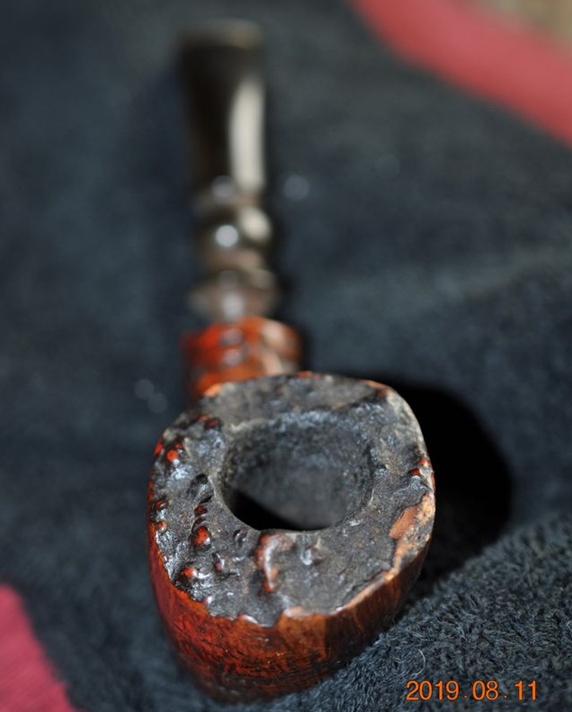
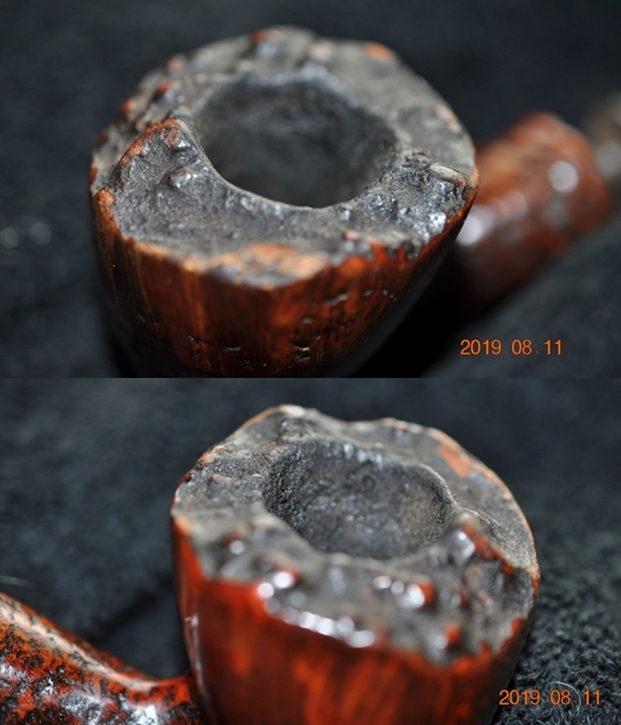
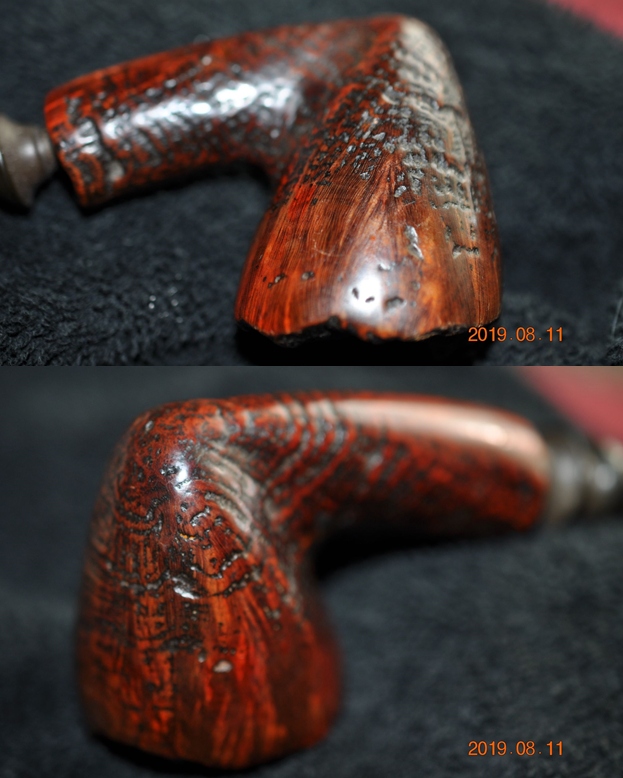
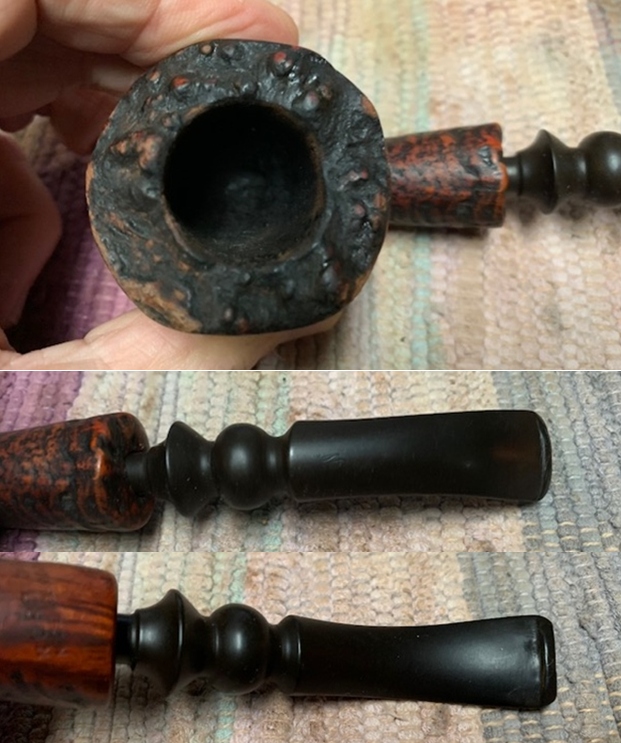
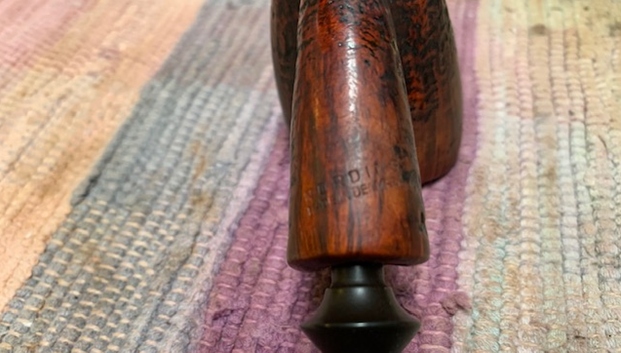
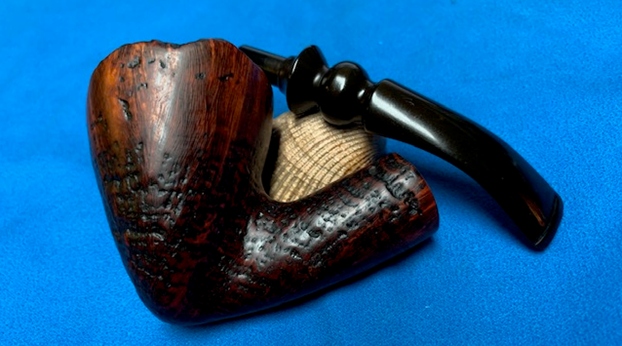
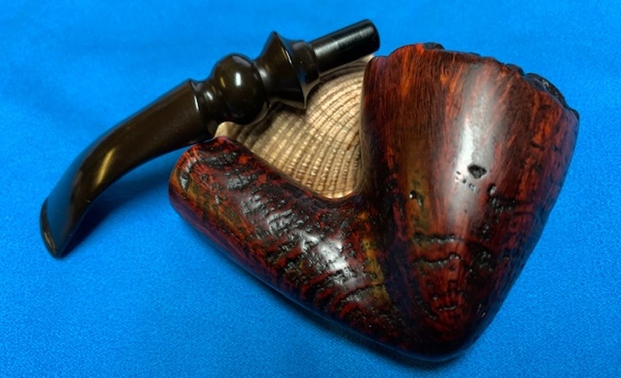
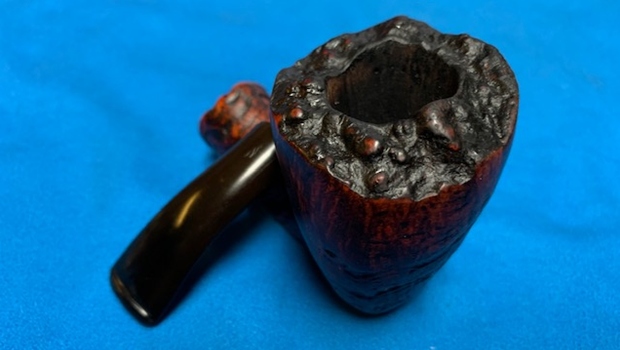
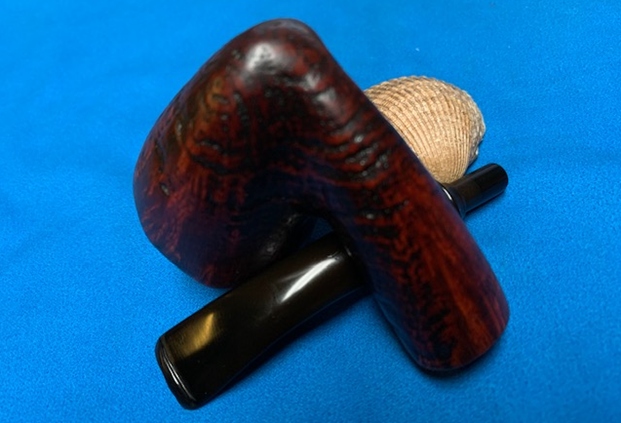
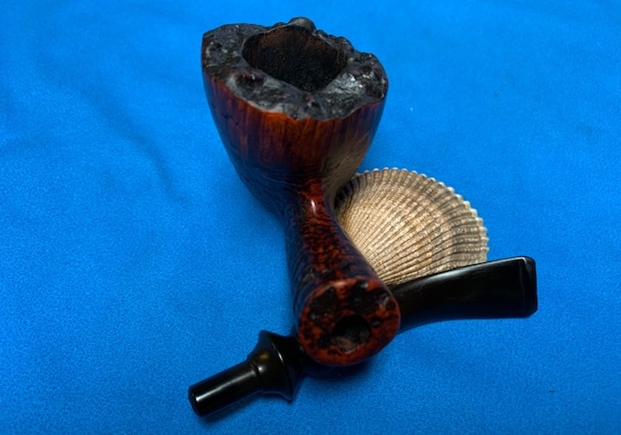
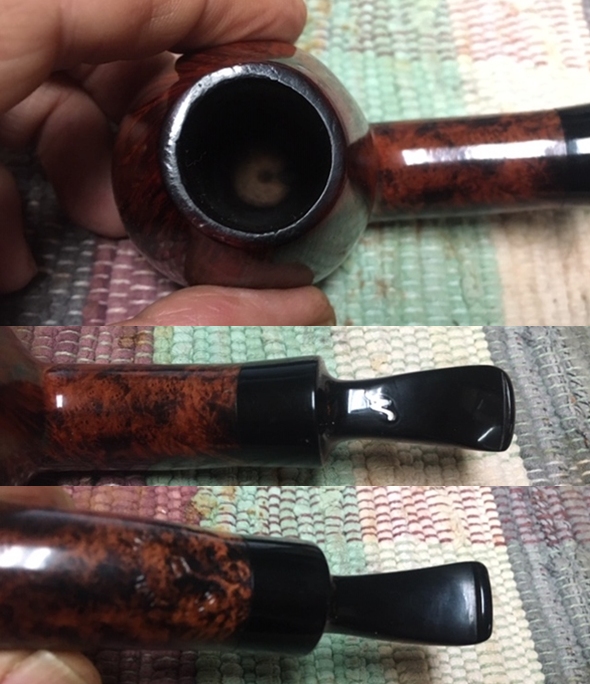
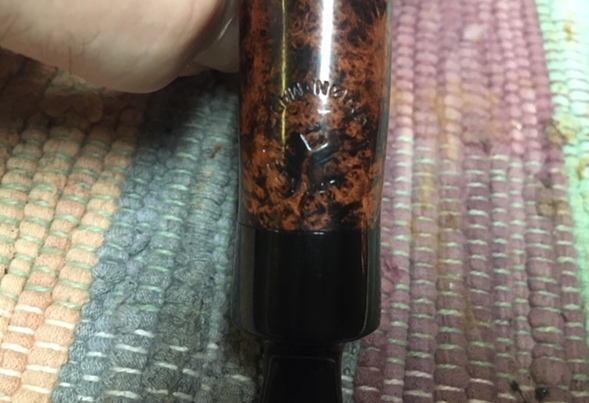
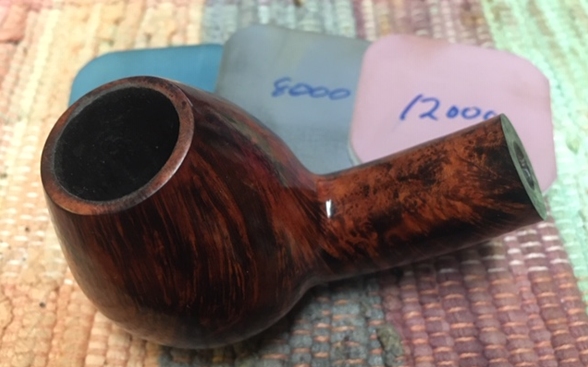
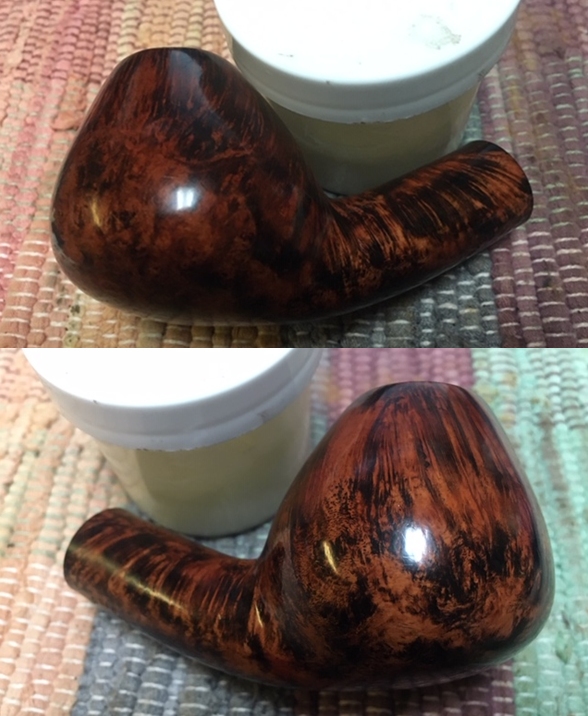
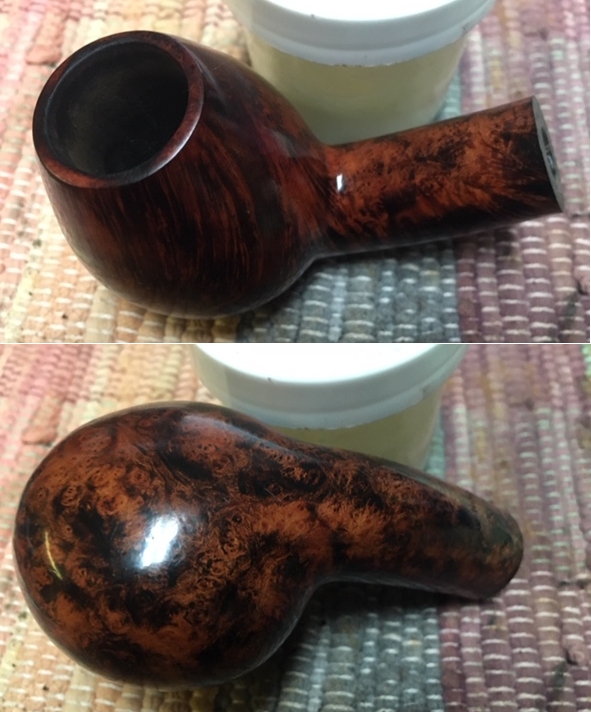
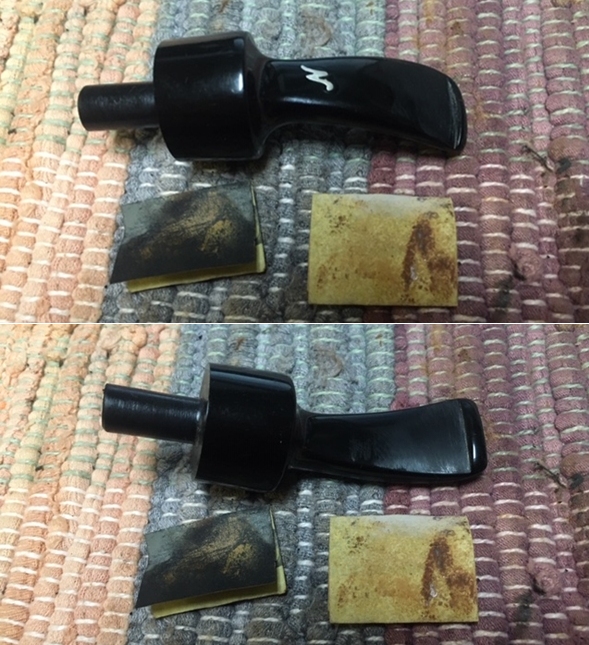
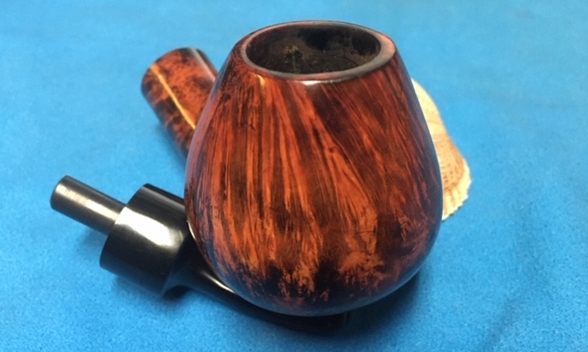
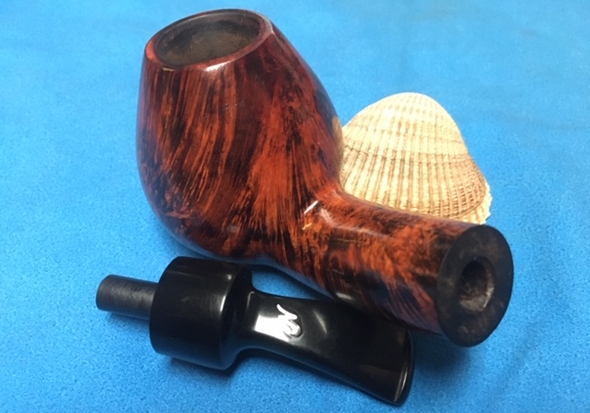
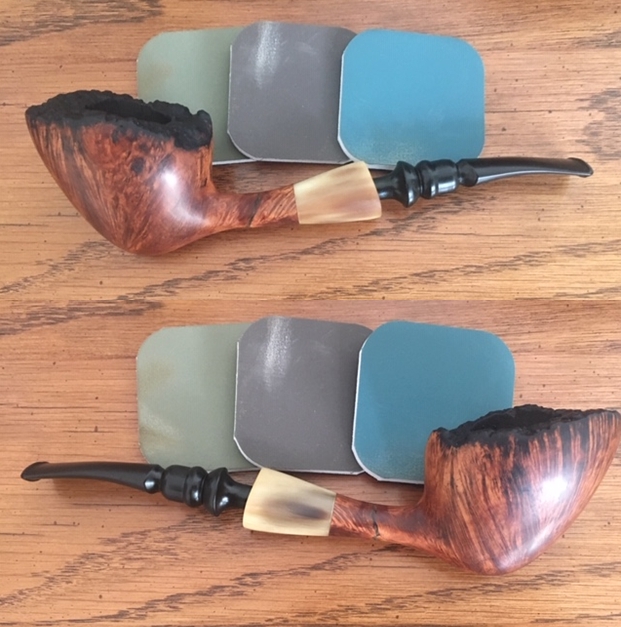
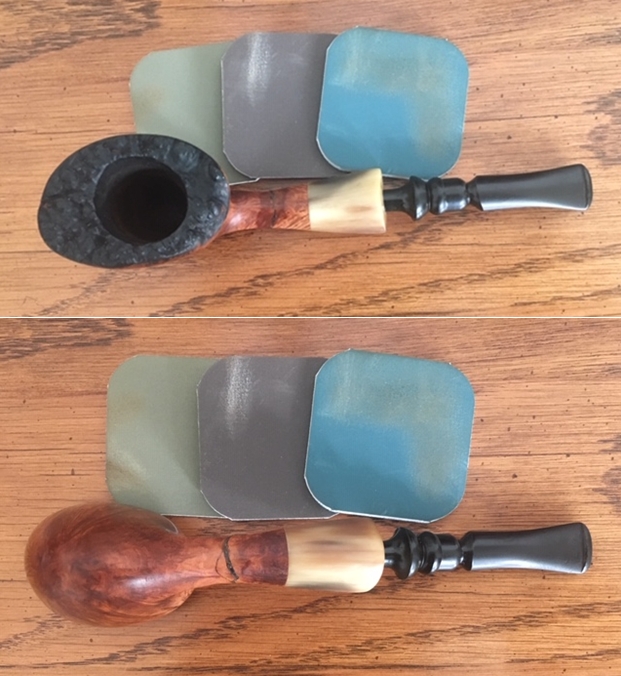
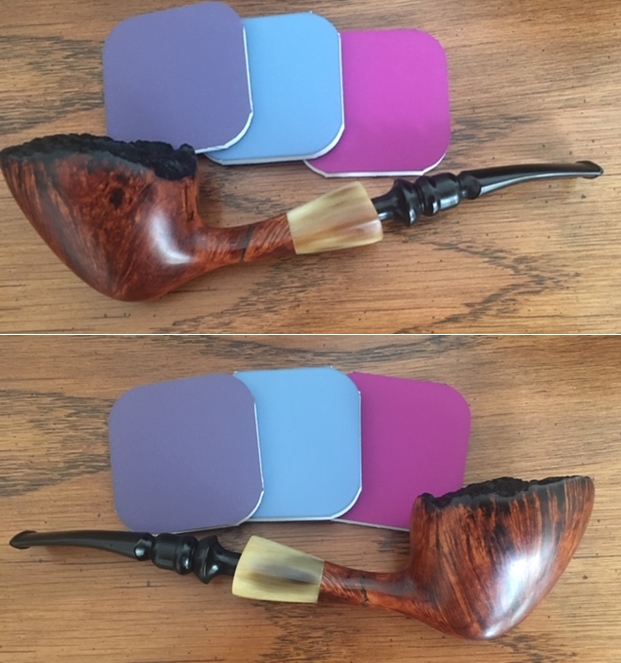
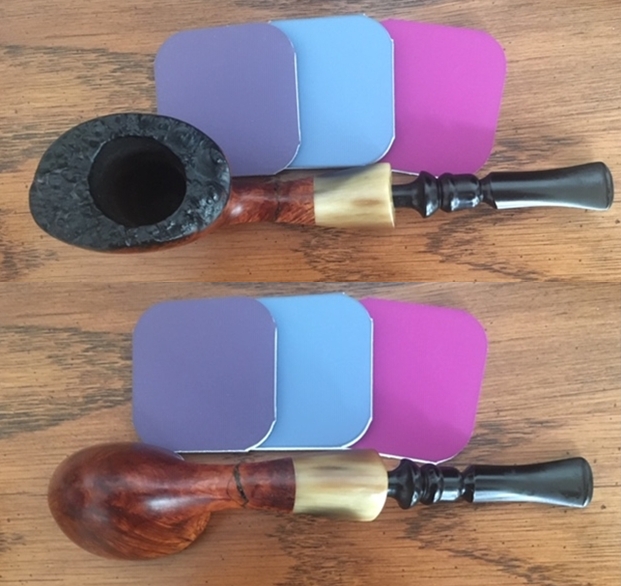
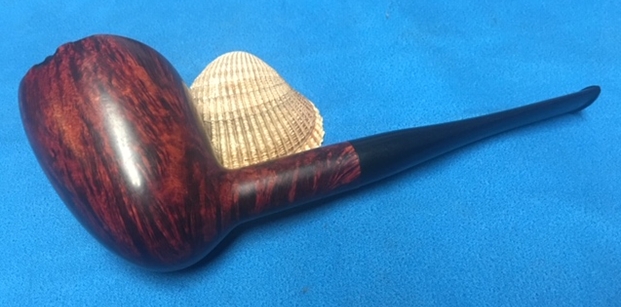
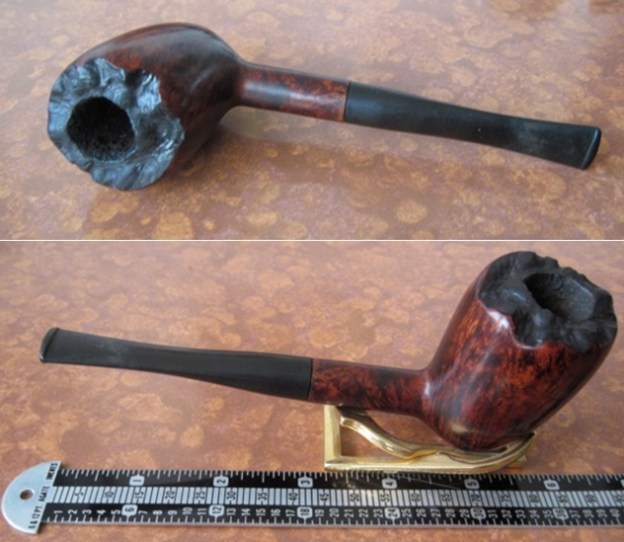
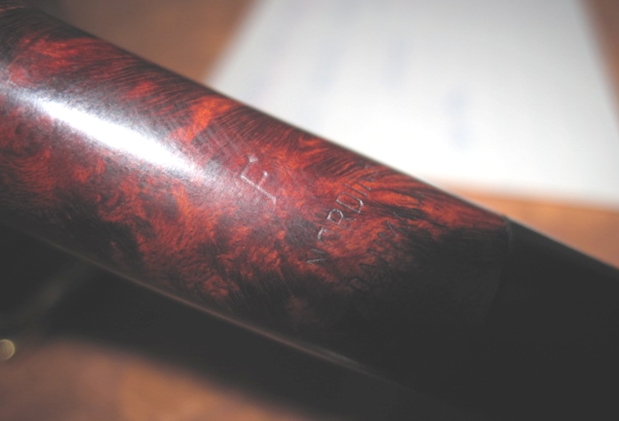
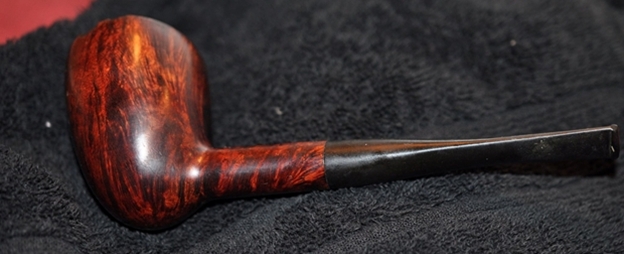
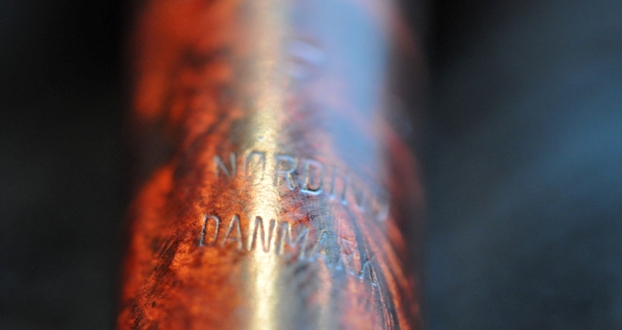
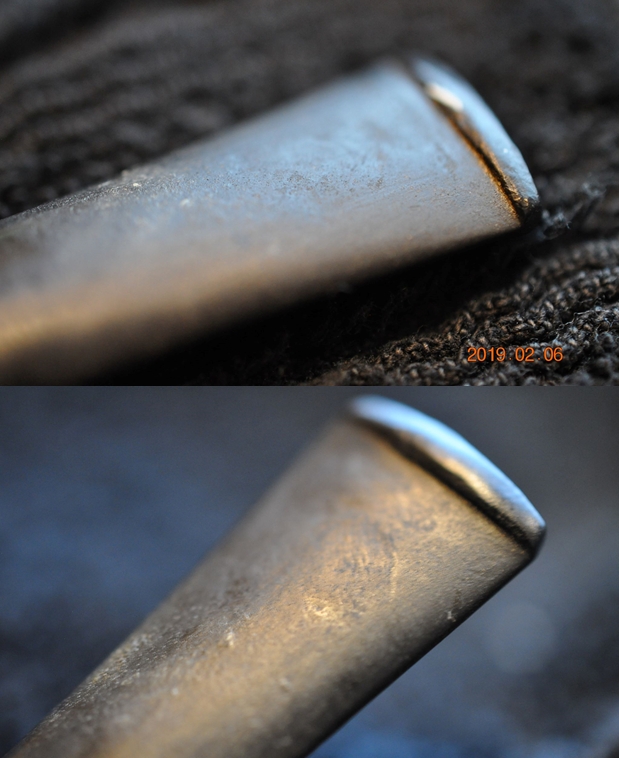
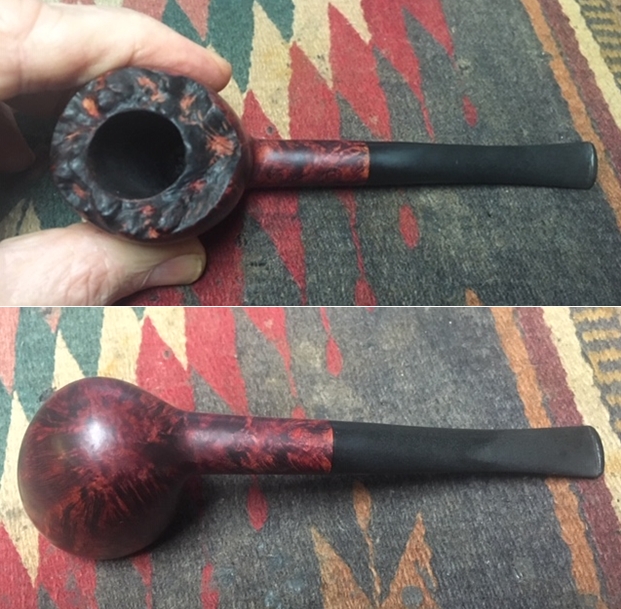
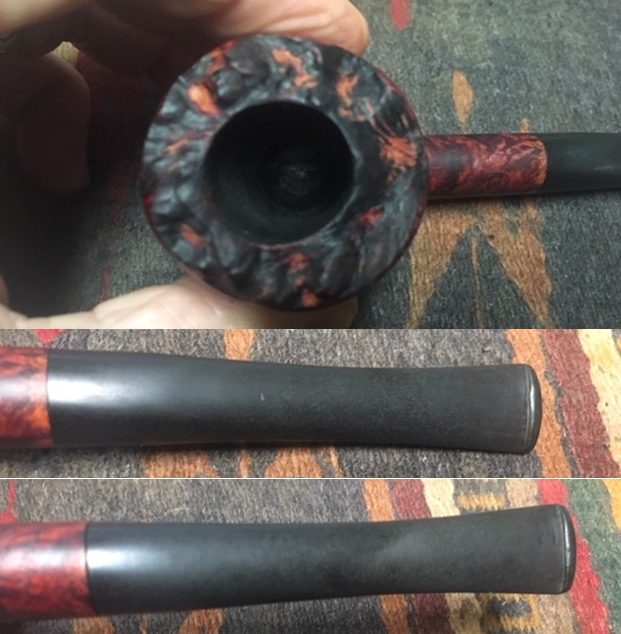
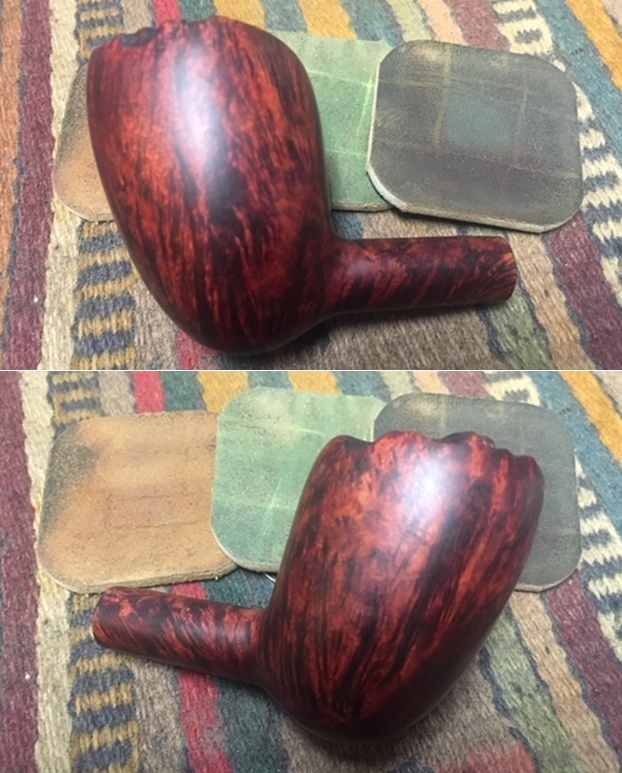
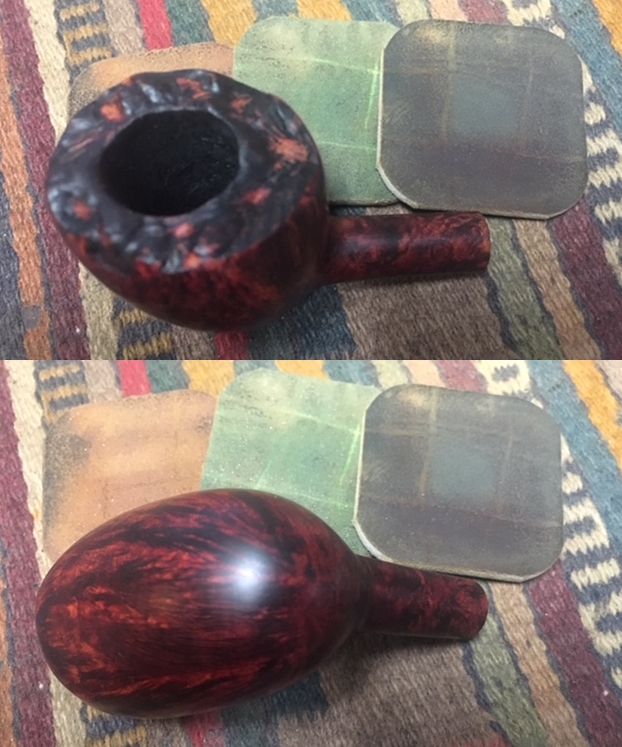
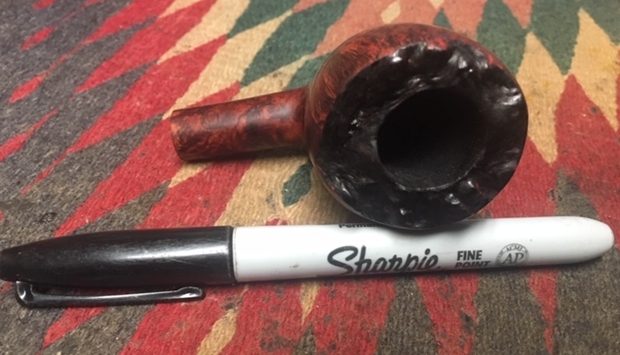
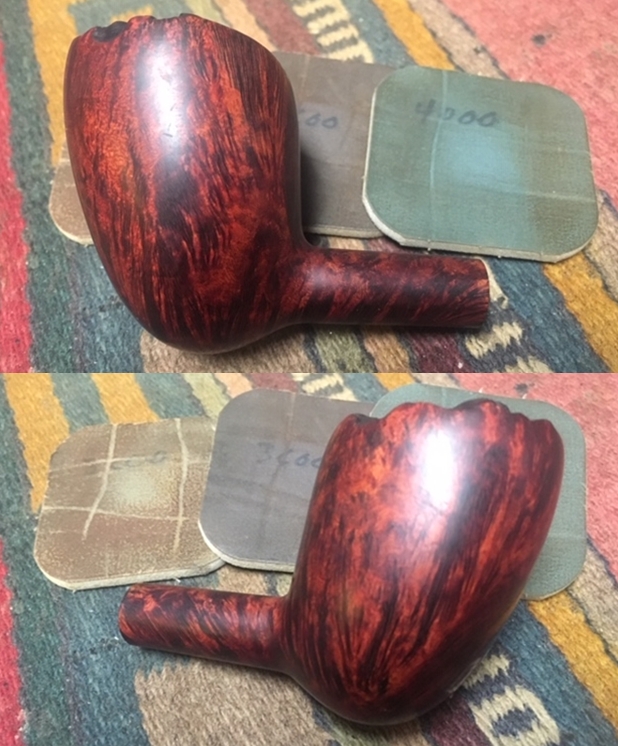
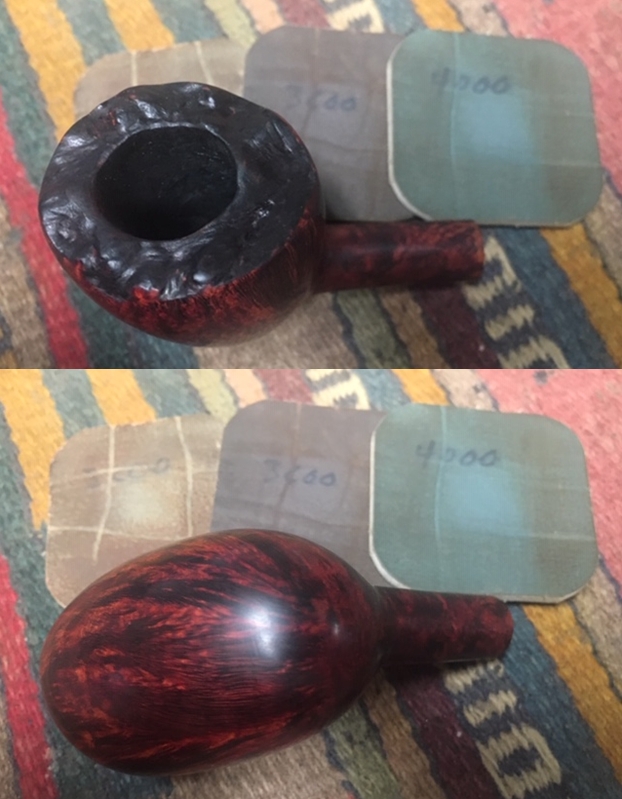
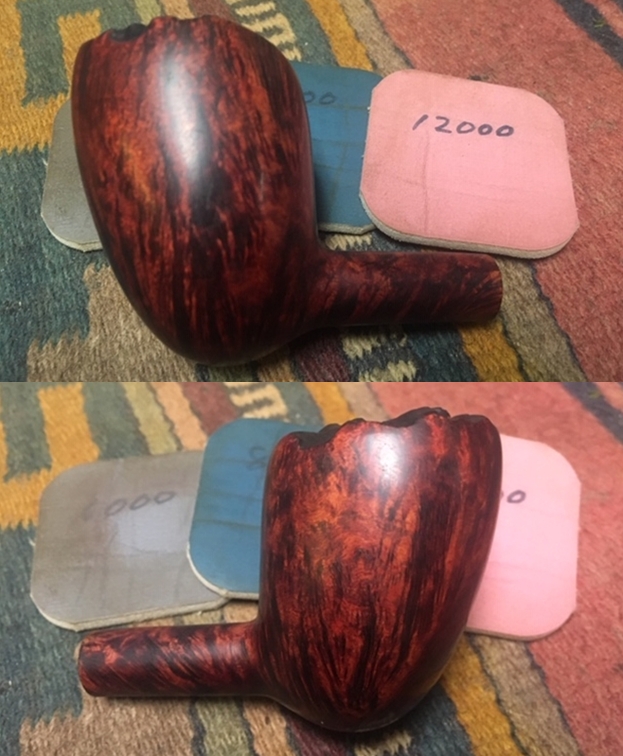
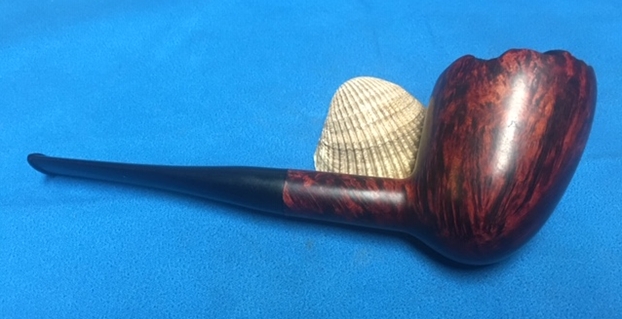
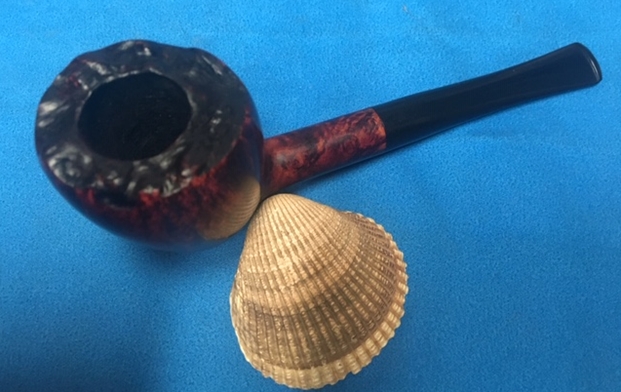
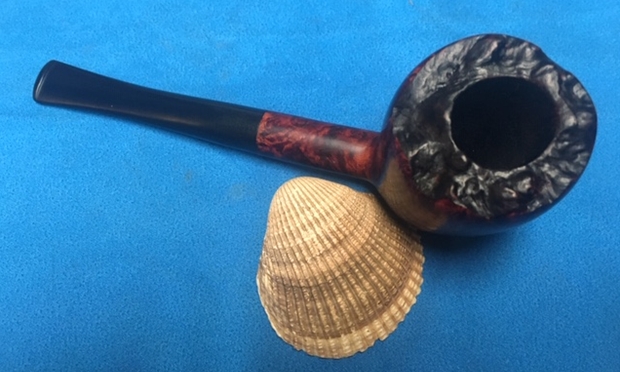
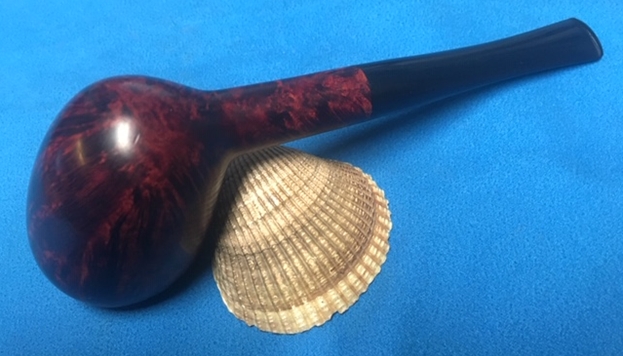
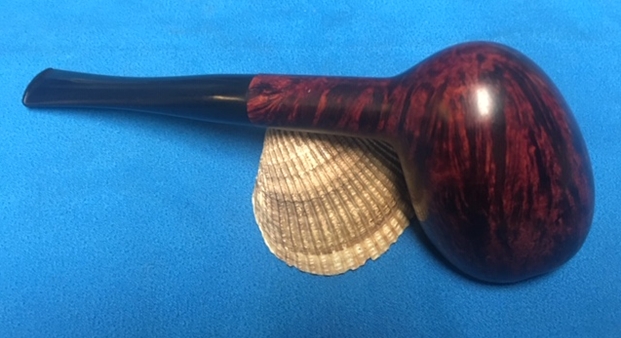
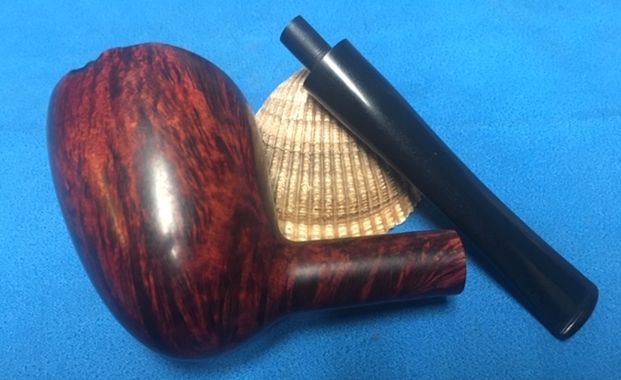
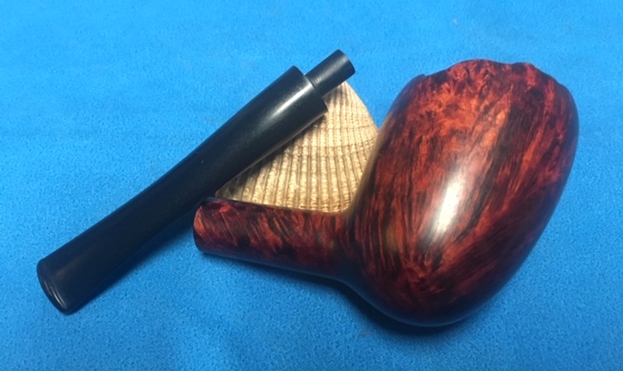
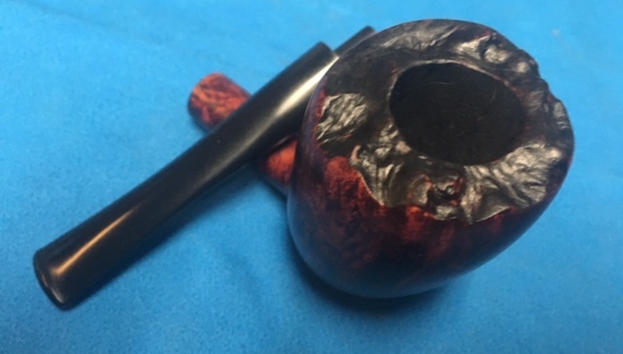
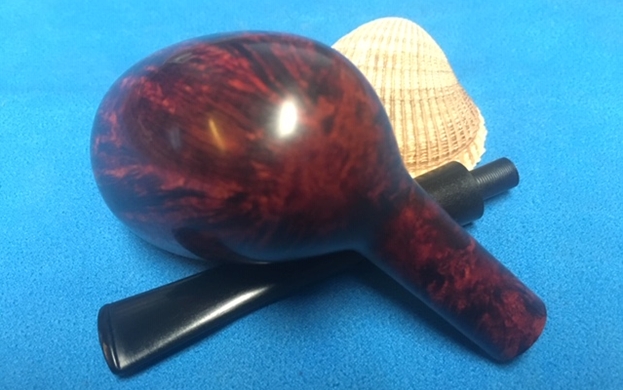
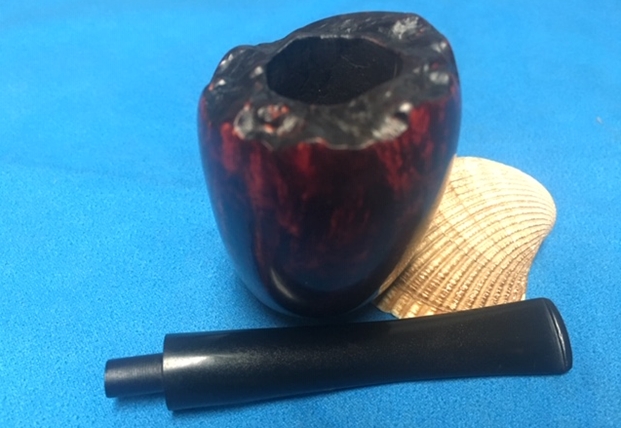
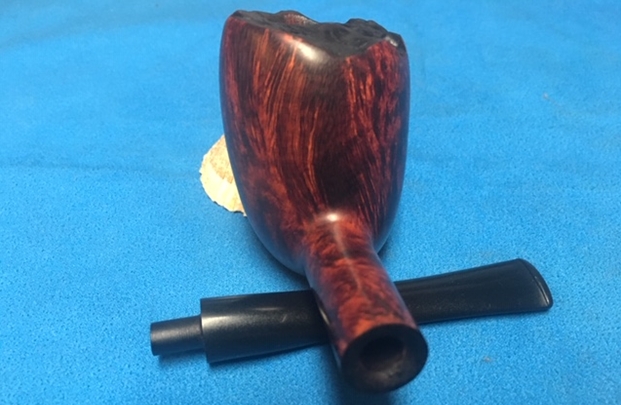
It was time to turn back to one of the pipes that Jeff and I recently picked up. This pipe was purchased from an antique mall on 05/25/22 in Portland, Oregon, USA. The pipe geometrically carved Freehand with a variety of angles in the carving in the bowl and shank that really follow the grain on this piece of briar. The rim top is plateau and is stained black. You can see the flow of straight and flame grain around the bowl and shank. It is stamped on the underside of the shank F over NORDING over DANMARK just before the plateau end of the shank. There is no other stamping on the pipe. The stem does not have the expected Nording N anywhere on the sides or top. The pipe was very dirty with a thick cake in the bowl and some lava overflowing on to the plateau rim top. It was hard to know what the inner edge of the rim looked like because of the lava and cake. Other than being dirty the finish appeared to be in good condition. The fancy, turned stem was lightly oxidized and had come calcification where a pipe Softee bit had been. There was some deep tooth chatter and marks on both sides of the stem ahead of the button and on the button surface. Jeff took the following photos of the pipe before he started his clean up work on it. He took a photo of the rim top to show the thick cake in the bowl and the overflow of lava. The cake is thick and hard and the lava overflow is in the plateau. The bowl is a real mess but it must have been a great smoking pipe. The stem looked dirty and oxidized with the calcification. The bite marks and tooth chatter on the stem were quite deep and the edge of the button was worn down. The next photos show the sides and heel of the bowl to give a clear picture of the beauty of the grain around the bowl of the pipe. Under the residue left behind by a price sticker and the grime there is some great grain peeking through. Jeff took a photo of the stamping to capture the clarity of it even under the grime. The stamping is readable. Holding the pipe stem down the stamping is C over NORDING over DANMARK.Before I started my work on the pipe I wanted to learn more about where this pipe fit into the Nording lines so I turned to the first of two sites that I always check to gather information on a brand. I turned first to Pipedia (https://pipedia.org/wiki/N%C3%B8rding). Nording’s were exclusively freehand shapes, graded from A, B, C, D, up to its highest grade, extra. Later an “F” grade was added—less expensive than the “A.” I could find no other information on the rest of the stamping on the pipe.

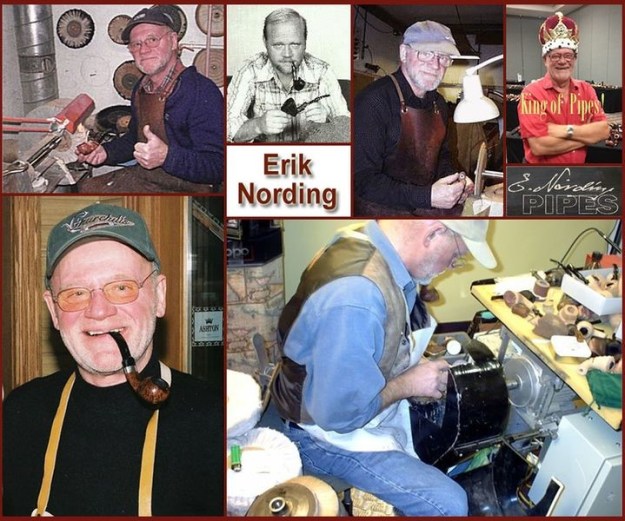
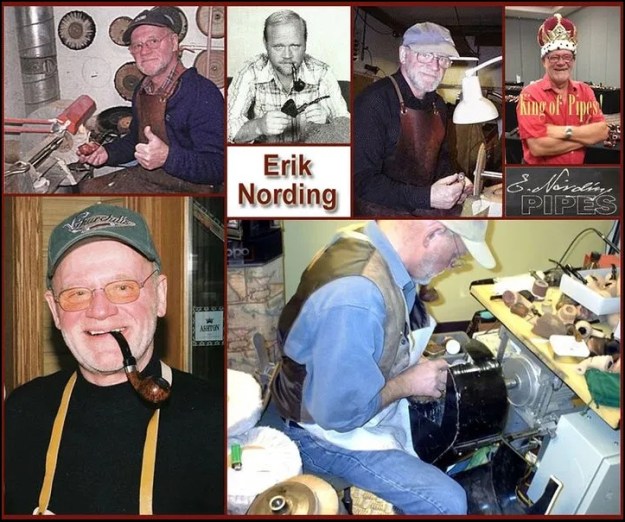
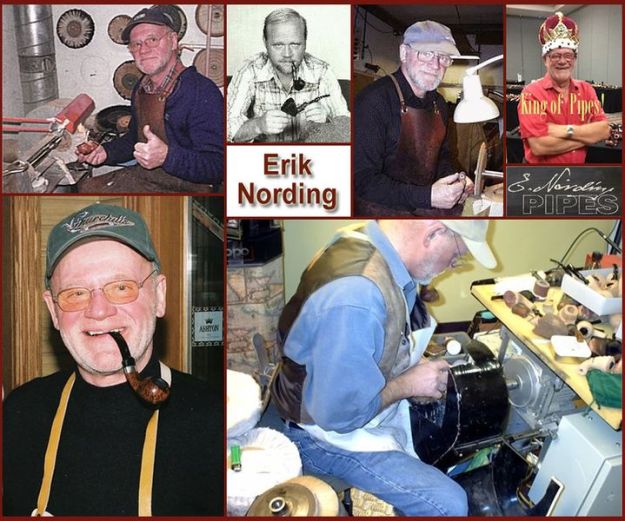
I did find a great collage of photos of Erik Nording that I have included below.I turned to the second information site – Pipephil’s (http://www.pipephil.eu/logos/en/logo-n2.html) did not find any more helpful information on the Nording Danmark stamp.

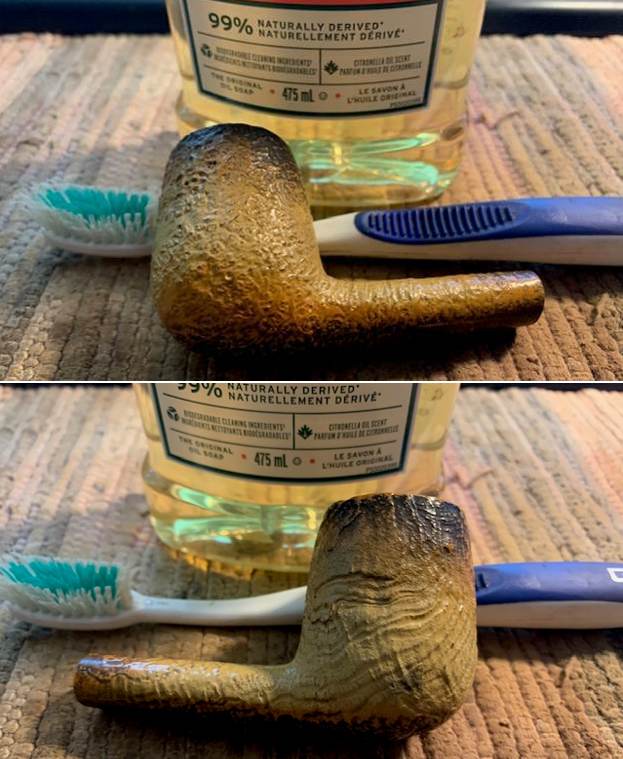
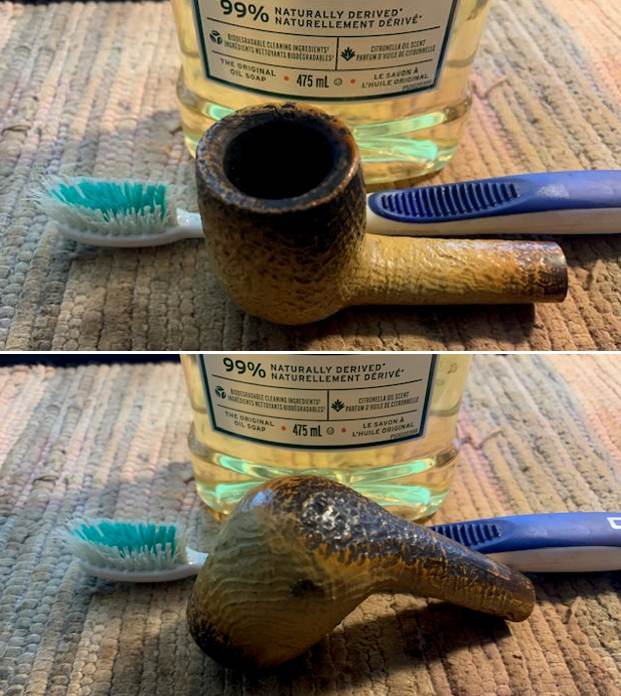
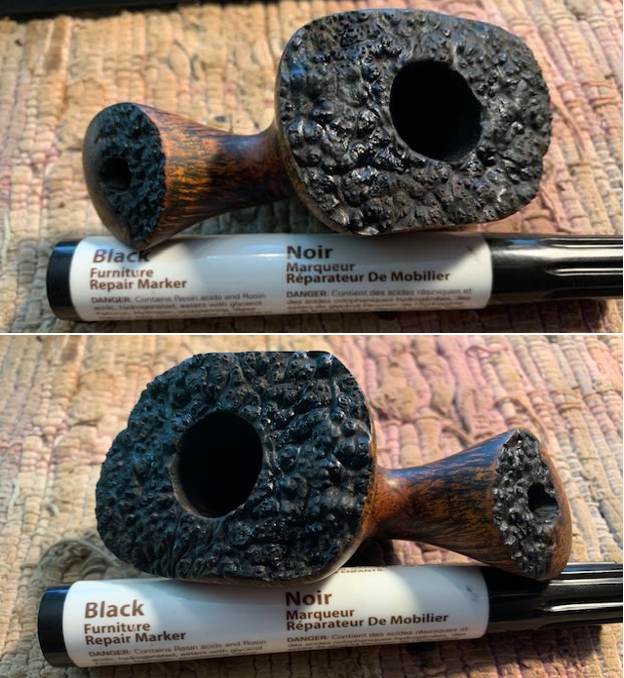
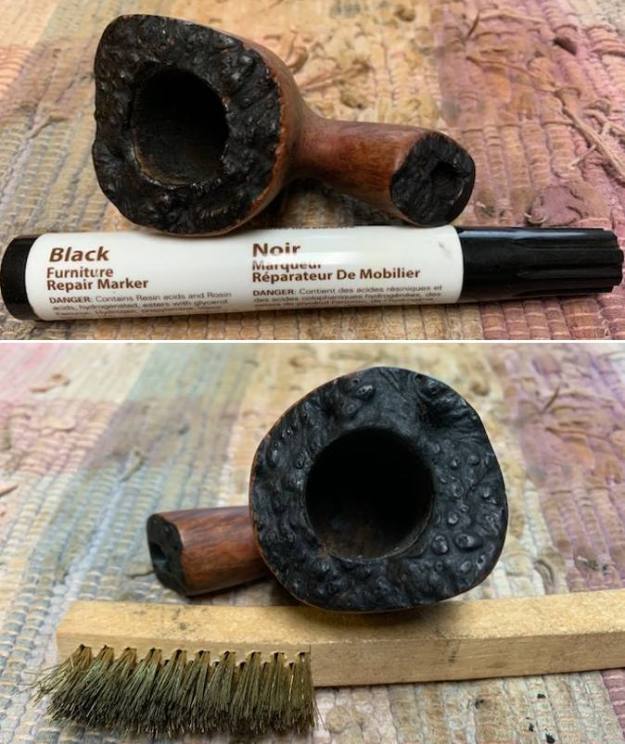
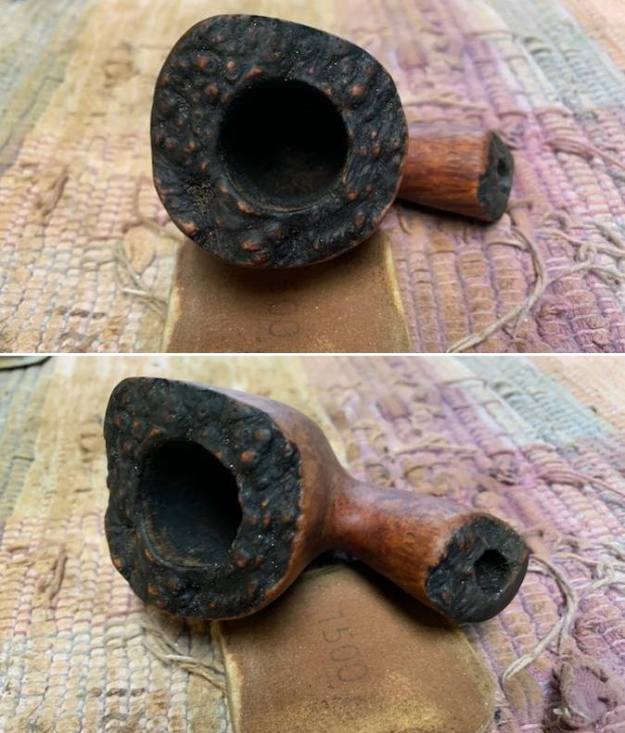
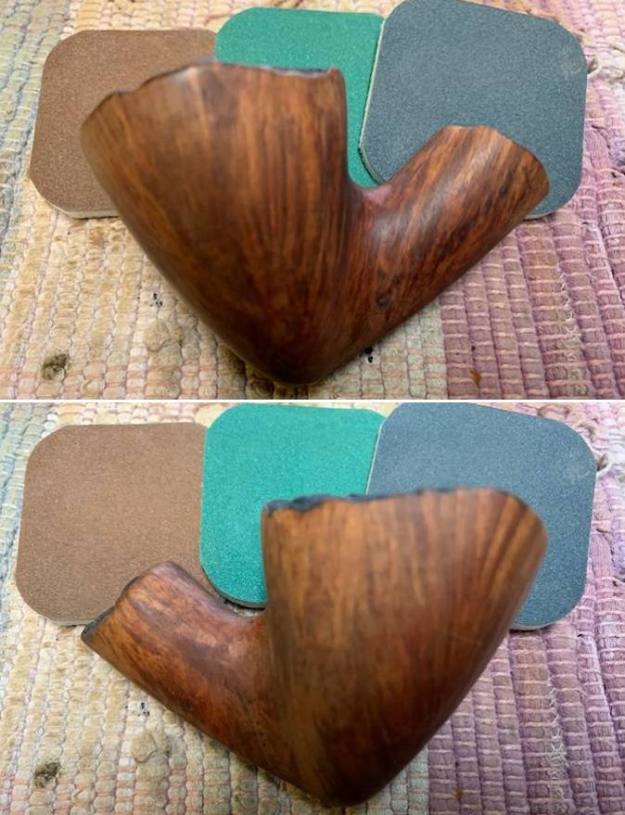
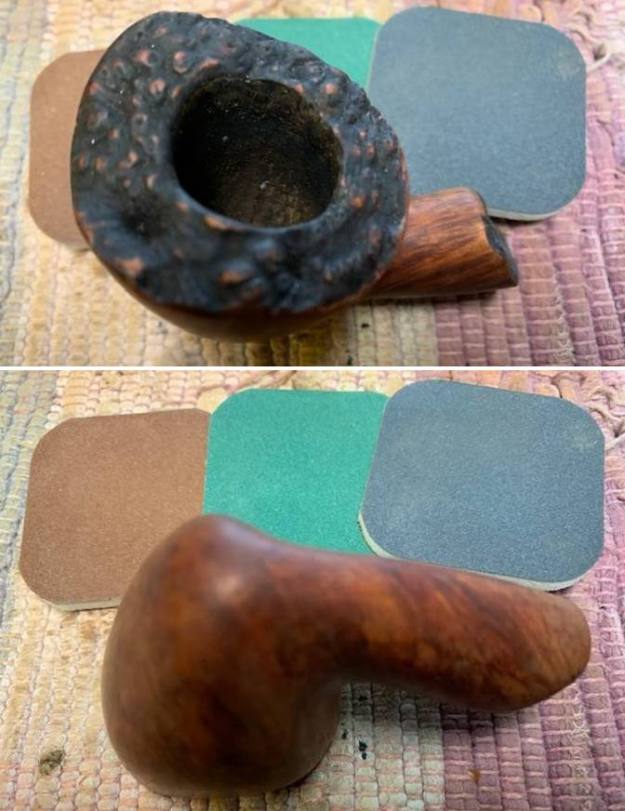
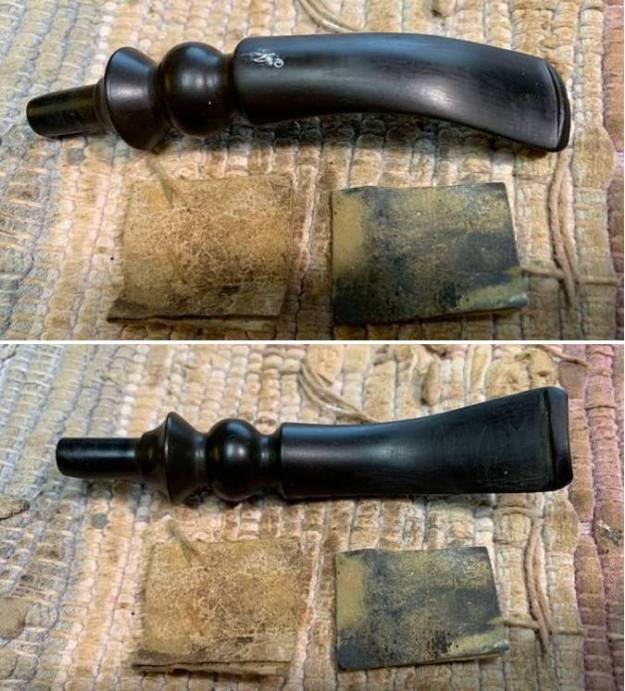
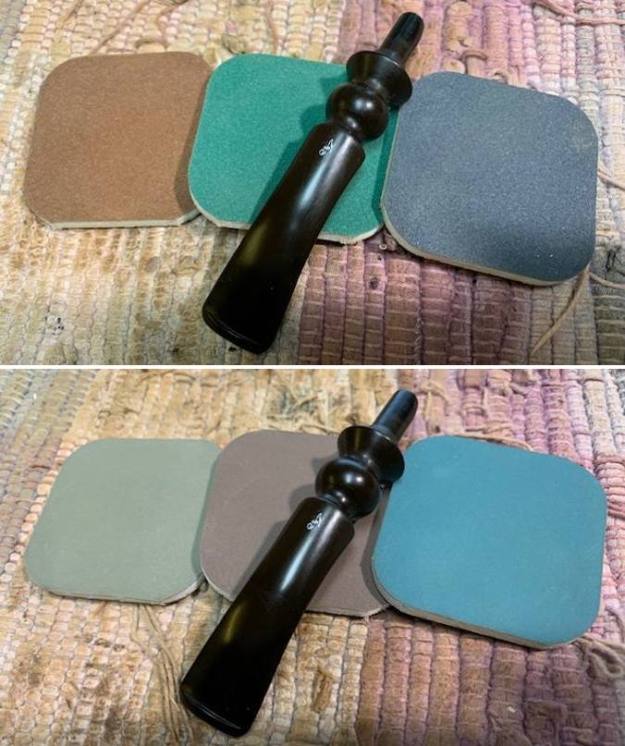
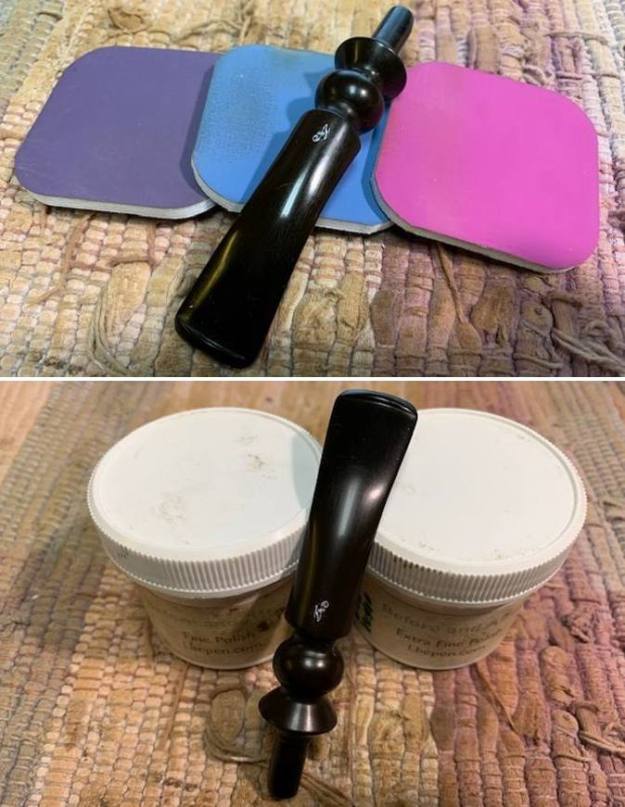
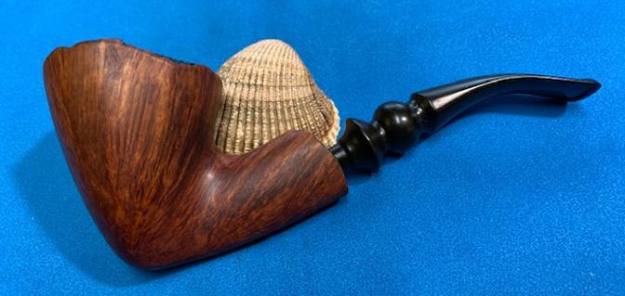
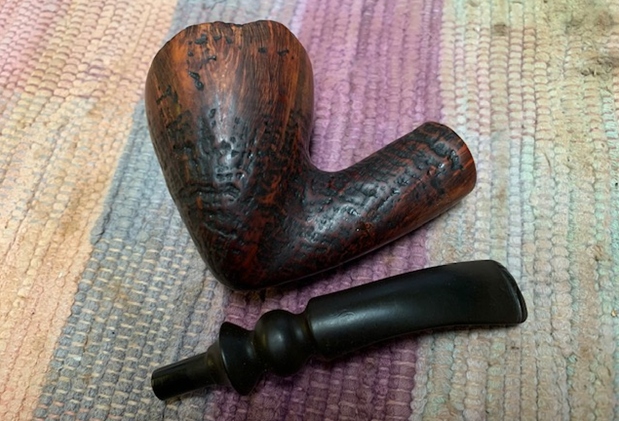
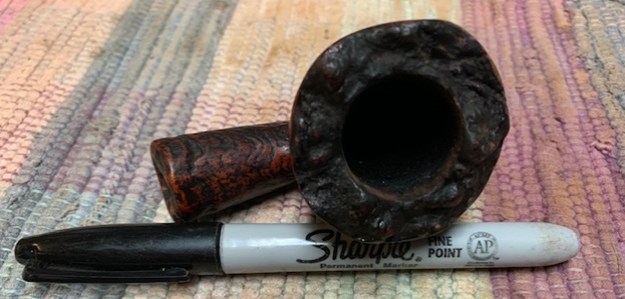
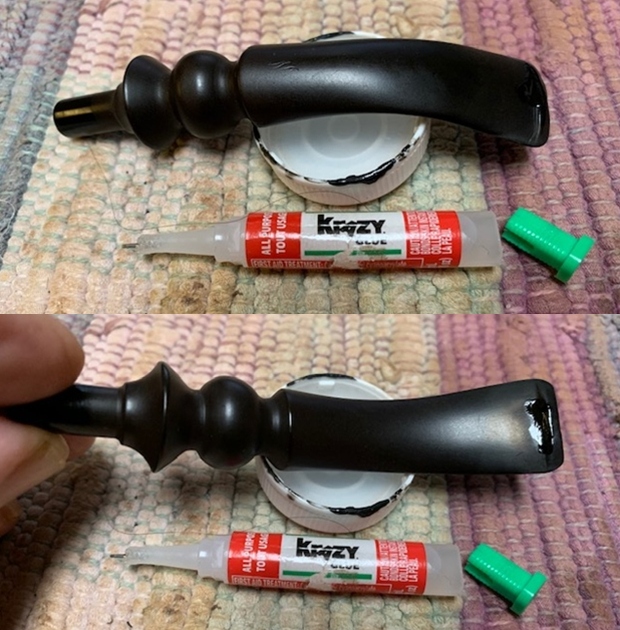
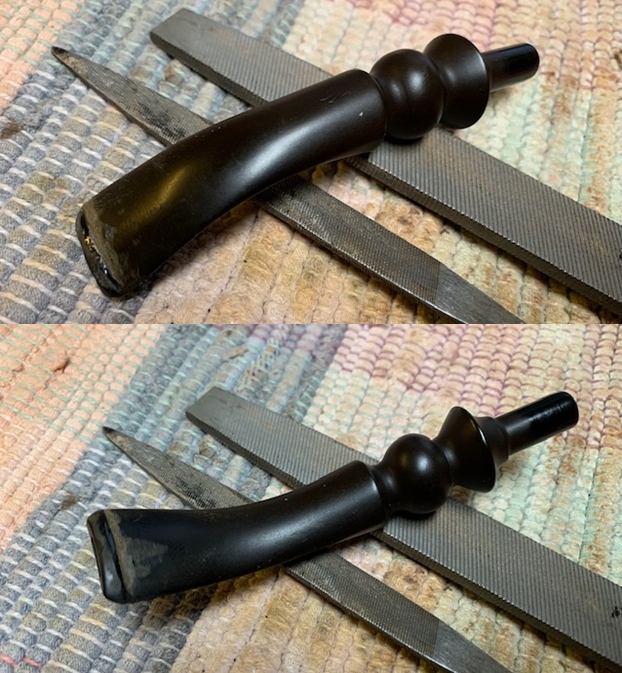
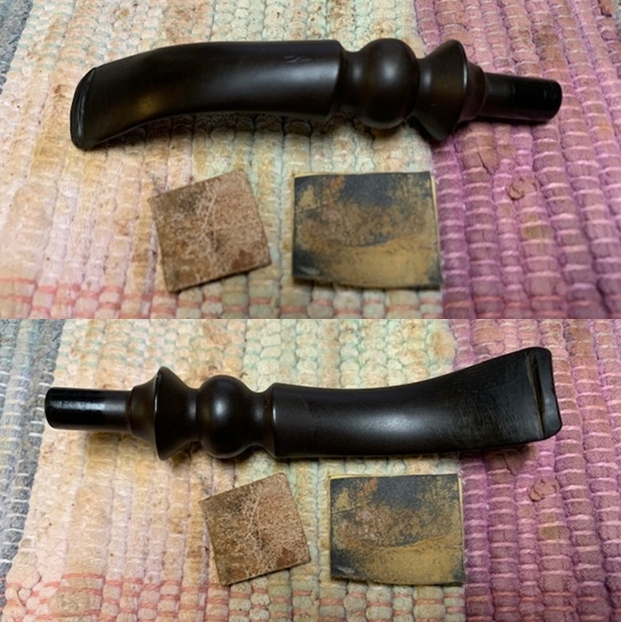
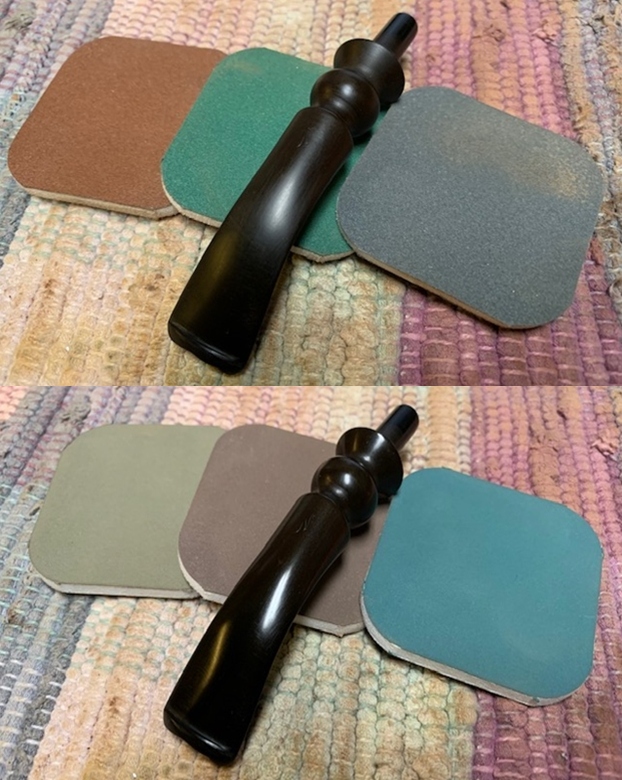
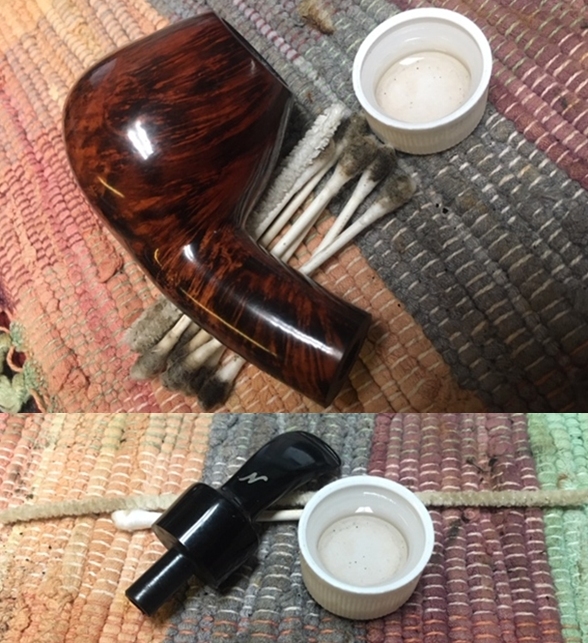
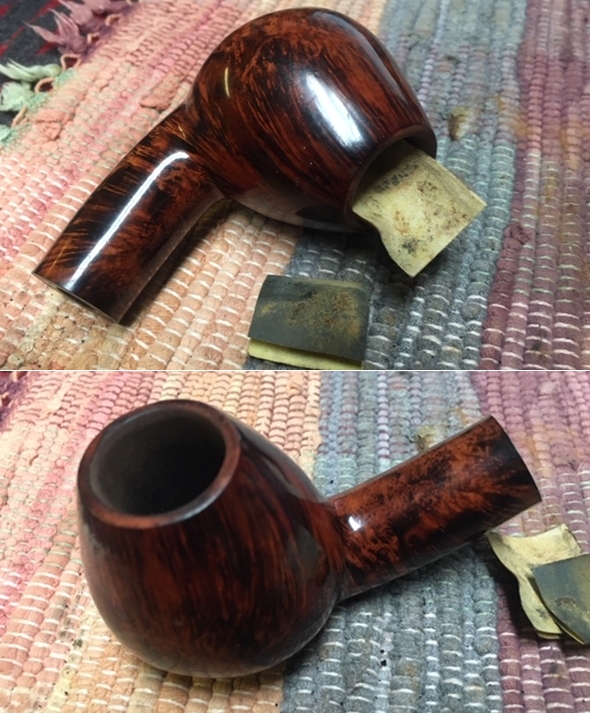
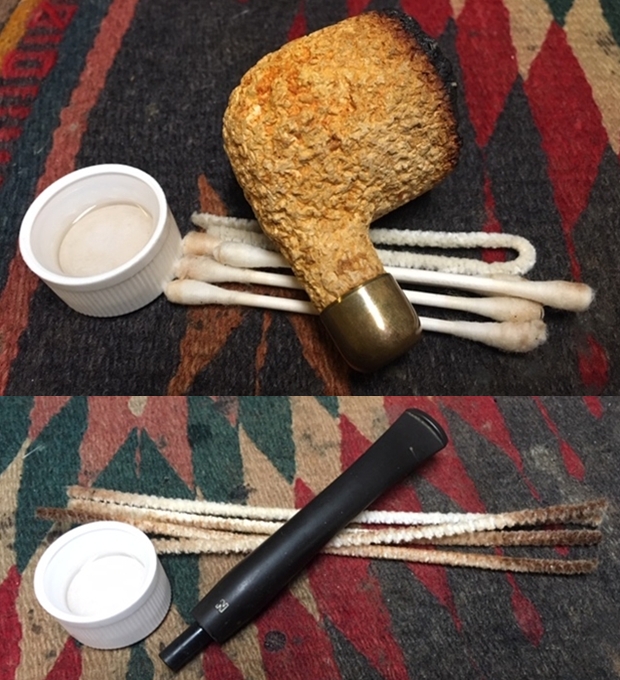
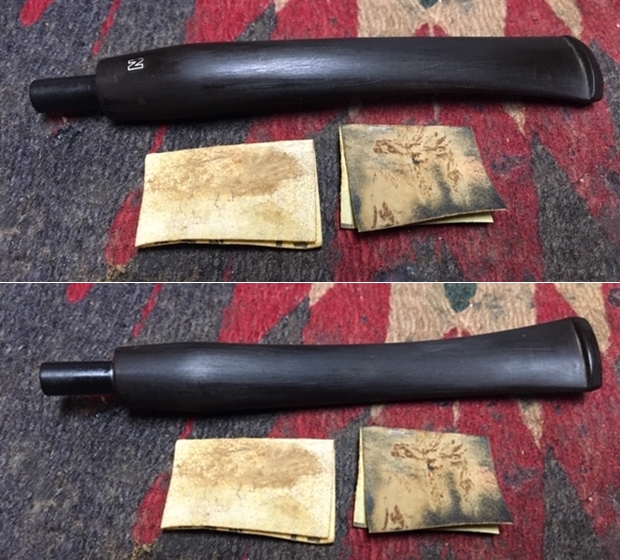
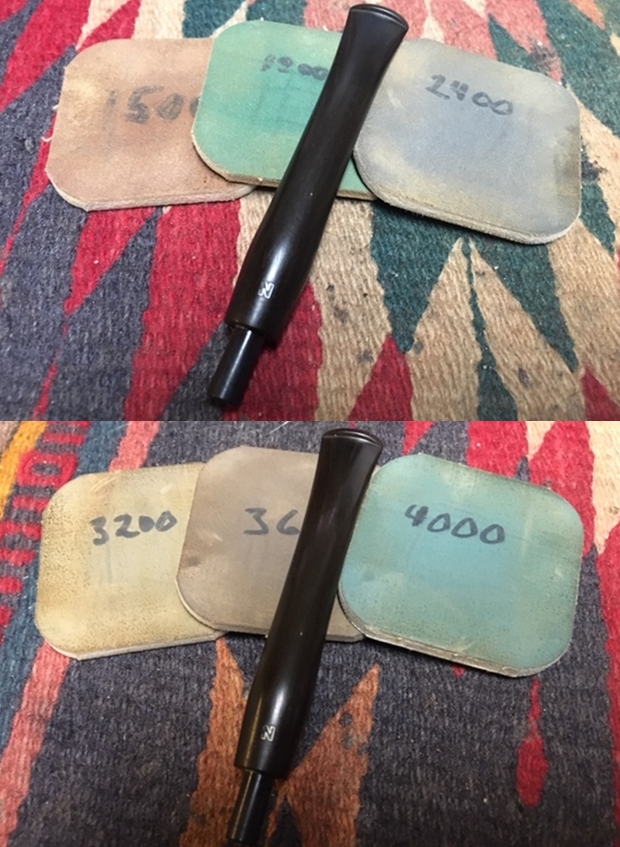
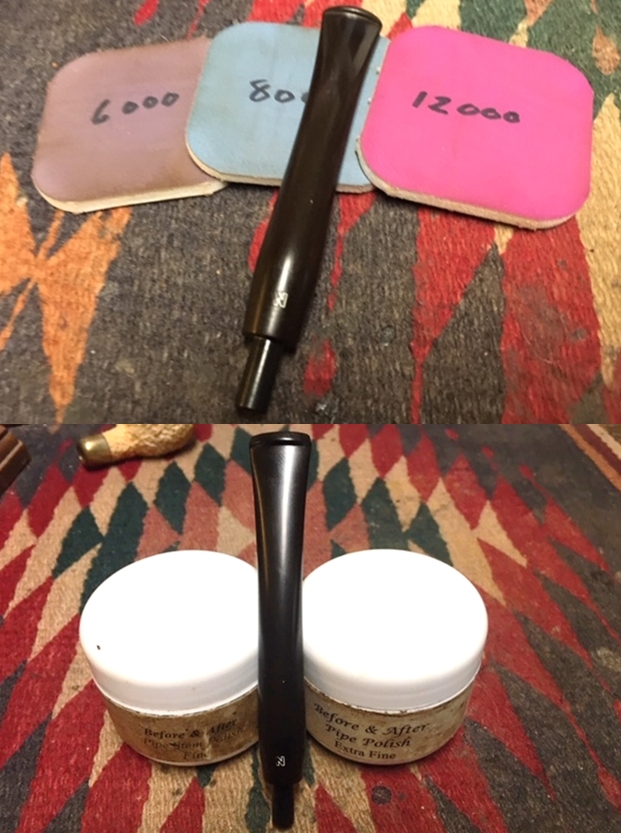
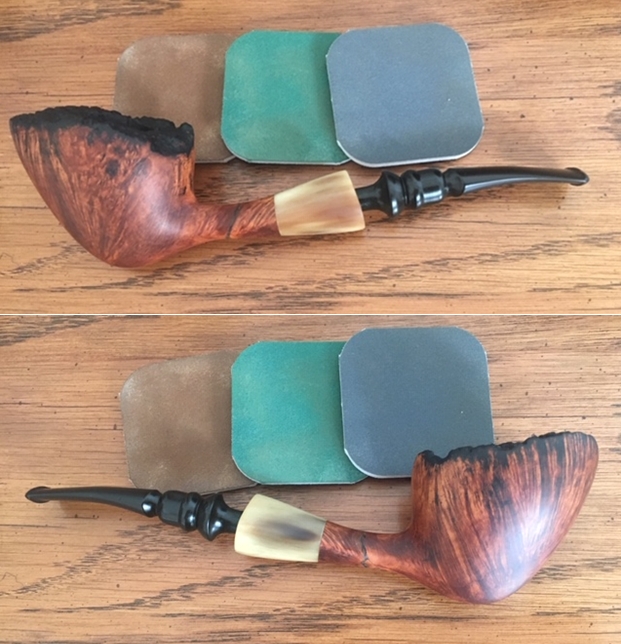
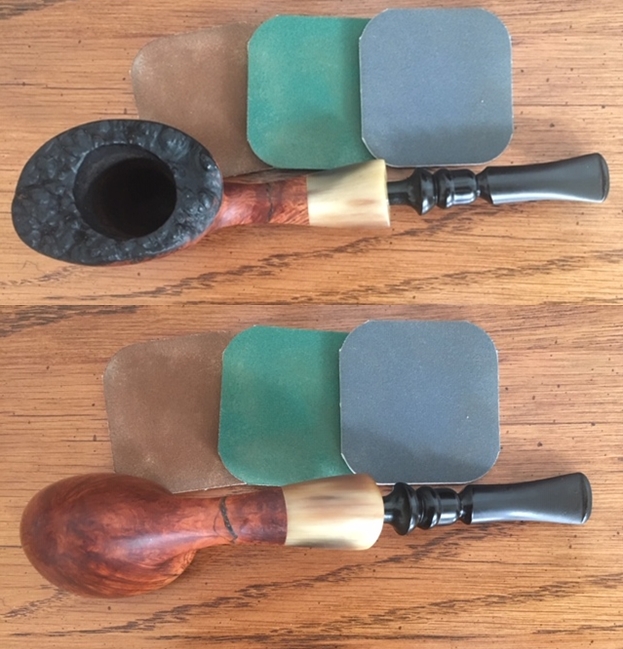
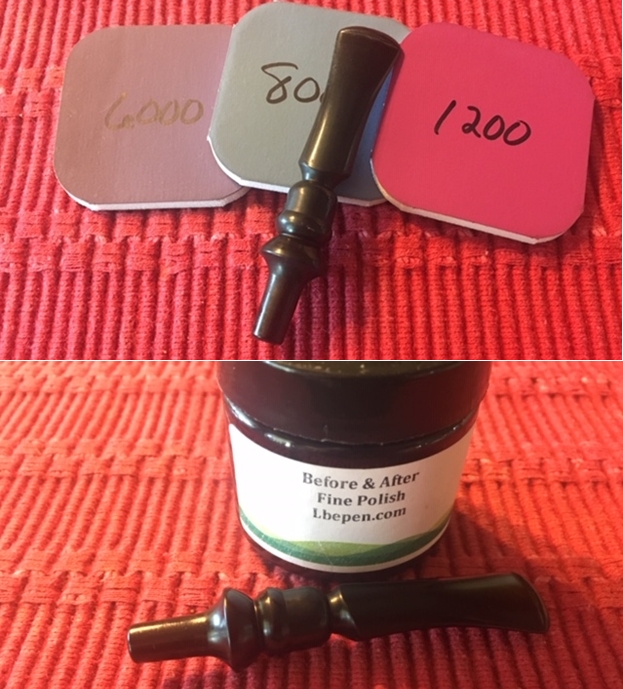
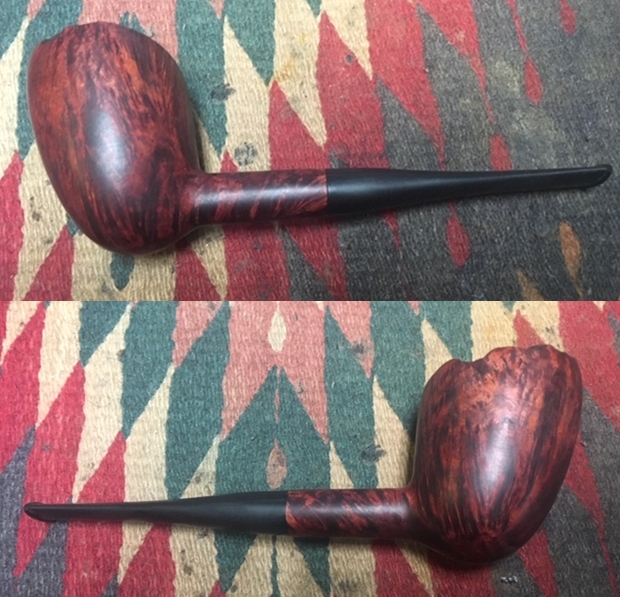
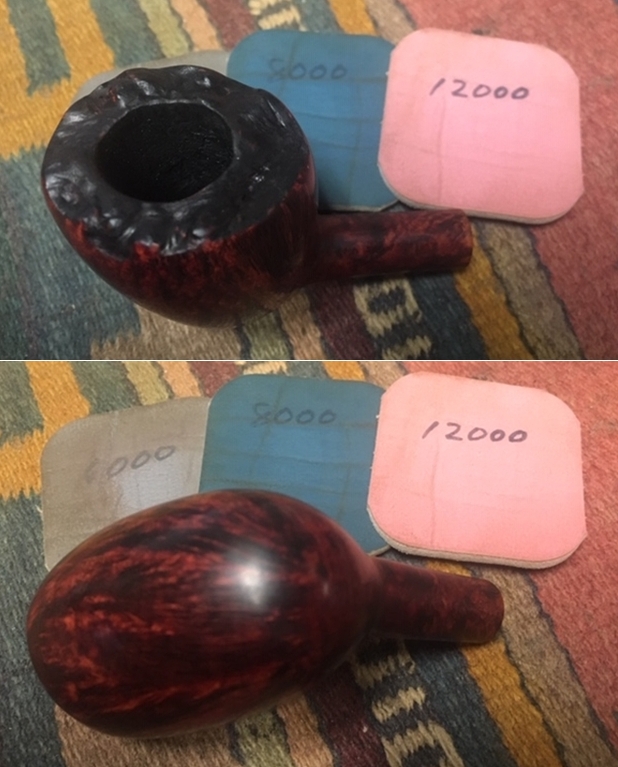
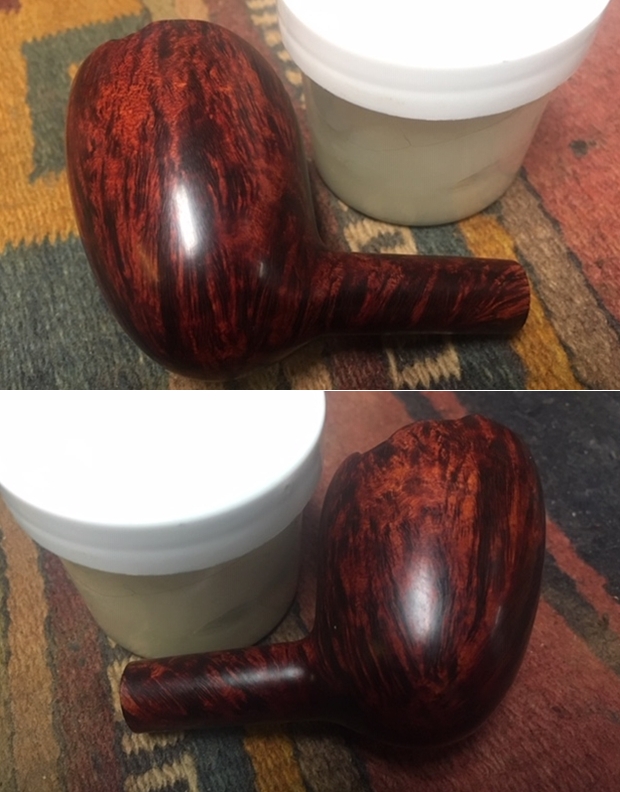
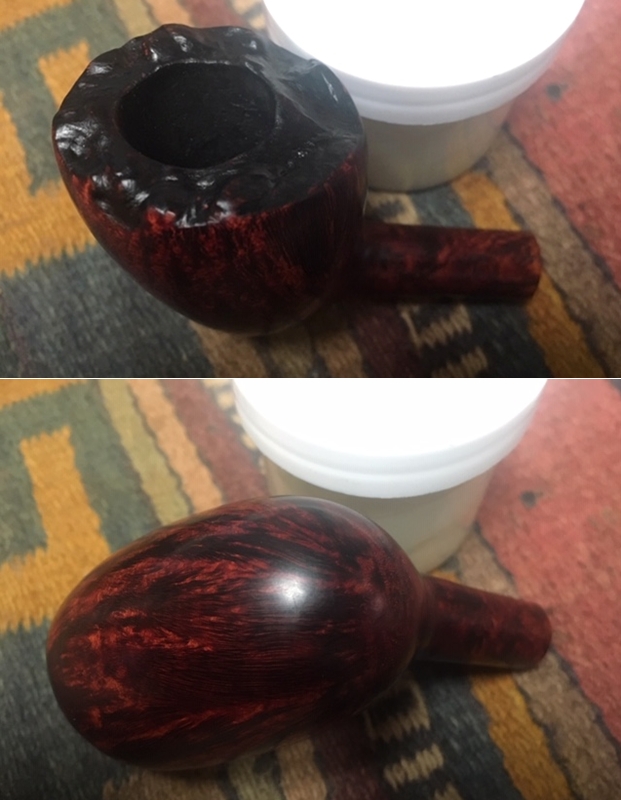
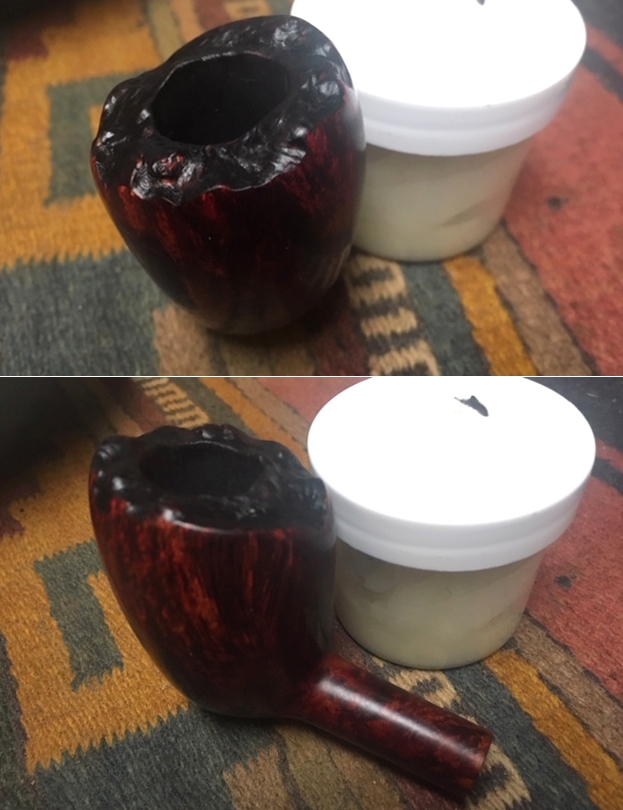
Armed with the information on the C stamp being a midgrade Freehand, I knew a bit about the pipe at hand. I turned to address the pipe itself. Jeff cleaned up the pipe for me. He reamed the bowl with a PipNet pipe reamer and cleaned it up with a Savinelli Fitsall Pipe Knife. He scrubbed the exterior with Murphy’s Oil Soap and a tooth brush to clean off the grime off the finish and the heavy overflow of lava on the rim top. The cleaning had removed some of the black stain on the rim top. He cleaned up the internals of the shank, mortise and stem with pipe cleaners, cotton swabs and alcohol to remove all of the oils and tars in the pipe. He soaked the stem in Before & After Deoxidizer and was able to remove much of the oxidation. When it arrived here in Vancouver it was a clean pipe and I knew what I had to work with. I took photos of it before I started my part of the restoration.  I took photos of the rim top and the stem to show their condition once it arrived in Canada. Jeff was able to clean up the incredibly thick cake and lava overflow that was shown in the rim and bowl photos above. You can see the spots where the black stain had been removed from parts of the plateau top. He was also able to get rid of the grime and grit in the surface of the briar. The inner edge of the bowl was in very good condition and was smooth to the touch. There appears to be some roughening at the back of the inner edge but it is actually part of the plateau. The rest of the rim top and edges looked very good. The stem looked much cleaner. There was deep tooth marks and chatter on both sides on and near the button.I took a photo of the stamping on the underside of the shank. It was clear and readable as noted above. I removed the stem from the shank and took a photo of the appearance of the parts. You can see how large the pipe is in the photos.I decided to start with polishing the briar with micromesh sanding pads. I wet sanded it with 1500-12000 grit pads. I wiped the bowl down after each pad with a damp cloth. The bowl began to take on a rich shine and grain was beginning to stand out.   I paused the polishing to touch up the stain on the plateau rim top and shank end. I used a black stain pen and was able to match the black perfectly. It looks much better.I went back to polishing the briar with 3200-12000 grit pads. I wiped the briar down after each pad with a damp cloth to remove the dust and sanding debris. The bowl is really taking on a rich shine.   I rubbed the bowl and shank down with Before & After Restoration Balm to deep clean the finish on the bowl and shank. The product works to clean, enliven and protect the briar. I worked it in with my fingers to get it into the briar. I used a horsehair shoe brush to work it into the plateau top.  After it sat for a little while I wiped it off and buffed it with a soft cloth. The briar really began to have a rich shine. I took some photos of the bowl at this point to mark the progress in the restoration. It is a beautiful bowl. I set the bowl aside and worked on the stem at this point in the process. I “painted” the tooth marks in the stem with the flame of a Bic lighter to lift them. I filled in the deep tooth marks on the stem surface and button edge with clear CA glue. I set the stem aside to let the repairs cure. I used a small file to flatten the repairs and recut the button edge. I sanded the repairs with 220 grit sandpaper to blend them into the stem surface. I started polishing the stem with 400 grit wet dry sandpaper.  I polished the stem with micromesh sanding pads – wet sanding with 1500-2400 grit pads and dry sanding with 3200-12000 grit pads. I wiped the stem down after each pad with a damp cloth to remove the sanding dust. I used the Before & After Pipe Polish to remove the small minute scratches left in the vulcanite even after the micromesh regimen. I finished by wiping the stem down with a final coat of Obsidian Oil and set it aside to dry. I put the stem back on the Nording Danmark C Large Freehand and took the pipe to the buffer. I buffed the bowl and stem with Blue Diamond to polish the briar and the vulcanite. Blue Diamond does a great job on the smaller scratches that remain in both. I gave the bowl and the stem several coats of carnauba wax and buffed the pipe with a clean buffing pad to raise the shine. I hand buffed it with a microfiber cloth to deepen the shine. The pipe polished up really nicely with a great contrasting stain look to the briar. The finished pipe is shown in the photos below. This is a unique Nording for me – the thin stem and straight shank give the pipe a different look. The polished black vulcanite stem looks really good with the reds and blacks standing out in the grain. The dimensions of the pipe are Length: 7 inches, Height: 2 inches, Outside diameter of the bowl: 2 inches wide x 2 ¾ long, Chamber diameter: 3/4 of an inch. The weight of the pipe is 64 grams/2.26 ounces. This is another pipe that I will be putting it on the rebornpipes online store shortly, if you are interested in adding it to your collection. Thanks for walking through the restoration with me on this beauty!
Restemming and Reclaiming a worn and tired Nording Danmark 116 Dublin


Blog by Steve Laug

Though I am not currently not taking on new work but trying to catch up on my backlog of pipes I have a commitment to doing repairs for customers of our local pipe shop. I have worked on several pipes for the pipeman who dropped this pipe and two others off at my house on Tuesday morning. All three had the tenons snapped off in the shank and two with broken or damaged stems. All three were heavily smoked with cakes almost completely filling in the bowls. It always make me wonder how one can fill a bowl when cake is so thick my finger would not fit in the bowl. The exterior of all three bowls were heavily caked with tars, oils and grime ground into the finish. The pipes reeked of the aromatic tobaccos that had been smoked in them. My wife bagged the three pipes and sealed them until I could get to them.

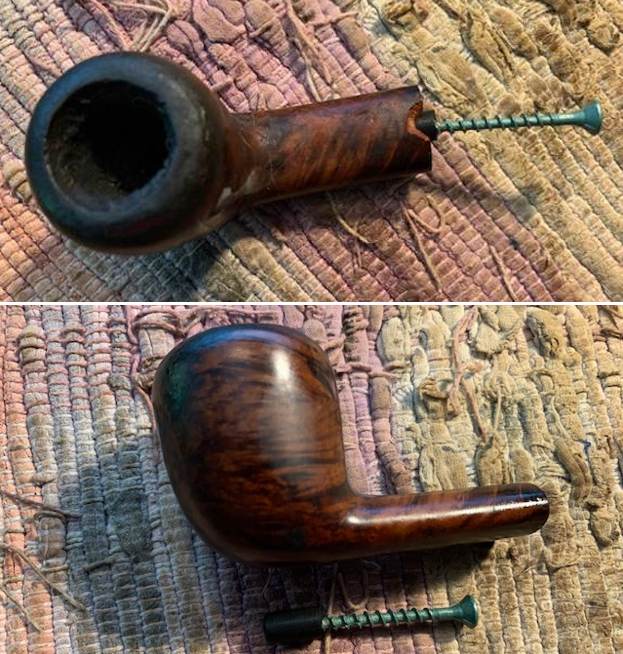
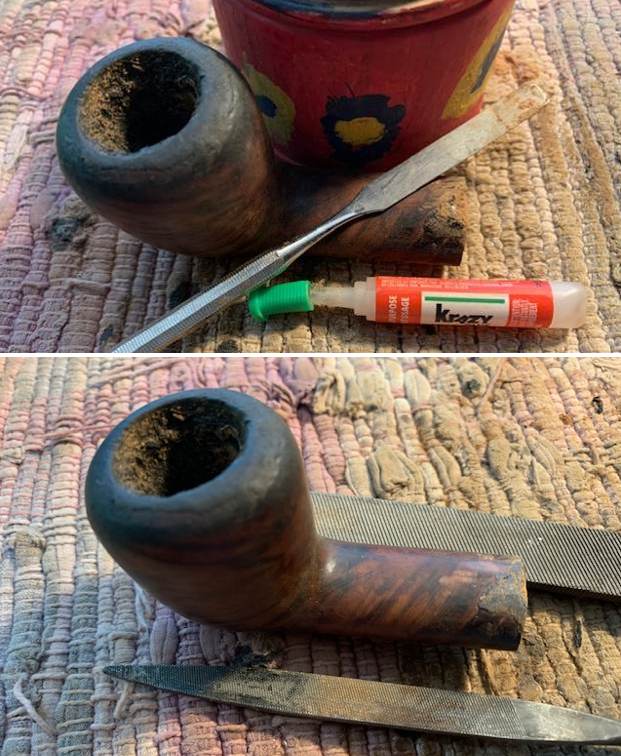
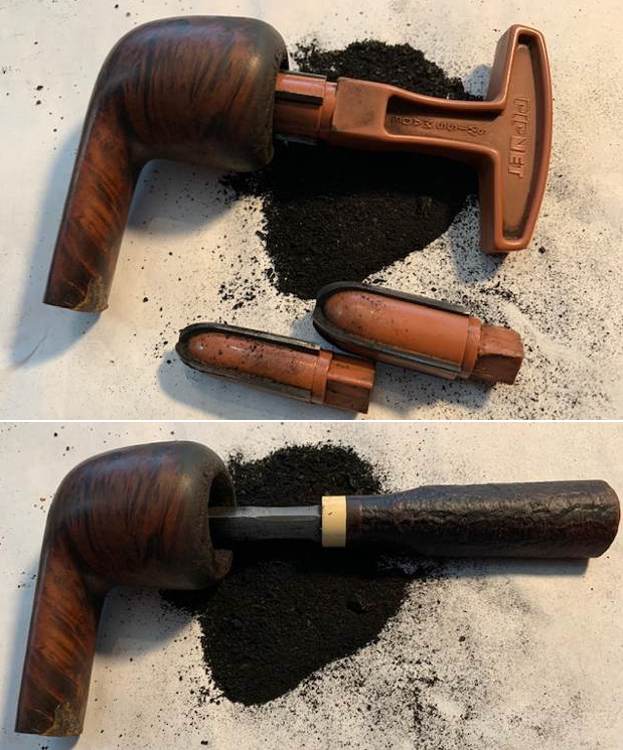
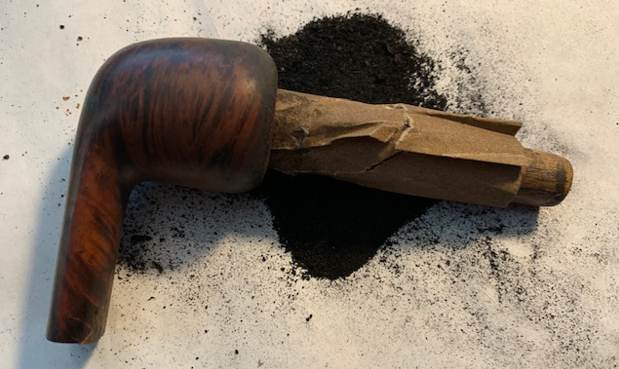
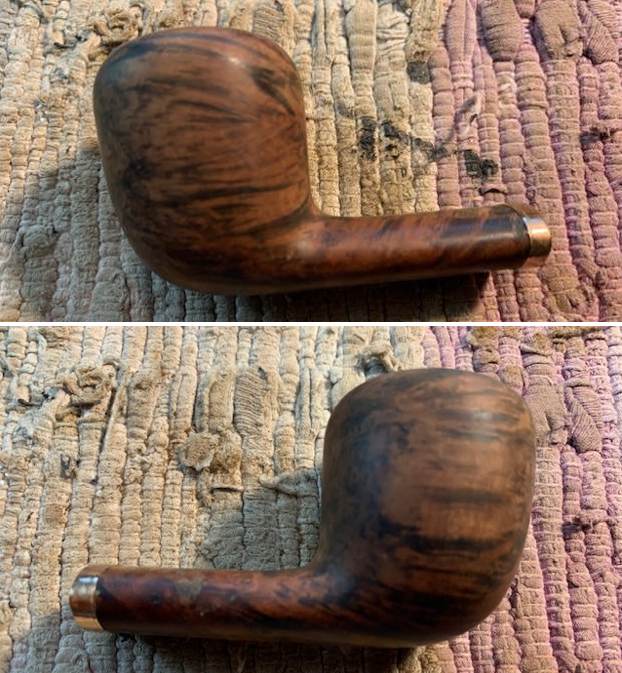
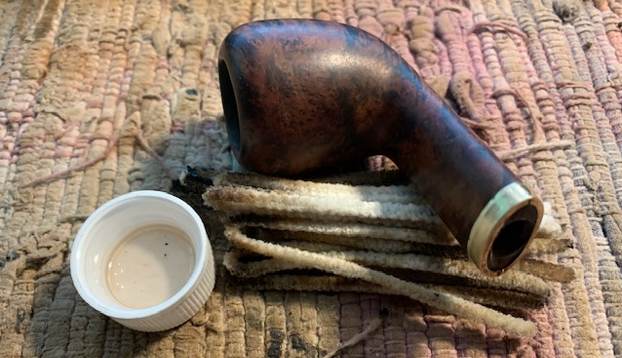
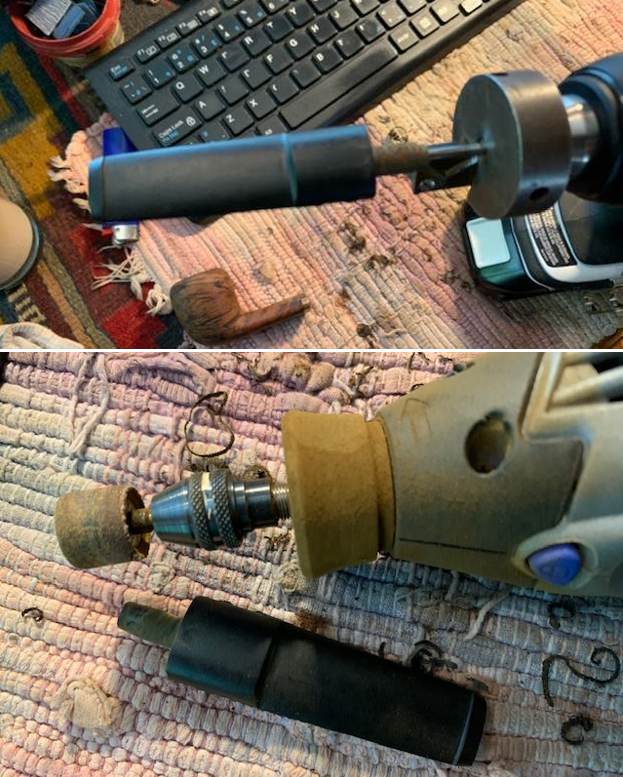
It was time to work on the last of the pipes – Dublin with oval shank. It was stamped on the underside of the shank and read Nording [over] Danmark [over] 116. It had a tenon stuck in the shank and a large chip on the top of the shank. I took photos of the bowl to show its condition before I started on it. I took photos to show the heavy grime on the bowl sides, the cake in the bowl and the heavy lava and damage to the rim top and inner edge. Somewhere along its journey the pipe had been banded. It was a real mess. I took a close up photo of the bowl and rim top to show the thickness of the cake in bowl and the damage on the inner edge of the rim. It was another very dirty pipe. I also took a photo of the chip out of the top of the shank showing the broken tenon in the shank. I tried to pull the broken tenon and was not surprised that it was stuck in the shank. I put the bowl in the freezer and let it sit for 30 minutes. Once I removed it I used a screw turned into the airway to wiggle the tenon out of the shank. It actually came out quite easily.  I decided to repair the large chip on the topside of the shank. I rebuilt it with clear CA glue and briar dust. I layered them into the chipped area using a dental spatula to apply the briar dust to the layers of glue. It took a bit of work but I quickly finished the repair. I flattened the repair with different files to blend them into the surface. I would need to sand them further but the repair looked good. At this point I decided to clean up the pipe so I could work on it. I like restoring clean pipes so that was going to be a lot of work but worth it to me to get rid of the grime. I reamed the bowl with a PipNet reamer using the largest cutting head. I cleaned up the reamer with a Savinelli Fitsall PipeKnife. I sanded the walls of the bowl with 220 grit sandpaper wrapped around a piece of dowel. There was a small mountain of carbon. I scrubbed the externals of the pipe to remove the heavy oils and tar build up on the bowl. It took a lot of elbow grease using a tooth brush and Murphy’s Oil Soap. I worked on it until the grime washed away with running water. It looks much better at this point.  I used a folded piece of 220 grit sandpaper to smooth out the rim top and clean up the inner edge of the bowl. I also sanded the repair on the top of the shank with the 220 grit sandpaper at the same time. It took a bit of work but both repairs looked much better.   With the sanding done it was time to band the shank end to bind the repair and the hairline crack from the repair up the shank a slight distance. I spread white glue around the shank end with a tooth pick and pressed a brass band onto the end of the shank. I took photos of the banded shank and it looked good. With the externals cleaned I turned my attention to the internals. I scrubbed the shank and the airway in the bowl with pipe cleaners, cotton swabs and isopropyl alcohol until it was clean. It was a mess. The stem was brand new and was very clean.I set the bowl aside and worked on the fit of the stem. I drilled out the airway with a bit the same size as the guide pin on the tenon turning tool. I then used the tenon turning tool to remove and reduce the diameter of the tenon. I smoothed out the tenon with a sanding drum on my Dremel. I used a flat file and a smaller file to remove the casting marks on the sides of the stem and the end of the button. Once finished with the file it was looking much better. I put the stem on the shank and took photos of the look of the fit of the stem to the shank. I will need to do some shaping around the shank end but the fit in the shank is perfect. It is a snug fit. I took the stem off and went back to the bowl to polish it with micromesh sanding pads – dry sanding with 1500-12000 grit pads and wiping it down after each pad with a damp cloth. It looks far better than it did before even with the many fills in the briar around the bowl.   I worked some Before & After Restoration Balm into the surface of the briar. To get it into the nooks and crannies of the plateau I used a shoe brush and worked it deeply into the grooves. The balm works to clean, enliven and preserve the briar. I let it sit for 10 minutes then buffed it off with a soft cloth. It is a beautiful pipe.  I turned back to the stem. I shaped the stem and adjusted the saddle portion of the stem with 220 grit sandpaper. I removed excess vulcanite all around the top, bottom and underside to shape and get the fit next to the shank and brass band. I started polishing the stem with 400 grit wet dry sandpaper. The fit looked very good.  I polished the stem with micromesh sanding pads – dry sanding with 1500-12000 grit pads. I wiped the stem down after each pad with some Obsidian Oil. I finished hand polishing it with Before & After Pipe Stem Polish – Fine and Extra Fine. I rubbed it down with another coat of Obsidian Oil and let it dry. The stem really was beginning to look very good.   This was a very beat up Nording Danmark 116 Dublin and now with its restoration and newly fit black vulcanite saddle stem it looks far better than when I started. The reworked rim top works very will with the rest of the bowl. I polished the bowl and the stem with Blue Diamond polish on the buffing wheel. I gave the bowl and the stem multiple coats of carnauba wax. I buffed the pipe with a clean buffing pad to raise the shine. I hand buffed it with a microfiber cloth to deepen the shine. The pipe polished up pretty nicely. The brown stain makes the grain just sing and it works well with the polished vulcanite stem. Have a look at the photos below. The shape, finish and flow of the pipe and stem are very well done. The dimensions are Length: 5 ½ inches, Height: 2 inches, Outside diameter of the bowl: 1 ¼ inches, Chamber diameter: ¾ of an inch. The weight of the pipe is 46 grams/ 1.62 ounces. Once I finish restemming the last of the pipes the three will be going home with the fellow who dropped them off. Thanks for walking through the restoration with me as I worked over this pipe.

Rejuvenating a Nording Made in Denmark Natural Finish Signature Freehand


Blog by Steve Laug

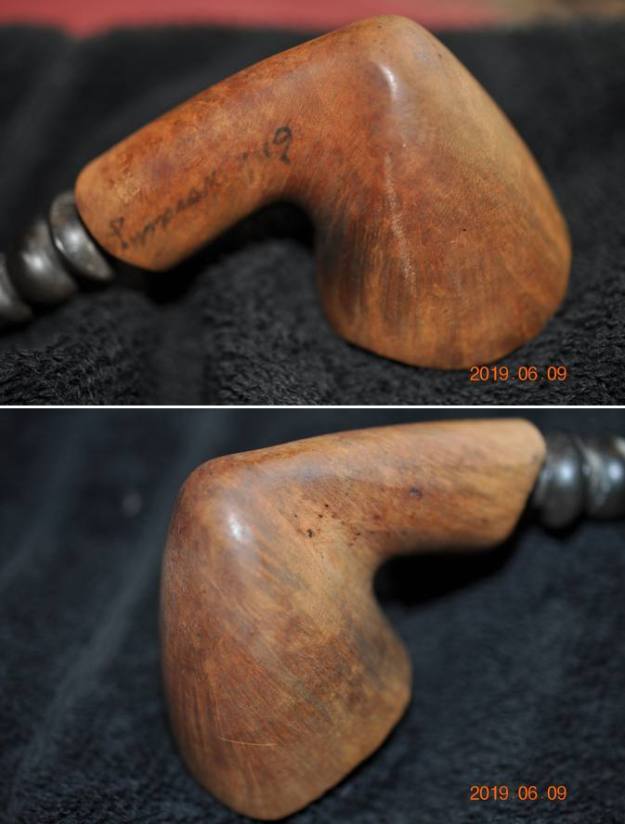
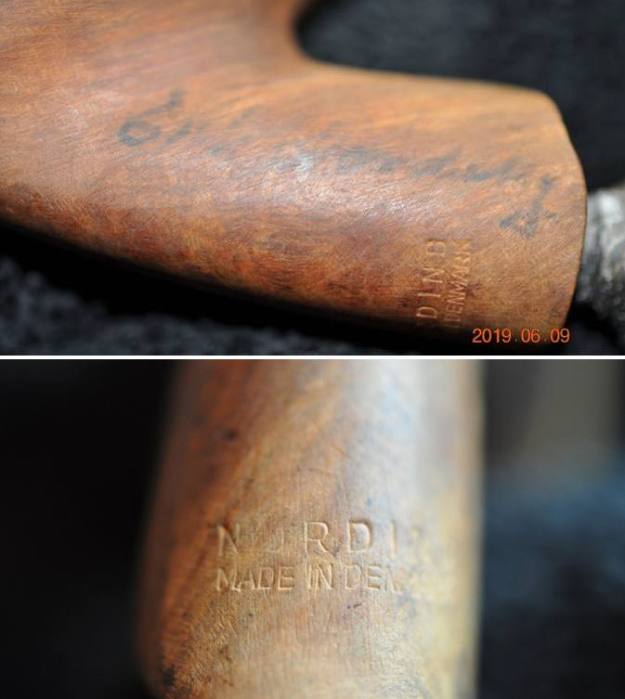
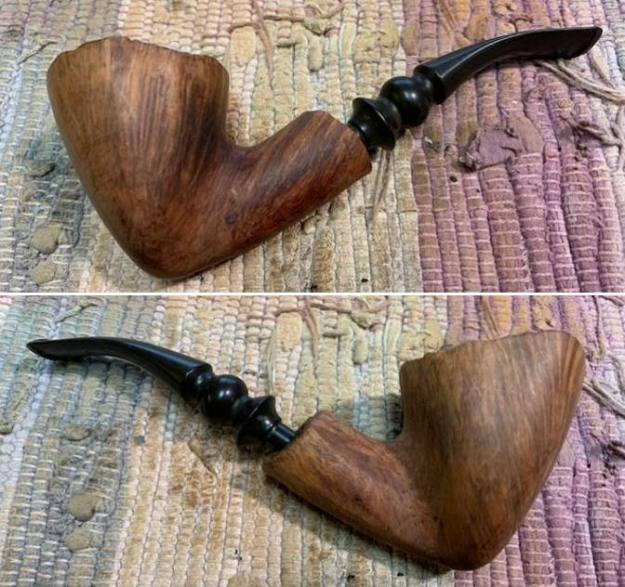
The next pipe on the table came to us This pipe was purchased from an antique store on 05/30/19 in Metaine, Louisiana, USA. It is a classic Freehand with a unstained, natural finish around the bowl and shank. It has a plateau on the rim top and shank end. It had a fancy turned vulcanite stem. The rim top is plateau and shank end were originally stained black. The shape follows the grain of the block of briar very well. It is stamped on the underside of the shank reads NORDING over Made in Denmark near the stem/shank union. There is no other stamping on the pipe. There is a faded signature on the left side of the shank that reads Eric Nording. It is almost worn off from use The stem has a faint Nording N on the topside of the stem. The pipe was very dirty with dark oily stain on the sides mid bowl. There was a thick cake in the bowl and some lava overflowing onto the plateau rim top filling in the plateau. It was hard to know what the inner edge of the rim looked like because of the lava and cake. Other than being dirty the finish appeared to be in good condition. The stem was oxidized and had come calcification. There was some tooth chatter and tooth marks on both sides of the stem at the button and on the button surface. Jeff took photos of the pipe before he started working on it. He took a photo of the rim top to show the thick cake in the bowl and the overflow of lava. The cake is thick and hard. The lava overflow fills in the plateau. The bowl is a real mess but it must have been a great smoking pipe. The stem looked dirty, calcified and oxidized with bite marks and tooth chatter on both sides of the stem ahead of the button. The shank end and fancy turned stem are also dirty. The next photos show the sides and heel of the bowl to give a clear picture of the beauty of the grain around the bowl of the pipe. Under the grime there is some great grain peeking through. Jeff took photos of the stamping to capture the clarity of it even under the grime. There is a faint signature on the left side of the shank that reads Eric Nording. It is quite faded and worn looking. The stamping on the underside of the shank readable as noted above.  Before I started my work on the pipe I wanted to learn more about where this pipe fit into the Nording lines so I turned to the first of two sites that I always check to gather information on a brand. I turned first to Pipedia (https://pipedia.org/wiki/N%C3%B8rding). Nording’s were exclusively freehand shapes. There were quite a few photos and a longer history of the brand. It is well worth reading. I also found a collage of photos of Erik Nording included below. I turned to the second information site – Pipephil’s (http://www.pipephil.eu/logos/en/logo-n2.html) and found a great history of the brand in brief form and many photos of different pipes by Nording.

Armed with the information on the Nording Freehand I turned to address the pipe itself. Jeff cleaned up the pipe for me. He reamed the bowl with a PipNet pipe reamer and cleaned it up with a Savinelli Fitsall Pipe Knife. He scrubbed the exterior with Murphy’s Oil Soap and a tooth brush to clean off the grime off the finish and the heavy overflow of lava on the rim top. The cleaning had removed some of the black stain on the rim top. He cleaned up the internals of the shank, mortise and stem with pipe cleaners, cotton swabs and alcohol to remove all of the oils and tars in the pipe. He soaked the stem in Before & After Deoxidizer and was able to remove much of the oxidation. When it arrived here in Vancouver it was a clean pipe. The Nording signature had become even more faint with the clean up. I knew what I had to work with. I took photos of it before I started my part of the restoration.     I took photos of the rim top and the stem to show their condition once it arrived in Canada. Jeff was able to clean up the incredibly thick cake and lava overflow that was shown in the rim and bowl photos above. You can see that almost all of the black stain had been removed from the plateau top and shank end. He was also able to get rid of the grime and grit in the surface of the briar. The inner edge of the bowl was in very good condition and was smooth to the touch. The rest of the rim top and edges looked very good. The stem looked very good and was much cleaner. The faintly stamped N is visible on the stem top. There were tooth marks and chatter on both sides near the button. I took a photo of the stamping on the underside of the shank. It is faint but readable as noted above. The dark ink Erik Nording signature was totally faded away. It is faintly visible but basically it is gone.I removed the stem from the pipe and took a photo to show the look of the parts.I decided to start the restoration by restaining the plateau rim top and shank end with a Black Stain pen. I worked to carefully get into the grooves and crannies of the plateau on both. Once it was finished I used a brass bristle wire brush to start removing the black from the high point. I then polished the high points on both with 1500 grit micromesh to get the contrast back. I polished the briar with micromesh sanding pads – dry sanding the briar with 1500-12000 grit pads. I wiped the bowl down with a damp cloth after each sanding pad.   I rubbed the bowl and shank down with Before & After Restoration Balm to deep clean the finish on the bowl and shank. The product works to clean, enliven and protect the briar. I worked it in with my fingers to get it into the briar. I used a horsehair shoe brush to work it into the plateau top and shank end.  After it sat for 15 minutes I wiped it off and buffed it with a soft cloth. The briar really began to have a rich shine. I took some photos of the bowl at this point to mark the progress in the restoration. It is a beautiful bowl. I set the bowl aside and worked on the stem at this point in the process. I “painted” the surface of the stem with the flame of a lighter to lift the dents in the vulcanite as much as possible (I failed to take photos of the stem before I filled them in but the photos show the process). I filled in the remaining marks with clear super glue. Once the repairs cured I used a file to reshape the button and flatten the repairs. I sanded the repairs with folded pieces of 220 to remove the file marks as well as the remaining oxidation. I started polishing the stem with 400 grit wet dry sandpaper.     I started sanding out the file marks and took a pause to touch up the N stamp on the stem surface. I wanted to make sure that I did no inadvertently sand it out during the polishing process. Once that was finished I finished sanding out the tooth marks and scratches with 220 grit sandpaper. I also started the polishing with 400 grit paper. I polished the stem with micromesh sanding pads – dry sanding with 1500-12000 grit pads. I wiped the stem down after each pad with a damp cloth to remove the sanding dust. I used the Before & After Pipe Polish to remove the small minute scratches left in the vulcanite even after the micromesh regimen. I finished by wiping the stem down with a final coat of Obsidian Oil and set it aside to dry.   I put the stem back on the Nording Signature Freehand and took it to the buffer. I buffed the bowl (carefully avoiding the stamping and signature remnants) and stem with Blue Diamond to polish the briar and the vulcanite. Blue Diamond does a great job on the smaller scratches that remain in both. I gave the bowl and the stem several coats of carnauba wax and buffed the pipe with a clean buffing pad to raise the shine. I hand buffed it with a microfiber cloth to deepen the shine. The pipe polished up really nicely with a great contrasting stain look to the briar. The finished pipe is shown in the photos below. This Nording Freehand turned out looking very nice. The polished black vulcanite stem looks really good with the natural oiled finisn and blacks of the plateau top and shank end. The dimensions of the pipe are Length: 6 inches, Height: 2 ¼ inches, Outside diameter of the bowl: 1 ¾ inches, Chamber diameter: ¾ of an inch. The weight of the pipe is 60grams/2.12oucnes. This is another pipe that I will be putting it on the rebornpipes online store in the Danish Pipe Makers section shortly, if you are interested in adding it to your collection. Thanks for walking through the restoration with me on this beauty!
Cleaning up a Strange Mixed Finish Nording Bent Billiard


Blog by Steve Laug

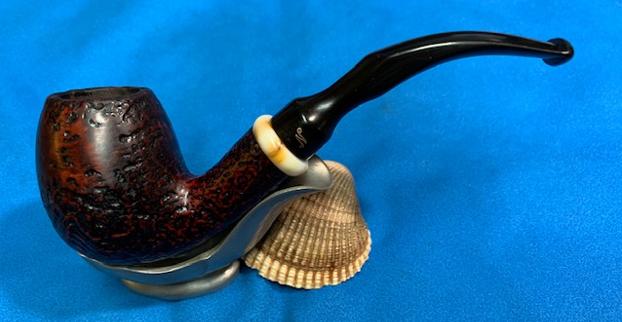
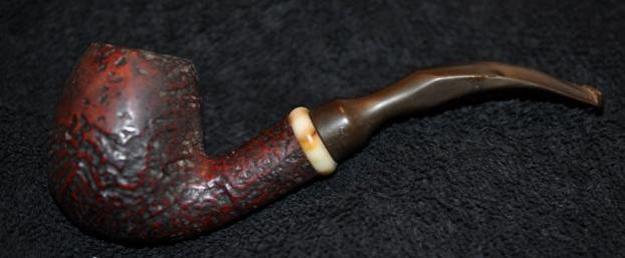
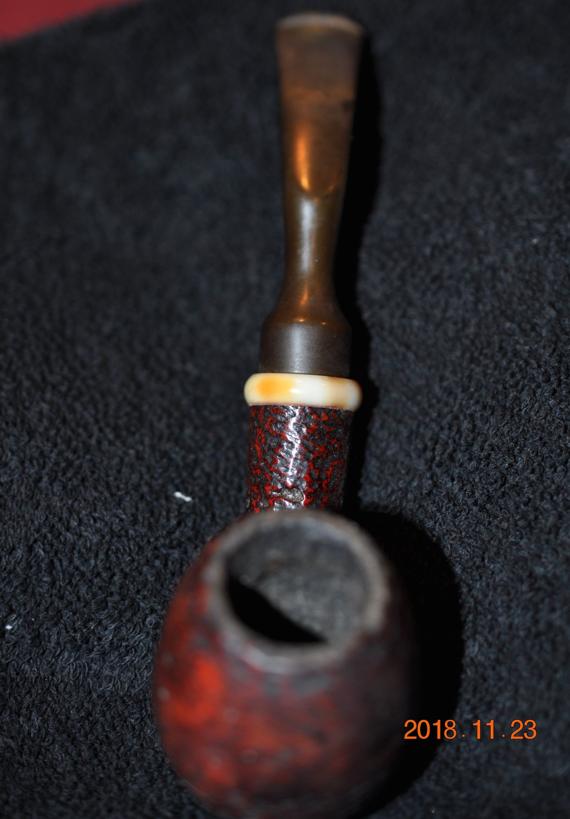
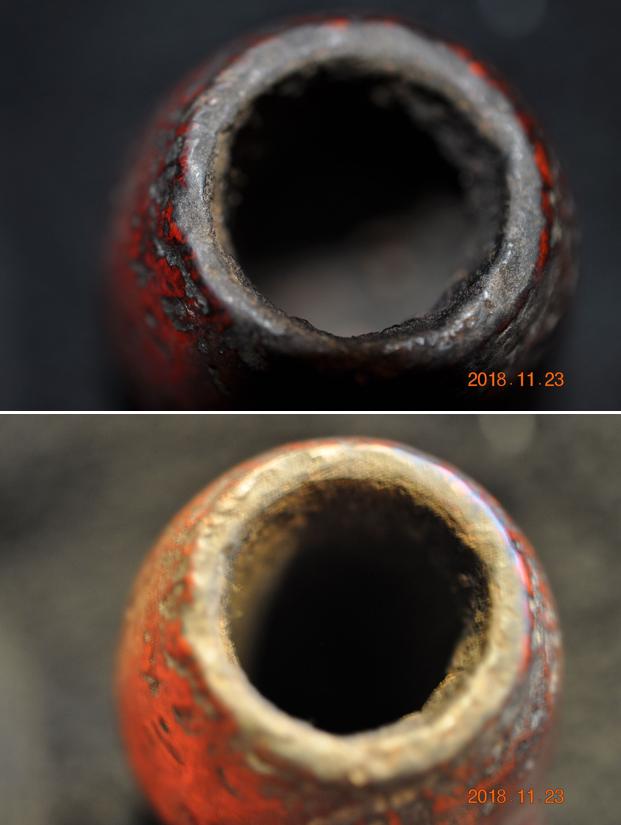
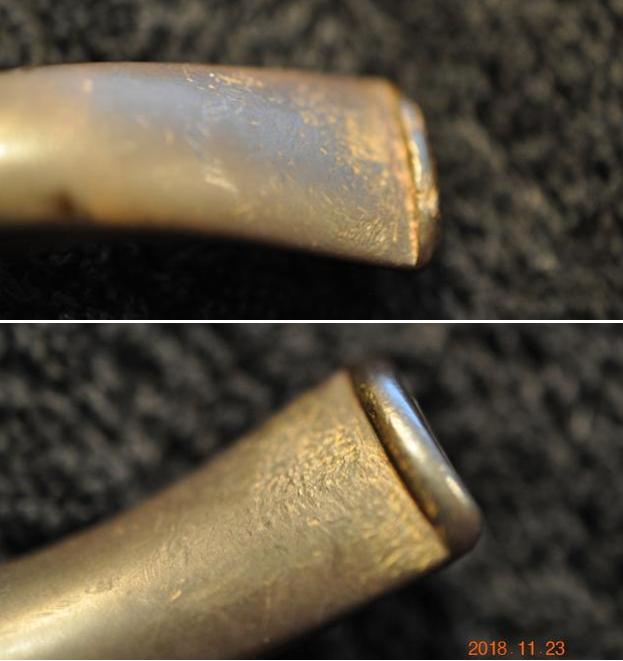
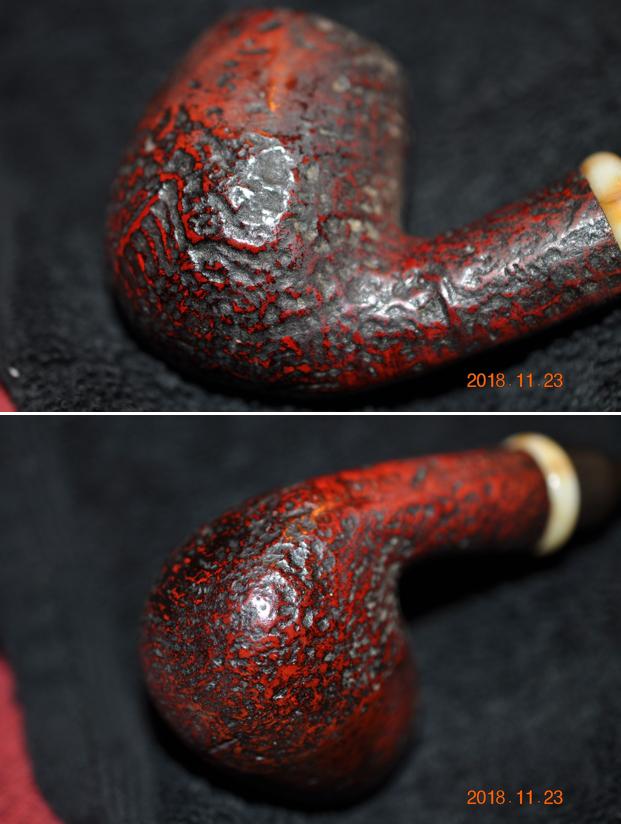
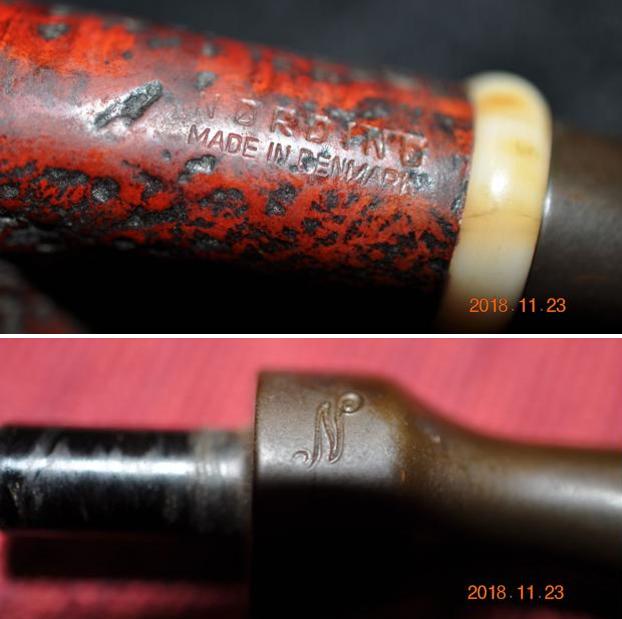
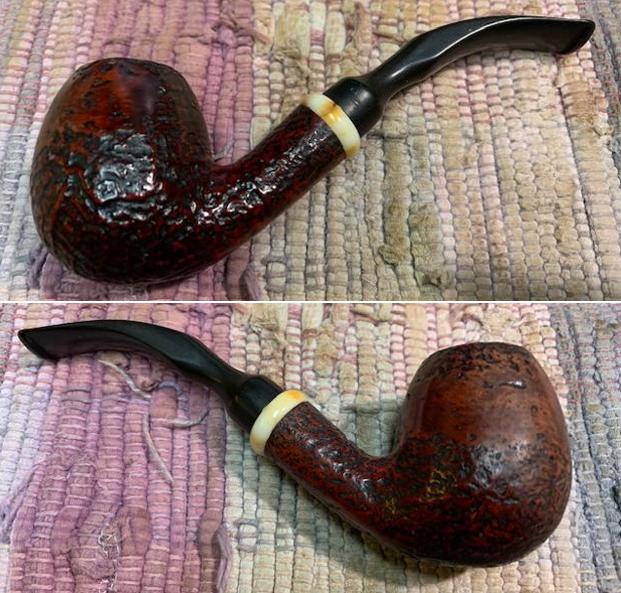
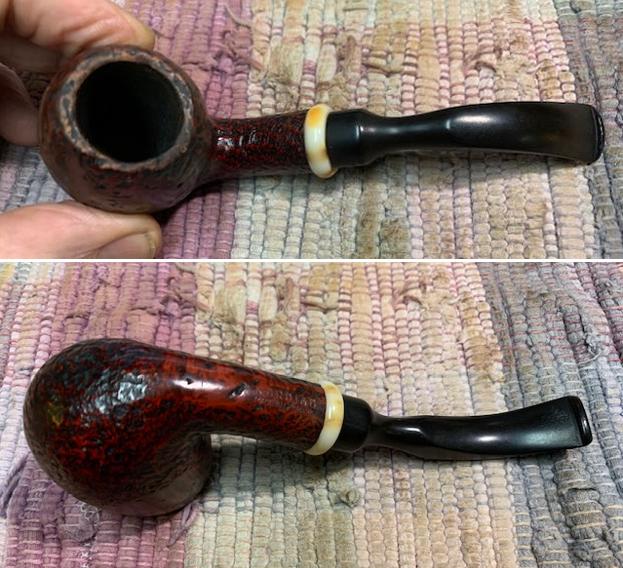
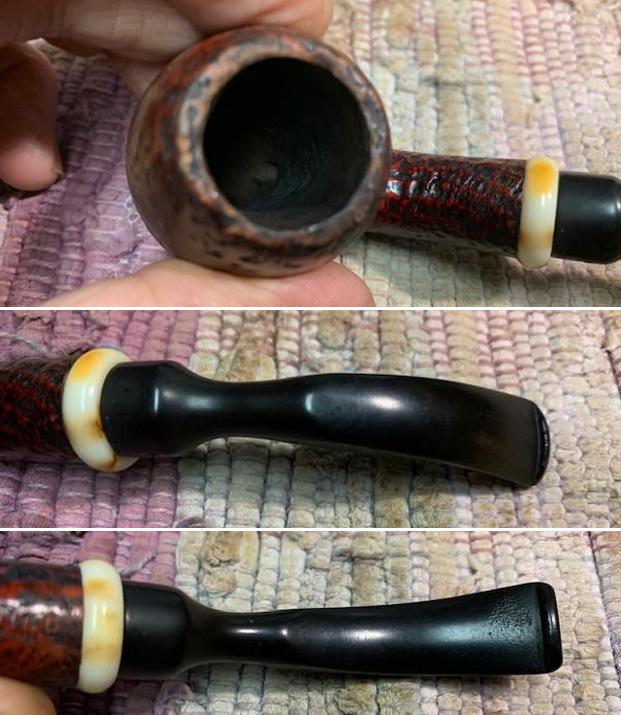
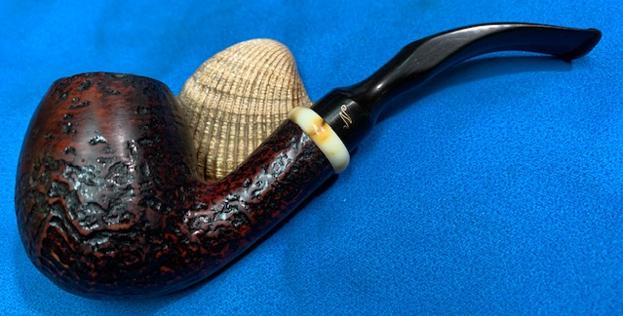
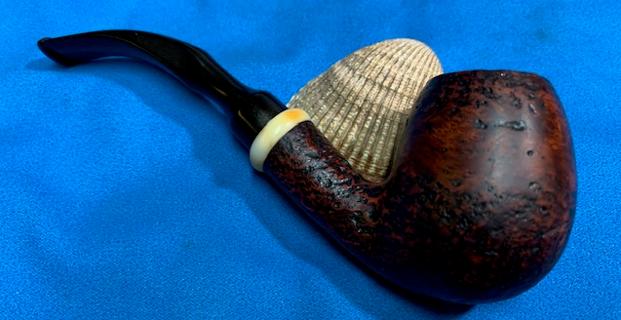
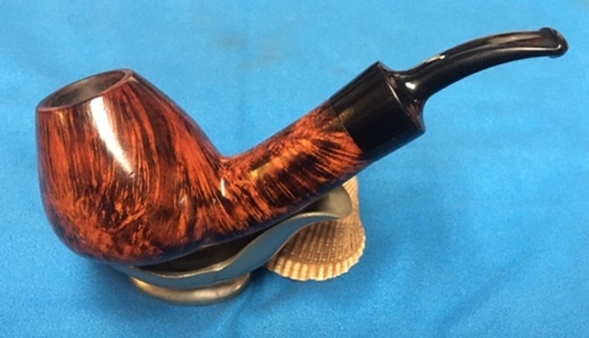
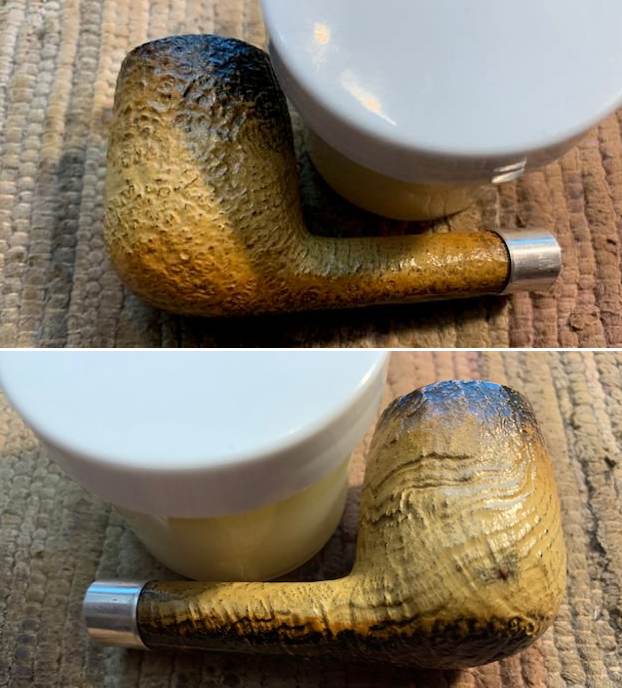
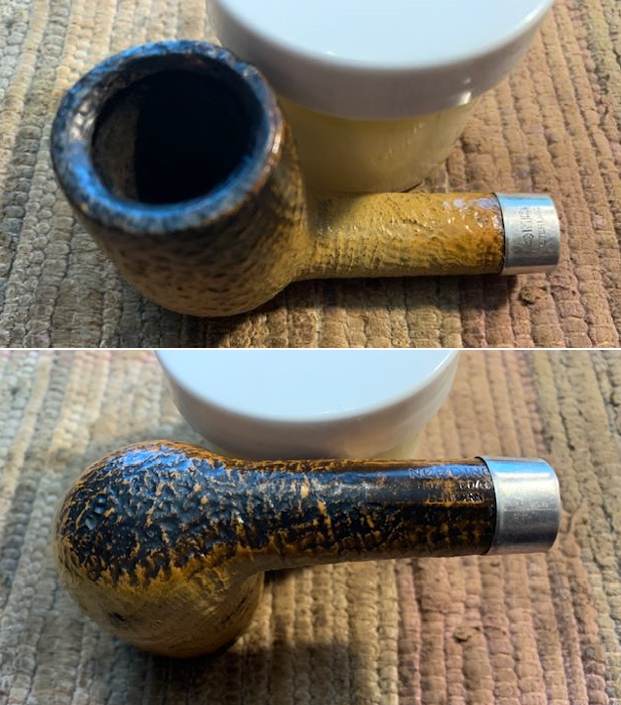
The next pipe on the table is one that Jeff picked up from an auction in Bridgton, Maine, USA in November of 2018 for so it has been sitting here for a long time. It is a very different looking bent Billiard with a faux horn shank ring. The stem is a fancy saddle that looks very good. The stamping on the underside of the shank read Nording [over] Made in Denmark. It was sandblasted on the lower half of the bowl and the entire shank. There is a smooth band around the top half of the bowl on the front and both sides. But it is not totally smooth as it appears that the sandblast was sanded in that area. It is unique for sure and oddly attractive. There was a lot of grime and grit ground into the finish of the bowl. There was a heavy cake in the bowl  and a heavy overflow of lava on the sandblast rim top. The fit of the stem in the shank was smooth and flawless. The faux horn shank ring was quite stunning. On the left side of the saddle the “N” logo had been stamped. It was clear and readable but did not have the white colour in it. The stem was vulcanite and it was oxidized, calcified and had some wear on both sides near the button.  Jeff took photos of the bowl and rim top to show the cake in the bowl. The sandblast rim top showed thick coat of lava that filled in the rim top and hopefully protected the edges from damage. He took photos of the top and underside of the stem showing the tooth chatter, scratching, oxidation and calcification on the stem surface and wear on the edges of the button. Jeff took photos of the sides and heel of the bowl to show the condition of the finish. You can see the well done shape and the interesting grain pattern under the sandblast. Even under the dirt and debris of the years it looked very good.The stamping is clear and readable as noted above. The honey coloured finish even looks good under the grime and the pipe really is a Grand Luxe!I turned first to Pipephil to get a quick review of the brand (http://pipephil.eu/logos/en/logo-n2.html). The pipe was carved by Erik Nording. Nording is a prolific carver who continues to make pipes and sell them globally. The  screen capture below shows a Nording with stamping like the one I am working on.I then turned to Pipedia to have a look at the history of the Nording brand and see if there were any pipes like the one in hand (https://pipedia.org/wiki/N%C3%B8rding). The history was worth a read, though there were no photos of the pipe that I had.

With the information I learned in the above articles I had the background on the pipe. Now it was time to work on it.

I am really happy to have Jeff’s help on cleaning up the pipes that we pick up along the way. He reamed the bowl with a PipNet pipe reamer and cleaned up the reaming with a Savinelli Fitsall Pipe Knife. He scrubbed out the internals with alcohol, pipe cleaners and cotton swabs until the pipe was clean. He scrubbed the exterior of the bowl with Murphy’s Oil Soap and a tooth brush to remove the grime and grit on the briar and the lava on the rim top. The finish looks much better and the rim top was actually very visible and it looked good. There were also remnants of varnish or shellac on the exterior of the bowl (more on the right than front and left side).  Jeff scrubbed the stem with Soft Scrub All Purpose Cleaner to remove the majority of the grime. When the pipe arrived here in Vancouver it looked very good. I took some close up photos of the rim top and the stem surface. The rim top looked very good and the sandblast on the finish was worn but clean. I took close up photos of the stem to show the condition of the surface and button. The stem was very clean with tooth chatter on both sides near the button. I took a photo of the stamping on the underside of the shank You can see that it is stamped as noted above. It is clear and readable.  I took the pipe apart and took a photo of the pipe. It is a good looking pipe and has some great grain on the bowl and shank. I decided to start my restoration work on this one by working to remove the varnish coat. I rubbed the bowl down with acetone on cotton pads to remove the finish. It did not work very well. So I sanded the finish lightly with 1500 grit micromesh sanding pads to break the shiny top coat on the briar. I then wiped it down again with acetone and was happy with the results. I worked some Before & After Restoration Balm into the surface of the briar with my fingertips and a horsehair shoe brush to clean, enliven and protect the briar. I let the balm sit for 15 minutes and then buffed with a cotton cloth to raise the shine. The photos show the bowl at this point in the restoration process.     With that done the bowl was finished other than the final buffing. I set it aside and turned my attention to the stem. I looked at the worn areas on the stem and decided to sand them out with 220 grit sandpaper and start polishing it with 400 grit wet dry sandpaper. I touched up the N stamp with Rub’n Buff Antique Gold. I rubbed it onto the surface and into the N with a toothpick. I buffed it off with a soft cloth and the look is very good.I polished the stem with 1500-12000 grit sanding pads. I wiped it down after each sanding pad with Obsidian Oil. I polished it with Before & After Pipe Stem Polish – both Fine and Extra Fine. It is fun to come to end of the restoration of the Nording Mixed Finish Danish Bent Billiard. It turned out to be a nice looking pipe. The finish came alive with the work I had done on it. I put the pipe back together and buffed it with Blue Diamond on the buffing wheel. I gave the bowl and the stem multiple coats of carnauba wax. I hand buffed the pipe with a clean buffing pad to raise the shine. It is fun to see what the polished bowl looks like with the polished shank ring and black vulcanite saddle stem. It really was beautiful. This Nording made Bent Billiard is nice looking and the pipe feels great in my hand. It is light and well balanced. Have a look at it with the photos below. The dimensions are Length: 5 ½ inches, Height: 2 inches, Outside diameter of the bowl: 1 inch, Chamber diameter: ¾ of an inch. The weight of the pipe is 52grams/1.83ounces. It is a beautiful pipe that I will soon put on the rebornpipes store in the Danish Pipe Makers section. If you are interested in adding it to your collection let me know. Thanks to each of you who are reading this blog. Remember we are not pipe owners; we are pipemen and women who hold our pipes in trust until they pass on into the trust of the next pipeman or woman.


Rejuvenating a Nording Made in Denmark Freehand


Blog by Steve Laug

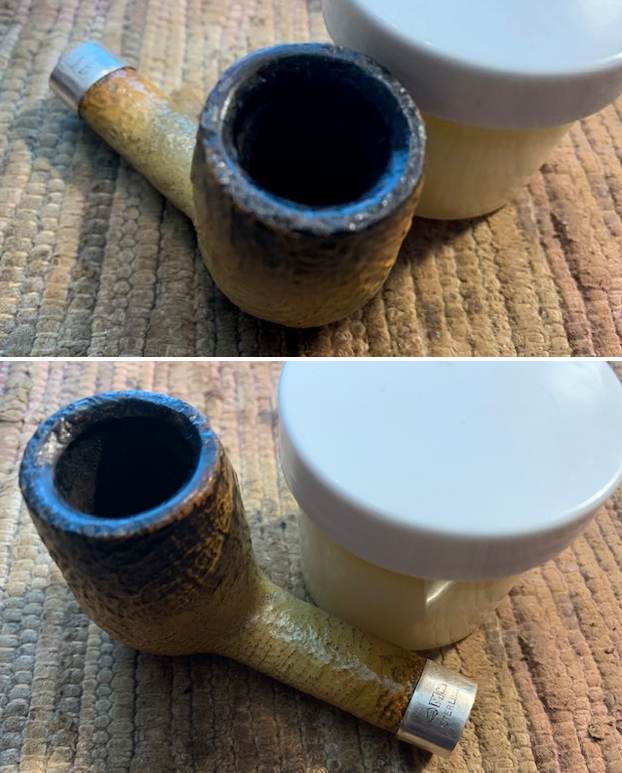
The next pipe on the table came to us in 2018 from a fellow in Naples, Florida, USA. It is a classic Freehand with a mixed finish of sandblast and smooth with a plateau on the rim top and shank end. It had a fancy turned vulcanite stem. The rim top is plateau and is stained black. The shape follows the grain of the block of briar very well. It is stamped on the underside of the shank reads NORDING over Made in Denmark near the stem/shank union. There is no other stamping on the pipe. The stem has a faint Nording N on the topside of the stem. The pipe was very dirty with a thick cake in the bowl and some lava overflowing on to the plateau rim top filling in the plateau. It was hard to know what the inner edge of the rim looked like because of the lava and cake. Other than being dirty the finish appeared to be in good condition. The stem was oxidized and had come calcification. There was some tooth chatter and tooth marks on both sides of the stem at the button and on the button surface. Jeff took photos of the pipe before he started working on it. He took a photo of the rim top to show the thick cake in the bowl and the overflow of lava. The cake is thick and hard and the lava overflow is in the plateau. The bowl is a real mess but it must have been a great smoking pipe. The stem looked dirty and oxidized. The bite marks and tooth chatter on the stem were very visible. The remaining light oxidation was another issue that would need to be addressed.    The next photos show the sides and heel of the bowl to give a clear picture of the beauty of the grain around the bowl of the pipe. Under the grime there is some great grain peeking through. Jeff took photos of the stamping to capture the clarity of it even under the grime. The stamping is faint but readable. He also included a photo of the turned stem and the remnant of plateau on the shank end.   Before I started my work on the pipe I wanted to learn more about where this pipe fit into the Nording lines so I turned to the first of two sites that I always check to gather information on a brand. I turned first to Pipedia (https://pipedia.org/wiki/N%C3%B8rding). Nording’s were exclusively freehand shapes. There were quite a few photos and a longer history of the brand. It is well worth reading. I also found a collage of photos of Erik Nording included below. I turned to the second information site – Pipephil’s (http://www.pipephil.eu/logos/en/logo-n2.html) and found a great history of the brand in brief form and many photos of different pipes by Nording.

Armed with the information on the Nording Freehand I turned to address the pipe itself. Jeff cleaned up the pipe for me. He reamed the bowl with a PipNet pipe reamer and cleaned it up with a Savinelli Fitsall Pipe Knife. He scrubbed the exterior with Murphy’s Oil Soap and a tooth brush to clean off the grime off the finish and the heavy overflow of lava on the rim top. The cleaning had removed some of the black stain on the rim top. He cleaned up the internals of the shank, mortise and stem with pipe cleaners, cotton swabs and alcohol to remove all of the oils and tars in the pipe. He soaked the stem in Before & After Deoxidizer and was able to remove much of the oxidation. When it arrived here in Vancouver it was a clean pipe and I knew what I had to work with. I took photos of it before I started my part of the restoration.   I took photos of the rim top and the stem to show their condition once it arrived in Canada. Jeff was able to clean up the incredibly thick cake and lava overflow that was shown in the rim and bowl photos above. You can see the spots where the black stain had been removed from the plateau top. He was also able to get rid of the grime and grit in the surface of the briar. The inner edge of the bowl was in very good condition and was smooth to the touch. The rest of the rim top and edges looked very good. The stem looked very good and was much cleaner. The faintly stamped N is visible on the stem top. There were tooth marks and chatter on both sides near the button.  I took a photo of the stamping on the underside of the shank. It is readable as noted above.I removed the stem from the pipe and took a photo to show the look of the parts.I decided to start the restoration by touching up the grooves and edges of the plateau rim top with a black Sharpie pen. It works really well to get into the grooves and blends with the rest of the blackened rim top.I rubbed the bowl and shank down with Before & After Restoration Balm to deep clean the finish on the bowl and shank. The product works to clean, enliven and protect the briar. I worked it in with my fingers to get it into the briar. I used a horsehair shoe brush to work it into the plateau top.  After it sat for 15 minutes I wiped it off and buffed it with a soft cloth. The briar really began to have a rich shine. I took some photos of the bowl at this point to mark the progress in the restoration. It is a beautiful bowl.   I set the bowl aside and worked on the stem at this point in the process. I “painted” the surface of the stem with the flame of a lighter to lift the dents in the vulcanite as much as possible. I filled in the remaining marks with clear super glue. Once the repairs cured I used a file to reshape the button and flatten the repairs. I sanded the repairs with folded pieces of 220 to remove the file marks as well as the remaining oxidation. I started polishing the stem with 400 grit wet dry sandpaper.   To take care of the residual oxidation on the turned portions of the stem I scrubbed it with Soft Scrub All-Purpose Cleaner. I have found that it does a great job and is easy to work into hard to reach spots.  I polished the stem with micromesh sanding pads – wet sanding with 1500-2400 grit pads and dry sanding with 3200-12000 grit pads. I wiped the stem down after each pad with a damp cloth to remove the sanding dust. I used the Before & After Pipe Polish to remove the small minute scratches left in the vulcanite even after the micromesh regimen. I finished by wiping the stem down with a final coat of Obsidian Oil and set it aside to dry.   I put the stem back on the Nording Freehand and took it to the buffer. I buffed the bowl and stem with Blue Diamond to polish the briar and the vulcanite. Blue Diamond does a great job on the smaller scratches that remain in both. I gave the bowl and the stem several coats of carnauba wax and buffed the pipe with a clean buffing pad to raise the shine. I hand buffed it with a microfiber cloth to deepen the shine. The pipe polished up really nicely with a great contrasting stain look to the briar. The finished pipe is shown in the photos below. This Nording Freehand turned out looking very nice. The polished black vulcanite stem looks really good with the browns and blacks standing out in the grain. The dimensions of the pipe are Length: 6 inches, Height: 2 ½ inches, Outside diameter of the bowl: 2 inches, Chamber diameter: ¾ of an inch. The weight of the pipe is 61grams/2.15oz. This is another pipe that I will be putting it on the rebornpipes online store shortly, if you are interested in adding it to your collection. Thanks for walking through the restoration with me on this beauty!
Refreshing a Nording Made in Denmark 13 Brandy


Blog by Steve Laug

Every so often I receive pipes from pipemen and women who want them to be sold and the proceeds go to the NGO I work for in my real job! It is an organization called the SA Foundation Canada (www.safoundation.com) and it provides long terms housing, recovery and skill development for women and their children escaping sexual exploitation and trafficking. The organization is based in Vancouver, Canada but has projects in 7 countries and 12 cities globally. It is an organization that is cutting edge in the recovery process for these women and their kids with a success rate of over 70% globally. That simply means that out of every 100 women who enter our program 70 do not go back to their previous lifestyle. It is an amazing organization to work for and it has big vision and a commitment to thinking globally and acting locally. The admin and fundraising costs are 10% meaning that of every dollar donated $.90 goes to the work of providing for the recovery, care and training of the women and their children.

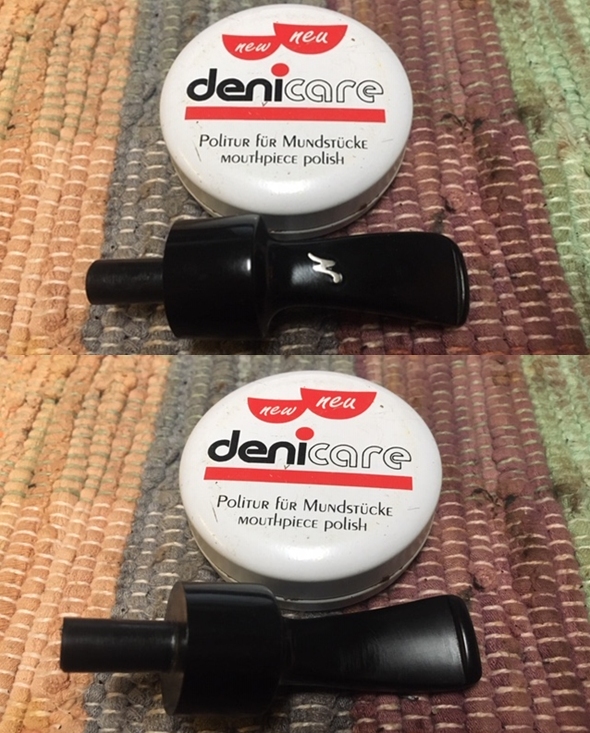
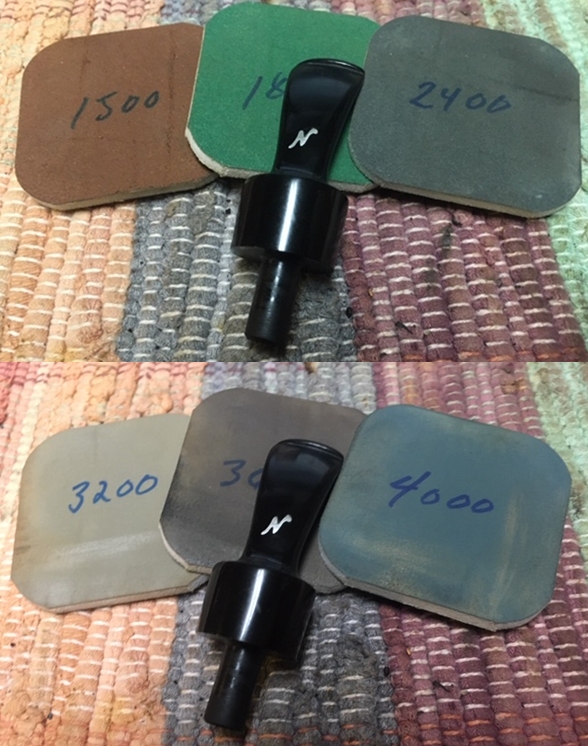
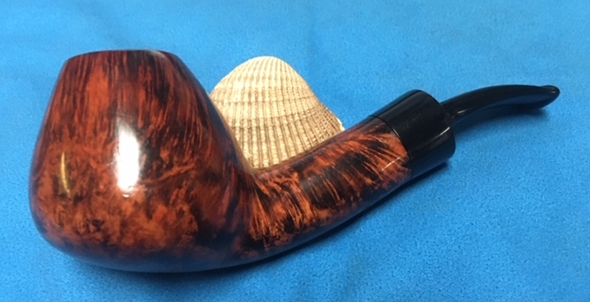
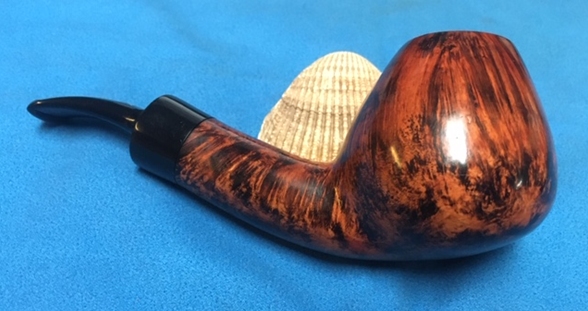
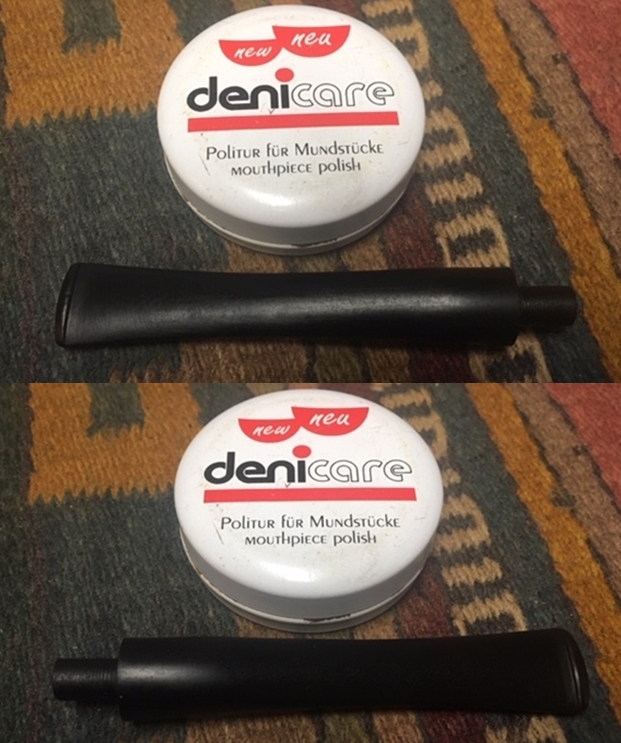
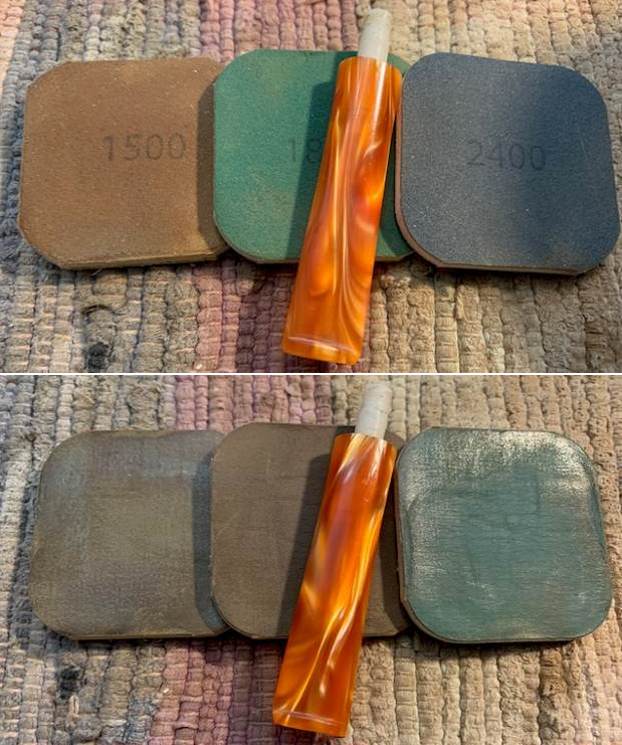
I am posting four pipes that have been donated for this cause. I am donating the restoration work on them and the individuals are donating the income generated by the sale of the pipes. This is the first of those pipes. It is a Nording Made in Denmark Brandy 13. It is a beautiful pipe that has stunning grain. The stamping on the shank reads in a circle Nording Made in Denmark with the number 13 in the center of the circle. The pipe is in excellent condition. There were some light nicks and marks on the rim top and inner edge as well as some darkening on the rim edges. The stem is acrylic with a silver N on the top. It has some light tooth chatter and marks near the button. The bowl and shank were dirty from light use but there was no cake in the bowl. I took some photos of the pipe before I started working on it. It really is a stunning pipe and feels great in the hand. I took photos of the rim top to show the light damage that is present on the top and on the inner edge of the bowl. I took photos of the stem as well to try to capture the tooth chatter on both sides.I took a photo of the COM stamp on the underside of the shank and it reads as noted above. It is clear and readable with the stamp running around the circle.I cleaned out the mortise and the airway in the shank and stem with alcohol, cotton swabs and pipes cleaners. The shank was quite dirty but the airway in the stem was pretty clean. I repeated the scrubbing until the cleaners came out clean.I carefully worked on the inner edge of the rim with a folded piece of 220 and 400 grit sandpaper. I worked slowly so as not to damage the rim top. It took a little work but I was able to remove the nicks and chips that marred the inner edge and keep the bowl in round.I polished the rim top with micromesh sanding pads. I wet sanded it with 1500-12000 grit sanding pads and wiped it down with a damp cloth after each pad. The rim top came out looking very good. The darkening was lessened and the damage was smoothed out. The rim was looking very good at this point. I rubbed some Before & After Restoration Balm into the surface of the briar. It is a product that I have really come to appreciate. Mark Hoover crafted a product that enlivens, cleans and protects briar. I use it on every pipe I work on and find that with a single application the briar comes alive with deep glow. I let it sit for about 10 minutes then buff it off with a soft cotton cloth. I used a folded piece of 220 grit sandpaper to remove the tooth marks and chatter from the stem surface and polished the area I had sanded with 400 grit wet dry sandpaper.Denicare Mouthpiece Polish is a gritty read paste that I have been using as a pre-polish for the mouthpieces. It removes a lot of very minor scratches and works well in removing the hard to get area in the crease of the button. I work it on with my fingers and then scrub the stem with a cotton pad and wipe it off when finished. I polished the stem with micromesh sanding pads – wet sanding it with 1500-12000 grit pads and wiping it down with a damp cloth between each set of pads. The stem began to take on a deep shine.Once I finished I put the stem back on the shank and carefully buffed the pipe with Blue Diamond polish using a lightly loaded pad and a soft touch. I wanted to raise a shine and buff out some of the small scratches in the briar and the acrylic stem. I gave the stem a vigorous polish being careful around the silver inlaid N on the stem top. I gave the bowl and the stem several coats of carnauba. I buffed the pipe with a clean buffing pad and hand buffed it with a microfiber cloth. The finished pipe is shown in the photos below. It is a great looking Nording pipe whose sale price is going for a great cause. The dimensions of the pipe are Length: 5 ½ inches, Height: 2 inches, Outer Bowl Diameter: 1 inches, Chamber Diameter: ¾ of an inch. The pipe will soon be on the rebornpipes store and you can purchase it and support a very worthy cause. Thanks for walking with me through the restoration.


Cleaning up a Nording Rusticated Meerschaum Pot Made on the Isle of Man


Blog by Steve Laug

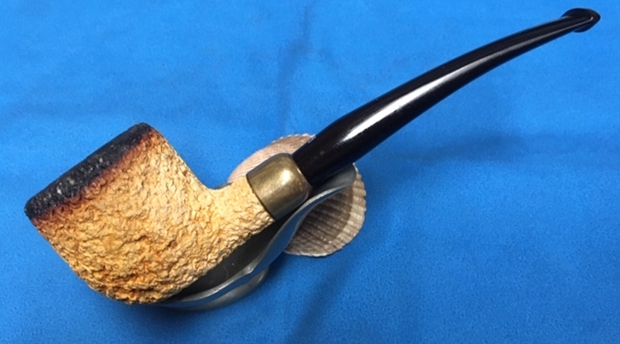
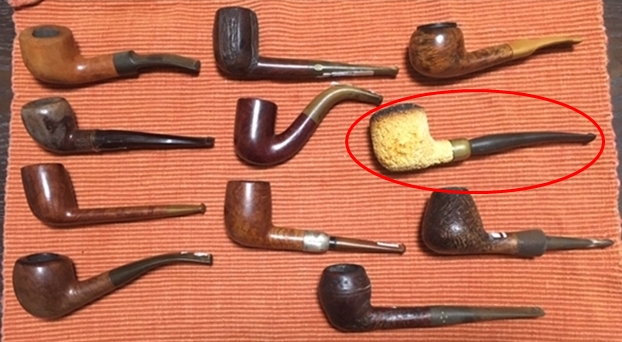
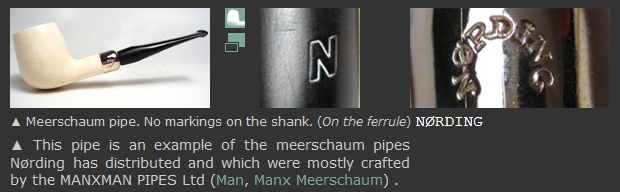
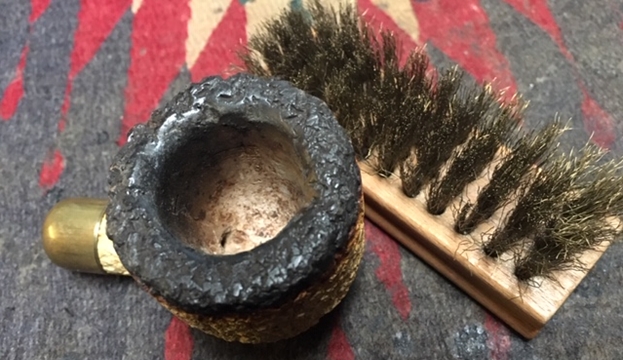
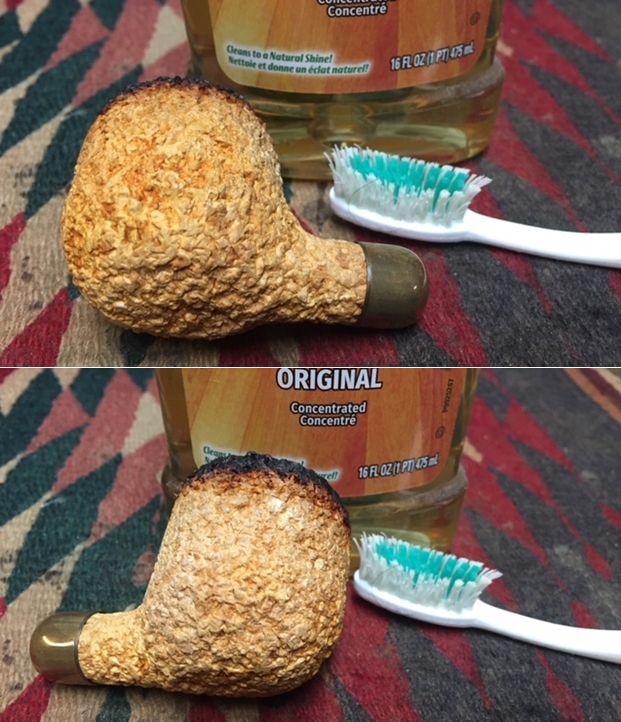
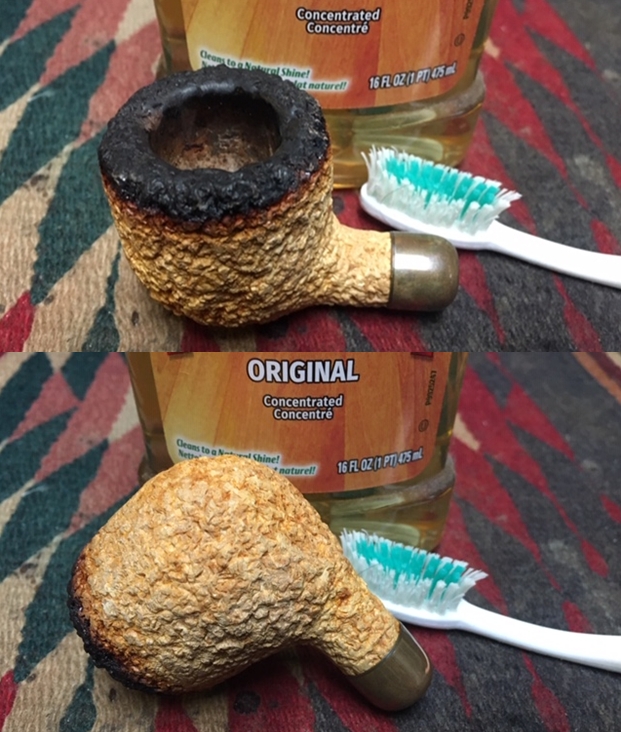
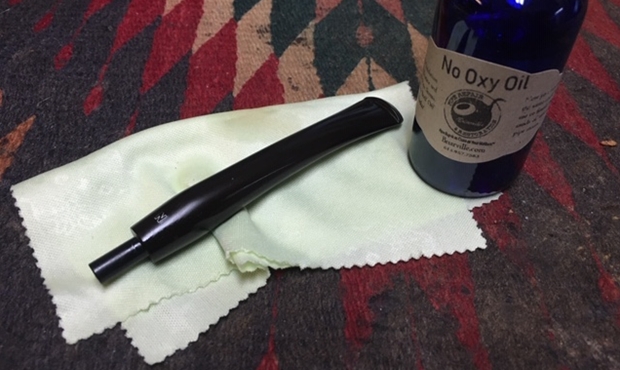
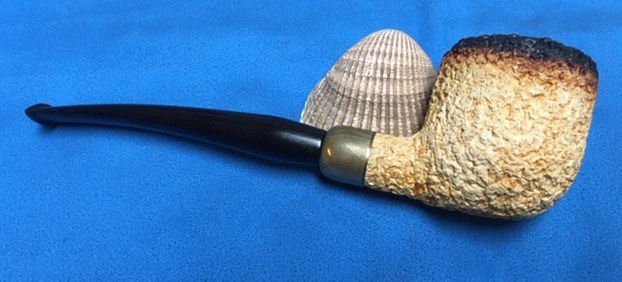
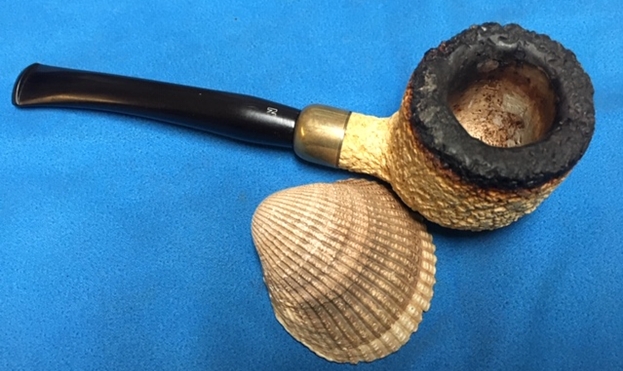
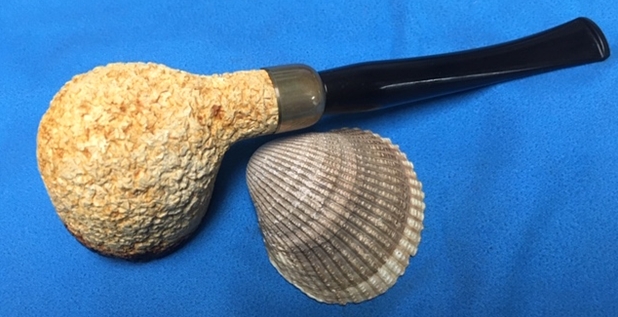
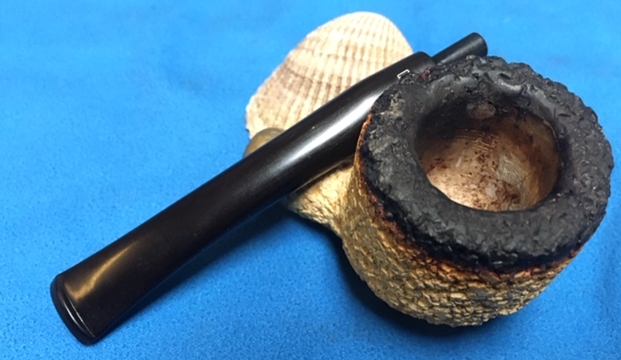
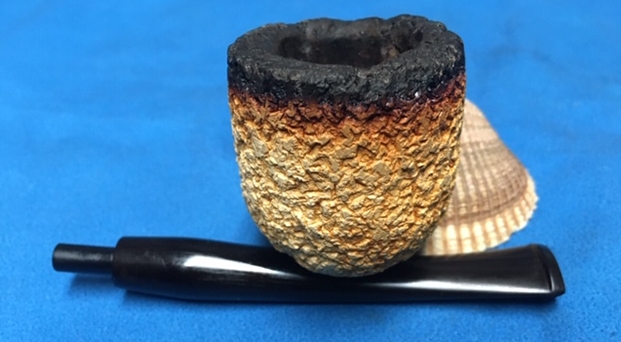
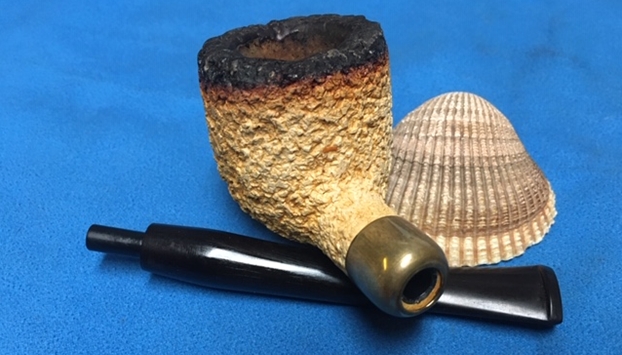
The next pipe on the table is another one of the pipes that Jeff and I picked up on our recent Alberta trip. It is the second pipe down on the far right column in the photo below. It is a rusticated Eric Nording Meerschaum Pot with a tapered bit. I have circled it in red in the photo below to make its identification easier.The pipe has a rustic finish on the bowl with a flumed rim top and down the top edges of the bowl. The bowl itself has already picked up some colour/patina or perhaps it came that way. There is an unmarked brass ferrule on the shank end. The shank itself is lined with a Delrin tube – this together with the ferrule add strength to the shank. The pipe had been lightly smoked with the bottom two thirds of the bowl raw meerschaum. There is some darkening around the top third of the bowl. The pipe smelled like tobacco but was unidentifiable as to type. The stem was vulcanite and had an N stamped on the top of the tapered stem. The tapered stem is shaped to give the appearance of a military bit. It has an integral tenon in the vulcanite stem. I took photos of the pipe before I did the cleanup. I took close up photos of the bowl and rim top as well as the stem surface. You can see the condition of the rim top and bowl in the first photo. There was some lava overflow on the rim top on the left and rear of the bowl. There were also some nicks around the inner edge of the bowl and some on the rim top. There was a thin cake on the top third of the bowl. The stem showed some tooth chatter on both sides near and on the button surface.I took a photo of the shank end to show the Delrin lining in the mortise.Eric Nording distributed meerschaum pipes with his logo on the stem that were made for him by Manxman Pipes Ltd on the Isle of Man. I have included a screen capture of the listing for  these meerschaums on the PipePhil site (http://www.pipephil.eu/logos/en/logo-n2.html).I also scrubbed the rim top plateau with a wire brush to knock of the lava that was built up there. It did not take too much work to clean up the rustication on the rim top.I scrubbed the meerschaum with Murphy’s Oil Soap and a tooth brush. I worked to remove the remaining lava and minimize the darkening. I rinsed it under warm running water. The photos show the rim top after scrubbing. It looked much better at this point. With the outside cleaned and shining I moved on to clean up the inside airways and mortise in the shank and the stem. I scrubbed out the mortise and the airway in the shank and the stem with alcohol, cotton swabs and pipe cleaners.    I set the cleaned bowl aside and turned my attention to the stem. I sanded out the tooth chatter with 220 grit sandpaper and started to polish it with a folded piece of 400 wet dry sandpaper. Once it was finished it began to shine.I polished the stem with micromesh sanding pads – wet sanding with 1500-12000 grit sanding pads. I wiped it down after each sanding pad with some Obsidian Oil. I finished polishing it with Before & After Pipe Stem Polish – both Fine and Extra Fine and buffed it off with a cotton cloth. When I finished I gave a coat of a new product that Briarville Pipe Repair released called No Oxy Oil. It is rubbed down with the oil and the soft cloth that came with it. I am going to be experimenting with it for a while now. This is a Nording Meerschaum rusticated pot made by Manx Meerschaum on the Isle of Man. It has an interesting tactile finish with a flumed rim top and extending down the rim sides. It has a great look and feel. The shape fits well in the hand with the rustication giving the pipe a nice tactile sense when held. I polished stem and the bowl with Blue Diamond polish on the buffing wheel. I gave the bowl and the stem multiple coats of carnauba wax. I buffed the pipe with a clean buffing pad to raise the shine. I hand buffed it with a microfiber cloth to deepen the shine. The pipe polished up pretty nicely. The rich combination of the yellowed, rusticated meerschaum  and the polished vulcanite stem work well together. I like the finished look of this Nording Meerschaum pipe. Have a look at it with the photos below. The shape, finish and flow of the pipe and stem are very well done. The dimensions are Length: 6 inches, Height: 1 7/8 inches, Outside diameter of the bowl: 1 ½ inches, Chamber diameter: 7/8 of an inch. This Isle of Man Meerschaum pot is a real beauty. Thanks for walking through the restoration with me as I worked over another beautiful pipe.

New Life for a Broken Nording Danmark F Freehand


Blog by Steve Laug

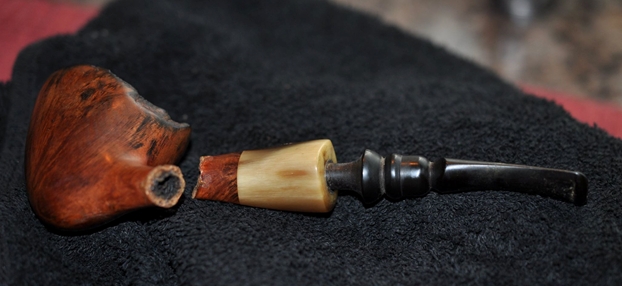
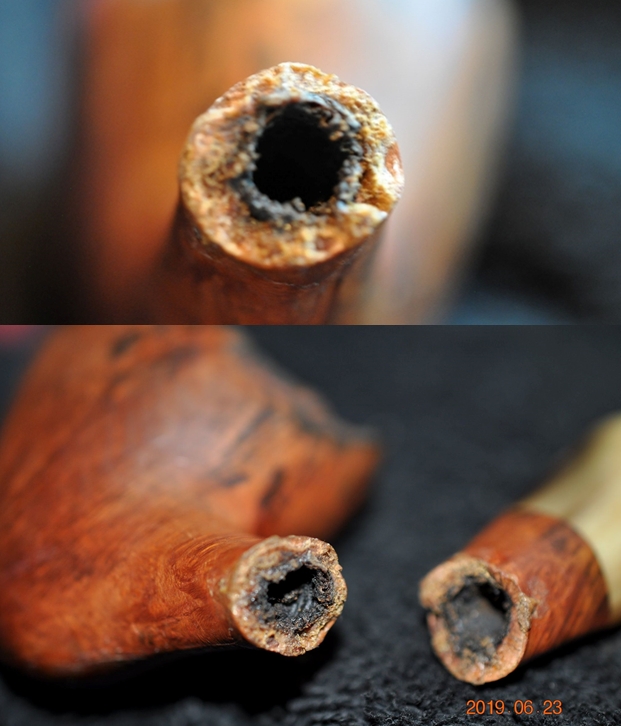
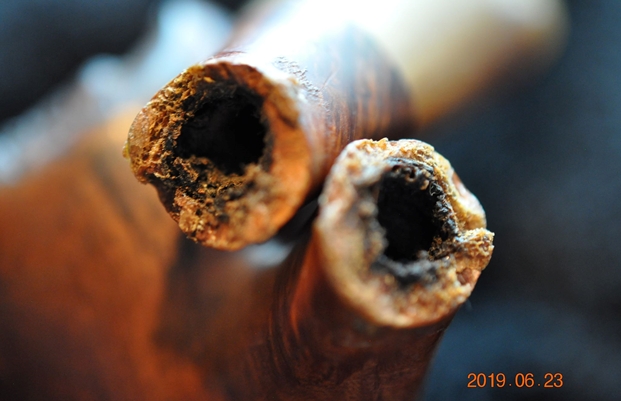
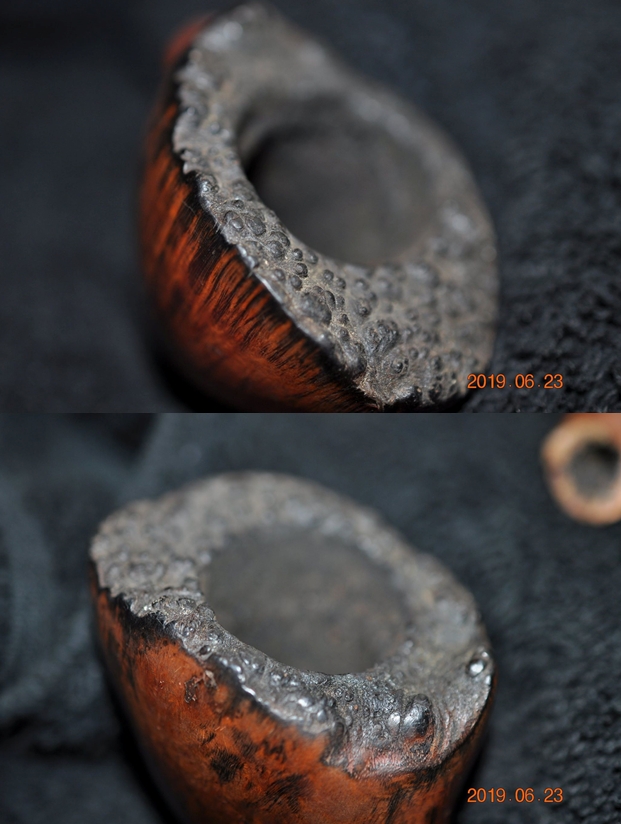
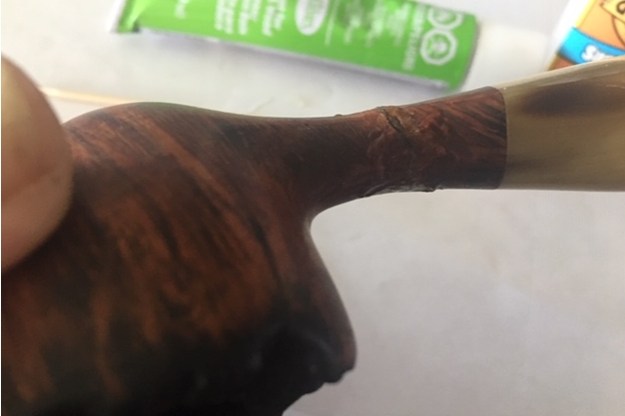
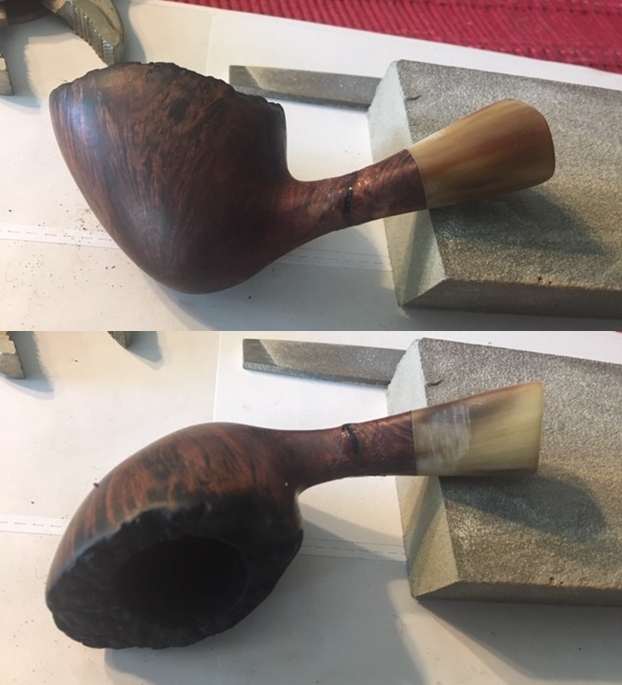
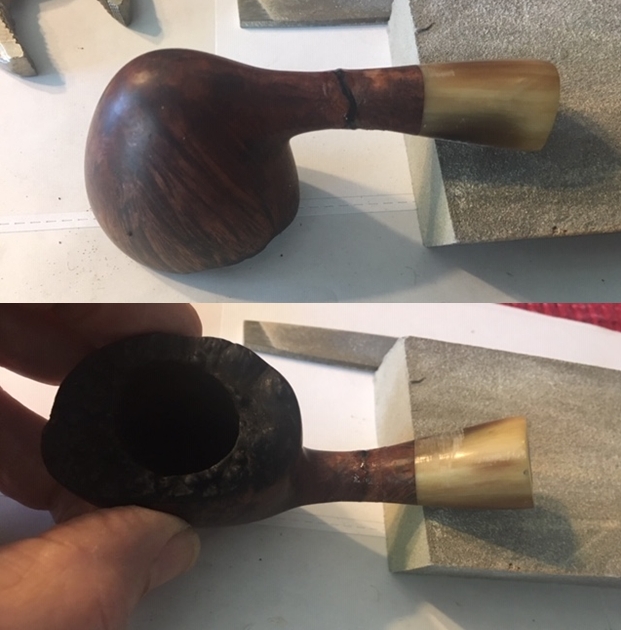
In one of the bags of parts Jeff purchased there was a bowl and there was a piece of shank with a stem in place. We took all the parts out of the bag and were able to see that these two parts actually went together. The shank piece is stamped on the underside as follows: F over NORDING over DANMARK near the horn extension/shank union. The bowl shape follows the grain of the block of briar very well. The break in the shank was not a clean one – it was a mess. The inside of the airway was plugged with lava and tar. Someone had tried to repair the two parts by gluing them together with epoxy. As expected the repair did not hold. Jeff took photos of the pieces to show the extent of the damage to the pipe – it really was a stunning pipe originally. The shank was thin but the briar was thick enough. The nice piece of striated horn that made a shank extension was in excellent condition. There was a steel tube in the end of the horn where the stem sat in place to protect it from splitting when the stem was repeatedly inserted. The turned fancy stem was in good condition with some tooth marks on both sides but otherwise it was undamaged. There was a thick cake in the bowl and a heavy overflow of lava on the rim top.The next series of photos shows the two parts of the shank and the thick buildup of tars and oils in the shank interior and the broken briar around the shank. The next photos show the rim top and the thick cake in the bowl and the lava build up on the plateau top. The valleys and high spots are almost filled smooth with lava.Jeff also took photos of the sides and heel of the bowl to show the grain on the pipe. The finish is very dirty but the grain is quite beautiful. There are nicks and dents in the briar.The stamping on the shank portion of the broken pipe is readable but worn. The joint between the shank and the horn extension is very good – solid. The metal tube in the shank end provided the internal strength to hold this joint tight. It is interesting to note that the shank broke just ahead of the tube inside the shank. The stem appeared to be in good condition. The button was worn with tooth marks on the topside. There was some oxidation and wear on the surface near the button.Jeff reamed the bowl and cleaned up the plateau top with Murphy’s Oil Soap and a tooth brush. He scrubbed it until it was clean. He cleaned out the inside of the two parts of the shank with pipe cleaners, cotton swabs and alcohol until the airway was clear. He cleaned up the broken ends of the shank with a tooth brush and the soap. He rinsed off the bowl and shank and the airway with warm water. He dried it off and set it aside. He cleaned up the stem and let it soak in a bath of Before & After stem deoxidizer. He took it out of the bath and rinsed it off and cleaned out the airway with pipe cleaners and alcohol. When I arrived he showed me the parts. They were incredibly clean. I was excited to get started on the repair of the broken shank… so much so that I forgot to take pictures of the cleaned up parts of the pipe.

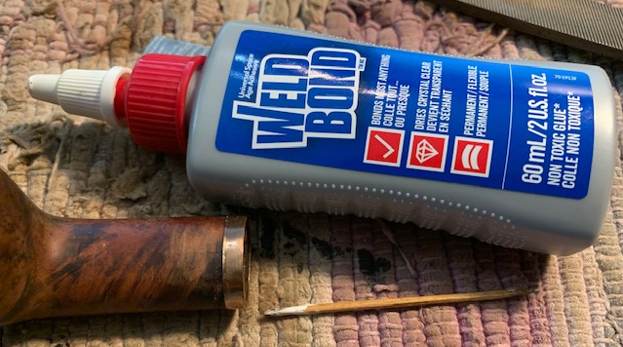
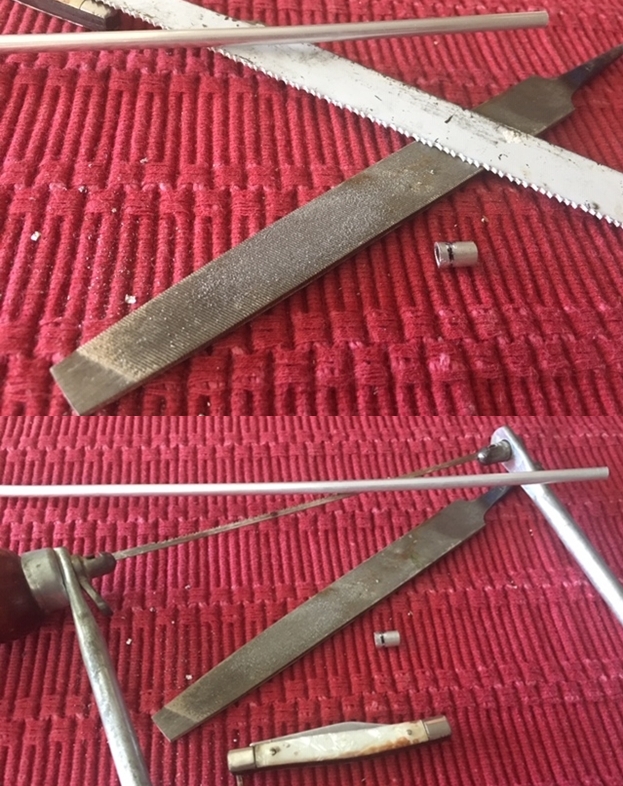
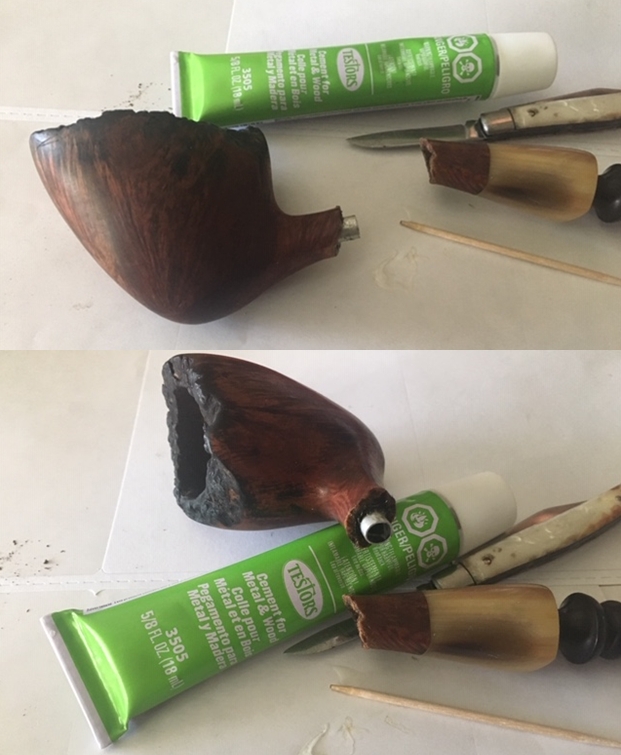
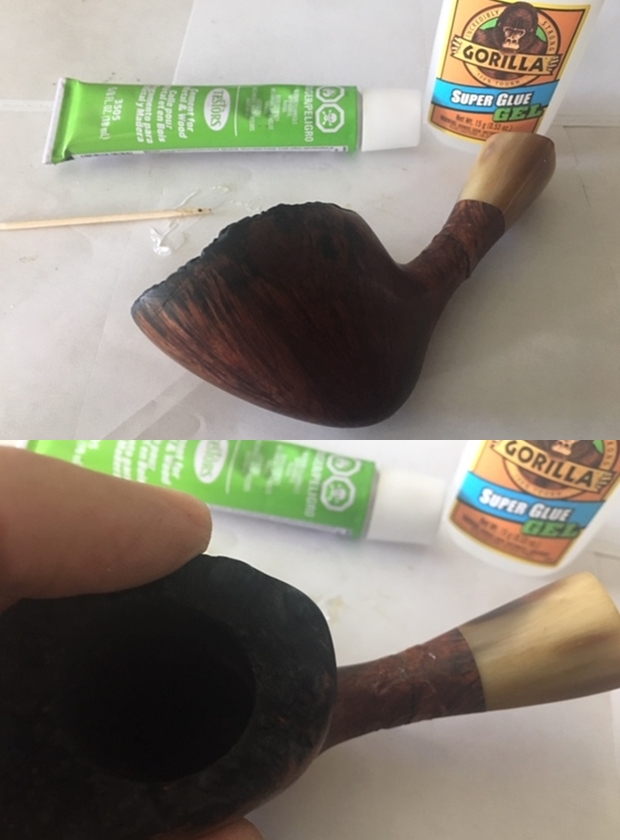
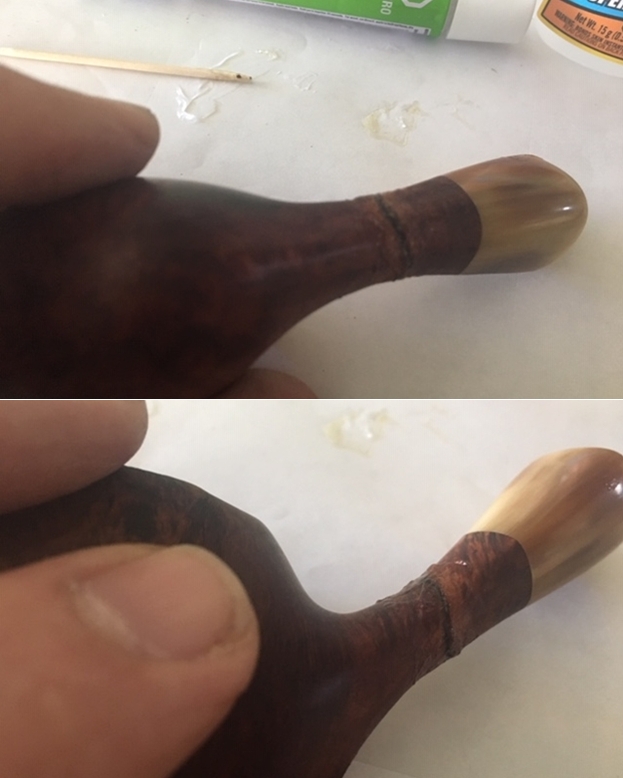
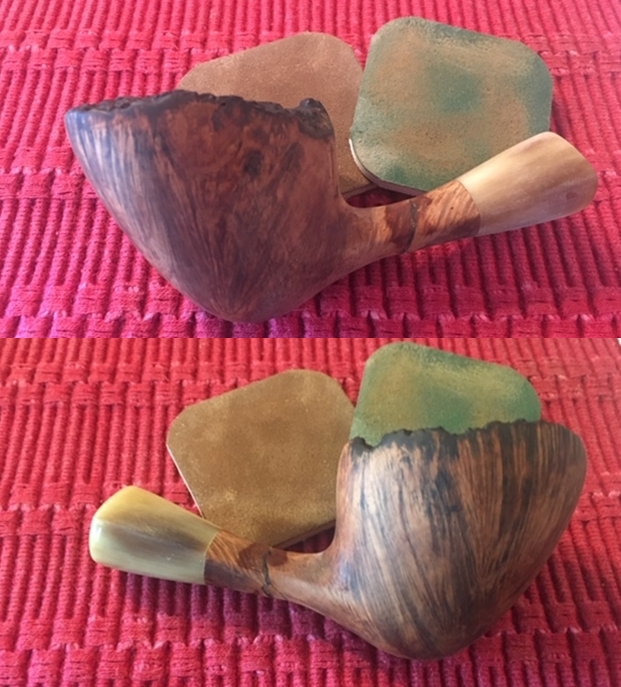
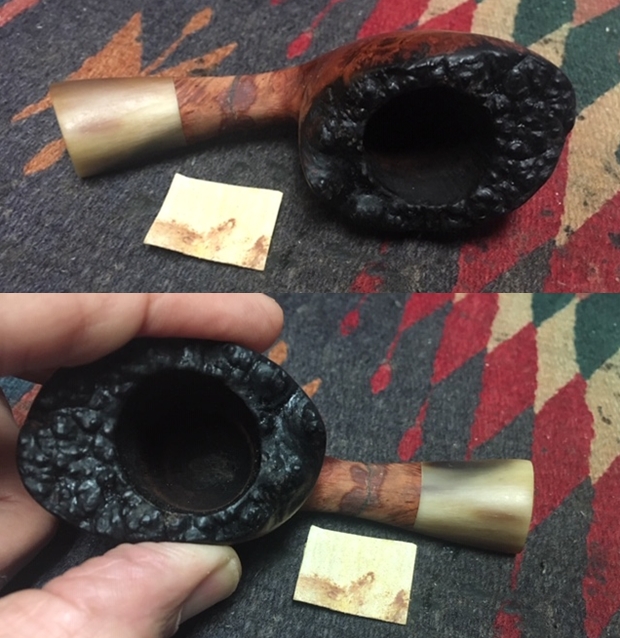
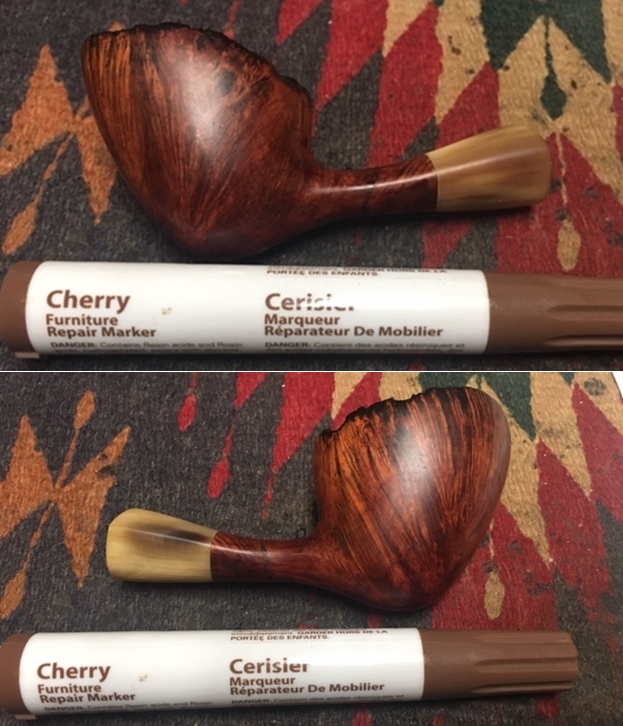
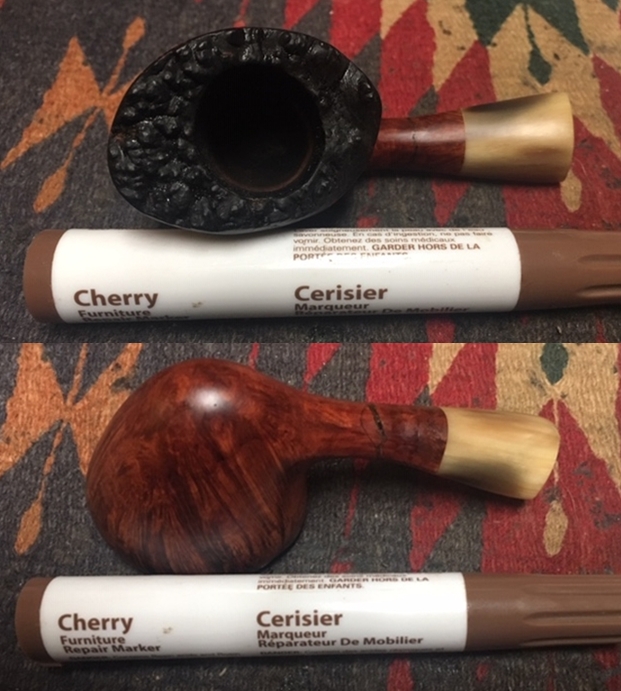
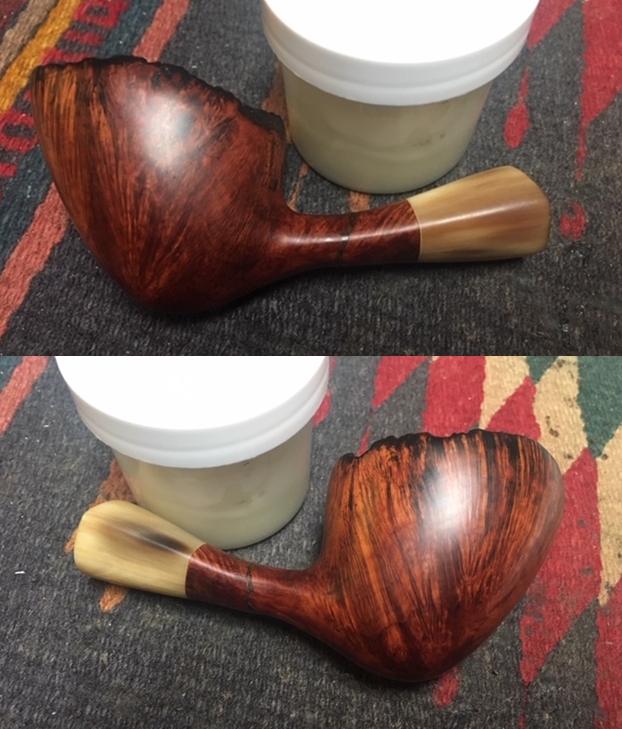
I picked up some tubing at Hobby Lobby and cut off a piece that was close to the length I needed to join the two parts of the shank together. I used a Sawsall blade and a hacksaw to cut a length from the tube. I used a metal rasp to flatten the end of the piece of tube and shorten it enough to fit into the two parts of the shank. I used the small blade on a pocket knife to open up the airway in the bowl end of the shank and to flare the end of the tube in the stem end of the shank.I used the hacksaw to rough up the surface of the tube so the glue would have a surface to bond to between the briar and the tube. I used some Testor’s Metal and Wood Glue to insert the tube into the bowl end of the shank. I used a tooth pick to press the glue into the area around the tube. I filled in the remainder of the gap with clear Gorilla glue.I used the tooth pick to put Gorilla Glue on the open ends of each piece of the shank. I coated the tube with some glue as well. I aligned the two parts and pressed the pieces together. I held them tightly in place until the glue set and the two parts were bound together. I filled in the repaired area with Gorilla Glue to smooth out the repair. I set the bowl aside to let the repair cure. Once the glue had cured and the shank was solid, I smoothed out the repair a medium and fine sanding block. I sanded the repaired area and glue with 1500 and 1800 grit micromesh sanding pads to remove the excess glue. I smoothed out the finish. I decided to use Mark Hoover’s Briar Cleaner at this point in the process to clean off the briar. It works to remove the dust and debris in the briar and leaving behind a clean piece of briar. I polished the bowl and horn shank extension with micromesh sanding pads – wetsanding with 1500-12000 grit sanding pads. I took photos of the pipe at this point in the process. It is a nice looking pipe for sure. At this point in the process I brought the pipe back to Vancouver. I sanded the repaired area with a folded piece of 220 grit sandpaper to blend it into the surrounding briar. I wanted to remove some of the darkened area around the repair so that I could polish it further and restain the shank to match the rest of the pipe.I polished the repaired area with micromesh sanding pads – wet sanding with 1500-2400 grit pads to polish out the sanding scratches. I polished it further with 3200-12000 grit pads. Once it was smooth I stained it with a Cherry stain pen to blend it into the rest of the pipe. The photos tell the story of the repair. I rubbed the bowl and shank down with Before & After Restoration Balm. I worked it into the briar and set it aside to dry. Once the Balm had been doing its work for a while I buffed it down with a microfiber cloth. The Balm cleaned, protected and enlivened the briar. The repaired shank was looking very good at this point in the process. I cleaned the pipe stem with a new version of Mark Hoover’s Before & After Restoration Balm that he had designed to work well on both the briar bowls and the vulcanite stems. I rubbed it into the surface of the stem with my fingertips and buffed it off with a microfibre cloth. I polished the stem with microfibre pads – wetsanding with 1500-12000 grit pads. I wiped it off with Obsidian Oil after each sanding pad. After the 12000 grit pad I polished it with Before & After Fine Polish and gave it a final coat of Obsidian Oil. I put the stem back on the pipe and took the pipe to the buffer. I carefully buffed the bowl and stem with Blue Diamond to polish the briar and the vulcanite. I wanted to get a shine but not risk damaging the pipe by having it fly off the wheel. Blue Diamond does a great job on the smaller scratches that remain in both briar and vulcanite. I gave the bowl and the stem several coats of carnauba wax and buffed the pipe with a clean buffing pad to raise the shine. I hand buffed it with a microfiber cloth to deepen the shine. The pipe polished up really nicely with a great contrasting stain look to the briar. The finished pipe is shown in the photos below. This is a beautiful Eric Nording F Freehand – the fancy turned stem and the horn shank extension give the pipe a great look. The polished black vulcanite stem looks really good with the rich browns standing out in the grain and the blacks of the plateau rim. The dimensions of the pipe are Length: 7 inches, Height: 2 inches, Outside diameter of the bowl: 1 ½ inches wide and 2 inches long, Chamber diameter: 7/8 of an inch. This pipe is truly a rebornpipe. The shank repair and inside tube that binds it together should last a long time. Thanks for walking with me through the repair and the restoration of this beauty!

Rejuvenating a Nording Danmark F Freehand


Blog by Steve Laug

It was time to turn back to one of the pipes that Jeff and I recently purchased. We bought some pipes from a guy in Pennsylvania. There were some nice pipes in the assortment from a variety of ranges. The next pipe on my worktable comes from that collection. This one is a straight, thin shank Freehand with a quality vulcanite stem. The rim top is plateau and is stained black. The shape follows the grain of the block of briar very well. It is stamped on the underside of the shank F over NORDING over DANMARK near the stem shank union. There is no other stamping on the pipe. The stem does not have the expected Nording N anywhere on the sides or top. The pipe was very dirty with a thick cake in the bowl and some lava overflowing on to the plateau rim top. It was hard to know what the inner edge of the rim looked like because of the lava and cake. Other than being dirty the finish appeared to be in good condition. The stem was lightly oxidized and had come calcification where a pipe Softee bit had been. There was some light tooth chatter and tooth marks on both sides of the stem at the button. I have included the photos that the seller sent to me – the entire pipe and also of the stamping. I am including them to give an idea of what Jeff and I saw when we were deciding to purchase the pipe. We had the pipe lot shipped to Jeff in Idaho so he could do the cleanup on them for me. He took photos of the pipe before he started working on it so I could see what he was dealing with. I am including those now. He took a photo of the rim top to show the thick cake in the bowl and the overflow of lava. The cake is thick and hard and the lava overflow is in the plateau. The bowl is a real mess but it must have been a great smoking pipe.The next photos show the sides and heel of the bowl to give a clear picture of the beauty of the grain around the bowl of the pipe. Under the grime there is some great grain peeking through. Jeff took photos of the stamping to capture the clarity of it even under the grime. The stamping is faint but readable. Holding the pipe stem down the stamping is F over NORDING over DANMARK.The stem looked dirty and oxidized with the calcification left behind by a pipe Softee bit. The bite marks and tooth chatter on the stem was light and should not take too much work to remedy. The light oxidation was another issue that would need to be addressed.Before I started my work on the pipe I wanted to learn more about where this pipe fit into the Nording lines so I turned to the first of two sites that I always check to gather information on a brand. I turned first to Pipedia (https://pipedia.org/wiki/N%C3%B8rding). Nording’s were exclusively freehand shapes, graded from A, B, C, D, up to its highest grade, extra. Later an “F” grade was added—less expensive than the “A.” I could find no other information on the rest of the stamping on the pipe.

I did find a great collage of photos of Erik Nording.I turned to the second information site – Pipephil’s (http://www.pipephil.eu/logos/en/logo-n2.html) did not find any more helpful information on the Nording Danmark stamp.

Armed with the information on the F stamp being added at a later time I knew a bit about the pipe at hand. I turned to address the pipe itself. Jeff cleaned up the pipe for me. He reamed the bowl with a PipNet pipe reamer and cleaned it up with a Savinelli Fitsall Pipe Knife. He scrubbed the exterior with Murphy’s Oil Soap and a tooth brush to clean off the grime off the finish and the heavy overflow of lava on the rim top. The cleaning had removed some of the black stain on the rim top. He cleaned up the internals of the shank, mortise and stem with pipe cleaners, cotton swabs and alcohol to remove all of the oils and tars in the pipe. He soaked the stem in Before & After Deoxidizer and was able to remove much of the oxidation. When it arrived here in Vancouver it was a clean pipe and I knew what I had to work with. I took photos of it before I started my part of the restoration. I took photos of the rim top and the stem to show their condition once it arrived in Canada. Jeff was able to clean up the incredibly thick cake and lava overflow that was shown in the rim and bowl photos above. You can see the spots where the black stain had been removed from the plateau top. He was also able to get rid of the grime and grit in the surface of the briar. The inner edge of the bowl was in very good condition and was smooth to the touch. There appears to be some roughening at the back of the inner edge but it is actually part of the plateau. The rest of the rim top and edges looked very good. The stem looked very good and was much cleaner. There was light tooth marks and chatter on both sides near the button.I decided to start with polishing the briar with micromesh sanding pads. I wet sanded it with 1500-12000 grit pads. I wiped the bowl down after each pad with a damp cloth. The bowl began to take on a rich shine and grain was beginning to stand out. I paused in the polishing with micromesh pads after using the 1500-2400 grit pads. I used a Black Sharpie pen to touch up the black plateau top. It did not take too much work to get it looking like new.I went back to polishing the briar with 3200-12000 grit pads. I wet sanded with all of the pads and wiped the bowl down after each pad with a soft cloth. I rubbed the bowl and shank down with Before & After Restoration Balm to deep clean the finish on the bowl and shank. The product works to clean, enliven and protect the briar. I worked it in with my fingers to get it into the briar. I used a horsehair shoe brush to work it into the plateau top.  After it sat for a little while I wiped it off and buffed it with a soft cloth. The briar really began to have a rich shine. I took some photos of the bowl at this point to mark the progress in the restoration. It is a beautiful bowl. I set the bowl aside and worked on the stem at this point in the process. The more I work on the stem I believe it is a replacement stem. I don’t think I will ever be sure but it is just a feeling I have about it. It is a well done replacement if it is one. I sanded tooth chatter and the remaining oxidation on the stem with folded pieces of 220 to remove the marks and the light brown colouration on the stem surface. I sanded them with 400 grit sandpaper until the marks were gone and the oxidation was gone. I wiped it down with Obsidian Oil. I rubbed the stem down with Denicare Mouthpiece Polish and a cotton pad to remove remnants of oxidation and to further blend in the sanding. The stem was showing some promise at this point in the process. I polished the stem with micromesh sanding pads – wet sanding with 1500-2400 grit pads and dry sanding with 3200-12000 grit pads. I wiped the stem down after each pad with a damp cloth to remove the sanding dust. I used the Before & After Pipe Polish to remove the small minute scratches left in the vulcanite even after the micromesh regimen. I finished by wiping the stem down with a final coat of Obsidian Oil and set it aside to dry. I put the stem back on the pipe and took the pipe to the buffer. I buffed the bowl and stem with Blue Diamond to polish the briar and the vulcanite. Blue Diamond does a great job on the smaller scratches that remain in both. I gave the bowl and the stem several coats of carnauba wax and buffed the pipe with a clean buffing pad to raise the shine. I hand buffed it with a microfiber cloth to deepen the shine. The pipe polished up really nicely with a great contrasting stain look to the briar. The finished pipe is shown in the photos below. This is a unique Nording for me – the thin stem and straight shank give the pipe a different look. The polished black vulcanite stem looks really good with the reds and blacks standing out in the grain. The dimensions of the pipe are Length: 6 inches, Height: 2 1/4 inches, Outside diameter of the bowl: 1 5/8 inches, Chamber diameter: 3/4 of an inch. This is another pipe that I will be putting it on the rebornpipes online store shortly, if you are interested in adding it to your collection. Thanks for walking through the restoration with me on this beauty!
Restoring a Nording “Pick Axe” Freehand Pipe


Blog by Paresh Deshpande

I had just finished restoring a 1940s-1960s Kaywoodie Bent Billiard with a 4 holed stinger, also from my grandfather’s collection. I am always fascinated by “Free Hand” pipes. I feel these freehand shapes let the creativity and imaginations of a carver run riot without the bindings of the exacting demands of a classical shapes and finish.

Over a period of time, I have collected a number of freehand pipes during my not-so-long journey in to the pipe world and have realized that these freehand pipes invariably have a nice hand fit, sitting snugly in to the hands of the smoker with a nice heft to them. The most fascinating aspect of a freehand, I feel, is the carver’s desire to highlight the grains in the briar block and shape the pipe accordingly to highlight these grains.

I was fortunate to come across four estate freehand pipes, one Soren, one Ben Wade Spiral, one Nording #4 and one Nording Pick Axe shaped pipe. I discussed with my mentor and guide, Mr. Steve Laug, and after his approval on the aspects of collectability and the price point at which they were available, I purchased them about a year back!!!! Since then, these were waiting for me to work on and now that I feel slightly more confident in doing justice to these lovely pipes, I decided to work on them. The first of these pipes that is now on my work table is the Nording Pick Axe shaped freehand.

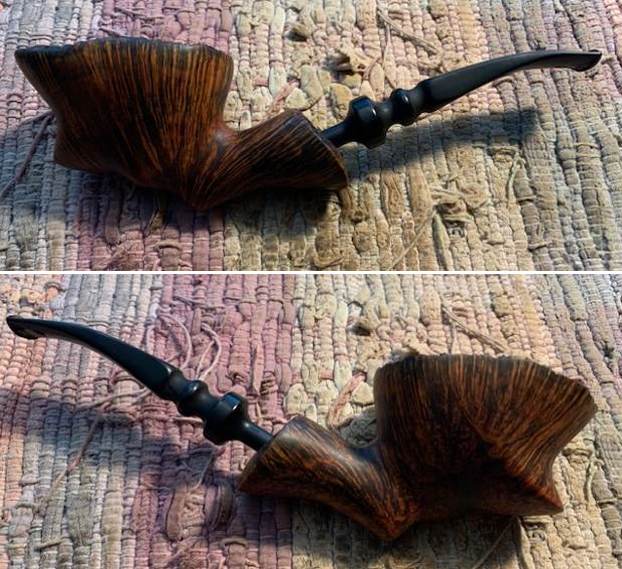
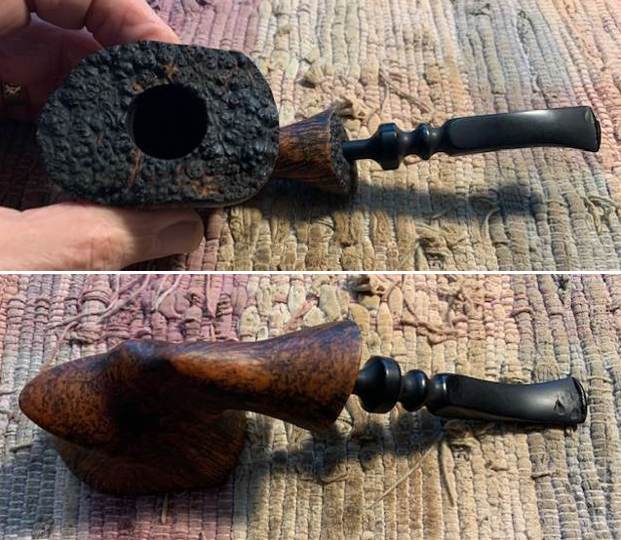
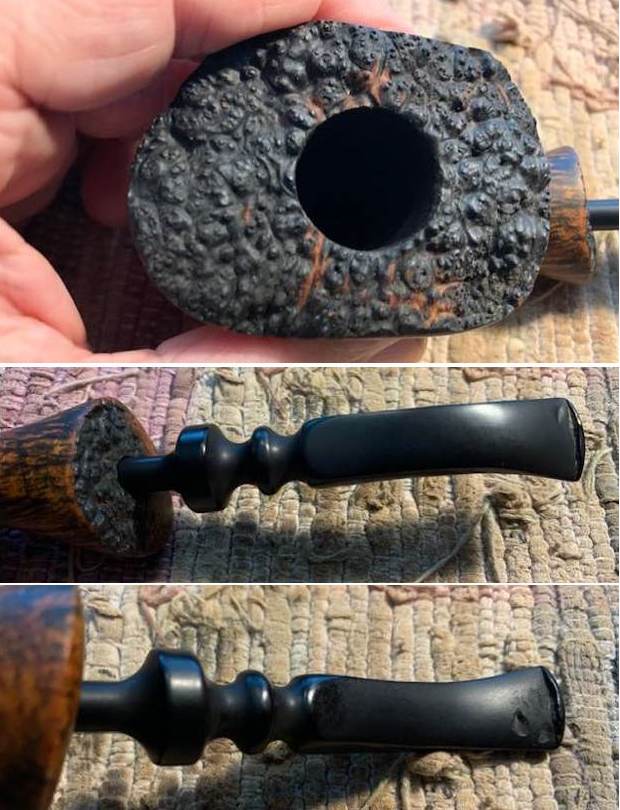
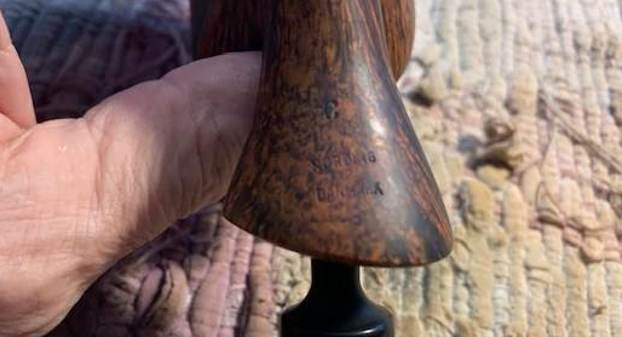
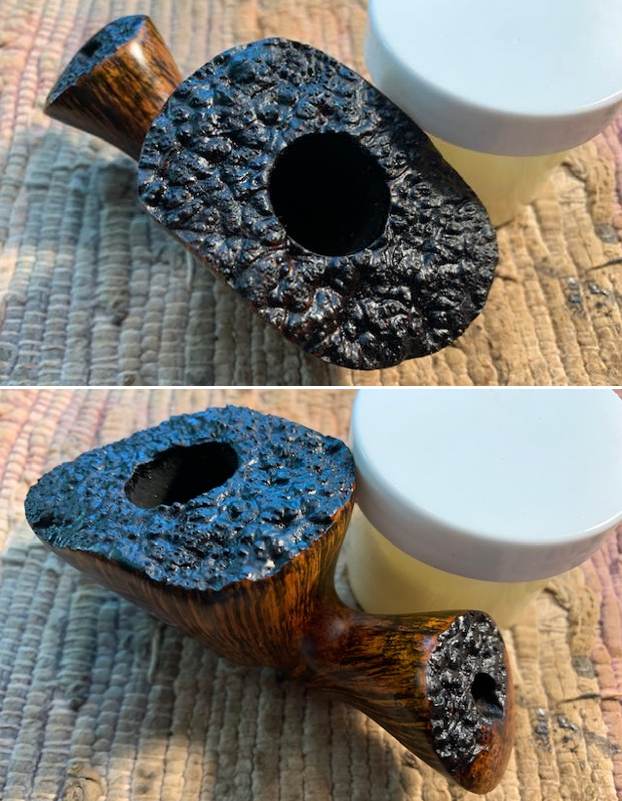
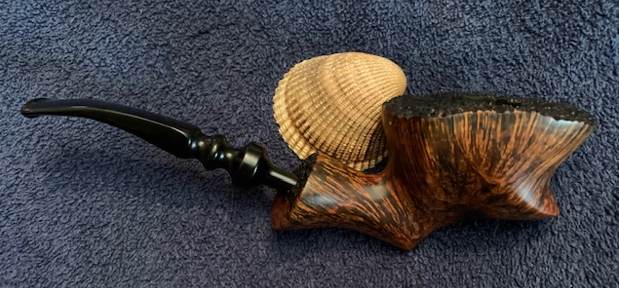
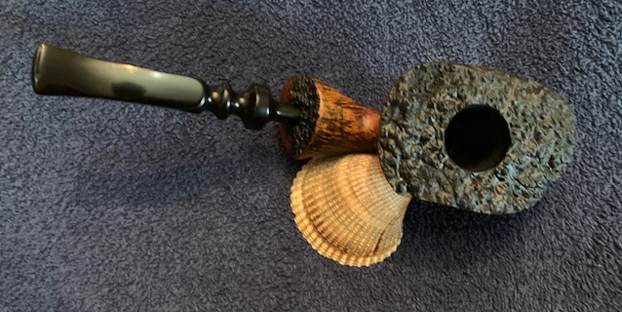
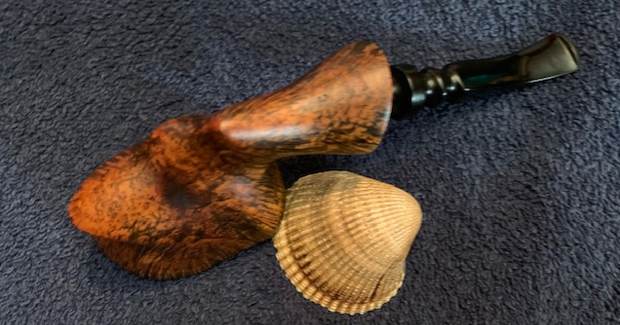
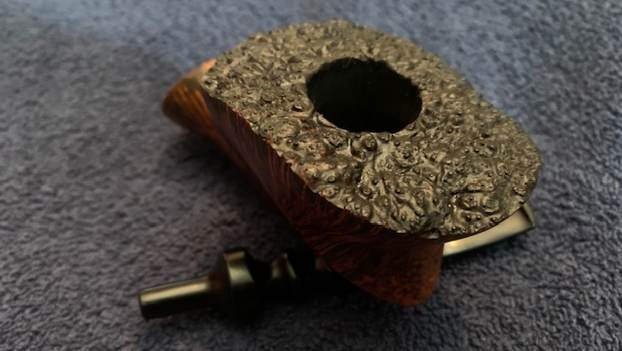
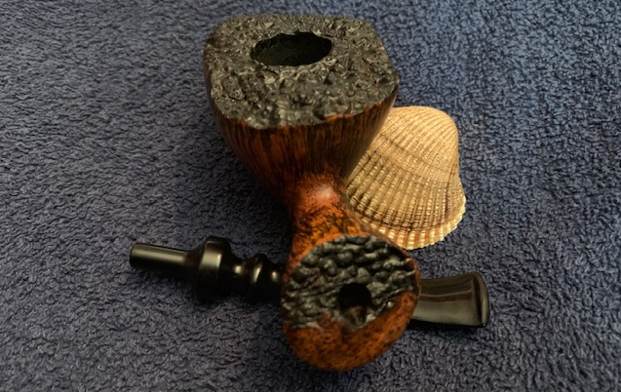
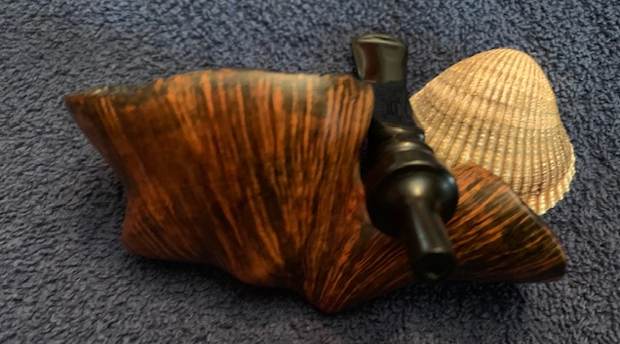
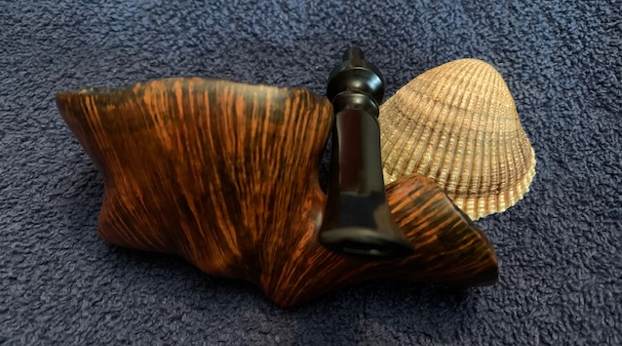
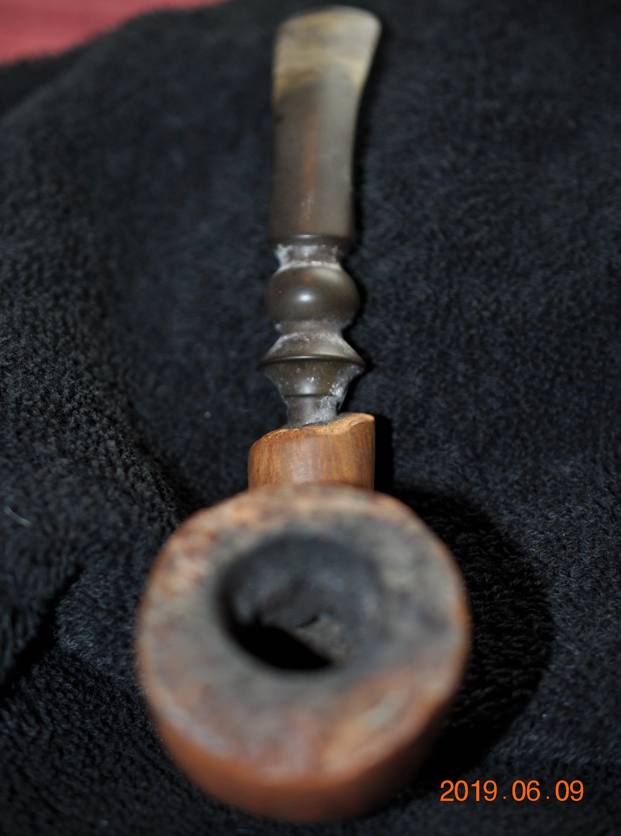
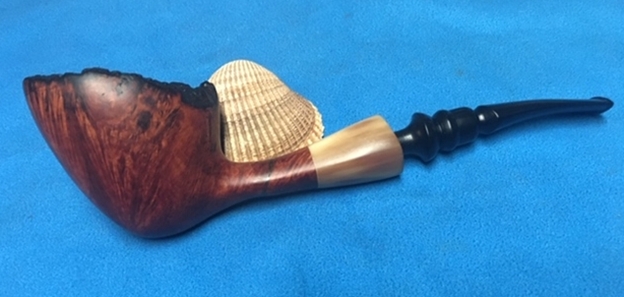
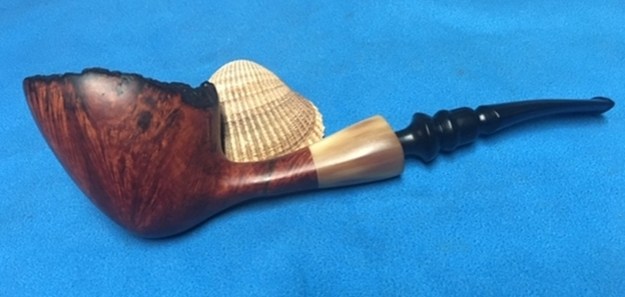
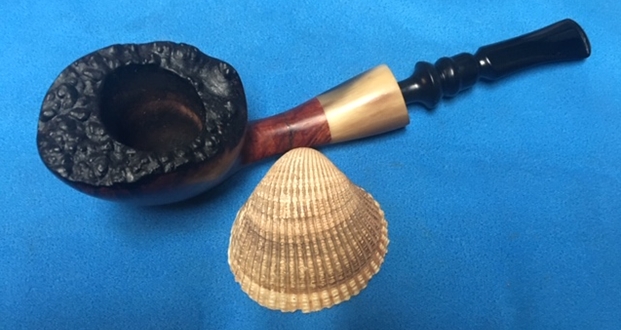
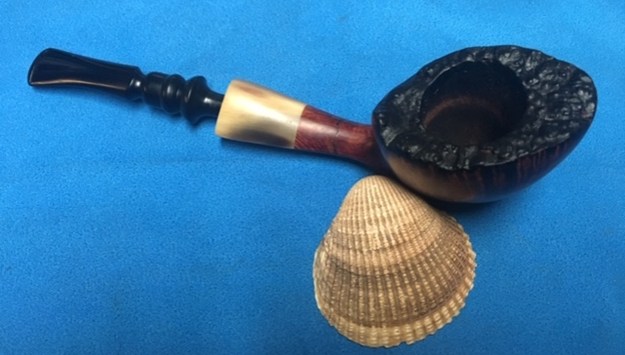
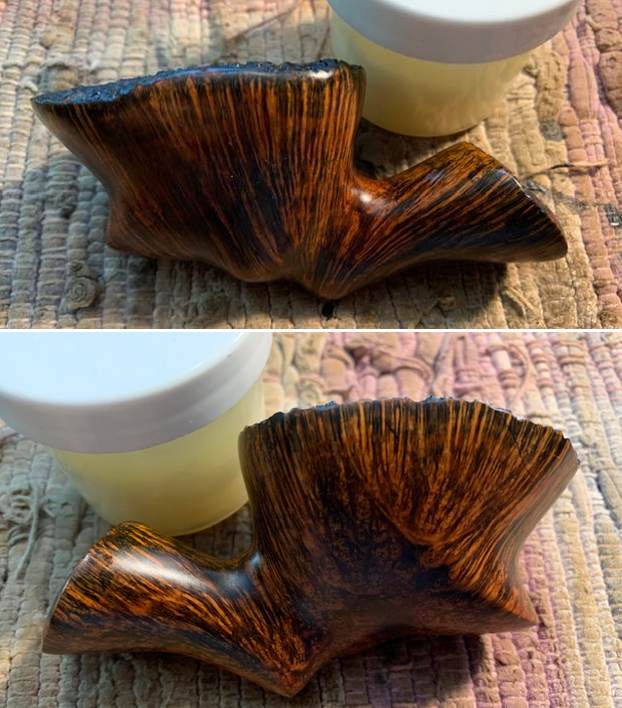
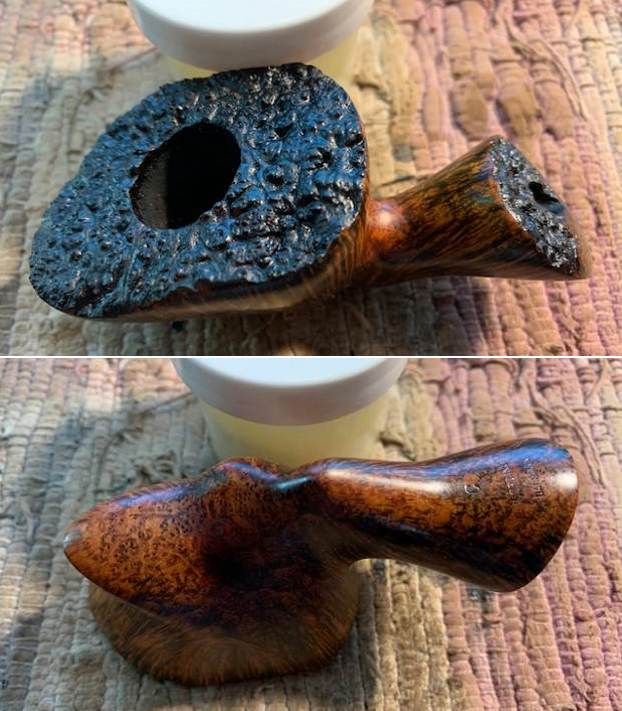
This beautiful pipe has the classical pick-axe shape with a plateau rim top. The stummel has a smooth surface with densely flame grains extending from the mid way on right side and extending mid way on left side while the remaining surface on the stummel has beautiful rustication. The smooth portions extend to the sides such that when held in the palm, all the fingers are holding the stummel along the smooth surface and one can admire the fine delicate rustications on the back while sipping your favorite tobacco. Blissful!!!!!!!!! Similarly, the top surface of the shank is rusticated extending half way through on either side while the bottom is smooth with straight grains extending from the tip of the axe towards the end of the shank.  The only stamping, “NORDING” in block capital letters, is seen on the smooth portion of the shank. The stamping is clear, crisp and easily readable. The fancy stem has a slight bent towards the lip and helps the pipe to balance straight on a table. There is the letter “N” in block capital letter, stamped on the top surface. But it is faint and hidden under the heavy oxidation.I searched the internet for detailed information on Nording pipes and this pipe shape in particular shape. Though I did not find anything particularly about this pipe, it was interesting to read how young Mr. Nording got in to the business of pipe making. It makes for a very interesting read. We must not forget to thank one Mr. Skovbo, who had a major contribution in introducing Mr. Nording in to this business!!!!!!  I have a couple of SON pipes in my grandfather’s collection which I will restore at a later date since I now know about the historical importance of these pipes!!!!!!!!!!! Here is the link for easy reference of those interested: https://pipedia.org/wiki/Nørding 

INITIAL VISUAL INSPECTION
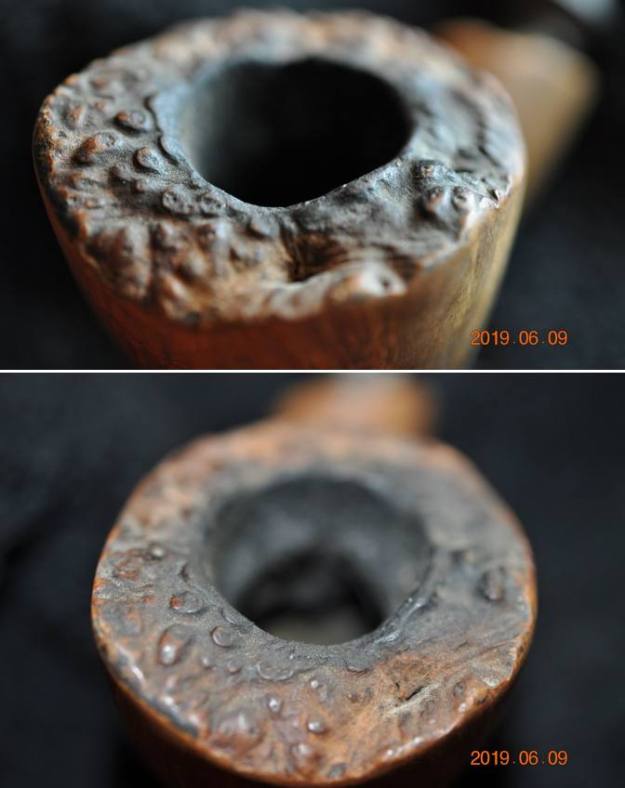
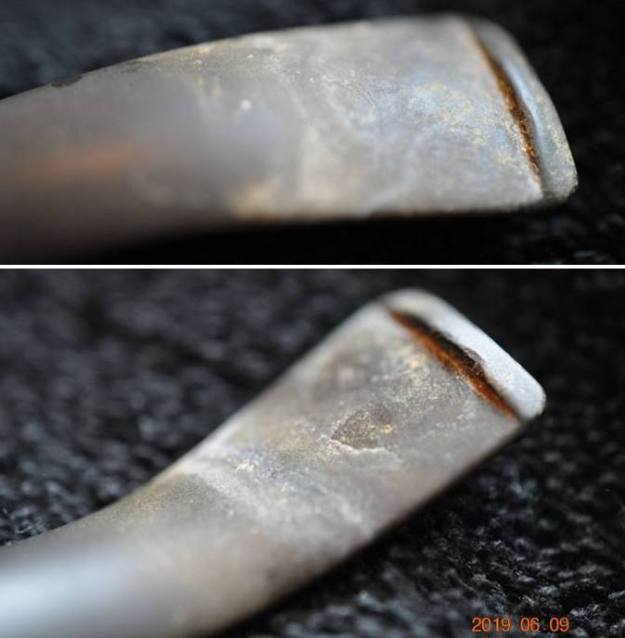
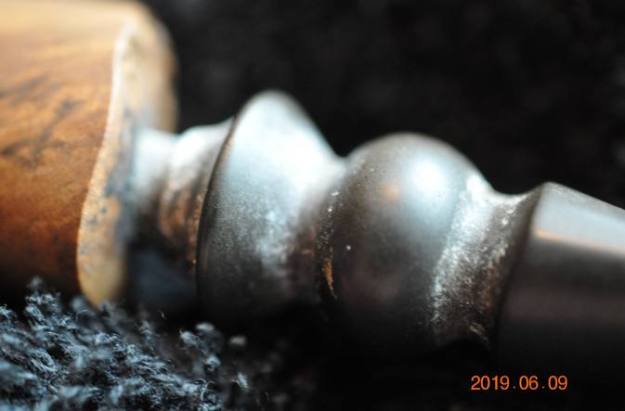
The stummel is covered in dust, oils and grime giving a dull and lackluster appearance to the bowl. The rustications on the back of the stummel are, likewise, filled with dust, dirt and grime. This will need to be thoroughly cleaned. On close scrutiny, I saw some minor superficial dents and dings on the smooth surface. Will I address it or keep it as it is as a characteristic feature of this pipe’s past life? Hell yes, I will address it!!!!! I want it to be as perfect as I can make it for its next innings with me!!!!!! The chamber is clean with a very uneven and thin layer of cake. The plateau rim top is covered with overflow of lava. The inner rim edge is crisp, even and intact. The chamber is odorless and dry to the touch. The inner wall condition of the chamber will be ascertained once the chamber has been completely reamed. However, I foresee no issues at all as the bowl feels solid to the touch.The fancy stem is heavily oxidized with tooth chatter and bite marks on both surfaces and some calcification can be seen towards the lip. There is a significant damage to the lip end in the form of a bite through hole on the upper surface and some deep bite marks on both upper and lower surface of the stem. The airway in the stem is slightly blocked. These issues will have to be addressed. On close observation, the upper surface of the stem bears the stamp “N” in block capital letter. However, this stamp is very faint and covered in thick layer of oxidation. I will attempt to restore and save this stamp.The shank, mortise and the airway is relatively clean and will only need to be sanitized.THE PROCESS
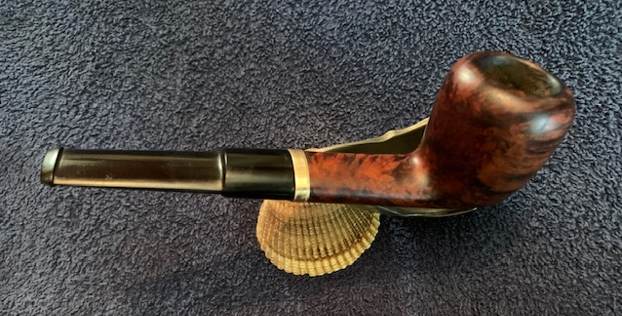
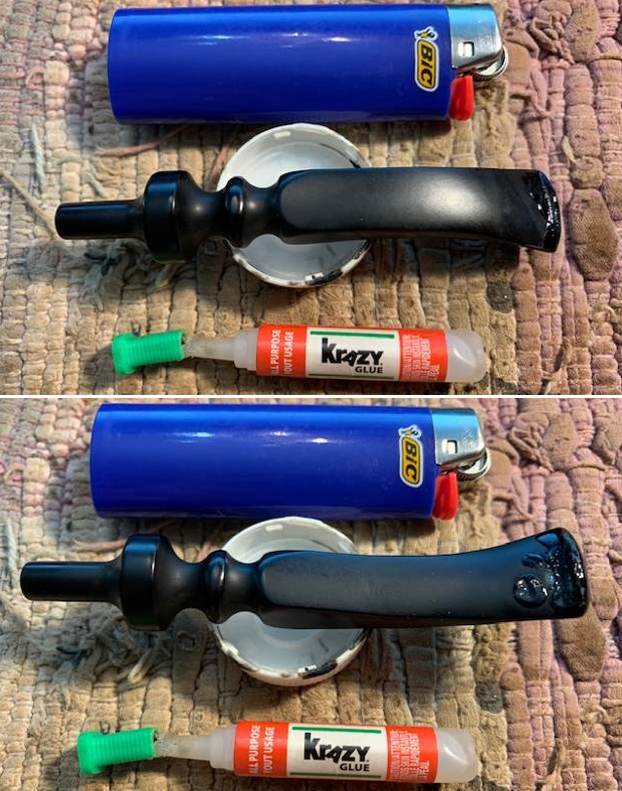
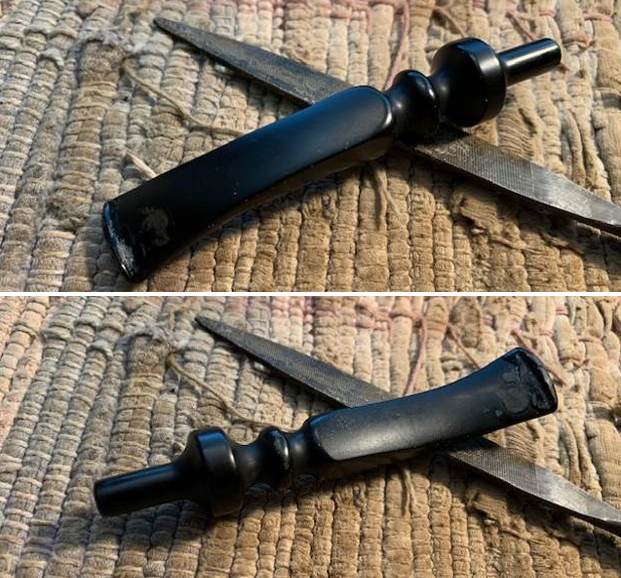
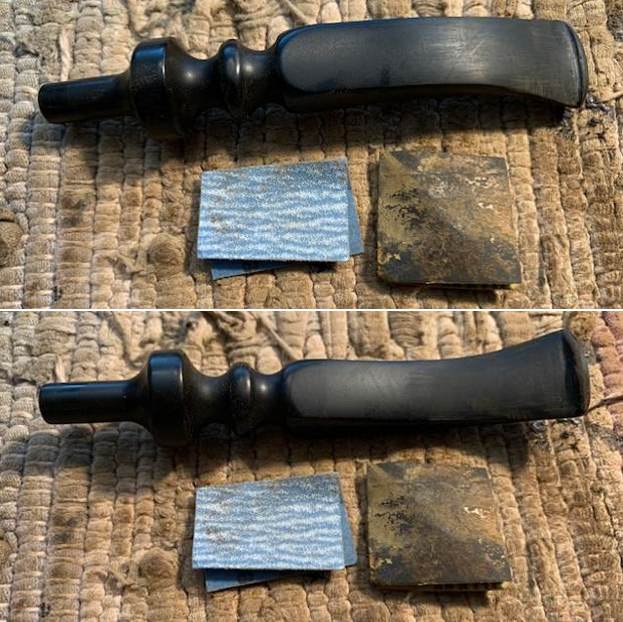
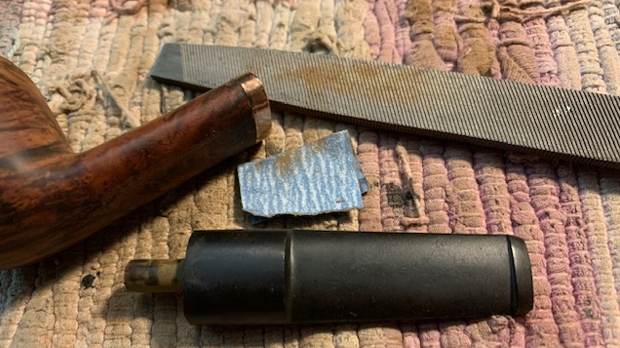
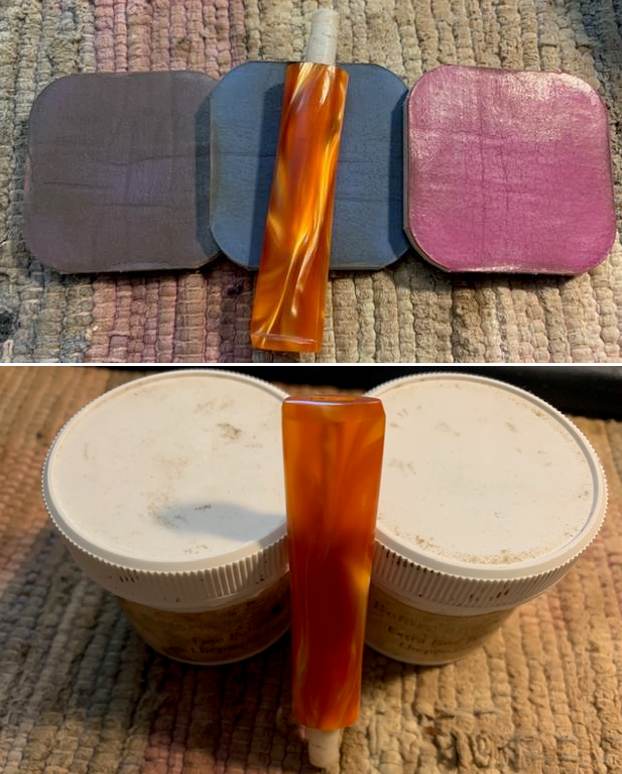
The first step that I usually follow is the reaming of the bowl. However, in this project, since the only significant damage appreciated is to the stem and would be a time consuming process to repair, I started this restoration by addressing the stem first by sanding the stem surface with a 220 grit sand paper followed by 1500 grit micromesh pad. This serves two purposes. Firstly, it evens out the surface for a fresh fill during stem repairs and secondly, I have experienced that any fill in a stem repair turns distinctly brown after micromesh sanding if the oxidation from the stem surface was not removed prior to the application of the fill. Once I was through with the sanding, I wiped the stem clean with cotton pad dipped in isopropyl alcohol. This was followed by flaming both the surfaces of the stem with a Bic lighter, concentrating more around the hole on the upper surface and the deeper bite marks on the lower surface. This helps in raising all the tooth chatter and dents to the surface.I inserted a pipe cleaner coated with Vaseline in to the stem airway before applying the fill. This helps in preventing the fill from entering and blocking the airway. I prepared a mixture of superglue and activated charcoal and applied it as evenly as possible over the hole and deep bite marks and set it aside to cure for 48 hours since the climate here is very wet and humid. While the glue was curing, I worked on the stummel, reaming out the cake with a Kleen Reem reamer, followed by a pipe reaming knife that I had fabricated. I brought the cake down to the bare briar. To further remove any traces of old cake and smooth the inner walls of the chamber, I sanded the inner wall surface with a 220 grit sand paper. As observed during initial visual inspection, I had decided to remove all the dents and dings in the stummel. I cleaned the stummel with Murphy’s oil soap, paying special attention to the plateau rim which was scrubbed with 000 grade steel wool to remove all the overflow of lava. Thereafter I sanded the smooth surfaces of the bowl with a 220 grit sand paper. Once all the dings and dents were evened out and the surface made smooth, this was followed by micromesh polishing pads, wet sanding with 1500 to 2400 grit pads. Again, I wiped the bowl with a moist cotton cloth after each pad. Thankfully there were no fills in the stummel. Once I was through with the wet sanding pads, I used the 3200 to 12000 grit pads to dry sand the stummel to a nice shine. I set the stummel aside to let it dry out naturally. I rubbed some “Before and After Restoration” balm deeply in to the stummel with my fingers. This balm helps in rejuvenating and protecting the briar wood. The immediate and incredible transformation that takes place is a worthy reward for all the efforts!!! The mixed grain can now be clearly appreciated. I let the balm be absorbed by the briar for about 15-20 minutes and then polished it with a soft cotton cloth. The bowl now looks fresh and attractive with the grains popping out any which way you look at the briar. Turning my attention to the stem, using a flat head needle file I sanded out all the fills to match the surface of the stem. I further matched the fills by sanding it with a 220 grit sand paper. I had to spot fill clear superglue into small fills which were exposed during the sanding and repeat the entire process twice. To finish the stem I went through the complete set of micromesh pads, wet sanding with 1500 to 2400 pads and dry sanding with 3200 to 12000 grit pads. I wiped the stem with a cotton swab dipped in alcohol after each pad and rubbed olive oil into the stem after every three pads. The stem looks crisp, shiny and like new. Having addressed the “appearance” aspects of this beauty, I turned my attention to the “performance” aspects to ensure that this beauty smokes as well as it looks. I thoroughly cleaned the shank internals using shank brush, pipe cleaners, qtips and isopropyl alcohol. The stem airway was cleaned using regular pipe cleaners and also bristled ones dipped in alcohol. The airway is now clean and the draw is full and open.To complete the restoration, I rubbed a minute quantity of PARAGON WAX on the smooth stummel and the stem and HALCYON WAX II on the rusticated surface. After a few seconds, using muscle power and a microfiber cloth, I polished the entire pipe to a lovely shine. The finished pipe is shown below. This one shall soon find a place in my rotation. Thank you for your valuable time spent in reading this chronicle of my journey.