

by Steve Laug
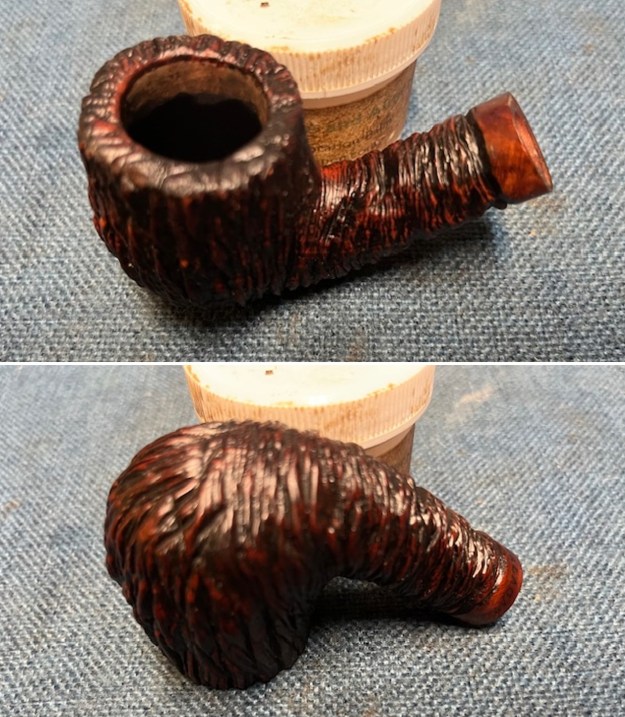
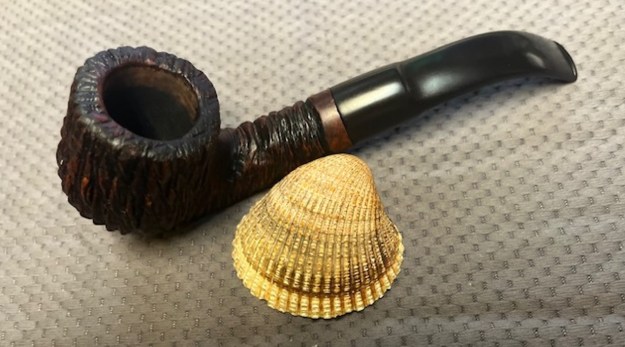
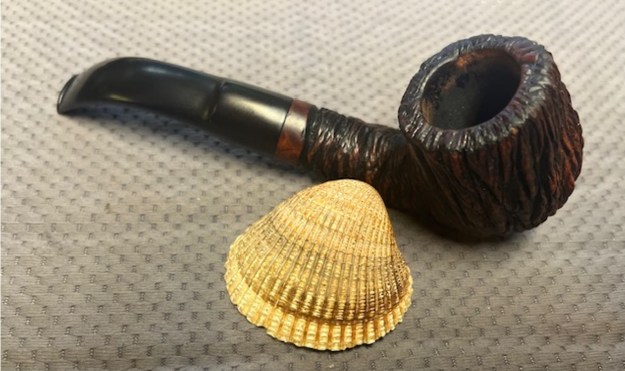
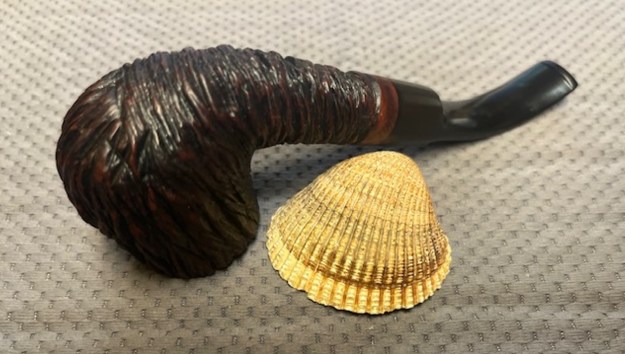
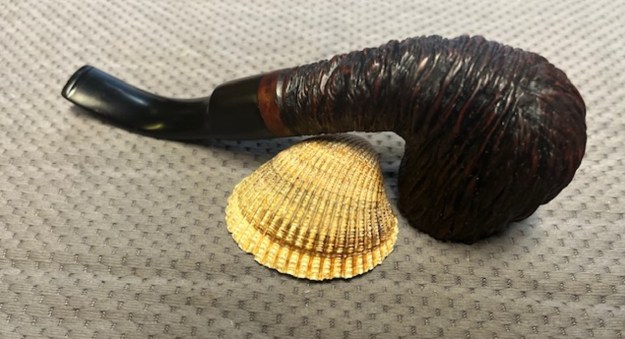
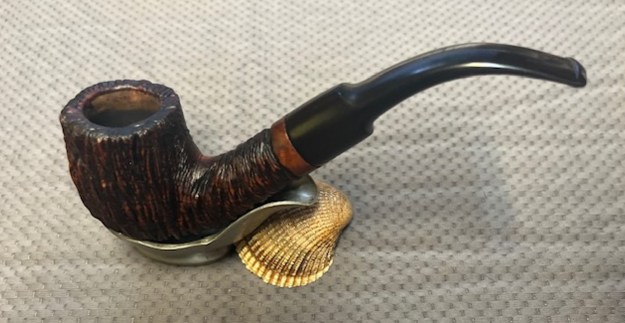
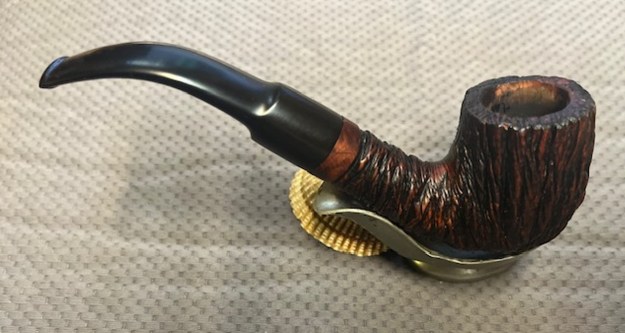
This interesting Wire Rusticated Bent Billiard was purchased on 09/18/2024 on eBay where a seller from Cadiz, Kentucky, USA was selling it. It is a rich brown rusticated briar with a thin band around the shank end. The stem is an acrylic saddle stem. The rusticated finish was quite clean though there was dust in the grooves of the finish. The bowl was quite clean and recently reamed. The bottom of the bowl was raw briar showing that it had not been smoked to the bottom of the bowl. There faint aroma of tobacco in the bowl and shank. The rusticated rim top was quite clean and the inner edge looked very good. The pipe is stamped on the smooth band around the shank and reads “MALAGA”. The vulcanite, saddle stem had no stamping on the sides. It had scratches, tooth marks and chatter on both sides ahead of the button. It was really an interesting rustication and stain that showed depth and variations of colour around the bowl. I took photos of it before I started the cleanup process. 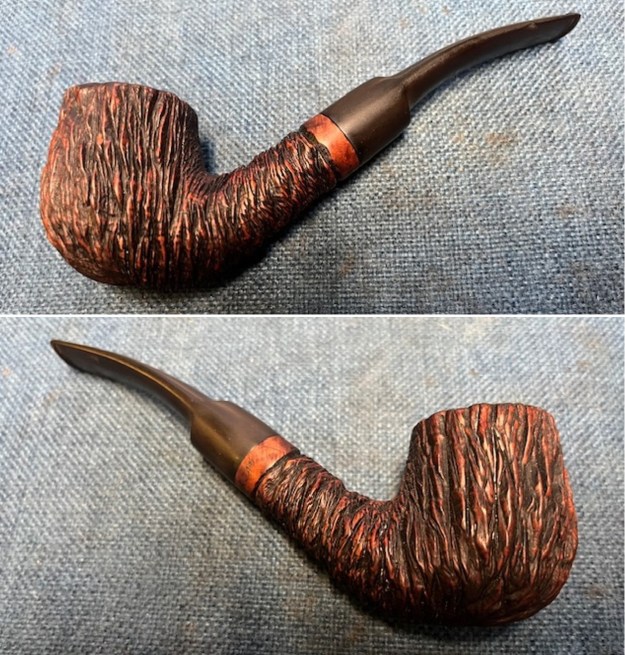
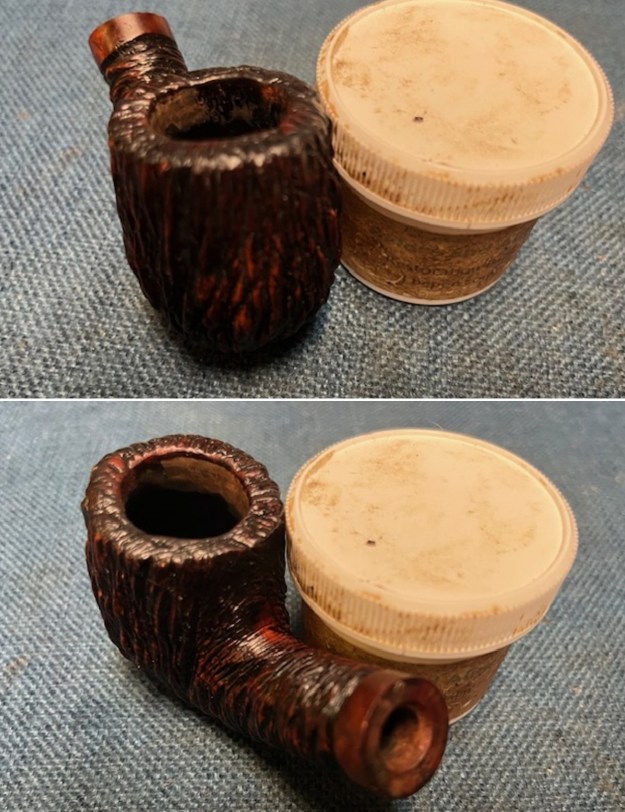
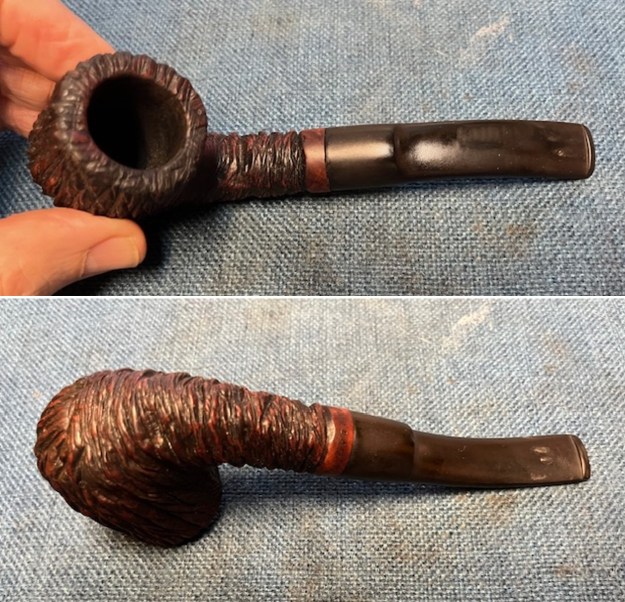 The bowl itself was quite clean with just a minimal cake on the walls of the bowl. I took photos of the rim top to show how clean it looked and the condition of the top and edges of the bowl. The vulcanite saddle stem surface had some scratches and tooth marks and chatter on both sides ahead of the button.
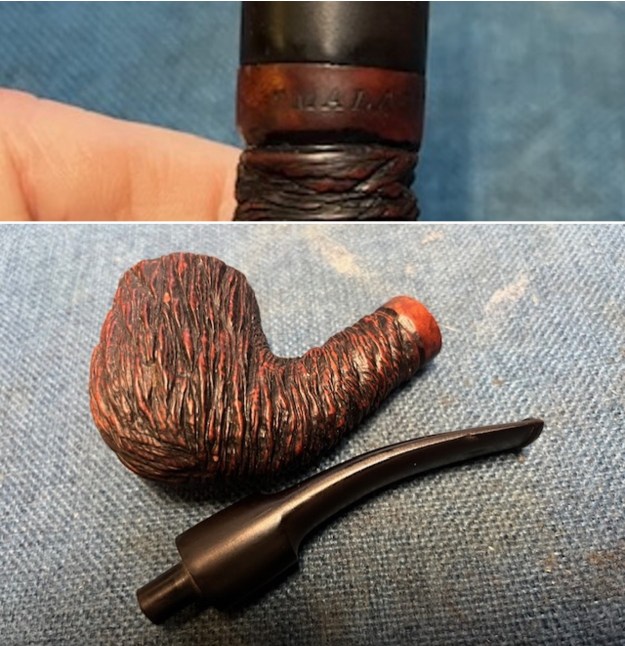
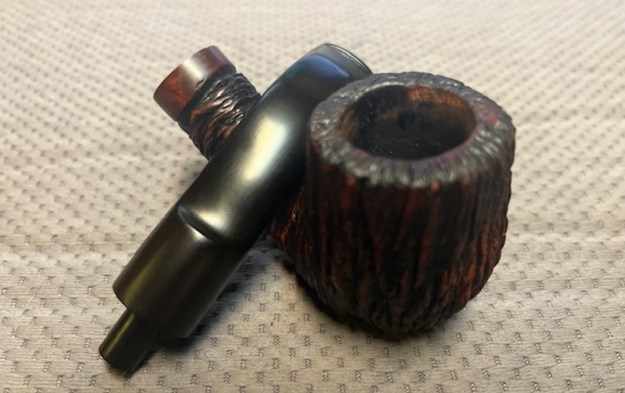
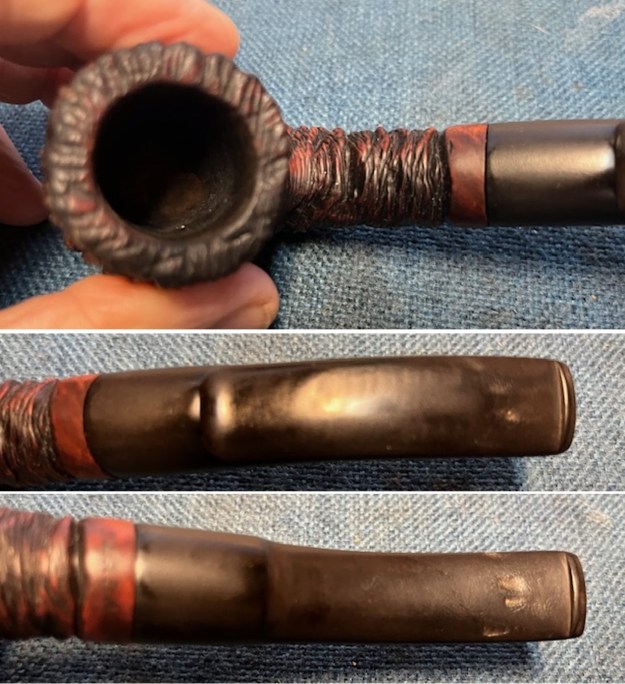 The stamping on the smooth band around the shank read “MALAGA” on the underside. I removed the stem from the shank and took a photo of the look of the pipe. I would need to bend the stem slightly to match the flow of the bowl.
 Before I started working on the pipe itself I went back and reread what I had found when I had worked on many of the Malaga pipes that had come across my work table. I am including a few pieces of information that I have gathered in the process.
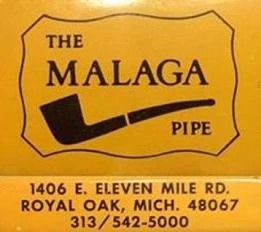 For those of you reading this blog who are unfamiliar with the brand, I am including the link to a previous blog that I wrote. It gives some of the history of the Malaga brand and the Malaga Pipe Shop in Royal Oak, Michigan in the USA. Here is the link – https://rebornpipes.com/tag/malaga-pipes/.
I have also included a link to a catalogue and the history of the pipemaker George Khoubesser. If you are interested to learn more, then I invite you to follow the link to get a feel for the brand and the pipemaker.
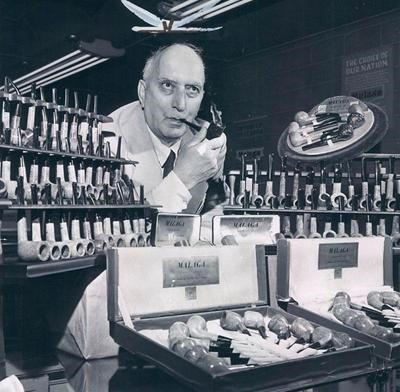 George Khoubesser (picture to the left) started Malaga Briar Pipe Company and located it in Royal Oak, Michigan in the USA in 1939. It closed its doors for the last time in 1999 after 60 years in business. I have an old Malaga Catalogue that I scanned and put on the blog (https://rebornpipes.com/2013/02/09/george-khoubesser-and-malaga-pipes/). The catalogue describes the manufacture of the pipes as follows:
Painstaking caution is exercised in selecting flawless, perfect briar wood for the purpose of making and Curing of the “Malaga.” You can be certain of this fact, because none other than the choicest and finest select briarwood will withstand the “Malaga” Curing process. Other than the choicest quality and grain, will split wide open in the Curing vats… The Curing method renders all “Malaga” pipes, light in weight… Most all “Malaga” Senior pipes are left in their natural state; except for a skillful waxing which brings out the rich beauty of the virgin grain. No artificial polishing stain, shellac or varnishes are added. Malaga closed in 1999 after 60 years in business.
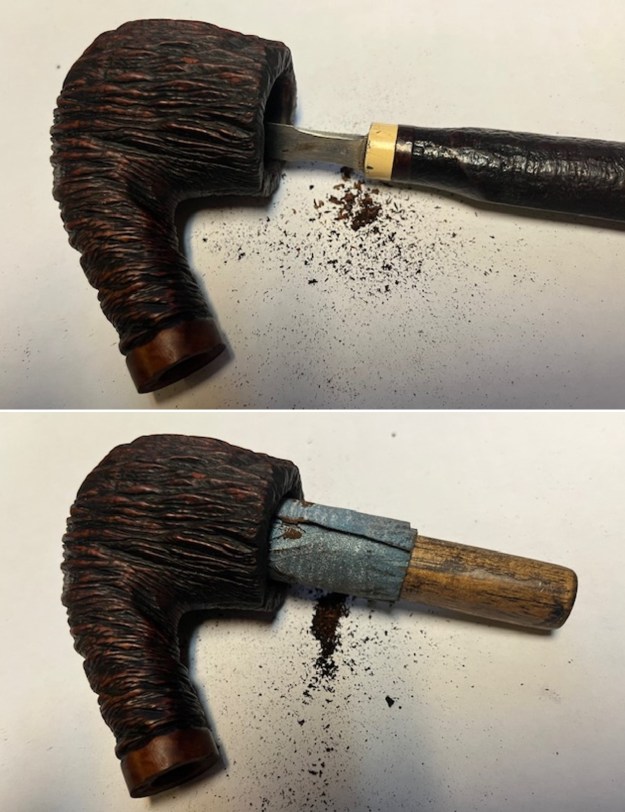
I started my work on the pipe by reaming the bowl with a PipNet reamer. I used the first cutting head and took the cake back to bare briar. I cleaned up the reaming with a Savinelli Fitsall Pipe Knife and removed all the remnants of the cake. I scraped the rim top with the flat edge of the blade at the same time and removed most of the thick lava build up. I sanded the walls of the bowl with a piece of dowel wrapped in 220 grit sandpaper. The walls look very good at his point in the process. 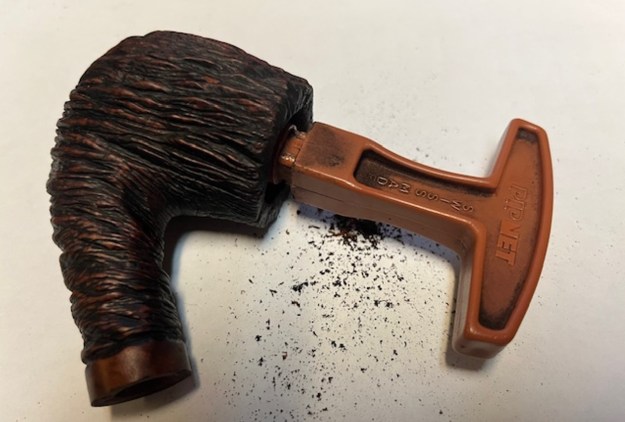
 I cleaned out the shank, the airway and the mortise as well as the airway in the stem with alcohol, cotton swabs, hard bristle and soft bristle pipe cleaners. It was actually quite clean, which made me think that the seller had done a good cleanup job on the pipe.
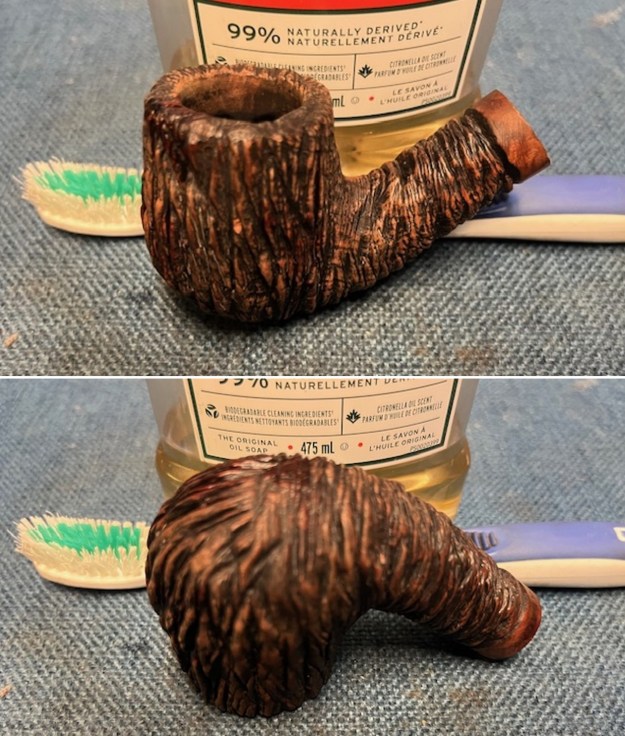
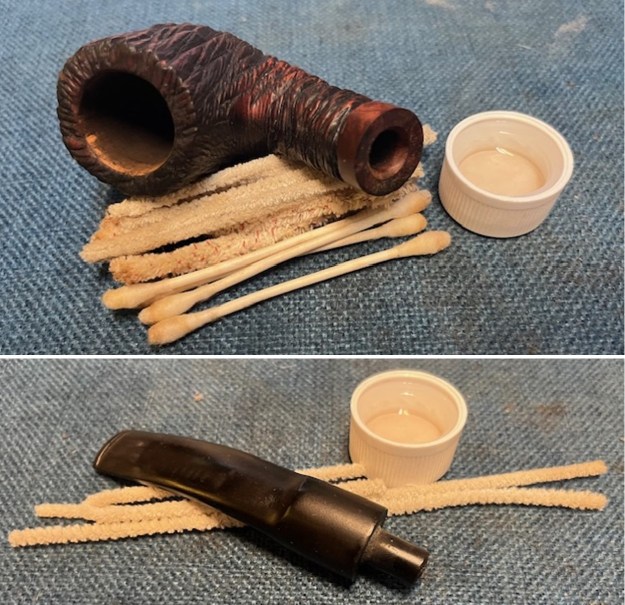 I scrubbed the exterior of the bowl and shank with a tooth brush and undiluted Murphy’s Oil Soap. I scrubbed the lava on the rim top and overflow on the outside of the bowl with the soap. I rinsed the briar with warm water to remove the grime and debris of the scrubbing. It looked significantly better after the scrubbing. Once I cleaned the bowl with the soap it looked much better.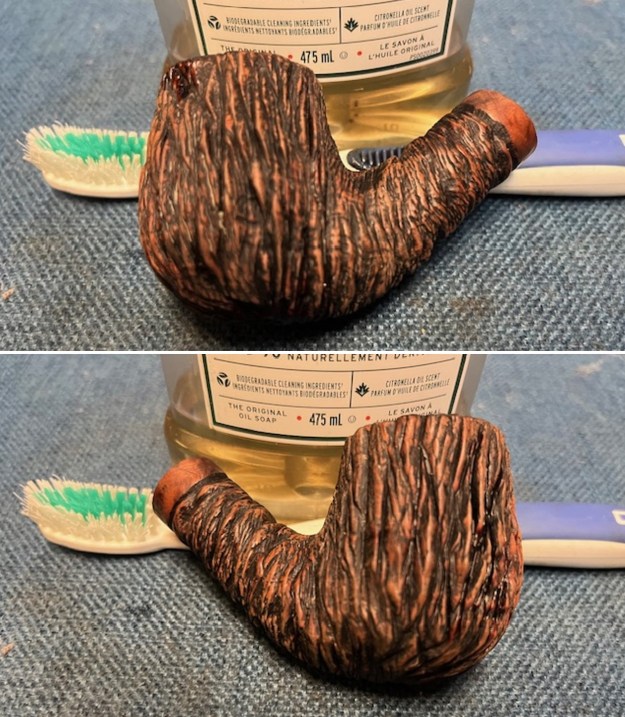
 I rubbed the bowl and shank down with Before & After Restoration Balm to deep clean the finish on the bowl and shank. The product works to clean, enliven and protect the briar. I worked it in with my fingers and a horse hair shoe brush to get it into the briar. I let it sit for 10 minutes then I wiped it off and buffed it with a soft cloth. The briar really began to have a rich shine. I took some photos of the bowl at this point to mark the progress in the restoration. It is a beautiful bowl.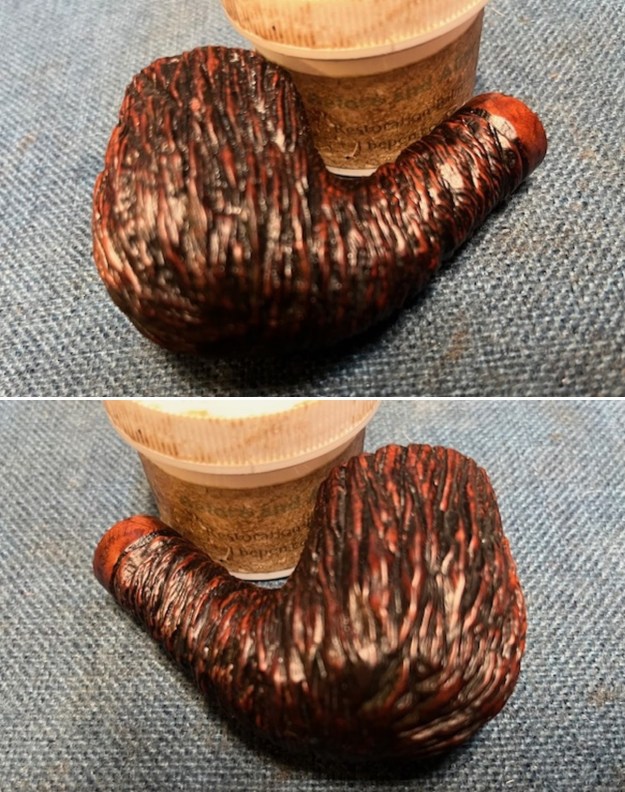
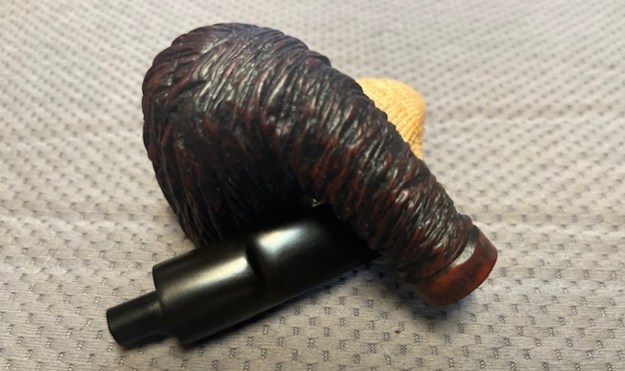
 With the bowl finished I turned my attention back to the stem. I heated the bite marks in the stem surface with a heat gun. I was able to raise some of them significantly. I also heated it enough to bend the stem to match the angles on the bowl. Once I had them bent to the right angle I set the bend with cold water. I took photos of the newly bent stem and the look on the bowl.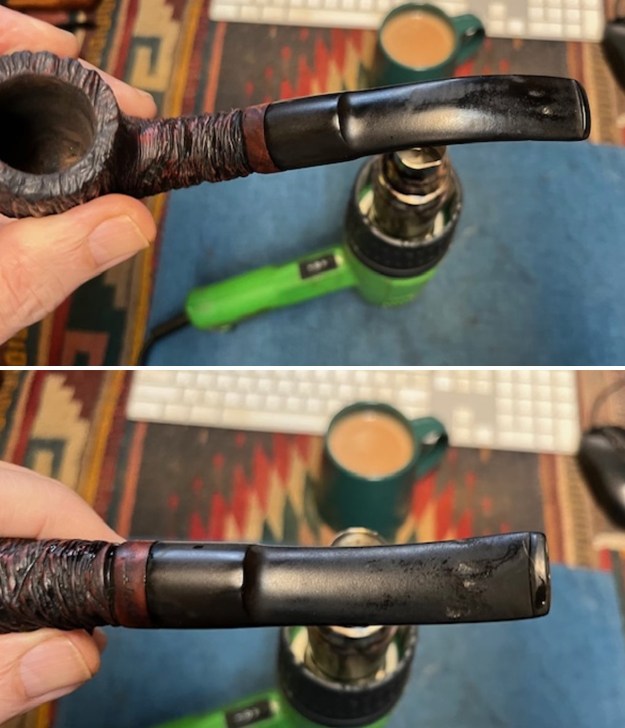
 I filled in the remaining tooth marks with extra strength, rubberized black CA glue. I set the stem aside and let it cure. Once it cured I flattened the repairs with a small file. I continued to blend it into the stem surface with 220 grit sandpaper. Once I finished the blending the stem surface looked much better.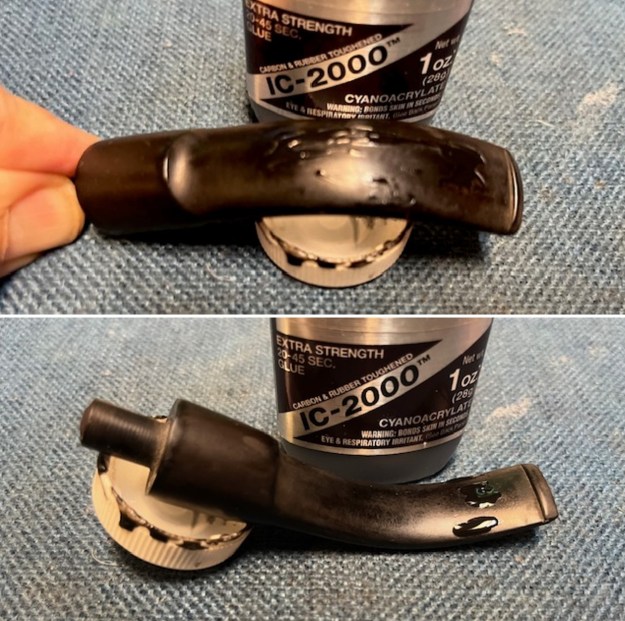
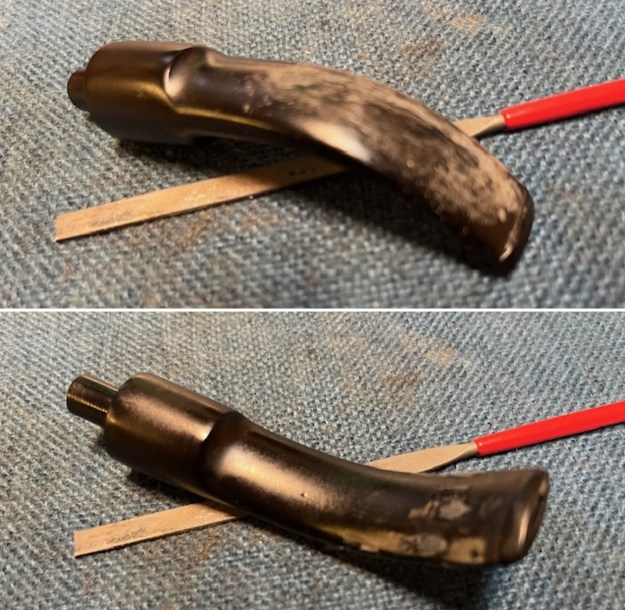
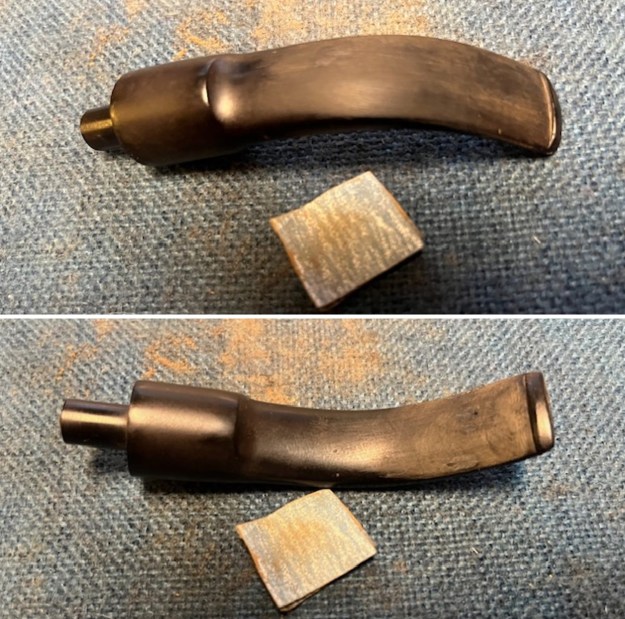 I sanded the surface of the stem with the 2 x 2-inch sanding pads – 320-3500 grit pads to clean up the sanding marks on the stem surface. By the final 3500 grit pad the stem started to really shine.
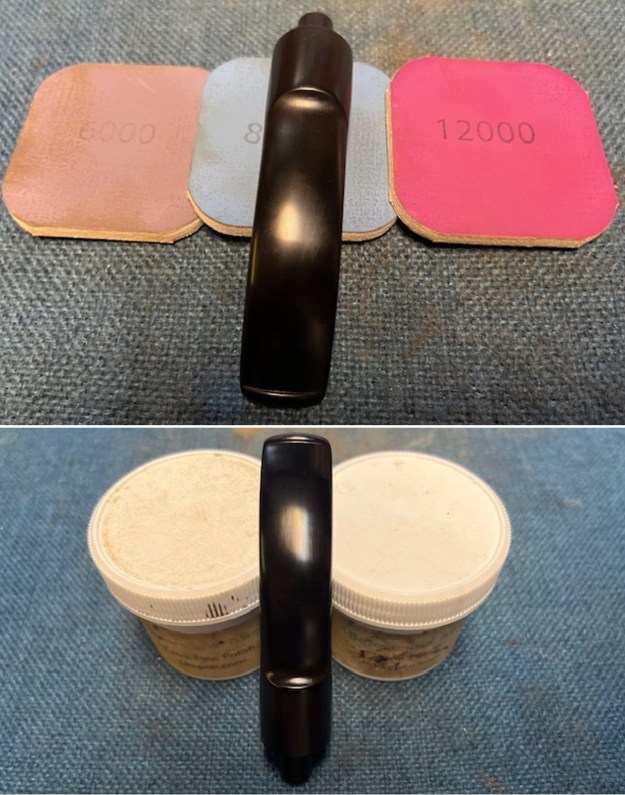
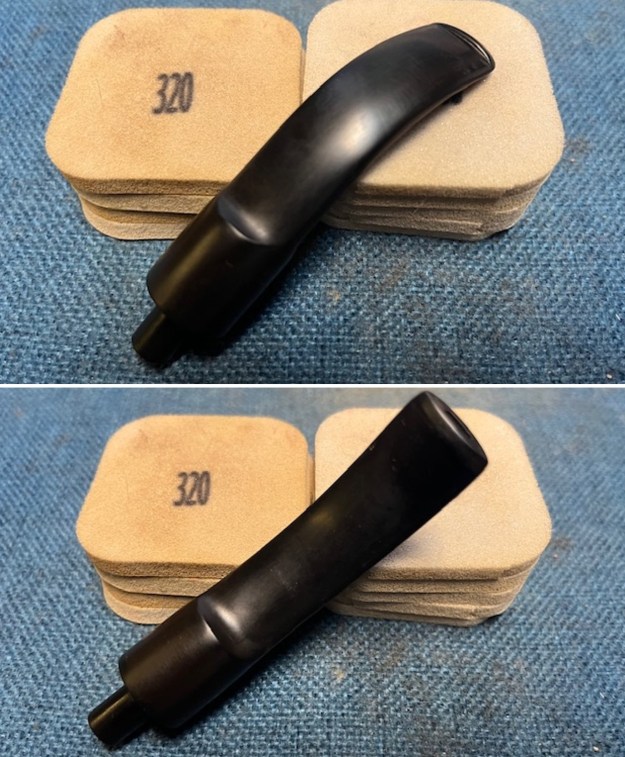 I polished the stem with micromesh sanding pads – dry sanding with 1500-12000 grit pads. I wiped the stem down after each sanding pad with Obsidian Oil. I gave the stem a final polish with Before & After Pipe Stem Polish both Fine and Extra Fine. I rubbed the stem with them and then gave them a final coat of Obsidian Oil. I set it aside to dry.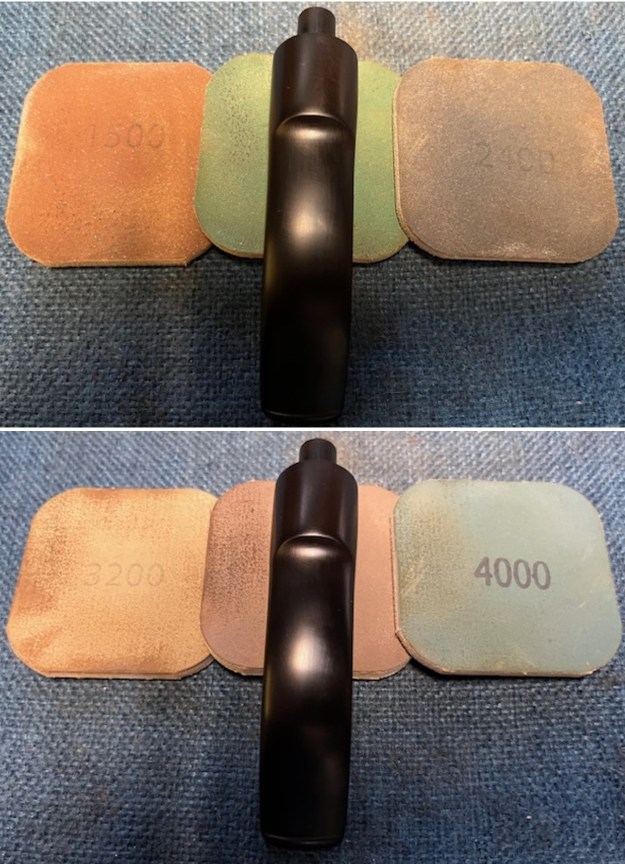
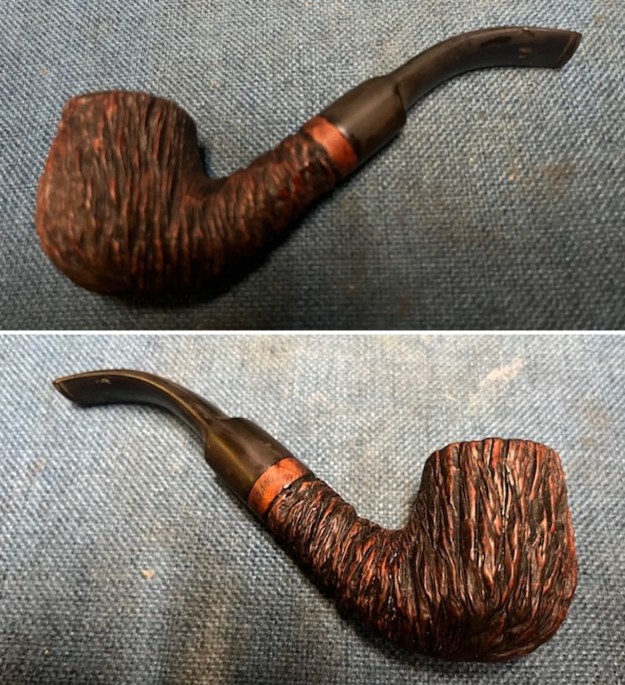
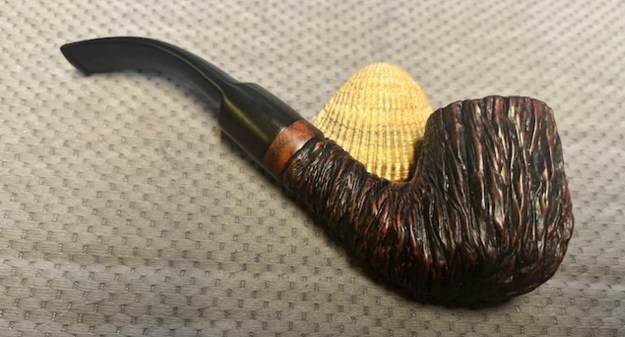
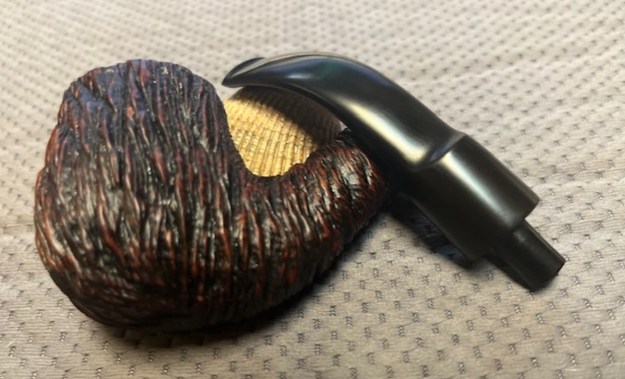
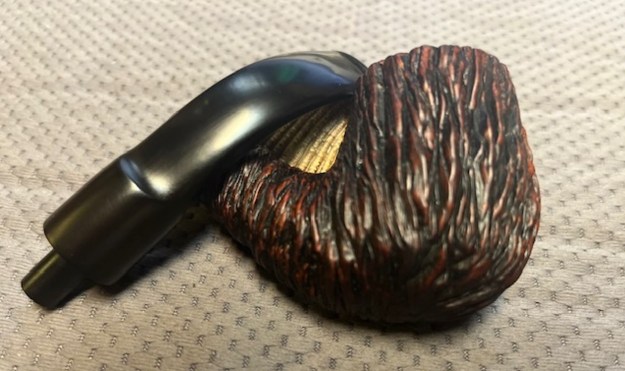
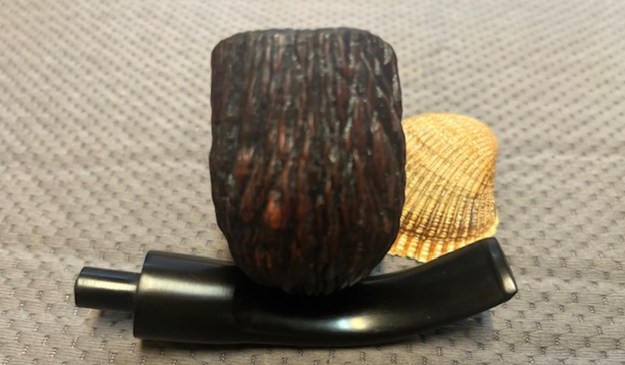
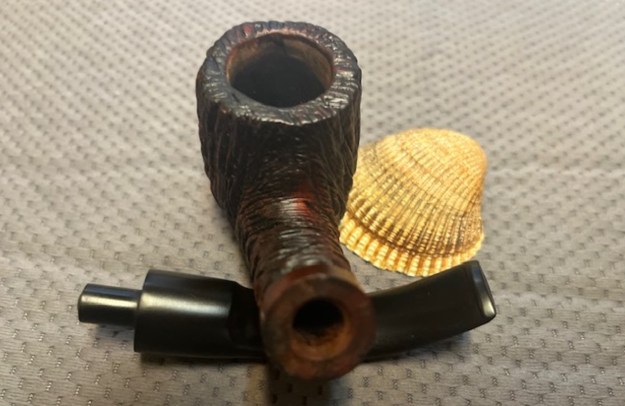
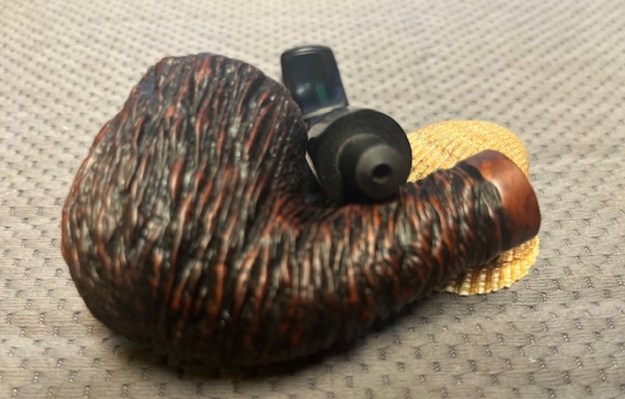
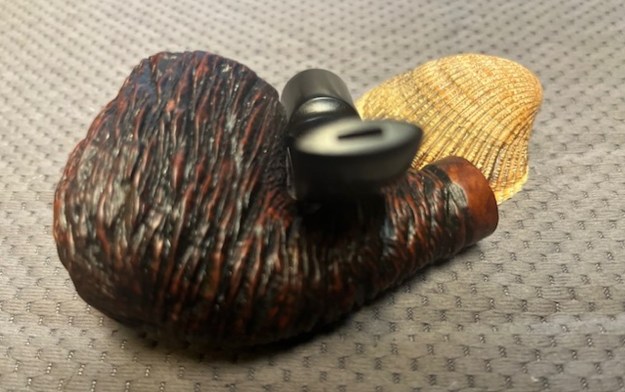
 This is a beautiful Wire Rusticated “Malaga” Bent Billiard with a vulcanite saddle stem. It has a great look and feel. The shape of the bowl, the rusticated rim top and the cut of the briar work well to highlight the beauty of the pipe. I polished stem and the bowl with Blue Diamond polish on the buffing wheel. I gave the bowl multiple coats of Conservator’s Wax and the stem multiple coats of carnauba wax. I buffed the pipe with a clean buffing pad to raise the shine. I hand buffed it with a microfiber cloth to deepen the shine. The pipe polished up pretty nicely. The rusticated briar took on life with the buffing. The rich colour of the stain works well with the polished vulcanite stem. The finished pipe has a rich look that is quite catching. Have a look at it with the photos below. The shape, finish and flow of the pipe and stem are very well done. The dimensions are Length: 6 inches, Height: 2 inches, Outside diameter of the bowl: 1 ¼ inches, Chamber diameter: ¾ of an inch. The weight of the pipe is 2.19 ounces/62 grams. It is a beautiful pipe. I will be putting it on the rebornpipes store shortly in the American Pipemakers Section if you are interested in adding it to your collection. Thanks for walking with me through the restoration.
As always, I encourage your questions and comments as you read the blog. Thanks to each of you who are reading this blog. Remember we are not pipe owners; we are pipe men and women who hold our pipes in trust until they pass on into the trust of those who follow us. 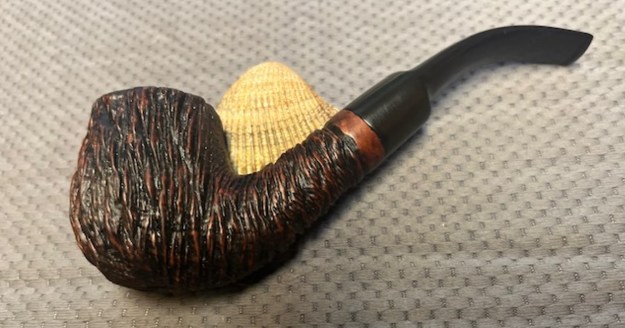
 rebornpipes